AB 777: Food assistance: disasters: utilities.
- Session Year: 2025-2026
- House: Assembly
- Latest Version Date: 2025-10-13
Current Status:
Passed
(2025-10-13: Chaptered by Secretary of State - Chapter 709, Statutes of 2025.)
Introduced
In Committee
Awaiting First Chamber Vote
Passed First Chamber
In Committee
Awaiting Second Chamber Vote
Passed Second Chamber
Enacted
Existing federal law provides for the federal Supplemental Nutrition Assistance Program (SNAP), known in California as CalFresh, under which supplemental nutrition assistance benefits allocated to the state by the federal government are distributed to eligible individuals by each county. Existing federal law, through the federal Disaster Supplemental Nutrition Assistance Program (D-SNAP), provides for short-term food assistance benefits to families suffering in the wake of a major disaster. Existing law requires the State Department of Social Services and the county human services agency, if the President of the United States issues a major disaster declaration for individual assistance, to request to operate D-SNAP for the regions affected by the major disaster. Existing uncodified law, in the event of a declaration by the Governor or the President of the United States of a major disaster, continuously appropriates to the department from the General Fund an amount necessary to cover specified costs relating to the administration of disaster food assistance services, but not to exceed $300,000 per disaster declaration.
Existing law vests the Public Utilities Commission with regulatory authority over public utilities, including electrical corporations, while local publicly owned electric utilities are under the direction of their governing boards. Under existing law, a violation of any order, decision, rule, direction, demand, or requirement of the commission is a crime.
This bill would authorize the commission and the governing boards of local publicly owned electric utilities to establish any memoranda of understanding or other agreements necessary to direct electrical corporations and local publicly owned electric utilities to timely provide data to the department to maximize food assistance, as provided. The bill would require electrical corporations and local publicly owned electric utilities to make a reasonable effort to provide aggregated customer outage data, for outages of 4 hours or longer, within 7 calendar days of a request from the department, as specified. The bill would require the department to maximize the amount of assistance requested and received through D-SNAP and all other federally funded nutrition assistance, including utilizing that provided utility data, in order to timely seek automated mass replacement of specified federally funded nutrition assistance programs. The bill would require the department, on or before December 31, 2026, to submit a report to the Legislature related to food assistance, as specified.
This bill would require electrical corporations and local publicly owned electric utilities to have a point of contact for the department as necessary to provide the requested data. The bill would require the commission to provide technical assistance to the department, including technical assistance to support the above-described report. Because a violation of a commission action implementing the bills requirements would be a crime, and by imposing additional duties on local publicly owned electric utilities, the bill would impose a state-mandated local program.
The California Constitution requires the state to reimburse local agencies and school districts for certain costs mandated by the state. Statutory provisions establish procedures for making that reimbursement.
This bill would provide that no reimbursement is required by this act for specified reasons.
Existing federal law provides for the federal Supplemental Nutrition Assistance Program (SNAP), known in California as CalFresh, under which supplemental nutrition assistance benefits allocated to the state by the federal government are distributed to eligible individuals by each county. Existing federal law, through the federal Disaster Supplemental Nutrition Assistance Program (D-SNAP), provides for short-term food assistance benefits to families suffering in the wake of a major disaster. Existing law requires the State Department of Social Services and the county human services agency, if the President of the United States issues a major disaster declaration for individual assistance, to request to operate D-SNAP for the regions affected by the major disaster. Existing uncodified law, in the event of a declaration by the Governor or the President of the United States of a major disaster, continuously appropriates to the department from the General Fund an amount necessary to cover specified costs relating to the administration of disaster food assistance services, but not to exceed $300,000 per disaster declaration.
Existing law vests the Public Utilities Commission with regulatory authority over public utilities, including electrical corporations, gas corporations, and water corporations, while local publicly owned electric utilities are under the direction of their governing boards. Under existing law, a violation of any order, decision, rule, direction, demand, or requirement of the commission is a crime.
This bill would require authorize the commission and the governing board boards of local publicly owned electric utilities to establish any memoranda of understanding or other data sharing agreements necessary to direct electrical corporations, gas corporations, water corporations, corporations and local publicly owned electric utilities to timely provide data to the department to maximize food assistance, as provided. The bill would require electrical corporations and local publicly owned electric utilities to make a reasonable effort to provide aggregated customer outage data, for outages of 4 hours or longer, within 7 calendar days of a request from the department, as specified. The bill would require the department to maximize the amount of assistance requested and received through D-SNAP and all other federally funded nutrition assistance, including utilizing that provided utility data, in order to timely seek automated mass replacement of specified federally funded nutrition assistance programs. The bill would require the department, on or before December 31, 2026, to submit a report to the Legislature related to food assistance, as specified.
This bill would require electrical corporations, gas corporations, water corporations, corporations and local publicly owned electric utilities to timely respond to a request for data by the department, to have a dedicated point of contact for the department, and to establish any memoranda of understanding or other data sharing agreements department as necessary to provide the requested data. The bill would require the commission to provide technical assistance to the department, including technical assistance to support the above-described report. Because a violation of a commission action implementing the bills requirements would be a crime, and by imposing additional duties on local publicly owned electric utilities, the bill would impose a state-mandated local program.
The California Constitution requires the state to reimburse local agencies and school districts for certain costs mandated by the state. Statutory provisions establish procedures for making that reimbursement.
This bill would provide that no reimbursement is required by this act for specified reasons.
Existing federal law provides for the federal Supplemental Nutrition Assistance Program (SNAP), known in California as CalFresh, under which supplemental nutrition assistance benefits allocated to the state by the federal government are distributed to eligible individuals by each county. Existing federal law, through the federal Disaster Supplemental Nutrition Assistance Program (D-SNAP), provides for short-term food assistance benefits to families suffering in the wake of a major disaster. Existing law requires the State Department of Social Services and the county human services agency, if the President of the United States issues a major disaster declaration for individual assistance, to request to operate D-SNAP for the regions affected by the major disaster. Existing uncodified law, in the event of a declaration by the Governor or the President of the United States of a major disaster, continuously appropriates to the department from the General Fund an amount necessary to cover specified costs relating to the administration of disaster food assistance services, but not to exceed $300,000 per disaster declaration.
Existing law vests the Public Utilities Commission with regulatory authority over public utilities, including electrical corporations, gas corporations, and water corporations, while local publicly owned electric utilities are under the direction of their governing boards. Under existing law, a violation of any order, decision, rule, direction, demand, or requirement of the commission is a crime.
This bill would require electrical corporations, gas corporations, water corporations, and local publicly owned electric utilities to respond to data requests from the department, and would require the commission the commission and the governing board of local publicly owned electric utilities to establish any memorandum memoranda of understanding or other data sharing agreement agreements necessary to direct those utilities electrical corporations, gas corporations, water corporations, and local publicly owned electric utilities to provide data to the department to maximize food assistance, as provided. The bill would require the department to maximize the amount of assistance requested and received through D-SNAP and all other federally funded nutrition assistance, including utilizing that provided utility data, in order to timely seek automated mass replacement of specified federally funded nutrition assistance programs. The bill would require the department, on or before December 31, 2026, to submit a report to the Legislature related to food assistance, as specified.
This bill would require those utilities to electrical corporations, gas corporations, water corporations, and local publicly owned electric utilities to timely respond to a request for data by the department, to have a dedicated point of contact for the department department, and to establish any memorandum memoranda of understanding or other data sharing agreement agreements necessary to provide the requested data. The bill would require the commission to provide technical assistance to the department, including technical assistance to support the above-described report. Because a violation of a commission action implementing the bills requirements would be a crime, and by imposing additional duties on local publicly owned electric utilities, the bill would impose a state-mandated local program.
The California Constitution requires the state to reimburse local agencies and school districts for certain costs mandated by the state. Statutory provisions establish procedures for making that reimbursement.
This bill would provide that no reimbursement is required by this act for specified reasons.
Existing federal law provides for the federal Supplemental Nutrition Assistance Program (SNAP), known in California as CalFresh, under which supplemental nutrition assistance benefits allocated to the state by the federal government are distributed to eligible individuals by each county. Existing federal law, through the federal Disaster Supplemental Nutrition Assistance Program (D-SNAP), provides for short-term food assistance benefits to families suffering in the wake of a major disaster. Existing law requires the State Department of Social Services and the county human services agency, if the President of the United States issues a major disaster declaration for individual assistance, to request to operate D-SNAP for the regions affected by the major disaster. Existing uncodified law, in the event of a declaration by the Governor or the President of the United States of a major disaster, continuously appropriates to the department from the General Fund an amount necessary to cover specified costs relating to the administration of disaster food assistance services, but not to exceed $300,000 per disaster declaration.
Existing law vests the Public Utilities Commission with regulatory authority over public utilities, including electrical corporations, gas corporations, and water corporations, while local publicly owned electric utilities are under the direction of their governing boards. Under existing law, a violation of any order, decision, rule, direction, demand, or requirement of the commission is a crime.
This bill would require electrical corporations, gas corporations, water corporations, and local publicly owned electric utilities to respond to data requests from the department, and would require the commission to establish any memoramdum memorandum of understanding or other data sharing agreements agreement necessary to direct those utilities to provide data to the department to maximize food assistance, as provided. The bill would require the department to maximize the amount of assistance requested and received through D-SNAP and all other federally funded nutrition assistance, including utilizing that provided utility data, in order to timely seek automated mass replacement of specified federally funded nutrition assistance programs. The bill would require the department, on or before December 31, 2026, to submit a report to the Legislature related to food assistance, as specified.
This bill would require those utilities to have a dedicated point of contact for the department and to establish any memorandum of understanding or other data sharing agreement necessary to provide the requested data. The bill would require the commission to provide technical assistance to the department, including technical assistance to support the above-described report. Because a violation of a commission action implementing the bills requirements would be a crime, and by imposing additional duties on local publicly owned electric utilities, the bill would impose a state-mandated local program.
The California Constitution requires the state to reimburse local agencies and school districts for certain costs mandated by the state. Statutory provisions establish procedures for making that reimbursement.
This bill would provide that no reimbursement is required by this act for specified reasons.
Existing federal law provides for the federal Supplemental Nutrition Assistance Program (SNAP), known in California as CalFresh, under which supplemental nutrition assistance benefits allocated to the state by the federal government are distributed to eligible individuals by each county. Existing federal law, through Disaster SNAP, the federal Disaster Supplemental Nutrition Assistance Program (D-SNAP), provides for short-term food assistance benefits to families suffering in the wake of a major disaster. Existing law requires the State Department of Social Services and the county human services agency, if the President of the United States issues a major disaster declaration for individual assistance, to request to operate a federal Disaster Supplemental Nutrition Assistance Program (D-SNAP) D-SNAP for the regions affected by the major disaster. Existing uncodified law, in the event of a declaration by the Governor or the President of the United States of a major disaster, continuously appropriates to the department from the General Fund an amount necessary to cover specified costs relating to the administration of disaster food assistance services, but not to exceed $300,000 per disaster declaration.
Existing law vests the Public Utilities Commission with regulatory authority over public utilities, including electrical corporations, gas corporations, and water corporations, while local publicly owned electric utilities are under the direction of their governing boards. Under existing law, a violation of any order, decision, rule, direction, demand, or requirement of the commission is a crime.
This bill would require the State Department of Social Services to maximize the amount of assistance requested and received through the Disaster SNAP and all other federally funded nutrition assistance programs, including seeking all data necessary from utilities, electrical corporations, gas corporations, water corporations, and local publicly owned electric utilities to respond to data requests from the department, and would require the commission to establish any memoramdum of understanding or other data sharing agreements necessary to direct those utilities to provide data to the department to maximize food assistance, as provided. The bill would require the department to maximize the amount of assistance requested and received through D-SNAP and all other federally funded nutrition assistance, including utilizing that provided utility data, in order for the department to timely seek automated mass replacement of specified federally funded nutrition assistance programs. The bill would require the department, on or before December 31, 2026, to submit a report to the Legislature related to food assistance, as specified.
This bill would require all utilities, as defined, to timely respond to all requests from, and provide all data requested by, the State Department of Social Services to maximize the availability of food assistance, as specified. TheThis bill would require all those utilities to have a dedicated point of contact for the department and to establish any memorandum of understanding or other data sharing agreement necessary to provide the data requested. requested data. The bill would require the commission to provide technical assistance to the State Department of Social Services department, including technical assistance to support the above-described report. Because a violation of a commission action implementing the bills requirements would be a crime, and by imposing additional duties on local publicly owned electric utilities, the bill would impose a state-mandated local program.
The California Constitution requires the state to reimburse local agencies and school districts for certain costs mandated by the state. Statutory provisions establish procedures for making that reimbursement.
This bill would provide that no reimbursement is required by this act for specified reasons.
Existing federal law provides for the federal Supplemental Nutrition Assistance Program (SNAP), known in California as CalFresh, under which supplemental nutrition assistance benefits allocated to the state by the federal government are distributed to eligible individuals by each county. Existing federal law, through Disaster SNAP, provides for short-term food assistance benefits to families suffering in the wake of a major disaster. Existing law requires the State Department of Social Services and the county human services agency, if the President of the United States issues a major disaster declaration for individual assistance, to request to operate a federal Disaster Supplemental Nutrition Assistance Program (D-SNAP) for the regions affected by the major disaster. Existing uncodified law, in the event of a declaration by the Governor or the President of the United States of a major disaster, continuously appropriates to the department from the General Fund an amount necessary to cover specified costs relating to the administration of disaster food assistance services, but not to exceed $300,000 per disaster declaration.
Existing law vests the Public Utilities Commission with regulatory authority over public utilities, including electrical corporations, while local publicly owned electric utilities are under the direction of their governing boards. Under existing law, a violation of any order, decision, rule, direction, demand, or requirement of the commission is a crime.
This bill would require the State Department of Social Services to maximize the amount of assistance requested and received through the Disaster SNAP and all other federally funded nutrition assistance programs, including seeking all data necessary from utilities, in order for the department to timely seek automated mass replacement of specified federally funded nutrition assistance programs. The bill would require the department, on or before December 31, 2026, to submit a report to the Legislature related to food assistance, as specified.
This bill would require all utilities, as defined, to timely respond to all requests from, and provide all data requested by, the State Department of Social Services to maximize the availability of food assistance, as specified. The bill would require all utilities to have a dedicated point of contact for the department and to establish any memorandum of understanding or other data sharing agreement necessary to provide the data requested. The bill would require the commission to provide technical assistance to the State Department of Social Services to support the above-described report. Because a violation of a commission action implementing the bills requirements would be a crime, and by imposing additional duties on local publicly owned electric utilities, the bill would impose a state-mandated local program.
The California Constitution requires the state to reimburse local agencies and school districts for certain costs mandated by the state. Statutory provisions establish procedures for making that reimbursement.
This bill would provide that no reimbursement is required by this act for specified reasons.
Existing law provides for the establishment of a 5-member Electricity Oversight Board to perform specified functions, including overseeing the Independent System Operator and the Power Exchange and to investigate any matter related to the wholesale market for electricity to ensure that the interests of Californias citizens and consumers are served, protected, and represented in relation to the availability of electrical transmission and generation and related costs during periods of peak demand. Existing law provides that the membership of the board consists of 3 voting members, to be appointed by the Governor and confirmed by the Senate, and 2 nonvoting members, one a member of the Assembly, appointed by the Speaker of the Assembly, and the other a member of the Senate, appointed by the Senate Committee on Rules.This bill would add to the board 2 more nonvoting legislative members, a 2nd member of the Assembly, appointed by the Speaker of the Assembly, and a 2nd member of the Senate, appointed by the Senate Committee on Rules.Existing law provides for the establishment of a 5-member Electricity Oversight Board to perform specified functions, including overseeing the Independent System Operator and the Power Exchange and to investigate any matter related to the wholesale market for electricity to ensure that the interests of Californias citizens and consumers are served, protected, and represented in relation to the availability of electrical transmission and generation and related costs during periods of peak demand. Existing law provides that the membership of the board consists of 3 voting members, to be appointed by the Governor and confirmed by the Senate, and 2 nonvoting members, one a member of the Assembly, appointed by the Speaker of the Assembly, and the other a member of the Senate, appointed by the Senate Committee on Rules.
This bill would add to the board 2 more nonvoting legislative members, a 2nd member of the Assembly, appointed by the Speaker of the Assembly, and a 2nd member of the Senate, appointed by the Senate Committee on Rules.
For purposes of this chapter, all of the following definitions apply:
(a)Electrical corporation has the same meaning as defined in Section 218.
(b)Local publicly owned electric utility has the same meaning as defined in Section 224.3.
8411.(a)(1)The commission, as it deems necessary for the exchange of aggregated data, may establish any memoranda of understanding or other agreements necessary to direct electrical corporations to timely provide data to the State Department of Social Services to maximize the food assistance available pursuant to Section 18917.2 of the Welfare and Institutions Code.
(2)The data provided pursuant to the memoranda of understanding or other agreements shall meet, at minimum, all of the following requirements and prohibitions:
(A)The provided data shall be limited to only the aggregated customer outage data at the ZIP Code level that is necessary for the State Department of Social Services to maximize food assistance in an emergency, and shall not include any personally identifiable information.
(B)The provided data shall not be used for any purposes other than those specified in this section and Section 18917.2 of the Welfare and Institutions Code.
(C)The provided data shall be subject to all applicable privacy laws.
(b)(1)Notwithstanding any other law, or the execution of any memoranda of understanding or other agreements, each electrical corporation shall, within seven calendar days, make a reasonable effort to provide aggregated customer outage data, for outages of four hours or longer, in response to a request for data by the State Department of Social Services in order to maximize the food assistance available pursuant to Section 18917.2 of the Welfare and Institutions Code.
(2)Data provided to the State Department of Social Services shall meet, at minimum, all of the following requirements and prohibitions:
(A)The provided data shall be limited to only the aggregated customer outage data at the ZIP Code level that is necessary for the State Department of Social Services to maximize food assistance in an emergency, and shall not include any personally identifiable information.
(B)The provided data shall include, but not be limited to, the dates of power outages, duration in hours of power outages, the counties affected by power outages, the ZIP Codes affected by power outages, and, for each affected ZIP Code, the total number of residential customers in the ZIP Code and the total number of residential customers who lost electrical service during the power outages.
(C)The provided data shall not be used for any purposes other than those specified in this section and Section 18917.2 of the Welfare and Institutions Code.
(D)The provided data shall be subject to all applicable privacy laws.
(c)Each electrical corporation shall have a dedicated point of contact for the State Department of Social Services necessary to provide the data requested pursuant to subdivisions (a) and (b).
(d)The commission shall provide technical assistance to the State Department of Social Services, including, but not limited to, technical assistance to support the report described in Section 18917.2 of the Welfare and Institutions Code.
8412.(a)(1)The governing board of each local publicly owned electric utility, as it deems necessary for the exchange of aggregated data, may establish any memoranda of understanding or other agreements necessary to direct the local publicly owned electric utility to timely provide data to the State Department of Social Services to maximize the food assistance available pursuant to Section 18917.2 of the Welfare and Institutions Code.
(2)The data provided pursuant to the memoranda of understanding or other agreements shall meet, at minimum, all of the following requirements and prohibitions:
(A)The provided data shall be limited to only the aggregated customer outage data at the ZIP Code level that is necessary for the State Department of Social Services to maximize food assistance in an emergency, and shall not include any personally identifiable information.
(B)The provided data shall not be used for any purposes other than those specified in this section and Section 18917.2 of the Welfare and Institutions Code.
(C)The provided data shall be subject to all applicable privacy laws.
(b)(1)Notwithstanding any other law or the execution of any memoranda of understanding or other agreements, each local publicly owned electric utility shall, within seven calendar days, make a reasonable effort to provide aggregated customer outage data, for outages of four hours or longer, in response to a request for data by the State Department of Social Services in order to maximize the food assistance available pursuant to Section 18917.2 of the Welfare and Institutions Code.
(2)Data provided to the State Department of Social Services shall meet, at minimum, all of the following requirements and prohibitions:
(A)The provided data shall be limited to only the aggregated customer outage data at the ZIP Code level that is necessary for the State Department of Social Services to maximize food assistance in an emergency, and shall not include any personally identifiable information.
(B)The provided data shall include, but not be limited to, the dates of power outages, duration in hours of power outages, the counties affected by power outages, the ZIP Codes affected by power outages, and, for each affected ZIP Code, the total number of residential customers in the ZIP Code and the total number of residential customers who lost electrical service during power outages.
(C)The provided data shall not be used for any purposes other than those specified in this section and Section 18917.2 of the Welfare and Institutions Code.
(D)The provided data shall be subject to all applicable privacy laws.
(c)Each local publicly owned electric utility shall designate a point of contact for the State Department of Social Services necessary to provide the data requested pursuant to subdivisions (a) and (b).
(d)The State Department of Social Services shall notify each local publicly owned electric utility of any changes to the federal requirements in a timely manner.
SEC. 2.Section 18917.2 is added to the Welfare and Institutions Code, to read:18917.2.(a)The State Department of Social Services shall maximize the amount of assistance requested and received through the federal Disaster Supplemental Nutrition Assistance Program (D-SNAP), and all other federally funded nutrition assistance programs, including utilizing necessary data, provided in accordance with Chapter 10 (commencing with Section 8410) of Division 4.1 of the Public Utilities Code, in order for the department to timely seek automated mass replacement of SNAP benefits, D-SNAP, the Summer Electronic Benefit Transfer for Children (Summer EBT) program, known in California as SUN Bucks, and any other federally funded nutrition assistance programs.
(b)The department shall maintain contact with each electrical corporation and local publicly owned electric utility in accordance with Chapter 10 (commencing with Section 8410) of Division 4.1 of the Public Utilities Code.
(c)(1)On or before December 31, 2026, the department shall submit a report to the Legislature that includes both of the following:
(A)Any further ways to ensure that California maximizes all available federal food assistance during state and federally declared disasters, public health emergencies, or other crises that enable the provision of resources to California households.
(B)Any additional oversight or actions needed to fulfill the objectives of this section and Section 18917.
(2)(A)The requirement for submitting a report imposed under this subdivision is inoperative on January 1, 2030, pursuant to Section 10231.5 of the Government Code.
(B)The report to be submitted pursuant to this subdivision shall be submitted in compliance with Section 9795 of the Government Code.
(d)For purposes of this section, both of the following definitions apply:
(1)Electrical corporation has the same meaning as defined in Section 218 of the Public Utilities Code.
(2)Local publicly owned electric utility has the same meaning as defined in Section 224.3 of the Public Utilities Code.
SEC. 3.No reimbursement is required by this act pursuant to Section 6 of Article XIIIB of the California Constitution because a local agency or school district has the authority to levy service charges, fees, or assessments sufficient to pay for the program or level of service mandated by this act or because costs that may be incurred by a local agency or school district will be incurred because this act creates a new crime or infraction, eliminates a crime or infraction, or changes the penalty for a crime or infraction, within the meaning of Section 17556 of the Government Code, or changes the definition of a crime within the meaning of Section 6 of Article XIIIB of the California Constitution.
For purposes of this chapter, all of the following definitions apply:
(a)Electrical corporation has the same meaning as defined in Section 218.
(b)Gas corporation has the same meaning as defined in Section 222.(c)(b)Local publicly owned electric utility has the same meaning as defined in Section 224.3.
(d)Water corporation has the same meaning as defined in Section 241.8411.(a)(1)The commission shall commission, as it deems necessary for the exchange of aggregated data, may establish any memoranda of understanding or other data sharing agreements necessary to direct electrical corporations, gas corporations, and water corporations to timely provide data to the State Department of Social Services to maximize the food assistance available pursuant to Section 18917.2 of the Welfare and Institutions Code. The
(2)The data provided pursuant to the memoranda of understanding or other data sharing agreements shall include, meet, at minimum, all of the following requirements and prohibitions:
(1)(A)The provided data shall be limited to only the aggregated customer outage data at the ZIP Code level that is necessary for the State Department of Social Services to maximize food assistance in an emergency, and shall not include any personally identifiable information.
(2)(B)The provided data shall not be used for any purposes other than those specified in this section and Section 18917.2 of the Welfare and Institutions Code.
(3)(C)The provided data shall be subject to all applicable privacy laws.
(b)Each (1)Notwithstanding any other law, or the execution of any memoranda of understanding or other agreements, each electrical corporation, gas corporation, or water corporation shall timely respond to a request for data by the State Department of Social Services pursuant to a memorandum of understanding or other data sharing agreement established pursuant to subdivision (a). shall, within seven calendar days, make a reasonable effort to provide aggregated customer outage data, for outages of four hours or longer, in response to a request for data by the State Department of Social Services in order to maximize the food assistance available pursuant to Section 18917.2 of the Welfare and Institutions Code.
(2)Data provided to the State Department of Social Services shall meet, at minimum, all of the following requirements and prohibitions:
(A)The provided data shall be limited to only the aggregated customer outage data at the ZIP Code level that is necessary for the State Department of Social Services to maximize food assistance in an emergency, and shall not include any personally identifiable information.
(B)The provided data shall include, but not be limited to, the dates of power outages, duration in hours of power outages, the counties affected by power outages, the ZIP Codes affected by power outages, and, for each affected ZIP Code, the total number of residential customers in the ZIP Code and the total number of residential customers who lost electrical service during the power outages.
(C)The provided data shall not be used for any purposes other than those specified in this section and Section 18917.2 of the Welfare and Institutions Code.
(D)The provided data shall be subject to all applicable privacy laws.
(c)Each electrical corporation, gas corporation, or water corporation shall have a dedicated point of contact for the State Department of Social Services and establish any memoranda of understanding or other data sharing agreements necessary to provide the data requested pursuant to subdivision (a). subdivisions (a) and (b).
(d)The commission shall provide technical assistance to the State Department of Social Services, including, but not limited to, technical assistance to support the report described in Section 18917.2 of the Welfare and Institutions Code.
8412.(a)(1)The governing board of each local publicly owned electric utility shall utility, as it deems necessary for the exchange of aggregated data, may establish any memoranda of understanding or other data sharing agreements necessary to direct the local publicly owned electric utility to timely provide data to the State Department of Social Services to maximize the food assistance available pursuant to Section 18917.2 of the Welfare and Institutions Code. The
(2)The data provided pursuant to the memoranda of understanding or other data sharing agreements shall include, meet, at minimum, all of the following requirements and prohibitions:
(1)(A)The provided data shall be limited to only the aggregated customer outage data at the ZIP Code level that is necessary for the State Department of Social Services to maximize food assistance in an emergency, and shall not include any personally identifiable information.
(2)(B)The provided data shall not be used for any purposes other than those specified in this section and Section 18917.2 of the Welfare and Institutions Code.
(3)(C)The provided data shall be subject to all applicable privacy laws.
(b)Each (1)Notwithstanding any other law or the execution of any memoranda of understanding or other agreements, each local publicly owned electric utility shall timely respond to a request for data by the State Department of Social Services pursuant to a memorandum of understanding or other data sharing agreement established pursuant to subdivision (a). shall, within seven calendar days, make a reasonable effort to provide aggregated customer outage data, for outages of four hours or longer, in response to a request for data by the State Department of Social Services in order to maximize the food assistance available pursuant to Section 18917.2 of the Welfare and Institutions Code.
(2)Data provided to the State Department of Social Services shall meet, at minimum, all of the following requirements and prohibitions:
(A)The provided data shall be limited to only the aggregated customer outage data at the ZIP Code level that is necessary for the State Department of Social Services to maximize food assistance in an emergency, and shall not include any personally identifiable information.
(B)The provided data shall include, but not be limited to, the dates of power outages, duration in hours of power outages, the counties affected by power outages, the ZIP Codes affected by power outages, and, for each affected ZIP Code, the total number of residential customers in the ZIP Code and the total number of residential customers who lost electrical service during power outages.
(C)The provided data shall not be used for any purposes other than those specified in this section and Section 18917.2 of the Welfare and Institutions Code.
(D)The provided data shall be subject to all applicable privacy laws.
(c)Each local publicly owned electric utility shall have a dedicated designate a point of contact for the State Department of Social Services and establish any memoranda of understanding or other data sharing agreements necessary to provide the data requested pursuant to subdivision (a). subdivisions (a) and (b).
(d)The State Department of Social Services shall notify each local publicly owned electric utility of any changes to the federal requirements in a timely manner.
SEC. 2.Section 18917.2 is added to the Welfare and Institutions Code, to read:18917.2.(a)The State Department of Social Services shall maximize the amount of assistance requested and received through the federal Disaster Supplemental Nutrition Assistance Program (D-SNAP), and all other federally funded nutrition assistance programs, including utilizing necessary data, provided in accordance with Chapter 10 (commencing with Section 8410) of Division 4.1 of the Public Utilities Code, in order for the department to timely seek automated mass replacement of SNAP benefits, D-SNAP, the Summer Electronic Benefit Transfer for Children (Summer EBT) program, known in California as SUN Bucks, and any other federally funded nutrition assistance programs.
(b)The department shall maintain at least one dedicated point of contact with each electrical corporation, gas corporation, water corporation, corporation and local publicly owned electric utility to act as liaison with that entity in accordance with Chapter 10 (commencing with Section 8410) of Division 4.1 of the Public Utilities Code.
(c)(1)On or before December 31, 2026, the department shall submit a report to the Legislature that includes both of the following:
(A)Any further ways to ensure that California maximizes all available federal food assistance during state and federally declared disasters, public health emergencies, or other crises that enable the provision of resources to California households.
(B)Any additional oversight or actions needed to fulfill the objectives of this section and Section 18917.
(2)(A)The requirement for submitting a report imposed under this subdivision is inoperative on January 1, 2030, pursuant to Section 10231.5 of the Government Code.
(B)The report to be submitted pursuant to this subdivision shall be submitted in compliance with Section 9795 of the Government Code.
(d)For purposes of this section, all both of the following definitions apply:
(1)Electrical corporation has the same meaning as defined in Section 218 of the Public Utilities Code.
(2)Gas corporation has the same meaning as defined in Section 222 of the Public Utilities Code.(3)(2)Local publicly owned electric utility has the same meaning as defined in Section 224.3 of the Public Utilities Code.
(4)Water corporation has the same meaning as defined in Section 241 of the Public Utilities Code.SEC. 3.No reimbursement is required by this act pursuant to Section 6 of Article XIIIB of the California Constitution because a local agency or school district has the authority to levy service charges, fees, or assessments sufficient to pay for the program or level of service mandated by this act or because costs that may be incurred by a local agency or school district will be incurred because this act creates a new crime or infraction, eliminates a crime or infraction, or changes the penalty for a crime or infraction, within the meaning of Section 17556 of the Government Code, or changes the definition of a crime within the meaning of Section 6 of Article XIIIB of the California Constitution.
For purposes of this chapter, all of the following definitions apply:
(a)Electrical corporation has the same meaning as defined in Section 218.
(b)Gas corporation has the same meaning as defined in Section 222.
(c)Local publicly owned electric utility has the same meaning as defined in Section 224.3.
(d)Water corporation has the same meaning as defined in Section 241.
8411.(a)The commission shall establish any memoranda of understanding or other data sharing agreements necessary to direct utilities electrical corporations, gas corporations, and water corporations to provide data to the State Department of Social Services to maximize the food assistance available pursuant to Section 18917.1 18917.2 of the Welfare and Institutions Code. The memoranda of understanding or other data sharing agreements shall include, at minimum, all of the following requirements and prohibitions:
(A)(1)The provided data shall be limited to only the aggregated customer outage data at the ZIP Code level that is necessary to maximize food assistance in an emergency, and shall not include any personally identifiable information.
(B)(2)The provided data shall not be used for any purposes other than those specified in this section and Section 18917.1 18917.2 of the Welfare and Institutions Code.
(C)(3)The provided data shall be subject to all applicable privacy laws.
(b)Each electrical corporation, gas corporation, or water corporation shall timely respond to a request for data by the State Department of Social Services pursuant to a memorandum of understanding or other data sharing agreement established pursuant to subdivision (a).
(b)(c)Each utility electrical corporation, gas corporation, or water corporation shall have a dedicated point of contact for the State Department of Social Services and establish any memoranda of understanding or other data sharing agreements necessary to provide the data requested pursuant to subdivision (a).
(c)(d)The commission shall provide technical assistance to the State Department of Social Services, including, but not limited to, technical assistance to support the report described in Section 18917.1 18917.2 of the Welfare and Institutions Code.
(d)For purposes of this section, utility means an electrical corporation, as defined in Section 218, a gas corporation, as defined in Section 222, a water corporation, as defined in Section 241, or a local publicly owned electric utility, as defined in Section 224.3,serving California customers.8412.(a)The governing board of each local publicly owned electric utility shall establish any memoranda of understanding or other data sharing agreements necessary to direct the local publicly owned electric utility to provide data to the State Department of Social Services to maximize the food assistance available pursuant to Section 18917.2 of the Welfare and Institutions Code. The memoranda of understanding or other data sharing agreements shall include, at minimum, all of the following requirements and prohibitions:
(1)The provided data shall be limited to only the aggregated customer outage data at the ZIP Code level that is necessary to maximize food assistance in an emergency, and shall not include any personally identifiable information.
(2)The provided data shall not be used for any purposes other than those specified in this section and Section 18917.2 of the Welfare and Institutions Code.
(3)The provided data shall be subject to all applicable privacy laws.
(b)Each local publicly owned electric utility shall timely respond to a request for data by the State Department of Social Services pursuant to a memorandum of understanding or other data sharing agreement established pursuant to subdivision (a).
(c)Each local publicly owned electric utility shall have a dedicated point of contact for the State Department of Social Services and establish any memoranda of understanding or other data sharing agreements necessary to provide the data requested pursuant to subdivision (a).
SEC. 2.Section 18917.1 is added to the Welfare and Institutions Code, to read:18917.1.SEC. 2.Section 18917.2 is added to the Welfare and Institutions Code, to read:18917.2.(a)The State Department of Social Services shall maximize the amount of assistance requested and received through the federal Disaster Supplemental Nutrition Assistance Program (D-SNAP), and all other federally funded nutrition assistance programs, including utilizing necessary data, provided in accordance with Section 8410 Chapter 10 (commencing with Section 8410) of Division 4.1 of the Public Utilities Code, in order for the department to timely seek automated mass replacement of SNAP benefits, D-SNAP, the Summer Electronic Benefit Transfer for Children (Summer EBT) program, known in California as SUN Bucks, and any other federally funded nutrition assistance programs.
(b)The department shall maintain at least one dedicated point of contact with each utility electrical corporation, gas corporation, water corporation, and local publicly owned electric utility to act as liaison with the utility that entity in accordance with Section 8410 Chapter 10 (commencing with Section 8410) of Division 4.1 of the Public Utilities Code.
(c)(1)On or before December 31, 2026, the department shall submit a report to the Legislature that includes both of the following:
(A)Any further ways to ensure that California maximizes all available federal food assistance during state and federally declared disasters, public health emergencies, or other crises that enable the provision of resources to California households.
(B)Any additional oversight or actions needed to fulfill the objectives of this section and Section 18917.
(2)(A)The requirement for submitting a report imposed under this subdivision is inoperative on January 1, 2030, pursuant to Section 10231.5 of the Government Code.
(B)The report to be submitted pursuant to this subdivision shall be submitted in compliance with Section 9795 of the Government Code.
(d)For purposes of this section, utility has the same meaning as defined in Section 8410 of the Public Utilities Code. all of the following definitions apply:
(1)Electrical corporation has the same meaning as defined in Section 218 of the Public Utilities Code.
(2)Gas corporation has the same meaning as defined in Section 222 of the Public Utilities Code.
(3)Local publicly owned electric utility has the same meaning as defined in Section 224.3 of the Public Utilities Code.
(4)Water corporation has the same meaning as defined in Section 241 of the Public Utilities Code.
SEC. 3.No reimbursement is required by this act pursuant to Section 6 of Article XIIIB of the California Constitution because a local agency or school district has the authority to levy service charges, fees, or assessments sufficient to pay for the program or level of service mandated by this act or because costs that may be incurred by a local agency or school district will be incurred because this act creates a new crime or infraction, eliminates a crime or infraction, or changes the penalty for a crime or infraction, within the meaning of Section 17556 of the Government Code, or changes the definition of a crime within the meaning of Section 6 of Article XIIIB of the California Constitution.
(a)(1)Each utility shall timely respond to data requests by the State Department of Social Services. The
(2)The commission shall establish any memorandums memoranda of understanding or other data sharing agreements necessary, necessary to direct utilities to provide data to the State Department of Social Services to maximize the food assistance available pursuant to Section 18917.1 of the Welfare and Institutions Code. The memoranda of understanding or other data sharing agreements shall include, at minimum, all of the following requirements and prohibitions:
(A)The provided data shall be limited to only the aggregated customer outage data that is necessary to maximize food assistance in an emergency, and shall not include any personally identifiable information.
(B)The provided data shall not be used for any purposes other than those specified in this section and Section 18917.1 of the Welfare and Institutions Code.
(C)The provided data shall be subject to all applicable privacy laws.
(b)Each utility shall have a dedicated point of contact for the State Department of Social Services and establish any memorandums memoranda of understanding or other data sharing agreements necessary to provide the data requested pursuant to subdivision (a).
(c)The commission shall provide technical assistance to the State Department of Social Services, including, but not limited to, technical assistance to support the report described in Section 18917.1 of the Welfare and Institutions Code.
(d)For purposes of this section, utility means an electrical corporation, as defined in Section 218, a gas corporation, as defined in Section 222, a water corporation, as defined in Section 241, or a local publicly owned electric utility, as defined in Section 224.3, serving California customers.
SEC. 2.Section 18917.1 is added to the Welfare and Institutions Code, to read:18917.1.(a)The State Department of Social Services shall maximize the amount of assistance requested and received through the federal Disaster Supplemental Nutrition Assistance Program D-SNAP, (D-SNAP), and all other federally funded nutrition assistance programs, including utilizing necessary data, provided in accordance with Section 8410 of the Public Utilities Code, in order for the department to timely seek automated mass replacement of SNAP benefits, D-SNAP, the Summer Electronic Benefit Transfer for Children (Summer EBT) program, known in California as SUN Bucks, and any other federally funded nutrition assistance programs.
(b)The department shall maintain at least one dedicated point of contact with each utility to act as liaison with the utilities utility in accordance with Section 8410 of the Public Utilities Code.
(c)(1)On or before December 31, 2026, the department shall submit a report to the Legislature that includes both of the following:
(A)Any further ways to ensure that California maximizes all available federal food assistance during state and federally declared disasters, public health emergencies, or other crises that enable the provision of resources to California households.
(B)Any additional oversight or actions needed to fulfill the objectives of this section and Section 18917.
(2)(A)The requirement for submitting a report imposed under this subdivision is inoperative on January 1, 2030, pursuant to Section 10231.5 of the Government Code.
(B)The report to be submitted pursuant to this subdivision shall be submitted in compliance with Section 9795 of the Government Code.
(d)For purposes of this section, utility has the same meaning as defined in Section 8410 of the Public Utilities Code.
SEC. 3.No reimbursement is required by this act pursuant to Section 6 of Article XIIIB of the California Constitution because a local agency or school district has the authority to levy service charges, fees, or assessments sufficient to pay for the program or level of service mandated by this act or because costs that may be incurred by a local agency or school district will be incurred because this act creates a new crime or infraction, eliminates a crime or infraction, or changes the penalty for a crime or infraction, within the meaning of Section 17556 of the Government Code, or changes the definition of a crime within the meaning of Section 6 of Article XIIIB of the California Constitution.
(a)Each utility shall timely respond to all requests from, and provide all data requested by, data requests by the State Department of Social Services Services. The commission shall establish any memorandums of understanding or other data sharing agreements necessary, to direct utilities to provide data to the State Department of Social Services to maximize the food assistance available pursuant to Section 18917.1 of the Welfare and Institutions Code.
(b)Each utility shall have a dedicated point of contact for the State Department of Social Services and establish any memorandum memorandums of understanding or other data sharing agreements necessary to provide the data requested pursuant to subdivision (a).
(c)The commission shall provide technical assistance to the State Department of Social Services Services, including, but not limited to, technical assistance to support the report described in Section 18917.1 of the Welfare and Institutions Code.
(d)For purposes of this section, utility means any public utility, as defined in Section 216, an electrical corporation, as defined in Section 218, a gas corporation, as defined in Section 222, a water corporation, as defined in Section 241, or a local publicly owned electric utility, as defined in Section 224.3, serving California customers.
SEC. 2.Section 18917.1 is added to the Welfare and Institutions Code, to read:18917.1.(a)The State Department of Social Services shall maximize the amount of assistance requested and received through the federal Disaster Supplemental Nutrition Assistance Program (SNAP) D-SNAP, and all other federally funded nutrition assistance programs, including seeking all data necessary from utilities, utilizing necessary data, provided in accordance with Section 8410 of the Public Utilities Code, in order for the department to timely seek automated mass replacement of SNAP benefits, Disaster SNAP, D-SNAP, the Summer Electronic Benefit Transfer for Children (Summer EBT) program, known in California as SUN Bucks, and any other federally funded nutrition assistance programs.
(b)The department shall maintain at least one dedicated point of contact with each utility to act as liaison with the utilities in accordance with Section 8410 of the Public Utilities Code.
(c)(1)On or before December 31, 2026, the department shall submit a report to the Legislature that includes both of the following:
(A)Any further ways to ensure that California maximizes all available federal food assistance during state and federally declared disasters, public health emergencies, or other crises that enable the provision of resources to California households.
(B)Any additional oversight or actions needed to fulfill the objectives of this section and Section 18917.
(2)(A)The requirement for submitting a report imposed under this subdivision is inoperative on January 1, 2030, pursuant to Section 10231.5 of the Government Code.
(B)The report to be submitted pursuant to this subdivision shall be submitted in compliance with Section 9795 of the Government Code.
(d)For purposes of this section, utility has the same meaning as defined in Section 8410 of the Public Utilities Code.
SEC. 3.No reimbursement is required by this act pursuant to Section 6 of Article XIIIB of the California Constitution because a local agency or school district has the authority to levy service charges, fees, or assessments sufficient to pay for the program or level of service mandated by this act or because costs that may be incurred by a local agency or school district will be incurred because this act creates a new crime or infraction, eliminates a crime or infraction, or changes the penalty for a crime or infraction, within the meaning of Section 17556 of the Government Code, or changes the definition of a crime within the meaning of Section 6 of Article XIIIB of the California Constitution.
(a)Each utility shall timely respond to all requests from, and provide all data requested by, the State Department of Social Services to maximize the food assistance available pursuant to Section 18917.1 of the Welfare and Institutions Code.
(b)Each utility shall have a dedicated point of contact for the State Department of Social Services and establish any memorandum of understanding or other data sharing agreements necessary to provide the data requested pursuant to subdivision (a).
(c)The commission shall provide technical assistance to the State Department of Social Services to support the report described in Section 18917.1 of the Welfare and Institutions Code.
(d)For purposes of this section, utility means any public utility, as defined in Section 216, or local publicly owned electric utility, as defined in Section 224.3, serving California customers.
SEC. 2.Section 18917.1 is added to the Welfare and Institutions Code, to read:18917.1.(a)The State Department of Social Services shall maximize the amount of assistance requested and received through the federal Disaster Supplemental Nutrition Assistance Program (SNAP) and all other federally funded nutrition assistance programs, including seeking all data necessary from utilities, in accordance with Section 8410 of the Public Utilities Code, in order for the department to timely seek automated mass replacement of SNAP benefits, Disaster SNAP, Summer Electronic Benefit Transfer for Children (Summer EBT) program, known in California as SUN Bucks, and any other federally funded nutrition assistance programs.
(b)The department shall maintain at least one dedicated point of contact with each utility to act as liaison with the utilities in accordance with Section 8410 of the Public Utilities Code.
(c)(1)On or before December 31, 2026, the department shall submit a report to the Legislature that includes both of the following:
(A)Any further ways to ensure that California maximizes all available federal food assistance during state and federally declared disasters, public health emergencies, or other crises that enable the provision of resources to California households.
(B)Any additional oversight or actions needed to fulfill the objectives of this section and Section 18917.
(2)(A)The requirement for submitting a report imposed under this subdivision is inoperative on January 1, 2030, pursuant to Section 10231.5 of the Government Code.
(B)The report to be submitted pursuant to this subdivision shall be submitted in compliance with Section 9795 of the Government Code.
SEC. 3.No reimbursement is required by this act pursuant to Section 6 of Article XIIIB of the California Constitution because a local agency or school district has the authority to levy service charges, fees, or assessments sufficient to pay for the program or level of service mandated by this act or because costs that may be incurred by a local agency or school district will be incurred because this act creates a new crime or infraction, eliminates a crime or infraction, or changes the penalty for a crime or infraction, within the meaning of Section 17556 of the Government Code, or changes the definition of a crime within the meaning of Section 6 of Article XIIIB of the California Constitution.
SECTION 1.Section 336 of the Public Utilities Code is amended to read:336.(a)The seven-member Oversight Board shall comprise the following members:(1)Three members, who are California residents and electricity ratepayers, appointed by the Governor from a list jointly provided by the Energy Commission and the Public Utilities Commission, and subject to confirmation by the Senate.(2)Two members of the Assembly appointed by the Speaker of the Assembly.(3)Two members of the Senate appointed by the Senate Committee on Rules.(b)Legislative members shall be nonvoting members, however, they are otherwise full members of the board with all rights and privileges pertaining thereto.(c)Oversight Board members shall serve three-year terms with no limit on reappointment. For purposes of the initial appointments set forth in paragraph (1), the Governor shall appoint one member to a one-year term, one to a two-year term, and one to a three-year term.(d)The Governor shall designate one of the voting members as the chairperson of the Oversight Board who shall preside over meetings and direct the executive director in the routine administration of the Oversight Boards business. The chairperson may designate one of the other voting members to preside over meetings in the absence of the chairperson.(e)Two voting members shall constitute a quorum. Any decision or action of the Oversight Board shall be by majority vote of the voting members.(f)The members of the Oversight Board shall serve without compensation, but shall be reimbursed for all necessary expenses incurred in the performance of their duties.(a)The five-member seven-member Oversight Board shall be comprised as follows comprise the following members:
(1)Three members, who are California residents and electricity ratepayers, appointed by the Governor from a list jointly provided by the Energy Commission and the Public Utilities Commission, and subject to confirmation by the Senate.
(2)One member Two members of the Assembly appointed by the Speaker of the Assembly.
(3)One member Two members of the Senate appointed by the Senate Committee on Rules.
(b)Legislative members shall be nonvoting members, however, they are otherwise full members of the board with all rights and privileges pertaining thereto.
(c)Oversight Board members shall serve three-year terms with no limit on reappointment. For purposes of the initial appointments set forth in paragraph (1), the Governor shall appoint one member to a one-year term, one to a two-year term, and one to a three-year term.
(d)The Governor shall designate one of the voting members as the chairperson of the Oversight Board who shall preside over meetings and direct the executive director in the routine administration of the Oversight Boards business. The chairperson may designate one of the other voting members to preside over meetings in the absence of the chairperson.
(e)Two voting members shall constitute a quorum. Any decision or action of the Oversight Board shall be by majority vote of the voting members.
(f)The members of the Oversight Board shall serve without compensation, but shall be reimbursed for all necessary expenses incurred in the performance of their duties.
|
Date
|
Status
|
|---|---|
| Oct 13, 2025 | Chaptered by Secretary of State - Chapter 709, Statutes of 2025. |
| Oct 13, 2025 | Approved by the Governor. |
| Sep 23, 2025 | Enrolled and presented to the Governor at 4 p.m. |
| Sep 11, 2025 | Senate amendments concurred in. To Engrossing and Enrolling. (Ayes 80. Noes 0. Page 3334.). |
| Sep 10, 2025 | In Assembly. Concurrence in Senate amendments pending. |
| Sep 10, 2025 | Read third time. Passed. Ordered to the Assembly. (Ayes 40. Noes 0. Page 2813.). |
| Sep 8, 2025 | Read second time. Ordered to third reading. |
| Sep 5, 2025 | Read third time and amended. Ordered to second reading. |
| Aug 29, 2025 | Read second time. Ordered to third reading. |
| Aug 29, 2025 | From committee: Do pass. (Ayes 7. Noes 0.) (August 29). |
| Aug 25, 2025 | In committee: Referred to suspense file. |
| Aug 13, 2025 | In committee: Hearing postponed by committee. |
| Jul 8, 2025 | From committee: Do pass and re-refer to Com. on APPR. (Ayes 5. Noes 0.) (July 7). Re-referred to Com. on APPR. |
| Jul 2, 2025 | From committee chair, with author's amendments: Amend, and re-refer to committee. Read second time, amended, and re-referred to Com. on HUMAN S. |
| Jul 1, 2025 | From committee: Do pass and re-refer to Com. on HUMAN S. (Ayes 16. Noes 0.) (July 1). Re-referred to Com. on HUMAN S. |
| Jun 4, 2025 | Referred to Coms. on E., U & C. and HUMAN S. |
| May 23, 2025 | In Senate. Read first time. To Com. on RLS. for assignment. |
| May 23, 2025 | Read third time. Passed. Ordered to the Senate. (Ayes 71. Noes 0. Page 1662.) |
| May 15, 2025 | Read second time. Ordered to Consent Calendar. |
| May 14, 2025 | From committee: Do pass. To Consent Calendar. (Ayes 15. Noes 0.) (May 14). |
| May 5, 2025 | Re-referred to Com. on APPR. |
| May 1, 2025 | Read second time and amended. |
| Apr 30, 2025 | From committee: Amend, and do pass as amended and re-refer to Com. on APPR. with recommendation: To Consent Calendar. (Ayes 7. Noes 0.) (April 29). |
| Apr 28, 2025 | Re-referred to Com. on HUM. S. |
| Apr 24, 2025 | From committee chair, with author's amendments: Amend, and re-refer to Com. on HUM. S. Read second time and amended. |
| Apr 24, 2025 | From committee: Do pass and re-refer to Com. on HUM. S. with recommendation: To Consent Calendar. (Ayes 18. Noes 0.) (April 23). Re-referred to Com. on HUM. S. |
| Apr 7, 2025 | Re-referred to Com. on U. & E. |
| Apr 3, 2025 | From committee chair, with author's amendments: Amend, and re-refer to Com. on U. & E. Read second time and amended. |
| Apr 2, 2025 | In committee: Hearing postponed by committee. |
| Mar 3, 2025 | Referred to Com. on U. & E. |
| Feb 19, 2025 | From printer. May be heard in committee March 21. |
| Feb 18, 2025 | Read first time. To print. |
|
Date
|
Description
|
Location
|
Votes
|
|
|---|---|---|---|---|
| Sep 11, 2025 | AB 777 Celeste Rodriguez Concurrence in Senate Amendments | Assembly Floor |
Passed |
|
| Sep 10, 2025 | Assembly 3rd Reading AB777 Celeste Rodriguez By Stern | Senate Floor |
Passed |
|
| Aug 29, 2025 | Do pass | Senate Standing Committee on Appropriations |
Passed |
|
| Aug 25, 2025 | Placed on suspense file | Senate Standing Committee on Appropriations |
Passed |
|
| Jul 7, 2025 | Do pass, but first be re-referred to the Committee on [Appropriations] | Senate Standing Committee on Human Services |
Passed |
|
| Jul 1, 2025 | Do pass, but first be re-referred to the Committee on [Human Services] | Senate Standing Committee on Energy, Utilities and Communications |
Passed |
|
| May 23, 2025 | AB 777 Celeste Rodriguez Consent Calendar Second Day Regular Session | Assembly Floor |
Passed |
|
| May 14, 2025 | Do pass. To Consent Calendar. | Assembly Standing Committee on Appropriations |
Passed |
|
| Apr 29, 2025 | Do pass as amended, and be re-referred to the Committee on [Appropriations] with recommendation: To Consent Calendar | Assembly Standing Committee on Human Services |
Passed |
|
| Apr 23, 2025 | Do pass and be re-referred to the Committee on [Human Services] with recommendation: To Consent Calendar | Assembly Standing Committee on Utilities and Energy |
Passed |
This list shows positions taken on this bill by organizations on the date displayed, which is linked to the original source.
Positions by individuals are not included.
|
Organization
|
Position
|
Date
|
|---|---|---|
| Burbank Water and Power | ** Against | |
| California Association Of Food Banks | ** Support | |
| California Municipal Utilities Association | ** Against | |
| Coalition of California Welfare Rights Organizations | ** Support | |
| Courage California | ** Support | |
| End Child Poverty CA | ** Support | |
| Feeding San Diego | ** Support | |
| Feeding the Foothills | ** Support | |
| Food Bank of Contra Costa and Solano | ** Support | |
| Food for People, the Food Bank for Humboldt County | ** Support | |
| Food in Need of Distribution Food Bank | ** Support | |
| Glide | ** Support | |
| Hunger Action Los Angeles INC | ** Support | |
| Los Angeles Regional Food Bank | ** Support | |
| Mazon: A Jewish Response to Hunger | ** Support | |
| Oakland Privacy | ** Against | |
| Parent Voices California | ** Support | |
| San Diego Food Bank | ** Support | |
| Second Harvest Food Bank of Orange County | ** Support | |
| second harvest food bank of santa cruz county | ** Support | |
| Second Harvest of Silicon Valley | ** Support | |
| Senior and Disability Action | ** Support | |
| western center on law and poverty | ** Support | |
| Westside Food Bank | ** Support |
CONCURRENCE IN SENATE AMENDMENTS
CSA1 Bill Id:AB 777
Author:(Celeste Rodriguez)
As Amended Ver:September 5, 2025
Majority vote
SUMMARY
Requires investor owned electric utilities (IOUs) and publicly owned electric utilities (POUs) to adopt data sharing agreements with the California Department of Social Services (CDSS) in order to maximize federal food assistance following disasters, including certain power outages. The bill also requires specified actions by the CDSS, including the generation of a report for submission to the Legislature.
Senate Amendments
- Clarifies that data requests by the CDSS of utilities are limited to those in relation to addressing nutritional assistance during disasters
- Clarifies the CPUC only directs the investor-owned utilities to develop agreements with CDSS, whereas, local governing boards of publicly owned utilities adopt agreements with CDSS.
- Clarifies the data requested is aggregated by zip code
- Deletes water and gas corporations from the requirements of the bill.
- Authorizes (instead of requiring) the California Public Utilities Commission (CPUC) and the governing boards of electric publicly owned utilities (POUs) to establish any memoranda of understanding (MOUs) or other agreements to timely provide data to the CDSS.
- Requires electric utilities to make a reasonable effort to provide aggregated customer outage data to CDSS within seven calendar days for outages of four hours or more, instead of just timely report.
- Specifies data that must be provided by the electric utilities to the CDSS.
- Requires CDSS to notify each electric POU of any changes to the federal requirements in a timely manner and requires CDSS to have contact with each electric utility, instead of requiring at least one dedicated point of contact.
COMMENTS
The federal Supplemental Nutrition Assistance Program (SNAP), known as The CalFresh Program in this state, issues monthly electronic benefits to eligible program participants that they may use to buy most foods at many markets and food stores. According to the CDSS Emergency Response Handbook, a household receiving CalFresh benefits that experiences a food loss – the spoilage or destruction of food purchased with CalFresh benefits as a direct result of a disaster, including a loss of power – may request replacement benefits by submitting a replacement affidavit within 10 days of loss. Counties are to verify conditions that justify a loss claim, and criteria for approving food replacement include evidence that at least 50% of households in the area experienced food loss and that power outages lasted four hours or more. Counties rely on data provided by electrical utilities to verify outage conditions.
Due to concerns by electric utilities, the bill requires utilities to "make reasonable efforts" to provide the aggregated customer outage data requested of CDSS within seven calendar days, instead of a hard deadline of seven days, thereby providing utilities with some flexibility should they take longer to respond. Unfortunately, there have been instances when CDSS has not been able to secure the reimbursements due to electric utilities not reporting their data in a timely fashion (which is at the crux of this bill). This bill intends to reduce, if not eliminate, those instances, while providing utilities some flexibility.
According to the Author
According to the author, "During the January 2025 Southern California fires and windstorms, neighborhoods in California that were impacted by the emergency did not receive support they could have been eligible for. This included emergency food assistance through D-SNAP. AB 777 will maximize federal food assistance following disasters by ensuring that all public and private utilities serving California households provide the necessary data to draw down all available federal food assistance benefits."
Arguments in Support
Sponsors of the bill, including End Child Poverty CA, California Association of Food Banks and the Western Center on Law and Poverty state:
Costs for this bill are minor and absorbable and help to draw down millions in federally funded food benefits by maximizing Automated Mass Replacement of CalFresh benefits during power outages, and Disaster CalFresh benefits during significant disasters when families are in greatest need.
…With the increasing frequency and severity of natural disasters in California, FEMA has designated 48 of 58 counties as moderate to very high risk. In 2023 alone, California implemented D-CalFresh on five separate occasions across 28 counties. The recent Los Angeles Firestorms and winds demonstrated that power can be out in several communities, simultaneously, straining the ability to timely collect all necessary data. Lack of timely or complete data from electric utilities can mean requests for federal assistance do not include eligible households or are not approved. For example, in Santa Clara in June 2023, FNS denied DSS' request for Disaster CalFresh. Maximizing federally funded food benefits like D-CalFresh and CalFresh will help to improve grocery affordability for low income Californians and electricity customers, who also struggle to afford utility bills.
Arguments in Opposition
Privacy advocates request that data sharing be specifically limited to declared states of emergency only.
FISCAL COMMENTS
According to the Senate Appropriations Committee:
Unknown but potentially significant ongoing cost pressures (General Fund, federal funds, and local funds) due to an increased probability that eligible recipients will utilize available food assistance benefits as a result of the MOU or other data sharing agreements promulgated as a result of this bill.
Unknown but potentially significant one-time and ongoing costs to CDSS to establish and participate in any data sharing agreements, maintain dedicated points of contact with utilities, and submit the required report to the Legislature.
The CPUC anticipates any costs would be minor and absorbable.
VOTES:
ASM UTILITIES AND ENERGY: 18-0-0
YES: Petrie-Norris, Patterson, Boerner, Calderon, Chen, Davies, Mark González, Harabedian, Hart, Irwin, Kalra, Papan, Rogers, Schiavo, Schultz, Ta, Wallis, Zbur
ASM HUMAN SERVICES: 7-0-0
YES: Lee, Castillo, Calderon, Elhawary, Jackson, Celeste Rodriguez, Tangipa
ASM APPROPRIATIONS: 15-0-0
YES: Wicks, Sanchez, Arambula, Calderon, Caloza, Dixon, Elhawary, Fong, Mark González, Hart, Pacheco, Pellerin, Solache, Ta, Tangipa
ASSEMBLY FLOOR: 71-0-8
YES: Addis, Aguiar-Curry, Ahrens, Alanis, Alvarez, Arambula, Ávila Farías, Bains, Bauer-Kahan, Bennett, Berman, Boerner, Bonta, Calderon, Caloza, Carrillo, Castillo, Connolly, Davies, DeMaio, Dixon, Elhawary, Flora, Fong, Gabriel, Gallagher, Garcia, Gipson, Jeff Gonzalez, Mark González, Hadwick, Haney, Harabedian, Hart, Hoover, Irwin, Jackson, Kalra, Krell, Lackey, Lee, Lowenthal, Macedo, McKinnor, Muratsuchi, Ortega, Pacheco, Papan, Patel, Patterson, Pellerin, Petrie-Norris, Quirk-Silva, Ramos, Ransom, Celeste Rodriguez, Michelle Rodriguez, Rogers, Blanca Rubio, Schiavo, Solache, Soria, Stefani, Ta, Tangipa, Valencia, Wallis, Ward, Wilson, Zbur, Rivas
ABS, ABST OR NV: Bryan, Chen, Ellis, Nguyen, Sanchez, Schultz, Sharp-Collins, Wicks
UPDATED
VERSION: September 5, 2025
CONSULTANT: Laura Shybut / U. & E. / (916) 319-2083 FN: 0001979
SENATE RULES COMMITTEE Office of Senate Floor Analyses (916) 651-1520 Fax: (916) 327-4478 | AB 777 |
THIRD READING
Bill No: AB 777
Author: Celeste Rodriguez (D), et al.
Amended: 9/5/25 in Senate
Vote: 21
SENATE ENERGY, U. & C. COMMITTEE: 16-0, 7/1/25
AYES: Becker, Ochoa Bogh, Allen, Archuleta, Arreguín, Ashby, Caballero, Dahle, Gonzalez, Grove, Hurtado, Limón, McNerney, Rubio, Stern, Wahab
NO VOTE RECORDED: Strickland
SENATE HUMAN SERVICES COMMITTEE: 5-0, 7/7/25
AYES: Arreguín, Ochoa Bogh, Becker, Durazo, Limón
SENATE APPROPRIATIONS COMMITTEE: 7-0, 8/29/25
AYES: Caballero, Seyarto, Cabaldon, Dahle, Grayson, Richardson, Wahab
ASSEMBLY FLOOR: 71-0, 5/23/25 (Consent) - See last page for vote
SUBJECT: Food assistance: disasters: utilities
SOURCE: California Association of Food Banks
End Child Poverty California
Western Center on Law & Poverty
DIGEST:
This bill requires specified utilities to adopt data sharing agreements necessary to provide data to the California Department of Social Services (CDSS) in order to maximize federal food assistance following disasters, including certain power outages, and requires specified actions by CDSS.
Senate Floor Amendments of 9/5/25 delete water and gas corporations from the requirements of the bill; authorizes (instead of requiring) the California Public Utilities Commission (CPUC) and the governing boards of electric publicly owned utilities (POUs) to establish any memoranda of understanding (MOUs) or other agreements to timely provide data to the CDSS; requires electric utilities to make a reasonable effort to provide aggregated customer outage data to CDSS within seven calendar days for outages of four hours or more, instead of just timely report; specifies data that must be provided by the electric utilities to the CDSS; requires CDSS to notify each electric POU of any changes to the federal requirements in a timely manner and requires CDSS to have contact with each electric utility, instead of requiring at least one dedicated point of contact.
ANALYSIS:
Existing law:
- Establishes under federal law Supplemental Nutrition Assistance Program (SNAP) to promote the general welfare and to safeguard the health and wellbeing of the nation’s population by raising the levels of nutrition among low-income households. (7 U.S. Code Section 2011 et seq.)
- Establishes the Summer Electronic Benefits Transfer (EBT) benefits program which beginning with summer 2024 and annually for each summer thereafter, issue to each eligible household summer EBT benefits to provide nutrition assistance through EBT or other permitted methods during the summer months for each eligible child, to ensure continued access to food when school is not in session for the summer. (42 U.S. Code Section 1762)
- Establishes the CalFresh program to administer the provision of federal SNAP benefits to families and individuals meeting certain criteria, as specified. (Welfare and Institutions Code §18900 et seq.)
- Requires CDSS to identify the needed elements in a county human services department disaster plan and develop guidance for the development and submission of that plan. (Welfare and Institutions Code §18917 (a))
- Requires CDSS and county human services agencies, if the President of the United States issues a Major Disaster Declaration with Individual Assistance, to request to operate a federal Disaster SNAP (D-SNAP) for the regions affected by the major disaster. Requires the request to include a waiver request to provide automatic, mass replacement benefits to eligible households and a waiver request to allow households to purchase hot, prepared foods at authorized retailers with their benefits. (Welfare and Institutions Code §18917(d))
- Provides legislative intent that CDSS shall maximize the capacity of counties to maintain timely, adequate, and safe access to all applicable benefits during a disaster. (Welfare and Institutions Code §18917(e))
- Establishes the EBT Act, and defines the EBT system as a program designed to provide benefits to those eligible to receive public assistance benefits such as CalFresh. (Welfare and Institutions Code §10065 et seq.)
- Authorizes the CPUC to supervise and regulate every public utility in the state and to do all things, whether specifically designated or in addition thereto, which are necessary and convenient in the exercise of such power and jurisdiction. (Public Utilities Code §701)
- Establishes the Public Utility District Act, authorizing the formation and governance of public utility districts to provide services such as electricity, water, and waste management to local communities. (Public Utilities Code §15501 et seq.)
This bill:
- Authorizes the CPUC and the governing board of electric POUs to establish any MOUs or other agreements necessary to direct electrical corporations and electric POUs to timely provide data to the CDSS to maximize available food assistance.
- Requires electrical corporations and electric POUs to make a reasonable effort to provide aggregated customer outage data, for outages of four hours or longer, within seven calendar days of a request from CDSS in order to maximize the available food assistance. Requires the data to include dates and duration in hours of power outages, the counties and ZIP Codes affected, total number of residential customers in the ZIP Code and the total number who lost power.
- Requires the data provided to be subject to all applicable privacy laws.
- Requires CDSS to maximize the amount of assistance requested and received through D-SNAP and all other federally funded nutrition assistance, including utilizing the provided utility data, in order to timely seek automated mass replacement of specified federally funded nutrition assistance programs.
- Requires CDSS, on or before December 31, 2026, to submit a report to the Legislature related to food assistance.
- Requires electrical corporations and electric POUs to have a point of contact for the CDSS, and to establish any MOUs or other data sharing agreements necessary to provide the requested data.
- Requires the CPUC to provide technical assistance to the CDSS, including technical assistance to support the report to the Legislature.
- Imposes a state-mandated local program by imposing additional duties on local publicly owned electric utilities.
Background
CalFresh. CalFresh is California’s version of the federal SNAP, an entitlement program that provides eligible households with federally funded monthly benefits to purchase food. CalFresh food benefits are 100% federally funded. CalFresh food benefits are issued through an EBT card, accepted at eligible retailers, also known as “Sun Bucks.” Recipients can buy groceries but are not allowed to purchase “hot foods” or nonfood items. Grocers and other retailers are paid directly by the federal government for the dollar value of purchases made with CalFresh food benefits. Monthly benefits per household vary based on household size, income, and deductible living expenses. Larger households generally receive more benefits than smaller households and relatively higher-income households generally receive fewer benefits than lower-income households. According to the Legislative Analyst’s Office in their October 2024 report concerning the state spending plan, the average benefits in 2024 were $322 a month per household.
Disaster CalFresh (D-CalFresh). D-CalFresh is the state specific version of the federal Disaster SNAP. The program can be enabled after an emergency or disaster to help victims purchase food. Before California can offer D-CalFresh to victims, a Presidential Major Disaster Declaration for Individual Assistance must be declared, commercial food distribution channels must have been disrupted and restored, and the state must be approved by the federal government to provide it. Disaster areas are defined by the Presidential Declaration. D-CalFresh provides disaster victims with a month’s worth of benefits on an EBT card if they are not eligible for the regular CalFresh.
For a household to be eligible for D-CalFresh, a person in that household must (1) live or work in the disaster area, (2) planned to have purchased food during the time of the disaster, (3) have experienced an adverse effect like loss of income or inaccessible resources, and (4) meet the disaster gross income limit which is set by the federal government. State law requires CDSS to request additional federal waivers when seeking authorization for D-SNAP. These include: the Timely Reporting Waiver, which extends the 10-day deadline for CalFresh recipients to report food loss; the Automated Mass Replacement Waiver, which allows CDSS to automatically replace a portion of benefits for households in the affected area without requiring an application; and, the Hot Foods Waiver, which temporarily permits the purchase of hot, prepared foods in designated ZIP codes.
Disaster Plans. State law requires each county to submit a D-CalFresh Plan annually for every federal fiscal year. The plan must outline how the county will ensure the timely delivery of D-CalFresh benefits and describe arrangements for mutual aid support from at least two other counties. Counties submit their plans to CDSS, who then compiles and submits to the United States Department of Agriculture Food and Nutrition Service. CDSS is also responsible for maintaining a D-CalFresh Handbook that provides guidance on program administration, best practices, and protocols for maintaining communication with the state during implementation.
Assistance without a Presidential Disaster Declaration requires aggregated utility customer data. If there is a disaster event but there is not a Presidential Declaration with Individual Assistance, such as a power outage, mass replacement benefits can still be provided. According to CDSS, “Power outages are a very common cause of food loss resulting from a disaster.” Criteria for approval of automated mass replacement include evidence that at least 50% of households in the area experienced food loss and that power outages lasted four hours or more. Disaster-impacted areas are typically defined by ZIP code, though they may also include entire counties or broader geographic regions. To support the Automatic Mass Replacement Waiver, particularly in cases involving power outages, CDSS or county welfare departments (CWD) must obtain data from local or state utility providers noting the zip codes where residents lost power and how long the outage lasted. This information is included with specific caseload data regarding CalFresh participants and the estimated amount of replacement benefits. If approved, CDSS, the CWD, and their respective consortia, will work together to coordinate the automatic issuance of replacement benefits to CalFresh households in the geographic area.
Comments
Need for this bill. The author has expressed concerns that eligible residents in Los Angeles County who were affected by power outages in January did not receive their federal food replacement benefits by virtue of their ZIP codes and related data not being included in the waiver submitted for replacement benefits. The proponents contend this bill is necessary to address a critical gap in our state’s disaster response system, specifically a lack of timely and thorough utility outage data needed to provide access to federal food assistance programs during and following disasters. The proponents of this bill state that many utility providers fail to consistently provide the required data for multiple reasons, including delays and the absence of formalized agreements with CDSS. They express concerns that the risks of not providing access to critical aid can often leave families in disaster zones without the necessary resources to recover during and after a disaster.
This bill seeks to fix this issue by requiring utility providers create formalized data sharing agreements, designate points of contact, provide their aggregated outage data and share it with CDSS in a timely manner. As such, this bill will ensure that eligible households do not continue to be excluded from receiving needed aid during emergencies.
Similar outage data sharing efforts in existence. The proponents of this bill cite the 2019 CPUC Decision, D. 19-07-015 - Order Instituting Rulemaking Regarding Emergency Disaster Relief Program, where the CPUC adopted an emergency disaster relief program for electric, natural gas, water, and sewer utility customers under the agency’s jurisdiction. The emergency disaster relief program is designed to ensure that California utility customers who experience a housing or financial crisis due to a disaster keep vital utility services and receive financial support in the wake of a disaster. The emergency disaster relief program is required to be implemented upon a declaration of a state of emergency when a disaster has either resulted in the loss or disruption of the delivery or receipt of utility service and/or resulted in the degradation of the quality of utility service. The CPUC decision includes a requirement that these utilities work in coordination with government agencies by providing aggregate outage data, including the number of customer accounts affected, duration, and areas impacted by the disaster. Within that proceeding, Southern California Edison (SCE) cited their existing practice to provide information to CDSS regarding power outages in order to support efforts to provide assistance to those affected by the disaster. SCE stated they provide data that includes the percentage of customers affected for four hours or more within a particular zip code at an aggregated level, so that the data cannot be used to identify a specific customer. In this regard, this bill attempts to further formalize these requirements and extend them to electric POUs.
Bill requires utilities to make a reasonable effort to provide outage data to CDSS within seven calendar days, or as feasible. CDSS has shared that the seven calendar days is intended to ensure CDSS receives the information in time to submit the request. Due to concerns by electric utilities, the bill requires utilities to “make reasonable efforts” to provide the aggregated customer outage data requested of CDSS within seven calendar days, instead of a hard deadline of seven days, thereby providing utilities with some flexibility should they take longer to respond. Unfortunately, there have been instances when CDSS has not been able to secure the reimbursements due to electric utilities not reporting their data in a timely fashion (which is at the crux of this bill). This bill intends to reduce, if not eliminate, those instances, while providing utilities some flexibility. Members of the Legislature may wish to evaluate the effect of this bill after future outage events via the required report to ensure the flexibility afforded to utilities does not jeopardize the ability of CDSS to secure the intended food assistance for eligible and affected residents.
Related/Prior Legislation
AB 607 (Gloria, Chapter 501, Statutes of 2017) the Community Resiliency and Disaster Preparedness Act of 2017, required specified actions on the part of the CDSS and the county human services agencies in order to prepare for and respond to the needs of low-income residents in the event of a disaster.
FISCAL EFFECT: Appropriation: No Fiscal Com.: Yes Local: Yes
According to the Senate Appropriations Committee:
- Unknown but potentially significant ongoing cost pressures (General Fund, federal funds, and local funds) due to an increased probability that eligible recipients will utilize available food assistance benefits as a result of the MOU or other data sharing agreements promulgated as a result of this bill.
- Unknown but potentially significant one-time and ongoing costs to CDSS to establish and participate in any data sharing agreements, maintain dedicated points of contact with utilities, and submit the required report to the Legislature.
- The CPUC anticipates any costs would be minor and absorbable.
SUPPORT: (Verified 9/9/25)
California Association of Food Banks (co-source)
End Child Poverty California (co-source)
Western Center on Law & Poverty (co-source)
Courage California
Feeding San Diego
Food for People, the Food Bank for Humboldt County
Food in Need of Distribution Food Bank
GLIDE
Los Angeles Regional Food Bank
Mazon: a Jewish Response to Hunger
San Diego Food Bank
Second Harvest Food Bank of Orange County
Second Harvest Food Bank of Santa Cruz County
Second Harvest of Silicon Valley
Westside Food Bank
OPPOSITION: (Verified 9/9/25)
Burbank Water and Power
Oakland Privacy
ARGUMENTS IN SUPPORT: The sponsors of this bill, California Association of Food Banks, End Child Poverty California, and Western Center on Law & Poverty, state:
We must ensure all available federal food assistance reaches disproportionately impacted Latine, Black, and other households with low-incomes who experience the highest rates of poverty-related hunger and also bear the brunt of climate-related environmental crises.
…With the increasing frequency and severity of natural disasters in California, FEMA has designated 48 of 58 counties as moderate to very high risk. In 2023 alone, California implemented D-CalFresh on five separate occasions across 28 counties. The recent Los Angeles Firestorms and winds demonstrated that power can be out in several communities, simultaneously, straining the ability to timely collect all necessary data. Lack of timely or complete data from electric utilities can mean requests for federal assistance do not include eligible households or are not approved. For example, in Santa Clara in June 2023, FNS denied DSS’ request for Disaster CalFresh. Maximizing federally funded food benefits like D-CalFresh and CalFresh will help to improve grocery affordability for low income Californians and electricity customers, who also struggle to afford utility bills.
ARGUMENTS IN OPPOSITION: Oakland Privacy states:
With regard to this particular bill, and the manifest necessity to feed people during disasters and emergencies, what we would like to see is specific language in the bill that the data sharing MOU’s between the utilities and the Department of Social Services are not ongoing, but provide data during disasters and emergencies regarding outages and areas in need of support. In our reading of the bill, the data transfers are not limited to specific times of disasters and emergencies and we are in agreement with the Assembly Human Services consultant who suggested that be specified in the bill. The amendments the committee ended up with strongly suggest that intent, but are not as specific as we would like to see.
ASSEMBLY FLOOR: 71-0, 5/23/25
AYES: Addis, Aguiar-Curry, Ahrens, Alanis, Alvarez, Arambula, Ávila Farías, Bains, Bauer-Kahan, Bennett, Berman, Boerner, Bonta, Calderon, Caloza, Carrillo, Castillo, Connolly, Davies, DeMaio, Dixon, Elhawary, Flora, Fong, Gabriel, Gallagher, Garcia, Gipson, Jeff Gonzalez, Mark González, Hadwick, Haney, Harabedian, Hart, Hoover, Irwin, Jackson, Kalra, Krell, Lackey, Lee, Lowenthal, Macedo, McKinnor, Muratsuchi, Ortega, Pacheco, Papan, Patel, Patterson, Pellerin, Petrie-Norris, Quirk-Silva, Ramos, Ransom, Celeste Rodriguez, Michelle Rodriguez, Rogers, Blanca Rubio, Schiavo, Solache, Soria, Stefani, Ta, Tangipa, Valencia, Wallis, Ward, Wilson, Zbur, Rivas
NO VOTE RECORDED: Bryan, Chen, Ellis, Nguyen, Sanchez, Schultz, Sharp-Collins, Wicks
Prepared by: Nidia Bautista / E., U. & C. / (916) 651-4107
9/9/25 11:01:29
**** END ****
SENATE RULES COMMITTEE Office of Senate Floor Analyses (916) 651-1520 Fax: (916) 327-4478 | AB 777 |
THIRD READING
Bill No: AB 777
Author: Celeste Rodriguez (D), et al.
Amended: 7/2/25 in Senate
Vote: 21
SENATE ENERGY, U. & C. COMMITTEE: 16-0, 7/1/25
AYES: Becker, Ochoa Bogh, Allen, Archuleta, Arreguín, Ashby, Caballero, Dahle, Gonzalez, Grove, Hurtado, Limón, McNerney, Rubio, Stern, Wahab
NO VOTE RECORDED: Strickland
SENATE HUMAN SERVICES COMMITTEE: 5-0, 7/7/25
AYES: Arreguín, Ochoa Bogh, Becker, Durazo, Limón
SENATE APPROPRIATIONS COMMITTEE: 7-0, 8/29/25
AYES: Caballero, Seyarto, Cabaldon, Dahle, Grayson, Richardson, Wahab
ASSEMBLY FLOOR: 71-0, 5/23/25 (Consent) - See last page for vote
SUBJECT: Food assistance: disasters: utilities
SOURCE: California Association of Food Banks
End Child Poverty California
Western Center on Law & Poverty
DIGEST:
This bill requires specified utilities to adopt data sharing agreements necessary to provide data to the California Department of Social Services (CDSS) to maximize federal food assistance following disasters, including certain power outages, and requires specified actions by CDSS.
ANALYSIS:
Existing law:
- Establishes under federal law Supplemental Nutrition Assistance Program (SNAP) to promote the general welfare and to safeguard the health and wellbeing of the nation’s population by raising the levels of nutrition among low-income households. (7 U.S. Code Section 2011 et seq.)
- Establishes the Summer Electronic Benefits Transfer (EBT) benefits program which beginning with summer 2024 and annually for each summer thereafter, issue to each eligible household summer EBT benefits to provide nutrition assistance through EBT or other permitted methods during the summer months for each eligible child, to ensure continued access to food when school is not in session for the summer. (42 U.S. Code Section 1762)
- Establishes the CalFresh program to administer the provision of federal SNAP benefits to families and individuals meeting certain criteria, as specified. (Welfare and Institutions Code §18900 et seq.)
- Requires CDSS to identify the needed elements in a county human services department disaster plan and develop guidance for the development and submission of that plan. (Welfare and Institutions Code §18917 (a))
- Requires CDSS and county human services agencies, if the President of the United States issues a Major Disaster Declaration with Individual Assistance, to request to operate a federal Disaster SNAP (D-SNAP) for the regions affected by the major disaster. Requires the request to include a waiver request to provide automatic, mass replacement benefits to eligible households and a waiver request to allow households to purchase hot, prepared foods at authorized retailers with their benefits. (Welfare and Institutions Code §18917(d))
- Provides legislative intent that CDSS shall maximize the capacity of counties to maintain timely, adequate, and safe access to all applicable benefits during a disaster. (Welfare and Institutions Code §18917(e))
- Establishes the EBT Act, and defines the EBT system as a program designed to provide benefits to those eligible to receive public assistance benefits such as CalFresh. (Welfare and Institutions Code §10065 et seq.)
- Authorizes the California Public Utilities Commission (CPUC) to supervise and regulate every public utility in the state and to do all things, whether specifically designated or in addition thereto, which are necessary and convenient in the exercise of such power and jurisdiction. (Public Utilities Code §701)
- Establishes the Public Utility District Act, authorizing the formation and governance of public utility districts to provide services such as electricity, water, and waste management to local communities. (Public Utilities Code §15501 et seq.)
This bill:
- Requires the CPUC and the governing board of electric publicly owned utilities (POUs) to establish any memorandum of understanding (MOU) or other data sharing agreements necessary to direct electrical corporations, gas corporations, water corporations, and electric POUs to provide data to the CDSS to maximize food assistance, as provided.
- Requires CDSS to maximize the amount of assistance requested and received through D-SNAP and all other federally funded nutrition assistance, including utilizing the provided utility data, in order to timely seek automated mass replacement of specified federally funded nutrition assistance programs.
- Requires CDSS, on or before December 31, 2026, to submit a report to the Legislature related to food assistance.
- Requires electrical corporations, gas corporations, water corporations, and local publicly owned electric utilities to timely respond to a request for data by the CDSS, to have a dedicated point of contact for the CDSS, and to establish any MOUs or other data sharing agreements necessary to provide the requested data.
- Requires the CPUC to provide technical assistance to the CDSS, including technical assistance to support the report to the Legislature.
- Imposes a state-mandated local program by imposing additional duties on local publicly owned electric utilities.
Background
CalFresh. CalFresh is California’s version of the federal SNAP, an entitlement program that provides eligible households with federally funded monthly benefits to purchase food. CalFresh food benefits are 100% federally funded. CalFresh food benefits are issued through an EBT card, accepted at eligible retailers, also known as “Sun Bucks.” Recipients can buy groceries but are not allowed to purchase “hot foods” or nonfood items. Grocers and other retailers are paid directly by the federal government for the dollar value of purchases made with CalFresh food benefits. Monthly benefits per household vary based on household size, income, and deductible living expenses. Larger households generally receive more benefits than smaller households and relatively higher-income households generally receive fewer benefits than lower-income households. According to the Legislative Analyst’s Office in their October 2024 report concerning the state spending plan, the average benefits in 2024 were $322 a month per household.
Disaster CalFresh (D-CalFresh). D-CalFresh is the state specific version of the federal Disaster SNAP. The program can be enabled after an emergency or disaster to help victims purchase food. Before California can offer D-CalFresh to victims, a Presidential Major Disaster Declaration for Individual Assistance must be declared, commercial food distribution channels must have been disrupted and restored, and the state must be approved by the federal government to provide it. Disaster areas are defined by the Presidential Declaration. D-CalFresh provides disaster victims with a month’s worth of benefits on an EBT card if they are not eligible for the regular CalFresh.
For a household to be eligible for D-CalFresh, a person in that household must (1) live or work in the disaster area, (2) planned to have purchased food during the time of the disaster, (3) have experienced an adverse effect like loss of income or inaccessible resources, and (4) meet the disaster gross income limit which is set by the federal government. State law requires CDSS to request additional federal waivers when seeking authorization for D-SNAP. These include: the Timely Reporting Waiver, which extends the 10-day deadline for CalFresh recipients to report food loss; the Automated Mass Replacement Waiver, which allows CDSS to automatically replace a portion of benefits for households in the affected area without requiring an application; and, the Hot Foods Waiver, which temporarily permits the purchase of hot, prepared foods in designated zip codes.
Disaster Plans. State law requires each county to submit a D-CalFresh Plan annually for every federal fiscal year. The plan must outline how the county will ensure the timely delivery of D-CalFresh benefits and describe arrangements for mutual aid support from at least two other counties. Counties submit their plans to CDSS, who then compiles and submits to the United States Department of Agriculture Food and Nutrition Service. CDSS is also responsible for maintaining a D-CalFresh Handbook that provides guidance on program administration, best practices, and protocols for maintaining communication with the state during implementation.
Assistance without a Presidential Disaster Declaration requires aggregated utility customer data. If there is a disaster event but there is not a Presidential Declaration with Individual Assistance, such as a power outage, mass replacement benefits can still be provided. According to CDSS, “Power outages are a very common cause of food loss resulting from a disaster.” Criteria for approval of automated mass replacement include evidence that at least 50% of households in the area experienced food loss and that power outages lasted four hours or more. Disaster-impacted areas are typically defined by ZIP code, though they may also include entire counties or broader geographic regions. To support the Automatic Mass Replacement Waiver, particularly in cases involving power outages, CDSS or county welfare departments (CWD) must obtain data from local or state utility providers noting the zip codes where residents lost power and how long the outage lasted. This information is included with specific caseload data regarding CalFresh participants and the estimated amount of replacement benefits. If approved, CDSS, the CWD, and their respective consortia, will work together to coordinate the automatic issuance of replacement benefits to CalFresh households in the geographic area.
Comments
Need for this bill. The author has expressed concerns that eligible residents in Los Angeles County who were affected by power outages in January did not receive their federal food replacement benefits by virtue of their zip codes and related data not being included in the waiver submitted for replacement benefits. The proponents contend this bill is necessary to address a critical gap in our state’s disaster response system, specifically a lack of timely and thorough utility outage data needed to provide access to federal food assistance programs during and following disasters. The proponents of this bill state that many utility providers fail to consistently provide the required data for multiple reasons, including delays and the absence of formalized agreements with CDSS. They express concerns that the risks of not providing access to critical aid can often leave families in disaster zones without the necessary resources to recover during and after a disaster.
AB 777 seeks to fix this issue by requiring that utility providers create formalized data sharing agreements, designate points of contact, provide their aggregated outage data and share it with CDSS in a timely manner. As such, this bill will ensure that eligible households do not continue to be excluded from receiving needed aid during emergencies.
Similar outage data sharing efforts in existence. The proponents of this bill cite the 2019 CPUC Decision, D. 19-07-015 - Order Instituting Rulemaking Regarding Emergency Disaster Relief Program, where the CPUC adopted an emergency disaster relief program for electric, natural gas, water, and sewer utility customers under the agency’s jurisdiction. The emergency disaster relief program is designed to ensure that California utility customers who experience a housing or financial crisis due to a disaster keep vital utility services and receive financial support in the wake of a disaster. The emergency disaster relief program is required to be implemented upon a declaration of a state of emergency when a disaster has either resulted in the loss or disruption of the delivery or receipt of utility service and/or resulted in the degradation of the quality of utility service. The CPUC decision includes a requirement that these utilities work in coordination with government agencies by providing aggregate outage data, including the number of customer accounts affected, duration, and areas impacted by the disaster. Within that proceeding, Southern California Edison (SCE) cited their existing practice to provide information to CDSS regarding power outages in order to support efforts to provide assistance to those affected by the disaster. SCE stated they provide data that includes the percentage of customers affected for four hours or more within a particular zip code at an aggregated level, so that the data cannot be used to identify a specific customer. In this regard, this bill attempts to further formalize these requirements and extend them to electric POUs.
Related/Prior Legislation
AB 607 (Gloria, Chapter 501, Statutes of 2017) the Community Resiliency and Disaster Preparedness Act of 2017, required specified actions on the part of the CDSS and the county human services agencies in order to prepare for and respond to the needs of low-income residents in the event of a disaster.
FISCAL EFFECT: Appropriation: No Fiscal Com.: Yes Local: Yes
According to the Senate Appropriations Committee:
- Unknown but potentially significant ongoing cost pressures (General Fund, federal funds, and local funds) due to an increased probability that eligible recipients will utilize available food assistance benefits as a result of the MOU or other data sharing agreements promulgated as a result of this bill.
- Unknown but potentially significant one-time and ongoing costs to CDSS to establish and participate in any data sharing agreements, maintain dedicated points of contact with utilities, and submit the required report to the Legislature.
- The CPUC anticipates any costs would be minor and absorbable.
SUPPORT: (Verified 8/29/25)
California Association of Food Banks (Co-source)
End Child Poverty California (Co-source)
Western Center on Law & Poverty (Co-source)
Courage California
Feeding San Diego
Food for People, the Food Bank for Humboldt County
Food in Need of Distribution Food Bank
GLIDE
Los Angeles Regional Food Bank
Mazon: a Jewish Response to Hunger
San Diego Food Bank
Second Harvest Food Bank of Orange County
Second Harvest Food Bank of Santa Cruz County
Second Harvest of Silicon Valley
Westside Food Bank
OPPOSITION: (Verified 8/29/25)
Burbank Water and Power
California Municipal Utilities Association
Oakland Privacy
ARGUMENTS IN SUPPORT: The sponsors of this bill, California Association of Food Banks, End Child Poverty California, and Western Center on Law & Poverty, state:
We must ensure all available federal food assistance reaches disproportionately impacted Latine, Black, and other households with low-incomes who experience the highest rates of poverty-related hunger and also bear the brunt of climate-related environmental crises.
…With the increasing frequency and severity of natural disasters in California, FEMA has designated 48 of 58 counties as moderate to very high risk. In 2023 alone, California implemented D-CalFresh on five separate occasions across 28 counties. The recent Los Angeles Firestorms and winds demonstrated that power can be out in several communities, simultaneously, straining the ability to timely collect all necessary data. Lack of timely or complete data from electric utilities can mean requests for federal assistance do not include eligible households or are not approved. For example, in Santa Clara in June 2023, FNS denied DSS’ request for Disaster CalFresh. Maximizing federally funded food benefits like D-CalFresh and CalFresh will help to improve grocery affordability for low income Californians and electricity customers, who also struggle to afford utility bills.
ARGUMENTS IN OPPOSITION: Oakland Privacy states:
With regard to this particular bill, and the manifest necessity to feed people during disasters and emergencies, what we would like to see is specific language in the bill that the data sharing MOU’s between the utilities and the Department of Social Services are not ongoing, but provide data during disasters and emergencies regarding outages and areas in need of support. In our reading of the bill, the data transfers are not limited to specific times of disasters and emergencies and we are in agreement with the Assembly Human Services consultant who suggested that be specified in the bill. The amendments the committee ended up with strongly suggest that intent, but are not as specific as we would like to see.
ASSEMBLY FLOOR: 71-0, 5/23/25
AYES: Addis, Aguiar-Curry, Ahrens, Alanis, Alvarez, Arambula, Ávila Farías, Bains, Bauer-Kahan, Bennett, Berman, Boerner, Bonta, Calderon, Caloza, Carrillo, Castillo, Connolly, Davies, DeMaio, Dixon, Elhawary, Flora, Fong, Gabriel, Gallagher, Garcia, Gipson, Jeff Gonzalez, Mark González, Hadwick, Haney, Harabedian, Hart, Hoover, Irwin, Jackson, Kalra, Krell, Lackey, Lee, Lowenthal, Macedo, McKinnor, Muratsuchi, Ortega, Pacheco, Papan, Patel, Patterson, Pellerin, Petrie-Norris, Quirk-Silva, Ramos, Ransom, Celeste Rodriguez, Michelle Rodriguez, Rogers, Blanca Rubio, Schiavo, Solache, Soria, Stefani, Ta, Tangipa, Valencia, Wallis, Ward, Wilson, Zbur, Rivas
NO VOTE RECORDED: Bryan, Chen, Ellis, Nguyen, Sanchez, Schultz, Sharp-Collins, Wicks
Prepared by: Nidia Bautista / E., U. & C. / (916) 651-4107
8/29/25 20:57:08
**** END ****
SENATE COMMITTEE ON
Senator Anna Caballero, Chair
2025 - 2026 Regular Session
AB 777 (Celeste Rodriguez) - Food assistance: disasters: utilities
Version: | Policy Vote: |
Urgency: | Mandate: |
Hearing Date: | Consultant: |
Bill Summary:
This bill would require the California Public Utilities Commission (CPUC) to establish any memoranda of understanding (MOU) or other data sharing agreements necessary to direct utilities to provide data to the Department of Social Services (CDSS) to maximize the food assistance available pursuant to state law.
Fiscal Impact:
- Unknown but potentially significant ongoing cost pressures (General Fund, federal funds, and local funds) due to an increased probability that eligible recipients will utilize available food assistance benefits as a result of the MOU or other data sharing agreements promulgated as a result of this bill.
- Unknown but potentially significant one-time and ongoing costs to CDSS to establish and participate in any data sharing agreements, maintain dedicated points of contact with utilities, and submit the required report to the Legislature.
- The CPUC anticipates any costs would be minor and absorbable.
Background:
CalFresh. CalFresh is California’s version of the federal SNAP, an entitlement program that provides eligible households with federally funded monthly benefits to purchase food. CalFresh food benefits are 100 percent federally funded. CalFresh administration costs are funded with 50 percent federal funds, 35 percent General Fund, and 15 percent county funds, except for state-mandated program changes. CalFresh food benefits are issued through an Electronic Benefit Transfer (EBT) card which cardholders can use at point-of-sale terminals authorized by the United States Department of Agriculture, Food and Nutrition Service. Recipients can buy groceries but are not allow to purchase “hot foods” or nonfood items. Grocers and other retailers are paid directly by the federal government for the dollar value of purchases made with CalFresh food benefits. Monthly benefits per household vary based on household size, income, and deductible living expenses—with larger households generally receiving more benefits than smaller households and relatively higher-income households generally receiving fewer benefits than lower-income households. The average benefits in 2024 was $279 a month for all households, $496 for households with children, and $166 for households with older adults.
In addition to standard CalFresh there are also pilot programs and related programs to help Californian’s in similar positions. For example, SUNBucks, is a program that provides an eligible family with additional cash aid for groceries in the summer months when children are out of school. Families are eligible for $120 per child per summer. All of these funds are accessible with an EBT card for recipients that qualify.
Disaster CalFresh. Disaster CalFresh is the state specific version of the federal Disaster Supplemental Nutrition Assistance Program. The program can be enabled after a natural or human-made disaster to help victims purchase food. Before California can offer Disaster CalFresh to victims, a Presidential Major Disaster Declaration for Individual Assistance must be declared, commercial food distribution channels must have been disrupted and restored, and the state must be approved by the federal government to provide it. Disaster areas are defined by the Presidential Declaration.
Disaster CalFresh provides disaster victims with a month’s worth of benefits on an EBT card if they are not eligible for the regular CalFresh. For a household to be eligible, a person in that household must (1) live or work in the disaster area, (2) planned to have purchase food during the time of the disaster, (3) have experienced an adverse effect like loss of income or inaccessible resources, (4) and meet the disaster gross income limit which is set by the federal government. Households can receive up to $292 for a month and do not need to be CalFresh recipients before the disaster.
State law says CDSS must apply for other federal waivers when they request Disaster CalFresh authorization such as the Timely Reporting Waiver, which extends the 10-day deadline for CalFresh recipients to report food loss; the Automated Mass Replacement Waiver, which allows CDSS to replace a certain percentage of a households benefit allotment if they live in the affected area without the recipient applying for a replacement; and the Hot Foods Waiver, which allows victims to temporarily purchase “hot foods” in the affected zip codes. Recent implementation of this law happened during the Los Angeles fires of January 2025. After an emergency declaration was made, CDSS was authorized for Disaster CalFresh and was approved for all of these waivers for 19 zip codes for wildfire impacts and two zip codes for qualifying power outages.
If there is a disaster event but there is not Presidential Declaration with Individual Assistance, mass replacement benefits can still be provided. For example in the event of a power outage or public safety power shutoff. According to CDSS, “food loss may be assumed in situations where the impact of a disaster is widespread, such as major flooding or extensive power outages. Power outages are a very common cause of food loss resulting from a disaster. To assume food loss due to power loss, a majority (50% of more) of residents in a given area must experience a power outage of four hours or more.” In the case of a power outage, CDSS or the county human services agency must contact the local utility company directly to learn the zip codes where residents lost power and how long they did not have power.
Proposed Law: This bill would:
- Require the CPUC and the governing board of local publicly owned electric utilities to establish any MOU or other data sharing agreements necessary to direct electrical corporations, gas corporations, water corporations, and local publicly owned electric utilities to provide data to CDSS to maximize food assistance, as provided. ‘
- Require CDSS to maximize the amount of assistance requested and received through D-SNAP and all other federally funded nutrition assistance, including utilizing that provided utility data, in order to timely seek automated mass replacement of specified federally funded nutrition assistance programs.
- Require CDSS, on or before December 31, 2026, to submit a report to the Legislature related to food assistance, as specified.
- Require electrical corporations, gas corporations, water corporations, and local publicly owned electric utilities to timely respond to a request for data by the department, to have a dedicated point of contact for CDSS, and to establish any MOU or other data sharing agreements necessary to provide the requested data.
- Require the CPUC to provide technical assistance to the department, including technical assistance to support the above-described report.
- Because a violation of a CPUC action implementing the bill’s requirements would be a crime, and by imposing additional duties on local publicly owned electric utilities, the bill would impose a state-mandated local program.
- Provide that no reimbursement would be required due to specified reasons.
Related Legislation:
SB 739 (Arreguin, 2025) would require the department to inquire of the ability of each county facility that serves CalFresh participants in the impacted area to provide timely and adequate service.
AB 607 (Gloria, Chapter 501, Statutes of 2017) created the Community Resiliency and Disaster Preparedness Act of 2017 which, among other things, requires CDSS and the county human services agencies, if the President of the United States issues a major disaster declaration for individual assistance, to request to operate a federal D-SNAP for the regions affected by the major disaster. The bill would require the department to offer training on Disaster CalFresh to county human services agencies and others. The bill would require county human services agencies to annually submit to the department a disaster plan, as specified, to ensure there are sufficient resources necessary to continue adequate access to benefits during a disaster.
-- END --
SENATE COMMITTEE ON ENERGY, UTILITIES AND COMMUNICATIONS
Senator Josh Becker, Chair
2025 - 2026 Regular
Bill No: Hearing Date: 7/1/2025
Author: | |||
Version: | Amended | ||
Urgency: | Fiscal: | ||
Consultant: | |||
SUBJECT:
DIGEST: This bill, among its provisions, requires utilities to respond to all data requests from the California Department of Social Services (CDSS), and to establish a dedicated point of contact with CDSS and to establish data sharing agreements to provide the requested data.
ANALYSIS:
Existing law:
- Acknowledges access to sufficient affordable and healthy food as a human right and requires state agencies and departments to consider this state policy. (Welfare and Institutions Code §18700)
- Establishes the CalFresh program to administer the provision of federal Supplemental Nutritional Assistance Program (SNAP) benefits to families and individuals meeting certain criteria, as specified. (Welfare and Institutions Code §18900 et seq.)
- Requires CDSS to identify the needed elements in a county human services department disaster plan and develop guidance for the development and submission of that plan. (Welfare and Institutions Code §18917 (a))
- Requires CDSS and county human services agencies, if the President of the United States issues a Major Disaster Declaration with Individual Assistance, to request to operate a federal Disaster SNAP (D-SNAP) for the regions affected by the major disaster. Requires the request to include a waiver request to provide automatic, mass replacement benefits to eligible households and a waiver request to allow households to purchase hot, prepared foods at authorized retailers with their benefits. (Welfare and Institutions Code §18917(d))
- Provides legislative intent that CDSS shall maximize the capacity of counties to maintain timely, adequate, and safe access to all applicable benefits during a disaster. (Welfare and Institutions Code §18917(e))
- Declares legislative intent to maximize food access for all CalFresh recipients. (Welfare and Institutions Code §18919.1(a))
- Establishes the Electronic Benefits Transfer (EBT) Act, and defines the EBT system as a program designed to provide benefits to those eligible to receive public assistance benefits such as the California Work Opportunity and Responsibility to Kids (CalWORKs) and CalFresh. (Welfare and Institutions Code §10065 et seq.)
- Authorizes the California Public Utilities Commission (CPUC) to supervise and regulate every public utility in the state and to do all things, whether specifically designated or in addition thereto, which are necessary and convenient in the exercise of such power and jurisdiction. (Public Utilities Code §701)
- Establishes the Public Utility District Act, authorizing the formation and governance of public utility districts to provide services such as electricity, water, and waste management to local communities. (Public Utilities Code §15501 et seq.)
This bill:
- Requires electrical corporations, gas corporations, water corporations, and local publicly owned electric utilities to respond to data requests from the CDSS, and requires the CPUC to establish any memorandum of understanding (MOU) or other data sharing agreement necessary to direct those utilities to provide data to the department to maximize food assistance, as provided.
- Requires CDSS to maximize the amount of assistance requested and received through D-SNAP and all other federally funded nutrition assistance, including utilizing that provided utility data, in order to timely seek automated mass replacement of specified federally funded nutrition assistance programs.
- Require CDSS, on or before December 31, 2026, to submit a report to the Legislature related to food assistance, as specified.
- Requires those utilities to have a dedicated point of contact for the CDSS and to establish any MOU or other data sharing agreement necessary to provide the requested data.
- Requires the CPUC to provide technical assistance to the CDSS, including technical assistance to support the above-described report.
- Imposes a state-mandated local program by imposing additional duties on local publicly owned electric utilities.
Background
CalFresh. CalFresh is California’s version of the federal SNAP, an entitlement program that provides eligible households with federally funded monthly benefits to purchase food. CalFresh food benefits are 100% federally funded. CalFresh food benefits are issued through an EBT card, accepted at eligible retailers, also known as “Sun Bucks.” Recipients can buy groceries but are not allowed to purchase “hot foods” or nonfood items. Grocers and other retailers are paid directly by the federal government for the dollar value of purchases made with CalFresh food benefits. Monthly benefits per household vary based on household size, income, and deductible living expenses. Larger households generally receive more benefits than smaller households and relatively higher-income households generally receive fewer benefits than lower-income households. According to the Legislative Analyst’s Office in their October 2024 report concerning the state spending plan, the average benefits in 2024 was $322 a month per household.
Disaster CalFresh (D-CalFresh). D-CalFresh is the state specific version of the federal Disaster SNAP. The program can be enabled after an emergency or disaster to help victims purchase food. Before California can offer D-CalFresh to victims, a Presidential Major Disaster Declaration for Individual Assistance must be declared, commercial food distribution channels must have been disrupted and restored, and the state must be approved by the federal government to provide it. Disaster areas are defined by the Presidential Declaration. D-CalFresh provides disaster victims with a month’s worth of benefits on an EBT card if they are not eligible for the regular CalFresh. For a household to be eligible, a person in that household must (1) live or work in the disaster area, (2) planned to have purchased food during the time of the disaster, (3) have experienced an adverse effect like loss of income or inaccessible resources, and (4) meet the disaster gross income limit which is set by the federal government. According to the CDSS CalFresh Emergency Response Handbook (September 2018), households can receive up to $292 for a month and do not need to be CalFresh recipients before the disaster.
State law requires CDSS to request additional federal waivers when seeking authorization for D-SNAP. These include: the Timely Reporting Waiver, which extends the 10-day deadline for CalFresh recipients to report food loss; the Automated Mass Replacement Waiver, which allows CDSS to automatically replace a portion of benefits for households in the affected area without requiring an application; and, the Hot Foods Waiver, which temporarily permits the purchase of hot, prepared foods in designated zip codes.
Disaster Plans. State law requires each county to submit a D-CalFresh Plan annually for every federal fiscal year. The plan must outline how the county will ensure the timely delivery of D-CalFresh benefits and describe arrangements for mutual aid support from at least two other counties. Counties submit their plans to CDSS, who then compiles and submits to the United States Department of Agriculture (USDA) Food and Nutrition Service. CDSS is also responsible for maintaining a D-CalFresh Handbook that provides guidance on program administration, best practices, and protocols for maintaining communication with the state during implementation.
In addition to D-CalFresh planning, counties are required to notify CDSS whenever a county welfare department closes during regular business hours due to a disaster or other emergency. As outlined in the Manual of Policies and Procedures Section 11-601, counties are required to ensure that individuals can still apply for and receive CalFresh, CalWORKs, and Medi-Cal benefits, including emergency benefits within required timeframes. Counties are also required to post notices about their hours of operations and the procedures in place for accessing benefits during closures.
CDSS Emergency Response Handbook. According to the CDSS Emergency Response Handbook, CalFresh households experiencing food loss—the spoilage or destruction of food purchased with CalFresh benefits as a direct result of a disaster—can request replacement benefits by submitting a replacement affidavit within 10 days of loss. This timeframe may be extended to 30 days if a Timely Reporting Waiver is approved. The affidavit form can be submitted in person, by mail, fax, telephone or online. Counties are required to verify the loss, which may involve contacting agencies like the Red Cross or local fire departments. Once verified, replacement benefits should be issued within two business days. For losses due to power outages, the replacement amount if typically 70% of the calculated benefit, reflecting the proportion of perishable food likely lost.
Criteria for approval of automated mass replacement include evidence that at least 50% of households in the area experienced food loss and that power outages lasted four hours or more. Disaster-impacted areas are typically defined by ZIP code, though they may also include entire counties or broader geographic regions. To support the Automatic Mass Replacement (AMR) Waiver, particularly in cases involving power outages, CDSS or county welfare departments must obtain data from local or state utility providers, which is outlined below. For events like major flooding, CDSS allows counties to assume food loss without requiring the same level of documentation as for power outages.
To assist counties in working with utility companies, CDSS includes a Power Outage Data Request Checklist in its Emergency Response Handbook. CDSS encourages counties to proactively build relationships with local utility providers, as obtaining necessary documentation after a disaster can be difficult. The checklist advises counties to request:
- A list of ZIP codes where 50% or more households or meters experienced a power outage lasting for four more hours;
- The start and end dates of the reported outages; and,
- Confirmation that ZIP codes with 15 or fewer households or meters may be excluded to protect personally identifiable information.
In addition to the above information, specific caseload data must also be secured for the geographic area, either by CDSS or the county welfare department (CWD), including:
- Number of CalFresh households in affected area(s);
- Number of CalFresh individuals in affected area(s); and,
- Estimated amount of replacement benefits.
Once the caseload data has been provided and CDSS and CWD have completed the AMR Waiver request, the request will be submitted by CDSS to the USDA Food and Nutrition Service (FNS) for approval. If approved, CDSS, the CWD, and their respective consortia, will work together to coordinate the automatic issuance of replacement benefits to CalFresh households in the geographic area. The FNS will specify the percentage of benefits that will be replaced in their approval of the AMR Waiver request.
Once the AMR Waiver request has been approved, CWDs will work with CDSS and their respective consortia to schedule the issuance of automatic mass replacement benefits. Most often, automatic mass replacement benefits are issued via an overnight batch process. Only ongoing CalFresh households residing in the qualifying geographic area(s) at the time of the disaster are eligible to receive replacement benefits on an automatic mass basis.
Comments
Need for this bill. The proponents of the bill contend it is necessary to address a critical gap in our state’s disaster response system, specifically a lack of timely and thorough utility outage data, needed to provide access to federal food assistance programs during and following disasters. When disasters occur, the CDSS is required to submit a thorough request to the federal government in order to trigger emergency food programs like D-SNAP. For these requests to be followed through, there must be accurate data submitted relating to which communities were impacted by the disaster. The proponents of this bill state that many utility providers default on consistently providing the required data for multiple reasons, including but not limited to, delays and the absence of formalized agreements with CDSS. They express concerns that the risks of not providing access to critical aid can often leave families in disaster zones without the necessary resources to recover during and after a disaster. This can lead to spoiled food, a loss of income, and increasing food insecurity especially considering the impacts of climate change and the increasing scope, severity, and frequency of natural disasters in our state. AB 777 seeks to fix this issue by requiring that utility companies create formalized data sharing agreements, designate points of contact, and that they provide their aggregated outage date and share it with DSS in a timely manner. As such, the bill will ensure that eligible households do not continue to be excluded from receiving needed aid during emergencies.
Similar outage data sharing efforts in existence. The proponents of this bill cite the 2019 CPUC Decision 19-07-015, Order Instituting Rulemaking Regarding Emergency Disaster Relief Program (R. 18-03-011) where the CPUC adopted emergency disaster relief program for electric, natural gas, water, and sewer utility customers under the agency’s jurisdiction. The emergency disaster relief program is designed to ensure that California utility customers who experience a housing or financial crisis due to a disaster, keep vital utility services and receive financial support in the wake of a disaster. The emergency disaster relief program is required to be implemented upon a Governor of California’s state of emergency declaration or a Presidential State of Emergency declaration, when a disaster has either resulted in the loss or disruption of the delivery or receipt of utility service and/or resulted in the degradation of the quality of utility service. Among its many provisions, the decision includes a requirement that these utilities work in coordination with government agencies by providing aggregate outage data, including the number of customer accounts affected, duration, areas impacted by the disaster. The data must then be reported to government agencies like California Office of Emergency Services and California Department of Forestry and Fire Protection during disasters. Within that proceeding, Southern California Edison (SCE) shared that it provides that it provides information useful to other government agencies like the CDSS to other entities at an aggregated level that cannot be used to identify a specific customer in order to support providing assistance to only those affected by the disaster. Specifically, SCE stated it provided information to CDSS that included the percentage of customers affected for four hours or more within a particular zip code. In this regard, this bill attempts to further formalize these requirements and extend them to publicly owned electric utilities.
Amendments needed. As currently drafted, this bill requires utilities to share data with CDSS upon request, potentially on an ongoing basis. Additionally, this bill requires the CPUC to direct all the specified utilities, including publicly owned electric utilities, to develop agreement with CDSS. However, the CPUC is not generally tasked with directing these utilities which for which the CPUC’s authority is more limited. As such, the author and committee may wish to:
- Clarify that data requests by CDSS of utilities are limited to those in relation to addressing nutritional assistance during disasters.
- Clarify the CPUC only directs the investor-owned utilities to develop agreements with CDSS, whereas, local governing boards of publicly owned utilities adopt agreements with CDSS.
- Clarify the data requested is aggregated by zip code.
Dual Referral. Should this bill be approved by this committee, it will be re-referred to the Senate Human Services Committee.
Prior/Related Legislation
AB 607 (Gloria, Chapter 501, Statutes of 2017) the Community Resiliency and Disaster Preparedness Act of 2017, required specified actions on the part of the CDSS and the county human services agencies in order to prepare for and respond to the needs of low-income residents in the event of a disaster.
FISCAL EFFECT: Appropriation: Fiscal Com.: Local:
SUPPORT:
California Association of Food Banks (Co-Sponsor)
End Child Poverty California (Co-Sponsor)
Western Center on Law & Poverty (Co-Sponsor)
Feeding San Diego
Food for People, the Food Bank for Humboldt County
Food in Need of Distribution Food Bank
GLIDE
Los Angeles Regional Food Bank
Mazon: a Jewish Response to Hunger
Second Harvest Food Bank of Orange County
Second Harvest Food Bank of Santa Cruz County
Second Harvest of Silicon Valley
OPPOSITION:
Oakland Privacy, unless amended
ARGUMENTS IN SUPPORT: The sponsors of this bill, California Association of Food Banks, End Child Poverty California, and Western Center on Law & Poverty, state:
We must ensure all available federal food assistance reaches disproportionately impacted Latine, Black, and other households with low-incomes who experience the highest rates of poverty-related hunger and also bear the brunt of climate-related environmental crises.
…With the increasing frequency and severity of natural disasters in California, FEMA has designated 48 of 58 counties as moderate to very high risk. In 2023 alone, California implemented D-CalFresh on five separate occasions across 28 counties. The recent Los Angeles Firestorms and winds demonstrated that power can be out in several communities, simultaneously, straining the ability to timely collect all necessary data. Lack of timely or complete data from electric utilities can mean requests for federal assistance do not include eligible households or are not approved. For example, in Santa Clara in June 2023, FNS denied DSS’ request for Disaster CalFresh. Maximizing federally funded food benefits like D-CalFresh and CalFresh will help to improve grocery affordability for low income Californians and electricity customers, who also struggle to afford utility bills.
ARGUMENTS IN OPPOSITION: Oakland Privacy states:
With regard to this particular bill, and the manifest necessity to feed people during disasters and emergencies, what we would like to see is specific language in the bill that the data sharing MOU’s between the utilities and the Department of Social Services are not ongoing, but provide data during disasters and emergencies regarding outages and areas in need of support. In our reading of the bill, the data transfers are not limited to specific times of disasters and emergencies and we are in agreement with the Assembly Human Services consultant who suggested that be specified in the bill. The amendments the committee ended up with strongly suggest that intent, but are not as specific as we would like to see.
-- END --
Date of Hearing: May 14, 2025
ASSEMBLY COMMITTEE ON APPROPRIATIONS
Buffy Wicks, Chair
ABPCA Bill Id:AB 777
Author:(Celeste Rodriguez) – As Amended Ver:May 1, 2025
Policy Committee: | Utilities and Energy | Vote: | 18 - 0 |
Human Services | 7 - 0 | ||
|
|
Urgency: No State Mandated Local Program: Yes Reimbursable: No
SUMMARY:
This bill requires an electrical utility—which could be an investor-owned utility or a publicly owned utility—to timely respond to data requests by the Department of Social Services (DSS).
In addition, the bill requires the California Public Utilities Commission (CPUC) to establish any memoranda of understanding (MOU) or other data sharing agreements necessary to direct utilities to provide data to DSS to maximize the food assistance available pursuant to state law.
The bill also directs DSS to maximize the amount of assistance requested and received through the federal Disaster Supplemental Nutrition Assistance Program (D-SNAP), and all other federally funded nutrition assistance programs. To this end, the bill directs DSS to maintain at least one dedicated point of contact with each utility. In addition, DSS is to submit a report to the Legislature, by December 31, 2026, that includes (1) any further ways to ensure that California maximizes all available federal food assistance during state and federally declared disasters, public health emergencies or other crises that enable the provision of resources to California households and (2) any additional oversight or actions needed to fulfill legal objectives.
FISCAL EFFECT:
Costs to CPUC resulting from this bill should be minor and absorbable.
COMMENTS:
The federal Supplemental Nutrition Assistance Program (SNAP), known as The CalFresh Program in this state, issues monthly electronic benefits to eligible program participants that they may use to buy most foods at many markets and food stores. According to the CDSS Emergency Response Handbook, a household receiving CalFresh benefits that experiences a food loss—the spoilage or destruction of food purchased with CalFresh benefits as a direct result of a disaster, including a loss of power—may request replacement benefits by submitting a replacement affidavit within 10 days of loss. Counties are to verify conditions that justify a loss claim, and criteria for approving food replacement include evidence that at least 50% of households in the area experienced food loss and that power outages lasted four hours or more. Counties rely on data provided by electrical utilities to verify outage conditions.
The author intends this bill to ensure Californians affected by disasters receive all the support, such as food support, they are eligible for:
During the January 2025 Southern California fires and windstorms, neighborhoods in California that were impacted by the emergency did not receive support they could have been eligible for. This included emergency food assistance through D-SNAP. AB 777 will maximize federal food assistance following disasters by ensuring that all public and private utilities serving California households provide the necessary data to draw down all available federal food assistance benefits.
The CPUC notes that, while it does not impose specific requirements on utilities regarding disaster-related food assistance, it has issued protocols that facilitate coordination during emergencies. Specifically:
- Emergency Reporting Requirements. Utilities must report significant incidents to the CPUC promptly. For instance, electric utilities must report incidents resulting in fatalities, significant injuries or substantial property damage within two hours during working hours and four hours outside of working hours.
- Emergency Response Plans. Under General Order 166, electric utilities must develop and maintain emergency response plans, coordinate annually with state and local agencies, and participate in emergency exercises.
Analysis Prepared by: Jay Dickenson / APPR. / (916) 319-2081
Date of Hearing: April 29, 2025
ASSEMBLY COMMITTEE ON HUMAN SERVICES
Alex Lee, Chair
ABPCA Bill Id:AB 777 (
Author:Celeste Rodriguez) – As Amended Ver:April 24, 2025
SUBJECT: Food assistance: disasters: utilities
SUMMARY: Requires the California Department of Social Services (CDSS) to maximize the amount of assistance through the federal Disaster Supplemental Nutrition Assistance Program (D-SNAP) during disasters and provides for information-sharing requirements between CDSS and utilities to seek automated mass replacement of federally funded nutrition assistance programs. Specifically, this bill:
- Requires each utility to timely respond to data requests by CDSS.
- Requires the California Public Utilities Commission (CPUC) to establish any memorandums of understanding (MOUs) or other data sharing agreements necessary, to direct utilities to provide data to CDSS to maximize the food assistance available pursuant to 6) below.
- Requires each utility to have a dedicated point of contact for CDSS and establish any MOUs or other data-sharing agreements necessary to provide the requested data.
- Requires the CPUC to provide technical assistance to CDSS, including, but not limited to, technical assistance to support the report described in 8) below.
- Defines, for purposes of these provisions, “utility” to mean an electrical corporation, a gas corporation, a water corporation, or a local publicly owned electric utility, as defined in 11) below, serving California customers.
- Requires CDSS to maximize the amount of assistance requested and received through the
D-SNAP and all other federally funded nutrition assistance programs, including utilizing necessary data, provided in accordance with 1) through 5) above, in order for CDSS to timely seek automated mass replacement of Supplemental Nutrition Assistance Program (SNAP) benefits, D-SNAP, the Summer Electronic Benefit Transfer for Children (Summer EBT) program, known in California as SUN Bucks, and any other federally funded nutrition assistance programs. - Requires CDSS to maintain at least one dedicated point of contact with each utility to act as liaison with the utilities in accordance with 1) through 5) above.
- Requires CDSS, on or before December 31, 2026, to submit a report to the Legislature that includes: any further ways to ensure that California maximizes all available federal food assistance during state and federally declared disasters, public health emergencies, or other crises that enable the provision of resources to California households; and, any additional oversight or actions needed to fulfill the objectives of these provisions and those in existing law related to county disaster plans as described in 3) through 5) below.
EXISTING LAW:
State law:
- Acknowledges access to sufficient affordable and healthy food as a human right and requires state agencies and departments to consider this state policy. (Welfare and Institutions Code [WIC] § 18700)
- Establishes the CalFresh program to administer the provision of federal SNAP benefits to families and individuals meeting certain criteria, as specified. (WIC § 18900 et seq.)
- Requires CDSS to identify the needed elements in a county human services department disaster plan and develop guidance for the development and submission of that plan. (WIC § 18917 (a))
- Requires CDSS and county human services agencies, if the President of the United States (U.S.) issues a Major Disaster Declaration with Individual Assistance, to request to operate a federal D-SNAP for the regions affected by the major disaster. Requires the request to include a waiver request to provide automatic, mass replacement benefits to eligible households and a waiver request to allow households to purchase hot, prepared foods at authorized retailers with their benefits. (WIC § 18917(d))
- Provides legislative intent that CDSS shall maximize the capacity of counties to maintain timely, adequate, and safe access to all applicable benefits during a disaster. (WIC § 18917(e))
- Declares legislative intent to maximize food access for all CalFresh recipients. (WIC § 18919.1(a))
- Establishes the Electronic Benefits Transfer (EBT) Act, and defines the EBT system as a program designed to provide benefits to those eligible to receive public assistance benefits such as the California Work Opportunity and Responsibility to Kids (CalWORKs) and CalFresh. (WIC § 10065 et seq.)
- Authorizes the CPUC to supervise and regulate every public utility in the state and to do all things, whether specifically designated or in addition thereto, which are necessary and convenient in the exercise of such power and jurisdiction. (Public Utilities Code [PUC] § 701)
- Establishes the Public Utility District Act, authorizing the formation and governance of public utility districts to provide services such as electricity, water, and waste management to local communities. (PUC § 15501 et seq.)
- Defines the following terms:
- “Electrical corporation” includes every corporation or person owning, controlling, operating, or managing any electric plan for compensation within this state, except where electricity is generated on or distributed by the producer through private property solely for its own use or the use of its tenants and not for sale or transmission to others. (PUC § 218(a))
- “Gas corporation” includes every corporation or person owning, controlling operating, or managing a plant for compensation within this state, except where gas is made or produced on and distributed by the maker or producer through private property alone solely for his own use or the use of his tenants and not for sale to others. (PUC § 222(a))
- “Water corporation” includes every corporation or person owning, controlling, operating, or managing a water system for compensation with this state. (PUC § 241)
- “Local publicly owned electric utility” means a municipality or municipal corporation operating as a “public utility” furnishing electric service, a municipal utility district furnishing electric service formed, a public utility district furnishing electric services formed pursuant to the Public Utility District Act, an irrigation district furnishing electric services formed pursuant to the Irrigation District Law, or a joint powers authority that includes one or more of these agencies and that owns generation or transmission facilities, or furnishes electric services over its own or its member’s electric distribution system. (PUC § 224.3)
- “Personal information” means any information that is maintained by an agency that identifies or describes an individual, including, but not limited to, the individual’s name, social security number, physical description, home address, home telephone number, education, financial matters, and medical or employment history, and includes statements made by, or attributed to, the individual. (Civil Code 1798.3(a))
- Establishes the electric investor-owned utility (IOU) authority to shut off the electric power to protect public safety. (PUC §§ 451, 399.2(a))
- Prohibits electric or gas IOUs and electric publicly owned utilities (POUs) from sharing or selling customer consumption data without explicit customer consent, with exceptions for system operations, grid needs, or specified programs like demand response and energy efficiency. IOUs must implement reasonable security procedures to protect unencrypted customer data from unauthorized access or disclosure. (PUC §§ 8380-8381)
- Permits electric and gas IOUs and electric POUs to disclose customer consumption data as required or permitted under state or federal law or by an order of the CPUC, except to immigration authorities in instances where there is no court-ordered subpoena or judicial warrant. (PUC §§ 8380(f)(3), 8381(f)(3))
- Establishes information provided by utilities to the CPUC is confidential and not open to public inspection unless ordered by the CPUC. Makes unauthorized disclosure by CPUC personnel a misdemeanor. Permits information-sharing with the California Independent System Operator pursuant to an agreement to treat the shared information as confidential. (Public Utilities Code § 583)
Federal law:
- Establishes SNAP pursuant to the Food Stamp Act of 1964. (7 United States Code § 2011 et seq.)
FISCAL EFFECT: Unknown, this bill has not been analyzed by a fiscal committee.
COMMENTS: This analysis only discusses policy issues germane to the jurisdiction of the Assembly Committee on Human Services.
Background: SUN Bucks. Officially known as the Summer EBT for Children program, SUN Bucks is a federally funded nutrition assistance program designed to help low-income families purchase food for their children during the summer months when school meals are unavailable.
Authorized under the federal Consolidated Appropriations Act of 2023, Summer EBT provides eligible families with a preloaded EBT card, similar to CalFresh, which can be used to buy groceries at authorized retailers. Each eligible child receives a fixed amount of benefits per summer (e.g. $120 per child in 2024), which helps offset the loss of free or reduced-price meals they would typically receive during the school year. In California, the program is called SUN Bucks and is administered by CDSS in collaboration with the California Department of Education. Eligibility is generally tied to participation in programs like CalFresh, CalWORKs, Medi-Cal, or qualification for free or reduced-price school meals.
This bill would require utilities to share timely data with CDSS to support the automatic issuance of federal nutrition benefits, such as SUN Bucks, during disasters and emergencies.
Disaster SNAP. Disaster-CalFresh is the state’s specific version of the federal D-SNAP, which provides temporary food assistance to households impacted by a federally declared disaster and is distinct from the regular SNAP. D-SNAP is only activated following a Presidential Major Disaster Declaration for Individual Assistance, and is intended to meet urgent nutritional needs when households face sudden financial strain due to disaster-related disruptions.
The program offers a one-time benefit equal to the maximum monthly SNAP allotment for the household’s size. Eligibility is based on factors such as (1) residence or employment in the disaster area, (2) plans to purchase food during the time of the disaster, (3) the experience of an adverse effect—such as loss of income, inaccessible resources, or disaster-related expenses, and (4) meet the disaster gross income limit, which is set by the federal government. Households can receive up to $292 for a month and do not need to be CalFresh recipients before the disaster.
State law requires CDSS to request additional federal waivers when seeking authorization for
D-SNAP. These include: the Timely Reporting Waiver, which extends the 10-day deadline for CalFresh recipients to report food loss; the Automated Mass Replacement Waiver, which allows CDSS to automatically replace a portion of benefits for households in the affected area without requiring an application; and, the Hot Foods Waiver, which temporarily permits the purchase of hot, prepared foods in designated zip codes.
This bill would require utilities to share timely data with CDSS to support the automatic issuance of federal nutrition benefits, such as D-SNAP, during disasters and emergencies.
Disaster Plans. State law requires each county to submit a D-CalFresh Plan annually for every federal fiscal year. The plan must outline how the county will ensure the timely delivery of
D-CalFresh benefits and describe arrangements for mutual aid support from at least two other counties. Counties submit their plans to CDSS, who then compiles and submits to the United States Department of Agriculture (USDA) Food and Nutrition Service. CDSS is also responsible for maintaining a D-CalFresh Handbook that provides guidance on program administration, best practices, and protocols for maintaining communication with the state during implementation.
In addition to D-CalFresh planning, counties are required to notify CDSS whenever a county welfare department closes during regular business hours due to a disaster or other emergency. As outlined in the Manual of Policies and Procedures Section 11-601, counties are required to ensure that individuals can still apply for and receive CalFresh, CalWORKs, and Medi-Cal benefits, including emergency benefits within required timeframes. Counties are also required to post notices about their hours of operations and the procedures in place for accessing benefits during closures.
CDSS Emergency Response Handbook. According to the CDSS Emergency Response Handbook, CalFresh households experiencing food loss—the spoilage or destruction of food purchased with CalFresh benefits as a direct result of a disaster—can request replacement benefits by submitting a replacement affidavit within 10 days of loss. This timeframe may be extended to 30 days if a Timely Reporting Waiver is approved. The affidavit form can be submitted in person, by mail, fax, telephone or online. Counties are required to verify the loss, which may involve contacting agencies like the Red Cross or local fire departments. Once verified, replacement benefits should be issued within two business days. For losses due to power outages, the replacement amount if typically 70% of the calculated benefit, reflecting the proportion of perishable food likely lost.
Criteria for approval of automated mass replacement include evidence that at least 50% of households in the area experienced food loss and that power outages lasted four hours or more. Disaster-impacted areas are typically defined by ZIP code, though they may also include entire counties or broader geographic regions. To support the Automatic Mass Replacement Waiver, particularly in cases involving power outages, CDSS or county welfare departments must obtain data from local or state utility providers, which is outlined below. For events like major flooding, CDSS allows counties to assume food loss without requiring the same level of documentation as for power outages.
To assist counties in working with utility companies, CDSS includes a Power Outage Data Request Checklist in its Emergency Response Handbook. CDSS encourages counties to proactively build relationships with local utility providers, as obtaining necessary documentation after a disaster can be difficult. The checklist advises counties to request:
- A list of ZIP codes where 50% or more households or meters experienced a power outage lasting for four more hours;
- The start and end dates of the reported outages; and,
- Confirmation that ZIP codes with 15 or fewer households or meters may be excluded to protect personally identifiable information.
In addition to the above information, specific caseload data must also be secured for the geographic area, either by CDSS or the county welfare department (CWD), including:
- Number of CalFresh households in affected area(s);
- Number of CalFresh individuals in affected area(s); and,
- Estimated amount of replacement benefits.
Once the caseload data has been provided and CDSS and CWD have completed the Automatic/Mass Replacement Waiver request, the request will be submitted by CDSS to the USDA Food and Nutrition Service (FNS) for approval. If approved, CDSS, the CWD, and their respective consortia, will work together to coordinate the automatic issuance of replacement benefits to CalFresh households in the geographic area. The FNS will specify the percentage of benefits that will be replaced in their approval of the Automatic/Mass Replacement Waiver request.
Once the Automatic/Mass Replacement Waiver request has been approved, CWDs will
work with CDSS and their respective consortia to schedule the issuance of automatic/mass replacement benefits. Most often, automatic/mass replacement benefits are issued via an overnight batch process. Only ongoing CalFresh households residing in the qualifying geographic area(s) at the time of the disaster are eligible to receive replacement benefits on an automatic/mass basis.
The author raised instances of ZIP codes in her district that experienced public safety power shutoff (PSPS) events in January 2025, but were excluded from D-CalFresh benefits. PSPS is a preventive measure used by electric utility companies to temporarily shut off power in specific areas when there is a high risk of wildfire, which are typically planned in advance to protect public safety. While PSPS events can help prevent wildfires, they can also disrupt access to food.
This bill requires utilities to share timely data with CDSS to support the automatic issuance of federal nutrition benefits, such as D-SNAP and SUN Bucks, during disasters and emergencies. This bill also requires CPUC to help establish necessary data-sharing agreements and requires CDSS to maintain utility coordination and submit a report to the Legislature by December 31, 2026, with recommendations to improve access to federal food assistance and identify any needed state actions.
Recent Natural Disasters. On January 24, 2025, President Trump issued a major disaster response declaration due to one of the most extensive and expensive firestorms in U.S. history that occurred in Los Angeles County. The fires burned over 57,000 acres of land and destroyed more than 18,000 homes and structures. As a result of these firestorms, many impacted residents were forced to evacuate to temporary housing arrangements and shelters. As such, many residents lost the ability to store food and access to cooking facilities. Wildfire impacted areas include specified zip codes in Eaton, Hughes, Hurst, Palisades, and other areas that experienced power outages. On January 13, 2025, CDSS announced that individuals and families directly impacted by the fires may be eligible to receive D-CalFresh food benefits, which provides automatic disaster supplements. CDSS also secured a hot foods waiver for affected households in the counties of Kern, Los Angeles, Orange, Riverside, San Bernardino, San Diego, and Ventura to purchase hot foods through March 10, 2025, which was extended from the original deadline of February 8, 2025.
On January 8, 2023, President Biden issued a major disaster declaration due to severe winter storms, power outages, and flooding in California that began on December 27, 2022. Similar to the Los Angeles fires, many affected residents were forced to evacuate to temporary housing and shelters, resulting in the loss of food storage and access to cooking facilities. On January 27, 2023, CDSS submitted a request to the USDA to amend the federal definition of “food” to permit impacted residents to purchase hot foods. On January 27, 2023, the USDA approved the request and permitted residents in the counties of Merced, Monterey, Sacramento, San Luis Obispo, San Joaquin, Santa Barbara, Santa Cruz, Alameda, Alpine, Amador, Contra Costa, El Dorado, Fresno, Kern, Kings, Madera, Mariposa, Placer, San Benito, Santa Clara, San Francisco, Solano, Stanislaus, Sutter, Tuolumne, Ventura, and Yolo to temporarily purchase hot foods until February 20, 2023. The flexibility was later expanded to include the counties of Glenn, Humboldt, Lake, Los Angeles, Mendocino, Sonoma, Tehama, and Trinity.
Author’s Statement: According to the Author, “During the January 2025 Southern California fires and windstorms, neighborhoods in California that were impacted by the emergency did not receive support they could have been eligible for. This included emergency food assistance through D-SNAP. [This bill] will maximize federal food assistance following disasters by ensuring that all public and private utilities serving California households provide the necessary data to draw down all available federal food assistance benefits.”
Equity Implications: This bill impacts low-income households, communities of color, and rural or disaster-prone areas that are disproportionately impacted by power shutoffs, wildfires, and other emergencies. By requiring utilities to share timely outage data with CDSS, the state can more effectively and equitably target automatic replacement of CalFresh benefits and deploy SUN Bucks and D-SNAP to households experiencing food loss.
Without such data sharing, many vulnerable families may fall through the cracks, especially those who face barriers to submitting individual affidavits for food loss (e.g. due to language access issues, disability, housing instability, or lack of internet access). This bill may help reduce administrative burden on these communities by enabling automatic benefit issuance, thereby promoting more equitable disaster response and food security outcomes. Furthermore, by requiring CDSS to identify further strategies to maximize federal food assistance, this bill supports continuous improvement in ensuring that emergency nutrition assistance reaches those most in need, particularly in under-resourced and high-risk areas.
Policy Considerations: While the bill establishes a framework for utilities to share data with CDSS to support the delivery of emergency food assistance, it does not currently specify safeguards to limit the type, use, or sharing of sensitive information. Without clear privacy protections, there is a risk that data collected for emergency purposes could be used inappropriately or disclosed without adequate consent.
Should this bill move forward, the Author may wish to consider adding provisions that strengthen data privacy protections in all MOUs between utilities and CDSS. Specifically, the provisions should require that collected data be strictly limited to the aggregate customer power outage information which is necessary to maximize access to food assistance during emergencies, and shall not include personally identifiable information. The provisions should also make clear that any data collected is required to only be used for the purpose of administering emergency food assistance and not for any other purpose. Finally, all information collected, shared, and maintained under the bill should be required to comply with applicable state and federal privacy laws to ensure the protection of individuals’ sensitive information.
Proposed Committee Amendments: The Committee proposes amendments to address policy considerations stated above to do the following:
- Require all MOUs, at minimum, to require: (1) collected data must be limited to only the aggregate customer power outage information which is necessary for maximizing food assistance in an emergency, and shall not include any personally identifiable information; (2) this information collected shall not be used for any other purpose; and, (3) information received and shared shall follow all applicable privacy laws.
Double referral: This bill was previously heard by the Assembly Committee on Utilities and Energy on April 23, 2025, and was approved on an 18-0 vote.
RELATED AND PRIOR LEGISLATION:
AB 553 (Caloza) of the current legislative session, requires CDSS to maximize all available food choices for CalFresh recipients pursuant to the Federal Food and Nutrition Act of 2008.
AB 553 is pending referral by the Senate Committee on Rules.
SB 739 (Arreguín) of the current legislative session, requires CDSS to inquire of the ability of each county facility that serves CalFresh participants in the impacted area of a disaster to provide timely and adequate service. SB 739 is pending before the Assembly Committee on Appropriations.
AB 607 (Gloria), Chapter 501, Statutes of 2017, required certain specified actions on the part of CDSS, the Department of Public Health, and county human services agencies in order to prepare for and respond to the needs of low-income residents in the event of a disaster, including CDSS’s implementation of D-SNAP.
REGISTERED SUPPORT / OPPOSITION:
Support
California Association of Food Banks (Co-Sponsor)
GRACE - End Child Poverty CA (Co-Sponsor)
Western Center on Law & Poverty (Co-Sponsor)
Food Bank of Contra Costa and Solano
Food for People, the Food Bank for Humboldt County
Hunger Action Los Angeles INC
Los Angeles Regional Food Bank
Second Harvest Food Bank of Orange County
Opposition
None on file.
Analysis Prepared by: Bri-Ann Hernández-Mengual / HUM. S. / (916) 319-2089
Date of Hearing: April 23, 2025
ASSEMBLY COMMITTEE ON UTILITIES AND ENERGY
Cottie Petrie-Norris, Chair
ABPCA Bill Id:AB 777 (
Author:Celeste Rodriguez) – As Amended Ver:April 3, 2025
SUBJECT: Food assistance: disasters: public utilities
SUMMARY: Of relevance to this committee, this bill requires utilities to respond to all data requests from the California Department of Social Services (CDSS), have a dedicated point of contact with CDSS, and to establish data sharing agreements to provide the requested data. Additionally requires the California Public Utilities Commission (CPUC) to provide technical assistance to CDSS to support a CDSS-led report on ways to ensure federal food assistance is maximized during emergencies. Specifically, this bill:
- Creates new requirements on utilities, and specifies utilities subject to this bill as both public (POU) and private (i.e., investor-owned; IOU) electric utilities, as well as natural gas, water, sewer, telephone, pipeline and toll bridge corporations, among others. These new requirements include:
- Must respond quickly and share requested data with CDSS.
- Must have a dedicated contact person for CDSS.
- Must set up data sharing agreements or memoranda of understanding (MOUs), as needed.
- Requires the CPUC to provide technical assistance to CDSS to support a CDSS-led report on ways to ensure federal food assistance is maximized during emergencies.
- Creates new requirements on CDSS:
- Must request necessary data from the utilities.
- Must maintain at least one utility liaison to act as point of contact with each utility.
- Must submit a report to the Legislature, by December 31, 2026, outlining ways to increase federal food assistance during emergencies and recommend any additional oversight or actions needed to maintain access to Disaster CalFresh during or following a disaster.
EXISTING LAW:
- Defines “public utility” as every common carrier, toll bridge corporation, pipeline corporation, gas corporation, electrical corporation, telephone corporation, telegraph corporation, water corporation, sewer system corporation, and heat corporation, where the service is performed for, or the commodity is delivered to, the public or any portion thereof. Provides limited exceptions to this definition. (Public Utilities Code § 216)
- Defines “local publicly owned electric utility” (POU) as a municipality, municipal utility district, public utility district, irrigation district, or joint powers authority that furnishes – or whose member agencies furnish – electric service to consumers. (Public Utilities Code § 224.3)
- Establishes the electric IOU authority to shut off the electric power to protect public safety. (Public Utilities Code §§ 451 and 399.2(a))
- Prohibits electric or gas IOUs and electric POUs from sharing or selling customer consumption data without explicit customer consent, with exceptions for system operations, grid needs, or specified programs like demand response and energy efficiency. IOUs must implement reasonable security procedures to protect unencrypted customer data from unauthorized access or disclosure. (Public Utilities Code §§ 8380-8381)
- Permits electric and gas IOUs and electric POUs to disclose customer consumption data as required or permitted under state or federal law or by an order of the CPUC, except to immigration authorities in instances where there is no court-ordered subpoena or judicial warrant. (Public Utilities Code §§ 8380(f)(3), 8381(f)(3))
- Establishes information provided by utilities to the CPUC is confidential and not open to public inspection unless ordered by the CPUC. Makes unauthorized disclosure by CPUC personnel a misdemeanor. Permits information-sharing with the California Independent System Operator pursuant to an agreement to treat the shared information as confidential. (Public Utilities Code § 583)
- Establishes under federal law the Supplemental Nutrition Assistance Program (SNAP) to promote the general welfare and to safeguard the health and wellbeing of the nation’s population by raising the levels of nutrition among low-income households. (7 United States Code Section 2011 et seq.)
- Establishes CalFresh as California’s implementation of the federal SNAP program. (Welfare and Institutions Code § 18900)
- Requires CDSS to identify the needed elements in a county human services department disaster plan and develop guidance for the development and submission of that plan. (Welfare and Institutions Code § 18917 (a))
- Requires the CDSS to request to operate federal Disaster Supplemental Nutrition Assistance Program (D-SNAP) if the President issues a major disaster declaration for individual assistance. CDSS is also required to submit a waiver request to provide automatic mass replacement benefits to eligible households and a waiver request to allow households to purchase hot, prepared foods at authorized retailers with their benefits at the same time. (Welfare and Institutions Code § 18917 (d))
- States that it is the intent of the Legislature that CDSS maximize the capacity of counties to maintain timely, adequate, and safe access to all applicable benefits during a disaster by providing support necessary for out-stationed application intake locations if requested by a county. In addition, it will be a priority to provide the technology and equipment to support the mobile issuance of EBT cards to recipients of Disaster CalFresh or replacement benefits, free of charge. (Welfare and Institutions Code § 18917 (e))
FISCAL EFFECT: Unknown. This bill is keyed fiscal, and will be referred to the Assembly Committee on Appropriations for its review.
CONSUMER COST IMPACTS: Unknown. This bill may result in slight increases to utility rates to support utility compliance with data requests and to maintain staff to liaise with CDSS. However, it is likely to result in consumer cost savings for those eligible for Disaster CalFresh during emergencies, who otherwise may be denied benefits due to inadequate information-sharing with the federal government.
BACKGROUND:
CalFresh – CalFresh is California’s version of the federal Supplemental Nutrition Assistance Program (SNAP), an entitlement program that provides eligible households with federally funded monthly benefits to purchase food. CalFresh food benefits are 100% federally funded. CalFresh food benefits are issued through an Electronic Benefit Transfer (EBT) card, accepted at eligible retailers. Recipients can buy groceries but are not allowed to purchase “hot foods” or nonfood items. Grocers and other retailers are paid directly by the federal government for the dollar value of purchases made with CalFresh food benefits. Monthly benefits per household vary based on household size, income, and deductible living expenses. Larger households generally receive more benefits than smaller households and relatively higher-income households generally receive fewer benefits than lower-income households. The average benefits in 2024 was $322 a month per household.[1]
Disaster CalFresh – Disaster CalFresh is the state specific version of the federal Disaster Supplemental Nutrition Assistance Program. The program can be enabled after an emergency or disaster to help victims purchase food. Before California can offer Disaster CalFresh to victims, a Presidential Major Disaster Declaration for Individual Assistance must be declared, commercial food distribution channels must have been disrupted and restored, and the state must be approved by the federal government to provide it. Disaster areas are defined by the Presidential Declaration.
Disaster CalFresh provides disaster victims with a month’s worth of benefits on an EBT card if they are not eligible for the regular CalFresh. For a household to be eligible, a person in that household must (1) live or work in the disaster area, (2) planned to have purchased food during the time of the disaster, (3) have experienced an adverse effect like loss of income or inaccessible resources, (4) and meet the disaster gross income limit which is set by the federal government. Households can receive up to $292 for a month and do not need to be CalFresh recipients before the disaster.[2]
State law[3] says CDSS must apply for other federal waivers when it requests Disaster CalFresh authorization such as the Timely Reporting Waiver, which extends the 10-day deadline for CalFresh recipients to report food loss; the Automated Mass Replacement Waiver, which allows CDSS to replace a certain percentage of a households benefit allotment if they live in the affected area without the recipient applying for a replacement; and the Hot Foods Waiver, which allows victims to temporarily purchase “hot foods.” Recent implementation of this law happened during the Los Angeles fires of January 2025. After an emergency declaration was made, CDSS was authorized for Disaster CalFresh and was approved for all of these waivers.
County Disaster CalFresh Plans – State law[4] requires each county to submit a Disaster CalFresh Plan to CDSS every year. The plan must include details of how a county will provide Disaster CalFresh in a timely manner, and details of mutual aid agreements with at least two other counties. These plans must be submitted to CDSS which then submits a state plan to the United States Department of Agriculture Food and Nutrition Service. CDSS also is required to maintain a Disaster CalFresh Handbook[5] that describes how to administer the program and offers best practices including how to remain in contact with the state during implementation.
Utility Information Needed for CDSS Food Loss Policies – Power outages are a very common cause of food loss resulting from a disaster. According to the CDSS Emergency Response Handbook, to assume food loss due to power loss, a majority (50% or more) of residents in a given area must experience a power outage of four hours or more. Most often, an area is defined as a ZIP code, but an area may encompass an entire county or other geographic zone. Traditionally under Disaster CalFresh, individuals impacted by a disaster would apply for benefits and request assistance; the households must also timely submit a signed affidavit attesting to food loss.[6] Under the Automatic/Mass Replacement Waiver request, CDSS can seek authorization to replace a certain percentage of a households’ benefit allotment if they live in the affected area without the recipient applying for a replacement. For power outages, data to support the Automatic/Mass Replacement Waiver request must be obtained from the state or local utility company. According to CDSS, other widespread events such as major flooding may suffice to assume food loss, but do not require the same level of documentation.[7]
CDSS provides as part of its Emergency Response Handbook a “Power Outage Data Request Checklist” for county welfare departments’ outreach to local utilities.[8] CDSS strongly recommends county departments establish relationships and develop contacts at one, or multiple, utility companies that service the county, as it may prove challenging to obtain required documentation in post-disaster situations. The checklist includes:
Specific Data to Request
☐ A list of ZIP codes serviced by the utility where 50% or more households/meters experienced a power outage of four hours or longer.
☐ Start and end date of the power outage data being reported.
☐ Confirm understanding that ZIP codes with 15 or fewer households/meters may be excluded to protect privacy (PII).
COMMENTS:
- Author’s Statement. According to the author, “During the January 2025 Southern California fires and windstorms, neighborhoods in California that were impacted by the emergency did not receive support they could have been eligible for. This included emergency food assistance through D-SNAP. AB 777 will maximize federal food assistance following disasters by ensuring that all public and private utilities serving California households provide the necessary data to draw down all available federal food assistance benefits.”
- Utility Notification Problems during Public Safety Power Shutoffs (PSPS). Starting in 2012, the CPUC has released protocols for utilities to follow during de-energization events. The first PSPS guidance released by the CPUC was specifically for San Diego Gas & Electric, and required notification of customers.[9] Today, IOUs are required to send notifications to customers on a specified schedule prior to the expected de-energization (starting at 48-72 hours in advance) and until re-energization. These notifications are intended to give customers adequate warning to prepare in advance for a proactive de-energization, which the IOUs perform as a last resort when weather conditions could result in a devastating wildfire. Timely notification allows customers to prepare for potential outages and make necessary arrangements based on the information provided.
There has been a history of problems with PSPS notification systems across the IOUs since the initiation of these protocols. In 2021, the CPUC fined Pacific Gas & Electric (PG&E) $106 million for violating guidelines during PSPS events in the fall of 2019. These violations included failures to notify many customers and public safety partners. In 2023, PG&E was fined $8 million as a result of failing to notify any of its impacted customers during its 2020 PSPS events.[10] These failures are not limited to PG&E. In 2020, Southern California Edison (SCE) initiated sixteen PSPS events and failed to notify 25,573 customers, resulting in a $7 million fine.[11] This was followed by twelve PSPS events initiated by SCE in 2021, during which SCE failed to send 232,719 notifications.[12] According to data recently compiled by the Public Advocates Office, SCE has consistently had an increasing number of notification failures over the years, most acutely realized during the January 2025 Los Angeles County wildfires where SCE failed to send 307,211 required notifications.[13]
The Los Angeles fires and windstorms demonstrated that power can be out in several communities, simultaneously, and the author suggests that this strained the ability to collect data for CDSS to receive Disaster CalFresh waivers. The data in question, as indicated above, are principally ZIP code-level information for power outages lasting longer than 4 hours. These are data that would (or could) largely be captured as part of the public notifications customers receive during PSPS events. The electric IOUs’ notification history suggests shortcomings in these outreach efforts, which may suggest – but not prove – similar shortcomings in data-sharing between utilities and CDSS during these events.
Nevertheless, CDSS consistently received waivers from the federal government over the month of January 2025 due to the wildfires and PSPS events, including an Automated Mass Replacement Waiver granted on January 28, 2025, for the counties of Butte, Fresno, Imperial, Inyo, Kern, Los Angeles, Mono, Orange, Riverside, San Bernardino, San Mateo, Tuolumne, and Ventura.[14] It is unclear to this committee where data gaps may have occurred, or where specific ZIP codes may have been excluded, during these events due to lack of timely information sharing by the utilities, as asserted by this bill.
The author does raise instances of ZIP codes in her district that experienced PSPS events in January 2025, but were excluded from Disaster CalFresh benefits. It is important to note, however, that before California can offer Disaster CalFresh to victims, a Presidential Major Disaster Declaration for Individual Assistance must be declared. Eligible recipients must live or work in the disaster area; an area which is defined by the Presidential Declaration. For events such as those in Los Angeles County in January 2025, multiple PSPS events were occurring simultaneously to the destructive wildfire and wind events. The committee is unaware of instances where a Presidential Major Disaster Declaration has been issued solely due to utility-initiated PSPS events. Often, as was the case in Los Angeles County in January 2025, PSPS events will be associated with broader emergencies, such as wildfires or severe storms. Those broader emergencies may lead to disaster declarations, constraining the area of eligibility for Disaster CalFresh to just the disaster area, which is often smaller than the footprint of the PSPS events.
- Public Safety Partners: A Missed Opportunity? While shortcomings in IOU PSPS outreach have been found with the mass, public notifications, it is unclear how those trends may be reflected with other mandated communication and outreach that occurs during these events. The IOUs are required to maintain a list of “public safety partners” who receive priority notification of a PSPS event,[15] and who have special access to utility portals with data on the event scope and duration.[16] These portals often contain event maps that are updated in real time.[17] The CPUC adopted an interim list of these partners; but electric IOUs often list additional or differing ones in their Wildfire Mitigation Plans.[18] In the CPUC’s 2019 Decision the CPUC listed the public safety partners as first/emergency responders; water, wastewater, and communication providers; community choice aggregators; affected publicly-owned utilities and electrical cooperatives; and the CPUC, the Office of Emergency Services, and Cal FIRE.[19] The IOUs are required to provide 24-hour points of contact, including secondary and tertiary contacts to affected local jurisdictions; and are required to update their public safety partner contact lists annually, at least two months in advance of the start of the wildfire season.[20]
Local officials are eligible for accessing the IOU public safety partner portals, but it is unclear the degree to which such portals are known broadly across local government departments. In SCE’s post-event report for their January 17th- January 27th PSPS event, their list of public safety partners includes many city managers, fire chiefs, sheriffs, mayors, and emergency management coordinators; no county welfare departments nor CDSS were listed as contacts.[21] It may be prudent to consider the inclusion of CDSS or local Disaster CalFresh-administrators on these lists and to grant them access to these portals, rather than the current strategy of CDSS/local departments conducting individualized outreach and data requests, with unclear levels of IOU responsiveness especially during these often chaotic events.
- Broad Scope. Despite the author’s motivation for this measure being specific to her community’s impact during the January 2025 PSPS events, this measure captures nearly all utilities in the state, from toll bridge corporations, pipeline corporations, gas corporations, electrical corporations, telephone corporations, telegraph corporations, water corporations, sewer system corporations, and heat corporations, as well as electric POUs. Supporters of this measure affirm this broad scope is desired, noting the importance of these communication channels during all types of emergencies, involving all types of utilities. The supporters also note the data sharing provisions are upon request of CDSS; so if CDSS never requests data then the burden on the utility is likely negligible. However, this assertion ignores the requirements in the bill that each utility must maintain a dedicated point of contact with CDSS and establish data sharing agreements regardless of CDSS outreach. The benefit of such actions falling to a telegraph corporation or toll bridge operator are unknown to this committee. It is also unclear why electric POUs are included, but municipal water and gas providers are not. As such, the committee recommends amending the bill to just electric, gas, and water corporations, and retaining electric POUs.
- Data Sharing. This measure is likewise broad in its data-sharing provisions. Under the measure, utilities are required to provide “all data requested” by CDSS and “timely respond to all requests” from CDSS. There is no limit to what data are being requested, although the bill does state the data would be to maximize the Disaster CalFresh benefits, as well as other state- and federally-funded food assistance programs. The bill does not limit the data requests to instances of disaster or emergency. It is unclear what data utilities would need to share under such broad directives.
Utility data can reveal where a person lives, the number of people in a household, and when individuals are home. As such, state law mandates the privacy of utility customers’ data. Pursuant to statute, electric and gas IOUs and POUs cannot share or sell customer consumption data without explicit customer consent, with exceptions for system operations, grid needs, and specified programs.[22] Statute defines “consumption data” as a customer’s electrical or natural gas usage, as well as the name, account number, and address of the customer. Statute makes exceptions to this prohibition for instances explicitly permitted under state or federal law or by an order of the CPUC. Traditionally, the CPUC enters into data-sharing agreements and MOUs with other state agencies when utility data are needed to fulfill a policy objective or planning activity outside the CPUC’s scope. In recent years, the CPUC has entered into MOUs with the California Energy Commission, the State Water Board, the Department of Community Services and Development, and others.[23]
Given the broad scope of the current measure and the potential unintended consequences of utility data being shared insecurely, the committee recommends amending this measure to direct the CPUC to coordinate and establish data sharing agreements with CDSS to determine appropriate utility data sharing to meet the objectives in this measure. Such a recommendation will complement, not strike, the requirements in the bill affirming individual IOU data sharing with CDSS. Moreover, this bill calls upon the CPUC to provide technical assistance to CDSS to support a CDSS-led report on ways to ensure federal food assistance is maximized during emergencies. This implies the CDSS report will consider and comment upon utility data-sharing; however, the report’s considerations are much broader – maximizing federal food assistance during disasters. As such, the committee recommends amendments clarifying the CPUC’s role in providing technical assistance to support data sharing with the utilities, not specifically to support the report.
- Related Legislation.
AB 1410 (Garcia, 2025) requires that all public utilities automatically enroll their customers in alerts for service outages and updates. Additionally requires public utilities to provide both an opt-out provision to decline alerts, with exceptions, and the ability for customers to update contact information. Status: Set for hearing on April 23, 2025, in this committee.
SB 739 (Arreguín, 2025) requires CDSS to inquire about the status of county facilities in areas where Disaster Cal Fresh has been authorized. Status: In Senate Committee on Appropriations after passage in Senate Committee on Human Services on April 7, 2025, on a 5-0 vote.
- Prior Legislation.
SB 187 (Committee on Budget) creates the Office of Response and Resilience within the California Health and Human Services Agency to provide policy, fiscal, and operational organization, coordination, and management when departments are preparing for, mitigating, responding to, or helping communities recover from an emergency. Status: Chapter 50, Statutes of 2022.
AB 607 (Gloria) requires certain specified actions on the part of the CDSS, the Department of Public Health, and county human services agencies in order to prepare for and respond to the needs of low-income residents in the event of a disaster, including CDSS’s implementation of Disaster CalFresh. Status: Chapter 501, Statutes of 2017.
- Double Referral. This bill is double referred. Upon passage in this committee, it will be referred to the Assembly Committee on Human Services for its review.
REGISTERED SUPPORT / OPPOSITION:
Support
Coalition of California Welfare Rights Organizations
Courage California
Feeding the Foothills
Food Bank of Contra Costa and Solano
Food for People, the Food Bank for Humboldt County
Glide
Hunger Action Los Angeles INC
Los Angeles Regional Food Bank
Parent Voices California
Second Harvest Food Bank of Orange County
Second Harvest Food Bank of Santa Cruz County
Senior and Disability Action
Opposition
None on file.
Analysis Prepared by: Laura Shybut / U. & E. / (916) 319-2083
Legislative Analyst’s Office, “The 2024-25 California Spending Plan: Human Services;” October 2, 2024; https://www.lao.ca.gov/Publications/Report/4933/3 ↑
CDSS CalFresh Emergency Response Handbook, September 13, 2018; https://www.cdss.ca.gov/Portals/9/CalFreshResourceCenter/CalFreshEmergencyResponseHandbook.pdf?ver=2019-03-01-154438-827 ↑
Welfare and Institutions Code § 18917 ↑
Welfare and Institutions Code § 18917 ↑
CDSS CalFresh Emergency Response Handbook, September 13, 2018; https://www.cdss.ca.gov/Portals/9/CalFreshResourceCenter/CalFreshEmergencyResponseHandbook.pdf?ver=2019-03-01-154438-827 ↑
7 United States Code of Federal Regulations §§ 274.6(a)(3) and (a)(4) ↑
Widespread impacts, such as those caused by major flooding, may provide sufficient evidence of potential food loss to allow the county welfare departments to issue replacement benefits without requesting individual affidavits. Documentation of such impact may include flood maps, and reports issued by the local or state Office of Emergency Services or Sheriff. ↑
Pg. 9-10; CDSS CalFresh Emergency Response Handbook, Ibid. ↑
CPUC, Decision 12-04-024 April 19, 2012 ↑
CPUC, Resolution ALJ-445, October 16, 2023 ↑
CPUC, Resolution ALJ-440, June 8, 2023 ↑
CPUC, Resolution SED-12, November 7, 2024 ↑
Comments of the Public Advocates Office on Southern California Edison Company’s Public Safety Power Shutoff Post-Event Report - January 2 TO 17, 2025, Rulemaking 18-12-005, March 18, 2025 ↑
Erica Kain, “Letter to CDSS Deputy Director Garcia;” January 28, 2025; https://www.cdss.ca.gov/Portals/9/CAFSP/CalFresh/CalFresh_Disaster/CA%20Automated%20Mass%20Replacement%20Approval%20-%20January%202025_1.28.25%20-%20Accessible.pdf ↑
CPUC Decision D. 19-05-042, Appendix A. ↑
See SCE’s “Public Safety Partner Portal” https://publicsafetyportal.sce.com ↑
SCE “Public Safety Power Shutoff Portal User Guide;” https://sce2.maps.arcgis.com/sharing/rest/content/items/99b342cab31e4411ba4ce9d6008e403d/data ↑
CPUC Staff “Unofficial Compendium of PSPS Guidelines and Rules (as of July 5, 2022);” filed July 12, 2022; R. 18-12-005; https://www.cpuc.ca.gov/-/media/cpuc-website/divisions/safety-and-enforcement-division/psps/psps-compendium-12-july-2022.pdf ↑
CPUC Decision D. 19-05-042, Appendix A. ↑
Pg. A10-A11; Appendix A; CPUC Decision D. 19-05-042, ↑
Table 10; Attachment C- PSPS Event Data Workbook; January 20, 2025; SCE PSPS Post-Event Report; https://www.cpuc.ca.gov/-/media/cpuc-website/divisions/safety-and-enforcement-division/reports/psps-post-event-reports/2025/20250120sce-psps-event-data-workbookfinal.xlsx ↑
Public Utilities Code §§ 8380-8381 ↑
For full list of CPUC MOUs from 2016-2022, see https://www.cpuc.ca.gov/about-cpuc/divisions/executive-office/memorandums-of-understanding ↑
Discussed in Hearing
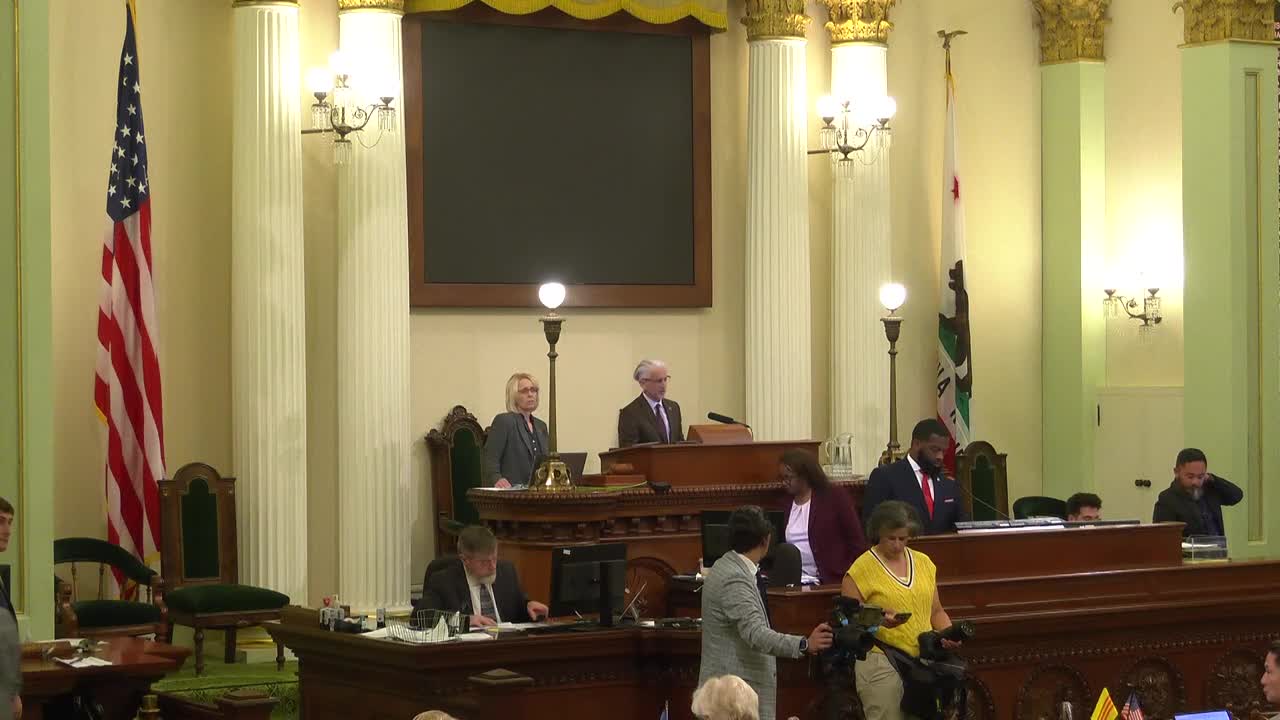 2MIN
Assembly Floor
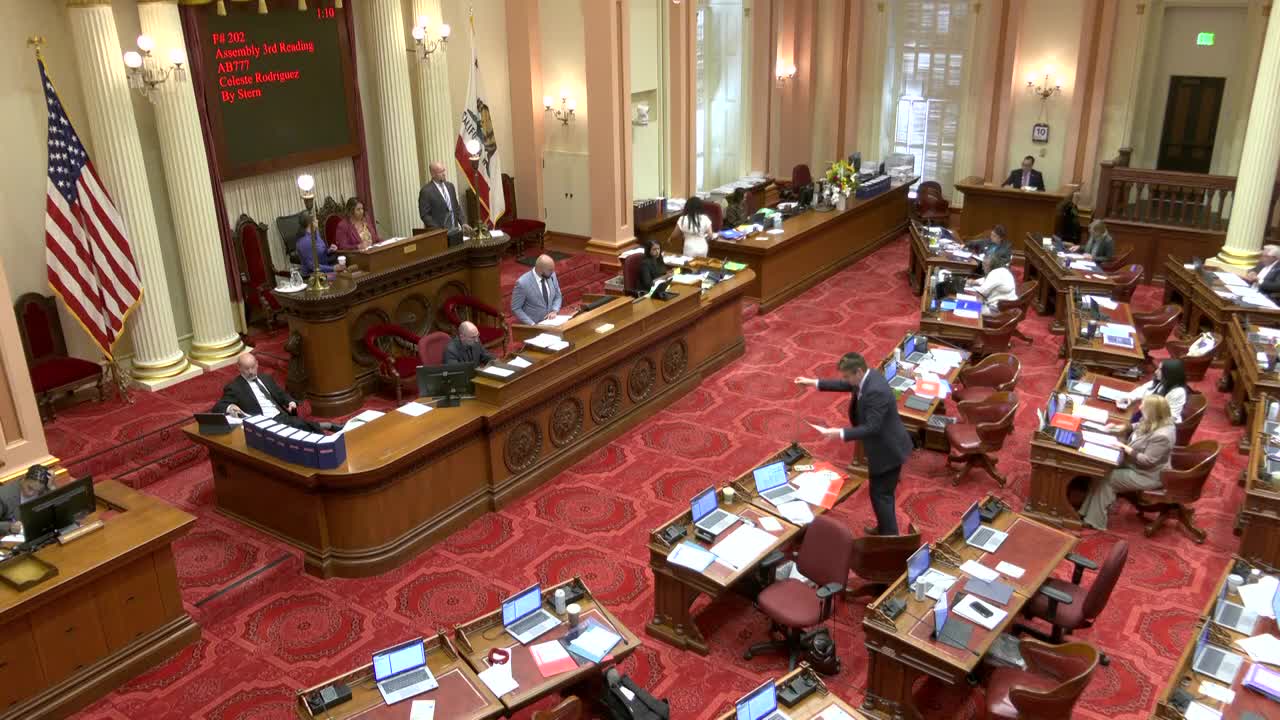 2MIN
Senate Floor
 11MIN
Senate Standing Committee on Human Services
Bill Author

Bill Co-Author(s):