AB 788: Prisons: facilities for female offenders.
- Session Year: 2025-2026
- House: Assembly
- Latest Version Date: 2026-09-03
Current Status:
Failed
(2026-09-27: Vetoed by Governor.)
Introduced
In Committee
Awaiting First Chamber Vote
Passed First Chamber
In Committee
Awaiting Second Chamber Vote
Passed Second Chamber
Enacted
Existing law creates within the Department of Corrections and Rehabilitation, under the Undersecretary for Operations, the Division of Adult Institutions, among others, and requires each division to be headed by a director, who is appointed by the Governor, as specified. Existing law also requires the Governor to appoint 4 subordinate officers to the division, as specified. Existing law requires each subordinate officer appointed to oversee an identified category of adult institutions, one of which oversees female offender facilities.
This bill would instead require the Governor to appoint 3 subordinate officers, as specified, who would oversee an identified category of male adult institutions, and one subordinate officer, as specified, who would oversee female adult institutions. The bill would create within the department, and under the Undersecretary for Operations, the Division of Female Programs and Services. The bill would require the director of this division to be responsible solely for female adult institutions and community facilities housing female offenders. The bill would require the director to report to the undersecretary and to have a minimum of 5 years of experience serving a female correctional population in a custody setting. The bill would also require this new division to manage and provide oversight of adult female programs, including prisons, conservation camps, and parole and community programs and to develop gender-responsive, trauma-informed, culturally sensitive approaches to program and policy development.
Existing law requires the department to create a Female Offender Reform Master Plan and present it to the Legislature by a specified date. Existing law requires the department to, among other things, create policies and operational practices that are designed to ensure a safe and productive institutional environment for female offenders.
This bill would require the department to establish the Gender Responsive Strategies Commission (GRSC) to develop active partnerships and to support successful implementation of gender responsive practices and rehabilitation programs for incarcerated individuals. The bill would require the department to provide a report to the Legislature on the implementation of the plan, and update statistics contained in the plan, by March 1, 2027, and every 3 years thereafter. The bill would require the department to maintain the plan, including subsequent updates and reports, in consultation with the GRSC and others, as specified. The bill would also require the department to post the plan, any reports, and any updates to the plan to the departments internet website.
This bill would require the GRSC to be composed of 19 representatives, as specified, and would require the department, by June 1, 2027, and annually thereafter, to provide a written report to the Legislature on appointments to the GRSC and the departments response and progress toward implementing the GRSCs recommendations.
Existing law also requires the department to contract with nationally recognized gender-responsive experts in prison operational practices, staffing, classification, substance abuse, trauma treatment services, mental health services, transitional services, and community corrections to, among other things, conduct a staffing analysis of all current job classifications assigned to each prison that houses only females, as specified, and develop programs and training for department staff in correctional facilities.
This bill would require the department, through this contract, no later than March 1, 2027, and every 3 years thereafter, to prepare and submit to the Legislature an updated staffing analysis and would require a comprehensive review of the offices policies and practices and other aspects of women-centered corrections developed to enhance safety and rehabilitative efforts, as specified. The bill would also require the training program to include training at the academy and, for those working in a female prison, 40 hours of initial training with a curriculum specifically focused on working with the population within female institutions and an 8-hour annual training thereafter.
Existing law requires the secretary of the department to expand the existing prison ombudsperson program to ensure the comprehensive deployment of ombudspersons throughout the state prison system with specific focus on the maximum security institutions.
This bill would instead require the Undersecretary for Operations to perform this duty and would require the undersecretary to appoint an ombudsperson solely assigned to adult female institutions.
Existing law creates within the Department of Corrections and Rehabilitation, under the Undersecretary for Operations, the Division of Adult Institutions, among others, and requires each division to be headed by a director, who is appointed by the Governor, as specified. Existing law also requires the Governor to appoint 4 subordinate officers to the division, as specified. Existing law requires each subordinate officer appointed to oversee an identified category of adult institutions, one of which oversees female offender facilities.
This bill would instead require the Governor to appoint 3 subordinate officers, as specified, who would oversee an identified category of male adult institutions, and one subordinate officer, as specified, who would oversee female adult institutions. The bill would create within the department, and under the Undersecretary for Operations, the Division of Female Programs and Services. The bill would require the director of this division to be responsible solely for female adult institutions and community facilities housing female offenders. The bill would require the director to report to the undersecretary and to have a minimum of 5 years of experience serving a female correctional population in a custody setting. The bill would also require this new division to manage and provide oversight of adult female programs, including prisons, conservation camps, and parole and community programs and to develop gender-responsive, trauma-informed, culturally sensitive approaches to program and policy development.
Existing law requires the department to create a Female Offender Reform Master Plan and present it to the Legislature by a specified date. Existing law requires the department to, among other things, create policies and operational practices that are designed to ensure a safe and productive institutional environment for female offenders.
This bill would require the department to establish the Gender Responsive Strategies Commission to develop active partnerships, involving the community, treatment experts, and related agencies, in its efforts toward gender-responsive practice. The bill would require the department to provide a report to the Legislature on the implementation of the plan, and update statistics contained in the plan, by March 1, 2026, 2027, and every 3 years thereafter. The bill would require the department to maintain the plan, including subsequent updates and reports, in consultation with the commission and others, as specified. The bill would also require the department to post the plan, any reports, and any updates to the plan to the departments internet website.
This bill would require the department to establish the Gender Responsive Strategies Commission (GRSC) to develop active partnerships and to support successful implementation of gender responsive practices and rehabilitation programs for incarcerated individuals. The bill would require the GRSC to be composed of 19 representatives, as specified, and would require the department, by June 1, 2027, and annually thereafter, to provide a written report to the Legislature on appointments to the GRSC and the departments response and progress toward implementing the GRSCs recommendations.
Existing law also requires the department to contract with nationally recognized gender-responsive experts in prison operational practices, staffing, classification, substance abuse, trauma treatment services, mental health services, transitional services, and community corrections to, among other things, conduct a staffing analysis of all current job classifications assigned to each prison that houses only females, as specified, and develop programs and training for department staff in correctional facilities.
This bill would require the department, through this contract, no later than March 1, 2026, 2027, and every 3 years thereafter, to prepare and submit to the Legislature an updated staffing analysis and would require a comprehensive review of the offices policies and practices and other aspects of women-centered corrections developed to enhance safety and rehabilitative efforts, as specified. The bill would also require the training program to include training at the academy and, for those working in a female prison, 40 hours of initial training with a curriculum specifically focused on working with the population within female institutions and an 8-hour annual training thereafter.
Existing law requires the secretary of the department to expand the existing prison ombudsperson program to ensure the comprehensive deployment of ombudspersons throughout the state prison system with specific focus on the maximum security institutions.
This bill would instead require the Undersecretary for Operations to perform this duty and would require the undersecretary to appoint an ombudsperson solely assigned to adult female institutions.
Existing law creates within the Department of Corrections and Rehabilitation, under the Undersecretary for Operations, the Division of Adult Institutions, among others, and requires each division to be headed by a director, who is appointed by the Governor, as specified. Existing law also requires the Governor to appoint 4 subordinate officers to the division, as specified. Existing law requires each subordinate officer appointed to oversee an identified category of adult institutions, one of which oversees female offender facilities.
This bill would instead require the Governor to appoint 3 subordinate officers, as specified, who would oversee an identified category of male adult institutions, and one subordinate officer, as specified, who would oversee female adult institutions. The bill would create within the department, and under the Undersecretary for Operations, the Division of Female Programs and Services. The bill would require the director of this division to be responsible solely for female adult institutions and community facilities housing female offenders. The bill would require the director to report to the undersecretary and to have a minimum of 5 years of experience serving the female correctional population. a female correctional population in a custody setting. The bill would also require this new division to manage and provide oversight of adult female programs, including prisons, conservation camps, and parole and community programs and to develop gender-responsive, trauma-informed, culturally sensitive approaches to program and policy development.
Existing law requires the department to create a Female Offender Reform Master Plan and present it to the Legislature by a specified date. Existing law requires the department to, among other things, create policies and operational practices that are designed to ensure a safe and productive institutional environment for female offenders. Existing law also requires the department to contract with nationally recognized gender-responsive experts in prison operational practices staffing, classification, substance abuse, trauma treatment services, mental health services, transitional services, and community corrections to, among other things, develop programs and training for department staff in correctional facilities.
This bill would require the department to establish the Gender Responsive Strategies Commission to develop active partnerships, involving the community, treatment experts, and related agencies, in its efforts toward gender-responsive practice. The bill would require the department to provide a report to the Legislature on the implementation of the plan, and update statistics contained in the plan, by March 1, 2026, and every 3 years thereafter. The bill would require the department to maintain the plan, including subsequent updates and reports, in consultation with the commission and others, as specified. The bill would also require the department to post the plan, any reports, and any updates to the plan to the departments internet website. The bill would require the department to establish the Gender Responsive Strategies Commission to develop active partnerships, involving the community, treatment experts, and related agencies in its efforts toward gender-responsive practice.
Existing law also requires the department to contract with nationally recognized gender-responsive experts in prison operational practices, staffing, classification, substance abuse, trauma treatment services, mental health services, transitional services, and community corrections to, among other things, conduct a staffing analysis of all current job classifications assigned to each prison that houses only females, as specified, and develop programs and training for department staff in correctional facilities.
This bill would require the department, through this contract, no later than March 1, 2026, and every 3 years thereafter, to prepare and submit to the Legislature an updated staffing analysis and would require a comprehensive review of the offices policies and practices and other aspects of women-centered corrections developed to enhance safety and rehabilitative efforts, as specified. The bill would also require the training program to include training at the academy and, for those working in a female prison, 40 hours of initial training with a curriculum specifically focused on working with the population within female institutions and an 8-hour annual training thereafter.
Existing law requires the secretary of the department to expand the existing prison ombudsperson program to ensure the comprehensive deployment of ombudspersons throughout the state prison system with specific focus on the maximum security institutions.
This bill would instead require the Undersecretary for Operations to perform this duty and would require the undersecretary to appoint an ombudsperson solely assigned to adult female institutions.
Existing law creates within the Department of Corrections and Rehabilitation, under the Undersecretary for Operations, the Division of Adult Institutions, among others, and requires each division to be headed by a director, who is appointed by the Governor, as specified. Existing law also requires the Governor to appoint 4 subordinate officers to the division, as specified. Existing law requires each subordinate officer appointed to oversee an identified category of adult institutions, one of which oversees female offender facilities.
This bill would instead require the Governor to appoint 3 subordinate officers, as specified, who would oversee an identified category of male adult institutions. institutions, and one subordinate officer, as specified, who would oversee female adult institutions. The bill would create within the department, and under the Undersecretary for Operations, the Division of Female Programs and Services. The bill would require the director of this division to be responsible solely for female adult institutions and community facilities housing female offenders. The bill would require the director to report to the undersecretary and to have a minimum of 5 years of expertise experience serving the female correctional population. The bill would also require this new division to manage and provide oversight of adult female programs, including prisons, conservation camps, and parole and community programs and to develop gender-responsive, trauma-informed, culturally sensitive approaches to program and policy development.
Existing law requires the department to create a Female Offender Reform Master Plan and present it to the Legislature by a specified date. Existing law requires the department to, among other things, create policies and operational practices that are designed to ensure a safe and productive institutional environment for female offenders. Existing law also requires the department to contract with nationally recognized gender responsive gender-responsive experts in prison operational practices staffing, classification, substance abuse, trauma treatment services, mental health services, transitional services, and community corrections to, among other things, develop programs and training for department staff in correctional facilities.
This bill would require the department to provide a report to the Legislature on the implementation of the plan, and update statistics contained in the plan, by March 1, 2026, and every 3 years thereafter. The bill would also require the department to post the plan, any reports, and any updates to the plan to the departments internet website. The bill would require the department to establish the Gender Responsive Strategies Commission to develop active partnerships, involving the community, treatment experts, and related agencies in its efforts toward gender-responsive practice.
Existing law requires the secretary of the department to expand the existing prison ombudsperson program to ensure the comprehensive deployment of ombudspersons throughout the state prison system with specific focus on the maximum security institutions.
This bill would instead require the Undersecretary for Operations to perform this duty and would require the undersecretary to appoint an ombudsperson solely assigned to adult female institutions.
Existing law creates within the Department of Corrections and Rehabilitation, under the Undersecretary for Operations, the Division of Adult Institutions, among others, and requires each division to be headed by a director, who is appointed by the Governor, as specified. Existing law also requires the Governor to appoint 4 subordinate officers to the division, as specified. Existing law requires each subordinate officer appointed to oversee an identified category of adult institutions, one of which oversees female offender facilities.
This bill would instead require the Governor to appoint 3 subordinate officers, as specified, who would oversee an identified category of male adult institutions. The bill would create within the department, and under the Undersecretary for Operations, the Division of Female Programs and Services. The bill would require the director of this division to be responsible solely for female adult institutions and community facilities housing female offenders. The bill would require the director to report to the undersecretary and to have a minimum of 5 years of expertise serving the female correctional population. The bill would also require this new division to manage and provide oversight of adult female programs, including prisons, conservation camps, and parole and community programs and to develop gender-responsive, trauma-informed, culturally sensitive approaches to program and policy development.
Existing law requires the department to create a Female Offender Reform Master Plan and present it to the Legislature by a specified date. Existing law requires the department to, among other things, create policies and operational practices that are designed to ensure a safe and productive institutional environment for female offenders. Existing law also requires the department to contract with nationally recognized gender responsive experts in prison operational practices staffing, classification, substance abuse, trauma treatment services, mental health services, transitional services, and community corrections to, among other things, develop programs and training for department staff in correctional facilities.
This bill would require the department to provide a report to the Legislature on the implementation of the plan, and update statistics contained in the plan, by March 1, 2026, and every 3 years thereafter. The bill would also require the department to post the plan, any reports, and any updates to the plan to the departments internet website. The bill would require the department to establish the Gender Responsive Strategies Commission to develop active partnerships, involving the community, treatment experts, and related agencies in its efforts toward gender-responsive practice.
Existing law requires the secretary of the department to expand the existing prison ombudsperson program to ensure the comprehensive deployment of ombudspersons throughout the state prison system with specific focus on the maximum security institutions.
This bill would instead require the Undersecretary for Operations to perform this duty and would require the undersecretary to appoint an ombudsperson solely assigned to adult female institutions.
(a)There is hereby created within the Department of Corrections and Rehabilitation, under the Undersecretary for Administration, the following divisions:
(1)The Division of Enterprise Information Services, the Division of Facility Planning, Construction, and Management, and the Division of Administrative Services. Each division shall be headed by a director, who shall be appointed by the Governor, upon recommendation of the secretary, subject to Senate confirmation, who shall serve at the pleasure of the Governor.
(2)The Division of Correctional Policy Research and Internal Oversight. This division shall be headed by a director, who shall be appointed by the Governor, upon recommendation of the secretary, who shall serve at the pleasure of the Governor.
(b)There is hereby created in the Department of Corrections and Rehabilitation, under the Undersecretary for Health Care Services, the Division of Health Care Operations and the Division of Health Care Policy and Administration. Each division shall be headed by a director, who shall be appointed by the Governor, upon recommendation of the secretary, subject to Senate confirmation, who shall serve at the pleasure of the Governor.
(c)(1)There is hereby created within the Department of Corrections and Rehabilitation, under the Undersecretary for Operations, the Division of Adult Institutions, the Division of Adult Parole Operations, the Division of Female Programs and Services, and the Division of Rehabilitative Programs. Each division shall be headed by a director, who shall be appointed by the Governor, upon recommendation of the secretary, subject to Senate confirmation, who shall serve at the pleasure of the Governor.
(2)The Director for Female Programs and Services shall be responsible solely for female adult institutions and community facilities housing female offenders. The director shall report to the undersecretary and shall and have a minimum of five years of experience serving a female correctional population in a custody setting. This position shall have policy- and fiscal-level responsibility and decisionmaking authority and shall utilize existing departmental functions for services to avoid duplication of functions and responsibilities.
(d)(1)The Governor shall, upon recommendation of the secretary, appoint three subordinate officers, subject to Senate confirmation, who shall serve at the pleasure of the Governor. Each subordinate officer appointed pursuant to this paragraph shall oversee an identified category of male adult institutions.
(2)The Governor shall, upon recommendation of the secretary, appoint one subordinate officer, subject to Senate confirmation, who shall serve at the pleasure of the Governor. The subordinate officer appointed pursuant to this paragraph shall oversee female adult institutions.
(e)(1)Unless the context clearly requires otherwise, whenever the term Chief Deputy Secretary for Adult Operations appears in any statute, regulation, or contract, it shall be construed to refer to the Director of the Division of Adult Institutions.
(2)Unless the context clearly requires otherwise, whenever the term Chief Deputy Secretary for Adult Programs appears in any statute, regulation, or contract, it shall be construed to refer to the Director of the Division of Rehabilitative Programs.
SEC. 2.Section 3430 of the Penal Code is amended to read:3430.The Department of Corrections and Rehabilitation shall do all of the following:
(a)(1)Create a Female Offender Reform Master Plan, and shall present this plan to the Legislature by March 1, 2008.
(2)No later than March 1, 2027, and every three years thereafter, prepare and submit a report to the Legislature on the implementation of the plan described in paragraph (1), including updated statistics contained in the plan. These reports shall be submitted in compliance with Section 9795 of the Government Code.
(3)Maintain the plan, including all subsequent updates and reports, in consultation with the Gender Responsive Strategies Commission and with nationally recognized experts in gender responsive prison operational practices, staffing, classification, substance abuse, trauma treatment services, mental health services, transitional services, community corrections, legal advocacy, and incarceration reform.
(4)Post the plan, any reports, and any updates to the plan to the departments internet website.
(b)Create policies, programs, and operational practices that are designed to ensure a safe and productive institutional environment for female offenders.
(c)Contract with nationally recognized gender-responsive experts in prison operational practices staffing, classification, substance abuse, trauma treatment services, mental health services, transitional services, and community corrections to do all of the following:
(1)(A)Conduct a staffing analysis of all current job classifications assigned to each prison that houses females. The department shall provide a plan to the Legislature by March 1, 2009, that incorporates those recommendations and details the changes that are needed to address any identified unmet needs of female inmates.
(B)No later than March 1, 2027, and every three years thereafter, the department shall prepare and submit to the Legislature the updated staffing analysis described in subparagraph (A). These reports shall be submitted in compliance with Section 9795 of the Government Code.
(2)Develop programs and training for department staff in correctional facilities to include training at the academy and, for those working in a female prison, 40 hours of initial training with a curriculum specifically focused on working with the population within female institutions and an 8-hour annual training thereafter.
(3)Perform a comprehensive review of offices policies and practices and other aspects of women-centered corrections developed to enhance safety and rehabilitative efforts. This review should engage collaboratively with internal experts, community-based organizations, medical and mental health experts, labor, incarceration reform advocates, and national consultants on best practices to improve all aspects of operational practice and treatment, with an emphasis on sexual safety and gender-responsive, trauma-informed principles.
(d)Create a gender-responsive female classification system.
(e)Create a gender-responsive staffing pattern for female institutions and community-based offender beds.
(f)Create a needs-based case and risk management tool designed specifically for female offenders. This tool shall include, but not be limited to, an assessment upon intake, and annually thereafter, that gauges an inmates educational and vocational needs, including reading, writing, communication, and arithmetic skills, health care needs, mental health needs, substance abuse needs, and trauma-treatment needs. The initial assessment shall include projections for academic, vocational, health care, mental health, substance abuse, and trauma-treatment needs, and shall be used to determine appropriate programming and as a measure of progress in subsequent assessments of development.
(g)Design and implement evidence-based gender specific rehabilitative programs, including wraparound educational, health care, mental health, vocational, substance abuse, and trauma treatment programs that are designed to reduce female offender recidivism. These programs shall include, but not be limited to, educational programs that include academic preparation in the areas of verbal communication skills, reading, writing, arithmetic, and the acquisition of high school diplomas and GEDs, and vocational preparation, including counseling and training in marketable skills, and job placement information.
(h)Build and strengthen systems of family support and family involvement during the period of the females incarceration.
(i)Establish a family service coordinator at each prison that houses only females.
SEC. 3.Section 3431 is added to the Penal Code, immediately following Section 3430, to read:3431.(a)The Division of Female Programs and Services shall do both of the following:
(1)Manage and provide oversight of adult female programs, including prisons, conservation camps, and parole and community programs.
(2)Develop gender-responsive, trauma-informed, culturally sensitive approaches to program and policy development that will improve recidivism outcomes for the adult incarcerated and paroled female offenders under the supervision of the department.
(b)The office shall be headed by a person who has relevant professional experience in planning and implementing recidivism reduction programs and services that are gender responsive and trauma informed.
SEC. 4.Section 3432 is added to the Penal Code, immediately following Section 3431, to read:3432.(a)The department shall establish the Gender Responsive Strategies Commission (GRSC) to develop active partnerships and to support successful implementation of gender responsive practices and rehabilitation programs for incarcerated individuals within their custody or released to community supervision.
(b)The GRSC shall be composed of 19 representatives. The membership of the GRSC shall be comprised of as follows:
(1)Two representatives of community-based organizations whose primary mission has been providing rehabilitative services to women who are incarcerated or on parole.
(2)One published expert researcher with a research focus on women in a correctional setting and rehabilitative programs.
(3)One published expert with a focus on community reentry.
(4)One expert in treatment of substance use disorders.
(5)One expert in womens health care.
(6)One expert in trauma treatment.
(7)Two experts on implementation of gender responsive and trauma-informed policies.
(8)One expert in the implementation of the Prison Rape Elimination Act of 2003 ((commencing with Section 30301) of Title 34 of the United States Code).
(9)Two legal advocates.
(10)Two legislative representatives with one representing the Assembly and the other representing the Senate.
(11)One union representative.
(12)Two formerly incarcerated women.
(13)Two incarceration reform advocates.
(c)Each member of the GRSC shall serve a two-year term. Applications shall be accepted by the department for the membership positions, except for the legislative and union representatives. Each legislative body shall determine a legislative representative, and the union representative shall be determined by the California Correctional Peace Officers Association. The GRSC shall develop formal recommendations and submit them to the Director for Female Programs and Services for implementation consideration.
(d)The department shall publish on its internet website the membership of the GRSC and minutes of the GRSC meetings.
(e)(1)By June 1, 2027, and annually thereafter, the department shall provide a written report to the Legislature on appointments to the GRSC and the departments response and progress toward implementing GRSCs recommendations.
(2)A report submitted pursuant to paragraph (1) shall be submitted in compliance with Section 9795 of the Government Code.
SEC. 5.Section 5066 of the Penal Code is amended to read:5066.The Undersecretary for Operations shall expand the existing prison ombudsperson program to ensure the comprehensive deployment of ombudspersons throughout the state prison system with specific focus on the maximum security institutions. The Undersecretary for Operations shall appoint an ombudsperson solely assigned to adult female institutions.
(a)There is hereby created within the Department of Corrections and Rehabilitation, under the Undersecretary for Administration, the following divisions:
(1)The Division of Enterprise Information Services, the Division of Facility Planning, Construction, and Management, and the Division of Administrative Services. Each division shall be headed by a director, who shall be appointed by the Governor, upon recommendation of the secretary, subject to Senate confirmation, who shall serve at the pleasure of the Governor.
(2)The Division of Correctional Policy Research and Internal Oversight. This division shall be headed by a director, who shall be appointed by the Governor, upon recommendation of the secretary, who shall serve at the pleasure of the Governor.
(b)There is hereby created in the Department of Corrections and Rehabilitation, under the Undersecretary for Health Care Services, the Division of Health Care Operations and the Division of Health Care Policy and Administration. Each division shall be headed by a director, who shall be appointed by the Governor, upon recommendation of the secretary, subject to Senate confirmation, who shall serve at the pleasure of the Governor.
(c)(1)There is hereby created within the Department of Corrections and Rehabilitation, under the Undersecretary for Operations, the Division of Adult Institutions, the Division of Adult Parole Operations, the Division of Female Programs and Services, and the Division of Rehabilitative Programs. Each division shall be headed by a director, who shall be appointed by the Governor, upon recommendation of the secretary, subject to Senate confirmation, who shall serve at the pleasure of the Governor.
(2)The Director for Female Programs and Services shall be responsible solely for female adult institutions and community facilities housing female offenders. The director shall report to the undersecretary and shall and have a minimum of five years of experience serving a female correctional population in a custody setting. This position shall have policy- and fiscal-level responsibility and decisionmaking authority and shall utilize existing departmental functions for services to avoid duplication of functions and responsibilities.
(d)(1)The Governor shall, upon recommendation of the secretary, appoint three subordinate officers, subject to Senate confirmation, who shall serve at the pleasure of the Governor. Each subordinate officer appointed pursuant to this paragraph shall oversee an identified category of male adult institutions.
(2)The Governor shall, upon recommendation of the secretary, appoint one subordinate officer, subject to Senate confirmation, who shall serve at the pleasure of the Governor. The subordinate officer appointed pursuant to this paragraph shall oversee female adult institutions.
(e)(1)Unless the context clearly requires otherwise, whenever the term Chief Deputy Secretary for Adult Operations appears in any statute, regulation, or contract, it shall be construed to refer to the Director of the Division of Adult Institutions.
(2)Unless the context clearly requires otherwise, whenever the term Chief Deputy Secretary for Adult Programs appears in any statute, regulation, or contract, it shall be construed to refer to the Director of the Division of Rehabilitative Programs.
SEC. 2.Section 3430 of the Penal Code is amended to read:3430.The Department of Corrections and Rehabilitation shall do all of the following:
(a)(1)Create a Female Offender Reform Master Plan, and shall present this plan to the Legislature by March 1, 2008.
(2)No later than March 1, 2026, 2027, and every three years thereafter, prepare and submit a report to the Legislature on the implementation of the plan described in paragraph (1), including updated statistics contained in the plan. These reports shall be submitted in compliance with Section 9795 of the Government Code.
(3)Maintain the plan, including all subsequent updates and reports, in consultation with the Gender Responsive Strategies Commission and with nationally recognized experts in gender responsive prison operational practices, staffing, classification, substance abuse, trauma treatment services, mental health services, transitional services, community corrections, legal advocacy, and incarceration reform.
(4)Post the plan, any reports, and any updates to the plan to the departments internet website.
(b)Create policies, programs, and operational practices that are designed to ensure a safe and productive institutional environment for female offenders.
(c)Contract with nationally recognized gender-responsive experts in prison operational practices staffing, classification, substance abuse, trauma treatment services, mental health services, transitional services, and community corrections to do all of the following:
(1)(A)Conduct a staffing analysis of all current job classifications assigned to each prison that houses females. The department shall provide a plan to the Legislature by March 1, 2009, that incorporates those recommendations and details the changes that are needed to address any identified unmet needs of female inmates.
(B)No later than March 1, 2026, 2027, and every three years thereafter, the department shall prepare and submit to the Legislature the updated staffing analysis described in subparagraph (A). These reports shall be submitted in compliance with Section 9795 of the Government Code.
(2)Develop programs and training for department staff in correctional facilities to include training at the academy and, for those working in a female prison, 40 hours of initial training with a curriculum specifically focused on working with the population within female institutions and an 8-hour annual training thereafter.
(3)Perform a comprehensive review of offices policies and practices and other aspects of women-centered corrections developed to enhance safety and rehabilitative efforts. This review should engage collaboratively with internal experts, community-based organizations, medical and mental health experts, labor, incarceration reform advocates, and national consultants on best practices to improve all aspects of operational practice and treatment, with an emphasis on sexual safety and gender-responsive, trauma-informed principles.
(d)Create a gender-responsive female classification system.
(e)Create a gender-responsive staffing pattern for female institutions and community-based offender beds.
(f)Create a needs-based case and risk management tool designed specifically for female offenders. This tool shall include, but not be limited to, an assessment upon intake, and annually thereafter, that gauges an inmates educational and vocational needs, including reading, writing, communication, and arithmetic skills, health care needs, mental health needs, substance abuse needs, and trauma-treatment needs. The initial assessment shall include projections for academic, vocational, health care, mental health, substance abuse, and trauma-treatment needs, and shall be used to determine appropriate programming and as a measure of progress in subsequent assessments of development.
(g)Design and implement evidence-based gender specific rehabilitative programs, including wraparound educational, health care, mental health, vocational, substance abuse, and trauma treatment programs that are designed to reduce female offender recidivism. These programs shall include, but not be limited to, educational programs that include academic preparation in the areas of verbal communication skills, reading, writing, arithmetic, and the acquisition of high school diplomas and GEDs, and vocational preparation, including counseling and training in marketable skills, and job placement information.
(h)Build and strengthen systems of family support and family involvement during the period of the females incarceration.
(i)Establish a family service coordinator at each prison that houses only females.
SEC. 3.Section 3431 is added to the Penal Code, immediately following Section 3430, to read:3431.(a)The Division of Female Programs and Services shall do both of the following:
(1)Manage and provide oversight of adult female programs, including prisons, conservation camps, and parole and community programs.
(2)Develop gender-responsive, trauma-informed, culturally sensitive approaches to program and policy development that will improve recidivism outcomes for the adult incarcerated and paroled female offenders under the supervision of the department.
(b)The office shall be headed by a person who has relevant professional experience in planning and implementing recidivism reduction programs and services that are gender responsive and trauma informed.
SEC. 4.Section 3432 is added to the Penal Code, immediately following Section 3431, to read:3432.(a)The department shall establish the Gender Responsive Strategies Commission to develop active partnerships, involving the community, treatment experts, and related agencies in its efforts toward gender-responsive practice. (GRSC) to develop active partnerships and to support successful implementation of gender responsive practices and rehabilitation programs for incarcerated individuals within their custody or released to community supervision.
(b)The commission GRSC shall be composed of representatives of community-based organizations, expert researchers, policy experts, legislators, union representatives, formerly incarcerated women, legal advocates, and incarceration reform advocates. 19 representatives. The membership of the GRSC shall be comprised of as follows:
(1)Two representatives of community-based organizations whose primary mission has been providing rehabilitative services to women who are incarcerated or on parole.
(2)One published expert researcher with a research focus on women in a correctional setting and rehabilitative programs.
(3)One published expert with a focus on community reentry.
(4)One expert in treatment of substance use disorders.
(5)One expert in womens health care.
(6)One expert in trauma treatment.
(7)Two experts on implementation of gender responsive and trauma-informed policies.
(8)One expert in the implementation of the Prison Rape Elimination Act of 2003 ((commencing with Section 30301) of Title 34 of the United States Code).
(9)Two legal advocates.
(10)Two legislative representatives with one representing the Assembly and the other representing the Senate.
(11)One union representative.
(12)Two formerly incarcerated women.
(13)Two incarceration reform advocates.
(c)The commission shall meet quarterly and publish minutes for each meeting on the departments internet website. Each member of the GRSC shall serve a two-year term. Applications shall be accepted by the department for the membership positions, except for the legislative and union representatives. Each legislative body shall determine a legislative representative, and the union representative shall be determined by the California Correctional Peace Officers Association. The GRSC shall develop formal recommendations and submit them to the Director for Female Programs and Services for implementation consideration.
(d)The department shall publish on its internet website the membership of the GRSC and minutes of the GRSC meetings.
(e)(1)By June 1, 2027, and annually thereafter, the department shall provide a written report to the Legislature on appointments to the GRSC and the departments response and progress toward implementing GRSCs recommendations.
(2)A report submitted pursuant to paragraph (1) shall be submitted in compliance with Section 9795 of the Government Code.
SEC. 5.Section 5066 of the Penal Code is amended to read:5066.The Undersecretary for Operations shall expand the existing prison ombudsperson program to ensure the comprehensive deployment of ombudspersons throughout the state prison system with specific focus on the maximum security institutions. The Undersecretary for Operations shall appoint an ombudsperson solely assigned to adult female institutions.
(a)There is hereby created within the Department of Corrections and Rehabilitation, under the Undersecretary for Administration, the following divisions:
(1)The Division of Enterprise Information Services, the Division of Facility Planning, Construction, and Management, and the Division of Administrative Services. Each division shall be headed by a director, who shall be appointed by the Governor, upon recommendation of the secretary, subject to Senate confirmation, who shall serve at the pleasure of the Governor.
(2)The Division of Correctional Policy Research and Internal Oversight. This division shall be headed by a director, who shall be appointed by the Governor, upon recommendation of the secretary, who shall serve at the pleasure of the Governor.
(b)There is hereby created in the Department of Corrections and Rehabilitation, under the Undersecretary for Health Care Services, the Division of Health Care Operations and the Division of Health Care Policy and Administration. Each division shall be headed by a director, who shall be appointed by the Governor, upon recommendation of the secretary, subject to Senate confirmation, who shall serve at the pleasure of the Governor.
(c)(1)There is hereby created within the Department of Corrections and Rehabilitation, under the Undersecretary for Operations, the Division of Adult Institutions, the Division of Adult Parole Operations, the Division of Female Programs and Services, and the Division of Rehabilitative Programs. Each division shall be headed by a director, who shall be appointed by the Governor, upon recommendation of the secretary, subject to Senate confirmation, who shall serve at the pleasure of the Governor.
(2)The Director for Female Programs and Services shall be responsible solely for female adult institutions and community facilities housing female offenders. The director shall report to the undersecretary and shall and have a minimum of five years of experience serving the female correctional population. a female correctional population in a custody setting. This position shall have policy- and fiscal-level responsibility and decisionmaking authority and shall utilize existing departmental functions for services to avoid duplication of functions and responsibilities.
(d)(1)The Governor shall, upon recommendation of the secretary, appoint three subordinate officers, subject to Senate confirmation, who shall serve at the pleasure of the Governor. Each subordinate officer appointed pursuant to this paragraph shall oversee an identified category of male adult institutions.
(2)The Governor shall, upon recommendation of the secretary, appoint one subordinate officer, subject to Senate confirmation, who shall serve at the pleasure of the Governor. The subordinate officer appointed pursuant to this paragraph shall oversee female adult institutions.
(e)(1)Unless the context clearly requires otherwise, whenever the term Chief Deputy Secretary for Adult Operations appears in any statute, regulation, or contract, it shall be construed to refer to the Director of the Division of Adult Institutions.
(2)Unless the context clearly requires otherwise, whenever the term Chief Deputy Secretary for Adult Programs appears in any statute, regulation, or contract, it shall be construed to refer to the Director of the Division of Rehabilitative Programs.
SEC. 2.Section 3430 of the Penal Code is amended to read:3430.The Department of Corrections and Rehabilitation shall do all of the following:
(a)(1)Create a Female Offender Reform Master Plan, and shall present this plan to the Legislature by March 1, 2008.
(2)No later than March 1, 2026, and every three years thereafter, prepare and submit a report to the Legislature on the implementation of the plan described in paragraph (1), including updated statistics contained in the plan. These reports shall be submitted in compliance with Section 9795 of the Government Code.
(3)Maintain the plan, including all subsequent updates and reports, in consultation with the Gender Responsive Strategies Commission and with nationally recognized experts in gender responsive prison operational practices, staffing, classification, substance abuse, trauma treatment services, mental health services, transitional services, and community corrections. community corrections, legal advocacy, and incarceration reform.
(4)Post the plan, any reports, and any updates to the plan to the departments internet website.
(b)Create policies, programs, and operational practices that are designed to ensure a safe and productive institutional environment for female offenders.
(c)Contract with nationally recognized gender-responsive experts in prison operational practices staffing, classification, substance abuse, trauma treatment services, mental health services, transitional services, and community corrections to do all of the following:
(1)(A)Conduct a staffing analysis of all current job classifications assigned to each prison that houses females. The department shall provide a plan to the Legislature by March 1, 2009, that incorporates those recommendations and details the changes that are needed to address any identified unmet needs of female inmates.
(B)No later than March 1, 2026, and every three years thereafter, the department shall prepare and submit to the Legislature the updated staffing analysis described in subparagraph (A). These reports shall be submitted in compliance with Section 9795 of the Government Code.
(2)Develop programs and training for department staff in correctional facilities to include not less than one week of training at the academy and annual training specifically focused on working with a female population. training at the academy and, for those working in a female prison, 40 hours of initial training with a curriculum specifically focused on working with the population within female institutions and an 8-hour annual training thereafter.
(3)Perform a comprehensive review of offices policies and practices and other aspects of women-centered corrections developed to enhance safety and rehabilitative efforts. This review should engage collaboratively with internal experts, community-based organizations, medical and mental health experts, labor, incarceration reform advocates, and national consultants on best practices to improve all aspects of operational practice and treatment, with an emphasis on sexual safety and gender-responsive, trauma-informed principles.
(d)Create a gender-responsive female classification system.
(e)Create a gender-responsive staffing pattern for female institutions and community-based offender beds.
(f)Create a needs-based case and risk management tool designed specifically for female offenders. This tool shall include, but not be limited to, an assessment upon intake, and annually thereafter, that gauges an inmates educational and vocational needs, including reading, writing, communication, and arithmetic skills, health care needs, mental health needs, substance abuse needs, and trauma-treatment needs. The initial assessment shall include projections for academic, vocational, health care, mental health, substance abuse, and trauma-treatment needs, and shall be used to determine appropriate programming and as a measure of progress in subsequent assessments of development.
(g)Design and implement evidence-based gender specific rehabilitative programs, including wraparound educational, health care, mental health, vocational, substance abuse, and trauma treatment programs that are designed to reduce female offender recidivism. These programs shall include, but not be limited to, educational programs that include academic preparation in the areas of verbal communication skills, reading, writing, arithmetic, and the acquisition of high school diplomas and GEDs, and vocational preparation, including counseling and training in marketable skills, and job placement information.
(h)Build and strengthen systems of family support and family involvement during the period of the females incarceration.
(i)Establish a family service coordinator at each prison that houses only females.
SEC. 3.Section 3431 is added to the Penal Code, immediately following Section 3430, to read:3431.(a)The Division of Female Programs and Services shall do both of the following:
(1)Manage and provide oversight of adult female programs, including prisons, conservation camps, and parole and community programs.
(2)Develop gender-responsive, trauma-informed, culturally sensitive approaches to program and policy development that will improve recidivism outcomes for the adult incarcerated and paroled female offenders under the supervision of the department.
(b)The office shall be headed by a person who has relevant professional experience in planning and implementing recidivism reduction programs and services that are gender responsive and trauma informed.
SEC. 4.Section 3432 is added to the Penal Code, immediately following Section 3431, to read:3432.(a)The department shall establish the Gender Responsive Strategies Commission to develop active partnerships, involving the community, treatment experts, and related agencies in its efforts toward gender-responsive practice.
(b)The commission shall be composed of representatives of community-based organizations, expert researchers, policy experts, legislators, union representatives, and formerly incarcerated women. formerly incarcerated women, legal advocates, and incarceration reform advocates.
(c)The commission shall meet quarterly and publish minutes for each meeting on the departments internet website.
SEC. 5.Section 5066 of the Penal Code is amended to read:5066.The Undersecretary for Operations shall expand the existing prison ombudsperson program to ensure the comprehensive deployment of ombudspersons throughout the state prison system with specific focus on the maximum security institutions. The Undersecretary for Operations shall appoint an ombudsperson solely assigned to adult female institutions.
(a)There is hereby created within the Department of Corrections and Rehabilitation, under the Undersecretary for Administration, the following divisions:
(1)The Division of Enterprise Information Services, the Division of Facility Planning, Construction, and Management, and the Division of Administrative Services. Each division shall be headed by a director, who shall be appointed by the Governor, upon recommendation of the secretary, subject to Senate confirmation, who shall serve at the pleasure of the Governor.
(2)The Division of Correctional Policy Research and Internal Oversight. This division shall be headed by a director, who shall be appointed by the Governor, upon recommendation of the secretary, who shall serve at the pleasure of the Governor.
(b)There is hereby created in the Department of Corrections and Rehabilitation, under the Undersecretary for Health Care Services, the Division of Health Care Operations and the Division of Health Care Policy and Administration. Each division shall be headed by a director, who shall be appointed by the Governor, upon recommendation of the secretary, subject to Senate confirmation, who shall serve at the pleasure of the Governor.
(c)(1)There is hereby created within the Department of Corrections and Rehabilitation, under the Undersecretary for Operations, the Division of Adult Institutions, the Division of Adult Parole Operations, the Division of Female Programs and Services, and the Division of Rehabilitative Programs. Each division shall be headed by a director, who shall be appointed by the Governor, upon recommendation of the secretary, subject to Senate confirmation, who shall serve at the pleasure of the Governor.
(2)The Director for Female Programs and Services shall be responsible solely for female adult institutions and community facilities housing female offenders. The director shall report to the undersecretary and shall and have a minimum of five years of expertise experience serving the female correctional population.
(d)(1)The Governor shall, upon recommendation of the secretary, appoint three subordinate officers, subject to Senate confirmation, who shall serve at the pleasure of the Governor. Each subordinate officer appointed pursuant to this subdivision paragraph shall oversee an identified category of male adult institutions.
(2)The Governor shall, upon recommendation of the secretary, appoint one subordinate officer, subject to Senate confirmation, who shall serve at the pleasure of the Governor. The subordinate officer appointed pursuant to this paragraph shall oversee female adult institutions.
(e)(1)Unless the context clearly requires otherwise, whenever the term Chief Deputy Secretary for Adult Operations appears in any statute, regulation, or contract, it shall be construed to refer to the Director of the Division of Adult Institutions.
(2)Unless the context clearly requires otherwise, whenever the term Chief Deputy Secretary for Adult Programs appears in any statute, regulation, or contract, it shall be construed to refer to the Director of the Division of Rehabilitative Programs.
SEC. 2.Section 3430 of the Penal Code is amended to read:3430.The Department of Corrections and Rehabilitation shall do all of the following:
(a)(1)Create a Female Offender Reform Master Plan, and shall present this plan to the Legislature by March 1, 2008.
(2)No later than March 1, 2026, and every three years thereafter, prepare and submit a report to the Legislature on the implementation of the plan described in paragraph (1), including updated statistics contained in the plan. These reports shall be submitted in compliance with Section 9795 of the Government Code.
(3)Maintain the plan, including all subsequent updates and reports, in consultation with the Gender Responsive Strategies Commission and with nationally recognized experts in gender responsive prison operational practices, staffing, classification, substance abuse, trauma treatment services, mental health services, transitional services, and community corrections.
(4)Post the plan, any reports, and any updates to the plan to the departments internet website.
(b)Create policies, programs, and operational practices that are designed to ensure a safe and productive institutional environment for female offenders.
(c)Contract with nationally recognized gender responsive gender-responsive experts in prison operational practices staffing, classification, substance abuse, trauma treatment services, mental health services, transitional services, and community corrections to do all of the following:
(1)(A)Conduct a staffing analysis of all current job classifications assigned to each prison that houses females. The department shall provide a plan to the Legislature by March 1, 2009, that incorporates those recommendations and details the changes that are needed to address any identified unmet needs of female inmates.
(B)No later than March 1, 2026, and every three years thereafter, the department shall prepare and submit to the Legislature the updated staffing analysis described in subparagraph (A). These reports shall be submitted in compliance with Section 9795 of the Government Code.
(2)Develop programs and training for department staff in correctional facilities to include not less than one week of training at the academy and annual training specifically focused on working with a female population.
(3)Perform a comprehensive review of offices policies and practices and other aspects of women-centered corrections developed to enhance safety and rehabilitative efforts. This review should engage collaboratively with internal experts, community-based organizations, medical and mental health experts, labor, incarceration reform advocates, and national consultants on best practices to improve all aspects of operational practice and treatment, with an emphasis on sexual safety and gender-responsive, trauma-informed principles.
(d)Create a gender responsive gender-responsive female classification system.
(e)Create a gender responsive gender-responsive staffing pattern for female institutions and community-based offender beds.
(f)Create a needs-based case and risk management tool designed specifically for female offenders. This tool shall include, but not be limited to, an assessment upon intake, and annually thereafter, that gauges an inmates educational and vocational needs, including reading, writing, communication, and arithmetic skills, health care needs, mental health needs, substance abuse needs, and trauma-treatment needs. The initial assessment shall include projections for academic, vocational, health care, mental health, substance abuse, and trauma-treatment needs, and shall be used to determine appropriate programming and as a measure of progress in subsequent assessments of development.
(g)Design and implement evidence-based gender specific rehabilitative programs, including wraparound educational, health care, mental health, vocational, substance abuse abuse, and trauma treatment programs that are designed to reduce female offender recidivism. These programs shall include, but not be limited to, educational programs that include academic preparation in the areas of verbal communication skills, reading, writing, arithmetic, and the acquisition of high school diplomas and GEDs, and vocational preparation, including counseling and training in marketable skills, and job placement information.
(h)Build and strengthen systems of family support and family involvement during the period of the females incarceration.
(i)Establish a family service coordinator at each prison that houses only females.
SEC. 3.Section 3431 is added to the Penal Code, immediately following Section 3430, to read:3431.(a)The Division of Female Programs and Services shall do both of the following:. following:
(1)Manage and provide oversight of adult female programs, including prisons, conservation camps, and parole and community programs.
(2)Develop gender-responsive, trauma-informed, culturally sensitive approaches to program and policy development that will improve recidivism outcomes for the adult incarcerated and paroled female offenders under the supervision of the department.
(b)The office shall be headed by a person who has relevant professional experience in planning and implementing recidivism reduction programs and services that are gender-responsive and trauma-informed. gender responsive and trauma informed.
SEC. 4.Section 3432 is added to the Penal Code, immediately following Section 3431, to read:3432.(a)The department shall establish the Gender Responsive Strategies Commission to develop active partnerships, involving the community, treatment experts, and related agencies in its efforts toward gender-responsive practice.
(b)The commission shall be composed of representatives of community-based organizations, research and expert researchers, policy experts, legislators, union representatives, and formerly incarcerated women.
(c)The commission shall meet quarterly and publish minutes for each meeting on the departments internet website.
SEC. 5.Section 5066 of the Penal Code is amended to read:5066.The Undersecretary for Operations shall expand the existing prison ombudsperson program to ensure the comprehensive deployment of ombudspersons throughout the state prison system with specific focus on the maximum security institutions. The Undersecretary for Operations shall appoint an ombudsperson solely assigned to adult female institutions.
(a)There is hereby created within the Department of Corrections and Rehabilitation, under the Undersecretary for Administration, the following divisions:
(1)The Division of Enterprise Information Services, the Division of Facility Planning, Construction, and Management, and the Division of Administrative Services. Each division shall be headed by a director, who shall be appointed by the Governor, upon recommendation of the secretary, subject to Senate confirmation, who shall serve at the pleasure of the Governor.
(2)The Division of Correctional Policy Research and Internal Oversight. This division shall be headed by a director, who shall be appointed by the Governor, upon recommendation of the secretary, who shall serve at the pleasure of the Governor.
(b)There is hereby created in the Department of Corrections and Rehabilitation, under the Undersecretary for Health Care Services, the Division of Health Care Operations and the Division of Health Care Policy and Administration. Each division shall be headed by a director, who shall be appointed by the Governor, upon recommendation of the secretary, subject to Senate confirmation, who shall serve at the pleasure of the Governor.
(c)(1)There is hereby created within the Department of Corrections and Rehabilitation, under the Undersecretary for Operations, the Division of Adult Institutions, the Division of Adult Parole Operations, the Division of Juvenile Justice, the Division of Female Programs and Services, and the Division of Rehabilitative Programs. Each division shall be headed by a director, who shall be appointed by the Governor, upon recommendation of the secretary, subject to Senate confirmation, who shall serve at the pleasure of the Governor.
(2)The Director for Female Programs and Services shall be responsible solely for female adult institutions and community facilities housing female offenders. The director shall report to the undersecretary and shall and have a minimum of five years of expertise serving the female correctional population.
(d)The Governor shall, upon recommendation of the secretary, appoint four three subordinate officers to the Division of Adult Institutions, officers, subject to Senate confirmation, who shall serve at the pleasure of the Governor. Each subordinate officer appointed pursuant to this subdivision shall oversee an identified category of adult institutions, one of which shall be female offender facilities. male adult institutions.
(e)(1)Unless the context clearly requires otherwise, whenever the term Chief Deputy Secretary for Adult Operations appears in any statute, regulation, or contract, it shall be construed to refer to the Director of the Division of Adult Institutions.
(2)Unless the context clearly requires otherwise, whenever the term Chief Deputy Secretary for Adult Programs appears in any statute, regulation, or contract, it shall be construed to refer to the Director of the Division of Rehabilitative Programs.
(3)Unless the context clearly requires otherwise, whenever the term Chief Deputy Secretary for Juvenile Justice appears in any statute, regulation, or contract, it shall be construed to refer to the Director of the Division of Juvenile Justice.SEC. 2.Section 3430 of the Penal Code is amended to read:3430.The Department of Corrections and Rehabilitation shall do all of the following:
(a)(1)Create a Female Offender Reform Master Plan, and shall present this plan to the Legislature by March 1, 2008.
(2)No later than March 1, 2026, and every three years thereafter, prepare and submit a report to the Legislature on the implementation of the plan described in paragraph (1), including updated statistics contained in the plan. These reports shall be submitted in compliance with Section 9795 of the Government Code.
(3)Maintain the plan, including all subsequent updates and reports, in consultation with the Gender Responsive Strategies Commission and with nationally recognized experts in gender responsive prison operational practices, staffing, classification, substance abuse, trauma treatment services, mental health services, transitional services, and community corrections.
(4)Post the plan, any reports, and any updates to the plan to the departments internet website.
(b)Create policies policies, programs, and operational practices that are designed to ensure a safe and productive institutional environment for female offenders.
(c)Contract with nationally recognized gender responsive experts in prison operational practices staffing, classification, substance abuse, trauma treatment services, mental health services, transitional services, and community corrections to do both all of the following:
(1)(A)Conduct a staffing analysis of all current job classifications assigned to each prison that houses only females. The department shall provide a plan to the Legislature by March 1, 2009, that incorporates those recommendations and details the changes that are needed to address any identified unmet needs of female inmates.
(B)No later than March 1, 2026, and every three years thereafter, the department shall prepare and submit to the Legislature the updated staffing analysis described in subparagraph (A). These reports shall be submitted in compliance with Section 9795 of the Government Code.
(2)Develop programs and training for department staff in correctional facilities. facilities to include not less than one week of training at the academy and annual training specifically focused on working with a female population.
(3)Perform a comprehensive review of offices policies and practices and other aspects of women-centered corrections developed to enhance safety and rehabilitative efforts. This review should engage collaboratively with internal experts, community-based organizations, medical and mental health experts, labor, incarceration reform advocates, and national consultants on best practices to improve all aspects of operational practice and treatment, with an emphasis on sexual safety and gender-responsive, trauma-informed principles.
(d)Create a gender responsive female classification system.
(e)Create a gender responsive staffing pattern for female institutions and community-based offender beds.
(f)Create a needs-based case and risk management tool designed specifically for female offenders. This tool shall include, but not be limited to, an assessment upon intake, and annually thereafter, that gauges an inmates educational and vocational needs, including reading, writing, communication, and arithmetic skills, health care needs, mental health needs, substance abuse needs, and trauma-treatment needs. The initial assessment shall include projections for academic, vocational, health care, mental health, substance abuse, and trauma-treatment needs, and shall be used to determine appropriate programming and as a measure of progress in subsequent assessments of development.
(g)Design and implement evidence-based gender specific rehabilitative programs, including wraparound educational, health care, mental health, vocational, substance abuse and trauma treatment programs that are designed to reduce female offender recidivism. These programs shall include, but not be limited to, educational programs that include academic preparation in the areas of verbal communication skills, reading, writing, arithmetic, and the acquisition of high school diplomas and GEDs, and vocational preparation, including counseling and training in marketable skills, and job placement information.
(h)Build and strengthen systems of family support and family involvement during the period of the females incarceration.
(i)Establish a family service coordinator at each prison that houses only females.
SEC. 3.Section 3431 is added to the Penal Code, immediately following Section 3430, to read:3431.(a)The Division of Female Programs and Services shall do both of the following:.
(1)Manage and provide oversight of adult female programs, including prisons, conservation camps, and parole and community programs.
(2)Develop gender-responsive, trauma-informed, culturally sensitive approaches to program and policy development that will improve recidivism outcomes for the adult incarcerated and paroled female offenders under the supervision of the department.
(b)The office shall be headed by a person who has relevant professional experience in planning and implementing recidivism reduction programs and services that are gender-responsive and trauma-informed.
SEC. 4.Section 3432 is added to the Penal Code, immediately following Section 3431, to read:3432.(a)The department shall establish the Gender Responsive Strategies Commission to develop active partnerships, involving the community, treatment experts, and related agencies in its efforts toward gender-responsive practice.
(b)The commission shall be composed of representatives of community-based organizations, research and policy experts, legislators, union representatives, and formerly incarcerated women.
(c)The commission shall meet quarterly and publish minutes for each meeting on the departments internet website.
SEC. 5.Section 5066 of the Penal Code is amended to read:5066.The Director of Corrections Undersecretary for Operations shall expand the existing prison ombudsman ombudsperson program to ensure the comprehensive deployment of ombudsmen ombudspersons throughout the state prison system with specific focus on the maximum security institutions. The Undersecretary for Operations shall appoint an ombudsperson solely assigned to adult female institutions.
|
Date
|
Status
|
|---|---|
| Sep 27, 2026 | Vetoed by Governor. |
| Sep 9, 2026 | Enrolled and presented to the Governor at 1 p.m. |
| Aug 30, 2026 | Senate amendments concurred in. To Engrossing and Enrolling. (Ayes 78. Noes 0. Page 6929.). |
| Aug 30, 2026 | Senate amendments concurred in. To Engrossing and Enrolling. (Ayes 78. Noes 0.). |
| Aug 30, 2026 | Senate amendments concurred in. To Engrossing and Enrolling. |
| Aug 30, 2026 | In Assembly. Concurrence in Senate amendments pending. |
| Aug 30, 2026 | Read third time. Passed. Ordered to the Assembly. (Ayes 40. Noes 0.). |
| Aug 30, 2026 | Ordered to special consent calendar. |
| Aug 24, 2026 | Read second time. Ordered to third reading. |
| Aug 20, 2026 | Read third time and amended. Ordered to second reading. |
| Aug 13, 2026 | Read second time. Ordered to third reading. |
| Aug 13, 2026 | From committee: Do pass. (Ayes 7. Noes 0.) (August 13). |
| Aug 29, 2025 | In committee: Held under submission. |
| Aug 18, 2025 | In committee: Referred to suspense file. |
| Jul 8, 2025 | From committee: Do pass and re-refer to Com. on APPR. (Ayes 6. Noes 0.) (July 8). Re-referred to Com. on APPR. |
| Jun 18, 2025 | Referred to Com. on PUB. S. |
| Jun 4, 2025 | In Senate. Read first time. To Com. on RLS. for assignment. |
| Jun 3, 2025 | Read third time. Passed. Ordered to the Senate. (Ayes 77. Noes 1. Page 2008.) |
| May 27, 2025 | Read second time. Ordered to third reading. |
| May 23, 2025 | Read second time and amended. Ordered returned to second reading. |
| May 23, 2025 | From committee: Amend, and do pass as amended. (Ayes 11. Noes 0.) (May 23). |
| May 23, 2025 | Assembly Rule 63 suspended. (Ayes 51. Noes 16. Page 1644.) |
| Apr 23, 2025 | In committee: Set, first hearing. Referred to suspense file. |
| Apr 7, 2025 | Re-referred to Com. on APPR. |
| Apr 3, 2025 | Read second time and amended. |
| Apr 2, 2025 | From committee: Amend, and do pass as amended and re-refer to Com. on APPR. with recommendation: To Consent Calendar. (Ayes 9. Noes 0.) (April 1). |
| Mar 19, 2025 | In committee: Set, first hearing. Hearing canceled at the request of author. |
| Mar 3, 2025 | Referred to Com. on PUB. S. |
| Feb 19, 2025 | From printer. May be heard in committee March 21. |
| Feb 18, 2025 | Read first time. To print. |
|
Date
|
Description
|
Location
|
Votes
|
|
|---|---|---|---|---|
| Aug 30, 2026 | AB 788 Quirk-Silva Concurrence in Senate Amendments | Assembly Floor |
Passed |
|
| Aug 30, 2026 | Assembly 3rd Reading AB788 Quirk-Silva et al. By Menjivar | Senate Floor |
Passed |
|
| Aug 13, 2026 | Do pass | Senate Standing Committee on Appropriations |
Passed |
|
| Aug 18, 2025 | Placed on suspense file | Senate Standing Committee on Appropriations |
Passed |
|
| Jul 8, 2025 | Do pass, but first be re-referred to the Committee on [Appropriations] | Senate Standing Committee on Public Safety |
Passed |
|
| Jun 3, 2025 | AB 788 Quirk-Silva Assembly Third Reading | Assembly Floor |
Passed |
|
| May 23, 2025 | Do pass as amended. | Assembly Standing Committee on Appropriations |
Passed |
|
| Apr 1, 2025 | Do pass as amended, and be re-referred to the Committee on [Appropriations] with recommendation: To Consent Calendar | Assembly Standing Committee on Public Safety |
Passed |
This list shows positions taken on this bill by organizations on the date displayed, which is linked to the original source.
Positions by individuals are not included.
|
Organization
|
Position
|
Date
|
|---|---|---|
| A New Way of Life Reentry Project | ** Support | |
| Board of Equalization Vice Chair, Sally Lieber | ** Support | |
| California Catholic Conference | ** Support | |
| California Legislative Women’s Caucus | ** Support | |
| California Public Defenders Association | ** Support | |
| Time for Change Foundation | ** Support |
GOVERNOR'S VETO
GV Bill Id:AB 788
Author:(Quirk-Silva)
As Enrolled Ver:September 3, 2026
2/3 vote
SUMMARY
Creates the Division of Female Programs and Services within the California Department of Corrections and Rehabilitation (CDCR), which is solely responsible for female adult institutions and community facilities housing female offenders.
- Updates start date for submission of a report to the Legislature on the implementation of the Female Offender Reform Master Plan to March 1, 2027.
- Updates start date for submission of a staffing analysis of all current job classifications assigned to each prison that houses females to the Legislature to March 1, 2027.
- Modifies the establishment of a Gender Responsive Services Commission (GRSC) to develop active partnerships and to support successful implementation of gender responsive practices and rehabilitation programs for incarcerated individuals within their custody or released to community supervision.
- States that the GRSC shall be composed of 19 members, which shall be composed of the following:
- Two representatives of community-based organizations whose primary mission has been providing rehabilitative services to women who are incarcerated or on parole.
- One published expert researcher with a research focus on women in a correctional setting and rehabilitative programs.
- One published expert with a focus on community reentry.
- One expert in treatment of substance use disorders.
- One expert in women′s health care.
- One expert in trauma treatment.
- Two experts on implementation of gender responsive and trauma-informed policies.
- One expert in the implementation of the Prison Rape Elimination Act of 2003.
- Two legal advocates.
- Two legislative representatives with one representing the Assembly and the other representing the Senate.
- One union representative.
- Two formerly incarcerated women
- Two incarceration reform advocates.
- Provides that each member of the GRSC shall serve a two-year term. Applications shall be accepted by CDCR for the membership positions, except for the legislative and union representatives. Each legislative body shall determine a legislative representative, and the union representative shall be determined by the California Correctional Peace Officers′ Association. The GRSC shall develop formal recommendations and submit them to the Director for Female Programs and Services for implementation consideration. CDCR shall publish on its internet website the membership of the GRSC and minutes of the GRSC meetings.
- Establishes that by June 1, 2027, and annually thereafter, CDCR shall provide a written report to the Legislature on appointments to the GRSC and CDCR′s response and progress toward implementing GRSC′s recommendations. The report shall be submitted, as specified.
Governor's Veto Message
"This bill creates the Division of Female Programs and Services (Division) within the California Department of Corrections and Rehabilitation (CDCR), which is solely responsible for female adult institutions and community facilities housing female offenders. The bill also makes changes to the Female Offender Reform Master Plan and creates an ombudsperson position solely assigned to adult female institutions.
"I appreciate the author's recognition that incarcerated women face significant unique experiences that demand a different approach to program and policy development. However, this measure would considerably expand the size of the CDCR administration in ways that will duplicate existing work and create organizational dysfunction.
"As the size of the state's incarcerated population has declined, my administration has closed institutions and worked to reduce the size of administration of the CDCR. In 2025, the CDCR realigned its leadership structure to consolidate supervision of institutions by region, grouping both women's institutions into one region with the same Associate Director. This is already proving to be a significant step forward in bringing additional attention and resources to women's institutions. In light of this, creating a new parallel Division within CDCR to administer only two institutions is not advised. Further, the organizational changes required by this bill would result in increased costs to CDCR that were not considered in the context of this year's budget.
"In partnership with the Legislature this year, my Administration has enacted a balanced budget that recognized the challenging fiscal landscape our state faces while maintaining our commitment to working families and our most vulnerable communities. With significant fiscal pressures and the federal government's hostile economic policies, it is vital that we remain disciplined when considering bills with significant fiscal implications that are not included in the budget, such as this measure."
COMMENTS
As Passed by The Assembly, this bill: Created the Division of Female Programs and Services within the California Department of Corrections and Rehabilitation (CDCR), which is solely responsible for female adult institutions and community facilities housing female offenders.
Major Provisions
- Established the Division of Female Programs and Services to be solely responsible for female adult facilities and community facilities housing female offenders.
- Required the Director of the Division of Female Programs and Services to be appointed by the Governor, subject to Senate confirmation, and have a minimum of five years′ experience serving a female correctional population in a custody setting.
- Stated the Director for Female Programs and Services shall have fiscal- and policy-level responsibility and decisionmaking authority, and shall utilize existing departmental functions for services to avoid duplication of functions and responsibilities.
- Stated the Governor shall appoint three subordinate officers, instead of the four required under existing law, who would oversee an identified category of male adult institutions.
- Required CDCR to prepare the and submit a report to the Legislature on the implementation of the Female Offender Reform Master Plan, including updated statistics contained in the plan, by March 1, 2026, and every three years thereafter.
- Required CDCR to maintain the plan, including all subsequent updates and reports, in consultation with the Gender Responsive Strategies Commission (GRSC) and with nationally recognized experts in gender responsive prison operational practices, staffing, classification, substance abuse, trauma treatment services, mental health services, transitional services, community corrections, legal advocacy, and incarceration reform.
- Required CDCR to post the Female Offender Reform Master Plan (FORMP) and any updates to the plan to the department′s website.
- Mandated creation of policies, programs, and operational practices designed to ensure a safe and productive institutional environment for female offenders.
- Stated that CDCR is required to provide a staffing analysis to the Legislature, by March 1, 2026, and every three years thereafter.
- Provided that the development of programs and training for department staff in correctional facilities shall include training at the academy and, for those working in a female prison, 40 hours of initial training with a curriculum specifically focused on working with the population within female institutions and an eight hour annual training thereafter.
- Required performing a comprehensive review of policies and practices and other aspects of women-centered corrections to enhance safety and rehabilitative efforts with an emphasis on sexual safety and gender-responsive, trauma-informed principles.
- Established that the Division of Female Programs and Services shall manage and provide oversight of adult female programs, including prisons, conservation camps, and parole and community programs, and develop gender-responsive, trauma-informed, culturally sensitive approaches to program and policy development that will improve recidivism outcomes for the adult incarcerated and paroled female offenders under the supervision of the department.
- Required the Division of Female Programs and Services to be led by a person who has relevant professional experience in planning and implementing recidivism reduction programs and services that are gender-responsive and trauma-informed, including at least five years′ experience serving the female correctional population.
- Stated that CDCR shall establish the GRSC to develop active partnerships, involving the community, treatment experts, and related agencies in its efforts toward gender-responsive practice, and that GRSC shall be composed of representatives of community-based organizations, research and policy experts, legislators, union representatives, formerly incarcerated women, legal advocates, and incarceration reform advocates.
- Provided that the GRSC to meet quarterly and publish minutes for each meeting on the department′s internet website.
- Required CDCR′s Undersecretary for Operations to appoint an ombudsperson solely assigned to adult female institutions.
According to the Author
″California′s prison system still fails to address the unique needs of incarcerated women. Women in our prisons face violence, trauma, and neglect, and too often they are forgotten. This bill, AB 788, is a declaration that incarcerated women will no longer be overlooked. It requires that the California Department of Corrections takes action to ensure safer conditions, better policies, and stronger leadership. This is about accountability, respect, and changing the future for women who deserve a second chance.″
Arguments in Support
According to the California Public Defenders Association (CPDA), ″The number of women serving time in a prison or jail has increased over the past several decades. The incarceration of women involves significant unique challenges and many of their needs are ignored. Research shows that most system-involved women have been victims of some form of abuse or trauma and are at high risk of further victimization within the carceral setting. Many suffer from mental health and substance use disorders. More than half of women in prisons are parents to minor children and more than twice as likely to have been the primary caretaker prior to incarceration. The challenges women face upon reentry include, but are not limited to, parenting issues, health struggles, and financial difficulties, all of which can negatively impact their success after release.
″AB 788 would seek to address this issue by calling for more direct oversight of the care and services provided to women, ensuring experienced professionals are in positions to have positive impacts on the system of incarcerating women. It would also call for accountability in the form of a report to the Legislature on the implementation of a plan that calls for a more gender responsive approach to overseeing prisons and jails, including trauma-informed, culturally sensitive approaches to program and policy development. By focusing specifically on the unique challenges, the reforms can be informed and aimed at the specific difficulties presented. Many of these women are serving time for drug offenses. They will return home at some point and resume their responsibility for raising children and contributing to society. The more support they receive while incarcerated, the better chance of success they will have.″
Arguments in Opposition
None submitted.
FISCAL COMMENTS
According to the Senate Appropriations Committee, ″CDCR anticipates this bill would result in ongoing General Fund costs in the range of $5-8 million, as well as one-time costs of $5-7 million. AB 788 would require CDCR to create a new Director for Female Programs and Services, as well as a separate associate director for women′s institutions. The bill articulates that this director shall utilize existing department functions to avoid duplication. While the department would seek to reduce as much duplication as possible, for example by using existing business services, the creation of a new director with policy- and fiscal-decision making responsibility would require significant staff to support that responsibility.
″In addition, the bill requires the new Division of Female Programs and Services to have management and oversight of the women on state parole. Currently, Division of Parole Operations (DAPO) parole agents typically manage mixed-gender caseloads, with approximately 94 percent of supervised persons identified as male and 6 percent identified as female. If mixed gender caseloads are divided moving forward, such changes would likely reduce operational efficiency, increase costs for supervision of women on parole, and result in cost pressures in the millions of dollars for DAPO. The bill also expands academy training for staff working in women′s facilities. The language currently is not precise about whether staff currently assigned to the women′s institutions would be required to receive the 40 hours of training. Assuming current staff are required to receive the training, CDCR would anticipate one-time costs of approximately $5-7 million. Ongoing, the department anticipates training costs of hundreds of thousands of dollars to $1 million.
″Finally, CDCR also anticipates significant costs, potentially in the hundreds of thousands of dollars, associated with establishing and administering the Gender Responsive Strategies Commission, which is required to meet quarterly; updating and maintaining the Female Offender Reform Master Plan by March 1, 2026, and triennially thereafter; and performing a comprehensive review of policies, practices, and other aspects of women-centered corrections mandates.″
VOTES
ASM PUBLIC SAFETY: 9-0-0
YES: Schultz, Alanis, Mark González, Haney, Harabedian, Lackey, Nguyen, Ramos, Sharp-Collins
ASM APPROPRIATIONS: 11-0-4
YES: Wicks, Arambula, Calderon, Caloza, Elhawary, Fong, Mark González, Hart, Pacheco, Pellerin, Solache
ABS, ABST OR NV: Sanchez, Dixon, Ta, Tangipa
ASSEMBLY FLOOR: 77-1-1
YES: Addis, Aguiar-Curry, Ahrens, Alanis, Alvarez, Arambula, Ávila Farías, Bains, Bauer-Kahan, Bennett, Berman, Boerner, Bonta, Bryan, Calderon, Caloza, Carrillo, Castillo, Chen, Connolly, Davies, Dixon, Elhawary, Ellis, Flora, Fong, Gabriel, Gallagher, Garcia, Gipson, Jeff Gonzalez, Mark González, Hadwick, Haney, Harabedian, Hart, Hoover, Irwin, Jackson, Kalra, Krell, Lackey, Lee, Lowenthal, Macedo, McKinnor, Muratsuchi, Nguyen, Ortega, Pacheco, Papan, Patel, Patterson, Pellerin, Petrie-Norris, Quirk-Silva, Ramos, Ransom, Celeste Rodriguez, Michelle Rodriguez, Rogers, Blanca Rubio, Sanchez, Schiavo, Schultz, Sharp-Collins, Solache, Soria, Stefani, Ta, Valencia, Wallis, Ward, Wicks, Wilson, Zbur, Rivas
NO: DeMaio
ABS, ABST OR NV: Tangipa
SENATE FLOOR: 40-0-0
YES: Allen, Alvarado-Gil, Archuleta, Arreguín, Ashby, Becker, Blakespear, Cabaldon, Caballero, Cervantes, Choi, Cortese, Dahle, Durazo, Gonzalez, Grayson, Grove, Hurtado, Jones, Laird, Limón, McGuire, McNerney, Menjivar, Niello, Ochoa Bogh, Padilla, Pérez, Reyes, Richardson, Rubio, Seyarto, Smallwood-Cuevas, Stern, Strickland, Umberg, Valladares, Wahab, Weber Pierson, Wiener
ASSEMBLY FLOOR: 78-0-1
YES: Addis, Aguiar-Curry, Ahrens, Alanis, Alvarez, Arambula, Ávila Farías, Bains, Bauer-Kahan, Bennett, Berman, Boerner, Bonta, Bryan, Calderon, Caloza, Carrillo, Castillo, Chen, Connolly, Davies, DeMaio, Dixon, Elhawary, Ellis, Flora, Fong, Gabriel, Garcia, Gipson, Jeff Gonzalez, Mark González, Hadwick, Haney, Harabedian, Hart, Hoover, Irwin, Jackson, Johnson, Kalra, Lackey, Lee, Lowenthal, Macedo, McKinnor, Muratsuchi, Nguyen, Ortega, Pacheco, Papan, Patel, Patterson, Pellerin, Petrie-N
ABS, ABST OR NV: Krell
UPDATED
VERSION: September 3, 2026
CONSULTANT: Dustin Weber / PUB. S. / (916) 319-3744 FN: 0004647
CONCURRENCE IN SENATE AMENDMENTS
CSA1 Bill Id:AB 788
Author:(Quirk-Silva)
As Amended Ver:August 20, 2026
Majority vote
SUMMARY
Creates the Division of Female Programs and Services within the California Department of Corrections and Rehabilitation (CDCR), which is solely responsible for female adult institutions and community facilities housing female offenders.
Senate Amendments
- Updates start date for submission of a report to the Legislature on the implementation of the Female Offender Reform Master Plan to March 1, 2027.
- Updates start date for submission of a staffing analysis of all current job classifications assigned to each prison that houses females to the Legislature to March 1, 2027.
- Modifies the establishment of a Gender Responsive Services Commission (GRSC) to develop active partnerships and to support successful implementation of gender responsive practices and rehabilitation programs for incarcerated individuals within their custody or released to community supervision.
- States that the GRSC shall be composed of 19 members, which shall be composed of the following:
- Two representatives of community-based organizations whose primary mission has been providing rehabilitative services to women who are incarcerated or on parole.
- One published expert researcher with a research focus on women in a correctional setting and rehabilitative programs.
- One published expert with a focus on community reentry.
- One expert in treatment of substance use disorders.
- One expert in women′s health care.
- One expert in trauma treatment.
- Two experts on implementation of gender responsive and trauma-informed policies.
- One expert in the implementation of the Prison Rape Elimination Act of 2003.
- Two legal advocates.
- Two legislative representatives with one representing the Assembly and the other representing the Senate.
- One union representative.
- Two formerly incarcerated women
- Two incarceration reform advocates.
- Provides that each member of the GRSC shall serve a two-year term. Applications shall be accepted by CDCR for the membership positions, except for the legislative and union representatives. Each legislative body shall determine a legislative representative, and the union representative shall be determined by the California Correctional Peace Officers′ Association. The GRSC shall develop formal recommendations and submit them to the Director for Female Programs and Services for implementation consideration. CDCR shall publish on its internet website the membership of the GRSC and minutes of the GRSC meetings.
- Establishes that by June 1, 2027, and annually thereafter, CDCR shall provide a written report to the Legislature on appointments to the GRSC and CDCR′s response and progress toward implementing GRSC′s recommendations. The report shall be submitted, as specified.
COMMENTS
As Passed by The Assembly, this bill: Created the Division of Female Programs and Services within the California Department of Corrections and Rehabilitation (CDCR), which is solely responsible for female adult institutions and community facilities housing female offenders.
Major Provisions
- Established the Division of Female Programs and Services to be solely responsible for female adult facilities and community facilities housing female offenders.
- Required the Director of the Division of Female Programs and Services to be appointed by the Governor, subject to Senate confirmation, and have a minimum of five years′ experience serving a female correctional population in a custody setting.
- Stated the Director for Female Programs and Services shall have fiscal- and policy-level responsibility and decisionmaking authority, and shall utilize existing departmental functions for services to avoid duplication of functions and responsibilities.
- Stated the Governor shall appoint three subordinate officers, instead of the four required under existing law, who would oversee an identified category of male adult institutions.
- Required CDCR to prepare the and submit a report to the Legislature on the implementation of the Female Offender Reform Master Plan, including updated statistics contained in the plan, by March 1, 2026, and every three years thereafter.
- Required CDCR to maintain the plan, including all subsequent updates and reports, in consultation with the Gender Responsive Strategies Commission (GRSC) and with nationally recognized experts in gender responsive prison operational practices, staffing, classification, substance abuse, trauma treatment services, mental health services, transitional services, community corrections, legal advocacy, and incarceration reform.
- Required CDCR to post the FORMP and any updates to the plan to the department′s website.
- Mandated creation of policies, programs, and operational practices designed to ensure a safe and productive institutional environment for female offenders.
- Stated that CDCR is required to provide a staffing analysis to the Legislature, by March 1, 2026, and every three years thereafter.
- Provided that the development of programs and training for department staff in correctional facilities shall include training at the academy and, for those working in a female prison, 40 hours of initial training with a curriculum specifically focused on working with the population within female institutions and an eight hour annual training thereafter.
- Required performing a comprehensive review of policies and practices and other aspects of women-centered corrections to enhance safety and rehabilitative efforts with an emphasis on sexual safety and gender-responsive, trauma-informed principles.
- Established that the Division of Female Programs and Services shall manage and provide oversight of adult female programs, including prisons, conservation camps, and parole and community programs, and develop gender-responsive, trauma-informed, culturally sensitive approaches to program and policy development that will improve recidivism outcomes for the adult incarcerated and paroled female offenders under the supervision of the department.
- Required the Division of Female Programs and Services to be led by a person who has relevant professional experience in planning and implementing recidivism reduction programs and services that are gender-responsive and trauma-informed, including at least five years′ experience serving the female correctional population.
- Stated that CDCR shall establish the GRSC to develop active partnerships, involving the community, treatment experts, and related agencies in its efforts toward gender-responsive practice, and that GRSC shall be composed of representatives of community-based organizations, research and policy experts, legislators, union representatives, formerly incarcerated women, legal advocates, and incarceration reform advocates.
- Provided that the GRSC to meet quarterly and publish minutes for each meeting on the department′s internet website.
- Required CDCR′s Undersecretary for Operations to appoint an ombudsperson solely assigned to adult female institutions.
According to the Author
″California′s prison system still fails to address the unique needs of incarcerated women. Women in our prisons face violence, trauma, and neglect, and too often they are forgotten. This bill, AB 788, is a declaration that incarcerated women will no longer be overlooked. It requires that the California Department of Corrections takes action to ensure safer conditions, better policies, and stronger leadership. This is about accountability, respect, and changing the future for women who deserve a second chance.″
Arguments in Support
According to the California Public Defenders Association (CPDA), ″The number of women serving time in a prison or jail has increased over the past several decades. The incarceration of women involves significant unique challenges and many of their needs are ignored. Research shows that most system-involved women have been victims of some form of abuse or trauma and are at high risk of further victimization within the carceral setting. Many suffer from mental health and substance use disorders. More than half of women in prisons are parents to minor children and more than twice as likely to have been the primary caretaker prior to incarceration. The challenges women face upon reentry include, but are not limited to, parenting issues, health struggles, and financial difficulties, all of which can negatively impact their success after release.
″AB 788 would seek to address this issue by calling for more direct oversight of the care and services provided to women, ensuring experienced professionals are in positions to have positive impacts on the system of incarcerating women. It would also call for accountability in the form of a report to the Legislature on the implementation of a plan that calls for a more gender responsive approach to overseeing prisons and jails, including trauma-informed, culturally sensitive approaches to program and policy development. By focusing specifically on the unique challenges, the reforms can be informed and aimed at the specific difficulties presented. Many of these women are serving time for drug offenses. They will return home at some point and resume their responsibility for raising children and contributing to society. The more support they receive while incarcerated, the better chance of success they will have.″
Arguments in Opposition
None submitted.
FISCAL COMMENTS
According to the Senate Appropriations Committee, ″CDCR anticipates this bill would result in ongoing General Fund costs in the range of $5-8 million, as well as one-time costs of $5-7 million. AB 788 would require CDCR to create a new Director for Female Programs and Services, as well as a separate associate director for women′s institutions. The bill articulates that this director shall utilize existing department functions to avoid duplication. While the department would seek to reduce as much duplication as possible, for example by using existing business services, the creation of a new director with policy- and fiscal-decision making responsibility would require significant staff to support that responsibility.
″In addition, the bill requires the new Division of Female Programs and Services to have management and oversight of the women on state parole. Currently, Division of Parole Operations (DAPO) parole agents typically manage mixed-gender caseloads, with approximately 94 percent of supervised persons identified as male and 6 percent identified as female. If mixed gender caseloads are divided moving forward, such changes would likely reduce operational efficiency, increase costs for supervision of women on parole, and result in cost pressures in the millions of dollars for DAPO. The bill also expands academy training for staff working in women′s facilities. The language currently is not precise about whether staff currently assigned to the women′s institutions would be required to receive the 40 hours of training. Assuming current staff are required to receive the training, CDCR would anticipate one-time costs of approximately $5-7 million. Ongoing, the department anticipates training costs of hundreds of thousands of dollars to $1 million.
″Finally, CDCR also anticipates significant costs, potentially in the hundreds of thousands of dollars, associated with establishing and administering the Gender Responsive Strategies Commission, which is required to meet quarterly; updating and maintaining the Female Offender Reform Master Plan by March 1, 2026, and triennially thereafter; and performing a comprehensive review of policies, practices, and other aspects of women-centered corrections mandates.″
VOTES:
ASM PUBLIC SAFETY: 9-0-0
YES: Schultz, Alanis, Mark González, Haney, Harabedian, Lackey, Nguyen, Ramos, Sharp-Collins
ASM APPROPRIATIONS: 11-0-4
YES: Wicks, Arambula, Calderon, Caloza, Elhawary, Fong, Mark González, Hart, Pacheco, Pellerin, Solache
ABS, ABST OR NV: Sanchez, Dixon, Ta, Tangipa
ASSEMBLY FLOOR: 77-1-1
YES: Addis, Aguiar-Curry, Ahrens, Alanis, Alvarez, Arambula, Ávila Farías, Bains, Bauer-Kahan, Bennett, Berman, Boerner, Bonta, Bryan, Calderon, Caloza, Carrillo, Castillo, Chen, Connolly, Davies, Dixon, Elhawary, Ellis, Flora, Fong, Gabriel, Gallagher, Garcia, Gipson, Jeff Gonzalez, Mark González, Hadwick, Haney, Harabedian, Hart, Hoover, Irwin, Jackson, Kalra, Krell, Lackey, Lee, Lowenthal, Macedo, McKinnor, Muratsuchi, Nguyen, Ortega, Pacheco, Papan, Patel, Patterson, Pellerin, Petrie-Norris, Quirk-Silva, Ramos, Ransom, Celeste Rodriguez, Michelle Rodriguez, Rogers, Blanca Rubio, Sanchez, Schiavo, Schultz, Sharp-Collins, Solache, Soria, Stefani, Ta, Valencia, Wallis, Ward, Wicks, Wilson, Zbur, Rivas
NO: DeMaio
ABS, ABST OR NV: Tangipa
UPDATED
VERSION: August 20, 2026
CONSULTANT: Dustin Weber / PUB. S. / (916) 319-3744 FN: 0004517
SENATE RULES COMMITTEE Office of Senate Floor Analyses (916) 651-1520 Fax: (916) 327-4478 | AB 788 |
THIRD READING
Bill No: AB 788
Author: Quirk-Silva (D)
Amended: 8/20/25 in Senate
Vote: 21
SENATE PUBLIC SAFETY COMMITTEE: 6-0, 7/8/25
AYES: Arreguín, Seyarto, Caballero, Gonzalez, Pérez, Wiener
SENATE APPROPRIATIONS COMMITTEE: 7-0, 8/13/26
AYES: Cervantes, Seyarto, Cabaldon, Dahle, Grayson, Richardson, Wahab
ASSEMBLY FLOOR: 77-1, 6/3/25 - See last page for vote
SUBJECT: Prisons: facilities for female offenders
SOURCE: Board of Equalization Vice Chair, Sally Lieber
DIGEST:
This bill 1) establishes the Division of Female Programs and Services within the California Department of Corrections and Rehabilitation (CDCR); 2) makes changes to the Female Offender Reform Master Plan and associated training; and 3) creates an ombudsperson position solely assigned to adult female institutions.
Senate Floor Amendments of 8/20/26 require that the Gender Responsive Strategies Commission created by this bill consist of 19 members who serve two-year terms and specifies the commission’s membership; require the commission to develop formal recommendations and submit them to the Director for Female Programs and Services; and change the deadlines for the required reports to 2027.
ANALYSIS:
Existing law:
- Establishes the Division of Adult Institutions, the Division of Adult Parole Operations, and the Division of Rehabilitative Programs, all with Directors appointed by the Governor and confirmed by the Senate, under the Undersecretary for Operations within CDCR. (Government (Gov.) Code, § 12838.1, subds. (c)(1)-(2).)
- Requires the Governor to appoint four subordinate officers, subject to Senate confirmation, to the Division of Adult Institutions, who oversee an identified category of adult institutions, one of which shall be female offender facilities. (Gov. Code, § 12838.1, subd. (d).)
- Requires CDCR to create a Female Offender Reform Master Plan. Requires CDCR to create policies and operational practices designed to ensure a safe and productive institutional environment for female offenders. (Penal (Pen.) Code, § 3430, subds. (a) & (b).)
- Requires CDCR to contract with nationally recognized gender responsive experts in prison operational practices staffing, classification, substance abuse, trauma treatment services, mental health services, transitional services, and community corrections to do both of the following:
- Conduct a staffing analysis of all current job classifications assigned to each prison that houses only females.
- Develop programs and training for department staff in correctional facilities. (Pen. Code, § 3430, subd. (c).)
- Requires CDCR to create a gender responsive female classification system and a gender responsive staffing pattern for female institutions and community-based offender beds. (Pen. Code, § 3430, subds. (d) & (e).)
- Requires CDCR to create a needs-based case and risk management tool designed specifically for female offenders, build and strengthen systems of family support and family involvement during the period of the female’s incarceration, establish a family service coordinator at each prison that houses only females, and design and implement evidence-based, gender-specific rehabilitative programs, including wraparound educational, health care, mental health, vocational, substance abuse and trauma treatment programs that are designed to reduce female offender recidivism. (Pen. Code, § 3430, subds. (f)-(i).)
- Requires CDCR to expand the existing prison ombudsman program to ensure comprehensive deployment of ombudsmen throughout the state prison system with a specific focus on maximum-security institutions. (Pen. Code, § 5066.)
This bill:
- Establishes the Division of Female Programs and Services within CDCR.
- Provides, upon an appropriation, that the Director for Female Programs and Services is responsible solely for female adult institutions and community facilities housing female offenders. Requires the director to report to the undersecretary and to have a minimum of five years of experience serving a female correctional population in a custody setting. Requires this position to have policy- and fiscal-level responsibility and decision making authority and to utilize existing departmental functions for services to avoid duplication of functions and responsibilities.
- Reorganizes gubernatorial appointees within CDCR so that three appointees oversee male adult institutions and one oversees female adult institutions. Specifies that these appointees are subject to Senate confirmation.
- Requires that CDCR prepare and submit a report on the implementation of the Female Offender Reform Master Plan to the Legislature beginning March 1, 2027, and every three years thereafter.
- Requires CDCR maintain the plan, including all subsequent updates and reports, in consultation with the Gender Responsive Strategies Commission and with nationally recognized experts in gender responsive prison operational practices, staffing, classification, substance abuse, trauma treatment services, mental health services, transitional services, community corrections, legal advocacy, and incarceration reform.
- Requires CDCR to post the plan, any reports, and any updates to the plan to the department’s website.
- Requires CDCR to create programs that are designed to ensure a safe and productive institutional environment for female offenders.
- Requires CDCR to prepare and submit to the Legislature an updated staffing analysis of all current job classifications assigned to each prison that houses women no later than March 1, 2027, and every three years thereafter.
- Requires CDCR to include in its existing gender-responsive programs and training for staff in correctional facilities training at the academy. Requires 40 hours of initial training with a curriculum specifically focused on working with the population within female institutions and an 8-hour annual training thereafter for those working in a female prison.
- Requires CDCR to perform a comprehensive review of office’s policies and practices and other aspects of women-centered corrections developed to enhance safety and rehabilitative efforts. Provides that the review should engage collaboratively with internal experts, community-based organizations, medical and mental health experts, labor, incarceration reform advocates, and national consultants on best practices to improve all aspects of operational practice and treatment, with an emphasis on sexual safety and gender-responsive, trauma-informed principles.
- Requires that the Division of Female Programs and Services do both of the following:
- Manage and provide oversight of adult female programs, including prisons, conservation camps, and parole and community programs.
- Develop gender-responsive, trauma-informed, culturally sensitive approaches to program and policy development that will improve recidivism outcomes for the adult incarcerated and paroled female offenders under the supervision of the department.
- Requires that the Division of Female Programs and Services is headed by a person who has relevant professional experience in planning and implementing recidivism reduction programs and services that are gender responsive and trauma informed.
- Requires CDCR to establish the Gender Responsive Strategies Commission to develop active partnerships, involving the community, treatment experts, and related agencies in its efforts toward gender-responsive practice.
- Requires the commission to be composed of representatives of community-based organizations, expert researchers, policy experts, legislators, union representatives, formerly incarcerated women, legal advocates, and incarceration reform advocates.
- Requires the commission to meet quarterly and publish minutes for each meeting on the department’s internet website.
- Requires the Undersecretary for Operations to appoint an ombudsperson solely assigned to adult female institutions.
- Contains other technical and conforming changes.
Background
AB 76 (Lieber, Chapter 706, Statutes of 2007) codified CDCR’s then-existing Female Offender Gender Reform Strategy. Penal Code section 3430 requires CDCR to create a Female Offender Reform Master Plan; create policies and operational practices that are designed to ensure a safe and productive environment for incarcerated women; conduct a staffing analysis of all current job classifications assigned to the women’s prisons; develop programs and training for department staff in correctional facilities; create a gender-responsive female classification system; create a gender-responsive staffing pattern for women’s prisons and community-based offender beds; create a needs-based case and risk management tool designed specifically for women; design and implement evidence-based gender-specific rehabilitative programs; build and strengthen systems of family support and family involvement; and establish a family service coordinator at each women’s prison.
CDCR’s reform and AB 76 were enacted and implemented during the height of the state’s prison overcrowding crisis when the state housed over 173,000 individuals in its prisons, including over 11,000 women, violent incidents were common, and CDCR had not yet made substantial progress toward remedying the deficiencies of its mental health care system.
Since that time, women housed in CDCR facilities have continued to face unique challenges. For example, incarcerated women are more vulnerable to sexual assault than their male counterparts in a carceral setting, and are also more likely to have experienced childhood abuse as well as sexual violence prior to incarceration. (Wolff et al., Patterns of Victimization Among Male and Female Inmates: Evidence of an Enduring Legacy, Violence and Victims (Aug. 2009) available at <https://pmc.ncbi.nlm.nih.gov/articles/PMC3793850/ .) Women are also more likely to be the parent of a minor child. (Leah Wang, Both sides of the bars: How mass incarceration punishes families (Aug. 2022) available at <https://www.prisonpolicy.org/blog/2022/08/11/parental_incarceration/ .) And, a 2017 State Auditor report additionally found that women made up a disproportionate percentage of suicides that occurred in the state’s prisons. (California State Auditor, California Department of Corrections and Rehabilitation: It Must Increase Its Efforts to Prevent and Respond to Inmate Suicides, Report 2016-131 (Aug. 2017), p. 1 available at <https://information.auditor.ca.gov/pdfs/reports/2016-131.pdf .)
The proponents of this bill seek to build on existing law designed to increase safety and improve conditions of confinement for women incarcerated in the state’s prisons. To do so, this bill makes a number changes. First, this bill revises the mandates on CDCR related to the Female Offender Reform Master Plan. Specifically, this bill requires the training that is mandated under current law to include training at the correctional officer academy and 40 hours of initial training with a curriculum specifically focused on working with the population housed in female institutions along with subsequent annual training for those working in a women’s prison. This bill requires CDCR to perform a comprehensive review of policies and practices as they pertain to women-centered corrections developed to enhance safety and rehabilitative efforts. This bill also requires CDCR to submit regular reports on the implementation of the Female Offender Reform Master Plan.
This bill additionally creates an ombudsperson who is solely assigned to adult female institutions. Finally, this bill establishes the Division of Female Programs and Services which is responsible solely for female adult institutions and community facilities housing female offenders, includes minimum qualifications for the Director of the Division, and requires CDCR to establish the Gender Responsive Strategies Commission composed of a variety of stakeholders to work on gender-responsive practices.
FISCAL EFFECT: Appropriation: No Fiscal Com.: Yes Local: No
According to the Senate Appropriations Committee:
CDCR anticipates this bill would result in ongoing General Fund costs in the range of $5-8 million, as well as one-time costs of $5-7 million. AB 788 would require CDCR to create a new Director for Female Programs and Services, as well as a separate associate director for women’s institutions. The bill articulates that this director shall utilize existing department functions to avoid duplication. While the department would seek to reduce as much duplication as possible, for example by using existing business services, the creation of a new director with policy- and fiscal-decision making responsibility would require significant staff to support that responsibility.
In addition, the bill requires the new Division of Female Programs and Services to have management and oversight of the women on state parole. Currently, Division of Parole Operations (DAPO) parole agents typically manage mixed-gender caseloads, with approximately 94 percent of supervised persons identified as male and 6 percent identified as female. If mixed gender caseloads are divided moving forward, such changes would likely reduce operational efficiency, increase costs for supervision of women on parole, and result in cost pressures in the millions of dollars for DAPO. The bill also expands academy training for staff working in women’s facilities. The language currently is not precise about whether staff currently assigned to the women’s institutions would be required to receive the 40 hours of training. Assuming current staff are required to receive the training, CDCR would anticipate one-time costs of approximately $5-7 million. Ongoing, the department anticipates training costs of hundreds of thousands of dollars to $1 million.
Finally, CDCR also anticipates significant costs, potentially in the hundreds of thousands of dollars, associated with establishing and administering the Gender Responsive Strategies Commission, which is required to meet quarterly; updating and maintaining the Female Offender Reform Master Plan by March 1, 2026, and triennially thereafter; and performing a comprehensive review of policies, practices, and other aspects of women-centered corrections mandates.
SUPPORT: (Verified 8/20/26)
Board of Equalization Vice Chair, Sally Lieber (source)
A New Way of Life Reentry Project
California Legislative Women’s Caucus
California Public Defenders Association
OPPOSITION: (Verified 8/20/26)
None received
ASSEMBLY FLOOR: 77-1, 6/3/25
AYES: Addis, Aguiar-Curry, Ahrens, Alanis, Alvarez, Arambula, Ávila Farías, Bains, Bauer-Kahan, Bennett, Berman, Boerner, Bonta, Bryan, Calderon, Caloza, Carrillo, Castillo, Chen, Connolly, Davies, Dixon, Elhawary, Ellis, Flora, Fong, Gabriel, Gallagher, Garcia, Gipson, Jeff Gonzalez, Mark González, Hadwick, Haney, Harabedian, Hart, Hoover, Irwin, Jackson, Kalra, Krell, Lackey, Lee, Lowenthal, Macedo, McKinnor, Muratsuchi, Nguyen, Ortega, Pacheco, Papan, Patel, Patterson, Pellerin, Petrie-Norris, Quirk-Silva, Ramos, Ransom, Celeste Rodriguez, Michelle Rodriguez, Rogers, Blanca Rubio, Sanchez, Schiavo, Schultz, Sharp-Collins, Solache, Soria, Stefani, Ta, Valencia, Wallis, Ward, Wicks, Wilson, Zbur, Rivas
NOES: DeMaio
NO VOTE RECORDED: Tangipa
Prepared by: Stephani Jordan/ Public Safety / (916) 651-4118
8/24/26 13:47:12
**** END ****
SENATE RULES COMMITTEE Office of Senate Floor Analyses (916) 651-1520 Fax: (916) 327-4478 | AB 788 |
THIRD READING
Bill No: AB 788
Author: Quirk-Silva (D)
Amended: 5/23/25 in Assembly
Vote: 21
SENATE PUBLIC SAFETY COMMITTEE: 6-0, 7/8/25
AYES: Arreguín, Seyarto, Caballero, Gonzalez, Pérez, Wiener
SENATE APPROPRIATIONS COMMITTEE: 7-0, 8/13/26
AYES: Cervantes, Seyarto, Cabaldon, Dahle, Grayson, Richardson, Wahab
ASSEMBLY FLOOR: 77-1, 6/3/25 - See last page for vote
SUBJECT: Prisons: facilities for female offenders
SOURCE: Board of Equalization Vice Chair, Sally Lieber
DIGEST:
This bill 1) establishes the Division of Female Programs and Services within the California Department of Corrections and Rehabilitation (CDCR); 2) makes changes to the Female Offender Reform Master Plan and associated training; and 3) creates an ombudsperson position solely assigned to adult female institutions.
ANALYSIS:
Existing law:
- Establishes the Division of Adult Institutions, the Division of Adult Parole Operations, and the Division of Rehabilitative Programs, all with Directors appointed by the Governor and confirmed by the Senate, under the Undersecretary for Operations within CDCR. (Government (Gov.) Code, § 12838.1, subds. (c)(1)-(2).)
- Requires the Governor to appoint four subordinate officers, subject to Senate confirmation, to the Division of Adult Institutions, who oversee an identified category of adult institutions, one of which shall be female offender facilities. (Gov. Code, § 12838.1, subd. (d).)
- Requires CDCR to create a Female Offender Reform Master Plan. Requires CDCR to create policies and operational practices designed to ensure a safe and productive institutional environment for female offenders. (Penal (Pen.) Code, § 3430, subds. (a) & (b).)
- Requires CDCR to contract with nationally recognized gender responsive experts in prison operational practices staffing, classification, substance abuse, trauma treatment services, mental health services, transitional services, and community corrections to do both of the following:
- Conduct a staffing analysis of all current job classifications assigned to each prison that houses only females.
- Develop programs and training for department staff in correctional facilities. (Pen. Code, § 3430, subd. (c).)
- Requires CDCR to create a gender responsive female classification system and a gender responsive staffing pattern for female institutions and community-based offender beds. (Pen. Code, § 3430, subds. (d) & (e).)
- Requires CDCR to create a needs-based case and risk management tool designed specifically for female offenders, build and strengthen systems of family support and family involvement during the period of the female’s incarceration, establish a family service coordinator at each prison that houses only females, and design and implement evidence-based, gender-specific rehabilitative programs, including wraparound educational, health care, mental health, vocational, substance abuse and trauma treatment programs that are designed to reduce female offender recidivism. (Pen. Code, § 3430, subds. (f)-(i).)
- Requires CDCR to expand the existing prison ombudsman program to ensure comprehensive deployment of ombudsmen throughout the state prison system with a specific focus on maximum-security institutions. (Pen. Code, § 5066.)
This bill:
- Establishes the Division of Female Programs and Services within CDCR.
- Provides, upon an appropriation, that the Director for Female Programs and Services is responsible solely for female adult institutions and community facilities housing female offenders. Requires the director to report to the undersecretary and to have a minimum of five years of experience serving a female correctional population in a custody setting. Requires this position to have policy- and fiscal-level responsibility and decision making authority and to utilize existing departmental functions for services to avoid duplication of functions and responsibilities.
- Reorganizes gubernatorial appointees within CDCR so that three appointees oversee male adult institutions and one oversees female adult institutions. Specifies that these appointees are subject to Senate confirmation.
- Requires that CDCR prepare and submit a report on the implementation of the Female Offender Reform Master Plan to the Legislature beginning March 1, 2026, and every three years thereafter.
- Requires CDCR maintain the plan, including all subsequent updates and reports, in consultation with the Gender Responsive Strategies Commission and with nationally recognized experts in gender responsive prison operational practices, staffing, classification, substance abuse, trauma treatment services, mental health services, transitional services, community corrections, legal advocacy, and incarceration reform.
- Requires CDCR to post the plan, any reports, and any updates to the plan to the department’s website.
- Requires CDCR to create programs that are designed to ensure a safe and productive institutional environment for female offenders.
- Requires CDCR to prepare and submit to the Legislature an updated staffing analysis of all current job classifications assigned to each prison that houses women no later than March 1, 2026, and every three years thereafter.
- Requires CDCR to include in its existing gender-responsive programs and training for staff in correctional facilities training at the academy. Requires 40 hours of initial training with a curriculum specifically focused on working with the population within female institutions and an 8-hour annual training thereafter for those working in a female prison.
- Requires CDCR to perform a comprehensive review of office’s policies and practices and other aspects of women-centered corrections developed to enhance safety and rehabilitative efforts. Provides that the review should engage collaboratively with internal experts, community-based organizations, medical and mental health experts, labor, incarceration reform advocates, and national consultants on best practices to improve all aspects of operational practice and treatment, with an emphasis on sexual safety and gender-responsive, trauma-informed principles.
- Requires that the Division of Female Programs and Services do both of the following:
- Manage and provide oversight of adult female programs, including prisons, conservation camps, and parole and community programs.
- Develop gender-responsive, trauma-informed, culturally sensitive approaches to program and policy development that will improve recidivism outcomes for the adult incarcerated and paroled female offenders under the supervision of the department.
- Requires that the Division of Female Programs and Services is headed by a person who has relevant professional experience in planning and implementing recidivism reduction programs and services that are gender responsive and trauma informed.
- Requires CDCR to establish the Gender Responsive Strategies Commission to develop active partnerships, involving the community, treatment experts, and related agencies in its efforts toward gender-responsive practice.
- Requires the commission to be composed of representatives of community-based organizations, expert researchers, policy experts, legislators, union representatives, formerly incarcerated women, legal advocates, and incarceration reform advocates.
- Requires the commission to meet quarterly and publish minutes for each meeting on the department’s internet website.
- Requires the Undersecretary for Operations to appoint an ombudsperson solely assigned to adult female institutions.
- Contains other technical and conforming changes.
Background
AB 76 (Lieber), Chapter 706, Statutes of 2007, codified CDCR’s then-existing Female Offender Gender Reform Strategy. Penal Code section 3430 requires CDCR to create a Female Offender Reform Master Plan; create policies and operational practices that are designed to ensure a safe and productive environment for incarcerated women; conduct a staffing analysis of all current job classifications assigned to the women’s prisons; develop programs and training for department staff in correctional facilities; create a gender-responsive female classification system; create a gender-responsive staffing pattern for women’s prisons and community-based offender beds; create a needs-based case and risk management tool designed specifically for women; design and implement evidence-based gender-specific rehabilitative programs; build and strengthen systems of family support and family involvement; and establish a family service coordinator at each women’s prison.
CDCR’s reform and AB 76 were enacted and implemented during the height of the state’s prison overcrowding crisis when the state housed over 173,000 individuals in its prisons, including over 11,000 women, violent incidents were common, and CDCR had not yet made substantial progress toward remedying the deficiencies of its mental health care system.
Since that time, women housed in CDCR facilities have continued to face unique challenges. For example, incarcerated women are more vulnerable to sexual assault than their male counterparts in a carceral setting, and are also more likely to have experienced childhood abuse as well as sexual violence prior to incarceration. (Wolff et al., Patterns of Victimization Among Male and Female Inmates: Evidence of an Enduring Legacy, Violence and Victims (Aug. 2009) available at <https://pmc.ncbi.nlm.nih.gov/articles/PMC3793850/ .) Women are also more likely to be the parent of a minor child. (Leah Wang, Both sides of the bars: How mass incarceration punishes families (Aug. 2022) available at <https://www.prisonpolicy.org/blog/2022/08/11/parental_incarceration/ .) And, a 2017 State Auditor report additionally found that women made up a disproportionate percentage of suicides that occurred in the state’s prisons. (California State Auditor, California Department of Corrections and Rehabilitation: It Must Increase Its Efforts to Prevent and Respond to Inmate Suicides, Report 2016-131 (Aug. 2017), p. 1 available at <https://information.auditor.ca.gov/pdfs/reports/2016-131.pdf .)
The proponents of this bill seek to build on existing law designed to increase safety and improve conditions of confinement for women incarcerated in the state’s prisons. To do so, this bill makes a number changes. First, this bill revises the mandates on CDCR related to the Female Offender Reform Master Plan. Specifically, this bill requires the training that is mandated under current law to include training at the correctional officer academy and 40 hours of initial training with a curriculum specifically focused on working with the population housed in female institutions along with subsequent annual training for those working in a women’s prison. This bill requires CDCR to perform a comprehensive review of policies and practices as they pertain to women-centered corrections developed to enhance safety and rehabilitative efforts. This bill also requires CDCR to submit regular reports on the implementation of the Female Offender Reform Master Plan.
This bill additionally creates an ombudsperson who is solely assigned to adult female institutions. Finally, this bill establishes the Division of Female Programs and Services which is responsible solely for female adult institutions and community facilities housing female offenders, includes minimum qualifications for the Director of the Division, and requires CDCR to establish the Gender Responsive Strategies Commission composed of a variety of stakeholders to work on gender-responsive practices.
FISCAL EFFECT: Appropriation: No Fiscal Com.: Yes Local: No
According to the Senate Appropriations Committee:
CDCR anticipates this bill would result in ongoing General Fund costs in the range of $5-8 million, as well as one-time costs of $5-7 million. AB 788 would require CDCR to create a new Director for Female Programs and Services, as well as a separate associate director for women’s institutions. The bill articulates that this director shall utilize existing department functions to avoid duplication. While the department would seek to reduce as much duplication as possible, for example by using existing business services, the creation of a new director with policy- and fiscal-decision making responsibility would require significant staff to support that responsibility.
In addition, the bill requires the new Division of Female Programs and Services to have management and oversight of the women on state parole. Currently, Division of Parole Operations (DAPO) parole agents typically manage mixed-gender caseloads, with approximately 94 percent of supervised persons identified as male and 6 percent identified as female. If mixed gender caseloads are divided moving forward, such changes would likely reduce operational efficiency, increase costs for supervision of women on parole, and result in cost pressures in the millions of dollars for DAPO. The bill also expands academy training for staff working in women’s facilities. The language currently is not precise about whether staff currently assigned to the women’s institutions would be required to receive the 40 hours of training. Assuming current staff are required to receive the training, CDCR would anticipate one-time costs of approximately $5-7 million. Ongoing, the department anticipates training costs of hundreds of thousands of dollars to $1 million.
Finally, CDCR also anticipates significant costs, potentially in the hundreds of thousands of dollars, associated with establishing and administering the Gender Responsive Strategies Commission, which is required to meet quarterly; updating and maintaining the Female Offender Reform Master Plan by March 1, 2026, and triennially thereafter; and performing a comprehensive review of policies, practices, and other aspects of women-centered corrections mandates.
SUPPORT: (Verified 8/13/26)
Board of Equalization Vice Chair, Sally Lieber (source)
A New Way of Life Reentry Project
California Legislative Women’s Caucus
California Public Defenders Association
OPPOSITION: (Verified 8/13/26)
None received
ASSEMBLY FLOOR: 77-1, 6/3/25
AYES: Addis, Aguiar-Curry, Ahrens, Alanis, Alvarez, Arambula, Ávila Farías, Bains, Bauer-Kahan, Bennett, Berman, Boerner, Bonta, Bryan, Calderon, Caloza, Carrillo, Castillo, Chen, Connolly, Davies, Dixon, Elhawary, Ellis, Flora, Fong, Gabriel, Gallagher, Garcia, Gipson, Jeff Gonzalez, Mark González, Hadwick, Haney, Harabedian, Hart, Hoover, Irwin, Jackson, Kalra, Krell, Lackey, Lee, Lowenthal, Macedo, McKinnor, Muratsuchi, Nguyen, Ortega, Pacheco, Papan, Patel, Patterson, Pellerin, Petrie-Norris, Quirk-Silva, Ramos, Ransom, Celeste Rodriguez, Michelle Rodriguez, Rogers, Blanca Rubio, Sanchez, Schiavo, Schultz, Sharp-Collins, Solache, Soria, Stefani, Ta, Valencia, Wallis, Ward, Wicks, Wilson, Zbur, Rivas
NOES: DeMaio
NO VOTE RECORDED: Tangipa
Prepared by: Stephani Jordan/ Public Safety / (916) 651-4118
8/14/26 11:40:28
**** END ****
SENATE COMMITTEE ON APPROPRIATIONS
Senator Anna Caballero, Chair
2025 - 2026 Regular Session
AB 788 (Quirk-Silva) - Prisons: facilities for female offenders
Version: May 23, 2025 | Policy Vote: PUB. S. 6 - 0 |
Urgency: No | Mandate: No |
Hearing Date: August 18, 2025 | Consultant: Liah Burnley |
Bill Summary:
AB 788 establishes the Division of Female Programs and Services within the California Department of Corrections and Rehabilitation (CDCR).
Fiscal Impact:
CDCR anticipates this bill would result in ongoing General Fund costs in the range of $5-8 million, as well as one-time costs of $5-7 million. AB 788 would require CDCR to create a new Director for Female Programs and Services, as well as a separate associate director for women’s institutions. The bill articulates that this director shall utilize existing department functions to avoid duplication. While the department would seek to reduce as much duplication as possible, for example by using existing business services, the creation of a new director with policy- and fiscal-decision making responsibility would require significant staff to support that responsibility.
In addition, the bill requires the new Division of Female Programs and Services to have management and oversight of the women on state parole. Currently, Division of Parole Operations (DAPO) parole agents typically manage mixed-gender caseloads, with approximately 94 percent of supervised persons identified as male and 6 percent identified as female. If mixed gender caseloads are divided moving forward, such changes would likely reduce operational efficiency, increase costs for supervision of women on parole, and result in cost pressures in the millions of dollars for DAPO. The bill also expands academy training for staff working in women’s facilities. The language currently is not precise about whether staff currently assigned to the women’s institutions would be required to receive the 40 hours of training. Assuming current staff are required to receive the training, CDCR would anticipate one-time costs of approximately $5-7 million. Ongoing, the department anticipates training costs of hundreds of thousands of dollars to $1 million.
Finally, CDCR also anticipates significant costs, potentially in the hundreds of thousands of dollars, associated with establishing and administering the Gender Responsive Strategies Commission, which is required to meet quarterly; updating and maintaining the Female Offender Reform Master Plan by March 1, 2026, and triennially thereafter; and performing a comprehensive review of policies, practices, and other aspects of women-centered corrections mandates.
Background:
According to the author: “California's prison system still fails to address the unique needs of incarcerated women. Women in our prisons face violence, trauma, and neglect, and too often they are forgotten. This bill, AB 788, is a declaration that incarcerated women will no longer be overlooked. It requires that the California Department of Corrections take action to ensure safer conditions, better policies, and stronger leadership. This is about accountability, respect, and changing the future for women who deserve a second chance.”
Proposed Law:
- Establishes the Division of Female Programs and Services within CDCR, which shall be headed by a director appointed by the Governor upon Senate confirmation.
- Provides that the Director for Female Programs and Services shall be responsible solely for female adult institutions and community facilities housing female offenders. The director shall report to the undersecretary and shall and have a minimum of five years of experience serving a female correctional population in a custody setting. This position shall have policy- and fiscal-level responsibility and decisionmaking authority and shall utilize existing departmental functions for services to avoid duplication of functions and responsibilities.
- Requires the Governor to upon recommendation of the secretary, appoint one subordinate officer, subject to Senate confirmation, who shall serve at the pleasure of the Governor to oversee female adult institutions.
- Requires the Division of Female Programs and Services to do both of the following:
- Manage and provide oversight of adult female programs, including prisons, conservation camps, and parole and community programs; and,
- Develop gender-responsive, trauma-informed, culturally sensitive approaches to program and policy development that will improve recidivism outcomes for the adult incarcerated and paroled female offenders
.
- Manage and provide oversight of adult female programs, including prisons, conservation camps, and parole and community programs; and,
- States that the office shall be headed by a person who has relevant professional experience in planning and implementing recidivism reduction programs and services that are gender responsive and trauma informed.
- Requires CDCR to establish the Gender Responsive Strategies Commission to develop active partnerships, involving the community, treatment experts, and related agencies in its efforts toward gender-responsive practice. The commission shall be composed of representatives of community-based organizations, expert researchers, policy experts, legislators, union representatives, formerly incarcerated women, legal advocates, and incarceration reform advocates.
- Provides that the commission shall meet quarterly and publish minutes for each meeting on the department’s internet website.
- Requires CDCR to, no later than March 1, 2026, and every three years thereafter, prepare and submit a report to the Legislature on the implementation of the Female Offender Reform Master Plan, including updated statistics contained in the plan.
- Requires CDCR to maintain the plan, including all subsequent updates and reports, in consultation with the Gender Responsive Strategies Commission and with nationally recognized experts in gender responsive prison operational practices, staffing, classification, substance abuse, trauma treatment services, mental health services, transitional services, community corrections, legal advocacy, and incarceration reform.
- Requires CDCR to post the plan, any reports, and any updates to the plan to its website.
- Requires CDCR to develop training for staff at correctional facilities to include training at the academy and, for those working in a female prison, 40 hours of initial training with a curriculum specifically focused on working with the population within female institutions and an 8-hour annual training thereafter.
- Requires CDCR to perform a comprehensive review of office’s policies and practices and other aspects of women-centered corrections developed to enhance safety and rehabilitative efforts. This review should engage collaboratively with internal experts, community-based organizations, medical and mental health experts, labor, incarceration reform advocates, and national consultants on best practices to improve all aspects of operational practice and treatment, with an emphasis on sexual safety and gender-responsive, trauma-informed principles.
-- END --
ASSEMBLY THIRD READING
ATR Bill Id:AB 788
Author:(Quirk-Silva)
As Amended Ver:May 23, 2025
Majority vote
SUMMARY
Creates the Division of Female Programs and Services within the California Department of Corrections and Rehabilitation (CDCR), which is solely responsible for female adult institutions and community facilities housing female offenders.
Major Provisions
- Establishes the Division of Female Programs and Services to be solely responsible for female adult facilities and community facilities housing female offenders.
- Requires the Director of the Division of Female Programs and Services to be appointed by the Governor, subject to Senate confirmation, and have a minimum of five years' experience serving a female correctional population in a custody setting.
- The Director for Female Programs and Services shall have fiscal- and policy-level responsibility and decisionmaking authority, and shall utilize existing departmental functions for services to avoid duplication of functions and responsibilities.
- States the Governor shall appoint three subordinate officers, instead of the four required under existing law, who would oversee an identified category of male adult institutions.
- Requires CDCR to prepare the and submit a report to the Legislature on the implementation of the Female Offender Reform Master Plan, including updated statistics contained in the plan, by March 1, 2026, and every three years thereafter.
- Requires CDCR to maintain the plan, including all subsequent updates and reports, in consultation with the Gender Responsive Strategies Commission (GRSC) and with nationally recognized experts in gender responsive prison operational practices, staffing, classification, substance abuse, trauma treatment services, mental health services, transitional services, community corrections, legal advocacy, and incarceration reform.
- Requires CDCR to post the FORMP and any updates to the plan to the department's website.
- Mandates creation of policies, programs, and operational practices designed to ensure a safe and productive institutional environment for female offenders.
- States that CDCR is required to provide a staffing analysis to the Legislature, by March 1, 2026, and every three years thereafter.
- Provides that the development of programs and training for department staff in correctional facilities shall include training at the academy and, for those working in a female prison, 40 hours of initial training with a curriculum specifically focused on working with the population within female institutions and an eight hour annual training thereafter.
- Requires performing a comprehensive review of policies and practices and other aspects of women-centered corrections to enhance safety and rehabilitative efforts with an emphasis on sexual safety and gender-responsive, trauma-informed principles.
- Establishes that the Division of Female Programs and Services shall manage and provide oversight of adult female programs, including prisons, conservation camps, and parole and community programs, and develop gender-responsive, trauma-informed, culturally sensitive approaches to program and policy development that will improve recidivism outcomes for the adult incarcerated and paroled female offenders under the supervision of the department.
- Requires the Division of Female Programs and Services to be led by a person who has relevant professional experience in planning and implementing recidivism reduction programs and services that are gender-responsive and trauma-informed, including at least five years' experience serving the female correctional population.
- States that CDCR shall establish the GRSC to develop active partnerships, involving the community, treatment experts, and related agencies in its efforts toward gender-responsive practice, and that GRSC shall be composed of representatives of community-based organizations, research and policy experts, legislators, union representatives, formerly incarcerated women, legal advocates, and incarceration reform advocates.
- Provides that the GRSC to meet quarterly and publish minutes for each meeting on the department's internet website.
- Requires CDCR's Undersecretary for Operations to appoint an ombudsperson solely assigned to adult female institutions.
COMMENTS
According to the Author
"California's prison system still fails to address the unique needs of incarcerated women. Women in our prisons face violence, trauma, and neglect, and too often they are forgotten. This bill, AB 788, is a declaration that incarcerated women will no longer be overlooked. It requires that the California Department of Corrections takes action to ensure safer conditions, better policies, and stronger leadership. This is about accountability, respect, and changing the future for women who deserve a second chance."
Arguments in Support
According to the California Public Defenders Association (CPDA), "The number of women serving time in a prison or jail has increased over the past several decades. The incarceration of women involves significant unique challenges and many of their needs are ignored. Research shows that most system-involved women have been victims of some form of abuse or trauma and are at high risk of further victimization within the carceral setting. Many suffer from mental health and substance use disorders. More than half of women in prisons are parents to minor children and more than twice as likely to have been the primary caretaker prior to incarceration. The challenges women face upon reentry include, but are not limited to, parenting issues, health struggles, and financial difficulties, all of which can negatively impact their success after release.
"AB 788 would seek to address this issue by calling for more direct oversight of the care and services provided to women, ensuring experienced professionals are in positions to have positive impacts on the system of incarcerating women. It would also call for accountability in the form of a report to the Legislature on the implementation of a plan that calls for a more gender responsive approach to overseeing prisons and jails, including trauma-informed, culturally sensitive approaches to program and policy development. By focusing specifically on the unique challenges, the reforms can be informed and aimed at the specific difficulties presented. Many of these women are serving time for drug offenses. They will return home at some point and resume their responsibility for raising children and contributing to society. The more support they receive while incarcerated, the better chance of success they will have."
Arguments in Opposition
None on file.
FISCAL COMMENTS
According to the Assembly Appropriations Committee, "Costs (General Fund) to CDCR, likely in the millions of dollars annually at a minimum. This bill requires CDCR to undertake numerous efforts to address the needs and treatment of women in prison, including establishing a commission, increased reporting to the Legislature, review of existing policies and creation of new policies, and appointing an ombudsperson devoted only to women's prisons. Each of these tasks will result in significant additional workload to CDCR. Additionally, the bill mandates a reorganization of CDCR's divisions, including the creation of a division devoted only to incarcerated women. Actual costs associated with the reorganization are unknown but will likely be significant and may involve reassigning existing staff and hiring additional staff to fulfill the bill's requirements for the Division."
VOTES
ASM PUBLIC SAFETY: 9-0-0
YES: Schultz, Alanis, Mark González, Haney, Harabedian, Lackey, Nguyen, Ramos, Sharp-Collins
ASM APPROPRIATIONS: 11-0-4
YES: Wicks, Arambula, Calderon, Caloza, Elhawary, Fong, Mark González, Hart, Pacheco, Pellerin, Solache
ABS, ABST OR NV: Sanchez, Dixon, Ta, Tangipa
UPDATED
VERSION: May 23, 2025
CONSULTANT: Dustin Weber / PUB. S. / (916) 319-3744 FN: 0000799
Date of Hearing: April 23, 2025
ASSEMBLY COMMITTEE ON APPROPRIATIONS
Buffy Wicks, Chair
ABPCA Bill Id:AB 788
Author:(Quirk-Silva) – As Amended Ver:April 3, 2025
Policy Committee: | Public Safety | Vote: | 9 - 0 |
|
| ||
|
|
Urgency: No State Mandated Local Program: No Reimbursable: No
SUMMARY:
This bill reorganizes the California Department of Corrections and Rehabilitation (CDCR) to create the Division of Female Programs and Services and requires CDCR to undertake specified additional efforts to address the treatment of incarcerated women.
Specifically, among other provisions, this bill:
- Establishes the Division of Female Programs and Services and makes it to solely responsible for CDCR’s female adult facilities and community facilities housing female offenders.
- Requires the Governor to appoint the director of the Division of Female Programs and Services and specifies that three similar appointed positions in CDCR are required to oversee male adult institutions.
- Requires CDCR to report to the Legislature, by March 1, 2026, and every three years thereafter, about implementation of CDCR’s existing Female Offender Reform Master Plan (Master Plan), and requires CDCR to post the Master Plan and any related reports and updates to its website.
- Requires CDCR to provide to the Legislature, by March 1, 2026, and every 3 years thereafter, a staffing analysis that includes information about job classifications assigned to each prison that houses women.
- Requires CDCR to perform a comprehensive review of policies and practices and other aspects of women-centered corrections.
- Requires CDCR to develop staff trainings focused on working with a female population.
- Requires CDCR to establish the Gender Responsive Strategies Commission (Commission) to “develop active partnerships, involving the community, treatment experts, and related agencies in its efforts toward gender-responsive practice.”
- Requires CDCR to appoint an ombudsperson solely assigned to adult female institutions.
FISCAL EFFECT:
Costs (General Fund) to CDCR, likely in the millions of dollars annually at a minimum. This bill requires CDCR to undertake numerous efforts to address the needs and treatment of women in prison, including establishing a commission, increased reporting to the Legislature, review of existing policies and creation of new policies, and appointing an ombudsperson devoted only to women’s prisons. Each of these tasks will result in significant additional workload to CDCR. Additionally, the bill mandates a reorganization of CDCR’s divisions, including the creation of a division devoted only to incarcerated women. Actual costs associated with the reorganization are unknown but will likely be significant and may involve reassigning existing staff and hiring additional staff to fulfill the bill’s requirements for the Division.
COMMENTS:
- Purpose. According to the author:
California’s prison system still fails to address the unique needs of incarcerated women. Women in our prisons face violence, trauma, and neglect, and too often they are forgotten. This bill, AB 788, is a declaration that incarcerated women will no longer be overlooked. It requires that the California Department of Corrections takes action to ensure safer conditions, better policies, and stronger leadership. This is about accountability, respect, and changing the future for women who deserve a second chance.
- Background. CDCR’s Current Structure. Under the supervision of the Undersecretary for Operations, CDCR operates the Division of Adult Institutions, the Division of Adult Parole Operations, and the Division of Rehabilitative Programs. Currently, these divisions manage operations across all CDCR facilities, including 29 men’s prisons and two women’s prisons. In 2025, CDCR announced the department was reorganizing internal management of state prisons, switching to a regional model in which prisons that are located near each other are managed by the same CDCR leadership. The department designated four regions, each with its own management team that includes staff from different areas of CDCR’s operation.
Women’s Prisons. In recent years, California’s women’s prisons have faced serious allegations of mismanagement, sexual assault of incarcerated women by CDCR staff members, and other serious mistreatment of women incarcerated in the prisons. The Legislature has passed many measures seeking to improve conditions for incarcerated women, including bills that increased independent oversight over investigation of sexual misconduct claims within CDCR, improved treatment of pregnant incarcerated people, and required more reporting from CDCR about its efforts to improve conditions for women and address sexual misconduct allegations.
This Bill. This bill requires CDCR to further address conditions in its women’s institutions by making additional reports to the Legislature, evaluating its policies for treatment of women, and engaging external stakeholders in the project of improving women’s prisons. Perhaps most significantly, the bill also establishes a new division that is solely responsible for management of women’s institutions. It is not clear how CDCR will implement this reorganization. The bill makes the Division Female Programs and Services responsible for managing all aspects of women’s institutions. However, many of those duties are currently conducted by the existing Divisions of Adult Institutions, Adult Parole Operations, and Rehabilitative Programs – and this bill limits operations of those divisions to the supervision of men’s institutions. This reorganization may lead to significant redundancies within CDCR’s operations, increasing costs to the department.
Analysis Prepared by: Annika Carlson / APPR. / (916) 319-2081
Date of Hearing:
Counsel: Dustin Weber
ASSEMBLY COMMITTEE ON PUBLIC SAFETY
Nick Schultz, Chair
ABPCA Bill Id:AB 788
Author:(Quirk-Silva) – As Introduced Ver:February 18, 2025
As Proposed to be Amended in Committee
SUMMARY:
Creates the Division of Female Programs and Services within the California Department of Corrections and Rehabilitation (CDCR), which is solely responsible for female adult institutions and community facilities housing female offenders. Specifically, this bill:
- Establishes the Division of Female Programs and Services to be solely responsible for female adult facilities and community facilities housing female offenders.
- Requires the Director of the Division of Female Programs and Services to be appointed by the Governor, subject to Senate confirmation, and have a minimum of five years’ experience serving the female correctional population.
- States the Governor shall appoint three subordinate officers, instead of the four required under existing law, who would oversee an identified category of male adult institutions.
- Requires CDCR to provide and maintain a Female Offender Reform Master Plan (FORMP) report, in conjunction with defined experts in female correctional operations, to the Legislature on the implementation of the plan, and update statistics contained in the plan, by March 1, 2026, and every 3 years thereafter.
- Requires CDCR to post the FORMP and any updates to the Plan to the department’s website.
- Mandates creation of policies, programs, and operational practices designed to ensure a safe and productive institutional environment for female offenders.
- States that CDCR is required to provide a staffing analysis to the Legislature, by March 1, 2026, and every 3 years thereafter.
- Provides that the development of programs and training for department staff in correctional facilities shall include not less than one week of training at the academy and annual training specifically focused on working with a female population.
- Requires performing a comprehensive review of policies and practices and other aspects of women-centered corrections to enhance safety and rehabilitative efforts with an emphasis on sexual safety and gender-responsive, trauma-informed principles.
- Establishes that the Division of Female Programs and Services shall manage and provide oversight of adult female programs, including prisons, conservation camps, and parole and community programs, and develop gender-responsive, trauma-informed, culturally sensitive approaches to program and policy development that will improve recidivism outcomes for the adult incarcerated and paroled female offenders under the supervision of the department.
- Requires the Division of Female Programs and Services to be led by a person who has relevant professional experience in planning and implementing recidivism reduction programs and services that are gender-responsive and trauma-informed, including at least five years’ experience serving the female correctional population.
- States that CDCR shall establish the Gender Responsive Strategies Commission (GRSC) to develop active partnerships, involving the community, treatment experts, and related agencies in its efforts toward gender-responsive practice, which shall be composed of representatives of community-based organizations, research and policy experts, legislators, union representatives, and formerly incarcerated women.
- Provides that the GRSC to meet quarterly and publish minutes for each meeting on the department’s internet website.
- Requires CDCR’s Undersecretary for Operations to appoint an ombudsperson solely assigned to adult female institutions.
EXISTING LAW:
- Establishes the Division of Enterprise Information Services, the Division of Facility Planning, Construction, and Management, the Division of Administrative Services, and the Division of Correctional Policy Research and Internal Oversight, all with Directors appointed by the Governor and confirmed by the Senate, under the Undersecretary for Administration in CDCR. (Gov. Code, § 12838.1, subds. (a)(1)-(2).)
- Establishes the Division of Health Care Operations and the Division of Health Care Policy and Administration, all with Directors appointed by the Governor and confirmed by the Senate, under the Undersecretary for Health Care Services in CDCR. (Gov. Code, § 12838.1, subd. (b).)
- Establishes the Division of Adult Institutions, the Division of Adult Parole Operations, the Division of Juvenile Justice, and the Division of Rehabilitative Programs, all with Directors appointed by the Governor and confirmed by the Senate, under the Undersecretary for Operations in CDCR. (Gov. Code, § 12838.1, subds. (c)(1)-(2).)
- Provides that the Governor shall appoint four subordinate officers, subject to Senate confirmation, to the Division of Adult Institutions, who shall oversee an identified category of adult institutions, one of which shall be female offender facilities. (Gov. Code, § 12838.1, subd. (d).)
- States that CDCR shall provide a Female Offender Reform Master Plan (FORMP) report, and create policies and operational practices designed to ensure a safe and productive institutional environment for female offenders. (Pen. Code, § 3430, subds. (a) & (b).)
- Requires CDCR to contract with nationally recognized gender responsive experts in prison operational practices to conduct a staffing analysis of all current job classifications assigned to each prison that houses females, develop programs and training for department staff in correctional facilities, create a gender responsive female classification system, and create a gender responsive staffing pattern for female institutions and community-based offender beds. (Pen. Code, § 3430, subds. (c)-(e).)
- Requires CDCR to create a needs-based case and risk management tool designed specifically for female offenders, build and strengthen systems of family support and family involvement during the period of the female’s incarceration, establish a family service coordinator at each prison that houses only females, and design and implement evidence-based gender specific rehabilitative programs, including wraparound educational, health care, mental health, vocational, substance abuse and trauma treatment programs that are designed to reduce female offender recidivism. (Pen. Code, § 3430, subds. (f)-(i).)
- Provides that the Director of Corrections shall expand the existing prison ombudsman program to ensure comprehensive deployment of ombudsmen throughout the state prison system with a specific focus on maximum-security institutions. (Pen. Code, § 5066.)
FISCAL EFFECT:
Unknown
COMMENTS:
- Author's Statement: According to the author, “California’s prison system still fails to address the unique needs of incarcerated women. Women in our prisons face violence, trauma, and neglect, and too often they are forgotten. This bill, AB 788, is a declaration that incarcerated women will no longer be overlooked. It requires that the California Department of Corrections takes action to ensure safer conditions, better policies, and stronger leadership. This is about accountability, respect, and changing the future for women who deserve a second chance.”
- Effect of the Bill: This bill would create the Division of Female Programs and Services under CDCR, to be led by a Director appointed by the Governor and confirmed by the Senate, with responsibility for all female correctional facilities and adult institutions.
A variety of Divisions and Directors currently exist within CDCR. Currently, there is a Division of Enterprise Information Services, Division of Facility Planning, Construction, and Management, Division of Administrative Services, and the Division of Correctional Policy Research and Internal Oversight. Additionally, the Division of Adult Institutions, Division of Adult Parole Operations, and Division of Rehabilitative Programs report to Undersecretary for Operations. This bill creates the Division of Female Programs and Services, which would also report to the Undersecretary for Operations.
Dedicated divisions can lead to increased rehabilitation and public safety. One expert noted that America’s correctional facilities fail, among other reasons, due to inadequate staffing and supervision, which exposes incarcerated persons to significant amounts of violence, including sexual violence.[1] The author also implicated prison design that increases social isolation and institutional independence, while deprioritizing rehabilitation and educational programs, for our failures to reduce violence and rates of recidivism.[2] Location was also identified as a concern as prisons located far from cities and the families of incarcerated persons causes strained family relationships.[3] On Mother’s Day in 2021, more than 150,000 incarcerated mothers spent the day without seeing their children.[4] The author additionally cites that few prison systems have the type of independent oversight and transparency in place to ensure implementation and compliance with existing policies.[5]
By creating a division dedicated to female services and programs in California correctional facilities, this bill could establish the additional layer of focused oversight needed to improve confinement conditions for female incarcerated persons. Improved confinement conditions could lead to reductions in sexual violence and family deterioration, with potential increases in education and rehabilitative programming, for female incarcerated persons that may reduce recidivism and improve public safety.
This bill would also expand the ombudspersons program to include an ombudsperson solely for female correctional institutions. Another expert, focused on the federal prison system, highlighted the importance of a prison ombuds program in helping identify and prevent issues common to correctional facilities.[6] The author wrote that ombudpersons act as a complement to legislative oversight, assist in information gathering, respond to constituent concerns, and provide a customer service mechanism for family members of incarcerated persons.[7]
This bill’s expansion of the ombudspersons program may support these goals while providing an additional layer of oversight to female correctional facilities and support.
- Committee Amendments: Under the amended proposal, a clarifying provision is included to advance the author’s intent that specifies the Governor shall appoint one subordinate officer dedicated to the Division of Female Services and Programs. Two small technical changes are also included in the amended proposal.
- Argument in Support: According to the California Public Defenders Association (CPDA), “The number of women serving time in a prison or jail has increased over the past several decades. The incarceration of women involves significant unique challenges and many of their needs are ignored. Research shows that most system-involved women have been victims of some form of abuse or trauma and are at high risk of further victimization within the carceral setting. Many suffer from mental health and substance use disorders. More than half of women in prisons are parents to minor children and more than twice as likely to have been the primary caretaker prior to incarceration. The challenges women face upon reentry include, but are not limited to, parenting issues, health struggles, and financial difficulties, all of which can negatively impact their success after release.
“AB 788 would seek to address this issue by calling for more direct oversight of the care and services provided to women, ensuring experienced professionals are in positions to have positive impacts on the system of incarcerating women. It would also call for accountability in the form of a report to the Legislature on the implementation of a plan that calls for a more gender responsive approach to overseeing prisons and jails, including trauma-informed, culturally sensitive approaches to program and policy development. By focusing specifically on the unique challenges, the reforms can be informed and aimed at the specific difficulties presented. Many of these women are serving time for drug offenses. They will return home at some point and resume their responsibility for raising children and contributing to society. The more support they receive while incarcerated, the better chance of success they will have.”
- Prior Legislation:
- SB 823 (Committee on Budget and Fiscal Review), Chapter 337, Statutes of 2020, established a Juvenile Justice Realignment Block Grant program to provide county-based custody, care, and supervision of youth who are realigned from the Division of Juvenile Justice or who would have otherwise been eligible for commitment to the division.
- AB 732 (Bonta), Chapter 321, Statutes of 2020, requires, among other things, incarcerated pregnant persons to be provided specified prenatal services and a referral to a social worker, including access to community-based programs serving pregnant, birthing, or lactating inmates.
- SB 823 (Committee on Budget and Fiscal Review), Chapter 337, Statutes of 2020, established a Juvenile Justice Realignment Block Grant program to provide county-based custody, care, and supervision of youth who are realigned from the Division of Juvenile Justice or who would have otherwise been eligible for commitment to the division.
REGISTERED SUPPORT / OPPOSITION:
Support
California Catholic Conference
California Public Defenders Association (CPDA)
Time for Change Foundation
1 Private Individual
Opposition
None submitted.
Analysis Prepared by:
Dustin Weber / PUB. S. / (916) 319-3744
Hopwood, How Atrocious Prisons Conditions Make Us All Less Safe (Aug. 9, 2021) Brennan Center for Justice <https://www.brennancenter.org/our-work/analysis-opinion/how-atrocious-prisons-conditions-make-us-all-less-safe> [as of Mar. 24, 2025]. ↑
Ibid. ↑
Ibid. ↑
Ibid. ↑
Ibid. ↑
Ring, Congress should Support Independent Oversight of Federal Prisons (Sept. 14, 2020) The Hill < https://thehill.com/opinion/criminal-justice/515854-congress-should-support-independent-oversight-of-federal-prisons/?rl=1> [as of Mar. 24, 2025]. ↑
Ibid. ↑
Discussed in Hearing
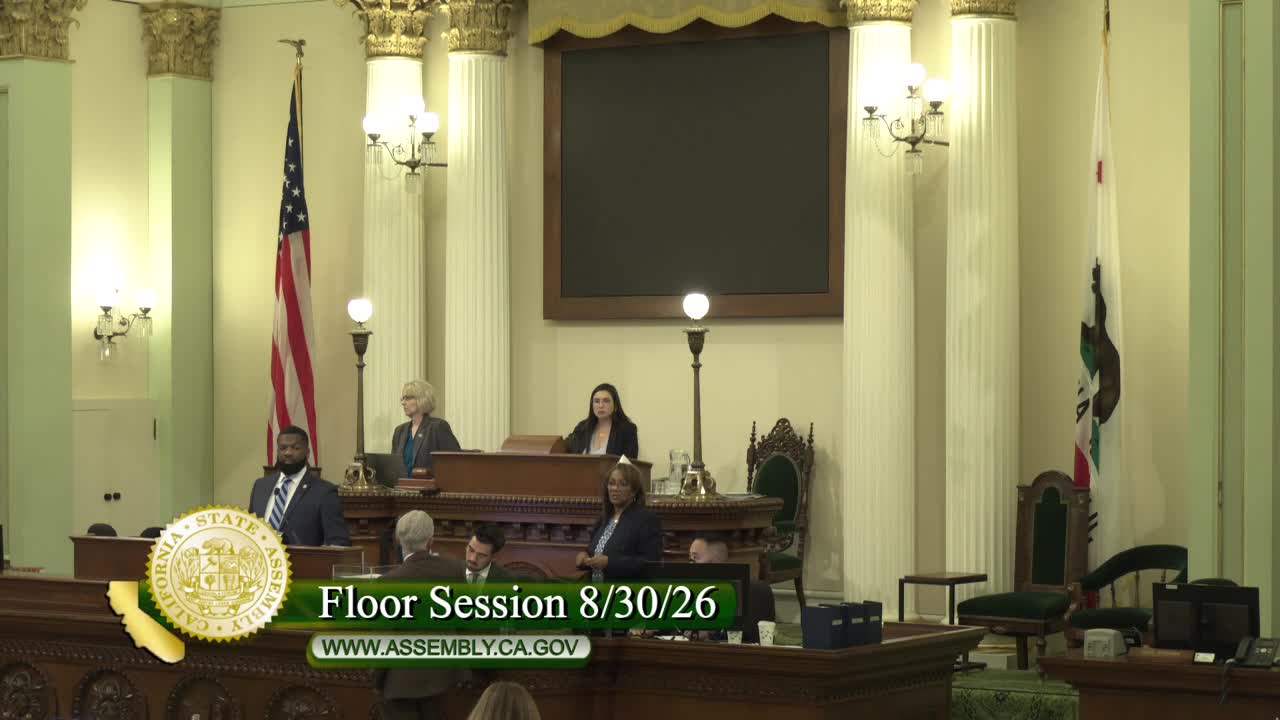 3MIN
Assembly Floor
 12MIN
Senate Standing Committee on Public Safety
 1MIN
Assembly Floor
Bill Author

Bill Co-Author(s):