AB 790: Homelessness: single women with children.
- Session Year: 2025-2026
- House: Assembly
- Latest Version Date: 2025-10-10
Current Status:
Passed
(2025-10-10: Chaptered by Secretary of State - Chapter 499, Statutes of 2025.)
Introduced
In Committee
Awaiting First Chamber Vote
Passed First Chamber
In Committee
Awaiting Second Chamber Vote
Passed Second Chamber
Enacted
Existing law requires cities, counties, and continuums of care receiving state funding to address homelessness on or after January 1, 2024, to include families, people fleeing or attempting to flee domestic violence, and unaccompanied women within the vulnerable populations for whom specific system supports are developed to maintain homeless services and housing delivery. Existing law also requires the cities, counties, and continuums of care to develop analyses and goals with victim service providers to address the specific needs of the above-described population with data measures not included within the Homeless Management Information System, in accordance with federal policies and specified guidelines.
Existing law requires the Interagency Council on Homelessness to set and measure progress on goals to prevent and end homelessness among domestic violence survivors and their children and among unaccompanied women in California.
This bill would specifically include women with children in the populations described above. The bill would require the cities, counties, and continuums of care developing the analyses and goals described above to the Interagency Council on Homelessness. The bill would require the Interagency Council on Homelessness to post the analyses and goals on its website. By imposing new duties on cities and counties, this bill would impose a state-mandated local program.
The California Constitution requires the state to reimburse local agencies and school districts for certain costs mandated by the state. Statutory provisions establish procedures for making that reimbursement.
This bill would provide that, if the Commission on State Mandates determines that the bill contains costs mandated by the state, reimbursement for those costs shall be made pursuant to the statutory provisions noted above.
Existing law requires cities, counties, and continuums of care receiving state funding to address homelessness on or after January 1, 2024, to include families, people fleeing or attempting to flee domestic violence, and unaccompanied women within the vulnerable populations for whom specific system supports are developed to maintain homeless services and housing delivery. Existing law also requires the cities, counties, and continuums of care to develop analyses and goals with victim service providers to address the specific needs of the above-described population with data measures not included within the Homeless Management Information System, in accordance with federal policies and specified guidelines.
This bill would clarify that families, as described above, include single women with children.Existing law requires the Interagency Council on Homelessness to set and measure progress on goals to prevent and end homelessness among domestic violence survivors and their children and among unaccompanied women in California.
This bill would specifically include women with children in the populations described above. The bill would require the cities, counties, and continuums of care developing the analyses and goals described above to the Interagency Council on Homelessness. The bill would require the Interagency Council on Homelessness to post the analyses and goals on its website. By imposing new duties on cities and counties, this bill would impose a state-mandated local program.
The California Constitution requires the state to reimburse local agencies and school districts for certain costs mandated by the state. Statutory provisions establish procedures for making that reimbursement.
This bill would provide that, if the Commission on State Mandates determines that the bill contains costs mandated by the state, reimbursement for those costs shall be made pursuant to the statutory provisions noted above.
Existing law requires cities, counties, and continuums of care receiving state funding to address homelessness on or after January 1, 2024, to include families, people fleeing or attempting to flee domestic violence, and unaccompanied women within the vulnerable populations for whom specific system supports are developed to maintain homeless services and housing delivery.
This bill would clarify that families, as described above, include single women with children.
Existing law establishes various housing finance programs, administered by the Department of Housing and Community Development, including, among other programs, the CalHome Program, the Multifamily Housing Program, the Joe Serna, Jr. Farmworker Housing Grant Program, the Emergency Solutions Grants Program, and the Homekey Program.Existing law establishes various programs, administered by the State Department of Social Services, to assist individuals experiencing, or at risk of, homelessness, including, among other programs, the CalWORKs Housing Support Program and the Bringing Families Home Program.Under existing law, some housing financing programs, including, but not limited to, the Multifamily Housing Program, and public social service programs that assist individuals experiencing homelessness, such as the CalWORKs Housing Support Program and the Bringing Families Home Program, are administered by local agencies. Certain programs, such as the CalHome Program and the No Place Like Home Program, utilize continuously appropriated special funds, the Self-Help Housing Fund and the No Place Like Home Fund, respectively.This bill would require qualifying state housing finance or homelessness programs, as prescribed, to dedicate 10% of total available funds to provide housing and services for single women with children who are homeless or at risk of homelessness or who are currently experiencing, have previously experienced, are at substantial risk of experiencing, are fleeing, or are attempting to flee domestic violence, and do not have a safe and stable housing alternative. The bill would require an organization that receives funds for housing or services from a qualifying program to submit a comprehensive plan, as specified, detailing how they will comply with these provisions. The bill would define various terms for its purposes.To the extent that this bill would increase duties on local agencies administering qualifying state housing finance or homelessness programs, such as the CalWORKs Housing Support Program and the Bringing Families Home Program, the bill would impose a state-mandated local program.The California Constitution requires the state to reimburse local agencies and school districts for certain costs mandated by the state. Statutory provisions establish procedures for making that reimbursement.This bill would provide that, if the Commission on State Mandates determines that the bill contains costs mandated by the state, reimbursement for those costs shall be made pursuant to the statutory provisions noted above.To the extent that the bill would expand the use of continuously appropriated special funds, such as the Self-Help Housing Fund and the No Place Like Home Fund, this bill would make an appropriation.Existing law establishes various housing finance programs, administered by the Department of Housing and Community Development, including, among other programs, the CalHome Program, the Multifamily Housing Program, the Joe Serna, Jr. Farmworker Housing Grant Program, the Emergency Solutions Grants Program, and the Homekey Program.
Existing law establishes various programs, administered by the State Department of Social Services, to assist individuals experiencing, or at risk of, homelessness, including, among other programs, the CalWORKs Housing Support Program and the Bringing Families Home Program.
Under existing law, some housing financing programs, including, but not limited to, the Multifamily Housing Program, and public social service programs that assist individuals experiencing homelessness, such as the CalWORKs Housing Support Program and the Bringing Families Home Program, are administered by local agencies. Certain programs, such as the CalHome Program and the No Place Like Home Program, utilize continuously appropriated special funds, the Self-Help Housing Fund and the No Place Like Home Fund, respectively.
This bill would require qualifying state housing finance or homelessness programs, as prescribed, to dedicate 10% of total available funds to provide housing and services for single women with children who are homeless or at risk of homelessness or who are currently experiencing, have previously experienced, are at substantial risk of experiencing, are fleeing, or are attempting to flee domestic violence, and do not have a safe and stable housing alternative. The bill would require an organization that receives funds for housing or services from a qualifying program to submit a comprehensive plan, as specified, detailing how they will comply with these provisions. The bill would define various terms for its purposes.
To the extent that this bill would increase duties on local agencies administering qualifying state housing finance or homelessness programs, such as the CalWORKs Housing Support Program and the Bringing Families Home Program, the bill would impose a state-mandated local program.
The California Constitution requires the state to reimburse local agencies and school districts for certain costs mandated by the state. Statutory provisions establish procedures for making that reimbursement.
This bill would provide that, if the Commission on State Mandates determines that the bill contains costs mandated by the state, reimbursement for those costs shall be made pursuant to the statutory provisions noted above.
To the extent that the bill would expand the use of continuously appropriated special funds, such as the Self-Help Housing Fund and the No Place Like Home Fund, this bill would make an appropriation.
Existing law, the State Housing Law, establishes statewide construction and occupancy standards for buildings used for human habitation. Existing law requires the building department of every city or county to enforce within its jurisdiction the provisions of the California Building Standards Code, the provisions of the State Housing Law, and specified other rules and regulations promulgated pursuant to that law.This bill would express the intent of the Legislature to enact legislation relating to housing.Existing law, the State Housing Law, establishes statewide construction and occupancy standards for buildings used for human habitation. Existing law requires the building department of every city or county to enforce within its jurisdiction the provisions of the California Building Standards Code, the provisions of the State Housing Law, and specified other rules and regulations promulgated pursuant to that law.
This bill would express the intent of the Legislature to enact legislation relating to housing.
(a)Cities, counties, and continuums of care receiving state funding to address homelessness on or after January 1, 2024, shall include families, including women with children; people fleeing or attempting to flee domestic violence; and unaccompanied women within the vulnerable populations for whom specific system supports are developed to maintain homeless services and housing delivery.
(b)Cities, counties, and continuums of care receiving state funding to address homelessness on or after January 1, 2024, shall develop analyses and goals with victim service providers to address the specific needs of the population described in subdivision (a) with data measures not included within the Homeless Management Information System, in accordance with federal policies and all of the following guidelines:
(1)Any local landscape analysis that assesses the current number of people experiencing homelessness and existing programs that address homelessness within the jurisdiction shall incorporate aggregate data from victim service providers, along with any other data sources.
(2)The analyses and goals shall ensure the responses to family homelessness include victim service providers, as these organizations consistently provide shelter and housing responses to survivors and their children.
(3)The analyses and goals shall address the nexus of homelessness and justice-involvement, particularly for women and survivors of domestic violence.
(4)The analyses and goals shall disaggregate the number of beds provided by victim service providers in the city, county, or region served by a continuum of care.
(c)(1)Cities, counties, and continuums of care that develop analyses and goals pursuant to subdivision (b) shall provide that information to the Interagency Council on Homelessness.
(2)The Interagency Council on Homelessness shall post the information developed by cities, counties, and continuums of care pursuant to subdivision (b) on its internet website.
SEC. 2.Section 8266 of the Welfare and Institutions Code is amended to read:8266.(a)The Interagency Council on Homelessness shall set and measure progress toward goals to prevent and end homelessness among women with children, domestic violence survivors and their children, and unaccompanied women in California by doing all of the following:
(1)Setting specific, measurable goals aimed at preventing and ending homelessness among domestic violence survivors and their children and among unaccompanied women in the state. These goals shall include, but not be limited to, the following:
(A)Measurably decreasing the number of domestic violence survivors and their children and of unaccompanied women experiencing homelessness in the state.
(B)Decreasing the duration and frequency of experiences of homelessness among domestic violence survivors and their children and among unaccompanied women.
(C)Decreasing barriers to services through promoting cross-systems partnerships to expedite access to services, including social services, domestic violence services, regional center services, housing services, and mental health services.
(2)Defining outcome measures and gathering data related to the goals.
(3)(A)When funding is available, providing technical assistance to cities, counties, and continuums of care to support the development of local programs and plans that address the needs of domestic violence survivors and their children and of unaccompanied women.
(B)In addition to subparagraph (A), working with the United States Department of Housing and Urban Development to provide technical assistance to cities, counties, and continuums of care in furtherance of this section.
(b)The Interagency Council on Homelessness shall establish initial goals, as described in subdivision (a), by January 1, 2025, and evaluate these goals at least every two years to determine whether updated goals are needed.
SEC. 3.If the Commission on State Mandates determines that this act contains costs mandated by the state, reimbursement to local agencies and school districts for those costs shall be made pursuant to Part 7 (commencing with Section 17500) of Division 4 of Title 2 of the Government Code.
(a)Cities, counties, and continuums of care receiving state funding to address homelessness on or after January 1, 2024, shall include families, including single women with children; people fleeing or attempting to flee domestic violence; and unaccompanied women within the vulnerable populations for whom specific system supports are developed to maintain homeless services and housing delivery.
(b)Cities, counties, and continuums of care receiving state funding to address homelessness on or after January 1, 2024, shall develop analyses and goals with victim service providers to address the specific needs of the population described in subdivision (a) with data measures not included within the Homeless Management Information System, in accordance with federal policies and all of the following guidelines:
(1)Any local landscape analysis that assesses the current number of people experiencing homelessness and existing programs that address homelessness within the jurisdiction shall incorporate aggregate data from victim service providers, along with any other data sources.
(2)The analyses and goals shall ensure the responses to family homelessness include victim service providers, as these organizations consistently provide shelter and housing responses to survivors and their children.
(3)The analyses and goals shall address the nexus of homelessness and justice-involvement, particularly for women and survivors of domestic violence.
(4)The analyses and goals shall disaggregate the number of beds provided by victim service providers in the city, county, or region served by a continuum of care.
(c)(1)Cities, counties, and continuums of care that develop analyses and goals pursuant to subdivision (b) shall provide that information to the Interagency Council on Homelessness.
(2)The Interagency Council on Homelessness shall post the information developed by cities, counties, and continuums of care pursuant to subdivision (b) on its internet website.
SEC. 2.Section 8266 of the Welfare and Institutions Code is amended to read:8266.(a)The California Interagency Council on Homelessness shall set and measure progress toward goals to prevent and end homelessness among women with children, domestic violence survivors and their children and among children, and unaccompanied women in California by doing all of the following:
(1)Setting specific, measurable goals aimed at preventing and ending homelessness among domestic violence survivors and their children and among unaccompanied women in the state. These goals shall include, but not be limited to, the following:
(A)Measurably decreasing the number of domestic violence survivors and their children and of unaccompanied women experiencing homelessness in the state.
(B)Decreasing the duration and frequency of experiences of homelessness among domestic violence survivors and their children and among unaccompanied women.
(C)Decreasing barriers to services through promoting cross-systems partnerships to expedite access to services, including social services, domestic violence services, regional center services, housing services, and mental health services.
(2)Defining outcome measures and gathering data related to the goals.
(3)(A)When funding is available, providing technical assistance to cities, counties, and continuums of care to support the development of local programs and plans that address the needs of domestic violence survivors and their children and of unaccompanied women.
(B)In addition to subparagraph (A), working with the United States Department of Housing and Urban Development to provide technical assistance to cities, counties, and continuums of care in furtherance of this section.
(b)The California Interagency Council on Homelessness shall establish initial goals, as described in subdivision (a), by January 1, 2025, and evaluate these goals at least every two years to determine whether updated goals are needed.
SEC. 3.If the Commission on State Mandates determines that this act contains costs mandated by the state, reimbursement to local agencies and school districts for those costs shall be made pursuant to Part 7 (commencing with Section 17500) of Division 4 of Title 2 of the Government Code.
(a)Cities, counties, and continuums of care receiving state funding to address homelessness on or after January 1, 2024, shall include families, including single women with children; people fleeing or attempting to flee domestic violence, violence; and unaccompanied women within the vulnerable populations for whom specific system supports are developed to maintain homeless services and housing delivery.
(b)Cities, counties, and continuums of care receiving state funding to address homelessness on or after January 1, 2024, shall develop analyses and goals with victim service providers to address the specific needs of the population described in subdivision (a) with data measures not included within the Homeless Management Information System, in accordance with federal policies and all of the following guidelines:
(1)Any local landscape analysis that assesses the current number of people experiencing homelessness and existing programs that address homelessness within the jurisdiction shall incorporate aggregate data from victim service providers, along with any other data sources.
(2)The analyses and goals shall ensure the responses to family homelessness include victim service providers, as these organizations consistently provide shelter and housing responses to survivors and their children.
(3)The analyses and goals shall address the nexus of homelessness and justice-involvement, particularly for women and survivors of domestic violence.
(4)The analyses and goals shall disaggregate the number of beds provided by victim service providers in the city, county, or region served by a continuum of care.
SECTION 1.Section 50207 is added to the Health and Safety Code, immediately following Section 50205, to read:50207.(a)For the purposes of this section, the following definitions apply:(1)Domestic violence has the same meaning as defined in Section 124250.(2)Homeless or at risk of homelessness has the same meaning as defined in Section 15770 of the Welfare and Institutions Code and shall be consistent with the McKinney-Vento Homeless Assistance Act (42 U.S.C. Sec. 11434a), as applied to women and children in unstable housing situations in subdivision (c) of Section 48853.5 of the Education Code.(3)Qualifying program includes, but is not limited to, any of the following:(A)The Affordable Housing and Sustainable Communities Program (Chapter 2 (commencing with Section 75210) of Part 1 of Division 44 of the Public Resources Code).(B)The Bringing Families Home Program (Article 6 (commencing with Section 16523) of Chapter 5 of Part 4 of Division 9 of the Welfare and Institutions Code).(C)The CalHome Program (Chapter 6 (commencing with Section 50650) of Part 2).(D)CalWORKs Housing Support Program (Article 3.3 (commencing with Section 11330) Chapter 2 of Part 3 of Division 9 of the Welfare and Institutions Code).(E)The California Emergency Solutions Grants Program (Chapter 19 (commencing with Section 50899.1) of Part 2).(F)The project referred to as Homekey, as described in Section 50675.1.1.(G)The Housing for a Healthy California Program (Part 14.2 (commencing with Section 53590)).(H)The Joe Serna, Jr. Farmworker Housing Grant Program (Chapter 3.2 (commencing with Section 50515.2) of Part 2).(I)The Local Housing Trust Fund Matching Grant Program (Chapter 13 (commencing with Section 50842.2)).(J)The Multifamily Housing Program (Chapter 6.7 (commencing with Section 50675) of Part 2).(K)The No Place Like Home Program (Part 3.9 (commencing with Section 5849.1) of Division 5 of the Welfare and Institutions Code).(L)The Transitional Housing Program (Chapter 11.7 (commencing with Section 50807) of Part 2).(b)A qualifying program shall set aside 10 percent of total available funds to be dedicated to providing housing and services for single women with children who are homeless or at risk of homelessness or who are currently experiencing, have previously experienced, are at substantial risk of experiencing, are fleeing, or are attempting to flee domestic violence, and do not have a safe and stable housing alternative.(c)An organization that receives funds for housing or services from a qualifying program pursuant to subdivision (b) shall submit a comprehensive plan to the state entity that administers the qualifying program, as applicable, detailing how the organization will comply with the requirements of this section.SEC. 2.If the Commission on State Mandates determines that this act contains costs mandated by the state, reimbursement to local agencies and school districts for those costs shall be made pursuant to Part 7 (commencing with Section 17500) of Division 4 of Title 2 of the Government Code.(a)For the purposes of this section, the following definitions apply:
(1)Domestic violence has the same meaning as defined in Section 124250.
(2)Homeless or at risk of homelessness has the same meaning as defined in Section 15770 of the Welfare and Institutions Code and shall be consistent with the McKinney-Vento Homeless Assistance Act (42 U.S.C. Sec. 11434a), as applied to women and children in unstable housing situations in subdivision (c) of Section 48853.5 of the Education Code.
(3)Qualifying program includes, but is not limited to, any of the following:
(A)The Affordable Housing and Sustainable Communities Program (Chapter 2 (commencing with Section 75210) of Part 1 of Division 44 of the Public Resources Code).
(B)The Bringing Families Home Program (Article 6 (commencing with Section 16523) of Chapter 5 of Part 4 of Division 9 of the Welfare and Institutions Code).
(C)The CalHome Program (Chapter 6 (commencing with Section 50650) of Part 2).
(D)CalWORKs Housing Support Program (Article 3.3 (commencing with Section 11330) Chapter 2 of Part 3 of Division 9 of the Welfare and Institutions Code).
(E)The California Emergency Solutions Grants Program (Chapter 19 (commencing with Section 50899.1) of Part 2).
(F)The project referred to as Homekey, as described in Section 50675.1.1.
(G)The Housing for a Healthy California Program (Part 14.2 (commencing with Section 53590)).
(H)The Joe Serna, Jr. Farmworker Housing Grant Program (Chapter 3.2 (commencing with Section 50515.2) of Part 2).
(I)The Local Housing Trust Fund Matching Grant Program (Chapter 13 (commencing with Section 50842.2)).
(J)The Multifamily Housing Program (Chapter 6.7 (commencing with Section 50675) of Part 2).
(K)The No Place Like Home Program (Part 3.9 (commencing with Section 5849.1) of Division 5 of the Welfare and Institutions Code).
(L)The Transitional Housing Program (Chapter 11.7 (commencing with Section 50807) of Part 2).
(b)A qualifying program shall set aside 10 percent of total available funds to be dedicated to providing housing and services for single women with children who are homeless or at risk of homelessness or who are currently experiencing, have previously experienced, are at substantial risk of experiencing, are fleeing, or are attempting to flee domestic violence, and do not have a safe and stable housing alternative.
(c)An organization that receives funds for housing or services from a qualifying program pursuant to subdivision (b) shall submit a comprehensive plan to the state entity that administers the qualifying program, as applicable, detailing how the organization will comply with the requirements of this section.
SEC. 2.If the Commission on State Mandates determines that this act contains costs mandated by the state, reimbursement to local agencies and school districts for those costs shall be made pursuant to Part 7 (commencing with Section 17500) of Division 4 of Title 2 of the Government Code.
SECTION 1.It is the intent of the Legislature to enact legislation relating to housing.It is the intent of the Legislature to enact legislation relating to housing.
|
Date
|
Status
|
|---|---|
| Oct 10, 2025 | Chaptered by Secretary of State - Chapter 499, Statutes of 2025. |
| Oct 10, 2025 | Approved by the Governor. |
| Sep 11, 2025 | Enrolled and presented to the Governor at 4 p.m. |
| Sep 4, 2025 | In Assembly. Ordered to Engrossing and Enrolling. |
| Sep 4, 2025 | Read third time. Passed. Ordered to the Assembly. (Ayes 39. Noes 0. Page 2522.). |
| Sep 2, 2025 | Ordered to special consent calendar. |
| Aug 29, 2025 | Read second time. Ordered to third reading. |
| Aug 29, 2025 | From committee: Do pass. (Ayes 7. Noes 0.) (August 29). |
| Aug 18, 2025 | In committee: Referred to suspense file. |
| Jul 16, 2025 | From committee: Do pass and re-refer to Com. on APPR. with recommendation: To Consent Calendar. (Ayes 10. Noes 0.) (July 15). Re-referred to Com. on APPR. |
| Jul 1, 2025 | From committee: Do pass and re-refer to Com. on HOUSING with recommendation: To Consent Calendar. (Ayes 5. Noes 0.) (June 30). Re-referred to Com. on HOUSING. |
| Jun 11, 2025 | Referred to Coms. on HUMAN S. and HOUSING. |
| Jun 3, 2025 | In Senate. Read first time. To Com. on RLS. for assignment. |
| Jun 2, 2025 | Read third time. Passed. Ordered to the Senate. (Ayes 79. Noes 0. Page 1853.) |
| May 27, 2025 | Read second time. Ordered to third reading. |
| May 23, 2025 | From committee: Do pass. (Ayes 14. Noes 0.) (May 23). |
| May 14, 2025 | In committee: Set, first hearing. Referred to APPR. suspense file. |
| May 6, 2025 | Re-referred to Com. on APPR. pursuant to Joint Rule 10.5. |
| May 6, 2025 | Read second time. Ordered to third reading. |
| May 5, 2025 | Read second time and amended. Ordered returned to second reading. |
| May 1, 2025 | From committee: Amend, and do pass as amended. (Ayes 7. Noes 0.) (May 1). |
| Apr 30, 2025 | From committee: Do pass and re-refer to Com. on HUM. S. with recommendation: To Consent Calendar. (Ayes 10. Noes 0.) (April 30). Re-referred to Com. on HUM. S. |
| Apr 24, 2025 | (Pending re-refer to Com. on HUM. S.) |
| Apr 24, 2025 | Assembly Rule 56 suspended. (Page 1274.) |
| Apr 24, 2025 | Re-referred to Com. on H. & C.D. |
| Apr 23, 2025 | From committee chair, with author's amendments: Amend, and re-refer to Com. on H. & C.D. Read second time and amended. |
| Apr 21, 2025 | In committee: Hearing postponed by committee. |
| Apr 1, 2025 | Re-referred to Com. on H. & C.D. |
| Mar 28, 2025 | From committee chair, with author's amendments: Amend, and re-refer to Com. on H. & C.D. Read second time and amended. |
| Mar 28, 2025 | Referred to Coms. on H. & C.D. and HUM. S. |
| Feb 19, 2025 | From printer. May be heard in committee March 21. |
| Feb 18, 2025 | Read first time. To print. |
|
Date
|
Description
|
Location
|
Votes
|
|
|---|---|---|---|---|
| Sep 4, 2025 | Special Consent AB790 Ávila Farías et al. | Senate Floor |
Passed |
|
| Aug 29, 2025 | Do pass | Senate Standing Committee on Appropriations |
Passed |
|
| Aug 18, 2025 | Placed on suspense file | Senate Standing Committee on Appropriations |
Passed |
|
| Jul 15, 2025 | Do pass, but first be re-referred to the Committee on [Appropriations] with the recommendation: To Consent Calendar | Senate Standing Committee on Housing |
Passed |
|
| Jun 30, 2025 | Do pass, but first be re-referred to the Committee on [Housing] with the recommendation: To Consent Calendar | Senate Standing Committee on Human Services |
Passed |
|
| Jun 2, 2025 | AB 790 Ávila Farías Assembly Third Reading | Assembly Floor |
Passed |
|
| May 23, 2025 | Do pass. | Assembly Standing Committee on Appropriations |
Passed |
|
| May 1, 2025 | Do pass as amended. | Assembly Standing Committee on Human Services |
Passed |
|
| Apr 30, 2025 | Do pass and be re-referred to the Committee on [Human Services] with recommendation: To Consent Calendar | Assembly Standing Committee on Housing and Community Development |
Passed |
This list shows positions taken on this bill by organizations on the date displayed, which is linked to the original source.
Positions by individuals are not included.
|
Organization
|
Position
|
Date
|
|---|---|---|
| California Catholic Conference | ** Support | |
| California Human Development | ** Support | |
| Center for Employment Training | ** Support | |
| Central Valley Opportunity Center | ** Support | |
| Climate Care Plumbing | ** Support | |
| Climate Care Plumbing LLC | ** Support | |
| Coalition for Responsible Community Development | ** Support | |
| Del Sol Group | ** Support | |
| Del Sol Group, INC. | ** Support | |
| Denco Family | ** Support | |
| Denco Family INC | ** Support | |
| First Day Foundation | ** Support | |
| Goodwill Southern California | ** Support | |
| Haven Neighborhood Services | ** Support | |
| La Comadre Network | ** Support | |
| Lalis Pizza | ** Support | |
| Macheen | ** Support | |
| MC Foods | ** Support | |
| Milpa Kitchen | ** Support | |
| Mission Economic Development Agency | ** Support | |
| New Economics for Women | ** Support | |
| San Diego for Every Child | ** Support | |
| Shaday Fashion | ** Support | |
| Shaday Fashion INC | ** Support | |
| Time for Change Foundation | ** Support | |
| YMCA of Metropolitan Los Angeles | ** Support |
SENATE RULES COMMITTEE Office of Senate Floor Analyses (916) 651-1520 Fax: (916) 327-4478 | AB 790 |
THIRD READING
Bill No: AB 790
Author: Ávila Farías (D), et al.
Amended: 5/5/25 in Assembly
Vote: 21
SENATE HUMAN SERVICES COMMITTEE: 5-0, 6/30/25
AYES: Arreguín, Ochoa Bogh, Becker, Limón, Pérez
SENATE HOUSING COMMITTEE: 10-0, 7/15/25
AYES: Wahab, Seyarto, Arreguín, Caballero, Cortese, Durazo, Gonzalez, Grayson, Ochoa Bogh, Padilla
NO VOTE RECORDED: Cabaldon
SENATE APPROPRIATIONS COMMITTEE: 7-0, 8/29/25
AYES: Caballero, Seyarto, Cabaldon, Dahle, Grayson, Richardson, Wahab
ASSEMBLY FLOOR: 79-0, 6/2/25 - See last page for vote
SUBJECT: Homelessness: single women with children
SOURCE: Author
DIGEST:
This bill adds “women with children” to the Homeless Equity for Left Behind Populations (HELP) Act. It also requires cities, counties, and continuums of care (CoCs) to provide all analyses or goals required by the HELP Act to the California Interagency Council on Homelessness (Cal-ICH).
ANALYSIS:
Existing Law:
- Creates the Cal-ICH and requires it to set and measure progress toward goals to prevent and end homelessness in California. (Welfare and Institutions Code (WIC) § 8255)
- Finds and declares that “unaccompanied women” are individuals who identify as women, 18 years of age and older, who are experiencing homelessness while not in the company of children or other dependents. (WIC § 8255)
- Requires Cal-ICH to set and measure progress toward goals to prevent and end homelessness among domestic violence survivors, their children, and unaccompanied women. Requires those goals to include measurably decreasing the number of homeless domestic violence survivors and their children, decreasing the duration of homelessness experienced by domestic abuse survivors and their children, decreasing barriers to services by increasing cross sector partnerships to expedite access to services including social services, domestic violence services, regional center services, housing services, and mental health services. (WIC § 8266(a))
- Defines “Homelessness Data Integration System (HDIS)” as the statewide data system or warehouse that collects local data through Homeless Management Information System (HMIS), with the ultimate goal of matching data on homelessness to programs impacting homeless recipients of state programs, as provided and in compliance with federal law. (WIC § 8257(b)(13))
- Requires cities, counties, and CoCs receiving state funding to address homelessness to develop analysis and goals with victim service providers to address the specific needs of families, people fleeing or attempting to flee domestic violence, and unaccompanied women within the vulnerable populations with data not included in HDIS. (WIC § 8264)
This Bill:
- Requires cities, counties, and CoCs receiving state funding to address homelessness to include women with children in the vulnerable populations for whom specific system supports are developed to maintain homeless services and housing delivery.
- Requires cities, counties, and CoCs that develop goals and analyses as required by the HELP Act to give that information to Cal-ICH.
- Requires Cal- ICH to post the information provided as required by 2) on its internet website.
- Requires Cal-ICH to set and measure progress toward goals to prevent and end homelessness among women with children.
Comments
According to the author, “California’s single mothers face disproportionate housing cost burdens, and over 16,300 children are experiencing homelessness, often due to gaps in service delivery and prioritization. Addressing these issues will not only help vulnerable families but also reduce long-term state costs associated with emergency services, welfare, and intergenerational poverty. While many programs exist, none specifically prioritize women with children—a group disproportionately at risk of homelessness or fleeing domestic violence. AB 790 builds upon previous legislative efforts by requiring the California Interagency Council on Homelessness to include women with children within the population they are required to set and measure progress toward goals to prevent and end homelessness.”
California Homelessness Data. Since 2016, homelessness in America, and particularly in California, has been growing at an increasing rate. Annually, the U.S. Department of Housing and Urban Development (HUD) has local CoCs conduct a Point in Time (PIT) count of people experiencing homelessness in January. The annual PIT includes people experiencing homelessness who are “sheltered, living in temporary shelters, and those who are “unsheltered,” or living out in the open or in places not designated for, or ordinarily used as, a regular sleeping accommodation for people (i.e. the streets, vehicles, or parks). The PIT count is required by HUD as a condition of receiving federal funding. The 2024 HUD Annual Homeless Assessment Report to Congress found:
- California had 187,084 homeless people, which accounted for 28% of the nation’s homeless population. California also had the highest rate of unsheltered people at 66%.
- In California, there were 25,369 people in families with children experiencing homelessness, 21% of which are unsheltered. In California, the number of homeless families increased by 156 from 2023 to 2024.
According to a report by American College of Obstetricians and Gynecologists, nationally, “34% of the total homeless population composed of families. Of these homeless families, 84% are headed by women. African American families are disproportionately represented among the homeless population, making up 43% of homeless families”. The report also says domestic and sexual violence are the leading cause of homelessness for women and families.[1]
Another study found, “the challenges [homeless women with children] face are often compounded by factors such as gender-based violence, limited access to resources, and the responsibility of caring for dependent children. Homeless women with children are at a higher risk of experiencing violence, including domestic violence and sexual assault.” The study also found that recurring instances of homelessness in childhood led to an increased likelihood of homelessness in adulthood.[2]This bill seeks to increase the focus on homeless families of women with children by requiring local governments to develop analyses and goals that address the unique needs of this population.
California Interagency Council on Homelessness (Cal-ICH). The Cal-ICH was created in 2021 by AB 1220 (Rivas, Chapter 398) as a successor to the Homeless Coordinating and Financing Council (HCFC) to address the coordination and oversight of homelessness programs. The bill also made changes to the membership of the Cal-ICH and provided the Cal-ICH with additional authority to access information from other departments. To ensure the Cal-ICH has access to information about homelessness programs throughout state agencies, the Cal-ICH is allowed to require state departments that have homelessness programs to participate in Cal-ICH workgroups or other collaborative work. They can also require those departments or agencies to provide the Cal-ICH data on those programs. Unlike the HCFC, the Cal-ICH also requires department directors, agency secretaries, and executive directors to participate on the council rather than their representatives.
In addition to improving coordination between agencies, the Cal-ICH is also charged with coordinating existing and competitive funding for homelessness initiatives, find new funding initiatives, make policy recommendations, broker agreements between state agencies, increase accountability, create reports for the Governor and Legislature, and create a statewide database for local homelessness data.
Cal-ICH published a three-year Action Plan for Preventing and Ending Homeless in California in December 2024 to fulfill its mandate to meet statutorily defined goals. The Action Plan outlines five action plan goals that will guide Cal-ICH’s funding and strategic efforts. Those goals are:
- Help more people leave unsheltered homelessness
- Help more people move into housing
- Ensure people do not experience homelessness again
- Prevent more people from experiencing homelessness
- Create more housing
Each goal comes with more specific goals with targets, for example increasing access to publicly-funded health and social safety net services for people at-risk of homelessness and permitting 1.5 million new homes. The Action Plan also highlights that HDIS has gaps in its data collection. Specifically that it does not gather enough information from programs that primarily service people who have experienced domestic violence due to the confidentiality challenges. This bill requires increased analysis of the needs of homeless women with children and for that information to be shared with Cal-ICH and posted on their website. It also requires Cal-ICH to integrate goals to reduce homelessness among this population into their larger goals.
Related/Prior Legislation
SB 914 (Rubio, Chapter 665, Statutes of 2022) created Homeless Equity for Left Behind Populations or HELP Act, which required cities, counties, and CoCs receiving state funding to include within the vulnerable populations that receive homeless services and housing delivery: families, people fleeing or attempting to flee domestic violence, and unaccompanied women. It also required Cal-ICH to establish initial goals to prevent and end homelessness among domestic violence survivors, their children and unaccompanied women, by January 1, 2025, and update these goals as needed every two years thereafter.
AB 140 (Committee on Budget, Chapter 111, Statutes of 2021) requires the Cal ICH to issue a standard agreement for cities, counties and CoCs applying for state homelessness funds to submit an application that includes a local homelessness action plan and specific outcome goals to prevent and reduce homelessness.
AB 1220 (Rivas, L., Chapter 398, Statutes of 2021) renames the Housing Coordinating and Financing Council (HCFC), the Cal ICH, and makes changes to the membership of the Council, as provided.
AB 83 (Committee on Budget, Chapter 15, Statutes of 2020), among other things, provided 300 million in grant funding for a Round Two of HHAP program funding.
AB 1845 (Luz Rivas, 2020) would have created the Governor’s Office to End Homelessness under the Direction of the Secretary of Homelessness and would have moved the HCFC from the Business Consumer Services and Housing Agency into the Governor’s Office to End Homelessness. This bill was vetoed by the Governor.
FISCAL EFFECT: Appropriation: No Fiscal Com.: Yes Local: Yes
According to the Senate Appropriations Committee, the Cal ICH estimates minor and absorbable costs for state operations.
Unknown, potential ongoing costs to cities and counties for administration. Cost to cities and counties would be potentially reimbursable by the state, subject to a determination by the Commission on State Mandates.
SUPPORT: (Verified 8/29/25)
None received
OPPOSITION: (Verified 8/29/25)
None received
ASSEMBLY FLOOR: 79-0, 6/2/25
AYES: Addis, Aguiar-Curry, Ahrens, Alanis, Alvarez, Arambula, Ávila Farías, Bains, Bauer-Kahan, Bennett, Berman, Boerner, Bonta, Bryan, Calderon, Caloza, Carrillo, Castillo, Chen, Connolly, Davies, DeMaio, Dixon, Elhawary, Ellis, Flora, Fong, Gabriel, Gallagher, Garcia, Gipson, Jeff Gonzalez, Mark González, Hadwick, Haney, Harabedian, Hart, Hoover, Irwin, Jackson, Kalra, Krell, Lackey, Lee, Lowenthal, Macedo, McKinnor, Muratsuchi, Nguyen, Ortega, Pacheco, Papan, Patel, Patterson, Pellerin, Petrie-Norris, Quirk-Silva, Ramos, Ransom, Celeste Rodriguez, Michelle Rodriguez, Rogers, Blanca Rubio, Sanchez, Schiavo, Schultz, Sharp-Collins, Solache, Soria, Stefani, Ta, Tangipa, Valencia, Wallis, Ward, Wicks, Wilson, Zbur, Rivas
Prepared by: Naima Ford Antal / HUMAN S. / (916) 651-1524
8/29/25 20:57:09
**** END ****
SENATE COMMITTEE ON APPROPRIATIONS
Senator Anna Caballero, Chair
2025 - 2026 Regular Session
AB 790 (Ávila Farías) - Homelessness: single women with children
Version: May 5, 2025 | Policy Vote: HUMAN S. 5 - 0, HOUSING 10 - 0 |
Urgency: No | Mandate: Yes |
Hearing Date: August 18, 2025 | Consultant: Agnes Lee |
Bill Summary:
AB 790 would require the California Interagency Council on Homelessness (Cal ICH) to set and measure progress toward goals to prevent and end homelessness among women with children.
Fiscal Impact:
- The Cal ICH estimates minor and absorbable costs for state operations.
- Unknown, potential ongoing costs to cities and counties for administration. Cost to cities and counties would be potentially reimbursable by the state, subject to a determination by the Commission on State Mandates.
Background:
The Cal ICH was established to coordinate the state's response to homelessness. Cal ICH was created to oversee the implementation of “Housing First” policies, guidelines, and regulations to reduce the prevalence and duration of homelessness in California. Housing First is an evidence-based model that focuses on the idea that homeless individuals should be provided shelter and stability before underlying issues can be successfully addressed. Housing First utilizes a tenant screening process that promotes accepting applicants regardless of their sobriety, use of substances or participation in services. Cal ICH also manages the state’s Homeless Data Integration System (HDIS) which captures local data collected by Continuums of Care (COCs) through Homelessness Management Information Systems (HMIS) to help coordinate the state’s response to homelessness.
Current law requires Cal ICH, among its duties, to set and measure progress toward goals to prevent and end homelessness among domestic violence survivors and their children and among unaccompanied women in California. Cal ICH must evaluate these goals at least every two years to determine whether updated goals are needed.
Current law requires cities, counties, and COCs receiving state funding to address homelessness to include families, people fleeing or attempting to flee domestic violence, and unaccompanied women within the vulnerable populations for whom specific system supports are developed to maintain homeless services and housing delivery. Cities, counties, and COCs receiving state funding to address homelessness must develop analyses and goals with victim service providers to address the specific needs of the population described above with data measures, as specified.
Proposed Law:
Specific provisions of the bill would:
- Require Cal ICH to additionally set and measure progress toward goals to prevent and end homelessness among women with children.
- Require cities, counties, and COCs receiving state funding to include women with children within the vulnerable populations for whom specific system supports are developed to maintain homeless services and housing delivery.
- Require cities, counties, and COCs that develop analyses and goals to address the specific needs of vulnerable populations described above, to provide that information to the Cal ICH; and require Cal ICH to post that information on its internet website.
Related Legislation:
SB 814 (Rubio) would have required the Cal ICH to review its goals to prevent and end homelessness among domestic violence survivors and their children and among unaccompanied women at least every year, rather than at least every two years. The bill was held on the suspense file in this committee.
-- END --
SENATE COMMITTEE ON HOUSING
Senator Aisha Wahab, Chair
2025 - 2026 Regular
Bill No: AB 790 Hearing Date: 7/15/25
Author: | Ávila Farías | ||
Version: | 5/5/2025 Amended | ||
Urgency: | No | Fiscal: | Yes |
Consultant: | Erin Riches | ||
SUBJECT: Homelessness: single women with children
DIGEST: This bill requires cities, counties, and Continuums of Care (CoCs) to include women with children within the vulnerable populations for whom they develop specific system supports with state homelessness funding.
ANALYSIS:
Existing law:
- Establishes the Homeless Housing, Assistance, and Prevention Program (HHAPP) under the state Department of Housing and Community Development (HCD) to provide jurisdictions with one-time grant funds to support regional coordination and expand or develop local capacity to address their immediate homelessness challenges informed by a best-practices framework focused on moving homeless individuals and families into permanent housing and supporting the efforts of those individuals and families to maintain their permanent housing.
- Establishes the Homeless Equity for Left Behind Populations (HELP) Act, which:
- Requires cities, counties, and CoCs that receive state homeless funding to include families, people fleeing or attempting to flee domestic violence, and unaccompanied women within the vulnerable populations for whom specific supports are developed to maintain homeless services and housing delivery.
- Defines “unaccompanied woman” as an individual who identifies as a woman who is 18 years of age or older, who is experiencing homelessness, as defined in the federal McKinney-Vento Homeless Assistance Act, and who is not accompanied by children or other dependents.
- Requires cities, counties, and COCs to ensure that analyses and goals are completed with the following guidelines: coordinate with victim service providers to address the specific needs of the populations in (a); incorporate aggregate data from victim service providers; address the nexus of homelessness and justice-involvement, particularly for women and survivors of domestic violence; and disaggregate the number of beds provided by victim service providers.
- Provides that, pursuant to federal policies, victim service providers shall not be required to enter client-level data in the state Homeless Data Information System (HDIS) or federal Homeless Management Information System (HMIS).
- Requires the California Interagency on Homelessness (Cal-ICH) to set and measure progress toward goals to prevent and end homelessness among domestic violence survivors and their children and among unaccompanied women, by decreasing the number experiencing homelessness; decreasing the duration and frequency of homelessness; decreasing barriers to service; defining outcome measures and gathering data related to the goals; providing technical assistance when funding is available; and updating the goals every two years.
This bill:
- Requires cities, counties, and CoCs to include women with children within the vulnerable populations for whom they develop specific system supports by clarifying that “families” include unaccompanied women with children.
- Requires cities, counties, and CoCs to provide to Cal-ICH, the analyses and goals they have developed pursuant to existing law to address the specific needs of vulnerable populations.
- Requires Cal-ICH to post the information received pursuant to (2) on its internet website.
Background
HHAPP. The HHAPP Program was created to provide jurisdictions with one-time grant funds to expand or develop local capacity to address immediate homelessness challenges. Program funds can be used for services for those experiencing homelessness or at risk of homelessness, such as rapid rehousing, operating subsidies, street outreach, services coordination, delivery of permanent and innovative housing solutions, and homelessness prevention. HHAPP replaced a prior program, the Homeless Emergency Aid Program (HEAP), which also provided block grants to large cities and Continuums of Care (CoCs) for a variety of solutions addressing homelessness. HHAPP was administered by the Interagency Council on Homelessness (Cal-ICH) until July 2024, when it was transferred to HCD.
Cal-ICH. Cal-ICH, formerly known as the Homeless Coordinating and Financing Council (HCFC), was created to oversee the implementation of “Housing First” policies, guidelines, and regulations to reduce the prevalence and duration of homelessness in California. Housing First is an evidence-based model that focuses on the idea that homeless individuals should be provided shelter and stability before underlying issues can be successfully addressed. Housing First utilizes a tenant screening process that promotes accepting applicants regardless of their sobriety, use of substances or participation in services. As the state’s homelessness crisis has worsened, the role of Cal-ICH has significantly increased, as it has been charged with administering two significant programs dedicated to addressing homelessness, the Homeless Emergency Aid Program (HEAP) and the Homeless Housing Assistance and Prevention Program (HHAPP).
Comments
- Author statement. “California’s single mothers face disproportionate housing cost burdens, and over 16,300 children are experiencing homelessness, often due to gaps in service delivery and prioritization. Addressing these issues will not only help vulnerable families but also reduce long-term state costs associated with emergency services, welfare, and intergenerational poverty. While many programs exist, none specifically prioritize women with children—a group disproportionately at risk of homelessness or fleeing domestic violence. AB 790 builds upon previous legislative efforts by requiring the California Interagency Council on Homelessness to include women with children within the population they are required to set and measure progress toward goals to prevent and end homelessness.”
- Homelessness, domestic violence, and unaccompanied women. Although current federal law does not require tracking of unaccompanied, homeless women, counties like Los Angeles and San Bernardino have recently done so. In 2020, there were more than 13,500 unaccompanied women in Los Angeles, amounting to 65% of all unhoused women. Around half of this population reported domestic violence or intimate partner violence.[1] According to the state HDIS, 18% of homeless people reported experiencing domestic violence.[2] This is voluntary information given to providers that use the federal HMIS, which often does not include domestic violence service providers, so it is likely an undercount. In 2019-20, California Office of Emergency Services’ Domestic Violence Assistance Program served almost 19,000 individuals in their shelters, which accounted for over 600,000 nights, but there were still almost 28,000 unmet requests.[3] For domestic violence and intimate partner violence survivors who recently left abusers, the need for housing is one of the most significant concerns.
Confidentiality is of utmost importance to survivors and programs supporting them because survivors often have to worry about their abusers trying to find them. Because of this, the data collected is aggregated. However, this means that client-level data for domestic violence survivors is not incorporated into the federal HMIS. This is the primary system that the state uses to collect information for its HDIS, and the state HDIS helps Cal-ICH plan for future homelessness interventions. Because domestic violence survivor data is not incorporated into the state HDIS, survivors may not be fully considered in the State’s homelessness response.
- Why call out vulnerable populations? In its 2025 action plan, Cal-ICH notes that 22% of individuals accessing homeless services in 2023 reported having experienced domestic violence.[4] Nationally, on just one day in 2020, 5,591 survivors received services, and there were 984 unmet requests for services; 65% of these unmet requests were for housing or emergency shelter.[5] The need for safe housing and the economic resources to maintain safe housing are two of the most pressing concerns among abused women who are planning to or have recently left the person causing that harm.[6]
The Cal-ICH action plan also notes that 13% of individuals accessing homeless services in 2023 were unaccompanied youth (age 24 or younger). Transition aged youth (TAY) are unlikely to utilize adult services, for a variety of reasons; for example, according to service providers, youth tend to choose to stay in unsheltered locations or with friends because they are often victimized in adult shelters. Unfortunately, youth experiencing homelessness are also at an unusually high risk for several life-threatening conditions including “not having their basic food and shelter needs met, untreated mental health disorders, substance use, sexually transmitted diseases and HIV infection, sexual trafficking, physical and sexual abuse, and suicide.”[7] For this reason, HHAP includes a set-aside specifically for youth homelessness.
- HELP Act. To help address concerns about vulnerable populations such as domestic violence survivors, the HELP Act, established by SB 914 (Rubio, Chapter 665, Statutes of 2022), requires cities, counties, and CoCs that receive state homeless funding to include families, people fleeing or attempting to flee domestic violence, and unaccompanied women within the vulnerable populations for whom they develop specific supports for homeless and housing services. “Unaccompanied women” is defined, pursuant to federal law, as “a woman 18 years or older who is experiencing homelessness and who is not accompanied by children or other dependents” (emphasis added). To ensure that unaccompanied women with children are included within the definition of vulnerable populations, this bill expands the designation of “families” in the HELP Act to include women with children.
- Incoming! This bill was heard in the Senate Human Services Committee on June 30th, which approved it on a 5-0 vote.
Related/Prior Legislation
SB 914 (Rubio, Chapter 665, Statutes of 2022) – establishes the Homeless Equity for Left Behind Populations (HELP) Act, which requires cities, counties, and CoCs that receive state homeless funding to take specific actions to address the needs of unaccompanied homeless women, and in particular domestic violence survivors, as specified.
FISCAL EFFECT: Appropriation: No Fiscal Com.: Yes Local: Yes
POSITIONS: (Communicated to the committee before noon on Wednesday,
July 9, 2025.)
SUPPORT:
California Human Development
Center for Employment Training
Central Valley Opportunity Center (CVOC)
Climate Care Plumbing LLC
Coalition for Responsible Community Development
Del Sol Group, INC.
Denco Family INC
First Day Foundation
Goodwill Southern California
Haven Neighborhood Services
LA Comadre Network
Lalis Pizza
Macheen
Mc Foods
Milpa Kitchen
Mission Economic Development Agency (MEDA)
New Economics for Women
San Diego for Every Child
Shaday Fashion INC
Time for Change Foundation
YMCA of Metropolitan Los Angeles
OPPOSITION:
None received
-- END --
Los Angeles Homeless Services Authority, "2020 Greater Los Angeles Homeless Count - Unaccompanied Women," (November 2020). https://clkrep.lacity.org/onlinedocs/2020/20-1425_rpt_cla_7-21-21.pdf
Appendix to 7/21/21 CLA Report . Accessed April 2022 ↑
California Interagency Council on Homelessness. “Homeless Data Integration System (HDIS)”. (2021). https://bcsh.ca.gov/calich/hdis.html ↑
California Governor’s Office of Emergency Services. “Joint Legislative Budget Committee Report”. (April 2021). https://www.caloes.ca.gov/GrantsManagementSite/Documents/2021%20JLBC%20Report.pdf. ↑
Cal-ICH, Action Plan for Preventing and Ending Homelessness in California, December 2024, Cal ICH Action Plan for Preventing and Ending Homelessness. ↑
National Network to End Domestic Violence (2021). 15th Annual Domestic Violence Counts Report. Washington, DC. Retrieved from: https://nnedv.org/wp-content/uploads/2021/05/15th-Annual-DV-Counts-Report-California-Summary.pdf ↑
Clough, A., Draughon, J. E., Njie-Carr, V., Rollins, C., & Glass, N. (2014). “Having housing made everything else possible”: Affordable, safe and stable housing for women survivors of violence. Qualitative Social Work, 13(5), 671-688. ↑
On the COVID-19 Front Line and Hurting: Addressing the Needs of Providers for Youth Experiencing Homelessness in Berkeley and Alameda County, UC Berkeley Public Health, (May 2020). ↑
SENATE COMMITTEE ON HUMAN SERVICES
Senator Arreguín, Chair
2025 - 2026 Regular
Bill No: | AB 790 | ||
Author: | Ávila Farías | ||
Version: | May 5, 2025 | Hearing Date: | June 30, 2025 |
Urgency: | No | Fiscal: | Yes |
Consultant: | Naima Ford Antal | ||
Subject: Homelessness: single women with children
SUMMARY
This bill adds “women with children” to the Homeless Equity for Left Behind Populations (HELP) Act. It also requires cities, counties, and continuums of care (CoCs) to provide all analyses or goals required by the HELP Act to the California Interagency Council on Homelessness (Cal-ICH).
ABSTRACT
Existing Law:
- Creates the Cal-ICH and requires it to set and measure progress toward goals to prevent and end homelessness in California. (Welfare and Institutions Code (WIC) 8255)
- Finds and declares that “unaccompanied women” are individuals who identify as women, 18 years of age and older, who are experiencing homelessness while not in the company of children or other dependents. (WIC 8255)
- Requires Cal-ICH to set and measure progress toward goals to prevent and end homelessness among domestic violence survivors, their children, and unaccompanied women. Requires those goals to include measurably decreasing the number of homeless domestic violence survivors and their children, decreasing the duration of homelessness experienced by domestic abuse survivors and their children, decreasing barriers to services by increasing cross sector partnerships to expedite access to services including social services, domestic violence services, regional center services, housing services, and mental health services. (WIC 8266(a))
- Defines “Homelessness Data Integration System (HDIS)” as the statewide data system or warehouse that collects local data through Homeless Management Information System (HMIS), with the ultimate goal of matching data on homelessness to programs impacting homeless recipients of state programs, as provided and in compliance with federal law. (WIC 8257(b)(13))
- Requires cities, counties, and CoCs receiving state funding to address homelessness to develop analysis and goals with victim service providers to address the specific needs of families, people fleeing or attempting to flee domestic violence, and unaccompanied women within the vulnerable populations with data not included in HDIS. (WIC 8264)
This Bill:
- Requires cities, counties, and CoCs receiving state funding to address homelessness to include women with children in the vulnerable populations for whom specific system supports are developed to maintain homeless services and housing delivery.
- Requires cities, counties, and CoCs that develop goals and analyses as required by the HELP Act to give that information to Cal-ICH.
- Requires Cal- ICH to post the information provided as required by 2) on its internet website.
- Requires Cal-ICH to set and measure progress toward goals to prevent and end homelessness among women with children.
FISCAL IMPACT
According to the Assembly Appropriations Committee:
- Cal- ICH estimates minor and absorbable costs to receive the information developed by cities, counties, and CoCs, and to post the information on its website.
- Locals costs to cities and counties of an unknown, but potentially significant amount statewide to include the subpopulation of women with children in their analyses and goals developed with victim service providers, and to provide this information to Cal ICH. These costs are potentially reimbursable by the state, subject to a determination by the Commission on State Mandates.
BACKGROUND AND DISCUSSION
Purpose of the Bill:
According to the author, “California’s single mothers face disproportionate housing cost burdens, and over 16,300 children are experiencing homelessness, often due to gaps in service delivery and prioritization. Addressing these issues will not only help vulnerable families but also reduce long-term state costs associated with emergency services, welfare, and intergenerational poverty. While many programs exist, none specifically prioritize women with children—a group disproportionately at risk of homelessness or fleeing domestic violence. AB 790 builds upon previous legislative efforts by requiring the California Interagency Council on Homelessness to include women with children within the population they are required to set and measure progress toward goals to prevent and end homelessness.”
California Homelessness Data
Since 2016, homelessness in America, and particularly in California, has been growing at an increasing rate. Annually, the U.S. Department of Housing and Urban Development (HUD) has local CoCs conduct a Point in Time (PIT) count of people experiencing homelessness in January. The annual PIT includes people experiencing homelessness who are “sheltered, living in temporary shelters, and those who are “unsheltered,” or living out in the open or in places not designated for, or ordinarily used as, a regular sleeping accommodation for people (i.e. the streets, vehicles, or parks). The PIT count is required by HUD as a condition of receiving federal funding. The 2024 HUD Annual Homeless Assessment Report to Congress found:
- California had 187,084 homeless people, which accounted for 28% of the nation’s homeless population. California also had the highest rate of unsheltered people at 66%.
- In California, there were 25,369 people in families with children experiencing homelessness, 21% of which are unsheltered. In California, the number of homeless families increased by 156 from 2023 to 2024.
According to a report by American College of Obstetricians and Gynecologists, nationally, “34% of the total homeless population composed of families. Of these homeless families, 84% are headed by women. African American families are disproportionately represented among the homeless population, making up 43% of homeless families”. The report also says domestic and sexual violence are the leading cause of homelessness for women and families.[1]
Another study found, “the challenges [homeless women with children] face are often compounded by factors such as gender-based violence, limited access to resources, and the responsibility of caring for dependent children. Homeless women with children are at a higher risk of experiencing violence, including domestic violence and sexual assault.” The study also found that recurring instances of homelessness in childhood led to an increased likelihood of homelessness in adulthood.[2]This bill seeks to increase the focus on homeless families of women with children by requiring local governments to develop analyses and goals that address the unique needs of this population.
California Interagency Council on Homelessness (Cal-ICH)
The Cal-ICH was created in 2021 by AB 1220 (Rivas, Chapter 398) as a successor to the Homeless Coordinating and Financing Council (HCFC) to address the coordination and oversight of homelessness programs. The bill also made changes to the membership of the Cal-ICH and provided the Cal-ICH with additional authority to access information from other departments. To ensure the Cal-ICH has access to information about homelessness programs throughout state agencies, the Cal-ICH is allowed to require state departments that have homelessness programs to participate in Cal-ICH workgroups or other collaborative work. They can also require those departments or agencies to provide the Cal-ICH data on those programs. Unlike the HCFC, the Cal-ICH also requires department directors, agency secretaries, and executive directors to participate on the council rather than their representatives.
In addition to improving coordination between agencies, the Cal-ICH is also charged with coordinating existing and competitive funding for homelessness initiatives, find new funding initiatives, make policy recommendations, broker agreements between state agencies, increase accountability, create reports for the Governor and Legislature, and create a statewide database for local homelessness data.
Cal-ICH published a three-year Action Plan for Preventing and Ending Homeless in California in December 2024 to fulfill its mandate to meet statutorily defined goals. The Action Plan outlines five action plan goals that will guide Cal-ICH’s funding and strategic efforts. Those goals are:
- Help more people leave unsheltered homelessness
- Help more people move into housing
- Ensure people do not experience homelessness again
- Prevent more people from experiencing homelessness
- Create more housing
Each goal comes with more specific goals with targets, for example increasing access to publicly-funded health and social safety net services for people at-risk of homelessness and permitting 1.5 million new homes. The Action Plan also highlights that HDIS has gaps in its data collection. Specifically that it does not gather enough information from programs that primarily service people who have experienced domestic violence due to the confidentiality challenges. This bill requires increased analysis of the needs of homeless women with children and for that information to be shared with Cal-ICH and posted on their website. It also requires Cal-ICH to integrate goals to reduce homelessness among this population into their larger goals.
Related/Prior Legislation:
SB 914 (Rubio, Chapter 665, Statutes of 2022) created Homeless Equity for Left Behind Populations or HELP Act, which required cities, counties, and CoCs receiving state funding to include within the vulnerable populations that receive homeless services and housing delivery: families, people fleeing or attempting to flee domestic violence, and unaccompanied women. It also required Cal-ICH to establish initial goals to prevent and end homelessness among domestic violence survivors, their children and unaccompanied women, by January 1, 2025, and update these goals as needed every two years thereafter.
AB 140 (Committee on Budget, Chapter 111, Statutes of 2021) requires the Cal ICH to issue a standard agreement for cities, counties and CoCs applying for state homelessness funds to submit an application that includes a local homelessness action plan and specific outcome goals to prevent and reduce homelessness.
AB 1220 (Rivas, L., Chapter 398, Statutes of 2021) renames the Housing Coordinating and Financing Council (HCFC), the Cal ICH, and makes changes to the membership of the Council, as provided.
AB 83 (Committee on Budget, Chapter 15, Statutes of 2020), among other things, provided 300 million in grant funding for a Round Two of HHAP program funding.
AB 1845 (Luz Rivas, 2020) would have created the Governor’s Office to End Homelessness under the Direction of the Secretary of Homelessness and would have moved the HCFC from the Business Consumer Services and Housing Agency into the Governor’s Office to End Homelessness. This bill was vetoed by the Governor.
AB SB 1380 (Mitchell, Chapter 847, Statutes of 2016) created HCFC to coordinate the state’s homeless response in order to implement Housing First policies throughout the state, as provided.
COMMENTS
AB 790 expands the HELP Act which requires cities, counties and CoCs to develop goals and analyses for often overlooked but high needs populations, specifically people who have experienced domestic violence and unaccompanied women. This bill add women with children to that list. Women with children face unique challenges because of their vulnerability and potential long term impacts of homelessness on children. Since data is important to effectively measuring the need for homeless services and the impact of homeless services, ensuring that the needs of all subpopulations are taken into account is key to success.
Double Referral: This bill has been double-referred. Should this bill pass out of this Committee, it will be referred to the Senate Committee on Housing.
PRIOR VOTES
| |
Assembly Floor: | 79 - 0 |
Assembly Appropriations Committee: | 14 - 0 |
Assembly Housing and Community Development Committee: | 10 - 0 |
POSITIONS
Support:
None received
Oppose:
None received
-- END --
ASSEMBLY THIRD READING
ATR Bill Id:AB 790
Author:(Ávila Farías)
As Amended Ver:May 5, 2025
Majority vote
SUMMARY
Requires cities, counties, and continuums of care (CoCs) that receive state funding to address homelessness on or after January 1, 2024, to include single women with children within the vulnerable populations for whom specific system supports are developed to maintain homelessness services and housing delivery.
Major Provisions
Requires cities, counties, and continuums of care (CoCs) that receive state funding to address homelessness on or after January 1, 2024, to include single women with children within the vulnerable populations for whom specific system supports are developed to maintain homelessness services and housing delivery.
COMMENTS
CA-ICH: CA-ICH was created to oversee the state's response to homelessness and implementation of "Housing First" policies, guidelines, and regulations to reduce the prevalence and duration of homelessness in California. Housing First is an evidence-based model that focuses on the idea that homeless individuals should be provided shelter and stability before underlying issues can be successfully addressed. Housing First utilizes a tenant screening process that promotes accepting applicants regardless of their sobriety, use of substances or participation in services. CA-ICH also manages the state's Homelessness Information Data System (HDIS) which captures local data collected by CoCs through Homelessness Management Information Systems (HMIS) to help coordinate the state's response to homelessness. All 44 CoCs in the state have entered into contracts to provide their HMIS data to CA-ICH. HDIS is intended to give the state a more accurate picture of the local homelessness response system and inform the state's response to homelessness. AB 977 (Gabriel), Chapter 397, Statutes of 2021 required grantees of state homelessness programs to enter data to the local HMIS system to help coordinate the state's response to homelessness. The ultimate goal of HDIS is to match data on homelessness to programs impacting homeless recipients of state programs, such as the Medi-Cal program and CalWORKs. CA-ICH is required to set goals to prevent and end homelessness among youth, including integrating and coordinating efforts to prevent homelessness among youth in the child welfare system and juvenile justice system.
CA-ICH also developed a 5-year Action Plan For Preventing and Ending Homelessness in 2020 and just updated the plan for 2025-2027. Currently, according to HDIS data, for every five individuals who access homelessness services in California, only one is able to access permanent housing that year, leaving a gap of four people who continue to experience homelessness. Over the course of this Plan, calendar years 2025 through 2027, CA-ICH aims to reduce that gap in half, so that for every five people served, three people are placed in housing during the year. The Action Plan sets out goals intended to measure progress toward our north star of providing housing and services to everyone experiencing homelessness. The goals include:
- Increase the annual percentage of people who move into emergency shelter, transitional housing, or permanent housing after experiencing unsheltered homelessness, from 42% to at least 70%.
- Increase the annual percentage of people existing homelessness into permanent housing from 18% to at least 60%.
- Ensure that at least 95% of people who move into permanent housing do not experience homelessness within six months.
- Increase access to publicly-funded health and social safety net services for people at-risk of homelessness in order to address health and economic vulnerabilities.
- Permit more than 1.5 million homes, with no less than 710,000 of those meeting the needs of low- and very low-income households.
State Homelessness Funding: Beginning in 2018, in response to a growing unsheltered homelessness count, the state begin investing significantly in the local homelessness response system. One-time funding for the Homelessness Emergency Assistance Program (HEAP) which evolved into the Homelessness Housing, Assistance, and Prevention Program (HHAP) has provided $3.95 billion to cities with populations over 300,000, counties, and CoCs. HHAP is in its fifth round of funding and what began as a block grant program to local governments now has significant accountability attached to it. Applicants must submit monthly fiscal reports and regular reporting on metrics designed to move people experiencing homelessness into permanent housing. Applicants must develop regional plans that identify how multiple sources of funds can be used to support a best-practices framework to move homeless individuals and families into permanent housing. Local Action Plans required HHAP recipients to set outcome goals that prevent and reduce homelessness over a three-year period, informed by the findings from a local landscape analysis and the jurisdiction's base system performance measure from 2020 calendar year data in the HDIS. The outcome goals included definite metrics, based on the US Department of Housing and Urban Development's system performance measures, to do the following:
- Reduce the number of persons experiencing homelessness;
- Reduce the number of persons who become homeless for the first time;
- Increase the number of people exiting homelessness into permanent housing;
- Reduce the length of time persons remain homeless;
- Reduce the number of persons who return to homelessness after exiting homelessness to permanent housing; and
- Increase successful placements from street outreach.
HELP Act: SB 914 (Rubio), Chapter 665, Statutes of 2022 required CoCs, cities, and counties that receive state funding to address homelessness to develop a strategy to address homelessness among unaccompanied women. CA-ICH was also required to set goals to reduce homelessness among unaccompanied women. Unaccompanied homeless women are not required to be tracked under current federal law; however, counties like Los Angeles and San Bernardino have recently done so. In 2020, there were over 13,500 unaccompanied women in Los Angeles, amounting to 65% of all unhoused women. Around half of this population reported domestic violence or intimate partner violence. According to the state HDIS, 18% of homeless people reported experiencing domestic violence. This is voluntary information given to providers that use HMIS, which often does not include domestic violence service providers, so it is probably an undercount. In 2019-20, California Office of Emergency Services' Domestic Violence (DV) Assistance Program served almost 19,000 individuals in their shelters, which accounted for over 600,000 nights, but there were still almost 28,000 unmet requests. For domestic violence and intimate partner violence survivors who recently left abusers, the need for housing is one of the most significant concerns.
Confidentiality is of utmost importance to survivors and programs supporting them because survivors often have to worry about their abusers trying to find them. Because of this, the data collected is aggregated. However, this means that client-level data for domestic violence survivors is not incorporated into the federal HMIS. This is the primary system that the state uses to collect information for its HDIS, and HDIS helps CA-ICH plan for future homelessness interventions. Because domestic violence survivor data is not incorporated into the state HMIS, survivors may not be fully considered in the State's homelessness response.
This bill adds single women with children to the vulnerable populations for whom specific system supports are developed to maintain homeless services and housing delivery. This will ensure that women with children are counted in HDIS and better inform the state's homelessness response system.
According to the Author
"The two fastest-growing demographics for homelessness are senior citizens and families led by single mothers. California's single mothers face disproportionate housing cost burdens, and over 16,300 children are experiencing homelessness, often due to gaps in service delivery and prioritization. Addressing these issues will not only help vulnerable families but also reduce long-term state costs associated with emergency services, welfare, and intergenerational poverty. While many programs exist, none specifically prioritize single women with children—a group disproportionately at risk of homelessness or fleeing domestic violence. AB 790 builds upon previous legislative efforts by clarifying that state funds distributed to address homelessness for families includes single women with children."
Arguments in Support
According to the Mission Economic Development Agency, "This bill also makes sound economic sense. Stable housing and right services is proven to improve health outcomes, increase educational attainment, and reduce dependency on public systems. In short: it's not only the right thing to do, but also fiscally smart. This legislation will help break the cycle of poverty and trauma by ensuring that those in greatest need receive the support necessary to rebuild their lives."
Arguments in Opposition
None on file.
FISCAL COMMENTS
According to the Assembly Committee on Appropriations:
- Cal ICH estimates minor and absorbable costs to receive the information developed by cities, counties, and CoCs, and to post the information on its website.
- Locals costs to cities and counties of an unknown, but potentially significant amount statewide to include the subpopulation of women with children in their analyses and goals developed with victim service providers, and to provide this information to Cal ICH. These costs are potentially reimbursable by the state, subject to a determination by the Commission on State Mandates.
VOTES
ASM HOUSING AND COMMUNITY DEVELOPMENT: 10-0-2
YES: Haney, Patterson, Ávila Farías, Caloza, Garcia, Kalra, Lee, Quirk-Silva, Ta, Wicks
ABS, ABST OR NV: Tangipa, Wilson
ASM HUMAN SERVICES: 7-0-0
YES: Lee, Castillo, Calderon, Elhawary, Jackson, Celeste Rodriguez, Tangipa
ASM APPROPRIATIONS: 14-0-1
YES: Wicks, Arambula, Calderon, Caloza, Dixon, Elhawary, Fong, Mark González, Hart, Pacheco, Pellerin, Solache, Ta, Tangipa
ABS, ABST OR NV: Sanchez
UPDATED
VERSION: May 5, 2025
CONSULTANT: Lisa Engel / H. & C.D. / (916) 319-2085 FN: 0000607
ASSEMBLY THIRD READING
ATR Bill Id:AB 790
Author:(Ávila Farías)
As Amended Ver:May 05, 2025
Majority vote
SUMMARY
Requires cities, counties, and continuums of care (CoCs) that receive state funding to address homelessness on or after January 1, 2024, to include single women with children within the vulnerable populations for whom specific system supports are developed to maintain homelessness services and housing delivery.
Major Provisions
Requires cities, counties, and continuums of care (CoCs) that receive state funding to address homelessness on or after January 1, 2024, to include single women with children within the vulnerable populations for whom specific system supports are developed to maintain homelessness services and housing delivery.
COMMENTS
CA-ICH: CA-ICH was created to oversee the state′s response to homelessness and implementation of ″Housing First″ policies, guidelines, and regulations to reduce the prevalence and duration of homelessness in California. Housing First is an evidence-based model that focuses on the idea that homeless individuals should be provided shelter and stability before underlying issues can be successfully addressed. Housing First utilizes a tenant screening process that promotes accepting applicants regardless of their sobriety, use of substances or participation in services. CA-ICH also manages the state′s Homelessness Information Data System (HDIS) which captures local data collected by CoCs through Homelessness Management Information Systems (HMIS) to help coordinate the state′s response to homelessness. All 44 CoCs in the state have entered into contracts to provide their HMIS data to CA-ICH. HDIS is intended to give the state a more accurate picture of the local homelessness response system and inform the state′s response to homelessness. AB 977 (Gabriel), Chapter 397, Statutes of 2021 required grantees of state homelessness programs to enter data to the local HMIS system to help coordinate the state′s response to homelessness. The ultimate goal of HDIS is to match data on homelessness to programs impacting homeless recipients of state programs, such as the Medi-Cal program and CalWORKs. CA-ICH is required to set goals to prevent and end homelessness among youth, including integrating and coordinating efforts to prevent homelessness among youth in the child welfare system and juvenile justice system.
CA-ICH also developed a Five-year Action Plan For Preventing and Ending Homelessness in 2020 and just updated the plan for 2025-2027. Currently, according to HDIS data, for every five individuals who access homelessness services in California, only one is able to access permanent housing that year, leaving a gap of four people who continue to experience homelessness. Over the course of this Plan, calendar years 2025 through 2027, CA-ICH aims to reduce that gap in half, so that for every five people served, three people are placed in housing during the year. The Action Plan sets out goals intended to measure progress toward our north star of providing housing and services to everyone experiencing homelessness. The goals include:
- Increase the annual percentage of people who move into emergency shelter, transitional housing, or permanent housing after experiencing unsheltered homelessness, from 42% to at least 70%.
- Increase the annual percentage of people existing homelessness into permanent housing from 18% to at least 60%.
- Ensure that at least 95% of people who move into permanent housing do not experience homelessness within six months.
- Increase access to publicly-funded health and social safety net services for people at-risk of homelessness in order to address health and economic vulnerabilities.
- Permit more than 1.5 million homes, with no less than 710,000 of those meeting the needs of low- and very low-income households.
State Homelessness Funding: Beginning in 2018, in response to a growing unsheltered homelessness count, the state begin investing significantly in the local homelessness response system. One-time funding for the Homelessness Emergency Assistance Program (HEAP) which evolved into the Homelessness Housing, Assistance, and Prevention Program (HHAP) has provided $3.95 billion to cities with populations over 300,000, counties, and CoCs. HHAP is in its fifth round of funding and what began as a block grant program to local governments now has significant accountability attached to it. Applicants must submit monthly fiscal reports and regular reporting on metrics designed to move people experiencing homelessness into permanent housing. Applicants must develop regional plans that identify how multiple sources of funds can be used to support a best-practices framework to move homeless individuals and families into permanent housing. Local Action Plans required HHAP recipients to set outcome goals that prevent and reduce homelessness over a three-year period, informed by the findings from a local landscape analysis and the jurisdiction′s base system performance measure from 2020 calendar year data in the HDIS. The outcome goals included definite metrics, based on the US Department of Housing and Urban Development′s system performance measures, to do the following:
- Reduce the number of persons experiencing homelessness;
- Reduce the number of persons who become homeless for the first time;
- Increase the number of people exiting homelessness into permanent housing;
- Reduce the length of time persons remain homeless;
- Reduce the number of persons who return to homelessness after exiting homelessness to permanent housing; and
- Increase successful placements from street outreach.
HELP Act: SB 914 (Rubio), Chapter 665, Statutes of 2022 required CoCs, cities, and counties that receive state funding to address homelessness to develop a strategy to address homelessness among unaccompanied women. CA-ICH was also required to set goals to reduce homelessness among unaccompanied women. Unaccompanied homeless women are not required to be tracked under current federal law; however, counties like Los Angeles and San Bernardino have recently done so. In 2020, there were over 13,500 unaccompanied women in Los Angeles, amounting to 65% of all unhoused women. Around half of this population reported domestic violence or intimate partner violence. According to the state HDIS, 18% of homeless people reported experiencing domestic violence. This is voluntary information given to providers that use HMIS, which often does not include domestic violence service providers, so it is probably an undercount. In 2019-20, California Office of Emergency Services′ Domestic Violence (DV) Assistance Program served almost 19,000 individuals in their shelters, which accounted for over 600,000 nights, but there were still almost 28,000 unmet requests. For domestic violence and intimate partner violence survivors who recently left abusers, the need for housing is one of the most significant concerns.
Confidentiality is of utmost importance to survivors and programs supporting them because survivors often have to worry about their abusers trying to find them. Because of this, the data collected is aggregated. However, this means that client-level data for domestic violence survivors is not incorporated into the federal HMIS. This is the primary system that the state uses to collect information for its HDIS, and HDIS helps CA-ICH plan for future homelessness interventions. Because domestic violence survivor data is not incorporated into the state HMIS, survivors may not be fully considered in the State′s homelessness response.
This bill adds single women with children to the vulnerable populations for whom specific system supports are developed to maintain homeless services and housing delivery. This will ensure that women with children are counted in HDIS and better inform the state′s homelessness response system.
According to the Author
″The two fastest-growing demographics for homelessness are senior citizens and families led by single mothers. California′s single mothers face disproportionate housing cost burdens, and over 16,300 children are experiencing homelessness, often due to gaps in service delivery and prioritization. Addressing these issues will not only help vulnerable families but also reduce long-term state costs associated with emergency services, welfare, and intergenerational poverty. While many programs exist, none specifically prioritize single women with children—a group disproportionately at risk of homelessness or fleeing domestic violence. AB 790 builds upon previous legislative efforts by clarifying that state funds distributed to address homelessness for families includes single women with children.″
Arguments in Support
According to the Mission Economic Development Agency, ″This bill also makes sound economic sense. Stable housing and right services is proven to improve health outcomes, increase educational attainment, and reduce dependency on public systems. In short: it′s not only the right thing to do, but also fiscally smart. This legislation will help break the cycle of poverty and trauma by ensuring that those in greatest need receive the support necessary to rebuild their lives.″
Arguments in Opposition
None on file.
FISCAL COMMENTS
According to the Assembly Committee on Appropriations:
- Cal ICH estimates minor and absorbable costs to receive the information developed by cities, counties, and CoCs, and to post the information on its website.
- Locals costs to cities and counties of an unknown, but potentially significant amount statewide to include the subpopulation of women with children in their analyses and goals developed with victim service providers, and to provide this information to Cal ICH. These costs are potentially reimbursable by the state, subject to a determination by the Commission on State Mandates.
VOTES
ASM HOUSING AND COMMUNITY DEVELOPMENT: 10-0-2
YES: Haney, Patterson, Ávila Farías, Caloza, Garcia, Kalra, Lee, Quirk-Silva, Ta, Wicks
ABS, ABST OR NV: Tangipa, Wilson
ASM HUMAN SERVICES: 7-0-0
YES: Lee, Castillo, Calderon, Elhawary, Jackson, Celeste Rodriguez, Tangipa
ASM APPROPRIATIONS: 14-0-1
YES: Wicks, Arambula, Calderon, Caloza, Dixon, Elhawary, Fong, Mark González, Hart, Pacheco, Pellerin, Solache, Ta, Tangipa
ABS, ABST OR NV: Sanchez
UPDATED
VERSION: May 05, 2025
CONSULTANT: Lisa Engel / H. & C.D. / (916) 319-2085 FN: 0000607
Date of Hearing: May 14, 2025
ASSEMBLY COMMITTEE ON APPROPRIATIONS
Buffy Wicks, Chair
ABPCA Bill Id:AB 790
Author:(Ávila Farías) – As Amended Ver:May 5, 2025
Policy Committee: | Housing and Community Development | Vote: | 10 - 0 |
Human Services | 7 - 0 | ||
|
|
Urgency: No State Mandated Local Program: No Reimbursable: Yes
SUMMARY:
This bill requires cities, counties, and continuums of care (CoCs) receiving state funding to address homelessness to include women with children in the vulnerable populations for whom homelessness services and housing delivery supports are developed. The bill also requires the California Interagency Council on Homelessness (Cal ICH) to include women with children when measuring progress toward goals to prevent and end homelessness among vulnerable populations.
Specifically, this bill:
- Requires cities, counties, and CoCs receiving state funding to address homelessness on or after January 1, 2024, to include women with children in the vulnerable populations for whom specific system supports must be developed to maintain homelessness services and housing delivery.
- Requires cities, counties, and CoCs that develop analyses and goals with victim service providers to address the needs of vulnerable populations, as specified, to provide that information Cal ICH, and requires Cal ICH to post the information on its internet website.
- Requires Cal ICH, when setting and measuring progress toward goals to prevent and end homelessness among vulnerable populations, to include women with children in those populations.
FISCAL EFFECT:
- Cal ICH estimates minor and absorbable costs to receive the information developed by cities, counties, and CoCs, and to post the information on its website.
- Locals costs to cities and counties of an unknown, but potentially significant amount statewide to include the subpopulation of women with children in their analyses and goals developed with victim service providers, and to provide this information to Cal ICH. These costs are potentially reimbursable by the state, subject to a determination by the Commission on State Mandates.
COMMENTS:
- Purpose. According to the author:
The two fastest-growing demographics for homelessness are senior citizens and families led by single mothers. California’s single mothers face disproportionate housing cost burdens, and over 16,300 children are experiencing homelessness, often due to gaps in service delivery and prioritization. Addressing these issues will not only help vulnerable families but also reduce long-term state costs associated with emergency services, welfare, and intergenerational poverty. While many programs exist, none specifically prioritize single women with children—a group disproportionately at risk of homelessness or fleeing domestic violence. [This bill] builds upon previous legislative efforts by clarifying that state funds distributed to address homelessness for families includes single women with children.
- Background. Existing law, established by SB 914 (Rubio), Chapter 665, Statutes of 2022, requires cities, counties, and continuums of care (CoCs) receiving state funding to address homelessness to include families, people fleeing or attempting to flee domestic violence, and unaccompanied women within the vulnerable populations for whom specific system supports must be developed to maintain homelessness services and housing delivery. Cities, counties and CoCs must also develop analyses and goals with victim service providers to address the specific needs of these populations, and to use data measures beyond what is included in the Homelessness Management Information Systems (HMIS).
HMIS serves as a centralized database designed to collect and manage information related to individuals experiencing homelessness and their interactions with service providers. The data collected is intended to facilitate the understanding of service needs, patterns of homelessness, and the effectiveness of various interventions.
SB 914 directs the analyses and goals to ensure responses to family homelessness include victim service providers and to address the nexus of homelessness and justice-involvement, particularly for women and survivors of domestic violence. Additionally, participants receiving funding are directed to disaggregate the number of beds provided by victim service providers in the city, county, or region served by the CoC.
Accessing disaggregated data on shelter beds provided by victim service providers in California can be challenging due to confidentiality constraints. Victim service providers, such as domestic violence shelters, are prohibited from entering client-level data into HMIS to protect victim privacy. Instead, they use comparable databases and share aggregate data.
Analysis Prepared by: Jennifer Swenson / APPR. / (916) 319-2081
Date of Hearing: May 1, 2025
ASSEMBLY COMMITTEE ON HUMAN SERVICES
Alex Lee, Chair
ABPCA Bill Id:AB 790 (
Author:Ávila Farías) – As Amended Ver:April 23, 2025
SUBJECT: Housing and homelessness programs: single women with children
SUMMARY: Clarifies that single women with children are included within the designation of families, who are part of the vulnerable populations for whom specific system supports are required to be developed by cities, counties, and continuums of care (CoCs) receiving state funding to address homelessness in order to maintain homeless services and housing delivery.
EXISTING LAW:
- Requires cities, counties, and CoCs receiving state funding to address homelessness to include families, people fleeing or attempting to flee domestic violence, and unaccompanied women within the vulnerable populations for whom specific system supports are developed to maintain homeless services and housing delivery. (Welfare and Institutions Code [WIC] § 8264(a))
- Requires cities, counties, and CoCs receiving state funding to address homelessness to develop analyses and goals with victim service providers to address the specific needs of the population described in 1) above, with data measures not included within the Homeless Management Information System (HMIS), in accordance with federal policies and all of the following guidelines:
- Any local landscape analysis that assesses the current number of people experiencing homelessness and existing programs that address homelessness within the jurisdiction shall incorporate aggregate data from victim service providers, along with any other data sources;
- The analyses and goals shall ensure the responses to family homelessness include victim service providers, as these organizations consistently provide shelter and housing responses to survivors and their children;
- The analyses and goals shall address the nexus of homelessness and justice-involvement, particularly for women and survivors of domestic violence; and,
- The analyses and goals shall disaggregate the number of beds provided by victim service providers in the city, county, or region served by a CoC. (WIC § 8264(b))
- Defines “Homeless Management Information System” as the information system designated by a CoC to comply with federal reporting requirements, as defined in current federal law. (Health and Safety Code § 50216(j))
- Defines “Homelessness Data Integration System” (HDIS) as the statewide data system or warehouse that collects local data through HMIS, with the ultimate goal of matching data on homelessness to programs impacting homeless recipients of state programs, as provided and in compliance with federal law. (WIC § 8257(b)(13))
- Defines “unaccompanied woman” to mean an individual who identifies as a woman who is 18 years of age or older, who is experiencing homelessness, as defined in the federal McKinney-Vento Homeless Assistance Act, and who is not accompanied by children or other dependents. (CODE SECTION)
- Defines “continuum of care” to have the same meaning as defined in federal regulations, as described in 13) below. (HSC § 50216(d))
- Establishes the California Interagency Council on Homelessness (Cal ICH) to coordinate the state’s overall response to homelessness and requires Cal ICH staff to develop and regularly maintain a strategic funding guide and a calendar of new or existing funding opportunities. Requires agencies and departments administering state programs to provide Cal ICH updated information on new or existing funding opportunities on a quarterly basis. Further requires Cal ICH to collect fiscal and outcome data from grantees or entities operating state programs that are required to enter data elements on individuals and families it serves for state homelessness programs, by February 1, 2027, and annually thereafter. (WIC § 8255 et seq.)
- Requires Cal ICH to coordinate a spectrum of funding, policy, and practice efforts related to young people experiencing homelessness by coordinating with young people experiencing homelessness, the California Department of Social Services, and other appropriate state and county agencies and departments, and to provide technical assistance and program development, as provided. (WIC § 8261(b))
- Requires programs receiving state homeless funding to collect and share relevant data from HMIS among state and county agencies and service providers, and with Cal ICH for programs related to youth homelessness and prevention, as specified, and in accordance with state and federal privacy and confidentiality laws and regulations. (WIC § 8256(d)(1))
Federal law:
- Establishes the United States Interagency Council on Homelessness to coordinate a federal response to homelessness that involves a nationwide partnership between all levels of government and the private sector. (42 United States Code [U.S.C.] § 11311)
- Defines “homeless” for the purpose of housing assistance, to mean an individual or family who lacks a fixed, regular, and adequate nighttime residence. (42 Code of Federal Regulations [CFR] § 91.5)
- Establishes the McKinney-Vento Homeless Assistance Act to address barriers to education for homeless children and youth, ensuring they receive the same free and approrpate education as other children. (42 U.S.C. § 11302),
- Defines “continuum of care” to mean the group organized to carry out specified required responsibilities and that is composed of representatives of organizations, including nonprofit homeless providers, victim service providers, faith-based organizations, governments, businesses, advocates, public housing agencies, school districts, social service providers, mental health agencies, hospitals, universities, affordable housing developers, law enforcement, organizations that serve homeless and formerly homeless veterans, and homeless and formerly homeless persons to the extent these groups are represented within the geographic area and are available to participate. (24 CFR § 578.3)
- Defines a “family” for purposes of the Housing Choice Voucher Program, to include but not be limited to, regardless of marital status, actual or perceived sexual orientation, or gender identity, the following:
- A single person, who may be an elderly person, displaced person, disabled person, near-elderly person, or any other single person; or,
- A group of persons residing together, and such group includes, but is not limited to a family with or without children; a child temporarily absent from the home due to placement in foster care must be considered in determining family composition and size; a family that consists of a pregnant woman only, and no other persons, must be treated as a two-person family. (24 CFR § 5.403; 982.402(b), 42 USC § 1437a(b)(3))
FISCAL EFFECT: This bill was keyed non-fiscal by the Legislative Counsel.
COMMENTS: This analysis only discusses policy issues germane to the jurisdiction of the Assembly Committee on Human Services.
Background: The Homeless Equity for Left Behind Populations (HELP) Act, which became law in 2023 (SB 914 [Rubio], Chapter, Statutes of 2022), requires cities, counties, and CoCs receiving state funding to address homelessness to include families, people fleeing or attempting to flee domestic violence, and unaccompanied women within the vulnerable populations for whom specific system supports are to be developed in order to maintain homeless services and housing delivery. The cities, counties and CoCs were also directed to develop analyses and goals with victim service providers to address the specific needs of this population, and to use data measures beyond what is included with HMIS.
HMIS serves as a centralized database designed to collect and manage information related to individuals experiencing homelessness and their interactions with service providers. The data collected is intended to facilitate the understanding of service needs, patterns of homelessness, and the effectiveness of various interventions. Each CoC is responsible for selecting HMIS software that complies with the United States Department of Housing and Urban Development’s (HUD) data collection, management, and reporting standards.
The HELP Act directed the analyses and goals to ensure responses to family homelessness include victim service providers, as these organizations consistently provide shelter and housing responses to survivors and their children, and to address the nexus of homelessness and justice-involvement, particularly for women and survivors of domestic violence. Additionally, participants receiving funding were directed to disaggregate the number of beds provided by victim service providers in the city, county, or region served by CoC.
Accessing disaggregated data on shelter beds provided by victim service providers in California can be challenging due to confidentiality constraints. Victim service providers, such as domestic violence shelters, are prohibited from entering client-level data into HMIS to protect survivor privacy. Instead, they use comparable databases and share aggregate data.
This bill clarifies that single women with children are included within the subpopulation of families, and are part of the broader vulnerable population for whom specific supports are required to be developed by cities, counties, and CoC’s in order to maintain homeless services.
Homelessness and Housing Unaffordability among Women with Children. According to an August 2022 analysis of the gender impacts of California’s housing affordability crisis conducted by the Gender Equity Policy Institute, women are more likely than men to face unaffordable rental costs. Key findings include that 49% of women are rent burdened, compared to 43% of men, which means they spend more than 30% of their income on housing costs; 25% of women are severely rent burdened compared to 20% of men, which means they spend more than 50% of their income on rent; 59% of Black women are rent burdened, while 33% are severely rent burdened; 66% of women who live alone are rent burdened; women-led households are five times as likely as joint-led households to be extremely low-income; and, 73% of women-led households with children are rent burdened compared to just 56% of male-led households with children. Nearly one in three people in California live in a household headed by a woman. Two-thirds of these renting, women-led households (68%) are rent burdened.
Another indicator of how California’s housing affordability crisis disproportionately impacts women comes from the federal government’s measure to allocate housing assistance: the local area median income (AMI). Data show women are more likely than men to live in extremely low-income households—those earning less than 30% of AMI. Roughly a quarter of women-led households are extremely low-income.
According to data from the Los Angeles Almanac, the number of homeless families in Los Angeles County increased by 2.2%, from 10,466 families in 2023, to 10,710 in 2024. The Author and sponsor contend that while many programs exist, none specifically prioritize single women with children, a group disproportionately at risk of homelessness or of fleeing domestic violence.
The California Interagency Council on Homelessness was required as a result of SB 914, to set and measure progress toward goals to prevent and end homelessness among domestic violence survivors and their children, and among unaccompanied women in California by doing all of the following:
- Setting specific, measurable goals aimed at preventing and ending homelessness among domestic violence survivors and their children and among unaccompanied women in the state. These goals include:
- Measurably decreasing the number of domestic violence survivors and their children and of unaccompanied women experiencing homelessness in the state;
- Decreasing the duration and frequency of experiences of homelessness among domestic violence survivors and their children and among unaccompanied women; and,
- Decreasing barriers to services through promoting cross-systems partnerships to expedite access to services, including social services, domestic violence services, regional center services, housing services, and mental health services.
- Defining outcome measures and gathering data related to the goals; and,
- When funding is available, providing technical assistance to cities, counties, and CoCs to support the development of local programs and plans that address the needs of domestic violence survivors and their children and of unaccompanied women. In addition, working with HUD to provide technical assistance to cities, counties, and CoCs in furtherance of preventing and ending homelessness among this population.
Cal ICH was required to establish initial goals, by January 1, 2025, and must evaluate these goals at least every two years to determine whether updated goals are needed. These goals are included in the most recent Cal ICH Action Plan, which was approved in December of 2024.
According to the Action Plan, 22% of those accessing homelessness services reported having experienced domestic violence. Cal ICH notes that HDIS includes data from programs that receive many types of state and federal funding, but does not include programs that primarily serve people who have experienced domestic violence, or providers affiliated with tribal communities.
The California Office of Emergency Services is the lead on three programs designed to address homelessness among those experiencing domestic violence:
- The Domestic Violence Housing First Program is included under the Action Plan’s goals and is intended to provide victims/survivors of domestic violence with safe, permanent housing and ongoing, trauma-informed services tailored to address the individual needs of each victim/survivor that allows them to choose how to best rebuild their lives;
- The Domestic Violence Assistance Program provides local assistance for comprehensive support services to existing domestic violence providers throughout California, including emergency shelter to victims/survivors of domestic violence and their children; and,
- The Native American Domestic Violence, and Sexual Assault Program provides supportive services to Native American or Indigenous women and their children, who are victims/survivors of domestic violence and/or sexual assault.
Author’s Statement: According to the Author, “The two fastest-growing demographics for homelessness are senior citizens and families led by single mothers.
“California’s single mothers face disproportionate housing cost burdens, and over 16,300 children are experiencing homelessness, often due to gaps in service delivery and prioritization. Addressing these issues will not only help vulnerable families but also reduce long-term state costs associated with emergency services, welfare, and intergenerational poverty.
“While many programs exist, none specifically prioritize women with children—a group disproportionately at risk of homelessness or fleeing domestic violence.
“[This bill] builds upon previous legislative efforts by requiring the California Interagency Council on Homelessness to include women with children within the population they are required to set and measure progress toward goals to prevent and end homelessness.”
Equity Implications: Individuals and families are considered homeless if they do not have a fixed, regular, and adequate nighttime residence. For example, if they are living in a shelter, vehicle, or other places not meant for habitation. While single adults make up the vast majority of homeless Californians, 14% of those experiencing homelessness are families with children. California faces challenges in addressing the needs of women and children at risk of and experiencing homelessness. Data show that families with children often fall into homelessness because of the lack of affordable housing and other compounding economic challenges. In order to adequately build the capacity of housing and services for women-led families with children, it is important to understand the unique needs of each subpopulation experiencing homelessness, and to prioritize helping children whose families are experiencing homelessness to be considered.
Policy Considerations: This bill makes references to “single women with children” which is an imprecise term that could presumably refer to a mother’s marital status or the number of parents in a family. In HUD terminology, women with children are classified as "families." However, because data show that California’s housing affordability crisis, and therefore risk of homelessness, falls disproportionately on women, it is reasonable to require cities, counties and CoCs to develop solutions tailored to the disproportionality they experience.
Should this bill move forward, the Author may wish to consider finding an alternative to the term “single women with children.”
This bill requires cities, counties, and CoCs receiving state funding to address homelessness to develop specific system supports for “single women with children” in order to maintain homeless services. However, the provisions do not include a mechanism for this information to be publicly posted.
Should this bill move forward, the Author may wish to consider requiring the specific system supports that are developed by cities, counties and CoCs to address homelessness within subpopulations to be publicly posted.
Existing law requires Cal ICH to set and measure progress toward goals to prevent and end homelessness among domestic violence survivors and their children, and among unaccompanied women in California, but does not require these goals to include women with children.
Should this bill move forward, the Author may wish to consider including women with children to be included among the population that Cal ICH is required to set and measure progress toward goals to prevent and end homelessness.
Proposed Committee Amendments: The Committee proposes amendments to address policy considerations stated above to do the following:
- Strike reference to “single women with children” and instead refer to “women with children.”
- Require Cal ICH to publicly post on their website, the specific system supports that have been developed by cities, counties and CoCs to address homelessness within families, people fleeing or attempting to flee domestic violence, unaccompanied women, and women-led families with children.
- Require Cal ICH to include women-led families with children within the population they are required to set and measure progress toward goals to prevent and end homelessness.
Double referral: This bill was previously heard by the Assembly Committee on Housing and Community Development on April 30, 2025, and was approved on a 10-0 vote.
RELATED AND PRIOR LEGISLATION:
SB 914 (Rubio) Chapter 665, Statutes of 2022, required cities, counties, and CoCs that receive state funding to address homelessness to take specific actions to address the needs of families, unaccompanied homeless women, and in particular domestic violence survivors.
AB 140 (Committee on Budget), Chapter 111, Statutes of 2021, required Cal ICH to issue a standard agreement for cities, counties and CoCs applying for state homelessness funds to submit an application that includes a local homelessness action plan and specific outcome goals to prevent and reduce homelessness.
AB 1220 (L. Rivas), Chapter 398, Statutes of 2021, renamed the Homeless Coordinating and Financing Council (HCFC), Cal ICH, and made changes to council membership.
AB 2329 (Chiu) of 2020, would have required HCFC to perform a homelessness statewide gaps and needs analysis by July 31, 2021. AB 2329 was held on the Assembly Committee on Appropriations suspense file.
SB 918 (Wiener), Chapter 841, Statutes of 2018, established the Homeless Youth Act of 2018 to better serve the state’s homeless youth population and required the HCFC to take on additional related responsibilities, including setting goals to prevent and end homelessness among youth in the state, defining outcome measures, and gathering data related to those goals.
SB 1380 (Mitchell), Chapter 847, Statutes of 2016, created HCFC in order to implement Housing First policies throughout the state.
REGISTERED SUPPORT / OPPOSITION:
Support
New Economics for Women (Sponsor)
California Catholic Conference
California Human Development
Center for Employment Training
Central Valley Opportunity Center (CVOC)
Climate Care Plumbing LLC
Coalition for Responsible Community Development
Del Sol Group, INC.
Denco Family INC
First Day Foundation
Goodwill Southern California
Haven Neighborhood Services
LA Comadre Network
Lalis Pizza
Macheen
MC Foods
Milpa Kitchen
Mission Economic Development Agency (MEDA)
San Diego for Every Child
Shaday Fashion INC
The YMCA of Metropolitan Los Angeles
Time for Change Foundation
Opposition
None on file.
Analysis Prepared by: Jessica Langtry / HUM. S. / (916) 319-2089
Date of Hearing: April 30, 2025
ASSEMBLY COMMITTEE ON HOUSING AND COMMUNITY DEVELOPMENT
Matt Haney, Chair
ABPCA Bill Id:AB 790 (
Author:Ávila Farías) – As Amended Ver:April 23, 2025
SUBJECT: Homelessness: single women with children
SUMMARY: Requires cities, counties, and continuums of care (CoCs) that receive state funding to address homelessness on or after January 1, 2024, to include single women with children within the vulnerable populations for whom specific system supports are developed to maintain homelessness services and housing delivery.
EXISTING LAW:
- Requires cities, counties, and CoCs that receive state funding to address homelessness on or after January 1, 2024, to include families, people fleeing or attempting to flee domestic violence, and unaccompanied women within the vulnerable populations for whom specific system supports are developed to maintain homeless services and housing delivery. (Welfare and Institutions Code (WIC) Section 8264)
- Requires cities, counties, and CoCs receiving state funding to address homelessness on or after January 1, 2024, to develop analyses and goals with victim service providers to address the specific needs of the population described in 1) above with data measures not included within the Homeless Management Information System, in accordance with federal policies and all of the following guidelines:
- Any local landscape analysis that assesses the current number of people experiencing homelessness and existing programs that address homelessness within the jurisdiction shall incorporate aggregate data from victim service providers, along with any other data sources;
- The analyses and goals shall ensure the responses to family homelessness include victim service providers, as these organizations consistently provide shelter and housing responses to survivors and their children;
- The analyses and goals shall address the nexus of homelessness and justice-involvement, particularly for women and survivors of domestic violence; and
- The analyses and goals shall disaggregate the number of beds provided by victim service providers in the city, county, or region served by a continuum of care. (WIC 8264)
- Establishes the California Interagency Council on Homelessness (CA-ICH) with the purpose of coordinating the state’s response to homelessness by utilizing Housing First practices. (WIC 8255)
- Requires agencies and departments administering state programs created on or after July 1, 2017 to incorporate the core components of Housing First. (WIC 8255)
- Defines “Housing First” to mean the evidence-based model that uses housing as a tool, rather than a reward, for recovery and that centers on providing or connecting homeless people to permanent housing as quickly as possible. Housing First providers offer services as needed and requested on a voluntary basis and that do not make housing contingent on participation in services. (WIC 8255)
- Defines, among other things, the “core components of Housing First” to mean:
- Acceptance of referrals directly from shelters, street outreach, drop-in centers, and other parts of crisis response systems frequented by vulnerable people experiencing homelessness;
- Supportive services that emphasize engagement and problem-solving over therapeutic goals and service plans that are highly tenant-driven without predetermined goals;
- Participation in services or program compliance is not a condition of permanent housing tenancy;
- Tenants have a lease and all the rights and responsibilities of tenancy, as outlined in California’s Civil, Health and Safety, and Government codes; and
- The use of alcohol or drugs in and of itself, without other lease violations, is not a reason for eviction. (WIC 8255)
FISCAL EFFECT: Unknown.
COMMENTS:
Author’s Statement: According to the author, “The two fastest-growing demographics for homelessness are senior citizens and families led by single mothers. California’s single mothers face disproportionate housing cost burdens, and over 16,300 children are experiencing homelessness, often due to gaps in service delivery and prioritization. Addressing these issues will not only help vulnerable families but also reduce long-term state costs associated with emergency services, welfare, and intergenerational poverty. While many programs exist, none specifically prioritize single women with children—a group disproportionately at risk of homelessness or fleeing domestic violence. AB 790 builds upon previous legislative efforts by clarifying that state funds distributed to address homelessness for families includes single women with children.”
CA-ICH: CA-ICH was created to oversee the state’s response to homelessness and implementation of “Housing First” policies, guidelines, and regulations to reduce the prevalence and duration of homelessness in California. Housing First is an evidence-based model that focuses on the idea that homeless individuals should be provided shelter and stability before underlying issues can be successfully addressed. Housing First utilizes a tenant screening process that promotes accepting applicants regardless of their sobriety, use of substances or participation in services. CA-ICH also manages the state’s Homelessness Information Data System (HDIS) which captures local data collected by CoCs through Homelessness Management Information Systems (HMIS) to help coordinate the state’s response to homelessness. All 44 CoCs in the state have entered into contracts to provide their HMIS data to CA-ICH. HDIS is intended to give the state a more accurate picture of the local homelessness response system and inform the state’s response to homelessness. AB 977 (Gabriel), Chapter 397, Statutes of 2021 required grantees of state homelessness programs to enter data to the local HMIS system to help coordinate the state’s response to homelessness. The ultimate goal of HDIS is to match data on homelessness to programs impacting homeless recipients of state programs, such as the Medi-Cal program and CalWORKs. CA-ICH is required to set goals to prevent and end homelessness among youth, including integrating and coordinating efforts to prevent homelessness among youth in the child welfare system and juvenile justice system.
CA-ICH also developed a 5-year Action Plan For Preventing and Ending Homelessness in 2020 and just updated the plan for 2025-2027. Currently, according to HDIS data, for every five individuals who access homelessness services in California, only one is able to access permanent housing that year, leaving a gap of four people who continue to experience homelessness. Over the course of this Plan, calendar years 2025 through 2027, CA-ICH aims to reduce that gap in half, so that for every five people served, three people are placed in housing during the year. The Action Plan sets out goals intended to measure progress toward our north star of providing housing and services to everyone experiencing homelessness. The goals include:
- Increase the annual percentage of people who move into emergency shelter, transitional housing, or permanent housing after experiencing unsheltered homelessness, from 42% to at least 70%.
- Increase the annual percentage of people existing homelessness into permanent housing from 18% to at least 60%.
- Ensure that at least 95% of people who move into permanent housing do not experience homelessness within six months.
- Increase access to publicly-funded health and social safety net services for people at-risk of homelessness in order to address health and economic vulnerabilities.
- Permit more than 1.5 million homes, with no less than 710,000 of those meeting the needs of low- and very low-income households.
State Homelessness Funding: Beginning in 2018, in response to a growing unsheltered homelessness count, the state begin investing significantly in the local homelessness response system. One-time funding for the Homelessness Emergency Assistance Program (HEAP) which evolved into the Homelessness Housing, Assistance, and Prevention Program (HHAP) has provided $3.95 billion to cities with populations over 300,000, counties, and CoCs. HHAP is in its fifth round of funding and what began as a block grant program to local governments now has significant accountability attached to it. Applicants must submit monthly fiscal reports and regular reporting on metrics designed to move people experiencing homelessness into permanent housing. Applicants must develop regional plans that identify how multiple sources of funds can be used to support a best-practices framework to move homeless individuals and families into permanent housing. Local Action Plans required HHAP recipients to set outcome goals that prevent and reduce homelessness over a three-year period, informed by the findings from a local landscape analysis and the jurisdiction's base system performance measure from 2020 calendar year data in the HDIS. The outcome goals included definite metrics, based on the US Department of Housing and Urban Development's system performance measures, to do the following:
- Reduce the number of persons experiencing homelessness;
- Reduce the number of persons who become homeless for the first time;
- Increase the number of people exiting homelessness into permanent housing;
- Reduce the length of time persons remain homeless;
- Reduce the number of persons who return to homelessness after exiting homelessness to permanent housing; and
- Increase successful placements from street outreach.
HELP Act: SB 914 (Rubio), Chapter 665, Statutes of 2022 required CoCs, cities, and counties that receive state funding to address homelessness to develop a strategy to address homelessness among unaccompanied women. CA-ICH was also required to set goals to reduce homelessness among unaccompanied women. Unaccompanied homeless women are not required to be tracked under current federal law; however, counties like Los Angeles and San Bernardino have recently done so. In 2020, there were over 13,500 unaccompanied women in Los Angeles, amounting to 65% of all unhoused women. Around half of this population reported domestic violence or intimate partner violence.[1] According to the state HDIS, 18% of homeless people reported experiencing domestic violence.[2] This is voluntary information given to providers that use HMIS, which often does not include domestic violence service providers, so it is probably an undercount. In 2019-20, California Office of Emergency Services’ Domestic Violence (DV) Assistance Program served almost 19,000 individuals in their shelters, which accounted for over 600,000 nights, but there were still almost 28,000 unmet requests.[3] For domestic violence and intimate partner violence survivors who recently left abusers, the need for housing is one of the most significant concerns.
Confidentiality is of utmost importance to survivors and programs supporting them because survivors often have to worry about their abusers trying to find them. Because of this, the data collected is aggregated. However, this means that client-level data for domestic violence survivors is not incorporated into the federal HMIS. This is the primary system that the state uses to collect information for its HDIS, and HDIS helps CA-ICH plan for future homelessness interventions. Because domestic violence survivor data is not incorporated into the state HMIS, survivors may not be fully considered in the State’s homelessness response.
This bill adds single women with children to the vulnerable populations for whom specific system supports are developed to maintain homeless services and housing delivery. This will ensure that women with children are counted in HDIS and better inform the state’s homelessness response system.
Related Legislation:
SB 914 (Rubio) Chapter 665, Statutes of 2022: Required cities, counties, and CoCs that receive state funding on or after January 1, 2023 to take specific actions to address the needs of unaccompanied homeless women, and in particular domestic violence survivors, as specified.
Double-referred: This bill was also referred to the Assembly Committee on Human Services where it will be heard should it pass out of this committee.
REGISTERED SUPPORT / OPPOSITION:
Support
New Economics for Women (Sponsor)
California Catholic Conference
California Human Development
Center for Employment Training
Central Valley Opportunity Center
Climate Care Plumbing
Coalition for Responsible Community Development
Del Sol Group
Denco Family
First Day Foundation
Goodwill Southern California
Haven Neighborhood Services
La Comadre Network
Lalis Pizza
Macheen
MC Foods
Mission Economic Development Agency
San Diego for Every Child
Shaday Fashion
The YMCA of Metropolitan Los Angeles
Time for Change Foundation
Opposition
None on file.
Analysis Prepared by: Lisa Engel / H. & C.D. / (916) 319-2085
Los Angeles Homeless Services Authority, "2020 Greater Los Angeles Homeless Count - Unaccompanied Women," (November 2020). https://clkrep.lacity.org/onlinedocs/2020/20-1425_rpt_cla_7-21-21.pdf
Appendix to 7/21/21 CLA Report . Accessed April 2022 ↑
California Interagency Council on Homelessness. “Homeless Data Integration System (HDIS)”. (2021). https://bcsh.ca.gov/calich/hdis.html ↑
California Governor’s Office of Emergency Services. “Joint Legislative Budget Committee Report”. (April 2021). https://www.caloes.ca.gov/GrantsManagementSite/Documents/2021%20JLBC%20Report.pdf. ↑
Discussed in Hearing
 55SEC
Senate Standing Committee on Appropriations
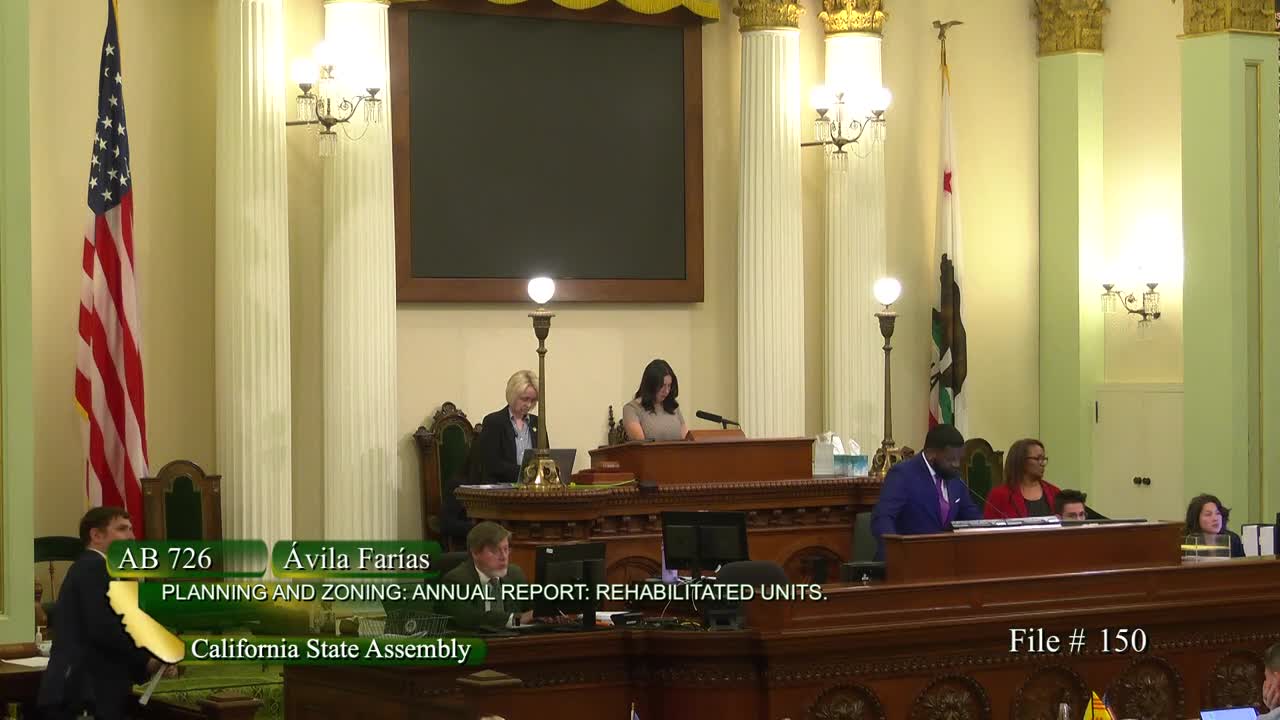 1MIN
Assembly Floor
 8MIN
Assembly Standing Committee on Human Services
Bill Author
Bill Co-Author(s):