AB 798: State Emergency Food Bank Reserve Program: diapers and wipes.
- Session Year: 2025-2026
- House: Assembly
- Latest Version Date: 2025-10-11
Current Status:
Passed
(2025-10-11: Chaptered by Secretary of State - Chapter 596, Statutes of 2025.)
Introduced
In Committee
Awaiting First Chamber Vote
Passed First Chamber
In Committee
Awaiting Second Chamber Vote
Passed Second Chamber
Enacted
Existing law requires the State Department of Social Services, subject to appropriation, to administer the State Emergency Food Bank Reserve Program in order to provide food and funding for the provision of emergency food and related costs to food banks serving low-income Californians to prevent hunger during natural or human-made disasters, as specified. Existing law authorizes the department to distribute funds under the program upon a proclamation or declaration of a disaster or state of emergency.
Under existing law, a recipient of the California Work Opportunity and Responsibility to Kids (CalWORKs) program who is participating in a welfare-to-work plan is eligible for $30 per month to assist with diaper costs for each child who is under 36 months of age. Under the Budget Act of 2024, certain funding is appropriated to the department to allocate to specified food banks and other regional entities for the purpose of distributing diapers and wipes to low-income families with infants or toddlers.
This bill would include childrens diapers and wipes in the list of supplies under the State Emergency Food Bank Reserve Program. The bill would authorize the use of funds distributed under the program for purchasing and distributing childrens diapers and wipes in eligible communities and for reimbursing food banks, as specified.
Existing law requires the State Department of Social Services to administer various public social services programs, including, among others, the California Work Opportunity and Responsibility to Kids (CalWORKs) program, the CalFresh program, and the State Emergency Food Assistance Program (CalFood). Under existing law, a CalWORKs recipient who is participating in a welfare-to-work plan is eligible for $30 per month to assist with diaper costs for each child who is under 36 months of age.Under the Budget Act of 2024, certain funding is appropriated to the department to allocate to specified food banks and other regional entities for the purpose of distributing diapers and wipes to low-income families with infants or toddlers.This bill would require the department to establish and administer the Emergency Diaper and Wipe Distribution Program for families with infants or toddlers impacted by a natural disaster that is the subject of a state of emergency proclaimed by the Governor, as specified. Under the bill, in the case of a qualifying state of emergency, the program would be implemented for a period of at least one year following the proclamation, and would resume in implementation to the extent necessary to serve the needs of those families.The bill would require the department to determine eligibility criteria for entities to participate in the program, as specified, and to conduct outreach to, and consider applications from, eligible entities. The bill would require all participating entities to report on a quarterly basis to the department, at a minimum, certain quantitative information, including the numbers of diapers and wipes distributed and the total dollars expended.The bill would condition implementation of these provisions on an appropriation, and would require that the funding be spent within 36 months after receipt of those moneys. The bill would authorize the department to use up to 10% of any appropriated program funds for purposes of administrative costs to implement the program.Existing law requires the State Department of Social Services to administer various public social services programs, including, among others, the California Work Opportunity and Responsibility to Kids (CalWORKs) program, the CalFresh program, and the State Emergency Food Assistance Program (CalFood). Under existing law, a CalWORKs recipient who is participating in a welfare-to-work plan is eligible for $30 per month to assist with diaper costs for each child who is under 36 months of age.
Under the Budget Act of 2024, certain funding is appropriated to the department to allocate to specified food banks and other regional entities for the purpose of distributing diapers and wipes to low-income families with infants or toddlers.
This bill would require the department to establish and administer the Emergency Diaper and Wipe Distribution Program for families with infants or toddlers impacted by a natural disaster that is the subject of a state of emergency proclaimed by the Governor, as specified. Under the bill, in the case of a qualifying state of emergency, the program would be implemented for a period of at least one year following the proclamation, and would resume in implementation to the extent necessary to serve the needs of those families.
The bill would require the department to determine eligibility criteria for entities to participate in the program, as specified, and to conduct outreach to, and consider applications from, eligible entities. The bill would require all participating entities to report on a quarterly basis to the department, at a minimum, certain quantitative information, including the numbers of diapers and wipes distributed and the total dollars expended.
The bill would condition implementation of these provisions on an appropriation, and would require that the funding be spent within 36 months after receipt of those moneys. The bill would authorize the department to use up to 10% of any appropriated program funds for purposes of administrative costs to implement the program.
Existing law requires, during construction or alteration of an essential services building, the building owner to provide for, and the local enforcement agency to require, competent, adequate, and detailed inspection by a qualified inspector, as provided.This bill would make a nonsubstantive change to that provision.Existing law requires, during construction or alteration of an essential services building, the building owner to provide for, and the local enforcement agency to require, competent, adequate, and detailed inspection by a qualified inspector, as provided.
This bill would make a nonsubstantive change to that provision.
The Legislature finds and declares all of the following:
(a)Diapers are essential for the health and well-being of babies and toddlers, yet one in two families in the United States struggles to afford diapers.
(b)A lack of diapers is not only a public health issue, but also an obstacle to economic mobility for low-income families.
(c)Diapers alone can cost approximately $100 or more per month per child, or approximately 4 percent or more of a persons total income if they are making California minimum wage, with low-income families disproportionately experiencing the burden.
(d)One in four parents or caregivers who rely on childcare services and who do not have enough diapers often cannot drop their children off at childcare, leading to missed days at work and school, missed early education opportunities for toddlers, and an increased likelihood of painful rashes and infections.
(e)The benefit programs CalFresh and the California Special Supplemental Nutrition Program for Women, Infants, and Children (WIC Program) do not provide diaper aid.
(f)In April 2018, the California Work Opportunity and Responsibility to Kids (CalWORKs) program began providing diaper aid as a supportive service, to a person participating in a welfare-to-work plan, in the amount of $30 per month for each child within a certain age range.
(g)Diapers are the fourth greatest cost burden for many families.
(h)According to the Department of Forestry and Fire Protection (CAL FIRE), Californias nine largest wildfires have occurred within the last decade. Two of the most destructive fires, categorized by structures destroyed, include the 2025 Palisades and Eaton fires. Furthermore, Californias Fourth Climate Change Assessment notes that, by 2100, the frequency of extreme wildfires burning over approximately 25,000 acres could increase by nearly 50 percent.
(i)Expanding the geographic reach of the states diaper distribution efforts will address diaper need in California, especially for vulnerable families, while leveraging and strengthening existing safety-net investments.
SEC. 2.Section 18995.1 of the Welfare and Institutions Code is amended to read:18995.1.(a)(1)Subject to an appropriation for this purpose, the State Department of Social Services shall administer the State Emergency Food Bank Reserve Program to provide food, childrens diapers, wipes, and funding for the provision of emergency food, childrens diapers, wipes, and related costs to food banks serving low-income Californians to prevent hunger during natural or human-made disasters.
(2)For purposes of this chapter, food banks means participating providers operating in California under the federal Emergency Food Assistance Program (Parts 250 and 251 of Title 7 of the Code of Federal Regulations), or the federal Commodity Supplemental Food Program (Parts 247 and 250 of Title 7 of the Code of Federal Regulations), members of the nonprofit organization Feeding America that are based in California, and members of the California Association of Food Banks.
(b)Upon a proclamation or declaration of a disaster or state of emergency by the governing body of a county, city, or city and county, or by an official designated by ordinance adopted by that governing body, the state, or the federal government, the department may distribute funds for the purposes set forth in subdivision (c). The department shall determine the best method for distribution to ensure that the funds are used for the purposes specified in this chapter.
(c)Funds distributed pursuant to this chapter may be used for all of the following purposes:
(1)To purchase and distribute food in eligible communities.
(2)To reimburse food banks for food and the costs associated with the procurement and distribution of food in eligible communities.
(3)To purchase and distribute childrens diapers and wipes in eligible communities.
(4)To reimburse food banks for childrens diapers and wipes and the costs associated with the procurement and distribution of childrens diapers and wipes in eligible communities.
(d)Notwithstanding any other law, agreements awarded pursuant to this section shall be exempt from the requirements of Article 4 (commencing with Section 19130) of Chapter 5 of Part 2 of Division 5 of Title 2 of the Government Code, the Public Contract Code, and the State Contracting Manual, and shall not be subject to the approval of the Department of General Services.
(e)Notwithstanding the rulemaking provisions of the Administrative Procedure Act (Chapter 3.5 (commencing with Section 11340) of Part 1 of Division 3 of Title 2 of the Government Code), the State Department of Social Services may implement, interpret, or make specific this chapter by means of letter or similar instructions without taking any regulatory action.
(f)The Legislature finds and declares that this chapter is a state law that provides assistance and services for undocumented persons within the meaning of Section 1621(d) of Title 8 of the United States Code.
The Legislature finds and declares all of the following:
(a)Diapers are essential for the health and well-being of babies and toddlers, yet one in two families in the United States struggles to afford diapers.
(b)A lack of diapers is not only a public health issue, but also an obstacle to economic mobility for low-income families.
(c)Diapers alone can cost approximately $100 or more per month per child, or approximately 4 percent or more of a persons total income if they are making California minimum wage, with low-income families disproportionately experiencing the burden.
(d)One in four parents or caregivers who rely on childcare services and who do not have enough diapers often cannot drop their children off at childcare, leading to missed days at work and school, missed early education opportunities for toddlers, and an increased likelihood of painful rashes and infections.
(e)The benefit programs CalFresh and the California Special Supplemental Nutrition Program for Women, Infants, and Children (WIC Program) do not provide diaper aid.
(f)In April 2018, the California Work Opportunity and Responsibility to Kids (CalWORKs) program began providing diaper aid as a supportive service, to a person participating in a welfare-to-work plan, in the amount of $30 per month for each child of within a certain age range.
(g)Diapers are the fourth greatest cost burden for many families.
(h)According to the Department of Forestry and Fire Protection (CAL FIRE), Californias nine largest wildfires have occurred within the last decade. Two of the most destructive fires, categorized by structures destroyed, include the 2025 Palisades and Eaton fires. Furthermore, Californias Fourth Climate Change Assessment notes that, by 2100, the frequency of extreme wildfires burning over approximately 25,000 acres could increase by nearly 50 percent.
(i)Expanding the geographic reach of the states diaper distribution efforts will address diaper need in California, especially for vulnerable families, while leveraging and strengthening existing safety-net investments.
SEC. 2.Section 18995.1 of the Welfare and Institutions Code is amended to read:18995.1.(a)(1)Subject to an appropriation for this purpose, the State Department of Social Services shall administer the State Emergency Food Bank Reserve Program to provide food, childrens diapers, wipes, and funding for the provision of emergency food, childrens diapers, wipes, and related costs to food banks serving low-income Californians to prevent hunger during natural or human-made disasters.
(2)For purposes of this chapter, food banks means participating providers operating in California under the federal Emergency Food Assistance Program (Parts 250 and 251 of Title 7 of the Code of Federal Regulations), or the federal Commodity Supplemental Food Program (Parts 247 and 250 of Title 7 of the Code of Federal Regulations), members of the nonprofit organization Feeding America that are based in California, and members of the California Association of Food Banks.
(b)Upon a proclamation or declaration of a disaster or state of emergency by the governing body of a county, city, or city and county, or by an official designated by ordinance adopted by that governing body, the state, or the federal government, the department may distribute funds for the purposes set forth in subdivision (c). The department shall determine the best method for distribution to ensure that the funds are used for the purposes specified in this chapter.
(c)Funds distributed pursuant to this chapter may be used for all of the following purposes:
(1)To purchase and distribute food in eligible communities.
(2)To reimburse food banks for food and the costs associated with the procurement and distribution of food in eligible communities.
(3)To purchase and distribute childrens diapers and wipes in eligible communities.
(4)To reimburse food banks for childrens diapers and wipes and the costs associated with the procurement and distribution of childrens diapers and wipes in eligible communities.
(d)Notwithstanding any other law, agreements awarded pursuant to this section shall be exempt from the requirements of Article 4 (commencing with Section 19130) of Chapter 5 of Part 2 of Division 5 of Title 2 of the Government Code, the Public Contract Code, and the State Contracting Manual, and shall not be subject to the approval of the Department of General Services.
(e)Notwithstanding the rulemaking provisions of the Administrative Procedure Act (Chapter 3.5 (commencing with Section 11340) of Part 1 of Division 3 of Title 2 of the Government Code), the State Department of Social Services may implement, interpret, or make specific this chapter by means of letter or similar instructions without taking any regulatory action.
(f)The Legislature finds and declares that this chapter is a state law that provides assistance and services for undocumented persons within the meaning of Section 1621(d) of Title 8 of the United States Code.
The Legislature finds and declares all of the following:
(a)Diapers are essential for the health and well-being of babies and toddlers, yet one in two families in the United States struggles to afford diapers.
(b)A lack of diapers is not only a public health issue, but also an obstacle to economic mobility for low-income families.
(c)Diapers alone can cost approximately $100 or more per month per child, or approximately 4 percent or more of a persons total income if they are making California minimum wage, with low-income families disproportionately experiencing the burden.
(d)One in four parents or caregivers who rely on childcare services and who do not have enough diapers often cannot drop their children off at childcare, leading to missed days at work and school, missed early education opportunities for toddlers, and an increased likelihood of painful rashes and infections.
(e)The benefit programs CalFresh and the California Special Supplemental Nutrition Program for Women, Infants, and Children (WIC Program) do not provide diaper aid.
(f)In April 2018, the California Work Opportunity and Responsibility to Kids (CalWORKs) program began providing diaper aid as a supportive service, to a person participating in a welfare-to-work plan, in the amount of $30 per month for each child of a certain age range.
(g)Diapers are the fourth greatest cost burden for many families.
(h)According to the Department of Forestry and Fire Protection (CAL FIRE), Californias nine largest wildfires have occurred within the last decade. Two of the most destructive fires, categorized by structures destroyed, include the 2025 Palisades and Eaton fires. Furthermore, Californias Fourth Climate Change Assessment notes that, by 2100, the frequency of extreme wildfires burning over approximately 25,000 acres could increase by nearly 50 percent.
(i)Expanding the geographic reach of the states diaper distribution efforts will address diaper need in California, especially for vulnerable families, while leveraging and strengthening existing safety-net investments.
SEC. 2.Chapter 13 (commencing with Section 18992) is added to Part 6 of Division 9 of the Welfare and Institutions Code, to read:13.Emergency Diaper and Wipe Distribution Program18992.(a)(1)The State Department of Social Services shall establish and administer the Emergency Diaper and Wipe Distribution Program for families with infants or toddlers impacted by a natural disaster that is the subject of a state of emergency proclaimed by the Governor pursuant to Section 8625 of the Government Code and in accordance with paragraph (2).(2)A natural disaster described in paragraph (1) may include, but is not limited to, a wildfire, flood, earthquake, mudslide, or other condition of a natural disaster within the parameters of a state of emergency, as defined in Section 8558 of the Government Code.(b)In the case of a state of emergency that meets the criteria of subdivision (a), the program shall be implemented for a period of at least one year following the proclamation of the respective state of emergency, and shall resume in implementation to the extent necessary to serve the needs of the families described in subdivision (a), as those needs are impacted by the respective state of emergency or its aftermath.(c)(1)The department shall determine eligibility criteria for entities to participate in the program based on the capacity and readiness of an entity to distribute diapers and wipes for families described in subdivision (a), among any other factors relevant to program implementation. (2)The department shall conduct outreach to, and consider applications from, eligible entities for participation in the program.(3)The department may determine the method of distributing program funds and shall allocate those program funds to participating entities in accordance with this chapter.(d)All participating entities shall report on a quarterly basis to the department, at a minimum, all of the following information:(1)Numbers of diapers and wipes distributed.(2)Number of families assisted, and the ages of the families infants or toddlers.(3)Total dollars expended for the procurement, shipping, and warehousing or storage of diapers and wipes.(e)The department shall post on its internet website a list of the entities participating in the program.18992.1.(a)Implementation of this chapter shall be subject to an appropriation for the purpose of this chapter made in the annual Budget Act or another statute.(b)Funding appropriated to implement this chapter shall be spent within 36 months after receipt of those moneys, in accordance with Section 16304 of the Government Code.(c)Of any funds appropriated to the department for the Emergency Diaper and Wipe Distribution Program pursuant to Section 18992, the department may use up to 10 percent for purposes of administrative costs to implement the program.(d)Notwithstanding any other law, allocations made to any entity pursuant to Section 18992 shall be exempt from the requirements of Article 4 (commencing with Section 19130) of Chapter 5 of Part 2 of Division 5 of Title 2 of the Government Code, the Public Contract Code, and the State Contracting Manual, and shall not be subject to the approval of the Department of General Services.(e)Implementation of this chapter shall be exempt from the rulemaking provisions of the Administrative Procedure Act (Chapter 3.5 (commencing with Section 11340) of Part 1 of Division 3 of Title 2 of the Government Code).SEC. 2.Section 18995.1 of the Welfare and Institutions Code is amended to read:18995.1.(a)(1)Subject to an appropriation for this purpose, the State Department of Social Services shall administer the State Emergency Food Bank Reserve Program to provide food food, childrens diapers, wipes, and funding for the provision of emergency food food, childrens diapers, wipes, and related costs to food banks serving low-income Californians to prevent hunger during natural or human-made disasters.
(2)For the purposes of this chapter, food banks means participating providers operating in California under the federal Emergency Food Assistance Program (Parts 250 and 251 of Title 7 of the Code of Federal Regulations), or the federal Commodity Supplemental Food Program (Parts 247 and 250 of Title 7 of the Code of Federal Regulations), members of the nonprofit organization Feeding America that are based in California, and members of the California Association of Food Banks.
(b)Upon a proclamation or declaration of a disaster or state of emergency by the governing body of a county, city, or city and county, or by an official designated by ordinance adopted by that governing body, the state, or the federal government, the department may distribute funds for the purposes set forth in paragraph (c) of this section. subdivision (c). The department shall determine the best method for distribution to ensure the funds are used for the purposes specified in this chapter.
(c)Funds distributed pursuant to this chapter may be used for all of the following purposes:
(1)To purchase and distribute food in eligible communities.
(2)To reimburse food banks for food and the costs associated with the procurement and distribution of food in eligible communities.
(3)To purchase and distribute childrens diapers and wipes in eligible communities.
(4)To reimburse food banks for childrens diapers and wipes and the costs associated with the procurement and distribution of childrens diapers and wipes in eligible communities.
(d)Notwithstanding any other law, agreements awarded pursuant to this section shall be exempt from the requirements of Article 4 (commencing with Section 19130) of Chapter 5 of Part 2 of Division 5 of Title 2 of the Government Code, the Public Contract Code, and the State Contracting Manual, and shall not be subject to the approval of the Department of General Services.
(e)Notwithstanding the rulemaking provisions of the Administrative Procedure Act (Chapter 3.5 (commencing with Section 11340) of Part 1 of Division 3 of Title 2 of the Government Code), the State Department of Social Services may implement, interpret, or make specific this chapter by means of letter or similar instructions without taking any regulatory action.
(f)The Legislature finds and declares that this chapter is a state law that provides assistance and services for undocumented persons within the meaning of Section 1621(d) of Title 8 of the United States Code.
The Legislature finds and declares all of the following:
(a)Diapers are essential for the health and well-being of babies and toddlers, yet one in two families in the United States struggles to afford diapers.
(b)A lack of diapers is not only a public health issue, but also an obstacle to economic mobility for low-income families.
(c)Diapers alone can cost approximately $100 or more per month per child, or approximately 4 percent or more of a persons total income if they are making California minimum wage, with low-income families disproportionately experiencing the burden.
(d)One in four parents or caregivers who rely on childcare services and who do not have enough diapers often cannot drop their children off at childcare, leading to missed days at work and school, missed early education opportunities for toddlers, and an increased likelihood of painful rashes and infections.
(e)The benefit programs CalFresh and the California Special Supplemental Nutrition Program for Women, Infants, and Children (WIC Program) do not provide diaper aid.
(f)In April 2018, the California Work Opportunity and Responsibility to Kids (CalWORKs) program began providing diaper aid as a supportive service, to a person participating in a welfare-to-work plan, in the amount of $30 per month for each child of a certain age range.
(g)Diapers are the fourth greatest cost burden for many families.
(h)According to the Department of Forestry and Fire Protection (CAL FIRE), Californias nine largest wildfires have occurred within the last decade. Two of the most destructive fires, categorized by structures destroyed, include the 2025 Palisades and Eaton fires. Furthermore, Californias Fourth Climate Change Assessment notes that, by 2100, the frequency of extreme wildfires burning over approximately 25,000 acres could increase by nearly 50 percent.
(i)Expanding the geographic reach of the states diaper distribution efforts will address diaper need in California, especially for vulnerable families, while leveraging and strengthening existing safety-net investments.
SEC. 2.Chapter 13 (commencing with Section 18992) is added to Part 6 of Division 9 of the Welfare and Institutions Code, to read:13.Emergency Diaper and Wipe Distribution Program18992.(a)(1)The State Department of Social Services shall establish and administer the Emergency Diaper and Wipe Distribution Program for families with infants or toddlers impacted by a natural disaster that is the subject of a state of emergency proclaimed by the Governor pursuant to Section 8625 of the Government Code and in accordance with paragraph (2).
(2)A natural disaster described in paragraph (1) may include, but is not limited to, a wildfire, flood, earthquake, mudslide, or other condition of a natural disaster within the parameters of a state of emergency, as defined in Section 8558 of the Government Code.
(b)In the case of a state of emergency that meets the criteria of subdivision (a), the program shall be implemented for a period of at least one year following the proclamation of the respective state of emergency, and shall resume in implementation to the extent necessary to serve the needs of the families described in subdivision (a), as those needs are impacted by the respective state of emergency or its aftermath.
(c)(1)The department shall determine eligibility criteria for entities to participate in the program based on the capacity and readiness of an entity to distribute diapers and wipes for families described in subdivision (a), among any other factors relevant to program implementation.
(2)The department shall conduct outreach to, and consider applications from, eligible entities for participation in the program.
(3)The department may determine the method of distributing program funds and shall allocate those program funds to participating entities in accordance with this chapter.
(d)All participating entities shall report on a quarterly basis to the department, at a minimum, all of the following information:
(1)Numbers of diapers and wipes distributed.
(2)Number of families assisted, and the ages of the families infants or toddlers.
(3)Total dollars expended for the procurement, shipping, and warehousing or storage of diapers and wipes.
(e)The department shall post on its internet website a list of the entities participating in the program.
18992.1.(a)Implementation of this chapter shall be subject to an appropriation for the purpose of this chapter made in the annual Budget Act or another statute.
(b)Funding appropriated to implement this chapter shall be spent within 36 months after receipt of those moneys, in accordance with Section 16304 of the Government Code.
(c)Of any funds appropriated to the department for the Emergency Diaper and Wipe Distribution Program pursuant to Section 18992, the department may use up to 10 percent for purposes of administrative costs to implement the program.
(d)Notwithstanding any other law, allocations made to any entity pursuant to Section 18992 shall be exempt from the requirements of Article 4 (commencing with Section 19130) of Chapter 5 of Part 2 of Division 5 of Title 2 of the Government Code, the Public Contract Code, and the State Contracting Manual, and shall not be subject to the approval of the Department of General Services.
(e)Implementation of this chapter shall be exempt from the rulemaking provisions of the Administrative Procedure Act (Chapter 3.5 (commencing with Section 11340) of Part 1 of Division 3 of Title 2 of the Government Code).
SECTION 1.Section 16017 of the Health and Safety Code is amended to read:16017.During construction or alteration of an essential services building, the building owner shall provide for, and the local enforcement agency shall require, competent, adequate, and detailed inspection by a qualified inspector. To be qualified, an inspector shall have an adequate level of expertise and experience in the subject matter for which they have responsibilities for inspection as prescribed by this section. Qualification shall include current certification by the International Conference of Building Officials; or qualifications as an inspector meeting the requirements of subdivision (a) of Section 305 and subdivision (b) of Section 306 of, the 1982 Edition of the Uniform Building Code. Additionally, the architect, civil engineer, or structural engineer responsible for designing the essential services facility is qualified to inspect construction of the facility.During construction or alteration of an essential services building, the building owner shall provide for, and the local enforcement agency shall require, competent, adequate, and detailed inspection by a qualified inspector. To be qualified, inspectors an inspector shall have an adequate level of expertise and experience in the subject matter for which they have responsibilities for inspection as prescribed by this section. Qualification shall include current certification by the International Conference of Building Officials; or qualifications as an inspector meeting the requirements of subdivision (a) of Section 305 and subdivision (b) of Section 306 of, the 1982 Edition of the Uniform Building Code. Additionally, the architect, civil engineer, or structural engineer responsible for designing the essential services facility is qualified to inspect construction of the facility.
|
Date
|
Status
|
|---|---|
| Oct 11, 2025 | Chaptered by Secretary of State - Chapter 596, Statutes of 2025. |
| Oct 11, 2025 | Approved by the Governor. |
| Sep 23, 2025 | Enrolled and presented to the Governor at 4 p.m. |
| Sep 11, 2025 | Senate amendments concurred in. To Engrossing and Enrolling. (Ayes 79. Noes 0. Page 3302.). |
| Sep 10, 2025 | In Assembly. Concurrence in Senate amendments pending. |
| Sep 10, 2025 | Read third time. Passed. Ordered to the Assembly. (Ayes 40. Noes 0. Page 2798.). |
| Sep 2, 2025 | Read second time. Ordered to third reading. |
| Aug 29, 2025 | Read second time and amended. Ordered returned to second reading. |
| Aug 29, 2025 | From committee: Amend, and do pass as amended. (Ayes 7. Noes 0.) (August 29). |
| Jul 14, 2025 | In committee: Referred to APPR. suspense file. |
| Jul 8, 2025 | From committee chair, with author's amendments: Amend, and re-refer to committee. Read second time, amended, and re-referred to Com. on APPR. |
| Jul 1, 2025 | From committee: Do pass and re-refer to Com. on APPR. with recommendation: To Consent Calendar. (Ayes 5. Noes 0.) (June 30). Re-referred to Com. on APPR. |
| Jun 18, 2025 | Referred to Com. on HUMAN S. |
| Jun 4, 2025 | In Senate. Read first time. To Com. on RLS. for assignment. |
| Jun 3, 2025 | Read third time. Passed. Ordered to the Senate. (Ayes 78. Noes 0. Page 1981.) |
| May 27, 2025 | Read second time. Ordered to third reading. |
| May 23, 2025 | From committee: Do pass. (Ayes 14. Noes 0.) (May 23). |
| May 14, 2025 | In committee: Set, first hearing. Referred to APPR. suspense file. |
| Apr 30, 2025 | From committee: Do pass and re-refer to Com. on APPR. with recommendation: To Consent Calendar. (Ayes 7. Noes 0.) (April 29). Re-referred to Com. on APPR. |
| Apr 23, 2025 | Re-referred to Com. on HUM. S. |
| Apr 22, 2025 | From committee chair, with author's amendments: Amend, and re-refer to Com. on HUM. S. Read second time and amended. |
| Mar 18, 2025 | Re-referred to Com. on HUM. S. |
| Mar 17, 2025 | From committee chair, with author's amendments: Amend, and re-refer to Com. on HUM. S. Read second time and amended. |
| Mar 17, 2025 | Referred to Com. on HUM. S. |
| Feb 19, 2025 | From printer. May be heard in committee March 21. |
| Feb 18, 2025 | Read first time. To print. |
|
Date
|
Description
|
Location
|
Votes
|
|
|---|---|---|---|---|
| Sep 11, 2025 | AB 798 Calderon Concurrence in Senate Amendments | Assembly Floor |
Passed |
|
| Sep 10, 2025 | Assembly 3rd Reading AB798 Calderon et al. By Limón | Senate Floor |
Passed |
|
| Aug 29, 2025 | Do pass as amended | Senate Standing Committee on Appropriations |
Passed |
|
| Jul 14, 2025 | Placed on suspense file | Senate Standing Committee on Appropriations |
Passed |
|
| Jun 30, 2025 | Do pass, but first be re-referred to the Committee on [Appropriations] with the recommendation: To Consent Calendar | Senate Standing Committee on Human Services |
Passed |
|
| Jun 3, 2025 | AB 798 Calderon Assembly Third Reading | Assembly Floor |
Passed |
|
| May 23, 2025 | Do pass. | Assembly Standing Committee on Appropriations |
Passed |
|
| Apr 29, 2025 | Do pass and be re-referred to the Committee on [Appropriations] with recommendation: To Consent Calendar | Assembly Standing Committee on Human Services |
Passed |
This list shows positions taken on this bill by organizations on the date displayed, which is linked to the original source.
Positions by individuals are not included.
|
Organization
|
Position
|
Date
|
|---|---|---|
| California Association Of Food Banks | ** Support | |
| Child Care Resource Center | ** Support | |
| GLENDALE; CITY OF | ** Support | |
| GRACE – End Child Poverty CA | ** Support | |
| Jacobs & Cushman San Diego Food Bank | ** Support | |
| Los Angeles County Office of Education (Source) | ** Support | |
| National Association Of Social Workers, California Chapter | ** Support | |
| National Diaper Bank Network | ** Support | |
| Western Center on Law & Poverty, INC. | ** Support |
CONCURRENCE IN SENATE AMENDMENTS
CSA1 Bill Id:AB 798
Author:(Calderon)
As Amended Ver:August 29, 2025
Majority vote
SUMMARY
Requires the State Emergency Food Bank Reserve (SEFBR) Program to provide children's diapers and wipes, provide funding for the provision of children's diapers and wipes, and reimburse food banks for children's diapers and wipes during natural or human-made disasters.
Senate Amendments
Make conforming changes.
COMMENTS
Diaper Insecurity. Diaper insecurity is a widespread yet often overlooked challenge for families with young children, particularly those with low incomes. In California, approximately one in two families struggles to afford an adequate supply of diapers. For families living paycheck to paycheck, the high cost of diapers, often exceeding $100 per month per child, can consume a significant portion of their income. For someone earning minimum wage in California, this expense can represent over 4% of their total earnings, placing a substantial financial strain on household budgets. This burden is especially acute for single parents, caregivers of multiple children, and families already facing other material hardships.
To cope with the high cost of diapers and wipes, many caregivers are forced to take desperate measures, including borrowing money from friends or family, stretching time between changes, reusing soiled diapers, using diapers that no longer fit, or even leaving children without diapers to make their limited supply last longer. These practices not only put children's health at risk, but can also lead to reports of neglect to Child Protective Services, potentially resulting in involvement with the child welfare system, adding further strain to families already struggling to meet basic needs.
Natural Disasters. California is experiencing increasingly frequent and severe natural disasters as a direct result of climate change, with profound impacts on families, especially those with young children. The state has seen its nine largest wildfires within the past decade, including the devastating 2025 Palisades and Eaton fires, which destroyed thousands of structures and displaced thousands of residents. According to California's Fourth Climate Change Assessment, the frequency of extreme wildfires burning over 25,000 acres is projected to increase by nearly 50% by the end of the century. Alongside wildfires, the state faces other climate-driven disasters such as floods, mudslides, heatwaves, and earthquakes, all of which can disrupt supply chains, displace communities, and restrict access to basic necessities.
Families with infants and toddlers are especially vulnerable during these emergencies, as evacuations and displacement often limit access to essential items like diapers and wipes. Shelters and emergency aid centers may not have sufficient supplies to meet the specific needs of young children, placing additional stress on parents already navigating the trauma of disaster. These climate events magnify existing economic and social vulnerabilities, making it even more urgent for the state to have infrastructure in place to respond to the unique needs of families during and after disasters. By acknowledging the growing frequency and intensity of natural disasters, this bill aims to address these gaps, ensuring that families can access critical supplies when they need them most.
State Emergency Food Bank Reserve Program. The SEFBR, originally known as the State Disaster Food Assistance Program, is California's only state-funded emergency food distribution program. It was created in response to the growing frequency and intensity of natural and human-caused disasters in 2019 to support families facing sudden displacement and economic hardship. Administered by CDSS, the SEFBR is designed to ensure that food assistance can be deployed rapidly to communities impacted by emergencies such as wildfires, floods, and power shutoffs, particularly during the early stages of disaster response. Unlike federal relief programs, which are often delayed, require infrastructure restoration, or are not activated at all, the SEFBR fills critical gaps by delivering immediate support when it is most urgently needed.
The SEFBR allows CDSS to stock and distribute pre-packed food boxes and reimburse food banks for emergency-related expenses. These resources are critical in bridging gaps for families who suddenly lose access to food and basic supplies. For example, during the 2022 Six Rivers Fire, CDSS delivered 1,650 cases of emergency food to Humboldt County's local food bank, ensuring uninterrupted support to displaced residents. The Second Harvest Food Bank of Santa Cruz County also relied on the program to support evacuees during atmospheric river storms and levee breaches in early 2023. Between 2019 and 2023, the program has delivered nearly 13,000 emergency food boxes and reimbursed food banks up to $50,000 each for disaster-related operations.
This bill expands the SEFBR to include the provision of children's diapers and wipes during natural or human-made disasters. This bill also requires the program to supply and fund emergency diaper and wipe distribution and authorize the use of funds to purchase, distribute, and reimburse food banks for both the supplies and associated distribution costs in eligible communities.
According to the Author
"Children need diapers from the day they are born, and infants experience negative health outcomes without them. Unmet diaper needs are not only a public health issue, but also a barrier to economic mobility for families. Diapers cost approximately $100/month per child and this cost can be exacerbated during times of crisis.
"[This bill] adds children's diapers and wipes to the State Emergency Food Bank Reserve Program, which would assist families with infants or toddlers during a Governor-declared state of emergency. During such emergencies, such as the 2025 LA County wildfires, Californians shouldn't have to choose between basic necessities and providing diapers for their children. [This bill] ensures they don't have to."
Arguments in Support
According to GRACE – End Child Poverty CA, "[This bill] is necessary because under existing state and federal law, diapers and wipes are not covered in social safety-net programs, such as CalFresh, the Women, Infants, and Children (WIC) program, and Medi-Cal. While efforts have been made through previous budget allocations to provide diapers to families that need them most, funding has been temporary and diapers remain a burden for many. [This bill] will improve the health and overall well-being of children using diapers and wipes. Families need this support as one in two families struggle to afford diapers in the United States."
Arguments in Opposition
No opposition on file.
FISCAL COMMENTS
According to the Senate Appropriations Committee on July 14, 2025, unknown General Fund cost pressures to increase funding for the State Emergency Food Bank Reserve Program, due to expanding the allowable uses of any existing funding and creating additional demand for the program.
VOTESD:
ASM HUMAN SERVICES: 7-0-0
YES: Lee, Castillo, Calderon, Elhawary, Jackson, Celeste Rodriguez, Tangipa
ASM APPROPRIATIONS: 14-0-1
YES: Wicks, Arambula, Calderon, Caloza, Dixon, Elhawary, Fong, Mark González, Hart, Pacheco, Pellerin, Solache, Ta, Tangipa
ABS, ABST OR NV: Sanchez
ASSEMBLY FLOOR: 78-0-1
YES: Addis, Aguiar-Curry, Ahrens, Alanis, Alvarez, Arambula, Ávila Farías, Bains, Bauer‑Kahan, Bennett, Berman, Boerner, Bonta, Bryan, Calderon, Caloza, Carrillo, Castillo, Chen, Connolly, Davies, DeMaio, Dixon, Elhawary, Flora, Fong, Gabriel, Gallagher, Garcia, Gipson, Jeff Gonzalez, Mark González, Hadwick, Haney, Harabedian, Hart, Hoover, Irwin, Jackson, Kalra, Krell, Lackey, Lee, Lowenthal, Macedo, McKinnor, Muratsuchi, Nguyen, Ortega, Pacheco, Papan, Patel, Patterson, Pellerin, Petrie-Norris, Quirk-Silva, Ramos, Ransom, Celeste Rodriguez, Michelle Rodriguez, Rogers, Blanca Rubio, Sanchez, Schiavo, Schultz, Sharp-Collins, Solache, Soria, Stefani, Ta, Tangipa, Valencia, Wallis, Ward, Wicks, Wilson, Zbur, Rivas
ABS, ABST OR NV: Ellis
UPDATED
VERSION: August 29, 2025
CONSULTANT: Bri-Ann Hernández-Mengual / HUM. S. / (916) 319-2089 FN: 0001936
SENATE RULES COMMITTEE Office of Senate Floor Analyses (916) 651-1520 Fax: (916) 327-4478 | AB 798 |
THIRD READING
Bill No: AB 798
Author: Calderon (D), et al.
Amended: 8/29/25 in Senate
Vote: 21
SENATE HUMAN SERVICES COMMITTEE: 5-0, 6/30/25
AYES: Arreguín, Ochoa Bogh, Becker, Limón, Pérez
SENATE APPROPRIATIONS COMMITTEE: 7-0, 8/29/25
AYES: Caballero, Seyarto, Cabaldon, Dahle, Grayson, Richardson, Wahab
ASSEMBLY FLOOR: 78-0, 6/3/25 - See last page for vote
SUBJECT: State Emergency Food Bank Reserve Program: diapers and wipes
SOURCE: Los Angeles County Office of Education
DIGEST:
This bill requires California Department of Social Services (CDSS) to make diapers and wipes available to low income families during disasters through the State Emergency Food Bank Reserve Program.
ANALYSIS:
Existing Law:
- Establishes in federal law the Temporary Assistance to Needy Families (TANF) program to provide assistance to needy families so that children may be cared for in their own homes or in the homes of relatives, and to end the dependence on government benefits by promoting job preparation, work and marriage. (45 Code of Federal Regulations (CFR) 260.2)
- Establishes California Work Opportunity and Responsibility to Kids (CalWORKs), administered by CDSS, to provide cash benefits, employment training and other supports to low-income families through a combination of state and county funds and federal funds through the TANF block grant. (Welfare and Institutions Code (WIC) 11200 et seq.)
- Requires counties, at the time a person applies for CalWORKs, to determine if the applicant needs immediate assistance because the applicant does not have sufficient resources to meet their emergency needs. Examples of emergency situations include, but are not limited to, lack of housing, lack of food, notice of termination or loss of utility service, lack of essential clothing (including diapers), and inability to meet essential transportation needs. (WIC 11266(a))
- Requires CalWORKs to include the costs of diapers for $30 per month for participants who is participating in a welfare-to-work plan. (WIC 11323.2)
- Requires CDSS to administer the State Emergency Food Bank Reserve Program to provide food and funding for the provision of emergency food and related costs to food banks serving low-income Californians to prevent hunger during natural or human-made disasters. (WIC 18995.1(a))
- Defines “food banks” to mean participating providers operating in California under the federal Emergency Food Assistance Program or the federal Commodity Supplemental Food, members of the nonprofit organization Feeding America that are based in California, and members of the California Association of Food Banks. (WIC 18995.1(a)(2))
- Authorizes CDSS, upon a proclamation or declaration of a disaster or state of emergency by the governing body of a county, city, or city and county, to distribute funds for the following purposes: to purchase and distribute food in eligible communities and to reimburse food banks for food and the costs associated with the procurement and distribution of food in eligible communities. (WIC 18995.1(b))
This Bill:
- Makes findings and declarations about the necessity of diapers and importance of supporting low-income families who need diapers.
- Adds children’s diapers and wipes to the supplies CDSS must provide to low-income Californians during a disaster through the State Emergency Food Bank Reserve Program.
- Allows CDSS, upon a proclamation or declaration of a disaster or state of emergency, to distribute funds to purchase and distribute children’s diapers and wipes in eligible communities and reimburse food banks for children’s diapers and wipes and the costs associated with the procurement and distribution of children’s diapers and wipes in eligible communities.
Comments
According to the author, “Children need diapers from the day they are born, and infants experience negative health outcomes without them. Unmet diaper needs are not only a public health issue, but also a barrier to economic mobility for families. Diapers cost approximately $100/month per child and this cost can be exacerbated during times of crisis.
“AB 798 adds children’s diapers and wipes to the State Emergency Food Bank Reserve Program, which would assist families with infants or toddlers during a Governor-declared state of emergency. During such emergencies, such as the 2025 LA County wildfires, Californians shouldn’t have to choose between basic necessities and providing diapers for their children. AB 798 ensures they don’t have to.”
Cost of Diapers. According to the National Diaper Bank Network, a coalition of 240 member diaper banks, infants require up to 12 diapers per day and toddlers require about eight diapers per day. The National Diaper Bank Network also reports that disposable diapers cost on average $80 to $100 per month per baby and one in three families struggle to purchase diapers. The Diaper Bank, a nonprofit research group, reports that most licensed child care centers do not accept cloth diapers and require parents to supply their own disposable diapers for their children. The Diaper Bank also reports that low-income parents cannot take advantage of free or subsidized child care if they cannot afford to leave disposable diapers at child care centers. Without access to child care, parents are less able to attend work or school on a consistent basis. More than half (56%) of parents using child care to go to work have missed work because of an inadequate diaper supply. Additionally, for sanitary reasons, coin-operated laundromats often don’t allow customers to wash cloth diapers.
When families do not have access to an adequate supply of diapers it can also lead to adverse medical conditions for their children. An American Journal of Public Health study found that, “diaper need is linked to multiple adverse infant and caregiver outcomes. Without diaper changes at regular intervals, young children are susceptible to dermatological and urinary tract infections. The stress of diaper rash and the experience of diaper need are associated with parental anxiety and elevated levels of maternal depressive symptoms.”
Federal Diaper Distribution Demonstration and Research Pilot. Beginning September 2022, the United States Department of Health and Human Services, Office of Community Services, in partnership with the Office of Planning, Evaluation, and Research, launched the first federal diaper assistance program, the Diaper Distribution Demonstration and Research Pilot, also known as the Diaper Distribution Pilot, which made $8 million available to create its first federally funded diaper assistance program in six states (Washington, Arizona, Iowa, Virginia, North Carolina, and South Carolina). The pilot’s goal is to help address diaper needs and increase economic security for low-income families and provides funding to expand existing diaper distribution services through a network of community partners. In addition to providing diapers, pilot grantees and their partners, including, social service agencies and diaper banks, connect families to economic mobility and family support services, such as Early Head Start, job training and educational support, and housing services.
California Diaper Distribution Programs and Food Banks. Food banks, located throughout California, collect and distribute food to hunger-relief entities, like food pantries or food closets, which in turn distribute the food within their local communities. Food banks distribute United States Department of Agriculture food commodities through bags or boxes directly provided to those in need. Typically, these food distribution programs do not require clients to demonstrate necessity or eligibility. This makes food banks a natural partner to distribute diapers to families experiencing food insecurity.
The Diaper Bank program was established through the 2021 Budget Act with a $30 million allocation for CDSS to provide grants to organizations to distribute diapers to low-income families with infants or toddlers. The Diaper Bank Program covers costs associated with the handling, transportation, and storage of diapers to low-income families in only eight counties through a number of select food banks. Since July 1, 2021, these organizations have served 818,741 children through the Diaper Bank Program. The organizations had to expend the allocated funds on or before June 30, 2024. In the 2024 Budget Act, the Diapers and Wipes Allocation was created through which the Legislature allocated $9 million to the following food banks to distribute diapers and wipes to families in need: the Central California Food Bank, Jacobs and Cushman San Diego Food Bank, Los Angeles Regional Food Bank, Help a Mother Out, Community Action Partnership of Orange County, Sacramento Food Bank and Family Services, Community Action Partnership of San Bernardino, Redwood Empire Food Bank, Food Share Inc. of Ventura County, Food Bank of Contra Costa and Solano, and Second Harvest Food Bank Serving Santa Cruz. This bill taps into the relationship food banks have established with low income families by providing CDSS a distribution system for diapers and wipes during a disaster.
State Emergency Food Bank Reserve Program. In 2024, the Legislature created the State Emergency Food Bank Reserve Program which requires CDSS to create food distribution program solely for low-income families after a natural or man-made disaster. According to the think tank, Focus First on Children, “children’s needs are too often sidelined in disaster recovery planning… Natural disasters also exacerbate existing inequities. Families of color, who are disproportionately low-income, are more likely to live in high-risk areas and face greater barriers to recovery.” This bill expands the emergency supplies distributed during any declared disaster to include diapers and wipes.
Related/Prior Legislation:
SB 108 (Weiner, Chapter 35, Statutes of 2024) appropriated $9 million from the General Fund for CDSS to fund local diaper and wipe distributions for low-income families.
AB 161 (Committee on Budget, Chapter 46, Statutes of 2024) created the State Emergency Food Bank Reserve Program.
AB 1015 (Calderon, 2023) would have established a statewide diaper and wipe distribution program under CDSS for qualifying low-income families. AB 1015 was vetoed by the Governor.
AB 128 (Ting, Chapter 21, Statutes of 2021) allocated $30 million to CDSS to provide grants to organizations to provide diapers to low-income families with infants or toddlers.
SB 92 (Committee on Budget and Fiscal Review, Chapter 34, Statutes of 2019) as part of the 2019 Budget Act, exempted from sales and use tax the gross receipts from the sale in this state of, and the storage, use, or other consumption in this state of, diapers for infants, toddlers, and children, and menstrual hygiene products.
AB 480 (Gonzalez Fletcher, Chapter 690, Statutes of 2017) included a $30-per-month benefit to assist with diaper costs for each child under three years old as a necessary supportive service pursuant to a CalWORKs participant’s welfare-to-work plan, required CDSS to develop implementing regulations, provided that no continuous appropriation for public assistance be made to implement the provisions of AB 480, and made technical changes.
AB 492 (Gonzalez, 2015) would have provided CalWORKs recipients participating in welfare-to-work activities, commencing October 1, 2020, necessary supportive services to also include a diaper benefit in the amount of $50 per month for diapers for every child two years of age or younger enrolled in child care. This bill was vetoed by the governor.
AB 1516 (Gonzalez, 2014) would have provided CalWORKs recipients an $80 per month young child special needs assessment, for the purpose of purchasing diapers, for every child two years of age or younger in the assistance unit. This bill was held in the Senate Appropriations Committee.
FISCAL EFFECT: Appropriation: No Fiscal Com.: Yes Local: No
According to the Senate Appropriations Committee, there are unknown General Fund cost pressures to increase funding for the State Emergency Food Bank Reserve Program, due to expanding the allowable uses of any existing funding and creating additional demand for the program.
SUPPORT: (Verified 8/29/25)
Los Angeles County Office of Education (Source)
California Association of Food Banks
Child Care Resource Center
Glendale; City of
Grace - End Child Poverty CA
Jacobs & Cushman San Diego Food Bank
Western Center on Law & Poverty, INC.
OPPOSITION: (Verified 8/29/25)
None received
ASSEMBLY FLOOR: 78-0, 6/3/25
AYES: Addis, Aguiar-Curry, Ahrens, Alanis, Alvarez, Arambula, Ávila Farías, Bains, Bauer-Kahan, Bennett, Berman, Boerner, Bonta, Bryan, Calderon, Caloza, Carrillo, Castillo, Chen, Connolly, Davies, DeMaio, Dixon, Elhawary, Flora, Fong, Gabriel, Gallagher, Garcia, Gipson, Jeff Gonzalez, Mark González, Hadwick, Haney, Harabedian, Hart, Hoover, Irwin, Jackson, Kalra, Krell, Lackey, Lee, Lowenthal, Macedo, McKinnor, Muratsuchi, Nguyen, Ortega, Pacheco, Papan, Patel, Patterson, Pellerin, Petrie-Norris, Quirk-Silva, Ramos, Ransom, Celeste Rodriguez, Michelle Rodriguez, Rogers, Blanca Rubio, Sanchez, Schiavo, Schultz, Sharp-Collins, Solache, Soria, Stefani, Ta, Tangipa, Valencia, Wallis, Ward, Wicks, Wilson, Zbur, Rivas
NO VOTE RECORDED: Ellis
Prepared by: Naima Ford Antal / HUMAN S. / (916) 651-1524
9/2/25 18:04:48
**** END ****
SENATE COMMITTEE ON APPROPRIATIONS
Senator Anna Caballero, Chair
2025 - 2026 Regular Session
AB 798 (Calderon) - State Emergency Food Bank Reserve Program: diapers and wipes
Version: July 8, 2025 | Policy Vote: HUMAN S. 5 - 0 |
Urgency: No | Mandate: No |
Hearing Date: August 29, 2025 | Consultant: Agnes Lee |
Bill Summary:
AB 798 would authorize funding under the existing State Emergency Food Bank Reserve Program to also be used to purchase and distribute children’s diapers and wipes.
*********** ANALYSIS ADDENDUM – SUSPENSE FILE ***********
The following information is revised to reflect amendments
adopted by the committee on August 29, 2025
Fiscal Impact:
Unknown General Fund cost pressures to increase funding for the State Emergency Food Bank Reserve Program, due to expanding the allowable uses of existing funding and creating additional demand for the program.
Author Amendments:
Add a co-author.
-- END --
SENATE COMMITTEE ON APPROPRIATIONS
Senator Anna Caballero, Chair
2025 - 2026 Regular Session
AB 798 (Calderon) - State Emergency Food Bank Reserve Program: diapers and wipes
Version: July 8, 2025 | Policy Vote: HUMAN S. 5 - 0 |
Urgency: No | Mandate: No |
Hearing Date: July 14, 2025 | Consultant: Agnes Lee |
Bill Summary:
AB 798 would authorize funding under the existing State Emergency Food Bank Reserve Program to also be used to purchase and distribute children’s diapers and wipes.
Fiscal Impact:
Unknown General Fund cost pressures to increase funding for the State Emergency Food Bank Reserve Program, due to expanding the allowable uses of any existing funding and creating additional demand for the program.
Background:
Diapers and Wipes Allocation. In the 2024 Budget Act, the Diapers and Wipes Allocation was created through which $9 million was made available to CDSS to distribute diapers and wipes to families in need. The following food banks were identified to receive funding: to the Central California Food Bank, Jacobs and Cushman San Diego Food Bank, Los Angeles Regional Food Bank, Help a Mother Out, Community Action Partnership of Orange County, Sacramento Food Bank and Family Services, Community Action Partnership of San Bernardino, Redwood Empire Food Bank, Food Share Inc. of Ventura County, Food Bank of Contra Costa and Solano, and Second Harvest Food Bank Serving Santa Cruz.
State Emergency Food Bank Reserve Program. Current law requires that subject to an appropriation for this purpose, the CDSS must administer the State Emergency Food Bank Reserve Program to provide food and funding for the provision of emergency food and related costs to food banks serving low-income Californians to prevent hunger during natural or human-made disasters. Upon a proclamation or declaration of a disaster or state of emergency by the governing body of a county, city, or city and county, or by an official designated by ordinance adopted by that governing body, the state, or the federal government, the CDSS may distribute funds for the following purposes:
- To purchase and distribute food in eligible communities.
- To reimburse food banks for food and the costs associated with the procurement and distribution of food in eligible communities.
Proposed Law:
AB 798 would allow funds under the State Emergency Food Bank Reserve Program to also be used to:
- Purchase and distribute children’s diapers and wipes in eligible communities.
- Reimburse food banks for children’s diapers and wipes and the costs associated with the procurement and distribution of children’s diapers and wipes in eligible communities.
-- END --
SENATE COMMITTEE ON HUMAN SERVICES
Senator Arreguín, Chair
2025 - 2026 Regular
Bill No: | AB 798 | ||
Author: | Calderon | ||
Version: | April 22, 2025 | Hearing Date: | June 30, 2025 |
Urgency: | No | Fiscal: | Yes |
Consultant: | Naima Ford Antal | ||
Subject: State Emergency Food Bank Reserve Program: diapers and wipes
SUMMARY
This bill requires California Department of Social Services (CDSS) to make diapers and wipes available to low income families during disasters through the State Emergency Food Bank Reserve Program.
ABSTRACT
Existing Law:
- Establishes in federal law the Temporary Assistance to Needy Families (TANF) program to provide assistance to needy families so that children may be cared for in their own homes or in the homes of relatives, and to end the dependence on government benefits by promoting job preparation, work and marriage. (45 CFR 260.2)
- Establishes California Work Opportunity and Responsibility to Kids (CalWORKs), administered by CDSS, to provide cash benefits, employment training and other supports to low-income families through a combination of state and county funds and federal funds through the TANF block grant. (Welfare and Institutions Code (WIC) 11200 et seq.)
- Requires counties, at the time a person applies for CalWORKs, to determine if the applicant needs immediate assistance because the applicant does not have sufficient resources to meet their emergency needs. Examples of emergency situations include, but are not limited to, lack of housing, lack of food, notice of termination or loss of utility service, lack of essential clothing (including diapers), and inability to meet essential transportation needs. (WIC 11266(a))
- Requires CalWORKs to include the costs of diapers for $30 per month for participants who is participating in a welfare-to-work plan. (WIC 11323.2)
- Requires CDSS to administer the State Emergency Food Bank Reserve Program to provide food and funding for the provision of emergency food and related costs to food banks serving low-income Californians to prevent hunger during natural or human-made disasters. (WIC 18995.1(a))
- Defines “food banks” to mean participating providers operating in California under the federal Emergency Food Assistance Program or the federal Commodity Supplemental Food, members of the nonprofit organization Feeding America that are based in California, and members of the California Association of Food Banks. (WIC 18995.1(a)(2))
- Authorizes CDSS, upon a proclamation or declaration of a disaster or state of emergency by the governing body of a county, city, or city and county, to distribute funds for the following purposes: to purchase and distribute food in eligible communities and to reimburse food banks for food and the costs associated with the procurement and distribution of food in eligible communities. (WIC 18995.1(b))
This Bill:
- Makes findings and declarations about the necessity of diapers and importance of supporting low-income families who need diapers.
- Adds children’s diapers and wipes to the supplies CDSS must provide to low-income Californians during a disaster through the State Emergency Food Bank Reserve Program.
- Allows CDSS, upon a proclamation or declaration of a disaster or state of emergency, to distribute funds to purchase and distribute children’s diapers and wipes in eligible communities and reimburse food banks for children’s diapers and wipes and the costs associated with the procurement and distribution of children’s diapers and wipes in eligible communities.
FISCAL IMPACT
According to the Assembly Appropriations Committee, “General Fund cost pressures of an unknown amount, potentially in the hundreds of thousands of dollars annually, to the provide funding for diaper and wipe distribution through the SEFBR Program. The program received a 2024 Budget Act allocation of $3 million over three years for emergency food distribution. The costs of this bill will be offset to the extent the budget allocation can be used to provide diapers and wipes. Otherwise new funding will be required.”
BACKGROUND AND DISCUSSION
Purpose of the Bill:
According to the author, “Children need diapers from the day they are born, and infants experience negative health outcomes without them. Unmet diaper needs are not only a public health issue, but also a barrier to economic mobility for families. Diapers cost approximately $100/month per child and this cost can be exacerbated during times of crisis.
“AB 798 adds children’s diapers and wipes to the State Emergency Food Bank Reserve Program, which would assist families with infants or toddlers during a Governor-declared state of emergency. During such emergencies, such as the 2025 LA County wildfires, Californians shouldn’t have to choose between basic necessities and providing diapers for their children. AB 798 ensures they don’t have to.”
Cost of Diapers
According to the National Diaper Bank Network, a coalition of 240 member diaper banks, infants require up to 12 diapers per day and toddlers require about eight diapers per day. The National Diaper Bank Network also reports that disposable diapers cost on average $80 to $100 per month per baby and one in three families struggle to purchase diapers. The Diaper Bank, a nonprofit research group, reports that most licensed child care centers do not accept cloth diapers and require parents to supply their own disposable diapers for their children. The Diaper Bank also reports that low-income parents cannot take advantage of free or subsidized child care if they cannot afford to leave disposable diapers at child care centers. Without access to child care, parents are less able to attend work or school on a consistent basis. More than half (56%) of parents using child care to go to work have missed work because of an inadequate diaper supply. Additionally, for sanitary reasons, coin-operated laundromats often don’t allow customers to wash cloth diapers.
When families do not have access to an adequate supply of diapers it can also lead to adverse medical conditions for their children. An American Journal of Public Health study found that, “diaper need is linked to multiple adverse infant and caregiver outcomes. Without diaper changes at regular intervals, young children are susceptible to dermatological and urinary tract infections. The stress of diaper rash and the experience of diaper need are associated with parental anxiety and elevated levels of maternal depressive symptoms.”
Federal Diaper Distribution Demonstration and Research Pilot
Beginning September 2022, the United States Department of Health and Human Services, Office of Community Services, in partnership with the Office of Planning, Evaluation, and Research, launched the first federal diaper assistance program, the Diaper Distribution Demonstration and Research Pilot, also known as the Diaper Distribution Pilot, which made $8 million available to create its first federally funded diaper assistance program in six states (Washington, Arizona, Iowa, Virginia, North Carolina, and South Carolina). The pilot’s goal is to help address diaper needs and increase economic security for low-income families and provides funding to expand existing diaper distribution services through a network of community partners. In addition to providing diapers, pilot grantees and their partners, including, social service agencies and diaper banks, connect families to economic mobility and family support services, such as Early Head Start, job training and educational support, and housing services.
California Diaper Distribution Programs and Food Banks
Food banks, located throughout California, collect and distribute food to hunger-relief entities, like food pantries or food closets, which in turn distribute the food within their local communities. Food banks distribute United States Department of Agriculture food commodities through bags or boxes directly provided to those in need. Typically, these food distribution programs do not require clients to demonstrate necessity or eligibility. This makes food banks a natural partner to distribute diapers to families experiencing food insecurity.
The Diaper Bank program was established through the 2021 Budget Act with a $30 million allocation for CDSS to provide grants to organizations to distribute diapers to low-income families with infants or toddlers. The Diaper Bank Program covers costs associated with the handling, transportation, and storage of diapers to low-income families in only eight counties through a number of select food banks. Since July 1, 2021, these organizations have served 818,741 children through the Diaper Bank Program. The organizations had to expend the allocated funds on or before June 30, 2024. In the 2024 Budget Act, the Diapers and Wipes Allocation was created through which the Legislature allocated $9 million to the following food banks to distribute diapers and wipes to families in need: the Central California Food Bank, Jacobs and Cushman San Diego Food Bank, Los Angeles Regional Food Bank, Help a Mother Out, Community Action Partnership of Orange County, Sacramento Food Bank and Family Services, Community Action Partnership of San Bernardino, Redwood Empire Food Bank, Food Share Inc. of Ventura County, Food Bank of Contra Costa and Solano, and Second Harvest Food Bank Serving Santa Cruz. This bill taps into the relationship food banks have established with low income families by providing CDSS a distribution system for diapers and wipes during a disaster.
State Emergency Food Bank Reserve Program
In 2024, the Legislature created the State Emergency Food Bank Reserve Program which requires CDSS to create food distribution program solely for low-income families after a natural or man-made disaster. According to the think tank, Focus First on Children, “children’s needs are too often sidelined in disaster recovery planning… Natural disasters also exacerbate existing inequities. Families of color, who are disproportionately low-income, are more likely to live in high-risk areas and face greater barriers to recovery.” This bill expands the emergency supplies distributed during any declared disaster to include diapers and wipes.
Related/Prior Legislation:
SB 108 (Weiner, Chapter 35, Statutes of 2024) appropriated $9 million from the General Fund for CDSS to fund local diaper and wipe distributions for low-income families.
AB 161 (Committee on Budget, Chapter 46, Statutes of 2024) created the State Emergency Food Bank Reserve Program.
AB 1015 (Calderon, 2023) would have established a statewide diaper and wipe distribution program under CDSS for qualifying low-income families. AB 1015 was vetoed by the Governor.
AB 128 (Ting, Chapter 21, Statutes of 2021) allocated $30 million to CDSS to provide grants to organizations to provide diapers to low-income families with infants or toddlers.
SB 92 (Committee on Budget and Fiscal Review, Chapter 34, Statutes of 2019) as part of the 2019 Budget Act, exempted from sales and use tax the gross receipts from the sale in this state of, and the storage, use, or other consumption in this state of, diapers for infants, toddlers, and children, and menstrual hygiene products.
AB 480 (Gonzalez Fletcher, Chapter 690, Statutes of 2017) included a $30-per-month benefit to assist with diaper costs for each child under three years old as a necessary supportive service pursuant to a CalWORKs participant’s welfare-to-work plan, required CDSS to develop implementing regulations, provided that no continuous appropriation for public assistance be made to implement the provisions of AB 480, and made technical changes.
AB 492 (Gonzalez, 2015) would have provided CalWORKs recipients participating in welfare-to-work activities, commencing October 1, 2020, necessary supportive services to also include a diaper benefit in the amount of $50 per month for diapers for every child two years of age or younger enrolled in child care. This bill was vetoed by the governor.
AB 1516 (Gonzalez, 2014) would have provided CalWORKs recipients an $80 per month young child special needs assessment, for the purpose of purchasing diapers, for every child two years of age or younger in the assistance unit. This bill was held in the Senate Appropriations Committee.
COMMENTS
AB 798 would expand the State Emergency Food Bank Reserve Program to allow diapers and wipes to be distributed during emergencies as well as food. During emergencies, whether they are manmade, like public safety power shut off, or natural, like a wildfire, diapers are a critical and immediate need for families of babies and toddlers. A lack of diapers can lead to health issues for babies and distress for parents. Due to the high price of diapers and wipes, when low-income families are displaced from their homes or cut off from resources, it is very difficult to replace them. This bill could help families that are in this precarious position to ensure they do not have to choose between food, medicine, and sanitation for their young children.
PRIOR VOTES
| |
Assembly Floor: | 78 - 0 |
Assembly Appropriations Committee: | 14 - 0 |
Assembly Human Services Committee: | 7 - 0 |
POSITIONS
Support:
California Association of Food Banks
Grace - End Child Poverty CA
Western Center on Law & Poverty, INC.
Oppose:
None received
-- END --
ASSEMBLY THIRD READING
ATR Bill Id:AB 798
Author:(Calderon)
As Amended Ver:April 22, 2025
Majority vote
SUMMARY
Requires the State Emergency Food Bank Reserve (SEFBR) Program to provide children's diapers and wipes, provide funding for the provision of children's diapers and wipes, and reimburse food banks for children's diapers and wipes during natural or human-made disasters.
Major Provisions
- Requires the SEFBR Program to provide children's diapers and wipes and funding for the provision of emergency children's diapers and wipes during natural or human-made disasters.
- Authorizes funds distributed to be used to purchase and distribute children's diapers and wipes in eligible communities and to reimburse food banks for children's diapers and wipes and the costs associated with the procurement and distribution of children's diapers and wipes in eligible communities.
- Makes the following findings and declarations:
- Diapers are essential for the health and well-being of babies and toddlers, yet one in two families in the United States (U.S.) struggles to afford diapers;
- A lack of diapers is not only a public health issue, but also an obstacle to economic mobility for low-income families;
- Diapers alone can cost approximately $100 or more per month per child, or approximately 4% or more of a person's total income if they are making California minimum wage, with low-income families disproportionately experiencing the burden;
- One in four parents or caregivers who rely on childcare services and who do not have enough diapers often cannot drop their children off at childcare, leading to missed days at work and school, missed early education opportunities for toddlers, and an increased likelihood of painful rashes and infections;
- The benefit programs CalFresh and the California Special Supplemental Nutrition Program for Women, Infants, and Children (WIC Program) do not provide diaper aid;
- In April 2018, the California Work Opportunity and Responsibility to Kids (CalWORKs) program began providing diaper aid as a supportive service, to a person participating in a welfare-to-work (WTW) plan, in the amount of $30 per month for each child of a certain age range;
- Diapers are the fourth greatest cost burden for many families;
- According to the Department of Forestry and Fire Protection, California’s nine largest wildfires have occurred within the last decade. Two of the most destructive fires, categorized by structures destroyed, include the 2025 Palisades and Eaton fires. Furthermore, California's Fourth Climate Change Assessment notes that, by 2100, the frequency of extreme wildfires burning over approximately 25,000 acres could increase by nearly 50%; and,
- Expanding the geographic reach of the state's diaper distribution efforts will address diaper need in California, especially for vulnerable families, while leveraging and strengthening existing safety-net investments.
COMMENTS
Background: Diaper Insecurity. Diaper insecurity is a widespread yet often overlooked challenge for families with young children, particularly those with low incomes. In California, approximately one in two families struggles to afford an adequate supply of diapers. For families living paycheck to paycheck, the high cost of diapers—often exceeding $100 per month per child—can consume a significant portion of their income. For someone earning minimum wage in California, this expense can represent over 4% of their total earnings, placing a substantial financial strain on household budgets. This burden is especially acute for single parents, caregivers of multiple children, and families already facing other material hardships.
To cope with the high cost of diapers and wipes, many caregivers are forced to take desperate measures, including borrowing money from friends or family, stretching time between changes, reusing soiled diapers, using diapers that no longer fit, or even leaving children without diapers to make their limited supply last longer. These practices not only put children's health at risk, but can also lead to reports of neglect to Child Protective Services, potentially resulting in involvement with the child welfare system, adding further strain to families already struggling to meet basic needs.
Natural Disasters. California is experiencing increasingly frequent and severe natural disasters as a direct result of climate change, with profound impacts on families—especially those with young children. The state has seen its nine largest wildfires within the past decade, including the devastating 2025 Palisades and Eaton fires, which destroyed thousands of structures and displaced thousands of residents. According to California's Fourth Climate Change Assessment, the frequency of extreme wildfires burning over 25,000 acres is projected to increase by nearly 50% by the end of the century. Alongside wildfires, the state faces other climate-driven disasters such as floods, mudslides, heatwaves, and earthquakes, all of which can disrupt supply chains, displace communities, and restrict access to basic necessities.
Families with infants and toddlers are especially vulnerable during these emergencies, as evacuations and displacement often limit access to essential items like diapers and wipes. Shelters and emergency aid centers may not have sufficient supplies to meet the specific needs of young children, placing additional stress on parents already navigating the trauma of disaster. These climate events magnify existing economic and social vulnerabilities, making it even more urgent for the state to have infrastructure in place to respond to the unique needs of families during and after disasters. By acknowledging the growing frequency and intensity of natural disasters, this bill aims to address these gaps, ensuring that families can access critical supplies when they need them most.
State Emergency Food Bank Reserve Program. The SEFBR, originally known as the State Disaster Food Assistance Program, is California's only state-funded emergency food distribution program. It was created in response to the growing frequency and intensity of natural and human-caused disasters in 2019 to support families facing sudden displacement and economic hardship. Administered by CDSS, the SEFBR is designed to ensure that food assistance can be deployed rapidly to communities impacted by emergencies such as wildfires, floods, and power shutoffs, particularly during the early stages of disaster response. Unlike federal relief programs, which are often delayed, require infrastructure restoration, or are not activated at all, the SEFBR fills critical gaps by delivering immediate support when it is most urgently needed.
The SEFBR allows CDSS to stock and distribute pre-packed food boxes and reimburse food banks for emergency-related expenses. These resources are critical in bridging gaps for families who suddenly lose access to food and basic supplies. For example, during the 2022 Six Rivers Fire, CDSS delivered 1,650 cases of emergency food to Humboldt County’s local food bank, ensuring uninterrupted support to displaced residents. The Second Harvest Food Bank of Santa Cruz County also relied on the program to support evacuees during atmospheric river storms and levee breaches in early 2023. Between 2019 and 2023, the program has delivered nearly 13,000 emergency food boxes and reimbursed food banks up to $50,000 each for disaster-related operations.
This bill expands the SEFBR to include the provision of children’s diapers and wipes during natural or human-made disasters. This bill also requires the program to supply and fund emergency diaper and wipe distribution and authorize the use of funds to purchase, distribute, and reimburse food banks for both the supplies and associated distribution costs in eligible communities.
According to the Author
"Children need diapers from the day they are born, and infants experience negative health outcomes without them. Unmet diaper needs are not only a public health issue, but also a barrier to economic mobility for families. Diapers cost approximately $100/month per child and this cost can be exacerbated during times of crisis.
"[This bill] adds children's diapers and wipes to the State Emergency Food Bank Reserve Program, which would assist families with infants or toddlers during a Governor-declared state of emergency. During such emergencies, such as the 2025 LA County wildfires, Californians shouldn't have to choose between basic necessities and providing diapers for their children. [This bill] ensures they don't have to."
Arguments in Support
According to the California Association of Food Banks and Grace – End Child Poverty, "The 2025 Los Angeles County wildfires serve as a devastating reminder that emergencies can occur at any moment. Unfortunately, as the climate continues to worsen, California is expected to experience an increase in various natural disasters like earthquakes, mudslides, and floods. When disaster strikes, there are often illegal instances of price gouging as resources become scarce. This bill ensures consistent access to diapers and wipes during times of uncertainty, improving affordability and addressing poverty when it is most experienced. Funding diapers and wipes helps families provide care for their children, avoid increased health risks, and minimizes financial burdens. This bill is an effective anti-poverty strategy."
Arguments in Opposition
None on file.
FISCAL COMMENTS
According to the Assembly Appropriations Committee on May 14, 2025, General Fund cost pressures of an unknown amount, potentially in the hundreds of thousands of dollars annually, to the provide funding for diaper and wipe distribution through the SEFBR Program. The program received a 2024 Budget Act allocation of $3 million over three years for emergency food distribution. The costs of this bill will be offset to the extent the budget allocation can be used to provide diapers and wipes. Otherwise new funding will be required.
VOTES
ASM HUMAN SERVICES: 7-0-0
YES: Lee, Castillo, Calderon, Elhawary, Jackson, Celeste Rodriguez, Tangipa
ASM APPROPRIATIONS: 14-0-1
YES: Wicks, Arambula, Calderon, Caloza, Dixon, Elhawary, Fong, Mark González, Hart, Pacheco, Pellerin, Solache, Ta, Tangipa
ABS, ABST OR NV: Sanchez
UPDATED
VERSION: April 22, 2025
CONSULTANT: Bri-Ann Hernández-Mengual / HUM. S. / (916) 319-2089 FN: 0000824
Date of Hearing: May 14, 2025
ASSEMBLY COMMITTEE ON APPROPRIATIONS
Buffy Wicks, Chair
ABPCA Bill Id:AB 798
Author:(Calderon) – As Amended Ver:April 22, 2025
Policy Committee: | Human Services | Vote: | 7 - 0 |
|
| ||
|
|
Urgency: No State Mandated Local Program: No Reimbursable: No
SUMMARY:
This bill requires the State Emergency Food Bank Reserve (SEFBR) Program to provide children’s diapers and wipes and funding for the provision of emergency children’s diapers and wipes during natural or human-made disasters.
Specifically, this bill:
- Requires the SEFBR Program, administered by the California Department of Social Services (CDSS), to provide children’s diapers and wipes and funding for the provision of emergency children’s diapers and wipes during natural or human-made disasters.
- Authorizes funds distributed under the SEFBR Program to be used to purchase and distribute children’s diapers and wipes in eligible communities and to reimburse food banks for children’s diapers and wipes and the costs associated with the procurement and distribution of children’s diapers and wipes in eligible communities.
FISCAL EFFECT:
General Fund cost pressures of an unknown amount, potentially in the hundreds of thousands of dollars annually, to the provide funding for diaper and wipe distribution through the SEFBR Program. The program received a 2024 Budget Act allocation of $3 million over three years for emergency food distribution. The costs of this bill will be offset to the extent the budget allocation can be used to provide diapers and wipes. Otherwise new funding will be required.
COMMENTS:
- Purpose. According to the author:
Unmet diaper needs are not only a public health issue, but also a barrier to economic mobility for families. Diapers cost approximately $100/month per child and this cost can be exacerbated during times of crisis. [This bill] adds children’s diapers and wipes to the SEFBR Program, which would assist families with infants or toddlers during a Governor-declared state of emergency. During such emergencies, such as the 2025 LA County wildfires, Californians shouldn’t have to choose between basic necessities and providing diapers for their children. [This bill] ensures they don’t have to.
- Background. California is experiencing increasingly frequent and severe natural disasters. The state has seen its nine largest wildfires within the past decade, including the 2025 Palisades and Eaton fires, which destroyed thousands of structures and displaced thousands of residents. Advocates assert that families with infants and toddlers are especially vulnerable during these emergencies, as evacuations and displacement can limit access to essential items like diapers and wipes.
Existing law requires CDSS, subject to an appropriation, to administer the SEFBR Program to provide food and funding for the provision of emergency food and related costs to food banks, as defined, serving low-income Californians to prevent hunger during natural or human-made disasters, as specified. The SEFBR Program is designed to ensure that food assistance can be deployed rapidly to communities impacted by emergencies, such as wildfires, floods, and power shutoffs, particularly during the early stages of disaster response. Existing law authorizes CDSS to distribute funds under the program upon a proclamation or declaration of a disaster or state of emergency by a city or county or by the state or federal government. The program received $3 million in one-time funding over three years in the Budget Act of 2024.
The SEFBR program allows CDSS to stock and distribute pre-packed food boxes and to reimburse food banks for emergency-related expenses. This bill adds children’s diapers and wipes to the list of items the SEFBR program must provide.
- Prior Legislation. AB 161 (Committee on Budget), Chapter 46, Statutes of 2024, provided permanent authorization for the SEFBR Program.
Analysis Prepared by: Jennifer Swenson / APPR. / (916) 319-2081
Date of Hearing: April 29, 2025
ASSEMBLY COMMITTEE ON HUMAN SERVICES
Alex Lee, Chair
ABPCA Bill Id:AB 798 (
Author:Calderon) – As Amended Ver:April 22, 2025
SUBJECT: State Emergency Food Bank Reserve Program: diapers and wipes
SUMMARY: Requires the State Emergency Food Bank Reserve (SEFBR) Program to provide children’s diapers and wipes, provide funding for the provision of children’s diapers and wipes, and reimburse food banks for children’s diapers and wipes during natural or human-made disasters. Specifically, this bill:
- Requires the SEFBR Program to provide children’s diapers and wipes and funding for the provision of emergency children’s diapers and wipes during natural or human-made disasters.
- Authorizes funds distributed to be used to purchase and distribute children’s diapers and wipes in eligible communities and to reimburse food banks for children’s diapers and wipes and the costs associated with the procurement and distribution of children’s diapers and wipes in eligible communities.
- Makes the following findings and declarations:
- Diapers are essential for the health and well-being of babies and toddlers, yet one in two families in the United States (U.S.) struggles to afford diapers;
- A lack of diapers is not only a public health issue, but also an obstacle to economic mobility for low-income families;
- Diapers alone can cost approximately $100 or more per month per child, or approximately 4% or more of a person’s total income if they are making California minimum wage, with low-income families disproportionately experiencing the burden;
- One in four parents or caregivers who rely on childcare services and who do not have enough diapers often cannot drop their children off at childcare, leading to missed days at work and school, missed early education opportunities for toddlers, and an increased likelihood of painful rashes and infections;
- The benefit programs CalFresh and the California Special Supplemental Nutrition Program for Women, Infants, and Children (WIC Program) do not provide diaper aid;
- In April 2018, the California Work Opportunity and Responsibility to Kids (CalWORKs) program began providing diaper aid as a supportive service, to a person participating in a welfare-to-work (WTW) plan, in the amount of $30 per month for each child of a certain age range;
- Diapers are the fourth greatest cost burden for many families;
- According to the Department of Forestry and Fire Protection, California’s nine largest wildfires have occurred within the last decade. Two of the most destructive fires, categorized by structures destroyed, include the 2025 Palisades and Eaton fires. Furthermore, California’s Fourth Climate Change Assessment notes that, by 2100, the frequency of extreme wildfires burning over approximately 25,000 acres could increase by nearly 50%; and,
- Expanding the geographic reach of the state’s diaper distribution efforts will address diaper need in California, especially for vulnerable families, while leveraging and strengthening existing safety-net investments.
EXISTING LAW:
- Defines “state of emergency” to mean the duly proclaimed existence of conditions of disaster or of extreme peril to the safety of persons and property within the state caused by conditions such as air pollution, fire, flood, storm, epidemic, riot, drought, cyberterrorism, sudden and severe energy shortage, electromagnetic pulse attack, plant or animal infestation or disease, the Governor’s warning of an earthquake or volcanic prediction, or an earthquake, or other conditions, other than conditions resulting from a labor controversy or conditions causing a “state of war emergency,” which, by reason of their magnitude, are or are likely to be beyond the control of the services, personnel, equipment, and facilities of any single county, city and county, or city and require the combined forces of a mutual aid region or regions to combat, or with respect to regulated energy utilities, a sudden and severe energy shortage requires extraordinary measures beyond the authority vested in the Public Utilities Commission. (Government Code [GOV] § 8558(b))
- Provides that the Governor is hereby empowered to proclaim a state of emergency in an area affected or likely to be affected thereby when:
- He finds that circumstances described in 1) above exists; and either,
- He is requested to do so in the case of a city by the mayor or chief executive, or in the case of a county by the chairman of the board of supervisors or the county administrative officer; or,
- He finds that local authority is inadequate to cope with the emergency. (GOV § 8625)
- Requires, subject to an appropriation, the California Department of Social Services (CDSS) to administer the SEFBR Program to provide food and funding for the provision of emergency food and related costs to food banks serving low-income Californians to prevent hunger during natural or human-made disasters. (Welfare and Institutions Code [WIC] § 18995.1(a)(1))
- Authorizes CDSS, upon a proclamation or declaration of a disaster or state of emergency by the governing body of a county, city, or city or and county, or by an official designated by ordinance adopted by that governing body, the state, or the federal government, to distribute funds for the purposes set forth in 5) below. Further requires CDSS to determine the best method for distribution to ensure the funds are used for the purposes of the SEFBR Program. (WIC § 18995.1(b))
- Authorizes funds distributed pursuant to 3) above to be used to purchase and distribute food in eligible communities and to reimburse food banks for food and the costs associated with the procurement and distribution of food in eligible communities. (WIC § 18995.1(c))
- Requires, on and after April 1, 2018, a CalWORKs participant who is participating in a WTW plan is eligible for $30 per month to assist with diaper costs for each child who is under 36 months of age. (WIC § 11323.2(a)(2))
- Requires the family fee schedule to provide, among other things, that a contractor or provider may require parents to provide diapers. (Education Code § 8254)
- Requires an infant to be kept clean and dry at all times. Further requires the infant care center to ensure that the infant has sufficient changes of clothing and diapers so that the infant’s clothing and diapers can be clean and dry at all times. (22 California Code of Regulations § 101428(b))
- Provides that on and after January 1, 2020, there are exempted from the taxes imposed by the sales and use taxes the gross receipts from the sale in this state of, and the storage, use, or other consumption in this state of, diapers designed, manufactured, processed, fabricated, or packaged for use by infants, toddlers, and children. (Revenue and Taxation Code § 6363.9)
FISCAL EFFECT: Unknown, this bill has not been analyzed by a fiscal committee.
COMMENTS:
Background: Diaper Insecurity. Diaper insecurity is a widespread yet often overlooked challenge for families with young children, particularly those with low incomes. In California, approximately one in two families struggles to afford an adequate supply of diapers. For families living paycheck to paycheck, the high cost of diapers—often exceeding $100 per month per child—can consume a significant portion of their income. For someone earning minimum wage in California, this expense can represent over 4% of their total earnings, placing a substantial financial strain on household budgets. This burden is especially acute for single parents, caregivers of multiple children, and families already facing other material hardships.
To cope with the high cost of diapers and wipes, many caregivers are forced to take desperate measures, including borrowing money from friends or family, stretching time between changes, reusing soiled diapers, using diapers that no longer fit, or even leaving children without diapers to make their limited supply last longer. These practices not only put children’s health at risk, but can also lead to reports of neglect to Child Protective Services, potentially resulting in involvement with the child welfare system, adding further strain to families already struggling to meet basic needs.
When caregivers cannot keep children clean, dry, and healthy, the consequences go beyond hygiene. Studies show that diaper shortages increase the risk of diaper rash and painful infections, which can lead to medical visits and additional financial burdens. Diaper need is not only a public health issue, but also a significant barrier to economic stability.
Parents who rely on childcare services often cannot leave their children without a sufficient diaper supply for attendance, leading to, on average, four missed days of work or school per month for caregivers, lost wages, missed educational opportunities for children, and increased stress, further deepening cycles of poverty and economic insecurity. Over half (56%) of parents using childcare for work have missed work due to not having enough diapers.
Safety-Net Gaps. Despite the essential nature of diapers for infant and toddler health, hygiene, and access to childcare, major public assistance programs do not cover the cost of diapers or wipes. Programs such as CalFresh, Medi-Cal, and WIC provide critical support for food and nutrition, but explicitly excluding diaper products from their benefits. This exclusion creates a significant gap in support for low-income families, many of whom are already stretched thin by the rising cost of living. While the CalWORKs program began offering a modest diaper reimbursement in 2018 through AB 480 (Gonzalez Fletcher), Chapter 690, Statutes of 2019—$30 per month per child—it is only available to participants engaged in WTW activities and who have a child under 36 months, leaving out many families who do not qualify under those criteria. As a result, many caregivers are left without any reliable source of assistance for diaper needs, despite their importance to children’s health and a family’s ability to engage in work or educational opportunities. This structural gap in aid underscores the need for targeted programs that can fill this essential but unmet need, particularly during times of crisis or heightened vulnerability.
Diaper Distribution Programs. In 2021, the Legislature established the Diaper Bank Program through the Budget Act, allocating $30 million one-time over three years to CDSS to provide grants for distributing diapers to low-income families with infants and toddlers. These funds supported costs related to the storage, handling, and transportation of diapers, and distribution was conducted through eight food banks: Central California Food Bank, Jacobs and Cushman San Diego Food Bank, Los Angeles Regional Food Bank, Help a Mother Out, Community Action Partnership of Orange County, Sacramento Food Bank & Family Services, Community Action Partnership of San Bernardino, and Redwood Empire Food Bank. This funding expired June 30, 2024, but was extended to June 30, 2025, with a $9 million one-time allotment, which is the minimum funding needed to distribute free diapers and wipes through 11 diaper banks: Food Share Ventura County, Second Harvest Food Bank of Santa Cruz, and Food Bank of Contra Costa and Solano were later added on. Most diaper banks had quickly exhausted their annual state funding due to high levels of need. Notably, over 60% of distributed diapers were size four or larger, showing that families with toddlers rely heavily on these services. At that time, the Diaper Bank Program had reached over 1 million families with 1.6 million infants. In total, the program had distributed over 160 million diapers. There are current efforts to extend the Diaper Bank Program for an additional year.
Food banks may be natural partners for diaper distribution, as they already serve populations that are both food insecure and unable to afford necessities like diapers. These organizations are part of the national emergency food system, which includes soup kitchens and food pantries, and they already manage the distribution of U.S. Department of Agriculture commodities based on income and geographic eligibility. Many low-income parents—often working adults—depend on diaper banks, especially when missing work due to a lack of diapers becomes a barrier to economic stability. Additionally, California’s existing network of diaper banks and partner agencies plays a critical role in meeting the ongoing need for diapers among low-income families. These organizations distribute diapers consistently through a variety of trusted locations, including diaper banks, food banks, federally qualified health centers, county social services offices, WIC programs, and other community-based organizations.
Building on this foundation, the Governor’s proposed 2025-26 Budget includes a $7 million new initiative to provide families with a three-month supply of diapers upon leaving the hospital. Many hospitals are already engaged with diaper banks through earlier rounds of state funding, and the California Association of Diaper Banks is exploring how this infrastructure can be expanded to support hospital-based distribution statewide. The Governor’s proposal also suggests applying the CalRx model—originally designed to reduce pharmaceutical costs through state purchasing power—to the diaper market, with the goal of lowering diaper prices and expanding access.
At the federal level, a small pilot program was launched in September 2022 by the Office of Community Services, in partnership with the Office of Planning, Evaluation, and Research. Known as the Diaper Distribution Demonstration and Research Pilot, it was the first federally funded diaper assistance program. Since its inception, it has expanded through four cohorts, allocating a total of $40.2 million in grants to address diaper need across 24 states and 4 tribal communities. In California, the California Community Action Partnership Association received $1.2 million to coordinate statewide efforts, partnering with local agencies to distribute diapers and connect families to additional support services, such as job training, education, Early Head Start, and housing support.
Natural Disasters. California is experiencing increasingly frequent and severe natural disasters as a direct result of climate change, with profound impacts on families—especially those with young children. The state has seen its nine largest wildfires within the past decade, including the devastating 2025 Palisades and Eaton fires, which destroyed thousands of structures and displaced thousands of residents. According to California’s Fourth Climate Change Assessment, the frequency of extreme wildfires burning over 25,000 acres is projected to increase by nearly 50% by the end of the century. Alongside wildfires, the state faces other climate-driven disasters such as floods, mudslides, heatwaves, and earthquakes, all of which can disrupt supply chains, displace communities, and restrict access to basic necessities.
Families with infants and toddlers are especially vulnerable during these emergencies, as evacuations and displacement often limit access to essential items like diapers and wipes. Shelters and emergency aid centers may not have sufficient supplies to meet the specific needs of young children, placing additional stress on parents already navigating the trauma of disaster. These climate events magnify existing economic and social vulnerabilities, making it even more urgent for the state to have infrastructure in place to respond to the unique needs of families during and after disasters. By acknowledging the growing frequency and intensity of natural disasters, this bill aims to address these gaps, ensuring that families can access critical supplies when they need them most.
State Emergency Food Bank Reserve Program. The SEFBR, originally known as the State Disaster Food Assistance Program, is California’s only state-funded emergency food distribution program. It was created in response to the growing frequency and intensity of natural and human-caused disasters in 2019 to support families facing sudden displacement and economic hardship. Administered by CDSS, the SEFBR is designed to ensure that food assistance can be deployed rapidly to communities impacted by emergencies such as wildfires, floods, and power shutoffs, particularly during the early stages of disaster response. Unlike federal relief programs, which are often delayed, require infrastructure restoration, or are not activated at all, the SEFBR fills critical gaps by delivering immediate support when it is most urgently needed.
The SEFBR allows CDSS to stock and distribute pre-packed food boxes and reimburse food banks for emergency-related expenses. These resources are critical in bridging gaps for families who suddenly lose access to food and basic supplies. For example, during the 2022 Six Rivers Fire, CDSS delivered 1,650 cases of emergency food to Humboldt County’s local food bank, ensuring uninterrupted support to displaced residents. The Second Harvest Food Bank of Santa Cruz County also relied on the program to support evacuees during atmospheric river storms and levee breaches in early 2023. Between 2019 and 2023, the program has delivered nearly 13,000 emergency food boxes and reimbursed food banks up to $50,000 each for disaster-related operations.
This bill expands the SEFBR to include the provision of children’s diapers and wipes during natural or human-made disasters. This bill also requires the program to supply and fund emergency diaper and wipe distribution and authorize the use of funds to purchase, distribute, and reimburse food banks for both the supplies and associated distribution costs in eligible communities.
Author’s Statement: According to the Author, “Children need diapers from the day they are born, and infants experience negative health outcomes without them. Unmet diaper needs are not only a public health issue, but also a barrier to economic mobility for families. Diapers cost approximately $100/month per child and this cost can be exacerbated during times of crisis.
“[This bill] adds children’s diapers and wipes to the State Emergency Food Bank Reserve Program, which would assist families with infants or toddlers during a Governor-declared state of emergency. During such emergencies, such as the 2025 LA County wildfires, Californians shouldn’t have to choose between basic necessities and providing diapers for their children. [This bill] ensures they don’t have to.”
Equity Implications: Diaper need disproportionately affects low-income families, single parents, and communities of color, groups that are also more likely to experience the compounding impacts of natural and human-made disasters. These families often lack the resources to stockpile basic necessities and face greater barriers to accessing emergency aid quickly.
By explicitly including diapers and wipes, this bill seeks to ensure that the needs of infants and toddlers, who are among the most vulnerable during crises, are not overlooked. Supporting access to diapers and wipes promotes health equity by reducing preventable conditions like diaper rash and infections, which can worsen in post-disaster environments where healthcare access may be limited.
RELATED AND PRIOR LEGISLATION:
AB 161 (Committee on Budget), Chapter 46, Statutes of 2024, among other things, subject to appropriation, required CDSS to administer another food assistance program, SEFBR, to provide food and funding for the provision of emergency food and related costs to food banks serving low-income Californians to prevent hunger during natural or human-made disasters, as prescribed, and defined "food banks" to mean participating providers operating in California under the federal Emergency Food Assistance Program or the federal Commodity Supplemental Food Program, members of the nonprofit organization Feeding America that are based in California, and members of the California Association of Food Banks.
SB 108 (Weiner), Chapter 35, Statutes of 2024, among other things, appropriated $9 million from the General Fund for CDSS to fund local diaper and wipe distributions for low-income families with infants or toddlers.
AB 1015 (Calderon) of 2023, would have established a statewide diaper and wipe distribution program under CDSS for qualifying low-income families. AB 1015 was vetoed by Governor Newsom.
AB 128 (Ting), Chapter 21, Statutes of 2021, allocated $30 million to CDSS to provide grants to organizations to provide diapers to low-income families with infants or toddlers.
SB 92 (Committee on Budget and Fiscal Review), Chapter 34, Statutes of 2019, as part of the 2019 Budget Act, exempted from sales and use tax the gross receipts from the sale in this state of, and the storage, use, or other consumption in this state of, diapers for infants, toddlers, and children, and menstrual hygiene products.
AB 480 (Gonzalez Fletcher), Chapter 690, Statutes of 2017, included a $30-per-month benefit to assist with diaper costs for each child under three years old as a necessary supportive service pursuant to CalWORKs participant's WTW plan, required CDSS to develop implementing regulations, provided that no continuous appropriation for public assistance shall be made to implement the provisions of AB 480, and made technical changes.
REGISTERED SUPPORT / OPPOSITION:
Support
California Association of Food Banks
Grace - End Child Poverty
National Association of Social Workers, California Chapter
National Diaper Bank Network
Opposition
None on file.
Analysis Prepared by: Bri-Ann Hernández-Mengual / HUM. S. / (916) 319-2089
Discussed in Hearing
View Older Hearings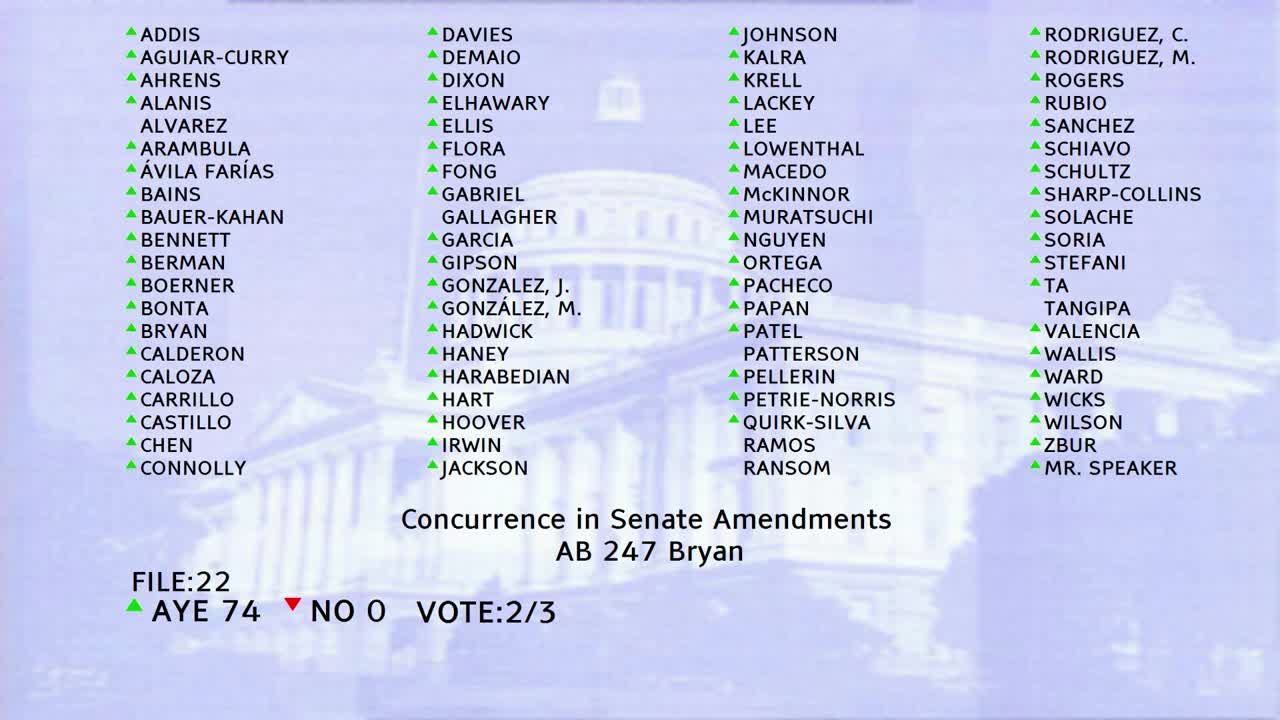
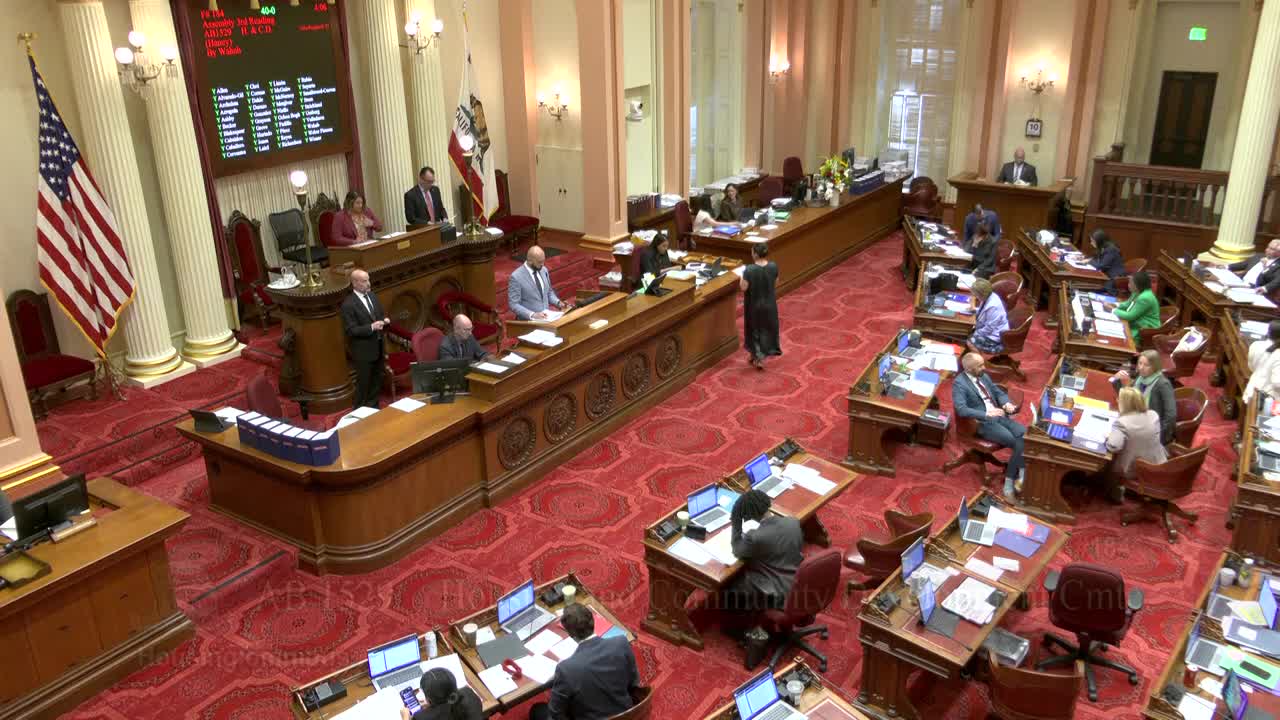
Bill Author