AB 8: Cannabis: cannabinoids: industrial hemp.
- Session Year: 2025-2026
- House: Assembly
- Latest Version Date: 2025-10-02
Current Status:
Passed
(2025-10-02: Chaptered by Secretary of State - Chapter 248, Statutes of 2025.)
Introduced
In Committee
Awaiting First Chamber Vote
Passed First Chamber
In Committee
Awaiting Second Chamber Vote
Passed Second Chamber
Enacted
(1)The Sherman Food, Drug, and Cosmetic Law regulates the packaging, labeling, and advertising of food, beverages, and cosmetics and makes it a crime to distribute in commerce any food, drug, device, or cosmetic if its packaging or labeling does not conform to these provisions. Existing law establishes a process for the embargo, condemnation, and destruction of a food, drug, device, or cosmetic that is adulterated, misbranded, or falsely advertised, gives the authority to place items under embargo to authorized agents of the State Department of Public Health, and requires the department to take specified actions. Violation of the Sherman Food, Drug, and Cosmetic Law is a misdemeanor.
The Sherman Food, Drug, and Cosmetic Law regulates, among other things, industrial hemp and requires a hemp manufacturer who produces an industrial hemp product that is a food or beverage to register with the State Department of Public Health, as specified. Existing law prohibits an industrial hemp product from being distributed or sold in the state unless the industrial hemp contains a total THC concentration that does not exceed 0.3 percent on a dry-weight basis.
This bill, beginning on January 1, 2026, would prohibit industrial hemp raw extract from being incorporated into food, food additives, beverages, or dietary supplements unless the industrial hemp raw extract has a purity level greater than 99 percent and does not contain any tetrahydrocannabinols or synthetic cannabinoids. The bill, beginning January 1, 2028, would revise and recast various provisions in conformity with that prohibition. The bill would also specify that beginning on January 1, 2028, retail of industrial hemp includes online sales to customers in the state. By creating a new crime, the bill would impose a state-mandated local program.
(2)Existing law, the California Uniform Controlled Substances Act, categorizes controlled substances into 5 designated schedules, and specifies various penalties for the unlawful possession or sale of cannabis, as specified. Existing law excludes industrial hemp from the definition of cannabis for purposes of the act, and specifies that industrial hemp is not subject to the act. Existing law defines industrial hemp for these purposes to mean, among other things, a product derived from the cannabis plant, as provided, with a delta-9 tetrahydrocannabinol concentration of no more than 0.3 percent on a dry weight basis.
This bill, for purposes of the California Uniform Controlled Substances Act, would instead define industrial hemp to mean a product derived from the cannabis plant with a total tetrahydrocannabinol concentration of no more than 0.3 percent on a dry weight basis, as specified. The bill would prohibit the sale or delivery of hemp flower and hemp prerolls for consumption within the state under the California Uniform Controlled Substances Act.
(3)The Control, Regulate and Tax Adult Use of Marijuana Act of 2016 (AUMA), an initiative measure approved as Proposition 64 at the November 8, 2016, statewide general election, authorizes a person who obtains a state license under AUMA to engage in commercial adult-use cannabis activity pursuant to that license and applicable local ordinances. The Medicinal and Adult-Use Cannabis Regulation and Safety Act (MAUCRSA), among other things, consolidates the licensure and regulation of commercial medicinal and adult-use cannabis activities and requires the Department of Cannabis Control to administer its provisions. Existing law exempts industrial hemp, as defined, from the definition of cannabis under MAUCRSA, but requires the Department of Cannabis Control to prepare a report, on or before July 1, 2022, to the Governor and the Legislature outlining the steps necessary to allow for the incorporation of hemp cannabinoids into the cannabis supply chain. Existing emergency regulations require that industrial hemp, food, food additives, beverages, and dietary supplements intended for human consumption have no detectable THC per serving.
This bill would revise the definition of industrial hemp for purposes of MAUCRSA to conform to the definition of industrial hemp used in the California Uniform Controlled Substances Act, as described above. The bill would subject industrial hemp that enters the licensed market under MAUCRSA or is used in a cannabis product to the regulatory requirements of cannabis or cannabis products under MAUCRSA, including identification in the track and trace program, security and transportation safety requirements, quality assurance standards, testing by a licensed testing laboratory, and advertising and marketing restrictions. The bill would prohibit an industrial hemp cultivator from transferring or selling industrial hemp to a licensee under MAUCRSA if a banned pesticide was used in its cultivation. The bill would specify that MAUCRSA does not apply to products that contain no cannabinoids other than CBD isolate, as defined, and would make conforming changes to the California Uniform Controlled Substances Act.
This bill, until January 1, 2028, would allow a licensed manufacturer to use cannabinoid concentrates and extracts that are manufactured or processed exclusively from cannabis obtained from a licensed cannabis cultivator, and would prohibit a licensee from possessing, transporting, distributing, manufacturing, or selling industrial hemp on or from a licensed premises, except as specified.
This bill would prohibit a person from selling, offering, or providing a product in the state that is an inhalable cannabis product containing THC derived from industrial hemp, hemp flower or a preroll that contains hemp flower or hemp-derived cannabinoids, whether infused or not, a cannabis product manufactured outside the licensed market, or a product containing synthetic cannabinoids, as defined.
This bill would revise and recast the enforcement provisions for cannabis, industrial hemp, and cannabis products, and would authorize the California Department of Tax and Fee Administration (CDTFA), the State Department of Public Health, the Department of Cannabis Control, and other state and local law enforcement agencies to inspect, seize, and destroy, among other things, cannabis products or products not authorized under MAUCRSA, the Sherman Food, Drug, and Cosmetic Law, or specified federal or tribal laws, as provided.
(4)Existing law, Cigarette and Tobacco Products Licensing Act of 2003, regulates and licenses manufacturers, importers, distributors, wholesalers, and retailers of cigarettes and tobacco products in the state.
This bill would prohibit a person that is engaged in the business of selling cigarettes or tobacco products from possessing, storing, owning, or making a retail sale of cannabis, cannabis products, or a product presumed to be cannabis, as specified, and would make a violation of that prohibition subject to a specified fine and license suspension or revocation, as applicable.
(5)Existing law, the Cannabis Tax Law, imposes an excise tax upon purchasers of cannabis or cannabis products sold in this state at the rate of 15% of the gross receipts of any retail sale by a cannabis retailer. The Cannabis Tax Law requires the CDTFA to administer the cannabis excise tax, directs all revenues, less refunds, derived from the cannabis excise tax to be deposited into the California Cannabis Tax Fund, a special fund, and continuously appropriates that tax fund for specified purposes. The Cannabis Tax Law defines cannabis and cannabis products to have the same meaning as those terms are defined in the California Uniform Controlled Substances Act, which excludes industrial hemp from those definitions.
This bill would narrow the definition of industrial hemp under the California Uniform Controlled Substances Act, thereby expanding the definition of cannabis and cannabis products under both the Cannabis Tax Law and the California Uniform Controlled Substances Act and subjecting those materials covered by that expansion to the cannabis excise tax. The bill would make conforming changes related to implementation of that tax. The bill would additionally subject any product presumed to be cannabis or a cannabis product to the cannabis excise tax and a specified penalty, as provided. By increasing the amount of tax moneys into the California Cannabis Tax Fund, a continuously appropriated fund, the bill would make an appropriation. The bill would require any person seeking to be relieved of the penalty imposed on any product presumed to be cannabis or a cannabis product to file with the CDTFA a signed statement setting forth the facts upon which they base the claim for relief. The bill would make a person who signs that statement that asserts the truth of any material matter that they know to be false guilty of a misdemeanor. By creating a new crime, this bill would impose a state-mandated local program.
(6)The Cannabis Tax Law authorizes the CDTFA or a law enforcement agency to seize cannabis or cannabis products in certain circumstances, including if the cannabis or cannabis products were not reported in the track and trace system or are in the possession of an unlicensed person, as specified. Existing law deems any cannabis or cannabis products seized by a law enforcement agency or the department to be forfeited, and makes a violation of these provisions a misdemeanor. Existing law excludes industrial hemp from the definition of cannabis under the Cannabis Tax Law, and generally defines industrial hemp as an agricultural product that is any part of the plant Cannabis sativa L., including cannabinoids, with a delta-9 tetrahydrocannabinol concentration of no more than 0.3% on a dry-weight basis.
This bill would authorize the CDTFA or a law enforcement agency to seize a product if the agency presumes the product is cannabis or a cannabis product due to the product containing or purporting to contain a cannabinoid, as specified, and the product is possessed, stored, offered for sale, or sold by an unlicensed person or at an unlicensed premises. The bill would additionally authorize the CDTFA to seize alcoholic beverages that contain or purport to contain cannabinoids, including synthetic cannabinoids. By expanding the items authorized for employees of the CDTFA or a law enforcement agency to inspect and seize, the bill expands the scope of a crime and imposes a state-mandated local program.
(7)Existing law requires edible cannabis products, cannabis cartridges, and integrated cannabis vaporizers that contain cannabis or a cannabis product to be marked with a universal symbol, as determined by the department and subject to specified requirements. Existing law makes the use or possession of the universal symbol in connection with a commercial activity, other than licensed commercial cannabis activity, a violation of MAUCRSA, as described. Existing law defines use or possession of the universal symbol in connection with a commercial activity to include, but is not limited to, possession of any package, label, or advertisement of any kind bearing the universal symbol, whether or not that package, label, or advertisement is affixed to, or otherwise associated with, cannabis or cannabis products.
This bill would make it a violation of MAUCRSA to use or possess any package, label, or advertisement of any kind bearing any likeness or simulation of the universal symbol in connection with a commercial activity, regardless of whether it is in connection with licensed commercial cannabis activity. The bill would also prohibit altering or cropping the universal symbol, except as specified.
(8)This bill would incorporate additional changes to Sections 26051.5 and 26067 of the Business and Professions Code proposed by SB 861 to be operative only if this bill and SB 861 are enacted and this bill is enacted last.
(9)The California Constitution requires the state to reimburse local agencies and school districts for certain costs mandated by the state. Statutory provisions establish procedures for making that reimbursement.
This bill would provide that no reimbursement is required by this act for a specified reason.
(10)This bill would include a change in state statute that would result in a taxpayer paying a higher tax within the meaning of Section 3 of Article XIIIA of the California Constitution, and thus would require for passage the approval of 2/3 of the membership of each house of the Legislature.
(1)The Sherman Food, Drug, and Cosmetic Law regulates the packaging, labeling, and advertising of food, beverages, and cosmetics and makes it a crime to distribute in commerce any food, drug, device, or cosmetic if its packaging or labeling does not conform to these provisions. Existing law establishes a process for the embargo, condemnation, and destruction of a food, drug, device, or cosmetic that is adulterated, misbranded, or falsely advertised, gives the authority to place items under embargo to authorized agents of the State Department of Public Health, and requires the department to take specified actions. Violation of the Sherman Food, Drug, and Cosmetic Law is a misdemeanor.
The Sherman Food, Drug, and Cosmetic Law regulates, among other things, industrial hemp and requires a hemp manufacturer who produces an industrial hemp product that is a food or beverage to register with the State Department of Public Health, as specified. Existing law prohibits an industrial hemp product from being distributed or sold in the state unless the industrial hemp contains a total THC concentration that does not exceed 0.3 percent on a dry-weight basis.
This bill, beginning on January 1, 2026, would prohibit industrial hemp raw extract from being incorporated into food, food additives, beverages, or dietary supplements unless the industrial hemp raw extract has a purity level greater than 99 percent and does not contain any tetrahydrocannabinols or synthetic cannabinoids. The bill, beginning January 1, 2028, would revise and recast various provisions in conformity with that prohibition. The bill would also specify that beginning on January 1, 2028, retail of industrial hemp includes online sales to customers in the state. By creating a new crime, the bill would impose a state-mandated local program.
(2)Existing law, the California Uniform Controlled Substances Act, categorizes controlled substances into 5 designated schedules, and specifies various penalties for the unlawful possession or sale of cannabis, as specified. Existing law excludes industrial hemp from the definition of cannabis for purposes of the act, and specifies that industrial hemp is not subject to the act. Existing law defines industrial hemp for these purposes to mean, among other things, a product derived from the cannabis plant, as provided, with a delta-9 tetrahydrocannabinol concentration of no more than 0.3 percent on a dry weight basis.
This bill, for purposes of the California Uniform Controlled Substances Act, would instead define industrial hemp to mean a product derived from the cannabis plant with a total tetrahydrocannabinol concentration of no more than 0.3 percent on a dry weight basis, as specified. The bill would prohibit the sale or delivery of hemp flower and hemp prerolls for consumption within the state under the California Uniform Controlled Substances Act.
(3)The Control, Regulate and Tax Adult Use of Marijuana Act of 2016 (AUMA), an initiative measure approved as Proposition 64 at the November 8, 2016, statewide general election, authorizes a person who obtains a state license under AUMA to engage in commercial adult-use cannabis activity pursuant to that license and applicable local ordinances. The Medicinal and Adult-Use Cannabis Regulation and Safety Act (MAUCRSA), among other things, consolidates the licensure and regulation of commercial medicinal and adult-use cannabis activities and requires the Department of Cannabis Control to administer its provisions. Existing law exempts industrial hemp, as defined, from the definition of cannabis under MAUCRSA, but requires the Department of Cannabis Control to prepare a report, on or before July 1, 2022, to the Governor and the Legislature outlining the steps necessary to allow for the incorporation of hemp cannabinoids into the cannabis supply chain. Existing emergency regulations require that industrial hemp, food, food additives, beverages, and dietary supplements intended for human consumption have no detectable THC per serving.
This bill would revise the definition of industrial hemp for purposes of MAUCRSA to conform to the definition of industrial hemp used in the California Uniform Controlled Substances Act, as described above. The bill would subject industrial hemp that enters the licensed market under MAUCRSA or is used in a cannabis product to the regulatory requirements of cannabis or cannabis products under MAUCRSA, including identification in the track and trace program, security and transportation safety requirements, quality assurance standards, testing by a licensed testing laboratory, and advertising and marketing restrictions. The bill would prohibit an industrial hemp cultivator from transferring or selling industrial hemp to a licensee under MAUCRSA if a banned pesticide was used in its cultivation. The bill would specify that MAUCRSA does not apply to products that contain no cannabinoids other than CBD isolate, as defined, and would make conforming changes to the California Uniform Controlled Substances Act.
This bill, until January 1, 2028, would allow a licensed manufacturer to use cannabinoid concentrates and extracts that are manufactured or processed exclusively from cannabis obtained from a licensed cannabis cultivator, and would prohibit a licensee from possessing, transporting, distributing, manufacturing, or selling industrial hemp on or from a licensed premises, except as specified.
This bill would prohibit a person from selling, offering, or providing a product in the state that is an inhalable cannabis product containing THC derived from industrial hemp, hemp flower or a preroll that contains hemp flower or hemp-derived cannabinoids, whether infused or not, a cannabis product manufactured outside the licensed market, or a product containing synthetic cannabinoids, as defined.
This bill would revise and recast the enforcement provisions for cannabis, industrial hemp, and cannabis products, and would authorize the California Department of Tax and Fee Administration (CDTFA), the State Department of Public Health, the Department of Cannabis Control, and other state and local law enforcement agencies to inspect, seize, and destroy, among other things, cannabis products or products not authorized under MAUCRSA, the Sherman Food, Drug, and Cosmetic Law, or specified federal or tribal laws, as provided.
(4)Existing law, Cigarette and Tobacco Products Licensing Act of 2003, regulates and licenses manufacturers, importers, distributors, wholesalers, and retailers of cigarettes and tobacco products in the state.
This bill would prohibit a person that is engaged in the business of selling cigarettes or tobacco products from possessing, storing, owning, or making a retail sale of cannabis, cannabis products, or a product presumed to be cannabis, as specified, and would make a violation of that prohibition subject to a specified fine and license suspension or revocation, as applicable.
(5)Existing law, the Cannabis Tax Law, imposes an excise tax upon purchasers of cannabis or cannabis products sold in this state at the rate of 15% of the gross receipts of any retail sale by a cannabis retailer. The Cannabis Tax Law requires the CDTFA to administer the cannabis excise tax, directs all revenues, less refunds, derived from the cannabis excise tax to be deposited into the California Cannabis Tax Fund, a special fund, and continuously appropriates that tax fund for specified purposes. The Cannabis Tax Law defines cannabis and cannabis products to have the same meaning as those terms are defined in the California Uniform Controlled Substances Act, which excludes industrial hemp from those definitions.
This bill would narrow the definition of industrial hemp under the California Uniform Controlled Substances Act, thereby expanding the definition of cannabis and cannabis products under both the Cannabis Tax Law and the California Uniform Controlled Substances Act and subjecting those materials covered by that expansion to the cannabis excise tax. The bill would make conforming changes related to implementation of that tax. The bill would additionally subject any product presumed to be cannabis or a cannabis product to the cannabis excise tax and a specified penalty, as provided. By increasing the amount of tax moneys into the California Cannabis Tax Fund, a continuously appropriated fund, the bill would make an appropriation. The bill would require any person seeking to be relieved of the penalty imposed on any product presumed to be cannabis or a cannabis product to file with the CDTFA a signed statement setting forth the facts upon which they base the claim for relief. The bill would make a person who signs that statement that asserts the truth of any material matter that they know to be false guilty of a misdemeanor. By creating a new crime, this bill would impose a state-mandated local program.
(6)The Cannabis Tax Law authorizes the CDTFA or a law enforcement agency to seize cannabis or cannabis products in certain circumstances, including if the cannabis or cannabis products were not reported in the track and trace system or are in the possession of an unlicensed person, as specified. Existing law deems any cannabis or cannabis products seized by a law enforcement agency or the department to be forfeited, and makes a violation of these provisions a misdemeanor. Existing law excludes industrial hemp from the definition of cannabis under the Cannabis Tax Law, and generally defines industrial hemp as an agricultural product that is any part of the plant Cannabis sativa L., including cannabinoids, with a delta-9 tetrahydrocannabinol concentration of no more than 0.3% on a dry-weight basis.
This bill would authorize the CDTFA or a law enforcement agency to seize a product if the agency presumes the product is cannabis or a cannabis product due to the product containing or purporting to contain a cannabinoid, as specified, and the product is possessed, stored, offered for sale, or sold by an unlicensed person or at an unlicensed premises. The bill would additionally authorize the CDTFA to seize alcoholic beverages that contain or purport to contain cannabinoids, including synthetic cannabinoids. By expanding the items authorized for employees of the CDTFA or a law enforcement agency to inspect and seize, the bill expands the scope of a crime and imposes a state-mandated local program.
(7)Existing law requires edible cannabis products, cannabis cartridges, and integrated cannabis vaporizers that contain cannabis or a cannabis product to be marked with a universal symbol, as determined by the department and subject to specified requirements. Existing law makes the use or possession of the universal symbol in connection with a commercial activity, other than licensed commercial cannabis activity, a violation of MAUCRSA, as described. Existing law defines use or possession of the universal symbol in connection with a commercial activity to include, but is not limited to, possession of any package, label, or advertisement of any kind bearing the universal symbol, whether or not that package, label, or advertisement is affixed to, or otherwise associated with, cannabis or cannabis products.
This bill would make it a violation of MAUCRSA to use or possess any package, label, or advertisement of any kind bearing any likeness or simulation of the universal symbol in connection with a commercial activity, regardless of whether it is in connection with licensed commercial cannabis activity. The bill would also prohibit altering or cropping the universal symbol, except as specified.
(8)This bill would incorporate additional changes to Sections 26051.5 and 26067 of the Business and Professions Code proposed by SB 861 to be operative only if this bill and SB 861 are enacted and this bill is enacted last.
(8)(9)The California Constitution requires the state to reimburse local agencies and school districts for certain costs mandated by the state. Statutory provisions establish procedures for making that reimbursement.
This bill would provide that no reimbursement is required by this act for a specified reason.
(9)(10)This bill would include a change in state statute that would result in a taxpayer paying a higher tax within the meaning of Section 3 of Article XIIIA of the California Constitution, and thus would require for passage the approval of 2/3 of the membership of each house of the Legislature.
(1)The Sherman Food, Drug, and Cosmetic Law regulates the packaging, labeling, and advertising of food, beverages, and cosmetics and makes it a crime to distribute in commerce any food, drug, device, or cosmetic if its packaging or labeling does not conform to these provisions. Existing law establishes a process for the embargo, condemnation, and destruction of a food, drug, device, or cosmetic that is adulterated, misbranded, or falsely advertised, gives the authority to place items under embargo to authorized agents of the State Department of Public Health, and requires the department to take specified actions. That law requires a hemp manufacturer who produces an industrial hemp product that is a food or beverage to register with the State Department of Public Health, as specified. Violation of the Sherman Food, Drug, and Cosmetic Law is a misdemeanor.
The Sherman Food, Drug, and Cosmetic Law regulates, among other things, industrial hemp and requires a hemp manufacturer who produces an industrial hemp product that is a food or beverage to register with the State Department of Public Health, as specified. Existing law prohibits an industrial hemp product from being distributed or sold in the state unless the industrial hemp contains a total THC concentration that does not exceed 0.3 percent on a dry-weight basis.
This bill would require an out-of-state hemp manufacturer who produces an industrial hemp product that is a food or beverage for sale in this state to register with the department. bill, beginning on January 1, 2026, would prohibit industrial hemp raw extract from being incorporated into food, food additives, beverages, or dietary supplements unless the industrial hemp raw extract has a purity level greater than 99 percent and does not contain any tetrahydrocannabinols or synthetic cannabinoids. The bill, beginning January 1, 2028, would revise and recast various provisions in conformity with that prohibition. The bill would also specify that beginning on January 1, 2028, retail of industrial hemp includes online sales to customers in the state. By creating a new crime, the bill would impose a state-mandated local program.
(2)Existing law, the California Uniform Controlled Substances Act, categorizes controlled substances into 5 designated schedules, and specifies various penalties for the unlawful possession or sale of cannabis, as specified. Existing law excludes industrial hemp from the definition of cannabis for purposes of the act, and specifies that industrial hemp is not subject to the act. Existing law defines industrial hemp for these purposes to mean, among other things, a product derived from the cannabis plant, as provided, with a delta-9 tetrahydrocannabinol concentration of no more than 0.3 percent on a dry weight basis.
This bill, for purposes of the California Uniform Controlled Substances Act, would instead define industrial hemp to mean a product derived from the cannabis plant with a total tetrahydrocannabinol concentration of no more than 0.3 percent on a dry weight basis, as specified. The bill would prohibit the sale or delivery of hemp flower and hemp prerolls for consumption within the state under the California Uniform Controlled Substances Act.
(3)The Control, Regulate and Tax Adult Use of Marijuana Act of 2016 (AUMA), an initiative measure approved as Proposition 64 at the November 8, 2016, statewide general election, authorizes a person who obtains a state license under AUMA to engage in commercial adult-use cannabis activity pursuant to that license and applicable local ordinances. The Medicinal and Adult-Use Cannabis Regulation and Safety Act (MAUCRSA), among other things, consolidates the licensure and regulation of commercial medicinal and adult-use cannabis activities and requires the Department of Cannabis Control to administer its provisions. Existing law exempts industrial hemp, as defined, from the definition of cannabis and from under MAUCRSA, but requires the Department of Cannabis Control to prepare a report, on or before July 1, 2022, to the Governor and the Legislature outlining the steps necessary to allow for the incorporation of hemp cannabinoids into the cannabis supply chain. Existing emergency regulations require that industrial hemp, food, food additives, beverages, and dietary supplements intended for human consumption have no detectable THC per serving.
This bill, beginning on January 1, 2028, would expand the definition of cannabis products under MAUCRSA to include cannabis or industrial hemp that has undergone a process to transform the plant material into a concentrate, including concentrated cannabinoids, as specified. bill would revise the definition of industrial hemp for purposes of MAUCRSA to conform to the definition of industrial hemp used in the California Uniform Controlled Substances Act, as described above. The bill would subject industrial hemp that enters the licensed market under MAUCRSA or is used in a cannabis product to the regulatory requirements of cannabis or cannabis products under MAUCRSA, including identification in the track and trace program, security and transportation safety requirements, quality assurance standards, testing by a licensed testing laboratory, and advertising and marketing restrictions. The bill would prohibit an industrial hemp cultivator from transferring or selling industrial hemp to a licensee under MAUCRSA if a banned pesticide was used in its cultivation. The bill would specify that MAUCRSA does not apply to products that contain no cannabinoids other than CBD isolate, as defined, and would make conforming changes to the California Uniform Controlled Substances Act.
This bill, until January 1, 2028, would allow a licensed manufacturer to use cannabinoid concentrates and extracts that are manufactured or processed exclusively from cannabis obtained from a licensed cannabis cultivator, and would prohibit a licensee from possessing, transporting, distributing, manufacturing, or selling industrial hemp on or from a licensed premises, except as specified.
This bill, beginning on January 1, 2028, bill would prohibit a licensee under MAUCRSA person from selling, offering, or providing a product in the state that is an inhalable cannabis product containing cannabinoids THC derived from industrial hemp hemp, hemp flower or a preroll that contains hemp flower or hemp-derived cannabinoids, whether infused or not, a cannabis product manufactured outside the licensed market, or a product containing synthetic cannabinoids, as defined.
This bill, beginning on January 1, 2028, bill would revise and recast the enforcement provisions for cannabis, industrial hemp, and cannabis products, and would authorize the California Department of Tax and Fee Administration (CDTFA), the State Department of Public Health, the Department of Cannabis Control, and other state and local law enforcement agencies to inspect, seize, and destroy, among other things, cannabis products or products not authorized under MAUCRSA, the Sherman Food, Drug, and Cosmetic Law, or specified federal or tribal laws, as provided.
(4)Existing law, Cigarette and Tobacco Products Licensing Act of 2003, regulates and licenses manufacturers, importers, distributors, wholesalers, and retailers of cigarettes and tobacco products in the state.
TheThis bill would prohibit a person that is engaged in the business of selling cigarettes or tobacco products from possessing, storing, owning, or making a retail sale of cannabis, cannabis products, or a product that contains or purports to contain THC or a comparable cannabinoid that is not a product authorized to be distributed or sold under the Sherman Food, Drug, and Cosmetic Law, presumed to be cannabis, as specified, and would make a violation of that prohibition subject to a specified fine and license suspension or revocation, as applicable.
(5)Existing law, the Cannabis Tax Law, imposes an excise tax upon purchasers of cannabis or cannabis products sold in this state at the rate of 15% of the gross receipts of any retail sale by a cannabis retailer, and, as enacted by AUMA, imposed a cultivation tax on all harvested cannabis that entered the commercial market, as specified. Chapter 56 of the Statutes of 2022 (AB 195) amended AUMA to, among other things, discontinue the imposition of the cultivation tax on July 1, 2022. AB 195, beginning in the 202526 fiscal year and every 2 years thereafter, requires the CDTFA to adjust the cannabis excise tax rate by a percentage that will generate an amount of revenue that would have been collected pursuant to the cultivation tax imposed prior to its discontinuation, as specified, not to exceed 19% of the gross receipts of retail sale. retailer. The Cannabis Tax Law requires the CDTFA to administer the cannabis excise tax, directs all revenues, less refunds, derived from the cannabis excise tax to be deposited into the California Cannabis Tax Fund, a special fund, and continuously appropriates that tax fund for specified purposes. The Cannabis Tax Law defines cannabis and cannabis products to have the same meaning as those terms are defined in the California Uniform Controlled Substances Act, which excludes industrial hemp from those definitions.
This bill, beginning on January 1, 2028, and until January 1, 2033, would suspend the requirement that the department adjust the cannabis excise tax rate, as described above, and during that period would instead impose a cannabis excise tax rate of 15% of the gross receipts of any retail sale by a cannabis retailer, as provided.This bill, beginning on January 1, 2028, would subject cannabis products derived from industrial hemp and subject to licensing under MAUCRSA, as described above, bill would narrow the definition of industrial hemp under the California Uniform Controlled Substances Act, thereby expanding the definition of cannabis and cannabis products under both the Cannabis Tax Law and the California Uniform Controlled Substances Act and subjecting those materials covered by that expansion to the cannabis excise tax, and tax. The bill would make conforming changes related to implementation of that tax. The bill would additionally subject any product presumed to be cannabis or a cannabis product to the cannabis excise tax and a specified penalty, as provided. By increasing the amount of tax moneys into the California Cannabis Tax Fund, a continuously appropriated fund, the bill would make an appropriation. The bill would require any person seeking to be relieved of the penalty imposed on any product presumed to be cannabis or a cannabis product to file with the CDTFA a signed statement setting forth the facts upon which they base the claim for relief. The bill would make a person who signs that statement that asserts the truth of any material matter that they know to be false guilty of a misdemeanor. By creating a new crime, this bill would impose a state-mandated local program.
Existing law requires any bill authorizing a new tax expenditure to contain, among other things, specific goals that the tax expenditure will achieve, detailed performance indicators, and data collection requirements.This bill also would include additional information required for any bill authorizing a new tax expenditure.(6)The Cannabis Tax Law authorizes the CDTFA or a law enforcement agency to seize cannabis or cannabis products in certain circumstances, including if the cannabis or cannabis products were not reported in the track and trace system or are in the possession of an unlicensed person, as specified. Existing law deems any cannabis or cannabis products seized by a law enforcement agency or the department to be forfeited, and makes a violation of these provisions a misdemeanor. Existing law excludes industrial hemp from the definition of cannabis under the Cannabis Tax Law, and generally defines industrial hemp as an agricultural product that is any part of the plant Cannabis sativa L., including cannabinoids, with a delta-9 tetrahydrocannabinol concentration of no more than 0.3% on a dry-weight basis.
This bill would authorize the CDTFA or a law enforcement agency to presume that a seize a product if the agency presumes the product is cannabis or a cannabis product, for purposes of seizing that cannabis or cannabis product, if product due to the product contains or purports containing or purporting to contain THC or a comparable a cannabinoid, as specified, and if there is reasonable cause to believe that the product is not a product authorized to be distributed or sold as hemp under the Sherman Food, Drug, and Cosmetic Law. Beginning on January 1, 2028, the specified, and the product is possessed, stored, offered for sale, or sold by an unlicensed person or at an unlicensed premises. The bill would additionally authorize the CDTFA to seize alcoholic beverages that contain or purport to contain cannabinoids, inhalable products containing cannabinoids derived from industrial hemp, and products containing including synthetic cannabinoids. By expanding the items authorized for employees of the CDTFA or a law enforcement agency to inspect and seize, the bill expands the scope of a crime and imposes a state-mandated local program.
(7)Existing law requires edible cannabis products, cannabis cartridges, and integrated cannabis vaporizers that contain cannabis or a cannabis product to be marked with a universal symbol, as determined by the department and subject to specified requirements. Existing law makes the use or possession of the universal symbol in connection with a commercial activity, other than licensed commercial cannabis activity, a violation of MAUCRSA, as described. Existing law defines use or possession of the universal symbol in connection with a commercial activity to include, but is not limited to, possession of any package, label, or advertisement of any kind bearing the universal symbol, whether or not that package, label, or advertisement is affixed to, or otherwise associated with, cannabis or cannabis products.
This bill, beginning January 1, 2028, bill would make it a violation of MAUCRSA to use or possess any package, label, or advertisement of any kind bearing any likeness or simulation of the universal symbol in connection with a commercial activity, regardless of whether it is in connection with licensed commercial cannabis activity. The bill would also prohibit altering or cropping the universal symbol, except as specified.
(8)The California Constitution requires the state to reimburse local agencies and school districts for certain costs mandated by the state. Statutory provisions establish procedures for making that reimbursement.
This bill would provide that no reimbursement is required by this act for a specified reason.
(9)This bill would include a change in state statute that would result in a taxpayer paying a higher tax within the meaning of Section 3 of Article XIIIA of the California Constitution, and thus would require for passage the approval of 2/3 of the membership of each house of the Legislature.
(1)The Sherman Food, Drug, and Cosmetic Law regulates the packaging, labeling, and advertising of food, beverages, and cosmetics and makes it a crime to distribute in commerce any food, drug, device, or cosmetic if its packaging or labeling does not conform to these provisions. Existing law establishes a process for the embargo, condemnation, and destruction of a food, drug, device, or cosmetic that is adulterated, misbranded, or falsely advertised, gives the authority to place items under embargo to authorized agents of the State Department of Public Health, and requires the department to take specified actions. That law requires a hemp manufacturer who produces an industrial hemp product that is a food or beverage to register with the State Department of Public Health, as specified. Violation of the Sherman Food, Drug, and Cosmetic Law is a misdemeanor.
This bill would require an out-of-state hemp manufacturer who produces an industrial hemp product that is a food or beverage for sale in this state to register with the department. By creating a new crime, this the bill would impose a state-mandated local program.
(2)Existing law, the California Uniform Controlled Substances Act, categorizes controlled substances into 5 designated schedules, and specifies various penalties for the unlawful possession or sale of cannabis, as specified. Existing law excludes industrial hemp from the definition of cannabis for purposes of the act, and specifies that industrial hemp is not subject to the act.
This bill would prohibit the sale of hemp flower and hemp prerolls for consumption within the state under the California Uniform Controlled Substances Act.
(2)(3)The Control, Regulate and Tax Adult Use of Marijuana Act of 2016 (AUMA), an initiative measure approved as Proposition 64 at the November 8, 2016, statewide general election, authorizes a person who obtains a state license under AUMA to engage in commercial adult-use cannabis activity pursuant to that license and applicable local ordinances. The Medicinal and Adult-Use Cannabis Regulation and Safety Act (MAUCRSA), among other things, consolidates the licensure and regulation of commercial medicinal and adult-use cannabis activities and requires the Department of Cannabis Control to administer its provisions. Existing law exempts industrial hemp, as defined, from the definition of cannabis and from MAUCRSA, but requires the Department of Cannabis Control to prepare a report, on or before July 1, 2022, to the Governor and the Legislature outlining the steps necessary to allow for the incorporation of hemp cannabinoids into the cannabis supply chain. Existing emergency regulations require that industrial hemp, food, food additives, beverages, and dietary supplements intended for human consumption have no detectable THC per serving.
This bill, beginning on January 1, 2028, would expand the definition of cannabis products under MAUCRSA to include cannabis or industrial hemp that has undergone a process to transform the plant material into a concentrate, including concentrated cannabinoids, as specified. The bill would subject industrial hemp used in a cannabis product to the regulatory requirements of cannabis or cannabis products under MAUCRSA, including identification in the track and trace program, security and transportation safety requirements, quality assurance standards, testing by a licensed testing laboratory, and advertising and marketing restrictions. The bill would prohibit an industrial hemp cultivator from transferring or selling industrial hemp to a licensee under MAUCRSA if a banned pesticide was used in its cultivation. The bill would specify that MAUCRSA does not apply to products that contain no cannabinoids other than CBD isolate, as defined, and would make conforming changes to the California Uniform Controlled Substances Act.
This bill, beginning on January 1, 2028, would prohibit a licensee under MAUCRSA from selling, offering, or providing a product in the state that is an inhalable cannabis product containing cannabinoids derived from industrial hemp or a product containing synthetic cannabinoids, as defined.
This bill, beginning on January 1, 2028, would revise and recast the enforcement provisions for cannabis, industrial hemp, and cannabis products, and would authorize the California Department of Tax and Fee Administration (CDTFA), the State Department of Public Health, the Department of Cannabis Control, and other state and local law enforcement agencies to inspect, seize, and destroy, among other things, cannabis products or products not authorized under MAUCRSA, the Sherman Food, Drug, and Cosmetic Law, or specified federal or tribal laws, as provided.
(3)(4)Existing law, Cigarette and Tobacco Products Licensing Act of 2003, regulates and licenses manufacturers, importers, distributors, wholesalers, and retailers of cigarettes and tobacco products in the state.
The bill would prohibit a person that is engaged in the business of selling cigarettes or tobacco products from possessing, storing, owning, or making a retail sale of cannabis, cannabis products, or a product that contains or purports to contain THC or a comparable cannabinoid that is not a product authorized to be distributed or sold under the Sherman Food, Drug, and Cosmetic Law, and would make a violation of that prohibition subject to a specified fine or and license suspension or revocation, as applicable.
(4)(5)Existing law, the Cannabis Tax Law, imposes an excise tax upon purchasers of cannabis or cannabis products sold in this state at the rate of 15% of the gross receipts of any retail sale by a cannabis retailer, and, as enacted by AUMA, imposed a cultivation tax on all harvested cannabis that entered the commercial market, as specified. Chapter 56 of the Statutes of 2022 (AB 195) amended AUMA to, among other things, discontinue the imposition of the cultivation tax on July 1, 2022. AB 195, beginning in the 202526 fiscal year and every 2 years thereafter, requires the CDTFA to adjust the cannabis excise tax rate by a percentage that will generate an amount of revenue that would have been collected pursuant to the cultivation tax imposed prior to its discontinuation, as specified, not to exceed 19% of the gross receipts of retail sale. The Cannabis Tax Law requires the CDTFA to administer the cannabis excise tax, directs all revenues, less refunds, derived from the cannabis excise tax to be deposited into the California Cannabis Tax Fund, a special fund, and continuously appropriates that tax fund for specified purposes.
This bill, beginning on January 1, 2028, and until January 1, 2033, would suspend the requirement that the department adjust the cannabis excise tax rate, as described above, and during that period would instead impose a cannabis excise tax rate of 15% of the gross receipts of any retail sale by a cannabis retailer, as provided.
This bill, beginning on January 1, 2028, would subject cannabis products derived from industrial hemp and subject to licensing under MAUCRSA, as described above, to the cannabis excise tax, and would make conforming changes related to implementation of that tax. By increasing the amount of tax moneys into the California Cannabis Tax Fund, a continuously appropriated fund, the bill would make an appropriation.
Existing law requires any bill authorizing a new tax expenditure to contain, among other things, specific goals that the tax expenditure will achieve, detailed performance indicators, and data collection requirements.
This bill also would include additional information required for any bill authorizing a new tax expenditure.
(5)(6)The Cannabis Tax Law authorizes the CDTFA or a law enforcement agency to seize cannabis or cannabis products in certain circumstances, including if the cannabis or cannabis products were not reported in the track and trace system or are in the possession of an unlicensed person, as specified. Existing law deems any cannabis or cannabis products seized by a law enforcement agency or the department to be forfeited, and makes a violation of these provisions a misdemeanor. Existing law excludes industrial hemp from the definition of cannabis under the Cannabis Tax Law, and generally defines industrial hemp as an agricultural product that is any part of the plant Cannabis sativa L., including cannabinoids, with a delta-9 tetrahydrocannabinol concentration of no more than 0.3% on a dry-weight basis.
This bill would authorize the CDTFA or a law enforcement agency to presume that a product is cannabis or a cannabis product, for purposes of seizing that cannabis or cannabis product, if the product contains or purports to contain THC or a comparable cannabinoid, as specified, and if there is reasonable cause to believe that the product is not a product authorized to be distributed or sold as hemp under the Sherman Food, Drug, and Cosmetic Law, or after Law. Beginning on January 1, 2028, the product is not authorized to be distributed or sold under MAUCRSA, as provided. the bill would additionally authorize the CDTFA to seize alcoholic beverages that contain cannabinoids, inhalable products containing cannabinoids derived from industrial hemp, and products containing synthetic cannabinoids. By expanding the items authorized for employees of the CDTFA or a law enforcement agency to inspect and seize, the bill expands the scope of a crime and imposes a state-mandated local program.
(6)(7)Existing law requires edible cannabis products, cannabis cartridges, and integrated cannabis vaporizers that contain cannabis or a cannabis product to be marked with a universal symbol, as determined by the department and subject to specified requirements. Existing law makes the use or possession of the universal symbol in connection with a commercial activity, other than licensed commercial cannabis activity, a violation of MAUCRSA, as described. Existing law defines use or possession of the universal symbol in connection with a commercial activity to include, but is not limited to, possession of any package, label, or advertisement of any kind bearing the universal symbol, whether or not that package, label, or advertisement is affixed to, or otherwise associated with, cannabis or cannabis products.
This bill, beginning January 1, 2028, would make it a violation of MAUCRSA to use or possess any package, label, or advertisement of any kind bearing any likeness or simulation of the universal symbol in connection with a commercial activity, regardless of whether it is in connection with licensed commercial cannabis activity. The bill would also prohibit altering or cropping the universal symbol, except as specified.
(7)(8)The California Constitution requires the state to reimburse local agencies and school districts for certain costs mandated by the state. Statutory provisions establish procedures for making that reimbursement.
This bill would provide that no reimbursement is required by this act for a specified reason.
(8)(9)This bill would include a change in state statute that would result in a taxpayer paying a higher tax within the meaning of Section 3 of Article XIIIA of the California Constitution, and thus would require for passage the approval of 2/3 of the membership of each house of the Legislature.
(1)The Sherman Food, Drug, and Cosmetic Law regulates the packaging, labeling, and advertising of food, beverages, and cosmetics and makes it a crime to distribute in commerce any food, drug, device, or cosmetic if its packaging or labeling does not conform to these provisions. Existing law establishes a process for the embargo, condemnation, and destruction of a food, drug, device, or cosmetic that is adulterated, misbranded, or falsely advertised, gives the authority to place items under embargo to authorized agents of the State Department of Public Health, and requires the department to take specified actions. That law requires a hemp manufacturer who produces an industrial hemp product that is a food or beverage to register with the State Department of Public Health, as specified. Violation of the Sherman Food, Drug, and Cosmetic Law is a misdemeanor.
This bill would require an out-of-state hemp manufacturer who produces an industrial hemp product that is a food or beverage for sale in this state to register with the department. By creating a new crime, this bill would impose a state-mandated local program.
(2)The Control, Regulate and Tax Adult Use of Marijuana Act of 2016 (AUMA), an initiative measure approved as Proposition 64 at the November 8, 2016, statewide general election, authorizes a person who obtains a state license under AUMA to engage in commercial adult-use cannabis activity pursuant to that license and applicable local ordinances. The Medicinal and Adult-Use Cannabis Regulation and Safety Act (MAUCRSA), among other things, consolidates the licensure and regulation of commercial medicinal and adult-use cannabis activities and requires the Department of Cannabis Control to administer its provisions. Existing law exempts industrial hemp, as defined, from the definition of cannabis and from MAUCRSA, but requires the Department of Cannabis Control to prepare a report, on or before July 1, 2022, to the Governor and the Legislature outlining the steps necessary to allow for the incorporation of hemp cannabinoids into the cannabis supply chain. Existing emergency regulations require that industrial hemp, food, food additives, beverages, and dietary supplements intended for human consumption have no detectable THC per serving.
This bill, beginning on January 1, 2028, would expand the definition of cannabis products under MAUCRSA to include cannabis or industrial hemp that has undergone a process to transform the plant material into a concentrate, including concentrated cannabinoids, as specified. The bill would subject industrial hemp used in a cannabis product to the regulatory requirements of cannabis or cannabis products under MAUCRSA, including identification in the track and trace program, security and transportation safety requirements, quality assurance standards, testing by a licensed testing laboratory, and advertising and marketing restrictions. The bill would prohibit an industrial hemp cultivator from transferring or selling industrial hemp to a licensee under MAUCRSA if a banned pesticide was used in its cultivation. The bill would specify that MAUCRSA does not apply to products that contain no cannabinoids other than CBD isolate, as defined, and would make conforming changes to the California Uniform Controlled Substances Act.
This bill, beginning on January 1, 2028, would prohibit a licensee under MAUCRSA from selling, offering, or providing a product in the state that is an inhalable cannabis product containing cannabinoids derived from industrial hemp or a product containing synthetic cannabinoids, as defined.
This bill, beginning on January 1, 2028, would revise and recast the enforcement provisions for cannabis, industrial hemp, and cannabis products, and would authorize the California Department of Tax and Fee Administration (CDTFA), the State Department of Public Health, the Department of Cannabis Control, and other state and local law enforcement agencies to inspect, seize, and destroy, among other things, cannabis products or products not authorized under MAUCRSA, the Sherman Food, Drug, and Cosmetic Law, or specified federal or tribal laws, as provided.
(3)Existing law, Cigarette and Tobacco Products Licensing Act of 2003, regulates and licenses manufacturers, importers, distributors, wholesalers, and retailers of cigarettes and tobacco products in the state.
The bill would prohibit a person that is engaged in the business of selling cigarettes or tobacco products from possessing, storing, owning, or making a retail sale of cannabis, cannabis products, or a product that contains or purports to contain THC or a comparable cannabinoid that is not a product authorized to be distributed or sold under the Sherman Food, Drug, and Cosmetic Law, and would make a violation of that prohibition subject to a specified fine or license suspension or revocation, as applicable.
(4)Existing law, the Cannabis Tax Law, imposes an excise tax upon purchasers of cannabis or cannabis products sold in this state at the rate of 15% of the gross receipts of any retail sale by a cannabis retailer, and, as enacted by AUMA, imposed a cultivation tax on all harvested cannabis that entered the commercial market, as specified. Chapter 56 of the Statutes of 2022 (AB 195) amended AUMA to, among other things, discontinue the imposition of the cultivation tax on July 1, 2022. AB 195, beginning in the 202526 fiscal year and every 2 years thereafter, requires the CDTFA to adjust the cannabis excise tax rate by a percentage that will generate an amount of revenue that would have been collected pursuant to the cultivation tax imposed prior to its discontinuation, as specified, not to exceed 19% of the gross receipts of retail sale. The Cannabis Tax Law requires the CDTFA to administer the cannabis excise tax, directs all revenues, less refunds, derived from the cannabis excise tax to be deposited into the California Cannabis Tax Fund, a special fund, and continuously appropriates that tax fund for specified purposes.
This bill, beginning on January 1, 2028, and until January 1, 2033, would repeal suspend the requirement that the department adjust the cannabis excise tax rate, as described above, thereby retaining the existing and during that period would instead impose a cannabis excise tax rate of 15% of the gross receipts of any retail sale by a cannabis retailer, as provided.
This bill, beginning on January 1, 2028, would subject cannabis products derived from industrial hemp and subject to licensing under MAUCRSA, as described above, to the cannabis excise tax, and would make conforming changes related to implementation of that tax. By increasing the amount of tax moneys into the California Cannabis Tax Fund, a continuously appropriated fund, the bill would make an appropriation.
Existing law requires any bill authorizing a new tax expenditure to contain, among other things, specific goals that the tax expenditure will achieve, detailed performance indicators, and data collection requirements.
This bill also would include additional information required for any bill authorizing a new tax expenditure.
(5)The Cannabis Tax Law authorizes the CDTFA or a law enforcement agency to seize cannabis or cannabis products in certain circumstances, including if the cannabis or cannabis products were not reported in the track and trace system or are in the possession of an unlicensed person, as specified. Existing law deems any cannabis or cannabis products seized by a law enforcement agency or the department to be forfeited, and makes a violation of these provisions a misdemeanor. Existing law excludes industrial hemp from the definition of cannabis under the Cannabis Tax Law, and generally defines industrial hemp as an agricultural product that is any part of the plant Cannabis sativa L., including cannabinoids, with a delta-9 tetrahydrocannabinol concentration of no more than 0.3% on a dry-weight basis.
This bill would authorize the CDTFA or a law enforcement agency to presume that a product is cannabis or a cannabis product, for purposes of seizing that cannabis or cannabis product, if the product contains or purports to contain THC or a comparable cannabinoid, as specified, and if there is reasonable cause to believe that the product is not a product authorized to be distributed or sold as hemp under the Sherman Food, Drug, and Cosmetic Law, or after January 1, 2028, the product is not authorized to be distributed or sold under MAUCRSA, as provided. By expanding the items authorized for employees of the CDTFA or a law enforcement agency to inspect and seize, the bill expands the scope of a crime and imposes a state-mandated local program.
(6)Existing law requires edible cannabis products, cannabis cartridges, and integrated cannabis vaporizers that contain cannabis or a cannabis product to be marked with a universal symbol, as determined by the department and subject to specified requirements. Existing law makes the use or possession of the universal symbol in connection with a commercial activity, other than licensed commercial cannabis activity, a violation of MAUCRSA, as described. Existing law defines use or possession of the universal symbol in connection with a commercial activity to include, but is not limited to, possession of any package, label, or advertisement of any kind bearing the universal symbol, whether or not that package, label, or advertisement is affixed to, or otherwise associated with, cannabis or cannabis products.
This bill, beginning January 1, 2028, would make it a violation of MAUCRSA to use or possess any package, label, or advertisement of any kind bearing any likeness or simulation of the universal symbol in connection with a commercial activity, regardless of whether it is in connection with licensed commercial cannabis activity. The bill would also prohibit altering or cropping the universal symbol, except as specified.
(7)California Constitution requires the state to reimburse local agencies and school districts for certain costs mandated by the state. Statutory provisions establish procedures for making that reimbursement.
This bill would provide that no reimbursement is required by this act for a specified reason.
(8)This bill would include a change in state statute that would result in a taxpayer paying a higher tax within the meaning of Section 3 of Article XIIIA of the California Constitution, and thus would require for passage the approval of 2/3 of the membership of each house of the Legislature.
(1)The Sherman Food, Drug, and Cosmetic Law regulates the packaging, labeling, and advertising of food, beverages, and cosmetics and makes it a crime to distribute in commerce any food, drug, device, or cosmetic if its packaging or labeling does not conform to these provisions. Existing law establishes a process for the embargo, condemnation, and destruction of a food, drug, device, or cosmetic that is adulterated, misbranded, or falsely advertised, gives the authority to place items under embargo to authorized agents of the State Department of Public Health, and requires the department to take specified actions. That law requires a hemp manufacturer who produces an industrial hemp product that is a food or beverage to register with the State Department of Public Health, as specified. Violation of the Sherman Food, Drug, and Cosmetic Law is a misdemeanor.
This bill would require an out-of-state hemp manufacturer who produces an industrial hemp product that is a food or beverage for sale in this state to register with the department. By creating a new crime, this bill would impose a state-mandated local program.
(2)The Control, Regulate and Tax Adult Use of Marijuana Act of 2016 (AUMA), an initiative measure approved as Proposition 64 at the November 8, 2016, statewide general election, authorizes a person who obtains a state license under AUMA to engage in commercial adult-use cannabis activity pursuant to that license and applicable local ordinances. The Medicinal and Adult-Use Cannabis Regulation and Safety Act (MAUCRSA), among other things, consolidates the licensure and regulation of commercial medicinal and adult-use cannabis activities and requires the Department of Cannabis Control to administer its provisions. Existing law exempts industrial hemp, as defined, from the definition of cannabis and from MAUCRSA, but requires the Department of Cannabis Control to prepare a report, on or before July 1, 2022, to the Governor and the Legislature outlining the steps necessary to allow for the incorporation of hemp cannabinoids into the cannabis supply chain. Existing emergency regulations require that industrial hemp, food, food additives, beverages, and dietary supplements intended for human consumption have no detectable THC per serving.
This bill, beginning on January 1, 2028, would expand the definition of cannabis products under MAUCRSA to include cannabis or industrial hemp that has undergone a process to transform the plant material into a concentrate, including concentrated cannabinoids, as specified. The bill would subject industrial hemp used in a cannabis product to the regulatory requirements of cannabis or cannabis products under MAUCRSA, including identification in the track and trace program, security and transportation safety requirements, quality assurance standards, testing by a licensed testing laboratory, and advertising and marketing restrictions. The bill would prohibit an industrial hemp cultivator from transferring or selling industrial hemp to a licensee under MAUCRSA if a banned pesticide was used in its cultivation. The bill would specify that MAUCRSA does not apply to products that contain no cannabinoids other than CBD isolate, as defined, and would make conforming changes to the California Uniform Controlled Substances Act.
This bill, beginning on January 1, 2028, would prohibit a licensee under MAUCRSA from selling, offering, or providing a cannabis product in the state that is an inhalable cannabis product containing cannabinoids derived in whole or in part from industrial hemp or a synthetic cannabis product, product containing synthetic cannabinoids, as defined.
This bill, beginning on January 1, 2028, would revise and recast the enforcement provisions for cannabis, industrial hemp, and cannabis products, and would authorize the California Department of Tax and Fee Administration (CDTFA), the State Department of Public Health, the Department of Cannabis Control, and other state and local law enforcement agencies to inspect, seize, and destroy, among other things, cannabis products or products not authorized under MAUCRSA, the Sherman Food, Drug, and Cosmetic Law, or specified federal or tribal laws, as provided.
(3)Existing law, Cigarette and Tobacco Products Licensing Act of 2003, regulates and licenses manufacturers, importers, distributors, wholesalers, and retailers of cigarettes and tobacco products in the state.
The bill would prohibit a person that is engaged in the business of selling cigarettes or tobacco products from possessing, storing, owning, or making a retail sale of cannabis, cannabis products, or a product that contains or purports to contain THC or a comparable cannabinoid that is not a product authorized to be distributed or sold under the Sherman Food, Drug, and Cosmetic Law, and would make a violation of that prohibition subject to a specified fine or license suspension or revocation, as applicable.
(4)Existing law, the Cannabis Tax Law, imposes an excise tax upon purchasers of cannabis or cannabis products sold in this state at the rate of 15% of the gross receipts of any retail sale by a cannabis retailer, and, as enacted by AUMA, imposed a cultivation tax on all harvested cannabis that entered the commercial market, as specified. Chapter 56 of the Statutes of 2022 (AB 195) amended AUMA to, among other things, discontinue the imposition of the cultivation tax on July 1, 2022. AB 195, beginning in the 202526 fiscal year and every 2 years thereafter, requires the CDTFA to adjust the cannabis excise tax rate by a percentage that will generate an amount of revenue that would have been collected pursuant to the cultivation tax imposed prior to its discontinuation, as specified, not to exceed 19% of the gross receipts of retail sale. The Cannabis Tax Law requires the CDTFA to administer the cannabis excise tax, directs all revenues, less refunds, derived from the cannabis excise tax to be deposited into the California Cannabis Tax Fund, a special fund, and continuously appropriates that tax fund for specified purposes.
This bill, beginning on January 1, 2028, would repeal the requirement that the department adjust the cannabis excise tax rate, as described above, thereby retaining the existing cannabis excise tax rate of 15% of the gross receipts of any retail sale by a cannabis retailer, as provided.
This bill, beginning on January 1, 2028, would subject cannabis products derived from industrial hemp and subject to licensing under MAUCRSA, as described above, to the cannabis excise tax, and would make conforming changes related to implementation of that tax. By increasing the amount of tax moneys into the California Cannabis Tax Fund, a continuously appropriated fund, the bill would make an appropriation.
(5)The Cannabis Tax Law authorizes the CDTFA or a law enforcement agency to seize cannabis or cannabis products in certain circumstances, including if the cannabis or cannabis products were not reported in the track and trace system or are in the possession of an unlicensed person, as specified. Existing law deems any cannabis or cannabis products seized by a law enforcement agency or the department to be forfeited, and makes a violation of these provisions a misdemeanor. Existing law excludes industrial hemp from the definition of cannabis under the Cannabis Tax Law, and generally defines industrial hemp as an agricultural product that is any part of the plant Cannabis sativa L., including cannabinoids, with a delta-9 tetrahydrocannabinol concentration of no more than 0.3% on a dry-weight basis.
This bill would authorize the CDTFA or a law enforcement agency to presume that a product is cannabis or a cannabis product, for purposes of seizing that cannabis or cannabis product, if the product contains or purports to contain THC or a comparable cannabinoid, as specified, and if there is reasonable cause to believe that the product is not a product authorized to be distributed or sold as hemp under the Sherman Food, Drug, and Cosmetic Law, or after January 1, 2028, the product is not authorized to be distributed or sold under MAUCRSA, as provided. By expanding the items authorized for employees of the CDTFA or a law enforcement agency to inspect and seize, the bill expands the scope of a crime and imposes a state-mandated local program.
(6)Existing law requires edible cannabis products, cannabis cartridges, and integrated cannabis vaporizers that contain cannabis or a cannabis product to be marked with a universal symbol, as determined by the department and subject to specified requirements. Existing law makes the use or possession of the universal symbol in connection with a commercial activity, other than licensed commercial cannabis activity, a violation of MAUCRSA, as described. Existing law defines use or possession of the universal symbol in connection with a commercial activity to include, but is not limited to, possession of any package, label, or advertisement of any kind bearing the universal symbol, whether or not that package, label, or advertisement is affixed to, or otherwise associated with, cannabis or cannabis products.
This bill, beginning January 1, 2028, would make it a violation of MAUCRSA to use or possess any package, label, or advertisement of any kind bearing any likeness or simulation of the universal symbol in connection with a commercial activity, regardless of whether it is in connection with licensed commercial cannabis activity. The bill would also prohibit altering or cropping the universal symbol, except as specified.
(7)California Constitution requires the state to reimburse local agencies and school districts for certain costs mandated by the state. Statutory provisions establish procedures for making that reimbursement.
This bill would provide that no reimbursement is required by this act for a specified reason.
(8)This bill would include a change in state statute that would result in a taxpayer paying a higher tax within the meaning of Section 3 of Article XIIIA of the California Constitution, and thus would require for passage the approval of 2/3 of the membership of each house of the Legislature.
The
(1)The Sherman Food, Drug, and Cosmetic Law regulates the packaging, labeling, and advertising of food, beverages, and cosmetics and makes a violation of its provisions a misdemeanor. it a crime to distribute in commerce any food, drug, device, or cosmetic if its packaging or labeling does not conform to these provisions. Existing law establishes a process for the embargo, condemnation, and destruction of a food, drug, device, or cosmetic that is adulterated, misbranded, or falsely advertised, gives the authority to place items under embargo to authorized agents of the State Department of Public Health, and requires the department to take specified actions. That law requires a hemp manufacturer who produces an industrial hemp product that is a food or beverage to register with the State Department of Public Health, as specified. Violation of the Sherman Food, Drug, and Cosmetic Law is a misdemeanor.
This bill would require an out-of-state hemp manufacturer who produces an industrial hemp product that is a food or beverage for sale in this state to register with the department. By creating a new crime, this bill would impose a state-mandated local program.
Existing law, the Medicinal and Adult-Use Cannabis Regulation and Safety Act (MAUCRSA), provides for the licensure and regulation of commercial cannabis activity. Existing law exempts industrial hemp, as defined, from the definition of cannabis under MAUCRSA.This bill would state that MAUCRSA does not prohibit a licensee from manufacturing, distributing, or selling products that contain industrial hemp or cannabinoids, extracts, or derivatives from industrial hemp, if the product complies with all applicable state laws and regulations.(2)The Control, Regulate and Tax Adult Use of Marijuana Act of 2016 (AUMA), an initiative measure approved as Proposition 64 at the November 8, 2016, statewide general election, authorizes a person who obtains a state license under AUMA to engage in commercial adult-use cannabis activity pursuant to that license and applicable local ordinances. The Medicinal and Adult-Use Cannabis Regulation and Safety Act (MAUCRSA), among other things, consolidates the licensure and regulation of commercial medicinal and adult-use cannabis activities and requires the Department of Cannabis Control to administer its provisions. Existing law exempts industrial hemp, as defined, from the definition of cannabis and from MAUCRSA, but requires the Department of Cannabis Control to prepare a report, on or before July 1, 2022, to the Governor and the Legislature outlining the steps necessary to allow for the incorporation of hemp cannabinoids into the cannabis supply chain. Existing emergency regulations require that industrial hemp, food, food additives, beverages, and dietary supplements intended for human consumption have no detectable THC per serving.
This bill, beginning on January 1, 2028, would expand the definition of cannabis products under MAUCRSA to include cannabis or industrial hemp that has undergone a process to transform the plant material into a concentrate, including concentrated cannabinoids, as specified. The bill would subject industrial hemp used in a cannabis product to the regulatory requirements of cannabis or cannabis products under MAUCRSA, including identification in the track and trace program, security and transportation safety requirements, quality assurance standards, testing by a licensed testing laboratory, and advertising and marketing restrictions. The bill would prohibit an industrial hemp cultivator from transferring or selling industrial hemp to a licensee under MAUCRSA if a banned pesticide was used in its cultivation. The bill would make conforming changes to the California Uniform Controlled Substances Act.
This bill, beginning on January 1, 2028, would prohibit a licensee under MAUCRSA from selling, offering, or providing a cannabis product in the state that is an inhalable cannabis product derived in whole or in part from industrial hemp or a synthetic cannabis product, as defined.
This bill, beginning on January 1, 2028, would revise and recast the enforcement provisions for cannabis, industrial hemp, and cannabis products, and would authorize the California Department of Tax and Fee Administration (CDTFA), the State Department of Public Health, the Department of Cannabis Control, and other state and local law enforcement agencies to inspect, seize, and destroy, among other things, cannabis products or products not authorized under MAUCRSA, the Sherman Food, Drug, and Cosmetic Law, or specified federal or tribal laws, as provided.
(3)Existing law, Cigarette and Tobacco Products Licensing Act of 2003, regulates and licenses manufacturers, importers, distributors, wholesalers, and retailers of cigarettes and tobacco products in the state.
The bill would prohibit a person that is engaged in the business of selling cigarettes or tobacco products from possessing, storing, owning, or making a retail sale of cannabis, cannabis products, or a product that contains or purports to contain THC or a comparable cannabinoid that is not a product authorized to be distributed or sold under the Sherman Food, Drug, and Cosmetic Law, and would make a violation of that prohibition subject to a specified fine or license suspension or revocation, as applicable.
(4)Existing law, the Cannabis Tax Law, imposes an excise tax upon purchasers of cannabis or cannabis products sold in this state at the rate of 15% of the gross receipts of any retail sale by a cannabis retailer, and, as enacted by AUMA, imposed a cultivation tax on all harvested cannabis that entered the commercial market, as specified. Chapter 56 of the Statutes of 2022 (AB 195) amended AUMA to, among other things, discontinue the imposition of the cultivation tax on July 1, 2022. AB 195, beginning in the 202526 fiscal year and every 2 years thereafter, requires the CDTFA to adjust the cannabis excise tax rate by a percentage that will generate an amount of revenue that would have been collected pursuant to the cultivation tax imposed prior to its discontinuation, as specified, not to exceed 19% of the gross receipts of retail sale. The Cannabis Tax Law requires the CDTFA to administer the cannabis excise tax, directs all revenues, less refunds, derived from the cannabis excise tax to be deposited into the California Cannabis Tax Fund, a special fund, and continuously appropriates that tax fund for specified purposes.
This bill, beginning on January 1, 2028, would repeal the requirement that the department adjust the cannabis excise tax rate, as described above, thereby retaining the existing cannabis excise tax rate of 15% of the gross receipts of any retail sale by a cannabis retailer, as provided.
This bill, beginning on January 1, 2028, would subject cannabis products derived from industrial hemp and subject to licensing under MAUCRSA, as described above, to the cannabis excise tax, and would make conforming changes related to implementation of that tax. By increasing the amount of tax moneys into the California Cannabis Tax Fund, a continuously appropriated fund, the bill would make an appropriation.
(5)The Cannabis Tax Law authorizes the CDTFA or a law enforcement agency to seize cannabis or cannabis products in certain circumstances, including if the cannabis or cannabis products were not reported in the track and trace system or are in the possession of an unlicensed person, as specified. Existing law deems any cannabis or cannabis products seized by a law enforcement agency or the department to be forfeited, and makes a violation of these provisions a misdemeanor. Existing law excludes industrial hemp from the definition of cannabis under the Cannabis Tax Law, and generally defines industrial hemp as an agricultural product that is any part of the plant Cannabis sativa L., including cannabinoids, with a delta-9 tetrahydrocannabinol concentration of no more than 0.3% on a dry-weight basis.
This bill would authorize the CDTFA or a law enforcement agency to presume that a product is cannabis or a cannabis product, for purposes of seizing that cannabis or cannabis product, if the product contains or purports to contain THC or a comparable cannabinoid, as specified, and if there is reasonable cause to believe that the product is not a product authorized to be distributed or sold as hemp under the Sherman Food, Drug, and Cosmetic Law, or after January 1, 2028, the product is not authorized to be distributed or sold under MAUCRSA, as provided. By expanding the items authorized for employees of the CDTFA or a law enforcement agency to inspect and seize, the bill expands the scope of a crime and imposes a state-mandated local program.
(6)Existing law requires edible cannabis products, cannabis cartridges, and integrated cannabis vaporizers that contain cannabis or a cannabis product to be marked with a universal symbol, as determined by the department and subject to specified requirements. Existing law makes the use or possession of the universal symbol in connection with a commercial activity, other than licensed commercial cannabis activity, a violation of MAUCRSA, as described. Existing law defines use or possession of the universal symbol in connection with a commercial activity to include, but is not limited to, possession of any package, label, or advertisement of any kind bearing the universal symbol, whether or not that package, label, or advertisement is affixed to, or otherwise associated with, cannabis or cannabis products.
This bill, beginning January 1, 2028, would make it a violation of MAUCRSA to use or possess any package, label, or advertisement of any kind bearing any likeness or simulation of the universal symbol in connection with a commercial activity, regardless of whether it is in connection with licensed commercial cannabis activity. The bill would also prohibit altering or cropping the universal symbol, except as specified.
The
(7)California Constitution requires the state to reimburse local agencies and school districts for certain costs mandated by the state. Statutory provisions establish procedures for making that reimbursement.
This bill would provide that no reimbursement is required by this act for a specified reason.
(8)This bill would include a change in state statute that would result in a taxpayer paying a higher tax within the meaning of Section 3 of Article XIIIA of the California Constitution, and thus would require for passage the approval of 2/3 of the membership of each house of the Legislature.
The Sherman Food, Drug, and Cosmetic Law regulates the packaging, labeling, and advertising of food, beverages, and cosmetics and makes a violation of its provisions a misdemeanor. That law requires a hemp manufacturer who produces an industrial hemp product that is a food or beverage to register with the State Department of Public Health, as specified.
This bill would require an out-of-state hemp manufacturer who produces an industrial hemp product that is a food or beverage for sale in this state to register with the department. By creating a new crime, this bill would impose a state-mandated local program.
Existing law, the Medicinal and Adult-Use Cannabis Regulation and Safety Act (MAUCRSA), provides for the licensure and regulation of commercial cannabis activity. Existing law exempts industrial hemp, as defined, from the definition of cannabis under MAUCRSA.
This bill would state that MAUCRSA does not prohibit a licensee from manufacturing, distributing, or selling products that contain industrial hemp or cannabinoids, extracts, or derivatives from industrial hemp, if the product complies with all applicable state laws and regulations.
The California Constitution requires the state to reimburse local agencies and school districts for certain costs mandated by the state. Statutory provisions establish procedures for making that reimbursement.
This bill would provide that no reimbursement is required by this act for a specified reason.
(a)A person that is engaged in the business of selling cigarettes or tobacco products in this state shall not possess, store, own, or make a retail sale of cannabis, cannabis products, or a product presumed to be a cannabis product pursuant to subdivision (b), or any regulations promulgated pursuant to that chapter, at any site where cigarettes or tobacco products are stored or sold. A person that violates this subdivision is subject to civil penalties and suspension or revocation of their license pursuant to subdivision (d).
(b)For purposes of this section, it shall be presumed that a product that contains or purports to contain a cannabinoid, including a synthetic cannabinoid, is a cannabis product, regardless of the nature or source of the cannabinoid. This presumption may be rebutted by evidence showing that the product does either of the following:
(1)Complies with Chapter 9 (commencing with Section 111920) of Part 5 of Division 104 of the Health and Safety Code and any regulations promulgated pursuant to that chapter.
(2)Meets the definition of industrial hemp, as that term is defined in Section 11018.5 of the Health and Safety Code.
(c)(1)In addition to the authority provided pursuant to Section 34016 of the Revenue and Taxation Code, upon discovery by the department that any person possesses, stores, owns, or has made a retail sale of cannabis or cannabis products in violation of this section, the department is authorized to seize such products at the persons location. Any cannabis or cannabis products seized by the department pursuant to this subdivision shall be deemed forfeited and the department shall comply with the procedures set forth in Sections 30436 to 30449, inclusive, of the Revenue and Taxation Code.
(2)Any seizures or penalties authorized pursuant to this section are in addition to any criminal or civil penalties that may be imposed by law.
(d)(1)(A)A first violation of subdivision (a) involving the seizure of cannabis or cannabis products shall be punishable as follows:
(i)Cannabis or cannabis products with an aggregate retail value of less than two hundred dollars ($200) shall be punishable by a civil penalty of one thousand dollars ($1,000).
(ii)Cannabis or cannabis product with an aggregate retail value of two hundred dollars ($200) or more shall be punishable by a civil penalty of two thousand dollars ($2,000).
(B)A second violation of subdivision (a) within five years involving a seizure of cannabis or cannabis products shall be punishable as follows:
(i)Cannabis or cannabis products with an aggregate retail value of less than two hundred dollars ($200) shall be punishable by a civil penalty of two thousand dollars ($2,000) and shall also result in a five-day suspension of the license.
(ii)Cannabis or cannabis product with an aggregate retail value of two hundred dollars ($200) or more shall be punishable by a civil penalty of five thousand dollars ($5,000) and shall result in a 10-day suspension of the license.
(C)A third violation of subdivision (a) within five years involving a seizure of cannabis or cannabis products shall be punishable as follows:
(i)Cannabis or cannabis products with an aggregate retail value of less than two hundred dollars ($200) shall be punishable by a civil penalty of five thousand dollars ($5,000) and shall also result in a revocation of the license.
(ii)Cannabis or cannabis products with an aggregate retail value of two hundred dollars ($200) or more shall be punishable by a civil penalty of ten thousand dollars ($10,000) and shall result in a revocation of the license.
(2)The department shall ascertain as best it may the retail value based on any information within the departments possession or that may come into its possession of the cannabis or cannabis product.
(3)The department shall issue the civil penalty in accordance with the procedures applicable to the civil penalty authorized under Section 22974.7.
(4)The department shall revoke or suspend the license of a person who violates subdivision (a) in accordance with the procedures set forth in Section 22980.3.
(e)For purposes of this section:
(1)Cannabis and cannabis products shall have the same meaning as provided in Part 14.5 (commencing with Section 34010) of Division 2 of the Revenue and Taxation Code.
(2)Cannabinoid and synthetic cannabinoid shall have the same meaning as provided in Division 10 (commencing with Section 26000).
(f)Civil penalties collected pursuant to this section shall be deposited into the Cigarette and Tobacco Products Compliance Fund created pursuant to Section 22990.
SEC. 2.Section 26000.5 is added to the Business and Professions Code, to read:26000.5.Until January 1, 2028, both of the following shall apply:
(a)A licensed manufacturer shall only use cannabinoid concentrates and extracts that are manufactured or processed exclusively from cannabis obtained from a licensed cannabis cultivator.
(b)A licensee shall not possess, transport, distribute, manufacture, or sell industrial hemp on or from a licensed premises, except that a licensed testing laboratory may test industrial hemp.
SEC. 3.Section 26001 of the Business and Professions Code is amended to read:26001.For purposes of this division, the following definitions apply:
(a)A-license means a state license issued under this division for cannabis or cannabis products that are intended for adults who are 21 years of age and older and who do not possess a physicians recommendation, or are intended for use on, or consumption by, animals.
(b)A-licensee means any person holding a license under this division for cannabis or cannabis products that are intended for adults who are 21 years of age and older and who do not possess a physicians recommendation, or are intended for use on, or consumption by, animals.
(c)Animal does not include a food animal as defined in Section 4825.1 or livestock as defined in Section 14205 of the Food and Agricultural Code.
(d)Applicant means an owner applying for a state license pursuant to this division.
(e)Batch means a specific quantity of homogeneous cannabis, industrial hemp, or cannabis product that is one of the following types:
(1)Harvest batch means a specifically identified quantity of dried flower or trim, leaves, and other plant matter from either cannabis or industrial hemp that is harvested at the same time, and, if applicable, cultivated using the same pesticides and other agricultural chemicals.
(2)Manufactured cannabis batch means either of the following:
(A)An amount of cannabis concentrate or extract that is produced in one production cycle using the same extraction methods and standard operating procedures.
(B)An amount of a type of manufactured cannabis produced in one production cycle using the same formulation and standard operating procedures.
(f)Cannabinoid means a chemical compound found in cannabis and industrial hemp that binds to or otherwise activates cannabinoid receptors in humans and animals. Cannabinoid includes, but is not limited to, tetrahydrocannabinol (THC) and cannabidiol (CBD).
(g)Cannabis has the same meaning as in Section 11018 of the Health and Safety Code.
(h)Cannabis accessories has the same meaning as in Section 11018.2 of the Health and Safety Code.
(i)Cannabis beverage means a form of edible cannabis product that is intended to be consumed in its final state as a beverage.
(j)Cannabis concentrate has the same meaning as in Section 11006.5 of the Health and Safety Code.
(k)Cannabis event organizer means a person authorized to plan and organize temporary cannabis events as authorized in Section 26200.
(l)Cannabis products has the same meaning as in Section 11018.1 of the Health and Safety Code.
(m)CBD isolate means a compound extracted from cannabis or industrial hemp consisting of cannabidiol (CAS number 13956-29-1), with a purity level greater than 99 percent and that does not contain any form of tetrahydrocannabinol or synthetic cannabinoid.
(n)CBN isolate means a compound extracted from cannabis or industrial hemp consisting of cannabinol (CAS number 521-35-7), with a purity level greater than 99 percent, and that does not contain any form of tetrahydrocannabinol or synthetic cannabinoid.
(o)Child resistant means designed or constructed to be significantly difficult for children under five years of age to open, and not difficult for normal adults to use properly.
(p)Combined activities license means a state license that authorizes two or more commercial cannabis activities at the same premises, with the exception of laboratory testing. A combined activities license shall conform with all requirements imposed by this division to the extent the licensee engages in those activities.
(q)Commercial cannabis activity includes the cultivation of cannabis or the possession, manufacture, distribution, processing, storing, laboratory testing, packaging, labeling, transportation, delivery, or sale of cannabis and cannabis products as provided for in this division, or acting as a cannabis event organizer for temporary cannabis events.
(r)Cultivation means any activity involving the planting, growing, harvesting, drying, curing, grading, or trimming of cannabis.
(s)Cultivation site means a location where cannabis is planted, grown, harvested, dried, cured, graded, or trimmed, or a location where any combination of those activities occurs.
(t)Customer means a natural person 21 years of age or older or a natural person 18 years of age or older who possesses a physicians recommendation, or a primary caregiver.
(u)Daycare center has the same meaning as in Section 1596.76 of the Health and Safety Code.
(v)Delivery means the commercial transfer of cannabis or cannabis products to a customer. Delivery also includes the use by a retailer of any technology platform.
(w)Department means the Department of Cannabis Control within the Business, Consumer Services, and Housing Agency.
(x)Director means the Director of the Department of Cannabis Control.
(y)Distribution means the procurement, sale, and transport of cannabis and cannabis products between licensees.
(z)Distributor means a licensee that is authorized to engage in the distribution of cannabis, industrial hemp, and cannabis products.
(aa)Dried flower means all dead cannabis that has been harvested, dried, cured, or otherwise processed, excluding leaves and stems.
(ab)Edible cannabis product means a cannabis product that is intended to be used, in whole or in part, for human or animal consumption, including, but not limited to, chewing gum, but excluding products set forth in Division 15 (commencing with Section 32501) of the Food and Agricultural Code. An edible cannabis product is not considered food, as defined by Section 109935 of the Health and Safety Code, a processed pet food, as defined by Section 113025 of the Health and Safety Code, or a drug, as defined by Section 109925 of the Health and Safety Code.
(ac)Fund means the Cannabis Control Fund established pursuant to Section 26210.
(ad)Industrial hemp has the same meaning as in Section 11018.5 of the Health and Safety Code.
(ae)Kind means applicable type or designation regarding a particular cannabis variant, origin, or product type, including, but not limited to, strain name, trademark, or production area designation.
(af)Labeling means any label or other written, printed, or graphic matter upon a cannabis or cannabis product, upon its container or wrapper, or that accompanies any cannabis or cannabis product.
(ag)Labor peace agreement means an agreement between a licensee and any bona fide labor organization that, at a minimum, protects the states proprietary interests by prohibiting labor organizations and members from engaging in picketing, work stoppages, boycotts, and any other economic interference with the applicants business. This agreement means that the applicant has agreed not to disrupt efforts by the bona fide labor organization to communicate with, and attempt to organize and represent, the applicants employees. The agreement shall provide a bona fide labor organization access at reasonable times to areas in which the applicants employees work, for the purpose of meeting with employees to discuss their right to representation, employment rights under state law, and terms and conditions of employment. This type of agreement shall not mandate a particular method of election or certification of the bona fide labor organization.
(ah)License means a state license issued under this division, and includes both an A-license and an M-license, as well as a testing laboratory license.
(ai)Licensed market means the California licensed market for cannabis, industrial hemp, and cannabis products that is subject to regulation by this division.
(aj)Licensee means any person holding a license under this division, regardless of whether the license held is an A-license or an M-license, and includes the holder of a testing laboratory license.
(ak)Licensing authority means the department and any state agency currently or formerly responsible for the issuance, renewal, or reinstatement of the license, or the state agency authorized to take disciplinary action against the licensee.
(al)Live plants means living cannabis flowers and plants, including seeds, immature plants, and vegetative stage plants.
(am)Local jurisdiction means a city, county, or city and county.
(an)Lot means a batch or a specifically identified portion of a batch.
(ao)M-license means a state license issued under this division for commercial cannabis activity involving medicinal cannabis.
(ap)M-licensee means any person holding a license under this division for commercial cannabis activity involving medicinal cannabis.
(aq)Manufacture means to compound, blend, extract, infuse, package, label, or otherwise make or prepare a cannabis product.
(ar)Medicinal cannabis or medicinal cannabis product means cannabis or a cannabis product, respectively, intended to be sold or donated for use pursuant to the Compassionate Use Act of 1996 (Proposition 215), found in Section 11362.5 of the Health and Safety Code, by a medicinal cannabis patient in California who possesses a physicians recommendation, or in compliance with any compassionate use, equity, or other similar program administered by a local jurisdiction.
(as)Microbusiness means a licensee that is authorized to engage in cultivation of cannabis on an area less than 10,000 square feet and to act as a licensed distributor, Level 1 manufacturer, and retailer under this division, provided such licensee can demonstrate compliance with all requirements imposed by this division on licensed cultivators, distributors, Level 1 manufacturers, and retailers to the extent the licensee engages in such activities.
(at)Nursery means a licensee that produces only clones, immature plants, seeds, and other agricultural products used specifically for the propagation and cultivation of cannabis.
(au)Operation means any act for which licensure is required under the provisions of this division, or any commercial transfer of cannabis or cannabis products.
(av)Owner means any of the following:
(1)A person with an aggregate ownership interest of 20 percent or more in the person applying for a license or a licensee, unless the interest is solely a security, lien, or encumbrance.
(2)The chief executive officer of a nonprofit or other entity.
(3)A member of the board of directors of a nonprofit.
(4)An individual who will be participating in the direction, control, or management of the person applying for a license.
(aw)Package means any container or receptacle used for holding cannabis or cannabis products.
(ax)Person includes any individual, firm, partnership, joint venture, association, corporation, limited liability company, estate, trust, business trust, receiver, syndicate, or any other group or combination acting as a unit, and the plural as well as the singular.
(ay)Physicians recommendation means a recommendation by a physician and surgeon that a patient use cannabis provided in accordance with the Compassionate Use Act of 1996 (Proposition 215), found at Section 11362.5 of the Health and Safety Code.
(az)Premises means the designated structure or structures and land specified in the application that is owned, leased, or otherwise held under the control of the applicant or licensee where the commercial cannabis activity will be or is conducted.
(ba)Primary caregiver has the same meaning as in Section 11362.7 of the Health and Safety Code.
(bb)Processor means a person authorized to engage in only trimming, drying, curing, grading, packaging, and labeling of cannabis and nonmanufactured cannabis products.
(bc)Purchaser means the customer who is engaged in a transaction with a licensee for purposes of obtaining cannabis or cannabis products.
(bd)Retailer means a person authorized to engage in the retail sale and delivery of cannabis or cannabis products to customers.
(be)Sell, sale, and to sell include any transaction whereby, for any consideration, title to cannabis or cannabis products is transferred from one person to another, and includes the delivery of cannabis or cannabis products pursuant to an order placed for the purchase of the same and soliciting or receiving an order for the same, but does not include the return of cannabis or cannabis products by a licensee to the licensee from whom the cannabis or cannabis product was purchased.
(bf)Synthetic cannabinoid means a cannabinoid or cannabinoid-like compound that is produced by using biosynthesis, bioconversion, or chemical synthesis, reaction, modification, conversion, or a similar process. This includes, but is not limited to, any form of tetrahydrocannabinol that was produced by the conversion of cannabidiol (CBD) (CAS number 13956-29-1), or any other chemical substance identified by the department in regulation. Synthetic cannabinoid does not include any of the following:
(1)A cannabinoid produced by the decarboxylation of acidic phytocannabinoids without the use of chemical reagents or chemical catalysts. This includes, but is not limited to, the conversion of cannabidiolic acid (CBDA) into cannabidiol (CBD) without the use of chemical reagents or catalysts.
(2)A cannabinoid that occurs naturally in the Cannabis sativa Linnaeus, Cannabis indica, or Cannabis ruderalis plant that was produced with the use of heat, light, or pressure from other phytocannabinoids, and without the use of any chemical reagents or catalysts. This includes, but is not limited to, the conversion of tetrahydrocannabinol into cannabinol (CBN) with the use of heat, light, or pressure, and without the use of any chemical reagents or catalysts.
(3)Any other chemical substance identified by the department in regulation.
(bg)Testing laboratory means a laboratory, facility, or entity in the state that offers or performs tests of cannabis or cannabis products and that is both of the following:
(1)Accredited by an accrediting body that is independent from all other persons involved in commercial cannabis activity in the state.
(2)Licensed by the department.
(bh)Unique identifier means an alphanumeric code or designation used in reference to a specific quantity of cannabis or cannabis products that is issued pursuant to the track and trace program established by the department.
(bi)Youth center has the same meaning as in Section 11353.1 of the Health and Safety Code.
SEC. 4.Section 26002 of the Business and Professions Code is amended to read:26002.(a)This division does not apply to any product containing cannabinoids that has been approved by the federal Food and Drug Administration that has either been placed on a schedule of the federal Controlled Substances Act other than Schedule I or has been exempted from one or more provisions of that act, and that is intended for prescribed use for the treatment of a medical condition.
(b)This division does not apply to activity performed pursuant to a registration with the United States Drug Enforcement Administration pursuant to Part 1318 (commencing with Section 1318.01) of Chapter 2 of Title 21 of the Code of Federal Regulations, as it read on January 19, 2021, provided that the person engaging in the activity provides the licensing authority valid documentation of their registration with the United States Drug Enforcement Administration and the location where the activity will be performed prior to engaging in the activity.
(c)This division does not apply to products that are regulated pursuant to and meet the requirements of the Sherman Food, Drug, and Cosmetic Law (Part 5 (commencing with Section 109875) of Division 104 of the Health and Safety Code), including products that do not contain cannabinoids other than CBD isolate.
(d)This division does not permit the introduction into the licensed market of cannabis concentrate or cannabis products derived in whole or in part from industrial hemp that have been manufactured without a cannabis manufacturing license, as required by this division.
(e)Cannabis concentrates and cannabis products are not considered food, as defined by Section 109935 of the Health and Safety Code, a processed pet food, as defined by Section 113025 of the Health and Safety Code, or a drug, as defined by Section 109925 of the Health and Safety Code.
SEC. 5.Section 26015 of the Business and Professions Code is amended to read:26015.(a)The department may make or cause to be made such investigation as it deems necessary to carry out its duties under this division.
(b)The chief of enforcement and all investigators, inspectors, and deputies of the department identified by the director have the authority of peace officers while engaged in exercising the powers granted or performing the duties imposed upon them in enforcing the laws of the state or commencing directly or indirectly any criminal prosecution arising from any investigation conducted under these laws. All persons herein referred to shall be deemed to be acting within the scope of employment with respect to all acts and matters set forth in this section.
(c)The department may employ individuals, who are not peace officers, to provide investigative services.
(d)Notwithstanding any other law, the department may employ peace officers and shall be exempt from the requirements of Section 13540 of the Penal Code.
SEC. 6.Section 26031.6 of the Business and Professions Code is amended to read:26031.6.(a)It is a violation of this division for a person to use or possess the universal symbol described in paragraph (7) of subdivision (c) of Section 26130 in connection with commercial activity other than commercial cannabis activity licensed under this division. For purposes of this section, use or possession of the universal symbol in connection with commercial activity includes, but is not limited to, use or possession of any package, label, or advertisement of any kind bearing the universal symbol, or bearing any likeness, simulation, or any representation substantially similar to the universal symbol, whether or not that package, label, or advertisement is affixed to, or otherwise associated with, cannabis or cannabis products.
(b)A person using or possessing the universal symbol in connection with commercial activity shall do both of the following:
(1)Maintain records establishing that the use or possession is in connection with commercial cannabis activity licensed pursuant to this division.
(2)Produce those records upon demand of a peace officer, an employee of the department, or an employee of the California Department of Tax and Fee Administration.
(c)A person shall not alter or crop the universal symbol except in a manner allowed by this Division or permitted by regulation.
(d)Each individual package, label, advertisement, or other document or object of any kind bearing the universal symbol or any likeness or simulation of the universal symbol in violation of this section shall constitute a separate violation of this section.
(e)(1)A package, label, advertisement, or other document or object of any kind bearing the universal symbol or any likeness or simulation of the universal symbol in violation of this section is contraband and shall be seized and summarily forfeited to the state, and may be summarily destroyed by the state, subject to subdivision (f). A peace officer or an employee of the department may summarily seize such contraband.
(2)Failure to maintain or produce records as required pursuant to subdivision (b) in connection with a package, label, advertisement, or other document or object of any kind bearing the universal symbol shall establish that the package, label, advertisement, or other document or object is contraband for purposes of this subdivision.
(f)A person from whom a package, label, advertisement, or other document or object is seized pursuant to subdivision (e) may petition the superior court of the county in which the seizure occurred within 10 days of the seizure to seek the return of the package, label, advertisement, or other document or object. The petitioner shall bear the burden of proving, by a preponderance of the evidence, that the package, label, advertisement, or other document or object was not used or possessed in connection with commercial activity other than commercial cannabis activity licensed pursuant to this division.
(g)This section does not prohibit the educational, informational, or other noncommercial use or possession of the universal symbol.
SEC. 7.Section 26036 of the Business and Professions Code is amended to read:26036.Nothing in this division shall be interpreted to supersede or limit the department or other state and local agencies from exercising their existing enforcement authority, including, but not limited to, under this division, the Fish and Game Code, the Food and Agricultural Code, the Government Code, the Health and Safety Code, the Penal Code, the Public Resources Code, the Water Code, or the application of those laws.
SEC. 8.Section 26038 of the Business and Professions Code is amended to read:26038.(a)(1)A person engaging in commercial cannabis activity without a license as required by this division shall be subject to civil penalties of up to three times the amount of the license fee for each violation. Each day of operation shall constitute a separate violation of this section.
(2)(A)A person aiding and abetting unlicensed commercial cannabis activity shall be subject to civil penalties of up to three times the amount of the license fee for each violation, but in no case shall the penalty exceed thirty thousand dollars ($30,000) for each violation. Each day of operation of unlicensed commercial cannabis activity that a person is found to have aided and abetted shall constitute a separate violation of this section.
(B)For the purposes of this section, in order to prove that a person aided and abetted an unlicensed cannabis activity, all of the following shall be demonstrated:
(i)The person was an owner, officer, controlling shareholder, or in a similar position of authority allowing them to make command or control decisions regarding the operations and management of the unlicensed cannabis activity or the property in which the activity is taking place.
(ii)The person had actual knowledge that the cannabis activity was unlicensed and that the cannabis activity required a license.
(iii)The person provided substantial assistance or encouragement to the unlicensed cannabis activity.
(iv)The persons conduct was a substantial factor in furthering the unlicensed cannabis activity.
(3)(A)A person who has management or control of a commercial property, or a commercial building, room, space, or enclosure, either as an owner, lessee, agent, employee, or mortgagee, who knowingly rents, leases, or makes available for use, with or without compensation, the commercial property, building, room, space, or enclosure for the purpose of the unlicensed commercial cultivation, manufacture, storage, sale, or distribution of cannabis shall be subject to civil penalties of up to ten thousand dollars ($10,000) for each violation. Each day of violation shall constitute a separate violation of this section.
(B)For purposes of this paragraph, in order to prove that a person knowingly rented, leased, or made available the commercial property for unlawful commercial cannabis activity, it shall be demonstrated that the person had actual knowledge that the cannabis-related activity was for commercial purposes, required a license, and was unlicensed. The presence of a lawful amount of cannabis, cannabis products, or cannabis plants, subject to Sections 11362.1 and 11362.45 of the Health and Safety Code, shall not be evidence of actual knowledge.
(4)In assessing a penalty, a court shall give due consideration to the appropriateness of the amount of the civil penalty with respect to factors the court determines to be relevant, including the following:
(A)The gravity of the violation by the licensee or person.
(B)The good faith of the licensee or person.
(C)The licensees or persons history of previous violations.
(D)Whether, and to what extent, the licensee or person profited from the unlicensed cannabis activity.
(5)Cannabis or cannabis products associated with a violation described in this subdivision may be destroyed in accordance with Section 11479 of the Health and Safety Code. The person in violation shall be responsible for the cost of the destruction of cannabis or cannabis products associated with their violation.
(b)An action for civil penalties brought against a person pursuant to this division shall not be commenced unless the action is filed within three years from the date of the violation.
(c)(1)Actions for civil penalties pursuant to paragraph (1) of subdivision (a) may be brought by the Attorney General on behalf of the people, on behalf of the department, or on behalf of the participating agency, or by a city or county counsel or city prosecutor.
(2)Actions for civil penalties pursuant to paragraph (2) of subdivision (a) shall be brought exclusively by the Attorney General on behalf of the people, on behalf of the department, or on behalf of the participating agency, or by a city or county counsel or city prosecutor in a city or county having a population in excess of 750,000.
(3)Actions for civil penalties pursuant to paragraph (3) of subdivision (a) shall be brought exclusively by the Attorney General on behalf of the people, on behalf of the department, or on behalf of the participating agency, or by a city or county counsel, or city prosecutor.
(d)(1)All civil penalties imposed and collected pursuant to this section by a court shall be deposited into the General Fund except as provided in this subdivision.
(2)If an action for civil penalties is brought against a person pursuant to this division by the Attorney General on behalf of the people or on behalf of the department or a participating agency, the penalty shall first be used to reimburse the Attorney General and the department or the participating agency for the costs of investigating and prosecuting the action, including expert fees and reasonable attorneys fees, with the remainder, if any, to be deposited into the General Fund.
(3)If the action is brought by a county counsel, the penalty shall first be used to reimburse the county counsel for the costs of bringing the action for civil penalties, with one-half of the remainder, if any, to be paid to the treasurer of the county in which the judgment was entered and one-half deposited into the General Fund.
(4)If the action is brought by a city attorney or city prosecutor, the penalty collected shall first be used to reimburse the city attorney or city prosecutor for the costs of bringing the action for civil penalties, with one-half of the remainder, if any, to be paid to the treasurer of the city in which the complaining attorney has jurisdiction and one-half deposited into the General Fund.
(e)Notwithstanding subdivision (a), criminal penalties shall continue to apply to an unlicensed person engaging in commercial cannabis activity in violation of this division.
(f)(1)This section does not limit, preempt, or otherwise affect any other state or local law, rule, regulation, or ordinance applicable to the conduct described in subdivision (a), or otherwise relating to commercial cannabis activities.
(2)This section is meant to further the intent of the Control, Regulate and Tax Adult Use of Marijuana Act of 2016 (AUMA), which allows local governments to reasonably regulate the cultivation of nonmedical cannabis for personal use by adults 21 years of age and older through zoning and other local laws.
SEC. 9.Section 26039.4 of the Business and Professions Code is amended to read:26039.4.A peace officer, including a peace officer with the department, may seize cannabis, industrial hemp, and cannabis products in any of the following circumstances:
(a)The cannabis or cannabis product is subject to recall or embargo by the department.
(b)The cannabis or cannabis product is subject to seizure or destruction pursuant to this division.
(c)The cannabis or cannabis product is seized related to an investigation or disciplinary action for violation of this division.
(d)The industrial hemp or cannabis product is subject to seizure under the Sherman Food, Drug, and Cosmetic Law (Part 5 (commencing with Section 109875) of Division 104 of the Health and Safety Code).
(e)The industrial hemp is in violation of United States Domestic Industrial Hemp Program (7 U.S.C. 990 et seq.), and, if applicable, the California State Regulatory Plan for Hemp Production (Chapter 8 of Division 4 of Title 3 of the California Code of Regulations), or an applicable tribal plan.
SEC. 10.Section 26039.6 of the Business and Professions Code is amended to read:26039.6.(a)Cannabis or a cannabis product is adulterated if it is any of the following:
(1)It has been produced, prepared, packed, or held under unsanitary conditions in which it may have become contaminated with filth or in which it may have been rendered injurious.
(2)It consists, in whole or in part, of any filthy, putrid, or decomposed substance.
(3)It bears or contains any poisonous or deleterious substance that may render it injurious to users under the conditions of use suggested in the labeling or under conditions that are customary or usual.
(4)It bears or contains a substance that is restricted or limited under this division or regulations promulgated pursuant to this division and the level of substance in the product exceeds the limits specified pursuant to this division or in regulation.
(5)Its concentrations differ from, or its purity or quality is below, that which it is represented to possess.
(6)The methods, facilities, or controls used for its cultivation, manufacture, packing, or holding do not conform to, or are not operated or administered in conformity with, practices established by regulations adopted under this division to ensure that the cannabis or cannabis product meets the requirements of this division as to safety and has the concentrations it purports to have and meets the quality and purity characteristics that it purports or is represented to possess.
(7)Its container is composed, in whole or in part, of any poisonous or deleterious substance that may render the contents injurious to health.
(8)It is a cannabis product and a substance has been mixed or packed with it after testing by a testing laboratory so as to reduce its quality or concentration or if a substance has been substituted, wholly or in part, for the cannabis product.
(b)It is unlawful to cultivate, manufacture, distribute, sell, deliver, hold, or offer for sale cannabis or a cannabis product that is adulterated.
(c)It is unlawful to adulterate cannabis or a cannabis product.
(d)It is unlawful to receive in commerce cannabis or a cannabis product that is adulterated or to distribute, deliver, or proffer for delivery any such cannabis or cannabis product.
SEC. 11.Section 26051.5 of the Business and Professions Code is amended to read:26051.5.(a)An applicant for a state license issued pursuant to this division to conduct commercial cannabis activity, as defined in Section 26001, shall do all of the following:
(1)Except as provided in subparagraph (G), require that each owner, as defined in paragraphs (1) to (3), inclusive, of subdivision (ap) of Section 26001, electronically submit to the Department of Justice fingerprint images and related information required by the Department of Justice for the purpose of obtaining information as to the existence and content of a record of state or federal convictions and state and federal arrests, and also information as to the existence and content of a record of state or federal convictions and arrests for which the Department of Justice establishes that the person is free on bail or on their own recognizance pending trial or appeal.
(A)Notwithstanding any other law, the department may obtain criminal history information from the Department of Justice and the Federal Bureau of Investigation for an applicant or its owners, as defined in paragraphs (1) to (3), inclusive, of subdivision (ap) of Section 26001, for any state license, as described in Section 26050, under this division pursuant to subdivision (u) of Section 11105 of the Penal Code.
(B)When received, the Department of Justice shall transmit fingerprint images and related information received pursuant to this section to the Federal Bureau of Investigation for the purpose of obtaining a federal criminal history records check. The Department of Justice shall review the information returned from the Federal Bureau of Investigation and compile and disseminate a response to the licensing authority.
(C)The Department of Justice shall provide a response to the licensing authority pursuant to paragraph (1) of subdivision (p) of Section 11105 of the Penal Code.
(D)The department shall request from the Department of Justice subsequent notification service, as provided pursuant to Section 11105.2 of the Penal Code, for applicants.
(E)The Department of Justice shall charge the applicant a fee sufficient to cover the reasonable cost of processing the requests described in this paragraph.
(F)Notwithstanding any other law, a licensing authority may request and receive from a local or state agency certified records of all arrests and convictions, certified records regarding probation, and any and all other related documentation needed to complete an applicant or licensee investigation. A local or state agency may provide those records to a licensing authority upon request.
(G)If an owner has previously submitted fingerprint images and related information required by the Department of Justice pursuant to this paragraph in connection with a valid state license issued by a licensing authority, all of the following apply:
(i)The owner shall not be required to submit additional fingerprint images and related information pursuant to this paragraph in connection with a subsequent application for a state license.
(ii)The department shall not consider the owners criminal history information obtained from the fingerprint images and related information that were previously submitted pursuant to this paragraph when considering whether to issue a subsequent state license.
(iii)An owner shall not be required to resubmit owner-related information previously provided to the department.
(2)Provide evidence of the legal right to occupy and use the proposed location and provide a statement from the landowner of real property or that landowners agent where the commercial cannabis activity will occur, as proof to demonstrate the landowner has acknowledged and consented to permit commercial cannabis activities to be conducted on the property by the tenant applicant.
(3)Provide evidence that the proposed location is in compliance with subdivision (b) of Section 26054.
(4)Provide a statement, signed by the applicant under penalty of perjury, that the information provided is complete, true, and accurate.
(5)(A)(i)For an applicant with 20 or more employees, or an applicant with 10 or more employees that submits an application on or after July 1, 2024, provide a notarized statement that the applicant will enter into, or demonstrate that it has already entered into, and will abide by the terms of a labor peace agreement. On and after July 1, 2024, the department shall not renew a license for a licensee with 10 or more employees unless the licensee provides a statement that the licensee has already entered into and will abide by the terms of a labor peace agreement.
(ii)For an applicant with 10 or more employees but less than 20 employees that has not yet entered into a labor peace agreement, provide a notarized statement as a part of its application indicating that the applicant will enter into and abide by the terms of a labor peace agreement within 60 days of employing its 20th employee, or on or before July 1, 2024, whichever is earlier.
(iii)For an applicant with less than 10 employees that has not yet entered into a labor peace agreement, provide a notarized statement as a part of its application indicating that the applicant will enter into and abide by the terms of a labor peace agreement within 60 days of employing its 10th employee, or on or before July 1, 2024, whichever is later.
(iv)Nothing in this paragraph shall be construed to limit the authority of the department to revoke or suspend a license for a violation of this paragraph.
(B)Compliance with the terms of an applicable labor peace agreement is a condition of licensure. A licensee seeking renewal of any license shall attest to the department that it remains in compliance with the terms of any applicable labor peace agreement.
(C)Any labor organization, or any current or former employee of the relevant licensee, may report to the department that a licensee has failed to provide a truthful attestation of compliance with subparagraph (B).
(i)The reporting party shall provide documentation, in a form and manner required by the department, to substantiate their allegation before the department considers it. The department shall collaborate with such agencies as it deems relevant to evaluate the report.
(ii)If the department substantiates the validity of a report made pursuant to this subparagraph, the department may suspend, revoke, place on probation with terms and conditions, or otherwise discipline the license and fine the licensee.
(D)(i)Any labor organization, or any current or former employee of the relevant licensee, may file a complaint with the Agricultural Labor Relations Board that an organization with which a licensee has entered into a labor peace agreement is not a bona fide labor organization.
(ii)The Agricultural Labor Relations Board shall consider all relevant evidence provided or obtained in rendering a decision on whether the entity is a bona fide labor organization and issue a report with its findings no later than 90 days from receiving the complaint.
(iii)If the Agricultural Labor Relations Board determines that the entity is not a bona fide labor organization, the labor peace agreement shall be null and void. The department shall promptly notify all licensees that have signed labor peace agreements with the entity that the entity was found not to be a bona fide labor organization and offer those licensees a reasonable time period, not to exceed 180 days, to enter into a labor peace agreement with a bona fide labor organization. Failure to enter into a labor peace agreement with a bona fide labor organization after that reasonable time period shall be a violation of this section.
(E)For the purposes of this paragraph, all of the following shall apply:
(i)Employee does not include a supervisor.
(ii)Labor organization means any organization of any kind, or any agency or employee representation committee or plan, in which employees participate and which exists, in whole or in part, for the purpose of dealing with employers concerning grievances, labor disputes, wages, rates of pay, hours of employment, or conditions of work for employees.
(iii)Supervisor means an individual having authority, in the interest of the applicant, to hire, transfer, suspend, lay off, recall, promote, discharge, assign, reward, or discipline other employees, or responsibility to direct them or to adjust their grievances, or effectively to recommend such action, if, in connection with the foregoing, the exercise of that authority is not of a merely routine or clerical nature, but requires the use of independent judgment.
(6)Provide the applicants valid sellers permit number issued pursuant to Part 1 (commencing with Section 6001) of Division 2 of the Revenue and Taxation Code or indicate that the applicant is currently applying for a sellers permit.
(7)Provide any other information required by the department.
(8)For an applicant seeking a cultivation license, provide a statement declaring the applicant is an agricultural employer, as defined in the Alatorre-Zenovich-Dunlap-Berman Agricultural Labor Relations Act of 1975 (Part 3.5 (commencing with Section 1140) of Division 2 of the Labor Code), to the extent not prohibited by law.
(9)Pay all applicable fees required for licensure by the department.
(10)Provide proof of a bond to cover the costs of destruction of cannabis or cannabis products if necessitated by a violation of this division. The costs of destruction include, but are not limited to, all administrative, investigatory, and enforcement costs incurred by the department.
(11)(A)Provide a statement, upon initial application and application for renewal, that the applicant employs, or will employ within one year of receiving or renewing a license, one supervisor and one employee who have successfully completed a Division of Occupational Safety and Health 30-hour general industry outreach course offered by a training provider that is authorized by an OSHA Training Institute Education Center to provide the course. This paragraph shall not be construed to alter or amend existing requirements for employers to provide occupational safety and health training to employees.
(B)An applicant with only one employee shall not be subject to subparagraph (A).
(C)For purposes of this paragraph employee has the same meaning as provided in subparagraph (B) of paragraph (5) and supervisor has the same meaning as provided in subparagraph (C) of paragraph (5).
(b)An applicant shall also include in the application a detailed description of the applicants operating procedures for all of the following, as required by the department:
(1)Cultivation.
(2)Extraction and infusion methods.
(3)The transportation process.
(4)Inventory procedures.
(5)Quality control procedures.
(6)Security protocols.
(7)For applicants seeking licensure to cultivate, the source or sources of water the applicant will use for cultivation, as provided in subdivisions (a) to (c), inclusive, of Section 26060.1. For purposes of this paragraph, cultivation as used in Section 26060.1 shall have the same meaning as defined in Section 26001. The department shall consult with the State Water Resources Control Board and the Department of Fish and Wildlife in the implementation of this paragraph.
(c)The applicant shall also provide a complete detailed diagram of the proposed premises wherein the license privileges will be exercised, with sufficient particularity to enable ready determination of the bounds of the premises, showing all boundaries, dimensions, entrances and exits, interior partitions, walls, rooms, and common or shared entryways, and include a brief statement or description of the principal activity to be conducted therein, and, for licenses permitting cultivation, measurements of the planned canopy, including aggregate square footage and individual square footage of separate cultivation areas, if any, roads, water crossings, points of diversion, water storage, and all other facilities and infrastructure related to the cultivation.
(d)Provide a complete list of every person with a financial interest in the person applying for the license as required by the department. For purposes of this subdivision, persons with a financial interest does not include persons whose only interest in a licensee is an interest in a diversified mutual fund, blind trust, or similar instrument.
SEC. 11.5.Section 26051.5 of the Business and Professions Code is amended to read:26051.5.(a)An applicant for a state license issued pursuant to this division to conduct commercial cannabis activity, as defined in Section 26001, shall do all of the following:
(1)Except as provided in subparagraph (G), require that each owner, as defined in paragraphs (1) to (3), inclusive, of subdivision (aq) of Section 26001, electronically submit to the Department of Justice fingerprint images and related information required by the Department of Justice for the purpose of obtaining information as to the existence and content of a record of state or federal convictions and state and federal arrests, and also information as to the existence and content of a record of state or federal convictions and arrests for which the Department of Justice establishes that the person is free on bail or on their own recognizance pending trial or appeal.
(A)Notwithstanding any other law, the department may obtain criminal history information from the Department of Justice and the Federal Bureau of Investigation for an applicant or its owners, as defined in paragraphs (1) to (3), inclusive, of subdivision (aq) of Section 26001, for any state license, as described in Section 26050, under this division pursuant to subdivision (u) of Section 11105 of the Penal Code.
(B)When received, the Department of Justice shall transmit fingerprint images and related information received pursuant to this section to the Federal Bureau of Investigation for the purpose of obtaining a federal criminal history records check. The Department of Justice shall review the information returned from the Federal Bureau of Investigation and compile and disseminate a response to the licensing authority.
(C)The Department of Justice shall provide a response to the licensing authority pursuant to paragraph (1) of subdivision (p) of Section 11105 of the Penal Code.
(D)The department shall request from the Department of Justice subsequent notification service, as provided pursuant to Section 11105.2 of the Penal Code, for applicants.
(E)The Department of Justice shall charge the applicant a fee sufficient to cover the reasonable cost of processing the requests described in this paragraph.
(F)Notwithstanding any other law, a licensing authority may request and receive from a local or state agency certified records of all arrests and convictions, certified records regarding probation, and any and all other related documentation needed to complete an applicant or licensee investigation. A local or state agency may provide those records to a licensing authority upon request.
(G)If an owner has previously submitted fingerprint images and related information required by the Department of Justice pursuant to this paragraph in connection with a valid state license issued by a licensing authority, all of the following apply:
(i)The owner shall not be required to submit additional fingerprint images and related information pursuant to this paragraph in connection with a subsequent application for a state license.
(ii)The department shall not consider the owners criminal history information obtained from the fingerprint images and related information that were previously submitted pursuant to this paragraph when considering whether to issue a subsequent state license.
(iii)An owner shall not be required to resubmit owner-related information previously provided to the department.
(2)Provide evidence of the legal right to occupy and use the proposed location and provide a statement from the landowner of real property or that landowners agent where the commercial cannabis activity will occur, as proof to demonstrate the landowner has acknowledged and consented to permit commercial cannabis activities to be conducted on the property by the tenant applicant.
(3)Provide evidence that the proposed location is in compliance with subdivision (b) of Section 26054.
(4)Provide a statement, signed by the applicant under penalty of perjury, that the information provided is complete, true, and accurate.
(5)(A)(i)For an applicant with 20 or more employees, or an applicant with 10 or more employees that submits an application on or after July 1, 2024, provide a notarized statement that the applicant will enter into, or demonstrate that it has already entered into, and will abide by the terms of a labor peace agreement. On and after July 1, 2024, the department shall not renew a license for a licensee with 10 or more employees unless the licensee provides a statement that the licensee has already entered into and will abide by the terms of a labor peace agreement.
(ii)For an applicant with 10 or more employees but less than 20 employees that has not yet entered into a labor peace agreement, provide a notarized statement as a part of its application indicating that the applicant will enter into and abide by the terms of a labor peace agreement within 60 days of employing its 20th employee, or on or before July 1, 2024, whichever is earlier.
(iii)For an applicant with less than 10 employees that has not yet entered into a labor peace agreement, provide a notarized statement as a part of its application indicating that the applicant will enter into and abide by the terms of a labor peace agreement within 60 days of employing its 10th employee, or on or before July 1, 2024, whichever is later.
(iv)Nothing in this paragraph shall be construed to limit the authority of the department to revoke or suspend a license for a violation of this paragraph.
(B)Compliance with the terms of an applicable labor peace agreement is a condition of licensure. A licensee seeking renewal of any license shall attest to the department that it remains in compliance with the terms of any applicable labor peace agreement.
(C)Any labor organization, or any current or former employee of the relevant licensee, may report to the department that a licensee has failed to provide a truthful attestation of compliance with subparagraph (B).
(i)The reporting party shall provide documentation, in a form and manner required by the department, to substantiate their allegation before the department considers it. The department shall collaborate with such agencies as it deems relevant to evaluate the report.
(ii)If the department substantiates the validity of a report made pursuant to this subparagraph, the department may suspend, revoke, place on probation with terms and conditions, or otherwise discipline the license and fine the licensee.
(D)(i)Any labor organization, or any current or former employee of the relevant licensee, may file a complaint with the Agricultural Labor Relations Board that an organization with which a licensee has entered into a labor peace agreement is not a bona fide labor organization.
(ii)The Agricultural Labor Relations Board shall consider all relevant evidence provided or obtained in rendering a decision on whether the entity is a bona fide labor organization and issue a report with its findings no later than 90 days from receiving the complaint.
(iii)If the Agricultural Labor Relations Board determines that the entity is not a bona fide labor organization, the labor peace agreement shall be null and void. The department shall promptly notify all licensees that have signed labor peace agreements with the entity that the entity was found not to be a bona fide labor organization and offer those licensees a reasonable time period, not to exceed 180 days, to enter into a labor peace agreement with a bona fide labor organization. Failure to enter into a labor peace agreement with a bona fide labor organization after that reasonable time period shall be a violation of this section.
(E)For the purposes of this paragraph, all of the following shall apply:
(i)Employee does not include a supervisor.
(ii)Labor organization means any organization of any kind, or any agency or employee representation committee or plan, in which employees participate and which exists, in whole or in part, for the purpose of dealing with employers concerning grievances, labor disputes, wages, rates of pay, hours of employment, or conditions of work for employees.
(iii)Supervisor means an individual having authority, in the interest of the applicant, to hire, transfer, suspend, lay off, recall, promote, discharge, assign, reward, or discipline other employees, or responsibility to direct them or to adjust their grievances, or effectively to recommend such action, if, in connection with the foregoing, the exercise of that authority is not of a merely routine or clerical nature, but requires the use of independent judgment.
(6)Provide the applicants valid sellers permit number issued pursuant to Part 1 (commencing with Section 6001) of Division 2 of the Revenue and Taxation Code or indicate that the applicant is currently applying for a sellers permit.
(7)Provide any other information required by the department.
(8)For an applicant seeking a cultivation license, provide a statement declaring the applicant is an agricultural employer, as defined in the Alatorre-Zenovich-Dunlap-Berman Agricultural Labor Relations Act of 1975 (Part 3.5 (commencing with Section 1140) of Division 2 of the Labor Code), to the extent not prohibited by law.
(9)Pay all applicable fees required for licensure by the department.
(10)Provide proof of a bond to cover the costs of destruction of cannabis or cannabis products if necessitated by a violation of this division. The costs of destruction include, but are not limited to, all administrative, investigatory, and enforcement costs incurred by the department.
(11)(A)Provide a statement, upon initial application and application for renewal, that the applicant employs, or will employ within one year of receiving or renewing a license, one supervisor and one employee who have successfully completed a Division of Occupational Safety and Health 30-hour general industry outreach course offered by a training provider that is authorized by an OSHA Training Institute Education Center to provide the course. This paragraph shall not be construed to alter or amend existing requirements for employers to provide occupational safety and health training to employees.
(B)An applicant with only one employee shall not be subject to subparagraph (A).
(C)For purposes of this paragraph employee has the same meaning as provided in clause (i) of subparagraph (E) of paragraph (5) and supervisor has the same meaning as provided in clause (iii) of subparagraph (E) of paragraph (5).
(b)An applicant shall also include in the application a detailed description of the applicants operating procedures for all of the following, as required by the department:
(1)Cultivation.
(2)Extraction and infusion methods.
(3)The transportation process.
(4)Inventory procedures.
(5)Quality control procedures.
(6)Security protocols.
(7)For applicants seeking licensure to cultivate, the source or sources of water the applicant will use for cultivation, as provided in subdivisions (a) to (c), inclusive, of Section 26060.1. For purposes of this paragraph, cultivation as used in Section 26060.1 shall have the same meaning as defined in Section 26001. The department shall consult with the State Water Resources Control Board and the Department of Fish and Wildlife in the implementation of this paragraph.
(c)The applicant shall also provide a complete detailed diagram of the proposed premises wherein the license privileges will be exercised, with sufficient particularity to enable ready determination of the bounds of the premises, showing all boundaries, dimensions, entrances and exits, interior partitions, walls, rooms, and common or shared entryways, and include a brief statement or description of the principal activity to be conducted therein, and, for licenses permitting cultivation, measurements of the planned canopy, including aggregate square footage and individual square footage of separate cultivation areas, if any, roads, water crossings, points of diversion, water storage, and all other facilities and infrastructure related to the cultivation.
(d)Provide a complete list of every person with a financial interest in the person applying for the license as required by the department. For purposes of this subdivision, persons with a financial interest does not include persons whose only interest in a licensee is an interest in a diversified mutual fund, blind trust, or similar instrument.
SEC. 12.Section 26060 of the Business and Professions Code is amended to read:26060.(a)(1)For the purposes of this division, cannabis is an agricultural product.
(2)In issuing cannabis cultivation licenses, the department shall consider issues, including, but not limited to, water use and environmental impacts. If the State Water Resources Control Board or the Department of Fish and Wildlife finds, based on substantial evidence, that cannabis cultivation is causing significant adverse impacts on the environment in a watershed or other geographic area, the department shall not issue new cultivation licenses or authorize increased production within that watershed or area.
(b)The regulations related to cannabis cultivation shall do all of the following:
(1)Provide that weighing or measuring devices used in connection with the sale or distribution of cannabis are required to meet standards equivalent to Division 5 (commencing with Section 12001).
(2)Require that cannabis cultivation by licensees is conducted in accordance with state and local laws.
(3)Prescribe standards for the reporting of information as necessary related to unique identifiers pursuant to Chapter 6.5 (commencing with Section 26067).
(c)The Department of Pesticide Regulation shall develop guidelines for the use of pesticides in the cultivation of cannabis and residue in harvested cannabis.
(d)A cannabis cultivator shall not use any pesticide that has been banned for use in the state. An industrial hemp cultivator shall not transfer or sell industrial hemp to a licensee if a banned pesticide was used in its cultivation.
(e)The regulations adopted by the department under this division shall implement the requirements of subdivision (b) of Section 26060.1.
(f)The Department of Pesticide Regulation shall require that the application of pesticides or other pest control in connection with the indoor, outdoor, nursery, specialty cottage, or mixed-light cultivation of cannabis complies with Division 6 (commencing with Section 11401) of the Food and Agricultural Code and its implementing regulations.
SEC. 13.Section 26067 of the Business and Professions Code is amended to read:26067.(a)The department shall establish a track and trace program for reporting the movement of cannabis, industrial hemp, and cannabis products throughout the distribution chain that utilizes a unique identifier and is capable of providing information that captures, at a minimum, all of the following:
(1)The licensee or industrial hemp cultivator from which the cannabis, industrial hemp, or cannabis product originates and the licensee receiving the cannabis, industrial hemp, or cannabis product.
(2)The transaction date.
(3)The unique identifier or identifiers for the cannabis, industrial hemp, or cannabis product.
(4)The date of retail sale to a customer and whether the sale is conducted on the retail premises or by delivery.
(5)Information relating to cannabis, industrial hemp, or cannabis products leaving the licensed premises in a delivery vehicle as determined by regulations adopted pursuant to subdivision (d) of Section 26068.
(6)The destruction of any cannabis, industrial hemp, or cannabis product.
(b)(1)The department, in consultation with the California Department of Tax and Fee Administration, shall create an electronic database containing the electronic shipping manifests to facilitate the administration of the track and trace program, which shall include, but not be limited to, the following information:
(A)The variety and quantity or weight of cannabis, industrial hemp, or cannabis products shipped.
(B)The estimated times of departure and arrival.
(C)The variety and quantity or weight of cannabis, industrial hemp, or cannabis products received.
(D)The actual time of departure and arrival.
(E)A categorization and the unique identifier of the cannabis, industrial hemp, or cannabis product.
(F)The license number issued by the department for all licensees involved in the shipping process, including, but not limited to, cannabis cultivators, manufacturers, distributors, and retailers.
(2) The database shall be designed to flag irregularities for the department to investigate.
(3)The department and state and local agencies may, at any time, inspect shipments and request documentation for current inventory.
(4)The California Department of Tax and Fee Administration shall have read access to the electronic database for the purpose of taxation and regulation of cannabis and cannabis products.
(5)Information received and contained in records kept by the department for the purposes of administering this chapter are confidential and shall not be disclosed pursuant to the California Public Records Act (Division 10 (commencing with Section 7920.000) of Title 1 of the Government Code), except as necessary for authorized employees of the State of California or any city, county, or city and county to perform official duties pursuant to this division or a local ordinance.
(6)Upon the request of a state or local law enforcement agency, the department shall allow access to or provide information contained within the database to assist law enforcement in their duties and responsibilities pursuant to this division.
SEC. 13.5.Section 26067 of the Business and Professions Code is amended to read:26067.(a)The department shall establish a track and trace program for reporting the movement of cannabis, industrial hemp, and cannabis products throughout the distribution chain that utilizes a unique identifier and is capable of providing information that captures, at a minimum, all of the following:
(1)The licensee or industrial hemp cultivator from which the cannabis, industrial hemp, or cannabis product originates and the licensee receiving the cannabis, industrial hemp, or cannabis product.
(2)The transaction date.
(3)The unique identifier or identifiers for the cannabis, industrial hemp, or cannabis product.
(4)The date of retail sale to a customer and whether the sale is conducted on the retail premises or by delivery.
(5)Information relating to cannabis, industrial hemp, or cannabis products leaving the licensed premises in a delivery vehicle as determined by regulations adopted pursuant to subdivision (d) of Section 26068.
(6)The destruction of any cannabis, industrial hemp, or cannabis product.
(b)(1)The department, in consultation with the California Department of Tax and Fee Administration, shall create an electronic system containing the electronic shipping manifests to facilitate the administration of the track and trace program, which shall include, but not be limited to, the following information:
(A)The variety and quantity or weight of cannabis, industrial hemp, or cannabis products shipped.
(B)The estimated times of departure and arrival.
(C)The variety and quantity or weight of cannabis, industrial hemp, or cannabis products received.
(D)The actual time of departure and arrival.
(E)A categorization and the unique identifier of the cannabis, industrial hemp, or cannabis product.
(F)The license number issued by the department for all licensees involved in the shipping process, including, but not limited to, cannabis cultivators, manufacturers, distributors, and retailers.
(2) The electronic system shall be designed to flag irregularities for the department to investigate.
(3)The department and state and local agencies may, at any time, inspect shipments and request documentation for current inventory.
(4)The California Department of Tax and Fee Administration shall have read access to the electronic system for the purpose of taxation and regulation of cannabis and cannabis products.
(5)Information received and contained in records kept by the department for the purposes of administering this chapter are confidential and shall not be disclosed pursuant to the California Public Records Act (Division 10 (commencing with Section 7920.000) of Title 1 of the Government Code), except as necessary for authorized employees of the State of California or any city, county, or city and county to perform official duties pursuant to this division or a local ordinance.
(6)Upon the request of a state or local law enforcement agency, the department shall allow access to or provide information contained within the electronic system to assist law enforcement in their duties and responsibilities pursuant to this division.
SEC. 14.Section 26068 of the Business and Professions Code is amended to read:26068.(a)The department, in consultation with the California Department of Tax and Fee Administration, shall ensure that the track and trace program can also track and trace the amount of the cultivation tax due pursuant to Part 14.5 (commencing with Section 34010) of Division 2 of the Revenue and Taxation Code. The track and trace program shall include an electronic software tracking system to capture data and track movement of cannabis through the commercial supply chain from cultivation to sale.
(b)The department shall ensure that licensees under this division are allowed to use third-party applications, programs, and information technology systems to comply with the requirements of the expanded track and trace program described in subdivision (a) to report the movement of cannabis and cannabis products throughout the distribution chain and communicate the information to licensing agencies as required by law.
(c)Any software, database, or other information technology system utilized by the department to implement the expanded track and trace program shall support interoperability with third-party cannabis business software applications and allow all licensee-facing system activities to be performed through a secure application programming interface (API) or comparable technology that is well documented, bi-directional, and accessible to any third-party application that has been validated and has appropriate credentials. The API or comparable technology shall have version control and provide adequate notice of updates to third-party applications. The system should provide a test environment for third-party applications to access that mirrors the production environment.
(d)(1)The department shall incorporate delivery into the track and trace program no later than January 1, 2023.
(2)Notwithstanding any other law, provisions related to inclusion of information related to delivery in the track and trace system in Sections 26067 and 26090 shall only become effective after the department incorporates delivery into the track and trace program as required by this subdivision.
(3)Notwithstanding any other law, the department may adopt and readopt emergency regulations to implement this subdivision. The provisions of Section 26013 shall be applicable to emergency regulations adopted or readopted pursuant to this section. The emergency regulations authorized by this paragraph shall be deemed an emergency and necessary for the immediate preservation of public peace, health, safety, or general welfare.
SEC. 15.Section 26069 of the Business and Professions Code is amended to read:26069.(a)(1)The department shall implement a unique identification program for cannabis and cannabis products.
(2) The unique identification program shall include the identification of permitted quantities of cannabis plants at a cultivation site during the cultivation period, and the identification of harvest batches and manufactured batches, as required by the department. The unique identifier shall be recorded in a manner as determined by the department by regulation.
(b)Unique identifiers shall only be issued to those persons appropriately licensed by this division.
(c)Information associated with the assigned unique identifier and licensee shall be included in the trace and track program specified in Section 26067.
(d)The department may charge a fee to cover the reasonable costs of issuing the unique identifier and monitoring and tracking the movement of cannabis and cannabis products throughout the distribution chain.
(e)The department shall take adequate steps to establish protections against fraudulent unique identifiers and limit illegal diversion of unique identifiers to unlicensed persons.
(f)A city, county, or city and county may administer unique identifiers and associated identifying information but a city, county, or city and countys identifiers shall not supplant the departments track and trace program.
(g)This section does not apply to the cultivation of cannabis in accordance with Section 11362.1 of the Health and Safety Code or the Compassionate Use Act.
SEC. 16.Section 26070 of the Business and Professions Code is amended to read:26070.Retailers, Distributors, Microbusinesses, and Combined Activities.
(a)State licenses to be issued by the department related to the sale and distribution of cannabis and cannabis products are as follows:
(1)A retailer shall have a licensed premises which is a physical location from which commercial cannabis activities are conducted. A retailers premises may be closed to the public. A retailer may conduct sales exclusively by delivery.
(2)A distributor licensee shall be bonded and insured at a minimum level established by the department.
(3)(A)Microbusiness or combined activities licenses that authorize cultivation of cannabis shall include the license conditions described in subdivision (b) of Section 26060.1.
(B) The department shall establish a process by which an applicant for a microbusiness or combined activities license can demonstrate compliance with all the requirements under this division for the activities that will be conducted under the license.
(b)The department shall establish minimum security and transportation safety requirements for the commercial distribution and delivery of cannabis, industrial hemp, and cannabis products. Except as provided in subdivision (e) of Section 26110, the transportation of cannabis, industrial hemp, and cannabis products shall only be conducted by licensed persons authorized to engage in distribution under this division or employees of those persons. Transportation safety standards established by the department shall include, but not be limited to, minimum standards governing the types of vehicles in which cannabis, industrial hemp, and cannabis products may be distributed and delivered and minimum qualifications for persons eligible to operate such vehicles.
(c)The driver of a vehicle transporting or transferring cannabis, industrial hemp, or cannabis products shall be directly employed by a licensee authorized to transport or transfer cannabis, industrial hemp, or cannabis products.
(d)Notwithstanding any other law, all vehicles transporting cannabis, industrial hemp, and cannabis products for hire shall be required to have a valid motor carrier permit pursuant to Chapter 2 (commencing with Section 34620) of Division 14.85 of the Vehicle Code. The Department of the California Highway Patrol shall have authority over the safe operation of these vehicles, including, but not limited to, requiring licensees engaged in the transportation of cannabis, industrial hemp, or cannabis products to participate in the Basic Inspection of Terminals (BIT) program pursuant to Section 34501.12 of the Vehicle Code.
(e)Prior to transporting cannabis, industrial hemp, or cannabis products, a licensed distributor shall do both of the following:
(1)Complete an electronic shipping manifest as prescribed by the department. The shipping manifest shall include the unique identifier, pursuant to Section 26067, issued by the department for the cannabis, industrial hemp, or cannabis product.
(2)Securely transmit the manifest to the department and the licensee that will receive the cannabis, industrial hemp, or cannabis product.
(f)During transportation, the licensed distributor shall maintain a physical copy of the shipping manifest and make it available upon request to agents of the department and law enforcement officers.
(g)The licensee receiving the shipment shall maintain each electronic shipping manifest and shall make it available upon request to the department and any law enforcement officers.
(h)Upon receipt of the transported shipment, the licensee receiving the shipment shall submit to the department a record verifying receipt of the shipment and the details of the shipment.
(i)Transporting, or arranging for or facilitating the transport of, cannabis, industrial hemp, or cannabis products in violation of this chapter is grounds for disciplinary action against the license.
(j)Licensed retailers, microbusinesses, and combined activities, and licensed nonprofits under Section 26070.5, shall implement security measures reasonably designed to prevent unauthorized entrance into areas containing cannabis, industrial hemp, or cannabis products and theft of cannabis, industrial hemp, or cannabis products from the premises. These security measures shall include, but not be limited to, all of the following:
(1)Prohibiting individuals from remaining on the licensees premises if they are not engaging in activity expressly related to the operations of the retailer.
(2)Establishing limited access areas accessible only to authorized personnel.
(3)Other than limited amounts of cannabis or cannabis products used for display purposes, samples, or immediate sale, storing all finished cannabis and cannabis products in a secured and locked room, safe, or vault, and in a manner reasonably designed to prevent diversion, theft, and loss.
(k)A retailer shall notify the department and the appropriate law enforcement authorities within 24 hours after discovering any of the following:
(1)Significant discrepancies identified during inventory. The level of significance shall be determined by the department.
(2)Diversion, theft, loss, or any criminal activity pertaining to the operation of the retailer.
(3)Diversion, theft, loss, or any criminal activity by any agent or employee of the retailer pertaining to the operation of the retailer.
(4)The loss or unauthorized alteration of records related to cannabis, industrial hemp, or cannabis products, registered qualifying patients, primary caregivers, or retailer employees or agents.
(5)Any other breach of security.
SEC. 17.Section 26070.2 of the Business and Professions Code is amended to read:26070.2.A person shall not sell, offer, or provide a product in the state that is any of the following:
(a)An alcoholic beverage that contains cannabinoids, including, but not limited to, an infusion of cannabis or cannabinoids derived from industrial hemp into an alcoholic beverage.
(b)An inhalable cannabis product containing tetrahydrocannabinols derived from industrial hemp.
(c)Hemp flower or a pre-roll that contains hemp flower or hemp-derived cannabinoids, whether infused or not.
(d)A product containing synthetic cannabinoids.
(e)A cannabis product manufactured outside the licensed market.
SEC. 18.Section 26080 of the Business and Professions Code is amended to read:26080.(a)Except as provided in this section and in Chapter 25 (commencing with Section 26300), this division does not authorize or permit a licensee to transport or distribute, or cause to be transported or distributed, cannabis or cannabis products outside the state.
(b)A local jurisdiction shall not prevent transportation of cannabis or cannabis products on public roads by a licensee transporting cannabis or cannabis products in compliance with this division.
(c)This division does not prohibit industrial hemp or cannabis products derived exclusively from industrial hemp from either of the following:
(1)Being continuously transported through California without entering the licensed market, provided they are not sold in California.
(2)Being shipped out of California by a licensee.
SEC. 19.Section 26100 of the Business and Professions Code is amended to read:26100.(a)Except as otherwise provided by law, cannabis, industrial hemp, or cannabis products shall not be sold pursuant to a license provided for under this division unless a representative sample of the cannabis, industrial hemp, or cannabis products has been tested by a licensed testing laboratory.
(b)Upon entry into the licensed market, industrial hemp shall be held in quarantine by the distributor and tested by a licensed testing laboratory to confirm it meets the definition of industrial hemp contained in Section 26001 before transfer to another licensee or incorporation into a cannabis product. Quarantined plant material that is determined not to be industrial hemp shall be destroyed.
(c)The department shall develop criteria to determine which batches shall be tested. All testing of the samples shall be performed on the final form in which the cannabis or cannabis product will be consumed or used, unless otherwise specified in this division.
(d)Testing of batches to meet the requirements of this division shall only be conducted by a licensed testing laboratory.
(e)For each batch tested, the testing laboratory shall issue a certificate of analysis for selected lots at a frequency determined by the department with supporting data, to report both of the following:
(1)Whether the chemical profile of the sample conforms to the labeled content of compounds, including, but not limited to, all of the following, unless limited through regulation by the department:
(A)Tetrahydrocannabinol (THC).
(B)Tetrahydrocannabinolic Acid (THCA).
(C)Cannabidiol (CBD).
(D)Cannabidiolic Acid (CBDA).
(E)The terpenes required by the department in regulation.
(F)Cannabigerol (CBG).
(G)Cannabinol (CBN).
(H)Other compounds or contaminants required by the department.
(2)That the presence of contaminants does not exceed the levels established by the department. In establishing the levels, the department shall consider the American Herbal Pharmacopoeia monograph, guidelines set by the Department of Pesticide Regulation pursuant to subdivision (c) of Section 26060, and any other relevant sources. For purposes of this paragraph, contaminants includes, but is not limited to, all of the following:
(A)Residual solvent or processing chemicals.
(B)Foreign material, including, but not limited to, hair, insects, or similar or related adulterant.
(C)Microbiological impurities as identified by the department in regulation.
(3)For edible cannabis products, that the milligrams per serving of THC does not exceed 10 milligrams per serving, plus or minus 12 percent. After January 1, 2022, the milligrams of THC per serving shall not deviate from 10 milligrams by more than 10 percent.
(4)Notwithstanding paragraph (3), the department shall establish regulations to adjust testing variances for edible cannabis products that include less than five milligrams of THC in total.
(f)A testing laboratory may amend a certificate of analysis to correct minor errors, as defined by the department.
(g)(1)Standards for residual levels of volatile organic compounds shall be established by the department.
(2)On or before January 1, 2023, the department shall establish a standard cannabinoids test method, including standardized operating procedures, that shall be utilized by all testing laboratories. The department may establish more than one method for use by testing laboratories and these standards may be developed through a reference laboratory.
(h)The testing laboratory shall conduct all testing required by this section in a manner consistent with general requirements for the competence of testing and calibrations activities, including sampling and using verified methods.
(i)All testing laboratories performing tests pursuant to this section shall obtain and maintain ISO/IEC 17025 accreditation as required by the department in regulation.
(j)(1)If a test result falls outside the specifications authorized by law or regulation, the testing laboratory shall follow a standard operating procedure to confirm or refute the original result.
(2)If a test result falls outside the specifications authorized by law or regulation, the testing laboratory may retest the sample if both of the following occur:
(A)The testing laboratory notifies the department, in writing, that the test was compromised due to equipment malfunction, staff error, or other circumstances allowed by the department.
(B)The department authorizes the testing laboratory to retest the sample.
(k)A testing laboratory shall destroy the remains of the sample of cannabis, industrial hemp, or cannabis product upon completion of the analysis, as determined by the department through regulations.
(l)Presale inspection, testing transfer, or transportation of cannabis or cannabis products pursuant to this section shall conform to a specified chain of custody protocol and any other requirements imposed under this division.
(m)This division does not prohibit a licensee from performing testing on the licensees premises for the purposes of quality control of the product in conjunction with reasonable business operations. This division also does not prohibit a licensee from performing testing on the licensees premises of cannabis or cannabis products obtained from another licensee. Onsite testing by the licensee shall not be certified by the department and does not exempt the licensee from the requirements of compliance testing at a testing laboratory pursuant to this section.
SEC. 20.Section 26110 of the Business and Professions Code is amended to read:26110.(a)Cannabis and cannabis product batches are subject to quality assurance standards and testing prior to sale at a retailer, microbusiness, or nonprofit licensed under Section 26070.5, except for immature cannabis plants and seeds, as provided for in this division.
(b)A licensee that holds a valid distributor license may act as the distributor for the licensees cannabis, industrial hemp, and cannabis products.
(c)The distributor shall store, as determined by the department, the cannabis and cannabis product batches on the premises of the distributor before testing and continuously until either of the following occurs:
(1)The batch passes the testing requirements pursuant to this division and is transported to a licensed retailer or to another licensed distributor.
(2)The batch fails the testing requirements pursuant to this division and is destroyed or transported to a manufacturer for remediation as allowed by the department.
(d)Industrial hemp is subject to quality assurance standards and testing upon entry into the licensed market. The distributor shall store each batch of industrial hemp until either of the following occurs:
(1)The batch passes the testing requirements pursuant to this division and is transported to a licensed manufacturer or to another licensed distributor.
(2)The batch fails the testing requirements pursuant to this division and is destroyed.
(e)The distributor shall arrange for a testing laboratory to obtain a representative sample of each cannabis, industrial hemp, and cannabis product batch at the distributors licensed premises. After obtaining the sample, the testing laboratory representative shall maintain custody of the sample and transport it to the testing laboratory.
(f)Upon issuance of a certificate of analysis by the testing laboratory that the cannabis and cannabis product batch has passed the testing requirements pursuant to this division, the distributor shall conduct a quality assurance review before distribution to ensure the labeling and packaging of the cannabis and cannabis products conform to the requirements of this division.
(g)(1)There shall be a quality assurance compliance monitor who is an employee or contractor of the department and who shall not hold a license in any category or own or have an ownership interest in a licensee or the premises of a licensee.
(2)The quality assurance compliance monitor shall conduct random quality assurance reviews at a distributors licensed premises before distribution to ensure the labeling and packaging of the cannabis and cannabis products conform to the requirements of this division.
(3)The quality assurance compliance monitor shall have access to all records and test results required of a licensee by law in order to conduct quality assurance analysis and to confirm test results. All records of inspection and verification by the quality assurance compliance monitor shall be provided to the department. Failure to comply shall be noted by the quality assurance compliance monitor for further investigation. Violations shall be reported to the department. The quality assurance compliance monitor shall also verify the tax payments collected and paid under Sections 34011 and 34012 of the Revenue and Taxation Code are accurate. The monitor shall also have access to the inputs and assumptions in the track and trace system and shall be able to verify their accuracy and that they are commensurate with the tax payments.
(h)After testing, all cannabis and cannabis products fit for sale may be transported only from the distributors premises to the premises of another licensed distributor for further distribution, or to a licensed retailer, microbusiness, or nonprofit for retail sale.
(i)A licensee is not required to sell cannabis or cannabis products to a distributor and may directly contract for sale with a licensee authorized to sell cannabis and cannabis products to purchasers.
(j)A distributor performing services pursuant to this section may collect a fee from the licensee for the services provided. The fee may include, but is not limited to, the costs incurred for laboratory testing. A distributor may also collect applicable state or local taxes and fees.
(k)This section does not prohibit a licensee from performing testing on the licensees premises for the purposes of quality control of the product in conjunction with reasonable business operations. The testing conducted on the licensees premises by the licensee does not meet the testing requirements pursuant to this division.
SEC. 21.Section 26152 of the Business and Professions Code is amended to read:26152.A person engaged in commercial cannabis activity, whether licensed or unlicensed, shall not do any of the following:
(a)Advertise or market in a manner that is false or untrue in any material particular, or that, irrespective of falsity, directly, or by ambiguity, omission, or inference, or by the addition of irrelevant, scientific, or technical matter, tends to create a misleading impression.
(b)Publish or disseminate advertising or marketing containing any statement concerning a brand or product that is inconsistent with any statement on the labeling thereof.
(c)Publish or disseminate advertising or marketing containing any statement, design, device, or representation which tends to create the impression that the cannabis or industrial hemp originated in a particular place or region, unless the label of the advertised product bears an appellation of origin, and such appellation of origin appears in the advertisement.
(d)Advertise or market on a billboard or similar advertising device located on an interstate highway or on a state highway which crosses the California border.
(e)Advertise or market cannabis or cannabis products in a manner intended to encourage persons under 21 years of age to consume cannabis or cannabis products.
(f)Publish or disseminate advertising or marketing that is attractive to children.
(g)Advertise or market cannabis or cannabis products on an advertising sign within 1,000 feet of a daycare center, school providing instruction in kindergarten or any of grades 1 to 12, inclusive, playground, or youth center.
(h)Publish or disseminate advertising or marketing for unlicensed commercial cannabis activity or for licensed commercial cannabis activity while the licensees license is suspended.
SEC. 22.Section 26200 of the Business and Professions Code is amended to read:26200.(a)(1)Except as set forth in the Medicinal Cannabis Patients Right of Access Act (Chapter 26 (commencing with Section 26320)), this division shall not be interpreted to supersede or limit the authority of a local jurisdiction to adopt and enforce local ordinances to regulate businesses licensed under this division, including, but not limited to, local zoning and land use requirements, business license requirements, and requirements related to reducing exposure to secondhand smoke, or to completely prohibit the establishment or operation of one or more types of businesses licensed under this division within the local jurisdiction.
(2)Except as set forth in the Medicinal Cannabis Patients Right of Access Act (Chapter 26 (commencing with Section 26320)), this division shall not be interpreted to supersede or limit existing local authority for law enforcement activity, enforcement of local zoning requirements or local ordinances, or enforcement of local license, permit, or other authorization requirements.
(b)This division shall not be interpreted to require the department to undertake local law enforcement responsibilities, enforce local zoning requirements, or enforce local licensing, permitting, or other authorization requirements.
(c)A local jurisdiction shall notify the department upon revocation of any local license, permit, or authorization for a licensee to engage in commercial cannabis activity within the local jurisdiction. Within 60 days of being so informed, the department shall begin the process to determine whether a license issued to the licensee should be suspended or revoked pursuant to Chapter 3 (commencing with Section 26030).
(d)For facilities issued a state license that are located within the incorporated area of a city, the city shall have full power and authority to enforce this division and the regulations promulgated by the department, if delegated by the state. Notwithstanding Sections 101375, 101400, and 101405 of the Health and Safety Code or any contract entered into pursuant thereto, or any other law, the city shall assume complete responsibility for any regulatory function pursuant to this division within the city limits that would otherwise be performed by the county or any county officer or employee, including a county health officer, without liability, cost, or expense to the county.
(e)(1)This division does not prohibit the issuance of a state temporary event license to a licensee authorizing onsite cannabis sales to, and consumption by, persons 21 years of age or older at a county fair event, district agricultural association event, or at another venue expressly approved by a local jurisdiction for the purpose of holding temporary events of this nature, provided that the activities, at a minimum, comply with all the following:
(A)The requirements of subparagraphs (A) to (C), inclusive, of paragraph (2) of subdivision (g).
(B)All participants who are engaged in the onsite retail sale of cannabis or cannabis products at the event are licensed under this division to engage in that activity.
(C)The activities are otherwise consistent with regulations promulgated and adopted by the department governing state temporary event licenses, except as otherwise provided in paragraphs (6), (7), and (8).
(D)A state temporary event license shall only be issued in local jurisdictions that authorize such events.
(E)A licensee who submits an application for a state temporary event license shall, 60 days before the event, provide to the department a list of all licensees that will be providing onsite sales of cannabis or cannabis products at the event. If any changes occur in that list, the licensee shall provide the department with a final updated list to reflect those changes. A person shall not engage in the onsite retail sale of cannabis or cannabis products, or in any way participate in the event, who is not included in the list, including any updates, provided to the department.
(2)The department may impose a civil penalty on any person who violates this subdivision, or any regulations adopted by the department governing state temporary event licenses, in an amount up to three times the amount of the license fee for each violation, consistent with Sections 26018 and 26038.
(3)The department may require the event and all participants to cease operations without delay if in the opinion of the department or local law enforcement it is necessary to protect the immediate public health and safety of the people of the state. The department may also require the event organizer to immediately expel from the event any participant selling cannabis or cannabis products without a license from the department that authorizes the participant to sell cannabis or cannabis products. If the unlicensed participant does not leave the event, the department may require the event and all participants to cease operations immediately.
(4)The order by the department for the event to cease operations pursuant to paragraph (3) does not entitle the event organizer or any participant in the event to a hearing or an appeal of the decision. Chapter 3 (commencing with Section 490) of Division 1.5 and Chapter 4 (commencing with Section 26040) of this division shall not apply to the order by the department for the event to cease operations pursuant to paragraph (3).
(5)The smoking of cannabis or cannabis products at temporary events authorized pursuant to this subdivision is prohibited in locations where smoking is prohibited. For purposes of this section, smoking has the same meaning as defined in subdivision (c) of Section 22950.5.
(6)(A)All licensees who are issued a state temporary event license allowed pursuant to this subdivision may, upon completion or cessation of the temporary event, reconcile unsold inventory of cannabis or cannabis products and return it to the licensees retail premises.
(B)All unsold inventory of cannabis or cannabis products from the temporary event shall be noted in track and trace prior to transport.
(C)All unsold inventory of cannabis or cannabis products from the temporary event shall be in its original packaging in which it was placed pursuant to Chapter 12 (commencing with Section 26120).
(7)The inventory of cannabis or cannabis products authorized to be sold by a state temporary event license pursuant to this subdivision shall only be transported to and from the temporary event by a licensed distributor or licensed microbusiness.
(8)The department shall not deny an application for a state temporary event license pursuant to this subdivision solely on the basis that there is a license issued pursuant to the Alcoholic Beverage Control Act (Division 9 (commencing with Section 23000)) for the proposed premises of the event. Furthermore, the Department of Alcoholic Beverage Control shall not take any disciplinary action against a person licensed pursuant to the Alcoholic Beverage Control Act on the basis of a state temporary event license issued by the department to a licensee pursuant to this subdivision that utilizes the same premises as the person licensed pursuant to the Alcoholic Beverage Control Act.
(A)All on- and off-sale privileges of alcoholic beverages at the venue shall be suspended for the day of the event and shall not resume until 6 a.m. on the day after the event has ended.
(B)Alcohol consumption on the venue premises shall be strictly prohibited for the day of the event and shall not resume until 6 a.m. on the day after the event has ended.
(f)This division, or any regulations promulgated thereunder, shall not be deemed to limit the authority or remedies of a city, county, or city and county under any provision of law, including, but not limited to, Section 7 of Article XI of the California Constitution.
(g)(1)Notwithstanding paragraph (1) of subdivision (a) of Section 11362.3 of the Health and Safety Code, if all of the conditions in paragraph (2) are met, a local jurisdiction may allow for any of the following:
(A)Smoking, vaporizing, and ingesting of cannabis or cannabis products on the premises of a retailer or microbusiness licensed under this division that has been granted authority by a local jurisdiction to engage in onsite cannabis consumption.
(B)Preparation or sale of noncannabis food or beverage products in compliance with all applicable provisions of the California Retail Food Code (Chapter 1 (commencing with Section 113700) of Part 7 of Division 104 of the Health and Safety Code) by a retailer or microbusiness licensed under this division in the area where the consumption of cannabis is allowed.
(C)Live musical or other performances on the premises of a retailer or microbusiness licensed under this division in the area where the consumption of cannabis is allowed, and the sale of tickets for those performances.
(2)A local jurisdiction may allow any of the activities provided in paragraph (1) if all of the following conditions are met:
(A)Access to the area where cannabis consumption is allowed is restricted to persons 21 years of age or older and each entrance to the area prominently posts a warning that cannabis consumption, including smoking of cannabis, is permitted inside.
(B)Cannabis consumption is not visible from any public place or nonage-restricted area.
(C)Sale or consumption of alcohol or tobacco is not allowed on the premises.
(D)Noncannabis food or beverage products are not contaminated by or commingled with any cannabis products sold or served on the premises where the consumption of cannabis or cannabis products is allowed.
(E)(i)Smoking or vaporizing of any cannabis or cannabis product by an employee or customer is not allowed in the food preparation, food storage, or warewashing area of a food facility located on the premises.
(ii)For purposes of this subparagraph, the following definitions apply:
(I)Food facility has the same meaning as that term is defined in Section 113789 of the Health and Safety Code.
(II)Warewashing has the same meaning as that term is defined in Section 113940 of the Health and Safety Code.
(F)The local jurisdiction considers whether to require adequate ventilation and filtration systems.
(i)Ventilation and filtration systems are considered adequate for the purpose of this subparagraph if they prevent smoke and odors from migrating to any other part of the building hosting the consumption lounge or any neighboring building or grounds.
(ii)Nothing in this subparagraph prohibits a local jurisdiction from allowing one or more forms of cannabis consumption on the premises of a retailer or microbusiness licensed under this division, including smoking, vaporizing, and ingesting of cannabis or cannabis products, while prohibiting other forms of cannabis consumption on the premises of a retailer or microbusiness licensed under this division.
(G)(i)Employees are permitted at their discretion and without penalty or sanction to wear a mask for respiration, including N95 and NIOSH N95 rated masks in any area where cannabis is smoked.
(ii)Employers are required to pay for the mask.
(H)When hired, employees who will be working where cannabis or cannabis product are smoked shall be provided in writing the Department of Public Health or its successors guidance regarding secondhand cannabis smoke.
(I)A cannabis consumption lounge that offers on-site consumption of cannabis products shall include secondhand smoke in their analysis of potential work hazards for purposes of their injury and illness prevention programs required by Section 3203 of Title 8 of the California Code of Regulations.
(J)Loitering in or around the business is prohibited, and the retailer or microbusiness shall ensure the absence of loitering.
(h)This division shall not be interpreted to supersede Section 6404.5 of the Labor Code.
(i)This section does not alter or affect the prohibition on the sale of alcoholic beverages by a licensee, as provided in Section 26054, on or at a venue premises licensed under this division.
(j)If a retailer or microbusiness license issued under this division is suspended, the licensee shall not engage in activities authorized under subdivision (g) for the duration of the license suspension.
(k)All noncannabis food and beverages present, pursuant to this section, on the premises of a retailer or microbusiness licensed under this division shall be stored and displayed separately and distinctly from all cannabis and cannabis products present on the premises.
(l)Subdivision (g) does not authorize a retailer or microbusiness licensed under this division to prepare or sell industrial hemp or any products containing industrial hemp.
SEC. 23.Section 11006.5 of the Health and Safety Code is amended to read:11006.5.(a)Before January 1, 2026, concentrated cannabis means the separated resin, whether crude or purified, obtained from cannabis.
(b)Beginning on January 1, 2026, and until January 1, 2028, concentrated cannabis or cannabis concentrate means cannabis that has undergone a process to concentrate one or more active cannabinoids, thereby increasing potency, and includes extracts, oils, hash, dab, shatter, rosin, wax, and the separated resin, whether crude or purified.
(c)Beginning on January 1, 2028, the following apply:
(1)Concentrated cannabis or cannabis concentrate means cannabis or industrial hemp that has undergone a process to concentrate one or more active cannabinoids, thereby increasing potency, and includes extracts, oils, hash, dab, shatter, rosin, wax, and the separated resin, whether crude or purified.
(2)Cannabis concentrate does not include CBD isolate, as defined in Section 26001 of the Business and Professions Code.
SEC. 24.Section 11018 of the Health and Safety Code is amended to read:11018.Cannabis means all parts of the plant Cannabis sativa Linnaeus, Cannabis indica, or Cannabis ruderalis, whether growing or not; the seeds thereof; the resin from glandular trichomes or extracted from any part of the plant; and every compound, manufacture, salt, derivative, mixture, or preparation of the plant, its seeds or resin. It does not include either of the following:
(a)Industrial hemp, as defined in Section 11018.5.
(b)The weight of any other ingredient combined with cannabis to prepare topical or oral administrations, food, drink, or other product.
SEC. 25.Section 11018.1 of the Health and Safety Code is amended to read:11018.1.(a)Cannabis products means a product containing cannabis or cannabis concentrate and includes, but is not limited to, edible, topical, and inhaled products, and products intended for use on, or consumption by, an animal.
(b)It shall be presumed that a product intended for human or animal consumption that contains or purports to contain any tetrahydrocannabinol is a cannabis product, regardless of the nature or source of the cannabinoids. This presumption may be rebutted by evidence showing that the product complies with Chapter 9 (commencing with Section 111920) of Part 5 of Division 104 and any regulations promulgated pursuant to that chapter.
SEC. 26.Section 11018.5 of the Health and Safety Code is amended to read:11018.5.(a)(1)Industrial hemp or hemp means types of the plant Cannabis sativa Linnaeus or any part of that plant with a total tetrahydrocannabinol concentration of no more than 0.3 percent on a dry weight basis and is limited to only agricultural products, including seeds, propagated plant material, immature or mature plants, harvested plants, mature stalks of the plant, fiber produced from the stalks, oil or cake made from the seeds of the plant, or any preparation that does not contain cannabinoids.
(2)Total tetrahydrocannabinol concentration includes both delta-9 tetrahydrocannabinol and tetrahydrocannabinolic acid, and shall be calculated using the following equation: Total THC concentration (mg/g) +/- the measurement of uncertainty, as defined by the Department of Food and Agriculture.
(b)Industrial hemp shall not be subject to the provisions of this division or of Division 10 (commencing with Section 26000) of the Business and Professions Code, except upon entry into the California licensed market under that division, and shall be regulated by the Department of Food and Agriculture in accordance with the provisions of Division 24 (commencing with Section 81000) of the Food and Agricultural Code, inclusive.
(c)The sale or delivery of hemp flower and hemp prerolls within the state is prohibited.
SEC. 27.Section 11357.5 of the Health and Safety Code is amended to read:11357.5.(a)Every person who sells, dispenses, distributes, advertises through labeling or marketing, furnishes, administers, or gives, or offers to sell, dispense, distribute, furnish, administer, or give, or possesses for sale any synthetic cannabinoid compound, or any synthetic cannabinoid derivative, to any person, is guilty of a misdemeanor, punishable by imprisonment in a county jail not to exceed six months, or by a fine not to exceed one thousand dollars ($1,000), or by both that fine and imprisonment.
(b)Every person who uses or possesses any synthetic cannabinoid compound, or any synthetic cannabinoid derivative, is guilty of a public offense, punishable as follows:
(1)A first offense is an infraction punishable by a fine not exceeding two hundred fifty dollars ($250).
(2)A second offense is an infraction punishable by a fine not exceeding two hundred fifty dollars ($250) or a misdemeanor punishable by imprisonment in a county jail not exceeding six months, a fine not exceeding five hundred dollars ($500), or by both that fine and imprisonment.
(3)A third or subsequent offense is a misdemeanor punishable by imprisonment in a county jail not exceeding six months, or by a fine not exceeding one thousand dollars ($1,000), or by both that fine and imprisonment.
(c)As used in this section, the term synthetic cannabinoid compound refers to any of the following substances or an analog of any of the following substances:
(1)Adamantoylindoles or adamantoylindazoles, which includes adamantyl carboxamide indoles and adamantyl carboxamide indazoles, or any compound structurally derived from 3-(1-adamantoyl)indole, 3-(1-adamantoyl)indazole, 3-(2-adamantoyl)indole, N-(1-adamantyl)-1H-indole-3-carboxamide, or N-(1-adamantyl)-1H-indazole-3-carboxamide by substitution at the nitrogen atom of the indole or indazole ring with alkyl, haloalkyl, alkenyl, cyanoalkyl, hydroxyalkyl, cycloalkylmethyl, cycloalkylethyl, 1-(N-methyl-2-piperidinyl)methyl, 2-(4-morpholinyl)ethyl, or 1-(N-methyl-2-pyrrolidinyl)methyl, 1-(N-methyl-3-morpholinyl)methyl, or (tetrahydropyran-4-yl)methyl group, whether or not further substituted in the indole or indazole ring to any extent and whether or not substituted in the adamantyl ring to any extent, including, but not limited to, 2NE1, 5F-AKB-48, AB-001, AKB-48, AM-1248, JWH-018 adamantyl carboxamide, STS-135.
(2)Benzoylindoles, which includes any compound structurally derived from a 3-(benzoyl)indole structure with substitution at the nitrogen atom of the indole ring with alkyl, haloalkyl, cyanoalkyl, hydroxyalkyl, alkenyl, cycloalkylmethyl, cycloalkylethyl, 1-(N-methyl-2-piperidinyl)methyl, 2-(4-morpholinyl)ethyl, or 1-(N-methyl-2-pyrrolidinyl)methyl, 1-(N-methyl-3-morpholinyl)methyl, or (tetrahydropyran-4-yl)methyl group, whether or not further substituted in the indole ring to any extent and whether or not substituted in the phenyl ring to any extent, including, but not limited to, AM-630, AM-661, AM-679, AM-694, AM-1241, AM-2233, RCS-4, WIN 48,098 (Pravadoline).
(3)Cyclohexylphenols, which includes any compound structurally derived from 2-(3-hydroxycyclohexyl)phenol by substitution at the 5-position of the phenolic ring by alkyl, haloalkyl, cyanoalkyl, hydroxyalkyl, alkenyl, cycloalkylmethyl, cycloalkylethyl, 1-(N-methyl-2-piperidinyl)methyl, 2-(4-morpholinyl)ethyl, or 1-(N-methyl-2-pyrrolidinyl)methyl, 1-(N-methyl-3-morpholinyl)methyl, or (tetrahydropyran-4-yl)methyl group, whether or not further substituted in the cyclohexyl ring to any extent, including, but not limited to, CP 47,497, CP 55,490, CP 55,940, CP 56,667, cannabicyclohexanol.
(4)Cyclopropanoylindoles, which includes any compound structurally derived from 3-(cyclopropylmethanoyl)indole, 3-(cyclopropylmethanone)indole, 3-(cyclobutylmethanone)indole or 3-(cyclopentylmethanone)indole by substitution at the nitrogen atom of the indole ring, whether or not further substituted in the indole ring to any extent, whether or not substituted on the cyclopropyl, cyclobutyl, or cyclopentyl rings to any extent.
(5)Naphthoylindoles, which includes any compound structurally derived from 3-(1-naphthoyl)indole or 1H-indol-3-yl-(1-naphthyl)methane by substitution at the nitrogen atom of the indole ring by alkyl, haloalkyl, cyanoalkyl, hydroxyalkyl, alkenyl, cycloalkylmethyl, cycloalkylethyl, 1-(N-methyl-2-piperidinyl)methyl, 2-(4-morpholinyl)ethyl group, 1-(N-methyl-2-pyrrolidinyl)methyl, 1-(N-methyl-3-morpholinyl)methyl, or (tetrahydropyran-4-yl)methyl group, whether or not further substituted in the naphthyl ring to any extent, including, but not limited to, AM-678, AM-1220, AM-1221, AM-1235, AM-2201, AM-2232, EAM-2201, JWH-004, JWH-007, JWH-009, JWH-011, JWH-015, JWH-016, JWH-018, JWH-019, JWH-020, JWH-022, JWH-046, JWH-047, JWH-048, JWH-049, JWH-050, JWH-070, JWH-071, JWH-072, JWH-073, JWH-076, JWH-079, JWH-080, JWH-081, JWH-082, JWH-094, JWH-096, JWH-098, JWH-116, JWH-120, JWH-122, JWH-148, JWH-149, JWH-164, JWH-166, JWH-180, JWH-181, JWH-182, JWH-189, JWH-193, JWH-198, JWH-200, JWH-210, JWH-211, JWH-212, JWH-213, JWH-234, JWH-235, JWH-236, JWH-239, JWH-240, JWH-241, JWH-242, JWH-258, JWH-262, JWH-386, JWH-387, JWH-394, JWH-395, JWH-397, JWH-398, JWH-399, JWH-400, JWH-412, JWH-413, JWH-414, JWH-415, JWH-424, MAM-2201, WIN 55,212.
(6)Naphthoylnaphthalenes, which includes any compound structurally derived from naphthalene-1-yl-(naphthalene-1-yl) methanone with substitutions on either of the naphthalene rings to any extent, including, but not limited to, CB-13.
(7)Naphthoylpyrroles, which includes any compound structurally derived from 3-(1-naphthoyl)pyrrole by substitution at the nitrogen atom of the pyrrole ring by alkyl, haloalkyl, cyanoalkyl, hydroxyalkyl, alkenyl, cycloalkylmethyl, cycloalkylethyl, 1-(N-methyl-2-piperidinyl)methyl, 2-(4-morpholinyl)ethyl, or 1-(N-methyl-2-pyrrolidinyl)methyl, 1-(N-methyl-3-morpholinyl)methyl, or (tetrahydropyran-4-yl)methyl group, whether or not further substituted in the pyrrole ring to any extent and whether or not substituted in the naphthyl ring to any extent, including, but not limited to, JWH-030, JWH-031, JWH-145, JWH-146, JWH-147, JWH-150, JWH-156, JWH-243, JWH-244, JWH-245, JWH-246, JWH-292, JWH-293, JWH-307, JWH-308, JWH-309, JWH-346, JWH-348, JWH-363, JWH-364, JWH-365, JWH-367, JWH-368, JWH-369, JWH-370, JWH-371, JWH-373, JWH-392.
(8)Naphthylmethylindenes, which includes any compound containing a naphthylideneindene structure or which is structurally derived from 1-(1-naphthylmethyl)indene with substitution at the 3-position of the indene ring by alkyl, haloalkyl, cyanoalkyl, hydroxyalkyl, alkenyl, cycloalkylmethyl, cycloalkylethyl, 1-(N-methyl-2-piperidinyl)methyl, 2-(4-morpholinyl)ethyl, or 1-(N-methyl-2-pyrrolidinyl)methyl, 1-(N-methyl-3-morpholinyl)methyl, or (tetrahydropyran-4-yl)methyl group, whether or not further substituted in the indene ring to any extent and whether or not substituted in the naphthyl ring to any extent, including, but not limited to, JWH-171, JWH-176, JWH-220.
(9)Naphthylmethylindoles, which includes any compound structurally derived from an H-indol-3-yl-(1-naphthyl) methane by substitution at the nitrogen atom of the indole ring by alkyl, haloalkyl, cyanoalkyl, hydroxyalkyl, alkenyl, cycloalkylmethyl, cycloalkylethyl, 1-(N-methyl-2-piperidinyl)methyl, 2-(4-morpholinyl)ethyl, or 1-(N-methyl-2-pyrrolidinyl)methyl, 1-(N-methyl-3-morpholinyl)methyl, or (tetrahydropyran-4-yl)methyl group, whether or not further substituted in the indole ring to any extent and whether or not substituted in the naphthyl ring to any extent, including, but not limited to, JWH-175, JWH-184, JWH-185, JWH-192, JWH-194, JWH-195, JWH-196, JWH-197, JWH-199.
(10)Phenylacetylindoles, which includes any compound structurally derived from 3-phenylacetylindole by substitution at the nitrogen atom of the indole ring with alkyl, haloalkyl, cyanoalkyl, hydroxyalkyl, alkenyl, cycloalkylmethyl, cycloalkylethyl, 1-(N-methyl-2-piperidinyl)methyl, 2-(4-morpholinyl)ethyl, or 1-(N-methyl-2-pyrrolidinyl)methyl, 1-(N-methyl-3-morpholinyl)methyl, or (tetrahydropyran-4-yl)methyl group, whether or not further substituted in the indole ring to any extent and whether or not substituted in the phenyl ring to any extent, including, but not limited to, cannabipiperidiethanone, JWH-167, JWH-201, JWH-202, JWH-203, JWH-204, JWH-205, JWH-206, JWH-207, JWH-208, JWH-209, JWH-237, JWH-248, JWH-249, JWH-250, JWH-251, JWH-253, JWH-302, JWH-303, JWH-304, JWH-305, JWH-306, JWH-311, JWH-312, JWH-313, JWH-314, JWH-315, JWH-316, RCS-8.
(11)Quinolinylindolecarboxylates, which includes any compound structurally derived from quinolin-8-yl-1H-indole-3-carboxylate by substitution at the nitrogen atom of the indole ring with alkyl, haloalkyl, benzyl, halobenzyl, alkenyl, haloalkenyl, alkoxy, cyanoalkyl, hydroxyalkyl, cycloalkylmethyl, cycloalkylethyl, (N-methylpiperidin-2-yl)alkyl, (4-tetrahydropyran)alkyl, or 2-(4-morpholinyl)alkyl, whether or not further substituted in the indole ring to any extent, whether or not substituted in the quinoline ring to any extent, including, but not limited to, BB-22, 5-Fluoro-PB-22, PB-22.
(12)Tetramethylcyclopropanoylindoles, which includes any compound structurally derived from 3-tetramethylcyclopropanoylindole, 3-(1-tetramethylcyclopropyl)indole, 3-(2,2,3,3-tetramethylcyclopropyl)indole or 3-(2,2,3,3-tetramethylcyclopropylcarbonyl)indole with substitution at the nitrogen atom of the indole ring by an alkyl, haloalkyl, cyanoalkyl, hydroxyalkyl, alkenyl, cycloalkylmethyl, cycloalkylethyl, 1-(N-methyl-2-piperidinyl)methyl, 2-(4-morpholinyl)ethyl, 1-(N-methyl-2-pyrrolidinyl)methyl, 1-(N-methyl-3-morpholinyl)methyl, or (tetrahydropyran-4-yl)methyl group whether or not further substituted in the indole ring to any extent and whether or not substituted in the tetramethylcyclopropanoyl ring to any extent, including, but not limited to, 5-bromo-UR-144, 5-chloro-UR-144, 5-fluoro-UR-144, A-796,260, A-834,735, AB-034, UR-144, XLR11.
(13)Tetramethylcyclopropane-thiazole carboxamides, which includes any compound structurally derived from 2,2,3,3-tetramethyl-N-(thiazol-2-ylidene)cyclopropanecarboxamide by substitution at the nitrogen atom of the thiazole ring by alkyl, haloalkyl, benzyl, halobenzyl, alkenyl, haloalkenyl, alkoxy, cyanoalkyl, hydroxyalkyl, cycloalkylmethyl, cycloalkylethyl, (N-methylpiperidin-2-yl)alkyl, (4-tetrahydropyran)alkyl, or 2-(4-morpholinyl)alkyl, whether or not further substituted in the thiazole ring to any extent, whether or not substituted in the tetramethylcyclopropyl ring to any extent, including, but not limited to, A-836,339.
(14)Unclassified synthetic cannabinoids, which includes all of the following:
(A)AM-087, (6aR,10aR)-3-(2-methyl-6-bromohex-2-yl)-6,6,9-t rimethyl-6a,7,10,10a-tetrahydrobenzo[c]chromen-1-ol.
(B)AM-356, methanandamide, including (5Z,8Z,11Z,14Z)-[ (1R)-2-hydroxy-1-methylethyl]icosa-5,8,11,14-tetraenamide and arachidonyl-1'-hydroxy-2'-propylamide.
(C)AM-411, (6aR,10aR)-3-(1-adamantyl)-6,6,9-trimethyl-6 a,7,10,10a-tetrahydrobenzo[c]chromen-1-ol.
(D)AM-855, (4aR,12bR)-8-hexyl-2,5,5-trimethyl-1 ,4,4a,8,9,10,11,12b-octahydronaphtho[3,2-c]isochromen-12-ol.
(E)AM-905, (6aR,9R,10aR)-3-[(E)-hept-1-enyl]-9-(hydroxymethyl)-6,6-dimethyl-6a,7,8,9,10,10a-hexahydrobenzo[c]chromen-1-ol.
(F)AM-906, (6aR,9R,10aR)-3-[(Z)-hept-1-enyl]-9-(hydroxymethyl)-6,6-dimethyl-6a,7,8,9,10,10a-hexahydrobenzo[c]chromen-1-ol.
(G)AM-2389, (6aR,9R,10aR)-3-(1-hexyl-cyclobut-1-yl)-6 a,7,8,9,10,10a-hexahydro-6,6-dimethyl-6H-dibenzo[b,d]pyran-1 ,9 diol.
(H)BAY 38-7271, (-)-(R)-3-(2-Hydroxymethylindanyl-4-o xy)phenyl-4,4,4-trifluorobutyl-1-sulfonate.
(I)CP 50,556-1, Levonantradol, including 9-hydroxy-6-methyl-3 -[5-phenylpentan-2-yl]oxy-5,6,6a,7,8,9,10,10a-octahydrophenant hridin-1-yl]acetate; [(6S,6aR,9R, 10aR)-9-hydroxy-6-methyl-3-[ (2R)-5-phenylpentan-2-yl]oxy-5,6,6a,7,8,9,10,10a-octahydrophenanthridin-1-yl]acetate; and [9-hydroxy-6-methyl-3-[5-phenylpentan-2-yl]oxy-5,6,6a,7,8,9,10,10a-octahydrophenanthridin-1-yl]acetate.
(J)HU-210, including (6aR,10aR)-9-(hydroxymethyl)-6,6-d imethyl-3-(2-methyloctan-2-yl)-6a,7,10,10a-tetrahydrobenzo[c] chromen-1-ol; [(6aR,10aR)-9-(hydroxymethyl)-6,6-dimethyl-3-( 2-methyl octan-2-yl)-6a,7,10,10a-tetrahydrobenzo[c]chromen-1-o l and 1,1-Dimethylheptyl-11-hydroxytetrahydrocannabinol.
(K)HU-211, Dexanabinol, including (6aS, 10aS)-9-(hydroxy methyl)-6,6-dimethyl-3-(2-methyloctan-2-yl)-6a,7,10,10a-t etrahydrobenzo[c]chromen-1-ol and (6aS, 10aS)-9-(hydroxy methyl)-6,6-dimethyl- 3-(2-methyloctan-2-yl)-6a,7,10,10a-t etrahydrobenzo[c]chromen-1-ol.
(L)HU-243, 3-dimethylheptyl-11-hydroxyhexahydrocannabinol.
(M)HU-308, [(91R,2R,5R)-2-[2,6-dimethoxy-4-(2-methyloctan-2 -yl)phenyl]-7,7-dimethyl-4-bicyclo[3.1.1]hept-3-enyl]methanol.
(N)HU-331, 3-hydroxy-2-[(1R,6R)-3-methyl-6-(1-m ethylethenyl)-2-cyclohexen-1-yl]-5-pentyl-2,5-cyclohexadiene-1 ,4-dione.
(O)HU-336, (6aR,10aR)-6,6,9-trimethyl-3-pentyl-6a,7,10,10a-t etrahydro-1H-benzo[c]chromene-1,4(6H)-dione.
(P)JTE-907, N-(benzol[1,3]dioxol-5-ylmethyl)-7-methoxy-2-o xo-8-pentyloxy-1,2-dihydroquinoline-3-carboxamide.
(Q)JWH-051, ((6aR,10aR)-6,6-dimethyl-3-(2-methyloctan-2-y l)-6a,7,10,10a-tetrahydrobenzo[c]chromen-9-yl)methanol.
(R)JWH-057 (6aR,10aR)-3-(1,1-dimethylheptyl)-6a,7,10,10a-t etrahydro-6,6,9-trimethyl-6H-Dibenzo[b,d]pyran.
(S)JWH-133 (6aR,10aR)-3-(1,1-Dimethylbutyl)-6a,7,10,10a-t etrahydro -6,6,9-trimethyl-6H-dibenzo[b,d]pyran.
(T)JWH-359, (6aR,10aR)- 1-methoxy- 6,6,9-trimethyl- 3-[(2R)-1 ,1,2-trimethylbutyl]- 6a,7,10,10a-tetrahydrobenzo[c]chromene.
(U)URB-597 [3-(3-carbamoylphenyl)phenyl]-N-cyclohexylcarb amate.
(V)URB-602 [1,1'-Biphenyl]-3-yl-carbamic acid, cyclohexyl ester; OR cyclohexyl [1,1'-biphenyl]-3-ylcarbamate.
(W)URB-754 6-methyl-2-[(4-methylphenyl)amino]-4H-3,1-b enzoxazin-4-one.
(X)URB-937 3'-carbamoyl-6-hydroxy-[1,1'-biphenyl]-3-yl cyc lohexylcarbamate.
(Y)WIN 55,212-2, including (R)-(+)-[2,3-dihydro-5-methyl-3 -(4-morpholinylmethyl)pyrrolo[1,2,3-de]-1,4-benzoxazin-6-yl]-1 -napthalenylmethanone and [2,3-Dihydro-5-methyl-3-(4-morp holinylmethyl)pyrrolo[(1,2,3-de)-1,4-benzoxazin-6-yl]-1-n apthalenylmethanone.
(Z)Any synthetic cannabinoid, as defined in Section 26001 of the Business and Professions Code.
(d)The substances or analogs of substances identified in subdivision (c) may be lawfully obtained and used for bona fide research, instruction, or analysis if that possession and use does not violate federal law.
(e)As used in this section, synthetic cannabinoid compound does not include either of the following:
(1)Any substance for which there is an approved new drug application, as defined in Section 505 of the federal Food, Drug, and Cosmetic Act (21 U.S.C. Sec. 355) or which is generally recognized as safe and effective for use pursuant to Section 501, 502, and 503 of the federal Food, Drug, and Cosmetic Act and Title 21 of the Code of Federal Regulations.
(2)With respect to a particular person, any substance for which an exemption is in effect for investigational use for that person pursuant to Section 505 of the federal Food, Drug, and Cosmetic Act (21 U.S.C. Sec. 355), to the extent that the conduct with respect to that substance is pursuant to the exemption.
SEC. 28.Section 11361 of the Health and Safety Code is amended to read:11361.(a)A person 18 years of age or over who hires, employs, or uses a minor in unlawfully transporting, carrying, selling, giving away, preparing for sale, or peddling any cannabis or cannabis product, who unlawfully sells, or offers to sell, any cannabis or cannabis product to a minor, or who furnishes, administers, or gives, or offers to furnish, administer, or give any cannabis or cannabis product to a minor under 14 years of age, or who induces a minor to use cannabis or cannabis product in violation of law shall be punished by imprisonment in the state prison for a period of three, five, or seven years.
(b)A person 18 years of age or over who furnishes, administers, or gives, or offers to furnish, administer, or give, any cannabis or cannabis product to a minor 14 years of age or older in violation of law shall be punished by imprisonment in the state prison for a period of three, four, or five years.
SEC. 29.Section 110611 of the Health and Safety Code is amended to read:110611.A dietary supplement, food, or beverage is not adulterated by the inclusion of cannabidiol (CBD) or cannabinol (CBN) isolate derived from industrial hemp, as defined in Section 11018.5, as long as the hemp product does not contain any other cannabinoid or synthetic cannabinoid and meets the requirements established in Chapter 9 (commencing with Section 111920). The sale of a dietary supplement, food, or beverage that includes CBD or CBN isolate derived from industrial hemp shall not be restricted or prohibited based solely on the inclusion of CBD or CBN.
SEC. 30.Section 111691 of the Health and Safety Code is amended to read:111691.A cosmetic is not adulterated because it includes industrial hemp, raw extract, or raw hemp product, as defined in Section 111920, if the industrial hemp, raw extract, or raw hemp product meets the requirements established in Chapter 9 (commencing with Section 111920). The sale of a cosmetic that includes industrial hemp, raw extract, or raw hemp product shall not be restricted or prohibited based solely on the inclusion of industrial hemp provided that the industrial hemp, raw extract, or raw hemp product meets the requirements established in Chapter 9 (commencing with Section 111920).
SEC. 31.Section 111920 of the Health and Safety Code is amended to read:111920.For purposes of this chapter, the following definitions apply:
(a)Department means the State Department of Public Health.
(b)Established and approved industrial hemp program means a program that meets any applicable requirements set forth in federal law regarding the lawful and safe cultivation of industrial hemp.
(c)Final form product is a product intended for consumer use to be sold by a retailer.
(d)Hemp manufacturer means a processor purchasing or processing industrial hemp raw extract for the purpose of manufacturing a final form product.
(e)Independent testing laboratory means a laboratory that meets all of the following requirements:
(1)Does not have a direct or indirect interest in the entity for which testing is being done.
(2)Does not have a direct or indirect interest in a facility that cultivates, processes, distributes, dispenses, or sells raw hemp products in this state or in another jurisdiction.
(3)Does not have a license issued pursuant to Division 10 (commencing with Section 26000) of the Business and Professions Code, other than as a licensed testing laboratory.
(4)Is either of the following:
(A)A testing laboratory licensed pursuant to Division 10 (commencing with Section 26000) of the Business and Professions Code, if the licensed testing lab has notified the Department of Cannabis Control.
(B)Accredited by a third-party accrediting body as a competent testing laboratory pursuant to ISO/IEC 17025 of the International Organization for Standardization.
(f)Industrial hemp has the same meaning as in Section 11018.5. Industrial hemp does not include synthetic cannabinoids, as defined in Division 10 (commencing with Section 26000) of the Business and Professions Code.
(g)(1)Industrial hemp product or hemp product means a finished product containing industrial hemp that meets all of the following conditions:
(A)Is a cosmetic, food, food additive, or dietary supplement.
(B)(i)Is for human or animal consumption.
(ii)Animal does not include livestock or a food animal as defined in Section 4825.1 of the Business and Professions Code.
(C)(i)Does not include THC.
(ii)Notwithstanding clause (i), a cosmetic that is intended to be applied topically to the skin and is not consumable may contain a THC concentration of not more than an amount determined by the department in regulation, not to exceed 0.3 percent total THC.
(2)Industrial hemp product does not include industrial hemp or a hemp product that has been approved by the United States Food and Drug Administration or a hemp product that includes industrial hemp or hemp that has received Generally Recognized As Safe (GRAS) designation. For purposes of nonfood applications, industrial hemp product does not include a hemp product that contains derivatives, substances, or compounds derived from the seed of industrial hemp.
(h)(1)Manufacture or manufacturing means to compound, blend, infuse, or otherwise make or prepare an industrial hemp product.
(2)Manufacturing includes all aspects of the infusion process and packaging and labeling processes, including processing, preparing, holding, and storing of industrial hemp products.
(3)Manufacturing also includes preparing, holding, or storing hemp components and ingredients.
(4)Manufacturing does not include planting, growing, harvesting, drying, curing, grading, trimming, or extraction of a plant or part of a plant.
(i)Raw extract or industrial hemp raw extract means extract not intended for consumer use and that contains a THC concentration of not more than an amount determined by the department in regulation.
(j)Raw hemp product means a product that is derived from industrial hemp that is intended to be included in a food, beverage, dietary supplement, or cosmetic.
(k)Retail has the same meaning as in Section 113895 and includes online sales to customers in California.
(l)THC or THC or comparable cannabinoid means any of the following:
(1)Tetrahydrocannabinolic acid.
(2)Any tetrahydrocannabinol, including, but not limited to, Delta-8-tetrahydrocannabinol, Delta-9-tetrahydrocannabinol, and Delta-10-tetrahydrocannabinol, however derived, except that the department may exclude one or more isomers of tetrahydrocannabinol from this definition under subdivision (a) of Section 111921.7.
(3)Any other cannabinoid, except cannabidiol, that the department determines, under subdivision (b) of Section 111921.7, to cause intoxication.
(m)THCA means tetrahydrocannabinolic acid, CAS number 23978-85-0.
(n)Total THC means the sum of THC and THCA. Total THC shall be calculated using the following equation: total THC concentration (mg/g) +/- the measurement of uncertainty, as defined by the United States Department of Agriculture.
SEC. 32.Section 111921 of the Health and Safety Code is amended to read:111921.An industrial hemp product shall not be distributed or sold in the state except in conformity with all applicable state laws and regulations, including this chapter and any regulations promulgated thereunder, and with documentation that includes both of the following:
(a)A certificate of analysis from an independent testing laboratory that confirms both of the following:
(1)The industrial hemp raw extract, in its final form, does not exceed THC concentration of an amount determined allowable by the department in regulation or as specified in Section 111921.1.
(2)The industrial hemp product was tested for any cannabinoids identified on the product label or in associated advertising in accordance with Section 111926.2.
(b)The industrial hemp product was produced from industrial hemp grown in compliance with Division 24 (commencing with Section 81000) of the Food and Agricultural Code if sourced from within California, or licensed in accordance with United States Department of Agriculture (USDA) requirements if sourced from outside the state.
SEC. 33.Section 111921.1 is added to the Health and Safety Code, to read:111921.1.Industrial hemp raw extract shall not be incorporated into food, food additives, beverages, or dietary supplements unless it meets both of the following:
(a)The raw extract is comprised of cannabidiol (CBD) or cannabinol (CBN) isolate with a purity level greater than 99 percent.
(b)The raw extract does not contain any tetrahydrocannabinols or synthetic cannabinoids.
SEC. 34.Section 111921.5 of the Health and Safety Code is amended to read:111921.5.(a)Unless explicitly approved by the federal Food and Drug Administration, industrial hemp shall not be included in products in any of the following categories:
(1)Medical devices.
(2)Prescription drugs.
(3)A product containing nicotine or tobacco.
(4)An alcoholic beverage.
(b)The department may prohibit the inclusion of industrial hemp in other products when it poses a risk to human or animal health through regulation.
(c)Cannabis and cannabis products are not authorized by this section.
SEC. 35.Section 111921.6 of the Health and Safety Code is amended to read:111921.6.Manufacture or sale of inhalable hemp products is prohibited. Manufacture of inhalable hemp products for the sole purpose of sale in other states is not prohibited.
SEC. 36.Section 111921.8 is added to the Health and Safety Code, to read:111921.8.(a)Except for the amendments specified in subdivision (b),the amendments made to this chapter by the act adding this section shall become operative on January 1, 2028.
(b)The amendments made to Sections 111921.1, 111921.6, and 111925 by the act adding this section shall become operative on January 1, 2026.
SEC. 37.Section 111922.3 of the Health and Safety Code is amended to read:111922.3.(a)A hemp manufacturer who produces industrial hemp products shall comply with this chapter and, to the extent applicable, this part.
(b)A hemp manufacturer who produces processed pet food products shall comply with this chapter and Chapter 10 (commencing with Section 113025) of Part 6 and shall follow good manufacturing practices pursuant to those provisions.
SEC. 38.Section 111923.3 of the Health and Safety Code is amended to read:111923.3.(a)(1) A hemp manufacturer who produces an industrial hemp product that is a food or beverage shall register with the department pursuant to Article 2 (commencing with Section 110460) of Chapter 5.
(2)Sections 110473 and 110474 shall not apply to dietary supplements and food products that include industrial hemp.
(b)Notwithstanding the voluntary nature of registration provided in Section 111795, a hemp manufacturer who produces an industrial hemp product that is a cosmetic shall register pursuant to Article 4 (commencing with Section 111795) of Chapter 7.
(c)A hemp manufacturer who produces an industrial hemp product that is a processed pet food shall obtain a license pursuant to Article 2 (commencing with Section 113060) of Chapter 10 of Part 6.
(d)All hemp manufacturers shall notify the department immediately of any change of information in their application for a license of registration.
SEC. 39.Section 111923.9 of the Health and Safety Code is amended to read:111923.9.(a)A hemp manufacturer or retailer who is operating in conformance with this part and in good faith compliance with their responsibilities under this chapter may manufacture or sell industrial hemp products or raw hemp extract without authorization for three months after the effective date of the act that added this chapter.
(b)This section shall remain in effect only until January 1, 2028, and as of that date is repealed.
SEC. 40.Section 111925 of the Health and Safety Code is amended to read:111925.(a)A hemp manufacturer shall meet all of the following testing requirements:
(1)Industrial hemp raw extract shall be tested for cannabinoid content prior to being incorporated into a product.
(2)Testing shall be completed by an independent testing laboratory.
(3)The manufacturer of the industrial hemp product shall be able to prove total THC concentration does not exceed the limits established by this chapter and by the department in regulation. A manufacturer of raw extract shall be able to prove that the THC concentration meets department requirements set forth pursuant to subdivision (a) of Section 111921.
(b)The department may regulate and restrict the cap on extract and may cap the amount of total THC concentration at the product level based on the product form, volume, number of servings, ratio of cannabinoids to THC in the product, or other factors, as needed.
SEC. 41.Section 111925.2 of the Health and Safety Code is amended to read:111925.2.A raw hemp product shall not be distributed or sold in this state without a certificate of analysis from an independent testing laboratory that confirms all of the following:
(a)The raw hemp product is the product of a batch of industrial hemp that was tested by the independent testing laboratory.
(b)A tested representative sample of the batch of industrial hemp contained a total THC concentration that did not exceed 0.3 percent on a dry-weight basis if the product is a topically applied cosmetic, or did not contain THC if the product is a food, food additive, beverage, dietary supplement, or other type of cosmetic.
(c)The tested sample of the batch did not contain contaminants that are unsafe for human or animal consumption.
SEC. 42.Section 111926 of the Health and Safety Code is amended to read:111926.(a)A manufacturer, distributor, or seller of an industrial hemp product shall follow packaging, labeling, and advertising laws, including, but not limited to, Chapter 4 (commencing with Section 110290), and federal laws incorporated or applicable in this state, including, but not limited to, Sections 110100, 110340, 110371, 110380, 110382, and 110407 and shall not violate this part.
(b)A manufacturer, distributor, or seller of an industrial hemp product shall not do any of the following:
(1)Directly target advertising or marketing to children or to persons who are pregnant or breastfeeding.
(2)Advertise or market on a billboard or similar advertising device located on an interstate highway or on a state highway that crosses the California border.
(3)Advertise or market industrial hemp products in a manner intended to encourage persons under 21 years of age to consume industrial hemp products.
(4)Publish or disseminate advertising or marketing that is attractive to children.
(5)Advertise or market industrial hemp products on an advertising sign within 1,000 feet of a daycare center, school providing instruction in kindergarten or any of grades 1 to 12, inclusive, playground, or youth center.
(c)Advertising or marketing placed in broadcast, cable, radio, print, or digital communications shall only be displayed where at least 70 percent of the audience is reasonably expected to be 18 years of age or older, as determined by reliable, up-to-date audience composition data.
(d)A violation of this section shall be subject to the requirements, fines, and penalties of Section 26152.2 of the Business and Professions Code.
SEC. 43.Section 111926.2 of the Health and Safety Code is amended to read:111926.2.(a)An industrial hemp product that is a dietary supplement, food, or beverage shall not be distributed or sold in the state without packaging and labeling on the product that includes all of the following information:
(1)A label, scannable barcode, internet website, or quick response (QR) code linked to the certificate of analysis of the final form product batch by an independent testing laboratory that provides all of the following information:
(A)The product name.
(B)The name of the products manufacturer, packer, or distributor, and their address and telephone number.
(C)The batch number, which matches the batch number on the product.
(D)The concentration of cannabinoids present in the product batch, including, at minimum, total CBD and any marketed ingredient, as required by the department in regulation.
(E)The levels within the product batch of contaminants, as required in subdivision (c) of Section 111925.2.
(2)The product expiration or best by date, if applicable.
(3)A statement indicating that children or those who are pregnant or breastfeeding should avoid using the product prior to consulting with a health care professional about its safety.
(4)A statement that products containing cannabinoids should be kept out of reach of children.
(5)The following statement, THE FDA HAS NOT EVALUATED THIS PRODUCT FOR SAFETY OR EFFICACY.
(b)The requirements of this section shall apply to products manufactured 90 days or more after the enactment of this section.
SEC. 44.Section 111926.3 of the Health and Safety Code is amended to read:111926.3.(a)An industrial hemp product that is a cosmetic shall not be distributed or sold in the state without packaging and labeling on the product that includes all of the following information:
(1)A label, scannable barcode, internet website, or quick response (QR) code linked to the certificate of analysis of the final form extract or the final form product batch by an independent testing laboratory that provides all of the following information:
(A)The product name.
(B)The name of the products manufacturer, packer, or distributor, and their address and telephone number.
(C)The batch number, which matches the batch number on the product.
(D)The concentration of cannabinoids present in the product batch, including, at minimum, total CBD and any marketed cannabinoids.
(E)The levels within the product batch of contaminants, as required in subdivision (c) of Section 111925.2.
(2)The product expiration or best by date, if applicable.
(3)The following statement, THE FDA HAS NOT EVALUATED THIS PRODUCT FOR SAFETY OR EFFICACY.
(b)The requirements of this section shall apply to products manufactured 90 days or more after the enactment of this section.
SEC. 45.Section 111927.2 of the Health and Safety Code is amended to read:111927.2.(a)In addition to the inspection authority provided elsewhere in this part, the department may inspect financial data, sales data, and personnel data, as needed to enforce this chapter.
(b)State, local, or law enforcement officials may review paperwork from those handling or transporting industrial hemp plant material, raw extract, intermediary industrial hemp product, or final form product and take samples at any point along the supply chain to test that sample for verification.
(c)Upon inspection, if the industrial hemp plant material, raw extract, intermediary industrial hemp product, or final form product violates California law, the state, local, or law enforcement official shall notify the department.
(d)(1)State, local, and law enforcement officials shall immediately notify the department of an arrest made for a violation over which the department has jurisdiction that involves a person authorized pursuant to this chapter.
(2)The department shall promptly investigate whether grounds exist for suspension or revocation of the authorization or if other actions are warranted under this part.
SEC. 46.Section 111929.5 is added to the Health and Safety Code, to read:111929.5.This article shall remain in effect only until January 1, 2028, and as of that date is repealed.
SEC. 47.Section 113091 of the Health and Safety Code is amended to read:113091.A processed pet food is not adulterated because it includes cannabidiol (CBD) derived from industrial hemp, as defined in Section 11018.5, if the industrial hemp product does not contain any other cannabinoid or synthetic cannabinoid and meets the requirements established in Chapter 9 (commencing with Section 111920) of Part 5. The sale of processed pet food that includes CBD derived from industrial hemp shall not be restricted or prohibited based solely on the inclusion of CBD.
SEC. 48.Section 34010 of the Revenue and Taxation Code is amended to read:34010.(a)This part shall be known, and may be cited, as the Cannabis Tax Law.
(b)For purposes of this part:
(1)202021 fiscal year baseline means the total amount of funds disbursed in the sub-trust accounts in fiscal year 202122 for the third allocation of the fiscal year 202021 revenue, pursuant to subdivision (f) of Section 34019, as determined by the Department of Finance.
(2)Arms length transaction shall mean a sale entered into in good faith and for valuable consideration that reflects the fair market value in the open market between two informed and willing parties, neither under any compulsion to participate in the transaction.
(3)Average market price shall mean both of the following:
(A)(i)In an arms length transaction, the average retail price determined by the wholesale cost of the cannabis or cannabis products sold or transferred to a cannabis retailer, plus a mark-up, as determined by the department on a biannual basis in six-month intervals on or before July 1, 2022.
(ii)Notwithstanding clause (i), the department shall not increase the mark-up amount during the period beginning on and after the operative date of the act amending this section by adding this clause and before July 1, 2021.
(B)In a nonarms length transaction, the cannabis retailers gross receipts from the retail sale of the cannabis or cannabis products.
(4)Cannabis has the same meaning as set forth in Section 11018 of the Health and Safety Code and shall also mean medicinal cannabis.
(5)Cannabis products has the same meaning as set forth in Section 11018.1 of the Health and Safety Code and shall also mean medicinal concentrates and medicinal cannabis products.
(6)Cannabis flowers means the dried flowers of the cannabis plant as defined by the department.
(7)Cannabis leaves means all parts of the cannabis plant other than cannabis flowers that are sold or consumed.
(8)Cannabis retailer means a person required to be licensed pursuant to Division 10 (commencing with Section 26000) of the Business and Professions Code as a retailer, non-storefront retailer, microbusiness, or nonprofit, or any other person otherwise authorized under Division 10 (commencing with Section 26000) of the Business and Professions Code to engage in retail sales.
(9)CBD isolate has the same meaning as set forth in Section 26001 of the Business and Professions Code.
(10)Cultivator means all persons required to be licensed to cultivate cannabis pursuant to Division 10 (commencing with Section 26000) of the Business and Professions Code.
(11)Department means the California Department of Tax and Fee Administration or its successor agency.
(12)Designated for donation means medicinal cannabis donated by a cultivator to a cannabis retailer for subsequent donation to a medicinal cannabis patient pursuant to Section 26071 of the Business and Professions Code.
(13)Distributor means a person required to be licensed as a distributor pursuant to Division 10 (commencing with Section 26000) of the Business and Professions Code.
(14)Enters the commercial market means cannabis or cannabis products, except for immature cannabis plants and seeds, that complete and comply with a quality assurance review and testing, as described in Section 26110 of the Business and Professions Code.
(15)Gross receipts has the same meaning as set forth in Section 6012.
(16)Manufacturer means a person required to be licensed as a manufacturer pursuant to Division 10 (commencing with Section 26000) of the Business and Professions Code.
(17)Medicinal cannabis patient means a qualified patient, as defined in Section 11362.7 of the Health and Safety Code, who possesses a physicians recommendation that complies with Article 25 (commencing with Section 2525) of Chapter 5 of Division 2 of the Business and Professions Code, or a qualified patient or primary caregiver for a qualified patient issued a valid identification card pursuant to Section 11362.71 of the Health and Safety Code.
(18)Microbusiness has the same meaning as set forth in Section 26001 of the Business and Professions Code.
(19)Nonprofit has the same meaning as set forth in Section 26070.5 of the Business and Professions Code.
(20)Person has the same meaning as set forth in Section 6005.
(21)Retail sale has the same meaning as set forth in Section 6007.
(22)Sale and purchase mean any change of title or possession, exchange, or barter, conditional or otherwise, in any manner or by any means whatsoever, for consideration.
(23)Sub-trust accounts means the sub-trust accounts created under subdivision (f) of Section 34019.
(24)Synthetic cannabinoid has the same meaning as set forth in Section 26001 of the Business and Professions Code.
(25)Tax fund means the California Cannabis Tax Fund created by Section 34018.
(26)Transfer means to grant, convey, hand over, assign, sell, exchange, or barter, in any manner or by any means, with or without consideration.
(27)Unprocessed cannabis includes cannabis flowers, cannabis leaves, or other categories of harvested cannabis, categories for unprocessed or frozen cannabis or immature plants, or cannabis that is shipped directly to manufacturers.
SEC. 49.Section 34013 of the Revenue and Taxation Code is amended to read:34013.(a)The department shall administer and collect the taxes imposed by this part pursuant to the Fee Collection Procedures Law (Part 30 (commencing with Section 55001)). For purposes of this part, the references in the Fee Collection Procedures Law to fee shall include the taxes imposed by this part, and references to feepayer shall include a person required to pay or collect the taxes imposed by this part.
(b)(1)A person licensed to engage in commercial cannabis activity under Division 10 (commencing with Section 26000) of the Business and Professions Code that failed to remit amounts due by means of electronic funds transfer on and after January 1, 2022, and before January 1, 2023, is not subject to or is relieved of any of the penalties imposed by Section 55050 for that failure.
(2)On or after January 1, 2022, subdivision (a) of Section 55050 shall not apply to a person required to pay or collect the taxes imposed by this part on a person licensed to engage in commercial cannabis activity under Division 10 (commencing with Section 26000) of the Business and Professions Code if the department deems it necessary to facilitate the collection of amounts due.
(c)The department may prescribe, adopt, and enforce regulations relating to the administration and enforcement of this part, including, but not limited to, collections, reporting, refunds, and appeals.
(d)The department shall adopt necessary rules and regulations to administer the taxes in this part. Such rules and regulations may include methods or procedures to tag cannabis or cannabis products, or the packages thereof, to designate prior tax payment.
(e)(1)Until January 1, 2024, the department may prescribe, adopt, and enforce any emergency regulations as necessary to implement, administer, and enforce its duties under this division. Any emergency regulation prescribed, adopted, or enforced pursuant to this section shall be adopted in accordance with Chapter 3.5 (commencing with Section 11340) of Part 1 of Division 3 of Title 2 of the Government Code, and, for purposes of that chapter, including Section 11349.6 of the Government Code, the adoption of the regulation is an emergency and shall be considered by the Office of Administrative Law as necessary for the immediate preservation of the public peace, health and safety, and general welfare. Notwithstanding any other law, the emergency regulations adopted by the department may remain in effect for two years from adoption, and may be readopted in accordance with subdivision (h) of Section 11346.1 of the Government Code.
(2)Until January 1, 2030, the department may prescribe, adopt, and enforce any emergency regulations as necessary to implement, administer, and enforce its duties added to this division by the act adding this subdivision. Any emergency regulation prescribed, adopted, or enforced pursuant to this section shall be adopted in accordance with Chapter 3.5 (commencing with Section 11340) of Part 1 of Division 3 of Title 2 of the Government Code, and, for purposes of that chapter, including Section 11349.6 of the Government Code, the adoption of the regulation is an emergency and shall be considered by the Office of Administrative Law as necessary for the immediate preservation of the public peace, health and safety, and general welfare. Notwithstanding any other law, the emergency regulations adopted by the department may remain in effect for two years from adoption, and may be readopted in accordance with subdivision (h) of Section 11346.1 of the Government Code.
(f)Any person required to be licensed pursuant to Division 10 (commencing with Section 26000) of the Business and Professions Code who fails to pay the taxes imposed under this part shall, in addition to owing the taxes not paid, be subject to a penalty of at least one-half the amount of the taxes not paid, and shall be subject to having its license revoked pursuant to Section 26031 of the Business and Professions Code.
(g)The department may bring such legal actions as are necessary to collect any deficiency in the tax required to be paid, and, upon the departments request, the Attorney General shall bring the actions.
SEC. 50.Section 34014 of the Revenue and Taxation Code is amended to read:34014.(a)(1)Until January 1, 2023, all distributors must obtain a separate permit from the department pursuant to regulations adopted by the department. No fee shall be charged to any person for issuance of the permit. Any person required to obtain a permit who engages in business as a distributor without a permit or after a permit has been canceled, suspended, or revoked, and each officer of any corporation that so engages in business, is guilty of a misdemeanor.
(2)On and after January 1, 2023, all cannabis retailers shall obtain a separate cannabis tax permit from the department pursuant to regulations adopted by the department. A fee shall not be charged to any person for issuance of the permit. Any person required to obtain a permit who engages in business as a cannabis retailer without a permit or after a permit has been canceled, suspended, or revoked, and each officer of any corporation that so engages in business, is guilty of a misdemeanor.
(b)The department may require every licensed distributor, retailer, cultivator, microbusiness, nonprofit, or other person required to be licensed, to provide security to cover the liability for taxes imposed by state law on cannabis produced or received by the distributor, retailer, cultivator, microbusiness, nonprofit, or other person required to be licensed in accordance with procedures to be established by the department. Notwithstanding anything herein to the contrary, the department may waive any security requirement it imposes for good cause, as determined by the department. Good cause includes, but is not limited to, the inability of a distributor, retailer, cultivator, microbusiness, nonprofit, or other person required to be licensed to obtain security due to a lack of service providers or the policies of service providers that prohibit service to a cannabis business.
(c)In fixing the amount of any security required by the department, the department shall give consideration to the financial hardship that may be imposed on licensees as a result of any shortage of available surety providers.
SEC. 51.Section 34015.3 is added to the Revenue and Taxation Code, to read:34015.3.(a)(1)On or after January 1, 2028, any person who possesses, keeps, stores, or retains for the purpose of sale in this state, or sells or offers to sell in this state, any product presumed to be cannabis or a cannabis product, pursuant to Section 34016 or Section 22980.6 of the Business and Professions Code, shall be liable for the cannabis excise tax imposed pursuant to Section 34011.2 as if the person were a purchaser of cannabis or a cannabis product in a retail sale from a cannabis retailer, and for applicable penalties and interest, if any, which shall become immediately due and payable.
(2)The department shall ascertain as best it may the gross receipts, based on any information within the departments possession or that may come into its possession, of the retail sale of the product presumed to be a cannabis product deemed as purchased from a cannabis retailer as set forth in paragraph (1), and shall determine immediately the tax on that amount, adding to the tax a penalty of 25 percent of the amount of tax or five hundred dollars ($500), whichever is greater, and shall give the person notice of that determination in the same manner as prescribed for service of notice by Section 55061. Sections 55101 and 55102 shall be applicable with respect to the finality of the determination and the right of the person to petition for a redetermination.
(b)Any person seeking to be relieved of the penalty imposed pursuant to paragraph (2) of subdivision (a) shall file with the department a signed statement setting forth the facts upon which they base the claim for relief. Any person who signs a statement pursuant to this section that asserts the truth of any material matter that they know to be false is guilty of a misdemeanor punishable by imprisonment of up to one year in the county jail, or a fine of not more than one thousand dollars ($1,000), or both the imprisonment and the fine.
(c)(1)If the department believes that the collection of any amount of tax required to be paid by any person under this part will be jeopardized by delay, it may make a jeopardy determination pursuant to Article 4 (commencing with Section 55101) of Chapter 3 of Part 30.
(2)In the suit, a copy of the jeopardy determination certified by the department shall be prima facie evidence that the person is indebted to the state in the amount of the tax, penalties, and interest at the modified adjusted rate per month, or fraction thereof, established pursuant to Section 6591.5, from the date the amount, or any portion thereof, should have been reported until the date of payment.
(d)The department may collect the tax, penalty, and interest due from the person by seizure and sale of property in the manner prescribed for the collection pursuant to Section 55181.
(e)The foregoing remedies of the state are cumulative.
(f)No action taken pursuant to this section relieves the person in any way from the penal provisions of this part or the Fee Collection Procedures Law (Part 30 (commencing with Section 55001)).
SEC. 52.Section 34016 of the Revenue and Taxation Code is amended to read:34016.(a)Any peace officer or department employee granted limited peace officer status pursuant to paragraph (6) of subdivision (a) of Section 830.11 of the Penal Code, upon presenting appropriate credentials, is authorized to enter any place as described in paragraph (2) and to conduct inspections in accordance with the following paragraphs, inclusive.
(1)Inspections shall be performed in a reasonable manner and at times that are reasonable under the circumstances, taking into consideration the normal business hours of the place to be entered.
(2)Inspections may be at any place at which cannabis or cannabis products are sold to purchasers, cultivated, or stored, at any site where evidence of activities involving evasion of tax may be discovered, or at any place where any package, label, advertisement, or other document or object of any kind bearing the universal symbol as described in paragraph (7) of subdivision (c) of Section 26130 of the Business and Professions Code and any applicable regulations, are sold or stored in violation of Section 26031.6 of the Business and Professions Code.
(3)Inspections shall be conducted no more than once in a 24-hour period.
(b)Any person who fails or refuses to allow an inspection shall be guilty of a misdemeanor. Each offense shall be punished by a fine not to exceed five thousand dollars ($5,000), or imprisonment not exceeding one year in a county jail, or both the fine and imprisonment. The court shall order any fines assessed be deposited in the California Cannabis Tax Fund.
(c)(1)(A)The department or a law enforcement agency may seize cannabis or cannabis products from a person who possesses, stores, owns, or has made a retail sale of those cannabis or cannabis products if any of the following apply:
(i)Until January 1, 2023, the cannabis or cannabis products are without evidence of tax payment.
(ii)The cannabis or cannabis products are not contained in secure packaging.
(iii)The person is an unlicensed person specified in paragraph (1) of subdivision (a) of Section 34015.1.
(iv)The cannabis or cannabis products were not reported in the track and trace system, as specified in subdivision (b) of Section 34015.1.
(v)The product is presumed to be a cannabis product as provided in subparagraph (B) and is possessed, stored, offered for sale, or sold by an unlicensed person or at an unlicensed premises.
(B)(i)For purposes of this section, it shall be presumed that a product that contains or purports to contain a cannabinoid, including a synthetic cannabinoid, is a cannabis product, regardless of the nature or source of the cannabinoid.
(ii)This presumption may be rebutted by evidence showing that the product complies with Chapter 9 (commencing with Section 111920) of Part 5 of Division 104 of the Health and Safety Code, and any regulations promulgated pursuant to that chapter or meets the definition of industrial hemp, as that term is defined in Section 11018.5 of the Health and Safety Code.
(C)The department may seize any package, label, advertisement, or other document or object of any kind bearing the universal symbol or bearing any likeness or simulation of the universal symbol in violation of Section 26031.6 of the Business and Professions Code. Any package, label, advertisement, or other document or object seized by the department pursuant to this paragraph shall be deemed forfeited and the department shall comply with the procedures set forth in Sections 30436 to 30449, inclusive.
(D)Any cannabis or cannabis products seized by a law enforcement agency or the department shall be deemed forfeited and the department shall comply with the procedures set forth in Sections 30436 through 30449, inclusive.
(2)Any seizures authorized pursuant to paragraph (1) of this subdivision are in addition to any criminal or civil penalties that may be imposed by law, including subdivision (e) of this section.
(3)For purposes of this section, cannabinoid and synthetic cannabinoid shall have the same meaning as provided in Division 10 (commencing with Section 26000) of the Business and Professions Code.
(d)Any person who renders a false or fraudulent report is guilty of a misdemeanor and subject to a fine not to exceed one thousand dollars ($1,000) for each offense.
(e)Any violation of any provisions of this part, except as otherwise provided, is a misdemeanor and is punishable as such.
(f)All moneys remitted to the department under this part shall be credited to the California Cannabis Tax Fund.
SEC. 53.Section 11.5 of this bill incorporates amendments to Section 26051.5 of the Business and Professions Code proposed by both this bill and Senate Bill 861. That section of this bill shall only become operative if (1) both bills are enacted and become effective on or before January 1, 2026, (2) each bill amends Section 26051.5 of the Business and Professions Code, and (3) this bill is enacted after Senate Bill 861, in which case Section 11 of this bill shall not become operative.
SEC. 54.Section 13.5 of this bill incorporates amendments to Section 26067 of the Business and Professions Code proposed by both this bill and Senate Bill 861. That section of this bill shall only become operative if (1) both bills are enacted and become effective on or before January 1, 2026, (2) each bill amends Section 26067 of the Business and Professions Code, and (3) this bill is enacted after Senate Bill 861, in which case Section 13 of this bill shall not become operative.
SEC. 55.No reimbursement is required by this act pursuant to Section 6 of Article XIIIB of the California Constitution because the only costs that may be incurred by a local agency or school district will be incurred because this act creates a new crime or infraction, eliminates a crime or infraction, or changes the penalty for a crime or infraction, within the meaning of Section 17556 of the Government Code, or changes the definition of a crime within the meaning of Section 6 of Article XIIIB of the California Constitution.
(a)A person that is engaged in the business of selling cigarettes or tobacco products in this state shall not possess, store, own, or make a retail sale of cannabis, cannabis products, or a product presumed to be a cannabis product pursuant to subdivision (b), or any regulations promulgated pursuant to that chapter, at any site where cigarettes or tobacco products are stored or sold. A person that violates this subdivision is subject to civil penalties and suspension or revocation of their license pursuant to subdivision (d).
(b)For purposes of this section, it shall be presumed that a product that contains or purports to contain a cannabinoid, including a synthetic cannabinoid, is a cannabis product, regardless of the nature or source of the cannabinoid. This presumption may be rebutted by evidence showing that the product does either of the following:
(1)Complies with Chapter 9 (commencing with Section 111920) of Part 5 of Division 104 of the Health and Safety Code and any regulations promulgated pursuant to that chapter.
(2)Meets the definition of industrial hemp, as that term is defined in Section 11018.5 of the Health and Safety Code.
(c)(1)In addition to the authority provided pursuant to Section 34016 of the Revenue and Taxation Code, upon discovery by the department that any person possesses, stores, owns, or has made a retail sale of cannabis or cannabis products in violation of this section, the department is authorized to seize such products at the persons location. Any cannabis or cannabis products seized by the department pursuant to this subdivision shall be deemed forfeited and the department shall comply with the procedures set forth in Sections 30436 to 30449, inclusive, of the Revenue and Taxation Code.
(2)Any seizures or penalties authorized pursuant to this section are in addition to any criminal or civil penalties that may be imposed by law.
(d)(1)(A)A first violation of subdivision (a) involving the seizure of cannabis or cannabis products shall be punishable as follows:
(i)Cannabis or cannabis products with an aggregate retail value of less than two hundred dollars ($200) shall be punishable by a civil penalty of one thousand dollars ($1,000).
(ii)Cannabis or cannabis product with an aggregate retail value of two hundred dollars ($200) or more shall be punishable by a civil penalty of two thousand dollars ($2,000).
(B)A second violation of subdivision (a) within five years involving a seizure of cannabis or cannabis products shall be punishable as follows:
(i)Cannabis or cannabis products with an aggregate retail value of less than two hundred dollars ($200) shall be punishable by a civil penalty of two thousand dollars ($2,000) and shall also result in a five-day suspension of the license.
(ii)Cannabis or cannabis product with an aggregate retail value of two hundred dollars ($200) or more shall be punishable by a civil penalty of five thousand dollars ($5,000) and shall result in a 10-day suspension of the license.
(C)A third violation of subdivision (a) within five years involving a seizure of cannabis or cannabis products shall be punishable as follows:
(i)Cannabis or cannabis products with an aggregate retail value of less than two hundred dollars ($200) shall be punishable by a civil penalty of five thousand dollars ($5,000) and shall also result in a revocation of the license.
(ii)Cannabis or cannabis products with an aggregate retail value of two hundred dollars ($200) or more shall be punishable by a civil penalty of ten thousand dollars ($10,000) and shall result in a revocation of the license.
(2)The department shall ascertain as best it may the retail value based on any information within the departments possession or that may come into its possession of the cannabis or cannabis product.
(3)The department shall issue the civil penalty in accordance with the procedures applicable to the civil penalty authorized under Section 22974.7.
(4)The department shall revoke or suspend the license of a person who violates subdivision (a) in accordance with the procedures set forth in Section 22980.3.
(e)For purposes of this section:
(1)Cannabis and cannabis products shall have the same meaning as provided in Part 14.5 (commencing with Section 34010) of Division 2 of the Revenue and Taxation Code.
(2)Cannabinoid and synthetic cannabinoid shall have the same meaning as provided in Division 10 (commencing with Section 26000).
(f)Civil penalties collected pursuant to this section shall be deposited into the Cigarette and Tobacco Products Compliance Fund created pursuant to Section 22990.
SEC. 2.Section 26000.5 is added to the Business and Professions Code, to read:26000.5.Until January 1, 2028, both of the following shall apply:
(a)A licensed manufacturer shall only use cannabinoid concentrates and extracts that are manufactured or processed exclusively from cannabis obtained from a licensed cannabis cultivator.
(b)A licensee shall not possess, transport, distribute, manufacture, or sell industrial hemp on or from a licensed premises, except that a licensed testing laboratory may test industrial hemp.
SEC. 3.Section 26001 of the Business and Professions Code is amended to read:26001.For purposes of this division, the following definitions apply:
(a)A-license means a state license issued under this division for cannabis or cannabis products that are intended for adults who are 21 years of age and older and who do not possess a physicians recommendation, or are intended for use on, or consumption by, animals.
(b)A-licensee means any person holding a license under this division for cannabis or cannabis products that are intended for adults who are 21 years of age and older and who do not possess a physicians recommendation, or are intended for use on, or consumption by, animals.
(c)Animal does not include a food animal as defined in Section 4825.1 or livestock as defined in Section 14205 of the Food and Agricultural Code.
(d)Applicant means an owner applying for a state license pursuant to this division.
(e)Batch means a specific quantity of homogeneous cannabis, industrial hemp, or cannabis product that is one of the following types:
(1)Harvest batch means a specifically identified quantity of dried flower or trim, leaves, and other plant matter from either cannabis or industrial hemp that is harvested at the same time, and, if applicable, cultivated using the same pesticides and other agricultural chemicals.
(2)Manufactured cannabis batch means either of the following:
(A)An amount of cannabis concentrate or extract that is produced in one production cycle using the same extraction methods and standard operating procedures.
(B)An amount of a type of manufactured cannabis produced in one production cycle using the same formulation and standard operating procedures.
(f)Cannabinoid means a chemical compound found in cannabis and industrial hemp that binds to or otherwise activates cannabinoid receptors in humans and animals. Cannabinoid includes, but is not limited to, tetrahydrocannabinol (THC) and cannabidiol (CBD).
(g)Cannabis has the same meaning as in Section 11018 of the Health and Safety Code.
(h)Cannabis accessories has the same meaning as in Section 11018.2 of the Health and Safety Code.
(i)Cannabis beverage means a form of edible cannabis product that is intended to be consumed in its final state as a beverage.
(j)Cannabis concentrate has the same meaning as in Section 11006.5 of the Health and Safety Code.
(k)Cannabis event organizer means a person authorized to plan and organize temporary cannabis events as authorized in Section 26200.
(l)Cannabis products has the same meaning as in Section 11018.1 of the Health and Safety Code.
(m)CBD isolate means a compound extracted from cannabis or industrial hemp consisting of cannabidiol (CAS number 13956-29-1), with a purity level greater than 99 percent and that does not contain any form of tetrahydrocannabinol or synthetic cannabinoid.
(n)CBN isolate means a compound extracted from cannabis or industrial hemp consisting of cannabinol (CAS number 521-35-7), with a purity level greater than 99 percent, and that does not contain any form of tetrahydrocannabinol or synthetic cannabinoid.
(o)Child resistant means designed or constructed to be significantly difficult for children under five years of age to open, and not difficult for normal adults to use properly.
(p)Combined activities license means a state license that authorizes two or more commercial cannabis activities at the same premises, with the exception of laboratory testing. A combined activities license shall conform with all requirements imposed by this division to the extent the licensee engages in those activities.
(q)Commercial cannabis activity includes the cultivation of cannabis or the possession, manufacture, distribution, processing, storing, laboratory testing, packaging, labeling, transportation, delivery, or sale of cannabis and cannabis products as provided for in this division, or acting as a cannabis event organizer for temporary cannabis events.
(r)Cultivation means any activity involving the planting, growing, harvesting, drying, curing, grading, or trimming of cannabis.
(s)Cultivation site means a location where cannabis is planted, grown, harvested, dried, cured, graded, or trimmed, or a location where any combination of those activities occurs.
(t)Customer means a natural person 21 years of age or older or a natural person 18 years of age or older who possesses a physicians recommendation, or a primary caregiver.
(u)Daycare center has the same meaning as in Section 1596.76 of the Health and Safety Code.
(v)Delivery means the commercial transfer of cannabis or cannabis products to a customer. Delivery also includes the use by a retailer of any technology platform.
(w)Department means the Department of Cannabis Control within the Business, Consumer Services, and Housing Agency.
(x)Director means the Director of the Department of Cannabis Control.
(y)Distribution means the procurement, sale, and transport of cannabis and cannabis products between licensees.
(z)Distributor means a licensee that is authorized to engage in the distribution of cannabis, industrial hemp, and cannabis products.
(aa)Dried flower means all dead cannabis that has been harvested, dried, cured, or otherwise processed, excluding leaves and stems.
(ab)Edible cannabis product means a cannabis product that is intended to be used, in whole or in part, for human or animal consumption, including, but not limited to, chewing gum, but excluding products set forth in Division 15 (commencing with Section 32501) of the Food and Agricultural Code. An edible cannabis product is not considered food, as defined by Section 109935 of the Health and Safety Code, a processed pet food, as defined by Section 113025 of the Health and Safety Code, or a drug, as defined by Section 109925 of the Health and Safety Code.
(ac)Fund means the Cannabis Control Fund established pursuant to Section 26210.
(ad)Industrial hemp has the same meaning as in Section 11018.5 of the Health and Safety Code.
(ae)Kind means applicable type or designation regarding a particular cannabis variant, origin, or product type, including, but not limited to, strain name, trademark, or production area designation.
(af)Labeling means any label or other written, printed, or graphic matter upon a cannabis or cannabis product, upon its container or wrapper, or that accompanies any cannabis or cannabis product.
(ag)Labor peace agreement means an agreement between a licensee and any bona fide labor organization that, at a minimum, protects the states proprietary interests by prohibiting labor organizations and members from engaging in picketing, work stoppages, boycotts, and any other economic interference with the applicants business. This agreement means that the applicant has agreed not to disrupt efforts by the bona fide labor organization to communicate with, and attempt to organize and represent, the applicants employees. The agreement shall provide a bona fide labor organization access at reasonable times to areas in which the applicants employees work, for the purpose of meeting with employees to discuss their right to representation, employment rights under state law, and terms and conditions of employment. This type of agreement shall not mandate a particular method of election or certification of the bona fide labor organization.
(ah)License means a state license issued under this division, and includes both an A-license and an M-license, as well as a testing laboratory license.
(ai)Licensed market means the California licensed market for cannabis, industrial hemp, and cannabis products that is subject to regulation by this division.
(aj)Licensee means any person holding a license under this division, regardless of whether the license held is an A-license or an M-license, and includes the holder of a testing laboratory license.
(ak)Licensing authority means the department and any state agency currently or formerly responsible for the issuance, renewal, or reinstatement of the license, or the state agency authorized to take disciplinary action against the licensee.
(al)Live plants means living cannabis flowers and plants, including seeds, immature plants, and vegetative stage plants.
(am)Local jurisdiction means a city, county, or city and county.
(an)Lot means a batch or a specifically identified portion of a batch.
(ao)M-license means a state license issued under this division for commercial cannabis activity involving medicinal cannabis.
(ap)M-licensee means any person holding a license under this division for commercial cannabis activity involving medicinal cannabis.
(aq)Manufacture means to compound, blend, extract, infuse, package, label, or otherwise make or prepare a cannabis product.
(ar)Medicinal cannabis or medicinal cannabis product means cannabis or a cannabis product, respectively, intended to be sold or donated for use pursuant to the Compassionate Use Act of 1996 (Proposition 215), found in Section 11362.5 of the Health and Safety Code, by a medicinal cannabis patient in California who possesses a physicians recommendation, or in compliance with any compassionate use, equity, or other similar program administered by a local jurisdiction.
(as)Microbusiness means a licensee that is authorized to engage in cultivation of cannabis on an area less than 10,000 square feet and to act as a licensed distributor, Level 1 manufacturer, and retailer under this division, provided such licensee can demonstrate compliance with all requirements imposed by this division on licensed cultivators, distributors, Level 1 manufacturers, and retailers to the extent the licensee engages in such activities.
(at)Nursery means a licensee that produces only clones, immature plants, seeds, and other agricultural products used specifically for the propagation and cultivation of cannabis.
(au)Operation means any act for which licensure is required under the provisions of this division, or any commercial transfer of cannabis or cannabis products.
(av)Owner means any of the following:
(1)A person with an aggregate ownership interest of 20 percent or more in the person applying for a license or a licensee, unless the interest is solely a security, lien, or encumbrance.
(2)The chief executive officer of a nonprofit or other entity.
(3)A member of the board of directors of a nonprofit.
(4)An individual who will be participating in the direction, control, or management of the person applying for a license.
(aw)Package means any container or receptacle used for holding cannabis or cannabis products.
(ax)Person includes any individual, firm, partnership, joint venture, association, corporation, limited liability company, estate, trust, business trust, receiver, syndicate, or any other group or combination acting as a unit, and the plural as well as the singular.
(ay)Physicians recommendation means a recommendation by a physician and surgeon that a patient use cannabis provided in accordance with the Compassionate Use Act of 1996 (Proposition 215), found at Section 11362.5 of the Health and Safety Code.
(az)Premises means the designated structure or structures and land specified in the application that is owned, leased, or otherwise held under the control of the applicant or licensee where the commercial cannabis activity will be or is conducted.
(ba)Primary caregiver has the same meaning as in Section 11362.7 of the Health and Safety Code.
(bb)Processor means a person authorized to engage in only trimming, drying, curing, grading, packaging, and labeling of cannabis and nonmanufactured cannabis products.
(bc)Purchaser means the customer who is engaged in a transaction with a licensee for purposes of obtaining cannabis or cannabis products.
(bd)Retailer means a person authorized to engage in the retail sale and delivery of cannabis or cannabis products to customers.
(be)Sell, sale, and to sell include any transaction whereby, for any consideration, title to cannabis or cannabis products is transferred from one person to another, and includes the delivery of cannabis or cannabis products pursuant to an order placed for the purchase of the same and soliciting or receiving an order for the same, but does not include the return of cannabis or cannabis products by a licensee to the licensee from whom the cannabis or cannabis product was purchased.
(bf)Synthetic cannabinoid means a cannabinoid or cannabinoid-like compound that is produced by using biosynthesis, bioconversion, or chemical synthesis, reaction, modification, conversion, or a similar process. This includes, but is not limited to, any form of tetrahydrocannabinol that was produced by the conversion of cannabidiol (CBD) (CAS number 13956-29-1), or any other chemical substance identified by the department in regulation. Synthetic cannabinoid does not include any of the following:
(1)A cannabinoid produced by the decarboxylation of acidic phytocannabinoids without the use of chemical reagents or chemical catalysts. This includes, but is not limited to, the conversion of cannabidiolic acid (CBDA) into cannabidiol (CBD) without the use of chemical reagents or catalysts.
(2)A cannabinoid that occurs naturally in the Cannabis sativa Linnaeus, Cannabis indica, or Cannabis ruderalis plant that was produced with the use of heat, light, or pressure from other phytocannabinoids, and without the use of any chemical reagents or catalysts. This includes, but is not limited to, the conversion of tetrahydrocannabinol into cannabinol (CBN) with the use of heat, light, or pressure, and without the use of any chemical reagents or catalysts.
(3)Any other chemical substance identified by the department in regulation.
(bg)Testing laboratory means a laboratory, facility, or entity in the state that offers or performs tests of cannabis or cannabis products and that is both of the following:
(1)Accredited by an accrediting body that is independent from all other persons involved in commercial cannabis activity in the state.
(2)Licensed by the department.
(bh)Unique identifier means an alphanumeric code or designation used in reference to a specific quantity of cannabis or cannabis products that is issued pursuant to the track and trace program established by the department.
(bi)Youth center has the same meaning as in Section 11353.1 of the Health and Safety Code.
SEC. 4.Section 26002 of the Business and Professions Code is amended to read:26002.(a)This division does not apply to any product containing cannabinoids that has been approved by the federal Food and Drug Administration that has either been placed on a schedule of the federal Controlled Substances Act other than Schedule I or has been exempted from one or more provisions of that act, and that is intended for prescribed use for the treatment of a medical condition.
(b)This division does not apply to activity performed pursuant to a registration with the United States Drug Enforcement Administration pursuant to Part 1318 (commencing with Section 1318.01) of Chapter 2 of Title 21 of the Code of Federal Regulations, as it read on January 19, 2021, provided that the person engaging in the activity provides the licensing authority valid documentation of their registration with the United States Drug Enforcement Administration and the location where the activity will be performed prior to engaging in the activity.
(c)This division does not apply to products that are regulated pursuant to and meet the requirements of the Sherman Food, Drug, and Cosmetic Law (Part 5 (commencing with Section 109875) of Division 104 of the Health and Safety Code), including products that do not contain cannabinoids other than CBD isolate.
(d)This division does not permit the introduction into the licensed market of cannabis concentrate or cannabis products derived in whole or in part from industrial hemp that have been manufactured without a cannabis manufacturing license, as required by this division.
(e)Cannabis concentrates and cannabis products are not considered food, as defined by Section 109935 of the Health and Safety Code, a processed pet food, as defined by Section 113025 of the Health and Safety Code, or a drug, as defined by Section 109925 of the Health and Safety Code.
SEC. 5.Section 26015 of the Business and Professions Code is amended to read:26015.(a)The department may make or cause to be made such investigation as it deems necessary to carry out its duties under this division.
(b)The chief of enforcement and all investigators, inspectors, and deputies of the department identified by the director have the authority of peace officers while engaged in exercising the powers granted or performing the duties imposed upon them in enforcing the laws of the state or commencing directly or indirectly any criminal prosecution arising from any investigation conducted under these laws. All persons herein referred to shall be deemed to be acting within the scope of employment with respect to all acts and matters set forth in this section.
(c)The department may employ individuals, who are not peace officers, to provide investigative services.
(d)Notwithstanding any other law, the department may employ peace officers and shall be exempt from the requirements of Section 13540 of the Penal Code.
SEC. 6.Section 26031.6 of the Business and Professions Code is amended to read:26031.6.(a)It is a violation of this division for a person to use or possess the universal symbol described in paragraph (7) of subdivision (c) of Section 26130 in connection with commercial activity other than commercial cannabis activity licensed under this division. For purposes of this section, use or possession of the universal symbol in connection with commercial activity includes, but is not limited to, use or possession of any package, label, or advertisement of any kind bearing the universal symbol, or bearing any likeness, simulation, or any representation substantially similar to the universal symbol, whether or not that package, label, or advertisement is affixed to, or otherwise associated with, cannabis or cannabis products.
(b)A person using or possessing the universal symbol in connection with commercial activity shall do both of the following:
(1)Maintain records establishing that the use or possession is in connection with commercial cannabis activity licensed pursuant to this division.
(2)Produce those records upon demand of a peace officer, an employee of the department, or an employee of the California Department of Tax and Fee Administration.
(c)A person shall not alter or crop the universal symbol except in a manner allowed by this Division or permitted by regulation.
(d)Each individual package, label, advertisement, or other document or object of any kind bearing the universal symbol or any likeness or simulation of the universal symbol in violation of this section shall constitute a separate violation of this section.
(e)(1)A package, label, advertisement, or other document or object of any kind bearing the universal symbol or any likeness or simulation of the universal symbol in violation of this section is contraband and shall be seized and summarily forfeited to the state, and may be summarily destroyed by the state, subject to subdivision (f). A peace officer or an employee of the department may summarily seize such contraband.
(2)Failure to maintain or produce records as required pursuant to subdivision (b) in connection with a package, label, advertisement, or other document or object of any kind bearing the universal symbol shall establish that the package, label, advertisement, or other document or object is contraband for purposes of this subdivision.
(f)A person from whom a package, label, advertisement, or other document or object is seized pursuant to subdivision (e) may petition the superior court of the county in which the seizure occurred within 10 days of the seizure to seek the return of the package, label, advertisement, or other document or object. The petitioner shall bear the burden of proving, by a preponderance of the evidence, that the package, label, advertisement, or other document or object was not used or possessed in connection with commercial activity other than commercial cannabis activity licensed pursuant to this division.
(g)This section does not prohibit the educational, informational, or other noncommercial use or possession of the universal symbol.
SEC. 7.Section 26036 of the Business and Professions Code is amended to read:26036.Nothing in this division shall be interpreted to supersede or limit the department or other state and local agencies from exercising their existing enforcement authority, including, but not limited to, under this division, the Fish and Game Code, the Food and Agricultural Code, the Government Code, the Health and Safety Code, the Penal Code, the Public Resources Code, the Water Code, or the application of those laws.
SEC. 8.Section 26038 of the Business and Professions Code is amended to read:26038.(a)(1)A person engaging in commercial cannabis activity without a license as required by this division shall be subject to civil penalties of up to three times the amount of the license fee for each violation. Each day of operation shall constitute a separate violation of this section.
(2)(A)A person aiding and abetting unlicensed commercial cannabis activity shall be subject to civil penalties of up to three times the amount of the license fee for each violation, but in no case shall the penalty exceed thirty thousand dollars ($30,000) for each violation. Each day of operation of unlicensed commercial cannabis activity that a person is found to have aided and abetted shall constitute a separate violation of this section.
(B)For the purposes of this section, in order to prove that a person aided and abetted an unlicensed cannabis activity, all of the following shall be demonstrated:
(i)The person was an owner, officer, controlling shareholder, or in a similar position of authority allowing them to make command or control decisions regarding the operations and management of the unlicensed cannabis activity or the property in which the activity is taking place.
(ii)The person had actual knowledge that the cannabis activity was unlicensed and that the cannabis activity required a license.
(iii)The person provided substantial assistance or encouragement to the unlicensed cannabis activity.
(iv)The persons conduct was a substantial factor in furthering the unlicensed cannabis activity.
(3)(A)A person who has management or control of a commercial property, or a commercial building, room, space, or enclosure, either as an owner, lessee, agent, employee, or mortgagee, who knowingly rents, leases, or makes available for use, with or without compensation, the commercial property, building, room, space, or enclosure for the purpose of the unlicensed commercial cultivation, manufacture, storage, sale, or distribution of cannabis shall be subject to civil penalties of up to ten thousand dollars ($10,000) for each violation. Each day of violation shall constitute a separate violation of this section.
(B)For purposes of this paragraph, in order to prove that a person knowingly rented, leased, or made available the commercial property for unlawful commercial cannabis activity, it shall be demonstrated that the person had actual knowledge that the cannabis-related activity was for commercial purposes, required a license, and was unlicensed. The presence of a lawful amount of cannabis, cannabis products, or cannabis plants, subject to Sections 11362.1 and 11362.45 of the Health and Safety Code, shall not be evidence of actual knowledge.
(4)In assessing a penalty, a court shall give due consideration to the appropriateness of the amount of the civil penalty with respect to factors the court determines to be relevant, including the following:
(A)The gravity of the violation by the licensee or person.
(B)The good faith of the licensee or person.
(C)The licensees or persons history of previous violations.
(D)Whether, and to what extent, the licensee or person profited from the unlicensed cannabis activity.
(5)Cannabis or cannabis products associated with a violation described in this subdivision may be destroyed in accordance with Section 11479 of the Health and Safety Code. The person in violation shall be responsible for the cost of the destruction of cannabis or cannabis products associated with their violation.
(b)An action for civil penalties brought against a person pursuant to this division shall not be commenced unless the action is filed within three years from the date of the violation.
(c)(1)Actions for civil penalties pursuant to paragraph (1) of subdivision (a) may be brought by the Attorney General on behalf of the people, on behalf of the department, or on behalf of the participating agency, or by a city or county counsel or city prosecutor.
(2)Actions for civil penalties pursuant to paragraph (2) of subdivision (a) shall be brought exclusively by the Attorney General on behalf of the people, on behalf of the department, or on behalf of the participating agency, or by a city or county counsel or city prosecutor in a city or county having a population in excess of 750,000.
(3)Actions for civil penalties pursuant to paragraph (3) of subdivision (a) shall be brought exclusively by the Attorney General on behalf of the people, on behalf of the department, or on behalf of the participating agency, or by a city or county counsel, or city prosecutor.
(d)(1)All civil penalties imposed and collected pursuant to this section by a court shall be deposited into the General Fund except as provided in this subdivision.
(2)If an action for civil penalties is brought against a person pursuant to this division by the Attorney General on behalf of the people or on behalf of the department or a participating agency, the penalty shall first be used to reimburse the Attorney General and the department or the participating agency for the costs of investigating and prosecuting the action, including expert fees and reasonable attorneys fees, with the remainder, if any, to be deposited into the General Fund.
(3)If the action is brought by a county counsel, the penalty shall first be used to reimburse the county counsel for the costs of bringing the action for civil penalties, with one-half of the remainder, if any, to be paid to the treasurer of the county in which the judgment was entered and one-half deposited into the General Fund.
(4)If the action is brought by a city attorney or city prosecutor, the penalty collected shall first be used to reimburse the city attorney or city prosecutor for the costs of bringing the action for civil penalties, with one-half of the remainder, if any, to be paid to the treasurer of the city in which the complaining attorney has jurisdiction and one-half deposited into the General Fund.
(e)Notwithstanding subdivision (a), criminal penalties shall continue to apply to an unlicensed person engaging in commercial cannabis activity in violation of this division.
(f)(1)This section does not limit, preempt, or otherwise affect any other state or local law, rule, regulation, or ordinance applicable to the conduct described in subdivision (a), or otherwise relating to commercial cannabis activities.
(2)This section is meant to further the intent of the Control, Regulate and Tax Adult Use of Marijuana Act of 2016 (AUMA), which allows local governments to reasonably regulate the cultivation of nonmedical cannabis for personal use by adults 21 years of age and older through zoning and other local laws.
SEC. 9.Section 26039.4 of the Business and Professions Code is amended to read:26039.4.A peace officer, including a peace officer with the department, may seize cannabis, industrial hemp, and cannabis products in any of the following circumstances:
(a)The cannabis or cannabis product is subject to recall or embargo by the department.
(b)The cannabis or cannabis product is subject to seizure or destruction pursuant to this division.
(c)The cannabis or cannabis product is seized related to an investigation or disciplinary action for violation of this division.
(d)The industrial hemp or cannabis product is subject to seizure under the Sherman Food, Drug, and Cosmetic Law (Part 5 (commencing with Section 109875) of Division 104 of the Health and Safety Code).
(e)The industrial hemp is in violation of United States Domestic Industrial Hemp Program (7 U.S.C. 990 et seq.), and, if applicable, the California State Regulatory Plan for Hemp Production (Chapter 8 of Division 4 of Title 3 of the California Code of Regulations), or an applicable tribal plan.
SEC. 10.Section 26039.6 of the Business and Professions Code is amended to read:26039.6.(a)Cannabis or a cannabis product is adulterated if it is any of the following:
(1)It has been produced, prepared, packed, or held under unsanitary conditions in which it may have become contaminated with filth or in which it may have been rendered injurious.
(2)It consists, in whole or in part, of any filthy, putrid, or decomposed substance.
(3)It bears or contains any poisonous or deleterious substance that may render it injurious to users under the conditions of use suggested in the labeling or under conditions that are customary or usual.
(4)It bears or contains a substance that is restricted or limited under this division or regulations promulgated pursuant to this division and the level of substance in the product exceeds the limits specified pursuant to this division or in regulation.
(5)Its concentrations differ from, or its purity or quality is below, that which it is represented to possess.
(6)The methods, facilities, or controls used for its cultivation, manufacture, packing, or holding do not conform to, or are not operated or administered in conformity with, practices established by regulations adopted under this division to ensure that the cannabis or cannabis product meets the requirements of this division as to safety and has the concentrations it purports to have and meets the quality and purity characteristics that it purports or is represented to possess.
(7)Its container is composed, in whole or in part, of any poisonous or deleterious substance that may render the contents injurious to health.
(8)It is a cannabis product and a substance has been mixed or packed with it after testing by a testing laboratory so as to reduce its quality or concentration or if a substance has been substituted, wholly or in part, for the cannabis product.
(b)It is unlawful to cultivate, manufacture, distribute, sell, deliver, hold, or offer for sale cannabis or a cannabis product that is adulterated.
(c)It is unlawful to adulterate cannabis or a cannabis product.
(d)It is unlawful to receive in commerce cannabis or a cannabis product that is adulterated or to distribute, deliver, or proffer for delivery any such cannabis or cannabis product.
SEC. 11.Section 26051.5 of the Business and Professions Code is amended to read:26051.5.(a)An applicant for a state license issued pursuant to this division to conduct commercial cannabis activity, as defined in Section 26001, shall do all of the following:
(1)Except as provided in subparagraph (G), require that each owner, as defined in paragraphs (1) to (3), inclusive, of subdivision (ap) of Section 26001, electronically submit to the Department of Justice fingerprint images and related information required by the Department of Justice for the purpose of obtaining information as to the existence and content of a record of state or federal convictions and state and federal arrests, and also information as to the existence and content of a record of state or federal convictions and arrests for which the Department of Justice establishes that the person is free on bail or on their own recognizance pending trial or appeal.
(A)Notwithstanding any other law, the department may obtain criminal history information from the Department of Justice and the Federal Bureau of Investigation for an applicant or its owners, as defined in paragraphs (1) to (3), inclusive, of subdivision (ap) of Section 26001, for any state license, as described in Section 26050, under this division pursuant to subdivision (u) of Section 11105 of the Penal Code.
(B)When received, the Department of Justice shall transmit fingerprint images and related information received pursuant to this section to the Federal Bureau of Investigation for the purpose of obtaining a federal criminal history records check. The Department of Justice shall review the information returned from the Federal Bureau of Investigation and compile and disseminate a response to the licensing authority.
(C)The Department of Justice shall provide a response to the licensing authority pursuant to paragraph (1) of subdivision (p) of Section 11105 of the Penal Code.
(D)The department shall request from the Department of Justice subsequent notification service, as provided pursuant to Section 11105.2 of the Penal Code, for applicants.
(E)The Department of Justice shall charge the applicant a fee sufficient to cover the reasonable cost of processing the requests described in this paragraph.
(F)Notwithstanding any other law, a licensing authority may request and receive from a local or state agency certified records of all arrests and convictions, certified records regarding probation, and any and all other related documentation needed to complete an applicant or licensee investigation. A local or state agency may provide those records to a licensing authority upon request.
(G)If an owner has previously submitted fingerprint images and related information required by the Department of Justice pursuant to this paragraph in connection with a valid state license issued by a licensing authority, all of the following apply:
(i)The owner shall not be required to submit additional fingerprint images and related information pursuant to this paragraph in connection with a subsequent application for a state license.
(ii)The department shall not consider the owners criminal history information obtained from the fingerprint images and related information that were previously submitted pursuant to this paragraph when considering whether to issue a subsequent state license.
(iii)An owner shall not be required to resubmit owner-related information previously provided to the department.
(2)Provide evidence of the legal right to occupy and use the proposed location and provide a statement from the landowner of real property or that landowners agent where the commercial cannabis activity will occur, as proof to demonstrate the landowner has acknowledged and consented to permit commercial cannabis activities to be conducted on the property by the tenant applicant.
(3)Provide evidence that the proposed location is in compliance with subdivision (b) of Section 26054.
(4)Provide a statement, signed by the applicant under penalty of perjury, that the information provided is complete, true, and accurate.
(5)(A)(i)For an applicant with 20 or more employees, or an applicant with 10 or more employees that submits an application on or after July 1, 2024, provide a notarized statement that the applicant will enter into, or demonstrate that it has already entered into, and will abide by the terms of a labor peace agreement. On and after July 1, 2024, the department shall not renew a license for a licensee with 10 or more employees unless the licensee provides a statement that the licensee has already entered into and will abide by the terms of a labor peace agreement.
(ii)For an applicant with 10 or more employees but less than 20 employees that has not yet entered into a labor peace agreement, provide a notarized statement as a part of its application indicating that the applicant will enter into and abide by the terms of a labor peace agreement within 60 days of employing its 20th employee, or on or before July 1, 2024, whichever is earlier.
(iii)For an applicant with less than 10 employees that has not yet entered into a labor peace agreement, provide a notarized statement as a part of its application indicating that the applicant will enter into and abide by the terms of a labor peace agreement within 60 days of employing its 10th employee, or on or before July 1, 2024, whichever is later.
(iv)Nothing in this paragraph shall be construed to limit the authority of the department to revoke or suspend a license for a violation of this paragraph.
(B)Compliance with the terms of an applicable labor peace agreement is a condition of licensure. A licensee seeking renewal of any license shall attest to the department that it remains in compliance with the terms of any applicable labor peace agreement.
(C)Any labor organization, or any current or former employee of the relevant licensee, may report to the department that a licensee has failed to provide a truthful attestation of compliance with subparagraph (B).
(i)The reporting party shall provide documentation, in a form and manner required by the department, to substantiate their allegation before the department considers it. The department shall collaborate with such agencies as it deems relevant to evaluate the report.
(ii)If the department substantiates the validity of a report made pursuant to this subparagraph, the department may suspend, revoke, place on probation with terms and conditions, or otherwise discipline the license and fine the licensee.
(D)(i)Any labor organization, or any current or former employee of the relevant licensee, may file a complaint with the Agricultural Labor Relations Board that an organization with which a licensee has entered into a labor peace agreement is not a bona fide labor organization.
(ii)The Agricultural Labor Relations Board shall consider all relevant evidence provided or obtained in rendering a decision on whether the entity is a bona fide labor organization and issue a report with its findings no later than 90 days from receiving the complaint.
(iii)If the Agricultural Labor Relations Board determines that the entity is not a bona fide labor organization, the labor peace agreement shall be null and void. The department shall promptly notify all licensees that have signed labor peace agreements with the entity that the entity was found not to be a bona fide labor organization and offer those licensees a reasonable time period, not to exceed 180 days, to enter into a labor peace agreement with a bona fide labor organization. Failure to enter into a labor peace agreement with a bona fide labor organization after that reasonable time period shall be a violation of this section.
(E)For the purposes of this paragraph, all of the following shall apply:
(i)Employee does not include a supervisor.
(ii)Labor organization means any organization of any kind, or any agency or employee representation committee or plan, in which employees participate and which exists, in whole or in part, for the purpose of dealing with employers concerning grievances, labor disputes, wages, rates of pay, hours of employment, or conditions of work for employees.
(iii)Supervisor means an individual having authority, in the interest of the applicant, to hire, transfer, suspend, lay off, recall, promote, discharge, assign, reward, or discipline other employees, or responsibility to direct them or to adjust their grievances, or effectively to recommend such action, if, in connection with the foregoing, the exercise of that authority is not of a merely routine or clerical nature, but requires the use of independent judgment.
(6)Provide the applicants valid sellers permit number issued pursuant to Part 1 (commencing with Section 6001) of Division 2 of the Revenue and Taxation Code or indicate that the applicant is currently applying for a sellers permit.
(7)Provide any other information required by the department.
(8)For an applicant seeking a cultivation license, provide a statement declaring the applicant is an agricultural employer, as defined in the Alatorre-Zenovich-Dunlap-Berman Agricultural Labor Relations Act of 1975 (Part 3.5 (commencing with Section 1140) of Division 2 of the Labor Code), to the extent not prohibited by law.
(9)Pay all applicable fees required for licensure by the department.
(10)Provide proof of a bond to cover the costs of destruction of cannabis or cannabis products if necessitated by a violation of this division. The costs of destruction include, but are not limited to, all administrative, investigatory, and enforcement costs incurred by the department.
(11)(A)Provide a statement, upon initial application and application for renewal, that the applicant employs, or will employ within one year of receiving or renewing a license, one supervisor and one employee who have successfully completed a Division of Occupational Safety and Health 30-hour general industry outreach course offered by a training provider that is authorized by an OSHA Training Institute Education Center to provide the course. This paragraph shall not be construed to alter or amend existing requirements for employers to provide occupational safety and health training to employees.
(B)An applicant with only one employee shall not be subject to subparagraph (A).
(C)For purposes of this paragraph employee has the same meaning as provided in subparagraph (B) of paragraph (5) and supervisor has the same meaning as provided in subparagraph (C) of paragraph (5).
(b)An applicant shall also include in the application a detailed description of the applicants operating procedures for all of the following, as required by the department:
(1)Cultivation.
(2)Extraction and infusion methods.
(3)The transportation process.
(4)Inventory procedures.
(5)Quality control procedures.
(6)Security protocols.
(7)For applicants seeking licensure to cultivate, the source or sources of water the applicant will use for cultivation, as provided in subdivisions (a) to (c), inclusive, of Section 26060.1. For purposes of this paragraph, cultivation as used in Section 26060.1 shall have the same meaning as defined in Section 26001. The department shall consult with the State Water Resources Control Board and the Department of Fish and Wildlife in the implementation of this paragraph.
(c)The applicant shall also provide a complete detailed diagram of the proposed premises wherein the license privileges will be exercised, with sufficient particularity to enable ready determination of the bounds of the premises, showing all boundaries, dimensions, entrances and exits, interior partitions, walls, rooms, and common or shared entryways, and include a brief statement or description of the principal activity to be conducted therein, and, for licenses permitting cultivation, measurements of the planned canopy, including aggregate square footage and individual square footage of separate cultivation areas, if any, roads, water crossings, points of diversion, water storage, and all other facilities and infrastructure related to the cultivation.
(d)Provide a complete list of every person with a financial interest in the person applying for the license as required by the department. For purposes of this subdivision, persons with a financial interest does not include persons whose only interest in a licensee is an interest in a diversified mutual fund, blind trust, or similar instrument.
SEC. 11.5.Section 26051.5 of the Business and Professions Code is amended to read:26051.5.(a)An applicant for a state license issued pursuant to this division to conduct commercial cannabis activity, as defined in Section 26001, shall do all of the following:
(1)Except as provided in subparagraph (G), require that each owner, as defined in paragraphs (1) to (3), inclusive, of subdivision (ap) (aq) of Section 26001, electronically submit to the Department of Justice fingerprint images and related information required by the Department of Justice for the purpose of obtaining information as to the existence and content of a record of state or federal convictions and state and federal arrests, and also information as to the existence and content of a record of state or federal convictions and arrests for which the Department of Justice establishes that the person is free on bail or on their own recognizance pending trial or appeal.
(A)Notwithstanding any other law, the department may obtain criminal history information from the Department of Justice and the Federal Bureau of Investigation for an applicant or its owners, as defined in paragraphs (1) to (3), inclusive, of subdivision (ap) (aq) of Section 26001, for any state license, as described in Section 26050, under this division pursuant to subdivision (u) of Section 11105 of the Penal Code.
(B)When received, the Department of Justice shall transmit fingerprint images and related information received pursuant to this section to the Federal Bureau of Investigation for the purpose of obtaining a federal criminal history records check. The Department of Justice shall review the information returned from the Federal Bureau of Investigation and compile and disseminate a response to the licensing authority.
(C)The Department of Justice shall provide a response to the licensing authority pursuant to paragraph (1) of subdivision (p) of Section 11105 of the Penal Code.
(D)The department shall request from the Department of Justice subsequent notification service, as provided pursuant to Section 11105.2 of the Penal Code, for applicants.
(E)The Department of Justice shall charge the applicant a fee sufficient to cover the reasonable cost of processing the requests described in this paragraph.
(F)Notwithstanding any other law, a licensing authority may request and receive from a local or state agency certified records of all arrests and convictions, certified records regarding probation, and any and all other related documentation needed to complete an applicant or licensee investigation. A local or state agency may provide those records to a licensing authority upon request.
(G)If an owner has previously submitted fingerprint images and related information required by the Department of Justice pursuant to this paragraph in connection with a valid state license issued by a licensing authority, all of the following apply:
(i)The owner shall not be required to submit additional fingerprint images and related information pursuant to this paragraph in connection with a subsequent application for a state license.
(ii)The department shall not consider the owners criminal history information obtained from the fingerprint images and related information that were previously submitted pursuant to this paragraph when considering whether to issue a subsequent state license.
(iii)An owner shall not be required to resubmit owner-related information previously provided to the department.
(2)Provide evidence of the legal right to occupy and use the proposed location and provide a statement from the landowner of real property or that landowners agent where the commercial cannabis activity will occur, as proof to demonstrate the landowner has acknowledged and consented to permit commercial cannabis activities to be conducted on the property by the tenant applicant.
(3)Provide evidence that the proposed location is in compliance with subdivision (b) of Section 26054.
(4)Provide a statement, signed by the applicant under penalty of perjury, that the information provided is complete, true, and accurate.
(5)(A)(i)For an applicant with 20 or more employees, or an applicant with 10 or more employees that submits an application on or after July 1, 2024, provide a notarized statement that the applicant will enter into, or demonstrate that it has already entered into, and will abide by the terms of a labor peace agreement. On and after July 1, 2024, the department shall not renew a license for a licensee with 10 or more employees unless the licensee provides a statement that the licensee has already entered into and will abide by the terms of a labor peace agreement.
(ii)For an applicant with 10 or more employees but less than 20 employees that has not yet entered into a labor peace agreement, provide a notarized statement as a part of its application indicating that the applicant will enter into and abide by the terms of a labor peace agreement within 60 days of employing its 20th employee, or on or before July 1, 2024, whichever is earlier.
(iii)For an applicant with less than 10 employees that has not yet entered into a labor peace agreement, provide a notarized statement as a part of its application indicating that the applicant will enter into and abide by the terms of a labor peace agreement within 60 days of employing its 10th employee, or on or before July 1, 2024, whichever is later.
(iv)Nothing in this paragraph shall be construed to limit the authority of the department to revoke or suspend a license for a violation of this paragraph.
(B)Compliance with the terms of an applicable labor peace agreement is a condition of licensure. A licensee seeking renewal of any license shall attest to the department that it remains in compliance with the terms of any applicable labor peace agreement.
(C)Any labor organization, or any current or former employee of the relevant licensee, may report to the department that a licensee has failed to provide a truthful attestation of compliance with subparagraph (B).
(i)The reporting party shall provide documentation, in a form and manner required by the department, to substantiate their allegation before the department considers it. The department shall collaborate with such agencies as it deems relevant to evaluate the report.
(ii)If the department substantiates the validity of a report made pursuant to this subparagraph, the department may suspend, revoke, place on probation with terms and conditions, or otherwise discipline the license and fine the licensee.
(D)(i)Any labor organization, or any current or former employee of the relevant licensee, may file a complaint with the Agricultural Labor Relations Board that an organization with which a licensee has entered into a labor peace agreement is not a bona fide labor organization.
(ii)The Agricultural Labor Relations Board shall consider all relevant evidence provided or obtained in rendering a decision on whether the entity is a bona fide labor organization and issue a report with its findings no later than 90 days from receiving the complaint.
(iii)If the Agricultural Labor Relations Board determines that the entity is not a bona fide labor organization, the labor peace agreement shall be null and void. The department shall promptly notify all licensees that have signed labor peace agreements with the entity that the entity was found not to be a bona fide labor organization and offer those licensees a reasonable time period, not to exceed 180 days, to enter into a labor peace agreement with a bona fide labor organization. Failure to enter into a labor peace agreement with a bona fide labor organization after that reasonable time period shall be a violation of this section.
(E)For the purposes of this paragraph, all of the following shall apply:
(i)Employee does not include a supervisor.
(ii)Labor organization means any organization of any kind, or any agency or employee representation committee or plan, in which employees participate and which exists, in whole or in part, for the purpose of dealing with employers concerning grievances, labor disputes, wages, rates of pay, hours of employment, or conditions of work for employees.
(iii)Supervisor means an individual having authority, in the interest of the applicant, to hire, transfer, suspend, lay off, recall, promote, discharge, assign, reward, or discipline other employees, or responsibility to direct them or to adjust their grievances, or effectively to recommend such action, if, in connection with the foregoing, the exercise of that authority is not of a merely routine or clerical nature, but requires the use of independent judgment.
(6)Provide the applicants valid sellers permit number issued pursuant to Part 1 (commencing with Section 6001) of Division 2 of the Revenue and Taxation Code or indicate that the applicant is currently applying for a sellers permit.
(7)Provide any other information required by the department.
(8)For an applicant seeking a cultivation license, provide a statement declaring the applicant is an agricultural employer, as defined in the Alatorre-Zenovich-Dunlap-Berman Agricultural Labor Relations Act of 1975 (Part 3.5 (commencing with Section 1140) of Division 2 of the Labor Code), to the extent not prohibited by law.
(9)Pay all applicable fees required for licensure by the department.
(10)Provide proof of a bond to cover the costs of destruction of cannabis or cannabis products if necessitated by a violation of licensing requirements. this division. The costs of destruction include, but are not limited to, all administrative, investigatory, and enforcement costs incurred by the department.
(11)(A)Provide a statement, upon initial application and application for renewal, that the applicant employs, or will employ within one year of receiving or renewing a license, one supervisor and one employee who have successfully completed a Division of Occupational Safety and Health 30-hour general industry outreach course offered by a training provider that is authorized by an OSHA Training Institute Education Center to provide the course. This paragraph shall not be construed to alter or amend existing requirements for employers to provide occupational safety and health training to employees.
(B)An applicant with only one employee shall not be subject to subparagraph (A).
(C)For purposes of this paragraph employee has the same meaning as provided in subparagraph (B) clause (i) of subparagraph (E) of paragraph (5) and supervisor has the same meaning as provided in subparagraph (C) clause (iii) of subparagraph (E) of paragraph (5).
(b)An applicant shall also include in the application a detailed description of the applicants operating procedures for all of the following, as required by the department:
(1)Cultivation.
(2)Extraction and infusion methods.
(3)The transportation process.
(4)Inventory procedures.
(5)Quality control procedures.
(6)Security protocols.
(7)For applicants seeking licensure to cultivate, the source or sources of water the applicant will use for cultivation, as provided in subdivisions (a) to (c), inclusive, of Section 26060.1. For purposes of this paragraph, cultivation as used in Section 26060.1 shall have the same meaning as defined in Section 26001. The department shall consult with the State Water Resources Control Board and the Department of Fish and Wildlife in the implementation of this paragraph.
(c)The applicant shall also provide a complete detailed diagram of the proposed premises wherein the license privileges will be exercised, with sufficient particularity to enable ready determination of the bounds of the premises, showing all boundaries, dimensions, entrances and exits, interior partitions, walls, rooms, and common or shared entryways, and include a brief statement or description of the principal activity to be conducted therein, and, for licenses permitting cultivation, measurements of the planned canopy, including aggregate square footage and individual square footage of separate cultivation areas, if any, roads, water crossings, points of diversion, water storage, and all other facilities and infrastructure related to the cultivation.
(d)Provide a complete list of every person with a financial interest in the person applying for the license as required by the department. For purposes of this subdivision, persons with a financial interest does not include persons whose only interest in a licensee is an interest in a diversified mutual fund, blind trust, or similar instrument.
SEC. 12.Section 26060 of the Business and Professions Code is amended to read:26060.(a)(1)For the purposes of this division, cannabis is an agricultural product.
(2)In issuing cannabis cultivation licenses, the department shall consider issues, including, but not limited to, water use and environmental impacts. If the State Water Resources Control Board or the Department of Fish and Wildlife finds, based on substantial evidence, that cannabis cultivation is causing significant adverse impacts on the environment in a watershed or other geographic area, the department shall not issue new cultivation licenses or authorize increased production within that watershed or area.
(b)The regulations related to cannabis cultivation shall do all of the following:
(1)Provide that weighing or measuring devices used in connection with the sale or distribution of cannabis are required to meet standards equivalent to Division 5 (commencing with Section 12001).
(2)Require that cannabis cultivation by licensees is conducted in accordance with state and local laws.
(3)Prescribe standards for the reporting of information as necessary related to unique identifiers pursuant to Chapter 6.5 (commencing with Section 26067).
(c)The Department of Pesticide Regulation shall develop guidelines for the use of pesticides in the cultivation of cannabis and residue in harvested cannabis.
(d)A cannabis cultivator shall not use any pesticide that has been banned for use in the state. An industrial hemp cultivator shall not transfer or sell industrial hemp to a licensee if a banned pesticide was used in its cultivation.
(e)The regulations adopted by the department under this division shall implement the requirements of subdivision (b) of Section 26060.1.
(f)The Department of Pesticide Regulation shall require that the application of pesticides or other pest control in connection with the indoor, outdoor, nursery, specialty cottage, or mixed-light cultivation of cannabis complies with Division 6 (commencing with Section 11401) of the Food and Agricultural Code and its implementing regulations.
SEC. 13.Section 26067 of the Business and Professions Code is amended to read:26067.(a)The department shall establish a track and trace program for reporting the movement of cannabis, industrial hemp, and cannabis products throughout the distribution chain that utilizes a unique identifier and is capable of providing information that captures, at a minimum, all of the following:
(1)The licensee or industrial hemp cultivator from which the cannabis, industrial hemp, or cannabis product originates and the licensee receiving the cannabis, industrial hemp, or cannabis product.
(2)The transaction date.
(3)The unique identifier or identifiers for the cannabis, industrial hemp, or cannabis product.
(4)The date of retail sale to a customer and whether the sale is conducted on the retail premises or by delivery.
(5)Information relating to cannabis, industrial hemp, or cannabis products leaving the licensed premises in a delivery vehicle as determined by regulations adopted pursuant to subdivision (d) of Section 26068.
(6)The destruction of any cannabis, industrial hemp, or cannabis product.
(b)(1)The department, in consultation with the California Department of Tax and Fee Administration, shall create an electronic database containing the electronic shipping manifests to facilitate the administration of the track and trace program, which shall include, but not be limited to, the following information:
(A)The variety and quantity or weight of cannabis, industrial hemp, or cannabis products shipped.
(B)The estimated times of departure and arrival.
(C)The variety and quantity or weight of cannabis, industrial hemp, or cannabis products received.
(D)The actual time of departure and arrival.
(E)A categorization and the unique identifier of the cannabis, industrial hemp, or cannabis product.
(F)The license number issued by the department for all licensees involved in the shipping process, including, but not limited to, cannabis cultivators, manufacturers, distributors, and retailers.
(2) The database shall be designed to flag irregularities for the department to investigate.
(3)The department and state and local agencies may, at any time, inspect shipments and request documentation for current inventory.
(4)The California Department of Tax and Fee Administration shall have read access to the electronic database for the purpose of taxation and regulation of cannabis and cannabis products.
(5)Information received and contained in records kept by the department for the purposes of administering this chapter are confidential and shall not be disclosed pursuant to the California Public Records Act (Division 10 (commencing with Section 7920.000 7920.000) of Title 1 of the Government Code), except as necessary for authorized employees of the State of California or any city, county, or city and county to perform official duties pursuant to this division or a local ordinance.
(6)Upon the request of a state or local law enforcement agency, the department shall allow access to or provide information contained within the database to assist law enforcement in their duties and responsibilities pursuant to this division.
SEC. 13.5.Section 26067 of the Business and Professions Code is amended to read:26067.(a)The department shall establish a track and trace program for reporting the movement of cannabis cannabis, industrial hemp, and cannabis products throughout the distribution chain that utilizes a unique identifier and is capable of providing information that captures, at a minimum, all of the following:
(1)The licensee or industrial hemp cultivator from which the cannabis, industrial hemp, or cannabis product originates and the licensee receiving the cannabis, industrial hemp, or cannabis product.
(2)The transaction date.
(3)The unique identifier or identifiers for the cannabis cannabis, industrial hemp, or cannabis product.
(4)The date of retail sale to a customer and whether the sale is conducted on the retail premises or by delivery.
(5)Information relating to cannabis and cannabis cannabis, industrial hemp, or cannabis products leaving the licensed premises in a delivery vehicle as determined by regulations adopted pursuant to subdivision (d) of Section 26068.
(6)The destruction of any cannabis, industrial hemp, or cannabis product.
(b)(1)The department, in consultation with the California Department of Tax and Fee Administration, shall create an electronic database system containing the electronic shipping manifests to facilitate the administration of the track and trace program, which shall include, but not be limited to, the following information:
(A)The variety and quantity or weight of cannabis cannabis, industrial hemp, or cannabis products shipped.
(B)The estimated times of departure and arrival.
(C)The variety and quantity or weight of cannabis cannabis, industrial hemp, or cannabis products received.
(D)The actual time of departure and arrival.
(E)A categorization and the unique identifier of the cannabis cannabis, industrial hemp, or cannabis product.
(F)The license number issued by the department for all licensees involved in the shipping process, including, but not limited to, cannabis cultivators, manufacturers, distributors, and retailers.
(2) The database electronic system shall be designed to flag irregularities for the department to investigate.
(3)The department and state and local agencies may, at any time, inspect shipments and request documentation for current inventory.
(4)The California Department of Tax and Fee Administration shall have read access to the electronic database system for the purpose of taxation and regulation of cannabis and cannabis products.
(5)Information received and contained in records kept by the department for the purposes of administering this chapter are confidential and shall not be disclosed pursuant to the California Public Records Act (Division 10 (commencing with Section 7920.000 7920.000) of Title 1 of the Government Code), except as necessary for authorized employees of the State of California or any city, county, or city and county to perform official duties pursuant to this division or a local ordinance.
(6)Upon the request of a state or local law enforcement agency, the department shall allow access to or provide information contained within the database electronic system to assist law enforcement in their duties and responsibilities pursuant to this division.
SEC. 14.Section 26068 of the Business and Professions Code is amended to read:26068.(a)The department, in consultation with the California Department of Tax and Fee Administration, shall ensure that the track and trace program can also track and trace the amount of the cultivation tax due pursuant to Part 14.5 (commencing with Section 34010) of Division 2 of the Revenue and Taxation Code. The track and trace program shall include an electronic software tracking system to capture data and track movement of cannabis through the commercial supply chain from cultivation to sale.
(b)The department shall ensure that licensees under this division are allowed to use third-party applications, programs, and information technology systems to comply with the requirements of the expanded track and trace program described in subdivision (a) to report the movement of cannabis and cannabis products throughout the distribution chain and communicate the information to licensing agencies as required by law.
(c)Any software, database, or other information technology system utilized by the department to implement the expanded track and trace program shall support interoperability with third-party cannabis business software applications and allow all licensee-facing system activities to be performed through a secure application programming interface (API) or comparable technology that is well documented, bi-directional, and accessible to any third-party application that has been validated and has appropriate credentials. The API or comparable technology shall have version control and provide adequate notice of updates to third-party applications. The system should provide a test environment for third-party applications to access that mirrors the production environment.
(d)(1)The department shall incorporate delivery into the track and trace program no later than January 1, 2023.
(2)Notwithstanding any other law, provisions related to inclusion of information related to delivery in the track and trace system in Sections 26067 and 26090 shall only become effective after the department incorporates delivery into the track and trace program as required by this subdivision.
(3)Notwithstanding any other law, the department may adopt and readopt emergency regulations to implement this subdivision. The provisions of Section 26013 shall be applicable to emergency regulations adopted or readopted pursuant to this section. The emergency regulations authorized by this paragraph shall be deemed an emergency and necessary for the immediate preservation of public peace, health, safety, or general welfare.
SEC. 15.Section 26069 of the Business and Professions Code is amended to read:26069.(a)(1)The department shall implement a unique identification program for cannabis and cannabis products.
(2) The unique identification program shall include the identification of permitted quantities of cannabis plants at a cultivation site during the cultivation period, and the identification of harvest batches and manufactured batches, as required by the department. The unique identifier shall be recorded in a manner as determined by the department by regulation.
(b)Unique identifiers shall only be issued to those persons appropriately licensed by this division.
(c)Information associated with the assigned unique identifier and licensee shall be included in the trace and track program specified in Section 26067.
(d)The department may charge a fee to cover the reasonable costs of issuing the unique identifier and monitoring and tracking the movement of cannabis and cannabis products throughout the distribution chain.
(e)The department shall take adequate steps to establish protections against fraudulent unique identifiers and limit illegal diversion of unique identifiers to unlicensed persons.
(f)A city, county, or city and county may administer unique identifiers and associated identifying information but a city, county, or city and countys identifiers shall not supplant the departments track and trace program.
(g)This section does not apply to the cultivation of cannabis in accordance with Section 11362.1 of the Health and Safety Code or the Compassionate Use Act.
SEC. 16.Section 26070 of the Business and Professions Code is amended to read:26070.Retailers, Distributors, Microbusinesses, and Combined Activities.
(a)State licenses to be issued by the department related to the sale and distribution of cannabis and cannabis products are as follows:
(1)A retailer shall have a licensed premises which is a physical location from which commercial cannabis activities are conducted. A retailers premises may be closed to the public. A retailer may conduct sales exclusively by delivery.
(2)A distributor licensee shall be bonded and insured at a minimum level established by the department.
(3)(A)Microbusiness or combined activities licenses that authorize cultivation of cannabis shall include the license conditions described in subdivision (b) of Section 26060.1.
(B) The department shall establish a process by which an applicant for a microbusiness or combined activities license can demonstrate compliance with all the requirements under this division for the activities that will be conducted under the license.
(b)The department shall establish minimum security and transportation safety requirements for the commercial distribution and delivery of cannabis, industrial hemp, and cannabis products. Except as provided in subdivision (e) of Section 26110, the transportation of cannabis, industrial hemp, and cannabis products shall only be conducted by licensed persons authorized to engage in distribution under this division or employees of those persons. Transportation safety standards established by the department shall include, but not be limited to, minimum standards governing the types of vehicles in which cannabis, industrial hemp, and cannabis products may be distributed and delivered and minimum qualifications for persons eligible to operate such vehicles.
(c)The driver of a vehicle transporting or transferring cannabis, industrial hemp, or cannabis products shall be directly employed by a licensee authorized to transport or transfer cannabis, industrial hemp, or cannabis products.
(d)Notwithstanding any other law, all vehicles transporting cannabis, industrial hemp, and cannabis products for hire shall be required to have a valid motor carrier permit pursuant to Chapter 2 (commencing with Section 34620) of Division 14.85 of the Vehicle Code. The Department of the California Highway Patrol shall have authority over the safe operation of these vehicles, including, but not limited to, requiring licensees engaged in the transportation of cannabis, industrial hemp, or cannabis products to participate in the Basic Inspection of Terminals (BIT) program pursuant to Section 34501.12 of the Vehicle Code.
(e)Prior to transporting cannabis, industrial hemp, or cannabis products, a licensed distributor shall do both of the following:
(1)Complete an electronic shipping manifest as prescribed by the department. The shipping manifest shall include the unique identifier, pursuant to Section 26067, issued by the department for the cannabis, industrial hemp, or cannabis product.
(2)Securely transmit the manifest to the department and the licensee that will receive the cannabis, industrial hemp, or cannabis product.
(f)During transportation, the licensed distributor shall maintain a physical copy of the shipping manifest and make it available upon request to agents of the department and law enforcement officers.
(g)The licensee receiving the shipment shall maintain each electronic shipping manifest and shall make it available upon request to the department and any law enforcement officers.
(h)Upon receipt of the transported shipment, the licensee receiving the shipment shall submit to the department a record verifying receipt of the shipment and the details of the shipment.
(i)Transporting, or arranging for or facilitating the transport of, cannabis, industrial hemp, or cannabis products in violation of this chapter is grounds for disciplinary action against the license.
(j)Licensed retailers, microbusinesses, and combined activities, and licensed nonprofits under Section 26070.5, shall implement security measures reasonably designed to prevent unauthorized entrance into areas containing cannabis, industrial hemp, or cannabis products and theft of cannabis, industrial hemp, or cannabis products from the premises. These security measures shall include, but not be limited to, all of the following:
(1)Prohibiting individuals from remaining on the licensees premises if they are not engaging in activity expressly related to the operations of the retailer.
(2)Establishing limited access areas accessible only to authorized personnel.
(3)Other than limited amounts of cannabis or cannabis products used for display purposes, samples, or immediate sale, storing all finished cannabis and cannabis products in a secured and locked room, safe, or vault, and in a manner reasonably designed to prevent diversion, theft, and loss.
(k)A retailer shall notify the department and the appropriate law enforcement authorities within 24 hours after discovering any of the following:
(1)Significant discrepancies identified during inventory. The level of significance shall be determined by the department.
(2)Diversion, theft, loss, or any criminal activity pertaining to the operation of the retailer.
(3)Diversion, theft, loss, or any criminal activity by any agent or employee of the retailer pertaining to the operation of the retailer.
(4)The loss or unauthorized alteration of records related to cannabis, industrial hemp, or cannabis products, registered qualifying patients, primary caregivers, or retailer employees or agents.
(5)Any other breach of security.
SEC. 17.Section 26070.2 of the Business and Professions Code is amended to read:26070.2.A person shall not sell, offer, or provide a product in the state that is any of the following:
(a)An alcoholic beverage that contains cannabinoids, including, but not limited to, an infusion of cannabis or cannabinoids derived from industrial hemp into an alcoholic beverage.
(b)An inhalable cannabis product containing tetrahydrocannabinols derived from industrial hemp.
(c)Hemp flower or a pre-roll that contains hemp flower or hemp-derived cannabinoids, whether infused or not.
(d)A product containing synthetic cannabinoids.
(e)A cannabis product manufactured outside the licensed market.
SEC. 18.Section 26080 of the Business and Professions Code is amended to read:26080.(a)Except as provided in this section and in Chapter 25 (commencing with Section 26300), this division does not authorize or permit a licensee to transport or distribute, or cause to be transported or distributed, cannabis or cannabis products outside the state.
(b)A local jurisdiction shall not prevent transportation of cannabis or cannabis products on public roads by a licensee transporting cannabis or cannabis products in compliance with this division.
(c)This division does not prohibit industrial hemp or cannabis products derived exclusively from industrial hemp from either of the following:
(1)Being continuously transported through California without entering the licensed market, provided they are not sold in California.
(2)Being shipped out of California by a licensee.
SEC. 19.Section 26100 of the Business and Professions Code is amended to read:26100.(a)Except as otherwise provided by law, cannabis, industrial hemp, or cannabis products shall not be sold pursuant to a license provided for under this division unless a representative sample of the cannabis, industrial hemp, or cannabis products has been tested by a licensed testing laboratory.
(b)Upon entry into the licensed market, industrial hemp shall be held in quarantine by the distributor and tested by a licensed testing laboratory to confirm it meets the definition of industrial hemp contained in Section 26001 before transfer to another licensee or incorporation into a cannabis product. Quarantined plant material that is determined not to be industrial hemp shall be destroyed.
(c)The department shall develop criteria to determine which batches shall be tested. All testing of the samples shall be performed on the final form in which the cannabis or cannabis product will be consumed or used, unless otherwise specified in this division.
(d)Testing of batches to meet the requirements of this division shall only be conducted by a licensed testing laboratory.
(e)For each batch tested, the testing laboratory shall issue a certificate of analysis for selected lots at a frequency determined by the department with supporting data, to report both of the following:
(1)Whether the chemical profile of the sample conforms to the labeled content of compounds, including, but not limited to, all of the following, unless limited through regulation by the department:
(A)Tetrahydrocannabinol (THC).
(B)Tetrahydrocannabinolic Acid (THCA).
(C)Cannabidiol (CBD).
(D)Cannabidiolic Acid (CBDA).
(E)The terpenes required by the department in regulation.
(F)Cannabigerol (CBG).
(G)Cannabinol (CBN).
(H)Other compounds or contaminants required by the department.
(2)That the presence of contaminants does not exceed the levels established by the department. In establishing the levels, the department shall consider the American Herbal Pharmacopoeia monograph, guidelines set by the Department of Pesticide Regulation pursuant to subdivision (c) of Section 26060, and any other relevant sources. For purposes of this paragraph, contaminants includes, but is not limited to, all of the following:
(A)Residual solvent or processing chemicals.
(B)Foreign material, including, but not limited to, hair, insects, or similar or related adulterant.
(C)Microbiological impurities as identified by the department in regulation.
(3)For edible cannabis products, that the milligrams per serving of THC does not exceed 10 milligrams per serving, plus or minus 12 percent. After January 1, 2022, the milligrams of THC per serving shall not deviate from 10 milligrams by more than 10 percent.
(4)Notwithstanding paragraph (3), the department shall establish regulations to adjust testing variances for edible cannabis products that include less than five milligrams of THC in total.
(f)A testing laboratory may amend a certificate of analysis to correct minor errors, as defined by the department.
(g)(1)Standards for residual levels of volatile organic compounds shall be established by the department.
(2)On or before January 1, 2023, the department shall establish a standard cannabinoids test method, including standardized operating procedures, that shall be utilized by all testing laboratories. The department may establish more than one method for use by testing laboratories and these standards may be developed through a reference laboratory.
(h)The testing laboratory shall conduct all testing required by this section in a manner consistent with general requirements for the competence of testing and calibrations activities, including sampling and using verified methods.
(i)All testing laboratories performing tests pursuant to this section shall obtain and maintain ISO/IEC 17025 accreditation as required by the department in regulation.
(j)(1)If a test result falls outside the specifications authorized by law or regulation, the testing laboratory shall follow a standard operating procedure to confirm or refute the original result.
(2)If a test result falls outside the specifications authorized by law or regulation, the testing laboratory may retest the sample if both of the following occur:
(A)The testing laboratory notifies the department, in writing, that the test was compromised due to equipment malfunction, staff error, or other circumstances allowed by the department.
(B)The department authorizes the testing laboratory to retest the sample.
(k)A testing laboratory shall destroy the remains of the sample of cannabis, industrial hemp, or cannabis product upon completion of the analysis, as determined by the department through regulations.
(l)Presale inspection, testing transfer, or transportation of cannabis or cannabis products pursuant to this section shall conform to a specified chain of custody protocol and any other requirements imposed under this division.
(m)This division does not prohibit a licensee from performing testing on the licensees premises for the purposes of quality control of the product in conjunction with reasonable business operations. This division also does not prohibit a licensee from performing testing on the licensees premises of cannabis or cannabis products obtained from another licensee. Onsite testing by the licensee shall not be certified by the department and does not exempt the licensee from the requirements of compliance testing at a testing laboratory pursuant to this section.
SEC. 20.Section 26110 of the Business and Professions Code is amended to read:26110.(a)Cannabis and cannabis product batches are subject to quality assurance standards and testing prior to sale at a retailer, microbusiness, or nonprofit licensed under Section 26070.5, except for immature cannabis plants and seeds, as provided for in this division.
(b)A licensee that holds a valid distributor license may act as the distributor for the licensees cannabis, industrial hemp, and cannabis products.
(c)The distributor shall store, as determined by the department, the cannabis and cannabis product batches on the premises of the distributor before testing and continuously until either of the following occurs:
(1)The batch passes the testing requirements pursuant to this division and is transported to a licensed retailer or to another licensed distributor.
(2)The batch fails the testing requirements pursuant to this division and is destroyed or transported to a manufacturer for remediation as allowed by the department.
(d)Industrial hemp is subject to quality assurance standards and testing upon entry into the licensed market. The distributor shall store each batch of industrial hemp until either of the following occurs:
(1)The batch passes the testing requirements pursuant to this division and is transported to a licensed manufacturer or to another licensed distributor.
(2)The batch fails the testing requirements pursuant to this division and is destroyed.
(e)The distributor shall arrange for a testing laboratory to obtain a representative sample of each cannabis, industrial hemp, and cannabis product batch at the distributors licensed premises. After obtaining the sample, the testing laboratory representative shall maintain custody of the sample and transport it to the testing laboratory.
(f)Upon issuance of a certificate of analysis by the testing laboratory that the cannabis and cannabis product batch has passed the testing requirements pursuant to this division, the distributor shall conduct a quality assurance review before distribution to ensure the labeling and packaging of the cannabis and cannabis products conform to the requirements of this division.
(g)(1)There shall be a quality assurance compliance monitor who is an employee or contractor of the department and who shall not hold a license in any category or own or have an ownership interest in a licensee or the premises of a licensee.
(2)The quality assurance compliance monitor shall conduct random quality assurance reviews at a distributors licensed premises before distribution to ensure the labeling and packaging of the cannabis and cannabis products conform to the requirements of this division.
(3)The quality assurance compliance monitor shall have access to all records and test results required of a licensee by law in order to conduct quality assurance analysis and to confirm test results. All records of inspection and verification by the quality assurance compliance monitor shall be provided to the department. Failure to comply shall be noted by the quality assurance compliance monitor for further investigation. Violations shall be reported to the department. The quality assurance compliance monitor shall also verify the tax payments collected and paid under Sections 34011 and 34012 of the Revenue and Taxation Code are accurate. The monitor shall also have access to the inputs and assumptions in the track and trace system and shall be able to verify their accuracy and that they are commensurate with the tax payments.
(h)After testing, all cannabis and cannabis products fit for sale may be transported only from the distributors premises to the premises of another licensed distributor for further distribution, or to a licensed retailer, microbusiness, or nonprofit for retail sale.
(i)A licensee is not required to sell cannabis or cannabis products to a distributor and may directly contract for sale with a licensee authorized to sell cannabis and cannabis products to purchasers.
(j)A distributor performing services pursuant to this section may collect a fee from the licensee for the services provided. The fee may include, but is not limited to, the costs incurred for laboratory testing. A distributor may also collect applicable state or local taxes and fees.
(k)This section does not prohibit a licensee from performing testing on the licensees premises for the purposes of quality control of the product in conjunction with reasonable business operations. The testing conducted on the licensees premises by the licensee does not meet the testing requirements pursuant to this division.
SEC. 21.Section 26152 of the Business and Professions Code is amended to read:26152.A person engaged in commercial cannabis activity, whether licensed or unlicensed, shall not do any of the following:
(a)Advertise or market in a manner that is false or untrue in any material particular, or that, irrespective of falsity, directly, or by ambiguity, omission, or inference, or by the addition of irrelevant, scientific, or technical matter, tends to create a misleading impression.
(b)Publish or disseminate advertising or marketing containing any statement concerning a brand or product that is inconsistent with any statement on the labeling thereof.
(c)Publish or disseminate advertising or marketing containing any statement, design, device, or representation which tends to create the impression that the cannabis or industrial hemp originated in a particular place or region, unless the label of the advertised product bears an appellation of origin, and such appellation of origin appears in the advertisement.
(d)Advertise or market on a billboard or similar advertising device located on an interstate highway or on a state highway which crosses the California border.
(e)Advertise or market cannabis or cannabis products in a manner intended to encourage persons under 21 years of age to consume cannabis or cannabis products.
(f)Publish or disseminate advertising or marketing that is attractive to children.
(g)Advertise or market cannabis or cannabis products on an advertising sign within 1,000 feet of a daycare center, school providing instruction in kindergarten or any of grades 1 to 12, inclusive, playground, or youth center.
(h)Publish or disseminate advertising or marketing for unlicensed commercial cannabis activity or for licensed commercial cannabis activity while the licensees license is suspended.
SEC. 22.Section 26200 of the Business and Professions Code is amended to read:26200.(a)(1)Except as set forth in the Medicinal Cannabis Patients Right of Access Act (Chapter 26 (commencing with Section 26320)), this division shall not be interpreted to supersede or limit the authority of a local jurisdiction to adopt and enforce local ordinances to regulate businesses licensed under this division, including, but not limited to, local zoning and land use requirements, business license requirements, and requirements related to reducing exposure to secondhand smoke, or to completely prohibit the establishment or operation of one or more types of businesses licensed under this division within the local jurisdiction.
(2)Except as set forth in the Medicinal Cannabis Patients Right of Access Act (Chapter 26 (commencing with Section 26320)), this division shall not be interpreted to supersede or limit existing local authority for law enforcement activity, enforcement of local zoning requirements or local ordinances, or enforcement of local license, permit, or other authorization requirements.
(b)This division shall not be interpreted to require the department to undertake local law enforcement responsibilities, enforce local zoning requirements, or enforce local licensing, permitting, or other authorization requirements.
(c)A local jurisdiction shall notify the department upon revocation of any local license, permit, or authorization for a licensee to engage in commercial cannabis activity within the local jurisdiction. Within 60 days of being so informed, the department shall begin the process to determine whether a license issued to the licensee should be suspended or revoked pursuant to Chapter 3 (commencing with Section 26030).
(d)For facilities issued a state license that are located within the incorporated area of a city, the city shall have full power and authority to enforce this division and the regulations promulgated by the department, if delegated by the state. Notwithstanding Sections 101375, 101400, and 101405 of the Health and Safety Code or any contract entered into pursuant thereto, or any other law, the city shall assume complete responsibility for any regulatory function pursuant to this division within the city limits that would otherwise be performed by the county or any county officer or employee, including a county health officer, without liability, cost, or expense to the county.
(e)(1)This division does not prohibit the issuance of a state temporary event license to a licensee authorizing onsite cannabis sales to, and consumption by, persons 21 years of age or older at a county fair event, district agricultural association event, or at another venue expressly approved by a local jurisdiction for the purpose of holding temporary events of this nature, provided that the activities, at a minimum, comply with all the following:
(A)The requirements of subparagraphs (A) to (C), inclusive, of paragraph (2) of subdivision (g).
(B)All participants who are engaged in the onsite retail sale of cannabis or cannabis products at the event are licensed under this division to engage in that activity.
(C)The activities are otherwise consistent with regulations promulgated and adopted by the department governing state temporary event licenses, except as otherwise provided in paragraphs (6), (7), and (8).
(D)A state temporary event license shall only be issued in local jurisdictions that authorize such events.
(E)A licensee who submits an application for a state temporary event license shall, 60 days before the event, provide to the department a list of all licensees that will be providing onsite sales of cannabis or cannabis products at the event. If any changes occur in that list, the licensee shall provide the department with a final updated list to reflect those changes. A person shall not engage in the onsite retail sale of cannabis or cannabis products, or in any way participate in the event, who is not included in the list, including any updates, provided to the department.
(2)The department may impose a civil penalty on any person who violates this subdivision, or any regulations adopted by the department governing state temporary event licenses, in an amount up to three times the amount of the license fee for each violation, consistent with Sections 26018 and 26038.
(3)The department may require the event and all participants to cease operations without delay if in the opinion of the department or local law enforcement it is necessary to protect the immediate public health and safety of the people of the state. The department may also require the event organizer to immediately expel from the event any participant selling cannabis or cannabis products without a license from the department that authorizes the participant to sell cannabis or cannabis products. If the unlicensed participant does not leave the event, the department may require the event and all participants to cease operations immediately.
(4)The order by the department for the event to cease operations pursuant to paragraph (3) does not entitle the event organizer or any participant in the event to a hearing or an appeal of the decision. Chapter 3 (commencing with Section 490) of Division 1.5 and Chapter 4 (commencing with Section 26040) of this division shall not apply to the order by the department for the event to cease operations pursuant to paragraph (3).
(5)The smoking of cannabis or cannabis products at temporary events authorized pursuant to this subdivision is prohibited in locations where smoking is prohibited. For purposes of this section, smoking has the same meaning as defined in subdivision (c) of Section 22950.5.
(6)(A)All licensees who are issued a state temporary event license allowed pursuant to this subdivision may, upon completion or cessation of the temporary event, reconcile unsold inventory of cannabis or cannabis products and return it to the licensees retail premises.
(B)All unsold inventory of cannabis or cannabis products from the temporary event shall be noted in track and trace prior to transport.
(C)All unsold inventory of cannabis or cannabis products from the temporary event shall be in its original packaging in which it was placed pursuant to Chapter 12 (commencing with Section 26120).
(7)The inventory of cannabis or cannabis products authorized to be sold by a state temporary event license pursuant to this subdivision shall only be transported to and from the temporary event by a licensed distributor or licensed microbusiness.
(8)The department shall not deny an application for a state temporary event license pursuant to this subdivision solely on the basis that there is a license issued pursuant to the Alcoholic Beverage Control Act (Division 9 (commencing with Section 23000)) for the proposed premises of the event. Furthermore, the Department of Alcoholic Beverage Control shall not take any disciplinary action against a person licensed pursuant to the Alcoholic Beverage Control Act on the basis of a state temporary event license issued by the department to a licensee pursuant to this subdivision that utilizes the same premises as the person licensed pursuant to the Alcoholic Beverage Control Act.
(A)All on- and off-sale privileges of alcoholic beverages at the venue shall be suspended for the day of the event and shall not resume until 6 a.m. on the day after the event has ended.
(B)Alcohol consumption on the venue premises shall be strictly prohibited for the day of the event and shall not resume until 6 a.m. on the day after the event has ended.
(f)This division, or any regulations promulgated thereunder, shall not be deemed to limit the authority or remedies of a city, county, or city and county under any provision of law, including, but not limited to, Section 7 of Article XI of the California Constitution.
(g)(1)Notwithstanding paragraph (1) of subdivision (a) of Section 11362.3 of the Health and Safety Code, if all of the conditions in paragraph (2) are met, a local jurisdiction may allow for any of the following:
(A)Smoking, vaporizing, and ingesting of cannabis or cannabis products on the premises of a retailer or microbusiness licensed under this division that has been granted authority by a local jurisdiction to engage in onsite cannabis consumption.
(B)Preparation or sale of noncannabis food or beverage products in compliance with all applicable provisions of the California Retail Food Code (Chapter 1 (commencing with Section 113700) of Part 7 of Division 104 of the Health and Safety Code) by a retailer or microbusiness licensed under this division in the area where the consumption of cannabis is allowed.
(C)Live musical or other performances on the premises of a retailer or microbusiness licensed under this division in the area where the consumption of cannabis is allowed, and the sale of tickets for those performances.
(2)A local jurisdiction may allow any of the activities provided in paragraph (1) if all of the following conditions are met:
(A)Access to the area where cannabis consumption is allowed is restricted to persons 21 years of age or older and each entrance to the area prominently posts a warning that cannabis consumption, including smoking of cannabis, is permitted inside.
(B)Cannabis consumption is not visible from any public place or nonage-restricted area.
(C)Sale or consumption of alcohol or tobacco is not allowed on the premises.
(D)Noncannabis food or beverage products are not contaminated by or commingled with any cannabis products sold or served on the premises where the consumption of cannabis or cannabis products is allowed.
(E)(i)Smoking or vaporizing of any cannabis or cannabis product by an employee or customer is not allowed in the food preparation, food storage, or warewashing area of a food facility located on the premises.
(ii)For purposes of this subparagraph, the following definitions apply:
(I)Food facility has the same meaning as that term is defined in Section 113789 of the Health and Safety Code.
(II)Warewashing has the same meaning as that term is defined in Section 113940 of the Health and Safety Code.
(F)The local jurisdiction considers whether to require adequate ventilation and filtration systems.
(i)Ventilation and filtration systems are considered adequate for the purpose of this subparagraph if they prevent smoke and odors from migrating to any other part of the building hosting the consumption lounge or any neighboring building or grounds.
(ii)Nothing in this subparagraph prohibits a local jurisdiction from allowing one or more forms of cannabis consumption on the premises of a retailer or microbusiness licensed under this division, including smoking, vaporizing, and ingesting of cannabis or cannabis products, while prohibiting other forms of cannabis consumption on the premises of a retailer or microbusiness licensed under this division.
(G)(i)Employees are permitted at their discretion and without penalty or sanction to wear a mask for respiration, including N95 and NIOSH N95 rated masks in any area where cannabis is smoked.
(ii)Employers are required to pay for the mask.
(H)When hired, employees who will be working where cannabis or cannabis product are smoked shall be provided in writing the Department of Public Health or its successors guidance regarding secondhand cannabis smoke.
(I)A cannabis consumption lounge that offers on-site consumption of cannabis products shall include secondhand smoke in their analysis of potential work hazards for purposes of their injury and illness prevention programs required by Section 3203 of Title 8 of the California Code of Regulations.
(J)Loitering in or around the business is prohibited, and the retailer or microbusiness shall ensure the absence of loitering.
(h)This division shall not be interpreted to supersede Section 6404.5 of the Labor Code.
(i)This section does not alter or affect the prohibition on the sale of alcoholic beverages by a licensee, as provided in Section 26054, on or at a venue premises licensed under this division.
(j)If a retailer or microbusiness license issued under this division is suspended, the licensee shall not engage in activities authorized under subdivision (g) for the duration of the license suspension.
(k)All noncannabis food and beverages present, pursuant to this section, on the premises of a retailer or microbusiness licensed under this division shall be stored and displayed separately and distinctly from all cannabis and cannabis products present on the premises.
(l)Subdivision (g) does not authorize a retailer or microbusiness licensed under this division to prepare or sell industrial hemp or any products containing industrial hemp.
SEC. 23.Section 11006.5 of the Health and Safety Code is amended to read:11006.5.(a)Before January 1, 2026, concentrated cannabis means the separated resin, whether crude or purified, obtained from cannabis.
(b)Beginning on January 1, 2026, and until January 1, 2028, concentrated cannabis or cannabis concentrate means cannabis that has undergone a process to concentrate one or more active cannabinoids, thereby increasing potency, and includes extracts, oils, hash, dab, shatter, rosin, wax, and the separated resin, whether crude or purified.
(c)Beginning on January 1, 2028, the following apply:
(1)Concentrated cannabis or cannabis concentrate means cannabis or industrial hemp that has undergone a process to concentrate one or more active cannabinoids, thereby increasing potency, and includes extracts, oils, hash, dab, shatter, rosin, wax, and the separated resin, whether crude or purified.
(2)Cannabis concentrate does not include CBD isolate, as defined in Section 26001 of the Business and Professions Code.
SEC. 24.Section 11018 of the Health and Safety Code is amended to read:11018.Cannabis means all parts of the plant Cannabis sativa Linnaeus, Cannabis indica, or Cannabis ruderalis, whether growing or not; the seeds thereof; the resin from glandular trichomes or extracted from any part of the plant; and every compound, manufacture, salt, derivative, mixture, or preparation of the plant, its seeds or resin. It does not include either of the following:
(a)Industrial hemp, as defined in Section 11018.5.
(b)The weight of any other ingredient combined with cannabis to prepare topical or oral administrations, food, drink, or other product.
SEC. 25.Section 11018.1 of the Health and Safety Code is amended to read:11018.1.(a)Cannabis products means a product containing cannabis or cannabis concentrate and includes, but is not limited to, edible, topical, and inhaled products, and products intended for use on, or consumption by, an animal.
(b)It shall be presumed that a product intended for human or animal consumption that contains or purports to contain any tetrahydrocannabinol is a cannabis product, regardless of the nature or source of the cannabinoids. This presumption may be rebutted by evidence showing that the product complies with Chapter 9 (commencing with Section 111920) of Part 5 of Division 104 and any regulations promulgated pursuant to that chapter.
SEC. 26.Section 11018.5 of the Health and Safety Code is amended to read:11018.5.(a)(1)Industrial hemp or hemp means types of the plant Cannabis sativa Linnaeus or any part of that plant with a total tetrahydrocannabinol concentration of no more than 0.3 percent on a dry weight basis and is limited to only agricultural products, including seeds, propagated plant material, immature or mature plants, harvested plants, mature stalks of the plant, fiber produced from the stalks, oil or cake made from the seeds of the plant, or any preparation that does not contain cannabinoids.
(2)Total tetrahydrocannabinol concentration includes both delta-9 tetrahydrocannabinol and tetrahydrocannabinolic acid, and shall be calculated using the following equation: Total THC concentration (mg/g) +/- the measurement of uncertainty, as defined by the Department of Food and Agriculture.
(b)Industrial hemp shall not be subject to the provisions of this division or of Division 10 (commencing with Section 26000) of the Business and Professions Code, except upon entry into the California licensed market under that division, and shall be regulated by the Department of Food and Agriculture in accordance with the provisions of Division 24 (commencing with Section 81000) of the Food and Agricultural Code, inclusive.
(c)The sale or delivery of hemp flower and hemp prerolls within the state is prohibited.
SEC. 27.Section 11357.5 of the Health and Safety Code is amended to read:11357.5.(a)Every person who sells, dispenses, distributes, advertises through labeling or marketing, furnishes, administers, or gives, or offers to sell, dispense, distribute, furnish, administer, or give, or possesses for sale any synthetic cannabinoid compound, or any synthetic cannabinoid derivative, to any person, is guilty of a misdemeanor, punishable by imprisonment in a county jail not to exceed six months, or by a fine not to exceed one thousand dollars ($1,000), or by both that fine and imprisonment.
(b)Every person who uses or possesses any synthetic cannabinoid compound, or any synthetic cannabinoid derivative, is guilty of a public offense, punishable as follows:
(1)A first offense is an infraction punishable by a fine not exceeding two hundred fifty dollars ($250).
(2)A second offense is an infraction punishable by a fine not exceeding two hundred fifty dollars ($250) or a misdemeanor punishable by imprisonment in a county jail not exceeding six months, a fine not exceeding five hundred dollars ($500), or by both that fine and imprisonment.
(3)A third or subsequent offense is a misdemeanor punishable by imprisonment in a county jail not exceeding six months, or by a fine not exceeding one thousand dollars ($1,000), or by both that fine and imprisonment.
(c)As used in this section, the term synthetic cannabinoid compound refers to any of the following substances or an analog of any of the following substances:
(1)Adamantoylindoles or adamantoylindazoles, which includes adamantyl carboxamide indoles and adamantyl carboxamide indazoles, or any compound structurally derived from 3-(1-adamantoyl)indole, 3-(1-adamantoyl)indazole, 3-(2-adamantoyl)indole, N-(1-adamantyl)-1H-indole-3-carboxamide, or N-(1-adamantyl)-1H-indazole-3-carboxamide by substitution at the nitrogen atom of the indole or indazole ring with alkyl, haloalkyl, alkenyl, cyanoalkyl, hydroxyalkyl, cycloalkylmethyl, cycloalkylethyl, 1-(N-methyl-2-piperidinyl)methyl, 2-(4-morpholinyl)ethyl, or 1-(N-methyl-2-pyrrolidinyl)methyl, 1-(N-methyl-3-morpholinyl)methyl, or (tetrahydropyran-4-yl)methyl group, whether or not further substituted in the indole or indazole ring to any extent and whether or not substituted in the adamantyl ring to any extent, including, but not limited to, 2NE1, 5F-AKB-48, AB-001, AKB-48, AM-1248, JWH-018 adamantyl carboxamide, STS-135.
(2)Benzoylindoles, which includes any compound structurally derived from a 3-(benzoyl)indole structure with substitution at the nitrogen atom of the indole ring with alkyl, haloalkyl, cyanoalkyl, hydroxyalkyl, alkenyl, cycloalkylmethyl, cycloalkylethyl, 1-(N-methyl-2-piperidinyl)methyl, 2-(4-morpholinyl)ethyl, or 1-(N-methyl-2-pyrrolidinyl)methyl, 1-(N-methyl-3-morpholinyl)methyl, or (tetrahydropyran-4-yl)methyl group, whether or not further substituted in the indole ring to any extent and whether or not substituted in the phenyl ring to any extent, including, but not limited to, AM-630, AM-661, AM-679, AM-694, AM-1241, AM-2233, RCS-4, WIN 48,098 (Pravadoline).
(3)Cyclohexylphenols, which includes any compound structurally derived from 2-(3-hydroxycyclohexyl)phenol by substitution at the 5-position of the phenolic ring by alkyl, haloalkyl, cyanoalkyl, hydroxyalkyl, alkenyl, cycloalkylmethyl, cycloalkylethyl, 1-(N-methyl-2-piperidinyl)methyl, 2-(4-morpholinyl)ethyl, or 1-(N-methyl-2-pyrrolidinyl)methyl, 1-(N-methyl-3-morpholinyl)methyl, or (tetrahydropyran-4-yl)methyl group, whether or not further substituted in the cyclohexyl ring to any extent, including, but not limited to, CP 47,497, CP 55,490, CP 55,940, CP 56,667, cannabicyclohexanol.
(4)Cyclopropanoylindoles, which includes any compound structurally derived from 3-(cyclopropylmethanoyl)indole, 3-(cyclopropylmethanone)indole, 3-(cyclobutylmethanone)indole or 3-(cyclopentylmethanone)indole by substitution at the nitrogen atom of the indole ring, whether or not further substituted in the indole ring to any extent, whether or not substituted on the cyclopropyl, cyclobutyl, or cyclopentyl rings to any extent.
(5)Naphthoylindoles, which includes any compound structurally derived from 3-(1-naphthoyl)indole or 1H-indol-3-yl-(1-naphthyl)methane by substitution at the nitrogen atom of the indole ring by alkyl, haloalkyl, cyanoalkyl, hydroxyalkyl, alkenyl, cycloalkylmethyl, cycloalkylethyl, 1-(N-methyl-2-piperidinyl)methyl, 2-(4-morpholinyl)ethyl group, 1-(N-methyl-2-pyrrolidinyl)methyl, 1-(N-methyl-3-morpholinyl)methyl, or (tetrahydropyran-4-yl)methyl group, whether or not further substituted in the naphthyl ring to any extent, including, but not limited to, AM-678, AM-1220, AM-1221, AM-1235, AM-2201, AM-2232, EAM-2201, JWH-004, JWH-007, JWH-009, JWH-011, JWH-015, JWH-016, JWH-018, JWH-019, JWH-020, JWH-022, JWH-046, JWH-047, JWH-048, JWH-049, JWH-050, JWH-070, JWH-071, JWH-072, JWH-073, JWH-076, JWH-079, JWH-080, JWH-081, JWH-082, JWH-094, JWH-096, JWH-098, JWH-116, JWH-120, JWH-122, JWH-148, JWH-149, JWH-164, JWH-166, JWH-180, JWH-181, JWH-182, JWH-189, JWH-193, JWH-198, JWH-200, JWH-210, JWH-211, JWH-212, JWH-213, JWH-234, JWH-235, JWH-236, JWH-239, JWH-240, JWH-241, JWH-242, JWH-258, JWH-262, JWH-386, JWH-387, JWH-394, JWH-395, JWH-397, JWH-398, JWH-399, JWH-400, JWH-412, JWH-413, JWH-414, JWH-415, JWH-424, MAM-2201, WIN 55,212.
(6)Naphthoylnaphthalenes, which includes any compound structurally derived from naphthalene-1-yl-(naphthalene-1-yl) methanone with substitutions on either of the naphthalene rings to any extent, including, but not limited to, CB-13.
(7)Naphthoylpyrroles, which includes any compound structurally derived from 3-(1-naphthoyl)pyrrole by substitution at the nitrogen atom of the pyrrole ring by alkyl, haloalkyl, cyanoalkyl, hydroxyalkyl, alkenyl, cycloalkylmethyl, cycloalkylethyl, 1-(N-methyl-2-piperidinyl)methyl, 2-(4-morpholinyl)ethyl, or 1-(N-methyl-2-pyrrolidinyl)methyl, 1-(N-methyl-3-morpholinyl)methyl, or (tetrahydropyran-4-yl)methyl group, whether or not further substituted in the pyrrole ring to any extent and whether or not substituted in the naphthyl ring to any extent, including, but not limited to, JWH-030, JWH-031, JWH-145, JWH-146, JWH-147, JWH-150, JWH-156, JWH-243, JWH-244, JWH-245, JWH-246, JWH-292, JWH-293, JWH-307, JWH-308, JWH-309, JWH-346, JWH-348, JWH-363, JWH-364, JWH-365, JWH-367, JWH-368, JWH-369, JWH-370, JWH-371, JWH-373, JWH-392.
(8)Naphthylmethylindenes, which includes any compound containing a naphthylideneindene structure or which is structurally derived from 1-(1-naphthylmethyl)indene with substitution at the 3-position of the indene ring by alkyl, haloalkyl, cyanoalkyl, hydroxyalkyl, alkenyl, cycloalkylmethyl, cycloalkylethyl, 1-(N-methyl-2-piperidinyl)methyl, 2-(4-morpholinyl)ethyl, or 1-(N-methyl-2-pyrrolidinyl)methyl, 1-(N-methyl-3-morpholinyl)methyl, or (tetrahydropyran-4-yl)methyl group, whether or not further substituted in the indene ring to any extent and whether or not substituted in the naphthyl ring to any extent, including, but not limited to, JWH-171, JWH-176, JWH-220.
(9)Naphthylmethylindoles, which includes any compound structurally derived from an H-indol-3-yl-(1-naphthyl) methane by substitution at the nitrogen atom of the indole ring by alkyl, haloalkyl, cyanoalkyl, hydroxyalkyl, alkenyl, cycloalkylmethyl, cycloalkylethyl, 1-(N-methyl-2-piperidinyl)methyl, 2-(4-morpholinyl)ethyl, or 1-(N-methyl-2-pyrrolidinyl)methyl, 1-(N-methyl-3-morpholinyl)methyl, or (tetrahydropyran-4-yl)methyl group, whether or not further substituted in the indole ring to any extent and whether or not substituted in the naphthyl ring to any extent, including, but not limited to, JWH-175, JWH-184, JWH-185, JWH-192, JWH-194, JWH-195, JWH-196, JWH-197, JWH-199.
(10)Phenylacetylindoles, which includes any compound structurally derived from 3-phenylacetylindole by substitution at the nitrogen atom of the indole ring with alkyl, haloalkyl, cyanoalkyl, hydroxyalkyl, alkenyl, cycloalkylmethyl, cycloalkylethyl, 1-(N-methyl-2-piperidinyl)methyl, 2-(4-morpholinyl)ethyl, or 1-(N-methyl-2-pyrrolidinyl)methyl, 1-(N-methyl-3-morpholinyl)methyl, or (tetrahydropyran-4-yl)methyl group, whether or not further substituted in the indole ring to any extent and whether or not substituted in the phenyl ring to any extent, including, but not limited to, cannabipiperidiethanone, JWH-167, JWH-201, JWH-202, JWH-203, JWH-204, JWH-205, JWH-206, JWH-207, JWH-208, JWH-209, JWH-237, JWH-248, JWH-249, JWH-250, JWH-251, JWH-253, JWH-302, JWH-303, JWH-304, JWH-305, JWH-306, JWH-311, JWH-312, JWH-313, JWH-314, JWH-315, JWH-316, RCS-8.
(11)Quinolinylindolecarboxylates, which includes any compound structurally derived from quinolin-8-yl-1H-indole-3-carboxylate by substitution at the nitrogen atom of the indole ring with alkyl, haloalkyl, benzyl, halobenzyl, alkenyl, haloalkenyl, alkoxy, cyanoalkyl, hydroxyalkyl, cycloalkylmethyl, cycloalkylethyl, (N-methylpiperidin-2-yl)alkyl, (4-tetrahydropyran)alkyl, or 2-(4-morpholinyl)alkyl, whether or not further substituted in the indole ring to any extent, whether or not substituted in the quinoline ring to any extent, including, but not limited to, BB-22, 5-Fluoro-PB-22, PB-22.
(12)Tetramethylcyclopropanoylindoles, which includes any compound structurally derived from 3-tetramethylcyclopropanoylindole, 3-(1-tetramethylcyclopropyl)indole, 3-(2,2,3,3-tetramethylcyclopropyl)indole or 3-(2,2,3,3-tetramethylcyclopropylcarbonyl)indole with substitution at the nitrogen atom of the indole ring by an alkyl, haloalkyl, cyanoalkyl, hydroxyalkyl, alkenyl, cycloalkylmethyl, cycloalkylethyl, 1-(N-methyl-2-piperidinyl)methyl, 2-(4-morpholinyl)ethyl, 1-(N-methyl-2-pyrrolidinyl)methyl, 1-(N-methyl-3-morpholinyl)methyl, or (tetrahydropyran-4-yl)methyl group whether or not further substituted in the indole ring to any extent and whether or not substituted in the tetramethylcyclopropanoyl ring to any extent, including, but not limited to, 5-bromo-UR-144, 5-chloro-UR-144, 5-fluoro-UR-144, A-796,260, A-834,735, AB-034, UR-144, XLR11.
(13)Tetramethylcyclopropane-thiazole carboxamides, which includes any compound structurally derived from 2,2,3,3-tetramethyl-N-(thiazol-2-ylidene)cyclopropanecarboxamide by substitution at the nitrogen atom of the thiazole ring by alkyl, haloalkyl, benzyl, halobenzyl, alkenyl, haloalkenyl, alkoxy, cyanoalkyl, hydroxyalkyl, cycloalkylmethyl, cycloalkylethyl, (N-methylpiperidin-2-yl)alkyl, (4-tetrahydropyran)alkyl, or 2-(4-morpholinyl)alkyl, whether or not further substituted in the thiazole ring to any extent, whether or not substituted in the tetramethylcyclopropyl ring to any extent, including, but not limited to, A-836,339.
(14)Unclassified synthetic cannabinoids, which includes all of the following:
(A)AM-087, (6aR,10aR)-3-(2-methyl-6-bromohex-2-yl)-6,6,9-t rimethyl-6a,7,10,10a-tetrahydrobenzo[c]chromen-1-ol.
(B)AM-356, methanandamide, including (5Z,8Z,11Z,14Z)-[ (1R)-2-hydroxy-1-methylethyl]icosa-5,8,11,14-tetraenamide and arachidonyl-1'-hydroxy-2'-propylamide.
(C)AM-411, (6aR,10aR)-3-(1-adamantyl)-6,6,9-trimethyl-6 a,7,10,10a-tetrahydrobenzo[c]chromen-1-ol.
(D)AM-855, (4aR,12bR)-8-hexyl-2,5,5-trimethyl-1 ,4,4a,8,9,10,11,12b-octahydronaphtho[3,2-c]isochromen-12-ol.
(E)AM-905, (6aR,9R,10aR)-3-[(E)-hept-1-enyl]-9-(hydroxymethyl)-6,6-dimethyl-6a,7,8,9,10,10a-hexahydrobenzo[c]chromen-1-ol.
(F)AM-906, (6aR,9R,10aR)-3-[(Z)-hept-1-enyl]-9-(hydroxymethyl)-6,6-dimethyl-6a,7,8,9,10,10a-hexahydrobenzo[c]chromen-1-ol.
(G)AM-2389, (6aR,9R,10aR)-3-(1-hexyl-cyclobut-1-yl)-6 a,7,8,9,10,10a-hexahydro-6,6-dimethyl-6H-dibenzo[b,d]pyran-1 ,9 diol.
(H)BAY 38-7271, (-)-(R)-3-(2-Hydroxymethylindanyl-4-o xy)phenyl-4,4,4-trifluorobutyl-1-sulfonate.
(I)CP 50,556-1, Levonantradol, including 9-hydroxy-6-methyl-3 -[5-phenylpentan-2-yl]oxy-5,6,6a,7,8,9,10,10a-octahydrophenant hridin-1-yl]acetate; [(6S,6aR,9R, 10aR)-9-hydroxy-6-methyl-3-[ (2R)-5-phenylpentan-2-yl]oxy-5,6,6a,7,8,9,10,10a-octahydrophenanthridin-1-yl]acetate; and [9-hydroxy-6-methyl-3-[5-phenylpentan-2-yl]oxy-5,6,6a,7,8,9,10,10a-octahydrophenanthridin-1-yl]acetate.
(J)HU-210, including (6aR,10aR)-9-(hydroxymethyl)-6,6-d imethyl-3-(2-methyloctan-2-yl)-6a,7,10,10a-tetrahydrobenzo[c] chromen-1-ol; [(6aR,10aR)-9-(hydroxymethyl)-6,6-dimethyl-3-( 2-methyl octan-2-yl)-6a,7,10,10a-tetrahydrobenzo[c]chromen-1-o l and 1,1-Dimethylheptyl-11-hydroxytetrahydrocannabinol.
(K)HU-211, Dexanabinol, including (6aS, 10aS)-9-(hydroxy methyl)-6,6-dimethyl-3-(2-methyloctan-2-yl)-6a,7,10,10a-t etrahydrobenzo[c]chromen-1-ol and (6aS, 10aS)-9-(hydroxy methyl)-6,6-dimethyl- 3-(2-methyloctan-2-yl)-6a,7,10,10a-t etrahydrobenzo[c]chromen-1-ol.
(L)HU-243, 3-dimethylheptyl-11-hydroxyhexahydrocannabinol.
(M)HU-308, [(91R,2R,5R)-2-[2,6-dimethoxy-4-(2-methyloctan-2 -yl)phenyl]-7,7-dimethyl-4-bicyclo[3.1.1]hept-3-enyl]methanol.
(N)HU-331, 3-hydroxy-2-[(1R,6R)-3-methyl-6-(1-m ethylethenyl)-2-cyclohexen-1-yl]-5-pentyl-2,5-cyclohexadiene-1 ,4-dione.
(O)HU-336, (6aR,10aR)-6,6,9-trimethyl-3-pentyl-6a,7,10,10a-t etrahydro-1H-benzo[c]chromene-1,4(6H)-dione.
(P)JTE-907, N-(benzol[1,3]dioxol-5-ylmethyl)-7-methoxy-2-o xo-8-pentyloxy-1,2-dihydroquinoline-3-carboxamide.
(Q)JWH-051, ((6aR,10aR)-6,6-dimethyl-3-(2-methyloctan-2-y l)-6a,7,10,10a-tetrahydrobenzo[c]chromen-9-yl)methanol.
(R)JWH-057 (6aR,10aR)-3-(1,1-dimethylheptyl)-6a,7,10,10a-t etrahydro-6,6,9-trimethyl-6H-Dibenzo[b,d]pyran.
(S)JWH-133 (6aR,10aR)-3-(1,1-Dimethylbutyl)-6a,7,10,10a-t etrahydro -6,6,9-trimethyl-6H-dibenzo[b,d]pyran.
(T)JWH-359, (6aR,10aR)- 1-methoxy- 6,6,9-trimethyl- 3-[(2R)-1 ,1,2-trimethylbutyl]- 6a,7,10,10a-tetrahydrobenzo[c]chromene.
(U)URB-597 [3-(3-carbamoylphenyl)phenyl]-N-cyclohexylcarb amate.
(V)URB-602 [1,1'-Biphenyl]-3-yl-carbamic acid, cyclohexyl ester; OR cyclohexyl [1,1'-biphenyl]-3-ylcarbamate.
(W)URB-754 6-methyl-2-[(4-methylphenyl)amino]-4H-3,1-b enzoxazin-4-one.
(X)URB-937 3'-carbamoyl-6-hydroxy-[1,1'-biphenyl]-3-yl cyc lohexylcarbamate.
(Y)WIN 55,212-2, including (R)-(+)-[2,3-dihydro-5-methyl-3 -(4-morpholinylmethyl)pyrrolo[1,2,3-de]-1,4-benzoxazin-6-yl]-1 -napthalenylmethanone and [2,3-Dihydro-5-methyl-3-(4-morp holinylmethyl)pyrrolo[(1,2,3-de)-1,4-benzoxazin-6-yl]-1-n apthalenylmethanone.
(Z)Any synthetic cannabinoid, as defined in Section 26001 of the Business and Professions Code.
(d)The substances or analogs of substances identified in subdivision (c) may be lawfully obtained and used for bona fide research, instruction, or analysis if that possession and use does not violate federal law.
(e)As used in this section, synthetic cannabinoid compound does not include either of the following:
(1)Any substance for which there is an approved new drug application, as defined in Section 505 of the federal Food, Drug, and Cosmetic Act (21 U.S.C. Sec. 355) or which is generally recognized as safe and effective for use pursuant to Section 501, 502, and 503 of the federal Food, Drug, and Cosmetic Act and Title 21 of the Code of Federal Regulations.
(2)With respect to a particular person, any substance for which an exemption is in effect for investigational use for that person pursuant to Section 505 of the federal Food, Drug, and Cosmetic Act (21 U.S.C. Sec. 355), to the extent that the conduct with respect to that substance is pursuant to the exemption.
SEC. 28.Section 11361 of the Health and Safety Code is amended to read:11361.(a)A person 18 years of age or over who hires, employs, or uses a minor in unlawfully transporting, carrying, selling, giving away, preparing for sale, or peddling any cannabis or cannabis product, who unlawfully sells, or offers to sell, any cannabis or cannabis product to a minor, or who furnishes, administers, or gives, or offers to furnish, administer, or give any cannabis or cannabis product to a minor under 14 years of age, or who induces a minor to use cannabis or cannabis product in violation of law shall be punished by imprisonment in the state prison for a period of three, five, or seven years.
(b)A person 18 years of age or over who furnishes, administers, or gives, or offers to furnish, administer, or give, any cannabis or cannabis product to a minor 14 years of age or older in violation of law shall be punished by imprisonment in the state prison for a period of three, four, or five years.
SEC. 29.Section 110611 of the Health and Safety Code is amended to read:110611.A dietary supplement, food, or beverage is not adulterated by the inclusion of cannabidiol (CBD) or cannabinol (CBN) isolate derived from industrial hemp, as defined in Section 11018.5, as long as the hemp product does not contain any other cannabinoid or synthetic cannabinoid and meets the requirements established in Chapter 9 (commencing with Section 111920). The sale of a dietary supplement, food, or beverage that includes CBD or CBN isolate derived from industrial hemp shall not be restricted or prohibited based solely on the inclusion of CBD or CBN.
SEC. 30.Section 111691 of the Health and Safety Code is amended to read:111691.A cosmetic is not adulterated because it includes industrial hemp, raw extract, or raw hemp product, as defined in Section 111920, if the industrial hemp, raw extract, or raw hemp product meets the requirements established in Chapter 9 (commencing with Section 111920). The sale of a cosmetic that includes industrial hemp, raw extract, or raw hemp product shall not be restricted or prohibited based solely on the inclusion of industrial hemp provided that the industrial hemp, raw extract, or raw hemp product meets the requirements established in Chapter 9 (commencing with Section 111920).
SEC. 31.Section 111920 of the Health and Safety Code is amended to read:111920.For purposes of this chapter, the following definitions apply:
(a)Department means the State Department of Public Health.
(b)Established and approved industrial hemp program means a program that meets any applicable requirements set forth in federal law regarding the lawful and safe cultivation of industrial hemp.
(c)Final form product is a product intended for consumer use to be sold by a retailer.
(d)Hemp manufacturer means a processor purchasing or processing industrial hemp raw extract for the purpose of manufacturing a final form product.
(e)Independent testing laboratory means a laboratory that meets all of the following requirements:
(1)Does not have a direct or indirect interest in the entity for which testing is being done.
(2)Does not have a direct or indirect interest in a facility that cultivates, processes, distributes, dispenses, or sells raw hemp products in this state or in another jurisdiction.
(3)Does not have a license issued pursuant to Division 10 (commencing with Section 26000) of the Business and Professions Code, other than as a licensed testing laboratory.
(4)Is either of the following:
(A)A testing laboratory licensed pursuant to Division 10 (commencing with Section 26000) of the Business and Professions Code, if the licensed testing lab has notified the Department of Cannabis Control.
(B)Accredited by a third-party accrediting body as a competent testing laboratory pursuant to ISO/IEC 17025 of the International Organization for Standardization.
(f)Industrial hemp has the same meaning as in Section 11018.5. Industrial hemp does not include synthetic cannabinoids, as defined in Division 10 (commencing with Section 26000) of the Business and Professions Code.
(g)(1)Industrial hemp product or hemp product means a finished product containing industrial hemp that meets all of the following conditions:
(A)Is a cosmetic, food, food additive, or dietary supplement.
(B)(i)Is for human or animal consumption.
(ii)Animal does not include livestock or a food animal as defined in Section 4825.1 of the Business and Professions Code.
(C)(i)Does not include THC.
(ii)Notwithstanding clause (i), a cosmetic that is intended to be applied topically to the skin and is not consumable may contain a THC concentration of not more than an amount determined by the department in regulation, not to exceed 0.3 percent total THC.
(2)Industrial hemp product does not include industrial hemp or a hemp product that has been approved by the United States Food and Drug Administration or a hemp product that includes industrial hemp or hemp that has received Generally Recognized As Safe (GRAS) designation. For purposes of nonfood applications, industrial hemp product does not include a hemp product that contains derivatives, substances, or compounds derived from the seed of industrial hemp.
(h)(1)Manufacture or manufacturing means to compound, blend, infuse, or otherwise make or prepare an industrial hemp product.
(2)Manufacturing includes all aspects of the infusion process and packaging and labeling processes, including processing, preparing, holding, and storing of industrial hemp products.
(3)Manufacturing also includes preparing, holding, or storing hemp components and ingredients.
(4)Manufacturing does not include planting, growing, harvesting, drying, curing, grading, trimming, or extraction of a plant or part of a plant.
(i)Raw extract or industrial hemp raw extract means extract not intended for consumer use and that contains a THC concentration of not more than an amount determined by the department in regulation.
(j)Raw hemp product means a product that is derived from industrial hemp that is intended to be included in a food, beverage, dietary supplement, or cosmetic.
(k)Retail has the same meaning as in Section 113895 and includes online sales to customers in California.
(l)THC or THC or comparable cannabinoid means any of the following:
(1)Tetrahydrocannabinolic acid.
(2)Any tetrahydrocannabinol, including, but not limited to, Delta-8-tetrahydrocannabinol, Delta-9-tetrahydrocannabinol, and Delta-10-tetrahydrocannabinol, however derived, except that the department may exclude one or more isomers of tetrahydrocannabinol from this definition under subdivision (a) of Section 111921.7.
(3)Any other cannabinoid, except cannabidiol, that the department determines, under subdivision (b) of Section 111921.7, to cause intoxication.
(m)THCA means tetrahydrocannabinolic acid, CAS number 23978-85-0.
(n)Total THC means the sum of THC and THCA. Total THC shall be calculated using the following equation: total THC concentration (mg/g) +/- the measurement of uncertainty, as defined by the United States Department of Agriculture.
SEC. 32.Section 111921 of the Health and Safety Code is amended to read:111921.An industrial hemp product shall not be distributed or sold in the state except in conformity with all applicable state laws and regulations, including this chapter and any regulations promulgated thereunder, and with documentation that includes both of the following:
(a)A certificate of analysis from an independent testing laboratory that confirms both of the following:
(1)The industrial hemp raw extract, in its final form, does not exceed THC concentration of an amount determined allowable by the department in regulation or as specified in Section 111921.1.
(2)The industrial hemp product was tested for any cannabinoids identified on the product label or in associated advertising in accordance with Section 111926.2.
(b)The industrial hemp product was produced from industrial hemp grown in compliance with Division 24 (commencing with Section 81000) of the Food and Agricultural Code if sourced from within California, or licensed in accordance with United States Department of Agriculture (USDA) requirements if sourced from outside the state.
SEC. 33.Section 111921.1 is added to the Health and Safety Code, to read:111921.1.Industrial hemp raw extract shall not be incorporated into food, food additives, beverages, or dietary supplements unless it meets both of the following:
(a)The raw extract is comprised of cannabidiol (CBD) or cannabinol (CBN) isolate with a purity level greater than 99 percent.
(b)The raw extract does not contain any tetrahydrocannabinols or synthetic cannabinoids.
SEC. 34.Section 111921.5 of the Health and Safety Code is amended to read:111921.5.(a)Unless explicitly approved by the federal Food and Drug Administration, industrial hemp shall not be included in products in any of the following categories:
(1)Medical devices.
(2)Prescription drugs.
(3)A product containing nicotine or tobacco.
(4)An alcoholic beverage.
(b)The department may prohibit the inclusion of industrial hemp in other products when it poses a risk to human or animal health through regulation.
(c)Cannabis and cannabis products are not authorized by this section.
SEC. 35.Section 111921.6 of the Health and Safety Code is amended to read:111921.6.Manufacture or sale of inhalable hemp products is prohibited. Manufacture of inhalable hemp products for the sole purpose of sale in other states is not prohibited.
SEC. 36.Section 111921.8 is added to the Health and Safety Code, to read:111921.8.(a)Except for the amendments specified in subdivision (b),the amendments made to this chapter by the act adding this section shall become operative on January 1, 2028.
(b)The amendments made to Sections 111921.1, 111921.6, and 111925 by the act adding this section shall become operative on January 1, 2026.
SEC. 37.Section 111922.3 of the Health and Safety Code is amended to read:111922.3.(a)A hemp manufacturer who produces industrial hemp products shall comply with this chapter and, to the extent applicable, this part.
(b)A hemp manufacturer who produces processed pet food products shall comply with this chapter and Chapter 10 (commencing with Section 113025) of Part 6 and shall follow good manufacturing practices pursuant to those provisions.
SEC. 38.Section 111923.3 of the Health and Safety Code is amended to read:111923.3.(a)(1) A hemp manufacturer who produces an industrial hemp product that is a food or beverage shall register with the department pursuant to Article 2 (commencing with Section 110460) of Chapter 5.
(2)Sections 110473 and 110474 shall not apply to dietary supplements and food products that include industrial hemp.
(b)Notwithstanding the voluntary nature of registration provided in Section 111795, a hemp manufacturer who produces an industrial hemp product that is a cosmetic shall register pursuant to Article 4 (commencing with Section 111795) of Chapter 7.
(c)A hemp manufacturer who produces an industrial hemp product that is a processed pet food shall obtain a license pursuant to Article 2 (commencing with Section 113060) of Chapter 10 of Part 6.
(d)All hemp manufacturers shall notify the department immediately of any change of information in their application for a license of registration.
SEC. 39.Section 111923.9 of the Health and Safety Code is amended to read:111923.9.(a)A hemp manufacturer or retailer who is operating in conformance with this part and in good faith compliance with their responsibilities under this chapter may manufacture or sell industrial hemp products or raw hemp extract without authorization for three months after the effective date of the act that added this chapter.
(b)This section shall remain in effect only until January 1, 2028, and as of that date is repealed.
SEC. 40.Section 111925 of the Health and Safety Code is amended to read:111925.(a)A hemp manufacturer shall meet all of the following testing requirements:
(1)Industrial hemp raw extract shall be tested for cannabinoid content prior to being incorporated into a product.
(2)Testing shall be completed by an independent testing laboratory.
(3)The manufacturer of the industrial hemp product shall be able to prove total THC concentration does not exceed the limits established by this chapter and by the department in regulation. A manufacturer of raw extract shall be able to prove that the THC concentration meets department requirements set forth pursuant to subdivision (a) of Section 111921.
(b)The department may regulate and restrict the cap on extract and may cap the amount of total THC concentration at the product level based on the product form, volume, number of servings, ratio of cannabinoids to THC in the product, or other factors, as needed.
SEC. 41.Section 111925.2 of the Health and Safety Code is amended to read:111925.2.A raw hemp product shall not be distributed or sold in this state without a certificate of analysis from an independent testing laboratory that confirms all of the following:
(a)The raw hemp product is the product of a batch of industrial hemp that was tested by the independent testing laboratory.
(b)A tested representative sample of the batch of industrial hemp contained a total THC concentration that did not exceed 0.3 percent on a dry-weight basis if the product is a topically applied cosmetic, or did not contain THC if the product is a food, food additive, beverage, dietary supplement, or other type of cosmetic.
(c)The tested sample of the batch did not contain contaminants that are unsafe for human or animal consumption.
SEC. 42.Section 111926 of the Health and Safety Code is amended to read:111926.(a)A manufacturer, distributor, or seller of an industrial hemp product shall follow packaging, labeling, and advertising laws, including, but not limited to, Chapter 4 (commencing with Section 110290), and federal laws incorporated or applicable in this state, including, but not limited to, Sections 110100, 110340, 110371, 110380, 110382, and 110407 and shall not violate this part.
(b)A manufacturer, distributor, or seller of an industrial hemp product shall not do any of the following:
(1)Directly target advertising or marketing to children or to persons who are pregnant or breastfeeding.
(2)Advertise or market on a billboard or similar advertising device located on an interstate highway or on a state highway that crosses the California border.
(3)Advertise or market industrial hemp products in a manner intended to encourage persons under 21 years of age to consume industrial hemp products.
(4)Publish or disseminate advertising or marketing that is attractive to children.
(5)Advertise or market industrial hemp products on an advertising sign within 1,000 feet of a daycare center, school providing instruction in kindergarten or any of grades 1 to 12, inclusive, playground, or youth center.
(c)Advertising or marketing placed in broadcast, cable, radio, print, or digital communications shall only be displayed where at least 70 percent of the audience is reasonably expected to be 18 years of age or older, as determined by reliable, up-to-date audience composition data.
(d)A violation of this section shall be subject to the requirements, fines, and penalties of Section 26152.2 of the Business and Professions Code.
SEC. 43.Section 111926.2 of the Health and Safety Code is amended to read:111926.2.(a)An industrial hemp product that is a dietary supplement, food, or beverage shall not be distributed or sold in the state without packaging and labeling on the product that includes all of the following information:
(1)A label, scannable barcode, internet website, or quick response (QR) code linked to the certificate of analysis of the final form product batch by an independent testing laboratory that provides all of the following information:
(A)The product name.
(B)The name of the products manufacturer, packer, or distributor, and their address and telephone number.
(C)The batch number, which matches the batch number on the product.
(D)The concentration of cannabinoids present in the product batch, including, at minimum, total CBD and any marketed ingredient, as required by the department in regulation.
(E)The levels within the product batch of contaminants, as required in subdivision (c) of Section 111925.2.
(2)The product expiration or best by date, if applicable.
(3)A statement indicating that children or those who are pregnant or breastfeeding should avoid using the product prior to consulting with a health care professional about its safety.
(4)A statement that products containing cannabinoids should be kept out of reach of children.
(5)The following statement, THE FDA HAS NOT EVALUATED THIS PRODUCT FOR SAFETY OR EFFICACY.
(b)The requirements of this section shall apply to products manufactured 90 days or more after the enactment of this section.
SEC. 44.Section 111926.3 of the Health and Safety Code is amended to read:111926.3.(a)An industrial hemp product that is a cosmetic shall not be distributed or sold in the state without packaging and labeling on the product that includes all of the following information:
(1)A label, scannable barcode, internet website, or quick response (QR) code linked to the certificate of analysis of the final form extract or the final form product batch by an independent testing laboratory that provides all of the following information:
(A)The product name.
(B)The name of the products manufacturer, packer, or distributor, and their address and telephone number.
(C)The batch number, which matches the batch number on the product.
(D)The concentration of cannabinoids present in the product batch, including, at minimum, total CBD and any marketed cannabinoids.
(E)The levels within the product batch of contaminants, as required in subdivision (c) of Section 111925.2.
(2)The product expiration or best by date, if applicable.
(3)The following statement, THE FDA HAS NOT EVALUATED THIS PRODUCT FOR SAFETY OR EFFICACY.
(b)The requirements of this section shall apply to products manufactured 90 days or more after the enactment of this section.
SEC. 45.Section 111927.2 of the Health and Safety Code is amended to read:111927.2.(a)In addition to the inspection authority provided elsewhere in this part, the department may inspect financial data, sales data, and personnel data, as needed to enforce this chapter.
(b)State, local, or law enforcement officials may review paperwork from those handling or transporting industrial hemp plant material, raw extract, intermediary industrial hemp product, or final form product and take samples at any point along the supply chain to test that sample for verification.
(c)Upon inspection, if the industrial hemp plant material, raw extract, intermediary industrial hemp product, or final form product violates California law, the state, local, or law enforcement official shall notify the department.
(d)(1)State, local, and law enforcement officials shall immediately notify the department of an arrest made for a violation over which the department has jurisdiction that involves a person authorized pursuant to this chapter.
(2)The department shall promptly investigate whether grounds exist for suspension or revocation of the authorization or if other actions are warranted under this part.
SEC. 46.Section 111929.5 is added to the Health and Safety Code, to read:111929.5.This article shall remain in effect only until January 1, 2028, and as of that date is repealed.
SEC. 47.Section 113091 of the Health and Safety Code is amended to read:113091.A processed pet food is not adulterated because it includes cannabidiol (CBD) derived from industrial hemp, as defined in Section 11018.5, if the industrial hemp product does not contain any other cannabinoid or synthetic cannabinoid and meets the requirements established in Chapter 9 (commencing with Section 111920) of Part 5. The sale of processed pet food that includes CBD derived from industrial hemp shall not be restricted or prohibited based solely on the inclusion of CBD.
SEC. 48.Section 34010 of the Revenue and Taxation Code is amended to read:34010.(a)This part shall be known, and may be cited, as the Cannabis Tax Law.
(b)For purposes of this part:
(1)202021 fiscal year baseline means the total amount of funds disbursed in the sub-trust accounts in fiscal year 202122 for the third allocation of the fiscal year 202021 revenue, pursuant to subdivision (f) of Section 34019, as determined by the Department of Finance.
(2)Arms length transaction shall mean a sale entered into in good faith and for valuable consideration that reflects the fair market value in the open market between two informed and willing parties, neither under any compulsion to participate in the transaction.
(3)Average market price shall mean both of the following:
(A)(i)In an arms length transaction, the average retail price determined by the wholesale cost of the cannabis or cannabis products sold or transferred to a cannabis retailer, plus a mark-up, as determined by the department on a biannual basis in six-month intervals on or before July 1, 2022.
(ii)Notwithstanding clause (i), the department shall not increase the mark-up amount during the period beginning on and after the operative date of the act amending this section by adding this clause and before July 1, 2021.
(B)In a nonarms length transaction, the cannabis retailers gross receipts from the retail sale of the cannabis or cannabis products.
(4)Cannabis has the same meaning as set forth in Section 11018 of the Health and Safety Code and shall also mean medicinal cannabis.
(5)Cannabis products has the same meaning as set forth in Section 11018.1 of the Health and Safety Code and shall also mean medicinal concentrates and medicinal cannabis products.
(6)Cannabis flowers means the dried flowers of the cannabis plant as defined by the department.
(7)Cannabis leaves means all parts of the cannabis plant other than cannabis flowers that are sold or consumed.
(8)Cannabis retailer means a person required to be licensed pursuant to Division 10 (commencing with Section 26000) of the Business and Professions Code as a retailer, non-storefront retailer, microbusiness, or nonprofit, or any other person otherwise authorized under Division 10 (commencing with Section 26000) of the Business and Professions Code to engage in retail sales.
(9)CBD isolate has the same meaning as set forth in Section 26001 of the Business and Professions Code.
(10)Cultivator means all persons required to be licensed to cultivate cannabis pursuant to Division 10 (commencing with Section 26000) of the Business and Professions Code.
(11)Department means the California Department of Tax and Fee Administration or its successor agency.
(12)Designated for donation means medicinal cannabis donated by a cultivator to a cannabis retailer for subsequent donation to a medicinal cannabis patient pursuant to Section 26071 of the Business and Professions Code.
(13)Distributor means a person required to be licensed as a distributor pursuant to Division 10 (commencing with Section 26000) of the Business and Professions Code.
(14)Enters the commercial market means cannabis or cannabis products, except for immature cannabis plants and seeds, that complete and comply with a quality assurance review and testing, as described in Section 26110 of the Business and Professions Code.
(15)Gross receipts has the same meaning as set forth in Section 6012.
(16)Manufacturer means a person required to be licensed as a manufacturer pursuant to Division 10 (commencing with Section 26000) of the Business and Professions Code.
(17)Medicinal cannabis patient means a qualified patient, as defined in Section 11362.7 of the Health and Safety Code, who possesses a physicians recommendation that complies with Article 25 (commencing with Section 2525) of Chapter 5 of Division 2 of the Business and Professions Code, or a qualified patient or primary caregiver for a qualified patient issued a valid identification card pursuant to Section 11362.71 of the Health and Safety Code.
(18)Microbusiness has the same meaning as set forth in Section 26001 of the Business and Professions Code.
(19)Nonprofit has the same meaning as set forth in Section 26070.5 of the Business and Professions Code.
(20)Person has the same meaning as set forth in Section 6005.
(21)Retail sale has the same meaning as set forth in Section 6007.
(22)Sale and purchase mean any change of title or possession, exchange, or barter, conditional or otherwise, in any manner or by any means whatsoever, for consideration.
(23)Sub-trust accounts means the sub-trust accounts created under subdivision (f) of Section 34019.
(24)Synthetic cannabinoid has the same meaning as set forth in Section 26001 of the Business and Professions Code.
(25)Tax fund means the California Cannabis Tax Fund created by Section 34018.
(26)Transfer means to grant, convey, hand over, assign, sell, exchange, or barter, in any manner or by any means, with or without consideration.
(27)Unprocessed cannabis includes cannabis flowers, cannabis leaves, or other categories of harvested cannabis, categories for unprocessed or frozen cannabis or immature plants, or cannabis that is shipped directly to manufacturers.
SEC. 49.Section 34013 of the Revenue and Taxation Code is amended to read:34013.(a)The department shall administer and collect the taxes imposed by this part pursuant to the Fee Collection Procedures Law (Part 30 (commencing with Section 55001)). For purposes of this part, the references in the Fee Collection Procedures Law to fee shall include the taxes imposed by this part, and references to feepayer shall include a person required to pay or collect the taxes imposed by this part.
(b)(1)A person licensed to engage in commercial cannabis activity under Division 10 (commencing with Section 26000) of the Business and Professions Code that failed to remit amounts due by means of electronic funds transfer on and after January 1, 2022, and before January 1, 2023, is not subject to or is relieved of any of the penalties imposed by Section 55050 for that failure.
(2)On or after January 1, 2022, subdivision (a) of Section 55050 shall not apply to a person required to pay or collect the taxes imposed by this part on a person licensed to engage in commercial cannabis activity under Division 10 (commencing with Section 26000) of the Business and Professions Code if the department deems it necessary to facilitate the collection of amounts due.
(c)The department may prescribe, adopt, and enforce regulations relating to the administration and enforcement of this part, including, but not limited to, collections, reporting, refunds, and appeals.
(d)The department shall adopt necessary rules and regulations to administer the taxes in this part. Such rules and regulations may include methods or procedures to tag cannabis or cannabis products, or the packages thereof, to designate prior tax payment.
(e)(1)Until January 1, 2024, the department may prescribe, adopt, and enforce any emergency regulations as necessary to implement, administer, and enforce its duties under this division. Any emergency regulation prescribed, adopted, or enforced pursuant to this section shall be adopted in accordance with Chapter 3.5 (commencing with Section 11340) of Part 1 of Division 3 of Title 2 of the Government Code, and, for purposes of that chapter, including Section 11349.6 of the Government Code, the adoption of the regulation is an emergency and shall be considered by the Office of Administrative Law as necessary for the immediate preservation of the public peace, health and safety, and general welfare. Notwithstanding any other law, the emergency regulations adopted by the department may remain in effect for two years from adoption, and may be readopted in accordance with subdivision (h) of Section 11346.1 of the Government Code.
(2)Until January 1, 2030, the department may prescribe, adopt, and enforce any emergency regulations as necessary to implement, administer, and enforce its duties added to this division by the act adding this subdivision. Any emergency regulation prescribed, adopted, or enforced pursuant to this section shall be adopted in accordance with Chapter 3.5 (commencing with Section 11340) of Part 1 of Division 3 of Title 2 of the Government Code, and, for purposes of that chapter, including Section 11349.6 of the Government Code, the adoption of the regulation is an emergency and shall be considered by the Office of Administrative Law as necessary for the immediate preservation of the public peace, health and safety, and general welfare. Notwithstanding any other law, the emergency regulations adopted by the department may remain in effect for two years from adoption, and may be readopted in accordance with subdivision (h) of Section 11346.1 of the Government Code.
(f)Any person required to be licensed pursuant to Division 10 (commencing with Section 26000) of the Business and Professions Code who fails to pay the taxes imposed under this part shall, in addition to owing the taxes not paid, be subject to a penalty of at least one-half the amount of the taxes not paid, and shall be subject to having its license revoked pursuant to Section 26031 of the Business and Professions Code.
(g)The department may bring such legal actions as are necessary to collect any deficiency in the tax required to be paid, and, upon the departments request, the Attorney General shall bring the actions.
SEC. 50.Section 34014 of the Revenue and Taxation Code is amended to read:34014.(a)(1)Until January 1, 2023, all distributors must obtain a separate permit from the department pursuant to regulations adopted by the department. No fee shall be charged to any person for issuance of the permit. Any person required to obtain a permit who engages in business as a distributor without a permit or after a permit has been canceled, suspended, or revoked, and each officer of any corporation that so engages in business, is guilty of a misdemeanor.
(2)On and after January 1, 2023, all cannabis retailers shall obtain a separate cannabis tax permit from the department pursuant to regulations adopted by the department. A fee shall not be charged to any person for issuance of the permit. Any person required to obtain a permit who engages in business as a cannabis retailer without a permit or after a permit has been canceled, suspended, or revoked, and each officer of any corporation that so engages in business, is guilty of a misdemeanor.
(b)The department may require every licensed distributor, retailer, cultivator, microbusiness, nonprofit, or other person required to be licensed, to provide security to cover the liability for taxes imposed by state law on cannabis produced or received by the distributor, retailer, cultivator, microbusiness, nonprofit, or other person required to be licensed in accordance with procedures to be established by the department. Notwithstanding anything herein to the contrary, the department may waive any security requirement it imposes for good cause, as determined by the department. Good cause includes, but is not limited to, the inability of a distributor, retailer, cultivator, microbusiness, nonprofit, or other person required to be licensed to obtain security due to a lack of service providers or the policies of service providers that prohibit service to a cannabis business.
(c)In fixing the amount of any security required by the department, the department shall give consideration to the financial hardship that may be imposed on licensees as a result of any shortage of available surety providers.
SEC. 51.Section 34015.3 is added to the Revenue and Taxation Code, to read:34015.3.(a)(1)On or after January 1, 2028, any person who possesses, keeps, stores, or retains for the purpose of sale in this state, or sells or offers to sell in this state, any product presumed to be cannabis or a cannabis product, pursuant to Section 34016 or Section 22980.6 of the Business and Professions Code, shall be liable for the cannabis excise tax imposed pursuant to Section 34011.2 as if the person were a purchaser of cannabis or a cannabis product in a retail sale from a cannabis retailer, and for applicable penalties and interest, if any, which shall become immediately due and payable.
(2)The department shall ascertain as best it may the gross receipts, based on any information within the departments possession or that may come into its possession, of the retail sale of the product presumed to be a cannabis product deemed as purchased from a cannabis retailer as set forth in paragraph (1), and shall determine immediately the tax on that amount, adding to the tax a penalty of 25 percent of the amount of tax or five hundred dollars ($500), whichever is greater, and shall give the person notice of that determination in the same manner as prescribed for service of notice by Section 55061. Sections 55101 and 55102 shall be applicable with respect to the finality of the determination and the right of the person to petition for a redetermination.
(b)Any person seeking to be relieved of the penalty imposed pursuant to paragraph (2) of subdivision (a) shall file with the department a signed statement setting forth the facts upon which they base the claim for relief. Any person who signs a statement pursuant to this section that asserts the truth of any material matter that they know to be false is guilty of a misdemeanor punishable by imprisonment of up to one year in the county jail, or a fine of not more than one thousand dollars ($1,000), or both the imprisonment and the fine.
(c)(1)If the department believes that the collection of any amount of tax required to be paid by any person under this part will be jeopardized by delay, it may make a jeopardy determination pursuant to Article 4 (commencing with Section 55101) of Chapter 3 of Part 30.
(2)In the suit, a copy of the jeopardy determination certified by the department shall be prima facie evidence that the person is indebted to the state in the amount of the tax, penalties, and interest at the modified adjusted rate per month, or fraction thereof, established pursuant to Section 6591.5, from the date the amount, or any portion thereof, should have been reported until the date of payment.
(d)The department may collect the tax, penalty, and interest due from the person by seizure and sale of property in the manner prescribed for the collection pursuant to Section 55181.
(e)The foregoing remedies of the state are cumulative.
(f)No action taken pursuant to this section relieves the person in any way from the penal provisions of this part or the Fee Collection Procedures Law (Part 30 (commencing with Section 55001)).
SEC. 52.Section 34016 of the Revenue and Taxation Code is amended to read:34016.(a)Any peace officer or department employee granted limited peace officer status pursuant to paragraph (6) of subdivision (a) of Section 830.11 of the Penal Code, upon presenting appropriate credentials, is authorized to enter any place as described in paragraph (2) and to conduct inspections in accordance with the following paragraphs, inclusive.
(1)Inspections shall be performed in a reasonable manner and at times that are reasonable under the circumstances, taking into consideration the normal business hours of the place to be entered.
(2)Inspections may be at any place at which cannabis or cannabis products are sold to purchasers, cultivated, or stored, at any site where evidence of activities involving evasion of tax may be discovered, or at any place where any package, label, advertisement, or other document or object of any kind bearing the universal symbol as described in paragraph (7) of subdivision (c) of Section 26130 of the Business and Professions Code and any applicable regulations, are sold or stored in violation of Section 26031.6 of the Business and Professions Code.
(3)Inspections shall be conducted no more than once in a 24-hour period.
(b)Any person who fails or refuses to allow an inspection shall be guilty of a misdemeanor. Each offense shall be punished by a fine not to exceed five thousand dollars ($5,000), or imprisonment not exceeding one year in a county jail, or both the fine and imprisonment. The court shall order any fines assessed be deposited in the California Cannabis Tax Fund.
(c)(1)(A)The department or a law enforcement agency may seize cannabis or cannabis products from a person who possesses, stores, owns, or has made a retail sale of those cannabis or cannabis products if any of the following apply:
(i)Until January 1, 2023, the cannabis or cannabis products are without evidence of tax payment.
(ii)The cannabis or cannabis products are not contained in secure packaging.
(iii)The person is an unlicensed person specified in paragraph (1) of subdivision (a) of Section 34015.1.
(iv)The cannabis or cannabis products were not reported in the track and trace system, as specified in subdivision (b) of Section 34015.1.
(v)The product is presumed to be a cannabis product as provided in subparagraph (B) and is possessed, stored, offered for sale, or sold by an unlicensed person or at an unlicensed premises.
(B)(i)For purposes of this section, it shall be presumed that a product that contains or purports to contain a cannabinoid, including a synthetic cannabinoid, is a cannabis product, regardless of the nature or source of the cannabinoid.
(ii)This presumption may be rebutted by evidence showing that the product complies with Chapter 9 (commencing with Section 111920) of Part 5 of Division 104 of the Health and Safety Code, and any regulations promulgated pursuant to that chapter or meets the definition of industrial hemp, as that term is defined in Section 11018.5 of the Health and Safety Code.
(C)The department may seize any package, label, advertisement, or other document or object of any kind bearing the universal symbol or bearing any likeness or simulation of the universal symbol in violation of Section 26031.6 of the Business and Professions Code. Any package, label, advertisement, or other document or object seized by the department pursuant to this paragraph shall be deemed forfeited and the department shall comply with the procedures set forth in Sections 30436 to 30449, inclusive.
(D)Any cannabis or cannabis products seized by a law enforcement agency or the department shall be deemed forfeited and the department shall comply with the procedures set forth in Sections 30436 through 30449, inclusive.
(2)Any seizures authorized pursuant to paragraph (1) of this subdivision are in addition to any criminal or civil penalties that may be imposed by law, including subdivision (e) of this section.
(3)For purposes of this section, cannabinoid and synthetic cannabinoid shall have the same meaning as provided in Division 10 (commencing with Section 26000) of the Business and Professions Code.
(d)Any person who renders a false or fraudulent report is guilty of a misdemeanor and subject to a fine not to exceed one thousand dollars ($1,000) for each offense.
(e)Any violation of any provisions of this part, except as otherwise provided, is a misdemeanor and is punishable as such.
(f)All moneys remitted to the department under this part shall be credited to the California Cannabis Tax Fund.
SEC. 53.Section 11.5 of this bill incorporates amendments to Section 26051.5 of the Business and Professions Code proposed by both this bill and Senate Bill 861. That section of this bill shall only become operative if (1) both bills are enacted and become effective on or before January 1, 2026, (2) each bill amends Section 26051.5 of the Business and Professions Code, and (3) this bill is enacted after Senate Bill 861, in which case Section 11 of this bill shall not become operative.
SEC. 54.Section 13.5 of this bill incorporates amendments to Section 26067 of the Business and Professions Code proposed by both this bill and Senate Bill 861. That section of this bill shall only become operative if (1) both bills are enacted and become effective on or before January 1, 2026, (2) each bill amends Section 26067 of the Business and Professions Code, and (3) this bill is enacted after Senate Bill 861, in which case Section 13 of this bill shall not become operative.
SEC. 53.SEC. 55.No reimbursement is required by this act pursuant to Section 6 of Article XIIIB of the California Constitution because the only costs that may be incurred by a local agency or school district will be incurred because this act creates a new crime or infraction, eliminates a crime or infraction, or changes the penalty for a crime or infraction, within the meaning of Section 17556 of the Government Code, or changes the definition of a crime within the meaning of Section 6 of Article XIIIB of the California Constitution.
(a)A person that is engaged in the business of selling cigarettes or tobacco products in this state shall not possess, store, own, or make a retail sale of cannabis, cannabis products, or a product that contains or purports to contain THC or a comparable cannabinoid that is not a product authorized to be distributed or sold under Chapter 9 (commencing with Section 111920) of Part 5 of Division 104 of the Health and Safety Code, presumed to be a cannabis product pursuant to subdivision (b), or any regulations promulgated pursuant to that chapter, at any site where cigarettes or tobacco products are stored or sold. A person that violates this subdivision is subject to civil penalties and suspension or revocation of their license pursuant to subdivision (c). (d).
(b)For purposes of this section, it shall be presumed that a product containing or purporting that contains or purports to contain THC or comparable cannabinoid a cannabinoid, including a synthetic cannabinoid, is a cannabis product, regardless of the nature or source of the cannabinoid, if there is reasonable cause to believe that the product is not a product authorized to be distributed or sold under Chapter 9 (commencing with Section 111920) of Part 5 of Division 104 of the Health and Safety Code, or any regulations promulgated pursuant to that chapter. cannabinoid. This presumption may be rebutted by evidence showing that the product complies does either of the following:
(1)Complies with Chapter 9 (commencing with Section 111920) of Part 5 of Division 104 of the Health and Safety Code, or Code and any regulations promulgated pursuant to that chapter.
(2)Meets the definition of industrial hemp, as that term is defined in Section 11018.5 of the Health and Safety Code.
(c)(1)In addition to the authority provided pursuant to Section 34016 of the Revenue and Taxation Code, upon discovery by the department that any person possesses, stores, owns, or has made a retail sale of cannabis or cannabis products in violation of this section, the department is authorized to seize such products at the persons location. Any cannabis or cannabis products seized by the department pursuant to this subdivision shall be deemed forfeited and the department shall comply with the procedures set forth in Sections 30436 to 30449, inclusive, of the Revenue and Taxation Code.
(2)Any seizures or penalties authorized pursuant to this section are in addition to any criminal or civil penalties that may be imposed by law.
(d)(1)(A)A first violation of subdivision (a) involving the seizure of cannabis or cannabis products shall be punishable as follows:
(i)Cannabis or cannabis products with an aggregate retail value of less than two hundred dollars ($200) shall be punishable by a civil penalty of one thousand dollars ($1,000).
(ii)Cannabis or cannabis product with an aggregate retail value of two hundred dollars ($200) or more shall be punishable by a civil penalty of two thousand dollars ($2,000).
(B)A second violation of subdivision (a) within five years involving a seizure of cannabis or cannabis products shall be punishable as follows:
(i)Cannabis or cannabis products with an aggregate retail value of less than two hundred dollars ($200) shall be punishable by a civil penalty of not less than two thousand dollars ($2,000) and shall also result in a five-day suspension of the license.
(ii)Cannabis or cannabis product with an aggregate retail value of two hundred dollars ($200) or more shall be punishable by a civil penalty of five thousand dollars ($5,000) and shall result in a 10-day suspension of the license.
(C)A third violation of subdivision (a) within five years involving a seizure of cannabis or cannabis products shall be punishable as follows:
(i)Cannabis or cannabis products with an aggregate retail value of less than two hundred dollars ($200) shall be punishable by a civil penalty of five thousand dollars ($5,000) and shall also result in a revocation of the license.
(ii)Cannabis or cannabis products with an aggregate retail value of two hundred dollars ($200) or more shall be punishable by a civil penalty of ten thousand dollars ($10,000) and shall result in a revocation of the license.
(2)The department shall ascertain as best it may the retail value based on any information within the departments possession or that may come into its possession of the cannabis or cannabis product.
(3)The department shall issue the civil penalty in accordance with the procedures applicable to the civil penalty authorized under Section 22974.7.
(4)The department shall revoke or suspend the license of a person who violates subdivision (a) in accordance with the procedures set forth in Section 22980.3.
(e)For purposes of this section:
(1)Cannabis and cannabis products shall have the same meaning as provided in Part 14.5 (commencing with Section 34010) of Division 2 of the Revenue and Taxation Code.
(2)THC or comparable cannabinoid includes, but is not limited to, any form of tetrahydrocannabinol or tetrahydrocannabinolic acid as defined in Chapter 9 (commencing with Section 111920) of Part 5 of Division 104 of the Health and Safety Code, or any regulations promulgated pursuant to that chapter.(2)Cannabinoid and synthetic cannabinoid shall have the same meaning as provided in Division 10 (commencing with Section 26000).
(f)Civil penalties collected pursuant to this section shall be deposited into the Cigarette and Tobacco Products Compliance Fund created pursuant to Section 22990.
(g)This section shall become inoperative on January 1, 2028.SEC. 2.Section 22980.6 is added to the Business and Professions Code, to read:22980.6.(a)A person that is engaged in the business of selling cigarettes or tobacco products in this state shall not possess, store, own, or make a retail sale of cannabis or cannabis products at any site where cigarettes or tobacco products are stored or sold. A person that violates this subdivision is subject to civil penalties and suspension or revocation of their license pursuant to subdivision (c).(b)In addition to the authority provided pursuant to Section 34016 of the Revenue and Taxation Code, upon discovery by the department that any person possesses, stores, owns, or has made a retail sale of cannabis or cannabis products in violation of this section, the department is authorized to seize such products at the persons location. Any cannabis or cannabis products seized by the department pursuant to this subdivision shall be deemed forfeited and the department shall comply with the procedures set forth in Sections 30436 to 30449 of the Revenue and Taxation Code, inclusive.(c)(1)(A)A first violation of subdivision (a) involving the seizure of cannabis or cannabis products shall be punishable as follows:(i)Cannabis or cannabis products with an aggregate retail value of less than two hundred dollars ($200) shall be punishable by a civil penalty of one thousand dollars ($1,000).(ii)Cannabis or cannabis products with an aggregate retail value of two hundred dollars ($200) or more shall be punishable by a civil penalty of two thousand dollars ($2,000).(B)A second violation of subdivision (a) within five years involving a seizure of cannabis products shall be punishable as follows:(i)Cannabis or cannabis products with an aggregate retail value of less than two hundred dollars ($200) shall be punishable by a civil penalty of not less than two thousand dollars ($2,000) and shall also result in a five-day suspension of the license.(ii)Cannabis or cannabis products with an aggregate retail value of two hundred dollars ($200) or more shall be punishable by a civil penalty of five thousand dollars ($5,000) and shall result in a 10-day suspension of the license.(C)A third violation of subdivision (a) within five years involving a seizure of cannabis products shall be punishable as follows:(i)Cannabis or cannabis products with an aggregate retail value of less than two hundred dollars ($200) shall be punishable by a civil penalty of five thousand dollars ($5,000) and shall also result in a revocation of the license.(ii)Cannabis or cannabis products with an aggregate retail value of two hundred dollars ($200) or more shall be punishable by a civil penalty of ten thousand dollars ($10,000) and shall result in a revocation of the license.(2)The department shall ascertain as best it may the retail value based on any information within the departments possession or that may come into its possession, of the cannabis or cannabis product.(3)The department shall issue the civil penalty in accordance with the procedures applicable to the civil penalty authorized under Section 22974.7.(4)The department shall revoke or suspend the license of a person who violates subdivision (a) in accordance with the procedures set forth in Section 22980.3.(d)For purposes of this section, the following definitions shall apply:(1)Cannabis shall have the same meaning as provided in Division 14.5 (commencing with Section 34010) of the Revenue and Taxation Code.(2) Cannabis products shall have the same meaning as provided in Division 10 (commencing with Section 26000) of the Business and Professions Code.(e)Civil penalties collected pursuant to this section shall be deposited into the Cigarette and Tobacco Products Fund created pursuant to Section 22990.(f)This section shall become operative on January 1, 2028.SEC. 3.SEC. 2.Section 26000.5 is added to the Business and Professions Code, to read:26000.5.The amendments made to this division by the act adding this section shall become operative on January 1, 2028.Until January 1, 2028, both of the following shall apply:
(a)A licensed manufacturer shall only use cannabinoid concentrates and extracts that are manufactured or processed exclusively from cannabis obtained from a licensed cannabis cultivator.
(b)A licensee shall not possess, transport, distribute, manufacture, or sell industrial hemp on or from a licensed premises, except that a licensed testing laboratory may test industrial hemp.
SEC. 4.SEC. 3.Section 26001 of the Business and Professions Code is amended to read:26001.For purposes of this division, the following definitions apply:
(a)A-license means a state license issued under this division for cannabis or cannabis products that are intended for adults who are 21 years of age and older and who do not possess a physicians recommendation, or are intended for use on, or consumption by, animals.
(b)A-licensee means any person holding a license under this division for cannabis or cannabis products that are intended for adults who are 21 years of age and older and who do not possess a physicians recommendation, or are intended for use on, or consumption by, animals.
(c)Animal does not include a food animal as defined in Section 4825.1 or livestock as defined in Section 14205 of the Food and Agricultural Code.
(d)Applicant means an owner applying for a state license pursuant to this division.
(e)Batch means a specific quantity of homogeneous cannabis, industrial hemp, or cannabis product that is one of the following types:
(1)Harvest batch means a specifically identified quantity of dried flower or trim, leaves, and other plant matter from either cannabis or industrial hemp that is harvested at the same time, and, if applicable, cultivated using the same pesticides and other agricultural chemicals.
(2)Manufactured cannabis batch means either of the following:
(A)An amount of cannabis concentrate or extract that is produced in one production cycle using the same extraction methods and standard operating procedures.
(B)An amount of a type of manufactured cannabis produced in one production cycle using the same formulation and standard operating procedures.
(f)Cannabinoid means one of various naturally occurring compounds a chemical compound found in cannabis and industrial hemp that attach binds to or otherwise activates cannabinoid receptors in humans and animals, and includes animals. Cannabinoid includes, but is not limited to, tetrahydrocannabinol (THC) and cannabidiol (CBD).
(g)Cannabis means all parts of the plant Cannabis sativa Linnaeus, Cannabis indica, or Cannabis ruderalis, whether growing or not; the seeds thereof; the resin, whether crude or purified, extracted from any part of the plant; and every compound, manufacture, salt, derivative, mixture, or preparation of the plant, its seeds, or resin. Cannabis also means the separated resin, whether crude or purified, obtained from cannabis. Cannabis does not include the mature stalks of the plant, fiber produced from the stalks, oil or cake made from the seeds of the plant, any other compound, manufacture, salt, derivative, mixture, or preparation of the mature stalks (except the resin extracted therefrom), fiber, oil, or cake, or the sterilized seed of the plant which is incapable of germination. For the purpose of this division, cannabis does not mean industrial hemp as defined by this section. has the same meaning as in Section 11018 of the Health and Safety Code.
(h)Cannabis accessories has the same meaning as in Section 11018.2 of the Health and Safety Code.
(i)Cannabis beverage means a form of edible cannabis product that is intended to be consumed in its final state as a beverage.
(j)Cannabis concentrate means cannabis or industrial hemp that has undergone a process to concentrate one or more active cannabinoids, thereby increasing the products potency. Resin from glandular trichomes from a cannabis plant is a concentrate for purposes of this division. A cannabis concentrate is not considered food, as defined by Section 109935 of the Health and Safety Code, a processed pet food, as defined by Section 113025 of the Health and Safety Code, or a drug, as defined by Section 109925 of the Health and Safety Code. has the same meaning as in Section 11006.5 of the Health and Safety Code.
(k)Cannabis event organizer means a person authorized to plan and organize temporary cannabis events as authorized in Section 26200.
(l)Cannabis products means cannabis or industrial hemp that has undergone a process whereby the plant material has been transformed into a concentrate, including, but not limited to, concentrated cannabinoids, or product containing cannabis or concentrated cannabinoids, and has the same meaning as in Section 11018.1 of the Health and Safety Code, and includes cannabis products intended for use on, or consumption by, an animal. Cannabis products are not considered food, as defined by Section 109935 of the Health and Safety Code, a drug, as defined by Section 109925 of the Health and Safety Code, or a cosmetic, as defined by Section 109900 of the Health and Safety Code. has the same meaning as in Section 11018.1 of the Health and Safety Code.
(m)CBD isolate means a compound extracted from cannabis or industrial hemp consisting of cannabidiol (CAS number 13956-29-1), with a purity level greater than 99 percent. percent and that does not contain any form of tetrahydrocannabinol or synthetic cannabinoid.
(n)CBN isolate means a compound extracted from cannabis or industrial hemp consisting of cannabinol (CAS number 521-35-7), with a purity level greater than 99 percent, and that does not contain any form of tetrahydrocannabinol or synthetic cannabinoid.
(n)(o)Child resistant means designed or constructed to be significantly difficult for children under five years of age to open, and not difficult for normal adults to use properly.
(o)(p)Combined activities license means a state license that authorizes two or more commercial cannabis activities at the same premises, with the exception of laboratory testing. A combined activities license shall conform with all requirements imposed by this division to the extent the licensee engages in those activities.
(p)(q)Commercial cannabis activity includes the cultivation of cannabis or the possession, manufacture, distribution, processing, storing, laboratory testing, packaging, labeling, transportation, delivery, or sale of cannabis and cannabis products as provided for in this division, or acting as a cannabis event organizer for temporary cannabis events.
(q)(r)Cultivation means any activity involving the planting, growing, harvesting, drying, curing, grading, or trimming of cannabis.
(r)(s)Cultivation site means a location where cannabis is planted, grown, harvested, dried, cured, graded, or trimmed, or a location where any combination of those activities occurs.
(s)(t)Customer means a natural person 21 years of age or older or a natural person 18 years of age or older who possesses a physicians recommendation, or a primary caregiver.
(t)(u)Daycare center has the same meaning as in Section 1596.76 of the Health and Safety Code.
(u)(v)Delivery means the commercial transfer of cannabis or cannabis products to a customer. Delivery also includes the use by a retailer of any technology platform.
(v)(w)Department means the Department of Cannabis Control within the Business, Consumer Services, and Housing Agency.
(w)(x)Director means the Director of the Department of Cannabis Control.
(x)(y)Distribution means the procurement, sale, and transport of cannabis and cannabis products between licensees.
(y)(z)Distributor means a licensee that is authorized to engage in the distribution of cannabis, industrial hemp, and cannabis products.
(z)(aa)Dried flower means all dead cannabis that has been harvested, dried, cured, or otherwise processed, excluding leaves and stems.
(aa)(ab)Edible cannabis product means a cannabis product that is intended to be used, in whole or in part, for human or animal consumption, including, but not limited to, chewing gum, but excluding products set forth in Division 15 (commencing with Section 32501) of the Food and Agricultural Code. An edible cannabis product is not considered food, as defined by Section 109935 of the Health and Safety Code, a processed pet food, as defined by Section 113025 of the Health and Safety Code, or a drug, as defined by Section 109925 of the Health and Safety Code.
(ab)(ac)Fund means the Cannabis Control Fund established pursuant to Section 26210.
(ac)(ad)Industrial hemp means types of the plant Cannabis sativa Linnaeus with a postdecarboxylation delta-9 tetrahydrocannabinol concentration of no more than 0.3 percent on a dry weight basis and is limited to only agricultural products, including seeds, propagated plant material, immature or mature plants, harvested plants, processed plant material, mature stalks of the plant, fiber produced from the stalks, oil or cake made from the seeds of the plant or any other preparation that does not contain cannabinoids. Industrial hemp does not include cannabis products as defined in this section. has the same meaning as in Section 11018.5 of the Health and Safety Code.
(ad)(ae)Kind means applicable type or designation regarding a particular cannabis variant, origin, or product type, including, but not limited to, strain name, trademark, or production area designation.
(ae)(af)Labeling means any label or other written, printed, or graphic matter upon a cannabis or cannabis product, upon its container or wrapper, or that accompanies any cannabis or cannabis product.
(af)(ag)Labor peace agreement means an agreement between a licensee and any bona fide labor organization that, at a minimum, protects the states proprietary interests by prohibiting labor organizations and members from engaging in picketing, work stoppages, boycotts, and any other economic interference with the applicants business. This agreement means that the applicant has agreed not to disrupt efforts by the bona fide labor organization to communicate with, and attempt to organize and represent, the applicants employees. The agreement shall provide a bona fide labor organization access at reasonable times to areas in which the applicants employees work, for the purpose of meeting with employees to discuss their right to representation, employment rights under state law, and terms and conditions of employment. This type of agreement shall not mandate a particular method of election or certification of the bona fide labor organization.
(ag)(ah)License means a state license issued under this division, and includes both an A-license and an M-license, as well as a testing laboratory license.
(ah)(ai)Licensed market means the California licensed market for cannabis, industrial hemp, and cannabis products that is subject to regulation by this division.
(ai)(aj)Licensee means any person holding a license under this division, regardless of whether the license held is an A-license or an M-license, and includes the holder of a testing laboratory license.
(aj)(ak)Licensing authority means the department and any state agency currently or formerly responsible for the issuance, renewal, or reinstatement of the license, or the state agency authorized to take disciplinary action against the licensee.
(ak)(al)Live plants means living cannabis flowers and plants, including seeds, immature plants, and vegetative stage plants.
(al)(am)Local jurisdiction means a city, county, or city and county.
(am)(an)Lot means a batch or a specifically identified portion of a batch.
(an)(ao)M-license means a state license issued under this division for commercial cannabis activity involving medicinal cannabis.
(ao)(ap)M-licensee means any person holding a license under this division for commercial cannabis activity involving medicinal cannabis.
(ap)(aq)Manufacture means to compound, blend, extract, infuse, package, label, or otherwise make or prepare a cannabis product.
(aq)(ar)Medicinal cannabis or medicinal cannabis product means cannabis or a cannabis product, respectively, intended to be sold or donated for use pursuant to the Compassionate Use Act of 1996 (Proposition 215), found in Section 11362.5 of the Health and Safety Code, by a medicinal cannabis patient in California who possesses a physicians recommendation, or in compliance with any compassionate use, equity, or other similar program administered by a local jurisdiction.
(ar)(as)Microbusiness means a licensee that is authorized to engage in cultivation of cannabis on an area less than 10,000 square feet and to act as a licensed distributor, Level 1 manufacturer, and retailer under this division, provided such licensee can demonstrate compliance with all requirements imposed by this division on licensed cultivators, distributors, Level 1 manufacturers, and retailers to the extent the licensee engages in such activities.
(as)(at)Nursery means a licensee that produces only clones, immature plants, seeds, and other agricultural products used specifically for the propagation and cultivation of cannabis.
(at)(au)Operation means any act for which licensure is required under the provisions of this division, or any commercial transfer of cannabis or cannabis products.
(au)(av)Owner means any of the following:
(1)A person with an aggregate ownership interest of 20 percent or more in the person applying for a license or a licensee, unless the interest is solely a security, lien, or encumbrance.
(2)The chief executive officer of a nonprofit or other entity.
(3)A member of the board of directors of a nonprofit.
(4)An individual who will be participating in the direction, control, or management of the person applying for a license.
(av)(aw)Package means any container or receptacle used for holding cannabis or cannabis products.
(aw)(ax)Person includes any individual, firm, partnership, joint venture, association, corporation, limited liability company, estate, trust, business trust, receiver, syndicate, or any other group or combination acting as a unit, and the plural as well as the singular.
(ax)(ay)Physicians recommendation means a recommendation by a physician and surgeon that a patient use cannabis provided in accordance with the Compassionate Use Act of 1996 (Proposition 215), found at Section 11362.5 of the Health and Safety Code.
(ay)(az)Premises means the designated structure or structures and land specified in the application that is owned, leased, or otherwise held under the control of the applicant or licensee where the commercial cannabis activity will be or is conducted.
(az)(ba)Primary caregiver has the same meaning as in Section 11362.7 of the Health and Safety Code.
(ba)(bb)Processor means a person authorized to engage in only trimming, drying, curing, grading, packaging, and labeling of cannabis and nonmanufactured cannabis products, including dried flower and pre-rolls containing only dried flower. products.
(bb)(bc)Purchaser means the customer who is engaged in a transaction with a licensee for purposes of obtaining cannabis or cannabis products.
(bc)(bd)Retailer means a person authorized to engage in the retail sale and delivery of cannabis or cannabis products to customers.
(bd)(be)Sell, sale, and to sell include any transaction whereby, for any consideration, title to cannabis or cannabis products is transferred from one person to another, and includes the delivery of cannabis or cannabis products pursuant to an order placed for the purchase of the same and soliciting or receiving an order for the same, but does not include the return of cannabis or cannabis products by a licensee to the licensee from whom the cannabis or cannabis product was purchased.
(be)(bf)Synthetic cannabinoid means a cannabinoid or cannabinoid-like compound that is produced or converted by using biosynthesis, bioconversion, or chemical synthesis, reaction, modification, conversion, or a similar process. This includes, but is not limited to, delta-8-tetrahydrocannabinol (CAS number 5957-75-5), delta-9-tetrahydrocannabinol (CAS number 1972-08-3), delta-10-tetrahydrocannabinol (CAS number 95543-62-7) any form of tetrahydrocannabinol that was produced by the conversion of cannabidiol (CBD) (CAS number 13956-29-1), or any other chemical substance identified by the department in regulation. Synthetic cannabinoid does not include any of the following:
(1)A cannabinoid produced by the decarboxylation of acidic phytocannabinoids without the use of chemical reagents or chemical catalysts. This includes, but is not limited to, the conversion of cannabidiolic acid (CBDA) into cannabidiol (CBD) without the use of chemical reagents or chemical catalysts.
(2)A cannabinoid that also occurs naturally in the Cannabis sativa Linnaeus, Cannabis indica, or Cannabis ruderalis plant that was produced with the use of heat, light, or pressure from other phytocannabinoids, and without the use of any chemical reagents or catalysts. This includes, but is not limited to, the conversion of tetrahydrocannabinol into cannabinol (CBN) with the use of heat, light, or pressure, and without the use of any chemical reagents or catalysts.
(3)Any other chemical substance identified by the department in regulation.
(bf)(bg)Testing laboratory means a laboratory, facility, or entity in the state that offers or performs tests of cannabis or cannabis products and that is both of the following:
(1)Accredited by an accrediting body that is independent from all other persons involved in commercial cannabis activity in the state.
(2)Licensed by the department.
(bg)(bh)Unique identifier means an alphanumeric code or designation used in reference to a specific quantity of cannabis or cannabis products that is issued pursuant to the track and trace program established by the department and used for reference to a specific plant on a licensed premises and any cannabis or cannabis product. department.
(bh)(bi)Youth center has the same meaning as in Section 11353.1 of the Health and Safety Code.
SEC. 5.SEC. 4.Section 26002 of the Business and Professions Code is amended to read:26002.(a)This division does not apply to any product containing cannabinoids that has been approved by the federal Food and Drug Administration that has either been placed on a schedule of the federal Controlled Substances Act other than Schedule I or has been exempted from one or more provisions of that act, and that is intended for prescribed use for the treatment of a medical condition.
(b)This division does not apply to activity performed pursuant to a registration with the United States Drug Enforcement Administration pursuant to Part 1318 (commencing with Section 1318.01) of Chapter 2 of Title 21 of the Code of Federal Regulations, as it read on January 19, 2021, provided that the person engaging in the activity provides the licensing authority valid documentation of their registration with the United States Drug Enforcement Administration and the location where the activity will be performed prior to engaging in the activity.
(c)This division does not apply to products that do not contain cannabinoids other than CBD isolate, as defined in Section 26001, that are regulated pursuant to and meet the requirements of the Sherman Food, Drug, and Cosmetic Law (Part 5 (commencing with Section 109875) of Division 104 of the Health and Safety Code). Code), including products that do not contain cannabinoids other than CBD isolate.
(d)This division does not permit the introduction into the licensed market of cannabis concentrate or cannabis products derived in whole or in part from industrial hemp that have been manufactured without a cannabis manufacturing license, as required by this division.
(e)Cannabis concentrates and cannabis products are not considered food, as defined by Section 109935 of the Health and Safety Code, a processed pet food, as defined by Section 113025 of the Health and Safety Code, or a drug, as defined by Section 109925 of the Health and Safety Code.
SEC. 6.SEC. 5.Section 26015 of the Business and Professions Code is amended to read:26015.(a)The department may make or cause to be made such investigation as it deems necessary to carry out its duties under this division.
(b)The chief of enforcement and all investigators, inspectors, and deputies of the department identified by the director have the authority of peace officers while engaged in exercising the powers granted or performing the duties imposed upon them in enforcing the laws of the state or commencing directly or indirectly any criminal prosecution arising from any investigation conducted under these laws. All persons herein referred to shall be deemed to be acting within the scope of employment with respect to all acts and matters set forth in this section.
(c)The department may employ individuals, who are not peace officers, to provide investigative services.
(d)Notwithstanding any other law, the department may employ peace officers and shall be exempt from the requirements of Section 13540 of the Penal Code.
SEC. 7.SEC. 6.Section 26031.6 of the Business and Professions Code is amended to read:26031.6.(a)It is a violation of this division for a person to use or possess the universal symbol described in paragraph (7) of subdivision (c) of Section 26130 in connection with commercial activity other than commercial cannabis activity licensed under this division. For purposes of this section, use or possession of the universal symbol in connection with commercial activity includes, but is not limited to, use or possession of any package, label, or advertisement of any kind bearing the universal symbol, or bearing any likeness, simulation, or any representation substantially similar to the universal symbol, whether or not that package, label, or advertisement is affixed to, or otherwise associated with, cannabis or cannabis products.
(b)A person using or possessing the universal symbol in connection with commercial activity shall do both of the following:
(1)Maintain records establishing that the use or possession is in connection with commercial cannabis activity licensed pursuant to this division.
(2)Produce those records upon demand of a peace officer, an employee of the department, or an employee of the California Department of Tax and Fee Administration.
(c)A person shall not alter or crop the universal symbol except in a manner allowed by this Division or permitted by regulation.
(d)It is a violation of this division for any person that is not a licensee to use or possess any package, label, or advertisement of any kind bearing the likeness or simulation of the universal symbol in connection with commercial cannabis activity licensed under this division.(e)(d)Each individual package, label, advertisement, or other document or object of any kind bearing the universal symbol or any likeness or simulation of the universal symbol in violation of this section shall constitute a separate violation of this section.
(f)(e)(1)A package, label, advertisement, or other document or object of any kind bearing the universal symbol or any likeness or simulation of the universal symbol in violation of this section is contraband and shall be seized and summarily forfeited to the state, and may be summarily destroyed by the state, subject to subdivision (g). (f). A peace officer or an employee of the department may summarily seize such contraband.
(2)Failure to maintain or produce records as required pursuant to subdivision (b) in connection with a package, label, advertisement, or other document or object of any kind bearing the universal symbol shall establish that the package, label, advertisement, or other document or object is contraband for purposes of this subdivision.
(g)(f)A person from whom a package, label, advertisement, or other document or object is seized pursuant to subdivision (f) (e) may petition the superior court of the county in which the seizure occurred within 10 days of the seizure to seek the return of the package, label, advertisement, or other document or object. The petitioner shall bear the burden of proving, by a preponderance of the evidence, that the package, label, advertisement, or other document or object was not used or possessed in connection with commercial activity other than commercial cannabis activity licensed pursuant to this division.
(h)(g)This section does not prohibit the educational, informational, or other noncommercial use or possession of the universal symbol.
SEC. 8.SEC. 7.Section 26036 of the Business and Professions Code is amended to read:26036.Nothing in this division shall be interpreted to supersede or limit the department or other state and local agencies from exercising their existing enforcement authority, including, but not limited to, under this division, the Fish and Game Code, the Food and Agricultural Code, the Government Code, the Health and Safety Code, the Penal Code, the Public Resources Code, the Water Code, or the application of those laws.
SEC. 9.SEC. 8.Section 26038 of the Business and Professions Code is amended to read:26038.(a)(1)A person engaging in commercial cannabis activity without a license as required by this division shall be subject to civil penalties of up to three times the amount of the license fee for each violation. Each day of operation shall constitute a separate violation of this section.
(2)(A)A person aiding and abetting unlicensed commercial cannabis activity shall be subject to civil penalties of up to three times the amount of the license fee for each violation, but in no case shall the penalty exceed thirty thousand dollars ($30,000) for each violation. Each day of operation of unlicensed commercial cannabis activity that a person is found to have aided and abetted shall constitute a separate violation of this section.
(B)For the purposes of this section, in order to prove that a person aided and abetted an unlicensed cannabis activity, all of the following shall be demonstrated:
(i)The person was an owner, officer, controlling shareholder, or in a similar position of authority allowing them to make command or control decisions regarding the operations and management of the unlicensed cannabis activity or the property in which the activity is taking place.
(ii)The person had actual knowledge that the cannabis activity was unlicensed and that the cannabis activity required a license.
(iii)The person provided substantial assistance or encouragement to the unlicensed cannabis activity.
(iv)The persons conduct was a substantial factor in furthering the unlicensed cannabis activity.
(3)(A)A person who has management or control of a commercial property, or a commercial building, room, space, or enclosure, either as an owner, lessee, agent, employee, or mortgagee, who knowingly rents, leases, or makes available for use, with or without compensation, the commercial property, building, room, space, or enclosure for the purpose of the unlicensed commercial cultivation, manufacture, storage, sale, or distribution of cannabis shall be subject to civil penalties of up to ten thousand dollars ($10,000) for each violation. Each day of violation shall constitute a separate violation of this section.
(B)For purposes of this paragraph, in order to prove that a person knowingly rented, leased, or made available the commercial property for unlawful commercial cannabis activity, it shall be demonstrated that the person had actual knowledge that the cannabis-related activity was for commercial purposes, required a license, and was unlicensed. The presence of a lawful amount of cannabis, cannabis products, or cannabis plants, subject to Sections 11362.1 and 11362.45 of the Health and Safety Code, shall not be evidence of actual knowledge.
(4)In assessing a penalty, a court shall give due consideration to the appropriateness of the amount of the civil penalty with respect to factors the court determines to be relevant, including the following:
(A)The gravity of the violation by the licensee or person.
(B)The good faith of the licensee or person.
(C)The licensees or persons history of previous violations.
(D)Whether, and to what extent, the licensee or person profited from the unlicensed cannabis activity.
(5)Cannabis or cannabis products associated with a violation described in this subdivision may be destroyed in accordance with Section 11479 of the Health and Safety Code. The person in violation shall be responsible for the cost of the destruction of cannabis or cannabis products associated with their violation.
(b)An action for civil penalties brought against a person pursuant to this division shall not be commenced unless the action is filed within three years from the date of the violation.
(c)(1)Actions for civil penalties pursuant to paragraph (1) of subdivision (a) may be brought by the Attorney General on behalf of the people, on behalf of the department, or on behalf of the participating agency, or by a city or county counsel or city prosecutor.
(2)Actions for civil penalties pursuant to paragraph (2) of subdivision (a) shall be brought exclusively by the Attorney General on behalf of the people, on behalf of the department, or on behalf of the participating agency, or by a city or county counsel or city prosecutor in a city or county having a population in excess of 750,000.
(3)Actions for civil penalties pursuant to paragraph (3) of subdivision (a) shall be brought exclusively by the Attorney General on behalf of the people, on behalf of the department, or on behalf of the participating agency, or by a city or county counsel, or city prosecutor.
(d)(1)All civil penalties imposed and collected pursuant to this section by a court shall be deposited into the General Fund except as provided in this subdivision.
(2)If an action for civil penalties is brought against a person pursuant to this division by the Attorney General on behalf of the people or on behalf of the department or a participating agency, the penalty shall first be used to reimburse the Attorney General and the department or the participating agency for the costs of investigating and prosecuting the action, including expert fees and reasonable attorneys fees, with the remainder, if any, to be deposited into the General Fund.
(3)If the action is brought by a county counsel, the penalty shall first be used to reimburse the county counsel for the costs of bringing the action for civil penalties, with one-half of the remainder, if any, to be paid to the treasurer of the county in which the judgment was entered and one-half deposited into the General Fund.
(4)If the action is brought by a city attorney or city prosecutor, the penalty collected shall first be used to reimburse the city attorney or city prosecutor for the costs of bringing the action for civil penalties, with one-half of the remainder, if any, to be paid to the treasurer of the city in which the complaining attorney has jurisdiction and one-half deposited into the General Fund.
(e)Notwithstanding subdivision (a), criminal penalties shall continue to apply to an unlicensed person engaging in commercial cannabis activity in violation of this division.
(f)(1)This section does not limit, preempt, or otherwise affect any other state or local law, rule, regulation, or ordinance applicable to the conduct described in subdivision (a), or otherwise relating to commercial cannabis activities.
(2)This section is meant to further the intent of the Control, Regulate and Tax Adult Use of Marijuana Act of 2016 (AUMA), which allows local governments to reasonably regulate the cultivation of nonmedical cannabis for personal use by adults 21 years of age and older through zoning and other local laws.
SEC. 10.SEC. 9.Section 26039.4 of the Business and Professions Code is amended to read:26039.4.A peace officer, including a peace officer with the department, may seize cannabis, industrial hemp, and cannabis products in any of the following circumstances:
(a)The cannabis or cannabis product is subject to recall or embargo by the department.
(b)The cannabis or cannabis product is subject to seizure or destruction pursuant to this division.
(c)The cannabis or cannabis product is seized related to an investigation or disciplinary action for violation of this division.
(d)The industrial hemp or cannabis product is subject to seizure under the Sherman Food, Drug, and Cosmetic Law (Part 5 (commencing with Section 109875) of Division 104 of the Health and Safety Code).
(e)The industrial hemp is in violation of United States Domestic Industrial Hemp Program (7 U.S.C. 990 et seq.), and, if applicable, the California State Regulatory Plan for Hemp Production (Chapter 8 of Division 4 of Title 3 of the California Code of Regulations), or an applicable tribal plan.
SEC. 11.SEC. 10.Section 26039.6 of the Business and Professions Code is amended to read:26039.6.(a)Cannabis or a cannabis product is adulterated if it is any of the following:
(1)It has been produced, prepared, packed, or held under unsanitary conditions in which it may have become contaminated with filth or in which it may have been rendered injurious.
(2)It consists, in whole or in part, of any filthy, putrid, or decomposed substance.
(3)It bears or contains any poisonous or deleterious substance that may render it injurious to users under the conditions of use suggested in the labeling or under conditions that are customary or usual.
(4)It bears or contains a substance that is restricted or limited under this division or regulations promulgated pursuant to this division and the level of substance in the product exceeds the limits specified pursuant to this division or in regulation.
(5)Its concentrations differ from, or its purity or quality is below, that which it is represented to possess.
(6)The methods, facilities, or controls used for its cultivation, manufacture, packing, or holding do not conform to, or are not operated or administered in conformity with, practices established by regulations adopted under this division to ensure that the cannabis or cannabis product meets the requirements of this division as to safety and has the concentrations it purports to have and meets the quality and purity characteristics that it purports or is represented to possess.
(7)Its container is composed, in whole or in part, of any poisonous or deleterious substance that may render the contents injurious to health.
(8)It is a cannabis product and a substance has been mixed or packed with it after testing by a testing laboratory so as to reduce its quality or concentration or if a substance has been substituted, wholly or in part, for the cannabis product.
(b)It is unlawful to cultivate, manufacture, distribute, sell, deliver, hold, or offer for sale cannabis or a cannabis product that is adulterated.
(c)It is unlawful to adulterate cannabis or a cannabis product.
(d)It is unlawful to receive in commerce cannabis or a cannabis product that is adulterated or to distribute, deliver, or proffer for delivery any such cannabis or cannabis product.
SEC. 12.SEC. 11.Section 26051.5 of the Business and Professions Code is amended to read:26051.5.(a)An applicant for a state license issued pursuant to this division to conduct commercial cannabis activity, as defined in Section 26001, shall do all of the following:
(1)Except as provided in subparagraph (G), require that each owner, as defined in paragraphs (1) to (3), inclusive, of subdivision (ap) of Section 26001, electronically submit to the Department of Justice fingerprint images and related information required by the Department of Justice for the purpose of obtaining information as to the existence and content of a record of state or federal convictions and state and federal arrests, and also information as to the existence and content of a record of state or federal convictions and arrests for which the Department of Justice establishes that the person is free on bail or on their own recognizance pending trial or appeal.
(A)Notwithstanding any other law, the department may obtain criminal history information from the Department of Justice and the Federal Bureau of Investigation for an applicant or its owners, as defined in paragraphs (1) to (3), inclusive, of subdivision (ap) of Section 26001, for any state license, as described in Section 26050, under this division pursuant to subdivision (u) of Section 11105 of the Penal Code.
(B)When received, the Department of Justice shall transmit fingerprint images and related information received pursuant to this section to the Federal Bureau of Investigation for the purpose of obtaining a federal criminal history records check. The Department of Justice shall review the information returned from the Federal Bureau of Investigation and compile and disseminate a response to the licensing authority.
(C)The Department of Justice shall provide a response to the licensing authority pursuant to paragraph (1) of subdivision (p) of Section 11105 of the Penal Code.
(D)The department shall request from the Department of Justice subsequent notification service, as provided pursuant to Section 11105.2 of the Penal Code, for applicants.
(E)The Department of Justice shall charge the applicant a fee sufficient to cover the reasonable cost of processing the requests described in this paragraph.
(F)Notwithstanding any other law, a licensing authority may request and receive from a local or state agency certified records of all arrests and convictions, certified records regarding probation, and any and all other related documentation needed to complete an applicant or licensee investigation. A local or state agency may provide those records to a licensing authority upon request.
(G)If an owner has previously submitted fingerprint images and related information required by the Department of Justice pursuant to this paragraph in connection with a valid state license issued by a licensing authority, all of the following apply:
(i)The owner shall not be required to submit additional fingerprint images and related information pursuant to this paragraph in connection with a subsequent application for a state license.
(ii)The department shall not consider the owners criminal history information obtained from the fingerprint images and related information that were previously submitted pursuant to this paragraph when considering whether to issue a subsequent state license.
(iii)An owner shall not be required to resubmit owner-related information previously provided to the department.
(2)Provide evidence of the legal right to occupy and use the proposed location and provide a statement from the landowner of real property or that landowners agent where the commercial cannabis activity will occur, as proof to demonstrate the landowner has acknowledged and consented to permit commercial cannabis activities to be conducted on the property by the tenant applicant.
(3)Provide evidence that the proposed location is in compliance with subdivision (b) of Section 26054.
(4)Provide a statement, signed by the applicant under penalty of perjury, that the information provided is complete, true, and accurate.
(5)(A)(i)For an applicant with 20 or more employees, or an applicant with 10 or more employees that submits an application on or after July 1, 2024, provide a notarized statement that the applicant will enter into, or demonstrate that it has already entered into, and will abide by the terms of a labor peace agreement. On and after July 1, 2024, the department shall not renew a license for a licensee with 10 or more employees unless the licensee provides a statement that the licensee has already entered into and will abide by the terms of a labor peace agreement.
(ii)For an applicant with 10 or more employees but less than 20 employees that has not yet entered into a labor peace agreement, provide a notarized statement as a part of its application indicating that the applicant will enter into and abide by the terms of a labor peace agreement within 60 days of employing its 20th employee, or on or before July 1, 2024, whichever is earlier.
(iii)For an applicant with less than 10 employees that has not yet entered into a labor peace agreement, provide a notarized statement as a part of its application indicating that the applicant will enter into and abide by the terms of a labor peace agreement within 60 days of employing its 10th employee, or on or before July 1, 2024, whichever is later.
(iv)Nothing in this paragraph shall be construed to limit the authority of the department to revoke or suspend a license for a violation of this paragraph.
(B)Compliance with the terms of an applicable labor peace agreement is a condition of licensure. A licensee seeking renewal of any license shall attest to the department that it remains in compliance with the terms of any applicable labor peace agreement.
(C)Any labor organization, or any current or former employee of the relevant licensee, may report to the department that a licensee has failed to provide a truthful attestation of compliance with subparagraph (B).
(i)The reporting party shall provide documentation, in a form and manner required by the department, to substantiate their allegation before the department considers it. The department shall collaborate with such agencies as it deems relevant to evaluate the report.
(ii)If the department substantiates the validity of a report made pursuant to this subparagraph, the department may suspend, revoke, place on probation with terms and conditions, or otherwise discipline the license and fine the licensee.
(D)(i)Any labor organization, or any current or former employee of the relevant licensee, may file a complaint with the Agricultural Labor Relations Board that an organization with which a licensee has entered into a labor peace agreement is not a bona fide labor organization.
(ii)The Agricultural Labor Relations Board shall consider all relevant evidence provided or obtained in rendering a decision on whether the entity is a bona fide labor organization and issue a report with its findings no later than 90 days from receiving the complaint.
(iii)If the Agricultural Labor Relations Board determines that the entity is not a bona fide labor organization, the labor peace agreement shall be null and void. The department shall promptly notify all licensees that have signed labor peace agreements with the entity that the entity was found not to be a bona fide labor organization and offer those licensees a reasonable time period, not to exceed 180 days, to enter into a labor peace agreement with a bona fide labor organization. Failure to enter into a labor peace agreement with a bona fide labor organization after that reasonable time period shall be a violation of this section.
(E)For the purposes of this paragraph, all of the following shall apply:
(i)Employee does not include a supervisor.
(ii)Labor organization means any organization of any kind, or any agency or employee representation committee or plan, in which employees participate and which exists, in whole or in part, for the purpose of dealing with employers concerning grievances, labor disputes, wages, rates of pay, hours of employment, or conditions of work for employees.
(iii)Supervisor means an individual having authority, in the interest of the applicant, to hire, transfer, suspend, lay off, recall, promote, discharge, assign, reward, or discipline other employees, or responsibility to direct them or to adjust their grievances, or effectively to recommend such action, if, in connection with the foregoing, the exercise of that authority is not of a merely routine or clerical nature, but requires the use of independent judgment.
(6)Provide the applicants valid sellers permit number issued pursuant to Part 1 (commencing with Section 6001) of Division 2 of the Revenue and Taxation Code or indicate that the applicant is currently applying for a sellers permit.
(7)Provide any other information required by the department.
(8)For an applicant seeking a cultivation license, provide a statement declaring the applicant is an agricultural employer, as defined in the Alatorre-Zenovich-Dunlap-Berman Agricultural Labor Relations Act of 1975 (Part 3.5 (commencing with Section 1140) of Division 2 of the Labor Code), to the extent not prohibited by law.
(9)Pay all applicable fees required for licensure by the department.
(10)Provide proof of a bond to cover the costs of destruction of cannabis or cannabis products if necessitated by a violation of this division. The costs of destruction include, but are not limited to, all administrative, investigatory, and enforcement costs incurred by the department.
(11)(A)Provide a statement, upon initial application and application for renewal, that the applicant employs, or will employ within one year of receiving or renewing a license, one supervisor and one employee who have successfully completed a Division of Occupational Safety and Health 30-hour general industry outreach course offered by a training provider that is authorized by an OSHA Training Institute Education Center to provide the course. This paragraph shall not be construed to alter or amend existing requirements for employers to provide occupational safety and health training to employees.
(B)An applicant with only one employee shall not be subject to subparagraph (A).
(C)For purposes of this paragraph employee has the same meaning as provided in subparagraph (B) of paragraph (5) and supervisor has the same meaning as provided in subparagraph (C) of paragraph (5).
(b)An applicant shall also include in the application a detailed description of the applicants operating procedures for all of the following, as required by the department:
(1)Cultivation.
(2)Extraction and infusion methods.
(3)The transportation process.
(4)Inventory procedures.
(5)Quality control procedures.
(6)Security protocols.
(7)For applicants seeking licensure to cultivate, the source or sources of water the applicant will use for cultivation, as provided in subdivisions (a) to (c), inclusive, of Section 26060.1. For purposes of this paragraph, cultivation as used in Section 26060.1 shall have the same meaning as defined in Section 26001. The department shall consult with the State Water Resources Control Board and the Department of Fish and Wildlife in the implementation of this paragraph.
(c)The applicant shall also provide a complete detailed diagram of the proposed premises wherein the license privileges will be exercised, with sufficient particularity to enable ready determination of the bounds of the premises, showing all boundaries, dimensions, entrances and exits, interior partitions, walls, rooms, and common or shared entryways, and include a brief statement or description of the principal activity to be conducted therein, and, for licenses permitting cultivation, measurements of the planned canopy, including aggregate square footage and individual square footage of separate cultivation areas, if any, roads, water crossings, points of diversion, water storage, and all other facilities and infrastructure related to the cultivation.
(d)Provide a complete list of every person with a financial interest in the person applying for the license as required by the department. For purposes of this subdivision, persons with a financial interest does not include persons whose only interest in a licensee is an interest in a diversified mutual fund, blind trust, or similar instrument.
SEC. 13.SEC. 12.Section 26060 of the Business and Professions Code is amended to read:26060.(a)(1)For the purposes of this division, cannabis is an agricultural product.
(2)In issuing cannabis cultivation licenses, the department shall consider issues, including, but not limited to, water use and environmental impacts. If the State Water Resources Control Board or the Department of Fish and Wildlife finds, based on substantial evidence, that cannabis cultivation is causing significant adverse impacts on the environment in a watershed or other geographic area, the department shall not issue new cultivation licenses or increase the total number of plant identifiers authorize increased production within that watershed or area.
(b)The regulations related to cannabis cultivation shall do all of the following:
(1)Provide that weighing or measuring devices used in connection with the sale or distribution of cannabis are required to meet standards equivalent to Division 5 (commencing with Section 12001).
(2)Require that cannabis cultivation by licensees is conducted in accordance with state and local laws.
(3)Establish procedures for the issuance and revocation of unique identifiers for activities associated with a cannabis cultivation license, pursuant to Chapter 6.5 (commencing with Section 26067). All cannabis shall be labeled with the unique identifier issued by the department.(4)(3)Prescribe standards for the reporting of information as necessary related to unique identifiers pursuant to Chapter 6.5 (commencing with Section 26067).
(c)The Department of Pesticide Regulation shall develop guidelines for the use of pesticides in the cultivation of cannabis and industrial hemp and residue in harvested cannabis and industrial hemp. cannabis.
(d)A cannabis cultivator shall not use any pesticide that is not registered has been banned for use in the state. An industrial hemp cultivator shall not transfer or sell industrial hemp to a licensee if a banned pesticide was used in its cultivation.
(e)The regulations adopted by the department under this division shall implement the requirements of subdivision (b) of Section 26060.1.
(f)The Department of Pesticide Regulation shall require that the application of pesticides or other pest control in connection with the indoor, outdoor, nursery, specialty cottage, or mixed-light cultivation of cannabis complies with Division 6 (commencing with Section 11401) of the Food and Agricultural Code and its implementing regulations.
SEC. 14.SEC. 13.Section 26067 of the Business and Professions Code is amended to read:26067.(a)The department shall establish a track and trace program for reporting the movement of cannabis cannabis, industrial hemp, and cannabis products throughout the distribution chain that utilizes a unique identifier and is capable of providing information that captures, at a minimum, all of the following:
(1)The licensee or industrial hemp cultivator from which the cannabis, industrial hemp, or cannabis product originates and the licensee receiving the cannabis, industrial hemp, or cannabis product.
(2)The transaction date.
(3)The unique identifier or identifiers for the cannabis, industrial hemp, or cannabis product.
(4)The date of retail sale to a customer and whether the sale is conducted on the retail premises or by delivery.
(5)Information relating to cannabis, industrial hemp, or cannabis products leaving the licensed premises in a delivery vehicle as determined by regulations adopted pursuant to subdivision (d) of Section 26068.
(6)The destruction of any cannabis, industrial hemp, or cannabis product.
(b)(1)The department, in consultation with the California Department of Tax and Fee Administration, shall create an electronic database containing the electronic shipping manifests to facilitate the administration of the track and trace program, which shall include, but not be limited to, the following information:
(A)The variety and quantity or weight of cannabis, industrial hemp, or cannabis products shipped.
(B)The estimated times of departure and arrival.
(C)The variety and quantity or weight of cannabis, industrial hemp, or cannabis products received.
(D)The actual time of departure and arrival.
(E)A categorization and the unique identifier of the cannabis, industrial hemp, or cannabis product.
(F)The license number issued by the department for all licensees involved in the shipping process, including, but not limited to, cannabis cultivators, manufacturers, distributors, and retailers.
(2) The database shall be designed to flag irregularities for the department to investigate.
(3)The department and state and local agencies may, at any time, inspect shipments and request documentation for current inventory.
(4)The California Department of Tax and Fee Administration shall have read access to the electronic database for the purpose of taxation and regulation of cannabis and cannabis products.
(5)Information received and contained in records kept by the department for the purposes of administering this chapter are confidential and shall not be disclosed pursuant to the California Public Records Act (Division 10 (commencing with Section 7920.000 of Title 1 of the Government Code), except as necessary for authorized employees of the State of California or any city, county, or city and county to perform official duties pursuant to this division or a local ordinance.
(6)Upon the request of a state or local law enforcement agency, the department shall allow access to or provide information contained within the database to assist law enforcement in their duties and responsibilities pursuant to this division.
SEC. 14.Section 26068 of the Business and Professions Code is amended to read:26068.(a)The department, in consultation with the California Department of Tax and Fee Administration, shall ensure that the track and trace program can also track and trace the amount of the cultivation tax due pursuant to Part 14.5 (commencing with Section 34010) of Division 2 of the Revenue and Taxation Code. The track and trace program shall include an electronic seed to sale software tracking system with data points for the different stages of commercial activity, including, but not limited to, cultivation, harvest, processing, manufacturing, distribution, inventory, sale, and delivery. software tracking system to capture data and track movement of cannabis through the commercial supply chain from cultivation to sale.
(b)The department shall ensure that licensees under this division are allowed to use third-party applications, programs, and information technology systems to comply with the requirements of the expanded track and trace program described in subdivision (a) to report the movement of cannabis and cannabis products throughout the distribution chain and communicate the information to licensing agencies as required by law.
(c)Any software, database, or other information technology system utilized by the department to implement the expanded track and trace program shall support interoperability with third-party cannabis business software applications and allow all licensee-facing system activities to be performed through a secure application programming interface (API) or comparable technology that is well documented, bi-directional, and accessible to any third-party application that has been validated and has appropriate credentials. The API or comparable technology shall have version control and provide adequate notice of updates to third-party applications. The system should provide a test environment for third-party applications to access that mirrors the production environment.
(d)(1)The department shall incorporate delivery into the track and trace program no later than January 1, 2023.
(2)Notwithstanding any other law, provisions related to inclusion of information related to delivery in the track and trace system in Sections 26067 and 26090 shall only become effective after the department incorporates delivery into the track and trace program as required by this subdivision.
(3)Notwithstanding any other law, the department may adopt and readopt emergency regulations to implement this subdivision. The provisions of Section 26013 shall be applicable to emergency regulations adopted or readopted pursuant to this section. The emergency regulations authorized by this paragraph shall be deemed an emergency and necessary for the immediate preservation of public peace, health, safety, or general welfare.
SEC. 15.Section 26069 of the Business and Professions Code is amended to read:26069.(a)(1)The department shall implement a unique identification program for cannabis and cannabis products.
(2) The unique identification program shall include the identification of permitted quantities of cannabis plants at a cultivation site during the cultivation period. A unique identifier shall be issued for each cannabis plant. The department shall ensure that unique identifiers are issued as quickly as possible to ensure the implementation of this division. period, and the identification of harvest batches and manufactured batches, as required by the department. The unique identifier shall be recorded in a manner as determined by the department by regulation.
(b)Unique identifiers shall only be issued to those persons appropriately licensed by this division.
(c)Information associated with the assigned unique identifier and licensee shall be included in the trace and track program specified in Section 26067.
(d)The department may charge a fee to cover the reasonable costs of issuing the unique identifier and monitoring, tracking, and inspecting each cannabis plant. monitoring and tracking the movement of cannabis and cannabis products throughout the distribution chain.
(e)The department shall take adequate steps to establish protections against fraudulent unique identifiers and limit illegal diversion of unique identifiers to unlicensed persons.
(f)A city, county, or city and county may administer unique identifiers and associated identifying information but a city, county, or city and countys identifiers shall not supplant the departments track and trace program.
(g)This section does not apply to the cultivation of cannabis in accordance with Section 11362.1 of the Health and Safety Code or the Compassionate Use Act.
SEC. 15.SEC. 16.Section 26070 of the Business and Professions Code is amended to read:26070.Retailers, Distributors, Microbusinesses, and Combined Activities.
(a)State licenses to be issued by the department related to the sale and distribution of cannabis and cannabis products are as follows:
(1)A retailer shall have a licensed premises which is a physical location from which commercial cannabis activities are conducted. A retailers premises may be closed to the public. A retailer may conduct sales exclusively by delivery.
(2)A distributor licensee shall be bonded and insured at a minimum level established by the department.
(3)(A)Microbusiness or combined activities licenses that authorize cultivation of cannabis shall include the license conditions described in subdivision (b) of Section 26060.1.
(B) The department shall establish a process by which an applicant for a microbusiness or combined activities license can demonstrate compliance with all the requirements under this division for the activities that will be conducted under the license.
(b)The department shall establish minimum security and transportation safety requirements for the commercial distribution and delivery of cannabis, industrial hemp, and cannabis products. Except as provided in subdivision (d) (e) of Section 26110, the transportation of cannabis, industrial hemp, and cannabis products shall only be conducted by licensed persons authorized to engage in distribution under this division or employees of those persons. Transportation safety standards established by the department shall include, but not be limited to, minimum standards governing the types of vehicles in which cannabis, industrial hemp, and cannabis products may be distributed and delivered and minimum qualifications for persons eligible to operate such vehicles.
(c)The driver of a vehicle transporting or transferring cannabis, industrial hemp, or cannabis products shall be directly employed by a licensee authorized to transport or transfer cannabis, industrial hemp, or cannabis products.
(d)Notwithstanding any other law, all vehicles transporting cannabis, industrial hemp, and cannabis products for hire shall be required to have a valid motor carrier permit pursuant to Chapter 2 (commencing with Section 34620) of Division 14.85 of the Vehicle Code. The Department of the California Highway Patrol shall have authority over the safe operation of these vehicles, including, but not limited to, requiring licensees engaged in the transportation of cannabis, industrial hemp, or cannabis products to participate in the Basic Inspection of Terminals (BIT) program pursuant to Section 34501.12 of the Vehicle Code.
(e)Prior to transporting cannabis, industrial hemp, or cannabis products, a licensed distributor shall do both of the following:
(1)Complete an electronic shipping manifest as prescribed by the department. The shipping manifest shall include the unique identifier, pursuant to Section 26067, issued by the department for the cannabis, industrial hemp, or cannabis product.
(2)Securely transmit the manifest to the department and the licensee that will receive the cannabis, industrial hemp, or cannabis product.
(f)During transportation, the licensed distributor shall maintain a physical copy of the shipping manifest and make it available upon request to agents of the department and law enforcement officers.
(g)The licensee receiving the shipment shall maintain each electronic shipping manifest and shall make it available upon request to the department and any law enforcement officers.
(h)Upon receipt of the transported shipment, the licensee receiving the shipment shall submit to the department a record verifying receipt of the shipment and the details of the shipment.
(i)Transporting, or arranging for or facilitating the transport of, cannabis, industrial hemp, or cannabis products in violation of this chapter is grounds for disciplinary action against the license.
(j)Licensed retailers, microbusinesses, and combined activities, and licensed nonprofits under Section 26070.5, shall implement security measures reasonably designed to prevent unauthorized entrance into areas containing cannabis, industrial hemp, or cannabis products and theft of cannabis, industrial hemp, or cannabis products from the premises. These security measures shall include, but not be limited to, all of the following:
(1)Prohibiting individuals from remaining on the licensees premises if they are not engaging in activity expressly related to the operations of the retailer.
(2)Establishing limited access areas accessible only to authorized personnel.
(3)Other than limited amounts of cannabis or cannabis products used for display purposes, samples, or immediate sale, storing all finished cannabis and cannabis products in a secured and locked room, safe, or vault, and in a manner reasonably designed to prevent diversion, theft, and loss.
(k)A retailer shall notify the department and the appropriate law enforcement authorities within 24 hours after discovering any of the following:
(1)Significant discrepancies identified during inventory. The level of significance shall be determined by the department.
(2)Diversion, theft, loss, or any criminal activity pertaining to the operation of the retailer.
(3)Diversion, theft, loss, or any criminal activity by any agent or employee of the retailer pertaining to the operation of the retailer.
(4)The loss or unauthorized alteration of records related to cannabis, industrial hemp, or cannabis products, registered qualifying patients, primary caregivers, or retailer employees or agents.
(5)Any other breach of security.
SEC. 16.SEC. 17.Section 26070.2 of the Business and Professions Code is amended to read:26070.2.A person shall not sell, offer, or provide a product in the state that is any of the following:
(a)An alcoholic beverage that contains cannabinoids, including, but not limited to, an infusion of cannabis or cannabinoids derived from industrial hemp into an alcoholic beverage.
(b)An inhalable cannabis product containing cannabinoids tetrahydrocannabinols derived from industrial hemp.
(c)Hemp flower or a pre-roll that contains hemp flower or hemp-derived cannabinoids, whether infused or not.
(c)(d)A product containing synthetic cannabinoids.
(e)A cannabis product manufactured outside the licensed market.
SEC. 17.SEC. 18.Section 26080 of the Business and Professions Code is amended to read:26080.(a)Except as provided in this section and in Chapter 25 (commencing with Section 26300), this division does not authorize or permit a licensee to transport or distribute, or cause to be transported or distributed, cannabis or cannabis products outside the state.
(b)A local jurisdiction shall not prevent transportation of cannabis or cannabis products on public roads by a licensee transporting cannabis or cannabis products in compliance with this division.
(c)This division does not prohibit industrial hemp or cannabis products derived exclusively from industrial hemp from either of the following:
(1)Being shipped continuously transported through California without entering the licensed market, provided they are not sold in California.
(2)Being shipped out of California by a licensee.
SEC. 18.SEC. 19.Section 26100 of the Business and Professions Code is amended to read:26100.(a)Except as otherwise provided by law, cannabis, industrial hemp, or cannabis products shall not be sold pursuant to a license provided for under this division unless a representative sample of the cannabis, industrial hemp, or cannabis products has been tested by a licensed testing laboratory.
(b)Upon entry into the licensed market, industrial hemp shall be held in quarantine by the distributor and tested by a licensed testing laboratory to confirm it meets the definition of industrial hemp contained in Section 26001 before transfer to another licensee or incorporation into a cannabis product. Quarantined plant material that is determined not to be industrial hemp shall be destroyed.
(c)The department shall develop criteria to determine which batches shall be tested. All testing of the samples shall be performed on the final form in which the cannabis, industrial hemp, cannabis or cannabis product will be consumed or used. used, unless otherwise specified in this division.
(d)Testing of batches to meet the requirements of this division shall only be conducted by a licensed testing laboratory.
(e)For each batch tested, the testing laboratory shall issue a certificate of analysis for selected lots at a frequency determined by the department with supporting data, to report both of the following:
(1)Whether the chemical profile of the sample conforms to the labeled content of compounds, including, but not limited to, all of the following, unless limited through regulation by the department:
(A)Tetrahydrocannabinol (THC).
(B)Tetrahydrocannabinolic Acid (THCA).
(C)Cannabidiol (CBD).
(D)Cannabidiolic Acid (CBDA).
(E)The terpenes required by the department in regulation.
(F)Cannabigerol (CBG).
(G)Cannabinol (CBN).
(H)Other compounds or contaminants required by the department.
(2)That the presence of contaminants does not exceed the levels established by the department. In establishing the levels, the department shall consider the American Herbal Pharmacopoeia monograph, guidelines set by the Department of Pesticide Regulation pursuant to subdivision (c) of Section 26060, and any other relevant sources. For purposes of this paragraph, contaminants includes, but is not limited to, all of the following:
(A)Residual solvent or processing chemicals.
(B)Foreign material, including, but not limited to, hair, insects, or similar or related adulterant.
(C)Microbiological impurities as identified by the department in regulation.
(3)For edible cannabis products, that the milligrams per serving of THC does not exceed 10 milligrams per serving, plus or minus 12 percent. After January 1, 2022, the milligrams of THC per serving shall not deviate from 10 milligrams by more than 10 percent.
(4)Notwithstanding paragraph (3), the department shall establish regulations to adjust testing variances for edible cannabis products that include less than five milligrams of THC in total.
(f)A testing laboratory may amend a certificate of analysis to correct minor errors, as defined by the department.
(g)(1)Standards for residual levels of volatile organic compounds shall be established by the department.
(2)On or before January 1, 2023, the department shall establish a standard cannabinoids test method, including standardized operating procedures, that shall be utilized by all testing laboratories. The department may establish more than one method for use by testing laboratories and these standards may be developed through a reference laboratory.
(h)The testing laboratory shall conduct all testing required by this section in a manner consistent with general requirements for the competence of testing and calibrations activities, including sampling and using verified methods.
(i)All testing laboratories performing tests pursuant to this section shall obtain and maintain ISO/IEC 17025 accreditation as required by the department in regulation.
(j)(1)If a test result falls outside the specifications authorized by law or regulation, the testing laboratory shall follow a standard operating procedure to confirm or refute the original result.
(2)If a test result falls outside the specifications authorized by law or regulation, the testing laboratory may retest the sample if both of the following occur:
(A)The testing laboratory notifies the department, in writing, that the test was compromised due to equipment malfunction, staff error, or other circumstances allowed by the department.
(B)The department authorizes the testing laboratory to retest the sample.
(k)A testing laboratory shall destroy the remains of the sample of cannabis, industrial hemp, or cannabis product upon completion of the analysis, as determined by the department through regulations.
(l)Presale inspection, testing transfer, or transportation of cannabis or cannabis products pursuant to this section shall conform to a specified chain of custody protocol and any other requirements imposed under this division.
(m)This division does not prohibit a licensee from performing testing on the licensees premises for the purposes of quality control of the product in conjunction with reasonable business operations. This division also does not prohibit a licensee from performing testing on the licensees premises of cannabis or cannabis products obtained from another licensee. Onsite testing by the licensee shall not be certified by the department and does not exempt the licensee from the requirements of compliance testing at a testing laboratory pursuant to this section.
SEC. 19.SEC. 20.Section 26110 of the Business and Professions Code is amended to read:26110.(a)Cannabis, industrial hemp, Cannabis and cannabis product batches are subject to quality assurance standards and testing prior to sale at a retailer, microbusiness, or nonprofit licensed under Section 26070.5, except for immature cannabis plants and seeds, as provided for in this division.
(b)A licensee that holds a valid distributor license may act as the distributor for the licensees cannabis, industrial hemp, and cannabis products.
(c)The distributor shall store, as determined by the department, the cannabis, industrial hemp, cannabis and cannabis product batches on the premises of the distributor before testing and continuously until either of the following occurs:
(1)The batch passes the testing requirements pursuant to this division and is transported to a licensed retailer or to another licensed distributor.
(2)The batch fails the testing requirements pursuant to this division and is destroyed or transported to a manufacturer for remediation as allowed by the department.
(d)Industrial hemp is subject to quality assurance standards and testing upon entry into the licensed market. The distributor shall store each batch of industrial hemp until either of the following occurs:
(1)The batch passes the testing requirements pursuant to this division and is transported to a licensed manufacturer or to another licensed distributor.
(2)The batch fails the testing requirements pursuant to this division and is destroyed.
(d)(e)The distributor shall arrange for a testing laboratory to obtain a representative sample of each cannabis, industrial hemp, and cannabis product batch at the distributors licensed premises. After obtaining the sample, the testing laboratory representative shall maintain custody of the sample and transport it to the testing laboratory.
(e)(f)Upon issuance of a certificate of analysis by the testing laboratory that the cannabis, industrial hemp, cannabis and cannabis product batch has passed the testing requirements pursuant to this division, the distributor shall conduct a quality assurance review before distribution to ensure the labeling and packaging of the cannabis, industrial hemp, cannabis and cannabis products conform to the requirements of this division.
(f)(g)(1)There shall be a quality assurance compliance monitor who is an employee or contractor of the department and who shall not hold a license in any category or own or have an ownership interest in a licensee or the premises of a licensee.
(2)The quality assurance compliance monitor shall conduct random quality assurance reviews at a distributors licensed premises before distribution to ensure the labeling and packaging of the cannabis, industrial hemp, cannabis and cannabis products conform to the requirements of this division.
(3)The quality assurance compliance monitor shall have access to all records and test results required of a licensee by law in order to conduct quality assurance analysis and to confirm test results. All records of inspection and verification by the quality assurance compliance monitor shall be provided to the department. Failure to comply shall be noted by the quality assurance compliance monitor for further investigation. Violations shall be reported to the department. The quality assurance compliance monitor shall also verify the tax payments collected and paid under Sections 34011 and 34012 of the Revenue and Taxation Code are accurate. The monitor shall also have access to the inputs and assumptions in the track and trace system and shall be able to verify their accuracy and that they are commensurate with the tax payments.
(g)(h)After testing, all cannabis and cannabis products fit for sale may be transported only from the distributors premises to the premises of another licensed distributor for further distribution, or to a licensed retailer, microbusiness, or nonprofit for retail sale.
(h)(i)A licensee is not required to sell cannabis or cannabis products to a distributor and may directly contract for sale with a licensee authorized to sell cannabis and cannabis products to purchasers.
(i)(j)A distributor performing services pursuant to this section may collect a fee from the licensee for the services provided. The fee may include, but is not limited to, the costs incurred for laboratory testing. A distributor may also collect applicable state or local taxes and fees.
(j)(k)This section does not prohibit a licensee from performing testing on the licensees premises for the purposes of quality control of the product in conjunction with reasonable business operations. The testing conducted on the licensees premises by the licensee does not meet the testing requirements pursuant to this division.
SEC. 20.SEC. 21.Section 26152 of the Business and Professions Code is amended to read:26152.A person engaged in commercial cannabis activity, whether licensed or unlicensed, shall not do any of the following:
(a)Advertise or market in a manner that is false or untrue in any material particular, or that, irrespective of falsity, directly, or by ambiguity, omission, or inference, or by the addition of irrelevant, scientific, or technical matter, tends to create a misleading impression.
(b)Publish or disseminate advertising or marketing containing any statement concerning a brand or product that is inconsistent with any statement on the labeling thereof.
(c)Publish or disseminate advertising or marketing containing any statement, design, device, or representation which tends to create the impression that the cannabis or industrial hemp originated in a particular place or region, unless the label of the advertised product bears an appellation of origin, and such appellation of origin appears in the advertisement.
(d)Advertise or market on a billboard or similar advertising device located on an interstate highway or on a state highway which crosses the California border.
(e)Advertise or market cannabis or cannabis products in a manner intended to encourage persons under 21 years of age to consume cannabis or cannabis products.
(f)Publish or disseminate advertising or marketing that is attractive to children.
(g)Advertise or market cannabis or cannabis products on an advertising sign within 1,000 feet of a daycare center, school providing instruction in kindergarten or any of grades 1 to 12, inclusive, playground, or youth center.
(h)Publish or disseminate advertising or marketing for unlicensed commercial cannabis activity or for licensed commercial cannabis activity while the licensees license is suspended.
SEC. 21.SEC. 22.Section 26200 of the Business and Professions Code is amended to read:26200.(a)(1)Except as set forth in the Medicinal Cannabis Patients Right of Access Act (Chapter 26 (commencing with Section 26320)), this division shall not be interpreted to supersede or limit the authority of a local jurisdiction to adopt and enforce local ordinances to regulate businesses licensed under this division, including, but not limited to, local zoning and land use requirements, business license requirements, and requirements related to reducing exposure to secondhand smoke, or to completely prohibit the establishment or operation of one or more types of businesses licensed under this division within the local jurisdiction.
(2)Except as set forth in the Medicinal Cannabis Patients Right of Access Act (Chapter 26 (commencing with Section 26320)), this division shall not be interpreted to supersede or limit existing local authority for law enforcement activity, enforcement of local zoning requirements or local ordinances, or enforcement of local license, permit, or other authorization requirements.
(b)This division shall not be interpreted to require the department to undertake local law enforcement responsibilities, enforce local zoning requirements, or enforce local licensing, permitting, or other authorization requirements.
(c)A local jurisdiction shall notify the department upon revocation of any local license, permit, or authorization for a licensee to engage in commercial cannabis activity within the local jurisdiction. Within 60 days of being so informed, the department shall begin the process to determine whether a license issued to the licensee should be suspended or revoked pursuant to Chapter 3 (commencing with Section 26030).
(d)For facilities issued a state license that are located within the incorporated area of a city, the city shall have full power and authority to enforce this division and the regulations promulgated by the department, if delegated by the state. Notwithstanding Sections 101375, 101400, and 101405 of the Health and Safety Code or any contract entered into pursuant thereto, or any other law, the city shall assume complete responsibility for any regulatory function pursuant to this division within the city limits that would otherwise be performed by the county or any county officer or employee, including a county health officer, without liability, cost, or expense to the county.
(e)(1)This division does not prohibit the issuance of a state temporary event license to a licensee authorizing onsite cannabis sales to, and consumption by, persons 21 years of age or older at a county fair event, district agricultural association event, or at another venue expressly approved by a local jurisdiction for the purpose of holding temporary events of this nature, provided that the activities, at a minimum, comply with all the following:
(A)The requirements of subparagraphs (A) to (C), inclusive, of paragraph (2) of subdivision (g).
(B)All participants who are engaged in the onsite retail sale of cannabis or cannabis products at the event are licensed under this division to engage in that activity.
(C)The activities are otherwise consistent with regulations promulgated and adopted by the department governing state temporary event licenses, except as otherwise provided in paragraphs (6), (7), and (8).
(D)A state temporary event license shall only be issued in local jurisdictions that authorize such events.
(E)A licensee who submits an application for a state temporary event license shall, 60 days before the event, provide to the department a list of all licensees that will be providing onsite sales of cannabis or cannabis products at the event. If any changes occur in that list, the licensee shall provide the department with a final updated list to reflect those changes. A person shall not engage in the onsite retail sale of cannabis or cannabis products, or in any way participate in the event, who is not included in the list, including any updates, provided to the department.
(2)The department may impose a civil penalty on any person who violates this subdivision, or any regulations adopted by the department governing state temporary event licenses, in an amount up to three times the amount of the license fee for each violation, consistent with Sections 26018 and 26038.
(3)The department may require the event and all participants to cease operations without delay if in the opinion of the department or local law enforcement it is necessary to protect the immediate public health and safety of the people of the state. The department may also require the event organizer to immediately expel from the event any participant selling cannabis or cannabis products without a license from the department that authorizes the participant to sell cannabis or cannabis products. If the unlicensed participant does not leave the event, the department may require the event and all participants to cease operations immediately.
(4)The order by the department for the event to cease operations pursuant to paragraph (3) does not entitle the event organizer or any participant in the event to a hearing or an appeal of the decision. Chapter 3 (commencing with Section 490) of Division 1.5 and Chapter 4 (commencing with Section 26040) of this division shall not apply to the order by the department for the event to cease operations pursuant to paragraph (3).
(5)The smoking of cannabis or cannabis products at temporary events authorized pursuant to this subdivision is prohibited in locations where smoking is prohibited. For purposes of this section, smoking has the same meaning as defined in subdivision (c) of Section 22950.5.
(6)(A)All licensees who are issued a state temporary event license allowed pursuant to this subdivision may, upon completion or cessation of the temporary event, reconcile unsold inventory of cannabis or cannabis products and return it to the licensees retail premises.
(B)All unsold inventory of cannabis or cannabis products from the temporary event shall be noted in track and trace prior to transport.
(C)All unsold inventory of cannabis or cannabis products from the temporary event shall be in its original packaging in which it was placed pursuant to Chapter 12 (commencing with Section 26120).
(7)The inventory of cannabis or cannabis products authorized to be sold by a state temporary event license pursuant to this subdivision shall only be transported to and from the temporary event by a licensed distributor or licensed microbusiness.
(8)The department shall not deny an application for a state temporary event license pursuant to this subdivision solely on the basis that there is a license issued pursuant to the Alcoholic Beverage Control Act (Division 9 (commencing with Section 23000)) for the proposed premises of the event. Furthermore, the Department of Alcoholic Beverage Control shall not take any disciplinary action against a person licensed pursuant to the Alcoholic Beverage Control Act on the basis of a state temporary event license issued by the department to a licensee pursuant to this subdivision that utilizes the same premises as the person licensed pursuant to the Alcoholic Beverage Control Act.
(A)All on- and off-sale privileges of alcoholic beverages at the venue shall be suspended for the day of the event and shall not resume until 6 a.m. on the day after the event has ended.
(B)Alcohol consumption on the venue premises shall be strictly prohibited for the day of the event and shall not resume until 6 a.m. on the day after the event has ended.
(f)This division, or any regulations promulgated thereunder, shall not be deemed to limit the authority or remedies of a city, county, or city and county under any provision of law, including, but not limited to, Section 7 of Article XI of the California Constitution.
(g)(1)Notwithstanding paragraph (1) of subdivision (a) of Section 11362.3 of the Health and Safety Code, if all of the conditions in paragraph (2) are met, a local jurisdiction may allow for any of the following:
(A)Smoking, vaporizing, and ingesting of cannabis or cannabis products on the premises of a retailer or microbusiness licensed under this division that has been granted authority by a local jurisdiction to engage in onsite cannabis consumption.
(B)Preparation or sale of noncannabis food or beverage products in compliance with all applicable provisions of the California Retail Food Code (Chapter 1 (commencing with Section 113700) of Part 7 of Division 104 of the Health and Safety Code) by a retailer or microbusiness licensed under this division in the area where the consumption of cannabis is allowed.
(C)Live musical or other performances on the premises of a retailer or microbusiness licensed under this division in the area where the consumption of cannabis is allowed, and the sale of tickets for those performances.
(2)A local jurisdiction may allow any of the activities provided in paragraph (1) if all of the following conditions are met:
(A)Access to the area where cannabis consumption is allowed is restricted to persons 21 years of age or older and each entrance to the area prominently posts a warning that cannabis consumption, including smoking of cannabis, is permitted inside.
(B)Cannabis consumption is not visible from any public place or nonage-restricted area.
(C)Sale or consumption of alcohol or tobacco is not allowed on the premises.
(D)Noncannabis food or beverage products are not contaminated by or commingled with any cannabis products sold or served on the premises where the consumption of cannabis or cannabis products is allowed.
(E)(i)Smoking or vaporizing of any cannabis or cannabis product by an employee or customer is not allowed in the food preparation, food storage, or warewashing area of a food facility located on the premises.
(ii)For purposes of this subparagraph, the following definitions apply:
(I)Food facility has the same meaning as that term is defined in Section 113789 of the Health and Safety Code.
(II)Warewashing has the same meaning as that term is defined in Section 113940 of the Health and Safety Code.
(F)The local jurisdiction considers whether to require adequate ventilation and filtration systems.
(i)Ventilation and filtration systems are considered adequate for the purpose of this subparagraph if they prevent smoke and odors from migrating to any other part of the building hosting the consumption lounge or any neighboring building or grounds.
(ii)Nothing in this subparagraph prohibits a local jurisdiction from allowing one or more forms of cannabis consumption on the premises of a retailer or microbusiness licensed under this division, including smoking, vaporizing, and ingesting of cannabis or cannabis products, while prohibiting other forms of cannabis consumption on the premises of a retailer or microbusiness licensed under this division.
(G)(i)Employees are permitted at their discretion and without penalty or sanction to wear a mask for respiration, including N95 and NIOSH N95 rated masks in any area where cannabis is smoked.
(ii)Employers are required to pay for the mask.
(H)When hired, employees who will be working where cannabis or cannabis product are smoked shall be provided in writing the Department of Public Health or its successors guidance regarding secondhand cannabis smoke.
(I)A cannabis consumption lounge that offers on-site consumption of cannabis products shall include secondhand smoke in their analysis of potential work hazards for purposes of their injury and illness prevention programs required by Section 3203 of Title 8 of the California Code of Regulations.
(J)Loitering in or around the business is prohibited, and the retailer or microbusiness shall ensure the absence of loitering.
(h)This division shall not be interpreted to supersede Section 6404.5 of the Labor Code.
(i)This section does not alter or affect the prohibition on the sale of alcoholic beverages by a licensee, as provided in Section 26054, on or at a venue premises licensed under this division.
(j)If a retailer or microbusiness license issued under this division is suspended, the licensee shall not engage in activities authorized under subdivision (g) for the duration of the license suspension.
(k)All noncannabis food and beverages present, pursuant to this section, on the premises of a retailer or microbusiness licensed under this division shall be stored and displayed separately and distinctly from all cannabis and cannabis products present on the premises.
(l)Subdivision (g) does not authorize a retailer or microbusiness licensed under this division to prepare or sell industrial hemp or any products containing industrial hemp.
SEC. 23.Section 11006.5 of the Health and Safety Code is amended to read:11006.5.Concentrated (a)Before January 1, 2026, concentrated cannabis means the separated resin, whether crude or purified, obtained from cannabis.
(b)Beginning on January 1, 2026, and until January 1, 2028, concentrated cannabis or cannabis concentrate means cannabis that has undergone a process to concentrate one or more active cannabinoids, thereby increasing potency, and includes extracts, oils, hash, dab, shatter, rosin, wax, and the separated resin, whether crude or purified.
(c)Beginning on January 1, 2028, the following apply:
(1)Concentrated cannabis or cannabis concentrate means cannabis or industrial hemp that has undergone a process to concentrate one or more active cannabinoids, thereby increasing potency, and includes extracts, oils, hash, dab, shatter, rosin, wax, and the separated resin, whether crude or purified.
(2)Cannabis concentrate does not include CBD isolate, as defined in Section 26001 of the Business and Professions Code.
SEC. 24.Section 11018 of the Health and Safety Code is amended to read:11018.Cannabis means all parts of the plant Cannabis sativa L., Linnaeus, Cannabis indica, or Cannabis ruderalis, whether growing or not; the seeds thereof; the resin from glandular trichomes or extracted from any part of the plant; and every compound, manufacture, salt, derivative, mixture, or preparation of the plant, its seeds or resin. It does not include either of the following:
(a)Industrial hemp, as defined in Section 11018.5.
(b)The weight of any other ingredient combined with cannabis to prepare topical or oral administrations, food, drink, or other product.
SEC. 22.SEC. 25.Section 11018.1 of the Health and Safety Code is amended to read:11018.1.(a)Cannabis products means cannabis or industrial hemp that has undergone a process whereby the plant material has been transformed into a concentrate, including, but not limited to, concentrated cannabis, or an edible or topical product containing cannabis or concentrated cannabis and other ingredients. a product containing cannabis or cannabis concentrate and includes, but is not limited to, edible, topical, and inhaled products, and products intended for use on, or consumption by, an animal.
(b)The amendments made to this section by the act adding this subdivision shall become operative on January 1, 2028.(b)It shall be presumed that a product intended for human or animal consumption that contains or purports to contain any tetrahydrocannabinol is a cannabis product, regardless of the nature or source of the cannabinoids. This presumption may be rebutted by evidence showing that the product complies with Chapter 9 (commencing with Section 111920) of Part 5 of Division 104 and any regulations promulgated pursuant to that chapter.
SEC. 23.SEC. 26.Section 11018.5 of the Health and Safety Code is amended to read:11018.5.(a)Industrial hemp or hemp means an agricultural product, whether growing or not, that is limited to types of the plant Cannabis sativa L. and any part of that plant, including the seeds of the plant and all derivatives, extracts, the resin extracted from any part of the plant, cannabinoids, isomers, acids, salts, and salts of isomers, with a delta-9 tetrahydrocannabinol concentration of no more than 0.3 percent on a dry weight basis.11018.5.(a)(1)Industrial hemp or hemp means types of the plant Cannabis sativa Linnaeus or any part of that plant with a total tetrahydrocannabinol concentration of no more than 0.3 percent on a dry weight basis and is limited to only agricultural products, including seeds, propagated plant material, immature or mature plants, harvested plants, mature stalks of the plant, fiber produced from the stalks, oil or cake made from the seeds of the plant, or any preparation that does not contain cannabinoids.
(2)Total tetrahydrocannabinol concentration includes both delta-9 tetrahydrocannabinol and tetrahydrocannabinolic acid, and shall be calculated using the following equation: Total THC concentration (mg/g) +/- the measurement of uncertainty, as defined by the Department of Food and Agriculture.
(b)Industrial hemp shall not be subject to the provisions of this division or of Division 10 (commencing with Section 26000) of the Business and Professions Code, except upon entry into the California licensed market under that division, and shall be regulated by the Department of Food and Agriculture in accordance with the provisions of Division 24 (commencing with Section 81000) of the Food and Agricultural Code, inclusive.
(c)The sale or delivery of hemp flower and hemp prerolls for consumption within the state is prohibited.
SEC. 24.SEC. 27.Section 11357.5 of the Health and Safety Code is amended to read:11357.5.(a)Every person who sells, dispenses, distributes, advertises through labeling or marketing, furnishes, administers, or gives, or offers to sell, dispense, distribute, furnish, administer, or give, or possesses for sale any synthetic cannabinoid compound, or any synthetic cannabinoid derivative, to any person, is guilty of a misdemeanor, punishable by imprisonment in a county jail not to exceed six months, or by a fine not to exceed one thousand dollars ($1,000), or by both that fine and imprisonment.
(b)Every person who uses or possesses any synthetic cannabinoid compound, or any synthetic cannabinoid derivative, is guilty of a public offense, punishable as follows:
(1)A first offense is an infraction punishable by a fine not exceeding two hundred fifty dollars ($250).
(2)A second offense is an infraction punishable by a fine not exceeding two hundred fifty dollars ($250) or a misdemeanor punishable by imprisonment in a county jail not exceeding six months, a fine not exceeding five hundred dollars ($500), or by both that fine and imprisonment.
(3)A third or subsequent offense is a misdemeanor punishable by imprisonment in a county jail not exceeding six months, or by a fine not exceeding one thousand dollars ($1,000), or by both that fine and imprisonment.
(c)As used in this section, the term synthetic cannabinoid compound refers to any of the following substances or an analog of any of the following substances:
(1)Adamantoylindoles or adamantoylindazoles, which includes adamantyl carboxamide indoles and adamantyl carboxamide indazoles, or any compound structurally derived from 3-(1-adamantoyl)indole, 3-(1-adamantoyl)indazole, 3-(2-adamantoyl)indole, N-(1-adamantyl)-1H-indole-3-carboxamide, or N-(1-adamantyl)-1H-indazole-3-carboxamide by substitution at the nitrogen atom of the indole or indazole ring with alkyl, haloalkyl, alkenyl, cyanoalkyl, hydroxyalkyl, cycloalkylmethyl, cycloalkylethyl, 1-(N-methyl-2-piperidinyl)methyl, 2-(4-morpholinyl)ethyl, or 1-(N-methyl-2-pyrrolidinyl)methyl, 1-(N-methyl-3-morpholinyl)methyl, or (tetrahydropyran-4-yl)methyl group, whether or not further substituted in the indole or indazole ring to any extent and whether or not substituted in the adamantyl ring to any extent, including, but not limited to, 2NE1, 5F-AKB-48, AB-001, AKB-48, AM-1248, JWH-018 adamantyl carboxamide, STS-135.
(2)Benzoylindoles, which includes any compound structurally derived from a 3-(benzoyl)indole structure with substitution at the nitrogen atom of the indole ring with alkyl, haloalkyl, cyanoalkyl, hydroxyalkyl, alkenyl, cycloalkylmethyl, cycloalkylethyl, 1-(N-methyl-2-piperidinyl)methyl, 2-(4-morpholinyl)ethyl, or 1-(N-methyl-2-pyrrolidinyl)methyl, 1-(N-methyl-3-morpholinyl)methyl, or (tetrahydropyran-4-yl)methyl group, whether or not further substituted in the indole ring to any extent and whether or not substituted in the phenyl ring to any extent, including, but not limited to, AM-630, AM-661, AM-679, AM-694, AM-1241, AM-2233, RCS-4, WIN 48,098 (Pravadoline).
(3)Cyclohexylphenols, which includes any compound structurally derived from 2-(3-hydroxycyclohexyl)phenol by substitution at the 5-position of the phenolic ring by alkyl, haloalkyl, cyanoalkyl, hydroxyalkyl, alkenyl, cycloalkylmethyl, cycloalkylethyl, 1-(N-methyl-2-piperidinyl)methyl, 2-(4-morpholinyl)ethyl, or 1-(N-methyl-2-pyrrolidinyl)methyl, 1-(N-methyl-3-morpholinyl)methyl, or (tetrahydropyran-4-yl)methyl group, whether or not further substituted in the cyclohexyl ring to any extent, including, but not limited to, CP 47,497, CP 55,490, CP 55,940, CP 56,667, cannabicyclohexanol.
(4)Cyclopropanoylindoles, which includes any compound structurally derived from 3-(cyclopropylmethanoyl)indole, 3-(cyclopropylmethanone)indole, 3-(cyclobutylmethanone)indole or 3-(cyclopentylmethanone)indole by substitution at the nitrogen atom of the indole ring, whether or not further substituted in the indole ring to any extent, whether or not substituted on the cyclopropyl, cyclobutyl, or cyclopentyl rings to any extent.
(5)Naphthoylindoles, which includes any compound structurally derived from 3-(1-naphthoyl)indole or 1H-indol-3-yl-(1-naphthyl)methane by substitution at the nitrogen atom of the indole ring by alkyl, haloalkyl, cyanoalkyl, hydroxyalkyl, alkenyl, cycloalkylmethyl, cycloalkylethyl, 1-(N-methyl-2-piperidinyl)methyl, 2-(4-morpholinyl)ethyl group, 1-(N-methyl-2-pyrrolidinyl)methyl, 1-(N-methyl-3-morpholinyl)methyl, or (tetrahydropyran-4-yl)methyl group, whether or not further substituted in the naphthyl ring to any extent, including, but not limited to, AM-678, AM-1220, AM-1221, AM-1235, AM-2201, AM-2232, EAM-2201, JWH-004, JWH-007, JWH-009, JWH-011, JWH-015, JWH-016, JWH-018, JWH-019, JWH-020, JWH-022, JWH-046, JWH-047, JWH-048, JWH-049, JWH-050, JWH-070, JWH-071, JWH-072, JWH-073, JWH-076, JWH-079, JWH-080, JWH-081, JWH-082, JWH-094, JWH-096, JWH-098, JWH-116, JWH-120, JWH-122, JWH-148, JWH-149, JWH-164, JWH-166, JWH-180, JWH-181, JWH-182, JWH-189, JWH-193, JWH-198, JWH-200, JWH-210, JWH-211, JWH-212, JWH-213, JWH-234, JWH-235, JWH-236, JWH-239, JWH-240, JWH-241, JWH-242, JWH-258, JWH-262, JWH-386, JWH-387, JWH-394, JWH-395, JWH-397, JWH-398, JWH-399, JWH-400, JWH-412, JWH-413, JWH-414, JWH-415, JWH-424, MAM-2201, WIN 55,212.
(6)Naphthoylnaphthalenes, which includes any compound structurally derived from naphthalene-1-yl-(naphthalene-1-yl) methanone with substitutions on either of the naphthalene rings to any extent, including, but not limited to, CB-13.
(7)Naphthoylpyrroles, which includes any compound structurally derived from 3-(1-naphthoyl)pyrrole by substitution at the nitrogen atom of the pyrrole ring by alkyl, haloalkyl, cyanoalkyl, hydroxyalkyl, alkenyl, cycloalkylmethyl, cycloalkylethyl, 1-(N-methyl-2-piperidinyl)methyl, 2-(4-morpholinyl)ethyl, or 1-(N-methyl-2-pyrrolidinyl)methyl, 1-(N-methyl-3-morpholinyl)methyl, or (tetrahydropyran-4-yl)methyl group, whether or not further substituted in the pyrrole ring to any extent and whether or not substituted in the naphthyl ring to any extent, including, but not limited to, JWH-030, JWH-031, JWH-145, JWH-146, JWH-147, JWH-150, JWH-156, JWH-243, JWH-244, JWH-245, JWH-246, JWH-292, JWH-293, JWH-307, JWH-308, JWH-309, JWH-346, JWH-348, JWH-363, JWH-364, JWH-365, JWH-367, JWH-368, JWH-369, JWH-370, JWH-371, JWH-373, JWH-392.
(8)Naphthylmethylindenes, which includes any compound containing a naphthylideneindene structure or which is structurally derived from 1-(1-naphthylmethyl)indene with substitution at the 3-position of the indene ring by alkyl, haloalkyl, cyanoalkyl, hydroxyalkyl, alkenyl, cycloalkylmethyl, cycloalkylethyl, 1-(N-methyl-2-piperidinyl)methyl, 2-(4-morpholinyl)ethyl, or 1-(N-methyl-2-pyrrolidinyl)methyl, 1-(N-methyl-3-morpholinyl)methyl, or (tetrahydropyran-4-yl)methyl group, whether or not further substituted in the indene ring to any extent and whether or not substituted in the naphthyl ring to any extent, including, but not limited to, JWH-171, JWH-176, JWH-220.
(9)Naphthylmethylindoles, which includes any compound structurally derived from an H-indol-3-yl-(1-naphthyl) methane by substitution at the nitrogen atom of the indole ring by alkyl, haloalkyl, cyanoalkyl, hydroxyalkyl, alkenyl, cycloalkylmethyl, cycloalkylethyl, 1-(N-methyl-2-piperidinyl)methyl, 2-(4-morpholinyl)ethyl, or 1-(N-methyl-2-pyrrolidinyl)methyl, 1-(N-methyl-3-morpholinyl)methyl, or (tetrahydropyran-4-yl)methyl group, whether or not further substituted in the indole ring to any extent and whether or not substituted in the naphthyl ring to any extent, including, but not limited to, JWH-175, JWH-184, JWH-185, JWH-192, JWH-194, JWH-195, JWH-196, JWH-197, JWH-199.
(10)Phenylacetylindoles, which includes any compound structurally derived from 3-phenylacetylindole by substitution at the nitrogen atom of the indole ring with alkyl, haloalkyl, cyanoalkyl, hydroxyalkyl, alkenyl, cycloalkylmethyl, cycloalkylethyl, 1-(N-methyl-2-piperidinyl)methyl, 2-(4-morpholinyl)ethyl, or 1-(N-methyl-2-pyrrolidinyl)methyl, 1-(N-methyl-3-morpholinyl)methyl, or (tetrahydropyran-4-yl)methyl group, whether or not further substituted in the indole ring to any extent and whether or not substituted in the phenyl ring to any extent, including, but not limited to, cannabipiperidiethanone, JWH-167, JWH-201, JWH-202, JWH-203, JWH-204, JWH-205, JWH-206, JWH-207, JWH-208, JWH-209, JWH-237, JWH-248, JWH-249, JWH-250, JWH-251, JWH-253, JWH-302, JWH-303, JWH-304, JWH-305, JWH-306, JWH-311, JWH-312, JWH-313, JWH-314, JWH-315, JWH-316, RCS-8.
(11)Quinolinylindolecarboxylates, which includes any compound structurally derived from quinolin-8-yl-1H-indole-3-carboxylate by substitution at the nitrogen atom of the indole ring with alkyl, haloalkyl, benzyl, halobenzyl, alkenyl, haloalkenyl, alkoxy, cyanoalkyl, hydroxyalkyl, cycloalkylmethyl, cycloalkylethyl, (N-methylpiperidin-2-yl)alkyl, (4-tetrahydropyran)alkyl, or 2-(4-morpholinyl)alkyl, whether or not further substituted in the indole ring to any extent, whether or not substituted in the quinoline ring to any extent, including, but not limited to, BB-22, 5-Fluoro-PB-22, PB-22.
(12)Tetramethylcyclopropanoylindoles, which includes any compound structurally derived from 3-tetramethylcyclopropanoylindole, 3-(1-tetramethylcyclopropyl)indole, 3-(2,2,3,3-tetramethylcyclopropyl)indole or 3-(2,2,3,3-tetramethylcyclopropylcarbonyl)indole with substitution at the nitrogen atom of the indole ring by an alkyl, haloalkyl, cyanoalkyl, hydroxyalkyl, alkenyl, cycloalkylmethyl, cycloalkylethyl, 1-(N-methyl-2-piperidinyl)methyl, 2-(4-morpholinyl)ethyl, 1-(N-methyl-2-pyrrolidinyl)methyl, 1-(N-methyl-3-morpholinyl)methyl, or (tetrahydropyran-4-yl)methyl group whether or not further substituted in the indole ring to any extent and whether or not substituted in the tetramethylcyclopropanoyl ring to any extent, including, but not limited to, 5-bromo-UR-144, 5-chloro-UR-144, 5-fluoro-UR-144, A-796,260, A-834,735, AB-034, UR-144, XLR11.
(13)Tetramethylcyclopropane-thiazole carboxamides, which includes any compound structurally derived from 2,2,3,3-tetramethyl-N-(thiazol-2-ylidene)cyclopropanecarboxamide by substitution at the nitrogen atom of the thiazole ring by alkyl, haloalkyl, benzyl, halobenzyl, alkenyl, haloalkenyl, alkoxy, cyanoalkyl, hydroxyalkyl, cycloalkylmethyl, cycloalkylethyl, (N-methylpiperidin-2-yl)alkyl, (4-tetrahydropyran)alkyl, or 2-(4-morpholinyl)alkyl, whether or not further substituted in the thiazole ring to any extent, whether or not substituted in the tetramethylcyclopropyl ring to any extent, including, but not limited to, A-836,339.
(14)Unclassified synthetic cannabinoids, which includes all of the following:
(A)AM-087, (6aR,10aR)-3-(2-methyl-6-bromohex-2-yl)-6,6,9-t rimethyl-6a,7,10,10a-tetrahydrobenzo[c]chromen-1-ol.
(B)AM-356, methanandamide, including (5Z,8Z,11Z,14Z)-[ (1R)-2-hydroxy-1-methylethyl]icosa-5,8,11,14-tetraenamide and arachidonyl-1'-hydroxy-2'-propylamide.
(C)AM-411, (6aR,10aR)-3-(1-adamantyl)-6,6,9-trimethyl-6 a,7,10,10a-tetrahydrobenzo[c]chromen-1-ol.
(D)AM-855, (4aR,12bR)-8-hexyl-2,5,5-trimethyl-1 ,4,4a,8,9,10,11,12b-octahydronaphtho[3,2-c]isochromen-12-ol.
(E)AM-905, (6aR,9R,10aR)-3-[(E)-hept-1-enyl]-9-(hydroxymethyl)-6,6-dimethyl-6a,7,8,9,10,10a-hexahydrobenzo[c]chromen-1-ol.
(F)AM-906, (6aR,9R,10aR)-3-[(Z)-hept-1-enyl]-9-(hydroxymethyl)-6,6-dimethyl-6a,7,8,9,10,10a-hexahydrobenzo[c]chromen-1-ol.
(G)AM-2389, (6aR,9R,10aR)-3-(1-hexyl-cyclobut-1-yl)-6 a,7,8,9,10,10a-hexahydro-6,6-dimethyl-6H-dibenzo[b,d]pyran-1 ,9 diol.
(H)BAY 38-7271, (-)-(R)-3-(2-Hydroxymethylindanyl-4-o xy)phenyl-4,4,4-trifluorobutyl-1-sulfonate.
(I)CP 50,556-1, Levonantradol, including 9-hydroxy-6-methyl-3 -[5-phenylpentan-2-yl]oxy-5,6,6a,7,8,9,10,10a-octahydrophenant hridin-1-yl]acetate; [(6S,6aR,9R, 10aR)-9-hydroxy-6-methyl-3-[ (2R)-5-phenylpentan-2-yl]oxy-5,6,6a,7,8,9,10,10a-octahydrophenanthridin-1-yl]acetate; and [9-hydroxy-6-methyl-3-[5-phenylpentan-2-yl]oxy-5,6,6a,7,8,9,10,10a-octahydrophenanthridin-1-yl]acetate.
(J)HU-210, including (6aR,10aR)-9-(hydroxymethyl)-6,6-d imethyl-3-(2-methyloctan-2-yl)-6a,7,10,10a-tetrahydrobenzo[c] chromen-1-ol; [(6aR,10aR)-9-(hydroxymethyl)-6,6-dimethyl-3-( 2-methyl octan-2-yl)-6a,7,10,10a-tetrahydrobenzo[c]chromen-1-o l and 1,1-Dimethylheptyl-11-hydroxytetrahydrocannabinol.
(K)HU-211, Dexanabinol, including (6aS, 10aS)-9-(hydroxy methyl)-6,6-dimethyl-3-(2-methyloctan-2-yl)-6a,7,10,10a-t etrahydrobenzo[c]chromen-1-ol and (6aS, 10aS)-9-(hydroxy methyl)-6,6-dimethyl- 3-(2-methyloctan-2-yl)-6a,7,10,10a-t etrahydrobenzo[c]chromen-1-ol.
(L)HU-243, 3-dimethylheptyl-11-hydroxyhexahydrocannabinol.
(M)HU-308, [(91R,2R,5R)-2-[2,6-dimethoxy-4-(2-methyloctan-2 -yl)phenyl]-7,7-dimethyl-4-bicyclo[3.1.1]hept-3-enyl]methanol.
(N)HU-331, 3-hydroxy-2-[(1R,6R)-3-methyl-6-(1-m ethylethenyl)-2-cyclohexen-1-yl]-5-pentyl-2,5-cyclohexadiene-1 ,4-dione.
(O)HU-336, (6aR,10aR)-6,6,9-trimethyl-3-pentyl-6a,7,10,10a-t etrahydro-1H-benzo[c]chromene-1,4(6H)-dione.
(P)JTE-907, N-(benzol[1,3]dioxol-5-ylmethyl)-7-methoxy-2-o xo-8-pentyloxy-1,2-dihydroquinoline-3-carboxamide.
(Q)JWH-051, ((6aR,10aR)-6,6-dimethyl-3-(2-methyloctan-2-y l)-6a,7,10,10a-tetrahydrobenzo[c]chromen-9-yl)methanol.
(R)JWH-057 (6aR,10aR)-3-(1,1-dimethylheptyl)-6a,7,10,10a-t etrahydro-6,6,9-trimethyl-6H-Dibenzo[b,d]pyran.
(S)JWH-133 (6aR,10aR)-3-(1,1-Dimethylbutyl)-6a,7,10,10a-t etrahydro -6,6,9-trimethyl-6H-dibenzo[b,d]pyran.
(T)JWH-359, (6aR,10aR)- 1-methoxy- 6,6,9-trimethyl- 3-[(2R)-1 ,1,2-trimethylbutyl]- 6a,7,10,10a-tetrahydrobenzo[c]chromene.
(U)URB-597 [3-(3-carbamoylphenyl)phenyl]-N-cyclohexylcarb amate.
(V)URB-602 [1,1'-Biphenyl]-3-yl-carbamic acid, cyclohexyl ester; OR cyclohexyl [1,1'-biphenyl]-3-ylcarbamate.
(W)URB-754 6-methyl-2-[(4-methylphenyl)amino]-4H-3,1-b enzoxazin-4-one.
(X)URB-937 3'-carbamoyl-6-hydroxy-[1,1'-biphenyl]-3-yl cyc lohexylcarbamate.
(Y)WIN 55,212-2, including (R)-(+)-[2,3-dihydro-5-methyl-3 -(4-morpholinylmethyl)pyrrolo[1,2,3-de]-1,4-benzoxazin-6-yl]-1 -napthalenylmethanone and [2,3-Dihydro-5-methyl-3-(4-morp holinylmethyl)pyrrolo[(1,2,3-de)-1,4-benzoxazin-6-yl]-1-n apthalenylmethanone.
(Z)Any synthetic cannabinoid, as defined in Section 26001 of the Business and Professions Code.
(d)The substances or analogs of substances identified in subdivision (c) may be lawfully obtained and used for bona fide research, instruction, or analysis if that possession and use does not violate federal law.
(e)As used in this section, synthetic cannabinoid compound does not include either of the following:
(1)Any substance for which there is an approved new drug application, as defined in Section 505 of the federal Food, Drug, and Cosmetic Act (21 U.S.C. Sec. 355) or which is generally recognized as safe and effective for use pursuant to Section 501, 502, and 503 of the federal Food, Drug, and Cosmetic Act and Title 21 of the Code of Federal Regulations.
(2)With respect to a particular person, any substance for which an exemption is in effect for investigational use for that person pursuant to Section 505 of the federal Food, Drug, and Cosmetic Act (21 U.S.C. Sec. 355), to the extent that the conduct with respect to that substance is pursuant to the exemption.
SEC. 25.SEC. 28.Section 11361 of the Health and Safety Code is amended to read:11361.(a)A person 18 years of age or over who hires, employs, or uses a minor in unlawfully transporting, carrying, selling, giving away, preparing for sale, or peddling any cannabis or cannabis product, who unlawfully sells, or offers to sell, any cannabis or cannabis product to a minor, or who furnishes, administers, or gives, or offers to furnish, administer, or give any cannabis or cannabis product to a minor under 14 years of age, or who induces a minor to use cannabis or cannabis product in violation of law shall be punished by imprisonment in the state prison for a period of three, five, or seven years.
(b)A person 18 years of age or over who furnishes, administers, or gives, or offers to furnish, administer, or give, any cannabis or cannabis product to a minor 14 years of age or older in violation of law shall be punished by imprisonment in the state prison for a period of three, four, or five years.
SEC. 29.Section 110611 of the Health and Safety Code is amended to read:110611.Except as provided in Section 25621.5 of the Business and Professions Code, a A dietary supplement, food, or beverage is not adulterated by the inclusion of cannabidiol (CBD) or cannabinol (CBN) isolate derived from industrial hemp, as defined in Section 11018.5, as long as the cannabinoids, extracts, or derivatives from industrial hemp meet product does not contain any other cannabinoid or synthetic cannabinoid and meets the requirements established in Chapter 9 (commencing with Section 111920). The sale of a dietary supplement, food, or beverage that includes CBD or CBN isolate derived from industrial hemp or cannabinoids, extracts, or derivatives from industrial hemp shall not be restricted or prohibited based solely on the inclusion of industrial hemp provided that the cannabinoids, extracts, or derivatives from industrial hemp meet the requirements of Chapter 9 (commencing with Section 111920). CBD or CBN.
SEC. 30.Section 111691 of the Health and Safety Code is amended to read:111691.A cosmetic is not adulterated because it includes industrial hemp, hemp, raw extract, or raw hemp product, as defined in Section 11018.5, as long as 111920, if the cannabinoids, extracts, or derivatives from industrial hemp meet hemp, raw extract, or raw hemp product meets the requirements established in Chapter 9 (commencing with Section 111920). The sale of a cosmetic that includes industrial hemp or cannabinoids, extracts, or derivatives from industrial hemp hemp, raw extract, or raw hemp product shall not be restricted or prohibited based solely on the inclusion of industrial hemp provided that the cannabinoids, extracts, or derivatives from industrial hemp meet hemp, raw extract, or raw hemp product meets the requirements established in Chapter 9 (commencing with Section 111920).
SEC. 31.Section 111920 of the Health and Safety Code is amended to read:111920.For purposes of this chapter, the following definitions apply:
(a)Department means the State Department of Public Health.
(b)Established and approved industrial hemp program means a program that meets any applicable requirements set forth in federal law regarding the lawful and safe cultivation of industrial hemp.
(c)Final form product is a product intended for consumer use to be sold at a retail premise. by a retailer.
(d)Hemp manufacturer means either of the following:
(1)A processor extracting cannabinoids from hemp biomass.(2)A a processor purchasing or processing industrial hemp raw extract for the purpose of manufacturing a final form product.
(e)Independent testing laboratory means a laboratory that meets all of the following requirements:
(1)Does not have a direct or indirect interest in the entity for which testing is being done.
(2)Does not have a direct or indirect interest in a facility that cultivates, processes, distributes, dispenses, or sells raw hemp products in this state or in another jurisdiction.
(3)Does not have a license issued pursuant to Division 10 (commencing with Section 26000) of the Business and Professions Code, other than as a licensed testing laboratory.
(4)Is either of the following:
(A)A testing laboratory licensed pursuant to Division 10 (commencing with Section 26000) of the Business and Professions Code, if the licensed testing lab has notified the Department of Cannabis Control.
(B)Accredited by a third-party accrediting body as a competent testing laboratory pursuant to ISO/IEC 17025 of the International Organization for Standardization.
(f)Industrial hemp has the same meaning as in Section 11018.5. Industrial hemp does not include cannabinoids produced through chemical synthesis. synthetic cannabinoids, as defined in Division 10 (commencing with Section 26000) of the Business and Professions Code.
(g)(1)Industrial hemp product or hemp product means a finished product containing industrial hemp that meets all of the following conditions:
(A)Is a cosmetic, food, food additive, or dietary supplement, or herb. supplement.
(B)(i)Is for human or animal consumption.
(ii)Animal does not include livestock or a food animal as defined in Section 4825.1 of the Business and Professions Code.
(iii)(C)(i)Does not include THC isolate as an ingredient. THC.
(ii)Notwithstanding clause (i), a cosmetic that is intended to be applied topically to the skin and is not consumable may contain a THC concentration of not more than an amount determined by the department in regulation, not to exceed 0.3 percent total THC.
(2)Industrial hemp product does not include industrial hemp or a hemp product that has been approved by the United States Food and Drug Administration or a hemp product that includes industrial hemp or hemp that has received Generally Recognized As Safe (GRAS) designation. For purposes of nonfood applications, industrial hemp product does not include a hemp product that contains derivatives, substances, or compounds derived from the seed of industrial hemp.
(h)(1)Manufacture or manufacturing means to compound, blend, extract, infuse, or otherwise make or prepare an industrial hemp product.
(2)Manufacturing includes all aspects of the extraction process, infusion process, process and packaging and labeling processes, including processing, preparing, holding, and storing of industrial hemp products.
(3)Manufacturing also includes processing, preparing, holding, or storing hemp components and ingredients.
(4)Manufacturing does not include planting, growing, harvesting, drying, curing, grading, or trimming trimming, or extraction of a plant or part of a plant.
(i)Raw extract or industrial hemp raw extract means extract not intended for consumer use and that contains a THC concentration of not more than an amount determined by the department in regulation.
(j)Raw hemp product means a product that is derived from industrial hemp that is intended to be included in a food, beverage, dietary supplement, or cosmetic.
(k)Retail has the same meaning as in Section 113895. 113895 and includes online sales to customers in California.
(l)THC or THC or comparable cannabinoid means any of the following:
(1)Tetrahydrocannabinolic acid.
(2)Any tetrahydrocannabinol, including, but not limited to, Delta-8-tetrahydrocannabinol, Delta-9-tetrahydrocannabinol, and Delta-10-tetrahydrocannabinol, however derived, except that the department may exclude one or more isomers of tetrahydrocannabinol from this definition under subdivision (a) of Section 111921.7.
(3)Any other cannabinoid, except cannabidiol, that the department determines, under subdivision (b) of Section 111921.7, to cause intoxication.
(m)THCA means tetrahydrocannabinolic acid, CAS number 23978-85-0.
(n)Total THC means the sum of THC and THCA. Total THC shall be calculated using the following equation: total THC concentration (mg/g) +/- the measurement of uncertainty, as defined by the United States Department of Agriculture.
SEC. 32.Section 111921 of the Health and Safety Code is amended to read:111921.An industrial hemp product shall not be distributed or sold in the state except in conformity with all applicable state laws and regulations, including this chapter and any regulations promulgated thereunder, and with documentation that includes both of the following:
(a)A certificate of analysis from an independent testing laboratory that confirms both of the following:
(1)The industrial hemp raw extract, in its final form, does not exceed THC concentration of an amount determined allowable by the department in regulation, or the mass of the industrial hemp extract used in the final form product does not exceed a THC concentration of 0.3 percent. regulation or as specified in Section 111921.1.
(2)The industrial hemp product was tested for any hemp derivatives cannabinoids identified on the product label or in associated advertising in accordance with Section 111926.2.
(b)The industrial hemp product was produced from industrial hemp grown in compliance with Division 24 (commencing with Section 81000) of the Food and Agricultural Code if sourced from within California, or licensed in accordance with United States Department of Agriculture (USDA) requirements if sourced from outside the state.
SEC. 33.Section 111921.1 is added to the Health and Safety Code, to read:111921.1.Industrial hemp raw extract shall not be incorporated into food, food additives, beverages, or dietary supplements unless it meets both of the following:
(a)The raw extract is comprised of cannabidiol (CBD) or cannabinol (CBN) isolate with a purity level greater than 99 percent.
(b)The raw extract does not contain any tetrahydrocannabinols or synthetic cannabinoids.
SEC. 34.Section 111921.5 of the Health and Safety Code is amended to read:111921.5.(a)Unless explicitly approved by the federal Food and Drug Administration, industrial hemp shall not be included in products in any of the following categories:
(1)Medical devices.
(2)Prescription drugs.
(3)A product containing nicotine or tobacco.
(4)An alcoholic beverage.
(b)The department may prohibit the inclusion of industrial hemp in other products when it poses a risk to human or animal health through regulation.
(c)Cannabis and cannabis products are not subject to authorized by this section.
SEC. 35.Section 111921.6 of the Health and Safety Code is amended to read:111921.6.(a)Manufacture or sale of inhalable hemp products is prohibited. Manufacture of inhalable hemp products for the sole purpose of sale in other states is not prohibited.
(b)This section shall become inoperative and is repealed on the effective date of a measure passed by the Legislature that establishes a tax on inhalable products and states the intent of the Legislature to fulfill the requirements of this section.SEC. 36.Section 111921.8 is added to the Health and Safety Code, to read:111921.8.(a)Except for the amendments specified in subdivision (b),the amendments made to this chapter by the act adding this section shall become operative on January 1, 2028.
(b)The amendments made to Sections 111921.1, 111921.6, and 111925 by the act adding this section shall become operative on January 1, 2026.
SEC. 37.Section 111922.3 of the Health and Safety Code is amended to read:111922.3.(a)A hemp manufacturer who produces raw extract that will only be used for dietary supplements, foods, beverages, and cosmetics, or a hemp manufacturer who produces industrial hemp products shall comply with this chapter and, to the extent applicable, this part.
(b)A hemp manufacturer who produces processed pet food products shall comply with this chapter and Chapter 10 (commencing with Section 113025) of Part 6 and shall follow good manufacturing practices pursuant to those provisions.
SEC. 26.SEC. 38.Section 111923.3 of the Health and Safety Code is amended to read:111923.3.(a)(1)An in-state A hemp manufacturer who produces an industrial hemp product that is a food or beverage or an out-of-state hemp manufacturer who produces an industrial hemp product that is a food or beverage for sale in this state shall register with the department pursuant to Article 2 (commencing with Section 110460) of Chapter 5.
(2)Sections 110473 and 110474 shall not apply to dietary supplements and food products that include industrial hemp.
(b)Notwithstanding the voluntary nature of registration provided in Section 111795, a hemp manufacturer who produces an industrial hemp product that is a cosmetic shall register pursuant to Article 4 (commencing with Section 111795) of Chapter 7.
(c)A hemp manufacturer who produces an industrial hemp product that is a processed pet food shall obtain a license pursuant to Article 2 (commencing with Section 113060) of Chapter 10 of Part 6.
(d)(1)An in-state hemp manufacturer who produces raw hemp extract and who does not produce an industrial hemp product, or an out-of-state hemp manufacturer who produces raw hemp extract with the intent to import that raw hemp extract into this state, shall register with the department pursuant to Article 2 (commencing with Section 110460) of Chapter 5.(2)Sections 110473 and 110474 shall not apply to hemp manufacturers who register pursuant to this subdivision.(e)(d)All hemp manufacturers shall notify the department immediately of any change of information in their application for a license of registration.
SEC. 39.Section 111923.9 of the Health and Safety Code is amended to read:111923.9.(a)A hemp manufacturer or retailer who is operating in conformance with this part and in good faith compliance with their responsibilities under this chapter may manufacture or sell industrial hemp products or raw hemp extract without authorization for three months after the effective date of the act that added this chapter.
(b)This section shall remain in effect only until January 1, 2028, and as of that date is repealed.
SEC. 40.Section 111925 of the Health and Safety Code is amended to read:111925.(a)A hemp manufacturer shall meet all of the following testing requirements:
(1)Industrial hemp raw extract shall be tested in raw extract final form, to allow its use as an ingredient, for cannabinoid content prior to being incorporated into a product.
(2)Testing shall be completed by an independent testing laboratory.
(3)The manufacturer of the hemp extract in its final form or the final form industrial hemp product shall be able to prove total THC concentration does not exceed 0.3 percent. the limits established by this chapter and by the department in regulation. A manufacturer of raw extract shall be able to prove that the THC concentration meets department requirements set forth pursuant to subdivision (a) of Section 111921.
(b)The department may regulate and restrict the cap on extract and may cap the amount of total THC concentration at the product level based on the product form, volume, number of servings, ratio of cannabinoids to THC in the product, or other factors, as needed.
SEC. 41.Section 111925.2 of the Health and Safety Code is amended to read:111925.2.A raw hemp product shall not be distributed or sold in this state without a certificate of analysis from an independent testing laboratory that confirms all of the following:
(a)The raw hemp product is the product of a batch of industrial hemp that was tested by the independent testing laboratory.
(b)A tested representative sample of the batch of industrial hemp contained a total THC concentration that did not exceed 0.3 percent on a dry-weight basis. basis if the product is a topically applied cosmetic, or did not contain THC if the product is a food, food additive, beverage, dietary supplement, or other type of cosmetic.
(c)The tested sample of the batch did not contain contaminants that are unsafe for human or animal consumption.
SEC. 42.Section 111926 of the Health and Safety Code is amended to read:111926.(a)A manufacturer, distributor, or seller of an industrial hemp product shall follow packaging, labeling, and advertising laws, including, but not limited to, Chapter 4 (commencing with Section 110290), and federal laws incorporated or applicable in this state, including, but not limited to, Sections 110100, 110340, 110371, 110380, 110382, and 110407 and shall not violate this part.
(b)A manufacturer, distributor, or seller of an industrial hemp product shall not do any of the following:
(1)Directly target advertising or marketing to children or to persons who are pregnant or breastfeeding.
(2)Advertise or market on a billboard or similar advertising device located on an interstate highway or on a state highway that crosses the California border.
(3)Advertise or market industrial hemp products in a manner intended to encourage persons under 21 years of age to consume industrial hemp products.
(4)Publish or disseminate advertising or marketing that is attractive to children.
(5)Advertise or market industrial hemp products on an advertising sign within 1,000 feet of a daycare center, school providing instruction in kindergarten or any of grades 1 to 12, inclusive, playground, or youth center.
(c)Advertising or marketing placed in broadcast, cable, radio, print, or digital communications shall only be displayed where at least 70 percent of the audience is reasonably expected to be 18 years of age or older, as determined by reliable, up-to-date audience composition data.
(d)A violation of this section shall be subject to the requirements, fines, and penalties of Section 26152.2 of the Business and Professions Code.
SEC. 43.Section 111926.2 of the Health and Safety Code is amended to read:111926.2.(a)An industrial hemp product that is a dietary supplement, food, or beverage shall not be distributed or sold in the state without packaging and labeling on the product that includes all of the following information:
(1)A label, scannable barcode, internet website, or quick response (QR) code linked to the certificate of analysis of the final form product batch by an independent testing laboratory that provides all of the following information:
(A)The product name.
(B)The name of the products manufacturer, packer, or distributor, and their address and telephone number.
(C)The batch number, which matches the batch number on the product.
(D)The concentration of cannabinoids present in the product batch, including, at minimum, total THC CBD and any marketed cannabinoids or ingredient, as required by the department in regulation.
(E)The levels within the product batch of contaminants, as required in subdivision (c) of Section 111925.2.
(2)The product expiration or best by date, if applicable.
(3)A statement indicating that children or those who are pregnant or breastfeeding should avoid using the product prior to consulting with a health care professional about its safety.
(4)A statement that products containing cannabinoids should be kept out of reach of children.
(5)The following statement, THE FDA HAS NOT EVALUATED THIS PRODUCT FOR SAFETY OR EFFICACY.
(b)The requirements of this section shall apply to products manufactured 90 days or more after the enactment of this section.
SEC. 44.Section 111926.3 of the Health and Safety Code is amended to read:111926.3.(a)An industrial hemp product that is a cosmetic shall not be distributed or sold in the state without packaging and labeling on the product that includes all of the following information:
(1)A label, scannable barcode, internet website, or quick response (QR) code linked to the certificate of analysis of the final form extract or the final form product batch by an independent testing laboratory that provides all of the following information:
(A)The product name.
(B)The name of the products manufacturer, packer, or distributor, and their address and telephone number.
(C)The batch number, which matches the batch number on the product.
(D)The concentration of cannabinoids present in the product batch, including, at minimum, total THC CBD and any marketed cannabinoids.
(E)The levels within the product batch of contaminants, as required in subdivision (c) of Section 111925.2.
(2)The product expiration or best by date, if applicable.
(3)The following statement, THE FDA HAS NOT EVALUATED THIS PRODUCT FOR SAFETY OR EFFICACY.
(b)The requirements of this section shall apply to products manufactured 90 days or more after the enactment of this section.
SEC. 45.Section 111927.2 of the Health and Safety Code is amended to read:111927.2.(a)In addition to the inspection authority provided elsewhere in this part, the department may inspect financial data, sales data, and personnel data, as needed to enforce this chapter.
(b)State, local, or law enforcement officials may review paperwork from those handling or transporting industrial hemp plant material, raw extract, intermediary industrial hemp product, or final finished form product and take samples at any point along the supply chain to test that sample for verification.
(c)Upon inspection, if the industrial hemp plant material, raw extract, intermediary industrial hemp product, or final finished form product does not meet the definition of industrial hemp, violates California law, the state, local, or law enforcement official shall notify the department.
(d)(1)State, local, and law enforcement officials shall immediately notify the department of an arrest made for a violation over which the department has jurisdiction that involves a person authorized pursuant to this chapter.
(2)The department shall promptly investigate whether grounds exist for suspension or revocation of the authorization or if other actions are warranted under this part.
SEC. 46.Section 111929.5 is added to the Health and Safety Code, to read:111929.5.This article shall remain in effect only until January 1, 2028, and as of that date is repealed.
SEC. 47.Section 113091 of the Health and Safety Code is amended to read:113091.A processed pet food is not adulterated because it includes cannabidiol (CBD) derived from industrial hemp, as defined in Section 11018.5, or cannabinoids, extracts, or derivatives from if the industrial hemp, if the cannabinoids, extracts, or derivatives from industrial hemp meet hemp product does not contain any other cannabinoid or synthetic cannabinoid and meets the requirements established in Chapter 9 (commencing with Section 111920) of Part 5. The sale of processed pet food that includes CBD derived from industrial hemp or cannabinoids, extracts, or derivatives from industrial hemp shall not be restricted or prohibited based solely on the inclusion of industrial hemp or cannabinoids, extracts, or derivatives from industrial hemp, if the cannabinoids, extracts, or derivatives from industrial hemp meet the requirements established in Chapter 9 (commencing with Section 111920) of Part 5. CBD.
SEC. 27.SEC. 48.Section 34010 of the Revenue and Taxation Code is amended to read:34010.(a)This part shall be known, and may be cited, as the Cannabis Tax Law.
(b)For purposes of this part:
(1)202021 fiscal year baseline means the total amount of funds disbursed in the sub-trust accounts in fiscal year 202122 for the third allocation of the fiscal year 202021 revenue, pursuant to subdivision (f) of Section 34019, as determined by the Department of Finance.
(2)Arms length transaction shall mean a sale entered into in good faith and for valuable consideration that reflects the fair market value in the open market between two informed and willing parties, neither under any compulsion to participate in the transaction.
(3)Average market price shall mean both of the following:
(A)(i)In an arms length transaction, the average retail price determined by the wholesale cost of the cannabis or cannabis products sold or transferred to a cannabis retailer, plus a mark-up, as determined by the department on a biannual basis in six-month intervals on or before July 1, 2022.
(ii)Notwithstanding subparagraph (A), clause (i), the department shall not increase the mark-up amount during the period beginning on and after the operative date of the act amending this section by adding this subparagraph clause and before July 1, 2021.
(B)In a nonarms length transaction, the cannabis retailers gross receipts from the retail sale of the cannabis or cannabis products.
(4)Cannabis has the same meaning as set forth in Section 11018 of the Health and Safety Code and shall also mean medicinal cannabis.
(5)Cannabis products has the same meaning as set forth in Section 26001 of the Business and Professions 11018.1 of the Health and Safety Code and shall also mean medicinal concentrates and medicinal cannabis products.
(6)Cannabis flowers means the dried flowers of the cannabis plant as defined by the department.
(7)Cannabis leaves means all parts of the cannabis plant other than cannabis flowers that are sold or consumed.
(8)Cannabis retailer means a person required to be licensed pursuant to Division 10 (commencing with Section 26000) of the Business and Professions Code as a retailer, non-storefront retailer, microbusiness, or nonprofit, or any other person otherwise authorized under Division 10 (commencing with Section 26000) of the Business and Professions Code to engage in retail sales.
(9)CBD isolate has the same meaning as set forth in Section 26001 of the Business and Professions Code.
(10)Cultivator means all persons required to be licensed to cultivate cannabis pursuant to Division 10 (commencing with Section 26000) of the Business and Professions Code.
(11)Department means the California Department of Tax and Fee Administration or its successor agency.
(12)Designated for donation means medicinal cannabis donated by a cultivator to a cannabis retailer for subsequent donation to a medicinal cannabis patient pursuant to Section 26071 of the Business and Professions Code.
(13)Distributor means a person required to be licensed as a distributor pursuant to Division 10 (commencing with Section 26000) of the Business and Professions Code.
(14)Enters the commercial market means cannabis or cannabis products, except for immature cannabis plants and seeds, that complete and comply with a quality assurance review and testing, as described in Section 26110 of the Business and Professions Code.
(15)Gross receipts has the same meaning as set forth in Section 6012.
(16)Manufacturer means a person required to be licensed as a manufacturer pursuant to Division 10 (commencing with Section 26000) of the Business and Professions Code.
(17)Medicinal cannabis patient means a qualified patient, as defined in Section 11362.7 of the Health and Safety Code, who possesses a physicians recommendation that complies with Article 25 (commencing with Section 2525) of Chapter 5 of Division 2 of the Business and Professions Code, or a qualified patient or primary caregiver for a qualified patient issued a valid identification card pursuant to Section 11362.71 of the Health and Safety Code.
(18)Microbusiness has the same meaning as set forth in Section 26001 of the Business and Professions Code.
(19)Nonprofit has the same meaning as set forth in Section 26070.5 of the Business and Professions Code.
(20)Person has the same meaning as set forth in Section 6005.
(21)Retail sale has the same meaning as set forth in Section 6007.
(22)Sale and purchase mean any change of title or possession, exchange, or barter, conditional or otherwise, in any manner or by any means whatsoever, for consideration.
(23)Sub-trust accounts means the sub-trust accounts created under subdivision (f) of Section 34019.
(24)Synthetic cannabinoid has the same meaning as set forth in Section 26001 of the Business and Professions Code.
(25)Tax fund means the California Cannabis Tax Fund created by Section 34018.
(26)Transfer means to grant, convey, hand over, assign, sell, exchange, or barter, in any manner or by any means, with or without consideration.
(27)Unprocessed cannabis includes cannabis flowers, cannabis leaves, or other categories of harvested cannabis, categories for unprocessed or frozen cannabis or immature plants, or cannabis that is shipped directly to manufacturers.
(c)The amendments made to this section by the act adding this subdivision shall become operative on January 1, 2028.SEC. 28.Section 34011.2 of the Revenue and Taxation Code is amended to read:34011.2.(a)(1)Effective on and after January 1, 2023, and before January 1, 2028, a cannabis excise tax shall be imposed upon purchasers of cannabis or cannabis products sold in this state at 15 percent of the gross receipts of any retail sale by a cannabis retailer.(A)For the 202526 fiscal year and every two years thereafter, the department, in consultation with the Department of Finance, shall on or before May 1 of the fiscal year immediately preceding the applicable fiscal year, adjust the cannabis excise tax rate upon purchasers of cannabis or cannabis products imposed in paragraph (1) by the additional percentage of the gross receipts of any retail sale by a cannabis retailer that the department estimates will generate an amount of revenue equivalent to the amount that would have been collected in the previous fiscal year pursuant to the weight-based cultivation tax imposed under Section 34012 as it read on the date before the effective date of the act adding this section. In no case shall the cannabis excise tax exceed 19 percent of the gross receipts of retail sale. The department shall round the rate calculated under this subdivision to the nearest one-quarter of 1 percent. The adjusted rate shall become operative the following July 1.(B)On or before May 1, 2025, and each May 1 every two years thereafter, the department, in consultation with the Department of Finance, shall estimate the amount of revenue that would have been collected in the previous fiscal year pursuant to the weight-based cultivation tax imposed under Section 34012 as it read on the date before the effective date of the act adding this section. The department shall estimate this amount by projecting the revenue from weight-based cultivation taxes that would have been collected in the previous calendar year based on information available to the department, including, but not limited to, information in the track and trace system required pursuant to Chapter 6.5 (commencing with Section 26067) of Division 10 of the Business and Professions Code, or any implementing regulations, as a percentage of gross receipts from the retail sale of cannabis and cannabis products by cannabis retailers in the previous calendar year.(2)Effective on or after January 1, 2028, and before January 1, 2033, a cannabis excise tax shall be imposed upon purchasers of cannabis or cannabis products sold in this state at 15 percent of the gross receipts of any retail sale by a cannabis retailer.(3)Effective on and after January 1, 2033, a cannabis excise tax shall be imposed upon purchasers of cannabis or cannabis products sold in this state at the percent of the gross receipts of any retail sale by a cannabis retailer that was in effect on December 31, 2027.(A)For the 203334 fiscal year and every two years thereafter, the department, in consultation with the Department of Finance, shall, on or before May 1 of the fiscal year immediately preceding the applicable fiscal year, adjust the cannabis excise tax rate upon purchasers of cannabis or cannabis products imposed in paragraph (1) by the additional percentage of the gross receipts of any retail sale by a cannabis retailer that the department estimates will generate an amount of revenue equivalent to the amount that would have been collected in the previous fiscal year pursuant to the weight-based cultivation tax imposed under Section 34012 as it read on the date before the effective date of the act adding this section. In no case shall the cannabis excise tax exceed 19 percent of the gross receipts of retail sale. The department shall round the rate calculated under this subdivision to the nearest one-quarter of 1 percent. The adjusted rate shall become operative the following July 1.(B)On or before May 1, 2033, and each May 1 every two years thereafter, the department, in consultation with the Department of Finance, shall estimate the amount of revenue that would have been collected in the previous fiscal year pursuant to the weight-based cultivation tax imposed under Section 34012 as it read on July 1, 2022. The department shall estimate this amount by projecting the revenue from weight-based cultivation taxes that would have been collected in the previous calendar year based on information available to the department, including, but not limited to, information in the track and trace system required pursuant to Chapter 6.5 (commencing with Section 26067) of Division 10 of the Business and Professions Code, or any implementing regulations, as a percentage of gross receipts from the retail sale of cannabis and cannabis products by cannabis retailers in the previous calendar year.(b)A purchasers liability for the cannabis excise tax is not extinguished until the cannabis excise tax has been paid to this state, except that an invoice, receipt, or other document from a cannabis retailer given to the purchaser pursuant to this section is sufficient to relieve the purchaser from further liability for the tax to which the invoice, receipt, or other document refers.(c)A cannabis retailer shall be responsible for collecting the cannabis excise tax from the purchaser and remitting that tax to the department in accordance with this division.(d)The cannabis retailer shall provide each purchaser with an invoice, receipt, or other document that separately states the cannabis excise tax.(e)The cannabis excise tax imposed by this section shall be in addition to the sales and use tax imposed by the state and local governments.(f)Gross receipts from the sale of cannabis or cannabis products for purposes of assessing the sales and use taxes under Part 1 (commencing with Section 6001) shall include the tax levied pursuant to this section.(g)Cannabis or cannabis products shall not be sold to a purchaser unless the cannabis excise tax imposed by this section has been paid by the purchaser at the time of sale.(h)This section shall not be construed to impose a cannabis excise tax upon medicinal cannabis, or medicinal cannabis product, donated for no consideration to a medicinal cannabis patient pursuant to Section 26071 of the Business and Professions Code.(i)(1)This section shall not be construed to impose a cannabis excise tax upon cannabis or cannabis products designated as a trade sample pursuant to Section 26153.1 of the Business and Professions Code.(2)A person licensed under Division 10 (commencing with Section 26000) of the Business and Professions Code that sells cannabis or cannabis products designated as a trade sample pursuant to Section 26153.1 of the Business and Professions Code shall be liable for the cannabis excise tax imposed by this section as if the person were a cannabis retailer at the time of sale.(j)This section shall become operative on January 1, 2023.(k)The amendments made to this section by the act adding this subdivision shall become operative on January 1, 2028.SEC. 29.SEC. 49.Section 34013 of the Revenue and Taxation Code is amended to read:34013.(a)The department shall administer and collect the taxes imposed by this part pursuant to the Fee Collection Procedures Law (Part 30 (commencing with Section 55001)). For purposes of this part, the references in the Fee Collection Procedures Law to fee shall include the taxes imposed by this part, and references to feepayer shall include a person required to pay or collect the taxes imposed by this part.
(b)(1)A person licensed to engage in commercial cannabis activity under Division 10 (commencing with Section 26000) of the Business and Professions Code that failed to remit amounts due by means of electronic funds transfer on and after January 1, 2022, and before January 1, 2023, is not subject to or is relieved of any of the penalties imposed by Section 55050 for that failure.
(2)On or after January 1, 2022, subdivision (a) of Section 55050 shall not apply to a person required to pay or collect the taxes imposed by this part on a person licensed to engage in commercial cannabis activity under Division 10 (commencing with Section 26000) of the Business and Professions Code if the department deems it necessary to facilitate the collection of amounts due.
(c)The department may prescribe, adopt, and enforce regulations relating to the administration and enforcement of this part, including, but not limited to, collections, reporting, refunds, and appeals.
(d)The department shall adopt necessary rules and regulations to administer the taxes in this part. Such rules and regulations may include methods or procedures to tag cannabis or cannabis products, or the packages thereof, to designate prior tax payment.
(e)(1)Until January 1, 2024, the department may prescribe, adopt, and enforce any emergency regulations as necessary to implement, administer, and enforce its duties under this division. Any emergency regulation prescribed, adopted, or enforced pursuant to this section shall be adopted in accordance with Chapter 3.5 (commencing with Section 11340) of Part 1 of Division 3 of Title 2 of the Government Code, and, for purposes of that chapter, including Section 11349.6 of the Government Code, the adoption of the regulation is an emergency and shall be considered by the Office of Administrative Law as necessary for the immediate preservation of the public peace, health and safety, and general welfare. Notwithstanding any other law, the emergency regulations adopted by the department may remain in effect for two years from adoption, and may be readopted in accordance with subdivision (h) of Section 11346.1 of the Government Code.
(2)Until January 1, 2030, the department may prescribe, adopt, and enforce any emergency regulations as necessary to implement, administer, and enforce its duties added to this division by the act adding this subdivision. Any emergency regulation prescribed, adopted, or enforced pursuant to this section shall be adopted in accordance with Chapter 3.5 (commencing with Section 11340) of Part 1 of Division 3 of Title 2 of the Government Code, and, for purposes of that chapter, including Section 11349.6 of the Government Code, the adoption of the regulation is an emergency and shall be considered by the Office of Administrative Law as necessary for the immediate preservation of the public peace, health and safety, and general welfare. Notwithstanding any other law, the emergency regulations adopted by the department may remain in effect for two years from adoption, and may be readopted in accordance with subdivision (h) of Section 11346.1 of the Government Code.
(f)Any person required to be licensed pursuant to Division 10 (commencing with Section 26000) of the Business and Professions Code who fails to pay the taxes imposed under this part shall, in addition to owing the taxes not paid, be subject to a penalty of at least one-half the amount of the taxes not paid, and shall be subject to having its license revoked pursuant to Section 26031 of the Business and Professions Code.
(g)The department may bring such legal actions as are necessary to collect any deficiency in the tax required to be paid, and, upon the departments request, the Attorney General shall bring the actions.
(h)The amendments made to this section by the act adding this subdivision shall become operative on January 1, 2028.SEC. 30.SEC. 50.Section 34014 of the Revenue and Taxation Code is amended to read:34014.(a)(1)Until January 1, 2023, all distributors must obtain a separate permit from the department pursuant to regulations adopted by the department. No fee shall be charged to any person for issuance of the permit. Any person required to obtain a permit who engages in business as a distributor without a permit or after a permit has been canceled, suspended, or revoked, and each officer of any corporation that so engages in business, is guilty of a misdemeanor.
(2)On and after January 1, 2023, all cannabis retailers shall obtain a separate cannabis tax permit from the department pursuant to regulations adopted by the department. A fee shall not be charged to any person for issuance of the permit. Any person required to obtain a permit who engages in business as a cannabis retailer without a permit or after a permit has been canceled, suspended, or revoked, and each officer of any corporation that so engages in business, is guilty of a misdemeanor.
(b)The department may require every licensed distributor, retailer, cultivator, microbusiness, nonprofit, or other person required to be licensed, to provide security to cover the liability for taxes imposed by state law on cannabis produced or received by the distributor, retailer, cultivator, microbusiness, nonprofit, or other person required to be licensed in accordance with procedures to be established by the department. Notwithstanding anything herein to the contrary, the department may waive any security requirement it imposes for good cause, as determined by the department. Good cause includes, but is not limited to, the inability of a distributor, retailer, cultivator, microbusiness, nonprofit, or other person required to be licensed to obtain security due to a lack of service providers or the policies of service providers that prohibit service to a cannabis business.
(c)In fixing the amount of any security required by the department, the department shall give consideration to the financial hardship that may be imposed on licensees as a result of any shortage of available surety providers.
SEC. 51.Section 34015.3 is added to the Revenue and Taxation Code, to read:34015.3.(a)(1)On or after January 1, 2028, any person who possesses, keeps, stores, or retains for the purpose of sale in this state, or sells or offers to sell in this state, any product presumed to be cannabis or a cannabis product, pursuant to Section 34016 or Section 22980.6 of the Business and Professions Code, shall be liable for the cannabis excise tax imposed pursuant to Section 34011.2 as if the person were a purchaser of cannabis or a cannabis product in a retail sale from a cannabis retailer, and for applicable penalties and interest, if any, which shall become immediately due and payable.
(2)The department shall ascertain as best it may the gross receipts, based on any information within the departments possession or that may come into its possession, of the retail sale of the product presumed to be a cannabis product deemed as purchased from a cannabis retailer as set forth in paragraph (1), and shall determine immediately the tax on that amount, adding to the tax a penalty of 25 percent of the amount of tax or five hundred dollars ($500), whichever is greater, and shall give the person notice of that determination in the same manner as prescribed for service of notice by Section 55061. Sections 55101 and 55102 shall be applicable with respect to the finality of the determination and the right of the person to petition for a redetermination.
(b)Any person seeking to be relieved of the penalty imposed pursuant to paragraph (2) of subdivision (a) shall file with the department a signed statement setting forth the facts upon which they base the claim for relief. Any person who signs a statement pursuant to this section that asserts the truth of any material matter that they know to be false is guilty of a misdemeanor punishable by imprisonment of up to one year in the county jail, or a fine of not more than one thousand dollars ($1,000), or both the imprisonment and the fine.
(c)(1)If the department believes that the collection of any amount of tax required to be paid by any person under this part will be jeopardized by delay, it may make a jeopardy determination pursuant to Article 4 (commencing with Section 55101) of Chapter 3 of Part 30.
(2)In the suit, a copy of the jeopardy determination certified by the department shall be prima facie evidence that the person is indebted to the state in the amount of the tax, penalties, and interest at the modified adjusted rate per month, or fraction thereof, established pursuant to Section 6591.5, from the date the amount, or any portion thereof, should have been reported until the date of payment.
(d)The department may collect the tax, penalty, and interest due from the person by seizure and sale of property in the manner prescribed for the collection pursuant to Section 55181.
(e)The foregoing remedies of the state are cumulative.
(f)No action taken pursuant to this section relieves the person in any way from the penal provisions of this part or the Fee Collection Procedures Law (Part 30 (commencing with Section 55001)).
SEC. 31.SEC. 52.Section 34016 of the Revenue and Taxation Code is amended to read:34016.(a)Any peace officer or department employee granted limited peace officer status pursuant to paragraph (6) of subdivision (a) of Section 830.11 of the Penal Code, upon presenting appropriate credentials, is authorized to enter any place as described in paragraph (2) and to conduct inspections in accordance with the following paragraphs, inclusive.
(1)Inspections shall be performed in a reasonable manner and at times that are reasonable under the circumstances, taking into consideration the normal business hours of the place to be entered.
(2)Inspections may be at any place at which cannabis or cannabis products are sold to purchasers, cultivated, or stored, at any site where evidence of activities involving evasion of tax may be discovered, or at any place where any package, label, advertisement, or other document or object of any kind bearing the universal symbol as described in paragraph (7) of subdivision (c) of Section 26130 of the Business and Professions Code and any applicable regulations, are sold or stored in violation of Section 26031.6 of the Business and Professions Code.
(3)Inspections shall be conducted no more than once in a 24-hour period.
(b)Any person who fails or refuses to allow an inspection shall be guilty of a misdemeanor. Each offense shall be punished by a fine not to exceed five thousand dollars ($5,000), or imprisonment not exceeding one year in a county jail, or both the fine and imprisonment. The court shall order any fines assessed be deposited in the California Cannabis Tax Fund.
(c)(1)(A)The department or a law enforcement agency may seize cannabis or cannabis products from a person who possesses, stores, owns, or has made a retail sale of those cannabis or cannabis products if any of the following apply:
(i)Until January 1, 2023, the cannabis or cannabis products are without evidence of tax payment.
(ii)The cannabis or cannabis products are not contained in secure packaging.
(iii)The person is an unlicensed person specified in paragraph (1) of subdivision (a) of Section 34015.1.
(iv)The cannabis or cannabis products were not reported in the track and trace system, as specified in subdivision (b) of Section 34015.1.
(v)The product is presumed to be a cannabis product as provided in subparagraph (B). (B) and is possessed, stored, offered for sale, or sold by an unlicensed person or at an unlicensed premises.
(B)(i)For purposes of this section, it shall be presumed that a product containing or purporting that contains or purports to contain THC or comparable cannabinoid a cannabinoid, including a synthetic cannabinoid, is a cannabis product, regardless of the nature or source of the cannabinoid, if there is reasonable cause to believe that the product is not a product authorized to be distributed or sold under Chapter 9 (commencing with Section 111920) of Part 5 of Division 104 of the Health and Safety Code or any regulations promulgated pursuant to that chapter. cannabinoid.
(ii)This presumption may be rebutted by evidence showing that the product complies with Chapter 9 (commencing with Section 111920) of Part 5 of Division 104 of the Health and Safety Code, or and any regulations promulgated pursuant to that chapter. chapter or meets the definition of industrial hemp, as that term is defined in Section 11018.5 of the Health and Safety Code.
(C)The department may seize any package, label, advertisement, or other document or object of any kind bearing the universal symbol or bearing any likeness or simulation of the universal symbol in violation of Section 26031.6 of the Business and Professions Code. Any package, label, advertisement, or other document or object seized by the department pursuant to this paragraph shall be deemed forfeited and the department shall comply with the procedures set forth in Sections 30436 to 30449, inclusive.
(D)Any cannabis or cannabis products seized by a law enforcement agency or the department shall be deemed forfeited and the department shall comply with the procedures set forth in Sections 30436 through 30449, inclusive.
(2)Any seizures authorized pursuant to paragraph (1) of this subdivision are in addition to any criminal or civil penalties that may be imposed by law, including subdivision (e) of this section.
(3)For purposes of this section, THC or comparable cannabinoid has the same meaning as set forth in Chapter 9 (commencing with Section 111920) of Part 5 of Division 104 of the Health and Safety Code, or any regulations promulgated pursuant to that chapter. cannabinoid and synthetic cannabinoid shall have the same meaning as provided in Division 10 (commencing with Section 26000) of the Business and Professions Code.
(d)Any person who renders a false or fraudulent report is guilty of a misdemeanor and subject to a fine not to exceed one thousand dollars ($1,000) for each offense.
(e)Any violation of any provisions of this part, except as otherwise provided, is a misdemeanor and is punishable as such.
(f)All moneys remitted to the department under this part shall be credited to the California Cannabis Tax Fund.
(g)This section shall become inoperative on January 1, 2028.SEC. 32.Section 34016 is added to the Revenue and Taxation Code, to read:34016.(a)Any peace officer or department employee granted limited peace officer status pursuant to paragraph (6) of subdivision (a) of Section 830.11 of the Penal Code, upon presenting appropriate credentials, is authorized to enter any place as described in paragraph (2) and to conduct inspections in accordance with the following paragraphs, inclusive.(1)Inspections shall be performed in a reasonable manner and at times that are reasonable under the circumstances, taking into consideration the normal business hours of the place to be entered.(2)Inspections may be at any place at which cannabis or cannabis products are sold to purchasers, cultivated, or stored, at any site where evidence of activities involving evasion of tax may be discovered, or at any place where any package, label, advertisement, or other document or object of any kind bearing the universal symbol as described in paragraph (7) of subdivision (c) of Section 26130 of the Business and Professions Code and any applicable regulations are sold or stored in violation of Section 26031.6 of the Business and Professions Code.(3)Inspections shall be conducted no more than once in a 24-hour period.(b)Any person who fails or refuses to allow an inspection shall be guilty of a misdemeanor. Each offense shall be punished by a fine not to exceed five thousand dollars ($5,000), or imprisonment not exceeding one year in a county jail, or both the fine and imprisonment. The court shall order any fines assessed be deposited in the California Cannabis Tax Fund.(c)(1)(A)The department or a law enforcement agency may seize cannabis or cannabis products from a person who possesses, stores, owns, or has made a retail sale of cannabis or cannabis products if any of the following apply:(i)The cannabis or cannabis products are not contained in secure packaging.(ii)The person is an unlicensed person specified in paragraph (1) of subdivision (a) of Section 34015.1.(iii)The industrial hemp, cannabis, or cannabis products were not reported in the track and trace system, as specified in subdivision (b) of Section 34015.1.(iv)The product is not a product authorized to be distributed or sold under Division 10 (commencing with Section 26000) of the Business and Professions Code, or any regulations promulgated pursuant to that division.(B)The department may seize any package, label, advertisement, or other document or object of any kind bearing the universal symbol or bearing any likeness or simulation of the universal symbol in violation of Section 26031.6 of the Business and Professions Code. Any package, label, advertisement, or other document or object seized by the department pursuant to this paragraph shall be deemed forfeited and the department shall comply with the procedures set forth in Sections 30436 to 30449, inclusive.(C)The department may seize any product described in Section 26070.2 of the Business and Professions Code.(D)Any products seized by a law enforcement agency or the department under the authority provided in this section shall be deemed forfeited and the department shall comply with the procedures set forth in Sections 30436 through 30449, inclusive.(2)Any seizures authorized pursuant to paragraph (1) of this subdivision are in addition to any criminal or civil penalties that may be imposed by law, including subdivision (e) of this section.(d)Any person who renders a false or fraudulent report is guilty of a misdemeanor and subject to a fine not to exceed one thousand dollars ($1,000) for each offense.(e)Any violation of any provisions of this part, except as otherwise provided, is a misdemeanor and is punishable as such.(f)All moneys remitted to the department under this part shall be credited to the California Cannabis Tax Fund.(g)This section shall become operative on January 1, 2028.SEC. 33.(a)For purposes of complying with Section 41 of the Revenue and Taxation Code, as it pertains to the reduction of the cannabis excise tax rate allowed pursuant to Section 34011.2 of the Revenue and Taxation Code as amended by this act, the Legislature finds and declares the following:(1)The specific goal of the cannabis excise tax rate reduction is to integrate concentrates derived from industrial hemp, and products containing those concentrates, into the cannabis regulatory and taxation system, thereby broadening the taxable base of the cannabis excise tax while lowering its rate.(2)The efficacy of this goal may be measured by the Legislature by the amount of gain or loss in cannabis excise tax revenues resulting from the cannabis excise tax rate reduction allowed by this act.(b)This section shall remain in effect only until January 1, 2033, and as of that date is repealed.SEC. 34.SEC. 53.No reimbursement is required by this act pursuant to Section 6 of Article XIIIB of the California Constitution because the only costs that may be incurred by a local agency or school district will be incurred because this act creates a new crime or infraction, eliminates a crime or infraction, or changes the penalty for a crime or infraction, within the meaning of Section 17556 of the Government Code, or changes the definition of a crime within the meaning of Section 6 of Article XIIIB of the California Constitution.
(a)A person that is engaged in the business of selling cigarettes or tobacco products in this state shall not possess, store, own, or make a retail sale of cannabis, cannabis products, or a product that contains or purports to contain THC or a comparable cannabinoid that is not a product authorized to be distributed or sold under Chapter 9 (commencing with Section 111920) of Part 5 of Division 104 of the Health and Safety Code, or any regulations promulgated pursuant to that chapter, at any site where cigarettes or tobacco products are stored or sold. A person that violates this subdivision is subject to civil penalties and suspension or revocation of their license pursuant to subdivision (c).
(b)For purposes of this section, it shall be presumed that a product containing or purporting to contain THC or comparable cannabinoid is a cannabis product, regardless of the nature or source of the cannabinoid, if there is reasonable cause to believe that the product is not a product authorized to be distributed or sold under Chapter 9 (commencing with Section 111920) of Part 5 of Division 104 of the Health and Safety Code, or any regulations promulgated pursuant to that chapter. This presumption may be rebutted by evidence showing that the product complies with Chapter 9 (commencing with Section 111920) of Part 5 of Division 104 of the Health and Safety Code, or any regulations promulgated pursuant to that chapter.
(c)In addition to the authority provided pursuant to Section 34016 of the Revenue and Taxation Code, upon discovery by the department or a law enforcement agency that any person possesses, stores, owns, or has made a retail sale of cannabis or cannabis products in violation of this section, the department or law enforcement agency is authorized to seize such products at the persons location. Any cannabis or cannabis products seized by the department pursuant to this subdivision shall be deemed forfeited and the department shall comply with the procedures set forth in Sections 30436 to 30449, inclusive, of the Revenue and Taxation Code.
(d)(1)(A)A first violation of subdivision (a) involving the seizure of cannabis or cannabis products with shall be punishable as follows:
(i)Cannabis or cannabis products with an aggregate retail value of up to less than two hundred dollars ($200) shall be punishable by a civil penalty of one thousand dollars ($1,000).
(ii)Cannabis or cannabis product with an aggregate retail value of two hundred dollars ($200) or more shall be punishable by a civil penalty of two thousand dollars ($2,000).
(B)A second violation of subdivision (a) within five years involving a seizure of cannabis or cannabis products with shall be punishable as follows:
(i)Cannabis or cannabis products with an aggregate retail value of up to less than two hundred dollars ($200) shall be punishable by a civil penalty of not less than two thousand dollars ($2,000) and shall also result in a five-day suspension of the license.
(ii)Cannabis or cannabis product with an aggregate retail value of two hundred dollars ($200) or more shall be punishable by a civil penalty of five thousand dollars ($5,000) and shall result in a 10-day suspension of the license.
(C)A third violation of subdivision (a) within five years involving a seizure of cannabis or cannabis products with shall be punishable as follows:
(i)Cannabis or cannabis products with an aggregate retail value of up to less than two hundred dollars ($200) shall be punishable by a civil penalty of five thousand dollars ($5,000) and shall also result in a revocation of the license.
(ii)Cannabis or cannabis products with an aggregate retail value of two hundred dollars ($200) or more shall be punishable by a civil penalty of ten thousand dollars ($10,000) and shall result in a revocation of the license.
(2)(A)A first violation of subdivision (a) involving the seizure of cannabis or cannabis products with an aggregate retail value of two hundred dollars ($200) or more shall be punishable by a civil penalty of two thousand dollars ($2,000).(B)A second violation of subdivision (a) within five years involving the seizure of cannabis or cannabis products with an aggregate retail value of two hundred dollars ($200) or more shall be punishable by a civil penalty of five thousand dollars ($5,000) and shall also result in a 10-day suspension of the license.(C)A third violation of subdivision (a) within five years involving the seizure of cannabis or cannabis products with an aggregate retail value of two hundred dollars ($200) or more shall be punishable by a civil penalty of ten thousand dollars ($10,000) and shall also result in the revocation of the license.(3)(2)The department shall ascertain as best it may the retail value based on any information within the departments possession or that may come into its possession of the cannabis or cannabis product.
(4)(3)The department shall issue the civil penalty in accordance with the procedures applicable to the civil penalty authorized under Section 22974.7.
(5)(4)The department shall revoke or suspend the license of a person who violates subdivision (a) pursuant to in accordance with the procedures applicable to the revocation set forth in Section 30148 of the Revenue and Taxation Code. 22980.3.
(e)For purposes of this section:
(1)Cannabis and cannabis products shall have the same meaning as provided in Part 14.5 (commencing with Section 34010) of Division 2 of the Revenue and Taxation Code.
(2)THC or comparable cannabinoid includes, but is not limited to, any form of tetrahydrocannabinol or tetrahydrocannabinolic acid as defined in Chapter 9 (commencing with Section 111920) of Part 5 of Division 104 of the Health and Safety Code, or any regulations promulgated pursuant to that chapter.
(f)Civil penalties collected pursuant to this section shall be deposited into the Cigarette and Tobacco Products Compliance Fund created pursuant to Section 22990.
(g)This section shall become inoperative on January 1, 2028.
SEC. 2.Section 22980.6 is added to the Business and Professions Code, to read:22980.6.(a)A person that is engaged in the business of selling cigarettes or tobacco products in this state shall not possess, store, own, or make a retail sale of cannabis or cannabis products that are not a product authorized to be distributed or sold under Division 10 (commencing with Section 26000), or any regulations promulgated pursuant to that chapter, at any site where cigarettes or tobacco products are stored or sold. A person that violates this subdivision is subject to civil penalties and suspension or revocation of their license pursuant to subdivision (c).
(b)In addition to the authority provided pursuant to Section 34016 of the Revenue and Taxation Code, upon discovery by the department or a law enforcement agency that any person possesses, stores, owns, or has made a retail sale of cannabis or cannabis products in violation of this section, the department or law enforcement agency is authorized to seize such products at the persons location. Any cannabis or cannabis product products seized by the department pursuant to this subdivision shall be deemed forfeited and the department shall comply with the procedures set forth in Sections 30436 to 30449 of the Revenue and Taxation Code, inclusive.
(c)(1)(A)A first violation of subdivision (a) involving the seizure of cannabis or cannabis products with shall be punishable as follows:
(i)Cannabis or cannabis products with an aggregate retail value of up to less than two hundred dollars ($200) shall be punishable by a civil penalty of one thousand dollars ($1,000).
(ii)Cannabis or cannabis products with an aggregate retail value of two hundred dollars ($200) or more shall be punishable by a civil penalty of two thousand dollars ($2,000).
(B)A second violation of subdivision (a) within five years involving a seizure of cannabis products with shall be punishable as follows:
(i)Cannabis or cannabis products with an aggregate retail value of up to less than two hundred dollars ($200) shall be punishable by a civil penalty of not less than two thousand dollars ($2,000) and shall also result in a five-day suspension of the license.
(ii)Cannabis or cannabis products with an aggregate retail value of two hundred dollars ($200) or more shall be punishable by a civil penalty of five thousand dollars ($5,000) and shall result in a 10-day suspension of the license.
(C)A third violation of subdivision (a) within five years involving a seizure of cannabis products with shall be punishable as follows:
(i)Cannabis or cannabis products with an aggregate retail value of up to less than two hundred dollars ($200) shall be punishable by a civil penalty of five thousand dollars ($5,000) and shall also result in a revocation of the license.
(ii)Cannabis or cannabis products with an aggregate retail value of two hundred dollars ($200) or more shall be punishable by a civil penalty of ten thousand dollars ($10,000) and shall result in a revocation of the license.
(2)(A)A first violation of subdivision (a) involving the seizure of cannabis products with an aggregate retail value of two hundred dollars ($200) or more shall be punishable by a civil penalty of two thousand dollars ($2,000).(B)A second violation of subdivision (a) within five years involving the seizure of cannabis products with an aggregate retail value of two hundred dollars ($200) or more shall be punishable by a civil penalty of five thousand dollars ($5,000) and shall also result in a 10-day suspension of the license.(C)A third violation of subdivision (a) within five years involving the seizure of cannabis products with an aggregate retail value of $200 or more shall be punishable by a civil penalty of ten thousand dollars ($10,000) and shall also result in the revocation of the license.(3)(2)The department shall ascertain as best it may the retail value based on any information within the departments possession or that may come into its possession, of the cannabis or cannabis product.
(4)(3)The department shall issue the civil penalty in accordance with the procedures applicable to the civil penalty authorized under Section 22974.7.
(5)(4)The department shall revoke or suspend the license of a person who violates subdivision (a) pursuant to in accordance with the procedures applicable to the revocation set forth in Section 30148 of the Revenue and Taxation Code. 22980.3.
(d)For purposes of this section, section, the following definitions shall apply:
(1)Cannabis shall have the same meaning as provided in Division 14.5 (commencing with Section 34010) of the Revenue and Taxation Code.
(2) Cannabis products shall have the same meaning as provided in Division 10 (commencing with Section 26000) of the Business and Professions Code.
(e)Civil penalties collected pursuant to this section shall be deposited into the Cigarette and Tobacco Products Fund created pursuant to Section 22990.
(f)This section shall become operative on January 1, 2028.
SEC. 3.Section 26000.5 is added to the Business and Professions Code, to read:26000.5.The amendments made to this division by the act adding this section shall become operative on January 1, 2028.
SEC. 4.Section 26001 of the Business and Professions Code is amended to read:26001.For purposes of this division, the following definitions apply:
(a)A-license means a state license issued under this division for cannabis or cannabis products that are intended for adults who are 21 years of age and older and who do not possess a physicians recommendation, or are intended for use on, or consumption by, animals.
(b)A-licensee means any person holding a license under this division for cannabis or cannabis products that are intended for adults who are 21 years of age and older and who do not possess a physicians recommendation, or are intended for use on, or consumption by, animals.
(c)Animal does not include a food animal as defined in Section 4825.1 or livestock as defined in Section 14205 of the Food and Agricultural Code.
(d)Applicant means an owner applying for a state license pursuant to this division.
(e)Batch means a specific quantity of homogeneous cannabis, industrial hemp, or cannabis product that is one of the following types:
(1)Harvest batch means a specifically identified quantity of dried flower or trim, leaves, and other plant matter from either cannabis or industrial hemp that is harvested at the same time, and, if applicable, cultivated using the same pesticides and other agricultural chemicals.
(2)Manufactured cannabis batch means either of the following:
(A)An amount of cannabis concentrate or extract that is produced in one production cycle using the same extraction methods and standard operating procedures.
(B)An amount of a type of manufactured cannabis produced in one production cycle using the same formulation and standard operating procedures.
(f)Cannabinoid means one of various naturally occurring compounds found in cannabis and industrial hemp that attach to cannabinoid receptors in humans and animals, and includes tetrahydrocannabinol (THC) and cannabidiol (CBD).
(g)Cannabis means all parts of the plant Cannabis sativa Linnaeus, Cannabis indica, or Cannabis ruderalis, whether growing or not; the seeds thereof; the resin, whether crude or purified, extracted from any part of the plant; and every compound, manufacture, salt, derivative, mixture, or preparation of the plant, its seeds, or resin. Cannabis also means the separated resin, whether crude or purified, obtained from cannabis. Cannabis does not include the mature stalks of the plant, fiber produced from the stalks, oil or cake made from the seeds of the plant, any other compound, manufacture, salt, derivative, mixture, or preparation of the mature stalks (except the resin extracted therefrom), fiber, oil, or cake, or the sterilized seed of the plant which is incapable of germination. For the purpose of this division, cannabis does not mean industrial hemp as defined by this section.
(h)Cannabis accessories has the same meaning as in Section 11018.2 of the Health and Safety Code.
(i)Cannabis beverage means a form of edible cannabis product that is intended to be consumed in its final state as a beverage.
(j)Cannabis concentrate means cannabis or industrial hemp that has undergone a process to concentrate one or more active cannabinoids, thereby increasing the products potency. Resin from glandular trichomes from a cannabis plant is a concentrate for purposes of this division. A cannabis concentrate is not considered food, as defined by Section 109935 of the Health and Safety Code, a processed pet food, as defined by Section 113025 of the Health and Safety Code, or a drug, as defined by Section 109925 of the Health and Safety Code.
(k)Cannabis event organizer means a person authorized to plan and organize temporary cannabis events as authorized in Section 26200.
(l)Cannabis products means cannabis or industrial hemp that has undergone a process whereby the plant material has been transformed into a concentrate, including, but not limited to, concentrated cannabinoids, or product containing cannabis or concentrated cannabinoids, and has the same meaning as in Section 11018.1 of the Health and Safety Code, and includes cannabis products intended for use on, or consumption by, an animal. Cannabis products are not considered food, as defined by Section 109935 of the Health and Safety Code, a drug, as defined by Section 109925 of the Health and Safety Code, or a cosmetic, as defined by Section 109900 of the Health and Safety Code.
(m)CBD isolate means a compound extracted from cannabis or industrial hemp consisting of cannabidiol (CAS number 13956-29-1), with a purity level greater than 99%. 99 percent.
(n)Child resistant means designed or constructed to be significantly difficult for children under five years of age to open, and not difficult for normal adults to use properly.
(o)Combined activities license means a state license that authorizes two or more commercial cannabis activities at the same premises, with the exception of laboratory testing. A combined activities license shall conform with all requirements imposed by this division to the extent the licensee engages in those activities.
(p)Commercial cannabis activity includes the cultivation of cannabis or the possession, manufacture, distribution, processing, storing, laboratory testing, packaging, labeling, transportation, delivery, or sale of cannabis and cannabis products as provided for in this division, or acting as a cannabis event organizer for temporary cannabis events.
(q)Cultivation means any activity involving the planting, growing, harvesting, drying, curing, grading, or trimming of cannabis.
(r)Cultivation site means a location where cannabis is planted, grown, harvested, dried, cured, graded, or trimmed, or a location where any combination of those activities occurs.
(s)Customer means a natural person 21 years of age or older or a natural person 18 years of age or older who possesses a physicians recommendation, or a primary caregiver.
(t)Daycare center has the same meaning as in Section 1596.76 of the Health and Safety Code.
(u)Delivery means the commercial transfer of cannabis or cannabis products to a customer. Delivery also includes the use by a retailer of any technology platform.
(v)Department means the Department of Cannabis Control within the Business, Consumer Services, and Housing Agency.
(w)Director means the Director of the Department of Cannabis Control.
(x)Distribution means the procurement, sale, and transport of cannabis and cannabis products between licensees.
(y)Distributor means a licensee that is authorized to engage in the distribution of cannabis, industrial hemp, and cannabis products.
(z)Dried flower means all dead cannabis that has been harvested, dried, cured, or otherwise processed, excluding leaves and stems.
(aa)Edible cannabis product means a cannabis product that is intended to be used, in whole or in part, for human or animal consumption, including, but not limited to, chewing gum, but excluding products set forth in Division 15 (commencing with Section 32501) of the Food and Agricultural Code. An edible cannabis product is not considered food, as defined by Section 109935 of the Health and Safety Code, a processed pet food, as defined by Section 113025 of the Health and Safety Code, or a drug, as defined by Section 109925 of the Health and Safety Code.
(ab)Fund means the Cannabis Control Fund established pursuant to Section 26210.
(ac)Industrial hemp means types of the plant Cannabis sativa Linnaeus with a postdecarboxylation delta-9 tetrahydrocannabinol concentration of no more than 0.3 percent on a dry weight basis and is limited to only agricultural products, including seeds, propagated plant material, immature or mature plants, harvested plants, processed plant material, mature stalks of the plant, fiber produced from the stalks, oil or cake made from the seeds of the plant or any other preparation that does not contain cannabinoids. Industrial hemp does not include cannabis products as defined in this section.
(ad)Kind means applicable type or designation regarding a particular cannabis variant, origin, or product type, including, but not limited to, strain name, trademark, or production area designation.
(ae)Labeling means any label or other written, printed, or graphic matter upon a cannabis or cannabis product, upon its container or wrapper, or that accompanies any cannabis or cannabis product.
(af)Labor peace agreement means an agreement between a licensee and any bona fide labor organization that, at a minimum, protects the states proprietary interests by prohibiting labor organizations and members from engaging in picketing, work stoppages, boycotts, and any other economic interference with the applicants business. This agreement means that the applicant has agreed not to disrupt efforts by the bona fide labor organization to communicate with, and attempt to organize and represent, the applicants employees. The agreement shall provide a bona fide labor organization access at reasonable times to areas in which the applicants employees work, for the purpose of meeting with employees to discuss their right to representation, employment rights under state law, and terms and conditions of employment. This type of agreement shall not mandate a particular method of election or certification of the bona fide labor organization.
(ag)License means a state license issued under this division, and includes both an A-license and an M-license, as well as a testing laboratory license.
(ah)Licensed market means the California licensed market for cannabis, industrial hemp, and cannabis products that is subject to regulation by this division.
(ai)Licensee means any person holding a license under this division, regardless of whether the license held is an A-license or an M-license, and includes the holder of a testing laboratory license.
(aj)Licensing authority means the department and any state agency currently or formerly responsible for the issuance, renewal, or reinstatement of the license, or the state agency authorized to take disciplinary action against the licensee.
(ak)Live plants means living cannabis flowers and plants, including seeds, immature plants, and vegetative stage plants.
(al)Local jurisdiction means a city, county, or city and county.
(am)Lot means a batch or a specifically identified portion of a batch.
(an)M-license means a state license issued under this division for commercial cannabis activity involving medicinal cannabis.
(ao)M-licensee means any person holding a license under this division for commercial cannabis activity involving medicinal cannabis.
(ap)Manufacture means to compound, blend, extract, infuse, package, label, or otherwise make or prepare a cannabis product.
(aq)Medicinal cannabis or medicinal cannabis product means cannabis or a cannabis product, respectively, intended to be sold or donated for use pursuant to the Compassionate Use Act of 1996 (Proposition 215), found in Section 11362.5 of the Health and Safety Code, by a medicinal cannabis patient in California who possesses a physicians recommendation, or in compliance with any compassionate use, equity, or other similar program administered by a local jurisdiction.
(ar)Microbusiness means a licensee that is authorized to engage in cultivation of cannabis on an area less than 10,000 square feet and to act as a licensed distributor, Level 1 manufacturer, and retailer under this division, provided such licensee can demonstrate compliance with all requirements imposed by this division on licensed cultivators, distributors, Level 1 manufacturers, and retailers to the extent the licensee engages in such activities.
(as)Nursery means a licensee that produces only clones, immature plants, seeds, and other agricultural products used specifically for the propagation and cultivation of cannabis.
(at)Operation means any act for which licensure is required under the provisions of this division, or any commercial transfer of cannabis or cannabis products.
(au)Owner means any of the following:
(1)A person with an aggregate ownership interest of 20 percent or more in the person applying for a license or a licensee, unless the interest is solely a security, lien, or encumbrance.
(2)The chief executive officer of a nonprofit or other entity.
(3)A member of the board of directors of a nonprofit.
(4)An individual who will be participating in the direction, control, or management of the person applying for a license.
(av)Package means any container or receptacle used for holding cannabis or cannabis products.
(aw)Person includes any individual, firm, partnership, joint venture, association, corporation, limited liability company, estate, trust, business trust, receiver, syndicate, or any other group or combination acting as a unit, and the plural as well as the singular.
(ax)Physicians recommendation means a recommendation by a physician and surgeon that a patient use cannabis provided in accordance with the Compassionate Use Act of 1996 (Proposition 215), found at Section 11362.5 of the Health and Safety Code.
(ay)Premises means the designated structure or structures and land specified in the application that is owned, leased, or otherwise held under the control of the applicant or licensee where the commercial cannabis activity will be or is conducted.
(az)Primary caregiver has the same meaning as in Section 11362.7 of the Health and Safety Code.
(ba)Processor means a person authorized to engage in only trimming, drying, curing, grading, packaging, and labeling of cannabis and nonmanufactured cannabis products, including dried flower and pre-rolls containing only dried flower.
(bb)Purchaser means the customer who is engaged in a transaction with a licensee for purposes of obtaining cannabis or cannabis products.
(bc)Retailer means a person authorized to engage in the retail sale and delivery of cannabis or cannabis products to customers.
(bd)Sell, sale, and to sell include any transaction whereby, for any consideration, title to cannabis or cannabis products is transferred from one person to another, and includes the delivery of cannabis or cannabis products pursuant to an order placed for the purchase of the same and soliciting or receiving an order for the same, but does not include the return of cannabis or cannabis products by a licensee to the licensee from whom the cannabis or cannabis product was purchased.
(be)Synthetic cannabinoid means a cannabinoid or cannabinoid-like compound that is produced or converted by using biosynthesis, bioconversion, or chemical synthesis, reaction, modification, conversion, or a similar process. This includes, but is not limited to, delta-8-tetrahydrocannabinol (CAS number 5957-75-5), delta-9-tetrahydrocannabinol (CAS number 1972-08-3), or delta-10-tetrahydrocannabinol (CAS number 95543-62-7) that was produced by the conversion of cannabidiol (CBD) (CAS number 13956-29-1). 13956-29-1), or any other chemical substance identified by the department in regulation. Synthetic cannabinoid does not include any of the following:
(1)A cannabinoid produced by the decarboxylation of acidic phytocannabinoids without the use of chemical reagents or chemical catalysts. This includes, but is not limited to, the conversion of cannabidiolic acid (CBDA) into cannabidiol (CBD) without the use of chemical reagents or chemical catalysts.
(2)A cannabinoid that also occurs naturally in the Cannabis sativa Linnaeus, Cannabis indica, or Cannabis ruderalis plant that was produced with the use of heat, light, or pressure from other phytocannabinoids, and without the use of any chemical reagents or catalysts. This includes, but is not limited to, the conversion of tetrahydrocannabinol into cannabinol (CBN) with the use of heat, light, or pressure, and without the use of any chemical reagents or catalysts.
(3)Any other chemical substance identified by the department in regulation.
(bf)Testing laboratory means a laboratory, facility, or entity in the state that offers or performs tests of cannabis or cannabis products and that is both of the following:
(1)Accredited by an accrediting body that is independent from all other persons involved in commercial cannabis activity in the state.
(2)Licensed by the department.
(bg)Unique identifier means an alphanumeric code or designation issued pursuant to the track and trace program established by the department and used for reference to a specific plant on a licensed premises and any cannabis or cannabis product.
(bh)Youth center has the same meaning as in Section 11353.1 of the Health and Safety Code.
SEC. 5.Section 26002 of the Business and Professions Code is amended to read:26002.(a)This division does not apply to any product containing cannabinoids that has been approved by the federal Food and Drug Administration that has either been placed on a schedule of the federal Controlled Substances Act other than Schedule I or has been exempted from one or more provisions of that act, and that is intended for prescribed use for the treatment of a medical condition.
(b)This division does not apply to activity performed pursuant to a registration with the United States Drug Enforcement Administration pursuant to Part 1318 (commencing with Section 1318.01) of Chapter 2 of Title 21 of the Code of Federal Regulations, as it read on January 19, 2021, provided that the person engaging in the activity provides the licensing authority valid documentation of their registration with the United States Drug Enforcement Administration and the location where the activity will be performed prior to engaging in the activity.
(c)This division does not apply to products that do not contain cannabinoids other than CBD isolate, as defined in Section 26001, that are regulated pursuant to the Sherman Food, Drug, and Cosmetic Law (Part 5 (commencing with Section 109875) of Division 104 of the Health and Safety Code).
SEC. 6.Section 26015 of the Business and Professions Code is amended to read:26015.(a)The department may make or cause to be made such investigation as it deems necessary to carry out its duties under this division.
(b)The chief of enforcement and all investigators, inspectors, and deputies of the department identified by the director have the authority of peace officers while engaged in exercising the powers granted or performing the duties imposed upon them in enforcing the laws of the state or commencing directly or indirectly any criminal prosecution arising from any investigation conducted under these laws. All persons herein referred to shall be deemed to be acting within the scope of employment with respect to all acts and matters set forth in this section.
(c)The department may employ individuals, who are not peace officers, to provide investigative services.
(d)Notwithstanding any other law, the department may employ peace officers and shall be exempt from the requirements of Section 13540 of the Penal Code.
SEC. 7.Section 26031.6 of the Business and Professions Code is amended to read:26031.6.(a)It is a violation of this division for a person to use or possess the universal symbol described in paragraph (7) of subdivision (c) of Section 26130 in connection with commercial activity other than commercial cannabis activity licensed under this division. For purposes of this section, use or possession of the universal symbol in connection with commercial activity includes, but is not limited to, use or possession of any package, label, or advertisement of any kind bearing the universal symbol, or bearing any likeness, simulation, or any representation substantially similar to the universal symbol, whether or not that package, label, or advertisement is affixed to, or otherwise associated with, cannabis or cannabis products.
(b)A person using or possessing the universal symbol in connection with commercial activity shall do both of the following:
(1)Maintain records establishing that the use or possession is in connection with commercial cannabis activity licensed pursuant to this division.
(2)Produce those records upon demand of a peace officer, an employee of the department, or an employee of the California Department of Tax and Fee Administration.
(c)A person shall not alter or crop the universal symbol except in a manner allowed by this Division or permitted by regulation.
(d)It is a violation of this division for any person that is not a licensee to use or possess any package, label, or advertisement of any kind bearing the likeness or simulation of the universal symbol in connection with commercial cannabis activity licensed under this division.
(e)Each individual package, label, advertisement, or other document or object of any kind bearing the universal symbol or any likeness or simulation of the universal symbol in violation of this section shall constitute a separate violation of this section.
(f)(1)A package, label, advertisement, or other document or object of any kind bearing the universal symbol or any likeness or simulation of the universal symbol in violation of this section is contraband and shall be seized and summarily forfeited to the state, and may be summarily destroyed by the state, subject to subdivision (g). A peace officer or an employee of the department may summarily seize such contraband.
(2)Failure to maintain or produce records as required pursuant to subdivision (b) in connection with a package, label, advertisement, or other document or object of any kind bearing the universal symbol shall establish that the package, label, advertisement, or other document or object is contraband for purposes of this subdivision.
(g)A person from whom a package, label, advertisement, or other document or object is seized pursuant to subdivision (f) may petition the superior court of the county in which the seizure occurred within 10 days of the seizure to seek the return of the package, label, advertisement, or other document or object. The petitioner shall bear the burden of proving, by a preponderance of the evidence, that the package, label, advertisement, or other document or object was not used or possessed in connection with commercial activity other than commercial cannabis activity licensed pursuant to this division.
(h)This section does not prohibit the educational, informational, or other noncommercial use or possession of the universal symbol.
SEC. 8.Section 26036 of the Business and Professions Code is amended to read:26036.Nothing in this division shall be interpreted to supersede or limit the department or other state and local agencies from exercising their existing enforcement authority, including, but not limited to, under this division, the Fish and Game Code, the Food and Agricultural Code, the Government Code, the Health and Safety Code, the Penal Code, the Public Resources Code, the Water Code, or the application of those laws.
SEC. 9.Section 26038 of the Business and Professions Code is amended to read:26038.(a)(1)A person engaging in commercial cannabis activity without a license as required by this division shall be subject to civil penalties of up to three times the amount of the license fee for each violation. Each day of operation shall constitute a separate violation of this section.
(2)(A)A person aiding and abetting unlicensed commercial cannabis activity shall be subject to civil penalties of up to three times the amount of the license fee for each violation, but in no case shall the penalty exceed thirty thousand dollars ($30,000) for each violation. Each day of operation of unlicensed commercial cannabis activity that a person is found to have aided and abetted shall constitute a separate violation of this section.
(B)For the purposes of this section, in order to prove that a person aided and abetted an unlicensed cannabis activity, all of the following shall be demonstrated:
(i)The person was an owner, officer, controlling shareholder, or in a similar position of authority allowing them to make command or control decisions regarding the operations and management of the unlicensed cannabis activity or the property in which the activity is taking place.
(ii)The person had actual knowledge that the cannabis activity was unlicensed and that the cannabis activity required a license.
(iii)The person provided substantial assistance or encouragement to the unlicensed cannabis activity.
(iv)The persons conduct was a substantial factor in furthering the unlicensed cannabis activity.
(3)(A)A person who has management or control of a commercial property, or a commercial building, room, space, or enclosure, either as an owner, lessee, agent, employee, or mortgagee, who knowingly rents, leases, or makes available for use, with or without compensation, the commercial property, building, room, space, or enclosure for the purpose of the unlicensed commercial cultivation, manufacture, storage, sale, or distribution of cannabis shall be subject to civil penalties of up to ten thousand dollars ($10,000) for each violation. Each day of violation shall constitute a separate violation of this section.
(B)For purposes of this paragraph, in order to prove that a person knowingly rented, leased, or made available the commercial property for unlawful commercial cannabis activity, it shall be demonstrated that the person had actual knowledge that the cannabis-related activity was for commercial purposes, required a license, and was unlicensed. The presence of a lawful amount of cannabis, cannabis products, or cannabis plants, subject to Sections 11362.1 and 11362.45 of the Health and Safety Code, shall not be evidence of actual knowledge.
(4)In assessing a penalty, a court shall give due consideration to the appropriateness of the amount of the civil penalty with respect to factors the court determines to be relevant, including the following:
(A)The gravity of the violation by the licensee or person.
(B)The good faith of the licensee or person.
(C)The licensees or persons history of previous violations.
(D)Whether, and to what extent, the licensee or person profited from the unlicensed cannabis activity.
(5)Cannabis or cannabis products associated with a violation described in this subdivision may be destroyed in accordance with Section 11479 of the Health and Safety Code. The person in violation shall be responsible for the cost of the destruction of cannabis or cannabis products associated with their violation.
(b)An action for civil penalties brought against a person pursuant to this division shall not be commenced unless the action is filed within three years from the date of the violation.
(c)(1)Actions for civil penalties pursuant to paragraph (1) of subdivision (a) may be brought by the Attorney General on behalf of the people, on behalf of the department, or on behalf of the participating agency, or by a city or county counsel or city prosecutor.
(2)Actions for civil penalties pursuant to paragraph (2) of subdivision (a) shall be brought exclusively by the Attorney General on behalf of the people, on behalf of the department, or on behalf of the participating agency, or by a city or county counsel or city prosecutor in a city or county having a population in excess of 750,000.
(3)Actions for civil penalties pursuant to paragraph (3) of subdivision (a) shall be brought exclusively by the Attorney General on behalf of the people, on behalf of the department, or on behalf of the participating agency, or by a city or county counsel, or city prosecutor.
(d)(1)All civil penalties imposed and collected pursuant to this section by a court shall be deposited into the General Fund except as provided in this subdivision.
(2)If an action for civil penalties is brought against a person pursuant to this division by the Attorney General on behalf of the people or on behalf of the department or a participating agency, the penalty shall first be used to reimburse the Attorney General and the department or the participating agency for the costs of investigating and prosecuting the action, including expert fees and reasonable attorneys fees, with the remainder, if any, to be deposited into the General Fund.
(3)If the action is brought by a county counsel, the penalty shall first be used to reimburse the county counsel for the costs of bringing the action for civil penalties, with one-half of the remainder, if any, to be paid to the treasurer of the county in which the judgment was entered and one-half deposited into the General Fund.
(4)If the action is brought by a city attorney or city prosecutor, the penalty collected shall first be used to reimburse the city attorney or city prosecutor for the costs of bringing the action for civil penalties, with one-half of the remainder, if any, to be paid to the treasurer of the city in which the complaining attorney has jurisdiction and one-half deposited into the General Fund.
(e)Notwithstanding subdivision (a), criminal penalties shall continue to apply to an unlicensed person engaging in commercial cannabis activity in violation of this division.
(f)(1)This section does not limit, preempt, or otherwise affect any other state or local law, rule, regulation, or ordinance applicable to the conduct described in subdivision (a), or otherwise relating to commercial cannabis activities.
(2)This section is meant to further the intent of the Control, Regulate and Tax Adult Use of Marijuana Act of 2016 (AUMA), which allows local governments to reasonably regulate the cultivation of nonmedical cannabis for personal use by adults 21 years of age and older through zoning and other local laws.
SEC. 10.Section 26039.4 of the Business and Professions Code is amended to read:26039.4.A peace officer, including a peace officer with the department, may seize cannabis, industrial hemp, and cannabis products in any of the following circumstances:
(a)The cannabis or cannabis product is subject to recall or embargo by the department.
(b)The cannabis or cannabis product is subject to seizure or destruction pursuant to this division.
(c)The cannabis or cannabis product is seized related to an investigation or disciplinary action for violation of this division.
(d)The industrial hemp or cannabis product is subject to seizure under the Sherman Food, Drug, and Cosmetic Law (Part 5 (commencing with Section 109875) of Division 104 of the Health and Safety Code).
(e)The industrial hemp is in violation of United States Domestic Industrial Hemp Program (7 U.S.C. 990 et seq.), and, if applicable, the California State Regulatory Plan for Hemp Production (Chapter 8 of Division 4 of Title 3 of the California Code of Regulations), or an applicable tribal plan.
SEC. 11.Section 26039.6 of the Business and Professions Code is amended to read:26039.6.(a)Cannabis or a cannabis product is adulterated if it is any of the following:
(1)It has been produced, prepared, packed, or held under unsanitary conditions in which it may have become contaminated with filth or in which it may have been rendered injurious.
(2)It consists, in whole or in part, of any filthy, putrid, or decomposed substance.
(3)It bears or contains any poisonous or deleterious substance that may render it injurious to users under the conditions of use suggested in the labeling or under conditions that are customary or usual.
(4)It bears or contains a substance that is restricted or limited under this division or regulations promulgated pursuant to this division and the level of substance in the product exceeds the limits specified pursuant to this division or in regulation.
(5)Its concentrations differ from, or its purity or quality is below, that which it is represented to possess.
(6)The methods, facilities, or controls used for its cultivation, manufacture, packing, or holding do not conform to, or are not operated or administered in conformity with, practices established by regulations adopted under this division to ensure that the cannabis or cannabis product meets the requirements of this division as to safety and has the concentrations it purports to have and meets the quality and purity characteristics that it purports or is represented to possess.
(7)Its container is composed, in whole or in part, of any poisonous or deleterious substance that may render the contents injurious to health.
(8)It is a cannabis product and a substance has been mixed or packed with it after testing by a testing laboratory so as to reduce its quality or concentration or if a substance has been substituted, wholly or in part, for the cannabis product.
(b)It is unlawful to cultivate, manufacture, distribute, sell, deliver, hold, or offer for sale cannabis or a cannabis product that is adulterated.
(c)It is unlawful to adulterate cannabis or a cannabis product.
(d)It is unlawful to receive in commerce cannabis or a cannabis product that is adulterated or to distribute, deliver, or proffer for delivery any such cannabis or cannabis product.
SEC. 12.Section 26051.5 of the Business and Professions Code is amended to read:26051.5.(a)An applicant for a state license issued pursuant to this division to conduct commercial cannabis activity, as defined in Section 26001, shall do all of the following:
(1)Except as provided in subparagraph (G), require that each owner, as defined in paragraphs (1) to (3), inclusive, of subdivision (ap) of Section 26001, electronically submit to the Department of Justice fingerprint images and related information required by the Department of Justice for the purpose of obtaining information as to the existence and content of a record of state or federal convictions and state and federal arrests, and also information as to the existence and content of a record of state or federal convictions and arrests for which the Department of Justice establishes that the person is free on bail or on their own recognizance pending trial or appeal.
(A)Notwithstanding any other law, the department may obtain criminal history information from the Department of Justice and the Federal Bureau of Investigation for an applicant or its owners, as defined in paragraphs (1) to (3), inclusive, of subdivision (ap) of Section 26001, for any state license, as described in Section 26050, under this division pursuant to subdivision (u) of Section 11105 of the Penal Code.
(B)When received, the Department of Justice shall transmit fingerprint images and related information received pursuant to this section to the Federal Bureau of Investigation for the purpose of obtaining a federal criminal history records check. The Department of Justice shall review the information returned from the Federal Bureau of Investigation and compile and disseminate a response to the licensing authority.
(C)The Department of Justice shall provide a response to the licensing authority pursuant to paragraph (1) of subdivision (p) of Section 11105 of the Penal Code.
(D)The department shall request from the Department of Justice subsequent notification service, as provided pursuant to Section 11105.2 of the Penal Code, for applicants.
(E)The Department of Justice shall charge the applicant a fee sufficient to cover the reasonable cost of processing the requests described in this paragraph.
(F)Notwithstanding any other law, a licensing authority may request and receive from a local or state agency certified records of all arrests and convictions, certified records regarding probation, and any and all other related documentation needed to complete an applicant or licensee investigation. A local or state agency may provide those records to a licensing authority upon request.
(G)If an owner has previously submitted fingerprint images and related information required by the Department of Justice pursuant to this paragraph in connection with a valid state license issued by a licensing authority, all of the following apply:
(i)The owner shall not be required to submit additional fingerprint images and related information pursuant to this paragraph in connection with a subsequent application for a state license.
(ii)The department shall not consider the owners criminal history information obtained from the fingerprint images and related information that were previously submitted pursuant to this paragraph when considering whether to issue a subsequent state license.
(iii)An owner shall not be required to resubmit owner-related information previously provided to the department.
(2)Provide evidence of the legal right to occupy and use the proposed location and provide a statement from the landowner of real property or that landowners agent where the commercial cannabis activity will occur, as proof to demonstrate the landowner has acknowledged and consented to permit commercial cannabis activities to be conducted on the property by the tenant applicant.
(3)Provide evidence that the proposed location is in compliance with subdivision (b) of Section 26054.
(4)Provide a statement, signed by the applicant under penalty of perjury, that the information provided is complete, true, and accurate.
(5)(A)(i)For an applicant with 20 or more employees, or an applicant with 10 or more employees that submits an application on or after July 1, 2024, provide a notarized statement that the applicant will enter into, or demonstrate that it has already entered into, and will abide by the terms of a labor peace agreement. On and after July 1, 2024, the department shall not renew a license for a licensee with 10 or more employees unless the licensee provides a statement that the licensee has already entered into and will abide by the terms of a labor peace agreement.
(ii)For an applicant with 10 or more employees but less than 20 employees that has not yet entered into a labor peace agreement, provide a notarized statement as a part of its application indicating that the applicant will enter into and abide by the terms of a labor peace agreement within 60 days of employing its 20th employee, or on or before July 1, 2024, whichever is earlier.
(iii)For an applicant with less than 10 employees that has not yet entered into a labor peace agreement, provide a notarized statement as a part of its application indicating that the applicant will enter into and abide by the terms of a labor peace agreement within 60 days of employing its 10th employee, or on or before July 1, 2024, whichever is later.
(iv)Nothing in this paragraph shall be construed to limit the authority of the department to revoke or suspend a license for a violation of this paragraph.
(B)Compliance with the terms of an applicable labor peace agreement is a condition of licensure. A licensee seeking renewal of any license shall attest to the department that it remains in compliance with the terms of any applicable labor peace agreement.
(C)Any labor organization, or any current or former employee of the relevant licensee, may report to the department that a licensee has failed to provide a truthful attestation of compliance with subparagraph (B).
(i)The reporting party shall provide documentation, in a form and manner required by the department, to substantiate their allegation before the department considers it. The department shall collaborate with such agencies as it deems relevant to evaluate the report.
(ii)If the department substantiates the validity of a report made pursuant to this subparagraph, the department may suspend, revoke, place on probation with terms and conditions, or otherwise discipline the license and fine the licensee.
(D)(i)Any labor organization, or any current or former employee of the relevant licensee, may file a complaint with the Agricultural Labor Relations Board that an organization with which a licensee has entered into a labor peace agreement is not a bona fide labor organization.
(ii)The Agricultural Labor Relations Board shall consider all relevant evidence provided or obtained in rendering a decision on whether the entity is a bona fide labor organization and issue a report with its findings no later than 90 days from receiving the complaint.
(iii)If the Agricultural Labor Relations Board determines that the entity is not a bona fide labor organization, the labor peace agreement shall be null and void. The department shall promptly notify all licensees that have signed labor peace agreements with the entity that the entity was found not to be a bona fide labor organization and offer those licensees a reasonable time period, not to exceed 180 days, to enter into a labor peace agreement with a bona fide labor organization. Failure to enter into a labor peace agreement with a bona fide labor organization after that reasonable time period shall be a violation of this section.
(E)For the purposes of this paragraph, all of the following shall apply:
(i)Employee does not include a supervisor.
(ii)Labor organization means any organization of any kind, or any agency or employee representation committee or plan, in which employees participate and which exists, in whole or in part, for the purpose of dealing with employers concerning grievances, labor disputes, wages, rates of pay, hours of employment, or conditions of work for employees.
(iii)Supervisor means an individual having authority, in the interest of the applicant, to hire, transfer, suspend, lay off, recall, promote, discharge, assign, reward, or discipline other employees, or responsibility to direct them or to adjust their grievances, or effectively to recommend such action, if, in connection with the foregoing, the exercise of that authority is not of a merely routine or clerical nature, but requires the use of independent judgment.
(6)Provide the applicants valid sellers permit number issued pursuant to Part 1 (commencing with Section 6001) of Division 2 of the Revenue and Taxation Code or indicate that the applicant is currently applying for a sellers permit.
(7)Provide any other information required by the department.
(8)For an applicant seeking a cultivation license, provide a statement declaring the applicant is an agricultural employer, as defined in the Alatorre-Zenovich-Dunlap-Berman Agricultural Labor Relations Act of 1975 (Part 3.5 (commencing with Section 1140) of Division 2 of the Labor Code), to the extent not prohibited by law.
(9)Pay all applicable fees required for licensure by the department.
(10)Provide proof of a bond to cover the costs of destruction of cannabis or cannabis products if necessitated by a violation of this division. The costs of destruction include, but are not limited to, all administrative, investigatory, and enforcement costs incurred by the department.
(11)(A)Provide a statement, upon initial application and application for renewal, that the applicant employs, or will employ within one year of receiving or renewing a license, one supervisor and one employee who have successfully completed a Division of Occupational Safety and Health 30-hour general industry outreach course offered by a training provider that is authorized by an OSHA Training Institute Education Center to provide the course. This paragraph shall not be construed to alter or amend existing requirements for employers to provide occupational safety and health training to employees.
(B)An applicant with only one employee shall not be subject to subparagraph (A).
(C)For purposes of this paragraph employee has the same meaning as provided in subparagraph (B) of paragraph (5) and supervisor has the same meaning as provided in subparagraph (C) of paragraph (5).
(b)An applicant shall also include in the application a detailed description of the applicants operating procedures for all of the following, as required by the department:
(1)Cultivation.
(2)Extraction and infusion methods.
(3)The transportation process.
(4)Inventory procedures.
(5)Quality control procedures.
(6)Security protocols.
(7)For applicants seeking licensure to cultivate, the source or sources of water the applicant will use for cultivation, as provided in subdivisions (a) to (c), inclusive, of Section 26060.1. For purposes of this paragraph, cultivation as used in Section 26060.1 shall have the same meaning as defined in Section 26001. The department shall consult with the State Water Resources Control Board and the Department of Fish and Wildlife in the implementation of this paragraph.
(c)The applicant shall also provide a complete detailed diagram of the proposed premises wherein the license privileges will be exercised, with sufficient particularity to enable ready determination of the bounds of the premises, showing all boundaries, dimensions, entrances and exits, interior partitions, walls, rooms, and common or shared entryways, and include a brief statement or description of the principal activity to be conducted therein, and, for licenses permitting cultivation, measurements of the planned canopy, including aggregate square footage and individual square footage of separate cultivation areas, if any, roads, water crossings, points of diversion, water storage, and all other facilities and infrastructure related to the cultivation.
(d)Provide a complete list of every person with a financial interest in the person applying for the license as required by the department. For purposes of this subdivision, persons with a financial interest does not include persons whose only interest in a licensee is an interest in a diversified mutual fund, blind trust, or similar instrument.
SEC. 13.Section 26060 of the Business and Professions Code is amended to read:26060.(a)(1)For the purposes of this division, cannabis is an agricultural product.
(2)In issuing cannabis cultivation licenses, the department shall consider issues, including, but not limited to, water use and environmental impacts. If the State Water Resources Control Board or the Department of Fish and Wildlife finds, based on substantial evidence, that cannabis cultivation is causing significant adverse impacts on the environment in a watershed or other geographic area, the department shall not issue new licenses or increase the total number of plant identifiers within that watershed or area.
(b)The regulations related to cannabis cultivation shall do all of the following:
(1)Provide that weighing or measuring devices used in connection with the sale or distribution of cannabis are required to meet standards equivalent to Division 5 (commencing with Section 12001).
(2)Require that cannabis cultivation by licensees is conducted in accordance with state and local laws.
(3)Establish procedures for the issuance and revocation of unique identifiers for activities associated with a cannabis cultivation license, pursuant to Chapter 6.5 (commencing with Section 26067). All cannabis shall be labeled with the unique identifier issued by the department.
(4)Prescribe standards for the reporting of information as necessary related to unique identifiers pursuant to Chapter 6.5 (commencing with Section 26067).
(c)The Department of Pesticide Regulation shall develop guidelines for the use of pesticides in the cultivation of cannabis and industrial hemp and residue in harvested cannabis and industrial hemp.
(d)A cannabis cultivator shall not use any pesticide that has been banned is not registered for use in the state. An industrial hemp cultivator shall not transfer or sell industrial hemp to a licensee if a banned pesticide was used in its cultivation.
(e)The regulations adopted by the department under this division shall implement the requirements of subdivision (b) of Section 26060.1.
(f)The Department of Pesticide Regulation shall require that the application of pesticides or other pest control in connection with the indoor, outdoor, nursery, specialty cottage, or mixed-light cultivation of cannabis complies with Division 6 (commencing with Section 11401) of the Food and Agricultural Code and its implementing regulations.
SEC. 14.Section 26067 of the Business and Professions Code is amended to read:26067.(a)The department shall establish a track and trace program for reporting the movement of cannabis and cannabis products throughout the distribution chain that utilizes a unique identifier and is capable of providing information that captures, at a minimum, all of the following:
(1)The licensee or industrial hemp cultivator from which the cannabis, industrial hemp, or cannabis product originates and the licensee receiving the product.
(2)The transaction date.
(3)The unique identifier or identifiers for the cannabis, industrial hemp, or cannabis product.
(4)The date of retail sale to a customer and whether the sale is conducted on the retail premises or by delivery.
(5)Information relating to cannabis, industrial hemp, or cannabis products leaving the licensed premises in a delivery vehicle as determined by regulations adopted pursuant to subdivision (d) of Section 26068.
(b)(1)The department, in consultation with the California Department of Tax and Fee Administration, shall create an electronic database containing the electronic shipping manifests to facilitate the administration of the track and trace program, which shall include, but not be limited to, the following information:
(A)The variety and quantity or weight of cannabis, industrial hemp, or cannabis products shipped.
(B)The estimated times of departure and arrival.
(C)The variety and quantity or weight of cannabis, industrial hemp, or cannabis products received.
(D)The actual time of departure and arrival.
(E)A categorization and the unique identifier of the cannabis, industrial hemp, or cannabis product.
(F)The license number issued by the department for all licensees involved in the shipping process, including, but not limited to, cultivators, manufacturers, distributors, and retailers.
(2) The database shall be designed to flag irregularities for the department to investigate.
(3)The department and state and local agencies may, at any time, inspect shipments and request documentation for current inventory.
(4)The California Department of Tax and Fee Administration shall have read access to the electronic database for the purpose of taxation and regulation of cannabis and cannabis products.
(5)Information received and contained in records kept by the department for the purposes of administering this chapter are confidential and shall not be disclosed pursuant to the California Public Records Act (Division 10 (commencing with Section 7920.000 of Title 1 of the Government Code), except as necessary for authorized employees of the State of California or any city, county, or city and county to perform official duties pursuant to this division or a local ordinance.
(6)Upon the request of a state or local law enforcement agency, the department shall allow access to or provide information contained within the database to assist law enforcement in their duties and responsibilities pursuant to this division.
SEC. 15.Section 26070 of the Business and Professions Code is amended to read:26070.Retailers, Distributors, Microbusinesses, and Combined Activities.
(a)State licenses to be issued by the department related to the sale and distribution of cannabis and cannabis products are as follows:
(1)A retailer shall have a licensed premises which is a physical location from which commercial cannabis activities are conducted. A retailers premises may be closed to the public. A retailer may conduct sales exclusively by delivery.
(2)A distributor licensee shall be bonded and insured at a minimum level established by the department.
(3)(A)Microbusiness or combined activities licenses that authorize cultivation of cannabis shall include the license conditions described in subdivision (b) of Section 26060.1.
(B) The department shall establish a process by which an applicant for a microbusiness or combined activities license can demonstrate compliance with all the requirements under this division for the activities that will be conducted under the license.
(b)The department shall establish minimum security and transportation safety requirements for the commercial distribution and delivery of cannabis, industrial hemp, and cannabis products. Except as provided in subdivision (d) of Section 26110, the transportation of cannabis, industrial hemp, and cannabis products shall only be conducted by licensed persons authorized to engage in distribution under this division or employees of those persons. Transportation safety standards established by the department shall include, but not be limited to, minimum standards governing the types of vehicles in which cannabis, industrial hemp, and cannabis products may be distributed and delivered and minimum qualifications for persons eligible to operate such vehicles.
(c)The driver of a vehicle transporting or transferring cannabis, industrial hemp, or cannabis products shall be directly employed by a licensee authorized to transport or transfer cannabis, industrial hemp, or cannabis products.
(d)Notwithstanding any other law, all vehicles transporting cannabis, industrial hemp, and cannabis products for hire shall be required to have a valid motor carrier permit pursuant to Chapter 2 (commencing with Section 34620) of Division 14.85 of the Vehicle Code. The Department of the California Highway Patrol shall have authority over the safe operation of these vehicles, including, but not limited to, requiring licensees engaged in the transportation of cannabis, industrial hemp, or cannabis products to participate in the Basic Inspection of Terminals (BIT) program pursuant to Section 34501.12 of the Vehicle Code.
(e)Prior to transporting cannabis, industrial hemp, or cannabis products, a licensed distributor shall do both of the following:
(1)Complete an electronic shipping manifest as prescribed by the department. The shipping manifest shall include the unique identifier, pursuant to Section 26067, issued by the department for the cannabis, industrial hemp, or cannabis product.
(2)Securely transmit the manifest to the department and the licensee that will receive the cannabis, industrial hemp, or cannabis product.
(f)During transportation, the licensed distributor shall maintain a physical copy of the shipping manifest and make it available upon request to agents of the department and law enforcement officers.
(g)The licensee receiving the shipment shall maintain each electronic shipping manifest and shall make it available upon request to the department and any law enforcement officers.
(h)Upon receipt of the transported shipment, the licensee receiving the shipment shall submit to the department a record verifying receipt of the shipment and the details of the shipment.
(i)Transporting, or arranging for or facilitating the transport of, cannabis, industrial hemp, or cannabis products in violation of this chapter is grounds for disciplinary action against the license.
(j)Licensed retailers, microbusinesses, and combined activities, and licensed nonprofits under Section 26070.5, shall implement security measures reasonably designed to prevent unauthorized entrance into areas containing cannabis, industrial hemp, or cannabis products and theft of cannabis, industrial hemp, or cannabis products from the premises. These security measures shall include, but not be limited to, all of the following:
(1)Prohibiting individuals from remaining on the licensees premises if they are not engaging in activity expressly related to the operations of the retailer.
(2)Establishing limited access areas accessible only to authorized personnel.
(3)Other than limited amounts of cannabis or cannabis products used for display purposes, samples, or immediate sale, storing all finished cannabis and cannabis products in a secured and locked room, safe, or vault, and in a manner reasonably designed to prevent diversion, theft, and loss.
(k)A retailer shall notify the department and the appropriate law enforcement authorities within 24 hours after discovering any of the following:
(1)Significant discrepancies identified during inventory. The level of significance shall be determined by the department.
(2)Diversion, theft, loss, or any criminal activity pertaining to the operation of the retailer.
(3)Diversion, theft, loss, or any criminal activity by any agent or employee of the retailer pertaining to the operation of the retailer.
(4)The loss or unauthorized alteration of records related to cannabis, industrial hemp, or cannabis products, registered qualifying patients, primary caregivers, or retailer employees or agents.
(5)Any other breach of security.
SEC. 16.Section 26070.2 of the Business and Professions Code is amended to read:26070.2.A licensee person shall not sell, offer, or provide a product in the state that is any of the following:
(a)An alcoholic beverage that contains cannabinoids, including, but not limited to, an infusion of cannabis or cannabinoids derived from industrial hemp into an alcoholic beverage.
(b)An inhalable cannabis product containing cannabinoids derived from industrial hemp.
(c)A product containing synthetic cannabinoids.
SEC. 17.Section 26080 of the Business and Professions Code is amended to read:26080.(a)Except as provided in this section and in Chapter 25 (commencing with Section 26300), this division does not authorize or permit a licensee to transport or distribute, or cause to be transported or distributed, cannabis or cannabis products outside the state.
(b)A local jurisdiction shall not prevent transportation of cannabis or cannabis products on public roads by a licensee transporting cannabis or cannabis products in compliance with this division.
(c)This division does not prohibit industrial hemp or cannabis products derived exclusively from industrial hemp from either of the following:
(1)Being shipped through California without entering the licensed market, provided they are not sold in California.
(2)Being shipped out of California by a licensee.
SEC. 18.Section 26100 of the Business and Professions Code is amended to read:26100.(a)Except as otherwise provided by law, cannabis, industrial hemp, or cannabis products shall not be sold pursuant to a license provided for under this division unless a representative sample of the cannabis, industrial hemp, or cannabis products has been tested by a licensed testing laboratory.
(b)Upon entry into the licensed market, industrial hemp and cannabis products derived from industrial hemp shall be held in quarantine and tested by a licensed testing laboratory to confirm it meets the definition of industrial hemp contained in Section 26001 before transfer to another licensee or incorporation into a cannabis product.
(c)The department shall develop criteria to determine which batches shall be tested. All testing of the samples shall be performed on the final form in which the cannabis, industrial hemp, or cannabis product will be consumed or used.
(d)Testing of batches to meet the requirements of this division shall only be conducted by a licensed testing laboratory.
(e)For each batch tested, the testing laboratory shall issue a certificate of analysis for selected lots at a frequency determined by the department with supporting data, to report both of the following:
(1)Whether the chemical profile of the sample conforms to the labeled content of compounds, including, but not limited to, all of the following, unless limited through regulation by the department:
(A)Tetrahydrocannabinol (THC).
(B)Tetrahydrocannabinolic Acid (THCA).
(C)Cannabidiol (CBD).
(D)Cannabidiolic Acid (CBDA).
(E)The terpenes required by the department in regulation.
(F)Cannabigerol (CBG).
(G)Cannabinol (CBN).
(H)Other compounds or contaminants required by the department.
(2)That the presence of contaminants does not exceed the levels established by the department. In establishing the levels, the department shall consider the American Herbal Pharmacopoeia monograph, guidelines set by the Department of Pesticide Regulation pursuant to subdivision (c) of Section 26060, and any other relevant sources. For purposes of this paragraph, contaminants includes, but is not limited to, all of the following:
(A)Residual solvent or processing chemicals.
(B)Foreign material, including, but not limited to, hair, insects, or similar or related adulterant.
(C)Microbiological impurities as identified by the department in regulation.
(3)For edible cannabis products, that the milligrams per serving of THC does not exceed 10 milligrams per serving, plus or minus 12 percent. After January 1, 2022, the milligrams of THC per serving shall not deviate from 10 milligrams by more than 10 percent.
(4)Notwithstanding paragraph (3), the department shall establish regulations to adjust testing variances for edible cannabis products that include less than five milligrams of THC in total.
(f)A testing laboratory may amend a certificate of analysis to correct minor errors, as defined by the department.
(g)(1)Standards for residual levels of volatile organic compounds shall be established by the department.
(2)On or before January 1, 2023, the department shall establish a standard cannabinoids test method, including standardized operating procedures, that shall be utilized by all testing laboratories. The department may establish more than one method for use by testing laboratories and these standards may be developed through a reference laboratory.
(h)The testing laboratory shall conduct all testing required by this section in a manner consistent with general requirements for the competence of testing and calibrations activities, including sampling and using verified methods.
(i)All testing laboratories performing tests pursuant to this section shall obtain and maintain ISO/IEC 17025 accreditation as required by the department in regulation.
(j)(1)If a test result falls outside the specifications authorized by law or regulation, the testing laboratory shall follow a standard operating procedure to confirm or refute the original result.
(2)If a test result falls outside the specifications authorized by law or regulation, the testing laboratory may retest the sample if both of the following occur:
(A)The testing laboratory notifies the department, in writing, that the test was compromised due to equipment malfunction, staff error, or other circumstances allowed by the department.
(B)The department authorizes the testing laboratory to retest the sample.
(k)A testing laboratory shall destroy the remains of the sample of cannabis, industrial hemp, or cannabis product upon completion of the analysis, as determined by the department through regulations.
(l)Presale inspection, testing transfer, or transportation of cannabis or cannabis products pursuant to this section shall conform to a specified chain of custody protocol and any other requirements imposed under this division.
(m)This division does not prohibit a licensee from performing testing on the licensees premises for the purposes of quality control of the product in conjunction with reasonable business operations. This division also does not prohibit a licensee from performing testing on the licensees premises of cannabis or cannabis products obtained from another licensee. Onsite testing by the licensee shall not be certified by the department and does not exempt the licensee from the requirements of compliance testing at a testing laboratory pursuant to this section.
SEC. 19.Section 26110 of the Business and Professions Code is amended to read:26110.(a)Cannabis, industrial hemp, and cannabis product batches are subject to quality assurance standards and testing prior to sale at a retailer, microbusiness, or nonprofit licensed under Section 26070.5, except for immature cannabis plants and seeds, as provided for in this division.
(b)A licensee that holds a valid distributor license may act as the distributor for the licensees cannabis, industrial hemp, and cannabis products.
(c)The distributor shall store, as determined by the department, the cannabis, industrial hemp, and cannabis product batches on the premises of the distributor before testing and continuously until either of the following occurs:
(1)The batch passes the testing requirements pursuant to this division and is transported to a licensed retailer or to another licensed distributor.
(2)The batch fails the testing requirements pursuant to this division and is destroyed or transported to a manufacturer for remediation as allowed by the department.
(d)The distributor shall arrange for a testing laboratory to obtain a representative sample of each cannabis, industrial hemp, and cannabis product batch at the distributors licensed premises. After obtaining the sample, the testing laboratory representative shall maintain custody of the sample and transport it to the testing laboratory.
(e)Upon issuance of a certificate of analysis by the testing laboratory that the cannabis, industrial hemp, and cannabis product batch has passed the testing requirements pursuant to this division, the distributor shall conduct a quality assurance review before distribution to ensure the labeling and packaging of the cannabis, industrial hemp, and cannabis products conform to the requirements of this division.
(f)(1)There shall be a quality assurance compliance monitor who is an employee or contractor of the department and who shall not hold a license in any category or own or have an ownership interest in a licensee or the premises of a licensee.
(2)The quality assurance compliance monitor shall conduct random quality assurance reviews at a distributors licensed premises before distribution to ensure the labeling and packaging of the cannabis, industrial hemp, and cannabis products conform to the requirements of this division.
(3)The quality assurance compliance monitor shall have access to all records and test results required of a licensee by law in order to conduct quality assurance analysis and to confirm test results. All records of inspection and verification by the quality assurance compliance monitor shall be provided to the department. Failure to comply shall be noted by the quality assurance compliance monitor for further investigation. Violations shall be reported to the department. The quality assurance compliance monitor shall also verify the tax payments collected and paid under Sections 34011 and 34012 of the Revenue and Taxation Code are accurate. The monitor shall also have access to the inputs and assumptions in the track and trace system and shall be able to verify their accuracy and that they are commensurate with the tax payments.
(g)After testing, all cannabis and cannabis products fit for sale may be transported only from the distributors premises to the premises of another licensed distributor for further distribution, or to a licensed retailer, microbusiness, or nonprofit for retail sale.
(h)A licensee is not required to sell cannabis or cannabis products to a distributor and may directly contract for sale with a licensee authorized to sell cannabis and cannabis products to purchasers.
(i)A distributor performing services pursuant to this section may collect a fee from the licensee for the services provided. The fee may include, but is not limited to, the costs incurred for laboratory testing. A distributor may also collect applicable state or local taxes and fees.
(j)This section does not prohibit a licensee from performing testing on the licensees premises for the purposes of quality control of the product in conjunction with reasonable business operations. The testing conducted on the licensees premises by the licensee does not meet the testing requirements pursuant to this division.
SEC. 20.Section 26152 of the Business and Professions Code is amended to read:26152.A person engaged in commercial cannabis activity, whether licensed or unlicensed, shall not do any of the following:
(a)Advertise or market in a manner that is false or untrue in any material particular, or that, irrespective of falsity, directly, or by ambiguity, omission, or inference, or by the addition of irrelevant, scientific, or technical matter, tends to create a misleading impression.
(b)Publish or disseminate advertising or marketing containing any statement concerning a brand or product that is inconsistent with any statement on the labeling thereof.
(c)Publish or disseminate advertising or marketing containing any statement, design, device, or representation which tends to create the impression that the cannabis or industrial hemp originated in a particular place or region, unless the label of the advertised product bears an appellation of origin, and such appellation of origin appears in the advertisement.
(d)Advertise or market on a billboard or similar advertising device located on an interstate highway or on a state highway which crosses the California border.
(e)Advertise or market cannabis or cannabis products in a manner intended to encourage persons under 21 years of age to consume cannabis or cannabis products.
(f)Publish or disseminate advertising or marketing that is attractive to children.
(g)Advertise or market cannabis or cannabis products on an advertising sign within 1,000 feet of a daycare center, school providing instruction in kindergarten or any of grades 1 to 12, inclusive, playground, or youth center.
(h)Publish or disseminate advertising or marketing for unlicensed commercial cannabis activity or for licensed commercial cannabis activity while the licensees license is suspended.
SEC. 21.Section 26200 of the Business and Professions Code is amended to read:26200.(a)(1)Except as set forth in the Medicinal Cannabis Patients Right of Access Act (Chapter 26 (commencing with Section 26320)), this division shall not be interpreted to supersede or limit the authority of a local jurisdiction to adopt and enforce local ordinances to regulate businesses licensed under this division, including, but not limited to, local zoning and land use requirements, business license requirements, and requirements related to reducing exposure to secondhand smoke, or to completely prohibit the establishment or operation of one or more types of businesses licensed under this division within the local jurisdiction.
(2)Except as set forth in the Medicinal Cannabis Patients Right of Access Act (Chapter 26 (commencing with Section 26320)), this division shall not be interpreted to supersede or limit existing local authority for law enforcement activity, enforcement of local zoning requirements or local ordinances, or enforcement of local license, permit, or other authorization requirements.
(b)This division shall not be interpreted to require the department to undertake local law enforcement responsibilities, enforce local zoning requirements, or enforce local licensing, permitting, or other authorization requirements.
(c)A local jurisdiction shall notify the department upon revocation of any local license, permit, or authorization for a licensee to engage in commercial cannabis activity within the local jurisdiction. Within 60 days of being so informed, the department shall begin the process to determine whether a license issued to the licensee should be suspended or revoked pursuant to Chapter 3 (commencing with Section 26030).
(d)For facilities issued a state license that are located within the incorporated area of a city, the city shall have full power and authority to enforce this division and the regulations promulgated by the department, if delegated by the state. Notwithstanding Sections 101375, 101400, and 101405 of the Health and Safety Code or any contract entered into pursuant thereto, or any other law, the city shall assume complete responsibility for any regulatory function pursuant to this division within the city limits that would otherwise be performed by the county or any county officer or employee, including a county health officer, without liability, cost, or expense to the county.
(e)(1)This division does not prohibit the issuance of a state temporary event license to a licensee authorizing onsite cannabis sales to, and consumption by, persons 21 years of age or older at a county fair event, district agricultural association event, or at another venue expressly approved by a local jurisdiction for the purpose of holding temporary events of this nature, provided that the activities, at a minimum, comply with all the following:
(A)The requirements of subparagraphs (A) to (C), inclusive, of paragraph (2) of subdivision (g).
(B)All participants who are engaged in the onsite retail sale of cannabis or cannabis products at the event are licensed under this division to engage in that activity.
(C)The activities are otherwise consistent with regulations promulgated and adopted by the department governing state temporary event licenses, except as otherwise provided in paragraphs (6), (7), and (8).
(D)A state temporary event license shall only be issued in local jurisdictions that authorize such events.
(E)A licensee who submits an application for a state temporary event license shall, 60 days before the event, provide to the department a list of all licensees that will be providing onsite sales of cannabis or cannabis products at the event. If any changes occur in that list, the licensee shall provide the department with a final updated list to reflect those changes. A person shall not engage in the onsite retail sale of cannabis or cannabis products, or in any way participate in the event, who is not included in the list, including any updates, provided to the department.
(2)The department may impose a civil penalty on any person who violates this subdivision, or any regulations adopted by the department governing state temporary event licenses, in an amount up to three times the amount of the license fee for each violation, consistent with Sections 26018 and 26038.
(3)The department may require the event and all participants to cease operations without delay if in the opinion of the department or local law enforcement it is necessary to protect the immediate public health and safety of the people of the state. The department may also require the event organizer to immediately expel from the event any participant selling cannabis or cannabis products without a license from the department that authorizes the participant to sell cannabis or cannabis products. If the unlicensed participant does not leave the event, the department may require the event and all participants to cease operations immediately.
(4)The order by the department for the event to cease operations pursuant to paragraph (3) does not entitle the event organizer or any participant in the event to a hearing or an appeal of the decision. Chapter 3 (commencing with Section 490) of Division 1.5 and Chapter 4 (commencing with Section 26040) of this division shall not apply to the order by the department for the event to cease operations pursuant to paragraph (3).
(5)The smoking of cannabis or cannabis products at temporary events authorized pursuant to this subdivision is prohibited in locations where smoking is prohibited. For purposes of this section, smoking has the same meaning as defined in subdivision (c) of Section 22950.5.
(6)(A)All licensees who are issued a state temporary event license allowed pursuant to this subdivision may, upon completion or cessation of the temporary event, reconcile unsold inventory of cannabis or cannabis products and return it to the licensees retail premises.
(B)All unsold inventory of cannabis or cannabis products from the temporary event shall be noted in track and trace prior to transport.
(C)All unsold inventory of cannabis or cannabis products from the temporary event shall be in its original packaging in which it was placed pursuant to Chapter 12 (commencing with Section 26120).
(7)The inventory of cannabis or cannabis products authorized to be sold by a state temporary event license pursuant to this subdivision shall only be transported to and from the temporary event by a licensed distributor or licensed microbusiness.
(8)The department shall not deny an application for a state temporary event license pursuant to this subdivision solely on the basis that there is a license issued pursuant to the Alcoholic Beverage Control Act (Division 9 (commencing with Section 23000)) for the proposed premises of the event. Furthermore, the Department of Alcoholic Beverage Control shall not take any disciplinary action against a person licensed pursuant to the Alcoholic Beverage Control Act on the basis of a state temporary event license issued by the department to a licensee pursuant to this subdivision that utilizes the same premises as the person licensed pursuant to the Alcoholic Beverage Control Act.
(A)All on- and off-sale privileges of alcoholic beverages at the venue shall be suspended for the day of the event and shall not resume until 6 a.m. on the day after the event has ended.
(B)Alcohol consumption on the venue premises shall be strictly prohibited for the day of the event and shall not resume until 6 a.m. on the day after the event has ended.
(f)This division, or any regulations promulgated thereunder, shall not be deemed to limit the authority or remedies of a city, county, or city and county under any provision of law, including, but not limited to, Section 7 of Article XI of the California Constitution.
(g)(1)Notwithstanding paragraph (1) of subdivision (a) of Section 11362.3 of the Health and Safety Code, if all of the conditions in paragraph (2) are met, a local jurisdiction may allow for any of the following:
(A)Smoking, vaporizing, and ingesting of cannabis or cannabis products on the premises of a retailer or microbusiness licensed under this division that has been granted authority by a local jurisdiction to engage in onsite cannabis consumption.
(B)Preparation or sale of noncannabis food or beverage products in compliance with all applicable provisions of the California Retail Food Code (Chapter 1 (commencing with Section 113700) of Part 7 of Division 104 of the Health and Safety Code) by a retailer or microbusiness licensed under this division in the area where the consumption of cannabis is allowed.
(C)Live musical or other performances on the premises of a retailer or microbusiness licensed under this division in the area where the consumption of cannabis is allowed, and the sale of tickets for those performances.
(2)A local jurisdiction may allow any of the activities provided in paragraph (1) if all of the following conditions are met:
(A)Access to the area where cannabis consumption is allowed is restricted to persons 21 years of age or older and each entrance to the area prominently posts a warning that cannabis consumption, including smoking of cannabis, is permitted inside.
(B)Cannabis consumption is not visible from any public place or nonage-restricted area.
(C)Sale or consumption of alcohol or tobacco is not allowed on the premises.
(D)Noncannabis food or beverage products are not contaminated by or commingled with any cannabis products sold or served on the premises where the consumption of cannabis or cannabis products is allowed.
(E)(i)Smoking or vaporizing of any cannabis or cannabis product by an employee or customer is not allowed in the food preparation, food storage, or warewashing area of a food facility located on the premises.
(ii)For purposes of this subparagraph, the following definitions apply:
(I)Food facility has the same meaning as that term is defined in Section 113789 of the Health and Safety Code.
(II)Warewashing has the same meaning as that term is defined in Section 113940 of the Health and Safety Code.
(F)The local jurisdiction considers whether to require adequate ventilation and filtration systems.
(i)Ventilation and filtration systems are considered adequate for the purpose of this subparagraph if they prevent smoke and odors from migrating to any other part of the building hosting the consumption lounge or any neighboring building or grounds.
(ii)Nothing in this subparagraph prohibits a local jurisdiction from allowing one or more forms of cannabis consumption on the premises of a retailer or microbusiness licensed under this division, including smoking, vaporizing, and ingesting of cannabis or cannabis products, while prohibiting other forms of cannabis consumption on the premises of a retailer or microbusiness licensed under this division.
(G)(i)Employees are permitted at their discretion and without penalty or sanction to wear a mask for respiration, including N95 and NIOSH N95 rated masks in any area where cannabis is smoked.
(ii)Employers are required to pay for the mask.
(H)When hired, employees who will be working where cannabis or cannabis product are smoked shall be provided in writing the Department of Public Health or its successors guidance regarding secondhand cannabis smoke.
(I)A cannabis consumption lounge that offers on-site consumption of cannabis products shall include secondhand smoke in their analysis of potential work hazards for purposes of their injury and illness prevention programs required by Section 3203 of Title 8 of the California Code of Regulations.
(J)Loitering in or around the business is prohibited, and the retailer or microbusiness shall ensure the absence of loitering.
(h)This division shall not be interpreted to supersede Section 6404.5 of the Labor Code.
(i)This section does not alter or affect the prohibition on the sale of alcoholic beverages by a licensee, as provided in Section 26054, on or at a venue premises licensed under this division.
(j)If a retailer or microbusiness license issued under this division is suspended, the licensee shall not engage in activities authorized under subdivision (g) for the duration of the license suspension.
(k)All noncannabis food and beverages present, pursuant to this section, on the premises of a retailer or microbusiness licensed under this division shall be stored and displayed separately and distinctly from all cannabis and cannabis products present on the premises.
(l)Subdivision (g) does not authorize a retailer or microbusiness licensed under this division to prepare or sell industrial hemp or any products containing industrial hemp.
SEC. 22.Section 11018.1 of the Health and Safety Code is amended to read:11018.1.(a)Cannabis products means cannabis or industrial hemp that has undergone a process whereby the plant material has been transformed into a concentrate, including, but not limited to, concentrated cannabis, or an edible or topical product containing cannabis or concentrated cannabis and other ingredients.
(b)The amendments made to this section by the act adding this subdivision shall become operative on January 1, 2028.
SEC. 23.Section 11018.5 of the Health and Safety Code is amended to read:11018.5.(a)Industrial hemp or hemp means an agricultural product, whether growing or not, that is limited to types of the plant Cannabis sativa L. and any part of that plant, including the seeds of the plant and all derivatives, extracts, the resin extracted from any part of the plant, cannabinoids, isomers, acids, salts, and salts of isomers, with a delta-9 tetrahydrocannabinol concentration of no more than 0.3 percent on a dry weight basis.
(b)Industrial hemp shall not be subject to the provisions of this division or of Division 10 (commencing with Section 26000) of the Business and Professions Code, except upon entry into the California licensed market under that division, and shall be regulated by the Department of Food and Agriculture in accordance with the provisions of Division 24 (commencing with Section 81000) of the Food and Agricultural Code, inclusive.
(c)The sale of hemp flower and hemp prerolls for consumption within the state is prohibited.
SEC. 24.Section 11357.5 of the Health and Safety Code is amended to read:11357.5.(a)Every person who sells, dispenses, distributes, furnishes, administers, or gives, or offers to sell, dispense, distribute, furnish, administer, or give, or possesses for sale any synthetic cannabinoid compound, or any synthetic cannabinoid derivative, to any person, is guilty of a misdemeanor, punishable by imprisonment in a county jail not to exceed six months, or by a fine not to exceed one thousand dollars ($1,000), or by both that fine and imprisonment.
(b)Every person who uses or possesses any synthetic cannabinoid compound, or any synthetic cannabinoid derivative, is guilty of a public offense, punishable as follows:
(1)A first offense is an infraction punishable by a fine not exceeding two hundred fifty dollars ($250).
(2)A second offense is an infraction punishable by a fine not exceeding two hundred fifty dollars ($250) or a misdemeanor punishable by imprisonment in a county jail not exceeding six months, a fine not exceeding five hundred dollars ($500), or by both that fine and imprisonment.
(3)A third or subsequent offense is a misdemeanor punishable by imprisonment in a county jail not exceeding six months, or by a fine not exceeding one thousand dollars ($1,000), or by both that fine and imprisonment.
(c)As used in this section, the term synthetic cannabinoid compound refers to any of the following substances or an analog of any of the following substances:
(1)Adamantoylindoles or adamantoylindazoles, which includes adamantyl carboxamide indoles and adamantyl carboxamide indazoles, or any compound structurally derived from 3-(1-adamantoyl)indole, 3-(1-adamantoyl)indazole, 3-(2-adamantoyl)indole, N-(1-adamantyl)-1H-indole-3-carboxamide, or N-(1-adamantyl)-1H-indazole-3-carboxamide by substitution at the nitrogen atom of the indole or indazole ring with alkyl, haloalkyl, alkenyl, cyanoalkyl, hydroxyalkyl, cycloalkylmethyl, cycloalkylethyl, 1-(N-methyl-2-piperidinyl)methyl, 2-(4-morpholinyl)ethyl, or 1-(N-methyl-2-pyrrolidinyl)methyl, 1-(N-methyl-3-morpholinyl)methyl, or (tetrahydropyran-4-yl)methyl group, whether or not further substituted in the indole or indazole ring to any extent and whether or not substituted in the adamantyl ring to any extent, including, but not limited to, 2NE1, 5F-AKB-48, AB-001, AKB-48, AM-1248, JWH-018 adamantyl carboxamide, STS-135.
(2)Benzoylindoles, which includes any compound structurally derived from a 3-(benzoyl)indole structure with substitution at the nitrogen atom of the indole ring with alkyl, haloalkyl, cyanoalkyl, hydroxyalkyl, alkenyl, cycloalkylmethyl, cycloalkylethyl, 1-(N-methyl-2-piperidinyl)methyl, 2-(4-morpholinyl)ethyl, or 1-(N-methyl-2-pyrrolidinyl)methyl, 1-(N-methyl-3-morpholinyl)methyl, or (tetrahydropyran-4-yl)methyl group, whether or not further substituted in the indole ring to any extent and whether or not substituted in the phenyl ring to any extent, including, but not limited to, AM-630, AM-661, AM-679, AM-694, AM-1241, AM-2233, RCS-4, WIN 48,098 (Pravadoline).
(3)Cyclohexylphenols, which includes any compound structurally derived from 2-(3-hydroxycyclohexyl)phenol by substitution at the 5-position of the phenolic ring by alkyl, haloalkyl, cyanoalkyl, hydroxyalkyl, alkenyl, cycloalkylmethyl, cycloalkylethyl, 1-(N-methyl-2-piperidinyl)methyl, 2-(4-morpholinyl)ethyl, or 1-(N-methyl-2-pyrrolidinyl)methyl, 1-(N-methyl-3-morpholinyl)methyl, or (tetrahydropyran-4-yl)methyl group, whether or not further substituted in the cyclohexyl ring to any extent, including, but not limited to, CP 47,497, CP 55,490, CP 55,940, CP 56,667, cannabicyclohexanol.
(4)Cyclopropanoylindoles, which includes any compound structurally derived from 3-(cyclopropylmethanoyl)indole, 3-(cyclopropylmethanone)indole, 3-(cyclobutylmethanone)indole or 3-(cyclopentylmethanone)indole by substitution at the nitrogen atom of the indole ring, whether or not further substituted in the indole ring to any extent, whether or not substituted on the cyclopropyl, cyclobutyl, or cyclopentyl rings to any extent.
(5)Naphthoylindoles, which includes any compound structurally derived from 3-(1-naphthoyl)indole or 1H-indol-3-yl-(1-naphthyl)methane by substitution at the nitrogen atom of the indole ring by alkyl, haloalkyl, cyanoalkyl, hydroxyalkyl, alkenyl, cycloalkylmethyl, cycloalkylethyl, 1-(N-methyl-2-piperidinyl)methyl, 2-(4-morpholinyl)ethyl group, 1-(N-methyl-2-pyrrolidinyl)methyl, 1-(N-methyl-3-morpholinyl)methyl, or (tetrahydropyran-4-yl)methyl group, whether or not further substituted in the naphthyl ring to any extent, including, but not limited to, AM-678, AM-1220, AM-1221, AM-1235, AM-2201, AM-2232, EAM-2201, JWH-004, JWH-007, JWH-009, JWH-011, JWH-015, JWH-016, JWH-018, JWH-019, JWH-020, JWH-022, JWH-046, JWH-047, JWH-048, JWH-049, JWH-050, JWH-070, JWH-071, JWH-072, JWH-073, JWH-076, JWH-079, JWH-080, JWH-081, JWH-082, JWH-094, JWH-096, JWH-098, JWH-116, JWH-120, JWH-122, JWH-148, JWH-149, JWH-164, JWH-166, JWH-180, JWH-181, JWH-182, JWH-189, JWH-193, JWH-198, JWH-200, JWH-210, JWH-211, JWH-212, JWH-213, JWH-234, JWH-235, JWH-236, JWH-239, JWH-240, JWH-241, JWH-242, JWH-258, JWH-262, JWH-386, JWH-387, JWH-394, JWH-395, JWH-397, JWH-398, JWH-399, JWH-400, JWH-412, JWH-413, JWH-414, JWH-415, JWH-424, MAM-2201, WIN 55,212.
(6)Naphthoylnaphthalenes, which includes any compound structurally derived from naphthalene-1-yl-(naphthalene-1-yl) methanone with substitutions on either of the naphthalene rings to any extent, including, but not limited to, CB-13.
(7)Naphthoylpyrroles, which includes any compound structurally derived from 3-(1-naphthoyl)pyrrole by substitution at the nitrogen atom of the pyrrole ring by alkyl, haloalkyl, cyanoalkyl, hydroxyalkyl, alkenyl, cycloalkylmethyl, cycloalkylethyl, 1-(N-methyl-2-piperidinyl)methyl, 2-(4-morpholinyl)ethyl, or 1-(N-methyl-2-pyrrolidinyl)methyl, 1-(N-methyl-3-morpholinyl)methyl, or (tetrahydropyran-4-yl)methyl group, whether or not further substituted in the pyrrole ring to any extent and whether or not substituted in the naphthyl ring to any extent, including, but not limited to, JWH-030, JWH-031, JWH-145, JWH-146, JWH-147, JWH-150, JWH-156, JWH-243, JWH-244, JWH-245, JWH-246, JWH-292, JWH-293, JWH-307, JWH-308, JWH-309, JWH-346, JWH-348, JWH-363, JWH-364, JWH-365, JWH-367, JWH-368, JWH-369, JWH-370, JWH-371, JWH-373, JWH-392.
(8)Naphthylmethylindenes, which includes any compound containing a naphthylideneindene structure or which is structurally derived from 1-(1-naphthylmethyl)indene with substitution at the 3-position of the indene ring by alkyl, haloalkyl, cyanoalkyl, hydroxyalkyl, alkenyl, cycloalkylmethyl, cycloalkylethyl, 1-(N-methyl-2-piperidinyl)methyl, 2-(4-morpholinyl)ethyl, or 1-(N-methyl-2-pyrrolidinyl)methyl, 1-(N-methyl-3-morpholinyl)methyl, or (tetrahydropyran-4-yl)methyl group, whether or not further substituted in the indene ring to any extent and whether or not substituted in the naphthyl ring to any extent, including, but not limited to, JWH-171, JWH-176, JWH-220.
(9)Naphthylmethylindoles, which includes any compound structurally derived from an H-indol-3-yl-(1-naphthyl) methane by substitution at the nitrogen atom of the indole ring by alkyl, haloalkyl, cyanoalkyl, hydroxyalkyl, alkenyl, cycloalkylmethyl, cycloalkylethyl, 1-(N-methyl-2-piperidinyl)methyl, 2-(4-morpholinyl)ethyl, or 1-(N-methyl-2-pyrrolidinyl)methyl, 1-(N-methyl-3-morpholinyl)methyl, or (tetrahydropyran-4-yl)methyl group, whether or not further substituted in the indole ring to any extent and whether or not substituted in the naphthyl ring to any extent, including, but not limited to, JWH-175, JWH-184, JWH-185, JWH-192, JWH-194, JWH-195, JWH-196, JWH-197, JWH-199.
(10)Phenylacetylindoles, which includes any compound structurally derived from 3-phenylacetylindole by substitution at the nitrogen atom of the indole ring with alkyl, haloalkyl, cyanoalkyl, hydroxyalkyl, alkenyl, cycloalkylmethyl, cycloalkylethyl, 1-(N-methyl-2-piperidinyl)methyl, 2-(4-morpholinyl)ethyl, or 1-(N-methyl-2-pyrrolidinyl)methyl, 1-(N-methyl-3-morpholinyl)methyl, or (tetrahydropyran-4-yl)methyl group, whether or not further substituted in the indole ring to any extent and whether or not substituted in the phenyl ring to any extent, including, but not limited to, cannabipiperidiethanone, JWH-167, JWH-201, JWH-202, JWH-203, JWH-204, JWH-205, JWH-206, JWH-207, JWH-208, JWH-209, JWH-237, JWH-248, JWH-249, JWH-250, JWH-251, JWH-253, JWH-302, JWH-303, JWH-304, JWH-305, JWH-306, JWH-311, JWH-312, JWH-313, JWH-314, JWH-315, JWH-316, RCS-8.
(11)Quinolinylindolecarboxylates, which includes any compound structurally derived from quinolin-8-yl-1H-indole-3-carboxylate by substitution at the nitrogen atom of the indole ring with alkyl, haloalkyl, benzyl, halobenzyl, alkenyl, haloalkenyl, alkoxy, cyanoalkyl, hydroxyalkyl, cycloalkylmethyl, cycloalkylethyl, (N-methylpiperidin-2-yl)alkyl, (4-tetrahydropyran)alkyl, or 2-(4-morpholinyl)alkyl, whether or not further substituted in the indole ring to any extent, whether or not substituted in the quinoline ring to any extent, including, but not limited to, BB-22, 5-Fluoro-PB-22, PB-22.
(12)Tetramethylcyclopropanoylindoles, which includes any compound structurally derived from 3-tetramethylcyclopropanoylindole, 3-(1-tetramethylcyclopropyl)indole, 3-(2,2,3,3-tetramethylcyclopropyl)indole or 3-(2,2,3,3-tetramethylcyclopropylcarbonyl)indole with substitution at the nitrogen atom of the indole ring by an alkyl, haloalkyl, cyanoalkyl, hydroxyalkyl, alkenyl, cycloalkylmethyl, cycloalkylethyl, 1-(N-methyl-2-piperidinyl)methyl, 2-(4-morpholinyl)ethyl, 1-(N-methyl-2-pyrrolidinyl)methyl, 1-(N-methyl-3-morpholinyl)methyl, or (tetrahydropyran-4-yl)methyl group whether or not further substituted in the indole ring to any extent and whether or not substituted in the tetramethylcyclopropanoyl ring to any extent, including, but not limited to, 5-bromo-UR-144, 5-chloro-UR-144, 5-fluoro-UR-144, A-796,260, A-834,735, AB-034, UR-144, XLR11.
(13)Tetramethylcyclopropane-thiazole carboxamides, which includes any compound structurally derived from 2,2,3,3-tetramethyl-N-(thiazol-2-ylidene)cyclopropanecarboxamide by substitution at the nitrogen atom of the thiazole ring by alkyl, haloalkyl, benzyl, halobenzyl, alkenyl, haloalkenyl, alkoxy, cyanoalkyl, hydroxyalkyl, cycloalkylmethyl, cycloalkylethyl, (N-methylpiperidin-2-yl)alkyl, (4-tetrahydropyran)alkyl, or 2-(4-morpholinyl)alkyl, whether or not further substituted in the thiazole ring to any extent, whether or not substituted in the tetramethylcyclopropyl ring to any extent, including, but not limited to, A-836,339.
(14)Unclassified synthetic cannabinoids, which includes all of the following:
(A)AM-087, (6aR,10aR)-3-(2-methyl-6-bromohex-2-yl)-6,6,9-t rimethyl-6a,7,10,10a-tetrahydrobenzo[c]chromen-1-ol.
(B)AM-356, methanandamide, including (5Z,8Z,11Z,14Z)-[ (1R)-2-hydroxy-1-methylethyl]icosa-5,8,11,14-tetraenamide and arachidonyl-1'-hydroxy-2'-propylamide.
(C)AM-411, (6aR,10aR)-3-(1-adamantyl)-6,6,9-trimethyl-6 a,7,10,10a-tetrahydrobenzo[c]chromen-1-ol.
(D)AM-855, (4aR,12bR)-8-hexyl-2,5,5-trimethyl-1 ,4,4a,8,9,10,11,12b-octahydronaphtho[3,2-c]isochromen-12-ol.
(E)AM-905, (6aR,9R,10aR)-3-[(E)-hept-1-enyl]-9-(hydroxymethyl)-6,6-dimethyl-6a,7,8,9,10,10a-hexahydrobenzo[c]chromen-1-ol.
(F)AM-906, (6aR,9R,10aR)-3-[(Z)-hept-1-enyl]-9-(hydroxymethyl)-6,6-dimethyl-6a,7,8,9,10,10a-hexahydrobenzo[c]chromen-1-ol.
(G)AM-2389, (6aR,9R,10aR)-3-(1-hexyl-cyclobut-1-yl)-6 a,7,8,9,10,10a-hexahydro-6,6-dimethyl-6H-dibenzo[b,d]pyran-1 ,9 diol.
(H)BAY 38-7271, (-)-(R)-3-(2-Hydroxymethylindanyl-4-o xy)phenyl-4,4,4-trifluorobutyl-1-sulfonate.
(I)CP 50,556-1, Levonantradol, including 9-hydroxy-6-methyl-3 -[5-phenylpentan-2-yl]oxy-5,6,6a,7,8,9,10,10a-octahydrophenant hridin-1-yl]acetate; [(6S,6aR,9R, 10aR)-9-hydroxy-6-methyl-3-[ (2R)-5-phenylpentan-2-yl]oxy-5,6,6a,7,8,9,10,10a-octahydrophenanthridin-1-yl]acetate; and [9-hydroxy-6-methyl-3-[5-phenylpentan-2-yl]oxy-5,6,6a,7,8,9,10,10a-octahydrophenanthridin-1-yl]acetate.
(J)HU-210, including (6aR,10aR)-9-(hydroxymethyl)-6,6-d imethyl-3-(2-methyloctan-2-yl)-6a,7,10,10a-tetrahydrobenzo[c] chromen-1-ol; [(6aR,10aR)-9-(hydroxymethyl)-6,6-dimethyl-3-( 2-methyl octan-2-yl)-6a,7,10,10a-tetrahydrobenzo[c]chromen-1-o l and 1,1-Dimethylheptyl-11-hydroxytetrahydrocannabinol.
(K)HU-211, Dexanabinol, including (6aS, 10aS)-9-(hydroxy methyl)-6,6-dimethyl-3-(2-methyloctan-2-yl)-6a,7,10,10a-t etrahydrobenzo[c]chromen-1-ol and (6aS, 10aS)-9-(hydroxy methyl)-6,6-dimethyl- 3-(2-methyloctan-2-yl)-6a,7,10,10a-t etrahydrobenzo[c]chromen-1-ol.
(L)HU-243, 3-dimethylheptyl-11-hydroxyhexahydrocannabinol.
(M)HU-308, [(91R,2R,5R)-2-[2,6-dimethoxy-4-(2-methyloctan-2 -yl)phenyl]-7,7-dimethyl-4-bicyclo[3.1.1]hept-3-enyl]methanol.
(N)HU-331, 3-hydroxy-2-[(1R,6R)-3-methyl-6-(1-m ethylethenyl)-2-cyclohexen-1-yl]-5-pentyl-2,5-cyclohexadiene-1 ,4-dione.
(O)HU-336, (6aR,10aR)-6,6,9-trimethyl-3-pentyl-6a,7,10,10a-t etrahydro-1H-benzo[c]chromene-1,4(6H)-dione.
(P)JTE-907, N-(benzol[1,3]dioxol-5-ylmethyl)-7-methoxy-2-o xo-8-pentyloxy-1,2-dihydroquinoline-3-carboxamide.
(Q)JWH-051, ((6aR,10aR)-6,6-dimethyl-3-(2-methyloctan-2-y l)-6a,7,10,10a-tetrahydrobenzo[c]chromen-9-yl)methanol.
(R)JWH-057 (6aR,10aR)-3-(1,1-dimethylheptyl)-6a,7,10,10a-t etrahydro-6,6,9-trimethyl-6H-Dibenzo[b,d]pyran.
(S)JWH-133 (6aR,10aR)-3-(1,1-Dimethylbutyl)-6a,7,10,10a-t etrahydro -6,6,9-trimethyl-6H-dibenzo[b,d]pyran.
(T)JWH-359, (6aR,10aR)- 1-methoxy- 6,6,9-trimethyl- 3-[(2R)-1 ,1,2-trimethylbutyl]- 6a,7,10,10a-tetrahydrobenzo[c]chromene.
(U)URB-597 [3-(3-carbamoylphenyl)phenyl]-N-cyclohexylcarb amate.
(V)URB-602 [1,1'-Biphenyl]-3-yl-carbamic acid, cyclohexyl ester; OR cyclohexyl [1,1'-biphenyl]-3-ylcarbamate.
(W)URB-754 6-methyl-2-[(4-methylphenyl)amino]-4H-3,1-b enzoxazin-4-one.
(X)URB-937 3'-carbamoyl-6-hydroxy-[1,1'-biphenyl]-3-yl cyc lohexylcarbamate.
(Y)WIN 55,212-2, including (R)-(+)-[2,3-dihydro-5-methyl-3 -(4-morpholinylmethyl)pyrrolo[1,2,3-de]-1,4-benzoxazin-6-yl]-1 -napthalenylmethanone and [2,3-Dihydro-5-methyl-3-(4-morp holinylmethyl)pyrrolo[(1,2,3-de)-1,4-benzoxazin-6-yl]-1-n apthalenylmethanone.
(Z)Any synthetic cannabinoid, as defined in Section 26001 of the Business and Professions Code.
(d)The substances or analogs of substances identified in subdivision (c) may be lawfully obtained and used for bona fide research, instruction, or analysis if that possession and use does not violate federal law.
(e)As used in this section, synthetic cannabinoid compound does not include either of the following:
(1)Any substance for which there is an approved new drug application, as defined in Section 505 of the federal Food, Drug, and Cosmetic Act (21 U.S.C. Sec. 355) or which is generally recognized as safe and effective for use pursuant to Section 501, 502, and 503 of the federal Food, Drug, and Cosmetic Act and Title 21 of the Code of Federal Regulations.
(2)With respect to a particular person, any substance for which an exemption is in effect for investigational use for that person pursuant to Section 505 of the federal Food, Drug, and Cosmetic Act (21 U.S.C. Sec. 355), to the extent that the conduct with respect to that substance is pursuant to the exemption.
SEC. 25.Section 11361 of the Health and Safety Code is amended to read:11361.(a)A person 18 years of age or over who hires, employs, or uses a minor in unlawfully transporting, carrying, selling, giving away, preparing for sale, or peddling any cannabis or cannabis product, who unlawfully sells, or offers to sell, any cannabis or cannabis product to a minor, or who furnishes, administers, or gives, or offers to furnish, administer, or give any cannabis or cannabis product to a minor under 14 years of age, or who induces a minor to use cannabis or cannabis product in violation of law shall be punished by imprisonment in the state prison for a period of three, five, or seven years.
(b)A person 18 years of age or over who furnishes, administers, or gives, or offers to furnish, administer, or give, any cannabis or cannabis product to a minor 14 years of age or older in violation of law shall be punished by imprisonment in the state prison for a period of three, four, or five years.
SEC. 26.Section 111923.3 of the Health and Safety Code is amended to read:111923.3.(a)(1)An in-state hemp manufacturer who produces an industrial hemp product that is a food or beverage or an out-of-state hemp manufacturer who produces an industrial hemp product that is a food or beverage for sale in this state shall register with the department pursuant to Article 2 (commencing with Section 110460) of Chapter 5.
(2)Sections 110473 and 110474 shall not apply to dietary supplements and food products that include industrial hemp.
(b)Notwithstanding the voluntary nature of registration provided in Section 111795, a hemp manufacturer who produces an industrial hemp product that is a cosmetic shall register pursuant to Article 4 (commencing with Section 111795) of Chapter 7.
(c)A hemp manufacturer who produces an industrial hemp product that is a processed pet food shall obtain a license pursuant to Article 2 (commencing with Section 113060) of Chapter 10 of Part 6.
(d)(1)An in-state hemp manufacturer who produces raw hemp extract and who does not produce an industrial hemp product, or an out-of-state hemp manufacturer who produces raw hemp extract with the intent to import that raw hemp extract into this state, shall register with the department pursuant to Article 2 (commencing with Section 110460) of Chapter 5.
(2)Sections 110473 and 110474 shall not apply to hemp manufacturers who register pursuant to this subdivision.
(e)All hemp manufacturers shall notify the department immediately of any change of information in their application for a license of registration.
SEC. 27.Section 34010 of the Revenue and Taxation Code is amended to read:34010.(a)This part shall be known, and may be cited, as the Cannabis Tax Law. For
(b)For purposes of this part:
(a)(1)202021 fiscal year baseline means the total amount of funds disbursed in the sub-trust accounts in fiscal year 202122 for the third allocation of the fiscal year 202021 revenue, pursuant to subdivision (f) of Section 34019, as determined by the Department of Finance.
(b)(2)Arms length transaction shall mean a sale entered into in good faith and for valuable consideration that reflects the fair market value in the open market between two informed and willing parties, neither under any compulsion to participate in the transaction.
(c)(3)Average market price shall mean both of the following:
(1)(A)In(A)(i)In an arms length transaction, the average retail price determined by the wholesale cost of the cannabis or cannabis products sold or transferred to a cannabis retailer, plus a mark-up, as determined by the department on a biannual basis in six-month intervals on or before July 1, 2022.
(B)(ii)Notwithstanding subparagraph (A), the department shall not increase the mark-up amount during the period beginning on and after the operative date of the act amending this section by adding this subparagraph and before July 1, 2021.
(2)(B)In a nonarms length transaction, the cannabis retailers gross receipts from the retail sale of the cannabis or cannabis products.
(d)(4)Cannabis has the same meaning as set forth in Section 11018 of the Health and Safety Code and shall also mean medicinal cannabis.
(e)(5)Cannabis products has the same meaning as set forth in Section 26001 of the Business and Professions Code and shall also mean medicinal concentrates and medicinal cannabis products.
(f)(6)Cannabis flowers means the dried flowers of the cannabis plant as defined by the department.
(g)(7)Cannabis leaves means all parts of the cannabis plant other than cannabis flowers that are sold or consumed.
(h)(8)Cannabis retailer means a person required to be licensed pursuant to Division 10 (commencing with Section 26000) of the Business and Professions Code as a retailer, non-storefront retailer, microbusiness, or nonprofit, or any other person otherwise authorized under Division 10 (commencing with Section 26000) of the Business and Professions Code to engage in retail sales.
(9)CBD isolate has the same meaning as set forth in Section 26001 of the Business and Professions Code.
(i)(10)Cultivator means all persons required to be licensed to cultivate cannabis pursuant to Division 10 (commencing with Section 26000) of the Business and Professions Code.
(j)(11)Department means the California Department of Tax and Fee Administration or its successor agency.
(k)(12)Designated for donation means medicinal cannabis donated by a cultivator to a cannabis retailer for subsequent donation to a medicinal cannabis patient pursuant to Section 26071 of the Business and Professions Code.
(l)(13)Distributor means a person required to be licensed as a distributor pursuant to Division 10 (commencing with Section 26000) of the Business and Professions Code.
(m)(14)Enters the commercial market means cannabis or cannabis products, except for immature cannabis plants and seeds, that complete and comply with a quality assurance review and testing, as described in Section 26110 of the Business and Professions Code.
(n)(15)Gross receipts has the same meaning as set forth in Section 6012.
(o)(16)Manufacturer means a person required to be licensed as a manufacturer pursuant to Division 10 (commencing with Section 26000) of the Business and Professions Code.
(p)(17)Medicinal cannabis patient means a qualified patient, as defined in Section 11362.7 of the Health and Safety Code, who possesses a physicians recommendation that complies with Article 25 (commencing with Section 2525) of Chapter 5 of Division 2 of the Business and Professions Code, or a qualified patient or primary caregiver for a qualified patient issued a valid identification card pursuant to Section 11362.71 of the Health and Safety Code.
(q)(18)Microbusiness has the same meaning as set forth in Section 26001 of the Business and Professions Code.
(r)(19)Nonprofit has the same meaning as set forth in Section 26070.5 of the Business and Professions Code.
(s)(20)Person has the same meaning as set forth in Section 6005.
(t)(21)Retail sale has the same meaning as set forth in Section 6007.
(u)(22)Sale and purchase mean any change of title or possession, exchange, or barter, conditional or otherwise, in any manner or by any means whatsoever, for consideration.
(v)(23)Sub-trust accounts means the sub-trust accounts created under subdivision (f) of Section 34019.
(24)Synthetic cannabinoid has the same meaning as set forth in Section 26001 of the Business and Professions Code.
(w)(25)Tax fund means the California Cannabis Tax Fund created by Section 34018.
(x)(26)Transfer means to grant, convey, hand over, assign, sell, exchange, or barter, in any manner or by any means, with or without consideration.
(y)(27)Unprocessed cannabis includes cannabis flowers, cannabis leaves, or other categories of harvested cannabis, categories for unprocessed or frozen cannabis or immature plants, or cannabis that is shipped directly to manufacturers.
(z)(c)The amendments made to this section by the act adding this subdivision shall become operative on January 1, 2028.
SEC. 28.Section 34011.2 of the Revenue and Taxation Code is amended to read:34011.2.(a)(1)Effective on and after January 1, 2023, and before January 1, 2028, a cannabis excise tax shall be imposed upon purchasers of cannabis or cannabis products sold in this state at 15 percent of the gross receipts of any retail sale by a cannabis retailer.
(A)For the 202526 fiscal year and every two years thereafter, the department, in consultation with the Department of Finance, shall on or before May 1 of the fiscal year immediately preceding the applicable fiscal year, adjust the cannabis excise tax rate upon purchasers of cannabis or cannabis products imposed in paragraph (1) by the additional percentage of the gross receipts of any retail sale by a cannabis retailer that the department estimates will generate an amount of revenue equivalent to the amount that would have been collected in the previous fiscal year pursuant to the weight-based cultivation tax imposed under Section 34012 as it read on the date before the effective date of the act adding this section. In no case shall the cannabis excise tax exceed 19 percent of the gross receipts of retail sale. The department shall round the rate calculated under this subdivision to the nearest one-quarter of 1 percent. The adjusted rate shall become operative the following July 1.
(B)On or before May 1, 2025, and each May 1 every two years thereafter, the department, in consultation with the Department of Finance, shall estimate the amount of revenue that would have been collected in the previous fiscal year pursuant to the weight-based cultivation tax imposed under Section 34012 as it read on the date before the effective date of the act adding this section. The department shall estimate this amount by projecting the revenue from weight-based cultivation taxes that would have been collected in the previous calendar year based on information available to the department, including, but not limited to, information in the track and trace system required pursuant to Chapter 6.5 (commencing with Section 26067) of Division 10 of the Business and Professions Code, or any implementing regulations, as a percentage of gross receipts from the retail sale of cannabis and cannabis products by cannabis retailers in the previous calendar year.
(2)Effective on or after January 1, 2028, and before January 1, 2033, a cannabis excise tax shall be imposed upon purchasers of cannabis or cannabis products sold in this state at 15 percent of the gross receipts of any retail sale by a cannabis retailer.
(3)Effective on and after January 1, 2033, a cannabis excise tax shall be imposed upon purchasers of cannabis or cannabis products sold in this state at the percent of the gross receipts of any retail sale by a cannabis retailer that was in effect on December 31, 2027.
(A)For the 203334 fiscal year and every two years thereafter, the department, in consultation with the Department of Finance, shall, on or before May 1 of the fiscal year immediately preceding the applicable fiscal year, adjust the cannabis excise tax rate upon purchasers of cannabis or cannabis products imposed in paragraph (1) by the additional percentage of the gross receipts of any retail sale by a cannabis retailer that the department estimates will generate an amount of revenue equivalent to the amount that would have been collected in the previous fiscal year pursuant to the weight-based cultivation tax imposed under Section 34012 as it read on the date before the effective date of the act adding this section. In no case shall the cannabis excise tax exceed 19 percent of the gross receipts of retail sale. The department shall round the rate calculated under this subdivision to the nearest one-quarter of 1 percent. The adjusted rate shall become operative the following July 1.
(B)On or before May 1, 2033, and each May 1 every two years thereafter, the department, in consultation with the Department of Finance, shall estimate the amount of revenue that would have been collected in the previous fiscal year pursuant to the weight-based cultivation tax imposed under Section 34012 as it read on July 1, 2022. The department shall estimate this amount by projecting the revenue from weight-based cultivation taxes that would have been collected in the previous calendar year based on information available to the department, including, but not limited to, information in the track and trace system required pursuant to Chapter 6.5 (commencing with Section 26067) of Division 10 of the Business and Professions Code, or any implementing regulations, as a percentage of gross receipts from the retail sale of cannabis and cannabis products by cannabis retailers in the previous calendar year.
(b)A purchasers liability for the cannabis excise tax is not extinguished until the cannabis excise tax has been paid to this state, except that an invoice, receipt, or other document from a cannabis retailer given to the purchaser pursuant to this section is sufficient to relieve the purchaser from further liability for the tax to which the invoice, receipt, or other document refers.
(c)A cannabis retailer shall be responsible for collecting the cannabis excise tax from the purchaser and remitting that tax to the department in accordance with this division.
(d)The cannabis retailer shall provide each purchaser with an invoice, receipt, or other document that separately states the cannabis excise tax.
(e)The cannabis excise tax imposed by this section shall be in addition to the sales and use tax imposed by the state and local governments.
(f)Gross receipts from the sale of cannabis or cannabis products for purposes of assessing the sales and use taxes under Part 1 (commencing with Section 6001) shall include the tax levied pursuant to this section.
(g)Cannabis or cannabis products shall not be sold to a purchaser unless the cannabis excise tax imposed by this section has been paid by the purchaser at the time of sale.
(h)This section shall not be construed to impose a cannabis excise tax upon medicinal cannabis, or medicinal cannabis product, donated for no consideration to a medicinal cannabis patient pursuant to Section 26071 of the Business and Professions Code.
(i)(1)This section shall not be construed to impose a cannabis excise tax upon cannabis or cannabis products designated as a trade sample pursuant to Section 26153.1 of the Business and Professions Code.
(2)A person licensed under Division 10 (commencing with Section 26000) of the Business and Professions Code that sells cannabis or cannabis products designated as a trade sample pursuant to Section 26153.1 of the Business and Professions Code shall be liable for the cannabis excise tax imposed by this section as if the person were a cannabis retailer at the time of sale.
(j)This section shall become operative on January 1, 2023.
(k)The amendments made to this section by the act adding this subdivision shall become operative on January 1, 2028.
SEC. 29.Section 34013 of the Revenue and Taxation Code is amended to read:34013.(a)The department shall administer and collect the taxes imposed by this part pursuant to the Fee Collection Procedures Law (Part 30 (commencing with Section 55001)). For purposes of this part, the references in the Fee Collection Procedures Law to fee shall include the taxes imposed by this part, and references to feepayer shall include a person required to pay or collect the taxes imposed by this part.
(b)(1)A person licensed to engage in commercial cannabis activity under Division 10 (commencing with Section 26000) of the Business and Professions Code that failed to remit amounts due by means of electronic funds transfer on and after January 1, 2022, and before January 1, 2023, is not subject to or is relieved of any of the penalties imposed by Section 55050 for that failure.
(2)On or after January 1, 2022, subdivision (a) of Section 55050 shall not apply to a person required to pay or collect the taxes imposed by this part on a person licensed under Division 10 (commencing with Section 26000) of the Business and Professions Code if the department deems it necessary to facilitate the collection of amounts due.
(c)The department may prescribe, adopt, and enforce regulations relating to the administration and enforcement of this part, including, but not limited to, collections, reporting, refunds, and appeals.
(d)The department shall adopt necessary rules and regulations to administer the taxes in this part. Such rules and regulations may include methods or procedures to tag cannabis or cannabis products, or the packages thereof, to designate prior tax payment.
(e)Until January 1, 2024, the department may prescribe, adopt, and enforce any emergency regulations as necessary to implement, administer, and enforce its duties under this division. Any emergency regulation prescribed, adopted, or enforced pursuant to this section shall be adopted in accordance with Chapter 3.5 (commencing with Section 11340) of Part 1 of Division 3 of Title 2 of the Government Code, and, for purposes of that chapter, including Section 11349.6 of the Government Code, the adoption of the regulation is an emergency and shall be considered by the Office of Administrative Law as necessary for the immediate preservation of the public peace, health and safety, and general welfare. Notwithstanding any other law, the emergency regulations adopted by the department may remain in effect for two years from adoption, and may be readopted in accordance with subdivision (h) of Section 11346.1 of the Government Code.
(f)Any person required to be licensed pursuant to Division 10 (commencing with Section 26000) of the Business and Professions Code who fails to pay the taxes imposed under this part shall, in addition to owing the taxes not paid, be subject to a penalty of at least one-half the amount of the taxes not paid, and shall be subject to having its license revoked pursuant to Section 26031 of the Business and Professions Code.
(g)The department may bring such legal actions as are necessary to collect any deficiency in the tax required to be paid, and, upon the departments request, the Attorney General shall bring the actions.
(h)The amendments made to this section by the act adding this subdivision shall become operative on January 1, 2028.
SEC. 30.Section 34013.1 of the Revenue and Taxation Code is amended to read:34013.1.(a)Notwithstanding Sections 7056 and 55381:(1)The department may disclose the name, business name, business city location, account number, and account status of a person registered with the department for purposes of collecting and remitting the cannabis excise tax.(2)(A)Notwithstanding paragraph (1), the department shall, upon written request, provide to a state and local law enforcement agency any and all information collected by the department under this part regarding a person required by this part to collect and remit the cannabis excise tax and information collected under Part 1 (commencing with Section 6001). The state and local law enforcement agencies authorized by this subdivision shall only access and use this information to the extent necessary to carry out the functions and duties of that agency and the agency shall adhere to all state laws, policies, and regulations pertaining to the protection of personal information and individual privacy.(B)For purposes of this section, law enforcement agency means the Department of the California Highway Patrol, a sheriff department, a police department, or a California state, city, county, or city and county agency or department designated by the governing body of that agency to enforce Division 10 (commencing with Section 26000) of the Business and Professions Code, state cannabis laws, local cannabis ordinances and regulations, and other local ordinances regulating businesses licensed under Division 10 (commencing with Section 26000) of the Business and Professions Code.(3)The department is authorized to share information obtained under this part and under Part 1 (commencing with Section 6001), with a licensing authority, pursuant to a memorandum of understanding, as deemed necessary by the department.(b)The amendments made to this section by the act adding this subdivision shall become operative on January 1, 2028.SEC. 31.SEC. 30.Section 34014 of the Revenue and Taxation Code is amended to read:34014.(a)(1)Until January 1, 2023, all distributors must obtain a separate permit from the department pursuant to regulations adopted by the department. No fee shall be charged to any person for issuance of the permit. Any person required to obtain a permit who engages in business as a distributor without a permit or after a permit has been canceled, suspended, or revoked, and each officer of any corporation that so engages in business, is guilty of a misdemeanor.
(2)On and after January 1, 2023, all cannabis retailers shall obtain a separate cannabis tax permit from the department pursuant to regulations adopted by the department. A fee shall not be charged to any person for issuance of the permit. Any person required to obtain a permit who engages in business as a cannabis retailer without a permit or after a permit has been canceled, suspended, or revoked, and each officer of any corporation that so engages in business, is guilty of a misdemeanor.
(b)The department may require every licensed distributor, retailer, cultivator, microbusiness, nonprofit, or other person required to be licensed, to provide security to cover the liability for taxes imposed by state law on cannabis produced or received by the distributor, retailer, cultivator, microbusiness, nonprofit, or other person required to be licensed in accordance with procedures to be established by the department. Notwithstanding anything herein to the contrary, the department may waive any security requirement it imposes for good cause, as determined by the department. Good cause includes, but is not limited to, the inability of a distributor, retailer, cultivator, microbusiness, nonprofit, or other person required to be licensed to obtain security due to a lack of service providers or the policies of service providers that prohibit service to a cannabis business.
(c)In fixing the amount of any security required by the department, the department shall give consideration to the financial hardship that may be imposed on licensees as a result of any shortage of available surety providers.
(d)The amendments made to this section by the act adding this subdivision shall become operative on January 1, 2028.SEC. 32.SEC. 31.Section 34016 of the Revenue and Taxation Code is amended to read:34016.(a)Any peace officer or department employee granted limited peace officer status pursuant to paragraph (6) of subdivision (a) of Section 830.11 of the Penal Code, upon presenting appropriate credentials, is authorized to enter any place as described in paragraph (2) and to conduct inspections in accordance with the following paragraphs, inclusive.
(1)Inspections shall be performed in a reasonable manner and at times that are reasonable under the circumstances, taking into consideration the normal business hours of the place to be entered.
(2)Inspections may be at any place at which cannabis or cannabis products are sold to purchasers, cultivated, or stored, at any site where evidence of activities involving evasion of tax may be discovered, or at any place where any package, label, advertisement, or other document or object of any kind bearing the universal symbol as described in paragraph (7) of subdivision (c) of Section 26130 of the Business and Professions Code, Code and any applicable regulations, are sold or stored in violation of Section 26031.6 of the Business and Professions Code.
(3)Inspections shall be conducted no more than once in a 24-hour period.
(b)Any person who fails or refuses to allow an inspection shall be guilty of a misdemeanor. Each offense shall be punished by a fine not to exceed five thousand dollars ($5,000), or imprisonment not exceeding one year in a county jail, or both the fine and imprisonment. The court shall order any fines assessed be deposited in the California Cannabis Tax Fund.
(c)(1)(A)The department or a law enforcement agency may seize cannabis or cannabis products from a person who possesses, stores, owns, or has made a retail sale of those cannabis or cannabis products if any of the following apply:
(i)Until January 1, 2023, the cannabis or cannabis products are without evidence of tax payment.
(ii)The cannabis or cannabis products are not contained in secure packaging.
(iii)The person is an unlicensed person specified in paragraph (1) of subdivision (a) of Section 34015.1.
(iv)The cannabis or cannabis products were not reported in the track and trace system, as specified in subdivision (b) of Section 34015.1.
(v)The product is presumed to be a cannabis product as provided in subparagraph (B).
(B)(i)For purposes of this section, it shall be presumed that a product containing or purporting to contain THC or comparable cannabinoid is a cannabis product, regardless of the nature or source of the cannabinoid, if there is reasonable cause to believe that the product is not a product authorized to be distributed or sold under Chapter 9 (commencing with Section 111920) of Part 5 of Division 104 of the Health and Safety Code, Code or any regulations promulgated pursuant to that chapter.
(ii)This presumption may be rebutted by evidence showing that the product complies with Chapter 9 (commencing with Section 111920) of Part 5 of Division 104 of the Health and Safety Code, or any regulations promulgated pursuant to that chapter.
(C)The department may seize any package, label, advertisement, or other document or object of any kind bearing the universal symbol or bearing any likeness or simulation of the universal symbol in violation of Section 26031.6 of the Business and Professions Code. Any package, label, advertisement, or other document or object seized by the department pursuant to this paragraph shall be deemed forfeited and the department shall comply with the procedures set forth in Sections 30436 to 30449, inclusive.
(D) Any cannabis or cannabis products seized by a law enforcement agency or the department shall be deemed forfeited and the department shall comply with the procedures set forth in Sections 30436 through 30449, inclusive.
(2)Any seizures authorized pursuant to paragraph (1) of this subdivision are in addition to any criminal or civil penalties that may be imposed by law, including subdivision (e) of this section.
(3)For purposes of this section, THC or comparable cannabinoid has the same meaning as set forth in Chapter 9 (commencing with Section 111920) of Part 5 of Division 104 of the Health and Safety Code, or any regulations promulgated pursuant to that chapter.
(d)Any person who renders a false or fraudulent report is guilty of a misdemeanor and subject to a fine not to exceed one thousand dollars ($1,000) for each offense.
(e)Any violation of any provisions of this part, except as otherwise provided, is a misdemeanor and is punishable as such.
(f)All moneys remitted to the department under this part shall be credited to the California Cannabis Tax Fund.
(g)This section shall become inoperative on January 1, 2028.
SEC. 33.SEC. 32.Section 34016 is added to the Revenue and Taxation Code, to read:34016.(a)Any peace officer or department employee granted limited peace officer status pursuant to paragraph (6) of subdivision (a) of Section 830.11 of the Penal Code, upon presenting appropriate credentials, is authorized to enter any place as described in paragraph (2) and to conduct inspections in accordance with the following paragraphs, inclusive.
(1)Inspections shall be performed in a reasonable manner and at times that are reasonable under the circumstances, taking into consideration the normal business hours of the place to be entered.
(2)Inspections may be at any place at which cannabis or cannabis products are sold to purchasers, cultivated, or stored, at any site where evidence of activities involving evasion of tax may be discovered, or at any place where any package, label, advertisement, or other document or object of any kind bearing the universal symbol as described in paragraph (7) of subdivision (c) of Section 26130 of the Business and Professions Code and any applicable regulations are sold or stored in violation of Section 26031.6 of the Business and Professions Code.
(3)Inspections shall be conducted no more than once in a 24-hour period.
(b)Any person who fails or refuses to allow an inspection shall be guilty of a misdemeanor. Each offense shall be punished by a fine not to exceed five thousand dollars ($5,000), or imprisonment not exceeding one year in a county jail, or both the fine and imprisonment. The court shall order any fines assessed be deposited in the California Cannabis Tax Fund.
(c)(1)(A)The department or a law enforcement agency may seize cannabis or cannabis products from a person who possesses, stores, owns, or has made a retail sale of cannabis or cannabis products if any of the following apply:
(i)The cannabis or cannabis products are not contained in secure packaging.
(ii)The person is an unlicensed person specified in paragraph (1) of subdivision (a) of Section 34015.1.
(iii)The industrial hemp, cannabis, or cannabis products were not reported in the track and trace system, as specified in subdivision (b) of Section 34015.1.
(iv)The product is not a product authorized to be distributed or sold under Division 10 (commencing with Section 26000) of the Business and Professions Code, or any regulations promulgated pursuant to that division.
(B)The department may seize any package, label, advertisement, or other document or object of any kind bearing the universal symbol or bearing any likeness or simulation of the universal symbol in violation of Section 26031.6 of the Business and Professions Code. Any package, label, advertisement, or other document or object seized by the department pursuant to this paragraph shall be deemed forfeited and the department shall comply with the procedures set forth in Sections 30436 to 30449, inclusive.
(C)The department may seize inhalable industrial hemp products or synthetic cannabis not authorized to be distributed or sold under Chapter 9 (commencing with Section 11920) of Part 5 of Division 104 of the Health and Safety Code, or any regulations promulgated pursuant to that chapter, or not authorized under Section 11357.5 of the Health and Safety Code. any product described in Section 26070.2 of the Business and Professions Code.
(D)Any products seized by a law enforcement agency or the department under the authority provided in this section shall be deemed forfeited and the department shall comply with the procedures set forth in Sections 30436 through 30449, inclusive.
(2)Any seizures authorized pursuant to paragraph (1) of this subdivision are in addition to any criminal or civil penalties that may be imposed by law, including subdivision (e) of this section.
(d)Any person who renders a false or fraudulent report is guilty of a misdemeanor and subject to a fine not to exceed one thousand dollars ($1,000) for each offense.
(e)Any violation of any provisions of this part, except as otherwise provided, is a misdemeanor and is punishable as such.
(f)All moneys remitted to the department under this part shall be credited to the California Cannabis Tax Fund.
(g)This section shall become operative on January 1, 2028.
SEC. 34.SEC. 33.(a)For purposes of complying with Section 41 of the Revenue and Taxation Code, as it pertains to the reduction of the cannabis excise tax rate allowed pursuant to Section 34011.2 of the Revenue and Taxation Code as amended by this act, the Legislature finds and declares the following:
(1)The specific goal of the cannabis excise tax rate reduction is to integrate concentrates derived from industrial hemp, and products containing those concentrates, into the cannabis regulatory and taxation system, thereby broadening the taxable base of the cannabis excise tax while lowering its rate.
(2)The efficacy of this goal may be measured by the Legislature by the amount of gain or loss in cannabis excise tax revenues resulting from the cannabis excise tax rate reduction allowed by this act.
(b)This section shall remain in effect only until January 1, 2033, and as of that date is repealed.
SEC. 35.SEC. 34.No reimbursement is required by this act pursuant to Section 6 of Article XIIIB of the California Constitution because the only costs that may be incurred by a local agency or school district will be incurred because this act creates a new crime or infraction, eliminates a crime or infraction, or changes the penalty for a crime or infraction, within the meaning of Section 17556 of the Government Code, or changes the definition of a crime within the meaning of Section 6 of Article XIIIB of the California Constitution.
(a)A person that is engaged in the business of selling cigarettes or tobacco products in this state shall not possess, store, own, or make a retail sale of cannabis, cannabis products, or a product that contains or purports to contain THC or a comparable cannabinoid that is not a product authorized to be distributed or sold under Chapter 9 (commencing with Section 111920) of Part 5 of Division 104 of the Health and Safety Code, or any regulations promulgated pursuant to that chapter, at any site where cigarettes or tobacco products are stored or sold. A person that violates this subdivision is subject to civil penalties and suspension or revocation of their license pursuant to subdivision (c).
(b)For purposes of this section, it shall be presumed that a product containing or purporting to contain THC or comparable cannabinoid is a cannabis product, regardless of the nature or source of the cannabinoid, if there is reasonable cause to believe that the product is not a product authorized to be distributed or sold under Chapter 9 (commencing with Section 111920) of Part 5 of Division 104 of the Health and Safety Code, or any regulations promulgated pursuant to that chapter. This presumption may be rebutted by evidence showing that the product complies with Chapter 9 (commencing with Section 111920) of Part 5 of Division 104 of the Health and Safety Code, or any regulations promulgated pursuant to that chapter.
(c)In addition to the authority provided pursuant to Section 34016 of the Revenue and Taxation Code, upon discovery by the department or a law enforcement agency that any person possesses, stores, owns, or has made a retail sale of cannabis or cannabis products in violation of this section, the department or law enforcement agency is authorized to seize such products at the persons location. Any cannabis or cannabis products seized by the department pursuant to this subdivision shall be deemed forfeited and the department shall comply with the procedures set forth in Sections 30436 to 30449, inclusive, of the Revenue and Taxation Code.
(d)(1)(A)A first violation of subdivision (a) involving the seizure of cannabis or cannabis products with an aggregate retail value of up to two hundred dollars ($200) shall be punishable by a civil penalty of one thousand dollars ($1,000).
(B)A second violation of subdivision (a) within five years involving a seizure of cannabis or cannabis products with an aggregate retail value of up to two hundred dollars ($200) shall be punishable by a civil penalty of not less than two thousand dollars ($2,000) and shall also result in a five-day suspension of the license.
(C)A third violation of subdivision (a) within five years involving a seizure of cannabis or cannabis products with an aggregate retail value of up to two hundred dollars ($200) shall be punishable by a civil penalty of five thousand dollars ($5,000) and shall also result in a revocation of the license.
(2)(A)A first violation of subdivision (a) involving the seizure of cannabis or cannabis products with an aggregate retail value of two hundred dollars ($200) or more shall be punishable by a civil penalty of two thousand dollars ($2,000).
(B)A second violation of subdivision (a) within five years involving the seizure of cannabis or cannabis products with an aggregate retail value of two hundred dollars ($200) or more shall be punishable by a civil penalty of five thousand dollars ($5,000) and shall also result in a 10-day suspension of the license.
(C)A third violation of subdivision (a) within five years involving the seizure of cannabis or cannabis products with an aggregate retail value of two hundred dollars ($200) or more shall be punishable by a civil penalty of ten thousand dollars ($10,000) and shall also result in the revocation of the license.
(3)The department shall ascertain as best it may the retail value based on any information within the departments possession or that may come into its possession of the cannabis or cannabis product.
(4)The department shall issue the civil penalty in accordance with the procedures applicable to the civil penalty authorized under Section 22974.7.
(5)The department shall revoke or suspend the license of a person who violates subdivision (a) pursuant to the procedures applicable to the revocation set forth in Section 30148 of the Revenue and Taxation Code.
(e)For purposes of this section:
(1)Cannabis and cannabis products shall have the same meaning as provided in Part 14.5 (commencing with Section 34010) of Division 2 of the Revenue and Taxation Code.
(2)THC or comparable cannabinoid includes, but is not limited to, any form of tetrahydrocannabinol or tetrahydrocannabinolic acid as defined in Chapter 9 (commencing with Section 111920) of Part 5 of Division 104 of the Health and Safety Code, or any regulations promulgated pursuant to that chapter.
(f)Civil penalties collected pursuant to this section shall be deposited into the Cigarette and Tobacco Products Compliance Fund created pursuant to Section 22990.
(g)This section shall become inoperative on January 1, 2028.
SEC. 2.Section 22980.6 is added to the Business and Professions Code, to read:22980.6.(a)A person that is engaged in the business of selling cigarettes or tobacco products in this state shall not possess, store, own, or make a retail sale of cannabis products that are not a product authorized to be distributed or sold under Division 10 (commencing with Section 26000), or any regulations promulgated pursuant to that chapter, at any site where cigarettes or tobacco products are stored or sold. A person that violates this subdivision is subject to civil penalties and suspension or revocation of their license pursuant to subdivision (c).
(b)In addition to the authority provided pursuant to Section 34016 of the Revenue and Taxation Code, upon discovery by the department or a law enforcement agency that any person possesses, stores, owns, or has made a retail sale of cannabis products in violation of this section, the department or law enforcement agency is authorized to seize such products at the persons location. Any cannabis product seized by the department pursuant to this subdivision shall be deemed forfeited and the department shall comply with the procedures set forth in Sections 30436 to 30449 of the Revenue and Taxation Code, inclusive.
(c)(1)(A)A first violation of subdivision (a) involving the seizure of cannabis products with an aggregate retail value of up to two hundred dollars ($200) shall be punishable by a civil penalty of one thousand dollars ($1,000).
(B)A second violation of subdivision (a) within five years involving a seizure of cannabis products with an aggregate retail value of up to two hundred dollars ($200) shall be punishable by a civil penalty of not less than two thousand dollars ($2,000) and shall also result in a five-day suspension of the license.
(C)A third violation of subdivision (a) within five years involving a seizure of cannabis products with an aggregate retail value of up to two hundred dollars ($200) shall be punishable by a civil penalty of five thousand dollars ($5,000) and shall also result in a revocation of the license.
(2)(A)A first violation of subdivision (a) involving the seizure of cannabis products with an aggregate retail value of two hundred dollars ($200) or more shall be punishable by a civil penalty of two thousand dollars ($2,000).
(B)A second violation of subdivision (a) within five years involving the seizure of cannabis products with an aggregate retail value of two hundred dollars ($200) or more shall be punishable by a civil penalty of five thousand dollars ($5,000) and shall also result in a 10-day suspension of the license.
(C)A third violation of subdivision (a) within five years involving the seizure of cannabis products with an aggregate retail value of $200 or more shall be punishable by a civil penalty of ten thousand dollars ($10,000) and shall also result in the revocation of the license.
(3)The department shall ascertain as best it may the retail value based on any information within the departments possession or that may come into its possession, of the cannabis product.
(4)The department shall issue the civil penalty in accordance with the procedures applicable to the civil penalty authorized under Section 22974.7.
(5)The department shall revoke or suspend the license of a person who violates subdivision (a) pursuant to the procedures applicable to the revocation set forth in Section 30148 of the Revenue and Taxation Code.
(d)For purposes of this section, Cannabis products shall have the same meaning as provided in Division 10 (commencing with Section 26000) of the Business and Professions Code.
(e)Civil penalties collected pursuant to this section shall be deposited into the Cigarette and Tobacco Products Fund created pursuant to Section 22990.
(f)This section shall become operative on January 1, 2028.
SEC. 3.Section 26000.5 is added to the Business and Professions Code, to read:26000.5.The amendments made to this division by the act adding this section shall become operative on January 1, 2028.
SEC. 4.Section 26001 of the Business and Professions Code is amended to read:26001.For purposes of this division, the following definitions apply:
(a)A-license means a state license issued under this division for cannabis or cannabis products that are intended for adults who are 21 years of age and older and who do not possess a physicians recommendation, or are intended for use on, or consumption by, animals.
(b)A-licensee means any person holding a license under this division for cannabis or cannabis products that are intended for adults who are 21 years of age and older and who do not possess a physicians recommendation, or are intended for use on, or consumption by, animals.
(c)Animal does not include a food animal as defined in Section 4825.1 or livestock as defined in Section 14205 of the Food and Agricultural Code.
(d)Applicant means an owner applying for a state license pursuant to this division.
(e)Batch means a specific quantity of homogeneous cannabis, industrial hemp, or cannabis product that is one of the following types:
(1)Harvest batch means a specifically identified quantity of dried flower or trim, leaves, and other plant matter from either cannabis or industrial hemp that is harvested at the same time, and, if applicable, cultivated using the same pesticides and other agricultural chemicals.
(2)Manufactured cannabis batch means either of the following:
(A)An amount of cannabis concentrate or extract that is produced in one production cycle using the same extraction methods and standard operating procedures.
(B)An amount of a type of manufactured cannabis produced in one production cycle using the same formulation and standard operating procedures.
(f)Cannabinoid means one of various naturally occurring compounds found in cannabis and industrial hemp that attach to cannabinoid receptors in humans and animals, and includes tetrahydrocannabinol (THC) and cannabidiol (CBD).
(g)Cannabis means all parts of the plant Cannabis sativa Linnaeus, Cannabis indica, or Cannabis ruderalis, whether growing or not; the seeds thereof; the resin, whether crude or purified, extracted from any part of the plant; and every compound, manufacture, salt, derivative, mixture, or preparation of the plant, its seeds, or resin. Cannabis also means the separated resin, whether crude or purified, obtained from cannabis. Cannabis does not include the mature stalks of the plant, fiber produced from the stalks, oil or cake made from the seeds of the plant, any other compound, manufacture, salt, derivative, mixture, or preparation of the mature stalks (except the resin extracted therefrom), fiber, oil, or cake, or the sterilized seed of the plant which is incapable of germination. For the purpose of this division, cannabis does not mean industrial hemp as defined by this section.
(h)Cannabis accessories has the same meaning as in Section 11018.2 of the Health and Safety Code.
(i)Cannabis beverage means a form of edible cannabis product that is intended to be consumed in its final state as a beverage.
(j)Cannabis concentrate means cannabis or industrial hemp that has undergone a process to concentrate one or more active cannabinoids, thereby increasing the products potency. Resin from glandular trichomes from a cannabis plant is a concentrate for purposes of this division. A cannabis concentrate is not considered food, as defined by Section 109935 of the Health and Safety Code, a processed pet food, as defined by Section 113025 of the Health and Safety Code, or a drug, as defined by Section 109925 of the Health and Safety Code.
(k)Cannabis event organizer means a person authorized to plan and organize temporary cannabis events as authorized in Section 26200.
(l)Cannabis products means cannabis or industrial hemp that has undergone a process whereby the plant material has been transformed into a concentrate, including, but not limited to, concentrated cannabinoids, or product containing cannabis or concentrated cannabinoids, and has the same meaning as in Section 11018.1 of the Health and Safety Code, and includes cannabis products intended for use on, or consumption by, an animal. Cannabis products are not considered food, as defined by Section 109935 of the Health and Safety Code, a drug, as defined by Section 109925 of the Health and Safety Code, or a cosmetic, as defined by Section 109900 of the Health and Safety Code.
(m)CBD isolate means a compound extracted from cannabis or industrial hemp consisting of cannabidiol (CAS number 13956-29-1), with a purity level greater than 99%.
(n)Child resistant means designed or constructed to be significantly difficult for children under five years of age to open, and not difficult for normal adults to use properly.
(o)Combined activities license means a state license that authorizes two or more commercial cannabis activities at the same premises, with the exception of laboratory testing. A combined activities license shall conform with all requirements imposed by this division to the extent the licensee engages in those activities.
(p)Commercial cannabis activity includes the cultivation of cannabis or the possession, manufacture, distribution, processing, storing, laboratory testing, packaging, labeling, transportation, delivery, or sale of cannabis and cannabis products as provided for in this division, or acting as a cannabis event organizer for temporary cannabis events.
(q)Cultivation means any activity involving the planting, growing, harvesting, drying, curing, grading, or trimming of cannabis.
(r)Cultivation site means a location where cannabis is planted, grown, harvested, dried, cured, graded, or trimmed, or a location where any combination of those activities occurs.
(s)Customer means a natural person 21 years of age or older or a natural person 18 years of age or older who possesses a physicians recommendation, or a primary caregiver.
(t)Daycare center has the same meaning as in Section 1596.76 of the Health and Safety Code.
(u)Delivery means the commercial transfer of cannabis or cannabis products to a customer. Delivery also includes the use by a retailer of any technology platform.
(v)Department means the Department of Cannabis Control within the Business, Consumer Services, and Housing Agency.
(w)Director means the Director of the Department of Cannabis Control.
(x)Distribution means the procurement, sale, and transport of cannabis and cannabis products between licensees.
(y)Distributor means a licensee that is authorized to engage in the distribution of cannabis, industrial hemp, and cannabis products.
(z)Dried flower means all dead cannabis that has been harvested, dried, cured, or otherwise processed, excluding leaves and stems.
(aa)Edible cannabis product means a cannabis product that is intended to be used, in whole or in part, for human or animal consumption, including, but not limited to, chewing gum, but excluding products set forth in Division 15 (commencing with Section 32501) of the Food and Agricultural Code. An edible cannabis product is not considered food, as defined by Section 109935 of the Health and Safety Code, a processed pet food, as defined by Section 113025 of the Health and Safety Code, or a drug, as defined by Section 109925 of the Health and Safety Code.
(ab)Fund means the Cannabis Control Fund established pursuant to Section 26210.
(ac)Industrial hemp means types of the plant Cannabis sativa Linnaeus with a delta-9 tetrahydrocannabinol concentration of no more than 0.3 percent on a dry weight basis and is limited to only agricultural products, including seeds, propagated plant material, immature or mature plants, harvested plants, processed plant material, mature stalks of the plant, fiber produced from the stalks, oil or cake made from the seeds of the plant or any other preparation that does not contain cannabinoids. Industrial hemp does not include cannabis products as defined in this section.
(ad)Kind means applicable type or designation regarding a particular cannabis variant, origin, or product type, including, but not limited to, strain name, trademark, or production area designation.
(ae)Labeling means any label or other written, printed, or graphic matter upon a cannabis or cannabis product, upon its container or wrapper, or that accompanies any cannabis or cannabis product.
(af)Labor peace agreement means an agreement between a licensee and any bona fide labor organization that, at a minimum, protects the states proprietary interests by prohibiting labor organizations and members from engaging in picketing, work stoppages, boycotts, and any other economic interference with the applicants business. This agreement means that the applicant has agreed not to disrupt efforts by the bona fide labor organization to communicate with, and attempt to organize and represent, the applicants employees. The agreement shall provide a bona fide labor organization access at reasonable times to areas in which the applicants employees work, for the purpose of meeting with employees to discuss their right to representation, employment rights under state law, and terms and conditions of employment. This type of agreement shall not mandate a particular method of election or certification of the bona fide labor organization.
(ag)License means a state license issued under this division, and includes both an A-license and an M-license, as well as a testing laboratory license.
(ah)Licensed market means the California licensed market for cannabis, industrial hemp, and cannabis products that is subject to regulation by this division.
(ai)Licensee means any person holding a license under this division, regardless of whether the license held is an A-license or an M-license, and includes the holder of a testing laboratory license.
(aj)Licensing authority means the department and any state agency currently or formerly responsible for the issuance, renewal, or reinstatement of the license, or the state agency authorized to take disciplinary action against the licensee.
(ak)Live plants means living cannabis flowers and plants, including seeds, immature plants, and vegetative stage plants.
(al)Local jurisdiction means a city, county, or city and county.
(am)Lot means a batch or a specifically identified portion of a batch.
(an)M-license means a state license issued under this division for commercial cannabis activity involving medicinal cannabis.
(ao)M-licensee means any person holding a license under this division for commercial cannabis activity involving medicinal cannabis.
(ap)Manufacture means to compound, blend, extract, infuse, package, label, or otherwise make or prepare a cannabis product.
(aq)Medicinal cannabis or medicinal cannabis product means cannabis or a cannabis product, respectively, intended to be sold or donated for use pursuant to the Compassionate Use Act of 1996 (Proposition 215), found in Section 11362.5 of the Health and Safety Code, by a medicinal cannabis patient in California who possesses a physicians recommendation, or in compliance with any compassionate use, equity, or other similar program administered by a local jurisdiction.
(ar)Microbusiness means a licensee that is authorized to engage in cultivation of cannabis on an area less than 10,000 square feet and to act as a licensed distributor, Level 1 manufacturer, and retailer under this division, provided such licensee can demonstrate compliance with all requirements imposed by this division on licensed cultivators, distributors, Level 1 manufacturers, and retailers to the extent the licensee engages in such activities.
(as)Nursery means a licensee that produces only clones, immature plants, seeds, and other agricultural products used specifically for the propagation and cultivation of cannabis.
(at)Operation means any act for which licensure is required under the provisions of this division, or any commercial transfer of cannabis or cannabis products.
(au)Owner means any of the following:
(1)A person with an aggregate ownership interest of 20 percent or more in the person applying for a license or a licensee, unless the interest is solely a security, lien, or encumbrance.
(2)The chief executive officer of a nonprofit or other entity.
(3)A member of the board of directors of a nonprofit.
(4)An individual who will be participating in the direction, control, or management of the person applying for a license.
(av)Package means any container or receptacle used for holding cannabis or cannabis products.
(aw)Person includes any individual, firm, partnership, joint venture, association, corporation, limited liability company, estate, trust, business trust, receiver, syndicate, or any other group or combination acting as a unit, and the plural as well as the singular.
(ax)Physicians recommendation means a recommendation by a physician and surgeon that a patient use cannabis provided in accordance with the Compassionate Use Act of 1996 (Proposition 215), found at Section 11362.5 of the Health and Safety Code.
(ay)Premises means the designated structure or structures and land specified in the application that is owned, leased, or otherwise held under the control of the applicant or licensee where the commercial cannabis activity will be or is conducted.
(az)Primary caregiver has the same meaning as in Section 11362.7 of the Health and Safety Code.
(ba)Processor means a person authorized to engage in only trimming, drying, curing, grading, packaging, and labeling of cannabis and nonmanufactured cannabis products, including dried flower and pre-rolls containing only dried flower.
(bb)Purchaser means the customer who is engaged in a transaction with a licensee for purposes of obtaining cannabis or cannabis products.
(bc)Retailer means a person authorized to engage in the retail sale and delivery of cannabis or cannabis products to customers.
(bd)Sell, sale, and to sell include any transaction whereby, for any consideration, title to cannabis or cannabis products is transferred from one person to another, and includes the delivery of cannabis or cannabis products pursuant to an order placed for the purchase of the same and soliciting or receiving an order for the same, but does not include the return of cannabis or cannabis products by a licensee to the licensee from whom the cannabis or cannabis product was purchased.
(be)Synthetic cannabinoid means a cannabinoid or cannabinoid-like compound that is produced or converted by using biosynthesis, bioconversion, or chemical synthesis, reaction, modification, conversion, or a similar process. This includes, but is not limited to, delta-8-tetrahydrocannabinol (CAS number 5957-75-5), delta-9-tetrahydrocannabinol (CAS number 1972-08-3), or delta-10-tetrahydrocannabinol (CAS number 95543-62-7) that was produced by the conversion of cannabidiol (CBD) (CAS number 13956-29-1). Synthetic cannabinoid does not include any of the following:
(1)A cannabinoid produced by the decarboxylation of acidic phytocannabinoids without the use of chemical reagents or chemical catalysts. This includes, but is not limited to, the conversion of cannabidiolic acid (CBDA) into cannabidiol (CBD) without the use of chemical reagents or chemical catalysts.
(2)A cannabinoid that also occurs naturally in the Cannabis sativa Linnaeus, Cannabis indica, or Cannabis ruderalis plant that was produced with the use of heat, light, or pressure from other phytocannabinoids, and without the use of any chemical reagents or catalysts. This includes, but is not limited to, the conversion of tetrahydrocannabinol into cannabinol (CBN) with the use of heat, light, or pressure, and without the use of any chemical reagents or catalysts.
(3)Any other chemical substance identified by the department in regulation.
(bf)Testing laboratory means a laboratory, facility, or entity in the state that offers or performs tests of cannabis or cannabis products and that is both of the following:
(1)Accredited by an accrediting body that is independent from all other persons involved in commercial cannabis activity in the state.
(2)Licensed by the department.
(bg)Unique identifier means an alphanumeric code or designation issued pursuant to the track and trace program established by the department and used for reference to a specific plant on a licensed premises and any cannabis or cannabis product.
(bh)Youth center has the same meaning as in Section 11353.1 of the Health and Safety Code.
SEC. 5.Section 26002 of the Business and Professions Code is amended to read:26002.(a)This division does not apply to any product containing cannabinoids that has been approved by the federal Food and Drug Administration that has either been placed on a schedule of the federal Controlled Substances Act other than Schedule I or has been exempted from one or more provisions of that act, and that is intended for prescribed use for the treatment of a medical condition.
(b)This division does not apply to activity performed pursuant to a registration with the United States Drug Enforcement Administration pursuant to Part 1318 (commencing with Section 1318.01) of Chapter 2 of Title 21 of the Code of Federal Regulations, as it read on January 19, 2021, provided that the person engaging in the activity provides the licensing authority valid documentation of their registration with the United States Drug Enforcement Administration and the location where the activity will be performed prior to engaging in the activity.
(c)This division does not apply to products that do not contain cannabinoids other than CBD isolate, as defined in Section 26001, that are regulated pursuant to the Sherman Food, Drug, and Cosmetic Law (Part 5 (commencing with Section 109875) of Division 104 of the Health and Safety Code).
SEC. 6.Section 26015 of the Business and Professions Code is amended to read:26015.(a)The department may make or cause to be made such investigation as it deems necessary to carry out its duties under this division.
(b)The chief of enforcement and all investigators, inspectors, and deputies of the department identified by the director have the authority of peace officers while engaged in exercising the powers granted or performing the duties imposed upon them in enforcing the laws of the state or commencing directly or indirectly any criminal prosecution arising from any investigation conducted under these laws. All persons herein referred to shall be deemed to be acting within the scope of employment with respect to all acts and matters set forth in this section.
(c)The department may employ individuals, who are not peace officers, to provide investigative services.
(d)Notwithstanding any other law, the department may employ peace officers and shall be exempt from the requirements of Section 13540 of the Penal Code.
SEC. 7.Section 26031.6 of the Business and Professions Code is amended to read:26031.6.(a)It is a violation of this division for a person to use or possess the universal symbol described in paragraph (7) of subdivision (c) of Section 26130 in connection with commercial activity other than commercial cannabis activity licensed under this division. For purposes of this section, use or possession of the universal symbol in connection with commercial activity includes, but is not limited to, use or possession of any package, label, or advertisement of any kind bearing the universal symbol, or bearing any likeness, simulation, or any representation substantially similar to the universal symbol, whether or not that package, label, or advertisement is affixed to, or otherwise associated with, cannabis or cannabis products.
(b)A person using or possessing the universal symbol in connection with commercial activity shall do both of the following:
(1)Maintain records establishing that the use or possession is in connection with commercial cannabis activity licensed pursuant to this division.
(2)Produce those records upon demand of a peace officer, an employee of the department, or an employee of the California Department of Tax and Fee Administration.
(c)A person shall not alter or crop the universal symbol except in a manner allowed by this Division or permitted by regulation.
(d)It is a violation of this division for any person that is not a licensee to use or possess any package, label, or advertisement of any kind bearing the likeness or simulation of the universal symbol in connection with commercial cannabis activity licensed under this division.
(e)Each individual package, label, advertisement, or other document or object of any kind bearing the universal symbol or any likeness or simulation of the universal symbol in violation of this section shall constitute a separate violation of this section.
(f)(1)A package, label, advertisement, or other document or object of any kind bearing the universal symbol or any likeness or simulation of the universal symbol in violation of this section is contraband and shall be seized and summarily forfeited to the state, and may be summarily destroyed by the state, subject to subdivision (g). A peace officer or an employee of the department may summarily seize such contraband.
(2)Failure to maintain or produce records as required pursuant to subdivision (b) in connection with a package, label, advertisement, or other document or object of any kind bearing the universal symbol shall establish that the package, label, advertisement, or other document or object is contraband for purposes of this subdivision.
(g)A person from whom a package, label, advertisement, or other document or object is seized pursuant to subdivision (f) may petition the superior court of the county in which the seizure occurred within 10 days of the seizure to seek the return of the package, label, advertisement, or other document or object. The petitioner shall bear the burden of proving, by a preponderance of the evidence, that the package, label, advertisement, or other document or object was not used or possessed in connection with commercial activity other than commercial cannabis activity licensed pursuant to this division.
(h)This section does not prohibit the educational, informational, or other noncommercial use or possession of the universal symbol.
SEC. 8.Section 26036 of the Business and Professions Code is amended to read:26036.Nothing in this division shall be interpreted to supersede or limit the department or other state and local agencies from exercising their existing enforcement authority, including, but not limited to, under this division, the Fish and Game Code, the Food and Agricultural Code, the Government Code, the Health and Safety Code, the Penal Code, the Public Resources Code, the Water Code, or the application of those laws.
SEC. 9.Section 26038 of the Business and Professions Code is amended to read:26038.(a)(1)A person engaging in commercial cannabis activity without a license as required by this division shall be subject to civil penalties of up to three times the amount of the license fee for each violation. Each day of operation shall constitute a separate violation of this section.
(2)(A)A person aiding and abetting unlicensed commercial cannabis activity shall be subject to civil penalties of up to three times the amount of the license fee for each violation, but in no case shall the penalty exceed thirty thousand dollars ($30,000) for each violation. Each day of operation of unlicensed commercial cannabis activity that a person is found to have aided and abetted shall constitute a separate violation of this section.
(B)For the purposes of this section, in order to prove that a person aided and abetted an unlicensed cannabis activity, all of the following shall be demonstrated:
(i)The person was an owner, officer, controlling shareholder, or in a similar position of authority allowing them to make command or control decisions regarding the operations and management of the unlicensed cannabis activity or the property in which the activity is taking place.
(ii)The person had actual knowledge that the cannabis activity was unlicensed and that the cannabis activity required a license.
(iii)The person provided substantial assistance or encouragement to the unlicensed cannabis activity.
(iv)The persons conduct was a substantial factor in furthering the unlicensed cannabis activity.
(3)(A)A person who has management or control of a commercial property, or a commercial building, room, space, or enclosure, either as an owner, lessee, agent, employee, or mortgagee, who knowingly rents, leases, or makes available for use, with or without compensation, the commercial property, building, room, space, or enclosure for the purpose of the unlicensed commercial cultivation, manufacture, storage, sale, or distribution of cannabis shall be subject to civil penalties of up to ten thousand dollars ($10,000) for each violation. Each day of violation shall constitute a separate violation of this section.
(B)For purposes of this paragraph, in order to prove that a person knowingly rented, leased, or made available the commercial property for unlawful commercial cannabis activity, it shall be demonstrated that the person had actual knowledge that the cannabis-related activity was for commercial purposes, required a license, and was unlicensed. The presence of a lawful amount of cannabis, cannabis products, or cannabis plants, subject to Sections 11362.1 and 11362.45 of the Health and Safety Code, shall not be evidence of actual knowledge.
(4)In assessing a penalty, a court shall give due consideration to the appropriateness of the amount of the civil penalty with respect to factors the court determines to be relevant, including the following:
(A)The gravity of the violation by the licensee or person.
(B)The good faith of the licensee or person.
(C)The licensees or persons history of previous violations.
(D)Whether, and to what extent, the licensee or person profited from the unlicensed cannabis activity.
(5)Cannabis or cannabis products associated with a violation described in this subdivision may be destroyed in accordance with Section 11479 of the Health and Safety Code. The person in violation shall be responsible for the cost of the destruction of cannabis or cannabis products associated with their violation.
(b)An action for civil penalties brought against a person pursuant to this division shall not be commenced unless the action is filed within three years from the date of the violation.
(c)(1)Actions for civil penalties pursuant to paragraph (1) of subdivision (a) may be brought by the Attorney General on behalf of the people, on behalf of the department, or on behalf of the participating agency, or by a city or county counsel or city prosecutor.
(2)Actions for civil penalties pursuant to paragraph (2) of subdivision (a) shall be brought exclusively by the Attorney General on behalf of the people, on behalf of the department, or on behalf of the participating agency, or by a city or county counsel or city prosecutor in a city or county having a population in excess of 750,000.
(3)Actions for civil penalties pursuant to paragraph (3) of subdivision (a) shall be brought exclusively by the Attorney General on behalf of the people, on behalf of the department, or on behalf of the participating agency, or by a city or county counsel, or city prosecutor.
(d)(1)All civil penalties imposed and collected pursuant to this section by a court shall be deposited into the General Fund except as provided in this subdivision.
(2)If an action for civil penalties is brought against a person pursuant to this division by the Attorney General on behalf of the people or on behalf of the department or a participating agency, the penalty shall first be used to reimburse the Attorney General and the department or the participating agency for the costs of investigating and prosecuting the action, including expert fees and reasonable attorneys fees, with the remainder, if any, to be deposited into the General Fund.
(3)If the action is brought by a county counsel, the penalty shall first be used to reimburse the county counsel for the costs of bringing the action for civil penalties, with one-half of the remainder, if any, to be paid to the treasurer of the county in which the judgment was entered and one-half deposited into the General Fund.
(4)If the action is brought by a city attorney or city prosecutor, the penalty collected shall first be used to reimburse the city attorney or city prosecutor for the costs of bringing the action for civil penalties, with one-half of the remainder, if any, to be paid to the treasurer of the city in which the complaining attorney has jurisdiction and one-half deposited into the General Fund.
(e)Notwithstanding subdivision (a), criminal penalties shall continue to apply to an unlicensed person engaging in commercial cannabis activity in violation of this division.
(f)(1)This section does not limit, preempt, or otherwise affect any other state or local law, rule, regulation, or ordinance applicable to the conduct described in subdivision (a), or otherwise relating to commercial cannabis activities.
(2)This section is meant to further the intent of the Control, Regulate and Tax Adult Use of Marijuana Act of 2016 (AUMA), which allows local governments to reasonably regulate the cultivation of nonmedical cannabis for personal use by adults 21 years of age and older through zoning and other local laws.
SEC. 10.Section 26039.4 of the Business and Professions Code is amended to read:26039.4.A peace officer, including a peace officer with the department, may seize cannabis, industrial hemp, and cannabis products in any of the following circumstances:
(a)The cannabis or cannabis product is subject to recall or embargo by the department.
(b)The cannabis or cannabis product is subject to seizure destruction pursuant to this division.
(c)The cannabis or cannabis product is seized related to an investigation or disciplinary action for violation of this division.
(d)The industrial hemp or cannabis product is subject to seizure under the Sherman Food, Drug, and Cosmetic Law (Part 5 (commencing with Section 109875) of Division 104 of the Health and Safety Code).
(e)The industrial hemp is in violation of United States Domestic Industrial Hemp Program (7 U.S.C. 990 et seq.), and, if applicable, the California State Regulatory Plan for Hemp Production (Chapter 8 of Division 4 of Title 3 of the California Code of Regulations), or an applicable tribal plan.
SEC. 11.Section 26039.6 of the Business and Professions Code is amended to read:26039.6.(a)Cannabis or a cannabis product is adulterated if it is any of the following:
(1)It has been produced, prepared, packed, or held under unsanitary conditions in which it may have become contaminated with filth or in which it may have been rendered injurious.
(2)It consists, in whole or in part, of any filthy, putrid, or decomposed substance.
(3)It bears or contains any poisonous or deleterious substance that may render it injurious to users under the conditions of use suggested in the labeling or under conditions that are customary or usual.
(4)It bears or contains a substance that is restricted or limited under this division or regulations promulgated pursuant to this division and the level of substance in the product exceeds the limits specified pursuant to this division or in regulation.
(5)Its concentrations differ from, or its purity or quality is below, that which it is represented to possess.
(6)The methods, facilities, or controls used for its cultivation, manufacture, packing, or holding do not conform to, or are not operated or administered in conformity with, practices established by regulations adopted under this division to ensure that the cannabis or cannabis product meets the requirements of this division as to safety and has the concentrations it purports to have and meets the quality and purity characteristics that it purports or is represented to possess.
(7)Its container is composed, in whole or in part, of any poisonous or deleterious substance that may render the contents injurious to health.
(8)It is a cannabis product and a substance has been mixed or packed with it after testing by a testing laboratory so as to reduce its quality or concentration or if a substance has been substituted, wholly or in part, for the cannabis product.
(b)It is unlawful to cultivate, manufacture, distribute, sell, deliver, hold, or offer for sale cannabis or a cannabis product that is adulterated.
(c)It is unlawful to adulterate cannabis or a cannabis product.
(d)It is unlawful to receive in commerce cannabis or a cannabis product that is adulterated or to distribute, deliver, or proffer for delivery any such cannabis or cannabis product.
SEC. 12.Section 26051.5 of the Business and Professions Code is amended to read:26051.5.(a)An applicant for a state license issued pursuant to this division to conduct commercial cannabis activity, as defined in Section 26001, shall do all of the following:
(1)Except as provided in subparagraph (G), require that each owner, as defined in paragraphs (1) to (3), inclusive, of subdivision (ap) of Section 26001, electronically submit to the Department of Justice fingerprint images and related information required by the Department of Justice for the purpose of obtaining information as to the existence and content of a record of state or federal convictions and state and federal arrests, and also information as to the existence and content of a record of state or federal convictions and arrests for which the Department of Justice establishes that the person is free on bail or on their own recognizance pending trial or appeal.
(A)Notwithstanding any other law, the department may obtain criminal history information from the Department of Justice and the Federal Bureau of Investigation for an applicant or its owners, as defined in paragraphs (1) to (3), inclusive, of subdivision (ap) of Section 26001, for any state license, as described in Section 26050, under this division pursuant to subdivision (u) of Section 11105 of the Penal Code.
(B)When received, the Department of Justice shall transmit fingerprint images and related information received pursuant to this section to the Federal Bureau of Investigation for the purpose of obtaining a federal criminal history records check. The Department of Justice shall review the information returned from the Federal Bureau of Investigation and compile and disseminate a response to the licensing authority.
(C)The Department of Justice shall provide a response to the licensing authority pursuant to paragraph (1) of subdivision (p) of Section 11105 of the Penal Code.
(D)The department shall request from the Department of Justice subsequent notification service, as provided pursuant to Section 11105.2 of the Penal Code, for applicants.
(E)The Department of Justice shall charge the applicant a fee sufficient to cover the reasonable cost of processing the requests described in this paragraph.
(F)Notwithstanding any other law, a licensing authority may request and receive from a local or state agency certified records of all arrests and convictions, certified records regarding probation, and any and all other related documentation needed to complete an applicant or licensee investigation. A local or state agency may provide those records to a licensing authority upon request.
(G)If an owner has previously submitted fingerprint images and related information required by the Department of Justice pursuant to this paragraph in connection with a valid state license issued by a licensing authority, all of the following apply:
(i)The owner shall not be required to submit additional fingerprint images and related information pursuant to this paragraph in connection with a subsequent application for a state license.
(ii)The department shall not consider the owners criminal history information obtained from the fingerprint images and related information that were previously submitted pursuant to this paragraph when considering whether to issue a subsequent state license.
(iii)An owner shall not be required to resubmit owner-related information previously provided to the department.
(2)Provide evidence of the legal right to occupy and use the proposed location and provide a statement from the landowner of real property or that landowners agent where the commercial cannabis activity will occur, as proof to demonstrate the landowner has acknowledged and consented to permit commercial cannabis activities to be conducted on the property by the tenant applicant.
(3)Provide evidence that the proposed location is in compliance with subdivision (b) of Section 26054.
(4)Provide a statement, signed by the applicant under penalty of perjury, that the information provided is complete, true, and accurate.
(5)(A)(i)For an applicant with 20 or more employees, or an applicant with 10 or more employees that submits an application on or after July 1, 2024, provide a notarized statement that the applicant will enter into, or demonstrate that it has already entered into, and will abide by the terms of a labor peace agreement. On and after July 1, 2024, the department shall not renew a license for a licensee with 10 or more employees unless the licensee provides a statement that the licensee has already entered into and will abide by the terms of a labor peace agreement.
(ii)For an applicant with 10 or more employees but less than 20 employees that has not yet entered into a labor peace agreement, provide a notarized statement as a part of its application indicating that the applicant will enter into and abide by the terms of a labor peace agreement within 60 days of employing its 20th employee, or on or before July 1, 2024, whichever is earlier.
(iii)For an applicant with less than 10 employees that has not yet entered into a labor peace agreement, provide a notarized statement as a part of its application indicating that the applicant will enter into and abide by the terms of a labor peace agreement within 60 days of employing its 10th employee, or on or before July 1, 2024, whichever is later.
(iv)Nothing in this paragraph shall be construed to limit the authority of the department to revoke or suspend a license for a violation of this paragraph.
(B)Compliance with the terms of an applicable labor peace agreement is a condition of licensure. A licensee seeking renewal of any license shall attest to the department that it remains in compliance with the terms of any applicable labor peace agreement.
(C)Any labor organization, or any current or former employee of the relevant licensee, may report to the department that a licensee has failed to provide a truthful attestation of compliance with subparagraph (B).
(i)The reporting party shall provide documentation, in a form and manner required by the department, to substantiate their allegation before the department considers it. The department shall collaborate with such agencies as it deems relevant to evaluate the report.
(ii)If the department substantiates the validity of a report made pursuant to this subparagraph, the department may suspend, revoke, place on probation with terms and conditions, or otherwise discipline the license and fine the licensee.
(D)(i)Any labor organization, or any current or former employee of the relevant licensee, may file a complaint with the Agricultural Labor Relations Board that an organization with which a licensee has entered into a labor peace agreement is not a bona fide labor organization.
(ii)The Agricultural Labor Relations Board shall consider all relevant evidence provided or obtained in rendering a decision on whether the entity is a bona fide labor organization and issue a report with its findings no later than 90 days from receiving the complaint.
(iii)If the Agricultural Labor Relations Board determines that the entity is not a bona fide labor organization, the labor peace agreement shall be null and void. The department shall promptly notify all licensees that have signed labor peace agreements with the entity that the entity was found not to be a bona fide labor organization and offer those licensees a reasonable time period, not to exceed 180 days, to enter into a labor peace agreement with a bona fide labor organization. Failure to enter into a labor peace agreement with a bona fide labor organization after that reasonable time period shall be a violation of this section.
(E)For the purposes of this paragraph, all of the following shall apply:
(i)Employee does not include a supervisor.
(ii)Labor organization means any organization of any kind, or any agency or employee representation committee or plan, in which employees participate and which exists, in whole or in part, for the purpose of dealing with employers concerning grievances, labor disputes, wages, rates of pay, hours of employment, or conditions of work for employees.
(iii)Supervisor means an individual having authority, in the interest of the applicant, to hire, transfer, suspend, lay off, recall, promote, discharge, assign, reward, or discipline other employees, or responsibility to direct them or to adjust their grievances, or effectively to recommend such action, if, in connection with the foregoing, the exercise of that authority is not of a merely routine or clerical nature, but requires the use of independent judgment.
(6)Provide the applicants valid sellers permit number issued pursuant to Part 1 (commencing with Section 6001) of Division 2 of the Revenue and Taxation Code or indicate that the applicant is currently applying for a sellers permit.
(7)Provide any other information required by the department.
(8)For an applicant seeking a cultivation license, provide a statement declaring the applicant is an agricultural employer, as defined in the Alatorre-Zenovich-Dunlap-Berman Agricultural Labor Relations Act of 1975 (Part 3.5 (commencing with Section 1140) of Division 2 of the Labor Code), to the extent not prohibited by law.
(9)Pay all applicable fees required for licensure by the department.
(10)Provide proof of a bond to cover the costs of destruction of cannabis or cannabis products if necessitated by a violation of this division. The costs of destruction include, but are not limited to, all administrative, investigatory, and enforcement costs incurred by the department.
(11)(A)Provide a statement, upon initial application and application for renewal, that the applicant employs, or will employ within one year of receiving or renewing a license, one supervisor and one employee who have successfully completed a Division of Occupational Safety and Health 30-hour general industry outreach course offered by a training provider that is authorized by an OSHA Training Institute Education Center to provide the course. This paragraph shall not be construed to alter or amend existing requirements for employers to provide occupational safety and health training to employees.
(B)An applicant with only one employee shall not be subject to subparagraph (A).
(C)For purposes of this paragraph employee has the same meaning as provided in subparagraph (B) of paragraph (5) and supervisor has the same meaning as provided in subparagraph (C) of paragraph (5).
(b)An applicant shall also include in the application a detailed description of the applicants operating procedures for all of the following, as required by the department:
(1)Cultivation.
(2)Extraction and infusion methods.
(3)The transportation process.
(4)Inventory procedures.
(5)Quality control procedures.
(6)Security protocols.
(7)For applicants seeking licensure to cultivate, the source or sources of water the applicant will use for cultivation, as provided in subdivisions (a) to (c), inclusive, of Section 26060.1. For purposes of this paragraph, cultivation as used in Section 26060.1 shall have the same meaning as defined in Section 26001. The department shall consult with the State Water Resources Control Board and the Department of Fish and Wildlife in the implementation of this paragraph.
(c)The applicant shall also provide a complete detailed diagram of the proposed premises wherein the license privileges will be exercised, with sufficient particularity to enable ready determination of the bounds of the premises, showing all boundaries, dimensions, entrances and exits, interior partitions, walls, rooms, and common or shared entryways, and include a brief statement or description of the principal activity to be conducted therein, and, for licenses permitting cultivation, measurements of the planned canopy, including aggregate square footage and individual square footage of separate cultivation areas, if any, roads, water crossings, points of diversion, water storage, and all other facilities and infrastructure related to the cultivation.
(d)Provide a complete list of every person with a financial interest in the person applying for the license as required by the department. For purposes of this subdivision, persons with a financial interest does not include persons whose only interest in a licensee is an interest in a diversified mutual fund, blind trust, or similar instrument.
SEC. 13.Section 26060 of the Business and Professions Code is amended to read:26060.(a)(1)For the purposes of this division, cannabis is an agricultural product.
(2)In issuing cannabis cultivation licenses, the department shall consider issues, including, but not limited to, water use and environmental impacts. If the State Water Resources Control Board or the Department of Fish and Wildlife finds, based on substantial evidence, that cannabis cultivation is causing significant adverse impacts on the environment in a watershed or other geographic area, the department shall not issue new licenses or increase the total number of plant identifiers within that watershed or area.
(b)The regulations related to cannabis cultivation shall do all of the following:
(1)Provide that weighing or measuring devices used in connection with the sale or distribution of cannabis are required to meet standards equivalent to Division 5 (commencing with Section 12001).
(2)Require that cannabis cultivation by licensees is conducted in accordance with state and local laws.
(3)Establish procedures for the issuance and revocation of unique identifiers for activities associated with a cannabis cultivation license, pursuant to Chapter 6.5 (commencing with Section 26067). All cannabis shall be labeled with the unique identifier issued by the department.
(4)Prescribe standards for the reporting of information as necessary related to unique identifiers pursuant to Chapter 6.5 (commencing with Section 26067).
(c)The Department of Pesticide Regulation shall develop guidelines for the use of pesticides in the cultivation of cannabis and industrial hemp and residue in harvested cannabis and industrial hemp.
(d)A cannabis cultivator shall not use any pesticide that has been banned for use in the state. An industrial hemp cultivator shall not transfer or sell industrial hemp to a licensee if a banned pesticide was used in its cultivation.
(e)The regulations adopted by the department under this division shall implement the requirements of subdivision (b) of Section 26060.1.
(f)The Department of Pesticide Regulation shall require that the application of pesticides or other pest control in connection with the indoor, outdoor, nursery, specialty cottage, or mixed-light cultivation of cannabis complies with Division 6 (commencing with Section 11401) of the Food and Agricultural Code and its implementing regulations.
SEC. 14.Section 26067 of the Business and Professions Code is amended to read:26067.(a)The department shall establish a track and trace program for reporting the movement of cannabis and cannabis products throughout the distribution chain that utilizes a unique identifier and is capable of providing information that captures, at a minimum, all of the following:
(1)The licensee or industrial hemp cultivator from which the product originates and the licensee receiving the product.
(2)The transaction date.
(3)The unique identifier or identifiers for the cannabis, industrial hemp, or cannabis product.
(4)The date of retail sale to a customer and whether the sale is conducted on the retail premises or by delivery.
(5)Information relating to cannabis, industrial hemp, or cannabis products leaving the licensed premises in a delivery vehicle as determined by regulations adopted pursuant to subdivision (d) of Section 26068.
(b)(1)The department, in consultation with the California Department of Tax and Fee Administration, shall create an electronic database containing the electronic shipping manifests to facilitate the administration of the track and trace program, which shall include, but not be limited to, the following information:
(A)The variety and quantity or weight of cannabis, industrial hemp, or cannabis products shipped.
(B)The estimated times of departure and arrival.
(C)The variety and quantity or weight of cannabis, industrial hemp, or cannabis products received.
(D)The actual time of departure and arrival.
(E)A categorization and the unique identifier of the cannabis, industrial hemp, or cannabis product.
(F)The license number issued by the department for all licensees involved in the shipping process, including, but not limited to, cultivators, manufacturers, distributors, and retailers.
(2) The database shall be designed to flag irregularities for the department to investigate.
(3)The department and state and local agencies may, at any time, inspect shipments and request documentation for current inventory.
(4)The California Department of Tax and Fee Administration shall have read access to the electronic database for the purpose of taxation and regulation of cannabis and cannabis products.
(5)Information received and contained in records kept by the department for the purposes of administering this chapter are confidential and shall not be disclosed pursuant to the California Public Records Act (Division 10 (commencing with Section 7920.000 of Title 1 of the Government Code), except as necessary for authorized employees of the State of California or any city, county, or city and county to perform official duties pursuant to this division or a local ordinance.
(6)Upon the request of a state or local law enforcement agency, the department shall allow access to or provide information contained within the database to assist law enforcement in their duties and responsibilities pursuant to this division.
SEC. 15.Section 26070 of the Business and Professions Code is amended to read:26070.Retailers, Distributors, Microbusinesses, and Combined Activities.
(a)State licenses to be issued by the department related to the sale and distribution of cannabis and cannabis products are as follows:
(1)A retailer shall have a licensed premises which is a physical location from which commercial cannabis activities are conducted. A retailers premises may be closed to the public. A retailer may conduct sales exclusively by delivery.
(2)A distributor licensee shall be bonded and insured at a minimum level established by the department.
(3)(A)Microbusiness or combined activities licenses that authorize cultivation of cannabis shall include the license conditions described in subdivision (b) of Section 26060.1.
(B) The department shall establish a process by which an applicant for a microbusiness or combined activities license can demonstrate compliance with all the requirements under this division for the activities that will be conducted under the license.
(b)The department shall establish minimum security and transportation safety requirements for the commercial distribution and delivery of cannabis, industrial hemp, and cannabis products. Except as provided in subdivision (d) of Section 26110, the transportation of cannabis, industrial hemp, and cannabis products shall only be conducted by licensed persons authorized to engage in distribution under this division or employees of those persons. Transportation safety standards established by the department shall include, but not be limited to, minimum standards governing the types of vehicles in which cannabis, industrial hemp, and cannabis products may be distributed and delivered and minimum qualifications for persons eligible to operate such vehicles.
(c)The driver of a vehicle transporting or transferring cannabis, industrial hemp, or cannabis products shall be directly employed by a licensee authorized to transport or transfer cannabis, industrial hemp, or cannabis products.
(d)Notwithstanding any other law, all vehicles transporting cannabis, industrial hemp, and cannabis products for hire shall be required to have a valid motor carrier permit pursuant to Chapter 2 (commencing with Section 34620) of Division 14.85 of the Vehicle Code. The Department of the California Highway Patrol shall have authority over the safe operation of these vehicles, including, but not limited to, requiring licensees engaged in the transportation of cannabis, industrial hemp, or cannabis products to participate in the Basic Inspection of Terminals (BIT) program pursuant to Section 34501.12 of the Vehicle Code.
(e)Prior to transporting cannabis, industrial hemp, or cannabis products, a licensed distributor shall do both of the following:
(1)Complete an electronic shipping manifest as prescribed by the department. The shipping manifest shall include the unique identifier, pursuant to Section 26067, issued by the department for the cannabis, industrial hemp, or cannabis product.
(2)Securely transmit the manifest to the department and the licensee that will receive the cannabis, industrial hemp, or cannabis product.
(f)During transportation, the licensed distributor shall maintain a physical copy of the shipping manifest and make it available upon request to agents of the department and law enforcement officers.
(g)The licensee receiving the shipment shall maintain each electronic shipping manifest and shall make it available upon request to the department and any law enforcement officers.
(h)Upon receipt of the transported shipment, the licensee receiving the shipment shall submit to the department a record verifying receipt of the shipment and the details of the shipment.
(i)Transporting, or arranging for or facilitating the transport of, cannabis, industrial hemp, or cannabis products in violation of this chapter is grounds for disciplinary action against the license.
(j)Licensed retailers, microbusinesses, and combined activities, and licensed nonprofits under Section 26070.5, shall implement security measures reasonably designed to prevent unauthorized entrance into areas containing cannabis, industrial hemp, or cannabis products and theft of cannabis, industrial hemp, or cannabis products from the premises. These security measures shall include, but not be limited to, all of the following:
(1)Prohibiting individuals from remaining on the licensees premises if they are not engaging in activity expressly related to the operations of the retailer.
(2)Establishing limited access areas accessible only to authorized personnel.
(3)Other than limited amounts of cannabis or cannabis products used for display purposes, samples, or immediate sale, storing all finished cannabis and cannabis products in a secured and locked room, safe, or vault, and in a manner reasonably designed to prevent diversion, theft, and loss.
(k)A retailer shall notify the department and the appropriate law enforcement authorities within 24 hours after discovering any of the following:
(1)Significant discrepancies identified during inventory. The level of significance shall be determined by the department.
(2)Diversion, theft, loss, or any criminal activity pertaining to the operation of the retailer.
(3)Diversion, theft, loss, or any criminal activity by any agent or employee of the retailer pertaining to the operation of the retailer.
(4)The loss or unauthorized alteration of records related to cannabis, industrial hemp, or cannabis products, registered qualifying patients, primary caregivers, or retailer employees or agents.
(5)Any other breach of security.
SEC. 16.Section 26070.2 of the Business and Professions Code is amended to read:26070.2.A licensee shall not sell, offer, or provide a product in the state that is any of the following:
(a)An alcoholic beverage that contains cannabinoids, including, but not limited to, an infusion of cannabis or cannabinoids derived from industrial hemp into an alcoholic beverage.
(b)An inhalable cannabis product containing cannabinoids derived from industrial hemp.
(c)A product containing synthetic cannabinoids.
SEC. 17.Section 26080 of the Business and Professions Code is amended to read:26080.(a)Except as provided in this section and in Chapter 25 (commencing with Section 26300), this division does not authorize or permit a licensee to transport or distribute, or cause to be transported or distributed, cannabis or cannabis products outside the state.
(b)A local jurisdiction shall not prevent transportation of cannabis or cannabis products on public roads by a licensee transporting cannabis or cannabis products in compliance with this division.
(c)This division does not prohibit industrial hemp or cannabis products derived exclusively from industrial hemp from either of the following:
(1)Being shipped through California without entering the licensed market, provided they are not sold in California.
(2)Being shipped out of California by a licensee.
SEC. 18.Section 26100 of the Business and Professions Code is amended to read:26100.(a)Except as otherwise provided by law, cannabis, industrial hemp, or cannabis products shall not be sold pursuant to a license provided for under this division unless a representative sample of the cannabis, industrial hemp, or cannabis products has been tested by a licensed testing laboratory.
(b)Upon entry into the licensed market, industrial hemp and cannabis products derived from industrial hemp shall be held in quarantine and tested by a licensed testing laboratory before transfer to another licensee or incorporation into a cannabis product.
(c)The department shall develop criteria to determine which batches shall be tested. All testing of the samples shall be performed on the final form in which the cannabis, industrial hemp, or cannabis product will be consumed or used.
(d)Testing of batches to meet the requirements of this division shall only be conducted by a licensed testing laboratory.
(e)For each batch tested, the testing laboratory shall issue a certificate of analysis for selected lots at a frequency determined by the department with supporting data, to report both of the following:
(1)Whether the chemical profile of the sample conforms to the labeled content of compounds, including, but not limited to, all of the following, unless limited through regulation by the department:
(A)Tetrahydrocannabinol (THC).
(B)Tetrahydrocannabinolic Acid (THCA).
(C)Cannabidiol (CBD).
(D)Cannabidiolic Acid (CBDA).
(E)The terpenes required by the department in regulation.
(F)Cannabigerol (CBG).
(G)Cannabinol (CBN).
(H)Other compounds or contaminants required by the department.
(2)That the presence of contaminants does not exceed the levels established by the department. In establishing the levels, the department shall consider the American Herbal Pharmacopoeia monograph, guidelines set by the Department of Pesticide Regulation pursuant to subdivision (c) of Section 26060, and any other relevant sources. For purposes of this paragraph, contaminants includes, but is not limited to, all of the following:
(A)Residual solvent or processing chemicals.
(B)Foreign material, including, but not limited to, hair, insects, or similar or related adulterant.
(C)Microbiological impurities as identified by the department in regulation.
(3)For edible cannabis products, that the milligrams per serving of THC does not exceed 10 milligrams per serving, plus or minus 12 percent. After January 1, 2022, the milligrams of THC per serving shall not deviate from 10 milligrams by more than 10 percent.
(4)Notwithstanding paragraph (3), the department shall establish regulations to adjust testing variances for edible cannabis products that include less than five milligrams of THC in total.
(f)A testing laboratory may amend a certificate of analysis to correct minor errors, as defined by the department.
(g)(1)Standards for residual levels of volatile organic compounds shall be established by the department.
(2)On or before January 1, 2023, the department shall establish a standard cannabinoids test method, including standardized operating procedures, that shall be utilized by all testing laboratories. The department may establish more than one method for use by testing laboratories and these standards may be developed through a reference laboratory.
(h)The testing laboratory shall conduct all testing required by this section in a manner consistent with general requirements for the competence of testing and calibrations activities, including sampling and using verified methods.
(i)All testing laboratories performing tests pursuant to this section shall obtain and maintain ISO/IEC 17025 accreditation as required by the department in regulation.
(j)(1)If a test result falls outside the specifications authorized by law or regulation, the testing laboratory shall follow a standard operating procedure to confirm or refute the original result.
(2)If a test result falls outside the specifications authorized by law or regulation, the testing laboratory may retest the sample if both of the following occur:
(A)The testing laboratory notifies the department, in writing, that the test was compromised due to equipment malfunction, staff error, or other circumstances allowed by the department.
(B)The department authorizes the testing laboratory to retest the sample.
(k)A testing laboratory shall destroy the remains of the sample of cannabis, industrial hemp, or cannabis product upon completion of the analysis, as determined by the department through regulations.
(l)Presale inspection, testing transfer, or transportation of cannabis or cannabis products pursuant to this section shall conform to a specified chain of custody protocol and any other requirements imposed under this division.
(m)This division does not prohibit a licensee from performing testing on the licensees premises for the purposes of quality control of the product in conjunction with reasonable business operations. This division also does not prohibit a licensee from performing testing on the licensees premises of cannabis or cannabis products obtained from another licensee. Onsite testing by the licensee shall not be certified by the department and does not exempt the licensee from the requirements of compliance testing at a testing laboratory pursuant to this section.
SEC. 19.Section 26110 of the Business and Professions Code is amended to read:26110.(a)Cannabis, industrial hemp, and cannabis product batches are subject to quality assurance standards and testing prior to sale at a retailer, microbusiness, or nonprofit licensed under Section 26070.5, except for immature cannabis plants and seeds, as provided for in this division.
(b)A licensee that holds a valid distributor license may act as the distributor for the licensees cannabis, industrial hemp, and cannabis products.
(c)The distributor shall store, as determined by the department, the cannabis, industrial hemp, and cannabis product batches on the premises of the distributor before testing and continuously until either of the following occurs:
(1)The batch passes the testing requirements pursuant to this division and is transported to a licensed retailer or to another licensed distributor.
(2)The batch fails the testing requirements pursuant to this division and is destroyed or transported to a manufacturer for remediation as allowed by the department.
(d)The distributor shall arrange for a testing laboratory to obtain a representative sample of each cannabis, industrial hemp, and cannabis product batch at the distributors licensed premises. After obtaining the sample, the testing laboratory representative shall maintain custody of the sample and transport it to the testing laboratory.
(e)Upon issuance of a certificate of analysis by the testing laboratory that the cannabis, industrial hemp, and cannabis product batch has passed the testing requirements pursuant to this division, the distributor shall conduct a quality assurance review before distribution to ensure the labeling and packaging of the cannabis, industrial hemp, and cannabis products conform to the requirements of this division.
(f)(1)There shall be a quality assurance compliance monitor who is an employee or contractor of the department and who shall not hold a license in any category or own or have an ownership interest in a licensee or the premises of a licensee.
(2)The quality assurance compliance monitor shall conduct random quality assurance reviews at a distributors licensed premises before distribution to ensure the labeling and packaging of the cannabis, industrial hemp, and cannabis products conform to the requirements of this division.
(3)The quality assurance compliance monitor shall have access to all records and test results required of a licensee by law in order to conduct quality assurance analysis and to confirm test results. All records of inspection and verification by the quality assurance compliance monitor shall be provided to the department. Failure to comply shall be noted by the quality assurance compliance monitor for further investigation. Violations shall be reported to the department. The quality assurance compliance monitor shall also verify the tax payments collected and paid under Sections 34011 and 34012 of the Revenue and Taxation Code are accurate. The monitor shall also have access to the inputs and assumptions in the track and trace system and shall be able to verify their accuracy and that they are commensurate with the tax payments.
(g)After testing, all cannabis and cannabis products fit for sale may be transported only from the distributors premises to the premises of another licensed distributor for further distribution, or to a licensed retailer, microbusiness, or nonprofit for retail sale.
(h)A licensee is not required to sell cannabis or cannabis products to a distributor and may directly contract for sale with a licensee authorized to sell cannabis and cannabis products to purchasers.
(i)A distributor performing services pursuant to this section may collect a fee from the licensee for the services provided. The fee may include, but is not limited to, the costs incurred for laboratory testing. A distributor may also collect applicable state or local taxes and fees.
(j)This section does not prohibit a licensee from performing testing on the licensees premises for the purposes of quality control of the product in conjunction with reasonable business operations. The testing conducted on the licensees premises by the licensee does not meet the testing requirements pursuant to this division.
SEC. 20.Section 26152 of the Business and Professions Code is amended to read:26152.A person engaged in commercial cannabis activity, whether licensed or unlicensed, shall not do any of the following:
(a)Advertise or market in a manner that is false or untrue in any material particular, or that, irrespective of falsity, directly, or by ambiguity, omission, or inference, or by the addition of irrelevant, scientific, or technical matter, tends to create a misleading impression.
(b)Publish or disseminate advertising or marketing containing any statement concerning a brand or product that is inconsistent with any statement on the labeling thereof.
(c)Publish or disseminate advertising or marketing containing any statement, design, device, or representation which tends to create the impression that the cannabis or industrial hemp originated in a particular place or region, unless the label of the advertised product bears an appellation of origin, and such appellation of origin appears in the advertisement.
(d)Advertise or market on a billboard or similar advertising device located on an interstate highway or on a state highway which crosses the California border.
(e)Advertise or market cannabis or cannabis products in a manner intended to encourage persons under 21 years of age to consume cannabis or cannabis products.
(f)Publish or disseminate advertising or marketing that is attractive to children.
(g)Advertise or market cannabis or cannabis products on an advertising sign within 1,000 feet of a daycare center, school providing instruction in kindergarten or any of grades 1 to 12, inclusive, playground, or youth center.
(h)Publish or disseminate advertising or marketing for unlicensed commercial cannabis activity or for licensed commercial cannabis activity while the licensees license is suspended.
SEC. 21.Section 26200 of the Business and Professions Code is amended to read:26200.(a)(1)Except as set forth in the Medicinal Cannabis Patients Right of Access Act (Chapter 26 (commencing with Section 26320)), this division shall not be interpreted to supersede or limit the authority of a local jurisdiction to adopt and enforce local ordinances to regulate businesses licensed under this division, including, but not limited to, local zoning and land use requirements, business license requirements, and requirements related to reducing exposure to secondhand smoke, or to completely prohibit the establishment or operation of one or more types of businesses licensed under this division within the local jurisdiction.
(2)Except as set forth in the Medicinal Cannabis Patients Right of Access Act (Chapter 26 (commencing with Section 26320)), this division shall not be interpreted to supersede or limit existing local authority for law enforcement activity, enforcement of local zoning requirements or local ordinances, or enforcement of local license, permit, or other authorization requirements.
(b)This division shall not be interpreted to require the department to undertake local law enforcement responsibilities, enforce local zoning requirements, or enforce local licensing, permitting, or other authorization requirements.
(c)A local jurisdiction shall notify the department upon revocation of any local license, permit, or authorization for a licensee to engage in commercial cannabis activity within the local jurisdiction. Within 60 days of being so informed, the department shall begin the process to determine whether a license issued to the licensee should be suspended or revoked pursuant to Chapter 3 (commencing with Section 26030).
(d)For facilities issued a state license that are located within the incorporated area of a city, the city shall have full power and authority to enforce this division and the regulations promulgated by the department, if delegated by the state. Notwithstanding Sections 101375, 101400, and 101405 of the Health and Safety Code or any contract entered into pursuant thereto, or any other law, the city shall assume complete responsibility for any regulatory function pursuant to this division within the city limits that would otherwise be performed by the county or any county officer or employee, including a county health officer, without liability, cost, or expense to the county.
(e)(1)This division does not prohibit the issuance of a state temporary event license to a licensee authorizing onsite cannabis sales to, and consumption by, persons 21 years of age or older at a county fair event, district agricultural association event, or at another venue expressly approved by a local jurisdiction for the purpose of holding temporary events of this nature, provided that the activities, at a minimum, comply with all the following:
(A)The requirements of subparagraphs (A) to (C), inclusive, of paragraph (2) of subdivision (g).
(B)All participants who are engaged in the onsite retail sale of cannabis or cannabis products at the event are licensed under this division to engage in that activity.
(C)The activities are otherwise consistent with regulations promulgated and adopted by the department governing state temporary event licenses, except as otherwise provided in paragraphs (6), (7), and (8).
(D)A state temporary event license shall only be issued in local jurisdictions that authorize such events.
(E)A licensee who submits an application for a state temporary event license shall, 60 days before the event, provide to the department a list of all licensees that will be providing onsite sales of cannabis or cannabis products at the event. If any changes occur in that list, the licensee shall provide the department with a final updated list to reflect those changes. A person shall not engage in the onsite retail sale of cannabis or cannabis products, or in any way participate in the event, who is not included in the list, including any updates, provided to the department.
(2)The department may impose a civil penalty on any person who violates this subdivision, or any regulations adopted by the department governing state temporary event licenses, in an amount up to three times the amount of the license fee for each violation, consistent with Sections 26018 and 26038.
(3)The department may require the event and all participants to cease operations without delay if in the opinion of the department or local law enforcement it is necessary to protect the immediate public health and safety of the people of the state. The department may also require the event organizer to immediately expel from the event any participant selling cannabis or cannabis products without a license from the department that authorizes the participant to sell cannabis or cannabis products. If the unlicensed participant does not leave the event, the department may require the event and all participants to cease operations immediately.
(4)The order by the department for the event to cease operations pursuant to paragraph (3) does not entitle the event organizer or any participant in the event to a hearing or an appeal of the decision. Chapter 3 (commencing with Section 490) of Division 1.5 and Chapter 4 (commencing with Section 26040) of this division shall not apply to the order by the department for the event to cease operations pursuant to paragraph (3).
(5)The smoking of cannabis or cannabis products at temporary events authorized pursuant to this subdivision is prohibited in locations where smoking is prohibited. For purposes of this section, smoking has the same meaning as defined in subdivision (c) of Section 22950.5.
(6)(A)All licensees who are issued a state temporary event license allowed pursuant to this subdivision may, upon completion or cessation of the temporary event, reconcile unsold inventory of cannabis or cannabis products and return it to the licensees retail premises.
(B)All unsold inventory of cannabis or cannabis products from the temporary event shall be noted in track and trace prior to transport.
(C)All unsold inventory of cannabis or cannabis products from the temporary event shall be in its original packaging in which it was placed pursuant to Chapter 12 (commencing with Section 26120).
(7)The inventory of cannabis or cannabis products authorized to be sold by a state temporary event license pursuant to this subdivision shall only be transported to and from the temporary event by a licensed distributor or licensed microbusiness.
(8)The department shall not deny an application for a state temporary event license pursuant to this subdivision solely on the basis that there is a license issued pursuant to the Alcoholic Beverage Control Act (Division 9 (commencing with Section 23000)) for the proposed premises of the event. Furthermore, the Department of Alcoholic Beverage Control shall not take any disciplinary action against a person licensed pursuant to the Alcoholic Beverage Control Act on the basis of a state temporary event license issued by the department to a licensee pursuant to this subdivision that utilizes the same premises as the person licensed pursuant to the Alcoholic Beverage Control Act.
(A)All on- and off-sale privileges of alcoholic beverages at the venue shall be suspended for the day of the event and shall not resume until 6 a.m. on the day after the event has ended.
(B)Alcohol consumption on the venue premises shall be strictly prohibited for the day of the event and shall not resume until 6 a.m. on the day after the event has ended.
(f)This division, or any regulations promulgated thereunder, shall not be deemed to limit the authority or remedies of a city, county, or city and county under any provision of law, including, but not limited to, Section 7 of Article XI of the California Constitution.
(g)(1)Notwithstanding paragraph (1) of subdivision (a) of Section 11362.3 of the Health and Safety Code, if all of the conditions in paragraph (2) are met, a local jurisdiction may allow for any of the following:
(A)Smoking, vaporizing, and ingesting of cannabis or cannabis products on the premises of a retailer or microbusiness licensed under this division that has been granted authority by a local jurisdiction to engage in onsite cannabis consumption.
(B)Preparation or sale of noncannabis food or beverage products in compliance with all applicable provisions of the California Retail Food Code (Chapter 1 (commencing with Section 113700) of Part 7 of Division 104 of the Health and Safety Code) by a retailer or microbusiness licensed under this division in the area where the consumption of cannabis is allowed.
(C)Live musical or other performances on the premises of a retailer or microbusiness licensed under this division in the area where the consumption of cannabis is allowed, and the sale of tickets for those performances.
(2)A local jurisdiction may allow any of the activities provided in paragraph (1) if all of the following conditions are met:
(A)Access to the area where cannabis consumption is allowed is restricted to persons 21 years of age or older and each entrance to the area prominently posts a warning that cannabis consumption, including smoking of cannabis, is permitted inside.
(B)Cannabis consumption is not visible from any public place or nonage-restricted area.
(C)Sale or consumption of alcohol or tobacco is not allowed on the premises.
(D)Noncannabis food or beverage products are not contaminated by or commingled with any cannabis products sold or served on the premises where the consumption of cannabis or cannabis products is allowed.
(E)(i)Smoking or vaporizing of any cannabis or cannabis product by an employee or customer is not allowed in the food preparation, food storage, or warewashing area of a food facility located on the premises.
(ii)For purposes of this subparagraph, the following definitions apply:
(I)Food facility has the same meaning as that term is defined in Section 113789 of the Health and Safety Code.
(II)Warewashing has the same meaning as that term is defined in Section 113940 of the Health and Safety Code.
(F)The local jurisdiction considers whether to require adequate ventilation and filtration systems.
(i)Ventilation and filtration systems are considered adequate for the purpose of this subparagraph if they prevent smoke and odors from migrating to any other part of the building hosting the consumption lounge or any neighboring building or grounds.
(ii)Nothing in this subparagraph prohibits a local jurisdiction from allowing one or more forms of cannabis consumption on the premises of a retailer or microbusiness licensed under this division, including smoking, vaporizing, and ingesting of cannabis or cannabis products, while prohibiting other forms of cannabis consumption on the premises of a retailer or microbusiness licensed under this division.
(G)(i)Employees are permitted at their discretion and without penalty or sanction to wear a mask for respiration, including N95 and NIOSH N95 rated masks in any area where cannabis is smoked.
(ii)Employers are required to pay for the mask.
(H)When hired, employees who will be working where cannabis or cannabis product are smoked shall be provided in writing the Department of Public Health or its successors guidance regarding secondhand cannabis smoke.
(I)A cannabis consumption lounge that offers on-site consumption of cannabis products shall include secondhand smoke in their analysis of potential work hazards for purposes of their injury and illness prevention programs required by Section 3203 of Title 8 of the California Code of Regulations.
(J)Loitering in or around the business is prohibited, and the retailer or microbusiness shall ensure the absence of loitering.
(h)This division shall not be interpreted to supersede Section 6404.5 of the Labor Code.
(i)This section does not alter or affect the prohibition on the sale of alcoholic beverages by a licensee, as provided in Section 26054, on or at a venue premises licensed under this division.
(j)If a retailer or microbusiness license issued under this division is suspended, the licensee shall not engage in activities authorized under subdivision (g) for the duration of the license suspension.
(k)All noncannabis food and beverages present, pursuant to this section, on the premises of a retailer or microbusiness licensed under this division shall be stored and displayed separately and distinctly from all cannabis and cannabis products present on the premises.
(l)Subdivision (g) does not authorize a retailer or microbusiness licensed under this division to prepare or sell industrial hemp or any products containing industrial hemp.
SEC. 22.Section 11018.1 of the Health and Safety Code is amended to read:11018.1.Cannabis products means cannabis or industrial hemp that has undergone a process whereby the plant material has been transformed into a concentrate, including, but not limited to, concentrated cannabis, or an edible or topical product containing cannabis or concentrated cannabis and other ingredients.
SEC. 23.Section 11018.5 of the Health and Safety Code is amended to read:11018.5.(a)Industrial hemp or hemp means an agricultural product, whether growing or not, that is limited to types of the plant Cannabis sativa L. and any part of that plant, including the seeds of the plant and all derivatives, extracts, the resin extracted from any part of the plant, cannabinoids, isomers, acids, salts, and salts of isomers, with a delta-9 tetrahydrocannabinol concentration of no more than 0.3 percent on a dry weight basis.
(b)Industrial hemp shall not be subject to the provisions of this division or of Division 10 (commencing with Section 26000) of the Business and Professions Code, except upon entry into the California licensed market under that division, and shall be regulated by the Department of Food and Agriculture in accordance with the provisions of Division 24 (commencing with Section 81000) of the Food and Agricultural Code, inclusive.
SEC. 24.Section 11357.5 of the Health and Safety Code is amended to read:11357.5.(a)Every person who sells, dispenses, distributes, furnishes, administers, or gives, or offers to sell, dispense, distribute, furnish, administer, or give, or possesses for sale any synthetic cannabinoid compound, or any synthetic cannabinoid derivative, to any person, is guilty of a misdemeanor, punishable by imprisonment in a county jail not to exceed six months, or by a fine not to exceed one thousand dollars ($1,000), or by both that fine and imprisonment.
(b)Every person who uses or possesses any synthetic cannabinoid compound, or any synthetic cannabinoid derivative, is guilty of a public offense, punishable as follows:
(1)A first offense is an infraction punishable by a fine not exceeding two hundred fifty dollars ($250).
(2)A second offense is an infraction punishable by a fine not exceeding two hundred fifty dollars ($250) or a misdemeanor punishable by imprisonment in a county jail not exceeding six months, a fine not exceeding five hundred dollars ($500), or by both that fine and imprisonment.
(3)A third or subsequent offense is a misdemeanor punishable by imprisonment in a county jail not exceeding six months, or by a fine not exceeding one thousand dollars ($1,000), or by both that fine and imprisonment.
(c)As used in this section, the term synthetic cannabinoid compound refers to any of the following substances or an analog of any of the following substances:
(1)Adamantoylindoles or adamantoylindazoles, which includes adamantyl carboxamide indoles and adamantyl carboxamide indazoles, or any compound structurally derived from 3-(1-adamantoyl)indole, 3-(1-adamantoyl)indazole, 3-(2-adamantoyl)indole, N-(1-adamantyl)-1H-indole-3-carboxamide, or N-(1-adamantyl)-1H-indazole-3-carboxamide by substitution at the nitrogen atom of the indole or indazole ring with alkyl, haloalkyl, alkenyl, cyanoalkyl, hydroxyalkyl, cycloalkylmethyl, cycloalkylethyl, 1-(N-methyl-2-piperidinyl)methyl, 2-(4-morpholinyl)ethyl, or 1-(N-methyl-2-pyrrolidinyl)methyl, 1-(N-methyl-3-morpholinyl)methyl, or (tetrahydropyran-4-yl)methyl group, whether or not further substituted in the indole or indazole ring to any extent and whether or not substituted in the adamantyl ring to any extent, including, but not limited to, 2NE1, 5F-AKB-48, AB-001, AKB-48, AM-1248, JWH-018 adamantyl carboxamide, STS-135.
(2)Benzoylindoles, which includes any compound structurally derived from a 3-(benzoyl)indole structure with substitution at the nitrogen atom of the indole ring with alkyl, haloalkyl, cyanoalkyl, hydroxyalkyl, alkenyl, cycloalkylmethyl, cycloalkylethyl, 1-(N-methyl-2-piperidinyl)methyl, 2-(4-morpholinyl)ethyl, or 1-(N-methyl-2-pyrrolidinyl)methyl, 1-(N-methyl-3-morpholinyl)methyl, or (tetrahydropyran-4-yl)methyl group, whether or not further substituted in the indole ring to any extent and whether or not substituted in the phenyl ring to any extent, including, but not limited to, AM-630, AM-661, AM-679, AM-694, AM-1241, AM-2233, RCS-4, WIN 48,098 (Pravadoline).
(3)Cyclohexylphenols, which includes any compound structurally derived from 2-(3-hydroxycyclohexyl)phenol by substitution at the 5-position of the phenolic ring by alkyl, haloalkyl, cyanoalkyl, hydroxyalkyl, alkenyl, cycloalkylmethyl, cycloalkylethyl, 1-(N-methyl-2-piperidinyl)methyl, 2-(4-morpholinyl)ethyl, or 1-(N-methyl-2-pyrrolidinyl)methyl, 1-(N-methyl-3-morpholinyl)methyl, or (tetrahydropyran-4-yl)methyl group, whether or not further substituted in the cyclohexyl ring to any extent, including, but not limited to, CP 47,497, CP 55,490, CP 55,940, CP 56,667, cannabicyclohexanol.
(4)Cyclopropanoylindoles, which includes any compound structurally derived from 3-(cyclopropylmethanoyl)indole, 3-(cyclopropylmethanone)indole, 3-(cyclobutylmethanone)indole or 3-(cyclopentylmethanone)indole by substitution at the nitrogen atom of the indole ring, whether or not further substituted in the indole ring to any extent, whether or not substituted on the cyclopropyl, cyclobutyl, or cyclopentyl rings to any extent.
(5)Naphthoylindoles, which includes any compound structurally derived from 3-(1-naphthoyl)indole or 1H-indol-3-yl-(1-naphthyl)methane by substitution at the nitrogen atom of the indole ring by alkyl, haloalkyl, cyanoalkyl, hydroxyalkyl, alkenyl, cycloalkylmethyl, cycloalkylethyl, 1-(N-methyl-2-piperidinyl)methyl, 2-(4-morpholinyl)ethyl group, 1-(N-methyl-2-pyrrolidinyl)methyl, 1-(N-methyl-3-morpholinyl)methyl, or (tetrahydropyran-4-yl)methyl group, whether or not further substituted in the naphthyl ring to any extent, including, but not limited to, AM-678, AM-1220, AM-1221, AM-1235, AM-2201, AM-2232, EAM-2201, JWH-004, JWH-007, JWH-009, JWH-011, JWH-015, JWH-016, JWH-018, JWH-019, JWH-020, JWH-022, JWH-046, JWH-047, JWH-048, JWH-049, JWH-050, JWH-070, JWH-071, JWH-072, JWH-073, JWH-076, JWH-079, JWH-080, JWH-081, JWH-082, JWH-094, JWH-096, JWH-098, JWH-116, JWH-120, JWH-122, JWH-148, JWH-149, JWH-164, JWH-166, JWH-180, JWH-181, JWH-182, JWH-189, JWH-193, JWH-198, JWH-200, JWH-210, JWH-211, JWH-212, JWH-213, JWH-234, JWH-235, JWH-236, JWH-239, JWH-240, JWH-241, JWH-242, JWH-258, JWH-262, JWH-386, JWH-387, JWH-394, JWH-395, JWH-397, JWH-398, JWH-399, JWH-400, JWH-412, JWH-413, JWH-414, JWH-415, JWH-424, MAM-2201, WIN 55,212.
(6)Naphthoylnaphthalenes, which includes any compound structurally derived from naphthalene-1-yl-(naphthalene-1-yl) methanone with substitutions on either of the naphthalene rings to any extent, including, but not limited to, CB-13.
(7)Naphthoylpyrroles, which includes any compound structurally derived from 3-(1-naphthoyl)pyrrole by substitution at the nitrogen atom of the pyrrole ring by alkyl, haloalkyl, cyanoalkyl, hydroxyalkyl, alkenyl, cycloalkylmethyl, cycloalkylethyl, 1-(N-methyl-2-piperidinyl)methyl, 2-(4-morpholinyl)ethyl, or 1-(N-methyl-2-pyrrolidinyl)methyl, 1-(N-methyl-3-morpholinyl)methyl, or (tetrahydropyran-4-yl)methyl group, whether or not further substituted in the pyrrole ring to any extent and whether or not substituted in the naphthyl ring to any extent, including, but not limited to, JWH-030, JWH-031, JWH-145, JWH-146, JWH-147, JWH-150, JWH-156, JWH-243, JWH-244, JWH-245, JWH-246, JWH-292, JWH-293, JWH-307, JWH-308, JWH-309, JWH-346, JWH-348, JWH-363, JWH-364, JWH-365, JWH-367, JWH-368, JWH-369, JWH-370, JWH-371, JWH-373, JWH-392.
(8)Naphthylmethylindenes, which includes any compound containing a naphthylideneindene structure or which is structurally derived from 1-(1-naphthylmethyl)indene with substitution at the 3-position of the indene ring by alkyl, haloalkyl, cyanoalkyl, hydroxyalkyl, alkenyl, cycloalkylmethyl, cycloalkylethyl, 1-(N-methyl-2-piperidinyl)methyl, 2-(4-morpholinyl)ethyl, or 1-(N-methyl-2-pyrrolidinyl)methyl, 1-(N-methyl-3-morpholinyl)methyl, or (tetrahydropyran-4-yl)methyl group, whether or not further substituted in the indene ring to any extent and whether or not substituted in the naphthyl ring to any extent, including, but not limited to, JWH-171, JWH-176, JWH-220.
(9)Naphthylmethylindoles, which includes any compound structurally derived from an H-indol-3-yl-(1-naphthyl) methane by substitution at the nitrogen atom of the indole ring by alkyl, haloalkyl, cyanoalkyl, hydroxyalkyl, alkenyl, cycloalkylmethyl, cycloalkylethyl, 1-(N-methyl-2-piperidinyl)methyl, 2-(4-morpholinyl)ethyl, or 1-(N-methyl-2-pyrrolidinyl)methyl, 1-(N-methyl-3-morpholinyl)methyl, or (tetrahydropyran-4-yl)methyl group, whether or not further substituted in the indole ring to any extent and whether or not substituted in the naphthyl ring to any extent, including, but not limited to, JWH-175, JWH-184, JWH-185, JWH-192, JWH-194, JWH-195, JWH-196, JWH-197, JWH-199.
(10)Phenylacetylindoles, which includes any compound structurally derived from 3-phenylacetylindole by substitution at the nitrogen atom of the indole ring with alkyl, haloalkyl, cyanoalkyl, hydroxyalkyl, alkenyl, cycloalkylmethyl, cycloalkylethyl, 1-(N-methyl-2-piperidinyl)methyl, 2-(4-morpholinyl)ethyl, or 1-(N-methyl-2-pyrrolidinyl)methyl, 1-(N-methyl-3-morpholinyl)methyl, or (tetrahydropyran-4-yl)methyl group, whether or not further substituted in the indole ring to any extent and whether or not substituted in the phenyl ring to any extent, including, but not limited to, cannabipiperidiethanone, JWH-167, JWH-201, JWH-202, JWH-203, JWH-204, JWH-205, JWH-206, JWH-207, JWH-208, JWH-209, JWH-237, JWH-248, JWH-249, JWH-250, JWH-251, JWH-253, JWH-302, JWH-303, JWH-304, JWH-305, JWH-306, JWH-311, JWH-312, JWH-313, JWH-314, JWH-315, JWH-316, RCS-8.
(11)Quinolinylindolecarboxylates, which includes any compound structurally derived from quinolin-8-yl-1H-indole-3-carboxylate by substitution at the nitrogen atom of the indole ring with alkyl, haloalkyl, benzyl, halobenzyl, alkenyl, haloalkenyl, alkoxy, cyanoalkyl, hydroxyalkyl, cycloalkylmethyl, cycloalkylethyl, (N-methylpiperidin-2-yl)alkyl, (4-tetrahydropyran)alkyl, or 2-(4-morpholinyl)alkyl, whether or not further substituted in the indole ring to any extent, whether or not substituted in the quinoline ring to any extent, including, but not limited to, BB-22, 5-Fluoro-PB-22, PB-22.
(12)Tetramethylcyclopropanoylindoles, which includes any compound structurally derived from 3-tetramethylcyclopropanoylindole, 3-(1-tetramethylcyclopropyl)indole, 3-(2,2,3,3-tetramethylcyclopropyl)indole or 3-(2,2,3,3-tetramethylcyclopropylcarbonyl)indole with substitution at the nitrogen atom of the indole ring by an alkyl, haloalkyl, cyanoalkyl, hydroxyalkyl, alkenyl, cycloalkylmethyl, cycloalkylethyl, 1-(N-methyl-2-piperidinyl)methyl, 2-(4-morpholinyl)ethyl, 1-(N-methyl-2-pyrrolidinyl)methyl, 1-(N-methyl-3-morpholinyl)methyl, or (tetrahydropyran-4-yl)methyl group whether or not further substituted in the indole ring to any extent and whether or not substituted in the tetramethylcyclopropanoyl ring to any extent, including, but not limited to, 5-bromo-UR-144, 5-chloro-UR-144, 5-fluoro-UR-144, A-796,260, A-834,735, AB-034, UR-144, XLR11.
(13)Tetramethylcyclopropane-thiazole carboxamides, which includes any compound structurally derived from 2,2,3,3-tetramethyl-N-(thiazol-2-ylidene)cyclopropanecarboxamide by substitution at the nitrogen atom of the thiazole ring by alkyl, haloalkyl, benzyl, halobenzyl, alkenyl, haloalkenyl, alkoxy, cyanoalkyl, hydroxyalkyl, cycloalkylmethyl, cycloalkylethyl, (N-methylpiperidin-2-yl)alkyl, (4-tetrahydropyran)alkyl, or 2-(4-morpholinyl)alkyl, whether or not further substituted in the thiazole ring to any extent, whether or not substituted in the tetramethylcyclopropyl ring to any extent, including, but not limited to, A-836,339.
(14)Unclassified synthetic cannabinoids, which includes all of the following:
(A)AM-087, (6aR,10aR)-3-(2-methyl-6-bromohex-2-yl)-6,6,9-t rimethyl-6a,7,10,10a-tetrahydrobenzo[c]chromen-1-ol.
(B)AM-356, methanandamide, including (5Z,8Z,11Z,14Z)-[ (1R)-2-hydroxy-1-methylethyl]icosa-5,8,11,14-tetraenamide and arachidonyl-1'-hydroxy-2'-propylamide.
(C)AM-411, (6aR,10aR)-3-(1-adamantyl)-6,6,9-trimethyl-6 a,7,10,10a-tetrahydrobenzo[c]chromen-1-ol.
(D)AM-855, (4aR,12bR)-8-hexyl-2,5,5-trimethyl-1 ,4,4a,8,9,10,11,12b-octahydronaphtho[3,2-c]isochromen-12-ol.
(E)AM-905, (6aR,9R,10aR)-3-[(E)-hept-1-enyl]-9-(hydroxymethyl)-6,6-dimethyl-6a,7,8,9,10,10a-hexahydrobenzo[c]chromen-1-ol.
(F)AM-906, (6aR,9R,10aR)-3-[(Z)-hept-1-enyl]-9-(hydroxymethyl)-6,6-dimethyl-6a,7,8,9,10,10a-hexahydrobenzo[c]chromen-1-ol.
(G)AM-2389, (6aR,9R,10aR)-3-(1-hexyl-cyclobut-1-yl)-6 a,7,8,9,10,10a-hexahydro-6,6-dimethyl-6H-dibenzo[b,d]pyran-1 ,9 diol.
(H)BAY 38-7271, (-)-(R)-3-(2-Hydroxymethylindanyl-4-o xy)phenyl-4,4,4-trifluorobutyl-1-sulfonate.
(I)CP 50,556-1, Levonantradol, including 9-hydroxy-6-methyl-3 -[5-phenylpentan-2-yl]oxy-5,6,6a,7,8,9,10,10a-octahydrophenant hridin-1-yl]acetate; [(6S,6aR,9R, 10aR)-9-hydroxy-6-methyl-3-[ (2R)-5-phenylpentan-2-yl]oxy-5,6,6a,7,8,9,10,10a-octahydrophenanthridin-1-yl]acetate; and [9-hydroxy-6-methyl-3-[5-phenylpentan-2-yl]oxy-5,6,6a,7,8,9,10,10a-octahydrophenanthridin-1-yl]acetate.
(J)HU-210, including (6aR,10aR)-9-(hydroxymethyl)-6,6-d imethyl-3-(2-methyloctan-2-yl)-6a,7,10,10a-tetrahydrobenzo[c] chromen-1-ol; [(6aR,10aR)-9-(hydroxymethyl)-6,6-dimethyl-3-( 2-methyl octan-2-yl)-6a,7,10,10a-tetrahydrobenzo[c]chromen-1-o l and 1,1-Dimethylheptyl-11-hydroxytetrahydrocannabinol.
(K)HU-211, Dexanabinol, including (6aS, 10aS)-9-(hydroxy methyl)-6,6-dimethyl-3-(2-methyloctan-2-yl)-6a,7,10,10a-t etrahydrobenzo[c]chromen-1-ol and (6aS, 10aS)-9-(hydroxy methyl)-6,6-dimethyl- 3-(2-methyloctan-2-yl)-6a,7,10,10a-t etrahydrobenzo[c]chromen-1-ol.
(L)HU-243, 3-dimethylheptyl-11-hydroxyhexahydrocannabinol.
(M)HU-308, [(91R,2R,5R)-2-[2,6-dimethoxy-4-(2-methyloctan-2 -yl)phenyl]-7,7-dimethyl-4-bicyclo[3.1.1]hept-3-enyl]methanol.
(N)HU-331, 3-hydroxy-2-[(1R,6R)-3-methyl-6-(1-m ethylethenyl)-2-cyclohexen-1-yl]-5-pentyl-2,5-cyclohexadiene-1 ,4-dione.
(O)HU-336, (6aR,10aR)-6,6,9-trimethyl-3-pentyl-6a,7,10,10a-t etrahydro-1H-benzo[c]chromene-1,4(6H)-dione.
(P)JTE-907, N-(benzol[1,3]dioxol-5-ylmethyl)-7-methoxy-2-o xo-8-pentyloxy-1,2-dihydroquinoline-3-carboxamide.
(Q)JWH-051, ((6aR,10aR)-6,6-dimethyl-3-(2-methyloctan-2-y l)-6a,7,10,10a-tetrahydrobenzo[c]chromen-9-yl)methanol.
(R)JWH-057 (6aR,10aR)-3-(1,1-dimethylheptyl)-6a,7,10,10a-t etrahydro-6,6,9-trimethyl-6H-Dibenzo[b,d]pyran.
(S)JWH-133 (6aR,10aR)-3-(1,1-Dimethylbutyl)-6a,7,10,10a-t etrahydro -6,6,9-trimethyl-6H-dibenzo[b,d]pyran.
(T)JWH-359, (6aR,10aR)- 1-methoxy- 6,6,9-trimethyl- 3-[(2R)-1 ,1,2-trimethylbutyl]- 6a,7,10,10a-tetrahydrobenzo[c]chromene.
(U)URB-597 [3-(3-carbamoylphenyl)phenyl]-N-cyclohexylcarb amate.
(V)URB-602 [1,1'-Biphenyl]-3-yl-carbamic acid, cyclohexyl ester; OR cyclohexyl [1,1'-biphenyl]-3-ylcarbamate.
(W)URB-754 6-methyl-2-[(4-methylphenyl)amino]-4H-3,1-b enzoxazin-4-one.
(X)URB-937 3'-carbamoyl-6-hydroxy-[1,1'-biphenyl]-3-yl cyc lohexylcarbamate.
(Y)WIN 55,212-2, including (R)-(+)-[2,3-dihydro-5-methyl-3 -(4-morpholinylmethyl)pyrrolo[1,2,3-de]-1,4-benzoxazin-6-yl]-1 -napthalenylmethanone and [2,3-Dihydro-5-methyl-3-(4-morp holinylmethyl)pyrrolo[(1,2,3-de)-1,4-benzoxazin-6-yl]-1-n apthalenylmethanone.
(Z)Any synthetic cannabinoid, as defined in Section 26001 of the Business and Professions Code.
(d)The substances or analogs of substances identified in subdivision (c) may be lawfully obtained and used for bona fide research, instruction, or analysis if that possession and use does not violate federal law.
(e)As used in this section, synthetic cannabinoid compound does not include either of the following:
(1)Any substance for which there is an approved new drug application, as defined in Section 505 of the federal Food, Drug, and Cosmetic Act (21 U.S.C. Sec. 355) or which is generally recognized as safe and effective for use pursuant to Section 501, 502, and 503 of the federal Food, Drug, and Cosmetic Act and Title 21 of the Code of Federal Regulations.
(2)With respect to a particular person, any substance for which an exemption is in effect for investigational use for that person pursuant to Section 505 of the federal Food, Drug, and Cosmetic Act (21 U.S.C. Sec. 355), to the extent that the conduct with respect to that substance is pursuant to the exemption.
SEC. 25.Section 11361 of the Health and Safety Code is amended to read:11361.(a)A person 18 years of age or over who hires, employs, or uses a minor in unlawfully transporting, carrying, selling, giving away, preparing for sale, or peddling any cannabis or cannabis product, who unlawfully sells, or offers to sell, any cannabis or cannabis product to a minor, or who furnishes, administers, or gives, or offers to furnish, administer, or give any cannabis or cannabis product to a minor under 14 years of age, or who induces a minor to use cannabis or cannabis product in violation of law shall be punished by imprisonment in the state prison for a period of three, five, or seven years.
(b)A person 18 years of age or over who furnishes, administers, or gives, or offers to furnish, administer, or give, any cannabis or cannabis product to a minor 14 years of age or older in violation of law shall be punished by imprisonment in the state prison for a period of three, four, or five years.
SEC. 26.Section 111923.3 of the Health and Safety Code is amended to read:111923.3.(a)(1)An in-state hemp manufacturer who produces an industrial hemp product that is a food or beverage or an out-of-state hemp manufacturer who produces an industrial hemp product that is a food or beverage for sale in this state shall register with the department pursuant to Article 2 (commencing with Section 110460) of Chapter 5.
(2)Sections 110473 and 110474 shall not apply to dietary supplements and food products that include industrial hemp.
(b)Notwithstanding the voluntary nature of registration provided in Section 111795, a hemp manufacturer who produces an industrial hemp product that is a cosmetic shall register pursuant to Article 4 (commencing with Section 111795) of Chapter 7.
(c)A hemp manufacturer who produces an industrial hemp product that is a processed pet food shall obtain a license pursuant to Article 2 (commencing with Section 113060) of Chapter 10 of Part 6.
(d)(1)An in-state hemp manufacturer who produces raw hemp extract and who does not produce an industrial hemp product, or an out-of-state hemp manufacturer who produces raw hemp extract with the intent to import that raw hemp extract into this state, shall register with the department pursuant to Article 2 (commencing with Section 110460) of Chapter 5.
(2)Sections 110473 and 110474 shall not apply to hemp manufacturers who register pursuant to this subdivision.
(e)All hemp manufacturers shall notify the department immediately of any change of information in their application for a license of registration.
SEC. 27.Section 34010 of the Revenue and Taxation Code is amended to read:34010.This part shall be known, and may be cited, as the Cannabis Tax Law. For purposes of this part:
(a)202021 fiscal year baseline means the total amount of funds disbursed in the sub-trust accounts in fiscal year 202122 for the third allocation of the fiscal year 202021 revenue, pursuant to subdivision (f) of Section 34019, as determined by the Department of Finance.
(b)Arms length transaction shall mean a sale entered into in good faith and for valuable consideration that reflects the fair market value in the open market between two informed and willing parties, neither under any compulsion to participate in the transaction.
(c)Average market price shall mean both of the following:
(1)(A)In an arms length transaction, the average retail price determined by the wholesale cost of the cannabis or cannabis products sold or transferred to a cannabis retailer, plus a mark-up, as determined by the department on a biannual basis in six-month intervals on or before July 1, 2022.
(B)Notwithstanding subparagraph (A), the department shall not increase the mark-up amount during the period beginning on and after the operative date of the act amending this section by adding this subparagraph and before July 1, 2021.
(2)In a nonarms length transaction, the cannabis retailers gross receipts from the retail sale of the cannabis or cannabis products.
(d)Cannabis has the same meaning as set forth in Section 11018 of the Health and Safety Code and shall also mean medicinal cannabis.
(e)Cannabis products has the same meaning as set forth in Section 26001 of the Business and Professions Code and shall also mean medicinal concentrates and medicinal cannabis products.
(f)Cannabis flowers means the dried flowers of the cannabis plant as defined by the department.
(g)Cannabis leaves means all parts of the cannabis plant other than cannabis flowers that are sold or consumed.
(h)Cannabis retailer means a person required to be licensed pursuant to Division 10 (commencing with Section 26000) of the Business and Professions Code as a retailer, non-storefront retailer, microbusiness, or nonprofit, or any other person otherwise authorized under Division 10 (commencing with Section 26000) of the Business and Professions Code to engage in retail sales.
(i)Cultivator means all persons required to be licensed to cultivate cannabis pursuant to Division 10 (commencing with Section 26000) of the Business and Professions Code.
(j)Department means the California Department of Tax and Fee Administration or its successor agency.
(k)Designated for donation means medicinal cannabis donated by a cultivator to a cannabis retailer for subsequent donation to a medicinal cannabis patient pursuant to Section 26071 of the Business and Professions Code.
(l)Distributor means a person required to be licensed as a distributor pursuant to Division 10 (commencing with Section 26000) of the Business and Professions Code.
(m)Enters the commercial market means cannabis or cannabis products, except for immature cannabis plants and seeds, that complete and comply with a quality assurance review and testing, as described in Section 26110 of the Business and Professions Code.
(n)Gross receipts has the same meaning as set forth in Section 6012.
(o)Manufacturer means a person required to be licensed as a manufacturer pursuant to Division 10 (commencing with Section 26000) of the Business and Professions Code.
(p)Medicinal cannabis patient means a qualified patient, as defined in Section 11362.7 of the Health and Safety Code, who possesses a physicians recommendation that complies with Article 25 (commencing with Section 2525) of Chapter 5 of Division 2 of the Business and Professions Code, or a qualified patient or primary caregiver for a qualified patient issued a valid identification card pursuant to Section 11362.71 of the Health and Safety Code.
(q)Microbusiness has the same meaning as set forth in Section 26001 of the Business and Professions Code.
(r)Nonprofit has the same meaning as set forth in Section 26070.5 of the Business and Professions Code.
(s)Person has the same meaning as set forth in Section 6005.
(t)Retail sale has the same meaning as set forth in Section 6007.
(u)Sale and purchase mean any change of title or possession, exchange, or barter, conditional or otherwise, in any manner or by any means whatsoever, for consideration.
(v)Sub-trust accounts means the sub-trust accounts created under subdivision (f) of Section 34019.
(w)Tax fund means the California Cannabis Tax Fund created by Section 34018.
(x)Transfer means to grant, convey, hand over, assign, sell, exchange, or barter, in any manner or by any means, with or without consideration.
(y)Unprocessed cannabis includes cannabis flowers, cannabis leaves, or other categories of harvested cannabis, categories for unprocessed or frozen cannabis or immature plants, or cannabis that is shipped directly to manufacturers.
(z)The amendments made to this section by the act adding this subdivision shall become operative on January 1, 2028.
SEC. 28.Section 34011.2 of the Revenue and Taxation Code is amended to read:34011.2.(a)(1)Effective on and after January 1, 2023, and before January 1, 2028, a cannabis excise tax shall be imposed upon purchasers of cannabis or cannabis products sold in this state at 15 percent of the gross receipts of any retail sale by a cannabis retailer.
(A)For the 202526 fiscal year and every two years thereafter, the department, in consultation with the Department of Finance, shall on or before May 1 of the fiscal year immediately preceding the applicable fiscal year, adjust the cannabis excise tax rate upon purchasers of cannabis or cannabis products imposed in paragraph (1) by the additional percentage of the gross receipts of any retail sale by a cannabis retailer that the department estimates will generate an amount of revenue equivalent to the amount that would have been collected in the previous fiscal year pursuant to the weight-based cultivation tax imposed under Section 34012 as it read on the date before the effective date of the act adding this section. In no case shall the cannabis excise tax exceed 19 percent of the gross receipts of retail sale. The department shall round the rate calculated under this subdivision to the nearest one-quarter of 1 percent. The adjusted rate shall become operative the following July 1.
(B)On or before May 1, 2025, and each May 1 every two years thereafter, the department, in consultation with the Department of Finance, shall estimate the amount of revenue that would have been collected in the previous fiscal year pursuant to the weight-based cultivation tax imposed under Section 34012 as it read on the date before the effective date of the act adding this section. The department shall estimate this amount by projecting the revenue from weight-based cultivation taxes that would have been collected in the previous calendar year based on information available to the department, including, but not limited to, information in the track and trace system required pursuant to Chapter 6.5 (commencing with Section 26067) of Division 10 of the Business and Professions Code, or any implementing regulations, as a percentage of gross receipts from the retail sale of cannabis and cannabis products by cannabis retailers in the previous calendar year.
(2)Effective on or after January 1, 2028, and before January 1, 2033, a cannabis excise tax shall be imposed upon purchasers of cannabis or cannabis products sold in this state at 15 percent of the gross receipts of any retail sale by a cannabis retailer.
(3)Effective on and after January 1, 2033, a cannabis excise tax shall be imposed upon purchasers of cannabis or cannabis products sold in this state at the percent of the gross receipts of any retail sale by a cannabis retailer that was in effect on December 31, 2027.
(A)For the 203334 fiscal year and every two years thereafter, the department, in consultation with the Department of Finance, shall, on or before May 1 of the fiscal year immediately preceding the applicable fiscal year, adjust the cannabis excise tax rate upon purchasers of cannabis or cannabis products imposed in paragraph (1) by the additional percentage of the gross receipts of any retail sale by a cannabis retailer that the department estimates will generate an amount of revenue equivalent to the amount that would have been collected in the previous fiscal year pursuant to the weight-based cultivation tax imposed under Section 34012 as it read on the date before the effective date of the act adding this section. In no case shall the cannabis excise tax exceed 19 percent of the gross receipts of retail sale. The department shall round the rate calculated under this subdivision to the nearest one-quarter of 1 percent. The adjusted rate shall become operative the following July 1.
(B)On or before May 1, 2033, and each May 1 every two years thereafter, the department, in consultation with the Department of Finance, shall estimate the amount of revenue that would have been collected in the previous fiscal year pursuant to the weight-based cultivation tax imposed under Section 34012 as it read on July 1, 2022. The department shall estimate this amount by projecting the revenue from weight-based cultivation taxes that would have been collected in the previous calendar year based on information available to the department, including, but not limited to, information in the track and trace system required pursuant to Chapter 6.5 (commencing with Section 26067) of Division 10 of the Business and Professions Code, or any implementing regulations, as a percentage of gross receipts from the retail sale of cannabis and cannabis products by cannabis retailers in the previous calendar year.
(b)A purchasers liability for the cannabis excise tax is not extinguished until the cannabis excise tax has been paid to this state, except that an invoice, receipt, or other document from a cannabis retailer given to the purchaser pursuant to this section is sufficient to relieve the purchaser from further liability for the tax to which the invoice, receipt, or other document refers.
(c)A cannabis retailer shall be responsible for collecting the cannabis excise tax from the purchaser and remitting that tax to the department in accordance with this division.
(d)The cannabis retailer shall provide each purchaser with an invoice, receipt, or other document that separately states the cannabis excise tax.
(e)The cannabis excise tax imposed by this section shall be in addition to the sales and use tax imposed by the state and local governments.
(f)Gross receipts from the sale of cannabis or cannabis products for purposes of assessing the sales and use taxes under Part 1 (commencing with Section 6001) shall include the tax levied pursuant to this section.
(g)Cannabis or cannabis products shall not be sold to a purchaser unless the cannabis excise tax imposed by this section has been paid by the purchaser at the time of sale.
(h)This section shall not be construed to impose a cannabis excise tax upon medicinal cannabis, or medicinal cannabis product, donated for no consideration to a medicinal cannabis patient pursuant to Section 26071 of the Business and Professions Code.
(i)(1)This section shall not be construed to impose a cannabis excise tax upon cannabis or cannabis products designated as a trade sample pursuant to Section 26153.1 of the Business and Professions Code.
(2)A person licensed under Division 10 (commencing with Section 26000) of the Business and Professions Code that sells cannabis or cannabis products designated as a trade sample pursuant to Section 26153.1 of the Business and Professions Code shall be liable for the cannabis excise tax imposed by this section as if the person were a cannabis retailer at the time of sale.
(j)This section shall become operative on January 1, 2023.
(k)The amendments made to this section by the act adding this subdivision shall become operative on January 1, 2028.
SEC. 29.Section 34013 of the Revenue and Taxation Code is amended to read:34013.(a) The department shall administer and collect the taxes imposed by this part pursuant to the Fee Collection Procedures Law (Part 30 (commencing with Section 55001)). For purposes of this part, the references in the Fee Collection Procedures Law to fee shall include the taxes imposed by this part, and references to feepayer shall include a person required to pay or collect the taxes imposed by this part.
(b)(1)A person licensed to engage in commercial cannabis activity under Division 10 (commencing with Section 26000) of the Business and Professions Code that failed to remit amounts due by means of electronic funds transfer on and after January 1, 2022, and before January 1, 2023, is not subject to or is relieved of any of the penalties imposed by Section 55050 for that failure.
(2)On or after January 1, 2022, subdivision (a) of Section 55050 shall not apply to a person required to pay or collect the taxes imposed by this part on a person licensed under Division 10 (commencing with Section 26000) of the Business and Professions Code if the department deems it necessary to facilitate the collection of amounts due.
(c)The department may prescribe, adopt, and enforce regulations relating to the administration and enforcement of this part, including, but not limited to, collections, reporting, refunds, and appeals.
(d)The department shall adopt necessary rules and regulations to administer the taxes in this part. Such rules and regulations may include methods or procedures to tag cannabis or cannabis products, or the packages thereof, to designate prior tax payment.
(e)Until January 1, 2024, the department may prescribe, adopt, and enforce any emergency regulations as necessary to implement, administer, and enforce its duties under this division. Any emergency regulation prescribed, adopted, or enforced pursuant to this section shall be adopted in accordance with Chapter 3.5 (commencing with Section 11340) of Part 1 of Division 3 of Title 2 of the Government Code, and, for purposes of that chapter, including Section 11349.6 of the Government Code, the adoption of the regulation is an emergency and shall be considered by the Office of Administrative Law as necessary for the immediate preservation of the public peace, health and safety, and general welfare. Notwithstanding any other law, the emergency regulations adopted by the department may remain in effect for two years from adoption, and may be readopted in accordance with subdivision (h) of Section 11346.1 of the Government Code.
(f)Any person required to be licensed pursuant to Division 10 (commencing with Section 26000) of the Business and Professions Code who fails to pay the taxes imposed under this part shall, in addition to owing the taxes not paid, be subject to a penalty of at least one-half the amount of the taxes not paid, and shall be subject to having its license revoked pursuant to Section 26031 of the Business and Professions Code.
(g)The department may bring such legal actions as are necessary to collect any deficiency in the tax required to be paid, and, upon the departments request, the Attorney General shall bring the actions.
(h)The amendments made to this section by the act adding this subdivision shall become operative on January 1, 2028.
SEC. 30.Section 34013.1 of the Revenue and Taxation Code is amended to read:34013.1.(a)Notwithstanding Sections 7056 and 55381:
(1)The department may disclose the name, business name, business city location, account number, and account status of a person registered with the department for purposes of collecting and remitting the cannabis excise tax.
(2)(A)Notwithstanding paragraph (1), the department shall, upon written request, provide to a state and local law enforcement agency any and all information collected by the department under this part regarding a person required by this part to collect and remit the cannabis excise tax and information collected under Part 1 (commencing with Section 6001). The state and local law enforcement agencies authorized by this subdivision shall only access and use this information to the extent necessary to carry out the functions and duties of that agency and the agency shall adhere to all state laws, policies, and regulations pertaining to the protection of personal information and individual privacy.
(B)For purposes of this section, law enforcement agency means the Department of the California Highway Patrol, a sheriff department, a police department, or a California state, city, county, or city and county agency or department designated by the governing body of that agency to enforce Division 10 (commencing with Section 26000) of the Business and Professions Code, state cannabis laws, local cannabis ordinances and regulations, and other local ordinances regulating businesses licensed under Division 10 (commencing with Section 26000) of the Business and Professions Code.
(3)The department is authorized to share information obtained under this part and under Part 1 (commencing with Section 6001), with a licensing authority, pursuant to a memorandum of understanding, as deemed necessary by the department.
(b)The amendments made to this section by the act adding this subdivision shall become operative on January 1, 2028.
SEC. 31.Section 34014 of the Revenue and Taxation Code is amended to read:34014.(a)(1)Until January 1, 2023, all distributors must obtain a separate permit from the department pursuant to regulations adopted by the department. No fee shall be charged to any person for issuance of the permit. Any person required to obtain a permit who engages in business as a distributor without a permit or after a permit has been canceled, suspended, or revoked, and each officer of any corporation that so engages in business, is guilty of a misdemeanor.
(2)On and after January 1, 2023, all cannabis retailers shall obtain a separate cannabis tax permit from the department pursuant to regulations adopted by the department. A fee shall not be charged to any person for issuance of the permit. Any person required to obtain a permit who engages in business as a cannabis retailer without a permit or after a permit has been canceled, suspended, or revoked, and each officer of any corporation that so engages in business, is guilty of a misdemeanor.
(b)The department may require every licensed distributor, retailer, cultivator, microbusiness, nonprofit, or other person required to be licensed, to provide security to cover the liability for taxes imposed by state law on cannabis produced or received by the distributor, retailer, cultivator, microbusiness, nonprofit, or other person required to be licensed in accordance with procedures to be established by the department. Notwithstanding anything herein to the contrary, the department may waive any security requirement it imposes for good cause, as determined by the department. Good cause includes, but is not limited to, the inability of a distributor, retailer, cultivator, microbusiness, nonprofit, or other person required to be licensed to obtain security due to a lack of service providers or the policies of service providers that prohibit service to a cannabis business.
(c)In fixing the amount of any security required by the department, the department shall give consideration to the financial hardship that may be imposed on licensees as a result of any shortage of available surety providers.
(d)The amendments made to this section by the act adding this subdivision shall become operative on January 1, 2028.
SEC. 32.Section 34016 of the Revenue and Taxation Code is amended to read:34016.(a)Any peace officer or department employee granted limited peace officer status pursuant to paragraph (6) of subdivision (a) of Section 830.11 of the Penal Code, upon presenting appropriate credentials, is authorized to enter any place as described in paragraph (2) and to conduct inspections in accordance with the following paragraphs, inclusive.
(1)Inspections shall be performed in a reasonable manner and at times that are reasonable under the circumstances, taking into consideration the normal business hours of the place to be entered.
(2)Inspections may be at any place at which cannabis or cannabis products are sold to purchasers, cultivated, or stored, at any site where evidence of activities involving evasion of tax may be discovered, or at any place where any package, label, advertisement, or other document or object of any kind bearing the universal symbol as described in paragraph (7) of subdivision (c) of Section 26130 of the Business and Professions Code, and any applicable regulations, are sold or stored in violation of Section 26031.6 of the Business and Professions Code.
(3)Inspections shall be conducted no more than once in a 24-hour period.
(b)Any person who fails or refuses to allow an inspection shall be guilty of a misdemeanor. Each offense shall be punished by a fine not to exceed five thousand dollars ($5,000), or imprisonment not exceeding one year in a county jail, or both the fine and imprisonment. The court shall order any fines assessed be deposited in the California Cannabis Tax Fund.
(c)(1)(A)The department or a law enforcement agency may seize cannabis or cannabis products from a person who possesses, stores, owns, or has made a retail sale of those cannabis or cannabis products if any of the following apply:
(i)Until January 1, 2023, the cannabis or cannabis products are without evidence of tax payment.
(ii)The cannabis or cannabis products are not contained in secure packaging.
(iii)The person is an unlicensed person specified in paragraph (1) of subdivision (a) of Section 34015.1.
(iv)The cannabis or cannabis products were not reported in the track and trace system, as specified in subdivision (b) of Section 34015.1.
(B)(i)For purposes of this section, it shall be presumed that a product containing or purporting to contain THC or comparable cannabinoid is a cannabis product, regardless of the nature or source of the cannabinoid, if there is reasonable cause to believe that the product is not a product authorized to be distributed or sold under Chapter 9 (commencing with Section 111920) of Part 5 of Division 104 of the Health and Safety Code, or any regulations promulgated pursuant to that chapter.
(ii)This presumption may be rebutted by evidence showing that the product complies with Chapter 9 (commencing with Section 111920) of Part 5 of Division 104 of the Health and Safety Code, or any regulations promulgated pursuant to that chapter.
(C)The department may seize any package, label, advertisement, or other document or object of any kind bearing the universal symbol or bearing any likeness or simulation of the universal symbol in violation of Section 26031.6 of the Business and Professions Code. Any package, label, advertisement, or other document or object seized by the department pursuant to this paragraph shall be deemed forfeited and the department shall comply with the procedures set forth in Sections 30436 to 30449, inclusive.
(D) Any cannabis or cannabis products seized by a law enforcement agency or the department shall be deemed forfeited and the department shall comply with the procedures set forth in Sections 30436 through 30449, inclusive.
(2)Any seizures authorized pursuant to paragraph (1) of this subdivision are in addition to any criminal or civil penalties that may be imposed by law, including subdivision (e) of this section.
(3)For purposes of this section, THC or comparable cannabinoid has the same meaning as set forth in Chapter 9 (commencing with Section 111920) of Part 5 of Division 104 of the Health and Safety Code, or any regulations promulgated pursuant to that chapter.
(d)Any person who renders a false or fraudulent report is guilty of a misdemeanor and subject to a fine not to exceed one thousand dollars ($1,000) for each offense.
(e)Any violation of any provisions of this part, except as otherwise provided, is a misdemeanor and is punishable as such.
(f)All moneys remitted to the department under this part shall be credited to the California Cannabis Tax Fund.
(g)This section shall become inoperative on January 1, 2028.
SEC. 33.Section 34016 is added to the Revenue and Taxation Code, to read:34016.(a)Any peace officer or department employee granted limited peace officer status pursuant to paragraph (6) of subdivision (a) of Section 830.11 of the Penal Code, upon presenting appropriate credentials, is authorized to enter any place as described in paragraph (2) and to conduct inspections in accordance with the following paragraphs, inclusive.
(1)Inspections shall be performed in a reasonable manner and at times that are reasonable under the circumstances, taking into consideration the normal business hours of the place to be entered.
(2)Inspections may be at any place at which cannabis or cannabis products are sold to purchasers, cultivated, or stored, at any site where evidence of activities involving evasion of tax may be discovered, or at any place where any package, label, advertisement, or other document or object of any kind bearing the universal symbol as described in paragraph (7) of subdivision (c) of Section 26130 of the Business and Professions Code and any applicable regulations are sold or stored in violation of Section 26031.6 of the Business and Professions Code.
(3)Inspections shall be conducted no more than once in a 24-hour period.
(b)Any person who fails or refuses to allow an inspection shall be guilty of a misdemeanor. Each offense shall be punished by a fine not to exceed five thousand dollars ($5,000), or imprisonment not exceeding one year in a county jail, or both the fine and imprisonment. The court shall order any fines assessed be deposited in the California Cannabis Tax Fund.
(c)(1)(A)The department or a law enforcement agency may seize cannabis or cannabis products from a person who possesses, stores, owns, or has made a retail sale of cannabis or cannabis products if any of the following apply:
(i)The cannabis or cannabis products are not contained in secure packaging.
(ii)The person is an unlicensed person specified in paragraph (1) of subdivision (a) of Section 34015.1.
(iii)The cannabis products were not reported in the track and trace system, as specified in subdivision (b) of Section 34015.1.
(iv)The product is not a product authorized to be distributed or sold under Division 10 (commencing with Section 26000) of the Business and Professions Code, or any regulations promulgated pursuant to that division.
(B)The department may seize any package, label, advertisement, or other document or object of any kind bearing the universal symbol or bearing any likeness or simulation of the universal symbol in violation of Section 26031.6 of the Business and Professions Code. Any package, label, advertisement, or other document or object seized by the department pursuant to this paragraph shall be deemed forfeited and the department shall comply with the procedures set forth in Sections 30436 to 30449, inclusive.
(C)The department may seize inhalable industrial hemp products or synthetic cannabis not authorized to be distributed or sold under Chapter 9 (commencing with Section 11920) of Part 5 of Division 104 of the Health and Safety Code, or any regulations promulgated pursuant to that chapter, or not authorized under Section 11357.5 of the Health and Safety Code.
(D)Any products seized by a law enforcement agency or the department under the authority provided in this section shall be deemed forfeited and the department shall comply with the procedures set forth in Sections 30436 through 30449, inclusive.
(2)Any seizures authorized pursuant to paragraph (1) of this subdivision are in addition to any criminal or civil penalties that may be imposed by law, including subdivision (e) of this section.
(d)Any person who renders a false or fraudulent report is guilty of a misdemeanor and subject to a fine not to exceed one thousand dollars ($1,000) for each offense.
(e)Any violation of any provisions of this part, except as otherwise provided, is a misdemeanor and is punishable as such.
(f)All moneys remitted to the department under this part shall be credited to the California Cannabis Tax Fund.
(g)This section shall become operative on January 1, 2028.
SEC. 34.(a)For purposes of complying with Section 41 of the Revenue and Taxation Code, as it pertains to the reduction of the cannabis excise tax rate allowed pursuant to Section 34011.2 of the Revenue and Taxation Code as amended by this act, the Legislature finds and declares the following:
(1)The specific goal of the cannabis excise tax rate reduction is to integrate concentrates derived from industrial hemp, and products containing those concentrates, into the cannabis regulatory and taxation system, thereby broadening the taxable base of the cannabis excise tax while lowering its rate.
(2)The efficacy of this goal may be measured by the Legislature by the amount of gain or loss in cannabis excise tax revenues resulting from the cannabis excise tax rate reduction allowed by this act.
(b)This section shall remain in effect only until January 1, 2033, and as of that date is repealed.
SEC. 34.SEC. 35.No reimbursement is required by this act pursuant to Section 6 of Article XIIIB of the California Constitution because the only costs that may be incurred by a local agency or school district will be incurred because this act creates a new crime or infraction, eliminates a crime or infraction, or changes the penalty for a crime or infraction, within the meaning of Section 17556 of the Government Code, or changes the definition of a crime within the meaning of Section 6 of Article XIIIB of the California Constitution.
(a)A person that is engaged in the business of selling cigarettes or tobacco products in this state shall not possess, store, own, or make a retail sale of cannabis, cannabis products, or a product that contains or purports to contain THC or a comparable cannabinoid that is not a product authorized to be distributed or sold under Chapter 9 (commencing with Section 111920) of Part 5 of Division 104 of the Health and Safety Code, or any regulations promulgated pursuant to that chapter, at any site where cigarettes or tobacco products are stored or sold. A person that violates this subdivision is subject to civil penalties and suspension or revocation of their license pursuant to subdivision (c).
(b)For purposes of this section, it shall be presumed that a product containing or purporting to contain THC or comparable cannabinoid is a cannabis product, regardless of the nature or source of the cannabinoid, if there is reasonable cause to believe that the product is not a product authorized to be distributed or sold under Chapter 9 (commencing with Section 111920) of Part 5 of Division 104 of the Health and Safety Code, or any regulations promulgated pursuant to that chapter. This presumption may be rebutted by evidence showing that the product complies with Chapter 9 (commencing with Section 111920) of Part 5 of Division 104 of the Health and Safety Code, or any regulations promulgated pursuant to that chapter.
(c)In addition to the authority provided pursuant to Section 34016 of the Revenue and Taxation Code, upon discovery by the department or a law enforcement agency that any person possesses, stores, owns, or has made a retail sale of cannabis or cannabis products in violation of this section, the department or law enforcement agency is authorized to seize such products at the persons location. Any cannabis or cannabis products seized by the department pursuant to this subdivision shall be deemed forfeited and the department shall comply with the procedures set forth in Sections 30436 to 30449, inclusive, of the Revenue and Taxation Code.
(d)(1)(A)A first violation of subdivision (a) involving the seizure of cannabis or cannabis products with an aggregate retail value of up to two hundred dollars ($200) shall be punishable by a civil penalty of one thousand dollars ($1,000).
(B)A second violation of subdivision (a) within five years involving a seizure of cannabis or cannabis products with an aggregate retail value of up to two hundred dollars ($200) shall be punishable by a civil penalty of not less than two thousand dollars ($2,000) and shall also result in a five-day suspension of the license.
(C)A third violation of subdivision (a) within five years involving a seizure of cannabis or cannabis products with an aggregate retail value of up to two hundred dollars ($200) shall be punishable by a civil penalty of five thousand dollars ($5,000) and shall also result in a revocation of the license.
(2)(A)A first violation of subdivision (a) involving the seizure of cannabis or cannabis products with an aggregate retail value of two hundred dollars ($200) or more shall be punishable by a civil penalty of two thousand dollars ($2,000).
(B)A second violation of subdivision (a) within five years involving the seizure of cannabis or cannabis products with an aggregate retail value of two hundred dollars ($200) or more shall be punishable by a civil penalty of five thousand dollars ($5,000) and shall also result in a 10-day suspension of the license.
(C)A third violation of subdivision (a) within five years involving the seizure of cannabis or cannabis products with an aggregate retail value of two hundred dollars ($200) or more shall be punishable by a civil penalty of ten thousand dollars ($10,000) and shall also result in the revocation of the license.
(3)The department shall ascertain as best it may the retail value based on any information within the departments possession or that may come into its possession of the cannabis or cannabis product.
(4)The department shall issue the civil penalty in accordance with the procedures applicable to the civil penalty authorized under Section 22974.7.
(5)The department shall revoke or suspend the license of a person who violates subdivision (a) pursuant to the procedures applicable to the revocation set forth in Section 30148 of the Revenue and Taxation Code.
(e)For purposes of this section:
(1)Cannabis and cannabis products shall have the same meaning as provided in Part 14.5 (commencing with Section 34010) of Division 2 of the Revenue and Taxation Code.
(2)THC or comparable cannabinoid includes, but is not limited to, any form of tetrahydrocannabinol or tetrahydrocannabinolic acid as defined in Chapter 9 (commencing with Section 111920) of Part 5 of Division 104 of the Health and Safety Code, or any regulations promulgated pursuant to that chapter.
(f)Civil penalties collected pursuant to this section shall be deposited into the Cigarette and Tobacco Products Compliance Fund created pursuant to Section 22990.
(g)This section shall become inoperative on January 1, 2028.
SEC. 2.Section 22980.6 is added to the Business and Professions Code, to read:22980.6.(a)A person that is engaged in the business of selling cigarettes or tobacco products in this state shall not possess, store, own, or make a retail sale of cannabis products that are not a product authorized to be distributed or sold under Division 10 (commencing with Section 26000) of the Business and Professions Code, 26000), or any regulations promulgated pursuant to that chapter, at any site where cigarettes or tobacco products are stored or sold. A person that violates this subdivision is subject to civil penalties and suspension or revocation of their license pursuant to subdivision (c).
(b)In addition to the authority provided pursuant to Section 34016 of the Revenue and Taxation Code, upon discovery by the department or a law enforcement agency that any person possesses, stores, owns, or has made a retail sale of cannabis products in violation of this section, the department or law enforcement agency is authorized to seize such products at the persons location. Any cannabis product seized by the department pursuant to this subdivision shall be deemed forfeited and the department shall comply with the procedures set forth in Sections 30436 to 30449 of the Revenue and Taxation Code, inclusive.
(c)(1)(A)A first violation of subdivision (a) involving the seizure of cannabis products with an aggregate retail value of up to two hundred dollars ($200) shall be punishable by a civil penalty of one thousand dollars ($1,000).
(B)A second violation of subdivision (a) within 5 five years involving a seizure of cannabis products with an aggregate retail value of up to two hundred dollars ($200) shall be punishable by a civil penalty of not less than two thousand dollars ($2,000) and shall also result in a 5 day five-day suspension of the license.
(C)A third violation of subdivision (a) within 5 five years involving a seizure of cannabis products with an aggregate retail value of up to two hundred dollars ($200) shall be punishable by a civil penalty of five thousand dollars ($5,000) and shall also result in a revocation of the license.
(2)(A)A first violation of subdivision (a) involving the seizure of cannabis products with an aggregate retail value of two hundred dollars ($200) or more shall be punishable by a civil penalty of two thousand dollars ($2,000).
(B)A second violation of subdivision (a) within 5 five years involving the seizure of cannabis products with an aggregate retail value of two hundred dollars ($200) or more shall be punishable by a civil penalty of five thousand dollars ($5,000) and shall also result in a 10 day 10-day suspension of the license.
(C)A third violation of subdivision (a) within five years involving the seizure of cannabis products with an aggregate retail value of $200 or more shall be punishable by a civil penalty of ten thousand dollars ($10,000) and shall also result in the revocation of the license.
(3)The department shall ascertain as best it may the retail value based on any information within the departments possession or that may come into its possession, of the cannabis product.
(4)The department shall issue the civil penalty in accordance with the procedures applicable to the civil penalty authorized under Section 22974.7.
(5)The department shall revoke or suspend the license of a person who violates subdivision (a) pursuant to the procedures applicable to the revocation set forth in Section 30148 of the Revenue and Taxation Code.
(d)For purposes of this section, Cannabis products shall have the same meaning as provided in Division 10 (commencing with Section 26000) of the Business and Professions Code.
(e)Civil penalties collected pursuant to this section shall be deposited into the Cigarette and Tobacco Products Fund created pursuant to Section 22990.
(f)This section shall become operative on January 1, 2028.
SEC. 3.Section 26000.5 is added to the Business and Professions Code, to read:26000.5.The amendments made to this division by the act adding this section shall become operative on January 1, 2028.
SEC. 4.Section 26001 of the Business and Professions Code is amended to read:26001.For purposes of this division, the following definitions apply:
(a)A-license means a state license issued under this division for cannabis or cannabis products that are intended for adults who are 21 years of age and older and who do not possess a physicians recommendation, or are intended for use on, or consumption by, animals.
(b)A-licensee means any person holding a license under this division for cannabis or cannabis products that are intended for adults who are 21 years of age and older and who do not possess a physicians recommendation, or are intended for use on, or consumption by, animals.
(c)Animal does not include a food animal as defined in Section 4825.1 or livestock as defined in Section 14205 of the Food and Agricultural Code.
(d)Applicant means an owner applying for a state license pursuant to this division.
(e)Batch means a specific quantity of homogeneous cannabis, industrial hemp, or cannabis product that is one of the following types:
(1)Harvest batch means a specifically identified quantity of dried flower or trim, leaves, and other plant matter from either cannabis or industrial hemp plant matter that is harvested at the same time, and, if applicable, cultivated using the same pesticides and other agricultural chemicals.
(2)Manufactured cannabis batch means either of the following:
(A)An amount of cannabis concentrate or extract that is produced in one production cycle using the same extraction methods and standard operating procedures.
(B)An amount of a type of manufactured cannabis produced in one production cycle using the same formulation and standard operating procedures.
(f)Cannabinoid means one of various naturally occurring compounds found in the cannabis and industrial hemp that attach to cannabinoid receptors in humans and animals, and includes tetrahydrocannabinol (THC) and cannabidiol (CBD).
(g)Cannabis means all parts of the plant Cannabis sativa Linnaeus, Cannabis indica, or Cannabis ruderalis, whether growing or not; the seeds thereof; the resin, whether crude or purified, extracted from any part of the plant; and every compound, manufacture, salt, derivative, mixture, or preparation of the plant, its seeds, or resin. Cannabis also means the separated resin, whether crude or purified, obtained from cannabis. Cannabis does not include the mature stalks of the plant, fiber produced from the stalks, oil or cake made from the seeds of the plant, any other compound, manufacture, salt, derivative, mixture, or preparation of the mature stalks (except the resin extracted therefrom), fiber, oil, or cake, or the sterilized seed of the plant which is incapable of germination. For the purpose of this division, cannabis does not mean industrial hemp as defined by this section.
(h)Cannabis accessories has the same meaning as in Section 11018.2 of the Health and Safety Code.
(i)Cannabis beverage means a form of edible cannabis product that is intended to be consumed in its final state as a beverage.
(j)Cannabis concentrate means cannabis or industrial hemp that has undergone a process to concentrate one or more active cannabinoids, thereby increasing the products potency. Resin from glandular trichomes from a cannabis plant is a concentrate for purposes of this division. A cannabis concentrate is not considered food, as defined by Section 109935 of the Health and Safety Code, a processed pet food, as defined by Section 113025 of the Health and Safety Code, or a drug, as defined by Section 109925 of the Health and Safety Code.
(k)Cannabis event organizer means a person authorized to plan and organize temporary cannabis events as authorized in Section 26200.
(l)Cannabis products means cannabis or industrial hemp that has undergone a process whereby the plant material has been transformed into a concentrate, including, but not limited to, concentrated cannabinoids, or product containing cannabis or concentrated cannabinoids, and has the same meaning as in Section 11018.1 of the Health and Safety Code, and includes cannabis products intended for use on, or consumption by, an animal. Cannabis products are not considered food, as defined by Section 109935 of the Health and Safety Code, a drug, as defined by Section 109925 of the Health and Safety Code, or a cosmetic, as defined by Section 109900 of the Health and Safety Code.
(m)CBD isolate means a compound extracted from cannabis or industrial hemp consisting of cannabidiol (CAS number 13956-29-1), with a purity level greater than 99%.
(n)Child resistant means designed or constructed to be significantly difficult for children under five years of age to open, and not difficult for normal adults to use properly.
(o)Combined activities license means a state license that authorizes two or more commercial cannabis activities at the same premises, with the exception of laboratory testing. A combined activities license shall conform with all requirements imposed by this division to the extent the licensee engages in those activities.
(p)Commercial cannabis activity includes the cultivation of cannabis or the possession, manufacture, distribution, processing, storing, laboratory testing, packaging, labeling, transportation, delivery, or sale of cannabis and cannabis products as provided for in this division, or acting as a cannabis event organizer for temporary cannabis events.
(q)Cultivation means any activity involving the planting, growing, harvesting, drying, curing, grading, or trimming of cannabis.
(r)Cultivation site means a location where cannabis is planted, grown, harvested, dried, cured, graded, or trimmed, or a location where any combination of those activities occurs.
(s)Customer means a natural person 21 years of age or older or a natural person 18 years of age or older who possesses a physicians recommendation, or a primary caregiver.
(t)Daycare center has the same meaning as in Section 1596.76 of the Health and Safety Code.
(u)Delivery means the commercial transfer of cannabis or cannabis products to a customer. Delivery also includes the use by a retailer of any technology platform.
(v)Department means the Department of Cannabis Control within the Business, Consumer Services, and Housing Agency.
(w)Director means the Director of the Department of Cannabis Control.
(x)Distribution means the procurement, sale, and transport of cannabis and cannabis products between licensees.
(y)Distributor means a licensee that is authorized to engage in the distribution of cannabis, industrial hemp, and cannabis products.
(z)Dried flower means all dead cannabis that has been harvested, dried, cured, or otherwise processed, excluding leaves and stems.
(aa)Edible cannabis product means a cannabis product that is intended to be used, in whole or in part, for human or animal consumption, including, but not limited to, chewing gum, but excluding products set forth in Division 15 (commencing with Section 32501) of the Food and Agricultural Code. An edible cannabis product is not considered food, as defined by Section 109935 of the Health and Safety Code, a processed pet food, as defined by Section 113025 of the Health and Safety Code, or a drug, as defined by Section 109925 of the Health and Safety Code.
(ab)Fund means the Cannabis Control Fund established pursuant to Section 26210.
(ac)Industrial hemp means types of the plant Cannabis sativa Linnaeus with a delta-9 tetrahydrocannabinol concentration of no more than 0.3 percent on a dry weight basis and is limited to only agricultural products, including seeds, propagated plant material, immature or mature plants, harvested plants, processed plant material, mature stalks of the plant, fiber produced from the stalks, oil or cake made from the seeds of the plant or any other preparation that does not contain cannabinoids. Industrial hemp does not include cannabis products as defined in this section.
(ad)Kind means applicable type or designation regarding a particular cannabis variant, origin, or product type, including, but not limited to, strain name, trademark, or production area designation.
(ae)Labeling means any label or other written, printed, or graphic matter upon a cannabis or cannabis product, upon its container or wrapper, or that accompanies any cannabis or cannabis product.
(af)Labor peace agreement means an agreement between a licensee and any bona fide labor organization that, at a minimum, protects the states proprietary interests by prohibiting labor organizations and members from engaging in picketing, work stoppages, boycotts, and any other economic interference with the applicants business. This agreement means that the applicant has agreed not to disrupt efforts by the bona fide labor organization to communicate with, and attempt to organize and represent, the applicants employees. The agreement shall provide a bona fide labor organization access at reasonable times to areas in which the applicants employees work, for the purpose of meeting with employees to discuss their right to representation, employment rights under state law, and terms and conditions of employment. This type of agreement shall not mandate a particular method of election or certification of the bona fide labor organization.
(ag)License means a state license issued under this division, and includes both an A-license and an M-license, as well as a testing laboratory license.
(ah)Licensed market means the California licensed market for cannabis, industrial hemp, and cannabis products that is subject to regulation by this division.
(ai)Licensee means any person holding a license under this division, regardless of whether the license held is an A-license or an M-license, and includes the holder of a testing laboratory license.
(aj)Licensing authority means the department and any state agency currently or formerly responsible for the issuance, renewal, or reinstatement of the license, or the state agency authorized to take disciplinary action against the licensee.
(ak)Live plants means living cannabis flowers and plants, including seeds, immature plants, and vegetative stage plants.
(al)Local jurisdiction means a city, county, or city and county.
(am)Lot means a batch or a specifically identified portion of a batch.
(an)M-license means a state license issued under this division for commercial cannabis activity involving medicinal cannabis.
(ao)M-licensee means any person holding a license under this division for commercial cannabis activity involving medicinal cannabis.
(ap)Manufacture means to compound, blend, extract, infuse, package, label, or otherwise make or prepare a cannabis product.
(aq)Medicinal cannabis or medicinal cannabis product means cannabis or a cannabis product, respectively, intended to be sold or donated for use pursuant to the Compassionate Use Act of 1996 (Proposition 215), found in Section 11362.5 of the Health and Safety Code, by a medicinal cannabis patient in California who possesses a physicians recommendation, or in compliance with any compassionate use, equity, or other similar program administered by a local jurisdiction.
(ar)Microbusiness means a licensee that is authorized to engage in cultivation of cannabis on an area less than 10,000 square feet and to act as a licensed distributor, Level 1 manufacturer, and retailer under this division, provided such licensee can demonstrate compliance with all requirements imposed by this division on licensed cultivators, distributors, Level 1 manufacturers, and retailers to the extent the licensee engages in such activities.
(as)Nursery means a licensee that produces only clones, immature plants, seeds, and other agricultural products used specifically for the propagation and cultivation of cannabis.
(at)Operation means any act for which licensure is required under the provisions of this division, or any commercial transfer of cannabis or cannabis products.
(au)Owner means any of the following:
(1)A person with an aggregate ownership interest of 20 percent or more in the person applying for a license or a licensee, unless the interest is solely a security, lien, or encumbrance.
(2)The chief executive officer of a nonprofit or other entity.
(3)A member of the board of directors of a nonprofit.
(4)An individual who will be participating in the direction, control, or management of the person applying for a license.
(av)Package means any container or receptacle used for holding cannabis or cannabis products.
(aw)Person includes any individual, firm, partnership, joint venture, association, corporation, limited liability company, estate, trust, business trust, receiver, syndicate, or any other group or combination acting as a unit, and the plural as well as the singular.
(ax)Physicians recommendation means a recommendation by a physician and surgeon that a patient use cannabis provided in accordance with the Compassionate Use Act of 1996 (Proposition 215), found at Section 11362.5 of the Health and Safety Code.
(ay)Premises means the designated structure or structures and land specified in the application that is owned, leased, or otherwise held under the control of the applicant or licensee where the commercial cannabis activity will be or is conducted.
(az)Primary caregiver has the same meaning as in Section 11362.7 of the Health and Safety Code.
(ba)Processor means a person authorized to engage in only trimming, drying, curing, grading, packaging, and labeling of cannabis and nonmanufactured cannabis products, including dried flower and pre-rolls containing only dried flower.
(bb)Purchaser means the customer who is engaged in a transaction with a licensee for purposes of obtaining cannabis or cannabis products.
(bc)Retailer means a person authorized to engage in the retail sale and delivery of cannabis or cannabis products to customers.
(bd)Sell, sale, and to sell include any transaction whereby, for any consideration, title to cannabis or cannabis products is transferred from one person to another, and includes the delivery of cannabis or cannabis products pursuant to an order placed for the purchase of the same and soliciting or receiving an order for the same, but does not include the return of cannabis or cannabis products by a licensee to the licensee from whom the cannabis or cannabis product was purchased.
(be)Synthetic cannabinoid means a cannabinoid or cannabinoid-like compound that is produced or converted by using biosynthesis, bioconversion, or chemical synthesis, reaction, modification, or conversion. conversion, or a similar process. This includes, but is not limited to, delta-8-tetrahydrocannabinol (CAS number 5957-75-5), delta-9-tetrahydrocannabinol (CAS number 1972-08-3), or delta-10-tetrahydrocannabinol (CAS number 95543-62-7) that was produced by the conversion of cannabidiol (CBD) (CAS number 13956-29-1). Synthetic cannabinoid does not include any of the following:
(1)A cannabinoid produced by the decarboxylation of acidic phytocannabinoids without the use of chemical reagents or chemical catalysts. This includes, but is not limited to, the conversion of cannabidiolic acid (CBDA) into cannabidiol (CBD) without the use of chemical reagents or chemical catalysts.
(2)A cannabinoid that also occurs naturally in the Cannabis sativa Linnaeus, Cannabis indica, or Cannabis ruderalis plant that was produced with the use of heat, light, or pressure from other phytocannabinoids, and without the use of any chemical reagents or catalysts. This includes, but is not limited to, the conversion of tetrahydrocannabinol into cannabinol (CBN) with the use of heat, light, or pressure from other phytocannabinoids, pressure, and without the use of any chemical reagents or catalysts.
(3)Any other chemical substance approved identified by the department in regulation.
(bf)Testing laboratory means a laboratory, facility, or entity in the state that offers or performs tests of cannabis or cannabis products and that is both of the following:
(1)Accredited by an accrediting body that is independent from all other persons involved in commercial cannabis activity in the state.
(2)Licensed by the department.
(bg)Unique identifier means an alphanumeric code or designation issued pursuant to the track and trace program established by the department and used for reference to a specific plant on a licensed premises and any cannabis or cannabis product.
(bh)Youth center has the same meaning as in Section 11353.1 of the Health and Safety Code.
SEC. 5.Section 26002 of the Business and Professions Code is amended to read:26002.(a)This division does not apply to any product containing cannabinoids that has been approved by the federal Food and Drug Administration that has either been placed on a schedule of the federal Controlled Substances Act other than Schedule I or has been exempted from one or more provisions of that act, and that is intended for prescribed use for the treatment of a medical condition.
(b)This division does not apply to activity performed pursuant to a registration with the United States Drug Enforcement Administration pursuant to Part 1318 (commencing with Section 1318.01) of Chapter 2 of Title 21 of the Code of Federal Regulations, as it read on January 19, 2021, provided that the person engaging in the activity provides the licensing authority valid documentation of their registration with the United States Drug Enforcement Administration and the location where the activity will be performed prior to engaging in the activity.
(c)This division does not apply to products that do not contain cannabinoids other than CBD isolate, as defined in Section 26001, that are regulated pursuant to the Sherman Food, Drug, and Cosmetic Law (Part 5 (commencing with Section 109875) of Division 104 of the Health and Safety Code).
SEC. 5.SEC. 6.Section 26015 of the Business and Professions Code is amended to read:26015.(a)The department may make or cause to be made such investigation as it deems necessary to carry out its duties under this division.
(b)The chief of enforcement and all investigators, inspectors, and deputies of the department identified by the director have the authority of peace officers while engaged in exercising the powers granted or performing the duties imposed upon them in enforcing the laws of the state or commencing directly or indirectly any criminal prosecution arising from any investigation conducted under these laws. All persons herein referred to shall be deemed to be acting within the scope of employment with respect to all acts and matters set forth in this section.
(c)The department may employ individuals, who are not peace officers, to provide investigative services.
(d)Notwithstanding any other law, the department may employ peace officers and shall be exempt from the requirements of Section 13540 of the Penal Code.
SEC. 6.SEC. 7.Section 26031.6 of the Business and Professions Code is amended to read:26031.6.(a)It is a violation of this division for a person to use or possess the universal symbol described in paragraph (7) of subdivision (c) of Section 26130 in connection with commercial activity other than commercial cannabis activity licensed under this division. For purposes of this section, use or possession of the universal symbol in connection with commercial activity includes, but is not limited to, use or possession of any package, label, or advertisement of any kind bearing the universal symbol, or bearing any likeness, simulation, or any representation substantially similar to the universal symbol, whether or not that package, label, or advertisement is affixed to, or otherwise associated with, cannabis or cannabis products.
(b)A person using or possessing the universal symbol in connection with commercial activity shall do both of the following:
(1)Maintain records establishing that the use or possession is in connection with commercial cannabis activity licensed pursuant to this division.
(2)Produce those records upon demand of a peace officer, an employee of the department, or an employee of the California Department of Tax and Fee Administration.
(c)A person shall not alter or crop the universal symbol except in a manner allowed by this Division or permitted by regulation.
(d)It is a violation of this division for any person that is not a licensee to use or possess any package, label, or advertisement of any kind bearing the likeness or simulation of the universal symbol in connection with commercial cannabis activity licensed under this division.
(e)Each individual package, label, advertisement, or other document or object of any kind bearing the universal symbol or any likeness or simulation of the universal symbol in violation of this section shall constitute a separate violation of this section.
(f)(1)A package, label, advertisement, or other document or object of any kind bearing the universal symbol or any likeness or simulation of the universal symbol in violation of this section is contraband and shall be seized and summarily forfeited to the state, and may be summarily destroyed by the state, subject to subdivision (g). A peace officer or an employee of the department may summarily seize such contraband.
(2)Failure to maintain or produce records as required pursuant to subdivision (b) in connection with a package, label, advertisement, or other document or object of any kind bearing the universal symbol shall establish that the package, label, advertisement, or other document or object is contraband for purposes of this subdivision.
(g)A person from whom a package, label, advertisement, or other document or object is seized pursuant to subdivision (f) may petition the superior court of the county in which the seizure occurred within 10 days of the seizure to seek the return of the package, label, advertisement, or other document or object. The petitioner shall bear the burden of proving, by a preponderance of the evidence, that the package, label, advertisement, or other document or object was not used or possessed in connection with commercial activity other than commercial cannabis activity licensed pursuant to this division.
(h)This section does not prohibit the educational, informational, or other noncommercial use or possession of the universal symbol.
SEC. 7.SEC. 8.Section 26036 of the Business and Professions Code is amended to read:26036.Nothing in this division shall be interpreted to supersede or limit the department or other state and local agencies from exercising their existing enforcement authority, including, but not limited to, under this division, the Fish and Game Code, the Food and Agricultural Code, the Government Code, the Health and Safety Code, the Penal Code, the Public Resources Code, the Water Code, or the application of those laws.
SEC. 8.SEC. 9.Section 26038 of the Business and Professions Code is amended to read:26038.(a)(1)A person engaging in commercial cannabis activity without a license as required by this division shall be subject to civil penalties of up to three times the amount of the license fee for each violation. Each day of operation shall constitute a separate violation of this section.
(2)(A)A person aiding and abetting unlicensed commercial cannabis activity shall be subject to civil penalties of up to three times the amount of the license fee for each violation, but in no case shall the penalty exceed thirty thousand dollars ($30,000) for each violation. Each day of operation of unlicensed commercial cannabis activity that a person is found to have aided and abetted shall constitute a separate violation of this section.
(B)For the purposes of this section, in order to prove that a person aided and abetted an unlicensed cannabis activity, all of the following shall be demonstrated:
(i)The person was an owner, officer, controlling shareholder, or in a similar position of authority allowing them to make command or control decisions regarding the operations and management of the unlicensed cannabis activity or the property in which the activity is taking place.
(ii)The person had actual knowledge that the cannabis activity was unlicensed and that the cannabis activity required a license.
(iii)The person provided substantial assistance or encouragement to the unlicensed cannabis activity.
(iv)The persons conduct was a substantial factor in furthering the unlicensed cannabis activity.
(3)(A)A person who has management or control of a commercial property, or a commercial building, room, space, or enclosure, either as an owner, lessee, agent, employee, or mortgagee, who knowingly rents, leases, or makes available for use, with or without compensation, the commercial property, building, room, space, or enclosure for the purpose of the unlicensed commercial cultivation, manufacture, storage, sale, or distribution of cannabis shall be subject to civil penalties of up to ten thousand dollars ($10,000) for each violation. Each day of violation shall constitute a separate violation of this section.
(B)For purposes of this paragraph, in order to prove that a person knowingly rented, leased, or made available the commercial property for unlawful commercial cannabis activity, it shall be demonstrated that the person had actual knowledge that the cannabis-related activity was for commercial purposes, required a license, and was unlicensed. The presence of a lawful amount of cannabis, cannabis products, or cannabis plants, subject to Sections 11362.1 and 11362.45 of the Health and Safety Code, shall not be evidence of actual knowledge.
(4)In assessing a penalty, a court shall give due consideration to the appropriateness of the amount of the civil penalty with respect to factors the court determines to be relevant, including the following:
(A)The gravity of the violation by the licensee or person.
(B)The good faith of the licensee or person.
(C)The licensees or persons history of previous violations.
(D)Whether, and to what extent, the licensee or person profited from the unlicensed cannabis activity.
(5)Cannabis or cannabis products associated with a violation described in this subdivision may be destroyed in accordance with Section 11479 of the Health and Safety Code. The person in violation shall be responsible for the cost of the destruction of cannabis or cannabis products associated with their violation.
(b)An action for civil penalties brought against a person pursuant to this division shall not be commenced unless the action is filed within three years from the date of the violation.
(c)(1)Actions for civil penalties pursuant to paragraph (1) of subdivision (a) may be brought by the Attorney General on behalf of the people, on behalf of the department, or on behalf of the participating agency, or by a city or county counsel or city prosecutor.
(2)Actions for civil penalties pursuant to paragraph (2) of subdivision (a) shall be brought exclusively by the Attorney General on behalf of the people, on behalf of the department, or on behalf of the participating agency, or by a city or county counsel or city prosecutor in a city or county having a population in excess of 750,000.
(3)Actions for civil penalties pursuant to paragraph (3) of subdivision (a) shall be brought exclusively by the Attorney General on behalf of the people, on behalf of the department, or on behalf of the participating agency, or by a city or county counsel, or city prosecutor.
(d)(1)All civil penalties imposed and collected pursuant to this section by a court shall be deposited into the General Fund except as provided in this subdivision.
(2)If an action for civil penalties is brought against a person pursuant to this division by the Attorney General on behalf of the people or on behalf of the department or a participating agency, the penalty shall first be used to reimburse the Attorney General and the department or the participating agency for the costs of investigating and prosecuting the action, including expert fees and reasonable attorneys fees, with the remainder, if any, to be deposited into the General Fund.
(3)If the action is brought by a county counsel, the penalty shall first be used to reimburse the county counsel for the costs of bringing the action for civil penalties, with one-half of the remainder, if any, to be paid to the treasurer of the county in which the judgment was entered and one-half deposited into the General Fund.
(4)If the action is brought by a city attorney or city prosecutor, the penalty collected shall first be used to reimburse the city attorney or city prosecutor for the costs of bringing the action for civil penalties, with one-half of the remainder, if any, to be paid to the treasurer of the city in which the complaining attorney has jurisdiction and one-half deposited into the General Fund.
(e)Notwithstanding subdivision (a), criminal penalties shall continue to apply to an unlicensed person engaging in commercial cannabis activity in violation of this division.
(f)(1)This section does not limit, preempt, or otherwise affect any other state or local law, rule, regulation, or ordinance applicable to the conduct described in subdivision (a), or otherwise relating to commercial cannabis activities.
(2)This section is meant to further the intent of the Control, Regulate and Tax Adult Use of Marijuana Act of 2016 (AUMA), which allows local governments to reasonably regulate the cultivation of nonmedical cannabis for personal use by adults 21 years of age and older through zoning and other local laws.
SEC. 9.SEC. 10.Section 26039.4 of the Business and Professions Code is amended to read:26039.4.A peace officer, including a peace officer with the department, may seize cannabis, industrial hemp, and cannabis products in any of the following circumstances:
(a)The cannabis or cannabis product is subject to recall or embargo by the department.
(b)The cannabis or cannabis product is subject to seizure destruction pursuant to this division.
(c)The cannabis or cannabis product is seized related to an investigation or disciplinary action for violation of this division.
(d)The industrial hemp or cannabis product is subject to seizure under the the Sherman Food, Drug, and Cosmetic Law (Part 5 (commencing with Section 109875) of Division 104 of the Health and Safety Code).
(e)The industrial hemp is in violation of United States Domestic Industrial Hemp Program (7 U.S.C. 990 et seq.), and, if applicable, the California State Regulatory Plan for Hemp Production (Chapter 8 of Division 4 of Title 3 of the California Code of Regulations), or an applicable tribal plan.
SEC. 10.SEC. 11.Section 26039.6 of the Business and Professions Code is amended to read:26039.6.(a)Cannabis or a cannabis product is adulterated if it is any of the following:
(1)It has been produced, prepared, packed, or held under unsanitary conditions in which it may have become contaminated with filth or in which it may have been rendered injurious.
(2)It consists, in whole or in part, of any filthy, putrid, or decomposed substance.
(3)It bears or contains any poisonous or deleterious substance that may render it injurious to users under the conditions of use suggested in the labeling or under conditions that are customary or usual.
(4)It bears or contains a substance that is restricted or limited under this division or regulations promulgated pursuant to this division and the level of substance in the product exceeds the limits specified pursuant to this division or in regulation.
(5)Its concentrations differ from, or its purity or quality is below, that which it is represented to possess.
(6)The methods, facilities, or controls used for its cultivation, manufacture, packing, or holding do not conform to, or are not operated or administered in conformity with, practices established by regulations adopted under this division to ensure that the cannabis or cannabis product meets the requirements of this division as to safety and has the concentrations it purports to have and meets the quality and purity characteristics that it purports or is represented to possess.
(7)Its container is composed, in whole or in part, of any poisonous or deleterious substance that may render the contents injurious to health.
(8)It is an a cannabis product and a substance has been mixed or packed with it after testing by a testing laboratory so as to reduce its quality or concentration or if a substance has been substituted, wholly or in part, for the cannabis product.
(b)It is unlawful to cultivate, manufacture, distribute, sell, deliver, hold, or offer for sale cannabis or a cannabis product that is adulterated.
(c)It is unlawful to adulterate cannabis or a cannabis product.
(d)It is unlawful to receive in commerce cannabis or a cannabis product that is adulterated or to distribute, deliver, or proffer for delivery any such cannabis or cannabis product.
SEC. 11.SEC. 12.Section 26051.5 of the Business and Professions Code is amended to read:26051.5.(a)An applicant for a state license issued pursuant to this division to conduct commercial cannabis activity, as defined in Section 26001, shall do all of the following:
(1)Except as provided in subparagraph (G), require that each owner, as defined in paragraphs (1) to (3), inclusive, of subdivision (ap) of Section 26001, electronically submit to the Department of Justice fingerprint images and related information required by the Department of Justice for the purpose of obtaining information as to the existence and content of a record of state or federal convictions and state and federal arrests, and also information as to the existence and content of a record of state or federal convictions and arrests for which the Department of Justice establishes that the person is free on bail or on their own recognizance pending trial or appeal.
(A)Notwithstanding any other law, the department may obtain criminal history information from the Department of Justice and the Federal Bureau of Investigation for an applicant or its owners, as defined in paragraphs (1) to (3), inclusive, of subdivision (ap) of Section 26001, for any state license, as described in Section 26050, under this division pursuant to subdivision (u) of Section 11105 of the Penal Code.
(B)When received, the Department of Justice shall transmit fingerprint images and related information received pursuant to this section to the Federal Bureau of Investigation for the purpose of obtaining a federal criminal history records check. The Department of Justice shall review the information returned from the Federal Bureau of Investigation and compile and disseminate a response to the licensing authority.
(C)The Department of Justice shall provide a response to the licensing authority pursuant to paragraph (1) of subdivision (p) of Section 11105 of the Penal Code.
(D)The department shall request from the Department of Justice subsequent notification service, as provided pursuant to Section 11105.2 of the Penal Code, for applicants.
(E)The Department of Justice shall charge the applicant a fee sufficient to cover the reasonable cost of processing the requests described in this paragraph.
(F)Notwithstanding any other law, a licensing authority may request and receive from a local or state agency certified records of all arrests and convictions, certified records regarding probation, and any and all other related documentation needed to complete an applicant or licensee investigation. A local or state agency may provide those records to a licensing authority upon request.
(G)If an owner has previously submitted fingerprint images and related information required by the Department of Justice pursuant to this paragraph in connection with a valid state license issued by a licensing authority, all of the following apply:
(i)The owner shall not be required to submit additional fingerprint images and related information pursuant to this paragraph in connection with a subsequent application for a state license.
(ii)The department shall not consider the owners criminal history information obtained from the fingerprint images and related information that were previously submitted pursuant to this paragraph when considering whether to issue a subsequent state license.
(iii)An owner shall not be required to resubmit owner-related information previously provided to the department.
(2)Provide evidence of the legal right to occupy and use the proposed location and provide a statement from the landowner of real property or that landowners agent where the commercial cannabis activity will occur, as proof to demonstrate the landowner has acknowledged and consented to permit commercial cannabis activities to be conducted on the property by the tenant applicant.
(3)Provide evidence that the proposed location is in compliance with subdivision (b) of Section 26054.
(4)Provide a statement, signed by the applicant under penalty of perjury, that the information provided is complete, true, and accurate.
(5)(A)(i)For an applicant with 20 or more employees, or an applicant with 10 or more employees that submits an application on or after July 1, 2024, provide a notarized statement that the applicant will enter into, or demonstrate that it has already entered into, and will abide by the terms of a labor peace agreement. On and after July 1, 2024, the department shall not renew a license for a licensee with 10 or more employees unless the licensee provides a statement that the licensee has already entered into and will abide by the terms of a labor peace agreement.
(ii)For an applicant with 10 or more employees but less than 20 employees that has not yet entered into a labor peace agreement, provide a notarized statement as a part of its application indicating that the applicant will enter into and abide by the terms of a labor peace agreement within 60 days of employing its 20th employee, or on or before July 1, 2024, whichever is earlier.
(iii)For an applicant with less than 10 employees that has not yet entered into a labor peace agreement, provide a notarized statement as a part of its application indicating that the applicant will enter into and abide by the terms of a labor peace agreement within 60 days of employing its 10th employee, or on or before July 1, 2024, whichever is later.
(iv)Nothing in this paragraph shall be construed to limit the authority of the department to revoke or suspend a license for a violation of this paragraph.
(B)Compliance with the terms of an applicable labor peace agreement is a condition of licensure. A licensee seeking renewal of any license shall attest to the department that it remains in compliance with the terms of any applicable labor peace agreement.
(C)Any labor organization, or any current or former employee of the relevant licensee, may report to the department that a licensee has failed to provide a truthful attestation of compliance with subparagraph (B).
(i)The reporting party shall provide documentation, in a form and manner required by the department, to substantiate their allegation before the department considers it. The department shall collaborate with such agencies as it deems relevant to evaluate the report.
(ii)If the department substantiates the validity of a report made pursuant to this subparagraph, the department may suspend, revoke, place on probation with terms and conditions, or otherwise discipline the license and fine the licensee.
(D)(i)Any labor organization, or any current or former employee of the relevant licensee, may file a complaint with the Agricultural Labor Relations Board that an organization with which a licensee has entered into a labor peace agreement is not a bona fide labor organization.
(ii)The Agricultural Labor Relations Board shall consider all relevant evidence provided or obtained in rendering a decision on whether the entity is a bona fide labor organization and issue a report with its findings no later than 90 days from receiving the complaint.
(iii)If the Agricultural Labor Relations Board determines that the entity is not a bona fide labor organization, the labor peace agreement shall be null and void. The department shall promptly notify all licensees that have signed labor peace agreements with the entity that the entity was found not to be a bona fide labor organization and offer those licensees a reasonable time period, not to exceed 180 days, to enter into a labor peace agreement with a bona fide labor organization. Failure to enter into a labor peace agreement with a bona fide labor organization after that reasonable time period shall be a violation of this section.
(E)For the purposes of this paragraph, all of the following shall apply:
(i)Employee does not include a supervisor.
(ii)Labor organization means any organization of any kind, or any agency or employee representation committee or plan, in which employees participate and which exists, in whole or in part, for the purpose of dealing with employers concerning grievances, labor disputes, wages, rates of pay, hours of employment, or conditions of work for employees.
(iii)Supervisor means an individual having authority, in the interest of the applicant, to hire, transfer, suspend, lay off, recall, promote, discharge, assign, reward, or discipline other employees, or responsibility to direct them or to adjust their grievances, or effectively to recommend such action, if, in connection with the foregoing, the exercise of that authority is not of a merely routine or clerical nature, but requires the use of independent judgment.
(6)Provide the applicants valid sellers permit number issued pursuant to Part 1 (commencing with Section 6001) of Division 2 of the Revenue and Taxation Code or indicate that the applicant is currently applying for a sellers permit.
(7)Provide any other information required by the department.
(8)For an applicant seeking a cultivation license, provide a statement declaring the applicant is an agricultural employer, as defined in the Alatorre-Zenovich-Dunlap-Berman Agricultural Labor Relations Act of 1975 (Part 3.5 (commencing with Section 1140) of Division 2 of the Labor Code), to the extent not prohibited by law.
(9)Pay all applicable fees required for licensure by the department.
(10)Provide proof of a bond to cover the costs of destruction of cannabis or cannabis products if necessitated by a violation of this division. The costs of destruction include, but are not limited to, all administrative, investigatory, and enforcement costs incurred by the department.
(11)(A)Provide a statement, upon initial application and application for renewal, that the applicant employs, or will employ within one year of receiving or renewing a license, one supervisor and one employee who have successfully completed a Division of Occupational Safety and Health 30-hour general industry outreach course offered by a training provider that is authorized by an OSHA Training Institute Education Center to provide the course. This paragraph shall not be construed to alter or amend existing requirements for employers to provide occupational safety and health training to employees.
(B)An applicant with only one employee shall not be subject to subparagraph (A).
(C)For purposes of this paragraph employee has the same meaning as provided in subparagraph (B) of paragraph (5) and supervisor has the same meaning as provided in subparagraph (C) of paragraph (5).
(b)An applicant shall also include in the application a detailed description of the applicants operating procedures for all of the following, as required by the department:
(1)Cultivation.
(2)Extraction and infusion methods.
(3)The transportation process.
(4)Inventory procedures.
(5)Quality control procedures.
(6)Security protocols.
(7)For applicants seeking licensure to cultivate, the source or sources of water the applicant will use for cultivation, as provided in subdivisions (a) to (c), inclusive, of Section 26060.1. For purposes of this paragraph, cultivation as used in Section 26060.1 shall have the same meaning as defined in Section 26001. The department shall consult with the State Water Resources Control Board and the Department of Fish and Wildlife in the implementation of this paragraph.
(c)The applicant shall also provide a complete detailed diagram of the proposed premises wherein the license privileges will be exercised, with sufficient particularity to enable ready determination of the bounds of the premises, showing all boundaries, dimensions, entrances and exits, interior partitions, walls, rooms, and common or shared entryways, and include a brief statement or description of the principal activity to be conducted therein, and, for licenses permitting cultivation, measurements of the planned canopy, including aggregate square footage and individual square footage of separate cultivation areas, if any, roads, water crossings, points of diversion, water storage, and all other facilities and infrastructure related to the cultivation.
(d)Provide a complete list of every person with a financial interest in the person applying for the license as required by the department. For purposes of this subdivision, persons with a financial interest does not include persons whose only interest in a licensee is an interest in a diversified mutual fund, blind trust, or similar instrument.
SEC. 12.SEC. 13.Section 26060 of the Business and Professions Code is amended to read:26060.(a)(1)For the purposes of this division, cannabis is an agricultural product.
(2)In issuing cannabis cultivation licenses, the department shall consider issues, including, but not limited to, water use and environmental impacts. If the State Water Resources Control Board or the Department of Fish and Wildlife finds, based on substantial evidence, that cannabis cultivation is causing significant adverse impacts on the environment in a watershed or other geographic area, the department shall not issue new licenses or increase the total number of plant identifiers within that watershed or area.
(b)The regulations related to cannabis cultivation shall do all of the following:
(1)Provide that weighing or measuring devices used in connection with the sale or distribution of cannabis are required to meet standards equivalent to Division 5 (commencing with Section 12001).
(2)Require that cannabis cultivation by licensees is conducted in accordance with state and local laws.
(3)Establish procedures for the issuance and revocation of unique identifiers for activities associated with a cannabis cultivation license, pursuant to Chapter 6.5 (commencing with Section 26067). All cannabis shall be labeled with the unique identifier issued by the department.
(4)Prescribe standards for the reporting of information as necessary related to unique identifiers pursuant to Chapter 6.5 (commencing with Section 26067).
(c)The Department of Pesticide Regulation shall develop guidelines for the use of pesticides in the cultivation of cannabis and industrial hemp and residue in harvested cannabis and industrial hemp.
(d)A cannabis cultivator shall not use any pesticide that has been banned for use in the state. An industrial hemp cultivator shall not transfer or sell industrial hemp to a licensee if a banned pesticide was used in its cultivation.
(e)The regulations adopted by the department under this division shall implement the requirements of subdivision (b) of Section 26060.1.
(f)The Department of Pesticide Regulation shall require that the application of pesticides or other pest control in connection with the indoor, outdoor, nursery, specialty cottage, or mixed-light cultivation of cannabis complies with Division 6 (commencing with Section 11401) of the Food and Agricultural Code and its implementing regulations.
SEC. 13.SEC. 14.Section 26067 of the Business and Professions Code is amended to read:26067.(a)The department shall establish a track and trace program for reporting the movement of cannabis and cannabis products throughout the distribution chain that utilizes a unique identifier and is capable of providing information that captures, at a minimum, all of the following:
(1)The licensee or industrial hemp cultivator from which the product originates and the licensee receiving the product.
(2)The transaction date.
(3)The unique identifier or identifiers for the cannabis, industrial hemp, or cannabis product.
(4)The date of retail sale to a customer and whether the sale is conducted on the retail premises or by delivery.
(5)Information relating to cannabis, industrial hemp, or cannabis products leaving the licensed premises in a delivery vehicle as determined by regulations adopted pursuant to subdivision (d) of Section 26068.
(b)(1)The department, in consultation with the California Department of Tax and Fee Administration, shall create an electronic database containing the electronic shipping manifests to facilitate the administration of the track and trace program, which shall include, but not be limited to, the following information:
(A)The variety and quantity or weight of cannabis, industrial hemp, or cannabis products shipped.
(B)The estimated times of departure and arrival.
(C)The variety and quantity or weight of cannabis, industrial hemp, or cannabis products received.
(D)The actual time of departure and arrival.
(E)A categorization and the unique identifier of the cannabis, industrial hemp, or cannabis product.
(F)The license number issued by the department for all licensees involved in the shipping process, including, but not limited to, cultivators, manufacturers, distributors, and retailers.
(2) The database shall be designed to flag irregularities for the department to investigate.
(3)The department and state and local agencies may, at any time, inspect shipments and request documentation for current inventory.
(4)The California Department of Tax and Fee Administration shall have read access to the electronic database for the purpose of taxation and regulation of cannabis and cannabis products.
(5)Information received and contained in records kept by the department for the purposes of administering this chapter are confidential and shall not be disclosed pursuant to the California Public Records Act (Division 10 (commencing with Section 7920.000 of Title 1 of the Government Code), except as necessary for authorized employees of the State of California or any city, county, or city and county to perform official duties pursuant to this division or a local ordinance.
(6)Upon the request of a state or local law enforcement agency, the department shall allow access to or provide information contained within the database to assist law enforcement in their duties and responsibilities pursuant to this division.
SEC. 14.SEC. 15.Section 26070 of the Business and Professions Code is amended to read:26070.Retailers, Distributors, Microbusinesses, and Combined Activities.
(a)State licenses to be issued by the department related to the sale and distribution of cannabis and cannabis products are as follows:
(1)A retailer shall have a licensed premises which is a physical location from which commercial cannabis activities are conducted. A retailers premises may be closed to the public. A retailer may conduct sales exclusively by delivery.
(2)A distributor licensee shall be bonded and insured at a minimum level established by the department.
(3)(A)Microbusiness or combined activities licenses that authorize cultivation of cannabis shall include the license conditions described in subdivision (b) of Section 26060.1.
(B) The department shall establish a process by which an applicant for a microbusiness or combined activities license can demonstrate compliance with all the requirements under this division for the activities that will be conducted under the license.
(b)The department shall establish minimum security and transportation safety requirements for the commercial distribution and delivery of cannabis, industrial hemp, and cannabis products. Except as provided in subdivision (d) of Section 26110, the transportation of cannabis, industrial hemp, and cannabis products shall only be conducted by licensed persons authorized to engage in distribution under this division or employees of those persons. Transportation safety standards established by the department shall include, but not be limited to, minimum standards governing the types of vehicles in which cannabis, industrial hemp, and cannabis products may be distributed and delivered and minimum qualifications for persons eligible to operate such vehicles.
(c)The driver of a vehicle transporting or transferring cannabis, industrial hemp, or cannabis products shall be directly employed by a licensee authorized to transport or transfer cannabis, industrial hemp, or cannabis products.
(d)Notwithstanding any other law, all vehicles transporting cannabis, industrial hemp, and cannabis products for hire shall be required to have a valid motor carrier permit pursuant to Chapter 2 (commencing with Section 34620) of Division 14.85 of the Vehicle Code. The Department of the California Highway Patrol shall have authority over the safe operation of these vehicles, including, but not limited to, requiring licensees engaged in the transportation of cannabis, industrial hemp, or cannabis products to participate in the Basic Inspection of Terminals (BIT) program pursuant to Section 34501.12 of the Vehicle Code.
(e)Prior to transporting cannabis, industrial hemp, or cannabis products, a licensed distributor shall do both of the following:
(1)Complete an electronic shipping manifest as prescribed by the department. The shipping manifest shall include the unique identifier, pursuant to Section 26067, issued by the department for the cannabis, industrial hemp, or cannabis product.
(2)Securely transmit the manifest to the department and the licensee that will receive the cannabis, industrial hemp, or cannabis product.
(f)During transportation, the licensed distributor shall maintain a physical copy of the shipping manifest and make it available upon request to agents of the department and law enforcement officers.
(g)The licensee receiving the shipment shall maintain each electronic shipping manifest and shall make it available upon request to the department and any law enforcement officers.
(h)Upon receipt of the transported shipment, the licensee receiving the shipment shall submit to the department a record verifying receipt of the shipment and the details of the shipment.
(i)Transporting, or arranging for or facilitating the transport of, cannabis, industrial hemp, or cannabis products in violation of this chapter is grounds for disciplinary action against the license.
(j)Licensed retailers, microbusinesses, and combined activities, and licensed nonprofits under Section 26070.5, shall implement security measures reasonably designed to prevent unauthorized entrance into areas containing cannabis, industrial hemp, or cannabis products and theft of cannabis, industrial hemp, or cannabis products from the premises. These security measures shall include, but not be limited to, all of the following:
(1)Prohibiting individuals from remaining on the licensees premises if they are not engaging in activity expressly related to the operations of the retailer.
(2)Establishing limited access areas accessible only to authorized personnel.
(3)Other than limited amounts of cannabis or cannabis products used for display purposes, samples, or immediate sale, storing all finished cannabis and cannabis products in a secured and locked room, safe, or vault, and in a manner reasonably designed to prevent diversion, theft, and loss.
(k)A retailer shall notify the department and the appropriate law enforcement authorities within 24 hours after discovering any of the following:
(1)Significant discrepancies identified during inventory. The level of significance shall be determined by the department.
(2)Diversion, theft, loss, or any criminal activity pertaining to the operation of the retailer.
(3)Diversion, theft, loss, or any criminal activity by any agent or employee of the retailer pertaining to the operation of the retailer.
(4)The loss or unauthorized alteration of records related to cannabis, industrial hemp, or cannabis products, registered qualifying patients, primary caregivers, or retailer employees or agents.
(5)Any other breach of security.
SEC. 15.SEC. 16.Section 26070.2 of the Business and Professions Code is amended to read:26070.2.A licensee shall not sell, offer, or provide a cannabis product in the state that is any of the following:
(a)An alcoholic beverage, beverage that contains cannabinoids, including, but not limited to, an infusion of cannabis or cannabinoids derived from industrial hemp into an alcoholic beverage.
(b)An inhalable cannabis product containing cannabinoids derived in whole or in part from industrial hemp.
(c)A synthetic cannabis product.(c)A product containing synthetic cannabinoids.
SEC. 16.SEC. 17.Section 26080 of the Business and Professions Code is amended to read:26080.(a)Except as provided in this section and in Chapter 25 (commencing with Section 26300), this division does not authorize or permit a licensee to transport or distribute, or cause to be transported or distributed, cannabis or cannabis products outside the state.
(b)A local jurisdiction shall not prevent transportation of cannabis or cannabis products on public roads by a licensee transporting cannabis or cannabis products in compliance with this division.
(c)This division does not prohibit industrial hemp or cannabis products derived exclusively from industrial hemp from being either of the following:
(1)Being shipped through California without entering the licensed market, provided they are not sold in California.
(2)Being shipped out of California by a licensee.
SEC. 17.SEC. 18.Section 26100 of the Business and Professions Code is amended to read:26100.(a)Except as otherwise provided by law, cannabis, industrial hemp, or cannabis products shall not be sold pursuant to a license provided for under this division unless a representative sample of the cannabis, industrial hemp, or cannabis products has been tested by a licensed testing laboratory.
(b)Upon entry into the licensed market, industrial hemp and cannabis products derived from industrial hemp shall be held in quarantine and tested by a licensed testing laboratory before transfer to another licensee or incorporation into a cannabis product.
(c)The department shall develop criteria to determine which batches shall be tested. All testing of the samples shall be performed on the final form in which the cannabis, industrial hemp, or cannabis product will be consumed or used.
(d)Testing of batches to meet the requirements of this division shall only be conducted by a licensed testing laboratory.
(e)For each batch tested, the testing laboratory shall issue a certificate of analysis for selected lots at a frequency determined by the department with supporting data, to report both of the following:
(1)Whether the chemical profile of the sample conforms to the labeled content of compounds, including, but not limited to, all of the following, unless limited through regulation by the department:
(A)Tetrahydrocannabinol (THC).
(B)Tetrahydrocannabinolic Acid (THCA).
(C)Cannabidiol (CBD).
(D)Cannabidiolic Acid (CBDA).
(E)The terpenes required by the department in regulation.
(F)Cannabigerol (CBG).
(G)Cannabinol (CBN).
(H)Other compounds or contaminants required by the department.
(2)That the presence of contaminants does not exceed the levels established by the department. In establishing the levels, the department shall consider the American Herbal Pharmacopoeia monograph, guidelines set by the Department of Pesticide Regulation pursuant to subdivision (c) of Section 26060, and any other relevant sources. For purposes of this paragraph, contaminants includes, but is not limited to, all of the following:
(A)Residual solvent or processing chemicals.
(B)Foreign material, including, but not limited to, hair, insects, or similar or related adulterant.
(C)Microbiological impurities as identified by the department in regulation.
(3)For edible cannabis products, that the milligrams per serving of THC does not exceed 10 milligrams per serving, plus or minus 12 percent. After January 1, 2022, the milligrams of THC per serving shall not deviate from 10 milligrams by more than 10 percent.
(4)Notwithstanding paragraph (3), the department shall establish regulations to adjust testing variances for edible cannabis products that include less than five milligrams of THC in total.
(f)A testing laboratory may amend a certificate of analysis to correct minor errors, as defined by the department.
(g)(1)Standards for residual levels of volatile organic compounds shall be established by the department.
(2)On or before January 1, 2023, the department shall establish a standard cannabinoids test method, including standardized operating procedures, that shall be utilized by all testing laboratories. The department may establish more than one method for use by testing laboratories and these standards may be developed through a reference laboratory.
(h)The testing laboratory shall conduct all testing required by this section in a manner consistent with general requirements for the competence of testing and calibrations activities, including sampling and using verified methods.
(i)All testing laboratories performing tests pursuant to this section shall obtain and maintain ISO/IEC 17025 accreditation as required by the department in regulation.
(j)(1)If a test result falls outside the specifications authorized by law or regulation, the testing laboratory shall follow a standard operating procedure to confirm or refute the original result.
(2)If a test result falls outside the specifications authorized by law or regulation, the testing laboratory may retest the sample if both of the following occur:
(A)The testing laboratory notifies the department, in writing, that the test was compromised due to equipment malfunction, staff error, or other circumstances allowed by the department.
(B)The department authorizes the testing laboratory to retest the sample.
(k)A testing laboratory shall destroy the remains of the sample of cannabis, industrial hemp, or cannabis product upon completion of the analysis, as determined by the department through regulations.
(l)Presale inspection, testing transfer, or transportation of cannabis or cannabis products pursuant to this section shall conform to a specified chain of custody protocol and any other requirements imposed under this division.
(m)This division does not prohibit a licensee from performing testing on the licensees premises for the purposes of quality control of the product in conjunction with reasonable business operations. This division also does not prohibit a licensee from performing testing on the licensees premises of cannabis or cannabis products obtained from another licensee. Onsite testing by the licensee shall not be certified by the department and does not exempt the licensee from the requirements of compliance testing at a testing laboratory pursuant to this section.
SEC. 18.SEC. 19.Section 26110 of the Business and Professions Code is amended to read:26110.(a)Cannabis, industrial hemp, and cannabis product batches are subject to quality assurance standards and testing prior to sale at a retailer, microbusiness, or nonprofit licensed under Section 26070.5, except for immature cannabis plants and seeds, as provided for in this division.
(b)A licensee that holds a valid distributor license may act as the distributor for the licensees cannabis, industrial hemp, and cannabis products.
(c)The distributor shall store, as determined by the department, the cannabis, industrial hemp, and cannabis product batches on the premises of the distributor before testing and continuously until either of the following occurs:
(1)The batch passes the testing requirements pursuant to this division and is transported to a licensed retailer or to another licensed distributor.
(2)The batch fails the testing requirements pursuant to this division and is destroyed or transported to a manufacturer for remediation as allowed by the department.
(d)The distributor shall arrange for a testing laboratory to obtain a representative sample of each cannabis, industrial hemp, and cannabis product batch at the distributors licensed premises. After obtaining the sample, the testing laboratory representative shall maintain custody of the sample and transport it to the testing laboratory.
(e)Upon issuance of a certificate of analysis by the testing laboratory that the cannabis, industrial hemp, and cannabis product batch has passed the testing requirements pursuant to this division, the distributor shall conduct a quality assurance review before distribution to ensure the labeling and packaging of the cannabis, industrial hemp, and cannabis products conform to the requirements of this division.
(f)(1)There shall be a quality assurance compliance monitor who is an employee or contractor of the department and who shall not hold a license in any category or own or have an ownership interest in a licensee or the premises of a licensee.
(2)The quality assurance compliance monitor shall conduct random quality assurance reviews at a distributors licensed premises before distribution to ensure the labeling and packaging of the cannabis, industrial hemp, and cannabis products conform to the requirements of this division.
(3)The quality assurance compliance monitor shall have access to all records and test results required of a licensee by law in order to conduct quality assurance analysis and to confirm test results. All records of inspection and verification by the quality assurance compliance monitor shall be provided to the department. Failure to comply shall be noted by the quality assurance compliance monitor for further investigation. Violations shall be reported to the department. The quality assurance compliance monitor shall also verify the tax payments collected and paid under Sections 34011 and 34012 of the Revenue and Taxation Code are accurate. The monitor shall also have access to the inputs and assumptions in the track and trace system and shall be able to verify their accuracy and that they are commensurate with the tax payments.
(g)After testing, all cannabis and cannabis products fit for sale may be transported only from the distributors premises to the premises of another licensed distributor for further distribution, or to a licensed retailer, microbusiness, or nonprofit for retail sale.
(h)A licensee is not required to sell cannabis or cannabis products to a distributor and may directly contract for sale with a licensee authorized to sell cannabis and cannabis products to purchasers.
(i)A distributor performing services pursuant to this section may collect a fee from the licensee for the services provided. The fee may include, but is not limited to, the costs incurred for laboratory testing. A distributor may also collect applicable state or local taxes and fees.
(j)This section does not prohibit a licensee from performing testing on the licensees premises for the purposes of quality control of the product in conjunction with reasonable business operations. The testing conducted on the licensees premises by the licensee does not meet the testing requirements pursuant to this division.
SEC. 19.SEC. 20.Section 26152 of the Business and Professions Code is amended to read:26152.A person engaged in commercial cannabis activity, whether licensed or unlicensed, shall not do any of the following:
(a)Advertise or market in a manner that is false or untrue in any material particular, or that, irrespective of falsity, directly, or by ambiguity, omission, or inference, or by the addition of irrelevant, scientific, or technical matter, tends to create a misleading impression.
(b)Publish or disseminate advertising or marketing containing any statement concerning a brand or product that is inconsistent with any statement on the labeling thereof.
(c)Publish or disseminate advertising or marketing containing any statement, design, device, or representation which tends to create the impression that the cannabis or industrial hemp originated in a particular place or region, unless the label of the advertised product bears an appellation of origin, and such appellation of origin appears in the advertisement.
(d)Advertise or market on a billboard or similar advertising device located on an interstate highway or on a state highway which crosses the California border.
(e)Advertise or market cannabis or cannabis products in a manner intended to encourage persons under 21 years of age to consume cannabis or cannabis products.
(f)Publish or disseminate advertising or marketing that is attractive to children.
(g)Advertise or market cannabis or cannabis products on an advertising sign within 1,000 feet of a daycare center, school providing instruction in kindergarten or any of grades 1 to 12, inclusive, playground, or youth center.
(h)Publish or disseminate advertising or marketing for unlicensed commercial cannabis activity or for licensed commercial cannabis activity while the licensees license is suspended.
SEC. 20.SEC. 21.Section 26200 of the Business and Professions Code is amended to read:26200.(a)(1)Except as set forth in the Medicinal Cannabis Patients Right of Access Act (Chapter 26 (commencing with Section 26320)), this division shall not be interpreted to supersede or limit the authority of a local jurisdiction to adopt and enforce local ordinances to regulate businesses licensed under this division, including, but not limited to, local zoning and land use requirements, business license requirements, and requirements related to reducing exposure to secondhand smoke, or to completely prohibit the establishment or operation of one or more types of businesses licensed under this division within the local jurisdiction.
(2)Except as set forth in the Medicinal Cannabis Patients Right of Access Act (Chapter 26 (commencing with Section 26320)), this division shall not be interpreted to supersede or limit existing local authority for law enforcement activity, enforcement of local zoning requirements or local ordinances, or enforcement of local license, permit, or other authorization requirements.
(b)This division shall not be interpreted to require the department to undertake local law enforcement responsibilities, enforce local zoning requirements, or enforce local licensing, permitting, or other authorization requirements.
(c)A local jurisdiction shall notify the department upon revocation of any local license, permit, or authorization for a licensee to engage in commercial cannabis activity within the local jurisdiction. Within 60 days of being so informed, the department shall begin the process to determine whether a license issued to the licensee should be suspended or revoked pursuant to Chapter 3 (commencing with Section 26030).
(d)For facilities issued a state license that are located within the incorporated area of a city, the city shall have full power and authority to enforce this division and the regulations promulgated by the department, if delegated by the state. Notwithstanding Sections 101375, 101400, and 101405 of the Health and Safety Code or any contract entered into pursuant thereto, or any other law, the city shall assume complete responsibility for any regulatory function pursuant to this division within the city limits that would otherwise be performed by the county or any county officer or employee, including a county health officer, without liability, cost, or expense to the county.
(e)(1)This division does not prohibit the issuance of a state temporary event license to a licensee authorizing onsite cannabis sales to, and consumption by, persons 21 years of age or older at a county fair event, district agricultural association event, or at another venue expressly approved by a local jurisdiction for the purpose of holding temporary events of this nature, provided that the activities, at a minimum, comply with all the following:
(A)The requirements of subparagraphs (A) to (C), inclusive, of paragraph (2) of subdivision (g).
(B)All participants who are engaged in the onsite retail sale of cannabis or cannabis products at the event are licensed under this division to engage in that activity.
(C)The activities are otherwise consistent with regulations promulgated and adopted by the department governing state temporary event licenses, except as otherwise provided in paragraphs (6), (7), and (8).
(D)A state temporary event license shall only be issued in local jurisdictions that authorize such events.
(E)A licensee who submits an application for a state temporary event license shall, 60 days before the event, provide to the department a list of all licensees that will be providing onsite sales of cannabis or cannabis products at the event. If any changes occur in that list, the licensee shall provide the department with a final updated list to reflect those changes. A person shall not engage in the onsite retail sale of cannabis or cannabis products, or in any way participate in the event, who is not included in the list, including any updates, provided to the department.
(2)The department may impose a civil penalty on any person who violates this subdivision, or any regulations adopted by the department governing state temporary event licenses, in an amount up to three times the amount of the license fee for each violation, consistent with Sections 26018 and 26038.
(3)The department may require the event and all participants to cease operations without delay if in the opinion of the department or local law enforcement it is necessary to protect the immediate public health and safety of the people of the state. The department may also require the event organizer to immediately expel from the event any participant selling cannabis or cannabis products without a license from the department that authorizes the participant to sell cannabis or cannabis products. If the unlicensed participant does not leave the event, the department may require the event and all participants to cease operations immediately.
(4)The order by the department for the event to cease operations pursuant to paragraph (3) does not entitle the event organizer or any participant in the event to a hearing or an appeal of the decision. Chapter 3 (commencing with Section 490) of Division 1.5 and Chapter 4 (commencing with Section 26040) of this division shall not apply to the order by the department for the event to cease operations pursuant to paragraph (3).
(5)The smoking of cannabis or cannabis products at temporary events authorized pursuant to this subdivision is prohibited in locations where smoking is prohibited. For purposes of this section, smoking has the same meaning as defined in subdivision (c) of Section 22950.5.
(6)(A)All licensees who are issued a state temporary event license allowed pursuant to this subdivision may, upon completion or cessation of the temporary event, reconcile unsold inventory of cannabis or cannabis products and return it to the licensees retail premises.
(B)All unsold inventory of cannabis or cannabis products from the temporary event shall be noted in track and trace prior to transport.
(C)All unsold inventory of cannabis or cannabis products from the temporary event shall be in its original packaging in which it was placed pursuant to Chapter 12 (commencing with Section 26120).
(7)The inventory of cannabis or cannabis products authorized to be sold by a state temporary event license pursuant to this subdivision shall only be transported to and from the temporary event by a licensed distributor or licensed microbusiness.
(8)The department shall not deny an application for a state temporary event license pursuant to this subdivision solely on the basis that there is a license issued pursuant to the Alcoholic Beverage Control Act (Division 9 (commencing with Section 23000)) for the proposed premises of the event. Furthermore, the Department of Alcoholic Beverage Control shall not take any disciplinary action against a person licensed pursuant to the Alcoholic Beverage Control Act on the basis of a state temporary event license issued by the department to a licensee pursuant to this subdivision that utilizes the same premises as the person licensed pursuant to the Alcoholic Beverage Control Act.
(A)All on- and off-sale privileges of alcoholic beverages at the venue shall be suspended for the day of the event and shall not resume until 6 a.m. on the day after the event has ended.
(B)Alcohol consumption on the venue premises shall be strictly prohibited for the day of the event and shall not resume until 6 a.m. on the day after the event has ended.
(f)This division, or any regulations promulgated thereunder, shall not be deemed to limit the authority or remedies of a city, county, or city and county under any provision of law, including, but not limited to, Section 7 of Article XI of the California Constitution.
(g)(1)Notwithstanding paragraph (1) of subdivision (a) of Section 11362.3 of the Health and Safety Code, if all of the conditions in paragraph (2) are met, a local jurisdiction may allow for any of the following:
(A)Smoking, vaporizing, and ingesting of cannabis or cannabis products on the premises of a retailer or microbusiness licensed under this division that has been granted authority by a local jurisdiction to engage in onsite cannabis consumption.
(B)Preparation or sale of noncannabis food or beverage products in compliance with all applicable provisions of the California Retail Food Code (Chapter 1 (commencing with Section 113700) of Part 7 of Division 104 of the Health and Safety Code) by a retailer or microbusiness licensed under this division in the area where the consumption of cannabis is allowed.
(C)Live musical or other performances on the premises of a retailer or microbusiness licensed under this division in the area where the consumption of cannabis is allowed, and the sale of tickets for those performances.
(2)A local jurisdiction may allow any of the activities provided in paragraph (1) if all of the following conditions are met:
(A)Access to the area where cannabis consumption is allowed is restricted to persons 21 years of age or older and each entrance to the area prominently posts a warning that cannabis consumption, including smoking of cannabis, is permitted inside.
(B)Cannabis consumption is not visible from any public place or nonage-restricted area.
(C)Sale or consumption of alcohol or tobacco is not allowed on the premises.
(D)Noncannabis food or beverage products are not contaminated by or commingled with any cannabis products sold or served on the premises where the consumption of cannabis or cannabis products is allowed.
(E)(i)Smoking or vaporizing of any cannabis or cannabis product by an employee or customer is not allowed in the food preparation, food storage, or warewashing area of a food facility located on the premises.
(ii)For purposes of this subparagraph, the following definitions apply:
(I)Food facility has the same meaning as that term is defined in Section 113789 of the Health and Safety Code.
(II)Warewashing has the same meaning as that term is defined in Section 113940 of the Health and Safety Code.
(F)The local jurisdiction considers whether to require adequate ventilation and filtration systems.
(i)Ventilation and filtration systems are considered adequate for the purpose of this subparagraph if they prevent smoke and odors from migrating to any other part of the building hosting the consumption lounge or any neighboring building or grounds.
(ii)Nothing in this subparagraph prohibits a local jurisdiction from allowing one or more forms of cannabis consumption on the premises of a retailer or microbusiness licensed under this division, including smoking, vaporizing, and ingesting of cannabis or cannabis products, while prohibiting other forms of cannabis consumption on the premises of a retailer or microbusiness licensed under this division.
(G)(i)Employees are permitted at their discretion and without penalty or sanction to wear a mask for respiration, including N95 and NIOSH N95 rated masks in any area where cannabis is smoked.
(ii)Employers are required to pay for the mask.
(H)When hired, employees who will be working where cannabis or cannabis product are smoked shall be provided in writing the Department of Public Health or its successors guidance regarding secondhand cannabis smoke.
(I)A cannabis consumption lounge that offers on-site consumption of cannabis products shall include secondhand smoke in their analysis of potential work hazards for purposes of their injury and illness prevention programs required by Section 3203 of Title 8 of the California Code of Regulations.
(J)Loitering in or around the business is prohibited, and the retailer or microbusiness shall ensure the absence of loitering.
(h)This division shall not be interpreted to supersede Section 6404.5 of the Labor Code.
(i)This section does not alter or affect the prohibition on the sale of alcoholic beverages by a licensee, as provided in Section 26054, on or at a venue premises licensed under this division.
(j)If a retailer or microbusiness license issued under this division is suspended, the licensee shall not engage in activities authorized under subdivision (g) for the duration of the license suspension.
(k)All noncannabis food and beverages present, pursuant to this section, on the premises of a retailer or microbusiness licensed under this division shall be stored and displayed separately and distinctly from all cannabis and cannabis products present on the premises.
(l)Subdivision (g) does not authorize a retailer or microbusiness licensed under this division to prepare or sell industrial hemp or any products containing industrial hemp.
SEC. 21.SEC. 22.Section 11018.1 of the Health and Safety Code is amended to read:11018.1.Cannabis products means cannabis or industrial hemp that has undergone a process whereby the plant material has been transformed into a concentrate, including, but not limited to, concentrated cannabis, or an edible or topical product containing cannabis or concentrated cannabis and other ingredients.
SEC. 22.SEC. 23.Section 11018.5 of the Health and Safety Code is amended to read:11018.5.(a)Industrial hemp or hemp means an agricultural product, whether growing or not, that is limited to types of the plant Cannabis sativa L. and any part of that plant, including the seeds of the plant and all derivatives, extracts, the resin extracted from any part of the plant, cannabinoids, isomers, acids, salts, and salts of isomers, with a delta-9 tetrahydrocannabinol concentration of no more than 0.3 percent on a dry weight basis.
(b)Industrial hemp shall not be subject to the provisions of this division or of Division 10 (commencing with Section 26000) of the Business and Professions Code, except upon entry into the California licensed market under that division, and shall be regulated by the Department of Food and Agriculture in accordance with the provisions of Division 24 (commencing with Section 81000) of the Food and Agricultural Code, inclusive.
SEC. 23.SEC. 24.Section 11357.5 of the Health and Safety Code is amended to read:11357.5.(a)Every person who sells, dispenses, distributes, furnishes, administers, or gives, or offers to sell, dispense, distribute, furnish, administer, or give, or possesses for sale any synthetic cannabinoid compound, or any synthetic cannabinoid derivative, to any person, is guilty of a misdemeanor, punishable by imprisonment in a county jail not to exceed six months, or by a fine not to exceed one thousand dollars ($1,000), or by both that fine and imprisonment.
(b)Every person who uses or possesses any synthetic cannabinoid compound, or any synthetic cannabinoid derivative, is guilty of a public offense, punishable as follows:
(1)A first offense is an infraction punishable by a fine not exceeding two hundred fifty dollars ($250).
(2)A second offense is an infraction punishable by a fine not exceeding two hundred fifty dollars ($250) or a misdemeanor punishable by imprisonment in a county jail not exceeding six months, a fine not exceeding five hundred dollars ($500), or by both that fine and imprisonment.
(3)A third or subsequent offense is a misdemeanor punishable by imprisonment in a county jail not exceeding six months, or by a fine not exceeding one thousand dollars ($1,000), or by both that fine and imprisonment.
(c)As used in this section, the term synthetic cannabinoid compound refers to any of the following substances or an analog of any of the following substances:
(1)Adamantoylindoles or adamantoylindazoles, which includes adamantyl carboxamide indoles and adamantyl carboxamide indazoles, or any compound structurally derived from 3-(1-adamantoyl)indole, 3-(1-adamantoyl)indazole, 3-(2-adamantoyl)indole, N-(1-adamantyl)-1H-indole-3-carboxamide, or N-(1-adamantyl)-1H-indazole-3-carboxamide by substitution at the nitrogen atom of the indole or indazole ring with alkyl, haloalkyl, alkenyl, cyanoalkyl, hydroxyalkyl, cycloalkylmethyl, cycloalkylethyl, 1-(N-methyl-2-piperidinyl)methyl, 2-(4-morpholinyl)ethyl, or 1-(N-methyl-2-pyrrolidinyl)methyl, 1-(N-methyl-3-morpholinyl)methyl, or (tetrahydropyran-4-yl)methyl group, whether or not further substituted in the indole or indazole ring to any extent and whether or not substituted in the adamantyl ring to any extent, including, but not limited to, 2NE1, 5F-AKB-48, AB-001, AKB-48, AM-1248, JWH-018 adamantyl carboxamide, STS-135.
(2)Benzoylindoles, which includes any compound structurally derived from a 3-(benzoyl)indole structure with substitution at the nitrogen atom of the indole ring with alkyl, haloalkyl, cyanoalkyl, hydroxyalkyl, alkenyl, cycloalkylmethyl, cycloalkylethyl, 1-(N-methyl-2-piperidinyl)methyl, 2-(4-morpholinyl)ethyl, or 1-(N-methyl-2-pyrrolidinyl)methyl, 1-(N-methyl-3-morpholinyl)methyl, or (tetrahydropyran-4-yl)methyl group, whether or not further substituted in the indole ring to any extent and whether or not substituted in the phenyl ring to any extent, including, but not limited to, AM-630, AM-661, AM-679, AM-694, AM-1241, AM-2233, RCS-4, WIN 48,098 (Pravadoline).
(3)Cyclohexylphenols, which includes any compound structurally derived from 2-(3-hydroxycyclohexyl)phenol by substitution at the 5-position of the phenolic ring by alkyl, haloalkyl, cyanoalkyl, hydroxyalkyl, alkenyl, cycloalkylmethyl, cycloalkylethyl, 1-(N-methyl-2-piperidinyl)methyl, 2-(4-morpholinyl)ethyl, or 1-(N-methyl-2-pyrrolidinyl)methyl, 1-(N-methyl-3-morpholinyl)methyl, or (tetrahydropyran-4-yl)methyl group, whether or not further substituted in the cyclohexyl ring to any extent, including, but not limited to, CP 47,497, CP 55,490, CP 55,940, CP 56,667, cannabicyclohexanol.
(4)Cyclopropanoylindoles, which includes any compound structurally derived from 3-(cyclopropylmethanoyl)indole, 3-(cyclopropylmethanone)indole, 3-(cyclobutylmethanone)indole or 3-(cyclopentylmethanone)indole by substitution at the nitrogen atom of the indole ring, whether or not further substituted in the indole ring to any extent, whether or not substituted on the cyclopropyl, cyclobutyl, or cyclopentyl rings to any extent.
(5)Naphthoylindoles, which includes any compound structurally derived from 3-(1-naphthoyl)indole or 1H-indol-3-yl-(1-naphthyl)methane by substitution at the nitrogen atom of the indole ring by alkyl, haloalkyl, cyanoalkyl, hydroxyalkyl, alkenyl, cycloalkylmethyl, cycloalkylethyl, 1-(N-methyl-2-piperidinyl)methyl, 2-(4-morpholinyl)ethyl group, 1-(N-methyl-2-pyrrolidinyl)methyl, 1-(N-methyl-3-morpholinyl)methyl, or (tetrahydropyran-4-yl)methyl group, whether or not further substituted in the naphthyl ring to any extent, including, but not limited to, AM-678, AM-1220, AM-1221, AM-1235, AM-2201, AM-2232, EAM-2201, JWH-004, JWH-007, JWH-009, JWH-011, JWH-015, JWH-016, JWH-018, JWH-019, JWH-020, JWH-022, JWH-046, JWH-047, JWH-048, JWH-049, JWH-050, JWH-070, JWH-071, JWH-072, JWH-073, JWH-076, JWH-079, JWH-080, JWH-081, JWH-082, JWH-094, JWH-096, JWH-098, JWH-116, JWH-120, JWH-122, JWH-148, JWH-149, JWH-164, JWH-166, JWH-180, JWH-181, JWH-182, JWH-189, JWH-193, JWH-198, JWH-200, JWH-210, JWH-211, JWH-212, JWH-213, JWH-234, JWH-235, JWH-236, JWH-239, JWH-240, JWH-241, JWH-242, JWH-258, JWH-262, JWH-386, JWH-387, JWH-394, JWH-395, JWH-397, JWH-398, JWH-399, JWH-400, JWH-412, JWH-413, JWH-414, JWH-415, JWH-424, MAM-2201, WIN 55,212.
(6)Naphthoylnaphthalenes, which includes any compound structurally derived from naphthalene-1-yl-(naphthalene-1-yl) methanone with substitutions on either of the naphthalene rings to any extent, including, but not limited to, CB-13.
(7)Naphthoylpyrroles, which includes any compound structurally derived from 3-(1-naphthoyl)pyrrole by substitution at the nitrogen atom of the pyrrole ring by alkyl, haloalkyl, cyanoalkyl, hydroxyalkyl, alkenyl, cycloalkylmethyl, cycloalkylethyl, 1-(N-methyl-2-piperidinyl)methyl, 2-(4-morpholinyl)ethyl, or 1-(N-methyl-2-pyrrolidinyl)methyl, 1-(N-methyl-3-morpholinyl)methyl, or (tetrahydropyran-4-yl)methyl group, whether or not further substituted in the pyrrole ring to any extent and whether or not substituted in the naphthyl ring to any extent, including, but not limited to, JWH-030, JWH-031, JWH-145, JWH-146, JWH-147, JWH-150, JWH-156, JWH-243, JWH-244, JWH-245, JWH-246, JWH-292, JWH-293, JWH-307, JWH-308, JWH-309, JWH-346, JWH-348, JWH-363, JWH-364, JWH-365, JWH-367, JWH-368, JWH-369, JWH-370, JWH-371, JWH-373, JWH-392.
(8)Naphthylmethylindenes, which includes any compound containing a naphthylideneindene structure or which is structurally derived from 1-(1-naphthylmethyl)indene with substitution at the 3-position of the indene ring by alkyl, haloalkyl, cyanoalkyl, hydroxyalkyl, alkenyl, cycloalkylmethyl, cycloalkylethyl, 1-(N-methyl-2-piperidinyl)methyl, 2-(4-morpholinyl)ethyl, or 1-(N-methyl-2-pyrrolidinyl)methyl, 1-(N-methyl-3-morpholinyl)methyl, or (tetrahydropyran-4-yl)methyl group, whether or not further substituted in the indene ring to any extent and whether or not substituted in the naphthyl ring to any extent, including, but not limited to, JWH-171, JWH-176, JWH-220.
(9)Naphthylmethylindoles, which includes any compound structurally derived from an H-indol-3-yl-(1-naphthyl) methane by substitution at the nitrogen atom of the indole ring by alkyl, haloalkyl, cyanoalkyl, hydroxyalkyl, alkenyl, cycloalkylmethyl, cycloalkylethyl, 1-(N-methyl-2-piperidinyl)methyl, 2-(4-morpholinyl)ethyl, or 1-(N-methyl-2-pyrrolidinyl)methyl, 1-(N-methyl-3-morpholinyl)methyl, or (tetrahydropyran-4-yl)methyl group, whether or not further substituted in the indole ring to any extent and whether or not substituted in the naphthyl ring to any extent, including, but not limited to, JWH-175, JWH-184, JWH-185, JWH-192, JWH-194, JWH-195, JWH-196, JWH-197, JWH-199.
(10)Phenylacetylindoles, which includes any compound structurally derived from 3-phenylacetylindole by substitution at the nitrogen atom of the indole ring with alkyl, haloalkyl, cyanoalkyl, hydroxyalkyl, alkenyl, cycloalkylmethyl, cycloalkylethyl, 1-(N-methyl-2-piperidinyl)methyl, 2-(4-morpholinyl)ethyl, or 1-(N-methyl-2-pyrrolidinyl)methyl, 1-(N-methyl-3-morpholinyl)methyl, or (tetrahydropyran-4-yl)methyl group, whether or not further substituted in the indole ring to any extent and whether or not substituted in the phenyl ring to any extent, including, but not limited to, cannabipiperidiethanone, JWH-167, JWH-201, JWH-202, JWH-203, JWH-204, JWH-205, JWH-206, JWH-207, JWH-208, JWH-209, JWH-237, JWH-248, JWH-249, JWH-250, JWH-251, JWH-253, JWH-302, JWH-303, JWH-304, JWH-305, JWH-306, JWH-311, JWH-312, JWH-313, JWH-314, JWH-315, JWH-316, RCS-8.
(11)Quinolinylindolecarboxylates, which includes any compound structurally derived from quinolin-8-yl-1H-indole-3-carboxylate by substitution at the nitrogen atom of the indole ring with alkyl, haloalkyl, benzyl, halobenzyl, alkenyl, haloalkenyl, alkoxy, cyanoalkyl, hydroxyalkyl, cycloalkylmethyl, cycloalkylethyl, (N-methylpiperidin-2-yl)alkyl, (4-tetrahydropyran)alkyl, or 2-(4-morpholinyl)alkyl, whether or not further substituted in the indole ring to any extent, whether or not substituted in the quinoline ring to any extent, including, but not limited to, BB-22, 5-Fluoro-PB-22, PB-22.
(12)Tetramethylcyclopropanoylindoles, which includes any compound structurally derived from 3-tetramethylcyclopropanoylindole, 3-(1-tetramethylcyclopropyl)indole, 3-(2,2,3,3-tetramethylcyclopropyl)indole or 3-(2,2,3,3-tetramethylcyclopropylcarbonyl)indole with substitution at the nitrogen atom of the indole ring by an alkyl, haloalkyl, cyanoalkyl, hydroxyalkyl, alkenyl, cycloalkylmethyl, cycloalkylethyl, 1-(N-methyl-2-piperidinyl)methyl, 2-(4-morpholinyl)ethyl, 1-(N-methyl-2-pyrrolidinyl)methyl, 1-(N-methyl-3-morpholinyl)methyl, or (tetrahydropyran-4-yl)methyl group whether or not further substituted in the indole ring to any extent and whether or not substituted in the tetramethylcyclopropanoyl ring to any extent, including, but not limited to, 5-bromo-UR-144, 5-chloro-UR-144, 5-fluoro-UR-144, A-796,260, A-834,735, AB-034, UR-144, XLR11.
(13)Tetramethylcyclopropane-thiazole carboxamides, which includes any compound structurally derived from 2,2,3,3-tetramethyl-N-(thiazol-2-ylidene)cyclopropanecarboxamide by substitution at the nitrogen atom of the thiazole ring by alkyl, haloalkyl, benzyl, halobenzyl, alkenyl, haloalkenyl, alkoxy, cyanoalkyl, hydroxyalkyl, cycloalkylmethyl, cycloalkylethyl, (N-methylpiperidin-2-yl)alkyl, (4-tetrahydropyran)alkyl, or 2-(4-morpholinyl)alkyl, whether or not further substituted in the thiazole ring to any extent, whether or not substituted in the tetramethylcyclopropyl ring to any extent, including, but not limited to, A-836,339.
(14)Unclassified synthetic cannabinoids, which includes all of the following:
(A)AM-087, (6aR,10aR)-3-(2-methyl-6-bromohex-2-yl)-6,6,9-t rimethyl-6a,7,10,10a-tetrahydrobenzo[c]chromen-1-ol.
(B)AM-356, methanandamide, including (5Z,8Z,11Z,14Z)-[ (1R)-2-hydroxy-1-methylethyl]icosa-5,8,11,14-tetraenamide and arachidonyl-1'-hydroxy-2'-propylamide.
(C)AM-411, (6aR,10aR)-3-(1-adamantyl)-6,6,9-trimethyl-6 a,7,10,10a-tetrahydrobenzo[c]chromen-1-ol.
(D)AM-855, (4aR,12bR)-8-hexyl-2,5,5-trimethyl-1 ,4,4a,8,9,10,11,12b-octahydronaphtho[3,2-c]isochromen-12-ol.
(E)AM-905, (6aR,9R,10aR)-3-[(E)-hept-1-enyl]-9-(hydroxymethyl)-6,6-dimethyl-6a,7,8,9,10,10a-hexahydrobenzo[c]chromen-1-ol.
(F)AM-906, (6aR,9R,10aR)-3-[(Z)-hept-1-enyl]-9-(hydroxymethyl)-6,6-dimethyl-6a,7,8,9,10,10a-hexahydrobenzo[c]chromen-1-ol.
(G)AM-2389, (6aR,9R,10aR)-3-(1-hexyl-cyclobut-1-yl)-6 a,7,8,9,10,10a-hexahydro-6,6-dimethyl-6H-dibenzo[b,d]pyran-1 ,9 diol.
(H)BAY 38-7271, (-)-(R)-3-(2-Hydroxymethylindanyl-4-o xy)phenyl-4,4,4-trifluorobutyl-1-sulfonate.
(I)CP 50,556-1, Levonantradol, including 9-hydroxy-6-methyl-3 -[5-phenylpentan-2-yl]oxy-5,6,6a,7,8,9,10,10a-octahydrophenant hridin-1-yl]acetate; [(6S,6aR,9R, 10aR)-9-hydroxy-6-methyl-3-[ (2R)-5-phenylpentan-2-yl]oxy-5,6,6a,7,8,9,10,10a-octahydrophenanthridin-1-yl]acetate; and [9-hydroxy-6-methyl-3-[5-phenylpentan-2-yl]oxy-5,6,6a,7,8,9,10,10a-octahydrophenanthridin-1-yl]acetate.
(J)HU-210, including (6aR,10aR)-9-(hydroxymethyl)-6,6-d imethyl-3-(2-methyloctan-2-yl)-6a,7,10,10a-tetrahydrobenzo[c] chromen-1-ol; [(6aR,10aR)-9-(hydroxymethyl)-6,6-dimethyl-3-( 2-methyl octan-2-yl)-6a,7,10,10a-tetrahydrobenzo[c]chromen-1-o l and 1,1-Dimethylheptyl-11-hydroxytetrahydrocannabinol.
(K)HU-211, Dexanabinol, including (6aS, 10aS)-9-(hydroxy methyl)-6,6-dimethyl-3-(2-methyloctan-2-yl)-6a,7,10,10a-t etrahydrobenzo[c]chromen-1-ol and (6aS, 10aS)-9-(hydroxy methyl)-6,6-dimethyl- 3-(2-methyloctan-2-yl)-6a,7,10,10a-t etrahydrobenzo[c]chromen-1-ol.
(L)HU-243, 3-dimethylheptyl-11-hydroxyhexahydrocannabinol.
(M)HU-308, [(91R,2R,5R)-2-[2,6-dimethoxy-4-(2-methyloctan-2 -yl)phenyl]-7,7-dimethyl-4-bicyclo[3.1.1]hept-3-enyl]methanol.
(N)HU-331, 3-hydroxy-2-[(1R,6R)-3-methyl-6-(1-m ethylethenyl)-2-cyclohexen-1-yl]-5-pentyl-2,5-cyclohexadiene-1 ,4-dione.
(O)HU-336, (6aR,10aR)-6,6,9-trimethyl-3-pentyl-6a,7,10,10a-t etrahydro-1H-benzo[c]chromene-1,4(6H)-dione.
(P)JTE-907, N-(benzol[1,3]dioxol-5-ylmethyl)-7-methoxy-2-o xo-8-pentyloxy-1,2-dihydroquinoline-3-carboxamide.
(Q)JWH-051, ((6aR,10aR)-6,6-dimethyl-3-(2-methyloctan-2-y l)-6a,7,10,10a-tetrahydrobenzo[c]chromen-9-yl)methanol.
(R)JWH-057 (6aR,10aR)-3-(1,1-dimethylheptyl)-6a,7,10,10a-t etrahydro-6,6,9-trimethyl-6H-Dibenzo[b,d]pyran.
(S)JWH-133 (6aR,10aR)-3-(1,1-Dimethylbutyl)-6a,7,10,10a-t etrahydro -6,6,9-trimethyl-6H-dibenzo[b,d]pyran.
(T)JWH-359, (6aR,10aR)- 1-methoxy- 6,6,9-trimethyl- 3-[(2R)-1 ,1,2-trimethylbutyl]- 6a,7,10,10a-tetrahydrobenzo[c]chromene.
(U)URB-597 [3-(3-carbamoylphenyl)phenyl]-N-cyclohexylcarb amate.
(V)URB-602 [1,1'-Biphenyl]-3-yl-carbamic acid, cyclohexyl ester; OR cyclohexyl [1,1'-biphenyl]-3-ylcarbamate.
(W)URB-754 6-methyl-2-[(4-methylphenyl)amino]-4H-3,1-b enzoxazin-4-one.
(X)URB-937 3'-carbamoyl-6-hydroxy-[1,1'-biphenyl]-3-yl cyc lohexylcarbamate.
(Y)WIN 55,212-2, including (R)-(+)-[2,3-dihydro-5-methyl-3 -(4-morpholinylmethyl)pyrrolo[1,2,3-de]-1,4-benzoxazin-6-yl]-1 -napthalenylmethanone and [2,3-Dihydro-5-methyl-3-(4-morp holinylmethyl)pyrrolo[(1,2,3-de)-1,4-benzoxazin-6-yl]-1-n apthalenylmethanone.
(Z)Any synthetic cannabinoid, as defined in Section 26001 of the Business and Professions Code.
(d)The substances or analogs of substances identified in subdivision (c) may be lawfully obtained and used for bona fide research, instruction, or analysis if that possession and use does not violate federal law.
(e)As used in this section, synthetic cannabinoid compound does not include either of the following:
(1)Any substance for which there is an approved new drug application, as defined in Section 505 of the federal Food, Drug, and Cosmetic Act (21 U.S.C. Sec. 355) or which is generally recognized as safe and effective for use pursuant to Section 501, 502, and 503 of the federal Food, Drug, and Cosmetic Act and Title 21 of the Code of Federal Regulations.
(2)With respect to a particular person, any substance for which an exemption is in effect for investigational use for that person pursuant to Section 505 of the federal Food, Drug, and Cosmetic Act (21 U.S.C. Sec. 355), to the extent that the conduct with respect to that substance is pursuant to the exemption.
SEC. 24.SEC. 25.Section 11361 of the Health and Safety Code is amended to read:11361.(a)A person 18 years of age or over who hires, employs, or uses a minor in unlawfully transporting, carrying, selling, giving away, preparing for sale, or peddling any cannabis or cannabis product, who unlawfully sells, or offers to sell, any cannabis or cannabis product to a minor, or who furnishes, administers, or gives, or offers to furnish, administer, or give any cannabis or cannabis product to a minor under 14 years of age, or who induces a minor to use cannabis or cannabis product in violation of law shall be punished by imprisonment in the state prison for a period of three, five, or seven years.
(b)A person 18 years of age or over who furnishes, administers, or gives, or offers to furnish, administer, or give, any cannabis or cannabis product to a minor 14 years of age or older in violation of law shall be punished by imprisonment in the state prison for a period of three, four, or five years.
SEC. 25.SEC. 26.Section 111923.3 of the Health and Safety Code is amended to read:111923.3.(a)(1)An in-state hemp manufacturer who produces an industrial hemp product that is a food or beverage or an out-of-state hemp manufacturer who produces an industrial hemp product that is a food or beverage for sale in this state shall register with the department pursuant to Article 2 (commencing with Section 110460) of Chapter 5.
(2)Sections 110473 and 110474 shall not apply to dietary supplements and food products that include industrial hemp.
(b)Notwithstanding the voluntary nature of registration provided in Section 111795, a hemp manufacturer who produces an industrial hemp product that is a cosmetic shall register pursuant to Article 4 (commencing with Section 111795) of Chapter 7.
(c)A hemp manufacturer who produces an industrial hemp product that is a processed pet food shall obtain a license pursuant to Article 2 (commencing with Section 113060) of Chapter 10 of Part 6.
(d)(1)An in-state hemp manufacturer who produces raw hemp extract and who does not produce an industrial hemp product, or an out-of-state hemp manufacturer who produces raw hemp extract with the intent to import that raw hemp extract into this state, shall register with the department pursuant to Article 2 (commencing with Section 110460) of Chapter 5.
(2)Sections 110473 and 110474 shall not apply to hemp manufacturers who register pursuant to this subdivision.
(e)All hemp manufacturers shall notify the department immediately of any change of information in their application for a license of registration.
SEC. 26.SEC. 27.Section 34010 of the Revenue and Taxation Code is amended to read:34010.This part shall be known, and may be cited, as the Cannabis Tax Law. For purposes of this part:
(a)202021 fiscal year baseline means the total amount of funds disbursed in the sub-trust accounts in fiscal year 202122 for the third allocation of the fiscal year 202021 revenue, pursuant to subdivision (f) of Section 34019, as determined by the Department of Finance.
(b)Arms length transaction shall mean a sale entered into in good faith and for valuable consideration that reflects the fair market value in the open market between two informed and willing parties, neither under any compulsion to participate in the transaction.
(c)Average market price shall mean both of the following:
(1)(A)In an arms length transaction, the average retail price determined by the wholesale cost of the cannabis or cannabis products sold or transferred to a cannabis retailer, plus a mark-up, as determined by the department on a biannual basis in six-month intervals on or before July 1, 2022.
(B)Notwithstanding subparagraph (A), the department shall not increase the mark-up amount during the period beginning on and after the operative date of the act amending this section by adding this subparagraph and before July 1, 2021.
(2)In a nonarms length transaction, the cannabis retailers gross receipts from the retail sale of the cannabis or cannabis products.
(d)Cannabis has the same meaning as set forth in Section 11018 of the Health and Safety Code and shall also mean medicinal cannabis.
(e)Cannabis products has the same meaning as set forth in Section 26001 of the Business and Professions Code and shall also mean medicinal concentrates and medicinal cannabis products.
(f)Cannabis flowers means the dried flowers of the cannabis plant as defined by the department.
(g)Cannabis leaves means all parts of the cannabis plant other than cannabis flowers that are sold or consumed.
(h)Cannabis retailer means a person required to be licensed pursuant to Division 10 (commencing with Section 26000) of the Business and Professions Code as a retailer, non-storefront retailer, microbusiness, or nonprofit, or any other person otherwise authorized under Division 10 (commencing with Section 26000) of the Business and Professions Code to engage in retail sales.
(i)Cultivator means all persons required to be licensed to cultivate cannabis pursuant to Division 10 (commencing with Section 26000) of the Business and Professions Code.
(j)Department means the California Department of Tax and Fee Administration or its successor agency.
(k)Designated for donation means medicinal cannabis donated by a cultivator to a cannabis retailer for subsequent donation to a medicinal cannabis patient pursuant to Section 26071 of the Business and Professions Code.
(l)Distributor means a person required to be licensed as a distributor pursuant to Division 10 (commencing with Section 26000) of the Business and Professions Code.
(m)Enters the commercial market means cannabis or cannabis products, except for immature cannabis plants and seeds, that complete and comply with a quality assurance review and testing, as described in Section 26110 of the Business and Professions Code.
(n)Gross receipts has the same meaning as set forth in Section 6012.
(o)Manufacturer means a person required to be licensed as a manufacturer pursuant to Division 10 (commencing with Section 26000) of the Business and Professions Code.
(p)Medicinal cannabis patient means a qualified patient, as defined in Section 11362.7 of the Health and Safety Code, who possesses a physicians recommendation that complies with Article 25 (commencing with Section 2525) of Chapter 5 of Division 2 of the Business and Professions Code, or a qualified patient or primary caregiver for a qualified patient issued a valid identification card pursuant to Section 11362.71 of the Health and Safety Code.
(q)Microbusiness has the same meaning as set forth in Section 26001 of the Business and Professions Code.
(r)Nonprofit has the same meaning as set forth in Section 26070.5 of the Business and Professions Code.
(s)Person has the same meaning as set forth in Section 6005.
(t)Retail sale has the same meaning as set forth in Section 6007.
(u)Sale and purchase mean any change of title or possession, exchange, or barter, conditional or otherwise, in any manner or by any means whatsoever, for consideration.
(v)Sub-trust accounts means the sub-trust accounts created under subdivision (f) of Section 34019.
(w)Tax fund means the California Cannabis Tax Fund created by Section 34018.
(x)Transfer means to grant, convey, hand over, assign, sell, exchange, or barter, in any manner or by any means, with or without consideration.
(y)Unprocessed cannabis includes cannabis flowers, cannabis leaves, or other categories of harvested cannabis, categories for unprocessed or frozen cannabis or immature plants, or cannabis that is shipped directly to manufacturers.
(z)The amendments made to this section by the act adding this subdivision shall become operative on January 1, 2028.
SEC. 27.SEC. 28.Section 34011.2 of the Revenue and Taxation Code is amended to read:34011.2.(a)(1)Effective on and after January 1, 2023, and before January 1, 2028, a cannabis excise tax shall be imposed upon purchasers of cannabis or cannabis products sold in this state at 15 percent of the gross receipts of any retail sale by a cannabis retailer.
(A)For the 202526 fiscal year and every two years thereafter, the department, in consultation with the Department of Finance, shall on or before May 1 of the fiscal year immediately preceding the applicable fiscal year, adjust the cannabis excise tax rate upon purchasers of cannabis or cannabis products imposed in paragraph (1) by the additional percentage of the gross receipts of any retail sale by a cannabis retailer that the department estimates will generate an amount of revenue equivalent to the amount that would have been collected in the previous fiscal year pursuant to the weight-based cultivation tax imposed under Section 34012 as it read on the date before the effective date of the act adding this section. In no case shall the cannabis excise tax exceed 19 percent of the gross receipts of retail sale. The department shall round the rate calculated under this subdivision to the nearest one-quarter of 1 percent. The adjusted rate shall become operative the following July 1.
(B)On or before May 1, 2025, and each May 1 every two years thereafter, the department, in consultation with the Department of Finance, shall estimate the amount of revenue that would have been collected in the previous fiscal year pursuant to the weight-based cultivation tax imposed under Section 34012 as it read on the date before the effective date of the act adding this section. The department shall estimate this amount by projecting the revenue from weight-based cultivation taxes that would have been collected in the previous calendar year based on information available to the department, including, but not limited to, information in the track and trace system required pursuant to Chapter 6.5 (commencing with Section 26067) of Division 10 of the Business and Professions Code, or any implementing regulations, as a percentage of gross receipts from the retail sale of cannabis and cannabis products by cannabis retailers in the previous calendar year.
(2)Effective on or after January 1, 2028, a cannabis excise tax shall be imposed upon purchasers of cannabis or cannabis products sold in this state at 15 percent of the gross receipts of any retail sale by a cannabis retailer.
(b)A purchasers liability for the cannabis excise tax is not extinguished until the cannabis excise tax has been paid to this state, except that an invoice, receipt, or other document from a cannabis retailer given to the purchaser pursuant to this section is sufficient to relieve the purchaser from further liability for the tax to which the invoice, receipt, or other document refers.
(c)A cannabis retailer shall be responsible for collecting the cannabis excise tax from the purchaser and remitting that tax to the department in accordance with this division.
(d)The cannabis retailer shall provide each purchaser with an invoice, receipt, or other document that separately states the cannabis excise tax.
(e)The cannabis excise tax imposed by this section shall be in addition to the sales and use tax imposed by the state and local governments.
(f)Gross receipts from the sale of cannabis or cannabis products for purposes of assessing the sales and use taxes under Part 1 (commencing with Section 6001) shall include the tax levied pursuant to this section.
(g)Cannabis or cannabis products shall not be sold to a purchaser unless the cannabis excise tax imposed by this section has been paid by the purchaser at the time of sale.
(h)This section shall not be construed to impose a cannabis excise tax upon medicinal cannabis, or medicinal cannabis product, donated for no consideration to a medicinal cannabis patient pursuant to Section 26071 of the Business and Professions Code.
(i)(1)This section shall not be construed to impose a cannabis excise tax upon cannabis or cannabis products designated as a trade sample pursuant to Section 26153.1 of the Business and Professions Code.
(2)A person licensed under Division 10 (commencing with Section 26000) of the Business and Professions Code that sells cannabis or cannabis products designated as a trade sample pursuant to Section 26153.1 of the Business and Professions Code shall be liable for the cannabis excise tax imposed by this section as if the person were a cannabis retailer at the time of sale.
(j)This section shall become operative on January 1, 2023.
(k)The amendments made to this section by the act adding this subdivision shall become operative on January 1, 2028.
SEC. 28.SEC. 29.Section 34013 of the Revenue and Taxation Code is amended to read:34013.(a) The department shall administer and collect the taxes imposed by this part pursuant to the Fee Collection Procedures Law (Part 30 (commencing with Section 55001)). For purposes of this part, the references in the Fee Collection Procedures Law to fee shall include the taxes imposed by this part, and references to feepayer shall include a person required to pay or collect the taxes imposed by this part.
(b)(1)A person licensed to engage in commercial cannabis activity under Division 10 (commencing with Section 26000) of the Business and Professions Code that failed to remit amounts due by means of electronic funds transfer on and after January 1, 2022, and before January 1, 2023, is not subject to or is relieved of any of the penalties imposed by Section 55050 for that failure.
(2)On or after January 1, 2022, subdivision (a) of Section 55050 shall not apply to a person required to pay or collect the taxes imposed by this part on a person licensed under Division 10 (commencing with Section 26000) of the Business and Professions Code if the department deems it necessary to facilitate the collection of amounts due.
(c)The department may prescribe, adopt, and enforce regulations relating to the administration and enforcement of this part, including, but not limited to, collections, reporting, refunds, and appeals.
(d)The department shall adopt necessary rules and regulations to administer the taxes in this part. Such rules and regulations may include methods or procedures to tag cannabis or cannabis products, or the packages thereof, to designate prior tax payment.
(e)Until January 1, 2024, the department may prescribe, adopt, and enforce any emergency regulations as necessary to implement, administer, and enforce its duties under this division. Any emergency regulation prescribed, adopted, or enforced pursuant to this section shall be adopted in accordance with Chapter 3.5 (commencing with Section 11340) of Part 1 of Division 3 of Title 2 of the Government Code, and, for purposes of that chapter, including Section 11349.6 of the Government Code, the adoption of the regulation is an emergency and shall be considered by the Office of Administrative Law as necessary for the immediate preservation of the public peace, health and safety, and general welfare. Notwithstanding any other law, the emergency regulations adopted by the department may remain in effect for two years from adoption, and may be readopted in accordance with subdivision (h) of Section 11346.1 of the Government Code.
(f)Any person required to be licensed pursuant to Division 10 (commencing with Section 26000) of the Business and Professions Code who fails to pay the taxes imposed under this part shall, in addition to owing the taxes not paid, be subject to a penalty of at least one-half the amount of the taxes not paid, and shall be subject to having its license revoked pursuant to Section 26031 of the Business and Professions Code.
(g)The department may bring such legal actions as are necessary to collect any deficiency in the tax required to be paid, and, upon the departments request, the Attorney General shall bring the actions.
(h)The amendments made to this section by the act adding this subdivision shall become operative on January 1, 2028.
SEC. 29.SEC. 30.Section 34013.1 of the Revenue and Taxation Code is amended to read:34013.1.(a)Notwithstanding Sections 7056 and 55381:
(1)The department may disclose the name, business name, business city location, account number, and account status of a person registered with the department for purposes of collecting and remitting the cannabis excise tax.
(2)(A)Notwithstanding paragraph (1), the department shall, upon written request, provide to a state and local law enforcement agency any and all information collected by the department under this part regarding a person required by this part to collect and remit the cannabis excise tax and information collected under Part 1 (commencing with Section 6001). The state and local law enforcement agencies authorized by this subdivision shall only access and use this information to the extent necessary to carry out the functions and duties of that agency and the agency shall adhere to all state laws, policies, and regulations pertaining to the protection of personal information and individual privacy.
(B)For purposes of this section, law enforcement agency means the Department of the California Highway Patrol, a sheriff department, a police department, or a California state, city, county, or city and county agency or department designated by the governing body of that agency to enforce Division 10 (commencing with Section 26000) of the Business and Professions Code, state cannabis laws, local cannabis ordinances and regulations, and other local ordinances regulating businesses licensed under Division 10 (commencing with Section 26000) of the Business and Professions Code.
(3)The department is authorized to share information obtained under this part and under Part 1 (commencing with Section 6001), with a licensing authority, pursuant to a memorandum of understanding, as deemed necessary by the department.
(b)The amendments made to this section by the act adding this subdivision shall become operative on January 1, 2028.
SEC. 30.SEC. 31.Section 34014 of the Revenue and Taxation Code is amended to read:34014.(a)(1)Until January 1, 2023, all distributors must obtain a separate permit from the department pursuant to regulations adopted by the department. No fee shall be charged to any person for issuance of the permit. Any person required to obtain a permit who engages in business as a distributor without a permit or after a permit has been canceled, suspended, or revoked, and each officer of any corporation that so engages in business, is guilty of a misdemeanor.
(2)On and after January 1, 2023, all cannabis retailers shall obtain a separate cannabis tax permit from the department pursuant to regulations adopted by the department. A fee shall not be charged to any person for issuance of the permit. Any person required to obtain a permit who engages in business as a cannabis retailer without a permit or after a permit has been canceled, suspended, or revoked, and each officer of any corporation that so engages in business, is guilty of a misdemeanor.
(b)The department may require every licensed distributor, retailer, cultivator, microbusiness, nonprofit, or other person required to be licensed, to provide security to cover the liability for taxes imposed by state law on cannabis produced or received by the distributor, retailer, cultivator, microbusiness, nonprofit, or other person required to be licensed in accordance with procedures to be established by the department. Notwithstanding anything herein to the contrary, the department may waive any security requirement it imposes for good cause, as determined by the department. Good cause includes, but is not limited to, the inability of a distributor, retailer, cultivator, microbusiness, nonprofit, or other person required to be licensed to obtain security due to a lack of service providers or the policies of service providers that prohibit service to a cannabis business.
(c)In fixing the amount of any security required by the department, the department shall give consideration to the financial hardship that may be imposed on licensees as a result of any shortage of available surety providers.
(d)The amendments made to this section by the act adding this subdivision shall become operative on January 1, 2028.
SEC. 31.SEC. 32.Section 34016 of the Revenue and Taxation Code is amended to read:34016.(a)Any peace officer or department employee granted limited peace officer status pursuant to paragraph (6) of subdivision (a) of Section 830.11 of the Penal Code, upon presenting appropriate credentials, is authorized to enter any place as described in paragraph (2) and to conduct inspections in accordance with the following paragraphs, inclusive.
(1)Inspections shall be performed in a reasonable manner and at times that are reasonable under the circumstances, taking into consideration the normal business hours of the place to be entered.
(2)Inspections may be at any place at which cannabis or cannabis products are sold to purchasers, cultivated, or stored, at any site where evidence of activities involving evasion of tax may be discovered, or at any place where any package, label, advertisement, or other document or object of any kind bearing the universal symbol as described in paragraph (7) of subdivision (c) of Section 26130 of the Business and Professions Code, and any applicable regulations, are sold or stored in violation of Section 26031.6 of the Business and Professions Code.
(3)Inspections shall be conducted no more than once in a 24-hour period.
(b)Any person who fails or refuses to allow an inspection shall be guilty of a misdemeanor. Each offense shall be punished by a fine not to exceed five thousand dollars ($5,000), or imprisonment not exceeding one year in a county jail, or both the fine and imprisonment. The court shall order any fines assessed be deposited in the California Cannabis Tax Fund.
(c)(1)(A)The department or a law enforcement agency may seize cannabis or cannabis products from a person who possesses, stores, owns, or has made a retail sale of those cannabis or cannabis products if any of the following apply:
(i)Until January 1, 2023, the cannabis or cannabis products are without evidence of tax payment.
(ii)The cannabis or cannabis products are not contained in secure packaging.
(iii)The person is an unlicensed person specified in paragraph (1) of subdivision (a) of Section 34015.1.
(iv)The cannabis or cannabis products were not reported in the track and trace system, as specified in subdivision (b) of Section 34015.1.
(B)(i)For purposes of this section, it shall be presumed that a product containing or purporting to contain THC or comparable cannabinoid is a cannabis product, regardless of the nature or source of the cannabinoid, if there is reasonable cause to believe that the product is not a product authorized to be distributed or sold under Chapter 9 (commencing with Section 111920) of Part 5 of Division 104 of the Health and Safety Code, or any regulations promulgated pursuant to that chapter.
(ii)This presumption may be rebutted by evidence showing that the product complies with Chapter 9 (commencing with Section 111920) of Part 5 of Division 104 of the Health and Safety Code, or any regulations promulgated pursuant to that chapter.
(C)The department may seize any package, label, advertisement, or other document or object of any kind bearing the universal symbol or bearing any likeness or simulation of the universal symbol in violation of Section 26031.6 of the Business and Professions Code. Any package, label, advertisement, or other document or object seized by the department pursuant to this paragraph shall be deemed forfeited and the department shall comply with the procedures set forth in Sections 30436 to 30449, inclusive.
(D) Any cannabis or cannabis products seized by a law enforcement agency or the department shall be deemed forfeited and the department shall comply with the procedures set forth in Sections 30436 through 30449, inclusive.
(2)Any seizures authorized pursuant to paragraph (1) of this subdivision are in addition to any criminal or civil penalties that may be imposed by law, including subdivision (e) of this section.
(3)For purposes of this section, THC or comparable cannabinoid has the same meaning as set forth in Chapter 9 (commencing with Section 111920) of Part 5 of Division 104 of the Health and Safety Code, or any regulations promulgated pursuant to that chapter.
(d)Any person who renders a false or fraudulent report is guilty of a misdemeanor and subject to a fine not to exceed one thousand dollars ($1,000) for each offense.
(e)Any violation of any provisions of this part, except as otherwise provided, is a misdemeanor and is punishable as such.
(f)All moneys remitted to the department under this part shall be credited to the California Cannabis Tax Fund.
(g)This section shall become inoperative on January 1, 2028.
SEC. 32.SEC. 33.Section 34016 is added to the Revenue and Taxation Code, to read:34016.(a)Any peace officer or department employee granted limited peace officer status pursuant to paragraph (6) of subdivision (a) of Section 830.11 of the Penal Code, upon presenting appropriate credentials, is authorized to enter any place as described in paragraph (2) and to conduct inspections in accordance with the following paragraphs, inclusive.
(1)Inspections shall be performed in a reasonable manner and at times that are reasonable under the circumstances, taking into consideration the normal business hours of the place to be entered.
(2)Inspections may be at any place at which cannabis or cannabis products are sold to purchasers, cultivated, or stored, at any site where evidence of activities involving evasion of tax may be discovered, or at any place where any package, label, advertisement, or other document or object of any kind bearing the universal symbol as described in paragraph (7) of subdivision (c) of Section 26130 of the Business and Professions Code and any applicable regulations are sold or stored in violation of Section 26031.6 of the Business and Professions Code.
(3)Inspections shall be conducted no more than once in a 24-hour period.
(b)Any person who fails or refuses to allow an inspection shall be guilty of a misdemeanor. Each offense shall be punished by a fine not to exceed five thousand dollars ($5,000), or imprisonment not exceeding one year in a county jail, or both the fine and imprisonment. The court shall order any fines assessed be deposited in the California Cannabis Tax Fund.
(c)(1)(A)The department or a law enforcement agency may seize cannabis or cannabis products from a person who possesses, stores, owns, or has made a retail sale of cannabis or cannabis products if any of the following apply:
(i)The cannabis or cannabis products are not contained in secure packaging.
(ii)The person is an unlicensed person specified in paragraph (1) of subdivision (a) of Section 34015.1.
(iii)The cannabis products were not reported in the track and trace system, as specified in subdivision (b) of Section 34015.1.
(iv)The product is not a product authorized to be distributed or sold under Division 10 (commencing with Section 26000) of the Business and Professions Code, or any regulations promulgated pursuant to that division.
(B)The department may seize any package, label, advertisement, or other document or object of any kind bearing the universal symbol or bearing any likeness or simulation of the universal symbol in violation of Section 26031.6 of the Business and Professions Code. Any package, label, advertisement, or other document or object seized by the department pursuant to this paragraph shall be deemed forfeited and the department shall comply with the procedures set forth in Sections 30436 to 30449, inclusive.
(C)The department may seize inhalable industrial hemp products or synthetic cannabis not authorized to be distributed or sold under Chapter 9 (commencing with Section 11920) of Part 5 of Division 104 of the Health and Safety Code, or any regulations promulgated pursuant to that chapter, or not authorized under Section 11357.5 of the Health and Safety Code.
(D)Any products seized by a law enforcement agency or the department under the authority provided in this section shall be deemed forfeited and the department shall comply with the procedures set forth in Sections 30436 through 30449, inclusive.
(2)Any seizures authorized pursuant to paragraph (1) of this subdivision are in addition to any criminal or civil penalties that may be imposed by law, including subdivision (e) of this section.
(d)Any person who renders a false or fraudulent report is guilty of a misdemeanor and subject to a fine not to exceed one thousand dollars ($1,000) for each offense.
(e)Any violation of any provisions of this part, except as otherwise provided, is a misdemeanor and is punishable as such.
(f)All moneys remitted to the department under this part shall be credited to the California Cannabis Tax Fund.
(g)This section shall become operative on January 1, 2028.
SEC. 33.SEC. 34.No reimbursement is required by this act pursuant to Section 6 of Article XIIIB of the California Constitution because the only costs that may be incurred by a local agency or school district will be incurred because this act creates a new crime or infraction, eliminates a crime or infraction, or changes the penalty for a crime or infraction, within the meaning of Section 17556 of the Government Code, or changes the definition of a crime within the meaning of Section 6 of Article XIIIB of the California Constitution.
(a)A person that is engaged in the business of selling cigarettes or tobacco products in this state shall not possess, store, own, or make a retail sale of cannabis, cannabis products, or a product that contains or purports to contain THC or a comparable cannabinoid that is not a product authorized to be distributed or sold under Chapter 9 (commencing with Section 111920) of Part 5 of Division 104 of the Health and Safety Code, or any regulations promulgated pursuant to that chapter, at any site where cigarettes or tobacco products are stored or sold. A person that violates this subdivision is subject to civil penalties and suspension or revocation of their license pursuant to subdivision (c).
(b)For purposes of this section, it shall be presumed that a product containing or purporting to contain THC or comparable cannabinoid is a cannabis product, regardless of the nature or source of the cannabinoid, if there is reasonable cause to believe that the product is not a product authorized to be distributed or sold under Chapter 9 (commencing with Section 111920) of Part 5 of Division 104 of the Health and Safety Code, or any regulations promulgated pursuant to that chapter. This presumption may be rebutted by evidence showing that the product complies with Chapter 9 (commencing with Section 111920) of Part 5 of Division 104 of the Health and Safety Code, or any regulations promulgated pursuant to that chapter.
(c)In addition to the authority provided pursuant to Section 34016 of the Revenue and Taxation Code, upon discovery by the department or a law enforcement agency that any person possesses, stores, owns, or has made a retail sale of cannabis or cannabis products in violation of this section, the department or law enforcement agency is authorized to seize such products at the persons location. Any cannabis or cannabis products seized by the department pursuant to this subdivision shall be deemed forfeited and the department shall comply with the procedures set forth in Sections 30436 to 30449, inclusive, of the Revenue and Taxation Code.
(d)(1)(A)A first violation of subdivision (a) involving the seizure of cannabis or cannabis products with an aggregate retail value of up to two hundred dollars ($200) shall be punishable by a civil penalty of one thousand dollars ($1,000).
(B)A second violation of subdivision (a) within five years involving a seizure of cannabis or cannabis products with an aggregate retail value of up to two hundred dollars ($200) shall be punishable by a civil penalty of not less than two thousand dollars ($2,000) and shall also result in a five-day suspension of the license.
(C)A third violation of subdivision (a) within five years involving a seizure of cannabis or cannabis products with an aggregate retail value of up to two hundred dollars ($200) shall be punishable by a civil penalty of five thousand dollars ($5,000) and shall also result in a revocation of the license.
(2)(A)A first violation of subdivision (a) involving the seizure of cannabis or cannabis products with an aggregate retail value of two hundred dollars ($200) or more shall be punishable by a civil penalty of two thousand dollars ($2,000).
(B)A second violation of subdivision (a) within five years involving the seizure of cannabis or cannabis products with an aggregate retail value of two hundred dollars ($200) or more shall be punishable by a civil penalty of five thousand dollars ($5,000) and shall also result in a 10-day suspension of the license.
(C)A third violation of subdivision (a) within five years involving the seizure of cannabis or cannabis products with an aggregate retail value of two hundred dollars ($200) or more shall be punishable by a civil penalty of ten thousand dollars ($10,000) and shall also result in the revocation of the license.
(3)The department shall ascertain as best it may the retail value based on any information within the departments possession or that may come into its possession of the cannabis or cannabis product.
(4)The department shall issue the civil penalty in accordance with the procedures applicable to the civil penalty authorized under Section 22974.7.
(5)The department shall revoke or suspend the license of a person who violates subdivision (a) pursuant to the procedures applicable to the revocation set forth in Section 30148 of the Revenue and Taxation Code.
(e)For purposes of this section:
(1)Cannabis and cannabis products shall have the same meaning as provided in Part 14.5 (commencing with Section 34010) of Division 2 of the Revenue and Taxation Code.
(2)THC or comparable cannabinoid includes, but is not limited to, any form of tetrahydrocannabinol or tetrahydrocannabinolic acid as defined in Chapter 9 (commencing with Section 111920) of Part 5 of Division 104 of the Health and Safety Code, or any regulations promulgated pursuant to that chapter.
(f)Civil penalties collected pursuant to this section shall be deposited into the Cigarette and Tobacco Products Compliance Fund created pursuant to Section 22990.
(g)This section shall become inoperative on January 1, 2028.
SEC. 2.Section 22980.6 is added to the Business and Professions Code, to read:22980.6.(a)A person that is engaged in the business of selling cigarettes or tobacco products in this state shall not possess, store, own, or make a retail sale of cannabis products that are not a product authorized to be distributed or sold under Division 10 (commencing with Section 26000) of the Business and Professions Code, or any regulations promulgated pursuant to that chapter, at any site where cigarettes or tobacco products are stored or sold. A person that violates this subdivision is subject to civil penalties and suspension or revocation of their license pursuant to subdivision (c).
(b)In addition to the authority provided pursuant Section 34016 of the Revenue and Taxation Code, upon discovery by the department or a law enforcement agency that any person possesses, stores, owns, or has made a retail sale of cannabis products in violation of this section, the department or law enforcement agency is authorized to seize such products at the persons location. Any cannabis product seized by the department pursuant to this subdivision shall be deemed forfeited and the department shall comply with the procedures set forth in Sections 30436 to 30449 of the Revenue and Taxation Code, inclusive.
(c)(1)(A)A first violation of subdivision (a) involving the seizure of cannabis products with an aggregate retail value of up to two hundred dollars ($200) shall be punishable by a civil penalty of one thousand dollars ($1,000).
(B)A second violation of subdivision (a) within 5 years involving a seizure of cannabis products with an aggregate retail value of up to two hundred dollars ($200) shall be punishable by a civil penalty of not less than two thousand dollars ($2,000) and shall also result in a 5 day suspension of the license.
(C)A third violation of subdivision (a) within 5 years involving a seizure of cannabis products with an aggregate retail value of up to two hundred dollars ($200) shall be punishable by a civil penalty of five thousand dollars ($5,000) and shall also result in a revocation of the license.
(2)(A)A first violation of subdivision (a) involving the seizure of cannabis products with an aggregate retail value of two hundred dollars ($200) or more shall be punishable by a civil penalty of two thousand dollars ($2,000).
(B)A second violation of subdivision (a) within 5 years involving the seizure of cannabis products with an aggregate retail value of two hundred dollars ($200) or more shall be punishable by a civil penalty of five thousand dollars ($5,000) and shall also result in a 10 day suspension of the license.
(C)A third violation of subdivision (a) within five years involving the seizure of cannabis products with an aggregate retail value of $200 or more shall be punishable by a civil penalty of ten thousand dollars ($10,000) and shall also result in the revocation of the license.
(3)The department shall ascertain as best it may the retail value based on any information within the departments possession or that may come into its possession, of the cannabis product.
(4)The department shall issue the civil penalty in accordance with the procedures applicable to the civil penalty authorized under 22974.7.
(5)The department shall revoke or suspend the license of a person who violates subdivision (a) pursuant to the procedures applicable to the revocation set forth in Section 30148 of the Revenue and Taxation Code.
(d)For purposes of this section, Cannabis products shall have the same meaning as provided in Division 10 (commencing with Section 26000) of the Business and Professions Code.
(e)Civil penalties collected pursuant to this section shall be deposited into the Cigarette and Tobacco Products Fund created pursuant to Section 22990.
(f)This section shall become operative on January 1, 2028.
SEC. 3.Section 26000.5 is added to the Business and Professions Code, to read:26000.5.The amendments made to this division by the act adding this section shall become operative on January 1, 2028.
SEC. 4.Section 26001 of the Business and Professions Code is amended to read:26001.For purposes of this division, the following definitions apply:
(a)A-license means a state license issued under this division for cannabis or cannabis products that are intended for adults who are 21 years of age and older and who do not possess a physicians recommendation, or are intended for use on, or consumption by, animals.
(b)A-licensee means any person holding a license under this division for cannabis or cannabis products that are intended for adults who are 21 years of age and older and who do not possess a physicians recommendation, or are intended for use on, or consumption by, animals.
(c)Animal does not include a food animal as defined in Section 4825.1 or livestock as defined in Section 14205 of the Food and Agricultural Code.
(d)Applicant means an owner applying for a state license pursuant to this division.
(e)Batch means a specific quantity of homogeneous cannabis cannabis, industrial hemp, or cannabis product that is one of the following types:
(1)Harvest batch. Harvest batch means a specifically identified quantity of dried flower or trim, leaves, and other cannabis or industrial hemp plant matter that is harvested at the same time, and, if applicable, cultivated using the same pesticides and other agricultural chemicals.
(2)Manufactured cannabis batch. Manufactured cannabis batch means either of the following:
(A)An amount of cannabis concentrate or extract that is produced in one production cycle using the same extraction methods and standard operating procedures.
(B)An amount of a type of manufactured cannabis produced in one production cycle using the same formulation and standard operating procedures.
(f)Cannabinoid means one of various naturally occurring compounds found in the cannabis and industrial hemp that attach to cannabinoid receptors in humans and animals, and includes tetrahydrocannabinol (THC) and cannabidiol (CBD).
(f)(g)Cannabis means all parts of the plant Cannabis sativa Linnaeus, Cannabis indica, or Cannabis ruderalis, whether growing or not; the seeds thereof; the resin, whether crude or purified, extracted from any part of the plant; and every compound, manufacture, salt, derivative, mixture, or preparation of the plant, its seeds, or resin. Cannabis also means the separated resin, whether crude or purified, obtained from cannabis. Cannabis does not include the mature stalks of the plant, fiber produced from the stalks, oil or cake made from the seeds of the plant, any other compound, manufacture, salt, derivative, mixture, or preparation of the mature stalks (except the resin extracted therefrom), fiber, oil, or cake, or the sterilized seed of the plant which is incapable of germination. For the purpose of this division, cannabis does not mean industrial hemp as defined by Section 11018.5 of the Health and Safety Code. this section.
(g)(h)Cannabis accessories has the same meaning as in Section 11018.2 of the Health and Safety Code.
(h)(i)Cannabis beverage means a form of edible cannabis product that is intended to be consumed in its final state as a beverage.
(i)(j)Cannabis concentrate means cannabis or industrial hemp that has undergone a process to concentrate one or more active cannabinoids, thereby increasing the products potency. Resin from glandular trichomes from a cannabis plant is a concentrate for purposes of this division. A cannabis concentrate is not considered food, as defined by Section 109935 of the Health and Safety Code, a processed pet food, as defined by Section 113025 of the Health and Safety Code, or a drug, as defined by Section 109925 of the Health and Safety Code.
(j)(k)Cannabis event organizer means a person authorized to plan and organize temporary cannabis events as authorized in Section 26200.
(k)(l)Cannabis products means cannabis or industrial hemp that has undergone a process whereby the plant material has been transformed into a concentrate, including, but not limited to, concentrated cannabinoids, or product containing cannabis or concentrated cannabinoids, has the same meaning as in Section 11018.1 of the Health and Safety Code, and includes cannabis products intended for use on, or consumption by, an animal. Cannabis products are not considered food, as defined by Section 109935 of the Health and Safety Code, a drug, as defined by Section 109925 of the Health and Safety Code, or a cosmetic, as defined by Section 109900 of the Health and Safety Code.
(m)CBD isolate means a compound extracted from cannabis or industrial hemp consisting of cannabidiol (CAS number 13956-29-1), with a purity level greater than 99%.
(l)(n)Child resistant means designed or constructed to be significantly difficult for children under five years of age to open, and not difficult for normal adults to use properly.
(m)(o)Combined activities license means a state license that authorizes two or more commercial cannabis activities at the same premises, with the exception of laboratory testing. A combined activities license shall conform with all requirements imposed by this division to the extent the licensee engages in those activities.
(n)(p)Commercial cannabis activity includes the cultivation, cultivation of cannabis or the possession, manufacture, distribution, processing, storing, laboratory testing, packaging, labeling, transportation, delivery, or sale of cannabis and cannabis products as provided for in this division, or acting as a cannabis event organizer for temporary cannabis events.
(o)(q)Cultivation means any activity involving the planting, growing, harvesting, drying, curing, grading, or trimming of cannabis.
(p)(r)Cultivation site means a location where cannabis is planted, grown, harvested, dried, cured, graded, or trimmed, or a location where any combination of those activities occurs.
(q)(s)Customer means a natural person 21 years of age or older or a natural person 18 years of age or older who possesses a physicians recommendation, or a primary caregiver.
(r)(t)Daycare center has the same meaning as in Section 1596.76 of the Health and Safety Code.
(s)(u)Delivery means the commercial transfer of cannabis or cannabis products to a customer. Delivery also includes the use by a retailer of any technology platform.
(t)(v)Department means the Department of Cannabis Control within the Business, Consumer Services, and Housing Agency.
(u)(w)Director means the Director of the Department of Cannabis Control.
(v)(x)Distribution means the procurement, sale, and transport of cannabis and cannabis products between licensees.
(w)(y)Distributor means a licensee that is authorized to engage in the distribution of cannabis cannabis, industrial hemp, and cannabis products.
(x)(z)Dried flower means all dead cannabis that has been harvested, dried, cured, or otherwise processed, excluding leaves and stems.
(y)(aa)Edible cannabis product means a cannabis product that is intended to be used, in whole or in part, for human or animal consumption, including, but not limited to, chewing gum, but excluding products set forth in Division 15 (commencing with Section 32501) of the Food and Agricultural Code. An edible cannabis product is not considered food, as defined by Section 109935 of the Health and Safety Code, a processed pet food, as defined by Section 113025 of the Health and Safety Code, or a drug, as defined by Section 109925 of the Health and Safety Code.
(z)(ab)Fund means the Cannabis Control Fund established pursuant to Section 26210.
(aa)(ac)Industrial hemp means types of the plant Cannabis sativa Linnaeus with a delta-9 tetrahydrocannabinol concentration of no more than 0.3 percent on a dry weight basis and is limited to only agricultural products, including seeds, propagated plant material, immature or mature plants, harvested plants, processed plant material, mature stalks of the plant, fiber produced from the stalks, oil or cake made from the seeds of the plant or any other preparation that does not contain cannabinoids. Industrial hemp does not include cannabis products as defined in this section.
(ad)Kind means applicable type or designation regarding a particular cannabis variant, origin, or product type, including, but not limited to, strain name, trademark, or production area designation.
(ab)(ae)Labeling means any label or other written, printed, or graphic matter upon a cannabis or cannabis product, upon its container or wrapper, or that accompanies any cannabis or cannabis product.
(ac)(af)Labor peace agreement means an agreement between a licensee and any bona fide labor organization that, at a minimum, protects the states proprietary interests by prohibiting labor organizations and members from engaging in picketing, work stoppages, boycotts, and any other economic interference with the applicants business. This agreement means that the applicant has agreed not to disrupt efforts by the bona fide labor organization to communicate with, and attempt to organize and represent, the applicants employees. The agreement shall provide a bona fide labor organization access at reasonable times to areas in which the applicants employees work, for the purpose of meeting with employees to discuss their right to representation, employment rights under state law, and terms and conditions of employment. This type of agreement shall not mandate a particular method of election or certification of the bona fide labor organization.
(ad)(ag)License means a state license issued under this division, and includes both an A-license and an M-license, as well as a testing laboratory license.
(ah)Licensed market means the California licensed market for cannabis, industrial hemp, and cannabis products that is subject to regulation by this division.
(ae)(ai)Licensee means any person holding a license under this division, regardless of whether the license held is an A-license or an M-license, and includes the holder of a testing laboratory license.
(af)(aj)Licensing authority means the department and any state agency currently or formerly responsible for the issuance, renewal, or reinstatement of the license, or the state agency authorized to take disciplinary action against the licensee.
(ag)(ak)Live plants means living cannabis flowers and plants, including seeds, immature plants, and vegetative stage plants.
(ah)(al)Local jurisdiction means a city, county, or city and county.
(ai)(am)Lot means a batch or a specifically identified portion of a batch.
(aj)(an)M-license means a state license issued under this division for commercial cannabis activity involving medicinal cannabis.
(ak)(ao)M-licensee means any person holding a license under this division for commercial cannabis activity involving medicinal cannabis.
(al)(ap)Manufacture means to compound, blend, extract, infuse, package, label, or otherwise make or prepare a cannabis product.
(am)(aq)(1)Medicinal cannabis or medicinal cannabis product means cannabis or a cannabis product, respectively, intended to be sold or donated for use pursuant to the Compassionate Use Act of 1996 (Proposition 215), found in Section 11362.5 of the Health and Safety Code, by a medicinal cannabis patient in California who possesses a physicians recommendation, or in compliance with any compassionate use, equity, or other similar program administered by a local jurisdiction.
(2)The amendments made to this subdivision by the act adding this paragraph shall become operative upon completion of the necessary changes to the track and trace program in order to implement the act adding this paragraph, as determined by the Department of Food and Agriculture, or on March 1, 2020, whichever occurs first.(an)(ar)Microbusiness means a licensee that is authorized to engage in cultivation of cannabis on an area less than 10,000 square feet and to act as a licensed distributor, Level 1 manufacturer, and retailer under this division, provided such licensee can demonstrate compliance with all requirements imposed by this division on licensed cultivators, distributors, Level 1 manufacturers, and retailers to the extent the licensee engages in such activities.
(ao)(as)Nursery means a licensee that produces only clones, immature plants, seeds, and other agricultural products used specifically for the propagation and cultivation of cannabis.
(ap)(at)Operation means any act for which licensure is required under the provisions of this division, or any commercial transfer of cannabis or cannabis products.
(aq)(au)Owner means any of the following:
(1)A person with an aggregate ownership interest of 20 percent or more in the person applying for a license or a licensee, unless the interest is solely a security, lien, or encumbrance.
(2)The chief executive officer of a nonprofit or other entity.
(3)A member of the board of directors of a nonprofit.
(4)An individual who will be participating in the direction, control, or management of the person applying for a license.
(ar)(av)Package means any container or receptacle used for holding cannabis or cannabis products.
(as)(aw)Person includes any individual, firm, partnership, joint venture, association, corporation, limited liability company, estate, trust, business trust, receiver, syndicate, or any other group or combination acting as a unit, and the plural as well as the singular.
(at)(ax)Physicians recommendation means a recommendation by a physician and surgeon that a patient use cannabis provided in accordance with the Compassionate Use Act of 1996 (Proposition 215), found at Section 11362.5 of the Health and Safety Code.
(au)(ay)Premises means the designated structure or structures and land specified in the application that is owned, leased, or otherwise held under the control of the applicant or licensee where the commercial cannabis activity will be or is conducted.
(av)(az)Primary caregiver has the same meaning as in Section 11362.7 of the Health and Safety Code.
(aw)(ba)Processor means a person authorized to engage in only trimming, drying, curing, grading, packaging, and labeling of cannabis and nonmanufactured cannabis products. products, including dried flower and pre-rolls containing only dried flower.
(ax)(bb)Purchaser means the customer who is engaged in a transaction with a licensee for purposes of obtaining cannabis or cannabis products.
(ay)(bc)Retailer means a person authorized to engage in the retail sale and delivery of cannabis or cannabis products to customers.
(az)(bd)Sell, sale, and to sell include any transaction whereby, for any consideration, title to cannabis or cannabis products is transferred from one person to another, and includes the delivery of cannabis or cannabis products pursuant to an order placed for the purchase of the same and soliciting or receiving an order for the same, but does not include the return of cannabis or cannabis products by a licensee to the licensee from whom the cannabis or cannabis product was purchased.
(ba)(be)Synthetic cannabinoid means a cannabinoid or cannabinoid-like compound that is produced or converted by using biosynthesis, bioconversion, or chemical synthesis, reaction, modification, or conversion. This includes, but is not limited to, delta-8-tetrahydrocannabinol (CAS number 5957-75-5), delta-9-tetrahydrocannabinol (CAS number 1972-08-3), or delta-10-tetrahydrocannabinol (CAS number 95543-62-7) that was produced by the conversion of cannabidiol (CBD) (CAS number 13956-29-1). Synthetic cannabinoid does not include any of the following:
(1)A cannabinoid produced by the decarboxylation of acidic phytocannabinoids without the use of chemical reagents or chemical catalysts. This includes, but is not limited to, the conversion of cannabidiolic acid (CBDA) into cannabidiol (CBD) without the use of chemical reagents or chemical catalysts.
(2)A cannabinoid that also occurs naturally in the Cannabis sativa Linnaeus, Cannabis indica, or Cannabis ruderalis plant that was produced with the use of heat, light, or pressure from other phytocannabinoids, and without the use of any chemical reagents or catalysts. This includes, but is not limited to, the conversion of tetrahydrocannabinol into cannabinol (CBN) with the use of heat, light, or pressure from other phytocannabinoids, and without the use of any chemical reagents or catalysts.
(3)Any other chemical substance approved by the department in regulation.
(bf)Testing laboratory means a laboratory, facility, or entity in the state that offers or performs tests of cannabis or cannabis products and that is both of the following:
(1)Accredited by an accrediting body that is independent from all other persons involved in commercial cannabis activity in the state.
(2)Licensed by the department.
(bb)(bg)Unique identifier means an alphanumeric code or designation issued pursuant to the track and trace program established by the department and used for reference to a specific plant on a licensed premises and any cannabis or cannabis product derived or manufactured from that plant. product.
(bc)(bh)Youth center has the same meaning as in Section 11353.1 of the Health and Safety Code.
SEC. 5.Section 26015 of the Business and Professions Code is amended to read:26015.(a)The department may make or cause to be made such investigation as it deems necessary to carry out its duties under this division.
(b)The chief of enforcement and all investigators, inspectors, and deputies of the department identified by the director have the authority of peace officers while engaged in exercising the powers granted or performing the duties imposed upon them in investigating the laws administered by the department enforcing the laws of the state or commencing directly or indirectly any criminal prosecution arising from any investigation conducted under these laws. All persons herein referred to shall be deemed to be acting within the scope of employment with respect to all acts and matters set forth in this section.
(c)The department may employ individuals, who are not peace officers, to provide investigative services.
(d)Notwithstanding any other law, the department may employ peace officers and shall be exempt from the requirements of Section 13540 of the Penal Code.
SEC. 6.Section 26031.6 of the Business and Professions Code is amended to read:26031.6.(a)It is a violation of this division for a person to use or possess the universal symbol described in paragraph (7) of subdivision (c) of Section 26130 in connection with commercial activity other than commercial cannabis activity licensed under this division. For purposes of this section, use or possession of the universal symbol in connection with commercial activity includes, but is not limited to, use or possession of any package, label, or advertisement of any kind bearing the universal symbol, or bearing any likeness, simulation, or any representation substantially similar to the universal symbol, whether or not that package, label, or advertisement is affixed to, or otherwise associated with, cannabis or cannabis products.
(b)A person using or possessing the universal symbol in connection with commercial activity shall do both of the following:
(1)Maintain records establishing that the use or possession is in connection with commercial cannabis activity licensed pursuant to this division.
(2)Produce those records upon demand of a peace officer, an employee of the department, or an employee of the California Department of Tax and Fee Administration.
(c)A person shall not alter or crop the universal symbol except in a manner allowed by this Division or permitted by regulation.
(d)It is a violation of this division for any person that is not a licensee to use or possess any package, label, or advertisement of any kind bearing the likeness or simulation of the universal symbol in connection with commercial cannabis activity licensed under this division.
(c)(e)Each individual package, label, advertisement, or other document or object of any kind bearing the universal symbol or any likeness or simulation of the universal symbol in violation of this section shall constitute a separate violation of this section.
(d)(f)(1)A package, label, advertisement, or other document or object of any kind bearing the universal symbol or any likeness or simulation of the universal symbol in violation of this section is contraband and shall be seized and summarily forfeited to the state, and may be summarily destroyed by the state, subject to subdivision (e). (g). A peace officer or an employee of the department may summarily seize such contraband.
(2)Failure to maintain or produce records as required pursuant to subdivision (b) in connection with a package, label, advertisement, or other document or object of any kind bearing the universal symbol shall establish that the package, label, advertisement, or other document or object is contraband for purposes of this subdivision.
(e)(g)A person from whom a package, label, advertisement, or other document or object is seized pursuant to subdivision (d) (f) may petition the superior court of the county in which the seizure occurred within 10 days of the seizure to seek the return of the package, label, advertisement, or other document or object. The petitioner shall bear the burden of proving, by a preponderance of the evidence, that the package, label, advertisement, or other document or object was not used or possessed in connection with commercial activity other than commercial cannabis activity licensed pursuant to this division.
(f)(h)This section does not prohibit the educational, informational, or other noncommercial use or possession of the universal symbol.
SEC. 7.Section 26036 of the Business and Professions Code is amended to read:26036.Nothing in this division shall be interpreted to supersede or limit the department or other state and local agencies from exercising their existing enforcement authority, including, but not limited to, under this division, the Fish and Game Code, the Food and Agricultural Code, the Government Code, the Health and Safety Code, the Penal Code, the Public Resources Code, the Water Code, or the application of those laws.
SEC. 8.Section 26038 of the Business and Professions Code is amended to read:26038.(a)(1)A person engaging in commercial cannabis activity without a license as required by this division shall be subject to civil penalties of up to three times the amount of the license fee for each violation. Each day of operation shall constitute a separate violation of this section.
(2)(A)A person aiding and abetting unlicensed commercial cannabis activity shall be subject to civil penalties of up to three times the amount of the license fee for each violation, but in no case shall the penalty exceed thirty thousand dollars ($30,000) for each violation. Each day of operation of unlicensed commercial cannabis activity that a person is found to have aided and abetted shall constitute a separate violation of this section.
(B)For the purposes of this section, in order to prove that a person aided and abetted an unlicensed cannabis activity, all of the following shall be demonstrated:
(i)The person was an owner, officer, controlling shareholder, or in a similar position of authority allowing them to make command or control decisions regarding the operations and management of the unlicensed cannabis activity or the property in which the activity is taking place.
(ii)The person had actual knowledge that the cannabis activity was unlicensed and that the cannabis activity required a license.
(iii)The person provided substantial assistance or encouragement to the unlicensed cannabis activity.
(iv)The persons conduct was a substantial factor in furthering the unlicensed cannabis activity.
(3)(A)A person who has management or control of a commercial property, or a commercial building, room, space, or enclosure, either as an owner, lessee, agent, employee, or mortgagee, who knowingly rents, leases, or makes available for use, with or without compensation, the commercial property, building, room, space, or enclosure for the purpose of the unlicensed commercial cultivation, manufacture, storage, sale, or distribution of cannabis shall be subject to civil penalties of up to ten thousand dollars ($10,000) for each violation. Each day of violation shall constitute a separate violation of this section.
(B)For purposes of this paragraph, in order to prove that a person knowingly rented, leased, or made available the commercial property for unlawful commercial cannabis activity, it shall be demonstrated that the person had actual knowledge that the cannabis-related activity was for commercial purposes, required a license, and was unlicensed. The presence of a lawful amount of cannabis, cannabis products, or cannabis plants, subject to Sections 11362.1 and 11362.45 of the Health and Safety Code, shall not be evidence of actual knowledge.
(4)In assessing a penalty, a court shall give due consideration to the appropriateness of the amount of the civil penalty with respect to factors the court determines to be relevant, including the following:
(A)The gravity of the violation by the licensee or person.
(B)The good faith of the licensee or person.
(C)The licensees or persons history of previous violations.
(D)Whether, and to what extent, the licensee or person profited from the unlicensed cannabis activity.
(5)Cannabis or cannabis products associated with a violation described in this subdivision may be destroyed in accordance with Section 11479 of the Health and Safety Code. The person in violation shall be responsible for the cost of the destruction of cannabis or cannabis products associated with their violation.
(b)An action for civil penalties brought against a person pursuant to this division shall not be commenced unless the action is filed within three years from the date of the violation.
(c)(1)Actions for civil penalties pursuant to paragraph (1) of subdivision (a) may be brought by the Attorney General on behalf of the people, on behalf of the department, or on behalf of the participating agency, or by a city or county counsel or city prosecutor.
(2)Actions for civil penalties pursuant to paragraph (2) of subdivision (a) shall be brought exclusively by the Attorney General on behalf of the people, on behalf of the department, or on behalf of the participating agency, or by a city or county counsel or city prosecutor in a city or county having a population in excess of 750,000.
(3)Actions for civil penalties pursuant to paragraph (3) of subdivision (a) shall be brought exclusively by the Attorney General on behalf of the people, on behalf of the department, or on behalf of the participating agency, or by a city or county counsel, or city prosecutor.
(d)(1)All civil penalties imposed and collected pursuant to this section by a court shall be deposited into the General Fund except as provided in this subdivision.
(2)If an action for civil penalties is brought against a person pursuant to this division by the Attorney General on behalf of the people or on behalf of the department or a participating agency, the penalty shall first be used to reimburse the Attorney General and the department or the participating agency for the costs of investigating and prosecuting the action, including expert fees and reasonable attorneys fees, with the remainder, if any, to be deposited into the General Fund.
(3)If the action is brought by a county counsel, the penalty shall first be used to reimburse the county counsel for the costs of bringing the action for civil penalties, with one-half of the remainder, if any, to be paid to the treasurer of the county in which the judgment was entered and one-half deposited into the General Fund.
(4)If the action is brought by a city attorney or city prosecutor, the penalty collected shall first be used to reimburse the city attorney or city prosecutor for the costs of bringing the action for civil penalties, with one-half of the remainder, if any, to be paid to the treasurer of the city in which the complaining attorney has jurisdiction and one-half deposited into the General Fund.
(e)Notwithstanding subdivision (a), criminal penalties shall continue to apply to an unlicensed person engaging in commercial cannabis activity in violation of this division.
(f)(1)This section does not limit, preempt, or otherwise affect any other state or local law, rule, regulation, or ordinance applicable to the conduct described in subdivision (a), or otherwise relating to commercial cannabis activities.
(2)This section is meant to further the intent of the Control, Regulate and Tax Adult Use of Marijuana Act of 2016 (AUMA), which allows local governments to reasonably regulate the cultivation of nonmedical cannabis for personal use by adults 21 years of age and older through zoning and other local laws.
SEC. 9.Section 26039.4 of the Business and Professions Code is amended to read:26039.4.A peace officer, including a peace officer with the department, may seize cannabis cannabis, industrial hemp, and cannabis products in any of the following circumstances:
(a)The cannabis or cannabis product is subject to recall or embargo by the department.
(b)The cannabis or cannabis product is subject to seizure destruction pursuant to this division.
(c)The cannabis or cannabis product is seized related to an investigation or disciplinary action for violation of this division.
(d)The industrial hemp or cannabis product is subject to seizure under the the Sherman Food, Drug, and Cosmetic Law (Part 5 (commencing with Section 109875) of Division 104 of the Health and Safety Code).
(e)The industrial hemp is in violation of United States Domestic Industrial Hemp Program (7 U.S.C. 990 et seq.), and, if applicable, the California State Regulatory Plan for Hemp Production (Chapter 8 of Division 4 of Title 3 of the California Code of Regulations), or an applicable tribal plan.
SEC. 10.Section 26039.6 of the Business and Professions Code is amended to read:26039.6.(a)Cannabis or a cannabis product is adulterated if it is any of the following:
(1)It has been produced, prepared, packed, or held under unsanitary conditions in which it may have become contaminated with filth or in which it may have been rendered injurious.
(2)It consists, in whole or in part, of any filthy, putrid, or decomposed substance.
(3)It bears or contains any poisonous or deleterious substance that may render it injurious to users under the conditions of use suggested in the labeling or under conditions that are customary or usual.
(4)It bears or contains a substance that is restricted or limited under this division or regulations promulgated pursuant to this division and the level of substance in the product exceeds the limits specified pursuant to this division or in regulation.
(5)Its concentrations differ from, or its purity or quality is below, that which it is represented to possess.
(6)The methods, facilities, or controls used for its cultivation, manufacture, packing, or holding do not conform to, or are not operated or administered in conformity with, practices established by regulations adopted under this division to ensure that the cannabis or cannabis product meets the requirements of this division as to safety and has the concentrations it purports to have and meets the quality and purity characteristics that it purports or is represented to possess.
(7)Its container is composed, in whole or in part, of any poisonous or deleterious substance that may render the contents injurious to health.
(8)It is an edible cannabis product and a substance has been mixed or packed with it after testing by a testing laboratory so as to reduce its quality or concentration or if a substance has been substituted, wholly or in part, for the edible cannabis product.
(b)It is unlawful to cultivate, manufacture, distribute, sell, deliver, hold, or offer for sale cannabis or a cannabis product that is adulterated.
(c)It is unlawful to adulterate cannabis or a cannabis product.
(d)It is unlawful to receive in commerce cannabis or a cannabis product that is adulterated or to distribute, deliver, or proffer for delivery any such cannabis or cannabis product.
SEC. 11.Section 26051.5 of the Business and Professions Code is amended to read:26051.5.(a)An applicant for a state license issued pursuant to this division to conduct commercial cannabis activity, as defined in Section 26001, shall do all of the following:
(1)Except as provided in subparagraph (G), require that each owner, as defined in paragraphs (1) to (3), inclusive, of subdivision (ap) of Section 26001, electronically submit to the Department of Justice fingerprint images and related information required by the Department of Justice for the purpose of obtaining information as to the existence and content of a record of state or federal convictions and state and federal arrests, and also information as to the existence and content of a record of state or federal convictions and arrests for which the Department of Justice establishes that the person is free on bail or on their own recognizance pending trial or appeal.
(A)Notwithstanding any other law, the department may obtain criminal history information from the Department of Justice and the Federal Bureau of Investigation for an applicant or its owners, as defined in paragraphs (1) to (3), inclusive, of subdivision (ap) of Section 26001, for any state license, as described in Section 26050, under this division pursuant to subdivision (u) of Section 11105 of the Penal Code.
(B)When received, the Department of Justice shall transmit fingerprint images and related information received pursuant to this section to the Federal Bureau of Investigation for the purpose of obtaining a federal criminal history records check. The Department of Justice shall review the information returned from the Federal Bureau of Investigation and compile and disseminate a response to the licensing authority.
(C)The Department of Justice shall provide a response to the licensing authority pursuant to paragraph (1) of subdivision (p) of Section 11105 of the Penal Code.
(D)The department shall request from the Department of Justice subsequent notification service, as provided pursuant to Section 11105.2 of the Penal Code, for applicants.
(E)The Department of Justice shall charge the applicant a fee sufficient to cover the reasonable cost of processing the requests described in this paragraph.
(F)Notwithstanding any other law, a licensing authority may request and receive from a local or state agency certified records of all arrests and convictions, certified records regarding probation, and any and all other related documentation needed to complete an applicant or licensee investigation. A local or state agency may provide those records to a licensing authority upon request.
(G)If an owner has previously submitted fingerprint images and related information required by the Department of Justice pursuant to this paragraph in connection with a valid state license issued by a licensing authority, all of the following apply:
(i)The owner shall not be required to submit additional fingerprint images and related information pursuant to this paragraph in connection with a subsequent application for a state license.
(ii)The department shall not consider the owners criminal history information obtained from the fingerprint images and related information that were previously submitted pursuant to this paragraph when considering whether to issue a subsequent state license.
(iii)An owner shall not be required to resubmit owner-related information previously provided to the department.
(2)Provide evidence of the legal right to occupy and use the proposed location and provide a statement from the landowner of real property or that landowners agent where the commercial cannabis activity will occur, as proof to demonstrate the landowner has acknowledged and consented to permit commercial cannabis activities to be conducted on the property by the tenant applicant.
(3)Provide evidence that the proposed location is in compliance with subdivision (b) of Section 26054.
(4)Provide a statement, signed by the applicant under penalty of perjury, that the information provided is complete, true, and accurate.
(5)(A)(i)For an applicant with 20 or more employees, or an applicant with 10 or more employees that submits an application on or after July 1, 2024, provide a notarized statement that the applicant will enter into, or demonstrate that it has already entered into, and will abide by the terms of a labor peace agreement. On and after July 1, 2024, the department shall not renew a license for a licensee with 10 or more employees unless the licensee provides a statement that the licensee has already entered into and will abide by the terms of a labor peace agreement.
(ii)For an applicant with 10 or more employees but less than 20 employees that has not yet entered into a labor peace agreement, provide a notarized statement as a part of its application indicating that the applicant will enter into and abide by the terms of a labor peace agreement within 60 days of employing its 20th employee, or on or before July 1, 2024, whichever is earlier.
(iii)For an applicant with less than 10 employees that has not yet entered into a labor peace agreement, provide a notarized statement as a part of its application indicating that the applicant will enter into and abide by the terms of a labor peace agreement within 60 days of employing its 10th employee, or on or before July 1, 2024, whichever is later.
(iv)Nothing in this paragraph shall be construed to limit the authority of the department to revoke or suspend a license for a violation of this paragraph.
(B)Compliance with the terms of an applicable labor peace agreement is a condition of licensure. A licensee seeking renewal of any license shall attest to the department that it remains in compliance with the terms of any applicable labor peace agreement.
(C)Any labor organization, or any current or former employee of the relevant licensee, may report to the department that a licensee has failed to provide a truthful attestation of compliance with subparagraph (B).
(i)The reporting party shall provide documentation, in a form and manner required by the department, to substantiate their allegation before the department considers it. The department shall collaborate with such agencies as it deems relevant to evaluate the report.
(ii)If the department substantiates the validity of a report made pursuant to this subparagraph, the department may suspend, revoke, place on probation with terms and conditions, or otherwise discipline the license and fine the licensee.
(D)(i)Any labor organization, or any current or former employee of the relevant licensee, may file a complaint with the Agricultural Labor Relations Board that an organization with which a licensee has entered into a labor peace agreement is not a bona fide labor organization.
(ii)The Agricultural Labor Relations Board shall consider all relevant evidence provided or obtained in rendering a decision on whether the entity is a bona fide labor organization and issue a report with its findings no later than 90 days from receiving the complaint.
(iii)If the Agricultural Labor Relations Board determines that the entity is not a bona fide labor organization, the labor peace agreement shall be null and void. The department shall promptly notify all licensees that have signed labor peace agreements with the entity that the entity was found not to be a bona fide labor organization and offer those licensees a reasonable time period, not to exceed 180 days, to enter into a labor peace agreement with a bona fide labor organization. Failure to enter into a labor peace agreement with a bona fide labor organization after that reasonable time period shall be a violation of this section.
(E)For the purposes of this paragraph, all of the following shall apply:
(i)Employee does not include a supervisor.
(ii)Labor organization means any organization of any kind, or any agency or employee representation committee or plan, in which employees participate and which exists, in whole or in part, for the purpose of dealing with employers concerning grievances, labor disputes, wages, rates of pay, hours of employment, or conditions of work for employees.
(iii)Supervisor means an individual having authority, in the interest of the applicant, to hire, transfer, suspend, lay off, recall, promote, discharge, assign, reward, or discipline other employees, or responsibility to direct them or to adjust their grievances, or effectively to recommend such action, if, in connection with the foregoing, the exercise of that authority is not of a merely routine or clerical nature, but requires the use of independent judgment.
(6)Provide the applicants valid sellers permit number issued pursuant to Part 1 (commencing with Section 6001) of Division 2 of the Revenue and Taxation Code or indicate that the applicant is currently applying for a sellers permit.
(7)Provide any other information required by the department.
(8)For an applicant seeking a cultivation license, provide a statement declaring the applicant is an agricultural employer, as defined in the Alatorre-Zenovich-Dunlap-Berman Agricultural Labor Relations Act of 1975 (Part 3.5 (commencing with Section 1140) of Division 2 of the Labor Code), to the extent not prohibited by law.
(9)Pay all applicable fees required for licensure by the department.
(10)Provide proof of a bond to cover the costs of destruction of cannabis or cannabis products if necessitated by a violation of licensing requirements. this division. The costs of destruction include, but are not limited to, all administrative, investigatory, and enforcement costs incurred by the department.
(11)(A)Provide a statement, upon initial application and application for renewal, that the applicant employs, or will employ within one year of receiving or renewing a license, one supervisor and one employee who have successfully completed a Division of Occupational Safety and Health 30-hour general industry outreach course offered by a training provider that is authorized by an OSHA Training Institute Education Center to provide the course. This paragraph shall not be construed to alter or amend existing requirements for employers to provide occupational safety and health training to employees.
(B)An applicant with only one employee shall not be subject to subparagraph (A).
(C)For purposes of this paragraph employee has the same meaning as provided in subparagraph (B) of paragraph (5) and supervisor has the same meaning as provided in subparagraph (C) of paragraph (5).
(b)An applicant shall also include in the application a detailed description of the applicants operating procedures for all of the following, as required by the department:
(1)Cultivation.
(2)Extraction and infusion methods.
(3)The transportation process.
(4)Inventory procedures.
(5)Quality control procedures.
(6)Security protocols.
(7)For applicants seeking licensure to cultivate, the source or sources of water the applicant will use for cultivation, as provided in subdivisions (a) to (c), inclusive, of Section 26060.1. For purposes of this paragraph, cultivation as used in Section 26060.1 shall have the same meaning as defined in Section 26001. The department shall consult with the State Water Resources Control Board and the Department of Fish and Wildlife in the implementation of this paragraph.
(c)The applicant shall also provide a complete detailed diagram of the proposed premises wherein the license privileges will be exercised, with sufficient particularity to enable ready determination of the bounds of the premises, showing all boundaries, dimensions, entrances and exits, interior partitions, walls, rooms, and common or shared entryways, and include a brief statement or description of the principal activity to be conducted therein, and, for licenses permitting cultivation, measurements of the planned canopy, including aggregate square footage and individual square footage of separate cultivation areas, if any, roads, water crossings, points of diversion, water storage, and all other facilities and infrastructure related to the cultivation.
(d)Provide a complete list of every person with a financial interest in the person applying for the license as required by the department. For purposes of this subdivision, persons with a financial interest does not include persons whose only interest in a licensee is an interest in a diversified mutual fund, blind trust, or similar instrument.
SEC. 12.Section 26060 of the Business and Professions Code is amended to read:26060.(a)(1)For the purposes of this division, cannabis is an agricultural product.
(2)In issuing cannabis cultivation licenses, the department shall consider issues, including, but not limited to, water use and environmental impacts. If the State Water Resources Control Board or the Department of Fish and Wildlife finds, based on substantial evidence, that cannabis cultivation is causing significant adverse impacts on the environment in a watershed or other geographic area, the department shall not issue new licenses or increase the total number of plant identifiers within that watershed or area.
(b)The regulations related to cannabis cultivation shall do all of the following:
(1)Provide that weighing or measuring devices used in connection with the sale or distribution of cannabis are required to meet standards equivalent to Division 5 (commencing with Section 12001).
(2)Require that cannabis cultivation by licensees is conducted in accordance with state and local laws.
(3)Establish procedures for the issuance and revocation of unique identifiers for activities associated with a cannabis cultivation license, pursuant to Chapter 6.5 (commencing with Section 26067). All cannabis shall be labeled with the unique identifier issued by the department.
(4)Prescribe standards for the reporting of information as necessary related to unique identifiers pursuant to Chapter 6.5 (commencing with Section 26067).
(c)The Department of Pesticide Regulation shall develop guidelines for the use of pesticides in the cultivation of cannabis and industrial hemp and residue in harvested cannabis. cannabis and industrial hemp.
(d)A cannabis cultivator shall not use any pesticide that has been banned for use in the state. An industrial hemp cultivator shall not transfer or sell industrial hemp to a licensee if a banned pesticide was used in its cultivation.
(e)The regulations adopted by the department under this division shall implement the requirements of subdivision (b) of Section 26060.1.
(f)The Department of Pesticide Regulation shall require that the application of pesticides or other pest control in connection with the indoor, outdoor, nursery, specialty cottage, or mixed-light cultivation of cannabis complies with Division 6 (commencing with Section 11401) of the Food and Agricultural Code and its implementing regulations.
SEC. 13.Section 26067 of the Business and Professions Code is amended to read:26067.(a)The department shall establish a track and trace program for reporting the movement of cannabis and cannabis products throughout the distribution chain that utilizes a unique identifier and is capable of providing information that captures, at a minimum, all of the following:
(1)The licensee or industrial hemp cultivator from which the product originates and the licensee receiving the product.
(2)The transaction date.
(3)The unique identifier or identifiers for the cannabis cannabis, industrial hemp, or cannabis product.
(4)The date of retail sale to a customer and whether the sale is conducted on the retail premises or by delivery.
(5)Information relating to cannabis and cannabis, industrial hemp, or cannabis products leaving the licensed premises in a delivery vehicle as determined by regulations adopted pursuant to subdivision (d) of Section 26068.
(b)(1)The department, in consultation with the California Department of Tax and Fee Administration, shall create an electronic database containing the electronic shipping manifests to facilitate the administration of the track and trace program, which shall include, but not be limited to, the following information:
(A)The variety and quantity or weight of cannabis cannabis, industrial hemp, or cannabis products shipped.
(B)The estimated times of departure and arrival.
(C)The variety and quantity or weight of cannabis cannabis, industrial hemp, or cannabis products received.
(D)The actual time of departure and arrival.
(E)A categorization and the unique identifier of the cannabis cannabis, industrial hemp, or cannabis product.
(F)The license number issued by the department for all licensees involved in the shipping process, including, but not limited to, cultivators, manufacturers, distributors, and retailers.
(2) The database shall be designed to flag irregularities for the department to investigate.
(3)The department and state and local agencies may, at any time, inspect shipments and request documentation for current inventory.
(4)The California Department of Tax and Fee Administration shall have read access to the electronic database for the purpose of taxation and regulation of cannabis and cannabis products.
(5)Information received and contained in records kept by the department for the purposes of administering this chapter are confidential and shall not be disclosed pursuant to the California Public Records Act (Division 10 (commencing with Section 7920.000 of Title 1 of the Government Code), except as necessary for authorized employees of the State of California or any city, county, or city and county to perform official duties pursuant to this division or a local ordinance.
(6)Upon the request of a state or local law enforcement agency, the department shall allow access to or provide information contained within the database to assist law enforcement in their duties and responsibilities pursuant to this division.
SEC. 14.Section 26070 of the Business and Professions Code is amended to read:26070.Retailers, Distributors, Microbusinesses, and Combined Activities.
(a)State licenses to be issued by the department related to the sale and distribution of cannabis and cannabis products are as follows:
(1)A retailer shall have a licensed premises which is a physical location from which commercial cannabis activities are conducted. A retailers premises may be closed to the public. A retailer may conduct sales exclusively by delivery.
(2)A distributor licensee shall be bonded and insured at a minimum level established by the department.
(3)(A)Microbusiness or combined activities licenses that authorize cultivation of cannabis shall include the license conditions described in subdivision (b) of Section 26060.1.
(B) The department shall establish a process by which an applicant for a microbusiness or combined activities license can demonstrate compliance with all the requirements under this division for the activities that will be conducted under the license.
(b)The department shall establish minimum security and transportation safety requirements for the commercial distribution and delivery of cannabis cannabis, industrial hemp, and cannabis products. Except as provided in subdivision (d) of Section 26110, the transportation of cannabis cannabis, industrial hemp, and cannabis products shall only be conducted by licensed persons authorized to engage in distribution under this division or employees of those persons. Transportation safety standards established by the department shall include, but not be limited to, minimum standards governing the types of vehicles in which cannabis cannabis, industrial hemp, and cannabis products may be distributed and delivered and minimum qualifications for persons eligible to operate such vehicles.
(c)The driver of a vehicle transporting or transferring cannabis cannabis, industrial hemp, or cannabis products shall be directly employed by a licensee authorized to transport or transfer cannabis cannabis, industrial hemp, or cannabis products.
(d)Notwithstanding any other law, all vehicles transporting cannabis cannabis, industrial hemp, and cannabis products for hire shall be required to have a valid motor carrier permit pursuant to Chapter 2 (commencing with Section 34620) of Division 14.85 of the Vehicle Code. The Department of the California Highway Patrol shall have authority over the safe operation of these vehicles, including, but not limited to, requiring licensees engaged in the transportation of cannabis cannabis, industrial hemp, or cannabis products to participate in the Basic Inspection of Terminals (BIT) program pursuant to Section 34501.12 of the Vehicle Code.
(e)Prior to transporting cannabis cannabis, industrial hemp, or cannabis products, a licensed distributor shall do both of the following:
(1)Complete an electronic shipping manifest as prescribed by the department. The shipping manifest shall include the unique identifier, pursuant to Section 26067, issued by the department for the cannabis, industrial hemp, or cannabis product.
(2)Securely transmit the manifest to the department and the licensee that will receive the cannabis, industrial hemp, or cannabis product.
(f)During transportation, the licensed distributor shall maintain a physical copy of the shipping manifest and make it available upon request to agents of the department and law enforcement officers.
(g)The licensee receiving the shipment shall maintain each electronic shipping manifest and shall make it available upon request to the department and any law enforcement officers.
(h)Upon receipt of the transported shipment, the licensee receiving the shipment shall submit to the department a record verifying receipt of the shipment and the details of the shipment.
(i)Transporting, or arranging for or facilitating the transport of, cannabis cannabis, industrial hemp, or cannabis products in violation of this chapter is grounds for disciplinary action against the license.
(j)Licensed retailers, microbusinesses, and combined activities, and licensed nonprofits under Section 26070.5, shall implement security measures reasonably designed to prevent unauthorized entrance into areas containing cannabis cannabis, industrial hemp, or cannabis products and theft of cannabis cannabis, industrial hemp, or cannabis products from the premises. These security measures shall include, but not be limited to, all of the following:
(1)Prohibiting individuals from remaining on the licensees premises if they are not engaging in activity expressly related to the operations of the retailer.
(2)Establishing limited access areas accessible only to authorized personnel.
(3)Other than limited amounts of cannabis or cannabis products used for display purposes, samples, or immediate sale, storing all finished cannabis and cannabis products in a secured and locked room, safe, or vault, and in a manner reasonably designed to prevent diversion, theft, and loss.
(k)A retailer shall notify the department and the appropriate law enforcement authorities within 24 hours after discovering any of the following:
(1)Significant discrepancies identified during inventory. The level of significance shall be determined by the department.
(2)Diversion, theft, loss, or any criminal activity pertaining to the operation of the retailer.
(3)Diversion, theft, loss, or any criminal activity by any agent or employee of the retailer pertaining to the operation of the retailer.
(4)The loss or unauthorized alteration of records related to cannabis cannabis, industrial hemp, or cannabis products, registered qualifying patients, primary caregivers, or retailer employees or agents.
(5)Any other breach of security.
SEC. 15.Section 26070.2 of the Business and Professions Code is amended to read:26070.2.A licensee shall not sell, offer, or provide a cannabis product in the state that is any of the following:
an(a)An alcoholic beverage, including, but not limited to, an infusion of cannabis or cannabinoids derived from industrial hemp into an alcoholic beverage.
(b)An inhalable cannabis product derived in whole or in part from industrial hemp.
(c)A synthetic cannabis product.
SEC. 16.Section 26080 of the Business and Professions Code is amended to read:26080.(a)Except as provided in this section and in Chapter 25 (commencing with Section 26300), this division does not authorize or permit a licensee to transport or distribute, or cause to be transported or distributed, cannabis or cannabis products outside the state.
(b)A local jurisdiction shall not prevent transportation of cannabis or cannabis products on public roads by a licensee transporting cannabis or cannabis products in compliance with this division.
(c)This division does not prohibit industrial hemp or cannabis products derived exclusively from industrial hemp from being shipped through California without entering the licensed market, provided they are not sold in California.
SEC. 17.Section 26100 of the Business and Professions Code is amended to read:26100.(a)Except as otherwise provided by law, cannabis cannabis, industrial hemp, or cannabis products shall not be sold pursuant to a license provided for under this division unless a representative sample of the cannabis cannabis, industrial hemp, or cannabis products has been tested by a licensed testing laboratory.
(b)Upon entry into the licensed market, industrial hemp and cannabis products derived from industrial hemp shall be held in quarantine and tested by a licensed testing laboratory before transfer to another licensee or incorporation into a cannabis product.
(b)(c)The department shall develop criteria to determine which batches shall be tested. All testing of the samples shall be performed on the final form in which the cannabis cannabis, industrial hemp, or cannabis product will be consumed or used.
(c)(d)Testing of batches to meet the requirements of this division shall only be conducted by a licensed testing laboratory.
(d)(e)For each batch tested, the testing laboratory shall issue a certificate of analysis for selected lots at a frequency determined by the department with supporting data, to report both of the following:
(1)Whether the chemical profile of the sample conforms to the labeled content of compounds, including, but not limited to, all of the following, unless limited through regulation by the department:
(A)Tetrahydrocannabinol (THC).
(B)Tetrahydrocannabinolic Acid (THCA).
(C)Cannabidiol (CBD).
(D)Cannabidiolic Acid (CBDA).
(E)The terpenes required by the department in regulation.
(F)Cannabigerol (CBG).
(G)Cannabinol (CBN).
(H)Other compounds or contaminants required by the department.
(2)That the presence of contaminants does not exceed the levels established by the department. In establishing the levels, the department shall consider the American Herbal Pharmacopoeia monograph, guidelines set by the Department of Pesticide Regulation pursuant to subdivision (c) of Section 26060, and any other relevant sources. For purposes of this paragraph, contaminants includes, but is not limited to, all of the following:
(A)Residual solvent or processing chemicals.
(B)Foreign material, including, but not limited to, hair, insects, or similar or related adulterant.
(C)Microbiological impurities as identified by the department in regulation.
(3)For edible cannabis products, that the milligrams per serving of THC does not exceed 10 milligrams per serving, plus or minus 12 percent. After January 1, 2022, the milligrams of THC per serving shall not deviate from 10 milligrams by more than 10 percent.
(4)Notwithstanding paragraph (3), the department shall establish regulations to adjust testing variances for edible cannabis products that include less than five milligrams of THC in total.
(e)(f)A testing laboratory may amend a certificate of analysis to correct minor errors, as defined by the department.
(f)(g)(1)Standards for residual levels of volatile organic compounds shall be established by the department.
(2)On or before January 1, 2023, the department shall establish a standard cannabinoids test method, including standardized operating procedures, that shall be utilized by all testing laboratories. The department may establish more than one method for use by testing laboratories and these standards may be developed through a reference laboratory.
(g)(h)The testing laboratory shall conduct all testing required by this section in a manner consistent with general requirements for the competence of testing and calibrations activities, including sampling and using verified methods.
(h)(i)All testing laboratories performing tests pursuant to this section shall obtain and maintain ISO/IEC 17025 accreditation as required by the department in regulation.
(i)(j)(1)If a test result falls outside the specifications authorized by law or regulation, the testing laboratory shall follow a standard operating procedure to confirm or refute the original result.
(2)If a test result falls outside the specifications authorized by law or regulation, the testing laboratory may retest the sample if both of the following occur:
(A)The testing laboratory notifies the department, in writing, that the test was compromised due to equipment malfunction, staff error, or other circumstances allowed by the department.
(B)The department authorizes the testing laboratory to retest the sample.
(j)(k)A testing laboratory shall destroy the remains of the sample of cannabis cannabis, industrial hemp, or cannabis product upon completion of the analysis, as determined by the department through regulations.
(k)(l)Presale inspection, testing transfer, or transportation of cannabis or cannabis products pursuant to this section shall conform to a specified chain of custody protocol and any other requirements imposed under this division.
(l)(m)This division does not prohibit a licensee from performing testing on the licensees premises for the purposes of quality control of the product in conjunction with reasonable business operations. This division also does not prohibit a licensee from performing testing on the licensees premises of cannabis or cannabis products obtained from another licensee. Onsite testing by the licensee shall not be certified by the department and does not exempt the licensee from the requirements of compliance testing at a testing laboratory pursuant to this section.
SEC. 18.Section 26110 of the Business and Professions Code is amended to read:26110.(a)Cannabis Cannabis, industrial hemp, and cannabis product batches are subject to quality assurance standards and testing prior to sale at a retailer, microbusiness, or nonprofit licensed under Section 26070.5, except for immature cannabis plants and seeds, as provided for in this division.
(b)A licensee that holds a valid distributor license may act as the distributor for the licensees cannabis cannabis, industrial hemp, and cannabis products.
(c)The distributor shall store, as determined by the department, the cannabis cannabis, industrial hemp, and cannabis product batches on the premises of the distributor before testing and continuously until either of the following occurs:
(1)The cannabis batch passes the testing requirements pursuant to this division and is transported to a licensed retailer or to another licensed distributor.
(2)The cannabis batch fails the testing requirements pursuant to this division and is destroyed or transported to a manufacturer for remediation as allowed by the department.
(d)The distributor shall arrange for a testing laboratory to obtain a representative sample of each cannabis cannabis, industrial hemp, and cannabis product batch at the distributors licensed premises. After obtaining the sample, the testing laboratory representative shall maintain custody of the sample and transport it to the testing laboratory.
(e)Upon issuance of a certificate of analysis by the testing laboratory that the cannabis cannabis, industrial hemp, and cannabis product batch has passed the testing requirements pursuant to this division, the distributor shall conduct a quality assurance review before distribution to ensure the labeling and packaging of the cannabis cannabis, industrial hemp, and cannabis products conform to the requirements of this division.
(f)(1)There shall be a quality assurance compliance monitor who is an employee or contractor of the department and who shall not hold a license in any category or own or have an ownership interest in a licensee or the premises of a licensee.
(2)The quality assurance compliance monitor shall conduct random quality assurance reviews at a distributors licensed premises before distribution to ensure the labeling and packaging of the cannabis cannabis, industrial hemp, and cannabis products conform to the requirements of this division.
(3)The quality assurance compliance monitor shall have access to all records and test results required of a licensee by law in order to conduct quality assurance analysis and to confirm test results. All records of inspection and verification by the quality assurance compliance monitor shall be provided to the department. Failure to comply shall be noted by the quality assurance compliance monitor for further investigation. Violations shall be reported to the department. The quality assurance compliance monitor shall also verify the tax payments collected and paid under Sections 34011 and 34012 of the Revenue and Taxation Code are accurate. The monitor shall also have access to the inputs and assumptions in the track and trace system and shall be able to verify their accuracy and that they are commensurate with the tax payments.
(g)After testing, all cannabis and cannabis products fit for sale may be transported only from the distributors premises to the premises of another licensed distributor for further distribution, or to a licensed retailer, microbusiness, or nonprofit for retail sale.
(h)A licensee is not required to sell cannabis or cannabis products to a distributor and may directly contract for sale with a licensee authorized to sell cannabis and cannabis products to purchasers.
(i)A distributor performing services pursuant to this section may collect a fee from the licensee for the services provided. The fee may include, but is not limited to, the costs incurred for laboratory testing. A distributor may also collect applicable state or local taxes and fees.
(j)This section does not prohibit a licensee from performing testing on the licensees premises for the purposes of quality control of the product in conjunction with reasonable business operations. The testing conducted on the licensees premises by the licensee does not meet the testing requirements pursuant to this division.
SEC. 19.Section 26152 of the Business and Professions Code is amended to read:26152.A person engaged in commercial cannabis activity, whether licensed or unlicensed, shall not do any of the following:
(a)Advertise or market in a manner that is false or untrue in any material particular, or that, irrespective of falsity, directly, or by ambiguity, omission, or inference, or by the addition of irrelevant, scientific, or technical matter, tends to create a misleading impression.
(b)Publish or disseminate advertising or marketing containing any statement concerning a brand or product that is inconsistent with any statement on the labeling thereof.
(c)Publish or disseminate advertising or marketing containing any statement, design, device, or representation which tends to create the impression that the cannabis or industrial hemp originated in a particular place or region, unless the label of the advertised product bears an appellation of origin, and such appellation of origin appears in the advertisement.
(d)Advertise or market on a billboard or similar advertising device located on an interstate highway or on a state highway which crosses the California border.
(e)Advertise or market cannabis or cannabis products in a manner intended to encourage persons under 21 years of age to consume cannabis or cannabis products.
(f)Publish or disseminate advertising or marketing that is attractive to children.
(g)Advertise or market cannabis or cannabis products on an advertising sign within 1,000 feet of a daycare center, school providing instruction in kindergarten or any of grades 1 to 12, inclusive, playground, or youth center.
(h)Publish or disseminate advertising or marketing for unlicensed commercial cannabis activity or for licensed commercial cannabis activity while the licensees license is suspended.
SEC. 20.Section 26200 of the Business and Professions Code is amended to read:26200.(a)(1)Except as set forth in the Medicinal Cannabis Patients Right of Access Act (Chapter 26 (commencing with Section 26320)), this division shall not be interpreted to supersede or limit the authority of a local jurisdiction to adopt and enforce local ordinances to regulate businesses licensed under this division, including, but not limited to, local zoning and land use requirements, business license requirements, and requirements related to reducing exposure to secondhand smoke, or to completely prohibit the establishment or operation of one or more types of businesses licensed under this division within the local jurisdiction.
(2)Except as set forth in the Medicinal Cannabis Patients Right of Access Act (Chapter 26 (commencing with Section 26320)), this division shall not be interpreted to supersede or limit existing local authority for law enforcement activity, enforcement of local zoning requirements or local ordinances, or enforcement of local license, permit, or other authorization requirements.
(b)This division shall not be interpreted to require the department to undertake local law enforcement responsibilities, enforce local zoning requirements, or enforce local licensing, permitting, or other authorization requirements.
(c)A local jurisdiction shall notify the department upon revocation of any local license, permit, or authorization for a licensee to engage in commercial cannabis activity within the local jurisdiction. Within 60 days of being so informed, the department shall begin the process to determine whether a license issued to the licensee should be suspended or revoked pursuant to Chapter 3 (commencing with Section 26030).
(d)For facilities issued a state license that are located within the incorporated area of a city, the city shall have full power and authority to enforce this division and the regulations promulgated by the department, if delegated by the state. Notwithstanding Sections 101375, 101400, and 101405 of the Health and Safety Code or any contract entered into pursuant thereto, or any other law, the city shall assume complete responsibility for any regulatory function pursuant to this division within the city limits that would otherwise be performed by the county or any county officer or employee, including a county health officer, without liability, cost, or expense to the county.
(e)(1)This division does not prohibit the issuance of a state temporary event license to a licensee authorizing onsite cannabis sales to, and consumption by, persons 21 years of age or older at a county fair event, district agricultural association event, or at another venue expressly approved by a local jurisdiction for the purpose of holding temporary events of this nature, provided that the activities, at a minimum, comply with all the following:
(A)The requirements of subparagraphs (A) to (C), inclusive, of paragraph (2) of subdivision (g).
(B)All participants who are engaged in the onsite retail sale of cannabis or cannabis products at the event are licensed under this division to engage in that activity.
(C)The activities are otherwise consistent with regulations promulgated and adopted by the department governing state temporary event licenses, except as otherwise provided in paragraphs (6), (7), and (8).
(D)A state temporary event license shall only be issued in local jurisdictions that authorize such events.
(E)A licensee who submits an application for a state temporary event license shall, 60 days before the event, provide to the department a list of all licensees that will be providing onsite sales of cannabis or cannabis products at the event. If any changes occur in that list, the licensee shall provide the department with a final updated list to reflect those changes. A person shall not engage in the onsite retail sale of cannabis or cannabis products, or in any way participate in the event, who is not included in the list, including any updates, provided to the department.
(2)The department may impose a civil penalty on any person who violates this subdivision, or any regulations adopted by the department governing state temporary event licenses, in an amount up to three times the amount of the license fee for each violation, consistent with Sections 26018 and 26038.
(3)The department may require the event and all participants to cease operations without delay if in the opinion of the department or local law enforcement it is necessary to protect the immediate public health and safety of the people of the state. The department may also require the event organizer to immediately expel from the event any participant selling cannabis or cannabis products without a license from the department that authorizes the participant to sell cannabis or cannabis products. If the unlicensed participant does not leave the event, the department may require the event and all participants to cease operations immediately.
(4)The order by the department for the event to cease operations pursuant to paragraph (3) does not entitle the event organizer or any participant in the event to a hearing or an appeal of the decision. Chapter 3 (commencing with Section 490) of Division 1.5 and Chapter 4 (commencing with Section 26040) of this division shall not apply to the order by the department for the event to cease operations pursuant to paragraph (3).
(5)The smoking of cannabis or cannabis products at temporary events authorized pursuant to this subdivision is prohibited in locations where smoking is prohibited. For purposes of this section, smoking has the same meaning as defined in subdivision (c) of Section 22950.5.
(6)(A)All licensees who are issued a state temporary event license allowed pursuant to this subdivision may, upon completion or cessation of the temporary event, reconcile unsold inventory of cannabis or cannabis products and return it to the licensees retail premises.
(B)All unsold inventory of cannabis or cannabis products from the temporary event shall be noted in track and trace prior to transport.
(C)All unsold inventory of cannabis or cannabis products from the temporary event shall be in its original packaging in which it was placed pursuant to Chapter 12 (commencing with Section 26120).
(7)The inventory of cannabis or cannabis products authorized to be sold by a state temporary event license pursuant to this subdivision shall only be transported to and from the temporary event by a licensed distributor or licensed microbusiness.
(8)The department shall not deny an application for a state temporary event license pursuant to this subdivision solely on the basis that there is a license issued pursuant to the Alcoholic Beverage Control Act (Division 9 (commencing with Section 23000)) for the proposed premises of the event. Furthermore, the Department of Alcoholic Beverage Control shall not take any disciplinary action against a person licensed pursuant to the Alcoholic Beverage Control Act on the basis of a state temporary event license issued by the department to a licensee pursuant to this subdivision that utilizes the same premises as the person licensed pursuant to the Alcoholic Beverage Control Act.
(A)All on- and off-sale privileges of alcoholic beverages at the venue shall be suspended for the day of the event and shall not resume until 6 a.m. on the day after the event has ended.
(B)Alcohol consumption on the venue premises shall be strictly prohibited for the day of the event and shall not resume until 6 a.m. on the day after the event has ended.
(f)This division, or any regulations promulgated thereunder, shall not be deemed to limit the authority or remedies of a city, county, or city and county under any provision of law, including, but not limited to, Section 7 of Article XI of the California Constitution.
(g)(1)Notwithstanding paragraph (1) of subdivision (a) of Section 11362.3 of the Health and Safety Code, if all of the conditions in paragraph (2) are met, a local jurisdiction may allow for any of the following:
(A)Smoking, vaporizing, and ingesting of cannabis or cannabis products on the premises of a retailer or microbusiness licensed under this division that has been granted authority by a local jurisdiction to engage in onsite cannabis consumption.
(B)(i)Preparation or sale of noncannabis food or beverage products in compliance with all applicable provisions of the California Retail Food Code (Chapter 1 (commencing with Section 113700) of Part 7 of Division 104 of the Health and Safety Code) by a retailer or microbusiness licensed under this division in the area where the consumption of cannabis is allowed.
(ii)For purposes of this subparagraph, noncannabis food or beverage products shall not include industrial hemp products or hemp products, as defined in Section 111920 of the Health and Safety Code.(C)Live musical or other performances on the premises of a retailer or microbusiness licensed under this division in the area where the consumption of cannabis is allowed, and the sale of tickets for those performances.
(2)A local jurisdiction may allow any of the activities provided in paragraph (1) if all of the following conditions are met:
(A)Access to the area where cannabis consumption is allowed is restricted to persons 21 years of age or older and each entrance to the area prominently posts a warning that cannabis consumption, including smoking of cannabis, is permitted inside.
(B)Cannabis consumption is not visible from any public place or nonage-restricted area.
(C)Sale or consumption of alcohol or tobacco is not allowed on the premises.
(D)Noncannabis food or beverage products are not contaminated by or commingled with any cannabis products sold or served on the premises where the consumption of cannabis or cannabis products is allowed.
(E)(i)Smoking or vaporizing of any cannabis or cannabis product by an employee or customer is not allowed in the food preparation, food storage, or warewashing area of a food facility located on the premises.
(ii)For purposes of this subparagraph, the following definitions apply:
(I)Food facility has the same meaning as that term is defined in Section 113789 of the Health and Safety Code.
(II)Warewashing has the same meaning as that term is defined in Section 113940 of the Health and Safety Code.
(F)The local jurisdiction considers whether to require adequate ventilation and filtration systems.
(i)Ventilation and filtration systems are considered adequate for the purpose of this subparagraph if they prevent smoke and odors from migrating to any other part of the building hosting the consumption lounge or any neighboring building or grounds.
(ii)Nothing in this subparagraph prohibits a local jurisdiction from allowing one or more forms of cannabis consumption on the premises of a retailer or microbusiness licensed under this division, including smoking, vaporizing, and ingesting of cannabis or cannabis products, while prohibiting other forms of cannabis consumption on the premises of a retailer or microbusiness licensed under this division.
(G)(i)Employees are permitted at their discretion and without penalty or sanction to wear a mask for respiration, including N95 and NIOSH N95 rated masks in any area where cannabis is smoked.
(ii)Employers are required to pay for the mask.
(H)When hired, employees who will be working where cannabis is or cannabis product are smoked shall be provided in writing the Department of Public Health or its successors guidance regarding secondhand cannabis smoke.
(I)A cannabis consumption lounge that offers on-site consumption of cannabis products shall include secondhand smoke in their analysis of potential work hazards for purposes of their injury and illness prevention programs required by Section 3203 of Title 8 of the California Code of Regulations.
(J)Loitering in or around the business is prohibited, and the retailer or microbusiness shall ensure the absence of loitering.
(h)This division shall not be interpreted to supersede Section 6404.5 of the Labor Code.
(i)This section does not alter or affect the prohibition on the sale of alcoholic beverages by a licensee, as provided in Section 26054, on or at a venue premises licensed under this division.
(j)If a retailer or microbusiness license issued under this division is suspended, the licensee shall not engage in activities authorized under subdivision (g) for the duration of the license suspension.
(k)All noncannabis food and beverages present, pursuant to this section, on the premises of a retailer or microbusiness licensed under this division shall be stored and displayed separately and distinctly from all cannabis and cannabis products present on the premises.
(l)Subdivision (g) does not authorize a retailer or microbusiness licensed under this division to prepare or sell industrial hemp, as defined in Section 11018.5 of the Health and Safety Code, hemp or any products containing industrial hemp.
SEC. 21.Section 11018.1 of the Health and Safety Code is amended to read:11018.1.Cannabis products means cannabis or industrial hemp that has undergone a process whereby the plant material has been transformed into a concentrate, including, but not limited to, concentrated cannabis, or an edible or topical product containing cannabis or concentrated cannabis and other ingredients.
SEC. 22.Section 11018.5 of the Health and Safety Code is amended to read:11018.5.(a)Industrial hemp or hemp means an agricultural product, whether growing or not, that is limited to types of the plant Cannabis sativa L. and any part of that plant, including the seeds of the plant and all derivatives, extracts, the resin extracted from any part of the plant, cannabinoids, isomers, acids, salts, and salts of isomers, with a delta-9 tetrahydrocannabinol concentration of no more than 0.3 percent on a dry weight basis.
(b)Industrial hemp shall not be subject to the provisions of this division or of Division 10 (commencing with Section 26000) of the Business and Professions Code, but instead except upon entry into the California licensed market under that division, and shall be regulated by the Department of Food and Agriculture in accordance with the provisions of Division 24 (commencing with Section 81000) of the Food and Agricultural Code, inclusive.
SEC. 23.Section 11357.5 of the Health and Safety Code is amended to read:11357.5.(a)Every person who sells, dispenses, distributes, furnishes, administers, or gives, or offers to sell, dispense, distribute, furnish, administer, or give, or possesses for sale any synthetic cannabinoid compound, or any synthetic cannabinoid derivative, to any person, is guilty of a misdemeanor, punishable by imprisonment in a county jail not to exceed six months, or by a fine not to exceed one thousand dollars ($1,000), or by both that fine and imprisonment.
(b)Every person who uses or possesses any synthetic cannabinoid compound, or any synthetic cannabinoid derivative, is guilty of a public offense, punishable as follows:
(1)A first offense is an infraction punishable by a fine not exceeding two hundred fifty dollars ($250).
(2)A second offense is an infraction punishable by a fine not exceeding two hundred fifty dollars ($250) or a misdemeanor punishable by imprisonment in a county jail not exceeding six months, a fine not exceeding five hundred dollars ($500), or by both that fine and imprisonment.
(3)A third or subsequent offense is a misdemeanor punishable by imprisonment in a county jail not exceeding six months, or by a fine not exceeding one thousand dollars ($1,000), or by both that fine and imprisonment.
(c)As used in this section, the term synthetic cannabinoid compound refers to any of the following substances or an analog of any of the following substances:
(1)Adamantoylindoles or adamantoylindazoles, which includes adamantyl carboxamide indoles and adamantyl carboxamide indazoles, or any compound structurally derived from 3-(1-adamantoyl)indole, 3-(1-adamantoyl)indazole, 3-(2-adamantoyl)indole, N-(1-adamantyl)-1H-indole-3-carboxamide, or N-(1-adamantyl)-1H-indazole-3-carboxamide by substitution at the nitrogen atom of the indole or indazole ring with alkyl, haloalkyl, alkenyl, cyanoalkyl, hydroxyalkyl, cycloalkylmethyl, cycloalkylethyl, 1-(N-methyl-2-piperidinyl)methyl, 2-(4-morpholinyl)ethyl, or 1-(N-methyl-2-pyrrolidinyl)methyl, 1-(N-methyl-3-morpholinyl)methyl, or (tetrahydropyran-4-yl)methyl group, whether or not further substituted in the indole or indazole ring to any extent and whether or not substituted in the adamantyl ring to any extent, including, but not limited to, 2NE1, 5F-AKB-48, AB-001, AKB-48, AM-1248, JWH-018 adamantyl carboxamide, STS-135.
(2)Benzoylindoles, which includes any compound structurally derived from a 3-(benzoyl)indole structure with substitution at the nitrogen atom of the indole ring with alkyl, haloalkyl, cyanoalkyl, hydroxyalkyl, alkenyl, cycloalkylmethyl, cycloalkylethyl, 1-(N-methyl-2-piperidinyl)methyl, 2-(4-morpholinyl)ethyl, or 1-(N-methyl-2-pyrrolidinyl)methyl, 1-(N-methyl-3-morpholinyl)methyl, or (tetrahydropyran-4-yl)methyl group, whether or not further substituted in the indole ring to any extent and whether or not substituted in the phenyl ring to any extent, including, but not limited to, AM-630, AM-661, AM-679, AM-694, AM-1241, AM-2233, RCS-4, WIN 48,098 (Pravadoline).
(3)Cyclohexylphenols, which includes any compound structurally derived from 2-(3-hydroxycyclohexyl)phenol by substitution at the 5-position of the phenolic ring by alkyl, haloalkyl, cyanoalkyl, hydroxyalkyl, alkenyl, cycloalkylmethyl, cycloalkylethyl, 1-(N-methyl-2-piperidinyl)methyl, 2-(4-morpholinyl)ethyl, or 1-(N-methyl-2-pyrrolidinyl)methyl, 1-(N-methyl-3-morpholinyl)methyl, or (tetrahydropyran-4-yl)methyl group, whether or not further substituted in the cyclohexyl ring to any extent, including, but not limited to, CP 47,497, CP 55,490, CP 55,940, CP 56,667, cannabicyclohexanol.
(4)Cyclopropanoylindoles, which includes any compound structurally derived from 3-(cyclopropylmethanoyl)indole, 3-(cyclopropylmethanone)indole, 3-(cyclobutylmethanone)indole or 3-(cyclopentylmethanone)indole by substitution at the nitrogen atom of the indole ring, whether or not further substituted in the indole ring to any extent, whether or not substituted on the cyclopropyl, cyclobutyl, or cyclopentyl rings to any extent.
(5)Naphthoylindoles, which includes any compound structurally derived from 3-(1-naphthoyl)indole or 1H-indol-3-yl-(1-naphthyl)methane by substitution at the nitrogen atom of the indole ring by alkyl, haloalkyl, cyanoalkyl, hydroxyalkyl, alkenyl, cycloalkylmethyl, cycloalkylethyl, 1-(N-methyl-2-piperidinyl)methyl, 2-(4-morpholinyl)ethyl group, 1-(N-methyl-2-pyrrolidinyl)methyl, 1-(N-methyl-3-morpholinyl)methyl, or (tetrahydropyran-4-yl)methyl group, whether or not further substituted in the naphthyl ring to any extent, including, but not limited to, AM-678, AM-1220, AM-1221, AM-1235, AM-2201, AM-2232, EAM-2201, JWH-004, JWH-007, JWH-009, JWH-011, JWH-015, JWH-016, JWH-018, JWH-019, JWH-020, JWH-022, JWH-046, JWH-047, JWH-048, JWH-049, JWH-050, JWH-070, JWH-071, JWH-072, JWH-073, JWH-076, JWH-079, JWH-080, JWH-081, JWH-082, JWH-094, JWH-096, JWH-098, JWH-116, JWH-120, JWH-122, JWH-148, JWH-149, JWH-164, JWH-166, JWH-180, JWH-181, JWH-182, JWH-189, JWH-193, JWH-198, JWH-200, JWH-210, JWH-211, JWH-212, JWH-213, JWH-234, JWH-235, JWH-236, JWH-239, JWH-240, JWH-241, JWH-242, JWH-258, JWH-262, JWH-386, JWH-387, JWH-394, JWH-395, JWH-397, JWH-398, JWH-399, JWH-400, JWH-412, JWH-413, JWH-414, JWH-415, JWH-424, MAM-2201, WIN 55,212.
(6)Naphthoylnaphthalenes, which includes any compound structurally derived from naphthalene-1-yl-(naphthalene-1-yl) methanone with substitutions on either of the naphthalene rings to any extent, including, but not limited to, CB-13.
(7)Naphthoylpyrroles, which includes any compound structurally derived from 3-(1-naphthoyl)pyrrole by substitution at the nitrogen atom of the pyrrole ring by alkyl, haloalkyl, cyanoalkyl, hydroxyalkyl, alkenyl, cycloalkylmethyl, cycloalkylethyl, 1-(N-methyl-2-piperidinyl)methyl, 2-(4-morpholinyl)ethyl, or 1-(N-methyl-2-pyrrolidinyl)methyl, 1-(N-methyl-3-morpholinyl)methyl, or (tetrahydropyran-4-yl)methyl group, whether or not further substituted in the pyrrole ring to any extent and whether or not substituted in the naphthyl ring to any extent, including, but not limited to, JWH-030, JWH-031, JWH-145, JWH-146, JWH-147, JWH-150, JWH-156, JWH-243, JWH-244, JWH-245, JWH-246, JWH-292, JWH-293, JWH-307, JWH-308, JWH-309, JWH-346, JWH-348, JWH-363, JWH-364, JWH-365, JWH-367, JWH-368, JWH-369, JWH-370, JWH-371, JWH-373, JWH-392.
(8)Naphthylmethylindenes, which includes any compound containing a naphthylideneindene structure or which is structurally derived from 1-(1-naphthylmethyl)indene with substitution at the 3-position of the indene ring by alkyl, haloalkyl, cyanoalkyl, hydroxyalkyl, alkenyl, cycloalkylmethyl, cycloalkylethyl, 1-(N-methyl-2-piperidinyl)methyl, 2-(4-morpholinyl)ethyl, or 1-(N-methyl-2-pyrrolidinyl)methyl, 1-(N-methyl-3-morpholinyl)methyl, or (tetrahydropyran-4-yl)methyl group, whether or not further substituted in the indene ring to any extent and whether or not substituted in the naphthyl ring to any extent, including, but not limited to, JWH-171, JWH-176, JWH-220.
(9)Naphthylmethylindoles, which includes any compound structurally derived from an H-indol-3-yl-(1-naphthyl) methane by substitution at the nitrogen atom of the indole ring by alkyl, haloalkyl, cyanoalkyl, hydroxyalkyl, alkenyl, cycloalkylmethyl, cycloalkylethyl, 1-(N-methyl-2-piperidinyl)methyl, 2-(4-morpholinyl)ethyl, or 1-(N-methyl-2-pyrrolidinyl)methyl, 1-(N-methyl-3-morpholinyl)methyl, or (tetrahydropyran-4-yl)methyl group, whether or not further substituted in the indole ring to any extent and whether or not substituted in the naphthyl ring to any extent, including, but not limited to, JWH-175, JWH-184, JWH-185, JWH-192, JWH-194, JWH-195, JWH-196, JWH-197, JWH-199.
(10)Phenylacetylindoles, which includes any compound structurally derived from 3-phenylacetylindole by substitution at the nitrogen atom of the indole ring with alkyl, haloalkyl, cyanoalkyl, hydroxyalkyl, alkenyl, cycloalkylmethyl, cycloalkylethyl, 1-(N-methyl-2-piperidinyl)methyl, 2-(4-morpholinyl)ethyl, or 1-(N-methyl-2-pyrrolidinyl)methyl, 1-(N-methyl-3-morpholinyl)methyl, or (tetrahydropyran-4-yl)methyl group, whether or not further substituted in the indole ring to any extent and whether or not substituted in the phenyl ring to any extent, including, but not limited to, cannabipiperidiethanone, JWH-167, JWH-201, JWH-202, JWH-203, JWH-204, JWH-205, JWH-206, JWH-207, JWH-208, JWH-209, JWH-237, JWH-248, JWH-249, JWH-250, JWH-251, JWH-253, JWH-302, JWH-303, JWH-304, JWH-305, JWH-306, JWH-311, JWH-312, JWH-313, JWH-314, JWH-315, JWH-316, RCS-8.
(11)Quinolinylindolecarboxylates, which includes any compound structurally derived from quinolin-8-yl-1H-indole-3-carboxylate by substitution at the nitrogen atom of the indole ring with alkyl, haloalkyl, benzyl, halobenzyl, alkenyl, haloalkenyl, alkoxy, cyanoalkyl, hydroxyalkyl, cycloalkylmethyl, cycloalkylethyl, (N-methylpiperidin-2-yl)alkyl, (4-tetrahydropyran)alkyl, or 2-(4-morpholinyl)alkyl, whether or not further substituted in the indole ring to any extent, whether or not substituted in the quinoline ring to any extent, including, but not limited to, BB-22, 5-Fluoro-PB-22, PB-22.
(12)Tetramethylcyclopropanoylindoles, which includes any compound structurally derived from 3-tetramethylcyclopropanoylindole, 3-(1-tetramethylcyclopropyl)indole, 3-(2,2,3,3-tetramethylcyclopropyl)indole or 3-(2,2,3,3-tetramethylcyclopropylcarbonyl)indole with substitution at the nitrogen atom of the indole ring by an alkyl, haloalkyl, cyanoalkyl, hydroxyalkyl, alkenyl, cycloalkylmethyl, cycloalkylethyl, 1-(N-methyl-2-piperidinyl)methyl, 2-(4-morpholinyl)ethyl, 1-(N-methyl-2-pyrrolidinyl)methyl, 1-(N-methyl-3-morpholinyl)methyl, or (tetrahydropyran-4-yl)methyl group whether or not further substituted in the indole ring to any extent and whether or not substituted in the tetramethylcyclopropanoyl ring to any extent, including, but not limited to, 5-bromo-UR-144, 5-chloro-UR-144, 5-fluoro-UR-144, A-796,260, A-834,735, AB-034, UR-144, XLR11.
(13)Tetramethylcyclopropane-thiazole carboxamides, which includes any compound structurally derived from 2,2,3,3-tetramethyl-N-(thiazol-2-ylidene)cyclopropanecarboxamide by substitution at the nitrogen atom of the thiazole ring by alkyl, haloalkyl, benzyl, halobenzyl, alkenyl, haloalkenyl, alkoxy, cyanoalkyl, hydroxyalkyl, cycloalkylmethyl, cycloalkylethyl, (N-methylpiperidin-2-yl)alkyl, (4-tetrahydropyran)alkyl, or 2-(4-morpholinyl)alkyl, whether or not further substituted in the thiazole ring to any extent, whether or not substituted in the tetramethylcyclopropyl ring to any extent, including, but not limited to, A-836,339.
(14)Unclassified synthetic cannabinoids, which includes all of the following:
(A)AM-087, (6aR,10aR)-3-(2-methyl-6-bromohex-2-yl)-6,6,9-t rimethyl-6a,7,10,10a-tetrahydrobenzo[c]chromen-1-ol.
(B)AM-356, methanandamide, including (5Z,8Z,11Z,14Z)-[ (1R)-2-hydroxy-1-methylethyl]icosa-5,8,11,14-tetraenamide and arachidonyl-1'-hydroxy-2'-propylamide.
(C)AM-411, (6aR,10aR)-3-(1-adamantyl)-6,6,9-trimethyl-6 a,7,10,10a-tetrahydrobenzo[c]chromen-1-ol.
(D)AM-855, (4aR,12bR)-8-hexyl-2,5,5-trimethyl-1 ,4,4a,8,9,10,11,12b-octahydronaphtho[3,2-c]isochromen-12-ol.
(E)AM-905, (6aR,9R,10aR)-3-[(E)-hept-1-enyl]-9-(hydroxymethyl)-6,6-dimethyl-6a,7,8,9,10,10a-hexahydrobenzo[c]chromen-1-ol.
(F)AM-906, (6aR,9R,10aR)-3-[(Z)-hept-1-enyl]-9-(hydroxymethyl)-6,6-dimethyl-6a,7,8,9,10,10a-hexahydrobenzo[c]chromen-1-ol.
(G)AM-2389, (6aR,9R,10aR)-3-(1-hexyl-cyclobut-1-yl)-6 a,7,8,9,10,10a-hexahydro-6,6-dimethyl-6H-dibenzo[b,d]pyran-1 ,9 diol.
(H)BAY 38-7271, (-)-(R)-3-(2-Hydroxymethylindanyl-4-o xy)phenyl-4,4,4-trifluorobutyl-1-sulfonate.
(I)CP 50,556-1, Levonantradol, including 9-hydroxy-6-methyl-3 -[5-phenylpentan-2-yl]oxy-5,6,6a,7,8,9,10,10a-octahydrophenant hridin-1-yl]acetate; [(6S,6aR,9R, 10aR)-9-hydroxy-6-methyl-3-[ (2R)-5-phenylpentan-2-yl]oxy-5,6,6a,7,8,9,10,10a-octahydrophenanthridin-1-yl]acetate; and [9-hydroxy-6-methyl-3-[5-phenylpentan-2-yl]oxy-5,6,6a,7,8,9,10,10a-octahydrophenanthridin-1-yl]acetate.
(J)HU-210, including (6aR,10aR)-9-(hydroxymethyl)-6,6-d imethyl-3-(2-methyloctan-2-yl)-6a,7,10,10a-tetrahydrobenzo[c] chromen-1-ol; [(6aR,10aR)-9-(hydroxymethyl)-6,6-dimethyl-3-( 2-methyl octan-2-yl)-6a,7,10,10a-tetrahydrobenzo[c]chromen-1-o l and 1,1-Dimethylheptyl-11-hydroxytetrahydrocannabinol.
(K)HU-211, Dexanabinol, including (6aS, 10aS)-9-(hydroxy methyl)-6,6-dimethyl-3-(2-methyloctan-2-yl)-6a,7,10,10a-t etrahydrobenzo[c]chromen-1-ol and (6aS, 10aS)-9-(hydroxy methyl)-6,6-dimethyl- 3-(2-methyloctan-2-yl)-6a,7,10,10a-t etrahydrobenzo[c]chromen-1-ol.
(L)HU-243, 3-dimethylheptyl-11-hydroxyhexahydrocannabinol.
(M)HU-308, [(91R,2R,5R)-2-[2,6-dimethoxy-4-(2-methyloctan-2 -yl)phenyl]-7,7-dimethyl-4-bicyclo[3.1.1]hept-3-enyl]methanol.
(N)HU-331, 3-hydroxy-2-[(1R,6R)-3-methyl-6-(1-m ethylethenyl)-2-cyclohexen-1-yl]-5-pentyl-2,5-cyclohexadiene-1 ,4-dione.
(O)HU-336, (6aR,10aR)-6,6,9-trimethyl-3-pentyl-6a,7,10,10a-t etrahydro-1H-benzo[c]chromene-1,4(6H)-dione.
(P)JTE-907, N-(benzol[1,3]dioxol-5-ylmethyl)-7-methoxy-2-o xo-8-pentyloxy-1,2-dihydroquinoline-3-carboxamide.
(Q)JWH-051, ((6aR,10aR)-6,6-dimethyl-3-(2-methyloctan-2-y l)-6a,7,10,10a-tetrahydrobenzo[c]chromen-9-yl)methanol.
(R)JWH-057 (6aR,10aR)-3-(1,1-dimethylheptyl)-6a,7,10,10a-t etrahydro-6,6,9-trimethyl-6H-Dibenzo[b,d]pyran.
(S)JWH-133 (6aR,10aR)-3-(1,1-Dimethylbutyl)-6a,7,10,10a-t etrahydro -6,6,9-trimethyl-6H-dibenzo[b,d]pyran.
(T)JWH-359, (6aR,10aR)- 1-methoxy- 6,6,9-trimethyl- 3-[(2R)-1 ,1,2-trimethylbutyl]- 6a,7,10,10a-tetrahydrobenzo[c]chromene.
(U)URB-597 [3-(3-carbamoylphenyl)phenyl]-N-cyclohexylcarb amate.
(V)URB-602 [1,1'-Biphenyl]-3-yl-carbamic acid, cyclohexyl ester; OR cyclohexyl [1,1'-biphenyl]-3-ylcarbamate.
(W)URB-754 6-methyl-2-[(4-methylphenyl)amino]-4H-3,1-b enzoxazin-4-one.
(X)URB-937 3'-carbamoyl-6-hydroxy-[1,1'-biphenyl]-3-yl cyc lohexylcarbamate.
(Y)WIN 55,212-2, including (R)-(+)-[2,3-dihydro-5-methyl-3 -(4-morpholinylmethyl)pyrrolo[1,2,3-de]-1,4-benzoxazin-6-yl]-1 -napthalenylmethanone and [2,3-Dihydro-5-methyl-3-(4-morp holinylmethyl)pyrrolo[(1,2,3-de)-1,4-benzoxazin-6-yl]-1-n apthalenylmethanone.
(Z)Any synthetic cannabinoid, as defined in Section 26001 of the Business and Professions Code.
(d)The substances or analogs of substances identified in subdivision (c) may be lawfully obtained and used for bona fide research, instruction, or analysis if that possession and use does not violate federal law.
(e)As used in this section, synthetic cannabinoid compound does not include either of the following:
(1)Any substance for which there is an approved new drug application, as defined in Section 505 of the federal Food, Drug, and Cosmetic Act (21 U.S.C. Sec. 355) or which is generally recognized as safe and effective for use pursuant to Section 501, 502, and 503 of the federal Food, Drug, and Cosmetic Act and Title 21 of the Code of Federal Regulations.
(2)With respect to a particular person, any substance for which an exemption is in effect for investigational use for that person pursuant to Section 505 of the federal Food, Drug, and Cosmetic Act (21 U.S.C. Sec. 355), to the extent that the conduct with respect to that substance is pursuant to the exemption.
SEC. 24.Section 11361 of the Health and Safety Code is amended to read:11361.(a)A person 18 years of age or over who hires, employs, or uses a minor in unlawfully transporting, carrying, selling, giving away, preparing for sale, or peddling any cannabis, cannabis or cannabis product, who unlawfully sells, or offers to sell, any cannabis cannabis or cannabis product to a minor, or who furnishes, administers, or gives, or offers to furnish, administer, or give any cannabis cannabis or cannabis product to a minor under 14 years of age, or who induces a minor to use cannabis cannabis or cannabis product in violation of law shall be punished by imprisonment in the state prison for a period of three, five, or seven years.
(b)A person 18 years of age or over who furnishes, administers, or gives, or offers to furnish, administer, or give, any cannabis cannabis or cannabis product to a minor 14 years of age or older in violation of law shall be punished by imprisonment in the state prison for a period of three, four, or five years.
SEC. 3.SEC. 25.Section 111923.3 of the Health and Safety Code is amended to read:111923.3.(a)(1)An in-state hemp manufacturer who produces an industrial hemp product that is a food or beverage or an out-of-state hemp manufacturer who produces an industrial hemp product that is a food or beverage for sale in this state shall register with the department pursuant to Article 2 (commencing with Section 110460) of Chapter 5.
(2)Sections 110473 and 110474 shall not apply to dietary supplements and food products that include industrial hemp.
(b)Notwithstanding the voluntary nature of registration provided in Section 111795, a hemp manufacturer who produces an industrial hemp product that is a cosmetic shall register pursuant to Article 4 (commencing with Section 111795) of Chapter 7.
(c)A hemp manufacturer who produces an industrial hemp product that is a processed pet food shall obtain a license pursuant to Article 2 (commencing with Section 113060) of Chapter 10 of Part 6.
(d)(1)An in-state hemp manufacturer who produces raw hemp extract and who does not produce an industrial hemp product, or an out-of-state hemp manufacturer who produces raw hemp extract with the intent to import that raw hemp extract into this state, shall register with the department pursuant to Article 2 (commencing with Section 110460) of Chapter 5.
(2)Sections 110473 and 110474 shall not apply to hemp manufacturers who register pursuant to this subdivision.
(e)All hemp manufacturers shall notify the department immediately of any change of information in their application for a license of registration.
SEC. 26.Section 34010 of the Revenue and Taxation Code is amended to read:34010.This part shall be known, and may be cited, as the Cannabis Tax Law. For purposes of this part:
(a)202021 fiscal year baseline means the total amount of funds disbursed in the sub-trust accounts in fiscal year 202122 for the third allocation of the fiscal year 202021 revenue, pursuant to subdivision (f) of Section 34019, as determined by the Department of Finance.
(b)Arms length transaction shall mean a sale entered into in good faith and for valuable consideration that reflects the fair market value in the open market between two informed and willing parties, neither under any compulsion to participate in the transaction.
(c)Average market price shall mean both of the following:
(1)(A)In an arms length transaction, the average retail price determined by the wholesale cost of the cannabis or cannabis products sold or transferred to a cannabis retailer, plus a mark-up, as determined by the department on a biannual basis in six-month intervals on or before July 1, 2022.
(B)Notwithstanding subparagraph (A), the department shall not increase the mark-up amount during the period beginning on and after the operative date of the act amending this section by adding this subparagraph and before July 1, 2021.
(2)In a nonarms length transaction, the cannabis retailers gross receipts from the retail sale of the cannabis or cannabis products.
(d)Cannabis has the same meaning as set forth in Section 11018 of the Health and Safety Code and shall also mean medicinal cannabis.
(e)Cannabis products has the same meaning as set forth in Section 11018.1 of the Health and Safety 26001 of the Business and Professions Code and shall also mean medicinal concentrates and medicinal cannabis products.
(f)Cannabis flowers means the dried flowers of the cannabis plant as defined by the department.
(g)Cannabis leaves means all parts of the cannabis plant other than cannabis flowers that are sold or consumed.
(h)Cannabis retailer means a person required to be licensed pursuant to Division 10 (commencing with Section 26000) of the Business and Professions Code as a retailer, non-storefront retailer, microbusiness, or nonprofit, or any other person otherwise authorized under Division 10 (commencing with Section 26000) of the Business and Professions Code to engage in retail sales.
(i)Cultivator means all persons required to be licensed to cultivate cannabis pursuant to Division 10 (commencing with Section 26000) of the Business and Professions Code.
(j)Department means the California Department of Tax and Fee Administration or its successor agency.
(k)Designated for donation means medicinal cannabis donated by a cultivator to a cannabis retailer for subsequent donation to a medicinal cannabis patient pursuant to Section 26071 of the Business and Professions Code.
(l)Distributor means a person required to be licensed as a distributor pursuant to Division 10 (commencing with Section 26000) of the Business and Professions Code.
(m)Enters the commercial market means cannabis or cannabis products, except for immature cannabis plants and seeds, that complete and comply with a quality assurance review and testing, as described in Section 26110 of the Business and Professions Code.
(n)Gross receipts has the same meaning as set forth in Section 6012.
(o)Manufacturer means a person required to be licensed as a manufacturer pursuant to Division 10 (commencing with Section 26000) of the Business and Professions Code.
(p)Medicinal cannabis patient means a qualified patient, as defined in Section 11362.7 of the Health and Safety Code, who possesses a physicians recommendation that complies with Article 25 (commencing with Section 2525) of Chapter 5 of Division 2 of the Business and Professions Code, or a qualified patient or primary caregiver for a qualified patient issued a valid identification card pursuant to Section 11362.71 of the Health and Safety Code.
(q)Microbusiness has the same meaning as set forth in Section 26001 of the Business and Professions Code.
(r)Nonprofit has the same meaning as set forth in Section 26070.5 of the Business and Professions Code.
(s)Person has the same meaning as set forth in Section 6005.
(t)Retail sale has the same meaning as set forth in Section 6007.
(u)Sale and purchase mean any change of title or possession, exchange, or barter, conditional or otherwise, in any manner or by any means whatsoever, for consideration.
(v)Sub-trust accounts means the sub-trust accounts created under subdivision (f) of Section 34019.
(w)Tax fund means the California Cannabis Tax Fund created by Section 34018.
(x)Transfer means to grant, convey, hand over, assign, sell, exchange, or barter, in any manner or by any means, with or without consideration.
(y)Unprocessed cannabis includes cannabis flowers, cannabis leaves, or other categories of harvested cannabis, categories for unprocessed or frozen cannabis or immature plants, or cannabis that is shipped directly to manufacturers.
(z)The amendments made to this section by the act adding this subdivision shall become operative on January 1, 2028.
SEC. 27.Section 34011.2 of the Revenue and Taxation Code is amended to read:34011.2.(a)(1)Effective on and after January 1, 2023, and before January 1, 2028, a cannabis excise tax shall be imposed upon purchasers of cannabis or cannabis products sold in this state at 15 percent of the gross receipts of any retail sale by a cannabis retailer.
(2)(A)For the 202526 fiscal year and every two years thereafter, the department, in consultation with the Department of Finance, shall on or before May 1 of the fiscal year immediately preceding the applicable fiscal year, adjust the cannabis excise tax rate upon purchasers of cannabis or cannabis products imposed in paragraph (1) by the additional percentage of the gross receipts of any retail sale by a cannabis retailer that the department estimates will generate an amount of revenue equivalent to the amount that would have been collected in the previous fiscal year pursuant to the weight-based cultivation tax imposed under Section 34012 as it read on the date before the effective date of the act adding this section. In no case shall the cannabis excise tax exceed 19 percent of the gross receipts of retail sale. The department shall round the rate calculated under this subdivision to the nearest one-quarter of 1 percent. The adjusted rate shall become operative the following July 1.
(3)(B)On or before May 1, 2025, and each May 1 every two years thereafter, the department, in consultation with the Department of Finance, shall estimate the amount of revenue that would have been collected in the previous fiscal year pursuant to the weight-based cultivation tax imposed under Section 34012 as it read on the date before the effective date of the act adding this section. The department shall estimate this amount by projecting the revenue from weight-based cultivation taxes that would have been collected in the previous calendar year based on information available to the department, including, but not limited to, information in the track and trace system required pursuant to Chapter 6.5 (commencing with Section 26067) of Division 10 of the Business and Professions Code, or any implementing regulations, as a percentage of gross receipts from the retail sale of cannabis and cannabis products by cannabis retailers in the previous calendar year.
(2)Effective on or after January 1, 2028, a cannabis excise tax shall be imposed upon purchasers of cannabis or cannabis products sold in this state at 15 percent of the gross receipts of any retail sale by a cannabis retailer.
(b)A purchasers liability for the cannabis excise tax is not extinguished until the cannabis excise tax has been paid to this state, except that an invoice, receipt, or other document from a cannabis retailer given to the purchaser pursuant to this section is sufficient to relieve the purchaser from further liability for the tax to which the invoice, receipt, or other document refers.
(c)A cannabis retailer shall be responsible for collecting the cannabis excise tax from the purchaser and remitting that tax to the department in accordance with this division.
(d)The cannabis retailer shall provide each purchaser with an invoice, receipt, or other document that separately states the cannabis excise tax.
(e)The cannabis excise tax imposed by this section shall be in addition to the sales and use tax imposed by the state and local governments.
(f)Gross receipts from the sale of cannabis or cannabis products for purposes of assessing the sales and use taxes under Part 1 (commencing with Section 6001) shall include the tax levied pursuant to this section.
(g)Cannabis or cannabis products shall not be sold to a purchaser unless the cannabis excise tax imposed by this section has been paid by the purchaser at the time of sale.
(h)This section shall not be construed to impose a cannabis excise tax upon medicinal cannabis, or medicinal cannabis product, donated for no consideration to a medicinal cannabis patient pursuant to Section 26071 of the Business and Professions Code.
(i)(1)This section shall not be construed to impose a cannabis excise tax upon cannabis or cannabis products designated as a trade sample pursuant to Section 26153.1 of the Business and Professions Code.
(2)A person licensed under Division 10 (commencing with Section 26000) of the Business and Professions Code that sells cannabis or cannabis products designated as a trade sample pursuant to Section 26153.1 of the Business and Professions Code shall be liable for the cannabis excise tax imposed by this section as if the person were a cannabis retailer at the time of sale.
(j)This section shall become operative on January 1, 2023.
(k)The amendments made to this section by the act adding this subdivision shall become operative on January 1, 2028.
SEC. 28.Section 34013 of the Revenue and Taxation Code is amended to read:34013.(a) The department shall administer and collect the taxes imposed by this part pursuant to the Fee Collection Procedures Law (Part 30 (commencing with Section 55001)). For purposes of this part, the references in the Fee Collection Procedures Law to fee shall include the taxes imposed by this part, and references to feepayer shall include a person required to pay or collect the taxes imposed by this part.
(b)(1)A person licensed to engage in commercial cannabis activity under Division 10 (commencing with Section 26000) of the Business and Professions Code that failed to remit amounts due by means of electronic funds transfer on and after January 1, 2022, and before January 1, 2023, is not subject to or is relieved of any of the penalties imposed by Section 55050 for that failure.
(2)On or after January 1, 2022, subdivision (a) of Section 55050 shall not apply to a person required to pay or collect the taxes imposed by this part on a person licensed to engage in commercial cannabis activity under Division 10 (commencing with Section 26000) of the Business and Professions Code if the department deems it necessary to facilitate the collection of amounts due.
(c)The department may prescribe, adopt, and enforce regulations relating to the administration and enforcement of this part, including, but not limited to, collections, reporting, refunds, and appeals.
(d)The department shall adopt necessary rules and regulations to administer the taxes in this part. Such rules and regulations may include methods or procedures to tag cannabis or cannabis products, or the packages thereof, to designate prior tax payment.
(e)Until January 1, 2024, the department may prescribe, adopt, and enforce any emergency regulations as necessary to implement, administer, and enforce its duties under this division. Any emergency regulation prescribed, adopted, or enforced pursuant to this section shall be adopted in accordance with Chapter 3.5 (commencing with Section 11340) of Part 1 of Division 3 of Title 2 of the Government Code, and, for purposes of that chapter, including Section 11349.6 of the Government Code, the adoption of the regulation is an emergency and shall be considered by the Office of Administrative Law as necessary for the immediate preservation of the public peace, health and safety, and general welfare. Notwithstanding any other law, the emergency regulations adopted by the department may remain in effect for two years from adoption, and may be readopted in accordance with subdivision (h) of Section 11346.1 of the Government Code.
(f)Any person required to be licensed pursuant to Division 10 (commencing with Section 26000) of the Business and Professions Code who fails to pay the taxes imposed under this part shall, in addition to owing the taxes not paid, be subject to a penalty of at least one-half the amount of the taxes not paid, and shall be subject to having its license revoked pursuant to Section 26031 of the Business and Professions Code.
(g)The department may bring such legal actions as are necessary to collect any deficiency in the tax required to be paid, and, upon the departments request, the Attorney General shall bring the actions.
(h)The amendments made to this section by the act adding this subdivision shall become operative on January 1, 2028.
SEC. 29.Section 34013.1 of the Revenue and Taxation Code is amended to read:34013.1.(a)Notwithstanding Sections 7056 and 55381:
(a)(1)The department may disclose the name, business name, business city location, account number, and account status of a person registered with the department for purposes of collecting and remitting the cannabis excise tax.
(b)(1)(2)(A)Notwithstanding subdivision (a), paragraph (1), the department shall, upon written request, provide to a state and local law enforcement agency any and all information collected by the department under this part regarding a person required by this part to collect and remit the cannabis excise tax and information collected under Part 1 (commencing with Section 6001). The state and local law enforcement agencies authorized by this subdivision shall only access and use this information to the extent necessary to carry out the functions and duties of that agency and the agency shall adhere to all state laws, policies, and regulations pertaining to the protection of personal information and individual privacy.
(2)(B)For purposes of this section, law enforcement agency means the Department of the California Highway Patrol, a sheriff department, a police department, or a California state, city, county, or city and county agency or department designated by the governing body of that agency to enforce state cannabis laws or local cannabis ordinances and regulations. Division 10 (commencing with Section 26000) of the Business and Professions Code, state cannabis laws, local cannabis ordinances and regulations, and other local ordinances regulating businesses licensed under Division 10 (commencing with Section 26000) of the Business and Professions Code.
(c)(3)The department is authorized to share information obtained under this part and under Part 1 (commencing with Section 6001), with a licensing authority, pursuant to a memorandum of understanding, as deemed necessary by the department.
(b)The amendments made to this section by the act adding this subdivision shall become operative on January 1, 2028.
SEC. 30.Section 34014 of the Revenue and Taxation Code is amended to read:34014.(a)(1)Until January 1, 2023, all distributors must obtain a separate permit from the department pursuant to regulations adopted by the department. No fee shall be charged to any person for issuance of the permit. Any person required to obtain a permit who engages in business as a distributor without a permit or after a permit has been canceled, suspended, or revoked, and each officer of any corporation that so engages in business, is guilty of a misdemeanor.
(2)On and after January 1, 2023, all cannabis retailers shall obtain a separate cannabis tax permit from the department pursuant to regulations adopted by the department. A fee shall not be charged to any person for issuance of the permit. Any person required to obtain a permit who engages in business as a cannabis retailer without a permit or after a permit has been canceled, suspended, or revoked, and each officer of any corporation that so engages in business, is guilty of a misdemeanor.
(b)The department may require every licensed distributor, retailer, cultivator, microbusiness, nonprofit, or other person required to be licensed, to provide security to cover the liability for taxes imposed by state law on cannabis produced or received by the distributor, retailer, cultivator, microbusiness, nonprofit, or other person required to be licensed in accordance with procedures to be established by the department. Notwithstanding anything herein to the contrary, the department may waive any security requirement it imposes for good cause, as determined by the department. Good cause includes, but is not limited to, the inability of a distributor, retailer, cultivator, microbusiness, nonprofit, or other person required to be licensed to obtain security due to a lack of service providers or the policies of service providers that prohibit service to a cannabis business.
(c)In fixing the amount of any security required by the department, the department shall give consideration to the financial hardship that may be imposed on licensees as a result of any shortage of available surety providers.
(d)The amendments made to this section by the act adding this subdivision shall become operative on January 1, 2028.
SEC. 31.Section 34016 of the Revenue and Taxation Code is amended to read:34016.(a)Any peace officer or department employee granted limited peace officer status pursuant to paragraph (6) of subdivision (a) of Section 830.11 of the Penal Code, upon presenting appropriate credentials, is authorized to enter any place as described in paragraph (2) and to conduct inspections in accordance with the following paragraphs, inclusive.
(1)Inspections shall be performed in a reasonable manner and at times that are reasonable under the circumstances, taking into consideration the normal business hours of the place to be entered.
(2)Inspections may be at any place at which cannabis or cannabis products are sold to purchasers, cultivated, or stored, at any site where evidence of activities involving evasion of tax may be discovered, or at any place where any package, label, advertisement, or other document or object of any kind bearing the universal symbol as described in paragraph (7) of subdivision (c) of Section 26130 of the Business and Professions Code Code, and any applicable regulations, are sold or stored in violation of Section 26031.6 of the Business and Professions Code.
(3)Inspections shall be conducted no more than once in a 24-hour period.
(b)Any person who fails or refuses to allow an inspection shall be guilty of a misdemeanor. Each offense shall be punished by a fine not to exceed five thousand dollars ($5,000), or imprisonment not exceeding one year in a county jail, or both the fine and imprisonment. The court shall order any fines assessed be deposited in the California Cannabis Tax Fund.
(c)(1)(A)The department or a law enforcement agency may seize cannabis or cannabis products from a person who possesses, stores, owns, or has made a retail sale of those cannabis or cannabis products if any of the following apply:
(i)Until January 1, 2023, the cannabis or cannabis products are without evidence of tax payment.
(ii)The cannabis or cannabis products are not contained in secure packaging.
(iii)The person is an unlicensed person specified in paragraph (1) of subdivision (a) of Section 34015.1.
(iv)The cannabis or cannabis products were not reported in the track and trace system, as specified in subdivision (b) of Section 34015.1.
(B)(i)For purposes of this section, it shall be presumed that a product containing or purporting to contain THC or comparable cannabinoid is a cannabis product, regardless of the nature or source of the cannabinoid, if there is reasonable cause to believe that the product is not a product authorized to be distributed or sold under Chapter 9 (commencing with Section 111920) of Part 5 of Division 104 of the Health and Safety Code, or any regulations promulgated pursuant to that chapter.
(ii)This presumption may be rebutted by evidence showing that the product complies with Chapter 9 (commencing with Section 111920) of Part 5 of Division 104 of the Health and Safety Code, or any regulations promulgated pursuant to that chapter.
(B)(C)The department may seize any package, label, advertisement, or other document or object of any kind bearing the universal symbol or bearing any likeness or simulation of the universal symbol in violation of Section 26031.6 of the Business and Professions Code and deemed contraband. Code. Any package, label, advertisement, or other document or object seized by the department pursuant to this paragraph shall be deemed forfeited and the department shall comply with the procedures set forth in Sections 30436 to 30449, inclusive.
(C)(D) Any cannabis or cannabis products seized by a law enforcement agency or the department shall be deemed forfeited and the department shall comply with the procedures set forth in Sections 30436 through 30449, inclusive.
(2)Any seizures authorized pursuant to paragraph (1) of this subdivision are in addition to any criminal or civil penalties that may be imposed by law, including subdivision (e) of this section.
(3)For purposes of this section, THC or comparable cannabinoid has the same meaning as set forth in Chapter 9 (commencing with Section 111920) of Part 5 of Division 104 of the Health and Safety Code, or any regulations promulgated pursuant to that chapter.
(d)Any person who renders a false or fraudulent report is guilty of a misdemeanor and subject to a fine not to exceed one thousand dollars ($1,000) for each offense.
(e)Any violation of any provisions of this part, except as otherwise provided, is a misdemeanor and is punishable as such.
(f)All moneys remitted to the department under this part shall be credited to the California Cannabis Tax Fund.
(g)This section shall become inoperative on January 1, 2028.
SEC. 32.Section 34016 is added to the Revenue and Taxation Code, to read:34016.(a)Any peace officer or department employee granted limited peace officer status pursuant to paragraph (6) of subdivision (a) of Section 830.11 of the Penal Code, upon presenting appropriate credentials, is authorized to enter any place as described in paragraph (2) and to conduct inspections in accordance with the following paragraphs, inclusive.
(1)Inspections shall be performed in a reasonable manner and at times that are reasonable under the circumstances, taking into consideration the normal business hours of the place to be entered.
(2)Inspections may be at any place at which cannabis or cannabis products are sold to purchasers, cultivated, or stored, at any site where evidence of activities involving evasion of tax may be discovered, or at any place where any package, label, advertisement, or other document or object of any kind bearing the universal symbol as described in paragraph (7) of subdivision (c) of Section 26130 of the Business and Professions Code and any applicable regulations are sold or stored in violation of Section 26031.6 of the Business and Professions Code.
(3)Inspections shall be conducted no more than once in a 24-hour period.
(b)Any person who fails or refuses to allow an inspection shall be guilty of a misdemeanor. Each offense shall be punished by a fine not to exceed five thousand dollars ($5,000), or imprisonment not exceeding one year in a county jail, or both the fine and imprisonment. The court shall order any fines assessed be deposited in the California Cannabis Tax Fund.
(c)(1)(A)The department or a law enforcement agency may seize cannabis or cannabis products from a person who possesses, stores, owns, or has made a retail sale of cannabis or cannabis products if any of the following apply:
(i)The cannabis or cannabis products are not contained in secure packaging.
(ii)The person is an unlicensed person specified in paragraph (1) of subdivision (a) of Section 34015.1.
(iii)The cannabis products were not reported in the track and trace system, as specified in subdivision (b) of Section 34015.1.
(iv)The product is not a product authorized to be distributed or sold under Division 10 (commencing with Section 26000) of the Business and Professions Code, or any regulations promulgated pursuant to that division.
(B)The department may seize any package, label, advertisement, or other document or object of any kind bearing the universal symbol or bearing any likeness or simulation of the universal symbol in violation of Section 26031.6 of the Business and Professions Code. Any package, label, advertisement, or other document or object seized by the department pursuant to this paragraph shall be deemed forfeited and the department shall comply with the procedures set forth in Sections 30436 to 30449, inclusive.
(C)The department may seize inhalable industrial hemp products or synthetic cannabis not authorized to be distributed or sold under Chapter 9 (commencing with Section 11920) of Part 5 of Division 104 of the Health and Safety Code, or any regulations promulgated pursuant to that chapter, or not authorized under Section 11357.5 of the Health and Safety Code.
(D)Any products seized by a law enforcement agency or the department under the authority provided in this section shall be deemed forfeited and the department shall comply with the procedures set forth in Sections 30436 through 30449, inclusive.
(2)Any seizures authorized pursuant to paragraph (1) of this subdivision are in addition to any criminal or civil penalties that may be imposed by law, including subdivision (e) of this section.
(d)Any person who renders a false or fraudulent report is guilty of a misdemeanor and subject to a fine not to exceed one thousand dollars ($1,000) for each offense.
(e)Any violation of any provisions of this part, except as otherwise provided, is a misdemeanor and is punishable as such.
(f)All moneys remitted to the department under this part shall be credited to the California Cannabis Tax Fund.
(g)This section shall become operative on January 1, 2028.
SEC. 4.SEC. 33.No reimbursement is required by this act pursuant to Section 6 of Article XIIIB of the California Constitution because the only costs that may be incurred by a local agency or school district will be incurred because this act creates a new crime or infraction, eliminates a crime or infraction, or changes the penalty for a crime or infraction, within the meaning of Section 17556 of the Government Code, or changes the definition of a crime within the meaning of Section 6 of Article XIIIB of the California Constitution.
(a)The Legislature finds and declares that the legal cannabis industry faces challenges from a thriving illicit cannabis marketplace.
(b)It is the intent of the Legislature to enhance the viability of cannabis licensees in the marketplace by pursuing measures to relieve tax and regulatory requirements, and to authorize licensees to manufacture, distribute, and sell hemp and cannabidiol (CBD) products in compliance with current law.
SEC. 2.Section 26003 is added to the Business and Professions Code, to read:26003.This division does not prohibit a licensee from manufacturing, distributing, or selling products that contain industrial hemp, as defined in Section 11018.5 of the Health and Safety Code, or cannabinoids, extracts, or derivatives from industrial hemp, if the product complies with all applicable state laws and regulations, including Division 24 (commencing with Section 81000) of the Food and Agricultural Code or Chapter 9 (commencing with Section 111920) of Part 5 of Division 104 of the Health and Safety Code, as applicable.
SEC. 3.Section 111923.3 of the Health and Safety Code is amended to read:111923.3.(a)(1)A An in-state hemp manufacturer who produces an industrial hemp product that is a food or beverage or an out-of-state hemp manufacturer who produces an industrial hemp product that is a food or beverage for sale in this state shall register with the department pursuant to Article 2 (commencing with Section 110460) of Chapter 5.
(2)Sections 110473 and 110474 shall not apply to dietary supplements and food products that include industrial hemp.
(b)Notwithstanding the voluntary nature of registration provided in Section 111795, a hemp manufacturer who produces an industrial hemp product that is a cosmetic shall register pursuant to Article 4 (commencing with Section 111795) of Chapter 7.
(c)A hemp manufacturer who produces an industrial hemp product that is a processed pet food shall obtain a license pursuant to Article 2 (commencing with Section 113060) of Chapter 10 of Part 6.
(d)(1)An in-state hemp manufacturer who produces raw hemp extract and who does not produce an industrial hemp product, or an out-of-state hemp manufacturer who produces raw hemp extract with the intent to import that raw hemp extract into this state, shall register with the department pursuant to Article 2 (commencing with Section 110460) of Chapter 5.
(2)Sections 110473 and 110474 shall not apply to hemp manufacturers who register pursuant to this subdivision.
(e)All hemp manufacturers shall notify the department immediately of any change of information in their application for a license of registration.
SEC. 4.No reimbursement is required by this act pursuant to Section 6 of Article XIIIB of the California Constitution because the only costs that may be incurred by a local agency or school district will be incurred because this act creates a new crime or infraction, eliminates a crime or infraction, or changes the penalty for a crime or infraction, within the meaning of Section 17556 of the Government Code, or changes the definition of a crime within the meaning of Section 6 of Article XIIIB of the California Constitution.
|
Date
|
Status
|
|---|---|
| Oct 2, 2025 | Chaptered by Secretary of State - Chapter 248, Statutes of 2025. |
| Oct 2, 2025 | Approved by the Governor. |
| Sep 24, 2025 | Enrolled and presented to the Governor at 3 p.m. |
| Sep 13, 2025 | Senate amendments concurred in. To Engrossing and Enrolling. (Ayes 73. Noes 1. Page 3491.). |
| Sep 13, 2025 | Assembly Rule 63 suspended. (Page 3484.) |
| Sep 13, 2025 | Joint Rules 61(a)(14) and 51(a)(4) suspended. (Ayes 59. Noes 20. Page 3413.) |
| Sep 13, 2025 | In Assembly. Concurrence in Senate amendments pending. |
| Sep 12, 2025 | Read third time. Passed. Ordered to the Assembly. (Ayes 37. Noes 0. Page 2995.). |
| Sep 8, 2025 | Read second time. Ordered to third reading. |
| Sep 5, 2025 | Read third time and amended. Ordered to second reading. |
| Sep 2, 2025 | Read second time. Ordered to third reading. |
| Aug 29, 2025 | Read second time and amended. Ordered returned to second reading. |
| Aug 29, 2025 | From committee: Amend, and do pass as amended. (Ayes 7. Noes 0.) (August 29). |
| Aug 18, 2025 | In committee: Referred to suspense file. |
| Jul 9, 2025 | From committee: Do pass and re-refer to Com. on APPR. (Ayes 5. Noes 0.) (July 9). Re-referred to Com. on APPR. |
| Jul 7, 2025 | From committee: Do pass and re-refer to Com. on REV. & TAX. (Ayes 11. Noes 0.) (July 7). Re-referred to Com. on REV. & TAX. |
| Jun 11, 2025 | Referred to Coms. on B. P. & E.D. and REV. & TAX. |
| Jun 3, 2025 | In Senate. Read first time. To Com. on RLS. for assignment. |
| Jun 2, 2025 | Read third time. Passed. Ordered to the Senate. (Ayes 73. Noes 1. Page 1894.) |
| May 27, 2025 | Read second time. Ordered to third reading. |
| May 23, 2025 | Read second time and amended. Ordered returned to second reading. |
| May 23, 2025 | From committee: Amend, and do pass as amended. (Ayes 11. Noes 0.) (May 23). |
| May 23, 2025 | Assembly Rule 63 suspended. (Ayes 51. Noes 16. Page 1644.) |
| May 21, 2025 | Joint Rule 62(a), file notice suspended. (Page 1627.) |
| May 21, 2025 | In committee: Set, first hearing. Referred to APPR. suspense file. |
| May 14, 2025 | In committee: Hearing postponed by committee. |
| May 6, 2025 | Re-referred to Com. on APPR. |
| May 5, 2025 | Read second time and amended. |
| May 1, 2025 | From committee: Amend, and do pass as amended and re-refer to Com. on APPR. (Ayes 6. Noes 1.) (April 28). |
| Apr 28, 2025 | In committee: Set, first hearing. Referred to REV. & TAX. suspense file. |
| Apr 22, 2025 | From committee: Do pass and re-refer to Com. on REV. & TAX. (Ayes 17. Noes 0.) (April 22). Re-referred to Com. on REV. & TAX. |
| Apr 22, 2025 | Re-referred to Com. on B. & P. |
| Apr 21, 2025 | From committee chair, with author's amendments: Amend, and re-refer to Com. on B. & P. Read second time and amended. |
| Mar 19, 2025 | Re-referred to Com. on B. & P. |
| Mar 18, 2025 | From committee chair, with author's amendments: Amend, and re-refer to Com. on B. & P. Read second time and amended. |
| Feb 3, 2025 | Referred to Com. on B. & P. |
| Dec 3, 2024 | From printer. May be heard in committee January 2. |
| Dec 2, 2024 | Read first time. To print. |
|
Date
|
Description
|
Location
|
Votes
|
|
|---|---|---|---|---|
| Sep 13, 2025 | AB 8 AGUIAR-CURRY Concurrence in Senate Amendments | Assembly Floor |
Passed |
|
| Sep 12, 2025 | Assembly 3rd Reading AB8 Aguiar-Curry By Ashby | Senate Floor |
Passed |
|
| Aug 29, 2025 | Do pass as amended | Senate Standing Committee on Appropriations |
Passed |
|
| Aug 18, 2025 | Placed on suspense file | Senate Standing Committee on Appropriations |
Passed |
|
| Jul 9, 2025 | Do pass, but first be re-referred to the Committee on [Appropriations] | Senate Standing Committee on Revenue and Taxation |
Passed |
|
| Jul 7, 2025 | Do pass, but first be re-referred to the Committee on [Revenue and Taxation] | Senate Standing Committee on Business, Professions and Economic Development |
Passed |
|
| Jun 2, 2025 | AB 8 Aguiar-Curry Assembly Third Reading | Assembly Floor |
Passed |
|
| May 23, 2025 | Do pass as amended. | Assembly Standing Committee on Appropriations |
Passed |
|
| Apr 28, 2025 | Do pass as amended and be re-referred to the Committee on [Appropriations] | Assembly Standing Committee on Revenue and Taxation |
Passed |
|
| Apr 22, 2025 | Do pass and be re-referred to the Committee on [Revenue and Taxation] | Assembly Standing Committee on Business and Professions |
Passed |
This list shows positions taken on this bill by organizations on the date displayed, which is linked to the original source.
Positions by individuals are not included.
|
Organization
|
Position
|
Date
|
|---|---|---|
| 4th Second | ** Against | |
| Alliance for Boys & Men of Color | ** Against | |
| Arcadia Police Officers' Association | ** Support | |
| Arts for Healing and Justice Network | ** Against | |
| Asian Refugees United | ** Against | |
| Back to the Start | ** Against | |
| Baduwa’t Watershed Council | ** Against | |
| Big Sur Farmers Association | ** Against | |
| Big Valley Band of Pomo Indians | ** Against | |
| Breakthrough Sacramento | ** Against | |
| Brea Police Association | ** Support | |
| Burbank Police Officers' Association | ** Support | |
| CactusToClouds Institute | ** Against | |
| Calexico Wellness Center | ** Against | |
| California Alliance for Youth and Community Justice | ** Against | |
| California Alliance Of Child And Family Services | ** Against | |
| California Association of School Police Chiefs | ** Support | |
| California Cannabis Industry Association | ** Support | |
| California Cannabis Operators Association | ** Support | |
| California Coalition of School Safety Professionals | ** Support | |
| California District Attorneys Association | ** Support | |
| California Health Collaborative | ** Against | |
| California Narcotic Officers' Association | ** Support | |
| California Native Plant Society | ** Against | |
| California NORML | ** Support | |
| California Reserve Peace Officers Association | ** Support | |
| California School-Based Health Alliance | ** Against | |
| California State Association Of Counties | ** Support | |
| California State Parks Foundation | ** Against | |
| California Trout | ** Against | |
| Calpride | ** Against | |
| Cambodian Family; the | ** Against | |
| Cannabis for Conservation | ** Against | |
| Center for Empowering Refugees and Immigrants | ** Against | |
| Central California Cannabis Club | ** Against | |
| Centro del Pueblo Movimiento Indigena Migrante | ** Against | |
| Child Action, Inc. | ** Against | |
| City Ministry Network | ** Against | |
| Claremont Police Officers' Association | ** Support | |
| Club Stride Inc. | ** Against | |
| Coachella valley cannabis alliance network | ** Against | |
| Coastal Communities Drug-Free Coalition | ** Against | |
| Coastal Defenders | ** Against | |
| Communities United for Restorative Youth Justice | ** Against | |
| Concrete Development, INC. | ** Against | |
| Connected to Lead | ** Against | |
| Core 6 | ** Against | |
| Corona Police Officers Association | ** Support | |
| County of Humboldt | ** Against | |
| County of Marin | ** Support | |
| CROP Project | ** Against | |
| Crop Project; the | ** Against | |
| Culver City Police Officers' Association | ** Support | |
| Early Edge California | ** Against | |
| East Bay Asian Youth Center | ** Against | |
| El Sol Neighborhood Educational Center | ** Against | |
| Endangered Habitats League | ** Against | |
| Environmental Protection Information Center | ** Against | |
| EPIC | ** Against | |
| Expanded Learning Alliance | ** Against | |
| ExpandLA | ** Against | |
| Freedom 4 Youth | ** Against | |
| Fresh Lifelines for Youth | ** Against | |
| Friends of Harbors, Beaches and Parks | ** Against | |
| Friends of the Eel River | ** Against | |
| Friends of the Inyo | ** Against | |
| Fullerton Police Officers' Association | ** Support | |
| Future Leaders Of America | ** Against | |
| Gateway Mountain Center | ** Against | |
| Getting It Right from the Start | ** Against | |
| Girls Club of Los Angeles | ** Against | |
| Good Farmers Great Neighbors | ** Support | |
| Healthy Vallejo Community Support Services, Inc. | ** Against | |
| Helpline Youth Counseling | ** Against | |
| Helpline Youth Counseling, INC. | ** Against | |
| Hermosa Coalition for Drug Free Kids | ** Against | |
| Hessel Farmers Grange | ** Against | |
| Hills for Everyone | ** Against | |
| Hmong Innovating Politics | ** Against | |
| Humboldt County Growers Alliance | ** Against | |
| Humboldt Waterkeeper | ** Against | |
| Indigenous Justice | ** Against | |
| Institute for Public Strategies | ** Against | |
| Israel Salazar Villa | ** Against | |
| Kiva Confections | ** Support | |
| Klamath Forest Alliance | ** Against | |
| Kno’Qoti Native Wellness Inc. | ** Against | |
| Latino Coalition for a Healthy California | ** Against | |
| Latino Health Access | ** Against | |
| League Of California Cities | ** Support | |
| Legacy La | ** Against | |
| Leticia Aguilar | ** Against | |
| LGBTQ Center OC | ** Against | |
| LGBTQ Center Orange County | ** Against | |
| Lily of The Valley Emmanuel Church of Jesus Christ | ** Against | |
| Long Beach Collective Association | ** Against | |
| Los Angeles Neighborhood Land Trust | ** Against | |
| Los Angeles School Police Management Association | ** Support | |
| los angeles school police officers association | ** Support | |
| Los Angeles Trust for Children’s Health; the | ** Against | |
| Marin Residents for Public Health Cannabis Policies | ** Against | |
| Mckinleyville Family Resource Center | ** Against | |
| Mendocino Cannabis Alliance | ** Against | |
| Mental Health California | ** Against | |
| Merced Lao Family Community, Inc. | ** Against | |
| Mid-City CAN | ** Against | |
| Mid-City Community Action Network | ** Against | |
| Mojave Desert Land Trust | ** Against | |
| Murrieta Police Officers' Association | ** Support | |
| National Council on Alcoholism and Drug Dependence of East San Gabriel and Pomona Valleys | ** Against | |
| Native Dads Network | ** Against | |
| Native Sisters Circle | ** Against | |
| Newport Beach Police Association | ** Support | |
| NorCal Phoenix, Inc. | ** Against | |
| Novato Police Officers Association | ** Support | |
| NUG Cannabis Dispensaries | ** Support | |
| Oracles of Truth | ** Against | |
| Origins Council | ** Against | |
| Pacific Forest Trust | ** Against | |
| Palos Verdes Police Officers' Association | ** Support | |
| People Reaching Out Youth & Families | ** Against | |
| PLACER COUNTY DEPUTY SHERIFFS ASSOCIATION | ** Support | |
| Planning And Conservation League | ** Against | |
| Pomona Police Officers' Association | ** Support | |
| Prevention Institute | ** Against | |
| Project Optimism | ** Against | |
| Project Optimism, Inc. | ** Against | |
| Raizes Collective | ** Against | |
| Resilience Orange County | ** Against | |
| Resources Legacy Fund | ** Against | |
| River Partners | ** Against | |
| Riverside Police Officers' Association | ** Support | |
| Riverside Sheriffs' Association | ** Support | |
| Rural County Representatives of California | ** Support | |
| RYSE Youth Center | ** Against | |
| Sacramento Area Congregations Together | ** Against | |
| Sacramento LGBT Community Center | ** Against | |
| Sacramento Youth Center | ** Against | |
| Safe Passages | ** Against | |
| Safe Place For Youth | ** Against | |
| San Francisco Cannabis Retailers Alliance | ** Against | |
| Santa Ana Police Officers Association | ** Support | |
| Say San Diego | ** Against | |
| Showing Up for Racial Justice Santa Cruz County | ** Against | |
| Social Advocates for Youth, San Diego | ** Against | |
| Somos Mayfair | ** Against | |
| Sonoma County Cannabis Alliance | ** Against | |
| Sonoma Land Trust | ** Against | |
| Source LGBT+ Center; the | ** Against | |
| Tahoe Youth And Family Services | ** Against | |
| Tarzana Treatment Center, Inc. | ** Against | |
| Tarzana Treatment Centers, Inc. | ** Against | |
| The Cambodian Family | ** Against | |
| The Los Angeles Trust for Childrens Health | ** Against | |
| Trinity County Agriculture Alliance | ** Against | |
| Trout Unlimited | ** Against | |
| True North Organizing Network | ** Against | |
| UFCW - Western States Council | ** Support | |
| Underground Grit | ** Against | |
| United Cannabis Business Association | ** Against | |
| Urban Peace Movement | ** Against | |
| Urban Strategies Council | ** Against | |
| Wall Las Memorias Project; the | ** Against | |
| WATERSHED RESEARCH AND TRAINING CENTER; THE | ** Against | |
| Watershed Research & Training Center | ** Against | |
| Waymakers | ** Against | |
| Wine Institute | ** Support | |
| Youth Alliance | ** Against | |
| Youth Forward | ** Against | |
| Youth Leadership Institute | ** Against | |
| Youth Transforming Justice | ** Against | |
| Youth Will | ** Against |
CONCURRENCE IN SENATE AMENDMENTS
CSA1 Bill Id:AB 8
Author:(Aguiar-Curry)
As Amended Ver:September 5, 2025
2/3 vote
SUMMARY
Beginning January 1, 2028, requires products containing concentrated cannabinoids other than cannabidiol (CBD) isolate that are derived from industrial hemp to comply with provisions of the Medicinal and Adult-Use Cannabis Regulation and Safety Act (MAUCRSA); establishes a framework for industrial hemp to enter the licensed cannabis market; revises various definitions for purposes of MAUCRSA and other state cannabis laws; prohibits the sale of synthetic cannabis products and inhalable cannabis products containing cannabinoids derived from hemp; places restrictions on the incorporation of industrial hemp raw extract into food and beverage products; and expands the authority for state and local enforcement agencies to inspect, seize, and destroy unlawful cannabis products.
Senate Amendments
- Remove language in the bill that would have repealed the requirement for the California Department of Tax and Fee Administration (CDTFA) to increase the cannabis excise tax to replace revenue lost due to the suspension of the cannabis cultivation tax.
- Make modifications to the definitions contained in the bill and align those definitions with the Uniform Controlled Substances Act.
- Allows for topical cosmetics containing a tetrahydrocannabinol (THC) concentration of not more than an amount determined by the California Department of Public Health (CDPH) in regulation, not to exceed 0.3% total THC, to remain within the definition of industrial hemp products.
- Expressly provide that a dietary supplement, food, or beverage, is not adulterated for purposes of the Sherman Food, Drug, and Cosmetic Law by the inclusion of CBD or CBD isolate derived from industrial hemp so long as it does not contain any other cannabinoid or synthetic cannabinoid.
- Prohibit any form of THC or synthetic cannabinoid in CBD isolate.
- Define "CBN isolate" as a compound extracted from cannabis or industrial hemp with a purity level greater than 99% containing no form of THC or synthetic cannabinoid.
- Clarify that industrial hemp or cannabis products derived exclusively from industrial hemp may be shipped through California without entering the licensed market, provided they are not sold in California, or shipped out of California by a licensee.
- Provide that until January 1, 2028, licensed cannabis manufacturers shall only use cannabinoid concentrates and extracts that are manufactured or processed exclusively from cannabis obtained from a licensed cannabis cultivator and shall not possess, transport, distribute, manufacture, or sell industrial hemp on or from a licensed premises, except that a licensed testing laboratory may test industrial hemp.
- Declare that MAUCRSA does not permit the introduction into the licensed market of cannabis concentrate or cannabis products derived in whole or in part from industrial hemp that have been manufactured without a cannabis manufacturing license.
- Expressly prohibit the employment of a minor to sell, transport or otherwise distribute cannabis or cannabis products.
- Provide that it is the distributor who is responsible for holding industrial hemp in quarantine upon entry into the licensed cannabis market and requires quarantined plant material that is determined not to be industrial hemp to be destroyed.
- Replace provisions of MAUCRSA specifying data points for stages of commercial cannabis activity with a more general requirement that the system capture data and track movement of cannabis through the commercial supply chain from cultivation to sale.
- Add the destruction of any cannabis, industrial hemp, or cannabis product to the information that must be captured by the state's track-and-trace system.
- Authorize the CDTFA to adopt emergency regulations to implement the bill.
- Add language to resolve potential chaptering conflicts and make other technical and nonsubstantive changes.
COMMENTS
Cannabis versus Hemp. Botanically speaking, both industrial hemp and what has historically been referred to as marijuana are members of the same plant species, Cannabis sativa. Under California law, the term "cannabis" typically refers to varieties of the species that contain sufficient levels of the cannabinoid THC to produce an intoxicating psychoactive effect, or "high"; this plant and its associated products are regulated by the Department of Cannabis Control (DCC) under MAUCRSA. Hemp, meanwhile, is commonly regarded more as an agricultural plant and has historically been used for products such as paper, textiles, cosmetics, and fabric. California law requires industrial hemp to contain less than 0.3% THC, which is considered trace amounts compared to psychoactive cannabis (which frequently contains between 15-40% THC). Hemp is regulated by the CDFA for agricultural purposes, and by the CDPH when it is used in food, beverage, and cosmetic products.
Regulation of Cannabis. Consumption of cannabis was first made lawful in California in 1996 when voters approved Proposition 215, the Compassionate Use Act, which protected qualified patients and caregivers from prosecution relating to the possession and cultivation of cannabis for medicinal purposes, if recommended by a physician. This regulatory scheme was further refined by SB 420 (Vasconcellos) in 2003, which established the state's Medical Marijuana Program. After several prior attempts to improve the state's regulation of cannabis, the Legislature passed the Medical Marijuana Regulation and Safety Act—subsequently retitled the Medical Cannabis Regulation and Safety Act (MCRSA)—in 2015. MCRSA established, for the first time, a comprehensive statewide licensing and regulatory framework for the cultivation, manufacture, transportation, testing, distribution, and sale of medicinal cannabis. Not long after the Legislature enacted MCRSA, California voters passed Proposition 64, the Adult Use of Marijuana Act (AUMA), which legalized cannabis for non-medicinal adult use in a private home or licensed business and allowed adults to possess and cultivate cannabis for personal use.
In the spring of 2017, SB 94 (Committee on Budget and Fiscal Review) was passed to reconcile the distinct systems for the regulation, licensing, and enforcement of legal cannabis. The single consolidated system established by the bill—known as the Medicinal and Adult-Use Cannabis Regulation and Safety Act (MAUCRSA)—created a unified series of cannabis laws. On January 16, 2019, the state's three cannabis licensing authorities—the Bureau of Cannabis Control, the California Department of Food and Agriculture, and the California Department of Public Health—officially announced that the Office of Administrative Law had approved final cannabis regulations promulgated by the three agencies respectively. In 2021, the three licensing authorities were consolidated into the DCC, a single entity responsible for administering and enforcing the majority of MAUCRSA. New regulations went into effect on January 1, 2023 to effectuate the consolidation and make other changes to cannabis regulation.
Regulation of Hemp. The U.S. Agriculture Improvement Act of 2018 (known as the Farm Bill) federally legalized the growing, cultivating, and the transporting of industrial hemp between states. However, the Farm Bill resulted in CBD containing products that have been approved by the FDA to be removed from the list of Schedule I substances under the CSA and reclassified as a Schedule V drug. This policy was enacted because of the findings that it does not contain any psychoactive or addictive properties and has a very low abuse potential. This separates industrial hemp from marijuana specific cannabis products, which remains a Schedule I drug on the federal level. The Farm Bill also classifies CBD as a food product. Importantly, the Farm Bill also requires states to devise their own sale restrictions and regulations, of which the U.S. Department of Agriculture (USDA) is responsible for overseeing.
In 2021, AB 45 (Aguiar-Curry) was enacted to significantly expand and clarify the framework under which CBD derived from industrial hemp can be used in food, beverages and dietary supplements. The bill revised or added various definitions relating to hemp products and placed new requirements on hemp manufacturers in exchange for more explicit authority to produce manufactured goods containing CBD derived from hemp. In doing so, the bill expressly specified that foods, beverages, dietary supplements, cosmetics, and pet food are not adulterated by the inclusion of industrial hemp cannabinoids.
Integration of Cannabis and Hemp. AB 45 included language requiring the DCC to prepare a report to the Governor and the Legislature outlining the steps necessary to allow for the incorporation of hemp cannabinoids into the cannabis supply chain. The report is required to include, but is not be limited to, the incorporation of hemp cannabinoids into manufactured cannabis products and the sale of hemp products at cannabis retailers. Language in AB 45 also stated the intent of the Legislature to consider, in light of the DCC's report, "whether and how to take legislative action concerning the incorporation of hemp into the cannabis supply chain."
The DCC published The Hemp Report: Steps and Considerations for Incorporating Hemp Into the Commercial Cannabis Supply Chain in January of 2023. The report submitted by the DCC stated that "incorporating hemp into the regulated commercial cannabis supply chain presents both policy and implementation challenges. From the policy perspective, several determinations would need to be made to move forward with the inclusion of hemp."
Intoxicating Hemp. Concerns have grown over the past several years regarding the perceived proliferation of intoxicating hemp products. In February 2025, a white paper titled The Great Hemp Hoax, discussed findings that out of more than 100 intoxicating hemp products from 68 brands available to California consumers through online purchases, 95 percent contained synthetic cannabinoids prohibited under California law. Additionally, over 88 percent of tested products exceed the maximum amount of THC allowed to be classified as hemp products in California. The white paper found that on average, vape products supposedly derived from hemp had THC equivalency levels 268% above the state's threshold for adult-use cannabis.
Prior Efforts to Integrate and Regulate Hemp Products. Following several years of unsuccessful legislative efforts to determine how California might integrate industrial hemp into the supply chain for cannabis, Governor Gavin Newsom announced in late 2024 that the CDPH was issuing emergency regulations banning the sale of consumable hemp products containing any detectable levels of THC or other intoxicating cannabinoids in California. The regulations additionally prohibited sales of hemp products to individuals under 21 and limited servings to five per package. State regulators indicated that sellers would be required to implement purchase restrictions and remove consumable hemp products containing any levels of detectable THC from shelves immediately upon the effective date of the regulations.
Regulating Products with Hemp-Derived Cannabinoids. This bill, which represents the author's sixth of leading efforts to strengthen California laws governing the cultivation, manufacturing, and sale of hemp products, would build on the state's current prohibition against the sale of intoxicating hemp products while allowing products containing cannabinoids derived from hemp to be manufactured and sold through the cannabis supply chain. The bill would expand the definition of "cannabis products" in the Uniform Controlled Substances Act, and align that definition with MAUCRSA, to include any product containing cannabis or cannabis concentrate including, but is not limited to, edible, topical, and inhaled products, and products intended for use on, or consumption by, an animal. Under the bill, any product containing a concentrated cannabinoid derived from hemp, with the exception of pure CBD isolate, would fall under the definition of a cannabis product.
Once that classification occurs, cannabis products derived from industrial hemp would be eligible for integration into the cannabis supply chain. Various provisions of MAUCRSA would apply to those products, including track and trace identification, advertising restrictions, security and transportation safety requirements, quality assurance standards, and laboratory testing. Industrial hemp or cannabis products derived exclusively from industrial hemp could still be shipped through California without entering the licensed cannabis market, provided they are not sold in California, or shipped out of California by a cannabis licensee. This bill would also subject cannabis products derived from industrial hemp to the 15% cannabis excise tax.
In addition to language classifying products containing concentrated cannabinoids derived from industrial hemp as cannabis products and incorporating those products into the cannabis supply chain, this bill would make a number of additional technical and corresponding changes to ensure that regulators are able to oversee and enforce MAUCRSA and other state laws governing cannabis and hemp. A majority of the bill would not go into effect until January 1, 2028, allowing time for the industry and the state to prepare for the changes proposed by the bill. During that interim period, licensed cannabis manufacturers will only be allowed to use cannabinoid concentrates and extracts that were manufactured or processed exclusively from cannabis obtained from a licensed cannabis cultivator and will not be allowed to possess, transport, distribute, manufacture, or sell industrial hemp on or from a licensed premises, except that a licensed testing laboratory may test industrial hemp. Once implemented, this bill has the potential to resolve years of issues surrounding how to safely and effectively regulate hemp products in California.
According to the Author
"Since the federal Farm Bill legalized industrial hemp in 2018, hemp-derived products containing cannabidiol (CBD) and other cannabinoids have become widely available in grocery stores, fitness centers, and other retail locations. In 2021, I authored AB 45 (Aguiar-Curry, Chapter 457, Statutes of 2021) to establish the nation's strongest safety and testing standards for hemp products while preserving access to CBD, because it is a non-intoxicating compound used to manage epilepsy, anxiety, chronic pain, and other health concerns. However, limited enforcement and rapidly evolving industry practices have led to a surge in intoxicating hemp products that are easily accessible to consumers—including youth— in everyday retail settings, posing public health risks and undermining California's regulated hemp and cannabis markets. This bill will protect public health and licensed businesses by strengthening enforcement against illegal hemp products, ensuring that all intoxicating cannabinoids are regulated and taxed as cannabis, and creating a pathway for responsible hemp and cannabis operators to participate in the federal and state legal markets."
Arguments in Support
The California Cannabis Operators Association (CaCOA) is sponsoring this bill. CaCOA argues that the bill would "fulfill a long-standing commitment to integrate hemp cannabinoids into the regulated cannabis supply chain. Specifically, AB 8 enhances enforcement by addressing the public health threat posed by unregulated, high-potency intoxicating hemp products - which can be easily purchased online and found in gas stations, liquor stores and vape shops. These products blatantly subvert California's rigorous cannabis laws and taxation framework, creating confusion for consumers and unfair competition for compliant businesses. At the same time, AB 8 provides a path for legal cannabis manufacturers to incorporate hemp cannabinoids—bringing California in line with 17 other states."
Arguments in Opposition
Hermosa Coalition for Drug-Free Kids opposes this bill, writing: "Even though amendments to section 34011.2 have been made, Hermosa Coalition for Drug-Free Kids is still in opposition to AB 8. When we voted for Prop 64, we never voted to legalize intoxicating hemp. We are also opposed to integration because the data on the harms of these products are only continuing.
Additionally, California's legal cannabis industry is very poorly regulated. How on earth can it handle hemp? THC is THC. Whether it's from marijuana or hemp, it is wreaking all kinds of public health harm."
FISCAL COMMENTS
According to the Senate Committee on Appropriations, the DCC reports implementation costs of approximately $2.5 million in Fiscal Year (FY) 2026-27, and ongoing annual costs beginning in FY 2026-27 of approximately $5.8 million; unknown potentially significant administrative costs, ranging in the low millions of dollars, to the CDTFA; unknown fiscal impact, potentially ranging into the hundreds of thousands of dollars, to the CDPH to develop regulations regarding topical skin products; the Department of Pesticide Regulation reports annual ongoing costs of $221,000 for the development of guidelines for industrial hemp; unknown, potentially significant cost pressures to the state funded trial court system to adjudicate alleged violations of this measure; and unknown, potentially significant costs to the counties to incarcerate people for the crimes created by this bill.
VOTES:
ASM BUSINESS AND PROFESSIONS: 17-0-1
YES: Berman, Flora, Ahrens, Alanis, Bains, Bauer-Kahan, Caloza, Chen, Elhawary, Haney, Irwin, Jackson, Krell, Lowenthal, Macedo, Nguyen, Pellerin
ABS, ABST OR NV: Hadwick
ASM REVENUE AND TAXATION: 6-1-0
YES: Gipson, Ta, Bains, Garcia, McKinnor, Quirk-Silva
NO: DeMaio
ASM APPROPRIATIONS: 11-0-4
YES: Wicks, Arambula, Calderon, Caloza, Elhawary, Fong, Mark González, Hart, Pacheco, Pellerin, Solache
ABS, ABST OR NV: Sanchez, Dixon, Ta, Tangipa
ASSEMBLY FLOOR: 73-1-5
YES: Addis, Aguiar-Curry, Ahrens, Alanis, Alvarez, Arambula, Ávila Farías, Bains, Bauer-Kahan, Bennett, Berman, Boerner, Bryan, Calderon, Caloza, Carrillo, Castillo, Chen, Connolly, Davies, Dixon, Elhawary, Ellis, Flora, Fong, Gabriel, Garcia, Gipson, Jeff Gonzalez, Mark González, Haney, Harabedian, Hoover, Irwin, Jackson, Kalra, Krell, Lackey, Lee, Lowenthal, Macedo, McKinnor, Muratsuchi, Nguyen, Ortega, Pacheco, Papan, Patel, Patterson, Pellerin, Petrie-Norris, Quirk-Silva, Ramos, Ransom, Celeste Rodriguez, Michelle Rodriguez, Rogers, Blanca Rubio, Sanchez, Schiavo, Schultz, Sharp-Collins, Solache, Soria, Stefani, Tangipa, Valencia, Wallis, Ward, Wicks, Wilson, Zbur, Rivas
NO: DeMaio
ABS, ABST OR NV: Bonta, Gallagher, Hadwick, Hart, Ta
UPDATED
VERSION: September 5, 2025
CONSULTANT: Robert Sumner / B. & P. / (916) 319-3301 FN: 0002111
SENATE RULES COMMITTEE Office of Senate Floor Analyses (916) 651-1520 Fax: (916) 327-4478 | AB 8 |
THIRD READING
Bill No: AB 8
Author: Aguiar-Curry (D)
Amended: 9/5/25 in Senate
Vote: 27
SENATE BUS., PROF. & ECON. DEV. COMMITTEE: 11-0, 7/7/25
AYES: Ashby, Choi, Archuleta, Arreguín, Grayson, Menjivar, Niello, Smallwood-Cuevas, Strickland, Umberg, Weber Pierson
SENATE REVENUE AND TAXATION COMMITTEE: 5-0, 7/9/25
AYES: McNerney, Valladares, Ashby, Grayson, Umberg
SENATE APPROPRIATIONS COMMITTEE: 7-0, 8/29/25
AYES: Caballero, Seyarto, Cabaldon, Dahle, Grayson, Richardson, Wahab
ASSEMBLY FLOOR: 73-1, 6/2/25 - See last page for vote
SUBJECT: Cannabis: cannabinoids: industrial hemp
SOURCE: California Cannabis Operators Association
DIGEST:
This bill establishes the framework and pathway for the integration of industrial hemp into the Medicinal and Adult-Use Cannabis Regulation and Safety Act (MAUCRSA) beginning January 1, 2028 and requires the incorporation of industrial hemp to comply with specified provisions of MAUCRSA. This bill prohibits a licensee from possessing industrial hemp, as specified, until January 1, 2028; establishes a quarantine procedure for industrial hemp at the entry point of the cannabis market; revises numerous definitions under MAUCRSA; prohibits the sale of synthetic cannabis products and inhalable cannabis products containing tetrahydrocannabinols (THC) derived from hemp; permits a topical cosmetic product that is not consumable to contain a THC concentration of not more than an amount determined by the Department of Public Heath (DPH) in regulation, not to exceed 0.3% total THC and; makes numerous other clarifying and conforming changes related to integration.
Senate Amendments of 9/5/25 add language to resolve a chaptering conflict with SB 861.
ANALYSIS:
Existing law:
- Enacts (MAUCRSA) to provide for a comprehensive regulatory framework for the cultivation, distribution, transport, storage, manufacturing, processing, and sale of medicinal and adult-use cannabis. (Business and Professions Code (BPC) §§ 26000 et seq.)
- Excludes industrial hemp from the definition of cannabis under MAUCRSA. (BPC § 26001)
- Establishes the Department of Cannabis Control (DCC) within the Business, Consumer Services, and Housing Agency for purposes of administering and enforcing MAUCRSA. (BPC § 26010)
- Provides for 20 total types of cannabis licenses including subtypes for cultivation, manufacturing, testing, retail, distribution, and microbusiness; requires each licensee except for testing laboratories to clearly designate whether their license is for adult-use or medicinal cannabis. (BPC § 26050)
- Prohibits the sale of cannabis products that are alcoholic beverages, including through an infusion of cannabis or cannabinoids derived from industrial hemp into alcoholic beverages. (BPC § 26070.2)
- Defines “industrial hemp” as a crop that is limited to types of the plant Cannabis sativa L. having no more than three-tenths of one percent THC contained in the dried flowering tops, whether growing or not; the seeds of the plant; the resin extracted from any part of the plant; and every compound, manufacture, salt, derivative, mixture, or preparation of the plant, its seeds or resin produced therefrom. (Health and Safety Code (HSC) § 11018.5(a))
- Establishes a regulatory framework for industrial hemp under the Sherman Food, Drug, and Cosmetic Law (Sherman Law) administered by the California Department of Public Health (CDPH), under which manufacturers of products containing industrial hemp are required to obtain a process food registration and comply with good manufacturing practices. (HSC §§ 111920 et seq.)
- Requires the distribution or sale of industrial hemp products to include documentation of a certificate of analysis (COA) from an independent testing laboratory that confirms that the industrial hemp raw extract, in its final form, does not exceed THC concentration of an amount determined allowable by the CDPH in regulation, or that the mass of the industrial hemp extract used in the final form product does not exceed a THC concentration of 0.3%. (HSC § 111921)
- Authorizes the CDPH to adopt regulations to determine maximum serving sizes for hemp-derived cannabinoids, hemp extract, and products derived therefrom, active cannabinoid concentration per serving size, the number of servings per container, and any other requirements for foods and beverages. (HSC § 111922)
This bill:
- Requires, until January 1, 2028, a licensed cannabis manufacturer to only use cannabinoid concentrates and extracts that are manufactured or processed exclusively from cannabis obtained from a licensed cannabis cultivator. Prohibits, until January 1, 2028, a licensee from possessing, transporting, distributing, manufacturing, or selling industrial hemp on or from a licensed premises, except that a licensed testing laboratory may test industrial hemp.
- Adds “industrial hemp” to the following definitions under MAUCRSA: Batch, Harvest batch, and Distributor.
- Establishes, updates, adds, and refines various definitions, including:
- “cannabinoid” to mean a chemical compound found in cannabis and industrial hemp that binds to or otherwise activates cannabinoid receptors in humans and animals
- “cannabis”, “cannabis concentrate”, and “cannabis product” under MAUCRSA to have the same meaning under the Uniformed Controlled Substance Act as specified in the Health and Safety Code (HSC)
- “CBD isolate” to mean a compound extracted from the cannabis or industrial hemp consisting of CBD (CAS-number 13956-29-1), with a purity level greater than 99% and that does not contain any form of tetrahydrocannabinol or synthetic cannabinoid
- “CBN isolate” to mean a compound extracted from cannabis or industrial hemp consisting of cannabis, as specified, with a purity level greater than 99% and that does not contain any form of tetrahydrocannabinol or synthetic cannabinoid
- “commercial cannabis activity” to include cultivation of cannabis
- “industrial hemp” under MAUCRSA to have the same meaning as under the Uniform Controlled Substance Act as specified in the (HSC)
- “licensed market” to mean the California licensed market for cannabis, industrial hemp, and cannabis products that is subject to regulation under MAUCRSA
- “synthetic cannabinoid” under MAUCRSA to mean a cannabinoid or cannabinoid-like compound that is produced by using biosynthesis, bioconversion, or chemical synthesis, reaction, modification, conversion, or a similar process, including but limited to, any form of THC was produced by the conversion of CBD (CAS number 13956-29-1), or any other chemical substance identified by the DCC in regulation. Specifies various items not included in the definition of synthetic cannabinoid.
- Exempts regulated products under the Sherman Act that do not contain cannabinoids other than CBD isolate from MAUCRSA.
- Prohibits under MAUCRSA the introduction into the licensed market of cannabis concentrate or cannabis products derived in whole or part from industrial hemp that have been manufactured without a cannabis manufacturing license.
- States that cannabis products and cannabis concentrates are not considered food, as specified.
- Permits the state to destroy any package, label, advertisement bearing the universal symbol or its likeness that violates MAUCRSA, as specified.
- Clarifies that other state and local agencies have authority to take enforcement for violations of MAUCRSA, including violations of the penal code.
- Requires for purposes of a bond that it be enough to cover the all costs of destruction including administrative, investigatory, and enforcement costs incurred by the DCC.
- Deletes the requirement for the DCC to establish procedures for issuance and revocation of unique identifiers for activities associated with a cultivation license, as specified,
- Revises the requirements of the track and trace program to include a software tracking system to capture data and track movement of cannabis through the supply chain from cultivation to sale.
- Includes “industrial hemp cultivator” and “industrial hemp” in the provisions of the track and trace program, as specified.
- Updates terms related to the track and trace program, as specified.
- Updates requirements under the unique identification program.
- Incorporates industrial hemp into the licensure requirements for retailers, distributors, microbusinesses, and combined activities, as specified.
- Prohibits a person from selling, offering, or providing a product in California that is any of the following:
- An alcoholic beverage that contains cannabinoids;
- An inhalable cannabis product containing THC derived from industrial hemp;
- Hemp flower or pre-roll that contains hemp flower or hemp-derived cannabinoids, whether infused or not.
- Any product containing synthetic cannabinoids or a cannabis product manufactured outside the licensed market.
- Clarifies that industrial hemp or cannabis products derived exclusively from industrial hemp may be continuously transported through California without entering the licensed market, provided they are not sold in California, or shipped out of California by a licensee.
- Requires industrial hemp, upon entry into the licensed market to be held in quarantine by the distributor, and tested by a licensed testing laboratory to confirm that it meets the definition of industrial hemp before being transferred to another licensee or incorporated into a cannabis product. Requires quarantined plant material that is determined not to be industrial hemp to be destroyed.
- Deletes the current prohibition on noncannabis foods or beverages products from containing industrial hemp for purposes of cannabis retailers selling noncannabis related food and beverages.
- Makes specified provisions for incorporating industrial hemp into the cannabis marketplace effective January 1, 2028.
- Revises the definition of “concentrated cannabis” between January 1, 2026 and January 1, 2028 and establishes a new definition effective January 1, 2028.
- Presumes that a product intended for human or animal consumption that contains or purports to contain any tetrahydrocannabinol is a cannabis product, as specified.
- Revises the definition of “industrial hemp” under the Uniform Controlled Substances Act, as specified, which includes a formula for total THC concentration to be determined by the California Department of Food and Agriculture (CDFA).
- Clarifies under the Sherman, Food, Drug and Cosmetic law that a dietary supplement, food, or beverage, is not adulterated by the inclusion of cannabidiol or cannabinol isolate derived from industrial hemp so long as it does not contain any other cannabinoid or synthetic cannabinoid.
- Permits a product that is applied topically to skin and is not consumable to contain a THC concentration that is not more than the amount determined by the Department of Public Health through regulation, but not to exceed 0.3%.
- Sets standards for industrial hemp raw hemp extract to be incorporated into food, food additives, beverages or dietary supplements, as specified.
- Makes provisions of this bill related to industrial hemp under the Sherman, Food, Drug, and Cosmetic laws operative January 1, 2028, except the standards for industrial raw hemp extract, the prohibition on inhalable hemp products and testing requirements to prove THC concentration levels do not exceed DPH limits, as determined by DPH effective January 1, 2026.
- Clarifies that industrial hemp is only subject to the provisions of the MAUCRSA upon entry into the licensed cannabis market.
- Prohibits the sale of hemp flower and help pre-rolls for consumption within the state.
- Includes any synthetic cannabinoid, as defined under MAUCRSA, in the references to “synthetic cannabinoid compound” under the Controlled Substance Use Act in the HSC.
- Clarifies that it is illegal for a person 18 years of age or older to employ minor to sell, transport or otherwise distribute cannabis or cannabis products.
- Authorizes the California Department of Tax and Fee Administration (CDTFA) or a law enforcement agency to seize products unlawfully sold at a cannabis or tobacco retail location and provides for specific civil penalties in addition to the suspension or revocation of the retailer’s license, as specified.
- Prohibits a person that is engaged in the business of selling cigarettes or tobacco products in California from possessing, storing, owning, or making a retail sale of cannabis, or cannabis products, as specified.
- States the presumption that a product contains or purports to contain a cannabinoid product, regardless of the nature or the source of the cannabinoid, and the presumption may be rebutted by evidence showing the product complies with specified requirements.
- Makes numerous other technical, clarifying, and conforming changes related to the integration and regulation of industrial hemp.
Background
Pursuant to the provisions of MAUCRSA, the regulated commercial cannabis market in California operates as a closed system. Cannabis or cannabis products are prohibited from being transported outside of California and cannabis sourced in other states is not allowed into California’s cannabis market. Cannabis products in California must meet strict regulatory requirements, derived from the voter initiative Proposition 64, The Control, Regulate and Tax Adult Use of Marijuana Act (Prop 64). California’s cannabis products are required to meet safety standards prior to retail sale and are subject to product testing requirements. Under current law, a separate license is required for every corner of the cannabis market, which includes growing cannabis, transporting cannabis, making cannabis products, testing cannabis products, selling cannabis, and holding an event where cannabis is sold.
The DCC requires the testing of all batches of cannabis goods prior to sale. DCC regulated testing labs test cannabis goods to make sure they are free of contaminants and labeled with accurate amounts of cannabinoids and terpenes, or other additives. Licensed testing laboratories report results on the COA, which states whether the batch passes or fails testing for each substance. The DCC is responsible for oversight over the licensed testing laboratories in this State.
Under current law, and as specified in Prop 64, no part of hemp regulation in California is conducted by the DCC, however, testing laboratories issued a licensed by the DCC are also authorized to test hemp products, as specified. Hemp is explicitly prohibited under the provisions of MAUCRSA. Supply chains and regulations for industrial hemp and cannabis are kept principally separate in California. DCC presently mandates that licensed cannabis retailers are prohibited from selling any non-cannabis goods besides cannabis accessories and branded merchandise (4, California Code of Regulations § 15407), and industrial hemp falls under the category of a “non-cannabis good”. In addition, California law stipulates that industrial hemp may not be cultivated on premises licensed by DCC.
Hemp plants and cannabis plants are both the same species. The difference that sets hemp and cannabis apart is the amount of THC. As prescribed by federal and California law, industrial hemp is defined as C. sativa plants, which have low levels of THC (under 0.3%). The Farm Bill made it legal to grow and sell hemp products containing less than 0.3% THC throughout the United States. By making hemp federally legal and recognized as an agriculture commodity, it permitted hemp-derived CBD products to flourish. Hemp has many recognized purposes and is used in a variety of different ways including fiber, paper, food products, skincare and bio fuel among others.
In California, hemp is regulated by the CDFA for agricultural purposes and by the CDPH when it is used in food, beverage, or cosmetic products. Consumer dietary supplements, food, or beverage products manufactured using industrial hemp must comply with the Sherman law. In addition, manufacturers and distributors of industrial hemp products must register with the CDPH's Food and Drug Branch. The Sherman Law also specifies the allowed composition of industrial hemp products and imposes specific labeling and marketing restrictions. Businesses engaged in the manufacturing, packing, or holding of industrial hemp products are required to register with CDPH. However, for those that grow industrial hemp as a crop, is under the jurisdiction of the CDFA.
Although hemp-derived CBD products are technically required to have less than 0.3% THC, there have been numerous instances of CBD products containing both synthetic cannabinoids and higher levels of THC than what is permitted for hemp-derived CBD products. Those types of products are identifying as “CBD” products and are being shipped across the country. It is widely reported that some hemp manufacturers have been exploiting the law to produce and market hemp products that contain THC without the safeguards in place for similar cannabis products. Intoxicating hemp products have been made available at major and small retailers and marketed for their intoxicating THC properties. This bill proposes to expressly ban sales of specified cannabis products in settings where tobacco is sold.
According to information in the recently released White Paper, The Great Hemp Hoax: it reported results of its study that focused on branded “hemp” products, to test for potency and composition to determine if the underlying composition was that of “hemp” (containing no synthesized cannabinoids) or something more. According to the White Paper study results, it found that despite the strict prohibition in AB 45 that no hemp product used for consumer consumption have cannabinoids produced for human consumption, more than half the tested products exceed the federal THC limit for hemp (0.3%). Furthermore, under California’s stricter prohibition (including delta-8), 88% of products failed to meet hemp standards.
Whether hemp and cannabis products should be allowed to coexist in a regulatory context has been debated consistently over the past several years. Because both plants contain the same cannabinoids, it is often the case that two essentially identical products—CBD gummies, for example—are regulated and sold differently based on whether the CBD was derived from cannabis or industrial hemp.
As stated in the DCC’s Hemp Report, “the inclusion of hemp into the commercial cannabis supply chain is a complex undertaking that requires careful consideration of significant policy questions. The approach utilized to accomplish this end would have direct impacts on the cannabis industry, hemp industry, the standard consumer market, medicinal and adult-use consumers, Department staff and the public.” The report raised issues related to compliance with track and trace, the inclusion of hemp from sources outside of California, as cannabis or cannabis products are only to include California-sourced product; market impacts and tax implications; and necessary time for regulatory updates.
To help address the illicit intoxicating hemp market and create a pathway to bring industrial hemp under the DCC’s regulatory umbrella, this bill will expressly authorize the integration of industrial hemp into the cannabis regulatory system at a point past the cultivation process. Notably, this bill does not capture the regulation of hemp cultivation. Hemp cultivators will continue to be regulated under the purview of CDFA, while cannabis cultivators will continue to be regulated under the DCC. Unfortunately, those regulatory models are vastly different. This bill will require the DCC to be responsible for ensuring products comprising of industrial hemp do not contain synthetic cannabinoids, meet the current safety standards, labeling and packaging requirements, are included in track and trace (after cultivation), abide by licensed delivery, distribution and retail sale requirements. This bill will maintain and expand the ban on any type of inhalable industrial hemp products, although it is unclear how that will be tested for compliance, given the similarity in the base components of hemp and cannabis.
FISCAL EFFECT: Appropriation: Yes Fiscal Com.: Yes Local: Yes
According to the Senate Committee on Appropriations, DCC reports implementation costs of approximately $2.5 million in Fiscal Year (FY) 2026-27, and ongoing annual costs beginning in FY 2026-27 of approximately $5.8 million. This bill will also result in unknown, potentially significant administrative costs, ranging in the low millions of dollars, to the California Department of Tax and Fee Administration and unknown fiscal impact, potentially ranging into the hundreds of thousands of dollars, to the CDPH to develop regulations regarding topical skin products. The Department of Pesticide Regulation reports annual ongoing costs of $221,000 for the development of guidelines for industrial hemp. This bill will also result in unknown, potentially significant cost pressures to the state funded trial court system to adjudicate alleged violations of this measure, as well as unknown, potentially significant costs (local funds) to the counties to incarcerate people for the crimes created by this bill.
SUPPORT: (Verified 9/11/25)
California Cannabis Operators Association (Source)
Arcadia Police Officers' Association
Brea Police Association
Burbank Police Officers' Association
California Association of School Police Chiefs
California Coalition of School Safety Professionals
California District Attorneys Association
California Narcotic Officers' Association
California Norml
California Reserve Peace Officers Association
California State Association of Counties
Claremont Police Officers Association
Corona Police Officers Association
Culver City Police Officers' Association
Fullerton Police Officers' Association
Good Farmers Great Neighbors
Kiva Confections
League of California Cities
Los Angeles School Police Management Association
Los Angeles School Police Officers Association
Murrieta Police Officers' Association
Newport Beach Police Association
Palos Verdes Police Officers Association
Placer County Deputy Sheriffs' Association
Pomona Police Officers' Association
Riverside Police Officers Association
Riverside Sheriffs' Association
Rural County Representatives of California
UFCW - Western States Council
OPPOSITION: (Verified 9/11/25)
Coachella Valley Cannabis Alliance Network
Long Beach Collective Association
Hermosa Coalition for Drug-Free Kids
San Francisco Cannabis Retailers Alliance
United Cannabis Business Association
ARGUMENTS IN SUPPORT: Supporters note generally that AB 8 enhances the enforcement of unregulated, intoxicating hemp products while simultaneously creating a pathway to integrate hemp into the cannabis regulatory structure.
ARGUMENTS IN OPPOSITION: Opponents note generally that recent amendments to this bill are not sufficient to address past issues raised by the opponents and recent amendments are not adequate to ensure that intoxicating hemp-derived cannabinoids do not enter the legal market under the AB 8 framework.
ASSEMBLY FLOOR: 73-1, 6/2/25
AYES: Addis, Aguiar-Curry, Ahrens, Alanis, Alvarez, Arambula, Ávila Farías, Bains, Bauer-Kahan, Bennett, Berman, Boerner, Bryan, Calderon, Caloza, Carrillo, Castillo, Chen, Connolly, Davies, Dixon, Elhawary, Ellis, Flora, Fong, Gabriel, Garcia, Gipson, Jeff Gonzalez, Mark González, Haney, Harabedian, Hoover, Irwin, Jackson, Kalra, Krell, Lackey, Lee, Lowenthal, Macedo, McKinnor, Muratsuchi, Nguyen, Ortega, Pacheco, Papan, Patel, Patterson, Pellerin, Petrie-Norris, Quirk-Silva, Ramos, Ransom, Celeste Rodriguez, Michelle Rodriguez, Rogers, Blanca Rubio, Sanchez, Schiavo, Schultz, Sharp-Collins, Solache, Soria, Stefani, Tangipa, Valencia, Wallis, Ward, Wicks, Wilson, Zbur, Rivas
NOES: DeMaio
NO VOTE RECORDED: Bonta, Gallagher, Hadwick, Hart, Ta
Prepared by: Elissa Silva / B., P. & E.D. / 916-651-4104
9/11/25 11:14:38
**** END ****
SENATE RULES COMMITTEE Office of Senate Floor Analyses (916) 651-1520 Fax: (916) 327-4478 | AB 8 |
THIRD READING
Bill No: AB 8
Author: Aguiar-Curry (D)
Amended: 8/29/25 in Senate
Vote: 27
SENATE BUS., PROF. & ECON. DEV. COMMITTEE: 11-0, 7/7/25
AYES: Ashby, Choi, Archuleta, Arreguín, Grayson, Menjivar, Niello, Smallwood-Cuevas, Strickland, Umberg, Weber Pierson
SENATE REVENUE AND TAXATION COMMITTEE: 5-0, 7/9/25
AYES: McNerney, Valladares, Ashby, Grayson, Umberg
SENATE APPROPRIATIONS COMMITTEE: 7-0, 8/29/25
AYES: Caballero, Seyarto, Cabaldon, Dahle, Grayson, Richardson, Wahab
ASSEMBLY FLOOR: 73-1, 6/2/25 - See last page for vote
SUBJECT: Cannabis: cannabinoids: industrial hemp
SOURCE: California Cannabis Operators Association
DIGEST:
This bill establishes the framework and pathway for the integration of industrial hemp into the Medicinal and Adult-Use Cannabis Regulation and Safety Act (MAUCRSA) beginning January 1, 2028 and requires the incorporation of industrial hemp to comply with specified provisions of MAUCRSA. This bill prohibits a licensee from possessing industrial hemp, as specified, until January 1, 2028; establishes a quarantine procedure for industrial hemp at the entry point of the cannabis market; revises numerous definitions under MAUCRSA; prohibits the sale of synthetic cannabis products and inhalable cannabis products containing tetrahydrocannabinols (THC) derived from hemp; permits a topical cosmetic product that is not consumable to contain a THC concentration of not more than an amount determined by the Department of Public Heath (DPH) in regulation, not to exceed 0.3% total THC and; makes numerous other clarifying and conforming changes related to integration.
Senate Floor Amendments of 9/5/25 add language to resolve a chaptering conflict with SB 861 (Committee on Business, Professions, and Economic Development).
ANALYSIS:
Existing law:
- Enacts (MAUCRSA) to provide for a comprehensive regulatory framework for the cultivation, distribution, transport, storage, manufacturing, processing, and sale of medicinal and adult-use cannabis. (Business and Professions Code (BPC) §§ 26000 et seq.)
- Excludes industrial hemp from the definition of cannabis under MAUCRSA. (BPC § 26001)
- Establishes the Department of Cannabis Control (DCC) within the Business, Consumer Services, and Housing Agency for purposes of administering and enforcing MAUCRSA. (BPC § 26010)
- Provides for 20 total types of cannabis licenses including subtypes for cultivation, manufacturing, testing, retail, distribution, and microbusiness; requires each licensee except for testing laboratories to clearly designate whether their license is for adult-use or medicinal cannabis. (BPC § 26050)
- Prohibits the sale of cannabis products that are alcoholic beverages, including through an infusion of cannabis or cannabinoids derived from industrial hemp into alcoholic beverages. (BPC § 26070.2)
- Defines “industrial hemp” as a crop that is limited to types of the plant Cannabis sativa L. having no more than three-tenths of one percent THC contained in the dried flowering tops, whether growing or not; the seeds of the plant; the resin extracted from any part of the plant; and every compound, manufacture, salt, derivative, mixture, or preparation of the plant, its seeds or resin produced therefrom. (Health and Safety Code (HSC) § 11018.5(a))
- Establishes a regulatory framework for industrial hemp under the Sherman Food, Drug, and Cosmetic Law (Sherman Law) administered by the California Department of Public Health (CDPH), under which manufacturers of products containing industrial hemp are required to obtain a process food registration and comply with good manufacturing practices. (HSC §§ 111920 et seq.)
- Requires the distribution or sale of industrial hemp products to include documentation of a certificate of analysis (COA) from an independent testing laboratory that confirms that the industrial hemp raw extract, in its final form, does not exceed THC concentration of an amount determined allowable by the CDPH in regulation, or that the mass of the industrial hemp extract used in the final form product does not exceed a THC concentration of 0.3%. (HSC § 111921)
- Authorizes the CDPH to adopt regulations to determine maximum serving sizes for hemp-derived cannabinoids, hemp extract, and products derived therefrom, active cannabinoid concentration per serving size, the number of servings per container, and any other requirements for foods and beverages. (HSC § 111922)
This bill:
- Requires, until January 1, 2028, a licensed cannabis manufacturer to only use cannabinoid concentrates and extracts that are manufactured or processed exclusively from cannabis obtained from a licensed cannabis cultivator. Prohibits, until January 1, 2028, a licensee from possessing, transporting, distributing, manufacturing, or selling industrial hemp on or from a licensed premises, except that a licensed testing laboratory may test industrial hemp.
- Adds “industrial hemp” to the following definitions under MAUCRSA: Batch, Harvest batch, and Distributor.
- Establishes, updates, adds, and refines various definitions, including:
- “cannabinoid” to mean a chemical compound found in cannabis and industrial hemp that binds to or otherwise activates cannabinoid receptors in humans and animals
- “cannabis”, “cannabis concentrate”, and “cannabis product” under MAUCRSA to have the same meaning under the Uniformed Controlled Substance Act as specified in the Health and Safety Code (HSC)
- “CBD isolate” to mean a compound extracted from the cannabis or industrial hemp consisting of CBD (CAS-number 13956-29-1), with a purity level greater than 99% and that does not contain any form of tetrahydrocannabinol or synthetic cannabinoid
- “CBN isolate” to mean a compound extracted from cannabis or industrial hemp consisting of cannabis, as specified, with a purity level greater than 99% and that does not contain any form of tetrahydrocannabinol or synthetic cannabinoid
- “commercial cannabis activity” to include cultivation of cannabis
- “industrial hemp” under MAUCRSA to have the same meaning as under the Uniform Controlled Substance Act as specified in the (HSC)
- “licensed market” to mean the California licensed market for cannabis, industrial hemp, and cannabis products that is subject to regulation under MAUCRSA
- “synthetic cannabinoid” under MAUCRSA to mean a cannabinoid or cannabinoid-like compound that is produced by using biosynthesis, bioconversion, or chemical synthesis, reaction, modification, conversion, or a similar process, including but limited to, any form of THC was produced by the conversion of CBD (CAS number 13956-29-1), or any other chemical substance identified by the DCC in regulation. Specifies various items not included in the definition of synthetic cannabinoid.
- Exempts regulated products under the Sherman Act that do not contain cannabinoids other than CBD isolate from MAUCRSA.
- Prohibits under MAUCRSA the introduction into the licensed market of cannabis concentrate or cannabis products derived in whole or part from industrial hemp that have been manufactured without a cannabis manufacturing license.
- States that cannabis products and cannabis concentrates are not considered food, as specified.
- Permits the state to destroy any package, label, advertisement bearing the universal symbol or its likeness that violates MAUCRSA, as specified.
- Clarifies that other state and local agencies have authority to take enforcement for violations of MAUCRSA, including violations of the penal code.
- Requires for purposes of a bond that it be enough to cover the all costs of destruction including administrative, investigatory, and enforcement costs incurred by the DCC.
- Deletes the requirement for the DCC to establish procedures for issuance and revocation of unique identifiers for activities associated with a cultivation license, as specified,
- Revises the requirements of the track and trace program to include a software tracking system to capture data and track movement of cannabis through the supply chain from cultivation to sale.
- Includes “industrial hemp cultivator” and “industrial hemp” in the provisions of the track and trace program, as specified.
- Updates terms related to the track and trace program, as specified.
- Updates requirements under the unique identification program.
- Incorporates industrial hemp into the licensure requirements for retailers, distributors, microbusinesses, and combined activities, as specified.
- Prohibits a person from selling, offering, or providing a product in California that is any of the following:
- An alcoholic beverage that contains cannabinoids;
- An inhalable cannabis product containing THC derived from industrial hemp;
- Hemp flower or pre-roll that contains hemp flower or hemp-derived cannabinoids, whether infused or not.
- Any product containing synthetic cannabinoids or a cannabis product manufactured outside the licensed market.
- Clarifies that industrial hemp or cannabis products derived exclusively from industrial hemp may be continuously transported through California without entering the licensed market, provided they are not sold in California, or shipped out of California by a licensee.
- Requires industrial hemp, upon entry into the licensed market to be held in quarantine by the distributor, and tested by a licensed testing laboratory to confirm that it meets the definition of industrial hemp before being transferred to another licensee or incorporated into a cannabis product. Requires quarantined plant material that is determined not to be industrial hemp to be destroyed.
- Deletes the current prohibition on noncannabis foods or beverages products from containing industrial hemp for purposes of cannabis retailers selling noncannabis related food and beverages.
- Makes specified provisions for incorporating industrial hemp into the cannabis marketplace effective January 1, 2028.
- Revises the definition of “concentrated cannabis” between January 1, 2026 and January 1, 2028 and establishes a new definition effective January 1, 2028.
- Presumes that a product intended for human or animal consumption that contains or purports to contain any tetrahydrocannabinol is a cannabis product, as specified.
- Revises the definition of “industrial hemp” under the Uniform Controlled Substances Act, as specified, which includes a formula for total THC concentration to be determined by the California Department of Food and Agriculture (CDFA).
- Clarifies under the Sherman, Food, Drug and Cosmetic law that a dietary supplement, food, or beverage, is not adulterated by the inclusion of cannabidiol or cannabinol isolate derived from industrial hemp so long as it does not contain any other cannabinoid or synthetic cannabinoid.
- Permits a product that is applied topically to skin and is not consumable to contain a THC concentration that is not more than the amount determined by the Department of Public Health through regulation, but not to exceed 0.3%.
- Sets standards for industrial hemp raw hemp extract to be incorporated into food, food additives, beverages or dietary supplements, as specified.
- Makes provisions of this bill related to industrial hemp under the Sherman, Food, Drug, and Cosmetic laws operative January 1, 2028, except the standards for industrial raw hemp extract, the prohibition on inhalable hemp products and testing requirements to prove THC concentration levels do not exceed DPH limits, as determined by DPH effective January 1, 2026.
- Clarifies that industrial hemp is only subject to the provisions of the MAUCRSA upon entry into the licensed cannabis market.
- Prohibits the sale of hemp flower and help pre-rolls for consumption within the state.
- Includes any synthetic cannabinoid, as defined under MAUCRSA, in the references to “synthetic cannabinoid compound” under the Controlled Substance Use Act in the HSC.
- Clarifies that it is illegal for a person 18 years of age or older to employ minor to sell, transport or otherwise distribute cannabis or cannabis products.
- Authorizes the California Department of Tax and Fee Administration (CDTFA) or a law enforcement agency to seize products unlawfully sold at a cannabis or tobacco retail location and provides for specific civil penalties in addition to the suspension or revocation of the retailer’s license, as specified.
- Prohibits a person that is engaged in the business of selling cigarettes or tobacco products in California from possessing, storing, owning, or making a retail sale of cannabis, or cannabis products, as specified.
- States the presumption that a product contains or purports to contain a cannabinoid product, regardless of the nature or the source of the cannabinoid, and the presumption may be rebutted by evidence showing the product complies with specified requirements.
- Adds language to address a chaptering conflict and makes numerous other technical, clarifying, and conforming changes related to the integration and regulation of industrial hemp.
Background
Pursuant to the provisions of MAUCRSA, the regulated commercial cannabis market in California operates as a closed system. Cannabis or cannabis products are prohibited from being transported outside of California and cannabis sourced in other states is not allowed into California’s cannabis market. Cannabis products in California must meet strict regulatory requirements, derived from the voter initiative Proposition 64, The Control, Regulate and Tax Adult Use of Marijuana Act (Prop 64). California’s cannabis products are required to meet safety standards prior to retail sale and are subject to product testing requirements. Under current law, a separate license is required for every corner of the cannabis market, which includes growing cannabis, transporting cannabis, making cannabis products, testing cannabis products, selling cannabis, and holding an event where cannabis is sold.
The DCC requires the testing of all batches of cannabis goods prior to sale. DCC regulated testing labs test cannabis goods to make sure they are free of contaminants and labeled with accurate amounts of cannabinoids and terpenes, or other additives. Licensed testing laboratories report results on the COA, which states whether the batch passes or fails testing for each substance. The DCC is responsible for oversight over the licensed testing laboratories in this State.
Under current law, and as specified in Prop 64, no part of hemp regulation in California is conducted by the DCC, however, testing laboratories issued a licensed by the DCC are also authorized to test hemp products, as specified. Hemp is explicitly prohibited under the provisions of MAUCRSA. Supply chains and regulations for industrial hemp and cannabis are kept principally separate in California. DCC presently mandates that licensed cannabis retailers are prohibited from selling any non-cannabis goods besides cannabis accessories and branded merchandise (4, California Code of Regulations § 15407), and industrial hemp falls under the category of a “non-cannabis good”. In addition, California law stipulates that industrial hemp may not be cultivated on premises licensed by DCC.
Hemp plants and cannabis plants are both the same species. The difference that sets hemp and cannabis apart is the amount of THC. As prescribed by federal and California law, industrial hemp is defined as C. sativa plants, which have low levels of THC (under 0.3%). The Farm Bill made it legal to grow and sell hemp products containing less than 0.3% THC throughout the United States. By making hemp federally legal and recognized as an agriculture commodity, it permitted hemp-derived CBD products to flourish. Hemp has many recognized purposes and is used in a variety of different ways including fiber, paper, food products, skincare and bio fuel among others.
In California, hemp is regulated by the CDFA for agricultural purposes and by the CDPH when it is used in food, beverage, or cosmetic products. Consumer dietary supplements, food, or beverage products manufactured using industrial hemp must comply with the Sherman law. In addition, manufacturers and distributors of industrial hemp products must register with the CDPH's Food and Drug Branch. The Sherman Law also specifies the allowed composition of industrial hemp products and imposes specific labeling and marketing restrictions. Businesses engaged in the manufacturing, packing, or holding of industrial hemp products are required to register with CDPH. However, for those that grow industrial hemp as a crop, is under the jurisdiction of the CDFA.
Although hemp-derived CBD products are technically required to have less than 0.3% THC, there have been numerous instances of CBD products containing both synthetic cannabinoids and higher levels of THC than what is permitted for hemp-derived CBD products. Those types of products are identifying as “CBD” products and are being shipped across the country. It is widely reported that some hemp manufacturers have been exploiting the law to produce and market hemp products that contain THC without the safeguards in place for similar cannabis products. Intoxicating hemp products have been made available at major and small retailers and marketed for their intoxicating THC properties. This bill proposes to expressly ban sales of specified cannabis products in settings where tobacco is sold.
According to information in the recently released White Paper, The Great Hemp Hoax: it reported results of its study that focused on branded “hemp” products, to test for potency and composition to determine if the underlying composition was that of “hemp” (containing no synthesized cannabinoids) or something more. According to the White Paper study results, it found that despite the strict prohibition in AB 45 that no hemp product used for consumer consumption have cannabinoids produced for human consumption, more than half the tested products exceed the federal THC limit for hemp (0.3%). Furthermore, under California’s stricter prohibition (including delta-8), 88% of products failed to meet hemp standards.
Whether hemp and cannabis products should be allowed to coexist in a regulatory context has been debated consistently over the past several years. Because both plants contain the same cannabinoids, it is often the case that two essentially identical products—CBD gummies, for example—are regulated and sold differently based on whether the CBD was derived from cannabis or industrial hemp.
As stated in the DCC’s Hemp Report, “the inclusion of hemp into the commercial cannabis supply chain is a complex undertaking that requires careful consideration of significant policy questions. The approach utilized to accomplish this end would have direct impacts on the cannabis industry, hemp industry, the standard consumer market, medicinal and adult-use consumers, Department staff and the public.” The report raised issues related to compliance with track and trace, the inclusion of hemp from sources outside of California, as cannabis or cannabis products are only to include California-sourced product; market impacts and tax implications; and necessary time for regulatory updates.
To help address the illicit intoxicating hemp market and create a pathway to bring industrial hemp under the DCC’s regulatory umbrella, this bill will expressly authorize the integration of industrial hemp into the cannabis regulatory system at a point past the cultivation process. Notably, this bill does not capture the regulation of hemp cultivation. Hemp cultivators will continue to be regulated under the purview of CDFA, while cannabis cultivators will continue to be regulated under the DCC. Unfortunately, those regulatory models are vastly different. This bill will require the DCC to be responsible for ensuring products comprising of industrial hemp do not contain synthetic cannabinoids, meet the current safety standards, labeling and packaging requirements, are included in track and trace (after cultivation), abide by licensed delivery, distribution and retail sale requirements. This bill will maintain and expand the ban on any type of inhalable industrial hemp products, although it is unclear how that will be tested for compliance, given the similarity in the base components of hemp and cannabis.
FISCAL EFFECT: Appropriation: Yes Fiscal Com.: Yes Local: Yes
According to the Senate Committee on Appropriations, DCC reports implementation costs of approximately $2.5 million in Fiscal Year (FY) 2026-27, and ongoing annual costs beginning in FY 2026-27 of approximately $5.8 million. This bill will also result in unknown, potentially significant administrative costs, ranging in the low millions of dollars, to the California Department of Tax and Fee Administration and unknown fiscal impact, potentially ranging into the hundreds of thousands of dollars, to the CDPH to develop regulations regarding topical skin products. The Department of Pesticide Regulation reports annual ongoing costs of $221,000 for the development of guidelines for industrial hemp. This bill will also result in unknown, potentially significant cost pressures to the state funded trial court system to adjudicate alleged violations of this measure, as well as unknown, potentially significant costs (local funds) to the counties to incarcerate people for the crimes created by this bill.
SUPPORT: (Verified 9/9/25)
California Cannabis Operators Association (Source)
Arcadia Police Officers' Association
Brea Police Association
Burbank Police Officers' Association
California Association of School Police Chiefs
California Coalition of School Safety Professionals
California District Attorneys Association
California Narcotic Officers' Association
California Norml
California Reserve Peace Officers Association
California State Association of Counties
Claremont Police Officers Association
Corona Police Officers Association
Culver City Police Officers' Association
Fullerton Police Officers' Association
Good Farmers Great Neighbors
Kiva Confections
League of California Cities
Los Angeles School Police Management Association
Los Angeles School Police Officers Association
Murrieta Police Officers' Association
Newport Beach Police Association
NUG Cannabis Dispensaries
Palos Verdes Police Officers Association
Placer County Deputy Sheriffs' Association
Pomona Police Officers' Association
Riverside Police Officers Association
Riverside Sheriffs' Association
Rural County Representatives of California
UFCW - Western States Council
OPPOSITION: (Verified 9/9/25)
Coachella Valley Cannabis Alliance Network
Long Beach Collective Association
San Francisco Cannabis Retailers Alliance
United Cannabis Business Association
ARGUMENTS IN SUPPORT: Supporters note generally that this bill enhances the enforcement of unregulated, intoxicating hemp products while simultaneously creating a pathway to integrate hemp into the cannabis regulatory structure.
ARGUMENTS IN OPPOSITION: Opponents note generally that recent amendments to this bill are not sufficient to address past issues raised by the opponents and recent amendments are not adequate to ensure that intoxicating hemp-derived cannabinoids do not enter the legal market under this bill’s framework.
ASSEMBLY FLOOR: 73-1, 6/2/25
AYES: Addis, Aguiar-Curry, Ahrens, Alanis, Alvarez, Arambula, Ávila Farías, Bains, Bauer-Kahan, Bennett, Berman, Boerner, Bryan, Calderon, Caloza, Carrillo, Castillo, Chen, Connolly, Davies, Dixon, Elhawary, Ellis, Flora, Fong, Gabriel, Garcia, Gipson, Jeff Gonzalez, Mark González, Haney, Harabedian, Hoover, Irwin, Jackson, Kalra, Krell, Lackey, Lee, Lowenthal, Macedo, McKinnor, Muratsuchi, Nguyen, Ortega, Pacheco, Papan, Patel, Patterson, Pellerin, Petrie-Norris, Quirk-Silva, Ramos, Ransom, Celeste Rodriguez, Michelle Rodriguez, Rogers, Blanca Rubio, Sanchez, Schiavo, Schultz, Sharp-Collins, Solache, Soria, Stefani, Tangipa, Valencia, Wallis, Ward, Wicks, Wilson, Zbur, Rivas
NOES: DeMaio
NO VOTE RECORDED: Bonta, Gallagher, Hadwick, Hart, Ta
Prepared by: Elissa Silva / B., P. & E.D. / 916-651-4104
9/9/25 9:51:09
**** END ****
SENATE RULES COMMITTEE Office of Senate Floor Analyses (916) 651-1520 Fax: (916) 327-4478 | AB 8 |
THIRD READING
Bill No: AB 8
Author: Aguiar-Curry (D)
Amended: 8/29/25 in Senate
Vote: 27
SENATE BUS., PROF. & ECON. DEV. COMMITTEE: 11-0, 7/7/25
AYES: Ashby, Choi, Archuleta, Arreguín, Grayson, Menjivar, Niello, Smallwood-Cuevas, Strickland, Umberg, Weber Pierson
SENATE REVENUE AND TAXATION COMMITTEE: 5-0, 7/9/25
AYES: McNerney, Valladares, Ashby, Grayson, Umberg
SENATE APPROPRIATIONS COMMITTEE: 7-0, 8/29/25
AYES: Caballero, Seyarto, Cabaldon, Dahle, Grayson, Richardson, Wahab
ASSEMBLY FLOOR: 73-1, 6/2/25 - See last page for vote
SUBJECT: Cannabis: cannabinoids: industrial hemp
SOURCE: California Cannabis Operators Association
DIGEST:
This bill establishes the framework and pathway for the integration of industrial hemp into the Medicinal and Adult-Use Cannabis Regulation and Safety Act (MAUCRSA) beginning January 1, 2028 and requires the incorporation of industrial hemp to comply with specified provisions of MAUCRSA. This bill prohibits a licensee from possessing industrial hemp, as specified, until January 1, 2028; establishes a quarantine procedure for industrial hemp at the entry point of the cannabis market; revises numerous definitions under MAUCRSA; prohibits the sale of synthetic cannabis products and inhalable cannabis products containing tetrahydrocannabinols (THC) derived from hemp; permits a topical cosmetic product that is not consumable to contain a THC concentration of not more than an amount determined by the Department of Public Heath (DPH) in regulation, not to exceed 0.3% total THC and; makes numerous other clarifying and conforming changes related to integration.
Senate Floor Amendments of 9/5/25 add language to resolve a chaptering conflict with SB 861 (Committee on Business, Professions, and Economic Development).
ANALYSIS:
Existing law:
- Enacts (MAUCRSA) to provide for a comprehensive regulatory framework for the cultivation, distribution, transport, storage, manufacturing, processing, and sale of medicinal and adult-use cannabis. (Business and Professions Code (BPC) §§ 26000 et seq.)
- Excludes industrial hemp from the definition of cannabis under MAUCRSA. (BPC § 26001)
- Establishes the Department of Cannabis Control (DCC) within the Business, Consumer Services, and Housing Agency for purposes of administering and enforcing MAUCRSA. (BPC § 26010)
- Provides for 20 total types of cannabis licenses including subtypes for cultivation, manufacturing, testing, retail, distribution, and microbusiness; requires each licensee except for testing laboratories to clearly designate whether their license is for adult-use or medicinal cannabis. (BPC § 26050)
- Prohibits the sale of cannabis products that are alcoholic beverages, including through an infusion of cannabis or cannabinoids derived from industrial hemp into alcoholic beverages. (BPC § 26070.2)
- Defines “industrial hemp” as a crop that is limited to types of the plant Cannabis sativa L. having no more than three-tenths of one percent THC contained in the dried flowering tops, whether growing or not; the seeds of the plant; the resin extracted from any part of the plant; and every compound, manufacture, salt, derivative, mixture, or preparation of the plant, its seeds or resin produced therefrom. (Health and Safety Code (HSC) § 11018.5(a))
- Establishes a regulatory framework for industrial hemp under the Sherman Food, Drug, and Cosmetic Law (Sherman Law) administered by the California Department of Public Health (CDPH), under which manufacturers of products containing industrial hemp are required to obtain a process food registration and comply with good manufacturing practices. (HSC §§ 111920 et seq.)
- Requires the distribution or sale of industrial hemp products to include documentation of a certificate of analysis (COA) from an independent testing laboratory that confirms that the industrial hemp raw extract, in its final form, does not exceed THC concentration of an amount determined allowable by the CDPH in regulation, or that the mass of the industrial hemp extract used in the final form product does not exceed a THC concentration of 0.3%. (HSC § 111921)
- Authorizes the CDPH to adopt regulations to determine maximum serving sizes for hemp-derived cannabinoids, hemp extract, and products derived therefrom, active cannabinoid concentration per serving size, the number of servings per container, and any other requirements for foods and beverages. (HSC § 111922)
This bill:
- Requires, until January 1, 2028, a licensed cannabis manufacturer to only use cannabinoid concentrates and extracts that are manufactured or processed exclusively from cannabis obtained from a licensed cannabis cultivator. Prohibits, until January 1, 2028, a licensee from possessing, transporting, distributing, manufacturing, or selling industrial hemp on or from a licensed premises, except that a licensed testing laboratory may test industrial hemp.
- Adds “industrial hemp” to the following definitions under MAUCRSA: Batch, Harvest batch, and Distributor.
- Establishes, updates, adds, and refines various definitions, including:
- “cannabinoid” to mean a chemical compound found in cannabis and industrial hemp that binds to or otherwise activates cannabinoid receptors in humans and animals
- “cannabis”, “cannabis concentrate”, and “cannabis product” under MAUCRSA to have the same meaning under the Uniformed Controlled Substance Act as specified in the Health and Safety Code (HSC)
- “CBD isolate” to mean a compound extracted from the cannabis or industrial hemp consisting of CBD (CAS-number 13956-29-1), with a purity level greater than 99% and that does not contain any form of tetrahydrocannabinol or synthetic cannabinoid
- “CBN isolate” to mean a compound extracted from cannabis or industrial hemp consisting of cannabis, as specified, with a purity level greater than 99% and that does not contain any form of tetrahydrocannabinol or synthetic cannabinoid
- “commercial cannabis activity” to include cultivation of cannabis
- “industrial hemp” under MAUCRSA to have the same meaning as under the Uniform Controlled Substance Act as specified in the (HSC)
- “licensed market” to mean the California licensed market for cannabis, industrial hemp, and cannabis products that is subject to regulation under MAUCRSA
- “synthetic cannabinoid” under MAUCRSA to mean a cannabinoid or cannabinoid-like compound that is produced by using biosynthesis, bioconversion, or chemical synthesis, reaction, modification, conversion, or a similar process, including but limited to, any form of THC was produced by the conversion of CBD (CAS number 13956-29-1), or any other chemical substance identified by the DCC in regulation. Specifies various items not included in the definition of synthetic cannabinoid.
- Exempts regulated products under the Sherman Act that do not contain cannabinoids other than CBD isolate from MAUCRSA.
- Prohibits under MAUCRSA the introduction into the licensed market of cannabis concentrate or cannabis products derived in whole or part from industrial hemp that have been manufactured without a cannabis manufacturing license.
- States that cannabis products and cannabis concentrates are not considered food, as specified.
- Permits the state to destroy any package, label, advertisement bearing the universal symbol or its likeness that violates MAUCRSA, as specified.
- Clarifies that other state and local agencies have authority to take enforcement for violations of MAUCRSA, including violations of the penal code.
- Requires for purposes of a bond that it be enough to cover the all costs of destruction including administrative, investigatory, and enforcement costs incurred by the DCC.
- Deletes the requirement for the DCC to establish procedures for issuance and revocation of unique identifiers for activities associated with a cultivation license, as specified,
- Revises the requirements of the track and trace program to include a software tracking system to capture data and track movement of cannabis through the supply chain from cultivation to sale.
- Includes “industrial hemp cultivator” and “industrial hemp” in the provisions of the track and trace program, as specified.
- Updates terms related to the track and trace program, as specified.
- Updates requirements under the unique identification program.
- Incorporates industrial hemp into the licensure requirements for retailers, distributors, microbusinesses, and combined activities, as specified.
- Prohibits a person from selling, offering, or providing a product in California that is any of the following:
- An alcoholic beverage that contains cannabinoids;
- An inhalable cannabis product containing THC derived from industrial hemp;
- Hemp flower or pre-roll that contains hemp flower or hemp-derived cannabinoids, whether infused or not.
- Any product containing synthetic cannabinoids or a cannabis product manufactured outside the licensed market.
- Clarifies that industrial hemp or cannabis products derived exclusively from industrial hemp may be continuously transported through California without entering the licensed market, provided they are not sold in California, or shipped out of California by a licensee.
- Requires industrial hemp, upon entry into the licensed market to be held in quarantine by the distributor, and tested by a licensed testing laboratory to confirm that it meets the definition of industrial hemp before being transferred to another licensee or incorporated into a cannabis product. Requires quarantined plant material that is determined not to be industrial hemp to be destroyed.
- Deletes the current prohibition on noncannabis foods or beverages products from containing industrial hemp for purposes of cannabis retailers selling noncannabis related food and beverages.
- Makes specified provisions for incorporating industrial hemp into the cannabis marketplace effective January 1, 2028.
- Revises the definition of “concentrated cannabis” between January 1, 2026 and January 1, 2028 and establishes a new definition effective January 1, 2028.
- Presumes that a product intended for human or animal consumption that contains or purports to contain any tetrahydrocannabinol is a cannabis product, as specified.
- Revises the definition of “industrial hemp” under the Uniform Controlled Substances Act, as specified, which includes a formula for total THC concentration to be determined by the California Department of Food and Agriculture (CDFA).
- Clarifies under the Sherman, Food, Drug and Cosmetic law that a dietary supplement, food, or beverage, is not adulterated by the inclusion of cannabidiol or cannabinol isolate derived from industrial hemp so long as it does not contain any other cannabinoid or synthetic cannabinoid.
- Permits a product that is applied topically to skin and is not consumable to contain a THC concentration that is not more than the amount determined by the Department of Public Health through regulation, but not to exceed 0.3%.
- Sets standards for industrial hemp raw hemp extract to be incorporated into food, food additives, beverages or dietary supplements, as specified.
- Makes provisions of this bill related to industrial hemp under the Sherman, Food, Drug, and Cosmetic laws operative January 1, 2028, except the standards for industrial raw hemp extract, the prohibition on inhalable hemp products and testing requirements to prove THC concentration levels do not exceed DPH limits, as determined by DPH effective January 1, 2026.
- Clarifies that industrial hemp is only subject to the provisions of the MAUCRSA upon entry into the licensed cannabis market.
- Prohibits the sale of hemp flower and help pre-rolls for consumption within the state.
- Includes any synthetic cannabinoid, as defined under MAUCRSA, in the references to “synthetic cannabinoid compound” under the Controlled Substance Use Act in the HSC.
- Clarifies that it is illegal for a person 18 years of age or older to employ minor to sell, transport or otherwise distribute cannabis or cannabis products.
- Authorizes the California Department of Tax and Fee Administration (CDTFA) or a law enforcement agency to seize products unlawfully sold at a cannabis or tobacco retail location and provides for specific civil penalties in addition to the suspension or revocation of the retailer’s license, as specified.
- Prohibits a person that is engaged in the business of selling cigarettes or tobacco products in California from possessing, storing, owning, or making a retail sale of cannabis, or cannabis products, as specified.
- States the presumption that a product contains or purports to contain a cannabinoid product, regardless of the nature or the source of the cannabinoid, and the presumption may be rebutted by evidence showing the product complies with specified requirements.
- Adds language to address a chaptering conflict and makes numerous other technical, clarifying, and conforming changes related to the integration and regulation of industrial hemp.
Background
Pursuant to the provisions of MAUCRSA, the regulated commercial cannabis market in California operates as a closed system. Cannabis or cannabis products are prohibited from being transported outside of California and cannabis sourced in other states is not allowed into California’s cannabis market. Cannabis products in California must meet strict regulatory requirements, derived from the voter initiative Proposition 64, The Control, Regulate and Tax Adult Use of Marijuana Act (Prop 64). California’s cannabis products are required to meet safety standards prior to retail sale and are subject to product testing requirements. Under current law, a separate license is required for every corner of the cannabis market, which includes growing cannabis, transporting cannabis, making cannabis products, testing cannabis products, selling cannabis, and holding an event where cannabis is sold.
The DCC requires the testing of all batches of cannabis goods prior to sale. DCC regulated testing labs test cannabis goods to make sure they are free of contaminants and labeled with accurate amounts of cannabinoids and terpenes, or other additives. Licensed testing laboratories report results on the COA, which states whether the batch passes or fails testing for each substance. The DCC is responsible for oversight over the licensed testing laboratories in this State.
Under current law, and as specified in Prop 64, no part of hemp regulation in California is conducted by the DCC, however, testing laboratories issued a licensed by the DCC are also authorized to test hemp products, as specified. Hemp is explicitly prohibited under the provisions of MAUCRSA. Supply chains and regulations for industrial hemp and cannabis are kept principally separate in California. DCC presently mandates that licensed cannabis retailers are prohibited from selling any non-cannabis goods besides cannabis accessories and branded merchandise (4, California Code of Regulations § 15407), and industrial hemp falls under the category of a “non-cannabis good”. In addition, California law stipulates that industrial hemp may not be cultivated on premises licensed by DCC.
Hemp plants and cannabis plants are both the same species. The difference that sets hemp and cannabis apart is the amount of THC. As prescribed by federal and California law, industrial hemp is defined as C. sativa plants, which have low levels of THC (under 0.3%). The Farm Bill made it legal to grow and sell hemp products containing less than 0.3% THC throughout the United States. By making hemp federally legal and recognized as an agriculture commodity, it permitted hemp-derived CBD products to flourish. Hemp has many recognized purposes and is used in a variety of different ways including fiber, paper, food products, skincare and bio fuel among others.
In California, hemp is regulated by the CDFA for agricultural purposes and by the CDPH when it is used in food, beverage, or cosmetic products. Consumer dietary supplements, food, or beverage products manufactured using industrial hemp must comply with the Sherman law. In addition, manufacturers and distributors of industrial hemp products must register with the CDPH's Food and Drug Branch. The Sherman Law also specifies the allowed composition of industrial hemp products and imposes specific labeling and marketing restrictions. Businesses engaged in the manufacturing, packing, or holding of industrial hemp products are required to register with CDPH. However, for those that grow industrial hemp as a crop, is under the jurisdiction of the CDFA.
Although hemp-derived CBD products are technically required to have less than 0.3% THC, there have been numerous instances of CBD products containing both synthetic cannabinoids and higher levels of THC than what is permitted for hemp-derived CBD products. Those types of products are identifying as “CBD” products and are being shipped across the country. It is widely reported that some hemp manufacturers have been exploiting the law to produce and market hemp products that contain THC without the safeguards in place for similar cannabis products. Intoxicating hemp products have been made available at major and small retailers and marketed for their intoxicating THC properties. This bill proposes to expressly ban sales of specified cannabis products in settings where tobacco is sold.
According to information in the recently released White Paper, The Great Hemp Hoax: it reported results of its study that focused on branded “hemp” products, to test for potency and composition to determine if the underlying composition was that of “hemp” (containing no synthesized cannabinoids) or something more. According to the White Paper study results, it found that despite the strict prohibition in AB 45 that no hemp product used for consumer consumption have cannabinoids produced for human consumption, more than half the tested products exceed the federal THC limit for hemp (0.3%). Furthermore, under California’s stricter prohibition (including delta-8), 88% of products failed to meet hemp standards.
Whether hemp and cannabis products should be allowed to coexist in a regulatory context has been debated consistently over the past several years. Because both plants contain the same cannabinoids, it is often the case that two essentially identical products—CBD gummies, for example—are regulated and sold differently based on whether the CBD was derived from cannabis or industrial hemp.
As stated in the DCC’s Hemp Report, “the inclusion of hemp into the commercial cannabis supply chain is a complex undertaking that requires careful consideration of significant policy questions. The approach utilized to accomplish this end would have direct impacts on the cannabis industry, hemp industry, the standard consumer market, medicinal and adult-use consumers, Department staff and the public.” The report raised issues related to compliance with track and trace, the inclusion of hemp from sources outside of California, as cannabis or cannabis products are only to include California-sourced product; market impacts and tax implications; and necessary time for regulatory updates.
To help address the illicit intoxicating hemp market and create a pathway to bring industrial hemp under the DCC’s regulatory umbrella, this bill will expressly authorize the integration of industrial hemp into the cannabis regulatory system at a point past the cultivation process. Notably, this bill does not capture the regulation of hemp cultivation. Hemp cultivators will continue to be regulated under the purview of CDFA, while cannabis cultivators will continue to be regulated under the DCC. Unfortunately, those regulatory models are vastly different. This bill will require the DCC to be responsible for ensuring products comprising of industrial hemp do not contain synthetic cannabinoids, meet the current safety standards, labeling and packaging requirements, are included in track and trace (after cultivation), abide by licensed delivery, distribution and retail sale requirements. This bill will maintain and expand the ban on any type of inhalable industrial hemp products, although it is unclear how that will be tested for compliance, given the similarity in the base components of hemp and cannabis.
FISCAL EFFECT: Appropriation: Yes Fiscal Com.: Yes Local: Yes
According to the Senate Committee on Appropriations, DCC reports implementation costs of approximately $2.5 million in Fiscal Year (FY) 2026-27, and ongoing annual costs beginning in FY 2026-27 of approximately $5.8 million. This bill will also result in unknown, potentially significant administrative costs, ranging in the low millions of dollars, to the California Department of Tax and Fee Administration and unknown fiscal impact, potentially ranging into the hundreds of thousands of dollars, to the CDPH to develop regulations regarding topical skin products. The Department of Pesticide Regulation reports annual ongoing costs of $221,000 for the development of guidelines for industrial hemp. This bill will also result in unknown, potentially significant cost pressures to the state funded trial court system to adjudicate alleged violations of this measure, as well as unknown, potentially significant costs (local funds) to the counties to incarcerate people for the crimes created by this bill.
SUPPORT: (Verified 9/5/25)
California Cannabis Operators Association (Source)
Arcadia Police Officers' Association
Brea Police Association
Burbank Police Officers' Association
California Association of School Police Chiefs
California Coalition of School Safety Professionals
California District Attorneys Association
California Narcotic Officers' Association
California Norml
California Reserve Peace Officers Association
California State Association of Counties
Claremont Police Officers Association
Corona Police Officers Association
Culver City Police Officers' Association
Fullerton Police Officers' Association
Good Farmers Great Neighbors
Kiva Confections
League of California Cities
Los Angeles School Police Management Association
Los Angeles School Police Officers Association
Murrieta Police Officers' Association
Newport Beach Police Association
NUG Cannabis Dispensaries
Palos Verdes Police Officers Association
Placer County Deputy Sheriffs' Association
Pomona Police Officers' Association
Riverside Police Officers Association
Riverside Sheriffs' Association
Rural County Representatives of California
UFCW - Western States Council
OPPOSITION: (Verified 9/5/25)
Central California Cannabis Club
Coachella Valley Cannabis Alliance Network
Coastal Communities Drug Free Coalition
Long Beach Collective Association
Humboldt County Growers Alliance
Mendocino Cannabis Alliance
Origins Council
San Francisco Cannabis Retailers Alliance
United Cannabis Business Association
Trinity County Agriculture Alliance
ARGUMENTS IN SUPPORT: Supporters note generally that this bill enhances the enforcement of unregulated, intoxicating hemp products while simultaneously creating a pathway to integrate hemp into the cannabis regulatory structure.
ARGUMENTS IN OPPOSITION: Opponents note generally that recent amendments to this bill are not sufficient to address past issues raised by the opponents and recent amendments are not adequate to ensure that intoxicating hemp-derived cannabinoids do not enter the legal market under this bill’s framework.
ASSEMBLY FLOOR: 73-1, 6/2/25
AYES: Addis, Aguiar-Curry, Ahrens, Alanis, Alvarez, Arambula, Ávila Farías, Bains, Bauer-Kahan, Bennett, Berman, Boerner, Bryan, Calderon, Caloza, Carrillo, Castillo, Chen, Connolly, Davies, Dixon, Elhawary, Ellis, Flora, Fong, Gabriel, Garcia, Gipson, Jeff Gonzalez, Mark González, Haney, Harabedian, Hoover, Irwin, Jackson, Kalra, Krell, Lackey, Lee, Lowenthal, Macedo, McKinnor, Muratsuchi, Nguyen, Ortega, Pacheco, Papan, Patel, Patterson, Pellerin, Petrie-Norris, Quirk-Silva, Ramos, Ransom, Celeste Rodriguez, Michelle Rodriguez, Rogers, Blanca Rubio, Sanchez, Schiavo, Schultz, Sharp-Collins, Solache, Soria, Stefani, Tangipa, Valencia, Wallis, Ward, Wicks, Wilson, Zbur, Rivas
NOES: DeMaio
NO VOTE RECORDED: Bonta, Gallagher, Hadwick, Hart, Ta
Prepared by: Elissa Silva / B., P. & E.D. / 916-651-4104
9/8/25 21:05:51
**** END ****
SENATE RULES COMMITTEE Office of Senate Floor Analyses (916) 651-1520 Fax: (916) 327-4478 | AB 8 |
THIRD READING
Bill No: AB 8
Author: Aguiar-Curry (D)
Amended: 8/29/25 in Senate
Vote: 27
SENATE BUS., PROF. & ECON. DEV. COMMITTEE: 11-0, 7/7/25
AYES: Ashby, Choi, Archuleta, Arreguín, Grayson, Menjivar, Niello, Smallwood-Cuevas, Strickland, Umberg, Weber Pierson
SENATE REVENUE AND TAXATION COMMITTEE: 5-0, 7/9/25
AYES: McNerney, Valladares, Ashby, Grayson, Umberg
SENATE APPROPRIATIONS COMMITTEE: 7-0, 8/29/25
AYES: Caballero, Seyarto, Cabaldon, Dahle, Grayson, Richardson, Wahab
ASSEMBLY FLOOR: 73-1, 6/2/25 - See last page for vote
SUBJECT: Cannabis: cannabinoids: industrial hemp
SOURCE: California Cannabis Operators Association
DIGEST:
This bill establishes the framework and pathway for the integration of industrial hemp into the Medicinal and Adult-Use Cannabis Regulation and Safety Act (MAUCRSA) beginning January 1, 2028 and requires the incorporation of industrial hemp to comply with specified provisions of MAUCRSA. This bill prohibits a licensee from possessing industrial hemp, as specified, until January 1, 2028; establishes a quarantine procedure for industrial hemp at the entry point of the cannabis market; revises numerous definitions under MAUCRSA; prohibits the sale of synthetic cannabis products and inhalable cannabis products containing tetrahydrocannabinols (THC) derived from hemp; permits a topical cosmetic product that is not consumable to contain a THC concentration of not more than an amount determined by the Department of Public Heath (DPH) in regulation, not to exceed 0.3% total THC and; makes numerous other clarifying and conforming changes related to integration.
ANALYSIS:
Existing law:
- Enacts (MAUCRSA) to provide for a comprehensive regulatory framework for the cultivation, distribution, transport, storage, manufacturing, processing, and sale of medicinal and adult-use cannabis. (Business and Professions Code (BPC) §§ 26000 et seq.)
- Excludes industrial hemp from the definition of cannabis under MAUCRSA. (BPC § 26001)
- Establishes the Department of Cannabis Control (DCC) within the Business, Consumer Services, and Housing Agency for purposes of administering and enforcing MAUCRSA. (BPC § 26010)
- Provides for 20 total types of cannabis licenses including subtypes for cultivation, manufacturing, testing, retail, distribution, and microbusiness; requires each licensee except for testing laboratories to clearly designate whether their license is for adult-use or medicinal cannabis. (BPC § 26050)
- Prohibits the sale of cannabis products that are alcoholic beverages, including through an infusion of cannabis or cannabinoids derived from industrial hemp into alcoholic beverages. (BPC § 26070.2)
- Defines “industrial hemp” as a crop that is limited to types of the plant Cannabis sativa L. having no more than three-tenths of one percent THC contained in the dried flowering tops, whether growing or not; the seeds of the plant; the resin extracted from any part of the plant; and every compound, manufacture, salt, derivative, mixture, or preparation of the plant, its seeds or resin produced therefrom. (Health and Safety Code (HSC) § 11018.5(a))
- Establishes a regulatory framework for industrial hemp under the Sherman Food, Drug, and Cosmetic Law (Sherman Law) administered by the California Department of Public Health (CDPH), under which manufacturers of products containing industrial hemp are required to obtain a process food registration and comply with good manufacturing practices. (HSC §§ 111920 et seq.)
- Requires the distribution or sale of industrial hemp products to include documentation of a certificate of analysis (COA) from an independent testing laboratory that confirms that the industrial hemp raw extract, in its final form, does not exceed THC concentration of an amount determined allowable by the CDPH in regulation, or that the mass of the industrial hemp extract used in the final form product does not exceed a THC concentration of 0.3%. (HSC § 111921)
- Authorizes the CDPH to adopt regulations to determine maximum serving sizes for hemp-derived cannabinoids, hemp extract, and products derived therefrom, active cannabinoid concentration per serving size, the number of servings per container, and any other requirements for foods and beverages. (HSC § 111922)
This bill:
- Requires, until January 1, 2028, a licensed cannabis manufacturer to only use cannabinoid concentrates and extracts that are manufactured or processed exclusively from cannabis obtained from a licensed cannabis cultivator. Prohibits, until January 1, 2028, a licensee from possessing, transporting, distributing, manufacturing, or selling industrial hemp on or from a licensed premises, except that a licensed testing laboratory may test industrial hemp.
- Adds “industrial hemp” to the following definitions under MAUCRSA: Batch, Harvest batch, and Distributor.
- Establishes, updates, adds, and refines various definitions, including:
- “cannabinoid” to mean a chemical compound found in cannabis and industrial hemp that binds to or otherwise activates cannabinoid receptors in humans and animals
- “cannabis”, “cannabis concentrate”, and “cannabis product” under MAUCRSA to have the same meaning under the Uniformed Controlled Substance Act as specified in the Health and Safety Code (HSC)
- “CBD isolate” to mean a compound extracted from the cannabis or industrial hemp consisting of CBD (CAS-number 13956-29-1), with a purity level greater than 99% and that does not contain any form of tetrahydrocannabinol or synthetic cannabinoid
- “CBN isolate” to mean a compound extracted from cannabis or industrial hemp consisting of cannabis, as specified, with a purity level greater than 99% and that does not contain any form of tetrahydrocannabinol or synthetic cannabinoid
- “commercial cannabis activity” to include cultivation of cannabis
- “industrial hemp” under MAUCRSA to have the same meaning as under the Uniform Controlled Substance Act as specified in the (HSC)
- “licensed market” to mean the California licensed market for cannabis, industrial hemp, and cannabis products that is subject to regulation under MAUCRSA
- “synthetic cannabinoid” under MAUCRSA to mean a cannabinoid or cannabinoid-like compound that is produced by using biosynthesis, bioconversion, or chemical synthesis, reaction, modification, conversion, or a similar process, including but limited to, any form of THC was produced by the conversion of CBD (CAS number 13956-29-1), or any other chemical substance identified by the DCC in regulation. Specifies various items not included in the definition of synthetic cannabinoid.
- Exempts regulated products under the Sherman Act that do not contain cannabinoids other than CBD isolate from MAUCRSA.
- Prohibits under MAUCRSA the introduction into the licensed market of cannabis concentrate or cannabis products derived in whole or part from industrial hemp that have been manufactured without a cannabis manufacturing license.
- States that cannabis products and cannabis concentrates are not considered food, as specified.
- Permits the state to destroy any package, label, advertisement bearing the universal symbol or its likeness that violates MAUCRSA, as specified.
- Clarifies that other state and local agencies have authority to take enforcement for violations of MAUCRSA, including violations of the penal code.
- Requires for purposes of a bond that it be enough to cover the all costs of destruction including administrative, investigatory, and enforcement costs incurred by the DCC.
- Deletes the requirement for the DCC to establish procedures for issuance and revocation of unique identifiers for activities associated with a cultivation license, as specified,
- Revises the requirements of the track and trace program to include a software tracking system to capture data and track movement of cannabis through the supply chain from cultivation to sale.
- Includes “industrial hemp cultivator” and “industrial hemp” in the provisions of the track and trace program, as specified.
- Updates terms related to the track and trace program, as specified.
- Updates requirements under the unique identification program.
- Incorporates industrial hemp into the licensure requirements for retailers, distributors, microbusinesses, and combined activities, as specified.
- Prohibits a person from selling, offering, or providing a product in California that is any of the following:
- An alcoholic beverage that contains cannabinoids;
- An inhalable cannabis product containing THC derived from industrial hemp;
- Hemp flower or pre-roll that contains hemp flower or hemp-derived cannabinoids, whether infused or not.
- Any product containing synthetic cannabinoids or a cannabis product manufactured outside the licensed market.
- Clarifies that industrial hemp or cannabis products derived exclusively from industrial hemp may be continuously transported through California without entering the licensed market, provided they are not sold in California, or shipped out of California by a licensee.
- Requires industrial hemp, upon entry into the licensed market to be held in quarantine by the distributor, and tested by a licensed testing laboratory to confirm that it meets the definition of industrial hemp before being transferred to another licensee or incorporated into a cannabis product. Requires quarantined plant material that is determined not to be industrial hemp to be destroyed.
- Deletes the current prohibition on noncannabis foods or beverages products from containing industrial hemp for purposes of cannabis retailers selling noncannabis related food and beverages.
- Makes specified provisions for incorporating industrial hemp into the cannabis marketplace effective January 1, 2028.
- Revises the definition of “concentrated cannabis” between January 1, 2026 and January 1, 2028 and establishes a new definition effective January 1, 2028.
- Presumes that a product intended for human or animal consumption that contains or purports to contain any tetrahydrocannabinol is a cannabis product, as specified.
- Revises the definition of “industrial hemp” under the Uniform Controlled Substances Act, as specified, which includes a formula for total THC concentration to be determined by the California Department of Food and Agriculture (CDFA).
- Clarifies under the Sherman, Food, Drug and Cosmetic law that a dietary supplement, food, or beverage, is not adulterated by the inclusion of cannabidiol or cannabinol isolate derived from industrial hemp so long as it does not contain any other cannabinoid or synthetic cannabinoid.
- Permits a product that is applied topically to skin and is not consumable to contain a THC concentration that is not more than the amount determined by the Department of Public Health through regulation, but not to exceed 0.3%.
- Sets standards for industrial hemp raw hemp extract to be incorporated into food, food additives, beverages or dietary supplements, as specified.
- Makes provisions of this bill related to industrial hemp under the Sherman, Food, Drug, and Cosmetic laws operative January 1, 2028, except the standards for industrial raw hemp extract, the prohibition on inhalable hemp products and testing requirements to prove THC concentration levels do not exceed DPH limits, as determined by DPH effective January 1, 2026.
- Clarifies that industrial hemp is only subject to the provisions of the MAUCRSA upon entry into the licensed cannabis market.
- Prohibits the sale of hemp flower and help pre-rolls for consumption within the state.
- Includes any synthetic cannabinoid, as defined under MAUCRSA, in the references to “synthetic cannabinoid compound” under the Controlled Substance Use Act in the HSC.
- Clarifies that it is illegal for a person 18 years of age or older to employ minor to sell, transport or otherwise distribute cannabis or cannabis products.
- Authorizes the California Department of Tax and Fee Administration (CDTFA) or a law enforcement agency to seize products unlawfully sold at a cannabis or tobacco retail location and provides for specific civil penalties in addition to the suspension or revocation of the retailer’s license, as specified.
- Prohibits a person that is engaged in the business of selling cigarettes or tobacco products in California from possessing, storing, owning, or making a retail sale of cannabis, or cannabis products, as specified.
- States the presumption that a product contains or purports to contain a cannabinoid product, regardless of the nature or the source of the cannabinoid, and the presumption may be rebutted by evidence showing the product complies with specified requirements.
- Makes numerous other technical, clarifying, and conforming changes related to the integration and regulation of industrial hemp.
Background
Pursuant to the provisions of MAUCRSA, the regulated commercial cannabis market in California operates as a closed system. Cannabis or cannabis products are prohibited from being transported outside of California and cannabis sourced in other states is not allowed into California’s cannabis market. Cannabis products in California must meet strict regulatory requirements, derived from the voter initiative Proposition 64, The Control, Regulate and Tax Adult Use of Marijuana Act (Prop 64). California’s cannabis products are required to meet safety standards prior to retail sale and are subject to product testing requirements. Under current law, a separate license is required for every corner of the cannabis market, which includes growing cannabis, transporting cannabis, making cannabis products, testing cannabis products, selling cannabis, and holding an event where cannabis is sold.
The DCC requires the testing of all batches of cannabis goods prior to sale. DCC regulated testing labs test cannabis goods to make sure they are free of contaminants and labeled with accurate amounts of cannabinoids and terpenes, or other additives. Licensed testing laboratories report results on the COA, which states whether the batch passes or fails testing for each substance. The DCC is responsible for oversight over the licensed testing laboratories in this State.
Under current law, and as specified in Prop 64, no part of hemp regulation in California is conducted by the DCC, however, testing laboratories issued a licensed by the DCC are also authorized to test hemp products, as specified. Hemp is explicitly prohibited under the provisions of MAUCRSA. Supply chains and regulations for industrial hemp and cannabis are kept principally separate in California. DCC presently mandates that licensed cannabis retailers are prohibited from selling any non-cannabis goods besides cannabis accessories and branded merchandise (4, California Code of Regulations § 15407), and industrial hemp falls under the category of a “non-cannabis good”. In addition, California law stipulates that industrial hemp may not be cultivated on premises licensed by DCC.
Hemp plants and cannabis plants are both the same species. The difference that sets hemp and cannabis apart is the amount of THC. As prescribed by federal and California law, industrial hemp is defined as C. sativa plants, which have low levels of THC (under 0.3%). The Farm Bill made it legal to grow and sell hemp products containing less than 0.3% THC throughout the United States. By making hemp federally legal and recognized as an agriculture commodity, it permitted hemp-derived CBD products to flourish. Hemp has many recognized purposes and is used in a variety of different ways including fiber, paper, food products, skincare and bio fuel among others.
In California, hemp is regulated by the CDFA for agricultural purposes and by the CDPH when it is used in food, beverage, or cosmetic products. Consumer dietary supplements, food, or beverage products manufactured using industrial hemp must comply with the Sherman law. In addition, manufacturers and distributors of industrial hemp products must register with the CDPH's Food and Drug Branch. The Sherman Law also specifies the allowed composition of industrial hemp products and imposes specific labeling and marketing restrictions. Businesses engaged in the manufacturing, packing, or holding of industrial hemp products are required to register with CDPH. However, for those that grow industrial hemp as a crop, is under the jurisdiction of the CDFA.
Although hemp-derived CBD products are technically required to have less than 0.3% THC, there have been numerous instances of CBD products containing both synthetic cannabinoids and higher levels of THC than what is permitted for hemp-derived CBD products. Those types of products are identifying as “CBD” products and are being shipped across the country. It is widely reported that some hemp manufacturers have been exploiting the law to produce and market hemp products that contain THC without the safeguards in place for similar cannabis products. Intoxicating hemp products have been made available at major and small retailers and marketed for their intoxicating THC properties. This bill proposes to expressly ban sales of specified cannabis products in settings where tobacco is sold.
According to information in the recently released White Paper, The Great Hemp Hoax: it reported results of its study that focused on branded “hemp” products, to test for potency and composition to determine if the underlying composition was that of “hemp” (containing no synthesized cannabinoids) or something more. According to the White Paper study results, it found that despite the strict prohibition in AB 45 that no hemp product used for consumer consumption have cannabinoids produced for human consumption, more than half the tested products exceed the federal THC limit for hemp (0.3%). Furthermore, under California’s stricter prohibition (including delta-8), 88% of products failed to meet hemp standards.
Whether hemp and cannabis products should be allowed to coexist in a regulatory context has been debated consistently over the past several years. Because both plants contain the same cannabinoids, it is often the case that two essentially identical products—CBD gummies, for example—are regulated and sold differently based on whether the CBD was derived from cannabis or industrial hemp.
As stated in the DCC’s Hemp Report, “the inclusion of hemp into the commercial cannabis supply chain is a complex undertaking that requires careful consideration of significant policy questions. The approach utilized to accomplish this end would have direct impacts on the cannabis industry, hemp industry, the standard consumer market, medicinal and adult-use consumers, Department staff and the public.” The report raised issues related to compliance with track and trace, the inclusion of hemp from sources outside of California, as cannabis or cannabis products are only to include California-sourced product; market impacts and tax implications; and necessary time for regulatory updates.
To help address the illicit intoxicating hemp market and create a pathway to bring industrial hemp under the DCC’s regulatory umbrella, this bill will expressly authorize the integration of industrial hemp into the cannabis regulatory system at a point past the cultivation process. Notably, this bill does not capture the regulation of hemp cultivation. Hemp cultivators will continue to be regulated under the purview of CDFA, while cannabis cultivators will continue to be regulated under the DCC. Unfortunately, those regulatory models are vastly different. This bill will require the DCC to be responsible for ensuring products comprising of industrial hemp do not contain synthetic cannabinoids, meet the current safety standards, labeling and packaging requirements, are included in track and trace (after cultivation), abide by licensed delivery, distribution and retail sale requirements. This bill will maintain and expand the ban on any type of inhalable industrial hemp products, although it is unclear how that will be tested for compliance, given the similarity in the base components of hemp and cannabis.
FISCAL EFFECT: Appropriation: Yes Fiscal Com.: Yes Local: Yes
According to the Senate Committee on Appropriations, DCC reports implementation costs of approximately $2.5 million in Fiscal Year (FY) 2026-27, and ongoing annual costs beginning in FY 2026-27 of approximately $5.8 million. This bill will also result in unknown, potentially significant administrative costs, ranging in the low millions of dollars, to the California Department of Tax and Fee Administration and unknown fiscal impact, potentially ranging into the hundreds of thousands of dollars, to the CDPH to develop regulations regarding topical skin products. The Department of Pesticide Regulation reports annual ongoing costs of $221,000 for the development of guidelines for industrial hemp. This bill will also result in unknown, potentially significant cost pressures to the state funded trial court system to adjudicate alleged violations of this measure, as well as unknown, potentially significant costs (local funds) to the counties to incarcerate people for the crimes created by this bill.
SUPPORT: (Verified 8/29/25)
California Cannabis Operators Association (Source)
Arcadia Police Officers' Association
Brea Police Association
Burbank Police Officers' Association
California Association of School Police Chiefs
California Coalition of School Safety Professionals
California District Attorneys Association
California Narcotic Officers' Association
California Norml
California Reserve Peace Officers Association
California State Association of Counties
Claremont Police Officers Association
Corona Police Officers Association
Culver City Police Officers' Association
Fullerton Police Officers' Association
Good Farmers Great Neighbors
Kiva Confections
League of California Cities
Los Angeles School Police Management Association
Los Angeles School Police Officers Association
Murrieta Police Officers' Association
Newport Beach Police Association
Palos Verdes Police Officers Association
Placer County Deputy Sheriffs' Association
Pomona Police Officers' Association
Riverside Police Officers Association
Riverside Sheriffs' Association
Rural County Representatives of California
UFCW - Western States Council
OPPOSITION: (Verified 8/29/25)
Central California Cannabis Club
Coachella Valley Cannabis Alliance Network
Coastal Communities Drug Free Coalition
Long Beach Collective Association
Humboldt County Growers Alliance
Mendocino Cannabis Alliance
Origins Council
San Francisco Cannabis Retailers Alliance
United Cannabis Business Association
Trinity County Agriculture Alliance
ARGUMENTS IN SUPPORT: Supporters note generally that AB 8 enhances the enforcement of unregulated, intoxicating hemp products while simultaneously creating a pathway to integrate hemp into the cannabis regulatory structure.
ARGUMENTS IN OPPOSITION: Opponents note generally that recent amendments to this bill are not sufficient to address past issues raised by the opponents and recent amendments are not adequate to ensure that intoxicating hemp-derived cannabinoids do not enter the legal market under the AB 8 framework.
ASSEMBLY FLOOR: 73-1, 6/2/25
AYES: Addis, Aguiar-Curry, Ahrens, Alanis, Alvarez, Arambula, Ávila Farías, Bains, Bauer-Kahan, Bennett, Berman, Boerner, Bryan, Calderon, Caloza, Carrillo, Castillo, Chen, Connolly, Davies, Dixon, Elhawary, Ellis, Flora, Fong, Gabriel, Garcia, Gipson, Jeff Gonzalez, Mark González, Haney, Harabedian, Hoover, Irwin, Jackson, Kalra, Krell, Lackey, Lee, Lowenthal, Macedo, McKinnor, Muratsuchi, Nguyen, Ortega, Pacheco, Papan, Patel, Patterson, Pellerin, Petrie-Norris, Quirk-Silva, Ramos, Ransom, Celeste Rodriguez, Michelle Rodriguez, Rogers, Blanca Rubio, Sanchez, Schiavo, Schultz, Sharp-Collins, Solache, Soria, Stefani, Tangipa, Valencia, Wallis, Ward, Wicks, Wilson, Zbur, Rivas
NOES: DeMaio
NO VOTE RECORDED: Bonta, Gallagher, Hadwick, Hart, Ta
Prepared by: Elissa Silva / B., P. & E.D. / 916-651-4104
9/2/25 17:49:53
**** END ****
SENATE COMMITTEE ON
Senator Anna Caballero, Chair
2025 - 2026 Regular Session
AB 8 (Aguiar-Curry) - Cannabis: cannabinoids: industrial hemp
Version: | Policy Vote: |
Urgency: | Mandate: |
Hearing Date: | Consultant: |
Bill Summary:
AB 8 integrates industrial hemp into the cannabis marketplace beginning January 1, 2028, and requires products containing concentrated cannabinoids that are derived from industrial hemp to comply with provisions of the Medicinal and Adult-Use Cannabis Regulation and Safety Act (MAUCRSA), as specified. AB 8 also prohibits the sale of synthetic cannabis products and inhalable cannabis products containing cannabinoids derived from hemp, requires out-of-state hemp manufacturers to register with the state, and reverts the cannabis excise tax rate to 15 percent, effective January 1, 2028. AB 8 also revises and recasts enforcement provisions for cannabis, industrial hemp, and cannabis products to expand the authority for state and local enforcement agencies to inspect, seize, and destroy unlawful cannabis products including those with industrial hemp.
*********** ANALYSIS ADDENDUM – SUSPENSE FILE ***********
The following information is revised to reflect amendments
adopted by the committee on August 29, 2025
Fiscal Impact:
- The Department of Cannabis Control (DCC) reports implementation costs of approximately $2.5 million in Fiscal Year (FY) 2026-27, and ongoing annual costs beginning in FY 2026-27 of approximately $5.8 million (Cannabis Control Fund and Cannabis Tax Fund).
- Unknown potentially significant administrative costs, ranging in the low millions of dollars, to the California Department of Tax and Fee Administration (CDTFA) (Cannabis Tax Fund and Cigarette and Tobacco Products Compliance Fund).
- Unknown fiscal impact, potentially ranging into the hundreds of thousands of dollars, to the California Department of Public Health (CDPH) to develop regulations regarding topical skin products.
- The Department of Pesticide Regulation (DPR) reports annual ongoing costs of $221,000 for the development of guidelines for industrial hemp (DPR Fund).
- Unknown, potentially significant cost pressures to the state funded trial court system to adjudicate alleged violations of this measure (Trial Court Trust Fund, General Fund). The fiscal impact of this bill to the courts will depend on many unknowns, including the number of cases filed and the factors unique to each case. An eight-hour court day costs approximately $10,500 in staff in workload. If court days exceed 10, costs to the trial courts could reach hundreds of thousands of dollars. While the courts are not funded on a workload basis, an increase in workload could result in delayed court services and would put pressure on the General Fund to fund additional staff and resources and to increase the amount appropriated to backfill for trial court operations.
- Unknown, potentially significant costs (local funds) to the counties to incarcerate people for the crimes created by this bill. The average annual cost to incarcerate one person in county jail varies by county, but likely ranges from $70,000 to $90,000 per year. The average annual cost to incarcerate one person in county jail varies by county, but likely ranges from $70,000 to $90,000 per year. Actual incarceration costs to counties will depend on the number of convictions and the length of each sentence. Generally, county incarceration costs are not reimbursable state mandates pursuant to Proposition 30 (2012).
Author Amendments:
- Clarifies the prohibitions against a cigarette or tobacco retailer from possessing or selling a cannabis or cannabis product that is presumed to be a cannabis or cannabis product and provides a process for a rebuttal of the presumption that a product is a cannabis or cannabis product.
- Clarifies that any seizures or penalties against a cigarette or tobacco retailer selling a prohibited cannabis product is in addition to any current criminal or civil penalties that may be imposed by current law.
- Clarifies that until January 1, 2028, a licensed cannabis manufacturer can only use cannabinoid concentrates and extracts from a licensed cannabis cultivator and a licensee is prohibited from possessing, transporting, or selling industrial hemp, as specified.
- Revises the definition of “cannabinoid” under MAUCRSA.
- Replaces the current definitions of “cannabis”, “cannabis concentrate”, and “cannabis products” under MAUCRSA with those definitions currently defined under the Uniform Controlled Substance Act in the Health and Safety Code.
- Makes it clear in the definition of “CBD Isolate” that it cannot contain any form of tetrahydrocannabinol or a synthetic cannabinoid.
- Adds under MAUCRSA, a new definition of “CBN Isolate” which is a compound extracted from cannabis or industrial hemp with a purity level greater than 99 percent containing no form of tetrahydrocannabinol or synthetic cannabinoid.
- Replaces the definition of “industrial hemp” under MAUCRSA with the definition in the Uniform Controlled Substance Act.
- Makes technical and conforming changes to the unique identifier requirements and specifications required by the DCC, and makes conforming changes related to the track and trace system.
- Explicitly prohibits the introduction of cannabis or cannabis products derived from industrial hemp that have been manufactured without a cannabis license.
- Makes it clear that cannabis and cannabis products are not considered food products under the Sherman Food, Drug, and Cosmetic Laws.
- Clarifies and broadens the definition of “synthetic cannabinoid” to ensure all are potential compounds are captured.
- Reverts back to existing law related to the prohibition on cannabis cultivators using banned pesticides.
- Incorporates “industrial hemp” into the track and trace requirements.
- Adds clarifying language that cannabis products cannot be manufactured outside the licensed cannabis market.
- Makes it clear that upon entry into the licensed market, industrial hemp must be held in quarantine by a distributor, and specifies that any plant material determined not to be industrial hemp must be destroyed.
- Subjects industrial hemp used in products under MAUCRSA to meet quality assurance and testing standards upon entry into the licensed market.
- Revises the definition of “cannabis concentrate” under the Uniform Controlled Substance Act between January 1, 2026 and January 1, 2028, and specifies that after January 1, 2028 “cannabis concentrate” does not include CBD isolate as defined in MAUCRSA.
- Updates the definition of “cannabis products” under the Uniform Controlled Substance Act and adds a presumption that a product intended for human or animal consumption that includes any tetrahydrocannabinol is a cannabis product, and includes in the definition of industrial hemp, a calculation to determine the total tetrahydrocannabinol concentration.
- Clarifies under the Sherman, Food, Drug and Cosmetic law that a dietary supplement, food, or beverage, is not adulterated by the inclusion of cannabidiol or cannabinol isolate derived from industrial hemp so long as it does not contain any other cannabinoid or synthetic cannabinoid.
- Permits a product that is applied topically to skin and is not consumable to contain a THC concentration that is not more than the amount determined by CDPH through regulation, but not to exceed 0.3 percent.
- Sets standards for industrial hemp raw hemp extract to be incorporated into food, food additives, beverages or dietary supplements.
- Makes provisions of this bill related to industrial hemp under the Sherman, Food, Drug, and Cosmetic laws operative January 1, 2028, except the standards for industrial raw hemp extract, the prohibition on inhalable hemp products and testing requirements to prove THC concentration levels do not exceed CDPH limits, as determined by CDPH effective January 1, 2026.
- Sunsets current authority for a hemp manufacturer or retailer to operate for three months without authorization as specified, on January 1, 2028.
- Deletes changes pertaining to the collection of the excise tax.
- Provides the CDTFA with emergency rule making authority until January 1, 2030.
- Adds provisions related to the collection of excise tax and the Department of Tax and Fee Authority’s collection requirements on or after January 1, 2028 specific to cannabis or cannabis products.
- Adds online sales under Sherman, Food, Drug, and Cosmetic Law for purposes of industrial hemp sales to consumers.
- Makes numerous other technical, clarifying, conforming changes related to the integration of industrial hemp into cannabis and cannabis products.
-- END --
SENATE COMMITTEE ON
Senator Anna Caballero, Chair
2025 - 2026 Regular Session
AB 8 (Aguiar-Curry) - Cannabis: cannabinoids: industrial hemp
Version: | Policy Vote: |
Urgency: | Mandate: |
Hearing Date: | Consultant: |
Bill Summary:
AB 8 integrates industrial hemp into the cannabis marketplace beginning January 1, 2028, and requires products containing concentrated cannabinoids that are derived from industrial hemp to comply with provisions of the Medicinal and Adult-Use Cannabis Regulation and Safety Act (MAUCRSA), as specified. AB 8 also prohibits the sale of synthetic cannabis products and inhalable cannabis products containing cannabinoids derived from hemp, requires out-of-state hemp manufacturers to register with the state, and reverts the cannabis excise tax rate to 15 percent, effective January 1, 2028. AB 8 also revises and recasts enforcement provisions for cannabis, industrial hemp, and cannabis products to expand the authority for state and local enforcement agencies to inspect, seize, and destroy unlawful cannabis products including those with industrial hemp.
Fiscal Impact:
- The Department of Cannabis Control (DCC) reports implementation costs of approximately $3 million in Fiscal Year (FY) 2026-27, and ongoing annual costs beginning in FY 2026-27 in the range of $12 million to $15 million (Cannabis Control Fund and Cannabis Tax Fund).
- The California Department of Tax and Fee Administration (CDTFA) report administrative costs of approximately $2.0 million in FY 2025-26, $3.1 million in FY 2026-27, and $3.3 million in FY 2027-28 and annually ongoing (Cannabis Tax Fund and Cigarette and Tobacco Products Compliance Fund).
CDTFA estimates total net annual revenue losses in the range of $166.79 million to $194.71 million from the Cannabis Tax Fund and General Fund based on the following estimates:
- Total annual tax revenue losses in 2028 through 2032 of $202.97 million from cannabis excise tax revenue losses of $186.41 million and sales and use tax revenue losses of $16.26 million.
- Industrial hemp cannabis excise tax revenue gains in the range of $8.25 million to $33.0 million, and sales and use tax revenue gains in the range of $0.72 million to $2.88 million depending on the share of the cannabidiol (CBD) market captured by cannabis retailers. CDTFA notes this estimate considered scenarios of 5 percent, 10 percent, and 20 percent market share. The revenue impact on the Cigarette and Tobacco Products Compliance Fund is unknown at this time.
- The Department of Pesticide Regulation (DPR) reports annual ongoing costs of $221,000 for the development of guidelines for industrial hemp (DPR Fund).
- Unknown, potentially significant cost pressures to the state funded trial court system to adjudicate alleged violations of this measure (Trial Court Trust Fund, General Fund). The fiscal impact of this bill to the courts will depend on many unknowns, including the number of cases filed and the factors unique to each case. An eight-hour court day costs approximately $10,500 in staff in workload. If court days exceed 10, costs to the trial courts could reach hundreds of thousands of dollars. While the courts are not funded on a workload basis, an increase in workload could result in delayed court services and would put pressure on the General Fund to fund additional staff and resources and to increase the amount appropriated to backfill for trial court operations.
- Unknown, potentially significant costs (local funds) to the counties to incarcerate people for the crimes created by this bill. The average annual cost to incarcerate one person in county jail varies by county, but likely ranges from $70,000 to $90,000 per year. The average annual cost to incarcerate one person in county jail varies by county, but likely ranges from $70,000 to $90,000 per year. Actual incarceration costs to counties will depend on the number of convictions and the length of each sentence. Generally, county incarceration costs are not reimbursable state mandates pursuant to Proposition 30 (2012).
- The Department of Justice (DOJ) and the California Department of Public Health (CDPH) do not anticipate any significant impact from the bill.
Background:
Hemp plants and cannabis plants are both the same species. The difference that sets hemp and cannabis apart is the amount of tetrahydrocannabinol (THC). As prescribed by federal and California law, industrial hemp is defined as Cannabis sativa (C. sativa) plants, which have low levels of THC (under 0.3%). The federal Agriculture Improvement Act of 2018 (Farm Bill) made it legal to grow and sell hemp products containing less than 0.3% THC throughout the United States. By making hemp federally legal and recognized as an agriculture commodity, it permitted hemp-derived CBD products to flourish.
The C. sativa plant is the exact same plant where “cannabis” which are recognized as those varieties of the species that contain sufficient levels of the cannabinoid THC to produce an intoxicating psychoactive effect, or “high”; this plant and its associated products are regulated by the DCC under MAUCRSA. Hemp is currently regulated by the California Department of Food and Agriculture (CDFA) for agricultural purposes and by the CDPH when it is used in food, beverage, or cosmetic products. Consumer dietary supplements, food, or beverage products manufactured using industrial hemp must comply with the Sherman Food, Drug, and Cosmetic Law (Sherman Law). In addition, manufacturers and distributors of industrial hemp products must register with the CDPH's Food and Drug Branch. The Sherman Law also specifies the allowed composition of industrial hemp products and imposes specific labeling and marketing restrictions. Businesses engaged in the manufacturing, packing, or holding of industrial hemp products are required to register with CDPH. However, those that grow industrial hemp as a crop are under the jurisdiction of the CDFA.
Proposed Law:
- Adds “industrial hemp” to the following definitions under MAUCRSA, Batch, Harvest batch, Cannabis concentrate, and Distributor.
- Defines “cannabinoid” to mean one of various naturally occurring compounds found in cannabis and industrial hemp that attach to cannabinoid receptors in humans and animals, and includes tetrahydrocannabinol (THC) and cannabidiol (CBD).
- Adds the following to the definition of cannabis products “cannabis or industrial hemp that has undergone a process whereby the plant material has been transformed into a concentrate including, but not limited to, concentrated cannabinoids, or product containing cannabis or concentrated cannabinoids”
- Defines “CBD isolate” to mean a compound extracted from the cannabis or industrial hemp consisting of CBD (CAS-number 13956-29-1), with a purity level greater than 99 percent.
- Updates the definition of “commercial cannabis activity” to include cultivation of cannabis.
- Defines “industrial hemp” for purposes of MAUCRSA to mean means types of the plant Cannabis sativa Linnaeus with a postdecarboxylation delta-9 THC concentration of no more than 0.3 percent on a dry weight basis and is limited to only agricultural products, including seeds, propagated plant material, immature or mature plants, harvested plants, processed plant material, mature stalks of the plant, fiber produced from the stalks, oil or cake made from the seeds of the plant or any other preparation that does not contain cannabinoids. “Industrial hemp” does not include cannabis products as defined in this section.
- Defines “licensed market” to mean the California licensed market for cannabis, industrial hemp, and cannabis products that is subject to regulation under MAUCRSA.
- Adds nonmanufactured cannabis products including dried flower and pre-rolls containing only dried flower to the definition of “processor”.
- Defines “synthetic cannabinoid” under MAUCRSA to mean a cannabinoid or cannabinoid-like compound that is produced or converted by using biosynthesis, bioconversion, or chemical synthesis, reaction, modification, conversion, or a similar process. This includes, but is not limited to, delta-8-THC (CAS number 5957-75-5), delta-9-THC (CAS number 1972-08-3), delta-10-THC (CAS number 95543-62-7) that was produced by the conversion of CBD (CAS number 13956-29-1), or any other chemical substance identified by the DCC in regulation. Synthetic cannabinoid does not include any of the following:
- A cannabinoid produced by the decarboxylation of acidic phytocannabinoids without the use of chemical reagents or chemical catalysts. This includes, but is not limited to, the conversion of cannabidiolic acid (CBDA) into cannabidiol (CBD) without the use of chemical reagents or chemical catalysts.
- A cannabinoid that also occurs naturally in the Cannabis sativa Linnaeus, Cannabis indica, or Cannabis ruderalis plant that was produced with the use of heat, light, or pressure from other phytocannabinoids, and without the use of any chemical reagents or catalysts. This includes, but is not limited to, the conversion of THC into cannabinol (CBN) with the use of heat, light, or pressure, and without the use of any chemical reagents or catalysts.
- Any other chemical substance identified by the DCC in regulation.
- Exempts regulated products under the Sherman act that do not contain cannabinoids other than CBD isolate from MAUCRSA.
- Expands the prohibition against unlawful use of the universal symbol in connection with illicit commercial cannabis activity to include images bearing any likeness, simulation, or any representation substantially similar to the universal symbol, and prohibits the universal symbol from being altered or cropped except as authorized by MAUCRSA.
- Permits the state to destroy any package, label, advertisement bearing the universal symbol or its likeness that violates MAUCRSA, as specified.
- Clarifies that other state and local agencies have authority to take enforcement for violations of MAUCRSA, including violations of the penal code.
- Expands the authority of a peace officer to seize cannabis and cannabis products to include industrial hemp or cannabis products subject to seizure under the Sherman Law as well as industrial hemp products in violation of state, federal, or tribal law.
- Requires for purposes of a bond that it be enough to cover the all costs of destruction including administrative, investigatory, and enforcement costs incurred by the DCC.
- Requires the Department of Pesticide Regulation (DPR) to develop guidelines for the use of pesticides in the cultivation of industrial hemp, as specified, and prohibits an industrial hemp cultivator from transferring or selling industrial hemp to a licensee if a banned pesticide was used in cultivation.
- Includes “industrial hemp cultivator” and “industrial hemp” in the provisions of the track and trace program, as specified.
- Incorporates industrial hemp into the licensure requirements for retailers, distributors, microbusinesses, and combined activities, as specified.
- Prohibits a person from selling, offering, or providing a product in California that is any of the following:
- An alcoholic beverage that contains cannabinoids;
- An inhalable cannabis product containing cannabinoids derived from industrial hemp; or,
- Any product containing synthetic cannabinoids.
- Clarifies that industrial hemp or cannabis products derived exclusively from industrial hemp may be shipped through California without entering the licensed market, provided they are not sold in California, or shipped out of California by a licensee.
- Requires industrial hemp, upon entry into the licensed market to be held in quarantine and tested by a licensed testing laboratory to confirm that it meets the definition of industrial hemp before being transferred to another licensee or incorporated into a cannabis product.
- Incorporates industrial hemp under the testing requirements for licensed testing laboratories, as specified.
- Deletes the current prohibition on noncannabis foods or beverages products from containing industrial hemp for purposes of cannabis retailers selling noncannabis related food and beverages.
- Makes the provisions for incorporating industrial hemp into the cannabis marketplace effective January 1, 2028.
- Clarifies that industrial hemp is only subject to the provisions of the MAUCRSA upon entry into the licensed cannabis market.
- Prohibits the sale of hemp flower and help prerolls for consumption within the state.
- Includes any synthetic cannabinoid, as defined under MAUCRSA, in the references to “synthetic cannabinoid compound” under the Controlled Substance Use Act in the HSC.
- Clarifies that it is illegal for a person 18 years of age or older to employ minor to sell, transport or otherwise distribute cannabis or cannabis products.
- Specifies that in-state hemp manufacturer and an out-of-state hemp manufacturer who produces industrial hemp that is a food or beverage for sale in this state is required to register with the CDPH.
- Adds definitions of “CBD Isolate” and “synthetic cannabinoid” to be the same as those definitions in MAUCRSA to the Cannabis Tax Law beginning January 1, 2028
- Requires beginning in January 1, 2028 and until January 1, 2033, a cannabis excise tax to be imposed on purchases of cannabis and cannabis products (as defined in MAUCRSA effective January 1, 2028) at 15% of the gross receipts of any retail sale by a cannabis retailer.
- Requires on and after January 1, 2033 a cannabis excise tax to be imposed upon purchases of cannabis and cannabis products sold in this stat at percent of gross receipts of any cannabis retailer that was in effect on December 31, 2027.
- Requires for the 2033-34 fiscal year (FY) and every two years thereafter, the CDTFA in consultation with the Department of Finance (DOF), on or before May 1 of the FY immediately preceding the applicable FY, adjust the cannabis excise tax rate upon purchasers of cannabis or cannabis products imposed in 32 above) by the additional percentage of the gross receipts of any retail sale by a cannabis retailer that the CDTFA estimates will generate an amount of revenue equivalent to the amount that would have been collected in the previous FY pursuant to the weight-based cultivation tax imposed under Section 34012 as it read on the date before the effective date of the act adding this section. In no case shall the cannabis excise tax exceed 19 percent of the gross receipts of retail sale. The CDTFA shall round the rate calculated under this subdivision to the nearest one-quarter of 1 percent. The adjusted rate shall become operative the following July 1.
- Requires on or before May 1, 2033 and each May 1 every two years thereafter, the CDFTA, in consultation with the DOF to estimate the amount of revenue that would have been collected in the previous fiscal year pursuant to the weight-based cultivation tax, as specified. The CDFTA must estimate this amount by projecting the revenue from weight-based cultivation taxes that would have been collected in the previous calendar year based on information available to the CDTFA, including, but not limited to, information in the track and trace system, or any implementing regulations, as a percentage of gross receipts from the retail sale of cannabis and cannabis products by cannabis retailers in the previous calendar year.
- Makes the provisions of 31-34) above operative on January 1, 2028.
- Prohibits cigarette or tobacco retailers from possessing or selling cannabis, cannabis products, or unauthorized hemp products containing or purporting to contain THC or a comparable cannabinoid at any site where cigarettes or tobacco products are stored or sold, and establishes specified fines and penalties.
- Authorizes the CDTFA or a law enforcement agency to seize products being unlawfully sold at a cannabis or tobacco retail location and provides for specific civil penalties in addition to the suspension or revocation of the retailer’s license, as specified.
- Increases inspection and enforcement authority for various agencies.
- Prohibit a person that is engaged in the business of selling cigarettes or tobacco products in California from possessing, storing, owning, or making a retail sale of cannabis, cannabis products, or a product that contains or purports to contain THC or a comparable cannabinoid that is not a hemp product authorized to be sold pursuant to the Sherman Food, Drug, and Cosmetic laws, at any site where cigarettes or tobacco products are sold or stored; and, subjects a person that violates this prohibition to civil penalties or suspension or revocation of a tobacco retailer license, as specified.
- States that it is presumed that a product containing or purporting to contain THC or comparable cannabinoid is a cannabis product, regardless of the nature or the source of the cannabinoid, if there is reasonable cause to believe that the product is not a product authorized to be distributed or sold under the Sherman Act, and the presumption may be rebutted by evidence showing the product complies with the Sherman Act, as specified.
- Makes numerous other technical, clarifying, and conforming changes.
Related Legislation:
AB 564 (Haney of 2025) would repeal language requiring the CDTFA to increase the cannabis excise tax rate to compensate for the estimated revenue lost because of the suspension of the cannabis cultivation tax. AB 564 is pending in this committee.
Proposed Author Amendments:
Delete the provisions amending Section 34011.2 of the Revenue and Taxation Code.
-- END --
SENATE COMMITTEE ON REVENUE AND TAXATION
Senator Jerry McNerney, Chair
2025 - 2026 Regular
Bill No: | AB 8 | Hearing Date: | 7/9/25 |
Author: | Aguiar-Curry | Tax Levy: | No |
Version: | 5/23/25 | Fiscal: | Yes |
Consultant: | Grinnell | ||
Cannabis: cannabinoids: industrial hemp
Adds specified new products into the cannabis excise tax base, while lowering the rate for a specified period; restricts retail cigarette and tobacco products retail licensees from engaging in cannabis sales; makes several changes to current law regulating cannabis products to incorporate specified products derived from industrial hemp.
Background
Federal law relating to cannabis. Federal law prohibits the manufacture, possession, sale, or distribution of cannabis. In 1970, Congress enacted the Controlled Substances Act (CSA), which sets forth five schedules of specified drugs. For a drug to be designated a Schedule I controlled substance, CSA states the substance must have “a high potential for abuse,” and have “no currently accepted medical use” in the United States. Federal law lists cannabis as a Schedule I controlled substance.
Cannabis licensing. In 1996, California voters approved Proposition 215, known as the Compassionate Use Act of 1996 (CUA). Under CUA, qualified patients with specified illnesses, and their primary caregivers, cannot be prosecuted for possessing or cultivating medical cannabis upon the written or oral recommendation or approval of an attending physician.
The medical cannabis industry remained largely unregulated at the state level until 2015, when the Legislature enacted the Medical Marijuana Regulation and Safety Act (MMRSA). MMRSA comprised a package of legislation that comprehensively regulated many aspects of the medicinal use of cannabis, including cultivation, manufacturing, transportation, distribution, sale, and product safety. In 2016, several bills made slight changes to MMRSA, including renaming MMRSA the Medical Cannabis Regulation and Safety Act.
On November 8, 2016, California voters approved Proposition 64 (Prop. 64), the Control, Regulate and Tax Adult Use of Marijuana Act, which legalized commercial adult-use cannabis for adults age 21 and older. The Act allows for the licensure and regulation of both commercial adult-use and medicinal use cannabis activities by various state agencies.
Less than a year later, in June 2017, the Legislature enacted SB 94 (Committee on Budget & Fiscal Review), which integrated MMRSA with the Act to create the Medicinal and Adult Use Cannabis Regulation and Safety Act (MAUCRSA). Among other things, MAUCRSA consolidated the licensure and regulation of both commercial adult-use and medicinal use cannabis activities. It established a system of over 20 license categories, which include distributor, retailer, and microbusiness, among others.
The commercial cannabis regulatory framework is a closed system with each portion of the supply chain requiring licensure. Commercial cannabis activity may only be conducted between licensees, and only licensed cannabis retail businesses can make cannabis sales to consumers. MAUCRSA excluded industrial hemp, so it generally cannot currently be integrated into the cannabis supply chain.
Cannabis taxes. Prop. 64 contained two specific taxes on cannabis: the excise tax and the cultivation tax. A customer who purchases cannabis or cannabis products in the state is subject to the cannabis excise tax, which is equal to 15% of the gross receipts of any cannabis or cannabis products retail sale. The cultivator, who grows the cannabis, is subject to the cultivation tax, which applied to all harvested cannabis at the following inflation-adjusted rates, prior to its suspension:
- $10.08 per dry-weight ounce of cannabis flower.
- $3 per dry-weight ounce of cannabis leaves.
- $1.41 per ounce of fresh cannabis plant.
Prop. 64 directed tax revenues into a special fund, referred to as the California Cannabis Tax Fund, and allocates them in a specific order. First, to cover expenditures incurred by state agencies responsible for implementing cannabis laws, known as “Tier One,” including California Department of Tax and Fee Administration (CDTFA) for administering and collecting the taxes; Department of Cannabis Control (DCC) for licensing and enforcement programs; and reasonable costs incurred by the California Department of Fish & Wildlife (CDFW), the State Water Resources Control Board, and the Department of Pesticide Regulation for carrying out their environmental protection duties, among others.
After reimbursement, Tax Fund revenue is next allocated to fund a series of specific programs designated under Proposition 64, known as “Tier Two.” This includes $10 million to a public university to research and evaluate the implementation and effect of legal cannabis and make recommendations to the Legislature and Governor regarding possible changes to the law; $3 million to the California Highway Patrol (CHP) to establish and adopt protocols to determine whether a driver is operating a vehicle while impaired; $10 million to Governor’s Office of Business and Economic Development, which subsequently increases by an additional $10 million each fiscal year until reaching a total disbursement of $50 million annually beginning in the 2022-23 fiscal year, to administer a community reinvestments grants program; and $2 million to the University of California San Diego Center for Medicinal Cannabis Research to further the objectives of the center, including the enhanced understanding of the efficacy and adverse effects of cannabis as a pharmacological agent.
After each of the above allocations has been made, any remaining revenue in the Tax Fund is divided into sub-trust accounts, known as “Tier Three,” as follows:
- 60% of the remaining revenue is deposited in the Youth Education, Prevention, Early Intervention and Treatment Account, and disbursed by the Controller to the Department of Health Care Services for programs for youth that are designed to educate about substance use disorders and to prevent harm from substance use.
- 20% of the remaining revenue is deposited in the Environmental Restoration and Protection Account and disbursed by the Controller as follows:
- To the CDFW and the Department of Parks and Recreation for the cleanup, remediation, and restoration of environmental damage in watersheds affected by cannabis cultivation and related activities, including, but not limited to, damage that occurred prior to the enactment of Proposition 64, and to support local partnerships for this purpose. The CDFW and the Department of Parks and Recreation may distribute a portion of the funds they receive through grants.
- To the CDFW and the Department of Parks and Recreation for the stewardship and operation of state-owned wildlife habitat areas and state park units in a manner that discourages and prevents the illegal cultivation, production, sale, and use of cannabis and cannabis products on public lands, and to facilitate the investigation, enforcement, and prosecution of illegal cultivation, production, sale, and use of cannabis or cannabis products on public lands.
- To assist CDFW in funding the watershed enforcement program and multiagency task force to facilitate the investigation, enforcement, and prosecution of these offenses and to ensure the reduction of adverse impacts of cannabis cultivation, production, sale, and use on fish and wildlife habitats throughout the state.
- 20% of the remaining revenue is deposited in the State and Local Government Law Enforcement Account and disbursed by the Controller as follows:
- To the CHP for conducting training programs for detecting, testing, and enforcing laws against driving under the influence of alcohol and other drugs, including driving under the influence of cannabis.
- To the CHP to fund internal programs and grants to qualified nonprofit organizations and local governments for education, prevention, and enforcement of laws related to driving under the influence of alcohol and other drugs, including cannabis; programs that help enforce traffic laws, educate the public in traffic safety, provide varied and effective means of reducing fatalities, injuries, and economic losses from collisions; and for the purchase of equipment related to enforcement of laws related to driving under the influence of alcohol and other drugs, including cannabis.
- To the Board of State and Community Corrections (BSCC) for making grants to local governments to assist with law enforcement, fire protection, or other local programs addressing public health and safety associated with the implementation of Proposition 64; the BSCC is prohibited from making grants to local governments that have banned the cultivation or retail sale of cannabis.
- The Department of Finance then determines the allocation of revenues between the agencies; provided, however, beginning in the 2022–23 fiscal year, that the amount allocated to CHP for training programs shall not be less than $10 million annually and the amount allocated to the CHP for grants shall not be less than $40 million.
Sales and use taxes. State law imposes the sales tax on every retailer “engaged in business in this state” that sells tangible personal property, and requires them to register with the CDTFA and remit taxes collected from purchasers to CDTFA. Sales tax applies whenever a retail sale occurs, which is generally any sale other than one for resale in the regular course of business. Prop. 64 specifically exempts retail sales of cannabis and cannabis products for medicinal use from the sales and use tax when a patient or primary caregiver provides their identification card and a valid government issued identification card. However, sales and use tax applies to all other retail sales of cannabis, which is collected by the retailer and remitted to CDTFA, and includes the cannabis excise tax in the tax base.
Local cannabis taxes. In California, local agencies do not apply their own separate taxes to other items subject to state excise taxes, such as alcohol, tobacco, and electronic cigarettes, among others. However, many local agencies that permit cannabis businesses in their jurisdictions impose local cannabis taxes, as permitted by Prop. 64. These taxes vary, but can often be business license or retail taxes measured by gross receipts, in addition to other taxes based on square footage used for cultivation. Local agencies have imposed license taxes measured by gross receipts at several points along the production chain, such as cultivation, distribution, and retail, which can cause a cascade effect as each point on the chain embeds the tax in the price paid at the next point. The Legislative Analyst’s Office (LAO) estimated in 2019 that local taxes in California are equivalent to a 14% tax on retail cannabis sales. Last year, the Legislature excluded the amount of any cannabis excise tax or sales and use tax from the definition of gross receipts for purposes of local cannabis taxes (SB 1059, Bradford).
Cannabis tax reform. For several years, cannabis industry representatives argued that combined state and local taxes on cannabis have resulted in the loss of hundreds of jobs, especially among smaller operators who are at a competitive disadvantage compared to sophisticated firms with the ability to absorb taxes in addition to regulatory costs. The representatives also argued that the cultivation tax specifically pushes cannabis farmers into the unregulated market. In response, Senate Budget & Fiscal Review Committee #4 held a hearing on cannabis taxes on February 23, 2022, where industry representatives and experts from LAO testified. At the hearing, LAO issued the following findings, referencing its 2019 report, “How High? Adjusting California Cannabis Taxes”:
- Administration and compliance are more difficult for cultivation tax than for retail excise tax. Potency-based tax is best for reducing harmful use, but the benefit might be limited while the illicit market remains widespread.
- Tax administration and compliance work best when the state collects money from a business that participates directly in the taxed activity.
- Cannabis tax cuts would expand the legal market. Short-term (a couple years), this effect likely would be far too small to yield a net revenue gain. Long-term effects are unclear.
LAO recommended:
- Ideally, replace current taxes with potency-based or tiered ad valorem tax.
- Alternatively, if ease of administration/compliance is top priority, keep the retail excise tax. Either way, eliminate cultivation tax.
- Collect tax from business that participates directly in the taxed activity. For example, collect retail excise tax from retailers. Depending on priorities, could consider a wide range of rates. Goals that favor low rates: competing with the illicit market and increasing medicinal access. Goals that favor high rates: reducing harmful use and raising revenue.
AB 195. In 2022, the Legislature comprehensively reformed cannabis taxation, including suspending the cultivation tax and shifting the point of collection of the excise tax from cannabis distributors to retailers (AB 195, Committee on Budget, 2022). Among other provisions, AB 195:
- Maintains the previous excise tax rate at 15% until July 1, 2025, at which point CDTFA must adjust the excise tax every two years by a rate, not to exceed 19%, that would generate an amount of revenue equivalent to what would have been collected from the cultivation tax. Earlier this year, CDTFA stated that AB 195’s required adjustment triggers the full 4% increase, which took effect on July 1, 2025.
- Allows equity retailers who have received an equity fee waiver from the DCC to retain 20% of the excise tax they collect. This program is set to expire at the end of 2025.
- Allows cannabis equity operators to claim tax credits of up to $10,000 beginning in the 2023 taxable year, ending after the 2027 taxable year, for a program total of $20 million.
- Allows qualified cannabis employers to claim tax credits of up to $250,000 beginning in the 2023 taxable year, ending after the 2027 taxable year, for a program total of $20 million.
- Set a baseline for Tier Three funding of $670 million, backstopped with a General Fund appropriation of $150 million in case revenues fell short of the baseline. The entire backstop was exhausted in the 2023-24 fiscal year, and no further backfill was provided; therefore, Tier Three funding fell well below the amount set in AB 195.
In recent years, cannabis tax revenues have been prone to large swings from one quarter to the next, making them much harder to forecast than the state’s other major revenue sources. Starting in the middle of 2021, excise tax revenues peaked at $177 million in the third quarter of 2021, then began the first of six straight quarters of decline, with a low of $128 million in the fourth quarter of 2022. Revenues rebounded in 2023, exceeding $160 million in three of four quarters, before sharply falling again to $140 million in the first quarter of 2025. LAO projects cannabis tax revenue of $594 million in 2024-25 and $732 million in 2025-26, due to AB 195’s increased excise tax rate. CDTFA adds that cannabis sales generate an additional $400 to $450 million annually in state and local sales and use tax revenues.
Cannabis market report. Earlier this year, ERA Economics prepared the California Cannabis Market 2024 Report for DCC.[1] The report contained a number of findings, including, among others:
- Market conditions for licensed cannabis businesses in California were challenging in 2024. Wholesale and retail cannabis prices continued to decrease. Taxes, fees, and other regulatory compliance costs make it expensive to produce licensed cannabis.
- The licensed market continues to grow. Licensed cannabis production increased 11.8% to 1.4 million pounds in 2024. Nominal wholesale prices decreased by 3.9% for 2024, but were 4.8% higher year-over-year in the fourth quarter, and the gross value of the industry increased by 7.5% in 2024. Licensed production has increased by over 70% since 2020.
- An estimated 11.4 million pounds of illicit cannabis are produced in California each year. For consumption, around 1.4 million pounds is from the licensed market, and about 2.4 million pounds is from the unlicensed market.
- Factors such as suspending the Cultivation Tax are helping to lower costs for businesses. But prices remain low and business conditions are tough.
- Consumption trends through 2024 show that consumers are moving toward value-added products, as the industry continues to innovate and bring different types of products to market.
- The outlook for 2025 is that consumption will increase, consistent with historical trends.
- Prices are down for some retail and wholesale production, but quantity is up, and the industry is growing.
- Lowering local taxes, fees, and restrictions can increase the number of retail locations, which can help pull consumers into the licensed market.
Governor’s Proposed 2025-265 Budget. In response to the insolvency of the Cannabis Control Fund, the Governor’s Proposed Budget for 2025-26 included a proposal to shift $71 million in Cannabis Tax Funds to fund enforcement of the illicit cannabis market. The Legislature adopted the proposal in the 2025-26 Budget Act. As a result, current license fees will not need to be increased to cover the insolvency, but some of the programs funded by the Cannabis Tax Fund will likely receive less revenue.
Tobacco Products Licensing Act. In 2003, the Cigarette and Tobacco Products Licensing Act (AB 71, Horton, 2003) required the Board of Equalization (BOE) to license manufacturers, distributors, wholesalers, importers, and retailers of cigarette or tobacco products who are engaged in business in California. In 2017, the Legislature enacted AB 102 (Committee on Budget), which transferred duties, powers, and responsibilities related to the administration of taxes and fees from BOE to CDTFA. CDTFA also administers the Cigarette and Tobacco Products Tax.
Under the Licensing Act, retailers, distributors, manufacturers, wholesalers, and importers must have and maintain a license to sell cigarettes or tobacco products to purchasers. Licenses are valid for one year and must be renewed annually. Applicants for licenses must include a $265 license fee per application, which also applies to license renewals. Retailers must pay the $265 for each location. Retailers of electronic delivery devices not containing or sold with nicotine and certain accessories, such as zero-nicotine vaporized liquids, while not subject to the Cigarette and Tobacco Products Tax, must also file a license application with a $265 fee for each retail location, which is also due upon renewal each year.
Funds from license fees, along with penalties and fines, are deposited into the Cigarette and Tobacco Products License Fund, which funds CDTFA’s compliance efforts. CDTFA’s compliance efforts include regular inspections of retailer, wholesaler, and distributor businesses selling cigarettes and tobacco products, to ensure these businesses comply with cigarette and tobacco products tax and licensing laws.
Approximately 29,000 cigarette and tobacco product retail locations are licensed to sell cigarettes and tobacco products in California. CDTFA annually conducts about 3,318 inspections of licensed cigarette and tobacco product retailers to ensure compliance with the Licensing Act and applicable tax laws. When CDTFA discovers that a retailer, or any of its agents or employees, sells or offers to sell unstamped cigarette packages, it can seize the packages. Similar authority exists for CDTFA to seize cannabis products under specified circumstances. CDTFA conducts an average of 635 cannabis inspections annually.
Hemp product regulation. The U.S. Agriculture Improvement Act of 2018 (known as the Farm Bill) federally legalized the growing, cultivating, and transporting of industrial hemp between states. The Farm Bill also removed products containing cannabidiol, or CBD, derived from industrial hemp from the list of Schedule I substances under the CSA and reclassified them as a Schedule V drug, because CBD does not contain any psychoactive or addictive properties and has a very low abuse potential. This separates industrial hemp from marijuana-specific cannabis products, which remain a Schedule I drug on the federal level. The Farm Bill also classifies CBD as a food product, and requires states to devise their own sale restrictions and regulations.
In 2021, the Legislature enacted AB 45 (Aguiar-Curry, 2021) to significantly expand and clarify the framework under which CBD derived from industrial hemp can be used in food, beverages, and dietary supplements. The bill revised or added various definitions relating to hemp products and placed new requirements on hemp manufacturers in exchange for more explicit authority to produce manufactured goods containing CBD derived from hemp. In doing so, the bill expressly specified that foods, beverages, dietary supplements, cosmetics, and pet food are not adulterated by the inclusion of industrial hemp cannabinoids.
Under AB 45, hemp cultivation is primarily regulated by the California Department of Food and Agriculture and hemp manufacturing is regulated under the Sherman Food, Drug, and Cosmetic Law by the California Department of Public Health (CDPH). Hemp products can be found in the standard commercial market and do not have to be sold to consumers by retailers licensed by the state for this purpose. Hemp and cannabinoids derived from hemp may enter California from sources outside of the state.
Integration of cannabis and hemp. AB 45 included language requiring the DCC to prepare a report to the Governor and the Legislature outlining the steps necessary to allow for the incorporation of hemp cannabinoids into the commercial cannabis supply chain, along with a discussion of allowing the use of hemp cannabinoids in manufactured cannabis products and the sale of hemp products by cannabis retailers. In January 2023, the DCC published The Hemp Report: Steps and Considerations for Incorporating Hemp Into the Commercial Cannabis Supply Chain.[2] The report submitted by the DCC stated that “incorporating hemp into the regulated commercial cannabis supply chain presents both policy and implementation challenges. From the policy perspective, several determinations would need to be made to move forward with the inclusion of hemp.”
Intoxicating hemp. Concerns have grown over the past several years regarding the perceived proliferation of intoxicating hemp products. In February 2025, a white paper titled The Great Hemp Hoax, discussed findings that out of more than 100 intoxicating hemp products from 68 brands available to California consumers through online purchases, 95% contained synthetic cannabinoids prohibited under California law.[3] Additionally, over 88% of tested products exceed the maximum amount of THC allowed to be classified as hemp products in California. The white paper found that on average, vape products supposedly derived from hemp had THC equivalency levels 268% above the state’s threshold for adult-use cannabis.
Prior efforts to integrate and regulate hemp products. Following several years of unsuccessful legislative efforts to determine how California might integrate industrial hemp into the supply chain for cannabis, CDPH issued emergency regulations in September 2024 banning the sale of consumable hemp products containing any detectable levels of THC or other intoxicating cannabinoids in California. The regulations additionally prohibited sales of hemp products to individuals under 21 and limited servings to five per package. State regulators indicated that sellers would be required to implement purchase restrictions and remove consumable hemp products containing any levels of detectable THC from shelves immediately upon the effective date of the regulations.
Seeking to create a functional and fair regulatory and tax structure to allow hemp and cannabis businesses to operate, the author wants to make several changes to current regulatory and tax laws regarding cannabis and industrial hemp.
Proposed Law
Assembly Bill 8 contains three major areas of change:
- Adds specified new products derived from industrial hemp to cannabis excise tax base, and lowers the rate of the cannabis excise tax for a specified period;
- Restricts retail cigarette and tobacco product licensees from engaging in cannabis sales;
- Makes several changes to MAUCRSA and other laws to incorporate specified products derived from industrial hemp into MAUCRSA’s regulatory system.
Cannabis excise tax. AB 8 adds industrial hemp that has been transformed into a concentrate, including concentrated cannabinoids or products containing them, into the cannabis excise tax base on January 1, 2028. On that date, the measure also resets the cannabis excise tax rate from its adjusted rate (currently 19%) to 15%, effective until December 31, 2032. After that, the law resets the rate to the one in effect on December 31, 2027, and makes a conforming change to reactivate AB 195’s mechanism to adjust the excise tax rate in the 2033-34 fiscal year.
The measure also makes conforming changes to the Cannabis Tax Law to implement the bill’s classification of specified products derived from industrial hemp as cannabis products, including to allow CDTFA to seize certain inhalable industrial hemp products and products containing synthetic cannabinoids that do not comply with restrictions in the bill and CDPH regulations.
Cigarette and tobacco products retailers. Until January 1, 2028, AB 8 prohibits those engaged in selling tobacco products from possessing, storing, owning, or selling cannabis, cannabis products, or products that contain or purport to contain a comparable cannabinoid that is not regulated under the Sherman Law for food, beverage, and cosmetic products containing industrial hemp. Until January 1, 2028, the bill creates a presumption that products containing, or purporting to contain, THC or a comparable cannabinoid are cannabis products not authorized under the Sherman Law; the presumption can be rebutted by evidence that the product complies with the Sherman Law. Like cigarettes, tobacco products, and cannabis, the bill authorizes CDTFA to seize noncompliant products and dispose of them in the same way as unstamped cigarettes. After January 1, 2028, the measure prohibits retail licensees from possessing, storing, owning, or making a retail sale of cannabis or cannabis products.
First violations are subject to a civil penalty of $1,000 if the products are worth less than $200; $2,000 if the products are worth more than $200. Second violations within five years are subject to a civil penalty of $2,000 if the products are worth less than $200; $5,000 if worth more than $200. Third violations within the same period are subject to a civil penalty of $5,000 if the products are worth less than $200; $10,000 if worth more than $200. CDTFA must also suspend the license of the retailer according to procedures in the Licensing Act. The bill deposits civil penalties into the Cigarette and Tobacco Products Compliance Fund, and imports other procedural requirements from the Act.
Hemp-derived products into MAUCRSA. AB 8 incorporates products derived from industrial hemp into MAUCRSA’s regulatory system by modifying and updating several current definitions and adding new ones for “cannabinoid,” “CBD isolate,” “industrial hemp,” and “synthetic cannabinoid.” The measure also makes several technical and conforming changes to MAUCRSA, as well as modifications to the use of the universal symbol in connection with illicit commercial cannabis activity, peace officer seizure authority, and the definition of the costs of destruction when providing a bond. The bill also adds new requirements and prohibitions, including:
- Requires the Department of Pesticide Regulation (DPR) to develop guidelines for the use of pesticides in the cultivation of industrial hemp.
- Prohibits a person from selling, offering, or providing a product in California that is an alcoholic beverage that contains cannabinoids, an inhalable cannabis product containing cannabinoids derived from industrial hemp, or any product containing synthetic cannabinoids.
- Requires industrial hemp, upon entry into the licensed market, to be held in quarantine and tested by a licensed testing laboratory to confirm that it meets the definition of industrial hemp before being transferred to another licensee or incorporated into a cannabis product.
- Deletes the current prohibition on noncannabis foods or beverages products from containing industrial hemp for purposes of cannabis retailers selling noncannabis related food and beverages.
- Prohibits the sale of hemp flower and hemp prerolls for consumption within the state.
- Includes any synthetic cannabinoid, as defined under MAUCRSA, in the references to “synthetic cannabinoid compound” under the Controlled Substance Use Act.
- Specifies that in-state and out-of-state hemp manufacturers who produce industrial hemp for sale as a food or beverage in this state is required to register with the CDPH.
The measure makes other technical and conforming changes, and includes legislative findings and declarations to comply with Section 41 of the Revenue & Taxation Code.
State Revenue Impact
According to CDTFA, “in 2028, reducing the cannabis excise tax from 19% to 15% would result in a $186.41 million loss of cannabis excise tax revenue and $16.26 million loss of sales and use tax revenue. Expanding the definition of cannabis products to include industrial hemp products would increase cannabis tax revenue by $8.25 million to $33 million and the sales and use tax revenue by $0.72 million to $2.88 million.”
Comments
1. Purpose of the bill. According to the author, “since the federal Farm Bill legalized industrial hemp in 2018, hemp-derived products containing cannabidiol (CBD) and other cannabinoids have become widely available in grocery stores, fitness centers, and other retail locations. In 2021, I authored AB 45 (Aguiar-Curry, Chapter 457, Statutes of 2021) to establish the nation’s strongest safety and testing standards for hemp products while preserving access to CBD, because it is a non-intoxicating compound used to manage epilepsy, anxiety, chronic pain, and other health concerns. However, limited enforcement and rapidly evolving industry practices have led to a surge in intoxicating hemp products that are easily accessible to consumers—including youth—in everyday retail settings, posing public health risks and undermining California’s regulated hemp and cannabis markets. This bill will protect public health and licensed businesses by strengthening enforcement against illegal hemp products, ensuring that all intoxicating cannabinoids are regulated and taxed as cannabis, and creating a pathway for responsible hemp and cannabis operators to participate in the federal and state legal markets.”
2. Related legislation. At its July 9th hearing, the Committee will also consider AB 564 (Haney), which reduces the cannabis excise tax rate from 19% to 15%. However, the measures differ in several key respects.
- AB 8’s excise tax decrease from 19% to 15% would commence January 1, 2028, and last for five years until December 31, 2032. On January 1, 2033, the rate would reset to the adjusted rate in effect on December 31, 2027, then reactivate AB 195’s rate adjustment to generate an equivalent amount of revenue had the cultivation tax been effective in the previous fiscal year. AB 564’s rate decrease from 19% to 15% would take effect immediately and last until AB 195’s mechanism is reactivated in the 2030-31 fiscal year.
- AB 8 adds industrial hemp that has been transformed into a concentrate, including concentrated cannabinoids or products containing them, into the cannabis excise tax base on January 1, 2028, which, as noted in the revenue estimate, should increase cannabis excise tax revenues by somewhere between $8 million and $33 million at the 15% rate.
The measure makes similar reductions to the cannabis excise tax rate, but with different effective periods. Should both measures advance, these changes should be reconciled.
3. Tradeoffs. Proposition 64 promised voters many things, at least two of which conflict: “tax the growth and sale of marijuana in a way that drives out the illicit market for marijuana and discourages use by minors, and abuse by adults,” and “generate hundreds of millions of dollars in new state revenue annually for restoring and repairing the environment, youth treatment and prevention, community investment, and law enforcement.” Much like AB 564, some of AB 8’s supporters and opponents can likely agree that neither promise has been met. In 2022, the Legislature passed a compromise measure that enacted several tax changes in response to arguments that burdensome taxes were penalizing the regulated market to the benefit of the illicit one, and allocated General Fund revenue in the hopes that Tier Three funds could be kept whole until the excise tax reset in 2025. Instead of a positive market response to tax relief, cannabis prices and excise tax revenues fell, quickly exhausting the General Fund backfill. Some of AB 8’s supporters argue that the industry remains in dire straits, necessitating a rollback of the excise tax rate increase set by AB 195 to lower final sales prices to consumers in the regulated market enough to help compete against the unregulated illicit market. However, doing so will likely result in lower state and local sales and use tax revenues and cannabis excise tax revenues that flow to pay for Proposition 64’s Tier Three programs. Some proponents argue that unless the excise tax rate increase is deleted or stalled, the industry will contract or collapse such that Tier Three funds will be even lower. While cannabis excise tax revenues dove sharply in the first quarter of this year to the lowest since the first quarter of 2021, this argument conflicts with the DCC market report (which shows an industry that, while far from robust, continues to grow), as well as with LAO revenue estimates (which project more revenue as a result of the higher rate). With that said, AB 8’s addition of certain products to the cannabis excise tax rate will increase revenues regardless.
4. Trouble ahead? Similar to AB 564, AB 8 opponents argue that the measure’s excise tax rate reduction will reduce revenues for Tier Three programs in addition to the reduction in funding resulting from the Budget Act’s shift of revenues from the Cannabis Tax Fund to the Cannabis Control Fund to improve enforcement. Opponents also argue that, because Proposition 64 limited the Legislature’s ability to amend the law to change that “furthers the purposes and intent of Proposition 64,” repealing the cannabis excise tax increase without replacing the lost revenue from the cultivation tax would be an unlawful amendment of Prop. 64.
5. Best way? Excise taxes generally have a dual benefit when applied to vices or other social harms: First, they deter behavior with negative or damaging health or societal effects, such as consuming tobacco or alcohol, by increasing their cost; and second, they generate revenue for public services. Successful excise taxes can accomplish both goals, so long as they are measured and implemented correctly. The Cannabis Excise Tax is different, as it applies only in the regulated and legal market; while CDTFA can seize cannabis outside the legal market and impose taxes upon seizure, operators in the illicit market do not collect taxes from purchasers and remit them to CDTFA. Proposition 64’s combination of state taxes, cumbersome regulatory process, and authorization for local agencies to stack their own regulations and taxes on cannabis business activity undoubtedly places it at a disadvantage to its illicit competitors. Proponents argue that states with friendlier regulatory policies and lower tax rates have regulated markets that compete more effectively. However, is AB 8’s tax rate reduction of 4% on cannabis purchasers the best way to reduce this disadvantage? Retailers don’t directly pay the excise tax; they simply collect it from consumers, upon whom it is imposed. The Committee may wish to consider whether a more effective enforcement or a reconsideration of Proposition 64’s underlying structure is a better approach.
6. Section 41. Section 41 of the Revenue and Taxation Code requires any bill authorizing a new tax expenditure to contain, among other things, specific goals, purposes, and objectives that the tax expenditure will achieve and detailed performance indicators, along with data collection and reporting requirements (SB 1335, Leno, 2014). While not subject to Section 41, to satisfy these requirements, AB 8 states that the specific goal of the cannabis excise tax rate reduction is to integrate concentrates derived from industrial hemp, and products containing those concentrates, into the cannabis regulatory and taxation system, thereby broadening the taxable base of the cannabis excise tax while lowering its rate. The bill identifies as its performance indicator the amount of gain or loss in cannabis excise tax revenues resulting from the bill’s excise tax rate reduction.
7. 2/3 vote. By adding products into the cannabis excise tax base, Legislative Counsel determined that AB 8 is a change in state statute that would result in a taxpayer paying a higher tax within the meaning of Section 3 of Article XIII A of the California Constitution, and thus would require for passage the approval of 2/3 of the membership of each house of the Legislature.
8. Double referred. The Senate Committee on Business, Professions, and Economic Development approved AB 8 by a vote of 11 to 0 on July 7, 2025. The Committee on Revenue & Taxation is considering the measure as the Committee of second reference.
Assembly Actions
Assembly Business and Professions Committee: 17-0
Assembly Revenue and Taxation Committee: 6-1
Assembly Appropriations Committee: 11-0
Assembly Floor: 73-1
Support and Opposition
(7/8/25)
Support: California Cannabis Operators Association (Sponsor)
Arcadia Police Officers’ Association
Brea Police Association
Burbank Police Officers’ Association
California Association of School Police Chiefs
California Cannabis Industry Association
California Coalition of School Safety Professionals
California District Attorneys Association
California Narcotic Officers’ Association
California NORML
California Reserve Peace Officers Association
California State Association of Counties
Claremont Police Officers Association
Corona Police Officers Association
County of Marin
Culver City Police Officers’ Association
Fullerton Police Officers’ Association
Good Farmers Great Neighbors
Kiva Confections
League of California Cities
Los Angeles School Police Management Association
Los Angeles School Police Officers Association
Murrieta Police Officers’ Association
Newport Beach Police Association
Novato Police Officers’ Association
Palos Verdes Police Officers Association
Placer County Deputy Sheriffs’ Association
Pomona Police Officers’ Association
Riverside Police Officers Association
Riverside Sheriffs’ Association
Rural County Representatives of California
Santa Ana Police Officers’ Association
UFCW – Western States Council
Wine Institute
Opposition: Alliance for Boys & Men of Color
Arts for Healing and Justice Network
Asian Refugees United
Back to the Start
Baduwa’t Watershed Council
Big Valley Band of Pomo Indians
Breakthrough Sacramento
CactusToCloud Institute
Calexico Wellness Center
California Alliance for Youth and Community Justice
California Alliance of Child and Family Services
California Health Collaborative
California Native Plant Society
California School-Based Health Alliance
California State Parks Foundation
California Trout
CalPride
Cambodian Family; the
Cannabis for Conservation
Center for Empowering Refugees and Immigrants
Central California Cannabis Club
Centro Del Pueblo Movimiento Indígena Migrante
City Ministry Network
Club Stride, Inc.
Coastal Communities Drug Free Coalition
Coastal Defenders
Communities United for Restorative Youth Justice
Concrete Development, Inc.
Connected to Lead
Core 6
County of Humboldt
Crop Project; the
Early Edge California
East Bay Asian Youth Center
El Sol Neighborhood Educational Center
Endangered Habitats League
Environmental Protection Information Center
Expanded Learning Alliance
Freedom 4 Youth
Fresh Lifelines for Youth
Friends of Harbors, Beaches and Parks
Friends of the Eel River
Friends of the Inyo
Future Leaders of America
Gateway Mountain Center
Getting It Right From the Start
Girls Club of Los Angeles
Healthy Vallejo Community Support Services, Inc.
Helpline Youth Counseling, Inc.
Hermosa Coalition for Drug-free Kids
Hills for Everyone
Hmong Innovating Politics
Humboldt County Growers Alliance
Humboldt Waterkeeper
Indigenous Justice
Institute for Public Strategies
Klamath Forest Alliance
Kno’qoti Native Wellness, Inc.
Latino Coalition for a Healthy California
Latino Health Access
Legacy LA
LGBTQ Center Orange County
Lily of the Valley Emmanuel Church of Jesus Christ
Los Angeles Neighborhood Land Trust
Los Angeles Trust for Children’s Health; the
Marin Residents for Public Health Cannabis Policies
McKinleyville Family Resource Center
Mendocino Cannabis Alliance
Mental Health California
Merced Lao Family Community, Inc.
Mid-City Community Action Network
Mojave Desert Land Trust
National Council on Alcoholism and Drug Dependence of East San Gabriel and Pomona Valleys
Native Dad’s Network
Native Sisters Circle
NorCal Phoenix, Inc.
Oracles of Truth
Origins Council
Pacific Forest Trust
People Reaching Out Youth & Families
Planning and Conservation League
Prevention Institute
Project Optimism
Raizes Collective
Resilience Orange County
Resources Legacy Fund
River Partners
RYSE Youth Center
Sacramento Area Congregations Together
Sacramento LGBT Community Center
Sacramento Youth Center
Safe Passages
Safe Place for Youth
Showing Up for Racial Justice Santa Cruz County
Social Advocates for Youth, San Diego
Somos Mayfair
Sonoma Land Trust
Source LGBT+ Center; the
Tahoe Youth and Family Services
Tarzana Treatment Centers, Inc.
Trinity County Agriculture Alliance
Trout Unlimited
True North Organizing Network
Underground GRIT
Urban Peace Movement
Urban Strategies Council
Wall Las Memorias Project; the
Watershed Research and Training Center; the
Waymakers
Youth Alliance
Youth Forward
Youth Leadership Institute
Youth Transforming Justice
Youth Will
4th Second
Five Individuals
-- END --
ASSEMBLY THIRD READING
ATR Bill Id:AB 8
Author:(Aguiar-Curry)
As Amended Ver:May 23, 2025
2/3 vote
SUMMARY
Beginning January 1, 2028, requires products containing concentrated cannabinoids other than CBD isolate that are derived from industrial hemp to comply with provisions of the Medicinal and Adult-Use Cannabis Regulation and Safety Act (MAUCRSA), including track and trace identification, advertising restrictions, security and transportation safety requirements, quality assurance standards, laboratory testing, and taxation; prohibits the sale of synthetic cannabis products and inhalable cannabis products containing cannabinoids derived from hemp; requires out-of-state hemp manufacturers to register with the state; reverts the cannabis excise tax rate to 15 percent effective January 1, 2028; and expands the authority for state and local enforcement agencies to inspect, seize, and destroy unlawful cannabis products.
Major Provisions
- Requires out-of-state hemp manufacturers who produce food or beverage industrial hemp products for sale in California to register with the CDPH.
- Defines "cannabinoid" as one of various naturally occurring compounds found in cannabis and industrial hemp that attach to cannabinoid receptors in humans and animals, including tetrahydrocannabinol (THC) and cannabidiol (CBD).
- Expands the definition of "cannabis products" to include either cannabis or industrial hemp that has undergone a process whereby the plant material has been transformed into a concentrate, including, but not limited to, concentrated cannabinoids, or product containing cannabis or concentrated cannabinoids; excludes cannabis products from the definition of industrial hemp.
- Defines "CBD isolate" as a compound extracted from cannabis or industrial hemp consisting of CBD with a purity level greater than 99% and exempts regulated products that do not contain cannabinoids other than CBD isolate from MAUCRSA.
- Defines "industrial hemp" for purposes of MAUCRSA as types of the plant Cannabis sativa Linnaeus with a postdecarboxylation delta-9 THC concentration of no more than 0.3% on a dry weight basis and limits the definition to only agricultural products, including seeds, propagated plant material, immature or mature plants, harvested plants, processed plant material, mature stalks of the plant, fiber produced from the stalks, oil or cake made from the seeds of the plant or any other preparation that does not contain cannabinoids.
- Prohibits the sale of products containing synthetic cannabinoids, defined as a cannabinoid or cannabinoid-like compound that is produced or converted by using biosynthesis, bioconversion, or chemical synthesis, reaction, modification, or conversion, or a similar process; prohibits the sale of products containing synthetic cannabinoids.
- Prohibits cigarette or tobacco retailers from possessing or selling cannabis, cannabis products, or unauthorized hemp products containing or purporting to contain THC or a comparable cannabinoid at any site where cigarettes or tobacco products are stored or sold.
- Authorizes the CDTFA or a law enforcement agency to seize products being unlawfully sold at a cannabis or tobacco retail location and provides for specific civil penalties in addition to the suspension or revocation of the retailer's license.
- Requires the inclusion of industrial hemp information in the track and trace program.
- Expands provisions of MAUCRSA relating to the regulation of pesticides used in the cultivation of cannabis to also apply to industrial hemp cultivation.
- Requires industrial hemp products to comply with minimum security and transportation safety requirements for the commercial distribution and delivery.
- Requires industrial hemp products to comply with provisions of MAUCRSA requiring testing by licensed testing laboratories.
- Clarifies that industrial hemp or cannabis products derived exclusively from industrial hemp may be shipped through California without entering the licensed market, provided they are not sold in California, or shipped out of California by a licensee.
- Requires industrial hemp products to comply with quality assurance standards.
- Requires industrial hemp products to comply with appellation of origin requirements.
- Subjects the sale of cannabis products containing cannabinoids derived from hemp to the cannabis excise tax and, effective January 1, 2028, repeals language requiring the CDTFA to increase the cannabis excise tax to a rate of up to 19%, as necessary to replace revenue lost due to the suspension of the cannabis cultivation tax.
- Delays the effective date for various provisions of the bill until January 1, 2028.
- Makes other amendments to laws governing industrial hemp.
COMMENTS
Cannabis versus Hemp. Botanically speaking, both industrial hemp and what has historically been referred to as marijuana are members of the same plant species, Cannabis sativa. Under California law, the term "cannabis" typically refers to varieties of the species that contain sufficient levels of the cannabinoid THC to produce an intoxicating psychoactive effect, or "high"; this plant and its associated products are regulated by the Department of Cannabis Control (DCC) under MAUCRSA. Hemp, meanwhile, is commonly regarded more as an agricultural plant and has historically been used for products such as paper, textiles, cosmetics, and fabric. California law requires industrial hemp to contain less than 0.3% THC, which is considered trace amounts compared to psychoactive cannabis (which frequently contains between 15-40% THC). Hemp is regulated by the CDFA for agricultural purposes, and by the CDPH when it is used in food, beverage, and cosmetic products.
Regulation of Cannabis. Consumption of cannabis was first made lawful in California in 1996 when voters approved Proposition 215, the Compassionate Use Act, which protected qualified patients and caregivers from prosecution relating to the possession and cultivation of cannabis for medicinal purposes, if recommended by a physician. This regulatory scheme was further refined by SB 420 (Vasconcellos), Chapter 875, Statutes of 2003, which established the state's Medical Marijuana Program. After several prior attempts to improve the state's regulation of cannabis, the Legislature passed the Medical Marijuana Regulation and Safety Act—subsequently retitled the Medical Cannabis Regulation and Safety Act (MCRSA)—in 2015. MCRSA established, for the first time, a comprehensive statewide licensing and regulatory framework for the cultivation, manufacture, transportation, testing, distribution, and sale of medicinal cannabis. Not long after the Legislature enacted MCRSA, California voters passed Proposition 64, the Adult Use of Marijuana Act (AUMA), which legalized cannabis for non-medicinal adult use in a private home or licensed business and allowed adults to possess and cultivate cannabis for personal use.
In the spring of 2017, SB 94 (Committee on Budget and Fiscal Review), Chapter 27, Statutes of 2017, was passed to reconcile the distinct systems for the regulation, licensing, and enforcement of legal cannabis. The single consolidated system established by the bill—known as the Medicinal and Adult-Use Cannabis Regulation and Safety Act (MAUCRSA)—created a unified series of cannabis laws. On January 16, 2019, the state's three cannabis licensing authorities—the Bureau of Cannabis Control, the California Department of Food and Agriculture, and the California Department of Public Health—officially announced that the Office of Administrative Law had approved final cannabis regulations promulgated by the three agencies respectively. In 2021, the three licensing authorities were consolidated into the DCC, a single entity responsible for administering and enforcing the majority of MAUCRSA. New regulations went into effect on January 1, 2023 to effectuate the consolidation and make other changes to cannabis regulation.
Regulation of Hemp. The U.S. Agriculture Improvement Act of 2018 (known as the Farm Bill) federally legalized the growing, cultivating, and the transporting of industrial hemp between states. However, the Farm Bill resulted in CBD containing products that have been approved by the FDA to be removed from the list of Schedule I substances under the CSA and reclassified as a Schedule V drug. This policy was enacted because of the findings that it does not contain any psychoactive or addictive properties and has a very low abuse potential. This separates industrial hemp from marijuana specific cannabis products, which remains a Schedule I drug on the federal level. The Farm Bill also classifies CBD as a food product. Importantly, the Farm Bill also requires states to devise their own sale restrictions and regulations, of which the U.S. Department of Agriculture (USDA) is responsible for overseeing.
In 2021, AB 45 (Aguiar-Curry), Chapter 576, Statutes of 2021, was enacted to significantly expand and clarify the framework under which CBD derived from industrial hemp can be used in food, beverages and dietary supplements. The bill revised or added various definitions relating to hemp products and placed new requirements on hemp manufacturers in exchange for more explicit authority to produce manufactured goods containing CBD derived from hemp. In doing so, the bill expressly specified that foods, beverages, dietary supplements, cosmetics, and pet food are not adulterated by the inclusion of industrial hemp cannabinoids.
Integration of Cannabis and Hemp. AB 45 included language requiring the DCC to prepare a report to the Governor and the Legislature outlining the steps necessary to allow for the incorporation of hemp cannabinoids into the cannabis supply chain. The report is required to include, but is not be limited to, the incorporation of hemp cannabinoids into manufactured cannabis products and the sale of hemp products at cannabis retailers. Language in AB 45 also stated the intent of the Legislature to consider, in light of the DCC's report, "whether and how to take legislative action concerning the incorporation of hemp into the cannabis supply chain."
The DCC published The Hemp Report: Steps and Considerations for Incorporating Hemp Into the Commercial Cannabis Supply Chain in January of 2023. The report submitted by the DCC stated that "incorporating hemp into the regulated commercial cannabis supply chain presents both policy and implementation challenges. From the policy perspective, several determinations would need to be made to move forward with the inclusion of hemp."
Intoxicating Hemp. Concerns have grown over the past several years regarding the perceived proliferation of intoxicating hemp products. In February 2025, a white paper titled The Great Hemp Hoax, discussed findings that out of more than 100 intoxicating hemp products from 68 brands available to California consumers through online purchases, 95% contained synthetic cannabinoids prohibited under California law. Additionally, over 88% of tested products exceed the maximum amount of THC allowed to be classified as hemp products in California. The white paper found that on average, vape products supposedly derived from hemp had THC equivalency levels 268% above the state's threshold for adult-use cannabis.
Prior Efforts to Integrate and Regulate Hemp Products. Following several years of unsuccessful legislative efforts to determine how California might integrate industrial hemp into the supply chain for cannabis, Governor Gavin Newsom announced in late 2024 that the CDPH was issuing emergency regulations banning the sale of consumable hemp products containing any detectable levels of THC or other intoxicating cannabinoids in California. The regulations additionally prohibited sales of hemp products to individuals under 21 and limited servings to five per package. State regulators indicated that sellers would be required to implement purchase restrictions and remove consumable hemp products containing any levels of detectable THC from shelves immediately upon the effective date of the regulations.
Regulating Products with Hemp-Derived Cannabinoids. This bill, which represents the author's sixth of leading efforts to strengthen California laws governing the cultivation, manufacturing, and sale of hemp products, would build on the state's current prohibition against the sale of intoxicating hemp products while allowing products containing cannabinoids derived from hemp to be manufactured and sold through the cannabis supply chain. The bill would expand the definition of "cannabis products" in MAUCRSA to include industrial hemp that has undergone a process whereby the plant material has been transformed into concentrated cannabinoids like THC, as well as products containing those concentrated cannabinoids. Under the bill, any product containing a concentrated cannabinoid derived from hemp, with the exception of pure CBD isolate, would fall under the definition of a cannabis product.
Once that classification occurs, cannabis products derived from industrial hemp would be eligible for integration into the cannabis supply chain. Various provisions of MAUCRSA would apply to those products, including track and trace identification, advertising restrictions, security and transportation safety requirements, quality assurance standards, and laboratory testing. Industrial hemp or cannabis products derived exclusively from industrial hemp could still be shipped through California without entering the licensed cannabis market, provided they are not sold in California, or shipped out of California by a cannabis licensee.
This bill would also subject cannabis products derived from industrial hemp to the cannabis excise tax. MAUCRSA imposes a 15% excise tax on sales of cannabis, and previously imposed a weight-based tax on cannabis cultivation that was suspended effective July 1, 2022. Language included in the Budget Act of 2022 requires the CDTFA to adjust the excise tax every two years by a rate that would generate an amount of revenue equivalent to what would have been collected from the cultivation tax, up to 19%. This bill would repeal that required adjustment, with the expectation that additional revenue would flow into the Cannabis Tax Fund as a result of integrating products derived from industrial hemp.
In addition to language classifying products containing concentrated cannabinoids derived from industrial hemp as cannabis products and incorporating those products into the cannabis supply chain, this bill would make a number of additional technical and corresponding changes to ensure that regulators are able to oversee and enforce MAUCRSA and other state laws governing cannabis and hemp. A majority of the bill would not go into effect until January 1, 2028, allowing time for the industry and the state to prepare for the changes proposed by the bill. Once implemented, this bill has the potential to resolve years of issues surrounding how to safely and effectively regulate hemp products in California.
According to the Author
"Since the federal Farm Bill legalized industrial hemp in 2018, hemp-derived products containing cannabidiol (CBD) and other cannabinoids have become widely available in grocery stores, fitness centers, and other retail locations. In 2021, I authored AB 45 (Aguiar-Curry), Chapter 457, Statutes of 2021, to establish the nation's strongest safety and testing standards for hemp products while preserving access to CBD, because it is a non-intoxicating compound used to manage epilepsy, anxiety, chronic pain, and other health concerns. However, limited enforcement and rapidly evolving industry practices have led to a surge in intoxicating hemp products that are easily accessible to consumers—including youth— in everyday retail settings, posing public health risks and undermining California's regulated hemp and cannabis markets. This bill will protect public health and licensed businesses by strengthening enforcement against illegal hemp products, ensuring that all intoxicating cannabinoids are regulated and taxed as cannabis, and creating a pathway for responsible hemp and cannabis operators to participate in the federal and state legal markets."
Arguments in Support
The California Cannabis Operators Association (CaCOA) is sponsoring this bill. CaCOA argues that the bill would "fulfill a long-standing commitment to integrate hemp cannabinoids into the regulated cannabis supply chain. Specifically, AB 8 enhances enforcement by addressing the public health threat posed by unregulated, high-potency intoxicating hemp products - which can be easily purchased online and found in gas stations, liquor stores and vape shops. These products blatantly subvert California's rigorous cannabis laws and taxation framework, creating confusion for consumers and unfair competition for compliant businesses. At the same time, AB 8 provides a path for legal cannabis manufacturers to incorporate hemp cannabinoids—bringing California in line with 17 other states."
Arguments in Opposition
A coalition of 98 organizations including Youth Forward, Getting it Right from the Start, Child Action, Inc., and other nonprofit groups write collectively in specific opposition to this bill's language requiring the cannabis excise tax to remain at 15% effective January 1, 2028. The coalition writes: "If the promise made in AB 195 is not kept, we risk losing at least $150 million per year for childcare, youth, and environmental programs. This translates into thousands fewer childcare slots for low-income children, fewer youth benefitting from substance abuse prevention programs, continuing environmental degradation of our watersheds, and other harms." The coalition further argues that "unless it results in revenue neutrality, the elimination of the Cannabis Cultivation Tax is legally vulnerable because: (1) It alters the allocation of funding to Tier 3 programs by eliminating one of the two key revenue streams that fund the Tier 3 allocations; and (2) It would be inconsistent with the voter's intent expressly stated in Proposition 64's text to provide significant funding to Tier 3 programs. We urge you to not support gutting funding for childcare, youth, and environmental programs for the sake of increasing profits for the cannabis industry."
FISCAL COMMENTS
According to the Assembly Committee on Appropriations, the CDTFA estimates total annual revenue losses of $166.79 million to $193.71 million; the DCC estimates program costs between $12 million and $15 million annually, and one-time implementation costs between $1 million and $3 million likely across the first two to three years.
VOTES
ASM BUSINESS AND PROFESSIONS: 17-0-1
YES: Berman, Flora, Ahrens, Alanis, Bains, Bauer-Kahan, Caloza, Chen, Elhawary, Haney, Irwin, Jackson, Krell, Lowenthal, Macedo, Nguyen, Pellerin
ABS, ABST OR NV: Hadwick
ASM REVENUE AND TAXATION: 6-1-0
YES: Gipson, Ta, Bains, Garcia, McKinnor, Quirk-Silva
NO: DeMaio
ASM APPROPRIATIONS: 11-0-4
YES: Wicks, Arambula, Calderon, Caloza, Elhawary, Fong, Mark González, Hart, Pacheco, Pellerin, Solache
ABS, ABST OR NV: Sanchez, Dixon, Ta, Tangipa
UPDATED
VERSION: May 23, 2025
CONSULTANT: Robert Sumner / B. & P. / (916) 319-3301 FN: 0000536
Date of Hearing: May 21, 2025
ASSEMBLY COMMITTEE ON APPROPRIATIONS
Buffy Wicks, Chair
ABPCA Bill Id:AB 8
Author:(Aguiar-Curry) – As Amended Ver:May 5, 2025
Policy Committee: | Business and Professions | Vote: | 17 - 0 |
Revenue and Taxation | 6 - 1 | ||
|
|
Urgency: No State Mandated Local Program: Yes Reimbursable: No
SUMMARY:
This bill subjects products containing certain concentrated cannabinoids that are derived from industrial hemp to the Medicinal and Adult-Use Cannabis Regulation and Safety Act (MAUCRSA), including track and trace identification, advertising restrictions, security and transportation safety requirements, quality assurance standards, laboratory testing, and taxation. The bill also prohibits the sale of synthetic cannabis products and inhalable cannabis products containing cannabinoids derived from hemp and requires out-of-state hemp manufacturers to register with the state. This bill suspends, from January 1, 2028 until January 1, 2033, the requirement that the Department of Cannabis Control (DCC) adjust the cannabis excise tax to 15% of gross receipts.
Specifically, this bill:
- Subjects products containing concentrated cannabinoids, other than cannabidiol (CBD) isolate (as defined in item 8, below), that are derived from industrial hemp (as defined in item 9, below) to the provisions of MAUCRSA governing cannabis, including the track and trace identification system, advertisement restrictions, quality assurance standards, laboratory testing, security and transportation safety requirements, and taxation.
- Expands the authority of the California Department of Tax and Fee Administration (CDTFA) to seize cannabis and cannabis products by creating a rebuttable presumption that products containing or purporting to contain tetrahydrocannabinol (THC) or comparable cannabinoids are cannabis products, if there is reasonable cause to believe they violate the Health and Safety Code.
- Suspends, from January 1, 2028 until January 1, 2033, the requirement that DCC adjust the cannabis excise tax to 15% of gross receipts.
- Requires out-of-state hemp manufacturers who produce food or beverage industrial hemp products for sale in California register with the California Department of Public Health (CDPH).
- Prohibits the sale of an alcoholic beverage that contain cannabinoids (as defined in item 7, below), an inhalable cannabis product containing cannabinoids derived from industrial hemp or a product containing synthetic cannabinoids (as defined in item 10, below)
- Expands the definition of “cannabis products” to include industrial hemp that has undergone a process whereby the plant material has been transformed into a concentrate, including, but not limited to, concentrated cannabinoids, or products containing cannabis or concentrated cannabinoids.
- Defines “cannabinoid” as one of the various naturally occurring compounds found in cannabis and industrial hemp that attach to cannabinoid receptors in humans and animals, including THC and CBD.
- Defines “CBD isolate” as a compound extracted from cannabis or industrial hemp consisting of CBD, as defined, with a purity level greater than 99%.
- Defines “industrial hemp” as types of the plant Cannabis sativa Linnaeus with a delta-9 THC concentration of no more than 0.3% on a dry weight basis. This definition is limited to only agricultural products, including seeds, propagated plant material, immature or mature plants, harvested plants, processed plant material, mature stalks of the plant, fiber produced from the stalks, oil, or cake made from the seeds of the plant or any other preparation that does not contain cannabinoids, and does not include cannabis products.
- Defines a “synthetic cannabinoid” as a cannabinoid or cannabinoid-like compound that is produced or converted by using biosynthesis, bioconversion, or chemical synthesis, reaction, modification, conversion, or a similar process. This term includes, but is not limited to, delta-8-THC (CAS number 5957-75-5), delta-9-THC (CAS number 1972-08-3), or delta-10-THC (CAS number 95543-62-7) that was produced by the conversion of CBD (CAS number 13956-29-1), as restricted.
FISCAL EFFECT:
- The California Department of Tax and Fee Administration (CDTFA) estimates total annual revenue losses of $166.79 million to $193.71 million from the Cigarette and Tobacco Products Compliance Fund, Cannabis Tax Fund, and General Fund, as follows:
- Total annual tax revenue losses in 2028 through 2032 of $202.97 million from cannabis excise tax revenue losses of $186.41 million and sales and use tax revenue losses of $16.26 million.
- Industrial hemp tax revenue gains of $8.25 million to $33.00, depending on the share of the CBD market captured by cannabis retailers (CDTFA considered scenarios of 5%, 10%, and 20% market share).
- DCC estimates program costs between $12 million and $15 million annually, and one-time implementation costs between $1 million and $3 million likely across the first two to three years (Cannabis Control Fund).
COMMENTS:
- Purpose. This bill is sponsored by the California Cannabis Operators Association. According to the author:
Since the federal Farm Bill legalized industrial hemp in 2018, hemp-derived products containing cannabidiol (CBD) and other cannabinoids have become widely available in grocery stores, fitness centers, and other retail locations. In 2021, I authored AB 45 (Aguiar-Curry, Chapter 457, Statutes of 2021) to establish the nation’s strongest safety and testing standards for hemp products while preserving access to CBD, because it is a non-intoxicating compound used to manage epilepsy, anxiety, chronic pain, and other health concerns. However, limited enforcement and rapidly evolving industry practices have led to a surge in intoxicating hemp products that are easily accessible to consumers—including youth— in everyday retail settings, posing public health risks and undermining California’s regulated hemp and cannabis markets. This bill will protect public health and licensed businesses by strengthening enforcement against illegal hemp products, ensuring that all intoxicating cannabinoids are regulated and taxed as cannabis, and creating a pathway for responsible hemp and cannabis operators to participate in the federal and state legal markets.
- Background. Cannabis versus Hemp. Both industrial hemp and what has historically been referred to as marijuana are members of the same plant species, Cannabis sativa. Under California law, the term “cannabis” typically refers to varieties of the species that contain sufficient levels of the cannabinoid THC to produce an intoxicating psychoactive effect, or “high;” this plant and its associated products are regulated by the DCC under MAUCRSA. Hemp is commonly regarded as an agricultural plant and has historically been used for products such as paper, textiles, cosmetics, and fabric. California law requires industrial hemp to contain less than 0.3% THC, which is considered trace amounts compared to psychoactive cannabis, which frequently contains 15% to 40% THC. Hemp is regulated by the California Department of Food and Agriculture for agricultural purposes, and by CDPH when it is used in food, beverage, and cosmetic products.
Emergency Regulations. In September 2024, Governor Newsom announced CDPH was issuing emergency regulations banning the sale of consumable hemp products containing any detectable levels of THC or other intoxicating cannabinoids in California. The regulations also prohibited sales of hemp products to individuals under 21 and limited servings to five per package. State regulators indicated that sellers would be required to implement purchase restrictions and remove consumable hemp products containing any levels of detectable THC from shelves immediately upon the effective date of the regulations. A coalition led by the U.S. Hemp Roundtable and several California hemp businesses challenged the emergency regulations in court, arguing the ban exceeded CDPH’s rulemaking authority, and pointing to the failure of AB 2223 (Aguiar-Curry), of the 2023-24 Legislative Session, to pass the Legislature. However, in October 2024, the Los Angeles County Superior Court denied the request for a temporary restraining order, finding the state had a compelling interest in protecting public health, especially that of children, from unregulated intoxicating hemp products. In March 2025, CDPH extended the ban for another 90 days, through June 2025.
This bill builds on the state’s current prohibition against the sale of intoxicating hemp products while allowing products containing cannabinoids derived from hemp to be manufactured and sold through the cannabis supply chain. The bill expands the definition of “cannabis products” in MAUCRSA to include industrial hemp that has undergone a process whereby the plant material has been transformed into concentrated cannabinoids like THC, as well as products containing those concentrated cannabinoids. Under the bill, any product containing a concentrated cannabinoid derived from hemp, with the exception of pure CBD isolate, would fall under the definition of a cannabis product.
- Opposition. Origins Council, which represents cannabis businesses in rural legacy producing counties, opposes this bill unless amended, stating “Where we believe AB 8 still falls short…is in failing to restrict the incorporation of naturally-occurring, high-THC hemp into the cannabis supply chain at either the point of manufacturing or the point of retail.”
A coalition of 98 organizations including Youth Forward, Getting it Right from the Start, Child Action, Inc., and other nonprofit groups write collectively in specific opposition to requiring the cannabis excise tax to remain at 15% effective January 1, 2028. The coalition writes the bill risks losing at least $150 million per year for childcare, youth, and environmental programs, which translates into the loss of thousands of childcare slots for low-income children, fewer youth benefitting from substance abuse prevention programs, continuing environmental degradation of our watersheds, and other harms. The coalition further argues that unless it results in revenue neutrality, elimination of the Cannabis Cultivation Tax is legally vulnerable because it would be inconsistent with the voter’s intent expressly stated in Proposition 64’s text to provide significant funding to Tier 3 programs, among other things.
Analysis Prepared by: Allegra Kim / APPR. / (916) 319-2081
Date of Hearing: April 28, 2025
ASSEMBLY COMMITTEE ON REVENUE AND TAXATION
Mike Gipson, Chair
ABPCA Bill Id:AB 8 (
Author:Aguiar-Curry) – As Amended Ver:April 21, 2025
2/3 vote. Fiscal committee.
SUBJECT: Cannabis: cannabinoids: industrial hemp
SUMMARY: Subjects products containing certain concentrated cannabinoids that are derived from industrial hemp to the Medicinal and Adult-Use Cannabis Regulation and Safety Act (MAUCRSA), and reduces the cannabis excise tax to 15%, beginning January 1, 2028. Specifically, this bill:
- Subjects products containing concentrated "cannabinoids," other than "cannabidiol (CBD) isolate," that are derived from "industrial hemp" to the provisions of MAUCRSA governing cannabis, including the track and trace identification system, advertisement restrictions, quality assurance standards, laboratory testing, and security and transportation safety requirements.
- Expands the authority of the California Department of Tax and Fee Administration (CDTFA) to seize cannabis and cannabis products by creating a rebuttable presumption that products containing or purporting to contain THC or comparable cannabinoids are cannabis products, if there is reasonable cause to believe they violate the Health and Safety Code (H&SC).
- Reduces the cannabis excise tax to 15%, beginning January 1, 2028.
- Requires out-of-state hemp manufacturers who produce food or beverage industrial hemp products for sale in California to register with the California Department of Public Health (CDPH).
- Prohibits the sale of an alcoholic beverage that contain "cannabinoids," an inhalable cannabis product containing "cannabinoids" derived from "industrial hemp," or a product containing "synthetic cannabinoids."
- Expands the definition of "cannabis products" to include industrial hemp that has undergone a process whereby the plant material has been transformed into a concentrate, including, but not limited to, concentrated cannabinoids, or products containing cannabis or concentrated cannabinoids.
- Defines "cannabinoid" as one of the various naturally occurring compounds found in cannabis and industrial hemp that attach to cannabinoid receptors in humans and animals, including tetrahydrocannabinol (THC) and CBD.
- Defines "CBD isolate" as a compound extracted from cannabis or industrial hemp consisting of CBD, as defined, with a purity level greater than 99%.
- Defines "industrial hemp" as types of the plant Cannabis sativa Linnaeus with a delta-9 THC concentration of no more than 0.3% on a dry weight basis. This definition is limited to only agricultural products, including seeds, propagated plant material, immature or mature plants, harvested plants, processed plant material, mature stalks of the plant, fiber produced from the stalks, oil, or cake made from the seeds of the plant or any other preparation that does not contain cannabinoids, and does not include cannabis products.
- Defines a "synthetic cannabinoid" as a cannabinoid or cannabinoid-like compound that is produced or converted by using biosynthesis, bioconversion, or chemical synthesis, reaction, modification, conversion, or a similar process. This term includes, but is not limited to, delta-8-THC (CAS number 5957-75-5), delta-9-THC (CAS number 1972-08-3), or delta-10-THC (CAS number 95543-62-7) that was produced by the conversion of CBD (CAS number 13956-29-1), as restricted.
- Provides that no reimbursement of local agencies or school districts is required by this bill because the only costs that may be incurred will be because this bill creates a new crime or infraction, eliminates a crime or infraction, changes the penalty for a crime or infraction, or changes the definition of a crime.
EXISTING LAW:
- Enacts the MAUCRSA to implement and consolidate Proposition (Prop.) 64, the Control, Regulate, and Tax Adult Use of Marijuana Act, which authorized the licensure and regulation of commercial adult-use cannabis, and the Medical Marijuana Regulation and Safety Act (MMRSA), which established a regulatory framework for the cultivation, manufacture, distribution, sale, and product safety of medicinal-use cannabis. (Business and Professions Code (B&PC) Section 26000 et seq.)
- Enacts the Cannabis Tax Law, which imposes a cannabis excise tax on purchaser of cannabis or cannabis products at a rate of 15% on the "gross receipts" of any retail sale by a cannabis retailer, who is responsible for collecting and remitting that tax. The cannabis excise tax rate must be raised, beginning July 1, 2025, by the percentage necessary to offset the revenue loss attributed to the suspension of the cannabis cultivation tax. The CDTFA is responsible for administering the Cannabis Tax Law, and is vested with limited peace officer status. The CDTFA may inspect any premises that are used by a cannabis licensee for cannabis activities. Failure to comply with the CDTFA regarding inspections is a misdemeanor, and a fine of $5,000 or less, imprisonment for a year or less, or both punish each offense. The CDTFA may also seize any cannabis that is sold by unlicensed entities, is not reported in the track and trace system, or is not contained in secure packaging. Any seized cannabis is considered forfeited, and must be consistently treated with forfeited products under the Cigarette and Tobacco Products Tax (CTPT) Law. (R&TC Section 34010 et seq.)
- Enacts the CTPT Law and the Cigarette and Tobacco Products Licensing Act of 2003 (Licensing Act), which requires the CDTFA to administer a statewide cigarette and tobacco products license program to enforce the CTPT Law, and grants the CDTFA the authority to seize products in violation of the CTPT Law (R&TC Section 30001 et seq.) or the Licensing Act (B&PC Section 22970 et seq.).
- Enacts the Sherman Food, Drug, and Cosmetic (SFDC) Law, which provides for the regulation of hemp and industrial hemp products. Under the SFDC Law, industrial hemp is defined as an agricultural product of the plant Cannabis sativa L. and any part of that plant, including extracts or cannabinoids, among others, with a delta-9 THC concentration of no more than 0.3% on a dry weight basis. Prohibits the inclusion of industrial hemp in a product containing nicotine or tobacco, or an alcoholic beverage. The manufacture or sale of inhalable industrial hemp products is prohibited, unless selling in other states. (H&SC Section 109875 et seq.)
FISCAL EFFECT: The CDTFA estimates that this bill would result in a total cannabis excise tax and sales and use tax revenue loss of approximately $199 million in 2028.
COMMENTS:
- The author has submitted the following statement in support of this bill:
Since the federal Farm Bill legalized industrial hemp in 2018, hemp-derived products containing CBD and other cannabinoids have become widely available in grocery stores, fitness centers, and other retail locations. In 2021, I authored AB 45 (Aguiar-Curry, Chapter 457, Statutes of 2021) to establish the nation’s strongest safety and testing standards for hemp products while preserving access to CBD, because it is a non-intoxicating compound used to manage epilepsy, anxiety, chronic pain, and other health concerns. However, limited enforcement and rapidly evolving industry practices have led to a surge in intoxicating hemp products that are easily accessible to consumers – including youth – in everyday retail settings, posing public health risks and undermining California's regulated hemp and cannabis markets. This bill will protect public health and licensed businesses by strengthening enforcement against illegal hemp products, ensuring that all intoxicating cannabinoids are regulated and taxed as cannabis, and creating a pathway for responsible hemp and cannabis operators to participate in the federal and state legal markets.
- Writing in support of this bill, UFCW – Western States Council, notes, in part:
AB 8 seeks to strengthen the enforcement provisions established by your prior bill, AB 45 (2021), and fulfill a long-standing commitment to integrate hemp cannabinoids into the regulated cannabis supply chain. Specifically, AB 8 enhances enforcement by addressing the public health threat posed by unregulated, high-potency intoxicating hemp products, which can be easily purchased online and found in gas stations, liquor stores, and vape shops. These products blatantly subvert California's rigorous cannabis laws and taxation framework, creating confusion for consumers and unfair competition for compliant businesses. At the same time, AB 8 provides a path for legal cannabis manufacturers to incorporate hemp cannabinoids, bringing California in line with 17 other states.
- Writing in opposition to this bill, a coalition of childcare, health, and environmental advocates state, in part:
When voters approved Proposition 64, they were explicitly promised that hundreds of millions of dollars annually of Cannabis Excise Tax and Cultivation Tax revenues would be permanently dedicated for the Tier 3 programs, to protect children, youth and the environment. This revenue is a significant funding source for childcare for low-income families, youth substance use prevention programs, environmental remediation including restoration of watersheds damaged by cannabis cultivation, and law enforcement programs.
Many of our organizations refrained from opposing the 2022 cultivation tax only because an agreement was reached, and it was clearly required in law under AB 195, that a compensatory adjustment of the excise tax of up to 19% to maintain revenue neutrality would be implemented this year. Even with that adjustment it is unclear if it will fully compensate the loss of the cultivation tax […] If the Legislature fails to uphold the promise made in AB 195, in our estimate, between $145 to 182 million dollars annually for Tier 3 childcare, youth, environmental, and law enforcement program or other needed investments would be lost.
- Committee Staff Comments:
- Federal cannabis treatment: Federally, cannabis is classified as a Schedule I drug under the Controlled Substances Act (CSA). The CSA distinguishes between different types of drugs and classifies them according to their medical use, potential for abuse, and safety or dependence liability. The schedules range from 1 to 5 in decreasing severity, with Schedule 1 drugs defined as having no currently accepted medical use and a high potential for abuse. Cannabis, termed marijuana in federal statute, is classified as a Schedule 1 drug under the CSA.
- Hemp and cannabis: Hemp and what has been traditionally called "marijuana" are both derived from the same plant species, Cannabis sativa. Both federal and state law, however, distinguish between the two types of products. As noted previously, marijuana is federally classified as a Schedule 1 drug. With the passage of the Agriculture Improvement Act of 2018 (Farm Bill), hemp was federally distinguished from marijuana, and defined as the plant species Cannabis sativa with a delta-9 THC concentration of 0.3%, or less[1], as specified.
- State cannabis regulation: In 2015, the Legislature enacted the MMRSA, commencing the regulation of cannabis at the state level. The MMRSA was composed of numerous proposals that regulated the cultivation, manufacturing, transportation, distribution, sale, and product safety of medicinal-use cannabis, and subsequently renamed to the Medical Cannabis Regulation and Safety Act.
In November 2016, California voters approved Proposition 64, which legalized adult-use cannabis for people 21 years of age or older. Prop. 64 provided for the licensure and regulation of commercial adult-use cannabis and medicinal-use cannabis by various state agencies and permitted local jurisdictions to apply additional taxes and regulate cannabis businesses through local zoning, land-use requirements, and business license requirements.
To implement Prop. 64, the Legislature enacted the MAUCRSA in June 2017. MAUCRSA integrated the licensing and regulation of adult-use and medicinal-use cannabis activities. Enacted by SB 94 (Committee on Budget and Fiscal Review), Chapter 27, Statutes of 2017, MAUCRSA replaced references to "marijuana" with "cannabis" in existing law. Subsequently, in 2021, the Legislature consolidated the various state agencies responsible for administering the licensure and regulation of cannabis into the Department of Cannabis Control (DCC) by authorizing AB 141 (Committee on Budget), Chapter 70, Statutes of 2021.
- Modifications to cannabis taxes: When Prop. 64 was enacted, it imposed two taxes on cannabis businesses. The first was the cultivation tax, which was a flat tax on the weight of cannabis with rates based on the form of cannabis. The second was the cannabis excise tax, which imposed a 15% excise tax on the gross receipts from the sale of cannabis or cannabis products. Subsequently, the Legislature modified the imposition of these taxes in 2022, by suspending the cannabis cultivation tax and requiring a rate increase of the cannabis excise tax beginning July 1, 2025. The percentage increase in the cannabis excise tax rate was calculated based on the amount of forgone revenue resulting from the suspension of the cannabis cultivation tax, but capped the aggregate rate at 19%.
- Funding priorities: Revenues derived from cannabis taxation are deposited into the Cannabis Tax Fund and allocated according to a stipulated schedule in Prop. 64. This schedule prioritizes reimbursement of costs incurred by implementing state agencies, including the CDTFA and the DCC. After these disbursements, Prop. 64 requires that revenues be allocated as follows, and in descending order of priority:
- $10 million to public universities for research activities;
- $3 million to the California Highway Patrol for establishing protocols to determine cannabis impairment while operating a vehicle;
- $50 million to the Governor's Office of Business and Economic Development to establish a Community Reinvestments program; and,
- $2 million to the University of California San Diego Center for Medicinal Cannabis Research to enhance the pharmacological applications and impact of cannabis.
After these allocations, the remaining revenues are allocated such that 60% are deposited into the Youth Education, Prevention, Early Intervention and Treatment Account, 20% into the Environmental Restoration and Protection Account, and 20% into the State and Local Government Enforcement Account. These final three categories are also referred to as "Tier 3 entities". The Governor has discretion regarding the percentage allocation of revenues within each account. Under Prop. 64, the Legislature, beginning on July 1, 2028, has the authority to allocate funds for purposes other than those stipulated in the measure by a majority vote, but only if the changes further the purpose of the measure and the amount of funds to each account are not reduced from their 2027-28 fiscal year (FY) levels.
- Cannabis market outlook report: In January of this year, ERA Economics, an agricultural and resources economics consultancy, prepared a report for the DCC, the California Cannabis Market Outlook 2024 Report (CCMO Report). The CCMO Report provided a holistic evaluation of California's cannabis market and estimates that the illicit market continues to account for about 60% of the cannabis consumption in California. The report states that while "the total value of retail sales in the licensed market is down, leading some to conclude that the licensed market is failing or shrinking, this is not in fact the case." The total volume of retail sales for "nearly all product categories is up." Rather, the decrease in value of cannabis retail sales was driven by a decrease in the wholesale price of cannabis. The report notes that "the licensed market continues to grow."
- The Hemp Report: In January, 2023, the DCC released The Hemp Report: Steps and Considerations for Incorporating Hemp into the Commercial Cannabis Supply Chain. As the title suggests, the report recommends actions to integrate hemp into the cannabis market. The DCC notes that the statutory and regulatory provisions for hemp and cannabis are bifurcated and any approach that California chooses to adopt regarding the integration of hemp will likely take significant time and resources.
- This bill: Relevant to tax law, as currently drafted, this bill would integrate products containing concentrated cannabinoids, as defined, that are derived from hemp into California's regulatory system for cannabis, subject those products to the Cannabis Tax Law and reduce the cannabis excise tax to 15% beginning January 1, 2028.
The author intends to incorporate these types of products into the cannabis market, thereby increasing the base of goods subject to the tax while simultaneously decreasing the rate of the cannabis excise tax. Prop. 64 prescribed two types of taxes be imposed on cannabis, as opponents note. When the Legislature modified the imposition of cannabis taxes, it effectively cut the taxes of the cannabis industry. While the upcoming percentage rate increase to the cannabis excise tax must be sufficient to cover the lost revenue from the suspension of the cultivation tax, the increase is limited to 19%. Absent this restriction, the rate would increase to approximately 19.6% to fully compensate for lost cultivation tax revenues. Losses resulting from reductions in cannabis taxes generally cause reductions in funding to Tier 3 entities; these entities likely bear the majority, if not entirety, of the loss.
The Origins Council, an organization of small- and medium-sized cannabis cultivators opposing this bill, notes the potential for intoxicating hemp to infiltrate the California cannabis market in a number of manners. One such manner is hemp complying with the THC concentration threshold of 0.3% containing high levels of THCa. THCa is the precursor to THC and, upon oxidization, is converted to THC. The Council contends that this bill could be interpreted as allowing hemp with high levels of THCa to enter the California market and be subsequently manufactured into THC, bypassing the cannabis regulatory system. This bill does, however, provide that concentrates containing cannabinoids derived from industrial hemp are subject to existing cannabis taxes, laws, and regulations. Committee staff is unclear whether this bill would incorporate all methods of extracting THC from industrial hemp. Should this bill not incorporate said methods, then this bill could be interpreted as treating substitute goods in a disparate manner. Economically speaking, substitute goods are ones that a consumer may readily interchange without a loss in utility. In other words, consumers replace one good with a different good that fulfills the same need. Sound tax policy subjects substitute goods to consistent treatment. Absent this consistency, consumers and producers modify their practices to avoid the tax, creating market distortions and potentially further decreasing cannabis excise tax revenues.
- Technical considerations: On Page 66, Line 35, it appears the term "cannabis" was omitted. Absent its inclusion, the CDTFA would not have the authority to seize cannabis that was not submitted to the track and trace system. If this is not the author's intent, this bill should be amended.
Additionally, on page 67, line 11, this bill authorizes the seizure of "synthetic cannabis," which is an undefined term. This bill should be amended to refer to "synthetic cannabinoids."
- What is a "tax expenditure"? Existing law provides various credits, deductions, exclusions, and exemptions for particular taxpayer groups. In the late 1960s, U.S. Treasury officials began arguing that these features of the tax law should be referred to as "expenditures" since they are generally enacted to accomplish some governmental purpose and there is a determinable cost associated with each (in the form of foregone revenues).
As the Department of Finance notes in its annual Tax Expenditure Report, there are several key differences between tax expenditures and direct expenditures. First, tax expenditures are typically reviewed less frequently than direct expenditures. Second, there is generally no control over the amount of revenue losses associated with any given tax expenditure. Finally, it should also be noted that, once enacted, it takes a two-thirds vote to rescind an existing tax expenditure absent a sunset date. This effectively results in a "one-way ratchet" whereby tax expenditures can be conferred by majority vote, but cannot be rescinded, irrespective of their efficacy or cost, without a supermajority vote. This bill reduces the cannabis excise tax to 15%, beginning January 1, 2028, thereby qualifying as a tax expenditure.
- Committee's tax expenditure policy: SB 1335 (Leno), Chapter 845, Statutes of 2014, added R&TC Section 41, which recognized that the Legislature should apply the same level of review used for government spending programs to tax credits introduced on or after January 1, 2015. AB 263 (Burke), Chapter 743, Statutes of 2019, extended the requirements in R&TC Section 41 to all tax expenditure measures under the Personal Income Tax Law, the Corporation Tax Law, and the Sales and Use Tax Law introduced on or after January 1, 2020. While existing statute does apply to tax expenditures under the Cannabis Tax Law, this Committee's policy requires application of R&TC Section 41 to all tax expenditures. A tax expenditure proposal must outline specific goals, purposes, and objectives that the tax expenditure will achieve, along with detailed performance indicators for the Legislature to use when measuring whether the tax expenditure meets those stated goals, purposes, and objectives. In addition to the R&TC Section 41 requirements, this Committee's policy also requires that all tax expenditure proposals contain an appropriate sunset provision to be eligible for a vote[2]. Sunsets are required because eliminating a tax expenditure generally requires a 2/3 vote. These requirements must be satisfied before a bill can receive a vote in this Committee. This bill does not comply with this Committee's policy on tax expenditures.
- Inbound! This bill has been double referred, with this Committee as that of second referral. For an evaluation of this bill's provisions unrelated to taxation, please refer to the Committee on Business and Professions' analysis of this bill.
- Related legislation:
- AB 564 (Haney) would repeal the rate increase to the cannabis excise tax scheduled on July 1, 2025. AB 564 is set for a hearing by this Committee on May 5.
- AB 1397 (Flora) would amend the SFDC Law to allow hemp manufacturers to produce and sell low-dose hemp drinks, as restricted, and impose an excise tax on the gross receipts of any retail sale of those drinks. AB 1397 is pending a hearing by the Committee on Business and Professions.
- Previous legislation:
- AB 195 (Committee on Budget), Chapter 56, Statutes of 2022, among other provisions, suspended the cultivation tax; required the CDTFA to estimate the forgone revenues resulting from the suspension of the cultivation tax; and required, on July 1, 2025, the cannabis excise tax rate to increase by the percentage necessary to offset the forgone cultivation tax revenues
- SB 94 (Committee on Budget and Fiscal Review), Chapter 27, Statutes of 2017, reconciled the regulation, licensing, and enforcement of legal medical and recreational cannabis, thereby enacting MAUCRSA.
REGISTERED SUPPORT / OPPOSITION:
Support
California Cannabis Industry Association
UFCW – Western States Council
Opposition
California Trout
Getting It Right from the Start
Origins Council
Resources Legacy fund
Trout Unlimited
Youth Forward
Analysis Prepared by: Harrison Bowlby / REV. & TAX. / (916) 319-2098
Delta-9 THC is the psycho active chemical component of cannabis, and is the chemical that is often attributed as the compound responsible for the "high" experienced by consumption of cannabis. ↑
An "appropriate sunset provision" shall mean five years, except in the case of a tax expenditure measure providing relief to California veterans, in which case "appropriate sunset provision" shall mean 10 years. ↑
Date of Hearing:
ASSEMBLY COMMITTEE ON BUSINESS AND PROFESSIONS
Marc Berman, Chair
ABPCA Bill Id:AB 8
Author:(Aguiar-Curry) – As Amended Ver:April 21, 2025
SUBJECT: Cannabis: cannabinoids: industrial hemp.
SUMMARY: Beginning January 1, 2028, requires products containing concentrated cannabinoids other than CBD isolate that are derived from industrial hemp to comply with provisions of the Medicinal and Adult-Use Cannabis Regulation and Safety Act (MAUCRSA), including track and trace identification, advertising restrictions, security and transportation safety requirements, quality assurance standards, laboratory testing, and taxation; prohibits the sale of synthetic cannabis products and inhalable cannabis products containing cannabinoids derived from hemp; requires out-of-state hemp manufacturers to register with the state; reverts the cannabis excise tax rate to 15 percent effective January 1, 2028; and expands the authority for state and local enforcement agencies to inspect, seize, and destroy unlawful cannabis products.
EXISTING LAW:
- Enacts MAUCRSA to provide for a comprehensive regulatory framework for the cultivation, distribution, transport, storage, manufacturing, processing, and sale of medicinal and adult-use cannabis. (Business and Professions Code (BPC) §§ 26000 et seq.)
- Excludes industrial hemp from the definition of cannabis under MAUCRSA. (BPC § 26001)
- Establishes the Department of Cannabis Control (DCC) within the Business, Consumer Services, and Housing Agency for purposes of administering and enforcing MAUCRSA. (BPC § 26010)
- Required the DCC to prepare a report to the Governor and the Legislature outlining the steps necessary to allow for the incorporation of hemp cannabinoids into the cannabis supply chain on or before July 1, 2022, so that the Legislature may consider whether and how to take legislative action concerning the incorporation of hemp into the cannabis supply chain no later than the 2023–24 legislative session. (BPC § 26013.2)
- Establishes grounds for disciplinary action against cannabis licensees, including failures to comply with state requirements as well as local laws and ordinances. (BPC § 26030)
- Authorizes the DCC to issue a citation to a licensee or unlicensed person for violating MAUCRSA or regulations adopted pursuant to MAUCRSA, and allows the DCC to assess an administrative fine of up to $5,000 per violation by a licensee and up to $30,000 per violation by an unlicensed person. (BPC § 26031.5)
- Specifically provides that the unlicensed use of the cannabis universal symbol is a violation of MAUCRSA and empowers the CDTFA to seize unlicensed cannabis products bearing the universal symbol as contraband. (BPC § 26031.6)
- Prohibits a person or entity from engaging in commercial cannabis activity without a state license issued by the DCC pursuant to MAUCRSA. (BPC § 26037.5)
- Authorizes the Attorney General or a city or county counsel or city prosecutor to bring an action against persons engaged in unlicensed commercial cannabis activity for civil penalties of up to three times the amount of the license fee per day of violation. (BPC § 26038)
- Provides for various specified types of cannabis licenses including subtypes for cultivation, manufacturing, testing, retail, distribution, and microbusiness; requires each licensee except for testing laboratories to clearly designate whether their license is for adult-use or medicinal cannabis. (BPC § 26050)
- Prohibits the DCC from approving an application for a state cannabis license if approval of the license will violate the provisions of any local ordinance or regulation. (BPC § 26055)
- Prohibits the sale of cannabis products that are alcoholic beverages, including through an infusion of cannabis or cannabinoids derived from industrial hemp into alcoholic beverages. (BPC § 26070.2)
- Authorizes state and local prosecutors to bring an action for injunctive relief and civil penalties against licensed cannabis businesses or an industrial hemp registrants for violations of laws intended to restrict the advertising and marketing of cannabis products to minors by licensed cannabis businesses. (BPC § 26152.2)
- Expresses that state cannabis laws shall not be interpreted to supersede or limit the authority of a local jurisdiction to adopt and enforce local ordinances to regulate cannabis businesses. (BPC § 26200)
- Defines “industrial hemp” as a crop that is limited to types of the plant Cannabis sativa L. having no more than three-tenths of 1 percent tetrahydrocannabinol (THC) contained in the dried flowering tops, whether growing or not; the seeds of the plant; the resin extracted from any part of the plant; and every compound, manufacture, salt, derivative, mixture, or preparation of the plant, its seeds or resin produced therefrom; exempts industrial hemp from the provisions of MAUCRSA. (Health and Safety Code (HSC) § 11018.5)
- Prohibits industrial hemp products from being labeled or advertised with any health-related statement that is untrue in any particular manner as to the health effects of consuming products containing industrial hemp or cannabinoids, extracts, or derivatives from industrial hemp. (HSC § 110407)
- Provides that a cosmetic that includes industrial hemp is not adulterated. (HSC § 111691)
- Establishes a regulatory framework for industrial hemp under the Sherman Food, Drug, and Cosmetic Law administered by the California Department of Public Health (CDPH), under which manufacturers of products containing industrial hemp are required to obtain a process food registration and comply with good manufacturing practices. (HSC §§ 111920 et seq.)
- Requires the distribution or sale of industrial hemp products to include documentation of a certificate of analysis from an independent testing laboratory that confirms that the industrial hemp raw extract, in its final form, does not exceed THC concentration of an amount determined allowable by the CDPH in regulation, or that the mass of the industrial hemp extract used in the final form product does not exceed a THC concentration of 0.3 percent. (HSC § 111921)
- Authorizes the CDPH to exclude from the definition of “THC or comparable cannabinoid” isomers that do not cause intoxication, but that the CDPH may include any other cannabinoids that the CDPH determines do cause intoxication. (HSC § 111921.7)
- Authorizes the CDPH to adopt regulations to determine maximum serving sizes for hemp-derived cannabinoids, hemp extract, and products derived therefrom, active cannabinoid concentration per serving size, the number of servings per container, and any other requirements for foods and beverages. (HSC § 111922)
- Exempts initial regulations regarding industrial hemp adopted by the CDPH from the Administrative Procedure Act, with the exception of regulations to set maximum serving sizes for hemp-derived cannabinoids, hemp extract, and products derived from industrial hemp. (HSC § 110065)
- Requires hemp manufacturers to register with the CDPH. (HSC § 111923.3)
- Requires industrial hemp products to meet specified packaging and labeling requirements, including a label that includes the concentration of cannabinoids present in the product batch, including, at minimum, total THC and any marketed cannabinoids. (HSC § 111926.3)
- Requires a manufacturer, distributor, or seller of an industrial hemp product to follow packaging, labeling, and advertising laws applicable to cannabis businesses. (HSC § 111926)
- Prohibits inhalable hemp products from being sold to consumers under 21 years of age. (HSC § 111929)
- Provides the California Department of Food and Agriculture (CDFA) with responsibility for administering and enforcing laws governing the growing, cultivating, and distributing of industrial hemp. (Food and Agricultural Code §§ (FAC) 81000 et seq.)
- Establishes an Industrial Hemp Advisory Board with members appointed by the Secretary of Food and Agriculture to advise the secretary and make recommendations on all matters pertaining to industrial hemp seed law and regulations, enforcement, related annual budgets, and the setting of an appropriate assessment rate necessary for the administration of the law. (FAC § 81001)
- Allows only approved cultivars to grow industrial hemp. (FAC § 81002)
- Requires growers of industrial hemp, hemp breeders, and established agricultural research institutions to register with the commissioner of the county in which the grower intends to engage in industrial hemp cultivation. (FAC §§ 81003 – 81005)
- Requires each registered established agricultural research institution, registered grower of industrial hemp, and registered hemp breeder to report on its hemp production in the state and any changes to the location where it will produce hemp to the Farm Service Agency of the United States Department of Agriculture. (FAC § 81004.6)
- Imposes limitations and prohibitions on the growth of industrial hemp and requires each crop of industrial hemp to be tested by a laboratory to determine the THC levels of a random sampling of its dried flowering tops. (FAC § 81006)
- Establishes the Cannabis Tax Law. (Revenue and Tax Code (RTC) §§ 34010 et seq.)
- Provides the California Department of Tax and Fee Administration (CDTFA) with responsibility for administering and collecting taxes on cannabis businesses. (RTC § 34013)
- Imposes a cannabis excise tax upon purchasers of cannabis or cannabis products sold in California at 15 percent of the gross receipts of any retail sale by a cannabis retailer, effective January 1, 2023. (RTC § 34011.2(a)(1))
- Imposes a cultivation tax on all harvested cannabis that enters the commercial market at a rate of $9.25 per dry-weight ounce for cannabis flowers and $2.75 per dry-weight ounce for cannabis leaves; suspends the imposition of this tax effective July 1, 2022. (RTC § 34012)
- Beginning in Fiscal Year 2025-26 and every two years thereafter, requires the CDTFA, in consultation with the Department of Finance, to adjust the cannabis excise tax rate by the additional percentage that the CDTFA estimates will generate an amount of revenue equivalent to the amount that would have been collected in the previous fiscal year if the cultivation tax had not been suspended, to a maximum total rate of no more than 19 percent of the gross receipts of retail sale, rounded to the nearest one-quarter of 1 percent and in effect the following July 1. (RTC § 34011.2(a)(2))
- On or before May 1, 2025, and each May 1 every two years thereafter, requires the CDTFA, in consultation with the Department of Finance, to estimate the amount of revenue that would have been collected in the previous fiscal year pursuant to the cultivation tax had it not been suspended. (RTC § 34011.2(a)(3))
- Authorizes a peace officer to inspect any place at which cannabis or cannabis products are sold and to take enforcement action and seize any products found not to be in compliance with the law. (RTC § 34016)
- Enacts the Cigarette and Tobacco Products Licensing Act of 2003, which licenses retailers of cigarettes and tobacco products. (BPC §§ 22970 et seq.)
THIS BILL:
- Requires out-of-state hemp manufacturers who produce food or beverage industrial hemp products for sale in California to register with the CDPH.
- Defines “cannabinoid” as one of various naturally occurring compounds found in cannabis and industrial hemp that attach to cannabinoid receptors in humans and animals, including THC and cannabidiol (CBD).
- Expands the definition of “cannabis products” to include either cannabis or industrial hemp that has undergone a process whereby the plant material has been transformed into a concentrate, including, but not limited to, concentrated cannabinoids, or product containing cannabis or concentrated cannabinoids.
- Defines “CBD isolate” as a compound extracted from cannabis or industrial hemp consisting of CBD with a purity level greater than 99 percent and exempts regulated products that do not contain cannabinoids other than CBD isolate from MAUCRSA.
- Defines “industrial hemp” for purposes of MAUCRSA as types of the plant Cannabis sativa Linnaeus with a delta-9 THC concentration of no more than 0.3 percent on a dry weight basis and limits the definition to only agricultural products, including seeds, propagated plant material, immature or mature plants, harvested plants, processed plant material, mature stalks of the plant, fiber produced from the stalks, oil or cake made from the seeds of the plant or any other preparation that does not contain cannabinoids.
- Excludes cannabis products, as defined, from the definition of industrial hemp.
- Defines “synthetic cannabinoid” as a cannabinoid or cannabinoid-like compound that is produced or converted by using biosynthesis, bioconversion, or chemical synthesis, reaction, modification, or conversion, or a similar process.
- Specifies certain cannabinoids as falling within the definition of a synthetic cannabinoid, including delta-8, delta-9, or delta-10 THC, that was produced by the conversion of CBD and excludes certain specified cannabinoids from the definition of synthetic cannabinoid in addition to any other chemical substance approved by the DCC in regulation.
- Prohibits the sale of products containing synthetic cannabinoids by cannabis licensees.
- Expands current law criminalizing the sale of synthetic cannabinoids to include those defined in MAUCRSA.
- Prohibits the sale of an inhalable cannabis product containing cannabinoids derived from industrial hemp by cannabis licensees.
- Prohibits cigarette or tobacco retailers from possessing or selling cannabis, cannabis products, or unauthorized hemp products containing or purporting to contain THC or a comparable cannabinoid at any site where cigarettes or tobacco products are stored or sold.
- Authorizes the CDTFA or a law enforcement agency to seize products being unlawfully sold at a cannabis or tobacco retail location and provides for specific civil penalties in addition to the suspension or revocation of the retailer’s license.
- Provides that it shall be presumed that a product containing or purporting to contain THC or comparable cannabinoid is a cannabis product, regardless of the nature or source of the cannabinoid, if there is reasonable cause to believe that the product does not meet the requirements to be considered an industrial hemp product.
- Expands the prohibition against unlawful use of the universal symbol in connection with illicit commercial cannabis activity to include images bearing any likeness, simulation, or any representation substantially similar to the universal symbol, and prohibits the universal symbol from being altered or cropped except as authorized by MAUCRSA.
- Provides that it is a violation of MAUCRSA for any unlicensed person to use or possess any package, label, or advertisement of any kind bearing the likeness or simulation of the universal symbol in connection with licensed commercial cannabis activity.
- Authorizes products found to violate prohibitions against unlawful usage of the universal symbol to be summarily destroyed by the state.
- Expands the authority of a peace officer to seize cannabis and cannabis products to include industrial hemp or cannabis products subject to seizure under the Sherman Food, Drug, and Cosmetic Law as well as industrial hemp products in violation of state, federal, or tribal law.
- Provides that a cannabis product is adulterated if it has been mixed or packed with a substance after it has undergone laboratory testing so as to reduce its quality or concentration, or if a substance has been substituted, regardless of if the cannabis product is an edible.
- Requires the inclusion of information relating to industrial hemp in the DCC’s track and trace program for reporting the movement of cannabis and cannabis products throughout the distribution chain, as provided for by MAUCRSA.
- Expands provisions of MAUCRSA relating to the regulation of pesticides used in the cultivation of cannabis to also apply to industrial hemp cultivation.
- Requires industrial hemp products to comply with the DCC’s minimum security and transportation safety requirements for the commercial distribution and delivery.
- Defines “licensed market” as the California licensed market for cannabis, industrial hemp, and cannabis products that is subject to regulation by MAUCRSA.
- Requires industrial hemp products to comply with provisions of MAUCRSA requiring testing by licensed testing laboratories and provides that upon entry into the licensed market and requires industrial hemp and cannabis products derived from industrial hemp to be held in quarantine and tested by a licensed testing laboratory before transfer to another licensee or incorporation into a cannabis product.
- Clarifies that industrial hemp or cannabis products derived exclusively from industrial hemp may be shipped through California without entering the licensed market, provided they are not sold in California, or shipped out of California by a licensee.
- Requires industrial hemp products to comply with quality assurance standards required by MAUCRSA.
- Requires industrial hemp products to comply with appellation of origin requirements provided for in MAUCRSA.
- Repeals language excluding industrial hemp products from the definition of “noncannabis food or beverage products” for purposes of provisions in MAUCRSA related to the sale of those products within a consumption lounge.
- Subjects the sale of cannabis products containing cannabinoids derived from hemp to the cannabis excise tax and, effective January 1, 2028, repeals language requiring the CDTFA to increase the cannabis excise tax to a rate of up to 19 percent, as necessary to replace revenue lost due to the suspension of the cannabis cultivation tax.
- Delays the effective date for various provisions of the bill until January 1, 2028.
- Makes other technical and conforming amendments to laws governing industrial hemp.
FISCAL EFFECT: Unknown; this bill is keyed fiscal by the Legislative Counsel.
COMMENTS:
Purpose. This bill is sponsored by the California Cannabis Operators Association. According to the author:
Since the federal Farm Bill legalized industrial hemp in 2018, hemp-derived products containing cannabidiol (CBD) and other cannabinoids have become widely available in grocery stores, fitness centers, and other retail locations. In 2021, I authored AB 45 (Aguiar-Curry, Chapter 457, Statutes of 2021) to establish the nation’s strongest safety and testing standards for hemp products while preserving access to CBD, because it is a non-intoxicating compound used to manage epilepsy, anxiety, chronic pain, and other health concerns. However, limited enforcement and rapidly evolving industry practices have led to a surge in intoxicating hemp products that are easily accessible to consumers—including youth— in everyday retail settings, posing public health risks and undermining California’s regulated hemp and cannabis markets. This bill will protect public health and licensed businesses by strengthening enforcement against illegal hemp products, ensuring that all intoxicating cannabinoids are regulated and taxed as cannabis, and creating a pathway for responsible hemp and cannabis operators to participate in the federal and state legal markets.
Background.
Cannabis versus Hemp. Botanically speaking, both industrial hemp and what has historically been referred to as marijuana are members of the same plant species, Cannabis sativa. Under California law, the term “cannabis” typically refers to varieties of the species that contain sufficient levels of the cannabinoid THC to produce an intoxicating psychoactive effect, or “high”; this plant and its associated products are regulated by the DCC under MAUCRSA. Hemp, meanwhile, is commonly regarded more as an agricultural plant and has historically been used for products such as paper, textiles, cosmetics, and fabric. California law requires industrial hemp to contain less than 0.3 percent THC, which is considered trace amounts compared to psychoactive cannabis (which frequently contains between 15-40 percent THC). Hemp is regulated by the CDFA for agricultural purposes, and by the CDPH when it is used in food, beverage, and cosmetic products.
While industrial hemp does not share the same psychoactive properties as cannabis due to its significantly lower amount of THC, both hemp and cannabis contain another cannabinoid known as CBD. According to the National Institute of Health, CBD has pain relieving, anti-inflammatory, anti-psychotic, and tumor-inhibiting properties. There are currently over 100 clinical trials of CBD listed on the National Library of Medicine’s website. These trials are testing CBD’s utility in treating epilepsy, substance use disorders, pain, psychosis, and anxiety, among other disorders and conditions.
Regulation of Cannabis. Consumption of cannabis was first made lawful in California in 1996 when voters approved Proposition 215, the Compassionate Use Act. Proposition 215 protected qualified patients and caregivers from prosecution relating to the possession and cultivation of cannabis for medicinal purposes, if recommended by a physician. This regulatory scheme was further refined by SB 420 (Vasconcellos) in 2003, which established the state’s Medical Marijuana Program. After years of lawful cannabis cultivation and consumption under state law, a lack of a uniform regulatory framework led to persistent problems across the state due to cannabis’s continued illegality under the federal Controlled Substances Act, which classifies cannabis as a Schedule I drug ineligible for prescription.
After several prior attempts to improve the state’s regulation of cannabis, the Legislature passed the Medical Marijuana Regulation and Safety Act—subsequently retitled the Medical Cannabis Regulation and Safety Act (MCRSA)—in 2015. MCRSA established, for the first time, a comprehensive statewide licensing and regulatory framework for the cultivation, manufacture, transportation, testing, distribution, and sale of medicinal cannabis. While entrusting state agencies to promulgate regulations governing the implementation of the state’s cannabis laws, MCRSA preserved local control. Under MCRSA, local governments could establish their own ordinances to regulate medicinal cannabis activity, or choose to ban cannabis activity altogether.
Not long after the Legislature enacted MCRSA, California voters passed Proposition 64, the Adult Use of Marijuana Act (AUMA). The passage of the AUMA legalized cannabis for non-medicinal adult use in a private home or licensed business; allowed adults 21 and over to possess and give away up to approximately one ounce of cannabis and up to eight grams of concentrate; and permitted the personal cultivation of up to six plants. The proponents of the AUMA sought to make use of much of the regulatory framework and authorities set out by MCRSA while making a few notable changes to the structure still being implemented.
In the spring of 2017, SB 94 (Committee on Budget and Fiscal Review) was passed to reconcile the distinct systems for the regulation, licensing, and enforcement of legal cannabis that had been established under the respective authorities of MCRSA and the AUMA. The single consolidated system established by the bill—known as the Medicinal and Adult-Use Cannabis Regulation and Safety Act (MAUCRSA)—created a unified series of cannabis laws. On January 16, 2019, the state’s three cannabis licensing authorities—the Bureau of Cannabis Control, the California Department of Food and Agriculture, and the California Department of Public Health—officially announced that the Office of Administrative Law had approved final cannabis regulations promulgated by the three agencies respectively.
In early 2021, the Department of Finance released trailer bill language to create a new Department with centralized authority for cannabis licensing and enforcement activities. This new department was created through a consolidation of the three prior licensing authorities’ cannabis programs. As of July 1, 2021, the Department has been the single entity responsible for administering and enforcing the majority of MAUCRSA. New regulations went into effect on January 1, 2023 to effectuate the consolidation and make other changes to cannabis regulation.
Regulation of Hemp. SB 566 (Leno) of 2013 established the Industrial Hemp Farming Act, which would provide a regulatory scheme for the cultivation and processing of industrial hemp in California upon approval by the federal government. SB 566 required growers of hemp for commercial purposes to register with the county agricultural commissioner of the county in which the grower intends to engage in industrial hemp cultivation among various provisions. Established agricultural research institutions were exempted from these requirements.
The U.S. Agriculture Improvement Act of 2018 (known as the Farm Bill) federally legalized the growing, cultivating, and the transporting of industrial hemp between states. However, the Farm Bill resulted in CBD containing products that have been approved by the Food and Drug Administration (FDA) to be removed from the list of Schedule I substances under the CSA and reclassified as a Schedule V drug. This policy was enacted because of the findings that it does not contain any psychoactive or addictive properties and has a very low abuse potential. This separates industrial hemp from marijuana specific cannabis products, which remains a Schedule I drug on the federal level. The Farm Bill also classifies CBD as a food product.
Importantly, the Farm Bill also requires states to devise their own sale restrictions and regulations, of which the U.S. Department of Agriculture (USDA) is responsible for overseeing. SB 153 (Wilk) of 2019 revised provisions in SB 566 regulating the cultivation and testing of industrial hemp to conform to the requirements for a state plan under the 2018 Farm Bill. SB 292 (Wilk) of 2021 additionally conformed state law to the USDA Interim Final Rule regarding reporting and testing of industrial hemp in the United States.
In 2021, AB 45 (Aguiar-Curry) was enacted to significantly expand and clarify the framework under which CBD derived from industrial hemp can be used in food, beverages and dietary supplements. The bill revised or added various definitions relating to hemp products and placed new requirements on hemp manufacturers in exchange for more explicit authority to produce manufactured goods containing CBD derived from hemp. In doing so, the bill expressly specified that foods, beverages, dietary supplements, cosmetics, and pet food are not adulterated by the inclusion of industrial hemp cannabinoids.
Integration of Cannabis and Hemp. Notwithstanding the biological and chemical similarities of cannabis and hemp, hemp products are considered “non-cannabis goods” for purpose of MAUCRSA. Under Section 15407 of the DCC’s regulations, licensed cannabis retailers are prohibited from selling any non-cannabis goods besides cannabis accessories, branded merchandise, and, subject to local authorization, prepackaged non-cannabis infused and food and beverages. While presumably an individual or entity could both engage in a licensed cannabis business and in a business involving hemp, it is understood that the two supply chains must remain fully distinct.
Whether hemp and cannabis products should be allowed to coexist in a regulatory context has been debated consistently over the past several years. Because both plants contain the same cannabinoids, it is often the case that two essentially identical products—CBD gummies, for example—are regulated and sold differently based on whether the CBD was derived from cannabis or industrial hemp. Many cannabis retailers may wish to also sell products derived from hemp. However, some in the cannabis industry may see hemp as an unwelcomed competitor, and concerns have been expressed that the difference in regulatory systems and consumer safety requirements should keep the two products separated.
AB 45 included language requiring the DCC to prepare a report to the Governor and the Legislature outlining the steps necessary to allow for the incorporation of hemp cannabinoids into the cannabis supply chain. The report is required to include, but is not be limited to, the incorporation of hemp cannabinoids into manufactured cannabis products and the sale of hemp products at cannabis retailers. Language in AB 45 also stated the intent of the Legislature to consider, in light of the DCC’s report, “whether and how to take legislative action concerning the incorporation of hemp into the cannabis supply chain.”
The DCC published The Hemp Report: Steps and Considerations for Incorporating Hemp Into the Commercial Cannabis Supply Chain and submitted it to the Legislature in January of 2023. The report submitted by the DCC stated that “incorporating hemp into the regulated commercial cannabis supply chain presents both policy and implementation challenges. From the policy perspective, several determinations would need to be made to move forward with the inclusion of hemp.” In the report’s conclusion, the DCC summarized its determinations and conclusions as follows:
As detailed in this report, the inclusion of hemp into the commercial cannabis supply chain is complex and requires careful consideration of significant policy questions to arrive at an approach that is in the best interests of California. The approach utilized to accomplish this end would directly impact the cannabis industry, hemp industry, standard commercial market, medicinal and adult-use consumers, and the Department and other responsible California state agencies. While this report raises significant policy considerations to inspire and support deliberations between policy makers and stakeholders, it should not be interpreted as containing every single issue that may need to be considered and addressed by policy makers to determine when or if to incorporate hemp into the cannabis supply chain. If California chooses to allow hemp into the commercial cannabis supply chain, irrespective of which approach California adopts, implementation will likely require significant time and resources.
Intoxicating Hemp. Concerns have grown over the past several years regarding the perceived proliferation of intoxicating hemp products. In 2022, the California Cannabis Industry Association (CCIA) issued a white paper in October 2022 titled Pandora’s Box: The Dangers of a National, Unregulated, Hemp-Derived Intoxicating Cannabinoid Market. The CCIA report argued that loopholes in the 2018 Farm Bill, which defined industrial hemp as having no more than 0.3 percent delta-9 THC content by dry weight, inadvertently created led to the proliferation of intoxicating hemp products. Specifically, the white paper points to a Ninth Circuit decision that the CCIA says “unleashed a Wild West of intoxicants when it ruled that products containing delta-8 THC meet the statutory definition of industrial hemp.”
According to the FDA, delta-8 THC is a cannabinoid typically synthetically manufactured from hemp-derived CBD that has significant psychoactive and intoxicating effects. The FDA has expressed concern that delta-8 THC products “likely expose consumers to much higher levels of the substance than are naturally occurring in hemp cannabis raw extracts.” There were reportedly 104 reports made to the FDA of adverse events in patients who consumed delta-8 THC products between December 1, 2020, and February 28, 2022, over half of which resulted in medical intervention or hospital admission.
In April 2023, the Cannabis Regulators Association (CANNRA), a coalition of regulatory agencies overseeing cannabis and hemp industries in more than 40 states and territories in the United States, wrote a letter to congressional leadership requesting action at the federal level provide a regulatory framework for products containing THC derived from hemp. CANNRA specifically called attention to the fact that a 0.3 percent threshold of delta-9 THC by weight is a relatively small amount of THC in a hemp plant, but is significantly more when included as an ingredient in edible products and beverages. A 50-gram chocolate bar, for example, would have around 150 milligrams of THC at the 0.3 percent THC limit – 30 times the standard 5 milligram THC dose established by the National Institute on Drug Abuse.
In February 2025, another white paper titled The Great Hemp Hoax, was published with funding by the San Diego/Imperial Counties Joint Labor Management Cannabis Committee, UFCW, and March and Ash. This white paper discussed findings that out of more than 100 intoxicating hemp products from 68 brands available to California consumers through online purchases, 95 percent contained synthetic cannabinoids prohibited under California law. Additionally, over 88 percent of tested products exceed the maximum amount of THC allowed to be classified as hemp products in California. The white paper found that on average, vape products supposedly derived from hemp had THC equivalency levels 268 percent above the state’s threshold for adult-use cannabis.
Prior Efforts to Integrate and Regulate Hemp Products. In 2023, AB 420 (Aguiar-Curry) was introduced to as a vehicle for continued discussions around how California might integrate industrial hemp into the supply chain for cannabis. Initially, the bill contained a statement that nothing in MAUCRSA prohibits integration. Subsequent amendments to the bill that were made in the Senate provided for greater details regarding how integration would be achieved. The amendments also expanded prohibitions against industrial hemp containing synthetic THC or similar cannabinoids. However, the bill was ultimately held under submission on the suspense file in the Senate Committee on Appropriations.
The following year, AB 2223 (Aguiar-Curry) was introduced to again seek to strengthen California laws governing the cultivation, manufacturing, and sale of hemp products. Language in the bill would have expressly allowed for the integration of industrial hemp into the licensed cannabis supply chain, with additional requirements to ensure that integration occurs safely. The bill also sought to close loopholes created in federal law by explicitly prohibiting intoxicating hemp products from being manufactured and sold in California. However, this bill was also held under submission on the suspense file in the Senate Committee on Appropriations.
In September 2024, Governor Gavin Newsom announced that the CDPH was issuing emergency regulations banning the sale of consumable hemp products containing any detectable levels of THC or other intoxicating cannabinoids in California. The regulations additionally prohibited sales of hemp products to individuals under 21 and limited servings to five per package. State regulators indicated that sellers would be required to implement purchase restrictions and remove consumable hemp products containing any levels of detectable THC from shelves immediately upon the effective date of the regulations.
The Governor’s emergency regulations were challenged in court by a coalition led by the U.S. Hemp Roundtable and several California hemp businesses, who sought to halt enforcement and argued that the ban exceeded CDPH’s rulemaking authority, specifically pointing to the failure of AB 2223 to pass the Legislature. However, in October 2024, the request for a temporary restraining order was denied by the Los Angeles County Superior Court, who found that the state had a compelling interest in protecting public health, especially that of children, from unregulated intoxicating hemp products. In March 2025, the CDPH extended the ban for another 90 days and will currently remain valid through June 2025.
Regulating Products with Hemp-Derived Cannabinoids. This bill, which represents the author’s sixth of leading efforts to strengthen California laws governing the cultivation, manufacturing, and sale of hemp products, would build on the state’s current prohibition against the sale of intoxicating hemp products while allowing products containing cannabinoids derived from hemp to be manufactured and sold through the cannabis supply chain. The bill would expand the definition of “cannabis products” in MAUCRSA to include industrial hemp that has undergone a process whereby the plant material has been transformed into concentrated cannabinoids like THC, as well as products containing those concentrated cannabinoids. Under the bill, any product containing a concentrated cannabinoid derived from hemp, with the exception of pure CBD isolate, would fall under the definition of a cannabis product.
Once that classification occurs, cannabis products derived from industrial hemp would be eligible for integration into the cannabis supply chain. Various provisions of MAUCRSA would apply to those products, including track and trace identification, advertising restrictions, security and transportation safety requirements, quality assurance standards, and laboratory testing. Industrial hemp or cannabis products derived exclusively from industrial hemp could still be shipped through California without entering the licensed cannabis market, provided they are not sold in California, or shipped out of California by a cannabis licensee.
This bill would also subject cannabis products derived from industrial hemp to the cannabis excise tax. MAUCRSA imposes a 15 percent excise tax on sales of cannabis, and previously imposed a weight-based tax on cannabis cultivation that was suspended effective July 1, 2022. Language included in the Budget Act of 2022 requires the CDTFA to adjust the excise tax every two years by a rate that would generate an amount of revenue equivalent to what would have been collected from the cultivation tax, up to 19 percent. This bill would repeal that required adjustment, with the expectation that additional revenue would flow into the Cannabis Tax Fund as a result of integrating products derived from industrial hemp.
In addition to language classifying products containing concentrated cannabinoids derived from industrial hemp as cannabis products and incorporating those products into the cannabis supply chain, this bill would make a number of additional technical and corresponding changes to ensure that regulators are able to oversee and enforce MAUCRSA and other state laws governing cannabis and hemp. A majority of the bill would not go into effect until January 1, 2028, allowing time for the industry and the state to prepare for the changes proposed by the bill. Once implemented, this bill has the potential to resolve years of issues surrounding how to safely and effectively regulate hemp products in California.
Current Related Legislation. AB 564 (Haney) would repeal language requiring the CDTFA to increase the cannabis excise tax rate to compensate for the estimated revenue lost as a result of the suspension of the cannabis cultivation tax. This bill is pending in this committee.
AB 1397 (Flora) would authorize the sale of low-dose hemp drinks and subject those products to a 10 percent excise tax. This bill is pending in this committee.
Prior Related Legislation. AB 1498 (Ashby), Chapter 899, Statutes of 2024 authorized state and local prosecutors to bring an action for injunctive relief and civil penalties against individuals engaged in commercial cannabis or industrial hemp activity for violations of laws intended to restrict the advertising and marketing of cannabis and hemp products to minors.
AB 2223 (Aguiar-Curry) of 2024 would have allowed for cannabis licensees to manufacture, distribute, or sell products that contain industrial hemp and placed additional restrictions on industrial hemp products containing THC or comparable cannabinoids. This bill died on suspense in the Senate Committee on Appropriations.
AB 420 (Aguiar-Curry) of 2023 would have authorized the integration of industrial hemp into the licensed cannabis supply chain and strengthened prohibitions against industrial hemp containing synthesized cannabinoids. This bill died on suspense in the Senate Committee on Appropriations.
AB 1656 (Aguiar-Curry) of 2022 would have authorized the integration of industrial hemp into the licensed cannabis supply chain. This bill died on the Senate inactive file.
AB 45 (Aguiar-Curry), Chapter 576, Statutes of 2021 established a regulatory framework for industrial hemp under the Sherman Food, Drug, and Cosmetic Law.
SB 292 (Wilk), Chapter 485, Statutes of 2021 conformed current state law to the United States Department of Agriculture’s Interim Final Rule regarding reporting and testing of industrial hemp.
SB 153 (Wilk), Chapter 838, Statutes of 2019 revised provisions regulating the cultivation and testing of industrial hemp to conform to the requirements for a state plan under the 2018 Farm Bill.
AB 228 (Aguiar-Curry) of 2019 would have established a regulatory framework for industrial hemp under the Sherman Food, Drug, and Cosmetic Law. This bill was held on suspense in the Senate Committee on Appropriations.
SB 94 (Committee on Budget and Fiscal Review), Chapter 27, Statutes of 2017 combined AUMA and MCRSA into a unified system for the regulation of cannabis, MAUCRSA.
SB 566 (Leno), Chapter 398, Statutes of 2013 allowed hemp to be grown in California, upon federal approval, by excluding “industrial hemp” from the definition of “marijuana.”
ARGUMENTS IN SUPPORT:
The California Cannabis Operators Association (CaCOA) is sponsoring this bill. CaCOA argues that the bill would “fulfill a long-standing commitment to integrate hemp cannabinoids into the regulated cannabis supply chain. Specifically, AB 8 enhances enforcement by addressing the public health threat posed by unregulated, high-potency intoxicating hemp products - which can be easily purchased online and found in gas stations, liquor stores and vape shops. These products blatantly subvert California’s rigorous cannabis laws and taxation framework, creating confusion for consumers and unfair competition for compliant businesses. At the same time, AB 8 provides a path for legal cannabis manufacturers to incorporate hemp cannabinoids—bringing California in line with 17 other states.”
The California State Association of Counties, the Rural County Representatives of California, and the League of California Cities write jointly in support of this bill: “In passing Proposition 64, voters made it clear that while adults should be able to partake in the intoxicating effects of cannabis, there must be strong regulations to ensure that the products are safe, only available to those over 21, do not appeal to children, and are properly taxed at the state and local level. We have seen intoxicating hemp undermine each of these principles, simply because the tetrahydrocannabinol (THC) compound is hemp-derived, which is the same compound found in intoxicating cannabis. This paradox creates a glaring disparity in the treatment of identical THC products.”
ARGUMENTS IN OPPOSITION:
Origins Council, which represents cannabis businesses in rural legacy producing counties, opposes this bill unless amended. According to Origins Council, “We appreciate that AB 8 has been amended significantly in comparison to drafts of AB 2223 which circulated in the last legislative session. In our view, AB 8 is both clearer and closer to addressing our concerns in comparison to prior legislative proposals on hemp integration. For example, we appreciate that AB 8 contains a clear statutory definition of a synthetic or chemically converted cannabinoid, and shows clear intent to prohibit these products. Where we believe AB 8 still falls short, however, is in failing to restrict the incorporation of naturally-occurring, high-THC hemp into the cannabis supply chain at either the point of manufacturing or the point of retail.”
A coalition of 98 organizations including Youth Forward, Getting it Right from the Start, Child Action, Inc., and other nonprofit groups write collectively in specific opposition to this bill’s language requiring the cannabis excise tax to remain at 15 percent effective January 1, 2028. The coalition writes: “If the promise made in AB 195 is not kept, we risk losing at least $150 million per year for childcare, youth, and environmental programs. This translates into thousands fewer childcare slots for low-income children, fewer youth benefitting from substance abuse prevention programs, continuing environmental degradation of our watersheds, and other harms.” The coalition further argues that “unless it results in revenue neutrality, the elimination of the Cannabis Cultivation Tax is legally vulnerable because: (1) It alters the allocation of funding to Tier 3 programs by eliminating one of the two key revenue streams that fund the Tier 3 allocations; and (2) It would be inconsistent with the voter’s intent expressly stated in Proposition 64’s text to provide significant funding to Tier 3 programs. We urge you to not support gutting funding for childcare, youth, and environmental programs for the sake of increasing profits for the cannabis industry.”
REGISTERED SUPPORT:
California Cannabis Operators Association (Sponsor)
Arcadia Police Officers’ Association
Brea Police Association
Burbank Police Officers’ Association
California Association of School Police Chiefs
California Coalition of School Safety Professionals
California Narcotic Officers’ Association
California Reserve Peace Officers Association
California State Association of Counties
Claremont Police Officers Association
Corona Police Officers Association
Culver City Police Officers’ Association
Fullerton Police Officers’ Association
Good Farmers Great Neighbors
Kiva Confections
League of California Cities
Los Angeles School Police Management Association
Los Angeles School Police Officers Association
Murrieta Police Officers’ Association
Newport Beach Police Association
Palos Verdes Police Officers Association
Placer County Deputy Sheriffs’ Association
Pomona Police Officers’ Association
Riverside Police Officers Association
Riverside Sheriffs’ Association
Rural County Representatives of California
Santa Ana Police Officers Association
Wine Institute
REGISTERED OPPOSITION:
Alliance for Boys and Men of Color
Arts for Healing and Justice Network
Asian Refugees United
Back to the Start
Big Sur Farmers Association
Big Valley Band of Pomo Indians
Breakthrough Sacramento
Cal Alliance of Child and Family Services
Calexico Wellness Center
California Alliance for Youth and Community Justice
California Health Collaborative
California Native Plant Society
California School-Based Health Alliance
California State Parks Foundation
CalPride
CactusToCloud Institute
Centro del Pueblo Movimiento Indigena Migrante
Child Action, Inc.
City Ministry Network
Club Stride Inc.
Coastal Defenders
Connected to Lead
Core 6
CROP Project
East Bay Asian Youth Center
El Sol Neighborhood Educational Center
Endangered Habitats League
EPIC (Environmental Protection Information Center)
ExpandLA
Freedom 4 Youth
Fresh Lifelines for Youth
Friends of Harbors, Beaches and Parks
Friends of the Eel River
Friends of the Inyo
Future Leaders of America
Gateway Mountain Center
Getting it Right from the Start
Girls Club of Los Angeles
Helpline Youth Counseling
Hermosa Coalition for Drug-Free Kids
Hessel Farmers Grange
Hills for Everyone
Hmong Innovating Politics
Humboldt County Growers Alliance
Indigenous Justice
Institute for Public Strategies
Israel Salazar Villa
Klamath Forest Alliance
Kno’Qoti Native Wellness Inc.
Latino Coalition for a Healthy California
Legacy LA
Leticia Aguilar
LGBTQ Center OC
Lily of the Valley Emmanuel Church of Jesus Christ
Los Angeles Neighborhood Land Trust
Marin Residents for Public Health Cannabis Policies
Mendocino Cannabis Alliance
Mental Health California
Merced Lao Family Community Inc.
Mid-City CAN
Mojave Desert Land Trust
Movimiento Urban Strategies Council
National Council on Alcoholism and Drug Dependence of East San Gabriel and Pomona Valleys
Native Dads Network
Native Sisters Circle
NorCal Phoenix, Inc.
Origins Council
Pacific Forest Trust
Planning and Conservation League
Prevention Institute
Project Optimism, Inc.
Raizes Collective
Resilience Orange County
Resources Legacy Fund
River Partners
RYSE Youth Center
Sacramento Area Congregations Together
Sacramento LGBT Community Center
Sacramento Youth Center
Safe Passages
Santa Cruz County Showing Up for Racial Justice
SAY San Diego
Somos Mayfair
Sonoma County Cannabis Alliance
Sonoma Land Trust
Source LGBT+ Center
Tarzana Treatment Center Inc.
Tahoe Youth and Family Services
The Cambodian Family
The Los Angeles Trust for Children’s Health
The Wall Las Memorias
Trinity County Agriculture Alliance
Trout Unlimited
True North Organizing Network
Underground GRIT
Urban Peace Movement
Watershed Research & Training Center
Waymakers
Youth Alliance
Youth Forward
Youth Leadership Institute
Youth Transforming Justice
Analysis Prepared by: Robert Sumner / B. & P. / (916) 319-3301
Discussed in Hearing
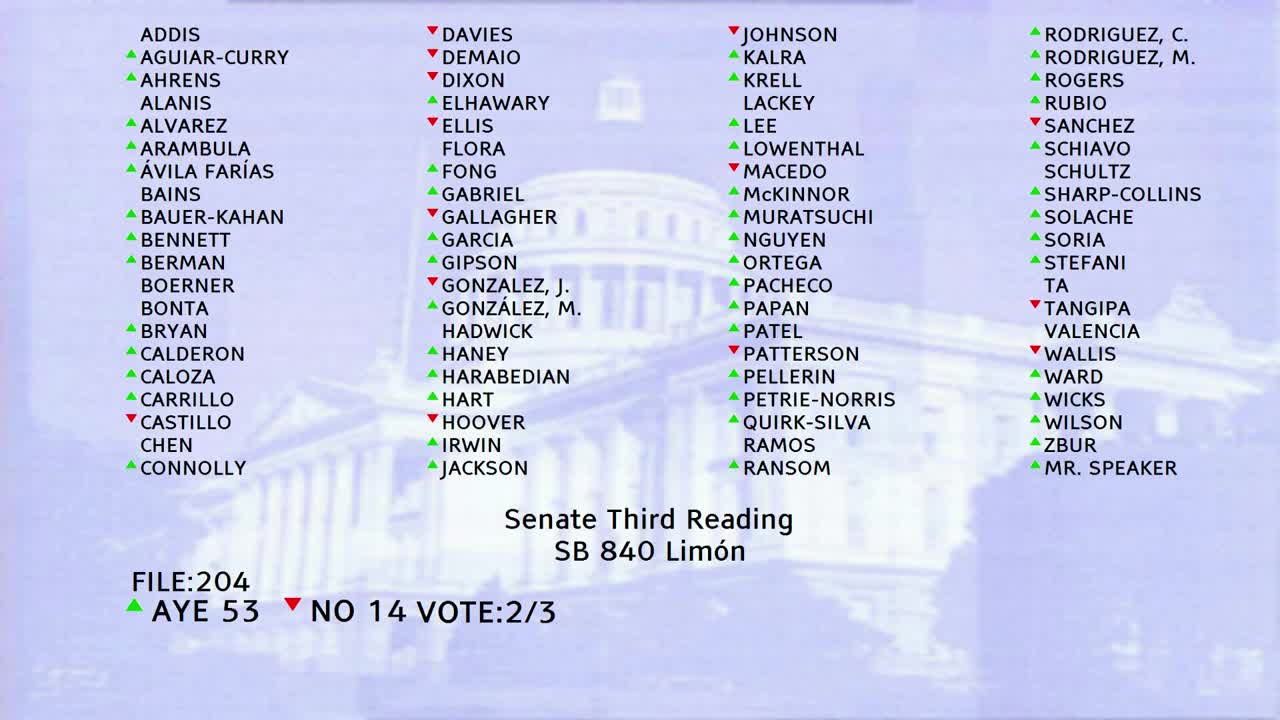 54SEC
Assembly Floor
 2MIN
Senate Floor
 34MIN
Senate Standing Committee on Revenue and Taxation
 35MIN
Senate Standing Committee on Business, Professions and Economic Development
 1MIN
Assembly Floor
 17MIN
Assembly Standing Committee on Revenue and Taxation
 18MIN
Assembly Standing Committee on Business and Professions
Bill Author

Bill Co-Author(s):