AB 812: Recall and resentencing: incarcerated firefighters.
- Session Year: 2025-2026
- House: Assembly
- Latest Version Date: 2025-10-13
Current Status:
Passed
(2025-10-13: Chaptered by Secretary of State - Chapter 712, Statutes of 2025.)
Introduced
In Committee
Awaiting First Chamber Vote
Passed First Chamber
In Committee
Awaiting Second Chamber Vote
Passed Second Chamber
Enacted
Existing law authorizes a court, on its own motion within 120 days of the date of the defendants commitment, or at any time if the applicable sentencing laws have changed or upon a recommendation from the Secretary of the Department of Corrections and Rehabilitation, the Board of Parole Hearings, or the district attorney, to recall a defendants sentence and resentence that defendant to a lesser sentence.
Existing law establishes the California Conservation Camps for the purpose of having incarcerated persons work on projects supervised by the Department of Forestry and Fire Protection. Existing law requires the department to utilize incarcerated persons assigned to conservation camps in performing fire prevention, fire control, and other work at the department.
This bill would require the Department of Corrections and Rehabilitation, no later than July 1, 2027, to promulgate regulations, as specified, regarding the referral of participants in the California Conservation Camp program and incarcerated persons working at institutional firehouses for resentencing.
Existing law authorizes a court, on its own motion within 120 days of the date of the defendants commitment, or at any time if the applicable sentencing laws have changed or upon a recommendation from the Secretary of the Department of Corrections and Rehabilitation, the Board of Parole Hearings, or the district attorney, to recall a defendants sentence and resentence that defendant to a lesser sentence.
Existing law establishes the California Conservation Camps for the purpose of having incarcerated persons work on projects supervised by the Department of Forestry and Fire Protection. Existing law requires the department to utilize incarcerated persons assigned to conservation camps in performing fire prevention, fire control, and other work at the department.
This bill would require the Department of Corrections and Rehabilitation, no later than July 1, 2026, 2027, to promulgate regulations, as specified, regarding the referral of participants in the California Conservation Camp program and incarcerated persons working at institutional firehouses for resentencing.
Existing law authorizes a court, on its own motion within 120 days of the date of the defendants commitment, or at any time if the applicable sentencing laws have changed or upon a recommendation from the Secretary of the Department of Corrections and Rehabilitation, the Board of Parole Hearings, or the district attorney, to recall a defendants sentence and resentence that defendant to a lesser sentence.
Existing law establishes the California Conservation Camps for the purpose of having incarcerated persons work on projects supervised by the Department of Forestry and Fire Protection. Existing law requires the department to utilize incarcerated persons assigned to conservation camps in performing fire prevention, fire control, and other work at the department.
This bill would require the Department of Corrections and Rehabilitation, no later than July 1, 2026, to promulgate regulations, as specified, regarding the referral of participants in the California Conservation Camp program and incarcerated persons working at institutional firehouses for resentencing.
Existing law authorizes a court, on its own motion within 120 days of the date of the defendants commitment, or at any time if the applicable sentencing laws have changed or upon a recommendation from the Secretary of the Department of Corrections and Rehabilitation, the Board of Parole Hearings, or the district attorney, to recall a defendants sentence and resentence that defendant to a lesser sentence.
Existing law establishes the California Conservation Camps for the purpose of having incarcerated persons work on projects supervised by the Department of Forestry and Fire Protection. Existing law requires the department to utilize incarcerated persons assigned to conservation camps in performing fire prevention, fire control, and other work at the department.
This bill would authorize an incarcerated firefighter to request recall and resentencing under these provisions. Upon receipt of a request, the bill would require the court to conduct a hearing to determine whether recall and resentencing would serve the interests of justice based on certain considerations, as specified. TheThis bill would additionally require the Department of Corrections and Rehabilitation Rehabilitation, no later than July 1, 2026, to promulgate regulations regulations, as specified, regarding the referral of incarcerated firefighters participants in the California Conservation Camp program and incarcerated persons working at institutional firehouses for resentencing.
Existing law authorizes a court, on its own motion within 120 days of the date of the defendants commitment, or at any time if the applicable sentencing laws have changed or upon a recommendation from the Secretary of the Department of Corrections and Rehabilitation, the Board of Parole Hearings, or the district attorney, to recall a defendants sentence and resentence that defendant to a lesser sentence.
Existing law establishes the California Conservation Camps for the purpose of having incarcerated persons work on projects supervised by the Department of Forestry and Fire Protection. Existing law requires the department to utilize incarcerated persons assigned to conservation camps in performing fire prevention, fire control, and other work at the department.
This bill would authorize the court to consider a recall and resentencing request from an incarcerated firefighter upon a recommendation from the department. an incarcerated firefighter to request recall and resentencing under these provisions. Upon receipt of a request, the bill would require the court to conduct a hearing to determine whether recall and resentencing would serve the interests of justice based on certain considerations, as specified. The bill would additionally require the Department of Corrections and Rehabilitation to promulgate regulations regarding the referral of incarcerated firefighters for resentencing.
Existing law authorizes a court, on its own motion within 120 days of the date of the defendants commitment, or at any time if the applicable sentencing laws have changed or upon a recommendation from the Secretary of the Department of Corrections and Rehabilitation, the Board of Parole Hearings, or the district attorney, to recall a defendants sentence and resentence that defendant to a lesser sentence.
Existing law establishes the California Conservation Camps for the purpose of having incarcerated persons work on projects supervised by the Department of Forestry and Fire Protection. Existing law requires the department to utilize incarcerated persons assigned to conservation camps in performing fire prevention, fire control, and other work at the department.
This bill would authorize the court to consider a recall and resentencing request from an incarcerated firefighter upon a recommendation from the department. Upon receipt of a request, the bill would require the court to conduct a hearing to determine whether recall and resentencing would serve the interests of justice based on certain considerations, as specified.
The Legislature finds and declares all of the following:
(a)The Department of Corrections and Rehabilitation (CDCR), in cooperation with the Department of Forestry and Fire Protection and the Los Angeles County Fire Department, operates 35 conservation camps throughout California. All camps are minimum security facilities and staffed with correctional staff.
(b)The primary mission of the California Conservation Camp program is to support state, local, and federal government agencies as they respond to emergencies, including fires, floods, and other natural disasters.
(c)CDCR health care staff clear participants as physically and mentally fit for vigorous activity to participate in the program. Additionally, inmates, based on behavior in prison, have the lowest security classification. Inmates with more than eight years remaining on their sentence are ineligible to participate.
(d)The work is extraordinarily dangerous. Multiple inmates have died fighting fires.
(e)Hundreds of incarcerated firefighters worked, around the clock, to help slow the spread of the massive fires in January 2025 in Los Angeles County. These volunteer firefighters cut fire lines and removed fuel to slow the fire spread.
(f)According to the Secretary of the CDCR, Jeff Macomber, the incarcerated workers are an essential part of the states response and their commitment to protecting lives and property during these emergencies cannot be overstated.
SEC. 2.Section 1172.1 of the Penal Code is amended to read:1172.1.(a)(1)When a defendant, upon conviction for a felony offense, has been committed to the custody of the Secretary of the Department of Corrections and Rehabilitation or to the custody of the county correctional administrator pursuant to subdivision (h) of Section 1170, the court may, on its own motion, within 120 days of the date of commitment or at any time if the applicable sentencing laws at the time of original sentencing are subsequently changed by new statutory authority or case law, at any time upon the recommendation of the secretary or the Board of Parole Hearings in the case of a defendant incarcerated in state prison, the county correctional administrator in the case of a defendant incarcerated in county jail, the district attorney of the county in which the defendant was sentenced, or the Attorney General if the Department of Justice originally prosecuted the case, recall the sentence and commitment previously ordered and resentence the defendant in the same manner as if they had not previously been sentenced, whether or not the defendant is still in custody, and provided the new sentence, if any, is no greater than the initial sentence. Recall and resentencing under this section may be initiated by the original sentencing judge, a judge designated by the presiding judge, or any judge with jurisdiction in the case.
(2)The court, in recalling and resentencing pursuant to this subdivision, shall apply the sentencing rules of the Judicial Council and apply any changes in law that reduce sentences or provide for judicial discretion so as to eliminate disparity of sentences and to promote uniformity of sentencing.
(3)The resentencing court may, in the interest of justice and regardless of whether the original sentence was imposed after a trial or plea agreement, do the following:
(A)Reduce a defendants term of imprisonment by modifying the sentence.
(B)Vacate the defendants conviction and impose judgment on any necessarily included lesser offense or lesser related offense, whether or not that offense was charged in the original pleading, with the concurrence of the defendant, and then resentence the defendant to a reduced term of imprisonment.
(4)If the court has recalled the sentence on its own motion, the court shall not impose a judgment on any necessarily included lesser offense or lesser related offense if the conviction was a result of a plea bargain without the concurrence of both the defendant and the district attorney of the county in which the defendant was sentenced, or the Attorney General if the Department of Justice originally prosecuted the case.
(5)In recalling and resentencing pursuant to this provision, the court shall consider postconviction factors, including, but not limited to, the disciplinary record and record of rehabilitation of the defendant while incarcerated, evidence that reflects whether age, time served, and diminished physical condition, if any, have reduced the defendants risk for future violence, and evidence that reflects that circumstances have changed since the original sentencing so that continued incarceration is no longer in the interest of justice. Evidence that the defendants incarceration is no longer in the interest of justice includes, but is not limited to, evidence that the defendants constitutional rights were violated in the proceedings related to the conviction or sentence at issue, and any other evidence that undermines the integrity of the underlying conviction or sentence. The court shall consider if the defendant has experienced psychological, physical, or childhood trauma, including, but not limited to, abuse, neglect, exploitation, or sexual violence, if the defendant was a victim of intimate partner violence or human trafficking prior to or at the time of the commission of the offense, or if the defendant is a youth or was a youth as defined under subdivision (b) of Section 1016.7 at the time of the commission of the offense, and whether those circumstances were a contributing factor in the commission of the offense.
(6)Credit shall be given for time served.
(7)The court shall state on the record the reasons for its decision to grant or deny recall and resentencing.
(8)(A)Resentencing may be granted without a hearing upon stipulation by the parties.
(B)Notwithstanding subparagraph (A), if a victim of a crime wishes to be heard pursuant to the provisions of Section 28 of Article I of the California Constitution, or pursuant to any other provision of law applicable to the hearing, the victim shall notify the prosecution of their request to be heard within 15 days of being notified that resentencing is being sought and the court shall provide an opportunity for the victim to be heard.
(9)Resentencing shall not be denied, nor a stipulation rejected, without a hearing where the parties have an opportunity to address the basis for the intended denial or rejection. If a hearing is held, the defendant may appear remotely and the court may conduct the hearing through the use of remote technology, unless counsel requests their physical presence in court.
(b)If a resentencing request pursuant to subdivision (a) is from the Secretary of the Department of Corrections and Rehabilitation, the Board of Parole Hearings, a county correctional administrator, a district attorney, or the Attorney General, all of the following shall apply:
(1)The court shall provide notice to the defendant and set a status conference within 30 days after the date that the court received the request. The courts order setting the conference shall also appoint counsel to represent the defendant.
(2)There shall be a presumption favoring recall and resentencing of the defendant, which may only be overcome if a court finds the defendant currently poses an unreasonable risk of danger to public safety, as defined in subdivision (c) of Section 1170.18.
(c)A defendant is not entitled to file a petition seeking relief from the court under this section. If a defendant requests consideration for relief under this section, the court is not required to respond.
(d)After ruling on a referral authorized by this section, the court shall advise the defendant of their right to appeal and the necessary steps and time for taking an appeal.
(e)In recognition of the vital role that incarcerated persons have played protecting the people and property of California from wildfires, the Department of Corrections and Rehabilitation shall, by no later than July 1, 2027, promulgate regulations regarding the referral for resentencing of current participants in the California Conservation Camp program, former participants in the California Conservation Camp program who are still in custody, and incarcerated persons working at institutional firehouses that utilize the existing extraordinary conduct referral process and establish all of the following:
(1)Authorize the referral for resentencing of eligible incarcerated persons who have two or more years remaining to serve in state prison on their sentence.
(2)Prohibit the exclusion of individuals from resentencing consideration based solely on past or pending parole hearing dates.
(3)Prohibit the imposition of a minimum time served requirement as a condition for resentencing consideration.
The Legislature finds and declares all of the following:
(a)The Department of Corrections and Rehabilitation (CDCR), in cooperation with the Department of Forestry and Fire Protection and the Los Angeles County Fire Department, operates 35 conservation camps throughout California. All camps are minimum security facilities and staffed with correctional staff.
(b)The primary mission of the California Conservation Camp program is to support state, local, and federal government agencies as they respond to emergencies, including fires, floods, and other natural disasters.
(c)CDCR health care staff clear participants as physically and mentally fit for vigorous activity to participate in the program. Additionally, inmates, based on behavior in prison, have the lowest security classification. Inmates with more than eight years remaining on their sentence are ineligible to participate.
(d)The work is extraordinarily dangerous. Multiple inmates have died fighting fires.
(e)Hundreds of incarcerated firefighters worked, around the clock, to help slow the spread of the massive fires in January 2025 in Los Angeles County. These volunteer firefighters cut fire lines and removed fuel to slow the fire spread.
(f)According to the Secretary of the CDCR, Jeff Macomber, the incarcerated workers are an essential part of the states response and their commitment to protecting lives and property during these emergencies cannot be overstated.
SEC. 2.Section 1172.1 of the Penal Code is amended to read:1172.1.(a)(1)When a defendant, upon conviction for a felony offense, has been committed to the custody of the Secretary of the Department of Corrections and Rehabilitation or to the custody of the county correctional administrator pursuant to subdivision (h) of Section 1170, the court may, on its own motion, within 120 days of the date of commitment or at any time if the applicable sentencing laws at the time of original sentencing are subsequently changed by new statutory authority or case law, at any time upon the recommendation of the secretary or the Board of Parole Hearings in the case of a defendant incarcerated in state prison, the county correctional administrator in the case of a defendant incarcerated in county jail, the district attorney of the county in which the defendant was sentenced, or the Attorney General if the Department of Justice originally prosecuted the case, recall the sentence and commitment previously ordered and resentence the defendant in the same manner as if they had not previously been sentenced, whether or not the defendant is still in custody, and provided the new sentence, if any, is no greater than the initial sentence. Recall and resentencing under this section may be initiated by the original sentencing judge, a judge designated by the presiding judge, or any judge with jurisdiction in the case.
(2)The court, in recalling and resentencing under pursuant to this subdivision, shall apply the sentencing rules of the Judicial Council and apply any changes in law that reduce sentences or provide for judicial discretion so as to eliminate disparity of sentences and to promote uniformity of sentencing.
(3)The resentencing court may, in the interest of justice and regardless of whether the original sentence was imposed after a trial or plea agreement, do the following:
(A)Reduce a defendants term of imprisonment by modifying the sentence.
(B)Vacate the defendants conviction and impose judgment on any necessarily included lesser offense or lesser related offense, whether or not that offense was charged in the original pleading, with the concurrence of the defendant, and then resentence the defendant to a reduced term of imprisonment.
(4)If the court has recalled the sentence on its own motion, the court shall not impose a judgment on any necessarily included lesser offense or lesser related offense if the conviction was a result of a plea bargain without the concurrence of both the defendant and the district attorney of the county in which the defendant was sentenced, or the Attorney General if the Department of Justice originally prosecuted the case.
(5)In recalling and resentencing pursuant to this provision, the court shall consider postconviction factors, including, but not limited to, the disciplinary record and record of rehabilitation of the defendant while incarcerated, evidence that reflects whether age, time served, and diminished physical condition, if any, have reduced the defendants risk for future violence, and evidence that reflects that circumstances have changed since the original sentencing so that continued incarceration is no longer in the interest of justice. Evidence that the defendants incarceration is no longer in the interest of justice includes, but is not limited to, evidence that the defendants constitutional rights were violated in the proceedings related to the conviction or sentence at issue, and any other evidence that undermines the integrity of the underlying conviction or sentence. The court shall consider if the defendant has experienced psychological, physical, or childhood trauma, including, but not limited to, abuse, neglect, exploitation, or sexual violence, if the defendant was a victim of intimate partner violence or human trafficking prior to or at the time of the commission of the offense, or if the defendant is a youth or was a youth as defined under subdivision (b) of Section 1016.7 at the time of the commission of the offense, and whether those circumstances were a contributing factor in the commission of the offense.
(6)Credit shall be given for time served.
(7)The court shall state on the record the reasons for its decision to grant or deny recall and resentencing.
(8)(A)Resentencing may be granted without a hearing upon stipulation by the parties.
(B)Notwithstanding subparagraph (A), if a victim of a crime wishes to be heard pursuant to the provisions of Section 28 of Article I of the California Constitution, or pursuant to any other provision of law applicable to the hearing, the victim shall notify the prosecution of their request to be heard within 15 days of being notified that resentencing is being sought and the court shall provide an opportunity for the victim to be heard.
(9)Resentencing shall not be denied, nor a stipulation rejected, without a hearing where the parties have an opportunity to address the basis for the intended denial or rejection. If a hearing is held, the defendant may appear remotely and the court may conduct the hearing through the use of remote technology, unless counsel requests their physical presence in court.
(b)If a resentencing request pursuant to subdivision (a) is from the Secretary of the Department of Corrections and Rehabilitation, the Board of Parole Hearings, a county correctional administrator, a district attorney, or the Attorney General, all of the following shall apply:
(1)The court shall provide notice to the defendant and set a status conference within 30 days after the date that the court received the request. The courts order setting the conference shall also appoint counsel to represent the defendant.
(2)There shall be a presumption favoring recall and resentencing of the defendant, which may only be overcome if a court finds the defendant currently poses an unreasonable risk of danger to public safety, as defined in subdivision (c) of Section 1170.18.
(c)A defendant is not entitled to file a petition seeking relief from the court under this section. If a defendant requests consideration for relief under this section, the court is not required to respond.
(d)After ruling on a referral authorized by this section, the court shall advise the defendant of their right to appeal and the necessary steps and time for taking an appeal.
(e)In recognition of the vital role that incarcerated persons have played protecting the people and property of California from wildfires, the Department of Corrections and Rehabilitation shall, by no later than July 1, 2027, promulgate regulations regarding the referral for resentencing of current participants in the California Conservation Camp program, former participants in the California Conservation Camp program who are still in custody, and incarcerated persons working at institutional firehouses that utilize the existing extraordinary conduct referral process and establish all of the following:
(1)Authorize the referral for resentencing of eligible incarcerated persons who have two or more years remaining to serve in state prison on their sentence.
(2)Prohibit the exclusion of individuals from resentencing consideration based solely on past or pending parole hearing dates.
(3)Prohibit the imposition of a minimum time served requirement as a condition for resentencing consideration.
The Legislature finds and declares all of the following:
(a)The Department of Corrections and Rehabilitation (CDCR), in cooperation with the Department of Forestry and Fire Protection and the Los Angeles County Fire Department, operates 35 conservation camps throughout California. All camps are minimum security facilities and staffed with correctional staff.
(b)The primary mission of the California Conservation Camp program is to support state, local, and federal government agencies as they respond to emergencies, including fires, floods, and other natural disasters.
(c)CDCR health care staff clear participants as physically and mentally fit for vigorous activity to participate in the program. Additionally, inmates, based on behavior in prison, have the lowest security classification. Inmates with more than eight years remaining on their sentence are ineligible to participate.
(d)The work is extraordinarily dangerous. Multiple inmates have died fighting fires.
(e)Hundreds of incarcerated firefighters worked, around the clock, to help slow the spread of the massive fires in January 2025 in Los Angeles County. These volunteer firefighters cut fire lines and removed fuel to slow the fire spread.
(f)According to the Secretary of the CDCR, Jeff Macomber, the incarcerated workers are an essential part of the states response and their commitment to protecting lives and property during these emergencies cannot be overstated.
SEC. 2.Section 1172.1 of the Penal Code is amended to read:1172.1.(a)(1)When a defendant, upon conviction for a felony offense, has been committed to the custody of the Secretary of the Department of Corrections and Rehabilitation or to the custody of the county correctional administrator pursuant to subdivision (h) of Section 1170, the court may, on its own motion, within 120 days of the date of commitment or at any time if the applicable sentencing laws at the time of original sentencing are subsequently changed by new statutory authority or case law, at any time upon the recommendation of the secretary or the Board of Parole Hearings in the case of a defendant incarcerated in state prison, the county correctional administrator in the case of a defendant incarcerated in county jail, the district attorney of the county in which the defendant was sentenced, or the Attorney General if the Department of Justice originally prosecuted the case, recall the sentence and commitment previously ordered and resentence the defendant in the same manner as if they had not previously been sentenced, whether or not the defendant is still in custody, and provided the new sentence, if any, is no greater than the initial sentence. Recall and resentencing under this section may be initiated by the original sentencing judge, a judge designated by the presiding judge, or any judge with jurisdiction in the case.
(2)The court, in recalling and resentencing under this subdivision, shall apply the sentencing rules of the Judicial Council and apply any changes in law that reduce sentences or provide for judicial discretion so as to eliminate disparity of sentences and to promote uniformity of sentencing.
(3)The resentencing court may, in the interest of justice and regardless of whether the original sentence was imposed after a trial or plea agreement, do the following:
(A)Reduce a defendants term of imprisonment by modifying the sentence.
(B)Vacate the defendants conviction and impose judgment on any necessarily included lesser offense or lesser related offense, whether or not that offense was charged in the original pleading, with the concurrence of the defendant, and then resentence the defendant to a reduced term of imprisonment.
(4)If the court has recalled the sentence on its own motion, the court shall not impose a judgment on any necessarily included lesser offense or lesser related offense if the conviction was a result of a plea bargain without the concurrence of both the defendant and the district attorney of the county in which the defendant was sentenced, or the Attorney General if the Department of Justice originally prosecuted the case.
(5)In recalling and resentencing pursuant to this provision, the court shall consider postconviction factors, including, but not limited to, the disciplinary record and record of rehabilitation of the defendant while incarcerated, evidence that reflects whether age, time served, and diminished physical condition, if any, have reduced the defendants risk for future violence, and evidence that reflects that circumstances have changed since the original sentencing so that continued incarceration is no longer in the interest of justice. Evidence that the defendants incarceration is no longer in the interest of justice includes, but is not limited to, evidence that the defendants constitutional rights were violated in the proceedings related to the conviction or sentence at issue, and any other evidence that undermines the integrity of the underlying conviction or sentence. The court shall consider if the defendant has experienced psychological, physical, or childhood trauma, including, but not limited to, abuse, neglect, exploitation, or sexual violence, if the defendant was a victim of intimate partner violence or human trafficking prior to or at the time of the commission of the offense, or if the defendant is a youth or was a youth as defined under subdivision (b) of Section 1016.7 at the time of the commission of the offense, and whether those circumstances were a contributing factor in the commission of the offense.
(6)Credit shall be given for time served.
(7)The court shall state on the record the reasons for its decision to grant or deny recall and resentencing.
(8)(A)Resentencing may be granted without a hearing upon stipulation by the parties.
(B)Notwithstanding subparagraph (A), if a victim of a crime wishes to be heard pursuant to the provisions of Section 28 of Article I of the California Constitution, or pursuant to any other provision of law applicable to the hearing, the victim shall notify the prosecution of their request to be heard within 15 days of being notified that resentencing is being sought and the court shall provide an opportunity for the victim to be heard.
(9)Resentencing shall not be denied, nor a stipulation rejected, without a hearing where the parties have an opportunity to address the basis for the intended denial or rejection. If a hearing is held, the defendant may appear remotely and the court may conduct the hearing through the use of remote technology, unless counsel requests their physical presence in court.
(b)If a resentencing request pursuant to subdivision (a) is from the Secretary of the Department of Corrections and Rehabilitation, the Board of Parole Hearings, a county correctional administrator, a district attorney, or the Attorney General, all of the following shall apply:
(1)The court shall provide notice to the defendant and set a status conference within 30 days after the date that the court received the request. The courts order setting the conference shall also appoint counsel to represent the defendant.
(2)There shall be a presumption favoring recall and resentencing of the defendant, which may only be overcome if a court finds the defendant currently poses an unreasonable risk of danger to public safety, as defined in subdivision (c) of Section 1170.18.
(c)A defendant is not entitled to file a petition seeking relief from the court under this section. If a defendant requests consideration for relief under this section, the court is not required to respond.
(d)After ruling on a referral authorized by this section, the court shall advise the defendant of their right to appeal and the necessary steps and time for taking an appeal.
(e)In recognition of the vital role that incarcerated persons have played protecting the people and property of California from wildfires, the Department of Corrections and Rehabilitation shall, by no later than July 1, 2026, 2027, promulgate regulations regarding the referral for resentencing of current participants in the California Conservation Camp program, former participants in the California Conservation Camp program who are still in custody, and incarcerated persons working at institutional firehouses that establish all of the following: that utilize the existing extraordinary conduct referral process and establish all of the following:
(1)Authorize the referral for resentencing of eligible incarcerated persons who have two or more years remaining to serve in state prison on their sentence.
(2)Prohibit the exclusion of individuals from resentencing consideration based solely on past or pending parole hearing dates.
(3)Prohibit the imposition of a minimum time served requirement as a condition for resentencing consideration.
The Legislature finds and declares all of the following:
(a)The Department of Corrections and Rehabilitation (CDCR), in cooperation with the Department of Forestry and Fire Protection and the Los Angeles County Fire Department, operates 35 conservation camps throughout California. All camps are minimum security facilities and staffed with correctional staff.
(b)The primary mission of the California Conservation Camp program is to support state, local, and federal government agencies as they respond to emergencies, including fires, floods, and other natural disasters.
(c)CDCR health care staff clear participants as physically and mentally fit for vigorous activity to participate in the program. Additionally, inmates, based on behavior in prison, have the lowest security classification. Inmates with more than eight years remaining on their sentence are ineligible to participate.
(d)The work is extraordinarily dangerous. Multiple inmates have died fighting fires.
(e)Hundreds of incarcerated firefighters worked, around the clock, to help slow the spread of the massive fires in January 2025 in Los Angeles County. These volunteer firefighters cut fire lines and removed fuel to slow the fire spread.
(f)According to the Secretary of the CDCR, Jeff Macomber, the incarcerated workers are an essential part of the states response and their commitment to protecting lives and property during these emergencies cannot be overstated.
SEC. 2.Section 1172.1 of the Penal Code is amended to read:1172.1.(a)(1)When a defendant, upon conviction for a felony offense, has been committed to the custody of the Secretary of the Department of Corrections and Rehabilitation or to the custody of the county correctional administrator pursuant to subdivision (h) of Section 1170, the court may, on its own motion, within 120 days of the date of commitment or at any time if the applicable sentencing laws at the time of original sentencing are subsequently changed by new statutory authority or case law, at any time upon the recommendation of the secretary or the Board of Parole Hearings in the case of a defendant incarcerated in state prison, the county correctional administrator in the case of a defendant incarcerated in county jail, the district attorney of the county in which the defendant was sentenced, or the Attorney General if the Department of Justice originally prosecuted the case, recall the sentence and commitment previously ordered and resentence the defendant in the same manner as if they had not previously been sentenced, whether or not the defendant is still in custody, and provided the new sentence, if any, is no greater than the initial sentence. Recall and resentencing under this section may be initiated by the original sentencing judge, a judge designated by the presiding judge, or any judge with jurisdiction in the case.
(2)The court, in recalling and resentencing under this subdivision, shall apply the sentencing rules of the Judicial Council and apply any changes in law that reduce sentences or provide for judicial discretion so as to eliminate disparity of sentences and to promote uniformity of sentencing.
(3)The resentencing court may, in the interest of justice and regardless of whether the original sentence was imposed after a trial or plea agreement, do the following:
(A)Reduce a defendants term of imprisonment by modifying the sentence.
(B)Vacate the defendants conviction and impose judgment on any necessarily included lesser offense or lesser related offense, whether or not that offense was charged in the original pleading, with the concurrence of the defendant, and then resentence the defendant to a reduced term of imprisonment.
(4)If the court has recalled the sentence on its own motion, the court shall not impose a judgment on any necessarily included lesser offense or lesser related offense if the conviction was a result of a plea bargain without the concurrence of both the defendant and the district attorney of the county in which the defendant was sentenced, or the Attorney General if the Department of Justice originally prosecuted the case.
(5)In recalling and resentencing pursuant to this provision, the court shall consider postconviction factors, including, but not limited to, the disciplinary record and record of rehabilitation of the defendant while incarcerated, evidence that reflects whether age, time served, and diminished physical condition, if any, have reduced the defendants risk for future violence, and evidence that reflects that circumstances have changed since the original sentencing so that continued incarceration is no longer in the interest of justice. Evidence that the defendants incarceration is no longer in the interest of justice includes, but is not limited to, evidence that the defendants constitutional rights were violated in the proceedings related to the conviction or sentence at issue, and any other evidence that undermines the integrity of the underlying conviction or sentence. The court shall consider if the defendant has experienced psychological, physical, or childhood trauma, including, but not limited to, abuse, neglect, exploitation, or sexual violence, if the defendant was a victim of intimate partner violence or human trafficking prior to or at the time of the commission of the offense, or if the defendant is a youth or was a youth as defined under subdivision (b) of Section 1016.7 at the time of the commission of the offense, and whether those circumstances were a contributing factor in the commission of the offense.
(6)Credit shall be given for time served.
(7)The court shall state on the record the reasons for its decision to grant or deny recall and resentencing.
(8)(A)Resentencing may be granted without a hearing upon stipulation by the parties.
(B)Notwithstanding subparagraph (A), if a victim of a crime wishes to be heard pursuant to the provisions of Section 28 of Article I of the California Constitution, or pursuant to any other provision of law applicable to the hearing, the victim shall notify the prosecution of their request to be heard within 15 days of being notified that resentencing is being sought and the court shall provide an opportunity for the victim to be heard.
(9)Resentencing shall not be denied, nor a stipulation rejected, without a hearing where the parties have an opportunity to address the basis for the intended denial or rejection. If a hearing is held, the defendant may appear remotely and the court may conduct the hearing through the use of remote technology, unless counsel requests their physical presence in court.
(b)If a resentencing request pursuant to subdivision (a) is from the Secretary of the Department of Corrections and Rehabilitation, the Board of Parole Hearings, a county correctional administrator, a district attorney, or the Attorney General, all of the following shall apply:
(1)The court shall provide notice to the defendant and set a status conference within 30 days after the date that the court received the request. The courts order setting the conference shall also appoint counsel to represent the defendant.
(2)There shall be a presumption favoring recall and resentencing of the defendant, which may only be overcome if a court finds the defendant currently poses an unreasonable risk of danger to public safety, as defined in subdivision (c) of Section 1170.18.
(c)A defendant is not entitled to file a petition seeking relief from the court under this section. If a defendant requests consideration for relief under this section, the court is not required to respond.
(d)After ruling on a referral authorized by this section, the court shall advise the defendant of their right to appeal and the necessary steps and time for taking an appeal.
(e)In recognition of the vital role that incarcerated persons have played protecting the people and property of California from wildfires, the Department of Corrections and Rehabilitation shall shall, by no later than July 1, 2026, promulgate regulations regarding the referral for resentencing of current and former participants in the California Conservation Camp program participants in the California Conservation Camp program, former participants in the California Conservation Camp program who are still in custody, and incarcerated persons working at institutional firehouses for resentencing no later than July 1, 2026, firehouses that establish all of the following:
(1)Authorize the referral for resentencing of eligible incarcerated persons who have two or more years remaining to serve in state prison on their sentence.
(2)Prohibit the exclusion of individuals from resentencing consideration based solely on past or pending parole hearing dates.
(3)Prohibit the imposition of a minimum time served requirement as a condition for resentencing consideration.
The Legislature finds and declares all of the following:
(a)The Department of Corrections and Rehabilitation (CDCR), in cooperation with the Department of Forestry and Fire Protection and the Los Angeles County Fire Department, operates 35 conservation camps throughout California. All camps are minimum security facilities and staffed with correctional staff.
(b)The primary mission of the California Conservation Camp program is to support state, local, and federal government agencies as they respond to emergencies, including fires, floods, and other natural disasters.
(c)CDCR health care staff clear participants as physically and mentally fit for vigorous activity to participate in the program. Additionally, inmates, based on behavior in prison, have the lowest-security lowest security classification. Inmates with more than eight years remaining on their sentence are ineligible to participate.
(d)The work is extraordinarily dangerous. Multiple inmates have died fighting fires.
(e)Hundreds of incarcerated firefighters worked, around the clock, to help slow the spread of the massive fires in January 2025 in Los Angeles County. These volunteer firefighters cut fire lines and removed fuel to slow the fire spread.
(f)According to the Secretary of the CDCR, Jeff Macomber, the incarcerated workers are an essential part of the states response and their commitment to protecting lives and property during these emergencies cannot be overstated.
SEC. 2.Section 1172.1 of the Penal Code is amended to read:1172.1.(a)(1)When a defendant, upon conviction for a felony offense, has been committed to the custody of the Secretary of the Department of Corrections and Rehabilitation or to the custody of the county correctional administrator pursuant to subdivision (h) of Section 1170, the court may, on its own motion, within 120 days of the date of commitment or at any time if the applicable sentencing laws at the time of original sentencing are subsequently changed by new statutory authority or case law, at any time upon the recommendation of the secretary or the Board of Parole Hearings in the case of a defendant incarcerated in state prison, the county correctional administrator in the case of a defendant incarcerated in county jail, the district attorney of the county in which the defendant was sentenced, or the Attorney General if the Department of Justice originally prosecuted the case, recall the sentence and commitment previously ordered and resentence the defendant in the same manner as if they had not previously been sentenced, whether or not the defendant is still in custody, and provided the new sentence, if any, is no greater than the initial sentence. Recall and resentencing under this section may be initiated by the original sentencing judge, a judge designated by the presiding judge, or any judge with jurisdiction in the case.
(2)The court, in recalling and resentencing under this subdivision, shall apply the sentencing rules of the Judicial Council and apply any changes in law that reduce sentences or provide for judicial discretion so as to eliminate disparity of sentences and to promote uniformity of sentencing.
(3)The resentencing court may, in the interest of justice and regardless of whether the original sentence was imposed after a trial or plea agreement, do the following:
(A)Reduce a defendants term of imprisonment by modifying the sentence.
(B)Vacate the defendants conviction and impose judgment on any necessarily included lesser offense or lesser related offense, whether or not that offense was charged in the original pleading, with the concurrence of the defendant, and then resentence the defendant to a reduced term of imprisonment.
(4)If the court has recalled the sentence on its own motion, the court shall not impose a judgment on any necessarily included lesser offense or lesser related offense if the conviction was a result of a plea bargain without the concurrence of both the defendant and the district attorney of the county in which the defendant was sentenced, or the Attorney General if the Department of Justice originally prosecuted the case.
(5)In recalling and resentencing pursuant to this provision, the court shall consider postconviction factors, including, but not limited to, the disciplinary record and record of rehabilitation of the defendant while incarcerated, evidence that reflects whether age, time served, and diminished physical condition, if any, have reduced the defendants risk for future violence, and evidence that reflects that circumstances have changed since the original sentencing so that continued incarceration is no longer in the interest of justice. Evidence that the defendants incarceration is no longer in the interest of justice includes, but is not limited to, evidence that the defendants constitutional rights were violated in the proceedings related to the conviction or sentence at issue, and any other evidence that undermines the integrity of the underlying conviction or sentence. The court shall consider if the defendant has experienced psychological, physical, or childhood trauma, including, but not limited to, abuse, neglect, exploitation, or sexual violence, if the defendant was a victim of intimate partner violence or human trafficking prior to or at the time of the commission of the offense, or if the defendant is a youth or was a youth as defined under subdivision (b) of Section 1016.7 at the time of the commission of the offense, and whether those circumstances were a contributing factor in the commission of the offense.
(6)Credit shall be given for time served.
(7)The court shall state on the record the reasons for its decision to grant or deny recall and resentencing.
(8)(A)Resentencing may be granted without a hearing upon stipulation by the parties.
(B)Notwithstanding subparagraph (A), if a victim of a crime wishes to be heard pursuant to the provisions of Section 28 of Article I of the California Constitution, or pursuant to any other provision of law applicable to the hearing, the victim shall notify the prosecution of their request to be heard within 15 days of being notified that resentencing is being sought and the court shall provide an opportunity for the victim to be heard.
(9)Resentencing shall not be denied, nor a stipulation rejected, without a hearing where the parties have an opportunity to address the basis for the intended denial or rejection. If a hearing is held, the defendant may appear remotely and the court may conduct the hearing through the use of remote technology, unless counsel requests their physical presence in court.
(b)If a resentencing request pursuant to subdivision (a) is from the Secretary of the Department of Corrections and Rehabilitation, the Board of Parole Hearings, a county correctional administrator, a district attorney, or the Attorney General, all of the following shall apply:
(1)The court shall provide notice to the defendant and set a status conference within 30 days after the date that the court received the request. The courts order setting the conference shall also appoint counsel to represent the defendant.
(2)There shall be a presumption favoring recall and resentencing of the defendant, which may only be overcome if a court finds the defendant currently poses an unreasonable risk of danger to public safety, as defined in subdivision (c) of Section 1170.18.
(c)A defendant is not entitled to file a petition seeking relief from the court under this section. If a defendant requests consideration for relief under this section, the court is not required to respond.
(d)After ruling on a referral authorized by this section, the court shall advise the defendant of their right to appeal and the necessary steps and time for taking an appeal.
(e)In recognition of the vital role that incarcerated persons have played protecting the people and property of California from wildfires, the Department of Corrections and Rehabilitation shall promulgate regulations regarding the referral of incarcerated firefighters for resentencing. current and former participants in the California Conservation Camp program and incarcerated persons working at institutional firehouses for resentencing no later than July 1, 2026, that establish all of the following:
(1)Authorize the referral for resentencing of eligible incarcerated persons who have two or more years remaining to serve in state prison on their sentence.
(2)Prohibit the exclusion of individuals from resentencing consideration based solely on past or pending parole hearing dates.
(3)Prohibit the imposition of a minimum time served requirement as a condition for resentencing consideration.
(f)Notwithstanding subdivision (c), an incarcerated firefighter may request relief pursuant to subdivision (a). Upon receipt of a request, a court shall conduct a hearing to determine if recalling and resentencing, pursuant to this section, serves the interests of justice. In making its determination, in addition to the postconviction factors listed in paragraph (5) of subdivision (a), the court shall consider an incarcerated persons emergency service during a natural disaster.The Legislature finds and declares all of the following:
(a)The Department of Corrections and Rehabilitation (CDCR), in cooperation with the Department of Forestry and Fire Protection and the Los Angeles County Fire Department, operates 35 conservation camps throughout California. All camps are minimum security facilities and staffed with correctional staff.
(b)The primary mission of the California Conservation Camp program is to support state, local, and federal government agencies as they respond to emergencies, including fires, floods, and other natural disasters.
(c)CDCR health care staff clear participants as physically and mentally fit for vigorous activity to participate in the program. Additionally, inmates, based on behavior in prison, have the lowest-security classification. Inmates with more than eight years remaining on their sentence are ineligible to participate.
(d)The work is extraordinarily dangerous. Multiple inmates have died fighting fires.
(e)Hundreds of incarcerated firefighters worked, around the clock, to help slow the spread of the massive fires in January 2025 in Los Angeles County. These volunteer firefighters cut fire lines and removed fuel to slow the fire spread.
(f)According to the Secretary of the CDCR, Jeff Macomber, the incarcerated workers are an essential part of the states response and their commitment to protecting lives and property during these emergencies cannot be overstated.
SEC. 2.Section 1172.1 of the Penal Code is amended to read:1172.1.(a)(1)When a defendant, upon conviction for a felony offense, has been committed to the custody of the Secretary of the Department of Corrections and Rehabilitation or to the custody of the county correctional administrator pursuant to subdivision (h) of Section 1170, the court may, on its own motion, within 120 days of the date of commitment or at any time if the applicable sentencing laws at the time of original sentencing are subsequently changed by new statutory authority or case law, at any time upon the recommendation of the secretary or the Board of Parole Hearings in the case of a defendant incarcerated in state prison, the county correctional administrator in the case of a defendant incarcerated in county jail, the district attorney of the county in which the defendant was sentenced, the Department of Forestry and Fire Protection for an incarcerated firefighter consistent with subdivision (e), or the Attorney General if the Department of Justice originally prosecuted the case, recall the sentence and commitment previously ordered and resentence the defendant in the same manner as if they had not previously been sentenced, whether or not the defendant is still in custody, and provided the new sentence, if any, is no greater than the initial sentence. Recall and resentencing under this section may be initiated by the original sentencing judge, a judge designated by the presiding judge, or any judge with jurisdiction in the case.
(2)The court, in recalling and resentencing under this subdivision, shall apply the sentencing rules of the Judicial Council and apply any changes in law that reduce sentences or provide for judicial discretion so as to eliminate disparity of sentences and to promote uniformity of sentencing.
(3)The resentencing court may, in the interest of justice and regardless of whether the original sentence was imposed after a trial or plea agreement, do the following:
(A)Reduce a defendants term of imprisonment by modifying the sentence.
(B)Vacate the defendants conviction and impose judgment on any necessarily included lesser offense or lesser related offense, whether or not that offense was charged in the original pleading, with the concurrence of the defendant, and then resentence the defendant to a reduced term of imprisonment.
(4)If the court has recalled the sentence on its own motion, the court shall not impose a judgment on any necessarily included lesser offense or lesser related offense if the conviction was a result of a plea bargain without the concurrence of both the defendant and the district attorney of the county in which the defendant was sentenced, or the Attorney General if the Department of Justice originally prosecuted the case.
(5)In recalling and resentencing pursuant to this provision, the court shall consider postconviction factors, including, but not limited to, the disciplinary record and record of rehabilitation of the defendant while incarcerated, evidence that reflects whether age, time served, and diminished physical condition, if any, have reduced the defendants risk for future violence, and evidence that reflects that circumstances have changed since the original sentencing so that continued incarceration is no longer in the interest of justice. Evidence that the defendants incarceration is no longer in the interest of justice includes, but is not limited to, evidence that the defendants constitutional rights were violated in the proceedings related to the conviction or sentence at issue, and any other evidence that undermines the integrity of the underlying conviction or sentence. The court shall consider if the defendant has experienced psychological, physical, or childhood trauma, including, but not limited to, abuse, neglect, exploitation, or sexual violence, if the defendant was a victim of intimate partner violence or human trafficking prior to or at the time of the commission of the offense, or if the defendant is a youth or was a youth as defined under subdivision (b) of Section 1016.7 at the time of the commission of the offense, and whether those circumstances were a contributing factor in the commission of the offense.
(6)Credit shall be given for time served.
(7)The court shall state on the record the reasons for its decision to grant or deny recall and resentencing.
(8)(A)Resentencing may be granted without a hearing upon stipulation by the parties.
(B)Notwithstanding subparagraph (A), if a victim of a crime wishes to be heard pursuant to the provisions of Section 28 of Article I of the California Constitution, or pursuant to any other provision of law applicable to the hearing, the victim shall notify the prosecution of their request to be heard within 15 days of being notified that resentencing is being sought and the court shall provide an opportunity for the victim to be heard.
(9)Resentencing shall not be denied, nor a stipulation rejected, without a hearing where the parties have an opportunity to address the basis for the intended denial or rejection. If a hearing is held, the defendant may appear remotely and the court may conduct the hearing through the use of remote technology, unless counsel requests their physical presence in court.
(b)If a resentencing request pursuant to subdivision (a) is from the Secretary of the Department of Corrections and Rehabilitation, the Board of Parole Hearings, a county correctional administrator, a district attorney, or the Attorney General, all of the following shall apply:
(1)The court shall provide notice to the defendant and set a status conference within 30 days after the date that the court received the request. The courts order setting the conference shall also appoint counsel to represent the defendant.
(2)There shall be a presumption favoring recall and resentencing of the defendant, which may only be overcome if a court finds the defendant currently poses an unreasonable risk of danger to public safety, as defined in subdivision (c) of Section 1170.18.
(c)A defendant is not entitled to file a petition seeking relief from the court under this section. If a defendant requests consideration for relief under this section, the court is not required to respond.
(d)After ruling on a referral authorized by this section, the court shall advise the defendant of their right to appeal and the necessary steps and time for taking an appeal.
(e)In recognition of the vital role that incarcerated persons have played protecting the people and property of California from wildfires, an the Department of Corrections and Rehabilitation shall promulgate regulations regarding the referral of incarcerated firefighters for resentencing.
(f)Notwithstanding subdivision (c), an incarcerated firefighter may request relief pursuant to subdivision (a). Upon receipt of a request, a court shall conduct a hearing to determine if recalling and resentencing, pursuant to this section, serves the interests of justice. In making its determination, in addition to the postconviction factors listed in paragraph (5) of subdivision (a), the court shall consider an incarcerated persons emergency service during a natural disaster.
The Legislature finds and declares all of the following:
(a)The Department of Corrections and Rehabilitation (CDCR), in cooperation with the Department of Forestry and Fire Protection and the Los Angeles County Fire Department, operates 35 conservation camps throughout California. All camps are minimum security facilities and staffed with correctional staff.
(b)The primary mission of the California Conservation Camp program is to support state, local, and federal government agencies as they respond to emergencies, including fires, floods, and other natural disasters.
(c)CDCR health care staff clear participants as physically and mentally fit for vigorous activity to participate in the program. Additionally, inmates, based on behavior in prison, have the lowest-security classification. Inmates with more than eight years remaining on their sentence are ineligible to participate.
(d)The work is extraordinarily dangerous. Multiple inmates have died fighting fires.
(e)Hundreds of incarcerated firefighters worked, around the clock, to help slow the spread of the massive fires in January 2025 in Los Angeles County. These volunteer firefighters cut fire lines and removed fuel to slow the fire spread.
(f)According to the Secretary of the CDCR, Jeff Macomber, the incarcerated workers are an essential part of the states response and their commitment to protecting lives and property during these emergencies cannot be overstated.
SEC. 2.Section 1172.1 of the Penal Code is amended to read:1172.1.(a)(1)When a defendant, upon conviction for a felony offense, has been committed to the custody of the Secretary of the Department of Corrections and Rehabilitation or to the custody of the county correctional administrator pursuant to subdivision (h) of Section 1170, the court may, on its own motion, within 120 days of the date of commitment or at any time if the applicable sentencing laws at the time of original sentencing are subsequently changed by new statutory authority or case law, at any time upon the recommendation of the secretary or the Board of Parole Hearings in the case of a defendant incarcerated in state prison, the county correctional administrator in the case of a defendant incarcerated in county jail, the district attorney of the county in which the defendant was sentenced, the Department of Forestry and Fire Protection for an incarcerated firefighter consistent with subdivision (e), or the Attorney General if the Department of Justice originally prosecuted the case, recall the sentence and commitment previously ordered and resentence the defendant in the same manner as if they had not previously been sentenced, whether or not the defendant is still in custody, and provided the new sentence, if any, is no greater than the initial sentence. Recall and resentencing under this section may be initiated by the original sentencing judge, a judge designated by the presiding judge, or any judge with jurisdiction in the case.
(2)The court, in recalling and resentencing under this subdivision, shall apply the sentencing rules of the Judicial Council and apply any changes in law that reduce sentences or provide for judicial discretion so as to eliminate disparity of sentences and to promote uniformity of sentencing.
(3)The resentencing court may, in the interest of justice and regardless of whether the original sentence was imposed after a trial or plea agreement, do the following:
(A) Reduce a defendants term of imprisonment by modifying the sentence.
(B)Vacate the defendants conviction and impose judgment on any necessarily included lesser offense or lesser related offense, whether or not that offense was charged in the original pleading, with the concurrence of the defendant, and then resentence the defendant to a reduced term of imprisonment.
(4)If the court has recalled the sentence on its own motion, the court shall not impose a judgment on any necessarily included lesser offense or lesser related offense if the conviction was a result of a plea bargain without the concurrence of both the defendant and the district attorney of the county in which the defendant was sentenced, or the Attorney General if the Department of Justice originally prosecuted the case.
(5)In recalling and resentencing pursuant to this provision, the court shall consider postconviction factors, including, but not limited to, the disciplinary record and record of rehabilitation of the defendant while incarcerated, evidence that reflects whether age, time served, and diminished physical condition, if any, have reduced the defendants risk for future violence, and evidence that reflects that circumstances have changed since the original sentencing so that continued incarceration is no longer in the interest of justice. Evidence that the defendants incarceration is no longer in the interest of justice includes, but is not limited to, evidence that the defendants constitutional rights were violated in the proceedings related to the conviction or sentence at issue, and any other evidence that undermines the integrity of the underlying conviction or sentence. The court shall consider if the defendant has experienced psychological, physical, or childhood trauma, including, but not limited to, abuse, neglect, exploitation, or sexual violence, if the defendant was a victim of intimate partner violence or human trafficking prior to or at the time of the commission of the offense, or if the defendant is a youth or was a youth as defined under subdivision (b) of Section 1016.7 at the time of the commission of the offense, and whether those circumstances were a contributing factor in the commission of the offense.
(6)Credit shall be given for time served.
(7)The court shall state on the record the reasons for its decision to grant or deny recall and resentencing.
(8)(A)Resentencing may be granted without a hearing upon stipulation by the parties.
(B)Notwithstanding subparagraph (A), if a victim of a crime wishes to be heard pursuant to the provisions of Section 28 of Article I of the California Constitution, or pursuant to any other provision of law applicable to the hearing, the victim shall notify the prosecution of their request to be heard within 15 days of being notified that resentencing is being sought and the court shall provide an opportunity for the victim to be heard.
(9)Resentencing shall not be denied, nor a stipulation rejected, without a hearing where the parties have an opportunity to address the basis for the intended denial or rejection. If a hearing is held, the defendant may appear remotely and the court may conduct the hearing through the use of remote technology, unless counsel requests their physical presence in court.
(b)If a resentencing request pursuant to subdivision (a) is from the Secretary of the Department of Corrections and Rehabilitation, the Board of Parole Hearings, a county correctional administrator, a district attorney, or the Attorney General, all of the following shall apply:
(1)The court shall provide notice to the defendant and set a status conference within 30 days after the date that the court received the request. The courts order setting the conference shall also appoint counsel to represent the defendant.
(2)There shall be a presumption favoring recall and resentencing of the defendant, which may only be overcome if a court finds the defendant currently poses an unreasonable risk of danger to public safety, as defined in subdivision (c) of Section 1170.18.
(c)A defendant is not entitled to file a petition seeking relief from the court under this section. If a defendant requests consideration for relief under this section, the court is not required to respond.
(d)After ruling on a referral authorized by this section, the court shall advise the defendant of their right to appeal and the necessary steps and time for taking an appeal.
(e)In recognition of the vital role that incarcerated persons have played protecting the people and property of California from wildfires, an incarcerated firefighter may request relief pursuant to subdivision (a). Upon receipt of a request, a court shall conduct a hearing to determine if recalling and resentencing, pursuant to this section, serves the interests of justice. In making its determination, in addition to the postconviction factors listed in paragraph (5) of subdivision (a), the court shall consider an incarcerated persons emergency service during a natural disaster.
|
Date
|
Status
|
|---|---|
| Oct 13, 2025 | Chaptered by Secretary of State - Chapter 712, Statutes of 2025. |
| Oct 13, 2025 | Approved by the Governor. |
| Sep 22, 2025 | Enrolled and presented to the Governor at 3 p.m. |
| Sep 10, 2025 | Senate amendments concurred in. To Engrossing and Enrolling. (Ayes 57. Noes 5. Page 3215.). |
| Sep 9, 2025 | In Assembly. Concurrence in Senate amendments pending. |
| Sep 9, 2025 | Read third time. Passed. Ordered to the Assembly. (Ayes 30. Noes 10. Page 2655.). |
| Sep 8, 2025 | Read second time. Ordered to third reading. |
| Sep 5, 2025 | Read third time and amended. Ordered to second reading. |
| Sep 2, 2025 | Read second time. Ordered to third reading. |
| Aug 29, 2025 | Read second time and amended. Ordered returned to second reading. |
| Aug 29, 2025 | From committee: Amend, and do pass as amended. (Ayes 5. Noes 2.) (August 29). |
| Aug 18, 2025 | In committee: Referred to suspense file. |
| Jul 10, 2025 | Read second time and amended. Re-referred to Com. on APPR. |
| Jul 9, 2025 | From committee: Amend, and do pass as amended and re-refer to Com. on APPR. (Ayes 5. Noes 1.) (July 8). |
| Jun 18, 2025 | Referred to Com. on PUB. S. |
| Jun 5, 2025 | In Senate. Read first time. To Com. on RLS. for assignment. |
| Jun 4, 2025 | Read third time. Passed. Ordered to the Senate. (Ayes 57. Noes 4. Page 2058.) |
| May 27, 2025 | Read second time. Ordered to third reading. |
| May 23, 2025 | Read second time and amended. Ordered returned to second reading. |
| May 23, 2025 | From committee: Amend, and do pass as amended. (Ayes 11. Noes 1.) (May 23). |
| May 23, 2025 | Assembly Rule 63 suspended. (Ayes 51. Noes 16. Page 1644.) |
| Apr 23, 2025 | In committee: Set, first hearing. Referred to suspense file. |
| Mar 28, 2025 | Re-referred to Com. on APPR. |
| Mar 27, 2025 | Read second time and amended. |
| Mar 26, 2025 | From committee: Amend, and do pass as amended and re-refer to Com. on APPR. (Ayes 8. Noes 0.) (March 25). |
| Mar 3, 2025 | Referred to Com. on PUB. S. |
| Feb 20, 2025 | From printer. May be heard in committee March 22. |
| Feb 19, 2025 | Read first time. To print. |
|
Date
|
Description
|
Location
|
Votes
|
|
|---|---|---|---|---|
| Sep 10, 2025 | AB 812 Lowenthal Concurrence in Senate Amendments | Assembly Floor |
Passed |
|
| Sep 9, 2025 | Assembly 3rd Reading AB812 Lowenthal et al. By Arreguín | Senate Floor |
Passed |
|
| Aug 29, 2025 | Do pass as amended | Senate Standing Committee on Appropriations |
Passed |
|
| Aug 18, 2025 | Placed on suspense file | Senate Standing Committee on Appropriations |
Passed |
|
| Jul 8, 2025 | Do pass as amended, but first amend, and re-refer to the Committee on [Appropriations] | Senate Standing Committee on Public Safety |
Passed |
|
| Jun 4, 2025 | AB 812 Lowenthal Assembly Third Reading | Assembly Floor |
Passed |
|
| May 23, 2025 | Do pass as amended. | Assembly Standing Committee on Appropriations |
Passed |
|
| Mar 25, 2025 | Do pass as amended and be re-referred to the Committee on [Appropriations] | Assembly Standing Committee on Public Safety |
Passed |
This list shows positions taken on this bill by organizations on the date displayed, which is linked to the original source.
Positions by individuals are not included.
|
Organization
|
Position
|
Date
|
|---|---|---|
| Aclu California Action | ** Support | |
| All of Us or None Los Angeles | ** Support | |
| California Attorneys For Criminal Justice | ** Support | |
| California Coalition for Women Prisoners | ** Support | |
| California Democratic Party | ** Support | |
| California District Attorneys Association | ** Against | |
| California Forestry Association | ** Support | |
| California for Safety and Justice | ** Support | |
| California Innocence Coalition | ** Support | |
| Californians United for a Responsible Budget | ** Support | |
| California Public Defenders Association | ** Support | |
| Center on Juvenile and Criminal Justice | ** Support | |
| Communities United for Restorative Youth Justice | ** Support | |
| Courage California | ** Support | |
| Ella Baker Center For Human Rights | ** Support | |
| Famm | ** Support | |
| Friends Committee On Legislation Of California | ** Support | |
| Grip Training Institute | ** Support | |
| Initiate Justice | ** Support | |
| Justice2jobs Coalition | ** Support | |
| LA County Public Defenders Union, Local 148 | ** Support | |
| LA Defensa | ** Support | |
| Land Together | ** Support | |
| Legal Services for Prisoners with Children | ** Support | |
| Rubicon Programs | ** Support | |
| San Francisco Public Defender | ** Support | |
| Sister Warriors Freedom Coalition | ** Support | |
| Smart Justice California, a project of Tides Advocacy | ** Support | |
| The Forestry and Fire Recruitment Program | ** Support | |
| The W. Haywood Burns Institute | ** Support | |
| University of San Francisco School of Law Racial Justice Clinic | ** Support | |
| Vera Institute Of Justice | ** Support |
CONCURRENCE IN SENATE AMENDMENTS
CSA1 Bill Id:AB 812
Author:(Lowenthal and Elhawary)
As Amended Ver:September 5, 2025
Majority vote
SUMMARY
Requires the Department of Corrections and Rehabilitation (CDCR) to promulgate regulations regarding the referral of participants in the California Conservation Camp Program and incarcerated persons working at institutional firehouses for resentencing, as specified.
Senate Amendments
- Delay the date by which CDCR must promulgate regulations to July 1, 2027.
- Require the regulations to utilize the existing extraordinary conduct referral process.
- Make other clarifying changes.
- Adds a joint author.
COMMENTS
As passed by the Assembly: This bill required CDCR to promulgate regulations by no later than July 1, 2026, regarding the referral of participants in the California Conservation Camp Program and incarcerated persons working at institutional firehouses for resentencing, as specified.
Major Provisions
- Provided that in recognition of the vital role that incarcerated persons have played protecting the people and property of California from wildfires, CDCR shall, no later than July 1, 2027, promulgate regulations regarding the referral for resentencing of current participants in the California Conservation Camp program, former participants in the California Conservation Camp program who are still in custody, and incarcerated persons working at institutional firehouses.
- Specified that the regulations shall establish all of the following:
- Authorize the referral for resentencing of eligible incarcerated persons who have two or more years remaining to serve in state prison on their sentence;
- Prohibit the exclusion of individuals from resentencing consideration based solely on past or pending parole hearing dates; and,
- Prohibit the imposition of a minimum time served requirement as a condition for resentencing consideration.
- Contained Legislative findings and declarations regarding California's Conservation Camp Program and recognition of incarcerated firefighters as an essential part of the state's response to wildfires.
According to the Author
"'Second look' sentencing authorizes courts to revisit sentences of incarcerated people when recommended by certain law enforcement authorities. AB 812 will expand opportunities for resentencing to the incarcerated firefighters who play such a critical role in the prevention of, and response to California Wildfires. Not only will this bill incentivize the participation in programs such as the Conservation (Fire) Camps that offer transferable skills, and pathways to employment outside of incarceration, but it will also reward the heroic behavior shown by these firefighters with the ability to petition for resentencing."
Arguments in Support
According to Initiate Justice, the sponsor of this bill, "Incarcerated firefighters (hand crew members) exemplify distinct bravery and service supporting the California Department of Forestry and Fire Protection (CalFIRE) on the front lines of California's most devastating wildfires—including the recent Eaton and Palisades Fires, designated as the 2nd and 3rd most destructive in our state's history. Those who serve on these hand crews must already meet rigorous criteria, which includes having "minimum-custody" status, the lowest classification for incarcerated individuals based on sustained good behavior, a demonstrated ability to follow rules, and participation in rehabilitative programming. Additionally, certain convictions automatically disqualify participation. Currently, out of the approximately 91,000 people incarcerated in California's prisons, less than 2,000 (or 2.2%) are serving in the Conservation (Fire) Camp Program.
"This bill creates a 'second look' opportunity for this highly regarded population. It expands the tools made available to CDCR over the past decade to reduce mass incarceration, revisit extreme sentences that would not otherwise be imposed today under current laws, and recognize the rehabilitative efforts of incarcerated people. "Second look" resentencing not only balances our justice system with fairness and equity, but also results in substantial savings for our state. Each year of imprisonment for one person currently costs our state approximately $133,000.
"AB 812 is not a get-out-of-jail free card for incarcerated firefighters. Judges retain full discretion and prosecutors will be able to argue if someone is an unreasonable risk to public safety and unfit to be resentenced. This bill aligns with California's desire to end mass incarceration, without jeopardizing public safety."
Arguments in Opposition
According to California District Attorneys Association, "While we recognize the vital role incarcerated individuals play in California's firefighting efforts, AB 812 raises significant public safety and sentencing integrity concerns. Under existing law, courts already have broad authority to recall and resentence individuals based on statutory changes, recommendations from the Department of Corrections and Rehabilitation (CDCR), or findings that continued incarceration is no longer in the interest of justice. This bill would create an additional, categorical pathway for incarcerated firefighters, prioritizing sentence reductions based on participation in conservation camps rather than individualized rehabilitation assessments or public safety considerations."
FISCAL COMMENTS
According to the Senate Appropriations Committee, “CDCR reports that, in developing the regulations required under this bill, CDCR would incur a fiscal impact (General Fund) if the intent of the Legislature is to create an entirely new pathway to resentencing available to incarcerated participants in the California Conservation Camp program or working at institutional firehouses.”
VOTES:
ASM PUBLIC SAFETY: 8-0-1
YES: Schultz, Alanis, Mark González, Haney, Harabedian, Lackey, Nguyen, Sharp-Collins
ABS, ABST OR NV: Ramos
ASM APPROPRIATIONS: 11-1-3
YES: Wicks, Arambula, Calderon, Caloza, Elhawary, Fong, Mark González, Hart, Pacheco, Pellerin, Solache
NO: Dixon
ABS, ABST OR NV: Sanchez, Ta, Tangipa
ASSEMBLY FLOOR: 57-4-18
YES: Addis, Aguiar-Curry, Ahrens, Alanis, Alvarez, Arambula, Ávila Farías, Bauer-Kahan, Bennett, Berman, Boerner, Bonta, Bryan, Calderon, Caloza, Carrillo, Connolly, Davies, Elhawary, Flora, Fong, Gabriel, Garcia, Gipson, Mark González, Haney, Harabedian, Hart, Jackson, Kalra, Lee, Lowenthal, McKinnor, Muratsuchi, Nguyen, Ortega, Papan, Patel, Pellerin, Petrie-Norris, Quirk-Silva, Ransom, Celeste Rodriguez, Rogers, Blanca Rubio, Schultz, Sharp‑Collins, Solache, Soria, Stefani, Valencia, Wallis, Ward, Wicks, Wilson, Zbur, Rivas
NO: DeMaio, Ellis, Macedo, Ramos
ABS, ABST OR NV: Bains, Castillo, Chen, Dixon, Gallagher, Jeff Gonzalez, Hadwick, Hoover, Irwin, Krell, Lackey, Pacheco, Patterson, Michelle Rodriguez, Sanchez, Schiavo, Ta, Tangipa
UPDATED
VERSION: September 5, 2025
CONSULTANT: Stella Choe / PUB. S. / (916) 319-3744 FN: 0001957
SENATE RULES COMMITTEE Office of Senate Floor Analyses (916) 651-1520 Fax: (916) 327-4478 | AB 812 |
THIRD READING
Bill No: AB 812
Author: Lowenthal (D), et al.
Amended: 9/5/25 in Senate
Vote: 21
SENATE PUBLIC SAFETY COMMITTEE: 5-1, 7/8/25
AYES: Arreguín, Caballero, Gonzalez, Pérez, Wiener
NOES: Seyarto
SENATE APPROPRIATIONS COMMITTEE: 5-2, 8/29/25
AYES: Caballero, Cabaldon, Grayson, Richardson, Wahab
NOES: Seyarto, Dahle
ASSEMBLY FLOOR: 57-4, 6/4/25 - See last page for vote
SUBJECT: Recall and resentencing: incarcerated firefighters
SOURCE: Initiate Justice
DIGEST:
This bill requires the Department of Corrections and Rehabilitation (CDCR) to promulgate regulations regarding the referral of fire camp participants and incarcerated persons working at institutional firehouses for resentencing by July 1, 2027.
Senate Floor Amendments of 9/5/25 add a joint author.
ANALYSIS:
Existing law:
- Establishes the California Conservation Camp program to be operated by CDCR in conjunction with Cal Fire to provide for training and use of inmates assigned to the camps to perform public conservation projects including, but not limited to, forest fire prevention and control, forest and watershed management, recreation, fish and game management, soil conservation, and forest and watershed revegetation. (Public Resources Code (PRC) § 4951.)
- Defines “California Conservation Camps” as any camps established for the purpose of receiving wards or incarcerated individuals who are committed to the custody of CDCR, and in which the work projects performed by the wards or incarcerated individuals are supervised by CDCR employees. (PRC § 4952.)
- Provides that CDCR shall utilize incarcerated individuals and wards assigned to conservation camps in performing fire prevention, fire control, and other work of the department. (PRC § 4953, subd. (a).)
- Provides that when a defendant has been convicted of a felony offense and imprisoned, the court may, on its own motion and within 120 days of the date of commitment, or at any time if the applicable sentencing laws at the time of original sentencing are subsequently changed by new statutory authority or case law, or any time upon the recommendation of the Secretary of CDCR or the Board of Parole Hearings (BPH) in the case of person incarcerated in state prison, the county correctional administrator in the case of a person incarcerated in county jail, the district attorney of the county in which the defendant was sentenced, or the Attorney General (AG) if the Department of Justice (DOJ) originally prosecuted the case, recall the sentence and commitment previously ordered and resentence the defendant in the same manner as if they had not previously been sentenced, whether or not the defendant is still in custody, provided the new sentence, if any, is not greater than the initial sentence. (Penal Code (PEN) § 1172.1, subd. (a)(1).)
- Requires that the resentencing court apply the sentencing rules of the Judicial Council and apply any changes in law that reduce sentences or provide for judicial discretion so as to eliminate disparity of sentences and to promote uniformity of sentencing. (PEN § 1172.1, subd. (a)(2).)
- Authorizes the resentencing court to, in the interest of justice and regardless of whether the original sentence was imposed after a trial or plea agreement, do the following:
- Reduce a defendant’s term of imprisonment by modifying the sentence; or,
- Vacate the defendant’s conviction and impose judgment on any necessarily included lesser offense or lesser related offense, whether or not that offense was charged in the original pleading, and then resentence the defendant to a reduced term of imprisonment. (PEN § 1172.1, subd. (a)(3).)
- Prohibits the court, if it has recalled the sentence on its own motion, from imposing a judgment on any necessarily included lesser offense or lesser related offense if the conviction was a result of a plea bargain without the concurrence of both the defendant and the District Attorney (DA) of the county in which the defendant was sentenced, or the AG if the DOJ originally prosecuted the case. (PEN § 1172.1, subd. (a)(4).)
- Requires the court to consider postconviction factors, including, but not limited to, the disciplinary record and record of rehabilitation of the defendant while incarcerated, evidence that reflects whether age, time served, and diminished physical condition, if any, have reduced the defendant’s risk for future violence, and evidence that reflects that circumstances have changed since the original sentencing so that continued incarceration is no longer in the interest of justice. (PEN § 1172.1, subd. (a)(5).)
- Provides that evidence that the defendant’s incarceration is no longer in the interest of justice includes, but is not limited to, evidence that the defendant’s constitutional rights were violated in the proceedings related to the conviction or sentence at issue, and any other evidence that undermines the integrity of the underlying conviction or sentence. (PEN § 1172.1, subd. (a)(5).)
- Requires the court to consider if the defendant has experienced psychological, physical, or childhood trauma, including, but not limited to, abuse, neglect, exploitation, or sexual violence, if the defendant was a victim of intimate partner violence or human trafficking prior to or at the time of the commission of the offense, or if the defendant is a youth or was a youth, as defined, at the time of the commission of the offense, and whether those circumstances were a contributing factor in the commission of the offense. (PEN § 1172.1, subd. (a)(5).)
- Requires the court to state on the record the reasons for its decision to grant or deny recall and resentencing. (PEN § 1172.1, subd. (a)(7).)
- Provides that resentencing may be granted without a hearing upon stipulation by the parties. (PEN § 1172.1, subd. (a)(8).)
- Prohibits a resentencing from being denied, or a stipulation rejected, without a hearing where the parties have an opportunity to address the basis for the intended denial or rejection. (PEN § 1172.1, subd. (a)(9).)
- Specifies that if a resentencing request is from the Secretary of CDCR, BPH, a county correctional administrator, a DA, or the AG, all of the following apply:
- The court must provide notice to the defendant and set a status conference within 30 days after the date that the court received the request. Requires the court’s order setting the conference to also appoint counsel to represent the defendant; and,
- There is a presumption favoring recall and resentencing of the defendant, which may only be overcome if a court finds the defendant is an unreasonable risk of danger to public safety, as defined. (PEN § 1172.1, subd. (b).)
- Provides that a defendant is not entitled to file a petition seeking relief from the court, and the court is not required to respond if a defendant requests consideration for relief. (PEN § 1172.1, subd. (c).)
This bill:
- Requires CDCR, no later than July 1, 2027, to promulgate regulations regarding the referral of current and former participants in the California Conservation Camp program and incarcerated persons working at institutional firehouses for resentencing that utilize the existing extraordinary conduct referral process and establish all of the following:
- Authorize the referral for resentencing of eligible incarcerated persons who have two or more years remaining to serve in state prison on their sentence.
- Prohibit the exclusion of individuals from resentencing consideration based solely on past or pending parole hearing dates.
- Prohibit the imposition of a minimum time served requirement as a condition for resentencing consideration.
- Includes legislative findings and declarations.
Background
CDCR, in cooperation with Cal Fire and the Los Angeles County Fire Department, jointly operates 35 conservation camps, commonly referred to as fire camps, in 25 counties across the state. Conservation Camp Program participants support state, local and federal government agencies as they respond to emergencies such as fires, floods, and other natural or manmade disasters, and complete community service projects when not assigned to an emergency. All fire camps are minimum-security facilities which are overseen by CDCR employees. Participants are supervised by Cal Fire staff when responding to a wildfire or working on a conservation project. (See <https://www.cdcr.ca.gov/facility-locator/conservation-camps/faq-conservation-fire-camp-program/.)
Incarcerated firefighters continue to play an integral role in the state’s firefighting efforts, including in Los Angeles County earlier this year. (Keith Mizuguchi, Inmate Firefighters Battling LA Fires Have Trouble Getting Firefighting Jobs After Release (Jan. 15, 2025) available at <https://www.kqed.org/news/12022277/inmate-firefighters-battling-la-fires-have-trouble-getting-firefighting-jobs-after-release .) This bill is focused on the recall and resentencing of incarcerated firefighters “[i]n recognition of the vital role that incarcerated persons have played protecting the people and property of California from wildfires.”
Recall and Resentencing. As a general matter, a court typically loses resentencing jurisdiction when the sentence begins. (Dix v. Superior Court (1991) 53 Cal.3d 442, 455.) In other words, once the defendant has been committed on a sentence pronounced by the court, the court no longer has the legal authority to increase, reduce, or otherwise alter the defendant’s sentence. (Ibid.)
The Legislature has created limited statutory exceptions allowing a court to recall a sentence and resentence the defendant. Specifically, within 120 days of commitment for a felony conviction, the court may resentence the defendant as if it had never imposed sentence, provided the new sentence is not greater than the original sentence. The court is also authorized, at any time, to recall the sentence and commitment previously ordered and to resentence the defendant if the applicable sentencing laws at the time of original sentencing are subsequently changed by new statutory authority or case law. In addition, CDCR, BPH, the county correctional administrator, the DA of the county in which the defendant was sentenced, or the AG if the DOJ originally prosecuted the case, can make a recommendation for resentencing at any time. (Pen. Code, § 1172.1, subd. (a).) Penal Code section 1172.1 requires a hearing to determine whether the person should be resentenced unless otherwise stipulated to by the parties.
When resentencing is recommended by one of the specified government entities statutorily authorized to do so, the court must provide notice to the defendant, set a status conference within 30 days of receiving the petition, and appoint counsel. A presumption in favor of resentencing applies to petitions submitted by government entities unless overcome by a finding by the court that the defendant poses an
unreasonable risk to public safety. (PEN § 1172.1, subd. (b).) A defendant is not entitled to petition for recall and resentencing relief under Penal Code section 1172.1. (PEN § 1172.1, subd. (c).)
CDCR’s Current Process for Selecting Individuals to Refer for Resentencing. CDCR has developed an internal process to identify and refer incarcerated individuals for recall and resentencing under Penal Code Section 1172.1. The department has identified three categories of individuals that it will consider referring for recall and resentencing: those with “exceptional conduct,” those whose sentences have some sort of discrepancy due to an error, and those with sentencing discrepancies as result of new legislation or case law. (CDCR, Recall and Resentencing Referral available at <https://www.cdcr.ca.gov/family-resources/recall-resentencing/.) With respect to the “exceptional conduct” category, CDCR states:
These are incarcerated people who have demonstrated sustained compliance with departmental rules and have taken ownership of their own rehabilitation through prolonged participation in education, vocation, and self-help programs. Their conduct while incarcerated has inspired others and contributed to safer prisons for staff, visitors, volunteers and incarcerated people, in line with CDCR’s mission to enhance public safety through safe and secure incarceration of individuals and rehabilitative strategies to successfully reintegrate them into our communities. (Ibid.)
CDCR excludes the following individuals from consideration for referral as a result of “exceptional conduct”: a person required to register as a tier 2 or 3 sex offender; a person who has not served at least 10 continuous years in CDCR custody; a person found guilty of a serious or violent rules violation within the last five years or who has a pending serious or violent rules violation; a person scheduled for release within the next 18 months; a person eligible for parole consideration within the next 18 months; a person who has had a parole suitability hearing, including under Elderly Parole, Youth Parole, or Second Striker Parole Eligibility; and a person serving the lowest legal term for an individual offense. (CDCR, Recall and Resentencing Referral, supra.)
CDCR describes the “exceptional conduct” referral process as follows:
CDCR will conduct a thorough and complex screening of identified individuals, taking into consideration individual case factors, criminal history, victims, input from institutional staff and Wardens, and other factors. Upon the Secretary’s approval, the case will be sent to the court of commitment for consideration. The court may choose to recall the sentence and commitment, and resentence the individual in question as if they had not previously been sentenced. The court may also decide to let the original sentence stand, or may choose to not respond to the referral at all. If the court resentences the individual, the prison’s Case Records Unit is required to audit all legal documents and recalculate the release date accordingly. (CDCR, Recall and Resentencing Referral, supra.)
For those in the sentencing discrepancy due to an error category, the person must not be scheduled for release within the next six months. (CDCR, Recall and Resentencing Referral, supra.) And finally, the following individuals are excluded from consideration for referral as a result of sentencing discrepancies based on new legislation or case law: a person who has not served five continuous years in CDCR custody; a person who has been found guilty of a serious or violent rules violation within the last year, or has a pending serious or violent rules violation; a person scheduled for release within the next 18 months; a person eligible for parole consideration within the next 18 months; or a person who has had a parole suitability hearing. (Ibid.) A referral for an individuals who fits into one of the sentencing discrepancy categories may occur following review of the sentence by CDCR attorneys.
FISCAL EFFECT: Appropriation: No Fiscal Com.: Yes Local: No
According to the Senate Appropriations Committee:
CDCR reports that, in developing the regulations required under this bill, CDCR would incur a fiscal impact (General Fund) if the intent of the Legislature is to create an entirely new pathway to resentencing available to incarcerated participants in the California Conservation Camp program or working at institutional firehouses.
SUPPORT: (Verified 9/5/25)
Initiate Justice (source)
ACLU California Action
California Democratic Party
California Forestry Association
California Public Defenders Association
Courage California
Ella Baker Center for Human Rights
GRIP Training Institute
Initiate Justice Action
Justice2Jobs Coalition
LA County Public Defenders Union, Local 148
La Defensa
Rubicon Programs
San Francisco Public Defender
Sister Warriors Freedom Coalition
The Forestry and Fire Recruitment Program
The W. Haywood Burns Institute
University of San Francisco School of Law, Racial Justice Clinic
Vera Institute of Justice
OPPOSITION: (Verified 9/5/25)
None received
ASSEMBLY FLOOR: 57-4, 6/4/25
AYES: Addis, Aguiar-Curry, Ahrens, Alanis, Alvarez, Arambula, Ávila Farías, Bauer-Kahan, Bennett, Berman, Boerner, Bonta, Bryan, Calderon, Caloza, Carrillo, Connolly, Davies, Elhawary, Flora, Fong, Gabriel, Garcia, Gipson, Mark González, Haney, Harabedian, Hart, Jackson, Kalra, Lee, Lowenthal, McKinnor, Muratsuchi, Nguyen, Ortega, Papan, Patel, Pellerin, Petrie-Norris, Quirk-Silva, Ransom, Celeste Rodriguez, Rogers, Blanca Rubio, Schultz, Sharp-Collins, Solache, Soria, Stefani, Valencia, Wallis, Ward, Wicks, Wilson, Zbur, Rivas
NOES: DeMaio, Ellis, Macedo, Ramos
NO VOTE RECORDED: Bains, Castillo, Chen, Dixon, Gallagher, Jeff Gonzalez, Hadwick, Hoover, Irwin, Krell, Lackey, Pacheco, Patterson, Michelle Rodriguez, Sanchez, Schiavo, Ta, Tangipa
Prepared by: Stephanie Jordan / PUB. S. /
9/8/25 21:21:22
SENATE RULES COMMITTEE Office of Senate Floor Analyses (916) 651-1520 Fax: (916) 327-4478 | AB 812 |
THIRD READING
Bill No: AB 812
Author: Lowenthal (D), et al.
Amended: 8/29/25 in Senate
Vote: 21
SENATE PUBLIC SAFETY COMMITTEE: 5-1, 7/8/25
AYES: Arreguín, Caballero, Gonzalez, Pérez, Wiener
NOES: Seyarto
SENATE APPROPRIATIONS COMMITTEE: 5-2, 8/29/25
AYES: Caballero, Cabaldon, Grayson, Richardson, Wahab
NOES: Seyarto, Dahle
ASSEMBLY FLOOR: 57-4, 6/4/25 - See last page for vote
SUBJECT: Recall and resentencing: incarcerated firefighters
SOURCE: Initiate Justice
DIGEST:
This bill requires the Department of Corrections and Rehabilitation (CDCR) to promulgate regulations regarding the referral of fire camp participants and incarcerated persons working at institutional firehouses for resentencing by July 1, 2027.
ANALYSIS:
Existing law:
- Establishes the California Conservation Camp program to be operated by CDCR in conjunction with Cal Fire to provide for training and use of inmates assigned to the camps to perform public conservation projects including, but not limited to, forest fire prevention and control, forest and watershed management, recreation, fish and game management, soil conservation, and forest and watershed revegetation. (Public Resources Code (PRC) § 4951.)
- Defines “California Conservation Camps” as any camps established for the purpose of receiving wards or incarcerated individuals who are committed to the custody of CDCR, and in which the work projects performed by the wards or incarcerated individuals are supervised by CDCR employees. (PRC § 4952.)
- Provides that CDCR shall utilize incarcerated individuals and wards assigned to conservation camps in performing fire prevention, fire control, and other work of the department. (PRC § 4953, subd. (a).)
- Provides that when a defendant has been convicted of a felony offense and imprisoned, the court may, on its own motion and within 120 days of the date of commitment, or at any time if the applicable sentencing laws at the time of original sentencing are subsequently changed by new statutory authority or case law, or any time upon the recommendation of the Secretary of CDCR or the Board of Parole Hearings (BPH) in the case of person incarcerated in state prison, the county correctional administrator in the case of a person incarcerated in county jail, the district attorney of the county in which the defendant was sentenced, or the Attorney General (AG) if the Department of Justice (DOJ) originally prosecuted the case, recall the sentence and commitment previously ordered and resentence the defendant in the same manner as if they had not previously been sentenced, whether or not the defendant is still in custody, provided the new sentence, if any, is not greater than the initial sentence. (Penal Code (PEN) § 1172.1, subd. (a)(1).)
- Requires that the resentencing court apply the sentencing rules of the Judicial Council and apply any changes in law that reduce sentences or provide for judicial discretion so as to eliminate disparity of sentences and to promote uniformity of sentencing. (PEN § 1172.1, subd. (a)(2).)
- Authorizes the resentencing court to, in the interest of justice and regardless of whether the original sentence was imposed after a trial or plea agreement, do the following:
- Reduce a defendant’s term of imprisonment by modifying the sentence; or,
- Vacate the defendant’s conviction and impose judgment on any necessarily included lesser offense or lesser related offense, whether or not that offense was charged in the original pleading, and then resentence the defendant to a reduced term of imprisonment. (PEN § 1172.1, subd. (a)(3).)
- Prohibits the court, if it has recalled the sentence on its own motion, from imposing a judgment on any necessarily included lesser offense or lesser related offense if the conviction was a result of a plea bargain without the concurrence of both the defendant and the District Attorney (DA) of the county in which the defendant was sentenced, or the AG if the DOJ originally prosecuted the case. (PEN § 1172.1, subd. (a)(4).)
- Requires the court to consider postconviction factors, including, but not limited to, the disciplinary record and record of rehabilitation of the defendant while incarcerated, evidence that reflects whether age, time served, and diminished physical condition, if any, have reduced the defendant’s risk for future violence, and evidence that reflects that circumstances have changed since the original sentencing so that continued incarceration is no longer in the interest of justice. (PEN § 1172.1, subd. (a)(5).)
- Provides that evidence that the defendant’s incarceration is no longer in the interest of justice includes, but is not limited to, evidence that the defendant’s constitutional rights were violated in the proceedings related to the conviction or sentence at issue, and any other evidence that undermines the integrity of the underlying conviction or sentence. (PEN § 1172.1, subd. (a)(5).)
- Requires the court to consider if the defendant has experienced psychological, physical, or childhood trauma, including, but not limited to, abuse, neglect, exploitation, or sexual violence, if the defendant was a victim of intimate partner violence or human trafficking prior to or at the time of the commission of the offense, or if the defendant is a youth or was a youth, as defined, at the time of the commission of the offense, and whether those circumstances were a contributing factor in the commission of the offense. (PEN § 1172.1, subd. (a)(5).)
- Requires the court to state on the record the reasons for its decision to grant or deny recall and resentencing. (PEN § 1172.1, subd. (a)(7).)
- Provides that resentencing may be granted without a hearing upon stipulation by the parties. (PEN § 1172.1, subd. (a)(8).)
- Prohibits a resentencing from being denied, or a stipulation rejected, without a hearing where the parties have an opportunity to address the basis for the intended denial or rejection. (PEN § 1172.1, subd. (a)(9).)
- Specifies that if a resentencing request is from the Secretary of CDCR, BPH, a county correctional administrator, a DA, or the AG, all of the following apply:
- The court must provide notice to the defendant and set a status conference within 30 days after the date that the court received the request. Requires the court’s order setting the conference to also appoint counsel to represent the defendant; and,
- There is a presumption favoring recall and resentencing of the defendant, which may only be overcome if a court finds the defendant is an unreasonable risk of danger to public safety, as defined. (PEN § 1172.1, subd. (b).)
- Provides that a defendant is not entitled to file a petition seeking relief from the court, and the court is not required to respond if a defendant requests consideration for relief. (PEN § 1172.1, subd. (c).)
This bill:
- Requires CDCR, no later than July 1, 2027, to promulgate regulations regarding the referral of current and former participants in the California Conservation Camp program and incarcerated persons working at institutional firehouses for resentencing that utilize the existing extraordinary conduct referral process and establish all of the following:
- Authorize the referral for resentencing of eligible incarcerated persons who have two or more years remaining to serve in state prison on their sentence.
- Prohibit the exclusion of individuals from resentencing consideration based solely on past or pending parole hearing dates.
- Prohibit the imposition of a minimum time served requirement as a condition for resentencing consideration.
- Includes legislative findings and declarations.
Background
CDCR, in cooperation with Cal Fire and the Los Angeles County Fire Department, jointly operates 35 conservation camps, commonly referred to as fire camps, in 25 counties across the state. Conservation Camp Program participants support state, local and federal government agencies as they respond to emergencies such as fires, floods, and other natural or manmade disasters, and complete community service projects when not assigned to an emergency. All fire camps are minimum-security facilities which are overseen by CDCR employees. Participants are supervised by Cal Fire staff when responding to a wildfire or working on a conservation project. (See <https://www.cdcr.ca.gov/facility-locator/conservation-camps/faq-conservation-fire-camp-program/ .)
Incarcerated firefighters continue to play an integral role in the state’s firefighting efforts, including in Los Angeles County earlier this year. (Keith Mizuguchi, Inmate Firefighters Battling LA Fires Have Trouble Getting Firefighting Jobs After Release (Jan. 15, 2025) available at <https://www.kqed.org/news/12022277/inmate-firefighters-battling-la-fires-have-trouble-getting-firefighting-jobs-after-release .) This bill is focused on the recall and resentencing of incarcerated firefighters “[i]n recognition of the vital role that incarcerated persons have played protecting the people and property of California from wildfires.”
Recall and Resentencing. As a general matter, a court typically loses resentencing jurisdiction when the sentence begins. (Dix v. Superior Court (1991) 53 Cal.3d 442, 455.) In other words, once the defendant has been committed on a sentence pronounced by the court, the court no longer has the legal authority to increase, reduce, or otherwise alter the defendant’s sentence. (Ibid.)
The Legislature has created limited statutory exceptions allowing a court to recall a sentence and resentence the defendant. Specifically, within 120 days of commitment for a felony conviction, the court may resentence the defendant as if it had never imposed sentence, provided the new sentence is not greater than the original sentence. The court is also authorized, at any time, to recall the sentence and commitment previously ordered and to resentence the defendant if the applicable sentencing laws at the time of original sentencing are subsequently changed by new statutory authority or case law. In addition, CDCR, BPH, the county correctional administrator, the DA of the county in which the defendant was sentenced, or the AG if the DOJ originally prosecuted the case, can make a recommendation for resentencing at any time. (Pen. Code, § 1172.1, subd. (a).) Penal Code section 1172.1 requires a hearing to determine whether the person should be resentenced unless otherwise stipulated to by the parties.
When resentencing is recommended by one of the specified government entities statutorily authorized to do so, the court must provide notice to the defendant, set a status conference within 30 days of receiving the petition, and appoint counsel. A presumption in favor of resentencing applies to petitions submitted by government entities unless overcome by a finding by the court that the defendant poses an
unreasonable risk to public safety. (PEN § 1172.1, subd. (b).) A defendant is not entitled to petition for recall and resentencing relief under Penal Code section 1172.1. (PEN § 1172.1, subd. (c).)
CDCR’s Current Process for Selecting Individuals to Refer for Resentencing. CDCR has developed an internal process to identify and refer incarcerated individuals for recall and resentencing under Penal Code Section 1172.1. The department has identified three categories of individuals that it will consider referring for recall and resentencing: those with “exceptional conduct,” those whose sentences have some sort of discrepancy due to an error, and those with sentencing discrepancies as result of new legislation or case law. (CDCR, Recall and Resentencing Referral available at <https://www.cdcr.ca.gov/family-resources/recall-resentencing/ .) With respect to the “exceptional conduct” category, CDCR states:
These are incarcerated people who have demonstrated sustained compliance with departmental rules and have taken ownership of their own rehabilitation through prolonged participation in education, vocation, and self-help programs. Their conduct while incarcerated has inspired others and contributed to safer prisons for staff, visitors, volunteers and incarcerated people, in line with CDCR’s mission to enhance public safety through safe and secure incarceration of individuals and rehabilitative strategies to successfully reintegrate them into our communities. (Ibid.)
CDCR excludes the following individuals from consideration for referral as a result of “exceptional conduct”: a person required to register as a tier 2 or 3 sex offender; a person who has not served at least 10 continuous years in CDCR custody; a person found guilty of a serious or violent rules violation within the last five years or who has a pending serious or violent rules violation; a person scheduled for release within the next 18 months; a person eligible for parole consideration within the next 18 months; a person who has had a parole suitability hearing, including under Elderly Parole, Youth Parole, or Second Striker Parole Eligibility; and a person serving the lowest legal term for an individual offense. (CDCR, Recall and Resentencing Referral, supra.)
CDCR describes the “exceptional conduct” referral process as follows:
CDCR will conduct a thorough and complex screening of identified individuals, taking into consideration individual case factors, criminal history, victims, input from institutional staff and Wardens, and other factors. Upon the Secretary’s approval, the case will be sent to the court of commitment for consideration. The court may choose to recall the sentence and commitment, and resentence the individual in question as if they had not previously been sentenced. The court may also decide to let the original sentence stand, or may choose to not respond to the referral at all. If the court resentences the individual, the prison’s Case Records Unit is required to audit all legal documents and recalculate the release date accordingly. (CDCR, Recall and Resentencing Referral, supra.)
For those in the sentencing discrepancy due to an error category, the person must not be scheduled for release within the next six months. (CDCR, Recall and Resentencing Referral, supra.) And finally, the following individuals are excluded from consideration for referral as a result of sentencing discrepancies based on new legislation or case law: a person who has not served five continuous years in CDCR custody; a person who has been found guilty of a serious or violent rules violation within the last year, or has a pending serious or violent rules violation; a person scheduled for release within the next 18 months; a person eligible for parole consideration within the next 18 months; or a person who has had a parole suitability hearing. (Ibid.) A referral for an individuals who fits into one of the sentencing discrepancy categories may occur following review of the sentence by CDCR attorneys.
FISCAL EFFECT: Appropriation: No Fiscal Com.: Yes Local: No
According to the Senate Appropriations Committee:
CDCR reports that, in developing the regulations required under this bill, CDCR would incur a fiscal impact (General Fund) if the intent of the Legislature is to create an entirely new pathway to resentencing available to incarcerated participants in the California Conservation Camp program or working at institutional firehouses.
SUPPORT: (Verified 8/29/25)
Initiate Justice (source)
ACLU California Action
California Forestry Association
California Public Defenders Association
Courage California
Ella Baker Center for Human Rights
GRIP Training Institute
Initiate Justice Action
Justice2Jobs Coalition
LA County Public Defenders Union, Local 148
La Defensa
Rubicon Programs
San Francisco Public Defender
Sister Warriors Freedom Coalition
The Forestry and Fire Recruitment Program
The W. Haywood Burns Institute
University of San Francisco School of Law, Racial Justice Clinic
Vera Institute of Justice
OPPOSITION: (Verified 8/29/25)
None received
ASSEMBLY FLOOR: 57-4, 6/4/25
AYES: Addis, Aguiar-Curry, Ahrens, Alanis, Alvarez, Arambula, Ávila Farías, Bauer-Kahan, Bennett, Berman, Boerner, Bonta, Bryan, Calderon, Caloza, Carrillo, Connolly, Davies, Elhawary, Flora, Fong, Gabriel, Garcia, Gipson, Mark González, Haney, Harabedian, Hart, Jackson, Kalra, Lee, Lowenthal, McKinnor, Muratsuchi, Nguyen, Ortega, Papan, Patel, Pellerin, Petrie-Norris, Quirk-Silva, Ransom, Celeste Rodriguez, Rogers, Blanca Rubio, Schultz, Sharp-Collins, Solache, Soria, Stefani, Valencia, Wallis, Ward, Wicks, Wilson, Zbur, Rivas
NOES: DeMaio, Ellis, Macedo, Ramos
NO VOTE RECORDED: Bains, Castillo, Chen, Dixon, Gallagher, Jeff Gonzalez, Hadwick, Hoover, Irwin, Krell, Lackey, Pacheco, Patterson, Michelle Rodriguez, Sanchez, Schiavo, Ta, Tangipa
Prepared by: Stephanie Jordan / PUB. S. /
9/2/25 18:08:36
SENATE COMMITTEE ON
Senator Anna Caballero, Chair
2025 - 2026 Regular Session
AB 812 (Lowenthal) - Recall and resentencing: incarcerated firefighters
Version: | Policy Vote: |
Urgency: | Mandate: |
Hearing Date: | Consultant: |
Bill Summary:
Requires the California Department of Corrections and Rehabilitation (CDCR) to promulgate regulations for the resentencing of incarcerated firefighters.
*********** ANALYSIS ADDENDUM – SUSPENSE FILE ***********
The following information is revised to reflect amendments
adopted by the committee on August 29, 2025
Fiscal Impact:
CDCR reports that, in developing the regulations required under this bill, CDCR would incur a fiscal impact (General Fund) if the intent of the Legislature is to create an entirely new pathway to resentencing available to incarcerated participants in the California Conservation Camp program or working at institutional firehouses.
Author Amendments:
- Require CDCR to promulgate regulations no later than July 1, 2027.
- State that the regulations shall utilize the existing extraordinary conduct referral process.
-- END --
SENATE COMMITTEE ON APPROPRIATIONS
Senator Anna Caballero, Chair
2025 - 2026 Regular Session
AB 812 (Lowenthal) - Recall and resentencing: incarcerated firefighters
Version: July 10, 2025 | Policy Vote: PUB. S. 5 - 1 |
Urgency: No | Mandate: No |
Hearing Date: August 18, 2025 | Consultant: Liah Burnley |
Bill Summary:
AB 812 requires the California Department of Corrections and Rehabilitation (CDCR) to promulgate regulations for the resentencing of incarcerated firefighters.
Fiscal Impact:
CDCR reports that, in developing the regulations required under this bill, CDCR would incur a fiscal impact (General Fund) if the intent of the Legislature is to create an entirely new pathway to resentencing available to incarcerated participants in the California Conservation Camp program or working at institutional firehouses. This would likely equate to low hundreds of thousands to ensure appropriate prioritization of developing these regulations by the July 1, 2026 deadline established in the bill.
Background:
CDCR has developed an internal process to identify and refer incarcerated individuals for recall and resentencing under Penal Code section 1172.1. The department has identified three categories of individuals that it will consider referring for recall and resentencing: those with “exceptional conduct,” those whose sentences have some sort of discrepancy due to an error, and those with sentencing discrepancies as result of new legislation or case law.[1]
CDCR excludes certain individuals from consideration for referral as a result of “exceptional conduct”, including a person required to register as a tier 2 or 3 sex offender; a person who has not served at least 10 continuous years in CDCR custody; a person found guilty of a serious or violent rules violation within the last five years or who has a pending serious or violent rules violation; a person scheduled for release within the next 18 months; a person eligible for parole consideration within the next 18 months; a person who has had a parole suitability hearing, including under Elderly Parole, Youth Parole, or Second Striker Parole Eligibility; and a person serving the lowest legal term for an individual offense.
The “exceptional conduct” referral process is as follows:
- CDCR will conduct a thorough and complex screening of identified individuals, taking into consideration individual case factors, criminal history, victims, input from institutional staff and Wardens, and other factors.
- Upon the Secretary’s approval, the case will be sent to the court of commitment for consideration.
- The court may choose to recall the sentence and commitment, and resentence the individual in question as if they had not previously been sentenced. The court may also decide to let the original sentence stand, or may choose to not respond to the referral at all. If the court resentences the individual, the prison’s Case Records Unit is required to audit all legal documents and recalculate the release date accordingly.
For those in the sentencing discrepancy due to an error category, the person must not be scheduled for release within the next six months. (CDCR, Recall and Resentencing Referral, supra.) The following individuals are excluded from consideration for referral as a result of sentencing discrepancies based on new legislation or case law: a person who has not served five continuous years in CDCR custody; a person who has been found guilty of a serious or violent rules violation within the last year, or has a pending serious or violent rules violation; a person scheduled for release within the next 18 months; a person eligible for parole consideration within the next 18 months; or a person who has had a parole suitability hearing. A referral for an individuals who fits into one of the sentencing discrepancy categories may occur following review of the sentence by CDCR attorneys.
Proposed Law:
- Requires CDCR to, by no later than July 1, 2026, promulgate regulations regarding the referral for resentencing of current participants in the California Conservation Camp program, former participants in the California Conservation Camp program who are still in custody, and incarcerated persons working at institutional firehouses that establish all of the following:
- Authorize the referral for resentencing of eligible incarcerated persons who have two or more years remaining to serve in state prison on their sentence;
- Prohibit the exclusion of individuals from resentencing consideration based solely on past or pending parole hearing dates; and,
- Prohibit the imposition of a minimum time served requirement as a condition for resentencing consideration.
-- END --
CDCR, Recall and Resentencing Referral available at <https://www.cdcr.ca.gov/family-resources/recall-resentencing/>. ↑
ASSEMBLY THIRD READING
ATR Bill Id:AB 812
Author:(Lowenthal)
As Amended Ver:May 23, 2025
Majority vote
SUMMARY
Requires the Department of Corrections and Rehabilitation (CDCR) to promulgate regulations regarding the referral of participants in the California Conservation Camp Program and incarcerated persons working at institutional firehouses for resentencing, as specified.
Major Provisions
- Provides that in recognition of the vital role that incarcerated persons have played protecting the people and property of California from wildfires, CDCR shall promulgate regulations regarding the referral of current and former participants in the California Conservation Camp program and incarcerated persons working at institutional firehouses for resentencing no later than July 1, 2026.
- Specifies that the regulations shall establish all of the following:
- Authorize the referral for resentencing of eligible incarcerated persons who have two or more years remaining to serve in state prison on their sentence;
- Prohibit the exclusion of individuals from resentencing consideration based solely on past or pending parole hearing dates; and,
- Prohibit the imposition of a minimum time served requirement as a condition for resentencing consideration.
- Contains Legislative findings and declarations regarding California's Conservation Camp Program and recognition of incarcerated firefighters as an essential part of the state's response to wildfires.
COMMENTS
According to the Author
"'Second look' sentencing authorizes courts to revisit sentences of incarcerated people when recommended by certain law enforcement authorities. AB 812 will expand opportunities for resentencing to the incarcerated firefighters who play such a critical role in the prevention of, and response to California Wildfires. Not only will this bill incentivize the participation in programs such as the Conservation (Fire) Camps that offer transferable skills, and pathways to employment outside of incarceration, but it will also reward the heroic behavior shown by these firefighters with the ability to petition for resentencing."
Arguments in Support
According to Initiate Justice, the sponsor of this bill, "Incarcerated firefighters (hand crew members) exemplify distinct bravery and service supporting the California Department of Forestry and Fire Protection (CalFIRE) on the front lines of California's most devastating wildfires—including the recent Eaton and Palisades Fires, designated as the 2nd and 3rd most destructive in our state's history. Those who serve on these hand crews must already meet rigorous criteria, which includes having "minimum-custody" status, the lowest classification for incarcerated individuals based on sustained good behavior, a demonstrated ability to follow rules, and participation in rehabilitative programming. Additionally, certain convictions automatically disqualify participation. Currently, out of the approximately 91,000 people incarcerated in California's prisons, less than 2,000 (or 2.2%) are serving in the Conservation (Fire) Camp Program.
"This bill creates a 'second look' opportunity for this highly regarded population. It expands the tools made available to CDCR over the past decade to reduce mass incarceration, revisit extreme sentences that would not otherwise be imposed today under current laws, and recognize the rehabilitative efforts of incarcerated people. "Second look" resentencing not only balances our justice system with fairness and equity, but also results in substantial savings for our state. Each year of imprisonment for one person currently costs our state approximately $133,000.
"AB 812 is not a get-out-of-jail free card for incarcerated firefighters. Judges retain full discretion and prosecutors will be able to argue if someone is an unreasonable risk to public safety and unfit to be resentenced. This bill aligns with California's desire to end mass incarceration, without jeopardizing public safety."
Arguments in Opposition
According to California District Attorneys Association, "While we recognize the vital role incarcerated individuals play in California's firefighting efforts, AB 812 raises significant public safety and sentencing integrity concerns. Under existing law, courts already have broad authority to recall and resentence individuals based on statutory changes, recommendations from the Department of Corrections and Rehabilitation (CDCR), or findings that continued incarceration is no longer in the interest of justice. This bill would create an additional, categorical pathway for incarcerated firefighters, prioritizing sentence reductions based on participation in conservation camps rather than individualized rehabilitation assessments or public safety considerations."
FISCAL COMMENTS
According to the Assembly Appropriations Committee, "Costs to CDCR (General Fund) of an unknown but potentially significant amount to promulgate regulations. Once regulations are enacted, CDCR may incur costs to review eligible incarcerated people for referral for resentencing and to facilitate court appearances upon referral for resentencing."
VOTES
ASM PUBLIC SAFETY: 8-0-1
YES: Schultz, Alanis, Mark González, Haney, Harabedian, Lackey, Nguyen, Sharp-Collins
ABS, ABST OR NV: Ramos
ASM APPROPRIATIONS: 11-1-3
YES: Wicks, Arambula, Calderon, Caloza, Elhawary, Fong, Mark González, Hart, Pacheco, Pellerin, Solache
NO: Dixon
ABS, ABST OR NV: Sanchez, Ta, Tangipa
UPDATED
VERSION: May 23, 2025
CONSULTANT: Stella Choe / PUB. S. / (916) 319-3744 FN: 0000740
Date of Hearing: April 23, 2025
ASSEMBLY COMMITTEE ON APPROPRIATIONS
Buffy Wicks, Chair
ABPCA Bill Id:AB 812
Author:(Lowenthal) – As Amended Ver:March 27, 2025
Policy Committee: | Public Safety | Vote: | 8 - 0 |
|
| ||
|
|
Urgency: No State Mandated Local Program: No Reimbursable: No
SUMMARY:
This bill allows an incarcerated firefighter to file a petition for recall and resentencing and requires the California Department of Corrections and Rehabilitation (CDCR) to issue regulations for referring incarcerated firefighters to the courts for resentencing.
FISCAL EFFECT:
- Cost pressures (Trial Court Trust Fund, General Fund) to the courts of an unknown but potentially significant amount. This bill requires a court that receives a petition from an incarcerated firefighter to hold a hearing to consider whether resentencing serves the interests of justice. Actual costs will depend on the number of petitions filed and the amount of court time needed for each hearing. It generally costs approximately $1,000 to operate a courtroom for one hour. If 200 petitions are filed and each hearing takes one hour of court time, the resulting cost to the courts would be approximately $200,000. Although courts are not funded on the basis of workload, increased pressure on the Trial Court Trust Fund may create a demand for increased funding for courts from the General Fund. The fiscal year 2024-25 state budget provides $37.3 million ongoing General Fund to backfill declining revenue to the Trial Court Trust Fund.
- Costs to CDCR (General Fund), possibly in the millions of dollars annually, to facilitate court appearances for incarcerated firefighters and in increased workload to promulgate regulations. CDCR anticipates costs in the millions of dollars annually for transportation and IT infrastructure to permit incarcerated firefighters to appear in-person or remotely at court proceedings for petitions for recall and resentencing.
- Possible future cost savings (General Fund) to CDCR to the extent petitions for resentencing are granted by the courts and incarcerated firefighters are released earlier from custody than they would have been otherwise.
COMMENTS:
- Purpose. According to the author:
‘Second look’ sentencing authorizes courts to revisit sentences of incarcerated people when recommended by certain law enforcement authorities. AB 812 will expand opportunities for resentencing to the incarcerated firefighters who play such a critical role in the prevention of, and response to California Wildfires. Not only will this bill incentivize the participation in programs such as the Conservation (Fire) Camps that offer transferable skills, and pathways to employment outside of incarceration, but it will also reward the heroic behavior shown by these firefighters with the ability to petition for resentencing.
- Background. Incarcerated Firefighters. CDCR operates 35 minimum-security conservation camps with California Department of Forestry and Fire Protections (CAL FIRE) and the Los Angeles County Fire Department. Conservation camp workers support government agencies during emergency responses to fires, floods, and other disasters. CDCR reports that as of January 2025, there were approximately 1,872 incarcerated people working in conservation camps, 1,150 of whom were fire line-qualified crew members. Incarcerated hand crews use hand tools to aid fire suppression by clearing brush and establishing firelines during wildland fires. Incarcerated people working in conservation camps may also earn credits to reduce the length of their incarceration, and may be eligible for expedited criminal record expungement upon release.
Resentencing. “Recall and resentencing” is the legal process for revoking a person’s existing criminal sentence and replacing it with a lower sentence. Under existing law, an incarcerated person convicted of a felony may be recommended for resentencing by certain authorized law enforcement entities, including CDCR, the Board of Parole Hearings, a county correctional administrator, or specified prosecutors. Alternatively, in certain circumstances, a court may independently recall an incarcerated person’s sentence and resentence them to a lower term of incarceration. Existing law does not permit an individual incarcerated person to file a petition for recall and resentencing on their own.
This bill permits an individual incarcerated firefighter to petition a court for recall and resentencing, and requires a court that receives such a petition to conduct a hearing to determine whether resentencing serves the interests of justice. The bill also requires CDCR to promulgate regulations “regarding the referral of incarcerated firefighters for resentencing.” In addition to the costs above, CDCR notes possible future litigation costs, citing uncertainty about whether regulations issued as a result of this bill would permit CDCR to recommend for recall and resentencing for all incarcerated people working in conservation camps or only fire-line qualified incarcerated people. If the latter, CDCR anticipates potential equal protection challenges based on the department’s differential treatment of incarcerated people in conservation camps.
- Related Legislation. AB 247 (Bryan) requires an incarcerated hand crew member be paid $19 per hour while assigned to an active fire incident and requires the wage rate be updated annually. AB 247 is pending in this committee.
AB 799 (C. Rodriguez) requires CDCR to pay a death benefit for the death of an incarcerated crew member in the California Conservation Camp program. AB 799 is pending in this committee.
Analysis Prepared by: Annika Carlson / APPR. / (916) 319-2081
Date of Hearing:
Deputy Chief Counsel: Stella Choe
ASSEMBLY COMMITTEE ON PUBLIC SAFETY
Nick Schultz, Chair
ABPCA Bill Id:AB 812
Author:(Lowenthal) – As Introduced Ver:February 19, 2025
As Proposed to be Amended in Committee
SUMMARY:
Authorizes an incarcerated firefighter to petition the court for recall and resentencing. Specifically, this bill:
- States that upon receipt of a request, a court shall conduct a hearing to determine if recalling and resentencing the incarcerated firefighter serves the interests of justice.
- Specifies that in making its determination, in addition to the postconviction factors currently listed in the recall and resentencing provisions, the court shall consider an incarcerated person’s emergency service during a natural disaster.
- Provides that in recognition of the vital role that incarcerated persons have played protecting the people and property of California from wildfires, the California Department of Corrections and Rehabilitation (CDCR) shall promulgate regulations regarding the referral of incarcerated firefighters for resentencing.
- Contains Legislative findings and declarations regarding California’s Conservation Camp Program and recognition of incarcerated firefighters as an essential part of the state’s response to wildfires.
EXISTING LAW:
- Defines “California Conservation Camps” as “any camps now or hereafter established, as provided by law, for the purpose of receiving prisoners committed to the custody of the Director of Corrections and wards committed to the Director of the Youth Authority, and in which the work projects performed by the inmates or wards are supervised by employees of the department.” (Pub. Resources Code, § 4952.)
- States that CDCR shall utilize inmates and wards assigned to conservation camps in performing fire prevention, fire control, and other work of the department. (Pub. Resources Code, § 4953, subd. (a).)
- Provides that when a defendant has been convicted of a felony offense and imprisoned, the court may, on its own motion and within 120 days of the date of commitment, or at any time if the applicable sentencing laws at the time of original sentencing are subsequently changed by new statutory authority or case law, or any time upon the recommendation of the secretary of Board of Parole Hearings (BPH) in the case of state prison inmates, the county correctional administrator in the case of county jail inmates, the district attorney of the county in which the defendant was sentenced, or the Attorney General (AG) if the Department of Justice (DOJ) originally prosecuted the case, recall the sentence and commitment previously ordered and resentence the defendant in the same manner as if they had not previously been sentenced, whether or not the defendant is still in custody, provided the new sentence, if any, is not greater than the initial sentence. (Pen. Code, § 1172.1, subd. (a)(1).)
- States that the resentencing court shall apply the sentencing rules of the Judicial Council and apply any changes in law that reduce sentences or provide for judicial discretion so as to eliminate disparity of sentences and to promote uniformity of sentencing. (Pen. Code, § 1172.1, subd. (a)(2).)
- Provides that the resentencing court may, in the interest of justice regardless of whether the original sentence was imposed after a trial or plea agreement, do the following:
- Reduce a defendant’s term of imprisonment by modifying the sentence; or,
- Vacate the defendant’s conviction and impose judgment on any necessarily included lesser offense or lesser related offense, whether or not that offense was charged in the original pleading, and then resentence the defendant to a reduced term of imprisonment. (Pen. Code, § 1172.1, subd. (a)(3).)
- Specifies that if the court has recalled the sentence on its own motion, the court shall not impose a judgment on any necessarily included lesser offense or lesser related offense if the conviction was a result of a plea bargain without the concurrence of both the defendant and the DA of the county in which the defendant was sentenced, or the AG if DOJ originally prosecuted the case. (Pen. Code, § 1172.1, subd. (a)(4).)
- States that the court shall consider postconviction factors, including, but not limited to, the disciplinary record and record of rehabilitation of the defendant while incarcerated, evidence that reflects whether age, time served, and diminished physical condition, if any, have reduced the defendant’s risk for future violence, and evidence that reflects that circumstances have changed since the original sentencing so that continued incarceration is no longer in the interest of justice. (Pen. Code, § 1172.1, subd. (a)(5).)
- Provides that evidence that the defendant’s incarceration is no longer in the interest of justice includes, but is not limited to, evidence that the defendant’s constitutional rights were violated in the proceedings related to the conviction or sentence at issue, and any other evidence that undermines the integrity of the underlying conviction or sentence. (Ibid.)
- Requires the court to consider if the defendant has experienced psychological, physical, or childhood trauma, including, but not limited to, abuse, neglect, exploitation, or sexual violence, if the defendant was a victim of intimate partner violence or human trafficking prior to or at the time of the commission of the offense, or if the defendant is a youth or was a youth, as defined, at the time of the commission of the offense, and whether those circumstances were a contributing factor in the commission of the offense. (Ibid.)
- Requires the court to state on the record the reasons for its decision to grant or deny recall and resentencing. (Pen. Code, § 1172.1, subd. (a)(7).)
- Provides that resentencing may be granted without a hearing upon stipulation by the parties. (Pen. Code, § 1172.1, subd. (a)(8).)
- States that resentencing shall not be denied, nor a stipulation rejected, without a hearing where the parties have an opportunity to address the basis for the intended denial or rejection. If a hearing is held, the defendant may appear remotely and the court may conduct the hearing through the use of remote technology, unless counsel requests their physical presence in court. (Pen. Code, § 1172.1, subd. (a)(9).)
- Specifies that if a resentencing request is from the Secretary of CDCR, BPH, a county correctional administrator, a DA, or the AG, all of the following shall apply:
- The court shall provide notice to the defendant and set a status conference within 30 days after the date that the court received the request. The court’s order setting the conference shall also appoint counsel to represent the defendant; and,
- There shall be a presumption favoring recall and resentencing of the defendant, which may only be overcome if a court finds the defendant is an unreasonable risk of danger to public safety, as defined. (Pen. Code, § 1172.1, subd. (b).)
- States that a defendant is not entitled to file a petition seeking relief from the court and that if a defendant requests consideration for relief, the court is not required to respond. (Pen. Code, § 1172.1, subd. (c).)
FISCAL EFFECT:
Unknown
COMMENTS:
- Author's Statement: According to the author, “‘Second look’ sentencing authorizes courts to revisit sentences of incarcerated people when recommended by certain law enforcement authorities. AB 812 will expand opportunities for resentencing to the incarcerated firefighters who play such a critical role in the prevention of, and response to California Wildfires. Not only will this bill incentivize the participation in programs such as the Conservation (Fire) Camps that offer transferable skills, and pathways to employment outside of incarceration, but it will also reward the heroic behavior shown by these firefighters with the ability to petition for resentencing.”
- Incarcerated Firefighters: The recent Southern California fires highlighted California’s reliance on incarcerated people to battle wildfires.[1]
The men are part of the California Department of Corrections and Rehabilitation’s Conservation Fire Camps Program, which operates 35 fire camps throughout the state. Participants respond to natural disasters such as wildfires and floods. When they aren’t tending to emergencies, they help maintain parks and assist with sand-bagging.
As of [January 17, 2025], more than 1,100 incarcerated firefighters were battling the Palisades and Eaton fires, which have claimed the lives of at least 27 people and are shaping up to be one of the costliest natural disasters in U.S. history. Historically, incarcerated firefighters have comprised up to 30% of the California wildfire force.
. . . .
In order to qualify for the program, participants must have eight years or less of their sentence remaining, be physically and mentally fit enough for the required duties and not be convicted for certain charges, such as arson, rape and an escape history.
The program has faced criticism, primarily for the wages that incarcerated firefighters earn — between $5.80 and $10.24 a day, plus $1 an hour from Cal Fire during active emergencies. The program has also be criticized for the associated health risks and the notion that the program exploits the firefighters for “forced labor.”
Incarcerated workers are more prone to being injured than professional firefighters, according to research from the ACLU and the University of Chicago Law School. At least four incarcerated firefighters have died on the front lines and, during a five-year period, more than 1,000 needed hospital care, according to the ACLU report.
- Conservation (Fire) Camps: The primary mission of the Conservation Camp Program is to support state, local and federal government agencies as they respond to emergencies such as fires, floods, and other natural or manmade disasters. CDCR, in cooperation with CAL FIRE and the Los Angeles County Fire Department (LAC FIRE), jointly operates 35 conservation camps, commonly known as fire camps, located in 25 counties. All camps are minimum-security facilities and all are staffed with correctional staff.[2]
Inmates must have eight years or less remaining on their sentence and must have minimum custody status to be considered. Some convictions automatically make an inmate ineligible for conservation camp assignment, even if they have minimum custody status. Those convictions include: sexual offenses, arson and any history of escape with force or violence. Other disqualifiers include active warrants, medical issues, and high-notoriety cases. Inmates considered potential fire crew members are evaluated for their physical fitness by CDCR and are trained in fire-fighting techniques by CAL FIRE, which includes four days of classroom instruction and four days of field exercises.[3]
Overall, there are approximately 3,100 inmates working at fire camps currently. Approximately 2,150 of those are fire line-qualified inmates. All inmates receive the same entry-level training that CAL FIRE’s seasonal firefighters receive in addition to ongoing training from CAL FIRE throughout the time they are in the program. An inmate must volunteer for the fire camp program; no one is involuntarily assigned to work in a fire camp. Volunteers must have “minimum custody” status, or the lowest classification for inmates based on their sustained good behavior in prison, their conforming to rules within the prison and participation in rehabilitative programming.
- Recall and Resentencing Law: As a general matter, a court typically loses jurisdiction over a sentence when the sentence begins. (Dix v. Superior Court (1991) 53 Cal.3d 442, 455.) Once the defendant has been committed on a sentence pronounced by the court, the court no longer has the legal authority to increase, reduce, or otherwise alter the defendant’s sentence. (Ibid.)
However, the Legislature has created limited statutory exceptions allowing a court to recall a sentence and resentence the defendant. Specifically, within 120 days of commitment for a felony conviction, the court has the ability to resentence the defendant as if it had never imposed sentence, provided the new sentence is no greater than the original sentence. In addition, CDCR, BPH, the county correctional administrator, the district attorney, or the AG can make a recommendation for resentencing at any time. (Pen. Code, § 1172.1, subd. (a).)
The recall and resentencing law was originally added to Penal Code section 1170 related to sentencing but was recast into a separate code section, Penal Code section 1170.03, and amended to include specified procedures for recall and resentencing such as when a hearing is required, that a defendant is entitled to appointment of counsel, and requiring the court to state on the record the reasons for its decision to grant or deny recall and resentencing. (AB 1540 (Ting), Chapter 719, Statutes of 2021.) The statute was again recast into Penal Code section 1172.1 in 2022. (AB 200 (Committee on Budget), Chapter 58, Statutes of 2022.)
The recall and resentencing process set forth in Penal Code section 1172.1 requires a hearing to be set to determine whether the person should be resentenced, unless otherwise stipulated to by the parties, and requires the court’s decision to grant or deny the petition to be stated on the record. It also authorizes the court, at any time, to recall the sentence and commitment previously ordered and resentence the defendant if the applicable sentencing laws at the time of original sentencing are subsequently changed by new statutory authority or case law.
When resentencing is recommended by one of the specified law enforcement entities statutorily authorized to do so, the court must provide notice to the defendant, set a status conference within 30 days of receiving the petition, and appoint counsel. A presumption in favor of resentencing applies to petitions submitted by law enforcement entities unless overcome by a finding by the court that the defendant poses an unreasonable risk to public safety. Generally, an inmate may not petition for recall and resentencing under subdivision (c) of Penal Code section 1172.1.
This bill states, notwithstanding Penal Code section 1172.1 subdivision (c) that states that inmates are not entitled to petition the court for resentencing, an incarcerated firefighter may request recall and resentencing. Upon receipt of a petition from an incarcerated firefighter, the court is required to conduct a hearing to determine whether recall and resentencing serves the interests of justice. This bill requires the court, in determining whether recall and resentencing is in the interests of justice, to consider an incarcerated person’s emergency service during a natural disaster. Additionally, this bill requires CDCR, in recognition of the vital role that incarcerated persons have played protecting the people and property of California from wildfires, to promulgate regulations regarding the referral of incarcerated firefighters for resentencing. A petition submitted by CDCR would be entitled to a presumption in favor of resentencing that currently applies to petitions by CDCR, AG or other law enforcement entities, whereas a direct petition from the incarcerated firefighter would not.
- Argument in Support: According to Initiate Justice, the sponsor of this bill, “Incarcerated firefighters (hand crew members) exemplify distinct bravery and service supporting the California Department of Forestry and Fire Protection (CalFIRE) on the front lines of California’s most devastating wildfires—including the recent Eaton and Palisades Fires, designated as the 2nd and 3rd most destructive in our state’s history. Those who serve on these hand crews must already meet rigorous criteria, which includes having “minimum-custody” status, the lowest classification for incarcerated individuals based on sustained good behavior, a demonstrated ability to follow rules, and participation in rehabilitative programming. Additionally, certain convictions automatically disqualify participation. Currently, out of the approximately 91,000 people incarcerated in California’s prisons, less than 2,000 (or 2.2%) are serving in the Conservation (Fire) Camp Program.
“This bill creates a ‘second look’ opportunity for this highly regarded population. It expands the tools made available to CDCR over the past decade to reduce mass incarceration, revisit extreme sentences that would not otherwise be imposed today under current laws, and recognize the rehabilitative efforts of incarcerated people. “Second look” resentencing not only balances our justice system with fairness and equity, but also results in substantial savings for our state. Each year of imprisonment for one person currently costs our state approximately $133,000.
“AB 812 is not a get-out-of-jail free card for incarcerated firefighters. Judges retain full discretion and prosecutors will be able to argue if someone is an unreasonable risk to public safety and unfit to be resentenced. This bill aligns with California's desire to end mass incarceration, without jeopardizing public safety.
- Argument in Opposition: According to California District Attorneys Association, “While we recognize the vital role incarcerated individuals play in California’s firefighting efforts, AB 812 raises significant public safety and sentencing integrity concerns. Under existing law, courts already have broad authority to recall and resentence individuals based on statutory changes, recommendations from the Department of Corrections and Rehabilitation (CDCR), or findings that continued incarceration is no longer in the interest of justice. This bill would create an additional, categorical pathway for incarcerated firefighters, prioritizing sentence reductions based on participation in conservation camps rather than individualized rehabilitation assessments or public safety considerations.”
- Related Legislation:
- AB 247 (Bryan) would require an hourly minimum wage of $19 for incarcerated individual hand crew members in county jail, and require this rate to be updated annually. AB 247 is pending hearing in the Assembly Committee on Appropriations.
- AB 799 (C. Rodriguez) would require CDCR to pay a death benefit, as specified, for the death of any incarcerated crew members in the California Conservation Camp program, as specified. AB 799 is scheduled for hearing today in this Committee.
- Prior Legislation:
- AB 600 (Ting), Chapter 446, Statutes 2023, authorized the court to recall a sentence, on its own motion, at any time if the applicable sentencing laws at the time of original sentencing are subsequently changed due to new statutory or case law authority and required the court to consider specified postconviction factors including whether the defendant’s incarceration is no longer in the interest of justice.
- AB 88 (Sanchez), Chapter 795, Statutes of 2023, limited the amount of notice CDCR could require victims, victim’s next of kin, members of the victim’s family, victim representatives, counsel for any of these persons, and victim support persons to give of their intention to attend a parole hearing to no more than 15 days.
- AB 124 (Kamlager) Chapter 695, Statutes of 2021, in relevant part, required courts to consider whether specified trauma to a defendant and other factors contributed to the commission of an offense when making sentencing and resentencing determinations.
- AB 1540 (Ting), Chapter 719, Statutes of 2021, required the court to provide counsel for the defendant when there is recommendation from CDCR, the BPH, the sheriff, or the prosecuting agency, to recall an inmate's sentence and resentence that inmate to a lesser sentence. AB 1540 also created a presumption favoring recall and resentencing, as specified, when the recommendation has been made by one of these agencies.
- AB 2147 (Reyes), Chapter 60, Statutes of 2020, allowed a defendant who successfully participated in the California Conservation Camp Program or a county incarcerated individual hand crew as an incarcerated individual hand crew member, and has been released from custody, to petition the court to have their conviction expunged.
- AB 2942 (Ting), Chapter 1001, Statutes of 2018, allowed the district attorney of the county where a defendant was convicted and sentenced to make a recommendation that the court recall and resentence the defendant.
- AB 1156 (Brown), Chapter 378, Statutes of 2015, provided, in pertinent part, that when a defendant is sentenced to the county jail under the 2011 Realignment Act, the court may, within 120 days of the date of commitment on its own motion, or upon the recommendation of the county correctional administrator, recall the sentence previously ordered and resentence the defendant in the same manner as if they had not previously been sentenced, provided the new sentence, if any, is no greater than the original sentence.
REGISTERED SUPPORT / OPPOSITION:
Support
ACLU California Action
All of Us or None Los Angeles
California Attorneys for Criminal Justice
California Coalition for Women Prisoners
California for Safety and Justice
California Innocence Coalition
California Public Defenders Association (CPDA)
Californians United for A Responsible Budget
Center on Juvenile and Criminal Justice
Communities United for Restorative Youth Justice (CURYJ)
Courage California
Ella Baker Center for Human Rights
Famm
Friends Committee on Legislation of California
Grip Training Institute
Initiate Justice
Initiate Justice Action
Justice2jobs Coalition
LA Defensa
Land Together
Legal Services for Prisoners With Children
Local 148 Los Angeles County Public Defender's Union
Rubicon Programs
San Francisco Public Defender
Sister Warriors Freedom Coalition
Smart Justice California, a Project of Tides Advocacy
University of San Francisco School of Law | Racial Justice Clinic
Vera Institute of Justice
Oppose
California District Attorneys Association
Analysis Prepared by:
Stella Choe / PUB. S. / (916) 319-3744
Lin, ‘This has been really devastating’: Inside the lives of incarcerated firefighters battling the L.A. wildfires, L.A. Times (Jan. 17, 2025). ↑
See https://www.cdcr.ca.gov/facility-locator/conservation-camps/faq-conservation-fire-camp-program/ (accessed Mar. 5, 2025). ↑
Ibid. ↑
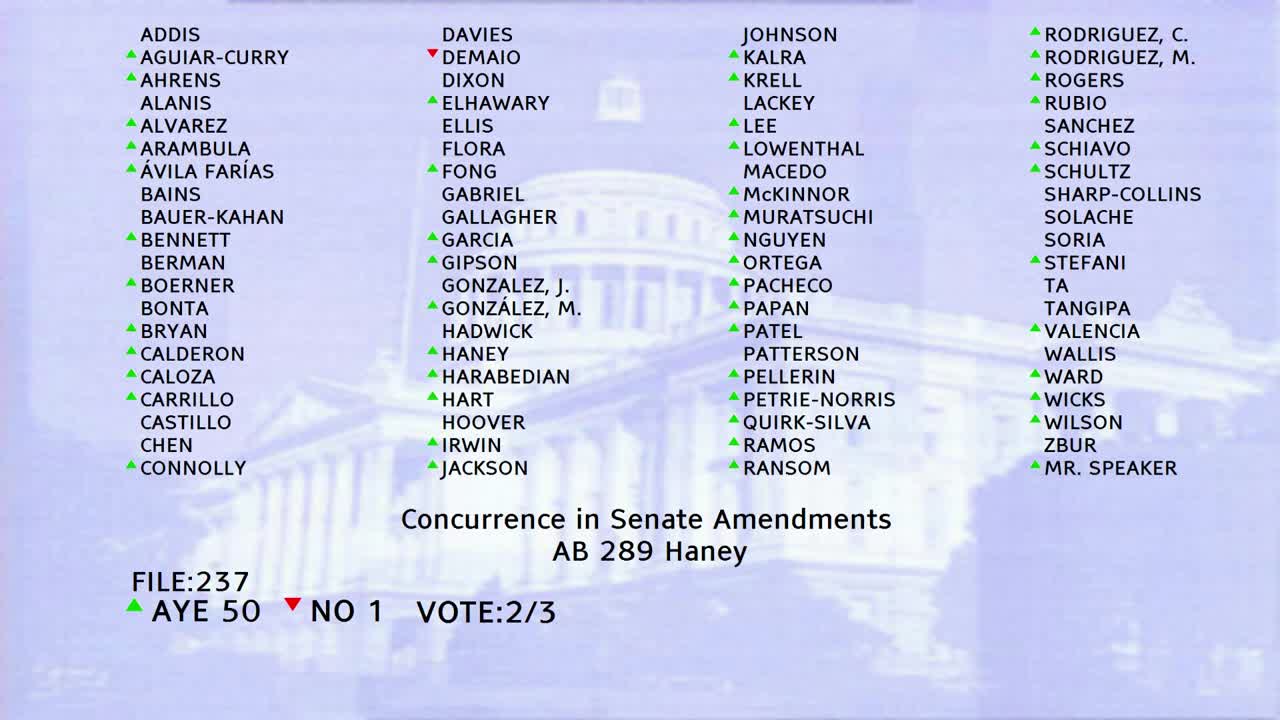
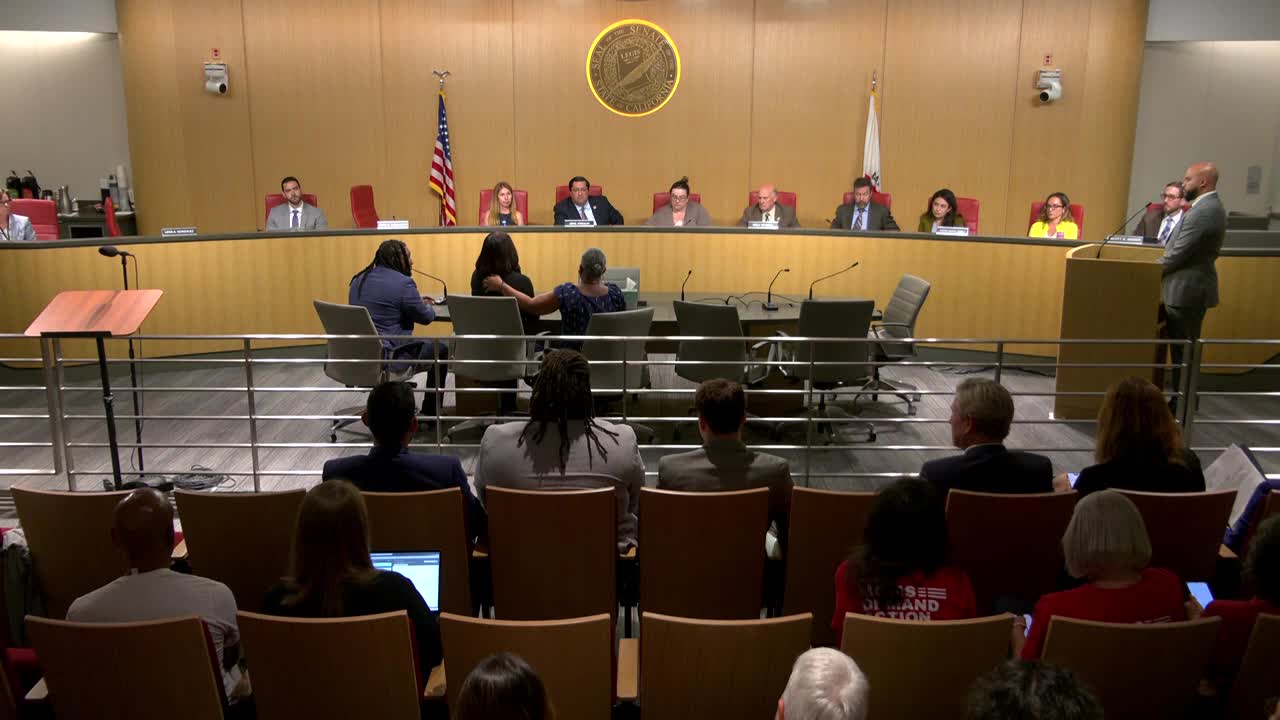
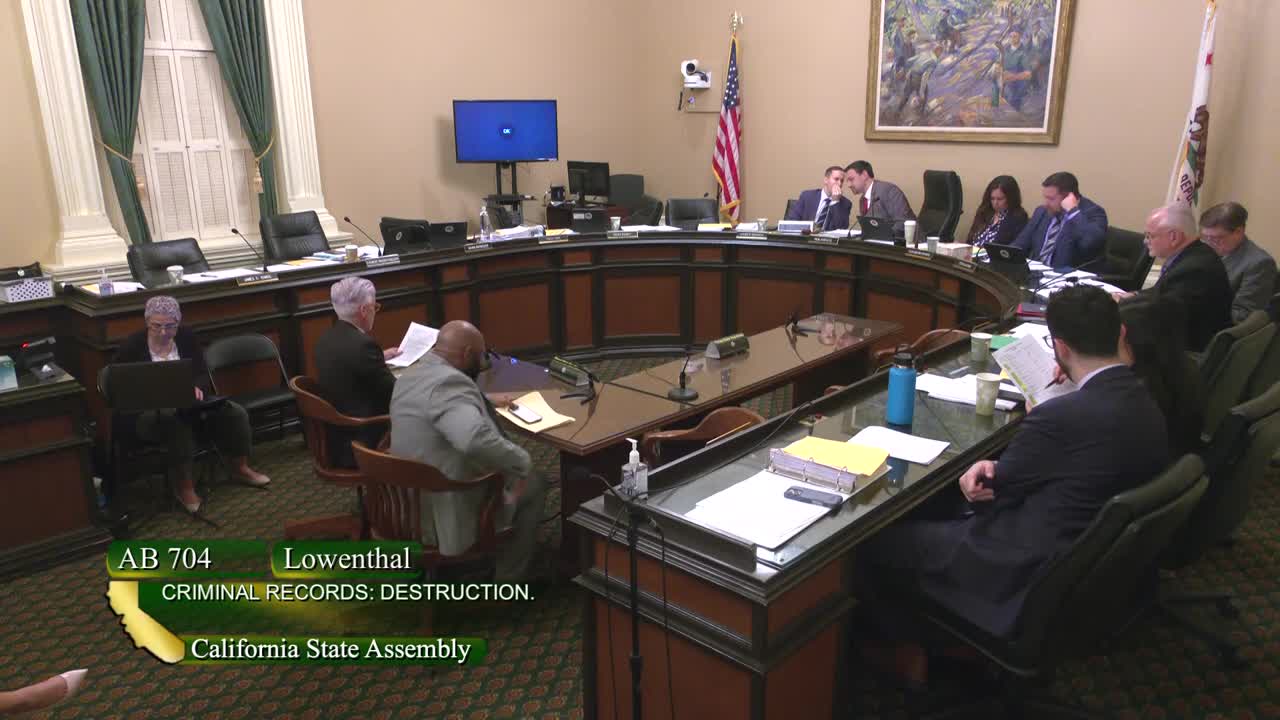


Bill Co-Author(s):