AB 817: Cold storage facilities.
- Session Year: 2025-2026
- House: Assembly
- Latest Version Date: 2026-09-27
Current Status:
Passed
(2026-09-27: Chaptered by Secretary of State - Chapter 493, Statutes of 2026.)
Introduced
In Committee
Awaiting First Chamber Vote
Passed First Chamber
In Committee
Awaiting Second Chamber Vote
Passed Second Chamber
Enacted
Existing law, the Permit Streamlining Act, establishes requirements for the review and approval of applications for development projects, as defined, by public agencies, including requiring that a public agency that is the lead agency for the development project approve or disapprove the project within certain time periods, as specified.
This bill would prohibit a city, county, or city and county from approving a building permit for cold storage facilities, as defined, unless the owner of the cold storage facility, or the lessee or operator of the cold storage facility, as specified, establishes a contingency fund, as defined, to be used upon declared national, state, or local emergencies in certain circumstances. Until July 1, 2028, the bill would limit the definition of cold storage facilities for purposes of these provisions to facilities located within the geographic boundaries of the Boyle Heights Community Plan. The bill would require an owner of a cold storage facility to provide evidence of the contingency fund at the discretion of the city, county, or city and county, as specified, and authorize an owner to require the lessee or operator of the cold storage facility to establish and maintain the contingency fund. The bill would require a cold storage facility to use the contingency fund for, among other things, providing support during the declared state of emergency or local emergency for affected communities, as specified. By imposing additional requirements on cities and counties, the bill would impose a state-mandated local program.
The Personal Income Tax Law and the Corporation Tax Law, in modified conformity with federal income tax law, generally define gross income for purposes of the taxes imposed by those laws as income from whatever source derived, except as specifically excluded, and provide various exclusions from gross income.
This bill would, for taxable years beginning on or after January 1, 2027, and before January 1, 2032, exclude from gross income any amount received by a qualified taxpayer, as defined, in settlement for claims relating to the 2026 Boyle Heights fire incident, as defined.
Existing law requires that any bill introduced on or after January 1, 2020, that would authorize certain tax expenditures, as defined, contain, among other things, specific goals that the tax expenditure or exemption will achieve, detailed performance indicators, and data collection requirements.
This bill would include additional information required for any bill authorizing a new tax expenditure.
The bill would include findings that specified changes proposed by this bill address a matter of statewide concern rather than a municipal affair and, therefore, apply to all cities, including charter cities.
This bill would make legislative findings and declarations as to the necessity of a special statute for the Boyle Heights community.
The California Constitution requires the state to reimburse local agencies and school districts for certain costs mandated by the state. Statutory provisions establish procedures for making that reimbursement.
This bill would provide that no reimbursement is required by this act for a specified reason.
Existing law, the Permit Streamlining Act, establishes requirements for the review and approval of applications for development projects, as defined, by public agencies, including requiring that a public agency that is the lead agency for the development project approve or disapprove the project within certain time periods, as specified.
This bill would prohibit a city, county, or city and county from approving a building permit for cold storage facilities, as defined, unless the owner of the cold storage facility, or the lessee or operator of the cold storage facility, as specified, establishes a contingency fund, as defined, to be used upon declared national, state, or local emergencies in certain circumstances. The bill would require an owner of a cold storage facility to provide evidence of the contingency fund at the discretion of the city, county, or city and county, as specified, and authorize an owner to require the lessee or operator of the cold storage facility to establish and maintain the contingency fund. The bill would require a cold storage facility to use the contingency fund for, among other things, providing support during the declared state of emergency or local emergency for affected communities, as specified. By imposing additional requirements on cities and counties, the bill would impose a state-mandated local program.
The Personal Income Tax Law and the Corporation Tax Law, in modified conformity with federal income tax law, generally define gross income for purposes of the taxes imposed by those laws as income from whatever source derived, except as specifically excluded, and provide various exclusions from gross income.
This bill would, for taxable years beginning on or after January 1, 2027, and before January 1, 2032, exclude from gross income any amount received by a qualified taxpayer, as defined, in settlement for claims relating to the 2026 Boyle Heights fire incident, as defined.
Existing law requires that any bill introduced on or after January 1, 2020, that would authorize certain tax expenditures, as defined, contain, among other things, specific goals that the tax expenditure or exemption will achieve, detailed performance indicators, and data collection requirements.
This bill would include additional information required for any bill authorizing a new tax expenditure.
The bill would include findings that specified changes proposed by this bill address a matter of statewide concern rather than a municipal affair and, therefore, apply to all cities, including charter cities.
The California Constitution requires the state to reimburse local agencies and school districts for certain costs mandated by the state. Statutory provisions establish procedures for making that reimbursement.
This bill would provide that no reimbursement is required by this act for a specified reason.
Existing law requires a clerk of the superior court to keep an index of any action or proceeding filed in the court. Existing law requires a separate index for plaintiffs and defendants in civil actions and for defendants in criminal actions.This bill would require publicly accessible electronic indices of criminal cases to allow searches based on an individuals drivers license, date of birth, or name. The bill would require the court index to only return records that match the identifiers entered, and would require that those results be redacted, as specified.Existing law requires a clerk of the superior court to keep an index of any action or proceeding filed in the court. Existing law requires a separate index for plaintiffs and defendants in civil actions and for defendants in criminal actions.
This bill would require publicly accessible electronic indices of criminal cases to allow searches based on an individuals drivers license, date of birth, or name. The bill would require the court index to only return records that match the identifiers entered, and would require that those results be redacted, as specified.
(1)Existing law, the Gambling Control Act, provides for the licensure and regulation of various legalized gambling activities and establishments by the California Gambling Control Commission and the investigation and enforcement of those activities and establishments by the Department of Justice. Under existing law, the commission consists of 5 members appointed by the Governor, subject to confirmation by the Senate. Existing law authorizes the Governor to remove any member of the commission for cause, as specified.This bill would additionally require the Governor to notify the Legislature of the removal of any member of the commission.(2)Existing law prohibits a corporation from being eligible for a state gambling license unless its officers, directors, and shareholders individually apply for and obtain a state gambling license. Existing law also requires every key employee to apply for and obtain a key employee license. Existing law requires an officer, director, or key employee of a corporate owner licensee to apply for a license within 30 calendar days after they become an officer, director, or key employee of the corporation and requires the corporation to immediately remove an officer or director who fails to apply for a license within that 30-day period.This bill would make technical, nonsubstantive changes to these provisions.(1)Existing law, the Gambling Control Act, provides for the licensure and regulation of various legalized gambling activities and establishments by the California Gambling Control Commission and the investigation and enforcement of those activities and establishments by the Department of Justice. Under existing law, the commission consists of 5 members appointed by the Governor, subject to confirmation by the Senate. Existing law authorizes the Governor to remove any member of the commission for cause, as specified.
This bill would additionally require the Governor to notify the Legislature of the removal of any member of the commission.
(2)Existing law prohibits a corporation from being eligible for a state gambling license unless its officers, directors, and shareholders individually apply for and obtain a state gambling license. Existing law also requires every key employee to apply for and obtain a key employee license. Existing law requires an officer, director, or key employee of a corporate owner licensee to apply for a license within 30 calendar days after they become an officer, director, or key employee of the corporation and requires the corporation to immediately remove an officer or director who fails to apply for a license within that 30-day period.
This bill would make technical, nonsubstantive changes to these provisions.
The Legislature finds and declares all of the following:
(a)On June 17, 2026, a large fire occurred at a cold storage facility located in the Boyle Heights community in the City of Los Angeles that resulted in the quick escalation into a major, multioperational period incident.
(b)The ignition of the rooftop solar array, hazardous materials, and lithium-ion batteries onsite resulted in the release of smoke and debris, affecting not only the local community, but the entire City of Los Angeles and surrounding communities. This includes particle pollution advisories affecting residents, schools, businesses, and vulnerable populations throughout Boyle Heights and neighboring communities.
(c)Once the fire was extinguished, the warehouse could not resume operations due to the damage, leaving 85,000,000 pounds of refrigerated or frozen food, including raw meat, to rot. This has resulted in an infestation within the local community of rats, maggots, and flies, all of which pose a significant public health risk.
(d)In a proclaimed state of emergency, local jurisdictions have an obligation to protect the surrounding communities from harm, while holding responsible parties accountable.
(e)The responsible parties also have an obligation to ensure that negative impacts to the surrounding community are minimized and to take all measures to protect and make the surrounding communities whole.
SEC. 2.Section 65850.22 is added to the Government Code, to read:65850.22.(a)For purposes of this section, both of the following definitions apply:
(1)Cold storage facility means a place that meets all of the following conditions:
(A)The facility is not less than 20,000 square feet and not less than 20,000 square feet of floor space is artificially refrigerated to a temperature of 45 degrees Fahrenheit or below.
(B)The facility participates in the accidental release prevention program, as described in Section 25533 of the Health and Safety Code, at Program Level 1, 2, or 3.
(C)The facility is located within the geographic boundaries of the Boyle Heights Community Plan, as effective August 20, 2026.
(2)Contingency fund includes any of the following that does not exceed a total value of twenty million dollars ($20,000,000):
(A)A dedicated account managed by a city, county, or city and county to be used for the purposes described in subdivision (d) under the conditions described in subdivision (c). A city, county, or city and county may impose a fee or charge on the development or operation of a cold storage facility to place into the account.
(B)A dedicated account managed by the owner of the cold storage facility to include an amount required by the city, county, or city and county for the purposes described in subdivision (d) under the conditions described in subdivision (c).
(C)A surety bond.
(D)An insurance policy that provides coverage for the uses described in subdivision (d) under the conditions described in subdivision (c).
(b)(1)A city, county, or city and county shall not approve a building permit for a cold storage facility unless the owner of the cold storage facility, or the lessee or operator of the cold storage facility pursuant to paragraph (3), establishes and maintains a contingency fund for the purposes described in subdivision (d).
(2)An owner of a cold storage facility shall provide evidence of the contingency fund at the discretion of the city, county, or city and county to substantiate the existence or maintenance of the contingency fund.
(3)An owner of the cold storage facility may require the lessee or operator of the cold storage facility to establish and maintain the contingency fund.
(c)The contingency fund shall only be used if both of the following conditions exist:
(1)The President of the United States or the Governor declares a state of emergency, or a local official, board, or other governing body vested with authority to proclaim a local emergency in a city, county, or city and county declares a local emergency, directing an agency to protect the health, safety, and welfare of residents or property.
(2)Either of the following occurs:
(A)The department or the local jurisdiction publishes a formal notification of a health advisory or health alert and, as supported by evidence in the health advisory or health alert, either the cold storage facility is the subject of the health advisory or health alert or the cold storage facility has caused the conditions that created the health advisory or health alert.
(B)The department or the local jurisdiction issues the owner of, and, if applicable, the operator or lessee of, the cold storage facility an official inspection report that includes a violation or citation that was unresolved or outstanding and caused the conditions for the state of emergency or local emergency described in paragraph (1) or a health advisory or health alert.
(d)Upon the conditions in subdivision (c) being satisfied, the contingency fund shall be used to provide support during the declared state of emergency or local emergency for affected communities. The uses shall include all of the following:
(1)Food assistance.
(2)Housing assistance, rental assistance, and housing relocation assistance.
(3)Air quality monitoring by the relevant local air pollution control district or air quality management district.
(4)Vector control.
(5)Health care to address adverse health outcomes related to the state of emergency, local emergency, health advisory, or health alert described in subdivision (c).
(e)This section shall remain in effect only until July 1, 2028, and as of that date is repealed.
SEC. 3.Section 65850.22 is added to the Government Code, to read:65850.22.(a)For purposes of this section, both of the following definitions apply:
(1)Cold storage facility means a place that meets both of the following conditions:
(A)The facility is not less than 20,000 square feet and not less than 20,000 square feet of floor space is artificially refrigerated to a temperature of 45 degrees Fahrenheit or below.
(B)The facility participates in the accidental release prevention program, as described in Section 25533 of the Health and Safety Code, at Program Level 1, 2, or 3.
(2)Contingency fund includes any of the following that does not exceed a total value of twenty million dollars ($20,000,000):
(A)A dedicated account managed by a city, county, or city and county to be used for the purposes described in subdivision (d) under the conditions described in subdivision (c). A city, county, or city and county may impose a fee or charge on the development or operation of a cold storage facility to place into the account.
(B)A dedicated account managed by the owner of the cold storage facility to include an amount required by the city, county, or city and county for the purposes described in subdivision (d) under the conditions described in subdivision (c).
(C)A surety bond.
(D)An insurance policy that provides coverage for the uses described in subdivision (d) under the conditions described in subdivision (c).
(b)(1)A city, county, or city and county shall not approve a building permit for a cold storage facility unless the owner of the cold storage facility, or the lessee or operator of the cold storage facility pursuant to paragraph (3), establishes and maintains a contingency fund for the purposes described in subdivision (d).
(2)An owner of a cold storage facility shall provide evidence of the contingency fund at the discretion of the city, county, or city and county to substantiate the existence or maintenance of the contingency fund.
(3)An owner of the cold storage facility may require the lessee or operator of the cold storage facility to establish and maintain the contingency fund.
(c)The contingency fund shall only be used if both of the following conditions exist:
(1)The President of the United States or the Governor declares a state of emergency, or a local official, board, or other governing body vested with authority to proclaim a local emergency in a city, county, or city and county declares a local emergency, directing an agency to protect the health, safety, and welfare of residents or property.
(2)Either of the following occurs:
(A)The department or the local jurisdiction publishes a formal notification of a health advisory or health alert and, as supported by evidence in the health advisory or health alert, either the cold storage facility is the subject of the health advisory or health alert or the cold storage facility has caused the conditions that created the health advisory or health alert.
(B)The department or the local jurisdiction issues the owner of, and, if applicable, the operator or lessee of, the cold storage facility an official inspection report that includes a violation or citation that was unresolved or outstanding and caused the conditions for the state of emergency or local emergency described in paragraph (1) or a health advisory or health alert.
(d)Upon the conditions in subdivision (c) being satisfied, the contingency fund shall be used to provide support during the declared state of emergency or local emergency for affected communities. The uses shall include all of the following:
(1)Food assistance.
(2)Housing assistance, rental assistance, and housing relocation assistance.
(3)Air quality monitoring by the relevant local air pollution control district or air quality management district.
(4)Vector control.
(5)Health care to address adverse health outcomes related to the state of emergency, local emergency, health advisory, or health alert described in subdivision (c).
(e)This section shall become operative on July 1, 2028.
SEC. 4.Section 17138.10 is added to the Revenue and Taxation Code, to read:17138.10.(a)For taxable years beginning on or after January 1, 2027, and before January 1, 2032, gross income does not include any qualified amount received by a qualified taxpayer.
(b)For purposes of this section, the following definitions apply:
(1)2026 Boyle Heights fire incident means the fire incident that began on June 17, 2026, proclaimed a state of emergency by the Governor on June 21, 2026, at a Lineage cold storage facility in the City of Los Angeles.
(2)Qualified amount means any amount received in settlement by a qualified taxpayer from a settlement entity in connection with the 2026 Boyle Heights fire incident.
(3)Qualified taxpayer means any of the following:
(A)A taxpayer who owned real property located in the County of Los Angeles during the 2026 Boyle Heights fire incident who paid or incurred expenses and received amounts from a settlement entity arising out of the 2026 Boyle Heights fire incident.
(B)A taxpayer who resided in the County of Los Angeles during the 2026 Boyle Heights fire incident who paid or incurred expenses and received amounts from a settlement entity arising out of the 2026 Boyle Heights fire incident.
(C)A taxpayer who had a place of business in the County of Los Angeles during the 2026 Boyle Heights fire incident who paid or incurred expenses and received amounts from a settlement entity arising out of the 2026 Boyle Heights fire incident.
(4)Settlement entity means an entity making a settlement payment of a qualified amount to a qualified taxpayer.
(c)The settlement entity shall provide, upon request by the Franchise Tax Board, documentation of the settlement payments in the form and manner requested by the Franchise Tax Board.
(d)(1)For purposes of complying with Section 41, regarding the exclusion provided by this section and Section 24309.10, the Legislature finds and declares that the goal of the tax expenditure allowed pursuant to this section is to assist those who relocated from their homes, suffered negative effects from being unable to relocate, or suffered losses to their businesses during the 2026 Boyle Heights fire incident. The purpose and objective is to adequately and economically compensate the victims, which cannot be achieved if they pay taxes on the money paid back to them through settlement. The performance indicator of the success of the tax expenditure is the amount of gross income excluded pursuant to this section and Section 24309.10.
(2)By November 1, 2029, the Franchise Tax Board shall deliver to the Legislature a written report, in accordance with Section 9795 of the Government Code, that states the aggregate dollar amount of payments received in settlement by qualified taxpayers from a settlement entity arising out of the 2026 Boyle Heights fire incident.
(e)This section shall remain in effect only until January 1, 2033, and as of that date is repealed.
SEC. 5.Section 24309.10 is added to the Revenue and Taxation Code, to read:24309.10.(a)For taxable years beginning on or after January 1, 2027, and before January 1, 2032, gross income does not include any qualified amount received by a qualified taxpayer.
(b)For purposes of this section, the following definitions apply:
(1)2026 Boyle Heights fire incident means the fire incident that began on June 17, 2026, proclaimed a state of emergency by the Governor on June 21, 2026, at a Lineage cold storage facility in the City of Los Angeles.
(2)Qualified amount means any amount received in settlement by a qualified taxpayer from a settlement entity in connection with the 2026 Boyle Heights fire incident.
(3)Qualified taxpayer means either of the following:
(A)A taxpayer who owned real property located in the County of Los Angeles during the 2026 Boyle Heights fire incident who paid or incurred expenses and received amounts from a settlement entity arising out of the 2026 Boyle Heights fire incident.
(B)A taxpayer who had a place of business in the County of Los Angeles during the 2026 Boyle Heights fire incident who paid or incurred expenses and received amounts from a settlement entity arising out of the 2026 Boyle Heights fire incident.
(4)Settlement entity means an entity making a settlement payment of a qualified amount to a qualified taxpayer.
(c)The settlement entity shall provide, upon request by the Franchise Tax Board, documentation of the settlement payments in the form and manner requested by the Franchise Tax Board.
(d)This section shall remain in effect only until January 1, 2033, and as of that date is repealed.
SEC. 6.The Legislature finds and declares that, due to the increasing presence of large cold storage facilities across the state and their great potential to cause drastic negative health effects on local communities should they catch fire, preventing and mitigating these disasters is a matter of statewide concern and is not a municipal affair as that term is used in Section 5 of Article XI of the California Constitution. Therefore, Sections 2 and 3 of this act adding Section 65850.22 to the Government Code apply to all cities, including charter cities.
SEC. 7.The Legislature finds and declares that a special statute is necessary and that a general statute cannot be made applicable within the meaning of Section 16 of Article IV of the California Constitution because of the significant and far-reaching effects of recent events in the Boyle Heights community and the risk of future incidents in the area.
SEC. 8.No reimbursement is required by this act pursuant to Section 6 of Article XIIIB of the California Constitution because a local agency or school district has the authority to levy service charges, fees, or assessments sufficient to pay for the program or level of service mandated by this act, within the meaning of Section 17556 of the Government Code.
The Legislature finds and declares all of the following:
(a)On June 17, 2026, a large fire occurred at a cold storage facility located in the Boyle Heights community in the City of Los Angeles that resulted in the quick escalation into a major, multioperational period incident.
(b)The ignition of the rooftop solar array, hazardous materials, and lithium-ion batteries onsite resulted in the release of smoke and debris, affecting not only the local community, but the entire City of Los Angeles and surrounding communities. This includes particle pollution advisories affecting residents, schools, businesses, and vulnerable populations throughout Boyle Heights and neighboring communities.
(c)Once the fire was extinguished, the warehouse could not resume operations due to the damage, leaving 85,000,000 pounds of refrigerated or frozen food, including raw meat, to rot. This has resulted in an infestation within the local community of rats, maggots, and flies, all of which pose a significant public health risk.
(d)In a proclaimed state of emergency, local jurisdictions have an obligation to protect the surrounding communities from harm, while holding responsible parties accountable.
(e)The responsible parties also have an obligation to ensure that negative impacts to the surrounding community are minimized and to take all measures to protect and make the surrounding communities whole.
SEC. 2.Section 65850.22 is added to the Government Code, to read:65850.22.(a)For purposes of this section, both of the following definitions apply:
(1)Cold storage facility means a place greater that meets all of the following conditions:
(A)The facility is not less than 20,000 square feet that and not less than 20,000 square feet of floor space is artificially refrigerated to a temperature of 45 degrees Fahrenheit or below and that participates below.
(B)The facility participates in the accidental release prevention program, as described in Section 25533 of the Health and Safety Code, at Program Level 1, 2, or 3.
(C)The facility is located within the geographic boundaries of the Boyle Heights Community Plan, as effective August 20, 2026.
(2)Contingency fund includes any of the following that does not exceed a total value of twenty million dollars ($20,000,000):
(A)A dedicated account managed by a city, county, or city and county to be used for the purposes described in subdivision (d) under the conditions described in subdivision (c). A city, county, or city and county may impose a fee or charge on the development or operation of a cold storage facility to place into the account.
(B)A dedicated account managed by the owner of the cold storage facility to include an amount required by the city, county, or city and county for the purposes described in subdivision (d) under the conditions described in subdivision (c).
(C)A surety bond.
(D)An insurance policy that provides coverage for the uses described in subdivision (d) under the conditions described in subdivision (c).
(b)(1)A city, county, or city and county shall not approve a building permit for a cold storage facility unless the owner of the cold storage facility, or the lessee or operator of the cold storage facility pursuant to paragraph (3), establishes and maintains a contingency fund for the purposes described in subdivision (d).
(2)An owner of a cold storage facility shall provide evidence of the contingency fund at the discretion of the city, county, or city and county to substantiate the existence or maintenance of the contingency fund.
(3)An owner of the cold storage facility may require the lessee or operator of the cold storage facility to establish and maintain the contingency fund.
(c)The contingency fund shall only be used if both of the following conditions exist:
(1)The President of the United States or the Governor declares a state of emergency, or a local official, board, or other governing body vested with authority to proclaim a local emergency in a city, county, or city and county declares a local emergency, directing an agency to protect the health, safety, and welfare of residents or property.
(2)Either of the following occurs:
(A)The department or the local jurisdiction publishes a formal notification of a health advisory or health alert and, as supported by evidence in the health advisory or health alert, either the cold storage facility is the subject of the health advisory or health alert or the cold storage facility has caused the conditions which that created the health advisory or health alert.
(B)The department or the local jurisdiction issues the owner of, and, if applicable, the operator or lessee of, the cold storage facility an official inspection report that includes a violation or citation that was unresolved or outstanding and caused the conditions for the state of emergency or local emergency described in paragraph (1) or a health advisory or health alert.
(d)Upon the conditions in subdivision (c) being satisfied, the contingency fund shall be used to provide support during the declared state of emergency or local emergency for affected communities. The uses shall include all of the following:
(1)Food assistance.
(2)Housing assistance, rental assistance, and housing relocation assistance.
(3)Air quality monitoring. monitoring by the relevant local air pollution control district or air quality management district.
(4)Vector control.
(5)Health care to address adverse health outcomes related to the state of emergency, local emergency, health advisory, or health alert described in subdivision (c).
(e)This section shall remain in effect only until July 1, 2028, and as of that date is repealed.
SEC. 3.Section 65850.22 is added to the Government Code, to read:65850.22.(a)For purposes of this section, both of the following definitions apply:
(1)Cold storage facility means a place that meets both of the following conditions:
(A)The facility is not less than 20,000 square feet and not less than 20,000 square feet of floor space is artificially refrigerated to a temperature of 45 degrees Fahrenheit or below.
(B)The facility participates in the accidental release prevention program, as described in Section 25533 of the Health and Safety Code, at Program Level 1, 2, or 3.
(2)Contingency fund includes any of the following that does not exceed a total value of twenty million dollars ($20,000,000):
(A)A dedicated account managed by a city, county, or city and county to be used for the purposes described in subdivision (d) under the conditions described in subdivision (c). A city, county, or city and county may impose a fee or charge on the development or operation of a cold storage facility to place into the account.
(B)A dedicated account managed by the owner of the cold storage facility to include an amount required by the city, county, or city and county for the purposes described in subdivision (d) under the conditions described in subdivision (c).
(C)A surety bond.
(D)An insurance policy that provides coverage for the uses described in subdivision (d) under the conditions described in subdivision (c).
(b)(1)A city, county, or city and county shall not approve a building permit for a cold storage facility unless the owner of the cold storage facility, or the lessee or operator of the cold storage facility pursuant to paragraph (3), establishes and maintains a contingency fund for the purposes described in subdivision (d).
(2)An owner of a cold storage facility shall provide evidence of the contingency fund at the discretion of the city, county, or city and county to substantiate the existence or maintenance of the contingency fund.
(3)An owner of the cold storage facility may require the lessee or operator of the cold storage facility to establish and maintain the contingency fund.
(c)The contingency fund shall only be used if both of the following conditions exist:
(1)The President of the United States or the Governor declares a state of emergency, or a local official, board, or other governing body vested with authority to proclaim a local emergency in a city, county, or city and county declares a local emergency, directing an agency to protect the health, safety, and welfare of residents or property.
(2)Either of the following occurs:
(A)The department or the local jurisdiction publishes a formal notification of a health advisory or health alert and, as supported by evidence in the health advisory or health alert, either the cold storage facility is the subject of the health advisory or health alert or the cold storage facility has caused the conditions that created the health advisory or health alert.
(B)The department or the local jurisdiction issues the owner of, and, if applicable, the operator or lessee of, the cold storage facility an official inspection report that includes a violation or citation that was unresolved or outstanding and caused the conditions for the state of emergency or local emergency described in paragraph (1) or a health advisory or health alert.
(d)Upon the conditions in subdivision (c) being satisfied, the contingency fund shall be used to provide support during the declared state of emergency or local emergency for affected communities. The uses shall include all of the following:
(1)Food assistance.
(2)Housing assistance, rental assistance, and housing relocation assistance.
(3)Air quality monitoring by the relevant local air pollution control district or air quality management district.
(4)Vector control.
(5)Health care to address adverse health outcomes related to the state of emergency, local emergency, health advisory, or health alert described in subdivision (c).
(e)This section shall become operative on July 1, 2028.
SEC. 3.SEC. 4.Section 17138.10 is added to the Revenue and Taxation Code, to read:17138.10.(a)For taxable years beginning on or after January 1, 2027, and before January 1, 2032, gross income does not include any qualified amount received by a qualified taxpayer.
(b)For purposes of this section, the following definitions apply:
(1)2026 Boyle Heights fire incident means the fire incident that began on June 17, 2026, proclaimed a state of emergency by the Governor on June 21, 2026, at a Lineage cold storage facility in the City of Los Angeles.
(2)Qualified amount means any amount received in settlement by a qualified taxpayer from a settlement entity in connection with the 2026 Boyle Heights fire incident.
(3)Qualified taxpayer means any of the following:
(A)A taxpayer who owned real property located in the County of Los Angeles during the 2026 Boyle Heights fire incident who paid or incurred expenses and received amounts from a settlement entity arising out of the 2026 Boyle Heights fire incident.
(B)A taxpayer who resided in the County of Los Angeles during the 2026 Boyle Heights fire incident who paid or incurred expenses and received amounts from a settlement entity arising out of the 2026 Boyle Heights fire incident.
(C)A taxpayer who had a place of business in the County of Los Angeles during the 2026 Boyle Heights fire incident who paid or incurred expenses and received amounts from a settlement entity arising out of the 2026 Boyle Heights fire incident.
(4)Settlement entity means an entity making a settlement payment of a qualified amount to a qualified taxpayer.
(c)The settlement entity shall provide, upon request by the Franchise Tax Board, documentation of the settlement payments in the form and manner requested by the Franchise Tax Board.
(d)(1)For purposes of complying with Section 41, regarding the exclusion provided by this section and Section 24309.10, the Legislature finds and declares that the goal of the tax expenditure allowed pursuant to this section is to assist those who relocated from their homes, suffered negative effects from being unable to relocate, or suffered losses to their businesses during the 2026 Boyle Heights fire incident. The purpose and objective is to adequately and economically compensate the victims, which cannot be achieved if they pay taxes on the money paid back to them through settlement. The performance indicator of the success of the tax expenditure is the amount of gross income excluded pursuant to this section and Section 24309.10.
(2)By November 1, 2029, the Franchise Tax Board shall deliver to the Legislature a written report, in accordance with Section 9795 of the Government Code, that states the aggregate dollar amount of payments received in settlement by qualified taxpayers from a settlement entity arising out of the 2026 Boyle Heights fire incident.
(e)This section shall remain in effect only until January 1, 2033, and as of that date is repealed.
SEC. 4.SEC. 5.Section 24309.10 is added to the Revenue and Taxation Code, to read:24309.10.(a)For taxable years beginning on or after January 1, 2027, and before January 1, 2032, gross income does not include any qualified amount received by a qualified taxpayer.
(b)For purposes of this section, the following definitions apply:
(1)2026 Boyle Heights fire incident means the fire incident that began on June 17, 2026, proclaimed a state of emergency by the Governor on June 21, 2026, at a Lineage cold storage facility in the City of Los Angeles.
(2)Qualified amount means any amount received in settlement by a qualified taxpayer from a settlement entity in connection with the 2026 Boyle Heights fire incident.
(3)Qualified taxpayer means either of the following:
(A)A taxpayer who owned real property located in the County of Los Angeles during the 2026 Boyle Heights fire incident who paid or incurred expenses and received amounts from a settlement entity arising out of the 2026 Boyle Heights fire incident.
(B)A taxpayer who had a place of business in the County of Los Angeles during the 2026 Boyle Heights fire incident who paid or incurred expenses and received amounts from a settlement entity arising out of the 2026 Boyle Heights fire incident.
(4)Settlement entity means an entity making a settlement payment of a qualified amount to a qualified taxpayer.
(c)The settlement entity shall provide, upon request by the Franchise Tax Board, documentation of the settlement payments in the form and manner requested by the Franchise Tax Board.
(d)This section shall remain in effect only until January 1, 2033, and as of that date is repealed.
SEC. 5.SEC. 6.The Legislature finds and declares that, due to the increasing presence of large cold storage facilities across the state and their great potential to cause drastic negative health effects on local communities should they catch fire, preventing and mitigating these disasters is a matter of statewide concern and is not a municipal affair as that term is used in Section 5 of Article XI of the California Constitution. Therefore, Section 2 Sections 2 and 3 of this act adding Section 65850.22 to the Government Code applies apply to all cities, including charter cities.
SEC. 7.The Legislature finds and declares that a special statute is necessary and that a general statute cannot be made applicable within the meaning of Section 16 of Article IV of the California Constitution because of the significant and far-reaching effects of recent events in the Boyle Heights community and the risk of future incidents in the area.
SEC. 6.SEC. 8.No reimbursement is required by this act pursuant to Section 6 of Article XIIIB of the California Constitution because a local agency or school district has the authority to levy service charges, fees, or assessments sufficient to pay for the program or level of service mandated by this act, within the meaning of Section 17556 of the Government Code.
The Legislature finds and declares all of the following:
(a)On June 17, 2026, a large fire occurred at a cold storage facility located in the Boyle Heights community in the City of Los Angeles that resulted in the quick escalation into a major, multioperational period incident.
(b)The ignition of the rooftop solar array, hazardous materials, and lithium-ion batteries onsite resulted in the release of smoke and debris, affecting not only the local community, but the entire City of Los Angeles and surrounding communities. This includes particle pollution advisories affecting residents, schools, businesses, and vulnerable populations throughout Boyle Heights and neighboring communities.
(c)Once the fire was extinguished, the warehouse could not resume operations due to the damage, leaving 85,000,000 pounds of refrigerated or frozen food, including raw meat, to rot. This has resulted in an infestation within the local community of rats, maggots, and flies, all of which pose a significant public health risk.
(d)In a proclaimed state of emergency, local jurisdictions have an obligation to protect the surrounding communities from harm, while holding responsible parties accountable.
(e)The responsible parties also have an obligation to ensure that negative impacts to the surrounding community are minimized and to take all measures to protect and make the surrounding communities whole.
SEC. 2.Section 65850.22 is added to the Government Code, to read:65850.22.(a)For purposes of this section, both of the following definitions apply:
(1)Cold storage facility means a place greater than 20,000 square feet that is artificially refrigerated to a temperature of 45 degrees Fahrenheit or below and that participates in the accidental release prevention program, as described in Section 25533 of the Health and Safety Code, at Program Level 1, 2, or 3.
(2)Contingency fund includes any of the following that does not exceed a total value of twenty million dollars ($20,000,000):
(A)A dedicated account managed by a city, county, or city and county to be used for the purposes described in subdivision (d) under the conditions described in subdivision (c). A city, county, or city and county may impose a fee or charge on the development or operation of a cold storage facility to place into the account.
(B)A dedicated account managed by the owner of the cold storage facility to include an amount required by city, county, or city and county for the purposes described in subdivision (d) under the conditions described in subdivision (c).
(C)A surety bond.
(b)(1)A city, county, or city and county shall not approve a building permit for a cold storage facility unless the owner of the cold storage facility, or the lessee or operator of the cold storage facility pursuant to paragraph (3), establishes and maintains a contingency fund for the purposes described in subdivision (d).
(2)An owner of a cold storage facility shall provide evidence of the contingency fund at the discretion of the city, county, or city and county to substantiate the existence or maintenance of the contingency fund.
(3)An owner of the cold storage facility may require the lessee or operator of the cold storage facility to establish and maintain the contingency fund.
(c)The contingency fund shall only be used if both of the following conditions exist:
(1)The President of the United States or the Governor declares a state of emergency, or a local official, board, or other governing body vested with authority to proclaim a local emergency in a city, county, or city and county declares a local emergency, directing an agency to protect the health, safety, and welfare of residents or property.
(2)Either of the following occurs:
(A)The department or the local jurisdiction publishes a formal notification of a health advisory or health alert and, as supported by evidence in the health advisory or health alert, either the cold storage facility is the subject of the health advisory or health alert or the cold storage facility has caused the conditions which created the health advisory or health alert.
(B)The department or the local jurisdiction issues the owner of, and, if applicable, the operator or lessee of, the cold storage facility an official inspection report that includes a violation or citation that was unresolved or outstanding and caused the conditions for the state of emergency or local emergency described in paragraph (1) or a health advisory or health alert.
(d)Upon the conditions in subdivision (c) being satisfied, the contingency fund shall be used to provide support during the declared state of emergency or local emergency for affected communities. The uses shall include all of the following:
(1)Food assistance.
(2)Housing assistance, rental assistance, and housing relocation assistance.
(3)Air quality monitoring.
(4)Vector control.
(5)Health care to address adverse health outcomes related to the state of emergency, local emergency, health advisory, or health alert described in subdivision (c).
SEC. 3.Section 17138.10 is added to the Revenue and Taxation Code, to read:17138.10.(a)For taxable years beginning on or after January 1, 2027, and before January 1, 2032, gross income does not include any qualified amount received by a qualified taxpayer.
(b)For purposes of this section, the following definitions apply:
(1)2026 Boyle Heights fire incident means the fire incident that began on June 17, 2026, proclaimed a state of emergency by the Governor on June 21, 2026, at a Lineage cold storage facility in the City of Los Angeles.
(2)Qualified amount means any amount received in settlement by a qualified taxpayer from a settlement entity in connection with the 2026 Boyle Heights fire incident.
(3)Qualified taxpayer means any of the following:
(A)A taxpayer who owned real property located in the County of Los Angeles during the 2026 Boyle Heights fire incident who paid or incurred expenses and received amounts from a settlement entity arising out of the 2026 Boyle Heights fire incident.
(B)A taxpayer who resided in the County of Los Angeles during the 2026 Boyle Heights fire incident who paid or incurred expenses and received amounts from a settlement entity arising out of the 2026 Boyle Heights fire incident.
(C)A taxpayer who had a place of business in the County of Los Angeles during the 2026 Boyle Heights fire incident who paid or incurred expenses and received amounts from a settlement entity arising out of the 2026 Boyle Heights fire incident.
(4)Settlement entity means an entity making a settlement payment of a qualified amount to a qualified taxpayer.
(c)The settlement entity shall provide, upon request by the Franchise Tax Board, documentation of the settlement payments in the form and manner requested by the Franchise Tax Board.
(d)(1)For purposes of complying with Section 41, regarding the exclusion provided by this section and Section 24309.10, the Legislature finds and declares that the goal of the tax expenditure allowed pursuant to this section is to assist those who relocated from their homes, suffered negative effects from being unable to relocate, or suffered losses to their businesses during the 2026 Boyle Heights fire incident. The purpose and objective is to adequately and economically compensate the victims, which cannot be achieved if they pay taxes on the money paid back to them through settlement. The performance indicator of the success of the tax expenditure is the amount of gross income excluded pursuant to this section and Section 24309.10.
(2)By November 1, 2029, the Franchise Tax Board shall deliver to the Legislature a written report, in accordance with Section 9795 of the Government Code, that states the aggregate dollar amount of payments received in settlement by qualified taxpayers from a settlement entity arising out of the 2026 Boyle Heights fire incident.
(e)This section shall remain in effect only until January 1, 2033, and as of that date is repealed.
SEC. 4.Section 24309.10 is added to the Revenue and Taxation Code, to read:24309.10.(a)For taxable years beginning on or after January 1, 2027, and before January 1, 2032, gross income does not include any qualified amount received by a qualified taxpayer.
(b)For purposes of this section, the following definitions apply:
(1)2026 Boyle Heights fire incident means the fire incident that began on June 17, 2026, proclaimed a state of emergency by the Governor on June 21, 2026, at a Lineage cold storage facility in the City of Los Angeles.
(2)Qualified amount means any amount received in settlement by a qualified taxpayer from a settlement entity in connection with the 2026 Boyle Heights fire incident.
(3)Qualified taxpayer means either of the following:
(A)A taxpayer who owned real property located in the County of Los Angeles during the 2026 Boyle Heights fire incident who paid or incurred expenses and received amounts from a settlement entity arising out of the 2026 Boyle Heights fire incident.
(B)A taxpayer who had a place of business in the County of Los Angeles during the 2026 Boyle Heights fire incident who paid or incurred expenses and received amounts from a settlement entity arising out of the 2026 Boyle Heights fire incident.
(4)Settlement entity means an entity making a settlement payment of a qualified amount to a qualified taxpayer.
(c)The settlement entity shall provide, upon request by the Franchise Tax Board, documentation of the settlement payments in the form and manner requested by the Franchise Tax Board.
(d)This section shall remain in effect only until January 1, 2033, and as of that date is repealed.
SEC. 5.The Legislature finds and declares that, due to the increasing presence of large cold storage facilities across the state and their great potential to cause drastic negative health effects on local communities should they catch fire, preventing and mitigating these disasters is a matter of statewide concern and is not a municipal affair as that term is used in Section 5 of Article XI of the California Constitution. Therefore, Section 2 of this act adding Section 65850.22 to the Government Code applies to all cities, including charter cities.
SEC. 6.No reimbursement is required by this act pursuant to Section 6 of Article XIIIB of the California Constitution because a local agency or school district has the authority to levy service charges, fees, or assessments sufficient to pay for the program or level of service mandated by this act, within the meaning of Section 17556 of the Government Code.
SECTION 1.Section 69842 of the Government Code is amended to read:69842.(a)(1)The clerk of the superior court shall keep an index to ensure ready reference to any action or proceeding filed in the court. There shall be separate indices of plaintiffs and defendants in civil actions and of defendants in criminal actions. The name of each plaintiff and defendant shall be indexed and there shall appear opposite each name indexed the number of the action or proceeding and the name or names of the adverse litigant or litigants.(2)Publicly accessible electronic indices of criminal cases shall allow searching the courts electronic index by entering an individuals name, date of birth, drivers license, or any combination thereof. In return, the court index shall only provide records that match the identifiers entered. The results shall include the date of birth and drivers license redacted and only indicate whether there is a match for the data entered.(3)All uses of court indices shall comply with the federal Fair Credit Reporting Act (15 U.S.C. Sec. 1681 et seq.).(b)A person authorized to receive public information pursuant to this section shall not be considered to have received local summary criminal history information as defined by subdivision (a) of Section 13300 of the Penal Code.(a)(1)The clerk of the superior court shall keep such indexes as will insure an index to ensure ready reference to any action or proceeding filed in the court. There shall be separate indexes indices of plaintiffs and defendants in civil actions and of defendants in criminal actions. The name of each plaintiff and defendant shall be indexed and there shall appear opposite each name indexed the number of the action or proceeding and the name or names of the adverse litigant or litigants.
(2)Publicly accessible electronic indices of criminal cases shall allow searching the courts electronic index by entering an individuals name, date of birth, drivers license, or any combination thereof. In return, the court index shall only provide records that match the identifiers entered. The results shall include the date of birth and drivers license redacted and only indicate whether there is a match for the data entered.
(3)All uses of court indices shall comply with the federal Fair Credit Reporting Act (15 U.S.C. Sec. 1681 et seq.).
(b)A person authorized to receive public information pursuant to this section shall not be considered to have received local summary criminal history information as defined by subdivision (a) of Section 13300 of the Penal Code.
SECTION 1.Section 19813 of the Business and Professions Code is amended to read:19813.(a)The term of office of each member of the commission is four years.(b)The Governor shall appoint the members of the commission, subject to confirmation by the Senate, and shall designate one member to serve as chairperson. Vacancies shall be filled within 60 days of the date of the vacancy by the Governor, subject to confirmation by the Senate.(c)The Governor may remove a member of the commission for incompetence, neglect of duty, or corruption upon first giving the member a copy of the charges and an opportunity to be heard. The Governor shall notify the Legislature of the removal of a member of the commission.SEC. 2.Section 19883 of the Business and Professions Code is amended to read:19883.(a)To the extent required by this chapter, officers and directors, shareholders, lenders, holders of evidence of indebtedness, underwriters, agents, or employees of a corporate owner licensee shall be licensed individually. The corporation shall require these persons to apply for a gambling license, and shall notify the department of every change of corporate officers, directors, or key employees within 10 business days after the change. An officer, director, or key employee who is required to apply for a license shall apply for the license within 30 calendar days after they become an officer, director, or key employee.(b)The corporation shall immediately remove an officer or director required to apply for a license from an office or directorship if any of the following apply to that officer or director:(1)They fail to apply for the license within 30 calendar days after becoming an officer or director.(2)They are denied a license.(3)Their license is revoked.(c)If the license of any officer or director is suspended, the corporation, immediately and for the duration of the suspension, shall suspend that officer or director.(d)If a shareholder who is required to apply for a gambling license fails to apply for the license within the time required, the shareholder shall be deemed to have been denied a license for purposes of subdivision (b) of Section 19882.(e)If a person, other than an officer, director, or shareholder, who is required to apply for a gambling license fails to do so, the failure may be deemed to be a failure of the corporate owner licensee to require the application.(a)Of the members initially appointed, two shall be appointed for a term of two years, two shall be appointed for a term of three years, and one shall be appointed for a term of four years. After the initial terms, the The term of office of each member of the commission is four years.
(b)The Governor shall appoint the members of the commission, subject to confirmation by the Senate, and shall designate one member to serve as chairperson. The initial appointments shall be made within three months of the operative date of this section. Thereafter, vacancies Vacancies shall be filled within 60 days of the date of the vacancy by the Governor, subject to confirmation by the Senate.
(c)The Governor may remove any a member of the commission for incompetence, neglect of duty, or corruption upon first giving him or her the member a copy of the charges and an opportunity to be heard. The Governor shall notify the Legislature of the removal of a member of the commission.
SEC. 2.Section 19883 of the Business and Professions Code is amended to read:19883.(a)To the extent required by this chapter, officers and directors, shareholders, lenders, holders of evidence of indebtedness, underwriters, agents, or employees of a corporate owner licensee shall be licensed individually. The corporation shall require these persons to apply for a gambling license, and shall notify the department of every change of corporate officers, directors, or key employees within 10 business days after the change. An officer, director, or key employee who is required to apply for a license shall apply for the license within 30 calendar days after he or she becomes they become an officer, director, or key employee.
(b)The corporation shall immediately remove any an officer or director required to apply for a license from any an office or directorship if any of the following apply to that officer or director:
(1)He or she fails They fail to apply for the license within 30 calendar days after becoming an officer or director.
(2)He or she is They are denied a license.
(3)His or her Their license is revoked.
(c)If the license of any officer or director is suspended, the corporation, immediately and for the duration of the suspension, shall suspend that officer or director.
(d)If any a shareholder who is required to apply for a gambling license fails to apply for the license within the time required, the shareholder shall be deemed to have been denied a license for purposes of subdivision (b) of Section 19882.
(e)If any a person, other than an officer, director, or shareholder, who is required to apply for a gambling license fails to do so, the failure may be deemed to be a failure of the corporate owner licensee to require the application.
|
Date
|
Status
|
|---|---|
| Sep 27, 2026 | Chaptered by Secretary of State - Chapter 493, Statutes of 2026. |
| Sep 27, 2026 | Approved by the Governor. |
| Sep 14, 2026 | Enrolled and presented to the Governor at 1:30 p.m. |
| Aug 31, 2026 | Senate amendments concurred in. To Engrossing and Enrolling. (Ayes 55. Noes 19. Page 7062.). |
| Aug 31, 2026 | Assembly Rule 63 suspended. (Page 7062.) |
| Aug 31, 2026 | Senate amendments concurred in. To Engrossing and Enrolling. (Ayes 55. Noes 19.). |
| Aug 31, 2026 | Senate amendments concurred in. To Engrossing and Enrolling. |
| Aug 31, 2026 | Assembly Rule 63 suspended. |
| Aug 31, 2026 | In Assembly. Concurrence in Senate amendments pending. |
| Aug 31, 2026 | Read third time. Passed. Ordered to the Assembly. (Ayes 30. Noes 9.). |
| Aug 28, 2026 | Read second time. Ordered to third reading. |
| Aug 27, 2026 | From committee: Do pass. (Ayes 4. Noes 2.) (August 27). |
| Aug 27, 2026 | Read second time and amended. Ordered returned to second reading. |
| Aug 25, 2026 | From committee: Do pass and re-refer to Com. on APPR. (Ayes 3. Noes 1.) (August 25). Re-referred to Com. on APPR. |
| Aug 24, 2026 | From committee: Do pass and re-refer to Com. on REV. & TAX. (Ayes 4. Noes 2.) (August 24). Re-referred to Com. on REV. & TAX. |
| Aug 20, 2026 | Joint Rules 61 and 62(a) suspended. (Page 5585.) |
| Aug 20, 2026 | Joint Rules 61 and 62(a) suspended. |
| Aug 20, 2026 | Re-referred to Coms. on L. GOV. and REV. & TAX. |
| Aug 19, 2026 | Re-referred to Com. on RLS. |
| Aug 19, 2026 | Withdrawn from committee. |
| Aug 19, 2026 | From committee chair, with author's amendments: Amend, and re-refer to committee. Read second time, amended, and re-referred to Com. on PUB. S. |
| Jun 18, 2026 | In committee: Set, first hearing. Hearing canceled at the request of author. |
| Jun 15, 2026 | Re-referred to Com. on PUB. S. |
| Jun 12, 2026 | Re-referred to Com. on RLS. |
| Jun 12, 2026 | Withdrawn from committee. |
| Jun 11, 2026 | From committee chair, with author's amendments: Amend, and re-refer to committee. Read second time, amended, and re-referred to Com. on G.O. |
| May 21, 2025 | Referred to Com. on G.O. |
| May 8, 2025 | In Senate. Read first time. To Com. on RLS. for assignment. |
| May 8, 2025 | Read third time. Passed. Ordered to the Senate. (Ayes 69. Noes 0. Page 1486.) |
| May 1, 2025 | Read second time. Ordered to Consent Calendar. |
| Apr 30, 2025 | From committee: Do pass. To Consent Calendar. (Ayes 14. Noes 0.) (April 30). |
| Apr 3, 2025 | From committee: Do pass and re-refer to Com. on APPR. with recommendation: To Consent Calendar. (Ayes 21. Noes 0.) (April 2). Re-referred to Com. on APPR. |
| Mar 3, 2025 | Referred to Com. on G.O. |
| Feb 20, 2025 | From printer. May be heard in committee March 22. |
| Feb 19, 2025 | Read first time. To print. |
|
Date
|
Description
|
Location
|
Votes
|
|
|---|---|---|---|---|
| Aug 31, 2026 | Assembly 3rd Reading AB817 Mark González et al. By Durazo | Senate Floor |
Passed |
|
| Aug 31, 2026 | AB 817 GONZÁLEZ, M. Concurrence in Senate Amendments | Assembly Floor |
Passed |
|
| Aug 27, 2026 | Do pass | Senate Standing Committee on Appropriations |
Passed |
|
| Aug 25, 2026 | Do pass, but first be re-referred to the Committee on [Appropriations] | Senate Standing Committee on Revenue and Taxation |
Passed |
|
| Aug 24, 2026 | Do pass, but first be re-referred to the Committee on [Revenue and Taxation] | Senate Standing Committee on Local Government |
Passed |
|
| May 8, 2025 | AB 817 Nguyen Consent Calendar Second Day Regular Session | Assembly Floor |
Passed |
|
| Apr 30, 2025 | Do pass. To Consent Calendar. | Assembly Standing Committee on Appropriations |
Passed |
|
| Apr 2, 2025 | Do pass and be re-referred to the Committee on [Appropriations] with recommendation: To Consent Calendar | Assembly Standing Committee on Governmental Organization |
Passed |
This list shows positions taken on this bill by organizations on the date displayed, which is linked to the original source.
Positions by individuals are not included.
|
Organization
|
Position
|
Date
|
|---|---|---|
| African American Farmers of California | ** Against | |
| Agricultural Council Of California | ** Against | |
| Almond Alliance | ** Against | |
| American Chemistry Council | ** Against | |
| American Frozen Foods Institute | ** Against | |
| American Pistachio Growers | ** Against | |
| Association Of California Egg Farmers | ** Against | |
| California Apple Commission | ** Against | |
| California Blueberry Association | ** Against | |
| California Blueberry Commission | ** Against | |
| California Business Properties Association | ** Against | |
| California Cherry Board | ** Against | |
| California Citrus Mutual | ** Against | |
| California Community Foundation | ** Support | |
| California Cotton Ginners & Growers Association | ** Against | |
| California Food Producers | ** Against | |
| California Fresh Fruit Association | ** Against | |
| California Fuels And Convenience Alliance | ** Against | |
| California Grain & Feed Association | ** Against | |
| California Grocers Association | ** Against | |
| California League of Food Producers | ** Against | |
| California Manufacturers & Technology Association | ** Against | |
| California Olive Oil Commission | ** Against | |
| California Olive Oil Council | ** Against | |
| California Pear Growers Association | ** Against | |
| California Seed Association | ** Against | |
| California Strawberry Commission | ** Against | |
| California Tomato Growers Association | ** Against | |
| California Walnut Commission | ** Against | |
| California Walnuts | ** Against | |
| City Of Los Angeles | ** Support | |
| Commercial Real Estate Development Association, NAIOP of California | ** Against | |
| Consumer Brands Association | ** Against | |
| Dairy Institute Of California | ** Against | |
| East Yard Communities for Environmental Justice | ** Support | |
| Global Cold Chain Alliance | ** Against | |
| Grower-Shipper Association of Central California | ** Against | |
| Healthcare Distribution Alliance | ** Against | |
| Housing Equity & Advocacy Resource Team | ** Support | |
| Housing Equity & Advocacy Resource Team (HEART) | ** Support | |
| Inclusive Action for the City | ** Support | |
| Los Angeles Unified School District | ** Support | |
| Nisei Farmers League | ** Against | |
| Office of Los Angeles Mayor Karen Bass | ** Support | |
| Olive Growers Council of California | ** Against | |
| Pacific Egg & Poultry Association | ** Against | |
| St. John's Community Health | ** Support | |
| Western Growers Association | ** Against | |
| Western Plant Health Association | ** Against | |
| Western Tree Nut Association | ** Against |
SENATE RULES COMMITTEE Office of Senate Floor Analyses (916) 651-4171 | AB 817 |
THIRD READING
Bill No: AB 817
Author: Mark González (D), et al.
Amended: 8/27/26 in Senate
Vote: 21
SENATE LOCAL GOVERNMENT COMMITTEE: 4-2, 8/24/26
AYES: Durazo, Arreguín, Cervantes, Laird
NOES: Choi, Seyarto
NO VOTE RECORDED: Ashby
SENATE REVENUE AND TAXATION COMMITTEE: 3-1, 8/25/26
AYES: McNerney, Becker, Grayson
NOES: Alvarado-Gil
NO VOTE RECORDED: Ashby
SENATE APPROPRIATIONS COMMITTEE: 4-2, 8/27/26
AYES: Cervantes, Cabaldon, Grayson, Wahab
NOES: Seyarto, Dahle
NO VOTE RECORDED: Richardson
ASSEMBLY FLOOR: 69-0, 5/8/25 (Consent) - See last page for vote
SUBJECT: Cold storage facilities
SOURCE: Author
DIGEST:
This bill prohibits a city or county from approving a building permit for a cold storage facility unless the owner or operator of the facility establishes and maintains a contingency fund, and excludes from gross income settlement for claims relating to the 2026 Boyle Heights fire incident, as specified.
Senate Floor Amendments of 8/27/26 limit, until July 1, 2028, the requirement for a contingency fund to only facilities within the boundaries of the Boyle Heights Community Plan in the City of Los Angeles. Beginning July 1, 2028, the amendments apply the contingency fund requirements statewide. The amendments also add an insurance policy as an option for satisfying the contingency fund requirement and make other clarifying changes.
ANALYSIS:
Existing law:
- Allows, pursuant to the California Constitution, cities and counties to “make and enforce within its limits, all local, police, sanitary and other ordinances and regulations not in conflict with general laws.”
- Provides additional powers and duties for cities and counties regarding land use under the Planning and Zoning Law, including to require every county and city to adopt a general plan that sets out planned uses for all of the area covered by the plan. A general plan must include specified mandatory “elements,” including a circulation element consisting of the general location and extent of existing and proposed major thoroughfares, transportation routes, terminals, any military airports and ports, and other local public utilities and facilities.
- Establishes minimum requirements that must be met for local agencies to approve development of new or expanded logistics uses (warehouses) on or after January 1, 2026 that have loading bays within 900 feet of schools, homes, daycares, nursing homes, hospitals, and parks or playgrounds (“sensitive receptors”), pursuant to AB 98 (Carrillo, Chapter 931, Statutes of 2024) and SB 415 (Reyes, Chapter 316, Statutes of 2025).
- Establishes stricter standards, as specified, in the warehouse concentration region, which includes unincorporated areas of the Counties of Riverside and San Bernardino and the Cities of Chino, Colton, Fontana, Jurupa Valley, Moreno Valley, Ontario, Perris, Rancho Cucamonga, Redlands, Rialto, Riverside, and San Bernardino.
This bill:
- Prohibits a city or county from approving a building permit for a cold storage facility unless the owner or operator of the cold storage facility establishes and maintains a contingency fund. This bill defines a cold storage facility to mean a facility that has at least 20,000 square feet that is artificially refrigerated to a temperature of 45 degrees or lower and participates in a specified state program to prevent accidental releases of toxic chemicals.
- Limits the application of this requirement to the area covered by the Boyle Heights Community Plan until July 1, 2028. Beginning July 1, 2028, the requirements apply statewide.
- Provides that the contingency fund can only be used if there is a local, state, or federal emergency declaration, as specified, and the department or the local jurisdiction either:
- Publishes a formal notification of a health advisory or health alert and either the cold storage facility is the subject of the health advisory or health alert, or the cold storage facility has caused the conditions which created the health advisory or health alert; or
- Issues the owner or operator of the cold storage facility a notice that a violation or a citation is unresolved and caused the emergency declaration.
- Requires the contingency fund to be used to provide support during the declared state of emergency or local emergency for affected communities in order to provide:
- Food assistance;
- Housing assistance, rental assistance, and housing relocation assistance;
- Air quality monitoring, as specified;
- Vector control; and
- Health care to address adverse health outcomes.
- Provides that the contingency fund can include any of the following, up to a maximum of $20 million:
- A dedicated account managed by the city or county, funded by a fee or charge on the development or operation of the facility;
- A dedicated account managed by the owner of the facility in an amount required by the city or county;
- A surety bond; or
- An insurance policy that provides coverage for the uses described above.
- Requires an owner of a cold storage facility to provide evidence of the contingency fund at the discretion of the city or county to substantiate the existence or maintenance of the contingency fund.
- Allows the owner to require the operator to establish or maintain the fund.
- Enacts Personal Income and Corporation Tax exclusions for any amount received in settlement by a qualified taxpayer from a settlement entity in connection with the 2026 Boyle Heights fire incident, for taxable years 2027 through 2032, as specified.
- Includes findings and declarations to support its purposes.
Background
Lineage Fire and aftermath. On June 17, 2026, a structure fire began at a 491,000 square foot cold storage facility in the densely populated Boyle Heights neighborhood of the City of Los Angeles. The Boyle Heights facility contained an estimated 85 million pounds of frozen food and spanned an entire city block. The operator of the facility, Lineage, Inc., is the world’s largest temperature-controlled warehouse real estate investment trust, with a total of 88 million square feet of storage space across over 500 facilities and total revenue of $5.4 billion in 2025.
The fire burned for eight days before it could be extinguished. It generated smoke that subjected tens of thousands of people to pollution levels that exceeded those during the 2025 Palisades and Eaton Fires, prompting shelter-in-place orders for nearby residents. On June 20, the City of Los Angeles declared a local emergency, followed by a gubernatorial declaration of a state of emergency for Los Angeles County.
After the fire was extinguished, the rotting frozen food stored at the facility caused additional health hazards. By early August, residents had lodged more than 4,000 odor complaints with the South Coast Air Quality Management District (SCAQMD), leading the agency to issue over two dozen violation notices against Lineage for creating a public nuisance. The decomposing organic matter served as an extensive breeding ground for pests: severe infestations of flies and other vermin occurred at the site and migrated into the adjacent residential neighborhoods.
Lineage began cleanup efforts at the site, including the removal of the rotting food waste, following the extinguishment of the fire on June 25th. As of August 18th, nearly all of the food waste had been removed, but additional cleaning and disinfecting must occur. Lineage estimates that it will spend over $100 million on cleanup.
Report on health impacts. Among other responders to the health hazards posed by the Lineage fire and its aftermath was St. John’s Community Health (St. John’s), which is a network of community health centers serving over 150,000 people in Los Angeles. St. John’s deployed 3 mobile health clinics to the area and distributed thousands of air purifiers and tens of thousands of masks. St. John’s recently issued a report on the health impacts that their clinics treated between the start of the fire and July 31st. While far from exhaustive because it is limited to data from St. John’s Clinics and not other places that individuals may have been treated, this report noted that:
- 348 patients were diagnosed with toxic effects of smoke;
- 320 patients were diagnosed with contact or exposure to hazardous substances;
- 46 patients were diagnosed with eye disorders; and
- 20 patients were diagnosed with respiratory conditions due to inhalation of chemicals.
Other conditions treated included anxiety and other behavioral health conditions arising from environmental exposure, sleep disruption and insomnia, housing instability, lease termination requests, relocation concerns, ongoing uncertainty regarding environmental safety, and psychosocial distress associated with displacement and recovery.
Rebuilding the facility. On July 28th, as cleanup was ongoing, Lineage filed an application with the City of Los Angeles to rebuild the Boyle Heights facility. Mayor Bass responded by issuing a third executive order on July 31st to prohibit processing of the application.
The author wants to ensure that the potential community impacts of cold storage facilities are addressed.
Comments
Purpose of the bill. According to the author, “AB 817 is necessary to tackle several pressing issues brought about from the June 2026, Lineage Facility Fire in Boyle Heights. More needs to be done to address the aftermath of this fire and the impact it has already had on the community. That is what AB 817 will do by ensuring Lineage won’t receive permits before setting up a contingency fund to be accessed in times of emergency to help the community, and by tax-exempting all future settlements that residents who have been affected might receive. This bill is the least the state can do to protect the health and safety of my community.”
Freezing out cold storage? Cities and counties have broad discretion to approve, deny, or impose conditions and mitigation fees on new development to ensure that those uses don’t create unreasonable community impacts. These conditions can include, among many others, specifying aspects of the design of the project (such as setbacks from homes and other places where people congregate), identifying suitable locations for a given type of development, or imposing fees to fund measures to address the impacts. AB 817 applies additional standards to cold storage facilities. It establishes a requirement for a contingency fund prior to approving a building permit for a cold storage facility, but grants discretion to cities and counties regarding the amount and means of establishing such a fund so long as it doesn’t exceed $20 million. Some might establish high contingency fund requirements, which could have the effect of limiting or prohibiting the development of cold storage warehouses in those jurisdictions. Since these facilities can be important to ensuring timely delivery of perishable goods to grocery stores, large contingency fund requirements could impair food access. Other cities or counties might establish only nominal contingency fund amounts or leave the amount of the fund up to the cold storage facility owner or operator, which could fail to fully mitigate future impacts should an incident occur. The overall effect of AB 817 on the development of cold storage facilities and mitigation of future impacts is unclear.
FISCAL EFFECT: Appropriation: No Fiscal Com.: Yes Local: Yes
According to the Senate Appropriations Committee:
- The Franchise Tax Board (FTB) estimates that, for every $50 million in qualified settlement amounts received, the General Fund revenue loss would be $1.5 million. FTB’s implementation costs would be minor and absorbable.
- By imposing specified requirements on cities and counties, this bill creates a state-mandated local program. However, any resulting local government costs are not state-reimbursable because cities and counties have the authority to charge fees or assessments that are sufficient to cover the cost of providing the required program or services.
SUPPORT: (Verified 8/29/26)
California Community Foundation
East Yard Communities for Environmental Justice
Housing Equity & Advocacy Resource Team
Inclusive Action for the City
Los Angeles Unified School District
Office of Los Angeles Mayor Karen Bass
St. John's Community Health
OPPOSITION: (Verified 8/29/26)
African American Farmers of California
Agricultural Council of California
Almond Alliance
American Chemistry Council
American Frozen Foods Institute
American Pistachio Growers
Association of California Egg Farmers
California Apple Commission
California Blueberry Association
California Blueberry Commission
California Business Properties Association
California Cherry Board
California Citrus Mutual
California Cotton Ginners & Growers Association
California Food Producers
California Fresh Fruit Association
California Fuels and Convenience Alliance
California Grain & Feed Association
California Grocers Association
California League of Food Producers
California Manufacturers & Technology Association
California Olive Oil Commission
California Olive Oil Council
California Pear Growers Association
California Seed Association
California Strawberry Commission
California Tomato Growers Association
California Walnuts
Commercial Real Estate Development Association, Naiop of California
Consumer Brands Association
Dairy Institute of California
Global Cold Chain Alliance
Grower-shipper Association of Central California
Healthcare Distribution Alliance
Nisei Farmers League
Pacific Egg & Poultry Association
Western Growers Association
Western Plant Health Association
Western Tree Nut Association
ASSEMBLY FLOOR: 69-0, 5/8/25
AYES: Addis, Aguiar-Curry, Ahrens, Alanis, Alvarez, Ávila Farías, Bains, Bauer-Kahan, Bennett, Berman, Bonta, Bryan, Calderon, Caloza, Castillo, Chen, Connolly, Davies, DeMaio, Dixon, Elhawary, Ellis, Fong, Gabriel, Garcia, Gipson, Mark González, Hadwick, Haney, Harabedian, Hart, Hoover, Jackson, Kalra, Krell, Lackey, Lee, Lowenthal, Macedo, McKinnor, Muratsuchi, Nguyen, Ortega, Pacheco, Papan, Patel, Patterson, Pellerin, Petrie-Norris, Quirk-Silva, Ramos, Ransom, Michelle Rodriguez, Rogers, Blanca Rubio, Schiavo, Schultz, Sharp-Collins, Solache, Soria, Stefani, Ta, Tangipa, Valencia, Ward, Wicks, Wilson, Zbur, Rivas
NO VOTE RECORDED: Arambula, Boerner, Carrillo, Flora, Gallagher, Jeff Gonzalez, Irwin, Celeste Rodriguez, Sanchez, Wallis
Prepared by: Anton Favorini-Csorba / L. GOV. / (916) 651-4119
8/30/26 13:05:30
**** END ****
SENATE COMMITTEE ON
Senator Sabrina Cervantes, Chair
2025 - 2026 Regular Session
AB 817 (Mark González) - Cold storage facilities
Version: | Policy Vote: |
Urgency: | Mandate: |
Hearing Date: | Consultant: |
Bill Summary:
AB 817, among other changes, would enact Personal Income and Corporation Tax exclusions for settlement payments made in connection with the 2026 Boyle Heights fire incident.
Fiscal Impact:
- The Franchise Tax Board (FTB) estimates that, for every $50 million in qualified settlement amounts received, the General Fund revenue loss would be $1.5 million. FTB’s implementation costs would be minor and absorbable.
- By imposing specified requirements on cities and counties, this bill creates a state-mandated local program. However, any resulting local government costs are not state-reimbursable because cities and counties have the authority to charge fees or assessments that are sufficient to cover the cost of providing the required program or services.
Background:
Tax expenditure programs (TEPs) are special tax provisions that reduce the amount of revenues the “basic” tax system would otherwise generate in order to provide (1) benefits to certain groups of taxpayers, and/or (2) incentives to encourage certain types of behavior and activities, such as charitable giving. Specifically, current law provides for, among other things, various income and corporation tax credits and deductions, as well as exemptions from the sales and use tax. The Department of Finance is required to publish a list of TEPs (currently totaling several hundred), which currently exceed $94 billion annually.
Under existing federal and state tax law, amounts received through settlements are generally includable in gross income unless a specific exclusion applies. Settlement payments attributable to personal physical injuries or physical sickness are generally excluded from income, except for punitive damages. Similarly, reimbursements for costs incurred as a result of a qualifying event, such as payments to restore or replace damaged property, are generally excluded to the extent they reimburse the taxpayer for actual losses.
In contrast, settlement amounts attributable solely to emotional distress are generally taxable unless the emotional distress arises from a physical injury or sickness. Additionally, certain attorney’s fees associated with settlement proceeds may be included in the calculation of taxable income under federal and state law. To the extent a settlement payment exceeds the taxpayer’s costs or losses associated with the underlying event, the excess amount may be subject to taxation.
In response to certain catastrophic events, the Legislature has enacted targeted Personal Income Tax (PIT) and Corporation Tax (CT) exclusions to allow taxpayers to exclude specified disaster-related settlement payments from taxable income. These exclusions have generally been enacted on an event-specific basis and have applied to settlements intended to compensate victims for property damage, economic losses, or other impacts resulting from major disasters.
Absent additional legislative action, taxpayers receiving settlement payments related to future non-wildfire disasters may be required to include those amounts in taxable income. Similarly, taxpayers who previously received settlement payments related to disasters for which the Legislature did not enact a specific exclusion may have been unable to exclude those payments from state taxable income.
On June 17, 2026, a fire at a 500,000-square-foot cold-storage warehouse operated by Lineage Logistics in Boyle Heights burned for eight days and involved approximately 85 million pounds of frozen food. The fire reportedly began while subcontractors were working on the facility’s rooftop solar system; the official cause remains under investigation. Smoke from the fire prompted shelter-in-place orders and air-quality advisories, and the Governor subsequently proclaimed a state of emergency in Los Angeles County and made emergency resources available.
Following the fire, residents and businesses reported smoke-related health and property impacts, including respiratory irritation, odors, pest infestations, and costs associated with air filtration, odor mitigation, pest control, and relocation. Multiple civil actions have been filed against Lineage and other entities alleging negligence, nuisance, trespass, premises liability, toxic exposure, property damage, personal injury, and business losses. To date, no court-approved settlement, claims administrator, or formal settlement-payment program for fire victims had been publicly reported.
Proposed Law:
This bill, among other things, would do the following:
- Enact PIT and CT exclusions for any amount received in settlement by a qualified taxpayer (as defined) from a settlement entity (as defined) in connection with the 2026 Boyle Heights fire incident, for taxable years 2027 through 2031.
- Prohibit a city, county or city and county from approving building permit for cold storage facilities, as defined, unless its owner or lessor/operator (as defined) establishes a contingency fund, as defined, to be used upon declared national, state or local emergencies, as specified.
- Require an owner of a cold storage facility to provide evidence of the contingency fund at the discretion of local officials, as specified, and authorize an owner to require the lessee/operator, to establish and maintain the contingency fund.
- Require a cold storage facility to use the contingency fund for, among other things, providing support during the declared state of emergency or local emergency for affected communities, as specified.
Related Legislation:
- AB 760 (Ta) would enact Personal Income and Corporation Tax exclusions for settlement payments made in connection with the 2026 Garden Grove chemical leak. The bill is currently pending on the Assembly Floor.
- SB 883 (Umberg) would create an income exclusion for settlement amounts received by a qualified taxpayer for claims relating to the May 2026 chemical incident at the GKN Aerospace manufacturing facility for taxable. The bill is currently pending on the Assembly Floor.
- SB 268 (Choi, 2025) would have enacted Personal Income and Corporation Tax exclusions for gross income for qualified amounts received from a settlement entity to replace property damaged or destroyed in a natural disaster or accident or human-caused event declared a state of emergency by the Governor. The bill was held under submission on the Suspense File of this Committee.
Staff Comments: FTB notes that determining the bill’s impact on the General Fund requires knowing both the amount of settlement payments received and the timing of those payments. Because the amount and timing of settlement payments are difficult to predict, the bill’s overall revenue impact to the General Fund is unknown. As an estimate, FTB assumes that for every $50 million in qualified settlement amounts received, applying an average tax rate of 3 percent would result in a General Fund revenue loss of $1.5 million.
-- END --
SENATE COMMITTEE ON REVENUE AND TAXATION
Senator Jerry McNerney, Chair
2025 - 2026 Regular
Bill No: | AB 817 | Hearing Date: | 8/25/26 |
Author: | Mark González | Tax Levy: | No |
Version: | 8/19/26 Amended | Fiscal: | Yes |
Consultant: | Summers | ||
Cold storage facilities
Enacts Personal Income and Corporation Tax exclusions for settlement payments made in connection with the 2026 Boyle Heights fire incident.
Background
Tax expenditures. California law allows various income tax credits, deductions, exemptions, and exclusions. The Legislature enacts such tax incentives to compensate taxpayers for incurring certain expenses, such as child adoption, or to influence certain behavior, such as charitable giving. The Legislature uses tax incentives to encourage taxpayers to do something they would otherwise not do, but for the tax credit. The Department of Finance is required to annually publish a list of tax expenditures, which currently total around $94.2 billion per year.
Income. Existing federal and state laws provide that gross income includes all income from any source, including compensation for services, business income, gains from property, interest, dividends, rents, and royalties, unless specifically excluded. Existing federal and state laws exclude certain types of income from gross income, such as specified amounts received as gifts or by inheritance, certain compensation for injuries and sickness, qualified scholarships, educational assistance programs, foster care payments, and interest received on certain state or federal obligations, among other things.
Treatment of settlement awards. Generally, federal and state law allow taxpayers to exclude settlement income from gross income if the amount received resulted from a personal physical injury or physical sickness, unless it is punitive damages. Additionally, payments received as reimbursement of costs, such as those paid to rebuild a destroyed home, are excluded from gross income. However, amounts resulting from emotional distress are included when calculating gross income, unless the emotional distress is the result of physical injury or sickness. In some cases, federal and state law requires including attorney fees resulting from a settlement when calculating gross income. To the extent that any settlement payment exceeds costs incurred or paid in connection with the event that caused the settlement, that income may be taxable.
Disaster tax relief. In recent years, the Legislature has enacted Personal Income and Corporation Tax exclusions when disaster victims receive settlement payments to replace property damaged or destroyed by specific wildfire events or disaster events, including:
- AB 50 (Hill, 2011), which deemed the San Bruno natural gas pipeline explosion to be a qualified disaster for purposes of disaster payments, thereby allowing taxpayers to exclude disaster relief payments and capital gains treatment for involuntary conversions resulting from the explosion from state income.
- AB 1249 (Gallagher, 2022), which applied to amounts received in settlement from the PG&E trust to victims of the 2015 Butte, 2017 North Bay, and 2018 Camp Fires.
- SB 1246 (Stern, 2022), which applied to amounts received in settlement from Southern California Edison related to the 2017 Thomas Fire and the 2018 Woolsey Fire.
- SB 131 (Committee on Budget & Fiscal Review, 2023), which applied to amounts received in settlements associated with either the 2019 Kincade Fire in the County of Sonoma or the 2020 Zogg Fire in the Counties of Tehama and Shasta.
- SB 132 (Committee on Budget & Fiscal Review, 2025), which applied to amounts received on or after March 1, 2024, as compensation for specified costs and losses related to the Chiquita Canyon elevated temperature landfill event in Los Angeles (LA) County.
SB 132 has also temporarily remedied the need for one-off individual wildfire settlement exclusions by authorizing an exclusion for settlement amounts received on or after January 1, 2021, and before January 1, 2030, in connection with a wildfire in the state.
However, victims of future non-wildfire-related disasters who receive settlement payments may be unable to exclude them from taxable income for state purposes unless and until the Legislature enacts a bill. Additionally, some taxpayers may have received settlement payments in connection with other disasters in the past, where the Legislature has not enacted an exclusion specific to that disaster.
Pandemic relief. During the COVID-19 pandemic, the Legislature enacted several income exclusions to provide tax relief associated with various forms of COVID relief, including:
- SB 113 (Senate Committee on Budget & Fiscal Review, 2022), which provided a gross income exclusion for utility payment assistance received under the California Arrearage Payment Program.
- AB 81 (Ting, 2021), which provided a gross income exclusion for rent forgiveness and certain rental assistance payments.
- SB 91 (Senate Committee on Budget & Fiscal Review, 2021), which provided a gross income exclusion for rental assistance received under the State Rental Assistance Program and the federal Consolidated Appropriations Act.
However, victims of other mass disease or health-related events are unable to exclude from gross income amounts received in connection with the mass disease or health-related event unless and until the Legislature enacts a bill.
2026 Boyle Heights fire incident. On June 17, 2026, a fire ignited at a roughly 500,000-square-foot cold-storage warehouse operated by Lineage Logistics in Boyle Heights, Los Angeles.[1] The fire reportedly ignited while subcontractors were working on the rooftop solar system, although the official cause remains under investigation. The facility held approximately 85 million pounds of frozen food, and the fire burned for eight days. Thick smoke prompted shelter-in-place orders and air-quality advisories for surrounding communities.[2] On June 20, Governor Newsom proclaimed a state of emergency in Los Angeles County and made emergency resources available, including millions of N95 masks.[3] In the aftermath, residents reported respiratory irritation, headaches, nausea, foul odors, and pest infestations associated with smoke and decomposing food, while households and businesses incurred costs for air filtration, odor mitigation, pest control, and relocation, among other costs.[4]
Multiple civil actions have been filed in connection with the fire, including proposed class actions alleging negligence, nuisance, trespass, premises liability, toxic exposure, property damage, personal injury, and business losses.[5] One complaint filed was brought by more than 300 residents of Boyle Heights, East Los Angeles, Commerce, and Montebello.[6] Plaintiffs seek compensation from Lineage and other entities connected to the property, the rooftop solar system, and the maintenance work. As of August 19, 2026, no court-approved settlement, claims administrator, or formal settlement-payment program has been publicly reported for victims of the Boyle Heights fire.
The author seeks to enact income exclusions to exclude future settlement payments that may be issued related to the 2026 Boyle Heights fire incident for state income tax purposes.
Proposed Law
Assembly Bill 817 enacts Personal Income and Corporation Tax exclusions for any amount received in settlement by a qualified taxpayer from a settlement entity in connection with the 2026 Boyle Heights fire incident, for taxable years 2027 through 2031. The bill defines:
- “2026 Boyle Heights fire incident” to mean the fire incident that began on June 17, 2026, proclaimed a state of emergency by the Governor on June 21, 2026, at a Lineage cold storage facility in the City of Los Angeles.
- “Qualified taxpayer” to mean any taxpayer who owned real property located in, resided within, or had a place of business within the County of Los Angeles during the 2026 Boyle Heights fire incident who paid or incurred expenses and received amounts from a settlement arising out of or pursuant to the 2026 Boyle Heights fire incident.
- “Settlement entity” to mean an entity making a settlement payment of a qualified amount to a qualified taxpayer.
The bill also contains legislative findings and declarations to comply with Section 41 of the RTC. AB 817 also enacts provisions pertaining to the approval of building permits by local governments.
State Revenue Impact
According to the Franchise Tax Board (FTB), because it is difficult to predict the amount and timing of settlement payouts, the revenue impact to the General Fund is unknown. However, it is assumed that for every $50 million in qualified settlement amounts received, and applying an average tax rate of roughly 3%, the estimated revenue loss would be approximately $1.5 million.
Comments
1. Purpose of the bill. According to the author, “AB 817 is necessary to tackle several pressing issues brought about from the June 2026, Lineage Facility Fire in Boyle Heights. More needs to be done to address the aftermath of this fire and the impact it has already had on the community. That is what AB 817 will do by ensuring Lineage won’t receive permits before setting up a contingency fund to be accessed in times of emergency to help the community, by tax-exempting all future settlements that residents who have been affected might receive. This bill is the least the state can do to protect the health and safety of my community.”
2. Premature exclusion. AB 817 may be premature. While lawsuits have been filed regarding the 2026 Boyle Heights fire incident, no settlement has been approved, no settlement entity or claims administrator appears to exist, and no settlement payments have been made. Thus, the bill would create an income exclusion before the Legislature knows who will be paid or what harms will be compensated. Additionally, AB 817’s exclusion would only apply for five taxable years, from 2027 through 2031. Because no settlement exists yet, the exclusion may expire or need to be extended by the Legislature before affected taxpayers receive payments or may leave only a short time for taxpayers to benefit from it. Further, it is unclear how many settlement payments may be issued before the November 1, 2029, FTB report deadline. Any ongoing settlements would likely not be included and may result in incomplete data.
3. Revenue loss. Existing tax law provides various credits, deductions, exclusions, and exemptions for certain taxpayers. By authorizing an income exclusion, AB 817 will result in the State General Fund receiving less revenue. As a result, the state will have to reduce spending or increase taxes to offset the loss. Additionally, because Proposition 98 establishes a minimum funding guarantee for K-14 education in California, which generally represents roughly 40% of the state’s General Fund revenues, every dollar of General Fund loss results in approximately 40 cents less of funding for K-14 education.
4. Precedent. Income is generally taxable, regardless of the source from which it is derived. The Legislature has made several exceptions to this rule; however, they have been limited to specific wildfires or to implement state benefit programs. In recent years, the Legislature has enacted several income exclusions for amounts received in connection with certain Governor-proclaimed or President-declared disasters, such as wildfires, the COVID-19 pandemic, and the Chiquita Canyon elevated temperature landfill event. This bill follows this precedent by authorizing an income exclusion for settlement payments made in connection with the 2026 Boyle Heights fire incident.
5. Equity. Evacuation expenses, temporary housing, lost wages, business interruption, medical monitoring, and other disruption-related costs from potential contamination and evacuation orders can disproportionately burden lower-income households, seniors, renters, immigrant communities, and small businesses operating on thin margins. If affected taxpayers later receive settlement payments intended to compensate them for those losses, taxing those payments could reduce the recovery available to make them whole.
6. Conformity. AB 817 enacts a gross income exclusion that is not available for federal tax purposes. As a result, taxpayers may have to include the same income for federal purposes that they would exclude for state purposes, which can create confusion for taxpayers.
7. Related legislation. Similar to this bill is AB 760 (Ta, 2026), which enacts Personal Income and Corporation Tax exclusions for settlement payments made in connection with the 2026 Garden Grove chemical leak.
8. Gut and amend. As approved by the Assembly, AB 817 required the Governor to notify the Legislature when the Governor removes a member of the California Gambling Control Commission for cause. On June 11, 2026, the author amended AB 817 to delete those provisions and insert provisions relating to publicly accessible court records. On August 19, 2026, the author amended AB 817 to delete those provisions and insert the current provisions related to cold storage facilities and the Boyle Heights fire incident.
9. Section 41. Section 41 of the Revenue and Taxation Code requires any bill enacting a new tax expenditure to contain, among other things, specific goals, purposes, and objectives that the tax expenditure will achieve and detailed performance indicators, along with data collection and reporting requirements (SB 1335, Leno, 2014). A bill that would authorize a new gross income exclusion is exempt from the requirement that the bill contain detailed performance indicators and data collection reporting if the Legislature determines there is no available data to collect and report (AB 3289, Committee on Revenue and Taxation, 2024). To satisfy these requirements, AB 817 states the goal of the exclusion is to assist those who relocated from their homes, suffered negative effects from being unable to relocate, or suffered losses to their businesses. The purpose and objective is to adequately and economically compensate the victims, which cannot be achieved if victims pay taxes on the money paid to them in settlement. The performance indicator is the amount of gross income excluded, for which the FTB shall deliver to the Legislature a written report that states the aggregate dollar amount of payments received in settlement by qualified taxpayers from a settlement entity arising out of the 2026 Boyle Heights fire incident.
10. Double-referred. The Senate Rules Committee ordered a double referral for the 8/19/26 version of AB 817: first to the Senate Local Government Committee, which approved it by a vote of 4-2, and second to the Committee on Revenue and Taxation.
Assembly Actions
Not relevant to this version of the bill.
Support and Opposition
(8/24/26)
Support: California Community Foundation
City of Los Angeles
East Yard Communities for Environmental Justice
Housing Equity & Advocacy Resource Team
Inclusive Action for the City
Los Angeles Unified School District
St. John’s Community Health
Opposition: African American Farmers of California
Agricultural Council of California
Almond Alliance
American Chemistry Council
American Frozen Foods Institute
American Pistachio Growers
Association of California Egg Farmers
California Apple Commission
California Blueberry Association
California Blueberry Commission
California Business Properties Association
California Cherry Board
California Citrus Mutual
California Cotton Ginners & Growers Association
California Food Producers
California Fresh Fruit Association
California Fuels and Convenience Alliance
California Grain & Feed Association
California Grocers Association
California Manufacturers & Technology Association
California Olive Oil Council
California Pear Growers Association
California Seed Association
California Strawberry Commission
California Tomato Growers Association
California Walnut Commission
Consumer Brands Association
Dairy Institute of California
Global Cold Chain Alliance
Grower-Shipper Association of Central California
Healthcare Distribution Alliance
Nisei Farmers League
Olive Growers Council of California
Pacific Egg & Poultry Association
Western Plant Health Association
Western Tree Nut Association
-- END --
https://apnews.com/article/los-angeles-warehouse-fire-b1b32cb5ba57ef519df6d9e83cf6b991 ↑
https://www.gov.ca.gov/2026/06/20/governor-newsom-proclaims-state-of-emergency-in-los-angeles-for-the-boyle-heights-fire-response/ ↑
https://www.gov.ca.gov/2026/06/20/governor-newsom-proclaims-state-of-emergency-in-los-angeles-for-the-boyle-heights-fire-response/ ↑
https://www.theguardian.com/us-news/2026/jun/27/boyle-heights-warehouse-fire-smell-los-angeles; https://recovery.lacounty.gov/disasters/palos-fire/#1784166661020-0368eb90-b52f ↑
https://www.dailyjournal.com/articles/392955-warehouse-fire-litigation-grows-slowly-as-attorneys-sort-out-complex-liability ↑
https://www.foxla.com/news/boyle-heights-lineage-fire-lawsuit ↑
SENATE COMMITTEE ON LOCAL GOVERNMENT
Senator María Elena Durazo, Chair
2025 - 2026 Regular
Bill No: | AB 817 | Hearing Date: | 8/24/26 |
Author: | Mark González | Fiscal: | Yes |
Version: | 8/19/26 | Consultant: | Favorini-Csorba |
Cold storage facilities
Prohibits a city or county from approving a building permit for a cold storage facility unless the owner or operator of the facility establishes and maintains a contingency fund, and excludes from gross income settlement for claims relating to the 2026 Boyle Heights fire incident, as specified.
Background
Land use planning. The California Constitution allows cities and counties to “make and enforce within its limits, all local, police, sanitary and other ordinances and regulations not in conflict with general laws.” It is from this fundamental power (commonly called the police power) that cities and counties derive their authority to regulate behavior to preserve the health, safety, and welfare of the public—including land use authority.
Planning and Zoning Law. State law provides additional powers and duties for cities and counties regarding land use. The Planning and Zoning Law requires every county and city to adopt a general plan that sets out planned uses for all of the area covered by the plan. A general plan must include specified mandatory “elements,” including a land use element that specifies the general types and intensities of use that are allowed in different areas covered by the general plan. Cities’ and counties’ major land use decisions—including most zoning ordinances and other aspects of development permitting—must be consistent with their general plans.
Local governments use their police power to enact zoning ordinances that shape the physical form of development and the allowable activities in an area. These ordinances can also include conditions on development to address aesthetics, community impacts, or other particular site-specific considerations.
Warehouse permitting requirements. In response to growing concerns about the effects of warehouses on sensitive receptors, the Legislature enacted AB 98 (Carrillo and Reyes, 2024). AB 98 establishes minimum requirements that must be met for local agencies to approve development of new or expanded logistics uses (warehouses) on or after January 1, 2026, that have loading bays within 900 feet of schools, homes, daycares, nursing homes, hospitals, and parks or playgrounds. These standards require logistics uses to be located on larger roads, unless it is impractical to do so, and establish, among other requirements:
- Minimum distances (setbacks) between loading bays and the property line of a sensitive receptor of 300 feet if the project is proposed on land that is zoned for industrial use, or 500 feet if not;
- Buffer zones around the properties that screen sensitive receptors using trees and walls;
- Site design requirements, such as orienting loading bays on the opposite side of the facility from sensitive receptors where feasible; and
- Building electrification requirements; and
- Operational requirements (including phased-in mandates for zero-emission forklifts and other equipment, where feasible).
The law also requires developers to replace any demolished housing on a two-for-one basis with affordable units, along with providing relocation payments to displaced tenants.
AB 98 applies stricter criteria to logistics uses in the warehouse concentration region (WCR), which includes the unincorporated areas of the Counties of Riverside and San Bernardino and the Cities of Chino, Colton, Fontana, Jurupa Valley, Moreno Valley, Ontario, Perris, Rancho Cucamonga, Redlands, Rialto, Riverside, and San Bernardino. Among other things, all new or expanded logistics uses in the WCR must have a 500-foot setback from nearby sensitive receptors.
Logistics uses under 250,000 square feet do not have to meet as stringent standards, including no required setbacks if they are on industrial land. The law also includes specific exemptions for certain projects already existing or in the planning process before September 30, 2024. SB 415 (Reyes, 2025) clarified various provisions of AB 98.
Lineage Fire and aftermath. On June 17, 2026, a structure fire began at a 491,000 square foot cold storage facility in the densely populated Boyle Heights neighborhood of the City of Los Angeles. The Boyle Heights facility contained an estimated 85 million pounds of frozen food and spanned an entire city block. The operator of the facility, Lineage, Inc., is the world’s largest temperature-controlled warehouse real estate investment trust, with a total of 88 million square feet of storage space across over 500 facilities and total revenue of $5.4 billion in 2025.
The fire burned for eight days before it could be extinguished; the size of the facility and the instability of the roof limited the ability of firefighters to access the interior where the flames occurred. Burning rooftop solar panels and a compromised interior ammonia line further complicated efforts to combat the fire. It generated smoke that subjected tens of thousands of people to pollution levels that exceeded those during the 2025 Palisades and Eaton Fires, prompting shelter-in-place orders for nearby residents. On June 20, the City of Los Angeles declared a local emergency, followed by a gubernatorial declaration of a state of emergency for Los Angeles County.
After the fire was extinguished, the rotting frozen food stored at the facility caused additional health hazards. By early August, residents had lodged more than 4,000 odor complaints with the South Coast Air Quality Management District (SCAQMD), leading the agency to issue over two dozen violation notices against Lineage for creating a public nuisance. The decomposing organic matter served as an extensive breeding ground for pests: severe infestations of flies and other vermin occurred at the site and migrated into the adjacent residential neighborhoods.
On June 29, City of Los Angeles Mayor Karen Bass issued two executive orders focused on site remediation and community support. Citing the “spoiling food, rodents, bugs, and vermin onsite and in the surrounding community, structural hazards, ammonia refrigerant materials, solar panel debris, and potential for contaminated stormwater runoff collectively [that] may constitute an ongoing public nuisance and imminent health hazard,” the first order required Lineage to remove all biohazard materials within 45 days. The order also required city agencies, in coordination with other specified local and state agencies, to take any steps necessary to ensure that the health hazards and odors at the facility are abated expeditiously, and authorized direct abatement by city agencies if the parties responsible for the nuisance conditions fail to remedy the issues.
To support the surrounding community, the second executive order mobilized various city resources, including to deploy mobile health screening stations, request resources such as masks and air purifiers from Los Angeles County and the state, and establish a Community Resource Center to provide direct assistance, resources, and information for residents, workers, and small businesses affected by the fire and related conditions.
Lineage began cleanup efforts at the site, including the removal of the rotting food waste, following the extinguishment of the fire on June 25th. As of August 18th, nearly all of the food waste had been removed, but additional cleaning and disinfecting must occur. Lineage estimates that it will spend over $100 million on cleanup. Lineage has also distributed hundreds of air purifiers, air conditioning units, masks, fly traps, grocery vouchers, and cash assistance to some community members to ameliorate issues related to the fire.
Report on health impacts. Among other responders to the health hazards posed by the Lineage fire and its aftermath was St. John’s Community Health (St. John’s), which is a network of community health centers serving over 150,000 people in Los Angeles. St. John’s deployed 3 mobile health clinics to the area and distributed thousands of air purifiers and tens of thousands of masks. St. John’s recently issued a report on the health impacts that their clinics treated between the start of the fire and July 31st. While far from exhaustive because it is limited to data from St. John’s Clinics and not other places that individuals may have been treated, this report noted that:
- 348 patients were diagnosed with toxic effects of smoke;
- 320 patients were diagnosed with contact or exposure to hazardous substances;
- 46 patients were diagnosed with eye disorders; and
- 20 patients were diagnosed with respiratory conditions due to inhalation of chemicals.
Other conditions treated included anxiety and other behavioral health conditions arising from environmental exposure, sleep disruption and insomnia, housing instability, lease termination requests, relocation concerns, ongoing uncertainty regarding environmental safety, and psychosocial distress associated with displacement and recovery.
Rebuilding the facility. On July 28th, as cleanup was ongoing, Lineage filed an application with the City of Los Angeles to rebuild the Boyle Heights facility. Mayor Bass responded by issuing a third executive order on July 31st to prohibit processing of the application.
The author wants to ensure that the potential community impacts of cold storage facilities are addressed.
Proposed Law
Assembly Bill 817 prohibits a city or county from approving a building permit for a cold storage facility unless the owner or operator of the cold storage facility establishes and maintains a contingency fund. The bill defines a cold storage facility to mean a place greater than 20,000 square feet that is artificially refrigerated to a temperature of 45 degrees or lower and participates in a specified state program to prevent accidental releases of toxic chemicals.
The contingency fund can only be used if there is a local, state, or federal emergency declaration, as specified, and the department or the local jurisdiction either:
- Publishes a formal notification of a health advisory or health alert and either the cold storage facility is the subject of the health advisory or health alert, or the cold storage facility has caused the conditions which created the health advisory or health alert; or
- Issues the owner or operator of the cold storage facility a notice that a violation or a citation is unresolved and caused the emergency declaration.
The contingency fund must be used to provide support during the declared state of emergency or local emergency for affected communities in order to provide:
- Food assistance;
- Housing assistance, rental assistance, and housing relocation assistance;
- Air quality monitoring;
- Vector control; and
- Health care to address adverse health outcomes.
Under the bill, a contingency fund can include any of the following, up to a maximum of $20 million:
- A dedicated account managed by the city or county, funded by a fee or charge on the development or operation of the facility;
- A dedicated account managed by the owner of the facility in an amount required by the city or county; or
- A surety bond.
An owner of a cold storage facility must provide evidence of the contingency fund at the discretion of the city or county to substantiate the existence or maintenance of the contingency fund, and the owner may require the operator to establish or maintain the fund.
AB 817 also enacts Personal Income and Corporation Tax exclusions for any amount received in settlement by a qualified taxpayer from a settlement entity in connection with the 2026 Boyle Heights fire incident, for taxable years 2027 through 2032, as specified.
AB 817 includes findings and declarations to support its purposes.
Comments
1. Purpose of the bill. According to the author, “AB 817 is necessary to tackle several pressing issues brought about from the June 2026, Lineage Facility Fire in Boyle Heights. More needs to be done to address the aftermath of this fire and the impact it has already had on the community. That is what AB 817 will do by ensuring Lineage won’t receive permits before setting up a contingency fund to be accessed in times of emergency to help the community, and by tax-exempting all future settlements that residents who have been affected might receive. This bill is the least the state can do to protect the health and safety of my community.”
2. Freezing out cold storage? Cities and counties have broad discretion to approve, deny, or impose conditions and mitigation fees on new development to ensure that those uses don’t create unreasonable community impacts. These conditions can include, among many others, specifying aspects of the design of the project (such as setbacks from homes and other places where people congregate), identifying suitable locations for a given type of development, or imposing fees to fund measures to address the impacts. Because local officials that approved warehouse development didn’t always consider the full impact of that development on community members, the Legislature established minimum standards for permitting warehouses in 2024 with the enactment of AB 98, including setback requirements, traffic mitigation measures, and electrification requirements.
AB 817 applies additional standards to a subset of warehouses: cold storage facilities. It establishes a requirement for a contingency fund prior to approving a building permit for a cold storage facility, but grants discretion to cities and counties regarding the amount and means of establishing such a fund so long as it doesn’t exceed $20 million. Some might establish high contingency fund requirements, which could have the effect of limiting or prohibiting the development of cold storage warehouses in those jurisdictions. Since these facilities can be important to ensuring timely delivery of perishable goods to grocery stores, large contingency fund requirements could impair food access. Other cities or counties might establish only nominal contingency fund amounts or leave the amount of the fund up to the cold storage facility owner or operator, which could fail to fully mitigate future impacts should an incident occur. The overall effect of AB 817 on the development of cold storage facilities and mitigation of future impacts is unclear.
3. Mandate. The California Constitution requires the state to reimburse local governments for the costs of new or expanded state mandated local programs. Because AB 817 expands the duties of local officials, Legislative Counsel says that it imposes a new state mandate. AB 817 disclaims the state’s responsibility for providing reimbursement by citing local governments’ authority to charge for the costs of implementing the bill’s provisions.
4. Charter city. The California Constitution allows cities that adopt charters to control their own “municipal affairs.” In all other matters, charter cities must follow the general, statewide laws. Because the Constitution doesn’t define “municipal affairs,” the courts determine whether a topic is a municipal affair or whether it’s an issue of statewide concern. AB 817 says that it applies to all cities, including charter cities. To support this assertion, the bill includes a legislative finding and declaration that, due to the increasing presence of large cold storage facilities across the state and their great potential to cause drastic negative health effects on local communities should they catch fire, preventing and mitigating these disasters is a matter of statewide concern.
5. Gut and amend. As introduced and approved by the Assembly, AB 817 contained provisions relating to electronic court records. Amendments taken in the Senate deleted the initial contents of AB 817 and inserted the current language relating to cold storage facilities.
6. Hello, friend. The Senate Rules Committee has ordered a double-referral of AB 817: first to the Committee on Local Government to hear issues related to local permitting, and second to the Committee on Revenue and Taxation.
7. Related legislation. SB 716 (Durazo) increases fines for violations of local ordinances related to nonresidential structures of greater than 20,000 square feet. SB 716 is currently pending in the Assembly Local Government Committee.
Assembly Actions
Not relevant to the current version of the bill.
Support and Opposition
(8/21/26)
Support: California Community Foundation
East Yard Communities for Environmental Justice
Housing Equity & Advocacy Resource Team (HEART)
Inclusive Action for the City
Los Angeles Unified School District
Office of Los Angeles Mayor Karen Bass
St. John's Community Health
Opposition: None Submitted
-- END --
Date of Hearing: April 30, 2025
ASSEMBLY COMMITTEE ON APPROPRIATIONS
Buffy Wicks, Chair
ABPCA Bill Id:AB 817
Author:(Nguyen) – As Introduced Ver:February 19, 2025
Policy Committee: | Governmental Organization | Vote: | 21 - 0 |
|
| ||
|
|
Urgency: No State Mandated Local Program: No Reimbursable: No
SUMMARY:
This bill requires the Governor to notify the Legislature when the Governor removes a member of the California Gambling Control Commission (CGCC) for cause.
FISCAL EFFECT:
Negligible costs to the Governor and CGCC.
COMMENTS:
- Purpose. According to the author, this bill aims to ensure the prompt enforcement of gambling laws by addressing vacancies and enabling the CGCC to function efficiently. The author notes that if two of the five CGCC seats remain unfilled, formal action becomes impossible if just one commissioner is absent or recuses themselves from voting on an issue. The author contends such circumstances leave gambling establishments, licensees, and their employees without a governing authority, potentially resulting in further delays.
- CGCC. The CGCC provides for the licensure and regulation of various legalized gambling activities and establishments. The CGCC consists of five members appointed by the Governor, subject to confirmation by the Senate. Existing law allows the Governor to remove a CGCC member for incompetence, neglect of duty, or corruption. This bill requires the Governor to notify the Legislature about a removal of a CGCC member under such conditions.
Analysis Prepared by: Irene Ho / APPR. / (916) 319-2081
Date of Hearing: April 2, 2025
ASSEMBLY COMMITTEE ON GOVERNMENTAL ORGANIZATION
Blanca Rubio, Chair
ABPCA Bill Id:AB 817 (
Author:Nguyen) – As Introduced Ver:February 19, 2025
SUBJECT: Gambling Control Act
SUMMARY: This bill would the Governor to notify the Legislature of the removal of a member of the California Gambling Control Commission (CGCC) for incompetence, neglect of duty, or corruption upon first giving the member a copy of the charges and an opportunity to be heard. Specifically, this bill:
1) Requires the Governor to notify the Legislature of the removal of any member of the CGCC, as specified.
2) Makes technical, non-substantive, and conforming changes.
EXISTING LAW:
1) Provides for the licensure and regulation of various legalized gambling activities and establishments by the CGCC and the investigation and enforcement of those activities and establishments by the Department of Justice (DOJ or Bureau of Gambling Control).
2) Provides that the CGCC is composed of five members who are appointed by the Governor, for a term of four years, subject to confirmation by the Senate. Requires each member of the CGCC to be a citizen of the United States and a resident of this state
3) Requires one member of the CGCC to be a certified public accountant or a person with experience in banking or finance, one member to be an attorney and a member of the State Bar or California with regulatory law experience, one member to have a background in law enforcement and criminal investigation, and one member to have a background in business with at least five years of business experience or five years of governmental experience, and one member be from the public.
4) Requires the Governor to fill any vacancies on the CGCC, subject to confirmation by the Senate, within 60 days of the date of the vacancy. Provides that a person is ineligible for appointment if, within two years prior to appointment, the person was employed by, retained by, or derived substantial income from, a gambling establishment.
5) Provides that no more than three of the five members of the CGCC shall be members of the same political party. Prohibits a member of the CGCC from engaging in any other business, vocation, or employment.
6) Authorizes the Governor to remove a member of the CGCC for incompetence, neglect of duty, or corruption upon first giving the member a copy of the charges and an opportunity to be heard.
FISCAL EFFECT: This bill is keyed fiscal by Legislative Counsel.
COMMENTS:
Purpose of the bill. The author's office contends that this bill aims to ensure the prompt enforcement of gambling laws by addressing vacancies and enabling the CGCC to function efficiently. For instance, if two of the five CGCC seats remain unfilled, formal action becomes impossible if just one Commissioner is absent or recuses themselves from voting on an issue. Such circumstances leave gambling establishments, licensees, and their employees without a governing authority, potentially resulting in further delays. The bill seeks to further the enforcement of gambling laws and regulations, ensure the timely and efficient resolution of disputes, and expedite the licensing process for gambling personnel and operations within the state.
Background.
Prior to 1998, California's gambling industry was essentially unregulated. In 1984, the Legislature enacted the "Gaming Registration Act," which required the Attorney General's office to provide uniform, minimum regulation of California card rooms. However, the scope of the Attorney General's authority was extremely limited and funding was inadequate. Recognizing the need for broader oversight of California's gambling industry, the Legislature enacted the "Gambling Control Act” in 1997.
The Act provides CGCC with jurisdiction over the operation of gambling establishments in California. The Act requires every owner, lessee, or employee of a gambling establishment to obtain and maintain a valid state gambling license and assigns CGCC the responsibility of assuring that gambling licenses are not issued to, or held by, unqualified or disqualified persons, or by persons whose operations are conducted in a manner that is harmful to the public health, safety, or welfare.
The Governor appoints the members of the CGCC, subject to confirmation by the Senate, and shall designate one member to serve as chairperson. Vacancies shall be filled within 60 days of the date of the vacancy by the Governor, subject to confirmation by the Senate. The Governor may remove any member of the CGCC for incompetence, neglect of duty, or corruption upon first giving him or her a copy of the charges and an opportunity to be heard.
The Act directs CGCC to issue licenses only to those persons of good character, honesty and integrity, whose prior activities, criminal record, if any; reputation, habits and associations do not pose a threat to the public interest of this state. The Bureau, within DOJ, conducts background and field investigations and enforces the provisions of the Act in this regard. There are approximately 86 cardrooms currently licensed by the CGCC.
The CGCC, pursuant to the Compacts, the Act, the Governor's Executive Order D-31-01 and Governor's Executive Order D-66-03, has various fiduciary, regulatory and administrative responsibilities related to Tribal gaming and the distribution of revenues to eligible Indian Tribes. The State of California has signed and ratified tribal-state Class III gaming compacts that are currently in effect with 66 Tribes. There are currently 65 casinos operated by 62 Tribes. Of the 62 Tribes, 50 have tribal-state compacts and 12 have Secretarial Procedures.
Related legislation. AB 1393 (B. Rubio) of 2025. Modifies existing law to require that one member of the CGCC, among other criteria, to be an attorney with regulatory or gaming law experience. (Assembly Committee on Governmental Organization)
REGISTERED SUPPORT / OPPOSITION:
Support
None on file
Opposition
None on file
Analysis Prepared by: Eric Johnson / G.O. / (916) 319-2531
Discussed in Hearing
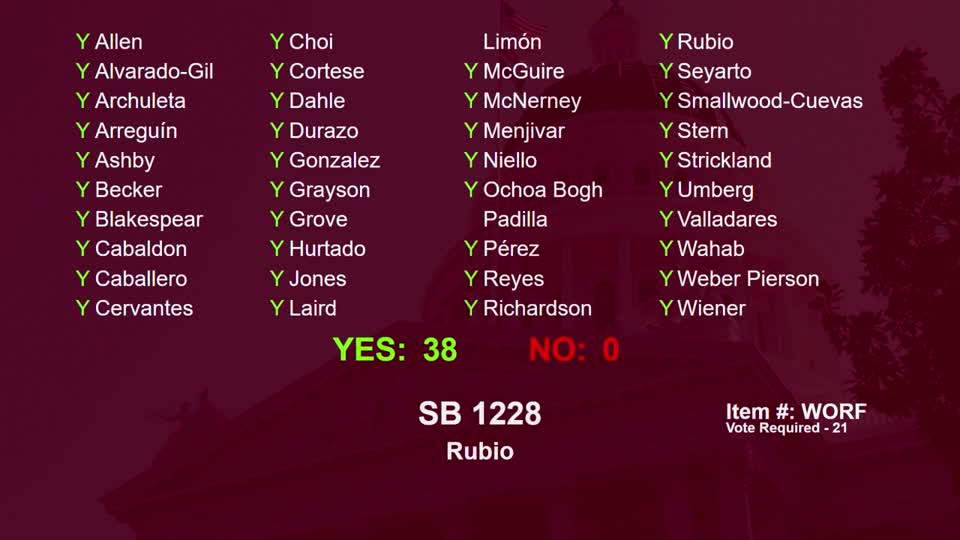 16MIN
Senate Floor
 2MIN
Assembly Floor
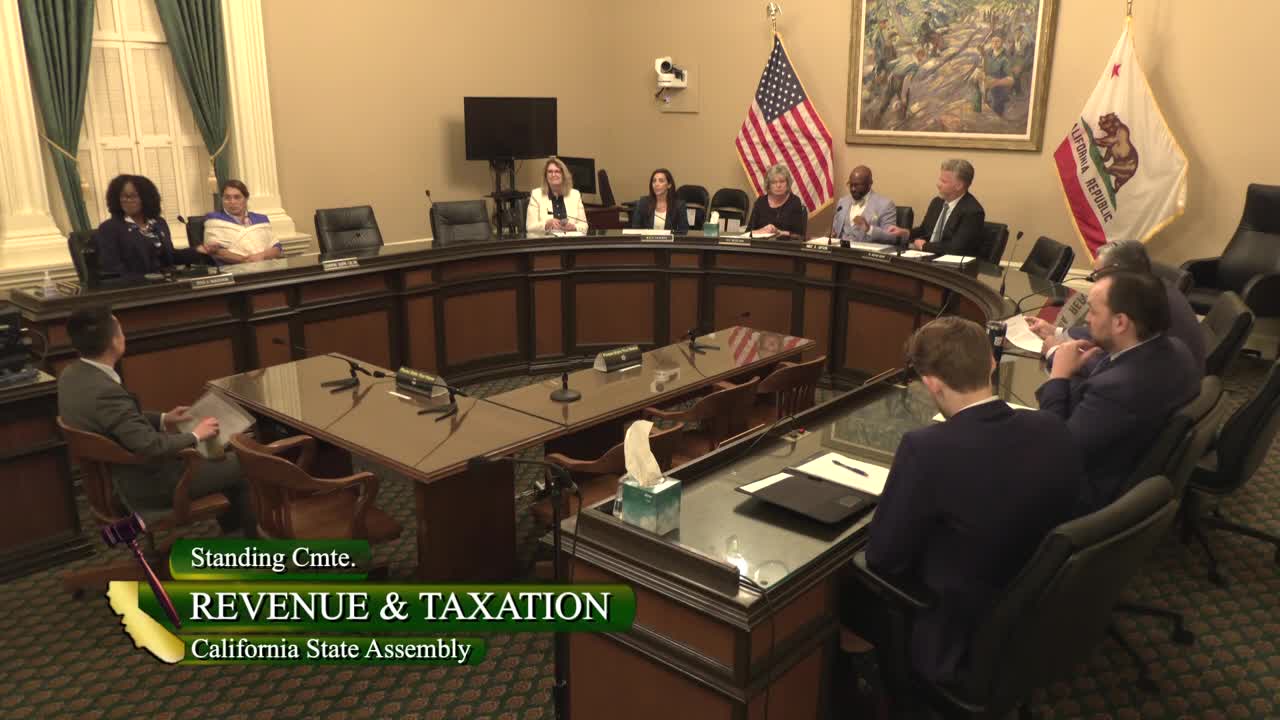 13MIN
Assembly Standing Committee on Revenue and Taxation
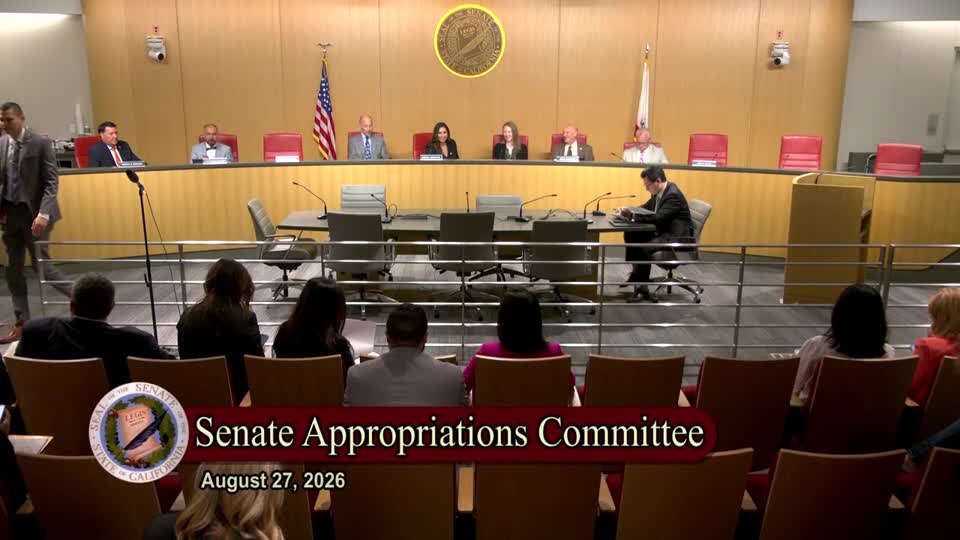 14MIN
Senate Standing Committee on Appropriations
 25MIN
Senate Standing Committee on Revenue and Taxation
 42MIN