AB 818: Permit Streamlining Act: local emergencies.
- Session Year: 2025-2026
- House: Assembly
- Latest Version Date: 2025-10-10
Current Status:
Passed
(2025-10-10: Chaptered by Secretary of State - Chapter 534, Statutes of 2025.)
Introduced
In Committee
Awaiting First Chamber Vote
Passed First Chamber
In Committee
Awaiting Second Chamber Vote
Passed Second Chamber
Enacted
Existing law, the Permit Streamlining Act, requires a public agency to determine whether an application for a development project is complete within specified time periods, as specified. The act requires a public agency that is the lead agency for a development project to approve or disapprove that project within specified time periods. Existing law, the California Emergency Services Act, among other things, authorizes the governing body of a city, county, or city and county to proclaim a local emergency under certain circumstances, as specified, and grants political subdivisions various powers and authorities in periods of local emergency.
This bill would require a city, county, or city and county to approve or deny a complete application, within 10 business days of receipt of the application, for a building permit or an equivalent permit for any of the specified structures intended to be used by a person until the rebuilding or repair of an affected property is complete. By imposing new duties on local agencies, this bill would impose a state-mandated local program.
The bill would include findings that changes proposed by this bill address a matter of statewide concern rather than a municipal affair and, therefore, apply to all cities, including charter cities.
The California Constitution requires the state to reimburse local agencies and school districts for certain costs mandated by the state. Statutory provisions establish procedures for making that reimbursement.
This bill would provide that no reimbursement is required by this act for a specified reason.
Existing law, the Permit Streamlining Act, requires a public agency to determine whether an application for a development project is complete within specified time periods, as specified. The act requires a public agency that is the lead agency for a development project to approve or disapprove that project within specified time periods. Existing law, the California Emergency Services Act, among other things, authorizes the governing body of a city, county, or city and county to proclaim a local emergency under certain circumstances, as specified, and grants political subdivisions various powers and authorities in periods of local emergency.
This bill would exempt projects related to the rebuilding or repair of an affected property, as defined, from specified requirements for solar panel installations, as provided. The bill would require a city, county, or city and county to approve or deny a complete application, within 10 business days of receipt of the application, for a building permit or an equivalent permit for any of the specified structures intended to be used by a person until the rebuilding or repair of an affected property is complete. By imposing new duties on local agencies, this bill would impose a state-mandated local program.
The bill would include findings that changes proposed by this bill address a matter of statewide concern rather than a municipal affair and, therefore, apply to all cities, including charter cities.
The California Constitution requires the state to reimburse local agencies and school districts for certain costs mandated by the state. Statutory provisions establish procedures for making that reimbursement.
This bill would provide that no reimbursement is required by this act for a specified reason.
Existing law, the Permit Streamlining Act, requires a public agency to determine whether an application for a development project is complete within specified time periods, as specified. The act requires a public agency that is the lead agency for a development project to approve or disapprove that project within specified time periods. Existing law, the California Emergency Services Act, among other things, authorizes the governing body of a city, county, or city and county to proclaim a local emergency under certain circumstances, as specified, and grants political subdivisions various powers and authorities in periods of local emergency.
This bill would exempt projects related to the rebuilding or repair of an affected property, as defined, from specified requirements for solar panel installations, as provided. The bill would require a city, county, or city and county to approve an or deny a complete application, within 10 business days of receipt of the application, for a building permit or an equivalent permit for any of the specified structures intended to be used by a person until the rebuilding or repair of an affected property is complete. By imposing new duties on local agencies, this bill would impose a state-mandated local program.
The bill would include findings that changes proposed by this bill address a matter of statewide concern rather than a municipal affair and, therefore, apply to all cities, including charter cities.
The California Constitution requires the state to reimburse local agencies and school districts for certain costs mandated by the state. Statutory provisions establish procedures for making that reimbursement.
This bill would provide that no reimbursement is required by this act for a specified reason.
Existing law, the Permit Streamlining Act, requires a public agency to determine whether an application for a development project is complete within specified time periods, as specified. The act requires a public agency that is the lead agency for a development project to approve or disapprove that project within specified time periods. Existing law, the California Emergency Services Act, among other things, authorizes a local emergency to be proclaimed by the governing body of a city, county, or city and county, county to proclaim a local emergency under certain circumstances, as specified, and grants political subdivisions various powers and authorities in periods of local emergency.
This bill would require a local agency to approve or disapprove an application for a permit necessary to rebuild or repair an affected property, as defined and specified. This bill would exempt projects related to the rebuilding or repair of an affected property, as defined, from specified requirements for solar panel installations, as provided. The bill would require a local agency city, county, or city and county to approve an application, within 14 10 business days of receipt of the application, for a construction building permit for any of the specified structures intended to be used by a person until the rebuilding or repair of an affected property is complete. By imposing new duties on local agencies, this bill would impose a state-mandated local program.
The bill would include findings that changes proposed by this bill address a matter of statewide concern rather than a municipal affair and, therefore, apply to all cities, including charter cities.
The California Constitution requires the state to reimburse local agencies and school districts for certain costs mandated by the state. Statutory provisions establish procedures for making that reimbursement.
This bill would provide that no reimbursement is required by this act for a specified reason.
Existing law, the Permit Streamlining Act, requires a public agency to determine whether an application for a development project is complete within specified time periods, as specified. The act requires a public agency that is the lead agency for a development project to approve or disapprove that project within specified time periods. Existing law, the California Emergency Services Act, among other things, authorizes a local emergency to be proclaimed by the governing body of a city, county, or city and county, as specified, and grants political subdivisions various powers and authorities in periods of local emergency.
This bill would prohibit, during the period of a local emergency, a local agency from denying require a local agency to approve or disapprove an application for a permit necessary to rebuild or repair a residential property affected by a natural disaster unless the permit would result in the property being deemed a substandard building. The bill would require the local agency to approve or disapprove that application within 45 days of receipt of the application, and would require other expedited approvals. The bill would prohibit specified fees from being charged for these projects. an affected property, as defined and specified. The bill would require a local agency to approve an application, within 14 days of receipt of the application, for a construction permit for any of the specified structures intended to be used by a person until the rebuilding or repair of an affected property is complete. By imposing new duties on local agencies, this bill would impose a state-mandated local program.
The bill would include findings that changes proposed by this bill address a matter of statewide concern rather than a municipal affair and, therefore, apply to all cities, including charter cities.
The California Constitution requires the state to reimburse local agencies and school districts for certain costs mandated by the state. Statutory provisions establish procedures for making that reimbursement.
This bill would provide that no reimbursement is required by this act for a specified reason.
Existing law, the Permit Streamlining Act, requires a public agency to determine whether an application for a development project is complete within specified time periods, as specified. The act requires a public agency that is the lead agency for a development project to approve or disapprove that project within specified time periods. Existing law, the California Emergency Services Act, among other things, authorizes a local emergency to be proclaimed by the governing body of a city, county, or city and county, as specified, and grants political subdivisions various powers and authorities in periods of local emergency.
This bill would prohibit, during the period of a local emergency, a local agency from denying an application for a permit necessary to rebuild or repair a residential property affected by a natural disaster unless the permit would result in the property being deemed a substandard building. The bill would require the local agency to approve or disapprove that application within 45 days of receipt of the application, and would require other expedited approvals. The bill would prohibit specified fees from being charged for these projects. By imposing new duties on local agencies, this bill would impose a state-mandated local program.
The bill would include findings that changes proposed by this bill address a matter of statewide concern rather than a municipal affair and, therefore, apply to all cities, including charter cities.
The California Constitution requires the state to reimburse local agencies and school districts for certain costs mandated by the state. Statutory provisions establish procedures for making that reimbursement.
This bill would provide that no reimbursement is required by this act for a specified reason.
(a)For purposes of this section:
(1)Affected property means a residential real property that satisfies either of the following conditions:
(A)The property was destroyed by a disaster that resulted in a declared local emergency.
(B)The property was rendered a substandard building as a result of a disaster that resulted in a declared local emergency.
(2)Disaster has the same meaning as defined in Section 8680.3.
(3)Notwithstanding Section 65930, local agency means any city, county, or city and county.
(4)Local emergency has the same meaning as defined in Section 8680.9.
(5)Substandard building has the same meaning as defined in Section 17920 of the Health and Safety Code.
(6)Utility provider means an entity that provides a utility service connection and that is subject to the requirements of Chapter 5 (commencing with Section 66000).
(b)If a local agency approves a permit necessary to rebuild or repair an affected property, a utility provider shall provide a written notice describing the next steps in the approval process for a connection request for the project within 30 days of receipt of the connection request, unless connection is infeasible due to the disaster.
(c)Notwithstanding any other law, after a parcel has been deemed safe for development by the state, a local agency, or the state and a local agency after a disaster that resulted in a declared local emergency, a local agency shall approve or deny a complete application, within 10 business days of receipt of the application, for a building permit or an equivalent permit for any of the following structures intended to be used by a person until the rebuilding or repairing of an affected property is complete:
(1)A state-approved or federally approved modular home.
(2)A state-approved or federally approved prefabricated home.
(3)A detached structure that would meet the applicable requirements to be an accessory dwelling unit for the affected property.
(d)(1)A local agency shall provide information to the public about the provisions of this section through public information resources, including, but not limited to, on the local agencys internet website.
(2)A local agency shall include all of the following on its internet website:
(A)A checklist of the conditions that would result in a residential property being deemed a substandard building.
(B)A notice that a person may obtain a confidential third-party code inspection from a licensed contractor to determine the units existing condition or potential scope of building improvements before submitting an application for a permit to rebuild or repair an affected property.
(C)For a city, county, or city and county with a population greater than 30,000 residents based on the most recent United States Census Bureau data, a dashboard that tracks permitting timelines and agency performance.
(3)A local agency shall comply with this subdivision by March 31, 2028, and shall update the information required to be provided by this subdivision every four years thereafter.
SEC. 2.The Legislature finds and declares that Section 1 of this act adding Section 65946.1 to the Government Code addresses a matter of statewide concern rather than a municipal affair as that term is used in Section 5 of Article XI of the California Constitution. Therefore, Section 1 of this act applies to all cities, including charter cities.
SEC. 3.No reimbursement is required by this act pursuant to Section 6 of Article XIIIB of the California Constitution because a local agency or school district has the authority to levy service charges, fees, or assessments sufficient to pay for the program or level of service mandated by this act, within the meaning of Section 17556 of the Government Code.
(a)For purposes of this section:
(1)Affected property means a residential real property that satisfies either of the following conditions:
(A)The property was destroyed by a disaster that resulted in a declared local emergency.
(B)The property was rendered a substandard building as a result of a disaster that resulted in a declared local emergency.
(2)Disaster has the same meaning as defined in Section 8680.3.
(3)Notwithstanding Section 65930, local agency means any city, county, or city and county.
(4)Local emergency has the same meaning as defined in Section 8680.9.
(5)Substandard building has the same meaning as defined in Section 17920 of the Health and Safety Code.
(6)Utility provider means an entity that provides a utility service connection and that is subject to the requirements of Chapter 5 (commencing with Section 66000).
(b)Requirements for solar panel installations and associated energy storage systems described in Sections 110.10 and 150.1 of Title 24 of the California Code of Regulations shall not apply to a project for which an application for a permit necessary to rebuild or repair an affected property is submitted to, and approved by, a local agency.(c)(b)If a local agency approves a permit necessary to rebuild or repair an affected property, a utility provider shall provide a written notice describing the next steps in the approval process for a connection request for the project within 30 days of receipt of the connection request, unless connection is infeasible due to the disaster.
(d)(c)Notwithstanding any other law, after a parcel has been deemed safe for development by the state, a local agency, or the state and a local agency after a disaster that resulted in a declared local emergency, a local agency shall approve or deny a complete application, within 10 business days of receipt of the application, for a building permit or an equivalent permit for any of the following structures intended to be used by a person until the rebuilding or repairing of an affected property is complete:
(1)A state-approved or federally approved modular home.
(2)A state-approved or federally approved prefabricated home.
(3)A detached structure that would meet the applicable requirements to be an accessory dwelling unit for the affected property.
(e)(d)(1)A local agency shall provide information to the public about the provisions of this section through public information resources, including, but not limited to, on the local agencys internet website.
(2)A local agency shall include all of the following on its internet website:
(A)A checklist of the conditions that would result in a residential property being deemed a substandard building.
(B)A notice that a person may obtain a confidential third-party code inspection from a licensed contractor to determine the units existing condition or potential scope of building improvements before submitting an application for a permit to rebuild or repair an affected property.
(C)A For a city, county, or city and county with a population greater than 30,000 residents based on the most recent United States Census Bureau data, a dashboard that tracks permitting timelines and agency performance.
(3)A local agency shall comply with this subdivision by March 31, 2028, and shall update the information required to be provided by this subdivision every four years thereafter.
SEC. 2.The Legislature finds and declares that Section 1 of this act adding Section 65946.1 to the Government Code addresses a matter of statewide concern rather than a municipal affair as that term is used in Section 5 of Article XI of the California Constitution. Therefore, Section 1 of this act applies to all cities, including charter cities.
SEC. 3.No reimbursement is required by this act pursuant to Section 6 of Article XIIIB of the California Constitution because a local agency or school district has the authority to levy service charges, fees, or assessments sufficient to pay for the program or level of service mandated by this act, within the meaning of Section 17556 of the Government Code.
(a)For purposes of this section:
(1)Affected property means a residential real property that satisfies any either of the following conditions:
(A)The property was destroyed by a disaster that resulted in a declared local emergency.
(B)The property was declared rendered a substandard building as a result of a disaster that resulted in a declared local emergency.
(C)The property is effectively a substandard building as a result of a disaster that resulted in a declared local emergency.(2)Disaster has the same meaning as defined in Section 8680.3.
(3)Notwithstanding Section 65930, local agency has the same meaning as defined in Section 50001. means any city, county, or city and county.
(4)Local emergency has the same meaning as defined in Section 8680.9.
(5)Substandard building has the same meaning as defined in Section 17920 of the Health and Safety Code.
(6)Utility provider means an entity that provides a utility service connection and that is subject to the requirements of Chapter 5 (commencing with Section 66000).
(b)Requirements for solar panel installations and associated energy storage systems described in Sections 110.10 and 150.1 of Title 24 of the California Code of Regulations shall not apply to a project for which an application for a permit necessary to rebuild or repair an affected property is submitted to, and approved by, a local agency.
(c)If a local agency approves a permit necessary to rebuild or repair an affected property, a utility provider shall provide a written notice describing the next steps in the approval process for a connection request for the project within 30 days of receipt of the connection request, unless connection is infeasible due to the disaster.
(d)Notwithstanding any other law, after a parcel has been deemed safe for development by the state, a local agency, or the state and a local agency after a disaster that resulted in a declared local emergency, a local agency shall approve an or deny a complete application, within 10 business days of receipt of the application, for a building permit or an equivalent permit for any of the following structures intended to be used by a person until the rebuilding or repairing of an affected property is complete:
(1)A state-approved or federally approved modular home.
(2)A state-approved or federally approved prefabricated home.
(3)A detached structure that would meet the applicable requirements to be an accessory dwelling unit for the affected property.
(4)A structure similar to those described in paragraph (1), (2), or (3).(e)(1)A local agency shall provide information to the public about the provisions of this section through public information resources, including, but not limited to, on the local agencys internet website.
(2)A local agency shall include all of the following on its internet website:
(A)A checklist of the conditions that would result in a residential property being deemed a substandard building.
(B)A notice that a person may obtain a confidential third-party code inspection from a licensed contractor to determine the units existing condition or potential scope of building improvements before submitting an application for a permit to rebuild or repair an affected property.
(C)A dashboard that tracks permitting timelines and agency performance.
(3)A local agency shall comply with this subdivision by March 31, 2028, and shall update the information required to be provided by this subdivision every four years thereafter.
SEC. 2.The Legislature finds and declares that Section 1 of this act adding Section 65946.1 to the Government Code addresses a matter of statewide concern rather than a municipal affair as that term is used in Section 5 of Article XI of the California Constitution. Therefore, Section 1 of this act applies to all cities, including charter cities.
SEC. 3.No reimbursement is required by this act pursuant to Section 6 of Article XIIIB of the California Constitution because a local agency or school district has the authority to levy service charges, fees, or assessments sufficient to pay for the program or level of service mandated by this act, within the meaning of Section 17556 of the Government Code.
(a)For purposes of this section:
(1)Affected property means a residential real property that satisfies any of the following conditions:
(A)The property was destroyed by a disaster that resulted in a declared local emergency.
(B)The property was declared a substandard building as a result of a disaster that resulted in a declared local emergency.
(C)The property is effectively a substandard building as a result of a disaster that resulted in a declared local emergency.
(2)Disaster has the same meaning as defined in Section 8680.3.
(3)Notwithstanding Section 65930, local agency has the same meaning as defined in Section 50001.
(3)(4)Local emergency has the same meaning as defined in Section 8680.9.
(4)(5)Substandard building has the same meaning as defined in Section 17920 of the Health and Safety Code.
(b)(1)Notwithstanding any other law, a local agency shall approve or disapprove a permit necessary to rebuild or repair an affected property upon receiving a completed application and within a timeline consistent with applicable provisions of this chapter.(2)(b)Requirements for solar panel installations and associated energy storage systems described in Sections 110.10 and 150.1 of Title 24 of the California Code of Regulations shall not apply to a project for which an application for a permit necessary to rebuild or repair an affected property is submitted to, and approved by, a local agency.
(c)If a local agency approves a permit necessary to rebuild or repair an affected property, a utility provider shall provide a written notice describing the next steps in the approval process for a connection request for the project within 30 days of receipt of the connection request, unless connection is infeasible due to the disaster.
(d)Notwithstanding any other law, after a parcel has been deemed safe for development by the state, a local agency, or the state and a local agency after a disaster that resulted in a declared local emergency, a local agency shall approve an application, within 14 10 business days of receipt of the application, for a construction building permit for any of the following structures intended to be used by a person until the rebuilding or repairing of an affected property is complete:
(1)A state-approved or federally approved modular home.
(2)A state-approved or federally approved prefabricated home.
(3)A detached structure that would meet the applicable requirements to be an accessory dwelling unit for the affected property.
(4)A structure similar to those described in paragraph (1), (2), or (3).
(e)(1)A local agency shall provide information to the public about the provisions of this section through public information resources, including, but not limited to, on the local agencys internet website.
(2)A local agency shall include all of the following on its internet website:
(A)A checklist of the conditions that would result in a residential property being deemed a substandard building.
(B)A notice that a person may obtain a confidential third-party code inspection from a licensed contractor to determine the units existing condition or potential scope of building improvements before submitting an application for a permit to rebuild or repair an affected property.
(C)A dashboard that tracks permitting timelines and agency performance.
(3)A local agency shall comply with this subdivision by March 31, 2028, and shall update the information required to be provided by this subdivision every four years thereafter.
SEC. 2.The Legislature finds and declares that Section 1 of this act adding Section 65946.1 to the Government Code addresses a matter of statewide concern rather than a municipal affair as that term is used in Section 5 of Article XI of the California Constitution. Therefore, Section 1 of this act applies to all cities, including charter cities.
SEC. 3.No reimbursement is required by this act pursuant to Section 6 of Article XIIIB of the California Constitution because a local agency or school district has the authority to levy service charges, fees, or assessments sufficient to pay for the program or level of service mandated by this act, within the meaning of Section 17556 of the Government Code.
(a)For purposes of this section:
(1)Affected property means a residential real property that satisfies any of the following conditions:
(A)The property was destroyed by a disaster that resulted in a declared local emergency.
(B)The property was declared a substandard building as a result of a disaster that resulted in a declared local emergency.
(C)The property is effectively a substandard building as a result of a disaster that resulted in a declared local emergency.
(2)Disaster has the same meaning as defined in Section 8680.3.
(1)(3)Local emergency means a local emergency proclaimed pursuant to Article 14 (commencing with Section 8630) of Chapter 7 of Division 1 of Title 2. has the same meaning as defined in Section 8680.9.
(2)(4)Substandard building has the same meaning as defined in Section 17920 of the Health and Safety Code.
(b)(1)Notwithstanding any other law, during the period of a local emergency, a local agency shall not deny an application for approve or disapprove a permit necessary to rebuild or repair a residential property affected by a natural disaster unless the permit would result in the property being deemed a substandard building. an affected property upon receiving a completed application and within a timeline consistent with applicable provisions of this chapter.
(2)Requirements for solar panel installations and associated energy storage systems described in Sections 110.10 and 150.1 of Title 24 of the California Code of Regulations shall not apply to a project for which an application for a permit necessary to rebuild or repair an affected property is submitted to, and approved by, a local agency.
(c)(1)A local agency shall approve or disapprove an application described in subdivision (b) within 45 days of receipt of the application.(2)If a local agency fails to comply with paragraph (1), the application shall be deemed approved and the local agency shall take the necessary steps to issue a valid permit.(d)If a local agency denies an application submitted pursuant to subdivision (b), the local agency shall, within the time period described in subdivision (c), return in writing a full set of comments to the applicant with a list of items that are defective or deficient and a description of how the application can be remedied by the applicant.(e)To comply with the requirements described in subdivision (b), a local agency shall develop a fast-track application process for use during the period of a local emergency that allows the reuse and fast approval of previously approved plans and allows all of the following:(1)Use of the plan on a different parcel than was previously approved.(2)Flexibility in materials.(3)Flexibility in appearances.(4)Minor interior layout modifications.(f)(1)To comply with the requirements described in subdivision (b), a local agency may authorize an independent third-party inspector to inspect a unit for compliance with this section.(2)A local agency shall publish a list on its internet website on or before March 31, 2026, of approved independent third-party inspectors that an applicant may hire and compensate to conduct an approval described in paragraph (1).(g)(1)(c)If an application is approved pursuant to subdivision (b), a local agency approves a permit necessary to rebuild or repair an affected property, a utility provider shall approve or deny provide a written notice describing the next steps in the approval process for a connection request for the project within 30 days of receipt of the request. connection request, unless connection is infeasible due to the disaster.
(2)The Public Utilities Commission and the Department of Housing and Community Development shall jointly monitor and enforce compliance with this subdivision.(h)(1)A person submitting an application pursuant to subdivision (b) shall not be required to pay any of the following:(A)An impact fee, as defined in Section 66324.(B)A fee or charge levied pursuant to Chapter 6 (commencing with Section 17620) of Part 10.5 of Division 1 of Title 1 of the Education Code.(C)An impact fee or connection or capacity charge for any unpermitted section of the property constructed before January 1, 2020, unless both of the following conditions are met:(i)Utility infrastructure is required to prevent the property from being deemed a substandard building.(ii)The fee or charge is authorized by subdivision (e) of Section 66324.(2)Requirements for solar panel installations and associated energy storage systems described in Sections 110.10 and 150.1 of Title 24 of the California Code of Regulations shall not apply to a project for which an application is submitted pursuant to subdivision (b).(i)Notwithstanding any other law, a local agency shall approve an application, within two days of receiving the application, for construction of a state-approved or federally approved modular home or similar structure for use by a person who has submitted an application pursuant to subdivision (b) until the residential property to be rebuilt or repaired pursuant to subdivision (b) is completed.(d)Notwithstanding any other law, after a parcel has been deemed safe for development by the state, a local agency, or the state and a local agency after a disaster that resulted in a declared local emergency, a local agency shall approve an application, within 14 days of receipt of the application, for a construction permit for any of the following structures intended to be used by a person until the rebuilding or repairing of an affected property is complete:
(1)A state-approved or federally approved modular home.
(2)A state-approved or federally approved prefabricated home.
(3)A detached structure that would meet the applicable requirements to be an accessory dwelling unit for the affected property.
(4)A structure similar to those described in paragraph (1), (2), or (3).
(j)(e)(1)A local agency shall provide information to the public about the provisions of this section through public information resources, including, but not limited to, on the local agencys internet website.
(2)A local agency shall include all of the following on its internet website:
(A)A checklist of the conditions that would result in a residential property being deemed a substandard building.
(B)A notice that a person may obtain a confidential third-party code inspection from a licensed contractor to determine the units existing condition or potential scope of building improvements before submitting an application for a permit pursuant to subdivision (b). to rebuild or repair an affected property.
(C)Clear instructions on accessing third-party plan checkers and inspectors, utilizing preapproved designs, and navigating local building codes(D)(C)A dashboard that tracks permitting timelines and agency performance.
(3)A local agency shall comply with this subdivision by March 31, 2016, 2028, and shall update the information required to be provided by this subdivision every two four years thereafter.
SEC. 2.The Legislature finds and declares that Section 1 of this act adding Section 65946.1 to the Government Code addresses a matter of statewide concern rather than a municipal affair as that term is used in Section 5 of Article XI of the California Constitution. Therefore, Section 1 of this act applies to all cities, including charter cities.
SEC. 3.No reimbursement is required by this act pursuant to Section 6 of Article XIIIB of the California Constitution because a local agency or school district has the authority to levy service charges, fees, or assessments sufficient to pay for the program or level of service mandated by this act, within the meaning of Section 17556 of the Government Code.
REVISIONS: HeadingLine 2.(a)For purposes of this section:
(1)Local emergency means a local emergency proclaimed pursuant to Article 14 (commencing with Section 8630) of Chapter 7 of Division 1 of Title 2.
(2)Substandard building has the same meaning as defined in Section 17920 of the Health and Safety Code.
(b)Notwithstanding any other law, during the period of a local emergency, a local agency shall not deny an application for a permit necessary to rebuild or repair a residential property affected by a natural disaster unless the permit would result in the property being deemed a substandard building.
(c)(1)A local agency shall approve or disapprove an application described in subdivision (b) within 45 days of receipt of the application.
(2)If a local agency fails to comply with paragraph (1), the application shall be deemed approved and the local agency shall take the necessary steps to issue a valid permit.
(d)If a local agency denies an application submitted pursuant to subdivision (b), the local agency shall, within the time period described in subdivision (c), return in writing a full set of comments to the applicant with a list of items that are defective or deficient and a description of how the application can be remedied by the applicant.
(e)To comply with the requirements described in subdivision (b), a local agency shall develop a fast-track application process for use during the period of a local emergency that allows the reuse and fast approval of previously approved plans and allows all of the following:
(1)Use of the plan on a different parcel than was previously approved.
(2)Flexibility in materials.
(3)Flexibility in appearances.
(4)Minor interior layout modifications.
(f)(1)To comply with the requirements described in subdivision (b), a local agency may authorize an independent third-party inspector to inspect a unit for compliance with this section.
(2)A local agency shall publish a list on its internet website on or before March 31, 2026, of approved independent third-party inspectors that an applicant may hire and compensate to conduct an approval described in paragraph (1).
(g)(1)If an application is approved pursuant to subdivision (b), a utility provider shall approve or deny a connection request for the project within 30 days of receipt of the request.
(2)The Public Utilities Commission and the Department of Housing and Community Development shall jointly monitor and enforce compliance with this subdivision.
(h)(1)A person submitting an application pursuant to subdivision (b) shall not be required to pay any of the following:
(A)An impact fee, as defined in Section 66324.
(B)A fee or charge levied pursuant to Chapter 6 (commencing with Section 17620) of Part 10.5 of Division 1 of Title 1 of the Education Code.
(C)An impact fee or connection or capacity charge for any unpermitted section of the property constructed before January 1, 2020, unless both of the following conditions are met:
(i)Utility infrastructure is required to prevent the property from being deemed a substandard building.
(ii)The fee or charge is authorized by subdivision (e) of Section 66324.
(2)Requirements for solar panel installations and associated energy storage systems described in Sections 110.10 and 150.1 of Title 24 of the California Code of Regulations shall not apply to a project for which an application is submitted pursuant to subdivision (b).
(i)Notwithstanding any other law, a local agency shall approve an application, within two days of receiving the application, for construction of a state-approved or federally approved modular home or similar structure for use by a person who has submitted an application pursuant to subdivision (b) until the residential property to be rebuilt or repaired pursuant to subdivision (b) is completed.
(j)(1)A local agency shall provide information to the public about the provisions of this section through public information resources, including, but not limited to, on the local agencys internet website.
(2)A local agency shall include all of the following on its internet website:
(A)A checklist of the conditions that would result in a residential property being deemed a substandard building.
(B)A notice that a person may obtain a confidential third-party code inspection from a licensed contractor to determine the units existing condition or potential scope of building improvements before submitting an application for a permit pursuant to subdivision (b).
(C)Clear instructions on accessing third-party plan checkers and inspectors, utilizing preapproved designs, and navigating local building codes
(D)A dashboard that tracks permitting timelines and agency performance.
(3)A local agency shall comply with this subdivision by March 31, 2016, and shall update the information required to be provided by this subdivision every two years thereafter.
SEC. 2.The Legislature finds and declares that Section 1 of this act adding Section 65946.1 to the Government Code addresses a matter of statewide concern rather than a municipal affair as that term is used in Section 5 of Article XI of the California Constitution. Therefore, Section 1 of this act applies to all cities, including charter cities.
SEC. 3.No reimbursement is required by this act pursuant to Section 6 of Article XIIIB of the California Constitution because a local agency or school district has the authority to levy service charges, fees, or assessments sufficient to pay for the program or level of service mandated by this act, within the meaning of Section 17556 of the Government Code.
|
Date
|
Status
|
|---|---|
| Oct 10, 2025 | Chaptered by Secretary of State - Chapter 534, Statutes of 2025. |
| Oct 10, 2025 | Approved by the Governor. |
| Sep 22, 2025 | Enrolled and presented to the Governor at 3 p.m. |
| Sep 10, 2025 | Senate amendments concurred in. To Engrossing and Enrolling. (Ayes 79. Noes 0. Page 3228.). |
| Sep 9, 2025 | In Assembly. Concurrence in Senate amendments pending. |
| Sep 9, 2025 | Read third time. Passed. Ordered to the Assembly. (Ayes 40. Noes 0. Page 2672.). |
| Sep 8, 2025 | Read second time. Ordered to third reading. |
| Sep 4, 2025 | Read third time and amended. Ordered to second reading. |
| Aug 20, 2025 | Read second time. Ordered to third reading. |
| Aug 19, 2025 | From committee: Be ordered to second reading pursuant to Senate Rule 28.8. |
| Jul 17, 2025 | Read second time and amended. Re-referred to Com. on APPR. |
| Jul 16, 2025 | From committee: Amend, and do pass as amended and re-refer to Com. on APPR. (Ayes 10. Noes 0.) (July 15). |
| Jul 2, 2025 | From committee: Do pass and re-refer to Com. on HOUSING. (Ayes 7. Noes 0.) (July 2). Re-referred to Com. on HOUSING. |
| Jun 25, 2025 | From committee chair, with author's amendments: Amend, and re-refer to committee. Read second time, amended, and re-referred to Com. on L. GOV. |
| Jun 4, 2025 | Referred to Coms. on L. GOV. and HOUSING. |
| May 23, 2025 | In Senate. Read first time. To Com. on RLS. for assignment. |
| May 23, 2025 | Read third time. Passed. Ordered to the Senate. (Ayes 71. Noes 0. Page 1662.) |
| May 15, 2025 | Read second time. Ordered to Consent Calendar. |
| May 14, 2025 | From committee: Do pass. To Consent Calendar. (Ayes 15. Noes 0.) (May 14). |
| Apr 30, 2025 | From committee: Do pass and re-refer to Com. on APPR. with recommendation: To Consent Calendar. (Ayes 10. Noes 0.) (April 30). Re-referred to Com. on APPR. |
| Apr 30, 2025 | Coauthors revised. |
| Apr 28, 2025 | Re-referred to Com. on H. & C.D. |
| Apr 24, 2025 | Read second time and amended. |
| Apr 23, 2025 | From committee: Amend, and do pass as amended and re-refer to Com. on H. & C.D. (Ayes 10. Noes 0.) (April 23). |
| Apr 21, 2025 | (Pending re-refer to Com. on H. & C. D.) |
| Apr 21, 2025 | Assembly Rule 56 suspended. (Page 1163.) |
| Mar 10, 2025 | Referred to Coms. on L. GOV. and H. & C.D. |
| Feb 20, 2025 | From printer. May be heard in committee March 22. |
| Feb 19, 2025 | Read first time. To print. |
|
Date
|
Description
|
Location
|
Votes
|
|
|---|---|---|---|---|
| Sep 10, 2025 | AB 818 Ávila Farías Concurrence in Senate Amendments | Assembly Floor |
Passed |
|
| Sep 9, 2025 | Assembly 3rd Reading AB818 Ávila Farías et al. By Cabaldon | Senate Floor |
Passed |
|
| Jul 15, 2025 | Do pass as amended, but first amend, and re-refer to the Committee on [Appropriations] | Senate Standing Committee on Housing |
Passed |
|
| Jul 2, 2025 | Do pass, but first be re-referred to the Committee on [Housing] | Senate Standing Committee on Local Government |
Passed |
|
| May 23, 2025 | AB 818 Ávila Farías Consent Calendar Second Day Regular Session | Assembly Floor |
Passed |
|
| May 14, 2025 | Do pass. To Consent Calendar. | Assembly Standing Committee on Appropriations |
Passed |
|
| Apr 30, 2025 | Do pass and be re-referred to the Committee on [Appropriations] with recommendation: To Consent Calendar | Assembly Standing Committee on Housing and Community Development |
Passed |
|
| Apr 23, 2025 | Do pass as amended and be re-referred to the Committee on [Housing and Community Development] | Assembly Standing Committee on Local Government |
Passed |
This list shows positions taken on this bill by organizations on the date displayed, which is linked to the original source.
Positions by individuals are not included.
|
Organization
|
Position
|
Date
|
|---|---|---|
| Abundant Housing LA | ** Support | |
| California Apartment Association | ** Support | |
| California Association Of Realtors | ** Support | |
| California Business Properties Association | ** Support | |
| California YIMBY | ** Support | |
| CDP Rural Caucus | ** Support | |
| Circulate San Diego | ** Support | |
| Coalition For Adequate School Housing | ** Against | |
| East Bay YIMBY | ** Support | |
| Eden Housing | ** Support | |
| Greater Conejo Valley Chamber of Commerce | ** Support | |
| Grow the Richmond | ** Support | |
| Housing Action Coalition | ** Support | |
| Housing Trust Silicon Valley | ** Support | |
| Inner City Law Center | ** Support | |
| Institute for Responsive Government Action | ** Support | |
| Livable California | ** Against | |
| MidPen Housing | ** Support | |
| Mountain View YIMBY | ** Support | |
| Napa-Solano for Everyone | ** Support | |
| Northern Neighbors | ** Support | |
| Peninsula for Everyone | ** Support | |
| San Francisco Yimby | ** Support | |
| Santa Cruz Yimby | ** Support | |
| Santa Rosa Yimby | ** Support | |
| SLOCo YIMBY | ** Support | |
| SoLa Impact | ** Support | |
| South Bay Yimby | ** Support | |
| Southern California Obtainable Housing | ** Support | |
| SPUR | ** Support | |
| Ventura County YIMBY | ** Support | |
| Yimby Action | ** Support | |
| YIMBY Los Angeles | ** Support |
CONCURRENCE IN SENATE AMENDMENTS
CSA1 Bill Id:AB 818
Author:(Ávila Farías)
As Amended Ver:September 4, 2025
Majority vote
SUMMARY
Requires a local agency to approve a permit for specified structures intended to be used by a person until the rebuilding or repairing of a property destroyed or damaged by a natural disaster is complete.
Senate Amendments
Define the following terms:
- "Local agency" to mean any city, county, or city and county.
- "Utility provider" to mean an entity that provides a utility service in connection and that is subject to the Mitigation Fee Act.
Delete the solar panel installation and energy storage system waiver for affected properties.
Require a local agency to approve or deny a complete application for a building permit or equivalent permit within 10 business days of receipt, instead of approving an application within 14 days of receipt of an application for a construction permit.
Limit the requirement that a local agency adopt a dashboard that tracks permitting timelines and agency performance to only apply to local agencies with populations of 30,000 residents or more.
Make technical, clarifying, and conforming changes.
COMMENTS
2025 Los Angeles fires. In early January 2025, extremely dry conditions and high winds in Los Angeles resulted in two of the most destructive wildfires in state history. The Palisades fire, which started on January 7th, burned a total of 23,448 acres and damaged or destroyed almost 8,000 structures in the Pacific Palisades and Topanga State Park area of west Los Angeles. That same day, other fires also broke out in the greater Los Angeles area: the Eaton and Hughes fires. The Eaton fire consumed 14,021 acres and damaged or destroyed more than 10,000 structures, including significant portions of the unincorporated community of Altadena. The fires destroyed about half of all properties in both Palisades and Altadena and caused the deaths of 30 people.
Real estate losses have been estimated to be as high as $30 billion, and just under 13,000 households were displaced by the Palisades and Eaton fires. An estimated 9,592 single family homes and condominiums, 678 apartment units, 2,210 duplex and bungalow courts, and 373 mobilehomes were either heavily damaged or destroyed.
Governor Newsom declared a state of emergency the day the fires started, put into place protections against price gouging, and issued an executive order prohibiting landlords in Los Angeles from evicting tenants for violating their leases by providing shelter in their unit for residents displaced by the fires. The Governor also issued executive orders aimed at promoting and streamlining the construction of temporary shelters and the rebuilding of structures destroyed by the fires.
Rebuilding temporary and permanent housing after disaster. Rebuilding a home or temporary housing after a natural disaster is generally subject to the same local approval processes that govern all housing development in California, unless otherwise modified by state or local executive orders or actions taken after the disaster occurs. However, state law provides that:
- Coastal development permits aren't required to replace private structures destroyed by a disaster.
- Local agencies can't charge impact fees for the reconstruction of property destroyed by a disaster, but they can charge processing fees.
- The California Environmental Quality Act doesn't apply to repairs and replacement of structures after a disaster.
- Local governments can expedite permits for rebuilding after a disaster, including waiving fees and streamlining requirements.
State and local agencies have taken numerous steps to reduce barriers to rebuilding in the areas burned in the Palisades and Eaton fires. Among those steps have been to expedite the process of building or siting temporary housing for residents that lost their homes while they are recovering from the fire and waiting to rebuild permanent structures. Among others, Governor Newsom issued Executive order N-9-25 on January 16, 2025 that:
- Directs various state agencies, the County of Los Angeles, and other local governments with properties that were destroyed by the fires to develop a comprehensive plan for intermediate and long-term housing for displaced residents.
- Allows an accessory dwelling unit (ADU) to receive a certificate of occupancy prior to the certificate of occupancy is issued for the primary dwelling.
- Suspends for three years state laws and local ordinances that otherwise prohibit placing a manufactured home, mobilehome, or recreational vehicle (RV) on a private lot for use during reconstruction efforts.
Both the City of Los Angeles and the County of Los Angeles have established expedited procedures for approving temporary housing in the form of manufactured homes, mobilehomes, or RVs on lots that contained dwellings destroyed or severely damaged by the wildifires.
Both the city and the county have also expedited rebuilds—regardless of whether they meet current zoning codes—of "like-for-like" rebuilds of permanent housing: housing built to no more than 110% of the original dwelling size in substantially the same location on the property. While local agencies can waive their zoning codes, structures must be rebuilt to current zoning codes. As an exception to that requirement, Governor Newsom issued Executive Order N-20-25 on February 13th that allows homes in LA County that were originally designed and constructed to the 2019 building code and were destroyed in the disasters to be rebuilt using the same design that met the 2019 codes at the discretion of the local government, rather than having to be redesigned to meet newer building codes.
Property owners seeking to rebuild after a disaster also must receive service from various utilities, including electric utilities. SB 410 (Becker, 2023) and AB 50 (Wood, 2023), directed the California Public Utilities Commission (CPUC), which regulates investor-owned utilities, to define reasonable energization times for new or upgraded electrical loads and establish a process for reporting delays. On September 12, 2024, the CPUC approved decision D.24.09.020, which established average and maximum timelines for utilities, including a maximum of 45 days to approve or deny an application for energization and nearly one year (306 to 357 days, depending on the type of service) to complete the energization. Special districts that provide services, including electrical service, are subject to different requirements: if they receive an application for service to a housing project, they must respond within 30 business days for projects of 25 units or fewer, and 60 business days for larger projects, and indicate any needed additional information (AB 281, Grayson, 2024).
Since January 1, 2020, the building code has required new construction, including single family homes, to include solar photovoltaic systems (solar panels) that are designed to offset the electrical consumption of the proposed building. However, AB 178 (Dahle, 2019) exempted, until January 1, 2023, residential construction from complying with the solar requirements in the recently adopted building standards when the construction is in response to a disaster in an area in which a state of emergency has been proclaimed by the Governor if certain requirements are met.
According to the Author
"Even when the last of the flames have been extinguished, for families who tragically lost their homes, the road to recovery and rebuilding may seem endless. As current law does not outline specific or streamlined permit processes for residential properties affected by natural disasters, communities rebuilding their pre-existing properties can face extensive regulatory, administrative and financial challenges.
"AB 818 takes lessons learned from past response efforts and provides ‘off the shelf’ guidance to policy makers and homeowners to restore their communities. It outlines specific procedures for municipal staff to implement, with the help of the California Department of Housing & Community Development, to expedite permits and inspections, use fire-resistant and energy-efficient materials, and flexibility to rebuild previously unpermitted structures. While we cannot give back what the homeowner has lost, we can help them rebuild a home that's even better and do it more expediently."
Arguments in Support
The California Apartment Association writes in support of a previous version of the bill, "As California faces increased threats of natural disasters year after year, it is vital that our communities get all the help they can when it comes to rebuilding. Homeowners rebuilding after a disaster can face extensive regulatory, administrative, and financial challenges. AB 818 provides specific procedures for municipal staff to implement, with the help of the California Department of Housing & Community Development, to expedite permits and inspections, use fire-resistant and energy-efficient materials, and flexibility to rebuild previously unpermitted structures."
Arguments in Opposition
Livable California writes in opposition to a previous version, "The goal of expediting permitting in a disaster area is laudable, but the 14-day requirement is unreasonable. City departments are burdened by budget limitations and many state requirements. A 30 to 45 day requirement would be more reasonable."
FISCAL COMMENTS
According to the Senate Appropriations Committee, pursuant to Senate Rule 28.8, negligible state costs.
VOTES:
ASM LOCAL GOVERNMENT: 10-0-0
YES: Carrillo, Ta, Hoover, Pacheco, Ramos, Ransom, Blanca Rubio, Stefani, Ward, Wilson
ASM HOUSING AND COMMUNITY DEVELOPMENT: 10-0-2
YES: Haney, Patterson, Ávila Farías, Caloza, Garcia, Kalra, Lee, Quirk-Silva, Ta, Wicks
ABS, ABST OR NV: Tangipa, Wilson
ASM APPROPRIATIONS: 15-0-0
YES: Wicks, Sanchez, Arambula, Calderon, Caloza, Dixon, Elhawary, Fong, Mark González, Hart, Pacheco, Pellerin, Solache, Ta, Tangipa
ASSEMBLY FLOOR: 71-0-8
YES: Addis, Aguiar-Curry, Ahrens, Alanis, Alvarez, Arambula, Ávila Farías, Bains, Bauer‑Kahan, Bennett, Berman, Boerner, Bonta, Calderon, Caloza, Carrillo, Castillo, Connolly, Davies, DeMaio, Dixon, Elhawary, Flora, Fong, Gabriel, Gallagher, Garcia, Gipson, Jeff Gonzalez, Mark González, Hadwick, Haney, Harabedian, Hart, Hoover, Irwin, Jackson, Kalra, Krell, Lackey, Lee, Lowenthal, Macedo, McKinnor, Muratsuchi, Ortega, Pacheco, Papan, Patel, Patterson, Pellerin, Petrie-Norris, Quirk-Silva, Ramos, Ransom, Celeste Rodriguez, Michelle Rodriguez, Rogers, Blanca Rubio, Schiavo, Solache, Soria, Stefani, Ta, Tangipa, Valencia, Wallis, Ward, Wilson, Zbur, Rivas
ABS, ABST OR NV: Bryan, Chen, Ellis, Nguyen, Sanchez, Schultz, Sharp-Collins, Wicks
UPDATED
VERSION: September 4, 2025
CONSULTANT: Linda Rios / L. GOV. / (916) 319-3958 FN: 0001966
SENATE RULES COMMITTEE Office of Senate Floor Analyses (916) 651-1520 Fax: (916) 327-4478 | AB 818 |
THIRD READING
Bill No: AB 818
Author: Ávila Farías (D), et al.
Amended: 9/4/25 in Senate
Vote: 21
SENATE LOCAL GOVERNMENT COMMITTEE: 7-0, 7/2/25
AYES: Durazo, Choi, Arreguín, Cabaldon, Laird, Seyarto, Wiener
SENATE HOUSING COMMITTEE: 10-0, 7/15/25
AYES: Wahab, Seyarto, Arreguín, Caballero, Cortese, Durazo, Gonzalez, Grayson, Ochoa Bogh, Padilla
NO VOTE RECORDED: Cabaldon
SENATE APPROPRIATIONS COMMITTEE: Senate Rule 28.8
ASSEMBLY FLOOR: 71-0, 5/23/25 (Consent) - See last page for vote
SUBJECT: Permit Streamlining Act: local emergencies
SOURCE: Author
DIGEST:
This bill requires local agencies and utility providers to expedite certain aspects of the approval process and waives specified green energy standards for residential developments on properties that were destroyed in a disaster.
Senate Floor Amendments of 9/4/25 remove the provision that waive specified green energy standards and limit the requirement to develop a dashboard to cities or counties with populations of over 30,000 residents.
ANALYSIS:
Existing law:
- Authorizes, via the California Emergency Services Act, the Governor to declare a state of emergency, and local officials and local governments to declare a local emergency, when specified conditions of disaster or extreme peril to the safety of persons and property exist.
- Establishes the Permit Streamlining Act, which, among other things, establishes time limits within which state and local government agencies must either approve or disapprove permits to entitle a development.
- Establishes standards and requirements for local agencies to review non-discretionary post-entitlement phase permits, including time limits within which local agencies must either approve or disapprove these permits.
- Establishes the Powering Up Californians Act which requires the CPUC, on or before September 30, 2024, to establish reasonable average and maximum target energization time periods, as defined, and a procedure for customers to report energization delays to the commission, as provided. Requires the CPUC to require the electrical corporation to take remedial actions necessary to achieve the commission’s targets and requires all reports to be publicly available.
This bill:
- Defines the following terms:
- “Affected property” means a residential real property that satisfies any of the following conditions:
- The property was destroyed by a disaster that resulted in a declared local emergency.
- The property was rendered a substandard building as a result of a disaster that resulted in a declared local emergency.
- “Disaster” means a fire, flood, storm, tidal wave, earthquake, terrorism, epidemic, or other similar public calamity that the Governor determines presents a threat to public safety.
- “Local agency” means a county, city, or city and county.
- “Local emergency” means a condition of extreme peril to persons or property proclaimed as such by the governing body of the local agency, as specified.
- “Substandard building” means a building, or portion thereof, including any building used for human habitation that is declared substandard, as specified.
- “Utility provider” means an entity that provides a utility service connection and that is subject to the Mitigation Fee Act
- “Affected property” means a residential real property that satisfies any of the following conditions:
- Requires a utility provider to provide a written notice describing the next steps in the approval process for a connection request for the project within 30 days of receipt of a connection request for a project with an approved local agency permit to rebuild or repair an affected property, as specified.
- Requires a local agency to approve or deny an application for a building permit within 10 business days for a modular home, a prefabricated home, an accessory dwelling unit (ADU) that is intended to be used by a person until the rebuilding or repairing of their affected property is complete.
- Requires local agencies to update the following on their internet website every four years, starting March 31, 2028, with information regarding:
- The requirements included in this bill.
- The conditions that result in a property being deemed substandard.
- A notification of a person’s right to obtain a confidential third-party code inspection of their property.
- For a city, county, or city and county with a population greater than 30,000 residents, a dashboard that tracks permitting timelines and agency performance.
Background
2025 Los Angeles fires. In early January 2025, extremely dry conditions and high winds in Los Angeles resulted in two of the most destructive wildfires in state history. The Palisades fire, which started on January 7th, burned a total of 23,448 acres and damaged or destroyed almost 8,000 structures in the Pacific Palisades and Topanga State Park area of west Los Angeles. That same day, other fires also broke out in the greater Los Angeles area: the Eaton and Hughes fires. The Eaton fire consumed 14,021 acres and damaged or destroyed more than 10,000 structures, including significant portions of the unincorporated community of Altadena. The fires destroyed about half of all properties in both Palisades and Altadena and caused the deaths of 30 people.
Real estate losses have been estimated to be as high as $30 billion, and just under 13,000 households were displaced by the Palisades and Eaton fires. An estimated 9,592 single family homes and condominiums, 678 apartment units, 2,210 duplex and bungalow courts, and 373 mobilehomes were either heavily damaged or destroyed.
Governor Newsom declared a state of emergency the day the fires started, put into place protections against price gouging, and issued an executive order prohibiting landlords in Los Angeles from evicting tenants for violating their leases by providing shelter in their unit for residents displaced by the fires. The Governor also issued executive orders aimed at promoting and streamlining the construction of temporary shelters and the rebuilding of structures destroyed by the fires.
Rebuilding temporary and permanent housing after disaster. State and local agencies have taken numerous steps to reduce barriers to rebuilding in the areas burned in the Palisades and Eaton fires. Among those steps have been to expedite the process of building or siting temporary housing for residents that lost their homes while they are recovering from the fire and waiting to rebuild permanent structures. Among others, both the City of Los Angeles and the County of Los Angeles have established expedited procedures for approving temporary housing in the form of manufactured homes, mobilehomes, or RVs on lots that contained dwellings destroyed or severely damaged by the wildifires.
Both the city and the county have also expedited rebuilds—regardless of whether they meet current zoning codes—of “like-for-like” rebuilds of permanent housing: housing built to no more than 110% of the original dwelling size in substantially the same location on the property. While local agencies can waive their zoning codes, structures must generally be rebuilt to current zoning codes.
Property owners seeking to rebuild after a disaster also must receive service from various utilities, including electric utilities. SB 410 (Becker, Chapter 394, Statutes of 2023) and AB 50 (Wood, Chapter 317, Statutes of 2023), directed the California Public Utilities Commission (CPUC), which regulates investor-owned utilities, to define reasonable energization times for new or upgraded electrical loads and establish a process for reporting delays. On September 12, 2024, the CPUC approved decision D.24.09.020, which established average and maximum timelines for utilities, including a maximum of 45 days to approve or deny an application for energization and nearly one year (306 to 357 days, depending on the type of service) to complete the energization. Special districts that provide services, including electrical service, are subject to different requirements: if they receive an application for service to a housing project, they must respond within 30 business days for projects of 25 units or fewer, and 60 business days for larger projects, and indicate any needed additional information AB 281 (Grayson, Chapter 735, Statutes of 2023).
Since January 1, 2020, the building code has required new construction, including single family homes, to include solar photovoltaic systems (solar panels) that are designed to offset the electrical consumption of the proposed building. However, AB 178 (Dahle, Chapter 259, Statutes of 2019) exempted, until January 1, 2023, residential construction from complying with the solar requirements in the recently adopted building standards when the construction is in response to a disaster in an area in which a state of emergency has been proclaimed by the Governor if certain requirements are met.
The author wants to ease the process of rebuilding after a disaster.
Comments
Purpose of this bill. According to the author, “Even when the last of the flames have been extinguished, for families who tragically lost their homes, the road to recovery and rebuilding may seem endless. As current law does not outline specific or streamlined permit processes for residential properties affected by natural disasters, communities rebuilding their pre-existing properties can face extensive regulatory, administrative and financial challenges.
“AB 818 takes lessons learned from past response efforts and provides ‘off the shelf’ guidance to policy makers and homeowners to restore their communities. It outlines specific procedures for municipal staff to implement, with the help of the California Department of Housing & Community Development, to expedite permits and inspections, use fire-resistant and energy-efficient materials, and flexibility to rebuild previously unpermitted structures. While we cannot give back what the homeowner has lost, we can help them rebuild a home that’s even better and do it more expediently.”
Is it needed? State and local agencies spring into action after a disaster. In the case of the Los Angeles fires, the Governor, the City of Los Angeles, and the County of Los Angeles adopted policies to pave the way for rapid approvals of temporary housing. AB 818 codifies some of these policies. Having these policies in place for future disasters may expedite approvals of temporary housing. On the other hand, local governments experiencing disasters have first-hand knowledge of the policies that will be most helpful to their constituents based on local conditions and the nature of the specific disaster. They can also act more quickly than the state. AB 818 requires local governments to take specified steps, which may differ from the priorities of local governments that are closer to the disaster. Will AB 818 will help or hinder local recovery efforts?
FISCAL EFFECT: Appropriation: No Fiscal Com.: Yes Local: Yes
SUPPORT: (Verified 9/9/25)
Abundant Housing LA
California Apartment Association
California Association of Realtors
California Business Properties Association
California Yimby
Cdp Rural Caucus
Circulate San Diego
East Bay Yimby
Eden Housing
Greater Conejo Valley Chamber of Commerce
Grow the Richmond
Housing Action Coalition
Housing Trust Silicon Valley
Inner City Law Center
Institute for Responsive Government Action
Midpen Housing
Mountain View Yimby
Napa-solano for Everyone
Northern Neighbors
Peninsula for Everyone
San Francisco Yimby
Santa Cruz Yimby
Santa Rosa Yimby
Sloco Yimby
Sola Impact
South Bay Yimby
Southern California Obtainable Housing
Spur
Ventura County Yimby
Yimby Action
Yimby Los Angeles
OPPOSITION: (Verified 9/9/25)
Livable California
ASSEMBLY FLOOR: 71-0, 5/23/25
AYES: Addis, Aguiar-Curry, Ahrens, Alanis, Alvarez, Arambula, Ávila Farías, Bains, Bauer-Kahan, Bennett, Berman, Boerner, Bonta, Calderon, Caloza, Carrillo, Castillo, Connolly, Davies, DeMaio, Dixon, Elhawary, Flora, Fong, Gabriel, Gallagher, Garcia, Gipson, Jeff Gonzalez, Mark González, Hadwick, Haney, Harabedian, Hart, Hoover, Irwin, Jackson, Kalra, Krell, Lackey, Lee, Lowenthal, Macedo, McKinnor, Muratsuchi, Ortega, Pacheco, Papan, Patel, Patterson, Pellerin, Petrie-Norris, Quirk-Silva, Ramos, Ransom, Celeste Rodriguez, Michelle Rodriguez, Rogers, Blanca Rubio, Schiavo, Solache, Soria, Stefani, Ta, Tangipa, Valencia, Wallis, Ward, Wilson, Zbur, Rivas
NO VOTE RECORDED: Bryan, Chen, Ellis, Nguyen, Sanchez, Schultz, Sharp-Collins, Wicks
Prepared by: Anton Favorini-Csorba / L. GOV. / (916) 651-4119
9/9/25 9:43:54
**** END ****
SENATE RULES COMMITTEE Office of Senate Floor Analyses (916) 651-1520 Fax: (916) 327-4478 | AB 818 |
THIRD READING
Bill No: AB 818
Author: Ávila Farías (D), et al.
Amended: 7/17/25 in Senate
Vote: 21
SENATE LOCAL GOVERNMENT COMMITTEE: 7-0, 7/2/25
AYES: Durazo, Choi, Arreguín, Cabaldon, Laird, Seyarto, Wiener
SENATE HOUSING COMMITTEE: 10-0, 7/15/25
AYES: Wahab, Seyarto, Arreguín, Caballero, Cortese, Durazo, Gonzalez, Grayson, Ochoa Bogh, Padilla
NO VOTE RECORDED: Cabaldon
SENATE APPROPRIATIONS COMMITTEE: Senate Rule 28.8
ASSEMBLY FLOOR: 71-0, 5/23/25 (Consent) - See last page for vote
SUBJECT: Permit Streamlining Act: local emergencies
SOURCE: Author
DIGEST:
This bill requires local agencies and utility providers to expedite certain aspects of the approval process and waives specified green energy standards for residential developments on properties that were destroyed in a disaster.
ANALYSIS:
Existing law:
- Authorizes the State Energy Resources Conservation and Development Commission (CEC) to prescribe, by regulation, lighting, insulation, climate control system, and other building design and construction standards that increase efficiency in the use of energy and water for new residential and new nonresidential buildings, and energy and water conservation design standards for new residential and new nonresidential buildings. Under this authority, the CEC has established regulations for the installation of photovoltaic systems meeting certain requirements for low-rise residential buildings built on or after January 1, 2020.
- Authorizes, via the California Emergency Services Act, the Governor to declare a state of emergency, and local officials and local governments to declare a local emergency, when specified conditions of disaster or extreme peril to the safety of persons and property exist.
- Establishes the Permit Streamlining Act, which, among other things, establishes time limits within which state and local government agencies must either approve or disapprove permits to entitle a development.
- Establishes standards and requirements for local agencies to review non-discretionary post-entitlement phase permits, including time limits within which local agencies must either approve or disapprove these permits.
- Establishes the Powering Up Californians Act which requires the CPUC, on or before September 30, 2024, to establish reasonable average and maximum target energization time periods, as defined, and a procedure for customers to report energization delays to the commission, as provided. Requires the CPUC to require the electrical corporation to take remedial actions necessary to achieve the commission’s targets and requires all reports to be publicly available.
This bill:
- Defines the following terms:
- “Affected property” means a residential real property that satisfies any of the following conditions:
- The property was destroyed by a disaster that resulted in a declared local emergency.
- The property was rendered a substandard building as a result of a disaster that resulted in a declared local emergency.
- “Disaster” means a fire, flood, storm, tidal wave, earthquake, terrorism, epidemic, or other similar public calamity that the Governor determines presents a threat to public safety.
- “Local agency” means a county, city, or city and county.
- “Local emergency” means a condition of extreme peril to persons or property proclaimed as such by the governing body of the local agency, as specified.
- “Substandard building” means a building, or portion thereof, including any building used for human habitation that is declared substandard, as specified.
- “Utility provider” means an entity that provides a utility service connection and that is subject to the Mitigation Fee Act
- “Affected property” means a residential real property that satisfies any of the following conditions:
- Provides that requirements for solar panel installations and associated energy storage systems established in the California Building Standards Code do not apply to an application for a permit necessary to rebuild or repair a property that was destroyed or rendered substandard in a disaster that resulted in a declared local emergency.
- Requires a utility provider to provide a written notice describing the next steps in the approval process for a connection request for the project within 30 days of receipt of a connection request for a project with an approved local agency permit to rebuild or repair an affected property, as specified.
- Requires a local agency to approve or deny an application for a building permit within 10 business days for a modular home, a prefabricated home, an accessory dwelling unit (ADU) that is intended to be used by a person until the rebuilding or repairing of their affected property is complete.
- Requires local agencies to update the following on their internet website every four years, starting March 31, 2028, with information regarding:
- The requirements included in this bill.
- The conditions that result in a property being deemed substandard.
- A notification of a person’s right to obtain a confidential third-party code inspection of their property.
- A dashboard that tracks permitting timelines and agency performance.
Background
2025 Los Angeles fires. In early January 2025, extremely dry conditions and high winds in Los Angeles resulted in two of the most destructive wildfires in state history. The Palisades fire, which started on January 7th, burned a total of 23,448 acres and damaged or destroyed almost 8,000 structures in the Pacific Palisades and Topanga State Park area of west Los Angeles. That same day, other fires also broke out in the greater Los Angeles area: the Eaton and Hughes fires. The Eaton fire consumed 14,021 acres and damaged or destroyed more than 10,000 structures, including significant portions of the unincorporated community of Altadena. The fires destroyed about half of all properties in both Palisades and Altadena and caused the deaths of 30 people.
Real estate losses have been estimated to be as high as $30 billion, and just under 13,000 households were displaced by the Palisades and Eaton fires. An estimated 9,592 single family homes and condominiums, 678 apartment units, 2,210 duplex and bungalow courts, and 373 mobilehomes were either heavily damaged or destroyed.
Governor Newsom declared a state of emergency the day the fires started, put into place protections against price gouging, and issued an executive order prohibiting landlords in Los Angeles from evicting tenants for violating their leases by providing shelter in their unit for residents displaced by the fires. The Governor also issued executive orders aimed at promoting and streamlining the construction of temporary shelters and the rebuilding of structures destroyed by the fires.
Rebuilding temporary and permanent housing after disaster. State and local agencies have taken numerous steps to reduce barriers to rebuilding in the areas burned in the Palisades and Eaton fires. Among those steps have been to expedite the process of building or siting temporary housing for residents that lost their homes while they are recovering from the fire and waiting to rebuild permanent structures. Among others, both the City of Los Angeles and the County of Los Angeles have established expedited procedures for approving temporary housing in the form of manufactured homes, mobilehomes, or RVs on lots that contained dwellings destroyed or severely damaged by the wildifires.
Both the city and the county have also expedited rebuilds—regardless of whether they meet current zoning codes—of “like-for-like” rebuilds of permanent housing: housing built to no more than 110% of the original dwelling size in substantially the same location on the property. While local agencies can waive their zoning codes, structures must generally be rebuilt to current zoning codes.
Property owners seeking to rebuild after a disaster also must receive service from various utilities, including electric utilities. SB 410 (Becker, Chapter 394, Statutes of 2023) and AB 50 (Wood, Chapter 317, Statutes of 2023), directed the California Public Utilities Commission (CPUC), which regulates investor-owned utilities, to define reasonable energization times for new or upgraded electrical loads and establish a process for reporting delays. On September 12, 2024, the CPUC approved decision D.24.09.020, which established average and maximum timelines for utilities, including a maximum of 45 days to approve or deny an application for energization and nearly one year (306 to 357 days, depending on the type of service) to complete the energization. Special districts that provide services, including electrical service, are subject to different requirements: if they receive an application for service to a housing project, they must respond within 30 business days for projects of 25 units or fewer, and 60 business days for larger projects, and indicate any needed additional information AB 281 (Grayson, Chapter 735, Statutes of 2023).
Since January 1, 2020, the building code has required new construction, including single family homes, to include solar photovoltaic systems (solar panels) that are designed to offset the electrical consumption of the proposed building. However, AB 178 (Dahle, Chapter 259, Statutes of 2019) exempted, until January 1, 2023, residential construction from complying with the solar requirements in the recently adopted building standards when the construction is in response to a disaster in an area in which a state of emergency has been proclaimed by the Governor if certain requirements are met.
The author wants to ease the process of rebuilding after a disaster.
Comments
Purpose of this bill. According to the author, “Even when the last of the flames have been extinguished, for families who tragically lost their homes, the road to recovery and rebuilding may seem endless. As current law does not outline specific or streamlined permit processes for residential properties affected by natural disasters, communities rebuilding their pre-existing properties can face extensive regulatory, administrative and financial challenges.
“AB 818 takes lessons learned from past response efforts and provides ‘off the shelf’ guidance to policy makers and homeowners to restore their communities. It outlines specific procedures for municipal staff to implement, with the help of the California Department of Housing & Community Development, to expedite permits and inspections, use fire-resistant and energy-efficient materials, and flexibility to rebuild previously unpermitted structures. While we cannot give back what the homeowner has lost, we can help them rebuild a home that’s even better and do it more expediently.”
Is it needed? State and local agencies spring into action after a disaster. In the case of the Los Angeles fires, the Governor, the City of Los Angeles, and the County of Los Angeles adopted policies to pave the way for rapid approvals of temporary housing. AB 818 codifies some of these policies. Having these policies in place for future disasters may expedite approvals of temporary housing. On the other hand, local governments experiencing disasters have first-hand knowledge of the policies that will be most helpful to their constituents based on local conditions and the nature of the specific disaster. They can also act more quickly than the state. AB 818 requires local governments to take specified steps, which may differ from the priorities of local governments that are closer to the disaster. Will AB 818 will help or hinder local recovery efforts?
FISCAL EFFECT: Appropriation: No Fiscal Com.: Yes Local: Yes
SUPPORT: (Verified 8/19/25)
Abundant Housing LA
California Apartment Association
California Association of Realtors
California Business Properties Association
California Yimby
Cdp Rural Caucus
Circulate San Diego
East Bay Yimby
Eden Housing
Greater Conejo Valley Chamber of Commerce
Grow the Richmond
Housing Action Coalition
Housing Trust Silicon Valley
Inner City Law Center
Institute for Responsive Government Action
Midpen Housing
Mountain View Yimby
Napa-solano for Everyone
Northern Neighbors
Peninsula for Everyone
San Francisco Yimby
Santa Cruz Yimby
Santa Rosa Yimby
Sloco Yimby
Sola Impact
South Bay Yimby
Southern California Obtainable Housing
Spur
Ventura County Yimby
Yimby Action
Yimby Los Angeles
OPPOSITION: (Verified 8/19/25)
Livable California
ASSEMBLY FLOOR: 71-0, 5/23/25
AYES: Addis, Aguiar-Curry, Ahrens, Alanis, Alvarez, Arambula, Ávila Farías, Bains, Bauer-Kahan, Bennett, Berman, Boerner, Bonta, Calderon, Caloza, Carrillo, Castillo, Connolly, Davies, DeMaio, Dixon, Elhawary, Flora, Fong, Gabriel, Gallagher, Garcia, Gipson, Jeff Gonzalez, Mark González, Hadwick, Haney, Harabedian, Hart, Hoover, Irwin, Jackson, Kalra, Krell, Lackey, Lee, Lowenthal, Macedo, McKinnor, Muratsuchi, Ortega, Pacheco, Papan, Patel, Patterson, Pellerin, Petrie-Norris, Quirk-Silva, Ramos, Ransom, Celeste Rodriguez, Michelle Rodriguez, Rogers, Blanca Rubio, Schiavo, Solache, Soria, Stefani, Ta, Tangipa, Valencia, Wallis, Ward, Wilson, Zbur, Rivas
NO VOTE RECORDED: Bryan, Chen, Ellis, Nguyen, Sanchez, Schultz, Sharp-Collins, Wicks
Prepared by: Anton Favorini-Csorba / L. GOV. / (916) 651-4119
8/20/25 23:22:47
**** END ****
SENATE COMMITTEE ON HOUSING
Senator Aisha Wahab, Chair
2025 - 2026 Regular
Bill No: AB 818 Hearing Date: 7/15/2025
Author: | Ávila Farías | ||
Version: | 6/25/2025 Amended | ||
Urgency: | No | Fiscal: | Yes |
Consultant: | Hank Brady | ||
SUBJECT: Permit Streamlining Act: local emergencies
DIGEST: This bill requires local agencies and utility providers to expedite certain aspects of the approval process and waives specified green energy standards for residential developments on properties that were destroyed in a disaster.
ANALYSIS:
Existing law:
- Authorizes the State Energy Resources Conservation and Development Commission (CEC) to prescribe, by regulation, lighting, insulation, climate control system, and other building design and construction standards that increase efficiency in the use of energy and water for new residential and new nonresidential buildings, and energy and water conservation design standards for new residential and new nonresidential buildings. Under this authority, the CEC has established regulations for the installation of photovoltaic systems meeting certain requirements for low-rise residential buildings built on or after January 1, 2020.
- The California Emergency Services Act (CESA) authorizes the Governor to declare a state of emergency, and local officials and local governments to declare a local emergency, when specified conditions of disaster or extreme peril to the safety of persons and property exist.
- Establishes the Permit Streamlining Act (PSA), which, among other things, establishes time limits within which state and local government agencies must either approve or disapprove permits to entitle a development.
- Establishes standards and requirements for local agencies to review non-discretionary post-entitlement phase permits, including time limits within which local agencies must either approve or disapprove these permits.
- Establishes the Powering Up Californians Act which requires the CPUC, on or before September 30, 2024, to establish reasonable average and maximum target energization time periods, as defined, and a procedure for customers to report energization delays to the commission, as provided. Requires the CPUC to require the electrical corporation to take remedial actions necessary to achieve the commission’s targets and requires all reports to be publicly available.
This bill:
- Defines the following terms:
- “Affected property” means a residential real property that satisfies any of the following conditions:
- The property was destroyed by a disaster that resulted in a declared local emergency.
- The property was declared a substandard building as a result of a disaster that resulted in a declared local emergency.
- The property is effectively a substandard building as a result of a disaster that resulted in a declared local emergency.
- “Disaster” means a fire, flood, storm, tidal wave, earthquake, terrorism, epidemic, or other similar public calamity that the Governor determines presents a threat to public safety.
- “Local agency” means a county, city, or city and county, as specified.
- “Local emergency” means a condition of extreme peril to persons or property proclaimed as such by the governing body of the local agency, as specified.
- “Substandard building” means a building, or portion thereof, including any building used for human habitation, that is declared substandard, as specified.
- “Affected property” means a residential real property that satisfies any of the following conditions:
- Provides that requirements for solar panel installations and associated energy storage systems established in the California Building Standards Code do not apply to an application for a permit necessary to rebuild or repair a property that was destroyed or rendered substandard in a disaster that resulted in a declared local emergency.
- Requires a utility provider to provide a written notice describing the next steps in the approval process for a connection request for the project within 30 days of receipt of a connection request for a project with an approved local agency permit to rebuild or repair an affected property, as specified.
- Requires a local agency to approve an application for a building permit within 10 business days for a modular home, a prefabricated home, an accessory dwelling unit (ADU), or a similar structure, that is intended to be used by a person until the rebuilding or repairing of their affected property is complete.
- Requires local agencies to update the following on their internet website every four years, starting March 31, 2028:
- Information regarding:
- The requirements included in this bill.
- The conditions that result in a property being deemed substandard.
- A notification of a person’s right to obtain a confidential third-party code inspection of their property.
- A dashboard that tracks permitting timelines and agency performance.
- Information regarding:
Background
- The California Building Standards Code. Title 24 of the California Code of Regulations contains building standards and regulations as adopted by the California Building Standards Commission (BSC). These standards include, among other requirements, structural standards for building safety (the Building Code), fire safety standards (the Fire Code), energy efficiency standards (the Energy Code), and standards for green buildings (CalGreen). The BSC updates the Building Standards Code on a three-year cycle—the BSC published new standards that went into effect on January 1, 2023. Once adopted at the state level, cities and counties in California then enact an ordinance to adopt the codes. New construction and improvements to existing buildings must comply with the current building codes, and improvements to an existing building may trigger additional code upgrades for other parts of a building.
- Eaton and Palisades fires. California continues to experience the impacts of climate change with disasters of increasing scale and frequency destroying whole communities at an unprecedented scale. In the first month of 2025, major wildfires burned more than 50,000 acres. The Eaton and Palisades fires alone destroyed or damaged more than 18,000 structures including homes, small businesses, schools, and places of worship in Los Angeles County[1]. The destruction of homes in Los Angeles County exacerbates the existing housing crises facing that region and California as a whole.
Prior to the wildfires, the Los Angeles region already suffered from an acute housing shortage. The sixth Regional Housing Needs Allocation (RHNA) cycle required the City of Los Angeles to plan for an additional 456,000 units of housing, and the unincorporated portions of Los Angeles County to plan for 90,000 units of housing in order to satisfy unmet housing demand. Halfway through the sixth cycle, the City of LA has issued 46,000 permits and the County of Los Angeles has issued 5,100 permits (10% and 6% of the demand identified in RHNA, respectively). The estimated 10,000 homes burned in the Eaton fire alone exceeds the number of permits the County of Los Angeles has issued for new housing developments in the current RHNA cycle.[2]
- Governor’s Executive Orders on rebuilding. The CESA grants expansive authority for the governor to waive or suspend statutes and regulations that hinder efforts to mitigate the impacts of a declared emergency. Additionally, the The California Environmental Quality Act (CEQA) and the California Coastal Act include provisions that exempt projects to rebuild structures damaged by emergencies from environmental review and permitting requirements. Governor Newsom proclaimed a state of emergency to exist in Los Angeles and Ventura Counties due to fire and windstorm conditions and subsequently issued a series of executive orders in response to the wildfires. The provisions pertinent to rebuilding residential structures are contained in EO-N-45[3] and EO N-9-25.[4] These orders were further modified by EO N-20-25.[5] Among other provisions, these orders establish the following:
- Exempts the following projects from CEQA and any obligation to obtain a coastal development permit:
- Primary structures that are in substantially the same location and do not exceed 110% of the footprint and height of original structures that existed immediately before the emergency;
- New ADUs on a residential property on which a primary residence was substantially damaged or destroyed as a result of the emergency, provided that the structures are a minimum distance from a canyon or coastal bluff, as specified;
- Accessory structures that do not exceed 110% of the footprint and height of accessory structures that existed immediately before the emergency, as specified; and,
- Supportive infrastructure, including, but not limited to, foundation systems, utilities and driveways, that is necessary to facilitate the reconstruction of structures identified above.
- Suspends for three years any ordinance adopted by a local government in Los Angeles County that precludes the placement of a manufactured home, mobilehome or recreational vehicle on a private lot for use during the reconstruction or repair of any home damaged by the fires.
- Extends the expiration date of permits associated with properties affected by the fires.
- Exempts the following projects from CEQA and any obligation to obtain a coastal development permit:
Comments
- Author’s statement. “Even when the last of the flames have been extinguished, for families who tragically lost their homes, the road to recovery and rebuilding may seem endless. As current law does not outline specific or streamlined permit processes for residential properties affected by natural disasters, communities rebuilding their pre-existing properties can face extensive regulatory, administrative and financial challenges. AB 818 takes lessons learned from past response efforts and provides ‘off the shelf’ guidance to policy makers and homeowners to restore their communities. It outlines specific procedures for municipal staff to implement, with the help of the California Department of Housing & Community Development, to expedite permits and inspections, use fire-resistant and energy-efficient materials, and flexibility to rebuild previously unpermitted structures. While we cannot give back what the homeowner has lost, we can help them rebuild a home that’s even better and do it more expediently.”
- Energization after a disaster. Property owners seeking to rebuild after a disaster also must receive service from various utilities, including electric utilities. SB 410 (Becker, 2023) and AB 50 (Wood, 2023), directed the California Public Utilities Commission (CPUC), which regulates investor-owned utilities (IOUs), to define reasonable energization times for new or upgraded electrical loads and establish a process for reporting delays. On September 12, 2024, the CPUC approved decision D.24.09.020, which established average and maximum timelines for utilities to approve or deny an application for energization and a timeline to complete energization. The CPUC decision requires IOUs to achieve an average of 10-days to approve or deny energization applications, and established a maximum of 45-days for approving or denying an application.
Special districts that provide services, including electrical service, are subject to different requirements: if they receive an application for service to a housing project, they must respond within 30 business days for projects of 25 units or fewer, and 60 business days for larger projects, and indicate any needed additional information (AB 281, Grayson, 2024).
- Utility providers and connection requests. This bill requires “utility providers” to inform an applicant that has received a permit from a local agency to rebuild or repair a property destroyed in a disaster, of the next steps in the approval process for a connection request, within 30 days of receipt of a request. The term “utility provider” is not defined in the bill; however, this bill’s provisions will be added to the Government Code where the term “utility provider” is used to describe disclosure requirements regarding connection fees charged by local public agencies that function as utility providers pursuant to the Mitigation Fee Act (MFA). In order to avoid confusion and duplication with more stringent energization requirements established by the CPUC for IOUs pursuant to SB 410 and AB 50, the Committee may wish to consider clarifying that the bill’s provisions apply to utility providers that are subject to the MFA.
- California’s building energy efficiency standards. California’s building energy efficiency standards are updated every three years. The CEC adopted the 2019 Building Energy Efficiency Standards, which went into effect on January 1, 2020. The standards are the first in the nation to require solar photovoltaic systems for new construction. The standards also include improved thermal building envelope standards (i.e., insulating the interior), residential and nonresidential ventilation requirements, and nonresidential lighting requirements. For residential buildings, according to the CEC, the standards will result in about 53% less energy use than under the 2016 standards. The CEC further estimates that the new standards will reduce greenhouse gas emissions by 700,000 metric tons over three years. CEC’s energy efficiency standards are adopted by the Building Standards Commission as part of the California Building Standards Code, which serves as the basis for building and construction in California. The CEC first adopted building energy efficiency standards in 1977. The CEC reports that the energy efficiency building standards have saved Californians billions of dollars since their first adoption, avoided the need for power plants and transmission lines, and have helped keep California’s per-capita energy consumption flat.
- Try, try again. Following the effective date of the 2019 Building Energy Efficiency Standards requiring installation of solar photovoltaic systems on new construction, several legislative efforts sought to exempt homes that are rebuilt following a disaster from this standard. In 2019, the Governor signed AB 178 (Dahle), which temporarily delayed (until 2023) the effective date of the rooftop solar requirements for homes rebuilt following a disaster. In 2022, AB 1078 (Patterson) seeking to extend this exemption until 2024, was vetoed by the governor. Two subsequent legislative efforts sought to temporarily exempt homes destroyed in a disaster to from the solar requirement if the original home was built prior to the solar requirement taking effect. The most recent effort, AB 2787 (Joe Patterson) was vetoed by the Governor last year with the following message:
I am returning Assembly Bill 2787 without my signature.
This bill would adopt an exemption, until January 1, 2028, from the California Building Energy Efficiency Standards (Standards) solar ready and battery storage system installation requirements for residential buildings damaged or destroyed as a result of a disaster.
The solar ready requirement is an innovative and forward-leaning policy that requires new residential buildings to install a minimum amount of cost-effective solar photovoltaic capacity to reduce homeowner energy costs, improve energy resiliency and reduce greenhouse gas emissions.
Extending this exemption would nullify these positive outcomes and instead would increase homeowner energy costs. This exemption also undermines the energy resiliency of homes, especially those in high-fire risk areas, and increases greenhouse gas emissions. Further, this exemption is overly broad and would not assist those disaster victims who are the most disadvantaged.
For these reasons, I cannot sign this bill.
The exemption in AB 2787 (Patterson) was similar to this, bill as it only applied to projects to rebuild residential units following a disaster, but it was notably narrower than the exemption proposed in this bill in several ways. First, its application was limited to low-income property owners. Second, the exemption in AB 2787 was temporary and would have expired in 2028.
The Committee may wish to consider whether any conditions have changed that would lead to a different outcome should this bill make it to the governor’s desk.
- Something Similar. This bill requires local agencies to approve a building permit for specified structures that a person intends to occupy while they rebuild their property within 10 business days. Specifically, a local agency must approve a building permit for a state or federally approved modular home prefabricated home, or an ADU within 10 business days. Additionally, local agencies are required to approve a building permit for a “structure similar” to a modular home, prefabricated home, or ADU within 10 business days. It is unclear what is covered by this language. There is a broad array of structures that could be considered “similar” to an ADU, or similar to a modular home. The Committee may wish to consider removing this ambiguity from the bill.
- Technical items. The language in the bill requires a local agency to approve a building permit within 10 business days. Prefabricated homes and modular homes may not require a “building permit” from the local agency, as the building may be functionally complete by the time it arrives at the site. The Committee may wish to clarify that the approval shot clock is for a building permit, or its equivalent permit issued by the local agency. Additionally, legislatively mandated local approval shot clocks are common in statute, however they typically require a local agency to approve “or deny” a “complete” permit application within a certain time frame. This reflects that a local agency is only required to process an application that is complete, and that a local agency is not required to approve an application that would not meet building standards. The Committee may wish to clarify that the shot clock in the bill applies to “complete” permit applications, and that a local agency is required to approve “or deny” a complete application within 10 business days.
- Opposition. Livable California is in opposition and argues that the time limit for local agencies to approve permits is too short.
- Committee Amendments. To address items noted above, the author has agreed to the following amendments:
- Clarify that the term “utility provider” means an entity that provides utility service connections that is subject to the MFA.
- Amend the permit approval shot-clock language to require a local agency to “approve or deny a complete application within 10 business days of receipt of the application, for a building permit, or an equivalent permit.”
- Strike the requirement that the permit approve shot clock applies to structures that are similar to a modular home, prefabricated home, or ADU.
- Make other technical and clarifying changes.
Related/Prior Legislation
AB 2787 (Joe Patterson and Jim Patterson, 2024) — was substantially similar to AB 704 (see below). This bill was vetoed by the Governor.
AB 50 (Wood, Chapter 317. Statutes of 2023) — required the CPUC, to determine the criteria for customers to receive timely electricity service when requesting new service connections or upgraded service, known as "energization." Proposed several policies to address delays in connecting customers to the electrical grid, including improved information sharing with local governments, reporting by electric IOUs, and other measures.
SB 410 (Becker, Chapter 394, Statutes of 2023) — required the CPUC to establish by September 30, 2024, reasonable average and maximum target energization time periods in order to connect new customers and upgrade the service of existing customers to the electrical grid.
AB 704 (Jim Patterson, 2023) — would have exempted residential construction to repair or replace a residential building destroyed or damaged as a result of a disaster for which the Governor has declared a state of emergency from the state's solar photovoltaic (PV) building requirements until January 1, 2028. This bill w was held in the Assembly Committee on Appropriations.
AB 1078 (Patterson, 2022) — would have extended the exemption established by AB 178 (see below) for one year, until January 1, 2024. This bill was vetoed by the Governor.
AB 178 (Dahle, Chapter 259, Statutes of 2019) — exempted, until January 1, 2023, residential construction from complying with the solar requirements in the recently adopted building standards when the construction is in response to a disaster in an area in which a state of emergency has been proclaimed by the Governor.
FISCAL EFFECT: Appropriation: Fiscal Com.: Local:
POSITIONS: (Communicated to the committee before noon on Wednesday,
July 9, 2025.)
SUPPORT:
Abundant Housing LA
California Apartment Association
California Yimby
Cdp Rural Caucus
Circulate San Diego
Housing Action Coalition
Housing Trust Silicon Valley
Inner City Law Center
Institute for Responsive Government Action
Midpen Housing
Sola Impact
Spur
OPPOSITION:
New Livable California
-- END --
https://www.fire.ca.gov/incidents/2025/1/7/eaton-fire/updates/262ba0be-593a-463c-94b1-a15d1e7f2a1e;
https://www.fire.ca.gov/incidents/2025/1/7/palisades-fire/updates/fc673f28-0d66-402b-9ebe-2380a9bf3c26 ↑
https://www.npr.org/2025/01/17/nx-s1-5261859/los-angeles-wildfires-houses-survived-defensible-space#:~:text=More%20than%2010%2C000%20houses%20have,are%20still%20standing%2C%20seemingly%20untouched. ↑
Governor Gavin Newsom, Executive Order N-4-25. 12 January 2025 ↑
Governor Gavin Newsom, Executive Order N-9-25. 16 January 2025 ↑
Governor Gavin Newsom, Executive Order N-20-25. 13 February 2025. ↑
SENATE COMMITTEE ON LOCAL GOVERNMENT
Senator María Elena Durazo, Chair
2025 - 2026 Regular
Bill No: | AB 818 | Hearing Date: | 7/2/25 |
Author: | Ávila Farías | Fiscal: | Yes |
Version: | 6/25/25 | Consultant: | Favorini-Csorba |
Permit Streamlining Act: local emergencies
Requires a local agency to approve a permit for specified structures intended to be used by a person until the rebuilding or repairing of a property destroyed or damaged by a natural disaster is complete.
Background
The California Constitution allows cities and counties to “make and enforce within its limits, all local, police, sanitary and other ordinances and regulations not in conflict with general laws.” It is from this fundamental power (commonly called the police power) that cities and counties derive their authority to regulate behavior to preserve the health, safety, and welfare of the public—including land use authority.
Zoning and approval processes. Local governments use their police power to enact zoning ordinances that establish the types of land uses that are allowed or authorized in an area. Zoning ordinances often identify a primary use for parcels in the area, as well as other uses that are allowed if they meet conditions imposed by the local government. They also set the standards and conditions that development must comply with in order to proceed.
Local governments have broad authority to define the specific approval processes needed to satisfy these considerations. Some housing projects can be permitted by city or county planning staff “ministerially” or without further approval from elected officials, but most large housing projects require “discretionary” approvals from local governments, such as a conditional use permit or a change in zoning laws. This process requires hearings by the local planning commission and public notice and may require additional approvals.
Building codes. The California Building Standards Code (Title 24 of the California Code of Regulations) contains building standards and regulations as adopted by the California Building Standards Commission (BSC). These standards include, among other requirements, structural standards for building safety (the Building Code), fire safety standards (the Fire Code), energy efficiency standards (the Energy Code), and standards for green buildings (CalGreen). The BSC updates the Building Standards Code on a three-year cycle—the BSC published new standards that went into effect on January 1, 2023. Once adopted at the state level, cities and counties in California then enact an ordinance to adopt the codes. New construction and improvements to existing buildings must comply with the current building codes, and improvements to an existing building may trigger additional code upgrades for other parts of a building.
2025 Los Angeles fires. In early January 2025, extremely dry conditions and high winds in Los Angeles resulted in two of the most destructive wildfires in state history. The Palisades fire, which started on January 7th, burned a total of 23,448 acres and damaged or destroyed almost 8,000 structures in the Pacific Palisades and Topanga State Park area of west Los Angeles. That same day, other fires also broke out in the greater Los Angeles area: the Eaton and Hughes fires. The Eaton fire consumed 14,021 acres and damaged or destroyed more than 10,000 structures, including significant portions of the unincorporated community of Altadena. The fires destroyed about half of all properties in both Palisades and Altadena and caused the deaths of 30 people.
Real estate losses have been estimated to be as high as $30 billion, and just under 13,000 households were displaced by the Palisades and Eaton fires. An estimated 9,592 single family homes and condominiums, 678 apartment units, 2,210 duplex and bungalow courts, and 373 mobilehomes were either heavily damaged or destroyed.
Governor Newsom declared a state of emergency the day the fires started, put into place protections against price gouging, and issued an executive order prohibiting landlords in Los Angeles from evicting tenants for violating their leases by providing shelter in their unit for residents displaced by the fires. The Governor also issued executive orders aimed at promoting and streamlining the construction of temporary shelters and the rebuilding of structures destroyed by the fires.
Rebuilding temporary and permanent housing after disaster. Rebuilding a home or temporary housing after a natural disaster is generally subject to the same local approval processes that govern all housing development in California, unless otherwise modified by state or local executive orders or actions taken after the disaster occurs. However, state law provides that:
- Coastal development permits aren’t required to replace private structures destroyed by a disaster;
- Local agencies can’t charge impact fees for the reconstruction of property destroyed by a disaster, but they can charge processing fees;
- The California Environmental Quality Act doesn’t apply to repairs and replacement of structures after a disaster; and
- Local governments can expedite permits for rebuilding after a disaster, including waiving fees and streamlining requirements.
State and local agencies have taken numerous steps to reduce barriers to rebuilding in the areas burned in the Palisades and Eaton fires. Among those steps have been to expedite the process of building or siting temporary housing for residents that lost their homes while they are recovering from the fire and waiting to rebuild permanent structures. Among others, Governor Newsom issued Executive order N-9-25 on January 16, 2025 that:
- Directs various state agencies, the County of Los Angeles, and other local governments with properties that were destroyed by the fires to develop a comprehensive plan for intermediate and long-term housing for displaced residents;
- Allows an accessory dwelling unit (ADU) to receive a certificate of occupancy prior to the certificate of occupancy is issued for the primary dwelling; and
- Suspends for three years state laws and local ordinances that otherwise prohibit placing a manufactured home, mobilehome, or recreational vehicle (RV) on a private lot for use during reconstruction efforts.
Both the City of Los Angeles and the County of Los Angeles have established expedited procedures for approving temporary housing in the form of manufactured homes, mobilehomes, or RVs on lots that contained dwellings destroyed or severely damaged by the wildifires.
Both the city and the county have also expedited rebuilds—regardless of whether they meet current zoning codes—of “like-for-like” rebuilds of permanent housing: housing built to no more than 110% of the original dwelling size in substantially the same location on the property. While local agencies can waive their zoning codes, structures must be rebuilt to current zoning codes. As an exception to that requirement, Governor Newsom issued Executive Order N-20-25 on February 13th that allows homes in LA County that were originally designed and constructed to the 2019 building code and were destroyed in the disasters to be rebuilt using the same design that met the 2019 codes at the discretion of the local government, rather than having to be redesigned to meet newer building codes.
Property owners seeking to rebuild after a disaster also must receive service from various utilities, including electric utilities. SB 410 (Becker, 2023) and AB 50 (Wood, 2023), directed the California Public Utilities Commission (CPUC), which regulates investor-owned utilities, to define reasonable energization times for new or upgraded electrical loads and establish a process for reporting delays. On September 12, 2024, the CPUC approved decision D.24.09.020, which established average and maximum timelines for utilities, including a maximum of 45 days to approve or deny an application for energization and nearly one year (306 to 357 days, depending on the type of service) to complete the energization. Special districts that provide services, including electrical service, are subject to different requirements: if they receive an application for service to a housing project, they must respond within 30 business days for projects of 25 units or fewer, and 60 business days for larger projects, and indicate any needed additional information (AB 281, Grayson, 2024).
Since January 1, 2020, the building code has required new construction, including single family homes, to include solar photovoltaic systems (solar panels) that are designed to offset the electrical consumption of the proposed building. However, AB 178 (Dahle, 2019) exempted, until January 1, 2023, residential construction from complying with the solar requirements in the recently adopted building standards when the construction is in response to a disaster in an area in which a state of emergency has been proclaimed by the Governor if certain requirements are met.
The author wants to ease the process of rebuilding after a disaster.
Proposed Law
Assembly Bill 818 requires, after a parcel has been deemed safe for development by the state, a city or county to approve within 10 business days an application for:
- A state-approved or federally approved modular home;
- A state-approved or federally approved prefabricated home;
- A detached structure that meets the applicable requirements to be an ADU for the affected property; and
- Any similar structure intended to be used by a person until the rebuilding or repairing of a property destroyed or damaged by a natural disaster is complete.
An affected property is a residential property that was destroyed, was declared substandard, or is effectively a substandard building because of a state-declared natural disaster that resulted in a local emergency declaration.
AB 818 directs cities and counties to make the following information available to the public, including posting to its internet website, by March 31, 2028 and updated every four years thereafter:
- A checklist that would result in a residential property being deemed a substandard building;
- A notice that a person may obtain a confidential third party code inspection to determine the existing condition or potential scope of building improvements before submitting an application for a permit to rebuild or repair an affected property; and
- A dashboard that track permitting timelines and agency performance.
The bill also requires a utility provider to provide written notice of the next steps in the approval process for a connection request for the project within 30 days of receipt of the connection request, unless connection is infeasible due to the disaster.
Finally, the measure exempts rebuilds or repairs to affected properties from the requirement to install solar panels and associated energy storage systems, as specified.
Comments
1. Purpose of the bill. According to the author, “Even when the last of the flames have been extinguished, for families who tragically lost their homes, the road to recovery and rebuilding may seem endless. As current law does not outline specific or streamlined permit processes for residential properties affected by natural disasters, communities rebuilding their pre-existing properties can face extensive regulatory, administrative and financial challenges.
“AB 818 takes lessons learned from past response efforts and provides ‘off the shelf’ guidance to policy makers and homeowners to restore their communities. It outlines specific procedures for municipal staff to implement, with the help of the California Department of Housing & Community Development, to expedite permits and inspections, use fire-resistant and energy-efficient materials, and flexibility to rebuild previously unpermitted structures. While we cannot give back what the homeowner has lost, we can help them rebuild a home that’s even better and do it more expediently.”
2. Is it needed? State and local agencies spring into action after a disaster. In the case of the Los Angeles fires, the Governor, the City of Los Angeles, and the County of Los Angeles adopted policies to pave the way for rapid approvals of temporary housing. AB 818 codifies some of these policies. Having these policies in place for future disasters may expedite approvals of temporary housing. On the other hand, local governments experiencing disasters have first-hand knowledge of the policies that will be most helpful to their constituents based on local conditions and the nature of the specific disaster. They can also act more quickly than the state. AB 818 requires local governments to take specified steps, which may differ from the priorities of local governments that are closer to the disaster. The Committee may wish to consider whether AB 818 will help or hinder local recovery efforts.
3. It’s electric. AB 818 contains two provisions that have generated some controversy. First, under current CPUC regulations, investor-owned utilities generally have 45 days to approve or deny a request for energization. AB 818 requires them to instead respond within 30 days, and it does so outside of the rulemaking process that those utilities are used to operating within. Second, AB 818 broadly suspends the mandate to have solar panels in disaster affected areas. Any measures that are adopted as part of the building code must be cost-effective for occupants over 30 years. While solar panels can increase the cost of building, the California Energy Commission estimates that this cost is more than offset by the revenue generated by the panels and lower energy costs. The impacts of these changes are outside the scope of the Senate Local Government Committee’s jurisdiction.
4. Mandate. The California Constitution requires the state to reimburse local governments for the costs of new or expanded state mandated local programs. Because AB 818 imposes new duties on local governments, Legislative Counsel says it imposes a new state mandate. AB 818 disclaims the state’s responsibility for providing reimbursement by citing local governments’ authority to charge for the costs of implementing the bill’s provisions.
5. Charter city. The California Constitution allows cities that adopt charters to control their own “municipal affairs.” In all other matters, charter cities must follow the general, statewide laws. Because the Constitution doesn’t define “municipal affairs,” the courts determine whether a topic is a municipal affair or whether it’s an issue of statewide concern. AB 818 says that it applies to all cities, including charter cities. To support this assertion, the bill includes a legislative finding and declaration that its provisions are a matter of statewide concern.
6. Coming and going. The Senate Rules Committee has ordered a double referral of AB 818: first to the Committee on Local Government, which has jurisdiction over local permitting, and second to the Committee on Housing.
Assembly Actions
Assembly Local Government Committee: 10-0
Assembly Housing and Community Development Committee: 10-0
Assembly Appropriations Committee: 15-0
Assembly Floor: 71-0
Support and Opposition
(6/27/25)
Support: Abundant Housing LA
California Apartment Association
California Association of Realtors
California Business Properties Association
California Yimby
Cdp Rural Caucus
Circulate San Diego
East Bay Yimby
Eden Housing
Greater Conejo Valley Chamber of Commerce
Grow the Richmond
Housing Action Coalition
Housing Trust Silicon Valley
Inner City Law Center
Institute for Responsive Government Action
Midpen Housing
Mountain View Yimby
Napa-solano for Everyone
Northern Neighbors
Peninsula for Everyone
San Francisco Yimby
Santa Cruz Yimby
Santa Rosa Yimby
Sloco Yimby
South Bay Yimby
Southern California Obtainable Housing
Spur
Ventura County Yimby
Yimby Action
Yimby Los Angeles
Opposition: Livable California
-- END --
Date of Hearing: May 14, 2025
ASSEMBLY COMMITTEE ON APPROPRIATIONS
Buffy Wicks, Chair
ABPCA Bill Id:AB 818
Author:(Ávila Farías) – As Amended Ver:April 24, 2025
Policy Committee: | Local Government | Vote: | 10 - 0 |
Housing and Community Development | 10 - 0 | ||
|
|
Urgency: No State Mandated Local Program: Yes Reimbursable: No
SUMMARY:
This bill requires a local agency to approve an application for a construction permit within 14 days for a modular home, prefabricated home, or detached accessory dwelling unit (ADU) intended to be used by a person until the rebuilding or repairing of a property destroyed or damaged by a natural disaster is complete, among other provisions.
Specifically, this bill:
- Requires a local agency to approve or disapprove a permit necessary to rebuild or repair an affected property upon receiving a completed application and within a timeline consistent with the provisions of this bill.
- Prohibits requirements for solar panel installations and associated energy storage systems, as specified, from being applied to a project for which an application for a permit necessary to rebuild or repair an affected property is submitted to, and approved by, a local agency.
- If a local agency approves a permit necessary to rebuild or repair an affected property, requires a utility provider to provide written notice of the next steps in the approval process for a connection request for the project within 30 days, unless connection is infeasible due to the disaster.
- After a parcel has been deemed safe for development by the state or a local agency after a disaster that resulted in a declared local emergency, requires a local agency to approve within 14 days (rather than 30) an application for a construction permit for a state-approved or federally-approved modular home or prefabricated home, a detached ADU, or any similar structure intended to be used by a person until the rebuilding or repairing of an affected property is complete.
- Requires, by March 31, 2028, and every four years thereafter, a local agency to make available to the public, including on the local agency’s internet website, the following information:
- A checklist that would result in a residential property being deemed a substandard building.
- A notice that a person may obtain a confidential third party code inspection to determine the existing condition or potential scope of building improvements before submitting an application for a permit to rebuild or repair an affected property.
- A dashboard tracking permitting timelines and agency performance.
FISCAL EFFECT:
No state costs. Ongoing local costs of an unknown amount to local planning agencies to provide for the streamlined approval of applications for a modular home, prefabricated home, or detached ADU, and to develop, post, and update specified information, including a dashboard, on their websites. These costs are not state-reimbursable because local agencies have general authority to charge and adjust planning and permitting fees to offset increased costs associated with the provisions of this bill.
COMMENTS:
- Purpose. According to the author:
Even when the last of the flames have been extinguished, for families who tragically lost their homes, the road to recovery and rebuilding may seem endless. As current law does not outline specific or streamlined permit processes for residential properties affected by natural disasters, communities rebuilding their pre-existing properties can face extensive regulatory, administrative and financial challenges.
[This bill] takes lessons learned from past response efforts and provides ‘off the shelf’ guidance to policy makers and homeowners to restore their communities. It outlines specific procedures for municipal staff to implement, with the help of the California Department of Housing & Community Development, to expedite permits and inspections, use fire-resistant and energy-efficient materials, and flexibility to rebuild previously unpermitted structures.
- Background. On January 7, 2025, two wildfires, the Palisades Fire and Eaton Fire, ignited in Los Angeles County. Together, these fires destroyed over 16,000 structures, including over 13,000 housing units. The destruction of homes caused by these wildfires exacerbated the housing shortage in Los Angeles County and statewide.
In response to the Palisades and Eaton fires, Governor Newsom issued four Executive Orders (EOs) in January and February 2025 intended to help the Los Angeles region rebuild permanent housing quickly. Many of the actions authorized in the EOs expedite the housing approval process and remove permitting barriers at the state and local levels in areas impacted by the fires.
This bill contains additional measures intended to facilitate the rapid rebuilding not only after this disaster, but also after future disasters. This bill focuses on providing temporary housing for those in the rebuilding process once their lots have been deemed safe for development by the state or local government. The bill also provides transparency measures to ensure timely access to housing and to promote accountability in the rebuilding process across all jurisdictions.
Analysis Prepared by: Jennifer Swenson / APPR. / (916) 319-2081
Date of Hearing: April 30, 2025
ASSEMBLY COMMITTEE ON HOUSING AND COMMUNITY DEVELOPMENT
Matt Haney, Chair
ABPCA Bill Id:AB 818 (
Author:Ávila Farías) – As Amended Ver:April 24, 2025
SUBJECT: Permit Streamlining Act: local emergencies
SUMMARY: Requires a local agency to approve a permit for specified structures intended to be used by a person until the rebuilding or repairing of a property destroyed or damaged by a natural disaster is complete. Specifically, this bill:
- Defines for purposes of the bill:
- “Affected property” means a residential real property that satisfies any of the following conditions:
- The property was destroyed by a natural disaster that resulted in a declared local emergency;
- The property was declared a substandard building as a result of a natural disaster that resulted in a declared local emergency; or,
- The property is effectively a substandard building as a result of a natural disaster that resulted in a declared local emergency.
- The property was destroyed by a natural disaster that resulted in a declared local emergency;
- “Local emergency” means a condition of extreme peril to persons or property proclaimed as such by the governing body of the local agency affected, as specified; and
- “Disaster” means a fire, flood, storm, tidal wave, earthquake, terrorism, epidemic, or other similar public calamity that the Governor determines presents a threat to public safety.
- “Affected property” means a residential real property that satisfies any of the following conditions:
- Prohibits requirements for solar panel installations and associated energy storage systems, as specified, from being applied to a project for which an application for a permit necessary to rebuild or repair an affected property is submitted to, and approved by, a local agency.
- Requires a utility provider to provide written notice of the next steps in the approval process for a connection request for the project within 30 days of receipt of the connection request, unless connection is infeasible due to the disaster.
- Requires, after a parcel has been deemed safe for development by the state, a local agency, or the state and local agency after a disaster that resulted in a declared local emergency, a local agency to approve within 14 days an application for:
- A state-approved or federally approved modular home;
- A state-approved or federally approved prefabricated home;
- A detached structure that meets the applicable requirements to be an accessory dwelling unit (ADU) for the affected property; and
- Any similar structure intended to be used by a person until the rebuilding or repairing of a property destroyed or damaged by a natural disaster is complete.
- Requires a local agency to make the following information available to the public, including posting its internet website, by March 31, 2028 and updated every four years thereafter:
- A checklist that would result in a residential property being deemed a substandard building;
- A notice that a person may obtain a confidential third party code inspection to determine the existing condition or potential scope of building improvements before submitting an application for a permit to rebuild or repair an affected property; and
- A dashboard that track permitting timelines and agency performance.
- Applies the bill to all cities, including charter cities.
EXISTING LAW:
- Allows cities and counties to “make and enforce within its limits, all local, police, sanitary and other ordinances and regulations not in conflict with general laws.” It is from this fundamental power (commonly called the police power) that cities and counties derive their authority to regulate behavior to preserve the health, safety, and welfare of the public, including land use authority. (California Constitution, Article XI, § 7)
- Establishes the California Building Standards Commission (CBSC) within the Department of General Services, which requires CBSC to approve and adopt building standards and codify those standards in the California Building Standards Code. [Health and Safety Code (HSC) 18930]
- Establishes the Permit Streamlining Act (PSA), which, among other things, establishes time limits within which state and local government agencies must either approve or disapprove permits to entitle a development. [Government Code (GOV) 65920 - 65964.5]
- Establishes standards and requirements for local agencies to review non-discretionary post-entitlement phase permits, including time limits within which local agencies must either approve or disapprove these permits. (GOV 65913.3)
- Requires a city or county to make a fee estimate tool that the public can use to calculate an estimate of fees and exactions for a proposed housing development project available on its internet website. (GOV 65940.2)
- Requires public agencies to determine whether an application is complete within 30 days. If an application is deemed to be incomplete, the local agency is required to provide the applicant with an exhaustive list of items that were not complete. (GOV 65943)
- Requires a local agency to contract with or employ a private entity or persons on a temporary basis to perform plan-checking functions upon the request of an applicant for specified structures where there is an “excessive delay” in checking the plans and specifications that are submitted as a part of the application. (HSC 17960.1 & 19837)
- Generally defines, for a residential building permit, “excessive delay” to mean the building department or building division of a local agency has taken more than 30 days after submitting a complete application to complete the structural building safety plan check of the applicant’s set of plans and specifications that are suitable for checking. “Residential building” means a one-to-four family detached structure not exceeding three stories in height. (HSC 17960.1)
- Requires the Air Resources Board (ARB), pursuant to California Global Warming Solutions Act of 2006 [AB 32 (Núñez), Chapter 488, Statutes of 2006], to adopt a statewide greenhouse gas (GHG) emissions limit equivalent to 1990 levels by 2020 and adopt regulations to achieve maximum technologically feasible and cost-effective GHG emission reductions. AB 32 authorizes ARB to permit the use of market-based compliance mechanisms to comply with GHG reduction regulations once specified conditions are met. Requires ARB to approve a statewide GHG emissions limit equivalent to 85% below the 1990 level by 2045. (Health and Safety Code 38500-38599.11)
- Requires the California Energy Commission (CEC) to establish energy efficiency standards for new residential and new nonresidential buildings. (Public Resources Code (PRC) 25402 et seq.)
- Pursuant to the California Residential Building Code, specifies that any work, addition to, remodel, repair, renovation, or alteration of any building or structure may be defined as “new construction” when 50% or more of the exterior weight bearing walls are removed or demolished. (Part 2.5 of Title 24 of the California Code of Regulations)
- Requires CEC to establish regulations to develop and implement a comprehensive program to achieve greater energy savings in California's existing residential and nonresidential building stock. The program is targeted at buildings that "fall significantly below" the current Title 24 energy efficiency standards. Requires the program to minimize the overall costs of establishing and implementing the energy efficiency program requirements. For residential buildings, specifies that the regulations ensure that the energy efficiency assessments, ratings, or improvements do not unreasonably or unnecessarily affect the home purchasing process or the ability of individuals to rent housing. (PRC 25943)
- Requires CEC to establish annual targets for statewide energy efficiency savings and demand reduction that will achieve a cumulative doubling of statewide energy efficiency savings in electricity and natural gas final end uses by January 1, 2030. (PRC 25310)
- Exempted, until January 1, 2023, residential construction intended to “repair, restore, or replace” a residential building that was damaged or destroyed as a result of a disaster in an area in which the Governor has declared a state of emergency before 2020 from the state’s requirement for PV systems, if:
- The income of the owner of the residential building is at or below the median income for the county in which the building is located;
- The construction does not exceed the square footage of the property at the time it was damaged;
- The new construction is located at the site of the home that was damaged; or,
- The income of the owner of the residential building is at or below the median income for the county in which the building is located;
- The owner of the residential building did not have code upgrade insurance at the time the property was damaged. (PRC 25402.13)
FISCAL EFFECT: Unknown.
COMMENTS:
Author’s Statement: According to the author, “even when the last of the flames have been extinguished, for families who tragically lost their homes, the road to recovery and rebuilding may seem endless. As current law does not outline specific or streamlined permit processes for residential properties affected by natural disasters, communities rebuilding their pre-existing properties can face extensive regulatory, administrative and financial challenges.
AB 818 takes lessons learned from past response efforts and provides ‘off the shelf’ guidance to policy makers and homeowners to restore their communities. It outlines specific procedures for municipal staff to implement, with the help of the California Department of Housing & Community Development, to expedite permits and inspections, use fire-resistant and energy-efficient materials, and flexibility to rebuild previously unpermitted structures.
While we cannot give back what the homeowner has lost, we can help them rebuild a home that’s even better and do it more expediently.”
Palisades and Eaton Fires: On January 7, 2025, two devastating wildfires, the Palisades Fire and Eaton Fire, both ignited in Los Angeles County. The Palisades Fire began in the Santa Monica Mountains, rapidly spreading across over 23,000 acres and destroying over 6,800 structures, primarily in the Pacific Palisades community of the City of Los Angeles.[1] The Eaton Fire ignited in Eaton Canyon near Altadena, burning more than 14,000 acres, destroying over 9,400 structures.[2] Both fires were fully contained by January 31, 2025. Of the more than 16,000 homes and other structures destroyed, the vast majority were located in what is referred to as the wildland-urban interface, or WUI.[3] The WUI is where human development meets or mixes with the undeveloped natural environment or wildlands.[4]
Executive Orders: In response to the Palisades and Eaton fires, Governor Newsom issued four executive orders in January and February 2025 intended to help the Los Angeles region rebuild permanent housing quickly. Many of the actions in the executive orders are directly related to expediting the housing approvals process, and removing permitting barriers at the state and local levels. These include:
- Suspending the California Environmental Quality Act (CEQA) review and California Coastal Act permitting requirements for the reconstruction of damaged or destroyed properties for the following:
- Primary structures that are in substantially the same location as, and do not exceed 110% of the footprint and height of, the original primary structures that existed immediately before the emergency;
- Accessory structures that are in substantially the same location as, and do not exceed 100% of the footprint and height of, the original accessory structures that previously existed;
- New accessory dwelling units (ADUs) on a residential property on which a primary residence was substantially destroyed, but only to the extent that such ADUs are built at least 10 feet from a canyon bluff or 25 feet from a coastal bluff; and,
- Supportive infrastructure that is necessary to construct and install all of the above structures.
- Suspending the provisions of the California Coastal Act requiring coastal development permits for the establishment, repair, or operation of a mobilehome park or special occupancy park, as well as the replacement, installation, or repair of one or more mobilehomes, manufactured homes, or recreational vehicles on privately-owned land.
- Extending from one year to three years the time that a person has to start work on a building permit issued for a project to repair, restore, demolish, or replace a structure or facility in LA County that was substantially damaged or destroyed in the disasters.
- Extending all coastal development permits issued under the California Coastal Act for an additional 3 years for projects involving properties or facilities that were damaged or destroyed.
- Requiring HCD, the Office of Land Use and Climate Innovation, OES, and the Department of General Services (DGS) to provide the Governor with a report identifying other state permitting requirements that may unduly impede efforts to rebuild properties or facilities destroyed that should be considered for suspension, and to update that report every 60 days.
- Requiring HCD to coordinate with local governments to identify and recommend procedures, including but not limited to exploring the use of pre-approved plans and waivers of certain permitting requirements, to establish rapid permitting and approval processes to expedite the reconstruction or replacement of residential properties destroyed or damaged by fire.
- Prohibiting the Commission from taking any action that interferes with the executive order related to California Coastal Act permitting.
- Committing to collaborating with the Legislature to identify and propose statutory amendments that durably address barriers impeding rapid rebuilding efforts in the areas affected by this emergency.
This bill would codify additional measures intended to facilitate the rapid rebuilding not only after this disaster, but after any future disasters, such as fires, floods, storms, tidal waves, or earthquakes that the Governor determines presents a threat to public safety. Specifically, this bill focuses on the provision of temporary housing for those in the rebuilding process once their lots have been deemed safe for development by the state and/or local government, as described below.
Housing Approvals Process after a Disaster: Rebuilding a home or temporary housing after a natural disaster is typically subject to the same local approval processes that govern all housing development in California, unless otherwise prohibited by state or local Executive Orders implemented after the disaster occurs. Cities and counties, under their police power, regulate land use through an entitlement process, confirming that projects conform to zoning, design standards, and other local regulations. Even in the wake of a disaster, property owners often face a complex permitting system, requiring approvals for rebuilding or installing temporary structures, such as modular homes or accessory dwelling units (ADUs). These approvals may involve ministerial permits, but in many cases, discretionary reviews and additional procedural steps, including environmental review under CEQA, can apply.
For disaster survivors seeking to rebuild, navigating these processes can add significant delays and uncertainty at a time when securing shelter is urgent. Even routine postentitlement permits for building, grading, or utility connections can become bottlenecks, compounding the hardship for displaced residents. The Department of Housing and Community Development (HCD) has identified lengthy permitting timelines as a critical constraint to housing production, noting that complex procedures can discourage even the most seasoned developers from pursuing housing projects. For those who just experienced loss in a natural disaster, navigating a complex and bureaucratic system can feel next to impossible. These bureaucratic hurdles can lead to prolonged displacement, forcing families to leave their communities while awaiting approvals. Despite prior legislative efforts to streamline housing approvals, there remain few mechanisms specifically designed to expedite rebuilding or temporary housing in disaster-stricken areas, leaving survivors vulnerable to the same regulatory delays that slow housing production more broadly.
This bill makes numerous changes to the approvals process for temporary housing structures intended to shelter residents while they rebuild or repair homes damaged by natural disasters. It requires local agencies to approve permits within 14 days for specific types of temporary housing, such as modular homes, prefabricated homes, or ADUs, once a parcel has been deemed safe for development following a declared local emergency. The bill applies to residential properties that have been destroyed, declared substandard, or effectively rendered uninhabitable due to disasters like fires, floods, earthquakes, or other major calamities.
To further support disaster recovery and control costs, this bill proposes changes to the rebuilding process for permanent structures that were damaged or destroyed. Specifically, this bill prohibits new solar panel or energy storage mandates from applying to rebuilding projects. Similar measures have been proposed in the past, most recently, AB 2787 (Patterson), of the prior legislative session, which made it to the Governor’s desk and was ultimately vetoed. This bill would further require utility providers to respond within 30 days to connection requests, unless service is infeasible due to the disaster. It also directs local agencies to enhance transparency by publishing a substandard building checklist, offering notices about third-party inspections for rebuilds, and maintaining a dashboard tracking permitting timelines and agency performance. These transparency measures must be implemented by March 31, 2028, with updates required every four years thereafter. These provisions ensure timely access to housing and promote accountability in the rebuilding process across all jurisdictions, including charter cities.
Arguments in Support: YIMBY Action writes in support: “We support AB 818 because it will expedite building in the areas we need it most – where families and communities have recently lost homes. Particularly when we need to rebuild after a natural disaster, builders need predictable timelines and clear rules. AB 818 provides these, and would offer clarity in an otherwise chaotic environment.”
Arguments in Opposition: None on file.
Related Legislation:
AB 239 (Harabedian) of this Legislative session would establish a State-Led County of Los Angeles Disaster Housing Task Force, with quarterly reporting requirements. That bill is pending in the Assembly Appropriations Committee.
AB 253 (Ward) of this Legislative session allows an applicant for specified residential building permits to contract with or employ a private professional provider to check plans and specifications if the county or city building department estimates a timeframe for this plan-checking function that exceeds 30 days, or does not complete this plan-checking function within 30 days. This bill includes an urgency clause. This bill pending hearing in the Senate Committee on Local Government.
AB 738 (Tangipa) of this Legislative session would require residential construction to repair, restore, or replace homes damaged or destroyed during a disaster to comply with the solar photovoltaic (PV) requirements that were in existence at the time the home was originally constructed. The bill is pending on the Assembly Floor.
AB 2787 (Patterson) of the prior Legislative session specified that residential construction to repair, restore, or replace homes damaged or destroyed during a disaster shall comply with the solar PV requirements that were in existence at the time the home was originally constructed. The bill was vetoed by the Governor with the following message:
“This bill would adopt an exemption, until January 1, 2028, from the California Building Energy Efficiency Standards (Standards) solar ready and battery storage system installation requirements for residential buildings damaged or destroyed as a result of a disaster.
The solar ready requirement is an innovative and forward-leaning policy that requires new residential buildings to install a minimum amount of cost-effective solar photovoltaic capacity to reduce homeowner energy costs, improve energy resiliency and reduce greenhouse gas emissions.
Extending this exemption would nullify these positive outcomes and instead would increase homeowner energy costs. This exemption also undermines the energy resiliency of homes, especially those in high-fire risk areas, and increases greenhouse gas emissions. Further, this exemption is overly broad and would not assist those disaster victims who are the most disadvantaged.”
AB 704 (Jim Patterson, 2023) was substantially similar to AB 2787. AB 704 was held in the Assembly Appropriations Committee.
AB 1078 (Patterson, 2022) would have extended the exemption established by AB 178 for one year, until January 1, 2024. This bill was vetoed by the Governor.
AB 178 (Dahle), Chapter 259, Statutes of 2019, exempted, until January 1, 2023, any residential construction intended to “repair, restore, or replace” a residential building that was damaged or destroyed as a result of a disaster in an area in which the Governor has declared a state of emergency, before January 1, 2020, from the state’s recently adopted requirements for solar photovoltaic systems, if certain requirements are met.
Double-Referred: This bill was also referred to the Committee on Local Government, and passed on a vote of 10-0 on April 23, 2025.
REGISTERED SUPPORT / OPPOSITION:
Support
Abundant Housing LA
California Apartment Association
California Association of Realtors
California Business Properties Association
California YIMBY
Circulate San Diego
East Bay YIMBY
Grow the Richmond
Housing Action Coalition
Housing Trust Silicon Valley
Institute for Responsive Government Action
MidPen Housing
Mountain View YIMBY
Napa-Solano for Everyone
Northern Neighbors
Peninsula for Everyone
San Francisco YIMBY
Santa Cruz YIMBY
Santa Rosa YIMBY
South Bay YIMBY
Spur
Ventura County YIMBY
YIMBY Action
YIMBY LA
YIMBY SLO
Individuals - 11
Opposition
None on file for the current version of the bill.
Analysis Prepared by: Dori Ganetsos / H. & C.D. / (916) 319-2085
Date of Hearing: April 23, 2025
ASSEMBLY COMMITTEE ON LOCAL GOVERNMENT
Juan Carrillo, Chair
ABPCA Bill Id:AB 818 (
Author:Ávila Farías) – As Introduced Ver:February 19, 2025
AS PROPOSED TO BE AMENDED
SUBJECT: Permit Streamlining Act: local emergencies
SUMMARY: Requires a local agency to approve a permit for specified structures intended to be used by a person until the rebuilding or repairing of a property destroyed or damaged by a natural disaster is complete. Specifically, this bill:
- Defines for purposes of the bill:
- “Affected property” means a residential real property that satisfies any of the following conditions:
- The property was destroyed by a natural disaster that resulted in a declared local emergency.
- The property was declared a substandard building as a result of a natural disaster that resulted in a declared local emergency.
- The property is effectively a substandard building as a result of a natural disaster that resulted in a declared local emergency.
- The property was destroyed by a natural disaster that resulted in a declared local emergency.
- “Local emergency” means a condition of extreme peril to persons or property proclaimed as such by the governing body of the local agency affected, as specified.
- “Disaster” means a fire, flood, storm, tidal wave, earthquake, terrorism, epidemic, or other similar public calamity that the Governor determines presents a threat to public safety.
- “Affected property” means a residential real property that satisfies any of the following conditions:
- Prohibits requirements for solar panel installations and associated energy storage systems, as specified, from being applied to a project for which an application for a permit necessary to rebuild or repair an affected property is submitted to, and approved by, a local agency.
- Requires a utility provider to provide written notice of the next steps in the approval process for a connection request for the project within 30 days of receipt of the connection request, unless connection is infeasible due to the disaster.
- Requires, after a parcel has been deemed safe for development by the state, a local agency, or the state and local agency after a disaster that resulted in a declared local emergency, a local agency to approve within 14 days an application for:
- A state-approved or federally approved modular home.
- A state-approved or federally approved prefabricated home.
- A detached structure that meets the applicable requirements to be an accessory dwelling unit for the affected property.
- Any similar structure intended to be used by a person until the rebuilding or repairing of a property destroyed or damaged by a natural disaster is complete.
- Requires a local agency to make the following information available to the public, including posting its internet website, by March 31, 2028 and updated every four years thereafter:
- A checklist that would result in a residential property being deemed a substandard building.
- A notice that a person may obtain a confidential third party code inspection to determine the existing condition or potential scope of building improvements before submitting an application for a permit to rebuild or repair an affected property.
- A dashboard that track permitting timelines and agency performance.
- Finds and declares that this bill addresses a matter of statewide concern rather than a municipal affair, as that term is used in Section 5 of Article XI of the California Constitution, and, therefore, applies to all cities, including charter cities.
- Provides that no reimbursement is required by this act pursuant to Section 6 of Article XIII B of the California Constitution because a local agency or school district has the authority to levy service charges, fees, or assessments sufficient to pay for the program or level of service mandated by this bill, as specified.
EXISTING LAW:
- Allows cities and counties to “make and enforce within its limits, all local, police, sanitary and other ordinances and regulations not in conflict with general laws.” It is from this fundamental power (commonly called the police power) that cities and counties derive their authority to regulate behavior to preserve the health, safety, and welfare of the public, including land use authority. (California Constitution, Article XI, § 7)
- Establishes the California Building Standards Commission (CBSC) within the Department of General Services, which requires CBSC to approve and adopt building standards and codify those standards in the California Building Standards Code. [Health and Safety Code (HSC) § 18930]
- Establishes the Permit Streamlining Act (PSA), which, among other things, establishes time limits within which state and local government agencies must either approve or disapprove permits to entitle a development. [Government Code (GOV) § 65920 - 65964.5]
- Establishes standards and requirements for local agencies to review non-discretionary post-entitlement phase permits, including time limits within which local agencies must either approve or disapprove these permits. (GOV § 65913.3)
- Requires a city or county to make a fee estimate tool that the public can use to calculate an estimate of fees and exactions for a proposed housing development project available on its internet website. (GOV § 65940.2)
- Requires public agencies to determine whether an application is complete within 30 days. If an application is deemed to be incomplete, the local agency is required to provide the applicant with an exhaustive list of items that were not complete. (GOV § 65943)
- Requires a local agency to contract with or employ a private entity or persons on a temporary basis to perform plan-checking functions upon the request of an applicant for specified structures where there is an “excessive delay” in checking the plans and specifications that are submitted as a part of the application. (HSC § 17960.1 § 19837)
- Generally defines, for a residential building permit, “excessive delay” to mean the building department or building division of a local agency has taken more than 30 days after submitting a complete application to complete the structural building safety plan check of the applicant’s set of plans and specifications that are suitable for checking. “Residential building” means a one-to-four family detached structure not exceeding three stories in height. (HSC § 17960.1)
- Provides that a governing board of a school district may not apply a fee, charge, dedication, or other requirement, as specified, to the reconstruction of any residential, commercial, or industrial structure that is damaged or destroyed as a result of a disaster. [Education Code (EDC) Section 17626]
FISCAL EFFECT: This bill is keyed fiscal and contains a state mandated local program.
COMMENTS:
- Bill Summary. This bill requires a local agency to approve or disapprove an application for a permit necessary to rebuild or repair a property destroyed or damaged by a disaster (affected property) within the timelines of the Permit Streamlining Act. The bill also requires a local agency to approve an application, within 14 days of receipt of the application, for a construction permit for an ADU, modular home, prefabricated home, or similar structure intended to be used by a person until the rebuilding or repair of an affected property is complete.
Under this bill, a local agency must provide the following information to the public and on its internet website:- A checklist of conditions that would result in a residential property being deemed a substandard building.
- A notice that a person may obtain a confidential third-party code inspection from a licensed contractor to determine the unit’s existing condition or potential scope of improvements before the person applies for a permit to repair an affected property.
- A dashboard for tracking permitting timelines and agency performance.
- A checklist of conditions that would result in a residential property being deemed a substandard building.
This information must be provided by March 31, 2028, and be updated every four years thereafter. This bill is author sponsored.
- Planning for Housing. Planning for and entitling new housing is mainly a local responsibility. The California Constitution allows cities and counties to “make and enforce within its limits, all local, police, sanitary and other ordinances and regulations not in conflict with general laws.” It is from this fundamental power (commonly called the police power) that cities and counties derive their authority to regulate behavior to preserve the health, safety, and welfare of the public – including land use authority. Cities and counties enforce this land use authority through zoning regulations, such as the allowable density and height for a project, parking requirements, and setbacks. Cities and counties also enforce this land use authority through their control of the entitlement process, which is the process by which the city or county grants permission for a proposed housing development to be built.
Existing state laws, including the Permit Streamlining Act, the Housing Accountability Act, and the Housing Crisis Act of 2019, establish parameters for the entitlement process. These parameters are designed to ensure that public agencies act fairly and promptly on applications for housing development proposals. These laws require public agencies to compile lists of information that applicants must provide, and explain the criteria they will use to review permit applications. Once a developer has submitted a complete application for development, these laws require that the project be subject only to the ordinances, policies, and standards adopted and in effect at the time of the application, and require local officials to act within a specific time period after completing any environmental review documents required under the California Environmental Quality Act.
- The Permit Streamlining Act. The PSA requires public agencies to act fairly and promptly on applications for development proposals. Under the PSA, public agencies have 30 days to determine whether applications for development projects are complete and request additional information; failure to act results in an application being “deemed complete.” The PSA applies to the discretionary approval phase of a development review process; this is the phase where the agency, in its discretion, decides whether it approves of the concept outlined in the development proposal.
- Post-entitlement. A development proposal that is approved and entitled by a local agency must also obtain approval of objective permits associated with the development proposal. This ensures the proposal is compliant with state and local building codes and other measures that protect public health, safety and the environment. Post-entitlement phase permits include permits to prepare the site for new development, including demolition permits and grading permits. Post-entitlement phase permits also include all the building permits for the new construction. This stage of the review process is often ministerial, as these postentitlement permits are typically objective in nature.
Generally, once a local agency invests the time and effort to approve and entitle a development proposal, there is an incentive for the agency to process the postentitlement permits in a timely fashion. In order to expedite this stage of the development approval process, AB 2234 (Robert Rivas), Chapter 651, Statutes of 2022, required local agencies to process non-discretionary permits within 30 days for small housing development projects and 60 days for large housing development projects.
AB 2234 (Robert Rivas), Chapter 651, Statutes of 2022, established parameters for a local agency’s review of non-discretionary post-entitlement phase permits, including requiring a local agency to determine whether an application for a post-entitlement building permit is complete within 15 days of the agency receiving the application. Post-entitlement building permits must be approved by local agencies within 30 days for small housing development projects and 60 days for large housing development projects.
AB 1114 (Haney), Chapter 753, Statutes of 2023, expanded the postentitlement permits subject to the expedited review process and timelines established by AB 2234 to include all building permits and other permits issued under the California Building Standards Code, or any applicable local building code for the construction, demolition, or alteration of buildings, whether discretionary or nondiscretionary.
- Executive Orders and the LA Fires. Governor Newsom has issued four Executive Orders intended to help the Los Angeles region rebuild permanent housing quickly, by minimizing regulatory barriers and bureaucratic processes, while implementing measures related to temporary housing for those whose homes were damaged or destroyed in the devastating Eaton and Palisades fires. These Executive Orders did the following:
Pertaining to state and local permitting requirements:
- Suspended the California Environmental Quality Act (CEQA) review and California Coastal Act permitting requirements for the reconstruction of damaged or destroyed properties for the following:
- Primary structures that are in substantially the same location as, and do not exceed 110% of the footprint and height of, the original primary structures that existed immediately before the emergency;
- Accessory structures that are in substantially the same location as, and do not exceed 100% of the footprint and height of, the original accessory structures that previously existed;
- New accessory dwelling units (ADUs) on a residential property on which a primary residence was substantially destroyed, but only to the extent that such ADUs are built at least 10 feet from a canyon bluff or 25 feet from a coastal bluff; and,
- Supportive infrastructure that is necessary to construct and install all of the above structures.
- Suspended the provisions of the California Coastal Act requiring coastal development permits for the establishment, repair, or operation of a mobilehome park or special occupancy park, as well as the replacement, installation, or repair of one or more mobilehomes, manufactured homes, or recreational vehicles on privately-owned land.
- Extended from one year to three years time that a person has to start work on a building permit issued for a project to repair, restore, demolish, or replace a structure or facility in LA County that was substantially damaged or destroyed in the disasters.
- Extended all coastal development permits issued under the California Coastal Act for an additional 3 years for projects involving properties or facilities that were damaged or destroyed.
- Suspended the California Environmental Quality Act (CEQA) review and California Coastal Act permitting requirements for the reconstruction of damaged or destroyed properties for the following:
Pertaining to building standards:
- Allowed homes in LA County that were originally designed and constructed to the 2019 California Building Standards Code and were destroyed in the disasters to be rebuilt using the same design that met the 2019 codes at the discretion of the local government, rather than having to be redesigned to meet newer building codes.
- Directed various state agencies with authority over building standards to provide a report to the Governor within 60 days that includes recommendations regarding any provision of the building codes that should be suspended for rebuilding structures.
Pertaining to the actions of state agencies and departments:
- Required the Department of Housing and Community Development (HCD), the Office of Land Use and Climate Innovation, the Office of Emergency Services, and the Department of General Services (DGS) to provide the Governor with a report identifying other state permitting requirements that may unduly impede efforts to rebuild properties or facilities destroyed that should be considered for suspension, and to update that report every 60 days.
- Required HCD to coordinate with local governments to identify and recommend procedures, including but not limited to exploring the use of pre-approved plans and waivers of certain permitting requirements, to establish rapid permitting and approval processes to expedite the reconstruction or replacement of residential properties destroyed or damaged by fire.
- Prohibited the California Coastal Commission from taking any action that interferes with the executive order related to California Coastal Act permitting.
- Committed to collaborating with the Legislature to identify and propose statutory amendments that durably address barriers impeding rapid rebuilding efforts in the areas affected by this emergency.
Pertaining to the facilitation of temporary and emergency housing for displaced residents:
- Suspended any local ordinances and state laws or regulations that would normally prohibit an individual from residing in a manufactured home, mobilehome, or recreational vehicle (RV) on a private lot outside of a mobilehome or special occupancy park during the reconstruction or repair of any home damaged or destroyed by the disasters, for three years or until the suspension is terminated.
- Allowed the placement and holding out for lease or rent of mobilehomes or RVs on public or private property to displaced survivors in LA County without having to comply with certain provisions of the Mobilehome Parks Act or Special Occupancy Parks Act, and suspended several planning and zoning requirements for such mobilehomes or RVs.
- Suspended the collection of various fees for mobilehome and special occupancy parks in LA County if the parks are providing housing to displaced survivors, for three years or until the suspension is terminated.
- State-Managed Debris Removal Program. California’s frequent wildfires create huge amounts of debris, which can include ash, metal, concrete, building materials, contaminated soil, and hazardous materials. Disaster debris must be properly removed and managed to reduce threats to public health and safety, protect the environment, and help communities recover and rebuild. The Governor’s Office of Emergency Services (CalOES) coordinates with fire-impacted communities to determine the best local recovery solutions, which can include locally managed debris removal programs with state technical guidance and assistance or state-managed removal. CalOES coordinates with CalRecycle to operate the statewide Consolidated Debris Removal and Hazard Tree Removal Program to manage wildfire debris removal operations throughout the state. This program gives California’s wildfire survivors a streamlined option to clear their properties with no out-of-pocket costs.
The state-managed debris removal program operates in two phases. Phase one involves crews managed by the Department of Toxic Substances Control and the U.S. Environmental Protection Agency removing household hazardous waste such as paints, cleaners, solvents, oils, batteries, pesticides, compressed cylinders and tanks, and easily identifiable asbestos. After the removal of hazardous wastes, private contractor crews managed by CalRecycle conduct soil sampling to establish cleanup goals for the project and remove the remaining asbestos, contaminated soil, ash, metal, concrete, hazard trees, and other debris. According CalRecycle’s website titled Debris Recovery Operations, CalRecycle has partnered with the Governor’s Office of Emergency Services (Cal OES) and federal state, and local clear debris from properties damaged by state and federally-declared disasters. CalRecycle is not assigned to clean up every disaster but has worked to safely dispose of contaminated debris at no out-of-pocket cost to property owners since 2007. This totals to clearing more than 23,000 properties and removing 7.4 million tons of debris.
Clean up efforts in response to the recent fires in Altadena and the Palisades has been coordinated and managed by the US Army Corps of Engineers. - Related Legislation. AB 253 (Ward) allows an applicant for specified residential building permits to contract with or employ a private professional provider to check plans and specifications if the county or city building department estimates a timeframe for this plan-checking function that exceeds 30 days, or does not complete this plan-checking function within 30 days. This bill includes an urgency clause. This bill is currently on the Assembly Floor.
- Previous Legislation. AB 2433 (Quirk-Silva) of 2024 would have required a local agency that has not completed plan-checking services within 30 business days of receiving a completed application for a building permit to complete plan-checking services and issue or deny a building permit within specified time frames, upon request by the applicant for the building permit. AB 2433 was held in Senate Local Government Committee.
AB 3012 (Grayson), Chapter 752, Statutes of 2024, required cities and counties to make available on their internet websites a fee estimate tool that the public can use to calculate an estimate of fees and exactions for a proposed housing development, and required the Department of Housing and Community Development to create a fee schedule template and a list of best practices, as specified.
AB 2234 (Robert Rivas), Chapter 651, Statutes of 2022, required local agencies to process non-discretionary permits within 30 days for small housing development projects and 60 days for large housing development projects.
AB 178 (Dahle), Chapter 259, Statutes of 2019, exempted, until January 1, 2023, any residential construction intended to “repair, restore, or replace” a residential building that was damaged or destroyed as a result of a disaster in an area in which the Governor has declared a state of emergency, before January 1, 2020, from the state’s recently adopted requirements for solar photovoltaic systems, if certain requirements are met.
- Arguments in Support. YIMBY Action writes in support of the introduced version of the bill, “We support AB 818 because it will expedite building in the areas we need it most – where families and communities have recently lost homes. Particularly when we need to rebuild after a natural disaster, builders need predictable timelines and clear rules. AB 818 provides these, and would offer clarity in an otherwise chaotic environment.”
- Arguments in Opposition. The Coalition for Adequate School Housing has an oppose unless amended position and writes in response to the introduced version of the bill, “As you know, local educational agencies (LEAs) do not issue building permits and are therefore not affected by many of the provisions of the bill, but we are affected by interference with the collection of fees intended to help mitigate the impact of development. …While it is unclear what the purpose of this provision is, the language the bill proposes to add to the Government Code at 65946.1(h)(B) is unnecessary because existing law (Education Code 17626) already prohibits LEAs from collecting impact fees for projects to rebuild what was destroyed by a disaster.”
- Double Referral. This bill is double referred to the Committee on Housing and Community Development.
REGISTERED SUPPORT / OPPOSITION:
Support
California Business Properties Association
California Yimby
East Bay Yimby
Grow the Richmond
Institute for Responsive Government Action
Mountain View Yimby
Napa-Solano for Everyone
Northern Neighbors
Peninsula for Everyone
San Francisco Yimby
Santa Cruz Yimby
Santa Rosa Yimby
South Bay Yimby
Ventura County Yimby
Yimby Action
Yimby LA
Yimby Slo
Opposition
Coalition for Adequate School Housing (CASH)
Analysis Prepared by: Linda Rios / L. GOV. / (916) 319-3958
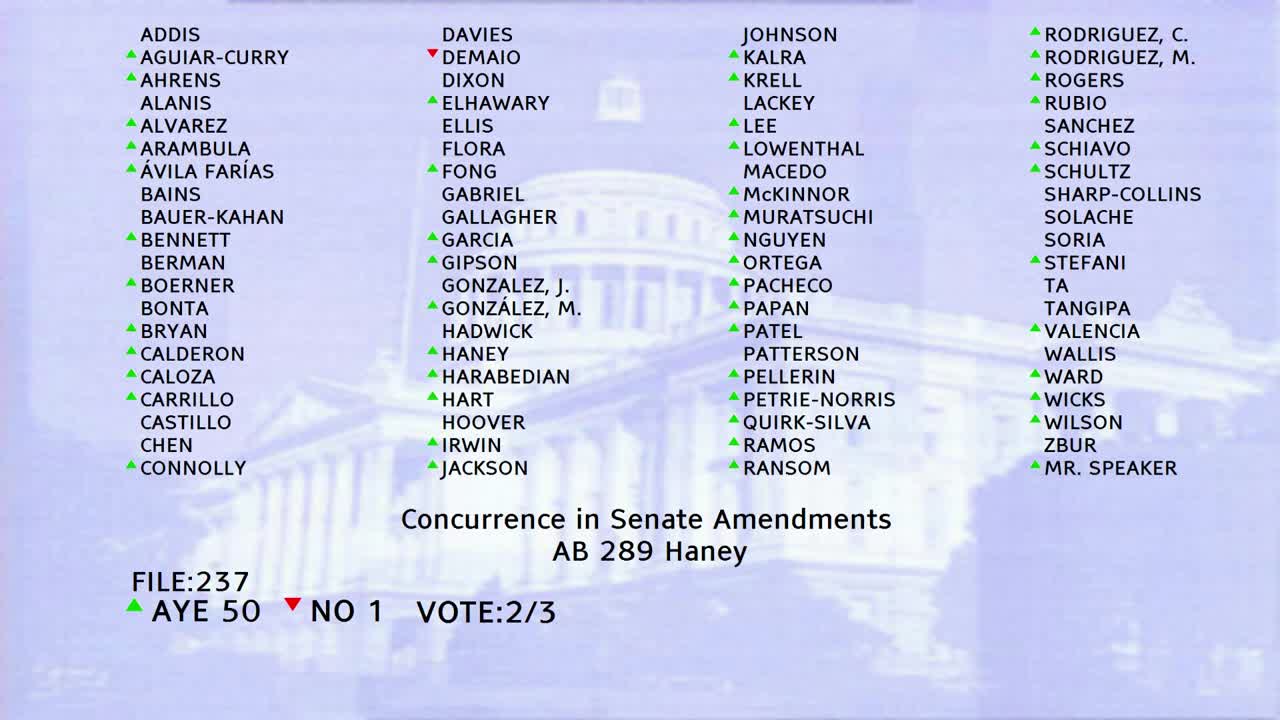
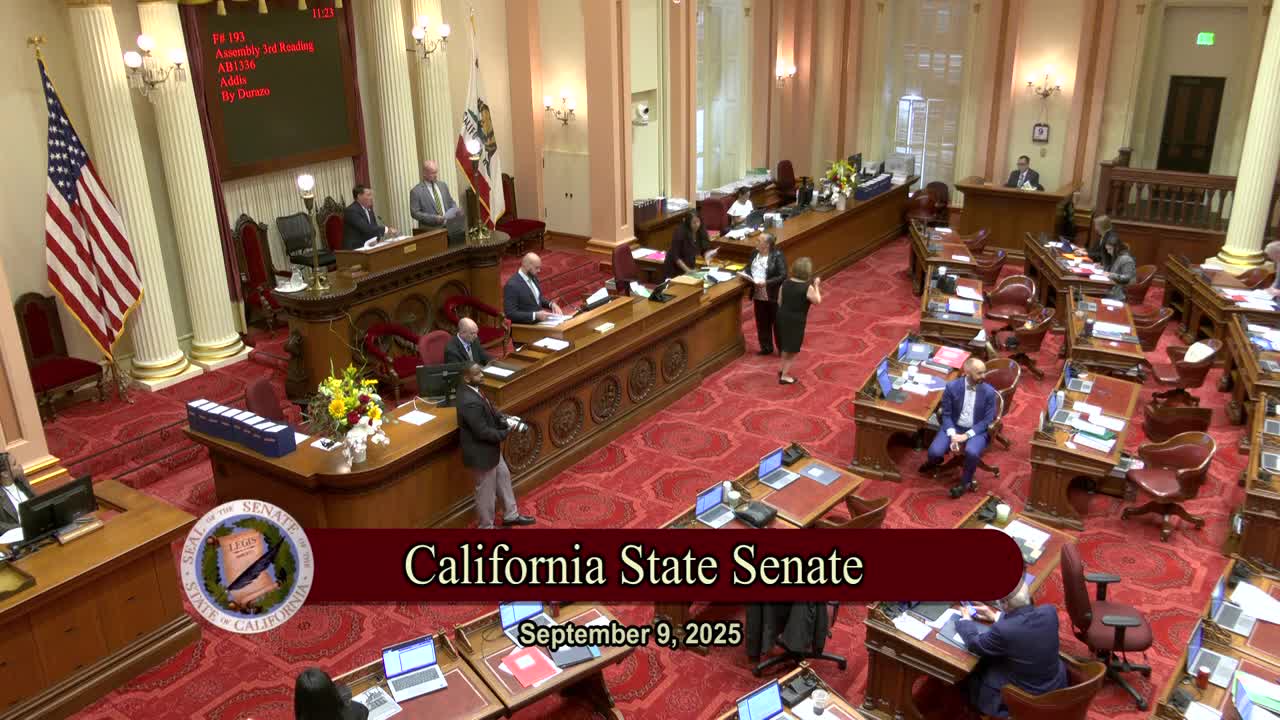
Bill Author

Bill Co-Author(s):
