AB 833: Teachers: exchange programs: local educational agencies: sponsors.
- Session Year: 2025-2026
- House: Assembly
- Latest Version Date: 2025-09-08
Current Status:
Failed
(2026-01-22: Consideration of Governor's veto stricken from file.)
Introduced
In Committee
Awaiting First Chamber Vote
Passed First Chamber
In Committee
Awaiting Second Chamber Vote
Passed Second Chamber
Enacted
Existing law, the World Language Teacher Exchange and Recruitment Law of 1963, requires the State Board of Education to adopt rules and regulations under which teachers employed by California school districts may exchange positions with teachers in schools in other countries for a period of one year or less. Existing law requires the arrangements for the exchanges to be made through the State Department of Education and in cooperation with the teacher exchange programs administered by agencies of the federal government.
This bill would require the state boards rules and regulations for the exchanges to (1) expressly provide for exchanges with Mexico, (2) apply to school districts, county offices of education, and charter schools, and (3) authorize specified visa sponsors designated by the United States Department of State, in addition to the State Department of Education, to sponsor teachers from Mexico for placement in California school districts, county offices of education, and charter schools to promote cultural exchange for specified purposes.
Existing law, the World Language Teacher Exchange and Recruitment Law of 1963, requires the State Board of Education to adopt rules and regulations under which teachers employed by California school districts may exchange positions with teachers in schools in other countries for a period of one year or less. Existing law requires the arrangements for the exchanges to be made through the State Department of Education and in cooperation with the teacher exchange programs administered by agencies of the federal government.
This bill would require the state boards rules and regulations for the exchanges to (1) expressly provide for exchanges with Mexico, (2) apply to school districts, county offices of education, and charter schools, and (3) authorize specified visa sponsors designated by the United States Department of State, in addition to the State Department of Education, to sponsor teachers from Mexico for placement in California school districts, county offices of education, and charter schools to promote cultural exchange for specified purposes. The bill would require the department, on or before December 31, 2026, and annually thereafter, to report to the relevant policy and fiscal committees of the Legislature on the teacher exchange program, as provided.
Existing law, the World Language Teacher Exchange and Recruitment Law of 1963, requires the State Board of Education to adopt rules and regulations under which teachers employed by California school districts may exchange positions with teachers in schools in other countries for a period of one year or less. Existing law requires the arrangements for the exchanges to be made through the State Department of Education and in cooperation with the teacher exchange programs administered by agencies of the federal government.
This bill would expressly require the state boards rules and regulations for the exchanges to (1) expressly provide for exchanges with Mexico. Mexico, (2) apply to school districts, county offices of education, and charter schools, and (3) authorize specified visa sponsors designated by the United States Department of State, in addition to the State Department of Education, to sponsor teachers from Mexico for placement in California school districts, county offices of education, and charter schools to promote cultural exchange for specified purposes. The bill would require the department, on or before December 31, 2026, and annually thereafter, to report to the relevant policy and fiscal committees of the Legislature on the teacher exchange program, as provided.
Existing law, the World Language Teacher Exchange and Recruitment Law of 1963, requires the State Board of Education to adopt rules and regulations under which teachers employed by California school districts may exchange positions with teachers in schools in other countries for a period of one year or less. Existing law requires the arrangements for the exchanges to be made through the State Department of Education and in cooperation with the teacher exchange programs administered by agencies of the federal government.
This bill would expressly require the state boards rules and regulations for the exchanges to provide for exchanges with Mexico. The bill would require the department, on or before December 31, 2026, and annually thereafter, to report to the relevant policy and fiscal committees of the Legislature on the teacher exchange program, as provided.
(a)(1)The state board shall adopt rules and regulations under which teachers employed by California local educational agencies may exchange positions with teachers in schools in other countries, including Mexico, for a period of one year or less. The arrangements for the exchanges shall be made through the department and in cooperation with the teacher exchange programs administered by agencies of the federal government.
(2)The rules and regulations adopted pursuant to paragraph (1) shall authorize J-1 visa sponsors designated by the United States Department of State, in addition to the department, to sponsor teachers from Mexico for placement in California local educational agencies to promote cultural exchange for both of the following purposes:
(A)To foster cross-cultural understanding by allowing Mexican teachers to share their knowledge, traditions, and teaching methodologies with pupils and educators in California.
(B)To provide participating teachers with firsthand experience in the United States education system, strengthening international collaboration and encouraging mutual appreciation of diverse educational approaches and cultural perspectives.
(b)Grants from the federal government or any department or agency thereof may be accepted by the state and its agencies to be expended pursuant to the programs and plans enumerated in this article. The department shall administer the teacher exchange program provided for in this article and shall do all acts necessary to carry out the purposes of this article.
(c)For purposes of this section, local educational agency means a school district, county office of education, or charter school.
(a)(1)The state board shall adopt rules and regulations under which teachers employed by California local educational agencies may exchange positions with teachers in schools in other countries, including Mexico, for a period of one year or less. The arrangements for the exchanges shall be made through the department and in cooperation with the teacher exchange programs administered by agencies of the federal government.
(2)The rules and regulations adopted pursuant to paragraph (1) shall authorize J-1 visa sponsors designated by the United States Department of State, in addition to the department, to sponsor teachers from Mexico for placement in California local educational agencies to promote cultural exchange for both of the following purposes:
(A)To foster cross-cultural understanding by allowing Mexican teachers to share their knowledge, traditions, and teaching methodologies with pupils and educators in California.
(B)To provide participating teachers with firsthand experience in the United States education system, strengthening international collaboration and encouraging mutual appreciation of diverse educational approaches and cultural perspectives.
(b)Grants from the federal government or any department or agency thereof may be accepted by the state and its agencies to be expended pursuant to the programs and plans enumerated in this article. The department shall administer the teacher exchange program provided for in this article and shall do all acts necessary to carry out the purposes of this article.
(c)Notwithstanding Section 10231.5 of the Government Code, on or before December 31, 2026, and annually thereafter, the department shall, consistent with Section 9795 of the Government Code, report to the relevant policy and fiscal committees of the Legislature on the teacher exchange program provided for in this article, including, but not limited to, the number of teachers participating in the program, disaggregated by their home country, grade level and subject matter, and hosting local educational agency.(d)(c)For purposes of this section, local educational agency means a school district, county office of education, or charter school.
(a)(1)The state board shall adopt rules and regulations under which teachers employed by California school districts local educational agencies may exchange positions with teachers in schools in other countries, including Mexico, for a period of one year or less. The arrangements for the exchanges shall be made through the department and in cooperation with the teacher exchange programs administered by agencies of the federal government.
(2)The rules and regulations adopted pursuant to paragraph (1) shall authorize J-1 visa sponsors designated by the United States Department of State, in addition to the department, to sponsor teachers from Mexico for placement in California local educational agencies to promote cultural exchange for both of the following purposes:
(A)To foster cross-cultural understanding by allowing Mexican teachers to share their knowledge, traditions, and teaching methodologies with pupils and educators in California.
(B)To provide participating teachers with firsthand experience in the United States education system, strengthening international collaboration and encouraging mutual appreciation of diverse educational approaches and cultural perspectives.
(b)Grants from the federal government or any department or agency thereof may be accepted by the state and its agencies to be expended pursuant to the programs and plans enumerated in this article. The department shall administer the teacher exchange program provided for in this article and shall do all acts necessary to carry out the purposes of this article.
(c)Notwithstanding Section 10231.5 of the Government Code, on or before December 31, 2026, and annually thereafter, the department shall, consistent with Section 9795 of the Government Code, report to the relevant policy and fiscal committees of the Legislature on the teacher exchange program provided for in this article, including, but not limited to, the number of teachers participating in the program, disaggregated by their home country, grade level and subject matter, and hosting local educational agency.
(d)For purposes of this section, local educational agency means a school district, county office of education, or charter school.
(a)The State Board of Education state board shall adopt rules and regulations under which teachers employed by California school districts may exchange positions with teachers in schools in other countries countries, including Mexico, for a period of one year or less. The arrangements for such the exchanges shall be made through the Department of Education department and in cooperation with the teacher exchange programs administered by agencies of the federal government. The first such exchanges shall take place during the 19641965 school year.
Grants(b)Grants from the federal government or any department or agency thereof may be accepted by the state and its agencies to be expended pursuant to the programs and plans enumerated in this article. The Department of Education department shall administer the teacher exchange program provided for in this article and shall do all acts necessary to carry out the purposes of this article.
(c)Notwithstanding Section 10231.5 of the Government Code, on or before December 31, 2026, and annually thereafter, the department shall, consistent with Section 9795 of the Government Code, report to the relevant policy and fiscal committees of the Legislature on the teacher exchange program provided for in this article, including, but not limited to, the number of teachers participating in the program, disaggregated by their home country, grade level and subject matter, and hosting local educational agency.
|
Date
|
Status
|
|---|---|
| Jan 22, 2026 | Consideration of Governor's veto stricken from file. |
| Oct 3, 2025 | Consideration of Governor's veto pending. |
| Oct 3, 2025 | Vetoed by Governor. |
| Sep 11, 2025 | Enrolled and presented to the Governor at 4 p.m. |
| Sep 4, 2025 | In Assembly. Ordered to Engrossing and Enrolling. |
| Sep 4, 2025 | Read third time. Passed. Ordered to the Assembly. (Ayes 39. Noes 0. Page 2516.). |
| Aug 29, 2025 | Read second time. Ordered to third reading. |
| Aug 29, 2025 | From committee: Do pass. (Ayes 7. Noes 0.) (August 29). |
| Jul 7, 2025 | In committee: Referred to APPR. suspense file. |
| Jun 25, 2025 | From committee: Do pass and re-refer to Com. on APPR. (Ayes 7. Noes 0.) (June 25). Re-referred to Com. on APPR. |
| Jun 11, 2025 | Referred to Com. on ED. |
| Jun 3, 2025 | In Senate. Read first time. To Com. on RLS. for assignment. |
| Jun 2, 2025 | Read third time. Passed. Ordered to the Senate. (Ayes 77. Noes 1. Page 1856.) |
| May 29, 2025 | Read third time and amended. Ordered to third reading. (Page 1788.) |
| May 27, 2025 | Read second time. Ordered to third reading. |
| May 23, 2025 | From committee: Do pass. (Ayes 14. Noes 0.) (May 23). |
| Apr 9, 2025 | In committee: Set, first hearing. Referred to APPR. suspense file. |
| Mar 27, 2025 | From committee: Do pass and re-refer to Com. on APPR. (Ayes 9. Noes 0.) (March 26). Re-referred to Com. on APPR. |
| Mar 18, 2025 | Re-referred to Com. on ED. |
| Mar 17, 2025 | From committee chair, with author's amendments: Amend, and re-refer to Com. on ED. Read second time and amended. |
| Mar 3, 2025 | Referred to Com. on ED. |
| Feb 20, 2025 | From printer. May be heard in committee March 22. |
| Feb 19, 2025 | Read first time. To print. |
|
Date
|
Description
|
Location
|
Votes
|
|
|---|---|---|---|---|
| Sep 4, 2025 | Assembly 3rd Reading AB833 Alvarez By Caballero | Senate Floor |
Passed |
|
| Aug 29, 2025 | Do pass | Senate Standing Committee on Appropriations |
Passed |
|
| Jul 7, 2025 | Placed on suspense file | Senate Standing Committee on Appropriations |
Passed |
|
| Jun 25, 2025 | Do pass, but first be re-referred to the Committee on [Appropriations] | Senate Standing Committee on Education |
Passed |
|
| Jun 2, 2025 | AB 833 Alvarez Assembly Third Reading | Assembly Floor |
Passed |
|
| May 23, 2025 | Do pass. | Assembly Standing Committee on Appropriations |
Passed |
|
| Mar 26, 2025 | Do pass and be re-referred to the Committee on [Appropriations] | Assembly Standing Committee on Education |
Passed |
This list shows positions taken on this bill by organizations on the date displayed, which is linked to the original source.
Positions by individuals are not included.
|
Organization
|
Position
|
Date
|
|---|---|---|
| Association Of California School Administrators | ** Support | |
| California Association For Bilingual Education | ** Support | |
| California Charter Schools Association | ** Support | |
| International Alliance Group | ** Support | |
| Programa Binacional De Educación Migrante | ** Support | |
| San Diego County Office of Education | ** Support | |
| San Diego Unified School District | ** Support |
GOVERNOR′S VETO
GV Bill Id:AB 833
Author:(Alvarez)
As Enrolled Ver:September 8, 2025
2/3 vote
SUMMARY
Authorizes local educational agencies (LEAs), in addition to the California Department of Education (CDE), to sponsor teachers from Mexico under the J-1 visa program, for placement in California LEAs in order to promote cultural exchange, and requires the CDE to annually report on the program.
Major Provisions
- Requires that the rules and regulations adopted by the SBE under which teachers employed by California LEAs may exchange positions with teachers in schools in other countries for a period of one year or less authorize J-1 visa sponsors designated by the United States Department of State (DOS), in addition to the CDE, to sponsor teachers from Mexico for placement in California LEAs to promote cultural exchange for both of the following purposes:
- To foster cross-cultural understanding by allowing Mexican teachers to share their knowledge, traditions, and teaching methodologies with pupils and educators in California; and
- To provide participating teachers with firsthand experience in the United States education system, strengthening international collaboration and encouraging mutual appreciation of diverse educational approaches and cultural perspectives.
- Defines, for purposes of this program, LEA to include a school district, county office of education (COE), or charter school.
- Requires the CDE, by December 31, 2026, and annually thereafter, to report to the relevant policy and fiscal committees of the Legislature on the exchanges conducted pursuant to the World Language Teacher Exchange and Recruitment Law of 1963, including, but not limited to, the number of teachers participating in the program, disaggregated by their home country, grade level and subject matter, and hosting LEA.
Governor′s Veto Message
This bill directs the State Board of Education to update California′s teacher exchange program regulations to allow entities authorized by the U.S. Department of State to sponsor teacher exchanges with other countries, including Mexico.
This bill is unnecessary as there is no statutory barrier to expanding program sponsorship for teachers from other countries, including Mexico, to California. Federal law does not require a single exclusive sponsor. Further, the author′s stated goal is to help fill persistent educator shortages, which is contrary to the program′s purpose to promote cross-cultural understanding and short-term professional growth opportunities.
COMMENTS
Federal and state law authorizes exchange visitor teacher program. Since 1961, the Mutual Educational and Cultural Exchange Act of 1961 (the Fulbright-Hayes Act), has authorized teacher exchanges between the U.S. and other countries, using federal exchange visitor visas known as J-1 visas. According to the CDE, the purpose of the Exchange Visitor Program is to promote:
- Cross-cultural exchanges;
- Understanding and respect between California teachers and foreign teachers;
- Professional growth opportunities for teachers of California and foreign countries; and
- Interest in international studies and cross-cultural awareness.
The DOS designates public and private entities to act as exchange program sponsors. J-1 nonimmigrants are sponsored by an exchange program that is designated as such by the DOS.
According to the CDE, a visiting teacher can remain in CDE′s program for a program period not to exceed three years unless a specific extension of one or two years is authorized. Visiting teachers must meet the qualifications for teaching in California′s public schools and must pass the first year′s probation with the designated school district or charter school in order to remain for an authorized five-year program period. The CDE also operates a summer migrant education exchange program, in which teachers from Mexico serve in summer programs for students of migrant agricultural workers.
Memorandum of understanding (MOU) between the CDE and Mexico′s Secretariat of Education. According to materials provided by the author, the CDE interprets a 2004 MOU between California and Mexico′s Secretariat of Education to make it the exclusive sponsor of teachers from Mexico under the exchange visitor program. According to correspondence between Mexico′s Secretariat of Education and the Superintendent of Public Instruction (SPI), the Secretariat ″[sees] no issue with Mexican teachers partnering with any U.S. DOS-designated sponsor for their participation in J-1 programs, including, but not limited to, the exchange program operated by the CDE. By offering this flexibility, we aim to broaden the range of opportunities available to Mexican educators, enhancing their professional growth and allowing more schools and students across California to benefit from their expertise.″
According to the author, as a result of the CDE serving as the sole sponsor of teachers from Mexico, a small number of Mexican teachers (ranging between 8 and 21 during the years 2017-18 and 2023-24) are sponsored to teach in California each year.
This bill would authorize California LEAs and charter schools to serve as sponsors in addition to the CDE, thereby increasing the number of foreign teachers who could serve in California schools. The Assembly may wish to consider that this bill could significantly expand the number of teachers exchanged with Mexico, from less than 20 annually to many thousands.
According to the Author
″AB 833 represents a bold and transformative step in addressing California′s persistent teacher shortages, particularly in the vital areas of bilingual education and high-demand subjects. By mandating exchanges with Mexico, this groundbreaking legislation unlocks access to a pool of exceptionally qualified educators who bring rich expertise in Spanish-language instruction and culturally relevant teaching methods. With over 1.1 million English Learners in California′s public schools, the inclusion of Mexican teachers is not just beneficial but essential for cultivating an inclusive and supportive learning environment. This initiative not only aims to bridge the critical gap of bilingual teachers—particularly in subjects such as math, science, and special education—but also enhances the educational experience by fostering global education and cultural exchange. Furthermore, AB 833 emphasizes accountability through annual reporting on the program′s impact, ensuring that California builds strong educational partnerships with Mexico to better serve its diverse student population.″
Arguments in Support
The San Diego County Office of Education writes, ″Since 1986, when the U.S. Department of State designated CDE as a sponsor for the Exchange Visitor Program, the Teacher Exchange Program has been instrumental in bringing credentialed teachers from abroad to California on J-1 visas. These educators have played a critical role in supporting bilingual and bicultural education, particularly in classrooms with high numbers of English learners. However, the current arrangement lacks scalability, leaving many students in need of bilingual or bicultural teachers without access to these vital educational opportunities.
AB 833 (Alvarez) would expand exchanges with Mexico, which would help address the shortage of qualified bilingual educators and strengthen cultural and educational ties between California and Mexico. By increasing the limited number of Mexican teachers sponsored by CDE, we can better serve our diverse student population and ensure they receive the high-quality, culturally responsive education they deserve.
AB 833′s requirement for CDE to report annually to the relevant policy and fiscal committees of the Legislature, beginning by Dec. 31, 2026, is a critical step toward improving the program′s transparency and effectiveness. These reports will provide valuable insights into the number of foreign teachers participating in the program, its impact on bilingual education, and areas for improvement. This data-driven approach will help ensure the program meets the needs of California′s students and schools.″
Arguments in Opposition
None on file
FISCAL COMMENTS
According to the Senate Appropriations Committee, the CDE estimates General Fund costs of $430,000 each year to hire additional staff necessary to administer the expanded version of the teacher exchange program and prepare the annual report required by the bill.
VOTES
ASM EDUCATION: 9-0-0
YES: Muratsuchi, Hoover, Addis, Alvarez, Bonta, Castillo, Garcia, Lowenthal, Patel
ASM APPROPRIATIONS: 14-0-1
YES: Wicks, Arambula, Calderon, Caloza, Dixon, Elhawary, Fong, Mark González, Hart, Pacheco, Pellerin, Solache, Ta, Tangipa
ABS, ABST OR NV: Sanchez
ASSEMBLY FLOOR: 77-1-1
YES: Addis, Aguiar-Curry, Ahrens, Alanis, Alvarez, Arambula, Ávila Farías, Bains, Bauer-Kahan, Bennett, Berman, Boerner, Bonta, Bryan, Calderon, Caloza, Carrillo, Castillo, Chen, Connolly, Davies, Dixon, Elhawary, Ellis, Flora, Fong, Gabriel, Gallagher, Garcia, Gipson, Jeff Gonzalez, Mark González, Hadwick, Haney, Harabedian, Hart, Hoover, Irwin, Jackson, Kalra, Krell, Lackey, Lee, Lowenthal, Macedo, McKinnor, Muratsuchi, Nguyen, Ortega, Pacheco, Papan, Patel, Patterson, Pellerin, Petrie-Norris, Quirk-Silva, Ramos, Ransom, Celeste Rodriguez, Michelle Rodriguez, Rogers, Blanca Rubio, Sanchez, Schiavo, Schultz, Sharp-Collins, Solache, Soria, Stefani, Ta, Valencia, Wallis, Ward, Wicks, Wilson, Zbur, Rivas
NO: DeMaio
ABS, ABST OR NV: Tangipa
SENATE FLOOR: 39-0-1
YES: Allen, Alvarado-Gil, Archuleta, Arreguín, Ashby, Becker, Blakespear, Cabaldon, Caballero, Cervantes, Choi, Cortese, Dahle, Durazo, Gonzalez, Grayson, Grove, Hurtado, Jones, Laird, Limón, McGuire, McNerney, Menjivar, Niello, Ochoa Bogh, Padilla, Pérez, Richardson, Rubio, Seyarto, Smallwood-Cuevas, Stern, Strickland, Umberg, Valladares, Wahab, Weber Pierson, Wiener
ABS, ABST OR NV: Reyes
UPDATED
VERSION: September 8, 2025
CONSULTANT: Tanya Lieberman / ED. / (916) 319-2087 FN: 0002145
SENATE RULES COMMITTEE Office of Senate Floor Analyses (916) 651-1520 Fax: (916) 327-4478 | AB 833 |
THIRD READING
Bill No: AB 833
Author: Alvarez (D)
Amended: 5/29/25 in Assembly
Vote: 21
SENATE EDUCATION COMMITTEE: 7-0, 6/25/25
AYES: Pérez, Ochoa Bogh, Cabaldon, Choi, Cortese, Gonzalez, Laird
SENATE APPROPRIATIONS COMMITTEE: 7-0, 8/29/25
AYES: Caballero, Seyarto, Cabaldon, Dahle, Grayson, Richardson, Wahab
ASSEMBLY FLOOR: 77-1, 6/2/25 - See last page for vote
SUBJECT: Teachers: exchange programs: local educational agencies: sponsors
SOURCE: International Alliance Group
DIGEST:
This bill updates the scope of what the State Board of Education’s (SBE) teacher exchange program regulations must include. It requires the regulations to expressly authorize teacher exchanges with Mexico, apply to all local educational agencies (LEAs) —including school districts, county offices of education (COEs), and charter schools—and allow teachers from Mexico to be sponsored for placement in California schools by any J-1 visa sponsor designated by the U.S. Department of State (DOS), in addition to the California Department of Education (CDE).
ANALYSIS:
Existing law:
- Requires the SBE to adopt rules and regulations under which teachers employed by California school districts may exchange positions with teachers in schools in other countries for a period of one year or less. Arrangements are made through the CDE in cooperation with federal teacher exchange programs. (Education Code (EC) § 44612)
- Establishes the World Language Teacher Exchange and Recruitment Law of 1963, which outlines the purpose, eligibility, compensation rules, and travel cost provisions for the teacher exchange program. (EC § 44611-44614)
- Authorizes LEAs to hire “sojourn certificated employees” from other countries to provide bilingual instruction, world language instruction, or cultural enrichment, subject to credentialing and verification requirements by the Commission on Teacher Credentialing (CTC). (EC § 44856)
- Authorizes exchange programs for international teachers under the J-1 visa category and outlines federal eligibility requirements for sponsors and participants. (22 Code of Federal Regulations § 62.24)
This bill
- Requires the SBE to adopt regulations that:
- Expressly provide for the participation of teachers from Mexico in exchange programs governed by this section.
- Apply to school districts, COEs, and charter schools.
- Authorize sponsorship of teachers from Mexico by J-1 visa sponsors designated by the DOS, in addition to the CDE.
- Promote cultural exchange through teacher placements for the purposes of:
- Fostering cross-cultural understanding by allowing Mexican teachers to share knowledge, traditions, and methodologies with California pupils and educators; and
- Providing visiting teachers firsthand experience in the U.S. education system to strengthen international collaboration and appreciation of diverse educational practices.
Comments
- Need for this bill. According to the author, “AB 833 represents a bold and transformative step in addressing California’s persistent teacher shortages, particularly in the vital areas of bilingual education and high-demand subjects. By mandating exchanges with Mexico, this groundbreaking legislation unlocks access to a pool of exceptionally qualified educators who bring rich expertise in Spanish-language instruction and culturally relevant teaching methods. With over 1.1 million English Learners in California’s public schools, the inclusion of Mexican teachers is not just beneficial but essential for cultivating an inclusive and supportive learning environment. This initiative not only aims to bridge the critical gap of bilingual teachers—particularly in subjects such as math, science, and special education—but also enhances the educational experience by fostering global education and cultural exchange. Furthermore, AB 833 emphasizes accountability through annual reporting on the program’s impact, ensuring that California builds strong educational partnerships with Mexico to better serve its diverse student population.”
- What Does This Bill Do? California law has authorized teacher exchange programs with other countries since 1963. Under Education Code, the SBE is required to adopt rules and regulations to allow teachers employed by California school districts to exchange positions with teachers in schools in other countries for a period of one year or less. These exchanges must be arranged through the CDE, in cooperation with teacher exchange programs administered by federal agencies.
Since 1986, CDE has served as California’s designated sponsor for the J-1 exchange visitor visa program in the teacher category—a federal program administered by the DOS. Under this program, the DOS designates certain public and private organizations, including state education agencies, universities, and nonprofits, to act as sponsors. Sponsors are responsible for recruiting, screening, placing, and supporting exchange teachers.
In the case of teachers from Mexico, CDE has interpreted a 2004 memorandum of understanding (MOU) with Mexico’s Secretariat of Education as giving it exclusive authority to sponsor such teachers in California. Other DOS-designated sponsors have not been used. As a result, the number of Mexican teachers participating in California schools has remained low—between 8 and 21 per year in recent years.
Recent correspondence from Mexico’s Secretariat of Education clarified that Mexico has no objection to its teachers participating through any DOS-designated sponsor. This bill responds by clarifying that Mexico is an eligible exchange partner under California law, that SBE rules must apply to all LEA types, and that DOS-designated sponsors beyond CDE may be used for teacher exchanges.
- Could This Change Be Made Without Legislation? The underlying authority for California’s teacher exchange program already exists in Education Code, and federal law does not require a single exclusive sponsor. The restriction to CDE as the sole sponsor for teachers from Mexico is not statutory but is instead based on CDE’s interpretation of its 2004 MOU with the Mexican government.
Recent clarification from Mexico’s Secretariat of Education removes any bilateral obstacle to using other sponsors. In theory, either CDE could revise its interpretation of the MOU, or the SBE could amend its regulations to allow greater flexibility under existing law.
From that perspective, this bill is not legally necessary to authorize the use of other sponsors, but it serves to codify and signal that California supports a more open approach to implementing teacher exchanges—particularly with Mexico—and ensures consistent treatment across all LEA types.
- Consistency with Broader State Goals. Although the bill does not modify credentialing processes or create new state programs, it reflects ongoing state interest in fostering multilingualism and cultural responsiveness in K–12 education. Policies such as the California English Learner Roadmap, Proposition 58, and Global California 2030 signal a statewide commitment to expanding dual language immersion and biliteracy pathways. To the extent this bill facilitates access to qualified bilingual teachers—particularly those with Spanish-language expertise—it may support these long-standing goals.
- Implications of Removing the Reporting Requirement. Earlier versions of the bill included a requirement for CDE to report annually on program participation and characteristics, including disaggregated data by country, grade level, and subject area. That provision has been removed. While this change simplifies implementation, it also eliminates a mechanism that could have supported statewide understanding of trends, gaps, or best practices. LEAs and policymakers may need to rely on informal data collection or periodic legislative inquiries to monitor program effects.
- Implementation May Vary by Local Capacity. By explicitly authorizing LEAs to work with J-1 sponsors other than CDE, the bill introduces local flexibility that may enable more rapid or targeted recruitment. However, implementation quality may vary depending on LEA capacity, familiarity with the J-1 program, and ability to support visiting teachers. LEAs would remain responsible for ensuring that exchange teachers meet state credentialing requirements and are appropriately supported throughout their placements. The absence of a centralized onboarding process may present challenges in maintaining consistency across placements.
- Unclear Impact on Workforce Supply. Proponents frame this bill as a strategy to help address ongoing teacher shortages, particularly in bilingual, STEM, and special education fields. While expanded access to international exchange teachers could support local staffing efforts, actual participation will likely depend on a range of factors, including LEA interest, sponsor availability, visa processing timelines, and cost. The bill removes a key procedural barrier but does not guarantee large-scale uptake or lasting workforce solutions.
FISCAL EFFECT: Appropriation: No Fiscal Com.: Yes Local: No
According to the Senate Appropriations Committee, the CDE estimates General Fund costs of $430,000 each year to hire additional staff necessary to administer the expanded version of the teacher exchange program and prepare the annual report required by the bill.
SUPPORT: (Verified 8/28/25)
International Alliance Group (Source)
Association of California School Administrators
California Association for Bilingual Education
California Charter Schools Association
San Diego Unified School District
OPPOSITION: (Verified 8/28/25)
None received
ASSEMBLY FLOOR: 77-1, 6/2/25
AYES: Addis, Aguiar-Curry, Ahrens, Alanis, Alvarez, Arambula, Ávila Farías, Bains, Bauer-Kahan, Bennett, Berman, Boerner, Bonta, Bryan, Calderon, Caloza, Carrillo, Castillo, Chen, Connolly, Davies, Dixon, Elhawary, Ellis, Flora, Fong, Gabriel, Gallagher, Garcia, Gipson, Jeff Gonzalez, Mark González, Hadwick, Haney, Harabedian, Hart, Hoover, Irwin, Jackson, Kalra, Krell, Lackey, Lee, Lowenthal, Macedo, McKinnor, Muratsuchi, Nguyen, Ortega, Pacheco, Papan, Patel, Patterson, Pellerin, Petrie-Norris, Quirk-Silva, Ramos, Ransom, Celeste Rodriguez, Michelle Rodriguez, Rogers, Blanca Rubio, Sanchez, Schiavo, Schultz, Sharp-Collins, Solache, Soria, Stefani, Ta, Valencia, Wallis, Ward, Wicks, Wilson, Zbur, Rivas
NOES: DeMaio
NO VOTE RECORDED: Tangipa
Prepared by: Ian Johnson / ED. / (916) 651-4105
8/29/25 20:57:12
**** END ****
SENATE COMMITTEE ON EDUCATION
Senator Sasha Renée Pérez, Chair
2025 - 2026 Regular
Bill No: Hearing Date: June 25, 2025
Author: | Alvarez | ||
Version: |
| ||
Urgency: | Fiscal: | ||
Consultant: | |||
Subject:
SUMMARY
This bill updates the scope of what the State Board of Education’s (SBE) teacher exchange program regulations must include. It requires the regulations to expressly authorize teacher exchanges with Mexico, apply to all local educational agencies (LEAs) —including school districts, county offices of education (COEs), and charter schools—and allow teachers from Mexico to be sponsored for placement in California schools by any J-1 visa sponsor designated by the U.S. Department of State (DOS), in addition to the California Department of Education (CDE).
BACKGROUND
Existing law:
- Requires the SBE to adopt rules and regulations under which teachers employed by California school districts may exchange positions with teachers in schools in other countries for a period of one year or less. Arrangements are made through the CDE in cooperation with federal teacher exchange programs. (Education Code (EC) § 44612)
- Establishes the World Language Teacher Exchange and Recruitment Law of 1963, which outlines the purpose, eligibility, compensation rules, and travel cost provisions for the teacher exchange program. (EC § 44611-44614)
- Authorizes LEAs to hire “sojourn certificated employees” from other countries to provide bilingual instruction, world language instruction, or cultural enrichment, subject to credentialing and verification requirements by the Commission on Teacher Credentialing (CTC). (EC § 44856)
- Authorizes exchange programs for international teachers under the J-1 visa category and outlines federal eligibility requirements for sponsors and participants. (22 Code of Federal Regulations § 62.24)
ANALYSIS
This bill requires the SBE to adopt rules and regulations that:
- Expressly provide for the participation of teachers from Mexico in exchange programs governed by this section.
- Apply to school districts, COEs, and charter schools.
- Authorize sponsorship of teachers from Mexico by J-1 visa sponsors designated by the DOS, in addition to the CDE.
- Promote cultural exchange through teacher placements for the purposes of:
- Fostering cross-cultural understanding by allowing Mexican teachers to share knowledge, traditions, and methodologies with California pupils and educators; and
- Providing visiting teachers firsthand experience in the U.S. education system to strengthen international collaboration and appreciation of diverse educational practices.
STAFF COMMENTS
- Need for the bill. According to the author, “AB 833 represents a bold and transformative step in addressing California’s persistent teacher shortages, particularly in the vital areas of bilingual education and high-demand subjects. By mandating exchanges with Mexico, this groundbreaking legislation unlocks access to a pool of exceptionally qualified educators who bring rich expertise in Spanish-language instruction and culturally relevant teaching methods. With over 1.1 million English Learners in California’s public schools, the inclusion of Mexican teachers is not just beneficial but essential for cultivating an inclusive and supportive learning environment. This initiative not only aims to bridge the critical gap of bilingual teachers—particularly in subjects such as math, science, and special education—but also enhances the educational experience by fostering global education and cultural exchange. Furthermore, AB 833 emphasizes accountability through annual reporting on the program’s impact, ensuring that California builds strong educational partnerships with Mexico to better serve its diverse student population.”
- What Does This Bill Do? California law has authorized teacher exchange programs with other countries since 1963. Under Education Code, the SBE is required to adopt rules and regulations to allow teachers employed by California school districts to exchange positions with teachers in schools in other countries for a period of one year or less. These exchanges must be arranged through the CDE, in cooperation with teacher exchange programs administered by federal agencies.
Since 1986, CDE has served as California’s designated sponsor for the J-1 exchange visitor visa program in the teacher category—a federal program administered by the DOS. Under this program, the DOS designates certain public and private organizations, including state education agencies, universities, and nonprofits, to act as sponsors. Sponsors are responsible for recruiting, screening, placing, and supporting exchange teachers.
In the case of teachers from Mexico, CDE has interpreted a 2004 memorandum of understanding (MOU) with Mexico’s Secretariat of Education as giving it exclusive authority to sponsor such teachers in California. Other DOS-designated sponsors have not been used. As a result, the number of Mexican teachers participating in California schools has remained low—between 8 and 21 per year in recent years.
Recent correspondence from Mexico’s Secretariat of Education clarified that Mexico has no objection to its teachers participating through any DOS-designated sponsor. This bill responds by clarifying that Mexico is an eligible exchange partner under California law, that SBE rules must apply to all LEA types, and that DOS-designated sponsors beyond CDE may be used for teacher exchanges.
- Could This Change Be Made Without Legislation? The underlying authority for California’s teacher exchange program already exists in Education Code, and federal law does not require a single exclusive sponsor. The restriction to CDE as the sole sponsor for teachers from Mexico is not statutory but is instead based on CDE’s interpretation of its 2004 MOU with the Mexican government.
Recent clarification from Mexico’s Secretariat of Education removes any bilateral obstacle to using other sponsors. In theory, either CDE could revise its interpretation of the MOU, or the SBE could amend its regulations to allow greater flexibility under existing law.
From that perspective, this bill is not legally necessary to authorize the use of other sponsors, but it serves to codify and signal that California supports a more open approach to implementing teacher exchanges—particularly with Mexico—and ensures consistent treatment across all LEA types.
- Consistency with Broader State Goals. Although the bill does not modify credentialing processes or create new state programs, it reflects ongoing state interest in fostering multilingualism and cultural responsiveness in K–12 education. Policies such as the California English Learner Roadmap, Proposition 58, and Global California 2030 signal a statewide commitment to expanding dual language immersion and biliteracy pathways. To the extent this bill facilitates access to qualified bilingual teachers—particularly those with Spanish-language expertise—it may support these long-standing goals.
- Implications of Removing the Reporting Requirement. Earlier versions of the bill included a requirement for CDE to report annually on program participation and characteristics, including disaggregated data by country, grade level, and subject area. That provision has been removed. While this change simplifies implementation, it also eliminates a mechanism that could have supported statewide understanding of trends, gaps, or best practices. LEAs and policymakers may need to rely on informal data collection or periodic legislative inquiries to monitor program effects.
- Implementation May Vary by Local Capacity. By explicitly authorizing LEAs to work with J-1 sponsors other than CDE, the bill introduces local flexibility that may enable more rapid or targeted recruitment. However, implementation quality may vary depending on LEA capacity, familiarity with the J-1 program, and ability to support visiting teachers. LEAs would remain responsible for ensuring that exchange teachers meet state credentialing requirements and are appropriately supported throughout their placements. The absence of a centralized onboarding process may present challenges in maintaining consistency across placements.
- Unclear Impact on Workforce Supply. Proponents frame this bill as a strategy to help address ongoing teacher shortages, particularly in bilingual, STEM, and special education fields. While expanded access to international exchange teachers could support local staffing efforts, actual participation will likely depend on a range of factors, including LEA interest, sponsor availability, visa processing timelines, and cost. The bill removes a key procedural barrier but does not guarantee large-scale uptake or lasting workforce solutions.
SUPPORT
International Alliance Group (Sponsor)
Association of California School Administrators
California Association for Bilingual Education
San Diego Unified School District
OPPOSITION
None received
-- END --
ASSEMBLY THIRD READING
ATR Bill Id:AB 833
Author:(Alvarez)
As Amended Ver:May 29, 2025
Majority vote
SUMMARY
Authorizes local educational agencies (LEAs), in addition to the California Department of Education (CDE), to sponsor teachers from Mexico under the J-1 visa program, for placement in California LEAs.
Major Provisions
- Requires that the rules and regulations adopted by the SBE under which teachers employed by California LEAs may exchange positions with teachers in schools in other countries for a period of one year or less authorize J-1 visa sponsors designated by the United States Department of State (DOS), in addition to the CDE, to sponsor teachers from Mexico for placement in California LEAs to promote cultural exchange for both of the following purposes:
- To foster cross-cultural understanding by allowing Mexican teachers to share their knowledge, traditions, and teaching methodologies with pupils and educators in California; and
- To provide participating teachers with firsthand experience in the United States education system, strengthening international collaboration and encouraging mutual appreciation of diverse educational approaches and cultural perspectives.
- Defines, for purposes of this program, LEA to include a school district, county office of education (COE), or charter school.
COMMENTS
Federal and state law authorizes exchange visitor teacher program. Since 1961, the Mutual Educational and Cultural Exchange Act of 1961 (the Fulbright-Hayes Act), has authorized teacher exchanges between the U.S. and other countries, using federal exchange visitor visas known as J-1 visas. According to the CDE, the purpose of the Exchange Visitor Program is to promote:
- Cross-cultural exchanges;
- Understanding and respect between California teachers and foreign teachers;
- Professional growth opportunities for teachers of California and foreign countries; and
- Interest in international studies and cross-cultural awareness.
The DOS designates public and private entities to act as exchange program sponsors. J-1 nonimmigrants are sponsored by an exchange program that is designated as such by the DOS.
According to the CDE, a visiting teacher can remain in CDE′s program for a program period not to exceed three years unless a specific extension of one or two years is authorized. Visiting teachers must meet the qualifications for teaching in California′s public schools and must pass the first year′s probation with the designated school district or charter school in order to remain for an authorized five-year program period. The CDE also operates a summer migrant education exchange program, in which teachers from Mexico serve in summer programs for students of migrant agricultural workers.
Memorandum of understanding (MOU) between the CDE and Mexico′s Secretariat of Education. According to materials provided by the author, the CDE interprets a 2004 MOU between California and Mexico′s Secretariat of Education to make it the exclusive sponsor of teachers from Mexico under the exchange visitor program. According to correspondence between Mexico′s Secretariat of Education and the Superintendent of Public Instruction (SPI), the Secretariat ″[sees] no issue with Mexican teachers partnering with any U.S. DOS-designated sponsor for their participation in J-1 programs, including, but not limited to, the exchange program operated by the CDE. By offering this flexibility, we aim to broaden the range of opportunities available to Mexican educators, enhancing their professional growth and allowing more schools and students across California to benefit from their expertise.″
According to the author, as a result of the CDE serving as the sole sponsor of teachers from Mexico, a small number of Mexican teachers (ranging between 8 and 21 during the years 2017-18 and 2023-24) are sponsored to teach in California each year.
This bill would authorize California LEAs and charter schools to serve as sponsors in addition to the CDE, thereby increasing the number of foreign teachers who could serve in California schools. The Assembly may wish to consider that this bill could significantly expand the number of teachers exchanged with Mexico, from less than 20 annually to many thousands.
According to the Author
″AB 833 represents a bold and transformative step in addressing California′s persistent teacher shortages, particularly in the vital areas of bilingual education and high-demand subjects. By mandating exchanges with Mexico, this groundbreaking legislation unlocks access to a pool of exceptionally qualified educators who bring rich expertise in Spanish-language instruction and culturally relevant teaching methods. With over 1.1 million English Learners in California′s public schools, the inclusion of Mexican teachers is not just beneficial but essential for cultivating an inclusive and supportive learning environment. This initiative not only aims to bridge the critical gap of bilingual teachers—particularly in subjects such as math, science, and special education—but also enhances the educational experience by fostering global education and cultural exchange.″
Arguments in Support
The San Diego County Office of Education writes, ″Since 1986, when the U.S. Department of State designated CDE as a sponsor for the Exchange Visitor Program, the Teacher Exchange Program has been instrumental in bringing credentialed teachers from abroad to California on J-1 visas. These educators have played a critical role in supporting bilingual and bicultural education, particularly in classrooms with high numbers of English learners. However, the current arrangement lacks scalability, leaving many students in need of bilingual or bicultural teachers without access to these vital educational opportunities.
AB 833 (Alvarez) would expand exchanges with Mexico, which would help address the shortage of qualified bilingual educators and strengthen cultural and educational ties between California and Mexico. By increasing the limited number of Mexican teachers sponsored by CDE, we can better serve our diverse student population and ensure they receive the high-quality, culturally responsive education they deserve.
AB 833′s requirement for CDE to report annually to the relevant policy and fiscal committees of the Legislature, beginning by Dec. 31, 2026, is a critical step toward improving the program′s transparency and effectiveness. These reports will provide valuable insights into the number of foreign teachers participating in the program, its impact on bilingual education, and areas for improvement. This data-driven approach will help ensure the program meets the needs of California′s students and schools.″
Arguments in Opposition
None on file
FISCAL COMMENTS
According to the Assembly Appropriations Committee, ongoing General Fund costs of up to $430,000 for CDE to hire additional staff to administer the expanded version of the program.
VOTES
ASM EDUCATION: 9-0-0
YES: Muratsuchi, Hoover, Addis, Alvarez, Bonta, Castillo, Garcia, Lowenthal, Patel
ASM APPROPRIATIONS: 14-0-1
YES: Wicks, Arambula, Calderon, Caloza, Dixon, Elhawary, Fong, Mark González, Hart, Pacheco, Pellerin, Solache, Ta, Tangipa
ABS, ABST OR NV: Sanchez
UPDATED
VERSION: May 29, 2025
CONSULTANT: Tanya Lieberman / ED. / (916) 319-2087 FN: 0000946
ASSEMBLY THIRD READING
ATR Bill Id:AB 833
Author:(Alvarez)
As Amended Ver:March 17, 2025
Majority vote
SUMMARY
Authorizes local educational agencies (LEAs), in addition to the California Department of Education (CDE), to sponsor teachers from Mexico under the J-1 visa program, for placement in California LEAs in order to promote cultural exchange, and requires the CDE to annually report on the program.
Major Provisions
- Requires that the rules and regulations adopted by the SBE under which teachers employed by California LEAs may exchange positions with teachers in schools in other countries for a period of one year or less authorize J-1 visa sponsors designated by the United States Department of State (DOS), in addition to the CDE, to sponsor teachers from Mexico for placement in California LEAs to promote cultural exchange for both of the following purposes:
- To foster cross-cultural understanding by allowing Mexican teachers to share their knowledge, traditions, and teaching methodologies with pupils and educators in California; and
- To provide participating teachers with firsthand experience in the United States education system, strengthening international collaboration and encouraging mutual appreciation of diverse educational approaches and cultural perspectives.
- Defines, for purposes of this program, LEA to include a school district, county office of education (COE), or charter school.
- Requires the CDE, by December 31, 2026, and annually thereafter, to report to the relevant policy and fiscal committees of the Legislature on the exchanges conducted pursuant to the World Language Teacher Exchange and Recruitment Law of 1963, including, but not limited to, the number of teachers participating in the program, disaggregated by their home country, grade level and subject matter, and hosting LEA.
COMMENTS
Federal and state law authorizes exchange visitor teacher program. Since 1961, the Mutual Educational and Cultural Exchange Act of 1961 (the Fulbright-Hayes Act), has authorized teacher exchanges between the U.S. and other countries, using federal exchange visitor visas known as J-1 visas. According to the CDE, the purpose of the Exchange Visitor Program is to promote:
- Cross-cultural exchanges;
- Understanding and respect between California teachers and foreign teachers;
- Professional growth opportunities for teachers of California and foreign countries; and
- Interest in international studies and cross-cultural awareness.
The DOS designates public and private entities to act as exchange program sponsors. J-1 nonimmigrants are sponsored by an exchange program that is designated as such by the DOS.
According to the CDE, a visiting teacher can remain in CDE's program for a program period not to exceed three years unless a specific extension of one or two years is authorized. Visiting teachers must meet the qualifications for teaching in California's public schools and must pass the first year's probation with the designated school district or charter school in order to remain for an authorized five-year program period. The CDE also operates a summer migrant education exchange program, in which teachers from Mexico serve in summer programs for students of migrant agricultural workers.
Memorandum of understanding (MOU) between the CDE and Mexico's Secretariat of Education. According to materials provided by the author, the CDE interprets a 2004 MOU between California and Mexico's Secretariat of Education to make it the exclusive sponsor of teachers from Mexico under the exchange visitor program. According to correspondence between Mexico's Secretariat of Education and the Superintendent of Public Instruction (SPI), the Secretariat "[sees] no issue with Mexican teachers partnering with any U.S. DOS-designated sponsor for their participation in J-1 programs, including, but not limited to, the exchange program operated by the CDE. By offering this flexibility, we aim to broaden the range of opportunities available to Mexican educators, enhancing their professional growth and allowing more schools and students across California to benefit from their expertise."
According to the author, as a result of the CDE serving as the sole sponsor of teachers from Mexico, a small number of Mexican teachers (ranging between 8 and 21 during the years 2017-18 and 2023-24) are sponsored to teach in California each year.
This bill would authorize California LEAs and charter schools to serve as sponsors in addition to the CDE, thereby increasing the number of foreign teachers who could serve in California schools. The Assembly may wish to consider that this bill could significantly expand the number of teachers exchanged with Mexico, from less than 20 annually to many thousands.
Data about the exchange visitor program limited. According to the Migration Policy Institute (Terrazas, 2009), "as a result of the extremely decentralized management of the US-Spain and US-Mexico visiting teacher programs, there is very little comprehensive data on the programs beyond numbers of participants. Once hired, states and districts can decide what grade level and what subject visiting instructors teach."
This bill requires the CDE, by December 31, 2026, and annually thereafter, to report to the relevant policy and fiscal committees of the Legislature on the exchanges conducted through this program including, but not limited to, the number of teachers participating in the program, disaggregated by their home country, grade level and subject matter, and hosting LEA.
According to the Author
The author states, "AB 833 represents a bold and transformative step in addressing California's persistent teacher shortages, particularly in the vital areas of bilingual education and high-demand subjects. By mandating exchanges with Mexico, this groundbreaking legislation unlocks access to a pool of exceptionally qualified educators who bring rich expertise in Spanish-language instruction and culturally relevant teaching methods. With over 1.1 million English Learners in California's public schools, the inclusion of Mexican teachers is not just beneficial but essential for cultivating an inclusive and supportive learning environment. This initiative not only aims to bridge the critical gap of bilingual teachers—particularly in subjects such as math, science, and special education—but also enhances the educational experience by fostering global education and cultural exchange. Furthermore, AB 833 emphasizes accountability through annual reporting on the program's impact, ensuring that California builds strong educational partnerships with Mexico to better serve its diverse student population."
Arguments in Support
The San Diego County Office of Education writes, "Since 1986, when the U.S. Department of State designated CDE as a sponsor for the Exchange Visitor Program, the Teacher Exchange Program has been instrumental in bringing credentialed teachers from abroad to California on J-1 visas. These educators have played a critical role in supporting bilingual and bicultural education, particularly in classrooms with high numbers of English learners. However, the current arrangement lacks scalability, leaving many students in need of bilingual or bicultural teachers without access to these vital educational opportunities.
AB 833 (Alvarez) would expand exchanges with Mexico, which would help address the shortage of qualified bilingual educators and strengthen cultural and educational ties between California and Mexico. By increasing the limited number of Mexican teachers sponsored by CDE, we can better serve our diverse student population and ensure they receive the high-quality, culturally responsive education they deserve.
AB 833's requirement for CDE to report annually to the relevant policy and fiscal committees of the Legislature, beginning by Dec. 31, 2026, is a critical step toward improving the program's transparency and effectiveness. These reports will provide valuable insights into the number of foreign teachers participating in the program, its impact on bilingual education, and areas for improvement. This data-driven approach will help ensure the program meets the needs of California's students and schools."
Arguments in Opposition
None on file
FISCAL COMMENTS
According to the Assembly Appropriations Committee, ongoing General Fund costs of $430,000 for CDE to hire additional staff to administer the expanded version of the program and prepare the annual report required by the bill.
VOTES
ASM EDUCATION: 9-0-0
YES: Muratsuchi, Hoover, Addis, Alvarez, Bonta, Castillo, Garcia, Lowenthal, Patel
ASM APPROPRIATIONS: 14-0-1
YES: Wicks, Arambula, Calderon, Caloza, Dixon, Elhawary, Fong, Mark González, Hart, Pacheco, Pellerin, Solache, Ta, Tangipa
ABS, ABST OR NV: Sanchez
UPDATED
VERSION: March 17, 2025
CONSULTANT: Tanya Lieberman / ED. / (916) 319-2087 FN: 0000635
Date of Hearing: April 9, 2025
ASSEMBLY COMMITTEE ON APPROPRIATIONS
Buffy Wicks, Chair
ABPCA Bill Id:AB 833
Author:(Alvarez) – As Amended Ver:March 17, 2025
Policy Committee: | Education | Vote: | 9 - 0 |
|
| ||
|
|
Urgency: No State Mandated Local Program: No Reimbursable: No
SUMMARY:
This bill expands the teacher exchange program participation eligibility to additional local educational agency (LEA) types, authorizes LEAs that are United States Department of State (DOS) designated J-1 visa sponsors, in addition to the California Department of Education (CDE), to sponsor teachers from Mexico, and requires the CDE to produce an annual report to the Legislature regarding teachers and LEAs participating in the program.
Specifically, this bill includes county offices of education and charter schools as eligible participants in the teacher exchange program. This bill also requires regulations adopted by the State Board of Education for the program to authorize J-1 visa sponsors designated by the DOS (such as an LEA directly), in addition to the CDE, to sponsor teachers from Mexico for placement in an LEA for the explicit purpose of fostering cross-cultural understanding and provide participating teachers with firsthand experience in the United States education system. Lastly, this bill requires the CDE to produce a report to the Legislature on or before December 31, 2026, and annually thereafter, with information including, but not limited to, the number of participating teachers (disaggregated by home country), grade level and subject matter taught, and hosting LEA.
FISCAL EFFECT:
Ongoing General Fund costs of $430,000 for CDE to hire additional staff to administer the expanded version of the program and prepare the annual report required by the bill.
COMMENTS:
- Purpose. According to the author:
By mandating exchanges with Mexico, this groundbreaking legislation unlocks access to a pool of exceptionally qualified educators who bring rich expertise in Spanish-language instruction and culturally relevant teaching methods. With over 1.1 million English Learners in California’s public schools, the inclusion of Mexican teachers is not just beneficial but essential for cultivating an inclusive and supportive learning environment. This initiative not only aims to bridge the critical gap of bilingual teachers—particularly in subjects such as math, science, and special education—but also enhances the educational experience by fostering global education and cultural exchange.
- Background.
Exchange Visitor Teacher Program. Since the Mutual Educational and Cultural Exchange Act of 1961 (the Fulbright-Hayes Act), federal law has authorized teacher exchanges between the U.S. and other countries, using federal exchange visitor visas known as J-1 visas. The DOS designates public and private entities to act as exchange program sponsors. According to the CDE, a visiting teacher may remain in the CDE's program for a period not to exceed three years unless a specific extension of one or two years is authorized. Visiting teachers must meet the qualifications for teaching in California's public schools and must pass the first year's probation with the designated school district or charter school in order to remain for an authorized five-year program period. The CDE also operates a summer migrant education exchange program, in which teachers from Mexico serve in summer programs for students of migrant agricultural workers. CDE staff coordinate the Teacher Exchange Program through a MOU with each country and participating LEAs must sign an agreement of collaboration with the CDE to employ an exchange visitor teacher.
Sponsorship of Mexican Teachers Limited to the CDE. Historically, the CDE has interpreted existing law and MOUs the CDE has with both Mexico and Spain to authorize them as the sole sponsor of teachers from either country under the exchange visitor teacher program. This bill authorizes all California LEAs to serve as J-1 visa sponsors for teachers from Mexico under the program, in addition to the CDE, thereby increasing the number of foreign teachers who could serve in California schools.
Analysis Prepared by: Aaron Heredia / APPR. / (916) 319-2081
Date of Hearing: March 26, 2025
ASSEMBLY COMMITTEE ON EDUCATION
Al Muratsuchi, Chair
ABPCA Bill Id:AB 833 (
Author:Alvarez) – As Amended Ver:March 17, 2025
SUBJECT: Teachers: exchange programs: local educational agencies: sponsors: reporting
SUMMARY: Requires that the rules and regulations adopted by the State Board of Education (SBE) under which teachers employed by California local educational agencies (LEAs) and charter schools may exchange positions with teachers in schools in other countries for a period of one year or less authorize J-1 visa sponsors designated by the United States Department of State (DOS), in addition to the California Department of Education (CDE) to sponsor teachers from Mexico for placement in California LEAs to promote cultural exchange, and requires the CDE to annually report on the program. Specifically, this bill:
- Requires that the rules and regulations adopted by the SBE under which teachers employed by California LEAs may exchange positions with teachers in schools in other countries for a period of one year or less authorize J-1 visa sponsors designated by the DOS, in addition to the CDE, to sponsor teachers from Mexico for placement in California LEAs to promote cultural exchange for both of the following purposes:
- To foster cross-cultural understanding by allowing Mexican teachers to share their knowledge, traditions, and teaching methodologies with pupils and educators in California; and
- To provide participating teachers with firsthand experience in the United States education system, strengthening international collaboration and encouraging mutual appreciation of diverse educational approaches and cultural perspectives.
- Defines, for purposes of this program, LEA to include a school district, county office of education (COE), or charter school.
- Requires the CDE, by December 31, 2026, and annually thereafter, to report to the relevant policy and fiscal committees of the Legislature on the exchanges conducted pursuant to the World Language Teacher Exchange and Recruitment Law of 1963, including, but not limited to, the number of teachers participating in the program, disaggregated by their home country, grade level and subject matter, and hosting LEA.
EXISTING LAW:
- Requires the SBE to adopt rules and regulations under which teachers employed by California school districts may exchange positions with teachers in schools in other countries for a period of one year or less. (Education Code (EC) Section 44612)
- Requires that these arrangements be made through the CDE and in cooperation with the teacher exchange programs administered by agencies of the federal government. Requires that the first such exchanges take place during the 1964-65 school year. (EC 44612)
- States the purpose of the program is to encourage and promote the temporary exchange of teachers between school districts in California and schools in foreign countries and to make available to California schools as teachers foreign-born persons and others who are especially qualified to provide instruction in one or more modern world languages in order that the schools of this state may comply with the requirement of the state law that world language instruction be given to pupils in grades 6, 7, and 8 as of July 1, 1965. (EC 44611)
- Requires that California teachers participating in the program file with the CDE an application setting forth a plan of study to be completed during the year of service in a foreign country and agree to teach in a California school district for a minimum of two years following the year of exchange service. (EC 44613)
- Conditions the program on the employing school district in California not being required to pay the salary of the teacher from the foreign country. Requires that teachers employed by California school districts, while serving as teachers in a foreign country, continue to receive from their employing school districts the full amounts of the regular salaries that would be payable to them if they were serving in the schools of the particular employing school districts, and requires the school districts make all deductions provided by law for retirement purposes during that period. (EC 44614)
- Authorizes the CDE to pay the teachers from a foreign country employed by a school district in California, part or all of the difference between the salary being paid to them by their respective foreign employers and the salary being paid by the California school district to the teachers with whom they are exchanged, except that no payment for these purposes to a foreign teacher may exceed $3,000 in one school year, and no more than 500 teachers from foreign countries are provided payments in any one fiscal year. (EC 44614)
- Authorizes the CDE to pay the travel expenses of teachers in the exchange program but to no more than 500 California teachers and 500 teachers from foreign countries in any one fiscal year, and requires that those payments be for the actual expense involved in travel to and from the exchange assignments or for $1,000, whichever is the lesser amount. (EC 44614)
- Requires the Commission on Teacher Credentialing (CTC) to establish minimum standards for credentials for exchange teachers from a foreign country and provide for the issuance of credentials to those teachers. (EC 44614)
- Authorizes the governing board of a school district, for the purposes of providing bilingual instruction, world language instruction, or cultural enrichment, in the schools of the school district, subject to the rules and regulations of the SBE to conclude arrangements with the proper authorities of a foreign country, or of a state, territory, or possession of the United States, for the hiring of bilingual teachers employed in public or private schools of a foreign country, state, territory, or possession. To be eligible for employment, the teacher must speak English fluently. Any persons employed pursuant to this section are known as a “sojourn certificated employee.” (EC 44856)
- Prohibits a person from being hired as a sojourn certificated employee by a school district unless they hold the necessary valid credential or credentials to serve in a position requiring certification qualifications in the school district proposing to employ them. Authorizes the person to be employed for a period not to exceed two years, except that thereafter the period of employment may be extended from year to year for a total period of not more than five years upon verification by the employing school district that termination of the employment would adversely affect an existing bilingual or world language program or program of cultural enrichment, and that attempts to secure the employment of a certificated California teacher qualified to fill the position have been unsuccessful. (EC 44856)
- Authorizes the CTC to establish minimum standards for the credentials for sojourn certificated employees. (EC 44856)
- Federal regulations authorize exchange programs for teachers from the U.S. and from other countries, and are intended to promote the interchange of U.S. and foreign teachers and enhance mutual understanding between the people of the U.S. and other countries. It authorizes programs in which teachers work full time in U.S. public and private schools for up to three years. The U.S. DOS administers the program. (22 Code of Federal Regulations (CFR), Section 62.24)
- Authorizes the DOS to designate bona fide programs as exchange visitor programs in the Teacher category.
- Requires that the non-U.S. teachers participating in these exchanges:
- Possess, at a minimum, a degree equivalent to a U.S. bachelor's degree in either education or the academic subject field in which he or she intends to teach;
- Satisfy the teaching eligibility standards of the U.S. state in which he or she will teach, including any required criminal background or other checks;
- Are of good reputation and character; and
- Agree to come to the United States temporarily as a full-time teacher of record in an accredited primary or secondary school.
- Meet the qualifications for teaching at the primary, including pre-kindergarten, or secondary levels in schools in their home country; are working as a teacher in his or her home country at the time of application; and have at least two years of full-time teaching experience; or are not working as a teacher in his or her home country at the time of application, but otherwise meets the qualifications for teaching at the primary (including pre-kindergarten) or secondary levels in schools in the home country; have had at least two years of full-time teaching experience within the past eight years; and, within 12 months of his or her application submission date for the program, have or will have completed an advanced degree in education or in an academic subject matter that he or she intends to teach or that is directly related to his or her teaching subject field;
- Requires sponsors to screen foreign teachers carefully before accepting them for the program and require each exchange teacher to complete, within the U.S., and during each academic year of program participation, at least one cross-cultural activity as specified.
- Establishes the Bilingual Teacher Professional Development Program (BTPDP), to be administered by the CDE, in consultation with the CTC. Requires the CDE to issue grants to applicants through a competitive process. Establishes the project performance period for the BTPDP as January 1, 2018, to June 30, 2021. (EC 52202)
- Establishes the Bilingual Teacher Training Assistance Program (BTTP), administered by the CDE in consultation with the CTC and representatives of bilingual educators, for teachers who are granted waivers and who are enrolled and participating in a program leading to a bilingual specialist credential or a certificate of competence for bilingual-crosscultural competence. (EC 52180)
FISCAL EFFECT: Unknown
COMMENTS:
Need for the bill. The author states, “AB 833 represents a bold and transformative step in addressing California’s persistent teacher shortages, particularly in the vital areas of bilingual education and high-demand subjects. By mandating exchanges with Mexico, this groundbreaking legislation unlocks access to a pool of exceptionally qualified educators who bring rich expertise in Spanish-language instruction and culturally relevant teaching methods. With over 1.1 million English Learners in California’s public schools, the inclusion of Mexican teachers is not just beneficial but essential for cultivating an inclusive and supportive learning environment. This initiative not only aims to bridge the critical gap of bilingual teachers—particularly in subjects such as math, science, and special education—but also enhances the educational experience by fostering global education and cultural exchange. Furthermore, AB 833 emphasizes accountability through annual reporting on the program’s impact, ensuring that California builds strong educational partnerships with Mexico to better serve its diverse student population.”
Federal and state law authorizes exchange visitor teacher program. Since the Mutual Educational and Cultural Exchange Act of 1961 (the Fulbright-Hayes Act), federal law has authorized teacher exchanges between the U.S. and other countries, using federal exchange visitor visas known as J-1 visas. According to the CDE, the purpose of the Exchange Visitor Program is to promote:
- Cross-cultural exchanges;
- Understanding and respect between California teachers and foreign teachers;
- Professional growth opportunities for teachers of California and foreign countries; and
- Interest in international studies and cross-cultural awareness.
The DOS designates public and private entities to act as exchange program sponsors. J-1 nonimmigrants are sponsored by an exchange program that is designated as such by the DOS.
According to the CDE, a visiting teacher can remain in CDE's program for a program period not to exceed three years unless a specific extension of one or two years is authorized. Visiting teachers must meet the qualifications for teaching in California's public schools and must pass the first year's probation with the designated school district or charter school in order to remain for an authorized five-year program period. The CDE also operates a summer migrant education exchange program, in which teachers from Mexico serve in summer programs for students of migrant agricultural workers.
Teachers participating in the exchange visitor program. According to national data from the DOS, in 2022 there were 3,580 teachers working in the top 21 receiving states under the exchange visitor program. North Carolina had the greatest number of teachers (723), and California had 232. Nationwide, the greatest number of teachers came from the Philippines (1,401) and Spain (560), and 188 were from Mexico.
According to a 2022 article in Education Week, the number of international teachers employed by U.S. school districts jumped by 69% —from 2,517 in 2015 to 4,271 in 2021. Education Week reported that among the 19,491 teachers from 114 countries who taught in the U.S. within that six-year period, the greatest numbers came from:
- Philippines: 4,338;
- Spain: 3,614;
- Jamaica: 2,213;
- China: 1,816; and
- France: 1,431
Exchange visitor program seen as a means to support biliteracy, promote cultural understanding, and also to address workforce shortages. The growth in dual language immersion programs and the low rates of bilingual teacher preparation after Proposition 227 have increased demand for bilingual certified teachers. LEAs often cite the shortage of teachers with bilingual authorizations as a constraint on establishing new dual language immersion programs.
In addition to cultural exchange, the exchange visitor program has been seen as a means of supporting the goal of biliteracy for students. The Migration Policy Institute’s 2009 report, The Binational Option: Meeting the Instructional Needs of Limited English Proficient Students, (Terrazas, 2009) recommends that, to meet the needs of English learners, states consider arranging for visiting exchange teachers through unilateral recruitment or binational programs.
Nationally, some LEAs hire exchange visitor teachers to meet other workforce needs. According to a 2022 Education Week article, “Over the past several years, an increasing number of districts have turned to a particular strategy to help meet these complex staffing needs: hiring international teachers. For districts hiring international teachers, the talent pipeline has been especially critical for hard-to-fill positions in math, science, and special education.”
Memorandum of understanding (MOU) between the CDE and Mexico’s Secretariat of Education. According to materials provided by the author, the CDE interprets a 2004 MOU between California and Mexico’s Secretariat of Education to make it the exclusive sponsor of teachers from Mexico under the exchange visitor program. According to correspondence between Mexico’s Secretariat of Education and the Superintendent of Public Instruction (SPI), the Secretariat “[sees] no issue with Mexican teachers partnering with any U.S. DOS-designated sponsor for their participation in J-1 programs, including,but not limited to, the exchange program operated by the CDE. By offering this flexibility, we aim to broaden the range of opportunities available to Mexican educators, enhancing their professional growth and allowing more schools and students across California to benefit from their expertise.”
According to the author, as a result of the CDE serving as the sole sponsor of teachers from Mexico, a small number of Mexican teachers (ranging between 8 and 21 during the years 2017-18 and 2023-24) are sponsored to teach in California each year.
This bill would authorize California LEAs and charter schools to serve as sponsors in addition to the CDE, thereby increasing the number of foreign teachers who could serve in California schools. The Committee may wish to consider that this bill could significantly expand the number of teachers exchanged with Mexico, from less than 20 annually to many thousands.
California’s participation in the exchange visitor program. According to the CDE, in 1986, the DOS designated the CDE as an Exchange Visitor Program sponsor to bring credentialed teachers from overseas on J-1 visas to teach in California bilingual classrooms. The CDE supports this program by providing staff to coordinate the program, working closely with the DOS, U.S. embassies, and the education agencies of participating nations.
According to the CDE, over the years since it has sponsored over 2,500 teachers from Spain and Mexico, and in any given year, the CDE has 80 to 120 sponsored J-1 teachers participating throughout the state. CDE states that participating districts have realized many benefits for their students, as documented by their continued requests for bilingual and biliterate teachers to serve California’s high percentage of Spanish-speaking students and the growing demand for bilingual classrooms.
The CDE staff coordinates the Teacher Exchange Program through a MOU with each country. As part of the MOU, the CDE staff:
- Pre-test applicants' written and verbal English language proficiency;
- Ensure that applicants are fully qualified and properly licensed in the academic and teaching requirements of their countries of origin;
- Organize necessary documents for entry into the U.S.; and
- Assist California school districts and charter schools in establishing effective processes for screening, selecting, contracting with, and credentialing exchange teachers with the CTC.
School districts and charter schools must sign an agreement of collaboration with the CDE to employ an exchange visitor teacher.
Data about the exchange visitor program limited. According to the Migration Policy Institute (Terrazas, 2009), “as a result of the extremely decentralized management of the US-Spain and US-Mexico visiting teacher programs, there is very little comprehensive data on the programs beyond numbers of participants. Once hired, states and districts can decide what grade level and what subject visiting instructors teach.”
This bill requires the CDE, by December 31, 2026, and annually thereafter, to report to the relevant policy and fiscal committees of the Legislature on the exchanges conducted through this program including, but not limited to, the number of teachers participating in the program, disaggregated by their home country, grade level and subject matter, and hosting LEA.
Multiple policies promote biliteracy as a state goal. Numerous policies enacted or adopted in recent years affirm biliteracy as a state goal for students in California. They include:
- The California English Learner Roadmap, adopted by the SBE in 2017, promotes an assets orientation toward primary language while students are also learning English, and that these assets are “valued and built upon in culturally responsive curriculum and instruction and in programs that support, wherever possible, the development of proficiency in multiple languages.”
- The Global California 2030 report, published by the CDE in 2019, set as a goal that by 2030, half of all K–12 students would be participating in programs leading to proficiency in two or more languages, either through a class, a program, or an experience, and by 2040, three out of four students would be proficient in two or more languages, earning them a State Seal of Biliteracy.
- The State Seal of Biliteracy, established by AB 815 (Brownley), Chapter 618, Statutes of 2011, recognizes proficiency in two languages in the form of a seal affixed to students’ high school diplomas.
- Proposition 58, passed by the voters in 2016, authorizes school districts to establish dual language immersion programs for both native and nonnative English speakers.
- The state has created and funded several programs aimed at increasing the number of DLI programs, and increasing the number of teachers who hold bilingual authorizations.
Sojourn certificated employee credentials. Current law requires the CTC to establish minimum standards for credentials for exchange teachers from a foreign country and provide for the issuance of credentials to those teachers. Current law also authorizes school districts, for the purposes of providing bilingual instruction, world language instruction, or cultural enrichment, to conclude arrangements with the proper authorities of a foreign country for the hiring of bilingual teachers. These teachers are known as “sojourn certificated employees.”
Requirements for CTC’s sojourn certificated employee credentials include:
- Completion of 90 semester hours of college or university coursework taken at an institution in a country other than the United States;
- Satisfying the basic skills requirement;
- Certification by the governing board of the employing California school district that the individual is a bilingual-biliterate teacher, fluent both in English and the target language, as specified;
- Verification that the individual was employed as a teacher during the calendar year immediately preceding the date of application;
- Certification by the governing board of the employing California school district that the individual will be employed by the school district in a teaching assignment authorized by the Sojourn Certificated Employee Credential;
- A written statement, signed by the applicant, verifying knowledge of the general requirements for a regular credential and agreeing to diligently pursue completion of those requirements;
- Completed credential application; and
- Completed Live Scan receipt.
Additionally, federal exchange visitor requirements, noted above, include possession of a bachelor’s degree and prior teaching experience in the home country.
Arguments in support. The San Diego County Office of Education writes, “Since 1986, when the U.S. Department of State designated CDE as a sponsor for the Exchange Visitor Program, the Teacher Exchange Program has been instrumental in bringing credentialed teachers from abroad to California on J-1 visas. These educators have played a critical role in supporting bilingual and bicultural education, particularly in classrooms with high numbers of English learners. However, the current arrangement lacks scalability, leaving many students in need of bilingual or bicultural teachers without access to these vital educational opportunities.
AB 833 (Alvarez) would expand exchanges with Mexico, which would help address the shortage of qualified bilingual educators and strengthen cultural and educational ties between California and Mexico. By increasing the limited number of Mexican teachers sponsored by CDE, we can better serve our diverse student population and ensure they receive the high-quality, culturally responsive education they deserve.
AB 833’s requirement for CDE to report annually to the relevant policy and fiscal committees of the Legislature, beginning by Dec. 31, 2026, is a critical step toward improving the program’s transparency and effectiveness. These reports will provide valuable insights into the number of foreign teachers participating in the program, its impact on bilingual education, and areas for improvement. This data-driven approach will help ensure the program meets the needs of California’s students and schools.”
Related legislation. AB 1127 (Reyes and McCarty), Chapter 830, Statutes of 2023, extends the deadline for the submission of a final report on the Bilingual Teacher Professional Development Program (BTPDP) from 2029 to 2030, and states that specified program participants are eligible for professional development services.
SB 952 (Limon) of the 2021-22 Session would have revised and recasted an existing three-year competitive dual language grant program administered by the CDE for schools. This bill was held in the Assembly Appropriations Committee.
AB 2514 (Thurmond), Chapter 763, Statutes of 2018, establishes the Pathways to Success Grant Program for the purpose of providing grants for the establishment and expansion of dual language immersion programs, developmental bilingual programs for English learners, and early learning dual language learners programs.
AB 130 (Committee on Budget), Chapter 44, Statutes of 2021, appropriated $10 million for a dual language immersion grant program, to award 25 one-time grants over a period of 3 fiscal years to eligible entities to expand or establish dual language immersion programs.
AB 1363 (L. Rivas), Chapter 498, Statutes of 2021, requires the SPI to develop procedures for providers to identify and report data on dual language learners enrolled in the CSPP.
AB 1012 (Reyes) of the 2019-20 Session would have required, upon appropriations for this purpose, the CDE to provide grants to LEAs for, among other purposes, professional learning for child development providers so that they can support the development of dual language learners. This bill was held in the Assembly Appropriations Committee.
SB 594 (Rubio) of the 2019-20 Session would have established the California English Learner Roadmap Initiative, for the purpose of awarding grants to build capacity for implementation of the EL Roadmap, including the EL Roadmap at every level of the statewide system of support, and establishing connections to the local control and accountability plan and Title III plan, among other goals. This bill was held in the Assembly Education Committee.
AB 952 (Reyes) of the 2017-18 Session, as it passed this Committee, would have established the Bilingual Teacher Professional Development Program and required the CDE to allocate grant funding for purposes of providing professional development services to specified teachers and paraprofessionals to provide instruction to English learners. Most of the contents of the bill as it passed this Committee were included in AB 99, the trailer bill to the Budget Act of 2017 (see below). As it was sent to the Governor, this bill would have required the CTC to establish a process to identify short-term, high-quality pathways to address the shortage of bilingual education teachers. This bill was vetoed by Governor Brown, who stated:
California recently provided funds to support teachers and paraprofessionals interested in becoming bilingual teachers. This past spring the Commission awarded one-time grants to higher education institutions that sought to create or improve four-year integrated teacher education programs, including for bilingual teachers. Before making additional investments on this matter I believe it's wise to first assess the success of our current programs.
AB 99 (Committee on Budget), Chapter 15, Statutes of 2017, establishes the BTPDP and requires the CDE to allocate grant funding for purposes of providing professional development services to specified teachers and paraprofessionals to provide instruction to English learners.
REGISTERED SUPPORT / OPPOSITION:
Support
California Association for Bilingual Education
International Alliance Group
Programa Binacional De Educación Migrante
San Diego County Office of Education
San Diego Unified School District
Opposition
None on file
Analysis Prepared by: Tanya Lieberman / ED. / (916) 319-2087
Discussed in Hearing
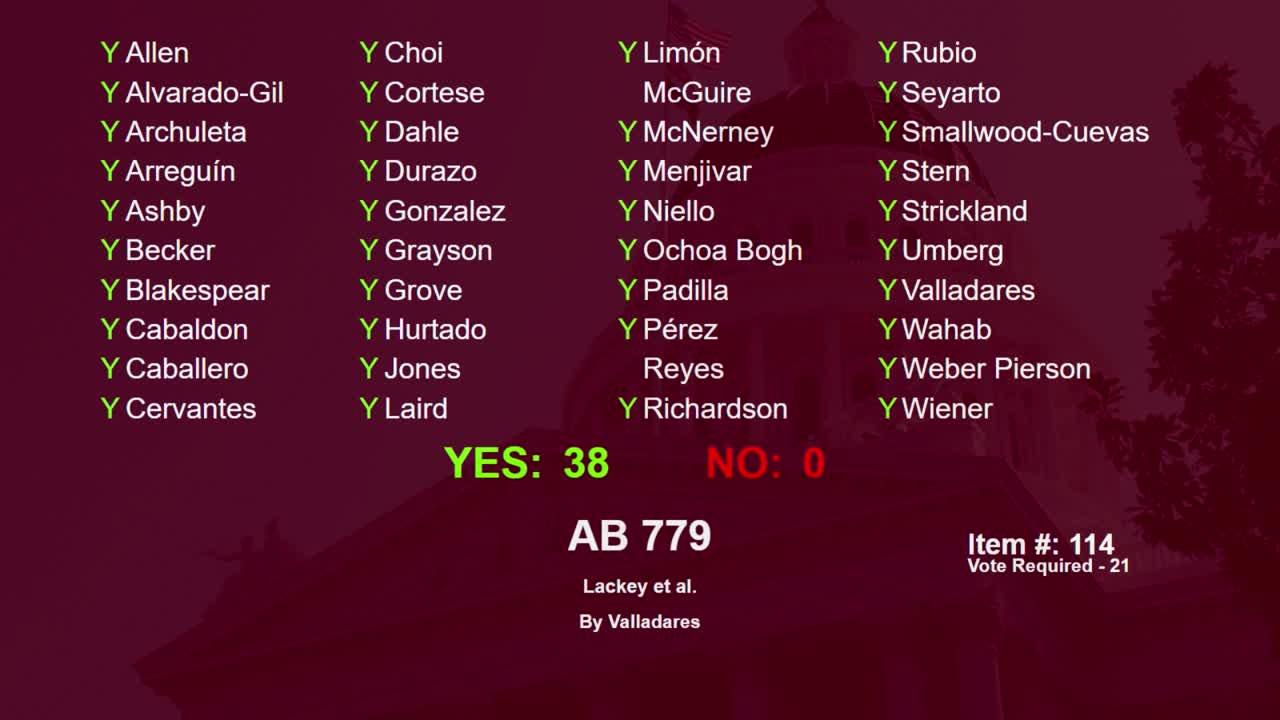 3MIN
Senate Floor
 21MIN
Senate Standing Committee on Education
 1MIN
Assembly Floor
 12MIN
Assembly Standing Committee on Education
Bill Author
Bill Co-Author(s):