AB 845: Employment: complaints: agricultural employees.
- Session Year: 2025-2026
- House: Assembly
- Latest Version Date: 2025-10-11
Current Status:
Passed
(2025-10-11: Chaptered by Secretary of State - Chapter 624, Statutes of 2025.)
Introduced
In Committee
Awaiting First Chamber Vote
Passed First Chamber
In Committee
Awaiting Second Chamber Vote
Passed Second Chamber
Enacted
Existing law establishes the Labor and Workforce Development Agency, consisting of various departments and entities, including the Agricultural Labor Relations Board and the Department of Industrial Relations. Existing law requires the Agricultural Labor Relations Board to, among other things, maintain a telephone line, as specified, for the purpose of providing interested persons with information concerning their rights and responsibilities, as prescribed, or for referring persons to the appropriate agency or entity with the capacity to render advice or help in dealing with any situation arising out of agricultural labor disputes. Existing law requires the Department of Industrial Relations to, among other things, perform specified functions, including fostering, promoting, and developing the welfare of the wage earners of California, to improve their working conditions, and to advance their opportunities for profitable employment. Existing law establishes the Division of Labor Standards Enforcement, under the direction of the Labor Commissioner, within the Department of Industrial Relations and sets forth its powers and duties regarding the enforcement of labor laws. Existing law also establishes the Division of Occupational Safety and Health within the Department of Industrial Relations and requires the division to enforce all occupational safety and health standards, as specified.
This bill would, upon appropriation by the Legislature, require the Agricultural Labor Relations Board, Department of Industrial Relations, Division of Labor Standards Enforcement, or Division of Occupational Safety and Health, upon intake of a complaint from an agricultural employee by any department, division, or board within the Labor and Workforce Development Agency, to collaborate with each other and take all reasonable efforts to transmit the complaint to the appropriate entity for processing and investigation. The bill would prohibit the transmitting entity from disclosing the identity and personal information of the agricultural employee complainant to the extent prohibited by law without their consent. The bill would define various terms for these purposes.
Existing law establishes the Labor and Workforce Development Agency, consisting of various departments and entities, including the Agricultural Labor Relations Board and the Department of Industrial Relations. Existing law requires the Agricultural Labor Relations Board to, among other things, maintain a telephone line, as specified, for the purpose of providing interested persons with information concerning their rights and responsibilities, as prescribed, or for referring persons to the appropriate agency or entity with the capacity to render advice or help in dealing with any situation arising out of agricultural labor disputes. Existing law requires the Department of Industrial Relations to, among other things, perform specified functions, including fostering, promoting, and developing the welfare of the wage earners of California, to improve their working conditions, and to advance their opportunities for profitable employment. Existing law establishes the Division of Labor Standards Enforcement, under the direction of the Labor Commissioner, within the Department of Industrial Relations and sets forth its powers and duties regarding the enforcement of labor laws. Existing law also establishes the Division of Occupational Safety and Health within the Department of Industrial Relations and requires the division to enforce all occupational safety and health standards, as specified.
This bill would would, upon appropriation by the Legislature, require the Agricultural Labor Relations Board, Department of Industrial Relations, Division of Labor Standards Enforcement, and or Division of Occupational Safety and Health, upon intake of a complaint from an agricultural employee, employee by any department, division, or board within the Labor and Workforce Development Agency, to collaborate with each other and take all reasonable efforts to transmit the complaint to the appropriate entity for processing and investigation. The bill would prohibit the transmitting entity from disclosing the identity and personal information of the agricultural employee complainant to the extent prohibited by law without their consent. The bill would define various terms for these purposes.
Existing law establishes the Labor and Workforce Development Agency, consisting of various departments and entities, including the Agricultural Labor Relations Board and the Department of Industrial Relations. Existing law requires the Agricultural Labor Relations Board to, among other things, maintain a telephone line, as specified, for the purpose of providing interested persons with information concerning their rights and responsibilities, as prescribed, or for referring persons to the appropriate agency or entity with the capacity to render advice or help in dealing with any situation arising out of agricultural labor disputes. Existing law requires the Department of Industrial Relations to, among other things, perform specified functions, including fostering, promoting, and developing the welfare of the wage earners of California, to improve their working conditions, and to advance their opportunities for profitable employment. Existing law establishes the Division of Labor Standards Enforcement, under the direction of the Labor Commissioner, within the Department of Industrial Relations and sets forth its powers and duties regarding the enforcement of labor laws. Existing law also establishes the Division of Occupational Safety and Health within the Department of Industrial Relations and requires the division to enforce all occupational safety and health standards, as specified.
This bill would require the Agricultural Labor Relations Board, Division of Labor Standards Enforcement, and Division of Occupational Safety and Health, upon intake of a complaint from an agricultural employee, to collaborate with each other and take all reasonable efforts to transmit the complaint to the appropriate entity for processing and investigation. The bill would define various terms for these purposes.
Existing law establishes various offices within the office of the Governor, including the Office of Emergency Services, and various state agencies, as defined, within the executive branch of state government, including the California Department of Aging within the California Health and Human Services Agency. Existing law, as part of the Mello-Granlund Older Californians Act, establishes the Office of the State Long-Term Care Ombudsman, under the direction of the State Long-Term Care Ombudsman, in the California Department of Aging. Existing law provides for the Long-Term Care Ombudsman Program under which funds are allocated to local ombudsman programs to assist elderly persons in long-term health care facilities and residential care facilities by, among other things, investigating and seeking to resolve complaints against these facilities.This bill would establish the Office of the State Farmworker Ombudsperson (office), under the director of the State Farmworker Ombudsperson, in the Office of Emergency Services, to be responsible for activities that promote the development, coordination, and utilization of resources to meet the needs of farmworkers, as specified. The bill would require the State Farmworker Ombudsperson, to have training and experience, in specified areas, including cultural and linguistic competence in matters relating to the agricultural workforce. The bill would require the Attorney General, upon request of the office, to represent the office or the Office of Emergency Services and the state in litigation, as specified. The bill would authorize the office to solicit and receive funds, gifts, and contributions to support the operations and programs of the office. The bill would require the office to deposit the above-described funds into the State Farmworker Ombudsperson Program Account, as specified, and would require revenues in the account, upon appropriation, to be used for the purpose of supporting the operations and programs of the office. The bill would require all communications by a representative of the office, as specified, to be privileged, as provided. The bill would require the office to establish a statewide uniform reporting system to collect and analyze data relative to complaints and conditions in the agricultural workforce, as described, and to, among other things, submit the data to the Assembly Committee on Labor and Employment on July 1, 2026, and annually thereafter. Existing constitutional provisions require that a statute that limits the right of access to the meetings of public bodies or the writings of public officials and agencies be adopted with findings demonstrating the interest protected by the limitation and the need for protecting that interest.This bill would make legislative findings to that effect.Existing law establishes various offices within the office of the Governor, including the Office of Emergency Services, and various state agencies, as defined, within the executive branch of state government, including the California Department of Aging within the California Health and Human Services Agency. Existing law, as part of the Mello-Granlund Older Californians Act, establishes the Office of the State Long-Term Care Ombudsman, under the direction of the State Long-Term Care Ombudsman, in the California Department of Aging. Existing law provides for the Long-Term Care Ombudsman Program under which funds are allocated to local ombudsman programs to assist elderly persons in long-term health care facilities and residential care facilities by, among other things, investigating and seeking to resolve complaints against these facilities.
This bill would establish the Office of the State Farmworker Ombudsperson (office), under the director of the State Farmworker Ombudsperson, in the Office of Emergency Services, to be responsible for activities that promote the development, coordination, and utilization of resources to meet the needs of farmworkers, as specified. The bill would require the State Farmworker Ombudsperson, to have training and experience, in specified areas, including cultural and linguistic competence in matters relating to the agricultural workforce. The bill would require the Attorney General, upon request of the office, to represent the office or the Office of Emergency Services and the state in litigation, as specified. The bill would authorize the office to solicit and receive funds, gifts, and contributions to support the operations and programs of the office. The bill would require the office to deposit the above-described funds into the State Farmworker Ombudsperson Program Account, as specified, and would require revenues in the account, upon appropriation, to be used for the purpose of supporting the operations and programs of the office. The bill would require all communications by a representative of the office, as specified, to be privileged, as provided. The bill would require the office to establish a statewide uniform reporting system to collect and analyze data relative to complaints and conditions in the agricultural workforce, as described, and to, among other things, submit the data to the Assembly Committee on Labor and Employment on July 1, 2026, and annually thereafter.
Existing constitutional provisions require that a statute that limits the right of access to the meetings of public bodies or the writings of public officials and agencies be adopted with findings demonstrating the interest protected by the limitation and the need for protecting that interest.
This bill would make legislative findings to that effect.
Existing law establishes the Division of Occupational Safety and Health within the Department of Industrial Relations and sets forth its powers and duties, including jurisdiction over all employment and places of employment, with the power necessary to enforce and administer all occupational health and safety laws and standards.Existing law, the California Occupational Safety and Health Act of 1973, requires employers to comply with certain safety and health standards, including the Maria Isabel Vasquez Jimenez heat illness standard, as specified, and charges the division with enforcement of those provisions. Existing law requires the division to submit to the Occupational Safety and Health Standards Board a rulemaking proposal to consider revising, among other things, the Maria Isabel Vasquez Jimenez heat illness standard, as specified. Under existing law, certain knowing, negligent, or willful violations of safety and health standards are punishable as misdemeanors.This bill would declare the intent of the Legislature to enact legislation that would ensure that workers know their rights and are prepared to protect themselves during extreme heat-related events.Existing law establishes the Division of Occupational Safety and Health within the Department of Industrial Relations and sets forth its powers and duties, including jurisdiction over all employment and places of employment, with the power necessary to enforce and administer all occupational health and safety laws and standards.
Existing law, the California Occupational Safety and Health Act of 1973, requires employers to comply with certain safety and health standards, including the Maria Isabel Vasquez Jimenez heat illness standard, as specified, and charges the division with enforcement of those provisions. Existing law requires the division to submit to the Occupational Safety and Health Standards Board a rulemaking proposal to consider revising, among other things, the Maria Isabel Vasquez Jimenez heat illness standard, as specified. Under existing law, certain knowing, negligent, or willful violations of safety and health standards are punishable as misdemeanors.
This bill would declare the intent of the Legislature to enact legislation that would ensure that workers know their rights and are prepared to protect themselves during extreme heat-related events.
(a)(1)Upon appropriation by the Legislature and notwithstanding any other law, upon intake of a complaint from an agricultural employee by any department, division, or board within the Labor and Workforce Development Agency, the appropriate entity shall collaborate with each other and take all reasonable efforts to transmit the complaint to the appropriate entity for processing and investigation.
(2)In transmitting a complaint to the appropriate entity, the transmitting entity shall not disclose the identity and personal information of the agricultural employee complainant to the extent prohibited by law without their consent.
(b)For purposes of this section, the following definitions apply:
(1)Agricultural employee means a person employed in any of the following:
(A)An agricultural occupation, as defined in Wage Order No. 14 of the Industrial Welfare Commission.
(B)An industry preparing agricultural products for the market, on the farm, as defined in Wage Order No. 13 of the Industrial Welfare Commission.
(C)An industry handling products after harvest, as defined in Wage Order No. 8 of the Industrial Welfare Commission.
(2)Appropriate entity includes, but is not limited to, the Agricultural Labor Relations Board, Department of Industrial Relations, Division of Labor Standards Enforcement, Division of Occupational Safety and Health, or Employment Development Department.
(3)Reasonable efforts shall be consistent with each entitys confidentiality requirements, including, but not limited to, subdivision (c) of Section 6309.
(a)Notwithstanding (1)Upon appropriation by the Legislature and notwithstanding any other law, upon intake of a complaint from an agricultural employee, the Agricultural Labor Relations Board, Division of Labor Standards Enforcement, and Division of Occupational Safety and Health employee by any department, division, or board within the Labor and Workforce Development Agency, the appropriate entity shall collaborate with each other and take all reasonable efforts to transmit the complaint to the appropriate entity for processing and investigation.
(2)In transmitting a complaint to the appropriate entity, the transmitting entity shall not disclose the identity and personal information of the agricultural employee complainant to the extent prohibited by law without their consent.
(b)For purposes of this section, the following definitions apply:
(1)Agricultural employee means one engaged in agriculture, as that terms is defined in subdivision (a) of Section 1140.4. a person employed in any of the following:
(A)An agricultural occupation, as defined in Wage Order No. 14 of the Industrial Welfare Commission.
(B)An industry preparing agricultural products for the market, on the farm, as defined in Wage Order No. 13 of the Industrial Welfare Commission.
(C)An industry handling products after harvest, as defined in Wage Order No. 8 of the Industrial Welfare Commission.
(2)Appropriate entity means includes, but is not limited to, the Agricultural Labor Relations Board, Department of Industrial Relations, Division of Labor Standards Enforcement, or Division of Occupational Safety and Health. Health, or Employment Development Department.
(3)Reasonable efforts shall be consistent with each entitys confidentiality requirements, including, but not limited to, subdivision (c) of Section 6309.
(a)Notwithstanding any other law, upon intake of a complaint from an agricultural employee, the Agricultural Labor Relations Board, Division of Labor Standards Enforcement, and Division of Occupational Safety and Health shall collaborate with each other and take all reasonable efforts to transmit the complaint to the appropriate entity for processing and investigation.
(b)For purposes of this section, the following definitions apply:
(1)Agricultural employee means one engaged in agriculture, as that terms is defined in subdivision (a) of Section 1140.4.
(2)Appropriate entity means the Agricultural Labor Relations Board, Division of Labor Standards Enforcement, or Division of Occupational Safety and Health.
SECTION 1.Chapter 18 (commencing with Section 8899.100) is added to Division 1 of Title 2 of the Government Code, to read:18.State Farmworker Ombudsperson8899.100.(a)The Legislature recognizes the establishment of the Farmworker Ombudsperson Program under the Office of Emergency Services.(b)The Legislature declares that it is the public policy of this state to provide adequate protections for farmworkers through the use of culturally and linguistically competent navigation via community health workers, and nothing in this chapter shall be construed as limiting or restricting the continuation of relationships established between ombudspersons, farmworkers, and the operators of these farms. (c)The Legislature finds that in order to effectively assist farmworkers in the assertion of their civil and human rights, the structure, powers, and duties of the Farmworker Ombudsperson Program must be specifically defined. 8899.101.Unless the contrary is stated or clearly appears from the context, all of the following definitions shall govern the interpretation of this chapter: (a)Approved organization means any public agency or other appropriate organization that has been designated by the Office of Emergency Services to hear, investigate, and resolve complaints made by or on behalf of farmworkers relating to matters that may affect the health, safety, welfare, and rights of farmworkers.(b)Director means the Director of Emergency Services.(c)Farmworker means agricultural employee as defined in subdivision (b) of Section 1140.4 of the Labor Code.(d)Office means the Office of the State Farmworker Ombudsperson, including approved organizations. (e)Ombudsperson coordinator means the individual selected by the governing board or executive director of the approved organization to manage the day-to-day operation of the ombudsperson program, including the implementation of federal and state requirements governing the office.(f)State Ombudsperson means the State Farmworker Ombudsperson. 8899.102.There is within the Office of Emergency Services, the Office of the State Farmworker Ombudsperson.8899.103.(a)(1)The office shall be under the direction of a chief executive officer who shall be known as the State Farmworker Ombudsperson.(2)The State Ombudsperson shall be appointed by the director and shall report directly to the director.(3)The State Ombudsperson shall devote their entire time to the duties of their position and shall receive the salary otherwise provided by law.(b)(1)Any vacancy occurring in the position of the State Ombudsperson shall be filled in the same manner as the original appointment.(2)(A)Whenever the State Ombudsperson dies, resigns, becomes ineligible to serve for any reason, or is removed from office, the director shall appoint an acting State Ombudsman within 30 days, who shall serve until the appointment and qualification of the State Ombudspersons successor, but in no event longer than four months from the occurrence of the vacancy. (B)The acting State Ombudsperson shall exercise during this period all the powers and duties of the State Ombudsman pursuant to this chapter.8899.104.(a)The State Ombudsperson shall have training and experience in all of the following areas:(1)Cultural and linguistic competence in matters relating to the agricultural workforce. (2)The legal system.(3)Dispute or problem resolution techniques, including investigation, mediation, and negotiation.(b)Neither the State Ombudsperson nor any member of their immediate family shall have, or have had within the past three years, any pecuniary interest in farm operations. 8899.105.(a)Upon request of the office, the Attorney General shall represent the office or the Office of Emergency Services and the state in litigation concerning affairs of the office, unless the Attorney General represents another state agency, in which case the agency or the office shall be authorized to employ other counsel. (b)The State Ombudsperson may employ technical experts and other employees that, in their judgment, are necessary for the conduct of the business of the office.8899.106.(a)The office may solicit and receive funds, gifts, and contributions to support the operations and programs of the office.(b)The office may form a foundation eligible to receive tax-deductible contributions to support the operations and programs of the office. (c)The office shall not solicit or receive any funds, gifts, or contributions where the solicitation or receipt would jeopardize the independence and objectivity of the office. (d)(1)The office shall deposit funds received pursuant to this section into the State Farmworker Ombudsperson Program Account that is hereby created in the Special Deposit Fund in the State Treasury pursuant to Section 16370.(2)Revenues in the account shall, upon appropriation, be used for the purpose of supporting the operations and programs of the office.8899.107.(a)No representative of the office shall be held liable for good faith performance of responsibilities under this chapter. (b)(1)No discriminatory, disciplinary, or retaliatory action shall be taken against any farmworker or any volunteer, for any communication made, or information given or disclosed, to aid the office in carrying out its duties and responsibilities, unless the same was done maliciously or without good faith. (2)This subdivision is not intended to infringe on the rights of the employer to supervise, discipline, or terminate a farmworker for other reasons. (c)All communications by a representative of the office, if reasonably related to the requirements of that individuals responsibilities under this chapter and done in good faith, shall be privileged, and that privilege shall serve as a defense to any action in libel or slander. (d)Any representative of the office shall be exempt from being required to testify in court as to any confidential matters, except as the court may deem necessary to enforce the provisions of this chapter. 8899.108.(a)The office shall be responsible for activities that promote the development, coordination, and utilization of resources that meet the needs of farmworkers, consistent with its mission.(b)The responsibilities of the office shall include establishing a statewide uniform reporting system to collect and analyze data relative to complaints and conditions in the agricultural workforce for the purpose of identifying and resolving significant problems. (c)On July 1, 2026, and annually thereafter, the office shall submit the data to the Assembly Committee on Labor and Employment and post the data on its internet website.8899.109.(a)All advocacy programs and any programs similar in nature to the Farmworker Ombudsman Program that receive funding or official designation from the state shall cooperate with the office, where appropriate. (b)The programs described in this section include, but are not limited to, programs within the Division of Occupational Safety and Health and the Agricultural Labor Relations Board.SEC. 2.The Legislature finds and declares that this act imposes a limitation on the publics right of access to the meetings of public bodies or the writings of public officials and agencies within the meaning of Section 3 of Article I of the California Constitution. Pursuant to that constitutional provision, the Legislature makes the following findings to demonstrate the interest protected by this limitation and the need for protecting that interest:(a)Agricultural workers that report workplace concerns are at risk of employer retaliation. In this context, retaliation can result in job loss and immigration consequences due to lack of documentation.(b)Agricultural workers belong to groups that have historically had difficulties navigating the legal system and advocating for appropriate working conditions.(c)Agricultural workers have limited social mobility, with an average of a ninth grade education level and only about 10 percent of workers having completed high school. This creates an increased reliance on jobs within the agricultural sector.(a)The Legislature recognizes the establishment of the Farmworker Ombudsperson Program under the Office of Emergency Services.
(b)The Legislature declares that it is the public policy of this state to provide adequate protections for farmworkers through the use of culturally and linguistically competent navigation via community health workers, and nothing in this chapter shall be construed as limiting or restricting the continuation of relationships established between ombudspersons, farmworkers, and the operators of these farms.
(c)The Legislature finds that in order to effectively assist farmworkers in the assertion of their civil and human rights, the structure, powers, and duties of the Farmworker Ombudsperson Program must be specifically defined.
8899.101.Unless the contrary is stated or clearly appears from the context, all of the following definitions shall govern the interpretation of this chapter:
(a)Approved organization means any public agency or other appropriate organization that has been designated by the Office of Emergency Services to hear, investigate, and resolve complaints made by or on behalf of farmworkers relating to matters that may affect the health, safety, welfare, and rights of farmworkers.
(b)Director means the Director of Emergency Services.
(c)Farmworker means agricultural employee as defined in subdivision (b) of Section 1140.4 of the Labor Code.
(d)Office means the Office of the State Farmworker Ombudsperson, including approved organizations.
(e)Ombudsperson coordinator means the individual selected by the governing board or executive director of the approved organization to manage the day-to-day operation of the ombudsperson program, including the implementation of federal and state requirements governing the office.
(f)State Ombudsperson means the State Farmworker Ombudsperson.
8899.102.There is within the Office of Emergency Services, the Office of the State Farmworker Ombudsperson.
8899.103.(a)(1)The office shall be under the direction of a chief executive officer who shall be known as the State Farmworker Ombudsperson.
(2)The State Ombudsperson shall be appointed by the director and shall report directly to the director.
(3)The State Ombudsperson shall devote their entire time to the duties of their position and shall receive the salary otherwise provided by law.
(b)(1)Any vacancy occurring in the position of the State Ombudsperson shall be filled in the same manner as the original appointment.
(2)(A)Whenever the State Ombudsperson dies, resigns, becomes ineligible to serve for any reason, or is removed from office, the director shall appoint an acting State Ombudsman within 30 days, who shall serve until the appointment and qualification of the State Ombudspersons successor, but in no event longer than four months from the occurrence of the vacancy.
(B)The acting State Ombudsperson shall exercise during this period all the powers and duties of the State Ombudsman pursuant to this chapter.
8899.104.(a)The State Ombudsperson shall have training and experience in all of the following areas:
(1)Cultural and linguistic competence in matters relating to the agricultural workforce.
(2)The legal system.
(3)Dispute or problem resolution techniques, including investigation, mediation, and negotiation.
(b)Neither the State Ombudsperson nor any member of their immediate family shall have, or have had within the past three years, any pecuniary interest in farm operations.
8899.105.(a)Upon request of the office, the Attorney General shall represent the office or the Office of Emergency Services and the state in litigation concerning affairs of the office, unless the Attorney General represents another state agency, in which case the agency or the office shall be authorized to employ other counsel.
(b)The State Ombudsperson may employ technical experts and other employees that, in their judgment, are necessary for the conduct of the business of the office.
8899.106.(a)The office may solicit and receive funds, gifts, and contributions to support the operations and programs of the office.
(b)The office may form a foundation eligible to receive tax-deductible contributions to support the operations and programs of the office.
(c)The office shall not solicit or receive any funds, gifts, or contributions where the solicitation or receipt would jeopardize the independence and objectivity of the office.
(d)(1)The office shall deposit funds received pursuant to this section into the State Farmworker Ombudsperson Program Account that is hereby created in the Special Deposit Fund in the State Treasury pursuant to Section 16370.
(2)Revenues in the account shall, upon appropriation, be used for the purpose of supporting the operations and programs of the office.
8899.107.(a)No representative of the office shall be held liable for good faith performance of responsibilities under this chapter.
(b)(1)No discriminatory, disciplinary, or retaliatory action shall be taken against any farmworker or any volunteer, for any communication made, or information given or disclosed, to aid the office in carrying out its duties and responsibilities, unless the same was done maliciously or without good faith.
(2)This subdivision is not intended to infringe on the rights of the employer to supervise, discipline, or terminate a farmworker for other reasons.
(c)All communications by a representative of the office, if reasonably related to the requirements of that individuals responsibilities under this chapter and done in good faith, shall be privileged, and that privilege shall serve as a defense to any action in libel or slander.
(d)Any representative of the office shall be exempt from being required to testify in court as to any confidential matters, except as the court may deem necessary to enforce the provisions of this chapter.
8899.108.(a)The office shall be responsible for activities that promote the development, coordination, and utilization of resources that meet the needs of farmworkers, consistent with its mission.
(b)The responsibilities of the office shall include establishing a statewide uniform reporting system to collect and analyze data relative to complaints and conditions in the agricultural workforce for the purpose of identifying and resolving significant problems.
(c)On July 1, 2026, and annually thereafter, the office shall submit the data to the Assembly Committee on Labor and Employment and post the data on its internet website.
8899.109.(a)All advocacy programs and any programs similar in nature to the Farmworker Ombudsman Program that receive funding or official designation from the state shall cooperate with the office, where appropriate.
(b)The programs described in this section include, but are not limited to, programs within the Division of Occupational Safety and Health and the Agricultural Labor Relations Board.
SEC. 2.The Legislature finds and declares that this act imposes a limitation on the publics right of access to the meetings of public bodies or the writings of public officials and agencies within the meaning of Section 3 of Article I of the California Constitution. Pursuant to that constitutional provision, the Legislature makes the following findings to demonstrate the interest protected by this limitation and the need for protecting that interest:
(a)Agricultural workers that report workplace concerns are at risk of employer retaliation. In this context, retaliation can result in job loss and immigration consequences due to lack of documentation.
(b)Agricultural workers belong to groups that have historically had difficulties navigating the legal system and advocating for appropriate working conditions.
(c)Agricultural workers have limited social mobility, with an average of a ninth grade education level and only about 10 percent of workers having completed high school. This creates an increased reliance on jobs within the agricultural sector.
SECTION 1.It is the intent of the Legislature to enact legislation that would ensure that workers know their rights and are prepared to protect themselves during extreme heat-related events.It is the intent of the Legislature to enact legislation that would ensure that workers know their rights and are prepared to protect themselves during extreme heat-related events.
|
Date
|
Status
|
|---|---|
| Oct 11, 2025 | Chaptered by Secretary of State - Chapter 624, Statutes of 2025. |
| Oct 11, 2025 | Approved by the Governor. |
| Sep 22, 2025 | Enrolled and presented to the Governor at 3 p.m. |
| Sep 10, 2025 | Senate amendments concurred in. To Engrossing and Enrolling. (Ayes 79. Noes 0. Page 3202.). |
| Sep 9, 2025 | In Assembly. Concurrence in Senate amendments pending. |
| Sep 9, 2025 | Read third time. Passed. Ordered to the Assembly. (Ayes 40. Noes 0. Page 2734.). |
| Sep 2, 2025 | Read second time. Ordered to third reading. |
| Aug 29, 2025 | From committee: Amend, and do pass as amended. (Ayes 7. Noes 0.) (August 29). |
| Aug 29, 2025 | Read second time and amended. Ordered returned to second reading. |
| Jul 7, 2025 | In committee: Referred to APPR. suspense file. |
| Jun 25, 2025 | From committee: Do pass and re-refer to Com. on APPR. with recommendation: To Consent Calendar. (Ayes 5. Noes 0.) (June 25). Re-referred to Com. on APPR. |
| Jun 18, 2025 | Referred to Com. on L., P.E. & R. |
| Jun 4, 2025 | In Senate. Read first time. To Com. on RLS. for assignment. |
| Jun 3, 2025 | Read third time. Passed. Ordered to the Senate. (Ayes 79. Noes 0. Page 1983.) |
| May 27, 2025 | Read second time. Ordered to third reading. |
| May 23, 2025 | From committee: Do pass. (Ayes 14. Noes 0.) (May 23). |
| May 7, 2025 | In committee: Set, first hearing. Referred to APPR. suspense file. |
| Apr 24, 2025 | From committee: Do pass and re-refer to Com. on APPR. (Ayes 7. Noes 0.) (April 23). Re-referred to Com. on APPR. |
| Apr 22, 2025 | Re-referred to Com. on L. & E. |
| Apr 21, 2025 | From committee chair, with author's amendments: Amend, and re-refer to Com. on L. & E. Read second time and amended. |
| Apr 1, 2025 | Re-referred to Com. on L. & E. |
| Mar 28, 2025 | From committee chair, with author's amendments: Amend, and re-refer to Com. on L. & E. Read second time and amended. |
| Mar 28, 2025 | Referred to Coms. on L. & E. and JUD. |
| Feb 20, 2025 | From printer. May be heard in committee March 22. |
| Feb 19, 2025 | Read first time. To print. |
|
Date
|
Description
|
Location
|
Votes
|
|
|---|---|---|---|---|
| Sep 10, 2025 | AB 845 Arambula Concurrence in Senate Amendments | Assembly Floor |
Passed |
|
| Sep 9, 2025 | Assembly 3rd Reading AB845 Arambula By Hurtado | Senate Floor |
Passed |
|
| Aug 29, 2025 | Do pass as amended | Senate Standing Committee on Appropriations |
Passed |
|
| Jul 7, 2025 | Placed on suspense file | Senate Standing Committee on Appropriations |
Passed |
|
| Jun 25, 2025 | Do pass, but first be re-referred to the Committee on [Appropriations] with the recommendation: To Consent Calendar | Senate Standing Committee on Labor, Public Employment and Retirement |
Passed |
|
| Jun 3, 2025 | AB 845 Arambula Assembly Third Reading | Assembly Floor |
Passed |
|
| May 23, 2025 | Do pass. | Assembly Standing Committee on Appropriations |
Passed |
|
| Apr 23, 2025 | Do pass and be re-referred to the Committee on [Appropriations] | Assembly Standing Committee on Labor and Employment |
Passed |
This list shows positions taken on this bill by organizations on the date displayed, which is linked to the original source.
Positions by individuals are not included.
|
Organization
|
Position
|
Date
|
|---|---|---|
| la Cooperativa Campesina de California | ** Support | |
| La Cooperative Campesina de California | ** Support |
CONCURRENCE IN SENATE AMENDMENTS
CSA1 Bill Id:AB 845
Author:(Arambula)
As Amended Ver:August 29, 2025
Majority vote
SUMMARY
Requires, upon intake of a complaint from an agricultural employee by any entity within the Labor and Workforce Development Agency (LWDA), the appropriate entities to collaborate with each other and take all reasonable efforts to transmit the complaint to the appropriate entity for processing and investigation. Specifies that the bill is contingent upon appropriation from the Legislature.
Senate Amendments
- Provide that the provisions of the bill are effective upon appropriation by the Legislature.
- Apply the provisions of the bill when any entity within the LWDA receives a complaint from an agricultural employee.
- Add the Department of Industrial Relations (DIR) and the Employment Development Department (EDD) to the list of entities that must collaborate with each other and take all reasonable efforts to transmit complaints from agricultural employees to the appropriate entity for processing and investigation.
- Require that, in transmitting a complaint to the appropriate entity, the transmitting entity not disclose the identity and personal information of the agricultural employee complainant to the extent prohibited by law and without their consent.
- Revise the definition of "agricultural employee" to mean a person employed in any of the following:
- An agricultural occupation, as defined in Wage Order No. 14 of the Industrial Welfare Commission.
- An industry preparing agricultural products for the market, on the farm, as defined in Wage Order No. 13 of the Industrial Welfare Commission.
- An industry handling products after harvest, as defined in Wage Order No. 8 of the Industrial Welfare Commission.
- Require that "reasonable efforts" be consistent with each entity's confidentiality requirements, including, but not limited to, the existing requirement for the Division of Occupational Safety and Health (Cal/OSHA) that the name of a person who submits a complaint regarding the unsafe condition of an employment or place of employment must be kept confidential by the division, unless that person requests otherwise.
COMMENTS
Agricultural work is among the most dangerous in the United States, ranking in the top 10 industries with the highest workplace fatalities according to US Bureau of Labor Statistics data.[1] Agricultural workers are exposed to extreme heat, wildfire smoke and natural disasters more than ever before due to climate change, all while fear of retaliation or deportation prevents many from filing complaints for workplace violations.
This issue was further explored during an informational hearing in 2024 hosted by this Committee. During the hearing, agricultural workers and their representatives shared their experiences in navigating the state's enforcement landscape, and how many barriers – such as lack of awareness of workplace rights, a lack of state employees speaking the same language as workers, distrust of government, belief that state entities provide advance notice to employers, and more – exist that prevent agricultural workers from obtaining assistance from the state.
Agricultural employees' complaints about labor law violations are enforced by different state entities depending on the type of complaint being alleged. For example, Cal/OSHA has jurisdiction over health and safety complaints, the Division of Labor Standards Enforcement (DLSE) has jurisdiction over wage and hour complaints, and the Agricultural Labor Relations Board (ALRB) has jurisdiction over complaints related to collective bargaining and unfair labor practices. This division can be hard to navigate for those unfamiliar with the state's enforcement system, but is especially difficult for agricultural employees given the language and cultural barriers. There have been reports of agricultural employees submitting complaints to the incorrect entity and that entity simply stating that they do not have jurisdiction to investigate, without any meaningful attempt to connect the worker to the appropriate entity or to transmit the complaint to the appropriate entity itself.
A recent report from the University of California, Berkeley Possibility Lab found that a majority of low-wage workers, including agricultural workers, are not even aware of the state government entities tasked with enforcing their rights. In the survey of workers engaged with the state's COVID-19 Workplace Outreach Program, nearly two-thirds of respondents reported knowing of Cal/OSHA, but that was the only labor-related agency that was familiar to a majority of workers. Just 18% of respondents had heard of the DIR, 37% knew of the DLSE and 26% were familiar with the ALRB. Thirteen percent of respondents had not heard of any labor-related agency.[2]
According to the Author
"Farmworkers exposed to the impacts of climate change should be able to protect themselves from dangerous workplace conditions. Despite worsening environmental shifts, farmworkers report being asked to work in extreme heat and smoke-filled fields. Though advised to remain hydrated to offset these impacts, workers are often subject to lack of cool drinking water, as well as limited restroom and shade access.
Language barriers and immigration concerns ultimately lessen trust in the existing state protections and resources that workers are entitled to. AB 845 will require better coordination among the agencies tasked with responding to farmworker complaints to ensure workers receive appropriate information and that their concerns are accurately conveyed and investigated."
The author adds that the measure promotes equity solutions in that "The vast majority of California's agricultural labor force are migrants that speak Spanish and other indigenous languages like Mixteco, Zapoteco, and Triqui, leading to significant difficulties navigating systemic sources of support. Personal accounts from the California Farm Bureau further establish workers' increasing fears of deportation."
Arguments in Support
La Cooperativa Campensina de California, co-sponsor of this measure, states that "the vast majority of California's agricultural labor force are migrants that speak Spanish and other indigenous languages like Mixteco, Zapoteco, and Triqui, leading to significant difficulties navigating systemic sources of support. Farmworkers' increasing fears of deportation have further eroded trust in the state resources they are entitled to. Unfortunately, even when farmworkers overcome these barriers to seeking help, state agencies often do not process or refer complaints if the issue falls outside their jurisdiction. As a result, complaints often fall through the cracks and go unaddressed. AB 845 will require better coordination and information sharing amongst the agencies tasked with responding to farmworker complaints."
Arguments in Opposition
None on file.
FISCAL COMMENTS
According to the Senate Appropriations Committee:
- ALRB anticipates annual costs of $961,000 (Labor Workforce Development Fund).
- DIR would incur first-year costs of $2.9 million, and $2.2 million annually thereafter, to implement the provisions of the bill (Labor Enforcement and Compliance Fund).
VOTES:
ASM LABOR AND EMPLOYMENT: 7-0-0
YES: Ortega, Flora, Chen, Elhawary, Kalra, Lee, Ward
ASM APPROPRIATIONS: 14-0-1
YES: Wicks, Arambula, Calderon, Caloza, Dixon, Elhawary, Fong, Mark González, Hart, Pacheco, Pellerin, Solache, Ta, Tangipa
ABS, ABST OR NV: Sanchez
ASSEMBLY FLOOR: 79-0-0
YES: Addis, Aguiar-Curry, Ahrens, Alanis, Alvarez, Arambula, Ávila Farías, Bains, Bauer-Kahan, Bennett, Berman, Boerner, Bonta, Bryan, Calderon, Caloza, Carrillo, Castillo, Chen, Connolly, Davies, DeMaio, Dixon, Elhawary, Ellis, Flora, Fong, Gabriel, Gallagher, Garcia, Gipson, Jeff Gonzalez, Mark González, Hadwick, Haney, Harabedian, Hart, Hoover, Irwin, Jackson, Kalra, Krell, Lackey, Lee, Lowenthal, Macedo, McKinnor, Muratsuchi, Nguyen, Ortega, Pacheco, Papan, Patel, Patterson, Pellerin, Petrie-Norris, Quirk-Silva, Ramos, Ransom, Celeste Rodriguez, Michelle Rodriguez, Rogers, Blanca Rubio, Sanchez, Schiavo, Schultz, Sharp-Collins, Solache, Soria, Stefani, Ta, Tangipa, Valencia, Wallis, Ward, Wicks, Wilson, Zbur, Rivas
UPDATED
VERSION: August 29, 2025
CONSULTANT: Erin Hickey / L. & E. / (916) 319-2091 FN: 0001830
US Bureau of Labor Statistics. (2023) "Civilian occupations with high fatal work injury rates." https://www.bls.gov/charts/census-of-fatal-occupational-injuries/civilian-occupations-with-high-fatal-work-injury-rates.htm ↑
Sadin, Meredith and Amy E. Lerman. (2025) "Insights from California's COVID-19 Workplace Outreach Project and the Trusted Messemger Model." University of California, Berkeley, Possibility Lab. https://berkeley.app.box.com/s/p48sayqa6i0vs40nsaky0kc0rhruba7i ↑
SENATE RULES COMMITTEE Office of Senate Floor Analyses (916) 651-1520 Fax: (916) 327-4478 | AB 845 |
THIRD READING
Bill No: AB 845
Author: Arambula (D)
Amended: 8/29/25 in Senate
Vote: 21
SENATE LABOR, PUB. EMP. & RET. COMMITTEE: 5-0, 6/25/25
AYES: Smallwood-Cuevas, Strickland, Cortese, Durazo, Laird
SENATE APPROPRIATIONS COMMITTEE: 7-0, 8/29/25
AYES: Caballero, Seyarto, Cabaldon, Dahle, Grayson, Richardson, Wahab
ASSEMBLY FLOOR: 79-0, 6/3/25 - See last page for vote
SUBJECT: Employment: complaints: agricultural employees
SOURCE: La Cooperativa Campesina De California
DIGEST:
This bill, upon appropriation, requires the appropriate entities within any department, division, or board within the Labor and Workforce Development Agency (LWDA), upon intake of a complaint by an agricultural employee, as defined, to collaborate with each other and take all reasonable efforts to transmit the complaint to the appropriate entity for processing and investigation.
ANALYSIS:
Existing law:
- Establishes the LWDA, consisting of various departments and entities, including the Agricultural Labor Relations Board (ALRB), the Department of Industrial Relations (DIR), and the Employment Development Department (EDD). (Government Code §§ 15550 et seq.)
- Establishes the ALRB to, among other things, investigate, conduct hearings, and make determinations relating to unfair labor practices impacting agricultural employee. (Labor Code §§ 1141 et seq.)
- Requires the ALRB to maintain a telephone line, as specified, for the purpose of providing interested persons with information concerning their rights and responsibilities, as prescribed, or for referring persons to the appropriate agency or entity with the capacity to render advice or help in dealing with any situation arising out of agricultural labor disputes. (Labor Code § 1142.5)
- Establishes DIR to, among other things, foster, promote, and develop the welfare of the wage earners of California, to improve their working conditions, and to advance their opportunities for profitable employment. (Labor Code §§ 50 et seq.)
- Establishes Division of Labor Standards Enforcement (DLSE), under the direction of the Labor Commissioner (LC), within the DIR, and authorizes the LC to investigate employee complaints and enforce labor laws, as specified. (Labor Code §§ 79 et seq.)
- Establishes California Occupational Safety and Health Administration (Cal/OSHA) within the DIR and requires the Division to enforce all occupational safety and health standards, as specified. (Labor Code §§ 6300 et seq.)
This bill:
- Upon appropriation, requires the appropriate entities within any department, division, or board within the LWDA, upon intake of a complaint by an agricultural employee, as defined, to collaborate with each other and take all reasonable efforts to transmit the complaint to the appropriate entity for processing and investigation.
- Prohibits the transmitting entity, in transmitting a complaint to the appropriate entity, to disclose the identity and personal information of the agricultural employee complainant to the extent prohibited by law without their consent.
- Defines the following terms:
- “Agricultural employee” means a person employed in any of the following:
- An agricultural occupation, as defined in Wage Order No. 14 of the Industrial Welfare Commission.
- An industry preparing agricultural products for the market, on the farm, as defined in Wage Order No. 13 of the Industrial Welfare Commission.
- An industry handling products after harvest, as defined in Wage Order No. 8 of the Industrial Welfare Commission.
- “Appropriate entity” includes, but is not limited to, the ALRB, DIR, DLSE, Cal/OSHA, or Employment Development Department (EDD).
- “Reasonable efforts” to be consistent with each entity’s confidentiality requirements, including, but not limited to, subdivision (c) of Section 6309.
- “Agricultural employee” means a person employed in any of the following:
Background
Agricultural Workers. California is a global leader in agriculture, with over 830,000 workers throughout the course of any given year. Unfortunately, many of these farmworkers face arduous labor, low wages, and deplorable working conditions. As climate change worsens, droughts, wildfires, extreme heat, and flooding only exacerbate the challenges to farmworkers at their workplace. In addition, fear of retaliation or fear of deportation prevents many farmworkers from filing complaints for any workplace violations.
Agricultural employees’ complaints about labor law violations are enforced by three distinct state entities depending on the type of complaint being alleged. Cal/OSHA has jurisdiction over health and safety complaints, the DLSE has jurisdiction over wage and hour complaints, and the ALRB has jurisdiction over complaints related to collective bargaining and unfair labor practices. With a variety of entities covering different labor violations, it can be difficult to know which entity to start with, especially for those unfamiliar with the state’s enforcement system. It can be even more difficult for anyone who has language or cultural barriers.
A February 2025 report from the University of California, Berkeley Possibility Lab found that the majority of low-wage workers, including agricultural workers, are not even aware of the state government entities tasked with enforcing their rights.[1] In fact, in their statewide survey, they found that workers have a relatively low familiarity with state agencies and that nearly two-thirds of workers (65 percent) have heard of Cal/OSHA, but no other department or agency that serves California workers was as familiar to a majority of workers. Specifically, only 18 percent of respondents indicated they had heard of DIR, and 13 percent had not heard of any labor-related department or agency.
It is possible that farmworkers do not know where to turn to if they need to report a labor violation, and it is also probable that they might end up calling the state entity that may not have jurisdiction (such as calling the ALRB for a Cal/OSHA issue) over resolving the issue. This bill, AB 845, seeks to address this issue by requiring the three state entities, ALRB, DLSE, and Cal/OSHA, to collaborate with each other and take all reasonable efforts to ensure that a complaint by an agricultural employee is transmitted to the appropriate entity for processing and investigation.
Rural Strategic Engagement Program. There have been recent efforts to educate workers in rural and semi-rural areas on workplace rights, increase access to state services for workers in those areas, and improve state labor enforcement programs. For instance, funding for ALRB during the 2024 Budget Act established the Rural Strategic Engagement Program (Program) to conduct outreach to rural workers. The funding required ALRB and DIR to implement the three goals of the Program: 1) increasing access to in-person services in farmworker communities, 2) establishing a no-wrong door policy for workers, and 3) simplifying access to information for workers.
While DIR and ALRB have improved their outreach to farmworkers and facilitated their ability to engage with them, there are still gaps in their capacity to improve the distribution of information to farmworkers and address the obstacles farmworkers face when seeking to report or remedy workplace violations.
Related/Prior Legislation
AB 107 (Gabriel, Chapter 22, Statutes of 2024) included appropriations to ALRB and DIR to implement the three goals of the Rural Strategic Engagement Program: 1) increase access to in-person services in farmworker communities, 2) establish a no-wrong door policy for workers, and 3) simplify access to information for workers.
FISCAL EFFECT: Appropriation: No Fiscal Com.: Yes Local: No
According to the Senate Appropriations Committee:
- ALRB anticipates annual costs of $961,000 (Labor Workforce Development Fund).
- DIR would incur first-year costs of $2.9 million, and $2.2 million annually thereafter, to implement the provisions of the bill (Labor Enforcement and Compliance Fund).
SUPPORT: (Verified 8/29/25)
La Cooperativa Campesina De California (Source)
OPPOSITION: (Verified 8/29/25)
None received
ARGUMENTS IN SUPPORT: According to the sponsor, La Cooperative Campesina de California: “The vast majority of California’s agricultural labor force are migrants that speak Spanish and other indigenous languages like Mixteco, Zapoteco, and Triqui, leading to significant difficulties navigating systemic sources of support. Farmworkers’ increasing fears of deportation have further eroded trust in the state resources they are entitled to. Unfortunately, even when farmworkers overcome these barriers to seeking help, state agencies often do not process or refer complaints if the issue falls outside their jurisdiction. As a result, complaints often fall through the cracks and go unaddressed. AB 845 will require better coordination and information sharing amongst the agencies tasked with responding to farmworker complaints.”
ASSEMBLY FLOOR: 79-0, 6/3/25
AYES: Addis, Aguiar-Curry, Ahrens, Alanis, Alvarez, Arambula, Ávila Farías, Bains, Bauer-Kahan, Bennett, Berman, Boerner, Bonta, Bryan, Calderon, Caloza, Carrillo, Castillo, Chen, Connolly, Davies, DeMaio, Dixon, Elhawary, Ellis, Flora, Fong, Gabriel, Gallagher, Garcia, Gipson, Jeff Gonzalez, Mark González, Hadwick, Haney, Harabedian, Hart, Hoover, Irwin, Jackson, Kalra, Krell, Lackey, Lee, Lowenthal, Macedo, McKinnor, Muratsuchi, Nguyen, Ortega, Pacheco, Papan, Patel, Patterson, Pellerin, Petrie-Norris, Quirk-Silva, Ramos, Ransom, Celeste Rodriguez, Michelle Rodriguez, Rogers, Blanca Rubio, Sanchez, Schiavo, Schultz, Sharp-Collins, Solache, Soria, Stefani, Ta, Tangipa, Valencia, Wallis, Ward, Wicks, Wilson, Zbur, Rivas
Prepared by: Jazmin Marroquin / L., P.E. & R. / (916) 651-1556
9/2/25 18:08:39
Sadin, Meredith and Amy E. Lerman, “Insights from California’s COVID-19 Workplace Outreach Project and the Trusted Messenger Model.” University of California, Berkeley, Possibility Lab, 2025. https://berkeley.app.box.com/s/p48sayqa6i0vs40nsaky0kc0rhruba7i ↑
SENATE COMMITTEE ON APPROPRIATIONS
Senator Anna Caballero, Chair
2025 - 2026 Regular Session
AB 845 (Arambula) - Employment: complaints: agricultural employees
Version: April 21, 2025 | Policy Vote: L., P.E. & R. 5 - 0 |
Urgency: No | Mandate: No |
Hearing Date: August 29, 2025 | Consultant: Robert Ingenito |
Bill Summary:
AB 845 would require the Agricultural Labor Relations Board (ALRB), and the Department of Industrial Relations’ (DIR) Division of Labor Standards and Enforcement (DLSE) and Division of Occupational Safety and Health (Cal/OSHA), upon intake of a complaint by an agricultural employee, as defined, to collaborate with each other and take all reasonable efforts to transmit the complaint to the appropriate entity for processing and investigation.
*********** ANALYSIS ADDENDUM – SUSPENSE FILE ***********
The following information is revised to reflect amendments
adopted by the committee on August 29, 2025
Fiscal Impact:
- ALRB anticipates annual costs of $961,000 (Labor Workforce Development Fund).
- DIR would incur first-year costs of $2.9 million, and $2.2 million annually thereafter, to implement the provisions of the bill (Labor Enforcement and Compliance Fund).
Author Amendments:
- Make the bill contingent upon an appropriation.
- Require the specified collaboration to occur upon intake of a complaint from an agricultural employee by any entity within the Labor and Workforce Development Agency.
- Prohibit the transmitting entity from disclosing the identity and personal information of the agricultural employee complainant to the extent prohibited by law without their consent.
- Modify the definition of “agricultural employee,” as specified.
- Add the Employment Development Department to the definition of “specified entity.”
-- END --
SENATE COMMITTEE ON
Senator Anna Caballero, Chair
2025 - 2026 Regular Session
AB 845 (Arambula) - Employment: complaints: agricultural employees
Version: | Policy Vote: |
Urgency: | Mandate: |
Hearing Date: | Consultant: |
Bill Summary:
AB 845 would require the Agricultural Labor Relations Board (ALRB), and the Department of Industrial Relations’ (DIR) Division of Labor Standards and Enforcement (DLSE) and Division of Occupational Safety and Health (Cal/OSHA), upon intake of a complaint by an agricultural employee, as defined, to collaborate with each other and take all reasonable efforts to transmit the complaint to the appropriate entity for processing and investigation.
Fiscal Impact:
- ALRB anticipates annual costs of $961,000 (Labor Workforce Development Fund).
- DIR would incur first-year costs of $2.9 million, and $2.2 million annually thereafter, to implement the provisions of the bill (Labor Enforcement and Compliance Fund).
Background:
Agricultural employees’ complaints about labor law violations are enforced by three distinct state entities depending on the type of complaint being alleged. Cal/OSHA has jurisdiction over health and safety complaints, DLSE has jurisdiction over wage and hour complaints, and ALRB has jurisdiction over complaints related to collective bargaining and unfair labor practices. With a triumvirate of entities covering different labor violations, a worker unfamiliar with the state’s enforcement system may struggle to determine to which state agency the worker should take their complaint. This is especially true if the worker faces language or cultural barriers.
A February 2025 report from the University of California, Berkeley Possibility Lab found that the majority of low-wage workers, including agricultural workers, are not even aware of the state government entities tasked with enforcing their rights. In fact, in their statewide survey, they found that workers have a relatively low familiarity with state agencies and that nearly two-thirds of workers (65 percent) have heard of Cal/OSHA, but no other department or agency that serves California workers was as familiar to a majority of workers. Specifically, only 18 percent of respondents indicated they had heard of DIR, and 13 percent had not heard of any labor-related department or agency.
Recently, there have been an emphasis to educate workers in rural and semi-rural areas on workplace rights, increase access to state services for workers in those areas, and improve state labor enforcement programs. For instance, funding for ALRB during the 2024 Budget Act established the Rural Strategic Engagement Program to conduct outreach to rural workers. The funding required ALRB and DIR to implement the three goals of the Program: (1) increase access to in-person services in farmworker communities, (2) establish a no-wrong door policy for workers, and (3) simplify access to information for workers.
Proposed Law:
This bill would require ALRB, DLSE, and Cal/OSHA, upon intake of a complaint by an agricultural employee, as defined, to collaborate with each other and take all reasonable efforts to transmit the complaint to the appropriate entity (as defined) for processing and investigation.
Related Legislation: AB 107 (Gabriel, Chapter 22, Statutes of 2024) included appropriations to ALRB and DIR to implement the three goals of the Rural Strategic Engagement Program: (1) increase access to in-person services in farmworker communities, (2) establish a no-wrong door policy for workers, and (3) simplify access to information for workers.
Staff Comments: The 2025 Budget Act appropriated $4.4 million each to ALRB and DIR for the Rural Strategic Engagement Program, and stated the intent to appropriate $4.3 million to ALRB and $4.6 million to DIR in 2026-27 for the Program. ALRB’s and DIR’s budget change proposal for the Program included the following costs to improve services to farmworkers by initiating better inter-agency training for enforcement and outreach, similar to the work required by this bill: (1) $2 million for consultants to provide specialized training to staff and management, and (2) $1.5 million to cover location and travel costs. Thus, workload consistent with this bill is funded at ALRB and DIR through 2026-27; however, additional funds, but of a smaller magnitude, would likely be needed to continue inter-agency efforts in the out years.
-- END --
SENATE COMMITTEE ON LABOR, PUBLIC EMPLOYMENT AND RETIREMENT
Senator Lola Smallwood-Cuevas, Chair
2025 - 2026 Regular
Bill No: AB 845 Hearing Date: June 25, 2025
Author: | Arambula | ||
Version: | April 21, 2025 | ||
Urgency: | No | Fiscal: | Yes |
Consultant: | Jazmin Marroquin | ||
SUBJECT: Employment: complaints: agricultural employees
KEY ISSUE
This bill requires the Agricultural Labor Relations Board (ALRB), Division of Labor Standards and Enforcement (DLSE), and Division of Occupational Safety and Health (Cal/OSHA), upon intake of a complaint by an agricultural employee, as defined, to collaborate with each other and take all reasonable efforts to transmit the complaint to the appropriate entity for processing and investigation.
ANALYSIS
Existing law:
- Establishes the Labor and Workforce Development Agency (LWDA), consisting of various departments and entities, including the ALRB and the Department of Industrial Relations (DIR). (Government Code §15550 et seq.)
- Establishes the ALRB to, among other things, investigate, conduct hearings, and make determinations relating to unfair labor practices impacting agricultural employee. (Labor Code §1141 et seq.)
- Requires the ALRB to maintain a telephone line, as specified, for the purpose of providing interested persons with information concerning their rights and responsibilities, as prescribed, or for referring persons to the appropriate agency or entity with the capacity to render advice or help in dealing with any situation arising out of agricultural labor disputes. (Labor Code §1142.5)
- Establishes DIR to, among other things, foster, promote, and develop the welfare of the wage earners of California, to improve their working conditions, and to advance their opportunities for profitable employment. (Labor Code §50 et seq.)
- Establishes DLSE, under the direction of the Labor Commissioner (LC), within the DIR, and authorizes the LC to investigate employee complaints and enforce labor laws, as specified. (Labor Code §79 et seq.)
- Establishes Cal/OSHA within the DIR and requires the Division to enforce all occupational safety and health standards, as specified. (Labor Code §6300 et seq.)
This bill:
- Requires the ALRB, DLSE, and Cal/OSHA, upon intake of a complaint by an agricultural employee, as defined, to collaborate with each other and take all reasonable efforts to transmit the complaint to the appropriate entity for processing and investigation.
- Defines the following terms:
- “Agricultural employee” means one engaged in agriculture, as that term is defined in subdivision (a) of Labor Code Section 1140.4.
- “Appropriate entity” means the ALRB, DLSE, or Cal/OSHA.
COMMENTS
1. Background:
Agricultural Workers
California is a global leader in agriculture, with over 830,000 workers throughout the course of any given year. Unfortunately, many of these farmworkers face arduous labor, low wages, and deplorable working conditions. As climate change worsens, droughts, wildfires, extreme heat, and flooding only exacerbate the challenges to farmworkers at their workplace. In addition, fear of retaliation or fear of deportation prevents many farmworkers from filing complaints for any workplace violations.
As the Assembly Labor and Employment Committee points out in their analysis, “Agricultural employees’ complaints about labor law violations are enforced by three distinct state entities depending on the type of complaint being alleged. Cal/OSHA has jurisdiction over health and safety complaints, the DLSE has jurisdiction over wage and hour complaints, and the ALRB has jurisdiction over complaints related to collective bargaining and unfair labor practices.” With a variety of entities covering different labor violations, it can be difficult to know which entity to start with, especially for those unfamiliar with the state’s enforcement system. It can be even more difficult for anyone who has language or cultural barriers.
A February 2025 report from the University of California, Berkeley Possibility Lab found that the majority of low-wage workers, including agricultural workers, are not even aware of the state government entities tasked with enforcing their rights.[1] In fact, in their statewide survey, they found that workers have a relatively low familiarity with state agencies and that nearly two-thirds of workers (65 percent) have heard of Cal/OSHA, but no other department or agency that serves California workers was as familiar to a majority of workers. Specifically, only 18 percent of respondents indicated they had heard of DIR, and 13 percent had not heard of any labor-related department or agency.
It is possible that farmworkers do not know where to turn to if they need to report a labor violation, and it is also probable that they might end up calling the state entity that may not have jurisdiction (such as calling the ALRB for a Cal/OSHA issue) over resolving the issue. This bill, AB 845, seeks to address this issue by requiring the three state entities, ALRB, DLSE, and Cal/OSHA, to collaborate with each other and take all reasonable efforts to ensure that a complaint by an agricultural employee is transmitted to the appropriate entity for processing and investigation.
Rural Strategic Engagement Program
There have been recent efforts to educate workers in rural and semi-rural areas on workplace rights, increase access to state services for workers in those areas, and improve state labor enforcement programs. For instance, funding for ALRB during the 2024 Budget Act established the Rural Strategic Engagement Program (Program) to conduct outreach to rural workers. The funding required ALRB and DIR to implement the three goals of the Program: 1) increasing access to in-person services in farmworker communities, 2) establishing a no-wrong door policy for workers, and 3) simplifying access to information for workers.
While DIR and ALRB have improved their outreach to farmworkers and facilitated their ability to engage with them, there are still gaps in their capacity to improve the distribution of information to farmworkers and address the obstacles farmworkers face when seeking to report or remedy workplace violations.
2. Need for this bill?
According to the author:
“Despite declining environmental conditions, farmworkers report being asked to work in conditions of extreme heat and smoke-filled fields. Though advised to remain hydrated to offset these impacts, workers are often subject to limited restroom and shade access. Agricultural work rewards workers that push themselves beyond their physical limitations because their wages are based on how many fruits and vegetables they pick. As climate change advances, more workers will continue to face these challenges.
The vast majority of California’s agricultural labor force are migrants that speak Spanish and other indigenous languages like Mixteco, Zapoteco, and Triqui, leading to significant difficulties navigating systemic sources of support. Personal accounts from the California Farm Bureau further establish workers’ increasing fears of deportation. Language barriers and immigration concerns ultimately lessen trust in the existing state resources workers are entitled to.
Unfortunately, even when farmworkers overcome these barriers to seeking help, state agencies often do not process or refer complaints if the issue falls outside their jurisdiction. As a result, complaints often fall through the cracks and go unaddressed. AB 845 will require better coordination among the agencies tasked with responding to farmworker complaints to ensure workers receive appropriate information and that their concerns are accurately conveyed and investigated.”
3. Proponent Arguments
According to the sponsor, La Cooperative Campesina de California:
“The vast majority of California’s agricultural labor force are migrants that speak Spanish and other indigenous languages like Mixteco, Zapoteco, and Triqui, leading to significant difficulties navigating systemic sources of support. Farmworkers’ increasing fears of deportation have further eroded trust in the state resources they are entitled to. Unfortunately, even when farmworkers overcome these barriers to seeking help, state agencies often do not process or refer complaints if the issue falls outside their jurisdiction. As a result, complaints often fall through the cracks and go unaddressed. AB 845 will require better coordination and information sharing amongst the agencies tasked with responding to farmworker complaints.”
4. Opponent Arguments:
None received.
5. Prior Legislation:
AB 107 (Gabriel, Chapter 22, Statutes of 2024) included appropriations to ALRB and DIR to implement the three goals of the Rural Strategic Engagement Program: 1) increase access to in-person services in farmworker communities, 2) establish a no-wrong door policy for workers, and 3) simplify access to information for workers.
SUPPORT
La Cooperative Campesina de California (Sponsor)
OPPOSITION
None received.
-- END --
Sadin, Meredith and Amy E. Lerman, “Insights from California’s COVID-19 Workplace Outreach Project and the Trusted Messenger Model.” University of California, Berkeley, Possibility Lab, 2025. https://berkeley.app.box.com/s/p48sayqa6i0vs40nsaky0kc0rhruba7i ↑
ASSEMBLY THIRD READING
ATR Bill Id:AB 845
Author:(Arambula)
As Amended Ver:April 21, 2025
Majority vote
SUMMARY
Requires, upon intake of a complaint from an agricultural employee, the Agricultural Labor Relations Board (ALRB), Division of Labor Standards Enforcement (DLSE), and Division of Occupational Safety and Health (Cal/OSHA) to collaborate with each other and take all reasonable efforts to transmit the complaint to the appropriate entity for processing and investigation.
Major Provisions
See summary above.
COMMENTS
Agricultural work is among the most dangerous in the United States, ranking in the top 10 industries with the highest workplace fatalities according to US Bureau of Labor Statistics data.[1] Agricultural workers are exposed to extreme heat, wildfire smoke and natural disasters more than ever before due to climate change, all while fear of retaliation or deportation prevents many from filing complaints for workplace violations.
This issue was further explored during an informational hearing in 2024 hosted by this Committee. During the hearing, agricultural workers and their representatives shared their experiences in navigating the state's enforcement landscape, and how many barriers – such as lack of awareness of workplace rights, a lack of state employees speaking the same language as workers, distrust of government, belief that state entities provide advance notice to employers, and more – exist that prevent agricultural workers from obtaining assistance from the state.
Agricultural employees' complaints about labor law violations are enforced by three distinct state entities depending on the type of complaint being alleged. Cal/OSHA has jurisdiction over health and safety complaints, the DLSE has jurisdiction over wage and hour complaints, and the ALRB has jurisdiction over complaints related to collective bargaining and unfair labor practices. This division can be hard to navigate for those unfamiliar with the state's enforcement system, but is especially difficult for agricultural employees given the language and cultural barriers. There have been reports of agricultural employees submitting complaints to the incorrect entity and that entity simply stating that they do not have jurisdiction to investigate, without any meaningful attempt to connect the worker to the appropriate entity or to transmit the complaint to the appropriate entity itself.
A recent report from the University of California, Berkeley, Possibility Lab found that a majority of low-wage workers, including agricultural workers, are not even aware of the state government entities tasked with enforcing their rights. In the survey of workers engaged with the state's COVID-19 Workplace Outreach Program, nearly two-thirds of respondents reported knowing of Cal/OSHA, but that was the only labor-related agency that was familiar to a majority of workers. Just 18% of respondents had heard of the DIR, 37% knew of the DLSE and 26% were familiar with the ALRB. Thirteen percent of respondents had not heard of any labor-related agency.[2]
According to the Author
"Farmworkers exposed to the impacts of climate change should be able to protect themselves from dangerous workplace conditions. Despite worsening environmental shifts, farmworkers report being asked to work in extreme heat and smoke-filled fields. Though advised to remain hydrated to offset these impacts, workers are often subject to lack of cool drinking water, as well as limited restroom and shade access.
Language barriers and immigration concerns ultimately lessen trust in the existing state protections and resources that workers are entitled to. AB 845 will require better coordination among the agencies tasked with responding to farmworker complaints to ensure workers receive appropriate information and that their concerns are accurately conveyed and investigated."
The author adds that the measure promotes equity solutions in that "The vast majority of California's agricultural labor force are migrants that speak Spanish and other indigenous languages like Mixteco, Zapoteco, and Triqui, leading to significant difficulties navigating systemic sources of support. Personal accounts from the California Farm Bureau further establish workers' increasing fears of deportation. Language barriers and immigration concerns ultimately lessen trust in the existing state resources and protections workers are entitled to."
Arguments in Support
La Cooperativa Campensina de California, co-sponsor of this measure, states that "The vast majority of California's agricultural labor force are migrants that speak Spanish and other indigenous languages like Mixteco, Zapoteco, and Triqui, leading to significant difficulties navigating systemic sources of support. Farmworkers' increasing fears of deportation have further eroded trust in the state resources they are entitled to. Unfortunately, even when farmworkers overcome these barriers to seeking help, state agencies often do not process or refer complaints if the issue falls outside their jurisdiction. As a result, complaints often fall through the cracks and go unaddressed. AB 845 will require better coordination and information sharing amongst the agencies tasked with responding to farmworker complaints."
Arguments in Opposition
None on file.
FISCAL COMMENTS
According to the Assembly Appropriations Committee:
Ongoing costs of an unknown amount, potentially in excess of $150,000, after fiscal year (FY) 2026-27, to ALRB, DLSE, and OSHA to collaborate upon intake of an agricultural employee complaint.
The Budget Act of 2024 appropriated $4.4 million to ALRB and $3.7 million to DIR for the Rural Strategic Engagement Program, and stated the intent to appropriate $4.4 million to ALRB and $4.3 million to DIR in FY 2025-26 and $4.4 million to ALRB and $4.6 million to DIR in FY 2026-27 for the program. ALRB's and DIR's budget change proposal for the program included the following costs to improve services to farmworkers by initiating better inter-agency training for enforcement and outreach, similar to the work required by this bill: (1) $2 million for consultants to provide specialized training to staff and management and (2) $1.5 million to cover location and travel costs. Thus, although such work is funded at ALRB and DIR through FY 2026-27, it is likely additional funds, but of a smaller magnitude, will be needed to continue inter-agency efforts in future years.
VOTES
ASM LABOR AND EMPLOYMENT: 7-0-0
YES: Ortega, Flora, Chen, Elhawary, Kalra, Lee, Ward
ASM APPROPRIATIONS: 14-0-1
YES: Wicks, Arambula, Calderon, Caloza, Dixon, Elhawary, Fong, Mark González, Hart, Pacheco, Pellerin, Solache, Ta, Tangipa
ABS, ABST OR NV: Sanchez
UPDATED
VERSION: April 21, 2025
CONSULTANT: Erin Hickey / L. & E. / (916) 319-2091 FN: 0000730
US Bureau of Labor Statistics. (2023) "Civilian occupations with high fatal work injury rates." https://www.bls.gov/charts/census-of-fatal-occupational-injuries/civilian-occupations-with-high-fatal-work-injury-rates.htm ↑
Sadin, Meredith and Amy E. Lerman. (2025) "Insights from California's COVID-19 Workplace Outreach Project and the Trusted Messemger Model." University of California, Berkeley, Possibility Lab. https://berkeley.app.box.com/s/p48sayqa6i0vs40nsaky0kc0rhruba7i ↑
Date of Hearing: May 7, 2025
ASSEMBLY COMMITTEE ON APPROPRIATIONS
Buffy Wicks, Chair
ABPCA Bill Id:AB 845
Author:(Arambula) – As Amended Ver:April 21, 2025
Policy Committee: | Labor and Employment | Vote: | 7 - 0 |
|
| ||
|
|
Urgency: No State Mandated Local Program: No Reimbursable: No
SUMMARY:
This bill requires the Agricultural Labor Relations Board (ALRB), Division of Labor Standards and Enforcement (DLSE), and Division of Occupational Safety and Health (Cal/OSHA) to collaborate upon intake of an agricultural employee complaint.
The three entities must take all reasonable efforts to transmit the complaint to the appropriate entity for processing and investigation. DLSE and Cal/OSHA are both divisions under the Department of Industrial Relations (DIR).
FISCAL EFFECT:
Ongoing costs of an unknown amount, potentially in excess of $150,000, after fiscal year (FY) 2026-27, to ALRB, DLSE, and OSHA to collaborate upon intake of an agricultural employee complaint
The Budget Act of 2024 appropriated $4.4 million to ALRB and $3.7 million to DIR for the Rural Strategic Engagement Program, and stated the intent to appropriate $4.4 million to ALRB and $4.3 million to DIR in FY 2025-26 and $4.4 million to ALRB and $4.6 million to DIR in FY 2026-27 for the program. ALRB’s and DIR’s budget change proposal for the program included the following costs to improve services to farmworkers by initiating better inter-agency training for enforcement and outreach, similar to the work required by this bill: (1) $2 million for consultants to provide specialized training to staff and management and (2) $1.5 million to cover location and travel costs. Thus, although such work is funded at ALRB and DIR through FY 2026-27, it is likely additional funds, but of a smaller magnitude, will be needed to continue inter-agency efforts in future years.
COMMENTS:
- Purpose. The author contends, “Farmworkers exposed to the impacts of climate change should be able to protect themselves from dangerous workplace conditions” but “[l]anguage barriers and immigration concerns ultimately lessen trust in the existing state protections and resources that workers are entitled to.” According to the author, “AB 845 will require better coordination among the agencies tasked with responding to farmworker complaints to ensure workers receive appropriate information and that their concerns are accurately conveyed and investigated.” This bill is co-sponsored by La Cooperativa Campesina de California.
- Farmworker Complaints. Agricultural employees’ complaints about labor law violations are enforced by three distinct state entities, depending on the nature of the complaint. Cal/OSHA has jurisdiction over health and safety complaints, such as working conditions during an extreme heat event, DLSE has jurisdiction over wage and hour complaints, such as being paid overtime, and the ALRB has jurisdiction over complaints related to collective bargaining and unfair labor practices, such as exercising the right to organize. A worker unfamiliar with the state’s enforcement system may struggle to determine to which state agency the worker should take their complaint. This is especially true if the worker faces language or cultural barriers.
AB 107 (Gabriel), Chapter 22, Statutes of 2024, included appropriations to ALRB and DIR to implement the three goals of the Rural Strategic Engagement Program: (a) increase access to in-person services in farmworker communities, (b) establish a no-wrong door policy for workers, and (c) simplify access to information for workers. This bill codifies the program’s “no-wrong door policy” by requiring Cal/OSHA, DLSE, and ALRB to collaborate upon intake of a complaint from a farmworker and refer the complaint to the entity with jurisdiction over the complaint.
Analysis Prepared by: Irene Ho / APPR. / (916) 319-2081
Date of Hearing: April 23, 2025
ASSEMBLY COMMITTEE ON LABOR AND EMPLOYMENT
Liz Ortega, Chair
ABPCA Bill Id:AB 845 (
Author:Arambula) – As Amended Ver:April 21, 2025
SUBJECT: Employment: complaints: agricultural employees
SUMMARY: Requires, upon intake of a complaint from an agricultural employee, the Agricultural Labor Relations Board (ALRB), Division of Labor Standards Enforcement (DLSE), and Division of Occupational Safety and Health (Cal/OSHA) to collaborate with each other and take all reasonable efforts to transmit the complaint to the appropriate entity for processing and investigation.
EXISTING LAW:
- Establishes the Labor and Workforce Development Agency (LWDA), consisting of various departments and entities, including the ALRB and the Department of Industrial Relations (DIR). Government Code § 15550 et seq.
- Establishes the ALRB to, among other things, investigate, conduct hearings and make determinations relating to unfair labor practices impacting agricultural employees. Labor Code § 1141 et seq.
- Requires the ALRB to, among other things, maintain a telephone line, as specified, for the purpose of providing interested persons with information concerning their rights and responsibilities, as prescribed, or for referring persons to the appropriate agency or entity with the capacity to render advice or help in dealing with any situation arising out of agricultural labor disputes. Labor Code § 1142.5(a).
- Establishes the DIR to, among other things, foster, promote, and develop the welfare of the wage earners of California, to improve their working conditions, and to advance their opportunities for profitable employment. Labor Code § 50 et seq.
- Establishes the DLSE, under the direction of the Labor Commissioner (LC), within the DIR, and authorizes the LC to investigate employee complaints and enforce labor laws, as specified. Labor Code § 79 et seq.
- Establishes Cal/OSHA within the DIR and requires the division to enforce all occupational safety and health standards, as specified. Labor Code § 6300 et seq.
FISCAL EFFECT: Unknown
COMMENTS: Note: this bill is double referred to the Assembly Judiciary Committee upon passage out of this Committee.
Agricultural work is among the most dangerous in the United States, ranking in the top 10 industries with the highest workplace fatalities according to US Bureau of Labor Statistics data.[1] Agricultural workers are exposed to extreme heat, wildfire smoke and natural disasters more than ever before due to climate change, all while fear of retaliation or deportation prevents many from filing complaints for workplace violations.
This issue was further explored during an informational hearing in 2024 hosted by this Committee. During the hearing, agricultural workers and their representatives shared their experiences in navigating the state’s enforcement landscape, and how many barriers – such as lack of awareness of workplace rights, a lack of state employees speaking the same language as workers, distrust of government, belief that state entities provide advance notice to employers, and more – exist that prevent agricultural workers from obtaining assistance from the state.
Agricultural employees’ complaints about labor law violations are enforced by three distinct state entities depending on the type of complaint being alleged. Cal/OSHA has jurisdiction over health and safety complaints, the DLSE has jurisdiction over wage and hour complaints, and the ALRB has jurisdiction over complaints related to collective bargaining and unfair labor practices. This division can be hard to navigate for those unfamiliar with the state’s enforcement system, but is especially difficult for agricultural employees given the language and cultural barriers. There have been reports of agricultural employees submitting complaints to the incorrect entity and that entity simply stating that they do not have jurisdiction to investigate, without any meaningful attempt to connect the worker to the appropriate entity or to transmit the complaint to the appropriate entity itself.
A recent report from the University of California, Berkeley, Possibility Lab found that a majority of low-wage workers, including agricultural workers, are not even aware of the state government entities tasked with enforcing their rights. In the survey of workers engaged with the state’s COVID-19 Workplace Outreach Program, nearly two-thirds of respondents reported knowing of Cal/OSHA, but that was the only labor-related agency that was familiar to a majority of workers. Just 18 percent of respondents had heard of the DIR, 37 percent knew of the DLSE and 26 percent were familiar with the ALRB. Thirteen percent of respondents had not heard of any labor-related agency.[2]
According to the author, “Farmworkers exposed to the impacts of climate change should be able to protect themselves from dangerous workplace conditions. Despite worsening environmental shifts, farmworkers report being asked to work in extreme heat and smoke-filled fields. Though advised to remain hydrated to offset these impacts, workers are often subject to lack of cool drinking water, as well as limited restroom and shade access.
Language barriers and immigration concerns ultimately lessen trust in the existing state protections and resources that workers are entitled to. AB 845 will require better coordination among the agencies tasked with responding to farmworker complaints to ensure workers receive appropriate information and that their concerns are accurately conveyed and investigated.”
The author adds that the measure promotes equity solutions in that “The vast majority of California’s agricultural labor force are migrants that speak Spanish and other indigenous languages like Mixteco, Zapoteco, and Triqui, leading to significant difficulties navigating systemic sources of support. Personal accounts from the California Farm Bureau further establish workers’ increasing fears of deportation. Language barriers and immigration concerns ultimately lessen trust in the existing state resources and protections workers are entitled to.”
REGISTERED SUPPORT / OPPOSITION:
Support
None on file.
Opposition
None on file.
Analysis Prepared by: Erin Hickey / L. & E. /
US Bureau of Labor Statistics. (2023) “Civilian occupations with high fatal work injury rates.” https://www.bls.gov/charts/census-of-fatal-occupational-injuries/civilian-occupations-with-high-fatal-work-injury-rates.htm ↑
Sadin, Meredith and Amy E. Lerman. (2025) “Insights from California’s COVID-19 Workplace Outreach Project and the Trusted Messemger Model.” University of California, Berkeley, Possibility Lab. https://berkeley.app.box.com/s/p48sayqa6i0vs40nsaky0kc0rhruba7i ↑
Discussed in Hearing
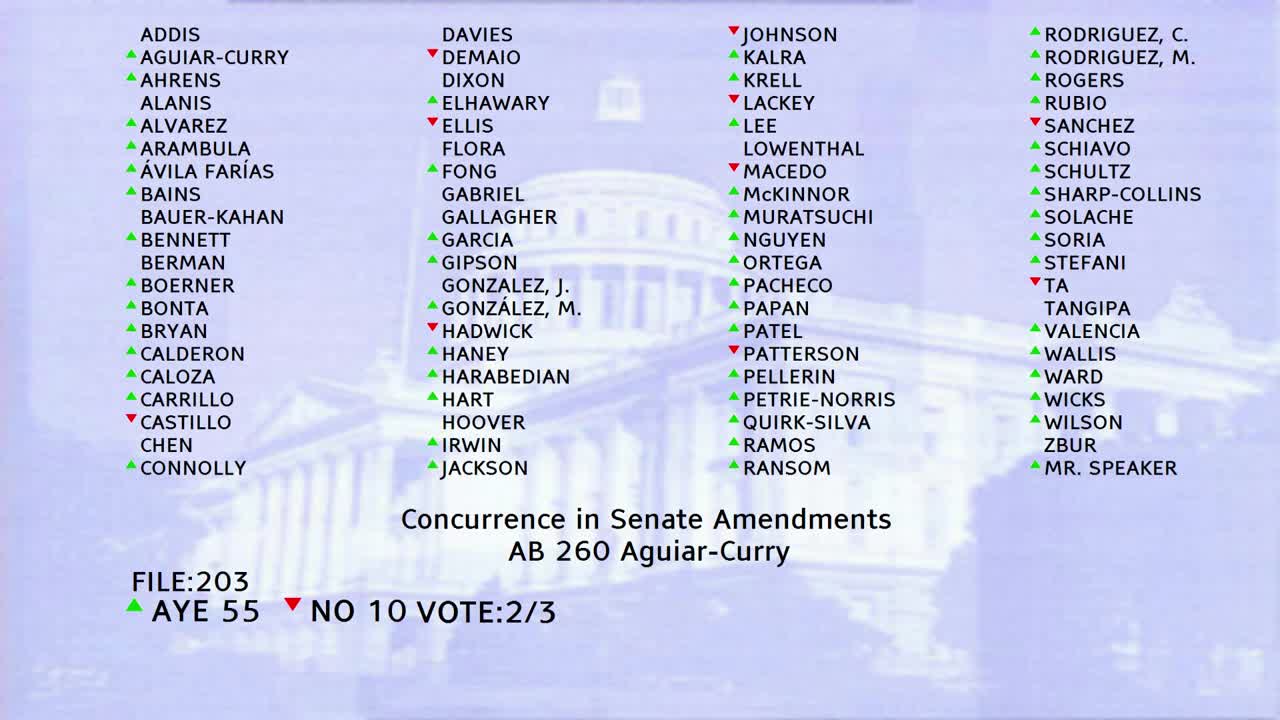 58SEC
Assembly Floor
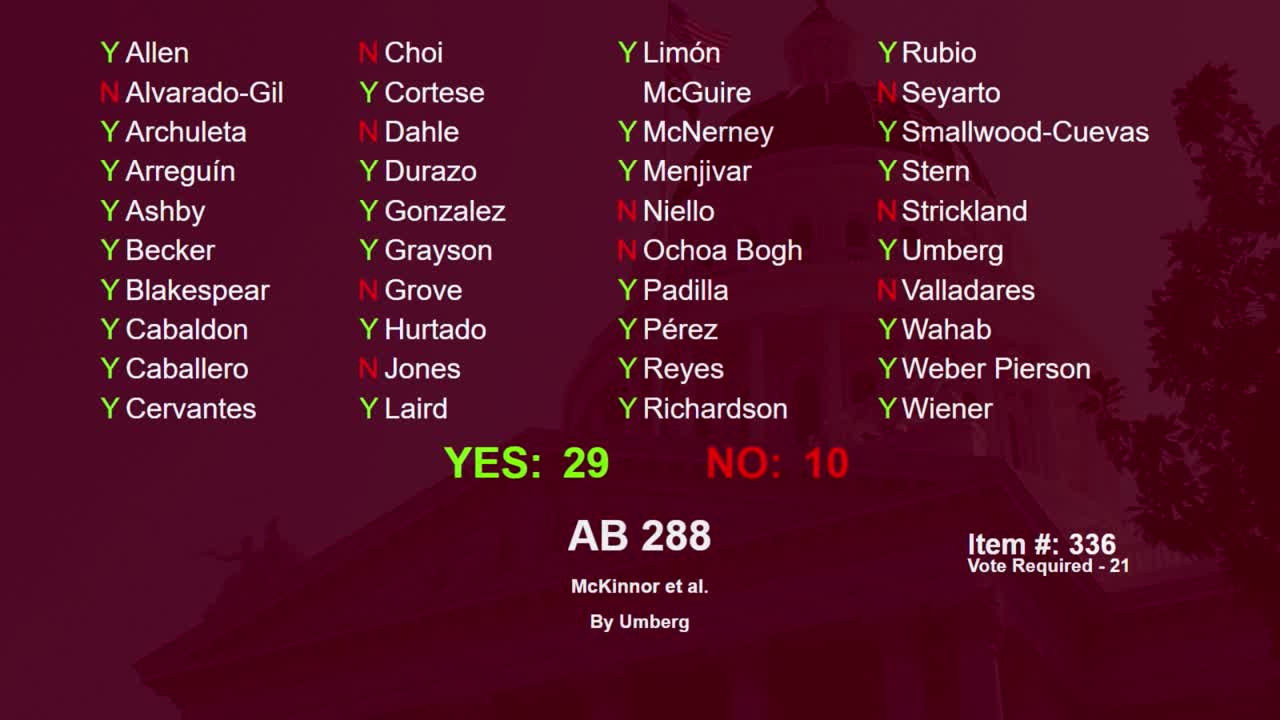 57SEC
Senate Floor
 52SEC
Assembly Floor
 6MIN
Assembly Standing Committee on Labor and Employment
Bill Author

Bill Co-Author(s):