AB 846: Endangered species: incidental take: wildfire preparedness activities.
- Session Year: 2025-2026
- House: Assembly
- Latest Version Date: 2025-06-26
Current Status:
In Progress
(2025-08-29: In committee: Held under submission.)
Introduced
In Committee
Awaiting First Chamber Vote
Passed First Chamber
In Committee
Awaiting Second Chamber Vote
Passed Second Chamber
Enacted
The California Endangered Species Act prohibits the taking of an endangered, threatened, or candidate species, except as specified. Under the act, the Department of Fish and Wildlife (department) may authorize the take of listed species by certain entities through permits or memorandums of understanding for specified purposes. Existing law requires the State Fire Marshal to identify areas in the state as moderate, high, and very high fire hazard severity zones based on consistent statewide criteria and based on the severity of fire hazard that is expected to prevail in those areas. Existing law requires a local agency to designate, by ordinance, moderate, high, and very high fire hazard severity zones in its jurisdiction within 120 days of receiving recommendations from the State Fire Marshal, as provided.
This bill would authorize a city, county, city and county, special district, or other local agency to submit to the department a wildfire preparedness plan to conduct wildfire preparedness activities on land designated as a fire hazard severity zone, as defined, that minimizes impacts to wildlife and habitat for candidate, threatened, and endangered species. The bill would require the wildfire preparedness plan to include, among other things, a brief description of the planned wildfire preparedness activities, the approximate dates for the activities, and a description of the candidate, endangered, and threatened species within the plan area. The bill would authorize require the department to impose a fee on a local agency for the cost of reviewing a wildfire preparedness plan submitted by that local agency, as specified. The bill would require the department, if sufficient information is included in the wildfire preparedness plan for the department to determine if an incidental take permit is required, to notify the local agency within 90 days of receipt of the wildfire preparedness plan if an incidental take permit or other state permit is needed, or if there are other considerations, exemptions, or streamlined pathways that the wildfire preparedness activities qualify for, including, but not limited to, the State Board of Forestry and Fire Protections California Vegetation Treatment Program. The bill would require the department to provide the local agency, in its notification, with guidance that includes, among other things, a description of the candidate, endangered, and threatened species within the plan area and measures to avoid, minimize, and fully mitigate the take of the candidate, threatened, and endangered species, as provided. The bill would require the department, on or before July 1, 2026, to make a standard wildfire preparedness plan submission form publicly available on its internet website. The bill also would require the department, commencing January 1, 2027, to annually post on its internet website a summary of the wildfire preparedness plans submitted and include specified information in that summary.
The California Endangered Species Act prohibits the taking of an endangered, threatened, or candidate species, except as specified. Under the act, the Department of Fish and Wildlife (department) may authorize the take of listed species by certain entities through permits or memorandums of understanding for specified purposes. Existing law requires the State Fire Marshal to identify areas in the state as moderate, high, and very high fire hazard severity zones based on consistent statewide criteria and based on the severity of fire hazard that is expected to prevail in those areas. Existing law requires a local agency to designate, by ordinance, moderate, high, and very high fire hazard severity zones in its jurisdiction within 120 days of receiving recommendations from the State Fire Marshal, as provided.
This bill would authorize a city, county, city and county, special district, or other local agency to submit to the department a wildfire preparedness plan to conduct wildfire preparedness activities on land designated as a fire hazard severity zone, as defined, that minimizes impacts to wildlife and habitat for candidate, threatened, and endangered species. The bill would require the wildfire preparedness plan to include, among other things, a brief description of the planned wildfire preparedness activities, the approximate dates for the activities, and a description of the candidate, endangered, and threatened species within the plan area. The bill would authorize the department to impose a fee on a local agency for the cost of reviewing a wildfire preparedness plan submitted by that local agency, as specified. The bill would require the department, if sufficient information is included in the wildfire preparedness plan for the department to determine if an incidental take permit is required, to notify the local agency within 90 days of receipt of the wildfire preparedness plan if an incidental take permit or other permit is needed, or if there are other considerations, exemptions, or streamlined pathways that the wildfire preparedness activities qualify for, including, but not limited to, the State Board of Forestry and Fire Protections California Vegetation Treatment Program. The bill would require the department to provide the local agency, in its notification, with guidance that includes, among other things, a description of the candidate, endangered, and threatened species within the plan area and measures to avoid, minimize, and fully mitigate the take of the candidate, threatened, and endangered species, as provided. The bill would require the department, on or before July 1, 2026, to make a standard wildfire preparedness plan submission form publicly available on its internet website. The bill also would require the department, commencing January 1, 2027, to annually post on its internet website a summary of the wildfire preparedness plans submitted and include specified information in that summary.
This bill would require the department, upon an appropriation by the Legislature, in consultation with the Office of the State Fire Marshal, and using existing data and information collected by the department and the office, as specified, to develop maps identifying critical habitats within specified fire hazard severity zones, and to update the maps at least once every 5 years thereafter. The bill would require the maps to be made available to a city, county, city and county, special district, or other local agency, as provided.The California Endangered Species Act prohibits the taking of an endangered, threatened, or candidate species, except as specified. Under the act, the Department of Fish and Wildlife (department) may authorize the take of listed species by certain entities through permits or memorandums of understanding for specified purposes. Existing law requires the State Fire Marshal to identify areas in the state as moderate, high, and very high fire hazard severity zones based on consistent statewide criteria and based on the severity of fire hazard that is expected to prevail in those areas. Existing law requires a local agency to designate, by ordinance, moderate, high, and very high fire hazard severity zones in its jurisdiction within 120 days of receiving recommendations from the State Fire Marshal, as provided.
This bill would authorize a city, county, city and county, special district, or other local agency to submit to the department a wildfire preparedness plan to conduct wildfire preparedness activities on land designated as a fire hazard severity zone, as defined, that minimizes impacts to wildlife and habitat for candidate, threatened, and endangered species. The bill would require the wildfire preparedness plan to include, among other things, a brief description of the planned wildfire preparedness activities, the approximate dates for the activities, and a description of the candidate, endangered, and threatened species within the plan area. The bill would authorize the department to impose a fee on a local agency for the cost of reviewing a wildfire preparedness plan submitted by that local agency, as specified. The bill would require the department, if sufficient information is included in the wildfire preparedness plan for the department to determine if an incidental take permit is required, to notify the local agency within 90 days of receipt of the wildfire preparedness plan if an incidental take permit or other permit is needed, or if there are other considerations, exemptions, or streamlined pathways that the wildfire preparedness activities qualify for, including, but not limited to, the State Board of Forestry and Fire Protections California Vegetation Treatment Program. The bill would require the department to provide the local agency, in its notification, with guidance that includes, among other things, a description of the candidate, endangered, and threatened species within the plan area and measures to avoid, minimize, and fully mitigate the take of the candidate, threatened, and endangered species, as provided. The bill would require the department, on or before July 1, 2026, to make a standard wildfire preparedness plan submission form publicly available on its internet website. The bill also would require the department, commencing January 1, 2027, to annually post on its internet website a summary of the wildfire preparedness plans submitted and include specified information in that summary.
This bill would require the department, upon an appropriation by the Legislature, in consultation with the Office of the State Fire Marshal, and using existing data and information collected by the department and the office, as specified, to develop maps identifying critical habitats within specified fire hazard severity zones, and to update the maps at least once every 5 years thereafter. The bill would require the maps to be made available to a city, county, city and county, special district, or other local agency, as provided.
The California Endangered Species Act prohibits the taking of an endangered, threatened, or candidate species, except as specified. Under the act, the Department of Fish and Wildlife (department) may authorize the take of listed species by certain entities through permits or memorandums of understanding for specified purposes. Existing law requires the State Fire Marshal to identify areas in the state as moderate, high, and very high fire hazard severity zones based on consistent statewide criteria and based on the severity of fire hazard that is expected to prevail in those areas. Existing law requires a local agency to designate, by ordinance, moderate, high, and very high fire hazard severity zones in its jurisdiction within 120 days of receiving recommendations from the State Fire Marshal, as provided.
This bill would authorize a city, county, city and county, special district, or other local agency to submit to the department a wildfire preparedness plan to conduct wildfire preparedness activities on land designated as a fire hazard severity zone, as defined, that minimizes impacts to wildlife and habitat for candidate, threatened, and endangered species. The bill would require the wildfire preparedness plan to include, among other things, a brief description of the planned wildfire preparedness activities, the approximate dates for the activities, and a description of the candidate, endangered, and threatened species within the plan area. The bill would require the department, if sufficient information is included in the wildfire preparedness plan for the department to determine if an incidental take permit is required, to notify the local agency within 90 days of receipt of the wildfire preparedness plan if an incidental take permit or other permit is needed, or if there are other considerations, exemptions, or streamlined pathways that the wildfire preparedness activities qualify for, including, but not limited to, the State Board of Forestry and Fire Protections California Vegetation Treatment Program. The bill would require the department to provide the local agency, in its notification, with guidance that includes, among other things, a description of the candidate, endangered, and threatened species within the plan area and measures to avoid, minimize, and fully mitigate the take of the candidate, threatened, and endangered species, as provided. The bill would require the department, on or before July 1, 2026, to make a standard wildfire preparedness plan submission form publicly available on its internet website. The bill also would require the department, commencing January 1, 2027, to annually post on its internet website a summary of the wildfire preparedness plans submitted and include specified information in that summary.
(a)The Legislature finds and declares the importance of undertaking wildfire preparedness activities to reduce the risk of catastrophic wildfire. It is the intent of the Legislature that this article provides for enhanced consultation and coordination between agencies seeking to implement vegetation management and other wildfire preparedness activities and the department in order to facilitate the subsequent application for and timely approval of any necessary incidental take permits required before undertaking the wildfire preparedness activities.
(b)(1)A city, county, city and county, special district, or other local agency may submit to the department a wildfire preparedness plan to conduct wildfire preparedness activities on land designated as a fire hazard severity zone, pursuant to subdivision (a) of Section 51179 of the Government Code or Section 4203 of the Public Resources Code, that minimizes impacts to wildlife and habitat for candidate, threatened, and endangered species.
(2)The department may shall impose a fee on a local agency described in paragraph (1) for the cost of reviewing the wildfire preparedness plan submitted by that local agency, consistent with the departments fee authority.
(c)A wildfire preparedness plan submitted pursuant to subdivision (b) shall include all of the following:
(1)The name and contact information of the participating local agency.
(2)A brief description of the planned wildfire preparedness activities, including a description of the lands within the fire hazard severity zone.
(3)The approximate dates for which wildfire preparedness activities are proposed to occur.
(4)A description of the candidate, endangered, and threatened species within the plan area.
(5)(A)A description of how the local agency is compliant with the California Environmental Quality Act (Division 13 (commencing with Section 21000) of the Public Resources Code), and any planned environmental mitigation or conservation measures the local agency plans to take.
(B)The planned environmental mitigation or conservation measures pursuant to subparagraph (A) shall include, as applicable, measures to avoid, minimize, and fully mitigate the take of candidate, endangered, and threatened species during the practices to be conducted under the wildfire preparedness plan.
(d)(1)Within 90 days of receipt of the wildfire preparedness plan, the department shall, if sufficient information is included in the wildfire preparedness plan for the department to determine if an incidental take permit is required, notify the local agency if an incidental take permit or other state permit is needed, or if there are other considerations, exemptions, or streamlined pathways that the wildfire preparedness activities qualify for, including, but not limited to, the State Board of Forestry and Fire Protections California Vegetation Treatment Program.
(2)The department shall provide the local agency with the following guidance, as applicable, in its notification:
(A)A description of candidate, endangered, and threatened species within the plan area.
(B)Measures to avoid, minimize, and fully mitigate the take of candidate, endangered, and threatened species during practices conducted under the plan.
(C)Any additional guidance to facilitate the completion and approval of a local agencys application to the department for an incidental take permit pursuant to Section 2081.
(3)The department shall consult with the State Board of Forestry and Fire Protection and the Department of Forestry and Fire Protection if technical assistance to evaluate a wildfire preparedness plan is needed.
(e)On or before July 1, 2026, the department shall make publicly available on its internet website a standard form for a local agency to use when submitting a wildfire preparedness plan pursuant to subdivision (b).
(f)(1)If the department determines any activities in a wildfire preparedness plan submitted pursuant to subdivision (b) require an incidental take permit, the department shall approve or deny the incidental take permit consistent with Section 2081 within 45 days of receiving a complete incidental take permit application from the local agency.
(2)An incidental take permit approved pursuant to this subdivision shall be for a term of no less than five years and shall be eligible for a permit renewal authorization by the department.
(g)Commencing January 1, 2027, the department shall annually post a summary of wildfire preparedness plans submitted pursuant to subdivision (b) on its internet website, including, but not limited to, the status of the wildfire preparedness plans, information regarding which regions of the state the wildfire preparedness plans were received from, the dates when the wildfire preparedness plans were submitted, the number of incidental take permits issued pursuant to this section, and a summary of the other considerations, exemptions, or streamlined pathways local agencies were advised can be used to advance wildfire preparation activities.
(h)This section does not preclude the department and a local agency from mutually agreeing to an extension of a timeline described in subdivision (d) or (f).
(i)For the purposes of this article, a wildfire preparedness plan means a plan designed by a local agency or jurisdiction that meets all of the following criteria:
(1)Protects communities from the threat of wildfire through vegetation management practices that, to the maximum extent practicable, avoid and minimize the take of candidate, endangered, and threatened species, while encouraging the enhancement of habitat.
(2)Is supported by the best available scientific information for both wildfire preparedness and conservation practices.
(3)Is designed to provide sufficient flexibility to maximize participation and to gain the maximum protection of life and property from the threat of wildfire without compromising wildlife benefits.
(a)The Legislature finds and declares the importance of undertaking wildfire preparedness activities to reduce the risk of catastrophic wildfire. It is the intent of the Legislature that this article provides for enhanced consultation and coordination between agencies seeking to implement vegetation management and other wildfire preparedness activities and the department in order to facilitate the subsequent application for and timely approval of any necessary incidental take permits required before undertaking the wildfire preparedness activities.
(b)(1)A city, county, city and county, special district, or other local agency may submit to the department a wildfire preparedness plan to conduct wildfire preparedness activities on land designated as a fire hazard severity zone, pursuant to subdivision (a) of Section 51179 of the Government Code or Section 4203 of the Public Resources Code, that minimizes impacts to wildlife and habitat for candidate, threatened, and endangered species.
(2)The department may impose a fee on a local agency described in paragraph (1) for the cost of reviewing the wildfire preparedness plan submitted by that local agency, consistent with the departments fee authority.
(c)A wildfire preparedness plan submitted pursuant to subdivision (b) shall include all of the following:
(1)The name and contact information of the participating local agency.
(2)A brief description of the planned wildfire preparedness activities, including a description of the lands within the fire hazard severity zone.
(3)The approximate dates for which wildfire preparedness activities are proposed to occur.
(4)A description of the candidate, endangered, and threatened species within the plan area.
(5)(A)A description of how the local agency is compliant with the California Environmental Quality Act (Division 13 (commencing with Section 21000) of the Public Resources Code), and any planned environmental mitigation or conservation measures the local agency plans to take.
(B)The planned environmental mitigation or conservation measures pursuant to subparagraph (A) shall include, as applicable, measures to avoid, minimize, and fully mitigate the take of candidate, endangered, and threatened species during the practices to be conducted under the wildfire preparedness plan.
(d)(1)Within 90 days of receipt of the wildfire preparedness plan, the department shall, if sufficient information is included in the wildfire preparedness plan for the department to determine if an incidental take permit is required, notify the local agency if an incidental take permit or other permit is needed, or if there are other considerations, exemptions, or streamlined pathways that the wildfire preparedness activities qualify for, including, but not limited to, the State Board of Forestry and Fire Protections California Vegetation Treatment Program.
(2)The department shall provide the local agency with the following guidance, as applicable, in its notification:
(A)A description of candidate, endangered, and threatened species within the plan area.
(B)Measures to avoid, minimize, and fully mitigate the take of candidate, endangered, and threatened species during practices conducted under the plan.
(C)Any additional guidance to facilitate the completion and approval of a local agencys application to the department for an incidental take permit pursuant to Section 2081.
(3)The department shall consult with the State Board of Forestry and Fire Protection and the Department of Forestry and Fire Protection if technical assistance to evaluate a wildfire preparedness plan is needed.
(e)On or before July 1, 2026, the department shall make publicly available on its internet website a standard form for a local agency to use when submitting a wildfire preparedness plan pursuant to subdivision (b).
(f)(1)If the department determines any activities in a wildfire preparedness plan submitted pursuant to subdivision (b) require an incidental take permit, the department shall approve or deny the incidental take permit consistent with Section 2081 within 45 days of receiving a complete incidental take permit application from the local agency.
(2)An incidental take permit approved pursuant to this subdivision shall be for a term of no less than five years and shall be eligible for a permit renewal authorization by the department.
(g)Commencing January 1, 2027, the department shall annually post a summary of wildfire preparedness plans submitted pursuant to subdivision (b) on its internet website, including, but not limited to, the status of the wildfire preparedness plans, information regarding which regions of the state the wildfire preparedness plans were received from, the dates when the wildfire preparedness plans were submitted, the number of incidental take permits issued pursuant to this section, and a summary of the other considerations, exemptions, or streamlined pathways local agencies were advised can be used to advance wildfire preparation activities.
(h)This section does not preclude the department and a local agency from mutually agreeing to an extension of a timeline described in subdivision (d) or (f).
(i)For the purposes of this article, a wildfire preparedness plan means a plan designed by a local agency or jurisdiction that meets all of the following criteria:
(1)Protects communities from the threat of wildfire through vegetation management practices that, to the maximum extent practicable, avoid and minimize the take of candidate, endangered, and threatened species, while encouraging the enhancement of habitat.
(2)Is supported by the best available scientific information for both wildfire preparedness and conservation practices.
(3)Is designed to provide sufficient flexibility to maximize participation and to gain the maximum protection of life and property from the threat of wildfire without compromising wildlife benefits.
2089.02.(a)(1)Upon an appropriation by the Legislature for this purpose, in consultation with the Office of the State Fire Marshal, and using existing data and information collected by the department and the Office of the State Fire Marshal, including, but not limited to, the State Board of Forestry and Fire Protections California Vegetation Treatment Program, the department shall develop maps identifying critical habitats within lands designated as moderate, high, or very high fire hazard severity zones pursuant to subdivision (a) of Section 51179 of the Government Code and the fire hazard severity zones designated by regulation pursuant to Section 4203 of the Public Resources Code.(2)The department shall update the maps developed pursuant to paragraph (1) at least once every five years.(b)The maps shall be made available to a city, county, city and county, special district, or other local agency for wildfire planning and preparedness purposes in order to protect life and property.(a)The Legislature finds and declares the importance of undertaking wildfire preparedness activities to reduce the risk of catastrophic wildfire. It is the intent of the Legislature that this article provides for enhanced consultation and coordination between agencies seeking to implement vegetation management and other wildfire preparedness activities and the department in order to facilitate the subsequent application for and timely approval of any necessary incidental take permits required before undertaking the wildfire preparedness activities.
(b)(1)A city, county, city and county, special district, or other local agency may submit to the department a wildfire preparedness plan to conduct wildfire preparedness activities on land designated as a fire hazard severity zone, pursuant to subdivision (a) of Section 51179 of the Government Code or Section 4203 of the Public Resources Code, that minimizes impacts to wildlife and habitat for candidate, threatened, and endangered species.
(2)The department may impose a fee on a local agency described in paragraph (1) for the cost of reviewing the wildfire preparedness plan submitted by that local agency, consistent with the departments fee authority.
(c)A wildfire preparedness plan submitted pursuant to subdivision (b) shall include all of the following:
(1)The name and contact information of the participating local agency.
(2)A brief description of the planned wildfire preparedness activities, including a description of the lands within the fire hazard severity zone.
(3)The approximate dates for which wildfire preparedness activities are proposed to occur.
(4)A description of the candidate, endangered, and threatened species within the plan area.
(5)(A)A description of how the local agency is compliant with the California Environmental Quality Act (Division 13 (commencing with Section 21000) of the Public Resources Code), and any planned environmental mitigation or conservation measures the local agency plans to take.
(B)The planned environmental mitigation or conservation measures pursuant to paragraph subparagraph (A) shall include, as applicable, measures to avoid, minimize, and fully mitigate the take of candidate, endangered, and threatened species during the practices to be conducted under the wildfire preparedness plan.
(d)(1)Within 90 days of receipt of the wildfire preparedness plan, the department shall, if sufficient information is included in the wildfire preparedness plan for the department to determine if an incidental take permit is required, notify the local agency if an incidental take permit or other permit is needed, or if there are other considerations, exemptions, or streamlined pathways that the wildfire preparedness activities qualify for, including, but not limited to, the State Board of Forestry and Fire Protections California Vegetation Treatment Program.
(2)The department shall provide the local agency with the following guidance, as applicable, in its notification:
(A)A description of candidate, endangered, and threatened species within the plan area.
(B)Measures to avoid, minimize, and fully mitigate the take of candidate, endangered, and threatened species during practices conducted under the plan.
(C)Any additional guidance to facilitate the completion and approval of a local agencys application to the department for an incidental take permit pursuant to Section 2081.
(3)The department shall consult with the State Board of Forestry and Fire Protection and the Department of Forestry and Fire Protection if technical assistance to evaluate a wildfire preparedness plan is needed.
(e)On or before July 1, 2026, the department shall make publicly available on its internet website a standard form for a local agency to use when submitting a wildfire preparedness plan pursuant to subdivision (b).
(f)(1)If the department determines any activities in a wildfire preparedness plan submitted pursuant to subdivision (b) require an incidental take permit, the department shall approve or deny the incidental take permit consistent with Section 2081 within 45 days of receiving a complete incidental take permit application from the local agency.
(2)An incidental take permit approved pursuant to this subdivision shall be for a term of no less than five years and shall be eligible for a permit renewal authorization by the department.
(g)Commencing January 1, 2027, the department shall annually post a summary of wildfire preparedness plans submitted pursuant to subdivision (b) on its internet website, including, but not limited to, the status of the wildfire preparedness plans, information regarding which regions of the state the wildfire preparedness plans were received from, the dates when the wildfire preparedness plans were submitted, the number of incidental take permits issued pursuant to this section, and a summary of the other considerations, exemptions, or streamlined pathways local agencies were advised can be used to advance wildfire preparation activities.
(h)This section does not preclude the department and a local agency from mutually agreeing to an extension of a timeline described in subdivision (d) or (f).
(i)For the purposes of this article, a wildfire preparedness plan means a plan designed by a local agency or jurisdiction that meets all of the following criteria:
(1)Protects communities from the threat of wildfire through vegetation management practices that, to the maximum extent practicable, avoid and minimize the take of candidate, endangered, and threatened species, while encouraging the enhancement of habitat.
(2)Is supported by the best available scientific information for both wildfire preparedness and conservation practices.
(3)Is designed to provide sufficient flexibility to maximize participation and to gain the maximum protection of life and property from the threat of wildfire without compromising wildlife benefits.
2089.02.(a)(1)Upon an appropriation by the Legislature for this purpose, in consultation with the Office of the State Fire Marshal, and using existing data and information collected by the department and the Office of the State Fire Marshal, including, but not limited to, the State Board of Forestry and Fire Protections California Vegetation Treatment Program, the department shall develop maps identifying critical habitats within lands designated as moderate, high, or very high fire hazard severity zones pursuant to subdivision (a) of Section 51179 of the Government Code and the fire hazard severity zones designated by regulation pursuant to Section 4203 of the Public Resources Code.
(2)The department shall update the maps developed pursuant to paragraph (1) at least once every five years.
(b)The maps shall be made available to a city, county, city and county, special district, or other local agency for wildfire planning and preparedness purposes in order to protect life and property.
(a)The Legislature finds and declares the importance of undertaking wildfire preparedness activities to reduce the risk of catastrophic wildfire. It is the intent of the Legislature that this article provides for enhanced consultation and coordination between agencies seeking to implement vegetation management and other wildfire preparedness activities and the department in order to facilitate the subsequent application for and timely approval of any necessary incidental take permits required before undertaking the wildfire preparedness activities.
(b)A city, county, city and county, special district, or other local agency may submit to the department a wildfire preparedness plan to conduct wildfire preparedness activities on land designated as a fire hazard severity zone, pursuant to subdivision (a) of Section 51179 of the Government Code or Section 4203 of the Public Resources Code, that minimizes impacts to wildlife and habitat for candidate, threatened, and endangered species.
(c)A wildfire preparedness plan submitted pursuant to subdivision (b) shall include all of the following:
(1)The name and contact information of the participating local agency.
(2)A brief description of the planned wildfire preparedness activities, including a description of the lands within the fire hazard severity zone.
(3)The approximate dates for which wildfire preparedness activities are proposed to occur.
(4)A description of the candidate, endangered, and threatened species within the plan area.
(5)(A)A description of how the local agency is compliant with the California Environmental Quality Act (Division 13 (commencing with Section 21000) of the Public Resources Code), and any planned environmental mitigation or conservation measures the local agency plans to take.
(B)The planned environmental mitigation or conservation measures pursuant to paragraph (A) shall include, as applicable, measures to avoid, minimize, and fully mitigate the take of candidate, endangered, and threatened species during the practices to be conducted under the wildfire preparedness plan.
(d)(1)Within 90 days of receipt of the wildfire preparedness plan, the department shall, if sufficient information is included in the wildfire preparedness plan for the department to determine if an incidental take permit is required, notify the local agency if an incidental take permit or other permit is needed, or if there are other considerations, exemptions, or streamlined pathways that the wildfire preparedness activities qualify for, including, but not limited to, the State Board of Forestry and Fire Protections California Vegetation Treatment Program.
(2)The department shall provide the local agency with the following guidance, as applicable, in its notification:
(A)A description of candidate, endangered, and threatened species within the plan area.
(B)Measures to avoid, minimize, and fully mitigate the take of candidate, endangered, and threatened species during practices conducted under the plan.
(C)Any additional guidance to facilitate the completion and approval of a local agencys application to the department for an incidental take permit pursuant to Section 2081.
(3)The department shall consult with the State Board of Forestry and Fire Protection and the Department of Forestry and Fire Protection if technical assistance to evaluate a wildfire preparedness plan is needed.
(e)On or before July 1, 2026, the department shall make publicly available on its internet website a standard form for a local agency to use when submitting a wildfire preparedness plan pursuant to subdivision (b).
(f)(1)If the department determines any activities in a wildfire preparedness plan submitted pursuant to subdivision (b) require an incidental take permit, the department shall approve or deny the incidental take permit consistent with Section 2081 within 45 days of receiving a complete incidental take permit application from the local agency.
(2)An incidental take permit approved pursuant to this subdivision shall be for a term of no less than five years and shall be eligible for a permit renewal authorization by the department.
(g)Commencing January 1, 2027, the department shall annually post a summary of wildfire preparedness plans submitted pursuant to subdivision (b) on its internet website, including, but not limited to, the status of the wildfire preparedness plans, information regarding which regions of the state the wildfire preparedness plans were received from, the dates when the wildfire preparedness plans were submitted, the number of incidental take permits issued pursuant to this section, and a summary of the other considerations, exemptions, or streamlined pathways local agencies were advised can be used to advance wildfire preparation activities.
(h)This section does not preclude the department and a local agency from mutually agreeing to an extension of a timeline described in subdivision (d) or (f).
(i)For the purposes of this article, a wildfire preparedness plan means a plan designed by a local agency or jurisdiction that meets all of the following criteria:
(1)Protects communities from the threat of wildfire through vegetation management practices that, to the maximum extent practicable, avoid and minimize the take of candidate, endangered, and threatened species, while encouraging the enhancement of habitat.
(2)Is supported by the best available scientific information for both wildfire preparedness and conservation practices.
(3)Is designed to provide sufficient flexibility to maximize participation and to gain the maximum protection of life and property from the threat of wildfire without compromising wildlife benefits.
|
Date
|
Status
|
|---|---|
| Aug 29, 2025 | In committee: Held under submission. |
| Jul 14, 2025 | In committee: Referred to APPR. suspense file. |
| Jun 26, 2025 | Read second time and amended. Re-referred to Com. on APPR. |
| Jun 25, 2025 | From committee: Amend, and do pass as amended and re-refer to Com. on APPR. (Ayes 7. Noes 0.) (June 24). |
| Jun 11, 2025 | Referred to Com. on N.R. & W. |
| Jun 3, 2025 | In Senate. Read first time. To Com. on RLS. for assignment. |
| Jun 2, 2025 | Read third time. Passed. Ordered to the Senate. (Ayes 78. Noes 0. Page 1907.) |
| May 27, 2025 | Read second time. Ordered to third reading. |
| May 23, 2025 | From committee: Amend, and do pass as amended. (Ayes 11. Noes 0.) (May 23). |
| May 23, 2025 | Assembly Rule 63 suspended. (Ayes 51. Noes 16. Page 1644.) |
| May 23, 2025 | Read second time and amended. Ordered returned to second reading. |
| Apr 30, 2025 | In committee: Set, first hearing. Referred to suspense file. |
| Apr 22, 2025 | From committee: Do pass and re-refer to Com. on APPR. with recommendation: To Consent Calendar. (Ayes 14. Noes 0.) (April 21). Re-referred to Com. on APPR. |
| Apr 9, 2025 | From committee: Do pass and re-refer to Com. on NAT. RES. (Ayes 13. Noes 0.) (April 8). Re-referred to Com. on NAT. RES. |
| Mar 28, 2025 | Re-referred to Com. on W. P., & W. |
| Mar 27, 2025 | From committee chair, with author's amendments: Amend, and re-refer to Com. on W. P., & W. Read second time and amended. |
| Mar 24, 2025 | Referred to Coms. on W. P., & W. and NAT. RES. |
| Feb 20, 2025 | From printer. May be heard in committee March 22. |
| Feb 19, 2025 | Read first time. To print. |
|
Date
|
Description
|
Location
|
Votes
|
|
|---|---|---|---|---|
| Jul 14, 2025 | Placed on suspense file | Senate Standing Committee on Appropriations |
Passed |
|
| Jun 24, 2025 | Do pass as amended, but first amend, and re-refer to the Committee on [Appropriations] | Senate Standing Committee on Natural Resources and Water |
Passed |
|
| Jun 2, 2025 | AB 846 Connolly Assembly Third Reading | Assembly Floor |
Passed |
|
| May 23, 2025 | Do pass as amended. | Assembly Standing Committee on Appropriations |
Passed |
|
| Apr 21, 2025 | Do pass and be re-referred to the Committee on [Appropriations] with recommendation: To Consent Calendar | Assembly Standing Committee on Natural Resources |
Passed |
|
| Apr 8, 2025 | Do pass and be re-referred to the Committee on [Natural Resources] | Assembly Standing Committee on Water, Parks, and Wildlife |
Passed |
This list shows positions taken on this bill by organizations on the date displayed, which is linked to the original source.
Positions by individuals are not included.
|
Organization
|
Position
|
Date
|
|---|---|---|
| Association Of California Water Agencies | ** Support | |
| California Association of Wine Grape Growers | ** Support | |
| California CattlemenS Association | ** Support | |
| California Farm Bureau Federation | ** Support | |
| California Fire Chiefs Association | ** Support | |
| California Special Districts Association | ** Support | |
| City of Agoura Hills | ** Support | |
| City of La Verne | ** Support | |
| City of Los Alamitos | ** Support | |
| City of Murrieta | ** Support | |
| City Of Oakland | ** Support | |
| city of paramount | ** Support | |
| City of Riverside | ** Support | |
| City of Thousand Oaks | ** Support | |
| City of Vista | ** Support | |
| Fire Districts Association Of California | ** Support | |
| League Of California Cities | ** Support | |
| Marin County Council of Mayors and Council Members | ** Support | |
| Mountain Counties Water Resources Association | ** Support | |
| Rural County Representatives of California | ** Support | |
| Ventura County Fire Chiefs Association | ** Support | |
| Wine Institute | ** Support |
SENATE COMMITTEE ON
Senator Anna Caballero, Chair
2025 - 2026 Regular Session
AB 846 (Connolly) - Endangered species: incidental take: wildfire preparedness activities
Version: | Policy Vote: |
Urgency: | Mandate: |
Hearing Date: | Consultant: |
Bill Summary:
This bill would establish a process to facilitate the approval of an incidental take permit for listed species if needed by a local agency to undertake wildfire preparedness activities, and would require the California Department of Fish and Wildlife (CDFW) to impose fees for its costs to review wildfire preparedness plans.
Fiscal Impact:
- CDFW estimates ongoing costs of about $1.7 million annually (General Fund or special fund) for seven positions to promulgate regulations, administer the new process, coordinate amongst CDFW regions, review wildfire preparedness plans and California Environmental Quality Act (CEQA) documents, draft incidental take permits, and annually consolidate and publish data about the status of wildfire preparedness plans and incidental take permits issued pursuant to this bill. CDFW notes that, as this would be a new process, it is difficult to determine how much it would be utilized. Actual costs will ultimately depend on the number and complexity of projects that utilize the new process.
- These costs should eventually be offset by fee revenue, as this bill would require CDFW to impose fees on local agencies submitting wildfire preparedness plans in order to cover its costs of reviewing them, consistent with existing fee authority. CDFW notes the fee structure currently in place for processing incidental take permits is misaligned with the new process that would be established by this bill. Until CDFW actually collects fees on plans submitted pursuant to the provisions of this bill, no fee revenue would be available to offset costs incurred by CDFW.
Background:
Wildfire in California. Catastrophic and devastating wildfires have occurred repeatedly in the state in recent years. Thirteen of the 20 largest and 15 of the 20 most destructive wildland fires in state history have occurred since 2015. The 2020 August Complex Fire in northern California – the largest fire in California’s modern history – burned over one million acres, while the 2021 Dixie Fire burned almost one million acres. Two wildland fires in recent years burned over the crest of the Sierras, which had not been previously observed. In the last several years, tens of thousands of structures – mostly homes – have been destroyed due to wildland fire, insured losses are in the billions of dollars, prime habitat has been destroyed or damaged, and, tragically, hundreds of lives have been lost. Most recently, the Palisades and Eaton Fires in Los Angeles in January resulted in the loss of approximately 16,250 structures and 30 deaths. In addition, millions of Californians have been exposed to unhealthy air quality due to wildfires.
While wildfire is a natural phenomenon in the state, the changing climate, continuing development in the wildland-urban interface (WUI), and poor forest and wildland vegetation management practices in the last century have resulted in more extreme wildland fire behavior. In some forests, the current tree density is up to an order of magnitude greater than the density in the 19th or early 20th centuries which increases the likelihood of damaging high-intensity fire when the forest burns. Further, the proliferation of new homes in the WUI magnify this threat and place substantially more people and property at risk than in preceding decades. According to news reports, the draft fire hazard severity zone maps for the local responsibility area (LRA) released earlier this year put about 4 million residents in a high or very high fire hazard severity zone.
Vegetation management activities – such as creating and maintaining defensible space around structures, the creation and maintenance of fire breaks, forest thinning, and prescribed and cultural burns – are important wildfire prevention tools. The state and federal government have a shared goal of treating at least 500,000 acres of the state’s wildlands each annually. In the state responsibility area (SRA), where the state has financial responsibility for wildland fire protection and prevention, the California Department of Forestry and Fire (CalFire) is responsible for fire prevention and suppression. In the LRA – such as urban regions – the local jurisdiction is responsible for wildfire protection.
In the SRA, the State Board of Forestry and Fire Protection (Forestry Board) has developed its California Vegetation Treatment Program or CalVTP to streamline permitting of certain wildfire prevention projects. CalVTP includes the use of prescribed burning, mechanical treatments, manual treatments, herbicide application, and prescribed herbivory as tools to reduce hazardous vegetation around communities in the WUI, to construct fuel breaks, and to promote ecological restoration. The CalVTP Environmental Impact Report (EIR) provides a powerful California Environmental Quality Act (CEQA) compliance tool to expedite the implementation of wildfire resilience projects. A broadly applicable program or CEQA document, such as CalVTP or its EIR, is not available for the LRA, although CalVTP can be used for LRA projects if fuel breaks from the SRA extend into the LRA. There are approximately 115 approved or completed projects under CalVTP.
The California Endangered Species Act. The California Endangered Species Act (CESA) was enacted to prevent the extinction of fish, wildlife, plant, and invertebrate species by relying on scientific analysis to determine which species face extinction and imposes protections for those species that are in peril. The overarching intent of CESA is to regulate and impose mitigation on activities that could contribute to the extinction of species. Species are referred to as “listed” if they have been designated as “threatened” or “endangered” under CESA. When a new species is proposed to be listed, it benefits from the same protections as listed species during its candidacy period. CESA prohibits the “take” of a listed species. “Take” means to hunt, pursue, catch, capture, or kill, or attempt to hunt, pursue, catch, capture, or kill.
Incidental take permits (ITPs) are granted as exceptions under CESA to enable the prohibited take of listed species during otherwise lawful activity. Examples of “lawful activities” for which an ITP may be issued include infrastructure development, housing development, transportation, and scientific research. The California Department of Fish and Wildlife (CDFW) may not approve an ITP for a listed species if the activity for which the permit is sought would jeopardize the continued existence of the species. Impacts to listed species must be minimized and fully mitigated and those mitigation measures must be roughly proportional to the extent of the impact. In general, the CEQA process undertaken for a project will identify biological resources placed at risk and the CEQA lead agency, when certifying the EIR, will require certain mitigation actions be taken. If needed, a project proponent could apply to CDFW for an ITP.
CDFW may be able to provide guidance to a project proponent on how to avoid needing an ITP, such as by scheduling the project to avoid the breeding season for a particular species, among other examples.
Proposed Law:
This bill would establish a process to facilitate the approval of an incidental take permit for listed species if needed by a local agency to undertake wildfire preparedness activities, and would require CDFW to impose fees for recovering the cost of reviewing submitted wildfire preparedness plans. Specifically, it would:
- State legislative intent to provide for enhanced consultation and coordination between agencies seeking to implement vegetation management and other wildfire preparedness activities and CDFW to facilitate approval of any necessary ITPs, and make relevant legislative findings.
- Authorize a city, county, city and county, special district, or other local agency to submit to CDFW a wildfire preparedness plan (plan) to conduct wildfire preparedness activities on lands designated as a fire hazard severity zone in the SRA or LRA that minimizes impacts to candidate, threatened, and endangered species, as specified.
- Require CDFW to impose a fee on a local agency submitting a plan for the cost of reviewing it, as provided.
- Require the plan to:
- Protect communities from the threat of wildfire through vegetation management practices that, to the maximum extent practicable, avoid and minimize the take of listed species while encouraging habitat enhancement;
- Be supported by the best available scientific information, as specified; and
- Be designed to provide sufficient flexibility to gain the maximum protection of life and property without compromising wildlife benefits, as provided.
- Require the plan to include:
- The name and contact information of the participating local agency;
- A brief description of the planned wildfire preparedness activities;
- The approximate dates of treatment;
- A description of the candidate, endangered, and threatened species within the plan area; and
- A description of project compliance with CEQA, including planned mitigation measures, as specified.
- Require CDFW, within 90 days of plan receipt, if the plan contains sufficient information, to notify the local agency if an ITP or other permit is needed, or if there are other considerations, exemptions, or streamlined pathways that the wildfire preparedness activities call for, as provided. Require CDFW’s notification to include a description of the candidate and listed species present; reasonable measures to avoid, minimize, and fully mitigated the take of the candidate and listed species present; and any additional guidance to facilitate approval of an ITP, as provided.
- Require CDFW to consult with the Forestry Board and CalFire for technical assistance, if needed.
- Require CDFW to make publicly available on its internet website a standard form for a local agency to use to submit the plan on or before July 1, 2026.
- Require CDFW to approve or deny an ITP application from the local agency within 45 days of receipt of a complete application, as provided, if CDFW determines an ITP is necessary.
- Require an ITP approved by the process established herein to be valid for no less than five years and be eligible for renewal.
- Authorize CDFW and the local agency to extend timelines identified in 5) and 8) by mutual agreement.
- Require CDFW, commencing January 1, 2027, to annually post a summary of plans submitted on its internet website with additional related information, as provided.
Related Legislation:
AB 2330 (Holden, 2023). A bill introduced last year – AB 2330 (Holden, 2023) – sought to require consultation and coordination between wildfire prevention project proponents and CDFW through the development of project environmental documents and any necessary permitting for the incidental take of listed species, as provided. AB 2330 passed this Committee and the Legislature, but was subsequently vetoed by Governor Newsom whose veto message stated:
“While I support efforts to increase the pace and scale of wildfire preparedness, this bill creates significant, ongoing costs that should be considered in the annual budget process. In partnership with the Legislature this year, my Administration has enacted a balanced budget that avoids deep program cutes to vital services and protected investments in education, health care, climate, public safety, housing, and social service programs that millions of Californians rely on. I t is important to remain disciplined when considering bills with significant fiscal implications that are not included in the budget, such as this measure.”
Staff Comments:
The new process created in AB 846 would generate additional workload for CDFW and require dedicated staff to review wildfire preparedness plans, draft measures, and evaluate CEQA documentation for permitting needs. However, the exact magnitude of these costs is unknown and ultimately will depend on the number and complexity of the plans submitted. As this is a new process, it is difficult to determine how much it might be used.
For its fiscal estimate, CDFW assumes that any local agency with authority in either the State Responsibility Area or Local Responsibility Area may submit a wildfire preparedness plan. As proposed, any agency other than state and federal agencies may be eligible to submit a wildfire preparedness plan. As defined, any local agency includes special districts (such as water, irrigation, utility, flood control, and fire districts) that frequently conduct vegetation management and fire preparedness activities. While CDFW cannot estimate the number of special districts that would be interested in participating in this process, the California State Controller’s Office reports that there are more than 5,300 special districts in California where 621 are water districts, 89 are irrigation districts, 77 are utility districts, 51 are flood control districts and 424 are fire districts.
According to CDFW, potential projects may occur anywhere within a Fire Hazard Severity Zone designated area, including both the State Responsibility Area and Local Responsibility Area, which accounts for over 35 million acres of California. In other words, about one-third of the state would be subject to AB 846. For that reason, CDFW assumes it would result in a significant workload increase.
-- END --
SENATE COMMITTEE ON NATURAL RESOURCES AND WATER
Senator Monique Limón, Chair
2025 - 2026 Regular
Bill No: AB 846 Hearing Date: June 24, 2025
Author: | |||
Version: | Amended | ||
Urgency: | Fiscal: | ||
Consultant: | |||
Subject: Endangered species: incidental take: wildfire preparedness activities
SUMMARY
This bill would establish a process to facilitate the approval of an incidental take permit for listed species, if any, needed by a local agency to undertake wildfire preparedness activities, among other provisions, as provided.
BACKGROUND AND EXISTING LAW
Wildfire in California.
Catastrophic and devastating wildfires have occurred repeatedly in the state in recent years. Thirteen of the 20 largest and 15 of the 20 most destructive wildland fires in state history have occurred since 2015. The 2020 August Complex Fire in northern California – the largest fire in California’s modern history – burned over one million acres, while the 2021 Dixie Fire burned almost one million acres. Two wildland fires in recent years burned over the crest of the Sierras, which had not been previously observed. In the last several years, tens of thousands of structures – mostly homes – have been destroyed due to wildland fire, insured losses are in the billions of dollars, prime habitat has been destroyed or damaged, and, tragically, hundreds of lives have been lost. Most recently, the Palisades and Eaton Fires in Los Angeles in January resulted in the loss of approximately 16,250 structures and 30 deaths. In addition, millions of Californians have been exposed to unhealthy air quality due to wildfires.
While wildfire is a natural phenomenon in the state, the changing climate, continuing development in the wildland-urban interface (WUI), and poor forest and wildland vegetation management practices in the last century have resulted in more extreme wildland fire behavior. In some forests, the current tree density is up to an order of magnitude greater than the density in the 19th or early 20th centuries which increases the likelihood of damaging high-intensity fire when the forest burns. Further, the proliferation of new homes in the WUI magnify this threat and place substantially more people and property at risk than in preceding decades. According to news reports, the draft fire hazard severity zone maps for the local responsibility area (LRA) released earlier this year put about 4 million residents in a high or very high fire hazard severity zone.
Vegetation management activities – such as creating and maintaining defensible space around structures, the creation and maintenance of fire breaks, forest thinning, and prescribed and cultural burns – are important wildfire prevention tools. The state and federal government have a shared goal of treating at least 500,000 acres of the state’s wildlands each annually.[1] In the state responsibility area (SRA), where the state has financial responsibility for wildland fire protection and prevention, the California Department of Forestry and Fire (CAL FIRE) is responsible for fire prevention and suppression. In the LRA – such as urban regions – the local jurisdiction is responsible for wildfire protection.
In the SRA, the State Board of Forestry and Fire Protection (Forestry Board) has developed its California Vegetation Treatment Program or CalVTP to streamline permitting of certain wildfire prevention projects. CalVTP includes the use of prescribed burning, mechanical treatments, manual treatments, herbicide application, and prescribed herbivory as tools to reduce hazardous vegetation around communities in the WUI, to construct fuel breaks, and to promote ecological restoration. The CalVTP Environmental Impact Report (EIR) provides a powerful California Environmental Quality Act (CEQA) compliance tool to expedite the implementation of wildfire resilience projects.[2] A broadly applicable program or CEQA document, such as CalVTP or its EIR, is not available for the LRA, although CalVTP can be used for LRA projects if fuel breaks from the SRA extend into the LRA. There are approximately 115 approved or completed projects under CalVTP.
The California Endangered Species Act.
The California Endangered Species Act (CESA) was enacted to prevent the extinction of fish, wildlife, plant, and invertebrate species by relying on scientific analysis to determine which species face extinction and imposes protections for those species that are in peril. The overarching intent of CESA is to regulate and impose mitigation on activities that could contribute to the extinction of species. Species are referred to as “listed” if they have been designated as “threatened” or “endangered” under CESA. When a new species is proposed to be listed, it benefits from the same protections as listed species during its candidacy period. CESA prohibits the “take” of a listed species. “Take” means to hunt, pursue, catch, capture, or kill, or attempt to hunt, pursue, catch, capture, or kill.
Incidental take permits (ITPs) are granted as exceptions under CESA to enable the prohibited take of listed species during otherwise lawful activity. Examples of “lawful activities” for which an ITP may be issued include infrastructure development, housing development, transportation, and scientific research. The California Department of Fish and Wildlife (CDFW) may not approve an ITP for a listed species if the activity for which the permit is sought would jeopardize the continued existence of the species. Impacts to listed species must be minimized and fully mitigated and those mitigation measures must be roughly proportional to the extent of the impact. In general, the CEQA process undertaken for a project will identify biological resources placed at risk and the CEQA lead agency, when certifying the EIR, will require certain mitigation actions be taken. If needed, a project proponent could apply to CDFW for an ITP.
CDFW may be able to provide guidance to a project proponent on how to avoid needing an ITP, such as by scheduling the project to avoid the breeding season for a particular species, among other examples.
AB 2330 (Holden, 2023)
A bill introduced last year – AB 2330 (Holden, 2023) – sought to require consultation and coordination between wildfire prevention project proponents and CDFW through the development of project environmental documents and any necessary permitting for the incidental take of listed species, as provided. AB 2330 passed this Committee (11 – 0 – 0) and the Legislature. AB 2330 was subsequently vetoed by Governor Newsom whose veto message stated:
While I support efforts to increase the pace and scale of wildfire preparedness, this bill creates significant, ongoing costs that should be considered in the annual budget process. In partnership with the Legislature this year, my Administration has enacted a balanced budget that avoids deep program cutes to vital services and protected investments in education, health care, climate, public safety, housing, and social service programs that millions of Californians rely on. I t is important to remain disciplined when considering bills with significant fiscal implications that are not included in the budget, such as this measure.
Existing law:
- Provides that fish and wildlife resources are held in trust for the people of California by and through CDFW. (Fish and Game Code (FGC) §711.7)
- Provides, under CESA, for the listing and protection of species determined through biological scientific analysis to be endangered or threatened with extinction. (FGC §§2070 et seq.)
- Prohibits the taking of listed species pursuant to CESA unless CDFW authorizes the taking of the listed species under an ITP and if the taking is incidental to an otherwise lawful activity, the impacts are minimized and fully mitigated, and the issuance of the permit would not jeopardize the continued existence of the species. (FGC §§2081, 2084)
- Defines “take” as to hunt, pursue, catch, capture, or kill, or attempt to hunt, pursue, catch, capture, or kill. (FGC §86)
- Requires the Forestry Board to represent the state’s interest in the acquisition and management of state forests pertaining to forestry; protect the state’s interests in forest resources on private land; determine, establish, and maintain adequate forest policy; and formulate guidance policies for CAL FIRE. (Public Resources Code (PRC) §740)
- Requires the State Fire Marshal (Fire Marshal), by regulation, to designate the fire hazard severity zone and assign to each zone a rating reflecting the degree of severity of fire hazard that is expected to prevail in the zone in the SRA. (PRC §4203)
- Requires the Fire Marshal to identify areas in the state in the LRA as moderate, high, and very high fire hazard severity zones based on consistent statewide criteria and based on the severity of fire hazard that is expected to prevail in those areas, fuel loading, slope, fire weather, and other relevant factors. (Government Code (GOV) §51178)
- Requires a local agency to designate by ordinance, moderate, high, and very high fire hazard severity zones in its jurisdiction within 120 days of receiving recommendations from the Fire Marshal, among other things. (GOV §51179)
PROPOSED LAW
This bill would establish a process to facilitate the approval of an ITP for listed species, if any, needed by a local agency to undertake wildfire preparedness activities, among other provisions, as provided.
Specifically, this bill would:
- State legislative intent to provide for enhanced consultation and coordination between agencies seeking to implement vegetation management and other wildfire preparedness activities and CDFW to facilitate approval of any necessary ITPs, and make relevant legislative findings.
- Authorize a city, county, city and county, special district, or other local agency to submit to CDFW a wildfire preparedness plan (plan) to conduct wildfire preparedness activities on lands designated as a fire hazard severity zone in the SRA or LRA that minimizes impacts to candidate, threatened, and endangered species, as specified. Authorize CDFW to impose a fee on a local agency submitting a plan for the cost of reviewing it, as provided.
- Require the plan to:
- Protect communities from the threat of wildfire through vegetation management practices that, to the maximum extent practicable, avoid and minimize the take of listed species while encouraging habitat enhancement;
- Be supported by the best available scientific information, as specified; and
- Be designed to provide sufficient flexibility to gain the maximum protection of life and property without compromising wildlife benefits, as provided.
- Require the plan to include:
- The name and contact information of the participating local agency;
- A brief description of the planned wildfire preparedness activities;
- The approximate dates of treatment;
- A description of the candidate, endangered, and threatened species within the plan area; and
- A description of project compliance with CEQA, including planned mitigation measures, as specified.
- Require CDFW, within 90 days of plan receipt, if the plan contains sufficient information, to notify the local agency if an ITP or other permit is needed, or if there are other considerations, exemptions, or streamlined pathways that the wildfire preparedness activities call for, as provided. Require CDFW’s notification to include a description of the candidate and listed species present; reasonable measures to avoid, minimize, and fully mitigated the take of the candidate and listed species present; and any additional guidance to facilitate approval of an ITP, as provided.
- Require CDFW to consult with the Forestry Board and CAL FIRE for technical assistance, if needed.
- Require CDFW to make publicly available on its internet website a standard form for a local agency to use to submit the plan on or before July 1, 2026.
- Require CDFW to approve or deny an ITP application from the local agency within 45 days of receipt of a complete application, as provided, if CDFW determines an ITP is necessary.
- Require an ITP approved by the process established herein to be valid for no less than five years and be eligible for renewal.
- Authorize CDFW and the local agency to extend timelines identified in 5) and 8) by mutual agreement.
- Require CDFW, commencing January 1, 2027, to annually post a summary of plans submitted on its internet website with additional related information, as provided.
ARGUMENTS IN SUPPORT
According to the author, “As our state continues to face the growing threat of wildfire, we must take action to ensure that we continue to improve and enhance our preparedness efforts. AB 846 will help our communities prepare for wildfire while ensuring that we continue to steward our endangered wildlife and habitats.”
ARGUMENTS IN OPPOSITION
According to an individual who submitted via the portal, “Please do not support this poorly written bill, it will not help increase the pace and scale of fuels reduction projects in Local Responsibility Areas, will in fact increase project development time and frustration, AND create an unfunded burden on CDFW when their Fire Resiliency program is 40% understaffed with these positions currently frozen!”
COMMENTS
Response to veto. The principal difference between this bill and AB 2330 is that this bill provides the explicit authority to CDFW to impose a fee on local agencies that submit a plan for pre-consultation. Providing this explicit fee authority is a direct response to the Governor’s veto message, particularly in view of CDFW’s long-standing budget issues that provide the resources to meet only a fraction of its mandates.
However, the Committee may wish to require, instead of authorize, CDFW to impose an appropriate fee to more fully respond to the veto message. [Amendment #1]
Impact on other applicants for ITPs. Existing regulation governs how long CDFW has to review an ITP application. For example, if CDFW is the CEQA lead agency for a project, it has 120 – 180 days to approve or deny an ITP application associated with that project. (Title 14, California Code of Regulations, §783.5) The statutory mandate proposed by this bill – although the bill authorizes an additional extension – is likely to result in relatively faster processing and approval or denial of an ITP application than otherwise afforded to other ITP applicants. This has the potential to impact the timeliness of the approval of other ITP applications which may also be for worthy projects.
The mandated pre-consultation may help to resolve concerns prior to an ITP application being submitted by the local agency. The pre-consultation may also help to facilitate discussions that may result in the project being conducted in a manner to avoid needing an ITP. It may be that earlier and more sustained outreach and communication between the local agency and CDFW may help to ensure that any ITP applications are more readily processed.
A leading CEQA resource book[3] recommends that project proponents participate in early consultation with permitting agencies to help “ensure that the CEQA document is sufficient to enable their approval of actions under their jurisdiction.”
Technical amendment. The Committee may wish to clarify that the information CDFW is required to provide to the applicant regarding other permits be limited to those required by its fellow state agencies rather than from any level of public entity. [Amendment #2]
SUGGESTED AMENDMENTS
AMENDMENT 1
In proposed FGC §2089.01(b)(2): replace “may” with “shall”
AMENDMENT 2
Revise proposed FGC §2089.01(d)(1) to read:
(d) (1) Within 90 days of receipt of the wildfire preparedness plan, the department shall, if sufficient information is included in the wildfire preparedness plan for the department to determine if an incidental take permit is required, notify the local agency if an incidental take permit or other state permit is needed, or if there are other considerations, exemptions, or streamlined pathways that the wildfire preparedness activities qualify for, including, but not limited to, the State Board of Forestry and Fire Protection’s California Vegetation Treatment Program.
SUPPORT
League of California Cities (sponsor)
Association of California Water Agencies
California Association of Wine Grape Growers
California Cattlemen’s Association
California Farm Bureau Federation
California Fire Chiefs Association
California Special Districts Association
City of Agoura Hills
City of La Verne
City of Los Alamitos
City of Murrieta
City of Oakland
City of Paramount
City of Riverside
City of Thousand Oaks
City of Vista
Fire Districts Association of California
Marin County Council of Mayors and Council Members
Mountain Counties Water Resources Association
Rural County Representatives of California
Ventura County Fire Chiefs Association
Wine Institute
OPPOSITION
One individual
-- END --
Of the approximately 33 million acres of forest and wildlands in the state, the federal government owns 57%, private landowners own 40%, and the state owns only 3%. The federal government and private landowners are important partners of the state for vegetation management activities for wildland fire prevention. ↑
There is active CEQA litigation over CalVTP [see California Chaparral Institute and the Endangered Habitats League v. California State Board of Forestry and Fire Protection and California Department of Forestry and Fire Protection. [San Diego County Superior Court No. 37-2020-00005203-CU-TT-CTL]. Within the last week, an appeals court found that CAL FIRE had failed to adequately address the risk of type conversion, ordered CAL FIRE to comply with CEQA, and reserved the right to impose additional requirements on certain approved CalVTP projects. ↑
Practical CEQA: A Stepwise Guide to California Environmental Quality Act Compliance. A Rivasplata and G Brownlow (Solano Press Books, 2020). ↑
ASSEMBLY THIRD READING
ATR Bill Id:AB 846
Author:(Connolly)
As Amended Ver:May 23, 2025
Majority vote
SUMMARY
Establishes a process to facilitate the approval of an incidental take permit (ITP) for listed species, if any, needed by a local agency to undertake wildfire preparedness activities.
Major Provisions
- Authorizes a city, county, city and county, special district, or other local agency (local agencies) to submit to the Department of Fish and Wildlife (CDFW) a locally designed plan (plan) to conduct wildfire preparedness activities on land designated as a fire hazard severity zone (FHSZ) that minimizes impacts to wildlife and habitat for candidate, threatened, and endangered species (listed species), and meets additional specified criteria.
- Allows CDFW to impose a fee on the local agency for the cost of reviewing the plan, consistent with CDFW's fee authority.
- Requires the plan to include specified information, including a description of how the local agency is compliant with the California Environmental Quality Act (CEQA), and any planned environmental mitigation or conservation measures the local agency plans to take.
- Requires CDFW, within 90 days of receiving a plan, to notify the local agency if an ITP or other permit is needed, or if there are other considerations, exemptions, or streamlined pathways for which the wildfire preparedness activities qualify.
- Requires CDFW, in its notification, to provide the local agency, as applicable, a description of listed species within the plan area, and measures to avoid, minimize, and fully mitigate the take of listed species during practices conducted under the plan.
- Requires CDFW to consult with the State Board of Forestry and Fire Protection and the Department of Forestry and Fire Protection (CAL FIRE) if technical assistance is needed.
- Requires CDFW, if it determines any activities in a plan require an ITP, to approve or deny the ITP within 45 days of receiving a complete ITP application, as specified. Provides that an approved ITP shall be for a term of no less than five years and shall be eligible for a permit renewal authorization by CDFW.
- Requires CDFW, commencing January 1, 2026, to annually post a summary of submitted plans on its website, as specified.
COMMENTS
The California Endangered Species Act (CESA) was enacted to prevent the extinction of fish, wildlife, plant, and invertebrate species by relying on scientific analysis to determine which species face extinction and impose protections for those species at risk. The overarching intent of CESA is to regulate and impose mitigation on activities that could contribute to species extinction. Species are referred to as "listed" if they have been designated as "threatened" or "endangered" under CESA. When a new species is proposed to be listed, it benefits from the same protections as listed species during its candidacy period. CESA prohibits the "take" of a listed species. "Take" means to hunt, pursue, catch, capture, or kill, or attempt to hunt, pursue, catch, capture, or kill.
ITPs are granted as exceptions under CESA to enable the prohibited take of listed species during otherwise lawful activity. Examples of "lawful activities" for which an ITP may be issued include infrastructure development, housing development, transportation, and scientific research. CDFW may not approve an ITP for a listed species if the activity for which the permit is sought would jeopardize the continued existence of the species. Impacts to listed species must be minimized and fully mitigated and those mitigation measures must be roughly proportional to the extent of the impact. CEQA compliance is required to obtain an ITP.
Wildfire management areas are divided into two main categories: state responsibility areas (SRA) and local responsibility areas (LRA). SRA is a legal term defining the area where the state has financial responsibility for wildland fire protection and prevention. Incorporated cities and federal land are not included. Within the SRA, CAL FIRE is responsible for fire prevention and suppression. There are more than 31 million acres in SRA, with an estimated 1.7 million people and 800,000 existing homes. LRAs include incorporated cities, urban regions, agriculture lands, and portions of the desert where the local government is responsible for wildfire protection. This is typically provided by city fire departments, fire protection districts, counties, and by CAL FIRE under contract.
FHSZ for SRA and LRA reflect potential wildfire hazard across the state. Specifically the Moderate, High, and Very High FHSZ are where more intense wildfire is likely to occur and impact people or physical assets (buildings, utilities, watersheds, timber, etc.). FHSZ maps evaluate "hazard," not "risk," similar to flood zone maps, where lands are described in terms of the probability level of a particular area being inundated by floodwaters, and not specifically prescriptive of impacts. "Hazard" is based on the physical conditions that create a likelihood and expected fire behavior over a 30 to 50-year period.
According to the Author
"As our state continues to face the growing threat of wildfire, we must take action to ensure that we continue to improve and enhance our preparedness efforts. [This bill] will help our communities prepare for wildfire while ensuring that we continue to steward our endangered wildlife and habitats."
Arguments in Support
A number of organizations representing fire response, local governments, and agriculture write in support of this bill. They note that local agencies do not have a streamlined process for environmental permitting like the California Vegetation Treatment Program and have experienced long delays spanning multiple fire seasons when trying to accelerate these types of wildfire preparedness efforts on LRAs. These groups believe the CDFW consultation process proposed in this bill will increase permitting timeline certainty, while also maintaining the integrity of CESA and CEQA.
Arguments in Opposition
None on file.
FISCAL COMMENTS
According to the Assembly Appropriations Committee:
CDFW will incur significant ongoing General Fund costs, likely in the low millions of dollars, to implement the requirements of this bill. The bill allows CDFW to impose a fee on a local agency for the cost of reviewing a submitted plan, consistent with CDFW's fee authority. If CDFW is able to impose fees beyond its existing ITP fees, CDFW may be able to recover a portion of its costs. However, the fee structure that supports current CDFW staff who process ITPs appears to be misaligned with the program proposed in the bill.
Based on the introduced version of the bill, CDFW estimated costs of approximately $1.8 million in fiscal year (FY) 2025-26 and $1.6 million in FY 2026-27 and ongoing (General Fund) to fund seven senior environmental scientists. Six of these staff would be based in CDFW's regional offices and would review wildfire preparedness plans and CEQA documents, provide notifications to local agencies, and draft ITPs. One staff would be based in CDFW's headquarters and would help administer the new program, lead the development of any necessary implementing regulations, and annually consolidate and publish data about the status of wildfire preparedness plans and ITPs issued.
Actual costs to CDFW could be higher or lower depending on the extent to which the mechanism this bill creates is ultimately utilized. CDFW assumes that any local agency with authority in either the SRA or LRA may submit a wildfire preparedness plan. The bill defines a local agency as, among other things, a special district that frequently conducts vegetation management and fire preparedness activities. While CDFW cannot estimate the number of special districts that would be interested in participating in this program, the State Controller's Office reports that there are more than 5,300 special districts in California – of which 621 are water districts, 89 are irrigation districts, 77 are utility districts, 51 are flood control districts, and 424 are fire districts.
VOTES
ASM WATER, PARKS, AND WILDLIFE: 13-0-0
YES: Papan, Jeff Gonzalez, Alvarez, Ávila Farías, Bains, Bennett, Boerner, Caloza, Hart, Macedo, Celeste Rodriguez, Rogers, Tangipa
ASM NATURAL RESOURCES: 14-0-0
YES: Bryan, Alanis, Connolly, Ellis, Flora, Garcia, Haney, Hoover, Kalra, Muratsuchi, Pellerin, Schultz, Wicks, Zbur
ASM APPROPRIATIONS: 11-0-4
YES: Wicks, Arambula, Calderon, Caloza, Elhawary, Fong, Mark González, Hart, Pacheco, Pellerin, Solache
ABS, ABST OR NV: Sanchez, Dixon, Ta, Tangipa
UPDATED
VERSION: May 23, 2025
CONSULTANT: Stephanie Mitchell / W., P., & W. / (916) 319-2096 FN: 0000878
Date of Hearing: April 30, 2025
ASSEMBLY COMMITTEE ON APPROPRIATIONS
Buffy Wicks, Chair
ABPCA Bill Id:AB 846
Author:(Connolly) – As Amended Ver:March 27, 2025
Policy Committee: | Water, Parks and Wildlife | Vote: | 13 - 0 |
Natural Resources | 14 - 0 | ||
|
|
Urgency: No State Mandated Local Program: No Reimbursable: No
SUMMARY:
This bill establishes a process to facilitate the approval of an incidental take permit (ITP) for listed species, if any, needed by a local agency to undertake wildfire preparedness activities.
Specifically, this bill, among other things:
- Authorizes a local agency to submit to the Department of Fish and Wildlife (DFW) a wildfire preparedness plan (plan) to conduct wildfire preparedness activities on land designated as a fire hazard severity zone (FHSZ) that minimizes impacts to wildlife and habitat for candidate, threatened, and endangered species (listed species), and meets additional specified criteria.
- Allows DFW to impose a fee on a local agency for the cost of reviewing the plan submitted by that local agency, consistent with DFW’s fee authority.
- Requires the plan to include specified information, including a description of how the local agency is compliant with the California Environmental Quality Act (CEQA) and any planned environmental mitigation or conservation measures the local agency plans to take.
- Requires DFW, within 90 days of receiving a plan, to notify the local agency if an ITP or other permit is needed, or if there are other considerations, exemptions, or streamlined pathways for which the wildfire preparedness activities qualify, as specified.
- Requires DFW, in its notification, to provide the local agency, as applicable, a description of listed species within the plan area, and measures to avoid, minimize, and fully mitigate the take of listed species during practices conducted under the plan, among other things.
- Requires DFW to consult with the State Board of Forestry and Fire Protection (BOF) and the Department of Forestry and Fire Protection (CAL FIRE) if it needs technical assistance to evaluate a plan.
- Requires DFW, if it determines any activities in a plan require an ITP, to approve or deny the ITP within 45 days of receiving a complete ITP application, as specified. Provides that an approved ITP shall be for a term of no less than five years and shall be eligible for a permit renewal authorization by DFW.
- Requires DFW, commencing January 1, 2026, to annually post a summary of submitted plans on its website, as specified.
- Requires, upon appropriation, DFW, using existing data and information, to develop maps identifying critical habitats within lands designated as moderate, high, or very high FHSZ in consultation with the Office of the State Fire Marshal (OSFM), and requires those maps be made available to local agencies and updated at least once every five years.
FISCAL EFFECT:
1) DFW will incur significant ongoing General Fund costs, likely in the low millions of dollars, to implement the requirements of this bill. The bill allows DFW to impose a fee on a local agency for the cost of reviewing a submitted plan, consistent with DFW’s fee authority. If DFW is able to impose fees beyond its existing ITP fees, the department may be able to recover a portion of its costs. However, the fee structure that supports current DFW staff who process ITPs appears to be misaligned with the program proposed in the bill.
Based on the introduced version of the bill, DFW estimated costs of approximately $1.8 million in fiscal year (FY) 2025-26 and $1.6 million in FY 2026-27 and ongoing (General Fund) to fund seven senior environmental scientists. Six of these staff would be based in DFW’s regional offices and would review wildfire preparedness plans and CEQA documents, provide notifications to local agencies, and draft ITPs. One staff would be based in DFW’s headquarters and would help administer the new program, lead the development of any necessary implementing regulations, and annually consolidate and publish data about the status of wildfire preparedness plans and ITPs issued. This estimate does not account for the requirement for DFW to develop and periodically update habitat maps.
Actual costs to DFW could be higher or lower depending on the extent to which the mechanism this bill creates is ultimately utilized. DFW assumes that any local agency with authority in either the state responsibility area (SRA) or local responsibility area (LRA) may submit a wildfire preparedness plan. The bill defines a local agency as, among other things, a special district that frequently conducts vegetation management and fire preparedness activities. While DFW cannot estimate the number of special districts that would be interested in participating in this program, the State Controller’s Office reports that there are more than 5,300 special districts in California – of which 621 are water districts, 89 are irrigation districts, 77 are utility districts, 51 are flood control districts, and 424 are fire districts.
2) The California Department of Forestry and Fire Protection (CAL FIRE) did not have a fiscal estimate available on behalf of OSFM by the time this analysis was finalized. However, for a substantially similar provision in AB 2330 (Holden), of the 2023-24 Legislative Session, CAL FIRE estimated costs of approximately $325,000 in year one, $409,000 in year two, and $393,000 in year three and ongoing (General Fund) for two new positions to work with DFW to assist in developing and updating the required habitat maps. Tasks include tracking and updating maps to reflect changes in hazardous vegetation and fuels conditions, field work, and geospatial data management.
COMMENTS:
1) Purpose. According to the author, this bill is designed to help expedite permits for fuel management activities, “particularly those areas that are located near [FHSZ] that are adjacent to urban areas. The goal of this bill is to find a balance between public safety and environmental protection.”
2) Background. A coalition of organizations supporting this bill notes that just as state and federal agencies are responsible for managing lands and preparing and responding to wildfires, local agencies are responsible for conducting wildfire preparedness activities on LRAs in designated FHSZs throughout the state. The state has completed a programmatic environmental impact report under CEQA for 20 million acres of SRAs with mitigation measures and a streamlined consultation process with environmental permitting agencies, called the California Vegetative Treatment Program.
The coalition notes local agencies, however, “do not have a streamlined process and have experienced long delays spanning multiple fire seasons when trying to accelerate these types of wildfire preparedness efforts on LRAs.” In response, this bill creates a voluntary, streamlined process that allows local agencies to consult with DFW regarding their proposed wildfire preparedness projects “to ensure any potential harm to species can be avoided and environmental mitigation measures are in place, while necessary permits are issued in a timely manner for vegetation management activities.”
ITP Fees. An entity applying for an ITP is required to pay DFW an application fee, which covers the department’s cost of processing the permit application, permit development, and compliance monitoring. Fee amounts depend on the project cost and are deposited into the Endangered Species Permitting Account within the Fish and Game Preservation Fund. If DFW determines the permit application fee is insufficient due to the complexity of a project or the potential effects of a project, the department must collect an additional fee up to a specified maximum amount.
Funding Challenges. A service-based budgeting effort at DFW revealed that DFW received, on average, about one-third of the resources it needs to fulfill its mission. If enacted, the new program created by this bill would result in additional workload for DFW to establish new processes and dedicated staff to review plans, draft measures, and evaluate CEQA documentation for permitting needs.
ITP Applications. Existing regulation governs how long DFW has to review an ITP application. For example, if DFW is the CEQA lead agency for a project, it has between 120 and 180 days to approve or deny an ITP application associated with that project. The statutory mandate proposed by this bill – although the bill authorizes an additional extension – is likely to result in relatively faster processing and approval or denial of an ITP application than otherwise afforded to other ITP applicants. This has the potential to delay the approval of other ITP applications, which may also be for worthy projects.
3) Prior Legislation. AB 2330 (Holden), of 2023-24 Legislative Session, was similar to this bill and was vetoed by the Governor due to the “significant, ongoing costs” of the bill that were not considered in the budget.
Analysis Prepared by: Nikita Koraddi / APPR. / (916) 319-2081
Date of Hearing: April 21, 2025
ASSEMBLY COMMITTEE ON NATURAL RESOURCES
Isaac G. Bryan, Chair
ABPCA Bill Id:AB 846 (
Author:Connolly) – As Amended Ver:March 27, 2025
SUBJECT: Endangered species: incidental take: wildfire preparedness activities
SUMMARY: Requires the Department of Fish and Wildlife (DFW) to develop maps identifying critical habitats within lands designated as moderate, high, or very high fire hazard severity.
EXISTING LAW:
- Authorizes a city, county, city and county, special district, or other local agency to submit to DFW a wildfire preparedness plan to conduct wildfire preparedness activities on land designated as a fire hazard severity zone (FHSZ) that minimizes impacts to wildlife and habitat for candidate, threatened, and endangered species. (Fish and Game Code 2089.01)
- Requires the Office of the State Fire Marshal (SFM) to identify areas in the state as moderate, high, and very high FHSZ based on consistent statewide criteria and based on the severity of fire hazard that is expected to prevail in those areas. Requires FHSZs to be based on fuel loading, slope, fire weather, and other relevant factors including areas where winds have been identified by the SFM as a major cause of wildfire spread. (Government Code (GC) 51178)
- Requires the SFM, by regulation, to designate FHSZs and assign to each zone a rating reflecting the degree of severity of fire hazard that is expected to prevail in the zone. Provides that no designation of a zone and assignment of a rating shall be adopted by the SFM until the proposed regulation has been transmitted to the board of supervisors of the county in which the zone is located at least 45 days before the adoption of the proposed regulation and a public hearing has been held in that county during that 45-day period. (Public Resources Code (PRC) 4203)
- Requires the SFM to periodically review zones and, as necessary, revise FHSZs or their ratings or repeal the designation of FHSZs. (PRC 4204)
THIS BILL:
- Authorizes DFW to impose a fee on a local agency for the cost of reviewing the wildfire preparedness plan submitted by that local agency, consistent with the DFW’s fee authority.
- Requires, upon an appropriation by the Legislature, in consultation with the SFM, and using existing data and information collected by DFW and SFM including, but not limited to, the State Board of Forestry and Fire Protection’s (Board) California Vegetation Treatment Program, DFW to develop maps identifying critical habitats within lands designated as moderate, high, or very high fire hazard severity.
- Requires DFW to update the maps at least once every five years.
- Requires the maps to be made available to a city, county, city and county, special district, or other local agency for wildfire planning and preparedness purposes in order to protect life and property.
FISCAL EFFECT: Unknown
COMMENTS:
- Author’s statement:
As our state continues to face the growing threat of wildfire, we must take action to ensure that we continue to improve and enhance our preparedness efforts. AB 846 will help our communities prepare for wildfire while ensuring that we continue to steward our endangered wildlife and habitats
- Fire hazard mapping. FHSZs fall into three classification, moderate, high, and very high, based on consistent statewide criteria and based on the severity of fire hazard that is expected to prevail in those areas. FHSZ maps evaluate “hazard” based on the physical conditions that create a likelihood and expected fire behavior over a 30 to 50-year period without considering mitigation measures such as home hardening, defensible space, vegetation management, or fuel reduction efforts.
The Department of Forestry and Fire Protection (CAL FIRE) uses the best available science and data at the time to develop and field test a model that serves as the basis of zone assignments. The model evaluates properties using characteristics that affect the probability of the area burning and potential fire behavior in the area. Many factors are considered, such as fire history, vegetation, flame length, blowing embers, terrain, weather and the likelihood of buildings igniting. In wildland areas, expected fire behavior is based on typical fire intensity on a normally severe fire weather day. The calculation also incorporates the potential of vegetation to be ignited by an ember and expectations based on fire history over the last 50 years. Each area of the map gets a score for flame length, embers, and the likelihood of the area burning. Scores are then averaged over the zone areas.
The tiered FHSZs are mapped out for the state responsibility area (SRA), which are unincorporated, rural areas where wildfires tend to be frequent. Until February of this year, CAL FIRE had only mapped the very high FHSZs for the local responsibility areas (LRA), which includes incorporated cities, urban regions, agriculture lands, and portions of the desert where the local government is responsible for wildfire protection. CAL FIRE is in the process of rolling out moderate and high FHSZs for the LRA throughout the remainder of the year. CAL FIRE uses the same modeling data that are used to map the SRA to develop the FHSZs in the LRA. Creating maps is a laborious process that requires scrutinizing detailed data across the state, including small pockets of potentially flammable wildlands within cities, and then coordinating with hundreds of local jurisdictions for validation of the mapping.
- Critical habitats. Habitat for many wildlife species is being altered by land use changes, human development, extreme weather, and climate change. Among weather disturbances, wildfire is a key threat to habitats for many species and fire activity is projected to continue to increase with warming and drying conditions in many locations across the earth. While fires create new habitats for some wildlife species (e.g., snags for cavity-nesting birds), fires also remove vegetation structures that are essential habitats for other species. Understanding the availability and location of habitats for wildlife species affected by fire is an important component of post-fire planning for land managers. As an example, the US Geological Survey is coordinating with the state Department of Parks and Recreation to understand how the dual management goals of fire management and habitat conservation for overwintering monarch butterflies interact in tree groves along the California Coast. Should the trees die or important roosting branches collapse, monarchs may not return in the future, so understanding the fire hazard along the coast will inform protections for that critical species.
This bill requires DFW to develop maps identifying critical habitats within lands designated as moderate, high, or very high FHSZs. As the climate changes and wildfire hazards change, too, CAL FIRE will update the FHSZ maps; as such, this bill requires DFW to update its habitat maps every 5 years.
- Double referral. This bill was heard in the Assembly Water, Parks and Wildlife Committee on April 8 and approved 13-0.
REGISTERED SUPPORT / OPPOSITION:
Support
Association of California Water Agencies
California Association of Winegrape Growers
California Cattlemen's Association
California Farm Bureau Federation
California Fire Chiefs Association
California Special Districts Association
City of Agoura Hills
City of Thousand Oaks
Fire Districts Association of California
League of California Cities
Mountain Counties Water Resources Association
Rural County Representatives of California
San Rafael/Marin County Council of Mayors & Council Members
Ventura County Fire Chiefs Association
Wine Institute
Opposition
None on file
Analysis Prepared by: Paige Brokaw / NAT. RES. /
Date of Hearing: April 8, 2025
ASSEMBLY COMMITTEE ON WATER, PARKS, AND WILDLIFE
Diane Papan, Chair
ABPCA Bill Id:AB 846 (
Author:Connolly) – As Amended Ver:March 27, 2025
SUBJECT: Endangered species: incidental take: wildfire preparedness activities
SUMMARY: Establishes a process to facilitate the approval of an incidental take permit (ITP) for listed species, if any, needed by a local agency to undertake wildfire preparedness activities. Specifically, this bill:
- Authorizes a city, county, city and county, special district, or other local agency (local agencies) to submit to the Department of Fish and Wildlife (CDFW) a locally designed plan (plan) to conduct wildfire preparedness activities on land designated as a fire hazard severity zone that minimizes impacts to wildlife and habitat for candidate, threatened, and endangered species (listed species), and meets additional specified criteria.
- Allows CDFW to impose a fee on the local agency for the cost of reviewing the plan, consistent with CDFW’s fee authority.
- Requires the plan to include specified information, including a description of how the local agency is compliant with the California Environmental Quality Act (CEQA), and any planned environmental mitigation or conservation measures the local agency plans to take.
- Requires CDFW, within 90 days of receiving a plan, to notify the local agency if an incidental take permit (ITP) or other permit is needed, or if there are other considerations, exemptions, or streamlined pathways for which the wildfire preparedness activities qualify.
- Requires CDFW, in its notification, to provide the local agency, as applicable, a description of listed species within the plan area, and measures to avoid, minimize, and fully mitigate the take of listed species during practices conducted under the plan.
- Requires CDFW to consult with the State Board of Forestry and Fire Protection (Forestry Board) and the Department of Forestry and Fire Protection (CAL FIRE) if technical assistance is needed.
- Requires CDFW, if it determines any activities in a plan require an ITP, to approve or deny the ITP within 45 days of receiving a complete ITP application, as specified. Provides that an approved ITP shall be for a term of no less than five years and shall be eligible for a permit renewal authorization by CDFW.
- Requires CDFW, commencing January 1, 2026, to annually post a summary of submitted plans on its website, as specified.
- Requires, upon appropriation, CDFW to, using existing data and information, develop maps identifying critical habitats within lands designated as moderate, high, or very high fire hazard severity zones (FHSZ) in consultation with the Office of the State Fire Marshal. Requires those maps to be made available to local agencies and be updated at least once every five years.
EXISTING LAW:
- Provides that fish and wildlife resources are held in trust for the people of California by and through CDFW [Fish and Game Code (FGC) § 711.7].
- Provides, under the California Endangered Species Act (CESA), for the listing and protection of species determined through biological scientific analysis to be endangered or threatened with extinction (FGC §§ 2070–2079.1).
- Prohibits the taking of listed species pursuant to CESA unless CDFW authorizes the taking of the listed species under an ITP and if the taking is incidental to an otherwise lawful activity, the impacts are minimized and fully mitigated, and the issuance of the permit would not jeopardize the continued existence of the species (FGC § 2081 and § 2084).
- Defines “take” as to hunt, pursue, catch, capture, or kill, or attempt to hunt, pursue, catch, capture, or kill (FGC § 86).
- Requires the Fire Marshal, by regulation, to designate FHSZ and assign to each zone a rating reflecting the degree of severity of fire hazard that is expected to prevail in the zone [Public Resources Code (PRC) § 4203].
- Requires the Forestry Board to represent the state’s interest in the acquisition and management of state forests pertaining to forestry; protect the state’s interests in forest resources on private land; determine, establish, and maintain adequate forest policy; and formulate guidance policies for CAL FIRE (PRC § 740).
- Requires the Fire Marshal to identify areas in the state as moderate, high, and very high FHSZ based on consistent statewide criteria and based on the severity of fire hazard that is expected to prevail in those areas, fuel loading, slope, fire weather, and other relevant factors (Government Code § 51178).
- Requires a local agency to designate by ordinance, moderate, high, and very high FHSZ in its jurisdiction within 120 days of receiving recommendations from the Fire Marshal, among other things (Government Code § 51179).
FISCAL EFFECT: Unknown. This bill is keyed fiscal.
COMMENTS:
- Purpose of this bill. This bill provides an alternative pathway for a local agency to conduct wildfire preparedness activities that protect communities and minimize wildlife impact. According to the author, “[This bill] is designed to help expedite permits for fuel management activities, particularly those areas that are located near [FHSZ] that are adjacent to urban areas. The goal of this bill is to find a balance between public safety and environmental protection.”
- Background. Wildfires are a common and natural occurrence in many ecosystems around the world and can provide numerous ecological and societal benefits. However, wildfires can also cause significant loss of lives, infrastructure, and critical ecosystem services. The losses associated with wildfires are predicted to worsen with climate change and an expanding wildland urban interface (WUI). In California’s recorded history, the top eight largest wildfires and nearly all of the top 20 most destructive wildfires have occurred in the last eight years. The recent Eaton and Palisades fires are considered the second and third most destructive wildfires in California’s history, respectively.
Improving forest and wildlands stewardship, however, is complicated by the fact that the state itself only manages about 13% of the approximately 33 million acres of the state. The federal government—i.e., U.S. Forest Service (USFS), Bureau of Land Management, the National Parks Service—manages 47%. Private landowners own an estimated 40%.
Wildfire management. In response to wildfire, society engages in a variety of prevention, mitigation, and management actions in an effort to reduce the losses and maximize benefits of wildfire. While wildfire prevention activities focus on actions taken to prevent wildfires from occurring, mitigation refers to actions taken in order to manage the losses of wildfires when they do occur. Mitigation encompasses a wide variety of activities ranging from fire suppression to vegetation management to managing the built and social environments in which wildfires occur. Mitigation actions are designed to manage numerous components—fire intensity, burn probability, and possible damages to human health and physical or ecological assets.
Wildfire management areas are divided into two main categories: state responsibility areas (SRA) and local responsibility areas (LRA). SRA is a legal term defining the area where the state has financial responsibility for wildland fire protection and prevention. Incorporated cities and federal land are not included. Within the SRA, CAL FIRE is responsible for fire prevention and suppression. There are more than 31 million acres in SRA, with an estimated 1.7 million people and 800,000 existing homes. LRA include incorporated cities, urban regions, agriculture lands, and portions of the desert where the local government is responsible for wildfire protection. This is typically provided by city fire departments, fire protection districts, counties, and by CAL FIRE under contract.
FHSZ Mapping. FHSZ for SRA and LRA reflect potential wildfire hazard across the state. Specifically the Moderate, High, and Very High FHSZ are where more intense wildfire is likely to occur and impact people or physical assets (buildings, utilities, watersheds, timber, etc.). The assessment of FHSZ does not include the effects of any mitigation actions, such as a strong fire suppression response, well-managed fuel breaks, hardened homes, evacuation routes, defensible space, community education, spaced housing, or any number of actions that reduce fire impact. While a severe fire may be very likely to occur in a certain place, the impact of that fire is not measured for these maps. It is also important to note that the FHSZ maps do not include areas that are already urbanized. Therefore, many potentially fire-prone neighborhoods that are somewhat close to WUI are not given a FHSZ classification.
FHSZ maps for both SRA and LRA are available on Fire Marshal’s website. As noted above, FHSZ maps evaluate “hazard,” not “risk,” similar to flood zone maps, where lands are described in terms of the probability level of a particular area being inundated by floodwaters, and not specifically prescriptive of impacts. “Hazard” is based on the physical conditions that create a likelihood and expected fire behavior over a 30 to 50-year period. FHSZ maps are developed using a science-based and field-tested model that assigns a hazard score based on the factors that influence fire likelihood and fire behavior. Many factors are considered such as fire history, existing and potential fuel (natural vegetation), predicted flame length, blowing embers, terrain, and typical fire weather for the area. The Office of the State Fire Marshal adopted the final maps for SRA became effective April 1, 2024 and released its final round of LRA maps were released March 24, 2025.
ITPs. CESA was enacted to prevent the extinction of fish, wildlife, plant, and invertebrate species by relying on scientific analysis to determine which species face extinction and impose protections for those species at risk. The overarching intent of CESA is to regulate and impose mitigation on activities that could contribute to species extinction. Species are referred to as “listed” if they have been designated as “threatened” or “endangered” under CESA. When a new species is proposed to be listed, it benefits from the same protections as listed species during its candidacy period. CESA prohibits the “take” of a listed species. “Take” means to hunt, pursue, catch, capture, or kill, or attempt to hunt, pursue, catch, capture, or kill.
ITPs are granted as exceptions under CESA to enable the prohibited take of listed species during otherwise lawful activity. Examples of “lawful activities” for which an ITP may be issued include infrastructure development, housing development, transportation, and scientific research. CDFW may not approve an ITP for a listed species if the activity for which the permit is sought would jeopardize the continued existence of the species. Impacts to listed species must be minimized and fully mitigated and those mitigation measures must be roughly proportional to the extent of the impact. CEQA compliance is required to obtain an ITP.
California Vegetation Treatment Program (CalVTP). CalVTP, developed by the Forestry Board, is a critical component of the state’s multi-faceted strategy to address California’s wildfire crisis. The CalVTP includes the use of prescribed burning, mechanical treatments, manual treatments, herbicide application, and prescribed herbivory as tools to reduce hazardous vegetation around communities in the WUI, to construct fuel breaks (shaded or non-shaded), and to promote ecological restoration. The CalVTP Program Environmental Impact Report provides a powerful CEQA compliance tool to expedite the implementation of wildfire resilience projects. CalVTP is available for SRA and can only be used on LRA if fuel breaks from SRA extend on to LRA. There have been 106 projects approved under CalVTP to date.
Species mapping. CDFW maintains a variety of maps in its Biogeographic Information and Observation System (BIOS). BIOS is designed to enable the management, visualization, and analysis of biogeographic data collected by CDFW and its partner organizations. BIOS includes the California Natural Diversity Database (CNDDB).[1] CNDDB is an inventory of the status and locations of rare plants and animals in California. This dataset is updated monthly, but is not considered a public database to prevent the disclosure of the exact locations of rare species. The concern is that, while it is important that the CNDDB information is available to those whose job it is to conserve species, there is the very real possibility that some people will use the detailed location information to do harm to a species or its habitat. The CNDDB QuickView Tool presents CNDDB data in a generalized manner to protect species.
Executive orders. In August 2020, the Newsom Administration, building on Executive Orders (EO) issued by both Governor Brown and Governor Newsom, signed a Memorandum of Understanding (MOU) with the Pacific Southwest Region office to establish a “joint framework to enhance science-based forest and rangeland stewardship in California.” In the MOU, USFS and the state “commit to maintain and restore healthy forests and rangelands that reduce public safety risks, protect natural and built infrastructure, and enhance ecological habitat and biological diversity.” The strategy underpinning the MOU contains three core elements—joint forest stewardship, the identification and prioritization of projects, and the utilization of every available tool. Actions agreed to in the MOU include sustainably treating one million acres annually (half each). Sustainable treatments include vegetation management, such as mechanical thinning or prescribed fire to reduce the fuel load in the event of a wildland fire. These wildfire prevention activities could be undertaken by a variety of agencies.
On March 1, 2025, Governor Newsom’s EO suspended the statutes, rules, regulations, and requirements that fall within the jurisdictions of boards, departments, and offices within the California Environmental Protection Agency (EPA) and the California Natural Resources Agency (CNRA), as approved by the appropriate agency secretary, to expedite critical fuels reduction projects (e.g., CEQA and the Coastal Act). Under the EO, “critical fuels reduction projects” include the removal of hazardous trees, maintenance of previously established fuel breaks, the use of traditional ecological knowledge for cultural burning, and the removal of vegetation for the creation of strategic fuel breaks, creating community defensible space, and roadside ignition reduction. The EO also requires EPA and CRNA Secretaries to provide the Governor with recommendations for increasing the pace and scale of beneficial fire in the state by April 30, 2025.
- Arguments in support. A number of organizations representing fire response, local governments, and agriculture write in support of this bill. They note that local agencies do not have a streamlined process for environmental permitting like the CalVTP and have experienced long delays spanning multiple fire seasons when trying to accelerate these types of wildfire preparedness efforts on LRAs. These groups believe the CDFW consultation process proposed in this bill will increase permitting timeline certainty, while also maintaining the integrity of CESA and CEQA.
- Double referral. This bill is also referred to the Assembly Natural Resources Committee.
- Related legislation. AB 300 (Lackey) of the current legislative session requires the State Fire Marshall to identify and review lands within SRAs as FHSZ, and identify and review of areas in the state as moderate, high, and very high FHSZs every eight years. AB 300 passed out of the Assembly Natural Resources Committee on March 24, 2025 (13–0) and is now pending in the Assembly Emergency Management Committee.
SB 375 (Grove) of the current legislative session is similar to this bill and includes provisions to exempt fuels reduction moderate, high, and very high FHSZs from CEQA and the Coastal Act. SB 375 has been referred the Senate Natural Resources and Water Committee.
AB 763 (Ward) of the current legislative session accelerates the timeframe for CDFW to issue a Lake and Streambed Alteration Agreement and for a regional water quality control board to authorize timber harvest operations to within five working days of an approved Timber Harvesting Plan by the Department of Forestry and Fire Protection. AB 763 is set for hearing April 8, 2025 in this committee.
AB 2330 (Holden) of 2024 was significantly similar to this bill. AB 2330 was vetoed by the Governor due to the “significant, ongoing costs” of the bill that were not considered in that year’s budget.
REGISTERED SUPPORT / OPPOSITION:
Support
League of California Cities (Sponsor)
Association of California Water Agencies
California Association of Winegrape Growers
California Cattlemen's Association
California Farm Bureau Federation
California Fire Chiefs Association
California Special Districts Association
City of Agoura Hills
Fire Districts Association of California
Mountain Counties Water Resources Association
Rural County Representatives of California
Ventura County Fire Chiefs Association
Wine Institute
Opposition
None on file
Analysis Prepared by: Stephanie Mitchell / W., P., & W. / (916) 319-2096
Discussed in Hearing
 50SEC
Senate Standing Committee on Appropriations
 10MIN
Senate Standing Committee on Natural Resources and Water
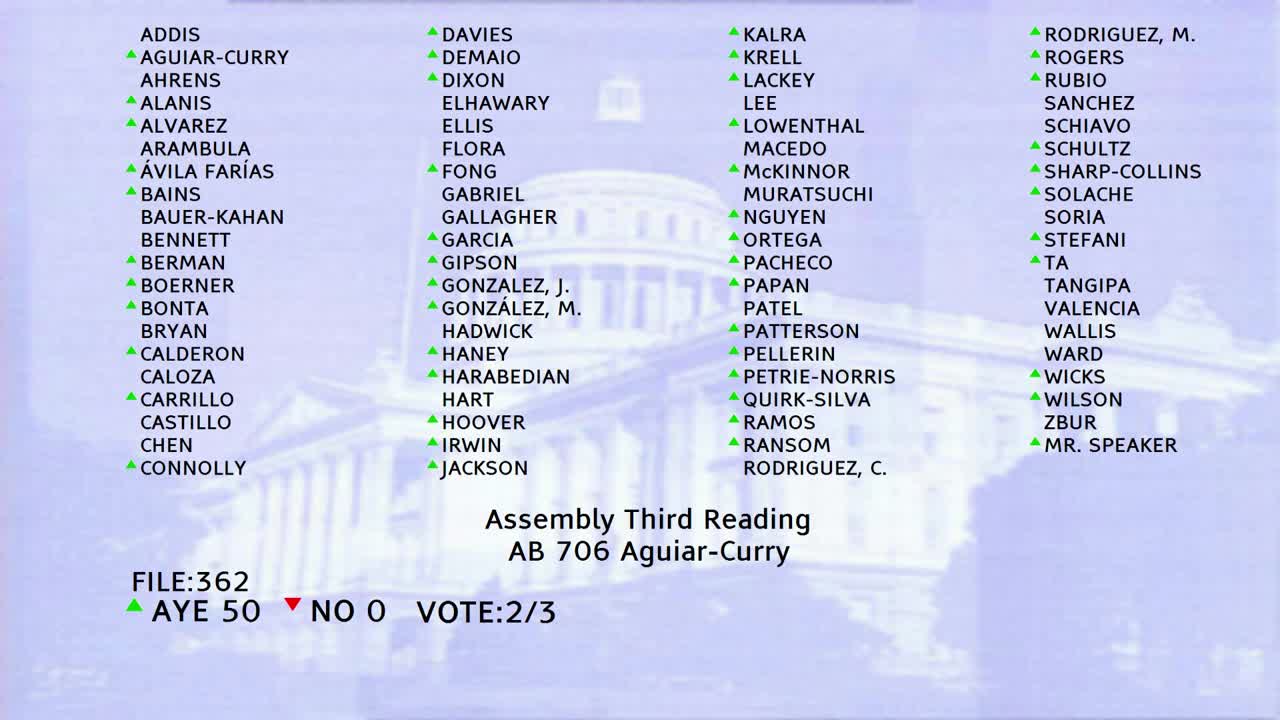 1MIN
Assembly Floor
 10MIN
Assembly Standing Committee on Water, Parks, and Wildlife
Bill Author

Bill Co-Author(s):
