AB 847: Peace officers: confidentiality of records.
- Session Year: 2025-2026
- House: Assembly
- Latest Version Date: 2025-10-06
Current Status:
Passed
(2025-10-06: Chaptered by Secretary of State - Chapter 383, Statutes of 2025.)
Introduced
In Committee
Awaiting First Chamber Vote
Passed First Chamber
In Committee
Awaiting Second Chamber Vote
Passed Second Chamber
Enacted
Existing law, the California Public Records Act, authorizes the inspection and copying of any public record except where specifically prohibited by law. Existing law, with specified exemptions, makes confidential the personnel records of peace officers and custodial officers and certain other records maintained by their employing agencies. Existing law provides that this exemption from disclosure does not apply to investigations of these officers or their employing agencies or to related proceedings conducted by a grand jury, a district attorneys office, or the Attorney Generals office.
This bill would additionally grant access to the confidential personnel records of peace officers and custodial officers and records maintained by their employing agencies, as specified, to civilian law enforcement oversight boards or commissions during investigations or related proceedings concerning the conduct of those officers. The bill would require those oversight boards to maintain the confidentiality of those records, and would authorize them to conduct closed sessions, as specified, to review confidential records. The bill would additionally authorize a county inspector general to access those personnel records, as specified.
This bill would incorporate additional changes to Section 832.7 of the Penal Code proposed by AB 1178 and AB 1388 to be operative only if this bill and AB 1178 or AB 1388 are enacted and this bill is enacted last.
Existing law, the California Public Records Act, authorizes the inspection and copying of any public record except where specifically prohibited by law. Existing law, with specified exemptions, makes confidential the personnel records of peace officers and custodial records officers and certain other records maintained by their employing agencies. Existing law provides that this exemption from disclosure does not apply to investigations of these officers or their employing agencies and relating or to related proceedings conducted by a grand jury, a district attorneys office, or the Attorney Generals office.
This bill would additionally grant access to the confidential personnel records of peace officers and custodial officers and records maintained by their employing agencies, as specified, to civilian law enforcement oversight boards or commissions during investigations or related proceedings concerning the conduct of those officers. The bill would require those oversight boards to maintain the confidentiality of those records, and would authorize them to conduct closed sessions, as specified, to review confidential records. The bill would additionally authorize a county inspector general to access those personnel records, as specified.
Existing law, the California Public Records Act, authorizes the inspection and copying of any public record except where specifically prohibited by law. Existing law, with specified exemptions, makes confidential the personnel records of peace officers and custodial records and certain other records maintained by their employing agencies. Existing law provides that this exemption from disclosure does not apply to investigations of these officers or their employing agencies and relating proceedings conducted by a grand jury, a district attorneys office, or the Attorney Generals office.
This bill would additionally grant access to the confidential personnel records of peace officers and custodial officers and records maintained by their employing agencies, as specified, to civilian law enforcement oversight boards or commissions during investigations or proceedings concerning the conduct of those officers. The bill would require those oversight boards to maintain the confidentiality of those records, and would authorize them to conduct closed sessions, as specified, to review confidential records. The bill would additionally authorize a county inspector general to access those personnel records, as specified.
Existing law, the California Public Records Act, authorizes the inspection and copying of any public record except where specifically prohibited by law. Existing law, with specified exemptions, makes confidential the personnel records of peace officers and custodial records and certain other records maintained by their employing agencies. Existing law provides that this exemption from disclosure does not apply to investigations of these officers or their employing agencies and relating proceedings conducted by a grand jury, a district attorneys office, or the Attorney Generals office.
This bill would additionally grant access to the confidential personnel records of peace officers and custodial officers and records maintained by their employing agencies, as specified, to civilian law enforcement oversight boards or commissions during investigations or proceedings concerning the conduct of those officers.
Existing law specifies the classes of people who are not capable, legally, of committing crimes in the state.This bill would make technical, nonsubstantive changes to those provisions.Existing law specifies the classes of people who are not capable, legally, of committing crimes in the state.
This bill would make technical, nonsubstantive changes to those provisions.
(a)(1)A county may create a sheriff oversight board, either by action of the board of supervisors or through a vote of county residents, comprised of civilians to assist the board of supervisors with its duties required pursuant to Section 25303 that relate to the sheriff.
(2)The members of the sheriff oversight board shall be appointed by the board of supervisors. The board of supervisors shall designate one member to serve as the chairperson of the board.
(3)The members of the oversight board shall have access to the personnel records of peace officers and custodial officers required for the performance of the commissions oversight duties. The oversight board shall maintain the confidentiality of these records consistent with Section 832.7 of the Penal Code.
(b)(1)The chair of the sheriff oversight board shall issue a subpoena or subpoena duces tecum in accordance with Sections 1985 to 1985.4, inclusive, of the Code of Civil Procedure whenever the board deems it necessary or important to examine the following:
(A)Any person as a witness upon any subject matter within the jurisdiction of the board.
(B)Any officer of the county in relation to the discharge of their official duties on behalf of the sheriffs department.
(C)Any books, papers, or documents in the possession of or under the control of a person or officer relating to the affairs of the sheriffs department.
(2)A subpoena shall be served in accordance with Sections 1987 and 1988 of the Code of Civil Procedure.
(3)(A)If a witness fails to attend, or in the case of a subpoena duces tecum, if an item is not produced as set forth therein, the chair or the chair authorized deputy issuing the subpoena upon proof of service thereof may certify the facts to the superior court in the county of the board.
(B)The court shall thereupon issue an order directing the person to appear before the court and show cause why they should not be ordered to comply with the subpoena. The order and a copy of the certified statement shall be served on the person and the court shall have jurisdiction of the matter.
(C)The same proceedings shall be had, the same penalties imposed, and the person charged may purge themself of the contempt in the same way as in a case of a person who has committed a contempt in the trial of a civil action before a superior court.
(4)A sheriff oversight board may conduct closed sessions, consistent with Section 54957, to review confidential records obtained under this section or otherwise related to its oversight duties, if those sessions comply with applicable confidentiality laws, including, but not limited to, Section 832.7 of the Penal Code.
(c)(1)A county, through action of the board of supervisors or vote by county residents, may establish an office of the inspector general, appointed by the board of supervisors, to assist the board of supervisors with its duties required pursuant to Section 25303 that relate to the sheriff.
(2)The inspector general shall have the independent authority to issue a subpoena or subpoena duces tecum subject to the procedure provided in subdivision (b).
(3)The inspector general shall have access to the personnel records of peace officers and custodial officers required for the performance of the inspector generals oversight duties. The inspector general shall maintain the confidentiality of these records consistent with Section 832.7 of the Penal Code.
(d)The exercise of powers under this section or other investigative functions performed by a board of supervisors, sheriff oversight board, or inspector general vested with oversight responsibility for the sheriff shall not be considered to obstruct the investigative functions of the sheriff.
SEC. 2.Section 832.7 of the Penal Code is amended to read:832.7.(a)Except as provided in subdivision (b), the personnel records of peace officers and custodial officers and records maintained by a state or local agency pursuant to Section 832.5, or information obtained from these records, are confidential and shall not be disclosed in any criminal or civil proceeding except by discovery pursuant to Sections 1043 and 1046 of the Evidence Code. This section does not apply to investigations or proceedings concerning the conduct of peace officers or custodial officers, or an agency or department that employs those officers, conducted by a grand jury, a district attorneys office, the Attorney Generals office, or the Commission on Peace Officer Standards and Training, or a civilian oversight board or commission for a law enforcement agency established pursuant to subdivision (a) of Section 25303.7 of the Government Code or other duly enacted municipal or county ordinance.
(b)(1)Notwithstanding subdivision (a), Section 7923.600 of the Government Code, or any other law, the following peace officer or custodial officer personnel records and records maintained by a state or local agency shall not be confidential and shall be made available for public inspection pursuant to the California Public Records Act (Division 10 (commencing with Section 7920.000) of Title 1 of the Government Code):
(A)A record relating to the report, investigation, or findings of any of the following:
(i)An incident involving the discharge of a firearm at a person by a peace officer or custodial officer.
(ii)An incident involving the use of force against a person by a peace officer or custodial officer that resulted in death or in great bodily injury.
(iii)A sustained finding involving a complaint that alleges unreasonable or excessive force.
(iv)A sustained finding that an officer failed to intervene against another officer using force that is clearly unreasonable or excessive.
(B)(i)Any record relating to an incident in which a sustained finding was made by any law enforcement agency or oversight agency that a peace officer or custodial officer engaged in sexual assault involving a member of the public.
(ii)As used in this subparagraph, sexual assault means the commission or attempted initiation of a sexual act with a member of the public by means of force, threat, coercion, extortion, offer of leniency or other official favor, or under the color of authority. For purposes of this definition, the propositioning for or commission of any sexual act while on duty is considered a sexual assault.
(iii)As used in this subparagraph, member of the public means any person not employed by the officers employing agency and includes any participant in a cadet, explorer, or other youth program affiliated with the agency.
(C)Any record relating to an incident in which a sustained finding was made by any law enforcement agency or oversight agency involving dishonesty by a peace officer or custodial officer directly relating to the reporting, investigation, or prosecution of a crime, or directly relating to the reporting of, or investigation of misconduct by, another peace officer or custodial officer, including, but not limited to, any false statements, filing false reports, destruction, falsifying, or concealing of evidence, or perjury.
(D)Any record relating to an incident in which a sustained finding was made by any law enforcement agency or oversight agency that a peace officer or custodial officer engaged in conduct including, but not limited to, verbal statements, writings, online posts, recordings, and gestures, involving prejudice or discrimination against a person on the basis of race, religious creed, color, national origin, ancestry, physical disability, mental disability, medical condition, genetic information, marital status, sex, gender, gender identity, gender expression, age, sexual orientation, or military and veteran status.
(E)Any record relating to an incident in which a sustained finding was made by any law enforcement agency or oversight agency that the peace officer made an unlawful arrest or conducted an unlawful search.
(2)Records that are subject to disclosure under clause (iii) or (iv) of subparagraph (A) of paragraph (1), or under subparagraph (D) or (E) of paragraph (1), relating to an incident that occurs before January 1, 2022, shall not be subject to the time limitations in paragraph (11) until January 1, 2023.
(3)Records that shall be released pursuant to this subdivision include all investigative reports; photographic, audio, and video evidence; transcripts or recordings of interviews; autopsy reports; all materials compiled and presented for review to the district attorney or to any person or body charged with determining whether to file criminal charges against an officer in connection with an incident, whether the officers action was consistent with law and agency policy for purposes of discipline or administrative action, or what discipline to impose or corrective action to take; documents setting forth findings or recommended findings; and copies of disciplinary records relating to the incident, including any letters of intent to impose discipline, any documents reflecting modifications of discipline due to the Skelly or grievance process, and letters indicating final imposition of discipline or other documentation reflecting implementation of corrective action. Records that shall be released pursuant to this subdivision also include records relating to an incident specified in paragraph (1) in which the peace officer or custodial officer resigned before the law enforcement agency or oversight agency concluded its investigation into the alleged incident.
(4)A record from a separate and prior investigation or assessment of a separate incident shall not be released unless it is independently subject to disclosure pursuant to this subdivision.
(5)If an investigation or incident involves multiple officers, information about allegations of misconduct by, or the analysis or disposition of an investigation of, an officer shall not be released pursuant to subparagraph (B), (C), (D), or (E) of paragraph (1), unless it relates to a sustained finding regarding that officer that is itself subject to disclosure pursuant to this section. However, factual information about that action of an officer during an incident, or the statements of an officer about an incident, shall be released if they are relevant to a finding against another officer that is subject to release pursuant to subparagraph (B), (C), (D), or (E) of paragraph (1).
(6)An agency shall redact a record disclosed pursuant to this section only for any of the following purposes:
(A)To remove personal data or information, such as a home address, telephone number, or identities of family members, other than the names and work-related information of peace and custodial officers.
(B)To preserve the anonymity of whistleblowers, complainants, victims, and witnesses.
(C)To protect confidential medical, financial, or other information of which disclosure is specifically prohibited by federal law or would cause an unwarranted invasion of personal privacy that clearly outweighs the strong public interest in records about possible misconduct and use of force by peace officers and custodial officers.
(D)Where there is a specific, articulable, and particularized reason to believe that disclosure of the record would pose a significant danger to the physical safety of the peace officer, custodial officer, or another person.
(7)Notwithstanding paragraph (6), an agency may redact a record disclosed pursuant to this section, including personal identifying information, where, on the facts of the particular case, the public interest served by not disclosing the information clearly outweighs the public interest served by disclosure of the information.
(8)An agency may withhold a record of an incident described in paragraph (1) that is the subject of an active criminal or administrative investigation, in accordance with any of the following:
(A)(i)During an active criminal investigation, disclosure may be delayed for up to 60 days from the date the misconduct or use of force occurred or until the district attorney determines whether to file criminal charges related to the misconduct or use of force, whichever occurs sooner. If an agency delays disclosure pursuant to this clause, the agency shall provide, in writing, the specific basis for the agencys determination that the interest in delaying disclosure clearly outweighs the public interest in disclosure. This writing shall include the estimated date for disclosure of the withheld information.
(ii)After 60 days from the misconduct or use of force, the agency may continue to delay the disclosure of records or information if the disclosure could reasonably be expected to interfere with a criminal enforcement proceeding against an officer who engaged in misconduct or used the force. If an agency delays disclosure pursuant to this clause, the agency shall, at 180-day intervals as necessary, provide, in writing, the specific basis for the agencys determination that disclosure could reasonably be expected to interfere with a criminal enforcement proceeding. The writing shall include the estimated date for the disclosure of the withheld information. Information withheld by the agency shall be disclosed when the specific basis for withholding is resolved, when the investigation or proceeding is no longer active, or by no later than 18 months after the date of the incident, whichever occurs sooner.
(iii)After 60 days from the misconduct or use of force, the agency may continue to delay the disclosure of records or information if the disclosure could reasonably be expected to interfere with a criminal enforcement proceeding against someone other than the officer who engaged in the misconduct or used the force. If an agency delays disclosure under this clause, the agency shall, at 180-day intervals, provide, in writing, the specific basis why disclosure could reasonably be expected to interfere with a criminal enforcement proceeding, and shall provide an estimated date for the disclosure of the withheld information. Information withheld by the agency shall be disclosed when the specific basis for withholding is resolved, when the investigation or proceeding is no longer active, or by no later than 18 months after the date of the incident, whichever occurs sooner, unless extraordinary circumstances warrant continued delay due to the ongoing criminal investigation or proceeding. In that case, the agency must show by clear and convincing evidence that the interest in preventing prejudice to the active and ongoing criminal investigation or proceeding outweighs the public interest in prompt disclosure of records about misconduct or use of force by peace officers and custodial officers. The agency shall release all information subject to disclosure that does not cause substantial prejudice, including any documents that have otherwise become available.
(iv)In an action to compel disclosure brought pursuant to Section 7923.000 of the Government Code, an agency may justify delay by filing an application to seal the basis for withholding, in accordance with Rule 2.550 of the California Rules of Court, or any successor rule, if disclosure of the written basis itself would impact a privilege or compromise a pending investigation.
(B)If criminal charges are filed related to the incident in which misconduct occurred or force was used, the agency may delay the disclosure of records or information until a verdict on those charges is returned at trial or, if a plea of guilty or no contest is entered, the time to withdraw the plea pursuant to Section 1018.
(C)During an administrative investigation into an incident described in paragraph (1), the agency may delay the disclosure of records or information until the investigating agency determines whether the misconduct or use of force violated a law or agency policy, but no longer than 180 days after the date of the employing agencys discovery of the misconduct or use of force, or allegation of misconduct or use of force, by a person authorized to initiate an investigation.
(9)A record of a complaint, or the investigations, findings, or dispositions of that complaint, shall not be released pursuant to this section if the complaint is frivolous, as defined in Section 128.5 of the Code of Civil Procedure, or if the complaint is unfounded.
(10)The cost of copies of records subject to disclosure pursuant to this subdivision that are made available upon the payment of fees covering direct costs of duplication pursuant to subdivision (a) of Section 7922.530 of the Government Code shall not include the costs of searching for, editing, or redacting the records.
(11)Except to the extent temporary withholding for a longer period is permitted pursuant to paragraph (8), records subject to disclosure under this subdivision shall be provided at the earliest possible time and no later than 45 days from the date of a request for their disclosure.
(12)(A)For purposes of releasing records pursuant to this subdivision, the lawyer-client privilege does not prohibit the disclosure of either of the following:
(i)Factual information provided by the public entity to its attorney or factual information discovered in any investigation conducted by, or on behalf of, the public entitys attorney.
(ii)Billing records related to the work done by the attorney so long as the records do not relate to active and ongoing litigation and do not disclose information for the purpose of legal consultation between the public entity and its attorney.
(B)This paragraph does not prohibit the public entity from asserting that a record or information within the record is exempted or prohibited from disclosure pursuant to any other federal or state law.
(13)Notwithstanding subdivision (a) or any other law, an agency that formerly employed a peace officer or custodial officer may, without receiving a request for disclosure, disclose to the public the termination for cause of that officer by that agency for any disclosable incident, including those described in subparagraphs (A) to (E), inclusive, of paragraph (1). Any such disclosure shall be at the discretion of the agency and shall not include any information otherwise prohibited from disclosure. This paragraph is declaratory of existing law.
(c)Notwithstanding subdivisions (a) and (b), a department or agency shall release to the complaining party a copy of the complaining partys own statements at the time the complaint is filed.
(d)Notwithstanding subdivisions (a) and (b), a department or agency that employs peace or custodial officers may disseminate data regarding the number, type, or disposition of complaints (sustained, not sustained, exonerated, or unfounded) made against its officers if that information is in a form which does not identify the individuals involved.
(e)Notwithstanding subdivisions (a) and (b), a department or agency that employs peace or custodial officers may release factual information concerning a disciplinary investigation if the officer who is the subject of the disciplinary investigation, or the officers agent or representative, publicly makes a statement they know to be false concerning the investigation or the imposition of disciplinary action. Information may not be disclosed by the peace or custodial officers employer unless the false statement was published by an established medium of communication, such as television, radio, or a newspaper. Disclosure of factual information by the employing agency pursuant to this subdivision is limited to facts contained in the officers personnel file concerning the disciplinary investigation or imposition of disciplinary action that specifically refute the false statements made public by the peace or custodial officer or their agent or representative.
(f)(1)The department or agency shall provide written notification to the complaining party of the disposition of the complaint within 30 days of the disposition.
(2)The notification described in this subdivision is not conclusive or binding or admissible as evidence in any separate or subsequent action or proceeding brought before an arbitrator, court, or judge of this state or the United States.
(g)This section does not affect the discovery or disclosure of information contained in a peace or custodial officers personnel file pursuant to Section 1043 of the Evidence Code.
(h)This section does not supersede or affect the criminal discovery process outlined in Chapter 10 (commencing with Section 1054) of Title 6 of Part 2, or the admissibility of personnel records pursuant to subdivision (a), which codifies the court decision in Pitchess v. Superior Court (1974) 11 Cal.3d 531.
(i)Nothing in this chapter is intended to limit the publics right of access as provided for in Long Beach Police Officers Association v. City of Long Beach (2014) 59 Cal.4th 59.
SEC. 2.1.Section 832.7 of the Penal Code is amended to read:832.7.(a)Except as provided in subdivision (b), the personnel records of peace officers and custodial officers and records maintained by a state or local agency pursuant to Section 832.5, or information obtained from these records, are confidential and shall not be disclosed in any criminal or civil proceeding except by discovery pursuant to Sections 1043 and 1046 of the Evidence Code. This section does not apply to investigations or proceedings concerning the conduct of peace officers or custodial officers, or an agency or department that employs those officers, conducted by a grand jury, a district attorneys office, the Attorney Generals office, or the Commission on Peace Officer Standards and Training, or a civilian oversight board or commission for a law enforcement agency established pursuant to subdivision (a) of Section 25303.7 of the Government Code or other duly enacted municipal or county ordinance.
(b)(1)Notwithstanding subdivision (a), Section 7923.600 of the Government Code, or any other law, the following peace officer or custodial officer personnel records and records maintained by a state or local agency shall not be confidential and shall be made available for public inspection pursuant to the California Public Records Act (Division 10 (commencing with Section 7920.000) of Title 1 of the Government Code):
(A)A record relating to the report, investigation, or findings of any of the following:
(i)An incident involving the discharge of a firearm at a person by a peace officer or custodial officer.
(ii)An incident involving the use of force against a person by a peace officer or custodial officer that resulted in death or in great bodily injury.
(iii)A sustained finding involving a complaint that alleges unreasonable or excessive force.
(iv)A sustained finding that an officer failed to intervene against another officer using force that is clearly unreasonable or excessive.
(B)(i)Any record relating to an incident in which a sustained finding was made by any law enforcement agency or oversight agency that a peace officer or custodial officer engaged in sexual assault involving a member of the public.
(ii)As used in this subparagraph, sexual assault means the commission or attempted initiation of a sexual act with a member of the public by means of force, threat, coercion, extortion, offer of leniency or other official favor, or under the color of authority. For purposes of this definition, the propositioning for or commission of any sexual act while on duty is considered a sexual assault.
(iii)As used in this subparagraph, member of the public means any person not employed by the officers employing agency and includes any participant in a cadet, explorer, or other youth program affiliated with the agency.
(C)Any record relating to an incident in which a sustained finding was made by any law enforcement agency or oversight agency involving dishonesty by a peace officer or custodial officer directly relating to the reporting, investigation, or prosecution of a crime, or directly relating to the reporting of, or investigation of misconduct by, another peace officer or custodial officer, including, but not limited to, any false statements, filing false reports, destruction, falsifying, or concealing of evidence, or perjury.
(D)Any record relating to an incident in which a sustained finding was made by any law enforcement agency or oversight agency that a peace officer or custodial officer engaged in conduct, including, but not limited to, verbal statements, writings, online posts, recordings, and gestures, involving prejudice or discrimination against a person on the basis of race, religious creed, color, national origin, ancestry, physical disability, mental disability, medical condition, genetic information, marital status, sex, gender, gender identity, gender expression, age, sexual orientation, or military and veteran status.
(E)Any record relating to an incident in which a sustained finding was made by any law enforcement agency or oversight agency that the peace officer made an unlawful arrest or conducted an unlawful search.
(2)Records that are subject to disclosure under clause (iii) or (iv) of subparagraph (A) of paragraph (1), or under subparagraph (D) or (E) of paragraph (1), relating to an incident that occurs before January 1, 2022, shall not be subject to the time limitations in paragraph (11) until January 1, 2023.
(3)Records that shall be released pursuant to this subdivision include all investigative reports; photographic, audio, and video evidence; transcripts or recordings of interviews; autopsy reports; all materials compiled and presented for review to the district attorney or to any person or body charged with determining whether to file criminal charges against an officer in connection with an incident, whether the officers action was consistent with law and agency policy for purposes of discipline or administrative action, or what discipline to impose or corrective action to take; documents setting forth findings or recommended findings; and copies of disciplinary records relating to the incident, including any letters of intent to impose discipline, any documents reflecting modifications of discipline due to the Skelly or grievance process, and letters indicating final imposition of discipline or other documentation reflecting implementation of corrective action. Records that shall be released pursuant to this subdivision also include records relating to an incident specified in paragraph (1) in which the peace officer or custodial officer resigned before the law enforcement agency or oversight agency concluded its investigation into the alleged incident.
(4)A record from a separate and prior investigation or assessment of a separate incident shall not be released unless it is independently subject to disclosure pursuant to this subdivision.
(5)If an investigation or incident involves multiple officers, information about allegations of misconduct by, or the analysis or disposition of an investigation of, an officer shall not be released pursuant to subparagraph (B), (C), (D), or (E) of paragraph (1), unless it relates to a sustained finding regarding that officer that is itself subject to disclosure pursuant to this section. However, factual information about that action of an officer during an incident, or the statements of an officer about an incident, shall be released if they are relevant to a finding against another officer that is subject to release pursuant to subparagraph (B), (C), (D), or (E) of paragraph (1).
(6)An agency shall redact a record disclosed pursuant to this section only for any of the following purposes:
(A)To remove personal data or information, such as a home address, telephone number, or identities of family members, other than the names and work-related information of peace and custodial officers.
(B)To preserve the anonymity of whistleblowers, complainants, victims, and witnesses.
(C)To protect confidential medical, financial, or other information of which disclosure is specifically prohibited by federal law or would cause an unwarranted invasion of personal privacy that clearly outweighs the strong public interest in records about possible misconduct and use of force by peace officers and custodial officers.
(D)(i)Where there is a specific, articulable, and particularized reason to believe that disclosure of the record would pose a significant danger to the physical safety of the peace officer, custodial officer, or another person.
(ii)In an action to compel disclosure brought pursuant to Section 7923.000 of the Government Code, in determining whether a redaction made pursuant to clause (i) is appropriate, a court shall consider whether a particular peace officer is currently operating undercover and their duties demand anonymity.
(7)Notwithstanding paragraph (6), an agency may redact a record disclosed pursuant to this section, including personal identifying information, where, on the facts of the particular case, the public interest served by not disclosing the information clearly outweighs the public interest served by disclosure of the information.
(8)An agency may withhold a record of an incident described in paragraph (1) that is the subject of an active criminal or administrative investigation, in accordance with any of the following:
(A)(i)During an active criminal investigation, disclosure may be delayed for up to 60 days from the date the misconduct or use of force occurred or until the district attorney determines whether to file criminal charges related to the misconduct or use of force, whichever occurs sooner. If an agency delays disclosure pursuant to this clause, the agency shall provide, in writing, the specific basis for the agencys determination that the interest in delaying disclosure clearly outweighs the public interest in disclosure. This writing shall include the estimated date for disclosure of the withheld information.
(ii)After 60 days from the misconduct or use of force, the agency may continue to delay the disclosure of records or information if the disclosure could reasonably be expected to interfere with a criminal enforcement proceeding against an officer who engaged in misconduct or used force. If an agency delays disclosure pursuant to this clause, the agency shall, at 180-day intervals as necessary, provide, in writing, the specific basis for the agencys determination that disclosure could reasonably be expected to interfere with a criminal enforcement proceeding. The writing shall include the estimated date for the disclosure of the withheld information. Information withheld by the agency shall be disclosed when the specific basis for withholding is resolved, when the investigation or proceeding is no longer active, or by no later than 18 months after the date of the incident, whichever occurs sooner.
(iii)After 60 days from the misconduct or use of force, the agency may continue to delay the disclosure of records or information if the disclosure could reasonably be expected to interfere with a criminal enforcement proceeding against someone other than the officer who engaged in the misconduct or used force. If an agency delays disclosure under this clause, the agency shall, at 180-day intervals, provide, in writing, the specific basis why disclosure could reasonably be expected to interfere with a criminal enforcement proceeding, and shall provide an estimated date for the disclosure of the withheld information. Information withheld by the agency shall be disclosed when the specific basis for withholding is resolved, when the investigation or proceeding is no longer active, or by no later than 18 months after the date of the incident, whichever occurs sooner, unless extraordinary circumstances warrant continued delay due to the ongoing criminal investigation or proceeding. In that case, the agency must show by clear and convincing evidence that the interest in preventing prejudice to the active and ongoing criminal investigation or proceeding outweighs the public interest in prompt disclosure of records about misconduct or use of force by peace officers and custodial officers. The agency shall release all information subject to disclosure that does not cause substantial prejudice, including any documents that have otherwise become available.
(iv)In an action to compel disclosure brought pursuant to Section 7923.000 of the Government Code, an agency may justify delay by filing an application to seal the basis for withholding, in accordance with Rule 2.550 of the California Rules of Court, or any successor rule, if disclosure of the written basis itself would impact a privilege or compromise a pending investigation.
(B)If criminal charges are filed related to the incident in which misconduct occurred or force was used, the agency may delay the disclosure of records or information until a verdict on those charges is returned at trial or, if a plea of guilty or no contest is entered, the time to withdraw the plea pursuant to Section 1018.
(C)During an administrative investigation into an incident described in paragraph (1), the agency may delay the disclosure of records or information until the investigating agency determines whether the misconduct or use of force violated a law or agency policy, but no longer than 180 days after the date of the employing agencys discovery of the misconduct or use of force, or allegation of misconduct or use of force, by a person authorized to initiate an investigation.
(9)A record of a complaint, or the investigations, findings, or dispositions of that complaint, shall not be released pursuant to this section if the complaint is frivolous, as defined in Section 128.5 of the Code of Civil Procedure, or if the complaint is unfounded.
(10)The cost of copies of records subject to disclosure pursuant to this subdivision that are made available upon the payment of fees covering direct costs of duplication pursuant to subdivision (a) of Section 7922.530 of the Government Code shall not include the costs of searching for, editing, or redacting the records.
(11)Except to the extent temporary withholding for a longer period is permitted pursuant to paragraph (8), records subject to disclosure under this subdivision shall be provided at the earliest possible time and no later than 45 days from the date of a request for their disclosure.
(12)(A)For purposes of releasing records pursuant to this subdivision, the lawyer-client privilege does not prohibit the disclosure of either of the following:
(i)Factual information provided by the public entity to its attorney or factual information discovered in any investigation conducted by, or on behalf of, the public entitys attorney.
(ii)Billing records related to the work done by the attorney so long as the records do not relate to active and ongoing litigation and do not disclose information for the purpose of legal consultation between the public entity and its attorney.
(B)This paragraph does not prohibit the public entity from asserting that a record or information within the record is exempted or prohibited from disclosure pursuant to any other federal or state law.
(13)Notwithstanding subdivision (a) or any other law, an agency that formerly employed a peace officer or custodial officer may, without receiving a request for disclosure, disclose to the public the termination for cause of that officer by that agency for any disclosable incident, including those described in subparagraphs (A) to (E), inclusive, of paragraph (1). Any such disclosure shall be at the discretion of the agency and shall not include any information otherwise prohibited from disclosure. This paragraph is declaratory of existing law.
(c)Notwithstanding subdivisions (a) and (b), a department or agency shall release to the complaining party a copy of the complaining partys own statements at the time the complaint is filed.
(d)Notwithstanding subdivisions (a) and (b), a department or agency that employs peace or custodial officers may disseminate data regarding the number, type, or disposition of complaints (sustained, not sustained, exonerated, or unfounded) made against its officers if that information is in a form that does not identify the individuals involved.
(e)Notwithstanding subdivisions (a) and (b), a department or agency that employs peace or custodial officers may release factual information concerning a disciplinary investigation if the officer who is the subject of the disciplinary investigation, or the officers agent or representative, publicly makes a statement they know to be false concerning the investigation or the imposition of disciplinary action. Information may not be disclosed by the peace or custodial officers employer unless the false statement was published by an established medium of communication, such as television, radio, or a newspaper. Disclosure of factual information by the employing agency pursuant to this subdivision is limited to facts contained in the officers personnel file concerning the disciplinary investigation or imposition of disciplinary action that specifically refute the false statements made public by the peace or custodial officer or their agent or representative.
(f)(1)The department or agency shall provide written notification to the complaining party of the disposition of the complaint within 30 days of the disposition.
(2)The notification described in this subdivision is not conclusive or binding or admissible as evidence in any separate or subsequent action or proceeding brought before an arbitrator, court, or judge of this state or the United States.
(g)This section does not affect the discovery or disclosure of information contained in a peace or custodial officers personnel file pursuant to Section 1043 of the Evidence Code.
(h)This section does not supersede or affect the criminal discovery process outlined in Chapter 10 (commencing with Section 1054) of Title 6 of Part 2, or the admissibility of personnel records pursuant to subdivision (a), which codifies the court decision in Pitchess v. Superior Court (1974) 11 Cal.3d 531.
(i)Nothing in this chapter is intended to limit the publics right of access as provided for in Long Beach Police Officers Association v. City of Long Beach (2014) 59 Cal.4th 59.
SEC. 2.2.Section 832.7 of the Penal Code is amended to read:832.7.(a)Except as provided in subdivision (b), the personnel records of peace officers and custodial officers and records maintained by a state or local agency pursuant to Section 832.5, or information obtained from these records, are confidential and shall not be disclosed in any criminal or civil proceeding except by discovery pursuant to Sections 1043 and 1046 of the Evidence Code. This section does not apply to investigations or proceedings concerning the conduct of peace officers or custodial officers, or an agency or department that employs those officers, conducted by a grand jury, a district attorneys office, the Attorney Generals office, or the Commission on Peace Officer Standards and Training, or a civilian oversight board or commission for a law enforcement agency established pursuant to subdivision (a) of Section 25303.7 of the Government Code or other duly enacted municipal or county ordinance.
(b)(1)Notwithstanding subdivision (a), Section 7923.600 of the Government Code, or any other law, the following peace officer or custodial officer personnel records and records maintained by a state or local agency shall not be confidential and shall be made available for public inspection pursuant to the California Public Records Act (Division 10 (commencing with Section 7920.000) of Title 1 of the Government Code):
(A)A record relating to the report, investigation, or findings of any of the following:
(i)An incident involving the discharge of a firearm at a person by a peace officer or custodial officer.
(ii)An incident involving the use of force against a person by a peace officer or custodial officer that resulted in death or in great bodily injury.
(iii)A sustained finding involving a complaint that alleges unreasonable or excessive force.
(iv)A sustained finding that an officer failed to intervene against another officer using force that is clearly unreasonable or excessive.
(B)(i)Any record relating to an incident in which a sustained finding was made by any law enforcement agency or oversight agency that a peace officer or custodial officer engaged in sexual assault involving a member of the public.
(ii)As used in this subparagraph, sexual assault means the commission or attempted initiation of a sexual act with a member of the public by means of force, threat, coercion, extortion, offer of leniency or other official favor, or under the color of authority. For purposes of this definition, the propositioning for or commission of any sexual act while on duty is considered a sexual assault.
(iii)As used in this subparagraph, member of the public means any person not employed by the officers employing agency and includes any participant in a cadet, explorer, or other youth program affiliated with the agency.
(C)Any record relating to an incident in which a sustained finding was made by any law enforcement agency or oversight agency involving dishonesty by a peace officer or custodial officer directly relating to the reporting, investigation, or prosecution of a crime, or directly relating to the reporting of, or investigation of misconduct by, another peace officer or custodial officer, including, but not limited to, any false statements, filing false reports, destruction, falsifying, or concealing of evidence, or perjury.
(D)Any record relating to an incident in which a sustained finding was made by any law enforcement agency or oversight agency that a peace officer or custodial officer engaged in conduct, including, but not limited to, verbal statements, writings, online posts, recordings, and gestures, involving prejudice or discrimination against a person on the basis of race, religious creed, color, national origin, ancestry, physical disability, mental disability, medical condition, genetic information, marital status, sex, gender, gender identity, gender expression, age, sexual orientation, or military and veteran status.
(E)Any record relating to an incident in which a sustained finding was made by any law enforcement agency or oversight agency that the peace officer made an unlawful arrest or conducted an unlawful search.
(F)An agreement prohibited by subdivision (e) of Section 13510.9.
(2)Records that are subject to disclosure under clause (iii) or (iv) of subparagraph (A) of paragraph (1), or under subparagraph (D) or (E) of paragraph (1), relating to an incident that occurs before January 1, 2022, shall not be subject to the time limitations in paragraph (11) until January 1, 2023.
(3)Records that shall be released pursuant to this subdivision include all investigative reports; photographic, audio, and video evidence; transcripts or recordings of interviews; autopsy reports; all materials compiled and presented for review to the district attorney or to any person or body charged with determining whether to file criminal charges against an officer in connection with an incident, whether the officers action was consistent with law and agency policy for purposes of discipline or administrative action, or what discipline to impose or corrective action to take; documents setting forth findings or recommended findings; and copies of disciplinary records relating to the incident, including any letters of intent to impose discipline, any documents reflecting modifications of discipline due to the Skelly or grievance process, and letters indicating final imposition of discipline or other documentation reflecting implementation of corrective action. Records that shall be released pursuant to this subdivision also include records relating to an incident specified in paragraph (1) in which the peace officer or custodial officer resigned before the law enforcement agency or oversight agency concluded its investigation into the alleged incident.
(4)A record from a separate and prior investigation or assessment of a separate incident shall not be released unless it is independently subject to disclosure pursuant to this subdivision.
(5)If an investigation or incident involves multiple officers, information about allegations of misconduct by, or the analysis or disposition of an investigation of, an officer shall not be released pursuant to subparagraph (B), (C), (D), or (E) of paragraph (1), unless it relates to a sustained finding regarding that officer that is itself subject to disclosure pursuant to this section. However, factual information about that action of an officer during an incident, or the statements of an officer about an incident, shall be released if they are relevant to a finding against another officer that is subject to release pursuant to subparagraph (B), (C), (D), or (E) of paragraph (1).
(6)An agency shall redact a record disclosed pursuant to this section only for any of the following purposes:
(A)To remove personal data or information, such as a home address, telephone number, or identities of family members, other than the names and work-related information of peace and custodial officers.
(B)To preserve the anonymity of whistleblowers, complainants, victims, and witnesses.
(C)To protect confidential medical, financial, or other information of which disclosure is specifically prohibited by federal law or would cause an unwarranted invasion of personal privacy that clearly outweighs the strong public interest in records about possible misconduct and use of force by peace officers and custodial officers.
(D)Where there is a specific, articulable, and particularized reason to believe that disclosure of the record would pose a significant danger to the physical safety of the peace officer, custodial officer, or another person.
(7)Notwithstanding paragraph (6), an agency may redact a record disclosed pursuant to this section, including personal identifying information, where, on the facts of the particular case, the public interest served by not disclosing the information clearly outweighs the public interest served by disclosure of the information.
(8)An agency may withhold a record of an incident described in paragraph (1) that is the subject of an active criminal or administrative investigation, in accordance with any of the following:
(A)(i)During an active criminal investigation, disclosure may be delayed for up to 60 days from the date the misconduct or use of force occurred or until the district attorney determines whether to file criminal charges related to the misconduct or use of force, whichever occurs sooner. If an agency delays disclosure pursuant to this clause, the agency shall provide, in writing, the specific basis for the agencys determination that the interest in delaying disclosure clearly outweighs the public interest in disclosure. This writing shall include the estimated date for disclosure of the withheld information.
(ii)After 60 days from the misconduct or use of force, the agency may continue to delay the disclosure of records or information if the disclosure could reasonably be expected to interfere with a criminal enforcement proceeding against an officer who engaged in misconduct or use of force. If an agency delays disclosure pursuant to this clause, the agency shall, at 180-day intervals as necessary, provide, in writing, the specific basis for the agencys determination that disclosure could reasonably be expected to interfere with a criminal enforcement proceeding. The writing shall include the estimated date for the disclosure of the withheld information. Information withheld by the agency shall be disclosed when the specific basis for withholding is resolved, when the investigation or proceeding is no longer active, or by no later than 18 months after the date of the incident, whichever occurs sooner.
(iii)After 60 days from the misconduct or use of force, the agency may continue to delay the disclosure of records or information if the disclosure could reasonably be expected to interfere with a criminal enforcement proceeding against someone other than the officer who engaged in the misconduct or use of force. If an agency delays disclosure under this clause, the agency shall, at 180-day intervals, provide, in writing, the specific basis why disclosure could reasonably be expected to interfere with a criminal enforcement proceeding, and shall provide an estimated date for the disclosure of the withheld information. Information withheld by the agency shall be disclosed when the specific basis for withholding is resolved, when the investigation or proceeding is no longer active, or by no later than 18 months after the date of the incident, whichever occurs sooner, unless extraordinary circumstances warrant continued delay due to the ongoing criminal investigation or proceeding. In that case, the agency must show by clear and convincing evidence that the interest in preventing prejudice to the active and ongoing criminal investigation or proceeding outweighs the public interest in prompt disclosure of records about misconduct or use of force by peace officers and custodial officers. The agency shall release all information subject to disclosure that does not cause substantial prejudice, including any documents that have otherwise become available.
(iv)In an action to compel disclosure brought pursuant to Section 7923.000 of the Government Code, an agency may justify delay by filing an application to seal the basis for withholding, in accordance with Rule 2.550 of the California Rules of Court, or any successor rule, if disclosure of the written basis itself would impact a privilege or compromise a pending investigation.
(B)If criminal charges are filed related to the incident in which misconduct occurred or force was used, the agency may delay the disclosure of records or information until a verdict on those charges is returned at trial or, if a plea of guilty or no contest is entered, the time to withdraw the plea pursuant to Section 1018.
(C)During an administrative investigation into an incident described in paragraph (1), the agency may delay the disclosure of records or information until the investigating agency determines whether the misconduct or use of force violated a law or agency policy, but no longer than 180 days after the date of the employing agencys discovery of the misconduct or use of force, or allegation of misconduct or use of force, by a person authorized to initiate an investigation.
(9)A record of a complaint, or the investigations, findings, or dispositions of that complaint, shall not be released pursuant to this section if the complaint is frivolous, as defined in Section 128.5 of the Code of Civil Procedure, or if the complaint is unfounded.
(10)The cost of copies of records subject to disclosure pursuant to this subdivision that are made available upon the payment of fees covering direct costs of duplication pursuant to subdivision (a) of Section 7922.530 of the Government Code shall not include the costs of searching for, editing, or redacting the records.
(11)Except to the extent temporary withholding for a longer period is permitted pursuant to paragraph (8), records subject to disclosure under this subdivision shall be provided at the earliest possible time and no later than 45 days from the date of a request for their disclosure.
(12)(A)For purposes of releasing records pursuant to this subdivision, the lawyer-client privilege does not prohibit the disclosure of either of the following:
(i)Factual information provided by the public entity to its attorney or factual information discovered in any investigation conducted by, or on behalf of, the public entitys attorney.
(ii)Billing records related to the work done by the attorney so long as the records do not relate to active and ongoing litigation and do not disclose information for the purpose of legal consultation between the public entity and its attorney.
(B)This paragraph does not prohibit the public entity from asserting that a record or information within the record is exempted or prohibited from disclosure pursuant to any other federal or state law.
(13)Notwithstanding subdivision (a) or any other law, an agency that formerly employed a peace officer or custodial officer may, without receiving a request for disclosure, disclose to the public the termination for cause of that officer by that agency for any disclosable incident, including those described in subparagraphs (A) to (E), inclusive, of paragraph (1). Any such disclosure shall be at the discretion of the agency and shall not include any information otherwise prohibited from disclosure. This paragraph is declaratory of existing law.
(c)Notwithstanding subdivisions (a) and (b), a department or agency shall release to the complaining party a copy of the complaining partys own statements at the time the complaint is filed.
(d)Notwithstanding subdivisions (a) and (b), a department or agency that employs peace or custodial officers may disseminate data regarding the number, type, or disposition of complaints (sustained, not sustained, exonerated, or unfounded) made against its officers if that information is in a form that does not identify the individuals involved.
(e)Notwithstanding subdivisions (a) and (b), a department or agency that employs peace or custodial officers may release factual information concerning a disciplinary investigation if the officer who is the subject of the disciplinary investigation, or the officers agent or representative, publicly makes a statement they know to be false concerning the investigation or the imposition of disciplinary action. Information may not be disclosed by the peace or custodial officers employer unless the false statement was published by an established medium of communication, such as television, radio, or a newspaper. Disclosure of factual information by the employing agency pursuant to this subdivision is limited to facts contained in the officers personnel file concerning the disciplinary investigation or imposition of disciplinary action that specifically refute the false statements made public by the peace or custodial officer or their agent or representative.
(f)(1)The department or agency shall provide written notification to the complaining party of the disposition of the complaint within 30 days of the disposition.
(2)The notification described in this subdivision is not conclusive or binding or admissible as evidence in any separate or subsequent action or proceeding brought before an arbitrator, court, or judge of this state or the United States.
(g)This section does not affect the discovery or disclosure of information contained in a peace or custodial officers personnel file pursuant to Section 1043 of the Evidence Code.
(h)This section does not supersede or affect the criminal discovery process outlined in Chapter 10 (commencing with Section 1054) of Title 6 of Part 2, or the admissibility of personnel records pursuant to subdivision (a), which codifies the court decision in Pitchess v. Superior Court (1974) 11 Cal.3d 531.
(i)Nothing in this chapter is intended to limit the publics right of access as provided for in Long Beach Police Officers Association v. City of Long Beach (2014) 59 Cal.4th 59.
SEC. 2.3.Section 832.7 of the Penal Code is amended to read:832.7.(a)Except as provided in subdivision (b), the personnel records of peace officers and custodial officers and records maintained by a state or local agency pursuant to Section 832.5, or information obtained from these records, are confidential and shall not be disclosed in any criminal or civil proceeding except by discovery pursuant to Sections 1043 and 1046 of the Evidence Code. This section does not apply to investigations or proceedings concerning the conduct of peace officers or custodial officers, or an agency or department that employs those officers, conducted by a grand jury, a district attorneys office, the Attorney Generals office, or the Commission on Peace Officer Standards and Training, or a civilian oversight board or commission for a law enforcement agency established pursuant to subdivision (a) of Section 25303.7 of the Government Code or other duly enacted municipal or county ordinance.
(b)(1)Notwithstanding subdivision (a), Section 7923.600 of the Government Code, or any other law, the following peace officer or custodial officer personnel records and records maintained by a state or local agency shall not be confidential and shall be made available for public inspection pursuant to the California Public Records Act (Division 10 (commencing with Section 7920.000) of Title 1 of the Government Code):
(A)A record relating to the report, investigation, or findings of any of the following:
(i)An incident involving the discharge of a firearm at a person by a peace officer or custodial officer.
(ii)An incident involving the use of force against a person by a peace officer or custodial officer that resulted in death or in great bodily injury.
(iii)A sustained finding involving a complaint that alleges unreasonable or excessive force.
(iv)A sustained finding that an officer failed to intervene against another officer using force that is clearly unreasonable or excessive.
(B)(i)Any record relating to an incident in which a sustained finding was made by any law enforcement agency or oversight agency that a peace officer or custodial officer engaged in sexual assault involving a member of the public.
(ii)As used in this subparagraph, sexual assault means the commission or attempted initiation of a sexual act with a member of the public by means of force, threat, coercion, extortion, offer of leniency or other official favor, or under the color of authority. For purposes of this definition, the propositioning for or commission of any sexual act while on duty is considered a sexual assault.
(iii)As used in this subparagraph, member of the public means any person not employed by the officers employing agency and includes any participant in a cadet, explorer, or other youth program affiliated with the agency.
(C)Any record relating to an incident in which a sustained finding was made by any law enforcement agency or oversight agency involving dishonesty by a peace officer or custodial officer directly relating to the reporting, investigation, or prosecution of a crime, or directly relating to the reporting of, or investigation of misconduct by, another peace officer or custodial officer, including, but not limited to, any false statements, filing false reports, destruction, falsifying, or concealing of evidence, or perjury.
(D)Any record relating to an incident in which a sustained finding was made by any law enforcement agency or oversight agency that a peace officer or custodial officer engaged in conduct, including, but not limited to, verbal statements, writings, online posts, recordings, and gestures, involving prejudice or discrimination against a person on the basis of race, religious creed, color, national origin, ancestry, physical disability, mental disability, medical condition, genetic information, marital status, sex, gender, gender identity, gender expression, age, sexual orientation, or military and veteran status.
(E)Any record relating to an incident in which a sustained finding was made by any law enforcement agency or oversight agency that the peace officer made an unlawful arrest or conducted an unlawful search.
(F)An agreement prohibited by subdivision (e) of Section 13510.9.
(2)Records that are subject to disclosure under clause (iii) or (iv) of subparagraph (A) of paragraph (1), or under subparagraph (D) or (E) of paragraph (1), relating to an incident that occurs before January 1, 2022, shall not be subject to the time limitations in paragraph (11) until January 1, 2023.
(3)Records that shall be released pursuant to this subdivision include all investigative reports; photographic, audio, and video evidence; transcripts or recordings of interviews; autopsy reports; all materials compiled and presented for review to the district attorney or to any person or body charged with determining whether to file criminal charges against an officer in connection with an incident, whether the officers action was consistent with law and agency policy for purposes of discipline or administrative action, or what discipline to impose or corrective action to take; documents setting forth findings or recommended findings; and copies of disciplinary records relating to the incident, including any letters of intent to impose discipline, any documents reflecting modifications of discipline due to the Skelly or grievance process, and letters indicating final imposition of discipline or other documentation reflecting implementation of corrective action. Records that shall be released pursuant to this subdivision also include records relating to an incident specified in paragraph (1) in which the peace officer or custodial officer resigned before the law enforcement agency or oversight agency concluded its investigation into the alleged incident.
(4)A record from a separate and prior investigation or assessment of a separate incident shall not be released unless it is independently subject to disclosure pursuant to this subdivision.
(5)If an investigation or incident involves multiple officers, information about allegations of misconduct by, or the analysis or disposition of an investigation of, an officer shall not be released pursuant to subparagraph (B), (C), (D), or (E) of paragraph (1), unless it relates to a sustained finding regarding that officer that is itself subject to disclosure pursuant to this section. However, factual information about that action of an officer during an incident, or the statements of an officer about an incident, shall be released if they are relevant to a finding against another officer that is subject to release pursuant to subparagraph (B), (C), (D), or (E) of paragraph (1).
(6)An agency shall redact a record disclosed pursuant to this section only for any of the following purposes:
(A)To remove personal data or information, such as a home address, telephone number, or identities of family members, other than the names and work-related information of peace and custodial officers.
(B)To preserve the anonymity of whistleblowers, complainants, victims, and witnesses.
(C)To protect confidential medical, financial, or other information of which disclosure is specifically prohibited by federal law or would cause an unwarranted invasion of personal privacy that clearly outweighs the strong public interest in records about possible misconduct and use of force by peace officers and custodial officers.
(D)(i)Where there is a specific, articulable, and particularized reason to believe that disclosure of the record would pose a significant danger to the physical safety of the peace officer, custodial officer, or another person.
(ii)In an action to compel disclosure brought pursuant to Section 7923.000 of the Government Code, in determining whether a redaction made pursuant to clause (i) is appropriate, a court shall consider whether a particular peace officer is currently operating undercover and their duties demand anonymity.
(7)Notwithstanding paragraph (6), an agency may redact a record disclosed pursuant to this section, including personal identifying information, where, on the facts of the particular case, the public interest served by not disclosing the information clearly outweighs the public interest served by disclosure of the information.
(8)An agency may withhold a record of an incident described in paragraph (1) that is the subject of an active criminal or administrative investigation, in accordance with any of the following:
(A)(i)During an active criminal investigation, disclosure may be delayed for up to 60 days from the date the misconduct or use of force occurred or until the district attorney determines whether to file criminal charges related to the misconduct or use of force, whichever occurs sooner. If an agency delays disclosure pursuant to this clause, the agency shall provide, in writing, the specific basis for the agencys determination that the interest in delaying disclosure clearly outweighs the public interest in disclosure. This writing shall include the estimated date for disclosure of the withheld information.
(ii)After 60 days from the misconduct or use of force, the agency may continue to delay the disclosure of records or information if the disclosure could reasonably be expected to interfere with a criminal enforcement proceeding against an officer who engaged in misconduct or use of force. If an agency delays disclosure pursuant to this clause, the agency shall, at 180-day intervals as necessary, provide, in writing, the specific basis for the agencys determination that disclosure could reasonably be expected to interfere with a criminal enforcement proceeding. The writing shall include the estimated date for the disclosure of the withheld information. Information withheld by the agency shall be disclosed when the specific basis for withholding is resolved, when the investigation or proceeding is no longer active, or by no later than 18 months after the date of the incident, whichever occurs sooner.
(iii)After 60 days from the misconduct or use of force, the agency may continue to delay the disclosure of records or information if the disclosure could reasonably be expected to interfere with a criminal enforcement proceeding against someone other than the officer who engaged in the misconduct or use of force. If an agency delays disclosure under this clause, the agency shall, at 180-day intervals, provide, in writing, the specific basis why disclosure could reasonably be expected to interfere with a criminal enforcement proceeding, and shall provide an estimated date for the disclosure of the withheld information. Information withheld by the agency shall be disclosed when the specific basis for withholding is resolved, when the investigation or proceeding is no longer active, or by no later than 18 months after the date of the incident, whichever occurs sooner, unless extraordinary circumstances warrant continued delay due to the ongoing criminal investigation or proceeding. In that case, the agency must show by clear and convincing evidence that the interest in preventing prejudice to the active and ongoing criminal investigation or proceeding outweighs the public interest in prompt disclosure of records about misconduct or use of force by peace officers and custodial officers. The agency shall release all information subject to disclosure that does not cause substantial prejudice, including any documents that have otherwise become available.
(iv)In an action to compel disclosure brought pursuant to Section 7923.000 of the Government Code, an agency may justify delay by filing an application to seal the basis for withholding, in accordance with Rule 2.550 of the California Rules of Court, or any successor rule, if disclosure of the written basis itself would impact a privilege or compromise a pending investigation.
(B)If criminal charges are filed related to the incident in which misconduct occurred or force was used, the agency may delay the disclosure of records or information until a verdict on those charges is returned at trial or, if a plea of guilty or no contest is entered, the time to withdraw the plea pursuant to Section 1018.
(C)During an administrative investigation into an incident described in paragraph (1), the agency may delay the disclosure of records or information until the investigating agency determines whether the misconduct or use of force violated a law or agency policy, but no longer than 180 days after the date of the employing agencys discovery of the misconduct or use of force, or allegation of misconduct or use of force, by a person authorized to initiate an investigation.
(9)A record of a complaint, or the investigations, findings, or dispositions of that complaint, shall not be released pursuant to this section if the complaint is frivolous, as defined in Section 128.5 of the Code of Civil Procedure, or if the complaint is unfounded.
(10)The cost of copies of records subject to disclosure pursuant to this subdivision that are made available upon the payment of fees covering direct costs of duplication pursuant to subdivision (a) of Section 7922.530 of the Government Code shall not include the costs of searching for, editing, or redacting the records.
(11)Except to the extent temporary withholding for a longer period is permitted pursuant to paragraph (8), records subject to disclosure under this subdivision shall be provided at the earliest possible time and no later than 45 days from the date of a request for their disclosure.
(12)(A)For purposes of releasing records pursuant to this subdivision, the lawyer-client privilege does not prohibit the disclosure of either of the following:
(i)Factual information provided by the public entity to its attorney or factual information discovered in any investigation conducted by, or on behalf of, the public entitys attorney.
(ii)Billing records related to the work done by the attorney so long as the records do not relate to active and ongoing litigation and do not disclose information for the purpose of legal consultation between the public entity and its attorney.
(B)This paragraph does not prohibit the public entity from asserting that a record or information within the record is exempted or prohibited from disclosure pursuant to any other federal or state law.
(13)Notwithstanding subdivision (a) or any other law, an agency that formerly employed a peace officer or custodial officer may, without receiving a request for disclosure, disclose to the public the termination for cause of that officer by that agency for any disclosable incident, including those described in subparagraphs (A) to (E), inclusive, of paragraph (1). Any such disclosure shall be at the discretion of the agency and shall not include any information otherwise prohibited from disclosure. This paragraph is declaratory of existing law.
(c)Notwithstanding subdivisions (a) and (b), a department or agency shall release to the complaining party a copy of the complaining partys own statements at the time the complaint is filed.
(d)Notwithstanding subdivisions (a) and (b), a department or agency that employs peace or custodial officers may disseminate data regarding the number, type, or disposition of complaints (sustained, not sustained, exonerated, or unfounded) made against its officers if that information is in a form that does not identify the individuals involved.
(e)Notwithstanding subdivisions (a) and (b), a department or agency that employs peace or custodial officers may release factual information concerning a disciplinary investigation if the officer who is the subject of the disciplinary investigation, or the officers agent or representative, publicly makes a statement they know to be false concerning the investigation or the imposition of disciplinary action. Information may not be disclosed by the peace or custodial officers employer unless the false statement was published by an established medium of communication, such as television, radio, or a newspaper. Disclosure of factual information by the employing agency pursuant to this subdivision is limited to facts contained in the officers personnel file concerning the disciplinary investigation or imposition of disciplinary action that specifically refute the false statements made public by the peace or custodial officer or their agent or representative.
(f)(1)The department or agency shall provide written notification to the complaining party of the disposition of the complaint within 30 days of the disposition.
(2)The notification described in this subdivision is not conclusive or binding or admissible as evidence in any separate or subsequent action or proceeding brought before an arbitrator, court, or judge of this state or the United States.
(g)This section does not affect the discovery or disclosure of information contained in a peace or custodial officers personnel file pursuant to Section 1043 of the Evidence Code.
(h)This section does not supersede or affect the criminal discovery process outlined in Chapter 10 (commencing with Section 1054) of Title 6 of Part 2, or the admissibility of personnel records pursuant to subdivision (a), which codifies the court decision in Pitchess v. Superior Court (1974) 11 Cal.3d 531.
(i)Nothing in this chapter is intended to limit the publics right of access as provided for in Long Beach Police Officers Association v. City of Long Beach (2014) 59 Cal.4th 59.
SEC. 3.(a)Section 2.1 of this bill incorporates amendments to Section 832.7 of the Penal Code proposed by both this bill and Assembly Bill 1178. That section of this bill shall only become operative if (1) both bills are enacted and become effective on or before January 1, 2026, (2) each bill amends Section 832.7 of the Penal Code, (3) Assembly Bill 1388 is not enacted or as enacted does not amend that section, and (4) this bill is enacted after Assembly Bill 1178, in which case Sections 2, 2.2, and 2.3 of this bill shall not become operative.
(b)Section 2.2 of this bill incorporates amendments to Section 832.7 of the Penal Code proposed by both this bill and Assembly Bill 1388. That section of this bill shall only become operative if (1) both bills are enacted and become effective on or before January 1, 2026, (2) each bill amends Section 832.7 of the Penal Code, (3) Assembly Bill 1178 is not enacted or as enacted does not amend that section, and (4) this bill is enacted after Assembly Bill 1388 in which case Sections 2, 2.1, and 2.3 of this bill shall not become operative.
(c)Section 2.3 of this bill incorporates amendments to Section 832.7 of the Penal Code proposed by this bill, Assembly Bill 1178, and Assembly Bill 1388. That section of this bill shall only become operative if (1) all three bills are enacted and become effective on or before January 1, 2026, (2) all three bills amend Section 832.7 of the Penal Code, and (3) this bill is enacted after Assembly Bill 1178 and Assembly Bill 1388, in which case Sections 2, 2.1, and 2.2 of this bill shall not become operative.
(a)(1)A county may create a sheriff oversight board, either by action of the board of supervisors or through a vote of county residents, comprised of civilians to assist the board of supervisors with its duties required pursuant to Section 25303 that relate to the sheriff.
(2)The members of the sheriff oversight board shall be appointed by the board of supervisors. The board of supervisors shall designate one member to serve as the chairperson of the board.
(3)The members of the oversight board shall have access to the personnel records of peace officers and custodial officers required for the performance of the commissions oversight duties. The oversight board shall maintain the confidentiality of these records consistent with Section 832.7 of the Penal Code.
(b)(1)The chair of the sheriff oversight board shall issue a subpoena or subpoena duces tecum in accordance with Sections 1985 to 1985.4, inclusive, of the Code of Civil Procedure whenever the board deems it necessary or important to examine the following:
(A)Any person as a witness upon any subject matter within the jurisdiction of the board.
(B)Any officer of the county in relation to the discharge of their official duties on behalf of the sheriffs department.
(C)Any books, papers, or documents in the possession of or under the control of a person or officer relating to the affairs of the sheriffs department.
(2)A subpoena shall be served in accordance with Sections 1987 and 1988 of the Code of Civil Procedure.
(3)(A)If a witness fails to attend, or in the case of a subpoena duces tecum, if an item is not produced as set forth therein, the chair or the chair authorized deputy issuing the subpoena upon proof of service thereof may certify the facts to the superior court in the county of the board.
(B)The court shall thereupon issue an order directing the person to appear before the court and show cause why they should not be ordered to comply with the subpoena. The order and a copy of the certified statement shall be served on the person and the court shall have jurisdiction of the matter.
(C)The same proceedings shall be had, the same penalties imposed, and the person charged may purge themself of the contempt in the same way as in a case of a person who has committed a contempt in the trial of a civil action before a superior court.
(4)A sheriff oversight board may conduct closed sessions, consistent with Section 54957, to review confidential records obtained under this section or otherwise related to its oversight duties, if those sessions comply with applicable confidentiality laws, including, but not limited to, Section 832.7 of the Penal Code.
(c)(1)A county, through action of the board of supervisors or vote by county residents, may establish an office of the inspector general, appointed by the board of supervisors, to assist the board of supervisors with its duties required pursuant to Section 25303 that relate to the sheriff.
(2)The inspector general shall have the independent authority to issue a subpoena or subpoena duces tecum subject to the procedure provided in subdivision (b).
(3)The inspector general shall have access to the personnel records of peace officers and custodial officers required for the performance of the inspector generals oversight duties. The inspector general shall maintain the confidentiality of these records consistent with Section 832.7 of the Penal Code.
(d)The exercise of powers under this section or other investigative functions performed by a board of supervisors, sheriff oversight board, or inspector general vested with oversight responsibility for the sheriff shall not be considered to obstruct the investigative functions of the sheriff.
SEC. 2.Section 832.7 of the Penal Code is amended to read:832.7.(a)Except as provided in subdivision (b), the personnel records of peace officers and custodial officers and records maintained by a state or local agency pursuant to Section 832.5, or information obtained from these records, are confidential and shall not be disclosed in any criminal or civil proceeding except by discovery pursuant to Sections 1043 and 1046 of the Evidence Code. This section does not apply to investigations or proceedings concerning the conduct of peace officers or custodial officers, or an agency or department that employs those officers, conducted by a grand jury, a district attorneys office, the Attorney Generals office, or the Commission on Peace Officer Standards and Training, or a civilian oversight board or commission for a law enforcement agency established pursuant to subdivision (a) of Section 25303.7 of the Government Code or other duly enacted municipal or county ordinance.
(b)(1)Notwithstanding subdivision (a), Section 7923.600 of the Government Code, or any other law, the following peace officer or custodial officer personnel records and records maintained by a state or local agency shall not be confidential and shall be made available for public inspection pursuant to the California Public Records Act (Division 10 (commencing with Section 7920.000) of Title 1 of the Government Code):
(A)A record relating to the report, investigation, or findings of any of the following:
(i)An incident involving the discharge of a firearm at a person by a peace officer or custodial officer.
(ii)An incident involving the use of force against a person by a peace officer or custodial officer that resulted in death or in great bodily injury.
(iii)A sustained finding involving a complaint that alleges unreasonable or excessive force.
(iv)A sustained finding that an officer failed to intervene against another officer using force that is clearly unreasonable or excessive.
(B)(i)Any record relating to an incident in which a sustained finding was made by any law enforcement agency or oversight agency that a peace officer or custodial officer engaged in sexual assault involving a member of the public.
(ii)As used in this subparagraph, sexual assault means the commission or attempted initiation of a sexual act with a member of the public by means of force, threat, coercion, extortion, offer of leniency or other official favor, or under the color of authority. For purposes of this definition, the propositioning for or commission of any sexual act while on duty is considered a sexual assault.
(iii)As used in this subparagraph, member of the public means any person not employed by the officers employing agency and includes any participant in a cadet, explorer, or other youth program affiliated with the agency.
(C)Any record relating to an incident in which a sustained finding was made by any law enforcement agency or oversight agency involving dishonesty by a peace officer or custodial officer directly relating to the reporting, investigation, or prosecution of a crime, or directly relating to the reporting of, or investigation of misconduct by, another peace officer or custodial officer, including, but not limited to, any false statements, filing false reports, destruction, falsifying, or concealing of evidence, or perjury.
(D)Any record relating to an incident in which a sustained finding was made by any law enforcement agency or oversight agency that a peace officer or custodial officer engaged in conduct including, but not limited to, verbal statements, writings, online posts, recordings, and gestures, involving prejudice or discrimination against a person on the basis of race, religious creed, color, national origin, ancestry, physical disability, mental disability, medical condition, genetic information, marital status, sex, gender, gender identity, gender expression, age, sexual orientation, or military and veteran status.
(E)Any record relating to an incident in which a sustained finding was made by any law enforcement agency or oversight agency that the peace officer made an unlawful arrest or conducted an unlawful search.
(2)Records that are subject to disclosure under clause (iii) or (iv) of subparagraph (A) of paragraph (1), or under subparagraph (D) or (E) of paragraph (1), relating to an incident that occurs before January 1, 2022, shall not be subject to the time limitations in paragraph (11) until January 1, 2023.
(3)Records that shall be released pursuant to this subdivision include all investigative reports; photographic, audio, and video evidence; transcripts or recordings of interviews; autopsy reports; all materials compiled and presented for review to the district attorney or to any person or body charged with determining whether to file criminal charges against an officer in connection with an incident, whether the officers action was consistent with law and agency policy for purposes of discipline or administrative action, or what discipline to impose or corrective action to take; documents setting forth findings or recommended findings; and copies of disciplinary records relating to the incident, including any letters of intent to impose discipline, any documents reflecting modifications of discipline due to the Skelly or grievance process, and letters indicating final imposition of discipline or other documentation reflecting implementation of corrective action. Records that shall be released pursuant to this subdivision also include records relating to an incident specified in paragraph (1) in which the peace officer or custodial officer resigned before the law enforcement agency or oversight agency concluded its investigation into the alleged incident.
(4)A record from a separate and prior investigation or assessment of a separate incident shall not be released unless it is independently subject to disclosure pursuant to this subdivision.
(5)If an investigation or incident involves multiple officers, information about allegations of misconduct by, or the analysis or disposition of an investigation of, an officer shall not be released pursuant to subparagraph (B), (C), (D), or (E) of paragraph (1), unless it relates to a sustained finding regarding that officer that is itself subject to disclosure pursuant to this section. However, factual information about that action of an officer during an incident, or the statements of an officer about an incident, shall be released if they are relevant to a finding against another officer that is subject to release pursuant to subparagraph (B), (C), (D), or (E) of paragraph (1).
(6)An agency shall redact a record disclosed pursuant to this section only for any of the following purposes:
(A)To remove personal data or information, such as a home address, telephone number, or identities of family members, other than the names and work-related information of peace and custodial officers.
(B)To preserve the anonymity of whistleblowers, complainants, victims, and witnesses.
(C)To protect confidential medical, financial, or other information of which disclosure is specifically prohibited by federal law or would cause an unwarranted invasion of personal privacy that clearly outweighs the strong public interest in records about possible misconduct and use of force by peace officers and custodial officers.
(D)Where there is a specific, articulable, and particularized reason to believe that disclosure of the record would pose a significant danger to the physical safety of the peace officer, custodial officer, or another person.
(7)Notwithstanding paragraph (6), an agency may redact a record disclosed pursuant to this section, including personal identifying information, where, on the facts of the particular case, the public interest served by not disclosing the information clearly outweighs the public interest served by disclosure of the information.
(8)An agency may withhold a record of an incident described in paragraph (1) that is the subject of an active criminal or administrative investigation, in accordance with any of the following:
(A)(i)During an active criminal investigation, disclosure may be delayed for up to 60 days from the date the misconduct or use of force occurred or until the district attorney determines whether to file criminal charges related to the misconduct or use of force, whichever occurs sooner. If an agency delays disclosure pursuant to this clause, the agency shall provide, in writing, the specific basis for the agencys determination that the interest in delaying disclosure clearly outweighs the public interest in disclosure. This writing shall include the estimated date for disclosure of the withheld information.
(ii)After 60 days from the misconduct or use of force, the agency may continue to delay the disclosure of records or information if the disclosure could reasonably be expected to interfere with a criminal enforcement proceeding against an officer who engaged in misconduct or used the force. If an agency delays disclosure pursuant to this clause, the agency shall, at 180-day intervals as necessary, provide, in writing, the specific basis for the agencys determination that disclosure could reasonably be expected to interfere with a criminal enforcement proceeding. The writing shall include the estimated date for the disclosure of the withheld information. Information withheld by the agency shall be disclosed when the specific basis for withholding is resolved, when the investigation or proceeding is no longer active, or by no later than 18 months after the date of the incident, whichever occurs sooner.
(iii)After 60 days from the misconduct or use of force, the agency may continue to delay the disclosure of records or information if the disclosure could reasonably be expected to interfere with a criminal enforcement proceeding against someone other than the officer who engaged in the misconduct or used the force. If an agency delays disclosure under this clause, the agency shall, at 180-day intervals, provide, in writing, the specific basis why disclosure could reasonably be expected to interfere with a criminal enforcement proceeding, and shall provide an estimated date for the disclosure of the withheld information. Information withheld by the agency shall be disclosed when the specific basis for withholding is resolved, when the investigation or proceeding is no longer active, or by no later than 18 months after the date of the incident, whichever occurs sooner, unless extraordinary circumstances warrant continued delay due to the ongoing criminal investigation or proceeding. In that case, the agency must show by clear and convincing evidence that the interest in preventing prejudice to the active and ongoing criminal investigation or proceeding outweighs the public interest in prompt disclosure of records about misconduct or use of force by peace officers and custodial officers. The agency shall release all information subject to disclosure that does not cause substantial prejudice, including any documents that have otherwise become available.
(iv)In an action to compel disclosure brought pursuant to Section 7923.000 of the Government Code, an agency may justify delay by filing an application to seal the basis for withholding, in accordance with Rule 2.550 of the California Rules of Court, or any successor rule, if disclosure of the written basis itself would impact a privilege or compromise a pending investigation.
(B)If criminal charges are filed related to the incident in which misconduct occurred or force was used, the agency may delay the disclosure of records or information until a verdict on those charges is returned at trial or, if a plea of guilty or no contest is entered, the time to withdraw the plea pursuant to Section 1018.
(C)During an administrative investigation into an incident described in paragraph (1), the agency may delay the disclosure of records or information until the investigating agency determines whether the misconduct or use of force violated a law or agency policy, but no longer than 180 days after the date of the employing agencys discovery of the misconduct or use of force, or allegation of misconduct or use of force, by a person authorized to initiate an investigation.
(9)A record of a complaint, or the investigations, findings, or dispositions of that complaint, shall not be released pursuant to this section if the complaint is frivolous, as defined in Section 128.5 of the Code of Civil Procedure, or if the complaint is unfounded.
(10)The cost of copies of records subject to disclosure pursuant to this subdivision that are made available upon the payment of fees covering direct costs of duplication pursuant to subdivision (a) of Section 7922.530 of the Government Code shall not include the costs of searching for, editing, or redacting the records.
(11)Except to the extent temporary withholding for a longer period is permitted pursuant to paragraph (8), records subject to disclosure under this subdivision shall be provided at the earliest possible time and no later than 45 days from the date of a request for their disclosure.
(12)(A)For purposes of releasing records pursuant to this subdivision, the lawyer-client privilege does not prohibit the disclosure of either of the following:
(i)Factual information provided by the public entity to its attorney or factual information discovered in any investigation conducted by, or on behalf of, the public entitys attorney.
(ii)Billing records related to the work done by the attorney so long as the records do not relate to active and ongoing litigation and do not disclose information for the purpose of legal consultation between the public entity and its attorney.
(B)This paragraph does not prohibit the public entity from asserting that a record or information within the record is exempted or prohibited from disclosure pursuant to any other federal or state law.
(13)Notwithstanding subdivision (a) or any other law, an agency that formerly employed a peace officer or custodial officer may, without receiving a request for disclosure, disclose to the public the termination for cause of that officer by that agency for any disclosable incident, including those described in subparagraphs (A) to (E), inclusive, of paragraph (1). Any such disclosure shall be at the discretion of the agency and shall not include any information otherwise prohibited from disclosure. This paragraph is declaratory of existing law.
(c)Notwithstanding subdivisions (a) and (b), a department or agency shall release to the complaining party a copy of the complaining partys own statements at the time the complaint is filed.
(d)Notwithstanding subdivisions (a) and (b), a department or agency that employs peace or custodial officers may disseminate data regarding the number, type, or disposition of complaints (sustained, not sustained, exonerated, or unfounded) made against its officers if that information is in a form which does not identify the individuals involved.
(e)Notwithstanding subdivisions (a) and (b), a department or agency that employs peace or custodial officers may release factual information concerning a disciplinary investigation if the officer who is the subject of the disciplinary investigation, or the officers agent or representative, publicly makes a statement they know to be false concerning the investigation or the imposition of disciplinary action. Information may not be disclosed by the peace or custodial officers employer unless the false statement was published by an established medium of communication, such as television, radio, or a newspaper. Disclosure of factual information by the employing agency pursuant to this subdivision is limited to facts contained in the officers personnel file concerning the disciplinary investigation or imposition of disciplinary action that specifically refute the false statements made public by the peace or custodial officer or their agent or representative.
(f)(1)The department or agency shall provide written notification to the complaining party of the disposition of the complaint within 30 days of the disposition.
(2)The notification described in this subdivision is not conclusive or binding or admissible as evidence in any separate or subsequent action or proceeding brought before an arbitrator, court, or judge of this state or the United States.
(g)This section does not affect the discovery or disclosure of information contained in a peace or custodial officers personnel file pursuant to Section 1043 of the Evidence Code.
(h)This section does not supersede or affect the criminal discovery process outlined in Chapter 10 (commencing with Section 1054) of Title 6 of Part 2, or the admissibility of personnel records pursuant to subdivision (a), which codifies the court decision in Pitchess v. Superior Court (1974) 11 Cal.3d 531.
(i)Nothing in this chapter is intended to limit the publics right of access as provided for in Long Beach Police Officers Association v. City of Long Beach (2014) 59 Cal.4th 59.
SEC. 2.1.Section 832.7 of the Penal Code is amended to read:832.7.(a)Except as provided in subdivision (b), the personnel records of peace officers and custodial officers and records maintained by a state or local agency pursuant to Section 832.5, or information obtained from these records, are confidential and shall not be disclosed in any criminal or civil proceeding except by discovery pursuant to Sections 1043 and 1046 of the Evidence Code. This section does not apply to investigations or proceedings concerning the conduct of peace officers or custodial officers, or an agency or department that employs those officers, conducted by a grand jury, a district attorneys office, the Attorney Generals office, or the Commission on Peace Officer Standards and Training, or a civilian oversight board or commission for a law enforcement agency established pursuant to subdivision (a) of Section 25303.7 of the Government Code or other duly enacted municipal or county ordinance.
(b)(1)Notwithstanding subdivision (a), Section 7923.600 of the Government Code, or any other law, the following peace officer or custodial officer personnel records and records maintained by a state or local agency shall not be confidential and shall be made available for public inspection pursuant to the California Public Records Act (Division 10 (commencing with Section 7920.000) of Title 1 of the Government Code):
(A)A record relating to the report, investigation, or findings of any of the following:
(i)An incident involving the discharge of a firearm at a person by a peace officer or custodial officer.
(ii)An incident involving the use of force against a person by a peace officer or custodial officer that resulted in death or in great bodily injury.
(iii)A sustained finding involving a complaint that alleges unreasonable or excessive force.
(iv)A sustained finding that an officer failed to intervene against another officer using force that is clearly unreasonable or excessive.
(B)(i)Any record relating to an incident in which a sustained finding was made by any law enforcement agency or oversight agency that a peace officer or custodial officer engaged in sexual assault involving a member of the public.
(ii)As used in this subparagraph, sexual assault means the commission or attempted initiation of a sexual act with a member of the public by means of force, threat, coercion, extortion, offer of leniency or other official favor, or under the color of authority. For purposes of this definition, the propositioning for or commission of any sexual act while on duty is considered a sexual assault.
(iii)As used in this subparagraph, member of the public means any person not employed by the officers employing agency and includes any participant in a cadet, explorer, or other youth program affiliated with the agency.
(C)Any record relating to an incident in which a sustained finding was made by any law enforcement agency or oversight agency involving dishonesty by a peace officer or custodial officer directly relating to the reporting, investigation, or prosecution of a crime, or directly relating to the reporting of, or investigation of misconduct by, another peace officer or custodial officer, including, but not limited to, any false statements, filing false reports, destruction, falsifying, or concealing of evidence, or perjury.
(D)Any record relating to an incident in which a sustained finding was made by any law enforcement agency or oversight agency that a peace officer or custodial officer engaged in conduct, including, but not limited to, verbal statements, writings, online posts, recordings, and gestures, involving prejudice or discrimination against a person on the basis of race, religious creed, color, national origin, ancestry, physical disability, mental disability, medical condition, genetic information, marital status, sex, gender, gender identity, gender expression, age, sexual orientation, or military and veteran status.
(E)Any record relating to an incident in which a sustained finding was made by any law enforcement agency or oversight agency that the peace officer made an unlawful arrest or conducted an unlawful search.
(2)Records that are subject to disclosure under clause (iii) or (iv) of subparagraph (A) of paragraph (1), or under subparagraph (D) or (E) of paragraph (1), relating to an incident that occurs before January 1, 2022, shall not be subject to the time limitations in paragraph (11) until January 1, 2023.
(3)Records that shall be released pursuant to this subdivision include all investigative reports; photographic, audio, and video evidence; transcripts or recordings of interviews; autopsy reports; all materials compiled and presented for review to the district attorney or to any person or body charged with determining whether to file criminal charges against an officer in connection with an incident, whether the officers action was consistent with law and agency policy for purposes of discipline or administrative action, or what discipline to impose or corrective action to take; documents setting forth findings or recommended findings; and copies of disciplinary records relating to the incident, including any letters of intent to impose discipline, any documents reflecting modifications of discipline due to the Skelly or grievance process, and letters indicating final imposition of discipline or other documentation reflecting implementation of corrective action. Records that shall be released pursuant to this subdivision also include records relating to an incident specified in paragraph (1) in which the peace officer or custodial officer resigned before the law enforcement agency or oversight agency concluded its investigation into the alleged incident.
(4)A record from a separate and prior investigation or assessment of a separate incident shall not be released unless it is independently subject to disclosure pursuant to this subdivision.
(5)If an investigation or incident involves multiple officers, information about allegations of misconduct by, or the analysis or disposition of an investigation of, an officer shall not be released pursuant to subparagraph (B), (C), (D), or (E) of paragraph (1), unless it relates to a sustained finding regarding that officer that is itself subject to disclosure pursuant to this section. However, factual information about that action of an officer during an incident, or the statements of an officer about an incident, shall be released if they are relevant to a finding against another officer that is subject to release pursuant to subparagraph (B), (C), (D), or (E) of paragraph (1).
(6)An agency shall redact a record disclosed pursuant to this section only for any of the following purposes:
(A)To remove personal data or information, such as a home address, telephone number, or identities of family members, other than the names and work-related information of peace and custodial officers.
(B)To preserve the anonymity of whistleblowers, complainants, victims, and witnesses.
(C)To protect confidential medical, financial, or other information of which disclosure is specifically prohibited by federal law or would cause an unwarranted invasion of personal privacy that clearly outweighs the strong public interest in records about possible misconduct and use of force by peace officers and custodial officers.
(D)(i)Where there is a specific, articulable, and particularized reason to believe that disclosure of the record would pose a significant danger to the physical safety of the peace officer, custodial officer, or another person.
(ii)In an action to compel disclosure brought pursuant to Section 7923.000 of the Government Code, in determining whether a redaction made pursuant to clause (i) is appropriate, a court shall consider whether a particular peace officers officer is currently operating undercover and their duties demand anonymity.
(7)Notwithstanding paragraph (6), an agency may redact a record disclosed pursuant to this section, including personal identifying information, where, on the facts of the particular case, the public interest served by not disclosing the information clearly outweighs the public interest served by disclosure of the information.
(8)An agency may withhold a record of an incident described in paragraph (1) that is the subject of an active criminal or administrative investigation, in accordance with any of the following:
(A)(i)During an active criminal investigation, disclosure may be delayed for up to 60 days from the date the misconduct or use of force occurred or until the district attorney determines whether to file criminal charges related to the misconduct or use of force, whichever occurs sooner. If an agency delays disclosure pursuant to this clause, the agency shall provide, in writing, the specific basis for the agencys determination that the interest in delaying disclosure clearly outweighs the public interest in disclosure. This writing shall include the estimated date for disclosure of the withheld information.
(ii)After 60 days from the misconduct or use of force, the agency may continue to delay the disclosure of records or information if the disclosure could reasonably be expected to interfere with a criminal enforcement proceeding against an officer who engaged in misconduct or used force. If an agency delays disclosure pursuant to this clause, the agency shall, at 180-day intervals as necessary, provide, in writing, the specific basis for the agencys determination that disclosure could reasonably be expected to interfere with a criminal enforcement proceeding. The writing shall include the estimated date for the disclosure of the withheld information. Information withheld by the agency shall be disclosed when the specific basis for withholding is resolved, when the investigation or proceeding is no longer active, or by no later than 18 months after the date of the incident, whichever occurs sooner.
(iii)After 60 days from the misconduct or use of force, the agency may continue to delay the disclosure of records or information if the disclosure could reasonably be expected to interfere with a criminal enforcement proceeding against someone other than the officer who engaged in the misconduct or used force. If an agency delays disclosure under this clause, the agency shall, at 180-day intervals, provide, in writing, the specific basis why disclosure could reasonably be expected to interfere with a criminal enforcement proceeding, and shall provide an estimated date for the disclosure of the withheld information. Information withheld by the agency shall be disclosed when the specific basis for withholding is resolved, when the investigation or proceeding is no longer active, or by no later than 18 months after the date of the incident, whichever occurs sooner, unless extraordinary circumstances warrant continued delay due to the ongoing criminal investigation or proceeding. In that case, the agency must show by clear and convincing evidence that the interest in preventing prejudice to the active and ongoing criminal investigation or proceeding outweighs the public interest in prompt disclosure of records about misconduct or use of force by peace officers and custodial officers. The agency shall release all information subject to disclosure that does not cause substantial prejudice, including any documents that have otherwise become available.
(iv)In an action to compel disclosure brought pursuant to Section 7923.000 of the Government Code, an agency may justify delay by filing an application to seal the basis for withholding, in accordance with Rule 2.550 of the California Rules of Court, or any successor rule, if disclosure of the written basis itself would impact a privilege or compromise a pending investigation.
(B)If criminal charges are filed related to the incident in which misconduct occurred or force was used, the agency may delay the disclosure of records or information until a verdict on those charges is returned at trial or, if a plea of guilty or no contest is entered, the time to withdraw the plea pursuant to Section 1018.
(C)During an administrative investigation into an incident described in paragraph (1), the agency may delay the disclosure of records or information until the investigating agency determines whether the misconduct or use of force violated a law or agency policy, but no longer than 180 days after the date of the employing agencys discovery of the misconduct or use of force, or allegation of misconduct or use of force, by a person authorized to initiate an investigation.
(9)A record of a complaint, or the investigations, findings, or dispositions of that complaint, shall not be released pursuant to this section if the complaint is frivolous, as defined in Section 128.5 of the Code of Civil Procedure, or if the complaint is unfounded.
(10)The cost of copies of records subject to disclosure pursuant to this subdivision that are made available upon the payment of fees covering direct costs of duplication pursuant to subdivision (a) of Section 7922.530 of the Government Code shall not include the costs of searching for, editing, or redacting the records.
(11)Except to the extent temporary withholding for a longer period is permitted pursuant to paragraph (8), records subject to disclosure under this subdivision shall be provided at the earliest possible time and no later than 45 days from the date of a request for their disclosure.
(12)(A)For purposes of releasing records pursuant to this subdivision, the lawyer-client privilege does not prohibit the disclosure of either of the following:
(i)Factual information provided by the public entity to its attorney or factual information discovered in any investigation conducted by, or on behalf of, the public entitys attorney.
(ii)Billing records related to the work done by the attorney so long as the records do not relate to active and ongoing litigation and do not disclose information for the purpose of legal consultation between the public entity and its attorney.
(B)This paragraph does not prohibit the public entity from asserting that a record or information within the record is exempted or prohibited from disclosure pursuant to any other federal or state law.
(13)Notwithstanding subdivision (a) or any other law, an agency that formerly employed a peace officer or custodial officer may, without receiving a request for disclosure, disclose to the public the termination for cause of that officer by that agency for any disclosable incident, including those described in subparagraphs (A) to (E), inclusive, of paragraph (1). Any such disclosure shall be at the discretion of the agency and shall not include any information otherwise prohibited from disclosure. This paragraph is declaratory of existing law.
(c)Notwithstanding subdivisions (a) and (b), a department or agency shall release to the complaining party a copy of the complaining partys own statements at the time the complaint is filed.
(d)Notwithstanding subdivisions (a) and (b), a department or agency that employs peace or custodial officers may disseminate data regarding the number, type, or disposition of complaints (sustained, not sustained, exonerated, or unfounded) made against its officers if that information is in a form that does not identify the individuals involved.
(e)Notwithstanding subdivisions (a) and (b), a department or agency that employs peace or custodial officers may release factual information concerning a disciplinary investigation if the officer who is the subject of the disciplinary investigation, or the officers agent or representative, publicly makes a statement they know to be false concerning the investigation or the imposition of disciplinary action. Information may not be disclosed by the peace or custodial officers employer unless the false statement was published by an established medium of communication, such as television, radio, or a newspaper. Disclosure of factual information by the employing agency pursuant to this subdivision is limited to facts contained in the officers personnel file concerning the disciplinary investigation or imposition of disciplinary action that specifically refute the false statements made public by the peace or custodial officer or their agent or representative.
(f)(1)The department or agency shall provide written notification to the complaining party of the disposition of the complaint within 30 days of the disposition.
(2)The notification described in this subdivision is not conclusive or binding or admissible as evidence in any separate or subsequent action or proceeding brought before an arbitrator, court, or judge of this state or the United States.
(g)This section does not affect the discovery or disclosure of information contained in a peace or custodial officers personnel file pursuant to Section 1043 of the Evidence Code.
(h)This section does not supersede or affect the criminal discovery process outlined in Chapter 10 (commencing with Section 1054) of Title 6 of Part 2, or the admissibility of personnel records pursuant to subdivision (a), which codifies the court decision in Pitchess v. Superior Court (1974) 11 Cal.3d 531.
(i)Nothing in this chapter is intended to limit the publics right of access as provided for in Long Beach Police Officers Association v. City of Long Beach (2014) 59 Cal.4th 59.
SEC. 2.2.Section 832.7 of the Penal Code is amended to read:832.7.(a)Except as provided in subdivision (b), the personnel records of peace officers and custodial officers and records maintained by a state or local agency pursuant to Section 832.5, or information obtained from these records, are confidential and shall not be disclosed in any criminal or civil proceeding except by discovery pursuant to Sections 1043 and 1046 of the Evidence Code. This section does not apply to investigations or proceedings concerning the conduct of peace officers or custodial officers, or an agency or department that employs those officers, conducted by a grand jury, a district attorneys office, the Attorney Generals office, or the Commission on Peace Officer Standards and Training, or a civilian oversight board or commission for a law enforcement agency established pursuant to subdivision (a) of Section 25303.7 of the Government Code or other duly enacted municipal or county ordinance.
(b)(1)Notwithstanding subdivision (a), Section 7923.600 of the Government Code, or any other law, the following peace officer or custodial officer personnel records and records maintained by a state or local agency shall not be confidential and shall be made available for public inspection pursuant to the California Public Records Act (Division 10 (commencing with Section 7920.000) of Title 1 of the Government Code):
(A)A record relating to the report, investigation, or findings of any of the following:
(i)An incident involving the discharge of a firearm at a person by a peace officer or custodial officer.
(ii)An incident involving the use of force against a person by a peace officer or custodial officer that resulted in death or in great bodily injury.
(iii)A sustained finding involving a complaint that alleges unreasonable or excessive force.
(iv)A sustained finding that an officer failed to intervene against another officer using force that is clearly unreasonable or excessive.
(B)(i)Any record relating to an incident in which a sustained finding was made by any law enforcement agency or oversight agency that a peace officer or custodial officer engaged in sexual assault involving a member of the public.
(ii)As used in this subparagraph, sexual assault means the commission or attempted initiation of a sexual act with a member of the public by means of force, threat, coercion, extortion, offer of leniency or other official favor, or under the color of authority. For purposes of this definition, the propositioning for or commission of any sexual act while on duty is considered a sexual assault.
(iii)As used in this subparagraph, member of the public means any person not employed by the officers employing agency and includes any participant in a cadet, explorer, or other youth program affiliated with the agency.
(C)Any record relating to an incident in which a sustained finding was made by any law enforcement agency or oversight agency involving dishonesty by a peace officer or custodial officer directly relating to the reporting, investigation, or prosecution of a crime, or directly relating to the reporting of, or investigation of misconduct by, another peace officer or custodial officer, including, but not limited to, any false statements, filing false reports, destruction, falsifying, or concealing of evidence, or perjury.
(D)Any record relating to an incident in which a sustained finding was made by any law enforcement agency or oversight agency that a peace officer or custodial officer engaged in conduct, including, but not limited to, verbal statements, writings, online posts, recordings, and gestures, involving prejudice or discrimination against a person on the basis of race, religious creed, color, national origin, ancestry, physical disability, mental disability, medical condition, genetic information, marital status, sex, gender, gender identity, gender expression, age, sexual orientation, or military and veteran status.
(E)Any record relating to an incident in which a sustained finding was made by any law enforcement agency or oversight agency that the peace officer made an unlawful arrest or conducted an unlawful search.
(F)An agreement prohibited by subdivision (e) of Section 13510.9.
(2)Records that are subject to disclosure under clause (iii) or (iv) of subparagraph (A) of paragraph (1), or under subparagraph (D) or (E) of paragraph (1), relating to an incident that occurs before January 1, 2022, shall not be subject to the time limitations in paragraph (11) until January 1, 2023.
(3)Records that shall be released pursuant to this subdivision include all investigative reports; photographic, audio, and video evidence; transcripts or recordings of interviews; autopsy reports; all materials compiled and presented for review to the district attorney or to any person or body charged with determining whether to file criminal charges against an officer in connection with an incident, whether the officers action was consistent with law and agency policy for purposes of discipline or administrative action, or what discipline to impose or corrective action to take; documents setting forth findings or recommended findings; and copies of disciplinary records relating to the incident, including any letters of intent to impose discipline, any documents reflecting modifications of discipline due to the Skelly or grievance process, and letters indicating final imposition of discipline or other documentation reflecting implementation of corrective action. Records that shall be released pursuant to this subdivision also include records relating to an incident specified in paragraph (1) in which the peace officer or custodial officer resigned before the law enforcement agency or oversight agency concluded its investigation into the alleged incident.
(4)A record from a separate and prior investigation or assessment of a separate incident shall not be released unless it is independently subject to disclosure pursuant to this subdivision.
(5)If an investigation or incident involves multiple officers, information about allegations of misconduct by, or the analysis or disposition of an investigation of, an officer shall not be released pursuant to subparagraph (B), (C), (D), or (E) of paragraph (1), unless it relates to a sustained finding regarding that officer that is itself subject to disclosure pursuant to this section. However, factual information about that action of an officer during an incident, or the statements of an officer about an incident, shall be released if they are relevant to a finding against another officer that is subject to release pursuant to subparagraph (B), (C), (D), or (E) of paragraph (1).
(6)An agency shall redact a record disclosed pursuant to this section only for any of the following purposes:
(A)To remove personal data or information, such as a home address, telephone number, or identities of family members, other than the names and work-related information of peace and custodial officers.
(B)To preserve the anonymity of whistleblowers, complainants, victims, and witnesses.
(C)To protect confidential medical, financial, or other information of which disclosure is specifically prohibited by federal law or would cause an unwarranted invasion of personal privacy that clearly outweighs the strong public interest in records about possible misconduct and use of force by peace officers and custodial officers.
(D)Where there is a specific, articulable, and particularized reason to believe that disclosure of the record would pose a significant danger to the physical safety of the peace officer, custodial officer, or another person.
(7)Notwithstanding paragraph (6), an agency may redact a record disclosed pursuant to this section, including personal identifying information, where, on the facts of the particular case, the public interest served by not disclosing the information clearly outweighs the public interest served by disclosure of the information.
(8)An agency may withhold a record of an incident described in paragraph (1) that is the subject of an active criminal or administrative investigation, in accordance with any of the following:
(A)(i)During an active criminal investigation, disclosure may be delayed for up to 60 days from the date the misconduct or use of force occurred or until the district attorney determines whether to file criminal charges related to the misconduct or use of force, whichever occurs sooner. If an agency delays disclosure pursuant to this clause, the agency shall provide, in writing, the specific basis for the agencys determination that the interest in delaying disclosure clearly outweighs the public interest in disclosure. This writing shall include the estimated date for disclosure of the withheld information.
(ii)After 60 days from the misconduct or use of force, the agency may continue to delay the disclosure of records or information if the disclosure could reasonably be expected to interfere with a criminal enforcement proceeding against an officer who engaged in misconduct or use of force. If an agency delays disclosure pursuant to this clause, the agency shall, at 180-day intervals as necessary, provide, in writing, the specific basis for the agencys determination that disclosure could reasonably be expected to interfere with a criminal enforcement proceeding. The writing shall include the estimated date for the disclosure of the withheld information. Information withheld by the agency shall be disclosed when the specific basis for withholding is resolved, when the investigation or proceeding is no longer active, or by no later than 18 months after the date of the incident, whichever occurs sooner.
(iii)After 60 days from the misconduct or use of force, the agency may continue to delay the disclosure of records or information if the disclosure could reasonably be expected to interfere with a criminal enforcement proceeding against someone other than the officer who engaged in the misconduct or use of force. If an agency delays disclosure under this clause, the agency shall, at 180-day intervals, provide, in writing, the specific basis why disclosure could reasonably be expected to interfere with a criminal enforcement proceeding, and shall provide an estimated date for the disclosure of the withheld information. Information withheld by the agency shall be disclosed when the specific basis for withholding is resolved, when the investigation or proceeding is no longer active, or by no later than 18 months after the date of the incident, whichever occurs sooner, unless extraordinary circumstances warrant continued delay due to the ongoing criminal investigation or proceeding. In that case, the agency must show by clear and convincing evidence that the interest in preventing prejudice to the active and ongoing criminal investigation or proceeding outweighs the public interest in prompt disclosure of records about misconduct or use of force by peace officers and custodial officers. The agency shall release all information subject to disclosure that does not cause substantial prejudice, including any documents that have otherwise become available.
(iv)In an action to compel disclosure brought pursuant to Section 7923.000 of the Government Code, an agency may justify delay by filing an application to seal the basis for withholding, in accordance with Rule 2.550 of the California Rules of Court, or any successor rule, if disclosure of the written basis itself would impact a privilege or compromise a pending investigation.
(B)If criminal charges are filed related to the incident in which misconduct occurred or force was used, the agency may delay the disclosure of records or information until a verdict on those charges is returned at trial or, if a plea of guilty or no contest is entered, the time to withdraw the plea pursuant to Section 1018.
(C)During an administrative investigation into an incident described in paragraph (1), the agency may delay the disclosure of records or information until the investigating agency determines whether the misconduct or use of force violated a law or agency policy, but no longer than 180 days after the date of the employing agencys discovery of the misconduct or use of force, or allegation of misconduct or use of force, by a person authorized to initiate an investigation.
(9)A record of a complaint, or the investigations, findings, or dispositions of that complaint, shall not be released pursuant to this section if the complaint is frivolous, as defined in Section 128.5 of the Code of Civil Procedure, or if the complaint is unfounded.
(10)The cost of copies of records subject to disclosure pursuant to this subdivision that are made available upon the payment of fees covering direct costs of duplication pursuant to subdivision (a) of Section 7922.530 of the Government Code shall not include the costs of searching for, editing, or redacting the records.
(11)Except to the extent temporary withholding for a longer period is permitted pursuant to paragraph (8), records subject to disclosure under this subdivision shall be provided at the earliest possible time and no later than 45 days from the date of a request for their disclosure.
(12)(A)For purposes of releasing records pursuant to this subdivision, the lawyer-client privilege does not prohibit the disclosure of either of the following:
(i)Factual information provided by the public entity to its attorney or factual information discovered in any investigation conducted by, or on behalf of, the public entitys attorney.
(ii)Billing records related to the work done by the attorney so long as the records do not relate to active and ongoing litigation and do not disclose information for the purpose of legal consultation between the public entity and its attorney.
(B)This paragraph does not prohibit the public entity from asserting that a record or information within the record is exempted or prohibited from disclosure pursuant to any other federal or state law.
(13)Notwithstanding subdivision (a) or any other law, an agency that formerly employed a peace officer or custodial officer may, without receiving a request for disclosure, disclose to the public the termination for cause of that officer by that agency for any disclosable incident, including those described in subparagraphs (A) to (E), inclusive, of paragraph (1). Any such disclosure shall be at the discretion of the agency and shall not include any information otherwise prohibited from disclosure. This paragraph is declaratory of existing law.
(c)Notwithstanding subdivisions (a) and (b), a department or agency shall release to the complaining party a copy of the complaining partys own statements at the time the complaint is filed.
(d)Notwithstanding subdivisions (a) and (b), a department or agency that employs peace or custodial officers may disseminate data regarding the number, type, or disposition of complaints (sustained, not sustained, exonerated, or unfounded) made against its officers if that information is in a form that does not identify the individuals involved.
(e)Notwithstanding subdivisions (a) and (b), a department or agency that employs peace or custodial officers may release factual information concerning a disciplinary investigation if the officer who is the subject of the disciplinary investigation, or the officers agent or representative, publicly makes a statement they know to be false concerning the investigation or the imposition of disciplinary action. Information may not be disclosed by the peace or custodial officers employer unless the false statement was published by an established medium of communication, such as television, radio, or a newspaper. Disclosure of factual information by the employing agency pursuant to this subdivision is limited to facts contained in the officers personnel file concerning the disciplinary investigation or imposition of disciplinary action that specifically refute the false statements made public by the peace or custodial officer or their agent or representative.
(f)(1)The department or agency shall provide written notification to the complaining party of the disposition of the complaint within 30 days of the disposition.
(2)The notification described in this subdivision is not conclusive or binding or admissible as evidence in any separate or subsequent action or proceeding brought before an arbitrator, court, or judge of this state or the United States.
(g)This section does not affect the discovery or disclosure of information contained in a peace or custodial officers personnel file pursuant to Section 1043 of the Evidence Code.
(h)This section does not supersede or affect the criminal discovery process outlined in Chapter 10 (commencing with Section 1054) of Title 6 of Part 2, or the admissibility of personnel records pursuant to subdivision (a), which codifies the court decision in Pitchess v. Superior Court (1974) 11 Cal.3d 531.
(i)Nothing in this chapter is intended to limit the publics right of access as provided for in Long Beach Police Officers Association v. City of Long Beach (2014) 59 Cal.4th 59.
SEC. 2.3.Section 832.7 of the Penal Code is amended to read:832.7.(a)Except as provided in subdivision (b), the personnel records of peace officers and custodial officers and records maintained by a state or local agency pursuant to Section 832.5, or information obtained from these records, are confidential and shall not be disclosed in any criminal or civil proceeding except by discovery pursuant to Sections 1043 and 1046 of the Evidence Code. This section does not apply to investigations or proceedings concerning the conduct of peace officers or custodial officers, or an agency or department that employs those officers, conducted by a grand jury, a district attorneys office, the Attorney Generals office, or the Commission on Peace Officer Standards and Training, or a civilian oversight board or commission for a law enforcement agency established pursuant to subdivision (a) of Section 25303.7 of the Government Code or other duly enacted municipal or county ordinance.
(b)(1)Notwithstanding subdivision (a), Section 7923.600 of the Government Code, or any other law, the following peace officer or custodial officer personnel records and records maintained by a state or local agency shall not be confidential and shall be made available for public inspection pursuant to the California Public Records Act (Division 10 (commencing with Section 7920.000) of Title 1 of the Government Code):
(A)A record relating to the report, investigation, or findings of any of the following:
(i)An incident involving the discharge of a firearm at a person by a peace officer or custodial officer.
(ii)An incident involving the use of force against a person by a peace officer or custodial officer that resulted in death or in great bodily injury.
(iii)A sustained finding involving a complaint that alleges unreasonable or excessive force.
(iv)A sustained finding that an officer failed to intervene against another officer using force that is clearly unreasonable or excessive.
(B)(i)Any record relating to an incident in which a sustained finding was made by any law enforcement agency or oversight agency that a peace officer or custodial officer engaged in sexual assault involving a member of the public.
(ii)As used in this subparagraph, sexual assault means the commission or attempted initiation of a sexual act with a member of the public by means of force, threat, coercion, extortion, offer of leniency or other official favor, or under the color of authority. For purposes of this definition, the propositioning for or commission of any sexual act while on duty is considered a sexual assault.
(iii)As used in this subparagraph, member of the public means any person not employed by the officers employing agency and includes any participant in a cadet, explorer, or other youth program affiliated with the agency.
(C)Any record relating to an incident in which a sustained finding was made by any law enforcement agency or oversight agency involving dishonesty by a peace officer or custodial officer directly relating to the reporting, investigation, or prosecution of a crime, or directly relating to the reporting of, or investigation of misconduct by, another peace officer or custodial officer, including, but not limited to, any false statements, filing false reports, destruction, falsifying, or concealing of evidence, or perjury.
(D)Any record relating to an incident in which a sustained finding was made by any law enforcement agency or oversight agency that a peace officer or custodial officer engaged in conduct, including, but not limited to, verbal statements, writings, online posts, recordings, and gestures, involving prejudice or discrimination against a person on the basis of race, religious creed, color, national origin, ancestry, physical disability, mental disability, medical condition, genetic information, marital status, sex, gender, gender identity, gender expression, age, sexual orientation, or military and veteran status.
(E)Any record relating to an incident in which a sustained finding was made by any law enforcement agency or oversight agency that the peace officer made an unlawful arrest or conducted an unlawful search.
(F)An agreement prohibited by subdivision (e) of Section 13510.9.
(2)Records that are subject to disclosure under clause (iii) or (iv) of subparagraph (A) of paragraph (1), or under subparagraph (D) or (E) of paragraph (1), relating to an incident that occurs before January 1, 2022, shall not be subject to the time limitations in paragraph (11) until January 1, 2023.
(3)Records that shall be released pursuant to this subdivision include all investigative reports; photographic, audio, and video evidence; transcripts or recordings of interviews; autopsy reports; all materials compiled and presented for review to the district attorney or to any person or body charged with determining whether to file criminal charges against an officer in connection with an incident, whether the officers action was consistent with law and agency policy for purposes of discipline or administrative action, or what discipline to impose or corrective action to take; documents setting forth findings or recommended findings; and copies of disciplinary records relating to the incident, including any letters of intent to impose discipline, any documents reflecting modifications of discipline due to the Skelly or grievance process, and letters indicating final imposition of discipline or other documentation reflecting implementation of corrective action. Records that shall be released pursuant to this subdivision also include records relating to an incident specified in paragraph (1) in which the peace officer or custodial officer resigned before the law enforcement agency or oversight agency concluded its investigation into the alleged incident.
(4)A record from a separate and prior investigation or assessment of a separate incident shall not be released unless it is independently subject to disclosure pursuant to this subdivision.
(5)If an investigation or incident involves multiple officers, information about allegations of misconduct by, or the analysis or disposition of an investigation of, an officer shall not be released pursuant to subparagraph (B), (C), (D), or (E) of paragraph (1), unless it relates to a sustained finding regarding that officer that is itself subject to disclosure pursuant to this section. However, factual information about that action of an officer during an incident, or the statements of an officer about an incident, shall be released if they are relevant to a finding against another officer that is subject to release pursuant to subparagraph (B), (C), (D), or (E) of paragraph (1).
(6)An agency shall redact a record disclosed pursuant to this section only for any of the following purposes:
(A)To remove personal data or information, such as a home address, telephone number, or identities of family members, other than the names and work-related information of peace and custodial officers.
(B)To preserve the anonymity of whistleblowers, complainants, victims, and witnesses.
(C)To protect confidential medical, financial, or other information of which disclosure is specifically prohibited by federal law or would cause an unwarranted invasion of personal privacy that clearly outweighs the strong public interest in records about possible misconduct and use of force by peace officers and custodial officers.
(D)(i)Where there is a specific, articulable, and particularized reason to believe that disclosure of the record would pose a significant danger to the physical safety of the peace officer, custodial officer, or another person.
(ii)In an action to compel disclosure brought pursuant to Section 7923.000 of the Government Code, in determining whether a redaction made pursuant to clause (i) is appropriate, a court shall consider whether a particular peace officers officer is currently operating undercover and their duties demand anonymity.
(7)Notwithstanding paragraph (6), an agency may redact a record disclosed pursuant to this section, including personal identifying information, where, on the facts of the particular case, the public interest served by not disclosing the information clearly outweighs the public interest served by disclosure of the information.
(8)An agency may withhold a record of an incident described in paragraph (1) that is the subject of an active criminal or administrative investigation, in accordance with any of the following:
(A)(i)During an active criminal investigation, disclosure may be delayed for up to 60 days from the date the misconduct or use of force occurred or until the district attorney determines whether to file criminal charges related to the misconduct or use of force, whichever occurs sooner. If an agency delays disclosure pursuant to this clause, the agency shall provide, in writing, the specific basis for the agencys determination that the interest in delaying disclosure clearly outweighs the public interest in disclosure. This writing shall include the estimated date for disclosure of the withheld information.
(ii)After 60 days from the misconduct or use of force, the agency may continue to delay the disclosure of records or information if the disclosure could reasonably be expected to interfere with a criminal enforcement proceeding against an officer who engaged in misconduct or use of force. If an agency delays disclosure pursuant to this clause, the agency shall, at 180-day intervals as necessary, provide, in writing, the specific basis for the agencys determination that disclosure could reasonably be expected to interfere with a criminal enforcement proceeding. The writing shall include the estimated date for the disclosure of the withheld information. Information withheld by the agency shall be disclosed when the specific basis for withholding is resolved, when the investigation or proceeding is no longer active, or by no later than 18 months after the date of the incident, whichever occurs sooner.
(iii)After 60 days from the misconduct or use of force, the agency may continue to delay the disclosure of records or information if the disclosure could reasonably be expected to interfere with a criminal enforcement proceeding against someone other than the officer who engaged in the misconduct or use of force. If an agency delays disclosure under this clause, the agency shall, at 180-day intervals, provide, in writing, the specific basis why disclosure could reasonably be expected to interfere with a criminal enforcement proceeding, and shall provide an estimated date for the disclosure of the withheld information. Information withheld by the agency shall be disclosed when the specific basis for withholding is resolved, when the investigation or proceeding is no longer active, or by no later than 18 months after the date of the incident, whichever occurs sooner, unless extraordinary circumstances warrant continued delay due to the ongoing criminal investigation or proceeding. In that case, the agency must show by clear and convincing evidence that the interest in preventing prejudice to the active and ongoing criminal investigation or proceeding outweighs the public interest in prompt disclosure of records about misconduct or use of force by peace officers and custodial officers. The agency shall release all information subject to disclosure that does not cause substantial prejudice, including any documents that have otherwise become available.
(iv)In an action to compel disclosure brought pursuant to Section 7923.000 of the Government Code, an agency may justify delay by filing an application to seal the basis for withholding, in accordance with Rule 2.550 of the California Rules of Court, or any successor rule, if disclosure of the written basis itself would impact a privilege or compromise a pending investigation.
(B)If criminal charges are filed related to the incident in which misconduct occurred or force was used, the agency may delay the disclosure of records or information until a verdict on those charges is returned at trial or, if a plea of guilty or no contest is entered, the time to withdraw the plea pursuant to Section 1018.
(C)During an administrative investigation into an incident described in paragraph (1), the agency may delay the disclosure of records or information until the investigating agency determines whether the misconduct or use of force violated a law or agency policy, but no longer than 180 days after the date of the employing agencys discovery of the misconduct or use of force, or allegation of misconduct or use of force, by a person authorized to initiate an investigation.
(9)A record of a complaint, or the investigations, findings, or dispositions of that complaint, shall not be released pursuant to this section if the complaint is frivolous, as defined in Section 128.5 of the Code of Civil Procedure, or if the complaint is unfounded.
(10)The cost of copies of records subject to disclosure pursuant to this subdivision that are made available upon the payment of fees covering direct costs of duplication pursuant to subdivision (a) of Section 7922.530 of the Government Code shall not include the costs of searching for, editing, or redacting the records.
(11)Except to the extent temporary withholding for a longer period is permitted pursuant to paragraph (8), records subject to disclosure under this subdivision shall be provided at the earliest possible time and no later than 45 days from the date of a request for their disclosure.
(12)(A)For purposes of releasing records pursuant to this subdivision, the lawyer-client privilege does not prohibit the disclosure of either of the following:
(i)Factual information provided by the public entity to its attorney or factual information discovered in any investigation conducted by, or on behalf of, the public entitys attorney.
(ii)Billing records related to the work done by the attorney so long as the records do not relate to active and ongoing litigation and do not disclose information for the purpose of legal consultation between the public entity and its attorney.
(B)This paragraph does not prohibit the public entity from asserting that a record or information within the record is exempted or prohibited from disclosure pursuant to any other federal or state law.
(13)Notwithstanding subdivision (a) or any other law, an agency that formerly employed a peace officer or custodial officer may, without receiving a request for disclosure, disclose to the public the termination for cause of that officer by that agency for any disclosable incident, including those described in subparagraphs (A) to (E), inclusive, of paragraph (1). Any such disclosure shall be at the discretion of the agency and shall not include any information otherwise prohibited from disclosure. This paragraph is declaratory of existing law.
(c)Notwithstanding subdivisions (a) and (b), a department or agency shall release to the complaining party a copy of the complaining partys own statements at the time the complaint is filed.
(d)Notwithstanding subdivisions (a) and (b), a department or agency that employs peace or custodial officers may disseminate data regarding the number, type, or disposition of complaints (sustained, not sustained, exonerated, or unfounded) made against its officers if that information is in a form that does not identify the individuals involved.
(e)Notwithstanding subdivisions (a) and (b), a department or agency that employs peace or custodial officers may release factual information concerning a disciplinary investigation if the officer who is the subject of the disciplinary investigation, or the officers agent or representative, publicly makes a statement they know to be false concerning the investigation or the imposition of disciplinary action. Information may not be disclosed by the peace or custodial officers employer unless the false statement was published by an established medium of communication, such as television, radio, or a newspaper. Disclosure of factual information by the employing agency pursuant to this subdivision is limited to facts contained in the officers personnel file concerning the disciplinary investigation or imposition of disciplinary action that specifically refute the false statements made public by the peace or custodial officer or their agent or representative.
(f)(1)The department or agency shall provide written notification to the complaining party of the disposition of the complaint within 30 days of the disposition.
(2)The notification described in this subdivision is not conclusive or binding or admissible as evidence in any separate or subsequent action or proceeding brought before an arbitrator, court, or judge of this state or the United States.
(g)This section does not affect the discovery or disclosure of information contained in a peace or custodial officers personnel file pursuant to Section 1043 of the Evidence Code.
(h)This section does not supersede or affect the criminal discovery process outlined in Chapter 10 (commencing with Section 1054) of Title 6 of Part 2, or the admissibility of personnel records pursuant to subdivision (a), which codifies the court decision in Pitchess v. Superior Court (1974) 11 Cal.3d 531.
(i)Nothing in this chapter is intended to limit the publics right of access as provided for in Long Beach Police Officers Association v. City of Long Beach (2014) 59 Cal.4th 59.
SEC. 3.(a)Section 2.1 of this bill incorporates amendments to Section 832.7 of the Penal Code proposed by both this bill and Assembly Bill 1178. That section of this bill shall only become operative if (1) both bills are enacted and become effective on or before January 1, 2026, (2) each bill amends Section 832.7 of the Penal Code, (3) Assembly Bill 1388 is not enacted or as enacted does not amend that section, and (4) this bill is enacted after Assembly Bill 1178, in which case Sections 2, 2.2, and 2.3 of this bill shall not become operative.
(b)Section 2.2 of this bill incorporates amendments to Section 832.7 of the Penal Code proposed by both this bill and Assembly Bill 1388. That section of this bill shall only become operative if (1) both bills are enacted and become effective on or before January 1, 2026, (2) each bill amends Section 832.7 of the Penal Code, (3) Assembly Bill 1178 is not enacted or as enacted does not amend that section, and (4) this bill is enacted after Assembly Bill 1388 in which case Sections 2, 2.1, and 2.3 of this bill shall not become operative.
(c)Section 2.3 of this bill incorporates amendments to Section 832.7 of the Penal Code proposed by this bill, Assembly Bill 1178, and Assembly Bill 1388. That section of this bill shall only become operative if (1) all three bills are enacted and become effective on or before January 1, 2026, (2) all three bills amend Section 832.7 of the Penal Code, and (3) this bill is enacted after Assembly Bill 1178 and Assembly Bill 1388, in which case Sections 2, 2.1, and 2.2 of this bill shall not become operative.
(a)(1)A county may create a sheriff oversight board, either by action of the board of supervisors or through a vote of county residents, comprised of civilians to assist the board of supervisors with its duties required pursuant to Section 25303 that relate to the sheriff.
(2)The members of the sheriff oversight board shall be appointed by the board of supervisors. The board of supervisors shall designate one member to serve as the chairperson of the board.
(3)The members of the oversight board shall have access to the personnel records of peace officers and custodial officers required for the performance of the commissions oversight duties. The oversight board shall maintain the confidentiality of these records consistent with Section 832.7 of the Penal Code.
(b)(1)The chair of the sheriff oversight board shall issue a subpoena or subpoena duces tecum in accordance with Sections 1985 to 1985.4, inclusive, of the Code of Civil Procedure whenever the board deems it necessary or important to examine the following:
(A)Any person as a witness upon any subject matter within the jurisdiction of the board.
(B)Any officer of the county in relation to the discharge of their official duties on behalf of the sheriffs department.
(C)Any books, papers, or documents in the possession of or under the control of a person or officer relating to the affairs of the sheriffs department.
(2)A subpoena shall be served in accordance with Sections 1987 and 1988 of the Code of Civil Procedure.
(3)(A)If a witness fails to attend, or in the case of a subpoena duces tecum, if an item is not produced as set forth therein, the chair or the chair authorized deputy issuing the subpoena upon proof of service thereof may certify the facts to the superior court in the county of the board.
(B)The court shall thereupon issue an order directing the person to appear before the court and show cause why they should not be ordered to comply with the subpoena. The order and a copy of the certified statement shall be served on the person and the court shall have jurisdiction of the matter.
(C)The same proceedings shall be had, the same penalties imposed, and the person charged may purge themself of the contempt in the same way as in a case of a person who has committed a contempt in the trial of a civil action before a superior court.
(4)A sheriff oversight board may conduct closed sessions, consistent with Section 54957 of the Government Code, 54957, to review confidential records obtained under this section or otherwise related to its oversight duties, if those sessions comply with applicable confidentiality laws, including, but not limited to, Section 832.7 of the Penal Code.
(c)(1)A county, through action of the board of supervisors or vote by county residents, may establish an office of the inspector general, appointed by the board of supervisors, to assist the board of supervisors with its duties required pursuant to Section 25303 that relate to the sheriff.
(2)The inspector general shall have the independent authority to issue a subpoena or subpoena duces tecum subject to the procedure provided in subdivision (b).
(3)The inspector general shall have access to the personnel records of peace officers and custodial officers required for the performance of the inspector generals oversight duties. The inspector general shall maintain the confidentiality of these records consistent with Section 832.7 of the Penal Code.
(d)The exercise of powers under this section or other investigative functions performed by a board of supervisors, sheriff oversight board, or inspector general vested with oversight responsibility for the sheriff shall not be considered to obstruct the investigative functions of the sheriff.
SEC. 2.Section 832.7 of the Penal Code is amended to read:832.7.(a)Except as provided in subdivision (b), the personnel records of peace officers and custodial officers and records maintained by a state or local agency pursuant to Section 832.5, or information obtained from these records, are confidential and shall not be disclosed in any criminal or civil proceeding except by discovery pursuant to Sections 1043 and 1046 of the Evidence Code. This section does not apply to investigations or proceedings concerning the conduct of peace officers or custodial officers, or an agency or department that employs those officers, conducted by a grand jury, a district attorneys office, the Attorney Generals office, or the Commission on Peace Officer Standards and Training, or a civilian oversight board or commission for a law enforcement agency established pursuant to subdivision (a) of Section 25303.7 of the Government Code or other duly enacted municipal or county ordinance.
(b)(1)Notwithstanding subdivision (a), Section 7923.600 of the Government Code, or any other law, the following peace officer or custodial officer personnel records and records maintained by a state or local agency shall not be confidential and shall be made available for public inspection pursuant to the California Public Records Act (Division 10 (commencing with Section 7920.000) of Title 1 of the Government Code):
(A)A record relating to the report, investigation, or findings of any of the following:
(i)An incident involving the discharge of a firearm at a person by a peace officer or custodial officer.
(ii)An incident involving the use of force against a person by a peace officer or custodial officer that resulted in death or in great bodily injury.
(iii)A sustained finding involving a complaint that alleges unreasonable or excessive force.
(iv)A sustained finding that an officer failed to intervene against another officer using force that is clearly unreasonable or excessive.
(B)(i)Any record relating to an incident in which a sustained finding was made by any law enforcement agency or oversight agency that a peace officer or custodial officer engaged in sexual assault involving a member of the public.
(ii)As used in this subparagraph, sexual assault means the commission or attempted initiation of a sexual act with a member of the public by means of force, threat, coercion, extortion, offer of leniency or other official favor, or under the color of authority. For purposes of this definition, the propositioning for or commission of any sexual act while on duty is considered a sexual assault.
(iii)As used in this subparagraph, member of the public means any person not employed by the officers employing agency and includes any participant in a cadet, explorer, or other youth program affiliated with the agency.
(C)Any record relating to an incident in which a sustained finding was made by any law enforcement agency or oversight agency involving dishonesty by a peace officer or custodial officer directly relating to the reporting, investigation, or prosecution of a crime, or directly relating to the reporting of, or investigation of misconduct by, another peace officer or custodial officer, including, but not limited to, any false statements, filing false reports, destruction, falsifying, or concealing of evidence, or perjury.
(D)Any record relating to an incident in which a sustained finding was made by any law enforcement agency or oversight agency that a peace officer or custodial officer engaged in conduct including, but not limited to, verbal statements, writings, online posts, recordings, and gestures, involving prejudice or discrimination against a person on the basis of race, religious creed, color, national origin, ancestry, physical disability, mental disability, medical condition, genetic information, marital status, sex, gender, gender identity, gender expression, age, sexual orientation, or military and veteran status.
(E)Any record relating to an incident in which a sustained finding was made by any law enforcement agency or oversight agency that the peace officer made an unlawful arrest or conducted an unlawful search.
(2)Records that are subject to disclosure under clause (iii) or (iv) of subparagraph (A) of paragraph (1), or under subparagraph (D) or (E) of paragraph (1), relating to an incident that occurs before January 1, 2022, shall not be subject to the time limitations in paragraph (11) until January 1, 2023.
(3)Records that shall be released pursuant to this subdivision include all investigative reports; photographic, audio, and video evidence; transcripts or recordings of interviews; autopsy reports; all materials compiled and presented for review to the district attorney or to any person or body charged with determining whether to file criminal charges against an officer in connection with an incident, whether the officers action was consistent with law and agency policy for purposes of discipline or administrative action, or what discipline to impose or corrective action to take; documents setting forth findings or recommended findings; and copies of disciplinary records relating to the incident, including any letters of intent to impose discipline, any documents reflecting modifications of discipline due to the Skelly or grievance process, and letters indicating final imposition of discipline or other documentation reflecting implementation of corrective action. Records that shall be released pursuant to this subdivision also include records relating to an incident specified in paragraph (1) in which the peace officer or custodial officer resigned before the law enforcement agency or oversight agency concluded its investigation into the alleged incident.
(4)A record from a separate and prior investigation or assessment of a separate incident shall not be released unless it is independently subject to disclosure pursuant to this subdivision.
(5)If an investigation or incident involves multiple officers, information about allegations of misconduct by, or the analysis or disposition of an investigation of, an officer shall not be released pursuant to subparagraph (B), (C), (D), or (E) of paragraph (1), unless it relates to a sustained finding regarding that officer that is itself subject to disclosure pursuant to this section. However, factual information about that action of an officer during an incident, or the statements of an officer about an incident, shall be released if they are relevant to a finding against another officer that is subject to release pursuant to subparagraph (B), (C), (D), or (E) of paragraph (1).
(6)An agency shall redact a record disclosed pursuant to this section only for any of the following purposes:
(A)To remove personal data or information, such as a home address, telephone number, or identities of family members, other than the names and work-related information of peace and custodial officers.
(B)To preserve the anonymity of whistleblowers, complainants, victims, and witnesses.
(C)To protect confidential medical, financial, or other information of which disclosure is specifically prohibited by federal law or would cause an unwarranted invasion of personal privacy that clearly outweighs the strong public interest in records about possible misconduct and use of force by peace officers and custodial officers.
(D)Where there is a specific, articulable, and particularized reason to believe that disclosure of the record would pose a significant danger to the physical safety of the peace officer, custodial officer, or another person.
(7)Notwithstanding paragraph (6), an agency may redact a record disclosed pursuant to this section, including personal identifying information, where, on the facts of the particular case, the public interest served by not disclosing the information clearly outweighs the public interest served by disclosure of the information.
(8)An agency may withhold a record of an incident described in paragraph (1) that is the subject of an active criminal or administrative investigation, in accordance with any of the following:
(A)(i)During an active criminal investigation, disclosure may be delayed for up to 60 days from the date the misconduct or use of force occurred or until the district attorney determines whether to file criminal charges related to the misconduct or use of force, whichever occurs sooner. If an agency delays disclosure pursuant to this clause, the agency shall provide, in writing, the specific basis for the agencys determination that the interest in delaying disclosure clearly outweighs the public interest in disclosure. This writing shall include the estimated date for disclosure of the withheld information.
(ii)After 60 days from the misconduct or use of force, the agency may continue to delay the disclosure of records or information if the disclosure could reasonably be expected to interfere with a criminal enforcement proceeding against an officer who engaged in misconduct or used the force. If an agency delays disclosure pursuant to this clause, the agency shall, at 180-day intervals as necessary, provide, in writing, the specific basis for the agencys determination that disclosure could reasonably be expected to interfere with a criminal enforcement proceeding. The writing shall include the estimated date for the disclosure of the withheld information. Information withheld by the agency shall be disclosed when the specific basis for withholding is resolved, when the investigation or proceeding is no longer active, or by no later than 18 months after the date of the incident, whichever occurs sooner.
(iii)After 60 days from the misconduct or use of force, the agency may continue to delay the disclosure of records or information if the disclosure could reasonably be expected to interfere with a criminal enforcement proceeding against someone other than the officer who engaged in the misconduct or used the force. If an agency delays disclosure under this clause, the agency shall, at 180-day intervals, provide, in writing, the specific basis why disclosure could reasonably be expected to interfere with a criminal enforcement proceeding, and shall provide an estimated date for the disclosure of the withheld information. Information withheld by the agency shall be disclosed when the specific basis for withholding is resolved, when the investigation or proceeding is no longer active, or by no later than 18 months after the date of the incident, whichever occurs sooner, unless extraordinary circumstances warrant continued delay due to the ongoing criminal investigation or proceeding. In that case, the agency must show by clear and convincing evidence that the interest in preventing prejudice to the active and ongoing criminal investigation or proceeding outweighs the public interest in prompt disclosure of records about misconduct or use of force by peace officers and custodial officers. The agency shall release all information subject to disclosure that does not cause substantial prejudice, including any documents that have otherwise become available.
(iv)In an action to compel disclosure brought pursuant to Section 7923.000 of the Government Code, an agency may justify delay by filing an application to seal the basis for withholding, in accordance with Rule 2.550 of the California Rules of Court, or any successor rule, if disclosure of the written basis itself would impact a privilege or compromise a pending investigation.
(B)If criminal charges are filed related to the incident in which misconduct occurred or force was used, the agency may delay the disclosure of records or information until a verdict on those charges is returned at trial or, if a plea of guilty or no contest is entered, the time to withdraw the plea pursuant to Section 1018.
(C)During an administrative investigation into an incident described in paragraph (1), the agency may delay the disclosure of records or information until the investigating agency determines whether the misconduct or use of force violated a law or agency policy, but no longer than 180 days after the date of the employing agencys discovery of the misconduct or use of force, or allegation of misconduct or use of force, by a person authorized to initiate an investigation.
(9)A record of a complaint, or the investigations, findings, or dispositions of that complaint, shall not be released pursuant to this section if the complaint is frivolous, as defined in Section 128.5 of the Code of Civil Procedure, or if the complaint is unfounded.
(10)The cost of copies of records subject to disclosure pursuant to this subdivision that are made available upon the payment of fees covering direct costs of duplication pursuant to subdivision (a) of Section 7922.530 of the Government Code shall not include the costs of searching for, editing, or redacting the records.
(11)Except to the extent temporary withholding for a longer period is permitted pursuant to paragraph (8), records subject to disclosure under this subdivision shall be provided at the earliest possible time and no later than 45 days from the date of a request for their disclosure.
(12)(A)For purposes of releasing records pursuant to this subdivision, the lawyer-client privilege does not prohibit the disclosure of either of the following:
(i)Factual information provided by the public entity to its attorney or factual information discovered in any investigation conducted by, or on behalf of, the public entitys attorney.
(ii)Billing records related to the work done by the attorney so long as the records do not relate to active and ongoing litigation and do not disclose information for the purpose of legal consultation between the public entity and its attorney.
(B)This paragraph does not prohibit the public entity from asserting that a record or information within the record is exempted or prohibited from disclosure pursuant to any other federal or state law.
(13)Notwithstanding subdivision (a) or any other law, an agency that formerly employed a peace officer or custodial officer may, without receiving a request for disclosure, disclose to the public the termination for cause of that officer by that agency for any disclosable incident, including those described in subparagraphs (A) to (E), inclusive, of paragraph (1). Any such disclosure shall be at the discretion of the agency and shall not include any information otherwise prohibited from disclosure. This paragraph is declaratory of existing law.
(c)Notwithstanding subdivisions (a) and (b), a department or agency shall release to the complaining party a copy of the complaining partys own statements at the time the complaint is filed.
(d)Notwithstanding subdivisions (a) and (b), a department or agency that employs peace or custodial officers may disseminate data regarding the number, type, or disposition of complaints (sustained, not sustained, exonerated, or unfounded) made against its officers if that information is in a form which does not identify the individuals involved.
(e)Notwithstanding subdivisions (a) and (b), a department or agency that employs peace or custodial officers may release factual information concerning a disciplinary investigation if the officer who is the subject of the disciplinary investigation, or the officers agent or representative, publicly makes a statement they know to be false concerning the investigation or the imposition of disciplinary action. Information may not be disclosed by the peace or custodial officers employer unless the false statement was published by an established medium of communication, such as television, radio, or a newspaper. Disclosure of factual information by the employing agency pursuant to this subdivision is limited to facts contained in the officers personnel file concerning the disciplinary investigation or imposition of disciplinary action that specifically refute the false statements made public by the peace or custodial officer or their agent or representative.
(f)(1)The department or agency shall provide written notification to the complaining party of the disposition of the complaint within 30 days of the disposition.
(2)The notification described in this subdivision is not conclusive or binding or admissible as evidence in any separate or subsequent action or proceeding brought before an arbitrator, court, or judge of this state or the United States.
(g)This section does not affect the discovery or disclosure of information contained in a peace or custodial officers personnel file pursuant to Section 1043 of the Evidence Code.
(h)This section does not supersede or affect the criminal discovery process outlined in Chapter 10 (commencing with Section 1054) of Title 6 of Part 2, or the admissibility of personnel records pursuant to subdivision (a), which codifies the court decision in Pitchess v. Superior Court (1974) 11 Cal.3d 531.
(i)Nothing in this chapter is intended to limit the publics right of access as provided for in Long Beach Police Officers Association v. City of Long Beach (2014) 59 Cal.4th 59.
SEC. 2.1.Section 832.7 of the Penal Code is amended to read:832.7.(a)Except as provided in subdivision (b), the personnel records of peace officers and custodial officers and records maintained by a state or local agency pursuant to Section 832.5, or information obtained from these records, are confidential and shall not be disclosed in any criminal or civil proceeding except by discovery pursuant to Sections 1043 and 1046 of the Evidence Code. This section does not apply to investigations or proceedings concerning the conduct of peace officers or custodial officers, or an agency or department that employs those officers, conducted by a grand jury, a district attorneys office, the Attorney Generals office, or the Commission on Peace Officer Standards and Training. Training, or a civilian oversight board or commission for a law enforcement agency established pursuant to subdivision (a) of Section 25303.7 of the Government Code or other duly enacted municipal or county ordinance.
(b)(1)Notwithstanding subdivision (a), Section 7923.600 of the Government Code, or any other law, the following peace officer or custodial officer personnel records and records maintained by a state or local agency shall not be confidential and shall be made available for public inspection pursuant to the California Public Records Act (Division 10 (commencing with Section 7920.000) of Title 1 of the Government Code):
(A)A record relating to the report, investigation, or findings of any of the following:
(i)An incident involving the discharge of a firearm at a person by a peace officer or custodial officer.
(ii)An incident involving the use of force against a person by a peace officer or custodial officer that resulted in death or in great bodily injury.
(iii)A sustained finding involving a complaint that alleges unreasonable or excessive force.
(iv)A sustained finding that an officer failed to intervene against another officer using force that is clearly unreasonable or excessive.
(B)(i)Any record relating to an incident in which a sustained finding was made by any law enforcement agency or oversight agency that a peace officer or custodial officer engaged in sexual assault involving a member of the public.
(ii)As used in this subparagraph, sexual assault means the commission or attempted initiation of a sexual act with a member of the public by means of force, threat, coercion, extortion, offer of leniency or other official favor, or under the color of authority. For purposes of this definition, the propositioning for or commission of any sexual act while on duty is considered a sexual assault.
(iii)As used in this subparagraph, member of the public means any person not employed by the officers employing agency and includes any participant in a cadet, explorer, or other youth program affiliated with the agency.
(C)Any record relating to an incident in which a sustained finding was made by any law enforcement agency or oversight agency involving dishonesty by a peace officer or custodial officer directly relating to the reporting, investigation, or prosecution of a crime, or directly relating to the reporting of, or investigation of misconduct by, another peace officer or custodial officer, including, but not limited to, any false statements, filing false reports, destruction, falsifying, or concealing of evidence, or perjury.
(D)Any record relating to an incident in which a sustained finding was made by any law enforcement agency or oversight agency that a peace officer or custodial officer engaged in conduct conduct, including, but not limited to, verbal statements, writings, online posts, recordings, and gestures, involving prejudice or discrimination against a person on the basis of race, religious creed, color, national origin, ancestry, physical disability, mental disability, medical condition, genetic information, marital status, sex, gender, gender identity, gender expression, age, sexual orientation, or military and veteran status.
(E)Any record relating to an incident in which a sustained finding was made by any law enforcement agency or oversight agency that the peace officer made an unlawful arrest or conducted an unlawful search.
(2)Records that are subject to disclosure under clause (iii) or (iv) of subparagraph (A) of paragraph (1), or under subparagraph (D) or (E) of paragraph (1), relating to an incident that occurs before January 1, 2022, shall not be subject to the time limitations in paragraph (11) until January 1, 2023.
(3)Records that shall be released pursuant to this subdivision include all investigative reports; photographic, audio, and video evidence; transcripts or recordings of interviews; autopsy reports; all materials compiled and presented for review to the district attorney or to any person or body charged with determining whether to file criminal charges against an officer in connection with an incident, whether the officers action was consistent with law and agency policy for purposes of discipline or administrative action, or what discipline to impose or corrective action to take; documents setting forth findings or recommended findings; and copies of disciplinary records relating to the incident, including any letters of intent to impose discipline, any documents reflecting modifications of discipline due to the Skelly or grievance process, and letters indicating final imposition of discipline or other documentation reflecting implementation of corrective action. Records that shall be released pursuant to this subdivision also include records relating to an incident specified in paragraph (1) in which the peace officer or custodial officer resigned before the law enforcement agency or oversight agency concluded its investigation into the alleged incident.
(4)A record from a separate and prior investigation or assessment of a separate incident shall not be released unless it is independently subject to disclosure pursuant to this subdivision.
(5)If an investigation or incident involves multiple officers, information about allegations of misconduct by, or the analysis or disposition of an investigation of, an officer shall not be released pursuant to subparagraph (B), (C), (D), or (E) of paragraph (1), unless it relates to a sustained finding regarding that officer that is itself subject to disclosure pursuant to this section. However, factual information about that action of an officer during an incident, or the statements of an officer about an incident, shall be released if they are relevant to a finding against another officer that is subject to release pursuant to subparagraph (B), (C), (D), or (E) of paragraph (1).
(6)An agency shall redact a record disclosed pursuant to this section only for any of the following purposes:
(A)To remove personal data or information, such as a home address, telephone number, or identities of family members, other than the names and work-related information of peace and custodial officers.
(B)To preserve the anonymity of whistleblowers, complainants, victims, and witnesses.
(C)To protect confidential medical, financial, or other information of which disclosure is specifically prohibited by federal law or would cause an unwarranted invasion of personal privacy that clearly outweighs the strong public interest in records about possible misconduct and use of force by peace officers and custodial officers.
(D)(i)Where there is a specific, articulable, and particularized reason to believe that disclosure of the record would pose a significant danger to the physical safety of the peace officer, custodial officer, or another person.
(ii)In an action to compel disclosure brought pursuant to Section 7923.000 of the Government Code, in determining whether a redaction made pursuant to clause (i) is appropriate, a court shall consider whether a particular peace officers duties demand anonymity.
(7)Notwithstanding paragraph (6), an agency may redact a record disclosed pursuant to this section, including personal identifying information, where, on the facts of the particular case, the public interest served by not disclosing the information clearly outweighs the public interest served by disclosure of the information.
(8)An agency may withhold a record of an incident described in paragraph (1) that is the subject of an active criminal or administrative investigation, in accordance with any of the following:
(A)(i)During an active criminal investigation, disclosure may be delayed for up to 60 days from the date the misconduct or use of force occurred or until the district attorney determines whether to file criminal charges related to the misconduct or use of force, whichever occurs sooner. If an agency delays disclosure pursuant to this clause, the agency shall provide, in writing, the specific basis for the agencys determination that the interest in delaying disclosure clearly outweighs the public interest in disclosure. This writing shall include the estimated date for disclosure of the withheld information.
(ii)After 60 days from the misconduct or use of force, the agency may continue to delay the disclosure of records or information if the disclosure could reasonably be expected to interfere with a criminal enforcement proceeding against an officer who engaged in misconduct or used the force. If an agency delays disclosure pursuant to this clause, the agency shall, at 180-day intervals as necessary, provide, in writing, the specific basis for the agencys determination that disclosure could reasonably be expected to interfere with a criminal enforcement proceeding. The writing shall include the estimated date for the disclosure of the withheld information. Information withheld by the agency shall be disclosed when the specific basis for withholding is resolved, when the investigation or proceeding is no longer active, or by no later than 18 months after the date of the incident, whichever occurs sooner.
(iii)After 60 days from the misconduct or use of force, the agency may continue to delay the disclosure of records or information if the disclosure could reasonably be expected to interfere with a criminal enforcement proceeding against someone other than the officer who engaged in the misconduct or used the force. If an agency delays disclosure under this clause, the agency shall, at 180-day intervals, provide, in writing, the specific basis why disclosure could reasonably be expected to interfere with a criminal enforcement proceeding, and shall provide an estimated date for the disclosure of the withheld information. Information withheld by the agency shall be disclosed when the specific basis for withholding is resolved, when the investigation or proceeding is no longer active, or by no later than 18 months after the date of the incident, whichever occurs sooner, unless extraordinary circumstances warrant continued delay due to the ongoing criminal investigation or proceeding. In that case, the agency must show by clear and convincing evidence that the interest in preventing prejudice to the active and ongoing criminal investigation or proceeding outweighs the public interest in prompt disclosure of records about misconduct or use of force by peace officers and custodial officers. The agency shall release all information subject to disclosure that does not cause substantial prejudice, including any documents that have otherwise become available.
(iv)In an action to compel disclosure brought pursuant to Section 7923.000 of the Government Code, an agency may justify delay by filing an application to seal the basis for withholding, in accordance with Rule 2.550 of the California Rules of Court, or any successor rule, if disclosure of the written basis itself would impact a privilege or compromise a pending investigation.
(B)If criminal charges are filed related to the incident in which misconduct occurred or force was used, the agency may delay the disclosure of records or information until a verdict on those charges is returned at trial or, if a plea of guilty or no contest is entered, the time to withdraw the plea pursuant to Section 1018.
(C)During an administrative investigation into an incident described in paragraph (1), the agency may delay the disclosure of records or information until the investigating agency determines whether the misconduct or use of force violated a law or agency policy, but no longer than 180 days after the date of the employing agencys discovery of the misconduct or use of force, or allegation of misconduct or use of force, by a person authorized to initiate an investigation.
(9)A record of a complaint, or the investigations, findings, or dispositions of that complaint, shall not be released pursuant to this section if the complaint is frivolous, as defined in Section 128.5 of the Code of Civil Procedure, or if the complaint is unfounded.
(10)The cost of copies of records subject to disclosure pursuant to this subdivision that are made available upon the payment of fees covering direct costs of duplication pursuant to subdivision (a) of Section 7922.530 of the Government Code shall not include the costs of searching for, editing, or redacting the records.
(11)Except to the extent temporary withholding for a longer period is permitted pursuant to paragraph (8), records subject to disclosure under this subdivision shall be provided at the earliest possible time and no later than 45 days from the date of a request for their disclosure.
(12)(A)For purposes of releasing records pursuant to this subdivision, the lawyer-client privilege does not prohibit the disclosure of either of the following:
(i)Factual information provided by the public entity to its attorney or factual information discovered in any investigation conducted by, or on behalf of, the public entitys attorney.
(ii)Billing records related to the work done by the attorney so long as the records do not relate to active and ongoing litigation and do not disclose information for the purpose of legal consultation between the public entity and its attorney.
(B)This paragraph does not prohibit the public entity from asserting that a record or information within the record is exempted or prohibited from disclosure pursuant to any other federal or state law.
(13)Notwithstanding subdivision (a) or any other law, an agency that formerly employed a peace officer or custodial officer may, without receiving a request for disclosure, disclose to the public the termination for cause of that officer by that agency for any disclosable incident, including those described in subparagraphs (A) to (E), inclusive, of paragraph (1). Any such disclosure shall be at the discretion of the agency and shall not include any information otherwise prohibited from disclosure. This paragraph is declaratory of existing law.
(c)Notwithstanding subdivisions (a) and (b), a department or agency shall release to the complaining party a copy of the complaining partys own statements at the time the complaint is filed.
(d)Notwithstanding subdivisions (a) and (b), a department or agency that employs peace or custodial officers may disseminate data regarding the number, type, or disposition of complaints (sustained, not sustained, exonerated, or unfounded) made against its officers if that information is in a form which that does not identify the individuals involved.
(e)Notwithstanding subdivisions (a) and (b), a department or agency that employs peace or custodial officers may release factual information concerning a disciplinary investigation if the officer who is the subject of the disciplinary investigation, or the officers agent or representative, publicly makes a statement they know to be false concerning the investigation or the imposition of disciplinary action. Information may not be disclosed by the peace or custodial officers employer unless the false statement was published by an established medium of communication, such as television, radio, or a newspaper. Disclosure of factual information by the employing agency pursuant to this subdivision is limited to facts contained in the officers personnel file concerning the disciplinary investigation or imposition of disciplinary action that specifically refute the false statements made public by the peace or custodial officer or their agent or representative.
(f)(1)The department or agency shall provide written notification to the complaining party of the disposition of the complaint within 30 days of the disposition.
(2)The notification described in this subdivision is not conclusive or binding or admissible as evidence in any separate or subsequent action or proceeding brought before an arbitrator, court, or judge of this state or the United States.
(g)This section does not affect the discovery or disclosure of information contained in a peace or custodial officers personnel file pursuant to Section 1043 of the Evidence Code.
(h)This section does not supersede or affect the criminal discovery process outlined in Chapter 10 (commencing with Section 1054) of Title 6 of Part 2, or the admissibility of personnel records pursuant to subdivision (a), which codifies the court decision in Pitchess v. Superior Court (1974) 11 Cal.3d 531.
(i)Nothing in this chapter is intended to limit the publics right of access as provided for in Long Beach Police Officers Association v. City of Long Beach (2014) 59 Cal.4th 59.
SEC. 2.2.Section 832.7 of the Penal Code is amended to read:832.7.(a)Except as provided in subdivision (b), the personnel records of peace officers and custodial officers and records maintained by a state or local agency pursuant to Section 832.5, or information obtained from these records, are confidential and shall not be disclosed in any criminal or civil proceeding except by discovery pursuant to Sections 1043 and 1046 of the Evidence Code. This section does not apply to investigations or proceedings concerning the conduct of peace officers or custodial officers, or an agency or department that employs those officers, conducted by a grand jury, a district attorneys office, the Attorney Generals office, or the Commission on Peace Officer Standards and Training. Training, or a civilian oversight board or commission for a law enforcement agency established pursuant to subdivision (a) of Section 25303.7 of the Government Code or other duly enacted municipal or county ordinance.
(b)(1)Notwithstanding subdivision (a), Section 7923.600 of the Government Code, or any other law, the following peace officer or custodial officer personnel records and records maintained by a state or local agency shall not be confidential and shall be made available for public inspection pursuant to the California Public Records Act (Division 10 (commencing with Section 7920.000) of Title 1 of the Government Code):
(A)A record relating to the report, investigation, or findings of any of the following:
(i)An incident involving the discharge of a firearm at a person by a peace officer or custodial officer.
(ii)An incident involving the use of force against a person by a peace officer or custodial officer that resulted in death or in great bodily injury.
(iii)A sustained finding involving a complaint that alleges unreasonable or excessive force.
(iv)A sustained finding that an officer failed to intervene against another officer using force that is clearly unreasonable or excessive.
(B)(i)Any record relating to an incident in which a sustained finding was made by any law enforcement agency or oversight agency that a peace officer or custodial officer engaged in sexual assault involving a member of the public.
(ii)As used in this subparagraph, sexual assault means the commission or attempted initiation of a sexual act with a member of the public by means of force, threat, coercion, extortion, offer of leniency or other official favor, or under the color of authority. For purposes of this definition, the propositioning for or commission of any sexual act while on duty is considered a sexual assault.
(iii)As used in this subparagraph, member of the public means any person not employed by the officers employing agency and includes any participant in a cadet, explorer, or other youth program affiliated with the agency.
(C)Any record relating to an incident in which a sustained finding was made by any law enforcement agency or oversight agency involving dishonesty by a peace officer or custodial officer directly relating to the reporting, investigation, or prosecution of a crime, or directly relating to the reporting of, or investigation of misconduct by, another peace officer or custodial officer, including, but not limited to, any false statements, filing false reports, destruction, falsifying, or concealing of evidence, or perjury.
(D)Any record relating to an incident in which a sustained finding was made by any law enforcement agency or oversight agency that a peace officer or custodial officer engaged in conduct conduct, including, but not limited to, verbal statements, writings, online posts, recordings, and gestures, involving prejudice or discrimination against a person on the basis of race, religious creed, color, national origin, ancestry, physical disability, mental disability, medical condition, genetic information, marital status, sex, gender, gender identity, gender expression, age, sexual orientation, or military and veteran status.
(E)Any record relating to an incident in which a sustained finding was made by any law enforcement agency or oversight agency that the peace officer made an unlawful arrest or conducted an unlawful search.
(F)An agreement prohibited by subdivision (e) of Section 13510.9.
(2)Records that are subject to disclosure under clause (iii) or (iv) of subparagraph (A) of paragraph (1), or under subparagraph (D) or (E) of paragraph (1), relating to an incident that occurs before January 1, 2022, shall not be subject to the time limitations in paragraph (11) until January 1, 2023.
(3)Records that shall be released pursuant to this subdivision include all investigative reports; photographic, audio, and video evidence; transcripts or recordings of interviews; autopsy reports; all materials compiled and presented for review to the district attorney or to any person or body charged with determining whether to file criminal charges against an officer in connection with an incident, whether the officers action was consistent with law and agency policy for purposes of discipline or administrative action, or what discipline to impose or corrective action to take; documents setting forth findings or recommended findings; and copies of disciplinary records relating to the incident, including any letters of intent to impose discipline, any documents reflecting modifications of discipline due to the Skelly or grievance process, and letters indicating final imposition of discipline or other documentation reflecting implementation of corrective action. Records that shall be released pursuant to this subdivision also include records relating to an incident specified in paragraph (1) in which the peace officer or custodial officer resigned before the law enforcement agency or oversight agency concluded its investigation into the alleged incident.
(4)A record from a separate and prior investigation or assessment of a separate incident shall not be released unless it is independently subject to disclosure pursuant to this subdivision.
(5)If an investigation or incident involves multiple officers, information about allegations of misconduct by, or the analysis or disposition of an investigation of, an officer shall not be released pursuant to subparagraph (B), (C), (D), or (E) of paragraph (1), unless it relates to a sustained finding regarding that officer that is itself subject to disclosure pursuant to this section. However, factual information about that action of an officer during an incident, or the statements of an officer about an incident, shall be released if they are relevant to a finding against another officer that is subject to release pursuant to subparagraph (B), (C), (D), or (E) of paragraph (1).
(6)An agency shall redact a record disclosed pursuant to this section only for any of the following purposes:
(A)To remove personal data or information, such as a home address, telephone number, or identities of family members, other than the names and work-related information of peace and custodial officers.
(B)To preserve the anonymity of whistleblowers, complainants, victims, and witnesses.
(C)To protect confidential medical, financial, or other information of which disclosure is specifically prohibited by federal law or would cause an unwarranted invasion of personal privacy that clearly outweighs the strong public interest in records about possible misconduct and use of force by peace officers and custodial officers.
(D)Where there is a specific, articulable, and particularized reason to believe that disclosure of the record would pose a significant danger to the physical safety of the peace officer, custodial officer, or another person.
(7)Notwithstanding paragraph (6), an agency may redact a record disclosed pursuant to this section, including personal identifying information, where, on the facts of the particular case, the public interest served by not disclosing the information clearly outweighs the public interest served by disclosure of the information.
(8)An agency may withhold a record of an incident described in paragraph (1) that is the subject of an active criminal or administrative investigation, in accordance with any of the following:
(A)(i)During an active criminal investigation, disclosure may be delayed for up to 60 days from the date the misconduct or use of force occurred or until the district attorney determines whether to file criminal charges related to the misconduct or use of force, whichever occurs sooner. If an agency delays disclosure pursuant to this clause, the agency shall provide, in writing, the specific basis for the agencys determination that the interest in delaying disclosure clearly outweighs the public interest in disclosure. This writing shall include the estimated date for disclosure of the withheld information.
(ii)After 60 days from the misconduct or use of force, the agency may continue to delay the disclosure of records or information if the disclosure could reasonably be expected to interfere with a criminal enforcement proceeding against an officer who engaged in misconduct or used the use of force. If an agency delays disclosure pursuant to this clause, the agency shall, at 180-day intervals as necessary, provide, in writing, the specific basis for the agencys determination that disclosure could reasonably be expected to interfere with a criminal enforcement proceeding. The writing shall include the estimated date for the disclosure of the withheld information. Information withheld by the agency shall be disclosed when the specific basis for withholding is resolved, when the investigation or proceeding is no longer active, or by no later than 18 months after the date of the incident, whichever occurs sooner.
(iii)After 60 days from the misconduct or use of force, the agency may continue to delay the disclosure of records or information if the disclosure could reasonably be expected to interfere with a criminal enforcement proceeding against someone other than the officer who engaged in the misconduct or used the use of force. If an agency delays disclosure under this clause, the agency shall, at 180-day intervals, provide, in writing, the specific basis why disclosure could reasonably be expected to interfere with a criminal enforcement proceeding, and shall provide an estimated date for the disclosure of the withheld information. Information withheld by the agency shall be disclosed when the specific basis for withholding is resolved, when the investigation or proceeding is no longer active, or by no later than 18 months after the date of the incident, whichever occurs sooner, unless extraordinary circumstances warrant continued delay due to the ongoing criminal investigation or proceeding. In that case, the agency must show by clear and convincing evidence that the interest in preventing prejudice to the active and ongoing criminal investigation or proceeding outweighs the public interest in prompt disclosure of records about misconduct or use of force by peace officers and custodial officers. The agency shall release all information subject to disclosure that does not cause substantial prejudice, including any documents that have otherwise become available.
(iv)In an action to compel disclosure brought pursuant to Section 7923.000 of the Government Code, an agency may justify delay by filing an application to seal the basis for withholding, in accordance with Rule 2.550 of the California Rules of Court, or any successor rule, if disclosure of the written basis itself would impact a privilege or compromise a pending investigation.
(B)If criminal charges are filed related to the incident in which misconduct occurred or force was used, the agency may delay the disclosure of records or information until a verdict on those charges is returned at trial or, if a plea of guilty or no contest is entered, the time to withdraw the plea pursuant to Section 1018.
(C)During an administrative investigation into an incident described in paragraph (1), the agency may delay the disclosure of records or information until the investigating agency determines whether the misconduct or use of force violated a law or agency policy, but no longer than 180 days after the date of the employing agencys discovery of the misconduct or use of force, or allegation of misconduct or use of force, by a person authorized to initiate an investigation.
(9)A record of a complaint, or the investigations, findings, or dispositions of that complaint, shall not be released pursuant to this section if the complaint is frivolous, as defined in Section 128.5 of the Code of Civil Procedure, or if the complaint is unfounded.
(10)The cost of copies of records subject to disclosure pursuant to this subdivision that are made available upon the payment of fees covering direct costs of duplication pursuant to subdivision (a) of Section 7922.530 of the Government Code shall not include the costs of searching for, editing, or redacting the records.
(11)Except to the extent temporary withholding for a longer period is permitted pursuant to paragraph (8), records subject to disclosure under this subdivision shall be provided at the earliest possible time and no later than 45 days from the date of a request for their disclosure.
(12)(A)For purposes of releasing records pursuant to this subdivision, the lawyer-client privilege does not prohibit the disclosure of either of the following:
(i)Factual information provided by the public entity to its attorney or factual information discovered in any investigation conducted by, or on behalf of, the public entitys attorney.
(ii)Billing records related to the work done by the attorney so long as the records do not relate to active and ongoing litigation and do not disclose information for the purpose of legal consultation between the public entity and its attorney.
(B)This paragraph does not prohibit the public entity from asserting that a record or information within the record is exempted or prohibited from disclosure pursuant to any other federal or state law.
(13)Notwithstanding subdivision (a) or any other law, an agency that formerly employed a peace officer or custodial officer may, without receiving a request for disclosure, disclose to the public the termination for cause of that officer by that agency for any disclosable incident, including those described in subparagraphs (A) to (E), inclusive, of paragraph (1). Any such disclosure shall be at the discretion of the agency and shall not include any information otherwise prohibited from disclosure. This paragraph is declaratory of existing law.
(c)Notwithstanding subdivisions (a) and (b), a department or agency shall release to the complaining party a copy of the complaining partys own statements at the time the complaint is filed.
(d)Notwithstanding subdivisions (a) and (b), a department or agency that employs peace or custodial officers may disseminate data regarding the number, type, or disposition of complaints (sustained, not sustained, exonerated, or unfounded) made against its officers if that information is in a form which that does not identify the individuals involved.
(e)Notwithstanding subdivisions (a) and (b), a department or agency that employs peace or custodial officers may release factual information concerning a disciplinary investigation if the officer who is the subject of the disciplinary investigation, or the officers agent or representative, publicly makes a statement they know to be false concerning the investigation or the imposition of disciplinary action. Information may not be disclosed by the peace or custodial officers employer unless the false statement was published by an established medium of communication, such as television, radio, or a newspaper. Disclosure of factual information by the employing agency pursuant to this subdivision is limited to facts contained in the officers personnel file concerning the disciplinary investigation or imposition of disciplinary action that specifically refute the false statements made public by the peace or custodial officer or their agent or representative.
(f)(1)The department or agency shall provide written notification to the complaining party of the disposition of the complaint within 30 days of the disposition.
(2)The notification described in this subdivision is not conclusive or binding or admissible as evidence in any separate or subsequent action or proceeding brought before an arbitrator, court, or judge of this state or the United States.
(g)This section does not affect the discovery or disclosure of information contained in a peace or custodial officers personnel file pursuant to Section 1043 of the Evidence Code.
(h)This section does not supersede or affect the criminal discovery process outlined in Chapter 10 (commencing with Section 1054) of Title 6 of Part 2, or the admissibility of personnel records pursuant to subdivision (a), which codifies the court decision in Pitchess v. Superior Court (1974) 11 Cal.3d 531.
(i)Nothing in this chapter is intended to limit the publics right of access as provided for in Long Beach Police Officers Association v. City of Long Beach (2014) 59 Cal.4th 59.
SEC. 2.3.Section 832.7 of the Penal Code is amended to read:832.7.(a)Except as provided in subdivision (b), the personnel records of peace officers and custodial officers and records maintained by a state or local agency pursuant to Section 832.5, or information obtained from these records, are confidential and shall not be disclosed in any criminal or civil proceeding except by discovery pursuant to Sections 1043 and 1046 of the Evidence Code. This section does not apply to investigations or proceedings concerning the conduct of peace officers or custodial officers, or an agency or department that employs those officers, conducted by a grand jury, a district attorneys office, the Attorney Generals office, or the Commission on Peace Officer Standards and Training. Training, or a civilian oversight board or commission for a law enforcement agency established pursuant to subdivision (a) of Section 25303.7 of the Government Code or other duly enacted municipal or county ordinance.
(b)(1)Notwithstanding subdivision (a), Section 7923.600 of the Government Code, or any other law, the following peace officer or custodial officer personnel records and records maintained by a state or local agency shall not be confidential and shall be made available for public inspection pursuant to the California Public Records Act (Division 10 (commencing with Section 7920.000) of Title 1 of the Government Code):
(A)A record relating to the report, investigation, or findings of any of the following:
(i)An incident involving the discharge of a firearm at a person by a peace officer or custodial officer.
(ii)An incident involving the use of force against a person by a peace officer or custodial officer that resulted in death or in great bodily injury.
(iii)A sustained finding involving a complaint that alleges unreasonable or excessive force.
(iv)A sustained finding that an officer failed to intervene against another officer using force that is clearly unreasonable or excessive.
(B)(i)Any record relating to an incident in which a sustained finding was made by any law enforcement agency or oversight agency that a peace officer or custodial officer engaged in sexual assault involving a member of the public.
(ii)As used in this subparagraph, sexual assault means the commission or attempted initiation of a sexual act with a member of the public by means of force, threat, coercion, extortion, offer of leniency or other official favor, or under the color of authority. For purposes of this definition, the propositioning for or commission of any sexual act while on duty is considered a sexual assault.
(iii)As used in this subparagraph, member of the public means any person not employed by the officers employing agency and includes any participant in a cadet, explorer, or other youth program affiliated with the agency.
(C)Any record relating to an incident in which a sustained finding was made by any law enforcement agency or oversight agency involving dishonesty by a peace officer or custodial officer directly relating to the reporting, investigation, or prosecution of a crime, or directly relating to the reporting of, or investigation of misconduct by, another peace officer or custodial officer, including, but not limited to, any false statements, filing false reports, destruction, falsifying, or concealing of evidence, or perjury.
(D)Any record relating to an incident in which a sustained finding was made by any law enforcement agency or oversight agency that a peace officer or custodial officer engaged in conduct conduct, including, but not limited to, verbal statements, writings, online posts, recordings, and gestures, involving prejudice or discrimination against a person on the basis of race, religious creed, color, national origin, ancestry, physical disability, mental disability, medical condition, genetic information, marital status, sex, gender, gender identity, gender expression, age, sexual orientation, or military and veteran status.
(E)Any record relating to an incident in which a sustained finding was made by any law enforcement agency or oversight agency that the peace officer made an unlawful arrest or conducted an unlawful search.
(F)An agreement prohibited by subdivision (e) of Section 13510.9.
(2)Records that are subject to disclosure under clause (iii) or (iv) of subparagraph (A) of paragraph (1), or under subparagraph (D) or (E) of paragraph (1), relating to an incident that occurs before January 1, 2022, shall not be subject to the time limitations in paragraph (11) until January 1, 2023.
(3)Records that shall be released pursuant to this subdivision include all investigative reports; photographic, audio, and video evidence; transcripts or recordings of interviews; autopsy reports; all materials compiled and presented for review to the district attorney or to any person or body charged with determining whether to file criminal charges against an officer in connection with an incident, whether the officers action was consistent with law and agency policy for purposes of discipline or administrative action, or what discipline to impose or corrective action to take; documents setting forth findings or recommended findings; and copies of disciplinary records relating to the incident, including any letters of intent to impose discipline, any documents reflecting modifications of discipline due to the Skelly or grievance process, and letters indicating final imposition of discipline or other documentation reflecting implementation of corrective action. Records that shall be released pursuant to this subdivision also include records relating to an incident specified in paragraph (1) in which the peace officer or custodial officer resigned before the law enforcement agency or oversight agency concluded its investigation into the alleged incident.
(4)A record from a separate and prior investigation or assessment of a separate incident shall not be released unless it is independently subject to disclosure pursuant to this subdivision.
(5)If an investigation or incident involves multiple officers, information about allegations of misconduct by, or the analysis or disposition of an investigation of, an officer shall not be released pursuant to subparagraph (B), (C), (D), or (E) of paragraph (1), unless it relates to a sustained finding regarding that officer that is itself subject to disclosure pursuant to this section. However, factual information about that action of an officer during an incident, or the statements of an officer about an incident, shall be released if they are relevant to a finding against another officer that is subject to release pursuant to subparagraph (B), (C), (D), or (E) of paragraph (1).
(6)An agency shall redact a record disclosed pursuant to this section only for any of the following purposes:
(A)To remove personal data or information, such as a home address, telephone number, or identities of family members, other than the names and work-related information of peace and custodial officers.
(B)To preserve the anonymity of whistleblowers, complainants, victims, and witnesses.
(C)To protect confidential medical, financial, or other information of which disclosure is specifically prohibited by federal law or would cause an unwarranted invasion of personal privacy that clearly outweighs the strong public interest in records about possible misconduct and use of force by peace officers and custodial officers.
(D)(i)Where there is a specific, articulable, and particularized reason to believe that disclosure of the record would pose a significant danger to the physical safety of the peace officer, custodial officer, or another person.
(ii)In an action to compel disclosure brought pursuant to Section 7923.000 of the Government Code, in determining whether a redaction made pursuant to clause (i) is appropriate, a court shall consider whether a particular peace officers duties demand anonymity.
(7)Notwithstanding paragraph (6), an agency may redact a record disclosed pursuant to this section, including personal identifying information, where, on the facts of the particular case, the public interest served by not disclosing the information clearly outweighs the public interest served by disclosure of the information.
(8)An agency may withhold a record of an incident described in paragraph (1) that is the subject of an active criminal or administrative investigation, in accordance with any of the following:
(A)(i)During an active criminal investigation, disclosure may be delayed for up to 60 days from the date the misconduct or use of force occurred or until the district attorney determines whether to file criminal charges related to the misconduct or use of force, whichever occurs sooner. If an agency delays disclosure pursuant to this clause, the agency shall provide, in writing, the specific basis for the agencys determination that the interest in delaying disclosure clearly outweighs the public interest in disclosure. This writing shall include the estimated date for disclosure of the withheld information.
(ii)After 60 days from the misconduct or use of force, the agency may continue to delay the disclosure of records or information if the disclosure could reasonably be expected to interfere with a criminal enforcement proceeding against an officer who engaged in misconduct or used the use of force. If an agency delays disclosure pursuant to this clause, the agency shall, at 180-day intervals as necessary, provide, in writing, the specific basis for the agencys determination that disclosure could reasonably be expected to interfere with a criminal enforcement proceeding. The writing shall include the estimated date for the disclosure of the withheld information. Information withheld by the agency shall be disclosed when the specific basis for withholding is resolved, when the investigation or proceeding is no longer active, or by no later than 18 months after the date of the incident, whichever occurs sooner.
(iii)After 60 days from the misconduct or use of force, the agency may continue to delay the disclosure of records or information if the disclosure could reasonably be expected to interfere with a criminal enforcement proceeding against someone other than the officer who engaged in the misconduct or used the use of force. If an agency delays disclosure under this clause, the agency shall, at 180-day intervals, provide, in writing, the specific basis why disclosure could reasonably be expected to interfere with a criminal enforcement proceeding, and shall provide an estimated date for the disclosure of the withheld information. Information withheld by the agency shall be disclosed when the specific basis for withholding is resolved, when the investigation or proceeding is no longer active, or by no later than 18 months after the date of the incident, whichever occurs sooner, unless extraordinary circumstances warrant continued delay due to the ongoing criminal investigation or proceeding. In that case, the agency must show by clear and convincing evidence that the interest in preventing prejudice to the active and ongoing criminal investigation or proceeding outweighs the public interest in prompt disclosure of records about misconduct or use of force by peace officers and custodial officers. The agency shall release all information subject to disclosure that does not cause substantial prejudice, including any documents that have otherwise become available.
(iv)In an action to compel disclosure brought pursuant to Section 7923.000 of the Government Code, an agency may justify delay by filing an application to seal the basis for withholding, in accordance with Rule 2.550 of the California Rules of Court, or any successor rule, if disclosure of the written basis itself would impact a privilege or compromise a pending investigation.
(B)If criminal charges are filed related to the incident in which misconduct occurred or force was used, the agency may delay the disclosure of records or information until a verdict on those charges is returned at trial or, if a plea of guilty or no contest is entered, the time to withdraw the plea pursuant to Section 1018.
(C)During an administrative investigation into an incident described in paragraph (1), the agency may delay the disclosure of records or information until the investigating agency determines whether the misconduct or use of force violated a law or agency policy, but no longer than 180 days after the date of the employing agencys discovery of the misconduct or use of force, or allegation of misconduct or use of force, by a person authorized to initiate an investigation.
(9)A record of a complaint, or the investigations, findings, or dispositions of that complaint, shall not be released pursuant to this section if the complaint is frivolous, as defined in Section 128.5 of the Code of Civil Procedure, or if the complaint is unfounded.
(10)The cost of copies of records subject to disclosure pursuant to this subdivision that are made available upon the payment of fees covering direct costs of duplication pursuant to subdivision (a) of Section 7922.530 of the Government Code shall not include the costs of searching for, editing, or redacting the records.
(11)Except to the extent temporary withholding for a longer period is permitted pursuant to paragraph (8), records subject to disclosure under this subdivision shall be provided at the earliest possible time and no later than 45 days from the date of a request for their disclosure.
(12)(A)For purposes of releasing records pursuant to this subdivision, the lawyer-client privilege does not prohibit the disclosure of either of the following:
(i)Factual information provided by the public entity to its attorney or factual information discovered in any investigation conducted by, or on behalf of, the public entitys attorney.
(ii)Billing records related to the work done by the attorney so long as the records do not relate to active and ongoing litigation and do not disclose information for the purpose of legal consultation between the public entity and its attorney.
(B)This paragraph does not prohibit the public entity from asserting that a record or information within the record is exempted or prohibited from disclosure pursuant to any other federal or state law.
(13)Notwithstanding subdivision (a) or any other law, an agency that formerly employed a peace officer or custodial officer may, without receiving a request for disclosure, disclose to the public the termination for cause of that officer by that agency for any disclosable incident, including those described in subparagraphs (A) to (E), inclusive, of paragraph (1). Any such disclosure shall be at the discretion of the agency and shall not include any information otherwise prohibited from disclosure. This paragraph is declaratory of existing law.
(c)Notwithstanding subdivisions (a) and (b), a department or agency shall release to the complaining party a copy of the complaining partys own statements at the time the complaint is filed.
(d)Notwithstanding subdivisions (a) and (b), a department or agency that employs peace or custodial officers may disseminate data regarding the number, type, or disposition of complaints (sustained, not sustained, exonerated, or unfounded) made against its officers if that information is in a form which that does not identify the individuals involved.
(e)Notwithstanding subdivisions (a) and (b), a department or agency that employs peace or custodial officers may release factual information concerning a disciplinary investigation if the officer who is the subject of the disciplinary investigation, or the officers agent or representative, publicly makes a statement they know to be false concerning the investigation or the imposition of disciplinary action. Information may not be disclosed by the peace or custodial officers employer unless the false statement was published by an established medium of communication, such as television, radio, or a newspaper. Disclosure of factual information by the employing agency pursuant to this subdivision is limited to facts contained in the officers personnel file concerning the disciplinary investigation or imposition of disciplinary action that specifically refute the false statements made public by the peace or custodial officer or their agent or representative.
(f)(1)The department or agency shall provide written notification to the complaining party of the disposition of the complaint within 30 days of the disposition.
(2)The notification described in this subdivision is not conclusive or binding or admissible as evidence in any separate or subsequent action or proceeding brought before an arbitrator, court, or judge of this state or the United States.
(g)This section does not affect the discovery or disclosure of information contained in a peace or custodial officers personnel file pursuant to Section 1043 of the Evidence Code.
(h)This section does not supersede or affect the criminal discovery process outlined in Chapter 10 (commencing with Section 1054) of Title 6 of Part 2, or the admissibility of personnel records pursuant to subdivision (a), which codifies the court decision in Pitchess v. Superior Court (1974) 11 Cal.3d 531.
(i)Nothing in this chapter is intended to limit the publics right of access as provided for in Long Beach Police Officers Association v. City of Long Beach (2014) 59 Cal.4th 59.
SEC. 3.(a)Section 2.1 of this bill incorporates amendments to Section 832.7 of the Penal Code proposed by both this bill and Assembly Bill 1178. That section of this bill shall only become operative if (1) both bills are enacted and become effective on or before January 1, 2026, (2) each bill amends Section 832.7 of the Penal Code, (3) Assembly Bill 1388 is not enacted or as enacted does not amend that section, and (4) this bill is enacted after Assembly Bill 1178, in which case Sections 2, 2.2, and 2.3 of this bill shall not become operative.
(b)Section 2.2 of this bill incorporates amendments to Section 832.7 of the Penal Code proposed by both this bill and Assembly Bill 1388. That section of this bill shall only become operative if (1) both bills are enacted and become effective on or before January 1, 2026, (2) each bill amends Section 832.7 of the Penal Code, (3) Assembly Bill 1178 is not enacted or as enacted does not amend that section, and (4) this bill is enacted after Assembly Bill 1388 in which case Sections 2, 2.1, and 2.3 of this bill shall not become operative.
(c)Section 2.3 of this bill incorporates amendments to Section 832.7 of the Penal Code proposed by this bill, Assembly Bill 1178, and Assembly Bill 1388. That section of this bill shall only become operative if (1) all three bills are enacted and become effective on or before January 1, 2026, (2) all three bills amend Section 832.7 of the Penal Code, and (3) this bill is enacted after Assembly Bill 1178 and Assembly Bill 1388, in which case Sections 2, 2.1, and 2.2 of this bill shall not become operative.
(a)(1)A county may create a sheriff oversight board, either by action of the board of supervisors or through a vote of county residents, comprised of civilians to assist the board of supervisors with its duties required pursuant to Section 25303 that relate to the sheriff.
(2)The members of the sheriff oversight board shall be appointed by the board of supervisors. The board of supervisors shall designate one member to serve as the chairperson of the board.
(3)The members of the oversight board shall have access to the personnel records of peace officers and custodial officers relating to required for the performance of the commissions oversight duties. The oversight board shall maintain the confidentiality of these records consistent with Section 832.7 of the Penal Code.
(b)(1)The chair of the sheriff oversight board shall issue a subpoena or subpoena duces tecum in accordance with Sections 1985 to 1985.4, inclusive, of the Code of Civil Procedure whenever the board deems it necessary or important to examine the following:
(A)Any person as a witness upon any subject matter within the jurisdiction of the board.
(B)Any officer of the county in relation to the discharge of their official duties on behalf of the sheriffs department.
(C)Any books, papers, or documents in the possession of or under the control of a person or officer relating to the affairs of the sheriffs department.
(2)A subpoena shall be served in accordance with Sections 1987 and 1988 of the Code of Civil Procedure.
(3)(A)If a witness fails to attend, or in the case of a subpoena duces tecum, if an item is not produced as set forth therein, the chair or the chair authorized deputy issuing the subpoena upon proof of service thereof may certify the facts to the superior court in the county of the board.
(B)The court shall thereupon issue an order directing the person to appear before the court and show cause why they should not be ordered to comply with the subpoena. The order and a copy of the certified statement shall be served on the person and the court shall have jurisdiction of the matter.
(C)The same proceedings shall be had, the same penalties imposed, and the person charged may purge themself of the contempt in the same way as in a case of a person who has committed a contempt in the trial of a civil action before a superior court.
(4)A sheriff oversight board may conduct closed sessions, consistent with Section 54957 of the Government Code, to review confidential records obtained under this section or otherwise related to its oversight duties, if those sessions comply with applicable confidentiality laws, including, but not limited to, Section 832.7 of the Penal Code.
(c)(1)A county, through action of the board of supervisors or vote by county residents, may establish an office of the inspector general, appointed by the board of supervisors, to assist the board of supervisors with its duties required pursuant to Section 25303 that relate to the sheriff.
(2)The inspector general shall have the independent authority to issue a subpoena or subpoena duces tecum subject to the procedure provided in subdivision (b).
(3)The inspector general shall have access to the personnel records of peace officers and custodial officers relating to required for the performance of the inspector generals oversight duties. The inspector general shall maintain the confidentiality of these records consistent with Section 832.7 of the Penal Code.
(d)The exercise of powers under this section or other investigative functions performed by a board of supervisors, sheriff oversight board, or inspector general vested with oversight responsibility for the sheriff shall not be considered to obstruct the investigative functions of the sheriff.
SEC. 2.Section 832.7 of the Penal Code is amended to read:832.7.(a)Except as provided in subdivision (b), the personnel records of peace officers and custodial officers and records maintained by a state or local agency pursuant to Section 832.5, or information obtained from these records, are confidential and shall not be disclosed in any criminal or civil proceeding except by discovery pursuant to Sections 1043 and 1046 of the Evidence Code. This section does not apply to investigations or proceedings concerning the conduct of peace officers or custodial officers, or an agency or department that employs those officers, conducted by a grand jury, a district attorneys office, the Attorney Generals office, or the Commission on Peace Officer Standards and Training, or a civilian oversight board or commission for a law enforcement agency established pursuant to subdivision (a) of Section 25303.7 of the Government Code or other duly enacted municipal or county ordinance.
(b)(1)Notwithstanding subdivision (a), Section 7923.600 of the Government Code, or any other law, the following peace officer or custodial officer personnel records and records maintained by a state or local agency shall not be confidential and shall be made available for public inspection pursuant to the California Public Records Act (Division 10 (commencing with Section 7920.000) of Title 1 of the Government Code):
(A)A record relating to the report, investigation, or findings of any of the following:
(i)An incident involving the discharge of a firearm at a person by a peace officer or custodial officer.
(ii)An incident involving the use of force against a person by a peace officer or custodial officer that resulted in death or in great bodily injury.
(iii)A sustained finding involving a complaint that alleges unreasonable or excessive force.
(iv)A sustained finding that an officer failed to intervene against another officer using force that is clearly unreasonable or excessive.
(B)(i)Any record relating to an incident in which a sustained finding was made by any law enforcement agency or oversight agency that a peace officer or custodial officer engaged in sexual assault involving a member of the public.
(ii)As used in this subparagraph, sexual assault means the commission or attempted initiation of a sexual act with a member of the public by means of force, threat, coercion, extortion, offer of leniency or other official favor, or under the color of authority. For purposes of this definition, the propositioning for or commission of any sexual act while on duty is considered a sexual assault.
(iii)As used in this subparagraph, member of the public means any person not employed by the officers employing agency and includes any participant in a cadet, explorer, or other youth program affiliated with the agency.
(C)Any record relating to an incident in which a sustained finding was made by any law enforcement agency or oversight agency involving dishonesty by a peace officer or custodial officer directly relating to the reporting, investigation, or prosecution of a crime, or directly relating to the reporting of, or investigation of misconduct by, another peace officer or custodial officer, including, but not limited to, any false statements, filing false reports, destruction, falsifying, or concealing of evidence, or perjury.
(D)Any record relating to an incident in which a sustained finding was made by any law enforcement agency or oversight agency that a peace officer or custodial officer engaged in conduct including, but not limited to, verbal statements, writings, online posts, recordings, and gestures, involving prejudice or discrimination against a person on the basis of race, religious creed, color, national origin, ancestry, physical disability, mental disability, medical condition, genetic information, marital status, sex, gender, gender identity, gender expression, age, sexual orientation, or military and veteran status.
(E)Any record relating to an incident in which a sustained finding was made by any law enforcement agency or oversight agency that the peace officer made an unlawful arrest or conducted an unlawful search.
(2)Records that are subject to disclosure under clause (iii) or (iv) of subparagraph (A) of paragraph (1), or under subparagraph (D) or (E) of paragraph (1), relating to an incident that occurs before January 1, 2022, shall not be subject to the time limitations in paragraph (11) until January 1, 2023.
(3)Records that shall be released pursuant to this subdivision include all investigative reports; photographic, audio, and video evidence; transcripts or recordings of interviews; autopsy reports; all materials compiled and presented for review to the district attorney or to any person or body charged with determining whether to file criminal charges against an officer in connection with an incident, whether the officers action was consistent with law and agency policy for purposes of discipline or administrative action, or what discipline to impose or corrective action to take; documents setting forth findings or recommended findings; and copies of disciplinary records relating to the incident, including any letters of intent to impose discipline, any documents reflecting modifications of discipline due to the Skelly or grievance process, and letters indicating final imposition of discipline or other documentation reflecting implementation of corrective action. Records that shall be released pursuant to this subdivision also include records relating to an incident specified in paragraph (1) in which the peace officer or custodial officer resigned before the law enforcement agency or oversight agency concluded its investigation into the alleged incident.
(4)A record from a separate and prior investigation or assessment of a separate incident shall not be released unless it is independently subject to disclosure pursuant to this subdivision.
(5)If an investigation or incident involves multiple officers, information about allegations of misconduct by, or the analysis or disposition of an investigation of, an officer shall not be released pursuant to subparagraph (B), (C), (D), or (E) of paragraph (1), unless it relates to a sustained finding regarding that officer that is itself subject to disclosure pursuant to this section. However, factual information about that action of an officer during an incident, or the statements of an officer about an incident, shall be released if they are relevant to a finding against another officer that is subject to release pursuant to subparagraph (B), (C), (D), or (E) of paragraph (1).
(6)An agency shall redact a record disclosed pursuant to this section only for any of the following purposes:
(A)To remove personal data or information, such as a home address, telephone number, or identities of family members, other than the names and work-related information of peace and custodial officers.
(B)To preserve the anonymity of whistleblowers, complainants, victims, and witnesses.
(C)To protect confidential medical, financial, or other information of which disclosure is specifically prohibited by federal law or would cause an unwarranted invasion of personal privacy that clearly outweighs the strong public interest in records about possible misconduct and use of force by peace officers and custodial officers.
(D)Where there is a specific, articulable, and particularized reason to believe that disclosure of the record would pose a significant danger to the physical safety of the peace officer, custodial officer, or another person.
(7)Notwithstanding paragraph (6), an agency may redact a record disclosed pursuant to this section, including personal identifying information, where, on the facts of the particular case, the public interest served by not disclosing the information clearly outweighs the public interest served by disclosure of the information.
(8)An agency may withhold a record of an incident described in paragraph (1) that is the subject of an active criminal or administrative investigation, in accordance with any of the following:
(A)(i)During an active criminal investigation, disclosure may be delayed for up to 60 days from the date the misconduct or use of force occurred or until the district attorney determines whether to file criminal charges related to the misconduct or use of force, whichever occurs sooner. If an agency delays disclosure pursuant to this clause, the agency shall provide, in writing, the specific basis for the agencys determination that the interest in delaying disclosure clearly outweighs the public interest in disclosure. This writing shall include the estimated date for disclosure of the withheld information.
(ii)After 60 days from the misconduct or use of force, the agency may continue to delay the disclosure of records or information if the disclosure could reasonably be expected to interfere with a criminal enforcement proceeding against an officer who engaged in misconduct or used the force. If an agency delays disclosure pursuant to this clause, the agency shall, at 180-day intervals as necessary, provide, in writing, the specific basis for the agencys determination that disclosure could reasonably be expected to interfere with a criminal enforcement proceeding. The writing shall include the estimated date for the disclosure of the withheld information. Information withheld by the agency shall be disclosed when the specific basis for withholding is resolved, when the investigation or proceeding is no longer active, or by no later than 18 months after the date of the incident, whichever occurs sooner.
(iii)After 60 days from the misconduct or use of force, the agency may continue to delay the disclosure of records or information if the disclosure could reasonably be expected to interfere with a criminal enforcement proceeding against someone other than the officer who engaged in the misconduct or used the force. If an agency delays disclosure under this clause, the agency shall, at 180-day intervals, provide, in writing, the specific basis why disclosure could reasonably be expected to interfere with a criminal enforcement proceeding, and shall provide an estimated date for the disclosure of the withheld information. Information withheld by the agency shall be disclosed when the specific basis for withholding is resolved, when the investigation or proceeding is no longer active, or by no later than 18 months after the date of the incident, whichever occurs sooner, unless extraordinary circumstances warrant continued delay due to the ongoing criminal investigation or proceeding. In that case, the agency must show by clear and convincing evidence that the interest in preventing prejudice to the active and ongoing criminal investigation or proceeding outweighs the public interest in prompt disclosure of records about misconduct or use of force by peace officers and custodial officers. The agency shall release all information subject to disclosure that does not cause substantial prejudice, including any documents that have otherwise become available.
(iv)In an action to compel disclosure brought pursuant to Section 7923.000 of the Government Code, an agency may justify delay by filing an application to seal the basis for withholding, in accordance with Rule 2.550 of the California Rules of Court, or any successor rule, if disclosure of the written basis itself would impact a privilege or compromise a pending investigation.
(B)If criminal charges are filed related to the incident in which misconduct occurred or force was used, the agency may delay the disclosure of records or information until a verdict on those charges is returned at trial or, if a plea of guilty or no contest is entered, the time to withdraw the plea pursuant to Section 1018.
(C)During an administrative investigation into an incident described in paragraph (1), the agency may delay the disclosure of records or information until the investigating agency determines whether the misconduct or use of force violated a law or agency policy, but no longer than 180 days after the date of the employing agencys discovery of the misconduct or use of force, or allegation of misconduct or use of force, by a person authorized to initiate an investigation.
(9)A record of a complaint, or the investigations, findings, or dispositions of that complaint, shall not be released pursuant to this section if the complaint is frivolous, as defined in Section 128.5 of the Code of Civil Procedure, or if the complaint is unfounded.
(10)The cost of copies of records subject to disclosure pursuant to this subdivision that are made available upon the payment of fees covering direct costs of duplication pursuant to subdivision (a) of Section 7922.530 of the Government Code shall not include the costs of searching for, editing, or redacting the records.
(11)Except to the extent temporary withholding for a longer period is permitted pursuant to paragraph (8), records subject to disclosure under this subdivision shall be provided at the earliest possible time and no later than 45 days from the date of a request for their disclosure.
(12)(A)For purposes of releasing records pursuant to this subdivision, the lawyer-client privilege does not prohibit the disclosure of either of the following:
(i)Factual information provided by the public entity to its attorney or factual information discovered in any investigation conducted by, or on behalf of, the public entitys attorney.
(ii)Billing records related to the work done by the attorney so long as the records do not relate to active and ongoing litigation and do not disclose information for the purpose of legal consultation between the public entity and its attorney.
(B)This paragraph does not prohibit the public entity from asserting that a record or information within the record is exempted or prohibited from disclosure pursuant to any other federal or state law.
(13)Notwithstanding subdivision (a) or any other law, an agency that formerly employed a peace officer or custodial officer may, without receiving a request for disclosure, disclose to the public the termination for cause of that officer by that agency for any disclosable incident, including those described in subparagraphs (A) to (E), inclusive, of paragraph (1). Any such disclosure shall be at the discretion of the agency and shall not include any information otherwise prohibited from disclosure. This paragraph is declaratory of existing law.
(c)Notwithstanding subdivisions (a) and (b), a department or agency shall release to the complaining party a copy of the complaining partys own statements at the time the complaint is filed.
(d)Notwithstanding subdivisions (a) and (b), a department or agency that employs peace or custodial officers may disseminate data regarding the number, type, or disposition of complaints (sustained, not sustained, exonerated, or unfounded) made against its officers if that information is in a form which does not identify the individuals involved.
(e)Notwithstanding subdivisions (a) and (b), a department or agency that employs peace or custodial officers may release factual information concerning a disciplinary investigation if the officer who is the subject of the disciplinary investigation, or the officers agent or representative, publicly makes a statement they know to be false concerning the investigation or the imposition of disciplinary action. Information may not be disclosed by the peace or custodial officers employer unless the false statement was published by an established medium of communication, such as television, radio, or a newspaper. Disclosure of factual information by the employing agency pursuant to this subdivision is limited to facts contained in the officers personnel file concerning the disciplinary investigation or imposition of disciplinary action that specifically refute the false statements made public by the peace or custodial officer or their agent or representative.
(f)(1)The department or agency shall provide written notification to the complaining party of the disposition of the complaint within 30 days of the disposition.
(2)The notification described in this subdivision is not conclusive or binding or admissible as evidence in any separate or subsequent action or proceeding brought before an arbitrator, court, or judge of this state or the United States.
(g)This section does not affect the discovery or disclosure of information contained in a peace or custodial officers personnel file pursuant to Section 1043 of the Evidence Code.
(h)This section does not supersede or affect the criminal discovery process outlined in Chapter 10 (commencing with Section 1054) of Title 6 of Part 2, or the admissibility of personnel records pursuant to subdivision (a), which codifies the court decision in Pitchess v. Superior Court (1974) 11 Cal.3d 531.
(i)Nothing in this chapter is intended to limit the publics right of access as provided for in Long Beach Police Officers Association v. City of Long Beach (2014) 59 Cal.4th 59.
(a)(1)A county may create a sheriff oversight board, either by action of the board of supervisors or through a vote of county residents, comprised of civilians to assist the board of supervisors with its duties required pursuant to Section 25303 that relate to the sheriff.
(2)The members of the sheriff oversight board shall be appointed by the board of supervisors. The board of supervisors shall designate one member to serve as the chairperson of the board.
(3)Notwithstanding Sections 1043 and 1046 of the Evidence Code, the The members of the oversight board shall have access to the personnel records of peace officers and custodial officers relating to the report, investigation, or findings of citizen complaints maintained by the sheriff pursuant to Section 832.5 of the Penal Code. the commissions oversight duties. The oversight board shall maintain the confidentiality of these records consistent with Section 832.7 of the Penal Code.
(b)(1)The chair of the sheriff oversight board shall issue a subpoena or subpoena duces tecum in accordance with Sections 1985 to 1985.4, inclusive, of the Code of Civil Procedure whenever the board deems it necessary or important to examine the following:
(A)Any person as a witness upon any subject matter within the jurisdiction of the board.
(B)Any officer of the county in relation to the discharge of their official duties on behalf of the sheriffs department.
(C)Any books, papers, or documents in the possession of or under the control of a person or officer relating to the affairs of the sheriffs department.
(2)A subpoena shall be served in accordance with Sections 1987 and 1988 of the Code of Civil Procedure.
(3)(A)If a witness fails to attend, or in the case of a subpoena duces tecum, if an item is not produced as set forth therein, the chair or the chair authorized deputy issuing the subpoena upon proof of service thereof may certify the facts to the superior court in the county of the board.
(B)The court shall thereupon issue an order directing the person to appear before the court and show cause why they should not be ordered to comply with the subpoena. The order and a copy of the certified statement shall be served on the person and the court shall have jurisdiction of the matter.
(C)The same proceedings shall be had, the same penalties imposed, and the person charged may purge themself of the contempt in the same way as in a case of a person who has committed a contempt in the trial of a civil action before a superior court.
(4)A sheriff oversight board may conduct closed sessions, consistent with Section 54957 of the Government Code, to review confidential records obtained under this section or otherwise related to its oversight duties, if those sessions comply with applicable confidentiality laws, including, but not limited to, Section 832.7 of the Penal Code.
(c)(1)A county, through action of the board of supervisors or vote by county residents, may establish an office of the inspector general, appointed by the board of supervisors, to assist the board of supervisors with its duties required pursuant to Section 25303 that relate to the sheriff.
(2)The inspector general shall have the independent authority to issue a subpoena or subpoena duces tecum subject to the procedure provided in subdivision (b).
(3)Notwithstanding Sections 1043 and 1046 of the Evidence Code, the The inspector general shall have access to the personnel records of peace officers and custodial officers relating to the report, investigation, or findings of citizen complaints maintained by the sheriff pursuant to Section 832.5 of the Penal Code. the inspector generals oversight duties. The inspector general shall maintain the confidentiality of these records consistent with Section 832.7 of the Penal Code.
(d)The exercise of powers under this section or other investigative functions performed by a board of supervisors, sheriff oversight board, or inspector general vested with oversight responsibility for the sheriff shall not be considered to obstruct the investigative functions of the sheriff.
SEC. 2.Section 832.7 of the Penal Code is amended to read:832.7.(a)Except as provided in subdivision (b), the personnel records of peace officers and custodial officers and records maintained by a state or local agency pursuant to Section 832.5, or information obtained from these records, are confidential and shall not be disclosed in any criminal or civil proceeding except by discovery pursuant to Sections 1043 and 1046 of the Evidence Code. This section does not apply to investigations or proceedings concerning the conduct of peace officers or custodial officers, or an agency or department that employs those officers, conducted by a grand jury, a district attorneys office, the Attorney Generals office, or the Commission on Peace Officer Standards and Training, or a civilian oversight board or commission for a law enforcement agency established pursuant to subdivision (a) of Section 25303.7 of the Government Code or other duly enacted municipal or county ordinance.
(b)(1)Notwithstanding subdivision (a), Section 7923.600 of the Government Code, or any other law, the following peace officer or custodial officer personnel records and records maintained by a state or local agency shall not be confidential and shall be made available for public inspection pursuant to the California Public Records Act (Division 10 (commencing with Section 7920.000) of Title 1 of the Government Code):
(A)A record relating to the report, investigation, or findings of any of the following:
(i)An incident involving the discharge of a firearm at a person by a peace officer or custodial officer.
(ii)An incident involving the use of force against a person by a peace officer or custodial officer that resulted in death or in great bodily injury.
(iii)A sustained finding involving a complaint that alleges unreasonable or excessive force.
(iv)A sustained finding that an officer failed to intervene against another officer using force that is clearly unreasonable or excessive.
(B)(i)Any record relating to an incident in which a sustained finding was made by any law enforcement agency or oversight agency that a peace officer or custodial officer engaged in sexual assault involving a member of the public.
(ii)As used in this subparagraph, sexual assault means the commission or attempted initiation of a sexual act with a member of the public by means of force, threat, coercion, extortion, offer of leniency or other official favor, or under the color of authority. For purposes of this definition, the propositioning for or commission of any sexual act while on duty is considered a sexual assault.
(iii)As used in this subparagraph, member of the public means any person not employed by the officers employing agency and includes any participant in a cadet, explorer, or other youth program affiliated with the agency.
(C)Any record relating to an incident in which a sustained finding was made by any law enforcement agency or oversight agency involving dishonesty by a peace officer or custodial officer directly relating to the reporting, investigation, or prosecution of a crime, or directly relating to the reporting of, or investigation of misconduct by, another peace officer or custodial officer, including, but not limited to, any false statements, filing false reports, destruction, falsifying, or concealing of evidence, or perjury.
(D)Any record relating to an incident in which a sustained finding was made by any law enforcement agency or oversight agency that a peace officer or custodial officer engaged in conduct including, but not limited to, verbal statements, writings, online posts, recordings, and gestures, involving prejudice or discrimination against a person on the basis of race, religious creed, color, national origin, ancestry, physical disability, mental disability, medical condition, genetic information, marital status, sex, gender, gender identity, gender expression, age, sexual orientation, or military and veteran status.
(E)Any record relating to an incident in which a sustained finding was made by any law enforcement agency or oversight agency that the peace officer made an unlawful arrest or conducted an unlawful search.
(2)Records that are subject to disclosure under clause (iii) or (iv) of subparagraph (A) of paragraph (1), or under subparagraph (D) or (E) of paragraph (1), relating to an incident that occurs before January 1, 2022, shall not be subject to the time limitations in paragraph (11) until January 1, 2023.
(3)Records that shall be released pursuant to this subdivision include all investigative reports; photographic, audio, and video evidence; transcripts or recordings of interviews; autopsy reports; all materials compiled and presented for review to the district attorney or to any person or body charged with determining whether to file criminal charges against an officer in connection with an incident, whether the officers action was consistent with law and agency policy for purposes of discipline or administrative action, or what discipline to impose or corrective action to take; documents setting forth findings or recommended findings; and copies of disciplinary records relating to the incident, including any letters of intent to impose discipline, any documents reflecting modifications of discipline due to the Skelly or grievance process, and letters indicating final imposition of discipline or other documentation reflecting implementation of corrective action. Records that shall be released pursuant to this subdivision also include records relating to an incident specified in paragraph (1) in which the peace officer or custodial officer resigned before the law enforcement agency or oversight agency concluded its investigation into the alleged incident.
(4)A record from a separate and prior investigation or assessment of a separate incident shall not be released unless it is independently subject to disclosure pursuant to this subdivision.
(5)If an investigation or incident involves multiple officers, information about allegations of misconduct by, or the analysis or disposition of an investigation of, an officer shall not be released pursuant to subparagraph (B), (C), (D), or (E) of paragraph (1), unless it relates to a sustained finding regarding that officer that is itself subject to disclosure pursuant to this section. However, factual information about that action of an officer during an incident, or the statements of an officer about an incident, shall be released if they are relevant to a finding against another officer that is subject to release pursuant to subparagraph (B), (C), (D), or (E) of paragraph (1).
(6)An agency shall redact a record disclosed pursuant to this section only for any of the following purposes:
(A)To remove personal data or information, such as a home address, telephone number, or identities of family members, other than the names and work-related information of peace and custodial officers.
(B)To preserve the anonymity of whistleblowers, complainants, victims, and witnesses.
(C)To protect confidential medical, financial, or other information of which disclosure is specifically prohibited by federal law or would cause an unwarranted invasion of personal privacy that clearly outweighs the strong public interest in records about possible misconduct and use of force by peace officers and custodial officers.
(D)Where there is a specific, articulable, and particularized reason to believe that disclosure of the record would pose a significant danger to the physical safety of the peace officer, custodial officer, or another person.
(7)Notwithstanding paragraph (6), an agency may redact a record disclosed pursuant to this section, including personal identifying information, where, on the facts of the particular case, the public interest served by not disclosing the information clearly outweighs the public interest served by disclosure of the information.
(8)An agency may withhold a record of an incident described in paragraph (1) that is the subject of an active criminal or administrative investigation, in accordance with any of the following:
(A)(i)During an active criminal investigation, disclosure may be delayed for up to 60 days from the date the misconduct or use of force occurred or until the district attorney determines whether to file criminal charges related to the misconduct or use of force, whichever occurs sooner. If an agency delays disclosure pursuant to this clause, the agency shall provide, in writing, the specific basis for the agencys determination that the interest in delaying disclosure clearly outweighs the public interest in disclosure. This writing shall include the estimated date for disclosure of the withheld information.
(ii)After 60 days from the misconduct or use of force, the agency may continue to delay the disclosure of records or information if the disclosure could reasonably be expected to interfere with a criminal enforcement proceeding against an officer who engaged in misconduct or used the force. If an agency delays disclosure pursuant to this clause, the agency shall, at 180-day intervals as necessary, provide, in writing, the specific basis for the agencys determination that disclosure could reasonably be expected to interfere with a criminal enforcement proceeding. The writing shall include the estimated date for the disclosure of the withheld information. Information withheld by the agency shall be disclosed when the specific basis for withholding is resolved, when the investigation or proceeding is no longer active, or by no later than 18 months after the date of the incident, whichever occurs sooner.
(iii)After 60 days from the misconduct or use of force, the agency may continue to delay the disclosure of records or information if the disclosure could reasonably be expected to interfere with a criminal enforcement proceeding against someone other than the officer who engaged in the misconduct or used the force. If an agency delays disclosure under this clause, the agency shall, at 180-day intervals, provide, in writing, the specific basis why disclosure could reasonably be expected to interfere with a criminal enforcement proceeding, and shall provide an estimated date for the disclosure of the withheld information. Information withheld by the agency shall be disclosed when the specific basis for withholding is resolved, when the investigation or proceeding is no longer active, or by no later than 18 months after the date of the incident, whichever occurs sooner, unless extraordinary circumstances warrant continued delay due to the ongoing criminal investigation or proceeding. In that case, the agency must show by clear and convincing evidence that the interest in preventing prejudice to the active and ongoing criminal investigation or proceeding outweighs the public interest in prompt disclosure of records about misconduct or use of force by peace officers and custodial officers. The agency shall release all information subject to disclosure that does not cause substantial prejudice, including any documents that have otherwise become available.
(iv)In an action to compel disclosure brought pursuant to Section 7923.000 of the Government Code, an agency may justify delay by filing an application to seal the basis for withholding, in accordance with Rule 2.550 of the California Rules of Court, or any successor rule, if disclosure of the written basis itself would impact a privilege or compromise a pending investigation.
(B)If criminal charges are filed related to the incident in which misconduct occurred or force was used, the agency may delay the disclosure of records or information until a verdict on those charges is returned at trial or, if a plea of guilty or no contest is entered, the time to withdraw the plea pursuant to Section 1018.
(C)During an administrative investigation into an incident described in paragraph (1), the agency may delay the disclosure of records or information until the investigating agency determines whether the misconduct or use of force violated a law or agency policy, but no longer than 180 days after the date of the employing agencys discovery of the misconduct or use of force, or allegation of misconduct or use of force, by a person authorized to initiate an investigation.
(9)A record of a complaint, or the investigations, findings, or dispositions of that complaint, shall not be released pursuant to this section if the complaint is frivolous, as defined in Section 128.5 of the Code of Civil Procedure, or if the complaint is unfounded.
(10)The cost of copies of records subject to disclosure pursuant to this subdivision that are made available upon the payment of fees covering direct costs of duplication pursuant to subdivision (a) of Section 7922.530 of the Government Code shall not include the costs of searching for, editing, or redacting the records.
(11)Except to the extent temporary withholding for a longer period is permitted pursuant to paragraph (8), records subject to disclosure under this subdivision shall be provided at the earliest possible time and no later than 45 days from the date of a request for their disclosure.
(12)(A)For purposes of releasing records pursuant to this subdivision, the lawyer-client privilege does not prohibit the disclosure of either of the following:
(i)Factual information provided by the public entity to its attorney or factual information discovered in any investigation conducted by, or on behalf of, the public entitys attorney.
(ii)Billing records related to the work done by the attorney so long as the records do not relate to active and ongoing litigation and do not disclose information for the purpose of legal consultation between the public entity and its attorney.
(B)This paragraph does not prohibit the public entity from asserting that a record or information within the record is exempted or prohibited from disclosure pursuant to any other federal or state law.
(13)Notwithstanding subdivision (a) or any other law, an agency that formerly employed a peace officer or custodial officer may, without receiving a request for disclosure, disclose to the public the termination for cause of that officer by that agency for any disclosable incident, including those described in subparagraphs (A) to (E), inclusive, of paragraph (1). Any such disclosure shall be at the discretion of the agency and shall not include any information otherwise prohibited from disclosure. This paragraph is declaratory of existing law.
(c)Notwithstanding subdivisions (a) and (b), a department or agency shall release to the complaining party a copy of the complaining partys own statements at the time the complaint is filed.
(d)Notwithstanding subdivisions (a) and (b), a department or agency that employs peace or custodial officers may disseminate data regarding the number, type, or disposition of complaints (sustained, not sustained, exonerated, or unfounded) made against its officers if that information is in a form which does not identify the individuals involved.
(e)Notwithstanding subdivisions (a) and (b), a department or agency that employs peace or custodial officers may release factual information concerning a disciplinary investigation if the officer who is the subject of the disciplinary investigation, or the officers agent or representative, publicly makes a statement they know to be false concerning the investigation or the imposition of disciplinary action. Information may not be disclosed by the peace or custodial officers employer unless the false statement was published by an established medium of communication, such as television, radio, or a newspaper. Disclosure of factual information by the employing agency pursuant to this subdivision is limited to facts contained in the officers personnel file concerning the disciplinary investigation or imposition of disciplinary action that specifically refute the false statements made public by the peace or custodial officer or their agent or representative.
(f)(1)The department or agency shall provide written notification to the complaining party of the disposition of the complaint within 30 days of the disposition.
(2)The notification described in this subdivision is not conclusive or binding or admissible as evidence in any separate or subsequent action or proceeding brought before an arbitrator, court, or judge of this state or the United States.
(g)This section does not affect the discovery or disclosure of information contained in a peace or custodial officers personnel file pursuant to Section 1043 of the Evidence Code.
(h)This section does not supersede or affect the criminal discovery process outlined in Chapter 10 (commencing with Section 1054) of Title 6 of Part 2, or the admissibility of personnel records pursuant to subdivision (a), which codifies the court decision in Pitchess v. Superior Court (1974) 11 Cal.3d 531.
(i)Nothing in this chapter is intended to limit the publics right of access as provided for in Long Beach Police Officers Association v. City of Long Beach (2014) 59 Cal.4th 59.
(a)(1)A county may create a sheriff oversight board, either by action of the board of supervisors or through a vote of county residents, comprised of civilians to assist the board of supervisors with its duties required pursuant to Section 25303 that relate to the sheriff.
(2)The members of the sheriff oversight board shall be appointed by the board of supervisors. The board of supervisors shall designate one member to serve as the chairperson of the board.
(3)Notwithstanding Sections 1043 and 1046 of the Evidence Code, the members of the oversight board shall have access to the personnel records of peace officers and custodial officers relating to the report, investigation, or findings of citizen complaints maintained by the sheriff pursuant to Section 832.5 of the Penal Code. The oversight board shall maintain the confidentiality of these records consistent with Section 832.7 of the Penal Code.
(b)(1)The chair of the sheriff oversight board shall issue a subpoena or subpoena duces tecum in accordance with Sections 1985 to 1985.4, inclusive, of the Code of Civil Procedure whenever the board deems it necessary or important to examine the following:
(A)Any person as a witness upon any subject matter within the jurisdiction of the board.
(B)Any officer of the county in relation to the discharge of their official duties on behalf of the sheriffs department.
(C)Any books, papers, or documents in the possession of or under the control of a person or officer relating to the affairs of the sheriffs department.
(2)A subpoena shall be served in accordance with Sections 1987 and 1988 of the Code of Civil Procedure.
(3)(A)If a witness fails to attend, or in the case of a subpoena duces tecum, if an item is not produced as set forth therein, the chair or the chair authorized deputy issuing the subpoena upon proof of service thereof may certify the facts to the superior court in the county of the board.
(B)The court shall thereupon issue an order directing the person to appear before the court and show cause why they should not be ordered to comply with the subpoena. The order and a copy of the certified statement shall be served on the person and the court shall have jurisdiction of the matter.
(C)The same proceedings shall be had, the same penalties imposed, and the person charged may purge themself of the contempt in the same way as in a case of a person who has committed a contempt in the trial of a civil action before a superior court.
(4)A sheriff oversight board may conduct closed sessions, consistent with Section 54957 of the Government Code, to review confidential records obtained under this section or otherwise related to its oversight duties, if those sessions comply with applicable confidentiality laws, including, but not limited to, Section 832.7 of the Penal Code.
(c)(1)A county, through action of the board of supervisors or vote by county residents, may establish an office of the inspector general, appointed by the board of supervisors, to assist the board of supervisors with its duties required pursuant to Section 25303 that relate to the sheriff.
(2)The inspector general shall have the independent authority to issue a subpoena or subpoena duces tecum subject to the procedure provided in subdivision (b).
(3)Notwithstanding Sections 1043 and 1046 of the Evidence Code, the inspector general shall have access to the personnel records of peace officers and custodial officers relating to the report, investigation, or findings of citizen complaints maintained by the sheriff pursuant to Section 832.5 of the Penal Code. The inspector general shall maintain the confidentiality of these records consistent with Section 832.7 of the Penal Code.
(d)The exercise of powers under this section or other investigative functions performed by a board of supervisors, sheriff oversight board, or inspector general vested with oversight responsibility for the sheriff shall not be considered to obstruct the investigative functions of the sheriff.
SECTION 1.SEC. 2.Section 832.7 of the Penal Code is amended to read:832.7.(a)Except as provided in subdivision (b), the personnel records of peace officers and custodial officers and records maintained by a state or local agency pursuant to Section 832.5, or information obtained from these records, are confidential and shall not be disclosed in any criminal or civil proceeding except by discovery pursuant to Sections 1043 and 1046 of the Evidence Code. This section does not apply to investigations or proceedings concerning the conduct of peace officers or custodial officers, or an agency or department that employs those officers, conducted by a grand jury, a district attorneys office, the Attorney Generals office, or the Commission on Peace Officer Standards and Training, or a civilian oversight board or commission for a law enforcement agency established pursuant to subdivision (a) of Section 25303.7 of the Government Code or other duly enacted municipal or county ordinance.
(b)(1)Notwithstanding subdivision (a), Section 7923.600 of the Government Code, or any other law, the following peace officer or custodial officer personnel records and records maintained by a state or local agency shall not be confidential and shall be made available for public inspection pursuant to the California Public Records Act (Division 10 (commencing with Section 7920.000) of Title 1 of the Government Code):
(A)A record relating to the report, investigation, or findings of any of the following:
(i)An incident involving the discharge of a firearm at a person by a peace officer or custodial officer.
(ii)An incident involving the use of force against a person by a peace officer or custodial officer that resulted in death or in great bodily injury.
(iii)A sustained finding involving a complaint that alleges unreasonable or excessive force.
(iv)A sustained finding that an officer failed to intervene against another officer using force that is clearly unreasonable or excessive.
(B)(i)Any record relating to an incident in which a sustained finding was made by any law enforcement agency or oversight agency that a peace officer or custodial officer engaged in sexual assault involving a member of the public.
(ii)As used in this subparagraph, sexual assault means the commission or attempted initiation of a sexual act with a member of the public by means of force, threat, coercion, extortion, offer of leniency or other official favor, or under the color of authority. For purposes of this definition, the propositioning for or commission of any sexual act while on duty is considered a sexual assault.
(iii)As used in this subparagraph, member of the public means any person not employed by the officers employing agency and includes any participant in a cadet, explorer, or other youth program affiliated with the agency.
(C)Any record relating to an incident in which a sustained finding was made by any law enforcement agency or oversight agency involving dishonesty by a peace officer or custodial officer directly relating to the reporting, investigation, or prosecution of a crime, or directly relating to the reporting of, or investigation of misconduct by, another peace officer or custodial officer, including, but not limited to, any false statements, filing false reports, destruction, falsifying, or concealing of evidence, or perjury.
(D)Any record relating to an incident in which a sustained finding was made by any law enforcement agency or oversight agency that a peace officer or custodial officer engaged in conduct including, but not limited to, verbal statements, writings, online posts, recordings, and gestures, involving prejudice or discrimination against a person on the basis of race, religious creed, color, national origin, ancestry, physical disability, mental disability, medical condition, genetic information, marital status, sex, gender, gender identity, gender expression, age, sexual orientation, or military and veteran status.
(E)Any record relating to an incident in which a sustained finding was made by any law enforcement agency or oversight agency that the peace officer made an unlawful arrest or conducted an unlawful search.
(2)Records that are subject to disclosure under clause (iii) or (iv) of subparagraph (A) of paragraph (1), or under subparagraph (D) or (E) of paragraph (1), relating to an incident that occurs before January 1, 2022, shall not be subject to the time limitations in paragraph (11) until January 1, 2023.
(3)Records that shall be released pursuant to this subdivision include all investigative reports; photographic, audio, and video evidence; transcripts or recordings of interviews; autopsy reports; all materials compiled and presented for review to the district attorney or to any person or body charged with determining whether to file criminal charges against an officer in connection with an incident, whether the officers action was consistent with law and agency policy for purposes of discipline or administrative action, or what discipline to impose or corrective action to take; documents setting forth findings or recommended findings; and copies of disciplinary records relating to the incident, including any letters of intent to impose discipline, any documents reflecting modifications of discipline due to the Skelly or grievance process, and letters indicating final imposition of discipline or other documentation reflecting implementation of corrective action. Records that shall be released pursuant to this subdivision also include records relating to an incident specified in paragraph (1) in which the peace officer or custodial officer resigned before the law enforcement agency or oversight agency concluded its investigation into the alleged incident.
(4)A record from a separate and prior investigation or assessment of a separate incident shall not be released unless it is independently subject to disclosure pursuant to this subdivision.
(5)If an investigation or incident involves multiple officers, information about allegations of misconduct by, or the analysis or disposition of an investigation of, an officer shall not be released pursuant to subparagraph (B), (C), (D), or (E) of paragraph (1), unless it relates to a sustained finding regarding that officer that is itself subject to disclosure pursuant to this section. However, factual information about that action of an officer during an incident, or the statements of an officer about an incident, shall be released if they are relevant to a finding against another officer that is subject to release pursuant to subparagraph (B), (C), (D), or (E) of paragraph (1).
(6)An agency shall redact a record disclosed pursuant to this section only for any of the following purposes:
(A)To remove personal data or information, such as a home address, telephone number, or identities of family members, other than the names and work-related information of peace and custodial officers.
(B)To preserve the anonymity of whistleblowers, complainants, victims, and witnesses.
(C)To protect confidential medical, financial, or other information of which disclosure is specifically prohibited by federal law or would cause an unwarranted invasion of personal privacy that clearly outweighs the strong public interest in records about possible misconduct and use of force by peace officers and custodial officers.
(D)Where there is a specific, articulable, and particularized reason to believe that disclosure of the record would pose a significant danger to the physical safety of the peace officer, custodial officer, or another person.
(7)Notwithstanding paragraph (6), an agency may redact a record disclosed pursuant to this section, including personal identifying information, where, on the facts of the particular case, the public interest served by not disclosing the information clearly outweighs the public interest served by disclosure of the information.
(8)An agency may withhold a record of an incident described in paragraph (1) that is the subject of an active criminal or administrative investigation, in accordance with any of the following:
(A)(i)During an active criminal investigation, disclosure may be delayed for up to 60 days from the date the misconduct or use of force occurred or until the district attorney determines whether to file criminal charges related to the misconduct or use of force, whichever occurs sooner. If an agency delays disclosure pursuant to this clause, the agency shall provide, in writing, the specific basis for the agencys determination that the interest in delaying disclosure clearly outweighs the public interest in disclosure. This writing shall include the estimated date for disclosure of the withheld information.
(ii)After 60 days from the misconduct or use of force, the agency may continue to delay the disclosure of records or information if the disclosure could reasonably be expected to interfere with a criminal enforcement proceeding against an officer who engaged in misconduct or used the force. If an agency delays disclosure pursuant to this clause, the agency shall, at 180-day intervals as necessary, provide, in writing, the specific basis for the agencys determination that disclosure could reasonably be expected to interfere with a criminal enforcement proceeding. The writing shall include the estimated date for the disclosure of the withheld information. Information withheld by the agency shall be disclosed when the specific basis for withholding is resolved, when the investigation or proceeding is no longer active, or by no later than 18 months after the date of the incident, whichever occurs sooner.
(iii)After 60 days from the misconduct or use of force, the agency may continue to delay the disclosure of records or information if the disclosure could reasonably be expected to interfere with a criminal enforcement proceeding against someone other than the officer who engaged in the misconduct or used the force. If an agency delays disclosure under this clause, the agency shall, at 180-day intervals, provide, in writing, the specific basis why disclosure could reasonably be expected to interfere with a criminal enforcement proceeding, and shall provide an estimated date for the disclosure of the withheld information. Information withheld by the agency shall be disclosed when the specific basis for withholding is resolved, when the investigation or proceeding is no longer active, or by no later than 18 months after the date of the incident, whichever occurs sooner, unless extraordinary circumstances warrant continued delay due to the ongoing criminal investigation or proceeding. In that case, the agency must show by clear and convincing evidence that the interest in preventing prejudice to the active and ongoing criminal investigation or proceeding outweighs the public interest in prompt disclosure of records about misconduct or use of force by peace officers and custodial officers. The agency shall release all information subject to disclosure that does not cause substantial prejudice, including any documents that have otherwise become available.
(iv)In an action to compel disclosure brought pursuant to Section 7923.000 of the Government Code, an agency may justify delay by filing an application to seal the basis for withholding, in accordance with Rule 2.550 of the California Rules of Court, or any successor rule, if disclosure of the written basis itself would impact a privilege or compromise a pending investigation.
(B)If criminal charges are filed related to the incident in which misconduct occurred or force was used, the agency may delay the disclosure of records or information until a verdict on those charges is returned at trial or, if a plea of guilty or no contest is entered, the time to withdraw the plea pursuant to Section 1018.
(C)During an administrative investigation into an incident described in paragraph (1), the agency may delay the disclosure of records or information until the investigating agency determines whether the misconduct or use of force violated a law or agency policy, but no longer than 180 days after the date of the employing agencys discovery of the misconduct or use of force, or allegation of misconduct or use of force, by a person authorized to initiate an investigation.
(9)A record of a complaint, or the investigations, findings, or dispositions of that complaint, shall not be released pursuant to this section if the complaint is frivolous, as defined in Section 128.5 of the Code of Civil Procedure, or if the complaint is unfounded.
(10)The cost of copies of records subject to disclosure pursuant to this subdivision that are made available upon the payment of fees covering direct costs of duplication pursuant to subdivision (a) of Section 7922.530 of the Government Code shall not include the costs of searching for, editing, or redacting the records.
(11)Except to the extent temporary withholding for a longer period is permitted pursuant to paragraph (8), records subject to disclosure under this subdivision shall be provided at the earliest possible time and no later than 45 days from the date of a request for their disclosure.
(12)(A)For purposes of releasing records pursuant to this subdivision, the lawyer-client privilege does not prohibit the disclosure of either of the following:
(i)Factual information provided by the public entity to its attorney or factual information discovered in any investigation conducted by, or on behalf of, the public entitys attorney.
(ii)Billing records related to the work done by the attorney so long as the records do not relate to active and ongoing litigation and do not disclose information for the purpose of legal consultation between the public entity and its attorney.
(B)This paragraph does not prohibit the public entity from asserting that a record or information within the record is exempted or prohibited from disclosure pursuant to any other federal or state law.
(13)Notwithstanding subdivision (a) or any other law, an agency that formerly employed a peace officer or custodial officer may, without receiving a request for disclosure, disclose to the public the termination for cause of that officer by that agency for any disclosable incident, including those described in subparagraphs (A) to (E), inclusive, of paragraph (1). Any such disclosure shall be at the discretion of the agency and shall not include any information otherwise prohibited from disclosure. This paragraph is declaratory of existing law.
(c)Notwithstanding subdivisions (a) and (b), a department or agency shall release to the complaining party a copy of the complaining partys own statements at the time the complaint is filed.
(d)Notwithstanding subdivisions (a) and (b), a department or agency that employs peace or custodial officers may disseminate data regarding the number, type, or disposition of complaints (sustained, not sustained, exonerated, or unfounded) made against its officers if that information is in a form which does not identify the individuals involved.
(e)Notwithstanding subdivisions (a) and (b), a department or agency that employs peace or custodial officers may release factual information concerning a disciplinary investigation if the officer who is the subject of the disciplinary investigation, or the officers agent or representative, publicly makes a statement they know to be false concerning the investigation or the imposition of disciplinary action. Information may not be disclosed by the peace or custodial officers employer unless the false statement was published by an established medium of communication, such as television, radio, or a newspaper. Disclosure of factual information by the employing agency pursuant to this subdivision is limited to facts contained in the officers personnel file concerning the disciplinary investigation or imposition of disciplinary action that specifically refute the false statements made public by the peace or custodial officer or their agent or representative.
(f)(1)The department or agency shall provide written notification to the complaining party of the disposition of the complaint within 30 days of the disposition.
(2)The notification described in this subdivision is not conclusive or binding or admissible as evidence in any separate or subsequent action or proceeding brought before an arbitrator, court, or judge of this state or the United States.
(g)This section does not affect the discovery or disclosure of information contained in a peace or custodial officers personnel file pursuant to Section 1043 of the Evidence Code.
(h)This section does not supersede or affect the criminal discovery process outlined in Chapter 10 (commencing with Section 1054) of Title 6 of Part 2, or the admissibility of personnel records pursuant to subdivision (a), which codifies the court decision in Pitchess v. Superior Court (1974) 11 Cal.3d 531.
(i)Nothing in this chapter is intended to limit the publics right of access as provided for in Long Beach Police Officers Association v. City of Long Beach (2014) 59 Cal.4th 59.
(a)Except as provided in subdivision (b), the personnel records of peace officers and custodial officers and records maintained by a state or local agency pursuant to Section 832.5, or information obtained from these records, are confidential and shall not be disclosed in any criminal or civil proceeding except by discovery pursuant to Sections 1043 and 1046 of the Evidence Code. This section does not apply to investigations or proceedings concerning the conduct of peace officers or custodial officers, or an agency or department that employs those officers, conducted by a grand jury, a district attorneys office, the Attorney Generals office, or the Commission on Peace Officer Standards and Training. Training, or a civilian oversight board or commission for a law enforcement agency established pursuant to subdivision (a) of Section 25303.7 of the Government Code or other duly enacted municipal or county ordinance.
(b)(1)Notwithstanding subdivision (a), Section 7923.600 of the Government Code, or any other law, the following peace officer or custodial officer personnel records and records maintained by a state or local agency shall not be confidential and shall be made available for public inspection pursuant to the California Public Records Act (Division 10 (commencing with Section 7920.000) of Title 1 of the Government Code):
(A)A record relating to the report, investigation, or findings of any of the following:
(i)An incident involving the discharge of a firearm at a person by a peace officer or custodial officer.
(ii)An incident involving the use of force against a person by a peace officer or custodial officer that resulted in death or in great bodily injury.
(iii)A sustained finding involving a complaint that alleges unreasonable or excessive force.
(iv)A sustained finding that an officer failed to intervene against another officer using force that is clearly unreasonable or excessive.
(B)(i)Any record relating to an incident in which a sustained finding was made by any law enforcement agency or oversight agency that a peace officer or custodial officer engaged in sexual assault involving a member of the public.
(ii)As used in this subparagraph, sexual assault means the commission or attempted initiation of a sexual act with a member of the public by means of force, threat, coercion, extortion, offer of leniency or other official favor, or under the color of authority. For purposes of this definition, the propositioning for or commission of any sexual act while on duty is considered a sexual assault.
(iii)As used in this subparagraph, member of the public means any person not employed by the officers employing agency and includes any participant in a cadet, explorer, or other youth program affiliated with the agency.
(C)Any record relating to an incident in which a sustained finding was made by any law enforcement agency or oversight agency involving dishonesty by a peace officer or custodial officer directly relating to the reporting, investigation, or prosecution of a crime, or directly relating to the reporting of, or investigation of misconduct by, another peace officer or custodial officer, including, but not limited to, any false statements, filing false reports, destruction, falsifying, or concealing of evidence, or perjury.
(D)Any record relating to an incident in which a sustained finding was made by any law enforcement agency or oversight agency that a peace officer or custodial officer engaged in conduct including, but not limited to, verbal statements, writings, online posts, recordings, and gestures, involving prejudice or discrimination against a person on the basis of race, religious creed, color, national origin, ancestry, physical disability, mental disability, medical condition, genetic information, marital status, sex, gender, gender identity, gender expression, age, sexual orientation, or military and veteran status.
(E)Any record relating to an incident in which a sustained finding was made by any law enforcement agency or oversight agency that the peace officer made an unlawful arrest or conducted an unlawful search.
(2)Records that are subject to disclosure under clause (iii) or (iv) of subparagraph (A) of paragraph (1), or under subparagraph (D) or (E) of paragraph (1), relating to an incident that occurs before January 1, 2022, shall not be subject to the time limitations in paragraph (11) until January 1, 2023.
(3)Records that shall be released pursuant to this subdivision include all investigative reports; photographic, audio, and video evidence; transcripts or recordings of interviews; autopsy reports; all materials compiled and presented for review to the district attorney or to any person or body charged with determining whether to file criminal charges against an officer in connection with an incident, whether the officers action was consistent with law and agency policy for purposes of discipline or administrative action, or what discipline to impose or corrective action to take; documents setting forth findings or recommended findings; and copies of disciplinary records relating to the incident, including any letters of intent to impose discipline, any documents reflecting modifications of discipline due to the Skelly or grievance process, and letters indicating final imposition of discipline or other documentation reflecting implementation of corrective action. Records that shall be released pursuant to this subdivision also include records relating to an incident specified in paragraph (1) in which the peace officer or custodial officer resigned before the law enforcement agency or oversight agency concluded its investigation into the alleged incident.
(4)A record from a separate and prior investigation or assessment of a separate incident shall not be released unless it is independently subject to disclosure pursuant to this subdivision.
(5)If an investigation or incident involves multiple officers, information about allegations of misconduct by, or the analysis or disposition of an investigation of, an officer shall not be released pursuant to subparagraph (B), (C), (D), or (E) of paragraph (1), unless it relates to a sustained finding regarding that officer that is itself subject to disclosure pursuant to this section. However, factual information about that action of an officer during an incident, or the statements of an officer about an incident, shall be released if they are relevant to a finding against another officer that is subject to release pursuant to subparagraph (B), (C), (D), or (E) of paragraph (1).
(6)An agency shall redact a record disclosed pursuant to this section only for any of the following purposes:
(A)To remove personal data or information, such as a home address, telephone number, or identities of family members, other than the names and work-related information of peace and custodial officers.
(B)To preserve the anonymity of whistleblowers, complainants, victims, and witnesses.
(C)To protect confidential medical, financial, or other information of which disclosure is specifically prohibited by federal law or would cause an unwarranted invasion of personal privacy that clearly outweighs the strong public interest in records about possible misconduct and use of force by peace officers and custodial officers.
(D)Where there is a specific, articulable, and particularized reason to believe that disclosure of the record would pose a significant danger to the physical safety of the peace officer, custodial officer, or another person.
(7)Notwithstanding paragraph (6), an agency may redact a record disclosed pursuant to this section, including personal identifying information, where, on the facts of the particular case, the public interest served by not disclosing the information clearly outweighs the public interest served by disclosure of the information.
(8)An agency may withhold a record of an incident described in paragraph (1) that is the subject of an active criminal or administrative investigation, in accordance with any of the following:
(A)(i)During an active criminal investigation, disclosure may be delayed for up to 60 days from the date the misconduct or use of force occurred or until the district attorney determines whether to file criminal charges related to the misconduct or use of force, whichever occurs sooner. If an agency delays disclosure pursuant to this clause, the agency shall provide, in writing, the specific basis for the agencys determination that the interest in delaying disclosure clearly outweighs the public interest in disclosure. This writing shall include the estimated date for disclosure of the withheld information.
(ii)After 60 days from the misconduct or use of force, the agency may continue to delay the disclosure of records or information if the disclosure could reasonably be expected to interfere with a criminal enforcement proceeding against an officer who engaged in misconduct or used the force. If an agency delays disclosure pursuant to this clause, the agency shall, at 180-day intervals as necessary, provide, in writing, the specific basis for the agencys determination that disclosure could reasonably be expected to interfere with a criminal enforcement proceeding. The writing shall include the estimated date for the disclosure of the withheld information. Information withheld by the agency shall be disclosed when the specific basis for withholding is resolved, when the investigation or proceeding is no longer active, or by no later than 18 months after the date of the incident, whichever occurs sooner.
(iii)After 60 days from the misconduct or use of force, the agency may continue to delay the disclosure of records or information if the disclosure could reasonably be expected to interfere with a criminal enforcement proceeding against someone other than the officer who engaged in the misconduct or used the force. If an agency delays disclosure under this clause, the agency shall, at 180-day intervals, provide, in writing, the specific basis why disclosure could reasonably be expected to interfere with a criminal enforcement proceeding, and shall provide an estimated date for the disclosure of the withheld information. Information withheld by the agency shall be disclosed when the specific basis for withholding is resolved, when the investigation or proceeding is no longer active, or by no later than 18 months after the date of the incident, whichever occurs sooner, unless extraordinary circumstances warrant continued delay due to the ongoing criminal investigation or proceeding. In that case, the agency must show by clear and convincing evidence that the interest in preventing prejudice to the active and ongoing criminal investigation or proceeding outweighs the public interest in prompt disclosure of records about misconduct or use of force by peace officers and custodial officers. The agency shall release all information subject to disclosure that does not cause substantial prejudice, including any documents that have otherwise become available.
(iv)In an action to compel disclosure brought pursuant to Section 7923.000 of the Government Code, an agency may justify delay by filing an application to seal the basis for withholding, in accordance with Rule 2.550 of the California Rules of Court, or any successor rule, if disclosure of the written basis itself would impact a privilege or compromise a pending investigation.
(B)If criminal charges are filed related to the incident in which misconduct occurred or force was used, the agency may delay the disclosure of records or information until a verdict on those charges is returned at trial or, if a plea of guilty or no contest is entered, the time to withdraw the plea pursuant to Section 1018.
(C)During an administrative investigation into an incident described in paragraph (1), the agency may delay the disclosure of records or information until the investigating agency determines whether the misconduct or use of force violated a law or agency policy, but no longer than 180 days after the date of the employing agencys discovery of the misconduct or use of force, or allegation of misconduct or use of force, by a person authorized to initiate an investigation.
(9)A record of a complaint, or the investigations, findings, or dispositions of that complaint, shall not be released pursuant to this section if the complaint is frivolous, as defined in Section 128.5 of the Code of Civil Procedure, or if the complaint is unfounded.
(10)The cost of copies of records subject to disclosure pursuant to this subdivision that are made available upon the payment of fees covering direct costs of duplication pursuant to subdivision (a) of Section 7922.530 of the Government Code shall not include the costs of searching for, editing, or redacting the records.
(11)Except to the extent temporary withholding for a longer period is permitted pursuant to paragraph (8), records subject to disclosure under this subdivision shall be provided at the earliest possible time and no later than 45 days from the date of a request for their disclosure.
(12)(A)For purposes of releasing records pursuant to this subdivision, the lawyer-client privilege does not prohibit the disclosure of either of the following:
(i)Factual information provided by the public entity to its attorney or factual information discovered in any investigation conducted by, or on behalf of, the public entitys attorney.
(ii)Billing records related to the work done by the attorney so long as the records do not relate to active and ongoing litigation and do not disclose information for the purpose of legal consultation between the public entity and its attorney.
(B)This paragraph does not prohibit the public entity from asserting that a record or information within the record is exempted or prohibited from disclosure pursuant to any other federal or state law.
(13)Notwithstanding subdivision (a) or any other law, an agency that formerly employed a peace officer or custodial officer may, without receiving a request for disclosure, disclose to the public the termination for cause of that officer by that agency for any disclosable incident, including those described in subparagraphs (A) to (E), inclusive, of paragraph (1). Any such disclosure shall be at the discretion of the agency and shall not include any information otherwise prohibited from disclosure. This paragraph is declaratory of existing law.
(c)Notwithstanding subdivisions (a) and (b), a department or agency shall release to the complaining party a copy of the complaining partys own statements at the time the complaint is filed.
(d)Notwithstanding subdivisions (a) and (b), a department or agency that employs peace or custodial officers may disseminate data regarding the number, type, or disposition of complaints (sustained, not sustained, exonerated, or unfounded) made against its officers if that information is in a form which does not identify the individuals involved.
(e)Notwithstanding subdivisions (a) and (b), a department or agency that employs peace or custodial officers may release factual information concerning a disciplinary investigation if the officer who is the subject of the disciplinary investigation, or the officers agent or representative, publicly makes a statement they know to be false concerning the investigation or the imposition of disciplinary action. Information may not be disclosed by the peace or custodial officers employer unless the false statement was published by an established medium of communication, such as television, radio, or a newspaper. Disclosure of factual information by the employing agency pursuant to this subdivision is limited to facts contained in the officers personnel file concerning the disciplinary investigation or imposition of disciplinary action that specifically refute the false statements made public by the peace or custodial officer or their agent or representative.
(f)(1)The department or agency shall provide written notification to the complaining party of the disposition of the complaint within 30 days of the disposition.
(2)The notification described in this subdivision is not conclusive or binding or admissible as evidence in any separate or subsequent action or proceeding brought before an arbitrator, court, or judge of this state or the United States.
(g)This section does not affect the discovery or disclosure of information contained in a peace or custodial officers personnel file pursuant to Section 1043 of the Evidence Code.
(h)This section does not supersede or affect the criminal discovery process outlined in Chapter 10 (commencing with Section 1054) of Title 6 of Part 2, or the admissibility of personnel records pursuant to subdivision (a), which codifies the court decision in Pitchess v. Superior Court (1974) 11 Cal.3d 531.
(i)Nothing in this chapter is intended to limit the publics right of access as provided for in Long Beach Police Officers Association v. City of Long Beach (2014) 59 Cal.4th 59.
SECTION 1.Section 26 of the Penal Code is amended to read:26.All persons are capable of committing crimes except those belonging to the following classes:(a)A child under 14 years of age, in the absence of clear proof that, at the time of committing the act charged against them, the child knew the acts wrongfulness.(b)A person who is mentally incapacitated.(c)A person who committed the act or made the omission charged under an ignorance or mistake of fact, which disproves any criminal intent.(d)A person who committed the act charged without being conscious thereof.(e)A person who committed the act or made the omission charged through misfortune or by accident, when it appears that there was no evil design, intention, or culpable negligence.(f)Unless the crime is punishable by death, a person who committed the act or made the omission charged under threats or menaces sufficient to show that they had reasonable cause to, and did, believe their life would be endangered if they refused.All persons are capable of committing crimes except those belonging to the following classes:
OneChildren(a)A child under the age of 14, 14 years of age, in the absence of clear proof that that, at the time of committing the act charged against them, they knew its the child knew the acts wrongfulness.
TwoPersons(b)A person who are is mentally incapacitated.
ThreePersons(c)A person who committed the act or made the omission charged under an ignorance or mistake of fact, which disproves any criminal intent.
FourPersons(d)A person who committed the act charged without being conscious thereof.
FivePersons(e)A person who committed the act or made the omission charged through misfortune or by accident, when it appears that there was no evil design, intention, or culpable negligence.
SixPersons (unless the crime be punishable with death)(f)Unless the crime is punishable by death, a person who committed the act or made the omission charged under threats or menaces sufficient to show that they had reasonable cause to and did to, and did, believe their lives life would be endangered if they refused.
|
Date
|
Status
|
|---|---|
| Oct 6, 2025 | Chaptered by Secretary of State - Chapter 383, Statutes of 2025. |
| Oct 6, 2025 | Approved by the Governor. |
| Sep 24, 2025 | Enrolled and presented to the Governor at 3 p.m. |
| Sep 13, 2025 | Senate amendments concurred in. To Engrossing and Enrolling. (Ayes 50. Noes 16. Page 3472.). |
| Sep 13, 2025 | Joint Rules 61(a)(14) and 51(a)(4) suspended. (Ayes 59. Noes 20. Page 3413.) |
| Sep 12, 2025 | In Assembly. Concurrence in Senate amendments pending. |
| Sep 12, 2025 | Read third time. Passed. Ordered to the Assembly. (Ayes 23. Noes 10. Page 2999.). |
| Sep 10, 2025 | Read second time. Ordered to third reading. |
| Sep 9, 2025 | Read third time and amended. Ordered to second reading. |
| Sep 9, 2025 | Joint Rule 61(a)(13) suspended. (Ayes 28. Noes 8. Page 2568.) |
| Sep 8, 2025 | Read second time. Ordered to third reading. |
| Sep 5, 2025 | Read third time and amended. Ordered to second reading. |
| Jul 9, 2025 | Read second time. Ordered to third reading. |
| Jul 8, 2025 | From committee: Do pass. (Ayes 5. Noes 1.) (July 8). |
| Jun 11, 2025 | Referred to Com. on PUB. S. |
| Jun 3, 2025 | In Senate. Read first time. To Com. on RLS. for assignment. |
| Jun 2, 2025 | Read third time. Passed. Ordered to the Senate. (Ayes 53. Noes 15. Page 1812.) |
| May 22, 2025 | Read third time and amended. Ordered to third reading. (Page 1638.) |
| May 5, 2025 | Read second time. Ordered to third reading. |
| May 1, 2025 | Read second time and amended. Ordered returned to second reading. |
| Apr 30, 2025 | From committee: Amend, and do pass as amended. (Ayes 5. Noes 0.) (April 29). |
| Apr 22, 2025 | In committee: Hearing postponed by committee. |
| Apr 22, 2025 | Re-referred to Com. on PUB. S. |
| Apr 21, 2025 | From committee chair, with author's amendments: Amend, and re-refer to Com. on PUB. S. Read second time and amended. |
| Apr 1, 2025 | Re-referred to Com. on PUB. S. |
| Mar 28, 2025 | From committee chair, with author's amendments: Amend, and re-refer to Com. on PUB. S. Read second time and amended. |
| Mar 28, 2025 | Referred to Com. on PUB. S. |
| Feb 20, 2025 | From printer. May be heard in committee March 22. |
| Feb 19, 2025 | Read first time. To print. |
|
Date
|
Description
|
Location
|
Votes
|
|
|---|---|---|---|---|
| Sep 13, 2025 | AB 847 Sharp-Collins Concurrence in Senate Amendments | Assembly Floor |
Passed |
|
| Sep 12, 2025 | Assembly 3rd Reading AB847 Sharp-Collins et al. By Arreguín | Senate Floor |
Passed |
|
| Jul 8, 2025 | Do pass | Senate Standing Committee on Public Safety |
Passed |
|
| Jun 2, 2025 | AB 847 Sharp-Collins Assembly Third Reading | Assembly Floor |
Passed |
|
| Apr 29, 2025 | Do pass as amended. | Assembly Standing Committee on Public Safety |
Passed |
This list shows positions taken on this bill by organizations on the date displayed, which is linked to the original source.
Positions by individuals are not included.
|
Organization
|
Position
|
Date
|
|---|---|---|
| Aclu California Action | ** Support | |
| All of Us or None | ** Support | |
| Arcadia Police Officers' Association | ** Against | |
| Association of Los Angeles Deputy Sheriffs | ** Against | |
| Association Of Orange County Deputy Sheriffs | ** Against | |
| Bend the Arc: Jewish Action California | ** Support | |
| Brea Police Association | ** Against | |
| Burbank Police Officers' Association | ** Against | |
| California Alliance for Youth and Community Justice | ** Support | |
| California Association Of Highway Patrolmen | ** Against | |
| California Association of School Police Chiefs | ** Against | |
| California Coalition for Sheriff Oversight | ** Support | |
| California Coalition for Women Prisoners | ** Support | |
| California Coalition of School Safety Professionals | ** Against | |
| California Fraternal Order of Police | ** Against | |
| California Narcotic Officers' Association | ** Against | |
| Californians for Safety and Justice | ** Support | |
| Californians United for a Responsible Budget | ** Support | |
| California Public Defenders Association | ** Support | |
| California Reserve Peace Officers Association | ** Against | |
| California State Sheriffs Association | ** Against | |
| California Statewide Law Enforcement Association | ** Against | |
| Cancel the Contract | ** Support | |
| Care First California | ** Support | |
| Care First Kern | ** Support | |
| Center for Juvenile Law and Policy, Loyola Law School | ** Support | |
| Center for Policing Equity | ** Support | |
| Check the Sheriff | ** Support | |
| Chispa, a Project of Tides Advocacy | ** Support | |
| CLAREMONT POLICE OFFICERS ASSOCIATION | ** Against | |
| Communities United for Restorative Youth Justice | ** Support | |
| Corona Police Officers Association | ** Against | |
| County of Los Angeles Sheriff Civilian Oversight Commission | ** Support | |
| Courage California | ** Support | |
| Culver City Police Officers' Association | ** Against | |
| Debt Free Justice California | ** Support | |
| Dignity and Power Now | ** Support | |
| Ella Baker Center For Human Rights | ** Support | |
| Fixin San Mateo County | ** Support | |
| Freedom 4 Youth | ** Support | |
| Friends Committee On Legislation Of California | ** Support | |
| Fullerton Police Officers' Association | ** Against | |
| Hadsell Stormer Renick & Dai Llp | ** Support | |
| Initiate Justice | ** Support | |
| Initiate Justice Action | ** Support | |
| Justice2jobs Coalition | ** Support | |
| LA Defensa | ** Support | |
| League Of Women Voters Of California | ** Support | |
| Legal Services for Prisoners with Children | ** Support | |
| Local 148 La County Public Defenders Union | ** Support | |
| Long Beach Police Officers Association | ** Against | |
| Los Angeles County Office of Inspector General | ** Support | |
| Los Angeles County Professional Peace Officers Association | ** Against | |
| Los Angeles School Police Management Association | ** Against | |
| los angeles school police officers association | ** Against | |
| Mid-City Community Advocacy Network | ** Support | |
| Murrieta Police Officers' Association | ** Against | |
| National Association for Civilian Oversight of Law Enforcement | ** Support | |
| National Lawyers Guild - Los Angeles | ** Support | |
| Newport Beach Police Association | ** Against | |
| Oakland Privacy | ** Support | |
| Palos Verdes Police Officers Association | ** Against | |
| Peace and Justice Law Center | ** Support | |
| Placer County Deputy Sheriffs' Assocation | ** Against | |
| Pomona Police Officers' Association | ** Against | |
| Qureshi Law | ** Support | |
| RIVERSIDE POLICE OFFICERS ASSOCIATION | ** Against | |
| Riverside Sheriffs Association | ** Against | |
| Rubicon Programs | ** Support | |
| Sacramento County Deputy Sheriffs Association | ** Against | |
| San Diego Organizing Project | ** Support | |
| San Diego Sheriff’s Office | ** Against | |
| San Francisco Peninsula People Power | ** Support | |
| San Francisco Public Defender | ** Support | |
| Santa Ana Police Officers Association | ** Against | |
| Saving Lives in Custody California | ** Support | |
| Sheriff Civilian Oversight Commission | ** Support | |
| Sheriff's Employee Benefits Association | ** Against | |
| Smart Justice California | ** Support | |
| Solano County Democratic Central Committee | ** Support | |
| Starting Over Strong | ** Support | |
| The Translatin@ Coalition | ** Support | |
| The W. Haywood Burns Institute | ** Support | |
| Trauma Informed Los Angeles | ** Support | |
| Unitarian Universalist Fellowship of Redwood City, Social Action Committee | ** Support | |
| United Families for Justice | ** Support | |
| Viet Voices | ** Support |
CONCURRENCE IN SENATE AMENDMENTS
CSA1 Bill Id:AB 847
Author:(Sharp-Collins)
As Amended Ver:September 9, 2025
Majority vote
SUMMARY
Grants access to a sheriff oversight board or commission and any office of inspector general, as specified, to peace officer personnel records.
Senate Amendments
Double-joints this bill with AB 1178 (Pacheco) and AB 1388 (Bryan) to avoid chaptering issues.
COMMENTS
As passed by the Assembly: This bill granted access to a sheriff oversight board or commission and any office of inspector general, as specified, to peace officer personnel records.
Major Provisions
- Granted a sheriff oversight board or commission and inspector general to have access to peace and custodial officer personnel records required for the performance of the board’s or inspector general's oversight duties.
- Authorized a sheriff oversight board to conduct closed session pursuant to the Brown Act, as specified, to review confidential records required for the performance of the board's or inspector general's oversight duties, if those sessions comply with applicable confidentiality laws.
- Required an oversight board and inspector general to maintain the confidentiality of peace officer records, consistent with existing law requiring such records be confidential.
According to the Author
"The Legislature provided counties to establish law enforcement oversight commissions either by a vote of county supervisors or the voters in that county. It further provided these commissions with subpoena power so they can require individuals to appear. Despite this, it appears that in some counties the commissions are not receiving the information necessary to carry out their function. AB 847 provides access to records needed to effectively provide oversight of law enforcement bodies as asked for by counties."
Arguments in Support
According to the County of Los Angeles Sheriff Civilian Oversight Commission, "By way of background, I have served for over eight years as a Commissioner on the Civilian Oversight Commission that oversees the Los Angeles County Sheriff's Department, the largest Sheriff's Department in the nation, both in terms of personnel and budget, and a department that runs the largest jail in the nation. I am currently the Chair of the Civilian Oversight Commission.
"There is a substantial need for effective and meaningful civilian oversight of the Sheriff's Department that will be greatly helped by the passage of AB 847. Indeed, I am concerned that without AB 847, we will not be able to provide the kind of effective civilian oversight that the public in Los Angeles County expects and deserves."
Arguments in Opposition
According to the Association of Los Angeles Deputy Sheriffs: "Under current law, the California Public Records Act appropriately balances transparency with the need to protect sensitive records. Personnel records of peace officers and custodial officers are generally confidential, with exceptions including the records related to sustained misconduct, as well as limited exceptions for investigations conducted by a grand jury, a district attorney's office, or the Attorney General's office. These exemptions are carefully tailored to ensure accountability while safeguarding officers' privacy rights. Expanding access to these records for civilian oversight boards, which may lack the rigorous procedural safeguards of these established entities, risks undermining this balance."
"First, the bill could jeopardize the privacy rights of peace officers and custodial officers. Personnel records often contain highly sensitive personal information, including medical histories, family details, and other private matters unrelated to professional conduct. Allowing broader access to these records increases the risk of unauthorized disclosures or misuse, potentially exposing officers and their families to harassment, retaliation, or harm.
"Second, unlike grand juries or prosecutorial offices, which operate under strict legal and procedural guidelines, civilian oversight boards vary widely in structure, expertise, and accountability. Without clear standards to ensure impartiality and confidentiality, this expansion could lead to inconsistent application, biased investigations, or the politicization of officer discipline processes."
"Finally, the proposed change could erode trust between law enforcement agencies and the communities they serve. Officers may feel unfairly targeted or demoralized if their private records are subject to scrutiny without sufficient safeguards. This could hinder recruitment and retention efforts at a time when law enforcement agencies already face significant staffing challenges, ultimately impacting public safety."
FISCAL COMMENTS
Unknown. This bill is keyed non-fiscal by the Legislative Counsel.
VOTES:
ASM PUBLIC SAFETY: 5-0-4
YES: Schultz, Mark González, Bonta, Harabedian, Sharp-Collins
ABS, ABST OR NV: Alanis, Lackey, Nguyen, Ramos
ASSEMBLY FLOOR: 53-15-11
YES: Addis, Aguiar-Curry, Ahrens, Alvarez, Bauer-Kahan, Bennett, Berman, Boerner, Bonta, Bryan, Calderon, Caloza, Connolly, DeMaio, Elhawary, Fong, Gabriel, Garcia, Gipson, Mark González, Haney, Harabedian, Hart, Irwin, Jackson, Kalra, Krell, Lee, Lowenthal, McKinnor, Nguyen, Ortega, Pacheco, Papan, Patel, Pellerin, Petrie-Norris, Quirk-Silva, Ransom, Celeste Rodriguez, Rogers, Schiavo, Schultz, Sharp-Collins, Solache, Soria, Stefani, Valencia, Ward, Wicks, Wilson, Zbur, Rivas
NO: Alanis, Ávila Farías, Davies, Dixon, Ellis, Flora, Gallagher, Jeff Gonzalez, Hadwick, Hoover, Macedo, Patterson, Sanchez, Tangipa, Wallis
ABS, ABST OR NV: Arambula, Bains, Carrillo, Castillo, Chen, Lackey, Muratsuchi, Ramos, Michelle Rodriguez, Blanca Rubio, Ta
UPDATED
VERSION: September 9, 2025
CONSULTANT: Kimberly Horiuchi / PUB. S. / (916) 319-3744 FN: 0002120
SENATE RULES COMMITTEE Office of Senate Floor Analyses (916) 651-1520 Fax: (916) 327-4478 | AB 847 |
THIRD READING
Bill No: AB 847
Author: Sharp-Collins (D), et al.
Amended: 9/9/25 in Senate
Vote: 21
SENATE PUBLIC SAFETY COMMITTEE: 5-1, 7/8/25
AYES: Arreguín, Caballero, Gonzalez, Pérez, Wiener
NOES: Seyarto
ASSEMBLY FLOOR: 53-15, 6/2/25 - See last page for vote
SUBJECT: Peace officers: confidentiality of records
SOURCE: Author
DIGEST:
This bill grants civilian law enforcement oversight boards access to the confidential personnel records of peace officers and custodial officers, as specified, during investigations or proceedings concerning the conduct of those officers.
Senate Floor Amendments of 9/9/25 resolve chaptering conflicts with AB 1178 (Pacheco) and AB 1388 (Bryan)
ANALYSIS:
Existing law:
- Establishes the people’s right to transparency in government. (“The people have the right of access to information concerning the conduct of the people’s business, and therefore, the meetings of public bodies and the writings of public officials and agencies shall be open to public scrutiny...”) (California Constitution (Cal. Const.), art. I, Sec. 3.)
- Establishes the California Public Records Act (CPRA), which generally provides that access to information concerning the conduct of the people’s business is a fundamental and necessary right of every person in this state, and requires government agencies to disclose government records to the general public upon request, unless such records are exempted from disclosure. (Government (Gov.) Code, § 7920.000 et seq.)
- Provides that public records are open to inspection at all times during the office hours of the state or local agency and every person has a right to inspect any public record, except as provided. (Gov. Code § 7922.525.)
- Provides that the CPRA does not require the disclosure of records of complaints to, or investigations conducted by, or records of intelligence information or security procedures of, the Office of the Attorney General and the Department of Justice, the Office of Emergency Services and any state or local police agency, or any investigatory or security files compiled by any other state or local police agency, or any investigatory or security files compiled by any other state or local agency for correctional, law enforcement, or licensing purposes. (Gov. Code, § 7923.600.)
- Provides that the CPRA does not require the disclosure of peace officer personnel files and background investigation files gathered by law enforcement agencies that are in the custody of the Commission on Peace Officer Standards and Training (POST) in connection with the commission’s authority to verify eligibility for the issuance of certification and investigate grounds for decertification of a peace officer including any and all investigative files and records relating to complaints of, and investigations of, police misconduct, and all other investigative files and materials. (Gov. Code, § 7923.601.)
- States any department or agency that employs custodial officers, as specified, may establish a procedure to investigate complaints by members of the public against those custodial officers employed by these departments or agencies, provided, however, that any procedure so established shall comply with rules pertaining to confidentiality of personnel records for peace officers. (Penal (Pen.) Code, § 832.5, subd. (a)(2).)
- Requires any complaints and reports or findings relating to citizen complaints against law enforcement or custodial personnel, including all complaints and any reports currently in the possession of the department or agency, be retained for a period of no less than five years for records where there was not a sustained finding of misconduct and for not less than 15 years where there was a sustained finding of misconduct. (Pen. Code, § 832.5, subd. (b).)
- Prohibits any personnel record from being destroyed while a request related to that record is being processed or any process or litigation to determine whether the record is subject to release is ongoing. All complaints retained may be maintained either in the peace or custodial officer’s general personnel file or in a separate file designated by the department or agency as provided by department or agency policy, in accordance with all applicable requirements of law. (Pen. Code, § 832.5, subd. (b).)
- States that prior to any official determination regarding promotion, transfer, or disciplinary action by an officer’s employing department or agency, the complaints deemed frivolous shall be removed from the officer’s general personnel file and placed in a separate file designated by the department or agency, in accordance with all applicable requirements of law. (Pen. Code, § 832.5, subd. (b).)
- Requires each department or agency in this state that employs peace officers to make a record of any investigations of misconduct involving a peace officer in the officer’s general personnel file or a separate file designated by the department or agency. A peace officer seeking employment with a department or agency in this state that employs peace officers shall give written permission for the hiring department or agency to view the officer’s general personnel file and any separate file designated by a department or agency. (Pen. Code, § 832.12.)
- Generally provides that the personnel records of peace officers and custodial officers and records maintained by a state or local agency or information obtained from these records, are confidential and shall not be disclosed in any criminal or civil proceeding except by discovery. This provision does not apply to investigations or proceedings concerning the conduct of peace officers or custodial officers, or an agency or department that employs those officers, conducted by a grand jury, a district attorney’s office, the Attorney General’s office, or POST. (Pen. Code, § 832.7, subd. (a).)
- Specifies that notwithstanding the above provision or any other law, specified peace officer or custodial officer personnel records and records maintained by a state or local agency are not confidential and shall be made available for public inspection pursuant to the CPRA. (Pen. Code, § 832.7, subd. (b)(1).)
- Provides that the board of supervisors shall supervise the official conduct of all county officers, and officers of all districts and other subdivisions of the county, but that in doing so, the board of supervisors shall not obstruct the investigative function of the sheriff of the county nor shall it obstruct the investigative and prosecutorial function of the district attorney of a county. (Gov. Code, § 25303.)
- Provides that the board of supervisors may appoint commissions of citizens to study problems of general or special interest to the board, as specified. (Gov. Code, § 31000.1.)
- Provides that a county may create a sheriff oversight board, either by action of the board of supervisors or through a vote of county residents, comprised of civilians to assist the board of supervisors with specified duties related to the county sheriff, and that the members of the oversight board shall be appointed by the board of supervisors. (Gov. Code, § 25303.7, subd. (a).)
- Provides that the chair of the oversight board shall issue a subpoena, as specified, whenever the board deems it necessary or important to examine any of several specified individuals or documents. (Gov. Code, § 25303.7, subd. (b).)
This bill:
- Provides that the members of a sheriff oversight board shall have access to the personnel records of peace officers and custodial officers required for the performance of the commission’s oversight duties, and that the oversight board shall maintain the confidentiality of these records consistent with specified provisions of existing law.
- Provides that a sheriff oversight board may conduct closed sessions to review confidential records, as specified, if those sessions comply with applicable confidentiality laws.
- Provides that the inspector general shall have access to the personnel records of peace officers and custodial officers required for the performance of the inspector general’s oversight duties, and that the inspector general shall maintain the confidentiality of these records consistent with specified provisions of existing law.
- Specifies that provisions of existing law mandating the confidentiality and nondisclosure of certain peace officer records do not apply to a civilian oversight board or commission for a law enforcement agency, as provided.
Comments
Existing law requires the board of supervisors in every county to “supervise the official conduct of all county officers, and officers of all districts and other subdivisions of the county [and to] see that they faithfully perform their duties, direct prosecutions for delinquencies, and when necessary, require them to renew their official bond, make reports and present their books and accounts for inspection.” This same provision, however, also makes clear that it shall not be construed “to affect the independent and constitutionally and statutorily designated investigative and prosecutorial functions of the sheriff” and that the board shall not “obstruct the investigative function of the sheriff of the county.” Another provision of existing law, established in 1965, authorizes a county’s board of supervisors to appoint commissions or committees of citizens to study problems of general or special interest to the board, and to make reports and recommendations to the board.
In 2020, the Legislature passed AB 1185 (McCarty, Chapter 342, Statutes of 2020), and expressly granted counties the authority to create a sheriff oversight board, either by action of the board or through a vote of county residents. AB 1185 also authorized the chair of an oversight board to issue a subpoena when the board deems it necessary or important to examine a witness, an officer of the county, or a document in the possession of or under the control of a person or officer relating to the affairs of the sheriff’s department. Additionally, the measure authorized counties to establish an office of the inspector general to assist the board with its statutory duties related to the sheriff’s department, an office that also carries the subpoena power.
The Los Angeles County Board of Supervisors voted in 2016 to establish the Los Angeles County Sheriff Civilian Oversight Commission (COC), which was tasked with providing ongoing review, analysis and oversight of the Los Angeles Sheriff’s Department’s (LASD) policies, practices and procedures, as well as building bridges between the Department and the public, and recommending policy solutions to the Board. Los Angeles County also has an Office of the Inspector General, which serves as the investigative branch of the COC and special counsel to the Board of Supervisors. According to the Author, notwithstanding the COC’s oversight function and statutory subpoena power, LASD “is not providing the necessary information to provide this oversight, claiming that Penal Code Section 832.7 precludes it.”
This bill amends provisions of existing law originally enacted by AB 1185 to specify that the members of a sheriff oversight board shall have access to the personnel records of peace officers and custodial officers required for the performance of the commission’s oversight duties, but that the oversight board shall maintain the confidentiality of these records consistent with Section 832.7 of the Penal Code. Similarly, this bill provides that the inspector general of a county shall have access to the personnel records of peace officers and custodial officers required for the performance of their duties, subject to the same confidentiality requirement. This bill also amends Section 832.7 of the Penal Code to specify that that provision’s confidentiality requirement does not apply to a civilian oversight board established pursuant to AB 1185 or to another “duly enacted municipal or county ordinance.” Finally, this bill provides that a sheriff oversight board may conduct closed sessions to review confidential records, if those sessions comply with applicable confidentiality laws and other existing limitations on closed session meetings under the Brown Act.
The issues implicated by this bill are currently the subject of pending litigation between LASD and the COC regarding what can properly be released under COC subpoenas concerning investigations that involve confidential peace officer personnel records. The lawsuit, filed in Los Angeles Superior Court by Sheriff Robert Luna on March 19, 2025, challenges subpoenas issued by the COC for personnel records related to three cases in which deputies allegedly beat, shot and used excessive force on young men. It should also be noted that although the primary purpose of this bill appears to be ensuring that county sheriff oversight boards are granted access to relevant police records in a manner consistent with that enjoyed by grand juries, a district attorney’s office, the Attorney General’s Office, or POST, the language of this provision also effectively authorizes such access to by any other duly established police oversight board, such as a municipal police oversight commission.
FISCAL EFFECT: Appropriation: No Fiscal Com.: No Local: No
SUPPORT: (Verified 9/9/25)
ACLU California Action
All of Us or None
Bend the Arc: Jewish Action California
California Alliance for Youth and Community Justice
California Coalition for Sheriff Oversight
California Coalition for Women Prisoners
California Public Defenders Association
Californians for Safety and Justice
Californians United for a Responsible Budget
Cancel the Contract
Care First California
Center for Juvenile Law and Policy, Loyola Law School
Center for Policing Equity
Check the Sheriff
Courage California
Debt Free Justice California
Dignity and Power Now
Ella Baker Center for Human Right
Freedom 4 Youth
Friends Committee on Legislation of California
Hadsell Stormer Renick & Dai LLP
Initiate Justice
Initiate Justice Action
Justice2jobs Coalition
LA Defensa
League of Women Voters of California
Legal Services for Prisoners with Children
Local 148 LA County Public Defenders Union
Mid-City Community Advocacy Network
National Association for Civilian Oversight of Law Enforcement
National Lawyers Guild - Los Angeles
Oakland Privacy
Peace and Justice Law Center
Rubicon Programs
San Diego Organizing Project
San Francisco Public Defender
Sheriff Civilian Oversight Commission
Smart Justice California
Solano County Democratic Central Committee
The Translatin@Coalition
The W. Haywood Burns Institute
Trauma Informed Los Angeles
United Families for Justice
Viet Voices
OPPOSITION: (Verified 9/9/25)
Association for Los Angeles Deputy Sheriffs
California Association of Highway Patrolmen
California State Sheriffs’ Association
Los Angeles County Professional Peace Officers Association
Riverside Sheriffs Association
ASSEMBLY FLOOR: 53-15, 6/2/25
AYES: Addis, Aguiar-Curry, Ahrens, Alvarez, Bauer-Kahan, Bennett, Berman, Boerner, Bonta, Bryan, Calderon, Caloza, Connolly, DeMaio, Elhawary, Fong, Gabriel, Garcia, Gipson, Mark González, Haney, Harabedian, Hart, Irwin, Jackson, Kalra, Krell, Lee, Lowenthal, McKinnor, Nguyen, Ortega, Pacheco, Papan, Patel, Pellerin, Petrie-Norris, Quirk-Silva, Ransom, Celeste Rodriguez, Rogers, Schiavo, Schultz, Sharp-Collins, Solache, Soria, Stefani, Valencia, Ward, Wicks, Wilson, Zbur, Rivas
NOES: Alanis, Ávila Farías, Davies, Dixon, Ellis, Flora, Gallagher, Jeff Gonzalez, Hadwick, Hoover, Macedo, Patterson, Sanchez, Tangipa, Wallis
NO VOTE RECORDED: Arambula, Bains, Carrillo, Castillo, Chen, Lackey, Muratsuchi, Ramos, Michelle Rodriguez, Blanca Rubio, Ta
Prepared by: Alex Barnett / PUB. S. /
9/11/25 10:07:00
**** END ****
SENATE RULES COMMITTEE Office of Senate Floor Analyses (916) 651-1520 Fax: (916) 327-4478 | AB 847 |
THIRD READING
Bill No: AB 847
Author: Sharp-Collins (D)
Amended: 9/5/25 in Assembly
Vote: 21
SENATE PUBLIC SAFETY COMMITTEE: 5-1, 7/8/25
AYES: Arreguín, Caballero, Gonzalez, Pérez, Wiener
NOES: Seyarto
ASSEMBLY FLOOR: 53-15, 6/2/25 - See last page for vote
SUBJECT: Peace officers: confidentiality of records
SOURCE: Author
DIGEST:
This bill grants civilian law enforcement oversight boards access to the confidential personnel records of peace officers and custodial officers, as specified, during investigations or proceedings concerning the conduct of those officers.
Senate Floor Amendments of 9/5/25 resolve chaptering conflicts with AB 1178 (Pacheco) and AB 1388 (Bryan)
ANALYSIS:
Existing law:
- Establishes the people’s right to transparency in government. (“The people have the right of access to information concerning the conduct of the people’s business, and therefore, the meetings of public bodies and the writings of public officials and agencies shall be open to public scrutiny...”) (California Constitution (Cal. Const.), art. I, Sec. 3.)
- Establishes the California Public Records Act (CPRA), which generally provides that access to information concerning the conduct of the people’s business is a fundamental and necessary right of every person in this state, and requires government agencies to disclose government records to the general public upon request, unless such records are exempted from disclosure. (Government (Gov.) Code, § 7920.000 et seq.)
- Provides that public records are open to inspection at all times during the office hours of the state or local agency and every person has a right to inspect any public record, except as provided. (Gov. Code § 7922.525.)
- Provides that the CPRA does not require the disclosure of records of complaints to, or investigations conducted by, or records of intelligence information or security procedures of, the Office of the Attorney General and the Department of Justice, the Office of Emergency Services and any state or local police agency, or any investigatory or security files compiled by any other state or local police agency, or any investigatory or security files compiled by any other state or local agency for correctional, law enforcement, or licensing purposes. (Gov. Code, § 7923.600.)
- Provides that the CPRA does not require the disclosure of peace officer personnel files and background investigation files gathered by law enforcement agencies that are in the custody of the Commission on Peace Officer Standards and Training (POST) in connection with the commission’s authority to verify eligibility for the issuance of certification and investigate grounds for decertification of a peace officer including any and all investigative files and records relating to complaints of, and investigations of, police misconduct, and all other investigative files and materials. (Gov. Code, § 7923.601.)
- States any department or agency that employs custodial officers, as specified, may establish a procedure to investigate complaints by members of the public against those custodial officers employed by these departments or agencies, provided, however, that any procedure so established shall comply with rules pertaining to confidentiality of personnel records for peace officers. (Penal (Pen.) Code, § 832.5, subd. (a)(2).)
- Requires any complaints and reports or findings relating to citizen complaints against law enforcement or custodial personnel, including all complaints and any reports currently in the possession of the department or agency, be retained for a period of no less than five years for records where there was not a sustained finding of misconduct and for not less than 15 years where there was a sustained finding of misconduct. (Pen. Code, § 832.5, subd. (b).)
- Prohibits any personnel record from being destroyed while a request related to that record is being processed or any process or litigation to determine whether the record is subject to release is ongoing. All complaints retained may be maintained either in the peace or custodial officer’s general personnel file or in a separate file designated by the department or agency as provided by department or agency policy, in accordance with all applicable requirements of law. (Pen. Code, § 832.5, subd. (b).)
- States that prior to any official determination regarding promotion, transfer, or disciplinary action by an officer’s employing department or agency, the complaints deemed frivolous shall be removed from the officer’s general personnel file and placed in a separate file designated by the department or agency, in accordance with all applicable requirements of law. (Pen. Code, § 832.5, subd. (b).)
- Requires each department or agency in this state that employs peace officers to make a record of any investigations of misconduct involving a peace officer in the officer’s general personnel file or a separate file designated by the department or agency. A peace officer seeking employment with a department or agency in this state that employs peace officers shall give written permission for the hiring department or agency to view the officer’s general personnel file and any separate file designated by a department or agency. (Pen. Code, § 832.12.)
- Generally provides that the personnel records of peace officers and custodial officers and records maintained by a state or local agency or information obtained from these records, are confidential and shall not be disclosed in any criminal or civil proceeding except by discovery. This provision does not apply to investigations or proceedings concerning the conduct of peace officers or custodial officers, or an agency or department that employs those officers, conducted by a grand jury, a district attorney’s office, the Attorney General’s office, or POST. (Pen. Code, § 832.7, subd. (a).)
- Specifies that notwithstanding the above provision or any other law, specified peace officer or custodial officer personnel records and records maintained by a state or local agency are not confidential and shall be made available for public inspection pursuant to the CPRA. (Pen. Code, § 832.7, subd. (b)(1).)
- Provides that the board of supervisors shall supervise the official conduct of all county officers, and officers of all districts and other subdivisions of the county, but that in doing so, the board of supervisors shall not obstruct the investigative function of the sheriff of the county nor shall it obstruct the investigative and prosecutorial function of the district attorney of a county. (Gov. Code, § 25303.)
- Provides that the board of supervisors may appoint commissions of citizens to study problems of general or special interest to the board, as specified. (Gov. Code, § 31000.1.)
- Provides that a county may create a sheriff oversight board, either by action of the board of supervisors or through a vote of county residents, comprised of civilians to assist the board of supervisors with specified duties related to the county sheriff, and that the members of the oversight board shall be appointed by the board of supervisors. (Gov. Code, § 25303.7, subd. (a).)
- Provides that the chair of the oversight board shall issue a subpoena, as specified, whenever the board deems it necessary or important to examine any of several specified individuals or documents. (Gov. Code, § 25303.7, subd. (b).)
This bill:
- Provides that the members of a sheriff oversight board shall have access to the personnel records of peace officers and custodial officers required for the performance of the commission’s oversight duties, and that the oversight board shall maintain the confidentiality of these records consistent with specified provisions of existing law.
- Provides that a sheriff oversight board may conduct closed sessions to review confidential records, as specified, if those sessions comply with applicable confidentiality laws.
- Provides that the inspector general shall have access to the personnel records of peace officers and custodial officers required for the performance of the inspector general’s oversight duties, and that the inspector general shall maintain the confidentiality of these records consistent with specified provisions of existing law.
- Specifies that provisions of existing law mandating the confidentiality and nondisclosure of certain peace officer records do not apply to a civilian oversight board or commission for a law enforcement agency, as provided.
Comments
Existing law requires the board of supervisors in every county to “supervise the official conduct of all county officers, and officers of all districts and other subdivisions of the county [and to] see that they faithfully perform their duties, direct prosecutions for delinquencies, and when necessary, require them to renew their official bond, make reports and present their books and accounts for inspection.” This same provision, however, also makes clear that it shall not be construed “to affect the independent and constitutionally and statutorily designated investigative and prosecutorial functions of the sheriff” and that the board shall not “obstruct the investigative function of the sheriff of the county.” Another provision of existing law, established in 1965, authorizes a county’s board of supervisors to appoint commissions or committees of citizens to study problems of general or special interest to the board, and to make reports and recommendations to the board.
In 2020, the Legislature passed AB 1185 (McCarty, Chapter 342, Statutes of 2020), and expressly granted counties the authority to create a sheriff oversight board, either by action of the board or through a vote of county residents. AB 1185 also authorized the chair of an oversight board to issue a subpoena when the board deems it necessary or important to examine a witness, an officer of the county, or a document in the possession of or under the control of a person or officer relating to the affairs of the sheriff’s department. Additionally, the measure authorized counties to establish an office of the inspector general to assist the board with its statutory duties related to the sheriff’s department, an office that also carries the subpoena power.
The Los Angeles County Board of Supervisors voted in 2016 to establish the Los Angeles County Sheriff Civilian Oversight Commission (COC), which was tasked with providing ongoing review, analysis and oversight of the Los Angeles Sheriff’s Department’s (LASD) policies, practices and procedures, as well as building bridges between the Department and the public, and recommending policy solutions to the Board. Los Angeles County also has an Office of the Inspector General, which serves as the investigative branch of the COC and special counsel to the Board of Supervisors. According to the Author, notwithstanding the COC’s oversight function and statutory subpoena power, LASD “is not providing the necessary information to provide this oversight, claiming that Penal Code Section 832.7 precludes it.”
This bill amends provisions of existing law originally enacted by AB 1185 to specify that the members of a sheriff oversight board shall have access to the personnel records of peace officers and custodial officers required for the performance of the commission’s oversight duties, but that the oversight board shall maintain the confidentiality of these records consistent with Section 832.7 of the Penal Code. Similarly, this bill provides that the inspector general of a county shall have access to the personnel records of peace officers and custodial officers required for the performance of their duties, subject to the same confidentiality requirement. This bill also amends Section 832.7 of the Penal Code to specify that that provision’s confidentiality requirement does not apply to a civilian oversight board established pursuant to AB 1185 or to another “duly enacted municipal or county ordinance.” Finally, this bill provides that a sheriff oversight board may conduct closed sessions to review confidential records, if those sessions comply with applicable confidentiality laws and other existing limitations on closed session meetings under the Brown Act.
The issues implicated by this bill are currently the subject of pending litigation between LASD and the COC regarding what can properly be released under COC subpoenas concerning investigations that involve confidential peace officer personnel records. The lawsuit, filed in Los Angeles Superior Court by Sheriff Robert Luna on March 19, 2025, challenges subpoenas issued by the COC for personnel records related to three cases in which deputies allegedly beat, shot and used excessive force on young men. It should also be noted that although the primary purpose of this bill appears to be ensuring that county sheriff oversight boards are granted access to relevant police records in a manner consistent with that enjoyed by grand juries, a district attorney’s office, the Attorney General’s Office, or POST, the language of this provision also effectively authorizes such access to by any other duly established police oversight board, such as a municipal police oversight commission.
FISCAL EFFECT: Appropriation: No Fiscal Com.: No Local: No
SUPPORT: (Verified 9/5/25)
ACLU California Action
All of Us or None
Bend the Arc: Jewish Action California
California Alliance for Youth and Community Justice
California Coalition for Sheriff Oversight
California Coalition for Women Prisoners
California Public Defenders Association
Californians for Safety and Justice
Californians United for a Responsible Budget
Cancel the Contract
Care First California
Center for Juvenile Law and Policy, Loyola Law School
Center for Policing Equity
Check the Sheriff
Courage California
Debt Free Justice California
Dignity and Power Now
Ella Baker Center for Human Right
Freedom 4 Youth
Friends Committee on Legislation of California
Hadsell Stormer Renick & Dai LLP
Initiate Justice
Initiate Justice Action
Justice2jobs Coalition
LA Defensa
League of Women Voters of California
Legal Services for Prisoners with Children
Local 148 LA County Public Defenders Union
Mid-City Community Advocacy Network
National Association for Civilian Oversight of Law Enforcement
National Lawyers Guild - Los Angeles
Oakland Privacy
Peace and Justice Law Center
Rubicon Programs
San Diego Organizing Project
San Francisco Public Defender
Sheriff Civilian Oversight Commission
Smart Justice California, A Project of Tide Advocacy
Solano County Democratic Central Committee
The Translatin@Coalition
The W. Haywood Burns Institute
Trauma Informed Los Angeles
United Families for Justice
Viet Voices
OPPOSITION: (Verified 9/5/25)
Association for Los Angeles Deputy Sheriffs
California Association of Highway Patrolmen
California State Sheriffs’ Association
Los Angeles County Professional Peace Officers Association
Riverside Sheriffs Association
ASSEMBLY FLOOR: 53-15, 6/2/25
AYES: Addis, Aguiar-Curry, Ahrens, Alvarez, Bauer-Kahan, Bennett, Berman, Boerner, Bonta, Bryan, Calderon, Caloza, Connolly, DeMaio, Elhawary, Fong, Gabriel, Garcia, Gipson, Mark González, Haney, Harabedian, Hart, Irwin, Jackson, Kalra, Krell, Lee, Lowenthal, McKinnor, Nguyen, Ortega, Pacheco, Papan, Patel, Pellerin, Petrie-Norris, Quirk-Silva, Ransom, Celeste Rodriguez, Rogers, Schiavo, Schultz, Sharp-Collins, Solache, Soria, Stefani, Valencia, Ward, Wicks, Wilson, Zbur, Rivas
NOES: Alanis, Ávila Farías, Davies, Dixon, Ellis, Flora, Gallagher, Jeff Gonzalez, Hadwick, Hoover, Macedo, Patterson, Sanchez, Tangipa, Wallis
NO VOTE RECORDED: Arambula, Bains, Carrillo, Castillo, Chen, Lackey, Muratsuchi, Ramos, Michelle Rodriguez, Blanca Rubio, Ta
Prepared by: Alex Barnett / PUB. S. /
9/8/25 21:25:27
**** END ****
SENATE RULES COMMITTEE Office of Senate Floor Analyses (916) 651-1520 Fax: (916) 327-4478 | AB 847 |
THIRD READING
Bill No: AB 847
Author: Sharp-Collins (D)
Amended: 5/22/25 in Assembly
Vote: 21
SENATE PUBLIC SAFETY COMMITTEE: 5-1, 7/8/25
AYES: Arreguín, Caballero, Gonzalez, Pérez, Wiener
NOES: Seyarto
ASSEMBLY FLOOR: 53-15, 6/2/25 - See last page for vote
SUBJECT: Peace officers: confidentiality of records
SOURCE: Author
DIGEST:
This bill grants civilian law enforcement oversight boards access to the confidential personnel records of peace officers and custodial officers, as specified, during investigations or proceedings concerning the conduct of those officers.
ANALYSIS:
Existing law:
- Establishes the people’s right to transparency in government. (“The people have the right of access to information concerning the conduct of the people’s business, and therefore, the meetings of public bodies and the writings of public officials and agencies shall be open to public scrutiny...”) (California Constitution (Cal. Const.), art. I, Sec. 3.)
- Establishes the California Public Records Act (CPRA), which generally provides that access to information concerning the conduct of the people’s business is a fundamental and necessary right of every person in this state, and requires government agencies to disclose government records to the general public upon request, unless such records are exempted from disclosure. (Government (Gov.) Code, § 7920.000 et seq.)
- Provides that public records are open to inspection at all times during the office hours of the state or local agency and every person has a right to inspect any public record, except as provided. (Gov. Code § 7922.525.)
- Provides that the CPRA does not require the disclosure of records of complaints to, or investigations conducted by, or records of intelligence information or security procedures of, the Office of the Attorney General and the Department of Justice, the Office of Emergency Services and any state or local police agency, or any investigatory or security files compiled by any other state or local police agency, or any investigatory or security files compiled by any other state or local agency for correctional, law enforcement, or licensing purposes. (Gov. Code, § 7923.600.)
- Provides that the CPRA does not require the disclosure of peace officer personnel files and background investigation files gathered by law enforcement agencies that are in the custody of the Commission on Peace Officer Standards and Training (POST) in connection with the commission’s authority to verify eligibility for the issuance of certification and investigate grounds for decertification of a peace officer including any and all investigative files and records relating to complaints of, and investigations of, police misconduct, and all other investigative files and materials. (Gov. Code, § 7923.601.)
- States any department or agency that employs custodial officers, as specified, may establish a procedure to investigate complaints by members of the public against those custodial officers employed by these departments or agencies, provided, however, that any procedure so established shall comply with rules pertaining to confidentiality of personnel records for peace officers. (Penal (Pen.) Code, § 832.5, subd. (a)(2).)
- Requires any complaints and reports or findings relating to citizen complaints against law enforcement or custodial personnel, including all complaints and any reports currently in the possession of the department or agency, be retained for a period of no less than five years for records where there was not a sustained finding of misconduct and for not less than 15 years where there was a sustained finding of misconduct. (Pen. Code, § 832.5, subd. (b).)
- Prohibits any personnel record from being destroyed while a request related to that record is being processed or any process or litigation to determine whether the record is subject to release is ongoing. All complaints retained may be maintained either in the peace or custodial officer’s general personnel file or in a separate file designated by the department or agency as provided by department or agency policy, in accordance with all applicable requirements of law. (Pen. Code, § 832.5, subd. (b).)
- States that prior to any official determination regarding promotion, transfer, or disciplinary action by an officer’s employing department or agency, the complaints deemed frivolous shall be removed from the officer’s general personnel file and placed in a separate file designated by the department or agency, in accordance with all applicable requirements of law. (Pen. Code, § 832.5, subd. (b).)
- Requires each department or agency in this state that employs peace officers to make a record of any investigations of misconduct involving a peace officer in the officer’s general personnel file or a separate file designated by the department or agency. A peace officer seeking employment with a department or agency in this state that employs peace officers shall give written permission for the hiring department or agency to view the officer’s general personnel file and any separate file designated by a department or agency. (Pen. Code, § 832.12.)
- Generally provides that the personnel records of peace officers and custodial officers and records maintained by a state or local agency or information obtained from these records, are confidential and shall not be disclosed in any criminal or civil proceeding except by discovery. This provision does not apply to investigations or proceedings concerning the conduct of peace officers or custodial officers, or an agency or department that employs those officers, conducted by a grand jury, a district attorney’s office, the Attorney General’s office, or POST. (Pen. Code, § 832.7, subd. (a).)
- Specifies that notwithstanding the above provision or any other law, specified peace officer or custodial officer personnel records and records maintained by a state or local agency are not confidential and shall be made available for public inspection pursuant to the CPRA. (Pen. Code, § 832.7, subd. (b)(1).)
- Provides that the board of supervisors shall supervise the official conduct of all county officers, and officers of all districts and other subdivisions of the county, but that in doing so, the board of supervisors shall not obstruct the investigative function of the sheriff of the county nor shall it obstruct the investigative and prosecutorial function of the district attorney of a county. (Gov. Code, § 25303.)
- Provides that the board of supervisors may appoint commissions of citizens to study problems of general or special interest to the board, as specified. (Gov. Code, § 31000.1.)
- Provides that a county may create a sheriff oversight board, either by action of the board of supervisors or through a vote of county residents, comprised of civilians to assist the board of supervisors with specified duties related to the county sheriff, and that the members of the oversight board shall be appointed by the board of supervisors. (Gov. Code, § 25303.7, subd. (a).)
- Provides that the chair of the oversight board shall issue a subpoena, as specified, whenever the board deems it necessary or important to examine any of several specified individuals or documents. (Gov. Code, § 25303.7, subd. (b).)
This bill:
- Provides that the members of a sheriff oversight board shall have access to the personnel records of peace officers and custodial officers required for the performance of the commission’s oversight duties, and that the oversight board shall maintain the confidentiality of these records consistent with specified provisions of existing law.
- Provides that a sheriff oversight board may conduct closed sessions to review confidential records, as specified, if those sessions comply with applicable confidentiality laws.
- Provides that the inspector general shall have access to the personnel records of peace officers and custodial officers required for the performance of the inspector general’s oversight duties, and that the inspector general shall maintain the confidentiality of these records consistent with specified provisions of existing law.
- Specifies that provisions of existing law mandating the confidentiality and nondisclosure of certain peace officer records do not apply to a civilian oversight board or commission for a law enforcement agency, as provided.
Comments
Existing law requires the board of supervisors in every county to “supervise the official conduct of all county officers, and officers of all districts and other subdivisions of the county [and to] see that they faithfully perform their duties, direct prosecutions for delinquencies, and when necessary, require them to renew their official bond, make reports and present their books and accounts for inspection.” This same provision, however, also makes clear that it shall not be construed “to affect the independent and constitutionally and statutorily designated investigative and prosecutorial functions of the sheriff” and that the board shall not “obstruct the investigative function of the sheriff of the county.” Another provision of existing law, established in 1965, authorizes a county’s board of supervisors to appoint commissions or committees of citizens to study problems of general or special interest to the board, and to make reports and recommendations to the board.
In 2020, the Legislature passed AB 1185 (McCarty, Chapter 342, Statutes of 2020), and expressly granted counties the authority to create a sheriff oversight board, either by action of the board or through a vote of county residents. AB 1185 also authorized the chair of an oversight board to issue a subpoena when the board deems it necessary or important to examine a witness, an officer of the county, or a document in the possession of or under the control of a person or officer relating to the affairs of the sheriff’s department. Additionally, the measure authorized counties to establish an office of the inspector general to assist the board with its statutory duties related to the sheriff’s department, an office that also carries the subpoena power.
The Los Angeles County Board of Supervisors voted in 2016 to establish the Los Angeles County Sheriff Civilian Oversight Commission (COC), which was tasked with providing ongoing review, analysis and oversight of the Sheriff’s Department’s (LASD) policies, practices and procedures, as well as building bridges between the Department and the public, and recommending policy solutions to the Board. Los Angeles County also has an Office of the Inspector General, which serves as the investigative branch of the COC and special counsel to the Board of Supervisors. According to the Author, notwithstanding the COC’s oversight function and statutory subpoena power, LASD “is not providing the necessary information to provide this oversight, claiming that Penal Code Section 832.7 precludes it.”
This bill amends provisions of existing law originally enacted by AB 1185 to specify that the members of a sheriff oversight board shall have access to the personnel records of peace officers and custodial officers required for the performance of the commission’s oversight duties, but that the oversight board shall maintain the confidentiality of these records consistent with Section 832.7 of the Penal Code. Similarly, this bill provides that the inspector general of a county shall have access to the personnel records of peace officers and custodial officers required for the performance of their duties, subject to the same confidentiality requirement. This bill also amends Section 832.7 of the Penal Code to specify that that provision’s confidentiality requirement does not apply to a civilian oversight board established pursuant to AB 1185 or to another “duly enacted municipal or county ordinance.” Finally, this bill provides that a sheriff oversight board may conduct closed sessions to review confidential records, if those sessions comply with applicable confidentiality laws and other existing limitations on closed session meetings under the Brown Act.
The issues implicated by this bill are currently the subject of pending litigation between LASD and the COC regarding what can properly be released under COC subpoenas concerning investigations that involve confidential peace officer personnel records. The lawsuit, filed in Los Angeles Superior Court by Sheriff Robert Luna on March 19, 2025, challenges subpoenas issued by the COC for personnel records related to three cases in which deputies allegedly beat, shot and used excessive force on young men. It should also be noted that although the primary purpose of this bill appears to be ensuring that county sheriff oversight boards are granted access to relevant police records in a manner consistent with that enjoyed by grand juries, a district attorney’s office, the Attorney General’s Office, or POST, the language of this provision also effectively authorizes such access to by any other duly established police oversight board, such as a municipal police oversight commission.
FISCAL EFFECT: Appropriation: No Fiscal Com.: No Local: No
SUPPORT: (Verified 7/8/25)
ACLU California Action
All of Us or None
Bend the Arc: Jewish Action California
California Alliance for Youth and Community Justice
California Coalition for Sheriff Oversight
California Coalition for Women Prisoners
California Public Defenders Association
Californians for Safety and Justice
Californians United for a Responsible Budget
Cancel the Contract
Care First California
Center for Juvenile Law and Policy, Loyola Law School
Center for Policing Equity
Check the Sheriff
Courage California
Debt Free Justice California
Dignity and Power Now
Ella Baker Center for Human Right
Freedom 4 Youth
Friends Committee on Legislation of California
Hadsell Stormer Renick & Dai LLP
Initiate Justice
Initiate Justice Action
Justice2jobs Coalition
LA Defensa
League of Women Voters of California
Legal Services for Prisoners With Children
Local 148 LA County Public Defenders Union
Mid-City Community Advocacy Network
National Association for Civilian Oversight of Law Enforcement
National Lawyers Guild - Los Angeles
Oakland Privacy
Peace and Justice Law Center
Rubicon Programs
San Diego Organizing Project
San Francisco Public Defender
Sheriff Civilian Oversight Commission
Smart Justice California
The Translatin@Coalition
The W. Haywood Burns Institute
Trauma Informed Los Angeles
Viet Voices
OPPOSITION: (Verified 7/8/25)
Association for Los Angeles Deputy Sheriffs
California Association of Highway Patrolmen
California State Sheriffs’ Association
Los Angeles County Professional Peace Officers Association
Riverside Sheriffs Association
ASSEMBLY FLOOR: 53-15, 6/2/25
AYES: Addis, Aguiar-Curry, Ahrens, Alvarez, Bauer-Kahan, Bennett, Berman, Boerner, Bonta, Bryan, Calderon, Caloza, Connolly, DeMaio, Elhawary, Fong, Gabriel, Garcia, Gipson, Mark González, Haney, Harabedian, Hart, Irwin, Jackson, Kalra, Krell, Lee, Lowenthal, McKinnor, Nguyen, Ortega, Pacheco, Papan, Patel, Pellerin, Petrie-Norris, Quirk-Silva, Ransom, Celeste Rodriguez, Rogers, Schiavo, Schultz, Sharp-Collins, Solache, Soria, Stefani, Valencia, Ward, Wicks, Wilson, Zbur, Rivas
NOES: Alanis, Ávila Farías, Davies, Dixon, Ellis, Flora, Gallagher, Jeff Gonzalez, Hadwick, Hoover, Macedo, Patterson, Sanchez, Tangipa, Wallis
NO VOTE RECORDED: Arambula, Bains, Carrillo, Castillo, Chen, Lackey, Muratsuchi, Ramos, Michelle Rodriguez, Blanca Rubio, Ta
Prepared by: Alex Barnett / PUB. S. /
7/9/25 16:03:30
**** END ****
ASSEMBLY THIRD READING
ATR Bill Id:AB 847
Author:(Sharp-Collins)
As Amended Ver:May 22, 2025
Majority vote
SUMMARY
Grants access to a sheriff oversight board or commission and any office of inspector general, as specified, to peace officer personnel records.
Major Provisions
- Grants a sheriff oversight board or commission and inspector general to have access to peace and custodial officer personnel records required for the performance of the board’s or inspector general's oversight duties.
- Authorizes a sheriff oversight board to conduct closed session pursuant to the Brown Act, as specified, to review confidential records required for the performance of the board's or inspector general's oversight duties, if those sessions comply with applicable confidentiality laws.
- Requires an oversight board and inspector general to maintain the confidentiality of peace officer records, consistent with existing law requiring such records be confidential.
COMMENTS
According to the Author
"The Legislature provided counties to establish law enforcement oversight commissions either by a vote of county supervisors or the voters in that county. It further provided these commissions with subpoena power so they can require individuals to appear. Despite this, it appears that in some counties the commissions are not receiving the information necessary to carry out their function. AB 847 provides access to records needed to effectively provide oversight of law enforcement bodies as asked for by counties."
Arguments in Support
According to the County of Los Angeles Sheriff Civilian Oversight Commission, "By way of background, I have served for over eight years as a Commissioner on the Civilian Oversight Commission that oversees the Los Angeles County Sheriff's Department, the largest Sheriff's Department in the nation, both in terms of personnel and budget, and a department that runs the largest jail in the nation. I am currently the Chair of the Civilian Oversight Commission.
"There is a substantial need for effective and meaningful civilian oversight of the Sheriff's Department that will be greatly helped by the passage of AB 847. Indeed, I am concerned that without AB 847, we will not be able to provide the kind of effective civilian oversight that the public in Los Angeles County expects and deserves."
Arguments in Opposition
According to the Association of Los Angeles Deputy Sheriffs: "Under current law, the California Public Records Act appropriately balances transparency with the need to protect sensitive records. Personnel records of peace officers and custodial officers are generally confidential, with exceptions including the records related to sustained misconduct, as well as limited exceptions for investigations conducted by a grand jury, a district attorney's office, or the Attorney General's office. These exemptions are carefully tailored to ensure accountability while safeguarding officers' privacy rights. Expanding access to these records for civilian oversight boards, which may lack the rigorous procedural safeguards of these established entities, risks undermining this balance."
"First, the bill could jeopardize the privacy rights of peace officers and custodial officers. Personnel records often contain highly sensitive personal information, including medical histories, family details, and other private matters unrelated to professional conduct. Allowing broader access to these records increases the risk of unauthorized disclosures or misuse, potentially exposing officers and their families to harassment, retaliation, or harm.
"Second, unlike grand juries or prosecutorial offices, which operate under strict legal and procedural guidelines, civilian oversight boards vary widely in structure, expertise, and accountability. Without clear standards to ensure impartiality and confidentiality, this expansion could lead to inconsistent application, biased investigations, or the politicization of officer discipline processes."
"Finally, the proposed change could erode trust between law enforcement agencies and the communities they serve. Officers may feel unfairly targeted or demoralized if their private records are subject to scrutiny without sufficient safeguards. This could hinder recruitment and retention efforts at a time when law enforcement agencies already face significant staffing challenges, ultimately impacting public safety."
FISCAL COMMENTS
Unknown. This bill is keyed non-fiscal by the Legislative Counsel.
VOTES
ASM PUBLIC SAFETY: 5-0-4
YES: Schultz, Mark González, Bonta, Harabedian, Sharp-Collins
ABS, ABST OR NV: Alanis, Lackey, Nguyen, Ramos
UPDATED
VERSION: May 22, 2025
CONSULTANT: Kimberly Horiuchi / PUB. S. / (916) 319-3744 FN: 0000484
ASSEMBLY THIRD READING
ATR Bill Id:AB 847
Author:(Sharp-Collins)
As Amended Ver:May 22, 2025
Majority vote
SUMMARY
Grants access to a sheriff oversight board or commission and any office of inspector general, as specified, to peace officer personnel records.
Major Provisions
- Grants a sheriff oversight board or commission and inspector general to have access to peace and custodial officer personnel records required for the performance of the board’s or inspector general's oversight duties.
- Authorizes a sheriff oversight board to conduct closed session pursuant to the Brown Act, as specified, to review confidential records required for the performance of the board's or inspector general's oversight duties, if those sessions comply with applicable confidentiality laws.
- Requires an oversight board and inspector general to maintain the confidentiality of peace officer records, consistent with existing law requiring such records be confidential.
COMMENTS
According to the Author
"The Legislature provided counties to establish law enforcement oversight commissions either by a vote of county supervisors or the voters in that county. It further provided these commissions with subpoena power so they can require individuals to appear. Despite this, it appears that in some counties the commissions are not receiving the information necessary to carry out their function. AB 847 provides access to records needed to effectively provide oversight of law enforcement bodies as asked for by counties."
Arguments in Support
According to the County of Los Angeles Sheriff Civilian Oversight Commission, "By way of background, I have served for over eight years as a Commissioner on the Civilian Oversight Commission that oversees the Los Angeles County Sheriff's Department, the largest Sheriff's Department in the nation, both in terms of personnel and budget, and a department that runs the largest jail in the nation. I am currently the Chair of the Civilian Oversight Commission.
"There is a substantial need for effective and meaningful civilian oversight of the Sheriff's Department that will be greatly helped by the passage of AB 847. Indeed, I am concerned that without AB 847, we will not be able to provide the kind of effective civilian oversight that the public in Los Angeles County expects and deserves."
Arguments in Opposition
According to the Sheriff Employees Benefits Association: "California peace officers have undergone some of the most extensive reforms in the country. Yet, despite these efforts, law enforcement agencies face unprecedented challenges, including record-low recruitment and retention. AB 847 would only worsen this crisis by deterring qualified candidates from joining the force and pushing experienced officers out of the profession. This is not just a challenge for law enforcement—it is a direct threat to public safety.
"Mandating the disclosure of personnel records puts officers at risk of harassment, retaliation, and doxxing, endangering their safety both on and off duty. Additionally, many complaints against officers are unsubstantiated, and prematurely releasing such records could unfairly damage reputations. Civilian review boards, while well-intended, often lack the law enforcement expertise necessary to fairly interpret complex disciplinary matters, leading to biased oversight and politically motivated decisions.
"Californians have made it clear that public safety is a top priority. Unfortunately, AB 847 moves in the opposite direction. Instead of fostering trust between communities and law enforcement, this bill would erode morale, hinder officer effectiveness, and make our communities less safe."
FISCAL COMMENTS
Unknown. This bill is keyed non-fiscal by the Legislative Counsel.
VOTES
ASM PUBLIC SAFETY: 5-0-4
YES: Schultz, Mark González, Bonta, Harabedian, Sharp-Collins
ABS, ABST OR NV: Alanis, Lackey, Nguyen, Ramos
UPDATED
VERSION: May 22, 2025
CONSULTANT: Kimberly Horiuchi / PUB. S. / (916) 319-3744 FN: 0000484
ASSEMBLY THIRD READING
ATR Bill Id:AB 847
Author:(Sharp-Collins)
As Amended Ver:May 01, 2025
Majority vote
SUMMARY
Grants access to a civilian law enforcement oversight board or commission and any office of inspector general, as specified, to peace officer personnel records.
Major Provisions
- Authorizes a sheriff oversight board to conduct closed session pursuant to the Brown Act, as specified, to review confidential records obtained or otherwise related to its oversight duties, if those sessions comply with applicable confidentiality laws.
- Requires the oversight board or commission and inspector general to have access to peace and custodial officer personnel records related to their oversight duties.
- Requires an oversight board and inspector general to maintain the confidentiality of peace officer records, consistent with existing law requiring such records be confidential.
COMMENTS
According to the Author
"The Legislature provided counties to establish law enforcement oversight commissions either by a vote of county supervisors or the voters in that county. It further provided these commissions with subpoena power so they can require individuals to appear. Despite this, it appears that in some counties the commissions are not receiving the information necessary to carry out their function. AB 847 provides access to records needed to effectively provide oversight of law enforcement bodies as asked for by counties."
Arguments in Support
According to the County of Los Angeles Sheriff Civilian Oversight Commission, "By way of background, I have served for over eight years as a Commissioner on the Civilian Oversight Commission that oversees the Los Angeles County Sheriff's Department, the largest Sheriff's Department in the nation, both in terms of personnel and budget, and a department that runs the largest jail in the nation. I am currently the Chair of the Civilian Oversight Commission.
"There is a substantial need for effective and meaningful civilian oversight of the Sheriff's Department that will be greatly helped by the passage of AB 847. Indeed, I am concerned that without AB 847, we will not be able to provide the kind of effective civilian oversight that the public in Los Angeles County expects and deserves."
Arguments in Opposition
According to the Sheriff Employees Benefits Association: "California peace officers have undergone some of the most extensive reforms in the country. Yet, despite these efforts, law enforcement agencies face unprecedented challenges, including record-low recruitment and retention. AB 847 would only worsen this crisis by deterring qualified candidates from joining the force and pushing experienced officers out of the profession. This is not just a challenge for law enforcement—it is a direct threat to public safety.
"Mandating the disclosure of personnel records puts officers at risk of harassment, retaliation, and doxxing, endangering their safety both on and off duty. Additionally, many complaints against officers are unsubstantiated, and prematurely releasing such records could unfairly damage reputations. Civilian review boards, while well-intended, often lack the law enforcement expertise necessary to fairly interpret complex disciplinary matters, leading to biased oversight and politically motivated decisions.
"Californians have made it clear that public safety is a top priority. Unfortunately, AB 847 moves in the opposite direction. Instead of fostering trust between communities and law enforcement, this bill would erode morale, hinder officer effectiveness, and make our communities less safe."
FISCAL COMMENTS
Unknown. This bill is keyed non-fiscal by the Legislative Counsel.
VOTES
ASM PUBLIC SAFETY: 5-0-4
YES: Schultz, Mark González, Bonta, Harabedian, Sharp-Collins
ABS, ABST OR NV: Alanis, Lackey, Nguyen, Ramos
UPDATED
VERSION: May 01, 2025
CONSULTANT: Kimberly Horiuchi / PUB. S. / (916) 319-3744 FN: 0000304
Date of Hearing:
Counsel: Kimberly Horiuchi
ASSEMBLY COMMITTEE ON PUBLIC SAFETY
Nick Schultz, Chair
ABPCA Bill Id:AB 847
Author:(Sharp-Collins) – As Amended Ver:April 21, 2025
As Proposed to be Amended in Committee
SUMMARY:
Grants access to a civilian law enforcement oversight board or commission and any office of inspector general, as specified, to peace officer personnel records. Specifically, this bill:
- Authorizes a sheriff oversight board to conduct closed session pursuant to the Brown Act, as specified, to review confidential records obtained or otherwise related to its oversight duties, if those sessions comply with applicable confidentiality laws.
- Requires the oversight board or commission and inspector general to have access to peace and custodial officer personnel records related to their oversight duties.
- Requires an oversight board and inspector general to maintain the confidentiality of peace officer records, consistent with existing law requiring such records be confidential.
EXISTING LAW:
- Provides that the board of supervisors shall supervise the official conduct of all county officers, and officers of all districts and other subdivisions of the county, but that in doing so, the board of supervisors shall not obstruct the investigative function of the sheriff of the county nor shall it obstruct the investigative and prosecutorial function of the district attorney of a county. (Gov. Code, § 25303.)
- Provides that whenever a county board of supervisors deems it necessary or important to examine any person as a witness upon any subject or matter within the jurisdiction of the board, or a document in the possession or under the control of the person or officer relating to the affairs or interests of the county, the chairman of the board shall issue a subpoena, commanding the person or officer to appear before it, at a time and place therein specified, to be examined as a witness. (Gov. Code, § 25170.)
- States any department or agency in this state that employs peace officers shall establish a procedure to investigate complaints by members of the public against the personnel of these departments or agencies, and shall make a written description of the procedure available to the public. (Pen. Code, § 832.5, subd. (a)(1).)
- States any department or agency that employs custodial officers, as specified, may establish a procedure to investigate complaints by members of the public against those custodial officers employed by these departments or agencies, provided, however, that any procedure so established shall comply with rules pertaining to confidentiality of personnel records for peace officers. (Pen. Code, § 832.5, subd. (a)(2).)
- Requires any complaints and reports or findings relating citizen complaints against law enforcement or custodial personnel, including all complaints and any reports currently in the possession of the department or agency, be retained for a period of no less than 5 years for records where there was not a sustained finding of misconduct and for not less than 15 years where there was a sustained finding of misconduct. (Pen. Code, § 832.5, subd. (b).)
- Prohibits any personnel record from being destroyed while a request related to that record is being processed or any process or litigation to determine whether the record is subject to release is ongoing. All complaints retained may be maintained either in the peace or custodial officer’s general personnel file or in a separate file designated by the department or agency as provided by department or agency policy, in accordance with all applicable requirements of law. (Pen. Code, § 832.5, subd. (b).)
- States that prior to any official determination regarding promotion, transfer, or disciplinary action by an officer’s employing department or agency, the complaints deemed frivolous shall be removed from the officer’s general personnel file and placed in a separate file designated by the department or agency, in accordance with all applicable requirements of law. (Pen. Code, § 832.5, subd. (b).)
- States, except as specified in provisions of law related to the public’s access to peace officer personnel records, as specified, the personnel records of peace officers and custodial officers and records maintained by a state or local agency pertaining to citizen complaints, or information obtained from these records, are confidential and shall not be disclosed in any criminal or civil proceeding except by discovery pursuant to the Evidence Code. (Pen. Code, § 832.7, subd. (a).)
- Clarifies that confidentiality in peace officer personnel records pertaining to any citizen’s complaint does not apply to investigations or proceedings concerning the conduct of peace officers or custodial officers, or an agency or department that employs those officers, conducted by a grand jury, a district attorney’s office, the Attorney General’s office, or the Commission on Peace Officer Standards and Training. (Pen. Code, § 832.7, subd. (a).)
- States, notwithstanding exceptions in the California Public Records Act, or any other law, the following peace officer or custodial officer personnel records and records maintained by a state or local agency shall not be confidential and shall be made available for public inspection pursuant to the California Public Records Act:
- An incident involving the discharge of a firearm at a person by a peace officer or custodial officer.
- An incident involving the use of force against a person by a peace officer or custodial officer that resulted in death or in great bodily injury.
- A sustained finding involving a complaint that alleges unreasonable or excessive force.
- A sustained finding that an officer failed to intervene against another officer using force that is clearly unreasonable or excessive. (Pen. Code, § 832.7, subd. (b)(1)(A)(i-iii).)
- An incident involving the discharge of a firearm at a person by a peace officer or custodial officer.
- States the following peace officer personnel records shall also be made available to the public: Any record relating to an incident in which a sustained finding was made by any law enforcement agency or oversight agency that a peace officer or custodial officer engaged in sexual assault involving a member of the public. (Pen. Code, § 832.7, subd. (b)(1)(B).)
- States any record relating to an incident in which a sustained finding was made by any law enforcement agency or oversight agency involving dishonesty by a peace officer or custodial officer directly relating to the reporting, investigation, or prosecution of a crime, or directly relating to the reporting of, or investigation of misconduct by, another peace officer or custodial officer, including, but not limited to, any false statements, filing false reports, destruction, falsifying, or concealing of evidence, or perjury. (Pen. Code, § 832.7, subd. (b)(1)(C).)
- Provides any record relating to an incident in which a sustained finding was made by any law enforcement agency or oversight agency that a peace officer or custodial officer engaged in conduct including, but not limited to, verbal statements, writings, online posts, recordings, and gestures, involving prejudice or discrimination against a person on the basis of race, religious creed, color, national origin, ancestry, physical disability, mental disability, medical condition, genetic information, marital status, sex, gender, gender identity, gender expression, age, sexual orientation, or military and veteran status. (Pen. Code, § 832.7, subd. (b)(1)(D).)
- Requires all records pertaining to the following are subject to release: all investigative reports; photographic, audio, and video evidence; transcripts or recordings of interviews; autopsy reports; all materials compiled and presented for review to the district attorney or to any person or body charged with determining whether to file criminal charges against an officer in connection with an incident, whether the officer’s action was consistent with law and agency policy for purposes of discipline or administrative action, or what discipline to impose or corrective action to take; documents setting forth findings or recommended findings; and copies of disciplinary records relating to the incident, including any letters of intent to impose discipline, any documents reflecting modifications of discipline due to the Skelly or grievance process, and letters indicating final imposition of discipline or other documentation reflecting implementation of corrective action. (Pen. Code, § 832.7, subd. (b)(3).)
- Requires records subject to release also include records related to unlawful use of force in which the peace officer or custodial officer resigned before the law enforcement agency or oversight agency concluded its investigation into the alleged incident. (Pen. Code, § 832.7, subd. (b)(4).)
- States as a condition to holding a closed session on specific complaints or charges brought against an employee by another person or employee, the employee shall be given written notice of their right to have the complaints or charges heard in an open session rather than a closed session, which notice shall be delivered to the employee personally or by mail at least 24 hours before the time for holding the session. (Gov. Code, § 54957, subd. (b)(2).)
- States if notice is not given, any disciplinary or other action taken by the legislative body against the employee based on the specific complaints or charges in the closed session shall be null and void. (Gov. Code, § 64957, subd. (b)(2).)
FISCAL EFFECT:
Unknown
COMMENTS:
- Author's Statement: According to the author, “The Legislature provided counties to establish law enforcement oversight commissions either by a vote of county supervisors or the voters in that county. It further provided these commissions with subpoena power so they can require individuals to appear. Despite this, it appears that in some counties the commissions are not receiving the information necessary to carry out their function. AB 847 provides access to records needed to effectively provide oversight of law enforcement bodies as asked for by counties.
- Los Angeles County Sheriff Civilian Oversight Commission (COC): The COC was initially created and appointed in 2016. According to the COC website:
On January, 12, 2016 the Los Angeles County Board of Supervisors (LACBOS) voted to implement the COC with the mission to improve public transparency and accountability with respect to the Los Angeles County Sheriff’s Department. The Commission is comprised of nine members representing the Board, with four members of the Commission recommended by community and other affiliated groups. The cornerstone of the Commission’s work is community engagement and such engagement is encouraged and valued.
In its November 1, 2016 action, the LACBOS appointed nine commissioners to serve on the panel and approved hiring an executive director. Five members are nominated from each Supervisorial District, and four additional members are appointed by the entire Board. Commissioners' diverse backgrounds include community & faith leaders, a retired Sheriff's Department Lieutenant, a former federal judge & attorneys with a broad range of experiences—from former prosecutors & public defenders to professors & executives from nonprofit organizations.
The COC provides ongoing review, analysis and oversight of the Sheriff's Department’s policies, practices and procedures. They build bridges between the department and the public, and recommend solutions to advise the Board, the Sheriff’s Department and the public. Striving to perform its duties in a thorough, impartial, and transparent manner, the Commission demonstrates credibility, and enhances trust and respect. The COC welcomes community involvement and provides for opportunities for robust public engagement.[1]
The Office of Inspector General (OIG) serves as the investigative branch of the COC and was created by ordinance 6.44.190 in 2014, as part of the LACBOS’ duty to supervise the official conduct of County officers under Government Code section 25303.
The purpose of the OIG is to promote constitutional policing and the fair and impartial administration of justice, and to facilitate the BOS' responsibility. The OIG provides independent and comprehensive oversight, monitoring of, and reporting about the Sheriff's Department and Probation Department, and serve as the investigative arm of the Los Angeles County Sheriff Civilian Oversight Commission and Probation Oversight Commission. The Inspector General serves as special counsel to the Board of Supervisors, the COC, and the Probation Oversight Commission.[2]
The COC was added to the LA County Ordinances in 2016 and amended in 2020. Section 3.79.030 specifies the COC, inter alia, investigate through the OIG or through its own staff; analyze; solicit input; and make recommendations to the BOS and the Sheriff on systemic Sheriff-related issues or complaints affecting the community. (Los Angeles County Code, section 3.79.030, subd. (B).)
- Los Angeles County Ordinance Section 3.79: As noted above, the Los Angeles County Ordinances was amended in 2016 and 2020 to grant authority to the COC to engage in analysis and oversight of the Department’s policies, practices, and procedures, and provide advice to the LACBOS. The COC, through the OIG, may investigate complaints and assist the COC. The COC also serves as a liaison and mediator between the Sheriff’s Office and community, obtains community input about the Sheriff’s Office’s operations.
The Los Angeles County Ordinance also states any personnel records in possession of the COC be treated as confidential. Since the COC is not allowed pursuant to the Brown Act to hear matters in closed session, any confidential personnel records, or reports based on those records, may not be released. (Los Angeles County Code, section 3.79.035.) If the COC needs access to records that are not public records, the law would likely have to be amended, including sections 832.5 and 832.7 to specify that regardless of whether those records are “confidential,” pursuant to other statutes, any citizen complaints and any investigation conducted by the Department or anyone else, be provided to any lawfully established civilian oversight commission regardless of who investigated the complaint and regardless of whether the complaint was investigated.
- County Authority to Create Oversight Boards and Government Code section 25303.7: This bill amends Government Code section 25303.7 which was enacted in 2020. Depending on whether a county is a general law or charter county, a county’s ability to establish a civilian oversight commission is largely based on statute. Government Code section 25303.7 also allows a civilian oversight board to subpoena witnesses and documents.
In 1994, the Supreme Court of California weighed in on the authority of a county to establish civilian, law-enforcement oversight boards and bestow such boards with subpoena power. (Dibb v. County of San Diego, (1994) 8 Cal. 4th 1200.) The Dibb case dealt specifically with the County of San Diego, a charter county, and looked to the California Constitution, statutory law, as well as the county charter itself before determining that San Diego County could lawfully establish such an oversight board and also grant that board the power of subpoena. (Id.)
In Dibb, the Court quickly determined that the California Constitution grants to the counties the authority to create a civilian law-enforcement review board, irrespective of whether it is a charter county or a general law county. (Id., at 1207-08.) The Court then looked at whether the County could also grant the law-enforcement oversight board the ability to issue a subpoena. In making that determination, the Court first looked to see whether the Legislature had granted counties the authority to vest oversight boards with subpoena power statutorily. (Id. at 1210.) The Court found that, at the time, that there was no such statutory authority. Regardless, the court ruled in favor of San Diego County, finding that the county charter could establish such subpoena power, even in the absence of statutory authority.
The clear implication of the Court’s decision is that the Legislature can in fact grant such subpoena power to oversight boards through the county. In fact, the Court cited to a variety of instances in which Legislature has granted subpoena power to county entities. (Id.) Government Code section 25303 codified Dibb to the extent that it applies to charter counties, providing statutory authority to establish an oversight commission, which its charter may already allow. In addition, Government Code section 25303.7 clarified that general law counties have the statutory authority to create sheriff-specific oversight boards and inspector general offices that both have statutory subpoena power.
- Peace Officer Personnel Records Generally: Penal Code section 832.7 generally pertains to access to peace officer personnel records. Peace officer personnel records include: (a) personal data, including marital status, family members, educational and employment history, home addresses, or similar information; (b) medical history; (c) election of employee benefits; (d) employee advancement, appraisal, or discipline; (e) complaints, or investigations of complaints, concerning an event or transaction in which he or she participated, or which they perceived, and pertaining to the manner in which he or she performed their duties; and (f) any other information the disclosure of which would constitute an unwarranted invasion of personal privacy. (Pen. Code, § 832.8, subd. (a)(1-6).) Penal Code section 832.7, subdivision (a) generally makes citizen complaints against a peace officer, and peace officer personnel records confidential. (Pen. Code, § 832.7, subd. (a).)
However, there are several exceptions making peace officer personnel records, specifically, records of discipline, investigations, and other complaints accessible by the public. Additionally, Penal Code section 832.7, subdivision (a) states it does not apply to investigations or proceedings conducted by a grand jury, a district attorney, the Attorney General’s Office (DOJ), and the Commission on Peace Officer Standards and Training (POST).
In 2018, the Legislature amended the Public Records Act to allow public access to certain peace officer disciplinary records despite the language in Penal Code section 832.7, subdivision (a).[3] SB 1421 (Skinner), Chapter 988, Statutes of 2018 and SB 16 (Skinner), Chapter 402, Statutes of 2021 allows for public disclosure of the following records: (a) any incident involving the discharge of a firearm at a person by an officer; (b) any incident involving the use of force against a person that resulted in death or great bodily injury; (c) any sustained finding involving a complaint that alleges unreasonable or excessive force; (d) any sustained finding that an officer failed to intervene against another officer using force that is clearly unreasonable or excessive; (e) any record related to a sustained finding where a peace officer engaged in sexual assault against a member of the public; (f) any sustained finding of an incident in which a law enforcement officer engaged in dishonesty related to the reporting, investigation, or prosecution of a crime, or directly relating to the reporting of, or investigation of misconduct by another peace officer; (g) any sustained finding of prejudice or discrimination based on a person’s membership in a protected classification; [4] and (h) any sustained finding that a peace officer made an unlawful arrest or conducted an unlawful search. (Pen. Code, §§ 832.7, subd. (b)(1)(A); (B)(i-iii); (D) and (E).)
Personnel records now subject to public disclosure are no longer considered “confidential” regardless of whether the request is a public records request.
Here, we may reasonably infer from the entire text of section 832.7(b)(1) that its call for disclosure is intended to supersede, at minimum, those exemptions like section 832.7(a) and Government Code section 7923.600 that would “nullify” its application to a wide or significant swath of officer-related records. (First Amendment Coalition v. Superior Court (Bonta) (2023) 98 Cal.App.5th 593, 610, citing State Farm Mutual Automobile Ins. Co. v. Garamendi (2004) 32 Cal.4th 1029, 1042–1044; See also Essick v. County of Sonoma (2022) 80 Cal. App. 5th 562.)
This bill amends Government Code section 25303.7 which generally allows a county to establish a sheriff oversight commission to assist the board of supervisors with its duties, as specified in Government Code section 25303. Section 25303 requires a Board of Supervisors to supervise the official conduct of all county officers, and officers of all districts as it relates to assessing, collecting, safekeeping, management, or disbursement of public funds. “The Board of Supervisors shall see that they faithfully perform their duties, direct prosecutions for delinquencies, and when necessary, require them to renew their official bond, make reports and present their books and accounts for inspection.”
The board of supervisors shall supervise the official conduct of all county officers, and officers of all districts and other subdivisions of the county, and particularly insofar as the functions and duties of such county officers and officers of all districts and subdivisions of the county relate to the assessing, collecting, safekeeping, management, or disbursement of public funds.
It shall see that they faithfully perform their duties, direct prosecutions for delinquencies, and when necessary, require them to renew their official bond, make reports and present their books and accounts for inspection. This provision, however, may not be construed to affect the independent and constitutionally and statutorily designated investigative and prosecutorial functions of the sheriff and district attorney of a county. The board of supervisors also may not obstruct the investigative function of the sheriff of the county nor shall it obstruct the investigative and prosecutorial function of the district attorney of a county.
The COC alleges the Los Angeles County Sheriff refuses to provide confidential peace officer personnel records, particularly related to citizen complaints, but it violates existing confidentiality requirements such as Evidence Code sections 1043 and 1046 (also known as Pitchess statutes).[5] This bill proposes to fix that issue by clarifying any oversight commission or inspector general may access peace officer personnel records as part of their oversight duties.
- Brown Act and Closed Session: This bill specifically allows the COC to meet in closed session pursuant to a specific exception. The Los Angeles County Ordinance specifies that the COC may not convene in closed session and accordingly, may not access any information that is otherwise confidential pursuant to Penal Code section 832.7. This bill states the COC may meet in closed session for the purpose of hearing confidential documents not otherwise public in accordance with Penal Code section 832.7.
The Brown Act was enacted in 1953 to ensure a greater degree of public scrutiny over legislative action on the local level. The Legislature stated its intent to create more transparency in government decisions:
The people of this State do not yield their sovereignty to the agencies which serve them. The people, in delegating authority, do not give their public servants the right to decide what is good for the people to know and what is not good for them to know. The people insist on remaining informed so that they may retain control over the instruments they have created. (Pen. Code, § 54950.)
In enacting the Brown Act, the Legislature declared public commissions, boards, councils, and other public agencies in California exist to aid in the conduct of the people’s business, stating that the intent of the law was that public agencies take open actions and conduct public deliberations. The basic requirement of the Brown Act is that all meetings of the legislative body of a local agency must be open and public, and all persons must be allowed to attend any meeting of the legislative body of a local agency, except as otherwise provided. (Gov. Code § 54953, subd. (a).)
Open and public meetings of legislative bodies of local agencies must comply with the Americans with Disabilities Act of 1990. No limit exists, however, on the amount of “openness” allowed by a local agency. Legislative bodies of local agencies may impose requirements that allow greater access to their meetings than that prescribed by the minimum standards set forth in the Brown Act. (Gov. Code § 54953.7). In addition, an elected legislative body of a local agency may impose these broader requirements on an appointed legislative body (of that agency), of which all or a majority of the members are appointed by or under the authority of the elected legislative body. (Gov. Code § 54953.7.)
Closed meetings, generally referred to in the Brown Act as “closed sessions” or “executive sessions,” are allowed for a number of reasons, including discussion of specific employment related matters, pending litigation, and public security, facilities, employees, and examination of witness. (Gov. Code, §§ 54957, 54956.9, 54957.6.) A closed session is a portion of a meeting from which the public and news media are excluded. Closed sessions are allowed during regular meetings, adjourned regular meetings, special meetings, and adjourned special meetings, but not during emergency meetings. (See Gov. Code § 54956.5.) This bill specifies that any oversight commission may meet in closed session for purposes of hearing about peace officer personnel records pursuant to the public security, facilities, employees, and examination of witness’ exception.
…this chapter does not prevent the legislative body of a local agency from holding closed sessions during a regular or special meeting to consider the appointment, employment, evaluation of performance, discipline, or dismissal of a public employee or to hear complaints or charges brought against the employee by another person or employee unless the employee requests a public session. (Gov. Code, § 54957, subd. (b)(1).)
The closed session exception in Government Code section 54957 also requires that when the body hears about complaints against an employee, the employee be provided 24 hours’ notice. If notice is not provided, any disciplinary action taken based on the complaint will be null and void. (Gov. Code, § 54957, subd. (b)(2).)
- Argument in Support: According to the County of Los Angeles Sheriff Civilian Oversight Commission: “By way of background, I have served for over eight years as a Commissioner on the Civilian Oversight Commission that oversees the Los Angeles County Sheriff’s Department, the largest Sheriff’s Department in the nation, both in terms of personnel and budget, and a department that runs the largest jail in the nation. I am currently the Chair of the Civilian Oversight Commission.
“There is a substantial need for effective and meaningful civilian oversight of the Sheriff’s Department that will be greatly helped by the passage of AB 847. Indeed, I am concerned that without AB 847, we will not be able to provide the kind of effective civilian oversight that the public in Los Angeles County expects and deserves.”
- Argument in Opposition: According to the Sheriff Employees Benefits Association: “California peace officers have undergone some of the most extensive reforms in the country. Yet, despite these efforts, law enforcement agencies face unprecedented challenges, including record-low recruitment and retention. AB 847 would only worsen this crisis by deterring qualified candidates from joining the force and pushing experienced officers out of the profession. This is not just a challenge for law enforcement—it is a direct threat to public safety.
“Mandating the disclosure of personnel records puts officers at risk of harassment, retaliation, and doxxing, endangering their safety both on and off duty. Additionally, many complaints against officers are unsubstantiated, and prematurely releasing such records could unfairly damage reputations. Civilian review boards, while well-intended, often lack the law enforcement expertise necessary to fairly interpret complex disciplinary matters, leading to biased oversight and politically motivated decisions.
“Californians have made it clear that public safety is a top priority. Unfortunately, AB 847 moves in the opposite direction. Instead of fostering trust between communities and law enforcement, this bill would erode morale, hinder officer effectiveness, and make our communities less safe.”
- Related Legislation: AB 1178 (Pacheco), would require a law enforcement agency to redact records to remove the rank, name, photo, or likeness of all duly sworn officers working an undercover assignment or who worked in an undercover assignment in the past 24 months, all sworn personnel attached to a federal or state task force, and members of a law enforcement agency who received verified death threats to themselves or their families within the last ten years because of their law enforcement employment. AB 1178 is pending in the Assembly Appropriations Committee.
- Prior Legislation: AB 1185 (McCarty), Chapter 342, Statutes of 2020 authorizes a county to create a sheriff oversight board and an inspector general's office and further authorizes those entities to issue a subpoena whenever they deem it necessary or important to examine any person or witness upon any subject matter within the jurisdiction of the board, any officer of the county in relation to the discharge of their official duties on behalf of the sheriff's department, or any books, papers, or documents in the possession of or under the control of a person or officer relating to the affairs of the sheriff's department.
REGISTERED SUPPORT / OPPOSITION:
Support
ACLU California Action
Bend the Arc: Jewish Action California
California Coalition for Sheriff Oversight (CCSO)
California for Safety and Justice
California Public Defenders Association (CPDA)
Californians United for a Responsible Budget
Cancel the Contract
Care First Kern
Center for Policing Equity
Check the Sheriff
Chispa, a Project of Tides Advocacy
Communities United for Restorative Youth Justice (CURYJ)
Courage California
Dignity and Power Now
Ella Baker Center for Human Rights
Fixin San Mateo County
Hadsell Stormer Renick & Dai Llp
Justice2jobs Coalition
LA Defensa
Local 148 LA County Public Defenders Union
Los Angeles Chapter of the National Lawyers Guild
Los Angeles County Office of Inspector General
Qureshi Law
Rubicon Programs
San Francisco Peninsula People Power
Saving Lives in Custody California
Sheriff Civilian Oversight Commission
Starting Over Strong
The W. Haywood Burns Institute
Unitarian Universalist Fellowship of Redwood City, Social Action Committee
Support If Amended
National Association for Civilian Oversight of Law Enforcement
Oppose
Arcadia Police Officers' Association
Association for Los Angeles Deputy Sheriffs (ALADS)
Association of Orange County Deputy Sheriffs
Brea Police Association
Burbank Police Officers' Association
California Association of School Police Chiefs
California Coalition of School Safety Professionals
California Fraternal Order of Police
California Narcotic Officers' Association
California Reserve Peace Officers Association
California State Sheriffs' Association
California Statewide Law Enforcement Association
Claremont Police Officers Association
Corona Police Officers Association
Culver City Police Officers' Association
Fullerton Police Officers' Association
Long Beach Police Officers Association
Los Angeles County Professional Peace Officers Association
Los Angeles School Police Management Association
Los Angeles School Police Officers Association
Murrieta Police Officers' Association
Newport Beach Police Association
Palos Verdes Police Officers Association
Placer County Deputy Sheriffs' Assocation
Pomona Police Officers' Association
Riverside Police Officers Association
Riverside Sheriffs' Association
Sacramento County Deputy Sheriffs Association
Santa Ana Police Officers Association
Sheriff's Employee Benefits Association (SEBA)
Analysis Prepared by:
Kimberly Horiuchi / PUB. S. / (916) 319-3744
https://coc.lacounty.gov/mission-vision-and-values ↑
https://oig.lacounty.gov/about ↑
Before 2018, the only way to access peace officer personnel records was to file a written motion demonstrating “good cause” pursuant to Evidence Code section 1043 and 1046 (also known as a Pitchess motion). (See Pitchess v. Superior Court (Echeverria) (1974) 11 Cal.3d 531.) Also, the California Supreme Court aggressively rejected any public access to peace officer disciplinary records under any circumstances short of filing a Pitchess motion. (See Copley Press, Inc. v. Superior Court (County of San Diego) (2006) 39 Cal.4th 1272, 1299.) ↑
“Protected classification” in the context of Penal Code section 832.7, means race, religious creed, color, national origin, ancestry, physical disability, mental disability, medical condition, genetic information, marital status, sex, gender, gender identity, gender expression, age, sexual orientation, or military and veteran status. ↑
Pitchess statutes, as noted in footnote 3 is the general requirement that a moving party demonstrate good cause pursuant to written motion before a court may order review or production. The statutes governing this process are Evidence Code sections 1043 and 1046 and Penal Code section 832.7. Evidence Code section 1043 states: “In any case in which discovery or disclosure is sought of peace or custodial officer personnel records or records maintained pursuant to Section 832.5 of the Penal Code or information from those records, the party seeking the discovery or disclosure shall file a written motion with the appropriate court or administrative body upon written notice to the governmental agency that has custody and control of the records.”
Before the Legislature changed the law, even other county agencies had to file a Pitchess to access police personnel records. (See People v. Superior Court (Gremminger) (1997) 58 Cal. App. 4th 397 [holding the exemption from the requirements of Evidence Code section 1043, provided in Pen C § 832.7, applies only to investigation or proceedings concerning the conduct of a police officer; since defendant was not a police officer at the time the killing occurred, the exemption did not apply. The statutory scheme for discovery of peace officer personnel records (Evid. Code, §§ 1043, 1045; Pen Code, §§ 832.7, 832.8) balances two directly competing interests, the peace officer’s claim to confidentiality and the criminal defendant’s equally compelling interest in all information pertinent to his or her defense. The scope of the district attorney’s exemption from the confidentiality provisions of Pen Code, § 832.7, subd. (a), is limited to the district attorney’s investigations of police officer or police agency conduct. (Emphasis added)].) ↑
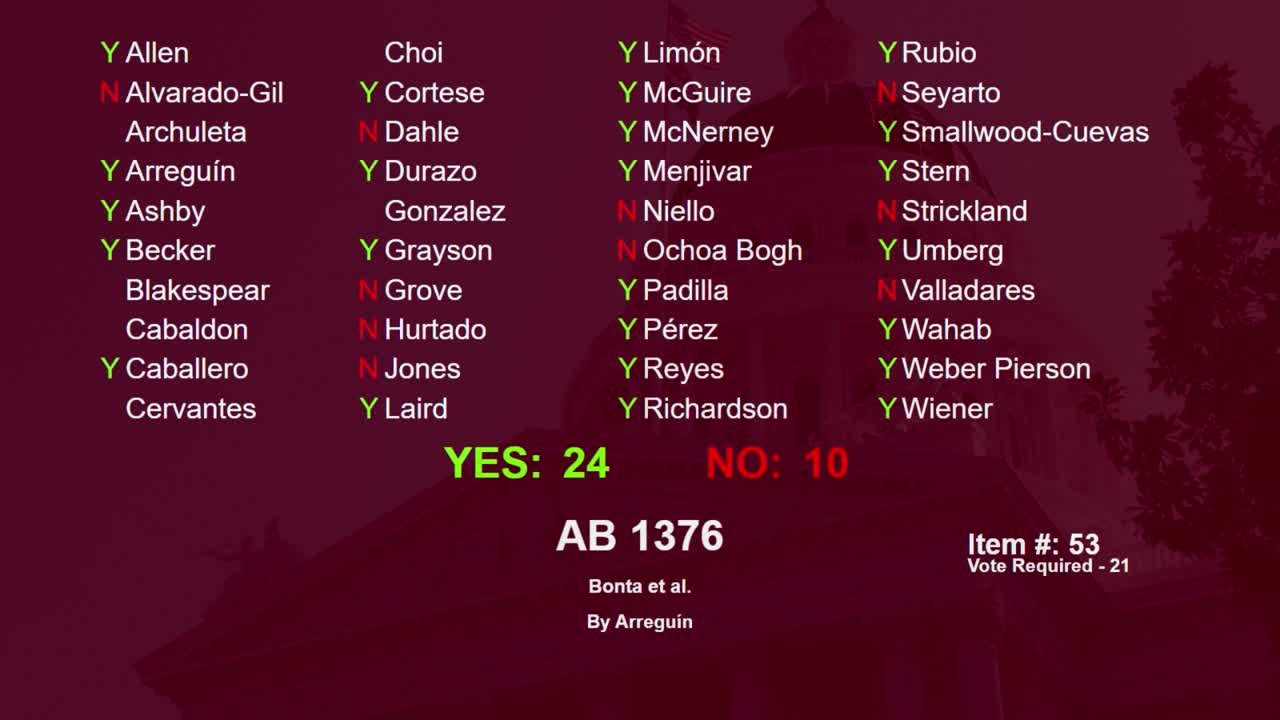
Bill Author

Bill Co-Author(s):