AB 86: Instructional materials: health education.
- Session Year: 2025-2026
- House: Assembly
- Latest Version Date: 2025-09-11
Current Status:
Failed
(2026-01-22: Consideration of Governor's veto stricken from file.)
Introduced
In Committee
Awaiting First Chamber Vote
Passed First Chamber
In Committee
Awaiting Second Chamber Vote
Passed Second Chamber
Enacted
Existing law requires the State Board of Education to adopt instructional materials for kindergarten and grades 1 to 8, inclusive, and to adopt procedures for the submission of instructional materials.
This bill would require the state board to, on or before July 1, 2028, adopt instructional materials for health education, as specified.
On or before July 1, 2028, the state board shall adopt instructional materials for health education for kindergarten and grades 1 to 8, inclusive, pursuant to the requirements of this article and in alignment with the health curriculum framework adopted by the state board in 2019.
On or before July 1, 2028, the state board shall adopt instructional materials for health education for kindergarten and grades 1 to 8, inclusive, pursuant to the requirements of this article and in alignment with the health curriculum framework adopted by the state board in 2019.
|
Date
|
Status
|
|---|---|
| Jan 22, 2026 | Consideration of Governor's veto stricken from file. |
| Oct 1, 2025 | Consideration of Governor's veto pending. |
| Oct 1, 2025 | Vetoed by Governor. |
| Sep 16, 2025 | Enrolled and presented to the Governor at 2 p.m. |
| Sep 9, 2025 | In Assembly. Ordered to Engrossing and Enrolling. |
| Sep 9, 2025 | Read third time. Passed. Ordered to the Assembly. (Ayes 30. Noes 10. Page 2745.). |
| Aug 29, 2025 | Read second time. Ordered to third reading. |
| Aug 29, 2025 | From committee: Do pass. (Ayes 5. Noes 2.) (August 29). |
| Jul 7, 2025 | In committee: Referred to APPR. suspense file. |
| Jun 25, 2025 | From committee: Do pass and re-refer to Com. on APPR. (Ayes 5. Noes 1.) (June 25). Re-referred to Com. on APPR. |
| Jun 11, 2025 | Referred to Com. on ED. |
| May 29, 2025 | In Senate. Read first time. To Com. on RLS. for assignment. |
| May 29, 2025 | Read third time. Passed. Ordered to the Senate. (Ayes 62. Noes 0. Page 1780.) |
| May 27, 2025 | Read second time. Ordered to third reading. |
| May 23, 2025 | From committee: Do pass. (Ayes 13. Noes 0.) (May 23). |
| Apr 9, 2025 | In committee: Set, first hearing. Referred to APPR. suspense file. |
| Mar 13, 2025 | From committee: Do pass and re-refer to Com. on APPR. (Ayes 8. Noes 0.) (March 12). Re-referred to Com. on APPR. |
| Feb 3, 2025 | Referred to Com. on ED. |
| Jan 7, 2025 | From printer. May be heard in committee February 6. |
| Jan 6, 2025 | Read first time. To print. |
|
Date
|
Description
|
Location
|
Votes
|
|
|---|---|---|---|---|
| Sep 9, 2025 | Assembly 3rd Reading AB86 Boerner By Ashby | Senate Floor |
Passed |
|
| Aug 29, 2025 | Do pass | Senate Standing Committee on Appropriations |
Passed |
|
| Jul 7, 2025 | Placed on suspense file | Senate Standing Committee on Appropriations |
Passed |
|
| Jun 25, 2025 | Do pass, but first be re-referred to the Committee on [Appropriations] | Senate Standing Committee on Education |
Passed |
|
| May 29, 2025 | AB 86 Boerner Assembly Third Reading | Assembly Floor |
Passed |
|
| May 23, 2025 | Do pass. | Assembly Standing Committee on Appropriations |
Passed |
|
| Mar 12, 2025 | Do pass and be re-referred to the Committee on [Appropriations] | Assembly Standing Committee on Education |
Passed |
This list shows positions taken on this bill by organizations on the date displayed, which is linked to the original source.
Positions by individuals are not included.
|
Organization
|
Position
|
Date
|
|---|---|---|
| California Alliance Of Child And Family Services | ** Support | |
| California Association For Health, Physical Education, Recreation & Dance | ** Support | |
| California Baptists for Biblical Values | ** Against | |
| California Family Council | ** Against | |
| California Teachers Association | ** Support | |
| CFT- a Union of Educators & Classified Professionals, Aft, Afl-cio | ** Support | |
| Real Impact | ** Against | |
| San Diego Unified School District | ** Support |
GOVERNOR'S VETO
GV Bill Id:AB 86
Author:(Boerner)
As Enrolled Ver:September 11, 2025
2/3 vote
SUMMARY
Requires the State Board of Education (SBE) to adopt instructional materials for health education for kindergarten through 8th grade, on or before July 1, 2028
Major Provisions
Requires, on or before July 1, 2028, the SBE to adopt instructional materials for health education for kindergarten through grade 8, pursuant to the requirements in existing law relating to follow-up adoptions of instructional materials, and in alignment with the health curriculum framework adopted by the SBE in 2019.
Governor's Veto Message
This bill requires the State Board of Education (SBE) to adopt instructional materials for health education for kindergarten and grades 1-8, inclusive, by July 1, 2028, in alignment with the Health Education Framework adoption by the SBE in 2019.
The Budget Act of 2025 authorized a Curriculum Guidance Study to evaluate and improve the current state-level curriculum guidance adoption process to improve efficiency and consistency across all content areas. Proposals like AB 86 should only be considered after this study is complete and changes to the process are adopted. In the meantime, local governing boards continue to have the authority to evaluate and select a range of materials that align with the state standards and the associated curriculum framework.
COMMENTS
California teachers do not have state-adopted instructional materials to teach the state's health curriculum. The SBE adopts instructional materials for grades K-8 after each revision of a curriculum framework.
After the revision of the Health Education Framework in 2019, the SBE scheduled an instructional materials adoption in 2020, with final consideration of programs scheduled for November 2020. While the prior adoption in 2004 yielded four adopted programs in Health, the 2020 adoption failed to produce any publisher submissions, and the adoption was cancelled.
According to the CDE, the 2020 adoption was cancelled due to a lack of interest from publishers and content developers, and that "while the exact reasons are unknown, this outcome could have resulted from a small pool of K-8 schools with sufficient resources prepared and interested in purchasing health instructional materials or the controversies surrounding this subject area."
The result of the failed adoption is that school districts are unable to purchase state-adopted materials to provide to teachers of grades K-8. These teachers are responsible for delivering instruction on topics which can be challenging to teach, including comprehensive sexual health education, substance abuse prevention, mental health, human trafficking, sexual assault, and intimate partner violence. When there are no state-adopted materials school districts must purchase materials which have not been reviewed by the state for alignment with state standards, or teachers must develop their own materials.
According to the Author
According to the author, "If passed, AB 86 will ensure that we are giving educators the tools necessary to teach about sensitive subjects, such as how to establish and maintain healthy relationships, and serious subjects, presented in age-appropriate ways, such as how to identify and report child sexual abuse and human trafficking. Students would gain knowledge about these issues as well as related topics such as affirmative consent, relationship violence, bullying, sexual harassment, and media influences in adopted materials. These materials would also explore protective skills such as setting boundaries, identifying emotions, and telling a trusted adult if a boundary is crossed.
Currently the burden is placed on teachers to teach complicated and sensitive material. Without these materials we are putting educators in a position that could result in disciplinary actions or a position where they just won't teach the material at all.
AB 86 does not change the curriculum standards or mandate teaching health education. It simply allows for the opportunity for publishers to produce standardized material that aligns with the state's established framework."
Arguments in Support
The California Teachers Association writes, "Health education is a continuum of learning experiences that enables students, as individuals and as members of society, to make informed decisions, modify behaviors, and change social conditions in ways that are health enhancing and will increase health literacy. Students need to make better health-related choices that can result in the prevention of disease and disability and improve their health and lead them to have more satisfying and productive lives. Adoption of instructional materials for health education will assist educators in helping students make positive health-related choices."
Arguments in Opposition
Real Impact writes, "While the bill does not mandate instruction, it opens the door for content—based on the high school health framework, including topics such as gender identity and sexual orientation—to be introduced to very young students.
Currently, K–8 education in California rightly focuses on foundational subjects such as reading, math, science, and social studies. AB 86 shifts that focus by promoting health materials that may include sensitive and age-inappropriate content, even if presented as optional. Parents and guardians should have the primary role in deciding when and how such topics are introduced to their children, particularly at early grade levels."
FISCAL COMMENTS
According to the Senate Appropriations Committee:
- This bill could result in one-time Proposition 98 General Fund costs ranging in the hundreds of thousands to low millions of dollars for LEAs to purchase new instructional materials.
- According to the CDE, the cost to purchase state approved instructional materials for a classroom of 24 students is approximately $2550.
VOTES
ASM EDUCATION: 8-0-1
YES: Muratsuchi, Hoover, Addis, Alvarez, Bonta, Castillo, Lowenthal, Patel
ABS, ABST OR NV: Garcia
ASM APPROPRIATIONS: 13-0-2
YES: Wicks, Arambula, Calderon, Caloza, Dixon, Elhawary, Fong, Mark González, Hart, Pacheco, Pellerin, Solache, Tangipa
ABS, ABST OR NV: Sanchez, Ta
ASSEMBLY FLOOR: 62-0-17
YES: Addis, Aguiar-Curry, Ahrens, Alanis, Arambula, Ávila Farías, Bains, Bauer-Kahan, Berman, Boerner, Bonta, Calderon, Caloza, Carrillo, Connolly, Davies, DeMaio, Dixon, Elhawary, Ellis, Flora, Fong, Gabriel, Gallagher, Garcia, Gipson, Jeff Gonzalez, Mark González, Haney, Harabedian, Hart, Hoover, Irwin, Jackson, Kalra, Krell, Lee, Lowenthal, Macedo, McKinnor, Muratsuchi, Ortega, Pacheco, Papan, Patel, Pellerin, Petrie-Norris, Quirk-Silva, Ramos, Ransom, Celeste Rodriguez, Rogers, Blanca Rubio, Schiavo, Schultz, Stefani, Valencia, Wallis, Wicks, Wilson, Zbur, Rivas
ABS, ABST OR NV: Alvarez, Bennett, Bryan, Castillo, Chen, Hadwick, Lackey, Nguyen, Patterson, Michelle Rodriguez, Sanchez, Sharp-Collins, Solache, Soria, Ta, Tangipa, Ward
SENATE FLOOR: 30-10-0
YES: Allen, Archuleta, Arreguín, Ashby, Becker, Blakespear, Cabaldon, Caballero, Cervantes, Cortese, Durazo, Gonzalez, Grayson, Hurtado, Laird, Limón, McGuire, McNerney, Menjivar, Padilla, Pérez, Reyes, Richardson, Rubio, Smallwood-Cuevas, Stern, Umberg, Wahab, Weber Pierson, Wiener
NO: Alvarado-Gil, Choi, Dahle, Grove, Jones, Niello, Ochoa Bogh, Seyarto, Strickland, Valladares
UPDATED
VERSION: September 11, 2025
CONSULTANT: Tanya Lieberman / ED. / (916) 319-2087 FN: 0002140
SENATE RULES COMMITTEE Office of Senate Floor Analyses (916) 651-1520 Fax: (916) 327-4478 | AB 86 |
THIRD READING
Bill No: AB 86
Author: Boerner (D)
Introduced: 1/6/25
SENATE EDUCATION COMMITTEE: 5-1, 6/25/25
AYES: Pérez, Cabaldon, Cortese, Gonzalez, Laird
NOES: Ochoa Bogh
NO VOTE RECORDED: Choi
SENATE APPROPRIATIONS COMMITTEE: 5-2, 8/29/25
AYES: Caballero, Cabaldon, Grayson, Richardson, Wahab
NOES: Seyarto, Dahle
ASSEMBLY FLOOR: 62-0, 5/29/25 - See last page for vote
SUBJECT: Instructional materials: health education
SOURCE: Author
DIGEST:
This bill requires the State Board of Education (SBE) to adopt instructional materials for health education for kindergarten and grades 1 to 8, inclusive, on or before July 1, 2028.
ANALYSIS:
Existing Law:
- Requires the SBE to adopt at least five instructional materials for grades K-8 in the following subjects:
- Language arts;
- Mathematics;
- Science;
- Social science;
- Bilingual or bicultural subjects; and
- Any other subject, discipline, or interdisciplinary areas for which the SBE determines the adoption of instructional materials to be necessary or desirable. (Education Code (EC) § 60200)
- Establishes procedures for the adoption of instructional materials for grades K-8 by the SBE. (EC § 60200)
- Authorizes a process for conducting a follow-up adoption of instructional materials, and defines it as one other than the primary adoption. (EC § 60227)
- Authorizes local educational agencies (LEAs) to use instructional materials that are aligned with state adopted academic content standards, including instructional materials that have not been adopted by the SBE. (EC § 60210)
- Requires that if an LEA chooses to use instructional materials that have not been adopted by the state board, the LEA shall ensure that a majority of the participants of any review process it conducts are classroom teachers who are assigned to the subject area or grade level of the materials. (EC § 60210)
- Requires the California Department of Education (CDE) to make a recommendation to SBE whether or not an instructional materials adoption shall be conducted, if CDE determines that there is little or no interest in participating in an adoption by publishers and manufacturers. Authorizes SBE may choose not to conduct the instructional material adoption. (EC § 60213)
- Requires the adopted course of study for grades 1 to 6, inclusive, to include instruction, beginning in grade 1 and continuing through grade 6, in specified areas of study that include health, including instruction in the principles and practices of individual, family, and community health. (EC § 51210)
- Requires each school district, county office of education (COE), state special school, and charter school that offers one or more courses in health education to pupils in middle school or high school to include instruction in mental health in those courses, as specified. (EC § 51925)
- Requires that, on or before January 1, 2024, the CDE develop a plan to expand mental health instruction in California public schools. (EC § 51929)
This bill requires the SBE to adopt instructional materials for health education for kindergarten and grades 1 to 8, inclusive, in alignment with the health curriculum framework adopted by the SBE in 2019.
Comments
- Need for this bill. According to the author, “If passed AB 86 will ensure that we are giving educators the tools necessary to teach about sensitive subjects, such as how to establish and maintain healthy relationships, and serious subjects, presented in age-appropriate ways, such as how to identify and report child sexual abuse and human trafficking. Students would gain knowledge about these issues as well as related topics such as affirmative consent, relationship violence, bullying, sexual harassment, and media influences in adopted materials. These materials would also explore protective skills such as setting boundaries, identifying emotions, and telling a trusted adult if a boundary is crossed.
“Currently the burden is placed on teachers to teach complicated and sensitive material. Without these materials, we are putting educators in a position that could result in disciplinary actions or a position where they just won’t teach the material at all.
“AB 86 does not change the curriculum standards or mandate teaching health education. It simply allows for the opportunity for publishers to produce standardize material that aligns with the state’s established framework.”
- Health Education Framework for California Public Schools, Kindergarten Through Grade Twelve. In May 2019, the SBE adopted the Health Education Framework for California Public Schools, Kindergarten Through Grade Twelve (the Framework) to provide instructional guidance and support to California teachers, administrators, curriculum specialists, other educators, and school boards for implementation of the health education content standards. According to CDE, the Framework was designed to “help students build strong and healthy relationships with their families, friends, and communities while strengthening their resiliency and personal decision-making skills for healthy living.” The Framework covers six content areas of health education: nutrition and physical activity; growth, development, and sexual health; injury prevention and safety; alcohol, tobacco, and other drugs; mental, emotional, and social health; and personal and community health.
Importantly, the new Framework also provides standards-based guidance, resources, and instructional strategies that are consistent with the California Healthy Youth Act, which requires LEAs to provide comprehensive sexual health education and HIV prevention education to all students at least once in middle school and at least once in high school. The new Framework also includes information about grade-level appropriate sexual abuse and trafficking prevention education as well as chapters on assessment, access and equity, instructional strategies, and professional learning to assist teachers and administrators.
- SBE Instructional Materials Adoption Process. State law requires the SBE to adopt instructional materials for grades K-8 in the curriculum areas of English language arts/English language development, mathematics, science, history–social science, visual and performing arts, health, and world languages. Each new instructional materials adoption process is typically initiated after adopting a new or revised curriculum framework—each of which contain a chapter describing the criteria for evaluation of instructional materials.
According to CDE, the instructional materials adoption process takes place over a period of approximately two years. Once adopted by the SBE, school district governing boards and charter schools may adopt the instructional materials or separately adopt materials that have not been adopted by the SBE but have been verified to be in alignment with the state SBE adopted content standards and curricular frameworks.
- 2019 Health Education Instructional Materials Adoption. As discussed in Comment 2, the instructional materials adoption process typically follows the SBE adoption of a new or updated curricular framework. In March 2019, as the SBE prepared to adopt the Health Curriculum Framework, the SBE approved a Schedule of Significant Events with the intent to conduct final SBE considerations of submitted instructional materials programs in November 2020.
However, according to CDE, the SBE canceled the 2020 Health Instructional Materials Adoption as it determined that there was a lack of publisher interest. As noted in the Assembly Education Committee Analysis, CDE further commented that “while the exact reasons are unknown, this outcome could have resulted from a small pool of K-8 schools with sufficient resources prepared and interested in purchasing health instructional materials or the controversies surrounding this subject area.”
In the absence of statewide adoption, some schools have used the Health Education Instructional Materials Evaluation Toolkit, the Mental Health Education Instructional Materials Assessment Tools for grades 7-8 and grades 9-12, and the California Healthy Youth Act Compliance Assessment Tool —all resources developed by the CDE in collaboration with selected COEs. These tools support school districts in their local evaluation and adoption of new instructional materials that align with the 2008 Health Education Standards, the 2019 Health Education Curriculum Framework, and California Education Code.
Related/Prior Legislation
SB 153 (Committee on Budget and Fiscal Review, Chapter 38, Statutes of 2024) extended the sunset on the provisions of law authorizing follow-up adoptions of instructional materials, to January 1, 2032.
AB 1078 (Jackson, Chapter 229, Statutes of 2023) made various changes to the adoption of instructional materials for use in schools, including a provision that would prohibit a governing board from disallowing the use of an existing textbook, other instructional material, or curriculum that contains inclusive and diverse perspectives, as specified.
AB 575 (O’Donnell, Chapter 550, Statutes of 2016) re-established a sunsetted process for the follow-up adoption of instructional materials, with a sunset of January 1, 2024.
FISCAL EFFECT: Appropriation: No Fiscal Com.: Yes Local: No
According to the Senate Appropriations Committee:
- This bill could result in one-time Proposition 98 General Fund costs ranging in the hundreds of thousands to low millions of dollars for LEAs to purchase new instructional materials.
- According to the CDE, the cost to purchase state approved instructional materials for a classroom of 24 students is approximately $2550.
SUPPORT: (Verified 8/29/25)
California Alliance of Child and Family Services
California Association for Health, Physical Education, Recreation & Dance
California Teachers Association
CFT - A Union of Educators & Classified Professionals, AFT, AFL-CIO
San Diego Unified School District
OPPOSITION: (Verified 8/29/25)
California Baptists for Biblical Values
California Family Council
Real Impact
3 Individuals
ASSEMBLY FLOOR: 62-0, 5/29/25
AYES: Addis, Aguiar-Curry, Ahrens, Alanis, Arambula, Ávila Farías, Bains, Bauer-Kahan, Berman, Boerner, Bonta, Calderon, Caloza, Carrillo, Connolly, Davies, DeMaio, Dixon, Elhawary, Ellis, Flora, Fong, Gabriel, Gallagher, Garcia, Gipson, Jeff Gonzalez, Mark González, Haney, Harabedian, Hart, Hoover, Irwin, Jackson, Kalra, Krell, Lee, Lowenthal, Macedo, McKinnor, Muratsuchi, Ortega, Pacheco, Papan, Patel, Pellerin, Petrie-Norris, Quirk-Silva, Ramos, Ransom, Celeste Rodriguez, Rogers, Blanca Rubio, Schiavo, Schultz, Stefani, Valencia, Wallis, Wicks, Wilson, Zbur, Rivas
NO VOTE RECORDED: Alvarez, Bennett, Bryan, Castillo, Chen, Hadwick, Lackey, Nguyen, Patterson, Michelle Rodriguez, Sanchez, Sharp-Collins, Solache, Soria, Ta, Tangipa, Ward
Prepared by: Therresa Austin / ED. / (916) 651-4105
8/29/25 20:27:44
**** END ****
SENATE COMMITTEE ON EDUCATION
Senator Sasha Renée Pérez, Chair
2025 - 2026 Regular
Bill No: Hearing Date: June 25, 2025
Author: | Boerner | ||
Version: |
| ||
Urgency: | Fiscal: | ||
Consultant: | |||
Subject:
SUMMARY
This bill requires the State Board of Education (SBE) to adopt instructional materials for health education for kindergarten and grades 1 to 8, inclusive, on or before July 1, 2028.
BACKGROUND
Existing law:
- Requires the SBE to adopt at least five instructional materials for grades K-8 in the following subjects:
- Language arts;
- Mathematics;
- Science;
- Social science;
- Bilingual or bicultural subjects; and
- Any other subject, discipline, or interdisciplinary areas for which the SBE determines the adoption of instructional materials to be necessary or desirable. (Education Code (EC) § 60200)
- Establishes procedures for the adoption of instructional materials for grades K-8 by the SBE. (EC § 60200)
- Authorizes a process for conducting a follow-up adoption of instructional materials, and defines it as one other than the primary adoption. (EC § 60227)
- Authorizes local educational agencies (LEAs) to use instructional materials that are aligned with state adopted academic content standards, including instructional materials that have not been adopted by the SBE. (EC § 60210)
- Requires that if an LEA chooses to use instructional materials that have not been adopted by the state board, the LEA shall ensure that a majority of the participants of any review process it conducts are classroom teachers who are assigned to the subject area or grade level of the materials. (EC § 60210)
- Requires the California Department of Education (CDE) to make a recommendation to SBE whether or not an instructional materials adoption shall be conducted, if CDE determines that there is little or no interest in participating in an adoption by publishers and manufacturers. Authorizes SBE may choose not to conduct the instructional material adoption. (EC § 60213)
- Requires the adopted course of study for grades 1 to 6, inclusive, to include instruction, beginning in grade 1 and continuing through grade 6, in specified areas of study that include health, including instruction in the principles and practices of individual, family, and community health. (EC § 51210)
- Requires each school district, county office of education (COE), state special school, and charter school that offers one or more courses in health education to pupils in middle school or high school to include instruction in mental health in those courses, as specified. (EC § 51925)
- Requires that, on or before January 1, 2024, the CDE develop a plan to expand mental health instruction in California public schools. (EC § 51929)
ANALYSIS
This bill requires the SBE to adopt instructional materials for health education for kindergarten and grades 1 to 8, inclusive, in alignment with the health curriculum framework adopted by the SBE in 2019.
STAFF COMMENTS
- Need for the bill. According to the author, “If passed AB 86 will ensure that we are giving educators the tools necessary to teach about sensitive subjects, such as how to establish and maintain healthy relationships, and serious subjects, presented in age-appropriate ways, such as how to identify and report child sexual abuse and human trafficking. Students would gain knowledge about these issues as well as related topics such as affirmative consent, relationship violence, bullying, sexual harassment, and media influences in adopted materials. These materials would also explore protective skills such as setting boundaries, identifying emotions, and telling a trusted adult if a boundary is crossed.
“Currently the burden is placed on teachers to teach complicated and sensitive material. Without these materials, we are putting educators in a position that could result in disciplinary actions or a position where they just won’t teach the material at all.
“AB 86 does not change the curriculum standards or mandate teaching health education. It simply allows for the opportunity for publishers to produce standardize material that aligns with the state’s established framework.”
- Health Education Framework for California Public Schools, Kindergarten Through Grade Twelve. In May 2019, the SBE adopted the Health Education Framework for California Public Schools, Kindergarten Through Grade Twelve (the Framework) to provide instructional guidance and support to California teachers, administrators, curriculum specialists, other educators, and school boards for implementation of the health education content standards. According to CDE, the Framework was designed to “help students build strong and healthy relationships with their families, friends, and communities while strengthening their resiliency and personal decision-making skills for healthy living.” The Framework covers six content areas of health education: nutrition and physical activity; growth, development, and sexual health; injury prevention and safety; alcohol, tobacco, and other drugs; mental, emotional, and social health; and personal and community health.
Importantly, the new Framework also provides standards-based guidance, resources, and instructional strategies that are consistent with the California Healthy Youth Act, which requires LEAs to provide comprehensive sexual health education and HIV prevention education to all students at least once in middle school and at least once in high school. The new Framework also includes information about grade-level appropriate sexual abuse and trafficking prevention education as well as chapters on assessment, access and equity, instructional strategies, and professional learning to assist teachers and administrators.
- SBE Instructional Materials Adoption Process. State law requires the SBE to adopt instructional materials for grades K-8 in the curriculum areas of English language arts/English language development, mathematics, science, history–social science, visual and performing arts, health, and world languages.
Each new instructional materials adoption process is typically initiated after adopting a new or revised curriculum framework—each of which contain a chapter describing the criteria for evaluation of instructional materials.

CA Department of Education, Nov 2023
According to CDE, the instructional materials adoption process takes place over a period of approximately two years. The sample timeline above includes the following key milestones:
- The Instructional Quality Commission (IQC) recommends the timeline and online reviewer application to the SBE, and the SBE approves the timeline and application.
- The IQC approves the evaluation criteria and standards maps.
- SBE approves the evaluation criteria and standards maps.
- The IQC recommends reviewers to the SBE, and the SBE appoints reviewers.
- The publisher Invitation to Submit meeting takes place, and submission forms are due approximately two months later.
- Reviewer training takes place for approximately one week, publishers submit materials for review, and reviewers reconvene for deliberations approximately three months after training. Reviewers make program adoption recommendations to the IQC.
- The IQC holds a public meeting to receive public comment and makes recommendations to the SBE.
- The SBE holds a public meeting to receive public comment and takes action on program recommendations.
Once adopted by the SBE, school district governing boards and charter schools may adopt the instructional materials or separately adopt materials that have not been adopted by the SBE but have been verified to be in alignment with the state SBE adopted content standards and curricular frameworks.
- 2019 Health Education Instructional Materials Adoption. As discussed in Comment 2, the instructional materials adoption process typically follows the SBE adoption of a new or updated curricular framework. In March 2019, as the SBE prepared to adopt the Health Curriculum Framework, the SBE approved a Schedule of Significant Events with the intent to conduct final SBE considerations of submitted instructional materials programs in November 2020.
However, according to CDE, the SBE canceled the 2020 Health Instructional Materials Adoption as it determined that there was a lack of publisher interest. As noted in the Assembly Education Committee Analysis, CDE further commented that “while the exact reasons are unknown, this outcome could have resulted from a small pool of K-8 schools with sufficient resources prepared and interested in purchasing health instructional materials or the controversies surrounding this subject area.”
In the absence of statewide adoption, some schools have used the Health Education Instructional Materials Evaluation Toolkit, the Mental Health Education Instructional Materials Assessment Tools for grades 7-8 and grades 9-12, and the California Healthy Youth Act Compliance Assessment Tool —all resources developed by the CDE in collaboration with selected COEs. These tools support school districts in their local evaluation and adoption of new instructional materials that align with the 2008 Health Education Standards, the 2019 Health Education Curriculum Framework, and California Education Code.
- Prior Legislation.
SB 153 (Committee on Budget and Fiscal Review, Chapter 38, Statutes of 2024) extended the sunset on the provisions of law authorizing follow-up adoptions of instructional materials, to January 1, 2032.
AB 1078 (Jackson, Chapter 229, Statutes of 2023) makes various changes to the adoption of instructional materials for use in schools, including a provision that would prohibit a governing board from disallowing the use of an existing textbook, other instructional material, or curriculum that contains inclusive and diverse perspectives, as specified.
AB 575 (O’Donnell, Chapter 550, Statutes of 2016) re-established a sunsetted process for the follow-up adoption of instructional materials, with a sunset of January 1, 2024.
SUPPORT
California Association for Health, Physical Education, Recreation & Dance
California Teachers Association
CFT - A Union of Educators & Classified Professionals, AFT, AFL-CIO
San Diego Unified School District
OPPOSITION
California Family Council
Real Impact
Two Individuals
-- END --
ASSEMBLY THIRD READING
ATR Bill Id:AB 86
Author:(Boerner)
As Introduced Ver:January 6, 2025
Majority vote
SUMMARY
Requires the State Board of Education (SBE) to adopt instructional materials for health education for kindergarten through 8th grade, on or before July 1, 2028.
Major Provisions
Requires, on or before July 1, 2028, the SBE to adopt instructional materials for health education for kindergarten through grade 8, pursuant to the requirements in existing law relating to follow-up adoptions of instructional materials, and in alignment with the health curriculum framework adopted by the SBE in 2019.
COMMENTS
California teachers do not have state-adopted instructional materials to teach the state's health curriculum. The SBE adopts instructional materials for grades K-8 after each revision of a curriculum framework.
After the revision of the Health Education Framework in 2019, the SBE scheduled an instructional materials adoption in 2020, with final consideration of programs scheduled for November 2020. While the prior adoption in 2004 yielded four adopted programs in Health, the 2020 adoption failed to produce any publisher submissions, and the adoption was cancelled.
According to the CDE, the 2020 adoption was cancelled due to a lack of interest from publishers and content developers, and that "while the exact reasons are unknown, this outcome could have resulted from a small pool of K-8 schools with sufficient resources prepared and interested in purchasing health instructional materials or the controversies surrounding this subject area."
The result of the failed adoption is that school districts are unable to purchase state-adopted materials to provide to teachers of grades K-8. These teachers are responsible for delivering instruction on topics which can be challenging to teach, including comprehensive sexual health education, substance abuse prevention, mental health, human trafficking, sexual assault, and intimate partner violence. When there are no state-adopted materials school districts must purchase materials which have not been reviewed by the state for alignment with state standards, or teachers must develop their own materials.
According to the Author
According to the author, "If passed, AB 86 will ensure that we are giving educators the tools necessary to teach about sensitive subjects, such as how to establish and maintain healthy relationships, and serious subjects, presented in age-appropriate ways, such as how to identify and report child sexual abuse and human trafficking. Students would gain knowledge about these issues as well as related topics such as affirmative consent, relationship violence, bullying, sexual harassment, and media influences in adopted materials. These materials would also explore protective skills such as setting boundaries, identifying emotions, and telling a trusted adult if a boundary is crossed.
Currently the burden is placed on teachers to teach complicated and sensitive material. Without these materials we are putting educators in a position that could result in disciplinary actions or a position where they just won't teach the material at all.
AB 86 does not change the curriculum standards or mandate teaching health education. It simply allows for the opportunity for publishers to produce standardized material that aligns with the state's established framework."
Arguments in Support
The California Teachers Association writes, "Health education is a continuum of learning experiences that enables students, as individuals and as members of society, to make informed decisions, modify behaviors, and change social conditions in ways that are health enhancing and will increase health literacy. Students need to make better health-related choices that can result in the prevention of disease and disability and improve their health and lead them to have more satisfying and productive lives. Adoption of instructional materials for health education will assist educators in helping students make positive health-related choices."
Arguments in Opposition
None on file
FISCAL COMMENTS
According to the Assembly Appropriations Committee, one-time Proposition 98 general fund costs in the hundreds of thousands to low millions of dollars for local education agencies to the extent that the SBE's adoption of instructional materials aligned with the health curriculum framework leads to the purchase of state approved instructional materials (according to the California Department of Education (CDE), purchase of state approved instructional materials costs approximately $2550 per classroom of 24 students).
VOTES
ASM EDUCATION: 8-0-1
YES: Muratsuchi, Hoover, Addis, Alvarez, Bonta, Castillo, Lowenthal, Patel
ABS, ABST OR NV: Garcia
ASM APPROPRIATIONS: 13-0-2
YES: Wicks, Arambula, Calderon, Caloza, Dixon, Elhawary, Fong, Mark González, Hart, Pacheco, Pellerin, Solache, Tangipa
ABS, ABST OR NV: Sanchez, Ta
UPDATED
VERSION: January 6, 2025
CONSULTANT: Tanya Lieberman / ED. / (916) 319-2087 FN: 0000569
Date of Hearing: April 9, 2025
ASSEMBLY COMMITTEE ON APPROPRIATIONS
Buffy Wicks, Chair
ABPCA Bill Id:AB 86
Author:(Boerner) – As Introduced Ver:January 6, 2025
Policy Committee: | Education | Vote: | 8 - 0 |
|
| ||
|
|
Urgency: No State Mandated Local Program: No Reimbursable: No
SUMMARY:
This bill requires the State Board of Education (SBE) to adopt instructional materials for health education for kindergarten through 8th grades, on or before July 1, 2028, pursuant to the requirements in existing law relating to follow-up adoptions of instructional materials, and in alignment with the health curriculum framework adopted by the SBE in 2019.
FISCAL EFFECT:
One-time Proposition 98 general fund costs in the hundreds of thousands to low millions of dollars for local education agencies to the extent that the SBE’s adoption of instructional materials aligned with the health curriculum framework leads to the purchase of state approved instructional materials (according to the California Department of Education (CDE), purchase of state approved instructional materials costs approximately $2550 per classroom of 24 students).
COMMENTS:
- Purpose. According to the author:
Currently the burden is placed on teachers to teach complicated and sensitive material. Without these materials we are putting educators in a position that could result in disciplinary actions or a position where they just won’t teach the material at all. AB 86 does not change the curriculum standards or mandate teaching health education. It simply allows for the opportunity for publishers to produce standardized material that aligns with the state’s established framework.
- Background.
Lack of state-adopted instructional materials. Without state adopted instructional materials schools either purchase materials which have not been reviewed by the state for alignment with state standards, or teachers must develop their own materials. Typically, the SBE adopts a curriculum framework followed by an instructional materials adoption in a given subject area, which yields approved publisher materials for use by schools. However, following the revision to the Health Education Framework in 2019, the scheduled SBE instructional materials adoption in 2020 failed to produce any publisher submissions, and the adoption was cancelled. The CDE cites a lack of interest from publishers and content developers in the area of health education instructional materials as the main cause for cancellation. It is unclear if requiring the SBE to adopt health instructional materials by 2028 will result in more interested publishers. Current law authorizes the SBE to conduct follow-up adoptions for instructional materials through January 1, 2032.
Analysis Prepared by: Aaron Heredia / APPR. / (916) 319-2081
Date of Hearing: March 12, 2025
ASSEMBLY COMMITTEE ON EDUCATION
Al Muratsuchi, Chair
ABPCA Bill Id:AB 86 (
Author:Boerner) – As Introduced Ver:January 6, 2025
SUBJECT: Instructional materials: health education
SUMMARY: Requires the State Board of Education (SBE) to adopt instructional materials for health education for kindergarten through 8th grade, on or before July 1, 2028. Specifically, this bill:
- Requires, on or before July 1, 2028, the SBE to adopt instructional materials for health education for kindergarten through grade 8, pursuant to the requirements in existing law relating to follow-up adoptions of instructional materials, and in alignment with the health curriculum framework adopted by the SBE in 2019.
EXISTING LAW:
- Requires the SBE to adopt at least five instructional materials for grades K-8 in the following subjects:
- Language arts;
- Mathematics;
- Science;
- Social science;
- Bilingual or bicultural subjects; and
- Any other subject, discipline, or interdisciplinary areas for which the SBE determines the adoption of instructional materials to be necessary or desirable. (Education Code (EC) 60200)
- Establishes procedures for the adoption of instructional materials for grades K-8 by the SBE. (EC 60200)
- Authorizes a process for conducting a follow-up adoption of instructional materials, and defines it as one other than the primary adoption.
- Requires that, before conducting a follow-up adoption in the subject areas of language arts and mathematics, the department post an appropriate notice on its website and notify all publishers or manufacturers known to produce basic instructional materials in that subject area.
- Requires that the notice specify that publishers will be assessed a fee based on the number of programs the publisher or manufacturer indicates will be submitted for review and the number of grade levels proposed to be covered by each program.
- Prohibits the fee from exceeding the reasonable costs to the California Department of Education (CDE) to conduct the follow-up adoption process, and requires the CDE to take reasonable steps to limit costs of the follow-up adoption and to keep the fee modest, recognizing that some of the work necessary for the primary adoption need not be duplicated.
- Authorizes the SBE, upon the request of a small publisher or manufacturer, as defined, to reduce the fee for participation in the follow-up adoption.
- Requires that revenue derived from fees be budgeted as reimbursements and be subject to review through the annual budget process, and may be used to pay costs associated with any adoption and any costs associated with the review of instructional materials.
- Requires the CDE, if it determines that there is little or no interest by publishers in participating in a follow-up adoption, to recommend to the SBE that the follow-up adoption not be conducted, and authorizes the SBE to cancel the follow-up adoption.
- Prohibits General Fund revenue from being used for the cost of conducting a follow-up adoption.
- Sunsets the follow-up adoption statutes on January 1, 2032. (EC 60277)
FISCAL EFFECT: Unknown
COMMENTS:
Need for the bill. According to the author, “If passed, AB 86 will ensure that we are giving educators the tools necessary to teach about sensitive subjects, such as how to establish and maintain healthy relationships, and serious subjects, presented in age-appropriate ways, such as how to identify and report child sexual abuse and human trafficking. Students would gain knowledge about these issues as well as related topics such as affirmative consent, relationship violence, bullying, sexual harassment, and media influences in adopted materials. These materials would also explore protective skills such as setting boundaries, identifying emotions, and telling a trusted adult if a boundary is crossed.
Currently the burden is placed on teachers to teach complicated and sensitive material. Without these materials we are putting educators in a position that could result in disciplinary actions or a position where they just won’t teach the material at all.
AB 86 does not change the curriculum standards or mandate teaching health education. It simply allows for the opportunity for publishers to produce standardized material that aligns with the state’s established framework.”
California teachers do not have state-adopted instructional materials to teach the state’s health curriculum. As noted above, the SBE adopts instructional materials for grades K-8 after each revision of a curriculum framework.
After the revision of the Health Education Framework in 2019, the SBE scheduled an instructional materials adoption in 2020, with final consideration of programs scheduled for November 2020. While the prior adoption in 2004 yielded four adopted programs in Health, the 2020 adoption failed to produce any publisher submissions, and the adoption was cancelled.
According to the CDE, the 2020 adoption was canceled due to a lack of interest from publishers and content developers, and that “while the exact reasons are unknown, this outcome could have resulted from a small pool of K-8 schools with sufficient resources prepared and interested in purchasing health instructional materials or the controversies surrounding this subject area.”
The result of the failed adoption is that school districts are unable to purchase state-adopted materials to provide to teachers of grades K-8. These teachers are responsible for delivering instruction on topics which can be challenging to teach, including comprehensive sexual health education, substance abuse prevention, mental health, human trafficking, sexual assault, and intimate partner violence. When there are no state-adopted materials school districts must purchase materials which have not been reviewed by the state for alignment with state standards, or teachers must develop their own materials.
Why does this matter? In addition to the burden that the lack of adopted programs likely places on teachers to assemble or develop their own materials, the state has no assurances that the materials teachers use are aligned to the state’s standards (as required by law) nor that they are of sufficient quality to enable teachers to teach the material.
This matters because a growing body of research is establishing that the quality of instructional materials used by teachers has a significant effect on student outcomes. One study (Koedel, 2023) of mathematics textbooks used in California found that the effects of high quality materials “are on par with what one could expect from a hypothetical policy that substantially increases the quality of the teaching workforce.” Evidence published as a working paper suggests that the most significant positive effects of high quality materials are seen among teachers in lower performing classrooms (Kirabo, 2016).
Health curriculum framework revision adopted in 2019 made significant changes to the curriculum. In 2019, the SBE adopted a revised Health curriculum framework, including a schedule of significant events for the instructional materials adoption. According to the SBE, the framework represents a significant revision to a document that guides implementing standards-based instruction in classrooms in six content areas of health education: (1) nutrition and physical activity; (2) growth, development, and sexual health; (3) injury prevention and safety; (4) alcohol, tobacco, and other drugs; (5) mental, emotional, and social health; and (6) personal and community health. Notably, significant revisions were made in the following areas:
- To bring the framework into alignment with other recently adopted standards and curriculum frameworks, chapters on assessment, access and equity, instructional strategies, examples of standards-based instruction, and recommendations for supporting and improving health education in the school, classroom, and community were added to provide guidance to help educators meet the diverse instructional and cultural needs of students.
- Information regarding sexual abuse and sex trafficking prevention education as it relates to schools and the community were added as an appendix that is meant to be a tool for educators, school staff, administrators, district staff, parents, and community members. Instructional information related to sex trafficking and sexual abuse is embedded in the appropriate grade-level chapters.
- Language was added to reflect continuing statutes as well as changes in statute affecting the health curriculum and instructional materials that have been enacted since the last revision and adoption of framework in 2003, including the California Healthy Youth Act.
- While California’s Health Education Content Standards have not changed since their adoption in 2008, the framework’s instructional guidance, information, and professional learning sections were completely rewritten to reflect recent scholarship, advances in instructional pedagogy, and current statute. The draft was revised to include numerous practical classroom examples that support interdisciplinary instruction through connections with California Environmental Principles and Concepts, California Next Generation Science Standards, California Common Core Standards for English Language Arts, California English Language Development Standards, and the California Model School Library Standards for California Public Schools.
According to the SBE, the revision stimulated a substantial volume of public comment.
 Instructional materials adoption process. Current law requires the SBE to conduct instructional materials adoptions for grades K-8 in language arts, mathematics, science, social science, bilingual or bicultural subjects, and any other subject the SBE determines to be necessary or desirable.
Source: CDE
Instructional materials adoptions generally occur after the revision of a curriculum framework. According to the CDE, the process takes place over a period of approximately two years. The sample timeline above includes the following key milestones:
- The Instructional Quality Commission (IQC) recommends the timeline and online reviewer application to the SBE, and the SBE approves the timeline and application;
- The IQC approves the evaluation criteria and standards maps;
- The SBE approves the evaluation criteria and standards maps;
- The IQC recommends reviewers to the SBE, and the SBE appoints reviewers;
- The publisher Invitation to Submit meeting takes place, and submission forms are due approximately two months later;
- Reviewer training takes place for approximately one week, publishers submit materials for review, and reviewers reconvene for deliberations approximately three months after training. Reviewers make program adoption recommendations to the IQC;
- The IQC holds a public meeting to receive public comment and makes recommendations to the SBE; and
- The SBE holds a public meeting to receive public comment and takes action on program recommendations.
Many school districts purchase instructional materials from the list of adopted programs, because it ensures that the materials have been reviewed for quality and alignment with the state’s standards and frameworks.
Current law authorizes the SBE to conduct a follow-up instructional materials adoption after a primary adoption, but there is no requirement to do so.
Arguments in support. The California Teachers Association writes, “Health education is a continuum of learning experiences that enables students, as individuals and as members of society, to make informed decisions, modify behaviors, and change social conditions in ways that are health enhancing and will increase health literacy. Students need to make better health-related choices that can result in the prevention of disease and disability and improve their health and lead them to have more satisfying and productive lives. Adoption of instructional materials for health education will assist educators in helping students make positive health-related choices.”
Prior legislation. SB 153 (Committee on Budget and Fiscal Review), Chapter 38, Statutes of 2024, extended the sunset on the provisions of law authorizing follow-up adoptions of instructional materials, to January 1, 2032.
AB 1087 (Jackson), Chapter 229, Statutes of 2023, makes various changes to the adoption of instructional materials for use in schools, including a provision that would prohibit a governing board from disallowing the use of an existing textbook, other instructional material, or curriculum that contains inclusive and diverse perspectives, as specified.
AB 575 (O’Donnell) of the 2015-16 Session re-established a sunsetted process for the follow-up adoption of instructional materials, with a sunset of January 1, 2024.
REGISTERED SUPPORT / OPPOSITION:
Support
California Teachers Association
Opposition
None on file
Analysis Prepared by: Tanya Lieberman / ED. / (916) 319-2087
Discussed in Hearing
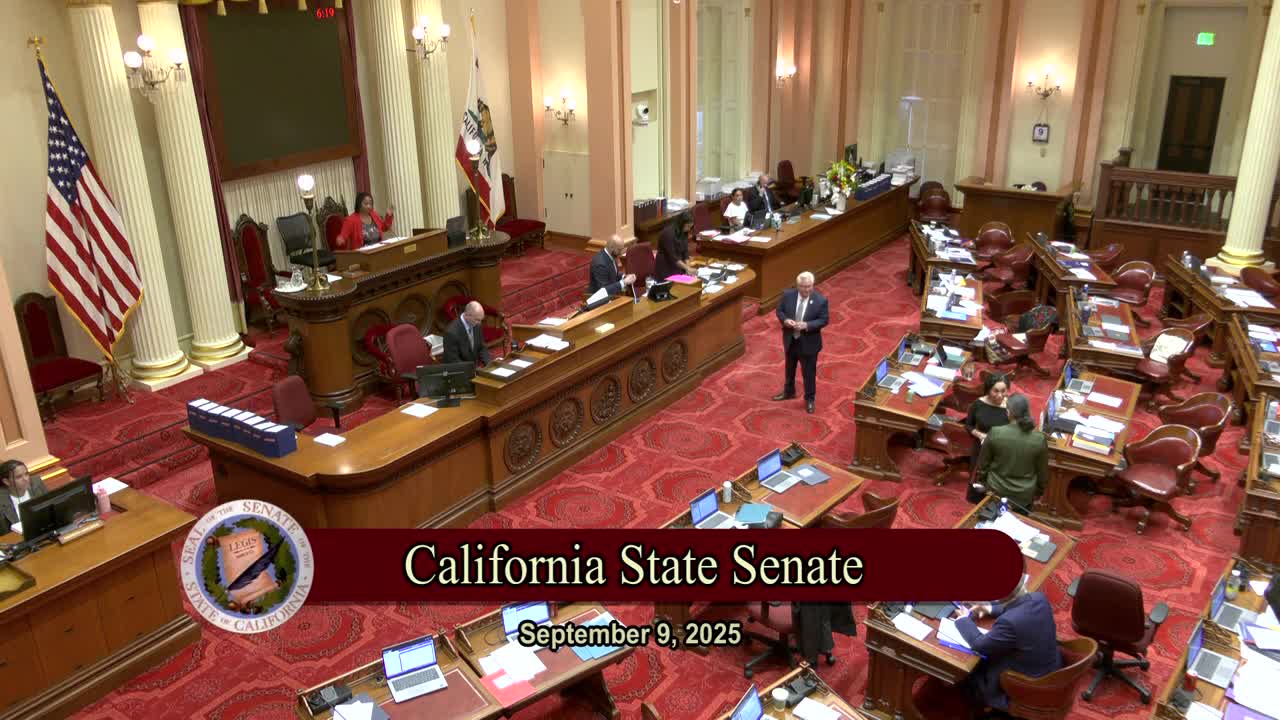 3MIN
Senate Floor
 6MIN
Senate Standing Committee on Education
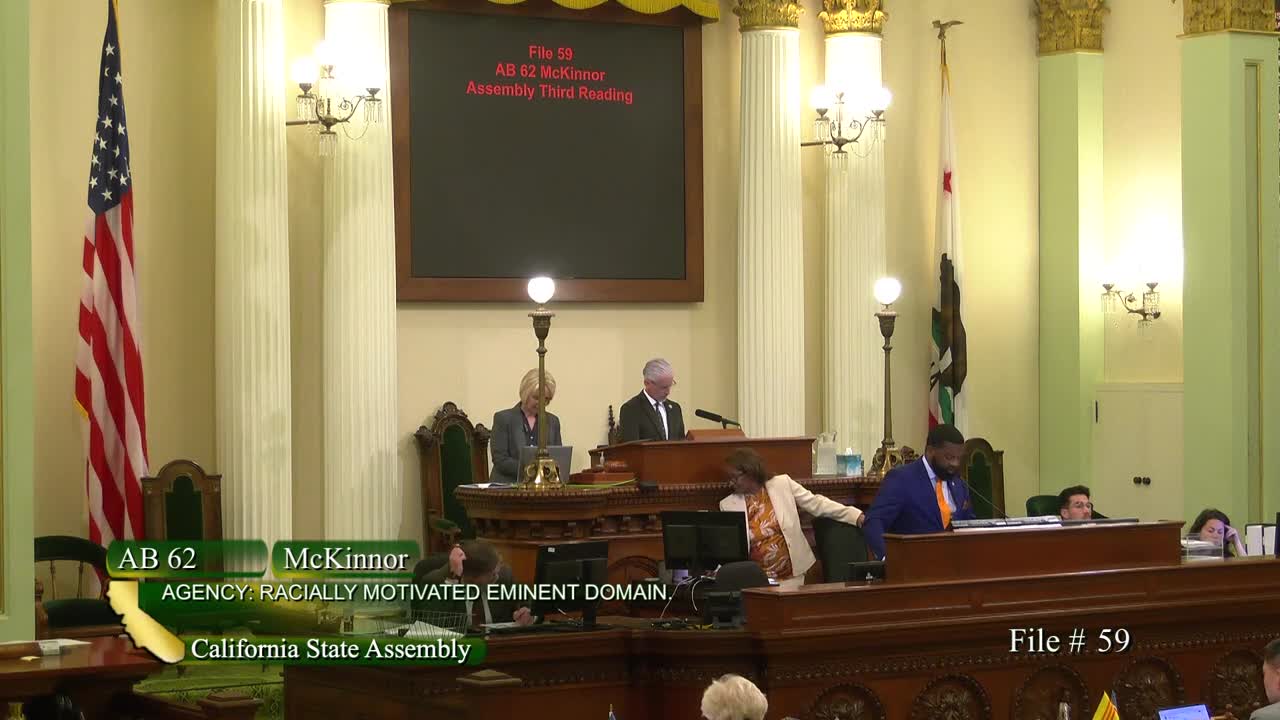 1MIN
Assembly Floor
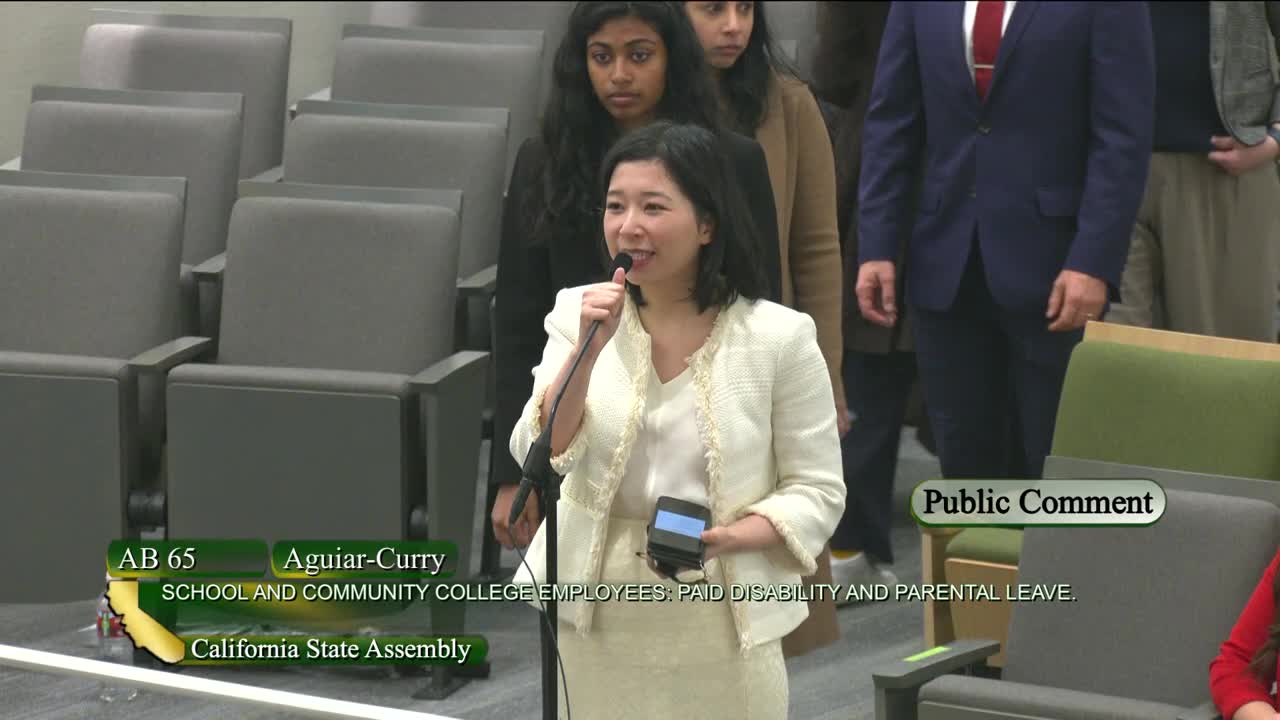 7MIN
Assembly Standing Committee on Education
Bill Author

Bill Co-Author(s):