AB 863: Residential rental properties: language requirements.
- Session Year: 2025-2026
- House: Assembly
- Latest Version Date: 2025-10-06
Current Status:
Passed
(2025-10-06: Chaptered by Secretary of State - Chapter 344, Statutes of 2025.)
Introduced
In Committee
Awaiting First Chamber Vote
Passed First Chamber
In Committee
Awaiting Second Chamber Vote
Passed Second Chamber
Enacted
Existing law outlines requirements for civil actions for unlawful detainer filed by landlords to remove tenants from their properties. Existing law also requires plaintiffs to ensure service of a summons and complaint to defendants in civil suits, as specified. Existing law requires a summons to contain, among other things, (1) a direction that the defendant file with the court a written pleading in response to the complaint within 30 days after service on the defendant, (2) a notice that, unless the defendant responds, default will be entered upon application of the plaintiff, (3) a statement advising the defendant of their right to seek an attorney, and (4) an introductory legend at the top of the summons, in English and Spanish, notifying the defendant that they have been sued.
This bill would require the Judicial Council to create, by January 1, 2027, a single summons form for mandatory use in an action for unlawful detainer to remove a tenant from a residential property that includes the information specified above in English, Spanish, Chinese, Tagalog, Vietnamese, and Korean. The bill would require the Judicial Council to publish this form on its internet website.
Existing law outlines requirements for civil actions for unlawful detainer filed by landlords to remove tenants from their properties. Existing law also requires plaintiffs to ensure service of a summons and complaint to defendants in civil suits, as specified. Existing law requires a summons to contain, among other things, (1) a direction that the defendant file with the court a written pleading in response to the complaint within 30 days after service on the defendant, (2) a notice that, unless the defendant responds, default will be entered upon application of the plaintiff, (3) a statement advising the defendant of their right to seek an attorney, and (4) an introductory legend at the top of the summons, in English and Spanish, notifying the defendant that they have been sued.
This bill would require a landlord in the Judicial Council to create, by January 1, 2027, a single summons form for mandatory use in an action for unlawful detainer to remove a tenant from a residential property to attach to the complaint a copy of the complaint in property that includes the information specified above in English, Spanish, Chinese, Tagalog, Vietnamese, or Korean if (1) the parties negotiated the lease agreement in one of those languages, or (2) the landlord was previously notified by the tenant or anyone acting on the tenants behalf that the tenants primary language is one of those languages. The bill would also require that summonses in those civil cases be in one of those languages if either of those conditions is true, and if a copy of the summons in that language is available on the California Courts website. The bill also provides that, if a landlord fails to attach a copy of the complaint in a required language or to provide a summons in a required language in addition to providing an English version of the summons, either of those failures is an affirmative defense in specified actions. and Korean. The bill would require the Judicial Council to publish this form on its internet website.
Existing law requires landlords seeking to remove tenants from their property for specified reasons to terminate the leases by notice, as specified. Existing law also outlines requirements for civil actions for unlawful detainer filed by landlords to remove tenants from their properties. Existing law also requires plaintiffs to ensure service of a summons and complaint to defendants in civil suits, as specified.
This bill would require landlords to provide notices to terminate leases and complaints in unlawful detainer actions in Spanish, Chinese, Tagalog, Vietnamese, or Korean, as well as in English, if the lease was originally negotiated in one of those non-English languages or if the landlord was previously notified by the tenant or anyone acting on the tenants behalf that Spanish, Chinese, Tagalog, Vietnamese, or Korean is the tenants primary language. The bill would require a plaintiff who is required to provide notices in a required language to include both versions of the documents with an unlawful detainer complaint. The bill provides that a failure to do so, the existence of material differences between the documents, and a failure to serve a copy of the complaint or notice in a required language, are all affirmative defenses to specified actions. This bill would require a landlord in an action for unlawful detainer to remove a tenant from a residential property to attach to the complaint a copy of the complaint in Spanish, Chinese, Tagalog, Vietnamese, or Korean if (1) the parties negotiated the lease agreement in one of those languages, or (2) the landlord was previously notified by the tenant or anyone acting on the tenants behalf that the tenants primary language is one of those languages. The bill would also require that summonses in those civil cases be in Spanish, Chinese, Tagalog, Vietnamese, or Korean, as well as in English, if the lease was originally negotiated in one of those languages or if the landlord was previously notified by the tenant or anyone acting on the tenants behalf that Spanish, Chinese, Tagalog, Vietnamese, or Korean is the tenants primary language, if either of those conditions is true, and if a copy of the summons in that language is available on the California Courts website. The bill also provides that, if a landlord fails to attach a copy of the complaint in a required language or to provide a summons in a required language in addition to providing an English version of the summons, that failure either of those failures is an affirmative defense in specified actions.
Existing law requires landlords seeking to remove tenants from their property for specified reasons to terminate the leases by notice, as specified. Existing law also outlines requirements for civil actions for unlawful detainer filed by landlords to remove tenants from their properties. Existing law also requires plaintiffs to ensure service of a summons and complaint to defendants in civil suits, as specified.
This bill would require landlords to provide notices to terminate leases and complaints in specified civil unlawful detainer actions in Spanish, Chinese, Tagalog, Vietnamese, or Korean, as well as in English, if the lease was originally negotiated in one of those non-English languages or if the landlord has reason to believe was previously notified by the tenant or anyone acting on the tenants behalf that Spanish, Chinese, Tagalog, Vietnamese, or Korean is the tenants primary language. This bill also specifies that when filing a complaint, The bill would require a plaintiff who was is required to provide notices or complaints in a required language, must language to include both versions of the documents documents with the an unlawful detainer complaint. This The bill provides that a failure to do so, the existence of material differences between the documents, and a failure to serve a copy of the complaint or notice in a required language, are all affirmative defenses to specified actions. This bill would The bill would also require that summonses in those civil cases be in Spanish, Chinese, Tagalog, Vietnamese, or Korean, as well as in English, if the lease was originally negotiated in one of those languages or if the landlord has reason to believe was previously notified by the tenant or anyone acting on the tenants behalf that Spanish, Chinese, Tagalog, Vietnamese, or Korean is the tenants primary language, and if a copy of the summons in that language is available on the California Courts website. This bill The bill also provides that, if a landlord fails to provide a summons in a required language in addition to providing an English version of the summons, that failure is an affirmative defense in specified actions.
Existing law requires landlords seeking to remove tenants from their property for specified reasons to terminate the leases by notice, as specified. Existing law also outlines requirements for civil actions filed by landlords to remove tenants from their properties. Existing law also requires plaintiffs to ensure service of a summons and complaint to defendants in civil suits, as specified.
This bill would require landlords to provide notices to terminate leases and complaints in specified civil actions in Spanish, Chinese, Tagalog, Vietnamese, or Korean Korean, as well as in English, if the lease was originally negotiated in one of those non-English languages or if the landlord has reason to believe that Spanish, Chinese, Tagalog, Vietnamese, or Korean is the tenants primary language. This bill also specifies that when filing a complaint, a plaintiff who was required to provide notices or complaints in a required language, must include both versions of the documents with the complaint. This bill provides that a failure to do so, the existence of material differences between the documents, and a failure to serve a copy of the complaint or notice in a required language, are all affirmative defenses to specified actions. This bill would also require that summonses in those civil cases be in Spanish, Chinese, Tagalog, Vietnamese, or Korean Korean, as well as in English, if the lease was originally negotiated in one of those languages or if the landlord has reason to believe that Spanish, Chinese, Tagalog, Vietnamese, or Korean is the tenants primary language, and if a copy of the summons in that language is available on the California Courts website. This bill also provides that, if a landlord fails to provide a summons in a required language, language in addition to providing an English version of the summons, that failure is an affirmative defense in specified actions.
Existing law requires landlords seeking to remove tenants from their property for specified reasons to terminate the leases by notice, as specified. Existing law also outlines requirements for civil actions filed by landlords to remove tenants from their properties. Existing law also requires plaintiffs to ensure service of a summons and complaint to defendants in civil suits, as specified.
This bill would require landlords to provide notices to terminate leases and complaints in specified civil actions in Spanish, Chinese, Tagalog, Vietnamese, or Korean, Korean as well as in English, if the lease was originally negotiated in one of those non-English languages or if the landlord has reason to believe that Spanish, Chinese, Tagalog, Vietnamese, or Korean is the tenants primary language. This bill also specifies that when filing a complaint, a plaintiff who was required to provide notices or complaints in a required language, must include both versions of the documents with the complaint. This bill provides that a failure to do so, the existence of material differences between the documents, and a failure to serve a copy of the complaint or notice in a required language, are all affirmative defenses to specified actions. This bill would also require that summonses in those civil cases be in Spanish, Chinese, Tagalog, Vietnamese, or Korean if the lease was originally negotiated in one of those languages or if the landlord has reason to believe that Spanish, Chinese, Tagalog, Vietnamese, or Korean is the tenants primary language, and if a copy of the summons in that language is available on the California Courts website. This bill also provides that, if a landlord fails to provide a summons in a required language, that failure is an affirmative defense in specified actions.
Existing law requires landlords seeking to remove tenants from their property for specified reasons to terminate the leases by notice, as specified. Existing law also outlines requirements for civil actions filed by landlords to remove tenants from their properties. Existing law also requires plaintiffs to ensure service of a summons and complaint to defendants in civil suits, as specified.
This bill would require landlords to provide notices to terminate leases and complaints in specified civil actions in Spanish, Chinese, Tagalog, Vietnamese, or Korean, if the lease was originally negotiated in one of those languages or if the landlord has reason to believe that Spanish, Chinese, Tagalog, Vietnamese, or Korean is the tenants primary language. This bill would also require that summonses in those civil cases be in Spanish, Chinese, Tagalog, Vietnamese, or Korean if the lease was originally negotiated in one of those languages or if the landlord has reason to believe that Spanish, Chinese, Tagalog, Vietnamese, or Korean is the tenants primary language, and if a copy of the summons in that language is available on the California Courts website.
(a)Except as otherwise required by statute, a summons shall be directed to the defendant, signed by the clerk and issued under the seal of the court in which the action is pending, and it shall contain:
(1)The title of the court in which the action is pending.
(2)The names of the parties to the action.
(3)A direction that the defendant file with the court a written pleading in response to the complaint within 30 days after summons is served on the defendant.
(4)A notice that, unless the defendant so responds, their default will be entered upon application by the plaintiff, and the plaintiff may apply to the court for the relief demanded in the complaint, which could result in garnishment of wages, taking of money or property, or other relief.
(5)The following statement in boldface type: You may seek the advice of an attorney in any matter connected with the complaint or this summons. Such attorney should be consulted promptly so that your pleading may be filed or entered within the time required by this summons.
(6)The following introductory legend at the top of the summons above all other matter, in boldface type, in English and Spanish:
Notice! You have been sued. The court may decide against you without your being heard unless you respond within 30 days. Read information below.
(b)Each county may, by ordinance, require that the legend contained in paragraph (6) of subdivision (a) be set forth in every summons issued out of the courts of that county in any additional foreign language, if the legend in the additional foreign language is set forth in the summons in the same manner as required in that paragraph.
(c)A summons in a form approved by the Judicial Council is deemed to comply with this section.
(d)For actions regarding residential property brought pursuant to Section 1161, the Judicial Council shall, by January 1, 2027, create for mandatory use a single summons form that includes the information described in paragraphs (3) to (6), inclusive, of subdivision (a) in English, Spanish, Chinese, Tagalog, Vietnamese, and Korean. The Judicial Council shall publish this form on its internet website.
(a)Except as otherwise required by statute, a summons shall be directed to the defendant, signed by the clerk and issued under the seal of the court in which the action is pending, and it shall contain:
(1)The title of the court in which the action is pending.
(2)The names of the parties to the action.
(3)A direction that the defendant file with the court a written pleading in response to the complaint within 30 days after summons is served on the defendant.
(4)A notice that, unless the defendant so responds, their default will be entered upon application by the plaintiff, and the plaintiff may apply to the court for the relief demanded in the complaint, which could result in garnishment of wages, taking of money or property, or other relief.
(5)The following statement in boldface type: You may seek the advice of an attorney in any matter connected with the complaint or this summons. Such attorney should be consulted promptly so that your pleading may be filed or entered within the time required by this summons.
(6)The following introductory legend at the top of the summons above all other matter, in boldface type, in English and Spanish:
Notice! You have been sued. The court may decide against you without your being heard unless you respond within 30 days. Read information below.
(b)Each county may, by ordinance, require that the legend contained in paragraph (6) of subdivision (a) be set forth in every summons issued out of the courts of that county in any additional foreign language, if the legend in the additional foreign language is set forth in the summons in the same manner as required in that paragraph.
(c)A summons in a form approved by the Judicial Council is deemed to comply with this section.
(d)In an action regarding residential property brought pursuant to Section 1161, if a summons in Spanish, Chinese, Tagalog, Vietnamese, or Korean is provided on the California Courts website, the landlord shall provide an English version of the summons and a copy of the summons in the appropriate language if either of the following applies:(1)The parties negotiated the lease agreement, orally or in writing, in Spanish, Chinese, Tagalog, Vietnamese, or Korean.(2)The landlord was previously notified by the tenant or anyone acting on the tenants behalf that the tenants primary language is Spanish, Chinese, Tagalog, Vietnamese, or Korean.(e)Failure to serve an English version of the summons and a translated copy of the summons, if required under subdivision (d), shall constitute an affirmative defense to an unlawful detainer action.(d)For actions regarding residential property brought pursuant to Section 1161, the Judicial Council shall, by January 1, 2027, create for mandatory use a single summons form that includes the information described in paragraphs (3) to (6), inclusive, of subdivision (a) in English, Spanish, Chinese, Tagalog, Vietnamese, and Korean. The Judicial Council shall publish this form on its internet website.
SEC. 2.Section 1166 of the Code of Civil Procedure is amended to read:1166.(a)The complaint shall:(1)Be verified and include the typed or printed name of the person verifying the complaint.(2)Set forth the facts on which the plaintiff seeks to recover.(3)Describe the premises with reasonable certainty.(4)If the action is based on paragraph (2) of Section 1161, state the amount of rent in default.(5)State specifically the method used to serve the defendant with the notice or notices of termination upon which the complaint is based. This requirement may be satisfied by using and completing all items relating to service of the notice or notices in an appropriate Judicial Council form complaint, or by attaching a proof of service of the notice or notices of termination served on the defendant.(b)The complaint may set forth any circumstances of fraud, force, or violence that may have accompanied the alleged forcible entry or forcible or unlawful detainer, and claim damages therefor.(c)In an action regarding residential real property based on Section 1161a, the plaintiff shall state in the caption of the complaint Action based on Code of Civil Procedure Section 1161a.(d)(1)In an action regarding residential property, the plaintiff shall attach to the complaint the following:(A)A copy of the notice or notices of termination served on the defendant upon which the complaint is based.(B)A copy of any written lease or rental agreement regarding the premises. Any addenda or attachments to the lease or written agreement that form the basis of the complaint shall also be attached. The documents required by this subparagraph are not required to be attached if the complaint alleges any of the following:(i)The lease or rental agreement is oral.(ii)A written lease or rental agreement regarding the premises is not in the possession of the landlord or any agent or employee of the landlord.(iii)An action based solely on subdivision (2) of Section 1161.(2)If the plaintiff fails to attach the documents required by this subdivision, the court shall grant leave to amend the complaint for a five-day period in order to include the required attachments.(3)If the parties negotiated, orally or in writing, the lease agreement in Spanish, Chinese, Tagalog, Vietnamese, or Korean, or if the landlord was previously notified by the tenant or anyone acting on the tenants behalf that the tenants primary language is Spanish, Chinese, Tagalog, Vietnamese, or Korean, the landlord shall attach a copy of the complaint in that language. Failure to serve a copy of the complaint in the required language is an affirmative defense to an unlawful detainer action.(4)A complaint in a form approved by the Judicial Council is deemed to comply with this section.(e)Upon filing the complaint, a summons shall be issued thereon.(a)Except as otherwise required by statute, a summons shall be directed to the defendant, signed by the clerk and issued under the seal of the court in which the action is pending, and it shall contain:
(1)The title of the court in which the action is pending.
(2)The names of the parties to the action.
(3)A direction that the defendant file with the court a written pleading in response to the complaint within 30 days after summons is served on the defendant.
(4)A notice that, unless the defendant so responds, their default will be entered upon application by the plaintiff, and the plaintiff may apply to the court for the relief demanded in the complaint, which could result in garnishment of wages, taking of money or property, or other relief.
(5)The following statement in boldface type: You may seek the advice of an attorney in any matter connected with the complaint or this summons. Such attorney should be consulted promptly so that your pleading may be filed or entered within the time required by this summons.
(6)The following introductory legend at the top of the summons above all other matter, in boldface type, in English and Spanish:
Notice! You have been sued. The court may decide against you without your being heard unless you respond within 30 days. Read information below.
(b)Each county may, by ordinance, require that the legend contained in paragraph (6) of subdivision (a) be set forth in every summons issued out of the courts of that county in any additional foreign language, if the legend in the additional foreign language is set forth in the summons in the same manner as required in that paragraph.
(c)A summons in a form approved by the Judicial Council is deemed to comply with this section.
(d)In an action regarding residential property brought pursuant to Section 1161, if a summons in Spanish, Chinese, Tagalog, Vietnamese, or Korean is provided on the California Courts website, the landlord shall provide an English version of the summons and a copy of the summons in the appropriate language if: if either of the following applies:
(1)The parties negotiated the lease agreement, orally or in writing, in Spanish, Chinese, Tagalog, Vietnamese, or Korean, or: Korean.
(2)The landlord was previously notified by the tenant or anyone acting on the tenants behalf that the tenants primary language is Spanish, Chinese, Tagalog, Vietnamese, or Korean.
(3)(e)Failure to serve an English version of the summons and a translated copy of the summons, when required, if required under subdivision (d), shall constitute an affirmative defense to an unlawful detainer action.
SEC. 2.Section 1161 of the Code of Civil Procedure, as amended by Section 6 of Chapter 287 of the Statutes of 2024, is amended to read:1161.A tenant of real property, for a term less than life, or the executor or administrator of the tenants estate heretofore qualified and now acting or hereafter to be qualified and act, is guilty of unlawful detainer:1.When the tenant continues in possession, in person or by subtenant, of the property, or any part thereof, after the expiration of the term for which it is let to the tenant; provided the expiration is of a nondefault nature however brought about without the permission of the landlord, or the successor in estate of the landlord, if applicable; including the case where the person to be removed became the occupant of the premises as a servant, employee, agent, or licensee and the relation of master and servant, or employer and employee, or principal and agent, or licensor and licensee, has been lawfully terminated or the time fixed for occupancy by the agreement between the parties has expired; but nothing in this subdivision shall be construed as preventing the removal of the occupant in any other lawful manner; but in case of a tenancy at will, it shall first be terminated by notice, as prescribed in the Civil Code. If the parties negotiated, orally or in writing, the lease agreement in Spanish, Chinese, Tagalog, Vietnamese, or Korean, or if the landlord was previously notified by the tenant or anyone acting on the tenants behalf that the tenants primary language is Spanish, Chinese, Tagalog, Vietnamese, or Korean, the landlord shall provide both a notice in that language and a notice in English.2.When the tenant continues in possession, in person or by subtenant, without the permission of the landlord, or the successor in estate of the landlord, if applicable, after default in the payment of rent, pursuant to the lease or agreement under which the property is held, and three days notice, excluding Saturdays and Sundays and other judicial holidays, in writing, requiring its payment, stating the amount that is due, the name, telephone number, and address of the person to whom the rent payment shall be made, and, if payment may be made personally, the usual days and hours that person will be available to receive the payment (provided that, if the address does not allow for personal delivery, then it shall be conclusively presumed that upon the mailing of any rent or notice to the owner by the tenant to the name and address provided, the notice or rent is deemed received by the owner on the date posted, if the tenant can show proof of mailing to the name and address provided by the owner), or the number of an account in a financial institution into which the rental payment may be made, and the name and street address of the institution (provided that the institution is located within five miles of the rental property), or if an electronic funds transfer procedure has been previously established, that payment may be made pursuant to that procedure, or possession of the property, shall have been served upon the tenant and if there is a subtenant in actual occupation of the premises, also upon the subtenant.The notice may be served at any time within one year after the rent becomes due. If the parties negotiated, orally or in writing, the lease agreement in Spanish, Chinese, Tagalog, Vietnamese, or Korean, or if the landlord was previously notified by the tenant or anyone acting on the tenants behalf that the tenants primary language is Spanish, Chinese, Tagalog, Vietnamese, or Korean, the landlord shall provide both a notice in that language and a notice in English. In all cases of tenancy upon agricultural lands, if the tenant has held over and retained possession for more than 60 days after the expiration of the term without any demand of possession or notice to quit by the landlord or the successor in estate of the landlord, if applicable, the tenant shall be deemed to be holding by permission of the landlord or successor in estate of the landlord, if applicable, and shall be entitled to hold under the terms of the lease for another full year, and shall not be guilty of an unlawful detainer during that year, and the holding over for that period shall be taken and construed as a consent on the part of a tenant to hold for another year.3.When the tenant continues in possession, in person or by subtenant, after a neglect or failure to perform other conditions or covenants of the lease or agreement under which the property is held, including any covenant not to assign or sublet, than the one for the payment of rent, and three days notice, excluding Saturdays and Sundays and other judicial holidays, in writing, requiring the performance of those conditions or covenants, or the possession of the property, shall have been served upon the tenant, and if there is a subtenant in actual occupation of the premises, also, upon the subtenant. If the parties negotiated, orally or in writing, the lease agreement in Spanish, Chinese, Tagalog, Vietnamese, or Korean, or if the landlord was previously notified by the tenant or anyone acting on the tenants behalf that the tenants primary language is Spanish, Chinese, Tagalog, Vietnamese, or Korean, the landlord shall provide both a notice in that language and a notice in English. Within three days, excluding Saturdays and Sundays and other judicial holidays, after the service of the notice, the tenant, or any subtenant in actual occupation of the premises, or any mortgagee of the term, or other person interested in its continuance, may perform the conditions or covenants of the lease or pay the stipulated rent, as the case may be, and thereby save the lease from forfeiture; provided, if the conditions and covenants of the lease, violated by the lessee, cannot afterward be performed, then no notice, as last prescribed herein, need be given to the lessee or the subtenant, demanding the performance of the violated conditions or covenants of the lease.A tenant may take proceedings, similar to those prescribed in this chapter, to obtain possession of the premises let to a subtenant or held by a servant, employee, agent, or licensee, in case of that persons unlawful detention of the premises underlet to or held by that person.4.Any tenant, subtenant, or executor or administrator of that persons estate heretofore qualified and now acting, or hereafter to be qualified and act, assigning or subletting or committing waste upon the demised premises, contrary to the conditions or covenants of the lease, or maintaining, committing, or permitting the maintenance or commission of a nuisance upon the demised premises or using the premises for an unlawful purpose, thereby terminates the lease, and the landlord, or the landlords successor in estate, shall upon service of three days notice to quit upon the person or persons in possession, be entitled to restitution of possession of the demised premises under this chapter. If the parties negotiated, orally or in writing, the lease agreement in Spanish, Chinese, Tagalog, Vietnamese, or Korean, or if the landlord was previously notified by the tenant or anyone acting on the tenants behalf that the tenants primary language is Spanish, Chinese, Tagalog, Vietnamese, or Korean, the landlord shall provide both a notice in that language and in English. For purposes of this subdivision, a person who commits or maintains a public nuisance as described in Section 3482.8 of the Civil Code, or who commits an offense described in subdivision (c) of Section 3485 of the Civil Code, or subdivision (c) of Section 3486 of the Civil Code, or uses the premises to further the purpose of that offense shall be deemed to have committed a nuisance upon the premises.5.When the tenant gives written notice as provided in Section 1946 of the Civil Code of the tenants intention to terminate the hiring of the real property, or makes a written offer to surrender which is accepted in writing by the landlord, but fails to deliver possession at the time specified in that written notice, without the permission of the landlord, or the successor in estate of the landlord, if applicable.6.A landlord or its agent shall not charge a tenant a fee for serving, posting, or otherwise delivering any notice, as described in this section.7.As used in this section, tenant includes any person who hires real property except those persons whose occupancy is described in subdivision (b) of Section 1940 of the Civil Code.8.This section shall become operative on February 1, 2025.SEC. 3.SEC. 2.Section 1166 of the Code of Civil Procedure is amended to read:1166.(a)The complaint shall:
(1)Be verified and include the typed or printed name of the person verifying the complaint.
(2)Set forth the facts on which the plaintiff seeks to recover.
(3)Describe the premises with reasonable certainty.
(4)If the action is based on paragraph (2) of Section 1161, state the amount of rent in default.
(5)State specifically the method used to serve the defendant with the notice or notices of termination upon which the complaint is based. This requirement may be satisfied by using and completing all items relating to service of the notice or notices in an appropriate Judicial Council form complaint, or by attaching a proof of service of the notice or notices of termination served on the defendant.
(b)The complaint may set forth any circumstances of fraud, force, or violence that may have accompanied the alleged forcible entry or forcible or unlawful detainer, and claim damages therefor.
(c)In an action regarding residential real property based on Section 1161a, the plaintiff shall state in the caption of the complaint Action based on Code of Civil Procedure Section 1161a.
(d)(1)In an action regarding residential property, the plaintiff shall attach to the complaint the following:
(A)A copy of the notice or notices of termination served on the defendant upon which the complaint is based. If a plaintiff was required to provide the notice in a language specified under Section 1161, the plaintiff shall attach a copy of the notice in both the required language and in English. Material differences between the notices shall constitute an affirmative defense to an unlawful detainer action. Failure to attach both versions of the notice shall constitute an affirmative defense to an unlawful detainer action.
(B)A copy of any written lease or rental agreement regarding the premises. Any addenda or attachments to the lease or written agreement that form the basis of the complaint shall also be attached. The documents required by this subparagraph are not required to be attached if the complaint alleges any of the following:
(i)The lease or rental agreement is oral.
(ii)A written lease or rental agreement regarding the premises is not in the possession of the landlord or any agent or employee of the landlord.
(iii)An action based solely on subdivision (2) of Section 1161.
(2)If the plaintiff fails to attach the documents required by this subdivision, the court shall grant leave to amend the complaint for a five-day period in order to include the required attachments.
(3)If the parties negotiated, orally or in writing, the lease agreement in Spanish, Chinese, Tagalog, Vietnamese, or Korean, or if the landlord was previously notified by the tenant or anyone acting on the tenants behalf that the tenants primary language is Spanish, Chinese, Tagalog, Vietnamese, or Korean, the landlord shall attach a notice and a copy of the complaint in that language. Failure to serve a copy of the complaint in the required language is an affirmative defense to an unlawful detainer action.
(4)A complaint in a form approved by the Judicial Council is deemed to comply with this section.
(e)Upon filing the complaint, a summons shall be issued thereon.
(a)Except as otherwise required by statute, a summons shall be directed to the defendant, signed by the clerk and issued under the seal of the court in which the action is pending, and it shall contain:
(1)The title of the court in which the action is pending.
(2)The names of the parties to the action.
(3)A direction that the defendant file with the court a written pleading in response to the complaint within 30 days after summons is served on the defendant.
(4)A notice that, unless the defendant so responds, their default will be entered upon application by the plaintiff, and the plaintiff may apply to the court for the relief demanded in the complaint, which could result in garnishment of wages, taking of money or property, or other relief.
(5)The following statement in boldface type: You may seek the advice of an attorney in any matter connected with the complaint or this summons. Such attorney should be consulted promptly so that your pleading may be filed or entered within the time required by this summons.
(6)The following introductory legend at the top of the summons above all other matter, in boldface type, in English and Spanish:
Notice! You have been sued. The court may decide against you without your being heard unless you respond within 30 days. Read information below.
(b)Each county may, by ordinance, require that the legend contained in paragraph (6) of subdivision (a) be set forth in every summons issued out of the courts of that county in any additional foreign language, if the legend in the additional foreign language is set forth in the summons in the same manner as required in that paragraph.
(c)A summons in a form approved by the Judicial Council is deemed to comply with this section.
(d)In an action brought pursuant to Section 1161, if a summons in Spanish, Chinese, Tagalog, Vietnamese, or Korean is provided on the California Courts website, the landlord shall provide an English version of the summons and a copy of the summons in the appropriate language if:
(1)The parties negotiated the lease agreement, orally or in writing, in Spanish, Chinese, Tagalog, Vietnamese, or Korean, or:
(2)The landlord has reason to believe was previously notified by the tenant or anyone acting on the tenants behalf that the tenants primary language is Spanish, Chinese, Tagalog, Vietnamese, or Korean.
(3)Failure to serve an English version of the summons and a translated copy of the summons, when required, shall constitute an affirmative defense to an unlawful detainer action.
SEC. 2.Section 1161 of the Code of Civil Procedure, as amended by Section 6 of Chapter 287 of the Statutes of 2024, is amended to read:1161.A tenant of real property, for a term less than life, or the executor or administrator of the tenants estate heretofore qualified and now acting or hereafter to be qualified and act, is guilty of unlawful detainer:
1.When the tenant continues in possession, in person or by subtenant, of the property, or any part thereof, after the expiration of the term for which it is let to the tenant; provided the expiration is of a nondefault nature however brought about without the permission of the landlord, or the successor in estate of the landlord, if applicable; including the case where the person to be removed became the occupant of the premises as a servant, employee, agent, or licensee and the relation of master and servant, or employer and employee, or principal and agent, or licensor and licensee, has been lawfully terminated or the time fixed for occupancy by the agreement between the parties has expired; but nothing in this subdivision shall be construed as preventing the removal of the occupant in any other lawful manner; but in case of a tenancy at will, it shall first be terminated by notice, as prescribed in the Civil Code. If the parties negotiated, orally or in writing, the lease agreement in Spanish, Chinese, Tagalog, Vietnamese, or Korean, or if the landlord has reason to believe was previously notified by the tenant or anyone acting on the tenants behalf that the tenants primary language is Spanish, Chinese, Tagalog, Vietnamese, or Korean, the landlord shall provide both a notice in that language and a notice in English.
2.When the tenant continues in possession, in person or by subtenant, without the permission of the landlord, or the successor in estate of the landlord, if applicable, after default in the payment of rent, pursuant to the lease or agreement under which the property is held, and three days notice, excluding Saturdays and Sundays and other judicial holidays, in writing, requiring its payment, stating the amount that is due, the name, telephone number, and address of the person to whom the rent payment shall be made, and, if payment may be made personally, the usual days and hours that person will be available to receive the payment (provided that, if the address does not allow for personal delivery, then it shall be conclusively presumed that upon the mailing of any rent or notice to the owner by the tenant to the name and address provided, the notice or rent is deemed received by the owner on the date posted, if the tenant can show proof of mailing to the name and address provided by the owner), or the number of an account in a financial institution into which the rental payment may be made, and the name and street address of the institution (provided that the institution is located within five miles of the rental property), or if an electronic funds transfer procedure has been previously established, that payment may be made pursuant to that procedure, or possession of the property, shall have been served upon the tenant and if there is a subtenant in actual occupation of the premises, also upon the subtenant.
The notice may be served at any time within one year after the rent becomes due. If the parties negotiated, orally or in writing, the lease agreement in Spanish, Chinese, Tagalog, Vietnamese, or Korean, or if the landlord has reason to believe was previously notified by the tenant or anyone acting on the tenants behalf that the tenants primary language is Spanish, Chinese, Tagalog, Vietnamese, or Korean, the landlord shall provide both a notice in that language and a notice in English. In all cases of tenancy upon agricultural lands, if the tenant has held over and retained possession for more than 60 days after the expiration of the term without any demand of possession or notice to quit by the landlord or the successor in estate of the landlord, if applicable, the tenant shall be deemed to be holding by permission of the landlord or successor in estate of the landlord, if applicable, and shall be entitled to hold under the terms of the lease for another full year, and shall not be guilty of an unlawful detainer during that year, and the holding over for that period shall be taken and construed as a consent on the part of a tenant to hold for another year.
3.When the tenant continues in possession, in person or by subtenant, after a neglect or failure to perform other conditions or covenants of the lease or agreement under which the property is held, including any covenant not to assign or sublet, than the one for the payment of rent, and three days notice, excluding Saturdays and Sundays and other judicial holidays, in writing, requiring the performance of those conditions or covenants, or the possession of the property, shall have been served upon the tenant, and if there is a subtenant in actual occupation of the premises, also, upon the subtenant. If the parties negotiated, orally or in writing, the lease agreement in Spanish, Chinese, Tagalog, Vietnamese, or Korean, or if the landlord has reason to believe was previously notified by the tenant or anyone acting on the tenants behalf that the tenants primary language is Spanish, Chinese, Tagalog, Vietnamese, or Korean, the landlord shall provide both a notice in that language and a notice in English. Within three days, excluding Saturdays and Sundays and other judicial holidays, after the service of the notice, the tenant, or any subtenant in actual occupation of the premises, or any mortgagee of the term, or other person interested in its continuance, may perform the conditions or covenants of the lease or pay the stipulated rent, as the case may be, and thereby save the lease from forfeiture; provided, if the conditions and covenants of the lease, violated by the lessee, cannot afterward be performed, then no notice, as last prescribed herein, need be given to the lessee or the subtenant, demanding the performance of the violated conditions or covenants of the lease.
A tenant may take proceedings, similar to those prescribed in this chapter, to obtain possession of the premises let to a subtenant or held by a servant, employee, agent, or licensee, in case of that persons unlawful detention of the premises underlet to or held by that person.
4.Any tenant, subtenant, or executor or administrator of that persons estate heretofore qualified and now acting, or hereafter to be qualified and act, assigning or subletting or committing waste upon the demised premises, contrary to the conditions or covenants of the lease, or maintaining, committing, or permitting the maintenance or commission of a nuisance upon the demised premises or using the premises for an unlawful purpose, thereby terminates the lease, and the landlord, or the landlords successor in estate, shall upon service of three days notice to quit upon the person or persons in possession, be entitled to restitution of possession of the demised premises under this chapter. If the parties negotiated, orally or in writing, the lease agreement in Spanish, Chinese, Tagalog, Vietnamese, or Korean, or if the landlord has reason to believe was previously notified by the tenant or anyone acting on the tenants behalf that the tenants primary language is Spanish, Chinese, Tagalog, Vietnamese, or Korean, the landlord shall provide both a notice in that language and in English. For purposes of this subdivision, a person who commits or maintains a public nuisance as described in Section 3482.8 of the Civil Code, or who commits an offense described in subdivision (c) of Section 3485 of the Civil Code, or subdivision (c) of Section 3486 of the Civil Code, or uses the premises to further the purpose of that offense shall be deemed to have committed a nuisance upon the premises.
5.When the tenant gives written notice as provided in Section 1946 of the Civil Code of the tenants intention to terminate the hiring of the real property, or makes a written offer to surrender which is accepted in writing by the landlord, but fails to deliver possession at the time specified in that written notice, without the permission of the landlord, or the successor in estate of the landlord, if applicable.
6.A landlord or its agent shall not charge a tenant a fee for serving, posting, or otherwise delivering any notice, as described in this section.
7.As used in this section, tenant includes any person who hires real property except those persons whose occupancy is described in subdivision (b) of Section 1940 of the Civil Code.
8.This section shall become operative on February 1, 2025.
SEC. 3.Section 1166 of the Code of Civil Procedure is amended to read:1166.(a)The complaint shall:
(1)Be verified and include the typed or printed name of the person verifying the complaint.
(2)Set forth the facts on which the plaintiff seeks to recover.
(3)Describe the premises with reasonable certainty.
(4)If the action is based on paragraph (2) of Section 1161, state the amount of rent in default.
(5)State specifically the method used to serve the defendant with the notice or notices of termination upon which the complaint is based. This requirement may be satisfied by using and completing all items relating to service of the notice or notices in an appropriate Judicial Council form complaint, or by attaching a proof of service of the notice or notices of termination served on the defendant.
(b)The complaint may set forth any circumstances of fraud, force, or violence that may have accompanied the alleged forcible entry or forcible or unlawful detainer, and claim damages therefor.
(c)In an action regarding residential real property based on Section 1161a, the plaintiff shall state in the caption of the complaint Action based on Code of Civil Procedure Section 1161a.
(d)(1)In an action regarding residential property, the plaintiff shall attach to the complaint the following:
(A)A copy of the notice or notices of termination served on the defendant upon which the complaint is based. If a plaintiff was required to provide the notice in a language specified under Section 1161, the plaintiff shall attach a copy of the notice in both the required language and in English. Material differences between the notices shall constitute an affirmative defense to an unlawful detainer action. Failure to attach both versions of the notice shall constitute an affirmative defense to an unlawful detainer action.
(B)A copy of any written lease or rental agreement regarding the premises. Any addenda or attachments to the lease or written agreement that form the basis of the complaint shall also be attached. The documents required by this subparagraph are not required to be attached if the complaint alleges any of the following:
(i)The lease or rental agreement is oral.
(ii)A written lease or rental agreement regarding the premises is not in the possession of the landlord or any agent or employee of the landlord.
(iii)An action based solely on subdivision (2) of Section 1161.
(2)If the plaintiff fails to attach the documents required by this subdivision, the court shall grant leave to amend the complaint for a five-day period in order to include the required attachments.
(3)If the parties negotiated, orally or in writing, the lease agreement in Spanish, Chinese, Tagalog, Vietnamese, or Korean, or if the landlord has reason to believe was previously notified by the tenant or anyone acting on the tenants behalf that the tenants primary language is Spanish, Chinese, Tagalog, Vietnamese, or Korean, the landlord shall attach a notice and a copy of the complaint in that language. Failure to serve a copy of the complaint in the required language is an affirmative defense to an unlawful detainer action.
(4)A complaint in a form approved by the Judicial Council is deemed to comply with this section.
(e)Upon filing the complaint, a summons shall be issued thereon.
(a)Except as otherwise required by statute, a summons shall be directed to the defendant, signed by the clerk and issued under the seal of the court in which the action is pending, and it shall contain:
(1)The title of the court in which the action is pending.
(2)The names of the parties to the action.
(3)A direction that the defendant file with the court a written pleading in response to the complaint within 30 days after summons is served on the defendant.
(4)A notice that, unless the defendant so responds, their default will be entered upon application by the plaintiff, and the plaintiff may apply to the court for the relief demanded in the complaint, which could result in garnishment of wages, taking of money or property, or other relief.
(5)The following statement in boldface type: You may seek the advice of an attorney in any matter connected with the complaint or this summons. Such attorney should be consulted promptly so that your pleading may be filed or entered within the time required by this summons.
(6)The following introductory legend at the top of the summons above all other matter, in boldface type, in English and Spanish:
Notice! You have been sued. The court may decide against you without your being heard unless you respond within 30 days. Read information below.
(b)Each county may, by ordinance, require that the legend contained in paragraph (6) of subdivision (a) be set forth in every summons issued out of the courts of that county in any additional foreign language, if the legend in the additional foreign language is set forth in the summons in the same manner as required in that paragraph.
(c)A summons in a form approved by the Judicial Council is deemed to comply with this section.
(d)In an action brought pursuant to Section 1161, if a summons in Spanish, Chinese, Tagalog, Vietnamese, or Korean is provided on the California Courts website, the landlord shall provide an English version of the summons and a copy of the summons in the appropriate language if:
(1)The parties negotiated the lease agreement, orally or in writing, in Spanish, Chinese, Tagalog, Vietnamese, or Korean, or:
(2)The landlord has reason to believe that the tenants primary language is Spanish, Chinese, Tagalog, Vietnamese, or Korean.
(3)Failure to serve an English version of the summons and a translated copy of the summons, when required, shall constitute an affirmative defense to an unlawful detainer action.
SEC. 2.Section 1161 of the Code of Civil Procedure, as amended by Section 6 of Chapter 287 of the Statutes of 2024, is amended to read:1161.A tenant of real property, for a term less than life, or the executor or administrator of the tenants estate heretofore qualified and now acting or hereafter to be qualified and act, is guilty of unlawful detainer:
1.When the tenant continues in possession, in person or by subtenant, of the property, or any part thereof, after the expiration of the term for which it is let to the tenant; provided the expiration is of a nondefault nature however brought about without the permission of the landlord, or the successor in estate of the landlord, if applicable; including the case where the person to be removed became the occupant of the premises as a servant, employee, agent, or licensee and the relation of master and servant, or employer and employee, or principal and agent, or licensor and licensee, has been lawfully terminated or the time fixed for occupancy by the agreement between the parties has expired; but nothing in this subdivision shall be construed as preventing the removal of the occupant in any other lawful manner; but in case of a tenancy at will, it shall first be terminated by notice, as prescribed in the Civil Code. If the parties negotiated, orally or in writing, the lease agreement in Spanish, Chinese, Tagalog, Vietnamese, or Korean, or if the landlord has reason to believe that the tenants primary language is Spanish, Chinese, Tagalog, Vietnamese, or Korean, the landlord shall provide both a notice in that language and a notice in English.
2.When the tenant continues in possession, in person or by subtenant, without the permission of the landlord, or the successor in estate of the landlord, if applicable, after default in the payment of rent, pursuant to the lease or agreement under which the property is held, and three days notice, excluding Saturdays and Sundays and other judicial holidays, in writing, requiring its payment, stating the amount that is due, the name, telephone number, and address of the person to whom the rent payment shall be made, and, if payment may be made personally, the usual days and hours that person will be available to receive the payment (provided that, if the address does not allow for personal delivery, then it shall be conclusively presumed that upon the mailing of any rent or notice to the owner by the tenant to the name and address provided, the notice or rent is deemed received by the owner on the date posted, if the tenant can show proof of mailing to the name and address provided by the owner), or the number of an account in a financial institution into which the rental payment may be made, and the name and street address of the institution (provided that the institution is located within five miles of the rental property), or if an electronic funds transfer procedure has been previously established, that payment may be made pursuant to that procedure, or possession of the property, shall have been served upon the tenant and if there is a subtenant in actual occupation of the premises, also upon the subtenant.
The notice may be served at any time within one year after the rent becomes due. If the parties negotiated, orally or in writing, the lease agreement in Spanish, Chinese, Tagalog, Vietnamese, or Korean, or if the landlord has reason to believe that the tenants primary language is Spanish, Chinese, Tagalog, Vietnamese, or Korean, the landlord shall provide both a notice in that language and a notice in English. In all cases of tenancy upon agricultural lands, if the tenant has held over and retained possession for more than 60 days after the expiration of the term without any demand of possession or notice to quit by the landlord or the successor in estate of the landlord, if applicable, the tenant shall be deemed to be holding by permission of the landlord or successor in estate of the landlord, if applicable, and shall be entitled to hold under the terms of the lease for another full year, and shall not be guilty of an unlawful detainer during that year, and the holding over for that period shall be taken and construed as a consent on the part of a tenant to hold for another year.
3.When the tenant continues in possession, in person or by subtenant, after a neglect or failure to perform other conditions or covenants of the lease or agreement under which the property is held, including any covenant not to assign or sublet, than the one for the payment of rent, and three days notice, excluding Saturdays and Sundays and other judicial holidays, in writing, requiring the performance of those conditions or covenants, or the possession of the property, shall have been served upon the tenant, and if there is a subtenant in actual occupation of the premises, also, upon the subtenant. If the parties negotiated, orally or in writing, the lease agreement in Spanish, Chinese, Tagalog, Vietnamese, or Korean, or if the landlord has reason to believe that the tenants primary language is Spanish, Chinese, Tagalog, Vietnamese, or Korean, the landlord shall provide both a notice in that language and a notice in English. Within three days, excluding Saturdays and Sundays and other judicial holidays, after the service of the notice, the tenant, or any subtenant in actual occupation of the premises, or any mortgagee of the term, or other person interested in its continuance, may perform the conditions or covenants of the lease or pay the stipulated rent, as the case may be, and thereby save the lease from forfeiture; provided, if the conditions and covenants of the lease, violated by the lessee, cannot afterward be performed, then no notice, as last prescribed herein, need be given to the lessee or the subtenant, demanding the performance of the violated conditions or covenants of the lease.
A tenant may take proceedings, similar to those prescribed in this chapter, to obtain possession of the premises let to a subtenant or held by a servant, employee, agent, or licensee, in case of that persons unlawful detention of the premises underlet to or held by that person.
4.Any tenant, subtenant, or executor or administrator of that persons estate heretofore qualified and now acting, or hereafter to be qualified and act, assigning or subletting or committing waste upon the demised premises, contrary to the conditions or covenants of the lease, or maintaining, committing, or permitting the maintenance or commission of a nuisance upon the demised premises or using the premises for an unlawful purpose, thereby terminates the lease, and the landlord, or the landlords successor in estate, shall upon service of three days notice to quit upon the person or persons in possession, be entitled to restitution of possession of the demised premises under this chapter. If the parties negotiated, orally or in writing, the lease agreement in Spanish, Chinese, Tagalog, Vietnamese, or Korean, or if the landlord has reason to believe that the tenants primary language is Spanish, Chinese, Tagalog, Vietnamese, or Korean, the landlord shall provide both a notice in that language and in English. For purposes of this subdivision, a person who commits or maintains a public nuisance as described in Section 3482.8 of the Civil Code, or who commits an offense described in subdivision (c) of Section 3485 of the Civil Code, or subdivision (c) of Section 3486 of the Civil Code, or uses the premises to further the purpose of that offense shall be deemed to have committed a nuisance upon the premises.
5.When the tenant gives written notice as provided in Section 1946 of the Civil Code of the tenants intention to terminate the hiring of the real property, or makes a written offer to surrender which is accepted in writing by the landlord, but fails to deliver possession at the time specified in that written notice, without the permission of the landlord, or the successor in estate of the landlord, if applicable.
6.A landlord or its agent shall not charge a tenant a fee for serving, posting, or otherwise delivering any notice, as described in this section.
7.As used in this section, tenant includes any person who hires real property except those persons whose occupancy is described in subdivision (b) of Section 1940 of the Civil Code.
8.This section shall become operative on February 1, 2025.
SEC. 3.Section 1166 of the Code of Civil Procedure is amended to read:1166.(a)The complaint shall:
(1)Be verified and include the typed or printed name of the person verifying the complaint.
(2)Set forth the facts on which the plaintiff seeks to recover.
(3)Describe the premises with reasonable certainty.
(4)If the action is based on paragraph (2) of Section 1161, state the amount of rent in default.
(5)State specifically the method used to serve the defendant with the notice or notices of termination upon which the complaint is based. This requirement may be satisfied by using and completing all items relating to service of the notice or notices in an appropriate Judicial Council form complaint, or by attaching a proof of service of the notice or notices of termination served on the defendant.
(b)The complaint may set forth any circumstances of fraud, force, or violence that may have accompanied the alleged forcible entry or forcible or unlawful detainer, and claim damages therefor.
(c)In an action regarding residential real property based on Section 1161a, the plaintiff shall state in the caption of the complaint Action based on Code of Civil Procedure Section 1161a.
(d)(1)In an action regarding residential property, the plaintiff shall attach to the complaint the following:
(A)A copy of the notice or notices of termination served on the defendant upon which the complaint is based. If a plaintiff was required to provide the notice in a language specified under Section 1161, the plaintiff shall attach a copy of the notice in both the required language and in English. Material differences between the notices shall constitute an affirmative defense to an unlawful detainer action. Failure to attach both versions of the notice shall constitute an affirmative defense to an unlawful detainer action.
(B)A copy of any written lease or rental agreement regarding the premises. Any addenda or attachments to the lease or written agreement that form the basis of the complaint shall also be attached. The documents required by this subparagraph are not required to be attached if the complaint alleges any of the following:
(i)The lease or rental agreement is oral.
(ii)A written lease or rental agreement regarding the premises is not in the possession of the landlord or any agent or employee of the landlord.
(iii)An action based solely on subdivision (2) of Section 1161.
(2)If the plaintiff fails to attach the documents required by this subdivision, the court shall grant leave to amend the complaint for a five-day period in order to include the required attachments.
(3)If the parties negotiated, orally or in writing, the lease agreement in Spanish, Chinese, Tagalog, Vietnamese, or Korean, or if the landlord has reason to believe that the tenants primary language is Spanish, Chinese, Tagalog, Vietnamese, or Korean, the landlord shall attach a notice and a copy of the complaint in that language. Failure to serve a copy of the complaint in the required language is an affirmative defense to an unlawful detainer action.
(4)A complaint in a form approved by the Judicial Council is deemed to comply with this section.
(e)Upon filing the complaint, a summons shall be issued thereon.
(a)Except as otherwise required by statute, a summons shall be directed to the defendant, signed by the clerk and issued under the seal of the court in which the action is pending, and it shall contain:
(1)The title of the court in which the action is pending.
(2)The names of the parties to the action.
(3)A direction that the defendant file with the court a written pleading in response to the complaint within 30 days after summons is served on the defendant.
(4)A notice that, unless the defendant so responds, his or her their default will be entered upon application by the plaintiff, and the plaintiff may apply to the court for the relief demanded in the complaint, which could result in garnishment of wages, taking of money or property, or other relief.
(5)The following statement in boldface type: You may seek the advice of an attorney in any matter connected with the complaint or this summons. Such attorney should be consulted promptly so that your pleading may be filed or entered within the time required by this summons.
(6)The following introductory legend at the top of the summons above all other matter, in boldface type, in English and Spanish:
Notice! You have been sued. The court may decide against you without your being heard unless you respond within 30 days. Read information below.
(b)Each county may, by ordinance, require that the legend contained in paragraph (6) of subdivision (a) be set forth in every summons issued out of the courts of that county in any additional foreign language, if the legend in the additional foreign language is set forth in the summons in the same manner as required in that paragraph.
(c)A summons in a form approved by the Judicial Council is deemed to comply with this section.
(d)In an action brought pursuant to Section 1161, if a summons in Spanish, Chinese, Tagalog, Vietnamese, or Korean is provided on the California Courts website, the landlord shall provide a summons in the appropriate language if:
(1)The parties negotiated the lease agreement, orally or in writing, in Spanish, Chinese, Tagalog, Vietnamese, or Korean, or:
(2)The landlord has reason to believe that the tenants primary language is Spanish, Chinese, Tagalog, Vietnamese, or Korean.
(3)Failure to serve a translated summons, when required, shall constitute an affirmative defense to an unlawful detainer action.
SEC. 2.Section 1161 of the Code of Civil Procedure, as amended by Section 6 of Chapter 287 of the Statutes of 2024, is amended to read:1161.A tenant of real property, for a term less than life, or the executor or administrator of the tenants estate heretofore qualified and now acting or hereafter to be qualified and act, is guilty of unlawful detainer:
1.When the tenant continues in possession, in person or by subtenant, of the property, or any part thereof, after the expiration of the term for which it is let to the tenant; provided the expiration is of a nondefault nature however brought about without the permission of the landlord, or the successor in estate of the landlord, if applicable; including the case where the person to be removed became the occupant of the premises as a servant, employee, agent, or licensee and the relation of master and servant, or employer and employee, or principal and agent, or licensor and licensee, has been lawfully terminated or the time fixed for occupancy by the agreement between the parties has expired; but nothing in this subdivision shall be construed as preventing the removal of the occupant in any other lawful manner; but in case of a tenancy at will, it shall first be terminated by notice, as prescribed in the Civil Code. If the parties negotiated, orally or in writing, the lease agreement in Spanish, Chinese, Tagalog, Vietnamese, or Korean, or if the landlord has reason to believe that the tenants primary language is Spanish, Chinese, Tagalog, Vietnamese, or Korean, the landlord shall provide both a notice in that language. language and a notice in English.
2.When the tenant continues in possession, in person or by subtenant, without the permission of the landlord, or the successor in estate of the landlord, if applicable, after default in the payment of rent, pursuant to the lease or agreement under which the property is held, and three days notice, excluding Saturdays and Sundays and other judicial holidays, in writing, requiring its payment, stating the amount that is due, the name, telephone number, and address of the person to whom the rent payment shall be made, and, if payment may be made personally, the usual days and hours that person will be available to receive the payment (provided that, if the address does not allow for personal delivery, then it shall be conclusively presumed that upon the mailing of any rent or notice to the owner by the tenant to the name and address provided, the notice or rent is deemed received by the owner on the date posted, if the tenant can show proof of mailing to the name and address provided by the owner), or the number of an account in a financial institution into which the rental payment may be made, and the name and street address of the institution (provided that the institution is located within five miles of the rental property), or if an electronic funds transfer procedure has been previously established, that payment may be made pursuant to that procedure, or possession of the property, shall have been served upon the tenant and if there is a subtenant in actual occupation of the premises, also upon the subtenant.
The notice may be served at any time within one year after the rent becomes due. If the parties negotiated, orally or in writing, the lease agreement in Spanish, Chinese, Tagalog, Vietnamese, or Korean, or if the landlord has reason to believe that the tenants primary language is Spanish, Chinese, Tagalog, Vietnamese, or Korean, the landlord shall provide both a notice in that language. language and a notice in English. In all cases of tenancy upon agricultural lands, if the tenant has held over and retained possession for more than 60 days after the expiration of the term without any demand of possession or notice to quit by the landlord or the successor in estate of the landlord, if applicable, the tenant shall be deemed to be holding by permission of the landlord or successor in estate of the landlord, if applicable, and shall be entitled to hold under the terms of the lease for another full year, and shall not be guilty of an unlawful detainer during that year, and the holding over for that period shall be taken and construed as a consent on the part of a tenant to hold for another year.
3.When the tenant continues in possession, in person or by subtenant, after a neglect or failure to perform other conditions or covenants of the lease or agreement under which the property is held, including any covenant not to assign or sublet, than the one for the payment of rent, and three days notice, excluding Saturdays and Sundays and other judicial holidays, in writing, requiring the performance of those conditions or covenants, or the possession of the property, shall have been served upon the tenant, and if there is a subtenant in actual occupation of the premises, also, upon the subtenant. If the parties negotiated, orally or in writing, the lease agreement in Spanish, Chinese, Tagalog, Vietnamese, or Korean, or if the landlord has reason to believe that the tenants primary language is Spanish, Chinese, Tagalog, Vietnamese, or Korean, the landlord shall provide both a notice in that language. language and a notice in English. Within three days, excluding Saturdays and Sundays and other judicial holidays, after the service of the notice, the tenant, or any subtenant in actual occupation of the premises, or any mortgagee of the term, or other person interested in its continuance, may perform the conditions or covenants of the lease or pay the stipulated rent, as the case may be, and thereby save the lease from forfeiture; provided, if the conditions and covenants of the lease, violated by the lessee, cannot afterward be performed, then no notice, as last prescribed herein, need be given to the lessee or the subtenant, demanding the performance of the violated conditions or covenants of the lease.
A tenant may take proceedings, similar to those prescribed in this chapter, to obtain possession of the premises let to a subtenant or held by a servant, employee, agent, or licensee, in case of that persons unlawful detention of the premises underlet to or held by that person.
4.Any tenant, subtenant, or executor or administrator of that persons estate heretofore qualified and now acting, or hereafter to be qualified and act, assigning or subletting or committing waste upon the demised premises, contrary to the conditions or covenants of the lease, or maintaining, committing, or permitting the maintenance or commission of a nuisance upon the demised premises or using the premises for an unlawful purpose, thereby terminates the lease, and the landlord, or the landlords successor in estate, shall upon service of three days notice to quit upon the person or persons in possession, be entitled to restitution of possession of the demised premises under this chapter. If the parties negotiated, orally or in writing, the lease agreement in Spanish, Chinese, Tagalog, Vietnamese, or Korean, or if the landlord has reason to believe that the tenants primary language is Spanish, Chinese, Tagalog, Vietnamese, or Korean, the landlord shall provide both a notice in that language. language and in English. For purposes of this subdivision, a person who commits or maintains a public nuisance as described in Section 3482.8 of the Civil Code, or who commits an offense described in subdivision (c) of Section 3485 of the Civil Code, or subdivision (c) of Section 3486 of the Civil Code, or uses the premises to further the purpose of that offense shall be deemed to have committed a nuisance upon the premises.
5.When the tenant gives written notice as provided in Section 1946 of the Civil Code of the tenants intention to terminate the hiring of the real property, or makes a written offer to surrender which is accepted in writing by the landlord, but fails to deliver possession at the time specified in that written notice, without the permission of the landlord, or the successor in estate of the landlord, if applicable.
6.A landlord or its agent shall not charge a tenant a fee for serving, posting, or otherwise delivering any notice, as described in this section.
7.As used in this section, tenant includes any person who hires real property except those persons whose occupancy is described in subdivision (b) of Section 1940 of the Civil Code.
8.This section shall become operative on February 1, 2025.
SEC. 3.Section 1166 of the Code of Civil Procedure is amended to read:1166.(a)The complaint shall:
(1)Be verified and include the typed or printed name of the person verifying the complaint.
(2)Set forth the facts on which the plaintiff seeks to recover.
(3)Describe the premises with reasonable certainty.
(4)If the action is based on paragraph (2) of Section 1161, state the amount of rent in default.
(5)State specifically the method used to serve the defendant with the notice or notices of termination upon which the complaint is based. This requirement may be satisfied by using and completing all items relating to service of the notice or notices in an appropriate Judicial Council form complaint, or by attaching a proof of service of the notice or notices of termination served on the defendant.
(b)The complaint may set forth any circumstances of fraud, force, or violence that may have accompanied the alleged forcible entry or forcible or unlawful detainer, and claim damages therefor.
(c)In an action regarding residential real property based on Section 1161a, the plaintiff shall state in the caption of the complaint Action based on Code of Civil Procedure Section 1161a.
(d)(1)In an action regarding residential property, the plaintiff shall attach to the complaint the following:
(A)A copy of the notice or notices of termination served on the defendant upon which the complaint is based. If a plaintiff was required to provide the notice in a language specified under Section 1161, the plaintiff shall attach a copy of the notice in both the required language and in English. Material differences between the notices shall constitute an affirmative defense to an unlawful detainer action. Failure to attach both versions of the notice shall constitute an affirmative defense to an unlawful detainer action.
(B)A copy of any written lease or rental agreement regarding the premises. Any addenda or attachments to the lease or written agreement that form the basis of the complaint shall also be attached. The documents required by this subparagraph are not required to be attached if the complaint alleges any of the following:
(i)The lease or rental agreement is oral.
(ii)A written lease or rental agreement regarding the premises is not in the possession of the landlord or any agent or employee of the landlord.
(iii)An action based solely on subdivision (2) of Section 1161.
(2)If the plaintiff fails to attach the documents required by this subdivision, the court shall grant leave to amend the complaint for a five-day period in order to include the required attachments.
(3)If the parties negotiated, orally or in writing, the lease agreement in Spanish, Chinese, Tagalog, Vietnamese, or Korean, or if the landlord has reason to believe that the tenants primary language is Spanish, Chinese, Tagalog, Vietnamese, or Korean, the landlord shall attach a notice and a copy of the complaint in that language. Failure to serve a copy of the complaint in the required language is an affirmative defense to an unlawful detainer action.
(4)A complaint in a form approved by the Judicial Council is deemed to comply with this section.
(e)Upon filing the complaint, a summons shall be issued thereon.
(a)Except as otherwise required by statute, a summons shall be directed to the defendant, signed by the clerk and issued under the seal of the court in which the action is pending, and it shall contain:
(1)The title of the court in which the action is pending.
(2)The names of the parties to the action.
(3)A direction that the defendant file with the court a written pleading in response to the complaint within 30 days after summons is served on him or her. the defendant.
(4)A notice that, unless the defendant so responds, his or her default will be entered upon application by the plaintiff, and the plaintiff may apply to the court for the relief demanded in the complaint, which could result in garnishment of wages, taking of money or property, or other relief.
(5)The following statement in boldface type: You may seek the advice of an attorney in any matter connected with the complaint or this summons. Such attorney should be consulted promptly so that your pleading may be filed or entered within the time required by this summons.
(6)The following introductory legend at the top of the summons above all other matter, in boldface type, in English and Spanish:
Notice! You have been sued. The court may decide against you without your being heard unless you respond within 30 days. Read information below.
(b)Each county may, by ordinance, require that the legend contained in paragraph (6) of subdivision (a) be set forth in every summons issued out of the courts of that county in any additional foreign language, if the legend in the additional foreign language is set forth in the summons in the same manner as required in that paragraph.
(c)A summons in a form approved by the Judicial Council is deemed to comply with this section.
(d)In an action brought pursuant to Section 1161, if a summons in Spanish, Chinese, Tagalog, Vietnamese, or Korean is provided on the California Courts website, the landlord shall provide a summons in the appropriate language if:
(1)The parties negotiated the lease agreement, orally or in writing, in Spanish, Chinese, Tagalog, Vietnamese, or Korean, or:
(2)The landlord has reason to believe that the tenants primary language is Spanish, Chinese, Tagalog, Vietnamese, or Korean.
SEC. 2.Section 1161 of the Code of Civil Procedure, as amended by Section 6 of Chapter 287 of the Statutes of 2024, is amended to read:1161.A tenant of real property, for a term less than life, or the executor or administrator of the tenants estate heretofore qualified and now acting or hereafter to be qualified and act, is guilty of unlawful detainer:
1.When the tenant continues in possession, in person or by subtenant, of the property, or any part thereof, after the expiration of the term for which it is let to the tenant; provided the expiration is of a nondefault nature however brought about without the permission of the landlord, or the successor in estate of the landlord, if applicable; including the case where the person to be removed became the occupant of the premises as a servant, employee, agent, or licensee and the relation of master and servant, or employer and employee, or principal and agent, or licensor and licensee, has been lawfully terminated or the time fixed for occupancy by the agreement between the parties has expired; but nothing in this subdivision shall be construed as preventing the removal of the occupant in any other lawful manner; but in case of a tenancy at will, it shall first be terminated by notice, as prescribed in the Civil Code. If the parties negotiated, orally or in writing, the lease agreement in Spanish, Chinese, Tagalog, Vietnamese, or Korean, or if the landlord has reason to believe that the tenants primary language is Spanish, Chinese, Tagalog, Vietnamese, or Korean, the landlord shall provide a notice in that language.
2.When the tenant continues in possession, in person or by subtenant, without the permission of the landlord, or the successor in estate of the landlord, if applicable, after default in the payment of rent, pursuant to the lease or agreement under which the property is held, and three days notice, excluding Saturdays and Sundays and other judicial holidays, in writing, requiring its payment, stating the amount that is due, the name, telephone number, and address of the person to whom the rent payment shall be made, and, if payment may be made personally, the usual days and hours that person will be available to receive the payment (provided that, if the address does not allow for personal delivery, then it shall be conclusively presumed that upon the mailing of any rent or notice to the owner by the tenant to the name and address provided, the notice or rent is deemed received by the owner on the date posted, if the tenant can show proof of mailing to the name and address provided by the owner), or the number of an account in a financial institution into which the rental payment may be made, and the name and street address of the institution (provided that the institution is located within five miles of the rental property), or if an electronic funds transfer procedure has been previously established, that payment may be made pursuant to that procedure, or possession of the property, shall have been served upon the tenant and if there is a subtenant in actual occupation of the premises, also upon the subtenant.
The notice may be served at any time within one year after the rent becomes due. If the parties negotiated, orally or in writing, the lease agreement in Spanish, Chinese, Tagalog, Vietnamese, or Korean, or if the landlord has reason to believe that the tenants primary language is Spanish, Chinese, Tagalog, Vietnamese, or Korean, the landlord shall provide a notice in that language. In all cases of tenancy upon agricultural lands, if the tenant has held over and retained possession for more than 60 days after the expiration of the term without any demand of possession or notice to quit by the landlord or the successor in estate of the landlord, if applicable, the tenant shall be deemed to be holding by permission of the landlord or successor in estate of the landlord, if applicable, and shall be entitled to hold under the terms of the lease for another full year, and shall not be guilty of an unlawful detainer during that year, and the holding over for that period shall be taken and construed as a consent on the part of a tenant to hold for another year.
3.When the tenant continues in possession, in person or by subtenant, after a neglect or failure to perform other conditions or covenants of the lease or agreement under which the property is held, including any covenant not to assign or sublet, than the one for the payment of rent, and three days notice, excluding Saturdays and Sundays and other judicial holidays, in writing, requiring the performance of those conditions or covenants, or the possession of the property, shall have been served upon the tenant, and if there is a subtenant in actual occupation of the premises, also, upon the subtenant. If the parties negotiated, orally or in writing, the lease agreement in Spanish, Chinese, Tagalog, Vietnamese, or Korean, or if the landlord has reason to believe that the tenants primary language is Spanish, Chinese, Tagalog, Vietnamese, or Korean, the landlord shall provide a notice in that language. Within three days, excluding Saturdays and Sundays and other judicial holidays, after the service of the notice, the tenant, or any subtenant in actual occupation of the premises, or any mortgagee of the term, or other person interested in its continuance, may perform the conditions or covenants of the lease or pay the stipulated rent, as the case may be, and thereby save the lease from forfeiture; provided, if the conditions and covenants of the lease, violated by the lessee, cannot afterward be performed, then no notice, as last prescribed herein, need be given to the lessee or the subtenant, demanding the performance of the violated conditions or covenants of the lease.
A tenant may take proceedings, similar to those prescribed in this chapter, to obtain possession of the premises let to a subtenant or held by a servant, employee, agent, or licensee, in case of that persons unlawful detention of the premises underlet to or held by that person.
4.Any tenant, subtenant, or executor or administrator of that persons estate heretofore qualified and now acting, or hereafter to be qualified and act, assigning or subletting or committing waste upon the demised premises, contrary to the conditions or covenants of the lease, or maintaining, committing, or permitting the maintenance or commission of a nuisance upon the demised premises or using the premises for an unlawful purpose, thereby terminates the lease, and the landlord, or the landlords successor in estate, shall upon service of three days notice to quit upon the person or persons in possession, be entitled to restitution of possession of the demised premises under this chapter. If the parties negotiated, orally or in writing, the lease agreement in Spanish, Chinese, Tagalog, Vietnamese, or Korean, or if the landlord has reason to believe that the tenants primary language is Spanish, Chinese, Tagalog, Vietnamese, or Korean, the landlord shall provide a notice in that language. For purposes of this subdivision, a person who commits or maintains a public nuisance as described in Section 3482.8 of the Civil Code, or who commits an offense described in subdivision (c) of Section 3485 of the Civil Code, or subdivision (c) of Section 3486 of the Civil Code, or uses the premises to further the purpose of that offense shall be deemed to have committed a nuisance upon the premises.
5.When the tenant gives written notice as provided in Section 1946 of the Civil Code of the tenants intention to terminate the hiring of the real property, or makes a written offer to surrender which is accepted in writing by the landlord, but fails to deliver possession at the time specified in that written notice, without the permission of the landlord, or the successor in estate of the landlord, if applicable.
6.A landlord or its agent shall not charge a tenant a fee for serving, posting, or otherwise delivering any notice, as described in this section.
7.As used in this section, tenant includes any person who hires real property except those persons whose occupancy is described in subdivision (b) of Section 1940 of the Civil Code.
8.This section shall become operative on February 1, 2025.
SEC. 3.Section 1166 of the Code of Civil Procedure is amended to read:1166.(a)The complaint shall:
(1)Be verified and include the typed or printed name of the person verifying the complaint.
(2)Set forth the facts on which the plaintiff seeks to recover.
(3)Describe the premises with reasonable certainty.
(4)If the action is based on paragraph (2) of Section 1161, state the amount of rent in default.
(5)State specifically the method used to serve the defendant with the notice or notices of termination upon which the complaint is based. This requirement may be satisfied by using and completing all items relating to service of the notice or notices in an appropriate Judicial Council form complaint, or by attaching a proof of service of the notice or notices of termination served on the defendant.
(b)The complaint may set forth any circumstances of fraud, force, or violence that may have accompanied the alleged forcible entry or forcible or unlawful detainer, and claim damages therefor.
(c)In an action regarding residential real property based on Section 1161a, the plaintiff shall state in the caption of the complaint Action based on Code of Civil Procedure Section 1161a.
(d)(1)In an action regarding residential property, the plaintiff shall attach to the complaint the following:
(A)A copy of the notice or notices of termination served on the defendant upon which the complaint is based.
(B)A copy of any written lease or rental agreement regarding the premises. Any addenda or attachments to the lease or written agreement that form the basis of the complaint shall also be attached. The documents required by this subparagraph are not required to be attached if the complaint alleges any of the following:
(i)The lease or rental agreement is oral.
(ii)A written lease or rental agreement regarding the premises is not in the possession of the landlord or any agent or employee of the landlord.
(iii)An action based solely on subdivision (2) of Section 1161.
(2)If the plaintiff fails to attach the documents required by this subdivision, the court shall grant leave to amend the complaint for a five-day period in order to include the required attachments.
(3)If the parties negotiated, orally or in writing, the lease agreement in Spanish, Chinese, Tagalog, Vietnamese, or Korean, or if the landlord has reason to believe that the tenants primary language is Spanish, Chinese, Tagalog, Vietnamese, or Korean, the landlord shall attach a notice and a copy of the complaint in that language.
(4)A complaint in a form approved by the Judicial Council is deemed to comply with this section.
(e)Upon filing the complaint, a summons shall be issued thereon.
|
Date
|
Status
|
|---|---|
| Oct 6, 2025 | Chaptered by Secretary of State - Chapter 344, Statutes of 2025. |
| Oct 6, 2025 | Approved by the Governor. |
| Sep 11, 2025 | Enrolled and presented to the Governor at 4 p.m. |
| Sep 4, 2025 | Senate amendments concurred in. To Engrossing and Enrolling. (Ayes 70. Noes 1. Page 2920.). |
| Sep 3, 2025 | In Assembly. Concurrence in Senate amendments pending. |
| Sep 3, 2025 | Read third time. Passed. Ordered to the Assembly. (Ayes 38. Noes 0. Page 2436.). |
| Aug 26, 2025 | Read second time. Ordered to third reading. |
| Aug 25, 2025 | From committee: Be ordered to second reading pursuant to Senate Rule 28.8. |
| Aug 18, 2025 | (Ayes 27. Noes 0. Page 2171.) |
| Aug 18, 2025 | From committee chair, with author's amendments: Amend, and re-refer to committee. Read second time, amended, and re-referred to Com. on APPR. |
| Aug 7, 2025 | In committee: Hearing postponed by committee. |
| Jul 16, 2025 | From committee: Do pass and re-refer to Com. on APPR. (Ayes 11. Noes 2.) (July 15). Re-referred to Com. on APPR. |
| Jul 3, 2025 | From committee chair, with author's amendments: Amend, and re-refer to committee. Read second time, amended, and re-referred to Com. on JUD. |
| Jun 18, 2025 | Referred to Coms. on JUD. and APPR. |
| Jun 4, 2025 | In Senate. Read first time. To Com. on RLS. for assignment. |
| Jun 3, 2025 | Read third time. Passed. Ordered to the Senate. (Ayes 50. Noes 17. Page 1997.) |
| May 7, 2025 | Read second time. Ordered to third reading. |
| May 6, 2025 | From committee: Do pass. (Ayes 8. Noes 3.) (May 6). |
| May 1, 2025 | Re-referred to Com. on JUD. |
| Apr 30, 2025 | From committee chair, with author's amendments: Amend, and re-refer to Com. on JUD. Read second time and amended. |
| Mar 26, 2025 | Re-referred to Com. on JUD. |
| Mar 25, 2025 | From committee chair, with author's amendments: Amend, and re-refer to Com. on JUD. Read second time and amended. |
| Mar 24, 2025 | In committee: Hearing postponed by committee. |
| Mar 24, 2025 | Re-referred to Com. on JUD. |
| Mar 20, 2025 | From committee chair, with author's amendments: Amend, and re-refer to Com. on JUD. Read second time and amended. |
| Mar 3, 2025 | Referred to Com. on JUD. |
| Feb 20, 2025 | From printer. May be heard in committee March 22. |
| Feb 19, 2025 | Read first time. To print. |
|
Date
|
Description
|
Location
|
Votes
|
|
|---|---|---|---|---|
| Sep 4, 2025 | AB 863 Kalra Concurrence in Senate Amendments | Assembly Floor |
Passed |
|
| Sep 3, 2025 | Assembly 3rd Reading AB863 Kalra et al. By Pérez | Senate Floor |
Passed |
|
| Jul 15, 2025 | Do pass, but first be re-referred to the Committee on [Appropriations] | Senate Standing Committee on Judiciary |
Passed |
|
| Jun 3, 2025 | AB 863 Kalra Assembly Third Reading | Assembly Floor |
Passed |
|
| May 6, 2025 | Do pass. | Assembly Standing Committee on Judiciary |
Passed |
This list shows positions taken on this bill by organizations on the date displayed, which is linked to the original source.
Positions by individuals are not included.
|
Organization
|
Position
|
Date
|
|---|---|---|
| AAPI Equity Alliance | ** Support | |
| Asian Americans Advancing Justice Southern California (AJSOCAL) | ** Support | |
| Asian Americans and Pacific Islanders for Civic Empowerment | ** Support | |
| Asian Resources, Inc. | ** Support | |
| Asian Youth Center | ** Support | |
| Bay Area Legal Aid | ** Support | |
| BPSOS Center for Community Advancement | ** Support | |
| Building Owners and Managers Association of California | ** Against | |
| California Apartment Association | ** Against | |
| California Asian Pacific American Bar Association | ** Support | |
| California Association Of Realtors | ** Against | |
| California Building Industry Association | ** Against | |
| California Business Properties Association | ** Against | |
| California Democratic Renters Council | ** Support | |
| California Healthy Nail Salon Collaborative | ** Support | |
| Chinatown Service Center | ** Support | |
| Chinese for Affirmative Action | ** Support | |
| Coalition for Humane Immigrant Rights | ** Support | |
| Disability Rights California | ** Support | |
| Empowering Pacific Islander Communities Fiscally Sponsored by Community Partners | ** Support | |
| Hmong Innovating Politics | ** Support | |
| Housing Now! | ** Support | |
| Inner City Law Center | ** Support | |
| Institute of Real Estate Management | ** Against | |
| LEAD Filipino | ** Support | |
| Little Tokyo Service Center | ** Support | |
| Pacific Asian Counseling Services | ** Support | |
| Power California Action | ** Support | |
| Public Advocates Inc. | ** Support | |
| Public Counsel | ** Support | |
| Southeast Asia Resource Action Center | ** Support | |
| Southern California Rental Housing Association | ** Against | |
| Southern California Rental Housing Association (SCRHA) | ** Against | |
| Thai Community Development Center | ** Support | |
| Tri County Chamber Alliance | ** Against | |
| Unidosus | ** Support | |
| united way bay area | ** Support | |
| Viet Rainbow of Orange County | ** Support | |
| Western Center on Law & Poverty, INC. | ** Support | |
| Western Manufactured Housing Communities Association | ** Against | |
| What We All Deserve | ** Support |
CONCURRENCE IN SENATE AMENDMENTS
CSA1 Bill Id:AB 863
Author:(Kalra)
As Amended Ver:August 18, 2025
Majority vote
SUMMARY
- Requires the Judicial Council to create, by January 1, 2027, a single summons form for mandatory use in an action for unlawful detainer to remove a tenant from a residential property in English, Spanish, Chinese, Tagalog, Vietnamese, and Korean.
- Requires the Judicial Council to publish the above form on its internet website.
Senate Amendments
Delete the provisions requiring landlords to provide notices, complaints, and summonses relating to an unlawful detainer action in specified languages, and instead requires the Judicial Council to adopt a single summons form for mandatory use in an action for unlawful detainer to remove a tenant from a residential property in English, Spanish, Chinese, Tagalog, Vietnamese, and Korean, and to publish this form on their internet website.
COMMENTS
Recognizing California's rich linguistic diversity – and the reality that business in the state is transacted in many languages – Section 1632 of the Civil Code requires that if a person engaged in trade or business negotiates certain contracts primarily in Spanish, Chinese, Tagalog, Vietnamese, or Korean, then the person must provide the other party with a translation of the contract in the language of negotiations. When Civil Code Section 1632 was first enacted in 1976, it only required translating contracts into Spanish, reflecting the state's sizeable Spanish-speaking population, one that predates California statehood. After 1976 the state's population became much more diverse and the number of Californians who spoke languages other than English or Spanish as their primary language increased dramatically. Indeed, by the time of 2000 U.S. Census, more than 12 million Californians spoke a language other than English in the home, and approximately 4.3 million of these spoke a language other than Spanish. The 2000 Census also showed that five languages – Spanish, Chinese, Tagalog, Vietnamese, and Korean – accounted for 83% of those who spoke a language other than English in their homes. Citing these findings, AB 309 (Chap. 330, Stats. 2003) expanded Civil Code Section 1632 to include these five most commonly spoken foreign languages. In addition, the legislative history indicates that AB 309 was prompted, in part, by a court case in which five Chinese-speaking consumers brought an action against a car dealership that negotiated with customers in Chinese. Evidence presented at trial suggested that the English-language contract contained terms that were not included in the negotiated agreements. (Hua Bai, et al. v. Bob Wondries Associates, Inc., et al., Case No. BC 286661, Los Angeles County Superior Court, 2002.)
While Civil Code Section 1632 defines a contract to include leases or rental agreements – and thus requires such leases to be translated in one of the five languages if negotiated in one of those languages – the Civil Code Section 1632 translation requirements apply only to leases; they do not apply to any required notice, complaint, or summons should a dispute arise and the landlord attempts to evict the tenant. As such, tenants with limited English proficiency may not fully understand the important information that these legal documents contain, how they should respond, or the consequences of not responding in a timely manner, which typically ends in a default judgment in favor of the landlord.
This bill would address this deficiency in existing law by requiring the Judicial Council to create, by January 1, 2027, a single summons form for mandatory use in an action for unlawful detainer to remove a tenant from a residential property in English, Spanish, Chinese, Tagalog, Vietnamese, and Korean. The bill requires the Judicial Council to post summons in these languages on their internet websites.
According to the Author
According to the author, "California is one of the most diverse states in the nation, [but] despite having notably large Spanish, Chinese, Vietnamese, Tagalog, and Korean-speaking populations, our state does not currently require many critical housing documents to be translated into these languages. This puts millions of limited-English proficiency renters at a significant disadvantage when they are faced with eviction proceedings, impeding their ability to fight a potentially wrongful termination of their lease." The author believes that AB 863 will remedy this problem by requiring summons be translated into English, Spanish, Chinese, Vietnamese, Tagalog, and Korean.
Arguments in Support
The bill's sponsor, Asian Americans Advancing Justice Southern California (AJSOCAL), writes in support of the bill:
As California continues to address our housing crisis by preventing further displacement and homelessness, we must not leave behind renters who are limited English proficient (LEP).
According to 2021 American Community Survey data, about 3.2 million (or about 18%) of the 16 million renters are limited English proficient (LEP), and Spanish and Asian speaking tenants make up a majority of this specific population. Among all LEP tenants, about 2.3 million are Spanish speakers who do not speak English very well, and about 700,000 of them are Asian language speakers. Current law protects California tenants under certain language groups, namely those who speak Spanish, Chinese, Tagalog, Vietnamese and Korean, by requiring landlords to provide rental contracts in such language, should they negotiate the lease in those languages. AB 863 ensures tenants stay protected during the eviction process.
As soon as the eviction process begins, a tenant only has very limited timing to respond to notices. For example, a tenant has only 10 days to respond to a summons and complaint, and cases are often defaulted where tenants are evicted without getting their day in court. If a tenant speaks a primary language that is not English, and they are unable to comprehend the eviction notice, summons or the complaint, the eviction process could quickly snowball.
Arguments in Opposition
Although recent amendments addressed some opposition, a coalition of rental property owners remain. In opposition, the Southern California Rental Housing Association writes:
I am writing to inform you of their opposition to AB 863, which seeks to impose language translation requirements for notices, summonses, and complaints in specified civil actions related to residential rental properties. While the SCRHA fully supports the goal of ensuring equity and accessibility for tenants whose primary language may not be English, we believe this bill imposes impractical and unnecessary burdens on landlords, particularly small-scale property owners.
While tenant protection is essential, AB 863 as amended does not sufficiently address the practical challenges landlords will face under these mandates. It is unclear how landlords will access accurate translations for legal documents and ensure compliance without incurring significant costs.
FISCAL COMMENTS
According to the Senate Appropriations Committee, pursuant to Senate Rule 28.8, negligible state costs.
VOTES:
ASM JUDICIARY: 8-3-1
YES: Kalra, Bauer-Kahan, Bryan, Connolly, Harabedian, Papan, Stefani, Zbur
NO: Dixon, Macedo, Sanchez
ABS, ABST OR NV: Pacheco
ASSEMBLY FLOOR: 50-17-12
YES: Addis, Aguiar-Curry, Ahrens, Alvarez, Arambula, Ávila Farías, Bains, Bennett, Berman, Boerner, Bonta, Bryan, Caloza, Connolly, Elhawary, Fong, Garcia, Gipson, Mark González, Haney, Harabedian, Hart, Irwin, Jackson, Kalra, Krell, Lee, Lowenthal, McKinnor, Muratsuchi, Nguyen, Ortega, Papan, Patel, Pellerin, Petrie-Norris, Quirk-Silva, Ransom, Celeste Rodriguez, Rogers, Schiavo, Schultz, Sharp-Collins, Stefani, Ta, Ward, Wicks, Wilson, Zbur, Rivas
NO: Alanis, Chen, Davies, DeMaio, Dixon, Ellis, Flora, Gallagher, Jeff Gonzalez, Hadwick, Hoover, Lackey, Macedo, Patterson, Sanchez, Tangipa, Wallis
ABS, ABST OR NV: Bauer-Kahan, Calderon, Carrillo, Castillo, Gabriel, Pacheco, Ramos, Michelle Rodriguez, Blanca Rubio, Solache, Soria, Valencia
SENATE FLOOR: 38-0-2
YES: Allen, Archuleta, Arreguín, Ashby, Becker, Blakespear, Cabaldon, Caballero, Cervantes, Choi, Cortese, Durazo, Gonzalez, Grayson, Grove, Hurtado, Jones, Laird, Limón, McGuire, McNerney, Menjivar, Niello, Ochoa Bogh, Padilla, Pérez, Reyes, Richardson, Rubio, Seyarto, Smallwood-Cuevas, Stern, Strickland, Umberg, Valladares, Wahab, Weber Pierson, Wiener
ABS, ABST OR NV: Alvarado-Gil, Dahle
UPDATED
VERSION: July 3, 2025
CONSULTANT: Tom Clark / JUD. / (916) 319-2334 FN: 0001580
SENATE RULES COMMITTEE Office of Senate Floor Analyses (916) 651-1520 Fax: (916) 327-4478 | AB 863 |
THIRD READING
Bill No: AB 863
Author: Kalra (D), et al.
Amended: 8/18/25 in Senate
Vote: 21
SENATE JUDICIARY COMMITTEE: 11-2, 7/15/25
AYES: Umberg, Allen, Arreguín, Ashby, Caballero, Durazo, Laird, Stern, Wahab, Weber Pierson, Wiener
NOES: Niello, Valladares
SENATE APPROPRIATIONS COMMITTEE: Senate Rule 28.8
ASSEMBLY FLOOR: 50-17, 6/3/25 - See last page for vote
SUBJECT: Residential rental properties: language requirements
SOURCE: Asian Americans Advancing Justice Southern California
DIGEST:
This bill requires, for eviction proceedings involving residential property, the Judicial Council to, by January 1, 2027, create a mandatory summons form that is translated into English, Spanish, Chinese, Tagalog, Vietnamese, and Korean, and publish the form on its website.
ANALYSIS:
Existing law:
- Provides that a tenant has committed an unlawful detainer if, having been served proper notice, the tenant continues in possession of the rental property without the landlord's permission after the tenant has failed to pay the rent, violated a covenant of the lease, committed or permitted a nuisance or waste on the premises, or used the premises for an unlawful purpose. (Code of Civil Procedure (Code Civ. Proc.) § 1161.)
- Requires a plaintiff in a civil action, except as otherwise required by statute, to serve upon the defendant a summons that is signed by the clerk and under the seal of the court in which the action is pending. Requires the summons to include specified information, including directions to the defendant as to the time for responding and the consequences for failing to respond, including the following statement in boldface type at the top of the summons: “Notice: You have been sued. The court may decide against you without your being heard unless you respond within 30 days.” Permits each county, by ordinance, to require that the bolded statement be printed in a foreign language, as specified. (Civil Code (Civ. Code) § 412.20.)
- Requires, in an unlawful detainer action, that the landlord serve upon the tenant a copy of the complaint. Specifies that the complaint must contain certain information, including the facts upon which the landlord is seeking recovery of the premises and the method used to serve the tenant with notice. Provides that this latter requirement may be satisfied by using and completing all items relating to service of notice in the appropriate judicial form complaint, or by attaching a proof of service of the notice or notices. (Civ. Code § 1166.)
- Requires a tenant defendant in an unlawful detainer action to respond to a notice of summons within 10 days, excluding weekends and court holidays, of being served with the notice. Specifies that, if service is completed by mail or the Secretary of State’s address confidentiality program, the defendant must file within ten days. (Code Civ. Proc. § 1167.)
- Requires entry of default and default judgment against the defendant if they fail to appear and defend against the unlawful detainer action, if upon written application of the plaintiff with proof of service of the summons and complaint. Provides that the court must issue a writ of execution, and thereafter the plaintiff may apply to the court for any other relief demanded in the complaint, including costs. (Code Civ. Proc. § 1169.)
- Requires that any person engaged in a trade or business, who negotiates a specified contract or agreement primarily in Spanish, Chinese, Tagalog, Vietnamese, or Korean, deliver to the other party to the contract or agreement, or anyone who will be signing the agreement, and before the execution of that contract or agreement, a translation of the contract or agreement in the language in which the contract was negotiated:
- Provides an exception to this requirement where the party with whom the person engaged in a trade or business is negotiating negotiates the terms of the contract or agreement through their own interpreter.
- Provides that the terms in the English version of the contract shall determine the rights and obligations of the parties, and that the translated version may only be used in court as evidence to show that no contract was entered into because of substantial differences in material terms between the English version and the translated version.
- Provides that an aggrieved person for a violation of this provision may rescind the contract or agreement, as provided. (Civ. Code § 1632(b).)
This bill requires, for unlawful detainer actions regarding residential property, the Judicial Council to, by January 1, 2027, create a single, mandatory summons form that includes the information specified by current law, as described in (2) above, in English, Spanish, Chinese, Tagalog, Vietnamese, and Korean. It requires Judicial Council to publish this form on its internet website.
FISCAL EFFECT: Appropriation: No Fiscal Com.: Yes Local: No
SUPPORT: (Verified 8/26/25)
Asian Americans Advancing Justice Southern California (source)
California Asian Pacific American Bar Association
Chinese for Affirmative Action
LEAD Filipino
Power California Action
UnidosUS
What We All Deserve
OPPOSITION: (Verified 8/26/25)
None received
ARGUMENTS IN SUPPORT:
According to Asian Americans Advancing Justice, which is a sponsor of AB 863:
As California continues to address our housing crisis by preventing further displacement and homelessness, we must not leave behind renters who are limited English proficient (LEP). According to 2021 American Community Survey data, about 3.2 million (or about 18%) of the 16 million renters are limited English proficient (LEP), and Spanish and Asian speaking tenants make up a majority of this specific population. Among all LEP tenants, about 2.3 million are Spanish speakers who do not speak English very well, and about 700,000 of them are Asian language speakers.
Current law protects California tenants under certain language groups, namely those who speak Spanish, Chinese, Tagalog, Vietnamese and Korean, by requiring landlords to provide rental contracts in such language, should they negotiate the lease in those languages. AB 863 ensures tenants stay protected during the eviction process.
As soon as the eviction process begins, a tenant only has very limited timing to respond to notices. For example, a tenant has only 10 days to respond to a summons and complaint, and cases are often defaulted where tenants are evicted without getting their day in court. If a tenant speaks a primary language that is not English, and they are unable to comprehend the eviction notice, summons or the complaint, the eviction process could quickly snowball.
ARGUMENTS IN OPPOSITION:
ASSEMBLY FLOOR: 50-17, 6/3/25
AYES: Addis, Aguiar-Curry, Ahrens, Alvarez, Arambula, Ávila Farías, Bains, Bennett, Berman, Boerner, Bonta, Bryan, Caloza, Connolly, Elhawary, Fong, Garcia, Gipson, Mark González, Haney, Harabedian, Hart, Irwin, Jackson, Kalra, Krell, Lee, Lowenthal, McKinnor, Muratsuchi, Nguyen, Ortega, Papan, Patel, Pellerin, Petrie-Norris, Quirk-Silva, Ransom, Celeste Rodriguez, Rogers, Schiavo, Schultz, Sharp-Collins, Stefani, Ta, Ward, Wicks, Wilson, Zbur, Rivas
NOES: Alanis, Chen, Davies, DeMaio, Dixon, Ellis, Flora, Gallagher, Jeff Gonzalez, Hadwick, Hoover, Lackey, Macedo, Patterson, Sanchez, Tangipa, Wallis
NO VOTE RECORDED: Bauer-Kahan, Calderon, Carrillo, Castillo, Gabriel, Pacheco, Ramos, Michelle Rodriguez, Blanca Rubio, Solache, Soria, Valencia
Prepared by: Ian Dougherty / JUD. / (916) 651-4113
8/27/25 12:12:28
**** END ****
Senator Thomas Umberg, Chair
2025-2026 Regular Session
Bill No: AB 863 (Author:Kalra)
Version: July 3, 2025
Hearing Date: July 15, 2025
Fiscal: No
Urgency: No
Consultant: ID
SUBJECT
Residential rental properties: language requirements
DIGEST
This bill requires landlords of residential property to provide the summons and complaint in an unlawful detainer action in English and a copy in one of five specified languages, if the parties negotiated the lease in one of the five languages, or the tenant or someone on their behalf notifies the landlord that their primary language is one of the specified five languages, as specified.
EXECUTIVE SUMMARY
California is an incredibly diverse state, including by language. According to the American Community Survey, approximately 16.3 million Californians spoke a language other than English at home in 2021, accounting for about 42% of the population of the state. Language access is incredibly important for assuring all Californians can participate in California society and defend their rights. Current law requires a landlord to provide the tenant a translation of the lease agreement in one of five languages other than English when the landlord and tenant negotiated the lease in one of the five languages, as specified. When a landlord initiates an unlawful detainer action to evict a tenant, the landlord must provide the tenant with the complaint and a summon. If the tenant fails to respond to the complaint within 10 days of service of the complaint, a default judgment can be entered by the court that orders the tenant’s eviction. AB 863 proposes to ensure that tenants facing eviction receive a translation of the summons and complaint if the tenant and the landlord negotiated the lease in Spanish, Chinese, Tagalog, Vietnamese, or Korean, or if the tenant or someone on their behalf previously notified the landlord that the tenant’s primary language is one of those five languages. AB 863 would make the failure to provide translated notices an affirmative defense against an unlawful detainer. AB 863 is sponsored by Asian Americans Advancing Justice Southern California, and is supported by a number immigrant and tenants’ rights organizations. The Committee has received no timely letters of opposition.
PROPOSED CHANGES TO THE LAW
Existing law:
- Provides that a tenant has committed unlawful detainer if, having been served proper notice, the tenant continues in possession of the rental property without the landlord's permission after the tenant has failed to pay the rent, violated a covenant of the lease, committed or permitted a nuisance or waste on the premises, or used the premises for an unlawful purpose. (Code Civ. Proc. § 1161.)
- Requires a plaintiff in a civil action, except as otherwise required by statute, to serve upon the defendant a summons that is signed by the clerk and under the seal of the court in which the action is pending. Requires the summons to include specified information, including directions to the defendant as to the time for responding and the consequences for failing to respond, including the following statement in boldface type at the top of the summons: “Notice: You have been sued. The court may decide against you without your being heard unless you respond within 30 days.” Permits each county, by ordinance, to require that the bolded statement be printed in a foreign language. (Civ. Code § 412.20.)
- Requires, in an unlawful detainer action, that the landlord serve upon the tenant a copy of the complaint. Specifies that the complaint must contain certain information, including the facts upon which the landlord is seeking recovery of the premises and the method used to serve the tenant with notice. Provides that this latter requirement may be satisfied by using and completing all items relating to service of notice in the appropriate judicial form complaint, or by attaching a proof of service of the notice or notices. (Civ. Code § 1166.)
- Requires a tenant defendant in an unlawful detainer action to respond to a notice of summons within 10 days, excluding weekends and court holidays, of being served with the notice. Specifies that, if service is completed by mail or the Secretary of State’s address confidentiality program, the defendant must file within ten days. (Code Civ. Proc. § 1167.)
- Requires entry of default and default judgment against the defendant if they fail to appear and defend against the unlawful detainer action, if upon written application of the plaintiff with proof of service of the summons and complaint. Provides that the court must issue a writ of execution, and thereafter the plaintiff may apply to the court for any other relief demanded in the complaint, including costs. (Code Civ. Proc. § 1169.)
- Requires that any person engaged in a trade or business, who negotiates a specified contract or agreement primarily in Spanish, Chinese, Tagalog, Vietnamese, or Korean, deliver to the other party to the contract or agreement, or anyone who will be signing the agreement, and before the execution of that contract or agreement, a translation of the contract or agreement in the language in which the contract was negotiated.
- Provides an exception to this requirement where the party with whom the person engaged in a trade or business is negotiating negotiates the terms of the contract or agreement through their own interpreter.
- Provides that the terms in the English version of the contract shall determine the rights and obligations of the parties, and that the translated version may only be used in court as evidence to show that no contract was entered into because of substantial differences in material terms between the English version and the translated version.
- Provides that an aggrieved person for a violation of this provision may rescind the contract or agreement, as provided. (Civ. Code § 1632(b).)
This bill:
- Requires, in an unlawful detainer action regarding residential property, that the landlord provide a copy of the summons to the tenant in the appropriate language, if a summons in Spanish, Chinese, Tagalog, Vietnamese, or Korean is provided on the California Courts website, and one of the following applies:
- the parties negotiated the lease agreement, orally or in writing, in Spanish, Chinese, Tagalog, Vietnamese, or Korean; or
- the landlord was previously notified by the tenant or anyone acting on the tenant’s behalf that the tenant’s primary language is Spanish, Chinese, Tagalog, Vietnamese, or Korean.
- Specifies that a failure to serve an English version and a translated version of the summons required by (1), above, constitutes an affirmative defense to an unlawful detainer action.
- Requires, if the parties negotiated, orally or in writing, the lease agreement in Spanish, Chinese, Tagalog, Vietnamese, or Korean, or if the landlord was previously notified by the tenant or anyone acting on the tenant’s behalf that the tenant’s primary language is Spanish, Chinese, Tagalog, Vietnamese, or Korean, that the landlord attach a notice and a copy of the complaint in that language.
- Specifies that a failure to provide a copy of the complaint in the required language, as specified in (3), above, is an affirmative defense to an unlawful detainer action.
- Specifies that a complaint form approved by Judicial Council is deemed to comply with the requirements in (3), above.
COMMENTS
- Author’s statement
According to the author:
California is one of the most diverse states in the nation, built upon a confluence of peoples and cultures from all over the world. However, despite having notably large Spanish, Chinese, Vietnamese, Tagalog, and Korean-speaking populations, our state does not currently require many critical housing documents to be translated into these languages. This puts millions of limited-English proficiency renters at a significant disadvantage when they are faced with eviction proceedings, impeding their ability to fight a potentially wrongful termination of their lease. AB 863 remedies this problem by requiring eviction notices, complaints and summons to be translated into Spanish, Chinese, Vietnamese, Tagalog, or Korean if a lease was negotiated in one of these languages or a landlord has reason to believe that their tenant speaks any of them as their primary language.
- California is a diverse state, and its diversity is its strength
California is an incredibly diverse state, including by language. According to the American Community Survey, approximately 16.3 million Californians spoke a language other than English at home in 2021, accounting for about 42% of the population of the state.[1] Of those who spoke a language other than English, 6.4 million have limited English proficiency (LEP), as in they speak English less than “very well.”[2] Of the many diverse languages that Californians speak, the five most common non-English languages are Spanish, Chinese, Vietnamese, Tagalog, and Korean.[3]
Language access is incredibly important for assuring all Californians can participate in California society and defend their rights. When states and private parties ignore an LEP individual’s needs for documents and materials in a language other than English, they effectively provide fewer benefits to that individual and make resources more difficult to utilize. Notices not provided in a language that the recipient can understand fail to adequately provide the recipients with notice, as the recipient may have to obtain the help of another or use translation services in order to be able to understand what the notice says. Moreover, the U.S. Supreme Court has found that recipients of federal financial assistance who do not provide translated documents engage in discrimination against LEP individuals that amounts to national origin discrimination under Title VI of the Civil Rights Act of 1965. (Lau v. Nichols (1976) 414 U.S. 563, 568.)
- Current law requires certain contracts and documents be translated in certain circumstances
The Legislature also has long recognized the importance of language access in the context of contract negotiations and landlord-tenant relations. In 1976, the Legislature enacted Civil Code section 1632 to require that a person engaged in a trade or business who negotiates certain contracts primarily in Spanish must provide the other party with a translation of the contract in Spanish. (Ch. 312, Stats. 1976; Civ. Code § 1632.) Part of the policy rationale for these provisions is the risk that not having written contracts in a language that one party to the contract can understand risks that party agreeing to terms that they were not aware of, or to terms in the written contract that do not reflect the verbal negotiations. Recognizing the state’s increasing diversity, the Legislature expanded Civil Code section 1632 to include Chinese, Tagalog, Vietnamese, and Korean. (AB 309 (Chu) Ch. 330, Stats. 2003.) The contracts covered by Civil Code section 1632’s requirements include certain loans or extensions of credit, reverse mortgages, contracts for legal services, and residential leases or subleases of a dwelling, apartment, mobilehome, or other dwelling in which the lease is for a period of longer than one month. (Civ. Code § 1632(b).) AB 1632 also covers any document making substantial changes to the rights and obligations of the parties. (Civ. Code § 1632(g).)
- Landlord-tenant law
Almost 17 million Californians rent their apartments or homes, accounting for about 44 percent of all individuals in the state.[4] In order to ensure that a tenant’s rights are respected and that they have an opportunity to be heard before being forced out of the property they rent, California law closely prescribes when a landlord may evict a tenant and the process that must be followed to do so. Landlords may only evict tenants for specified reasons, including for when a tenant defaults on payment of rent, violates a term of the rental agreement without correcting within three days of notice, commits waste or a nuisance on the premises, or uses the premises for an unlawful purpose. (Code Civ. Proc. § 1161.) Moreover, landlords cannot simply change the locks on a tenant and kick the tenant out on their own. (Civ. Code § 789.3.) Instead, they must pursue an order to obtain possession of the premises from the tenant through filing an unlawful detainer complaint in court. If the judge or the jury rules for the landlord, the court will issue a writ of possession. The county sheriff will then execute the writ of possession by first notifying the tenant that they have five days to vacate the premises before being forcibly removed. If the tenant wins the case, they will be allowed to remain on the premises, and may even be owed money from the landlord.
Before a landlord can begin an unlawful detainer case against a tenant who fails to pay their rent, violates a term of the lease, uses the premises for an unlawful purpose, or commits waste or a nuisance on the premises, the landlord must provide the tenant with a specified three-day notice. Once the three-day period has run, the landlord may file an unlawful detainer in civil court if the tenant remains in the property or fails to correct the issue by paying the overdue rent or complying with the terms of the lease.
The landlord must serve the tenant with a copy of the complaint and a summons notifying them of the court case. The summons and complaint describe the parties in the case, the basic facts regarding the landlord and tenant’s relationship, and the basis for the unlawful detainer. The summons notifies the tenant that they must respond within 10 days of service of the summons and complaint. Service of both documents must be completed by providing the papers to the tenant in person, or if they are not available in person, by leaving the papers with a person of suitable age at their residence or place of business, or by posting the papers on the property if the person’s residence and business addresses cannot be ascertained. (Code Civ. Proc. §§ 415.10, 415.20.) The court provides summons and complaint forms created by the Judicial Council of California for unlawful detainer cases. The summons form that is currently available is already translated into both English and Spanish.
The tenant must file a response to the unlawful detainer complaint within 10 court days of being served with the complaint. (Code Civ. Proc. §§ 1167 and 1167.3.) However, if service is completed by mail or through the Secretary of State’s address confidentiality program, the tenant has an additional five court days to file their response. (Code Civ. Proc. § 1167(b).) This timeline is markedly shorter than standard civil proceedings, in which the defendant is typically provided 30 days to respond to a complaint. (Code Civ. Proc. §§ 412.20; 430.40; 471.5.)
The consequences for not responding to the complaint can be swift and significant. If the tenant does not provide their answer to the complaint to the court within the required five days, the landlord can immediately request that the judge rule in their favor. This is called a default judgement, and the landlord can make it immediately to the court upon the tenant’s failure to answer the complaint, if the landlord makes such a request and includes proof of service of the summons and complaint. (Code Civ. Proc. § 1169.) In such a scenario, the tenant has forfeited their right to contest the allegations and argue their case, and the court can immediately issue a writ of possession and any other remedies or relief the landlord is requesting, such as an award for unpaid rent and costs. Data suggests around 40% of all unlawful detainer cases result in a default judgement.[5] After a default judgement, a tenant’s options to reverse the court’s decision and set aside the default are limited and not easy to obtain. They must file a motion to set aside the judgement, and generally must do so within six months for specific reasons, like for a mistake or for not having received actual notice. (Code Civ. Proc. §§ 473(b), 473.5.)
- AB 863 would require landlords to provide certain documents in one of five languages other than English, under certain circumstances
Considering the potentially harsh consequences of failing to respond to an unlawful detainer complaint, AB 863 aims to ensure that LEP residential tenants are provided summons and complaint forms in the language they most understand. It would explicitly require that a landlord provide the summons and complaint in both English and in one of five languages (Spanish, Chinese, Tagalog, Vietnamese, or Korean) if the parties negotiated the lease in that language, or the tenant or someone acting on their behalf notified the landlord that the tenant’s primary language is one of those five languages. AB 863 only makes this requirement with regard to the summons applicable if translated versions of the summons form is provided by the California courts on its website. AB 863 would make it an affirmative defense in an unlawful detainer action if a landlord fails to provide a tenant the summons or complaint in the required language.
Opposition may argue that AB 863 is unnecessary and may increase litigation and eviction delays. They assert that tenants who will receive these notices may still understand English, or may have already had family or friends assist them with the lease agreement, making the bill’s requirements unnecessary. They may also assert that errors in translation may invalidate notices and give tenant attorneys greater opportunity to delay cases or challenge the unlawful detainer.
To the degree that providing translated summons and complaint forms may be a burden, the bill already addresses such concerns by making its provisions only applicable when the California courts website provides translated forms. Thus, landlords will not be required to create the required translated forms in order to comply with AB 863. They can instead rely on the courts’ provided forms. Moreover, to say AB 863’s provisions are unnecessary is to miss the point: to ensure that tenants receive the summons and complaint in their preferred language. Many individuals may understand some English, but perhaps not enough to understand a complex legal form, and requiring that a tenant rely on friends or family to translate important legal documents is not reasonable or fair to tenants whose rights are implicated by those documents.
In fact, AB 863’s requirements are necessary precisely because the consequences of an unlawful detainer case is so significant for a tenant and their rights. If a tenant cannot read the forms to determine the claims being made against them or when they need to respond to the court, they can be materially prejudiced in the case and risk receiving a default judgment against them. Additionally, any delay required to obtain a translation or help with understanding the summons and complaint could well mean a tenant missing the tight 10-day deadline for filing their response. Because of the seriousness of the potential consequences, AB 863 makes the failure to provide a tenant with a proper translation an affirmative defense against eviction. This would help ensure that the requirements established by AB 863 are followed by landlords, and would provide tenants an avenue to assert their right to a translated copy of the eviction notice. If no such defense against eviction were included in the bill, a tenant would have no way of asserting their right to receive a translated copy, or any redress when that right is violated to the detriment of the tenant.
- Arguments in support
According to Asian Americans Advancing Justice, which is a sponsor of AB 863:
As California continues to address our housing crisis by preventing further displacement and homelessness, we must not leave behind renters who are limited English proficient (LEP). According to 2021 American Community Survey data, about 3.2 million (or about 18%) of the 16 million renters are limited English proficient (LEP), and Spanish and Asian speaking tenants make up a majority of this specific population. Among all LEP tenants, about 2.3 million are Spanish speakers who do not speak English very well, and about 700,000 of them are Asian language speakers.
Current law protects California tenants under certain language groups, namely those who speak Spanish, Chinese, Tagalog, Vietnamese and Korean, by requiring landlords to provide rental contracts in such language, should they negotiate the lease in those languages. AB 863 ensures tenants stay protected during the eviction process.
As soon as the eviction process begins, a tenant only has very limited timing to respond to notices. For example, a tenant has only 10 days to respond to a summons and complaint, and cases are often defaulted where tenants are evicted without getting their day in court. If a tenant speaks a primary language that is not English, and they are unable to comprehend the eviction notice, summons or the complaint, the eviction process could quickly snowball.
AB 863 will require basic language access protections for tenants facing an eviction by requiring landlords to utilize translate complaints and summons in a unlawful detainer lawsuit. This bill will allow tenants to better utilize their rights and be responsive to issues as they face a potential eviction.
SUPPORT
Asian Americans Advancing Justice Southern California (sponsor)
Chinese for Affirmative Action
Lead Filipino
Power California Action
Unidosus
What We All Deserve (WWAD)
OPPOSITION
None received
RELATED LEGISLATION
Pending Legislation:
SB 266 (Cervantes, 2025) requires additional duties for the Secretary of State (SOS) and county election officials relating to translated election materials and translated ballots. SB 266 is currently pending before the Senate Appropriations Committee.
AB 1242 (Nguyen, 2025) Revises existing law regarding state agency language survey requirements to require each state agency to conduct an assessment and survey of the language needs of non-English-speaking and limited-English-speaking people, as specified. Requires a state agency to utilize specified information in conducting biennial surveys of each statewide and local office, and in developing and updating an implementation plan that provides a detailed description of how the agency plans to address any deficiencies in meeting current language access requirements. Establishes the position of Language Access Director (LAD), within the California Health and Human Services Agency (CalHHS), to ensure individuals with limited English proficiency and individuals who are deaf or hard of hearing have meaningful access to government programs and services. AB 1242 is currently pending before the Senate Health Committee.
AB 843 (Garcia, 2025) requires health plans and insurers to comply with federal language access requirements for people with limited English proficiency and permits the Department of Managed Health Care and the Department of Insurance to issue enforcement actions and civil penalties for violations of these requirements. AB 843 is currently pending before this Committee.
AB 413 (Fong, 2025) requires the Department of Housing and Community Development to review all guidelines it has adopted or amended to determine whether those guidelines explain rights or services available to the public, and for guidelines that meet that criteria, requires the department to translate those guidelines into any non-English languages spoken by a substantial number of non-English-speaking people, as defined. AB 413 is currently pending before the Senate Appropriations Committee.
Prior Legislation:
SB 633 (Limón, Ch. 149, Stats. 2022) required that a notice informing all signatories to a contract, including cosigners, of their obligation to guarantee certain consumer debt—currently required to be presented to prospective cosigners in English and Spanish—also be presented in Chinese, Tagalog, Vietnamese, and Korean, and required the Department of Financial Protection and Innovation (DFPI) to make freely available notices translated into those languages. Permitted, in a collection action against a cosigner, the lender’s failure to provide the translated notice to be raised as an affirmative defense.
AB 3254 (Limón, Ch. 161, Stats. 2020) extended the existing requirement that, for certain consumer contracts negotiated in Spanish, Chinese, Tagalog, Vietnamese, or Korean, a version of the contract translated into the negotiating language must be provided to the consumer, that a translated version must also be provided to any nonparty signatories to the contract.
AB 309 (Chu, Ch. 330, Stats. 2003.) expanded the requirement that a person engaged in trade or business provide a translated copy of a contract to the other party when the parties negotiated in another language other than English, to include when the contract is negotiated in Chinese, Tagalog, Vietnamese, and Korean.
Ch. 312, Stats. 1976) required that a person engaged in trade or business who negotiates certain contracts primarily in Spanish must provide the other party with a translation of the contract in Spanish.
PRIOR VOTES:
Assembly Floor (Ayes 50, Noes 17)
Assembly Judiciary Committee (Ayes 8, Noes 3)
**************
U.S. Census Bureau, 2019-2023 American Community Survey 5-Year Estimates, DP02: Selected Social Characteristics in the United States, California (2023), available at https://data.census.gov/. ↑
Id. ↑
Migration Policy Institute, California: Language & Education, State Immigration Data Profiles (2023), https://www.migrationpolicy.org/data/state-profiles/state/language/ca. ↑
Monica Davalos et al, California’s 17 Million Renters Face Housing Instability and Inequity Before and After COVID-19, California Budget & Policy Center (Jan. 2021), available at https://calbudgetcenter.org/resources/renters-face-housing-instability-and-inequity-before-and-after-covid-19/. ↑
Inglis, supra note 5, p. 2. ↑
ASSEMBLY THIRD READING
ATR Bill Id:AB 863
Author:(Kalra)
As Amended Ver:April 30, 2025
Majority vote
SUMMARY
Requires certain notices and other forms relating to eviction to be printed in prescribed languages, as specified.
Major Provisions
- Requires a landlord seeking to terminate a lease to provide the tenant with a notice in Spanish, Chinese, Tagalog, Vietnamese, or Korean, as well as in English, if the lease was originally negotiated in one of those languages, or if the landlord has been notified by the tenant that one of those languages is the tenant's primary language.
- Requires a landlord, when filing a complaint in an unlawful detainer action, to provide the tenant with a copy of the complaint in Spanish, Chinese, Tagalog, Vietnamese, or Korean, as well as in English, if the lease was originally negotiated in one of those languages, or if the landlord has been informed by the tenant that one of those languages is the tenant's primary language. Requires a landlord who must provide notices and complaints in a specified language to attach both versions of the document when filing the complaint.
- Specifies that failure to provide translated notices, failure to serve a translated copy of the complaint upon the tenant, failure to attach copies of both versions of the notice and complaint when filing the complaint, and any material difference between the English and translated copies of the notice or complaint, are all affirmative defenses to the unlawful detainer action.
- Requires the landlord, in an unlawful detainer action, to provide to the tenant a summons in Spanish, Chinese, Tagalog, Vietnamese, or Korean, as well as in English, if the lease was originally negotiated in one of those languages, or if the landlord has been informed by the tenant that one of those languages is the tenant's primary language, but only if a copy of the summons in that language is available on the court's website. Specifies that failure to provide a summons in the required language is an affirmative defense to the unlawful detainer action.
COMMENTS
Recognizing California's rich linguistic diversity – and the reality that business in the state is transacted in many languages – Section 1632 of the Civil Code requires that if a person engaged in trade or business negotiates certain contracts primarily in Spanish, Chinese, Tagalog, Vietnamese, or Korean, then the person must provide the other party with a translation of the contract in the language of negotiations. When Civil Code Section 1632 was first enacted in 1976, it only required translating contracts into Spanish, reflecting the state's sizeable Spanish-speaking population, one that predates California statehood. After 1976 the state's population became much more diverse and the number of Californians who spoke languages other than English or Spanish as their primary language increased dramatically. Indeed, by the time of 2000 U.S. Census, more than twelve million Californians spoke a language other than English in the home, and approximately 4.3 million of these spoke a language other than Spanish. The 2000 Census also showed that five languages – Spanish, Chinese, Tagalog, Vietnamese, and Korean – accounted for 83% of those who spoke a language other than English in their homes. Citing these findings, AB 309 (Chu) Chapter 330, Statutes of 2003 expanded Civil Code Section 1632 to include these five most commonly spoken foreign languages. In addition, the legislative history indicates that AB 309 was prompted, in part, by a court case in which five Chinese-speaking consumers brought an action against a car dealership that negotiated with customers in Chinese. Evidence presented at trial suggested that the English-language contract contained terms that were not included in the negotiated agreements. (Hua Bai, et al. v. Bob Wondries Associates, Inc., et al., Case No. BC 286661, Los Angeles County Superior Court, 2002.)
While Civil Code Section 1632 defines a contract to include leases or rental agreements – and thus requires such leases to be translated in one of the five languages if negotiated in one of those languages – the Civil Code Section 1632 translation requirements apply only to leases; they do not apply to any required notice, complaint, or summons should a dispute arise and the landlord attempts to evict the tenant. As such, tenants with limited English proficiency may not fully understand the important information that these legal documents contain, how they should respond, or the consequences of not responding in a timely manner, which typically ends in a default judgment in favor of the landlord.
This bill would address this deficiency in existing law by requiring the notice to terminate a tenancy be provided to the tenant be in English and in Spanish, Chinese, Tagalog, Vietnamese, or Korean, if the lease was negotiated in one of those languages, or if the landlord has been informed by the tenant that one of those languages is the tenant's primary language. If the tenant does not vacate in the time prescribed by the notice, and the landlord initiates an unlawful detainer (UD) action to evict the tenant, then this bill would require that the copy of the UD complaint provided to the tenant be in English as well as in one of the designated languages, if the lease was negotiated in that language, or if the landlord has been informed by the tenant that the language is the tenant's primary language. In addition, the bill would require the landlord, when filing the complaint, to attach both versions of the notice and the complaint served. Finally, the bill would require that any summons provided to the tenant similarly be in English and the language of negotiation, or tenant's primary language, if known, but only if the court has a copy of the summons in that language on their website.
Finally, the bill would also specify that failure to provide the translated notice, complaint, or summons as required, or any material difference between the English version and the translated copy, constitutes an affirmative defense to a UD action.
Opposition concerns and possible responses. The opposition claims this bill imposes "significant challenges and unintended consequences" for rental property owners. First, opponents claim that the bill assumes that all landlords have "the resources and expertise" to determine a tenant's primary language accurately and to ensure accurate legal translations. They claim that many small "mom and pop" landlords may not have easy access to translation services, especially in rural areas of the state. In addition, opponents claim that "minor discrepancies" between the English and translated copies could lead to "costly legal challenges, prolonged court proceedings, and financial losses for housing providers."
While opponents raise many valid concerns, the bill may not be as onerous as they suggest. For example, opponents are likely correct that this bill will impose additional costs on the landlord and that not all landlords will have the expertise to accurately translate notices and complaints (translated summons are only required if provided on the court website). Despite the validity of these concerns, it should be noted that landlords are already required to provide translated copies of the lease, so presumably they already have access to translation services or they rely on online providers of foreign language translations.
Finally, the opponents are correct that requiring a landlord to provide both English as well as a non-English version of the documents creates the possibilities of discrepancies that could invalidate notices and delay proceedings. However, contrary to the opposition's claim, notice and service would not be invalidated for "minor discrepancies." Rather, the bill provides that "material differences" between the English version and the non-English version of the documents are an affirmative defense against the UD action. A "minor" discrepancy is not a "material" difference. The word "material" is a well-accepted, legal term of art used in a variety of contexts; it means something "important . . . having influence or effect . . . having to do with matter, as distinguished from form." (Black's Law Dictionary, 5th edition.) In short, "material" goes to substance, and a material difference in a notice would be one that has a different legal effect of consequence if relied upon. In short, the translated notice, like any English version, must accurately tell the tenant why they are being evicted, how and when they must respond, and the consequences for not responding in a timely manner. If the translated copy does this, then any "minor" differences will not matter. After all, even an English-language notice is defective if it does not provide the essential information.
According to the Author
According to the author, "California is one of the most diverse states in the nation, [but] despite having notably large Spanish, Chinese, Vietnamese, Tagalog, and Korean-speaking populations, our state does not currently require many critical housing documents to be translated into these languages. This puts millions of limited-English proficiency renters at a significant disadvantage when they are faced with eviction proceedings, impeding their ability to fight a potentially wrongful termination of their lease." The author believes that AB 863 will remedy this problem by requiring that eviction notices, complaints and summons be translated into Spanish, Chinese, Vietnamese, Tagalog, or Korean if a lease was negotiated in one of these languages, or if a landlord has reason to believe that their tenant speaks any of them as their primary language.
Arguments in Support
The bill's sponsor, Asian Americans Advancing Justice Southern California (AJSOCAL), writes in support of the bill:
As California continues to address our housing crisis by preventing further displacement and homelessness, we must not leave behind renters who are limited English proficient (LEP).
According to 2021 American Community Survey data, about 3.2 million (or about 18%) of the 16 million renters are limited English proficient (LEP), and Spanish and Asian speaking tenants make up a majority of this specific population. Among all LEP tenants, about 2.3 million are Spanish speakers who do not speak English very well, and about 700,000 of them are Asian language speakers. Current law protects California tenants under certain language groups, namely those who speak Spanish, Chinese, Tagalog, Vietnamese and Korean, by requiring landlords to provide rental contracts in such language, should they negotiate the lease in those languages. AB 863 ensures tenants stay protected during the eviction process.
As soon as the eviction process begins, a tenant only has very limited timing to respond to notices. For example, a tenant has only 10 days to respond to a summons and complaint, and cases are often defaulted where tenants are evicted without getting their day in court. If a tenant speaks a primary language that is not English, and they are unable to comprehend the eviction notice, summons or the complaint, the eviction process could quickly snowball. AB 863 will require basic language access protections for tenants facing an eviction by requiring notices, complaints, and summons to be translated if the tenant's primary language is Spanish, Chinese, Tagalog, Vietnamese, and Korean. This bill will allow tenants to better utilize their rights and be responsive to issues before a potential eviction.
Arguments in Opposition
A coalition of property owners and management associations that lease residential properties oppose this bill for several reasons, however, those reasons can be reduced to four general categories.
First, they claim that the bill assumes rental property owners have the resources and expertise to determine a tenant's primary language accurately and to ensure proper legal translations. Opponents claim that "small property owners do not have easy access to translation services, especially in rural areas of the state. If a notice is provided by a rental property owner in English and the notice is later contested due to language concerns, it would force rental property owners to restart the eviction process, causing delays and lost rental income."
Second, opponents claim that bill "creates uncertainty in determining a tenant's primary language, as rental property owners may not have a clear or legal method to ascertain this information. If rental property owners inquire about a tenant's language, they risk discrimination claims."
Third, opponents fear that "minor discrepancies . . . could invalidate termination notices, leading to costly legal challenges, prolonged court proceedings, and financial losses for housing providers. Tenant attorneys will undoubtedly contest evictions on the basis of translation accuracy, even when rental property owners follow the law."
Fourth, opponents claim that the courts will be tasked with "deciding whether a rental property owner had 'reason to believe' a tenant's primary language was different from English, resulting in subjective and inconsistent rulings. This opens the door to legal disputes and allegations of discrimination based on how rental property owners attempt to comply."
FISCAL COMMENTS
None
VOTES
ASM JUDICIARY: 8-3-1
YES: Kalra, Bauer-Kahan, Bryan, Connolly, Harabedian, Papan, Stefani, Zbur
NO: Dixon, Macedo, Sanchez
ABS, ABST OR NV: Pacheco
UPDATED
VERSION: April 30, 2025
CONSULTANT: Tom Clark / JUD. / (916) 319-2334 FN: 0000347
Date of Hearing: May 6, 2025
ASSEMBLY COMMITTEE ON JUDICIARY
Ash Kalra, Chair
ABPCA Bill Id:AB 863
Author:(Kalra) – As Amended Ver:April 30, 2025
SUBJECT: Residential rental properties: language requirements
KEY ISSUE: should notices, complaints, and summonses relating to an eviction be translated into Spanish, Chinese, Tagalog, Vietnamese, or Korean, if the lease was originally negotiated in one of those languages, or if the landlord has been notified by the tenant that Spanish, Chinese, Tagalog, Vietnamese, or Korean is the tenant’s primary language?
SYNOPSIS
Recognizing that business in this state is transacted in many languages, existing Section 1632 of the California Civil Code requires that if a person engaged in trade or business negotiates certain contracts primarily in Spanish, Chinese, Tagalog, Vietnamese, or Korean, then the person must provide the other party with a translation of the contract in the language in which the agreement was negotiated. While Section 1632 applies to leases or rental agreements for a period of longer than one month, it does not apply to any required notices, complaints, or summons if the landlord attempts to evict the tenant. As such, tenants who have limited English proficiency may not fully understand the important information that these legal documents contain, how they should respond, or the consequences of not responding in a timely manner.
This bill would address that problem by requiring the notice to terminate a tenancy be provided to the tenant in English and in Spanish, Chinese, Tagalog, Vietnamese, or Korean, if the lease was negotiated in that language, or if the landlord has been notified by the tenant that one of those languages is the tenant’s primary language. If the tenant does not vacate in the time prescribed, and the landlord initiates an unlawful detainer (UD) action, then this bill would require that the copy of the UD complaint provided to the tenant be in English and in one of the designated languages, if required. Finally, the bill would require that any summons related to the UD action similarly be in English and the language negotiated, or tenant’s primary language if known, but only if the court has a copy of the summons in that language on its website. The bill would specify that failure to provide a translated notice, complaint, or summons as required, or any material difference between the English version and the translated copy, constitute an affirmative defense to a UD action.
This bill is sponsored by Asian Americans Advancing Justice of Southern California and several other legal aid, immigrant, and tenant advocates in order to ensure that tenants who lack English proficiency will understand their rights and obligations. The bill is opposed by the California Apartment Association and other property owner and management associations.
SUMMARY: Requires certain notices and other forms relating to eviction to be printed in prescribed languages, as specified. Specifically, this bill:
- Requires a landlord seeking to terminate a lease to provide the tenant with a notice in Spanish, Chinese, Tagalog, Vietnamese, or Korean, as well as in English, if the lease was originally negotiated in one of those languages, or if the landlord has been notified by the tenant that one of those languages is the tenant’s primary language.
- Requires a landlord, when filing a complaint in an unlawful detainer action, to provide the tenant with a copy of the complaint in Spanish, Chinese, Tagalog, Vietnamese, or Korean, as well as in English, if the lease was originally negotiated in one of those languages, or if the landlord has been notified by the tenant that one of those languages is the tenant’s primary language. Requires a landlord who must provide notices and complaints in a specified language to attach both versions of the document when filing the complaint.
- Specifies that failure to provide translated notices, failure to serve a translated copy of the complaint upon the tenant, failure to attach copies of both versions of the notice and complaint when filing the complaint, and any material difference between the English and translated copies of the notice or complaint, are all affirmative defenses to the unlawful detainer action.
- Requires the landlord, in an unlawful detainer action, to provide to the tenant a summons in Spanish, Chinese, Tagalog, Vietnamese, or Korean, as well as in English, if the lease was originally negotiated in one of those languages, or if the landlord has been notified by the tenant that one of those languages is the tenant’s primary language, but only if a copy of the summons in that language is available on the court’s website. Specifies that failure to provide a summons in the required language is an affirmative defense to the unlawful detainer action.
EXISTING LAW:
- Provides that a tenant has committed unlawful detainer if, having been served proper notice, the tenant continues in possession of the rental property without the landlord's permission after the tenant has failed to pay the rent, violated a covenant of the lease, committed or permitted a nuisance on the premises, or used the premises for an unlawful purpose. (Code of Civil Procedure Section 1161 (1)-(4). Subsequent citations refer to this Code unless otherwise indicated.)
- Requires a plaintiff in a civil action, except as otherwise required by statute, to serve upon the defendant a summons that is signed by the clerk and under the seal of the court in which the action is pending. Requires the summons to include specified information, including directions to the defendant as to the time for responding and the consequences for failing to respond, including the following statement in boldface type at the top of the summons: “Notice: You have been sued. The court may decide against you without your being heard unless you respond within 30 days.” Permits each county, by ordinance, to require that the bolded statement be printed in a foreign language. (Section 412.20.)
- Requires, in an unlawful detainer action, that the landlord serve upon the tenant a copy of the complaint. Specifies that the complaint must contain certain information, including the facts upon which the landlord is seeking recovery of the premises and the method used to serve the tenant with notice. Provides that this latter requirement may be satisfied by using and completing all items relating to service of notice in the appropriate judicial form complaint, or by attaching a proof of service of the notice or notices. (Section 1166.)
FISCAL EFFECT: As currently in print this bill is keyed non-fiscal.
COMMENTS: According to the author, “California is one of the most diverse states in the nation, [but] despite having notably large Spanish, Chinese, Vietnamese, Tagalog, and Korean-speaking populations, our state does not currently require many critical housing documents to be translated into these languages. This puts millions of limited-English proficiency renters at a significant disadvantage when they are faced with eviction proceedings, impeding their ability to fight a potentially wrongful termination of their lease.” The author believes that AB 863 will remedy this problem by requiring that eviction notices, complaints and summons be translated into Spanish, Chinese, Vietnamese, Tagalog, or Korean if a lease was negotiated in one of these languages, or if a landlord has been notified by the tenant that their tenant speaks any of them as their primary language.
Existing foreign language requirements in contracting. Recognizing California’s rich linguistic diversity – and the reality that business in this state is transacted in many languages – Section 1632 of the Civil Code requires that if a person engaged in trade or business negotiates certain contracts primarily in Spanish, Chinese, Tagalog, Vietnamese, or Korean, then the person must provide the other party with a translation of the contract in the language of negotiations. When Section 1632 was first enacted in 1976, it only required translating contracts into Spanish, reflecting the state’s sizeable Spanish-speaking population, one that predates California statehood. After 1976 the state's population became much more diverse and the number of Californians who spoke languages other than English or Spanish as their primary language increased dramatically. Indeed, by the time of 2000 U.S. Census, more than twelve million Californians spoke a language other than English in the home, and approximately 4.3 million of these spoke a language other than Spanish. The 2000 Census also showed that five languages – Spanish, Chinese, Tagalog, Vietnamese, and Korean – accounted for 83% of those who spoke a language other than English in their homes. Citing these findings, AB 309 (Chap. 330, Stats. 2003) expanded Section 1632 to include these five most commonly spoken foreign languages. In addition, the legislative history indicates that AB 309 was prompted, in part, by a court case in which five Chinese-speaking consumers brought an action against a car dealership that negotiated with customers in Chinese. Evidence presented at trial suggested that the English-language contract contained terms that were not included in the negotiated agreements. (Hua Bai, et al. v. Bob Wondries Associates, Inc., et al., Case No. BC 286661, Los Angeles County Superior Court, 2002.)
While Section 1632 defines a contract to include leases or rental agreements – and thus requires such leases to be translated in one of the five languages if negotiated in one of those languages – the Section 1632 translation requirements apply only to leases; they do not apply to any required notice, complaint, or summons should a dispute arise and the landlord attempts to evict the tenant. As such, tenants with limited English proficiency may not fully understand the important information that these legal documents contain, how they should respond, or the consequences of not responding in a timely manner, which typically ends in a default judgment in favor of the landlord.
This bill would address this deficiency in existing law by requiring the notice to terminate a tenancy be provided to the tenant be in English and in Spanish, Chinese, Tagalog, Vietnamese, or Korean, if the lease was negotiated in one of those languages, or if the landlord has been notified by the tenant that one of those languages is the tenant’s primary language. If the tenant does not vacate in the time prescribed by the notice, and the landlord initiates an unlawful detainer (UD) action to evict the tenant, then this bill would require that the copy of the UD complaint provided to the tenant be in English as well as in one of the designated languages, if the lease was negotiated in that language, or if the landlord has been notified by the tenant that the language is the tenant’s primary language. In addition, the bill would require the landlord, when filing the complaint, to attach both versions of the notice and the complaint served. It would also require that any summons provided to the tenant similarly be in English and the language of negotiation, or tenant’s primary language, if known, but only if the court has a copy of the summons in that language on their website.
Finally, the bill would also specify that failure to provide the translated notice, complaint, or summons as required, or any material difference between the English version and the translated copy, constitutes an affirmative defense to a UD action.
Opposition concerns and possible responses. The opposition claims this bill imposes “significant challenges and unintended consequences” for rental property owners. First, opponents claim that the bill assumes that all landlords have “the resources and expertise” to determine a tenant’s primary language accurately and to ensure accurate legal translations. They claim that many small “mom and pop” landlords may not have easy access to translation services, especially in rural areas of the state. In addition, opponents claim that “minor discrepancies” between the English and translated copies could lead to “costly legal challenges, prolonged court proceedings, and financial losses for housing providers.”
While opponents raise many valid concerns, the bill may not be as onerous as they suggest. For example, opponents are likely correct that this bill will impose additional costs on the landlord and that not all landlords will have the expertise to accurately translate notices and complaints (translated summons are only required if provided on the court website). Despite the validity of these concerns, it should be noted that landlords are already required to provide translated copies of the lease, so presumably they already have access to translation services or they rely on online providers of foreign language translations.
Finally, the opponents are correct that requiring a landlord to provide both English as well as a non-English version of the documents creates the possibilities of discrepancies that could invalidate notices and delay proceedings. However, contrary to the opposition’s claim, notice and service would not be invalidated for “minor discrepancies.” Rather, the bill provides that “material differences” between the English version and the non-English version of the documents are an affirmative defense against the UD action. A “minor” discrepancy is not a “material” difference. The word “material” is a well-accepted, legal term of art used in a variety of contexts; it means something “important . . . having influence or effect . . . having to do with matter, as distinguished from form.” (Black’s Law Dictionary, 5th edition.) In short, “material” goes to substance, and a material difference in a notice would be one that has a different legal effect of consequence if relied upon. In short, the translated notice, like any English version, must accurately tell the tenant why they are being evicted, how and when they must respond, and the consequences for not responding in a timely manner. If the translated copy does this, then any “minor” differences will not matter. After all, even an English-language notice is defective if it does not provide the essential information.
ARGUMENTS IN SUPPORT: The bill’s sponsor, Asian Americans Advancing Justice Southern California (AJSOCAL), writes in support of the bill:
As California continues to address our housing crisis by preventing further displacement and homelessness, we must not leave behind renters who are limited English proficient (LEP).
According to 2021 American Community Survey data, about 3.2 million (or about 18%) of the 16 million renters are limited English proficient (LEP), and Spanish and Asian speaking tenants make up a majority of this specific population. Among all LEP tenants, about 2.3 million are Spanish speakers who do not speak English very well, and about 700,000 of them are Asian language speakers. Current law protects California tenants under certain language groups, namely those who speak Spanish, Chinese, Tagalog, Vietnamese and Korean, by requiring landlords to provide rental contracts in such language, should they negotiate the lease in those languages. AB 863 ensures tenants stay protected during the eviction process.
As soon as the eviction process begins, a tenant only has very limited timing to respond to notices. For example, a tenant has only 10 days to respond to a summons and complaint, and cases are often defaulted where tenants are evicted without getting their day in court. If a tenant speaks a primary language that is not English, and they are unable to comprehend the eviction notice, summons or the complaint, the eviction process could quickly snowball. AB 863 will require basic language access protections for tenants facing an eviction by requiring notices, complaints, and summons to be translated if the tenant’s primary language is Spanish, Chinese, Tagalog, Vietnamese, and Korean. This bill will allow tenants to better utilize their rights and be responsive to issues before a potential eviction.
ARGUMENTS IN OPPOSITION: A coalition of property owners and management associations that lease residential properties oppose this bill for several reasons, however, those reasons can be reduced to four general categories.
First, they claim that the bill assumes rental property owners have the resources and expertise to determine a tenant’s primary language accurately and to ensure proper legal translations. Opponents claim that “small property owners do not have easy access to translation services, especially in rural areas of the state. If a notice is provided by a rental property owner in English and the notice is later contested due to language concerns, it would force rental property owners to restart the eviction process, causing delays and lost rental income.”
Second, opponents claim that bill “creates uncertainty in determining a tenant’s primary language, as rental property owners may not have a clear or legal method to ascertain this information. If rental property owners inquire about a tenant’s language, they risk discrimination claims.”
Third, opponents fear that “minor discrepancies . . . could invalidate termination notices, leading to costly legal challenges, prolonged court proceedings, and financial losses for housing providers. Tenant attorneys will undoubtedly contest evictions on the basis of translation accuracy, even when rental property owners follow the law.”
REGISTERED SUPPORT / OPPOSITION:
Support
Asian Americans Advancing Justice Southern California (sponsor)
AAPI Equity Alliance
Asian Americans and Pacific Islanders for Civic Empowerment
Asian Resources, INC.
Asian Youth Center
Bay Area Legal Aid
BPSOS Center for Community Advancement
California Democratic Renters Council
California Healthy Nail Salons Collaborative
Chinatown Service Center
Chinese for Affirmative Action/AACRE
Coalition for Humane Immigrant Rights (CHIRLA)
Disability Rights California
Empowering Pacific Islander Communities (EPIC) Fiscally Sponsored by Community Partners
Hmong Innovating Politics
Housing Now!
Inner City Law Center
Little Tokyo Service Center
Pacific Asian Counseling Services
Public Advocates INC.
Public Counsel
Southeast Asia Resource Action Center
Thai Community Development Center
United Way Bay Area
Viet Rainbow of Orange County
Western Center on Law & Poverty, INC.
Opposition
Building Owners and Managers Association of California
California Apartment Association
California Association of Realtors
California Building Industry Association
California Business Properties Association
Institute of Real Estate Management (IREM)
Southern California Rental Housing Association
Tri County Chamber Alliance
Western Manufactured Housing Communities Association
Analysis Prepared by: Tom Clark / JUD. / (916) 319-2334
Date of Hearing: March 25, 2025
ASSEMBLY COMMITTEE ON JUDICIARY
Ash Kalra, Chair
ABPCA Bill Id:AB 863
Author:(Kalra) – As Amended Ver:March 20, 2025
As Proposed to be Amended
SUBJECT: Residential rental properties: language requirements
KEY ISSUE: should notices, complaints, and summonses relating to an eviction be translated into Spanish, Chinese, Tagalog, Vietnamese, or Korean, if the lease was originally negotiated in one of those languages, or if the landlord has reason to believe that Spanish, Chinese, Tagalog, Vietnamese, or Korean is the tenant’s primary language?
SYNOPSIS
Recognizing that business in the state is transacted in many languages, existing Section 1632 of the California Civil Code requires that if a person engaged in trade or business negotiates certain contracts primarily in Spanish, Chinese, Tagalog, Vietnamese, or Korean, then the person must provide the other party with a translation of the contract in the language in which the agreement was negotiated. While Section 1632 applies to leases or rental agreements for a period of longer than one month, it does not apply to any required notices, complaints, or summons if the landlord attempts to evict the tenant. As such, tenants who have limited English proficiency may not fully understand the important information that these legal documents contain, how they should respond, or the consequences of not responding in a timely manner.
This bill would address that problem by requiring the notice to terminate a tenancy be provided to the tenant in English and in Spanish, Chinese, Tagalog, Vietnamese, or Korean, if the lease was negotiated in that language, or if the landlord has reason to believe that one of those languages is the tenant’s primary language. If the tenant does not vacate in the time prescribed, and the landlord initiates an unlawful detainer (UD) action, then this bill would require that the copy of the UD complaint provided to the tenant be in English and in one of the designated languages, if required. Finally, the bill would require that any summons related to the UD action similarly be in English and the language negotiated, or tenant’s primary language if known, but only if the court has a copy of the summons in that language on its website. The bill would specify that failure to provide a translated notice, complaint, or summons as required, or any material difference between the English version and the translated copy, constitute an affirmative defense to a UD action.
This bill is sponsored by Asian Americans Advancing Justice of Southern California and several other legal aid, immigrant, and tenant advocates in order to ensure that tenants who lack English proficiency will understand their rights and obligations. The bill is opposed by the California Apartment Association and other property owner and management associations. The author will take clarifying amendments in this Committee, as described below.
SUMMARY: Requires certain notices and other forms relating to eviction to be printed in prescribed languages, as specified. Specifically, this bill:
- Requires a landlord seeking to terminate a lease to provide the tenant with a notice in Spanish, Chinese, Tagalog, Vietnamese, or Korean, as well as in English, if the lease was originally negotiated in one of those languages, or if the landlord has reason to believe that one of those languages is the tenant’s primary language.
- Requires a landlord, when filing a complaint in an unlawful detainer action, to provide the tenant with a copy of the complaint in Spanish, Chinese, Tagalog, Vietnamese, or Korean, as well as in English, if the lease was originally negotiated in one of those languages, or if the landlord has reason to believe that one of those languages is the tenant’s primary language. Requires a landlord who must provide notices and complaints in a specified language to attach both versions of the document when filing the complaint.
- Specifies that failure to provide translated notices, failure to serve a translated copy of the complaint upon the tenant, failure to attach copies of both versions of the notice and complaint when filing the complaint, and any material difference between the English and translated copies of the notice or complaint, are all affirmative defenses to the unlawful detainer action.
- Requires the landlord, in an unlawful detainer action, to provide to the tenant a summons in Spanish, Chinese, Tagalog, Vietnamese, or Korean, as well as in English, if the lease was originally negotiated in one of those languages, or if the landlord has reason to believe that one of those languages is the tenant’s primary language, but only if a copy of the summons in that language is available on the court’s website. Specifies that failure to provide a summons in the required language is an affirmative defense to the unlawful detainer action.
EXISTING LAW:
- Provides that a tenant has committed unlawful detainer if, having been served proper notice, the tenant continues in possession of the rental property without the landlord's permission after the tenant has failed to pay the rent, violated a covenant of the lease, committed or permitted a nuisance on the premises, or used the premises for an unlawful purpose. (Code of Civil Procedure Section 1161(1)-(4). Subsequent citations refer to this Code unless otherwise indicated.)
- Requires a plaintiff in a civil action, except as otherwise required by statute, to serve upon the defendant a summons that is signed by the clerk and under the seal of the court in which the action is pending. Requires the summons to include specified information, including directions to the defendant as to the time for responding and the consequences for failing to respond, including the following statement in boldface type at the top of the summons: “Notice: You have been sued. The court may decide against you without your being heard unless you respond within 30 days.” Permits each county, by ordinance, to require that the bolded statement be printed in a foreign language. (Section 412.20.)
- Requires, in an unlawful detainer action, that the landlord serve upon the tenant a copy of the complaint. Specifies that the complaint must contain certain information, including the facts upon which the landlord is seeking recovery of the premises and the method used to serve the tenant with notice. Provides that this latter requirement may be satisfied by using and completing all items relating to service of notice in the appropriate judicial form complaint, or by attaching a proof of service of the notice or notices. (Section 1166.)
FISCAL EFFECT: As currently in print this bill is keyed non-fiscal.
COMMENTS: According to the author, “California is one of the most diverse states in the nation, [but] despite having notably large Spanish, Chinese, Vietnamese, Tagalog, and Korean-speaking populations, our state does not currently require many critical housing documents to be translated into these languages. This puts millions of limited-English proficiency renters at a significant disadvantage when they are faced with eviction proceedings, impeding their ability to fight a potentially wrongful termination of their lease.” The author believes that AB 863 will remedy this problem by requiring that eviction notices, complaints and summons be translated into Spanish, Chinese, Vietnamese, Tagalog, or Korean if a lease was negotiated in one of these languages, or if a landlord has reason to believe that their tenant speaks any of them as their primary language.
Existing foreign language requirements in contracting. Recognizing California’s rich linguistic diversity – and the reality that business in the state is transacted in many languages – Section 1632 of the Civil Code requires that if a person engaged in trade or business negotiates certain contracts primarily in Spanish, Chinese, Tagalog, Vietnamese, or Korean, then the person must provide the other party with a translation of the contract in the language of negotiations. When Section 1632 was first enacted in 1976, it only required translating contracts into Spanish, reflecting the state’s sizeable Spanish-speaking population, one that predates California statehood. After 1976 the state's population became much more diverse and the number of Californians who spoke languages other than English or Spanish as their primary language increased dramatically. Indeed, by the time of 2000 U.S. Census, more than twelve million Californians spoke a language other than English in the home, and approximately 4.3 million of these spoke a language other than Spanish. The 2000 Census also showed that five languages – Spanish, Chinese, Tagalog, Vietnamese, and Korean – accounted for 83% of those who spoke a language other than English in their homes. Citing these findings, AB 309 (Chap. 330, Stats. 2003) expanded Section 1632 to include these five most commonly spoken foreign languages. In addition, the legislative history indicates that AB 309 was prompted, in part, by a court case in which five Chinese-speaking consumers brought an action against a car dealership that negotiated with customers in Chinese. Evidence presented at trial suggested that the English-language contract contained terms that were not included in the negotiated agreements. (Hua Bai, et al. v. Bob Wondries Associates, Inc., et al., Case No. BC 286661, Los Angeles County Superior Court, 2002.)
While Section 1632 defines a contract to include leases or rental agreements – and thus requires such leases to be translated in one of the five languages if negotiated in one of those languages – the Section 1632 translation requirements apply only to leases; they do not apply to any required notice, complaint, or summons should a dispute arise and the landlord attempts to evict the tenant. As such, tenants with limited English proficiency may not fully understand the important information that these legal documents contain, how they should respond, or the consequences of not responding in a timely manner, which typically ends in a default judgment in favor of the landlord.
This bill would address this deficiency in existing law by requiring the notice to terminate a tenancy be provided to the tenant be in English and in Spanish, Chinese, Tagalog, Vietnamese, or Korean, if the lease was negotiated in one of those languages, or if the landlord has reason to believe that one of those languages is the tenant’s primary language. If the tenant does not vacate in the time prescribed by the notice, and the landlord initiates an unlawful detainer (UD) action to evict the tenant, then this bill would require that the copy of the UD complaint provided to the tenant be in English as well as in one of the designated languages, if the lease was negotiated in that language, or if the landlord has reason to believe that the language is the tenant’s primary language. In addition, the bill would require the landlord, when filing the complaint, to attach both versions of the notice and the complaint served. Finally, the bill would require that any summons provided to the tenant similarly be in English and the language of negotiation, or tenant’s primary language, if known, but only if the court has a copy of the summons in that language on their website.
Finally, the bill would also specify that failure to provide the translated notice, complaint, or summons as required, or any material difference between the English version and the translated copy, constitutes an affirmative defense to a UD action.
Opposition concerns and possible responses. The opposition claims this bill imposes “significant challenges and unintended consequences” for rental property owners. First, opponents claim that the bill assumes that all landlords have “the resources and expertise” to determine a tenant’s primary language accurately and to ensure accurate legal translations. They claim that many small “mom and pop” landlords may not have easy access to translation services, especially in rural areas of the state. Most of the other concerns raised by the opposition relate to the requirement for a translated copy of the documents if the landlord “has reason to believe” that the tenant’s primary language is one the designated languages, even if the lease was not negotiated in that language. Opponents point out, correctly, that existing Section 1632 only requires a person engaged in a business or trade to provide a translated copy of a contract if the contract was negotiated in one of the prescribed languages; existing law does not require the person to decipher the other party’s primary language if it was not negotiated in another language. Finally, opponents claim that “minor discrepancies” between the English and translated copies could lead to “costly legal challenges, prolonged court proceedings, and financial losses for housing providers.”
While opponents raise many valid concerns, the bill may not be as onerous as they suggest. For example, opponents are likely correct that this bill will impose additional costs on the landlord and that not all landlords will have the expertise to accurately translate notices and complaints (translated summons are only required if provided on the court website). Despite the validity of these concerns, two points are in order. First, landlords are already required to provide translated copies of the lease, so presumably they already have access to translation services or they rely on online providers of foreign language translations. Second, landlords only need to provide the translated documents if the lease was negotiated in one of the designated languages. If the landlord negotiated the lease in that language, then presumably the landlord has some proficiency in that language. If the landlord relied upon a management company to negotiate the lease, then that management company must be proficient in the language of negotiation.
Opponents are correct that this bill goes beyond existing Section 1632 by requiring translation, not only when the agreement was negotiated in one of the designated languages, but also when the landlord “has reason to believe” that one of designated languages is the tenant’s primary language. Opponents rightly point to the various reasons the landlord could not know this and, furthermore, point out that it may be culturally insensitive, and perhaps even unlawfully discriminatory, for the landlord to ask this. But if the landlord has no reason to know the tenant’s primary language then they are not required to provide the notices, complaints, and summons in any other language than English, and there is nothing in the bill to suggest that the landlord has an obligation to inquire about the tenant’s primary language. The opponents are correct that the phrase “has reason to believe” is necessarily vague, but it is a phrase that is commonly used in both common law and statute. Indeed, a search for the phrase “has reason to believe” in our Legislative Information System (LIS) retrieves 152 different sections across the California codes. Apparently courts figure out what this means depending upon the context and the facts of a given case.
Finally, the opponents are correct that requiring a landlord to provide both English as well as a non-English version of the documents creates the possibilities of discrepancies that could invalidate notices and delay proceedings. However, contrary to the opposition’s claim, notice and service would not be invalidated for “minor discrepancies.” Rather, the bill provides that “material differences” between the English version and the non-English version of the documents are an affirmative defense against the UD action. A “minor” discrepancy is not a “material” difference. The word “material” is a well-accepted, legal term of art used in a variety of contexts; it means something “important . . . having influence or effect . . . having to do with matter, as distinguished from form.” (Black’s Law Dictionary, 5th edition.) In short, “material” goes to substance, and a material difference in a notice would be one that has a different legal effect of consequence if relied upon. In short, the translated notice, like any English version, must accurately tell the tenant why they are being evicted, how and when they must respond, and the consequences for not responding in a timely manner. If the translated copy does this, then any “minor” differences will not matter. After all, even an English-language notice is defective if it does not provide the essential information.
Proposed Author Amendments clarify that the summons, like the notice and copy of the complaint, must be provided to the tenant in both English and the designated non-English language. According to the sponsor, while the tenant may only need the document in their primary language, they may need an English copy if they seek the help of a lawyer or legal aid group, which may or may not have persons who can under the translated copy. Therefore, the author will take the following amendment in this Committee:
- Amend subdivision (d) on page 3, line 9 of the bill in print,
(d) In an action brought pursuant to Section 1161, if a summons in Spanish, Chinese, Tagalog, Vietnamese, or Korean is provided on the California Courts website, the landlord shall provide an English version of the summons, and a summons in the appropriate language if:
(1) The parties negotiated the lease agreement, orally or in writing, in Spanish, Chinese, Tagalog, Vietnamese, or Korean, or:
(2) The landlord has reason to believe that the tenant’s primary language is Spanish, Chinese, Tagalog, Vietnamese, or Korean.
(3) Failure to serve an English version of the summons, and copy a translated summons shall constitute an affirmative defense to an unlawful detainer action.
ARGUMENTS IN SUPPORT: The bill’s sponsor, Asian Americans Advancing Justice Southern California (AJSOCAL), writes in support of the bill:
As California continues to address our housing crisis by preventing further displacement and homelessness, we must not leave behind renters who are limited English proficient (LEP).
According to 2021 American Community Survey data, about 3.2 million (or about 18%) of the 16 million renters are limited English proficient (LEP), and Spanish and Asian speaking tenants make up a majority of this specific population. Among all LEP tenants, about 2.3 million are Spanish speakers who do not speak English very well, and about 700,000 of them are Asian language speakers. Current law protects California tenants under certain language groups, namely those who speak Spanish, Chinese, Tagalog, Vietnamese and Korean, by requiring landlords to provide rental contracts in such language, should they negotiate the lease in those languages. AB 863 ensures tenants stay protected during the eviction process.
As soon as the eviction process begins, a tenant only has very limited timing to respond to notices. For example, a tenant has only 10 days to respond to a summons and complaint, and cases are often defaulted where tenants are evicted without getting their day in court. If a tenant speaks a primary language that is not English, and they are unable to comprehend the eviction notice, summons or the complaint, the eviction process could quickly snowball. AB 863 will require basic language access protections for tenants facing an eviction by requiring notices, complaints, and summons to be translated if the tenant’s primary language is Spanish, Chinese, Tagalog, Vietnamese, and Korean. This bill will allow tenants to better utilize their rights and be responsive to issues before a potential eviction.
ARGUMENTS IN OPPOSITION: A coalition of property owners and management associations that lease residential properties oppose this bill for several reasons, however, those reasons can be reduced to four general categories.
First, they claim that the bill assumes rental property owners have the resources and expertise to determine a tenant’s primary language accurately and to ensure proper legal translations. Opponents claim that “small property owners do not have easy access to translation services, especially in rural areas of the state. If a notice is provided by a rental property owner in English and the notice is later contested due to language concerns, it would force rental property owners to restart the eviction process, causing delays and lost rental income.”
Second, opponents claim that bill “creates uncertainty in determining a tenant’s primary language, as rental property owners may not have a clear or legal method to ascertain this information. If rental property owners inquire about a tenant’s language, they risk discrimination claims.”
Third, opponents fear that “minor discrepancies . . . could invalidate termination notices, leading to costly legal challenges, prolonged court proceedings, and financial losses for housing providers. Tenant attorneys will undoubtedly contest evictions on the basis of translation accuracy, even when rental property owners follow the law.”
Fourth, opponents claim that the courts will be tasked with “deciding whether a rental property owner had ‘reason to believe’ a tenant’s primary language was different from English, resulting in subjective and inconsistent rulings. This opens the door to legal disputes and allegations of discrimination based on how rental property owners attempt to comply.”
REGISTERED SUPPORT / OPPOSITION:
Support
Asian Americans Advancing Justice Southern California (sponsor)
AAPI Equity Alliance
Asian Americans and Pacific Islanders for Civic Empowerment
Asian Resources, INC.
Asian Youth Center (AYC)
Bay Area Legal Aid
BPSOS Center for Community Advancement
California Healthy Nail Salons Collaborative
Chinatown Service Center
Coalition for Humane Immigrant Rights (CHIRLA)
Empowering Pacific Islander Communities (EPIC) Fiscally Sponsored by Community Partners
Hmong Innovating Politics
Inner City Law Center
Little Tokyo Service Center
Pacific Asian Counseling Services
Public Advocates INC.
Public Counsel
Southeast Asia Resource Action Center
Thai Community Development Center
Viet Rainbow of Orange County
Western Center on Law & Poverty, INC.
Opposition
Building Owners and Managers Association of California
California Apartment Association
California Business Properties Association
Institute of Real Estate Management (IREM)
Western Manufactured Housing Communities Association
Analysis Prepared by: Tom Clark / JUD. / (916) 319-2334
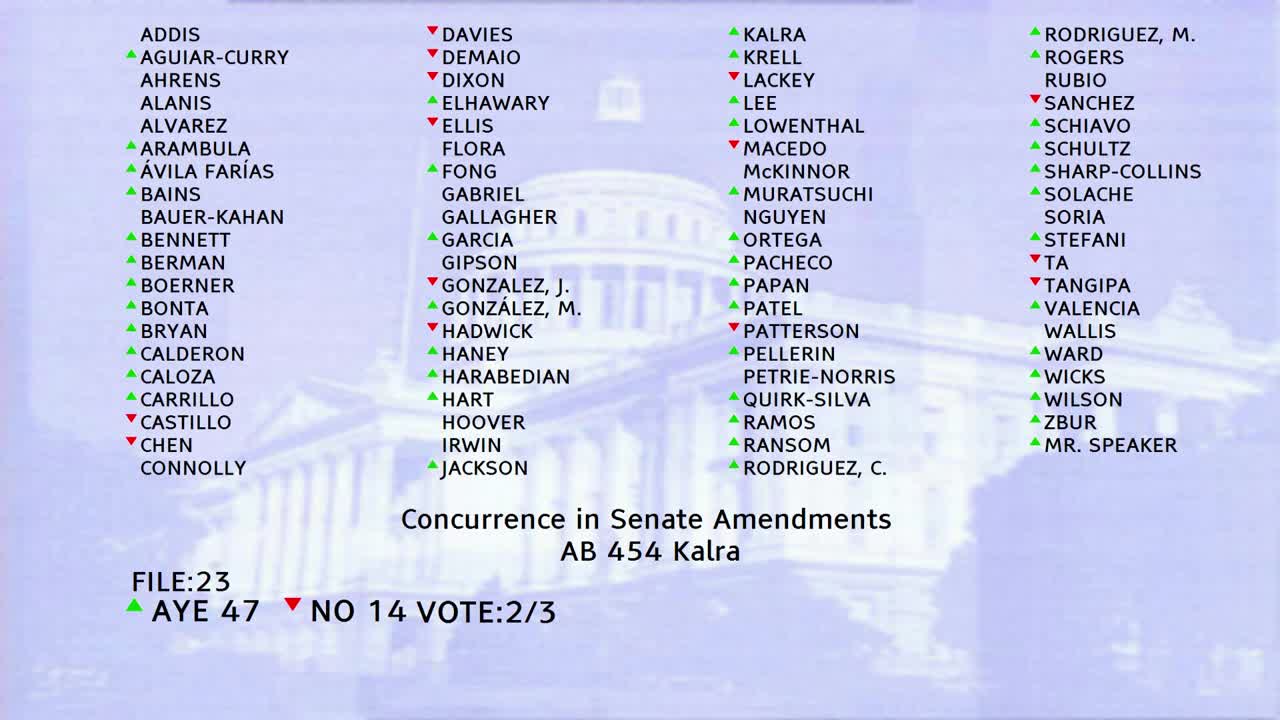
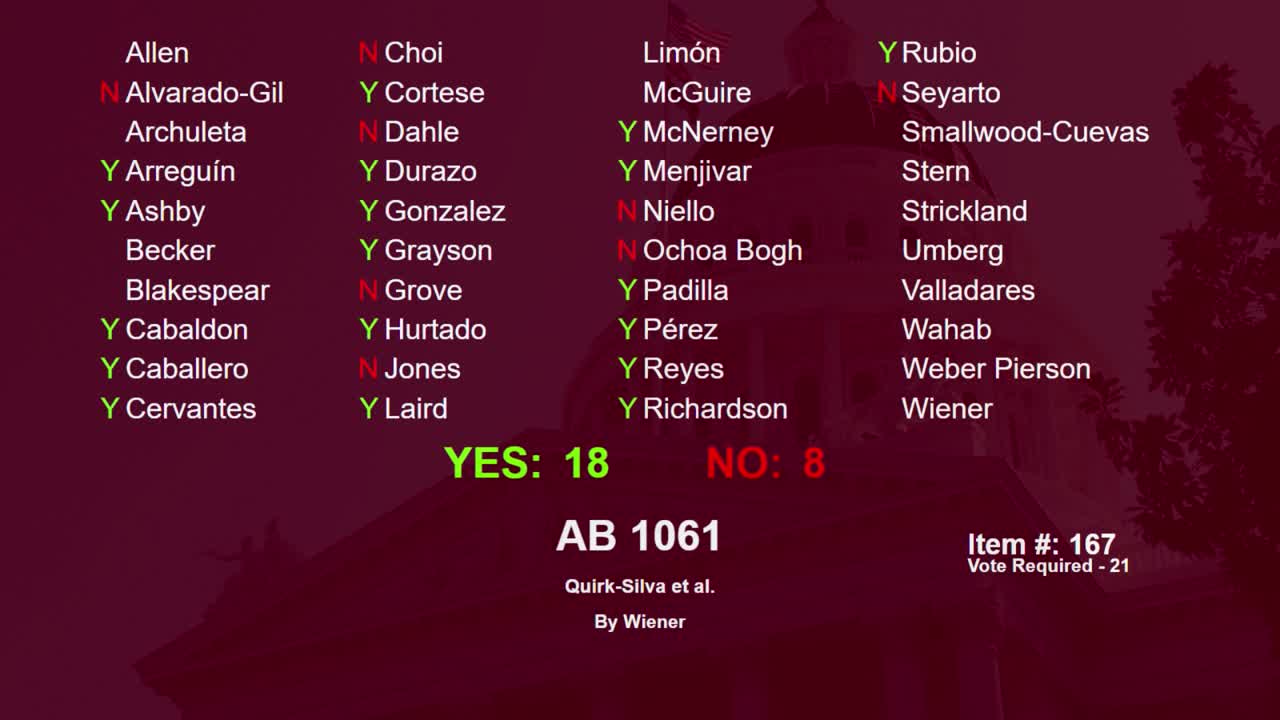
Bill Author