AB 871: Mandated reporters of suspected financial abuse of an elder or dependent adult.
- Session Year: 2025-2026
- House: Assembly
- Latest Version Date: 2026-09-20
Current Status:
Passed
(2026-09-20: Chaptered by Secretary of State - Chapter 360, Statutes of 2026.)
Introduced
In Committee
Awaiting First Chamber Vote
Passed First Chamber
In Committee
Awaiting Second Chamber Vote
Passed Second Chamber
Enacted
Existing law, the Elder Abuse and Dependent Adult Civil Protection Act, establishes procedures for the reporting, investigation, and prosecution of elder and dependent adult abuse. Existing law requires a mandated reporter of suspected financial abuse of an elder or dependent adult, as defined, to report financial abuse in a specified manner, including by telephone or through a confidential internet reporting tool, as specified, immediately, or as soon as practicably possible. If reported by telephone, existing law requires a written report to be sent, or an internet report to be made through the internet reporting tool, to the local adult protective services agency or the local law enforcement agency within 2 working days. Existing law deems all officers and employees of a financial institution to be mandated reporters of suspected financial abuse of an elder or dependent adult. A mandated reporter who fails to report financial abuse of an elder or dependent adult is liable for civil penalties, as specified.
If a report of financial abuse is made by a mandated reporter, as described above, this bill would also require a report to be made to the Federal Bureau of Investigation Internet Crime Complaint Center within 2 working days. Within 48 hours of filing a report, the bill would require a financial institution to notify the elder or dependent adult identified in the report, as specified, and provide additional required information. The bill would require a financial institution to provide annual training to its mandated reporters on how to escalate internally and report suspected financial abuse of an elder or a dependent adult to both local and federal authorities, as specified. The bill would specify that violations of these provisions would not incur the above-described liability for civil penalties. The bill would make its provisions operative on January 1, 2028.
Existing law, the Elder Abuse and Dependent Adult Civil Protection Act, establishes procedures for the reporting, investigation, and prosecution of elder and dependent adult abuse. Existing law requires a mandated reporter of suspected financial abuse of an elder or dependent adult, as defined, to report financial abuse in a specified manner, including by telephone or through a confidential internet reporting tool, as specified, immediately, or as soon as practicably possible. If reported by telephone, existing law requires a written report to be sent, or an internet report to be made through the internet reporting tool, to the local adult protective services agency or the local law enforcement agency within 2 working days. Existing law deems all officers and employees of a financial institution to be mandated reporters of suspected financial abuse of an elder or dependent adult. A mandated reporter who fails to report financial abuse of an elder or dependent adult is liable for civil penalties, as specified.
If a report of financial abuse is made by a mandated reporter, as described above, this bill would also require a report to be made to the Federal Bureau of Investigation Internet Crime Complaint Center within 2 working days. Within 48 hours of filing a report, the bill would require a financial institution to notify the elder or dependent adult identified in the report, as specified, and provide additional required information. The bill would require a financial institution to provide annual training to its mandated reporters on how to escalate internally and report suspected financial abuse of an elder or a dependent adult to both local and federal authorities, as specified. The bill would specify that violations of these provisions would not incur the above-described liability for civil penalties. The bill would make its provisions operative on January 1, 2028.
Existing law, the Elder Abuse and Dependent Adult Civil Protection Act, establishes procedures for the reporting, investigation, and prosecution of elder and dependent adult abuse. Existing law requires a mandated reporter of suspected financial abuse of an elder or dependent adult, as defined, to report financial abuse in a specified manner, including by telephone or through a confidential internet reporting tool, as specified, immediately, or as soon as practicably possible. If reported by telephone, existing law requires a written report to be sent, or an internet report to be made through the internet reporting tool, to the local adult protective services agency or the local law enforcement agency within 2 working days. Existing law deems specified persons all officers and employees of a financial institution to be mandated reporters of suspected financial abuse of an elder or dependent adult, including, among others, all officers and employees of a financial institution. adult. A mandated reporter who fails to report financial abuse of an elder or dependent adult is liable for civil penalties, as specified.
If a report of financial abuse is made by a mandated reporter, as described above, this bill would also require a report to be made to the Federal Bureau of Investigation Internet Crime Complaint Center within 2 working days. Within 48 hours of filing a report, the bill would require a financial institution to notify the elder or dependent adult identified in the report, as specified, and provide additional required information. The bill would require a financial institution to provide annual training to its mandated reporters on how to escalate internally and report suspected financial abuse of an elder or a dependent adult to both local and federal authorities, as specified. If suspected financial abuse of an elder or dependent adult is discovered within 48 hours of a transaction, the bill would require a financial institution to share information on reporting mechanisms, as specified, with the impacted elder or dependent adult within 24 to 48 hours. The bill would specify that violations of these provisions would not incur the above-described liability for civil penalties. The bill would make its provisions operative on January 1, 2028.
Existing law, the Elder Abuse and Dependent Adult Civil Protection Act, establishes procedures for the reporting, investigation, and prosecution of elder and dependent adult abuse. Existing law requires a mandated reporter of suspected financial abuse of an elder or dependent adult, as defined, to report financial abuse in a specified manner. manner, including by telephone or through a confidential internet reporting tool, as specified, immediately, or as soon as practicably possible. If reported by telephone, existing law requires a written report to be sent, or an internet report to be made through the internet reporting tool, to the local adult protective services agency or the local law enforcement agency within 2 working days. Existing law deems specified persons to be mandated reporters of suspected financial abuse of an elder or dependent adult, including, among others, all officers and employees of a financial institution. A mandated reporter who fails to report financial abuse of an elder or dependent adult is liable for civil penalties, as specified.
ThisIf a report of financial abuse is made by a mandated reporter, as described above, this bill would also require a report to be made to the Federal Bureau of Investigation Internet Crime Complaint Center within 2 working days. The bill would require a financial institution to provide annual training to its mandated reporters on how to escalate internally and report suspected financial abuse of an elder or a dependent adult to both local and federal authorities, as specified. The If suspected financial abuse of an elder or dependent adult is discovered within 48 hours of a transaction, the bill would require a financial institution to share information on reporting mechanisms with clients immediately upon discovering potential financial abuse and would require the financial institution to encourage clients to submit complaints mechanisms, as specified, with the impacted elder or dependent adult within 24 to 48 hours. Under the bill, a violation of the requirement to share that information upon discovering potential financial abuse The bill would specify that violations of these provisions would not incur the above-described civil liability. liability for civil penalties.
Existing law, the Elder Abuse and Dependent Adult Civil Protection Act, establishes procedures for the reporting, investigation, and prosecution of elder and dependent adult abuse. Existing law requires a mandated reporter of suspected financial abuse of an elder or dependent adult, as defined, to report financial abuse in a specified manner. Existing law deems specified persons to be mandated reporters of suspected financial abuse of an elder or dependent adult, including, among others, all officers and employees of a financial institution. A mandated reporter who fails to report financial abuse of an elder or dependent adult is liable for civil penalties, as specified.
This bill would require a financial institution to provide annual training to its mandated reporters on how to report suspected financial abuse of an elder or a dependent adult to both local and federal authorities, as specified. The bill would require a financial institution to share information on reporting mechanisms with clients immediately upon discovering potential financial abuse and would require the financial institution to encourage clients to submit complaints within 24 to 48 hours. Under the bill, a violation of the requirement to share that information upon discovering potential financial abuse would not incur the above-described civil liability.
(a)As used in this section, mandated reporter of suspected financial abuse of an elder or dependent adult means all officers and employees of financial institutions.
(b)As used in this section, the term financial institution means any of the following:
(1)A depository institution, as defined in Section 3(c) of the Federal Deposit Insurance Act (12 U.S.C. Sec. 1813(c)).
(2)An institution-affiliated party, as defined in Section 3(u) of the Federal Deposit Insurance Act (12 U.S.C. Sec. 1813(u)).
(3)A federal credit union or state credit union, as defined in Section 101 of the Federal Credit Union Act (12 U.S.C. Sec. 1752), including, but not limited to, an institution-affiliated party of a credit union, as defined in Section 206(r) of the Federal Credit Union Act (12 U.S.C. Sec. 1786(r)).
(c)As used in this section, financial abuse has the same meaning as in Section 15610.30.
(d)(1)(A)A mandated reporter of suspected financial abuse of an elder or dependent adult who has direct contact with the elder or dependent adult or who reviews or approves the elder or dependent adults financial documents, records, or transactions, in connection with providing financial services with respect to an elder or dependent adult, and who, within the scope of their employment or professional practice, has observed or has knowledge of an incident, that is directly related to the transaction or matter that is within that scope of employment or professional practice, that reasonably appears to be financial abuse, or who reasonably suspects that abuse, based solely on the information before them at the time of reviewing or approving the document, record, or transaction in the case of mandated reporters who do not have direct contact with the elder or dependent adult, shall report the known or suspected instance of financial abuse by telephone or through a confidential internet reporting tool, as authorized pursuant to Section 15658, immediately, or as soon as practicably possible.
(B)If reported by telephone, a written report shall be sent, or an internet report shall be made through the confidential internet reporting tool established in Section 15658, within two working days to the local adult protective services agency or the local law enforcement agency.
(2)When two or more mandated reporters jointly have knowledge or reasonably suspect that financial abuse of an elder or a dependent adult for which the report is mandated has occurred, and when there is an agreement among them, the telephone report or internet report, as authorized by Section 15658, may be made by a member of the reporting team who is selected by mutual agreement. A single report may be made and signed by the selected member of the reporting team. A member of the team who has knowledge that the member designated to report has failed to do so shall thereafter make that report.
(3)If the mandated reporter knows that the elder or dependent adult resides in a long-term care facility, as defined in Section 15610.47, the report shall be made to the local ombudsperson or local law enforcement agency.
(e)An allegation by the elder or dependent adult, or any other person, that financial abuse has occurred is not sufficient to trigger the reporting requirement under this section if both of the following conditions are met:
(1)The mandated reporter of suspected financial abuse of an elder or dependent adult is not aware of other corroborating or independent evidence of the alleged financial abuse of an elder or dependent adult. The mandated reporter of suspected financial abuse of an elder or dependent adult is not required to investigate any accusations.
(2)In the exercise of the mandated reporters professional judgment, the mandated reporter of suspected financial abuse of an elder or dependent adult reasonably believes that financial abuse of an elder or dependent adult did not occur.
(f)Failure to report financial abuse under this section shall be subject to a civil penalty not exceeding one thousand dollars ($1,000) or if the failure to report is willful, a civil penalty not exceeding five thousand dollars ($5,000), which shall be paid by the financial institution that is the employer of the mandated reporter to the party bringing the action. Subdivision (h) of Section 15630 shall not apply to violations of this section.
(g)(1)The civil penalty provided for in subdivision (f) shall be recovered only in a civil action brought against the financial institution by the Attorney General, district attorney, or county counsel. No action shall be brought under this section by any person other than the Attorney General, district attorney, or county counsel. Multiple actions for the civil penalty may not be brought for the same violation.
(2)Nothing in the Financial Elder Abuse Reporting Act of 2005 shall be construed to limit, expand, or otherwise modify any civil liability or remedy that may exist under this or any other law.
(h)As used in this section, suspected financial abuse of an elder or dependent adult occurs when a person who is required to report under subdivision (a) observes or has knowledge of behavior or unusual circumstances or transactions, or a pattern of behavior or unusual circumstances or transactions, that would lead an individual with like training or experience, based on the same facts, to form a reasonable belief that an elder or dependent adult is the victim of financial abuse as defined in Section 15610.30.
(i)Reports of suspected financial abuse of an elder or dependent adult made by an employee or officer of a financial institution pursuant to this section are covered under subdivision (b) of Section 47 of the Civil Code.
(j)(1)A mandated reporter of suspected financial abuse of an elder or dependent adult is authorized to not honor a power of attorney described in Division 4.5 (commencing with Section 4000) of the Probate Code as to an attorney-in-fact, if the mandated reporter of suspected financial abuse of an elder or dependent adult makes a report to an adult protective services agency or a local law enforcement agency of any state that the principal may be subject to financial abuse, as described in this chapter or as defined in similar laws of another state, by that attorney-in-fact or person acting for or with that attorney-in-fact.
(2)If a mandated reporter of suspected financial abuse of an elder or dependent adult does not honor a power of attorney as to an attorney-in-fact pursuant to paragraph (1), the power of attorney shall remain enforceable as to every other attorney-in-fact also designated in the power of attorney about whom a report has not been made.
(3)For purposes of this subdivision, the terms principal and attorney-in-fact shall have the same meanings as those terms are used in Division 4.5 (commencing with Section 4000) of the Probate Code.
(k)This section shall remain in effect only until January 1, 2028, and as of that date is repealed.
SEC. 2.Section 15630.1 is added to the Welfare and Institutions Code, to read:15630.1.(a)As used in this section, mandated reporter of suspected financial abuse of an elder or dependent adult means all officers and employees of financial institutions.
(b)As used in this section, the term financial institution means any of the following:
(1)A depository institution, as defined in Section 3(c) of the Federal Deposit Insurance Act (12 U.S.C. Sec. 1813(c)).
(2)An institution-affiliated party, as defined in Section 3(u) of the Federal Deposit Insurance Act (12 U.S.C. Sec. 1813(u)).
(3)A federal credit union or state credit union, as defined in Section 101 of the Federal Credit Union Act (12 U.S.C. Sec. 1752), including, but not limited to, an institution-affiliated party of a credit union, as defined in Section 206(r) of the Federal Credit Union Act (12 U.S.C. Sec. 1786(r)).
(c)As used in this section, financial abuse has the same meaning as in Section 15610.30.
(d)(1)(A)A mandated reporter of suspected financial abuse of an elder or dependent adult who has direct contact with the elder or dependent adult or who reviews or approves the elder or dependent adults financial documents, records, or transactions, in connection with providing financial services with respect to an elder or dependent adult, and who, within the scope of their employment or professional practice, has observed or has knowledge of an incident, that is directly related to the transaction or matter that is within that scope of employment or professional practice, that reasonably appears to be financial abuse, or who reasonably suspects that abuse, based solely on the information before them at the time of reviewing or approving the document, record, or transaction in the case of mandated reporters who do not have direct contact with the elder or dependent adult, shall report the known or suspected instance of financial abuse by telephone or through a confidential internet reporting tool, as authorized pursuant to Section 15658, immediately, or as soon as practicably possible.
(B)If reported by telephone, a written report shall be sent, or an internet report shall be made through the confidential internet reporting tool established in Section 15658, within two working days to the local adult protective services agency or the local law enforcement agency.
(C)(i)In addition to subparagraphs (A) and (B), a report shall be made to the Federal Bureau of Investigation Internet Crime Complaint Center within two working days.
(ii)A violation of this subparagraph is not subject to the civil penalties described in subdivision (f).
(2)When two or more mandated reporters jointly have knowledge or reasonably suspect that financial abuse of an elder or a dependent adult for which the report is mandated has occurred, and when there is an agreement among them, the telephone report or internet report, as authorized by Section 15658, may be made by a member of the reporting team who is selected by mutual agreement. A single report may be made and signed by the selected member of the reporting team. A member of the team who has knowledge that the member designated to report has failed to do so shall thereafter make that report.
(3)If the mandated reporter knows that the elder or dependent adult resides in a long-term care facility, as defined in Section 15610.47, the report shall be made to the local ombudsperson or local law enforcement agency.
(e)An allegation by the elder or dependent adult, or any other person, that financial abuse has occurred is not sufficient to trigger the reporting requirement under this section if both of the following conditions are met:
(1)The mandated reporter of suspected financial abuse of an elder or dependent adult is not aware of other corroborating or independent evidence of the alleged financial abuse of an elder or dependent adult. The mandated reporter of suspected financial abuse of an elder or dependent adult is not required to investigate any accusations.
(2)In the exercise of the mandated reporters professional judgment, the mandated reporter of suspected financial abuse of an elder or dependent adult reasonably believes that financial abuse of an elder or dependent adult did not occur.
(f)Failure to report financial abuse under this section shall be subject to a civil penalty not exceeding one thousand dollars ($1,000) or if the failure to report is willful, a civil penalty not exceeding five thousand dollars ($5,000), which shall be paid by the financial institution that is the employer of the mandated reporter to the party bringing the action. Subdivision (h) of Section 15630 shall not apply to violations of this section.
(g)(1)The civil penalty provided for in subdivision (f) shall be recovered only in a civil action brought against the financial institution by the Attorney General, district attorney, or county counsel. No action shall be brought under this section by any person other than the Attorney General, district attorney, or county counsel. Multiple actions for the civil penalty may not be brought for the same violation.
(2)Nothing in the Financial Elder Abuse Reporting Act of 2005 shall be construed to limit, expand, or otherwise modify any civil liability or remedy that may exist under this or any other law.
(h)As used in this section, suspected financial abuse of an elder or dependent adult occurs when a person who is required to report under subdivision (a) observes or has knowledge of behavior or unusual circumstances or transactions, or a pattern of behavior or unusual circumstances or transactions, that would lead an individual with like training or experience, based on the same facts, to form a reasonable belief that an elder or dependent adult is the victim of financial abuse as defined in Section 15610.30.
(i)Reports of suspected financial abuse of an elder or dependent adult made by an employee or officer of a financial institution pursuant to this section are covered under subdivision (b) of Section 47 of the Civil Code.
(j)(1)A mandated reporter of suspected financial abuse of an elder or dependent adult is authorized to not honor a power of attorney described in Division 4.5 (commencing with Section 4000) of the Probate Code as to an attorney-in-fact, if the mandated reporter of suspected financial abuse of an elder or dependent adult makes a report to an adult protective services agency or a local law enforcement agency of any state that the principal may be subject to financial abuse, as described in this chapter or as defined in similar laws of another state, by that attorney-in-fact or person acting for or with that attorney-in-fact.
(2)If a mandated reporter of suspected financial abuse of an elder or dependent adult does not honor a power of attorney as to an attorney-in-fact pursuant to paragraph (1), the power of attorney shall remain enforceable as to every other attorney-in-fact also designated in the power of attorney about whom a report has not been made.
(3)For purposes of this subdivision, the terms principal and attorney-in-fact shall have the same meanings as those terms are used in Division 4.5 (commencing with Section 4000) of the Probate Code.
(k)A financial institution shall provide annual training to its mandated reporters of suspected financial abuse of an elder or dependent adult on how to escalate internally and report suspected financial abuse of an elder or a dependent adult to both local and federal authorities, including, but not limited to, the Federal Bureau of Investigation Internet Crime Complaint Center and the Federal Trade Commission.
(l)(1)Within 48 hours of filing a report with the Federal Bureau of Investigation Internet Crime Complaint Center, as required by subdivision (d), a financial institution shall notify the elder or dependent adult identified in the report of all of the following information:
(A)That the financial institution filed a report on behalf of the elder or dependent adult.
(B)That the financial institution encourages the elder or dependent adult to also file a report with the Federal Bureau of Investigation Internet Crime Complaint Center and that the additional information the elder or dependent adult provides may aid law enforcement in the investigation of their complaint or similar complaints filed by other people.
(C)Contact information for the Federal Bureau of Investigation Internet Crime Complaint Center, including the web address to file a complaint.
(2)The financial institution shall deliver the notification required by paragraph (1) via the elder or dependent adults preferred method of communication, as recorded by the financial institution.
(3)A violation of this subdivision is not subject to the civil penalties described in subdivision (f).
(m)This section shall become operative on January 1, 2028.
(a)As used in this section, mandated reporter of suspected financial abuse of an elder or dependent adult means all officers and employees of financial institutions.
(b)As used in this section, the term financial institution means any of the following:
(1)A depository institution, as defined in Section 3(c) of the Federal Deposit Insurance Act (12 U.S.C. Sec. 1813(c)).
(2)An institution-affiliated party, as defined in Section 3(u) of the Federal Deposit Insurance Act (12 U.S.C. Sec. 1813(u)).
(3)A federal credit union or state credit union, as defined in Section 101 of the Federal Credit Union Act (12 U.S.C. Sec. 1752), including, but not limited to, an institution-affiliated party of a credit union, as defined in Section 206(r) of the Federal Credit Union Act (12 U.S.C. Sec. 1786(r)).
(c)As used in this section, financial abuse has the same meaning as in Section 15610.30.
(d)(1)(A)A mandated reporter of suspected financial abuse of an elder or dependent adult who has direct contact with the elder or dependent adult or who reviews or approves the elder or dependent adults financial documents, records, or transactions, in connection with providing financial services with respect to an elder or dependent adult, and who, within the scope of their employment or professional practice, has observed or has knowledge of an incident, that is directly related to the transaction or matter that is within that scope of employment or professional practice, that reasonably appears to be financial abuse, or who reasonably suspects that abuse, based solely on the information before them at the time of reviewing or approving the document, record, or transaction in the case of mandated reporters who do not have direct contact with the elder or dependent adult, shall report the known or suspected instance of financial abuse by telephone or through a confidential internet reporting tool, as authorized pursuant to Section 15658, immediately, or as soon as practicably possible.
(B)If reported by telephone, a written report shall be sent, or an internet report shall be made through the confidential internet reporting tool established in Section 15658, within two working days to the local adult protective services agency or the local law enforcement agency.
(2)When two or more mandated reporters jointly have knowledge or reasonably suspect that financial abuse of an elder or a dependent adult for which the report is mandated has occurred, and when there is an agreement among them, the telephone report or internet report, as authorized by Section 15658, may be made by a member of the reporting team who is selected by mutual agreement. A single report may be made and signed by the selected member of the reporting team. A member of the team who has knowledge that the member designated to report has failed to do so shall thereafter make that report.
(3)If the mandated reporter knows that the elder or dependent adult resides in a long-term care facility, as defined in Section 15610.47, the report shall be made to the local ombudsperson or local law enforcement agency.
(e)An allegation by the elder or dependent adult, or any other person, that financial abuse has occurred is not sufficient to trigger the reporting requirement under this section if both of the following conditions are met:
(1)The mandated reporter of suspected financial abuse of an elder or dependent adult is not aware of other corroborating or independent evidence of the alleged financial abuse of an elder or dependent adult. The mandated reporter of suspected financial abuse of an elder or dependent adult is not required to investigate any accusations.
(2)In the exercise of the mandated reporters professional judgment, the mandated reporter of suspected financial abuse of an elder or dependent adult reasonably believes that financial abuse of an elder or dependent adult did not occur.
(f)Failure to report financial abuse under this section shall be subject to a civil penalty not exceeding one thousand dollars ($1,000) or if the failure to report is willful, a civil penalty not exceeding five thousand dollars ($5,000), which shall be paid by the financial institution that is the employer of the mandated reporter to the party bringing the action. Subdivision (h) of Section 15630 shall not apply to violations of this section.
(g)(1)The civil penalty provided for in subdivision (f) shall be recovered only in a civil action brought against the financial institution by the Attorney General, district attorney, or county counsel. No action shall be brought under this section by any person other than the Attorney General, district attorney, or county counsel. Multiple actions for the civil penalty may not be brought for the same violation.
(2)Nothing in the Financial Elder Abuse Reporting Act of 2005 shall be construed to limit, expand, or otherwise modify any civil liability or remedy that may exist under this or any other law.
(h)As used in this section, suspected financial abuse of an elder or dependent adult occurs when a person who is required to report under subdivision (a) observes or has knowledge of behavior or unusual circumstances or transactions, or a pattern of behavior or unusual circumstances or transactions, that would lead an individual with like training or experience, based on the same facts, to form a reasonable belief that an elder or dependent adult is the victim of financial abuse as defined in Section 15610.30.
(i)Reports of suspected financial abuse of an elder or dependent adult made by an employee or officer of a financial institution pursuant to this section are covered under subdivision (b) of Section 47 of the Civil Code.
(j)(1)A mandated reporter of suspected financial abuse of an elder or dependent adult is authorized to not honor a power of attorney described in Division 4.5 (commencing with Section 4000) of the Probate Code as to an attorney-in-fact, if the mandated reporter of suspected financial abuse of an elder or dependent adult makes a report to an adult protective services agency or a local law enforcement agency of any state that the principal may be subject to financial abuse, as described in this chapter or as defined in similar laws of another state, by that attorney-in-fact or person acting for or with that attorney-in-fact.
(2)If a mandated reporter of suspected financial abuse of an elder or dependent adult does not honor a power of attorney as to an attorney-in-fact pursuant to paragraph (1), the power of attorney shall remain enforceable as to every other attorney-in-fact also designated in the power of attorney about whom a report has not been made.
(3)For purposes of this subdivision, the terms principal and attorney-in-fact shall have the same meanings as those terms are used in Division 4.5 (commencing with Section 4000) of the Probate Code.
(k)This section shall remain in effect only until January 1, 2028, and as of that date is repealed.
SEC. 2.Section 15630.1 is added to the Welfare and Institutions Code, to read:15630.1.(a)As used in this section, mandated reporter of suspected financial abuse of an elder or dependent adult means all officers and employees of financial institutions.
(b)As used in this section, the term financial institution means any of the following:
(1)A depository institution, as defined in Section 3(c) of the Federal Deposit Insurance Act (12 U.S.C. Sec. 1813(c)).
(2)An institution-affiliated party, as defined in Section 3(u) of the Federal Deposit Insurance Act (12 U.S.C. Sec. 1813(u)).
(3)A federal credit union or state credit union, as defined in Section 101 of the Federal Credit Union Act (12 U.S.C. Sec. 1752), including, but not limited to, an institution-affiliated party of a credit union, as defined in Section 206(r) of the Federal Credit Union Act (12 U.S.C. Sec. 1786(r)).
(c)As used in this section, financial abuse has the same meaning as in Section 15610.30.
(d)(1)(A)A mandated reporter of suspected financial abuse of an elder or dependent adult who has direct contact with the elder or dependent adult or who reviews or approves the elder or dependent adults financial documents, records, or transactions, in connection with providing financial services with respect to an elder or dependent adult, and who, within the scope of their employment or professional practice, has observed or has knowledge of an incident, that is directly related to the transaction or matter that is within that scope of employment or professional practice, that reasonably appears to be financial abuse, or who reasonably suspects that abuse, based solely on the information before them at the time of reviewing or approving the document, record, or transaction in the case of mandated reporters who do not have direct contact with the elder or dependent adult, shall report the known or suspected instance of financial abuse by telephone or through a confidential internet reporting tool, as authorized pursuant to Section 15658, immediately, or as soon as practicably possible.
(B)If reported by telephone, a written report shall be sent, or an internet report shall be made through the confidential internet reporting tool established in Section 15658, within two working days to the local adult protective services agency or the local law enforcement agency.
(C)(i)In addition to subparagraphs (A) and (B), a report shall be made to the Federal Bureau of Investigation Internet Crime Complaint Center within two working days.
(ii)A violation of this subparagraph is not subject to the civil penalties described in subdivision (f).
(2)When two or more mandated reporters jointly have knowledge or reasonably suspect that financial abuse of an elder or a dependent adult for which the report is mandated has occurred, and when there is an agreement among them, the telephone report or internet report, as authorized by Section 15658, may be made by a member of the reporting team who is selected by mutual agreement. A single report may be made and signed by the selected member of the reporting team. A member of the team who has knowledge that the member designated to report has failed to do so shall thereafter make that report.
(3)If the mandated reporter knows that the elder or dependent adult resides in a long-term care facility, as defined in Section 15610.47, the report shall be made to the local ombudsperson or local law enforcement agency.
(e)An allegation by the elder or dependent adult, or any other person, that financial abuse has occurred is not sufficient to trigger the reporting requirement under this section if both of the following conditions are met:
(1)The mandated reporter of suspected financial abuse of an elder or dependent adult is not aware of other corroborating or independent evidence of the alleged financial abuse of an elder or dependent adult. The mandated reporter of suspected financial abuse of an elder or dependent adult is not required to investigate any accusations.
(2)In the exercise of the mandated reporters professional judgment, the mandated reporter of suspected financial abuse of an elder or dependent adult reasonably believes that financial abuse of an elder or dependent adult did not occur.
(f)Failure to report financial abuse under this section shall be subject to a civil penalty not exceeding one thousand dollars ($1,000) or if the failure to report is willful, a civil penalty not exceeding five thousand dollars ($5,000), which shall be paid by the financial institution that is the employer of the mandated reporter to the party bringing the action. Subdivision (h) of Section 15630 shall not apply to violations of this section.
(g)(1)The civil penalty provided for in subdivision (f) shall be recovered only in a civil action brought against the financial institution by the Attorney General, district attorney, or county counsel. No action shall be brought under this section by any person other than the Attorney General, district attorney, or county counsel. Multiple actions for the civil penalty may not be brought for the same violation.
(2)Nothing in the Financial Elder Abuse Reporting Act of 2005 shall be construed to limit, expand, or otherwise modify any civil liability or remedy that may exist under this or any other law.
(h)As used in this section, suspected financial abuse of an elder or dependent adult occurs when a person who is required to report under subdivision (a) observes or has knowledge of behavior or unusual circumstances or transactions, or a pattern of behavior or unusual circumstances or transactions, that would lead an individual with like training or experience, based on the same facts, to form a reasonable belief that an elder or dependent adult is the victim of financial abuse as defined in Section 15610.30.
(i)Reports of suspected financial abuse of an elder or dependent adult made by an employee or officer of a financial institution pursuant to this section are covered under subdivision (b) of Section 47 of the Civil Code.
(j)(1)A mandated reporter of suspected financial abuse of an elder or dependent adult is authorized to not honor a power of attorney described in Division 4.5 (commencing with Section 4000) of the Probate Code as to an attorney-in-fact, if the mandated reporter of suspected financial abuse of an elder or dependent adult makes a report to an adult protective services agency or a local law enforcement agency of any state that the principal may be subject to financial abuse, as described in this chapter or as defined in similar laws of another state, by that attorney-in-fact or person acting for or with that attorney-in-fact.
(2)If a mandated reporter of suspected financial abuse of an elder or dependent adult does not honor a power of attorney as to an attorney-in-fact pursuant to paragraph (1), the power of attorney shall remain enforceable as to every other attorney-in-fact also designated in the power of attorney about whom a report has not been made.
(3)For purposes of this subdivision, the terms principal and attorney-in-fact shall have the same meanings as those terms are used in Division 4.5 (commencing with Section 4000) of the Probate Code.
(k)A financial institution shall provide annual training to its mandated reporters of suspected financial abuse of an elder or dependent adult on how to escalate internally and report suspected financial abuse of an elder or a dependent adult to both local and federal authorities, including, but not limited to, the Federal Bureau of Investigation Internet Crime Complaint Center and the Federal Trade Commission.
(l)(1)Within 48 hours of filing a report with the Federal Bureau of Investigation Internet Crime Complaint Center, as required by subdivision (d), a financial institution shall notify the elder or dependent adult identified in the report of all of the following information:
(A)That the financial institution filed a report on behalf of the elder or dependent adult.
(B)That the financial institution encourages the elder or dependent adult to also file a report with the Federal Bureau of Investigation Internet Crime Complaint Center and that the additional information the elder or dependent adult provides may aid law enforcement in the investigation of their complaint or similar complaints filed by other people.
(C)Contact information for the Federal Bureau of Investigation Internet Crime Complaint Center, including the web address to file a complaint.
(2)The financial institution shall deliver the notification required by paragraph (1) via the elder or dependent adults preferred method of communication, as recorded by the financial institution.
(3)A violation of this subdivision is not subject to the civil penalties described in subdivision (f).
(m)This section shall become operative on January 1, 2028.
(a)As used in this section, mandated reporter of suspected financial abuse of an elder or dependent adult means all officers and employees of financial institutions.
(b)As used in this section, the term financial institution means any of the following:
(1)A depository institution, as defined in Section 3(c) of the Federal Deposit Insurance Act (12 U.S.C. Sec. 1813(c)).
(2)An institution-affiliated party, as defined in Section 3(u) of the Federal Deposit Insurance Act (12 U.S.C. Sec. 1813(u)).
(3)A federal credit union or state credit union, as defined in Section 101 of the Federal Credit Union Act (12 U.S.C. Sec. 1752), including, but not limited to, an institution-affiliated party of a credit union, as defined in Section 206(r) of the Federal Credit Union Act (12 U.S.C. Sec. 1786(r)).
(c)As used in this section, financial abuse has the same meaning as in Section 15610.30.
(d)(1)Any (A)A mandated reporter of suspected financial abuse of an elder or dependent adult who has direct contact with the elder or dependent adult or who reviews or approves the elder or dependent adults financial documents, records, or transactions, in connection with providing financial services with respect to an elder or dependent adult, and who, within the scope of his or her their employment or professional practice, has observed or has knowledge of an incident, that is directly related to the transaction or matter that is within that scope of employment or professional practice, that reasonably appears to be financial abuse, or who reasonably suspects that abuse, based solely on the information before him or her them at the time of reviewing or approving the document, record, or transaction in the case of mandated reporters who do not have direct contact with the elder or dependent adult, shall report the known or suspected instance of financial abuse by telephone or through a confidential Internet internet reporting tool, as authorized pursuant to Section 15658, immediately, or as soon as practicably possible. If
(B)If reported by telephone, a written report shall be sent, or an Internet internet report shall be made through the confidential Internet internet reporting tool established in Section 15658, within two working days to the local adult protective services agency or the local law enforcement agency.
(2)When two or more mandated reporters jointly have knowledge or reasonably suspect that financial abuse of an elder or a dependent adult for which the report is mandated has occurred, and when there is an agreement among them, the telephone report or Internet internet report, as authorized by Section 15658, may be made by a member of the reporting team who is selected by mutual agreement. A single report may be made and signed by the selected member of the reporting team. Any A member of the team who has knowledge that the member designated to report has failed to do so shall thereafter make that report.
(3)If the mandated reporter knows that the elder or dependent adult resides in a long-term care facility, as defined in Section 15610.47, the report shall be made to the local ombudsman ombudsperson or local law enforcement agency.
(e)An allegation by the elder or dependent adult, or any other person, that financial abuse has occurred is not sufficient to trigger the reporting requirement under this section if both of the following conditions are met:
(1)The mandated reporter of suspected financial abuse of an elder or dependent adult is not aware of no other corroborating or independent evidence of the alleged financial abuse of an elder or dependent adult. The mandated reporter of suspected financial abuse of an elder or dependent adult is not required to investigate any accusations.
(2)In the exercise of his or her the mandated reporters professional judgment, the mandated reporter of suspected financial abuse of an elder or dependent adult reasonably believes that financial abuse of an elder or dependent adult did not occur.
(f)Failure to report financial abuse under this section shall be subject to a civil penalty not exceeding one thousand dollars ($1,000) or if the failure to report is willful, a civil penalty not exceeding five thousand dollars ($5,000), which shall be paid by the financial institution that is the employer of the mandated reporter to the party bringing the action. Subdivision (h) of Section 15630 shall not apply to violations of this section.
(g)(1)The civil penalty provided for in subdivision (f) shall be recovered only in a civil action brought against the financial institution by the Attorney General, district attorney, or county counsel. No action shall be brought under this section by any person other than the Attorney General, district attorney, or county counsel. Multiple actions for the civil penalty may not be brought for the same violation.
(2)Nothing in the Financial Elder Abuse Reporting Act of 2005 shall be construed to limit, expand, or otherwise modify any civil liability or remedy that may exist under this or any other law.
(h)As used in this section, suspected financial abuse of an elder or dependent adult occurs when a person who is required to report under subdivision (a) observes or has knowledge of behavior or unusual circumstances or transactions, or a pattern of behavior or unusual circumstances or transactions, that would lead an individual with like training or experience, based on the same facts, to form a reasonable belief that an elder or dependent adult is the victim of financial abuse as defined in Section 15610.30.
(i)Reports of suspected financial abuse of an elder or dependent adult made by an employee or officer of a financial institution pursuant to this section are covered under subdivision (b) of Section 47 of the Civil Code.
(j)(1)A mandated reporter of suspected financial abuse of an elder or dependent adult is authorized to not honor a power of attorney described in Division 4.5 (commencing with Section 4000) of the Probate Code as to an attorney-in-fact, if the mandated reporter of suspected financial abuse of an elder or dependent adult makes a report to an adult protective services agency or a local law enforcement agency of any state that the principal may be subject to financial abuse, as described in this chapter or as defined in similar laws of another state, by that attorney-in-fact or person acting for or with that attorney-in-fact.
(2)If a mandated reporter of suspected financial abuse of an elder or dependent adult does not honor a power of attorney as to an attorney-in-fact pursuant to paragraph (1), the power of attorney shall remain enforceable as to every other attorney-in-fact also designated in the power of attorney about whom a report has not been made.
(3)For purposes of this subdivision, the terms principal and attorney-in-fact shall have the same meanings as those terms are used in Division 4.5 (commencing with Section 4000) of the Probate Code.
(k)This section shall remain in effect only until January 1, 2028, and as of that date is repealed.
SEC. 2.Section 15630.1 is added to the Welfare and Institutions Code, to read:15630.1.(a)As used in this section, mandated reporter of suspected financial abuse of an elder or dependent adult means all officers and employees of financial institutions.
(b)As used in this section, the term financial institution means any of the following:
(1)A depository institution, as defined in Section 3(c) of the Federal Deposit Insurance Act (12 U.S.C. Sec. 1813(c)).
(2)An institution-affiliated party, as defined in Section 3(u) of the Federal Deposit Insurance Act (12 U.S.C. Sec. 1813(u)).
(3)A federal credit union or state credit union, as defined in Section 101 of the Federal Credit Union Act (12 U.S.C. Sec. 1752), including, but not limited to, an institution-affiliated party of a credit union, as defined in Section 206(r) of the Federal Credit Union Act (12 U.S.C. Sec. 1786(r)).
(c)As used in this section, financial abuse has the same meaning as in Section 15610.30.
(d)(1)(A)A mandated reporter of suspected financial abuse of an elder or dependent adult who has direct contact with the elder or dependent adult or who reviews or approves the elder or dependent adults financial documents, records, or transactions, in connection with providing financial services with respect to an elder or dependent adult, and who, within the scope of their employment or professional practice, has observed or has knowledge of an incident, that is directly related to the transaction or matter that is within that scope of employment or professional practice, that reasonably appears to be financial abuse, or who reasonably suspects that abuse, based solely on the information before them at the time of reviewing or approving the document, record, or transaction in the case of mandated reporters who do not have direct contact with the elder or dependent adult, shall report the known or suspected instance of financial abuse by telephone or through a confidential internet reporting tool, as authorized pursuant to Section 15658, immediately, or as soon as practicably possible.
(B)If reported by telephone, a written report shall be sent, or an internet report shall be made through the confidential internet reporting tool established in Section 15658, within two working days to the local adult protective services agency or the local law enforcement agency.
(C)(i)In addition to subparagraphs (A) and (B), a report shall be made to the Federal Bureau of Investigation Internet Crime Complaint Center within two working days.
(ii)A violation of this subparagraph is not subject to the civil penalties described in subdivision (f).
(2)When two or more mandated reporters jointly have knowledge or reasonably suspect that financial abuse of an elder or a dependent adult for which the report is mandated has occurred, and when there is an agreement among them, the telephone report or internet report, as authorized by Section 15658, may be made by a member of the reporting team who is selected by mutual agreement. A single report may be made and signed by the selected member of the reporting team. A member of the team who has knowledge that the member designated to report has failed to do so shall thereafter make that report.
(3)If the mandated reporter knows that the elder or dependent adult resides in a long-term care facility, as defined in Section 15610.47, the report shall be made to the local ombudsperson or local law enforcement agency.
(e)An allegation by the elder or dependent adult, or any other person, that financial abuse has occurred is not sufficient to trigger the reporting requirement under this section if both of the following conditions are met:
(1)The mandated reporter of suspected financial abuse of an elder or dependent adult is not aware of other corroborating or independent evidence of the alleged financial abuse of an elder or dependent adult. The mandated reporter of suspected financial abuse of an elder or dependent adult is not required to investigate any accusations.
(2)In the exercise of the mandated reporters professional judgment, the mandated reporter of suspected financial abuse of an elder or dependent adult reasonably believes that financial abuse of an elder or dependent adult did not occur.
(f)Failure to report financial abuse under this section shall be subject to a civil penalty not exceeding one thousand dollars ($1,000) or if the failure to report is willful, a civil penalty not exceeding five thousand dollars ($5,000), which shall be paid by the financial institution that is the employer of the mandated reporter to the party bringing the action. Subdivision (h) of Section 15630 shall not apply to violations of this section.
(g)(1)The civil penalty provided for in subdivision (f) shall be recovered only in a civil action brought against the financial institution by the Attorney General, district attorney, or county counsel. No action shall be brought under this section by any person other than the Attorney General, district attorney, or county counsel. Multiple actions for the civil penalty may not be brought for the same violation.
(2)Nothing in the Financial Elder Abuse Reporting Act of 2005 shall be construed to limit, expand, or otherwise modify any civil liability or remedy that may exist under this or any other law.
(h)As used in this section, suspected financial abuse of an elder or dependent adult occurs when a person who is required to report under subdivision (a) observes or has knowledge of behavior or unusual circumstances or transactions, or a pattern of behavior or unusual circumstances or transactions, that would lead an individual with like training or experience, based on the same facts, to form a reasonable belief that an elder or dependent adult is the victim of financial abuse as defined in Section 15610.30.
(i)Reports of suspected financial abuse of an elder or dependent adult made by an employee or officer of a financial institution pursuant to this section are covered under subdivision (b) of Section 47 of the Civil Code.
(j)(1)A mandated reporter of suspected financial abuse of an elder or dependent adult is authorized to not honor a power of attorney described in Division 4.5 (commencing with Section 4000) of the Probate Code as to an attorney-in-fact, if the mandated reporter of suspected financial abuse of an elder or dependent adult makes a report to an adult protective services agency or a local law enforcement agency of any state that the principal may be subject to financial abuse, as described in this chapter or as defined in similar laws of another state, by that attorney-in-fact or person acting for or with that attorney-in-fact.
(2)If a mandated reporter of suspected financial abuse of an elder or dependent adult does not honor a power of attorney as to an attorney-in-fact pursuant to paragraph (1), the power of attorney shall remain enforceable as to every other attorney-in-fact also designated in the power of attorney about whom a report has not been made.
(3)For purposes of this subdivision, the terms principal and attorney-in-fact shall have the same meanings as those terms are used in Division 4.5 (commencing with Section 4000) of the Probate Code.
(k)A financial institution shall provide annual training to its mandated reporters of suspected financial abuse of an elder or dependent adult on how to escalate internally and report suspected financial abuse of an elder or a dependent adult to both local and federal authorities, including, but not limited to, the Federal Bureau of Investigation Internet Crime Complaint Center and the Federal Trade Commission.
(l)(1)Within 48 hours of filing a report with the Federal Bureau of Investigation Internet Crime Complaint Center, as required by subdivision (d), a financial institution shall notify the elder or dependent adult identified in the report of all of the following information:
(A)That the financial institution filed a report on behalf of the elder or dependent adult.
(B)That the financial institution encourages the elder or dependent adult to also file a report with the Federal Bureau of Investigation Internet Crime Complaint Center and that the additional information the elder or dependent adult provides may aid law enforcement in the investigation of their complaint or similar complaints filed by other people.
(C)Contact information for the Federal Bureau of Investigation Internet Crime Complaint Center, including the web address to file a complaint.
(2)The financial institution shall deliver the notification required by paragraph (1) via the elder or dependent adults preferred method of communication, as recorded by the financial institution.
(3)A violation of this subdivision is not subject to the civil penalties described in subdivision (f).
(m)This section shall become operative on January 1, 2028.
SECTION 1.Section 15630.1 of the Welfare and Institutions Code is amended to read:15630.1.(a)As used in this section, mandated reporter of suspected financial abuse of an elder or dependent adult means all officers and employees of financial institutions.(b)As used in this section, the term financial institution means any of the following:(1)A depository institution, as defined in Section 3(c) of the Federal Deposit Insurance Act (12 U.S.C. Sec. 1813(c)).(2)An institution-affiliated party, as defined in Section 3(u) of the Federal Deposit Insurance Act (12 U.S.C. Sec. 1813(u)).(3)A federal credit union or state credit union, as defined in Section 101 of the Federal Credit Union Act (12 U.S.C. Sec. 1752), including, but not limited to, an institution-affiliated party of a credit union, as defined in Section 206(r) of the Federal Credit Union Act (12 U.S.C. Sec. 1786(r)).(c)As used in this section, financial abuse has the same meaning as in Section 15610.30.(d)(1)(A)Any mandated reporter of suspected financial abuse of an elder or dependent adult who has direct contact with the elder or dependent adult or who reviews or approves the elder or dependent adults financial documents, records, or transactions, in connection with providing financial services with respect to an elder or dependent adult, and who, within the scope of their employment or professional practice, has observed or has knowledge of an incident, that is directly related to the transaction or matter that is within that scope of employment or professional practice, that reasonably appears to be financial abuse, or who reasonably suspects that abuse, based solely on the information before them at the time of reviewing or approving the document, record, or transaction in the case of mandated reporters who do not have direct contact with the elder or dependent adult, shall report the known or suspected instance of financial abuse by telephone or through a confidential internet reporting tool, as authorized pursuant to Section 15658, immediately, or as soon as practicably possible.(B)If reported by telephone, a written report shall be sent, or an internet report shall be made through the confidential internet reporting tool established in Section 15658, within two working days to the local adult protective services agency or the local law enforcement agency.(C)(i)In addition to subparagraphs (A) and (B), a report shall be made to the Federal Bureau of Investigation Internet Crime Complaint Center within two working days.(ii)A violation of this subparagraph is not subject to the civil penalties described in subdivision (f).(2)When two or more mandated reporters jointly have knowledge or reasonably suspect that financial abuse of an elder or a dependent adult for which the report is mandated has occurred, and when there is an agreement among them, the telephone report or internet report, as authorized by Section 15658, may be made by a member of the reporting team who is selected by mutual agreement. A single report may be made and signed by the selected member of the reporting team. A member of the team who has knowledge that the member designated to report has failed to do so shall thereafter make that report.(3)If the mandated reporter knows that the elder or dependent adult resides in a long-term care facility, as defined in Section 15610.47, the report shall be made to the local ombudsperson or local law enforcement agency.(e)An allegation by the elder or dependent adult, or any other person, that financial abuse has occurred is not sufficient to trigger the reporting requirement under this section if both of the following conditions are met:(1)The mandated reporter of suspected financial abuse of an elder or dependent adult is not aware of other corroborating or independent evidence of the alleged financial abuse of an elder or dependent adult. The mandated reporter of suspected financial abuse of an elder or dependent adult is not required to investigate any accusations.(2)In the exercise of the mandated reporters professional judgment, the mandated reporter of suspected financial abuse of an elder or dependent adult reasonably believes that financial abuse of an elder or dependent adult did not occur.(f)Failure to report financial abuse under this section shall be subject to a civil penalty not exceeding one thousand dollars ($1,000) or if the failure to report is willful, a civil penalty not exceeding five thousand dollars ($5,000), which shall be paid by the financial institution that is the employer of the mandated reporter to the party bringing the action. Subdivision (h) of Section 15630 shall not apply to violations of this section.(g)(1)The civil penalty provided for in subdivision (f) shall be recovered only in a civil action brought against the financial institution by the Attorney General, district attorney, or county counsel. No action shall be brought under this section by any person other than the Attorney General, district attorney, or county counsel. Multiple actions for the civil penalty may not be brought for the same violation.(2)Nothing in the Financial Elder Abuse Reporting Act of 2005 shall be construed to limit, expand, or otherwise modify any civil liability or remedy that may exist under this or any other law.(h)As used in this section, suspected financial abuse of an elder or dependent adult occurs when a person who is required to report under subdivision (a) observes or has knowledge of behavior or unusual circumstances or transactions, or a pattern of behavior or unusual circumstances or transactions, that would lead an individual with like training or experience, based on the same facts, to form a reasonable belief that an elder or dependent adult is the victim of financial abuse as defined in Section 15610.30.(i)Reports of suspected financial abuse of an elder or dependent adult made by an employee or officer of a financial institution pursuant to this section are covered under subdivision (b) of Section 47 of the Civil Code.(j)(1)A mandated reporter of suspected financial abuse of an elder or dependent adult is authorized to not honor a power of attorney described in Division 4.5 (commencing with Section 4000) of the Probate Code as to an attorney-in-fact, if the mandated reporter of suspected financial abuse of an elder or dependent adult makes a report to an adult protective services agency or a local law enforcement agency of any state that the principal may be subject to financial abuse, as described in this chapter or as defined in similar laws of another state, by that attorney-in-fact or person acting for or with that attorney-in-fact.(2)If a mandated reporter of suspected financial abuse of an elder or dependent adult does not honor a power of attorney as to an attorney-in-fact pursuant to paragraph (1), the power of attorney shall remain enforceable as to every other attorney-in-fact also designated in the power of attorney about whom a report has not been made.(3)For purposes of this subdivision, the terms principal and attorney-in-fact shall have the same meanings as those terms are used in Division 4.5 (commencing with Section 4000) of the Probate Code.(k)(1)A financial institution shall provide annual training to its mandated reporters of suspected financial abuse of an elder or dependent adult on how to escalate internally and report suspected financial abuse of an elder or a dependent adult to both local and federal authorities, including, but not limited to, the Federal Bureau of Investigation Internet Crime Complaint Center and the Federal Trade Commission.(2)If suspected financial abuse of an elder or dependent adult is discovered within 48 hours of a transaction, a financial institution shall share information on reporting mechanisms, including, but not limited to, the Federal Trade Commission reporting mechanism, with the impacted elder or dependent adult within 24 to 48 hours. A violation of this paragraph is not subject to the civil penalties described in subdivision (f).(a)As used in this section, mandated reporter of suspected financial abuse of an elder or dependent adult means all officers and employees of financial institutions.
(b)As used in this section, the term financial institution means any of the following:
(1)A depository institution, as defined in Section 3(c) of the Federal Deposit Insurance Act (12 U.S.C. Sec. 1813(c)).
(2)An institution-affiliated party, as defined in Section 3(u) of the Federal Deposit Insurance Act (12 U.S.C. Sec. 1813(u)).
(3)A federal credit union or state credit union, as defined in Section 101 of the Federal Credit Union Act (12 U.S.C. Sec. 1752), including, but not limited to, an institution-affiliated party of a credit union, as defined in Section 206(r) of the Federal Credit Union Act (12 U.S.C. Sec. 1786(r)).
(c)As used in this section, financial abuse has the same meaning as in Section 15610.30.
(d)(1)(A)Any mandated reporter of suspected financial abuse of an elder or dependent adult who has direct contact with the elder or dependent adult or who reviews or approves the elder or dependent adults financial documents, records, or transactions, in connection with providing financial services with respect to an elder or dependent adult, and who, within the scope of their employment or professional practice, has observed or has knowledge of an incident, that is directly related to the transaction or matter that is within that scope of employment or professional practice, that reasonably appears to be financial abuse, or who reasonably suspects that abuse, based solely on the information before them at the time of reviewing or approving the document, record, or transaction in the case of mandated reporters who do not have direct contact with the elder or dependent adult, shall report the known or suspected instance of financial abuse by telephone or through a confidential internet reporting tool, as authorized pursuant to Section 15658, immediately, or as soon as practicably possible. If
(B)If reported by telephone, a written report shall be sent, or an internet report shall be made through the confidential internet reporting tool established in Section 15658, within two working days to the local adult protective services agency or the local law enforcement agency.
(C)(i)In addition to subparagraphs (A) and (B), a report shall be made to the Federal Bureau of Investigation Internet Crime Complaint Center within two working days.
(ii)A violation of this subparagraph is not subject to the civil penalties described in subdivision (f).
(2)When two or more mandated reporters jointly have knowledge or reasonably suspect that financial abuse of an elder or a dependent adult for which the report is mandated has occurred, and when there is an agreement among them, the telephone report or internet report, as authorized by Section 15658, may be made by a member of the reporting team who is selected by mutual agreement. A single report may be made and signed by the selected member of the reporting team. A member of the team who has knowledge that the member designated to report has failed to do so shall thereafter make that report.
(3)If the mandated reporter knows that the elder or dependent adult resides in a long-term care facility, as defined in Section 15610.47, the report shall be made to the local ombudsman ombudsperson or local law enforcement agency.
(e)An allegation by the elder or dependent adult, or any other person, that financial abuse has occurred is not sufficient to trigger the reporting requirement under this section if both of the following conditions are met:
(1)The mandated reporter of suspected financial abuse of an elder or dependent adult is not aware of other corroborating or independent evidence of the alleged financial abuse of an elder or dependent adult. The mandated reporter of suspected financial abuse of an elder or dependent adult is not required to investigate any accusations.
(2)In the exercise of the mandated reporters professional judgment, the mandated reporter of suspected financial abuse of an elder or dependent adult reasonably believes that financial abuse of an elder or dependent adult did not occur.
(f)Failure to report financial abuse under this section shall be subject to a civil penalty not exceeding one thousand dollars ($1,000) or if the failure to report is willful, a civil penalty not exceeding five thousand dollars ($5,000), which shall be paid by the financial institution that is the employer of the mandated reporter to the party bringing the action. Subdivision (h) of Section 15630 shall not apply to violations of this section.
(g)(1)The civil penalty provided for in subdivision (f) shall be recovered only in a civil action brought against the financial institution by the Attorney General, district attorney, or county counsel. No action shall be brought under this section by any person other than the Attorney General, district attorney, or county counsel. Multiple actions for the civil penalty may not be brought for the same violation.
(2)Nothing in the Financial Elder Abuse Reporting Act of 2005 shall be construed to limit, expand, or otherwise modify any civil liability or remedy that may exist under this or any other law.
(h)As used in this section, suspected financial abuse of an elder or dependent adult occurs when a person who is required to report under subdivision (a) observes or has knowledge of behavior or unusual circumstances or transactions, or a pattern of behavior or unusual circumstances or transactions, that would lead an individual with like training or experience, based on the same facts, to form a reasonable belief that an elder or dependent adult is the victim of financial abuse as defined in Section 15610.30.
(i)Reports of suspected financial abuse of an elder or dependent adult made by an employee or officer of a financial institution pursuant to this section are covered under subdivision (b) of Section 47 of the Civil Code.
(j)(1)A mandated reporter of suspected financial abuse of an elder or dependent adult is authorized to not honor a power of attorney described in Division 4.5 (commencing with Section 4000) of the Probate Code as to an attorney-in-fact, if the mandated reporter of suspected financial abuse of an elder or dependent adult makes a report to an adult protective services agency or a local law enforcement agency of any state that the principal may be subject to financial abuse, as described in this chapter or as defined in similar laws of another state, by that attorney-in-fact or person acting for or with that attorney-in-fact.
(2)If a mandated reporter of suspected financial abuse of an elder or dependent adult does not honor a power of attorney as to an attorney-in-fact pursuant to paragraph (1), the power of attorney shall remain enforceable as to every other attorney-in-fact also designated in the power of attorney about whom a report has not been made.
(3)For purposes of this subdivision, the terms principal and attorney-in-fact shall have the same meanings as those terms are used in Division 4.5 (commencing with Section 4000) of the Probate Code.
(k)(1)A financial institution shall provide annual training to its mandated reporters of suspected financial abuse of an elder or dependent adult on how to escalate internally and report suspected financial abuse of an elder or a dependent adult to both local and federal authorities, including, but not limited to, the Federal Bureau of Investigations Investigation Internet Crime Complaint Center and the Federal Trade Commission.
(2)A If suspected financial abuse of an elder or dependent adult is discovered within 48 hours of a transaction, a financial institution shall share information on reporting mechanisms with a client immediately upon discovering potential financial abuse and shall encourage clients to submit complaints mechanisms, including, but not limited to, the Federal Trade Commission reporting mechanism, with the impacted elder or dependent adult within 24 to 48 hours. A violation of this paragraph is not subject to the civil penalties described in subdivision (f).
CORRECTIONS: HeadingLine 4.(a)As used in this section, mandated reporter of suspected financial abuse of an elder or dependent adult means all officers and employees of financial institutions.
(b)As used in this section, the term financial institution means any of the following:
(1)A depository institution, as defined in Section 3(c) of the Federal Deposit Insurance Act (12 U.S.C. Sec. 1813(c)).
(2)An institution-affiliated party, as defined in Section 3(u) of the Federal Deposit Insurance Act (12 U.S.C. Sec. 1813(u)).
(3)A federal credit union or state credit union, as defined in Section 101 of the Federal Credit Union Act (12 U.S.C. Sec. 1752), including, but not limited to, an institution-affiliated party of a credit union, as defined in Section 206(r) of the Federal Credit Union Act (12 U.S.C. Sec. 1786(r)).
(c)As used in this section, financial abuse has the same meaning as in Section 15610.30.
(d)(1)Any mandated reporter of suspected financial abuse of an elder or dependent adult who has direct contact with the elder or dependent adult or who reviews or approves the elder or dependent adults financial documents, records, or transactions, in connection with providing financial services with respect to an elder or dependent adult, and who, within the scope of his or her their employment or professional practice, has observed or has knowledge of an incident, that is directly related to the transaction or matter that is within that scope of employment or professional practice, that reasonably appears to be financial abuse, or who reasonably suspects that abuse, based solely on the information before him or her them at the time of reviewing or approving the document, record, or transaction in the case of mandated reporters who do not have direct contact with the elder or dependent adult, shall report the known or suspected instance of financial abuse by telephone or through a confidential Internet internet reporting tool, as authorized pursuant to Section 15658, immediately, or as soon as practicably possible. If reported by telephone, a written report shall be sent, or an Internet internet report shall be made through the confidential Internet internet reporting tool established in Section 15658, within two working days to the local adult protective services agency or the local law enforcement agency.
(2)When two or more mandated reporters jointly have knowledge or reasonably suspect that financial abuse of an elder or a dependent adult for which the report is mandated has occurred, and when there is an agreement among them, the telephone report or Internet internet report, as authorized by Section 15658, may be made by a member of the reporting team who is selected by mutual agreement. A single report may be made and signed by the selected member of the reporting team. Any A member of the team who has knowledge that the member designated to report has failed to do so shall thereafter make that report.
(3)If the mandated reporter knows that the elder or dependent adult resides in a long-term care facility, as defined in Section 15610.47, the report shall be made to the local ombudsman or local law enforcement agency.
(e)An allegation by the elder or dependent adult, or any other person, that financial abuse has occurred is not sufficient to trigger the reporting requirement under this section if both of the following conditions are met:
(1)The mandated reporter of suspected financial abuse of an elder or dependent adult is aware of no not aware of other corroborating or independent evidence of the alleged financial abuse of an elder or dependent adult. The mandated reporter of suspected financial abuse of an elder or dependent adult is not required to investigate any accusations.
(2)In the exercise of his or her the mandated reporters professional judgment, the mandated reporter of suspected financial abuse of an elder or dependent adult reasonably believes that financial abuse of an elder or dependent adult did not occur.
(f)Failure to report financial abuse under this section shall be subject to a civil penalty not exceeding one thousand dollars ($1,000) or if the failure to report is willful, a civil penalty not exceeding five thousand dollars ($5,000), which shall be paid by the financial institution that is the employer of the mandated reporter to the party bringing the action. Subdivision (h) of Section 15630 shall not apply to violations of this section.
(g)(1)The civil penalty provided for in subdivision (f) shall be recovered only in a civil action brought against the financial institution by the Attorney General, district attorney, or county counsel. No action shall be brought under this section by any person other than the Attorney General, district attorney, or county counsel. Multiple actions for the civil penalty may not be brought for the same violation.
(2)Nothing in the Financial Elder Abuse Reporting Act of 2005 shall be construed to limit, expand, or otherwise modify any civil liability or remedy that may exist under this or any other law.
(h)As used in this section, suspected financial abuse of an elder or dependent adult occurs when a person who is required to report under subdivision (a) observes or has knowledge of behavior or unusual circumstances or transactions, or a pattern of behavior or unusual circumstances or transactions, that would lead an individual with like training or experience, based on the same facts, to form a reasonable belief that an elder or dependent adult is the victim of financial abuse as defined in Section 15610.30.
(i)Reports of suspected financial abuse of an elder or dependent adult made by an employee or officer of a financial institution pursuant to this section are covered under subdivision (b) of Section 47 of the Civil Code.
(j)(1)A mandated reporter of suspected financial abuse of an elder or dependent adult is authorized to not honor a power of attorney described in Division 4.5 (commencing with Section 4000) of the Probate Code as to an attorney-in-fact, if the mandated reporter of suspected financial abuse of an elder or dependent adult makes a report to an adult protective services agency or a local law enforcement agency of any state that the principal may be subject to financial abuse, as described in this chapter or as defined in similar laws of another state, by that attorney-in-fact or person acting for or with that attorney-in-fact.
(2)If a mandated reporter of suspected financial abuse of an elder or dependent adult does not honor a power of attorney as to an attorney-in-fact pursuant to paragraph (1), the power of attorney shall remain enforceable as to every other attorney-in-fact also designated in the power of attorney about whom a report has not been made.
(3)For purposes of this subdivision, the terms principal and attorney-in-fact shall have the same meanings as those terms are used in Division 4.5 (commencing with Section 4000) of the Probate Code.
(k)(1)A financial institution shall provide annual training to its mandated reporters of suspected financial abuse of an elder or dependent adult on how to report suspected financial abuse of an elder or a dependent adult to both local and federal authorities, including, but not limited to, the Federal Bureau of Investigations Internet Crime Complaint Center and the Federal Trade Commission.
(2)A financial institution shall share information on reporting mechanisms with a client immediately upon discovering potential financial abuse and shall encourage clients to submit complaints within 24 to 48 hours. A violation of this paragraph is not subject to the civil penalties described in subdivision (f).
REVISIONS: HeadingLine 2.|
Date
|
Status
|
|---|---|
| Sep 20, 2026 | Chaptered by Secretary of State - Chapter 360, Statutes of 2026. |
| Sep 20, 2026 | Approved by the Governor. |
| Aug 27, 2026 | Enrolled and presented to the Governor at 4 p.m. |
| Aug 20, 2026 | Senate amendments concurred in. To Engrossing and Enrolling. (Ayes 78. Noes 0. Page 6310.). |
| Aug 20, 2026 | Senate amendments concurred in. To Engrossing and Enrolling. (Ayes 78. Noes 0.). |
| Aug 20, 2026 | Senate amendments concurred in. To Engrossing and Enrolling. |
| Aug 19, 2026 | In Assembly. Concurrence in Senate amendments pending. |
| Aug 19, 2026 | Read third time. Passed. Ordered to the Assembly. (Ayes 38. Noes 0. Page 5547.). |
| Aug 19, 2026 | Read third time. Passed. Ordered to the Assembly. (Ayes 38. Noes 0.). |
| Jul 2, 2026 | Read second time. Ordered to third reading. |
| Jul 1, 2026 | From committee: Do pass and re-refer to Com. on APPR. (Ayes 13. Noes 0.) (June 30). Re-referred to Com. on APPR. |
| Jul 1, 2026 | Ordered to second reading. |
| Jul 1, 2026 | Withdrawn from committee. |
| Jun 22, 2026 | Read second time and amended. Re-referred to Com. on JUD. |
| Jun 18, 2026 | From committee: Amend, and do pass as amended and re-refer to Com. on JUD. (Ayes 7. Noes 0.) (June 17). |
| May 6, 2026 | Referred to Coms. on B. & F.I. and JUD. |
| Jan 22, 2026 | In Senate. Read first time. To Com. on RLS. for assignment. |
| Jan 22, 2026 | Read third time. Passed. Ordered to the Senate. (Ayes 69. Noes 0. Page 3807.) |
| Jan 20, 2026 | Measure version as amended on January 16 corrected. |
| Jan 20, 2026 | Read second time. Ordered to third reading. |
| Jan 16, 2026 | Read second time and amended. Ordered returned to second reading. |
| Jan 15, 2026 | From committee: Amend, and do pass as amended. (Ayes 12. Noes 0.) (January 15). |
| Jan 13, 2026 | From committee: Do pass and re-refer to Com. on JUD. (Ayes 8. Noes 0.) (January 12). Re-referred to Com. on JUD. |
| Jan 13, 2026 | Coauthors revised. |
| Jan 8, 2026 | (Pending re-refer to Com. on JUD.) |
| Jan 8, 2026 | Assembly Rule 56 suspended. (Page 3717.) |
| Mar 28, 2025 | Referred to Coms. on B.&F. and JUD. |
| Feb 20, 2025 | From printer. May be heard in committee March 22. |
| Feb 19, 2025 | Read first time. To print. |
|
Date
|
Description
|
Location
|
Votes
|
|
|---|---|---|---|---|
| Aug 20, 2026 | AB 871 Stefani Concurrence in Senate Amendments | Assembly Floor |
Passed |
|
| Aug 19, 2026 | Assembly 3rd Reading AB871 Stefani et al. By Grayson | Senate Floor |
Passed |
|
| Jun 30, 2026 | Do pass, but first be re-referred to the Committee on [Appropriations] | Senate Standing Committee on Judiciary |
Passed |
|
| Jun 17, 2026 | Do pass as amended, but first amend, and re-refer to the Committee on [Judiciary] | Senate Standing Committee on Banking and Financial Institutions |
Passed |
|
| Jan 22, 2026 | AB 871 Stefani Assembly Third Reading | Assembly Floor |
Passed |
|
| Jan 15, 2026 | Do pass as amended. | Assembly Standing Committee on Judiciary |
Passed |
|
| Jan 12, 2026 | Do pass and be re-referred to the Committee on [Judiciary] | Assembly Standing Committee on Banking and Finance |
Passed |
This list shows positions taken on this bill by organizations on the date displayed, which is linked to the original source.
Positions by individuals are not included.
|
Organization
|
Position
|
Date
|
|---|---|---|
| AARP | ** Support | |
| Alameda County Board of Supervisors | ** Support | |
| Alzheimer's Association | ** Support | |
| Alzheimer’s Association | ** Support | |
| alzheimer's greater los angeles | ** Support | |
| Alzheimer’s Los Angeles | ** Support | |
| alzheimer's orange county | ** Support | |
| Alzheimer’s Orange County | ** Support | |
| Alzheimer’s San Diego | ** Support | |
| Alzheimer'S San Diego | ** Support | |
| California Assisted Living Association | ** Support | |
| California Bankers Association | ** Against | |
| California Collaborative for Long-Term Living Services and Supports | ** Support | |
| California Collaborative for Long-Term Services and Supports | ** Support | |
| California Commission on Aging | ** Support | |
| California Elder Justice Coalition | ** Support | |
| California Long Term Care Ombudsman Association | ** Support | |
| California Retired Teachers Association | ** Support | |
| California State Association Of Counties | ** Support | |
| California State Association Of Public Administrators, Public Guardians, And Public Conservators | ** Support | |
| City and County of San Francisco | ** Support | |
| Contra Costa County | ** Support | |
| County Of Alameda | ** Support | |
| County of Humboldt | ** Support | |
| County Of Kern | ** Support | |
| County of Riverside | ** Support | |
| county of sacramento | ** Support | |
| County of Ventura | ** Support | |
| County of Yolo | ** Support | |
| County Welfare Directors Association of California | ** Support | |
| Del Norte County Department of Health and Human Services | ** Support | |
| Justice in Aging | ** Support | |
| Lake County Board of Supervisors | ** Support | |
| Lake County Department Of Social Services | ** Support | |
| Little Hoover Commission | ** Support | |
| Monterey County Department of Social Services | ** Support | |
| Retired Public Employees Association | ** Support | |
| San Diego County District Attorney's Office | ** Support | |
| San Diego District Attorney’s Office | ** Support |
CONCURRENCE IN SENATE AMENDMENTS
CSA1 Bill Id:AB 871
Author:(Stefani)
As Amended Ver:June 22, 2026
Majority vote
SUMMARY
This bill requires mandated reporters of suspected financial abuse of an elder or dependent adult to report suspected abuse to the Federal Bureau of Investigations and requires financial institutions to train their employees who are mandated reporters on how to escalate concerns internally and how to make required reports.
Senate Amendments
- No substantive changes. Only changes to formatting Section 15630.1 of the Welfare and Institutions Code.
COMMENTS
- Background
In 2024, Americans between the ages of 60-79 reported $2.067 billion lost to fraud.[1] In the same report, despite credit card fraud accumulating the greatest number of reports, the greatest dollar amount lost to fraud was conducted through bank transfer or payment; losses were over seven times the amount reported lost to credit card fraud. As of 2022, 99% of families owned at least one financial asset, and 98.6% owned a transaction account.[2]
Current state and federal laws require banks and credit unions to report suspected financial abuse of an elderly person or dependent adult by telephone or through a confidential internet reporting tool. Under the federal Bank Secrecy Act, all suspicious transactions of, or aggregating to $5,000 that are relevant to a possible violation of law or regulation must be reported. The filing procedures to report a suspicious transaction is completed using a Suspicious Activity Report (″SAR″) with the Financial Crimes Enforcement Network (FinCEN) no later than 30 calendar days after the date of initial detection by the bank. The federal laws are applicable to all transactions with no distinctions for age or dependency status.
On December 4, 2024, five federal regulatory agencies, FinCEN, and state financial regulators issued a joint statement with nine evidence-backed suggestions to enhance existing risk management practices for identifying, preventing and responding to elder financial exploitation.[3] Relevantly, the sixth section suggests reporting to local and federal law enforcement and adult protective services as appropriate. It also recommends that institutions consider establishing procedures for referring individuals to a fraud hotline and informing older adults about the options for reporting elder financial exploitation to local law enforcement, FTC, the FBI′s IC3 and other applicable federal state or local agencies.
- The Agencies
FinCEN is a department of the U.S. Department of Treasury. Its website describes its mission as ″[safeguarding] the financial system from illicit activity, counter money laundering and the financing of terrorism, and [promoting] national security through strategic use of financial authorities and the collection, analysis, and dissemination of financial intelligence.″[4] More notable is what FinCEN is not– a law enforcement agency. FinCEN works towards its mission by receiving and maintaining financial transaction data, such as the SARs described above. It ″analyzes and disseminates data for law enforcement purposes; and [builds] global cooperation with counterpart organizations in other countries and international bodies.″ It is a well-known fact among law enforcement and providers of direct services that the FBI has the ability to reverse wire transfers within 72 hours in most cases depending on the destination country (details below). This reversal transcends corporate powers because it is born out of intergovernmental agreements. The use of FinCEN′s data to support the basis of these agreements has not been confirmed, but the nexus is reasonably implied given FinCEN′s mission and method. As such, and given the explicit mission of FinCEN, it is reasonable to believe that individual transactions or accounts are not reported to law enforcement.
Similarly, the FBI, under the Department of Justice, maintains the IC3, which was originally intended to serve the law enforcement community, but has evolved to become the ″primary destination for the public to report cyber-enabled crime and fraud.″[5] The IC3′s core functions are: data collection (public complaint system), analysis (identify emerging trends and alert financial institutions), public awareness, and referrals.
In 2018, the IC3 established the Recovery Asset Team (RAT). The RAT streamlines communication with financial institutions and FBI field offices to assist in the freezing of funds for victims of domestic and international fraudulent transactions through a Financial Fraud Kill Chain (FFKC). The FFKC has been initiated for business email compromise scams, tech support fraud, romance scams, and data breaches. The International FFKC is a partnership between federal law enforcement and financial entities whose purpose is to freeze fraudulent funds wired by victims. Coordination of international requests are handled through the FinCEN Rapid Response Team (RTT), as well as law enforcement entities, including FBI Legal Attaché (LEGAT) offices and other international law enforcement partners.[6] As such, the international FFKC requires all records relating to the victim′s account as well as filing with both FinCEN and the IC3.
The IC3 is accessible by all sworn law enforcement and FBI personnel through the Law Enforcement Enterprise Portal (LEEP). The Portal allows local law enforcement to get information on victims and financial losses in their areas in and out of jurisdictions that may not normally be reported to the local agency to help build their case.
The FTC is a separate independent federal agency with civil enforcement authority. Its mission is to ″[protect] the public from deceptive or unfair business practices and from unfair methods of competition through law enforcement, advocacy, research, and education.″[7] The FTC plays a vital role in bridging public information, enforcing laws, some of which are only available to agencies, and providing expertise with legislatures and government agencies. The FTC puts great effort into making information visually comprehensible, accessible to consumers of all reading levels, provided in many different languages, and disseminated through expansive local-level community outreach initiatives. As such, the FTC is the better known agency for reporting financial crimes among consumers.
The Consumer Sentinel Network (CSN) started at the FTC as a simple law enforcement database for sharing complaints of fraud and identity theft, but it quickly evolved into the wealth of information that it is today on based on the premise ″that sharing information can make law enforcement even more effective.″[8] CSN gives law enforcement members real-time access to reports submitted directly to the FTC by consumers as well as to reports shared by data contributors. While CSN is free to join, it is only available to any federal, state or local law enforcement agency through an application process. CSN publishes an annual report containing a comprehensive and detailed analysis of different metrics per age group, and by state available to all. This trove of information is critical for identifying emerging trends and consumer weaknesses that should be bolstered.
- The Filing Procedures
The most complex report filing procedure of all the departments appears to be the FinCEN SARs form which includes two pages of personal details in an Adobe form filling document before the narrative begins.[9] As a reminder, the SARs form and the information collected therein is statutorily required to be filed by financial institutions under the Bank Secrecy Act for all transactions (not limited to elders or dependent adults) amounting or aggregating to $5,000 or more. The reporting information for IC3 is similar,[10] but the process seems to follow a simple step-by-step online form. The FTC form is an extremely simple three-page online form.[11] This is consistent with the FTC′s foundational mission of consumer accessibility. Despite being very simplified, the FTC′s form is likely to be the most effective because the entire first page consists of two easy questions: ″what type of scam″, and ″who were they pretending to be″ with several radio button options. The second page provides progressively more descriptive prompts culminating in the narrative section. The final page is the victim′s details. Based on previous experience, starting with the victim′s interest is more likely to garner complete participation.
- Addressing Concerns Raised Below:
The intention of the bill is to report suspected financial abuse to a central location that law enforcement can access in order to build a case that they may not have otherwise been able to do with jurisdictional limitations caused by local-only reporting. The likelihood of fruitfulness of such reporting, even if slight, should be considered against the weight of the existing duty to report under the same circumstances for a wider population.
The author has taken amendments to address the concern regarding operationalizing the notice requirement to the potential victim by specifying that the duty to provide information is when a discovery is made within 48 hours of the transaction, not from the point that the discovery is made.
In 2024, bank transfers and payments accounted for the highest aggregate losses $2.09 billion, eclipsing the next category of losses of cryptocurrency at $1.42 billion.[12] Banks are where most people hold all their liquid assets, true for people of all socioeconomic levels. While the onboarding of a scam is a significant interception point for effective fraud prevention, the safeguarding actual assets is a worthy priority when tackling the ecosystem of fraud.
According to the Author
Elder financial abuse is a serious and growing problem nationwide with recent reporting by AARP (formerly American Association of Retired Persons) estimating nearly $28.3 billion in annual losses from U.S. older adults as a result of elder financial exploitation and abuse. This staggering figure not only represents economic loss but also underscores the pervasiveness of these crimes and the profound personal consequences for older adults, many of whom lose their life savings and, with it, their ability to live independently.
Addressing this crisis is more important than ever as California is home to a rapidly growing population of older adults that are particularly vulnerable to the increasingly sophisticated nature of these telephone and online scams. Nearly 36% of all Adult Protective Services (APS) reports in the state stem from financial abuse and financial institutions are uniquely positioned to help prevent these devastating financial losses.
While financial institutions are already required to report suspected abuse to law enforcement, many only report to their local police department or possibly adult protective services. It can be difficult for local law enforcement to investigate crimes crossing jurisdictions, especially when scams are for low-dollar amounts. By requiring reporting of suspected financial abuse and fraud to appropriate federal entities dedicated to combating cyber related crimes, even smaller dollar scams can be aggregated and shared across law enforcement jurisdictions to identify trends and better prosecute these cases.
Arguments in Support
″This important measure would require financial institutions to provide professional development on financial elder abuse and additionally expand the required reports to federal authorities to improve the coordination of resources and aid local law enforcement in their investigations to improve the opportunities to recover stolen funds.
California has more seniors over the age of 60 than any other state. Financial scams can impede the mental health and retirement security of older residents, impacting the economy and mental health of the state. AB 871 would create tools to minimize these harmful effects.″- California Retired Teachers Association.
Arguments in Opposition
None Received. Last verified 8/19/2026
FISCAL COMMENTS
This bill is tagged non-fiscal by Legislative Council.
VOTES:
ASM BANKING AND FINANCE: 8-0-1
YES: Valencia, Dixon, Fong, Krell, Michelle Rodriguez, Blanca Rubio, Schiavo, Soria
ABS, ABST OR NV: Chen
ASM JUDICIARY: 12-0-0
YES: Kalra, Dixon, Bauer-Kahan, Bryan, Connolly, Harabedian, Macedo, Pacheco, Papan, Johnson, Stefani, Zbur
ASSEMBLY FLOOR: 69-0-11
YES: Aguiar-Curry, Ahrens, Alanis, Alvarez, Ávila Farías, Bains, Bauer-Kahan, Bennett, Berman, Boerner, Calderon, Caloza, Carrillo, Castillo, Chen, Connolly, Davies, DeMaio, Dixon, Elhawary, Ellis, Fong, Gabriel, Gallagher, Garcia, Gipson, Jeff Gonzalez, Mark González, Hadwick, Haney, Harabedian, Hart, Hoover, Irwin, Jackson, Johnson, Kalra, Krell, Lackey, Lee, Lowenthal, Macedo, McKinnor, Ortega, Pacheco, Papan, Patel, Patterson, Pellerin, Petrie-Norris, Ramos, Ransom, Michelle Rodriguez, Rogers, Blanca Rubio, Schultz, Sharp-Collins, Solache, Soria, Stefani, Ta, Tangipa, Valencia, Wallis, Ward, Wicks, Wilson, Zbur, Rivas
ABS, ABST OR NV: Addis, Arambula, Bonta, Bryan, Flora, Muratsuchi, Nguyen, Quirk-Silva, Celeste Rodriguez, Sanchez, Schiavo
SENATE FLOOR: 38-0-2
YES: Allen, Alvarado-Gil, Archuleta, Arreguín, Ashby, Becker, Cabaldon, Caballero, Cervantes, Choi, Cortese, Dahle, Durazo, Gonzalez, Grayson, Grove, Hurtado, Jones, Laird, McGuire, McNerney, Menjivar, Niello, Ochoa Bogh, Padilla, Pérez, Reyes, Richardson, Rubio, Seyarto, Smallwood-Cuevas, Stern, Strickland, Umberg, Valladares, Wahab, Weber Pierson, Wiener
ABS, ABST OR NV: Blakespear, Limón
UPDATED
VERSION: June 22, 2026
CONSULTANT: Desiree Nguyen Orth / B. & F. / (916) 319-3081 FN: 0003829
chrome-extension://efaidnbmnnnibpcajpcglclefindmkaj/https://www.ftc.gov/system/files/ftc_gov/pdf/csn-annual-data-book-2024.pdf ↑
Changes in U.S. Family Finances from 2019 to 2022, https://www.federalreserve.gov/publications/october-2023-changes-in-us-family-finances-from-2019-to-2022.htm at page 16. A “transaction account” includes checking accounts, savings accounts, money market accounts, call accounts, and prepaid debit cards. ↑
https://www.fdic.gov/news/press-releases/2024/agencies-issue-statement-elder-financial-exploitation ↑
https://www.fincen.gov/about-fincen ↑
https://www.ic3.gov/AnnualReport/Reports/2024_IC3Report.pdf ↑
Id. at 13 ↑
https://www.ftc.gov/about-ftc ↑
https://www.ftc.gov/enforcement/consumer-sentinel-network#:~:text=Consumer%20Sentinel%20is%20based%20on,about%20becoming%20a%20Sentinel%20member ↑
https://www.fdic.gov/formsdocuments/6710-06.pdf ↑
https://www.ic3.gov/Home/FAQ and https://complaint.ic3.gov/ ↑
https://reportfraud.ftc.gov/assistant ↑
https://www.ftc.gov/system/files/ftc_gov/pdf/csn-annual-data-book-2024.pdf at page 4. And chrome-extension://efaidnbmnnnibpcajpcglclefindmkaj/https://www.ftc.gov/system/files/ftc_gov/pdf/P144400-OlderAdultsReportDec2025.pdf at page 30 ↑
SENATE RULES COMMITTEE Office of Senate Floor Analyses (916) 651-4171 | AB 871 |
THIRD READING
Bill No: AB 871
Author: Stefani (D), et al.
Amended: 6/22/26 in Senate
Vote: 21
SENATE BANKING & F.I. COMMITTEE: 7-0, 6/17/26
AYES: Grayson, Niello, Cervantes, Hurtado, Reyes, Richardson, Strickland
SENATE JUDICIARY COMMITTEE: 13-0, 6/30/26
AYES: Umberg, Niello, Allen, Ashby, Caballero, Durazo, Laird, Reyes, Stern, Valladares, Wahab, Weber Pierson, Wiener
ASSEMBLY FLOOR: 69-0, 1/22/26 - See last page for vote
SUBJECT: Mandated reporters of suspected financial abuse of an elder or dependent adult
SOURCE: California Elder Justice Coalition
County Welfare Directors Association of California
DIGEST:
This bill requires mandated reporters of suspected financial abuse of an elder or dependent adult to report suspected abuse to the Federal Bureau of Investigations and requires financial institutions to train their employees who are mandated reporters on how to escalate concerns internally and how to make required reports.
ANALYSIS:
Existing law:
- Provides the Elder Abuse and Dependent Adult Civil Protection Act (EADACPA) that generally provides civil protections and remedies for victims of elder and dependent adult abuse and neglect. (Welfare and Institutions Code Section 15600 et seq.)
- Provides that “financial abuse” of an elder or dependent adult occurs when a person or entity does any of the following:
- Takes, secretes, appropriates, obtains, or retains real or personal property of an elder or dependent adult for a wrongful use or with intent to defraud, or both.
- Assists in taking, secreting, appropriating, obtaining, or retaining real or personal property of an elder or dependent adult for a wrongful use or with intent to defraud, or both.
- Takes, secretes, appropriates, obtains, or retains, or assists in taking, secreting, appropriating, obtaining, or retaining, real or personal property of an elder or dependent adult by undue influence, as defined. (Welfare and Institutions Code Section 15610.30(a))
- Provides the following related to mandated reporting of suspected financial abuse of an elder or dependent adult:
- Defines “mandated reporter of suspected financial abuse of an elder or dependent adult” as all officers and employees of financial institutions, including banks, credit unions, and other depository institutions.
- Requires a mandated reporter to report known or suspected financial abuse to an adult protective services agency or local law enforcement agency as soon as practicably possible if the person has direct contact with the elder or dependent adult or reviews or approves the elder or dependent adult’s financial documents, records, or transactions, or who has observed or has knowledge of an incident that reasonably appears to be financial abuse, or who reasonably suspects that abuse.
- Provides that a mandated reporter of financial abuse who fails to make a report, as required, is subject to a civil penalty not to exceed $1,000, unless the failure is deemed willful, then a civil penalty not to exceed $5,000, which shall be paid by the employer of the mandated reporter, as specified. (Welfare and Institutions Code Section 15630.1)
This bill:
The following provisions become operative on January 1, 2028.
- Requires a mandated reporter to report suspected financial abuse of an elder or dependent adult to the Federal Bureau of Investigation’s Internet Crime Complaint Center (IC3) within two working days. Provides that a violation of this requirement is not subject to civil penalties described in 3) c) of the Existing Law Section above.
- Requires a financial institution to provide annual training to its mandated reporters on how to escalate internally and report suspected financial abuse of an elder or a dependent adult to both local and federal authorities, including, but not limited to, the Federal Bureau of Investigation Internet Crime Complaint Center and the Federal Trade Commission.
- Within 48 hours of filing a report pursuant to 1) above, requires a financial institution to notify the elder or dependent adult identified in the report that the financial institution filed a report on behalf of the elder or dependent adult and that the financial institution encourages the elder or dependent adult to also file a report with IC3, as specified. Provides that a violation of this requirement is not subject to civil penalties described in 3) c) of the Existing Law Section above.
Comments
- Purpose. According to the author:
AB 871 seeks to add an additional investigative tool to address elder financial abuse by requiring financial institutions to include in their trainings that reports should also be made to the FBI’s Internet Crime Complaint Center (IC3). IC3 is an especially important reporting mechanism because it is available only to law enforcement and shows a nationwide, real time picture of reports across the country, allowing local law enforcement to coordinate and share information if they see similar patterned scams in other jurisdictions besides their own. Critically, if enough information is provided within the first 72 hours to IC3, some financial transactions can be stopped and assets recovered for victims.
- Elder financial exploitation is a big problem. Elder financial exploitation is a large and growing problem. Elder financial exploitation refers to the illegal use of an older adult’s funds, property, or assets, and it is the most common form of elder abuse. Reports to the FBI Internet Crime Complaint Center (IC3) tallied more than $7.7 billion in losses in 2025 from over 200,000 victims aged 60 or older.[1] This total represents a startling increase over five years when approximately 100,000 victims reported $1 billion in losses in 2020. The incidence of crime is increasing rapidly, and the amount lost in each case has increased nearly sevenfold. The average loss per victim in 2025 was $38,500, and more than 12,000 victims reported losses of more than $100,000 per incident.
Several factors converge to make elder financial exploitation an increasingly concerning problem. Most prominently, the United States faces a demographic wave as the Baby Boomer generation enters retirement age. Older Americans, in aggregate, have accumulated a tremendous amount of wealth. In 2022, Boomer households held $77 trillion in wealth, with the top 10% of households accounting for 70% of that wealth.[2] Unfortunately, common health effects of aging include cognitive and physical changes that elevate the risks of financial exploitation.
Adding to these factors, criminals are using technology to design and perpetrate ever more convincing frauds and scams that create an increasingly threatening and risky environment for vulnerable populations. The most common crime types affecting older adults are phishing/spoofing, tech support scams,[3] investment scams, identity theft, and romance frauds. Scammers often initiate these crimes online or over the phone. In recent years, criminals are relying more frequently on the use of crypto financial assets to steal value from elders, with crypto associated with over $4.3 billion of fraud losses reported by elder adults to IC3 in 2025. With the broader use and expanded capabilities of AI tools, IC3 began collecting data in 2025 about AI-related crimes, and this category is expected to grow substantially over the coming years.
- California’s efforts to protect against elder financial abuse. The state of California has recognized for decades that elders and dependent adults face risks of abuse and negligence that calls for heightened responsibilities of the people who care for them and their property. One of the state’s first substantive actions came in 1985, when it enacted mandated reporting requirements for adult care custodians, health practitioners, and employees of a county adult protective services agency or a local law enforcement agency, if those persons knew about or had reason to suspect that an elder or dependent adult had been the victim of physical abuse.[4] The law required these mandated reporters to make their reports to adult protective services or local law enforcement immediately, or as soon as possible, by telephone and to prepare and send a written report within 36 hours.
Over time, as the Legislature learned more about the propensity and kinds of abuse perpetrated against elders and dependent adults, the law has expanded. In 1991, the Legislature added a cause of action related to fiduciary abuse to the Elder Abuse and Dependent Adult Civil Protection Act (EADACPA), as this area of law became to be known. The concept of “fiduciary abuse” would evolve to “financial abuse” in 1998 as the Legislature acted to strengthen laws against elder abuse by broadening mandated reporting requirements and imposing penalties for crimes involving financial abuse.[5]
Anticipating that elder financial exploitation would increase in prevalence, the Legislature expanded the scope of mandated reporter requirements to financial institutions in 2005.[6] The author of the legislation argued that:
Because financial abuse often occurs in transactions at banks, savings and loans, and credit unions, employees there are well situated to identify and prevent financial abuse. Many times, a financial institution is the only potential defense against elder financial abuse. If they do not report elder financial abuse, those incidents may not be found or may be caught too late to recover lost assets or prevent complete depletion of elders' funds.[7]
- What is IC3 and what role does IC3 play in combatting elder financial abuse? The Internet Crime Complaint Center (IC3) is the central repository at the FBI for the collection of cyber-enabled crime complaints. Cyber-enabled crime includes any illegal activity that is assisted using cyber-related means. Cyber-enabled crime involves the use of internet technology to communicate false or fraudulent representations to consumers. In addition to websites, emails, and chat rooms, almost all telephone calls utilize internet technology.[8]
After a person files a complaint, trained analysts at the IC3 review and research the complaints and, when appropriate, disseminate information to law enforcement and partner agencies. The IC3 does not conduct investigations, but rather, law enforcement agencies that receive information from IC3 use their discretion to determine if a given complaint will lead to an investigation or prosecution. IC3 does not collect evidence, and their online complaint form does not accept attachments.
Within IC3, the FBI created the Recovery Asset Team in 2018, which streamlines communications with financial institutions and FBI field offices to assist in the freezing of funds for fraud victims via the Financial Fraud Kill Chain. This approach is tailored for funds sent via wire and relies on expeditious and complete reporting of the crime. In 2025, this process was able to assist in freezing $33 million in elder fraud cases, relative to the reported loss of $65 million, reflecting an approximate 50% success rate in recovering funds that otherwise would have been lost to criminals.
- How this bill seeks to reduce the incidence of elder financial abuse. This bill focuses on training the staff of financial institutions on how to escalate suspicions of elder financial abuse internally within their organizations and how to report their suspicions to IC3 and Federal Trade Commission (FTC). The bill requires mandated reporters to report their suspicions to IC3 within two working days and, within 48 hours of making a report to IC3, to notify their customer about the report and encourage the customer to make their own supplementary report to IC3.
The policy interventions proposed by this bill occur near the end of the scam process. By the time the requirements of this bill are necessary, a victim has been in contact with the scammer, the scammer has convinced the victim to send money to the scammer, and the victim has requested their financial institution to transfer funds. In most cases, the best case scenario is that the reporting required by this bill will aid law enforcement in either clawing back the funds through a mechanism like the Financial Fraud Kill Chain or that the information reported will aid law enforcement in apprehending one or more suspects, successfully bringing a criminal action against the suspect(s), and recovering stolen funds that can be returned to victims. In some cases, scammers seek to steal funds via multiple transactions over a period of time, and law enforcement intervention spurred by the reporting required by this bill may disrupt some schemes from draining more funds from victims. That being said, this bill can only be seen as a partial response to the scam epidemic, and stronger, upstream policy interventions are still necessary in order to bend the curve on the rapidly escalating scale of scam losses.
FISCAL EFFECT: Appropriation: No Fiscal Com.: No Local: No
SUPPORT: (Verified 7/6/2026)
California Elder Justice Coalition (co-source)
County Welfare Directors Association of California (co-source)
AARP
Alzheimer's Association
Alzheimer's Greater Los Angeles
Alzheimer's Orange County
Alzheimer's San Diego
California Assisted Living Association
California Collaborative for Long-term Services and Supports
California Long Term Care Ombudsman Association
California Retired Teachers Association
California State Association of Counties
Contra Costa County
County of Alameda
County of Humboldt
County of Kern
County of Riverside
County of Sacramento
County of Ventura
Lake County Department of Social Services
Little Hoover Commission
Retired Public Employees Association
San Diego County District Attorney's Office
OPPOSITION: (Verified 7/6/2026)
California Bankers Association
ARGUMENTS IN SUPPORT: The County Welfare Directors Association of California, as co-sponsor, writes:
The FBI reports that over $3 billion was lost in elder fraud scams in 2023 nationwide.. The IC3 provides the public with a convenient reporting system to submit information to the FBI concerning suspected internet-facilitated crime. Information gathered by the system is analyzed and used for investigative and intelligence purposes, as well as public awareness, to help combat future financial exploitation.
Financial institutions are uniquely positioned to help prevent financial loss due to offering services and products helping consumers manage their finances. Banks and other financial institutions are already required to report suspected abuse to law enforcement, but many only report to their local police department or possibly adult protective services. Reporting to local authorities is essential, but additional reporting to federal agencies can provide investigative support to local agencies. The sooner the abuse is reported to federal authorities, the more likely the stolen funds will be recovered. Reporting within the first 24-48 hours is critical to intervening and recovering stolen money, especially through cyber scams…
The passage of this bill would provide additional support in finding and stopping criminals, clarify for financial institutions about how to most effectively report abuse, and allow reports to be made quickly thus increasing the chance of recovering stolen funds.
ARGUMENTS IN OPPOSITION: The California Bankers Association writes that their concerns include:
- “expanding mandated reporting to additional agencies risks generating a significant volume of reports that are unlikely to result in meaningful investigative or enforcement outcomes. Financial institutions already operate under extensive and overlapping state and federal reporting obligations, and any new reporting requirement should be carefully calibrated to ensure it meaningfully contributes to fraud prevention.”
- “the provision requiring financial institutions to share reporting information with clients and encourage them to submit complaints within 24 to 48 hours upon the discovery of potential abuse. In practice, many banks operate under established escalation protocols in which a transaction is flagged and reviewed by a centralized fraud or risk team rather than resolved by a frontline teller. These review teams often do not have immediate access to the customer, and the review process may take time to determine whether a transaction is in fact suspicious or simply unusual. As a result, this notification requirement may not be operationally feasible in all cases.”
- “a more effective and balanced legislative approach would place greater responsibility on social media and telecommunications companies to prevent scams at their source, rather than continuing to shift downstream responsibility to banks after consumer harm has already occurred.”
ASSEMBLY FLOOR: 69-0, 1/22/26
AYES: Aguiar-Curry, Ahrens, Alanis, Alvarez, Ávila Farías, Bains, Bauer-Kahan, Bennett, Berman, Boerner, Calderon, Caloza, Carrillo, Castillo, Chen, Connolly, Davies, DeMaio, Dixon, Elhawary, Ellis, Fong, Gabriel, Gallagher, Garcia, Gipson, Jeff Gonzalez, Mark González, Hadwick, Haney, Harabedian, Hart, Hoover, Irwin, Jackson, Johnson, Kalra, Krell, Lackey, Lee, Lowenthal, Macedo, McKinnor, Ortega, Pacheco, Papan, Patel, Patterson, Pellerin, Petrie-Norris, Ramos, Ransom, Michelle Rodriguez, Rogers, Blanca Rubio, Schultz, Sharp-Collins, Solache, Soria, Stefani, Ta, Tangipa, Valencia, Wallis, Ward, Wicks, Wilson, Zbur, Rivas
NO VOTE RECORDED: Addis, Arambula, Bonta, Bryan, Flora, Muratsuchi, Nguyen, Quirk-Silva, Celeste Rodriguez, Sanchez, Schiavo
Prepared by: Michael Burdick / B. & F.I. / 916-651-4102
7/30/26 14:49:16
**** END ****
https://www.ic3.gov/AnnualReport/Reports/2025_IC3Report.pdf ↑
https://www.pewresearch.org/short-reads/2026/02/11/are-baby-boomers-wealthier-than-previous-generations-of-older-adults/ ↑
Tech support scammers impersonate well-known tech companies, offering to fix non-existent technology issues or renewing fraudulent software or security subscriptions. In 2021, the IC3 observed an increase in complaints reporting the impersonation of customer support, which has taken on a variety of forms, such as financial and banking institutions, utility companies, or crypto exchanges. Many victims report being directed to make wire transfers to overseas accounts, purchase large amounts of prepaid cards, or mail large amounts of cash via overnight or express services. ↑
Chapters 1120 and 1164, Statutes of 1985 ↑
AB 1780 (Murray, Chapter 980, Statutes of 1998), SB 1715 (Calderon, Chapter 935, Statutes of 1998), and SB 2199 (Lockyer, Chapter 946, Statutes of 1998). ↑
SB 1018 (Simitian, Chapter 140, Statutes of 2005) ↑
Assembly Committee on Judiciary on Senate Bill 1018 (2005-2006 Regular Session), July 7, 2005, p. 5. ↑
Senator Thomas Umberg, Chair
2025-2026 Regular Session
Bill No: AB 871 (Author:Stefani)
Version: June 22, 2026
Hearing Date: June 30, 3036
Fiscal: No
Urgency: No
Consultant: AWM
SUBJECT
Mandated reporters of suspected financial abuse of an elder or dependent adult
DIGEST
This bill requires mandated reporters of suspected financial abuse of an elder or dependent adult under the Elder and Dependent Adult Civil Protection Act (EADACPA) to report suspected abuse to the Federal Bureau of Investigations (FBI) and, in specified circumstances, to inform the affected person that they may wish to make their own report; and requires financial institutions to train their employees who are mandated reporters on how to escalate concerns internally and make required reports.
EXECUTIVE SUMMARY
The EADACPA creates criminal and civil causes of action against persons who engage in a range of abusive and neglectful acts against an elder or dependent adult, including financial abuse. Financial abuse of an elder or dependent adult occurs when someone takes the property of an elder or dependent adult for a wrongful use or with intent to defraud; a “wrongful use” is defined as an instance where the offender knew or should have known that the conduct was likely to be harmful to the elder or dependent adult. The EADACPA also makes certain persons, including employees and officers of financial institutions, mandated reporters of suspected financial abuse.
This bill requires mandated reporters to report their suspicions to the FBI’s Internet Crime Complaint Center (IC3) and the Federal Trade Commission (FTC) within two working days; additionally, if the suspected financial abuse is discovered within 48 hours of a transaction, the mandated reporter must share information with the suspected victim on how to make their own report to IC3. The bill expressly exempts violations of these requirements from the civil penalties otherwise available against a financial institution for a violation of mandated reporting requirements under the EADACPA.
This bill is sponsored by the California Elder Justice Coalition and the County Welfare Directors Association and is supported by a number of counties, Alzheimer’s and elder advocacy organizations, and the San Diego District Attorney’s Office. This bill is opposed by the California Bankers Association. The Senate Banking and Financial Institutions Committee passed this bill with a vote of 7-0.
PROPOSED CHANGES TO THE LAW
Existing law:
- Establishes the EADACPA, which prohibits, and provides remedies for victims of, abuse of an elder or dependent adult, including financial abuse. (Welf. & Inst. Code, div. 9, pt, 3., ch. 11, §§ 15600 et seq.)
- Provides that financial abuse occurs under 1) when a person or entity does any of the following:
- Takes, secretes, appropriates, obtains, or retains real or personal property of an elder or dependent adult for a wrongful use or with intent to defraud, or both.
- Assists in taking, secreting, appropriating, obtaining, or retaining real or personal property of an elder or dependent adult for a wrongful use or with intent to defraud, or both.
- Takes, secretes, appropriates, obtains, or retains, or assists in taking, secreting, appropriating, obtaining, or retaining, real or personal property of an elder or dependent adult by undue influence. (Welf. & Inst. Code, § 15610.30(a).)
- Provides that a person who commits financial abuse of an elder or dependent person under 2) is liable in a civil action for:
- Compensatory damages and all other remedies otherwise provided by law; where it is proven by clear and convincing evidence that the defendant was guilty of recklessness, oppression, fraud, or malice in the commission of the abuse, the damages are not subject to existing law capping damages on an action brought by a decedent’s personal representative or successor in interest.
- Reasonable attorney fees and costs, including reasonable fees for the services of a conservator, if any, devoted to the litigation of a claim brought under the Act.
- Punitive damages, pursuant to the general statutes governing the award of punitive damages in a civil case, including the prerequisites for imposing punitive damages against an employer for the acts of an employee. (Welf. & Inst. Code, § 15657.5; see Civ. Code, § 3294.)
- Provides that all officers and employees of financial institutions, as defined, are mandated reporters of suspected financial abuse under the EADACPA. (Welf. & Inst. Code, §§ 15630.1.)
- Requires a mandated reporter to report known or suspected financial abuse to an adult protective services agency or local law enforcement agency as soon as practicably possible, if the person has direct contact with the elder or dependent adult or reviews or approves the elder or dependent adult’s financial documents, records, or transactions, or has observed or has knowledge of an incident that reasonably appears to be financial abuse, or reasonably suspects that abuse. (Welf. & Inst. Code, § 15630.1(d).)
- Provides that a failure to report financial abuse under 5) is subject to a civil penalty of up to $1,000, or if the failure is willful, a civil penalty of up to $5,000, which shall be paid by the financial institution that is the employer of the mandated reporter. (Welf. & Inst. Code, § 15630.1(g).)
This bill:
- Requires a mandated reporter to report suspected financial abuse of an elder or dependent adult to the IC3 within two working days.
- Provides that a failure to report suspected financial abuse under 1) does not subject a financial institution to civil penalties otherwise provided for in the EADACPA.
- Requires a financial institution to provide annual training to its mandated reporters of suspected financial abuse of an elder or dependent adult on how to escalate internally and report suspected financial abuse to both local and federal authorities, including, but not limited to, IC3 and the Federal Trade Commission (FTC).
- Requires a financial institution, within 48 hours of filing a report with IC3 as required under 1), to notify the elder or dependent adult identified in the report of all of the following:
- That the financial institution filed a report on behalf of the elder or dependent adult.
- That the financial institution encourages the elder or dependent adult also to file a report with IC3 and that the additional information the elder or dependent adult provides may aid law enforcement in the investigation of their complaint or similar complaints filed by other people.
- Contact information for IC3, including the website address to file a complaint.
- Requires a financial institution to deliver the notice in 4) via the preferred method of communication of the elder or dependent adult, as recorded by the financial institution.
- Provides that a violation of 4) or 5) does not subject a financial institution to civil penalties otherwise provided for in the EADACPA.
- Provides that 1)-5) will take effect on January 1, 2028.
COMMENTS
- Author’s comment
According to the author:
Elder financial abuse is a serious and growing problem nationwide with recent reporting by AARP estimating nearly 28.3 billion in annual losses from U.S. older adults as a result of elder financial exploitation and abuse. This staggering figure not only represents economic loss but also underscores the pervasiveness of these crimes and the profound personal consequences for older adults, many of whom lose their life savings and, with it, their ability to live independently. Addressing this crisis is more important than ever as California is home to a rapidly growing population of older adults that are particularly vulnerable to the increasingly sophisticated nature of these telephone and online scams. Nearly 36% of all Adult Protective Services (APS) reports in the state stem from financial abuse and financial institutions are uniquely positioned to help prevent these devastating financial losses. While financial institutions are already required to report suspected abuse to law enforcement, many only report to their local police department or possibly adult protective services. It can be difficult for local law enforcement to investigate crimes crossing jurisdictions, especially when scams are for low-dollar amounts. By requiring reporting of suspected financial abuse and fraud to appropriate federal entities dedicated to combating cyber related crimes, even smaller dollar scams can be aggregated and shared across law enforcement jurisdictions to identify trends and better prosecute these cases.
2. Background on the growing problem of elder financial exploitation
As explained by the Senate Banking and Financial Institution Committee’s analysis of this bill:
Elder financial exploitation is a large and growing problem. Elder financial exploitation refers to the illegal use of an older adult’s funds, property, or assets, and it is the most common form of elder abuse. Reports to the FBI Internet Crime Complaint Center (IC3) tallied more than $7.7 billion in losses in 2025 from over 200,000 victims aged 60 or older.[1] This total represents a startling increase over five years when approximately 100,000 victims reported $1 billion in losses in 2020. The incidence of crime is increasing rapidly, and the amount lost in each case has increased nearly sevenfold. The average loss per victim in 2025 was $38,500, and more than 12,000 victims reported losses of more than $100,000 per incident.
Several factors converge to make elder financial exploitation an increasingly concerning problem. Most prominently, the United States faces a demographic wave as the Baby Boomer generation enters retirement age. According to the US Census Bureau, there will be 71 million adults above the age of 65 by 2030, exceeding the number of children under age 18 for the first time in US history.[2] Secondly, older Americans, in aggregate, have accumulated a tremendous amount of wealth. In 2022, Boomer households held $77 trillion in wealth, with the top 10% of households accounting for 70% of that wealth.[3] Lastly, common health effects of aging include cognitive and physical changes that elevate the risks of financial exploitation.
Adding to these factors, criminals are using technology to design and perpetrate ever more convincing frauds and scams that create an increasingly threatening and risky environment for vulnerable populations. The most common crime types affecting older adults are phishing/spoofing, tech support scams,[4] investment scams, identity theft, and romance frauds. Scammers often initiate these crimes online or over the phone. In recent years, criminals are relying more frequently on the use of crypto financial assets to steal value from elders, with crypto associated with over $4.3 billion of fraud losses reported by elder adults to IC3 in 2025. With the broader use and expanded capabilities of AI tools, IC3 began collecting data in 2025 about AI-related crimes, and this category is expected to grow substantially over the coming years.
3. California’s legislative efforts to protect against elder financial exploitation
The EADACPA was first enacted in 1994.[5] The financial abuse provisions have been amended a number of times, including amendments that refined the provisions establishing civil liability for the financial abuse of an elder or dependent adult. The most recent iteration, including the provisions discussed below, was put in place through SB 1140 in 2008.[6]
Under current law, all officers and employees of financial institutions—which includes banks and credit unions—are mandated reporters of suspected financial abuse of an elder or dependent adult.[7] These officers’ and employees’ duties to report is reasonably circumscribed: to trigger the reporting obligation, the reporter must have direct contact with the elder or dependent adult or review or approve their finances, and the incident of potential abuse must be directly related to a transaction or matter that is directly within the scope of the reporter’s employment or professional practice.[8] In the event that a mandated reporter suspects financial abuse of an elder or dependent adult is occurring, they must immediately, or as soon as practicably possible, report the suspected abuse to the local adult protective services agency or local law enforcement.[9] A failure to report is not subject to the normal penalties for a violation of the EADACPA, but instead gives rise to a civil penalty of up to $1,000 per violation, or up to $5,000 if the violation was willful.[10]
In 2023, the Legislature enacted SB 278 (Dodd, 2023), which would have required covered financial entities to take specified actions intended to deter financial abuse of elder or dependent adults, including informing an elder or dependent adult of suspected financial abuse and delaying transactions suspected to be the result of financial abuse. Governor Newsom vetoed SB 278, stating in his veto message:
This bill would require financial institutions to take specified actions, including establishing an emergency financial contact program and delaying transactions reasonably suspected to be the result of financial abuse, with the aim of preventing financial abuse of elder and dependent adult account holders.
While the intent of this bill is commendable, it raises several concerns. The mandatory three-day hold on transactions suspected of abuse could lead to unintended consequences, such as delaying legitimate transactions and restricting access to funds, thereby undermining the financial independence of affected account holders. Furthermore, the proposed enforcement provisions need further review to ensure they are legally sound and minimize the risk of costly litigation - a burden that would ultimately fall on taxpayers and diminish the overall effectiveness of the bill.
I encourage the Legislature to continue refining this concept to ensure it is both implementable and strikes a better balance between consumer protection and individual rights.[11]
4. This bill imposes additional reporting and training requirements on financial institutions relating to elder and dependent adult financial abuse.
This bill focuses on training the staff of financial institutions on how to escalate suspicions of elder financial abuse internally within their organizations and how to report their suspicions to federal law enforcement. Specifically, the bill requires mandated reporters to report their suspicions to IC3 and the FTC within two working days. Additionally, if the suspected financial abuse is discovered within 48 hours of a transaction, the mandated reporter must share information with the suspected victim on how to make their own report to IC3. The bill expressly exempts violations of these requirements from the civil penalties otherwise available against a financial institution for a violation of its reporting requirements under the EADACPA.
This bill’s policy interventions occur near the end of the scam process and do not require financial institutions to take any additional steps to intercede before the fraudulent transaction has occurred. By the time the requirements of this bill are necessary, a victim has been in contact with the scammer, the scammer has convinced the victim to send money to the scammer, and the victim has requested their financial institution to transfer funds. In most cases, the best case scenario is that the reporting required by this bill will aid law enforcement in either clawing back the funds through a mechanism like the Financial Fraud Kill Chain or that the information reported will aid law enforcement in apprehending one or more suspects, successfully bringing a criminal action against the suspect(s), and recovering stolen funds that can be returned to victims. In some cases, scammers seek to steal funds via multiple transactions over a period of time, and law enforcement intervention spurred by the reporting required by this bill may disrupt some schemes from draining more funds from victims.
This bill will not, and does not appear to be intended to, directly decrease incidents of elder and dependent adult financial abuse. The two-year legislative effort on SB 278 (Dodd, 2023), culminating with the Governor’s veto, however, demonstrated the difficulty of how to put added responsibilities on financial institutions to stop fraud without overly constraining the activities of elder and dependent adults. This bill, therefore, appears to be a reasonable measure to help financial abuse investigations, while more work still needs to be done on the larger problem of financial abuse.
5. Arguments in support
According to the County Welfare Directors Association:
Financial institutions are uniquely positioned to help prevent financial loss due to offering services and products helping consumers manage their finances. Banks and other financial institutions are already required to report suspected abuse to law enforcement, but many only report to their local police department or possibly adult protective services. Reporting to local authorities is essential, but additional reporting to federal agencies can provide investigative support to local agencies. The sooner the abuse is reported to federal authorities, the more likely the stolen funds will be recovered. Reporting within the first 24-48 hours is critical to intervening and recovering stolen money, especially through cyber scams.
AB 871 requires financial institutions to provide annual training to mandated reporters on how to internally escalate suspected financial abuse and report it to both local and federal authorities, including the FBI’s Internet Crime Complaint Center and the Federal Trade
Commission (FTC). AB 871 also requires a report to the FBI’s IC3 within two working days when suspected financial abuse is reported, and if suspected abuse is discovered within 48 hours of a transaction, the financial institution must share information on reporting mechanisms with the impacted elder or dependent adult within 24 to 48 hours. Expanding reports to federal authorities and improving coordination between financial institutions, law enforcement, and federal agencies will aid local law enforcement in their investigations and improve the chance to recover stolen funds.
6. Arguments in opposition
According to the California Bankers Association:
First, we are concerned that expanding mandated reporting to additional agencies risks generating a significant volume of reports that are unlikely to result in meaningful investigative or enforcement outcomes. Financial institutions already operate under extensive and overlapping state and federal reporting obligations, and any new reporting requirement should be carefully calibrated to ensure it meaningfully contributes to fraud prevention
Second, we are concerned with the provision requiring financial institutions to share reporting information with clients and encourage them to submit complaints within 24 to 48 hours upon the discovery of potential abuse. In practice, many banks operate under established escalation protocols in which a transaction is flagged and reviewed by a centralized fraud or risk team rather than resolved by a frontline teller. These review teams often do not have immediate access to the customer, and the review process may take time to determine whether a transaction is in fact suspicious or simply unusual. As a result, this notification requirement may not be operationally feasible in all cases. Moreover, some transactions that initially raise questions are ultimately determined not to involve fraud, and premature notification risks needlessly alarming customers and undermining trust before a full review is completed. We recommend that (k)(2) of Section 1 be removed from the bill.
Third, we are concerned that legislation addressing financial fraud continues to focus primarily on banks, even though the initial point of contact for many scams is increasingly outside the banking system. Recent investigative reporting by Reuters underscores this imbalance, noting that social media platforms play a central role in enabling fraud at scale. According to Reuters, “Meta internally projected late last year that it would earn about 10% of its overall annual revenue – or $16 billion – from running advertising for scams and banned goods, internal company documents show.” This article highlights a troubling reality: major platforms may be financially benefiting from the very fraud schemes that financial institutions are later expected to detect, mitigate, and absorb liability for. We believe a more effective and balanced legislative approach would place greater responsibility on social media and telecommunications companies to prevent scams at their source, rather than continuing to shift downstream responsibility to banks after consumer harm has already occurred.
SUPPORT
California Elder Justice Coalition (co-sponsor)
County Welfare Directors Association (co-sponsor)
AARP California
Alameda County Board of Supervisors
Alzheimer’s Association
Alzheimer’s Los Angeles
Alzheimer’s Orange County
Alzheimer’s San Diego
California Assisted Living Association
California Retired Teachers Association
California Collaborative for Long-Term Living Services and Supports
California Long-Term Care Ombudsman Association
Contra Costa County Board of Supervisors
California State Association of Counties
Kern County Board of Supervisors
Lake County Board of Supervisors
Sacramento County Board of Supervisors
San Diego District Attorney’s Office
OPPOSITION
California Bankers Association
RELATED LEGISLATION
Pending legislation: None known.
Prior legislation: SB 278 (Dodd, 2023) is discussed in Comment 3 of this analysis.
PRIOR VOTES
Senate Banking and Financial Institutions Committee (Ayes 7, Noes 0)
Assembly Floor (Ayes 69, Noes 0)
Assembly Judiciary Committee (Ayes 12, Noes 0)
Assembly Banking and Finance Committee (Ayes 8, Noes 0)
**************
https://www.ic3.gov/AnnualReport/Reports/2025_IC3Report.pdf. All links in this analysis are current as of June 25, 2026. ↑
https://www2.census.gov/programs-surveys/popproj/tables/2023/2023-summary-tables/np2023-t2.xlsx ↑
https://www.pewresearch.org/short-reads/2026/02/11/are-baby-boomers-wealthier-than-previous-generations-of-older-adults/ ↑
Tech support scammers impersonate well-known tech companies, offering to fix non-existent technology issues or renewing fraudulent software or security subscriptions. In 2021, the IC3 observed an increase in complaints reporting the impersonation of customer support, which has taken on a variety of forms, such as financial and banking institutions, utility companies, or crypto exchanges. Many victims report being directed to make wire transfers to overseas accounts, purchase large amounts of prepaid cards, or mail large amounts of cash via overnight or express services. ↑
SB 1681 (Mello, Ch. 594, Stats. 1994). ↑
SB 1140 (Steinberg, Ch. 475, Stats. 2008). The relevant statute was amended in 2013 to reflect a new definition of “undue influence,” but the elements of the definition remained the same. (See AB 140 (Dickinson, Ch. 668, Stats. 2013).) ↑
Welf. & Inst. Code, § 15630.1. ↑
Ibid. ↑
Ibid. ↑
Ibid. ↑
Governor’s veto message to Sen. on Sen. Bill No. 278 (Sept. 28, 2024) Recess J. (2023-2024 Reg. Sess.) p. 5857. ↑
SENATE COMMITTEE ON
BANKING AND FINANCIAL INSTITUTIONS
Senator Timothy Grayson, Chair
2025 - 2026 Regular
Bill No: AB 871 Hearing Date: June 17, 2026
Author: | Stefani | ||
Version: | January 16, 2026 Amended | ||
Urgency: | No | Fiscal: | No |
Consultant: | Michael Burdick | ||
Subject: Mandated reporters of suspected financial abuse of an elder or dependent adult
SUMMARY
This bill requires mandated reporters of suspected financial abuse of an elder or dependent adult to report suspected abuse to the Federal Bureau of Investigations and requires financial institutions to train their employees who are mandated reporters on how to escalate concerns internally and how to make required reports.
EXISTING LAW
- Provides the Elder Abuse and Dependent Adult Civil Protection Act (EADACPA) that generally provides civil protections and remedies for victims of elder and dependent adult abuse and neglect. (Welfare and Institutions Code Section 15600 et seq.)
- Provides that “financial abuse” of an elder or dependent adult occurs when a person or entity does any of the following:
- Takes, secretes, appropriates, obtains, or retains real or personal property of an elder or dependent adult for a wrongful use or with intent to defraud, or both.
- Assists in taking, secreting, appropriating, obtaining, or retaining real or personal property of an elder or dependent adult for a wrongful use or with intent to defraud, or both.
- Takes, secretes, appropriates, obtains, or retains, or assists in taking, secreting, appropriating, obtaining, or retaining, real or personal property of an elder or dependent adult by undue influence, as defined. (Welfare and Institutions Code Section 15610.30(a))
- Provides the following related to mandated reporting of suspected financial abuse of an elder or dependent adult:
- Defines “mandated reporter of suspected financial abuse of an elder or dependent adult” as all officers and employees of financial institutions, including banks, credit unions, and other depository institutions.
- Requires a mandated reporter to report known or suspected financial abuse to an adult protective services agency or local law enforcement agency as soon as practicably possible if the person has direct contact with the elder or dependent adult or reviews or approves the elder or dependent adult’s financial documents, records, or transactions, or who has observed or has knowledge of an incident that reasonably appears to be financial abuse, or who reasonably suspects that abuse.
- Provides that a mandated reporter of financial abuse who fails to make a report, as required, is subject to a civil penalty not to exceed $1,000, unless the failure is deemed willful, then a civil penalty not to exceed $5,000, which shall be paid by the employer of the mandated reporter, as specified. (Welfare and Institutions Code Section 15630.1)
THIS BILL
- Requires a mandated reporter to report suspected financial abuse of an elder or dependent adult to the Federal Bureau of Investigation’s Internet Crime Complaint Center within two working days. Provides that a violation of this requirement is not subject to civil penalties described in 3) c) of the Existing Law Section above.
- Requires a financial institution to provide annual training to its mandated reporters on how to escalate internally and report suspected financial abuse of an elder or a dependent adult to both local and federal authorities, including, but not limited to, the Federal Bureau of Investigation Internet Crime Complaint Center and the Federal Trade Commission.
- When suspected financial abuse of an elder or dependent adult is discovered within 48 hours of a transaction, requires a financial institution to share information on reporting mechanisms, including, but not limited to, the Federal Trade Commission reporting mechanism, with the impacted elder or dependent adult within 24 to 48 hours. Provides that a violation of this requirement is not subject to civil penalties described in 3) c) of the Existing Law Section above.
COMMENTS
- Purpose
According to the author:
AB 871 seeks to add an additional investigative tool to address elder financial abuse by requiring financial institutions to include in their trainings that reports should also be made to the FBI’s Internet Crime Complaint Center (IC3). IC3 is an especially important reporting mechanism because it is available only to law enforcement and shows a nationwide, real time picture of reports across the country, allowing local law enforcement to coordinate and share information if they see similar patterned scams in other jurisdictions besides their own. Critically, if enough information is provided within the first 72 hours to IC3, some financial transactions can be stopped and assets recovered for victims.
- Elder financial exploitation is a big problem
Elder financial exploitation is a large and growing problem. Elder financial exploitation refers to the illegal use of an older adult’s funds, property, or assets, and it is the most common form of elder abuse. Reports to the FBI Internet Crime Complaint Center (IC3) tallied more than $7.7 billion in losses in 2025 from over 200,000 victims aged 60 or older.[1] This total represents a startling increase over five years when approximately 100,000 victims reported $1 billion in losses in 2020. The incidence of crime is increasing rapidly, and the amount lost in each case has increased nearly sevenfold. The average loss per victim in 2025 was $38,500, and more than 12,000 victims reported losses of more than $100,000 per incident.
Several factors converge to make elder financial exploitation an increasingly concerning problem. Most prominently, the United States faces a demographic wave as the Baby Boomer generation enters retirement age. According to the US Census Bureau, there will be 71 million adults above the age of 65 by 2030, exceeding the number of children under age 18 for the first time in US history.[2] Secondly, older Americans, in aggregate, have accumulated a tremendous amount of wealth. In 2022, Boomer households held $77 trillion in wealth, with the top 10% of households accounting for 70% of that wealth.[3] Lastly, common health effects of aging include cognitive and physical changes that elevate the risks of financial exploitation.
Adding to these factors, criminals are using technology to design and perpetrate ever more convincing frauds and scams that create an increasingly threatening and risky environment for vulnerable populations. The most common crime types affecting older adults are phishing/spoofing, tech support scams,[4] investment scams, identity theft, and romance frauds. Scammers often initiate these crimes online or over the phone. In recent years, criminals are relying more frequently on the use of crypto financial assets to steal value from elders, with crypto associated with over $4.3 billion of fraud losses reported by elder adults to IC3 in 2025. With the broader use and expanded capabilities of AI tools, IC3 began collecting data in 2025 about AI-related crimes, and this category is expected to grow substantially over the coming years.
- California’s efforts to protect against elder financial abuse
The state of California has recognized for decades that elders and dependent adults face risks of abuse and negligence that calls for heightened responsibilities of the people who care for them and their property. One of the state’s first substantive actions came in 1985, when it enacted mandated reporting requirements for adult care custodians, health practitioners, and employees of a county adult protective services agency or a local law enforcement agency, if those persons knew about or had reason to suspect that an elder or dependent adult had been the victim of physical abuse.[5] The law required these mandated reporters to make their reports to adult protective services or local law enforcement immediately, or as soon as possible, by telephone and to prepare and send a written report within 36 hours.
Over time, as the Legislature learned more about the propensity and kinds of abuse perpetrated against elders and dependent adults, the law has expanded. In 1991, the Legislature added a cause of action related to fiduciary abuse to the Elder Abuse and Dependent Adult Civil Protection Act (EADACPA), as this area of law became to be known. The concept of “fiduciary abuse” would evolve to “financial abuse” in 1998 as the Legislature acted to strengthen laws against elder abuse by broadening mandated reporting requirements and imposing penalties for crimes involving financial abuse.[6]
Two years later, the definition of “financial abuse” in the EADACPA was amended to include the act of “assist[ing] in taking, secreting, appropriating, or retaining real or personal property of an elder or dependent adult to a wrongful use or with intent to defraud, or both.”[7] The Senate Judiciary Committee analysis of the bill called attention to this expansion of the definition of “financial abuse,” stating:
This bill would…add "retaining of property" as a form of taking, appropriating or secreting of property that would constitute financial abuse, if done to a wrongful use or with intent to defraud, and include not only the persons committing the prohibited acts but also anyone who assists in committing the prohibited acts… The bill would…modify the condition under which a person or entity will be deemed to have known of the elder's right to transfer or make available the property, by basing such knowledge on information received by the person or entity that would have made it obvious to a reasonable person that the elder or dependent adult had such right. The changes to the definition are intended to make it easier to prosecute financial abuse of the elderly and dependent adults.[8] [emphasis added]
Anticipating that elder financial exploitation would increase in prevalence, the Legislature expanded the scope of mandated reporter requirements to financial institutions in 2005.[9] The author of the legislation argued that:
Because financial abuse often occurs in transactions at banks, savings and loans, and credit unions, employees there are well situated to identify and prevent financial abuse. Many times, a financial institution is the only potential defense against elder financial abuse. If they do not report elder financial abuse, those incidents may not be found or may be caught too late to recover lost assets or prevent complete depletion of elders' funds.[10]
- What is IC3 and what role does IC3 play in combatting elder financial abuse?
The Internet Crime Complaint Center (IC3) is the central repository at the FBI for the collection of cyber-enabled crime complaints. Cyber-enabled crime includes any illegal activity that is assisted using cyber-related means. Cyber-enabled crime involves the use of internet technology to communicate false or fraudulent representations to consumers. In addition to websites, emails, and chat rooms, almost all telephone calls utilize internet technology.[11]
After a person files a complaint, trained analysts at the IC3 review and research the complaints and, when appropriate, disseminate information to law enforcement and partner agencies. The IC3 does not conduct investigations, but rather, law enforcement agencies that receive information from IC3 use their discretion to determine if a given complaint will lead to an investigation or prosecution. IC3 does not collect evidence, and their online complaint form does not accept attachments.
Within IC3, the FBI created the Recovery Asset Team in 2018, which streamlines communications with financial institutions and FBI field offices to assist in the freezing of funds for fraud victims via the Financial Fraud Kill Chain. This approach is tailored for funds sent via wire and relies on expeditious and complete reporting of the crime. In 2025, this process was able to assist in freezing $33 million in elder fraud cases, relative to the reported loss of $65 million, reflecting an approximate 50% success rate in recovering funds that otherwise would have been lost to criminals.
- How this bill seeks to reduce the incidence of elder financial abuse
This bill focuses on training the staff of financial institutions on how to escalate suspicions of elder financial abuse internally within their organizations and how to report their suspicions to IC3 and Federal Trade Commission (FTC). The bill requires mandated reporters to report their suspicions to IC3 within two working days and requires the financial institution, if suspected financial abuse is discovered within 48 hours of a transaction, to share information with the suspected victim within 24 – 48 hours on how to report the scam to the FTC. With the amendments proposed in Comment #8, the customer outreach requirement would change to a notification within 48 hours related to reporting the complaint to IC3, rather than FTC.
The policy interventions proposed by this bill occur near the end of the scam process. By the time the requirements of this bill are necessary, a victim has been in contact with the scammer, the scammer has convinced the victim to send money to the scammer, and the victim has requested their financial institution to transfer funds. In most cases, the best case scenario is that the reporting required by this bill will aid law enforcement in either clawing back the funds through a mechanism like the Financial Fraud Kill Chain or that the information reported will aid law enforcement in apprehending one or more suspects, successfully bringing a criminal action against the suspect(s), and recovering stolen funds that can be returned to victims. In some cases, scammers seek to steal funds via multiple transactions over a period of time, and law enforcement intervention spurred by the reporting required by this bill may disrupt some schemes from draining more funds from victims. That being said, this bill can only be seen as a partial response to the scam epidemic, and stronger, upstream policy interventions are still necessary in order to bend the curve on the rapidly escalating scale of scam losses.
- Arguments in Support
The County Welfare Directors Association of California, as co-sponsor, writes:
The FBI reports that over $3 billion was lost in elder fraud scams in 2023 nationwide.. The IC3 provides the public with a convenient reporting system to submit information to the FBI concerning suspected internet-facilitated crime. Information gathered by the system is analyzed and used for investigative and intelligence purposes, as well as public awareness, to help combat future financial exploitation.
Financial institutions are uniquely positioned to help prevent financial loss due to offering services and products helping consumers manage their finances. Banks and other financial institutions are already required to report suspected abuse to law enforcement, but many only report to their local police department or possibly adult protective services. Reporting to local authorities is essential, but additional reporting to federal agencies can provide investigative support to local agencies. The sooner the abuse is reported to federal authorities, the more likely the stolen funds will be recovered. Reporting within the first 24-48 hours is critical to intervening and recovering stolen money, especially through cyber scams…
The passage of this bill would provide additional support in finding and stopping criminals, clarify for financial institutions about how to most effectively report abuse, and allow reports to be made quickly thus increasing the chance of recovering stolen funds.
- Arguments in Opposition
The California Bankers Association writes that their concerns include:
- “expanding mandated reporting to additional agencies risks generating a significant volume of reports that are unlikely to result in meaningful investigative or enforcement outcomes. Financial institutions already operate under extensive and overlapping state and federal reporting obligations, and any new reporting requirement should be carefully calibrated to ensure it meaningfully contributes to fraud prevention.”
- “the provision requiring financial institutions to share reporting information with clients and encourage them to submit complaints within 24 to 48 hours upon the discovery of potential abuse. In practice, many banks operate under established escalation protocols in which a transaction is flagged and reviewed by a centralized fraud or risk team rather than resolved by a frontline teller. These review teams often do not have immediate access to the customer, and the review process may take time to determine whether a transaction is in fact suspicious or simply unusual. As a result, this notification requirement may not be operationally feasible in all cases.”
- “a more effective and balanced legislative approach would place greater responsibility on social media and telecommunications companies to prevent scams at their source, rather than continuing to shift downstream responsibility to banks after consumer harm has already occurred.”
- Amendments
Committee staff recommends the following amendments:
- Delayed implementation
If enacted, financial institutions will need to implement policies, procedures, and technological infrastructure to comply with this bill. Delaying the provisions of this bill until January 1, 2028, will provide necessary time for financial institutions to comply.
- Clarifying customer outreach requirement
As drafted, the bill is unclear about the triggering event that requires a financial institution to notify its customer about reporting mechanisms. Committee staff recommends connecting the financial institution’s obligation to notify their customer with the obligation to report a suspected transaction to IC3.
Amendment: strike the first sentence of paragraph (2) of subdivision (k) of Section 15630.1 and add:
(A)Within 48 hours of filing a report with the Federal Bureau of Investigation Internet Crime Complaint Center as required by subdivision (d), a financial institution shall notify the elder or dependent adult identified in the report of the following information:
(i) That the financial institution filed a report on behalf of the elder or dependent adult.
(ii) That the financial institution encourages the elder or dependent adult to also file a report with the Internet Crime Complaint Center and that the additional information the elder or dependent adult provides may aid law enforcement in the investigation of their complaint or similar complaints filed by other people.
(iii) Contact information for the Internet Crime Complaint Center, including the website address to file a complaint.
(B) The financial institution shall deliver the notification required by subparagraph (A) via the preferred method of communication of the elder or dependent adult, as recorded by the financial institution.
- Double Referral
This bill is double referred to the Committee on Judiciary.
- Prior and Related Legislation
SB 278 (Dodd, 2023) would have required financial institutions to take specified actions intended to deter financial abuse of elder or dependent adults, including the establishment of an emergency financial contact program and the ability to delay a transaction suspected to be the result of financial abuse. The bill was vetoed by the Governor.
LIST OF REGISTERED SUPPORT/OPPOSITION
Support
County Welfare Directors Association of California (co-sponsor)
California Elder Justice Coalition (CEJC) (co-sponsor)
AARP
Alzheimer's Association
Alzheimer's Greater Los Angeles
Alzheimer's Orange County
Alzheimer's San Diego
California Assisted Living Association
California Collaborative for Long-term Services and Supports (CCLTSS)
California Long Term Care Ombudsman Association (CLTCOA)
California Retired Teachers Association
California State Association of Counties (CSAC)
Contra Costa County
County of Alameda
County of Humboldt
County of Kern
County of Riverside
County of Sacramento
Lake County Department of Social Services
San Diego County District Attorney's Office
Opposition
California Bankers Association
-- END --
https://www.ic3.gov/AnnualReport/Reports/2025_IC3Report.pdf ↑
https://www2.census.gov/programs-surveys/popproj/tables/2023/2023-summary-tables/np2023-t2.xlsx ↑
https://www.pewresearch.org/short-reads/2026/02/11/are-baby-boomers-wealthier-than-previous-generations-of-older-adults/ ↑
Tech support scammers impersonate well-known tech companies, offering to fix non-existent technology issues or renewing fraudulent software or security subscriptions. In 2021, the IC3 observed an increase in complaints reporting the impersonation of customer support, which has taken on a variety of forms, such as financial and banking institutions, utility companies, or crypto exchanges. Many victims report being directed to make wire transfers to overseas accounts, purchase large amounts of prepaid cards, or mail large amounts of cash via overnight or express services. ↑
Chapters 1120 and 1164, Statutes of 1985 ↑
AB 1780 (Murray, Chapter 980, Statutes of 1998), SB 1715 (Calderon, Chapter 935, Statutes of 1998), and SB 2199 (Lockyer, Chapter 946, Statutes of 1998). ↑
AB 2107 (Scott, Chapter 442, Statutes of 2000) ↑
Senate Committee on Judiciary on Assembly Bill 2107 (1999-2000 Regular Session), August 8, 2000, p. 9. ↑
SB 1018 (Simitian, Chapter 140, Statutes of 2005) ↑
Assembly Committee on Judiciary on Senate Bill 1018 (2005-2006 Regular Session), July 7, 2005, p. 5. ↑
ASSEMBLY THIRD READING
ATR Bill Id:AB 871
Author:(Stefani)
As Amended Ver:January 16, 2026
Majority vote
SUMMARY
This bill is an effort to address the growing problem of financial abuse with an emphasis towards elder and dependent adults by requiring centralized reporting using established federal law enforcement. While mandatory reporters of financial abuse are already required to report instances of suspected abuse under the Bank Secrecy Act and the Welfare and Institutions Code, the additions in this bill which require reporting to federal law enforcement will enhance consumer protections for some people by:
- Utilizing the existing federal ability to intercept a transaction in some cases, and
- Contributing to a national database accessible to all sworn officers which will allow them to build cases against a criminal acting across jurisdictions that they may not have been able to do within the confines of local-only reporting.
Major Provisions
- Requires financial institutions to:
- In addition to existing agencies, make a report of suspected financial abuse of an elder or dependent adult to a specified federal law enforcement agency.
- Provide annual training to its mandated reporters of suspected financial abuse of an elder or dependent adult on how to report suspected financial abuse of an elder or dependent adult to local law enforcement and federal authorities, specifically including the Federal Bureau of Investigation′s (FBI) Internet Crime Complaint Center (IC3) and the Federal Trade Commission (FTC).
- Share information on reporting tools to persons who are suspected to be the victim of financial abuse.
- Encourage said persons to submit complaints within 24-48 hours to these reporting tools.
- Parts (c) and (d) only apply when suspicion of abuse is discovered within 48 hours of the transaction.
- A violation of parts (a), (c), and (d) are not subject to civil penalties.
COMMENTS
Background
In 2024, Americans between the ages of 60-79 reported $2.067 billion lost to fraud.[1] In the same report, despite credit card fraud accumulating the greatest number of reports, the greatest dollar amount lost to fraud was conducted through bank transfer or payment; losses were over seven times the amount reported lost to credit card fraud. As of 2022, 99% of families owned at least one financial asset, and 98.6% owned a transaction account.[2]
Current state and federal laws require banks and credit unions to report suspected financial abuse of an elderly person or dependent adult by telephone or through a confidential internet reporting tool. Under the federal Bank Secrecy Act, all suspicious transactions of, or aggregating to $5,000 that are relevant to a possible violation of law or regulation must be reported. The filing procedures to report a suspicious transaction is completed using a Suspicious Activity Report (″SAR″) with the Financial Crimes Enforcement Network (FinCEN) no later than 30 calendar days after the date of initial detection by the bank. The federal laws are applicable to all transactions with no distinctions for age or dependency status.
On December 4, 2024, five federal regulatory agencies, FinCEN, and state financial regulators issued a joint statement with nine evidence-backed suggestions to enhance existing risk management practices for identifying, preventing and responding to elder financial exploitation.[3] Relevantly, the sixth section suggests reporting to local and federal law enforcement and adult protective services as appropriate. It also recommends that institutions consider establishing procedures for referring individuals to a fraud hotline and informing older adults about the options for reporting elder financial exploitation to local law enforcement, FTC, the FBI′s IC3 and other applicable federal state or local agencies.
The Agencies
FinCEN is a department of the U.S. Department of Treasury. Its website describes its mission as ″[safeguarding] the financial system from illicit activity, counter money laundering and the financing of terrorism, and [promoting] national security through strategic use of financial authorities and the collection, analysis, and dissemination of financial intelligence.″[4] More notable is what FinCEN is not– a law enforcement agency. FinCEN works towards its mission by receiving and maintaining financial transaction data, such as the SARs described above. It ″analyzes and disseminates data for law enforcement purposes; and [builds] global cooperation with counterpart organizations in other countries and international bodies.″ It is a well-known fact among law enforcement and providers of direct services that the FBI has the ability to reverse wire transfers within 72 hours in most cases depending on the destination country (details below). This reversal transcends corporate powers because it is born out of intergovernmental agreements. The use of FinCEN′s data to support the basis of these agreements has not been confirmed, but the nexus is reasonably implied given FinCEN′′s mission and method. As such, and given the explicit mission of FinCEN, it is reasonable to believe that individual transactions or accounts are not reported to law enforcement.
Similarly, the FBI, under the Department of Justice, maintains the IC3, which was originally intended to serve the law enforcement community, but has evolved to become the ″primary destination for the public to report cyber-enabled crime and fraud.″ The IC3′s core functions are: data collection (public complaint system), analysis (identify emerging trends and alert financial institutions), public awareness, and referrals.
In 2018, the IC3 established the Recovery Asset Team (RAT). The RAT streamlines communication with financial institutions and FBI field offices to assist in the freezing of funds for victims of domestic and international fraudulent transactions through a Financial Fraud Kill Chain (FFKC). The FFKC has been initiated for business email compromise scams, tech support fraud, romance scams, and data breaches. The International FFKC is a partnership between federal law enforcement and financial entities whose purpose is to freeze fraudulent funds wired by victims. Coordination of international requests are handled through the FinCEN Rapid Response Team (RTT), as well as law enforcement entities, including FBI Legal Attaché (LEGAT) offices and other international law enforcement partners.[5] As such, the international FFKC requires all records relating to the victim′s account as well as filing with both FinCEN and the IC3.
The IC3 is accessible by all sworn law enforcement and FBI personnel through the Law Enforcement Enterprise Portal (LEEP). The Portal allows local law enforcement to get information on victims and financial losses in their areas in and out of jurisdictions that may not normally be reported to the local agency to help build their case.
The FTC is a separate independent federal agency with civil enforcement authority. Its mission is to ″[protect] the public from deceptive or unfair business practices and from unfair methods of competition through law enforcement, advocacy, research, and education.″[6] The FTC plays a vital role in bridging public information, enforcing laws, some of which are only available to agencies, and providing expertise with legislatures and government agencies. The FTC puts great effort into making information visually comprehensible, accessible to consumers of all reading levels, provided in many different languages, and disseminated through expansive local-level community outreach initiatives. As such, the FTC is the better known agency for reporting financial crimes among consumers.
The Consumer Sentinel Network (CSN) started at the FTC as a simple law enforcement database for sharing complaints of fraud and identity theft, but it quickly evolved into the wealth of information that it is today on based on the premise ″that sharing information can make law enforcement even more effective.″[7] CSN gives law enforcement members real-time access to reports submitted directly to the FTC by consumers as well as to reports shared by data contributors. While CSN is free to join, it is only available to any federal, state or local law enforcement agency through an application process. CSN publishes an annual report containing a comprehensive and detailed analysis of different metrics per age group, and by state available to all. This trove of information is critical for identifying emerging trends and consumer weaknesses that should be bolstered.
The Filing Procedures
The most complex report filing procedure of all the departments appears to be the FinCEN SARs form which includes two pages of personal details in an Adobe form filling document before the narrative begins.[8] As a reminder, the SARs form and the information collected therein is statutorily required to be filed by financial institutions under the Bank Secrecy Act for all transactions (not limited to elders or dependent adults) amounting or aggregating to $5,000 or more.The reporting information for IC3 is similar,[9] but the process seems to follow a simple step-by-step online form.The FTC form is an extremely simple three-page online form.[10] This is consistent with the FTC′s foundational mission of consumer accessibility. Despite being very simplified, the FTC′s form is likely to be the most effective because the entire first page consists of two easy questions: ″what type of scam″, and ″who were they pretending to be″ with several radio button options. The second page provides progressively more descriptive prompts culminating in the narrative section. The final page is the victim′s details. Based on previous experience, starting with the victim′s interest is more likely to garner complete participation.
Addressing Concerns Raised Below:
- The intention of the bill is to report suspected financial abuse to a central location that law enforcement can access in order to build a case that they may not have otherwise been able to do with jurisdictional limitations caused by local-only reporting. The likelihood of fruitfulness of such reporting, even if slight, should be considered against the weight of the existing duty to report under the same circumstances for a wider population.
- The author has taken amendments to address the concern regarding operationalizing the notice requirement to the potential victim by specifying that the duty to provide information is when a discovery is made within 48 hours of the transaction, not from the point that the discovery is made.
- In 2024, bank transfers and payments accounted for the highest aggregate losses $2.09 billion, eclipsing the next category of losses of cryptocurrency at $1.42 billion.[11] Banks are where most people hold all their liquid assets, true for people ofall socioeconomic levels. While the onboarding of a scam is a significant interception point for effective fraud prevention, the safeguarding actual assets is a worthy priority when tackling the ecosystem of fraud.Click here to enter text.
According to the Author
Elder financial abuse is a serious and growing problem nationwide with recent reporting by AARP (formerly American Association of Retired Persons) estimating nearly $28.3 billion in annual losses from U.S. older adults as a result of elder financial exploitation and abuse. This staggering figure not only represents economic loss but also underscores the pervasiveness of these crimes and the profound personal consequences for older adults, many of whom lose their life savings and, with it, their ability to live independently.
Addressing this crisis is more important than ever as California is home to a rapidly growing population of older adults that are particularly vulnerable to the increasingly sophisticated nature of these telephone and online scams. Nearly 36% of all Adult Protective Services (APS) reports in the state stem from financial abuse and financial institutions are uniquely positioned to help prevent these devastating financial losses.
While financial institutions are already required to report suspected abuse to law enforcement, many only report to their local police department or possibly adult protective services. It can be difficult for local law enforcement to investigate crimes crossing jurisdictions, especially when scams are for low-dollar amounts. By requiring reporting of suspected financial abuse and fraud to appropriate federal entities dedicated to combating cyber related crimes, even smaller dollar scams can be aggregated and shared across law enforcement jurisdictions to identify trends and better prosecute these cases.
Arguments in Support
″This important measure would require financial institutions to provide professional development on financial elder abuse and additionally expand the required reports to federal authorities to improve the coordination of resources and aid local law enforcement in their investigations to improve the opportunities to recover stolen funds.
California has more seniors over the age of 60 than any other state. Financial scams can impede the mental health and retirement security of older residents, impacting the economy and mental health of the state. AB 871 would create tools to minimize these harmful effects.″-- California Retired Teachers Association
Arguments in Opposition
No opposition has been received as of January 15, 2026. The California Bankers Association has submitted concerns stating 1) this bill will increase the volume of reports that are unlikely to result in meaningful investigative or enforcement outcomes, 2) the requirement to encourage customers to submit fraud complaints with 24-48 hours of the transaction will be difficult to operationalize, and 3) concern over legislation that focuses primarily on banks instead of social media.
FISCAL COMMENTS
Non-Appropriation, Non-State Mandated Local Program, Non-Tax Levy
VOTES
ASM BANKING AND FINANCE: 8-0-1
YES: Valencia, Dixon, Fong, Krell, Michelle Rodriguez, Blanca Rubio, Schiavo, Soria
ABS, ABST OR NV: Chen
ASM JUDICIARY: 12-0-0
YES: Kalra, Dixon, Bauer-Kahan, Bryan, Connolly, Harabedian, Macedo, Pacheco, Papan, Johnson, Stefani, Zbur
UPDATED
VERSION: January 16, 2026
CONSULTANT: Desiree Nguyen Orth / B. & F. / (916) 319-3081 FN: 0002214
chrome-extension://efaidnbmnnnibpcajpcglclefindmkaj/https://www.ftc.gov/system/files/ftc_gov/pdf/csn-annual-data-book-2024.pdf ↑
Changes in U.S. Family Finances from 2019 to 2022, https://www.federalreserve.gov/publications/october-2023-changes-in-us-family-finances-from-2019-to-2022.htm at page 16. A “transaction account” includes checking accounts, savings accounts, money market accounts, call accounts, and prepaid debit cards. ↑
https://www.fdic.gov/news/press-releases/2024/agencies-issue-statement-elder-financial-exploitation ↑
https://www.fincen.gov/about-fincen ↑
Id. at 13 ↑
https://www.ftc.gov/about-ftc ↑
https://www.ftc.gov/enforcement/consumer-sentinel-network#:~:text=Consumer%20Sentinel%20is%20based%20on,about%20becoming%20a%20Sentinel%20member ↑
https://www.fdic.gov/formsdocuments/6710-06.pdf ↑
https://www.ic3.gov/Home/FAQ and https://complaint.ic3.gov/ ↑
https://reportfraud.ftc.gov/assistant ↑
https://www.ftc.gov/system/files/ftc_gov/pdf/csn-annual-data-book-2024.pdf at page 4. And chrome-extension://efaidnbmnnnibpcajpcglclefindmkaj/https://www.ftc.gov/system/files/ftc_gov/pdf/P144400-OlderAdultsReportDec2025.pdf at page 30 ↑
Date of Hearing: January 15, 2026
ASSEMBLY COMMITTEE ON JUDICIARY
Ash Kalra, Chair
ABPCA Bill Id:AB 871
Author:(Stefani) – As Introduced Ver:February 19, 2025
As Proposed to be Amended
SUBJECT: Mandated reporters of suspected financial abuse of an elder or dependent adult
KEY ISSUE: SHOULD CALIFORNIA STRENGTHEN ITS MANDATED FINANCIAL ABUSE REPORTING FRAMEWORK BY REQUIRING FINANCIAL institutions TO REPORT SUSPECTED ELDER AND DEPENDENT ADULT FINANCIAL ABUSE TO FEDERAL AUTHORITIES, MANDATING ANNUAL TRAINING, AND CLARIFYING THEIR CLIENT-NOTIFICATION OBLIGATIONS?
SYNOPSIS
Elder financial abuse presents a pressing societal challenge, where vulnerable seniors are targeted for their financial resources through deceit, coercion, or exploitation. Mandated reporters, such as banks, credit unions, and other financial institutions are uniquely positioned to detect when an elder or dependent adult might be the victim of a scam or other form of financial abuse – and take action to protect them from the devastating loss of their life savings. Existing law, California’s Elder and Dependent Adult Civil Protection Act (EADACPA) requires financial institutions and their employees to report suspected financial abuse of an elder or dependent adult to local adult protective services or law enforcement. As financial exploitation increasingly involves interstate actors, online fraud, and coordinated scams, concerns have emerged that existing reporting requirements may not adequately connect suspected abuse to federal investigative resources or provide timely information to impacted clients. As proposed to be amended, the bill adds targeted reporting, training, and notification requirements for financial institutions, including mandatory reporting to the Federal Bureau of Investigation Internet Crime Complaint Center, enhanced internal escalation and training obligations, and prompt client-facing disclosures when potential abuse is detected. At the same time, the author and sponsors have decided to limit civil penalties for these newly added requirements to avoid discouraging reporting and good-faith compliance. The proposed author’s amendments are reflected in the SUMMARY below and throughout this analysis. This measure is co-sponsored by the County Welfare Directors Association and the California Elder Justice Coalition and is supported by a broad coalition including the Alzheimer’s Association, the California Commission on Aging, and numerous cities and counties. This measure will be heard in the Banking & Finance Cmte prior to this hearing. There is no formal opposition, though the California Bankers Association has submitted a letter of concern.
SUMMARY: Strengthens mandated reporting obligations for suspected financial abuse of an elder or dependent adult. Specifically, this bill:
- Requires mandated reporters at financial institutions to submit a report of suspected financial abuse to the Federal Bureau of Investigation Internet Crime Complaint Center within two working days.
- Requires financial institutions to provide annual training to mandated reporters on how to escalate internally and report suspected financial abuse to both local and federal authorities.
- Requires financial institutions to share information about reporting mechanisms with impacted clients when suspected financial abuse of an elder or dependent adult is discovered within 48 hours of a transaction.
- Specifies that violations of the client-notification requirement are not subject to civil penalties, limiting liability exposure for financial institutions with respect to these newly imposed obligations.
- Provides that a failure to submit a report to the FBI Internet Crime Complaint Center is not subject to civil penalties.
EXISTING LAW:
- Establishes the Elder Abuse and Dependent Adult Civil Protection Act, which sets forth procedures for the reporting, investigation, and prosecution of abuse of elders and dependent adults, including financial abuse. (Welfare and Institutions Code Section 15600 et seq. All further statutory references are to the Welfare and Institutions Code, unless otherwise specified.)
- Requires mandated reporters of suspected financial abuse of an elder or dependent adult, including officers and employees of financial institutions, to report known or suspected abuse immediately or as soon as practicably possible by telephone or confidential internet reporting tools. (Section 15630.1(a).)
- Requires a written or internet report to be submitted within two working days to the local adult protective services agency or local law enforcement agency if an initial report is made by telephone. (Section 15630.1(d).)
- Imposes civil penalties for failure to report suspected financial abuse, not to exceed one thousand dollars ($1,000), or five thousand dollars ($5,000) for willful violations, recoverable only in an action brought by the Attorney General, district attorney, or county counsel. (Sections 15630.1(f)- (g).)
- Specifies the format and the submission requirements of a written abuse report. (Section 15658.)
FISCAL EFFECT: As currently in print this bill is keyed non-fiscal.
COMMENTS: Elder Financial Abuse is the fast-growing form of abuse of seniors and adults with disabilities. California currently has more than 4.2 million people aged 65 and older, the highest number of elders of any state, amounting to 11% of the state’s population. That number is expected to grow to 20% within the next 20 years. (Elder Financial Abuse, California Board of Accountancy, available at https://www.dca.ca.gov/cba/consumers/elder-financial-abuse.shtml (last visited Jan. 8, 2026).) The author explains:
Elder financial abuse is a serious and growing problem nationwide with recent reporting by AARP estimating nearly 28.3 billion in annual losses from U.S. older adults as a result of elder financial exploitation and abuse. This staggering figure not only represents economic loss but also underscores the pervasiveness of these crimes and the profound personal consequences for older adults, many of whom lose their life savings and, with it, their ability to live independently. Addressing this crisis is more important than ever as California is home to a rapidly growing population of older adults that are particularly vulnerable to the increasingly sophisticated nature of these telephone and online scams. Nearly 36% of all Adult Protectice Services (APS) reports in the state stem from financial abuse and financial institutions are uniquely positioned to help prevent these devastating financial losses. While financial institutions are already required to report suspected abuse to law enforcement, many only report to their local police department or possibly adult protective services. It can be difficult for local law enforcement to investigate crimes crossing jurisdictions, especially when scams are for low-dollar amounts. By requiring reporting of suspected financial abuse and fraud to appropriate federal entities dedicated to combating cyber related crimes, even smaller dollar scams can be aggregated and shared across law enforcement jurisdictions to identify trends and better prosecute these cases.
Existing law – Elder Abuse and Dependent Civil Protection Act. In 1982, the Legislature enacted EADACPA, found in the Welfare and Institutions Code commencing at Section 15600 et seq. By passing EADACPA, the Legislature recognized that “elders and dependent adults may be subjected to abuse, neglect, or abandonment, and that this state has a responsibility to protect these persons.” (Section 15600.) EADACPA defines “abuse of an elder or a dependent adult” to include physical abuse, neglect, abandonment, isolation, abduction, or other treatment with resulting physical harm or pain or mental suffering; the deprivation by a care custodian of goods or services that are necessary to avoid physical harm or mental suffering; and financial abuse. (Section 15610.07.) Financial abuse of an elder or dependent adult occurs when someone takes, or “assists in taking,” real or personal property of an elder or dependent adult for a wrongful use or with intent to defraud, or both. (Section 15610.30(a).) EADACPA makes all officers and employees of financial institutions “mandated reporters,” requiring that they report suspected financial abuse, or face penalties of up to $5,000 for willful violations. (Section 15610.47.)
This bill expands on existing state law in several key ways. First, it requires mandated reporters at financial institutions to submit a report of suspected financial abuse to the Federal Bureau of Investigation Internet Crime Complaint Center within two working days, in addition to existing reporting obligations to local adult protective services or local law enforcement. Timely reporting is key – but only if the report is then timely investigated. Advocates and stakeholders agree that local agencies are inundated with reports and often lack the tools or the bandwidth to perform timely investigations. Furthermore, local reporting alone does not connect these reports to federal investigative bodies that track and investigate internet-based and interstate financial crimes. Requiring a report to the FBI’s Internet Crime Complaint Center is intended to improve information-sharing, identify broader patterns of abuse, and support coordinated enforcement efforts. The IC3 Recovery Asset Team (RAT) is a domestic program designed to “streamline communication between financial institutions and assist FBI field offices with the freezing of funds for those who made transfers to fraudulent accounts under false pretenses.” (Internet Crime Complaint Center, Federal Bureau of Investigation Internet Crime Report 2023, at p.9, https://www.ic3.gov/AnnualReport/Reports/2023_IC3Report.pdf.) According to IC3’s 2023 Annual Report, the RAT has proven to be a valuable resource for field offices and victims. Of 3,008 reported incidents amounting to approximately $758 million in losses, $538 million were frozen—a 71% success rate. This bill hopes to build on that success by mandating reporting to the IC3 of suspected financial abuse of an elder or dependent adult.
Second, the bill strengthens prevention and early detection by requiring annual training on internal escalation and reporting to both local and federal authorities, including IC3 and the Federal Trade Commission, which also has an online reporting system and whose information is shared with law enforcement agencies nationwide.
Finally, the bill requires financial institutions to promptly share information about reporting mechanisms and encourage timely complaint submission with customers who are the targets of suspected financial abuse. According to the author, this approach empowers victims, increases the likelihood of recovery or intervention, and complements institutional reporting obligations without shifting investigative responsibility onto financial institutions.
Author’s Amendments. The author proposes the following amendments:
Section 15630.1 (d)(1)(C) (i) In addition to subparagraphs (A) and (B), a report shall be made to the Federal Bureau of Investigation Internet Crime Complaint Center within two working days. (ii) A violation of this subparagraph is not subject to the civil penalties described in subdivision (f).
Section 15630.1(d)(3) If the mandated reporter knows that the elder or dependent adult resides in a long-term care facility, as defined in Section 15610.47, the report shall be made to the local ombudsman ombudsperson or local law enforcement agency.
Section 15630.1(k)(1) A financial institution shall provide annual training to its mandated reporters of suspected financial abuse of an elder or dependent adult on how to escalate internally and report suspected financial abuse of an elder or a dependent adult to both local and federal authorities, including, but not limited to, the Federal Bureau of Investigation’s Investigation Internet Crime Complaint Center and the Federal Trade Commission.
(2) A If suspected financial abuse of an elder or dependent adult is discovered within 48 hours of a transaction, a financial institution shall share information on reporting mechanisms with a client immediately upon discovering potential financial abuse and shall encourage clients to submit complaints mechanisms, including, but not limited to, the Federal Trade Commission reporting mechanism, with the impacted elder or dependent adult within 24 to 48 hours. A violation of this paragraph is not subject to the civil penalties described in subdivision (f).
ARGUMENTS IN SUPPORT: Cities and counties, including the County of Riverside, the City and County of San Francisco, and Contra Costa County, support this measure:
Financial institutions are uniquely positioned to help prevent financial loss by offering services and products helping consumers manage their finances. Banks and other financial institutions are already required to report suspected abuse to law enforcement, but many only report to their local police department or possibly to APS. Reporting to local authorities is essential, but additional reporting to federal agencies can provide investigative support to local agencies. The sooner the abuse is reported to federal authorities, the more likely the stolen funds will be recovered. Reporting within the first 24-48 hours is critical to intervening and recovering stolen money, especially through cyber scams.
AB 871 requires financial institutions to provide annual training on reporting suspected financial elder abuse, which includes making reports to local APS or law enforcement, the FBI’s Internet Crime Complaint Center, and the Federal Trade Commission (FTC). Expanding reports to federal authorities will improve coordination of resources, aid local law enforcement in their investigation, and improve the chance of recovering stolen funds.
There is no formal opposition to this bill, though the California Bankers Association has raised concerns about feasibility, among other issues. The CBA complains that the focus of financial elder abuse regulation should be elsewhere:
[W]e are concerned that legislation addressing financial fraud continues to focus primarily on banks, even though the initial point of contact for many scams is increasingly outside the banking system. Recent investigative reporting by Reuters underscores this imbalance, noting that social media platforms play a central role in enabling fraud at scale. According to Reuters1, “Meta internally projected late last year that it would earn about 10% of its overall annual revenue – or $16 billion – from running advertising for scams and banned goods, internal company documents show.” This article highlights a troubling reality: major platforms may be financially benefiting from the very fraud schemes that financial institutions are later expected to detect, mitigate, and absorb liability for. We believe a more effective and balanced legislative approach would place greater responsibility on social media and telecommunications companies to prevent scams at their source, rather than continuing to shift downstream responsibility to banks after consumer harm has already occurred.
REGISTERED SUPPORT / OPPOSITION:
Support
Alzheimer's Association
California Commission on Aging
California Elder Justice Coalition (CEJC)
California Retired Teachers Association
California State Association of Public Administrators, Public Guardians, and Public Conservators
City and County of San Francisco
Contra Costa County
County of Humboldt
County of Kern
County of Riverside
County of Sacramento
County of Yolo
County Welfare Directors Association of California
Del Norte County Department of Health and Human Services
Justice in Aging
Monterey County Department of Social Services
Concern
The California Bankers Association
Analysis Prepared by: Shiran Zohar / JUD. / (916) 319-2334
Date of Hearing: January 12, 2026
ASSEMBLY COMMITTEE ON BANKING AND FINANCE
Avelino Valencia, Chair
ABPCA Bill Id:AB 871 (
Author:Stefani) – As Introduced Ver:February 19, 2025
SUBJECT: Mandated reporters of suspected financial abuse of an elder or dependent adult
SUMMARY: This bill is an effort to address the growing problem of financial abuse with an emphasis towards elder and dependent adults by requiring centralized reporting using established federal law enforcement. While mandatory reporters of financial abuse are already required to report instances of suspected abuse under the Bank Secrecy Act and the Welfare and Institutions Code, the additions in this bill require reporting to federal law enforcement with:
- The ability to intercept the transaction in some cases, and
- A national database accessible to all sworn officers which will allow them to build cases against a criminal acting across jurisdictions that they may not have been able to do within the confines of local-only reporting.
Specifically, this bill:
- Requires financial institutions to:
- In addition to existing agencies, make a report of suspected financial abuse of an elder or dependent adult to the federal law enforcement.
- Provide annual training to its mandated reporters of suspected financial abuse of an elder or dependent adult on how to report suspected financial abuse of an elder or dependent adult to local law enforcement and federal authorities, specifically including the Federal Bureau of Investigation’s (FBI) Internet Crime Complaint Center (IC3) and the Federal Trade Commission (FTC).
- Share information on reporting tools to persons who are suspected to be the victim of financial abuse.
- Encourage said persons to submit complaints within 24-48 hours to these reporting tools.
- A violation of parts (a), (c), and (d) are not subject to civil penalties.
EXISTING LAW:
California Law
- Defines “mandated reporter of suspected financial abuse of an elder or dependent adult” as all officers and employees of financial institutions. Welfare and Institutions Code Section 15630.1(a).
- Defines “financial institutions” as:
- Any bank or savings association. W.I.C. Section 15630.1(b)(1) and 12 U.S.C. Section 1813(c).
- Any institution-affiliated party, which includes i) any director officer, employee, or controlling stockholder, or agent for an insured depository institution. 12 U.S.C. Section 1813(u)(1); ii) any other person who has filed or is required to file a change-in-control notice with the appropriate Federal banking agency. Section (u)(2); iii) and shareholder, consultant, joint venture partner who participates in the conduct of the insured depository institution. Section (u)(3); and iv) any independent contractor who knowingly or recklessly participates in unlawful practices which are likely to cause more than minimal financial loss to, or adverse effect on the insured depository institution. W.I.C. Section 15630.1(b)(2).
- A federal or state credit union. W.I.C. Section 15630.1(b)(3).
- Defines “financial abuse” as:
- Taking, secreting, appropriating, obtaining, or retaining real or personal property of an elder or dependent adult for a wrongful use or with intent to defraud, or both.
- Assisting in taking, secreting, appropriating, obtaining, or retaining real or personal property of an elder or dependent adult for a wrongful use or with intent to defraud, or both.
- Taking, secreting, appropriating, obtaining, or retaining, or assisting in taking, secreting, appropriating, obtaining, or retaining, real or personal property of an elder or dependent adult by undue influence. W.I.C. Section 15610.30.
- Defines “suspected financial abuse of an elder or dependent adult” as occurring when a mandated reporter observes or has knowledge of behavior or unusual circumstances or transactions, or a pattern of behavior or unusual circumstances or transactions, that would lead an individual with like training or experience, based on the same facts, to form a reasonable belief that an elder or dependent adult is the victim of financial abuse. W.I.C. Section 15630.1(h).
- Requires a mandated reporter of suspected financial abuse of an elder or dependent adult who:
- Has direct contact with the person or reviews or approves their transactions records, or documents in connection with providing financial services, and
- Within the scope of their employment, has observed or has knowledge of an incident directly related to the matter within the scope of employment that reasonably appears to be financial abuse; or
- Does not have direct contact with the elder or dependent adult and reasonably suspects financial abuse based solely on information before them at the time of reviewing or approving the transaction, record, or document
to report the known or suspected instance of financial abuse by telephone or from a confidential internet reporting tool immediately or as soon as practicably possible. A report made by telephone must also be submitted in writing, or a confidential internet report made within two working days to the adult protective services agency or local law enforcement. W.I.C. Section 15630.1 (d)(1).
- Does not require a mandated reporter of suspected financial abuse of an elder or dependent adult to investigate any accusations if the mandated reporter is not aware of other corroborating or independent evidence of alleged financial abuse of an elder or dependent adult. W.I.C. Section 15630.1(e)(2).
- The requirement to report financial abuse, suspected or actual, of an elder or dependent adult is not sufficiently triggered by a mere allegation as described in #6, and in the exercise of their professional judgment, the mandatory reporter reasonably believes that financial abuse of an elder or dependent adult did not occur. W.I.C. Section 15630.1(e).
- Provides the Attorney General, district attorney, or county counsel the exclusive ability to pursue a civil action against the financial institution to recover no more than $1,000 failure to report financial abuse, or no more than $5,000 if the failure to report is willful. W.I.C. Section 15630.1(f) and (g).
Federal Law
- Provides the Secretary of the Treasury authority to require any financial institution and any director, officer, employee, or agent of any financial institution, to report any suspicious transaction relevant to a possible violation of law or regulation. 31 U.S.C. 5318(g).
- Prohibits a financial institution, its current or former director, officer, or employee of, or contractor for the financial institution, or any other reporting person from notifying or otherwise revealing to any person involved in the transaction that the transaction has been reported. 31 U.S.C. 5318(g)(2)(A)(i).
- Prohibits current and former officers or employees of or contractor for the Federal Government or of or for any State, local, tribal, or territorial government within the United States, who has any knowledge that such a report was made from disclosing or otherwise revealing to any person involved in the transaction that the transaction has been reported, other than necessary to fulfill their official duties. 31 U.S.C. 5318(g)(2)(A)(ii).
- Requires every bank to file with the Treasury Department, a report of any suspicious transaction relevant to a possible violation of law or regulation. 31 C.F.R. § 1020.320 (a)(1).
- Requires reporting if a transaction:
- Is conducted or attempted by, at or through a bank,
- It involves or aggregates at $5,000 in funds or other assets, and the bank knows or has reason to suspect:
- That the transaction involves funds derived from illegal activities or is intended or conducted in order to hide or disguise funds or assets derived from illegal activities (including, without limitation, the ownership, nature, source, location, or control of such funds or assets) as part of a plan to violate or evade any Federal law or regulation or to avoid any transaction reporting requirement under Federal law or regulation;
- The transaction is designed to evade any requirements of other regulations promulgated under the Bank Secrecy Act; or
- The transaction has no business or apparent lawful purpose or is not the sort in which the particular customer would normally be expected to engage, and the bank knows of no reasonable explanation for the transaction after examining the available facts, including the background and possible purpose of the transaction. 31 C.F.R. § 1020.320 (a)(2).
FISCAL EFFECT: None.
COMMENTS:
Statement from the Author
Elder financial abuse is a serious and growing problem nationwide with recent reporting by AARP (formerly American Association of Retired Persons) estimating nearly $28.3 billion in annual losses from U.S. older adults as a result of elder financial exploitation and abuse. This staggering figure not only represents economic loss but also underscores the pervasiveness of these crimes and the profound personal consequences for older adults, many of whom lose their life savings and, with it, their ability to live independently.
Addressing this crisis is more important than ever as California is home to a rapidly growing population of older adults that are particularly vulnerable to the increasingly sophisticated nature of these telephone and online scams. Nearly 36% of all Adult Protective Services (APS) reports in the state stem from financial abuse and financial institutions are uniquely positioned to help prevent these devastating financial losses.
While financial institutions are already required to report suspected abuse to law enforcement, many only report to their local police department or possibly adult protective services. It can be difficult for local law enforcement to investigate crimes crossing jurisdictions, especially when scams are for low-dollar amounts. By requiring reporting of suspected financial abuse and fraud to appropriate federal entities dedicated to combating cyber related crimes, even smaller dollar scams can be aggregated and shared across law enforcement jurisdictions to identify trends and better prosecute these cases.
Comments from Supporters
“This important measure would require financial institutions to provide professional development on financial elder abuse and additionally expand the required reports to federal authorities to improve the coordination of resources and aid local law enforcement in their investigations to improve the opportunities to recover stolen funds.
California has more seniors over the age of 60 than any other state. Financial scams can impede the mental health and retirement security of older residents, impacting the economy and mental health of the state. AB 871 would create tools to minimize these harmful effects.”-- California Retired Teachers Association
Background
In 2024, Americans between the ages of 60-79 reported $2.067 billion lost to fraud.[1] In the same report, despite credit card fraud accumulating the greatest number of reports, the greatest dollar amount lost to fraud was conducted through bank transfer or payment; losses were over seven times the amount reported lost to credit card fraud. As of 2022, 99% of families owned at least one financial asset, and 98.6% owned a transaction account.[2]

Current state and federal laws require banks and credit unions to report suspected financial abuse of an elderly person or dependent adult by telephone or through a confidential internet reporting tool. Under the federal Bank Secrecy Act, all suspicious transactions of, or aggregating to $5,000 that are relevant to a possible violation of law or regulation must be reported. The filing procedures to report a suspicious transaction is completed using a Suspicious Activity Report (“SAR”) with the Financial Crimes Enforcement Network (FinCEN) no later than 30 calendar days after the date of initial detection by the bank. The federal laws are applicable to all transactions with no distinctions for age or dependency status.
The Agencies
FinCEN is a department of the U.S. Department of Treasury. Its website describes its mission as “[safeguarding] the financial system from illicit activity, counter money laundering and the financing of terrorism, and [promoting] national security through strategic use of financial authorities and the collection, analysis, and dissemination of financial intelligence.”[3] More notable is what FinCEN is not– a law enforcement agency. FinCEN works towards its mission by receiving and maintaining financial transaction data, such as the SARs described above. It “analyzes and disseminates data for law enforcement purposes; and [builds] global cooperation with counterpart organizations in other countries and international bodies.” It is a well known fact among law enforcement and providers of direct services that the FBI has the ability to reverse wire transfers within 72 hours in most cases depending on the destination country (details below). This reversal transcends corporate powers because it is born out of intergovernmental agreements. The use of FinCEN’s data to support the basis of these agreements has not been confirmed, but the nexus is reasonably implied given FinCEN’s mission and method. As such, and given the explicit mission of FinCEN, it is reasonable to believe that individual transactions or accounts are not reported to law enforcement.
Similarly, the FBI (Department of Justice- criminal enforcement) maintains the IC3, which was originally intended to serve the law enforcement community, but has evolved to become the “primary destination for the public to report cyber-enabled crime and fraud.”[4] The IC3’s core functions are: data collection (public complaint system), analysis (identify emerging trends and alert financial institutions), public awareness, and referrals.
In 2018, the IC3 established the Recovery Asset Team (RAT). RAT streamlines communication with financial institutions and FBI field offices to assist in the freezing of funds for victims of domestic and international fraudulent transactions through a Financial Fraud Kill Chain (FFKC). FFKC has been initiated for business email compromise scams, tech support fraud, romance scams, and data breaches. The International FFKC is a partnership between federal law enforcement and financial entities whose purpose is to freeze fraudulent funds wired by victims. Coordination of international requests are handled through the FinCEN Rapid Response Team (RTT), as well as law enforcement entities, including FBI Legal Attaché (LEGAT) offices and other international law enforcement partners.[5] As such, the international FFKC requires all records as well as filing with both FinCEN and the IC3.[6]
The IC3 is accessible by all sworn law enforcement and FBI personnel through the Law Enforcement Enterprise Portal (LEEP). The Portal allows local law enforcement to get information on victims and financial losses in their areas in and out of jurisdictions that may not normally be reported to the local agency to help build their case.
The FTC is a separate independent federal agency with civil enforcement authority. Its mission is to “[protect] the public from deceptive or unfair business practices and from unfair methods of competition through law enforcement, advocacy, research, and education.”[7] The FTC plays a vital role in bridging public information, enforcing laws, some which are only available to agencies, and providing expertise with legislatures and government agencies. The FTC puts great effort into making information visually comprehensible, accessible to consumers of all reading levels, provided in many different languages, and disseminated through expansive local-level community outreach initiatives. As such, the FTC is the better known agency for reporting financial crimes among consumers.
The Consumer Sentinel Network (CSN) started at the FTC as a simple law enforcement database for sharing complaints of fraud and identity theft, but it quickly evolved into the wealth of information that it is today on based on the premise “that sharing information can make law enforcement even more effective.”[8] CSN gives law enforcement members real-time access to reports submitted directly to the FTC by consumers as well as to reports shared by data contributors. While CSN is free to join, it is only available to any federal, state or local law enforcement agency through an application process. CSN publishes an annual report containing a comprehensive and detailed analysis of different metrics per age group, and by state. This trove of information is critical for identifying emerging trends and consumer weaknesses that should be bolstered.
The Filing Procedures
The most complex report filing procedure of all the departments appears to be the FinCEN SARs form which includes two pages of personal details in an Adobe form filling document before the narrative begins.[9] As a reminder, the SARs form and the information collected therein is statutorily required to be filed by financial institutions under the Bank Secrecy Act for all transactions (not limited to elders or dependent adults) amounting or aggregating to $5,000 or more.
The reporting information for IC3 is similar,[10] but the process seems to follow a simple step-by-step online form. The FTC form is an extremely simple three page online form.[11] This is consistent with the FTC’s foundational mission of consumer accessibility. Despite being very simplified, the FTC’s form is likely to be the most effective because the entire first page consists of two easy questions: “what type of scam”, and “who were they pretending to be” with several radio button options. The second page provides progressively more descriptive prompts culminating in the narrative section. The final page is the victim’s details. Based on previous experience, starting with the victim’s interest is more likely to garner complete participation.
Interagency Statement on Elder Financial Exploitation
On December 4, 2024, five federal regulatory agencies, FinCEN, and state financial regulators issued a joint statement with nine evidence-backed suggestions to enhance existing risk management practices for identifying, preventing and responding to elder financial exploitation.[12] Relevantly, the sixth section suggests reporting to local and federal law enforcement and adult protective services as appropriate. It also recommends that institutions consider establishing procedures for referring individuals to a fraud hotline, and informing older adults about the options for reporting elder financial exploitation to local law enforcement, FTC, the FBI IC3 and other applicable federal state or local agencies.
AMENDMENTS FOR CONSIDERATION
- Per the author’s original intention to impose a duty to report to federal authorities, amend W.I.C. Section 15630.1(d)((1).
Add: (C)(i) In addition to subparagraphs (A) and (B), reports shall be made to the Federal Bureau of Investigation Internet Crime Complaint Center within two working days.
(ii) A violation of this subparagraph is not subject to the civil penalties described in subdivision (f).
- Because some financial institutions have multiple employees that handle a single applicable report, concerns were raised that a frontend employee whose role is to internally escalate the issue to the proper groups would be out of compliance with newly added section (k)(1).
Add: “escalate internally” between “on how to” and “and how to report suspected financial abuse…”
- (k) (1) A financial institution shall provide annual training to its mandated reporters of suspected financial abuse of an elder or dependent adult on how to escalate internally and report suspected financial abuse of an elder or a dependent adult to both local and federal authorities, including, but not limited to, the Federal Bureau of Investigation’s Internet Crime Complaint Center and the Federal Trade Commission.
- The word “client” is an undefined and inconsistent term.
Change: “client” to “elder or dependent adult”
- Concerns similar to #1 were raised for section (k)(2) regarding frontend and backend groups at a financial institution. While frontend employees can identify suspected abuse within the scope of this proposal to meet the timeframe necessary to implement the FFKC, backend staff cannot. Backend staff, who are also mandatory reporters, may make a discovery of suspected abuse simply by examining account records, but the discovery may be long after the transactions have occurred, making recouping through the author’s intended interventions unviable.
Change (k)(2) to: “If suspected financial abuse of an elder or dependent adult is discovered within 48 hours of a transaction, a financial institution shall share information on reporting mechanisms with a client immediately upon discovering potential financial abuse and shall encourage clients to submit complaints mechanisms, including, but not limited to, the Federal Trade Commission reporting mechanism, with the impacted elder or dependent adult submit complaints within 24 to 48 hours. A violation of this paragraph is not subject to the civil penalties described in subdivision (f).
REGISTERED SUPPORT / OPPOSITION:
Support
Alzheimer's Association
California Commission on Aging
California Elder Justice Coalition (CEJC)
California Retired Teachers Association
California State Association of Public Administrators, Public Guardians, and Public Conservators
City and County of San Francisco
Contra Costa County
County of Humboldt
County of Kern
County of Riverside
County of Yolo
County Welfare Directors Association of California
Del Norte County Department of Health and Human Services
Justice in Aging
Monterey County Department of Social Services
Sacramento; County of
Verified on 1/8/2026
Opposition
None received.
Verified on 1/8/2026
Analysis Prepared by: Desiree Nguyen Orth / B. & F. / (916) 319-3081
FTC Consumer Sentinel Annual Data Book 2024 chrome-extension://efaidnbmnnnibpcajpcglclefindmkaj/https://www.ftc.gov/system/files/ftc_gov/pdf/csn-annual-data-book-2024.pdf ↑
Changes in U.S. Family Finances from 2019 to 2022, https://www.federalreserve.gov/publications/october-2023-changes-in-us-family-finances-from-2019-to-2022.htm at page 16.
A “transaction account” includes checking accounts, savings accounts, money market accounts, call accounts, and prepaid debit cards. ↑
https://www.fincen.gov/about-fincen ↑
https://www.ic3.gov/AnnualReport/Reports/2024_IC3Report.pdf ↑
Id. at 13 ↑
International FFKC Process: https://www.justice.gov/elderjustice/media/1364056/dl?inline
Domestic FFKC Process: https://www.justice.gov/elderjustice/media/1364051/dl?inline ↑
https://www.ftc.gov/about-ftc ↑
https://www.ftc.gov/enforcement/consumer-sentinel-network#:~:text=Consumer%20Sentinel%20is%20based%20on,about%20becoming%20a%20Sentinel%20member. ↑
https://www.fdic.gov/formsdocuments/6710-06.pdf ↑
https://www.ic3.gov/Home/FAQ and https://complaint.ic3.gov/ ↑
https://reportfraud.ftc.gov/assistant ↑
https://www.fdic.gov/news/press-releases/2024/agencies-issue-statement-elder-financial-exploitation ↑
Discussed in Hearing
 48SEC
Assembly Floor
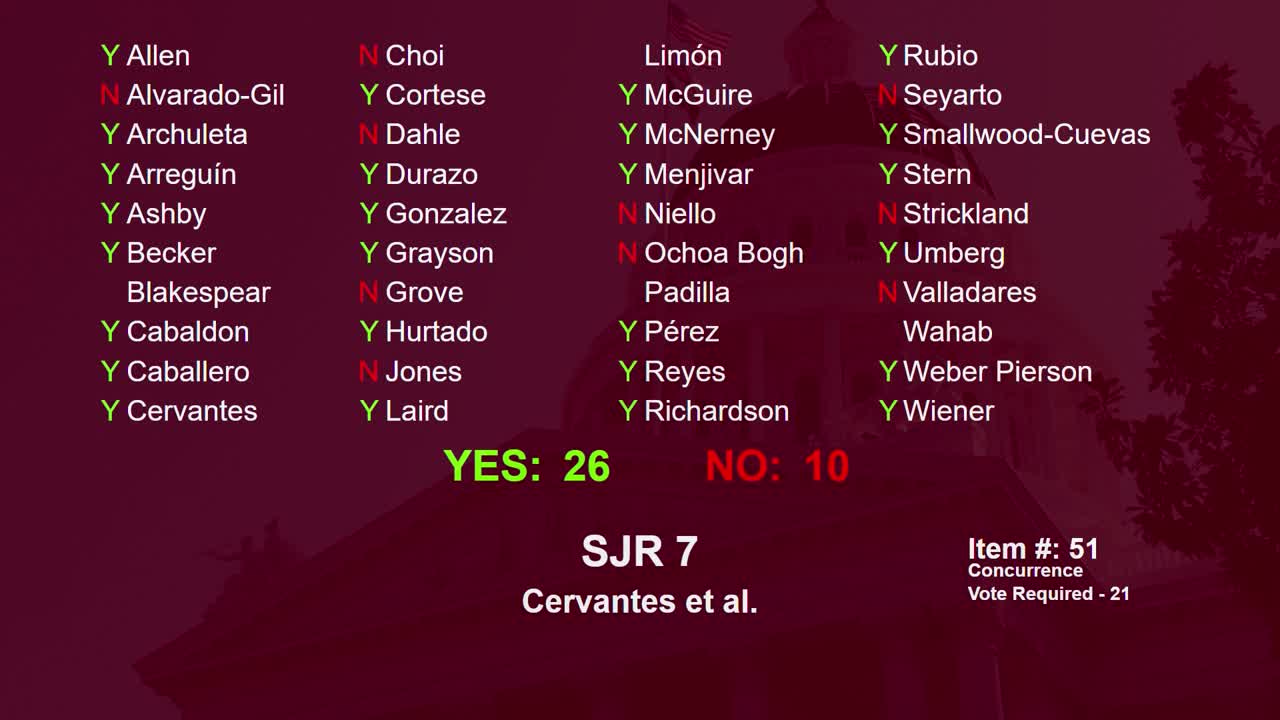 1MIN
Senate Floor
 5MIN
Senate Standing Committee on Judiciary
 25MIN
Senate Standing Committee on Banking and Financial Institutions
 2MIN
Assembly Floor
 21MIN
Assembly Standing Committee on Judiciary
 14MIN
Assembly Standing Committee on Banking and Finance
Bill Author