AB 882: Electronic court reporting.
- Session Year: 2025-2026
- House: Assembly
- Latest Version Date: 2025-07-17
Current Status:
In Progress
(2026-06-30: In committee: Set, second hearing. Hearing canceled at the request of author.)
Introduced
In Committee
Awaiting First Chamber Vote
Passed First Chamber
In Committee
Awaiting Second Chamber Vote
Passed Second Chamber
Enacted
Existing law regulates official court reporters in the superior courts. Under existing law, a court may use electronic recording equipment in a limited civil case, a misdemeanor or infraction case, or for the internal purpose of monitoring subordinate judicial officer performance. Existing law requires, prior to purchasing or leasing any electronic recording technology or equipment, a court to obtain advance approval from the Judicial Council.
This bill would, until January 1, 2028, authorize the court to use electronic recording technology in civil proceedings when specified circumstances are met, including, among other things, when a litigant who cannot afford to retain a private court reporter has requested a verbatim record of the proceeding. The bill would require a court to find that a litigant cannot afford to retain a private court reporter if any specified circumstances are met, including when the litigant has been granted a waiver of court fees for the proceeding. The bill would require the court to follow prescribed procedures when using electronic recording in civil proceedings, the court lacks sufficient reporters or official reporters pro tempore to provide verbatim records, as specified, including, among other things, providing public notice that the court is accepting applications from certified shorthand reporters for positions as official court reporters. The bill would set forth a grievance and arbitration process for resolving disputes regarding compliance with these provisions, as specified. The bill would require a transcript created from electronic recordings to include a designation for portions of the recording that contain no audible sound or are not discernible.
The bill would require the Judicial Council to develop and approve official forms for use in trial courts consistent with the above provisions. The bill would require each trial court to report to the Judicial Council, on a quarterly basis, specified information, including, among other things, the number of applications received by the court from certified shorthand reporters. The bill would require the Judicial Council to make this information public available on its internet website.
Existing law regulates official court reporters in the superior courts. Under existing law, a court may use electronic recording equipment in a limited civil case, a misdemeanor or infraction case, or for the internal purpose of monitoring subordinate judicial officer performance. Existing law requires, prior to purchasing or leasing any electronic recording technology or equipment, a court to obtain advance approval from the Judicial Council.
This bill would, until January 1, 2028, authorize the court to use electronic recording technology in civil proceedings when specified circumstances are met, including, among other things, when a litigant who cannot afford to hire retain a private court reporter has requested a verbatim record of the proceeding. The bill would require a court to find that a litigant cannot afford to retain a private court reporter if any specified circumstances are met, including when the litigant has been granted a waiver of court fees for the proceeding. The bill would require the court to follow prescribed procedures when using electronic recording in limited civil cases, misdemeanors, and infractions under existing law, civil proceedings, including, among other things, providing public notice that the court is accepting applications from certified shorthand reporters for positions as official court reporters. The bill would set forth a grievance and arbitration process for resolving disputes regarding compliance with these provisions, as specified. The bill would require a transcript created from electronic recordings to include a designation for portions of the recording that contain no audible sound or are not discernible. The bill would prohibit courts from purchasing or leasing electronic recording technology or equipment to make verbatim recordings pursuant to these provisions.
Existing law regulates official court reporters in the superior courts. Under existing law, a court may use electronic recording equipment in a limited civil case, a misdemeanor or infraction case, or for the internal purpose of monitoring subordinate judicial officer performance. Existing law requires, prior to purchasing or leasing any electronic recording technology or equipment, a court to obtain advance approval from the Judicial Council.
This bill would prohibit the Judicial Council from granting approval for the purchase or lease of electronic recording technology or equipment solely for purposes of monitoring subordinate judicial officer performance. The bill would also, would, until January 1, 2028, authorize a court to issue a general order authorizing electronic recording on a temporary basis whenever a transcript of court proceedings is required in family law, probate, and civil contempt proceedings if specified requirements are met. authorize the court to use electronic recording technology in civil proceedings when specified circumstances are met, including, among other things, when a litigant who cannot afford to hire a private court reporter has requested a verbatim record of the proceeding. The bill would require the court to follow prescribed procedures when using electronic recording in limited civil cases, misdemeanors, and infractions under existing law, including, among other things, providing public notice that the court is accepting applications from certified shorthand reporters for positions as official court reporters. The bill would require a transcript created from electronic recordings to include a designation for portions of the recording that contain no audible sound or are not discernable. discernible. The bill would prohibit courts from purchasing or leasing electronic recording technology or equipment to make verbatim recordings pursuant to these provisions.
This bill would declare that it is to take effect immediately as an urgency statute.Existing law regulates official court reporters in the superior courts. Under existing law, a court may use electronic recording equipment in a limited civil case, a misdemeanor or infraction case, or for the internal purpose of monitoring subordinate judicial officer performance. Existing law requires, prior to purchasing or leasing any electronic recording technology or equipment, a court to obtain advance approval from the Judicial Council.
This bill would prohibit the Judicial Council from granting approval for the purchase or lease of electronic recording technology or equipment solely for purposes of monitoring subordinate judicial officer performance. The bill would also, until January 1, 2028, authorize a court to issue a general order authorizing electronic recording on a temporary basis whenever a transcript of court proceedings is required in family law, probate, and civil contempt proceedings if specified requirements are met. The bill would require a transcript created from electronic recordings to include a designation for portions of the recording that contain no audible sound or are not discernable. The bill would prohibit courts from purchasing or leasing electronic recording technology or equipment to make verbatim recordings pursuant to these provisions.
This bill would declare that it is to take effect immediately as an urgency statute.
Existing law regulates official court reporters in the superior courts. Under existing law, a court may use electronic recording equipment in a limited civil case, a misdemeanor or infraction case, or for the internal purpose of monitoring subordinate judicial officer performance. Existing law requires, prior to purchasing or leasing any electronic recording technology or equipment, a court to obtain advance approval from the Judicial Council.
This bill would prohibit the purchase of equipment for the sole purpose the Judicial Council from granting approval for the purchase or lease of electronic recording technology or equipment solely for purposes of monitoring subordinate judicial officer performance. The bill would also, until January 1, 2028, authorize a court to issue a general order authorizing electronic recording on a temporary basis whenever a transcript of court proceedings is required in family law, probate, and civil contempt proceedings if specified requirements are met. The bill would require a transcript created from electronic recordings to include a designation for portions of the recording that contain no audible sound or are not discernable. The bill would prohibit courts from purchasing or leasing electronic recording technology or equipment to make verbatim recordings pursuant to these provisions.
Existing law regulates official court reporters in the superior courts. Under existing law, a court may use electronic recording equipment in a limited civil case, a misdemeanor or infraction case, or for the internal purpose of monitoring subordinate judicial officer performance. Existing law requires, prior to purchasing or leasing any electronic recording technology or equipment, a court to obtain advance approval from the Judicial Council.
This bill would prohibit the purchase of equipment for the sole purpose of monitoring subordinate judicial officer performance.
(a)Notwithstanding Section 69957, if a court is unable, after due diligence, to hire or retain sufficient official reporters or official reporters pro tempore to provide verbatim records to civil litigants who cannot afford to retain a private court reporter and have requested a verbatim record of the civil proceedings, the court may, subject to the requirements of this section, use electronic recording to make a record of those civil proceedings. A transcript derived from such an electronic recording may be utilized whenever a transcript of court proceedings is required. Transcripts derived from electronic recordings shall include a designation of inaudible or unintelligible for those portions of the recording that contain no audible sound or are not discernible.
(b)Notwithstanding this section, electronic recording shall not be used to make the record in juvenile dependency proceedings, juvenile delinquency proceedings, proceedings under the Sexually Violent Predator Act (Article 4 (commencing with Section 6600) of Chapter 2 of Part 2 of Division 6 of the Welfare and Institutions Code), or other civil commitment proceedings. Electronic recording shall not be used in criminal proceedings, except as permitted by Section 69957 for misdemeanor and infraction proceedings. This section does not apply to the use of electronic recording in limited civil proceedings as permitted by Section 69957.
(c)Electronic recording may be utilized in the circumstances authorized by this section only if the judicial officer presiding over the civil proceeding finds that all of the following requirements are satisfied:
(1)The litigant has requested a verbatim record of the proceeding.
(2)The litigant cannot afford to retain a private court reporter to make a verbatim record of the proceeding.
(3)No official reporter or official reporter pro tempore hired or retained by the court is available to make a verbatim record of the proceeding.
(4)No other party to the proceeding has retained a private court reporter to serve as an official reporter pro tempore for the proceeding.
(d)A party to a civil proceeding who cannot afford to retain a private court reporter and who seeks to have the court make a record of an oral proceeding in a department in which court reporters are not regularly provided shall submit a written request to the court at least one court day before the hearing, unless the litigant lacks advance notice of the hearing.(e)(d)If a court uses electronic recording to make records of civil proceedings in circumstances authorized by this section, lacks sufficient official reporters or official reporters pro tempore to provide verbatim records to civil litigants who cannot afford to retain private court reporters and have requested a verbatim record of the civil proceedings, all of the following requirements shall apply:
(1)The court shall provide public notice that the court is accepting applications from certified shorthand reporters for positions as official court reporters. The court shall provide such notice to major court reporter job boards and to court reporting schools in California. The court shall maintain records of its outreach and recruitment activities.
(2)The court shall offer employment to all qualified certified shorthand reporters who apply for official reporter positions unless there is good cause the court has a reasonable basis for rejecting the applicant. In the event of a dispute, the court shall have the burden of showing that an applicant was rejected for good cause. the court had a reasonable basis for rejecting the applicant. The court shall maintain records of applications received, interviews conducted, and reasons for hiring decisions.
(3)The court shall not adopt any unreasonable barriers to applications or to hiring applicants. In the event of a dispute, the court shall have the burden of showing that its requirements are reasonable.
(4)In addition to hiring official reporters, the court shall make all reasonable efforts, consistent with the courts budget, to retain official reporters pro tempore to supplement the work of official reporters. In the event of a dispute, the court shall have the burden of showing that its efforts were reasonable.
(5)The court shall have a reasonable protocol for determining whether official reporters pro tempore assigned to other departments in the same courthouse are available to report civil proceedings.
(6)The court shall maintain records identifying dates, departments, and civil proceedings for which electronic recording was used in the circumstances authorized by this section.
(5)(7)(A)If the official reporters in the court are represented by a recognized employee organization, the court shall, upon request of the employee organization, meet and confer with the employee organization about the courts efforts to recruit official court reporters and provide the employee organization with the records that the court is required by this section to maintain. The court shall redact personal information that is necessary to protect confidentiality.
(B)If the official reporters are not represented by a recognized employee organization, the court shall, upon the request of any official reporter employed by the court, provide the official reporter with the records that the court is required by this section to maintain. The court shall redact personal information that is necessary to protect confidentiality.
(6)If the official reporters employed by the court are represented by a recognized employee organization, the court shall forward a copy of written requests submitted pursuant to subdivision (d) on the same day the request is submitted to the court. (7)Courts shall not, without the consent of the official reporter, reassign an official reporter who was regularly assigned to a family law, probate, or other civil department on the effective date of this section where the reassignment would create a need to use electronic recording in that department.(8)(A)If the official reporters in the court are represented by a recognized employee organization, the employee organization may file a grievance with the court if the employee organization contends that the court has violated this subdivision. Unless the parties to the dispute agree upon other procedures after the dispute arises, or other procedures are provided in a memorandum of understanding or agreement with a recognized employee organization, unresolved disputes between the recognized employee organization and the court concerning a violation of this subdivision shall be submitted for binding arbitration to the California State Mediation and Conciliation Service.
(B)If the official reporters are not represented by a recognized employee organization, any official reporter employed by the court may file a grievance with the court if the reporter contends that the court has violated this subdivision and, if the dispute is not resolved, submit the dispute for binding arbitration to the California State Mediation and Conciliation Service.(C)(B)The grievance and arbitration process set forth in this subdivision paragraph shall be the exclusive means of resolving disputes about compliance with this subdivision.
(e)Paragraph (1), (2), or (3) of subdivision (d) does not apply to a court that lacks sufficient work for an additional full-time official reporter.
(f)For purposes of this section, a court shall find that a litigant who has requested a verbatim record of a proceeding cannot afford to retain a private court reporter if any of the following requirements is satisfied:
(1)The litigant has been granted a waiver of court fees for the proceeding.
(2)The litigant is represented in the proceeding without charge by a nonprofit legal aid organization.
(3)The litigant establishes to the satisfaction of the judicial officer that the litigant lacks the financial ability to retain a private court reporter for the proceeding.
(g)(1)The Judicial Council shall develop and approve official forms for use in trial courts consistent with the provisions of subdivisions (a), (b), (c), and (f).
(2)Each trial court shall report to the Judicial Council on a quarterly basis the number of applications received by the court from certified shorthand reporters for positions as official reporters pro tempore, the number of applicants who were offered employment, and the number of applicants who accepted employment. The Judicial Council shall make this information available to the public on its internet website.
(g)(h)This section shall remain in effect only until January 1, 2028, and as of that date is repealed.
(a)Notwithstanding Section 69957, if a court is unable, after due diligence, to hire or retain sufficient official reporters or official reporters pro tempore reporters to provide verbatim records to civil litigants who cannot afford to hire retain a private court reporters reporter and have requested a verbatim record of the civil proceeding, proceedings, the court may, subject to the requirements of this section, use electronic recording to make a record of those civil proceedings. Notwithstanding this section, electronic recording shall not be used in juvenile dependency proceedings. Electronic recording shall not be used in criminal proceedings, except as permitted by Section 69957 for misdemeanor and infraction proceedings. A transcript derived from such an electronic recording may be utilized whenever a transcript of court proceedings is required. Transcripts derived from electronic recordings shall include a designation of inaudible or unintelligible for those portions of the recording that contain no audible sound or are not discernible.
(b)Notwithstanding this section, electronic recording shall not be used to make the record in juvenile dependency proceedings, juvenile delinquency proceedings, proceedings under the Sexually Violent Predator Act (Article 4 (commencing with Section 6600) of Chapter 2 of Part 2 of Division 6 of the Welfare and Institutions Code), or other civil commitment proceedings. Electronic recording shall not be used in criminal proceedings, except as permitted by Section 69957 for misdemeanor and infraction proceedings.
(b)(c)Electronic recording may be utilized in the circumstances authorized by this section only if the judicial officer presiding over the civil proceeding finds that all of the following requirements are satisfied:
(1)A The litigant who cannot afford to hire a private court reporter has requested a verbatim record of the proceeding.
(2)The litigant cannot afford to retain a private court reporter to make a verbatim record of the proceeding.
(2)(3)No official reporter or official reporter pro tempore hired or retained by the court is available to make a verbatim record of the proceeding.
(3)(4)No other party to the proceeding, who is a low-income litigant that is unrepresented by counsel, proceeding has retained a private court reporter to serve as an official reporter pro tempore for the proceeding.
(c)(1)Except in cases of emergency, a(d)A party to a civil proceeding who is a low-income litigant, is unrepresented by counsel, cannot afford to retain a private court reporter and who seeks to have the court make a record of an oral proceeding shall provide written notice in a department in which court reporters are not regularly provided shall submit a written request to the court at least one court day before the hearing. hearing, unless the litigant lacks advance notice of the hearing.
(2)If the official reporters employed by the court are represented by a recognized employee organization, the court shall forward a copy of that notice to the recognized employee organization on the same day it was submitted to the court.(d)(e)If a court uses electronic recording to make records of civil proceedings in circumstances authorized by Section 69957, this section, all of the following requirements shall apply:
(1)The court shall provide public notice that the court is accepting applications from certified shorthand reporters for positions as official court reporters. The court shall provide such notice to major court reporter job boards and to court reporting schools in California. The court shall maintain records of its outreach and recruitment activities.
(2)The court shall offer employment to all certified shorthand reporters who apply for official reporter positions unless there is good cause for rejecting the applicant. In the event of a dispute, the court shall have the burden of showing that an applicant was rejected for good cause. The court shall maintain records of applications received, interviews conducted, and reasons for hiring decisions.
(3)The court shall not adopt any unreasonable barriers to applications or to hiring applicants. In the event of a dispute, the court shall have the burden of showing that its requirements are reasonable.
(4)In addition to hiring official reporters, the court shall make all reasonable efforts, consistent with the courts budget, to retain official reporters pro tempore to supplement the work of official reporters. In the event of a dispute, the court shall have the burden of showing that its efforts were reasonable.
(5)(A)If the official reporters in the court are represented by a recognized employee organization, the court shall, upon request of the employee organization, meet and confer with the employee organization about the courts efforts to recruit official court reporters and provide the employee organization with the records that the court is required by this section to maintain.
(B)If the official reporters are not represented by a recognized employee organization, the court shall, upon the request of any official reporter employed by the court, provide the official reporter with the records that the court is required by this section to maintain.
(6)If the official reporters employed by the court are represented by a recognized employee organization, the court shall forward a copy of written requests submitted pursuant to subdivision (d) on the same day the request is submitted to the court.
(7)Courts shall not, without the consent of the official reporter, reassign an official reporter who was regularly assigned to a family law, probate, or other civil department on the effective date of this section where the reassignment would create a need to use electronic recording in that department.
(6)(8)(A)If the official reporters in the court are represented by a recognized employee organization, the employee organization may file a grievance with the court if the employee organization contends that the court has violated this section. subdivision. Unless the parties to the dispute agree upon other procedures after the dispute arises, or other procedures are provided in a memorandum of understanding or agreement with a recognized employee organization, unresolved disputes between the recognized employee organization and the court concerning a violation of this section subdivision shall be submitted for binding arbitration to the California State Mediation and Conciliation Service.
(e)Courts shall not purchase or lease electronic recording technology or equipment to make records pursuant to this section.(f)Courts shall not, without the consent of the official reporter, displace existing official reporters from their assignments in family law, probate, and civil contempt departments in order to make records pursuant to this section.(B)If the official reporters are not represented by a recognized employee organization, any official reporter employed by the court may file a grievance with the court if the reporter contends that the court has violated this subdivision and, if the dispute is not resolved, submit the dispute for binding arbitration to the California State Mediation and Conciliation Service.
(C)The grievance and arbitration process set forth in this subdivision shall be the exclusive means of resolving disputes about compliance with this subdivision.
(f)For purposes of this section, a court shall find that a litigant who has requested a verbatim record of a proceeding cannot afford to retain a private court reporter if any of the following requirements is satisfied:
(1)The litigant has been granted a waiver of court fees for the proceeding.
(2)The litigant is represented in the proceeding without charge by a nonprofit legal aid organization.
(3)The litigant establishes to the satisfaction of the judicial officer that the litigant lacks the financial ability to retain a private court reporter for the proceeding.
(g)This section shall remain in effect only until January 1, 2028, and as of that date is repealed.
(a)Notwithstanding Section 69957, if a court is unable, after due diligence, to hire sufficient official reporters or official pro tempore reporters, reporters to provide verbatim records to civil litigants who cannot afford to hire private court reporters and have requested a verbatim record of the civil proceeding, the court may issue a general order authorizing the use of electronic recording on a temporary basis in family law, probate, and civil contempt proceedings, subject to the requirements of subdivision (d). Electronic may, subject to the requirements of this section, use electronic recording to make a record of those civil proceedings. Notwithstanding this section, electronic recording shall not be used in juvenile dependency proceedings. Electronic recording shall not be used in criminal proceedings, except as permitted by Section 69957 for misdemeanor and infraction proceedings. A transcript derived from such an electronic recording may be utilized whenever a transcript of court proceedings is required. Transcripts derived from electronic recordings shall include a designation of inaudible or unintelligible for those portions of the recording that contain no audible sound or are not discernable. discernible.
(b)Electronic recording may be utilized pursuant to in the circumstances authorized by this section only if the judicial officer presiding over the civil proceeding finds that all of the following requirements are satisfied:
(1)The proceeding concerns matters that implicate fundamental rights or liberty interests.(2)One or more parties wishes to preserve the possibility of ordering a verbatim transcript of the proceeding.(3)No official reporter or official reporter pro tempore retained by the court, including reporters generally assigned to other departments, is reasonably available to report the proceeding.(4)The party requesting a verbatim record has been unable to secure the presence of a private certified shorthand reporter to report the proceeding as an official reporter pro tempore because either of the following requirements is satisfied:(A)Despite the partys reasonable effort to retain a private certified shorthand reporter, no reporter was reasonably available.(B)The party qualifies for a waiver of court filing fees because of an inability to pay and the court is unable to provide an official reporter or official reporter pro tempore for the proceeding.(5)The proceeding involves significant legal or factual issues such that a verbatim record is likely necessary to create a record of sufficient completeness for review on appeal.(6)In the interests of justice, the proceeding should not be delayed.(c)A judicial officer shall not find that a party has satisfied the requirements of paragraph (4) of subdivision (b) unless the party notified the court at least five court days prior to the hearing that the party seeks to have a record of the hearing and that the party has been unable to retain a private court reporter or that the party has been granted a fee waiver and is unable to pay for a private court reporter. If the official reporters employed by the court are represented by a recognized employee organization, the court shall forward a copy of such notice to the recognized employee organization on the same day it was submitted to the court. If a party has fewer than five court days advance notice of the hearing, the party shall provide the court with reasonable advance notice that the party seeks to have a record of the hearing and that the party has been unable to retain a private court reporter or that the party has been granted a fee waiver and is unable to pay for a private court reporter. The court shall forward such notice to the exclusive representative, if any, on the same day it was submitted.(1)A litigant who cannot afford to hire a private court reporter has requested a verbatim record of the proceeding.
(2)No official reporter or official reporter pro tempore hired by the court is available to make a verbatim record of the proceeding.
(3)No other party to the proceeding, who is a low-income litigant that is unrepresented by counsel, has retained a private court reporter to serve as an official reporter pro tempore for the proceeding.
(c)(1)Except in cases of emergency, a party to a civil proceeding who is a low-income litigant, is unrepresented by counsel, and who seeks to have the court make a record of an oral proceeding shall provide written notice to the court at least one court day before the hearing.
(2)If the official reporters employed by the court are represented by a recognized employee organization, the court shall forward a copy of that notice to the recognized employee organization on the same day it was submitted to the court.
(d)If a court has issued a general order authorizing the use of electronic recording, all of the following requirements shall apply while the general order is in effect: uses electronic recording to make records of proceedings in circumstances authorized by Section 69957, all of the following requirements shall apply:
(1)The court shall provide public notice that the court is accepting applications from certified shorthand reporters for positions as official court reporters. The court shall provide such notice to major court reporter job boards and to court reporting schools in California. The court shall maintain records of its outreach and recruitment activities.
(2)The court shall offer employment to all certified shorthand reporters who apply for official reporter positions unless there is good cause for rejecting the applicant. In the event of a dispute, the court shall have the burden of showing that an applicant was rejected for good cause. The court shall maintain records of applications received, interviews conducted, and reasons for hiring decisions.
(3)The court shall not adopt any unreasonable barriers to applications or to hiring applicants. In the event of a dispute, the court shall have the burden of showing that its requirements are reasonable.
(4)In addition to hiring official reporters, the court shall make all reasonable efforts, consistent with the courts budget, to retain official reporters pro tempore to supplement the work of official reporters. In the event of a dispute, the court shall have the burden of showing that its efforts were reasonable.
(5)If the official reporters in the court are represented by a recognized employee organization, the court shall, upon request of the employee organization, meet and confer with the employee organization about the courts efforts to recruit official court reporters and provide the employee organization with the records that the court is required by this section to maintain.
(6)If the official reporters in the court are represented by a recognized employee organization, the employee organization may file a grievance with the court if the employee organization contends that the court has violated this section. Unless the parties to the dispute agree upon other procedures after the dispute arises, or other procedures are provided in a memorandum of understanding or agreement with a recognized employee organization, unresolved disputes between the recognized employee organization and the court concerning a violation of this section shall be submitted for binding arbitration to the California State Mediation and Conciliation Service.
(e)Courts shall not purchase or lease electronic recording technology or equipment to make records pursuant to this section.
(f)Courts shall not, without the consent of the official reporter, displace existing official reporters from their assignments in family law, probate, and civil contempt departments in order to make records pursuant to this section.
(g)The court shall revoke a general order authorized by this section when the conditions set forth in subdivision (a) no longer exist.(h)(g)This section shall remain in effect only until January 1, 2028, and as of that date is repealed. The repeal of this section shall automatically revoke any general order authorized by this section.
SEC. 3.This act is an urgency statute necessary for the immediate preservation of the public peace, health, or safety within the meaning of Article IV of the California Constitution and shall go into immediate effect. The facts constituting the necessity are:Some superior courts have stated that there is an immediate crisis caused by a shortage of court reporters, and this legislation is necessary to provide temporary authority for the use of electronic recording while those superior courts hire more court reporters.(a)If an official reporter or an official reporter pro tempore is unavailable to report an action or proceeding in a court, subject to the availability of approved equipment and equipment monitors, the court may order that, in a limited civil case, or a misdemeanor or infraction case, the action or proceeding be electronically recorded, including all the testimony, the objections made, the ruling of the court, the exceptions taken, all arraignments, pleas, and sentences of defendants in criminal cases, the arguments of the attorneys to the jury, and all statements and remarks made and oral instructions given by the judge. A transcript derived from an electronic recording may be utilized whenever a transcript of court proceedings is required. Transcripts derived from electronic recordings shall include a designation of inaudible or unintelligible for those portions of the recording that contain no audible sound or are not discernible. The electronic recording device and appurtenant equipment shall be of a type approved by the Judicial Council for courtroom use and shall only be purchased for use as provided by this section. A court shall not expend funds for or use electronic recording technology or equipment to make an unofficial record of an action or proceeding, including for purposes of judicial notetaking, or to make the official record of an action or proceeding in circumstances not authorized by this section.
(b)Notwithstanding subdivision (a), a court may use electronic recording equipment for the internal personnel purpose of monitoring the performance of subordinate judicial officers, as defined in Section 71601 of the Government Code, hearing officers, and temporary judges while proceedings are conducted in the courtroom, if notice is provided to the subordinate judicial officer, hearing officer, or temporary judge, and to the litigants, that the proceeding may be recorded for that purpose. An electronic recording made for the purpose of monitoring that performance shall not be used for any other purpose and shall not be made publicly available. Any recording made pursuant to this subdivision shall be destroyed two years after the date of the proceeding unless a personnel matter is pending relating to performance of the subordinate judicial officer, hearing officer, or temporary judge.
(c)Prior to purchasing or leasing any electronic recording technology or equipment, a court shall obtain advance approval from the Judicial Council, which may grant that approval only if the use of the technology or equipment will be consistent with this section. The Judicial Council shall not grant approval for the purchase or lease of electronic recording technology or equipment solely for the purposes described in subdivision (b).
SEC. 2.Section 69957.5 is added to the Government Code, to read:69957.5.(a)Notwithstanding Section 69957, if a court is unable, after due diligence, to hire sufficient official reporters or official pro tempore reporters, the court may issue a general order authorizing the use of electronic recording on a temporary basis in family law, probate, and civil contempt proceedings, subject to the requirements of subdivision (d). Electronic recording shall not be used in dependency proceedings. A transcript derived from such an electronic recording may be utilized whenever a transcript of court proceedings is required. Transcripts derived from electronic recordings shall include a designation of inaudible or unintelligible for those portions of the recording that contain no audible sound or are not discernable.
(b)Electronic recording may be utilized pursuant to this section only if the judicial officer presiding over the proceeding finds that all of the following requirements are satisfied:
(1)The proceeding concerns matters that implicate fundamental rights or liberty interests.
(2)One or more parties wishes to preserve the possibility of ordering a verbatim transcript of the proceeding.
(3)No official reporter or official reporter pro tempore retained by the court, including reporters generally assigned to other departments, is reasonably available to report the proceeding.
(4)The party requesting a verbatim record has been unable to secure the presence of a private certified shorthand reporter to report the proceeding as an official reporter pro tempore because either of the following requirements is satisfied:
(A)Despite the partys reasonable effort to retain a private certified shorthand reporter, no reporter was reasonably available.
(B)The party qualifies for a waiver of court filing fees because of an inability to pay and the court is unable to provide an official reporter or official reporter pro tempore for the proceeding.
(5)The proceeding involves significant legal or factual issues such that a verbatim record is likely necessary to create a record of sufficient completeness for review on appeal.
(6)In the interests of justice, the proceeding should not be delayed.
(c)A judicial officer shall not find that a party has satisfied the requirements of paragraph (4) of subdivision (b) unless the party notified the court at least five court days prior to the hearing that the party seeks to have a record of the hearing and that the party has been unable to retain a private court reporter or that the party has been granted a fee waiver and is unable to pay for a private court reporter. If the official reporters employed by the court are represented by a recognized employee organization, the court shall forward a copy of such notice to the recognized employee organization on the same day it was submitted to the court. If a party has fewer than five court days advance notice of the hearing, the party shall provide the court with reasonable advance notice that the party seeks to have a record of the hearing and that the party has been unable to retain a private court reporter or that the party has been granted a fee waiver and is unable to pay for a private court reporter. The court shall forward such notice to the exclusive representative, if any, on the same day it was submitted.
(d)If a court has issued a general order authorizing the use of electronic recording, all of the following requirements shall apply while the general order is in effect:
(1)The court shall provide public notice that the court is accepting applications from certified short shorthand reporters for positions as official court reporters. The court shall provide such notice to major court reporter job boards and to court reporting schools in California. The court shall maintain records of its outreach and recruitment activities.
(2)The court shall offer employment to all certified shorthand reporters who apply for official reporter positions unless there is good cause for rejecting the applicant. In the event of a dispute, the court shall have the burden of showing that an applicant was rejected for good cause. The court shall maintain records of applications received, interviews conducted, and reasons for hiring decisions.
(3)The court shall not adopt any unreasonable barriers to applications or to hiring applicants. In the event of a dispute, the court shall have the burden of showing that its requirements are reasonable.
(4)In addition to hiring official reporters, the court shall make all reasonable efforts, consistent with the courts budget, to retain official reporters pro tempore to supplement the work of official reporters. In the event of a dispute, the court shall have the burden of showing that its efforts were reasonable.
(5)If the official reporters in the court are represented by a recognized employee organization, the court shall, upon request of the employee organization, meet and confer with the employee organization about the courts efforts to recruit official court reporters and provide the employee organization with the records that the court is required by this section to maintain.
(6)If the official reporters in the court are represented by a recognized employee organization, the employee organization may file a grievance with the court if the employee organization contends that the court has violated this section. Unless the parties to the dispute agree upon other procedures after the dispute arises, or other procedures are provided in a memorandum of understanding or agreement with a recognized employee organization, unresolved disputes between the recognized employee organization and the court concerning a violation of this section shall be submitted for binding arbitration to the California State Mediation and Conciliation Service.
(e)Courts shall not purchase or lease electronic recording technology or equipment to make records pursuant to this section.
(f)Courts shall not, without the consent of the official reporter, displace existing official reporters from their assignments in family law, probate, and civil contempt departments in order to make records pursuant to this section.
(g)The court shall revoke a general order authorized by this section when the conditions set forth in subdivision (a) no longer exist.
(h)This section shall remain in effect only until January 1, 2028, and as of that date is repealed. The repeal of this section shall automatically revoke any general order authorized by this section.
SEC. 3.This act is an urgency statute necessary for the immediate preservation of the public peace, health, or safety within the meaning of Article IV of the California Constitution and shall go into immediate effect. The facts constituting the necessity are:
Some superior courts have stated that there is an immediate crisis caused by a shortage of court reporters, and this legislation is necessary to provide temporary authority for the use of electronic recording while those superior courts hire more court reporters.
(a)If an official reporter or an official reporter pro tempore is unavailable to report an action or proceeding in a court, subject to the availability of approved equipment and equipment monitors, the court may order that, in a limited civil case, or a misdemeanor or infraction case, the action or proceeding be electronically recorded, including all the testimony, the objections made, the ruling of the court, the exceptions taken, all arraignments, pleas, and sentences of defendants in criminal cases, the arguments of the attorneys to the jury, and all statements and remarks made and oral instructions given by the judge. A transcript derived from an electronic recording may be utilized whenever a transcript of court proceedings is required. Transcripts derived from electronic recordings shall include a designation of inaudible or unintelligible for those portions of the recording that contain no audible sound or are not discernible. The electronic recording device and appurtenant equipment shall be of a type approved by the Judicial Council for courtroom use and shall only be purchased for use as provided by this section. A court shall not expend funds for or use electronic recording technology or equipment to make an unofficial record of an action or proceeding, including for purposes of judicial notetaking, or to make the official record of an action or proceeding in circumstances not authorized by this section.
(b)Notwithstanding subdivision (a), a court may use electronic recording equipment for the internal personnel purpose of monitoring the performance of subordinate judicial officers, as defined in Section 71601 of the Government Code, hearing officers, and temporary judges while proceedings are conducted in the courtroom, if notice is provided to the subordinate judicial officer, hearing officer, or temporary judge, and to the litigants, that the proceeding may be recorded for that purpose. An electronic recording made for the purpose of monitoring that performance shall not be used for any other purpose and shall not be made publicly available. Any recording made pursuant to this subdivision shall be destroyed two years after the date of the proceeding unless a personnel matter is pending relating to performance of the subordinate judicial officer, hearing officer, or temporary judge.
(c)Prior to purchasing or leasing any electronic recording technology or equipment, a court shall obtain advance approval from the Judicial Council, which may grant that approval only if the use of the technology or equipment will be consistent with this section. Equipment shall not be purchased for the sole purpose of monitoring the performance of subordinate judicial officers pursuant to subdivision (b). The Judicial Council shall not grant approval for the purchase or lease of electronic recording technology or equipment solely for the purposes described in subdivision (b).
SEC. 2.Section 69957.5 is added to the Government Code, to read:69957.5.(a)Notwithstanding Section 69957, if a court is unable, after due diligence, to hire sufficient official reporters or official pro tempore reporters, the court may issue a general order authorizing the use of electronic recording on a temporary basis in family law, probate, and civil contempt proceedings, subject to the requirements of subdivision (d). Electronic recording shall not be used in dependency proceedings. A transcript derived from such an electronic recording may be utilized whenever a transcript of court proceedings is required. Transcripts derived from electronic recordings shall include a designation of inaudible or unintelligible for those portions of the recording that contain no audible sound or are not discernable.
(b)Electronic recording may be utilized pursuant to this section only if the judicial officer presiding over the proceeding finds that all of the following requirements are satisfied:
(1)The proceeding concerns matters that implicate fundamental rights or liberty interests.
(2)One or more parties wishes to preserve the possibility of ordering a verbatim transcript of the proceeding.
(3)No official reporter or official reporter pro tempore retained by the court, including reporters generally assigned to other departments, is reasonably available to report the proceeding.
(4)The party requesting a verbatim record has been unable to secure the presence of a private certified shorthand reporter to report the proceeding as an official reporter pro tempore because either of the following requirements is satisfied:
(A)Despite the partys reasonable effort to retain a private certified shorthand reporter, no reporter was reasonably available.
(B)The party qualifies for a waiver of court filing fees because of an inability to pay and the court is unable to provide an official reporter or official reporter pro tempore for the proceeding.
(5)The proceeding involves significant legal or factual issues such that a verbatim record is likely necessary to create a record of sufficient completeness for review on appeal.
(6)In the interests of justice, the proceeding should not be delayed.
(c)A judicial officer shall not find that a party has satisfied the requirements of paragraph (4) of subdivision (b) unless the party notified the court at least five court days prior to the hearing that the party seeks to have a record of the hearing and that the party has been unable to retain a private court reporter or that the party has been granted a fee waiver and is unable to pay for a private court reporter. If the official reporters employed by the court are represented by a recognized employee organization, the court shall forward a copy of such notice to the recognized employee organization on the same day it was submitted to the court. If a party has fewer than five court days advance notice of the hearing, the party shall provide the court with reasonable advance notice that the party seeks to have a record of the hearing and that the party has been unable to retain a private court reporter or that the party has been granted a fee waiver and is unable to pay for a private court reporter. The court shall forward such notice to the exclusive representative, if any, on the same day it was submitted.
(d)If a court has issued a general order authorizing the use of electronic recording, all of the following requirements shall apply while the general order is in effect:
(1)The court shall provide public notice that the court is accepting applications from certified short reporters for positions as official court reporters. The court shall provide such notice to major court reporter job boards and to court reporting schools in California. The court shall maintain records of its outreach and recruitment activities.
(2)The court shall offer employment to all certified shorthand reporters who apply for official reporter positions unless there is good cause for rejecting the applicant. In the event of a dispute, the court shall have the burden of showing that an applicant was rejected for good cause. The court shall maintain records of applications received, interviews conducted, and reasons for hiring decisions.
(3)The court shall not adopt any unreasonable barriers to applications or to hiring applicants. In the event of a dispute, the court shall have the burden of showing that its requirements are reasonable.
(4)In addition to hiring official reporters, the court shall make all reasonable efforts, consistent with the courts budget, to retain official reporters pro tempore to supplement the work of official reporters. In the event of a dispute, the court shall have the burden of showing that its efforts were reasonable.
(5)If the official reporters in the court are represented by a recognized employee organization, the court shall, upon request of the employee organization, meet and confer with the employee organization about the courts efforts to recruit official court reporters and provide the employee organization with the records that the court is required by this section to maintain.
(6)If the official reporters in the court are represented by a recognized employee organization, the employee organization may file a grievance with the court if the employee organization contends that the court has violated this section. Unless the parties to the dispute agree upon other procedures after the dispute arises, or other procedures are provided in a memorandum of understanding or agreement with a recognized employee organization, unresolved disputes between the recognized employee organization and the court concerning a violation of this section shall be submitted for binding arbitration to the California State Mediation and Conciliation Service.
(e)Courts shall not purchase or lease electronic recording technology or equipment to make records pursuant to this section.
(f)Courts shall not, without the consent of the official reporter, displace existing official reporters from their assignments in family law, probate, and civil contempt departments in order to make records pursuant to this section.
(g)The court shall revoke a general order authorized by this section when the conditions set forth in subdivision (a) no longer exist.
(h)This section shall remain in effect only until January 1, 2028, and as of that date is repealed. The repeal of this section shall automatically revoke any general order authorized by this section.
(a)If an official reporter or an official reporter pro tempore is unavailable to report an action or proceeding in a court, subject to the availability of approved equipment and equipment monitors, the court may order that, in a limited civil case, or a misdemeanor or infraction case, the action or proceeding be electronically recorded, including all the testimony, the objections made, the ruling of the court, the exceptions taken, all arraignments, pleas, and sentences of defendants in criminal cases, the arguments of the attorneys to the jury, and all statements and remarks made and oral instructions given by the judge. A transcript derived from an electronic recording may be utilized whenever a transcript of court proceedings is required. Transcripts derived from electronic recordings shall include a designation of inaudible or unintelligible for those portions of the recording that contain no audible sound or are not discernible. The electronic recording device and appurtenant equipment shall be of a type approved by the Judicial Council for courtroom use and shall only be purchased for use as provided by this section. A court shall not expend funds for or use electronic recording technology or equipment to make an unofficial record of an action or proceeding, including for purposes of judicial notetaking, or to make the official record of an action or proceeding in circumstances not authorized by this section.
(b)Notwithstanding subdivision (a), a court may use electronic recording equipment for the internal personnel purpose of monitoring the performance of subordinate judicial officers, as defined in Section 71601 of the Government Code, hearing officers, and temporary judges while proceedings are conducted in the courtroom, if notice is provided to the subordinate judicial officer, hearing officer, or temporary judge, and to the litigants, that the proceeding may be recorded for that purpose. An electronic recording made for the purpose of monitoring that performance shall not be used for any other purpose and shall not be made publicly available. Any recording made pursuant to this subdivision shall be destroyed two years after the date of the proceeding unless a personnel matter is pending relating to performance of the subordinate judicial officer, hearing officer, or temporary judge.
(c)Prior to purchasing or leasing any electronic recording technology or equipment, a court shall obtain advance approval from the Judicial Council, which may grant that approval only if the use of the technology or equipment will be consistent with this section. Equipment shall not be purchased for the sole purpose of monitoring the performance of subordinate judicial officers pursuant to subdivision (b).
|
Date
|
Status
|
|---|---|
| Jun 30, 2026 | In committee: Set, second hearing. Hearing canceled at the request of author. |
| Jul 17, 2025 | From committee chair, with author's amendments: Amend, and re-refer to committee. Read second time, amended, and re-referred to Com. on JUD. |
| Jul 15, 2025 | In committee: Set, first hearing. Hearing canceled at the request of author. |
| Jun 23, 2025 | From committee chair, with author's amendments: Amend, and re-refer to committee. Read second time, amended, and re-referred to Com. on JUD. |
| Jun 18, 2025 | Referred to Coms. on JUD. and PUB. S. |
| Jun 5, 2025 | In Senate. Read first time. To Com. on RLS. for assignment. |
| Jun 4, 2025 | Read third time. Passed. Ordered to the Senate. (Ayes 62. Noes 4. Page 2084.) |
| Jun 2, 2025 | Read third time and amended. Ordered to third reading. (Page 1952.) |
| May 27, 2025 | Read second time. Ordered to third reading. |
| May 23, 2025 | From committee: Do pass. (Ayes 11. Noes 1.) (May 23). |
| Apr 30, 2025 | In committee: Set, first hearing. Referred to suspense file. |
| Apr 10, 2025 | Re-referred to Com. on APPR. |
| Apr 9, 2025 | Read second time and amended. |
| Apr 8, 2025 | From committee: Amend, and do pass as amended and re-refer to Com. on APPR. (Ayes 8. Noes 0.) (April 8). |
| Mar 24, 2025 | Re-referred to Com. on JUD. |
| Mar 20, 2025 | From committee chair, with author's amendments: Amend, and re-refer to Com. on JUD. Read second time and amended. |
| Mar 3, 2025 | Referred to Com. on JUD. |
| Feb 20, 2025 | From printer. May be heard in committee March 22. |
| Feb 19, 2025 | Read first time. To print. |
|
Date
|
Description
|
Location
|
Votes
|
|
|---|---|---|---|---|
| Jun 4, 2025 | AB 882 Papan Assembly Third Reading | Assembly Floor |
Passed |
|
| May 23, 2025 | Do pass. | Assembly Standing Committee on Appropriations |
Passed |
|
| Apr 8, 2025 | Do pass as amended and be re-referred to the Committee on [Appropriations] | Assembly Standing Committee on Judiciary |
Passed |
This list shows positions taken on this bill by organizations on the date displayed, which is linked to the original source.
Positions by individuals are not included.
|
Organization
|
Position
|
Date
|
|---|---|---|
| American Federation of State, County, and Municipal Employees (AFSCME), AFL-CIO | ** Support | |
| Bay Area Legal Aid | ** Against | |
| California Court Reporters Association | ** Support | |
| California Defense Counsel | ** Against | |
| California Judges Association | ** Against | |
| California Lawyers Association | ** Against | |
| California Rural Legal Assistance Foundation | ** Against | |
| California Women’s Law Center | ** Against | |
| Center for Access to QDROs | ** Against | |
| Community Legal Aid SoCal | ** Against | |
| Community Legal Services in East Palo Alto | ** Against | |
| Consumer Attorneys Of California | ** Against | |
| County of Riverside | ** Support | |
| Deposition Reporters Association Of California | ** Support | |
| Disability Rights California | ** Against | |
| Family Violence Appellate Project | ** Against | |
| Inner City Law Center | ** Against | |
| Judicial Council of California | ** Against | |
| La Raza Centro Legal | ** Against | |
| Law Foundation of Silicon Valley | ** Against | |
| Legal Aid Association Of California | ** Against | |
| Legal Aid Foundation of Los Angeles | ** Against | |
| Legal Aid Society of San Bernardino | ** Against | |
| Legal Services of Northern California | ** Against | |
| One individual | ** Support | |
| Orange County Employees Association | ** Support | |
| Public Counsel | ** Against | |
| SEIU California | ** Support | |
| Superior Court of California, County of Los Angeles | ** Against | |
| Superior Court of California, County of Mendocino | ** Against | |
| Superior Court of California, County of Sacramento | ** Against | |
| Superior Court of California, County of Shasta | ** Against | |
| Techequity Action | ** Support |
Senator Thomas Umberg, Chair
2025-2026 Regular Session
Bill No: AB 882 (Author:Papan)
Version: July 17, 2025
Hearing Date: June 30, 2026
Fiscal: Yes
Urgency: No
Consultant: AWM
SUBJECT
Electronic court reporting
DIGEST
This bill authorizes a court to use electronic recording technology to create a verbatim record of a proceeding in most civil case types, when the court does not provide a reporter and the party who wishes a transcript to be prepared cannot afford to retain a reporter; and for courts that elect to use electronic recording technology to create a verbatim record, imposes a number of requirements related to the courts’ application process for and hiring of official court reporters and retention of official court reporters pro tempore. The bill’s provisions would sunset on January 1, 2028.
EXECUTIVE SUMMARY
Generally speaking, only a certified shorthand court reporter may take down the verbatim record of a court proceeding for the creation of the official transcript. A court reporter may be certified to take down the proceedings through typographic or shorthand means or through voicewriting. The exception to the rule is that a court may electronically record a proceeding to create the verbatim record in limited civil, misdemeanor, and infraction cases if there is no official court reporter available.
Courts are currently required to provide a court reporter in felony, dependency, and juvenile justice proceedings, and in civil cases where a party has a fee waiver. (Jameson v. Desta (2018) 5 Cal.5th 594, 623.) In all other cases, the court may opt to provide a reporter or may leave it to the parties to provide, and pay for, their own court reporter.
For years now, the courts have not had sufficient court reporters on staff to provide court reporting to every civil litigant. These parties are, as noted above, free to retain their own court reporter, but the cost of doing so is prohibitive for many litigants. As a result, many civil proceedings are not reported, leaving the parties without a verbatim record of the proceeding; without a verbatim record, an appeal is virtually impossible. The Legislature has taken a number of actions to help the courts retain and hire court reporters, including establishing a pilot project for remote court reporting that began this year. Nevertheless, court reporter positions remained persistently unfilled.
This bill would allow a court to use electronic recording in lieu of a court reporter in most civil case types when there is no court-provided reporter available and the litigant is unable to afford to retain a private court reporter. The bill also imposes a number of requirements on the courts’ employment practices with respect to their current employee-court reporters, for any court that wishes to provide low-income litigants with an electronic recording option. The bill would sunset on January 1, 2028.
This bill is sponsored by SEIU California and is supported by the American Federation of State, County, and Municipal Employees (AFSCME), AFL-CIO; the California Court Reporters Association; the County of Riverside; and the Orange County Employees Association; and one individual. This bill is opposed by over 20 private organizations and public entities, including a number of legal aid organizations and the superior courts of four counties.
PROPOSED CHANGES TO THE LAW
Existing law:
- Provides that an official court reporter or official court reporter pro tempore[1] of the superior court shall take down in shorthand all testimony, objections made, rulings of the court, exceptions taken, arraignments, pleas, sentences, arguments of the attorneys to the jury, and statements and remarks made and oral instructions given by the judge or other judicial officer, in the following cases:
- In a civil case, on the order of the court or at the request of a party.
- In a felony case, on the order of the court or at the request of the prosecution, the defendant, or the attorney for the defendant.
- In a misdemeanor or infraction case, on the order of the court. (Code Civ. Proc., § 269(a).)
- Requires the court to provide an official court reporter in felony, dependency, and juvenile justice proceedings. (Pen. Code, §§ 190.9, 869; Welf. & Inst. Code, §§ 347, 677.)
- Requires the official court reporter, if a transcript is ordered by the court or requested by a party or nonparty entitled to receive the transcript, to, within a reasonable time, transcribe the proceedings, certify that the transcripts were correctly reported and transcribed, and, when directed by the court, file the transcripts with the clerk of the court. (Code Civ. Proc., § 269(b).)
- A transcript may be delivered in electronic form, as specified. (Code Civ. Proc., § 271.)
- The report of the official court reporter, when transcribed and certified as being a correct transcript of the testimony and proceedings in the case, is prima facie evidence of that testimony and proceedings. (Code Civ. Proc., § 273.)
- Provides that no person shall be appointed to the position of official court reporter of any court unless the person has first obtained a license to practice as a certified shorthand reporter from the Court Reporters Board (CRB). (Gov. Code, § 69942.)
- Defines the practice of shorthand reporting, for purposes of becoming a certified shorthand reporter under 4), as the making, by means of written symbols or abbreviations in shorthand or machine shorthand writing, or by voice writing, of a verbatim record of any oral court proceeding, deposition, court ordered hearing or arbitration, or proceeding before any grand jury, referee, or court commissioner and the accurate transcription thereof. (Bus. & Prof. Code, § 8017.)
- Provides that, in a limited civil, misdemeanor, or infraction case, if an official court reporter is unavailable to report an action or proceeding in a court, the court may order the action or proceeding to be electronically recorded for purposes of creating the verbatim record, provided that the court has the approved equipment for doing so. (Gov. Code, § 69957(a).)
- Requires a court, prior to purchasing or leasing any electronic recording technology or equipment, to obtain advance approval from the Judicial Council, which may grant approval only if the use of the technology or equipment is consistent with 1) or specified monitoring purposes. (Gov. Code, § 69957(c).)
- Prohibits a court reporter from using remote court reporting, defined as the use of a stenographic reporter who is not present in the courtroom to make a verbatim record of court proceedings that are transmitted by audiovisual means to the reporter, to make a record of any court proceedings. (Gov. Code, § 69959.)
- Provides, notwithstanding 8), that the Superior Courts of the Counties of Alameda, Contra Costa, Los Angeles, Mendocino, Monterey, Orange, San Bernardino, San Diego, San Joaquin, San Mateo, Santa Clara, Tulare, and Ventura are authorized to conduct a remote court reporting pilot project, beginning July 1, 2025, and until July 1, 2027, provided that the project meets specified criteria. (Gov. Code, § 69959.5.)
- States that the Legislature finds and declares all of the following:
- That our legal system cannot provide “equal justice under law” unless all persons have access to the courts without regard to their economic means. California law and court procedures should ensure that court fees are not a barrier to court access for those with insufficient economic means to pay those fees.
- That fiscal responsibility should be tempered with concern for litigants' rights to access the justice system. The procedure for allowing the poor to use court services without paying ordinary fees must be one that applies rules fairly to similarly situated persons, is accessible to those with limited knowledge of court processes, and does not delay access to court services. The procedure for determining if a litigant may file a lawsuit without paying a fee must not interfere with court access for those without the financial means to do so.
- That those who are able to pay court fees should do so, and that courts should be allowed to recover previously waived fees if a litigant has obtained a judgment or substantial settlement. (Gov. Code, § 68630.)
This bill:
- Provides that, when a court is unable, after due diligence, to hire or retain sufficient official reporters or official reporters pro tempore to provide verbatim records to civil litigants who cannot afford to retain a private court reporter and have requested a verbatim record of the civil proceedings, the court may, subject to the requirements of this measure, use electronic recording to make a record of those civil proceedings.
- A transcript derived from such an electronic recording may be utilized whenever a transcript of court proceedings is required.
- Transcripts derived from electronic recordings shall include a designation of “inaudible” or “unintelligible” for those portions of the recording that contain no audible sound or are not discernable.
- Provides that, notwithstanding 1), electronic recording shall not be used to make the record in the following proceedings:
- Juvenile dependency proceedings.
- Juvenile delinquency proceedings.
- Proceedings under the Sexually Violent Predator Act or other civil commitment proceedings.
- Criminal proceedings, except as permitted under existing law for misdemeanor and infraction proceedings.
- Provides that electronic recording may be utilized under 1) only if the judicial officer presiding over the civil proceeding finds that all of the following requirements are satisfied:
- The litigant has requested a verbatim record of the proceeding.
- The litigant cannot afford to retain a private court reporter to make a verbatim record of the proceeding.
- No official reporter or official reporter pro tempore hired or retained by the court is available to make a verbatim record of the proceeding.
- No other party to the proceeding has retained a private court reporter to serve as an official reporter pro tempore for the proceeding.
- Requires a court to find that a litigant who has requested a verbatim record of a proceeding cannot afford to retain a private court reporter pursuant to 3) if any of the following requirements is satisfied:
- The litigant has been granted a waiver of court fees for the proceeding.
- The litigant is represented in the proceeding without charge by a nonprofit legal aid organization.
- The litigant establishes to the satisfaction of the judicial officer that the litigant lacks the financial ability to retain a private court reporter for the proceeding.
- Provides that, if a court lacks sufficient official reporters or official reporters pro tempore to provide verbatim records to civil litigants who cannot afford to retain private court reporters and have requested a verbatim record of the civil proceedings, all of the following requirements apply:
- The court shall provide public notice that the court is accepting applications from certified shorthand reporters for positions as official court reporters, and provide such notice to major court reporter job boards and court reporting schools in California. The court shall maintain records of its outreach and recruitment activities.
- The court shall offer employment to all qualified certified shorthand reporters who apply for official reporter positions unless the court has a reasonable basis for rejecting the applicant; in the event of a dispute, the court shall have the burden of showing that the court had a reasonable basis for rejecting the applicant. The court shall maintain records of applications received, interviews conducted, and reasons for hiring decisions.
- The court shall not adopt any unreasonable barriers to applications or to hiring applicants; in the event of a dispute, the court has the burden of showing that its requirements are reasonable.
- In addition to hiring official reporters, the court shall make all reasonable efforts, consistent with the court’s budget, to retain official reporters pro tempore to supplement the work of official court reporters. In the event of a dispute, the court has the burden of showing that its requirements are reasonable.
- The court shall have a reasonable protocol for determining whether official reporters pro tempore assigned to other departments in the same courthouse are available to report civil proceedings.
- The court shall maintain records identifying dates, departments, and civil proceedings for which electronic recording was used in the circumstances authorized by this measure.
- If the official reporters in the court are represented by a recognized employee organization, the court shall, upon the request of the employee organization, meet and confer with the employee organization about the court’s efforts to recruit official court reporters and provide the employee organization with the records that the court is required to maintain; if the reporters are not so represented, the court shall make the records available upon the request of any official reporter employed by the court. The court shall redact personal information that is necessary to maintain confidentiality.
- If the official reporters in the court are represented by a recognized employee organization, the employee organization may file a grievance with the court if the employee organization contends that the court has violated (a)-(g); unless the parties to the dispute agree upon the other procedures after the dispute arises, or other procedures are provided in the memorandum of understanding (MOU) or agreement with a recognized employee organization, unresolved disputes between the recognized employee organization and the court concerning a violation of (a)-(e) shall be submitted for binding arbitration to the California State Mediation and Conciliation Service.
- The grievance and arbitration process set forth in (h) shall be the exclusive means of resolving disputes about compliance with (a)-(g).
- Provides that the requirements in (a)-(c) in 5), above, do not apply to a court that lacks sufficient work for an additional full-time official reporter.
- Requires the Judicial Council to develop and approve official forms for use in trial courts consistent with the requirements of 1)-4).
- Provides that this measure does not apply to the use of electronic recording in limited civil proceedings as permitted under existing law.
- Provides that the provisions added by this measure will sunset on January 1, 2028.
COMMENTS
- Author’s comment
According to the author:
Assembly Bill 882 strikes a balance between maintaining the quality and transparency of court records and addressing the immediate needs caused by the current court reporter shortage. It provides a practical, temporary, solution that allows for continued access to justice for all Californians, while reinforcing the Legislature’s commitment to upholding the standards of our judicial system.
For nearly fifty years, California has relied on court reporters to ensure the accuracy of court transcripts. However, budget cuts and incentivized early retirements have significantly reduced the number of available reporters, making it difficult for many courts to maintain adequate staffing. As a result, litigants in civil cases have often been required to hire private court reporters at their own expense. In response, the Legislature has allocated millions of dollars to help courts recruit and retain a sufficient pool of court reporters. Despite these efforts, a short-term gap in coverage remains and must still be addressed.
AB 882 proposes a simple, temporary, solution by allowing the use of electronic recordings in civil proceedings if the superior court is unable to provide a court reporter and a litigant cannot afford to hire a private court reporter.
2. Background on California’s court reporter laws
Court reporters are vital to the litigation process: “the absence of a court reporter at trial court proceedings and the resulting lack of a verbatim record of such proceedings will frequently be fatal to a litigant’s ability to have [their] claims of trial court error resolved by the appellate court.”[2] In other words, “if it is not in the record, it did not happen.”[3]
Current law establishes three categories of case types for purposes of when, and how, a verbatim record of a proceeding is made. Certain case types—felony, dependency, and juvenile justice proceedings—are automatically reported by a court reporter.[4] In the second category of cases—limited civil, misdemeanor, and infraction cases—proceedings are not automatically recorded, but Government Code section 69957 (Section 69957) permits the court to authorize the proceeding to be electronically recorded and transcribed after the fact by a person designated by the clerk of the court.[5] And in the third category of cases—all remaining civil matters—any party may request that a court reporter make a record of the proceedings.[6] Whether a reporter is available to take the record is another story, discussed further in Comment 3.
If a party in this third category of cases wants a proceeding recorded and the courtroom has a court reporter assigned to it, that reporter will make the record of the proceeding; these parties pay a set daily fee to the court and pay the court reporter directly for the creation of the official transcript.[7] If the court does not have a court reporter regularly available, however, a party in a civil case generally has to retain and pay for a non-employee reporter to serve as an official reporter pro tempore.[8] There is no statutory cap on the fees that a privately retained court reporter can charge, and stakeholders report that the per diem cost of retaining an independent reporter costs can be prohibitively expensive. Litigants have also reported being unable to find available reporters for certain trials and proceedings. Section 69957 prohibits the use of electronic recording to take a record of the proceedings in a general civil case, even if the equipment is available.[9]
There is an exception to the general rule that litigants in unlimited civil cases can be required to pay for their own court reporter: in 2018, the California Supreme Court held in Jameson v. Desta (Jameson) that the principles of California’s in forma pauperis doctrine require a court to provide a court reporter to indigent litigants.[10] In Jameson, an incarcerated litigant sued the physician who treated him in prison, alleging that the doctor’s negligence caused him a variety of physical harms, including permanent damage to his eyesight.[11] Jameson was indigent and received a fee waiver, but the San Diego Superior Court did not provide him with a court reporter—the court’s policy was to require litigants in all civil trials to pay for their own court reporter.[12] Neither party paid for a court reporter, so no verbatim record was made.[13] Jameson lost at trial and appealed, and the Court of Appeal denied the appeal on the basis that his arguments were not cognizable without a reporter’s transcript.[14] The Court of Appeal also held that California’s fee waiver statute does not require a court to provide an indigent litigant with a court reporter.[15]
Jameson sought review in the California Supreme Court, and the court granted review “to consider whether the superior court's policy of not providing an official court reporter in a civil case even when a party to the action has qualified for a fee waiver, while permitting a party who can afford to hire a private court reporter to do so, is consistent with past California decisions and statutes recognizing the importance of ensuring access to justice to all persons regardless of their economic circumstances.”[16] The Court’s answer was a resounding “no,” explaining that:
[T]he San Diego Superior Court’s general policy of providing official court reporters in most civil trials while permitting privately retained court reporters for parties who can afford to pay for such reporters is inconsistent with the general teaching of prior California in forma pauperis judicial decisions and the public policy of facilitating access to the courts embodied in [state law]. By precluding an indigent litigant from obtaining the attendance of an official court reporter (to which the litigant would be entitled without payment of a fee), while at the same time preserving the right of financially able litigants to obtain an officially recognized pro tempore court reporter, the challenged court policy creates the type of restriction of meaningful access to the civil judicial process that the relevant California in forma pauperis precedents and legislative policy render impermissible.[17]
3. The history behind this bill
Prior to budget cuts made by the state in connection with the Great Recession, California’s courts generally made official court reporters available for civil trials.[18] Many of these court reporters were court employees who “occup[ied] a unique dual status,” because they were “considered court employees when taking notes in a recorded proceeding but operate[d] as independent contractors when producing and selling the certified verbatim transcript.”[19] As a result of budget cuts, however, many courts opted to reduce their number of employee court reporters and adopted policies for providing official court reporters only in narrow categories of civil cases that do not include “ordinary contract, personal injury, or professional negligence cases.”[20] In some courts, official court reporters are extremely rare; in the Superior Court for the County of Los Angeles, court reporters are not provided in family law and probate matters or for cases in the writs and receiver departments.
In recent years, the Legislature has taken steps to encourage the courts to hire more court reporters as employees so as to minimize the number of litigants who have to find an outside-contractor reporter. The 2021 Budget Act included a grant of $30 million to increase the number of court reporters in family law and civil law cases.[21] And in 2022, the Legislature authorized the Court Reporters Board to license voice writers as shorthand reporters[22] with the goal of increasing the number of available licensed reporters: the training period for voice writers is generally shorter and less expensive than that for reporters who make a record of the proceedings through shorthand or stenographic means.
At this Committee’s informational hearing on March 7, 2023—The Judicial Branch: Protecting Access to Justice as the COVID-19 State of Emergency Expires—the Executive Officer of the CRB stated that there is currently a sufficient number of licensed court reporters to meet the demand for court reporters. According to the Judicial Council, however, as of July 1, 2025, the courts had a 19.3 percent vacancy rate statewide for court reporter positions, a 2.2 percent reduction from the prior year.[23] The California Access to Justice Commission also reports that, as of 2024, there were 5,400 licensed shorthand reporters and approximately 300 court reporter vacancies across the superior courts, which “on its surface, appears to be enough to fill the…vacancies.”[24] The same report, however, concluded that “California is denying low-and moderate- income litigants equal access to civil justice and due process because too few [certified shorthand reporters] work for Superior Courts to cover large numbers of hearing in the categories not permitted be transcribed in any other way.”[25]
Stakeholders disagree on cause of the vacancies, even with the added funding appropriated by the Legislature. The Judicial Council reports that courts have made extensive efforts to hire court reporters, including generous signing and retention bonuses. Court reporters have reported that, in many cases, the salaries offered by courts are insufficient to draw court reporters away from the freedom of being a freelance court reporter; they have also reported instances wherein courts have failed to extend an offer to a court reporter despite having several qualified applicants.
In 2023, this Committee passed SB 662 (Rubio, 2023) with a vote of 8-3. SB 662 would have permitted the electronic recording of a proceeding in any civil case in which an official reporter was unavailable, and required the court to provide a certified shorthand reporter with the right of first refusal to transcribe the electronically recorded proceeding. SB 662 was held in the Senate Appropriations Committee. The next year, the Legislature passed AB 3013 (Maienschein, Ch. 250, Stats. 2024), which authorizes 13 superior courts to conduct a pilot program for remote court reporting, i.e., reporting in which the court reporter is in a different room than the proceedings being reported.[26] According to information provided by the Judicial Council, several of the eligible counties have commenced, or will soon commence, remote reporting pilot projects.
In late 2024, the Presiding Judge of the Los Angeles Superior Court (LASC) issued a general order permitting individual judges within the LASC to authorize the use of electronic recording of hearings at which fundamental rights are at stake, notwithstanding Section 69957’s limitation to the contrary.[27] The order stated that, “[w]hen such fundamental rights and liberty interests are at stake, the denial of [electronic recording] to litigants who cannot reasonably secure a [certified shorthand reporter] violates the constitutions of the United States and the State of California.”[28] The Superior Court for the County of Santa Clara issued a similar, but more strident, order shortly thereafter, essentially declaring Section 69957 unconstitutional.[29] The Superior Court for the County of Contra Costa followed suit shortly thereafter.[30]
4. The pending petition before the California Supreme Court
At the end of 2024, the Family Violence Appellate Project (FVAP) and Bay Area Legal Aid filed a petition for a writ of mandate and/or prohibition in the California Supreme Court.[31] The petition alleges that verbatim records are unavailable in many civil cases unless litigants can hire a private reporter, which is financially infeasible for many litigants; and that the statutes prohibiting electronic recording in these circumstances violates Jameson by preventing courts from providing an affordable option for the creation of a verbatim record.[32] The petition also argues that Section 69957 violates separation of powers principles by impairing the courts from satisfying their constitutional obligations.[33] The petition asks the California Supreme Court to (1) find and declare that Section 69957 cannot be constitutionally applied to prohibit the use of electronic recording in civil proceedings involving litigants who cannot afford to pay for a court reporter and the court does not supply one; and (2) order that, in any civil proceeding, a litigant who cannot afford to pay for a private court reporter is entitled to have a verbatim record created at no charge, including by electronic recording if no court reporter is available.[34]
The petition was nominally filed against the Superior Courts for the Counties of Contra Costa, Los Angeles, Santa Clara, and San Diego.[35] As discussed in Comment 3, however, three of these courts have already authorized electronic recording in civil cases, in violation of Section 69957, applying the same reasoning as the petition. The conclusion in their return, therefore, was perhaps a fait accompli: the four respondent courts let their “General Orders speak for themselves at this juncture” and requested only that the Supreme Court’s order granting the petition not impose a duty to provide an electronic recording “even when the courtroom lacks ‘approved equipment and equipment monitors’ for electronic recording.”[36]
After the respondents declined to oppose the petition, the California Supreme Court deemed the Legislature a real party in interest in the case and invited the Legislature to file a return.[37] The Legislature filed a letter reminding the California Supreme Court that the Legislature’s constitutional role does not extend to weighing in on proceedings calling a specific statute into question.[38] The California Supreme Court then invited the Attorney General to serve and file an amicus brief addressing the issues presented by the petition.[39] The Attorney General’s amicus brief states that the lack of court-provided court reporters “has become untenable for low-income litigants and the State’s judicial system” and agrees with the petitioners that “the current application of [S]ection 69957 fails to comport with the procedural guarantees of the State’s due process clause.”[40] The Attorney General did not, however, weigh in on the petitioners’ equal protection or separation of powers claims, arguing that the Court does not need to reach those arguments in light of the due process claim.[41]
Numerous entities and organizations have filed amicus curiae briefs in the Supreme Court proceeding. All amici agree that (1) the courts are not complying with Jameson’s mandate to provide court reporters to all low-income litigants, and (2) this failure creates a two-tiered system of justice, in which wealthy litigants who can afford to pay a freelance court reporter retain their right to an appeal, while less-fortunate litigants functionally forfeit those rights.
In light of the agreed-upon lack of access to transcripts, most the amicus briefs also argue that, to level the playing field, the Supreme Court should order that electronic recording should be available to low-income litigants where no court reporter is available.[42] The brief of the SEIU, the California Court Reporters Association, the Los Angeles County Court Reporters Association, the Santa Clara County Superior Court Reporters Association, and the San Diego Superior Court Reporters Association, however, argues that this conclusion goes too far, because the courts could comply with both Jameson and Section 69957 by retaining official reporters pro tempore on behalf of indigent litigants.[43] According to these amici, the courts’ refusal to retain court reporters is the source of the two-tiered justice system, not the unavailability of electronic recording, and it would be inappropriate for the California Supreme Court to essentially mandate how the courts may expend public funds.[44]
Many of the parties who are involved in the pending petition have also weighed in on this legislation, including the SEIU, who is the bill’s sponsor, and the Family Violence Appellate Project and Bay Area Legal Aid, who are on record as opposition to this bill.
5. Update: relevant events since this bill was last set for hearing in this Committee
This bill was originally set to be heard in this Committee on July 15, 2025. The bill was pulled from the agenda at the request of the author. On July 17, 2025, the author amended the bill to the current version; the amendments made it easier for a litigant who cannot afford to retain a court reporter to have their proceeding recorded through electronic means. Some of the legal aid organizations that had previously opposed the bill removed their opposition in response to the amendments.
On June 3, 2026, the California Supreme Court heard oral argument in FVAP v. S.C.. The Justices expressed concern that a ruling on the issue of whether Jameson v. Desta requires access to a verbatim record would not necessarily compel the use of electronic recording, and that even if they compelled electronic recording, they were unlikely to prescribe specific operational requirements for the use of recording and the transcription of those recordings. At the time this analysis was released, the Court has not issued its opinion.
With respect to the hiring of court reporters and other efforts to ensure more court reporters are available, Committee staff received information in connection with AB 2783 (Committee on Judiciary, 2026) indicating that, of the 13 counties authorized to participate in remote court reporting pilot project, only 5 are doing so.[45] The SEIU reports that some superior courts, despite not having a full compliment of court reporters, are refusing to hire new court reporters and, in some cases, using electronic recording in felony criminal matters. The Judicial Council reports that the courts need an additional 458 full-time reporters,[46] a number which SEIU disputes.
6. This bill authorizes electronic recording in civil proceedings when no official reporter is available and a litigant cannot afford to retain a private court reporter, and imposes hiring requirements on the courts
This bill permits the use of electronic recording to produce a verbatim transcript of a proceeding in nearly all civil case types, provided that certain conditions are met. Juvenile dependency, juvenile delinquency, civil commitment, and limited civil proceedings are excluded from the bill’s electronic recording provisions, which is consistent with the heightened liberty interests at stake in these cases. The bill also expressly states that the laws relating to electronic recording in criminal cases remain unaffected.
For case types included within the bill, the court can authorize electronic recording of a proceeding if all of the following conditions are met:
- The litigant has requested a verbatim record of the proceeding.
- The litigant cannot afford to retain a private court reporter to make a verbatim record of the proceeding.
- No other party to the proceeding has retained a private court reporter to serve as an official reporter pro tempore for the proceeding.
The bill does not fully define which litigants are considered unable to afford to retain a private court reporter, but provides that, at a minimum, a litigant is considered unable to afford a reporter if they have been granted a waiver of court fees; are represented in the proceeding without charge by a nonprofit legal aid organization; or can establish, to the satisfaction of the court, that they lack the financial ability to retain a private court reporter.
In addition to the above requirements for the use of electronic recording in a specific proceeding, the bill imposes a number of requirements on the courts that lack sufficient official reporters or reporters pro tempore to provide verbatim records to all litigants who cannot afford to retain their own, as follows:
- The court must provide notice of job openings for court reporter positions to the public, court reporter job boards, and court reporting schools in California.
- The court must offer employment to all certified shorthand reporters who apply for official court reporter positions, unless the court has a reasonable basis to reject the applicant; the court bears the burden of establishing the reasonable basis.
- The court may not adopt any unreasonable barriers to applications or hiring applicants; the court bears the burden of establishing that its efforts were reasonable.
- The court must make all reasonable efforts, consistent with the court’s budget, to retain official reporters pro tempore to supplement the work of official reporters; the court bears the burden of establishing that its efforts were reasonable.
- The courts must have a reasonable protocol for determining whether official reporters or reporters pro tempore assigned to other departments in the same courthouse are available to report civil proceedings.
- The courts must maintain records identifying dates, departments, and civil proceedings for which electronic recording was used in the circumstances authorized by the bill.
- If the official reporters in the court are represented by a recognized employee organization, the court shall, upon request of the employee organization, meet and confer with the employee organization about the court’s efforts to recruit court reporters and provide the employee organization with the records that the court is required to maintain; the court shall redact personal information that is necessary to protect confidentiality.
- If the official reporters in the court are not represented by a recognized employee organization, the court shall, upon request of any official reporter employed by the court, provide the official reporter with the records that the court is required to maintain; the court shall redact personal information that is necessary to protect confidentiality.
- If the official reporters in the court are represented by a recognized employee organization, the employee organization may file a grievance with the court if the employee organization contends that the court has violated these requirements; unless the parties agree upon dispute resolution procedures, the dispute shall be submitted for binding arbitration to the California Mediation and Conciliation Services. This is the exclusive means for resolving disputes about compliance with this measure’s requirements.
All of the bill’s provisions will sunset on January 1, 2028. The bill does not contain an urgency clause, so its provisions would take effect on January 1, 2027.
6. Arguments in support
According to SEIU California:
Between 2009 and 2012, courts statewide laid off their civil and family law reporters due to budget cuts. However, once those cuts were restored, most courts didn’t rehire these positions. This had profound effects on the reporting profession and litigants. It drastically slowed the number of people entering the profession, leaving litigants without access to reporters and verbatim transcripts. In response, the Legislature took recent action to authorize the licensure of voice writers, provide reciprocity with national licensure requirements, and provide courts with $30 million in ongoing funds to recruit and retain civil and family law reporters. These efforts are paying off. In the past four years, the number of newly licensed reporters has increased by 800%, and some courts making good-faith efforts to hire official reporters are filling vacancies and expanding their workforce.
Unfortunately, despite the profession's growth, court reporter recruitment and retention funding, and urgent need to provide transcript access to litigants, the majority of courts are not actively hiring court reporters. Courts across California have outfitted courtrooms with electronic recording (ER) equipment, even when using funds to do so is not permitted by law, as they await the California Supreme Court's decision to authorize the expanded use of a technology known to produce inaccurate court transcripts.
Electronic recording is not in a litigant’s best interest. Inaccurate transcripts compromise the administration of justice, and the widespread use of electronic recording will legitimize its use by litigants who are unaware of its deficiencies. Court reporters produce transcripts that are 100% accurate, and the fees for official court reporters are free for fee waiver recipients or are limited to the cost of an official’s hourly wages.
History shows that courts will eliminate court reporter positions whenever they need to balance their budgets, regardless of whether it's in the best interests of court users or the administration of justice. As good-paying jobs are harder to come by, the female-dominated court reporting profession provides stable union jobs with good pay and benefits. Without accountability over hiring practices, expanding the use of electronic recording will result in job loss and limited access to 100% accurate verbatim transcripts for individuals who are already disadvantaged in the judicial system.
AB 882 would ensure that courts make good-faith efforts to provide litigants with access to accurate transcripts and increase accountability in court hiring practices. Without these protections, verbatim transcripts created by court reporters will only be accessible to privileged litigants and corporations.
7. Arguments in opposition
Most of the opposition on file addressed the bill before it was amended on July 17, 2025. Although most of the listed organizations have not removed their opposition, the specific arguments within their letters do not necessarily address the bill in print.
The Los Angeles Superior Court, which submitted an updated letter after this bill was set for the Committee’s June 30, 2026, hearing, writes:
Several provisions in AB 882, particularly those contained in proposed section 69957.5(d), raise serious concerns about administrative overreach and threaten judicial and court autonomy. The bill would significantly constrain the Court’s hiring authority by requiring that all qualified certified shorthand reporters who apply be offered employment, without limitation, unless the Court has a “reasonable basis,” with the burden of proof placed entirely on the Court. It would also prohibit the Court from adopting any “unreasonable” hiring barriers, again placing the burden on the Court to show that its requirements are “reasonable.” These mandates depart sharply from standard public-sector hiring practices. Compounding the problem, the bill’s key terms, “reasonable basis” and “unreasonable hiring barriers,” are left undefined, creating fertile ground for disputes, grievances, and litigation while exposing the Court to significant and unpredictable budgetary impacts.
Proposed section 69957.5(d)(8) establishes a grievance and binding arbitration process administered by the California State Mediation and Conciliation Service as the exclusive mechanism for resolving hiring and recruitment disputes. This structure is problematic on multiple fronts: It requires the Court to manage grievances entirely outside existing collective bargaining frameworks; it curtails judicial review of arbitration outcomes; it shifts the full burden of justification to the Court in every dispute; and it imposes costs that could be substantial and are entirely unquantified.
Furthermore, these provisions are inconsistent with the Trial Court Employment Protection and Governance Act, which governs trial court employment conditions through collective bargaining rather than legislative mandates. By imposing rigid, prescriptive hiring procedures, AB 882 conflicts with negotiated labor frameworks and undermines the operational autonomy that local courts require to function effectively.
SUPPORT
SEIU California (sponsor)
American Federation of State, County, and Municipal Employees (AFSCME), AFL-CIO
California Court Reporters Association
County of Riverside
Orange County Employees Association
One individual
OPPOSITION
Bay Area Legal Aid
California Defense Counsel
California Judges Association
California Lawyers Association
California Rural Legal Assistance Foundation
California Women’s Law Center
Center for Access to QDROs
Community Legal Aid SoCal
Community Legal Services in East Palo Alto
Consumer Attorneys of California
Family Violence Appellate Project
Inner City Law Center
Judicial Council of California
La Raza Centro Legal
Law Foundation of Silicon Valley
Legal Aid Foundation of Los Angeles
Legal Aid Society of San Bernardino
Legal Services of Northern California
Public Counsel
Superior Court of California, County of Los Angeles
Superior Court of California, County of Mendocino
Superior Court of California, County of Sacramento
Superior Court of California, County of Shasta
RELATED LEGISLATION
Pending legislation: AB 2783 (Committee on Judiciary, 2026) permits an applicant to satisfy the diction/transcription component of their examination for certification as a shorthand reporter by the Court Reporters Board of California (CRB) through completion of a certification administered by the National Court Reporter Association, and extends the termination and sunset dates for the ongoing remote reporting pilot projects in specified superior courts, on an urgency basis. AB 2783 is pending before the Senate Business, Professions and Economic Development Committee.
Prior legislation:
AB 1189 (Lackey, 2025) would have provided for the licensure of certified digital reporters, as defined, and legal transcriptionists, as defined, by the CRB, and allowed the record in proceedings and of depositions to be taken with, and transcribed by, certified digital reporters and legal transcriptionists. AB 1189 died in the Assembly Judiciary Committee.
AB 3013 (Maienschein, Ch. 250, Stats. 2024) authorized, beginning July 1, 2025, the superior courts for 13 specified counties to conduct a pilot project to study the use of remote court reporting, through which a court reporter would make a record of the proceedings from a location other than in the courtroom.
SB 662 (Rubio, 2023) would have authorized a court to electronically record any civil case, for the purpose of creating the official record, as specified, and would have allowed the CRB to issue provisional certificates to shorthand reporters who meet certain criteria; the bill is discussed further in Comment 3 of this analysis. SB 662 died in the Senate Appropriations Committee.
AB 1834 (Wagner, 2015) would have allowed a court to use electronic recording in a family law case if an official court reporter is unavailable. AB 1834 died in the Assembly Judiciary Committee.
AB 251 (Wagner, 2013) would have allowed a court to use electronic recording in a family law case if an official court reporter is unavailable. AB 251 died in the Assembly Judiciary Committee.
AB 2657 (Calderon, Ch. 170, Stats. 2012) required transcripts derived from electronic recordings to include a designation of “inaudible” or “unintelligible” for the portions of a recording that contain no audible sound or are not discernable.
AB 803 (Wagner, 2011) would have required the Judicial Council, by 2012, to implement electronic court reporting in at least 20 percent of its courtrooms and in 20 percent of its courtrooms per year annually thereafter. AB 803 failed passage in the Assembly Judiciary Committee.
PRIOR VOTES
Assembly Floor (Ayes 62, Noes 4)
Assembly Appropriations Committee (Ayes 11, Noes 1)
Assembly Judiciary Committee (Ayes 8, Noes 0)
**************
Going forward, this analysis uses “official court reporter” to include “official court reporter pro tempore.” ↑
Jameson v. Desta (2018) 5 Cal.5th 594, 608. ↑
Protect Our Water v. County of Merced (2003) 110 Cal.App.4th 362, 364. ↑
Pen. Code, §§ 190.9, 869; Welf. & Inst. Code, §§ 347, 677. A court reporter must be licensed by the CRB to be eligible for designation as an official reporter or official reporter pro tempore. (Gov. Code, § 69942.) ↑
Civ. Code, § 269(a); Gov. Code, § 69957(a); Cal. Rules of Ct., rule 2.952(g). ↑
Code Civ. Proc., § 269(a). ↑
See Gov. Code, §§ 68086, 69950; Cal. Rules of Ct., rule 9.956. ↑
Gov. Code, § 68086. ↑
Gov. Code, § 69957. ↑
Jameson, supra, 5 Cal.5th at p. 623. ↑
Id. at pp. 599-600. ↑
Id. at p. 600. ↑
Id. at p. 601. ↑
Id. at p. 602. ↑
Id. at p. 603. ↑
Ibid. ↑
Id. at p. 599. ↑
Id. at p. 610. ↑
Commission on the Future of California’s Court System, Report to the Chief Justice, supra, Appendix 5.1C, pp. 260-261. ↑
Ibid. ↑
SB 170 (Skinner, Ch. 240, Stats. 2021). ↑
See AB 1056 (Assembly Committee on Budget, Ch. 569, Stats. 2022); Bus. & Prof. Code, §§ 8017, 8017.5, 8024. ↑
Judicial Council of California, Trial Court Operational Metrics: 2026 Report (Jan. 2026) p. 11, available at https://courts.ca.gov/system/files/file/final-draft-2026_01232026.pdf. All links in this analysis are current as of June 26, 2026. ↑
California Access to Justice Commission, Issue Paper: Access to the Record of California Trial Court Proceedings (Nov. 2024) p. 7, available at https://calatj.org/publications/a2r. ↑
Id. at p. 2. ↑
See Gov. Code, § 69959.5. ↑
Superior Court of the State of California for the County of Los Angeles, General Order (Sept. 5, 2024) 2024-GEN-011-00. ↑
Id. at p. 4. ↑
Superior Court of the State of California, County of Santa Clara, General Order re Operation of Electronic Recording Equipment for Specified Proceedings Involving Fundamental Liberty Interests in the Absence of an Available Court Reporter (Nov. 14, 2024) ↑
Superior Court of the State of California, County of Contra Costa, General Order re Use of Electronic Recording Equipment (Dec. 30, 2024) Standing Order 1.8. ↑
See Family Violence Appellate Project v. Superior Courts of Contra Costa, Los Angeles, Santa Clara & San Diego, Case No. S288176 (FVAP v. S.C.) Dkt. No. 1 (Dec. 5, 2024.). ↑
Id. at pp. 13-15. ↑
Id. at pp. 51-52. ↑
Id. at pp. 45-46. ↑
Id. at p. 1. ↑
FVAP v. S.C., Response of Respondents Superior Courts of California, Counties of Contra Costa, Los Angeles, Santa Clara, and San Diego to Order to Show Cause (Mar. 21, 2025) p. 7. ↑
See FVAP v. S.C., Order to Show Cause (Feb. 19, 2025). ↑
FVAP v. S.C., Written Return filed by the Legislature of the State of California (Mar. 21, 2025). ↑
FVAP v. S.C., Order re supplemental briefing (Apr. 23, 2025). ↑
FVAP v. S.C., Amicus Curiae Brief of the Attorney General in Support of Petitioners (Jun. 30, 2025). ↑
Id. at pp. 20-23. ↑
E.g., Application to File Amicus Curiae Brief & Brief of Amicus Curiae California Lawyers Association in Support of Petitioners (Apr. 9, 2025); Application for Leave to File Amicus Curiae Brief and Proposed Brief of Amicus Curia ACLU of Northern California in Support of Petitioners (Apr. 9, 2025); Application for Leave to File Amicus Curiae Brief in Support of Petitioners & Amicus Curiae Brief (Apr. 9, 2025) (on behalf of 13 law professions, including Erwin Chemerinsky); Application for Permission to File Amicus Curiae Brief and Proposed Brief of Amicus Curiae Domestic Violence Legal Empowerment and 16 Organizations in Support of Petitioners (Apr. 9, 2025). ↑
FVAP v. S.C., Amici Curiae Brief of SEIU California State Council, California Court Reporters Association, Los Angeles County Court Reporters Association, Santa Clara County Superior Court Reporters Association, and the San Diego Superior Court Reporters Association in Support of Neither Party (Apr. 4, 2025) p. 10. ↑
Id. at p. 11. ↑
The participating counties are Los Angeles, Mendocino, San Bernardino, San Mateo, and Tulare. ↑
See Judicial Council of California, Shortage of Court Reporters in California (Mar. 2026) https://courts.ca.gov/news-reference/research-data/shortage-court-reporters-california. ↑
Senator Thomas Umberg, Chair
2025-2026 Regular Session
Bill No: AB 882 (Author:Papan)
Version: June 23, 2025
Hearing Date: July 15, 2025
Fiscal: Yes
Urgency: No
Consultant: AWM
SUBJECT
Electronic court reporting
DIGEST
This bill authorizes a court to use electronic recording technology to create a verbatim record of a proceeding in most civil case types, when the court does not provide a reporter and the party who wishes a transcript to be prepared cannot afford to retain a reporter; and for courts that elect to use electronic recording technology to create a verbatim record, imposes a number of requirements related to the courts’ application process for and hiring of official court reporters and retention of official court reporters pro tempore. The bill’s provisions would sunset on January 1, 2028.
EXECUTIVE SUMMARY
Generally speaking, only a certified shorthand court reporter may take down the verbatim record of a court proceeding for the creation of the official transcript. A court reporter may be certified to take down the proceedings through typographic or shorthand means or through voicewriting. The exception to the rule is that a court may electronically record a proceeding to create the verbatim record in limited civil, misdemeanor, and infraction cases if there is no official court reporter available.
Courts are currently required to provide a court reporter in felony, dependency, and juvenile justice proceedings, and in civil cases where a party has a fee waiver. (Jameson v. Desta (2018) 5 Cal.5th 594, 623.) In all other cases, the court may opt to provide a reporter or may leave it to the parties to provide, and pay for, their own court reporter.
For years now, the courts have not had sufficient court reporters on staff to provide court reporting to every civil litigant. These parties are, as noted above, free to retain their own court reporter, but the cost of doing so is prohibitive for many litigants. As a result, many civil proceedings are not reported, leaving the parties without a verbatim record of the proceeding; without a verbatim record, an appeal is virtually impossible. The Legislature has taken a number of actions to help the courts retain and hire court reporters, including establishing a pilot project for remote court reporting that began this year. Nevertheless, court reporter positions remained persistently unfilled.
This bill would allow a court to use electronic recording in lieu of a court reporter in most civil case types, when there is no court-provided reporter available and the litigant is unable to afford to retain a private court reporter. The bill imposes a number of requirements for the use of electronic recording, including requiring the eligible litigant to provide notice a day before the hearing unless they were unaware of the hearing. The bill also imposes a number of requirements on the courts’ employment practices with respect to their current employee-court reporters, for any court that wishes to provide low-income litigants with an electronic recording option. The bill would sunset on January 1, 2028.
This bill is sponsored by SEIU California and is supported by the American Federation of State, County, and Municipal Employees, AFL-CIO; the California Court Reporters Association; the Orange County Employees Association; and one individual. This bill is opposed by over 20 private organizations and public entities, including a number of legal aid organizations and the superior courts of four counties.
PROPOSED CHANGES TO THE LAW
Existing law:
- Provides that an official court reporter or official court reporter pro tempore[1] of the superior court shall take down in shorthand all testimony, objections made, rulings of the court, exceptions taken, arraignments, pleas, sentences, arguments of the attorneys to the jury, and statements and remarks made and oral instructions given by the judge or other judicial officer, in the following cases:
- In a civil case, on the order of the court or at the request of a party.
- In a felony case, on the order of the court or at the request of the prosecution, the defendant, or the attorney for the defendant.
- In a misdemeanor or infraction case, on the order of the court. (Code Civ. Proc., § 269(a).)
- Requires the court to provide an official court reporter in felony, dependency, and juvenile justice proceedings. (Pen. Code, §§ 190.9, 869; Welf. & Inst. Code, §§ 347, 677.)
- Requires the official court reporter, if a transcript is ordered by the court or requested by a party or nonparty entitled to receive the transcript, to, within a reasonable time, transcribe the proceedings, certify that the transcripts were correctly reported and transcribed, and, when directed by the court, file the transcripts with the clerk of the court. (Code Civ. Proc., § 269(b).)
- A transcript may be delivered in electronic form, as specified. (Code Civ. Proc., § 271.)
- The report of the official court reporter, when transcribed and certified as being a correct transcript of the testimony and proceedings in the case, is prima facie evidence of that testimony and proceedings. (Code Civ. Proc., § 273.)
- Provides that no person shall be appointed to the position of official court reporter of any court unless the person has first obtained a license to practice as a certified shorthand reporter from the Court Reporters Board (CRB). (Gov. Code, § 69942.)
- Defines the practice of shorthand reporting, for purposes of becoming a certified shorthand reporter under 4), as the making, by means of written symbols or abbreviations in shorthand or machine shorthand writing, or by voice writing, of a verbatim record of any oral court proceeding, deposition, court ordered hearing or arbitration, or proceeding before any grand jury, referee, or court commissioner and the accurate transcription thereof. (Bus. & Prof. Code, § 8017.)
- Provides that, in a limited civil, misdemeanor, or infraction case, if an official court reporter is unavailable to report an action or proceeding in a court, the court may order the action or proceeding to be electronically recorded for purposes of creating the verbatim record, provided that the court has the approved equipment for doing so. (Gov. Code, § 69957(a).)
- Requires a court, prior to purchasing or leasing any electronic recording technology or equipment, to obtain advance approval from the Judicial Council, which may grant approval only if the use of the technology or equipment is consistent with 1) or specified monitoring purposes. (Gov. Code, § 69957(c).)
- Prohibits a court reporter from using remote court reporting, defined as the use of a stenographic reporter who is not present in the courtroom to make a verbatim record of court proceedings that are transmitted by audiovisual means to the reporter, to make a record of any court proceedings. (Gov. Code, § 69959.)
- Provides, notwithstanding 8), that the Superior Courts of the Counties of Alameda, Contra Costa, Los Angeles, Mendocino, Monterey, Orange, San Bernardino, San Diego, San Joaquin, San Mateo, Santa Clara, Tulare, and Ventura are authorized to conduct a remote court reporting pilot project, beginning July 1, 2025, and until July 1, 2027, provided that the project meets specified criteria. (Gov. Code, § 69959.5.)
- States that the Legislature finds and declares all of the following:
- That our legal system cannot provide “equal justice under law” unless all persons have access to the courts without regard to their economic means. California law and court procedures should ensure that court fees are not a barrier to court access for those with insufficient economic means to pay those fees.
- That fiscal responsibility should be tempered with concern for litigants' rights to access the justice system. The procedure for allowing the poor to use court services without paying ordinary fees must be one that applies rules fairly to similarly situated persons, is accessible to those with limited knowledge of court processes, and does not delay access to court services. The procedure for determining if a litigant may file a lawsuit without paying a fee must not interfere with court access for those without the financial means to do so.
- That those who are able to pay court fees should do so, and that courts should be allowed to recover previously waived fees if a litigant has obtained a judgment or substantial settlement. (Gov. Code, § 68630.)
This bill:
- Provides that, when a court is unable, after due diligence, to hire or retain sufficient official reporters or official reporters pro tempore to provide verbatim records to civil litigants who cannot afford to retain a private court reporter and have requested a verbatim record of the civil proceedings, the court may, subject to the requirements of 1)-7), use electronic recording to make a record of those civil proceedings.
- A transcript derived from such an electronic recording may be utilized whenever a transcript of court proceedings is required.
- Transcripts derived from electronic recordings shall include a designation of “inaudible” or “unintelligible” for those portions of the recording that contain no audible sound or are not discernable.
- Provides that, notwithstanding 1), electronic recording shall not be used to make the record in the following proceedings:
- Juvenile dependency proceedings.
- Juvenile delinquency proceedings.
- Proceedings under the Sexually Violent Predator Act or other civil commitment proceedings.
- Criminal proceedings, except as permitted under existing law for misdemeanor and infraction proceedings.
- Provides that electronic recording may be utilized under 1) only if the judicial officer presiding over the civil proceeding finds that all of the following requirements are satisfied:
- The litigant has requested a verbatim record of the proceeding.
- The litigant cannot afford to retain a private court reporter to make a verbatim record of the proceeding.
- No official reporter or official reporter pro tempore hired or retained by the court is available to make a verbatim record of the proceeding.
- No other party to the proceeding has retained a private court reporter to serve as an official reporter pro tempore for the proceeding.
- Requires a court to find that a litigant who has requested a verbatim record of a proceeding cannot afford to retain a private court reporter if any of the following requirements is satisfied:
- The litigant has been granted a waiver of court fees for the proceeding.
- The litigant is represented in the proceeding without charge by a nonprofit legal aid organization.
- The litigant establishes to the satisfaction of the judicial officer that the litigant lacks the financial ability to retain a private court reporter for the proceeding.
- Requires a party to a civil proceeding who cannot afford to retain a private court reporter and who seeks to have the court make a record of an oral proceeding in a department in which court reporters are not regularly provided to submit a written request to the court at least one day before the hearing, unless the litigant lacks advance notice of the hearing.
- Provides that, if a court uses electronic recording to make records of civil proceedings in circumstances authorized by 1), all of the following apply:
- The court shall provide public notice that the court is accepting applications from certified shorthand reporters for positions as official court reporters, and notice to major court reporter job boards and court reporting schools in California. The court shall maintain records of its outreach and recruitment activities.
- The court shall offer employment to all certified shorthand reporters who apply for official reporter positions unless there is good cause for rejecting the applicant; in the event of a dispute, the court shall have the burden of showing that an applicant was rejected for good cause. The court shall maintain records of applications received, interviews conducted, and reasons for hiring decisions.
- The court shall not adopt any unreasonable barriers to applications or to hiring applicants; in the event of a dispute, the court has the burden of showing that its requirements are reasonable.
- In addition to hiring official reporters, the court shall make all reasonable efforts, consistent with the court’s budget, to retain official reporters pro tempore to supplement the work of official court reporters. In the event of a dispute, the court has the burden of showing that its requirements are reasonable.
- If the official reporters in the court are represented by a recognized employee organization, the court shall, upon the request of the employee organization, meet and confer with the employee organization about the court’s efforts to recruit official court reporters and provide the employee organization with the records that the court is required to maintain under (a)-(d); if the reporters are not so represented, the court shall make the records available upon the request of any official reporter employed by the court.
- If the official reporters employed by the court are represented by a recognized employee organization, the court shall forward a copy of written requests submitted under 6) on the same day that the request is submitted to the court.
- Courts shall not, without the consent of the official reporter, reassign an official reporter who was regularly assigned to a family law, probate, or other civil department on the effective date of this bill where the reassignment would create a need to use electronic recording in that department.
- If the official reporters in the court are represented by a recognized employee organization, the employee organization may file a grievance with the court if the employee organization contends that the court has violated (a)-(e); unless the parties to the dispute agree upon the other procedures after the dispute arises, or other procedures are provided in the memorandum of understanding (MOU) or agreement with a recognized employee organization, unresolved disputes between the recognized employee organization and the court concerning a violation of (a)-(e) shall be submitted for binding arbitration to the California State Mediation and Conciliation Service.
- If the official reporters are not represented by a recognized employee organization, any official reporter employed by the court may file a grievance with the court if the reporter contends that the court has violated (a)-(g) and, if the dispute is not resolved, submit the dispute for binding arbitration to the California State Mediation and Conciliation Service.
- The grievance and arbitration process set forth in (h) and (i) shall be the exclusive means of resolving disputes about compliance with (a)-(g).
- Provides that 1)-6) will sunset on January 1, 2028.
COMMENTS
- Author’s comment
According to the author:
Assembly Bill 882 strikes a balance between maintaining the quality and transparency of court records and addressing the immediate needs caused by the current court reporter shortage. It provides a practical, temporary, solution that allows for continued access to justice for all Californians, while reinforcing the Legislature’s commitment to upholding the standards of our judicial system.
For nearly fifty years, California has relied on court reporters to ensure the accuracy of court transcripts. However, budget cuts and incentivized early retirements have significantly reduced the number of available reporters, making it difficult for many courts to maintain adequate staffing. As a result, litigants in civil cases have often been required to hire private court reporters at their own expense. In response, the Legislature has allocated millions of dollars to help courts recruit and retain a sufficient pool of court reporters. Despite these efforts, a short-term gap in coverage remains and must still be addressed.
AB 882 proposes a simple, temporary, solution by allowing the use of electronic recordings in civil proceedings if the superior court is unable to provide a court reporter and a litigant cannot afford to hire a private court reporter.
2. Background on California’s court reporter laws
Court reporters are vital to the litigation process: “the absence of a court reporter at trial court proceedings and the resulting lack of a verbatim record of such proceedings will frequently be fatal to a litigant’s ability to have [their] claims of trial court error resolved by the appellate court.”[2] In other words, “if it is not in the record, it did not happen.”[3]
Current law establishes three categories of case types for purposes of when, and how, a verbatim record of a proceeding is made. Certain case types—felony, dependency, and juvenile justice proceedings—are automatically reported by a court reporter.[4] In the second category of cases—limited civil, misdemeanor, and infraction cases—proceedings are not automatically recorded, but Government Code section 69957 (Section 69957) permits the court to authorize the proceeding to be electronically recorded and transcribed after the fact by a person designated by the clerk of the court.[5] And in the third category of cases—all remaining civil matters—any party may request that a court reporter make a record of the proceedings.[6] Whether a reporter is available to take the record is another story, discussed further in Comment 3.
If a party in this third category of cases wants a proceeding recorded and the courtroom has a court reporter assigned to it, that reporter will make the record of the proceeding; these parties pay a set daily fee to the court and pay the court reporter directly for the creation of the official transcript.[7] If the court does not have a court reporter regularly available, however, a party in a civil case generally has to retain and pay for a non-employee reporter to serve as an official reporter pro tempore.[8] There is no statutory cap on the fees that a privately retained court reporter can charge, and stakeholders report that the per diem cost of retaining an independent reporter costs can be prohibitively expensive. Litigants have also reported being unable to find available reporters for certain trials and proceedings. Section 69957 prohibits the use of electronic recording to take a record of the proceedings in a general civil case, even if the equipment is available.[9]
There is an exception to the general rule that litigants in unlimited civil cases can be required to pay for their own court reporter: in 2018, the California Supreme Court held in Jameson v. Desta (Jameson) that the principles of California’s in forma pauperis doctrine require a court to provide a court reporter to indigent litigants.[10] In Jameson, an incarcerated litigant sued the physician who treated him in prison, alleging that the doctor’s negligence caused him a variety of physical harms, including permanent damage to his eyesight.[11] Jameson was indigent and received a fee waiver, but the San Diego Superior Court did not provide him with a court reporter—the court’s policy was to require litigants in all civil trials to pay for their own court reporter.[12] Neither party paid for a court reporter, so no verbatim record was made.[13] Jameson lost at trial and appealed, and the Court of Appeal denied the appeal on the basis that his arguments were not cognizable without a reporter’s transcript.[14] The Court of Appeal also held that California’s fee waiver statute does not require a court to provide an indigent litigant with a court reporter.[15]
Jameson sought review in the California Supreme Court, and the court granted review “to consider whether the superior court's policy of not providing an official court reporter in a civil case even when a party to the action has qualified for a fee waiver, while permitting a party who can afford to hire a private court reporter to do so, is consistent with past California decisions and statutes recognizing the importance of ensuring access to justice to all persons regardless of their economic circumstances.”[16] The Court’s answer was a resounding “no,” explaining that:
[T]he San Diego Superior Court’s general policy of providing official court reporters in most civil trials while permitting privately retained court reporters for parties who can afford to pay for such reporters is inconsistent with the general teaching of prior California in forma pauperis judicial decisions and the public policy of facilitating access to the courts embodied in [state law]. By precluding an indigent litigant from obtaining the attendance of an official court reporter (to which the litigant would be entitled without payment of a fee), while at the same time preserving the right of financially able litigants to obtain an officially recognized pro tempore court reporter, the challenged court policy creates the type of restriction of meaningful access to the civil judicial process that the relevant California in forma pauperis precedents and legislative policy render impermissible.[17]
3. The history behind this bill
Prior to budget cuts made by the state in connection with the Great Recession, California’s courts generally made official court reporters available for civil trials.[18] Many of these court reporters were court employees who “occup[ied] a unique dual status,” because they were “considered court employees when taking notes in a recorded proceeding but operate[d] as independent contractors when producing and selling the certified verbatim transcript.”[19] As a result of budget cuts, however, many courts opted to reduce their number of employee court reporters and adopted policies for providing official court reporters only in narrow categories of civil cases that do not include “ordinary contract, personal injury, or professional negligence cases.”[20] In some courts, official court reporters are extremely rare; in the Superior Court for the County of Los Angeles, court reporters are not provided in family law and probate matters or for cases in the writs and receiver departments.[21]
In recent years, the Legislature has taken steps to encourage the courts to hire more court reporters as employees so as to minimize the number of litigants who have to find an outside-contractor reporter. The 2021 Budget Act included a grant of $30 million to increase the number of court reporters in family law and civil law cases.[22] And in 2022, the Legislature authorized the Court Reporters Board to license voice writers as shorthand reporters[23] with the goal of increasing the number of available licensed reporters: the training period for voice writers is generally shorter and less expensive than that for reporters who make a record of the proceedings through shorthand or stenographic means.
At this Committee’s informational hearing on March 7, 2023—The Judicial Branch: Protecting Access to Justice as the COVID-19 State of Emergency Expires—the Executive Officer of the CRB stated that there is currently a sufficient number of licensed court reporters to meet the demand for court reporters. According to the Judicial Council, however, as of July 1, 2024, the courts had a 21 percent vacancy rate statewide for court reporter positions, a 3 percent reduction from the prior year.[24] The California Access to Justice Commission also reports that, as of 2024, there were 5,400 licensed shorthand reporters and approximately 300 court reporter vacancies across the superior courts, which “on its surface, appears to be enough to fill the…vacancies.”[25] The same report, however, concluded that “California is denying low-and moderate- income litigants equal access to civil justice and due process because too few [certified shorthand reporters] work for Superior Courts to cover large numbers of hearing in the categories not permitted be transcribed in any other way.”[26]
Stakeholders disagree on cause of the vacancies, even with the added funding appropriated by the Legislature. The Judicial Council reports that courts have made extensive efforts to hire court reporters, including generous signing and retention bonuses. Court reporters have reported that, in many cases, the salaries offered by courts are insufficient to draw court reporters away from the freedom of being a freelance court reporter; they have also reported instances wherein courts have failed to extend an offer to a court reporter despite having several qualified applicants.
In 2023, this Committee passed SB 662 (Rubio, 2023) with a vote of 8-3. SB 662 would have permitted the electronic recording of a proceeding in any civil case in which an official reporter was unavailable, and required the court to provide a certified shorthand reporter with the right of first refusal to transcribe the electronically recorded proceeding. SB 662 was held in the Senate Appropriations Committee. The next year, the Legislature passed AB 3013 (Maienschein, Ch. 250, Stats. 2024), which authorizes 13 superior courts to conduct a pilot program for remote court reporting, i.e., reporting in which the court reporter is in a different room than the proceedings being reported.[27] According to information provided by the Judicial Council, several of the eligible counties have commenced, or will soon commence, remote reporting pilot projects.
In late 2024, the Presiding Judge of the Los Angeles Superior Court (LASC) issued a general order permitting individual judges within the LASC to authorize the use of electronic recording of hearings at which fundamental rights are at stake, notwithstanding Section 69957’s limitation to the contrary.[28] The order stated that, “[w]hen such fundamental rights and liberty interests are at stake, the denial of [electronic recording] to litigants who cannot reasonably secure a [certified shorthand reporter] violates the constitutions of the United States and the State of California.”[29] The Superior Court for the County of Santa Clara issued a similar, but more strident, order shortly thereafter, essentially declaring Section 69957 unconstitutional.[30] The Superior Court for the County of Contra Costa followed suit shortly thereafter.[31]
4. The pending petition before the California Supreme Court
At the end of 2024, the Family Violence Appellate Project (FVAP) and Bay Area Legal Aid filed a petition for a writ of mandate and/or prohibition in the California Supreme Court.[32] The petition alleges that verbatim records are unavailable in many civil cases unless litigants can hire a private reporter, which is financially infeasible for many litigants; and that the statutes prohibiting electronic recording in these circumstances violates Jameson by preventing courts from providing an affordable option for the creation of a verbatim record.[33] The petition also argues that Section 69957 violates separation of powers principles by impairing the courts from satisfying their constitutional obligations.[34] The petition asks the California Supreme Court to (1) find and declare that Section 69957 cannot be constitutionally applied to prohibit the use of electronic recording in civil proceedings involving litigants who cannot afford to pay for a court reporter and the court does not supply one; and (2) order that, in any civil proceeding, a litigant who cannot afford to pay for a private court reporter is entitled to have a verbatim record created at no charge, including by electronic recording if no court reporter is available.[35]
The petition was nominally filed against the Superior Courts for the Counties of Contra Costa, Los Angeles, Santa Clara, and San Diego.[36] As discussed in Comment 3, however, three of these courts have already authorized electronic recording in civil cases, in violation of Section 69957, applying the same reasoning as the petition. The conclusion in their return, therefore, was perhaps a fait accompli: the four respondent courts let their “General Orders speak for themselves at this juncture” and requested only that the Supreme Court’s order granting the petition not impose a duty to provide an electronic recording “even when the courtroom lacks ‘approved equipment and equipment monitors’ for electronic recording.”[37]
After the respondents declined to oppose the petition, the California Supreme Court deemed the Legislature a real party in interest in the case and invited the Legislature to file a return.[38] The Legislature filed a letter reminding the California Supreme Court that the Legislature’s constitutional role does not extend to weighing in on proceedings calling a specific statute into question.[39] The California Supreme Court then invited the Attorney General to serve and file an amicus brief addressing the issues presented by the petition.[40] The Attorney General’s amicus brief states that the lack of court-provided court reporters “has become untenable for low-income litigants and the State’s judicial system” and agrees with the petitioners that “the current application of [S]ection 69957 fails to comport with the procedural guarantees of the State’s due process clause.”[41] The Attorney General did not, however, weigh in on the petitioners’ equal protection or separation of powers claims, arguing that the Court does not need to reach those arguments in light of the due process claim.[42]
Numerous entities and organizations have filed amicus curiae briefs in the Supreme Court proceeding. All amici agree that (1) the courts are not complying with Jameson’s mandate to provide court reporters to all low-income litigants, and (2) this failure creates a two-tiered system of justice, in which wealthy litigants who can afford to pay a freelance court reporter retain their right to an appeal, while less-fortunate litigants functionally forfeit those rights.
In light of the agreed-upon lack of access to transcripts, most the amicus briefs also argue that, to level the playing field, the Supreme Court should order that electronic recording should be available to low-income litigants where no court reporter is available.[43] The brief of the SEIU, the California Court Reporters Association, the Los Angeles County Court Reporters Association, the Santa Clara County Superior Court Reporters Association, and the San Diego Superior Court Reporters Association, however, argues that this conclusion goes too far, because the courts could comply with both Jameson and Section 69957 by retaining official reporters pro tempore on behalf of indigent litigants.[44] According to these amici, the courts’ refusal to retain court reporters is the source of the two-tiered justice system, not the unavailability of electronic recording, and it would be inappropriate for the California Supreme Court to essentially mandate how the courts may expend public funds.[45]
Many of the parties who are involved in the pending petition have also weighed in on this legislation, including the SEIU, who is the bill’s sponsor, and the Family Violence Appellate Project and Bay Area Legal Aid, who oppose the bill.
5. This bill authorizes electronic recording in civil proceedings when no official reporter is available and a litigant cannot afford to retain a private court reporter
This bill permits the use of electronic recording to produce a verbatim transcript of a proceeding in nearly all civil case types, provided that certain conditions are met. Juvenile dependency, juvenile delinquency and civil commitment proceedings are excluded from the bill’s electronic recording provisions, which is consistent with the heightened liberty interests at stake in these cases. The bill also expressly states that the laws relating to electronic recording in criminal cases remain unaffected.
For case types included within the bill, the court can authorize electronic recording of a proceeding if all of the following conditions are met:
- The court has been unable, after due diligence, to hire or retain sufficient official reporters or official reporters pro tempore to provide verbatim records to civil litigants who cannot afford to retain a private court reporter and who have requested a verbatim record of the civil proceedings.
- The litigant has requested a verbatim record of the proceeding.
- The litigant cannot afford to retain a private court reporter to make a verbatim record of the proceeding.
- No other party to the proceeding has retained a private court reporter to serve as an official reporter pro tempore for the proceeding.
- The party who cannot afford to retain a private court reporter and who seeks to have the court make a record of an oral proceeding in a department in which court reporters are not regularly provided submits a request to the court at least one court day before the hearing, unless the litigant lacks advance notice of the hearing.
The bill does not fully define which litigants are considered unable to afford to retain a private court reporter, but provides that, at a minimum, a litigant is considered unable meets this criterion if they have been granted a waiver of court fees; litigants who are represented in the proceeding without charge by a nonprofit legal aid organization; and litigants who establish, to the satisfaction of the court, that they lack the financial ability to retain a private court reporter.
In addition to the above requirements for the use of electronic recording in a specific proceeding, the bill imposes a number of requirements on the courts that elect to provide electronic recording, including:
- The court must provide notice of job openings for court reporter positions to the public, court reporter job boards, and court reporting schools in California.
- The court must offer employment to all certified shorthand reporters who apply for official court reporter positions, unless there is good cause to reject the applicant; the court bears the burden of establishing good cause.
- The court may not adopt any unreasonable barriers to applications or hiring applicants; the court bears the burden of establishing good cause.
- The court must make all reasonable efforts, consistent with the court’s budget, to retain official reporters pro tempore to supplement the work of official reporters; the court bears the burden of establishing that efforts were reasonable.
- If the court reporters are represented by an employee organization, the court must forward to the organization a copy of any written requests it receives from parties wishing to use electronic recording on the same day as it is received by the court.
- The court may not, without the consent of the official reporter, reassign an official reporter who was regularly assigned to a family law, probate, or other civil department where the reassignment would create a need to use electronic recording in that department.
- The court must make specified records available to the court reporters’ employee organization, or to a court reporter, and in the event that the employee organization or a court reporter believes that a court is violating its obligations, the court must resolve the dispute through specified channels.
All of the bill’s provisions will sunset on January 1, 2028. The bill does not contain an urgency clause, so its provisions would take effect on January 1, 2026. It is unknown when the California Supreme Court will issue an opinion in FVAP v. S.C., though the case is fully briefed.
6. Arguments in support
According to SEIU California:
Between 2009 and 2012, courts statewide laid off their civil and family law reporters due to budget cuts. However, once those budget cuts were restored, most courts didn't rehire for these positions. This had profound effects on the reporting profession and litigants. It drastically slowed the number of people entering the court reporting profession, leaving litigants without access to reporters and verbatim transcripts. In response, the Legislature took recent action to authorize the licensure of voice writers, provided reciprocity with national licensure requirements, and provided courts with $30 million in ongoing funds to recruit and retain civil and family law reporters. These efforts are paying off. In just two years, the number of newly licensed reporters increased by over 250%, and some courts have fully staffed their courtrooms.
Despite the profession's growth, courts need more time to fill vacant positions. For over a decade, court reporter recruitment and retention were neglected, and correcting the perception created by layoffs, hiring freezes, and furloughs will take time. As courts work to attract court reporters entering the profession, litigants may lack access to court records, which compromises the fairness of legal proceedings. If this issue is not addressed, it could lead to greater challenges in ensuring access to justice.
AB 882 proposes a temporary solution while courts improve hiring practices and fill vacant positions. This bill is intended to permit the use of electronic recording in unlimited civil proceedings if a litigant is unable to afford a private court reporter and a court is unable to provide a court reporter. A litigant is considered unable to afford a freelance reporter if 1) the litigant is a fee waiver recipient, 2) the litigant is represented by a legal aid association, or 3) a judge finds the litigant lacks the financial ability to retain a private court reporter for the proceeding. AB 882 requires courts to provide a court reporter if one is available, to ensure litigants have access to the most accurate and affordable option whenever possible. Lastly, AB 882 ensures that courts remain accountable for providing high-quality, affordable transcript access by eliminating any barriers to hiring court reporter applicants and requiring courts to hire certified shorthand reporters who meet all minimum qualifications, absent good cause for not hiring the applicant.
7. Arguments in opposition
Most of the opposition argues that the bill does not go far enough to make electronic recording available to low-income litigants. For example, according to the Inner City Law Center:
Government Code Section 69957 prohibits the electronic recording of most proceedings in California Courts. When a court reporter is not available to transcribe a proceeding for any reason, this prohibition results in court users that can’t afford to privately hire a court reporter without a verbatim record of their case. As the statewide shortage of court reporters has grown, the magnitude of this problem has reached crisis levels. Since April of 2023, over 1.7 million hearings have occurred with no record. These litigants have had no record of what happened in the trial court, effectively thwarting their ability to seek justice on appeal. This disproportionately affects the low-income Californians we serve, causing a major access to justice issue…
The legal aid community has worked in good faith since the bill was introduced to address the important access to justice problem underlying the litigation. Even with many amendments however, this bill still does not provide meaningful access to the essential protection of a verbatim record. For example:
- The bill places undue burden on the litigant to meet request and notice requirements before granting access to electronic recording, such as requiring them to make a request one day in advance of their hearing, even though they will not know until they arrive at their hearing that a court reporter is unavailable.
- The bill places burdens on courts that many courts are simply unable to meet, leaving all users of that court with no way to enforce their rights.
- By applying its provisions to all civil matters, it places new requirements and thus may prevent the electronic recording of the limited civil proceedings, such as unlawful detainers, that are already being recorded.
- The bill is permissive, indicating that courts may use electronic recording if its requirements are met, leaving courts with the option to deny relief for any reason.
Additionally, several opponents have reiterated their opposition to the bill even if it were amended to make the electronic recording authorization separate from the hiring requirements. Bay Area Legal Aid, Community Legal Aid SoCal, the Family Violence Appellate Project, the Legal Aid Society of San Bernardino, and Neighborhood Legal Services of Los Angeles wrote on July 11, 2025:
While we appreciate the effort to decouple the bill’s labor requirements from the use of electronic recording, the bill still lacks internal consistency, imposes unnecessary and burdensome restrictions, and will ultimately fail to ensure equal access to justice for low-income litigants.
Most importantly, addressing the bill now, instead of making it a 2-year bill, will continue to violate the long-standing practice of not enacting legislation while litigation is pending, and will unnecessarily waste legislative resources given the case currently before the California Supreme Court. The California Attorney General recently filed an amicus curiae brief in support of the Petition, stating that the current impact of the shortage on litigants’ constitutional rights and the State judicial system is “untenable” and fails to comport with the California Constitution. If the Supreme Court agrees with Petitioners and the Attorney General, then litigants would be entitled to an official verbatim recording of their proceeding, including by electronic recording, if a court reporter is not available. As such, the bill’s permissive language would raise serious constitutional concerns…
For these reasons, we continue to oppose the bill and strongly urge the committee to, at a minimum, make this a 2-year bill. This will comport with the long-standing practice of allowing the California Supreme Court to rule on the issue, and give all stakeholders time to improve the bill’s language and eliminate inconsistencies throughout.
SUPPORT
SEIU California (sponsor)
American Federation of State, County, and Municipal Employees, AFL-CIO
California Court Reporters Association
Orange County Employees Association
One individual
OPPOSITION
Bay Area Legal Aid
California Defense Counsel
California Judges Association
California Lawyers Association
California Rural Legal Assistance Foundation
California Women’s Law Center
Center for Access to QDROs
Community Legal Aid SoCal
Community Legal Services in East Palo Alto
Consumer Attorneys of California
Disability Rights California
Family Violence Appellate Project
Inner City Law Center
Judicial Council of California
La Raza Centro Legal
Law Foundation of Silicon Valley
Legal Aid Association of California
Legal Aid Foundation of Los Angeles
Legal Aid Society of San Bernardino
Legal Services of Northern California
Public Counsel
Superior Court of California, County of Los Angeles
Superior Court of California, County of Mendocino
Superior Court of California, County of Sacramento
Superior Court of California, County of Shasta
RELATED LEGISLATION
Pending legislation:
AB 711 (Chen, 2025) requires a party to include, as part of its meet-and-confer declaration submitted in support of a discovery motion, whether the parties have met and conferred regarding the retention of a certified shorthand reporter for the hearing on the motion. AB 711 has been passed by both Houses and is awaiting the Governor’s signature.
AB 1189 (Lackey, 2025) provides for the licensure of certified digital reporters, as defined, and legal transcriptionists, as defined, by the CRB, and allows the record in proceedings and of depositions to be taken with, and transcribed by, certified digital reporters and legal transcriptionists. AB 1189 is pending before the Assembly Judiciary Committee.
Prior legislation:
AB 3013 (Maienschein, Ch. 250, Stats. 2024) authorized, beginning July 1, 2025, the superior courts for 13 specified counties to conduct a pilot project to study the use of remote court reporting, through which a court reporter would make a record of the proceedings from a location other than in the courtroom.
SB 662 (Rubio, 2023) would have authorized a court to electronically record any civil case, for the purpose of creating the official record, as specified, and would have allowed the CRB to issue provisional certificates to shorthand reporters who meet certain criteria; the bill is discussed further in Comment 3 of this analysis. SB 662 died in the Senate Appropriations Committee.
AB 1834 (Wagner, 2015) would have allowed a court to use electronic recording in a family law case if an official court reporter is unavailable. AB 1834 died in the Assembly Judiciary Committee.
AB 251 (Wagner, 2013) would have allowed a court to use electronic recording in a family law case if an official court reporter is unavailable. AB 251 died in the Assembly Judiciary Committee.
AB 2657 (Calderon, Ch. 170, Stats. 2012) required transcripts derived from electronic recordings to include a designation of “inaudible” or “unintelligible” for the portions of a recording that contain no audible sound or are not discernable.
AB 803 (Wagner, 2011) would have required the Judicial Council, by 2012, to implement electronic court reporting in at least 20 percent of its courtrooms and in 20 percent of its courtrooms per year annually thereafter. AB 803 failed passage in the Assembly Judiciary Committee.
PRIOR VOTES:
Assembly Floor (Ayes 62, Noes 4)
Assembly Appropriations Committee (Ayes 11, Noes 1)
Assembly Judiciary Committee (Ayes 8, Noes 0)
**************
Going forward, this analysis uses “official court reporter” to include “official court reporter pro tempore.” ↑
Jameson v. Desta (2018) 5 Cal.5th 594, 608. ↑
Protect Our Water v. County of Merced (2003) 110 Cal.App.4th 362, 364. ↑
Pen. Code, §§ 190.9, 869; Welf. & Inst. Code, §§ 347, 677. A court reporter must be licensed by the CRB to be eligible for designation as an official reporter or official reporter pro tempore. (Gov. Code, § 69942.) ↑
Civ. Code, § 269(a); Gov. Code, § 69957(a); Cal. Rules of Ct., rule 2.952(g). ↑
Code Civ. Proc., § 269(a). ↑
See Gov. Code, §§ 68086, 69950; Cal. Rules of Ct., rule 9.956. ↑
Gov. Code, § 68086. ↑
Gov. Code, § 69957. ↑
Jameson, supra, 5 Cal.5th at p. 623. ↑
Id. at pp. 599-600. ↑
Id. at p. 600. ↑
Id. at p. 601. ↑
Id. at p. 602. ↑
Id. at p. 603. ↑
Ibid. ↑
Id. at p. 599. ↑
Id. at p. 610. ↑
Commission on the Future of California’s Court System, Report to the Chief Justice, supra, Appendix 5.1C, pp. 260-261. ↑
Ibid. ↑
See Superior Court of California, County of Los Angeles, News Release, Effective November 14, The Court Will Prioritize Official Court Reporters for Criminal Felony, Juvenile Cases As Severe Staffing Shortages Persist Despite New State Funding (Aug. 25 , 2022) available at https://www.lacourt.org/newsmedia/uploads/14202282512465522NRCOURTREPORTERS.pdf. All links in this analysis are current as of July 11, 2025. ↑
SB 170 (Skinner, Ch. 240, Stats. 2021). ↑
See AB 1056 (Assembly Committee on Budget, Ch. 569, Stats. 2022); Bus. & Prof. Code, §§ 8017, 8017.5, 8024. ↑
Judicial Council of California, Trial Court Operational Metrics: 2025 Report (Jan. 2025) p. 10, available at https://courts.ca.gov/system/files/file/lr-2025-tc-operational-metrics-ba2022-ch43.pdf. ↑
California Access to Justice Commission, Issue Paper: Access to the Record of California Trial Court Proceedings (Nov. 2024) p. 7, available at https://calatj.org/publications/a2r. ↑
Id. at p. 2. ↑
See Gov. Code, § 69959.5. ↑
Superior Court of the State of California for the County of Los Angeles, General Order (Sept. 5, 2024) 2024-GEN-011-00. ↑
Id. at p. 4. ↑
Superior Court of the State of California, County of Santa Clara, General Order re Operation of Electronic Recording Equipment for Specified Proceedings Involving Fundamental Liberty Interests in the Absence of an Available Court Reporter (Nov. 14, 2024) ↑
Superior Court of the State of California, County of Contra Costa, General Order re Use of Electronic Recording Equipment (Dec. 30, 2024) Standing Order 1.8. ↑
See Family Violence Appellate Project v. Superior Courts of Contra Costa, Los Angeles, Santa Clara & San Diego, Case No. S288176 (FVAP v. S.C.) Dkt. No. 1 (Dec. 5, 2024.). ↑
Id. at pp. 13-15. ↑
Id. at pp. 51-52. ↑
Id. at pp. 45-46. ↑
Id. at p. 1. ↑
FVAP v. S.C., Response of Respondents Superior Courts of California, Counties of Contra Costa, Los Angeles, Santa Clara, and San Diego to Order to Show Cause (Mar. 21, 2025) p. 7. ↑
See FVAP v. S.C., Order to Show Cause (Feb. 19, 2025). ↑
FVAP v. S.C., Written Return filed by the Legislature of the State of California (Mar. 21, 2025). ↑
FVAP v. S.C., Order re supplemental briefing (Apr. 23, 2025). ↑
FVAP v. S.C., Amicus Curiae Brief of the Attorney General in Support of Petitioners (Jun. 30, 2025). ↑
Id. at pp. 20-23. ↑
E.g., Application to File Amicus Curiae Brief & Brief of Amicus Curiae California Lawyers Association in Support of Petitioners (Apr. 9, 2025); Application for Leave to File Amicus Curiae Brief and Proposed Brief of Amicus Curia ACLU of Northern California in Support of Petitioners (Apr. 9, 2025); Application for Leave to File Amicus Curiae Brief in Support of Petitioners & Amicus Curiae Brief (Apr. 9, 2025) (on behalf of 13 law professions, including Erwin Chemerinsky); Application for Permission to File Amicus Curiae Brief and Proposed Brief of Amicus Curiae Domestic Violence Legal Empowerment and 16 Organizations in Support of Petitioners (Apr. 9, 2025). ↑
FVAP v. S.C., Amici Curiae Brief of SEIU California State Council, California Court Reporters Association, Los Angeles County Court Reporters Association, Santa Clara County Superior Court Reporters Association, and the San Diego Superior Court Reporters Association in Support of Neither Party (Apr. 4, 2025) p. 10. ↑
Id. at p. 11. ↑
ASSEMBLY THIRD READING
ATR Bill Id:AB 882
Author:(Papan)
As Amended Ver:June 2, 2025
Majority vote
SUMMARY
Authorizes, on a limited basis, the use of electronic recording technology to develop an official court transcript.
Major Provisions
- Provides that if a court is unable to, after due diligence, hire sufficient official court reporters or official court reporters pro tempore to provide verbatim records to civil litigants who cannot afford to hire private court reporters, the court may use electronic recording to make a verbatim record of the proceeding.
- Prohibits the use of electronic recording in juvenile dependency or criminal proceedings, except as specified in existing law.
- Permits electronic recording if the judicial officer presiding over the civil proceeding finds all of the following:
- A litigant who cannot afford to hire a private court reporter has requested a verbatim record of the proceeding;
- No official court reporter or official court reporter pro tempore hired by the court is available to make a verbatim record of the proceeding; and
- No other party to the proceeding, who is a low-income litigant that is unrepresented by counsel, has retained a private court reporter.
- Requires, except in cases of emergency, a party to a civil proceeding that is a low-income litigant that is unrepresented by counsel to request a verbatim record of the proceeding at least one-day prior to the hearing.
- Requires the request specified in 4) to be forwarded to the recognized employee organization representing the court reporters employed by the court.
- Requires that if a superior court utilizes electronic recording as authorized by this bill, the court to do the following:
- Provide public notice that the court is accepting applications from certified short reporters for positions as official court reporters, as specified;
- Offer employment to all certified shorthand reporters who apply for official reporter positions unless there is good cause for rejecting the applicant;
- Not adopt any unreasonable barriers to applications or to hiring applicants;
- Make all reasonable efforts, consistent with the court's budget, to retain official reporters pro tempore to supplement the work of official reporters, as specified;
- Meet and confer with the employee organization representing official court reporters about the court's efforts to recruit official court reporters and provide the employee organization with the records that the court is required to maintain by this bill, if requested by the employee organization.
- Prohibits courts from purchasing or leasing electronic recording equipment solely to produce records authorized by this bill.
- Prohibits courts from displacing existing official court reporters assigned to departments hearing family law, probate or civil contempt proceedings in order to make electronic records.
- Provides that the bill remains in effect only until January 1, 2028 and is repealed as of that date.
COMMENTS
As a result of market imbalances and prior budgetary constraints, California courts have struggled to hire and retain certified shorthand court reports for years. As a result, many civil proceedings are not staffed by a court reporter, and thus do not have an official transcript of the proceedings. This bill recognizes that, although a court reporter is the gold standard in producing accurate court transcripts, in some case types electronic recording may be sufficient to generate an adequate verbatim record of the proceeding. To that end, this bill establishes a temporary program to utilize electronic recording in family law, probate, and civil contempt proceedings if a court reporter is otherwise unavailable.
Without the official record of what transpires at a court proceeding, litigants may be unable to draft orders effectively and will generally not be able to appeal court decisions. For example, when issuing a judgment in a contested family law matter, the judge often requires one of the parties to prepare a written judgment, memorializing the orders of the court. Without a transcript, preparation of a judgment, and therefore enforcement of the orders made by the judge, may be impossible. Similarly, if a litigant seeks to modify a judgment based upon a change of circumstances, it is often necessary to understand, and communicate to the court, the circumstances the court initially took into account when making an initial custody or support order, for example. Absent a transcript, this too may be very difficult.
In 2018, the California Supreme Court reaffirmed the value of a court reporter in the courtroom holding that, "the absence of a court reporter at trial court proceedings and the resulting lack of a verbatim record of such proceedings will frequently be fatal to a litigant's ability to have his or her claims of trial court error resolved on the merits by an appellate court. This is so because it is a fundamental principle of appellate procedure that a trial court judgment is ordinarily presumed to be correct and the burden is on an appellant to demonstrate, on the basis of the record presented to the appellate court, that the trial court committed an error that justifies reversal of the judgment." (Jameson v. Desta (2018) 5 Cal.5th 594, 608-609.) The court in the Jameson case held that court reporters provide such a vital service that they must be provided by the courts in any case where a civil litigant is afforded a fee waiver.
This bill would permit electronic recording in family law, probate, and civil contempt proceedings if a court reporter were otherwise unavailable. The bill permits a superior court's presiding judge to issue an order that includes specified findings related to the lack of court reporters to justify the need to adopt electronic recording. The bill generally requires the parties to request the creation of a record before the electronic recording equipment is utilized in a proceeding. Once a party requests the recording, the court is only authorized to approve the request if the matter concerns implicate fundamental rights or liberty interests. The bill explicitly provides that no court reporters currently employed by courts can be terminated in favor of the courts using electronic recording technology.
According to the Author
Assembly Bill 882 is a critical step forward in ensuring the continued fairness and transparency of California's court proceedings. This bill will allow courts to use electronic recording technology in particular instances when an official court reporter is unavailable. This addresses the immediate needs of litigants and ensures that accurate records are still maintained during proceedings.
For nearly five decades, California has prioritized the use of court reporters to guarantee the accuracy of court transcripts. However, due to budget cuts incentivized early retirements, and staffing shortages, many courts have struggled to maintain a sufficient number of reporters, leading to delays in the availability of verbatim transcripts and compromising the efficiency and accessibility of justice. The Legislature's efforts have been made to address this by increasing the licensure of new reporters and providing funding for recruitment, but there is still a gap in coverage that needs to be addressed in the short term.
AB 882 proposes a temporary solution by allowing the use of electronic recordings under strict guidelines, in cases such as limited civil, misdemeanor, infraction, family law, probate, and civil contempt cases when a court reporter is not available. It also promotes the hiring of certified shorthand reporters, ensuring that this technology will be used responsibly while efforts continue to fully staff courtrooms with licensed professionals.
This bill strikes a balance between maintaining the quality and transparency of court records and addressing the immediate needs caused by the current reporter shortage. It provides a practical solution that allows for continued access to justice for all Californians, while reinforcing our commitment to upholding the standards of our judicial system.
Arguments in Support
This measure is sponsored by SEIU California and is supported by groups representing shorthand reporters both in and out of government service. In support of the bill the SEIU writes:
Between 2009-2012 courts statewide laid-off their civil and family law reporters due to budget cuts. However, once those cuts were restored, most courts didn't rehire these positions. This had profound effects on the reporting profession and litigants. It drastically slowed the number of people entering the profession, leaving litigants without access to reporters and verbatim transcripts. In response, the Legislature took recent action to authorize the licensure of voice writers, provided reciprocity with national licensure requirements, and provided courts with $30 million in ongoing funds to recruit and retain civil and family law reporters. These efforts are paying off. In just two years, newly licensed reporters grew by over 250%, and some courts have fully staffed their courtrooms.
Despite the profession's growth, courts need more time to fill vacant positions. For over a decade, court reporter recruitment and retention were neglected, and correcting the perception created by layoffs, hiring freezes, and furloughs will take time. As courts work to attract court reporters entering the profession, litigants may lack access to court records, which compromises the fairness of legal proceedings. If this issue is not addressed, it could lead to greater challenges in ensuring access to justice.
AB 882 proposes a temporary solution while courts improve hiring practices and fill vacant positions. This bill will allow courts to use electronic recording technology to create records in specified instances when an official reporter is unavailable. This includes limited civil, misdemeanor, and infraction cases, as well as family law, probate, and civil contempt cases, provided requirements are met. The bill ensures that electronic recordings are only used with prior approval from the Judicial Council, maintaining the integrity of court proceedings.
Arguments in Opposition
In opposition the Judicial Council of California states:
The Judicial Council opposes Assembly Bill 882, which minimally expands electronic reporting (ER) authority to a very limited number of proceedings and only through January 1, 2028. The bill places burdensome restrictions on utilizing that authority, prohibits the purchasing or leasing of any necessary equipment to implement the bill, encourages litigation against the courts, and raises serious separation of powers issues by requiring a general order containing specified components be issued before using ER and to revoke any such general order under specified conditions, as well as by dictating court administrative practices and procedures, including collective bargaining and personnel practices, and interfering with the ability of the courts to monitor the performance and demeanor of subordinate judicial officers.
FISCAL COMMENTS
According to the Assembly Appropriations Committee, cost pressures (Trial Court Trust Fund, General Fund) of an unknown but potentially significant amount to the courts. Judicial Council, which opposes this bill, anticipates the bill will increase the number of grievances filed by union representatives against the courts, which must be resolved through binding arbitration. Judicial Council reports each arbitration costs between $10,000 and $50,000 to resolve. Judicial Council also anticipates an increase in employment litigation because the bill requires the courts to show good cause for not hiring a certified court reporting applicant, and estimates costs between $100,000 and $300,000 per lawsuit. Actual arbitration and litigation costs will depend on the number of grievances and claims filed and the amount of time and workload needed to resolve each matter.
Increased pressure on the Trial Court Trust Fund may create a demand for increased funding for courts from the General Fund. The fiscal year 2024-25 state budget provides $37.3 million ongoing General Fund to backfill declining revenue to the Trial Court Trust Fund.
VOTES
ASM JUDICIARY: 8-0-4
YES: Kalra, Wicks, Bryan, Connolly, Harabedian, Papan, Stefani, Zbur
ABS, ABST OR NV: Dixon, Pacheco, Sanchez, Tangipa
ASM APPROPRIATIONS: 11-1-3
YES: Wicks, Arambula, Calderon, Caloza, Elhawary, Fong, Mark González, Hart, Pacheco, Pellerin, Solache
NO: Tangipa
ABS, ABST OR NV: Sanchez, Dixon, Ta
UPDATED
VERSION: June 2, 2025
CONSULTANT: Nicholas Liedtke / JUD. / (916) 319-2334 FN: 0000956
ASSEMBLY THIRD READING
ATR Bill Id:AB 882
Author:(Papan)
As Amended Ver:April 9, 2025
2/3 vote. Urgency
SUMMARY
Authorizes, on a limited basis, the use of electronic recording technology to develop an official court transcript.
Major Provisions
- Permits a court to issue a general order authorizing the use of electronic recording on a temporary basis in family law, probate, and civil contempt proceedings, if the court is unable, after due diligence, to hire sufficient official reporters or official pro tempore reporters.
- Prohibits the use of electronic recording in dependency proceedings.
- Requires transcripts derived from electronic recordings to include a designation of "inaudible" or "unintelligible" for those portions of the recording that contain no audible sound or are not discernable.
- Requires, prior to the use of electronic recording, the judicial officer presiding over a proceeding to make various findings.
- Provides that a judicial officer cannot determine that a party made a reasonable effort to obtain a shorthand reporter unless the party notified the court at least five court days prior to the hearing that the party seeks to have a record of the hearing and that the party has been unable to retain a private court reporter or that the party has been granted a fee waiver and is unable to pay for a private court reporter, as specified..
- Requires that if a superior court issues a general order authorizing electronic recording, the court to do the following:
- Provide public notice that the court is accepting applications from certified short reporters for positions as official court reporters, as specified;
- Offer employment to all certified shorthand reporters who apply for official reporter positions unless there is good cause for rejecting the applicant;
- Not adopt any unreasonable barriers to applications or to hiring applicants;
- Make all reasonable efforts, consistent with the court's budget, to retain official reporters pro tempore to supplement the work of official reporters, as specified;
- Meet and confer with the employee organization representing official court reporters about the court's efforts to recruit official court reporters and provide the employee organization with the records that the court is required to maintain by this bill, if requested by the employee organization;
- Authorizes a recognized employee organization to file a grievance with the court if the employee organization contends that the court has violated the terms of this bill.
- Prohibits courts from purchasing or leasing electronic recording technology or equipment solely for the purpose of monitoring the performance of subordinate judicial officers, hearing officers, and temporary judges.
- Prohibits a court from displacing existing official reporters from their assignments in family law, probate, and civil contempt departments in order to make records pursuant to this bill.
- Requires a court to revoke a general order if the conditions necessitating the general order cease to exist.
- Adopts an urgency clause.
- Provides that the bill remains in effect only until January 1, 2028 and is repealed as of that date.
COMMENTS
As a result of market imbalances and prior budgetary constraints, California courts have struggled to hire and retain certified shorthand court reports for years. As a result, many civil proceedings are not staffed by a court reporter, and thus do not have an official transcript of the proceedings. This bill recognizes that, although a court reporter is the gold standard in producing accurate court transcripts, in some case types electronic recording may be sufficient to generate an adequate verbatim record of the proceeding. To that end, this bill establishes a temporary program to utilize electronic recording in family law, probate, and civil contempt proceedings if a court reporter is otherwise unavailable.
Without the official record of what transpires at a court proceeding, litigants may be unable to draft orders effectively and will generally not be able to appeal court decisions. For example, when issuing a judgment in a contested family law matter, the judge often requires one of the parties to prepare a written judgment, memorializing the orders of the court. Without a transcript, preparation of a judgment, and therefore enforcement of the orders made by the judge, may be impossible. Similarly, if a litigant seeks to modify a judgment based upon a change of circumstances, it is often necessary to understand, and communicate to the court, the circumstances the court initially took into account when making an initial custody or support order, for example. Absent a transcript, this too may be very difficult.
In 2018, the California Supreme Court reaffirmed the value of a court reporter in the courtroom holding that, "the absence of a court reporter at trial court proceedings and the resulting lack of a verbatim record of such proceedings will frequently be fatal to a litigant's ability to have his or her claims of trial court error resolved on the merits by an appellate court. This is so because it is a fundamental principle of appellate procedure that a trial court judgment is ordinarily presumed to be correct and the burden is on an appellant to demonstrate, on the basis of the record presented to the appellate court, that the trial court committed an error that justifies reversal of the judgment." (Jameson v. Desta (2018) 5 Cal.5th 594, 608-609.) The court in the Jameson case held that court reporters provide such a vital service that they must be provided by the courts in any case where a civil litigant is afforded a fee waiver.
This bill would permit electronic recording in family law, probate, and civil contempt proceedings if a court reporter were otherwise unavailable. The bill permits a superior court's presiding judge to issue an order that includes specified findings related to the lack of court reporters to justify the need to adopt electronic recording. The bill generally requires the parties to request the creation of a record before the electronic recording equipment is utilized in a proceeding. Once a party requests the recording, the court is only authorized to approve the request if the matter concerns implicate fundamental rights or liberty interests. The bill explicitly provides that no court reporters currently employed by courts can be terminated in favor of the courts using electronic recording technology. Finally, recognizing the urgent need to generate court records in the short term, this bill adopts both an urgency clause and a January 1, 2028 sunset date.
According to the Author
Assembly Bill 882 is a critical step forward in ensuring the continued fairness and transparency of California's court proceedings. This bill will allow courts to use electronic recording technology in particular instances when an official court reporter is unavailable. This addresses the immediate needs of litigants and ensures that accurate records are still maintained during proceedings.
For nearly five decades, California has prioritized the use of court reporters to guarantee the accuracy of court transcripts. However, due to budget cuts incentivized early retirements, and staffing shortages, many courts have struggled to maintain a sufficient number of reporters, leading to delays in the availability of verbatim transcripts and compromising the efficiency and accessibility of justice. The Legislature's efforts have been made to address this by increasing the licensure of new reporters and providing funding for recruitment, but there is still a gap in coverage that needs to be addressed in the short term.
AB 882 proposes a temporary solution by allowing the use of electronic recordings under strict guidelines, in cases such as limited civil, misdemeanor, infraction, family law, probate, and civil contempt cases when a court reporter is not available. It also promotes the hiring of certified shorthand reporters, ensuring that this technology will be used responsibly while efforts continue to fully staff courtrooms with licensed professionals.
This bill strikes a balance between maintaining the quality and transparency of court records and addressing the immediate needs caused by the current reporter shortage. It provides a practical solution that allows for continued access to justice for all Californians, while reinforcing our commitment to upholding the standards of our judicial system.
Arguments in Support
This measure is sponsored by SEIU California and is supported by groups representing shorthand reporters both in and out of government service. In support of the bill the SEIU writes:
Between 2009-2012 courts statewide laid-off their civil and family law reporters due to budget cuts. However, once those cuts were restored, most courts didn't rehire these positions. This had profound effects on the reporting profession and litigants. It drastically slowed the number of people entering the profession, leaving litigants without access to reporters and verbatim transcripts. In response, the Legislature took recent action to authorize the licensure of voice writers, provided reciprocity with national licensure requirements, and provided courts with $30 million in ongoing funds to recruit and retain civil and family law reporters. These efforts are paying off. In just two years, newly licensed reporters grew by over 250%, and some courts have fully staffed their courtrooms.
Despite the profession's growth, courts need more time to fill vacant positions. For over a decade, court reporter recruitment and retention were neglected, and correcting the perception created by layoffs, hiring freezes, and furloughs will take time. As courts work to attract court reporters entering the profession, litigants may lack access to court records, which compromises the fairness of legal proceedings. If this issue is not addressed, it could lead to greater challenges in ensuring access to justice.
AB 882 proposes a temporary solution while courts improve hiring practices and fill vacant positions. This bill will allow courts to use electronic recording technology to create records in specified instances when an official reporter is unavailable. This includes limited civil, misdemeanor, and infraction cases, as well as family law, probate, and civil contempt cases, provided requirements are met. The bill ensures that electronic recordings are only used with prior approval from the Judicial Council, maintaining the integrity of court proceedings.
Arguments in Opposition
In opposition the Judicial Council of California states:
The council also has serious concerns about the March 20, 2025 amendments which would minimally expand electronic reporting authority to some additional cases through January 1, 2028 but at the same time place overly burdensome restrictions on the court's ability to utilize that authority, including a prohibition on purchasing or leasing electronic recording equipment to make a court record under this authority. The bill further violates the principle of separation of powers by seeking to dictate court administrative practices and procedures, including collective bargaining and personnel practices.
The judicial branch has taken many steps to recruit and retain a sufficient number of court reporters to ensure that all proceedings can have verbatim records, but is facing a court reporter shortage and must look to alternative methods when court reporters are unavailable to ensure all court users have a record of their case. As documented on the Judicial Council's Court Reporter Shortage data dashboard, since April 2023 more than 1.5 million family, probate, and unlimited civil hearings were held in California with no verbatim record and the affected court users are thus unable to seek meaningful appellate review of their cases. Ironically, thousands of these proceedings take place in high tech court rooms fully equipped with approved electronic recording equipment that cannot be used pursuant to current statutory restrictions that have been in place since 1975.
Despite widespread use of incentives, courts continue to lose reporters faster than they can hire them and faster than the state can license them. Los Angeles Superior Court alone currently has over 100 court reporter vacancies—the state isn't licensing enough new reporters to staff LA, let alone the rest of the state.
AB 882 intrudes on the independence of the judicial branch by limiting the right of trial courts to exercise discretion in hiring decisions, interfering with existing provisions of the Trial Court Employment Protection and Governance Act, and conflicting with ongoing memorandums of understanding between courts and employee organizations. Court reporters are essential court professionals who ensure that a verbatim record of court proceedings is available to court users. The recently amended language, however, blurs the line of judicial independence and undermines collective bargaining by forcing burdensome hiring practices on the courts, including the ability of the courts to assign court reporters where the court determines they are needed.
FISCAL COMMENTS
According to the Assembly Appropriations Committee, cost pressures (Trial Court Trust Fund, General Fund) of an unknown but potentially significant amount to the courts. Judicial Council, which opposes this bill, anticipates the bill will increase the number of grievances filed by union representatives against the courts, which must be resolved through binding arbitration. Judicial Council reports each arbitration costs between $10,000 and $50,000 to resolve. Judicial Council also anticipates an increase in employment litigation because the bill requires the courts to show good cause for not hiring a certified court reporting applicant, and estimates costs between $100,000 and $300,000 per lawsuit. Actual arbitration and litigation costs will depend on the number of grievances and claims filed and the amount of time and workload needed to resolve each matter.
Increased pressure on the Trial Court Trust Fund may create a demand for increased funding for courts from the General Fund. The fiscal year 2024-25 state budget provides $37.3 million ongoing General Fund to backfill declining revenue to the Trial Court Trust Fund.
VOTES
ASM JUDICIARY: 8-0-4
YES: Kalra, Wicks, Bryan, Connolly, Harabedian, Papan, Stefani, Zbur
ABS, ABST OR NV: Dixon, Pacheco, Sanchez, Tangipa
ASM APPROPRIATIONS: 11-1-3
YES: Wicks, Arambula, Calderon, Caloza, Elhawary, Fong, Mark González, Hart, Pacheco, Pellerin, Solache
NO: Tangipa
ABS, ABST OR NV: Sanchez, Dixon, Ta
UPDATED
VERSION: April 9, 2025
CONSULTANT: Nicholas Liedtke / JUD. / (916) 319-2334 FN: 0000519
Date of Hearing: April 30, 2025
ASSEMBLY COMMITTEE ON APPROPRIATIONS
Buffy Wicks, Chair
ABPCA Bill Id:AB 882
Author:(Papan) – As Amended Ver:April 9, 2025
Policy Committee: | Judiciary | Vote: | 8 - 0 |
|
| ||
|
|
Urgency: Yes State Mandated Local Program: No Reimbursable: No
SUMMARY:
This bill permits, until 2028, a court to authorize use of electronic recording instead of a court reporter to create a transcript in a family law, probate, or civil contempt proceeding if the court is unable, after due diligence, to hire sufficient court reporters.
Among other provisions, this bill also requires a court that authorizes use of electronic recording to work with the employee representatives who represent and bargain on behalf of official court reporters, and prohibits the court from terminating court reporters due to use of electronic recording technology. The bill authorizes an employee organization to file a grievance with the court if the employee organization contends the court has violated the terms of this bill.
FISCAL EFFECT:
Cost pressures (Trial Court Trust Fund, General Fund) of an unknown but potentially significant amount to the courts. Judicial Council, which opposes this bill, anticipates the bill will increase the number of grievances filed by union representatives against the courts, which must be resolved through binding arbitration. Judicial Council reports each arbitration costs between $10,000 and $50,000 to resolve. Judicial Council also anticipates an increase in employment litigation because the bill requires the courts to show good cause for not hiring a certified court reporting applicant, and estimates costs between $100,000 and $300,000 per lawsuit. Actual arbitration and litigation costs will depend on the number of grievances and claims filed and the amount of time and workload needed to resolve each matter.
Increased pressure on the Trial Court Trust Fund may create a demand for increased funding for courts from the General Fund. The fiscal year 2024-25 state budget provides $37.3 million ongoing General Fund to backfill declining revenue to the Trial Court Trust Fund.
COMMENTS:
Shorthand reporting is the practice of making a verbatim record of an oral court proceeding, deposition, court-ordered hearing, or arbitration. Court reporters typically use written symbols, abbreviations in shorthand, or machine shorthand writing to accurately transcribe every word spoken during a proceeding. The courts are required by law to make transcripts of felony, dependency, and juvenile adjudication proceedings. In civil proceedings, a party may request or the court may order a court reporter to make a transcript of a proceeding.
Before the 2008 recession, courts generally employed more court reporters than they do today and made them available for civil proceedings. However, after significant budget cuts, courts now employ fewer court reporters and they are no longer as freely available for use in civil proceedings. As a result, if a litigant wants a record of a civil court proceeding but the law does not require transcription and the court has not made a court reporter available, the litigant must hire a private contractor court reporter to document the proceeding. A litigant who cannot afford a private court reporter is at a significant disadvantage; without an accurate transcript of court proceedings, the litigant may not be able to effectively contest or appeal the court’s decisions.
As described in more detail in the analysis of this bill by the Assembly Committee on Judiciary, in recent years, the Legislature has authorized voice writing in courts, provided significant funding for recruiting and retaining court reporters, and tried to increase the number of court reporter schools in California. Despite these efforts, the state still does not have enough court reporters to meet the needs of litigants. In 2024, the Los Angeles County Superior Court and the Santa Clara Superior Court issued general orders authorizing courts in each county to use electronic recording in specified proceedings where no court reporter is available, regardless of existing law that restricts courts’ use of electronic recording. This bill generally mirrors the orders issued by the Los Angeles and Santa Clara County superior courts but allows electronic recording for specified proceedings only until 2028, but includes additional provisions pertaining to court reporter hiring and bargaining that apply to each court that authorizes electronic recording.
According to the author of the bill:
AB 882 proposes a temporary solution by allowing the use of electronic recordings under strict guidelines, in cases such as limited civil, misdemeanor, infraction, family law, probate, and civil contempt cases when a court reporter is not available. It also promotes the hiring of certified shorthand reporters, ensuring that this technology will be used responsibly while efforts continue to fully staff courtrooms with licensed professionals.
This bill strikes a balance between maintaining the quality and transparency of court records and addressing the immediate needs caused by the current reporter shortage. It provides a practical solution that allows for continued access to justice for all Californians, while reinforcing our commitment to upholding the standards of our judicial system.
This bill is sponsored by SEIU California and supported by a coalition of shorthand court reporters. The bill is opposed by coalition of legal practitioners, legal aid organizations, and the Judicial Council of California.
Analysis Prepared by: Annika Carlson / APPR. / (916) 319-2081
Date of Hearing: April 8, 2025
ASSEMBLY COMMITTEE ON JUDICIARY
Ash Kalra, Chair
ABPCA Bill Id:AB 882
Author:(Papan) – As Amended Ver:March 20, 2025
As Proposed to be Amended to Add an Urgency Clause
SUBJECT: Electronic court reporting
KEY ISSUE: should electronic recording technology be utilized to assist in the development of an official court transcript if specific conditions are met and if a court reporter were unavailable?
SYNOPSIS
Pursuant to existing law, whenever the Legislature approves and funds a new judgeship position, the Legislature also appropriates sufficient money to the judicial branch to hire necessary support staff, including a court reporter. Although stakeholders vehemently disagree on the root cause of the problem, far too many civil courts in California can no longer provide official court reporters to litigants. As a result, approximately one million hearings per year proceed without an official transcript, making appeals virtually impossible. Unfortunately, the lack of official court reporters is disproportionately affecting low-income litigants. To address the issue, in recent years, the Legislature has authorized voice writing in courts, provided tens of millions of dollars to the judicial branch for recruiting and retaining court reporters, and sought to boost the number of court reporter schools in California.
Recognizing that the full scope of the benefits of these recent Legislative efforts will take time to be fully realized, this bill would temporarily authorize the use of electronic recording equipment to produce an official record of court proceedings in the types of civil cases in which litigants are most frequently without legal counsel. The bill directs courts to make various findings before a superior court can adopt electronic recording and specifies the procedures that litigants must undertake to request the use of recording technology. The bill also specifies that electronic recording cannot result in the termination of any court reporters. Finally, recognizing the need to address the pressing issue that is undermining Californians’ access to justice, proposed amendments will adopt an urgency clause.
This measure is sponsored by SEIU California and supported by a coalition of shorthand court reporters. The proponents highlight the importance of an accurate record, the steps the Legislature has taken to boost the industry, and the need to provide adequate time for these efforts to work. This bill is opposed by a coalition of legal practitioners, legal aid organizations, and the Judicial Council of California. The opponents contend that the bill is too onerous to be useful, is too narrow to address the range of cases that need records, and violates the separation of powers by unlawfully dictating judicial branch operations. Given that the issue of the treatment of official court reporters by the judicial branch has been vehemently debated in this Committee for well over a decade, should this bill advance, all stakeholders are encouraged to put aside prior differences and engage in productive conversations surrounding this bill to ensure that California litigants are able to obtain accurate records of court proceedings.
SUMMARY: Authorizes, on a limited basis, the use of electronic recording technology to develop an official court transcript. Specifically, this bill:
- Permits a court to issue a general order authorizing the use of electronic recording on a temporary basis in family law, probate, and civil contempt proceedings, if the court is unable, after due diligence, to hire sufficient official reporters or official pro tempore reporters.
- Prohibits the use of electronic recording in dependency proceedings.
- Requires transcripts derived from electronic recordings to include a designation of “inaudible” or “unintelligible” for those portions of the recording that contain no audible sound or are not discernable.
- Requires, prior to the use of electronic recording, the judicial officer presiding over a proceeding to make the following findings:
- The proceeding concerns matters that implicate fundamental rights or liberty interests;
- One or more parties wishes to preserve the possibility of ordering a verbatim transcript of the proceeding;
- No official reporter or official reporter pro tempore retained by the court, including reporters generally assigned to other departments, is reasonably available to report the proceeding;
- The party requesting a verbatim record has been unable to secure the presence of a private certified shorthand reporter to report the proceeding as an official reporter pro tempore because either a private shorthand reporter was not readily available or the party qualifies for a fee waiver and is unable to afford a private shorthand reporter;
- The proceeding involves significant legal or factual issues such that a verbatim record is likely necessary to create a record of sufficient completeness for review on appeal; and
- In the interests of justice, the proceeding should not be delayed.
- Provides that a judicial officer cannot determine that a party made a reasonable effort to obtain a shorthand reporter unless the party notified the court at least five court days prior to the hearing that the party seeks to have a record of the hearing and that the party has been unable to retain a private court reporter or that the party has been granted a fee waiver and is unable to pay for a private court reporter.
- Provides that, notwithstanding 5), if a party has fewer than five court days’ advance notice of the hearing, the party must provide the court with reasonable advance notice that the party seeks to have a record of the hearing and that the party has been unable to retain a private court reporter or that the party has been granted a fee waiver and is unable to pay for a private court reporter.
- Requires that if a superior court issues a general order authorizing electronic recording, the court to do the following:
- Provide public notice that the court is accepting applications from certified short reporters for positions as official court reporters, as specified;
- Offer employment to all certified shorthand reporters who apply for official reporter positions unless there is good cause for rejecting the applicant;
- Not adopt any unreasonable barriers to applications or to hiring applicants;
- Make all reasonable efforts, consistent with the court’s budget, to retain official reporters pro tempore to supplement the work of official reporters, as specified;
- Meet and confer with the employee organization representing official court reporters about the court’s efforts to recruit official court reporters and provide the employee organization with the records that the court is required to maintain by this bill, if requested by the employee organization;
- Authorizes a recognized employee organization to file a grievance with the court if the employee organization contends that the court has violated the terms of this bill.
- Prohibits courts from purchasing or leasing electronic recording technology or equipment solely for the purpose of monitoring the performance of subordinate judicial officers, hearing officers, and temporary judges.
- Prohibits a court from displacing existing official reporters from their assignments in family law, probate, and civil contempt departments in order to make records pursuant to this bill.
- Requires a court to revoke a general order if the conditions necessitating the general order cease to exist.
- Adopts an urgency clause.
- Provides that the bill remains in effect only until January 1, 2028 and is repealed as of that date.
EXISTING LAW:
- Authorizes a superior court to appoint as many competent phonographic reporters as are deemed necessary for the performance of the duties and the exercise of the powers conferred by law upon the court and its members. (Government Code Section 69941.)
- Requires any person hired to serve in the position of official reporter of any court to obtain a license to practice as a certified shorthand reporter from the Court Reporters Board of California. (Government Code Section 69942.)
- Permits, if an official reporter or an official reporter pro tempore is unavailable to report an action or proceeding in a court, subject to the availability of approved equipment and equipment monitors, a court to order the action or proceeding be electronically recorded, including all the testimony, the objections made, the ruling of the court, the exceptions taken, all arraignments, pleas, and sentences of defendants in criminal cases, the arguments of the attorneys to the jury, and all statements and remarks made and oral instructions given by the judge in a limited civil case, or a misdemeanor or infraction case. (Government Code Section 69957 (a).)
- Authorizes, notwithstanding 3), a court to use electronic recording equipment for the internal personnel purpose of monitoring the performance of subordinate judicial officers. (Government Code Section 69957 (b).)
- Authorizes 13 counties to participate in a pilot program to study the effectiveness of remote court reporting, which is defined as the use of a stenographic reporter who is not present in the courtroom to produce a verbatim record of court proceedings that are transmitted by audiovisual means to the reporter. (Government Code Sections 69959 and 69959.5)
- Provides, in case law, that an official court reporter, or other valid means to create an official verbatim record for purposes of appeal, must generally be made available to in forma pauperis litigants upon request. (Jameson v. Desta (2018) 5 Cal.5th 594.)
FISCAL EFFECT: As currently in print this bill is keyed fiscal.
COMMENTS: As a result of market imbalances and prior budgetary constraints, California courts have struggled to hire and retain certified shorthand court reports for years. As a result, many civil proceedings are not staffed by a court reporter, and thus do not have an official transcript of the proceedings. This bill recognizes that, although a court reporter is the gold standard in producing accurate court transcripts, in some case types electronic recording may be sufficient to generate an adequate verbatim record of the proceeding. To that end, this bill establishes a temporary program to utilize electronic recording in family law, probate, and civil contempt proceedings if a court reporter is otherwise unavailable. In support of this bill, the author states:
Assembly Bill 882 is a critical step forward in ensuring the continued fairness and transparency of California's court proceedings. This bill will allow courts to use electronic recording technology in particular instances when an official court reporter is unavailable. This addresses the immediate needs of litigants and ensures that accurate records are still maintained during proceedings.
For nearly five decades, California has prioritized the use of court reporters to guarantee the accuracy of court transcripts. However, due to budget cuts incentivized early retirements, and staffing shortages, many courts have struggled to maintain a sufficient number of reporters, leading to delays in the availability of verbatim transcripts and compromising the efficiency and accessibility of justice. The Legislature's efforts have been made to address this by increasing the licensure of new reporters and providing funding for recruitment, but there is still a gap in coverage that needs to be addressed in the short term.
AB 882 proposes a temporary solution by allowing the use of electronic recordings under strict guidelines, in cases such as limited civil, misdemeanor, infraction, family law, probate, and civil contempt cases when a court reporter is not available. It also promotes the hiring of certified shorthand reporters, ensuring that this technology will be used responsibly while efforts continue to fully staff courtrooms with licensed professionals.
This bill strikes a balance between maintaining the quality and transparency of court records and addressing the immediate needs caused by the current reporter shortage. It provides a practical solution that allows for continued access to justice for all Californians, while reinforcing our commitment to upholding the standards of our judicial system.
Accurate court transcripts are critical to protect access to justice and court reporters are critical to providing accurate transcripts. Without the official record of what transpires at a court proceeding, litigants may be unable to draft orders effectively and will generally not be able to appeal court decisions. For example, when issuing a judgment in a contested family law matter, the judge often requires one of the parties to prepare a written judgment, memorializing the orders of the court. Without a transcript, preparation of a judgment, and therefore enforcement of the orders made by the judge, may be impossible. Similarly, if a litigant seeks to modify a judgment based upon a change of circumstances, it is often necessary to understand, and communicate to the court, the circumstances the court initially took into account when making an initial custody or support order, for example. Absent a transcript, this too may be very difficult.
In 2018, the California Supreme Court reaffirmed the value of a court reporter in the courtroom holding that, “the absence of a court reporter at trial court proceedings and the resulting lack of a verbatim record of such proceedings will frequently be fatal to a litigant's ability to have his or her claims of trial court error resolved on the merits by an appellate court. This is so because it is a fundamental principle of appellate procedure that a trial court judgment is ordinarily presumed to be correct and the burden is on an appellant to demonstrate, on the basis of the record presented to the appellate court, that the trial court committed an error that justifies reversal of the judgment.” (Jameson v. Desta (2018) 5 Cal.5th 594, 608-609.) The court in the Jameson case held that court reporters provide such a vital service that they must be provided by the courts in any case where a civil litigant is afforded a fee waiver.
Despite years of questionable recruitment and hiring practices, California courts now deem the lack of official court reporters to be an “emergency.” Despite the importance of court reporters, California courts are rarely able to provide court reporters in civil matters. California’s courts have claimed that the unavailability of court reporters was due to both the high salaries that shorthand reporters make in the private sector, and an alleged “shortage” of qualified reporters. Seeking to assist the courts in making a good faith effort to hire more court reporters, starting in 2021, the Legislature allocated $30 million per year to the Judicial Council to increase the number of court reporters who were available in family and civil law cases. (SB 170 (Skinner) Chap. 240, Stats. 2021.) The Legislature also authorized voice writers to work in the court to supplement staff when a court reporter was not available. (AB 156 (Committee on Budget) Chap. 569, Stats. 2022.) Seeking to further incentivize new court reporters to join court staff, in 2024, the Legislature authorized a broad pilot program to test the efficacy of remote court reporting. (AB 3013 (Maienschein) Chap 250, Stats. 2024.) Notwithstanding the Legislature’s infusion of funding and authorization of creative means to generate court records, like voice writers, the Judicial Council and the superior courts claim that they remain unable to hire sufficient staff to generate a verbatim record of every proceeding.
Regardless of why courts are struggling to provide court reporters, some superior courts are using their inability to hire court reporters to justify emergency orders that permit the use of electronic recording in court proceedings in direct contradiction of existing law. For example, the Los Angeles County Superior Court argued that authorizing electronic recording was, “a last resort to preserve the appellate rights of litigants and to carry out the Los Angeles Superior Courts’ duty in the name of public policy to expeditiously process civil cases.” (General Order 2024-GEN-011-00, citing Apollo v. Gyaami (2008) 167 Cal.App.4th 1468,1487.) Going a step further than Los Angeles, the Santa Clara County Superior Court essentially deemed the existing Government Code Section 69957 (prohibiting electronic recording in most cases) unconstitutional despite the fact that there was no then-existing case or controversy asking the court to make sure a determination. In addition to declaring a statute unconstitutional in the absence of any request to do so, the Santa Clara County order simultaneously cast aspersions at the Legislature for not acquiescing to the court’s demands for unfettered access to electronic recording. (https://santaclara.courts.ca.gov/news/santa-clara-county-superior-court-issues-general-order-use-electronic-recording-equipment.) Subsequently, in what can only be described as highly opportune timing, days after the Santa Clara County issued its order, a lawsuit was filed challenging the constitutionality of Government Code Section 69957. (Family Violence Appellate Project v. Superior Courts of Contra Costa, Los Angeles, Santa Clara & San Diego, Case No. S288176.) That case is ongoing.
This bill permits electronic recording in some cases. Modeled, in large part, after the Los Angeles County Superior Court’s order, this bill would permit electronic recording in family law, probate, and civil contempt proceedings if a court reporter were otherwise unavailable. The bill permits a superior court’s presiding judge to issue an order that includes specified findings related to the lack of court reporters to justify the need to adopt electronic recording. The bill generally requires the parties to request the creation of a record before the electronic recording equipment is utilized in a proceeding. Once a party requests the recording, the court is only authorized to approve the request if the matter concerns implicate fundamental rights or liberty interests.
The bill also outlines how courts seeking to adopt electronic recording must work with the employee representatives who represent and bargain on behalf of official court reporters. The bill explicitly provides that no court reporters currently employed by courts can be terminated in favor of the courts using electronic recording technology. Finally, recognizing the urgent need to generate court records in the short term, this bill adopts both an urgency clause (as proposed to be amended) and a January 1, 2028 sunset date.
Court reporters, verbatim records, and core judicial functions. As noted above, the very code section that this bill seeks to amend is now the subject of a lawsuit challenging its constitutionality. While this Committee generally seeks to avoid interfering with ongoing litigation, this case is unique. In mid-February, the California Supreme Court joined the Legislature into the litigation as a real party in interest and demanded that the Legislature defend the constitutionality of the statute and justify the Legislature’s role in utilizing statutes to guide the operations of the court. In mid-March, the Legislature submitted its formal response to the Supreme Court; but in this instance, amendments to the statute in question can also serve as the Legislature’s legal response to the issues raised in the litigation.
The majority of the claims advanced by the plaintiffs in arguing that Government Code Section 69957 is unconstitutional focus on issues regarding due process and equal protection. However, and of most relevance to the Legislature, the plaintiffs in Family Violence Appellate Project v. Superior Courts of Contra Costa, Los Angeles, Santa Clara & San Diego are alleging that the Legislature’s policy preference for court reporters over electronic recording, as expressed in Government Code Section 69957, violates the separation of powers clause of the California Constitution because, “the Legislature may not defeat or materially impair the courts’ exercise or fulfillment of their inherent powers.” (Family Violence Appellate Project v. Superior Courts of Contra Costa, Los Angeles, Santa Clara & San Diego, Petition for Writ of Mandate, Case No. S288176, at p. 52.) The plaintiffs further argue that, “courts ‘should maintain vigorously all the inherent and implied powers necessary to properly and effectively function as a separate branch of government.’” (Ibid.)
Despite the contention of the plaintiffs, California’s courts have long recognized the roles that each branch of government plays in regulating and overseeing the function of the other branches. Indeed, the Supreme Court has noted that, “the Legislature does not necessarily violate the separation of powers doctrine even by legislating with regard to 'inherent judicial power[s] or function[s].' [Citation.] The California Supreme Court has 'regularly approved legislation affecting matters over which the judiciary has inherent power and control.' " (Case v. Lazben Financial Co. (2002) 99 Cal.App.4th 172, 184.) "As long as such [legislative] enactments do not ' "defeat" or "materially impair" ' the constitutional functions of the courts, a 'reasonable' degree of regulation is allowed." (People v. Bunn (2002) 27 Cal.4th 1, 16.) This “reasonable degree of regulation” undergirds a large portion of the California Codes that affect the courts. If the Supreme Court were to adopt the plaintiff’s arguments and hold that Government Code Section 69957 is an unconstitutional incursion by the Legislature into inherent judicial powers, following such logic, one would be required to then question the legality of the entirety of the Evidence Code and the Code of Civil Procedure’s Trial Jury Selection and Management Act. Indeed, if the creation of the court record were such an inherent judicial function of the courts as to preclude Legislative guidance on the matter, then one must assume the Legislature has no right to opine via statute on the admissibility of evidence, or the method for empaneling a jury. Should the Supreme Court rule in favor of the plaintiff’s arguments, such a decision could trigger a near-constitutional crisis as such a broad holding would dramatically constrain the Legislature’s ability to meaningfully check the judicial branch of government. In the wake of such a ruling, the Legislature’s ability to influence a co-equal branch would be reduced to the Legislature’s constitutionally demarcated appropriations authority. In such an instance, should the Legislature disagree with a program or policy of the judicial branch, rather than address the issue via a negotiated statute (as such a statute would be constitutionally suspect), the Legislature would be forced to consider implementing draconian budget cuts in order to prompt the judicial branch to carry out the Legislature’s prerogatives. Such an outcome would have serious harm to not only the courts, but also to all Californians seeking access to justice.
The 2028 sunset date should provide the courts with ample time to deploy the new tools the Legislature has provided for generating court transcripts. This bill strikes a balance between the immediate pressing need to generate more records of court proceedings and the reality that the steps the Legislature has taken in recent years to improve the training, hiring, and retention of court reporters and voice writers have taken time to bear fruit. For example, proponents of this measure note that California students are enrolling in, and graduating from, court reporter schools at levels not seen in years. In fact, data from the Court Reporters Board shows that the number of graduates from court reporter training programs has nearly doubled since the end of the pandemic. However, it will take time to fully train and deploy these new court reporters to courtrooms across the state. Thus, this bill provides for the use of electronic recording for two years. Should the sunset date of this statute approach and the market imbalance for court reporters remains, the Legislature would be free to extend the authorization for electronic recording. However, if the Legislature’s actions to expand the ranks of court reporters succeeds, recognizing that court reporters are the gold standard in producing transcripts, the Legislature would then be able to let the authority provided by this bill lapse.
Opponents argue that electronic recording should be utilized to monitor judicial behavior. This measure is opposed by several legal aid organizations and legal practitioners. Among various concerns, these groups oppose the provisions of the bill that eliminate the existing law’s authorization that electronic recording equipment may be purchased to oversee subordinate judicial officers. After citing a litany of examples of judicial misconduct found in complaints to the Commission on Judicial Performance, the Family Violence Appellate Project contends, “for the over one million hearings that happen every year with no record of what the judicial officer said or did at the hearing, there is virtually no possibility of any oversight or correction.”
While it is ironic that the very group who has advanced arguments before the Supreme Court that would eviscerate Legislative oversight of the courts is simultaneously making an argument about the need for enhanced judicial oversight authorized by the Legislature, they raise an extremely valid point. Although this Committee is well aware that the judicial branch frequently adopts very broad interpretations of statutory grants of spending authority, and the risk of restoring the language in existing law to this bill, the author should strongly consider an amendment to restore the court’s ability to purchase electronic recording equipment to monitor judicial officers for potential misconduct.
Opponents contend the bill is too onerous to be useful. Many of the attorney representatives, including the Consumer Attorneys of California and California Defense Counsel, argue that the bill in print does not authorize a sufficient number of case types to use electronic recording, and that some of the conditions imposed on the courts are too onerous. While it is true that the bill largely mimics the case types in which electronic recording was authorized in Los Angeles and Santa Clara County, the opponents highlight a number of cases in which unrepresented Californians also may need official records. For example, the existing bill omits debt collection and some restraining order cases. Given the formal findings that must be made prior to the adoption of electronic recording, the author and sponsors of this bill may wish to consider expanding the scope of cases that are authorized to use electronic recording. Similarly, these opponents note that the bill does not include electronic recording in unlimited civil cases. While it is true that in most unlimited civil matters the parties are currently hiring private court reporters to produce a transcript, the reality remains that the court should be providing this service to litigants. Furthermore, most parties in unlimited civil proceedings are represented by counsel who can advise clients on the risks of electronic recording and record accuracy. Thus, the author and sponsors of the bill may wish to consider permitting electronic recording in unlimited civil matters if all parties consent to record the proceedings.
The litigators also contend that the existing requirement that only cases that “implicate fundamental rights or liberty interests” can use electronic recordings is too narrow. There may be some merit to that point. However, these cases are also those most commonly appealed. While the stakeholder negotiations may be able to refine this standard, it does not appear to be entirely unwarranted, and thus the Committee sees no reason to amend that particular provision at this time. Finally, the litigators opposed to this measure bring up issues surrounding deposition recording and transcripts. While not the topic of the bill, all parties are encouraged to work cooperatively to determine if changing deposition transcript rules may assist in correcting the current market imbalance and ensure greater availability of short hand reporters in courtroom settings.
Proposed amendments adopt an urgency clause. Recognizing that litigants need access to court records now, the author is proposing to adopt an urgency clause. This bill contains the necessary declarations to effectuate the clause. Finally, because this bill did not originally contain an urgency clause, it should be noted that the Rules Committee approved the addition of the clause on March 28, 2025.
One final note… The topic of the court’s treatment of official court reporters has been strenuously debated in this Committee since some superior courts unilaterally fired all of their official court reporters during the budget crisis of the late 2000s. As a result of nearly 15 years of acrimony between court reporters and the courts, charitably, it is clear that some of the stakeholders involved in this measure do not see eye-to-eye on the issue of court reporters being employed by California courts. Nonetheless, putting aside the present litigation on the topic, this bill marks the first time that court reporters have been willing to support a measure permitting any type of electronic recording of court proceedings. While it may be convenient for some stakeholders to simply oppose this measure and hope that the California Supreme Court strikes down the existing Government Code Section 69957, such an action would not be in the best interest of everyday Californians. Although, thus far, it appears to this Committee that most stakeholders involved in this bill are once again retrenching to their default positions, a negotiated solution to the problem of how to provide an accurate record to litigants, while respecting the dignity of the critical work performed by court reporters, is the best outcome for all Californians. Therefore, the Committee urges all stakeholders to put aside prior disagreements and engage in good faith negotiations on this bill to reach a solution that benefits the users of California’s civil justice system.
ARGUMENTS IN SUPPORT: This measure is sponsored by SEIU California and is supported by groups representing shorthand reporters both in and out of government service. In support of the bill the SEIU writes:
For nearly five decades, California has limited the use of electronic court reporting to ensure the accuracy of court transcripts. Current law permits the limited use of electronic recordings in certain cases—specifically, limited civil cases, misdemeanors, or infractions—if a court reporter or pro tempore (temporary) reporter is unavailable. These recordings are not considered official transcripts for appeals, and transcripts from them must indicate portions that are “inaudible” or “unintelligible,” highlighting the limitations of electronic recordings. To ensure compliance with the law, courts must obtain approval from the Judicial Council before purchasing or leasing electronic recording technology.
Between 2009-2012 courts statewide laid-off their civil and family law reporters due to budget cuts. However, once those cuts were restored, most courts didn’t rehire these positions. This had profound effects on the reporting profession and litigants. It drastically slowed the number of people entering the profession, leaving litigants without access to reporters and verbatim transcripts. In response, the Legislature took recent action to authorize the licensure of voice writers, provided reciprocity with national licensure requirements, and provided courts with $30 million in ongoing funds to recruit and retain civil and family law reporters. These efforts are paying off. In just two years, newly licensed reporters grew by over 250%, and some courts have fully staffed their courtrooms.
Despite the profession's growth, courts need more time to fill vacant positions. For over a decade, court reporter recruitment and retention were neglected, and correcting the perception created by layoffs, hiring freezes, and furloughs will take time. As courts work to attract court reporters entering the profession, litigants may lack access to court records, which compromises the fairness of legal proceedings. If this issue is not addressed, it could lead to greater challenges in ensuring access to justice.
AB 882 proposes a temporary solution while courts improve hiring practices and fill vacant positions. This bill will allow courts to use electronic recording technology to create records in specified instances when an official reporter is unavailable. This includes limited civil, misdemeanor, and infraction cases, as well as family law, probate, and civil contempt cases, provided requirements are met. The bill ensures that electronic recordings are only used with prior approval from the Judicial Council, maintaining the integrity of court proceedings.
Additionally, the Deposition Reporters Association of California states:
CalDRA respectfully observes that if one is concerned about there being too few of something, trying to get more of it is worthy of a discussion. Increasing the number of court reporting programs and the capacity of existing programs should be among the top tier priorities of any discussion about expanding access to justice.
Until that occurs, AB 882 proposes a temporary solution while courts improve hiring practices and fill vacant positions. This bill will allow courts to use electronic recording technology to create records in specified instances when an official reporter is unavailable. This includes limited civil, misdemeanor, and infraction cases, as well as family law, probate, and civil contempt cases, provided requirements are met. The bill ensures that electronic recordings are only used with prior approval from the Judicial Council, maintaining the integrity of court proceedings. Additionally, the bill establishes measures to encourage the hiring of certified shorthand reporters.
ARGUMENTS IN OPPOSITION: As noted this bill is opposed by legal practitioners, legal aid organizations, and the courts. In opposition the Judicial Council of California states:
The council also has serious concerns about the March 20, 2025 amendments which would minimally expand electronic reporting authority to some additional cases through January 1, 2028 but at the same time place overly burdensome restrictions on the court’s ability to utilize that authority, including a prohibition on purchasing or leasing electronic recording equipment to make a court record under this authority. The bill further violates the principle of separation of powers by seeking to dictate court administrative practices and procedures, including collective bargaining and personnel practices.
The judicial branch has taken many steps to recruit and retain a sufficient number of court reporters to ensure that all proceedings can have verbatim records, but is facing a court reporter shortage and must look to alternative methods when court reporters are unavailable to ensure all court users have a record of their case. As documented on the Judicial Council’s Court Reporter Shortage data dashboard, since April 2023 more than 1.5 million family, probate, and unlimited civil hearings were held in California with no verbatim record and the affected court users are thus unable to seek meaningful appellate review of their cases. Ironically, thousands of these proceedings take place in high tech court rooms fully equipped with approved electronic recording equipment that cannot be used pursuant to current statutory restrictions that have been in place since 1975.
Despite widespread use of incentives, courts continue to lose reporters faster than they can hire them and faster than the state can license them. Los Angeles Superior Court alone currently has over 100 court reporter vacancies—the state isn’t licensing enough new reporters to staff LA, let alone the rest of the state.
AB 882 intrudes on the independence of the judicial branch by limiting the right of trial courts to exercise discretion in hiring decisions, interfering with existing provisions of the Trial Court Employment Protection and Governance Act, and conflicting with ongoing memorandums of understanding between courts and employee organizations. Court reporters are essential court professionals who ensure that a verbatim record of court proceedings is available to court users. The recently amended language, however, blurs the line of judicial independence and undermines collective bargaining by forcing burdensome hiring practices on the courts, including the ability of the courts to assign court reporters where the court determines they are needed.
Additionally, the Family Violence Appellate Project writes:
AB 882’s procedural requirements are numerous, onerous, and unnecessary.
First, AB 882 would require a 5-day notice be provided before the hearing, before ER could be used. (Proposed Gov. Code, § 69957.5, subd. (c).) In many cases, a litigant may not be able to secure assistance, such as trial counsel, in sufficient time before the hearing. This is especially true for legal aid attorneys. Furthermore, there are many types of cases where service on the opposing party does not happen until very close to the hearing—or at the hearing itself. For instance, in civil restraining order matters, service is typically not required until five days before the hearing—unless the court orders a shorter timeframe for service. (See, e.g., Fam. Code, § 243; Code Civ. Proc., § 527.6, subd. (m).) Moreover, the litigant may not know whether they need to give 5-day notice and would qualify under AB 882’s requirements until the hearing itself.
Second, AB 882 requires litigants to first try to find a court reporter. (Proposed Gov. Code, § 69957.5, subd. (b)(4).) This onerous requirement would be virtually impossible for low-income litigants, who have limited time and few resources.
Third, AB 882 only applies to litigants with fee waivers. (Proposed Gov. Code, § 69957.5, subd. (c).) This limitation overlooks other low-income litigants for whom the expenses of hiring a court reporter is financially out of reach.
Fourth, AB 882 stipulates that ER is only allowed if it is proven that justice demands no delay. (Proposed Gov. Code, § 69957.5, subd. (b)(6).) Yet no detail is provided as to how this determination is made, who bears the burden to prove it, and what record there is of the determination being made.
REGISTERED SUPPORT / OPPOSITION:
Support
SEIU California (sponsor)
California Court Reporters Association
Deposition Reporters Association of California
TechEquity Action
Opposition
Bet Tzedek Legal Services (unless amended)
California Defense Counsel (unless amended)
Consumer Attorneys of California (unless amended)
Family Violence Appellate Project (unless amended)
Judicial Council of California
Levittquinn Family Law Center (unless amended)
Public Counsel
Superior Court of Los Angeles County (unless amended)
Analysis Prepared by: Nicholas Liedtke / JUD. / (916) 319-2334
Discussed in Hearing
View Older Hearings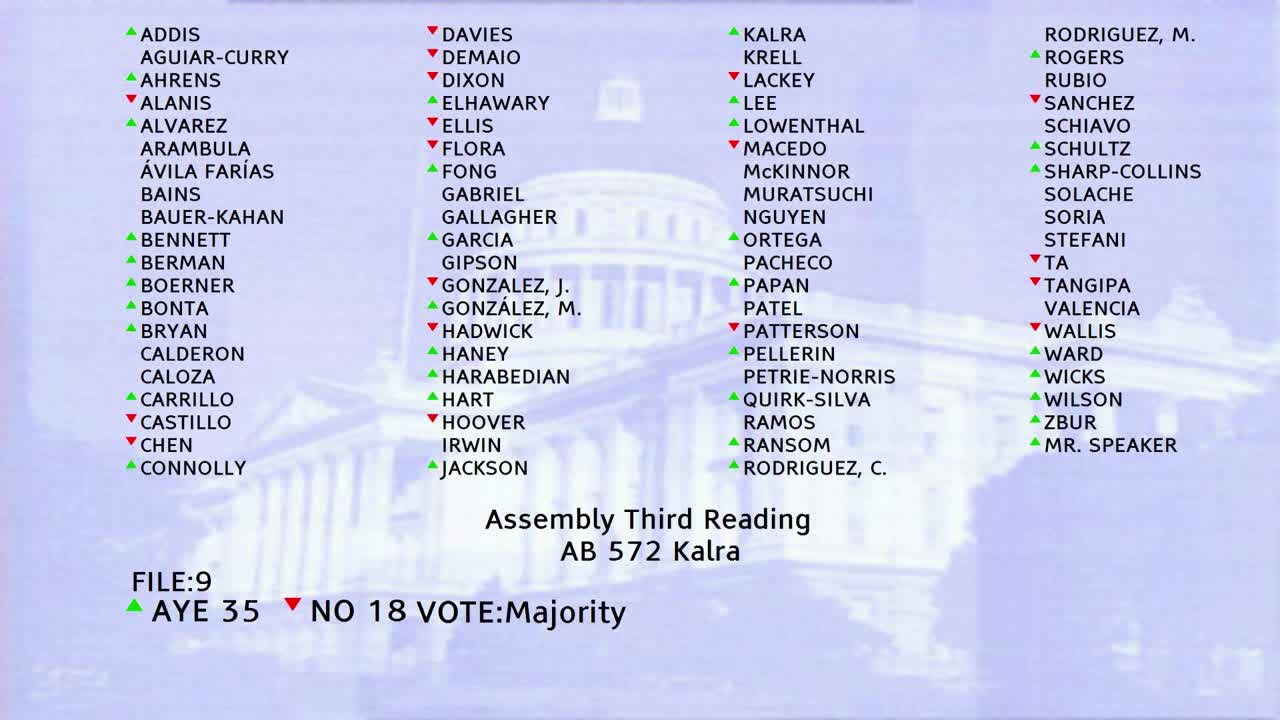
Bill Author

Bill Co-Author(s):