AB 891: Transportation: Quick-Build Pilot Program.
- Session Year: 2025-2026
- House: Assembly
- Latest Version Date: 2025-06-25
Current Status:
In Progress
(2025-08-29: In committee: Held under submission.)
Introduced
In Committee
Awaiting First Chamber Vote
Passed First Chamber
In Committee
Awaiting Second Chamber Vote
Passed Second Chamber
Enacted
Existing law establishes the Department of Transportation and requires the department to improve and maintain the state highways.
This bill would establish the Quick-Build Project Pilot Program within the departments maintenance program to expedite development and implementation of low-cost projects improvements on the state highway system, as specified. The bill would require the department, on or before December 31, 2027, to develop and publish guidance for the deployment of district quick-build projects. improvements. The bill would require the department, on or before December 31, 2028, to identify and commit to funding a minimum of 6 quick-build projects improvements statewide.
Existing law establishes the Department of Transportation and requires the department to improve and maintain the state highways.
This bill would establish the Quick-Build Project Pilot Program within the departments maintenance program to expedite development and implementation of low-cost projects on the state highway system, as specified. The bill would require the department, on or before December 31, 2027, to develop and publish guidance for the deployment of district quick-build projects. The bill would require the department, on or before December 31, 2028, to identify and commit to funding a minimum of 6 quick-build projects statewide.
(a)The Quick-Build Project Pilot Program is hereby established, within the departments maintenance program, established to expedite development and implementation of low-cost projects, improvements, including, but not limited to, bicycle and pedestrian facilities, on the state highway system in a manner consistent with the guidance developed pursuant to subdivision (b).
(b)On or before December 31, 2027, the department shall develop and publish all necessary guidance for the deployment of district quick-build projects. improvements.
(c)On or before December 31, 2028, the department shall identify and commit to funding a minimum of six quick-build projects improvements statewide under the Quick-Build Project Pilot Program.
(d)For purposes of this section, a quick-build project means an interim capital infrastructure project that requires minor construction activities but is built with durable, low- to moderate-cost materials, and lasts from one to five years, inclusive. improvement includes, but is not limited to, work related to the installation of signage, lane markings, and other low-cost measures to improve the safety of bicycle and pedestrian facilities on the state highway system.
(e)This section shall remain in effect only until January 1, 2030, and as of that date is repealed.
(a)The Quick-Build Project Pilot Program is hereby established, within the departments maintenance program, to expedite development and implementation of low-cost projects, including, but not limited to, bicycle and pedestrian facilities, on the state highway system in a manner consistent with the guidance developed pursuant to subdivision (b).
(b)On or before December 31, 2027, the department shall develop and publish all necessary guidance for the deployment of district quick-build projects.
(c)On or before December 31, 2028, the department shall identify and commit to funding a minimum of six quick-build projects statewide under the Quick-Build Project Pilot Program.
(d)For purposes of this section, a quick-build project means an interim capital infrastructure project that requires minor construction activities but is built with durable, low- to moderate-cost materials, and lasts from one to five years, inclusive.
(e)This section shall remain in effect only until January 1, 2030, and as of that date is repealed.
|
Date
|
Status
|
|---|---|
| Aug 29, 2025 | In committee: Held under submission. |
| Aug 25, 2025 | In committee: Referred to suspense file. |
| Aug 13, 2025 | In committee: Hearing postponed by committee. |
| Jul 9, 2025 | From committee: Do pass and re-refer to Com. on APPR. (Ayes 11. Noes 4.) (July 8). Re-referred to Com. on APPR. |
| Jun 25, 2025 | From committee chair, with author's amendments: Amend, and re-refer to committee. Read second time, amended, and re-referred to Com. on TRANS. |
| Jun 18, 2025 | Referred to Com. on TRANS. |
| Jun 5, 2025 | In Senate. Read first time. To Com. on RLS. for assignment. |
| Jun 4, 2025 | Read third time. Passed. Ordered to the Senate. (Ayes 61. Noes 17. Page 2077.) |
| May 27, 2025 | Read second time. Ordered to third reading. |
| May 23, 2025 | From committee: Do pass. (Ayes 11. Noes 3.) (May 23). |
| May 14, 2025 | In committee: Set, first hearing. Referred to APPR. suspense file. |
| Apr 8, 2025 | From committee: Do pass and re-refer to Com. on APPR. (Ayes 12. Noes 4.) (April 7). Re-referred to Com. on APPR. |
| Mar 3, 2025 | Referred to Com. on TRANS. |
| Feb 20, 2025 | From printer. May be heard in committee March 22. |
| Feb 19, 2025 | Read first time. To print. |
|
Date
|
Description
|
Location
|
Votes
|
|
|---|---|---|---|---|
| Aug 25, 2025 | Placed on suspense file | Senate Standing Committee on Appropriations |
Passed |
|
| Jul 8, 2025 | Do pass, but first be re-referred to the Committee on [Appropriations] | Senate Standing Committee on Transportation |
Passed |
|
| Jun 4, 2025 | AB 891 Zbur Assembly Third Reading | Assembly Floor |
Passed |
|
| May 23, 2025 | Do pass. | Assembly Standing Committee on Appropriations |
Passed |
|
| Apr 7, 2025 | Do pass and be re-referred to the Committee on [Appropriations] | Assembly Standing Committee on Transportation |
Passed |
This list shows positions taken on this bill by organizations on the date displayed, which is linked to the original source.
Positions by individuals are not included.
|
Organization
|
Position
|
Date
|
|---|---|---|
| 350 Bay Area Action | ** Support | |
| Active San Gabriel Valley | ** Support | |
| Bike East Bay | ** Support | |
| Bike LA | ** Support | |
| Bike Monterey | ** Support | |
| Bike SLO County | ** Support | |
| Bike Temecula Valley | ** Support | |
| CalBike | ** Support | |
| Chico Velo | ** Support | |
| ClimatePlan | ** Support | |
| Families for Safe Streets San Diego | ** Support | |
| Marin County Bicycle Coalition | ** Support | |
| Move Santa Barbara County | ** Support | |
| Napa County Bicycle Coalition | ** Support | |
| Pasadena Complete Streets Coalition | ** Support | |
| PeopleforBikes | ** Support | |
| Sacramento Area Bicycle Advocates | ** Support | |
| San Diego County Bicycle Coalition | ** Support | |
| San Francisco Bicycle Coalition | ** Support | |
| Santa Ana Active Streets | ** Support | |
| Seamless Bay Area | ** Support | |
| Shasta Living Streets | ** Support | |
| Slow Down Sacramento | ** Support | |
| Sonoma County Bicycle Coalition | ** Support | |
| Streets Are For Everyone | ** Support | |
| Streets for All | ** Support | |
| Transbay Coalition | ** Support | |
| Transform | ** Support | |
| Transportation Agency For Monterey County | ** Support | |
| Transportation Authority Of Marin | ** Support | |
| Walk Bike Cupertino | ** Support |
SENATE COMMITTEE ON
Senator Anna Caballero, Chair
2025 - 2026 Regular Session
AB 891 (Zbur) - Transportation: Quick-Build Pilot Program
Version: | Policy Vote: |
Urgency: | Mandate: |
Hearing Date: | Consultant: |
Bill Summary:
AB 891 would require the Department of Transportation (Caltrans) to develop a Quick-Build Pilot Program to expedite the development and implementation of low-cost improvements, including bicycle and pedestrian facilities, on the state highway system.
Fiscal Impact:
- Caltrans estimates costs of approximately $780,000 annually in staff resources for the duration of the pilot program (through 2030) to: develop pilot program guidance; develop standards, specifications, and approval processes for quick-build projects and materials; create and maintain an approved products list; develop outreach and engagement guidance; and conduct project selection. (State Highway Account)
- Unknown capital and support costs, at least in the low to mid millions of dollars, to plan and deliver at least six quick-build pilot program projects, depending on the scope and chosen delivery approach of the pilot projects. (various funds)
Background:
Existing law establishes the Active Transportation Program (ATP) within Caltrans for the purpose of encouraging increased use of active modes of transportation, such as biking and walking. The CTC adopts guidelines for each cycle of funding and allocates the moneys in 4-year cycles to cities, counties, and regional agencies responsible for the development or operation of bikeways and roadways where bicycle travel is permitted, using minimum safety design criteria developed by Caltrans, as specified.
According to Caltrans guidance, quick-build projects are interim capital improvement projects that further the goals of the ATP. These projects require minor construction and are built with durable, low to moderate cost materials, and last from one year to five years. A quick-build project is intended to immediately address safety needs by allowing a community to benefit quickly from improvements made while providing the opportunity to test project improvements before they are permanently constructed. Unlike traditional capital projects, quick-build projects can be adjusted and may be changed based on community input and further technical analysis over time. Examples of quick-build improvement types include barrier elements (such as raised lane separators, delineator posts, self-watering planters, and barricades), surface treatments (such as street bond pavement coatings, asphalt pain, epoxy gravel, and city benches), street furniture, and signage.
Proposed Law:
AB 891 would establish the Quick-Build Pilot Program to expedite development and implementation of low-cost improvements, including bicycle and pedestrian facilities, on the state highway system, as specified. The bill would:
- Define a “quick-build improvement” to include work related to the installation of signage, lane markings, and other low-cost measures to improve the safety of bicycle and pedestrian facilities on the state highway system.
- Require Caltrans to develop and publish all necessary guidance for the deployment of quick-build improvements by December 31, 2027.
- Require Caltrans to identify and commit to funding a minimum of six quick-build improvements statewide under the pilot program.
- Sunset the bill’s provisions on January 1, 2030.
Related Legislation:
SB 960 (Wiener), Chap. 630/2024, included provisions requiring facilities for pedestrians and bicyclists to be incorporated into State Highway Operation and Protection Program projects, to the extent feasible.
AB 2290 (Friedman), which was held on this Committee’s Suspense File last year, would have required Caltrans to establish the Bikeway Quick-Build Project Pilot Program, and to implement one bikeway quick-build project in each district by December 31, 2027.
Staff Comments:
This bill is intended to facilitate the near-term implementation of relatively simple roadway improvements, such as bikeway and intersection improvements, that increase roadway safety, especially for vulnerable road users who are not in motor vehicles. As the author states: “By developing quick-build projects on the state highway system, we can deliver critical safety infrastructure faster while allowing local jurisdictions to plan for more permanent, community-driven solutions over time.”
-- END --
ASSEMBLY THIRD READING
ATR Bill Id:AB 891
Author:(Zbur)
As Introduced Ver:February 19, 2025
Majority vote
SUMMARY
Establishes the Quick-Build Project Pilot Program within the Department of Transportation's (Caltrans) maintenance program for the development and implementation of low-cost projects including but not limited to bicycle and pedestrian facilities on the state highway system.
Major Provisions
- Requires Caltrans to develop and publish guidelines for the deployment of district quick-build projects on or before December 31, 2027.
- Requires Caltrans to identify and commit funding to a minimum of six quick-build projects statewide under the Quick-Build Project Pilot Program on or before December 31, 2028.
- Defines "quick-build project" to mean an interim capital infrastructure project that requires minor construction activities but is built with durable, low- to moderate-cost materials, and lasts from one to five years.
- Establishes a sunset of this provision on January 1, 2030.
COMMENTS
Quick-build projects are interim capital improvement projects that further the goals of the Active Transportation Program (ATP), according to Caltrans. These projects require minor construction and are built with durable, low to moderate cost materials, and last from one year to five years. A quick-build project is intended to immediately address safety needs. It allows a community to benefit quickly from improvements made, and at the same time give the community the opportunity to test the project improvements before they are permanently constructed. Unlike traditional capital projects, quick-build projects can be adjusted and changed based on community input and further technical analysis over time.
Examples of quick-build project types include; barrier elements (raised lane separator, delineator post, self-watering planters, barricades, etc.), surface treatments (street bond pavement coating, asphalt paint, epoxy gravel, city bench, etc.), street furniture, and signs.
Quick-build for safety improvements. Roadway safety for motorists, bicyclists, and pedestrians is a priority for California, and many cities and states across the country. Vision Zero is an international strategy and organizational campaign to eliminate all traffic related fatalities and injuries while increasing safe, healthy, and equitable mobility. Mitigation strategies to eliminate traffic related fatalities and serious injuries include careful consideration of roadway design, speed limits, and policy changes that can potentially bolster enforcement, promote behavioral change, and the development of technology that maximizes safety. California has begun to implement strategies from Vision Zero, through recommendations from the Zero Traffic Fatality Task Force, including speed limit reform. Additionally, in 2021 the state allocated funds to establish and implement the Vision Zero policy and program, a safety plan, and a slow streets program to promote multimodal roadways. Engineering and design changes are significant factors to the success of Vision Zero.
This bill establishes that within Caltrans' maintenance program, to expedite development including, but not limited to, bicycle and pedestrian facilities and implementation of low-cost projects on the state highway system. These types of projects could help improve road safety.
Funding for safety improvement projects. The Highway Safety Improvement Program (HSIP) is a federal program with the purpose of achieving a significant reduction in traffic fatalities and serious injuries on all public roads, including non-State-owned roads and roads on tribal land. The HSIP requires a data-driven, strategic approach to improving highway safety on all public roads with a focus on performance. In 2020, the state received $2.1 million in HSIP funding for safety projects. In 2021, California was obligated by the federal government to allocate at least 15% of HSIP funds for highway safety improvement projects, due to the total annual crash fatalities across the state. The level of vehicular fatalities triggered the Vulnerable Road User (VRU) Safety Special Rule. The Federal Highway Administration mandates all states to complete a VRU assessment to use a data-driven approach to compile locations and strategies to improve safety for VRUs on state and local roads.
The VRU safety assessment uses a Safe System Approach (SSA), which is a comprehensive and holistic approach to road safety. SSA acknowledges that road safety is a shared responsibility between road designers and road users. Based on the VRU assessment, Caltrans must allocate 30% of the federal Infrastructure Investment and Jobs Act (IIJA) funding it receives toward projects that improve safety by 2025. One of the programs funded by IIJA is the Highway Maintenance Safety Program Pilot, designated under the Highway Maintenance 4 (HM-4) Pilot Program, to quickly deliver proactive low-cost safety countermeasures within one to two years from planning to implementation.
The HM-4 Program is a four-year program that funds capital projects and supports statewide safety projects. According to Caltrans, HM-4 was developed to fund quick turnaround systemic and proactive safety projects to quickly reduce roadway fatalities and serious injuries to zero by 2050. The HM-4 Safety Program was approved in July 2023 for four years of funding for FY 2023-24 through 2026-27 and supports costs for installation of safety enhancements across the state highway system.
The ATP is a competitive grant program, intended to encourage increased use of active modes of transportation by achieving the goals of increased trips by walking and biking, enhancing public health, and increasing safety and mobility for non-motorized users. ATP funds quick-build projects, such as bollards on streets to increase cyclist safety.
Quick builds could inform permanent ATP or "complete street" projects. Complete streets is an approach to permanent street design changes that enable safe access for all users, including pedestrians, bicyclists, motorists, and transit riders. Complete Streets design updates promote the development of multimodal transportation infrastructure which can potentially lead to more choices for travel, increased safety, health benefits, and greenhouse gas emission reduction. Quick build projects could be a useful way for communities to "test" road features to assess if they truly improve safety, for example in an intersection where there have been safety issues for pedestrians and cyclists. In the guidelines, this bill directs Caltrans to establish, Caltrans may wish to require an assessment of the quick build projects to determine if they have increased safety as intended.
According to the Author
"Traffic violence—crashes involving cars, bicyclists, and pedestrians—is rising at an alarming rate in California. Simple bikeway and intersection improvements can provide significant safety benefits, and as more Californians turn to alternative transportation, these changes should be implemented more quickly and effectively. By developing quick-build projects on the state highway system, we can deliver critical safety infrastructure faster while allowing local jurisdictions to plan for more permanent, community-driven solutions over time."
Arguments in Support
The sponsors of this bill, California Bicycle Coalition and their partners, write in support of this bill, "Despite significant investment for more than 15 years in planning for safe and accessible bike lanes, implementation of facilities proposed in these plans has been much too slow at every level of government. Community support for these facilities is overwhelming despite piecemeal efforts by state and local agencies. Given rising traffic fatalities for people walking and biking, we need to ensure that opportunities are not missed to implement bikeways and safe pedestrian infrastructure on pavement repair and rehabilitation projects that are safe for users of all ages and abilities. Caltrans should demonstrate leadership in implementing bikeways quickly on pavement maintenance projects.
The Quicker and Better Bikeways Act establishes a quick-build bikeway pilot program within the Caltrans Maintenance Program to demonstrate that all Caltrans districts can quickly and cost effectively implement quick-build active transportation improvements as part of routine repaving projects."
Arguments in Opposition
No opposition on file.
FISCAL COMMENTS
According to the Assembly Appropriations Committee, Caltrans would need several new staff positions at an annual cost in the millions of dollars (special fund) for the duration of the pilot. These staff members would coordinate across the department to identify and streamline processes and procedures that would allow for quick-build timelines. Additional staff coordination would be needed to identify, plan, and deliver six quick-build projects, which Caltrans understands to mean bikeway projects.
Caltrans also would incur additional capital costs to plan and deliver the projects, which could be in the range of millions of dollars to low tens of millions of dollars (special fund).
VOTES
ASM TRANSPORTATION: 12-4-0
YES: Wilson, Aguiar-Curry, Ahrens, Carrillo, Harabedian, Hart, Jackson, Lowenthal, Papan, Ransom, Rogers, Ward
NO: Davies, Hoover, Lackey, Macedo
ASM APPROPRIATIONS: 11-3-1
YES: Wicks, Arambula, Calderon, Caloza, Elhawary, Fong, Mark González, Hart, Pacheco, Pellerin, Solache
NO: Dixon, Ta, Tangipa
ABS, ABST OR NV: Sanchez
UPDATED
VERSION: February 19, 2025
CONSULTANT: AJ Mendiola / TRANS. / (916) 319-2093 FN: 0000564
Date of Hearing: May 14, 2025
ASSEMBLY COMMITTEE ON APPROPRIATIONS
Buffy Wicks, Chair
ABPCA Bill Id:AB 891
Author:(Zbur) – As Introduced Ver:February 19, 2025
Policy Committee: | Transportation | Vote: | 12 - 4 |
|
| ||
|
|
Urgency: No State Mandated Local Program: No Reimbursable: No
SUMMARY:
This bill establishes the Quick-Build Project Pilot Program, within the Department of Transportation’s (Caltrans) maintenance program, to expedite development and implementation of low-cost projects, such as bicycle and pedestrian projects, on the state highway system.
Specifically, this bill requires Caltrans (1), by December 31, 2027, to develop and publish all necessary guidance for the deployment of district quick-build projects, and (2), by December 31, 2028, to identify and commit to funding a minimum of six quick-build projects statewide under the Quick-Build Project Pilot Program.
The bill defines “quick-build project” to mean an interim capital infrastructure project that requires minor construction activities but is built with durable, low- to moderate-cost materials, and lasts from one to five years, inclusive.
FISCAL EFFECT:
Caltrans would need several new staff positions at an annual cost in the millions of dollars (special fund) for the duration of the pilot. These staff members would coordinate across the department to identify and streamline processes and procedures that would allow for quick-build timelines. Additional staff coordination would be needed to identify, plan, and deliver six quick-build projects, which Caltrans understands to mean bikeway projects.
Caltrans also would incur additional capital costs to plan and deliver the projects, which could be in the range of millions of dollars to low tens of millions of dollars (special fund).
COMMENTS:
- Purpose. The author intends this bill to lead to the near-term implementation of relatively simple roadway improvement, such as bikeway and intersection improvements, that increase roadway safety, especially for road users who are not in motor vehicles. As the author states it, “By developing quick-build projects on the state highway system, we can deliver critical safety infrastructure faster while allowing local jurisdictions to plan for more permanent, community-driven solutions over time.”
- Background. In 2013, the Legislature directed Caltrans to create the Active Transportation Program (ATP), a grant program with the statutory goals of (a) increasing the proportion of trips accomplished by biking and walking, (b) increasing safety and mobility for non-motorized users, (c) advancing the active transportation efforts of regional agencies to achieve greenhouse gas reduction goals, (d) enhancing public health, (e) ensuring disadvantaged communities fully share in the benefits of the program, and (f) providing a broad spectrum of projects to benefit many types of active transportation users.
This bill, as described above, directs Caltrans to do all work necessary to implement a quick-build project pilot program to facilitate the relatively rapid installation of ATP projects to benefit the state’s walkers, bikers and rollers. According to Caltrans’ “Quick-Build Guidance” document, quick-build projects are:
interim capital improvement projects that further the goals of the ATP. These projects do require minor construction activities but are built with durable, low to moderate cost materials, and last from one year to five years. These projects have moderate design flexibility to anticipate some adjustments that may occur. The purpose of a Quick-Build project is to immediately implement safety needs, allowing a community to benefit quickly from improvements made, and allowing the people of a community affected by the project to provide input and test the project improvements before they are permanently constructed…unlike traditional capital projects, Quick-Build projects can be adjusted; they can be changed based on community input and further technical analysis over time. If the Quick-Build project is successful, it can later be made permanent. If it is not successful, it can be easily deconstructed. Quick-Build projects are intended to remain in place until capital upgrades are possible. All Quick-Build projects are expected to collect data to inform the approach for the project.
Analysis Prepared by: Jay Dickenson / APPR. / (916) 319-2081
Date of Hearing: April 7, 2025
ASSEMBLY COMMITTEE ON TRANSPORTATION
Lori D. Wilson, Chair
ABPCA Bill Id:AB 891 (
Author:Zbur) – As Introduced Ver:February 19, 2025
SUBJECT: Transportation: Quick-Build Project Pilot Program
SUMMARY: Establishes the Quick-Build Project Pilot Program within the Department of Transportation’s (Caltrans) maintenance program for the development and implementation of low-cost projects including but not limited to bicycle and pedestrian facilities on the state highway system. Specifically, this bill:
- Requires Caltrans to develop and publish guidelines for the deployment of district quick-build projects on or before December 31, 2027.
- Requires Caltrans to identify and commit funding to a minimum of six quick-build projects statewide under the Quick-Build Project Pilot Program on or before December 31, 2028.
- Defines “quick-build project” to mean an interim capital infrastructure project that requires minor construction activities but is built with durable, low- to moderate-cost materials, and lasts from one to five years.
- Establishes a sunset of this provision on January 1, 2030.
EXISTING LAW:
- Establishes a duty of Caltrans to plan, design, construct, operate, and maintain transportation systems that the Legislature has made, or may make, the responsibility of the department. (Government Code (GOV) Section14030)
- Requires Caltrans to update the Highway Design Manual (HDM) to incorporate the “complete streets” design concept. (GOV 14033)
- Requires Caltrans to commit to specific four-year targets to incorporate complete streets facilities, including pedestrian and bicycle facilities on state highway system entrances and exits that interact with local streets, into projects funded by the State Highway Operation and Protection Program (SHOPP). (GOV 14526.8 and 14526.6)
- Establishes the Active Transportation Program (ATP). (SHC Section 2381)
FISCAL EFFECT: Unknown
COMMENTS: Quick-build projects are interim capital improvement projects that further the goals of the ATP, according to Caltrans. These projects require minor construction and are built with durable, low to moderate cost materials, and last from one year to five years. A quick-build project is intended to immediately address safety needs. It allows a community to benefit quickly from improvements made, and at the same time give the community the opportunity to test the project improvements before they are permanently constructed. Unlike traditional capital projects, quick-build projects can be adjusted and changed based on community input and further technical analysis over time.
Examples of quick-build project types include; barrier elements (raised lane separator, delineator post, self-watering planters, barricades, etc.), surface treatments (street bond pavement coating, asphalt paint, epoxy gravel, city bench, etc.), street furniture, and signs.
Quick-build for safety improvements. Roadway safety for motorists, bicyclists, and pedestrians is a priority for California, and many cities and states across the country. Vision Zero is an international strategy and organizational campaign to eliminate all traffic related fatalities and injuries while increasing safe, healthy, and equitable mobility. Mitigation strategies to eliminate traffic related fatalities and serious injuries include careful consideration of roadway design, speed limits, and policy changes that can potentially bolster enforcement, promote behavioral change, and the development of technology that maximizes safety. California has begun to implement strategies from Vision Zero, through recommendations from the Zero Traffic Fatality Task Force, including speed limit reform. Additionally, in 2021 the state allocated funds to establish and implement the Vision Zero policy and program, a safety plan, and a slow streets program to promote multimodal roadways. Engineering and design changes are significant factors to the success of Vision Zero.
This bill establishes that within Caltrans’ maintenance program, to expedite development including, but not limited to, bicycle and pedestrian facilities and implementation of low-cost projects on the state highway system. These types of projects could help improve road safety.
Funding for safety improvement projects. The Highway Safety Improvement Program (HSIP) is a federal program with the purpose of achieving a significant reduction in traffic fatalities and serious injuries on all public roads, including non-State-owned roads and roads on tribal land. The HSIP requires a data-driven, strategic approach to improving highway safety on all public roads with a focus on performance. In 2020, the state received $2.1 million in HSIP funding for safety projects. In 2021, California was obligated by the federal government to allocate at least 15% of HSIP funds for highway safety improvement projects, due to the total annual crash fatalities across the state. The level of vehicular fatalities triggered the Vulnerable Road User (VRU) Safety Special Rule. The Federal Highway Administration mandates all states to complete a VRU assessment to use a data-driven approach to compile locations and strategies to improve safety for VRUs on state and local roads.
The VRU safety assessment uses a Safe System Approach (SSA), which is a comprehensive and holistic approach to road safety. SSA acknowledges that road safety is a shared responsibility between road designers and road users. Based on the VRU assessment, Caltrans must allocate 30% of the federal Infrastructure Investment and Jobs Act (IIJA) funding it receives toward projects that improve safety by 2025. One of the programs funded by IIJA is the Highway Maintenance Safety Program Pilot, designated under the Highway Maintenance 4 (HM-4) Pilot Program, to quickly deliver proactive low-cost safety countermeasures within one to two years from planning to implementation.
The HM-4 Program is a four-year program that funds capital projects and supports statewide safety projects. According to Caltrans, HM-4 was developed to fund quick turnaround systemic and proactive safety projects to quickly reduce roadway fatalities and serious injuries to zero by 2050. The HM-4 Safety Program was approved in July 2023 for four years of funding for FY 2023-24 through 2026-27 and supports costs for installation of safety enhancements across the state highway system.
The ATP is a competitive grant program, intended to encourage increased use of active modes of transportation by achieving the goals of increased trips by walking and biking, enhancing public health, and increasing safety and mobility for non-motorized users. ATP funds quick-build projects, such as bollards on streets to increase cyclist safety.
Quick builds could inform permanent ATP or “complete street” projects. Complete streets is an approach to permanent street design changes that enable safe access for all users, including pedestrians, bicyclists, motorists, and transit riders. Complete Streets design updates promote the development of multimodal transportation infrastructure which can potentially lead to more choices for travel, increased safety, health benefits, and greenhouse gas emission reduction. Quick build projects could be a useful way for communities to “test” road features to assess if they truly improve safety, for example in an intersection where there have been safety issues for pedestrians and cyclists. In the guidelines, this bill directs Caltrans to establish, Caltrans may wish to require an assessment of the quick build projects to determine if they have increased safety as intended.
According to the author, “Traffic violence—crashes involving cars, bicyclists, and pedestrians—is rising at an alarming rate in California. Simple bikeway and intersection improvements can provide significant safety benefits, and as more Californians turn to alternative transportation, these changes should be implemented more quickly and effectively. By developing quick-build projects on the state highway system, we can deliver critical safety infrastructure faster while allowing local jurisdictions to plan for more permanent, community-driven solutions over time.”
The sponsors of this bill, California Bicycle Coalition and their partners, write in support of this bill, “Despite significant investment for more than 15 years in planning for safe and accessible bike lanes, implementation of facilities proposed in these plans has been much too slow at every level of government. Community support for these facilities is overwhelming despite piecemeal efforts by state and local agencies. Given rising traffic fatalities for people walking and biking, we need to ensure that opportunities are not missed to implement bikeways and safe pedestrian infrastructure on pavement repair and rehabilitation projects that are safe for users of all ages and abilities. Caltrans should demonstrate leadership in implementing bikeways quickly on pavement maintenance projects.
The Quicker and Better Bikeways Act establishes a quick-build bikeway pilot program within the Caltrans Maintenance Program to demonstrate that all Caltrans districts can quickly and cost effectively implement quick-build active transportation improvements as part of routine repaving projects.”
Previous legislation. SB 1216 (Blakespear), Chapter 788, Statutes of 2024, would prohibit the ATP from funding a project that creates a Class III bikeway or a sharrow, unless it is on a highway with a design speed limit of 25 miles per hour or less, as specified.
SB 960 (Wiener), Chapter 630, Statutes of 2024, would, among other provisions, require to the extent feasible that facilities for pedestrians and bicyclists be provided and improved on all SHOPP projects.
AB 2363 (Friedman) Chapter 650, Statutes of 2018 required the Secretary of Transportation to establish and convene the Zero Traffic Fatalities Task Force, on or before, July 1, 2019, and prepare and submit a report of findings based on the efforts of this task force by January 1, 2020.
SB 1 (Beall), Chapter 5, Statutes of 2017 increases several taxes and fees to raise roughly $5.2 billion in new transportation revenues annually, and incorporated the “complete streets” design into the Highway Design Manual, among other provisions.
AB 2290 (Friedman) of 2024, would have required the Department of Transportation (Caltrans) to establish the Bikeway Quick-Build Project Pilot Program, as specified, and to implement one bikeway quick-build project in each district by December 31, 2027.
SB 127 (Wiener), which was vetoed by Governor Newsom in 2019, would have changed state policies for the management of the state highway system, including requiring Caltrans to incorporate new pedestrian and bicycle facilities into projects in specified areas.
REGISTERED SUPPORT / OPPOSITION:
Support
350 Bay Area Action
Active San Gabriel Valley
Bike East Bay
Bike LA
Bike Monterey
Bike SLO County
Bike Temecula Valley
CalBike
Chico Velo
ClimatePlan
Families for Safe Streets San Diego
Marin County Bicycle Coalition
MOVE Santa Barbara County
Napa County Bicycle Coalition
Pasadena Complete Streets Coalition
PeopleForBikes
Sacramento Area Bicycle Advocates
San Diego County Bicycle Coalition
San Francisco Bicycle Coalition
Santa Ana Active Streets
Seamless Bay Area
Shasta Living Streets
Slow Down Sacramento
Sonoma County Bicycle Coalition
Streets are For Everyone
Streets are For Everyone
Streets for All
Transbay Coalition
Transportation Agency for Monterey County
Transportation Authority of Marin
Transform
Walk Bike Cupertino
Opposition
None on file
Analysis Prepared by: AJ Mendiola / TRANS. / (916) 319-2093
Discussed in Hearing
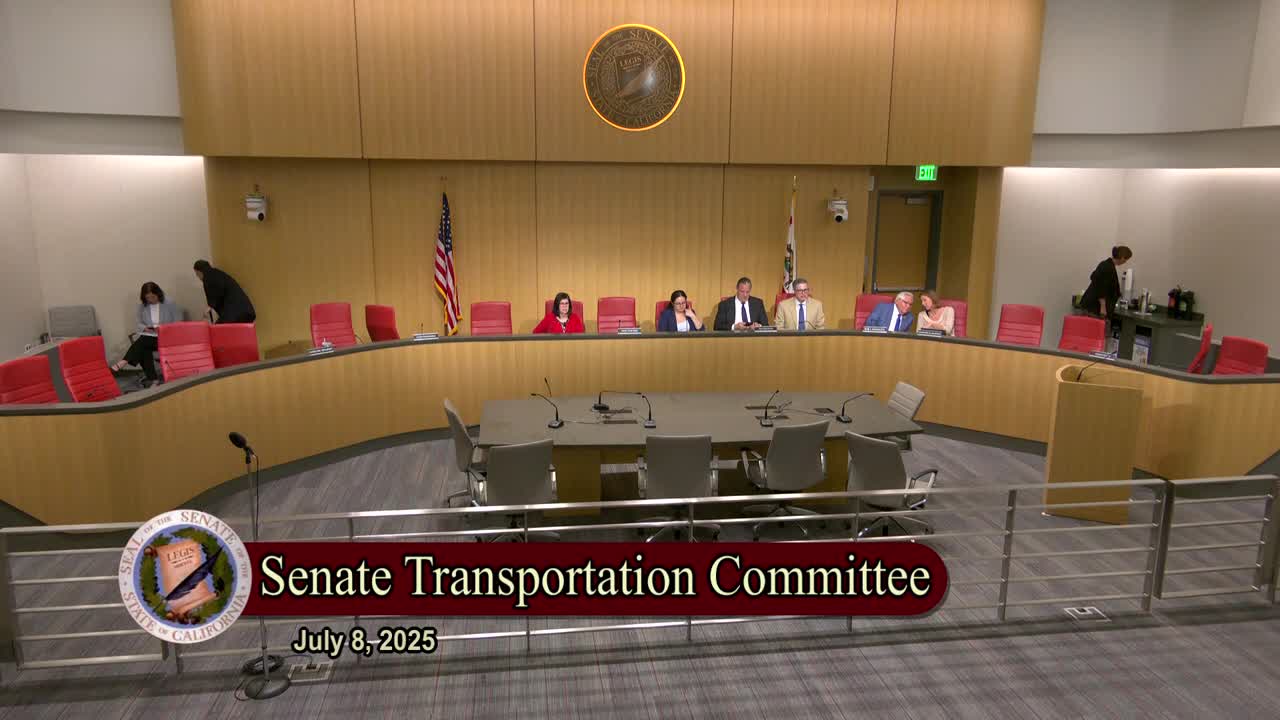 8MIN
Senate Standing Committee on Transportation
 2MIN
Assembly Floor
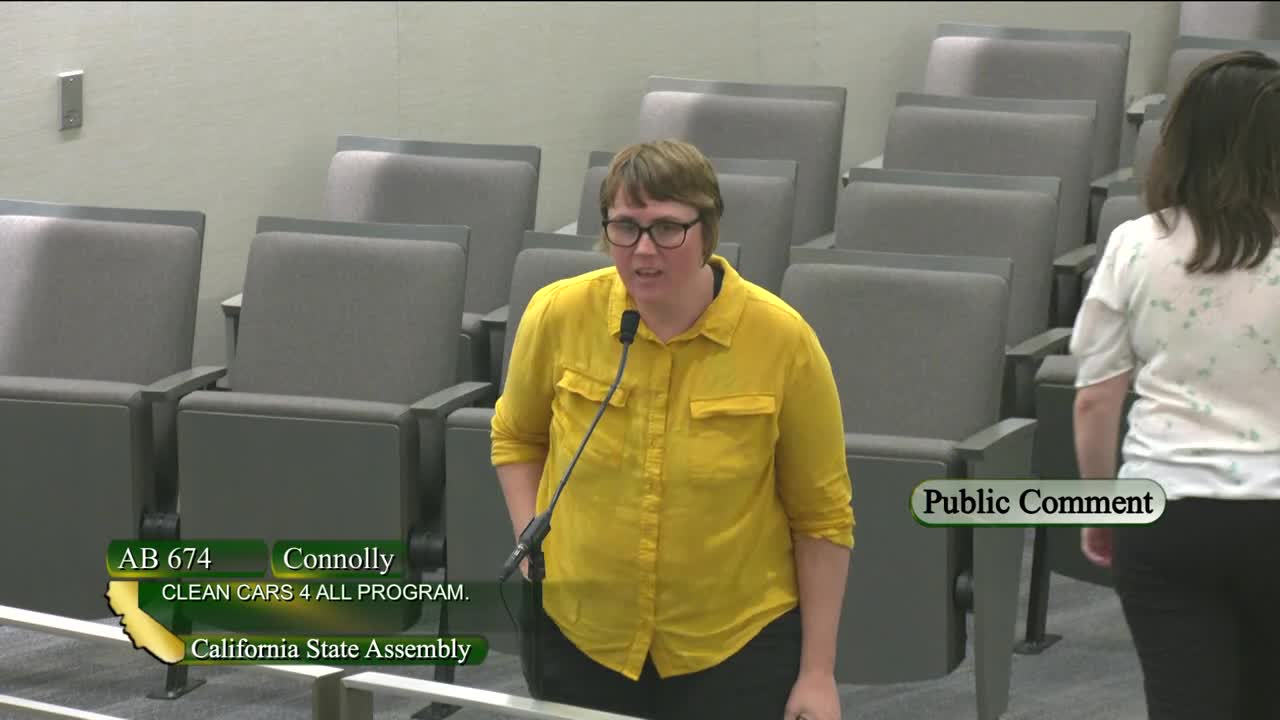 16MIN
Assembly Standing Committee on Transportation
Bill Author

Bill Co-Author(s):