AB 894: General acute care hospitals: patient directories.
- Session Year: 2025-2026
- House: Assembly
- Latest Version Date: 2025-10-06
Current Status:
Passed
(2025-10-06: Chaptered by Secretary of State - Chapter 384, Statutes of 2025.)
Introduced
In Committee
Awaiting First Chamber Vote
Passed First Chamber
In Committee
Awaiting Second Chamber Vote
Passed Second Chamber
Enacted
Existing law requires the State Department of Public Health to license and regulate health facilities, including general acute care hospitals. Existing law makes a violation of these provisions a crime.
Existing federal law, the Health Insurance Portability and Accountability Act of 1996 (HIPAA), authorizes a covered health care provider to use specified protected health information to maintain a directory of patients in its facility, and to disclose that information to persons who ask for the patient by name. Existing federal law requires a covered health care provider to inform an individual of its privacy practices generally and the use and disclosure of information in the directory and to provide the patient with the opportunity to restrict or prohibit that use or disclosure.
Existing law, the Confidentiality of Medical Information Act, prohibits a health care provider, a contractor, or a health care service plan from disclosing medical information, as defined, but does not prevent a general acute care hospital, upon an inquiry concerning a specific patient, from releasing a patients name, address, age, and sex, and a general description of the reason for treatment, among other information, unless there is a specific written request by the patient to the contrary.
This bill, beginning July 1, 2026, would require a general acute care hospital to inform a patient or the patients representative, at the time of admission or as soon as reasonably possible in cases of patient incapacity or an emergency treatment circumstance, that the patient or the patients representative may restrict or prohibit the use or disclosure of protected health information in the hospitals patient directory and would require the hospital to provide the patient or the patients representative an acknowledgment of the hospitals privacy practices by using a separate document and having hospital personnel verbally inform the patient or the patients representative, as specified. Because a violation of the bills requirements would be a crime, this bill would impose a state-mandated local program.
The California Constitution requires the state to reimburse local agencies and school districts for certain costs mandated by the state. Statutory provisions establish procedures for making that reimbursement.
This bill would provide that no reimbursement is required by this act for a specified reason.
Existing law requires the State Department of Public Health to license and regulate health facilities, including general acute care hospitals. Existing law makes a violation of these provisions a crime.
Existing federal law, the Health Insurance Portability and Accountability Act of 1996 (HIPAA), authorizes a covered health care provider to use specified protected health information to maintain a directory of patients in its facility, and to disclose that information to persons who ask for the patient by name. Existing federal law requires a covered health care provider to inform an individual of its privacy practices generally and the use and disclosure of information in the directory and to provide the patient with the opportunity to restrict or prohibit that use or disclosure.
Existing law, the Confidentiality of Medical Information Act, prohibits a health care provider, a contractor, or a health care service plan from disclosing medical information, as defined, but does not prevent a general acute care hospital, upon an inquiry concerning a specific patient, from releasing a patients name, address, age, and sex, and a general description of the reason for treatment, among other information, unless there is a specific written request by the patient to the contrary.
This bill, beginning July 1, 2026, would require a general acute care hospital to inform a patient, patient or the patients representative, at the time of admission or as soon as reasonably possible in cases of patient incapacity or an emergency treatment circumstance, that the patient or the patients representative may restrict or prohibit the use or disclosure of protected health information in the hospitals patient directory and would require the hospital to provide the patient or the patients representative an acknowledgment of the hospitals privacy practices by using a separate document and having hospital personnel verbally inform the patient, patient or the patients representative, as specified. Because a violation of the bills requirements would be a crime, this bill would impose a state-mandated local program.
The California Constitution requires the state to reimburse local agencies and school districts for certain costs mandated by the state. Statutory provisions establish procedures for making that reimbursement.
This bill would provide that no reimbursement is required by this act for a specified reason.
Existing law requires the State Department of Public Health to license and regulate health facilities, including general acute care hospitals. Existing law makes a violation of these provisions a crime.
Existing federal law, the Health Insurance Portability and Accountability Act of 1996 (HIPAA), authorizes a covered health care provider to use specified protected health information to maintain a directory of patients in its facility, and to disclose that information to persons who ask for the patient by name. Existing federal law requires a covered health care provider to inform an individual of its privacy practices generally and the use and disclosure of information in the directory and to provide the patient with the opportunity to restrict or prohibit that use or disclosure.
Existing law, the Confidentiality of Medical Information Act, prohibits a health care provider, a contractor, or a health care service plan from disclosing medical information, as defined, but does not prevent a general acute care hospital, upon an inquiry concerning a specific patient, from releasing a patients name, address, age, and sex, and a general description of the reason for treatment, among other information, unless there is a specific written request by the patient to the contrary.
This bill bill, beginning July 1, 2026, would require a general acute care hospital to inform a patient, at the time of admission or as soon as reasonably possible in cases of patient incapacity or an emergency treatment circumstance, that the patient may restrict or prohibit the use or disclosure of protected health information in the hospitals patient directory and would require the hospital to provide the patient an acknowledgment of the hospitals privacy practices by using a separate document and having hospital personnel verbally inform the patient, as specified. Because a violation of the bills requirements would be a crime, this bill would impose a state-mandated local program.
The California Constitution requires the state to reimburse local agencies and school districts for certain costs mandated by the state. Statutory provisions establish procedures for making that reimbursement.
This bill would provide that no reimbursement is required by this act for a specified reason.
Existing law requires the State Department of Public Health to license and regulate health facilities, including general acute care hospitals. Existing law makes a violation of these provisions a crime.
Existing federal law, the Health Insurance Portability and Accountability Act of 1996 (HIPAA), authorizes a covered health care provider to use specified protected health information to maintain a directory of patients in its facility, and to disclose that information to persons who ask for the patient by name. Existing federal law requires a covered health care provider to inform an individual of its privacy practices generally and the use and disclosure of information in the directory and to provide the patient with the opportunity to restrict or prohibit that use or disclosure.
Existing law, the Confidentiality of Medical Information Act, prohibits a health care provider, a contractor, or a health care service plan from disclosing medical information, as defined, but does not prevent a general acute care hospital, upon an inquiry concerning a specific patient, from releasing a patients name, address, age, and sex, and a general description of the reason for treatment, among other information, unless there is a specific written request by the patient to the contrary.
This bill would require a general acute care hospital to inform a patient, at the time of admitting, or at the earliest time admission or as soon as reasonably possible in cases of patient incapacity or an emergency treatment circumstance, that the patient may restrict or prohibit the use or disclosure of protected health information in the hospitals patient directory and would require the hospital to provide the patient an acknowledgment of the hospitals privacy practices by using a separate document or and having hospital personnel verbally inform the patient, as specified. Because a violation of the bills requirements would be a crime, this bill would impose a state-mandated local program.
The California Constitution requires the state to reimburse local agencies and school districts for certain costs mandated by the state. Statutory provisions establish procedures for making that reimbursement.
This bill would provide that no reimbursement is required by this act for a specified reason.
Existing law requires the State Department of Public Health to license and regulate health facilities, including general acute care hospitals. Existing law makes a violation of these provisions a crime.
Existing federal law, the Health Insurance Portability and Accountability Act of 1996 (HIPAA), authorizes a covered health care provider to use specified protected health information to maintain a directory of patients in its facility, and to disclose that information to persons who ask for the patient by name. Existing federal law requires a covered health care provider to inform an individual of the use and disclosure of information in the directory and to provide the patient with the opportunity to restrict or prohibit that use or disclosure.
Existing law, the Confidentiality of Medical Information Act, prohibits a health care provider, a contractor, or a health care service plan from disclosing medical information, as defined, but does not prevent a general acute care hospital, upon an inquiry concerning a specific patient, from releasing a patients name, address, age, and sex, and a general description of the reason for treatment, among other information, unless there is a specific written request by the patient to the contrary.
This bill would require a general acute care hospital to inform a patient, at the time of admitting, or at the earliest time possible in cases of patient incapacity or an emergency treatment circumstance, that the patient may restrict or prohibit the use or disclosure of protected health information in the hospitals patient directory by using a separate document or having hospital personnel verbally inform the patient, as specified. Because a violation of the bills requirements would be a crime, this bill would impose a state-mandated local program.
The California Constitution requires the state to reimburse local agencies and school districts for certain costs mandated by the state. Statutory provisions establish procedures for making that reimbursement.
This bill would provide that no reimbursement is required by this act for a specified reason.
Existing law requires the State Department of Public Health to license and regulate health facilities, including general acute care hospitals, acute psychiatric hospitals, and skilled nursing facilities, and clinics. Existing law makes a violation of these provisions a crime.The Confidentiality of Medical Information Act (CMIA) prohibits a provider of health care, a health care service plan, a contractor, or a corporation and its subsidiaries and affiliates from intentionally sharing, selling, using for marketing, or otherwise using any medical information, as defined, for any purpose not necessary to provide health care services to a patient, except as provided. Existing law makes a violation of these provisions that results in economic loss or personal injury to a patient punishable as a misdemeanor.This bill would state the intent of the Legislature to enact legislation to protect the privacy of undocumented Californians in hospitals.Existing law requires the State Department of Public Health to license and regulate health facilities, including general acute care hospitals, acute psychiatric hospitals, and skilled nursing facilities, and clinics. Existing law makes a violation of these provisions a crime.
The Confidentiality of Medical Information Act (CMIA) prohibits a provider of health care, a health care service plan, a contractor, or a corporation and its subsidiaries and affiliates from intentionally sharing, selling, using for marketing, or otherwise using any medical information, as defined, for any purpose not necessary to provide health care services to a patient, except as provided. Existing law makes a violation of these provisions that results in economic loss or personal injury to a patient punishable as a misdemeanor.
This bill would state the intent of the Legislature to enact legislation to protect the privacy of undocumented Californians in hospitals.
(a)A general acute care hospital shall inform a patient or the patients representative, at the time of admission or as soon as reasonably possible in cases of patient incapacity or an emergency treatment circumstance, that the patient may restrict or prohibit the use or disclosure of protected health information in the hospitals patient directory, as provided in Section 164.510 of Title 45 of the Code of Federal Regulations, in both of the following manners:
(1)Using a separate paper or digital document that only includes an acknowledgment of receipt of the hospitals notice of privacy practices required by Section 164.520 of Title 45 of the Code of Federal Regulations and information regarding the hospitals directory and the included protected health information. The separate document shall include a check box for the patient or the patients representative to mark to restrict or prohibit use or disclosure of the protected health information in the hospitals patient directory.
(2)Having hospital personnel verbally inform the patient or the patients representative of the patients right to restrict or prohibit the use or disclosure of protected health information.
(b)The information required pursuant to subdivision (a) shall be made available or provided in the top five languages, other than English, in the hospitals service area.
(c)For the purposes of this section, patients representative means a person who has legal authority to make decisions regarding medical care on behalf of the patient.
(d)This section shall become operative on July 1, 2026.
SEC. 2.No reimbursement is required by this act pursuant to Section 6 of Article XIIIB of the California Constitution because the only costs that may be incurred by a local agency or school district will be incurred because this act creates a new crime or infraction, eliminates a crime or infraction, or changes the penalty for a crime or infraction, within the meaning of Section 17556 of the Government Code, or changes the definition of a crime within the meaning of Section 6 of Article XIIIB of the California Constitution.
(a)A general acute care hospital shall inform a patient, patient or the patients representative, at the time of admission or as soon as reasonably possible in cases of patient incapacity or an emergency treatment circumstance, that the patient may restrict or prohibit the use or disclosure of protected health information in the hospitals patient directory, as provided in Section 164.510 of Title 45 of the Code of Federal Regulations, in both of the following manners:
(1)Using a separate paper or digital document that only includes an acknowledgment of receipt of the hospitals notice of privacy practices required by Section 164.520 of Title 45 of the Code of Federal Regulations and information regarding the hospitals directory and the included protected health information. The separate document shall include a check box for the patient or the patients representative to mark to restrict or prohibit use or disclosure of the protected health information in the hospitals patient directory.
(2)Having hospital personnel verbally inform the patient. patient or the patients representative of the patients right to restrict or prohibit the use or disclosure of protected health information.
(b)The information required pursuant to subdivision (a) shall be made available or provided in the top five languages, other than English, in the hospitals service area.
(c)For the purposes of this section, patients representative means a person who has legal authority to make decisions regarding medical care on behalf of the patient.
(c)(d)This section shall become operative on July 1, 2026.
SEC. 2.No reimbursement is required by this act pursuant to Section 6 of Article XIIIB of the California Constitution because the only costs that may be incurred by a local agency or school district will be incurred because this act creates a new crime or infraction, eliminates a crime or infraction, or changes the penalty for a crime or infraction, within the meaning of Section 17556 of the Government Code, or changes the definition of a crime within the meaning of Section 6 of Article XIIIB of the California Constitution.
(a)A general acute care hospital shall inform a patient, at the time of admission or as soon as reasonably possible in cases of patient incapacity or an emergency treatment circumstance, that the patient may restrict or prohibit the use or disclosure of protected health information in the hospitals patient directory, as provided in Section 164.510 of Title 45 of the Code of Federal Regulations, in both of the following manners:
(1)Using a separate paper or digital document that only includes an acknowledgment of receipt of the hospitals notice of privacy practices required by Section 164.520 of Title 45 of the Code of Federal Regulations and information regarding the hospitals directory and the included protected health information. The separate document shall include a check box for the patient to mark to restrict or prohibit use or disclosure of the protected health information in the hospitals patient directory.
(2)Having hospital personnel verbally inform the patient.
(b)The information required pursuant to subdivision (a) shall be made available or provided in the top five languages, other than English, in the hospitals service area.
(c)This section shall become operative on July 1, 2026.
SEC. 2.No reimbursement is required by this act pursuant to Section 6 of Article XIIIB of the California Constitution because the only costs that may be incurred by a local agency or school district will be incurred because this act creates a new crime or infraction, eliminates a crime or infraction, or changes the penalty for a crime or infraction, within the meaning of Section 17556 of the Government Code, or changes the definition of a crime within the meaning of Section 6 of Article XIIIB of the California Constitution.
(a)A general acute care hospital shall inform a patient, at the time of admitting, or at the earliest time admission or as soon as reasonably possible in cases of patient incapacity or an emergency treatment circumstance, that the patient may restrict or prohibit the use or disclosure of protected health information in the hospitals patient directory, as provided in Section 164.510 of Title 45 of the Code of Federal Regulations, in either both of the following manners:
(1)Using a separate document that only includes paper or digital document that only includes an acknowledgment of receipt of the hospitals notice of privacy practices required by Section 164.520 of Title 45 of the Code of Federal Regulations and information regarding the hospitals directory and the included protected health information. The separate document shall include check boxes a check box for the patient to mark whether they authorize or to restrict or prohibit use or disclosure of the protected health information in the hospitals patient directory.
(2)Having hospital personnel verbally inform the patient.
(b)The information required pursuant to subdivision (a) shall be made available or provided in the top five languages, other than English, in the hospitals service area.
SEC. 2.No reimbursement is required by this act pursuant to Section 6 of Article XIIIB of the California Constitution because the only costs that may be incurred by a local agency or school district will be incurred because this act creates a new crime or infraction, eliminates a crime or infraction, or changes the penalty for a crime or infraction, within the meaning of Section 17556 of the Government Code, or changes the definition of a crime within the meaning of Section 6 of Article XIIIB of the California Constitution.
(a)A general acute care hospital shall inform a patient, at the time of admitting, or at the earliest time possible in cases of patient incapacity or an emergency treatment circumstance, that the patient may restrict or prohibit the use or disclosure of protected health information in the hospitals patient directory, as provided in Section 164.510 of Title 45 of the Code of Federal Regulations, in either of the following manners:
(1)Using a separate document that only includes information regarding the hospitals directory and the included protected health information. The separate document shall include check boxes for the patient to mark whether they authorize or restrict or prohibit use or disclosure of the protected health information in the hospitals patient directory.
(2)Having hospital personnel verbally inform the patient.
(b)The information required pursuant to subdivision (a) shall be made available or provided in the top five languages, other than English, in the hospitals service area.
SEC. 2.No reimbursement is required by this act pursuant to Section 6 of Article XIIIB of the California Constitution because the only costs that may be incurred by a local agency or school district will be incurred because this act creates a new crime or infraction, eliminates a crime or infraction, or changes the penalty for a crime or infraction, within the meaning of Section 17556 of the Government Code, or changes the definition of a crime within the meaning of Section 6 of Article XIIIB of the California Constitution.
SECTION 1.It is the intent of the Legislature to enact legislation to protect the privacy of undocumented Californians in hospitals.It is the intent of the Legislature to enact legislation to protect the privacy of undocumented Californians in hospitals.
|
Date
|
Status
|
|---|---|
| Oct 6, 2025 | Chaptered by Secretary of State - Chapter 384, Statutes of 2025. |
| Oct 6, 2025 | Approved by the Governor. |
| Sep 11, 2025 | Enrolled and presented to the Governor at 4 p.m. |
| Sep 4, 2025 | Senate amendments concurred in. To Engrossing and Enrolling. (Ayes 77. Noes 0. Page 2920.). |
| Sep 3, 2025 | In Assembly. Concurrence in Senate amendments pending. |
| Sep 3, 2025 | Read third time. Passed. Ordered to the Assembly. (Ayes 40. Noes 0. Page 2448.). |
| Aug 28, 2025 | Read second time. Ordered to third reading. |
| Aug 27, 2025 | Read third time and amended. Ordered to second reading. |
| Jul 15, 2025 | Read second time. Ordered to third reading. |
| Jul 14, 2025 | From committee: Be ordered to second reading pursuant to Senate Rule 28.8. |
| Jul 2, 2025 | From committee: Do pass and re-refer to Com. on APPR. (Ayes 13. Noes 0.) (July 1). Re-referred to Com. on APPR. |
| Jun 19, 2025 | From committee: Do pass and re-refer to Com. on JUD. with recommendation: To Consent Calendar. (Ayes 10. Noes 0.) (June 18). Re-referred to Com. on JUD. |
| Jun 9, 2025 | From committee chair, with author's amendments: Amend, and re-refer to committee. Read second time, amended, and re-referred to Com. on HEALTH. |
| Jun 4, 2025 | Referred to Coms. on HEALTH and JUD. |
| May 23, 2025 | In Senate. Read first time. To Com. on RLS. for assignment. |
| May 23, 2025 | Read third time. Passed. Ordered to the Senate. (Ayes 71. Noes 0. Page 1663.) |
| May 15, 2025 | Read second time. Ordered to Consent Calendar. |
| May 14, 2025 | From committee: Do pass. To Consent Calendar. (Ayes 15. Noes 0.) (May 14). |
| Apr 28, 2025 | Re-referred to Com. on APPR. |
| Apr 24, 2025 | Read second time and amended. |
| Apr 23, 2025 | From committee: Amend, and do pass as amended and re-refer to Com. on APPR. with recommendation: To Consent Calendar. (Ayes 16. Noes 0.) (April 22). |
| Mar 25, 2025 | Re-referred to Com. on HEALTH. |
| Mar 24, 2025 | From committee chair, with author's amendments: Amend, and re-refer to Com. on HEALTH. Read second time and amended. |
| Mar 24, 2025 | Referred to Com. on HEALTH. |
| Feb 20, 2025 | From printer. May be heard in committee March 22. |
| Feb 19, 2025 | Read first time. To print. |
|
Date
|
Description
|
Location
|
Votes
|
|
|---|---|---|---|---|
| Sep 4, 2025 | AB 894 Carrillo Concurrence in Senate Amendments | Assembly Floor |
Passed |
|
| Sep 3, 2025 | Assembly 3rd Reading AB894 Carrillo et al. By Rubio | Senate Floor |
Passed |
|
| Jul 1, 2025 | Do pass, but first be re-referred to the Committee on [Appropriations] | Senate Standing Committee on Judiciary |
Passed |
|
| Jun 18, 2025 | Do pass, but first be re-referred to the Committee on [Judiciary] with the recommendation: To Consent Calendar | Senate Standing Committee on Health |
Passed |
|
| May 23, 2025 | AB 894 Carrillo Consent Calendar Second Day Regular Session | Assembly Floor |
Passed |
|
| May 14, 2025 | Do pass. To Consent Calendar. | Assembly Standing Committee on Appropriations |
Passed |
|
| Apr 22, 2025 | Do pass as amended, and be re-referred to the Committee on [Appropriations] with recommendation: To Consent Calendar | Assembly Standing Committee on Health |
Passed |
This list shows positions taken on this bill by organizations on the date displayed, which is linked to the original source.
Positions by individuals are not included.
|
Organization
|
Position
|
Date
|
|---|---|---|
| Latino Coalition for a Healthy California (LCHC) | ** Support |
CONCURRENCE IN SENATE AMENDMENTS
CSA1 Bill Id:AB 894
Author:(Carrillo)
As Amended Ver:August 27, 2025
Majority vote
SUMMARY
Requires a general acute care hospital (GACH) to inform a patient, at the time of admitting, or at the earliest time possible in cases of patient incapacity or an emergency treatment circumstance, that the patient may restrict or prohibit the use or disclosure of protected health information in the hospital's patient directory by using a separate document or having hospital personnel verbally inform the patient, as specified.
Senate Amendments
- Make the provisions of this bill operative on July 1, 2026;
- Add the requirement that a hospital also inform a patient's representative of their right to restrict or prohibit the use or disclosure of protected health information in the hospital's patient directory; and,
- Define a "patient representative" as a person who has legal authority to make decisions regarding medical care on behalf of the patient.
COMMENTS
Sensitive areas. In 2011, the director of Immigration and Customs Enforcement (ICE) issued an internal memo directing officers to generally refrain from conducting enforcement actions, such as arrests, interviews, searches, and surveillance, at sensitive areas. These protected areas included hospitals, churches, and schools. However, on January 21, 2025, the Department of Homeland Security rescinded this policy. In response, on January 27th, 2025, the California Hospital Association released a statement addressing the Department's decision. One of their key recommendations was for hospitals to better inform patients of their right to opt-out of the patient directory, a crucial measure for safeguarding their privacy. To achieve this, hospitals were advised to either provide a separate document outlining this option or to have admitting personnel verbally notify patients.
Impact of "policing patients." In the past few years, states such as Florida and Texas have enacted policies that erode trust in healthcare and put healthcare facilities in the position of policing patients. Florida hospitals that accept Medicaid are now mandated to collect data on patients' immigration status, and Texas public hospitals are mandated to collect data on costs they incur to provide emergency and inpatient care for undocumented immigrants. This is despite evidence that immigrants don't use as much healthcare as U.S.-born people, and actually subsidize the healthcare of U.S. residents through their payment of insurance premiums and taxes.
According to a January 2025 Kaiser Family Foundation (KFF) brief, "Key Facts on Health Coverage of Immigrants," as of 2023, there were 47.1 million immigrants residing in the U.S., including 22.4 million noncitizen immigrants and 24.7 million naturalized citizens, who each accounted for about 7% of the total population. Many individuals live in mixed immigration status families that may include lawfully present immigrants, undocumented immigrants, and/or citizens. One in four children has an immigrant parent, including over one in ten (12%) who are citizen children with at least one noncitizen parent. Overall, research shows that immigrants use less health care than U.S.-born citizens. Lower use of health care among immigrants likely reflects a combination of them being younger and healthier than their U.S.-born counterparts as well as them facing increased barriers to care including a higher uninsured rate, language access challenges, and immigration-related fears.
A KFF analysis of 2021 medical expenditure data shows that, on average, annual per capita health care expenditures for immigrants are about two-thirds of those who are U.S.-born citizens ($4,875 vs. $7,277). Recent research further finds that, because immigrants, especially undocumented immigrants, have lower health care use despite contributing billions of dollars in insurance premiums and taxes, they help subsidize the U.S. health care system and offset the costs of care incurred by U.S.-born citizens.
According to the Author
In a time where personal safety and privacy are more critical than ever, we must take immediate action to protect those who are most at risk. The current practice of listing patients' personal information in hospital directories, often without their full understanding, can lead to exposing individuals to threatening situations. Those facing sensitive circumstances, such as immigration issues, domestic violence, and human trafficking, deserve to feel protected when seeking health treatment. The author states that this bill will give vulnerable patients the power to make an informed choice about whether their personal information should be accessible, ensuring that they are not put in a potentially dangerous situation. The author argues that we must send a clear message to our most marginalized Californians that their right to privacy and safety is a top priority, regardless of their background. The author concludes, that as lawmakers, it is our responsibility to guarantee that every patient seeking treatment can safely do so.
Arguments in Support
The Latino Coalition for a Healthy California (LCHC) supports this bill and states that it addresses a critical gap in patient privacy practices that often leaves individuals vulnerable to unwanted exposure of their personal information during one of the most sensitive and stressful times in their lives.
Arguments in Opposition
None.
FISCAL COMMENTS
According to the Senate Appropriations Committee, pursuant to Senate Rule 28.8, negligible state costs.
VOTES:
ASM HEALTH: 16-0-0
YES: Bonta, Chen, Addis, Aguiar-Curry, Rogers, Carrillo, Flora, Mark González, Krell, Patel, Patterson, Celeste Rodriguez, Sanchez, Schiavo, Sharp-Collins, Stefani
ASM APPROPRIATIONS: 15-0-0
YES: Wicks, Sanchez, Arambula, Calderon, Caloza, Dixon, Elhawary, Fong, Mark González, Hart, Pacheco, Pellerin, Solache, Ta, Tangipa
ASSEMBLY FLOOR: 71-0-8
YES: Addis, Aguiar-Curry, Ahrens, Alanis, Alvarez, Arambula, Ávila Farías, Bains, Bauer-Kahan, Bennett, Berman, Boerner, Bonta, Calderon, Caloza, Carrillo, Castillo, Connolly, Davies, DeMaio, Dixon, Elhawary, Flora, Fong, Gabriel, Gallagher, Garcia, Gipson, Jeff Gonzalez, Mark González, Hadwick, Haney, Harabedian, Hart, Hoover, Irwin, Jackson, Kalra, Krell, Lackey, Lee, Lowenthal, Macedo, McKinnor, Muratsuchi, Ortega, Pacheco, Papan, Patel, Patterson, Pellerin, Petrie-Norris, Quirk-Silva, Ramos, Ransom, Celeste Rodriguez, Michelle Rodriguez, Rogers, Blanca Rubio, Schiavo, Solache, Soria, Stefani, Ta, Tangipa, Valencia, Wallis, Ward, Wilson, Zbur, Rivas
ABS, ABST OR NV: Bryan, Chen, Ellis, Nguyen, Sanchez, Schultz, Sharp-Collins, Wicks
SENATE FLOOR: 40-0-0
YES: Allen, Alvarado-Gil, Archuleta, Arreguín, Ashby, Becker, Blakespear, Cabaldon, Caballero, Cervantes, Choi, Cortese, Dahle, Durazo, Gonzalez, Grayson, Grove, Hurtado, Jones, Laird, Limón, McGuire, McNerney, Menjivar, Niello, Ochoa Bogh, Padilla, Pérez, Reyes, Richardson, Rubio, Seyarto, Smallwood-Cuevas, Stern, Strickland, Umberg, Valladares, Wahab, Weber Pierson, Wiener
UPDATED
VERSION: August 27, 2025
CONSULTANT: Lara Flynn / HEALTH / (916) 319-2097 FN: 0001281
SENATE RULES COMMITTEE Office of Senate Floor Analyses (916) 651-1520 Fax: (916) 327-4478 | AB 894 |
THIRD READING
Bill No: AB 894
Author: Carrillo (D), et al.
Amended: 6/9/25 in Senate
Vote: 21
SENATE HEALTH COMMITTEE: 10-0, 6/18/25
AYES: Menjivar, Valladares, Durazo, Grove, Limón, Padilla, Richardson, Rubio, Weber Pierson, Wiener
NO VOTE RECORDED: Gonzalez
SENATE JUDICIARY COMMITTEE: 13-0, 7/1/25
AYES: Umberg, Niello, Allen, Arreguín, Ashby, Caballero, Durazo, Laird, Stern, Valladares, Wahab, Weber Pierson, Wiener
SENATE APPROPRIATIONS COMMITTEE: Senate Rule 28.8
ASSEMBLY FLOOR: 71-0, 5/23/25 (Consent) - See last page for vote
SUBJECT: General acute care hospitals: patient directories
SOURCE: Author
DIGEST:
This bill requires a hospital to inform a patient, at the time of admission, that the patient may restrict or prohibit the use or disclosure of protected health information in the hospital’s patient directory by having hospital personnel verbally inform the patient, and by using a separate paper or digital document that includes a check box for the patient to mark to restrict or prohibit the use of their information in the hospital’s patient directory.
Senate Floor Amendments of 8/27/25 add “patient representative,” in addition to the patient, to the requirement that a hospital inform the patient that they may restrict the disclosure of protected health information in the hospital’s patient directory.
ANALYSIS:
Existing federal law:
- Establishes, in federal law, the Health Information Portability and Accountability Act of 1996 (HIPAA), which provides privacy protections for a patient’s “protected health information,” defined as individually identifiable health information, and prohibits a “covered entity,” defined as a health plan, health care provider, or health care clearing house, from using or disclosing protected health information except as specified or as authorized by the patient in writing. [45 Code of Federal Regulations (CFR) §164.500, et seq.]
- Permits a covered entity, under HIPAA, to use or disclose protected health information for purposes of facility patient directories, or to involve a family member or close personal friend in the patient’s care, as long as the individual is informed in advance of the use or disclosure, and has the opportunity to agree to, or prohibit or restrict, the use or disclosure. [45 CFR §164.510]
Existing state law:
- Licenses general acute care hospitals under the California Department of Public Health (CDPH). Defines general acute care hospitals as hospitals that provide 24-hour inpatient care, including the following basic services: medical, nursing, surgical, anesthesia, laboratory, radiology, pharmacy, and dietary services. [Health and Safety Code (HSC) §1250(a)]
- Establishes the Confidentiality of Medical Information Act (CMIA), which prohibits a health care provider, health care service plan, or contractor from disclosing medical information regarding a patient without first obtaining authorization. [Civil Code (CIV) §56, et. seq.]
- Defines “medical information,” for purposes of the CMIA, as any individually identifiable information, in electronic or physical form, in possession of or derived from a provider of health care, health care service plan, pharmaceutical company, or contractor regarding a patient’s medical history, mental or physical condition, or treatment. [CIV §56.05(j)]
- Defines “provider of health care,” for purposes of the CMIA, as a person licensed as a health care professional, as specified, or a clinic, health dispensary, or health facility licensed by the California Department of Public Health, as specified. [CIV §56.05(p)]
- Establishes the California Values Act (CVA), which prohibits California law enforcement agencies from using agency or department moneys or personnel to investigate, interrogate, detain, detect, or arrest persons for immigration enforcement purposes, among other provisions. [Government Code (GOV) §7284, et seq.]
- Requires the Attorney General, as part of the CVA, to publish model policies limiting assistance with immigration enforcement to the fullest extent possible consistent with federal and state law at public schools, public libraries, health facilities operated by the state or a political subdivision of the state, and other state facilities, as specified, and requires all public schools, health facilities operated by the state or a political subdivision of the state, and courthouses to implement the model policy, or an equivalent policy. [GOV §7284.8]
This bill:
- Requires a general acute care hospital to inform a patient or the patient’s representative, at the time of admission or as soon as reasonably possible in cases of patient incapacity or an emergency treatment circumstance, that the patient may restrict or prohibit the use or disclosure of protected health information in the hospital’s patient directory. Requires the hospital to inform the patient in both of the following manners:
- Using a separate paper or digital document that only includes an acknowledgment of receipt of the hospital’s notice of privacy practices required under federal law, as specified, and information regarding the hospital’s directory and the included protected health information. Requires the separate document to include a check box for the patient or patient’s representative to mark to restrict or prohibit use or disclosure of the protected health information in the hospital’s patient directory; and,
- Having the hospital personnel verbally inform the patient or the patient’s representative of the right to restrict or prohibit the use or disclosure of protected health information.
- Requires the information provided to the patient to be made available or provided in the top five languages, other than English, in the hospital’s service area.
- Defines “patient’s representative,” for purposes of this bill, as a person who has legal authority to make decisions regarding medical care on behalf of the patient.
- Delays the implementation of this bill by six months, until July 1, 2026.
Comments
Author’s statement. According to the author, in a time where personal safety and privacy are more critical than ever, we must take immediate action to protect those who are most at risk. The current practice of listing patients’ personal information in hospital directories, often without their full understanding, can lead to exposing individuals to threatening situations. Those facing sensitive circumstances, such as immigration issues, domestic violence, and human trafficking, deserve to feel protected when seeking health treatment. This bill will give vulnerable patients the power to make an informed choice about whether their personal information should be accessible, ensuring that they are not put in a potentially dangerous situation. We must send a clear message to our most marginalized Californians that their right to privacy and safety is a top priority, regardless of their background. As lawmakers, it is our responsibility to guarantee that every patient seeking treatment can safely do so.
Background
HIPAA and hospital patient directories. As described in existing federal law, under HIPAA, covered entities such as hospitals can disclose protected health information for purposes of a patient directory, as long as the individual is informed in advance and has the opportunity to prohibit or restrict the disclosure. Under these federal provisions of law, a hospital or other facility is permitted to disclose the following protected health information in the patient directory: the individual’s name, the individual’s location in the facility, the individual’s condition described in general terms that does not communicate specific medical information, and the individual’s religious affiliation. Members of the clergy can access religious affiliations reflected in the patient directory without asking for a person by name. All other persons seeking information must ask for the individual by name (religious affiliation is only disclosed to members of the clergy). The hospital is required to inform an individual of the protected health information that it may include in a directory, and the persons to whom it may disclose such information, and provide the individual with the opportunity to restrict or prohibit some or all of the uses or disclosures. There are provisions about permitting disclosure in a patient directory even when the opportunity to object cannot be practicably provided due to the individual’s incapacity or an emergency treatment circumstance, if the disclosure is consistent with a prior expressed preference that is known to the hospital, or it is in the individual’s best interest as determined by the health care provider. However, the hospital must inform the individual and provide an opportunity to object to uses or disclosures for directory purposes when it becomes practicable to do so. Patients who object to having their information included in a patient directory are typically told that by invoking this right, people inquiring by phone and visitors will be told “I have no information about this patient,” and that no deliveries, including cards or flowers, will be forwarded.
Repeal of Biden-era memorandum and new guidance from ICE led CHA to make a suggestion similar to this bill. In October 2021, the U.S. Department of Homeland Security (US DHS) issued a memorandum to Immigrations and Customs Enforcement (ICE) and U.S. Customs and Border Protection (CBP) providing guidance on ICE and CBP enforcement actions in or near areas that “require special protection.” This memo directed that to the fullest extent possible, enforcement action should not be taken “in or near a location that would restrain people’s access to essential services or engagement in essential activities.” These protected areas included, but were not limited to, schools, health care facilities, places of worship, places where children gather, social services establishments such as shelters, or a place where disaster or emergency response and relief is provided. On January 21, 2025, the new Acting Secretary of US DHS issued a memorandum rescinding the previous memorandum, stating that it is not necessary to “create bright line rules regarding where our immigration laws are permitted to be enforced.” Instead, law enforcement officers should use discretion and common sense, and suggested that the Director of ICE and the Commissioner of the CBP issue further guidance to assist officers in exercising enforcement discretion.
Following the action to rescind the memorandum, the California Hospital Association (CHA) issued a statement on January 27, 2025 reiterating California and federal laws that protect patient privacy and that prevent disclosure of patient information, and providing some recommendations to hospitals. In this statement, CHA noted that most hospitals maintain a hospital directory that lists patients’ names and room numbers. CHA points out that patients are informed at the time of admission of the existence of the hospital directory and their right to opt out of being listed. CHA noted, however, that many patients do not read hospitals’ Notice of Privacy Practices. CHA stated that hospitals may wish to bring this information to their patient’s attention by using a separate document or by having admitting personnel notify them verbally.
FISCAL EFFECT: Appropriation: No Fiscal Com.: Yes Local: Yes
Senate Rule 28.8
SUPPORT: (Verified 8/27/25)
Latino Coalition for a Healthy California
OPPOSITION: (Verified 8/27/25)
None received
ARGUMENTS IN SUPPORT: The Latino Coalition for a Healthy California (LCHC) writes in support that this bill addresses a critical gap in patient privacy practices that often leaves individuals vulnerable to unwanted exposure of their personal information during one of the most sensitive and stressful times in their lives. LCHC states that when a patient is admitted to a hospital, certain personal details, including name, room number, general health status, and religious affiliation are entered into a hospital directory that can be accessed by callers or visitors who ask for the patient by name. LCHC states that although patients are given the opportunity to opt-out of this listing, the reality is that his right is often overlooked or misunderstood. The intake process typically involves a large volume of documentation, consent forms, and medical questionnaires, all of which must be reviewed and signed while a patient is experiencing physical discomfort, emotional distress, or even medical trauma. In such an environment, it is entirely understandable that patients might gloss over critical privacy details or be unaware that their information will be publicly accessible unless they take action to prevent it. LCHC states that this lack of clarity disproportionately impacts vulnerable populations, such as survivors of domestic violence, undocumented immigrants, LGBTQ+ individuals, and others who may fear being located or identified. The simple act of being listed in a director could compromise their safety, expose them to harassment, or deter them from seeking care altogether. According to LCHC, this bill proposes a straightforward solution by ensuring that patients are informed, in plain language about their right to opt-out of the directory.
ASSEMBLY FLOOR: 71-0, 5/23/25
AYES: Addis, Aguiar-Curry, Ahrens, Alanis, Alvarez, Arambula, Ávila Farías, Bains, Bauer-Kahan, Bennett, Berman, Boerner, Bonta, Calderon, Caloza, Carrillo, Castillo, Connolly, Davies, DeMaio, Dixon, Elhawary, Flora, Fong, Gabriel, Gallagher, Garcia, Gipson, Jeff Gonzalez, Mark González, Hadwick, Haney, Harabedian, Hart, Hoover, Irwin, Jackson, Kalra, Krell, Lackey, Lee, Lowenthal, Macedo, McKinnor, Muratsuchi, Ortega, Pacheco, Papan, Patel, Patterson, Pellerin, Petrie-Norris, Quirk-Silva, Ramos, Ransom, Celeste Rodriguez, Michelle Rodriguez, Rogers, Blanca Rubio, Schiavo, Solache, Soria, Stefani, Ta, Tangipa, Valencia, Wallis, Ward, Wilson, Zbur, Rivas
NO VOTE RECORDED: Bryan, Chen, Ellis, Nguyen, Sanchez, Schultz, Sharp-Collins, Wicks
Prepared by: Vincent D. Marchand / HEALTH / (916) 651-4111
8/28/25 16:49:53
**** END ****
SENATE RULES COMMITTEE Office of Senate Floor Analyses (916) 651-1520 Fax: (916) 327-4478 | AB 894 |
THIRD READING
Bill No: AB 894
Author: Carrillo (D), et al.
Amended: 6/9/25 in Senate
Vote: 21
SENATE HEALTH COMMITTEE: 10-0, 6/18/25
AYES: Menjivar, Valladares, Durazo, Grove, Limón, Padilla, Richardson, Rubio, Weber Pierson, Wiener
NO VOTE RECORDED: Gonzalez
SENATE JUDICIARY COMMITTEE: 13-0, 7/1/25
AYES: Umberg, Niello, Allen, Arreguín, Ashby, Caballero, Durazo, Laird, Stern, Valladares, Wahab, Weber Pierson, Wiener
SENATE APPROPRIATIONS COMMITTEE: Senate Rule 28.8
ASSEMBLY FLOOR: 71-0, 5/23/25 (Consent) - See last page for vote
SUBJECT: General acute care hospitals: patient directories
SOURCE: Author
DIGEST:
This bill requires a hospital to inform a patient, at the time of admission, that the patient may restrict or prohibit the use or disclosure of protected health information in the hospital’s patient directory by having hospital personnel verbally inform the patient, and by using a separate paper or digital document that includes a check box for the patient to mark to restrict or prohibit the use of their information in the hospital’s patient directory.
ANALYSIS:
Existing federal law:
- Establishes, in federal law, the Health Information Portability and Accountability Act of 1996 (HIPAA), which provides privacy protections for a patient’s “protected health information,” defined as individually identifiable health information, and prohibits a “covered entity,” defined as a health plan, health care provider, or health care clearing house, from using or disclosing protected health information except as specified or as authorized by the patient in writing. [45 Code of Federal Regulations (CFR) §164.500, et seq.]
- Permits a covered entity, under HIPAA, to use or disclose protected health information for purposes of facility patient directories, or to involve a family member or close personal friend in the patient’s care, as long as the individual is informed in advance of the use or disclosure, and has the opportunity to agree to, or prohibit or restrict, the use or disclosure. [45 CFR §164.510]
Existing state law:
- Licenses general acute care hospitals under the California Department of Public Health. Defines general acute care hospitals as hospitals that provide 24-hour inpatient care, including the following basic services: medical, nursing, surgical, anesthesia, laboratory, radiology, pharmacy, and dietary services. [ Health and Safety Code (HSC) §1250(a)]
- Establishes the Confidentiality of Medical Information Act (CMIA), which prohibits a health care provider, health care service plan, or contractor from disclosing medical information regarding a patient without first obtaining authorization. [Civil Code (CIV) §56, et. seq.]
- Defines “medical information,” for purposes of the CMIA, as any individually identifiable information, in electronic or physical form, in possession of or derived from a provider of health care, health care service plan, pharmaceutical company, or contractor regarding a patient’s medical history, mental or physical condition, or treatment. [CIV §56.05(j)]
- Defines “provider of health care,” for purposes of the CMIA, as a person licensed as a health care professional, as specified, or a clinic, health dispensary, or health facility licensed by the California Department of Public Health, as specified. [CIV §56.05(p)]
- Establishes the California Values Act (CVA), which prohibits California law enforcement agencies from using agency or department moneys or personnel to investigate, interrogate, detain, detect, or arrest persons for immigration enforcement purposes, among other provisions. [Government Code (GOV) §7284, et seq.]
- Requires the Attorney General, as part of the CVA, to publish model policies limiting assistance with immigration enforcement to the fullest extent possible consistent with federal and state law at public schools, public libraries, health facilities operated by the state or a political subdivision of the state, and other state facilities, as specified, and requires all public schools, health facilities operated by the state or a political subdivision of the state, and courthouses to implement the model policy, or an equivalent policy. [GOV §7284.8]
This bill:
- Requires a general acute care hospital to inform a patient, at the time of admission or as soon as reasonably possible in cases of patient incapacity or an emergency treatment circumstance, that the patient may restrict or prohibit the use or disclosure of protected health information in the hospital’s patient directory. Requires the hospital to inform the patient in both of the following manners:
- Using a separate paper or digital document that only includes an acknowledgment of receipt of the hospital’s notice of privacy practices required under federal law, as specified, and information regarding the hospital’s directory and the included protected health information. Requires the separate document to include a check box for the patient to mark to restrict or prohibit use or disclosure of the protected health information in the hospital’s patient directory; and,
b) Having the hospital personnel verbally inform the patient.
- Requires the information provided to the patient to be made available or provided in the top five languages, other than English, in the hospital’s service area.
- Delays the implementation of this bill by six months, until July 1, 2026.
Comments
Author’s statement. According to the author, in a time where personal safety and privacy are more critical than ever, we must take immediate action to protect those who are most at risk. The current practice of listing patients’ personal information in hospital directories, often without their full understanding, can lead to exposing individuals to threatening situations. Those facing sensitive circumstances, such as immigration issues, domestic violence, and human trafficking, deserve to feel protected when seeking health treatment. This bill will give vulnerable patients the power to make an informed choice about whether their personal information should be accessible, ensuring that they are not put in a potentially dangerous situation. We must send a clear message to our most marginalized Californians that their right to privacy and safety is a top priority, regardless of their background. As lawmakers, it is our responsibility to guarantee that every patient seeking treatment can safely do so.
Background
HIPAA and hospital patient directories. As described in existing federal law, under HIPAA, covered entities such as hospitals can disclose protected health information for purposes of a patient directory, as long as the individual is informed in advance and has the opportunity to prohibit or restrict the disclosure. Under these federal provisions of law, a hospital or other facility is permitted to disclose the following protected health information in the patient directory: the individual’s name, the individual’s location in the facility, the individual’s condition described in general terms that does not communicate specific medical information, and the individual’s religious affiliation. Members of the clergy can access religious affiliations reflected in the patient directory without asking for a person by name. All other persons seeking information must ask for the individual by name (religious affiliation is only disclosed to members of the clergy). The hospital is required to inform an individual of the protected health information that it may include in a directory, and the persons to whom it may disclose such information, and provide the individual with the opportunity to restrict or prohibit some or all of the uses or disclosures. There are provisions about permitting disclosure in a patient directory even when the opportunity to object cannot be practicably provided due to the individual’s incapacity or an emergency treatment circumstance, if the disclosure is consistent with a prior expressed preference that is known to the hospital, or it is in the individual’s best interest as determined by the health care provider. However, the hospital must inform the individual and provide an opportunity to object to uses or disclosures for directory purposes when it becomes practicable to do so. Patients who object to having their information included in a patient directory are typically told that by invoking this right, people inquiring by phone and visitors will be told “I have no information about this patient,” and that no deliveries, including cards or flowers, will be forwarded.
Repeal of Biden-era memorandum and new guidance from ICE led CHA to make a suggestion similar to this bill. In October 2021, the U.S. Department of Homeland Security (US DHS) issued a memorandum to Immigrations and Customs Enforcement (ICE) and U.S. Customs and Border Protection (CBP) providing guidance on ICE and CBP enforcement actions in or near areas that “require special protection.” This memo directed that to the fullest extent possible, enforcement action should not be taken “in or near a location that would restrain people’s access to essential services or engagement in essential activities.” These protected areas included, but were not limited to, schools, health care facilities, places of worship, places where children gather, social services establishments such as shelters, or a place where disaster or emergency response and relief is provided. On January 21, 2025, the new Acting Secretary of US DHS issued a memorandum rescinding the previous memorandum, stating that it is not necessary to “create bright line rules regarding where our immigration laws are permitted to be enforced.” Instead, law enforcement officers should use discretion and common sense, and suggested that the Director of ICE and the Commissioner of the CBP issue further guidance to assist officers in exercising enforcement discretion.
Following the action to rescind the memorandum, the California Hospital Association (CHA) issued a statement on January 27, 2025 reiterating California and federal laws that protect patient privacy and that prevent disclosure of patient information, and providing some recommendations to hospitals. In this statement, CHA noted that most hospitals maintain a hospital directory that lists patients’ names and room numbers. CHA points out that patients are informed at the time of admission of the existence of the hospital directory and their right to opt out of being listed. CHA noted, however, that many patients do not read hospitals’ Notice of Privacy Practices. CHA stated that hospitals may wish to bring this information to their patient’s attention by using a separate document or by having admitting personnel notify them verbally.
FISCAL EFFECT: Appropriation: No Fiscal Com.: Yes Local: Yes
Senate Rule 28.8
SUPPORT: (Verified 7/14/25)
Latino Coalition for a Healthy California
OPPOSITION: (Verified 7/14/25)
None received
ARGUMENTS IN SUPPORT: The Latino Coalition for a Healthy California (LCHC) writes in support that this bill addresses a critical gap in patient privacy practices that often leaves individuals vulnerable to unwanted exposure of their personal information during one of the most sensitive and stressful times in their lives. LCHC states that when a patient is admitted to a hospital, certain personal details, including name, room number, general health status, and religious affiliation are entered into a hospital directory that can be accessed by callers or visitors who ask for the patient by name. LCHC states that although patients are given the opportunity to opt-out of this listing, the reality is that his right is often overlooked or misunderstood. The intake process typically involves a large volume of documentation, consent forms, and medical questionnaires, all of which must be reviewed and signed while a patient is experiencing physical discomfort, emotional distress, or even medical trauma. In such an environment, it is entirely understandable that patients might gloss over critical privacy details or be unaware that their information will be publicly accessible unless they take action to prevent it. LCHC states that this lack of clarity disproportionately impacts vulnerable populations, such as survivors of domestic violence, undocumented immigrants, LGBTQ+ individuals, and others who may fear being located or identified. The simple act of being listed in a director could compromise their safety, expose them to harassment, or deter them from seeking care altogether. According to LCHC, this bill proposes a straightforward solution by ensuring that patients are informed, in plain language about their right to opt-out of the directory.
ASSEMBLY FLOOR: 71-0, 5/23/25
AYES: Addis, Aguiar-Curry, Ahrens, Alanis, Alvarez, Arambula, Ávila Farías, Bains, Bauer-Kahan, Bennett, Berman, Boerner, Bonta, Calderon, Caloza, Carrillo, Castillo, Connolly, Davies, DeMaio, Dixon, Elhawary, Flora, Fong, Gabriel, Gallagher, Garcia, Gipson, Jeff Gonzalez, Mark González, Hadwick, Haney, Harabedian, Hart, Hoover, Irwin, Jackson, Kalra, Krell, Lackey, Lee, Lowenthal, Macedo, McKinnor, Muratsuchi, Ortega, Pacheco, Papan, Patel, Patterson, Pellerin, Petrie-Norris, Quirk-Silva, Ramos, Ransom, Celeste Rodriguez, Michelle Rodriguez, Rogers, Blanca Rubio, Schiavo, Solache, Soria, Stefani, Ta, Tangipa, Valencia, Wallis, Ward, Wilson, Zbur, Rivas
NO VOTE RECORDED: Bryan, Chen, Ellis, Nguyen, Sanchez, Schultz, Sharp-Collins, Wicks
Prepared by: Vincent D. Marchand / HEALTH / (916) 651-4111
7/15/25 16:23:45
**** END ****
Senator Thomas Umberg, Chair
2025-2026 Regular Session
Bill No: AB 894 (Author:Carrillo)
Version: June 9, 2025
Hearing Date: July 1, 2025
Fiscal: Yes
Urgency: No
Consultant: CK
SUBJECT
General acute care hospitals: patient directories
DIGEST
This bill requires a general acute care hospital to inform a patient that the patient may restrict or prohibit the use or disclosure of protected health information (PHI) in the hospital’s patient directory, as provided for in federal regulations, as specified.
EXECUTIVE SUMMARY
California is home to about 10.6 million immigrants. Every person in the United States who is a non-citizen has some risk of being subject to immigration enforcement activities or deportation. This risk has serious effects on families, and contributes to fears that prevent many non-citizens from seeking essential health care. With a recent increase in immigration enforcement activity, these risks and their impact have become an even greater concern for the state, especially in the wake of the federal government rescinding guidance to avoid enforcement in sensitive areas, such as hospitals.
Existing federal Health Insurance Portability and Accountability Act (HIPAA) regulations authorize health facilities to use patients’ PHI in patient directories and to use and disclose it to specified parties under certain conditions. However, patients must be afforded the right to object and prevent this use and disclosure.
This bill helps to implement this directive by requiring general acute care hospitals, beginning July 1, 2026, to ensure that patients are aware of their rights to restrict or prohibit the use and disclosure of PHI in the hospital’s directory. Hospitals must verbally inform patients of this right and provide a document explaining the directory and the PHI included and provide the patient the opportunity to check a box to prevent use or disclosure thereof. This bill is author-sponsored. No timely support or opposition has been received by the Committee. This bill passed out of the Senate Health Committee on a vote of 10 to 0.
PROPOSED CHANGES TO THE LAW
Existing federal law:
- Establishes the Health Insurance Portability and Accountability Act (HIPAA), which provides privacy protections for patients’ PHI and generally prohibits a covered entity, as defined (health plan, health care provider, and health care clearing house), from using or disclosing PHI except as specified or as authorized by the patient in writing. (45 C.F.R. § 164.500 et seq.)
- Provides that if HIPAA’s provisions conflict with a provision of state law, the provision that is the most protective of patient privacy prevails. (45 C.F.R. § 164.500 et seq.)
Existing law:
- Provides, pursuant to the California Constitution, that all people have inalienable rights, including the right to pursue and obtain privacy. (Cal. Const., art. I, § 1.)
- Establishes the Information Practices Act of 1977, which declares that the right to privacy is a personal and fundamental right protected by Section 1 of Article I of the Constitution of California and by the United States Constitution and that all individuals have a right of privacy in information pertaining to them. (Civ. Code § 1798 et seq.)
- Establishes the California Medical Information Act (CMIA), which establishes protections for the use of medical information. (Civ. Code § 56 et seq.)
- Prohibits providers of health care, health care service plans, or contractors, as defined, from sharing medical information without the patient’s written authorization, subject to certain exceptions. (Civ. Code § 56.10.)
- Provides that every provider of health care, health care service plan, pharmaceutical company, or contractor who creates, maintains, preserves, stores, abandons, destroys, or disposes of medical information shall do so in a manner that preserves the confidentiality of the information contained therein. Any provider of health care, health care service plan, pharmaceutical company, or contractor who negligently creates, maintains, preserves, stores, abandons, destroys, or disposes of medical information shall be subject to remedies and penalties, as specified. (Civ. Code § 56.101.)
- Requires the Attorney General, by April 1, 2018, and in consultation with the appropriate stakeholders, to publish model policies limiting assistance with immigration enforcement at specified locations, including health facilities operated by the state or a political subdivision thereof. Health facilities operated by the state or a political division thereof are required to implement the Attorney General’s model policy, or an equivalent. (Gov. Code § 7284.8.)
This bill:
- Requires a general acute care hospital to inform a patient, at the time of admission or as soon as reasonably possible in cases of patient incapacity or an emergency treatment circumstance, that the patient may restrict or prohibit the use or disclosure of PHI in the hospital’s patient directory, as provided in Section 164.510 of Title 45 of the Code of Federal Regulations, in both of the following manners:
- Using a separate paper or digital document that only includes an acknowledgment of receipt of the hospital’s notice of privacy practices required by Section 164.520 of Title 45 of the Code of Federal Regulations and information regarding the hospital’s directory and the included PHI. The separate document shall include a check box for the patient to mark to restrict or prohibit use or disclosure of the PHI in the hospital’s patient directory.
- Having hospital personnel verbally inform the patient.
- Requires the information required above to be made available or provided in the top five languages, other than English, in the hospital’s service area.
- Provides that it shall become operative on July 1, 2026.
COMMENTS
- Protections for health-related information
California state and federal laws and regulations give all patients the right to keep their medical records private in most circumstances.
HIPAA, enacted in 1996, guarantees privacy protections for individuals with regards to specific health information. (Pub.L. 104–191, 110 Stat. 1936.) Generally, PHI is any information held by a covered entity which concerns health status, provision of healthcare, or payment for healthcare that can be connected to an individual. HIPAA privacy regulations require healthcare providers and organizations to develop and follow procedures that ensure the confidentiality and security of personal health information when it is transferred, received, handled, or shared. HIPAA further requires reasonable efforts when using, disclosing, or requesting PHI to limit disclosure of that information to the minimum amount necessary to accomplish the intended purpose.
CMIA (Civ. Code § 56 et seq.) allows adult patients in California to keep personal health information confidential and decide whether and when to share that information. These provisions seek to protect Californians’ fundamental right to privacy. (Cal. Const., art. I, § 1.) CMIA protects “medical information,” and generally regulates what providers of health care and health care service plans can do with such information.
Pursuant to HIPAA regulations,[1] a covered entity may use or disclose PHI, provided that the individual is informed in advance of the use or disclosure and has the opportunity to agree to or prohibit or restrict the use or disclosure, as provided. The covered entity may orally inform the individual of and obtain the individual's oral agreement or objection to a use or disclosure permitted by this section.
The regulations authorize a covered health care provider to use specified PHI to maintain a directory of individuals in its facility and to use or disclose for directory purposes such information to members of the clergy or to other persons who ask for the individual by name.[2] However, the regulations specifically require the provider to inform an individual of the PHI that it may include in a directory and the persons to whom it may disclose such information and provide the individual with the opportunity to restrict or prohibit some or all of the uses or disclosures permitted.
- Ensuring patients know their rights with respect to PHI
This bill seeks to ensure that Californians are given notice of their rights to keep their PHI from being included in hospital directories as required by the federal regulations discussed above. It requires hospitals to inform patients at admission or as soon as reasonably possible thereafter that the patient may restrict or prohibit the use or disclosure of PHI in the hospital’s patient directory. Hospital personnel must verbally inform patients of these rights and provide a paper or digital document within which they can check a box to take advantage of those rights. To ensure equitable access, the information must be made available in the top five languages in the hospital’s service area.
According to the author:
In a time where personal safety and privacy are more critical than ever, we must take immediate action to protect those who are most at risk. The current practice of listing patients’ personal information in hospital directories, often without their full understanding, can lead to exposing individuals to threatening situations. Those facing sensitive circumstances, such as immigration issues, domestic violence, and human trafficking, deserve to feel protected when seeking health treatment. AB 894 will give vulnerable patients the power to make an informed choice about whether their personal information should be accessible, ensuring that they are not put in a potentially dangerous situation. We must send a clear message to our most marginalized Californians that their right to privacy and safety is a top priority, regardless of their background. As lawmakers, it is our responsibility to guarantee that every patient seeking treatment can safely do so.
President Trump, since re-entering the office, has promised to ramp up immigration enforcement and greatly increase deportations. Already, he has attempted to make due on this promise, through various executive actions that have declared a national emergency at the southern border, halted refugee admission, expanded who immigration enforcement officers can prioritize for deportation, expanded expedited removal, increased the hiring of immigration officers, and expanded immigration detention. In addition, the Trump Administration ended long-standing federal policy that limited immigration enforcement activity at “sensitive locations” like schools, places of worship, courthouses, and healthcare facilities.[3] Reports have shared horrific stories of immigration enforcement officers detaining children in their hospital rooms and deporting the family of a 10-year-old U.S. Citizen with brain cancer as they were on the way to the hospital for an emergency check up.[4]
This bill takes a small step toward protecting the privacy of all Californians when they find themselves in general acute care hospitals.
SUPPORT
None known
OPPOSITION
None known
RELATED LEGISLATION
Pending Legislation: SB 81 (Arreguín, 2025) prohibits a health care provider entity and its personnel, to the extent permitted by state and federal law and to the extent possible, from granting access to the nonpublic areas of the facility for immigration enforcement without a valid judicial warrant or court order. SB 81 is currently pending before the Assembly Health Committee.
Prior Legislation: SB 54 (De León, Ch. 495, Stats. 2017) prohibited state and local law enforcement agencies from using money or personnel to investigate, interrogate, detain, detect, or arrest persons for immigration enforcement purposes, subject to exception, and required the issuance and adoption by various entities of model policies limiting assistance with immigration enforcement and limiting the availability of information for immigration enforcement.
PRIOR VOTES:
Senate Health Committee (Ayes 10, Noes 0)
Assembly Floor (Ayes 71, Noes 0)
Assembly Appropriations Committee (Ayes 15, Noes 0)
Assembly Health Committee (Ayes 16, Noes 0)
**************
45 C.F.R. § 164.510. ↑
Ibid. ↑
See Benjamine C. Huffman, Memorandum: Enforcement Actions in or Near Protected Areas, Dept. of Homeland Sec. (Jan. 20, 2025), https://www.nafsa.org/regulatory-information/dhs-rescinds-biden-protected-areas-enforcement-policy; James A. Puleo, Memorandum: Enforcement Activities at Schools, Places of Worship, or at funerals or other religious ceremonies, Imm. & Nationality Svcs., HQ 807-P (May 17, 1993); Dept. of Homeland Sec., Secretary Mayorkas Issues New Guidance for Enforcement Action at Protected Areas (Oct. 27, 2021), https://www.dhs.gov/archive/news/2021/10/27/secretary-mayorkas-issues-new-guidance-enforcement-action-protected-areas. ↑
Barbara Campbell, Girl detained by border patrol after emergency surgery released to parents (Nov. 3, 2017) NPR, https://www.npr.org/sections/thetwo-way/2017/11/03/562003841/girl-detained-by-border-patrol-after-emergency-surgery-is-released-to-parents#:~:text=Climate-,Rosa%20Maria%20Hernandez%2C%20Girl%20Held%20By%20Border%20Patrol%20After%20Surgery,housed%20away%20from%20her%20family; Nicole Acevedo, U.S. Citizen child recovering from brain cancer removed from Mexico with undocumented parents (Mar. 13, 2025) NBC News https://www.nbcnews.com/news/latino/us-citizen-child-recovering-brain-cancer-deported-mexico-undocumented-rcna196049. ↑
SENATE COMMITTEE ON HEALTH
Senator Caroline Menjivar, Chair
BILL NO: AB 894
AUTHOR: | Carrillo | ||
VERSION: | June 9, 2025 | ||
HEARING DATE: | June 18, 2025 | ||
CONSULTANT: | Vincent D. Marchand | ||
SUBJECT: General acute care hospitals: patient directories
SUMMARY:
Requires a hospital to inform a patient, at the time of admission, that the patient may restrict or prohibit the use or disclosure of protected health information in the hospital’s patient directory by having hospital personnel verbally inform the patient, and by using a separate paper or digital document that includes a check box for the patient to mark to restrict or prohibit the use of their information in the hospital’s patient directory.
Existing state law:
- Licenses general acute care hospitals under the California Department of Public Health (CDPH). Defines general acute care hospitals as hospitals that provide 24-hour inpatient care, including the following basic services: medical, nursing, surgical, anesthesia, laboratory, radiology, pharmacy, and dietary services. [HSC §1250(a)]
- Establishes the Confidentiality of Medical Information Act (CMIA), which prohibits a health care provider, health care service plan, or contractor from disclosing medical information regarding a patient without first obtaining authorization. [CIV §56, et. seq.]
- Defines “medical information,” for purposes of the CMIA, as any individually identifiable information, in electronic or physical form, in possession of or derived from a provider of health care, health care service plan, pharmaceutical company, or contractor regarding a patient’s medical history, mental or physical condition, or treatment. [CIV §56.05(j)]
- Defines “provider of health care,” for purposes of the CMIA, as a person licensed as a health care professional, as specified, or a clinic, health dispensary, or health facility licensed by the California Department of Public Health, as specified. [CIV §56.05(p)]
- Establishes the California Values Act (CVA), which prohibits California law enforcement agencies from using agency or department moneys or personnel to investigate, interrogate, detain, detect, or arrest persons for immigration enforcement purposes, among other provisions. [GOV §7284, et seq.]
- Requires the Attorney General, as part of the CVA, to publish model policies limiting assistance with immigration enforcement to the fullest extent possible consistent with federal and state law at public schools, public libraries, health facilities operated by the state or a political subdivision of the state, and other state facilities, as specified, and requires all public schools, health facilities operated by the state or a political subdivision of the state, and courthouses to implement the model policy, or an equivalent policy. [GOV §7284.8]
Existing federal law:
- Establishes, in federal law, the Health Information Portability and Accountability Act of 1996 (HIPAA), which provides privacy protections for a patient’s “protected health information,” defined as individually identifiable health information, and prohibits a “covered entity,” defined as a health plan, health care provider, or health care clearing house, from using or disclosing protected health information except as specified or as authorized by the patient in writing. [45 CFR §164.500, et seq.]
- Permits a covered entity, under HIPAA, to use or disclose protected health information for purposes of facility patient directories, or to involve a family member or close personal friend in the patient’s care, as long as the individual is informed in advance of the use or disclosure, and has the opportunity to agree to, or prohibit or restrict, the use or disclosure. [45 CFR §164.510]
This bill:
- Requires a general acute care hospital to inform a patient, at the time of admission or as soon as reasonably possible in cases of patient incapacity or an emergency treatment circumstance, that the patient may restrict or prohibit the use or disclosure of protected health information in the hospital’s patient directory. Requires the hospital to inform the patient in both of the following manners:
- Using a separate paper or digital document that only includes an acknowledgment of receipt of the hospital’s notice of privacy practices required under federal law, as specified, and information regarding the hospital’s directory and the included protected health information. Requires the separate document to include a check box for the patient to mark to restrict or prohibit use or disclosure of the protected health information in the hospital’s patient directory; and,
- Having the hospital personnel verbally inform the patient.
- Requires the information provided to the patient to be made available or provided in the top five languages, other than English, in the hospital’s service area.
- Delays the implementation of this bill by six months, until July 1, 2026.
FISCAL EFFECT:
According to the Assembly Appropriations Committee, CDPH anticipates minor and absorbable costs to update its licensure and relicensure survey tools to ensure survey staff confirms that a hospital has a related policy and procedure, and that its form includes all required information, during periodic surveys. CDPH would also need to investigate any complaints alleging a hospital’s noncompliance with these requirements.
PRIOR VOTES:
Assembly Floor: | 71 - 0 |
Assembly Appropriations Committee: | 15 - 0 |
Assembly Health Committee: | 16 - 0 |
COMMENTS:
- Author’s statement. According to the author, in a time where personal safety and privacy are more critical than ever, we must take immediate action to protect those who are most at risk. The current practice of listing patients’ personal information in hospital directories, often without their full understanding, can lead to exposing individuals to threatening situations. Those facing sensitive circumstances, such as immigration issues, domestic violence, and human trafficking, deserve to feel protected when seeking health treatment. This bill will give vulnerable patients the power to make an informed choice about whether their personal information should be accessible, ensuring that they are not put in a potentially dangerous situation. We must send a clear message to our most marginalized Californians that their right to privacy and safety is a top priority, regardless of their background. As lawmakers, it is our responsibility to guarantee that every patient seeking treatment can safely do so.
- HIPAA and hospital patient directories. As described in existing federal law, under HIPAA, covered entities such as hospitals can disclose protected health information for purposes of a patient directory, as long as the individual is informed in advance and has the opportunity to prohibit or restrict the disclosure. Under these federal provisions of law, a hospital or other facility is permitted to disclose the following protected health information in the patient directory: the individual’s name, the individual’s location in the facility, the individual’s condition described in general terms that does not communicate specific medical information, and the individual’s religious affiliation. Members of the clergy can access religious affiliations reflected in the patient directory without asking for a person by name. All other persons seeking information must ask for the individual by name (religious affiliation is only disclosed to members of the clergy). The hospital is required to inform an individual of the protected health information that it may include in a directory, and the persons to whom it may disclose such information, and provide the individual with the opportunity to restrict or prohibit some or all of the uses or disclosures. There are provisions about permitting disclosure in a patient directory even when the opportunity to object cannot be practicably provided due to the individual’s incapacity or an emergency treatment circumstance, if the disclosure is consistent with a prior expressed preference that is known to the hospital, or it is in the individual’s best interest as determined by the health care provider. However, the hospital must inform the individual and provide an opportunity to object to uses or disclosures for directory purposes when it becomes practicable to do so. Patients who object to having their information included in a patient directory are typically told that by invoking this right, people inquiring by phone and visitors will be told “I have no information about this patient,” and that no deliveries, including cards or flowers, will be forwarded.
- Repeal of Biden-era memorandum and new guidance from ICE led CHA to make a suggestion similar to this bill. In October 2021, the U.S. Department of Homeland Security (US DHS) issued a memorandum to Immigrations and Customs Enforcement (ICE) and U.S. Customs and Border Protection (CBP) providing guidance on ICE and CBP enforcement actions in or near areas that “require special protection.” This memo directed that to the fullest extent possible, enforcement action should not be taken “in or near a location that would restrain people’s access to essential services or engagement in essential activities.” These protected areas included, but were not limited to, schools, health care facilities, places of worship, places where children gather, social services establishments such as shelters, or a place where disaster or emergency response and relief is provided. On January 21, 2025, the new Acting Secretary of US DHS issued a memorandum rescinding the previous memorandum, stating that it is not necessary to “create bright line rules regarding where our immigration laws are permitted to be enforced.” Instead, law enforcement officers should use discretion and common sense, and suggested that the Director of ICE and the Commissioner of the CBP issue further guidance to assist officers in exercising enforcement discretion.
Following the action to rescind the memorandum, the California Hospital Association (CHA) issued a statement on January 27, 2025 reiterating California and federal laws that protect patient privacy and that prevent disclosure of patient information, and providing some recommendations to hospitals. In this statement, CHA noted that most hospitals maintain a hospital directory that lists patients’ names and room numbers. CHA points out that patients are informed at the time of admission of the existence of the hospital directory and their right to opt out of being listed. CHA noted, however, that many patients do not read hospitals’ Notice of Privacy Practices. CHA stated that hospitals may wish to bring this information to their patient’s attention by using a separate document or by having admitting personnel notify them verbally. - Double referral. This bill is double referred. Should it pass out of this Committee, it will be referred to the Senate Judiciary Committee.
- Related legislation. SB 81 (Arreguin) prohibits a health care provider entity and its personnel, to the extent permitted by state and federal law and to the extent possible, from granting access to the nonpublic areas of the facility for immigration enforcement without a valid judicial warrant or court order. SB 81 is pending in the Assembly Health Committee.
- Support. The Latino Coalition for a Healthy California (LCHC) writes in support that this bill addresses a critical gap in patient privacy practices that often leaves individuals vulnerable to unwanted exposure of their personal information during one of the most sensitive and stressful times in their lives. LCHC states that when a patient is admitted to a hospital, certain personal details, including name, room number, general health status, and religious affiliation are entered into a hospital directory that can be accessed by callers or visitors who ask for the patient by name. LCHC states that although patients are given the opportunity to opt-out of this listing, the reality is that his right is often overlooked or misunderstood. The intake process typically involves a large volume of documentation, consent forms, and medical questionnaires, all of which must be reviewed and signed while a patient is experiencing physical discomfort, emotional distress, or even medical trauma. In such an environment, it is entirely understandable that patients might gloss over critical privacy details or be unaware that their information will be publicly accessible unless they take action to prevent it. LCHC states that this lack of clarity disproportionately impacts vulnerable populations, such as survivors of domestic violence, undocumented immigrants, LGBTQ+ individuals, and others who may fear being located or identified. The simple act of being listed in a director could compromise their safety, expose them to harassment, or deter them from seeking care altogether. According to LCHC, this bill proposes a straightforward solution by ensuring that patients are informed, in plain language about their right to opt-out of the directory.
SUPPORT AND OPPOSITION:
Support: Latino Coalition for a Healthy California
Oppose: None received
-- END --
Date of Hearing: May 14, 2025
ASSEMBLY COMMITTEE ON APPROPRIATIONS
Buffy Wicks, Chair
ABPCA Bill Id:AB 894
Author:(Carrillo) – As Amended Ver:April 24, 2025
Policy Committee: | Health | Vote: | 16 - 0 |
|
| ||
|
|
Urgency: No State Mandated Local Program: Yes Reimbursable: No
SUMMARY:
This bill requires a general acute care hospital (GACH) to inform a patient at admission, or as soon as reasonably possible, that the patient may restrict or prohibit the use or disclosure of protected health information (PHI) in the hospital's patient directory.
The GACH must inform the patient verbally and using a separate paper or digital document that includes only an acknowledgement of receipt of the GACH's notice of privacy practices that federal law requires, information on the GACH's directory and included PHI, and a check box for the patient to mark to restrict or prohibit use or disclosure of their PHI. The bill requires the GACH provide this information or make it available in the top five languages other than English in the GACH’s service area.
FISCAL EFFECT:
CDPH anticipates minor and absorbable costs to update its GACH licensure and relicensure survey tools to ensure survey staff confirm that a GACH has a related policy and procedure, and that its form includes all required information, during periodic surveys. CDPH would also need to investigate any complaints alleging a GACH’s noncompliance with these requirements.
COMMENTS:
- Purpose. According to the author:
In a time where personal safety and privacy are more critical than ever, we must take immediate action to protect those who are most at risk. The current practice of listing patients’ personal information in hospital directories, often without their full understanding, can lead to exposing individuals to threatening situations. Those facing sensitive circumstances, such as immigration issues, domestic violence, and human trafficking, deserve to feel protected when seeking health treatment. [This bill] will give vulnerable patients the power to make an informed choice about whether their personal information should be accessible, ensuring that they are not put in a potentially dangerous situation. We must send a clear message to our most marginalized Californians that their right to privacy and safety is a top priority, regardless of their background. As lawmakers, it is our responsibility to guarantee that every patient seeking treatment can safely do so.
- Background. In 2011, the director of Immigration and Customs Enforcement (ICE) directed officers to generally refrain from conducting enforcement actions, such as arrests, interviews, searches, and surveillance, in sensitive areas. These protected areas included hospitals, churches, and schools. However, on January 21, 2025, the Department of Homeland Security rescinded this policy. In response, the California Hospital Association (CHA) released a statement addressing the Department of Homeland Security’s decision. One of CHA’s recommendations was for hospitals to better inform patients of their right to opt-out of the patient directory, a crucial measure for safeguarding their privacy. To achieve this, CHA advised hospitals to either provide a separate document outlining this option, or have admitting personnel verbally notify patients.
- Related Legislation. SB 81(Arreguín) prohibits, except to the extent expressly authorized by a patient, enrollee, or subscriber, or as otherwise required, a provider of health care, health care service plan, contractor, or corporation and its subsidiaries and affiliates from disclosing medical information for immigration enforcement. SB 81 prohibits, to the extent permitted by state and federal law, and to the extent possible, a provider of health care, health care service plan, contractor, or employer from allowing access to a patient for immigration enforcement. SB 81 is pending in the Senate Appropriations Committee.
Analysis Prepared by: Allegra Kim / APPR. / (916) 319-2081
Date of Hearing: April 22, 2025
ASSEMBLY COMMITTEE ON HEALTH
Mia Bonta, Chair
ABPCA Bill Id:AB 894
Author:(Carrillo) – As Amended Ver:March 24, 2025
SUBJECT: General acute care hospitals: patient directories.
SUMMARY: Requires a general acute care hospital (GACH) to inform a patient, at the time of admitting, or at the earliest time possible in cases of patient incapacity or an emergency treatment circumstance, that the patient may restrict or prohibit the use or disclosure of protected health information in the hospital’s patient directory by using a separate document or having hospital personnel verbally inform the patient, as specified. Specifically, this bill:
- Requires a GACH to inform a patient, at the time of admitting, or at the earliest time possible in cases of patient incapacity or an emergency treatment circumstance, that the patient may restrict or prohibit the use or disclosure of protected health information in the hospital’s patient directory, in either of the following manners:
- Using a separate document that only includes information regarding the hospital’s directory and the included protected health information. The separate document shall include check boxes for the patient to mark whether they authorize or restrict or prohibit use or disclosure of the protected health information in the hospital’s patient directory; or,
- Having hospital personnel verbally inform the patient.
- Requires the information provided pursuant to a) above, to be made available or provided in the top five languages, other than English, in the hospital’s service area.
EXISTING LAW:
- Licenses and regulates health facilities, including GACHs, by the Department of Public Health (DPH). Defines GACH to mean a health facility having a duly constituted governing body with overall administrative and professional responsibility and an organized medical staff that provides 24-hour inpatient care, including the following basic services: medical, nursing, surgical, anesthesia, laboratory, radiology, pharmacy, and dietary services. Permits GACHs, in addition to the basic services all hospitals are required to offer, to be approved by DPH to offer special services, including, among other services, an emergency department (ED). [Health and Safety Code (HSC) § 1250 and § 1255 et seq.]
- Defines, for purposes of the Confidentiality of Medical Information Act (CMIA), medical information to mean any individually identifiable information, in electronic or physical form, in possession of or derived from a provider of health care, health care service plan, pharmaceutical company, or contractor regarding a patient’s medical history, mental or physical condition, or treatment. Defines individually identifiable information to mean that the medical information includes or contains any element of personal identifying information sufficient to allow identification of the individual, such as the patient’s name, address, electronic mail address, telephone number, social security number, or other information that, alone or in combination with other publicly available information, reveals the individual’s identity. [Civil Code (CIV) § 56, et seq.]
- Requires every health care provider, health care service plan, pharmaceutical company, or contractor who creates, maintains, preserves, stores, abandons, destroys, or disposes of medical information to do so in a manner that preserves the confidentiality of the information. Requires any provider of health care, health care service plan, pharmaceutical company, or contractor who negligently creates, maintains, preserves, stores, abandons, destroys, or disposes of medical information to be subject to the remedies and penalties, as specified. Requires an electronic health records (EHR) system or electronic medical record system to do the following:
- Protect and preserve the integrity of electronic medical information; and,
- Automatically record and preserve any change or deletion of any electronically stored medical information. [CIV § 56.101]
- Authorizes a “covered entity,” (including a hospital), under federal regulations, to use or disclose protected health information, provided that the individual is informed in advance of the use or disclosure and has the opportunity to agree to or prohibit or restrict the use or disclosure. Authorizes the covered entity to orally inform the individual of and obtain the individual's oral agreement or objection to a use or disclosure. [Section 164.510 of Title 45 of the Code of Federal Regulations]
FISCAL EFFECT: Unknown. This bill has not yet been analyzed by a fiscal Committee.
COMMENTS:
- PURPOSE OF THIS BILL. According to the author, in a time where personal safety and privacy are more critical than ever, we must take immediate action to protect those who are most at risk. The current practice of listing patients’ personal information in hospital directories, often without their full understanding, can lead to exposing individuals to threatening situations. Those facing sensitive circumstances, such as immigration issues, domestic violence, and human trafficking, deserve to feel protected when seeking health treatment. The author states that this bill will give vulnerable patients the power to make an informed choice about whether their personal information should be accessible, ensuring that they are not put in a potentially dangerous situation. The author argues that we must send a clear message to our most marginalized Californians that their right to privacy and safety is a top priority, regardless of their background. The author concludes, that as lawmakers, it is our responsibility to guarantee that every patient seeking treatment can safely do so.
- BACKGROUND.
- Sensitive areas. In 2011, the director of Immigration and Customs Enforcement (ICE) issued an internal memo directing officers to generally refrain from conducting enforcement actions, such as arrests, interviews, searches, and surveillance, at sensitive areas. These protected areas included hospitals, churches, and schools. However, on January 21, 2025, the Department of Homeland Security rescinded this policy. In response, on January 27th, 2025, the California Hospital Association released a statement addressing the Department’s decision. One of their key recommendations was for hospitals to better inform patients of their right to opt-out of the patient directory, a crucial measure for safeguarding their privacy. To achieve this, hospitals were advised to either provide a separate document outlining this option or to have admitting personnel verbally notify patients.
- Impact of “policing patients.” In the past few years, states such as Florida and Texas have enacted policies that erode trust in healthcare and put healthcare facilities in the position of policing patients. Florida hospitals that accept Medicaid are now mandated to collect data on patients’ immigration status, and Texas public hospitals are mandated to collect data on costs they incur to provide emergency and inpatient care for undocumented immigrants. This is despite evidence that immigrants don’t use as much healthcare as U.S.-born people, and actually subsidize the healthcare of U.S. residents through their payment of insurance premiums and taxes.
According to a January 2025 Kaiser Family Foundation (KFF) brief, “Key Facts on Health Coverage of Immigrants,” as of 2023, there were 47.1 million immigrants residing in the U.S., including 22.4 million noncitizen immigrants and 24.7 million naturalized citizens, who each accounted for about 7% of the total population. Many individuals live in mixed immigration status families that may include lawfully present immigrants, undocumented immigrants, and/or citizens. One in four children has an immigrant parent, including over one in ten (12%) who are citizen children with at least one noncitizen parent. Overall, research shows that immigrants use less health care than U.S.-born citizens. Lower use of health care among immigrants likely reflects a combination of them being younger and healthier than their U.S.-born counterparts as well as them facing increased barriers to care including a higher uninsured rate, language access challenges, and immigration-related fears.
A KFF analysis of 2021 medical expenditure data shows that, on average, annual per capita health care expenditures for immigrants are about two-thirds of those who are U.S.-born citizens ($4,875 vs. $7,277). Recent research further finds that, because immigrants, especially undocumented immigrants, have lower health care use despite contributing billions of dollars in insurance premiums and taxes, they help subsidize the U.S. health care system and offset the costs of care incurred by U.S.-born citizens.
- RELATED LEGISLATION. SB 81(Arreguín) would prohibit, except to the extent expressly authorized by a patient, enrollee, or subscriber, or as otherwise required, a provider of health care, health care service plan, contractor, or corporation and its subsidiaries and affiliates from disclosing medical information for immigration enforcement. Prohibits, to the extent permitted by state and federal law, and to the extent possible, a provider of health care, health care service plan, contractor, or employer from allowing access to a patient for immigration enforcement. SB 81 is pending in the Senate Health Committee.
- PREVIOUS LEGISLATION.
- SB 1184 (Cortese) Chapter 993, Statutes of 2022 authorizes a provider of health care or a health care service plan to disclose medical information to a school-linked services coordinator pursuant to a written authorization.
- AB 3013 (Koretz) Chapter 833, Statutes of 2006 amends the Confidentiality of Medical Information Act (CMIA) to better conform to confidentiality provisions of the federal Health Insurance Portability and Accountability Act (HIPAA). Preserves the ability of general acute care hospitals to make specified disclosures.
- AMENDMENTS. The author is proposing to amend this bill to clarify that the notification documents can be either paper or digital.
REGISTERED SUPPORT / OPPOSITION:
Support
None on file
Opposition
None on file
Analysis Prepared by: Lara Flynn / HEALTH / (916) 319-2097
Discussed in Hearing
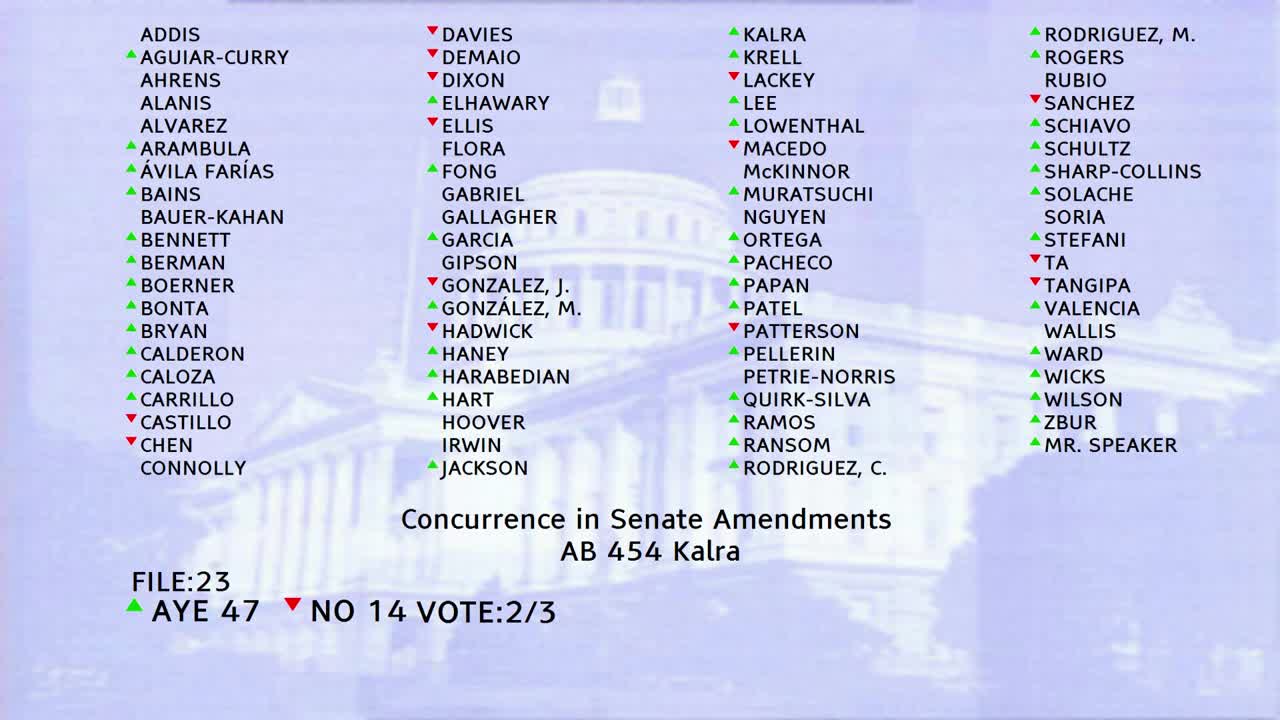 1MIN
Assembly Floor
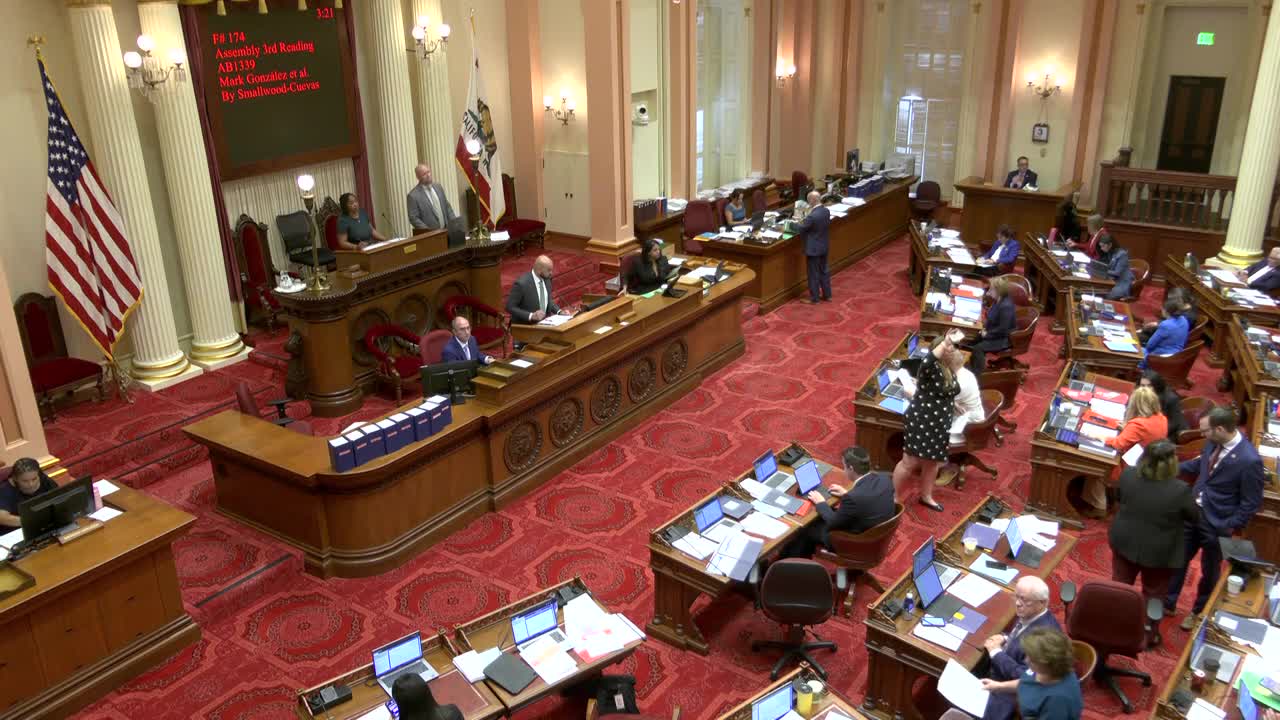 1MIN
Senate Floor
 3MIN
Senate Standing Committee on Judiciary
Bill Author