AB 897: Trespassing: removal of trespassers on residential property.
- Session Year: 2025-2026
- House: Assembly
- Latest Version Date: 2025-04-09
Current Status:
Failed
(2025-05-19: From committee: Without further action pursuant to Joint Rule 62(a).)
Introduced
In Committee
Awaiting First Chamber Vote
Passed First Chamber
In Committee
Awaiting Second Chamber Vote
Passed Second Chamber
Enacted
Existing law establishes a summary proceeding, known as a forcible entry, forcible detainer, or unlawful detainer action, as specified, that a person in lawful possession of real property must follow in order to remove a person who unlawfully occupies that property.
This bill bill, the Remove Illegal Squatters from Private Property Act, would make a person guilty of unlawful squatting when they enter upon the land or premises of another and reside on that land or premises for any period of time, knowingly acting without the knowledge or consent of the owner, rightful occupant, or an authorized representative of the owner. The bill would require a law enforcement agency that receives a complaint of a violation of these provisions to issue a citation and would provide a means for the person to show lawful entry on the land or premises. If court determines that the documentation showing lawful entry is improper or fraudulent, the bill would make the violation punishable by removal, specified fines, and as a misdemeanor. By increasing duties of local law enforcement and creating a crime, this bill would impose a state-mandated local program.
The California Constitution requires the state to reimburse local agencies and school districts for certain costs mandated by the state. Statutory provisions establish procedures for making that reimbursement.
This bill would provide that, with regard to certain mandates, no reimbursement is required by this act for a specified reason.
With regard to any other mandates, this bill would provide that, if the Commission on State Mandates determines that the bill contains costs so mandated by the state, reimbursement for those costs shall be made pursuant to the statutory provisions noted above.
Existing law establishes a summary proceeding, known as a forcible entry, forcible detainer, or unlawful detainer action, as specified, that a person in lawful possession of real property must follow in order to remove a person who unlawfully occupies that property.
This bill would make a person guilty of unlawful squatting when they enter upon the land or premises of another and reside on that land or premises for any period of time, knowingly acting without the knowledge or consent of the owner, rightful occupant, or an authorized representative of the owner. The bill would require a law enforcement agency that receives a complaint of a violation of these provisions to issue a citation and would provide a means for the person to show lawful entry on the land or premises. If court determines that the documentation showing lawful entry is improper or fraudulent, the bill would make the violation punishable by removal, specified fines, and as a misdemeanor. By increasing duties of local law enforcement and creating a crime, this bill would impose a state-mandated local program.
The California Constitution requires the state to reimburse local agencies and school districts for certain costs mandated by the state. Statutory provisions establish procedures for making that reimbursement.
This bill would provide that, with regard to certain mandates, no reimbursement is required by this act for a specified reason.
With regard to any other mandates, this bill would provide that, if the Commission on State Mandates determines that the bill contains costs so mandated by the state, reimbursement for those costs shall be made pursuant to the statutory provisions noted above.
Existing law provides that a tenant is guilty of unlawful detainer if the tenant continues to possess the property without permission of the landlord after the tenant defaults on rent or fails to perform a condition or covenant of the lease under which the property is held, among other reasons.This bill would state the intent of the Legislature to enact subsequent legislation protecting property rights and removing squatters from leased properties.Existing law provides that a tenant is guilty of unlawful detainer if the tenant continues to possess the property without permission of the landlord after the tenant defaults on rent or fails to perform a condition or covenant of the lease under which the property is held, among other reasons.
This bill would state the intent of the Legislature to enact subsequent legislation protecting property rights and removing squatters from leased properties.
This act shall be known, and may be cited, as the Remove Illegal Squatters from Private Property Act.
SECTION 1.SEC. 2.Section 602.15 is added to the Penal Code, to read:602.15.(a)(1)A person commits the offense of unlawful squatting when they enter upon the land or premises of another and reside on that land or premises for any period of time knowingly acting without the knowledge or consent of the owner, rightful occupant, or an authorized representative of the owner.
(2)A law enforcement agency that receives a complaint of a violation of paragraph (1) shall issue a citation to the person accused of violating paragraph (1) requiring them to, within three business days, present the law enforcement agency with properly executed documentation that authorizes the persons entry on the land or premises. That documentation may include a properly executed lease or rental agreement or proof of rental payments.
(3)A person who does not provide documentation pursuant to paragraph (2) shall be subject to arrest for the violation of paragraph (1).
(4)If a person provides documentation pursuant to paragraph (2), a magistrate court shall set a hearing within seven days of the submission of that documentation to determine whether the documentation is properly executed or meritorious. If the court determines that the documentation is improper or fraudulent, the person shall be removed from the property and subject to fines to cover damages, back rent based on the propertys fair market value, and shall be subject to punishment pursuant to subdivision (b).
(b)A violation of paragraph (1) of subdivision (a) shall be punishable as a misdemeanor by imprisonment in the county jail for up to one year.
(c)(1)Notwithstanding any other law or local ordinance, this section is intended to provide the remedies for the unauthorized occupation of residential property by squatters.
(2)This section shall apply only to unauthorized persons. This section does not apply to a tenant, former tenant who is in an active dispute with the owner, a holdover tenant, or a person with a bona fide claim of tenancy or title, including title by adverse possession.
(d)As used in this section, resides means to inhabit or live on or within any land or premises.
SEC. 2.SEC. 3.No reimbursement is required by this act pursuant to Section 6 of Article XIIIB of the California Constitution because a local agency or school district has the authority to levy service charges, fees, or assessments sufficient to pay for the program or level of service mandated by this act or because costs that may be incurred by a local agency or school district will be incurred because this act creates a new crime or infraction, eliminates a crime or infraction, or changes the penalty for a crime or infraction, within the meaning of Section 17556 of the Government Code, or changes the definition of a crime within the meaning of Section 6 of Article XIIIB of the California Constitution.
However, if the Commission on State Mandates determines that this act contains other costs mandated by the state, reimbursement to local agencies and school districts for those costs shall be made pursuant to Part 7 (commencing with Section 17500) of Division 4 of Title 2 of the Government Code.
(a)(1)A person commits the offense of unlawful squatting when they enter upon the land or premises of another and reside on that land or premises for any period of time knowingly acting without the knowledge or consent of the owner, rightful occupant, or an authorized representative of the owner.
(2)A law enforcement agency that receives a complaint of a violation of paragraph (1) shall issue a citation to the person accused of violating paragraph (1) requiring them to, within three business days, present the law enforcement agency with properly executed documentation that authorizes the persons entry on the land or premises. That documentation may include a properly executed lease or rental agreement or proof of rental payments.
(3)A person who does not provide documentation pursuant to paragraph (2) shall be subject to arrest for the violation of paragraph (1).
(4)If a person provides documentation pursuant to paragraph (2), a magistrate court shall set a hearing within seven days of the submission of that documentation to determine whether the documentation is properly executed or meritorious. If the court determines that the documentation is improper or fraudulent, the person shall be removed from the property and subject to fines to cover damages, back rent based on the propertys fair market value, and shall be subject to punishment pursuant to subdivision (b).
(b)A violation of paragraph (1) of subdivision (a) shall be punishable as a misdemeanor by imprisonment in the county jail for up to one year.
(c)(1)Notwithstanding any other law or local ordinance, this section is intended to provide the remedies for the unauthorized occupation of residential property by squatters.
(2)This section shall apply only to unauthorized persons. This section does not apply to a tenant, former tenant who is in an active dispute with the owner, a holdover tenant, or a person with a bona fide claim of tenancy or title, including title by adverse possession.
(d)As used in this section, resides means to inhabit or live on or within any land or premises.
SEC. 2.No reimbursement is required by this act pursuant to Section 6 of Article XIIIB of the California Constitution because a local agency or school district has the authority to levy service charges, fees, or assessments sufficient to pay for the program or level of service mandated by this act or because costs that may be incurred by a local agency or school district will be incurred because this act creates a new crime or infraction, eliminates a crime or infraction, or changes the penalty for a crime or infraction, within the meaning of Section 17556 of the Government Code, or changes the definition of a crime within the meaning of Section 6 of Article XIIIB of the California Constitution.
However, if the Commission on State Mandates determines that this act contains other costs mandated by the state, reimbursement to local agencies and school districts for those costs shall be made pursuant to Part 7 (commencing with Section 17500) of Division 4 of Title 2 of the Government Code.
SECTION 1.It is the intent of the Legislature to enact subsequent legislation protecting property rights and removing squatters from leased properties.It is the intent of the Legislature to enact subsequent legislation protecting property rights and removing squatters from leased properties.
|
Date
|
Status
|
|---|---|
| May 19, 2025 | From committee: Without further action pursuant to Joint Rule 62(a). |
| Apr 22, 2025 | In committee: Set, first hearing. Failed passage. |
| Apr 10, 2025 | Re-referred to Com. on PUB. S. |
| Apr 9, 2025 | From committee chair, with author's amendments: Amend, and re-refer to Com. on PUB. S. Read second time and amended. |
| Apr 1, 2025 | Re-referred to Com. on PUB. S. |
| Mar 28, 2025 | From committee chair, with author's amendments: Amend, and re-refer to Com. on PUB. S. Read second time and amended. |
| Mar 28, 2025 | Referred to Com. on PUB. S. |
| Feb 20, 2025 | From printer. May be heard in committee March 22. |
| Feb 19, 2025 | Read first time. To print. |
|
Date
|
Description
|
Location
|
Votes
|
|
|---|---|---|---|---|
| Apr 22, 2025 | Do pass and be re-referred to the Committee on [Appropriations] | Assembly Standing Committee on Public Safety |
Failed |
This list shows positions taken on this bill by organizations on the date displayed, which is linked to the original source.
Positions by individuals are not included.
|
Organization
|
Position
|
Date
|
|---|---|---|
| California Civil Liberties Advocacy | ** Support | |
| California Homeless Union Statewide Organizing Council | ** Against | |
| Californians United for a Responsible Budget | ** Against | |
| California Public Defenders Association | ** Against | |
| Housing California | ** Against | |
| Initiate Justice | ** Against | |
| Initiate Justice Action | ** Against | |
| Justice2jobs Coalition | ** Against | |
| LA Defensa | ** Against | |
| Local 148 La County Public Defenders Union | ** Against | |
| National Alliance to End Homelessness | ** Against | |
| San Francisco Public Defender | ** Against | |
| Smart Justice California, a project of Tides Advocacy | ** Against |
Date of Hearing: April 22, 2025
Counsel: Dustin Weber
ASSEMBLY COMMITTEE ON
Nick Schultz, Chair
ABPCA Bill Id:
Author:() – As Ver:
SUMMARY:
Creates the misdemeanor of unlawful squatting punishable by up to one year in county jail. Specifically, this bill:
- States that a person commits the offense of unlawful squatting when they enter upon the land or premises of another and reside on that land or premises for any period of time knowingly acting without the knowledge or consent of the owner, rightful occupant, or an authorized representative of the owner.
- Requires a law enforcement agency that receives a complaint of unlawful squatting to issue a citation to the person accused requiring them to, within three business days, present the law enforcement agency with properly executed documentation that authorizes the person’s entry on the land or premises, which may include a properly executed lease or rental agreement or proof of rental payments.
- Establishes that a person who does not provide documentation demonstrating authorized, lawful presence on the land or premises shall be subject to arrest.
- States that if a person provides documentation of authorized, lawful presence on the land or premises, a magistrate court shall set a hearing within seven days of the submission of that documentation to determine whether the documentation is properly executed or meritorious.
- Requires the person, if the court determines that the documentation is improper or fraudulent, to be removed from the property and subject to fines to cover damages, back rent based on the property’s fair market value, and shall be subject to specified punishment.
- Provides that a violation for unlawful squatting shall be punishable as a misdemeanor by imprisonment in the county jail for up to one year.
- Provides that unlawful squatting is intended to provide remedies for the unauthorized occupation of residential property by squatters.
- Provides that unlawful squatting applies only to unauthorized persons, and does not apply to a tenant, former tenant who is in an active dispute with the owner, a holdover tenant, or a person with a bona fide claim of tenancy or title, including title by adverse possession.
- States that “resides” means to inhabit or live on or within any land or premises.
EXISTING LAW:
- Provides that any person is guilty of trespass who makes a credible threat to cause serious bodily injury to another person with the intent to place that other person in reasonable fear for their safety or the safety of their immediate family, as defined, and who does any of the following:
- Within 30 days of the threat, unlawfully enters into the residence or real property contiguous to the residence of the person threatened without lawful purpose, and with the intent to execute the threat against the target of the threat.
- Within 30 days of the threat, knowing that the place is the threatened person’s workplace, unlawfully enters the workplace of the person threatened and carries out an act or acts to locate the threatened person within the workplace without lawful purpose, and with the intent to execute the threat against the target of the threat. (Pen. Code, § 601, subd. (a).)
- Makes a trespass violation, as defined, punishable as an alternate felony/misdemeanor. (Pen. Code, § 601, subd. (d).)
- States that a person who willfully commits a trespass by any of the following acts is guilty of a misdemeanor:
- Cutting down, destroying, or injuring any kind of wood or timber standing or growing upon the lands of another.
- Carrying away any kind of wood or timber lying on those lands.
- Maliciously injuring or severing from the freehold of another anything attached to it, or its produce.
- Digging, taking, or carrying away from a lot situated within the limits of an incorporated city, without the license of the owner or legal occupant, any earth, soil, or stone.
- Digging, taking, or carrying away from land in a city or town laid down on the map or plan of the city, or otherwise recognized or established as a street, alley, avenue, or park, without the license of the proper authorities, any earth, soil, or stone.
- Maliciously tearing down, damaging, mutilating, or destroying a sign, signboard, or notice placed upon, or affixed to, a property belonging to the state, or to a city, county, city and county, town, or village, or upon the property of a person.
- Entering upon lands owned by another person whereon oysters or other shellfish are planted or growing; or injuring, gathering, or carrying away oysters or other shellfish planted, growing, or on any of those lands, whether covered by water or not, without the license of the owner or legal occupant.
- Entering upon lands or buildings owned by another person without the license of the owner or legal occupant, where signs forbidding trespass are displayed, and whereon cattle, goats, pigs, sheep, fowl, or any other animal is being raised, bred, fed, or held for the purpose of food for human consumption.
- Willfully opening, tearing down, or otherwise destroying a fence on the enclosed land of another, or opening a gate, bar, or fence of another and willfully leaving it open without the written permission of the owner, or maliciously tearing down, mutilating, or destroying a sign, signboard, or other notice forbidding shooting on private property.
- Building fires upon lands owned by another where signs forbidding trespass are displayed at intervals not greater than one mile along the exterior boundaries and at all roads and trails entering the lands, without first having obtained written permission from the owner of the lands or the owner’s agent, or the person in lawful possession.
- Entering lands, whether unenclosed or enclosed by fence, for the purpose of injuring property or property rights or with the intention of interfering with, obstructing, or injuring a lawful business or occupation carried on by the owner of the land, the owner’s agent, or the person in lawful possession.
- Entering lands under cultivation or enclosed by fence, belonging to, or occupied by, another, or entering upon uncultivated or unenclosed lands where signs forbidding trespass are displayed at intervals not less than three to the mile along all exterior boundaries and at all roads and trails entering the lands without the written permission of the owner of the land.
- Entering and occupying real property or structures of any kind without the consent of the owner, the owner’s agent, or the person in lawful possession.
- Driving a vehicle upon real property belonging to, or lawfully occupied by, another and known not to be open to the general public, without the consent of the owner, the owner’s agent, or the person in lawful possession.
- Refusing or failing to leave land, real property, or structures belonging to, or lawfully occupied by, another and not open to the general public, upon being requested to leave by (1) a peace officer at the request of the owner, the owner’s agent, or the person in lawful possession, and upon being informed by the peace officer that they are acting at the request of the owner, the owner’s agent, or the person in lawful possession, or (2) the owner, the owner’s agent, or the person in lawful possession. The owner, the owner’s agent, or the person in lawful possession shall make a separate request to the peace officer on each occasion when the peace officer’s assistance in dealing with a trespass is requested.
- A request for a peace officer’s assistance shall expire upon transfer of ownership of the property or upon a change in the person in lawful possession.
- A request for a peace officer’s assistance in dealing with a trespass may be submitted electronically. A local government may accept electronic submissions of requests pursuant to this subdivision.
- Entering upon lands declared closed to entry, if the closed areas have been posted with notices declaring the closure.
- Refusing or failing to leave a public building of a public agency during those hours of the day or night when the building is regularly closed to the public upon being requested to do so by a regularly employed guard, watchperson, or custodian of the public agency owning or maintaining the building or property, if the surrounding circumstances would indicate to a reasonable person that the person has no apparent lawful business to pursue.
- Knowingly skiing in an area or on a ski trail that is closed to the public and that has signs posted indicating the closure.
- Refusing or failing to leave a hotel or motel, where the person has obtained accommodations and has refused to pay for those accommodations, upon request of the proprietor or manager.
- Entering upon private property, including contiguous land, real property, or structures thereon belonging to the same owner, whether or not generally open to the public, after having been informed by a peace officer at the request of the owner, the owner’s agent, or the person in lawful possession, and upon being informed by the peace officer that the peace officer is acting at the request of the owner, the owner’s agent, or the person in lawful possession, that the property is not open to the particular person; or refusing or failing to leave the property upon being asked to leave the property in the manner provided in this subdivision.
- Knowingly entering, by an unauthorized person, upon an airport operations area, passenger vessel terminal, or public transit facility if the area has been posted with notices restricting access to authorized personnel only.
- A person convicted of a violation of paragraph (1) shall be punished as follows:
- By a fine not exceeding one hundred dollars ($100).
- By imprisonment in a county jail not exceeding six months, or by a fine not exceeding one thousand dollars ($1,000), or by both that fine and imprisonment, if the person refuses to leave the airport or passenger vessel terminal after being requested to leave by a peace officer or authorized personnel.
- By imprisonment in a county jail not exceeding six months, or by a fine not exceeding one thousand dollars ($1,000), or by both that fine and imprisonment, for a second or subsequent offense. (Pen. Code, § 602, subds. (a)-(u).)
- A person convicted of a violation of paragraph (1) shall be punished as follows:
- States that any person who intentionally interferes with any lawful business or occupation carried on by the owner or agent of a business establishment open to the public, by obstructing or intimidating those attempting to carry on business, or their customers, and who refuses to leave the premises of the business establishment after being requested to leave by the owner or the owner’s agent, or by a peace officer acting at the request of the owner or owner’s agent, is guilty of a misdemeanor punishable by imprisonment in a county jail for up to 90 days, or by a fine of up to $400, or by both that imprisonment and fine. (Pen. Code, § 602.1, subd. (a).)
- Establishes that a lodger, as defined, who remains on the premises of an owner-occupied dwelling unit after receipt of a notice terminating the hiring is guilty of an infraction and may be arrested for the offense by the owner, or in the event the owner is represented by a court-appointed conservator, executor, or administrator, by the owner’s representative. (Pen. Code, § 602.3, subd. (a).)
- Provides that every person other than a public officer or employee acting within the course and scope of their employment in performance of a duty imposed by law, who enters or remains in any noncommercial dwelling house, apartment, or other residential place without consent of the owner, their agent, or the person in lawful possession thereof, is guilty of a misdemeanor. (Pen. Code, § 602.5, subd. (a).)
- Provides that every person other than a public officer or an employee acting within the course and scope of their employment in performance of a duty imposed by law, who, without the consent of the owner, their agent, or the person in lawful possession thereof, enters or remains in any noncommercial dwelling house, apartment, or other residential place while a resident, or another person authorized to be in the dwelling, is present at any time during the course of the incident, is guilty of aggravated trespass punishable by imprisonment in a county jail for not more than one year or by a fine of not more than $1,000, or by both that fine and imprisonment. (Pen. Code, § 602.5, subd. (b).)
- States that any person who without the written permission of the landowner, the owner’s agent, or the person in lawful possession of the land, willfully enters any lands under cultivation or enclosed by fence, belonging to, or occupied by, another, or who willfully enters upon uncultivated or unenclosed lands where signs forbidding trespass are displayed at intervals not less than three to the mile along all exterior boundaries and at all roads and trails entering the lands, is guilty of a public offense. (Pen. Code, § 602.8, subd. (a).)
- Provides that every person who maliciously defaces with graffiti or other inscribed material, damages or destroys any real or personal property not his or her own, in cases other than those specified by state law, is guilty of vandalism punishable as a misdemeanor or an alternative felony/misdemeanor depending on the amount of defacement, damage, or destruction. (Pen. Code, § 594, subds. (a) & (b).)
- Provides that every person is guilty of a forcible entry who either:
- By breaking open doors, windows, or other parts of a house, or by any kind of violence or circumstance of terror, enters upon or into any real property.
- Who, after entering peaceably upon real property, turns out by force, threats, or menacing conduct, the party in possession. (Civ. Proc. Code, § 1159, subd. (a).)
- Provides that every person is guilty of a forcible detainer who either:
- By force, or by menaces and threats of violence, unlawfully holds and keeps the possession of any real property, whether the same was acquired peaceably or otherwise.
- Who, in the night-time, or during the absence of the occupant of any lands, unlawfully enters upon real property, and who, after demand made for the surrender thereof, for the period of five days, refuses to surrender the same to such former occupant. (Civ. Proc. Code, § 1160, subd. (a).)
FISCAL EFFECT:
Unknown
COMMENTS:
- Author's Statement: According to the author, “The squatter problem in California has continued to plague property owners, and there is currently not a timely enough process in order for squatters to be removed from homes. AB 897 would create a timely and cost-efficient process to allow property owners to evict squatters from their property, avoiding the lengthy and costly unlawful detainer process.”
- Effect of the Bill Relative to Existing Law: This bill would establish the offense of unlawful squatting, create a distinct process for ejecting those found to be squatting on another person’s property, and make violation of the law punishable as a misdemeanor with up to a year in county jail.
It is unclear whether this bill will provide genuinely new tools to law enforcement and prosecutors for managing squatters on private property. Several code sections already provide punishments for trespassing, which is slightly different than squatting in that squatters have the intent of settling or making the property their residence.[1] But, because in many ways squatters, by definition, must trespass on someone’s property to establish themselves as squatters, combined with the number of acts that are penalized when done by trespassers, our trespassing statutes already appear to cover much of the conduct of squatters.
Trespassing is generally punished as a misdemeanor (Pen. Code, § 602), although a felony is possible for aggravated trespass. (Pen. Code, § 602.5.) The language defining aggravated trespass in existing law is arguably quite similar to the language in this bill for unlawful squatting. Aggravated trespass is when any person enters or remains in any noncommercial dwelling house, apartment, or other residential place without consent of the owner while an authorized person is also in present. (Pen. Code, § 602.5, subd. (b).)
More than 30 discrete acts constitute criminal trespassing under existing law, including 1) entering someone else’s property with the intent to damage that property, 2) entering someone else’s property with the intent to interfere with or obstruct the business activities conducted on the property, 3) entering and “occupying” another’s property without permission, and 4) refusing to leave private property after being asked to do so. (See Pen. Code, § 602, subds. (a)-(o).) Under existing law, owners of private property may already request law enforcement assistance in ejecting trespassers from their property. (Pen. Code, § 602, subd. (o).)
A range of other criminal laws prohibit varieties of trespass and unlawful presence. A trespass onto a person’s residence or workplace, in which the trespasser also makes a credible threat to cause serious bodily injury to another, is punishable as an alternate misdemeanor/felony as long as the trespass occurred within 30 days of making the threat and put the victim in reasonable fear for their safety. (Pen. Code, § 601.) A person who intentionally interferes with a business open to the public and who refuses to leave is guilty of a misdemeanor punishable by imprisonment in a county jail for up to 90 days, or by a fine of up to $400, or by both that imprisonment and fine. (Pen. Code, § 602.1, subd. (a).) A person who enters a home with the intent to commit larceny is guilty of a burglary, which is punishable as a felony. (Pen. Code, § 459.) Any person who “damages, destroys, or defaces” real property is guilty of vandalism, which is punishable as an alternate misdemeanor/felony. (Pen. Code, § 594.) A squatter who forges a lease agreement or makes a false claim of ownership is already subject to a felony conviction and three years’ imprisonment. (Pen. Code, § 115.) A squatter who unlawfully connects utilities while on the property is guilty of a misdemeanor or felony. (Pen. Code, § 498.)
Given the criminal laws and punishments already available to law enforcement and prosecutors, it is not clear whether this bill is needed.
- Proving and Punishing Squatting: The difference between squatting and trespassing |appears to be the intent of the person who is on the land without permission. Squatters can make a claim to property through adverse possession, which allows a person to claim title to property without formal paperwork if the person meets certain requirements (Civ. Proc. Code, § 325.) Adverse possession, however, does not ripen into title until five years have passed and the person has openly, continuously, exclusively, and hostilely occupied the property, while also timely having made tax payments. (Ibid.) Should adverse possession not be established and no trespass violations exist from the acts of a squatter, a squatter can nevertheless be ejected from the property through the unlawful detainer process.[2]
Squatting has received significant attention over the last several years.[3] As an attempt to address the problem, this bill establishes a new process for removing squatters from private property. Specifically, this bill authorizes law enforcement to issue a citation to the unauthorized person, then allows three business days for the person to “present law enforcement with properly executed documentation that authorizes the person’s entry on the land,” and then a hearing is set in a magistrate court within seven days to determine the authenticity of the person’s claim to lawfully be on the premises. If the magistrate determines the documentation is insufficient, the person “shall be removed from the property and subject to fines to cover damages, back rent based on the property’s fair market value, and subject to [misdemeanor] punishment.” A person who does not provide properly executed documentation within three days shall be subject to arrest for unlawful squatting.
This bill purports to create a more streamlined process for ejecting persons unlawfully residing on private property. The process detailed in this bill, however, begs some questions. Using a magistrate to make a determination on whether documents are properly executed or authentic is likely valid, but whether the magistrate can then make a determination that the person with insufficient paperwork is also guilty of unlawful squatting is likely invalid. Magistrates lack the authority to determine the guilt or innocence of a defendant.[4] To secure criminal punishment of the unlawful squatter under this bill seemingly would require both the magistrate process and conventional criminal justice process (Pen. Code, § 1009.) Like the language of the statute, this process is arguably duplicative and superfluous.
Another concern with the process is the requirement that law enforcement would need to be involved through all of these judicial processes. While the statute requires the person accused to “present” the law enforcement agency with the documents, it is unclear from the bill’s language what precisely would be the law enforcement agency’s role with the submission of documentation beyond mere receipt of the documents.
It could be useful to establish a defined temporal element to this law as well. Currently, the bill allows for prosecution of unlawful squatting where the person enters upon the land or premises of another and resides there “for any period of time.” Without clarification, the language here could be used to unfair and unjust ends, including allowing prosecution for someone who only for a very short period of time is on the premises. Defining “resides” is helpful, though not necessarily dispositive of this issue. This bill theoretically could allow for prosecution of a friend who was authorized to stay at the person’s house for an indefinite period but was abruptly asked to leave “in the morning” following a disagreement the previous evening. Is that person unlawfully squatting as of 12:01am? The bill does not make this clear.
- Due Process Considerations: The author of the bill suggests this bill implements a process for ejection of a person unlawfully squatting on another person’s property that would operate more efficiently than California’s current unlawful detainer process. Supporters of the bill advance constitutional arguments surrounding the right to property and due process.
As an initial matter, it is important to recognize that the constitution’s protections of individual liberties generally apply only to government action.[5] Private conduct generally does not have to conform to the Constitution.[6] The Constitution generally does not apply to private actors or private entities.[7] This is referred to as the state action doctrine and while there are important exceptions to this doctrine, those exceptions are not implicated here.[8]
The Supreme Court has held that the government has no general duty to protect individuals from privately inflicted harms.[9] Justice Rehnquist wrote, “Nothing in the language of the Due Process Clause itself requires the State to protect the . . . property of its citizens against invasion by private actors. The Clause is phrased as a limitation on the State’s power to act, not as a guarantee of minimal levels of safety and security.”[10] Thus, the Due Process Clause does not require the government to protect property owners from squatters.
However, squatters and trespassers inarguably have a right to not to be deprived of their liberty. The Supreme Court has long acknowledged that a core liberty right is the right to be free from physical or bodily restraint.[11] Physical or bodily restraint includes confinement, i.e., jail or prison. Interestingly, in Roth v. Board of Regents, which supporters cite for one proposition, the Court also writes, “the term [liberty] denotes not merely freedom from bodily restraint but also the right of the individual to . . . engage in any of the common occupations of life, [and] establish a home . . . .” (Roth v. Board of Regents (1972) 408 U.S. 564, 572.)
The Court in Roth states that deprivation of liberty under the Due Process Clause can include confinement and being prevented from establishing a home, but again, private actors are not bound by this mandate, so due process concerns are typically inapt as applied to the conduct of the squatters. Where these concerns more commonly apply is against the squatters, since the state would be attaching a misdemeanor penalty to the act of unlawful squatting. This potential penalty risks depriving someone of liberty through bodily restraint. There is also an argument that due process concerns could apply where a squatter has a potentially viable property interest, e.g., if the squatter is in adverse possession of the property.
Ultimately, the Due Process Clause is implicated here primarily because the government is prohibited from fining or incarcerating someone without notice, a hearing, and a ruling on the merits (i.e., procedural due process), not due to an individual’s right to property. The Roth Court does not suggest that in a case like this the squatters would need to establish a substantive property right to be protected by the guarantees due process (the property right implicated in that case was the possibility of tenureship, which makes its facts ill-suited here, anyway). The Court in Roth is saying that a person who makes a claim that a government actor or action has deprived them of life, liberty, or property without due process of law must first establish they had a property right for which deprivation by a government actor or action was even possible.
The due process concerns in these cases are not generally from squatters saying their property rights have been violated (unless there is a bona fide adverse possession claim), but instead that they cannot be deprived of money or freedom, by government actors or actions, through fines or incarceration without due process. Squatters have protected liberty interests, like all others, independent of whether they are property owners.
While this bill admittedly establishes a system for protecting the due process rights of the accused squatters, it remains unclear whether that process is necessary.
- Argument in Support: According to California Civil Liberties Advocacy, “While tenants’ rights undeniably implicate civil liberties—such as the right to due process and protection from unlawful eviction—property rights are no less fundamental to a free society. The right to own, possess, and exclude others from one’s home is a core civil liberty enshrined in both the U.S. and California Constitutions.
“The California Constitution explicitly recognizes property rights as fundamental civil liberties. The relevant provision is Article I, Section 1, which states:
‘All people are by nature free and independent and have inalienable rights. Among these are enjoying and defending life and liberty, acquiring, possessing, and protecting property, and pursuing and obtaining safety, happiness, and privacy.’ (Cal. Const., art. I, § 1)
“This language places property rights on equal footing with life, liberty, and privacy, firmly establishing them as a core component of California’s civil liberties framework. And the courts have interpreted this section as creating a broad, affirmative right to acquire, possess, and protect property, which must be balanced with—not subordinated to—other social interests, including housing access and tenant protections. Thus, any meaningful civil liberties analysis must include both sides of the equation: the due process rights of occupants and the constitutional property rights of lawful owners.
“For too long, California has tolerated a legal paradox: individuals who have no tenancy rights—no lease, no permission, no color of title—are permitted to remain in homes they have unlawfully occupied while property owners are forced into months-long civil proceedings. AB 897 restores constitutional balance, enabling timely removal of trespassers while preserving due process for those with legitimate claims.
“Without meaningful protections for property owners, civil liberties become selectively applied, favoring those in possession over those who hold lawful title. Just as due process shields tenants from arbitrary removal; conversely, it must not be wielded as a weapon to deprive rightful owners of their own homes. True civil liberty balances the rights of all parties, ensuring that justice does not collapse under the weight of procedural exploitation or asymmetrical enforcement. AB 897 restores that balance by reaffirming that the civil liberty of private property.”
- Argument in Opposition: According to Housing California, “AB 897 proposes to reclassify numerous informal living situations—including those often referred to as “couch surfing”—as acts of trespassing punishable by fines and potential misdemeanor charges. This approach is deeply troubling. A significant portion of Californians experiencing housing instability live in non-leaseholding arrangements with tenants or leaseholders. According to the Benioff Homelessness and Housing Initiative’s landmark 2023 study, 60% of people entering homelessness from non-institutional settings were living in such informal arrangements immediately before becoming homeless.
“Rather than addressing the root causes of our state’s housing crisis, AB 897 would accelerate pathways into homelessness. It threatens to saddle already-vulnerable individuals with fines and criminal charges, further entangling them in the criminal legal system. This is especially concerning given the same study found that 19% of people experiencing homelessness entered directly from institutional settings like jail or prison—a stark reminder of the close ties between criminalization and homelessness.
“Furthermore, this legislation is unnecessary. California law already provides mechanisms for addressing illegal trespass. Landlords and tenants currently have access to civil eviction processes designed to address unauthorized occupancy. By circumventing these existing channels, AB 897 strips tenants and occupants of critical time to secure alternate housing arrangements—time that is often the difference between stability and homelessness.”
- Related Legislation:
- SB 448 (Umberg) would prescribes a procedure for the notice and removal of a squatter by a local law enforcement agency. The bill would authorize a property owner or their agent to serve a demand to vacate, as specified, upon a squatter. SB 448 is set to be heard in the Senate Judiciary Committee.
- AB 1097 (Avila Farias) would additionally make it a misdemeanor to commit a trespass by entering Indian lands, as defined, where signs forbidding trespass are displayed where animals are being raised, and would clarify that it is a misdemeanor to commit a trespass by entering Indian lands for the purpose of injuring property or property rights or with the intention of interfering with a lawful business. AB 1097 is set to be heard today in the Assembly Public Safety Committee.
- Prior Legislation:
- SB 602 (Achuleta), Chapter 404, Statutes of 2023, authorizes a single request for assistance to be made and submitted electronically, in a notarized form provided by the law enforcement agency, to a peace officer. The bill would extend the maximum period of time for a request for peace officer’s assistance from 30 days to 12 months for requests pertaining to fire hazard or the owner’s absence.
- SB 468 (Seyarto), of the 2023-24 Legislative Session, would have authorized a single request for assistance to be made and submitted electronically, in a notarized writing on a form provided by the law enforcement agency, to a peace officer for a period of not more than 3 years when the premises or property is closed to the public and posted as being closed and would require the notice ending assistance before the 3 years has passed to be in writing. SB 468 was held in the Senate Public Safety Committee.
- AB 2120 (Chen), of the 2023-24 Legislative Session, would have provided that the trespass provision does not apply to a repossession agency licensed by the Department of Consumer Affairs and its employees when they are on private property searching for collateral or repossessing collateral, and, upon completing that search or repossession, leave the private property within a reasonable amount of time. AB 2120 was vetoed by the Governor.
REGISTERED SUPPORT / OPPOSITION:
Support
California Civil Liberties Advocacy
Oppose
California Homeless Union Statewide Organizing Council
California Public Defenders Association (CPDA)
Californians United for a Responsible Budget
Housing California
Initiate Justice
Initiate Justice Action
Justice2jobs Coalition
LA Defensa
Local 148 LA County Public Defenders Union
National Alliance to End Homelessness
San Francisco Public Defender
Smart Justice California, a Project of Tides Advocacy
Analysis Prepared by:
“Squatter” (2014) Black’s Law Dictionary (10th ed.) ↑
Eviction Cases in California, Judicial Branch of California <https://selfhelp.courts.ca.gov/eviction> [as of Apr. 18, 2025]. ↑
See, e.g., Riegle et al., Rise in homeowners vs. squatters incidents prompts action from lawmakers (Mar. 29, 2024) ABC News https://www.abcnews.go.com/US/rise-homeowners-squatters-incidents-prompts-action-lawmakers/story?id=108503701 [as of Apr. 18, 2025]; Avila, Squatters move into empty houses across San Diego (Nov. 14, 2024) ABC News <https://www.10news.com/news/we-follow-through/squatters-move-into-empty-houses-across-san-deigo> [as of Apr. 18, 2025]. ↑
Subordinate Judicial Officers: Court Commissioners as Magistrates (2016) Judicial Council of California <https://courts.ca.gov/system/files?file=itc/leg16-01.pdf> [as of Apr. 18, 2025]. ↑
Chemerinsky, Constitutional Law: Principles and Policies (6th ed.), at p. 553. ↑
Ibid. ↑
Ibid. ↑
Ibid. ↑
Id. at p. 598 ↑
Ibid. ↑
Id. at 612. ↑
Discussed in Hearing
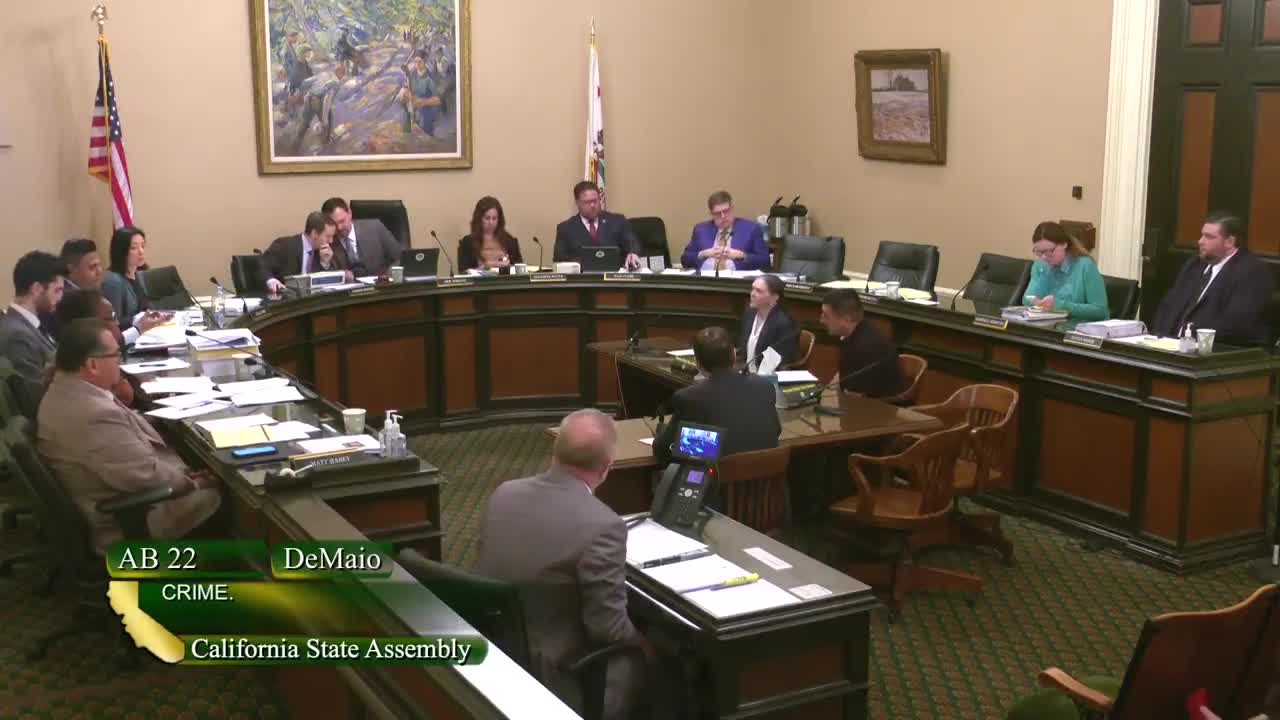 23MIN
Assembly Standing Committee on Public Safety
Bill Author

Bill Co-Author(s):