AB 898: The Family Urgent Response System.
- Session Year: 2025-2026
- House: Assembly
- Latest Version Date: 2025-10-13
Current Status:
Passed
(2025-10-13: Chaptered by Secretary of State - Chapter 716, Statutes of 2025.)
Introduced
In Committee
Awaiting First Chamber Vote
Passed First Chamber
In Committee
Awaiting Second Chamber Vote
Passed Second Chamber
Enacted
Existing law requires the State Department of Social Services to establish a statewide hotline as the entry point for the Family Urgent Response System, as defined, to respond to calls from caregivers or current or former foster children or youth during moments of instability, as specified. Existing law requires the hotline to include, among other things, referrals to a county-based mobile response system, as specified, for further support and in-person response. Existing law requires the department to collect deidentified, aggregated data, including the number of current and former foster children or youth served through the statewide hotline and the disposition of each call, and requires the department to publish a report on its internet website, as specified.
This bill would instead specify that the statewide hotline shall be the primary entry point for the Family Urgent Response System. The bill would also require the department to collect data on the number of calls received by a county mobile response system, which includes calls received through the statewide hotline and portal.
Existing law also requires county child welfare, probation, and behavioral health agencies, in each county or region of counties, as specified, to establish a joint county-based mobile response system that includes a mobile response and stabilization team for the purpose of providing supportive services to, among other things, address situations of instability, preserve the relationship of the caregiver and the child or youth, and stabilize the situation. Existing law requires county child welfare, probation, and behavioral health agencies, in consultation with other relevant specified entities, to submit a single coordinated plan to the department describing how the county-based mobile response system meets the requirements described above.
This bill would require the plan to also describe and include the date of plan submission and a point of contact for the plan. The bill would require the plan to be updated and submitted on a biennial basis. The bill would also authorize a county-based mobile response system that is not otherwise responding to calls placed through the statewide hotline to utilize mobile response team staff based on local needs, including, among other things, by providing ongoing support to a child, youth, or caregiver who has received mobile response services. The bill would also require a county-based mobile response system that is not otherwise responding to calls placed through the statewide hotline but that chooses to utilize mobile response team staff to prioritize calls placed through the statewide hotline for urgent responses and continue to maintain sufficient staffing to ensure county-based mobile response teams maintain compliance. By increasing the duties of county agencies, this bill would impose a state-mandated local program.
The California Constitution requires the state to reimburse local agencies and school districts for certain costs mandated by the state. Statutory provisions establish procedures for making that reimbursement.
This bill would provide that, if the Commission on State Mandates determines that the bill contains costs mandated by the state, reimbursement for those costs shall be made pursuant to the statutory provisions noted above.
Existing law requires the State Department of Social Services to establish a statewide hotline as the entry point for the Family Urgent Response System, as defined, to respond to calls from caregivers or current or former foster children or youth during moments of instability, as specified. Existing law requires the hotline to include, among other things, referrals to a county-based mobile response system, as specified, for further support and in-person response. Existing law requires the department to collect deidentified, aggregated data, including the number of current and former foster children or youth served through the statewide hotline and the disposition of each call, and requires the department to publish a report on its internet website, as specified.
This bill would instead specify that the statewide hotline shall be the primary entry point for the Family Urgent Response System. The bill would also require the department to collect data on the number of calls received by a county mobile response system, which includes calls received through the statewide hotline and portal.
Existing law also requires county child welfare, probation, and behavioral health agencies, in each county or region of counties, as specified, to establish a joint county-based mobile response system that includes a mobile response and stabilization team for the purpose of providing supportive services to, among other things, address situations of instability, preserve the relationship of the caregiver and the child or youth, and stabilize the situation. Existing law requires county child welfare, probation, and behavioral health agencies, in consultation with other relevant specified entities, to submit a single coordinated plan to the department describing how the county-based mobile response system meets the requirements described above.
This bill would require the plan to be revisited also describe and include the date of plan submission and a point of contact for the plan. The bill would require the plan to be updated and submitted on a biennial basis. The bill would also authorize a county-based mobile response system that is not otherwise responding to calls placed through the statewide hotline to utilize mobile response team staff based on local needs, including including, among other things, by providing ongoing support to a child, youth, or caregiver who has received mobile response services, services. The bill would also require the a county-based mobile response system that is not otherwise responding to calls placed through the statewide hotline but that chooses to utilize mobile response team staff to prioritize calls placed through the statewide hotline for urgent responses and continue to maintain sufficient staffing to ensure county-based mobile response teams maintain compliance. By increasing the duties of county agencies, this bill would impose a state-mandated local program.
The California Constitution requires the state to reimburse local agencies and school districts for certain costs mandated by the state. Statutory provisions establish procedures for making that reimbursement.
This bill would provide that, if the Commission on State Mandates determines that the bill contains costs mandated by the state, reimbursement for those costs shall be made pursuant to the statutory provisions noted above.
Existing law requires the State Department of Social Services to establish a statewide hotline as the entry point for the Family Urgent Response System, as defined, to respond to calls from caregivers or current or former foster children or youth during moments of instability, as specified. Existing law requires the hotline to include, among other things, referrals to a county-based mobile response system, as specified, for further support and in-person response. Existing law requires the department to collect deidentified, aggregated data, including the number of current and former foster children or youth served through the statewide hotline and the disposition of each call, and requires the department to publish a report on its internet website, as specified.
This bill would instead specify that the statewide hotline shall be the primary entry point for the Family Urgent Response System.
Existing law also requires county child welfare, probation, and behavioral health agencies, in each county or region of counties, as specified, to establish a joint county-based mobile response system that includes a mobile response and stabilization team for the purpose of providing supportive services to, among other things, address situations of instability, preserve the relationship of the caregiver and the child or youth, and stabilize the situation. Existing law requires county child welfare, probation, and behavioral health agencies, in consultation with other relevant specified entities, to submit a single coordinated plan to the department describing how the county-based mobile response system meets the requirements described above.
This bill would require the plan to be revisited on a biennial basis. The bill would also authorize a county-based mobile response system that is not otherwise responding to calls placed through the statewide hotline to utilize mobile response team staff based on local needs, including by providing ongoing support to a child, youth, or caregiver who has received mobile response services, The bill would also require the county-based mobile response system to prioritize calls placed through the statewide hotline for urgent responses and maintain sufficient staffing to ensure county-based mobile response teams maintain compliance. By increasing the duties of county agencies, this bill would impose a state-mandated local program.
The California Constitution requires the state to reimburse local agencies and school districts for certain costs mandated by the state. Statutory provisions establish procedures for making that reimbursement.
This bill would provide that, if the Commission on State Mandates determines that the bill contains costs mandated by the state, reimbursement for those costs shall be made pursuant to the statutory provisions noted above.
(a)The department shall establish a statewide hotline as the primary entry point for the Family Urgent Response System, which shall be available 24 hours a day, seven days a week, to respond to calls from a caregiver or current or former foster child or youth during moments of instability. Both of the following shall be available through this hotline:
(1)Hotline workers who are trained in techniques for deescalation and conflict resolution telephone response specifically for children or youth impacted by trauma.
(2)Referrals to a county-based mobile response system, established pursuant to Section 16529, for further support and in-person response. Referrals shall occur as follows:
(A)A warm handoff whereby the hotline worker establishes direct and live connection through a three-way call that includes the caregiver, child or youth, and county contact. The caregiver, child, or youth may decline the three-way contact with the county contact if they feel their situation has been resolved at the time of the call.
(B)If a direct communication cannot be established pursuant to subparagraph (A), a referral directly to the community- or county-based service and a followup call to ensure that a connection to the caregiver, child, or youth occurs.
(C)The hotline worker shall contact the caregiver and the child or youth within 24 hours after the initial call required under subparagraph (A) or (B) to offer additional support, if needed.
(b)The statewide hotline shall maintain contact information for all county-based mobile response systems, based on information provided by counties, for referrals to local services, including, but not limited to, county-based mobile response and stabilization teams.
(c)The department shall ensure that deidentified, aggregated data are collected regarding individuals served through the statewide hotline and county-based mobile response systems and shall publish a report on the departments internet website by January 1, 2022, and annually by January 1 thereafter, in consultation with stakeholders, including, but not limited to, the County Welfare Directors Association of California, the Chief Probation Officers of California, and the County Behavioral Health Directors Association of California. The data shall be collected using automated procedures or other matching methods mutually agreed upon by the state and county agencies, including, but not limited to, the statewide child welfare automation management system, and shall include all of the following information:
(1)The number of caregivers served through the hotline, separated by placement type and status as a current or former foster caregiver.
(2)The number of current and former foster children or youth served through the hotline, separated by county agency type, current or former foster care status, age, gender, race, and whether the call was made by the caregiver or the child or youth.
(3)The disposition of each call, including, but not limited to, whether mobile response and stabilization services were provided or a referral was made to other services.
(4)County-based outcome data, including, but not limited to, placement stability, return into foster care, movement from child welfare to juvenile justice, and timeliness to permanency.
(5)The number of calls received by a county-based mobile response system, including calls received through the statewide hotline and portal.
(d)The department may meet the requirements of this section through contract with an entity with demonstrated experience in working with populations of children or youth who have suffered trauma and with capacity to provide a 24-hour-a-day, seven-day-a-week response that includes mediation, relationship preservation for the caregiver and the child or youth, and a family-centered and developmentally appropriate approach with the caregiver and the child or youth.
(e)The department, in consultation with stakeholders, including current and former foster youth and caregivers, shall do all of the following:
(1)Develop methods and materials for informing all caregivers and current or former foster children or youth about the statewide hotline, including a dissemination plan for those materials, which shall include, at a minimum, making those materials publicly available through the departments internet website.
(2)Establish protocols for triage and response.
(3)Establish minimum education and training requirements for hotline workers.
(4)Consider expanding the statewide hotline to include communication through electronic means, including, but not limited to, text messaging or email.
(f)(1)The statewide hotline shall be operational no sooner than January 1, 2021, and on the same date as the county mobile response system created pursuant to this chapter.
(2)Notwithstanding paragraph (1), the statewide hotline may operate sooner than January 1, 2021, or prior to the date that each county has created a county mobile response system, upon notification from each county to the department that the county satisfies one of the following requirements:
(A)Has established a county mobile response system created pursuant to this chapter.
(B)Has an alternative method to accept and respond to referrals from the statewide hotline pending the establishment of the county mobile response system.
(g)The department shall assist, as needed, the State Department of Health Care Services in exercising its authority pursuant to subdivision (b) of Section 16528.
SEC. 2.Section 16529 of the Welfare and Institutions Code is amended to read:16529.(a)County child welfare, probation, and behavioral health agencies, in each county or region of counties as specified in subdivision (f), shall establish a joint county-based mobile response system that includes a mobile response and stabilization team for the purpose of providing supportive services to address situations of instability, preserve the relationship of the caregiver and the child or youth, develop healthy conflict resolution and relationship skills, promote healing as a family, and stabilize the situation.
(b)In each county or region of counties, the county child welfare, probation, and behavioral health agencies, in consultation with other relevant county agencies, tribal representatives, caregivers, and current or former foster children or youth, shall submit a single, coordinated plan to the department that describes how the county-based mobile response system shall meet the requirements described in subdivision (c). This plan shall be updated and submitted on a biennial basis. The plan shall also describe and include all of the following:
(1)How the county, or region of counties, will track and monitor calls.
(2)Data collection efforts, consistent with guidance provided by the department, including, at a minimum, collection of data necessary for the report required pursuant to subdivision (c) of Section 16527.
(3)Transitions from mobile response and stabilization services to ongoing services.
(4)A process for identifying if the child or youth has an existing child and family team for coordinating with the child and family team to address the instability, and a plan for ongoing care to support that relationship in a trusting and healing environment.
(5)A process and criteria for determining response.
(6)The composition of the responders, including efforts to include peer partners and those with lived experience in the response team, whenever possible.
(7)Both existing and new services that will be used to support the mobile response and stabilization services. County behavioral health departments that operate mobile crisis units may share resources between mobile crisis units and the mobile response system required pursuant to this chapter, at their discretion.
(8)Response protocols for the child or youth in family-based and congregate care settings based on guidelines developed by the department, in consultation with stakeholders, pursuant to Section 16528. The response protocols shall ensure protections for children and youth to prevent placements into congregate care settings, psychiatric institutions, and hospital settings.
(9)A process for identifying whether the child or youth has an existing behavioral health treatment plan and a placement preservation strategy, as described in Section 16010.7, and for coordinating response and services consistent with the plan and strategy.
(10)A plan for the mobile response and stabilization team to provide supportive services in the least intrusive and most child, youth, and family friendly manner, such that mobile response and stabilization teams do not trigger further trauma to the child or youth.
(11)Date of plan submission.
(12)Point-of-contact information for the plan, including name, telephone number, and email address.
(c)A county-based mobile response system shall include all of the following:
(1)Phone response at the county level that facilitates entry of the caregivers and current or former foster children or youth into mobile response services.
(2)A process for determining when a mobile response and stabilization team will be sent, or when other services will be used, based on the urgent and critical needs of the caregiver, child, or youth.
(3)A mobile response and stabilization team available 24 hours a day, seven days a week.
(4)Ability to provide immediate, in-person, face-to-face response preferably within 1 hour, but not to exceed 3 hours in extenuating circumstances for urgent needs, or same-day response within 24 hours for nonurgent situations.
(5)Utilization of individuals with specialized training in trauma of children or youth and the foster care system on the mobile response and stabilization team. Efforts should be made to include peer partners and those with lived experience in the response team, whenever possible.
(6)Provision of in-home deescalation, stabilization, and support services and supports, including all of the following:
(A)Establishing in-person, face-to-face contact with the child or youth and caregiver.
(B)Identifying the underlying causes of, and precursors to, the situation that led to the instability.
(C)Identifying the caregiver interventions attempted.
(D)Observing the child and caregiver interaction.
(E)Diffusing the immediate situation.
(F)Coaching and working with the caregiver and the child or youth in order to preserve the family unit and maintain the current living situation or create a healthy transition plan, if necessary.
(G)Establishing connections to other county- or community-based supports and services to ensure continuity of care, including, but not limited to, linkage to additional trauma-informed and culturally and linguistically responsive family supportive services and youth and family wellness resources.
(H)Following up after the initial face-to-face response, for up to 72 hours, to determine if additional supports or services are needed.
(I)Identifying any additional support or ongoing stabilization needs for the family and making a plan for, or referral to, appropriate youth and family supportive services within the county.
(7)A process for communicating with the county of jurisdiction and the county behavioral health agency, as applicable, regarding the service needs of the child or youth and caregiver provided that the child or youth is currently under the jurisdiction of either the county child welfare or the probation system.
(d)County-based mobile response systems may be temporarily adapted to address circumstances associated with COVID-19, consistent with the Governors Proclamation of a State of Emergency, issued on March 4, 2020.
(e)(1)A county-based mobile response system that is not otherwise responding to calls placed through the statewide hotline may utilize mobile response team staff based on local needs, including, but not limited to, any of the following:
(A)Engaging in in-person education and outreach.
(B)Responding to local child, youth, or caregiver requests for support.
(C)Providing ongoing support to a child, youth, or caregiver who has received mobile response services.
(D)Responding to calls from children and families during a hotline investigation or who are receiving family preservation or voluntary or court-ordered family maintenance services.
(2)If a county-based mobile response system that is not otherwise responding to calls placed through the statewide hotline chooses to utilize mobile response team staff pursuant to paragraph (1), the county-based mobile response system shall prioritize calls placed through the statewide hotline for urgent responses and shall continue to maintain sufficient staffing to ensure county-based mobile response teams maintain compliance with all requirements set forth in subdivision (c).
(f)(1)Each county shall establish a mobile response system no sooner than January 1, 2021, and on the same date as the statewide hotline created under this chapter.
(2)Notwithstanding paragraph (1), a county may establish a mobile response system, or an alternative method to accept and respond to referrals from the statewide hotline, pending the establishment of the county mobile response system, prior to January 1, 2021, in order to facilitate the early operation of the statewide hotline.
(3)The county agencies described in subdivisions (a) and (b) may implement this section on a per-county basis or by collaborating with other counties to establish regional, cross-county mobile response systems. For counties implementing this section pursuant to a regional approach, a single plan, as described in subdivision (b), signed by all agency representatives, shall be submitted to the department and a lead county shall be identified.
(4)Funds expended pursuant to this act shall be used to supplement, and not supplant, other existing funding for mobile response services described in this chapter.
(5)A county or region of counties may receive an extension, not to exceed six months, to implement a mobile response system after January 1, 2021, upon submission of a written request, in a manner to be prescribed by the department, that includes a demonstration of actions to implement, progress towards implementation, and the countys alternative method to accept and respond to referrals from the statewide hotline pending the establishment of the county mobile response system.
(g)The creation and implementation of the Family Urgent Response System shall not infringe on entitlements or services provided pursuant to Title IV-E of the federal Social Security Act (42 U.S.C. Sec. 670 et seq.) or as defined in the federal Early and Periodic Screening, Diagnosis and Treatment services (42 U.S.C. Sec. 1396d(r)).
(h)The department, in collaboration with the County Welfare Directors Association of California, the County Behavioral Health Directors Association of California, and the Chief Probation Officers of California, on an annual basis beginning on January 1, 2022, shall assess utilization and workload associated with implementation of the statewide hotline and mobile response and provide an update to the Legislature during budget hearings.
SEC. 3.If the Commission on State Mandates determines that this act contains costs mandated by the state, reimbursement to local agencies and school districts for those costs shall be made pursuant to Part 7 (commencing with Section 17500) of Division 4 of Title 2 of the Government Code.
(a)The department shall establish a statewide hotline as the primary entry point for the Family Urgent Response System, which shall be available 24 hours a day, seven days a week, to respond to calls from a caregiver or current or former foster child or youth during moments of instability. Both of the following shall be available through this hotline:
(1)Hotline workers who are trained in techniques for deescalation and conflict resolution telephone response specifically for children or youth impacted by trauma.
(2)Referrals to a county-based mobile response system, established pursuant to Section 16529, for further support and in-person response. Referrals shall occur as follows:
(A)A warm handoff whereby the hotline worker establishes direct and live connection through a three-way call that includes the caregiver, child or youth, and county contact. The caregiver, child, or youth may decline the three-way contact with the county contact if they feel their situation has been resolved at the time of the call.
(B)If a direct communication cannot be established pursuant to subparagraph (A), a referral directly to the community- or county-based service and a followup call to ensure that a connection to the caregiver, child, or youth occurs.
(C)The hotline worker shall contact the caregiver and the child or youth within 24 hours after the initial call required under subparagraph (A) or (B) to offer additional support, if needed.
(b)The statewide hotline shall maintain contact information for all county-based mobile response systems, based on information provided by counties, for referrals to local services, including, but not limited to, county-based mobile response and stabilization teams.
(c)The department shall ensure that deidentified, aggregated data are collected regarding individuals served through the statewide hotline and county-based mobile response systems and shall publish a report on the departments internet website by January 1, 2022, and annually by January 1 thereafter, in consultation with stakeholders, including, but not limited to, the County Welfare Directors Association of California, the Chief Probation Officers of California, and the County Behavioral Health Directors Association of California. The data shall be collected using automated procedures or other matching methods mutually agreed upon by the state and county agencies, including, but not limited to, the statewide child welfare automation management system, and shall include all of the following information:
(1)The number of caregivers served through the hotline, separated by placement type and status as a current or former foster caregiver.
(2)The number of current and former foster children or youth served through the hotline, separated by county agency type, current or former foster care status, age, gender, race, and whether the call was made by the caregiver or the child or youth.
(3)The disposition of each call, including, but not limited to, whether mobile response and stabilization services were provided or a referral was made to other services.
(4)County-based outcome data, including, but not limited to, placement stability, return into foster care, movement from child welfare to juvenile justice, and timeliness to permanency.
(5)The number of calls received by a county-based mobile response system, including calls received through the statewide hotline and portal.
(d)The department may meet the requirements of this section through contract with an entity with demonstrated experience in working with populations of children or youth who have suffered trauma and with capacity to provide a 24-hour-a-day, seven-day-a-week response that includes mediation, relationship preservation for the caregiver and the child or youth, and a family-centered and developmentally appropriate approach with the caregiver and the child or youth.
(e)The department, in consultation with stakeholders, including current and former foster youth and caregivers, shall do all of the following:
(1)Develop methods and materials for informing all caregivers and current or former foster children or youth about the statewide hotline, including a dissemination plan for those materials, which shall include, at a minimum, making those materials publicly available through the departments internet website.
(2)Establish protocols for triage and response.
(3)Establish minimum education and training requirements for hotline workers.
(4)Consider expanding the statewide hotline to include communication through electronic means, including, but not limited to, text messaging or email.
(f)(1)The statewide hotline shall be operational no sooner than January 1, 2021, and on the same date as the county mobile response system created pursuant to this chapter.
(2)Notwithstanding paragraph (1), the statewide hotline may operate sooner than January 1, 2021, or prior to the date that each county has created a county mobile response system, upon notification from each county to the department that the county satisfies one of the following requirements:
(A)Has established a county mobile response system created pursuant to this chapter.
(B)Has an alternative method to accept and respond to referrals from the statewide hotline pending the establishment of the county mobile response system.
(g)The department shall assist, as needed, the State Department of Health Care Services in exercising its authority pursuant to subdivision (b) of Section 16528.
SEC. 2.Section 16529 of the Welfare and Institutions Code is amended to read:16529.(a)County child welfare, probation, and behavioral health agencies, in each county or region of counties as specified in subdivision (f), shall establish a joint county-based mobile response system that includes a mobile response and stabilization team for the purpose of providing supportive services to address situations of instability, preserve the relationship of the caregiver and the child or youth, develop healthy conflict resolution and relationship skills, promote healing as a family, and stabilize the situation.
(b)In each county or region of counties, the county child welfare, probation, and behavioral health agencies, in consultation with other relevant county agencies, tribal representatives, caregivers, and current or former foster children or youth, shall submit a single, coordinated plan to the department that describes how the county-based mobile response system shall meet the requirements described in subdivision (c). This plan shall be revisited updated and submitted on a biennial basis. The plan shall also describe and include all of the following:
(1)How the county, or region of counties, will track and monitor calls.
(2)Data collection efforts, consistent with guidance provided by the department, including, at a minimum, collection of data necessary for the report required pursuant to subdivision (c) of Section 16527.
(3)Transitions from mobile response and stabilization services to ongoing services.
(4)A process for identifying if the child or youth has an existing child and family team for coordinating with the child and family team to address the instability, and a plan for ongoing care to support that relationship in a trusting and healing environment.
(5)A process and criteria for determining response.
(6)The composition of the responders, including efforts to include peer partners and those with lived experience in the response team, whenever possible.
(7)Both existing and new services that will be used to support the mobile response and stabilization services. County behavioral health departments that operate mobile crisis units may share resources between mobile crisis units and the mobile response system required pursuant to this chapter, at their discretion.
(8)Response protocols for the child or youth in family-based and congregate care settings based on guidelines developed by the department, in consultation with stakeholders, pursuant to Section 16528. The response protocols shall ensure protections for children and youth to prevent placements into congregate care settings, psychiatric institutions, and hospital settings.
(9)A process for identifying whether the child or youth has an existing behavioral health treatment plan and a placement preservation strategy, as described in Section 16010.7, and for coordinating response and services consistent with the plan and strategy.
(10)A plan for the mobile response and stabilization team to provide supportive services in the least intrusive and most child, youth, and family friendly manner, such that mobile response and stabilization teams do not trigger further trauma to the child or youth.
(11)Date of plan submission.
(12)Point-of-contact information for the plan, including name, telephone number, and email address.
(c)A county-based mobile response system shall include all of the following:
(1)Phone response at the county level that facilitates entry of the caregivers and current or former foster children or youth into mobile response services.
(2)A process for determining when a mobile response and stabilization team will be sent, or when other services will be used, based on the urgent and critical needs of the caregiver, child, or youth.
(3)A mobile response and stabilization team available 24 hours a day, seven days a week.
(4)Ability to provide immediate, in-person, face-to-face response preferably within one 1 hour, but not to exceed 3 hours in extenuating circumstances for urgent needs, or same-day response within 24 hours for nonurgent situations.
(5)Utilization of individuals with specialized training in trauma of children or youth and the foster care system on the mobile response and stabilization team. Efforts should be made to include peer partners and those with lived experience in the response team, whenever possible.
(6)Provision of in-home deescalation, stabilization, and support services and supports, including all of the following:
(A)Establishing in-person, face-to-face contact with the child or youth and caregiver.
(B)Identifying the underlying causes of, and precursors to, the situation that led to the instability.
(C)Identifying the caregiver interventions attempted.
(D)Observing the child and caregiver interaction.
(E)Diffusing the immediate situation.
(F)Coaching and working with the caregiver and the child or youth in order to preserve the family unit and maintain the current living situation or create a healthy transition plan, if necessary.
(G)Establishing connections to other county- or community-based supports and services to ensure continuity of care, including, but not limited to, linkage to additional trauma-informed and culturally and linguistically responsive family supportive services and youth and family wellness resources.
(H)Following up after the initial face-to-face response, for up to 72 hours, to determine if additional supports or services are needed.
(I)Identifying any additional support or ongoing stabilization needs for the family and making a plan for, or referral to, appropriate youth and family supportive services within the county.
(7)A process for communicating with the county of jurisdiction and the county behavioral health agency, as applicable, regarding the service needs of the child or youth and caregiver provided that the child or youth is currently under the jurisdiction of either the county child welfare or the probation system.
(d)County-based mobile response systems may be temporarily adapted to address circumstances associated with COVID-19, consistent with the Governors Proclamation of a State of Emergency, issued on March 4, 2020.
(e)(1)A county-based mobile response system that is not otherwise responding to calls placed through the statewide hotline may utilize mobile response team staff based on local needs, including, but not limited to, any of the following:
(A)Engaging in in-person education and outreach.
(B)Responding to local child, youth, or caregiver requests for support.
(C)Providing ongoing support to a child, youth, or caregiver who has received mobile response services.
(D)Responding to calls from children and families during a hotline investigation or who are receiving family preservation or voluntary or court-ordered family maintenance services.
(2)The If a county-based mobile response system that is not otherwise responding to calls placed through the statewide hotline chooses to utilize mobile response team staff pursuant to paragraph (1), the county-based mobile response system shall prioritize calls placed through the statewide hotline for urgent responses and shall continue to maintain sufficient staffing to ensure county-based mobile response teams maintain compliance with all requirements set forth in subdivision (c).
(f)(1)Each county shall establish a mobile response system no sooner than January 1, 2021, and on the same date as the statewide hotline created under this chapter.
(2)Notwithstanding paragraph (1), a county may establish a mobile response system, or an alternative method to accept and respond to referrals from the statewide hotline, pending the establishment of the county mobile response system, prior to January 1, 2021, in order to facilitate the early operation of the statewide hotline.
(3)The county agencies described in subdivisions (a) and (b) may implement this section on a per-county basis or by collaborating with other counties to establish regional, cross-county mobile response systems. For counties implementing this section pursuant to a regional approach, a single plan, as described in subdivision (b), signed by all agency representatives, shall be submitted to the department and a lead county shall be identified.
(4)Funds expended pursuant to this act shall be used to supplement, and not supplant, other existing funding for mobile response services described in this chapter.
(5)A county or region of counties may receive an extension, not to exceed six months, to implement a mobile response system after January 1, 2021, upon submission of a written request, in a manner to be prescribed by the department, that includes a demonstration of actions to implement, progress towards implementation, and the countys alternative method to accept and respond to referrals from the statewide hotline pending the establishment of the county mobile response system.
(g)The creation and implementation of the Family Urgent Response System shall not infringe on entitlements or services provided pursuant to Title IV-E of the federal Social Security Act (42 U.S.C. Sec. 670 et seq.) or as defined in the federal Early and Periodic Screening, Diagnosis and Treatment services (42 U.S.C. Sec. 1396d(r)).
(h)The department, in collaboration with the County Welfare Directors Association of California, the County Behavioral Health Directors Association of California, and the Chief Probation Officers of California, on an annual basis beginning on January 1, 2022, shall assess utilization and workload associated with implementation of the statewide hotline and mobile response and provide an update to the Legislature during budget hearings.
SEC. 3.If the Commission on State Mandates determines that this act contains costs mandated by the state, reimbursement to local agencies and school districts for those costs shall be made pursuant to Part 7 (commencing with Section 17500) of Division 4 of Title 2 of the Government Code.
(a)The department shall establish a statewide hotline as the primary entry point for the Family Urgent Response System, which shall be available 24 hours a day, seven days a week, to respond to calls from a caregiver or current or former foster child or youth during moments of instability. Both of the following shall be available through this hotline:
(1)Hotline workers who are trained in techniques for deescalation and conflict resolution telephone response specifically for children or youth impacted by trauma.
(2)Referrals to a county-based mobile response system, established pursuant to Section 16529, for further support and in-person response. Referrals shall occur as follows:
(A)A warm handoff whereby the hotline worker establishes direct and live connection through a three-way call that includes the caregiver, child or youth, and county contact. The caregiver, child, or youth may decline the three-way contact with the county contact if they feel their situation has been resolved at the time of the call.
(B)If a direct communication cannot be established pursuant to subparagraph (A), a referral directly to the community- or county-based service and a followup call to ensure that a connection to the caregiver, child, or youth occurs.
(C)The hotline worker shall contact the caregiver and the child or youth within 24 hours after the initial call required under subparagraph (A) or (B) to offer additional support, if needed.
(b)The statewide hotline shall maintain contact information for all county-based mobile response systems, based on information provided by counties, for referrals to local services, including, but not limited to, county-based mobile response and stabilization teams.
(c)The department shall ensure that deidentified, aggregated data are collected regarding individuals served through the statewide hotline and county-based mobile response systems and shall publish a report on the departments internet website by January 1, 2022, and annually by January 1 thereafter, in consultation with stakeholders, including, but not limited to, the County Welfare Directors Association of California, the Chief Probation Officers of California, and the County Behavioral Health Directors Association of California. The data shall be collected using automated procedures or other matching methods mutually agreed upon by the state and county agencies, including, but not limited to, the statewide child welfare automation management system, and shall include all of the following information:
(1)The number of caregivers served through the hotline, separated by placement type and status as a current or former foster caregiver.
(2)The number of current and former foster children or youth served through the hotline, separated by county agency type, current or former foster care status, age, gender, race, and whether the call was made by the caregiver or the child or youth.
(3)The disposition of each call, including, but not limited to, whether mobile response and stabilization services were provided or a referral was made to other services.
(4)County-based outcome data, including, but not limited to, placement stability, return into foster care, movement from child welfare to juvenile justice, and timeliness to permanency.
(d)The department may meet the requirements of this section through contract with an entity with demonstrated experience in working with populations of children or youth who have suffered trauma and with capacity to provide a 24-hour-a-day, seven-day-a-week response that includes mediation, relationship preservation for the caregiver and the child or youth, and a family-centered and developmentally appropriate approach with the caregiver and the child or youth.
(e)The department, in consultation with stakeholders, including current and former foster youth and caregivers, shall do all of the following:
(1)Develop methods and materials for informing all caregivers and current or former foster children or youth about the statewide hotline, including a dissemination plan for those materials, which shall include, at a minimum, making those materials publicly available through the departments internet website.
(2)Establish protocols for triage and response.
(3)Establish minimum education and training requirements for hotline workers.
(4)Consider expanding the statewide hotline to include communication through electronic means, including, but not limited to, text messaging or email.
(f)(1)The statewide hotline shall be operational no sooner than January 1, 2021, and on the same date as the county mobile response system created pursuant to this chapter.
(2)Notwithstanding paragraph (1), the statewide hotline may operate sooner than January 1, 2021, or prior to the date that each county has created a county mobile response system, upon notification from each county to the department that the county satisfies one of the following requirements:
(A)Has established a county mobile response system created pursuant to this chapter.
(B)Has an alternative method to accept and respond to referrals from the statewide hotline pending the establishment of the county mobile response system.
(g)The department shall assist, as needed, the State Department of Health Care Services in exercising its authority pursuant to subdivision (b) of Section 16528.
SEC. 2.Section 16529 of the Welfare and Institutions Code is amended to read:16529.(a)County child welfare, probation, and behavioral health agencies, in each county or region of counties as specified in subdivision (e), (f), shall establish a joint county-based mobile response system that includes a mobile response and stabilization team for the purpose of providing supportive services to address situations of instability, preserve the relationship of the caregiver and the child or youth, develop healthy conflict resolution and relationship skills, promote healing as a family, and stabilize the situation.
(b)In each county or region of counties, the county child welfare, probation, and behavioral health agencies, in consultation with other relevant county agencies, tribal representatives, caregivers, and current or former foster children or youth, shall submit a single, coordinated plan to the department that describes how the county-based mobile response system shall meet the requirements described in subdivision (c). This plan shall be revisited on a biennial basis. The plan shall also describe all of the following:
(1)How the county, or region of counties, will track and monitor calls.
(2)Data collection efforts, consistent with guidance provided by the department, including, at a minimum, collection of data necessary for the report required pursuant to subdivision (c) of Section 16527.
(3)Transitions from mobile response and stabilization services to ongoing services.
(4)A process for identifying if the child or youth has an existing child and family team for coordinating with the child and family team to address the instability, and a plan for ongoing care to support that relationship in a trusting and healing environment.
(5)A process and criteria for determining response.
(6)The composition of the responders, including efforts to include peer partners and those with lived experience in the response team, whenever possible.
(7)Both existing and new services that will be used to support the mobile response and stabilization services. County behavioral health departments that operate mobile crisis units may share resources between mobile crisis units and the mobile response system required pursuant to this chapter, at their discretion.
(8)Response protocols for the child or youth in family-based and congregate care settings based on guidelines developed by the department, in consultation with stakeholders, pursuant to Section 16528. The response protocols shall ensure protections for children and youth to prevent placements into congregate care settings, psychiatric institutions, and hospital settings.
(9)A process for identifying whether the child or youth has an existing behavioral health treatment plan and a placement preservation strategy, as described in Section 16010.7, and for coordinating response and services consistent with the plan and strategy.
(10)A plan for the mobile response and stabilization team to provide supportive services in the least intrusive and most child, youth, and family friendly manner, such that mobile response and stabilization teams do not trigger further trauma to the child or youth.
(c)A county-based mobile response system shall include all of the following:
(1)Phone response at the county level that facilitates entry of the caregivers and current or former foster children or youth into mobile response services.
(2)A process for determining when a mobile response and stabilization team will be sent, or when other services will be used, based on the urgent and critical needs of the caregiver, child, or youth.
(3)A mobile response and stabilization team available 24 hours a day, seven days a week.
(4)Ability to provide immediate, in-person, face-to-face response preferably within one hour, but not to exceed 3 hours in extenuating circumstances for urgent needs, or same-day response within 24 hours for nonurgent situations.
(5)Utilization of individuals with specialized training in trauma of children or youth and the foster care system on the mobile response and stabilization team. Efforts should be made to include peer partners and those with lived experience in the response team, whenever possible.
(6)Provision of in-home deescalation, stabilization, and support services and supports, including all of the following:
(A)Establishing in-person, face-to-face contact with the child or youth and caregiver.
(B)Identifying the underlying causes of, and precursors to, the situation that led to the instability.
(C)Identifying the caregiver interventions attempted.
(D)Observing the child and caregiver interaction.
(E)Diffusing the immediate situation.
(F)Coaching and working with the caregiver and the child or youth in order to preserve the family unit and maintain the current living situation or create a healthy transition plan, if necessary.
(G)Establishing connections to other county- or community-based supports and services to ensure continuity of care, including, but not limited to, linkage to additional trauma-informed and culturally and linguistically responsive family supportive services and youth and family wellness resources.
(H)Following up after the initial face-to-face response, for up to 72 hours, to determine if additional supports or services are needed.
(I)Identifying any additional support or ongoing stabilization needs for the family and making a plan for, or referral to, appropriate youth and family supportive services within the county.
(7)A process for communicating with the county of jurisdiction and the county behavioral health agency agency, as applicable, regarding the service needs of the child or youth and caregiver provided that the child or youth is currently under the jurisdiction of either the county child welfare or the probation system.
(d)County-based mobile response systems may be temporarily adapted to address circumstances associated with COVID-19, consistent with the Governors Proclamation of a State of Emergency, issued on March 4, 2020.
(e)(1)A county-based mobile response system that is not otherwise responding to calls placed through the statewide hotline may utilize mobile response team staff based on local needs, including, but not limited to, any of the following:
(A)Engaging in in-person education and outreach.
(B)Responding to local child, youth, or caregiver requests for support.
(C)Providing ongoing support to a child, youth, or caregiver who has received mobile response services.
(D)Responding to calls from children and families during a hotline investigation or who are receiving family preservation or voluntary or court-ordered family maintenance services.
(2)The county-based mobile response system shall prioritize calls placed through the statewide hotline for urgent responses and shall maintain sufficient staffing to ensure county-based mobile response teams maintain compliance with all requirements set forth in subdivision (c).
(e)(f)(1)Each county shall establish a mobile response system no sooner than January 1, 2021, and on the same date as the statewide hotline created under this chapter.
(2)Notwithstanding paragraph (1), a county may establish a mobile response system, or an alternative method to accept and respond to referrals from the statewide hotline, pending the establishment of the county mobile response system, prior to January 1, 2021, in order to facilitate the early operation of the statewide hotline.
(3)The county agencies described in subdivisions (a) and (b) may implement this section on a per-county basis or by collaborating with other counties to establish regional, cross-county mobile response systems. For counties implementing this section pursuant to a regional approach, a single plan, as described in subdivision (b), signed by all agency representatives, shall be submitted to the department and a lead county shall be identified.
(4)Funds expended pursuant to this act shall be used to supplement, and not supplant, other existing funding for mobile response services described in this chapter.
(5)A county or region of counties may receive an extension, not to exceed six months, to implement a mobile response system after January 1, 2021, upon submission of a written request, in a manner to be prescribed by the department, that includes a demonstration of actions to implement, progress towards implementation, and the countys alternative method to accept and respond to referrals from the statewide hotline pending the establishment of the county mobile response system.
(f)(g)The creation and implementation of the Family Urgent Response System shall not infringe on entitlements or services provided pursuant to Title IV-E of the federal Social Security Act (42 U.S.C. Sec. 670 et seq.) or the federal Early and Periodic Screening, Diagnosis and Treatment services (42 U.S.C. Sec. 1396d(r)).
(g)(h)The department, in collaboration with the County Welfare Directors Association of California, the County Behavioral Health Directors Association of California, and the Chief Probation Officers of California, on an annual basis beginning on January 1, 2022, shall assess utilization and workload associated with implementation of the statewide hotline and mobile response and provide an update to the Legislature during budget hearings.
SEC. 3.If the Commission on State Mandates determines that this act contains costs mandated by the state, reimbursement to local agencies and school districts for those costs shall be made pursuant to Part 7 (commencing with Section 17500) of Division 4 of Title 2 of the Government Code.
|
Date
|
Status
|
|---|---|
| Oct 13, 2025 | Chaptered by Secretary of State - Chapter 716, Statutes of 2025. |
| Oct 13, 2025 | Approved by the Governor. |
| Sep 22, 2025 | Enrolled and presented to the Governor at 3 p.m. |
| Sep 10, 2025 | Senate amendments concurred in. To Engrossing and Enrolling. (Ayes 78. Noes 0. Page 3229.). |
| Sep 9, 2025 | In Assembly. Concurrence in Senate amendments pending. |
| Sep 9, 2025 | Read third time. Passed. Ordered to the Assembly. (Ayes 40. Noes 0. Page 2672.). |
| Sep 8, 2025 | Read second time. Ordered to third reading. |
| Sep 4, 2025 | Read third time and amended. Ordered to second reading. |
| Sep 4, 2025 | Ordered to third reading. |
| Sep 4, 2025 | Action rescinded whereby the bill was read third time, passed, and to Assembly. |
| Jul 8, 2025 | In Senate. Held at Desk. |
| Jul 7, 2025 | Ordered to the Senate. |
| Jul 7, 2025 | Withdrawn from Engrossing and Enrolling. |
| Jul 3, 2025 | In Assembly. Ordered to Engrossing and Enrolling. |
| Jul 3, 2025 | Read third time. Passed. Ordered to the Assembly. (Ayes 35. Noes 0. Page 1932.). |
| Jul 1, 2025 | Read second time. Ordered to Consent Calendar. |
| Jun 30, 2025 | From committee: Be ordered to second reading file pursuant to Senate Rule 28.8 and ordered to Consent Calendar. |
| Jun 17, 2025 | From committee: Do pass and re-refer to Com. on APPR. with recommendation: To Consent Calendar. (Ayes 5. Noes 0.) (June 16). Re-referred to Com. on APPR. |
| May 21, 2025 | Referred to Com. on HUMAN S. |
| May 8, 2025 | In Senate. Read first time. To Com. on RLS. for assignment. |
| May 8, 2025 | Read third time. Passed. Ordered to the Senate. (Ayes 73. Noes 0. Page 1479.) |
| Apr 28, 2025 | Ordered to third reading. |
| Apr 28, 2025 | From Consent Calendar. |
| Apr 24, 2025 | Read second time. Ordered to Consent Calendar. |
| Apr 23, 2025 | From committee: Do pass. To Consent Calendar. (Ayes 15. Noes 0.) (April 23). |
| Mar 26, 2025 | From committee: Do pass and re-refer to Com. on APPR. with recommendation: To Consent Calendar. (Ayes 7. Noes 0.) (March 25). Re-referred to Com. on APPR. |
| Mar 3, 2025 | Referred to Com. on HUM. S. |
| Feb 20, 2025 | From printer. May be heard in committee March 22. |
| Feb 19, 2025 | Read first time. To print. |
|
Date
|
Description
|
Location
|
Votes
|
|
|---|---|---|---|---|
| Sep 10, 2025 | AB 898 Bryan Concurrence in Senate Amendments | Assembly Floor |
Passed |
|
| Sep 9, 2025 | Assembly 3rd Reading AB898 Bryan By Menjivar | Senate Floor |
Passed |
|
| Jul 3, 2025 | Consent Calendar 2nd AB898 Bryan | Senate Floor |
Passed |
|
| Jun 16, 2025 | Do pass, but first be re-referred to the Committee on [Appropriations] with the recommendation: To Consent Calendar | Senate Standing Committee on Human Services |
Passed |
|
| May 8, 2025 | AB 898 Bryan Assembly Third Reading | Assembly Floor |
Passed |
|
| Apr 23, 2025 | Do pass. To Consent Calendar. | Assembly Standing Committee on Appropriations |
Passed |
|
| Mar 25, 2025 | Do pass and be re-referred to the Committee on [Appropriations] with recommendation: To Consent Calendar | Assembly Standing Committee on Human Services |
Passed |
This list shows positions taken on this bill by organizations on the date displayed, which is linked to the original source.
Positions by individuals are not included.
|
Organization
|
Position
|
Date
|
|---|---|---|
| All for Kids | ** Support | |
| Alliance for Childrens Rights | ** Support | |
| ASPIRANET | ** Support | |
| California Alliance of Caregivers | ** Support | |
| California Family Resource Association | ** Support | |
| California State Association Of Counties | ** Support | |
| Child Abuse Prevention Center | ** Support | |
| Children Now | ** Support | |
| Children'S Law Center Of California | ** Support | |
| County of Fresno | ** Support | |
| County of Los Angeles Board of Supervisors | ** Support | |
| County Welfare Directors Association of California | ** Support | |
| Habematolel Pomo Of Upper Lake | ** Support | |
| Seneca Family of Agencies | ** Support | |
| The Child Abuse Prevention Center And Its Affiliates Safe Kids California, Prevent Child Abuse California And The California Family Resource Association | ** Support |
CONCURRENCE IN SENATE AMENDMENTS
CSA1 Bill Id:AB 898
Author:(Bryan)
As Amended Ver:September 4, 2025
Majority vote
SUMMARY
Authorizes county-based mobile response systems that are not otherwise responding to calls placed through the statewide hotline known as the Family Urgent Response System (FURS), to utilize staff based on local needs, and expands their usage to include those receiving family preservation or voluntary or court-ordered family maintenance services.
Senate Amendments
- Include, as part of the data required to be collected regarding individuals served through FURS and county-based mobile response systems, data on the number of calls received by a county-based mobile response system, including calls received through the statewide hotline and portal.
- Clarify that the coordinated plan describing how the county-based mobile response system will meet specified requirements before it is submitted to the California Department of Social Services (CDSS), is required to be updated and submitted on a biennial basis.
- Add to the elements required to be included in the coordinated plan to include the date of plan submission and a point-of-contact information for the plan, including name, telephone number, and email address.
- Clarify that if a county-based mobile response system that is not otherwise responding to calls placed through FURS chooses to utilize mobile response staff based on local needs, the county-based mobile response system is required to prioritize calls placed through the statewide hotline for urgent responses, and is required to continue to maintain sufficient staffing to ensure compliance with all requirements.
COMMENTS
FURS. In 2018, the Legislature introduced legislation to establish the FURS program; however, Governor Brown vetoed the bill out of concern for the substantial financial cost of the program, stating it would be better implemented through the budget process.
As a result, the FURS program was adopted through the 2019 budget (SB 80 [Committee on Budget and Fiscal Review] Chapter 27, Statutes of 2019). It was designed to build on the Continuum of Care Reform and system-of-care developments in the foster care system to increase foster youth and caregiver access to mental health services and provide counseling and conflict resolution in moments of crisis. The statewide hotline became available for youth and caregivers on March 1, 2021. The legislation authorized CDSS to contract with the Sacramento Children's Home to operate the statewide hotline, and as of July 1, 2021, mobile response teams were fully implemented across all counties.
The passage of FURS required CDSS and the counties to establish a coordinated statewide, regional, and county-level response system for current and former foster children, youth, nonminor dependents (NMDs), and their caregivers. This response system was designed to provide a collaborative and timely state-level, 24/7 hotline for immediate response and a county-level, in-home, in-person mobile response during situations of crisis or instability. The ultimate goal is to preserve the relationship between the caregiver and the child or youth.
FURS was designed to provide children or youth currently or formerly in foster care, as well as their caregivers, with immediate, trauma-informed support via the 24/7 statewide hotline whenever issues or conflicts arise. When calling the hotline, youth or caregivers are connected to trained counselors who specialize in conflict resolution and de-escalation. These counselors help address conflicts in real time, often resolving issues without requiring further intervention.
By providing immediate support, FURS provides a trauma-informed alternative to calling 911 or law enforcement, which previously was often the only option. If additional support is needed, the hotline can connect youth or caregivers to county mobile response and stabilization teams. These teams provide in-home services focused on de-escalation, stabilization, conflict resolution, and ongoing support from a trauma-informed perspective. Both the hotline and the mobile response teams help link youth and caregivers to local services for continued assistance, if needed, ensuring access to a comprehensive network of support.
The initial crisis response and connection to ongoing support are intended to assist with long-term conflict management and resolution skills. These services aim to stabilize living situations, mitigate distress for children or youth, and promote a healthy, healing environment for children, youth, NMDs, and families. Ideally, these interventions prevent disruptive placement changes or the need for more restrictive interventions, such as law enforcement involvement, hospitalizations, or congregate care placement referrals.
Placement Stability Rates. Several factors contribute to California's placement stability rates for foster youth in California, including limited access to community-based, trauma-informed support during crises. Additionally, many caregivers call the police for assistance during times of crisis because they lack alternative immediate support options. FURS aims to remediate these challenges by offering current and former foster youth and their caregivers with immediate, trauma-informed services that work to prevent placement disruptions, reduce law enforcement involvement, and minimize placements in out-of-home facilities.
Data show that in Los Angeles County, which has the largest number of FURS support requests, 87% of in-person mobile responses have successfully stabilized placements. This pattern continues statewide, where the total number of placement changes in California has decreased by 16% since the launch of FURS. Furthermore, the percentage of youth who have been in foster care for a year and moved three or more times is now at an all-time low of 26.7%—representing a 20% decrease since FURS was implemented.
Is FURS Underutilized? According to the FURS 2023 Legislative Report, "In the third year of the FURS program, utilization of the hotline and mobile response steadily increased, as observed in month-to-month comparisons. There was a total of 4,987 calls made to the hotline in the period of January 1, 2023, to December 31, 2023, with 1,090 of those calls resulting in an in-person mobile response." Advocates assert that requiring a call to the state hotline to dispatch county mobile response teams, along with restricting services to only current and former foster youth, has led to FURS being underutilized.
This bill aims to expand access to FURS, increase its use among families involved in the child welfare system, and further improve placement stability through the following changes:
- Streamlining Mobile Response Access: Under current law, counties must first direct calls through the FURS state hotline before dispatching mobile response teams. This bill will explicitly authorize counties to deploy these teams based on local needs, eliminating the state-level call requirement.
- Expanding Eligibility: FURS services are currently limited to current and former foster youth and their families. This bill will extend eligibility to families receiving family preservation services and those participating in voluntary or court-ordered family maintenance services.
- Ensure Ongoing Program Effectiveness: This bill will mandate a biennial, county-wide, cross-system review of local FURS implementation to ensure that services remain continuously available to system-impacted families.
Equity Implications: The provisions of this bill seek to expand access to FURS by broadening the population it serves and authorizing county mobile response teams to be dispatched without first requiring a call to the state hotline.
Among youth callers whose race and or ethnicity was recorded, Black adolescents accounted for the second-highest number of calls (10.8%) after White adolescents, followed by Native American youth. Data show that Black and Native American youth are largely overrepresented in foster care – approximately four times their share of the general youth population in California. Additionally, data on California's 1999 birth cohort indicates that by 18 years of age, about one in two Black and Native American children experience some level of engagement with the child welfare system.
Economic disparities also play a critical role in child welfare involvement. California children with public insurance, such as Medi-Cal, experience child welfare intervention at more than twice the rate of those with private insurance. Given this strong correlation between income and child welfare system involvement, this bill seeks to expand access to FURS services to help mitigate the challenges of placement disruptions, particularly for low-income youth and youth of color who are disproportionately affected.
According to the Author
"[This bill] is a bill designed to expand access to the Family Urgent Response System (FURS), which provides timely, state-level phone-based responses and county-level in-home, in-person mobile responses during periods of instability. This bill will make county-level mobile-response teams directly accessible to community members, expand eligibility to families using family preservation services to prevent foster care entries, and promote regular reviews to keep these services updated and effective. Through these efforts, [this bill] will ensure that FURS remains readily available for families in need, ultimately supporting greater retention in caregiver placements for foster youth and at-risk non-foster youth impacted by the child welfare system."
Arguments in Support
Children Now, a co-sponsor, states, "[This bill] will help prevent entries into foster care by allowing FURS to serve more child welfare-involved children, youth, and families, clarify that counties have the flexibility to dispatch FURS teams based on local needs, and support outreach around and implementation of this valuable resource."
Arguments in Opposition
No opposition on file.
FISCAL COMMENTS
According to the Senate Appropriations Committee, pursuant to Senate Rule 28.8, the introduced version of the bill would have resulted in negligible state costs.
VOTES:
ASM HUMAN SERVICES: 7-0-0
YES: Lee, Castillo, Calderon, Elhawary, Essayli, Jackson, Celeste Rodriguez
ASM APPROPRIATIONS: 15-0-0
YES: Wicks, Sanchez, Arambula, Calderon, Caloza, Dixon, Elhawary, Fong, Mark González, Hart, Pacheco, Pellerin, Solache, Ta, Tangipa
ASSEMBLY FLOOR: 73-0-6
YES: Addis, Aguiar-Curry, Ahrens, Alanis, Alvarez, Ávila Farías, Bains, Bauer-Kahan, Bennett, Berman, Bonta, Bryan, Calderon, Caloza, Castillo, Chen, Connolly, Davies, DeMaio, Dixon, Elhawary, Ellis, Flora, Fong, Gabriel, Gallagher, Garcia, Gipson, Mark González, Hadwick, Haney, Harabedian, Hart, Hoover, Jackson, Kalra, Krell, Lackey, Lee, Lowenthal, Macedo, McKinnor, Muratsuchi, Nguyen, Ortega, Pacheco, Papan, Patel, Patterson, Pellerin, Petrie-Norris, Quirk-Silva, Ramos, Ransom, Michelle Rodriguez, Rogers, Blanca Rubio, Sanchez, Schiavo, Schultz, Sharp-Collins, Solache, Soria, Stefani, Ta, Tangipa, Valencia, Wallis, Ward, Wicks, Wilson, Zbur, Rivas
ABS, ABST OR NV: Arambula, Boerner, Carrillo, Jeff Gonzalez, Irwin, Celeste Rodriguez
SENATE FLOOR: 35-0-5
YES: Allen, Alvarado-Gil, Archuleta, Arreguín, Ashby, Becker, Blakespear, Cabaldon, Caballero, Cervantes, Choi, Cortese, Durazo, Gonzalez, Grayson, Hurtado, Jones, Laird, Limón, McGuire, McNerney, Menjivar, Niello, Padilla, Pérez, Richardson, Rubio, Smallwood-Cuevas, Stern, Strickland, Umberg, Valladares, Wahab, Weber Pierson, Wiener
ABS, ABST OR NV: Dahle, Grove, Ochoa Bogh, Reyes, Seyarto
UPDATED
VERSION: September 4, 2025
CONSULTANT: Jessica Langtry / HUM. S. / (916) 319-2089 FN: 0001802
SENATE RULES COMMITTEE Office of Senate Floor Analyses (916) 651-1520 Fax: (916) 327-4478 | AB 898 |
THIRD READING
Bill No: AB 898
Author: Bryan (D)
Amended: 9/4/25 in Senate
Vote: 21
SENATE HUMAN SERVICES COMMITTEE: 5-0, 6/16/25
AYES: Arreguín, Ochoa Bogh, Becker, Limón, Wahab
ASSEMBLY FLOOR: 73-0, 5/8/25 - See last page for vote
SUBJECT: The Family Urgent Response System
SOURCE: County Welfare Directors Association of California and Children Now
DIGEST:
This bill authorizes counties to deploy mobile response teams without requiring a state-level call and expands who is served by the Family Urgent Response System (FURS) to include families receiving family preservation services and those participating in voluntary or court-ordered family maintenance services.
Senate Floor Amendments of 9/4/25 are technical in nature and originate from the California Department of Social Services (CDSS).
ANALYSIS:
Existing Law:
- Establishes a state and local system of child welfare services, including foster care, for children who have been adjudged by the court to be at risk of abuse and neglect or to have been abused or neglected, as specified. (Welfare & Institutions Code (WIC) § 202)
- Provides that a child who has suffered, or is at substantial risk of suffering, abuse or neglect, as provided, by the child’s parent or guardian is within the jurisdiction of the juvenile court, which may adjudge the child a dependent child. (WIC § 300)
- States that the purpose of foster care law is to provide maximum safety and protection for children who are currently being physically, sexually, emotionally abused, neglected, or exploited, and to ensure the safety, protection, and physical and emotional well-being of children who are at risk of harm. (WIC § 300.2)
- Defines “FURS” as meaning a coordinated statewide, regional, and county-level system designed to provide collaborative and timely state-level phone based response and county-level in-home, in-person mobile response during situations of instability, for purposes of preserving the relationship of the caregiver and the child or youth, providing developmentally appropriate relationship conflict management and resolution skills, stabilizing the living situation, mitigating the distress of the caregiver or child or youth, connecting the caregiver and child or youth to the existing array of local services, and promoting a healthy and healing environment for children, youth, and families. (WIC § 16526(d))
- Defines “caregiver,” for the purposes of FURS, as meaning a person responsible for meeting the daily care needs of a current or former foster child or youth, and who is entrusted to provide a loving and supportive environment for the child or youth to promote their healing from trauma. (WIC § 16526(a))
- Defines “current or former foster child or youth,” for the purposes of FURS, as including a child or youth adjudicated a dependent or ward of the juvenile court and who is served by a county child welfare agency or probation department, and a child or youth who has exited foster care to reunification, guardianship, or adoption, until they attain 21 years of age. (WIC § 16526(b))
- Defines “mobile response,” for the purpose of FURS, as meaning the provision of in-person, flexible, responsive, and supportive services where the caregiver and child or youth are located to provide them with support and prevent the need for a 911 call or law enforcement contact. (WIC § 16526(g))
- Creates a 24-hour, seven days a week, statewide hotline, established by CDSS, as the entry point for FURS to respond to calls from both caregivers and current or former foster children during moments of instability. (WIC § 16527(a))
- Allows CDSS to contract with an outside entity that meets certain requirements, as provided, to operate the state-wide hotline. (WIC § 16527(d))
- Provides, through the statewide hotline, both hotline workers who are trained in techniques for de-escalation and a conflict resolution telephone response specifically for children and referrals to a county-based mobile response system, for further support and in-person response. (WIC § 16527(a)(1)-(2))
- Requires FURS referrals to occur as follows:
- A warm handoff whereby a hotline worker establishes direct and live connection through a three-way call that includes the caregiver, child or youth, and county contact. Further allows the caregiver, child, or youth to decline the three-way contact with the county contact if they feel their situation has been resolved at the time of the call;
- If direct communication cannot be established pursuant to a) above, a referral directly to the community or county based service and a follow up call to ensure that a connection to the caregiver, child, or youth occurs; and
- A hotline worker to contact the caregiver and child or youth within 24 hours after the initial call to offer additional support, if needed. (WIC § 16527(a)(2))
- Requires the statewide hotline to maintain contact information for all county-based mobile response systems, based on information provided by counties, for referrals to local services, as provided. (WIC § 16527(b))
- Requires CDSS to collect de-identified, aggregated data regarding individuals served through the hotline and county-based mobile response systems. Further requires CDSS to publish annually on their internet website, beginning January 1, 2022, FURS data, including: the number of caregivers served, separated by placement type and status as current or former caregiver; number of current and former foster children or youth, separated by county agency type, current or former foster care status, age, gender, and race; whether the call was made by the caregiver or youth; county based outcomes date; and disposition of each call, among other things. (WIC § 16527(c))
- Requires CDSS, in consultation with stakeholders, to: develop methods and materials for informing all caregivers and current or former foster children or youth about the hotline; establish protocols for triage and response; establish minimum education and training requirements for hotline workers; and, consider expanding the hotline to include communication through electronic means. (WIC § 16527(e))
- Requires the statewide hotline to be operational no sooner than January 1, 2021, and on the same date as the county mobile response system, unless prior to that date CDSS has notified the county that the county satisfies either of the following: the county has established a mobile response system or has an alternative method to accept and respond to referrals from the statewide hotline pending the establishment of the mobile response team. Requires CDSS, in consultation with stakeholders, to: develop methods and materials for informing all caregivers and current or former foster children or youth about the hotline; establish protocols for triage and response; establish minimum education and training requirements for hotline workers; and, consider expanding the hotline to include communication through electronic means. (WIC § 16527(f))
- Requires CDSS, in collaboration with the State Department of Health Care Services (DHCS), and in consultation with stakeholders, to issue all necessary guidance for county-based mobile response systems for purposes of FURS, including, but not limited to, data tracking and claiming of federal funding. (WIC § 16528(a))
- Requires county child welfare, probation, and behavior health agencies, in each county or region of counties, to establish a joint county-based mobile response system that includes a mobile response and stabilization team for the purpose of providing supportive services to: address situation of instability, preserve the relationship of the caregiver and the child or youth, develop healthy conflict resolution and relationship skills, promote healing as a family, and stabilize the situation. Further sets certain criteria for the formation of these mobile response systems and services they must include, as provided. (WIC § 16529)
This bill:
- Clarifies that the statewide hotline shall be the primary entry point to FURS.
- Adds to the requirement of information CDSS is required to collect to include data on the number of calls received by a county-based mobile response system, including calls received through the statewide hotline and portal.
- Requires the coordinated plans submitted to CDSS by counties and other organizations that describe how the county-based mobile response system shall meet the requirements in law and be updated and submitted on a biennial basis.
- Adds to the requirements of information to be included in these coordinated plans to include date of plan submission and point-of-contact information for the plan, including name, telephone number, and email address.
- Provides that a county-based mobile response system that is not otherwise responding to calls placed through the statewide hotline may utilize mobile response team staff based on local needs, including, but not limited to, any of the following:
- Engaging in in-person education and outreach.
- Responding to local child, youth, or caregiver requests for support.
- Providing ongoing support to a child, youth, or caregiver who has received mobile response services.
- Responding to calls from children and families during a hotline investigation or who are receiving family preservation or voluntary or court-ordered family maintenance services.
- Provides that the county-based mobile response system shall prioritize calls placed through the statewide hotline for urgent responses and shall maintain sufficient staffing to ensure county-based mobile response teams maintain compliance with all specified requirements.
- Provides that if the Commission on State Mandates determines that this act contains costs mandated by the state, reimbursement to local agencies and school districts for those costs shall be made pursuant to Part 7 (commencing with Section 17500) of Division 4 of Title 2 of the Government Code.
Background
Purpose of this Bill. According to the author, “AB 898 is a bill designed to expand access to FURS, which provides timely, state-level phone-based responses and county-level in-home, in-person mobile responses during periods of instability. This bill will make county-level mobile-response teams directly accessible to community members, expand eligibility to families using family preservation services to prevent foster care entries, and promote regular reviews to keep these services updated and effective. Through these efforts, AB 898 will ensure that FURS remains readily available for families in need, ultimately supporting greater retention in caregiver placements for foster youth and at-risk non-foster youth impacted by the child welfare system.”
Child Welfare Services (CWS) The CWS system is an essential component of the state’s safety net. Social workers in each county who receive reports of abuse or neglect, investigate and resolve those reports. When a case is substantiated, a family is either provided with services to ensure a child’s well-being and avoid court involvement, or a child is removed and placed into foster care. In 2024, the state’s child welfare agencies received 417,513 reports of abuse or neglect. Of these, 46,457 reports contained allegations that were substantiated and 17,390 children were removed from their homes and placed into foster care via the CWS system.
Family Urgent Response System (FURS) FURS was enacted in 2019 (SB 80, Committee on Budget and Fiscal Review) as a child welfare specific support system that includes a 24/7/365 statewide hotline as well as in-person mobile response teams in all 58 counties. FURS is available to help in any situation where youth currently or formerly in foster care or caregivers need extra support or help. The program was created to preserve placements in family homes, recognizing that stable placements are critical to the wellbeing of children and youth in foster care. This program receives approximately 5,000 requests for help annually. Many of these calls result in an in-person response from their county mobile response team. While the program is still new, the hotline became available in March 2021, data shows that the majority of these calls have resulted in stabilized placement and ongoing supports for the youth and/or the caregiver. When youth or caregivers call the hotline they are connected with trained counselors and mobile units can be dispatched to the home, often within an hour. This system provides an alternative to calling 911 and is designed to deescalate situations using trauma informed support. There is no other program that provides the kind of immediately, individualized and in-person trauma informed services that FURS provides.
The supports provided by FURS prevents the unnecessary criminalization of youth in foster care, reduces costs associated with disrupted placements and improves outcomes for young people who have been in foster care. This bill seeks to expand and improve how FURS provides these critical services. Current law requires a state hotline to dispatch county mobile response teams. This bill would authorize counties to deploy the mobile response teams without requiring a state-level call. This bill would also expand who it serves to include families receiving family preservation services and those participating in voluntary or court-ordered family maintenance services.
Related/Prior Legislation
SB 80 (Committee on Budget and Fiscal Review, Chapter 27, Statutes of 2019) establishes the Family Urgent Response System, a statewide hotline for caregivers and youth who experience emotional, behavioral, or other difficulties and are in need of immediate help. Also allows counties to establish or expand mobile response teams to provide in-home response on a 24/7 basis to stabilize situations and assess needs.
FISCAL EFFECT: Appropriation: No Fiscal Com.: Yes Local: Yes
SUPPORT: (Verified 9/04/2025)
County Welfare Directors Association of California (Co-Sponsor)
Children Now (Co-Sponsor)
All for Kids
Alliance for Children's Rights
Aspiranet
California Family Resource Association
California State Association of Counties
Child Abuse Prevention Center
California Family Resource Association
County of Fresno
County of Los Angeles Board of Supervisors
Habematolel Pomo of Upper Lake
Seneca Family of Agencies
OPPOSITION: (Verified 9/04/2025)
None received
ASSEMBLY FLOOR: 73-0, 5/8/25
AYES: Addis, Aguiar-Curry, Ahrens, Alanis, Alvarez, Ávila Farías, Bains, Bauer-Kahan, Bennett, Berman, Bonta, Bryan, Calderon, Caloza, Castillo, Chen, Connolly, Davies, DeMaio, Dixon, Elhawary, Ellis, Flora, Fong, Gabriel, Gallagher, Garcia, Gipson, Mark González, Hadwick, Haney, Harabedian, Hart, Hoover, Jackson, Kalra, Krell, Lackey, Lee, Lowenthal, Macedo, McKinnor, Muratsuchi, Nguyen, Ortega, Pacheco, Papan, Patel, Patterson, Pellerin, Petrie-Norris, Quirk-Silva, Ramos, Ransom, Michelle Rodriguez, Rogers, Blanca Rubio, Sanchez, Schiavo, Schultz, Sharp-Collins, Solache, Soria, Stefani, Ta, Tangipa, Valencia, Wallis, Ward, Wicks, Wilson, Zbur, Rivas
NO VOTE RECORDED: Arambula, Boerner, Carrillo, Jeff Gonzalez, Irwin, Celeste Rodriguez
Prepared by: Heather Hopkins / HUMAN S. / (916) 651-1524
9/8/25 21:26:41
**** END ****
SENATE COMMITTEE ON HUMAN SERVICES
Senator Arreguín, Chair
2025 - 2026 Regular
Bill No: | AB 898 | ||
Author: | Bryan | ||
Version: | February 19, 2025 | Hearing Date: | June 16, 2025 |
Urgency: | No | Fiscal: | Yes |
Consultant: | Heather Hopkins | ||
Subject: The Family Urgent Response System
SUMMARY
This bill would authorize counties to deploy mobile response teams without requiring a state-level call and expands who is served by the Family Urgent Response System (FURS) to include families receiving family preservation services and those participating in voluntary or court-ordered family maintenance services.
ABSTRACT
Existing Law:
- Establishes a state and local system of child welfare services, including foster care, for children who have been adjudged by the court to be at risk of abuse and neglect or to have been abused or neglected, as specified. (WIC 202)
- Provides that a child who has suffered, or is at substantial risk of suffering, abuse or neglect, as provided, by the child’s parent or guardian is within the jurisdiction of the juvenile court, which may adjudge the child a dependent child. (WIC 300)
- States that the purpose of foster care law is to provide maximum safety and protection for children who are currently being physically, sexually, emotionally abused, neglected, or exploited, and to ensure the safety, protection, and physical and emotional well-being of children who are at risk of harm. (WIC 300.2)
- Provides for voluntary supervision of a child, if a social worker has investigated and determined that a child is within the jurisdiction of the juvenile court or will probably soon be within the jurisdiction, in which the parent or guardian consents to undertaking a program of supervision of the child, in lieu of filing a petition or subsequent to dismissal of a petition already filed. These programs of supervision may include a voluntary family reunification program or a voluntary family maintenance program, as provided. (WIC 301)
- Provides for a voluntary placement agreement, in which a written agreement between either the county welfare department, probation department, Indian tribe, licensed public or private adoption agency, or CDSS acting as an adoption agency, and the parents or guardians of a children that specifies, at least the following: the legal status of the child; and, the rights and obligations of the child and the agency in which the child is placed. (WIC 11400(p))
- Defines “FURS” as meaning a coordinated statewide, regional, and county-level system designed to provide collaborative and timely state-level phone based response and county-level in-home, in-person mobile response during situations of instability, for purposes of preserving the relationship of the caregiver and the child or youth, providing developmentally appropriate relationship conflict management and resolution skills, stabilizing the living situation, mitigating the distress of the caregiver or child or youth, connecting the caregiver and child or youth to the existing array of local services, and promoting a healthy and healing environment for children, youth, and families. (WIC 16526(d))
- Defines “caregiver,” for the purposes of FURS, as meaning a person responsible for meeting the daily care needs of a current or former foster child or youth, and who is entrusted to provide a loving and supportive environment for the child or youth to promote their healing from trauma. (WIC 16526(a))
- Defines “current or former foster child or youth,” for the purposes of FURS, as including a child or youth adjudicated a dependent or ward of the juvenile court and who is served by a county child welfare agency or probation department, and a child or youth who has exited foster care to reunification, guardianship, or adoption, until they attain 21 years of age. (WIC 16526(b))
- Defines “mobile response,” for the purpose of FURS, as meaning the provision of in-person, flexible, responsive, and supportive services where the caregiver and child or youth are located to provide them with support and prevent the need for a 911 call or law enforcement contact. (WIC 16526(g))
- Creates a 24-hour, seven days a week, statewide hotline, established by CDSS, as the entry point for FURS to respond to calls from both caregivers and current or former foster children during moments of instability. (WIC 16527(a))
- Allows CDSS to contract with an outside entity that meets certain requirements, as provided, to operate the state-wide hotline. (WIC 16527(d))
- Provides, through the statewide hotline, both hotline workers who are trained in techniques for de-escalation and a conflict resolution telephone response specifically for children and referrals to a county-based mobile response system, for further support and in-person response. (WIC 16527(a)(1)-(2))
- Requires FURS referrals to occur as follows:
- A warm handoff whereby a hotline worker establishes direct and live connection through a three-way call that includes the caregiver, child or youth, and county contact. Further allows the caregiver, child, or youth to decline the three-way contact with the county contact if they feel their situation has been resolved at the time of the call;
- If direct communication cannot be established pursuant to a) above, a referral directly to the community or county based service and a follow up call to ensure that a connection to the caregiver, child, or youth occurs; and
- A hotline worker to contact the caregiver and child or youth within 24 hours after the initial call to offer additional support, if needed. (WIC 16527(a)(2))
- A warm handoff whereby a hotline worker establishes direct and live connection through a three-way call that includes the caregiver, child or youth, and county contact. Further allows the caregiver, child, or youth to decline the three-way contact with the county contact if they feel their situation has been resolved at the time of the call;
- Requires the statewide hotline to maintain contact information for all county-based mobile response systems, based on information provided by counties, for referrals to local services, as provided. (WIC 16527(b))
- Requires CDSS to collect de-identified, aggregated data regarding individuals served through the hotline and county-based mobile response systems. Further requires CDSS to publish annually on their internet website, beginning January 1, 2022, FURS data, including: the number of caregivers served, separated by placement type and status as current or former caregiver; number of current and former foster children or youth, separated by county agency type, current or former foster care status, age, gender, and race; whether the call was made by the caregiver or youth; county based outcomes date; and disposition of each call, among other things. (WIC 16527(c))
- Requires CDSS, in consultation with stakeholders, to: develop methods and materials for informing all caregivers and current or former foster children or youth about the hotline; establish protocols for triage and response; establish minimum education and training requirements for hotline workers; and, consider expanding the hotline to include communication through electronic means. (WIC 16527(e))
- Requires the statewide hotline to be operational no sooner than January 1, 2021, and on the same date as the county mobile response system, unless prior to that date CDSS has notified the county that the county satisfies either of the following: the county has established a mobile response system or has an alternative method to accept and respond to referrals from the statewide hotline pending the establishment of the mobile response team. Requires CDSS, in consultation with stakeholders, to: develop methods and materials for informing all caregivers and current or former foster children or youth about the hotline; establish protocols for triage and response; establish minimum education and training requirements for hotline workers; and, consider expanding the hotline to include communication through electronic means. (WIC 16527(f))
- Requires CDSS, in collaboration with the State Department of Health Care Services (DHCS), and in consultation with stakeholders, to issue all necessary guidance for county-based mobile response systems for purposes of FURS, including, but not limited to, data tracking and claiming of federal funding. (WIC 16528(a))
- Requires county child welfare, probation, and behavior health agencies, in each county or region of counties, to establish a joint county-based mobile response system that includes a mobile response and stabilization team for the purpose of providing supportive services to: address situation of instability, preserve the relationship of the caregiver and the child or youth, develop healthy conflict resolution and relationship skills, promote healing as a family, and stabilize the situation. Further sets certain criteria for the formation of these mobile response systems and services they must include, as provided. (WIC 16529)
This Bill:
- Clarifies that the statewide hotline shall be the primary entry point to FURS.
- Requires the coordinated plans submitted to CDSS by counties and other organizations that describe how the county-based mobile response system shall meet the requirements in law, be revisited on a biennial basis.
- Provides that a county-based mobile response system that is not otherwise responding to calls placed through the statewide hotline may utilize mobile response team staff based on local needs, including, but not limited to, any of the following:
- Engaging in in-person education and outreach.
- Responding to local child, youth, or caregiver requests for support.
- Providing ongoing support to a child, youth, or caregiver who has received mobile response services.
- Responding to calls from children and families during a hotline investigation or who are receiving family preservation or voluntary or court-ordered family maintenance services.
- Provides that the county-based mobile response system shall prioritize calls placed through the statewide hotline for urgent responses and shall maintain sufficient staffing to ensure county-based mobile response teams maintain compliance with all specified requirements.
- Provides that if the Commission on State Mandates determines that this act contains costs mandated by the state, reimbursement to local agencies and school districts for those costs shall be made pursuant to Part 7 (commencing with Section 17500) of Division 4 of Title 2 of the Government Code.
FISCAL IMPACT
According to the Assembly Appropriations Committee analysis:
Ongoing local costs of $4,000 to $5,000 annually statewide for each county to revisit its FURS plan every two years. Per CDSS, this assumes county updates statewide will be staggered over two years and that social workers will require one hour per county per year to revisit and update a plan. These state-mandated costs are potentially reimbursable by the state, subject to a determination by the Commission on State Mandates, should a county choose to submit a claim. Other county activities resulting from this bill are optional, and therefore not reimbursable by the state, and would be covered under a county’s existing FURS allocation.
BACKGROUND AND DISCUSSION
Purpose of the Bill:
According to the author, “AB 898 is a bill designed to expand access to FURS, which provides timely, state-level phone-based responses and county-level in-home, in-person mobile responses during periods of instability. This bill will make county-level mobile-response teams directly accessible to community members, expand eligibility to families using family preservation services to prevent foster care entries, and promote regular reviews to keep these services updated and effective. Through these efforts, AB 898 will ensure that FURS remains readily available for families in need, ultimately supporting greater retention in caregiver placements for foster youth and at-risk non-foster youth impacted by the child welfare system.”
Child Welfare Services (CWS)
The CWS system is an essential component of the state’s safety net. Social workers in each county who receive reports of abuse or neglect, investigate and resolve those reports. When a case is substantiated, a family is either provided with services to ensure a child’s well-being and avoid court involvement, or a child is removed and placed into foster care. In 2024, the state’s child welfare agencies received 417,513 reports of abuse or neglect. Of these, 46,457 reports contained allegations that were substantiated and 17,390 children were removed from their homes and placed into foster care via the CWS system.
After the county child welfare department becomes involved with families, approximately 12 months of services are provided to children who are able to remain safely in their home while the family receives services. This is considered family preservation services and the child does not come under the jurisdiction of the juvenile dependency court during this time. If it is determined that a child cannot remain in the home, even with family preservation and support services, the child comes under the jurisdiction of the county’s juvenile dependency court while the family is served by a CWS system social worker.
If it is determined that a child cannot remain in the home, even with family preservation and support services, the child comes under the jurisdiction of the county’s juvenile dependency court while the family is served by a CWS system social worker. This system seeks to ensure the safety and protection of these children, and where possible, preserve and strengthen families through visitation and family reunification. It is the state’s goal to reunify a foster child or youth with their biological family whenever possible.
Generally, if a child cannot be safely returned home after the time allotted for reunification services ends, the court terminates the parental rights of the child’s parents. The child’s case plan then focuses on permanency services, in an effort to connect the child to a permanent placement through adoption or guardianship. If an adoption or guardianship is not established, a child may remain in long-term foster care. The child is always supposed to be placed in the most family like setting, with short-term residential treatment programs used only as necessary to provide intensive services. A child remains eligible for services for the length of their time in the child welfare system, time limits relate to the provision of services to the child’s parents.
In some circumstances, existing law allows the court to not provide reunification services at all, and parental rights are terminated without the opportunity for reunification. These circumstances include, but are not limited to, the following examples: when the whereabouts of the parent are unknown; when the parent is suffering from a mental disability, as provided, that renders the parent incapable of utilizing those services; when the parent caused the death of another child through abuse or neglect; after a finding of sever sexual abuse; when the parent has been convicted of a violent felony, as provided; and in some instances where a prior child of the parent became a dependent of the court and was unable to reunify.
Family Urgent Response System (FURS)
FURS was enacted in 2019 (SB 80, Committee on Budget and Fiscal Review) as a child welfare specific support system that includes a 24/7/365 statewide hotline as well as in-person mobile response teams in all 58 counties. FURS is available to help in any situation where youth currently or formerly in foster care or caregivers need extra support or help. The program was created to preserve placements in family homes, recognizing that stable placements are critical to the wellbeing of children and youth in foster care. This program receives approximately 5,000 requests for help annually. Many of these calls result in an in-person response from their county mobile response team. While the program is still new, the hotline became available in March 2021, data shows that the majority of these calls have resulted in stabilized placement and ongoing supports for the youth and/or the caregiver. When youth or caregivers call the hotline they are connected with trained counselors and mobile units can be dispatched to the home, often within an hour. This system provides an alternative to calling 911 and is designed to deescalate situations using trauma informed support. There is no other program that provides the kind of immediately, individualized and in-person trauma informed services that FURS provides.
The supports provided by FURS prevents the unnecessary criminalization of youth in foster care, reduces costs associated with disrupted placements and improves outcomes for young people who have been in foster care. This bill seeks to expand and improve how FURS provides these critical services. Current law requires a state hotline to dispatch county mobile response teams. This bill would authorize counties to deploy the mobile response teams without requiring a state-level call. This bill would also expand who it serves to include families receiving family preservation services and those participating in voluntary or court-ordered family maintenance services.
Related/Prior Legislation:
SB 80 (Committee on Budget and Fiscal Review, Chapter 27, Statutes of 2019) establishes the Family Urgent Response System, a statewide hotline for caregivers and youth who experience emotional, behavioral, or other difficulties and are in need of immediate help. Also allows counties to establish or expand mobile response teams to provide in-home response on a 24/7 basis to stabilize situations and assess needs.
COMMENTS
Youth who enter foster care face not only the trauma and loss of being removed from their home, but also trauma and loss from instability in their foster care placements. These changes in placement have a deep impact on youth. FURS seeks to limit this placement changes and increase stability. Since FURS began, the total number of placement changes in California has decreased by 16%, illustrating the program’s effectiveness. This bill seeks to build on this success by helping to expand the program and alleviate existing legal barriers in the program.
PRIOR VOTES
| |
Assembly Floor: | 73 - 0 |
Assembly Appropriations Committee: | 15 - 0 |
Assembly Human Services Committee: | 7 - 0 |
POSITIONS
Support:
County Welfare Directors Association of California (Co-Sponsor)
Children Now (Co-Sponsor)
All for Kids
Alliance for Children's Rights
Aspiranet
California State Association of Counties (CSAC)
Habematolel Pomo of Upper Lake
Seneca Family of Agencies
Oppose:
None received
-- END --
ASSEMBLY THIRD READING
ATR Bill Id:AB 898
Author:(Bryan)
As Introduced Ver:February 19, 2025
Majority vote
SUMMARY
Authorizes county-based mobile response systems to utilize staff based on local needs and expands their usage to include those receiving family preservation or voluntary or court-ordered family maintenance services.
Major Provisions
- Authorizes a county-based mobile response system that is not otherwise responding to calls placed through the statewide hotline to utilize mobile response team staff based on local needs, including, but not limited to, any of the following:
- Engaging in in-person education and outreach;
- Responding to local child, youth, or caregiver requests for support;
- Providing ongoing support to a child, youth, or caregiver who has received mobile response services; and,
- Responding to calls from children and families during a hotline investigation or who are receiving family preservation or voluntary or court-ordered family maintenance services.
- Requires the county-based mobile response system to prioritize calls placed through the statewide hotline for urgent responses and to maintain sufficient staffing to ensure county-based mobile response teams maintain compliance with all requirements, as specified.
- Clarifies that the California Department of Social Services (CDSS) is required to establish a statewide hotline as the primary entry point for the Family Urgent Response System (FURS), which must be available 24 hours a day, seven days a week, to respond to calls from a caregiver or current or former foster youth during moments of instability.
- Requires the coordinated plan submitted to CDSS that describes how the county-based mobile response system will meet the requirements, as specified.
COMMENTS
FURS. In 2018, the Legislature introduced legislation to establish the FURS program; however, Governor Brown vetoed the bill out of concern for the substantial financial cost of the program, stating it would be better implemented through the budget process.
As a result, the FURS program was adopted through the 2019 budget (SB 80 [Committee on Budget and Fiscal Review] Chapter 27, Statutes of 2019). It was designed to build on the Continuum of Care Reform and system-of-care developments in the foster care system to increase foster youth and caregiver access to mental health services and provide counseling and conflict resolution in moments of crisis. The statewide hotline became available for youth and caregivers on March 1, 2021. The legislation authorized CDSS to contract with the Sacramento Children's Home to operate the statewide hotline, and as of July 1, 2021, mobile response teams were fully implemented across all counties.
The passage of FURS required CDSS and the counties to establish a coordinated statewide, regional, and county-level response system for current and former foster children, youth, nonminor dependents (NMDs), and their caregivers. This response system was designed to provide a collaborative and timely state-level, 24/7 hotline for immediate response and a county-level, in-home, in-person mobile response during situations of crisis or instability. The ultimate goal is to preserve the relationship between the caregiver and the child or youth.
FURS was designed to provide children or youth currently or formerly in foster care, as well as their caregivers, with immediate, trauma-informed support via the 24/7 statewide hotline whenever issues or conflicts arise. When calling the hotline, youth or caregivers are connected to trained counselors who specialize in conflict resolution and de-escalation. These counselors help address conflicts in real time, often resolving issues without requiring further intervention.
By providing immediate support, FURS provides a trauma-informed alternative to calling 911 or law enforcement, which previously was often the only option. If additional support is needed, the hotline can connect youth or caregivers to county mobile response and stabilization teams. These teams provide in-home services focused on de-escalation, stabilization, conflict resolution, and ongoing support from a trauma-informed perspective. Both the hotline and the mobile response teams help link youth and caregivers to local services for continued assistance, if needed, ensuring access to a comprehensive network of support.
The initial crisis response and connection to ongoing support are intended to assist with long-term conflict management and resolution skills. These services aim to stabilize living situations, mitigate distress for children or youth, and promote a healthy, healing environment for children, youth, NMDs, and families. Ideally, these interventions prevent disruptive placement changes or the need for more restrictive interventions, such as law enforcement involvement, hospitalizations, or congregate care placement referrals.
Placement Stability Rates. Several factors contribute to California's placement stability rates for foster youth in California, including limited access to community-based, trauma-informed support during crises. Additionally, many caregivers call the police for assistance during times of crisis because they lack alternative immediate support options. FURS aims to remediate these challenges by offering current and former foster youth and their caregivers with immediate, trauma-informed services that work to prevent placement disruptions, reduce law enforcement involvement, and minimize placements in out-of-home facilities.
Data show that in Los Angeles County, which has the largest number of FURS support requests, 87% of in-person mobile responses have successfully stabilized placements. This pattern continues statewide, where the total number of placement changes in California has decreased by 16% since the launch of FURS. Furthermore, the percentage of youth who have been in foster care for a year and moved three or more times is now at an all-time low of 26.7%—representing a 20% decrease since FURS was implemented.
Is FURS Underutilized? According to the FURS 2023 Legislative Report, "In the third year of the FURS program, utilization of the hotline and mobile response steadily increased, as observed in month-to-month comparisons. There was a total of 4,987 calls made to the hotline in the period of January 1, 2023, to December 31, 2023, with 1,090 of those calls resulting in an in-person mobile response." Advocates assert that requiring a call to the state hotline to dispatch county mobile response teams, along with restricting services to only current and former foster youth, has led to FURS being underutilized.
This bill aims to expand access to FURS, increase its use among families involved in the child welfare system, and further improve placement stability through the following changes:
- Streamlining Mobile Response Access: Under current law, counties must first direct calls through the FURS state hotline before dispatching mobile response teams. This bill will explicitly authorize counties to deploy these teams based on local needs, eliminating the state-level call requirement.
- Expanding Eligibility: FURS services are currently limited to current and former foster youth and their families. This bill will extend eligibility to families receiving family preservation services and those participating in voluntary or court-ordered family maintenance services.
- Ensure Ongoing Program Effectiveness: This bill will mandate a biennial, county-wide, cross-system review of local FURS implementation to ensure that services remain continuously available to system-impacted families.
Equity Implications: The provisions of this bill seek to expand access to FURS by broadening the population it serves and authorizing county mobile response teams to be dispatched without first requiring a call to the state hotline.
Among youth callers whose race and or ethnicity was recorded, Black adolescents accounted for the second-highest number of calls (10.8%) after White adolescents, followed by Native American youth. Data show that Black and Native American youth are largely overrepresented in foster care – approximately four times their share of the general youth population in California. Additionally, data on California's 1999 birth cohort indicates that by 18 years of age, about one in two Black and Native American children experience some level of engagement with the child welfare system.
Economic disparities also play a critical role in child welfare involvement. California children with public insurance, such as Medi-Cal, experience child welfare intervention at more than twice the rate of those with private insurance. Given this strong correlation between income and child welfare system involvement, this bill seeks to expand access to FURS services to help mitigate the challenges of placement disruptions, particularly for low-income youth and youth of color who are disproportionately affected.
According to the Author
"[This bill] is a bill designed to expand access to the Family Urgent Response System (FURS), which provides timely, state-level phone-based responses and county-level in-home, in-person mobile responses during periods of instability. This bill will make county-level mobile-response teams directly accessible to community members, expand eligibility to families using family preservation services to prevent foster care entries, and promote regular reviews to keep these services updated and effective. Through these efforts, [this bill] will ensure that FURS remains readily available for families in need, ultimately supporting greater retention in caregiver placements for foster youth and at-risk non-foster youth impacted by the child welfare system."
Arguments in Support
According to All for Kids, this bill "clarifies that counties have the flexibility to dispatch FURS mobile response teams to respond to locally identified foster family needs when they are not otherwise responding to calls placed through the statewide hotline. The bill also permits counties to utilize such teams to support families who are receiving Family Preservation and voluntary or court-ordered Family Maintenance services. To protect the integrity of FURS's primary intent, [this bill] preserves prioritization for calls made through the statewide hotline and requires the program retain the capacity to serve the original population."
Arguments in Opposition
None on file.
FISCAL COMMENTS
According to the Assembly Appropriations Committee on April 23, 2025, ongoing local costs of $4,000 to $5,000 annually statewide for each county to revisit its FURS plan every two years.
Per CDSS, this assumes county updates statewide will be staggered over two years and that social workers will require one hour per county per year to revisit and update a plan. These state-mandated costs are potentially reimbursable by the state, subject to a determination by the Commission on State Mandates, should a county choose to submit a claim.
Other county activities resulting from this bill are optional, and therefore not reimbursable by the state, and would be covered under a county's existing FURS allocation.
VOTES
ASM HUMAN SERVICES: 7-0-0
YES: Lee, Castillo, Calderon, Elhawary, Essayli, Jackson, Celeste Rodriguez
ASM APPROPRIATIONS: 15-0-0
YES: Wicks, Sanchez, Arambula, Calderon, Caloza, Dixon, Elhawary, Fong, Mark González, Hart, Pacheco, Pellerin, Solache, Ta, Tangipa
UPDATED
VERSION: February 19, 2025
CONSULTANT: Jessica Langtry / HUM. S. / (916) 319-2089 FN: 0000297
Date of Hearing: April 23, 2025
ASSEMBLY COMMITTEE ON APPROPRIATIONS
Buffy Wicks, Chair
ABPCA Bill Id:AB 898
Author:(Bryan) – As Introduced Ver:February 19, 2025
Policy Committee: | Human Services | Vote: | 7 - 0 |
|
| ||
|
|
Urgency: No State Mandated Local Program: Yes Reimbursable: Yes
SUMMARY:
This bill modifies the Family Urgent Response System, which serves current and former foster youth and their caregivers, to expand eligibility and provide flexibility for county-based mobile response teams.
Specifically, this bill:
- Clarifies that the California Department of Social Services (CDSS) is required to establish a FURS statewide hotline as the primary entry point for FURS, not the single entry point.
- Authorizes a county-based mobile response system that is not otherwise responding to calls placed through the FURS statewide hotline to utilize mobile response team staff based on local needs, as specified, including responding to calls from children and families receiving family preservation or family maintenance services.
- Requires the county-based mobile response system to prioritize calls placed through the FURS statewide hotline for urgent responses and to maintain sufficient staffing to ensure county-based mobile response teams maintain compliance with all existing requirements.
- Requires the one-time coordinated plan submitted to CDSS describing how the county-based mobile response system will meet the statutory requirements of the program, to be revisited every two years.
FISCAL EFFECT:
Ongoing local costs of $4,000 to $5,000 annually statewide for each county to revisit its FURS plan every two years. Per CDSS, this assumes county updates statewide will be staggered over two years and that social workers will require one hour per county per year to revisit and update a plan. These state-mandated costs are potentially reimbursable by the state, subject to a determination by the Commission on State Mandates, should a county choose to submit a claim.
Other county activities resulting from this bill are optional, and therefore not reimbursable by the state, and would be covered under a county’s existing FURS allocation.
COMMENTS:
- Purpose. According to the author:
[This bill] is a bill designed to expand access to FURS, which provides timely, state-level phone-based responses and county-level in-home, in-person mobile responses during periods of instability. This bill will make county-level mobile-response teams directly accessible to community members, expand eligibility to families using family preservation services to prevent foster care entries, and promote regular reviews to keep these services updated and effective. Through these efforts, [this bill] will ensure that FURS remains readily available for families in need, ultimately supporting greater retention in caregiver placements for foster youth and at-risk non-foster youth impacted by the child welfare system.
- Background. The FURS program, adopted in the Budget Act of 2019, was designed to build on the Continuum of Care Reform and system-of-care developments in the foster care system to increase foster youth and caregiver access to mental health services and provide counseling and conflict resolution in moments of crisis.
The passage of FURS required CDSS and counties to establish a coordinated statewide, regional, and county-level response system for current and former foster youth and nonminor dependents (NMDs) and their caregivers. This response system was designed to provide a collaborative and timely state-level, 24-hour hotline for immediate response and a county-level, in-home, in-person mobile response during situations of crisis or instability.
CDSS contracts with the Sacramento Children’s Home to operate the statewide hotline, which became available on March 1, 2021, and as of July 1, 2021, mobile response teams were fully implemented across all counties.
When calling the hotline, youth or caregivers are connected to trained counselors who specialize in conflict resolution and de-escalation. If additional support is needed, the hotline can connect youth or caregivers to county mobile response and stabilization teams. Both the hotline and the mobile response teams help link youth and caregivers to local services for continued assistance, if needed.
Although utilization of the hotline and mobile response has steadily increased, advocates assert that requiring a call to the state hotline to dispatch county mobile response teams, along with restricting services to only current and former foster youth and their caregivers, has resulted in FURS being underutilized.
This bill eliminates the state-level call requirement and allows counties to deploy mobile response teams based on local needs, under specified circumstances, and allows mobile response teams to respond to children and families receiving family preservation services or participating in voluntary or court-ordered family maintenance services. This bill also requires a biennial review of local FURS implementation to ensure that services remain continuously available for the program’s original purpose.
Analysis Prepared by: Jennifer Swenson / APPR. / (916) 319-2081
Date of Hearing: March 25, 2025
ASSEMBLY COMMITTEE ON HUMAN SERVICES
Alex Lee, Chair
ABPCA Bill Id:AB 898 (
Author:Bryan) – As Introduced Ver:February 19, 2025
SUBJECT: The Family Urgent Response System
SUMMARY: Authorizes county-based mobile response systems to utilize staff based on local needs and expands their usage to include those receiving family preservation or voluntary or court-ordered family maintenance services. Specifically, this bill:
- Authorizes a county-based mobile response system that is not otherwise responding to calls placed through the statewide hotline to utilize mobile response team staff based on local needs, including, but not limited to, any of the following:
- Engaging in in-person education and outreach;
- Responding to local child, youth, or caregiver requests for support;
- Providing ongoing support to a child, youth, or caregiver who has received mobile response services; and,
- Responding to calls from children and families during a hotline investigation or who are receiving family preservation or voluntary or court-ordered family maintenance services.
- Requires the county-based mobile response system to prioritize calls placed through the statewide hotline for urgent responses and to maintain sufficient staffing to ensure county-based mobile response teams maintain compliance with all requirements set forth in 9) below.
- Clarifies that the California Department of Social Services (CDSS) is required to establish a statewide hotline as the primary entry point for the Family Urgent Response System (FURS), which must be available 24 hours a day, seven days a week, to respond to calls from a caregiver or current or former foster youth during moments of instability.
- Requires the coordinated plan submitted to CDSS that describes how the county-based mobile response system will meet the requirements described in 9) below, to be revisited on a biennial basis.
EXISTING LAW:
- Requires CDSS to establish a statewide hotline as the entry point for FURS, to be available 24 hours a day, seven days a week, to respond to calls from a caregiver or current or former foster child or youth during moments of instability. (Welfare and Institutions Code [WIC] § 16527(a))
- Requires both of the following to be available through this hotline:
- Hotline workers who are trained in techniques for de-escalation and conflict resolution telephone response specifically for children or youth impacted by trauma; and,
- Referrals to a county-based mobile response system for further support and in-person response. (WIC § 16527(a)(1))
- Requires referrals to occur as follows:
- A warm handoff whereby the hotline worker establishes a direct and live connection through a three-way call that includes the caregiver, child or youth, and county contact. Allows the caregiver, child, or youth to decline the three-way contact with the county contact if they feel their situation has been resolved at the time of the call;
- If direct communication cannot be established, a referral directly to the community- or county-based service and a follow-up call to ensure that a connection to the caregiver, child, or youth occurs; and,
- Requires the hotline worker to contact the caregiver and the child or youth within 24 hours after the initial call to offer additional support, if needed. (WIC § 16527(a)(2))
- Requires the statewide hotline to maintain contact information for all county-based mobile response systems, based on information provided by counties, for referrals to local services, including, but not limited to, county-based mobile response and stabilization teams. (WIC § 16527(b))
- Requires CDSS to ensure that de-identified, aggregated data are collected regarding individuals served through the statewide hotline and county-based mobile response systems and to publish an annual report on their website regarding the number of caregivers served and the disposition of each call, among other outcomes. (WIC § 16527(c))
- Requires CDSS, in consultation with stakeholders, including current and former foster youth and caregivers, to do all of the following:
- Develop methods and materials for informing all caregivers and current or former foster children or youth about the statewide hotline, including a dissemination plan for those materials;
- Establish protocols for triage and response;
- Establish minimum education and training requirements for hotline workers; and,
- Consider expanding the statewide hotline to include communication through electronic means, including text messaging or email. (WIC § 16527(e))
- Requires county child welfare, probation, and behavioral health agencies, in each county or region of counties, to establish a joint county-based mobile response system that includes a mobile response and stabilization team for the purpose of providing supportive services to address situations of instability, preserve the relationship of the caregiver and the child or youth, develop healthy conflict resolution and relationship skills, promote healing as a family, and stabilize the situation. (WIC § 16529(a))
- Requires, in each county or region of counties, the county child welfare, probation, and behavioral health agencies, in consultation with other relevant county agencies, tribal representatives, caregivers, and current or former foster children or youth, to submit a single, coordinated plan to CDSS that describes how the county-based mobile response system will meet the requirements described in 9) below. (WIC § 16529(b))
- Requires a county-based mobile response system to include all of the following:
- Phone response at the county level that facilitates entry of the caregivers and current or former foster youth into mobile response services;
- A process for determining when a mobile response and stabilization team will be sent, or when other services will be used, based on the urgent and critical needs of the caregiver, child, or youth;
- A mobile response and stabilization team available 24 hours a day, seven days a week;
- Ability to provide immediate, in-person, face-to-face response preferably within one hour, but not to exceed three hours in extenuating circumstances for urgent needs, or same-day response within 24 hours for non-urgent situations;
- Utilization of individuals with specialized training in trauma of children or youth and the foster care system on the mobile response and stabilization team. Efforts should be made to include peer partners and those with lived experience in the response team, whenever possible;
- Provision of in-home de-escalation, stabilization, and support services and supports, and,
- A process for communicating with the county of jurisdiction and the county behavioral health agency regarding the service needs of the youth and caregiver provided that the youth is currently under the jurisdiction of either the county child welfare or the probation system. (WIC § 16529(c))
FISCAL EFFECT: Unknown, this bill has not been analyzed by a fiscal committee.
COMMENTS:
Background: Child Welfare Services (CWS). The purpose of California’s CWS system is to protect children from abuse and neglect and provide for their health and safety. When children are identified as being at risk of abuse, neglect, or abandonment, county juvenile courts hold legal jurisdiction; these children are served by the CWS system through the appointment of a social worker. Through this system, there are multiple opportunities for the custody of the child, or their placement outside of the home, to be evaluated, reviewed, and determined by the judicial system, in consultation with the child’s social worker, to help provide the best possible services to the child. The CWS system seeks to help children removed from their homes reunify with their parents or guardians, whenever appropriate. However, the court may determine that an alternate permanent placement is more fitting and give preference to relatives or nonrelative extended family members. As of October 2024, there are 40,165 youth between birth and 20 years of age placed in California’s CWS system.
Children placed in the CWS system are removed from their parents’ custody because they have suffered abuse or neglect, often at a young age. Research on brain development demonstrates that infancy and early childhood are critical periods in a child’s development when it comes to forming attachments and laying the foundation for future skills such as empathy, trust, and problem solving. In 2012, a publication by the American Psychological Association found that nearly half of foster youth were determined to have clinically significant emotional or behavioral health problems, and children under seven years of age who enter foster care show increased rates of developmental problems. Additionally, foster youth are at a greater risk of struggling in school, facing difficulties in finding employment, and experiencing substance use issues.
FURS. In 2018, the Legislature introduced legislation to establish the FURS program; however, Governor Brown vetoed the bill out of concern for the substantial financial cost of the program, stating it would be better implemented through the budget process.
As a result, the FURS program was adopted through the 2019 budget (SB 80 [Committee on Budget and Fiscal Review] Chapter 27, Statutes of 2019). It was designed to build on the Continuum of Care Reform and system-of-care developments in the foster care system to increase foster youth and caregiver access to mental health services and provide counseling and conflict resolution in moments of crisis. The statewide hotline became available for youth and caregivers on March 1, 2021. The legislation authorized CDSS to contract with the Sacramento Children’s Home to operate the statewide hotline, and as of July 1, 2021, mobile response teams were fully implemented across all counties.
The passage of FURS required CDSS and the counties to establish a coordinated statewide, regional, and county-level response system for current and former foster children, youth, and nonminor dependents (NMDs) and their caregivers. This response system was designed to provide a collaborative and timely state-level, 24/7 hotline for immediate response and a county-level, in-home, in-person mobile response during situations of crisis or instability. The ultimate goal is to preserve the relationship between the caregiver and the child or youth.
FURS was designed to provide children or youth currently or formerly in foster care, as well as their caregivers, with immediate, trauma-informed support via the 24/7 statewide hotline whenever issues or conflicts arise. When calling the hotline, youth or caregivers are connected to trained counselors who specialize in conflict resolution and de-escalation. These counselors help address conflicts in real time, often resolving issues without requiring further intervention.
By providing immediate support, FURS provides a trauma-informed alternative to calling 911 or law enforcement, which previously was often the only option. If additional support is needed, the hotline can connect youth or caregivers to county mobile response and stabilization teams. These teams provide in-home services focused on de-escalation, stabilization, conflict resolution, and ongoing support from a trauma-informed perspective. Both the hotline and the mobile response teams help link youth and caregivers to local services for continued assistance, if needed, ensuring access to a comprehensive network of support.
The initial crisis response and connection to ongoing support are intended to assist with long-term conflict management and resolution skills. These services aim to stabilize living situations, mitigate distress for children or youth, and promote a healthy, healing environment for children, youth, NMDs, and families. Ideally, these interventions prevent disruptive placement changes or the need for more restrictive interventions, such as law enforcement involvement, hospitalizations, or congregate care placement referrals.
Placement Stability Rates. Several factors contribute to California’s placement stability rates for foster youth in California, including limited access to community-based, trauma-informed support during crises. Additionally, many caregivers call the police for assistance during times of crisis because they lack alternative immediate support options. FURS aims to remediate these challenges by offering current and former foster youth and their caregivers with immediate, trauma-informed services that work to prevent placement disruptions, reduce law enforcement involvement, and minimize placements in out-of-home facilities.
Data show that in Los Angeles County, which has the largest number of FURS support requests, 87% of in-person mobile responses have successfully stabilized placements. This pattern continues statewide, where the total number of placement changes in California has decreased by 16% since the launch of FURS. Furthermore, the percentage of youth who have been in foster care for a year and moved three or more times is now at an all-time low of 26.7%—representing a 20% decrease since FURS was implemented.
Is FURS Underutilized? According to the FURS 2023 Legislative Report, “In the third year of the FURS program, utilization of the hotline and mobile response steadily increased, as observed in month-to-month comparisons. There was a total of 4,987 calls made to the hotline in the period of January 1, 2023, to December 31, 2023, with 1,090 of those calls resulting in an in-person mobile response.” Advocates assert that requiring a call to the state hotline to dispatch county mobile response teams, along with restricting services to only current and former foster youth, has led to FURS being underutilized.
This bill aims to expand access to FURS, increase its use among families involved in the CWS, and further improve placement stability through the following changes:
- Streamlining Mobile Response Access: Under current law, counties must first direct calls through the FURS state hotline before dispatching mobile response teams. This bill will explicitly authorize counties to deploy these teams based on local needs, eliminating the state-level call requirement.
- Expanding Eligibility: FURS services are currently limited to current and former foster youth and their families. This bill will extend eligibility to families receiving family preservation services and those participating in voluntary or court-ordered family maintenance services.
- Ensure Ongoing Program Effectiveness: This bill will mandate a biennial, county-wide, cross-system review of local FURS implementation to ensure that services remain continuously available to system-impacted families.
Author’s Statement: According to the Author, “[This bill] is a bill designed to expand access to the Family Urgent Response System (FURS), which provides timely, state-level phone-based responses and county-level in-home, in-person mobile responses during periods of instability. This bill will make county-level mobile-response teams directly accessible to community members, expand eligibility to families using family preservation services to prevent foster care entries, and promote regular reviews to keep these services updated and effective. Through these efforts, [this bill] will ensure that FURS remains readily available for families in need, ultimately supporting greater retention in caregiver placements for foster youth and at-risk non-foster youth impacted by the child welfare system.”
Equity Implications: The provisions of this bill seek to expand access to FURS by broadening the population it serves and authorizing county mobile response teams to be dispatched without first requiring a call to the state hotline.
Among youth callers whose race and or ethnicity was recorded, Black adolescents accounted for the second-highest number of calls (10.8%) after White adolescents, followed by Native American youth. Data show that Black and Native American youth are largely overrepresented in foster care – approximately four times their share of the general youth population in California. Additionally, data on California’s 1999 birth cohort indicates that by 18 years of age, about one in two Black and Native American children experience some level of engagement with the CWS.
Economic disparities also play a critical role in child welfare involvement. California children with public insurance, such as Medi-Cal, experience child welfare intervention at more than twice the rate of those with private insurance. Given this strong correlation between income and CWS involvement, this bill seeks to expand access to FURS services to help mitigate the challenges of placement disruptions, particularly for low-income youth and youth of color who are disproportionately affected.
RELATED AND PRIOR LEGISLATION:
AB 1005 (Arambula) of 2019, was identical to AB 2043. AB 1005 was referred to the Assembly Human Services Committee but was not set for hearing.
AB 2043 (Arambula) of 2018, would have required, subject to appropriation, county child welfare, probation, and behavioral health agencies to establish county-based Family Urgent Response Systems for the provision of mobile crisis-response services to current or former foster youth and their caregivers, and, by that same date and subject to appropriation, and would have required CDSS to establish a statewide hotline, to be available 24 hours per day, seven days per week to respond to caregiver or youth calls when a crisis arises. AB 2043 was vetoed by Governor Brown due to cost.
REGISTERED SUPPORT / OPPOSITION:
Support
Children Now (Co-Sponsor)
County Welfare Directors Association of California (Co-Sponsor)
All for Kids
Alliance for Children's Rights
Aspiranet
California Alliance of Caregivers
California Family Resource Association
Child Abuse Prevention Center and Its Affiliates Safe Kids California, Prevent Child Abuse California and The California Family Resource Association
Children's Law Center of California
Seneca Family of Agencies
Opposition
None on file.
Analysis Prepared by: Jessica Langtry / HUM. S. / (916) 319-2089
Discussed in Hearing
View Older Hearings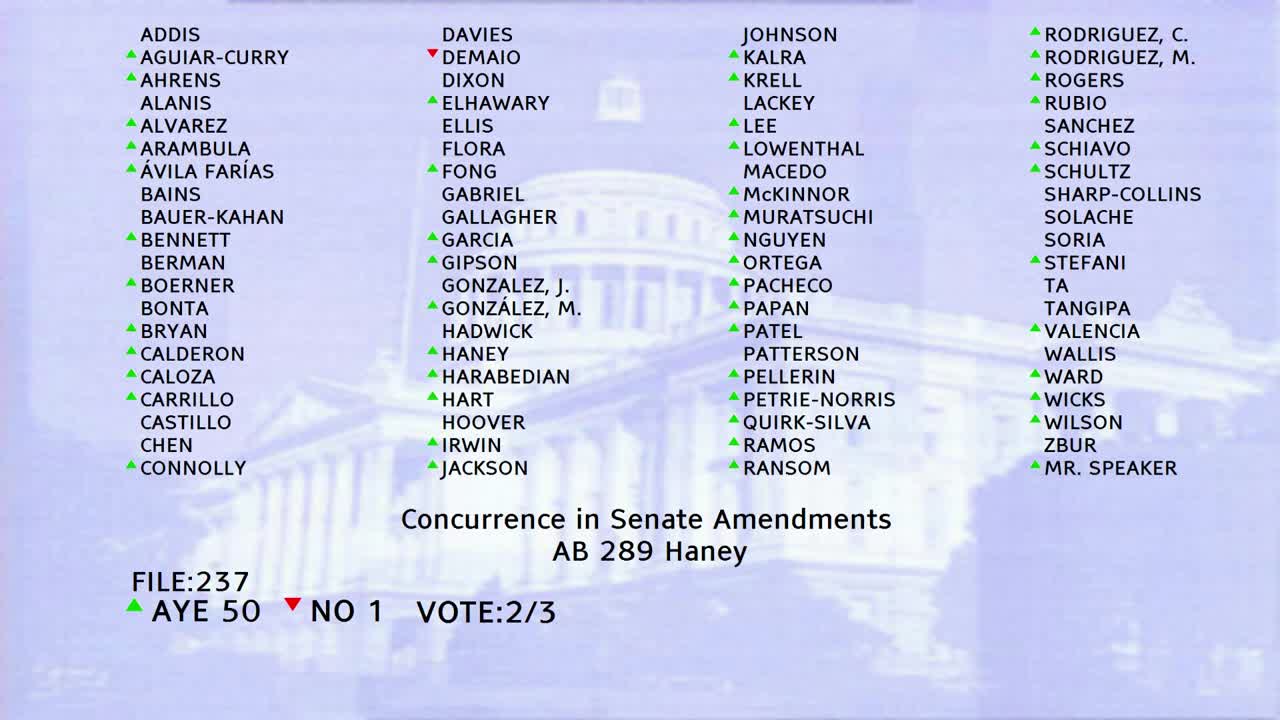
Bill Author

Bill Co-Author(s):