AB 902: Transportation projects: barriers to wildlife movement.
- Session Year: 2025-2026
- House: Assembly
- Latest Version Date: 2025-07-10
Current Status:
In Progress
(2025-08-29: In committee: Held under submission.)
Introduced
In Committee
Awaiting First Chamber Vote
Passed First Chamber
In Committee
Awaiting Second Chamber Vote
Passed Second Chamber
Enacted
Existing law requires the Department of Transportation (Caltrans), for any project on the state highway system in a connectivity area that adds a traffic lane or that has the potential to significantly impair wildlife connectivity, to perform an assessment, in consultation with the Department of Fish and Wildlife (DFW), to identify potential wildlife connectivity barriers and any needs for improved permeability, as specified. Existing law requires the implementing agency to remediate barriers to wildlife connectivity in conjunction with the project if any structural barrier to wildlife connectivity exists or will be added by the project for target species in the connectivity area, as provided. Existing law authorizes Caltrans to use compensatory mitigation credits to satisfy this requirement if DFW concurs with the use of those credits.
This bill would require a lead agency to incorporate appropriate wildlife passage features into a transportation infrastructure project in a connectivity area, as specified. By requiring a lead agency to expand the scope of its transportation project, the bill would impose a state-mandated local program. The bill would exempt a project on the state highway system from this requirement if Caltrans is the lead agency. The bill would authorize a lead agency to use compensatory mitigation credits to satisfy this requirement, as specified.
The California Constitution requires the state to reimburse local agencies and school districts for certain costs mandated by the state. Statutory provisions establish procedures for making that reimbursement.
This bill would provide that, if the Commission on State Mandates determines that the bill contains costs mandated by the state, reimbursement for those costs shall be made pursuant to the statutory provisions noted above.
Existing law establishes the Transportation Wildlife Connectivity Remediation Program, which is administered by requires the Department of Transportation (Caltrans), for any project on the state highway system in a connectivity area that adds a traffic lane or that has the potential to significantly impair wildlife connectivity, to perform an assessment, in consultation with the Department of Fish and Wildlife (DFW), for the purposes of improving wildlife connectivity across transportation systems in connectivity areas, as defined. As part of the program, existing law requires Caltrans to develop a program of projects that support the remediation and improvement of wildlife connectivity across transportation systems, as provided. to identify potential wildlife connectivity barriers and any needs for improved permeability, as specified. Existing law requires the implementing agency to remediate barriers to wildlife connectivity in conjunction with the project if any structural barrier to wildlife connectivity exists or will be added by the project for target species in the connectivity area, as provided. Existing law authorizes Caltrans to receive use compensatory mitigation credits for the implementation of a project in the program of projects to satisfy this requirement if DFW concurs with the creation use of those credits.
This bill would require a lead agency to incorporate appropriate wildlife passage features into a transportation infrastructure project in a connectivity area, as specified. By requiring a lead agency to expand the scope of its transportation project, the bill would impose a state-mandated local program. The bill would exempt a project on the state highway system from this requirement if Caltrans is the lead agency. The bill would authorize a lead agency to use compensatory mitigation credits to satisfy this requirement, as specified.
The California Constitution requires the state to reimburse local agencies and school districts for certain costs mandated by the state. Statutory provisions establish procedures for making that reimbursement.
This bill would provide that, if the Commission on State Mandates determines that the bill contains costs mandated by the state, reimbursement for those costs shall be made pursuant to the statutory provisions noted above.
Existing law establishes the Transportation Wildlife Connectivity Remediation Program, which is administered by the Department of Transportation (Caltrans), in consultation with the Department of Fish and Wildlife (DFW), for the purposes of improving wildlife connectivity across transportation systems in connectivity areas, as defined. As part of the program, existing law requires Caltrans to develop a program of projects that support the remediation and improvement of wildlife connectivity across transportation systems, as provided. Existing law authorizes Caltrans to receive compensatory mitigation credits for the implementation of a project in the program of projects if DFW concurs with the creation of those credits.
This bill would require a lead agency to incorporate appropriate wildlife passage features into a transportation infrastructure project in a connectivity area, as specified. By requiring a lead agency to expand the scope of its transportation project, the bill would impose a state-mandated local program. The bill would authorize a lead agency to use compensatory mitigation credits to satisfy this requirement, as specified.
The California Constitution requires the state to reimburse local agencies and school districts for certain costs mandated by the state. Statutory provisions establish procedures for making that reimbursement.
This bill would provide that, if the Commission on State Mandates determines that the bill contains costs mandated by the state, reimbursement for those costs shall be made pursuant to the statutory provisions noted above.
Existing law requires certain transportation planning agencies to prepare and adopt regional transportation plans directed at achieving a coordinated and balanced regional transportation system. Existing law requires that each regional transportation plan include a sustainable communities strategy prepared by each metropolitan planning organization in order to, among other things, achieve certain regional targets established by the State Air Resources Board for the reduction of greenhouse gas emissions from automobiles and light trucks in the region for 2020 and 2035, respectively.
This bill would require require, to the extent feasible, the regional transportation plan or sustainable communities strategy, upon the adoption or next revision on or after January 1, 2028, of a regional transportation plan, to, among other things, identify and analyze connectivity areas, permeability, and natural landscape areas that are partially or fully within the region of the metropolitan planning organization or transportation planning agency, and consider the impacts of development and the barriers caused by transportation infrastructure and development to wildlife and habitat connectivity. areas, and identify strategies and the general location of uses and transportation networks in a manner that avoids, minimizes, or mitigates impacts and barriers to wildlife movement to the greatest extent feasible. The bill would also require metropolitan planning organizations and regional transportation planning agencies, in implementing those requirements, to, among other things, incorporate recommend for implementation by applicable jurisdictions appropriate standards, policies, and feasible implementation programs, consult with certain entities, and consider relevant best available science as appropriate. By imposing additional duties on local entities, the bill would impose a state-mandated local program.
TheThis bill would authorize metropolitan planning organizations and regional transportation planning agencies, in implementing the above-described requirements, to consult with specified entities and incorporate relevant information, guidelines, and standards from specified sources.
Under existing law, the Department of Fish and Wildlife (DFW) has jurisdiction over the conservation, protection, and management of fish, wildlife, native plants, and habitat necessary for biologically sustainable populations of those species. Existing law authorizes DFW to approve compensatory mitigation credits for wildlife connectivity actions taken under specified programs.
This bill would require regional transportation lead agencies, in consultation with DFW, to perform an assessment, containing specified information, to identify potential wildlife connectivity barriers and any needs for improved permeability regarding any specified transportation infrastructure project located in a connectivity area beginning with the project initiation phase on or after January 1, 2026, as provided. The bill would also require the regional transportation lead agency to submit the assessment to DFW, to remediate barriers to wildlife connectivity in conjunction with the project, as necessary, and to publish on its internet website a list of all of the transportation infrastructure projects that require remediation, as provided. By imposing To the extent that the bill imposes additional duties on local entities, the bill would impose a state-mandated local program program.
This bill would authorize regional transportation lead agencies to use compensatory mitigation credits if DFW concurs with the use of those credits. The bill would also make related findings and declarations.
The California Constitution requires the state to reimburse local agencies and school districts for certain costs mandated by the state. Statutory provisions establish procedures for making that reimbursement.
This bill would provide that, if the Commission on State Mandates determines that the bill contains costs mandated by the state, reimbursement for those costs shall be made pursuant to the statutory provisions noted above.
Existing law requires certain transportation planning agencies to prepare and adopt regional transportation plans directed at achieving a coordinated and balanced regional transportation system. Existing law requires that each regional transportation plan include a sustainable communities strategy prepared by each metropolitan planning organization in order to, among other things, achieve certain regional targets established by the State Air Resources Board for the reduction of greenhouse gas emissions from automobiles and light trucks in the region for 2020 and 2035, respectively.
This bill would require the regional transportation plan or sustainable communities strategy, upon the adoption or next revision on or after January 1, 2028, to, among other things, identify and analyze connectivity areas, permeability, and natural landscape areas that are partially or fully within the region of the metropolitan planning organization or transportation planning agency, and consider the impacts of development and the barriers caused by transportation infrastructure and development to wildlife and habitat connectivity. The bill would also require metropolitan planning organizations and regional transportation agencies, in implementing those requirements, to, among other things, incorporate appropriate standards, policies, and feasible implementation programs, consult with certain entities, and consider relevant best available science as appropriate. By imposing additional duties on local entities, the bill would impose a state-mandated local program.
The bill would authorize metropolitan planning organizations and regional transportation agencies, in implementing the above-described requirements, to consult with specified entities and incorporate relevant information, guidelines, and standards from specified sources.
Under existing law, the Department of Fish and Wildlife (DFW) has jurisdiction over the conservation, protection, and management of fish, wildlife, native plants, and habitat necessary for biologically sustainable populations of those species. Existing law authorizes DFW to approve compensatory mitigation credits for wildlife connectivity actions taken under specified programs.
This bill would require regional transportation agencies, in consultation with DFW, to perform an assessment, containing specified information, to identify potential wildlife connectivity barriers and any needs for improved permeability regarding any specified transportation infrastructure project located in a connectivity area beginning the project initiation phase on or after January 1, 2026, as provided. The bill would also require the regional transportation agency to submit the assessment to DFW, to remediate barriers to wildlife connectivity in conjunction with the project, as necessary, and to publish on its internet website a list of all of the transportation infrastructure projects that require remediation, as provided. By imposing additional duties on local entities, the bill would impose a state-mandated local program
This bill would authorize regional transportation agencies to use compensatory mitigation credits if DFW concurs with the use of those credits. The bill would also make related findings and declarations.
The California Constitution requires the state to reimburse local agencies and school districts for certain costs mandated by the state. Statutory provisions establish procedures for making that reimbursement.
This bill would provide that, if the Commission on State Mandates determines that the bill contains costs mandated by the state, reimbursement for those costs shall be made pursuant to the statutory provisions noted above.
(a)The Legislature finds and declares all of the following:
(1)Transportation infrastructure can adversely impact wildlife by reducing or eliminating their core habitat, severing connections between habitats, and interfering with their behavioral patterns and ability to access food, water, shelter, and genetically diverse mates.
(2)Climate change is a significant threat to Californias biodiversity. As climate change alters the habitat, ranges, and movement patterns of numerous animals and plants, wildlife must have the ability to shift their ranges to effectively adapt to changed climatic conditions and resource availability. Moreover, wildlife must be able to move to effectively respond to extreme weather events, including wildfire, drought, and floods.
(3)As set forth in Assembly Bill 2344 (Chapter 964 of the Statutes of 2022), commonly known as the Safe Roads and Wildlife Protection Act, it is the policy of the state to protect, restore, and enhance the functioning of fish, wildlife, and habitat connectivity in connection with the planning, construction, and improvement of transportation infrastructure throughout the state.
(b)(1)Because regional transportation agencies and metropolitan planning organizations have a role in the funding, construction, operation, and maintenance of transportation infrastructure, it is the intent of the Legislature, in carrying out the policy of the state, to consider and incorporate measures for the avoidance, minimization, and mitigation of impacts to fish, wildlife, and habitat connectivity arising from their activities.(2)It is the intent of the Legislature that metropolitan planning organizations and regional transportation agencies implement measures to remediate barriers to wildlife connectivity within their regions, including on transportation infrastructure.(4)Assembly Bill 2344, among other things, established various requirements to address the state highway systems impact on wildlife.(5)Roads outside of the state highway system also adversely impact wildlife.(b)It is the intent of the Legislature, in carrying out the policy of the state, that local agencies leading the funding and construction of roads consider and incorporate measures for the avoidance, minimization, and mitigation of impacts to fish, wildlife, and habitat connectivity arising from their activities.(c)This act shall be known, and may be cited, as the Connected Communities Safer Roads Act.
SEC. 2.Section 158.6 is added to the Streets and Highways Code, to read:158.6.(a)A lead agency shall incorporate appropriate wildlife passage features to feasibly avoid, minimize, and mitigate further impairment to wildlife connectivity into a transportation infrastructure project in a connectivity area that may significantly impair wildlife connectivity. that meets all of the following criteria:
(1)The project is in a connectivity area identified as lands within Terrestrial Connectivity ranks 3, 4, or 5 of the Department of Fish and Wildlifes Areas of Conservation Emphasis, or in a connectivity area identified in a general plan updated pursuant to paragraph (4) subdivision (d) of Section 65302 of the Government Code.
(2)The project may significantly impair wildlife connectivity.
(3)The project initiation phase begins on or after January 1, 2028.
(b)A lead agency may use compensatory mitigation credits approved pursuant to Section 1957 of the Fish and Game Code to satisfy the requirements of this section if the Department of Fish and Wildlife concurs with the use of those credits.
(c)This section only applies to a project with a project initiation phase beginning on or after January 1, 2026.(d)(c)This section does not apply to projects on the state highway system in which the Department of Transportation is the lead agency.
(d)For purposes of this section, transportation infrastructure project only includes projects to create a new highway or add a new lane to an existing highway and does not include any of the following:
(1)Projects for the operation, repair, maintenance, or minor alteration of existing transportation infrastructure, involving negligible or no expansion of use.
(2)Projects for the reconstruction or replacement of existing transportation facilities.
(3)Projects to create bicycle lanes and sidewalks within an existing right-of-way.
SEC. 3.If the Commission on State Mandates determines that this act contains costs mandated by the state, reimbursement to local agencies and school districts for those costs shall be made pursuant to Part 7 (commencing with Section 17500) of Division 4 of Title 2 of the Government Code.
(a)The Legislature finds and declares all of the following:
(1)Transportation infrastructure can adversely impact wildlife by reducing or eliminating their core habitat, severing connections between habitats, and interfering with their behavioral patterns and ability to access food, water, shelter, and genetically diverse mates.
(2)Climate change is a significant threat to Californias biodiversity. As climate change alters the habitat, ranges, and movement patterns of numerous animals and plants, wildlife must have the ability to shift their ranges to effectively adapt to changed climatic conditions and resource availability. Moreover, wildlife must be able to move to effectively respond to extreme weather events, including wildfire, drought, and floods.
(3)As set forth in Assembly Bill 2344 (Chapter 964 of the Statutes of 2022), commonly known as the Safe Roads and Wildlife Protection Act, it is the policy of the state to protect, restore, and enhance the functioning of fish, wildlife, and habitat connectivity in connection with the planning, construction, and improvement of transportation infrastructure throughout the state.
(b)(1)Because regional transportation agencies and metropolitan planning organizations have a role in the funding, construction, operation, and maintenance of transportation infrastructure, it is the intent of the Legislature, in carrying out the policy of the state, to consider and incorporate measures for the avoidance, minimization, and mitigation of impacts to fish, wildlife, and habitat connectivity arising from their activities.
(2)It is the intent of the Legislature that metropolitan planning organizations and regional transportation agencies implement measures to remediate barriers to wildlife connectivity within their regions, including on transportation infrastructure.
(c)This act shall be known, and may be cited, as the Connected Communities Act.
SEC. 2.Section 158.6 is added to the Streets and Highways Code, to read:158.6.(a)A lead agency shall incorporate appropriate wildlife passage features to feasibly avoid, minimize, and mitigate further impairment to wildlife connectivity into a transportation infrastructure project in a connectivity area that may significantly impair wildlife connectivity.
(b)A lead agency may use compensatory mitigation credits approved pursuant to Section 1957 of the Fish and Game Code to satisfy the requirements of this section if the Department of Fish and Wildlife concurs with the use of those credits.
(c)This section only applies to a project with a project initiation phase beginning on or after January 1, 2026.
(d)This section does not apply to projects on the state highway system in which the Department of Transportation is the lead agency.
SEC. 3.If the Commission on State Mandates determines that this act contains costs mandated by the state, reimbursement to local agencies and school districts for those costs shall be made pursuant to Part 7 (commencing with Section 17500) of Division 4 of Title 2 of the Government Code.
(a)A lead agency shall incorporate appropriate wildlife passage features to feasibly avoid, minimize, and mitigate further impairment to wildlife connectivity into a transportation infrastructure project in a connectivity area that may significantly impair wildlife connectivity.
(b)A lead agency may use compensatory mitigation credits approved pursuant to Section 1957 of the Fish and Game Code to satisfy the requirements of this section if the Department of Fish and Wildlife concurs with the use of those credits.
(c)This section only applies to a project with a project initiation phase beginning on or after January 1, 2026.
SEC. 4.SEC. 3.If the Commission on State Mandates determines that this act contains costs mandated by the state, reimbursement to local agencies and school districts for those costs shall be made pursuant to Part 7 (commencing with Section 17500) of Division 4 of Title 2 of the Government Code.
(a)The Legislature finds and declares all of the following:
(1)Transportation infrastructure and development can adversely impact wildlife by reducing or eliminating their core habitat, severing connections between habitats, and interfering with their behavioral patterns and ability to access food, water, shelter, and genetically diverse mates.
(2)Climate change is a significant threat to Californias biodiversity. As climate change alters the habitat, ranges, and movement patterns of numerous animals and plants, wildlife must have the ability to shift their ranges to effectively adapt to changed climatic conditions and resource availability. Moreover, wildlife must be able to move to effectively respond to extreme weather events, including wildfire, drought, and floods.
(3)As set forth in Assembly Bill 2344 of the 202122 Regular Session of the Legislature, also (Chapter 964 of the Statutes of 2022), commonly known as the Safe Roads and Wildlife Protection Act, it is the policy of the state to protect, restore, and enhance the functioning of fish, wildlife, and habitat connectivity in connection with the planning, construction, and improvement of transportation infrastructure throughout the state.
(4)(b)(1)Because regional transportation agencies and metropolitan planning organizations have a role in the funding, construction, operation, and maintenance of transportation infrastructure, it is the intent of the Legislature, in carrying out the policy of the state, to consider and incorporate measures for the avoidance, minimization, and mitigation of impacts to fish, wildlife, and habitat connectivity arising from their activities.
(5)As set forth in Assembly Bill 1889 of the 202324 Regular Session of the Legislature, also known as the Room to Roam Act, it is the policy of the state to protect, restore, and improve the functioning of fish, wildlife, and habitat connectivity in connection with land use planning.(6)Because metropolitan planning organizations and regional transportation agencies have a role in influencing land use planning, it is the intent of the Legislature, in carrying out the policy of the state, to consider and implement measures to avoid, minimize, or mitigate impacts to fish, wildlife, and habitat connectivity arising from their activities, plans, and policies. It(2)It is further the intent of the Legislature that metropolitan planning organizations and regional transportation agencies exercise their authority to implement measures to remediate barriers to wildlife connectivity within their regions, including on transportation infrastructure.
(b)(c)This act shall be known, and may be cited, as the Connected Communities Act.
SEC. 2.Section 65080.10 is added to the Government Code, to read:65080.10.(a)(1)Upon the adoption or next revision of a regional transportation plan or sustainable communities strategy on or after January 1, 2028, the regional transportation plan or plan, the sustainable communities strategy shall shall, to the extent feasible, be updated to:
(1)(A)Identify and analyze connectivity areas, permeability, and natural landscape areas, as those terms are defined in Section 158 of the Streets and Highways Code, that are partially or fully within the region of the metropolitan planning organization or transportation planning agency. Code.
(2)(B)Identify and analyze existing or planned wildlife passage features, as defined in Section 158 of the Streets and Highways Code, that are partially or fully within the region of the metropolitan planning organization or transportation planning agency, including, but not limited to, wildlife passage features included in the inventory of connectivity needs on the state highway system, as described in Section 158.1 of the Streets and Highways Code, to ensure that planned transportation infrastructure or development does not undermine the effectiveness of existing and potential wildlife passage features.
(3)Consider the impacts of development and the barriers caused by transportation infrastructure and development to wildlife and habitat connectivity. For the purposes of this paragraph, wildlife has the same meaning as defined in Section 89.5 of the Fish and Game Code.(4)Avoid, minimize, or mitigate impacts and barriers to wildlife movement.(C)Identify strategies and the general location of uses and transportation networks in a manner that avoids, minimizes, or mitigates impacts and barriers to wildlife movement to the greatest extent feasible, while still meeting existing requirements set forth in Section 65080, including, but not limited to, identifying areas to house all the population of the region and identifying areas within the region sufficient to house an eight-year projection of the regional housing need for the region pursuant to Section 65584.
(5)(D)Analyze and consider opportunities to remediate existing barriers to wildlife connectivity and restore degraded habitat and open space.
(2)If a sustainable communities strategy is not required for a region by law, upon the adoption or next revision of a regional transportation plan, the regional transportation plan shall, to the extent feasible, be updated as described in subparagraphs (A) to (D), inclusive, of paragraph (1).
(b)In implementing the requirements set forth in subdivision (a), the metropolitan planning organization or transportation planning agency shall:
(1)Incorporate Recommend for implementation by applicable jurisdictions appropriate standards, policies, and feasible implementation programs such as wildlife-friendly fencing and lighting, buffers from sensitive resources, prohibitions on invasive plants, habitat connectivity overlay zones, and compact development standards, or consider whether adoption of an ordinance is necessary to feasibly implement these standards, policies, and implementation programs, and include goals to adopt any necessary ordinance. standards.
(2)Consult with the Department of Fish and Wildlife, any California Native American tribe that is on the contact list maintained by the Native American Heritage Commission and that has traditional lands located partially or fully within the region of the metropolitan planning organization or transportation planning agency, and any open-space district that owns lands designated for conservation within the metropolitan planning organization or regional transportation agencys region. Upon receiving a request for consultation, the department, tribe, or district may, in its sole discretion, accept or refuse to consult, based on the priority of natural resources impacted or other factors.
(3)Consider relevant best available science as appropriate, including, but not limited to, peer-reviewed literature, citable publicly available datasets, publicly sourced online datasets, and information and reports from governmental agencies, California Native American tribes as specified in paragraph (2), and academic institutions.
(4)Consider the most appropriately scaled scientific information on linkages, corridors, and other locations that are essential to maintain landscape connectivity, including, but not limited to, any of the following:
(A)Habitat linkages and wildlife corridors, such as those identified and summarized in the Areas of Conservation Emphasis, as defined by subdivision (a) of Section 1851 of the Fish and Game Code, and in regional habitat connectivity assessments.
(B)Wildlife corridors, such as migration corridors identified by global positioning system collar studies.
(C)Wildlife movement barriers, such as connectivity areas, as defined by subdivision (a) of Section 158 of the Street and Highways Code, barriers identified by the Department of Fish and Wildlifes Restoring Californias Wildlife Connectivity report, and other areas the Department of Fish and Wildlife determines are important for wildlife habitat and connectivity.
(D)Other connectivity considerations, such as those outlined in the State Wildlife Action Plan, habitat conservation plans approved pursuant to Section 1539 of Title 16 of the United States Code, natural community conservation plans approved pursuant to Chapter 10 (commencing with Section 2800) of Division 3 of the Fish and Game Code, regional conservation investment strategies approved pursuant to Chapter 9 (commencing with Section 1850) of Division 2 of the Fish and Game Code, and other relevant plans, policies, and ordinances adopted by neighboring jurisdictions or regions.
(c)In implementing the requirements set forth in subdivisions (a) and (b), the metropolitan planning organization or transportation planning agency may do all of the following:
(1)Consult with cities or counties within or outside of their region, and appropriate local, state, or federal agencies, or academic institutions.
(2)Incorporate relevant information, guidelines, and standards from applicable all of the following:
(A)Applicable conservation elements approved pursuant to Section 65302, applicable 65302, including, but not limited to, identification and analysis of connectivity areas, permeability, and natural landscape areas, and existing or planned wildlife passage features for jurisdictions within the region.
(B)Applicable habitat conservation plans approved pursuant to Section 1539 of Title 16 of the United States Code, and natural Code.
(C)Natural community conservation plans approved pursuant to Chapter 10 (commencing with Section 2800) of Division 3 of the Fish and Game Code.
(D)Applicable local coastal plans certified pursuant to Division 20 (commencing with Section 30000) of the Public Resources Code.
(d)For purposes of this section, wildlife has the same meaning as defined in Section 89.5 of the Fish and Game Code.
(d)(e)Nothing in this section shall be interpreted as superseding the exercise of the land use authority of cities and counties within the region.
SEC. 3.Section 158.6 is added to the Streets and Highways Code, to read:158.6.(a)(1)For any transportation infrastructure project located in a connectivity area beginning with the project initiation phase on or after January 1, 2026, that adds a traffic lane or that has the potential to significantly impair wildlife connectivity based on criteria developed by the Department of Transportation and Department of Fish and Wildlife pursuant to Section 158.2, the regional transportation lead agency shall perform an assessment, in consultation with the Department of Fish and Wildlife, before commencing project design and continuing through the development of the project and into implementation, to identify potential wildlife connectivity barriers and any needs for improved permeability.
(2)As part of the assessment, the regional transportation lead agency shall consider factors affecting wildlife connectivity that provide scalable solutions for all defined species needs, in consultation with the Department of Fish and Wildlife.
(3)The assessment may incorporate relevant guidelines and standards in applicable habitat conservation plans approved pursuant to Section 1539 of Title 16 of the United States Code and natural community conservation plans approved pursuant to Chapter 10 (commencing with Section 2800) of Division 3 of the Fish and Game Code.
(4)The regional transportation lead agency shall submit the assessment to the Department of Fish and Wildlife and, if any structural barrier to wildlife connectivity exists or will be added by the project in the connectivity area based on criteria developed by the Department of Transportation and Department of Fish and Wildlife pursuant to Section 158.2, the regional transportation lead agency shall remediate barriers to wildlife connectivity in conjunction with the project. A project subject to this requirement may incorporate relevant assessments, guidelines, and standards in applicable habitat conservation plans approved pursuant to Section 1539 of Title 16 of the United States Code and natural community conservation plans approved pursuant to Chapter 10 (commencing with Section 2800) of Division 3 of the California Fish and Game Code.
(5)The regional transportation lead agency shall publish on its internet website a list of all of the transportation infrastructure projects that require remediation pursuant to paragraph (4) and information regarding whether wildlife passage features are included in those projects or if mitigation credits are applied to the project pursuant to subdivision (b). The regional transportation lead agency shall update the project list biennially, at a minimum, and may update the list more often, as needed.
(b)Regional transportation Lead agencies may use compensatory mitigation credits approved pursuant to Section 1957 of the Fish and Game Code to satisfy the requirements of this section if the Department of Fish and Wildlife concurs with the use of those credits.
SEC. 4.If the Commission on State Mandates determines that this act contains costs mandated by the state, reimbursement to local agencies and school districts for those costs shall be made pursuant to Part 7 (commencing with Section 17500) of Division 4 of Title 2 of the Government Code.
(a)The Legislature finds and declares all of the following:
(1)Transportation infrastructure and development can adversely impact wildlife by reducing or eliminating their core habitat, severing connections between habitats, and interfering with their behavioral patterns and ability to access food, water, shelter, and genetically diverse mates.
(2)Climate change is a significant threat to Californias biodiversity. As climate change alters the habitat, ranges, and movement patterns of numerous animals and plants, wildlife must have the ability to shift their ranges to effectively adapt to changed climatic conditions and resource availability. Moreover, wildlife must be able to move to effectively respond to extreme weather events, including wildfire, drought, and floods.
(3)As set forth in Assembly Bill 2344 of the 202122 Regular Session of the Legislature, also known as the Safe Roads and Wildlife Protection Act, it is the policy of the state to protect, restore, and enhance the functioning of fish, wildlife, and habitat connectivity in connection with the planning, construction, and improvement of transportation infrastructure throughout the state.
(4)Because regional transportation agencies and metropolitan planning organizations have a role in the funding, construction, operation, and maintenance of transportation infrastructure, it is the intent of the Legislature, in carrying out the policy of the state, to consider and incorporate measures for the avoidance, minimization, and mitigation of impacts to fish, wildlife, and habitat connectivity arising from their activities.
(5)As set forth in Assembly Bill 1889 of the 202324 Regular Session of the Legislature, also known as the Room to Roam Act, it is the policy of the state to protect, restore, and improve the functioning of fish, wildlife, and habitat connectivity in connection with land use planning.
(6)Because metropolitan planning organizations and regional transportation agencies have a role in influencing land use planning, it is the intent of the Legislature, in carrying out the policy of the state, to consider and implement measures to avoid, minimize, or mitigate impacts to fish, wildlife, and habitat connectivity arising from their activities, plans, and policies. It is further the intent of the Legislature that metropolitan planning organizations and regional transportation agencies exercise their authority to implement measures to remediate barriers to wildlife connectivity within their regions, including on transportation infrastructure.
(b)This act shall be known, and may be cited, as the Connected Communities Act.
SEC. 2.Section 65080.10 is added to the Government Code, to read:65080.10.(a)Upon the adoption or next revision of a regional transportation plan or sustainable communities strategy on or after January 1, 2028, the regional transportation plan or sustainable communities strategy shall be updated to:
(1)Identify and analyze connectivity areas, permeability, and natural landscape areas, as those terms are defined in Section 158 of the Streets and Highways Code, that are partially or fully within the region of the metropolitan planning organization or transportation planning agency.
(2)Identify and analyze existing or planned wildlife passage features, as defined in Section 158 of the Streets and Highways Code, that are partially or fully within the region of the metropolitan planning organization or transportation planning agency, including, but not limited to, wildlife passage features included in the inventory of connectivity needs on the state highway system, as described in Section 158.1 of the Streets and Highways Code, to ensure that planned transportation infrastructure or development does not undermine the effectiveness of existing and potential wildlife passage features.
(3)Consider the impacts of development and the barriers caused by transportation infrastructure and development to wildlife and habitat connectivity. For the purposes of this paragraph, wildlife has the same meaning as defined in Section 89.5 of the Fish and Game Code.
(4)Avoid, minimize, or mitigate impacts and barriers to wildlife movement.
(5)Analyze and consider opportunities to remediate existing barriers to wildlife connectivity and restore degraded habitat and open space.
(b)In implementing the requirements set forth in subdivision (a), the metropolitan planning organization or transportation planning agency shall:
(1)Incorporate appropriate standards, policies, and feasible implementation programs such as wildlife-friendly fencing and lighting, buffers from sensitive resources, prohibitions on invasive plants, habitat connectivity overlay zones, and compact development standards, or consider whether adoption of an ordinance is necessary to feasibly implement these standards, policies, and implementation programs, and include goals to adopt any necessary ordinance.
(2)Consult with the Department of Fish and Wildlife, any California Native American tribe that is on the contact list maintained by the Native American Heritage Commission and that has traditional lands located partially or fully within the region of the metropolitan planning organization or transportation planning agency, and any open-space district that owns lands designated for conservation within the metropolitan planning organization or regional transportation agencys region. Upon receiving a request for consultation, the department, tribe, or district may, in its sole discretion, accept or refuse to consult, based on the priority of natural resources impacted or other factors.
(3)Consider relevant best available science as appropriate, including, but not limited to, peer-reviewed literature, citable publicly available datasets, publicly sourced online datasets, and information and reports from governmental agencies, California Native American tribes as specified in paragraph (2), and academic institutions.
(4)Consider the most appropriately scaled scientific information on linkages, corridors, and other locations that are essential to maintain landscape connectivity, including, but not limited to, any of the following:
(A)Habitat linkages and wildlife corridors, such as those identified and summarized in the Areas of Conservation Emphasis, as defined by subdivision (a) of Section 1851 of the Fish and Game Code, and in regional habitat connectivity assessments.
(B)Wildlife corridors, such as migration corridors identified by global positioning system collar studies.
(C)Wildlife movement barriers, such as connectivity areas, as defined by subdivision (a) of Section 158 of the Street and Highways Code, barriers identified by the Department of Fish and Wildlifes Restoring Californias Wildlife Connectivity report, and other areas the Department of Fish and Wildlife determines are important for wildlife habitat and connectivity.
(D)Other connectivity considerations, such as those outlined in the State Wildlife Action Plan, habitat conservation plans approved pursuant to Section 1539 of Title 16 of the United States Code, natural community conservation plans approved pursuant to Chapter 10 (commencing with Section 2800) of Division 3 of the Fish and Game Code, regional conservation investment strategies approved pursuant to Chapter 9 (commencing with Section 1850) of Division 2 of the Fish and Game Code, and other relevant plans, policies, and ordinances adopted by neighboring jurisdictions or regions.
(c)In implementing the requirements set forth in subdivisions (a) and (b), the metropolitan planning organization or transportation planning agency may do all of the following:
(1)Consult with cities or counties within or outside of their region, and appropriate local, state, or federal agencies, or academic institutions.
(2)Incorporate relevant information, guidelines, and standards from applicable conservation elements approved pursuant to Section 65302, applicable habitat conservation plans approved pursuant to Section 1539 of Title 16 of the United States Code, and natural community conservation plans approved pursuant to Chapter 10 (commencing with Section 2800) of Division 3 of the Fish and Game Code.
(d)Nothing in this section shall be interpreted as superseding the exercise of the land use authority of cities and counties within the region.
SEC. 3.Section 158.6 is added to the Streets and Highways Code, to read:158.6.(a)(1)For any transportation infrastructure project located in a connectivity area beginning the project initiation phase on or after January 1, 2026, that adds a traffic lane or that has the potential to significantly impair wildlife connectivity based on criteria developed by the Department of Transportation and Department of Fish and Wildlife pursuant to Section 158.2, the regional transportation agency shall perform an assessment, in consultation with the Department of Fish and Wildlife, before commencing project design and continuing through the development of the project and into implementation, to identify potential wildlife connectivity barriers and any needs for improved permeability.
(2)As part of the assessment, the regional transportation agency shall consider factors affecting wildlife connectivity that provide scalable solutions for all defined species needs, in consultation with the Department of Fish and Wildlife.
(3)The assessment may incorporate relevant guidelines and standards in applicable habitat conservation plans approved pursuant to Section 1539 of Title 16 of the United States Code and natural community conservation plans approved pursuant to Chapter 10 (commencing with Section 2800) of Division 3 of the Fish and Game Code.
(4)The regional transportation agency shall submit the assessment to the Department of Fish and Wildlife and, if any structural barrier to wildlife connectivity exists or will be added by the project in the connectivity area based on criteria developed by the Department of Transportation and Department of Fish and Wildlife pursuant to Section 158.2, the regional transportation agency shall remediate barriers to wildlife connectivity in conjunction with the project. A project subject to this requirement may incorporate relevant assessments, guidelines, and standards in applicable habitat conservation plans approved pursuant to Section 1539 of Title 16 of the United States Code and natural community conservation plans approved pursuant to Chapter 10 (commencing with Section 2800) of Division 3 of the California Fish and Game Code.
(5)The regional transportation agency shall publish on its internet website a list of all of the transportation infrastructure projects that require remediation pursuant to paragraph (4) and information regarding whether wildlife passage features are included in those projects or if mitigation credits are applied to the project pursuant to subdivision (b). The regional transportation agency shall update the project list biennially, at a minimum, and may update the list more often, as needed.
(b)Regional transportation agencies may use compensatory mitigation credits approved pursuant to Section 1957 of the Fish and Game Code to satisfy the requirements of this section if the Department of Fish and Wildlife concurs with the use of those credits.
SEC. 4.If the Commission on State Mandates determines that this act contains costs mandated by the state, reimbursement to local agencies and school districts for those costs shall be made pursuant to Part 7 (commencing with Section 17500) of Division 4 of Title 2 of the Government Code.
|
Date
|
Status
|
|---|---|
| Aug 29, 2025 | In committee: Held under submission. |
| Aug 18, 2025 | In committee: Referred to suspense file. |
| Jul 10, 2025 | Read second time and amended. Re-referred to Com. on APPR. |
| Jul 9, 2025 | From committee: Amend, and do pass as amended and re-refer to Com. on APPR. (Ayes 5. Noes 2.) (July 8). |
| Jun 25, 2025 | From committee: Do pass and re-refer to Com. on N.R. & W. (Ayes 12. Noes 2.) (June 24). Re-referred to Com. on N.R. & W. |
| Jun 11, 2025 | Referred to Coms. on TRANS. and N.R. & W. |
| Jun 3, 2025 | In Senate. Read first time. To Com. on RLS. for assignment. |
| Jun 2, 2025 | Read third time. Passed. Ordered to the Senate. (Ayes 56. Noes 14. Page 1910.) |
| May 27, 2025 | Read second time. Ordered to third reading. |
| May 23, 2025 | Read second time and amended. Ordered returned to second reading. |
| May 23, 2025 | From committee: Amend, and do pass as amended. (Ayes 11. Noes 2.) (May 23). |
| May 23, 2025 | Assembly Rule 63 suspended. (Ayes 51. Noes 16. Page 1644.) |
| May 14, 2025 | In committee: Set, first hearing. Referred to APPR. suspense file. |
| Apr 24, 2025 | Re-referred to Com. on APPR. pursuant to Assembly Rule 96. |
| Apr 24, 2025 | Re-referred to Com. on L. GOV. |
| Apr 23, 2025 | Read second time and amended. |
| Apr 22, 2025 | From committee: Amend, and do pass as amended and re-refer to Com. on L. GOV. (Ayes 11. Noes 2.) (April 21). |
| Apr 21, 2025 | Re-referred to Com. on TRANS. |
| Apr 10, 2025 | From committee chair, with author's amendments: Amend, and re-refer to Com. on TRANS. Read second time and amended. |
| Mar 17, 2025 | Referred to Coms. on TRANS. and L. GOV. |
| Feb 20, 2025 | From printer. May be heard in committee March 22. |
| Feb 19, 2025 | Read first time. To print. |
|
Date
|
Description
|
Location
|
Votes
|
|
|---|---|---|---|---|
| Aug 18, 2025 | Placed on suspense file | Senate Standing Committee on Appropriations |
Passed |
|
| Jul 8, 2025 | Do pass as amended, but first amend, and re-refer to the Committee on [Appropriations] | Senate Standing Committee on Natural Resources and Water |
Passed |
|
| Jun 24, 2025 | Do pass, but first be re-referred to the Committee on [Natural Resources and Water] | Senate Standing Committee on Transportation |
Passed |
|
| Jun 2, 2025 | AB 902 Schultz Assembly Third Reading | Assembly Floor |
Passed |
|
| May 23, 2025 | Do pass as amended. | Assembly Standing Committee on Appropriations |
Passed |
|
| Apr 21, 2025 | Do pass as amended and be re-referred to the Committee on [Local Government] | Assembly Standing Committee on Transportation |
Passed |
This list shows positions taken on this bill by organizations on the date displayed, which is linked to the original source.
Positions by individuals are not included.
|
Organization
|
Position
|
Date
|
|---|---|---|
| American River Conservancy | ** Support | |
| Animal Legla Defense Fund | ** Support | |
| Animal Welfare Institute | ** Support | |
| Arroyos & Foothills Conservancy | ** Support | |
| Backcountry Hunters and Anglers, California Chapter | ** Support | |
| Ban SUP | ** Support | |
| Brentwood Alliance of Canyons & Hillsides | ** Support | |
| California Building Industry Association | ** Against | |
| California Central Cost Chapter of the Wildlife Society | ** Support | |
| California Environmental Voters | ** Support | |
| California Native Plant Society | ** Support | |
| California Native Plant Society, Alta Peak Chapter | ** Support | |
| California River Watch | ** Support | |
| California State Parks Foundation | ** Support | |
| california wildlife foundation | ** Support | |
| California Wildlife Foundation/California Oaks | ** Support | |
| Calwild | ** Support | |
| Canyon Back Alliance | ** Support | |
| Center For Biological Diversity | ** Support | |
| Channel Islands Restoration | ** Support | |
| Citizens for Los Angeles Wildlife | ** Support | |
| City of Colton | ** Against | |
| cleanearth4kids.org | ** Support | |
| Climate Action California | ** Support | |
| Coalition For Responsible Transportation Priorities | ** Support | |
| Coastal Ranches Conservancy | ** Support | |
| Concerned Resource & Environmental Workers | ** Support | |
| Defenders Of Wildlife | ** Support | |
| East Bay Regional Park District | ** Support | |
| Endangered Habitats League | ** Support | |
| Environmental Protection Information Center | ** Support | |
| Escondido Creek Conservancy | ** Support | |
| Farm Sanctuary | ** Support | |
| Felidae Conservation Fund | ** Support | |
| Forest Unlimited | ** Support | |
| Friends of Ballona Wetlands | ** Support | |
| Friends Of Griffith Park | ** Support | |
| Friends Of Plumas Wilderness | ** Support | |
| Friends of the Inyo | ** Support | |
| Goleta Coast Audubon Society | ** Support | |
| Grassland Water District | ** Support | |
| Greenbelt Alliance | ** Support | |
| Green Foothills | ** Support | |
| greenspace - the cambria land trust | ** Support | |
| Hills for Everyone | ** Support | |
| Humane World for Animals | ** Support | |
| Ks Connectivity | ** Support | |
| Land Trust for Santa Barbara County | ** Support | |
| Land Trust Of Santa Cruz County | ** Support | |
| Los Angeles Waterkeeper | ** Support | |
| Los Padres ForestWatch | ** Support | |
| Madrone Audubon Society, Sonoma County | ** Support | |
| Midpeninsula Regional Open Space District | ** Support | |
| Mojave Desert Land Trust | ** Support | |
| Nature Conservancy | ** Support | |
| New Way Homes | ** Support | |
| North County Watch | ** Support | |
| Pathways for Wildlife | ** Support | |
| Paula Lane Action Network | ** Support | |
| Peninsula Open Space Trust | ** Support | |
| Planning And Conservation League | ** Support | |
| Poison Free Agoura | ** Support | |
| Poison Free Malibu | ** Support | |
| Preserve Wild Santee | ** Support | |
| Prosperity California | ** Support | |
| Raptors Are The Solution | ** Support | |
| San Diego Humane Society - Project Wildlife | ** Support | |
| Santa Barbara Botanic Garden | ** Support | |
| Santa Clara Valley Open Space Authority | ** Support | |
| Santa Susana Mountain Park Association | ** Support | |
| Save Joshua Tree Wildlife | ** Support | |
| SC Wildlands | ** Support | |
| Sea And Sage Audubon Society | ** Support | |
| Sequoia Riverlands Trust | ** Support | |
| Sierra Business Council | ** Support | |
| Sierra Club California | ** Support | |
| Sierra Forest Legacy | ** Support | |
| Sierra Nevada Alliance | ** Support | |
| Sierra State Parks Foundation | ** Support | |
| SoCal 350 Climate Action | ** Support | |
| Social Compassion In Legislation | ** Support | |
| Streets for All | ** Support | |
| The Climate Reality Project, Bay Area Chapter | ** Support | |
| The Climate Reality Project, California State Coalition | ** Support | |
| The Climate Reality Project, Los Angeles Chapter | ** Support | |
| The Climate Reality Project, Riverside County Chapter | ** Support | |
| The Climate Reality Project, Sacramento Chapter | ** Support | |
| The Climate Reality Project San Diego Chapter | ** Support | |
| The Climate Reality Project, San Fernando Valley, CA Chapter | ** Support | |
| The Cougar Fund | ** Support | |
| The Escondido Creek Conservancy | ** Support | |
| The River Otter Ecology Project | ** Support | |
| Tree People Land Trust | ** Support | |
| Truckee Donner Land Trust | ** Support | |
| united neighborhoods for los angeles | ** Support | |
| Urban Wildlife Research Project | ** Support | |
| Voters for Animal Rights | ** Support | |
| WildFutures | ** Support | |
| Wildlands Network | ** Support |
SENATE COMMITTEE ON APPROPRIATIONS
Senator Anna Caballero, Chair
2025 - 2026 Regular Session
AB 902 (Schultz) - Transportation projects: barriers to wildlife movement
Version: July 10, 2025 | Policy Vote: TRANS. 12-2, N.R.&W. 5 - 2 |
Urgency: No | Mandate: Yes |
Hearing Date: August 18, 2025 | Consultant: Mark McKenzie |
Bill Summary:
AB 902 would require the lead agency on certain transportation infrastructure projects to incorporate wildlife passage features to feasibly avoid, minimize, and mitigate impairment to wildlife connectivity into those projects, as specified.
Fiscal Impact:
- Unknown, likely significant mandated costs for local agencies, when acting as lead agencies on qualifying transportation infrastructure projects, to conduct additional planning, study, and analysis, develop strategies to remediate barriers, and incorporate additional features into those projects to avoid, minimize, and mitigate impairment to wildlife connectivity. Mandated costs imposed on certain local agencies (cities, counties, and some special districts) would likely be reimbursable by the state, subject to a determination by the Commission on State Mandates. (General Fund)
- Unknown major transportation fund cost pressures. This bill would significantly increase transportation infrastructure project costs for certain highway and rail projects that are initiated on or after January 1, 2028 in identified connectivity areas by requiring the incorporation of additional wildlife passage features to avoid, minimize, and mitigate impacts to fish, wildlife, and habitat. Adding costs to individual projects may result in the funding of fewer overall transportation infrastructure improvements, or create pressures to provide additional funding for those projects from various sources, including the General Fund and various transportation funds, including the Road Maintenance and Rehabilitation Account, Public Transportation Account, State Highway Account, Advance Mitigation Account, local funds, and federal funds.
- The Department of Transportation (Caltrans) indicates that it would incur unknown costs for any projects that would impact the state highways system. Staff notes that the bill explicitly excludes projects on the state highway system when Caltrans is the lead agency. Caltrans notes, however, that local projects on roadways that intersect or connect to the state highway system, or any Caltrans projects that require the relocation of local roadways, could result in increased Caltrans costs. These costs are unknown and would depend upon the features of an individual project. (State Highway Account)
- The Department of Fish and Wildlife (DFW) indicates that any costs to review and approve the use of compensatory mitigation credits, as specified. (Fish and Game Preservation Fund or General Fund)
Background:
Existing law defines a “wildlife corridor” as a habitat linkage that joins two or more areas of wildlife habitat, allowing for fish passage or the movement of wildlife from one area to another, and requires DFW to investigate, study, and identify those areas in the state that are most essential as wildlife corridors and habitat linkages. In 2020, DFW conducted an initial assessment of priority barriers to wildlife movement throughout the state. The assessment identified 61 barriers as high priorities for remediation. DFW updated their assessment in 2022 in a report entitled Restoring California's Wildlife Connectivity 2022. As of June 2022, approximately 150 segments of linear infrastructure have been identified as wildlife barriers. Of those barrier segments, 62 were identified as priority wildlife barriers and 12 were included on the statewide top priority list. Nearly all the known barriers are associated with the state highway system, but some include railroads, canals, high-speed rail alignments, and local roads, while other segments may be impacted by more than one infrastructure type, such as a high-speed rail alignment along a highway.
Existing law defines “wildlife passage features” to mean “culverts, underpasses, overpasses, bridges, directional fencing, barrier breaks, wildlife monitoring devices or detection systems, elevated highway segments, or other features, supported by a functional or potentially functional ecological buffer of habitat on multiple approaches to a highway that encourage use of the feature and are designed to be managed or restored using the best available science to improve the ability of wildlife to safely traverse transportation infrastructure.” Several examples of these passage features include the Wallis Annenberg Wildlife Crossing in Los Angeles County, which is expected to be completed in 2026, as well as the construction of a number of wildlife underpasses along major corridors on Interstate 5 paired with continuous fencing to guide wildlife toward safe crossings.
Existing law, as enacted by AB 2344 (Friedman, Chap. 964/2022), requires Caltrans, in consultation with DFW, to establish an inventory of connectivity needs on the state highway systems where the implementation of wildlife passage features could reduce wildlife-vehicle collision or enhance wildlife connectivity. Existing law, as enacted by AB 1889 (Friedman, Chap. 686/2024), amongst other provisions, requires a city or county, upon the next revision of one or more general plan elements on or after January 1, 2028, to update the conservation element to identify and analyze wildlife passage features to ensure planned development does not undermine the effectiveness of those features.
Existing law, as enacted by SB 1 (Beall, Chap. 5/20107) establishes the Advance Mitigation Program within Caltrans to enhance communications between Caltrans and stakeholders to protect natural resources through project mitigation, accelerate project delivery, and improve environmental mitigation for planned transportation projects. SB 1 provided one-time funding of $30 million for four years ($120 million in total), which was deposited into the Advance Mitigation Account, and specified that funds may be used for specified activities, including, among others things, for purchasing, or funding the purchase of, credits from mitigation banks, conservation banks, or in-lieu fee programs approved by one or more regulatory agencies and, under certain circumstances, for implementing, or funding the implementation of, advance mitigation.
According to Caltrans’ Wildlife Connectivity Barriers website, Caltrans currently has 15 remediation projects funded, 17 planned project locations, and 76 unfunded priorities. In addition, the Wildlife Conservation Board, located within DFW, has funded over 25 wildlife crossing projects statewide in recent years.
Proposed Law:
AB 902 would require a lead agency to incorporate wildlife passage features to feasibly avoid, minimize, and mitigate further impairment to wildlife connectivity into a transportation project that meets the following criteria:
- The project is in a connectivity area, as identified by DFW or in a local agency’s general plan, as specified.
- The project may significantly impair wildlife connectivity.
- The project initiation phase begins on or after January 1, 2028.
The bill would only apply to transportation infrastructure projects that create a new highway or add a new lane to an existing highway, and explicitly excludes:
- Projects on the state highway system in which Caltrans is the lead agency.
- Projects for the operation, repair, maintenance, or minor alteration of existing transportation infrastructure, involving negligible or no expansion of use.
- Projects for the reconstruction or replacement of existing transportation facilities.
- Projects to create bicycle lanes and sidewalks within an existing right-of-way.
The bill would also authorize a lead agency to use approved compensatory mitigation credits to satisfy the requirements of the bill if DFW concurs with the use of those credits, as specified.
Related Legislation:
AB 1889 (Friedman), Chap. 686/2024, required the conservation element of a local general plan to consider the impact of development on the movement of wildlife and habitat connectivity. The bill also required a city or county, upon the next revision of one or more general plan elements on or after January 1, 2028, to update the conservation element to, among other things, identify and analyze wildlife passage features to ensure that planned development does not undermine the effectiveness of those features.
AB 2344 (Friedman), Chap. 964/2022, required Caltrans, in consultation with DFW, to establish an inventory of connectivity needs on the state highway system where the implementation of wildlife passage features could reduce wildlife-vehicle collisions or enhance wildlife connectivity, as specified. Caltrans must publish the inventory and a list of funded transportation projects with wildlife passage features, as specified.
SB 790 (Stern), Chap 738/2021, authorized DFW to approve compensatory mitigation credits for certain wildlife connectivity actions that measurably improve habitat connectivity or wildlife migration, such as adding an overpass or underpass for a roadway, as provided.
-- END --
SENATE COMMITTEE ON TRANSPORTATION
Senator Dave Cortese, Chair
2025 - 2026 Regular
Bill No: Hearing Date: 6/24/2025
Author: | Schultz | ||
Version: | 5/23/2025 Amended | ||
Urgency: | No | Fiscal: | Yes |
Consultant: | Manny Leon | ||
SUBJECT:
DIGEST: This bill requires a lead agency for a transportation infrastructure project to incorporate appropriate wildlife passage features to feasibly avoid, minimize and mitigate further impairment to wildlife connectivity.
ANALYSIS:
Existing law:
- Establishes a duty for the California Department of Transportation (Caltrans) to plan, design, construct, operate, and maintain the state’s transportation systems, as specified.
- Requires Caltrans, for any project on the state highway system in a connectivity area, as defined, that adds a traffic lane or that has the potential to significantly impair wildlife connectivity, to perform an assessment, in consultation with the California Department of Fish and Wildlife (CDFW), to identify potential wildlife connectivity barriers and any needs for improved permeability, as specified. Require Caltrans to submit the assessment to the CDFW and, if any structural barrier to wildlife connectivity exists or will be added by the project for target species in the connectivity area, requires the implementing agency to remediate barriers to wildlife connectivity in conjunction with the project.
- Creates the Transportation Wildlife Connectivity Remediation Program for the purpose of improving wildlife connectivity across transportation systems in connectivity areas, and, upon appropriation of funds by the Legislature, require Caltrans as a part of the program to develop projects that support the remediation and improvement of wildlife connectivity across transportation systems, including the state highway system, as specified.
- Defines “connectivity area” to mean:
- An area identified by any federal or state agency that meets the needs for a special status species pursuant to the federal Endangered Species Act of 1973 (16 U.S.C. Sec. 1531 et seq.) or the California Endangered Species Act;
- An area identified by CDFW as important for ecological connectivity for fish or wildlife between natural landscape areas based on consideration of a number of factors, as specified; or,
- An area identified by Caltrans with known or potential transportation barriers to wildlife connectivity, as determined by the department.
- Creates the Advance Mitigation Program (AMP) in Caltrans to enhance communications between Caltrans and stakeholders to protect natural resources through project mitigation, to meet or exceed applicable environmental requirements, to accelerate project delivery, and to mitigate, to the maximum extent required by law, environmental impacts from transportation infrastructure projects.
- Creates the Advance Mitigation Account (account) and continuously appropriates moneys in the account for purposes of the AMP. Authorizes funds in the account to be used for specified activities, including, among others things, for purchasing, or funding the purchase of, credits from mitigation banks, conservation banks, or in-lieu fee programs approved by one or more regulatory agencies and, under certain circumstances, for implementing, or funding the implementation of, advance mitigation.
This bill:
- Makes findings and declarations pertaining to the importance of wildlife preservation within the state and the need for the planning, restoration, and enhancement of wildlife connectivity throughout the state.
- Provides that it is the intent of the Legislature when carrying out the policy of the state to consider incorporating measures for the avoidance and mitigation to wildlife and also habitat connectivity from the activities of regional transportation agencies and metropolitan planning organizations, as specified.
- Provides that the provisions specified in this bill be known as “The Connected Communities Act.”
- Requires a lead agency to incorporate appropriate wildlife passage features, as specified, into transportation infrastructure projects in a connectivity area that may significantly impair wildlife connectivity.
- Provides that a lead agency may use compensatory mitigation credits, as specified, to satisfy the requirements of the abovementioned requirement if CDFW concurs with the use of those credits.
- Provides that the provisions specified in this bill applies only to projects with a project initiation phase beginning on or after January 1, 2026.
- Provides that the provisions specified in this bill do not apply to projects on the state highway system in which Caltrans is the lead agency.
COMMENTS:
- Purpose of this bill. According to the author, “Protecting and enhancing wildlife connectivity is crucial for wildlife, climate resilience, and public safety. Species like mountain lions, California tiger salamanders, salmon, steelhead, and desert tortoises face existential threats due to barriers like roads, which prevent them from finding food, shelter, and mates, and adapting to climate change. These barriers to movement can lead to inbreeding, genetic isolation, and local extinction, and animals crossing busy roads in search of resources pose dangers to both wildlife and motorists.
“Despite California's progress in prioritizing wildlife connectivity, local and county transportation planning processes do not currently require consideration of wildlife habitats and wildlife connectivity. The Safer Roads Act is a critical step towards connecting habitats to combat climate and biodiversity crises. Considering connectivity on local and county roads will improve species resiliency, protect animals and people from dangerous collisions, improve climate resiliency, and preserve California’s remarkable biodiversity. Coordinated planning and good governance on all roads are essential to achieving the state’s connectivity goals as well as its 30x30 conservation goals established by Executive Order N-82-20.”
- California’s Transportation System. California’s transportation system is one of the nation’s most robust and multifaceted networks. For example, the state’s extensive network of public roads is approximately 175,600 lane miles; of that total, the state highway system comprising roughly 50,000 lane miles. Additionally the total number of bridges is approximately 27,700 and the state’s highway / freeway system encompasses 12 primary interstate highways and over 200 State Routes. Additionally, within the state, transit agencies provide imperative public transportation for residents throughout California; intercity and commuter rail agencies connect riders to major metropolitan destinations and various regions. Lastly, extensive bike networks provide both residents and cyclists the opportunity to travel by alternative means beyond a motor vehicle.
- CDFW’s 2022 Wildlife Connectivity report. In 2022, CDFW released a report titled “Restoring California’s Wildlife Connectivity 2022,” where CDFW notes, with respects to infrastructure:
“Barriers created by linear infrastructure such as roads, railways, and canals can influence wildlife movement, impede genetic exchange among populations, cause direct mortality, and ultimately reduce resilience of populations. Historically, efforts to identify and maintain important movement corridors (and conversely, remediate significant barriers to movement) have been somewhat limited and executed in a piecemeal fashion, but in recent years increased interest in a systematic approach to restoring, maintaining, and enhancing habitat connectivity for wildlife has emerged.”
The report found that approximately 150 segments of linear infrastructure were identified as wildlife barriers, including 18 new segments added in 2022 from the original CDFW 2020 analysis. Of those barrier segments, 62 were identified as priority wildlife barriers in 2022 and 12 were included on the statewide top priority list. The identified barriers were identified on the state highway system, railroads, canals, high-speed rail alignments, and local roads. The report also noted some segments may be impacted by more than one infrastructure type, such as a high-speed rail alignment along a highway.
- What are wildlife passage features? Streets and Highways Code defines “wildlife passage features” to mean “culverts, underpasses, overpasses, bridges, directional fencing, barrier breaks, wildlife monitoring devices or detection systems, elevated highway segments, or other features, supported by a functional or potentially functional ecological buffer of habitat on multiple approaches to a highway that encourage use of the feature and are designed to be managed or restored using the best available science to improve the ability of wildlife to safely traverse transportation infrastructure.” Several examples of these passage features include the Wallis Annenberg Wildlife Crossing in Los Angeles County expected to be completed in 2026, and another example is a number of wildlife underpasses along major corridors on Interstate 5 paired with continuous fencing to guide wildlife toward safe crossings.
- Previous efforts to enhance wildlife connectivity. Over the past several years, several measures have been enacted in attempt to remove barriers for the safe movement of wildlife throughout the state. First, AB 2344 (Friedman, Chapter 964, Statutes of 2022), amongst other provisions, requires Caltrans, in consultation with CDFW, to establish an inventory of connectivity needs on the state highway system where the implementation of wildlife passage features could reduce wildlife-vehicle collisions or enhance wildlife connectivity. Second, AB 1889 (Friedman, Chapter 686, Statutes of 2024), amongst other provisions, requires a city or county, upon the next revision of one or more general plan elements on or after January 1, 2028, to update the conservation element to identify and analyze wildlife passage features to ensure planned development does not undermine the effectiveness of those features.
This bill builds off previous efforts by requiring lead agencies to incorporate the appropriate wildlife passage features into transportation infrastructure projects in connectivity areas to mitigate and / or avoid impairments to wildlife connectivity.
- Reasonable mandate? While this bill attempts to improve wildlife connectivity on the state’s transportation system, as currently written, the provisions specified in this bill lack clarity to ensure public entities (i.e. lead agencies) have the ability to cost-effectively and feasibly accomplish this mandate. First, it’s unclear which public entities (local, regional, state, etc.) are subject to this bill; the measure simply excludes Caltrans from any requirements. Second, as written, it’s unclear what constitutes a “transportation infrastructure project.” While various reports such as CDFW’s Wildlife Connectivity report point to most of the state’s wildlife barriers being highway or road corridors, the state’s transportation infrastructure also encompasses transit, passenger rail, and ports (sea, land, and air) amongst other modes. It’s currently unclear if “transportation infrastructure projects” would also include any or all of these components of the state’s transportation system beyond local roads. Third, “connectivity area” in statute is broadly defined and CDFW’s resources such as its statewide habitat connectivity map identify large / broad connectivity areas which creates a level of ambiguity that may require lead agencies to conduct further assessments to ensure compliance with mitigation mandates specified in this bill. Lastly, it’s unclear if this local directive is premature as AB 1889 wildlife planning requirements will start in January 2028. The author may wish to amend the bill to provide additional clarification regarding what constitutes a transportation infrastructure project, a connectivity area that possesses impairments to wildlife connectivity, and establish an implementation timeline that succinctly aligns with AB 1889 planning mandates.
- Double referral. This bill is doubled referred to both the Senate Transportation Committee and the Senate Natural Resources and Water Committee and will be heard in that committee should the measure be passed out of this committee.
Related/previous Legislation:
AB 1889 (Friedman, Chapter 686, Statutes of 2024) – Required the conservation element of a local general plan to consider the impact of development on the movement of wildlife and habitat connectivity. This bill also requires a city or county, upon the next revision of one or more general plan elements on or after January 1, 2028, to update the conservation element to, among other things, identify and analyze wildlife passage features to ensure that planned development does not undermine the effectiveness of those features.
AB 2344 (Friedman and Kalra, Chapter 964, Statutes of 2022) – Required the California Department of Transportation (Caltrans), in consultation with the Department of Fish and Wildlife (DFW) and other appropriate agencies, to take actions to address wildlife connectivity needs related to the state highway system.
SB 790 (Stern, Chapter 738, Statutes of 2021) – Authorizes the DFW to approve compensatory mitigation credits for certain wildlife connectivity actions that measurably improve habitat connectivity or wildlife migration, such as adding an overpass or underpass for a roadway, as provided.
FISCAL EFFECT: Appropriation: No Fiscal Com.: Yes Local: Yes
POSITIONS: (Communicated to the committee before noon on Wednesday,
June 18, 2025.)
SUPPORT:
Center for Biological Diversity (Sponsor)
Wildlands Network (Sponsor)
American River Conservancy
Animal Legla Defense Fund
Animal Welfare Institute
Arroyos & Foothills Conservancy
Ban Sup (single Use Plastic)
Brentwood Alliance of Canyons & Hillsides
California Central Coast Chapter of the Wildlife Society
California Native Plant Society
California Native Plant Society, Alta Peak Chapter
California River Watch
California State Parks Foundation
California Wildlife Foundation/california Oaks
Calwild
Canyon Back Alliance
Channel Islands Restoration
Citizens for Los Angeles Wildlife (CLAW)
Cleanearth4kids.org
Climate Action California
Coalition for Responsible Transportation Priorities
Coastal Ranches Conservancy
Concerned Resource & Environmental Workers
Defenders of Wildlife
East Bay Regional Park District
Endangered Habitats League
Environmental Protection Information Center
Escondido Creek Conservancy
Farm Sanctuary
Felidae Conservation Fund
Forest Unlimited
Friends of Ballona Wetlands
Friends of Griffith Park
Friends of Plumas Wilderness
Friends of the Inyo
Goleta Coast Audubon Society
Green Foothills
Greenbelt Alliance
Greenspace - the Cambria Land Trust
Hills for Everyone
Humane World for Animals
Ks Connectivity
Land Trust for Santa Barbara County
Land Trust of Santa Cruz County
Los Angeles Waterkeeper
Los Padres Forestwatch
Madrone Audubon Society, Sonoma County
Midpeninsula Regional Open Space District
Mojave Desert Land Trust
New Way Homes
North County Watch
Pathways for Wildlife
Paula Lane Action Network
Peninsula Open Space Trust
Planning and Conservation League
Poison Free Agoura
Poison Free Malibu
Preserve Wild Santee
Prosperity California
Raptors are the Solution
San Diego Humane Society - Project Wildlife
Santa Barbara Botanic Garden
Santa Clara Valley Open Space Authority
Santa Susana Mountain Park Association
Save Joshua Tree Wildlife
Sc Wildlands
Sea and Sage Audubon Society
Sequoia Riverlands Trust
Sierra Business Council
Sierra Club California
Sierra Forest Legacy
Sierra Nevada Alliance
Sierra State Parks Foundation
So Cal 350 Climate Action
Social Compassion in Legislation
The Cougar Fund
The River Otter Ecology Project
Tree People Land Trust
Truckee Donner Land Trust
United Neighborhoods for Los Angeles (UN4LA)
Urban Wildlife Research Project
Voters for Animal Rights
Wildfutures
OPPOSITION:
California State Association of Counties (unless amended)
League of California Cities (unless amended)
Rural County Representatives of California (unless amended)
Urban Counties of California (unless amended)
ARGUMENTS IN SUPPORT: The Center for Biological Diversity writes, “Mountain lions, bobcats, California tiger salamanders, Quino checkerspot butterflies, desert tortoises, black bears, coastal California gnatcatchers, and California’s other iconic species face an existential threat due to their inability to disperse throughout their range. Roads and other infrastructure can prevent wildlife from finding food, shelter and mates, escaping and recovering from severe events, like wildfires, droughts, or floods, or adapting to shifts in resource availability caused by climate change. Such barriers to movement can result in high levels of inbreeding and genetic isolation and increased risk of local extinction. Eighty-seven percent of Americans understand the importance of protecting intact habitat and support preserving and improving wildlife connectivity.
“Beyond creating barriers to wildlife connectivity, our roads cause an estimated one to two million wildlife-vehicle collisions annually in the United States. These collisions pose serious threats to motorist safety and carry significant economic costs. Nationwide, an estimated 4-10% of reported collisions result in driver or passenger injuries, totaling approximately 26,000 injuries annually. However, addressing these barriers to wildlife in our transportation network, including through building wildlife crossings, is both an incredibly effective means of reducing collisions and is more cost-effective than inaction. In fact, studies show that wildlife crossings can reduce collisions by up to 97%, while also yielding annual economic benefits ranging from $235,000 to $443,000 per structure by preventing costly accidents.”
ARGUMENTS IN OPPOSITION: The League of California Cities writes, “on behalf of the League of California Cities, the California State Association of Counties, and the Urban Counties of California, we regrettably must oppose unless amended your Assembly Bill 902, which imposes sweeping and costly new mandates on local governments with respect to wildlife connectivity analysis to transportation projects. While the goals of wildlife preservation are laudable, AB 902 places a disproportionate burden and an unfunded mandate on local agencies. As currently drafted, AB 902 requires local agencies—when undertaking transportation projects—to identify and analyze connectivity areas, permeability, and natural landscape areas; existing or planned wildlife passage features; and develop strategies and analyze opportunities to remediate existing barriers and restore degraded habitat and open space.”
-- END --
ASSEMBLY THIRD READING
ATR Bill Id:AB 902
Author:(Schultz)
As Amended Ver:May 23, 2025
Majority vote
SUMMARY
Requires a lead agency for a transportation infrastructure project to incorporate appropriate wildlife passage features to feasibly avoid, minimize and mitigate further impairment to wildlife connectivity.
Major Provisions
- Allows lead agencies to use compensatory mitigation credits if the California Department of Fish and Wildlife (CDFW) concurs with the use of those credits;
- Makes findings and declarations related to transportation barriers to wildlife movement, California′s biodiversity, and pervious legislation related to wildlife connectivity;
- Clarifies this applies to a project with a project initiation phase beginning on or after January 1, 2026.
COMMENTS
The state′s transportation system (highways, local roads, and rail) can create barriers to safe movement for wildlife. Intact biological corridors help maintain healthy populations of plants and animals by allowing genetic exchange, species migration, and repopulation following catastrophes. An 18-year study found that reconnected landscapes had nearly 14% more plant species compared to fragmented habitats, and that number is likely to continue to rise as time passes. Studies have found that inbreeding within smaller populations of animals can lead to population declines and loss of genetic diversity. Roads can also directly harm wildlife through roadkill, further impacting population sizes and genetic diversity.
State law provides for the protection of natural resources during the planning of transportation projects. Specifically, statute establishes the Advance Mitigation Program, which directs the Caltrans, in consultation with DFW, to enhance communications between the department and stakeholders to protect natural resources through project mitigation, to meet or exceed applicable environmental requirements, to accelerate project delivery, and to mitigate, to the maximum extent required by law, environmental impacts from transportation infrastructure projects. Statute directed Caltrans to set aside $120 million, total, over four years to fund the Advance Mitigation Program for the planning and implementation and specifies that mitigation credits or values generated or obtained with these funds may be used only for transportation improvements.
More recent additions to state law also address the effects of development, including transportation development, on wildlife. AB 1889 (Friedman), Chapter 686, Statutes of 2024, requires the conservation element of a local general plan to consider the impact of development on the movement of wildlife and habitat connectivity and requires a city or county to update the conservation element to identify and analyze wildlife passage features to ensure that planned development does not undermine the effectiveness of those features. Similarly, AB 2344 (Friedman and Kalra), Chapter 964, Statutes of 2022, requires Caltrans, in consultation with DFW and other agencies, to take actions to address wildlife connectivity needs related to the state highway system.
The state transportation system′s lack of wildlife crossing infrastructure has resulted in a transportation system that can pose a detriment to California′s people, wildlife, and natural ecosystems. Improving wildlife habitat connectivity across roads is highly effective at reducing wildlife collisions, reducing the impacts of roads on imperiled species, improving climate change resilience by facilitating migration, and making travel on roadways safer.
Built infrastructure such as wildlife crossings decrease incidents of fatal collisions by giving animals an alternate route to cross busy roads. A crossing is typically an overpass or an underpass that allows animals to move safely from one side of the road to the other. Barriers to fish passage (such as a lack of culverts that carry a stream under a road) prevent aquatic species from reaching upstream habitat where they breed and grow. The removal of dams and increasing the size of culverts can return upstream access for fish species. Culverts, when sized correctly, can also be utilized by terrestrial species.
In CDFW′s 2022 report ″Restoring California′s Wildlife Connectivity 2022″ approximately 150 segments of linear infrastructure have been identified as wildlife barriers, including 18 new segments added in 2022. Of those barrier segments, 62 were identified as priority wildlife barriers in 2022 and 12 were included on the statewide top priority list. Nearly all the known barriers are associated with the State Highway System (SHS), but railroads, canals, high-speed rail alignments, and local roads are also represented. Some segments may be impacted by more than one infrastructure type, such as a high-speed rail alignment along a highway.
According to Caltrans, as lanes have been added to the SHS and traffic has increased, roadkill rates have also increased. Hot spot roadkill areas have been documented on virtually every route in the state, the majority of which correlate with threatened and endangered species habitat areas and ranges of managed herds or fully protected species. According to the Caltrans Wildlife Connectivity Barriers website, Caltrans currently has 15 remediation projects funded, 17 planned project locations, and 76 unfunded priorities.
Wildlife-vehicle collisions: Wildlife-vehicle collisions are a significant threat to public health and safety, and result in numerous animal fatalities. According to data from the California Highway Patrol (CHP), more than 8,000 large game wildlife-vehicle collisions have occurred statewide from 2014 to 2020 resulting in over 1,500 injuries and at least 24 fatalities to motorists and passengers. For context, there are roughly 500,000 traffic accidents annually statewide.
It is important to note that the CHP does not have information on every collision and not all collisions are reported. Researchers at the UC Davis Road Ecology Center estimate that about 20,000 California vehicles collide with deer annually, accounting for about 90% of wildlife collisions. State Farm Insurance estimates that California had more than 23,000 collisions with large wildlife annually based on insurance claims for 2017-2018.
The Road Ecology Center estimates that the total cost of reported wildlife-vehicle collisions for 2017 was at least $300 million and could be as high as $600 million if accidents claimed to insurance companies, but not reported to law enforcement, are included. UC Davis′ Roadkill Hotspot Report states, ″Between 2016 and 2020, inclusive, 302 mountain lions and 557 black bears were reported killed on roads.″
According to the Author
″Protecting and enhancing wildlife connectivity is crucial for wildlife, climate resilience, and public safety. Species like mountain lions, California tiger salamanders, and desert tortoises face existential threats due to barriers like roads, which prevent them from finding food, shelter, and mates, and adapting to climate change. These barriers to movement can lead to inbreeding, genetic isolation, and local extinction, and animals crossing busy roads in search of resources pose dangers to both wildlife and motorists.
Despite California′s progress in prioritizing wildlife connectivity, regional transportation planning processes do not currently require consideration of wildlife habitats and wildlife connectivity. The Connected Communities Act is a critical step towards connecting habitats to combat climate and biodiversity crises. Considering connectivity in regional planning will improve species resiliency, protect animals and people from dangerous collisions, and preserve California′s remarkable biodiversity. Coordinated planning and good governance are essential to achieving the state′s connectivity goals as well as its 30x30 conservation goals established by Executive Order N-82-20.″
Arguments in Support
Center for Biological Diversity writes, ″California has made bold strides to be a leader in prioritizing wildlife connectivity in land-use planning. With your support of the Connected Communities Act, California will take a critical step towards connecting habitats necessary to combat the climate and biodiversity crisis. Wildlife need to be able to access resources regardless of political boundaries and jurisdictions. The forward-thinking, comprehensive planning required by this Act will give California′s iconic wildlife, like mountain lions, desert tortoises, and California tiger salamanders, a fighting chance to survive and recover.″
Arguments in Opposition
California Building Industry Association writes, ″On behalf of the California Building Industry Association (CBIA), we write to express our strong opposition to AB 902, which would impose new requirements on regional transportation planning and development to mitigate barriers to wildlife movement. Given its far-reaching implications, we have also tagged this measure with a ″Housing Killer″ designation.″
FISCAL COMMENTS
According to the Assembly Committee on Appropriations:
″In some cases, the Department of Transportation (Caltrans) will be the lead agency for a transportation infrastructure project to incorporate appropriate wildlife passage features to feasibly avoid, minimize and mitigate further impairment to wildlife connectivity. Therefore, this bill assigns responsibilities—and costs—to Caltrans. The magnitude of Caltrans costs are not clear. However, as Caltrans put it, ″As long as the bill impacts the State Highway System, there will be costs to Caltrans. Costs are unknown but will be based on the project, which could be significant.″
VOTES
ASM TRANSPORTATION: 11-2-3
YES: Wilson, Aguiar-Curry, Ahrens, Carrillo, Harabedian, Hart, Jackson, Lowenthal, Ransom, Rogers, Ward
NO: Davies, Hoover
ABS, ABST OR NV: Lackey, Macedo, Papan
ASM APPROPRIATIONS: 11-2-2
YES: Wicks, Arambula, Calderon, Caloza, Elhawary, Fong, Mark González, Hart, Pacheco, Pellerin, Solache
NO: Ta, Tangipa
ABS, ABST OR NV: Sanchez, Dixon
UPDATED
VERSION: May 23, 2025
CONSULTANT: Julia Kingsley / TRANS. / (916) 319-2093 FN: 0000560
Date of Hearing: May 14, 2025
ASSEMBLY COMMITTEE ON APPROPRIATIONS
Buffy Wicks, Chair
ABPCA Bill Id:AB 902
Author:(Schultz) – As Amended Ver:April 23, 2025
Policy Committee: | Transportation | Vote: | 11 - 2 |
|
| ||
|
|
Urgency: No State Mandated Local Program: Yes Reimbursable: Yes
SUMMARY:
This bill requires a lead agency for a transportation infrastructure project to incorporate appropriate wildlife passage features to feasibly avoid, minimize and mitigate further impairment to wildlife connectivity.
The bill states a lead agency may use compensatory mitigation credits approved by the Department of Fish and Wildlife (DFW) to satisfy the bill’s requirements, if DFW concurs with the use of those credits.
FISCAL EFFECT:
In some cases, the Department of Transportation (Caltrans) will be the lead agency for a transportation infrastructure project to incorporate appropriate wildlife passage features to feasibly avoid, minimize and mitigate further impairment to wildlife connectivity. Therefore, this bill assigns responsibilities—and costs—to Caltrans. The magnitude of Caltrans costs are not clear. However, as Caltrans put it, “As long as the bill impacts the State Highway System, there will be costs to Caltrans. Costs are unknown but will be based on the project, which could be significant.”
COMMENTS:
State law provides for the protection of natural resources during the planning of transportation projects. Specifically, statute establishes the Advance Mitigation Program, which directs the Caltrans, in consultation with DFW, to enhance communications between the department and stakeholders to protect natural resources through project mitigation, to meet or exceed applicable environmental requirements, to accelerate project delivery, and to mitigate, to the maximum extent required by law, environmental impacts from transportation infrastructure projects. Statute directed Caltrans to set aside $120 million, total, over four years to fund the Advance Mitigation Program for the planning and implementation and specifies that mitigation credits or values generated or obtained with these funds may be used only for transportation improvements.
More recent additions to state law also address the effects of development, including transportation development, on wildlife. AB 1889 (Friedman), Chapter 686, Statutes of 2024, requires the conservation element of a local general plan to consider the impact of development on the movement of wildlife and habitat connectivity and requires a city or county to update the conservation element to identify and analyze wildlife passage features to ensure that planned development does not undermine the effectiveness of those features. Similarly, AB 2344 (Friedman and Kalra), Chapter 964, Statutes of 2022, requires Caltrans, in consultation with DFW and other agencies, to take actions to address wildlife connectivity needs related to the state highway system.
Despite these laws and this funding, the author notes that transportation projects can and do harm wildlife by, for example, “reducing or eliminating their core habitat, severing connections between habitats, and interfering with their behavioral patterns and ability to access food, water, shelter, and genetically diverse mates.” For this reason, the bill, which the author calls the Connected Communities Act, requires a lead agency for a transportation infrastructure project to incorporate appropriate wildlife passage features to feasibly avoid, minimize and mitigate further impairment to wildlife connectivity.
Analysis Prepared by: Jay Dickenson / APPR. / (916) 319-2081
Date of Hearing: April 21, 2025
ASSEMBLY COMMITTEE ON TRANSPORTATION
Lori D. Wilson, Chair
ABPCA Bill Id:AB 902 (
Author:Schultz) – As Amended Ver:April 10, 2025
SUBJECT: Transportation planning and programming: barriers to wildlife movement
SUMMARY: Requires regional planning organizations to evaluate transportation networks to avoid, minimize, or mitigate impacts and barriers to wildlife movement, and requires a lead agency to remediate barriers to wildlife connectivity in conjunction with the transportation projects. Specifically, this bill:
- Requires metropolitan planning organizations (MPOs) and regional transportation agencies (RTPAs) in their the next revision of the regional transportation plan or sustainable communities strategy (RTP/SCS), to the extent feasible, to;
- Identify and analyze connectivity areas, permeability, and natural landscape areas;
- Identify and analyze existing or planned wildlife passage features;
- Identify strategies and the general location of uses and transportation networks in a manner that avoids, minimizes, or mitigates impacts and barriers to wildlife movement to the greatest extent feasible; and,
- Analyze and consider opportunities to remediate existing barriers to wildlife connectivity and restore degraded habitat and open space.
- In developing an RTP/SCS, requires an MPO to:
- Recommend for implementation appropriate standards, policies, and feasible implementation programs such as wildlife-friendly fencing and lighting, buffers from sensitive resources, prohibitions on invasive plants, habitat connectivity overlay zones, and compact development;
- Consult with the Department of Fish and Wildlife (CDFW), and any California Native American tribe within the boundaries of the MPO;
- Consider relevant best available science as appropriate; and,
- Consider the most appropriately scaled scientific information on linkages, corridors, and other locations that are essential to maintain landscape connectivity.
- Allows an MPO to:
- Consult with cities or counties within or outside of their region, and appropriate local, state, or federal agencies, or academic institutions; and,
- Incorporate relevant information, guidelines, and standards from applicable conservation elements, habitat conservation plan, natural community conservation plans, and local coastal plans.
- Clarifies that this policy shall not be interpreted as superseding the exercise of the land use authority of cities and counties within the region.
- Requires a lead agency to perform an assessment, in consultation with CDFW, to identify potential wildlife connectivity barriers and any needs for improved permeability before commencing project design for a transportation infrastructure project located in a connectivity area that adds a traffic lane or that has the potential to significantly impair wildlife connectivity based on criteria developed by the Department of Transportation (Caltrans) and CDFW:
- Requires the lead agency to consider factors affecting wildlife connectivity that provide scalable solutions for all defined species needs, in consultation with CDFW;
- Allows the lead agency to incorporate relevant guidelines and standards in applicable habitat conservation plans;
- Requires the lead agency to submit the assessment to CDFW, and if any structural barrier to wildlife connectivity exists or will be added by the project in the connectivity, requires the lead agency to remediate barriers to wildlife connectivity in conjunction with the project;
- Requires the lead agency to publish on its internet website a list of all of the transportation infrastructure projects that require remediation;
- Allows lead agencies to use compensatory mitigation credits if CDFW concurs with the use of those credits; and,
- Makes findings and declarations related to transportation barriers to wildlife movement, California’s biodiversity, and pervious legislation related to wildlife connectivity.
EXISTING LAW:
- Requires every city and county to prepare and periodically update a comprehensive, long-range general plan to guide future planning decisions. Requires the general plan to contain seven mandatory elements: land use, circulation, housing, conservation, open-space, noise, and safety. (Government Code Section (GOV) 65302)
- Requires the general plan to include a conservation element that considers the effect of development within the jurisdiction for the conservation, development, and utilization of natural resources. (GOV 65302)
- Requires the general plan to include an eighth element on environmental justice, or incorporate environmental justice concerns throughout the other elements. (GOV 65302)
- Requires the conservation element of a local general plan to consider the impact of development on the movement of wildlife and habitat connectivity, and identify and analyze wildlife passage features to ensure that planned development does not undermine the effectiveness of those features. (GOV 65302)
- Vests CDFW with jurisdiction over the conservation, protection, and management of fish, wildlife, native plants, and habitat necessary for biologically sustainable populations of those species. (Fish and Game Code Section (FGC) 1802)
- Requires CDFW to investigate, study, and identify those areas in the state that are most essential as wildlife corridors and habitat linkages, as well as the impacts to those wildlife corridors from climate change, as provided. (FGC 1930.5)
- Authorizes the CDFW to approve compensatory mitigation credits for wildlife connectivity actions taken under specified programs. (FGC 1856)
- Establishes the California Department of Transportation (Caltrans) and provides that it has full possession and control of all state highways and property and rights in property acquired for state highway purposes, construct all state highways. (Streets and Highways Code Section (SHC) 90)
- Establishes a duty of Caltrans to plan, design, construct, operate, and maintain transportation systems that the Legislature has made, or may make, the responsibility of the department (Government Code Section (GOV) 14030)
- Require Caltrans, for any project on the state highway system in a connectivity area, as defined, that adds a traffic lane or that has the potential to significantly impair wildlife connectivity, to perform an assessment, in consultation with the CDFW, to identify potential wildlife connectivity barriers and any needs for improved permeability, as specified. Require Caltrans to submit the assessment to the CDFW and, if any structural barrier to wildlife connectivity exists or will be added by the project for target species in the connectivity area, requires the implementing agency to remediate barriers to wildlife connectivity in conjunction with the project. (SHC 158.2)
- Create the Transportation Wildlife Connectivity Remediation Program for the purposes of improving wildlife connectivity across transportation systems in connectivity areas, and, upon appropriation of funds by the Legislature, require Caltrans as a part of the program to develop projects that support the remediation and improvement of wildlife connectivity across transportation systems, including the state highway system, as specified. (SHC 158.4)
- Creates the Advance Mitigation Program (AMP) in Caltrans to enhance communications between Caltrans and stakeholders to protect natural resources through project mitigation, to meet or exceed applicable environmental requirements, to accelerate project delivery, and to mitigate, to the maximum extent required by law, environmental impacts from transportation infrastructure projects. (SHC 800)
- Creates the Advance Mitigation Account (account) and continuously appropriates moneys in the account for purposes of the AMP. Authorizes funds in the account to be used for specified activities, including, among others things, for purchasing, or funding the purchase of, credits from mitigation banks, conservation banks, or in-lieu fee programs approved by one or more regulatory agencies and, under certain circumstances, for implementing, or funding the implementation of, advance mitigation. (Streets and Highways Code (SHC) Section 800.7)
FISCAL EFFECT: Unknown
COMMENTS: The state’s transportation system (highways, local roads, and rail) can create barriers to safe movement for wildlife. Intact biological corridors help maintain healthy populations of plants and animals by allowing genetic exchange, species migration, and repopulation following catastrophes. An 18-year study found that reconnected landscapes had nearly 14% more plant species compared to fragmented habitats, and that number is likely to continue to rise as time passes. Studies have found that inbreeding within smaller populations of animals can lead to population declines and loss of genetic diversity. Roads can also directly harm wildlife through roadkill, further impacting population sizes and genetic diversity.
The state transportation system’s lack of wildlife crossing infrastructure has resulted in a transportation system that can pose a detriment to California’s people, wildlife, and natural ecosystems. Improving wildlife habitat connectivity across roads is highly effective at reducing wildlife collisions, reducing the impacts of roads on imperiled species, improving climate change resilience by facilitating migration, and making travel on roadways safer.
Built infrastructure such as wildlife crossings decrease incidents of fatal collisions by giving animals an alternate route to cross busy roads. A crossing is typically an overpass or an underpass that allows animals to move safely from one side of the road to the other. Barriers to fish passage (such as a lack of culverts that carry a stream under a road) prevent aquatic species from reaching upstream habitat where they breed and grow. The removal of dams and increasing the size of culverts can return upstream access for fish species. Culverts, when sized correctly, can also be utilized by terrestrial species.
In CDFW’s 2022 report “Restoring California’s Wildlife Connectivity 2022” approximately 150 segments of linear infrastructure have been identified as wildlife barriers, including 18 new segments added in 2022. Of those barrier segments, 62 were identified as priority wildlife barriers in 2022 and 12 were included on the statewide top priority list. Nearly all the known barriers are associated with the State Highway System (SHS), but railroads, canals, high-speed rail alignments, and local roads are also represented. Some segments may be impacted by more than one infrastructure type, such as a high-speed rail alignment along a highway.
According to Caltrans, as lanes have been added to the SHS and traffic has increased, roadkill rates have also increased. Hot spot roadkill areas have been documented on virtually every route in the state, the majority of which correlate with threatened and endangered species habitat areas and ranges of managed herds or fully protected species. According to the Caltrans Wildlife Connectivity Barriers website, Caltrans currently has 15 remediation projects funded, 17 planned project locations, and 76 unfunded priorities.
Wildlife-vehicle collisions: Wildlife-vehicle collisions are a significant threat to public health and safety, and result in numerous animal fatalities. According to data from the California Highway Patrol (CHP), more than 8,000 large game wildlife-vehicle collisions have occurred statewide from 2014 to 2020 resulting in over 1,500 injuries and at least 24 fatalities to motorists and passengers. For context, there are roughly 500,000 traffic accidents annually statewide.
It is important to note that the CHP does not have information on every collision and not all collisions are reported. Researchers at the UC Davis Road Ecology Center estimate that about 20,000 California vehicles collide with deer annually, accounting for about 90% of wildlife collisions. State Farm Insurance estimates that California had more than 23,000 collisions with large wildlife annually based on insurance claims for 2017-2018.
The Road Ecology Center estimates that the total cost of reported wildlife-vehicle collisions for 2017 was at least $300 million and could be as high as $600 million if accidents claimed to insurance companies, but not reported to law enforcement, are included. UC Davis’ Roadkill Hotspot Report states, “Between 2016 and 2020, inclusive, 302 mountain lions and 557 black bears were reported killed on roads.”
Local general plans and conservation elements. The conservation element is one of the seven elements a local government is required to include in its long range general plan. This element must address the identification, conservation, development, and use of natural resources including water, forests, soils, waterways, wildlife, and mineral deposits. A local government may also consider issues related to flood control, water and air pollution, erosion, farmland conversion, endangered species, and timing and impact of logging and mining activities. As of 2024, state law requires the general plan to address the impact of development on the movement of wildlife and habitat connectivity and identify and analyze wildlife passage features to ensure that planned development does not undermine the effectiveness of those features.
RTP/SCS and regional planning. In California, 18 MPOs in urban areas and 26 RTPAs in rural areas plan for regional transportation needs. MPOs prepare the RTP which has a long-term horizon of at least 20 years and identifies existing and future transportation needs. It includes rough cost estimates for transportation projects and is fiscally constrained, but specific fund sources are usually not identified. The RTP must conform to federal air quality requirements in nonattainment or maintenance areas. Federal law requires MPOs/ RTPAs to submit an RTP at least every four years.
The Sustainable Communities and Climate Protection Act, SB 375 (Steinberg), Chapter 728, Statutes of 2008 required MPOs to develop Sustainable Community Strategies (SCS) that align transportation, housing, and land use decisions with achieving greenhouse gas emissions (GHG) reduction targets the California Air Resources Board (CARB) sets. As part of the SB 375 process, CARB establishes regional GHG emissions reduction targets for each jurisdiction. MPOs must produce a SCS that (i) identifies the general location of uses, residential densities, and building intensities within the region; (ii) identifies areas within the region sufficient to house all the population of the region, including all economic segments of the population, over the course of the planning period of the RTP taking into account net migration into the region, population growth, household formation and employment growth; (iii) identifies areas within the region sufficient to house an eight-year projection of the regional housing need for the region; (iv) identifies a transportation network to service the transportation needs of the region; (v) gathers and considers the best practically available scientific information regarding resource areas and farmland in the region; (vi) considers the state housing goals, as specified; (vii) sets forth a forecasted development pattern for the region, which, when integrated with the transportation network, and other transportation measures and policies, will reduce GHG emissions from automobiles and light trucks to achieve the GHG emission reduction targets.
Staff comments. This bill builds on existing requirements that Caltrans and local governments identify and analyze wildlife passages as part of implementing transportation projects by also requiring regional planning organizations (MPOs and RTPAs) to identify and analyze wildlife passages as part of the RTP/SCS.
This bill requires MPOs/RTPAs to conduct significant analysis to include wildlife connectivity projects in the RTP/SCS. While MPOs are regional planning entities, they do not implement transportation infrastructure projects. Local governments and Caltrans implement transportation projects. This bill gives MPOs land use authority by requiring the development of wildlife connectivity remediation projects.
Additionally, this bill establishes significant project changes at the state and local level by requiring a lead agency to identify potential wildlife connectivity barriers and any needs for improved permeability before commencing project design for a transportation infrastructure project located in a connectivity area that adds a traffic lane or that has the potential to significantly impair wildlife connectivity based on criteria Caltrans and CDFW develop.
The requirements in this bill place a significant burden on regional and state governments, and will likely drive up the cost of development and transportation infrastructure projects.
The committee may wish to propose the following amendments:
- Strike “and development” from Section 1 (a) (1);
- Strike Section 2 and 3 of the bill;
- Add the following language;
Streets and Highways Code Section 158.6 is added to read:
(a) (1) For any transportation infrastructure project located in a connectivity area beginning with the project initiation phase on or after January 1, 2026, that may significantly impair wildlife connectivity, the lead agency shall incorporate appropriate wildlife passage features as defined in Streets and Highways Code section 158 to feasibly avoid, minimize, or mitigate further impairing wildlife connectivity.
(2) Lead agencies may use compensatory mitigation credits approved pursuant to Section 1957 of the Fish and Game Code to satisfy the requirements of this section if the Department of Fish and Wildlife concurs with the use of those credits.
According to the author, “Protecting and enhancing wildlife connectivity is crucial for wildlife, climate resilience, and public safety. Species like mountain lions, California tiger salamanders, and desert tortoises face existential threats due to barriers like roads, which prevent them from finding food, shelter, and mates, and adapting to climate change. These barriers to movement can lead to inbreeding, genetic isolation, and local extinction, and animals crossing busy roads in search of resources pose dangers to both wildlife and motorists.
Despite California's progress in prioritizing wildlife connectivity, regional transportation planning processes do not currently require consideration of wildlife habitats and wildlife connectivity. The Connected Communities Act is a critical step towards connecting habitats to combat climate and biodiversity crises. Considering connectivity in regional planning will improve species resiliency, protect animals and people from dangerous collisions, and preserve California’s remarkable biodiversity. Coordinated planning and good governance are essential to achieving the state’s connectivity goals as well as its 30x30 conservation goals established by Executive Order N-82-20.”
In support, the Center for Biological Diversity writes, “California has made bold strides to be a leader in prioritizing wildlife connectivity in land-use planning. With your support of the Connected Communities Act, California will take a critical step towards connecting habitats necessary to combat the climate and biodiversity crisis. Wildlife need to be able to access resources regardless of political boundaries and jurisdictions. The forward-thinking, comprehensive planning required by this Act will give California’s iconic wildlife, like mountain lions, desert tortoises, and California tiger salamanders, a fighting chance to survive and recover.”
In opposition, the California Building Industry Association writes, “On behalf of the California Building Industry Association (CBIA), we write to express our strong opposition to AB 902, which would impose new requirements on regional transportation planning and development to mitigate barriers to wildlife movement. Given its far-reaching implications, we have also tagged this measure with a "Housing Killer" designation.”
Previous legislation. AB 1889 (Friedman) Chapter 686, Statutes of 2024 requires the conservation element of a local general plan to consider the impact of development on the movement of wildlife and habitat connectivity. This bill also requires a city or county, upon the next revision of one or more general plan elements on or after January 1, 2028, to update the conservation element to, among other things, identify and analyze wildlife passage features to ensure that planned development does not undermine the effectiveness of those features.
AB 2344 (Friedman and Kalra) Chapter 964, Statutes of 2022 requires the California Department of Transportation (Caltrans), in consultation with the Department of Fish and Wildlife (DFW) and other appropriate agencies, to take actions to address wildlife connectivity needs related to the state highway system.
SB 790 (Stern), Chapter 738, Statutes of 2021, authorizes the DFW to approve compensatory mitigation credits for certain wildlife connectivity actions that measurably improve habitat connectivity or wildlife migration, such as adding an overpass or underpass for a roadway, as provided.
AB 1189 (Bloom), 2021-22 Session, would have prohibited Caltrans from charging administration indirect cost recovery for any wildlife crossing project that receives private funding for more than 50% of the project cost, as provided. The bill was never set for hearing in the Assembly Transportation Committee.
SB 1372 (Monning of 2020), would have instituted structural reforms at the CDFW and Caltrans to facilitate wildlife corridors, among other things. The bill was not moved by the author due to the COVID-19 pandemic.
SB 395 (Archuleta), Chapter 869, Statutes of 2019, authorizes the Fish and Game Commission, upon appropriation, to establish a pilot wildlife salvage permit program authorizing the roadkill of certain game species to be taken for human consumption, and, upon appropriation, authorizes the CDFW to take certain actions to support the salvage pilot program, as specified.
SB 1 (Beall), Chapter 5, Statutes of 2017, increases several taxes and fees to raise roughly $5.2 billion in new transportation revenues annually, and establishes the AMP, among other provisions.
SB 857 (Kuehl), Chapter 589, Statutes of 2005, requires Caltrans to prepare an annual report to the Legislature describing the status of Caltrans’ progress in locating, assessing, and remediating barriers to fish passage, as defined. SB 857 requires Caltrans to also complete assessments of potential barriers to anadromous fish prior to commencing any project using state or federal transportation funds.
REGISTERED SUPPORT / OPPOSITION:
Support
American River Conservancy
Animal Legal Defense Fund
Animal Welfare Institute
Arroyos & Foothills Conservancy
Backcountry Hunters and Anglers, California Chapter
Ban Sup
Brentwood Alliance of Canyons & Hillsides
California Central Coast Chapter of the Wildlife Society
California Environmental Voters
California Native Plant Society
California Native Plant Society, Alta Peak Chapter
California River Watch
California Wildlife Foundation
CalWild
Canyon Back Alliance
Center for Biological Diversity
Channel Islands Restoration
Citizens for Los Angeles Wildlife
Cleanearth4kids.org
Coalition for Responsible Transportation Priorities
Coastal Ranches Conservancy
Concerned Resource & Environmental Workers
Defenders of Wildlife
Endangered Habitats League
Environmental Protection Information Center
Farm Sanctuary
Felidae Conservation Fund
Forest Unlimited
Friends of Ballona Wetlands
Friends of Griffith Park
Friends of Plumas Wilderness
Friends of the Inyo
Grassland Water District
Green Foothills
Greenbelt Alliance
Greenspace - the Cambria Land Trust
Hills for Everyone
Humane World for Animals
Ks Connectivity
Land Trust for Santa Barbara County
Los Angeles Waterkeeper
Los Padres Forestwatch
Madrone Audubon Society, Sonoma County
Mid-Peninsula Regional Open Space District
Mojave Desert Land Trust
Nature Conservancy
North County Watch
Pathways for Wildlife
Paula Lane Action Network
Peninsula Open Space Trust
Planning and Conservation League
Poison Free Agoura
Poison Free Malibu
Preserve Wild Santee
Prosperity California
Raptors are the Solution
San Diego Humane Society - Project Wildlife
Santa Barbara Botanic Garden
Santa Clara Valley Open Space Authority
Santa Susana Mountain Park Association
Save Joshua Tree Wildlife
SC Wildlands
Sequoia Riverlands Trust
Sierra Business Council
Sierra Club California
Sierra Forest Legacy
Sierra Nevada Alliance
Sierra State Parks Foundation
So-Cal 350 Climate Action
Social Compassion in Legislation
Streets for All
The Climate Reality Project, Bay Area Chapter
The Climate Reality Project, California State Coalition
The Climate Reality Project, Los Angeles Chapter
The Climate Reality Project, Riverside County Chapter
The Climate Reality Project, Sacramento Chapter
The Climate Reality Project, San Diego Chapter
The Climate Reality Project, San Fernando Valley CA Chapter
The Cougar Fund
The Escondido Creek Conservancy
The River Otter Ecology Project
Treepeople Land Trust
Truckee Donner Land Trust
United Neighborhoods for Los Angeles (UN4LA)
Urban Wildlife Research Project
Voters for Animal Rights
Wildfutures
Wildlands Network
Opposition
California Building Industry Association
City of Colton
Analysis Prepared by: Julia Kingsley / TRANS. / (916) 319-2093
Discussed in Hearing
 16MIN
Senate Standing Committee on Natural Resources and Water
 17MIN
Senate Standing Committee on Transportation
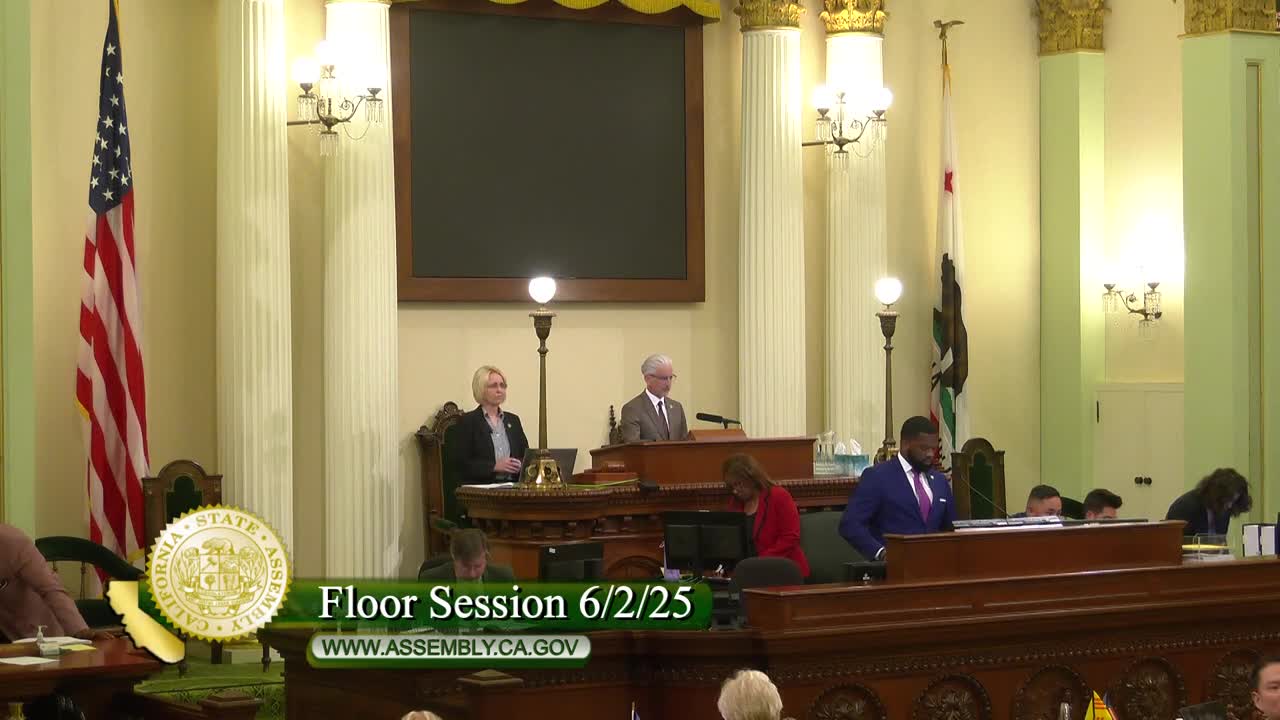 1MIN
Assembly Floor
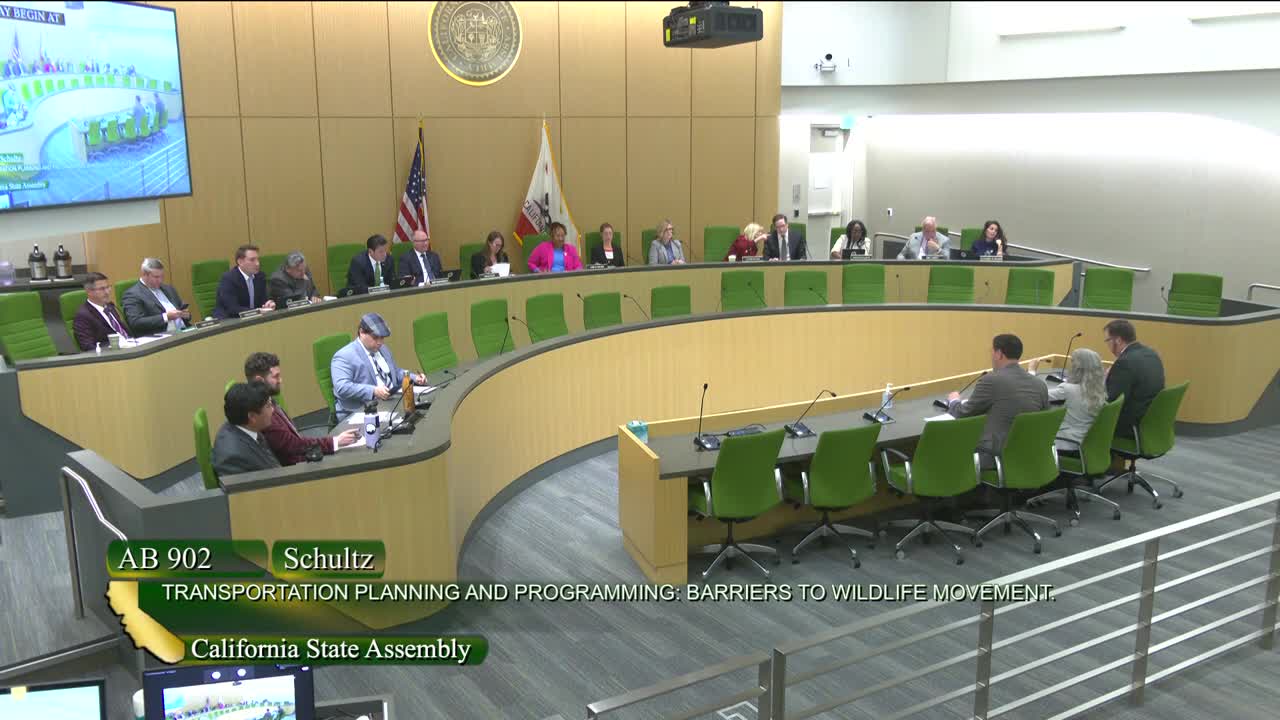 11MIN
Assembly Standing Committee on Transportation
Bill Author

Bill Co-Author(s):