AB 923: Detention and incarceration of pregnant and postpartum defendants.
- Session Year: 2025-2026
- House: Assembly
- Latest Version Date: 2025-02-19
Current Status:
Failed
(2026-02-02: From committee: Filed with the Chief Clerk pursuant to Joint Rule 56.)
Introduced
In Committee
Awaiting First Chamber Vote
Passed First Chamber
In Committee
Awaiting Second Chamber Vote
Passed Second Chamber
Enacted
Existing law gives a judge discretion when deciding various matters in a criminal proceeding, including, among other things, issuing bail or releasing a defendant on their own recognizance, accepting a diversion or deferred entry of judgment agreement, and imposing sentences and granting probation.
This bill would, when a court is exercising its discretion with regard to these matters, make a rebuttable presumption against detention and incarceration of a pregnant or postpartum defendant, as defined, if the defendant provides the court and district attorney with notice of the defendants status as a pregnant or postpartum defendant at each applicable stage of the proceedings. The bill would require a court that decides to detain or incarcerate a defendant after this consideration to make specific findings on the record that the risk to public safety or any other factor the court is required to consider is substantial enough to outweigh the risk of incarceration, as specified.
The bill would authorize a person who may be pregnant or postpartum and who is arrested or in custody in a county jail to request a pregnancy test upon or following admission to the county jail and would require the county jail to provide a pregnancy test upon request and allow the person to take the pregnancy test within 24 hours after the request. The bill would require a county jail to keep a record of specified information, including the total number of incarcerated pregnant people at that county jail. By imposing additional duties on county jails, this bill would impose a state-mandated local program.
The bill would authorize a pregnant or postpartum defendant to request a stay of execution of their sentence by filing a written request to the court if the pregnant or postpartum defendant is detained or incarcerated in a county jail for any period of time through the end of the pregnancy or the postpartum period, except as specified. The bill would require the court to apply the rebuttable presumption above when considering whether to grant that stay of execution. The bill would authorize a court to order a stay of execution of the sentence for any period of time through the end of the pregnancy or the postpartum period.
The California Constitution requires the state to reimburse local agencies and school districts for certain costs mandated by the state. Statutory provisions establish procedures for making that reimbursement.
This bill would provide that, if the Commission on State Mandates determines that the bill contains costs mandated by the state, reimbursement for those costs shall be made pursuant to the statutory provisions noted above.
(a)The Legislature finds and declares all of the following:
(1)There is an increasing female population in prisons and jails.
(2)While no system is perfect in responding to the medical conditions of pregnancy, correctional facilities and county jails are particularly ill-equipped to do so.
(3)During a criminal case involving a pregnant or postpartum defendant, the physical and mental health needs of the pregnant defendant or the postpartum defendant and newborn must be considered at all stages of the proceeding as a matter of community health and safety.
(4)Timely attention to medical conditions and mental health during the perinatal period can improve health and welfare for multiple generations of a family unit.
(5)Pregnancy is a time-sensitive process that has many potential outcomes and variations. A pregnant person may feel healthy and experience no complications. A pregnant person may also experience sudden, harmful medical conditions, such as preeclampsia or placental abruption, or develop complex medical conditions that result in the early termination of a pregnancy or threaten the life of the pregnant person, such as an ectopic pregnancy. At any stage of the perinatal period, a situation can occur that causes long-term physical and mental health trauma for the pregnant person.
(6)Criminal proceedings are not responsive to the timeline or complexity of the perinatal period.
(7)When a substance use disorder intersects with a pregnancy, it is best handled as a health condition. Increasing the time a pregnant person with a substance use disorder is in a correctional facility or county jail is counter to public health and may drive the pregnant person away from medical care and support services.
(8)The end of the pregnancy does not immediately terminate the effects of the pregnancy on the person who was pregnant.
(9)The postpartum period is an essential timeframe for both the person who gave birth and the newborn. It is an opportunity for the newborn to do both of the following:
(A)Develop healthy physiologic responses.
(B)Benefit from the attachment and bonding that occurs during this period.
(10)Bonding between a newborn and parent during the postpartum period can improve conditions for other children and care providers in the same family unit and prevent child abuse and neglect.
(11)Bonding between a newborn and a parent can improve the overall health of the newborn and the parent and may prevent or reduce long-term health risks that may be increased by separating the newborn from the parent. For example:
(A)A postpartum person who does not breastfeed or chestfeed a newborn may have an increased likelihood of premenopausal breast cancer, ovarian cancer, or type 2 diabetes.
(B)A newborn who is not breastfed or chestfed may have an increased likelihood of childhood obesity, asthma, type 1 or type 2 diabetes, leukemia, or sudden infant death syndrome.
(C)A child who is separated from any parent may experience stress hormones, which may lead to difficulty sleeping, developmental regression, heart disease, hypertension, obesity, diabetes, or decreased lifespan. A newborn who is separated from a parent may also experience permanent architectural changes in the brain, including a lower intelligence quotient or an increased likelihood of depression, suicidal ideation, or addiction to alcohol or gambling.
(b)The Legislature finds, therefore, that all alternatives to prosecution, commitment, and incarceration of a pregnant or postpartum person must be considered, including a stay of criminal proceedings or sentencing to reduce the likelihood of negative health and social outcomes for the parent, newborn child, and community.
(c)The Legislature declares that the definitions in Section 1565.1 of the Penal Code added by this act are from the federal Centers for Disease Control and Prevention and the National Institutes of Health.
SEC. 2.Chapter 6 (commencing with Section 1565.1) is added to Title 12 of Part 2 of the Penal Code, to read:6.California Womens Care Act1565.1.For the purposes of this chapter, the following definitions shall apply:
(a)Newborn means a person who has been born and who is less than one year of age.
(b)Postpartum period means a period of one year after the end of a pregnancy, regardless of whether the pregnancy ends with a live birth.
(c)Pregnant or postpartum defendant means a person who is pregnant or in a postpartum period who has been accused or convicted of a crime.
(d)Stay of execution means delaying the imposition of a sentence or the incarceration portion of the sentence for a pregnant or postpartum defendant after the sentence is announced by a court.
1565.2.(a)There is a rebuttable presumption against detention and incarceration of a pregnant or postpartum defendant if the defendant provides the court and district attorney with notice of the defendants status as a pregnant or postpartum defendant at each applicable stage of the proceedings. The court exercising its discretion under law shall apply the rebuttable presumption described in this subdivision to a pregnant or postpartum defendant in determining whether to do any of the following:
(1)Issue bail or own recognizance release pursuant to Chapter 1 (commencing with Section 1268) of Title 10.
(2)Accept a diversion agreement.
(3)Accept or continue a deferred entry of judgment.
(4)Impose a sentence, including whether to grant probation.
(5)Grant a stay of execution pursuant to this chapter.
(b)A court shall not use a pregnant or postpartum defendants pregnancy or postpartum period as a basis for imposing a greater restriction on the defendants liberty than a similarly situated defendant who is not pregnant or postpartum, including if a pregnant or postpartum defendant has a substance use disorder.
(c)If the court decides to detain or incarcerate the pregnant or postpartum defendant after weighing the applicable legal standards and considerations set forth in this section, the court shall make specific findings on the record that the risk to public safety or any other factor the court is required to consider is substantial enough to outweigh the risk of incarceration.
1565.3.(a)A person who may be pregnant or postpartum who is arrested or in custody in a county jail may request a pregnancy test upon or following admission to the county jail. Staff at the county jail shall provide a pregnancy test upon request and allow the person to take the pregnancy test within 24 hours after the request.
(b)Requesting a pregnancy test, taking a pregnancy test, and the results of a pregnancy test are confidential medical information. This confidential medical information shall not be disclosed to outside parties unless the information is required for the person to receive medical care or to allow staff at the county jail to provide necessary care.
(c)If a person is represented by an attorney in a criminal proceeding and the county jail has a signed medical release from the person, the county jail shall give notice to the persons attorney within 48 hours, excluding state holidays and weekends, concerning the persons request for a pregnancy test pursuant to subdivision (a).
(d)A county jail shall keep a record of all of the following:
(1)The total number of incarcerated pregnant people at that county jail.
(2)The total number of pregnant people who give birth while incarcerated and whether the bird was a live birth or stillbirth.
(3)The gestational age and birth weight of each infant born during a pregnant persons term of imprisonment.
(4)The total number of incarcerated pregnant people who experience complications and the types of complications experienced.
(5)The total number of incarcerated pregnant people who experience miscarriages.
(6)The total number of incarcerated pregnant people who declined deferred or alternative sentencing.
(7)The age of an incarcerated pregnant person when they gave birth.
(8)The ethnicity of an incarcerated pregnant person who gave birth.
(9)The type of crimes an incarcerated pregnant person is serving a sentence for.
1565.4.(a)A pregnant or postpartum defendant may raise the issue of the defendants pregnancy or postpartum period at any time during criminal proceedings or while serving a sentence. If the pregnancy or postpartum period is raised, the pregnant or postpartum defendant shall provide notice to the district attorney by providing evidence of the pregnancy or the start of the postpartum period with a limited waiver of privilege. A positive pregnancy test or medical record confirming pregnancy or the end of pregnancy, or a birth certificate of a newborn, is prima facie evidence of pregnancy or the start of the postpartum period.
(b)If the prosecution contests that the defendant is pregnant or in a postpartum state, the court shall hold a hearing to make a determination as soon as practicable, but no later than 14 days after the issue is raised, unless the defendant requests the hearing be held later than 14 days after the issue is raised. If the defendant requests a later hearing, the court shall make the determination within the timeline requested. The court shall hold the hearing immediately if the circumstances of the defendant or the defendants newborn require it. The defendant shall prove, by a preponderance of the evidence, that the defendant is a pregnant or postpartum defendant.
(c)The court shall protect medical information provided to the court as confidential medical information. A defendants waiver of medical privilege to present medical evidence of pregnancy or the end of a pregnancy in court is limited to information relevant to determine whether the defendant is or was pregnant and whether the pregnancy has ended.
1565.5.(a)A pregnant or postpartum defendant may request a stay of execution by filing a written request to the court if the pregnant or postpartum defendant is detained or incarcerated in a county jail for any period of time through the end of the pregnancy or the postpartum period.
(b)The court shall hold a hearing to determine the matter as soon as practicable, but no later than 14 days after the pregnant or postpartum defendant requests a stay of execution, unless the pregnant or postpartum defendant requests a later hearing. If the pregnant or postpartum defendant requests a later hearing, the court shall make the determination within the timeline requested. The court shall hold the hearing immediately if the circumstances of the pregnant or postpartum defendant or newborn require it. The defendant shall prove, by a preponderance of the evidence, that the defendant is a pregnant or postpartum defendant.
(c)In ruling upon the pregnant or postpartum defendants request pursuant to subdivision (b) of this section, the court shall apply the rebuttable presumption set forth in subdivision (a) of Section 1565.2.
(d)The district attorney and the court shall comply with the requirements of Section 28 of Article I of the California Constitution in a proceeding conducted pursuant to this chapter.
(e)Following the hearing conducted pursuant to subdivision (b), the court may order a stay of execution of the sentence for any period of time through the end of the pregnancy or the postpartum period. The court shall order a date, time, and place for the defendant to appear to serve the sentence upon completion of the stay of execution.
(f)If the court grants a stay of execution pursuant to subdivision (e), the court shall order the bail and the conditions of the bail to remain in effect until the date the pregnant or postpartum defendant is ordered to start serving their sentence.
(g)Notwithstanding this section, a pregnant or postpartum defendant who is ineligible for bail is not eligible for a stay of execution.
(h)If the pregnant or postpartum defendant is charged with a new violation or the court receives a verified motion from the district attorney that establishes a prima facie case that the pregnant or postpartum defendant has violated the conditions of the stay of execution and presents a substantial risk to public safety, the court shall set a hearing and require the pregnant or postpartum defendant to appear. After the hearing, the court may end the stay of execution, add new conditions, issue a warrant, or continue the stay of execution.
SEC. 3.If the Commission on State Mandates determines that this act contains costs mandated by the state, reimbursement to local agencies and school districts for those costs shall be made pursuant to Part 7 (commencing with Section 17500) of Division 4 of Title 2 of the Government Code.
|
Date
|
Status
|
|---|---|
| Feb 2, 2026 | From committee: Filed with the Chief Clerk pursuant to Joint Rule 56. |
| Jan 31, 2026 | Died pursuant to Art. IV, Sec. 10(c) of the Constitution. |
| May 23, 2025 | In committee: Held under submission. |
| Apr 30, 2025 | In committee: Set, first hearing. Referred to suspense file. |
| Apr 9, 2025 | From committee: Do pass and re-refer to Com. on APPR. (Ayes 6. Noes 0.) (April 8). Re-referred to Com. on APPR. |
| Mar 10, 2025 | Referred to Com. on PUB. S. |
| Feb 20, 2025 | From printer. May be heard in committee March 22. |
| Feb 19, 2025 | Read first time. To print. |
|
Date
|
Description
|
Location
|
Votes
|
|
|---|---|---|---|---|
| Apr 8, 2025 | Do pass and be re-referred to the Committee on [Appropriations] | Assembly Standing Committee on Public Safety |
Passed |
This list shows positions taken on this bill by organizations on the date displayed, which is linked to the original source.
Positions by individuals are not included.
|
Organization
|
Position
|
Date
|
|---|---|---|
| Aclu California Action | ** Support | |
| Advocacy and Research on Reproductive Wellness of Incarcerated People | ** Support | |
| Alliance for Children's Rights | ** Support | |
| All Of Us Or None Orange County | ** Support | |
| A New Way of Life Re-Entry Project | ** Support | |
| Black Women For Wellness Action Project | ** Support | |
| California Catholic Conference | ** Support | |
| California Coalition for Women Prisoners | ** Support | |
| California District Attorneys Association | ** Against | |
| Californians United for a Responsible Budget | ** Support | |
| California Public Defenders Association | ** Support | |
| Center for Employment Opportunities | ** Support | |
| Communities United for Restorative Youth Justice | ** Support | |
| Disability Rights California | ** Support | |
| Dream.org | ** Support | |
| Ella Baker Center For Human Rights | ** Support | |
| Families Inspiring Reentry & Reunification 4 Everyone | ** Support | |
| Grip Training Institute | ** Support | |
| Initiate Justice | ** Support | |
| Initiate Justice Action | ** Support | |
| Justice2jobs Coalition | ** Support | |
| LA Defensa | ** Support | |
| Legal Services for Prisoners with Children | ** Support | |
| Michelson Center For Public Policy | ** Support | |
| Movement for Family Power | ** Support | |
| Prison Ftio | ** Support | |
| Restoreher Us.america INC | ** Support | |
| Reversion 36 | ** Support | |
| San Francisco Public Defender | ** Support | |
| Sister Warriors Freedom Coalition | ** Support | |
| Smart Justice California, a project of Tides Advocacy | ** Support | |
| Vera Institute Of Justice | ** Support |
Date of Hearing: April 30, 2025
ASSEMBLY COMMITTEE ON APPROPRIATIONS
Buffy Wicks, Chair
ABPCA Bill Id:AB 923
Author:(Quirk-Silva) – As Introduced Ver:February 19, 2025
Policy Committee: | Public Safety | Vote: | 6 - 0 |
|
| ||
|
|
Urgency: No State Mandated Local Program: Yes Reimbursable: Yes
SUMMARY:
This bill creates a rebuttable presumption against the incarceration of a pregnant or postpartum person and requires county jails to maintain data about pregnant people in jail custody.
Specifically, among other provisions, this bill:
- Requires each county jail to maintain specified information about each pregnancy and pregnant person in jail custody, including the outcome of each birth, the gestational age and weight of each infant, the number and type of pregnancy complications experienced, the age and ethnicity of the pregnant person, and the crime for which the pregnant person is incarcerated.
- Establishes a rebuttable presumption against the detention and incarceration of a pregnant or postpartum defendant if the defendant provides notice to the court and district attorney, as specified.
- Requires a court to apply the rebuttable presumption of a pregnant or postpartum defendant when determining whether to issue bail or own-recognizance release, accept a diversion agreement, accept or continue a deferred entry of judgement, impose a sentence, or grant a stay of execution, as specified.
- Requires staff to provide a pregnancy test upon request to a person who is arrested or in custody in a county jail or state prison and allow the person to take the pregnancy test within 24 hours after the request.
- Allows a pregnant or postpartum defendant to raise the issue of their pregnancy or postpartum period at any time during their criminal proceedings or while serving a sentence, and requires notice to the district attorney if the issue is raised.
- Requires a court to hold certain hearings related to a pregnant or postpartum defendant immediately or on an expedited basis, as specified.
- Allows a pregnant or postpartum defendant to request a stay of execution by filing a written request to the court if the pregnant or postpartum defendant is detained or incarcerated in a county jail or state prison for any period of time through the end of the pregnancy or the postpartum period, and permits a court to order a stay of execution for an eligible defendant for any period of time through end of the pregnancy or postpartum period.
FISCAL EFFECT:
- Costs (local funds, General Fund) to the counties of an unknown but likely significant amount to collect the required data, facilitate court appearances by pregnant incarcerated people, and to provide and process pregnancy tests on the timelines required by this bill. Workload to each county will depend on the size of the pregnant and postpartum incarcerated population in the county. General Fund costs will depend on whether the duties imposed by this bill constitute a reimbursable state mandate, as determined by the Commission on State Mandates.
- Possible costs (General Fund) to the California Department of Corrections and Rehabilitation (CDCR) to facilitate court appearances for pregnant people incarcerated in state prison. On average, fewer than ten people give birth while in CDCR custody each year, so these costs may not be significant. If a pregnant or postpartum person is released from CDCR custody under court order as a result of this bill, CDCR may also incur parole or other supervision costs, though these costs may be offset by savings from no longer incarcerating the person.
- Costs (Trial Court Trust Fund, General Fund) to the courts of an unknown but potentially significant amount. This bill entitles a pregnant or postpartum arrestee, criminal defendant, or incarcerated person to additional, expedited court hearings. The bill also allows a pregnant or postpartum person to request a stay of execution of their sentence at any point during their incarceration, prompting a hearing by the court. It generally costs approximately $1,000 to operate a courtroom for one hour. If the proceedings authorized by this bill result in more than 150 hours of court time statewide, total costs to the courts will exceed this committee’s suspense threshold. Actual costs will depend on the number of hearings and stays requested and the amount of court time needed for each proceeding.
Although courts are not funded on the basis of workload, increased pressure on the Trial Court Trust Fund may create a demand for increased funding for courts from the General Fund. The fiscal year 2024-25 state budget provides $37.3 million ongoing General Fund to backfill declining revenue to the Trial Court Trust Fund.
COMMENTS:
- Purpose. This bill is sponsored by RestoreHER U.S. America, an advocacy organization based in Georgia, which writes:
In California, the care provided to incarcerated pregnant individuals across jails, prisons, and youth facilities is glaringly insufficient, both in terms of policy and implementation…Particularly concerning is the impact of current practices on Black women, who face disproportionate challenges related to healthcare access, incarceration rates, and family separation. The prevailing inclination towards incarceration exacerbates these disparities and fails to address the root causes of recidivism. Diversion programs, stays of execution, and other forms of alternative sentencing present a more equitable and successful approach.
- Background. State law specifies the pregnancy and postpartum care that must be provided to people incarcerated in jail facilities, but there is very little statewide or county-level data about the number of pregnant people incarcerated in county jails in California each year. In 2016, the ACLU, pursuant to the Public Records Act, attempted to gather data about pregnancy and reproductive care from county jails, but found the counties’ data collection practices were inadequate. According to the ACLU’s report:
Nearly all of the counties we surveyed (four out of five) tracked the number of pregnant people in custody but most could only provide that data for the most recent year and not the previous four years we requested. Only three of five counties partially tracked pregnancy outcomes (abortions and live birth). Two counties did not track outcomes at all. No counties tracked miscarriages or stillbirths.
While some county jail data practices may have changed since the ACLU’s report, there are no state standards for the collection or maintenance of data about incarcerated pregnant people. The bill requires each county jail to maintain information about pregnancy in custody, including the number of pregnant incarcerated people in jail, demographic information about those people, and information about the outcomes of each pregnancy.
This bill also creates a legal presumption that a pregnant person (or a person who recently gave birth) should not be held in detention following an arrest or incarcerated following a criminal conviction. The bill allows a pregnant or postpartum person to request the court’s consideration of their pregnancy at any point in their criminal case, including pre-trial, during trial, and after they have begun serving their sentence in county jail or state prison. The bill establishes court procedures for these matters, including requiring notice to the district attorney, expedited hearings to consider pregnancy-related issues, and providing that crime victims’ right to be notified, attend, and be heard at specified hearings must be observed.
- Prior Legislation. AB 2160 (McKinnor), was similar to this bill but did not require the county jail data collection described above. AB 2160 was held on this committee’s suspense file.
Analysis Prepared by: Annika Carlson / APPR. / (916) 319-2081
Date of Hearing:
Counsel: Kimberly Horiuchi
ASSEMBLY COMMITTEE ON PUBLIC SAFETY
Nick Schultz, Chair
ABPCA Bill Id:AB 923
Author:(Quirk-Silva) – As Introduced Ver:February 19, 2025
SUMMARY:
Establishes the California Women’s Care Act that, among other things, creates a rebuttable presumption against incarcerating a pregnant or postpartum person. Specifically, this bill:
- Defines the following terms:
a) “Newborn” means a person who has been born and who is less than one year of age.
b) “Postpartum period” means a period of one year after the end of a pregnancy, regardless of the pregnancy outcome.
c) “Pregnant or postpartum defendant” means a person who is pregnant or in a postpartum period who has been accused or convicted of a crime.
d) “Stay of execution” means delaying the imposition of a sentence of the incarceration portion of the sentence for a pregnant or postpartum defendant after the sentence is announced by the court.
2) Provides that there is a rebuttable presumption against detention and incarceration of a pregnant or postpartum defendant if the defendant provides the court and district attorney with notice of the defendant’s status as a pregnant or postpartum person at each applicable stage of the proceedings.
3) Requires the court, when exercising its discretion, to apply the rebuttable presumption of a pregnant or postpartum defendant in determining to do one of following:
a) Issue bail or own recognizance release, as specified;
b) Accept a diversion agreement;
c) Accept or continue a deferred entry of judgement;
d) Impose a sentence, including whether to grant probation; or
e) Grant a stay of execution, as specified.
4) Provides that a court shall not use a pregnant or postpartum period as a basis for imposing a greater restriction on the defendant’s liberty than a similarly situated defendant who is not pregnant or postpartum, including if a pregnant or postpartum defendant has a substance use disorder.
5) Requires a court to make specific findings on the record if the incarcerated pregnant or postpartum defendant is detained and, after weighing the applicable legal standards and considerations set forth above, that the risk to public safety or any other factor the court is required to consider is substantial enough to outweigh the risk of incarceration.
6) Allows a person who is pregnant or postpartum who is arrested or in custody in a county jail or state prison to request a pregnancy test upon or following admission to the county jail or state prison.
7) Requires staff at the county jail or state prison to provide a pregnancy test upon request and allow the person to take the pregnancy test within 24 hours after the request.
8) States that requesting a pregnancy test, taking a pregnancy test, and the results of the pregnancy test are confidential medical information.
9) States medical information shall not be disclosed to outside parties unless the information is required for the person to receive medical care or to allow staff at the county jail or state prison to provide necessary care.
- Requires a county jail or state prison to give notice to a person’s attorney, if they are represented by an attorney in a criminal proceeding, and the county jail and state prison has a signed medical release from the person, within 48 hours, excluding state holidays and weekends, concerning the person’s request for a pregnancy test, as specified.
- Allows a pregnant or postpartum defendant to raise the issue of their pregnancy or postpartum period at any time during their criminal proceedings or while serving a sentence.
- Provides that if the pregnancy or postpartum period is raised, the pregnant or postpartum defendant shall provide notice to the district attorney by providing evidence of the pregnancy or the start of the postpartum period with a limited waiver of privilege.
- Provides that a positive pregnancy test, or medical record confirming pregnancy or the end of the pregnancy, or a birth certificate of a newborn, is prima facie evidence of pregnancy or the start of a postpartum period.
- Requires a court to hold a hearing as soon as possible, but no later than 14 days after the issue is raised, if the prosecution contests that the defendant is pregnant or in a postpartum state, unless the defendant requests the hearing be held later than 14 days after the issue is raised.
- Requires a court to protect medical information provided to the court regarding a defendant’s pregnancy and postpartum status and states that the defendant’s wavier of medical privilege is limited, as specified.
- Allows a pregnant or postpartum defendant to request a stay of execution by filing a written request to the court if the pregnant or postpartum defendant is detained or incarcerated in a county jail or state prison for any period of time through the end of the pregnancy or the postpartum period.
- Requires a court to hold a hearing for a pregnant or postpartum defendant to determine a request for a stay of executive as soon as practicable, but no later than 14 days unless the pregnant or postpartum defendant requests a later hearing.
- Requires a court to hold a hearing for a pregnant or postpartum defendant to determine a request for a stay of executive as soon as practicable, but no later than 14 days unless the pregnant or postpartum defendant requests a later hearing.
- Requires a court to make the determination of a later hearing in the timeline requested when a pregnant or postpartum defendant makes the request.
- Requires a court to hold the hearing immediately if the circumstances of the pregnant or postpartum defendant or the newborn require it.
- Requires a defendant to prove, by preponderance of the evidence, that the defendant is a pregnant or postpartum person.
- Requires the court, during this hearing, to apply a rebuttable presumption against the detention of the incarcerated pregnant or postpartum.
- Requires the district attorney and the court to comply with the specified victims’ rights set forth in the California Constitution.
- Allows the court to order a stay of execution of the sentence, after determining eligibility, for any period of time through the end of the pregnancy or postpartum period.
- Requires a court to order a date, time, and place for the defendant to appear to serve the sentence upon completion of the stay of execution.
- Requires a court that grants a stay of execution to order the bail and the conditions of bail to remain in effect until the date the pregnant or postpartum defendant is ordered to start serving the defendant’s sentence.
- States that, notwithstanding the provisions above, a pregnant or postpartum defendant who is ineligible for bail is not eligible to a stay of execution.
- Requires the court to set a hearing if the pregnant or postpartum defendant is charged with a new violation or the court receives a verified motion from the district attorney that establishes a prima facie case that the pregnant or postpartum defendant has violated conditions of the stay of execution and presents a substantial risk to the public safety that the pregnant or postpartum defendant must appear.
- Allows a court, after the hearing described above, to end the stay of execution, add new conditions, issue a warrant, or continue the stay of execution.
EXISTING LAW:
- Requires the Board of State Community Corrections (BSCC) to establish minimum standards for state and local correctional facilities, including standards for pregnant individuals incarcerated at the CDCR. (Pen. Code, § 6030.)
- Provides that every woman upon being committed to CDCR shall be examined mentally and physically, and shall be given the care, treatment and training adapted to her particular condition. (Pen. Code, § 3403.)
- Provides that any incarcerated person shall have the right to summon and receive the services of any physician, nurse practitioner, certified nurse midwife, or physician assistant of their choice in order to determine whether they are pregnant. (Pen. Code, § 3406.)
- States that, if the incarcerated person is found to be pregnant, they are entitled to a determination of the extent of the medical and surgical services needed and to the receipt of these services from the physician, nurse practitioner, certified nurse midwife, or physician assistant of their choice. (Pen. Code, § 3406, subd. (b).)
- States that a person who is incarcerated in state prison who is identified as possibly pregnant or capable of becoming pregnant during an intake health examination or at any time during incarceration shall be offered a test upon intake or by request. (Pen. Code, § 3408, subd. (a).)
- States that an incarcerated person with a positive pregnancy test result shall be offered comprehensive and unbiased options counseling that includes information about prenatal health care, adoption, and abortion. (Pen. Code, § 3408, subd. (b).)
- Requires a person incarcerated in prison who is confirmed to be pregnant to, within seven days of arriving at the prison, be scheduled for a pregnancy examination with a physician, nurse practitioner, certified nurse-midwife, or physician assistant. The examination shall include all of the following:
- A determination of the gestational age of the pregnancy and the estimated due date;
- A plan of care, including referrals for specialty and other services, isolation practices, level of activities, and bed assignments, social and clinical needs, among other services; and,
- Prenatal labs and diagnostic studies, as needed based on gestational age or existing or newly diagnosed health conditions. (Pen. Code, § 3408, subd. (d).)
- States that an eligible incarcerated pregnant person or person who gives birth after incarceration shall be provided notice of, access to, and written application for, community-based programs serving pregnant, birthing, or lactating incarcerated persons. (Pen. Code, § 3408, subd. (j).)
- Provides that each incarcerated pregnant person shall be referred to a social worker who shall do all of the following:
- Discuss with the incarcerated person the options available for feeding, placement, and care of the child after birth, including the benefits of lactation;
- Assist the incarcerated pregnant person with access to a phone in order to contact relatives regarding newborn placement; and,
- Oversee the placement of the newborn child. (Pen. Code, § 3408, subd. (k).)
- States that an incarcerated pregnant person shall be temporarily taken to a hospital outside the prison for the purpose of childbirth. (Pen. Code, § 3408, subd. (l).)
- Allows an incarcerated pregnant person to elect to have a support person present during labor, childbirth, and during postpartum recovery while hospitalized. (Pen. Code, § 3408, subd. (m).)
- Provides that the support person may be an approved visitor or the prison’s staff designated to assist with prenatal care, labor, childbirth, lactation, and postpartum care. The approval for the support person must be made by the administrator of the prison. Upon receipt of a written denial, the incarcerated pregnant person may choose the approved institution staff to act as the support person. (Pen. Code, § 3408, subd. (m).)
- Requires CDCR to establish a community treatment program for incarcerated women who have one or more children under age six to participate. The program shall provide for the release of the mother and child or children to a public or private facility in the community and which will provide the best possible care for the mother and child. (Pen. Code, § 3411.)
- Provides that every female inmate who is pregnant and who is not eligible for participation in the community treatment program shall have access to complete prenatal care, which shall include a balanced, nutritious diet approved by a doctor. (Pen. Code, § 3424.)
- State that any amendments to existing CDCR regulation which may impact the visitation of incarcerated persons shall recognize the role of visitation in establishing and maintaining a meaningful connection with family and community. (Pen. Code, § 6400.)
FISCAL EFFECT:
Unknown
COMMENTS:
- Author's Statement: According to the author, “For too long, our criminal justice system has failed to account for the unique medical and emotional needs of pregnant individuals. The California Women’s Care Act sets a new standard that recognizes that incarceration is not a substitute for proper healthcare. AB 923 ensures that pregnant and postpartum individuals are given the opportunity to seek safer, more compassionate alternatives to incarceration. It creates a legal presumption that these individuals should not be detained and establishes a clear process for courts to consider alternatives at every stage of a case. This bill is about affirming dignity, protecting lives, and ensuring that no pregnancy is put at risk simply because a person is in custody.”
- Incarcerated Pregnant People: Recent estimates indicate that eight to ten percent of women who enter prison are pregnant.[1] However, the number of women incarcerated have declined in recent years.[2] State law provides incarcerated pregnant individuals a minimal level of pre-and post-partum services, such as access to a social worker, regular prenatal care visits with a health care provider, and the right to have delivery take place in a hospital outside of the institution. (Pen. Code, §§ 3408, 4203.8.) In addition, some incarcerated women can apply to the Community Prison Mother Program (CPMP) within CDCR’s Female Offender Programs and Services. Pursuant to California Penal Code sections 3410 through 3424, the CPMP provides an opportunity for pregnant individuals and mothers with one or more children, six years of age or younger, the opportunity to be housed with their children in a supervised facility away from the prison setting.
The primary focus of the CPMP is to reunite mothers with their children and re-integrate them back into society as productive citizens by providing a safe, stable, wholesome and stimulating environment. CPMP also looks to establish stability in the parent-child relationship, provide the opportunity for mothers who are incarcerated individuals to bond with their children, and strengthen the family unit.
- Rebuttable Presumption: This bill creates a rebuttable presumption in favor of not incarcerating a pregnant or post-partum person. (In re Marriage of Ashodian (1979) 96 Cal.App.3d 43.) [“Evidence Code 601 characterizes a rebuttable presumption as one affecting either the burden of proof or the burden of producing evidence, where the statutory or decisional law creating the presumption has failed to so specify.”].) The rebuttable presumption in this case would require that the district attorney demonstrate a sufficient risk to public safety before the court may order an incarcerated or postpartum person be incarcerated before or after sentencing. This bill also states that if a pregnant or post-partum person is denied bail, they are not eligible for release.
It is not clear whether courts would be more inclined to deny bail simply to avoid the rebuttable presumption. This may occur in circumstances where a defendant has failed to appear before. Penal Code section 1320.5 creates a presumption that a person is guilty of a felony if that person fails to appear within 14 days on a felony charge. (Pen. Code, § 1320.5.) It is not clear how those presumptions will be reconciled if a pregnant or postpartum person is before the court on a felony and has failed to appear before.
This bill also states that any hearing on the issue of pregnancy or whether the defendant is post-partum must be conducted pursuant to Marsy’s Law. (See Cal Const., art. I, § 28.) Marsy’s Law requires victims be consulted and have input in the criminal justice system. Section 28(f) expressly deals with bail and pre-trial release and states:
Public Safety Bail. A person may be released on bail by sufficient sureties, except for capital crimes when the facts are evident or the presumption great. Excessive bail may not be required. In setting, reducing or denying bail, the judge or magistrate shall take into consideration the protection of the public, the safety of the victim, the seriousness of the offense charged, the previous criminal record of the defendant, and the probability of his or her appearing at the trial or hearing of the case. Public safety and the safety of the victim shall be the primary considerations.
A person may be released on his or her own recognizance in the court’s discretion, subject to the same factors considered in setting bail.
Before any person arrested for a serious felony may be released on bail, a hearing may be held before the magistrate or judge, and the prosecuting attorney and the victim shall be given notice and reasonable opportunity to be heard on the matter.
When a judge or magistrate grants or denies bail or release on a person’s own recognizance, the reasons for that decision shall be stated in the record and included in the court’s minutes. (Emphasis added.) (Cal. Const., art. 1, § 28, subd. (f)(3).)
There may be two separate presumptions at work if this bill is enacted that will likely need to be synthesized by the courts: the right of public safety and victim input and the presumption in favor of not incarcerating a pregnant or post-partum person.
- Argument in Support: According to Ella Baker Center for Human Rights, “Pregnancy and the postpartum period are critical and time-sensitive medical conditions that require access to consistent healthcare, stability, and support systems—none of which are adequately provided in jails and prisons. Despite this, the number of incarcerated pregnant people continues to increase, placing individuals at significant medical risk while also jeopardizing the health and development of newborns.
“AB 923 is a necessary step in protecting the rights and health of pregnant and postpartum individuals by:
- Creating a rebuttable presumption against incarceration of pregnant and postpartum individuals, ensuring that courts prioritize alternatives to detention and incarceration.
- Requiring courts to justify incarceration decisions with specific findings, preventing the routine jailing of individuals who could otherwise safely remain in the community.
- Ensuring pregnant individuals in custody have access to pregnancy tests within 24 hours of request and maintaining records on pregnant individuals in jails.
- Providing an option to delay sentencing until after the pregnancy or postpartum period to prevent harmful separations and medical risks.
“The negative health and social consequences of incarcerating pregnant and postpartum individuals are well-documented. The lack of proper prenatal care increases risks of miscarriage, preterm birth, and maternal mortality. Separating newborns from their parents during the crucial postpartum bonding period can have lifelong developmental and health impacts. Incarceration during pregnancy also worsens health disparities for Black, Indigenous, and low-income individuals, who are already disproportionately impacted by the criminal legal system.
“California has an opportunity to lead the nation in ensuring that incarceration is not a barrier to maternal health, family stability, and community well-being. We strongly urge the Legislature to pass AB 923 and affirm that no one should face incarceration at the expense of their reproductive health.”
- Argument in Opposition: According to the California District Attorneys Association: California law already provides courts with broad discretion to consider a defendant’s pregnancy or postpartum status when determining release conditions, sentencing, or a stay of incarceration. Judges are well-equipped to weigh these factors alongside public safety and other considerations and existing sentencing alternatives, such as home detention and probation. AB 923, however, unduly burdens judicial discretion by imposing an unnecessary presumption against incarceration.
“Additionally, the bill’s language is overly broad. It applies to pregnancy as well as an entire year after a pregnancy. This year-long period applies no matter how the pregnancy terminated and regardless of the particular defendant’s actual health concerns or lack of health concerns.
“CDAA understands the importance of supporting maternal and newborn health. But AB 923 would forbid courts from requiring pregnant or postpartum defendants from attending doctor visits or parenting classes, both of which could tremendously improve outcomes for pregnant women and newborns.
- Related Legislation: AB 260 (Aguiar-Curry) makes, among other things, technical changes to provisions authorizing abortion for incarcerated and committed persons. AB 260 is pending in the Assembly Health Committee.
- Prior Legislation:
- AB 2160 (McKinnor), of the 2023-24 Legislative Session, was identical to this bill. AB 2160 was held on the Assembly Appropriations Committee suspense file.
- AB 2740 (Waldron), Chapter 738, Statutes of 2024, required incarcerated pregnant persons in state prison to be referred to a social worker to discuss options for parenting classes and other classes relevant to caring for newborns and options for placement and visiting the newborn.
- AB 2717 (Waldron), of the 2021-2022 Legislative Session, would have expanded the community prison mother treatment program within CDCR. AB 2717 was vetoed by the Governor.
- AB 732 (Bonta), Chapter 321, Statutes of 2020, requires specified medical treatment and services for county jail and state prison inmates who are pregnant, and requires that incarcerated persons be provided with materials necessary for personal hygiene with regard to their menstrual cycle and reproductive system, upon request.
- SB 1433 (Mitchell), Chapter 311, Statutes of 2016, requires that any person incarcerated in state prison who menstruates shall, upon request, have access to and be allowed to use materials necessary for personal hygiene with regard to their menstrual cycle and reproductive system.
- AB 2160 (McKinnor), of the 2023-24 Legislative Session, was identical to this bill. AB 2160 was held on the Assembly Appropriations Committee suspense file.
REGISTERED SUPPORT / OPPOSITION:
Support
A New Way of Life Re-entry Project
ACLU California Action
Advocacy and Research on Reproductive Wellness of Incarcerated People (ARRWIP)
All of Us or None Orange County
Alliance for Children's Rights
Black Women for Wellness Action Project
California Catholic Conference
California Coalition for Women Prisoners
California Public Defenders Association (CPDA)
Californians United for A Responsible Budget
Center for Employment Opportunities
Communities United for Restorative Youth Justice (CURYJ)
Disability Rights California
Dream.org
Ella Baker Center for Human Rights
Families Inspiring Reentry & Reunification 4 Everyone (FIR4E)
Grip Training Institute
Initiate Justice
Initiate Justice Action
Justice2jobs Coalition
LA Defensa
Legal Services for Prisoners With Children
Michelson Center for Public Policy
Movement for Family Power
Prison Ftio
Restoreher Us.america INC
Reversion 36
San Francisco Public Defender
Sister Warriors Freedom Coalition
Smart Justice California, a Project of Tides Advocacy
Vera Institute of Justice
5 private individuals
Oppose
California District Attorneys Association
Analysis Prepared by:
Kimberly Horiuchi / PUB. S. / (916) 319-3744
Legal Services for Prisoners with Children, Pregnant Women in California Prisons and Jails: A Guide for Prisoners and Legal Advocates, <https://www.courts.ca.gov/documents/BTB_23_4K_5.pdf>.) ↑
https://bjs.ojp.gov/library/publications/jail-inmates-2020-statistical-tables; https://www.prisonpolicy.org/graphs/CA_Women_Counts_1978_2015.html ↑
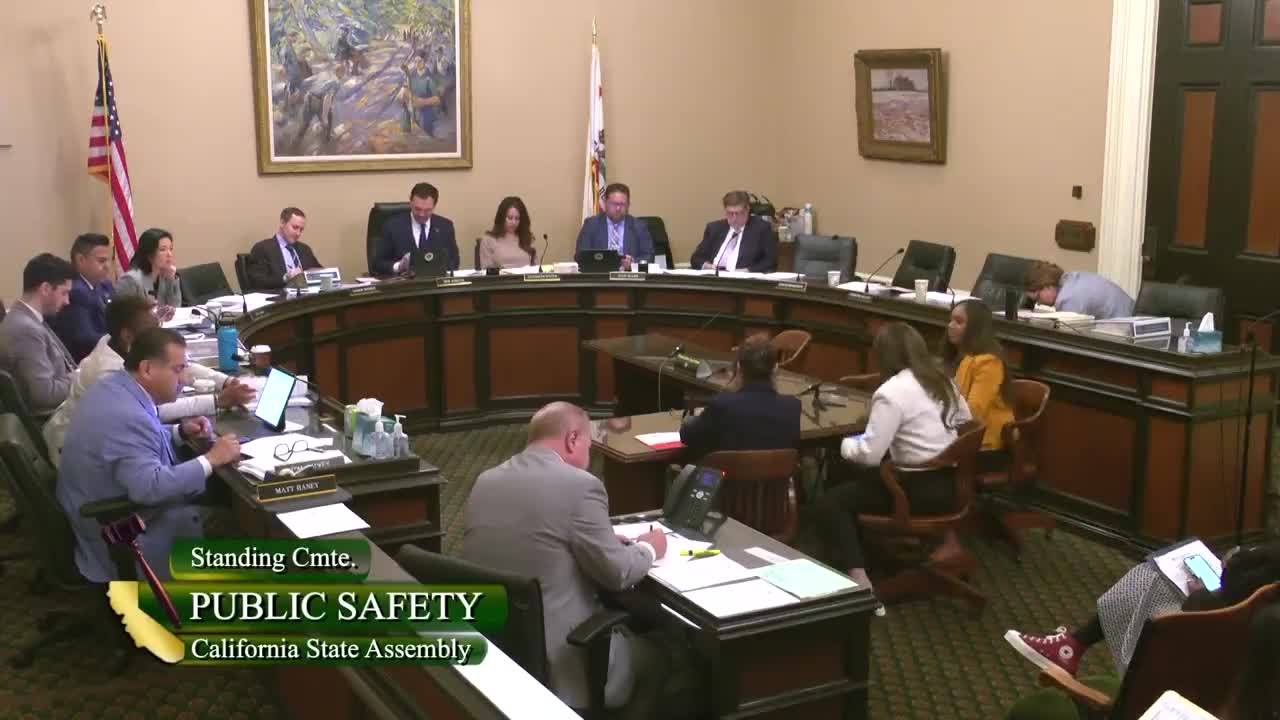
Discussed in Hearing
 15MIN
Assembly Standing Committee on Public Safety
Bill Author

Bill Co-Author(s):