AB 928: Roosters: restrictions.
- Session Year: 2025-2026
- House: Assembly
- Latest Version Date: 2026-06-02
Current Status:
In Progress
(2026-08-13: In committee: Held under submission.)
Introduced
In Committee
Awaiting First Chamber Vote
Passed First Chamber
In Committee
Awaiting Second Chamber Vote
Passed Second Chamber
Enacted
Existing law prohibits a person from causing, permitting, or aiding or abetting the fighting, worrying, or injuring of a cock. Existing law provides that a violation of this provision is a misdemeanor, as provided. Existing law generally regulates the production of poultry, eggs, and egg products.
This bill would prohibit, on and after January 1, 2027, 2028, a person from keeping more than 25 roosters that are movement constrained through the use of an enclosure or tether, except as specified. The bill would subject a person who violates this prohibition to a civil penalty not to exceed $2,500 for each violation, as provided, and would provide that each day a rooster is kept in violation of that prohibition constitutes a separate and distinct violation. The bill would require, before a civil action is brought to recover this civil penalty, a written notice to be provided granting a minimum of 14 days to correct the violation, as provided. The bill would require any civil penalties recovered pursuant to these provisions to be paid to the county in which the civil action was brought. The bill would define, among other terms, rooster and enclosure for purposes of these provisions.
Existing law prohibits a person from causing, permitting, or aiding or abetting the fighting, worrying, or injuring of a cock. Existing law provides that a violation of this provision is a misdemeanor, as provided. Existing law generally regulates the production of poultry, eggs, and egg products.
This bill would prohibit prohibit, on and after January 1, 2027, a person who keeps more than 3 roosters per acre, or from keeping more than 25 roosters total on any property, from keeping a rooster movement-constrained that are movement constrained through the use of an enclosure or tether, except as specified. The bill would subject a person who violates this prohibition to a civil penalty not to exceed $2,500 for each violation, as provided, and would provide that each day a rooster is kept in violation of that prohibition constitutes a distinct violation. The bill would define define, among other terms, rooster and enclosure for purposes of these provisions.
Existing law prohibits a person from causing, permitting, or aiding or abetting the fighting, worrying, or injuring of a cock. Existing law provides that a violation of this provision is a misdemeanor, as provided. Existing law generally regulates the production of poultry, eggs, and egg products.
This bill would prohibit a person from keeping or raising who keeps more than 3 roosters per acre, or 25 roosters total on any property, from keeping a rooster movement-constrained through the use of an enclosure or tether, except as specified. The bill would subject a person who violates this prohibition to a civil penalty not to exceed $2,500 for each violation, as provided. provided, and would provide that each day a rooster is kept in violation of that prohibition constitutes a distinct violation. The bill would define rooster and enclosure for purposes of these provisions.
Existing law prohibits a person from causing, permitting, or aiding or abetting the fighting, worrying, or injuring of a cock. Existing law provides that a violation of this provision is a misdemeanor, as provided. Existing law generally regulates the production of poultry, eggs, and egg products. Existing law prescribes various penalties for violations of those provisions.
This bill would prohibit a person from keeping or raising more than 3 roosters per acre, or 25 roosters total on any property, except as specified. The bill would subject a person who violates this prohibition to a civil penalty not to exceed $2,500 for each violation, as provided. The bill would define rooster for purposes of these provisions.
The Legislature finds and declares all of the following:
(a)Cockfighting involves forcing two animals with metal weapons attached to their legs to fight to the death. Although illegal in California, cockfighting continues to persist throughout the state because it is difficult to prove roosters are possessed with the intent to fight them against each other. The three largest cockfighting seizures from 2000 to 2024 in the United States were in California.
(b)Law enforcement officials attest that cockfighting is often associated with other criminal activities, such as drug trafficking, gun violence, illegal weapon sales, and violence against people.
(c)Gamefowl yards, large tracts of land where hundreds or thousands of roosters are bred and sold for fighting purposes, pose a significant risk to the spread of avian diseases. The birds are often tethered outside without protection from wild birds, transported across the country and the world without oversight or vaccinations, and exposed to the blood of other birds.
(d)Highly pathogenic avian influenza H5N1, commonly known as avian flu, highlights the urgent need to address gamefowl yards in California. Since the first outbreak in February 2022, avian flu has caused the death of more than 23,000,000 commercial and backyard poultry in California. Nationally, as of January 2025, it has also infected more than 924 dairy cattle and 66 people, including the first recorded human death in Louisiana.
SEC. 2.Part 3 (commencing with Section 32105) is added to Division 14.8 of the Food and Agricultural Code, to read:3.Roosters32105.(a)On and after January 1, 2027, a person shall not keep more than 25 roosters that are movement constrained through the use of an enclosure or tether.(b)This section does not apply to any of the following:(1)A person who keeps or raises roosters for purposes of food production if the person is subject to local, state, or federal inspection laws or regulations.(2)A public or private school registered with the State Department of Education.(3)A government-operated animal shelter.(4)A nonprofit animal welfare organization, as defined in Section 6010.40 of the Revenue and Taxation Code.(5)A 4-H, Future Farmers of America (FFA), or Grange project, if the 4-H, FFA, or Grange has provided written approval for the project to the person keeping or raising the roosters.(6)A person who meets all of the following criteria:(A)Owns and breeds poultry for the purpose of lawful exhibition in accordance with accepted poultry raising practices and all laws and regulations governing exhibition.(B)Within the preceding 10 years, has not been convicted for any cockfighting offense pursuant to Section 597b of the Penal Code or Section 2156 of Title 7 of the United States Code, or any other cockfighting offense of any state.(C)Does not possess more than 25 gamefowl roosters.(c)(1)A person who violates this section shall be liable for a civil penalty, not to exceed two thousand five hundred dollars ($2,500) for each violation, that shall be assessed and recovered in a civil action brought in the name of the people of the State of California by the Attorney General, a county counsel, a city attorney, or a city prosecutor in this state in any court of competent jurisdiction.(2)If the civil action is brought by the Attorney General, one-half of the penalty collected shall be paid to the treasurer of the county in which the judgment was entered, and one-half of the penalty collected shall be paid to the states General Fund. If the civil action is brought by a county counsel, the entire amount of the penalty collected shall be paid to the treasurer of the county in which the judgment was entered. If the civil action is brought by a city attorney or city prosecutor, one-half of the penalty shall be paid to the treasurer of the county in which the judgment was entered, and one-half of the penalty collected shall be paid to the treasurer of the city in which the judgment was entered.(3)Each day a rooster is kept in violation of this part shall constitute a separate and distinct violation.(d)This part does not prevent a city or county from adopting or enforcing ordinances on the keeping of roosters that are more restrictive than the requirements set forth in this part.(e)This section does not limit or affect the application or enforcement of any other law that protects animals, including, but not limited to, Sections 597, 597b, 597c, 597i, 597j, and 599aa of the Penal Code.(f)This section does not limit or authorize any act or omission that violates Section 597, 597b, 597c, 597i, 597j, or 599aa of the Penal Code, or any other local, state, or federal law that protects animals.(g)For purposes of this section, the following definitions apply:(1)Enclosure means a structure used for confinement, including a wire cage or item traditionally used for another purpose such as a water tank or plastic barrel that meets both of the following criteria:(A)Is used to provide long-term housing for one adult rooster.(B)Prevents physical contact with other roosters.(2)Gamefowl rooster means a rooster of a breed of domestic fowl chiefly developed or maintained for the purpose of producing fighting cocks, including, but not limited to, all of the following breeds:(A)American Gamefowl.(B)Asil.(C)Other breeds or crossbreeds of rooster intended or used for fighting.(3)Property means a parcel, as defined in Section 9021 of the Streets and Highways Code, or a combination of parcels operated as one unit.(4)Rooster means a male chicken that meets all of the following criteria:(A)Is six months of age or older.(B)Has full adult plumage.(C)Is capable of crowing.(D)Is not a bantam chicken.SEC. 2.Chapter 8.5 (commencing with Section 122340) is added to Part 6 of Division 105 of the Health and Safety Code, to read:8.5.Roosters122340.For purposes of this chapter, the following definitions apply:
(a)Enclosure means a structure used for confinement, including a wire cage or item traditionally used for another purpose such as a water tank or plastic barrel that meets both of the following criteria:
(1)Is used to provide long-term housing for one rooster.
(2)Prevents physical contact with other roosters.
(b)Gamefowl rooster means a rooster of a breed of domestic fowl chiefly developed or maintained for the purpose of producing fighting cocks, including, but not limited to, all of the following breeds:
(1)American Gamefowl.
(2)Asil.
(3)Other breeds or crossbreeds of rooster intended or used for fighting.
(c)Rooster means a male chicken that meets all of the following criteria:
(1)Is six months of age or older.
(2)Has full adult plumage.
(3)Is capable of crowing.
(4)Is not a bantam chicken.
122341.On and after January 1, 2028, a person shall not keep more than 25 roosters that are movement constrained through the use of an enclosure or tether.
122342.This chapter does not apply to any of the following:
(a)A person who keeps or raises roosters for purposes of food production if the person is subject to local, state, or federal inspection laws or regulations.
(b)A public or private school registered with the State Department of Education.
(c)A government-operated animal shelter.
(d)A nonprofit animal welfare organization, as defined in Section 6010.40 of the Revenue and Taxation Code.
(e)A 4-H, Future Farmers of America (FFA), or Grange project, if the 4-H, FFA, or Grange has provided written approval for the project to the person keeping or raising the roosters.
(f)A person who meets all of the following criteria:
(1)Owns and breeds poultry for the purpose of lawful exhibition in accordance with accepted poultry raising practices and all laws and regulations governing exhibition.
(2)Within the preceding 10 years, has not been convicted for any cockfighting offense pursuant to Section 597b of the Penal Code or Section 2156 of Title 7 of the United States Code, or any other cockfighting offense of any state.
(3)Does not possess more than 25 gamefowl roosters.
122343.(a)Before a civil action is brought pursuant to subdivision (b), where public safety is not at risk, a written notice of violation shall be provided granting a minimum of 14 days to correct the violation and to rehome or relinquish the roosters.
(b)(1)A person who violates this chapter shall be liable for a civil penalty, not to exceed two thousand five hundred dollars ($2,500) for each violation, which shall be assessed and recovered in a civil action brought in the name of the people of the State of California by the Attorney General, a county counsel, a city attorney, or a city prosecutor in this state in a court of competent jurisdiction.
(2)Civil penalties collected pursuant to this chapter shall be paid to the county in which the action was brought.
(c)Each day a rooster is kept in violation of this part shall constitute a separate and distinct violation.
122344.(a)This chapter does not prevent a city or county from adopting or enforcing ordinances on the keeping of roosters that are more restrictive than the requirements set forth in this part.
(b)This chapter does not limit or affect the application or enforcement of any other law that protects animals, including, but not limited to, Sections 597, 597b, 597c, 597i, 597j, and 599aa of the Penal Code.
(c)This chapter does not limit or authorize any act or omission that violates Section 597, 597b, 597c, 597i, 597j, or 599aa of the Penal Code, or any other local, state, or federal law that protects animals.
The Legislature finds and declares all of the following:
(a)Cockfighting involves forcing two animals with metal weapons attached to their legs to fight to the death. Although illegal in California, cockfighting continues to persist throughout the state because it is difficult to prove roosters are possessed with the intent to fight them against each other. The three largest cockfighting seizures from 2000 to 2024 in the United States were in California.
(b)Law enforcement officials attest that cockfighting is often associated with other criminal activities, such as drug trafficking, gun violence, illegal weapon sales, and violence against people.
(c)Gamefowl yards, large tracts of land where hundreds or thousands of roosters are bred and sold for fighting purposes, pose a significant risk to the spread of avian diseases. The birds are often tethered outside without protection from wild birds, transported across the country and the world without oversight or vaccinations, and exposed to the blood of other birds.
(d)Highly pathogenic avian influenza H5N1, commonly known as avian flu, highlights the urgent need to address gamefowl yards in California. Since the first outbreak in February 2022, avian flu has caused the death of more than 23,000,000 commercial and backyard poultry in California. Nationally, as of January 2025, it has also infected more than 924 dairy cattle and 66 people, including the first recorded human death in Louisiana.
SEC. 2.Part 3 (commencing with Section 32105) is added to Division 14.8 of the Food and Agricultural Code, to read:3.Roosters32105.(a)On and after January 1, 2027, a person who keeps more than 3 roosters per acre, or more than 25 roosters total, regardless of acreage, shall not keep a rooster movement-constrained more than 25 roosters that are movement constrained through the use of an enclosure or tether.
(b)This section does not apply to any of the following:
(1)A person who keeps or raises roosters for purposes of food production if the person is subject to local, state, or federal inspection laws or regulations.
(2)A public or private school registered with the State Department of Education.
(3)A government-operated animal shelter.
(4)A nonprofit animal welfare organization, as defined in Section 6010.40 of the Revenue and Taxation Code.
(5)A 4-H, Future Farmers of America (FFA), or Grange project, if the 4-H, FFA, or Grange has provided written approval for the project to the person keeping or raising the roosters.
(6)A person who meets all of the following criteria:
(A)Owns and breeds poultry for the purpose of lawful exhibition in accordance with accepted poultry raising practices and all laws and regulations governing exhibition.
(B)Does not breed or raise poultry for purposes of making them available for cockfighting.(C)(B)Within the preceding 10 years, has not been convicted for any cockfighting offense pursuant to Section 597b of the Penal Code or Section 2156 of Title 7 of the United States Code, or any other cockfighting offense of any state.
(D)Is a certified participant in the National Poultry Improvement Plan, administered by the California Poultry Health Board pursuant to all federal and state program standards.(C)Does not possess more than 25 gamefowl roosters.
(c)(1)A person who violates this section shall be liable for a civil penalty, not to exceed two thousand five hundred dollars ($2,500) for each violation, that shall be assessed and recovered in a civil action brought in the name of the people of the State of California by the Attorney General, a county counsel, a city attorney, or a city prosecutor in this state in any court of competent jurisdiction.
(2)If the civil action is brought by the Attorney General, one-half of the penalty collected shall be paid to the treasurer of the county in which the judgment was entered, and one-half of the penalty collected shall be paid to the states General Fund. If the civil action is brought by a county counsel, the entire amount of the penalty collected shall be paid to the treasurer of the county in which the judgment was entered. If the civil action is brought by a city attorney or city prosecutor, one-half of the penalty shall be paid to the treasurer of the county in which the judgment was entered, and one-half of the penalty collected shall be paid to the treasurer of the city in which the judgment was entered.
(3)Each day a rooster is kept in violation of this part shall constitute a separate and distinct violation.
(d)This part does not prevent a city or county from adopting or enforcing ordinances on the keeping of roosters that are more restrictive than the requirements set forth in this part.
(e)This section does not limit or affect the application or enforcement of any other law that protects animals, including, but not limited to, Sections 597, 597b, 597c, 597i, 597j, and 599aa of the Penal Code.
(f)This section does not limit or authorize any act or omission that violates Section 597, 597b, 597c, 597i, 597j, or 599aa of the Penal Code, or any other local, state, or federal law that protects animals.
(e)(g)For purposes of this section, the following definitions apply:
(1)Enclosure means a structure used for confinement, including a wire cage or item traditionally used for another purpose such as a water tank or plastic barrel that meets both of the following criteria:
(A)Is used to provide long-term housing for one adult rooster.
(B)Prevents interaction physical contact with other roosters.
(2)Gamefowl rooster means a rooster of a breed of domestic fowl chiefly developed or maintained for the purpose of producing fighting cocks, including, but not limited to, all of the following breeds:
(A)American Gamefowl.
(B)Asil.
(C)Other breeds or crossbreeds of rooster intended or used for fighting.
(2)(3)Property means a parcel, as defined in Section 9021 of the Streets and Highways Code, or a combination of parcels operated as one unit.
(3)(4)Rooster means a male chicken that meets all of the following criteria:
(A)Is six months of age or older.
(B)Has full adult plumage.
(C)Is capable of crowing.
(D)Is not a bantam chicken.
The Legislature finds and declares all of the following:
(a)Cockfighting involves forcing two animals with metal weapons attached to their legs to fight to the death. Although illegal in California, cockfighting continues to persist throughout the state because it is difficult to prove roosters are possessed with the intent to fight them against each other. The three largest cockfighting seizures from 2000 to 2024 in the United States were in California.
(b)Law enforcement officials attest that cockfighting is often associated with other criminal activities, such as drug trafficking, gun violence, illegal weapon sales, and violence against people.
(c)Gamefowl yards, large tracts of land where hundreds or thousands of roosters are bred and sold for fighting purposes, pose a significant risk to the spread of avian diseases. The birds are often tethered outside without protection from wild birds, transported across the country and the world without oversight or vaccinations, and exposed to the blood of other birds.
(d)Highly pathogenic avian influenza H5N1, commonly known as avian flu, highlights the urgent need to address gamefowl yards in California. Since the first outbreak in February 2022, avian flu has caused the death of more than 23,000,000 commercial and backyard poultry in California. Nationally, as of January 2025, it has also infected more than 924 dairy cattle and 66 people, including the first recorded human death in Louisiana.
SEC. 2.Part 3 (commencing with Section 32105) is added to Division 14.8 of the Food and Agricultural Code, to read:3.Roosters32105.(a)On and after January 1, 2027, a person shall not keep or raise who keeps more than 3 roosters per acre, or more than 25 roosters total, regardless of acreage, on any property. shall not keep a rooster movement-constrained through the use of an enclosure or tether.
(b)This section does not apply to any of the following:
(1)A person who keeps or raises roosters for purposes of food production if the person is subject to local, state, or federal inspection laws or regulations.
(2)A public or private school registered with the State Department of Education.
(3)A government-operated animal shelter.
(4)A nonprofit animal welfare organization, as defined in Section 6010.40 of the Revenue and Taxation Code.
(5)A 4-H, Future Farmers of America (FFA), or State Grange project, if the 4-H, FFA, or State Grange has provided written approval for the project to the person keeping or raising the roosters.
(6)A person who meets all of the following criteria:
(A)Owns and breeds poultry for the purpose of lawful exhibition in accordance with accepted poultry raising practices and all laws and regulations governing exhibition.
(B)Does not breed or raise poultry for purposes of making them available for cockfighting.
(C)Within the preceding 10 years, has not been convicted for any cockfighting offense pursuant to Section 597b of the Penal Code or Section 2156 of Title 7 of the United States Code, or any other cockfighting offense of any state.
(D)Is a certified participant in the National Poultry Improvement Plan, administered by the California Poultry Health Board pursuant to all federal and state program standards.
(c)(1)A person who violates this section shall be liable for a civil penalty, not to exceed two thousand five hundred dollars ($2,500) for each violation, that shall be assessed and recovered in a civil action brought in the name of the people of the State of California by the Attorney General, a district attorney, a county counsel, a city attorney, or a city prosecutor in this state in any court of competent jurisdiction.
(2)If the civil action is brought by the Attorney General, one-half of the penalty collected shall be paid to the treasurer of the county in which the judgment was entered, and one-half of the penalty collected shall be paid to the states General Fund. If the civil action is brought by a district attorney or county counsel, the entire amount of the penalty collected shall be paid to the treasurer of the county in which the judgment was entered. If the civil action is brought by a city attorney or city prosecutor, one-half of the penalty shall be paid to the treasurer of the county in which the judgment was entered, and one-half of the penalty collected shall be paid to the treasurer of the city in which the judgment was entered.
(3)Each day a rooster is kept in violation of this part shall constitute a distinct violation.
(d)This part does not prevent a city or county from adopting or enforcing ordinances on the keeping of roosters that are more restrictive than the requirements set forth in this part.
(d)(e)For purposes of this section, the following definitions apply:
(1)Enclosure means a structure used for confinement, including a wire cage or item traditionally used for another purpose such as a water tank or plastic barrel that meets both of the following criteria:
(A)Is used to provide long-term housing for one adult rooster.
(B)Prevents interaction with other roosters.
(1)(2)Property means a parcel, as defined in Section 9021 of the Streets and Highways Code, or a combination of parcels operated as one unit.
(2)(3)Rooster means a male chicken that meets any all of the following criteria:
(A)Is six months of age or older.
(B)Has full adult plumage.
(C)Is capable of crowing.
(D)Is not a bantam chicken.
The Legislature finds and declares all of the following:
(a)Cockfighting involves forcing two animals with metal weapons attached to their legs to fight to the death. Although illegal in California, cockfighting continues to persist throughout the state because it is difficult to prove roosters are possessed with the intent to fight them against each other. The three largest cockfighting seizures from 2000 to 2024 in the United States were in California.
(b)Law enforcement officials attest that cockfighting is often associated with other criminal activities, such as drug trafficking, gun violence, illegal weapon sales, and violence against people.
(c)Gamefowl yards, large tracts of land where hundreds or thousands of roosters are bred and sold for fighting purposes, pose a significant risk to the spread of avian diseases. The birds are often tethered outside without protection from wild birds, transported across the country and the world without oversight or vaccinations, and exposed to the blood of other birds.
(d)Highly pathogenic avian influenza H5N1, commonly known as avian flu, highlights the urgent need to address gamefowl yards in California. Since the first outbreak in February 2022, avian flu has caused the death of more than 23,000,000 commercial and backyard poultry in California. Nationally, as of January 2025, it has also infected more than 924 dairy cattle and 66 people, including the first recorded human death in Louisiana.
SECTION 1.Division 12.5 (commencing with Section 28800) is added to the Food and Agricultural Code, to read:12.5.Roosters28800.SEC. 2.Part 3 (commencing with Section 32105) is added to Division 14.8 of the Food and Agricultural Code, to read:3.Roosters32105.(a)On and after January 1, 2027, a person shall not keep or raise more than 3 roosters per acre, or more than 25 roosters total, regardless of acreage, on any property.
(b)This section does not apply to any of the following:
(1)A person who keeps or raises roosters for purposes of food production if the person is subject to local, state, or federal inspection laws or regulations.
(2)A public or private school registered with the State Department of Education.
(3)A government-operated animal shelter.
(4)A nonprofit animal welfare organization, as defined in Section 6010.40 of the Revenue and Taxation Code.
(5)A 4-H, Future Farmers of America (FFA), or State Grange project, if the 4-H, FFA, or State Grange has provided written approval for the project to the person keeping or raising the roosters.
(6)A person who meets all of the following criteria:
(A)Owns and breeds poultry for lawful exhibition in accordance with accepted poultry raising practices and all laws and regulations governing exhibition.
(B)Does not breed or raise poultry for purposes of making them available for cockfighting.
(C)Within the preceding 10 years, has not been convicted for any cockfighting offense pursuant to Section 597b of the Penal Code or Section 2156 of Title 7 of the United States Code, or any other cockfighting offense of any state.
(D)Is a certified participant in the National Poultry Improvement Plan, administered by the California Poultry Health Board pursuant to all federal and state program standards.
(c)(1)A person who violates this section shall be liable for a civil penalty, not to exceed two thousand five hundred dollars ($2,500) for each violation, that shall be assessed and recovered in a civil action brought in the name of the people of the State of California by the Attorney General, a district attorney, a county counsel, a city attorney, or a city prosecutor in this state in any court of competent jurisdiction.
(2)If the civil action is brought by the Attorney General, one-half of the penalty collected shall be paid to the treasurer of the county in which the judgment was entered, and one-half of the penalty collected shall be paid to the states General Fund. If the civil action is brought by a district attorney or county counsel, the entire amount of the penalty collected shall be paid to the treasurer of the county in which the judgment was entered. If the civil action is brought by a city attorney or city prosecutor, one-half of the penalty shall be paid to the treasurer of the county in which the judgment was entered, and one-half of the penalty collected shall be paid to the treasurer of the city in which the judgment was entered.
(d)For purposes of this section, the following definitions apply:
(1)Property means a parcel, as defined in Section 9021 of the Streets and Highways Code, or a combination of parcels operated as one unit.
(2)Rooster means a male chicken that meets any of the following criteria:
(A)Is six months of age or older.
(B)Has full adult plumage.
(C)Is capable of crowing.
(a)On and after January 1, 2027, a person shall not keep or raise more than 3 roosters per acre, or more than 25 roosters total, regardless of acreage, on any property.
(b)This section does not apply to any of the following:
(1)A person who keeps or raises roosters for purposes of food production if the person is subject to local, state, or federal inspection laws or regulations.
(2)A public or private school registered with the State Department of Education.
(3)A government-operated animal shelter.
(4)A nonprofit animal welfare organization, as defined in Section 6010.40 of the Revenue and Taxation Code.
(5)A 4-H, Future Farmers of America (FFA), or State Grange project, if the 4-H, FFA, or State Grange has provided written approval for the project to the person keeping or raising the roosters.
(6)A person who meets all of the following criteria:
(A)Owns and breeds poultry for lawful exhibition in accordance with accepted poultry raising practices and all laws and regulations governing exhibition.
(B)Does not breed or raise poultry for purposes of making them available for cockfighting.
(C)Within the preceding 10 years, has not been convicted for any cockfighting offense pursuant to Section 597b of the Penal Code or Section 2156 of Title 7 of the United States Code, or any other cockfighting offense of any state.
(D)Is a certified participant in the National Poultry Improvement Plan, administered by the California Poultry Health Board pursuant to all federal and state program standards.
(c)(1)A person who violates this section shall be liable for a civil penalty, not to exceed two thousand five hundred dollars ($2,500) for each violation, that shall be assessed and recovered in a civil action brought in the name of the people of the State of California by the Attorney General, a district attorney, county counsel, city attorney, or city prosecutor in this state in any court of competent jurisdiction.
(2)If the civil action is brought by the Attorney General, one-half of the penalty collected shall be paid to the treasurer of the county in which the judgment was entered, and one-half of the penalty collected shall be paid to the states General Fund. If the civil action is brought by a district attorney or county counsel, the entire amount of the penalty collected shall be paid to the treasurer of the county in which the judgment was entered. If the civil action is brought by a city attorney or city prosecutor, one-half of the penalty shall be paid to the treasurer of the county in which the judgment was entered, and one-half of the penalty collected shall be paid to the treasurer of the city in which the judgment was entered.
(d)For purposes of this section, the following definitions apply:
(1)Property means a parcel, as defined in Section 9021 of the Streets and Highways Code, or a combination of parcels operated as one unit.
(2)Rooster means a male chicken that meets any of the following criteria:
(A)Is six months of age or older.
(B)Has full adult plumage.
(C)Is capable of crowing.
|
Date
|
Status
|
|---|---|
| Aug 13, 2026 | In committee: Held under submission. |
| Aug 3, 2026 | In committee: Referred to APPR. suspense file. |
| Jun 24, 2026 | From committee: Do pass and re-refer to Com. on APPR. (Ayes 8. Noes 0.) (June 23). Re-referred to Com. on APPR. |
| Jun 22, 2026 | From committee: Do pass and re-refer to Com. on JUD. (Ayes 7. Noes 2.) (June 22). Re-referred to Com. on JUD. |
| Jun 10, 2026 | Re-referred to Coms. on B. P. & E.D. and JUD. |
| Jun 4, 2026 | Re-referred to Com. on RLS. |
| Jun 4, 2026 | Withdrawn from committee. |
| Jun 2, 2026 | From committee chair, with author's amendments: Amend, and re-refer to committee. Read second time, amended, and re-referred to Com. on AGRI. |
| Jul 1, 2025 | In committee: Set, first hearing. Hearing canceled at the request of author. |
| Jun 18, 2025 | Referred to Coms. on AGRI. and JUD. |
| Jun 5, 2025 | In Senate. Read first time. To Com. on RLS. for assignment. |
| Jun 4, 2025 | Read third time. Passed. Ordered to the Senate. (Ayes 46. Noes 15. Page 2083.) |
| Jun 2, 2025 | Read third time and amended. Ordered to third reading. (Page 1952.) |
| May 27, 2025 | Read second time. Ordered to third reading. |
| May 23, 2025 | From committee: Do pass. (Ayes 9. Noes 2.) (May 23). |
| Apr 30, 2025 | In committee: Set, first hearing. Referred to suspense file. |
| Apr 10, 2025 | Re-referred to Com. on APPR. |
| Apr 9, 2025 | Read second time and amended. |
| Apr 8, 2025 | From committee: Amend, and do pass as amended and re-refer to Com. on APPR. (Ayes 10. Noes 1.) (April 8). |
| Mar 27, 2025 | From committee: Do pass and re-refer to Com. on JUD. (Ayes 6. Noes 1.) (March 26). Re-referred to Com. on JUD. |
| Mar 19, 2025 | Re-referred to Com. on AGRI. |
| Mar 18, 2025 | From committee chair, with author's amendments: Amend, and re-refer to Com. on AGRI. Read second time and amended. |
| Mar 10, 2025 | Referred to Coms. on AGRI. and JUD. |
| Feb 20, 2025 | From printer. May be heard in committee March 22. |
| Feb 19, 2025 | Read first time. To print. |
|
Date
|
Description
|
Location
|
Votes
|
|
|---|---|---|---|---|
| Aug 3, 2026 | Placed on suspense file | Senate Standing Committee on Appropriations |
Passed |
|
| Jun 23, 2026 | Do pass, but first be re-referred to the Committee on [Appropriations] | Senate Standing Committee on Judiciary |
Passed |
|
| Jun 22, 2026 | Do pass, but first be re-referred to the Committee on [Judiciary] | Senate Standing Committee on Business, Professions and Economic Development |
Passed |
|
| Jun 4, 2025 | AB 928 Rogers Assembly Third Reading | Assembly Floor |
Passed |
|
| May 23, 2025 | Do pass. | Assembly Standing Committee on Appropriations |
Passed |
|
| Apr 8, 2025 | Do pass as amended and be re-referred to the Committee on [Appropriations] | Assembly Standing Committee on Judiciary |
Passed |
|
| Mar 26, 2025 | Do pass and be re-referred to the Committee on [Judiciary] | Assembly Standing Committee on Agriculture |
Passed |
This list shows positions taken on this bill by organizations on the date displayed, which is linked to the original source.
Positions by individuals are not included.
|
Organization
|
Position
|
Date
|
|---|---|---|
| 6 Individuals | ** Against | |
| actors and others for animals | ** Support | |
| American Bantam Association District 15 | ** Against | |
| American Society For The Prevention Of Cruelty To Animals | ** Support | |
| Animal Legal Defense Fund | ** Support | |
| Animal Resource Center of the Inland Empire | ** Support | |
| Asian Law Alliance | ** Against | |
| Association for the Preservation of Gamefowl | ** Against | |
| Berkeley-East Bay Humane Society | ** Support | |
| Butte County Animal Control | ** Support | |
| Calaveras County Animal Services | ** Support | |
| California Agricultural Commissioners & Sealers Association | ** Support | |
| California Animal Welfare Association | ** Support | |
| California Association for the Preservation of Gamefowl | ** Against | |
| California Farm Bureau | ** Support | |
| California Hmong Chamber of Commerce | ** Against | |
| California Human Development | ** Against | |
| California Poultry Federation | ** Support | |
| California Rural Legal Assistance Foundation | ** Against | |
| Center for Employment Training | ** Against | |
| Central California SPCA | ** Support | |
| Central Valley Opportunity Center | ** Against | |
| Central Valley Opportunity Center (CVOC) | ** Against | |
| City of Norco Animal Control Shelter | ** Support | |
| City of Rancho Mirage | ** Support | |
| City Of San Bernardino | ** Support | |
| cleanearth4kids.org | ** Support | |
| Comité de Acción del Valle | ** Against | |
| Comite De Accion Del Valle (CAV) | ** Against | |
| County of Monterey | ** Support | |
| county of sacramento | ** Support | |
| County of San Luis Obispo, Animal Services Division | ** Support | |
| County of Santa Barbara | ** Support | |
| East Bay SPCA | ** Support | |
| First Day Foundation | ** Against | |
| Fresno County Sheriff's Office | ** Support | |
| fresno humane animal services | ** Support | |
| Friends of Animals | ** Against | |
| Friends of Colusa County Animal Shelter | ** Support | |
| Friends of the Alameda Animal Shelter | ** Support | |
| Gold Coast Poultry Fanciers | ** Against | |
| Greater California Society of Poultry Fanciers | ** Against | |
| Hawaiian Humane Society | ** Support | |
| Health and Humane Agency Services, El Dorado County | ** Support | |
| Hen Harbor | ** Against | |
| Hermandad Mexicana Nacional | ** Against | |
| Humane Farming Association | ** Against | |
| Humane Society for Inland Mendocino County | ** Support | |
| Humane Society of Imperial County | ** Support | |
| Humane Society of San Bernardino Valley | ** Support | |
| Humane Society of Ventura County | ** Support | |
| Humane Veterinary Medical Alliance | ** Support | |
| Humane Veterinary Medical Alliance (HUMANEVMA) | ** Support | |
| Humane World for Animals | ** Support | |
| Humboldt Poultry Fanciers Association | ** Against | |
| Immigo | ** Against | |
| Immigola | ** Against | |
| Inland Coalition for Immigrant Justice | ** Against | |
| Inland Valley Humane Society & SPCA | ** Support | |
| Kern County Animal Services | ** Support | |
| KINGS COUNTY FARM BUREAU | ** Against | |
| la Cooperativa Campesina de California | ** Against | |
| Leach Grain & Milling | ** Against | |
| Lompoc | ** Support | |
| Long Beach Animal Care Services | ** Support | |
| Los Amigos De LA Comunidad, INC. | ** Against | |
| Marin Humane | ** Support | |
| Mothers of East Los Angeles | ** Against | |
| Nate's Chicks | ** Against | |
| National Alliance of Gang Investigators Associations | ** Support | |
| National Animal Care & Control Association | ** Support | |
| oakland animal services | ** Support | |
| Pacific Poultry Breeders Association | ** Against | |
| Palo Alto Humane Society | ** Support | |
| Pasadena Humane | ** Support | |
| Peninsula Humane Society & SPCA | ** Support | |
| Pets in Need | ** Support | |
| Proteus Inc. | ** Against | |
| Proteus, Inc. | ** Against | |
| Public Interest Coalition | ** Support | |
| Ridgecrest Animal Services | ** Support | |
| Ridgecrest Animal Shelter | ** Support | |
| Rooster Sanctuary At Danzig's Roost | ** Against | |
| San Diego Humane | ** Support | |
| San Diego Humane Society | ** Support | |
| San Diego Humane Society And Spca | ** Support | |
| San Francisco Spca | ** Support | |
| Santa Barbara County Animal Services | ** Support | |
| Santa Barbara Humane | ** Support | |
| santa cruz county animal shelter | ** Support | |
| Santa Cruz County Animal Shelter Foundation | ** Support | |
| Social Compassion In Legislation | ** Support | |
| Social Equity Los Angeles | ** Against | |
| Sonoma County Animal Services | ** Support | |
| Southeast Area Animal Control Authority | ** Support | |
| Southern California Poultry Club LLC | ** Against | |
| Stray Cat Alliance | ** Support | |
| Sutter Animal Services Authority | ** Support | |
| Town of Apple Valley Animal Services | ** Support | |
| Tulare County Farm Bureau | ** Against | |
| Tulare County Sheriff | ** Against | |
| WONDER WOOD RANCH | ** Against | |
| X-CITYFEED | ** Against |
SENATE COMMITTEE ON
Senator Sabrina Cervantes, Chair
2025 - 2026 Regular Session
AB 928 (Rogers) - Roosters: restrictions
Version: | Policy Vote: |
Urgency: | Mandate: |
Hearing Date: | Consultant: |
Bill Summary:
AB 928, beginning January 1, 2028, prohibits a person from keeping more than 25 movement constrained roosters, subject to certain exceptions, and imposes a $2,500 civil penalty per violation, as specified.
Fiscal Impact:
Unknown court cost pressures, ranging from minor to significant (General Fund and special funds), to the extent the Attorney General (AG) brings civil actions to enforce the bill’s restrictions on keeping roosters. Actual costs will depend on the number of actions filed and the specific factors and duration of each case. For context, an eight-hour court day costs approximately $8,000 in staff workload. If court days exceed 10, costs to the trial courts could reach hundreds of thousands of dollars. While the courts are not funded on a workload basis, increased caseloads could delay court services and put pressure on the General Fund to support additional resources and backfill trial court operations.
The Department of Justice (DOJ) reports that it does not anticipate a significant fiscal impact; this assessment suggests the department may not actively pursue enforcement using the authority prescribed in the bill or may absorb enforcement costs within its existing resources.
Background:
Cockfighting has been illegal in California for over 100 years and is considered a form of animal cruelty. Section 597b of the Penal Code makes cockfighting a misdemeanor, and the Legislature has considered and approved a number of bills in recent years to strengthen the prohibition. Regardless, cockfighting continues to occur in this state, including the breeding and selling of roosters. These roosters are kept in small enclosures or tethered so they have little movement and are separated from other animals.
Proposed Law:
- Establishes the following definitions:
- “Enclosure” means a structure used for confinement, including a wire cage or item traditionally used for another purpose such as a water tank or plastic barrel that is both used to provide long-term housing for one rooster and prevent physical contact with other roosters.
- “Gamefowl rooster” means a rooster of a breed of domestic fowl chiefly developed or maintained for the purpose of producing fighting cocks.
- “Rooster” means a male chicken that is six months of age or older, has full adult plumage, is capable of crowing, and is not a bantam chicken.
- On and after January 1, 2028, prohibits a person from keeping more than 25 roosters that are movement constrained through the use of an enclosure or tether. Provides the following exceptions:
- A person who keeps or raises roosters for purposes of food production if the person is subject to local, state, or federal inspection laws or regulations.
- A public or private school registered with the State Department of Education.
- A government-operated animal shelter.
- A nonprofit animal welfare organization, as specified.
- A 4-H, Future Farmers of America (FFA), or Grange project, if the 4-H, FFA, or Grange has provided written approval for the project to the person keeping or raising the roosters.
- A person who meets all of the following criteria: owns and breeds poultry for the purpose of lawful exhibition in accordance with accepted poultry raising practices and all laws and regulations governing exhibition; within the preceding 10 years, has not been convicted for any cockfighting offense, as specified; and does not possess more than 25 gamefowl roosters.
- Provides that a person who violates these provisions shall be liable for a civil penalty, not to exceed $2,500 for each violation, which shall be assessed and recovered in a civil action brought in the name of the people of the State of California by the Attorney General, a county counsel, a city attorney, or a city prosecutor in this state in a court of competent jurisdiction.
- Civil penalties collected pursuant to this chapter shall be paid to the county in which the action was brought.
- Each day a rooster is kept in violation of this part shall constitute a separate and distinct violation.
- Before a civil action is brought, where public safety is not at risk, a written notice of violation shall be provided granting a minimum of 14 days to correct the violation and to rehome or relinquish the roosters.
- Provides that a city or county is not prevented from adopting or enforcing ordinances on the keeping of roosters that are more restrictive than the requirements in the bill.
- Provides that the bill does not limit or affect the application or enforcement of any other law that protects animals.
- States legislative findings and declarations.
-- END --
Senator Thomas Umberg, Chair
2025-2026 Regular Session
Bill No: AB 928 (Author:Rogers)
Version: June 2, 2026
Hearing Date: June 23, 2026
Fiscal: Yes
Urgency: No
Consultant: AM
SUBJECT
Roosters: restrictions
DIGEST
This bill prohibits a person, on and after January 1, 2028, from keeping more than 25 roosters that are movement constrained through the use of an enclosure or tether and makes a violation subject to a civil penalty of $2,500 for each violation.
EXECUTIVE SUMMARY
This bill is set to be heard in the Senate Business, Professions and Economic Development Committee the day before it is set to be heard in this Committee. As such, this analysis was completed before the bill was heard in the Senate Business, Professions and Economic Development Committee. The bill will only be heard in this Committee if it passes the Senate Business, Professions and Economic Development Committee.
This bill is intended to help the state in combatting illegal cockfighting by seeking to prohibit gamefowl yards. To achieve this goal, the bill prohibits a person, on and after January 1, 2028, from keeping more than 25 roosters that are movement constrained through the use of an enclosure or tether and makes a violation subject to a civil penalty of $2,500. Each day a rooster is kept in violation of the bill will constitute a separate and distinct violation. The bill contains several exceptions and provides a 14-day period after notice of violation to rehome or surrender birds over the prescribed limit.
This bill is sponsored by the Humane World for Animals (formerly called the Human Society of the United States). It is supported by a number of animal rights organizations, including the Animal Legal Defense Fund and the San Diego Humane Society. The bill is opposed by an array of organizations that represent immigrant communities, farmworkers, low-income individuals, advocates for gamefowl owners, and 6 individuals.
PROPOSED CHANGES TO THE LAW
Existing federal law prohibits hosting or attending an animal fighting venture, as well as knowingly selling, buying, possessing, training, transporting, delivering, or receiving any animal for the purpose of having the animal participate in an animal fighting venture. (7 U.S.C. § 1256(a)–(b).)
Existing state law:
- Makes any person who, for amusement or gain, causes any cock to fight with another cock or with a different kind of animal or creature or with any human being, or injures any cock or causes the cock to injure another animal, or allows it to happen on their property, or aids or abets in the fighting of an animal, guilty of a misdemeanor. (Pen. Code § 597b (b).)
- Regulates the production of poultry, eggs, and egg products. (Food & Ag. Code § 25401 et seq.)
- Makes any building or property used for the purpose of willfully conducting cockfighting in violation of Penal Code section 597b a public nuisance. (Civ. Code § 3482.8.)
This bill:
- Prohibits a person, on and after January 1, 2028, from keeping more than 25 roosters that are movement constrained through the use of an enclosure or tether.
- Defines the following terms for purposes of the bill.
- “Enclosure” means a structure used for confinement, including a wire cage or item traditionally used for another purpose such as a water tank or plastic barrel that meets both of the following criteria:
- is used to provide long-term housing for one rooster; and
- prevents physical contact with other roosters.
- “Gamefowl rooster” means a rooster of a breed of domestic fowl chiefly developed or maintained for the purpose of producing fighting cocks, including, but not limited to, all of the following breeds:
- American Gamefowl;
- Asil; and
- other breeds or crossbreeds of rooster intended or used for fighting.
- “Rooster” means a male chicken that meets all of the following criteria:
- is six months of age or older;
- has full adult plumage;
- is capable of crowing; and
- is not a bantam chicken.
- “Enclosure” means a structure used for confinement, including a wire cage or item traditionally used for another purpose such as a water tank or plastic barrel that meets both of the following criteria:
- The prohibition in 1) does not apply to any of the persons or entities listed below.
- A person who keeps or raises roosters for purposes of food production if the person is subject to local, state, or federal inspection laws or regulations.
- A public or private school registered with the State Department of Education.
- A government-operated animal shelter.
- A nonprofit animal welfare organization, as defined in Section 6010.40 of the Revenue and Taxation Code.
- A 4-H, Future Farmers of America (FFA), or Grange project, if the 4-H, FFA, or Grange has provided written approval for the project to the person keeping or raising the roosters.
- A person who meets all of the following criteria:
- owns and breeds poultry for the purpose of lawful exhibition in accordance with accepted poultry raising practices and all laws and regulations governing exhibition;
- within the preceding 10 years, has not been convicted for any cockfighting offenses in this state, by the federal government, or in any other state; and
- does not possess more than 25 gamefowl roosters.
- Provides that a person who violates these provisions shall be liable for a civil penalty, not to exceed $2,500 for each violation, which shall be assessed and recovered in a civil action brought in the name of the people of the State of California by the Attorney General, a county counsel, a city attorney, or a city prosecutor in this state in a court of competent jurisdiction.
- Civil penalties collected pursuant to this chapter shall be paid to the county in which the action was brought.
- Each day a rooster is kept in violation of this part shall constitute a separate and distinct violation.
- Before a civil action is brought, where public safety is not at risk, a written notice of violation shall be provided granting a minimum of 14 days to correct the violation and to rehome or relinquish the roosters.
- Provides that a city or county is not prevented from adopting or enforcing ordinances on the keeping of roosters that are more restrictive than the requirements in the bill.
- Provides that the bill does not limit or affect the application or enforcement of any other law that protects animals.
COMMENTS
- Stated need for the bill
The author writes:
Cockfighting is a criminal industry that profits from severe animal cruelty and often occurs alongside other unlawful activities. Although cockfighting is illegal in every state and under federal law, it continues to be a widespread criminal industry across the country, especially in California. An integral and lucrative part of this industry is the trafficking of fighting birds from gamefowl yards where hundreds (or thousands) of roosters are bred and sold for fighting. These birds are raised outside with minimal shelter, kept in inhumane conditions meant to heighten their aggressive behaviors, and sold for hundreds or thousands of dollars per bird. Illegally trafficked fighting birds are also a threat to the poultry industry and public health given the current and potential impacts of avian flu and other avian diseases. Law enforcement needs more tools to address the prevalence of cockfighting and related activities.
AB 928 empowers law enforcement to proactively address this issue by establishing civil liability for those who traffic birds for fighting. The provisions of this bill won’t interfere with commercial poultry operations, poultry hobbyists, schools, animal agencies, and FFA and 4H projects. California must continue to lead the fight on animal cruelty and provide law enforcement with effective deterrents, like civil penalties, to stop illegal cockfighting and bird trafficking operations. Modeled after existing California county ordinances, this bill will safeguard local communities from the cruelty, noise, avian disease, and criminal activities linked to cockfighting.
- This bill seeks to curb illegal cockfighting in the state by addressing the issue of gamefowl yards
Cockfighting has been illegal in California for over 100 years and is considered a form of animal cruelty. Section 597b of the Penal Code makes cockfighting a misdemeanor, and the Legislature has considered and approved a number of bills in recent years to strengthen the prohibition. Regardless, cockfighting continues to occur in this state, including the breeding and selling of roosters. These roosters are kept in small enclosures or tethered so they have little movement and are separated from other animals.
In 2022, the U.S. Department of Agriculture Office of Inspector General (USDA-OIG) conducted an investigation that resulted in the arrest and sentencing of Joseph D. Sanford, a 74 year-old from Ceres, California known as “Chicken Joe.” Sanford owned and operated Joe Sanford Gamefarm in Ceres where USDA-OIG found 2,956 game fowl.[1] Two years later, the L.A. Times reported that the Federal Bureau of Investigations (FBI) had concluded an investigation into a cockfighting enterprise in San Bernardino County where more than 100 people would regularly gather at a single home to gamble on roosters that “were made to fight – sometimes to the death – in an arena while wearing sharp blades known as ‘gaffs’ on their legs.”[2] In addition to the price the hosts charged to attend the fights, handlers were also charged $1,000 to enter four roosters into the fight. Gamefowl yards can also pose a significant risk to the spread of avian diseases as they are often tethered outside without protection from wild birds, transported across the country without oversight or vaccinations, and exposed to the blood of other birds.
This bill seeks to provide further deterrence to illegal cockfighting in this state by addressing gamefowl yards. The bill prohibits, beginning on and after January 1, 2028, a person from keeping more than 25 roosters that are movement constrained through the use of an enclosure or tether. There is no limit on roosters kept by a person if they are not movement constrained or tethered. There are several exceptions in the bill, including for:
- a person who keeps or raises roosters for purposes of food production if the person is subject to local, state, or federal inspection laws or regulations;
- a public or private school registered with the State Department of Education;
- a government-operated animal shelter;
- a nonprofit animal welfare organization;
- A 4-H, Future Farmers of America (FFA), or Grange project, if the 4-H, FFA, or Grange has provided written approval for the project to the person keeping or raising the roosters.
Additionally, there is an exception for a person who: owns and breeds poultry for the purpose of lawful exhibition in accordance with accepted poultry raising practices and all laws and regulations governing exhibition; who has not been convicted for any cockfighting offense within the past 10 years; and who does not possess more than 25 gamefowl roosters.
The sponsor of the bill, Humane World for Animals, writes:
The 25-rooster threshold in this bill factors in precedent from existing local ordinances. The number reflects a well-documented operational scale within the industry, and provides a clear, enforceable standard for intervention. Importantly, the legislation also includes explicit exemptions for anyone who has more than 25 roosters for legitimate reasons, including commercial poultry operations, poultry hobbyists, schools, animal agencies, and FFA and 4H projects. The bill’s language is the culmination of many conversations with experts and is carefully crafted to ensure that it targets cockfighting practices and does not impact legitimate agricultural, educational, or hobby poultry activities. […]
This bill is modeled after the more than a dozen local ordinances that have proven to be effective in reducing illegal gamefowl trafficking operations and were put in effect to address residents’ concerns regarding excessive noise, cockfighting reports, and inhumane conditions. These include the counties of Contra Costa, Los Angeles, Merced, Monterey, Napa, Riverside, Santa Barbara, San Bernardino, Santa Clara, San Diego, San Francisco, Solano, and Ventura. Many other localities have considered adopting similar ordinances, including, most recently, Fresno and Sacramento counties. While many counties have adopted local ordinances, enforcement gaps remain because illegal operators
Under the bill, a person who violates its provisions is liable for a civil penalty, not to exceed $2,500 for each violation. The penalty is to be assessed and recovered in a civil action brought in the name of the people of the State of California by the Attorney General, a county counsel, a city attorney, or a city prosecutor in this state in a court of competent jurisdiction. Any civil penalties collected are to be paid to the county in which the action was brought. Each day a rooster is kept in violation of the bill constitutes a separate and distinct violation. In response to opposition concerns that the bill could have a disparate impact on immigrant communities and constitute an increased risk of unwarranted law enforcement scrutiny as a result of enforcement, the author amended the bill to provide a 14-day period to cure a violation by rehoming or relinquishing the roosters when public safety is not at risk. It does not seem that this amendment has addressed the concerns of the opposition.
- Stakeholder statements
A large coalition of animal rights organizations write in support stating:
Although the activity is illegal in every state and under federal law, cockfighting continues to be widespread throughout the US, and particularly in California. In fact, the USDA has estimated that cockfighting is a multi-million-dollar criminal industry in our state that involves more than 3 million birds. The three largest seizures of fighting birds in US history have all been in California. Just last week, thousands of birds related to a cockfighting investigation were seized in Sonoma County.
Cockfighting is a barbaric and inexcusable illicit trade that profits from animal cruelty. It involves pitting two roosters with metal weapons attached to their legs to fight to the death for the spectators' entertainment. It is also often associated with other criminal activities such as drug trafficking, gang activity, and illegal weapon sales.
From the standpoint of animal control and law enforcement authorities, gamefowl operations unequivocally perpetuate animal cruelty, linked criminal enterprises, and significant public health hazards, while undermining community standards and livability. This results in agencies frequently responding to intervene in persistent neighbor disputes over incessant noise from crowing roosters, demonstrable declines in property values, and a deterioration in residents' quality of life.
A coalition of organizations that represent immigrant communities, farmworkers, and low-income individuals writes in opposition stating:
[…] AB 928 inadvertently creates a 'court pipeline' where undocumented individuals must appear in public records and before judicial officers to defend their livelihoods, effectively exposing them to heightened surveillance and the risk of immigration-related arrests and raids. The federal government has been actively working to access data from state agencies and local municipalities to conduct arrests of immigrants. Some conservative local jurisdictions want to provide data regardless of state law prohibiting such data sharing. Permanent residents that are cited on AB 928 now have a record that will negatively impact their immigration status which will result in losing their permanent residency or not being able to become citizens.
AB 928 lacks sufficient safeguards to prevent discriminatory enforcement or to mitigate the adverse effect it would have on immigrant households. Without clear limits on enforcement authority, robust due-process protections, and alternatives to punitive penalties, the bill risks functioning less as an animal welfare measure and more as a vehicle for unnecessary and harmful enforcement on immigrant communities. We cannot ignore that increased judicial contact over culturally specific practices serves as a gateway for federal immigration agents to track and apprehend our neighbors. At a time when raids and courthouse arrests are on the rise, California should be closing doors to unnecessary enforcement, not opening new ones through civil poultry codes. We do not need another law that will result in not only financial hardships but also criminal prosecutions. […]
Other opposition, such as the Pacific Poultry Breeders Association and the Southern California Poultry Club, write in opposition to the bill asserting it will affect legitimate hobbyists and other poultry breeders whose practices will now be considered suspect under the bill’s provisions and open them to liability.
The Southern California Poultry Club writes in opposition:
AB 928 will not stop cockfighting activities, which are already illegal in California, and will only serve to turn legal rooster owners into criminals for no reason other than for the number of birds they have on their property. Our club hosts a large show every year in Riverside County, which includes a category specifically for gamebirds. The exceptions in the bill are highly insufficient and do NOT protect our members.
SUPPORT
Actors and Others for Animals
American Society for the Prevention of Cruelty to Animals
Animal Legal Defense Fund
Animal Resource Center of the Inland Empire
Berkeley-East Bay Humane Society
Butte County Animal Control
Calaveras County Animal Services
California Agricultural Commissioners & Sealers Association
California Animal Welfare Association
Central California SPCA
City of Norco Animal Control Shelter
City of Rancho Mirage
City of San Bernardino
Cleanearth4kids.org
County of Monterey
County of Sacramento
County of San Luis Obispo, Animal Services Division
County of Santa Barbara
East Bay SPCA
Fresno County Sheriff's Office
Fresno Humane Animal Services
Friends of Colusa County Animal Shelter
Friends of the Alameda Animal Shelter
Hawaiian Humane Society
Health and Humane Agency Services, El Dorado County
Humane Society for Inland Mendocino County
Humane Society of Imperial County
Humane Society of San Bernardino Valley
Humane Society of Ventura County
Humane Veterinary Medical Alliance (HUMANEVMA)
Humane World for Animals
Inland Valley Humane Society & SPCA
Kern County Animal Services
Lompoc
Long Beach Animal Care Services
Marin Humane
National Alliance of Gang Investigators Associations
National Animal Care & Control Association
Oakland Animal Services
Palo Alto Humane Society
Pasadena Humane
Peninsula Humane Society & SPCA
Pets in Need
Public Interest Coalition
Ridgecrest Animal Services
Ridgecrest Animal Shelter
San Diego Humane
San Diego Humane Society
San Diego Humane Society and SPCA
San Francisco SPCA
Santa Barbara County Animal Services
Santa Barbara Humane
Santa Cruz County Animal Shelter
Santa Cruz County Animal Shelter Foundation
Social Compassion in Legislation
Sonoma County Animal Services
Southeast Area Animal Control Authority
Stray Cat Alliance
Sutter Animal Services Authority
Town of Apple Valley Animal Services
OPPOSITION
American Bantam Association District 15
Asian Law Alliance
California Association for the Preservation of Gamefowl
California Hmong Chamber of Commerce
California Human Development
California Rural Legal Assistance Foundation
Center for Employment Training
Central Valley Opportunity Center (CVOC)
Comite De Accion Del Valle (CAV)
First Day Foundation
Friends of Animals
Gold Coast Poultry Fanciers
Greater California Society of Poultry Fanciers
Hen Harbor
Hermandad Mexicana Nacional
Humane Farming Association
Humboldt Poultry Fanciers Association
Immigola
Inland Coalition for Immigrant Justice
LA Cooperativa Campesina De California
Los Amigos De LA Comunidad, INC.
Mothers of East Los Angeles
Nate's Chicks
Pacific Poultry Breeders Association
Proteus INC.
Proteus, INC.
Rooster Sanctuary at Danzig's Roost
Social Equity Los Angeles
Southern California Poultry Club LLC
Wonder Wood Ranch
X-Cityfeed
6 individuals
PRIOR VOTES
Assembly Floor (Ayes 46, Noes 15)
Assembly Appropriations Committee (Ayes 9, Noes 2)
Assembly Judiciary Committee (Ayes 10, Noes 1)
Assembly Agriculture Committee (Ayes 6, Noes 1)
**************
U. S. Attorney’s Off. Eastern Dis. of Cal., “Chicken Joe” Sentenced to 16 Months in Prison for Conspiring to Run an Animal Fighting Operation, (April 29, 2022), available at: https://www.justice.gov/usao-edca/pr/chicken-joe-sentenced-16-months-prison-conspiring-run-animal-fighting-operation. ↑
Mejia, L.A. Times, Cockfights, tacos, federal charges: FBI says San Bernardino property hosted animal fights, (August 5, 2024), available at https://www.latimes.com/california/story/2024-08-05/cockfights-tacos-fbi-san-bernardino-property-hosted-animal-fights. ↑
SENATE COMMITTEE ON
BUSINESS, PROFESSIONS AND ECONOMIC DEVELOPMENT
Senator Dr. Aisha Wahab, Chair
2025 - 2026 Regular
Bill No: Hearing Date: June 22, 2026
Author: | |||
Version: |
| ||
Urgency: | Fiscal: | ||
Consultant: | |||
Subject:
SUMMARY:
Prohibits a person from keeping more than 25 roosters that are movement constrained, as specified, beginning January 1, 2028, unless specifically exempt.
NOTE:
This bill is double-referred to the Senate Committee on Judiciary, Second.
Existing law:
- States that whenever the Director of the Department of Public Health finds that psittacosis, or any other diseases transmissible to man from pet birds, have become a public health hazard to the extent that control measures are necessary or desirable, the department shall adopt additional regulations as it deems necessary for the public health; and these regulations apply to all pet birds whether or not of a species otherwise regulated under existing laws on Avian Zoonosis Control, as specified. (Health and Safety Code (HSC) § 121745)
- Prohibits a person from tethering, fastening, chaining, tying, or restraining a dog, to a doghouse, tree, fence, or any other stationary object, except that a person may do the following so long as they do not violate 9):
- Attach a dog to a running line, pulley, or trolley system. A dog shall not be tethered to the running line, pulley, or trolley system by means of a choke collar or pinch collar.
- Tether, fasten, chain, tie, or otherwise restrain a dog pursuant to the requirements of a camping or recreational area.
- Tether, fasten, chain, or tie a dog no longer than is necessary for the person to complete a temporary task that requires the dog to be restrained for a reasonable period.
- Tether, fasten, chain, or tie a dog while engaged in, or actively training for, an activity that is conducted pursuant to a valid license issued by the State of California if the activity for which the license is issued is associated with the use or presence of a dog, as specified.
- Tether, fasten, chain, or tie a dog while actively engaged in any of the following:
- Conduct that is directly related to the business of shepherding or herding cattle or livestock.
- Conduct that is directly related to the business of cultivating agricultural products, if the restraint is reasonably necessary for the safety of the dog. (HSC § 122335(b),(c))
- Conduct that is directly related to the business of shepherding or herding cattle or livestock.
- Regulates, generally, the production of poultry, eggs, and egg products. (Food and Agriculture Code (FAC) §§ 25401-26151)
- Makes any building or property used for the purpose of willfully conducting dog fighting or cockfighting in violation of the Penal Code (PC) a public nuisance. (Civil Code (CIV) § 3482.8)
- States that any minor under 16 years of age who visits or attends any cockfight or place where any cockfight is advertised to take place, and any owner, lessee, or proprietor, or the agent of any owner, lessee, or proprietor of any place where any cockfight is advertised or represented to take place who admits any minor to a place where any cockfight is advertised or represented to take place or who admits, sells, or gives to any minor a ticket by which that minor may be admitted to a place where a cockfight is advertised to take place, is guilty of a misdemeanor, and is punishable by a fine not exceeding $500 or by imprisonment in the county jail for not more than 25 days. (PC) § 310(b))
- States that any property interest, whether tangible or intangible, that was acquired through the commission of any of the crimes listed in subdivision related to dog fighting are subject to forfeiture, including both personal and real property, profits, proceeds, and the instrumentalities acquired, accumulated, or used by cockfighting or dogfighting participants, organizers, transporters of animals and equipment, breeders and trainers of fighting birds or fighting dogs, and persons who steal or illegally obtain dogs or other animals for fighting, including bait and sparring animals. (PC § 598.1(b))
- States that a person a person who overdrives, overloads, drives when overloaded, overworks, tortures, torments, deprives of necessary sustenance, drink, or shelter, cruelly beats, mutilates, or cruelly kills an animal, or causes or procures an animal to be so overdriven, overloaded, driven when overloaded, overworked, tortured, tormented, deprived of necessary sustenance, drink, shelter, or to be cruelly beaten, mutilated, or cruelly killed; and whoever, having the charge or custody of an animal, either as owner or otherwise, subjects an animal to needless suffering, or inflicts unnecessary cruelty upon the animal, or in any manner abuses an animal, or fails to provide the animal with proper food, drink, or shelter, or protection from the weather, or who drives, rides, or otherwise uses the animal when unfit for labor, is, for each offense, guilty of a crime, as specified. (PC § 597(b))
- Prohibits any person who, for amusement or gain, causes any cock to fight with another cock or with a different kind of animal or creature or with any human being; or who, for amusement or gain, worries or injures any cock, or causes any cock to worry or injure another animal; and any person who permits the same to be done on any premises under his or her charge or control, and any person who aids or abets the fighting or worrying of any cock is guilty of a misdemeanor punishable by imprisonment in a county jail for a period not to exceed one year, or by a fine not to exceed $10,000, or by both that imprisonment and fine. (PC § 597b(b))
- Requires every person who keeps an animal confined in an enclosed area to provide it with an adequate exercise area and requires any leash, rope, or chain, the leash, rope, or chain restricting the animal to be affixed in such a manner that it will prevent the animal from becoming entangled or injured and permit the animal’s access to adequate shelter, food, and water, unless the animal is in transit, in a vehicle, or in the immediate control of a person. (PC § 591t)
This bill:
- Prohibits a person from keeping more than 25 roosters that are movement constrained through the use of an enclosure or tether beginning on and after January 1, 2028.
- Defines “enclosure” for purposes of this bill to mean a structure used for confinement, including a wire cage or item traditionally used for another purpose such as a water tank or plastic barrel that meets both of the following criteria:
- Is used to provide long-term housing for one rooster:
- Prevents physical contact with other roosters.
- Defines a “gamefowl rooster” to mean a rooster of a breed of domestic fowl chiefly developed or maintained for the purpose of producing fighting cocks, including, but not limited to, all of the following breeds:
- American Gamefowl.
- Asil.
- Other breeds or crossbreeds of rooster intended or used for fighting.
- Defines “Rooster” to mean a male chicken that meets all of the following criteria:
- Is six months of age or older.
- Has full adult plumage.
- Is capable of crowing.
- Is not a bantam chicken.
- States that the following are exempt from the 25-rooster limit as provided in this bill:
- A person who keeps or raises roosters for purposes of food production if the person is subject to local, state, or federal inspection laws or regulations.
- A public or private school registered with the State Department of Education.
- A government-operated animal shelter.
- A nonprofit animal welfare organization, as defined in Section 6010.40 of the Revenue and Taxation Code.
- A 4-H, Future Farmers of America (FFA), or Grange project, if the 4-H, FFA, or Grange has provided written approval for the project to the person keeping or raising the roosters.
- A person who meets the following criteria:
- Owns and breeds poultry for the purpose of lawful exhibition in accordance with accepted poultry raising practices and all laws and regulations governing exhibition.
- Within the preceding 10 years, has not been convicted for any cockfighting offense pursuant to Section 597b of the Penal Code or Section 2156 of Title 7 of the United States Code, or any other cockfighting offense of any state.
- Does not possess more than 25 gamefowl roosters.
- Owns and breeds poultry for the purpose of lawful exhibition in accordance with accepted poultry raising practices and all laws and regulations governing exhibition.
- Requires before a civil action is brought pursuant to the provision on having more than 25 roosters, where public safety is not at risk, a written notice of violation must be provided granting a minimum of 14 days to correct the violation and to rehome or relinquish the roosters.
- Makes a person who violates the prohibition to be liable for a civil penalty, not to exceed $2,500 for each violation, which is to be assessed and recovered in a civil action brought in the name of the people of the State of California by the Attorney General, a county counsel, a city attorney, or a city prosecutor in this state in a court of competent jurisdiction.
- Requires the civil penalties collected pursuant to this chapter shall be paid to the county in which the action was brought.
- Makes each day that a rooster is kept in violation of the 25 limit to constitute a separate and distinct violation.
- States that the provisions of this bill do not prevent a city or county from adopting or enforcing ordinances on the keeping of roosters that are more restrictive than the provisions of this bill.
- States that the provisions of this bill do not limit or affect the application or enforcement of any other law that protects animals, including, but not limited to, specified provisions of the penal code or any other local, state, or federal law that protects animals.
- Makes findings and declarations related to the problems with illegal cockfighting and the dangers of highly contagious avian influenza.
FISCAL EFFECT:
Unknown. The current version of this bill has not been analyzed by a fiscal committee.
COMMENTS:
- Purpose. Humane World for Animals is the sponsor of this bill. According to the Author, “Cockfighting is a criminal industry that profits from severe animal cruelty and often occurs alongside other unlawful activities. Although cockfighting is illegal in every state and under federal law, it continues to be a widespread criminal industry across the country, especially in California. An integral and lucrative part of this industry is the trafficking of fighting birds from gamefowl yards where hundreds (or thousands) of roosters are bred and sold for fighting. These birds are raised outside with minimal shelter, kept in inhumane conditions meant to heighten their aggressive behaviors, and sold for hundreds or thousands of dollars per bird. Illegally trafficked fighting birds are also a threat to the poultry industry and public health given the current and potential impacts of avian flu and other avian diseases. Law enforcement needs more tools to address the prevalence of cockfighting and related activities. AB 928 empowers law enforcement to proactively address this issue by establishing civil liability for those who traffic birds for fighting. The provisions of this bill won’t interfere with commercial poultry operations, poultry hobbyists, schools, animal agencies, and FFA and 4H projects. California must continue to lead the fight on animal cruelty and provide law enforcement with effective deterrents, like civil penalties, to stop illegal cockfighting and bird trafficking operations. Modeled after existing California county ordinances, this bill will safeguard local communities from the cruelty, noise, avian disease, and criminal activities linked to cockfighting.”
- Background.
Agricultural Animals. Agricultural animals are regulated by the California Department of Food and Agriculture (CDFA) under the Animal Health and Food Safety Services Division. Under current law, all poultry must be inspected by a USDA Category II accredited veterinarian within 30 days of movement into California. The Meat, Poultry and Egg Safety Branch, under the CDFA, licenses and inspects the meat, poultry and egg production establishments that are exempt from federal oversight in California. Non-food pet chickens are not subject to state oversight; however local governments may have animal/pet restrictions or limitations within their jurisdictions.
Roosters. A rooster is an adult male chicken. There is a myriad of different breeds of roosters. Roosters are bred for different agricultural purposes, including meat and egg production, ornamental and exhibition, or meat only. Breeds of roosters can include the Rhode Island Red, Silkie, Plymouth Rock, Sussex, and Leghorm, to name few. Roosters that are typically used in cockfighting are commonly referred to as “gamefowl” and are not one specific breed of rooster but instead are crossbreeds of roosters which are described to be bred specifically with the necessary characteristics for purposes of cockfighting. Rooster breed varieties are described to have similar personalities in that they are leaders of their flock, are protective and can be territorial. The “gamefowl” varieties are noted as being more aggressive and have higher levels of stamina.
Cockfighting and Animal Cruelty. According to the American Society for the Prevention of Cruelty to Animals (ASPCA), “Cockfighting is a blood sport in which two roosters specifically bred for aggression are placed beak to beak in a small ring and encouraged to fight to the death.” Cockfighting is illegal in all 50 states and is a felony offense in 42 states and the District of Columbia. The possession of birds for fighting purposes is prohibited in 39 states and the District of Columbia, and being a spectator at a cockfighting event is illegal in 43 states and the District of Columbia. Current federal law makes it unlawful for any person to knowingly sponsor or exhibit an animal in an animal fighting venue; to knowingly buy, sell, possess, train, transport, deliver or receive any animal for the purpose of having the animal participate in an animal fighting venue, and further prohibits the selling, transporting, or purchasing of any knife or other sharp object that attaches to the leg of a bird for use in an animal fighting venture. California makes it only a misdemeanor and subjects certain property acquired in the case of a cockfighting case subject to forfeiture.
According to People for the Ethical Treatment of Animals (Peta), “Roosters bred for cockfighting are hatched on “game” farms by breeders known as ‘cockers.’ If a chick doesn’t seem violent enough, he’s killed, and most of the “chosen” birds spend their lives tethered by the leg to a plastic barrel or small cage—their only shelter. Cockers then train the birds to gain strength and endurance by attaching weights and blades to their legs and setting them loose for ‘practice fights’ with each other.” This bill seeks to address the breeding and captivity of those roosters which are raised for purposes of cockfighting.
Information provided by the Author notes that since 2024, California law enforcement agencies have seized more than 5,000 birds, dozens of firearms including “ghost guns”, large quantities of methamphetamine, cocaine, and fentanyl, and arrested at least 83 individuals with many more fleeing the scenes and destroying property and endangering neighbors.
Further, in the past ten years, the five largest cockfighting seizures in United States were all in California:
- Val Verde: 7,000 birds seized in 2017
- Ceres: Nearly 3,000 birds seized by federal authorities in 2019
- Chatsworth: More than 2,000 birds seized in 2020
- San Bernardino County: 3,500 roosters in 2025
- Sonoma County: 833 roosters in 2026
In February 2026, KRON 4 reported on a story out of Sonoma County where over 800 roosters were identified as being a part of a large-scale illegal cockfighting bust. It was reported that all of the rescued roosters had to be euthanized, as they would be unable to be socialized. More recently, in May of 2026, a KCRA 3 news story reported that 18 roosters were taken from an illegal cockfighting event. Almost all roosters seized from cock fighting operations have to be put down because they are not socialized and would likely attack other roosters or birds.
This bill would, beginning January 1, 2028, prohibit a person from keeping more than 25 roosters that are movement constrained. Movement constrained refers to long-term enclosure or a tether. The impetus for specifying that the prohibitions apply only to movement constrained roosters is because roosters raised for cockfighting purposes are usually isolated during their lifetime. Information provided by the Author notes these roosters are kept in inhumane conditions meant to heighten their aggressive behaviors.
This bill provides an exemption for all the following situations:
- A person who keeps or raises roosters for purposes of food production if the person is subject to local, state, or federal inspection laws or regulations.
- A public or private school registered with the State Department of Education.
- A government-operated animal shelter.
- A nonprofit animal welfare organization, as defined.
- A 4-H, Future Farmers of America, or Grange project, if the 4-H, FFA, or Grange has provided written approval for the project to the person keeping or raising the roosters.
- A person who owns and breeds poultry for the purpose of lawful exhibition in accordance with accepted poultry raising practices and all laws and regulations governing exhibition, has not been convicted for any cockfighting offense within the preceding 10 years, and does not possess more than 25 gamefowl roosters.
Although the exemption in this bill is very broad, some opponents who are involved in poultry shows note the limit of 25 gamefowl roosters may be difficult to comply with, as these show birds are often kept in solo confinement for purposes of protecting the animal feathers and plumage. If a person has more than 25 roosters, but they are not confined to a solo long-term enclosure or are not tethered, then the 25 limit does not apply. This bill specifies that local governments may continue with whatever ordinance they choose. This bill does not increase or create any new penalties or infractions for cockfighting but instead aims to reduce the supply of roosters that are more commonly bred and raised solely for purposes of cockfighting. The penalty provisions of this bill include a civil penalty not to exceed $2,500 per violation. However, this bill requires that prior to an initial civil action where public safety is not at risk, that a person be afforded a 14-day period to correct the violation or rehome the rooster. If an individual complies within the 14-day time period, as specified, they will likely avoid the penalty.
Local Ordinances. There are a number of local ordinances which limit the number of roosters a person may keep, including the counties of Los Angeles, Contra Costa, Merced, Monterey, Napa, Riverside, San Bernardino, San Diego, San Francisco, Solano, Santa Barbara, and Santa Clara. Each ordinance varies on the number of roosters allowed in each jurisdiction. With the exception of Ventura County, the other counties prohibit less than 25. A few counties authorize the number of roosters based on the property size. Los Angeles and Contra Costa provide certain exemptions to the number limit for activities like Future Farmers of America. Limiting the number of animals that an individual can own is not unprecedented at the local level. For example, within the city limits of Sacramento, individual may only have up to 10 pets and of those 10, only three can be dogs or swine.
- Arguments in Support. A broad coalition of supporters write in support and note, “AB 928 is legislation to further deter cockfighting in California by addressing gamefowl yards--properties where roosters are bred and raised and then sold for cockfighting. As first responders in California, we see firsthand the harm animal fighting inflicts on our communities. AB 928 is a smart, measured complement to existing law to give law enforcement and humane officers new tool to stop gamefowl trafficking yards from becoming large criminal operations. It will prevent cruelty, protect public safety, and reduce the long-term costs of enforcement.”
The California Agricultural Commissioners and Sealers Association writes in support and notes, “California's poultry industry contributes billions of dollars annually to the state's economy and supports thousands of jobs. Reducing the concentration and movement of birds commonly associated with illegal cockfighting operations helps protect the state's poultry industry and strengthens California's overall animal health preparedness. This bill provides a practical enforcement mechanism while preserving appropriate exemptions for legitimate agricultural, educational, and research activities. By helping address illegal gamefowl operations, the measure supports both animal welfare and the state's ongoing efforts to prevent the spread of HPAI and other contagious poultry diseases.”
Humane World and Humane Vet Alliance write in support and note that this legislation “will facilitate more effective enforcement of California’s prohibition on cockfighting by allowing law enforcement to address gamefowl yards before they become large criminal operations; limiting the number of roosters permitted on a parcel to 25 in total; and providing for civil citations and a one-year grace period. The legislation also allows common-sense exemptions for commercial poultry operations, 4H, and FFA projects.”
The County of Monterey writes in support and notes, “Specifically, AB 928 establishes civil penalties for keeping more than twenty-five roosters that are movement constrained on a parcel of property. The bill includes commonsense exemptions for commercial poultry operations, schools, animal agencies, poultry hobbyists, and FFA, 4-H, and State Grange projects. Most significantly, AB 928 does not ban anyone from having roosters for legal purposes.”
The National Alliance of Gang Investigators writes in support and notes, “Cockfighting is organized crime. Illegal animal fighting rings operate as hubs for drug trafficking, money laundering, weapons, and violence. Gang members and cartels frequently participate in or control these events, using them as revenue sources and drug distribution networks. Gamefowl limits prevent individuals from maintaining large-scale inventories of gamecocks while preserving legitimate agricultural and hobby activities. By disrupting the infrastructure that sustains illegal operations, these laws improve investigators' ability to dismantle networks that threaten public safety.”
- Arguments in Opposition. California Human Development, California Rural Legal Assistance Foundation, Center for Employment Training, Central Valley Opportunity Center, Comite De Accion Del Valle, First Day Foundation,
The California Association for the Preservation of Gamefowl writes in opposition and notes, “Even with recent revisions, AB 928 persists in restricting rooster ownership statewide by targeting birds categorized as "movement constrained" via tethering or specific enclosures. These modifications, however, fail to address our fundamental objections. The legislation continues to operate on the flawed premise that standard husbandry techniques are illicit behavior, creating a precarious legal environment for law-abiding poultry owners. The updated language simply redirects the regulatory focus without correcting the bill's primary defect: the erroneous assumption that proper gamefowl management equates to criminal intent. Furthermore, the threat of civil fines reaching $2,500 per animal daily remains, placing a potentially ruinous financial burden upon the shoulders of legitimate preservationists and exhibitors who operate entirely within the law.”
The California Hmong Chamber of Commerce writes in opposition and notes, “While AB 928 is intended to address concerns regarding illegal cockfighting, the bill imposes restrictions that may substantially burden lawful religious and cultural practices without requiring proof that a rooster owner is engaged in unlawful conduct. California already possesses robust criminal statutes prohibiting cockfighting and animal cruelty. Rather than focusing enforcement on individuals engaged in illegal activity, AB 928 risks imposing penalties on law-abiding families whose ownership of roosters is connected to legitimate religious, cultural, agricultural, or traditional purposes.
“The burden created by AB 928 would fall disproportionately on communities where rooster ownership is culturally and religiously significant. Although the legislation is facially neutral, its practical effect may result in increased inspection, citation, and law enforcement action directed toward immigrant and minority communities where these traditions remain common. Such outcomes raise concerns regarding equal treatment and selective enforcement. This perpetuates an erosion of trust between government institutions and historically underserved populations.”
X-CITYFEED writes in opposition and notes, “While the bill may appear to address a narrow issue, its consequences extend far beyond poultry ownership. For more than a century, residents across California have raised roosters and chickens without issue and without the need for restrictive ordinances. These individuals support a wide network of local businesses, including feed stores, hardware stores, milling companies, and agricultural suppliers. They purchase feed, grain, tools, lumber, water systems, nuts, bolts, and countless other farming supplies— contributing directly to our local economy and tax base.”
- Policy Issues for Consideration. Should this bill include an extended period to comply with the 25-rooster limit for those individuals who currently are in possession of more than 25 roosters? This bill will take effect on January 1, 2028. However, for those individuals who currently have more than the authorized number of roosters proposed in this bill, it may be difficult to rehome or find a rescue or other organization to take in these birds. The potential for a fine could result in birds being abandoned, euthanized, or discarded by other means. The author should continue to work with all stakeholders to ensure that a compliance timeline is appropriate to balance animal welfare and safety and allow individuals who care for these pets to find a safe and appropriate home.
Should this bill require an educational component for local communities prior to the July 1, 2028, implementation date or before any penalties are assessed? Opponents have shared concerns that some communities may not be aware of the limits of rooster ownership proposed by this bill and could be potentially targeted for non-compliance. Would this bill benefit from an educational requirement that provides sufficient information or guidance to communities about this bill, including how the 25-limit is applied. The author should continue to work with stakeholders to provide appropriate outreach to impacted communities.
Penalties and Compliance. This bill establishes civil penalties for a violation of the cap of rooster ownership proposed by this bill, which will further be reviewed and discussed in the Senate Committee on Judiciary. However, should the penalties be tiered or structured so that a first-time violation (with no subsequent) violations is not levied the same as repeat violations. Should this bill specifically provide clarity that local animal control officers have discretion in recommending penalties? The author should continue to work with stakeholders.
Poultry Shows. This bill proposes an exemption for individuals who participate in poultry shows so long as they own and breed for the purpose of lawful exhibition, have not been convicted of a cockfighting offense, and have no more than 25 gamefowl roosters. Although 25 roosters for an average person may be a lot, for those who are show bird enthusiasts, this limit may unintentionally impact breeders who are not part of any illicit activities related to their birds. Should there be any local discretion to extend the 25-rooster cap if approved by a local jurisdiction? The Author should continue to work with all stakeholders to ensure that the limit on those who are involved in poultry shows are not unnecessarily restrictive.
Enclosures. This bill reserves the 25-rooster limit for those individuals whose roosters are movement constrained, which includes being kept in a long-term enclosure or being tethered. These individuals who may own birds specifically for show, may keep those birds enclosed to protect feathers or the health of the bird. Could the definition of enclosure be narrowed to more specifically identify the types of enclosures that are routinely found in illegal cockfighting bird breeding compared to what a person would use for show roosters, that are presumably loved and well cared for? The author should continue to work with stakeholders to ensure the definitions in the bill address the issue.
SUPPORT AND OPPOSITION:
Support:
Actors and Others for Animals
American Society for the Prevention of Cruelty to Animals
Animal Resource Center of the Inland Empire
California Agricultural Commissioners & Sealers Association
California Animal Welfare Association
Central California SPCA
City of Norco Animal Control Shelter
County of Monterey
County of Sacramento
County of Santa Barbara
East Bay SPCA
Fresno Humane Animal Services
Friends of Colusa County Animal Shelter
Hawaiian Humane Society
Humane Society of Imperial County
Humane Veterinary Medical Alliance (HUMANEVMA)
Humane World for Animals
Inland Valley Humane Society & S.P.C.A.
Lompoc
National Alliance of Gang Investigators Associations
National Animal Care & Control Association
Oakland Animal Services
Palo Alto Humane Society
Pasadena Humane
Peninsula Humane Society & SPCA
Pets in Need
Public Interest Coalition
Ridgecrest Animal Services
San Diego Humane Society and SPCA
San Francisco SPCA
Santa Barbara County Animal Services
Santa Barbara Humane
Santa Cruz County Animal Shelter Foundation
Sonoma County Animal Services
Southeast Area Animal Control Authority
Stray Cat Alliance
Sutter Animal Services Authority
Opposition:
Asian Law Alliance
California Association for the Preservation of Gamefowl
California Hmong Chamber of Commerce
California Human Development
California Rural Legal Assistance Foundation
Center for Employment Training
Central Valley Opportunity Center
Comite De Accion Del Valle
First Day Foundation
Hermandad Mexicana Nacional
Immigo
LA Cooperativa Campesina De California
Los Amigos De LA Comunidad, INC.
Mothers of East Los Angeles
Proteus INC.
Social Equity Los Angeles
Wonder Wood Ranch
X-CITYFEED
Numerous Individuals
-- END --
SENATE COMMITTEE ON AGRICULTURE
Senator Melissa Hurtado, Chair
2025 - 2026 Regular
Bill No: AB 928 Hearing Date: 7/1/25
Author: | Rogers | ||
Version: | 6/2/25 | ||
Urgency: | No | Fiscal: | Yes |
Consultant: | Reichel Everhart | ||
Subject: Roosters: restrictions
SUMMARY
:
This bill prohibits, on and after January 1, 2027, a person from keeping more than 25 roosters that are movement constrained through the use of an enclosure or tether, except as specified. The bill establishes a civil penalty not to exceed $2,500 for each violation, as provided, for each day a rooster is kept in violation of that prohibition.
BACKGROUND AND EXISTING LAW
:
Existing federal law:
- Establishes that it is unlawful for any person to knowingly sponsor or exhibit an animal in an animal fighting venture.[1]
Existing state law:
- Establishes that any person who, for amusement or gain, causes any cock to fight with another cock or with a different kind of animal, or allows it to happen on their property, or aids or abets in the fighting of an animal, is guilty of a misdemeanor.[2]
PROPOSED LAW
:
This bill:
- Establishes findings and declarations:
- Cockfighting involves forcing two animals with metal weapons attached to their legs to fight to the death. Although illegal in California, cockfighting continues to persist throughout the state because it is difficult to prove roosters are possessed with the intent to fight them against each other. The three largest cockfighting seizures from 2000 to 2024 in the United States were in California.
- Law enforcement officials attest that cockfighting is often associated with other criminal activities, such as drug trafficking, gun violence, illegal weapon sales, and violence against people.
- Gamefowl yards, large tracts of land where hundreds or thousands of roosters are bred and sold for fighting purposes, pose a significant risk to the spread of avian diseases. The birds are often tethered outside without protection from wild birds, transported across the country and the world without oversight or vaccinations, and exposed to the blood of other birds.
- Highly pathogenic avian influenza H5N1, commonly known as avian flu, highlights the urgent need to address gamefowl yards in California. Since the first outbreak in February 2022, avian flu has caused the death of more than 23,000,000 commercial and backyard poultry in California. Nationally, as of January 2025, it has also infected more than 924 dairy cattle and 66 people, including the first recorded human death in the United States in Louisiana.
- States on and after January 1, 2027, a person shall not keep more than 25 roosters that are movement constrained through the use of an enclosure or tether.
- States this section does not apply to the following:
- A person who keeps or raises roosters for purposes of food production if the person is subject to local, state, or federal inspection laws or regulations.
- A public or private school registered with the State Department of Education.
- A government-operated animal shelter.
- A nonprofit animal welfare organization, as defined in Section 6010.40 of the Revenue and Taxation Code.
- A 4-H, Future Farmers of America (FFA), or Grange project, if the 4-H, FFA, or Grange has provided written approval for the project to the person keeping or raising the roosters.
- A person who meets all of the following criteria:
- Owns and breeds poultry for the purpose of lawful exhibition in accordance with accepted poultry raising practices and all laws and regulations governing exhibition.
- Within the preceding 10 years, has not been convicted for any cockfighting offense pursuant to Section 597b of the Penal Code or Section 2156 of Title 7 of the United States Code, or any other cockfighting offense of any state.
- Does not possess more than 25 gamefowl roosters.
- Defines the following:
- “Enclosure” to mean a structure used for confinement, including a wire cage or item traditionally used for another purpose such as a water tank or plastic barrel that meets both of the following criteria:
- Is used to provide long-term housing for one adult rooster.
- Prevents physical contact with other roosters.
- “Gamefowl rooster” to mean a rooster of a breed of domestic fowl chiefly developed or maintained for the purpose of producing fighting cocks, including, but not limited to, all of the following breeds:
- American Gamefowl
- Asil
- Other breeds or crossbreeds of rooster intended or used for fighting.
- “Property” to mean a parcel, as defined in Section 9021 of the Streets and Highways Code, or a combination of parcels operated as one unit.
- “Rooster” to mean a male chicken that meets all of the following criteria:
- Is six months of age or older.
- Has full adult plumage.
- Is capable of crowing.
- Is not a bantam chicken.
- “Enclosure” to mean a structure used for confinement, including a wire cage or item traditionally used for another purpose such as a water tank or plastic barrel that meets both of the following criteria:
ARGUMENTS IN SUPPORT: According to the author:
“Cockfighting is a criminal industry that profits from severe animal cruelty and often occurs alongside other illegal activities, such as domestic violence and drug trafficking. Although cockfighting is illegal in every state and under federal law, it continues to transpire across the country, especially in California. An integral and lucrative part of this industry is the trafficking of fighting birds from gamefowl yards where hundreds to thousands of roosters are bred and sold for fighting. The USDA estimates that there are 3 to 8 million fighting birds in California alone. These birds are raised outside with minimal shelter, kept in inhumane conditions meant to heighten their aggressive behaviors, and sold for hundreds or thousands of dollars per bird. Illegally trafficked fighting birds are also a threat to legal poultry operations and public health given the current and potential impacts of avian flu and other avian diseases. Law enforcement needs more tools to address the prevalence of cockfighting and related activities. AB 928 empowers law enforcement to proactively address this issue by establishing civil liability for those who traffic birds for fighting. The provisions of this bill won’t interfere with commercial poultry operations, poultry hobbyists, schools, animal agencies, and FFA and 4H projects. California must continue to lead the fight against animal cruelty and provide law enforcement with effective deterrents, like civil penalties, to stop illegal cockfighting and bird trafficking operations. Modeled after existing California county ordinances, this bill will safeguard local communities from the cruelty, noise, avian disease, and criminal activities that are linked to cockfighting.”
The Humane World for Animals, the sponsors of the bill write in support stating:
“AB 928 complements existing California law, which criminalizes the act of fighting birds, by establishing civil penalties for anyone who possesses more than 25 roosters on a property that are tethered or individually caged— conditions that are consistent with cockfighting operations. The legislation has been carefully crafted with the input of multiple stakeholders to include explicit exemptions for individuals or entities with legitimate reasons to house more than 25 roosters, including commercial poultry operations, poultry hobbyists, schools, animal agencies, and FFA and 4H projects.
“Although the activity is illegal in every state and under federal law, cockfighting remains a widespread criminal industry in the U.S., particularly in California. Gamefowl yards—where hundreds or thousands of roosters are bred and raised for the purpose of cockfighting—are littered throughout our state. According to our animal fighting experts, California has more gamefowl yards than any other state, and many are operated by notorious breeders who traffic birds nationally and internationally.
“California has also been the site of the three largest seizures of fighting birds in the U.S. over the last decade. In a recent case in Ceres, the defendant was convicted of federal crimes related to the illegal sale of fighting birds, and nearly 3,000 birds were seized from his gamefowl yard. This operation attracted animal fighters from around the world to travel to Ceres and purchase roosters. In 2017, Los Angeles
County seized an astonishing 7,000 birds in another cockfighting bust. About 2,700 birds had been seized from the same property in 2007.
These operations are not confined to any single region of the state. A Humane World research project using publicly available satellite imagery identified gamefowl yards in 43 counties across the State. Due to the distinctive layout and the tethering or individual caging of birds, these gamefowl yards are easily identified on Google Earth— much like dogfighting yards.
“Cockfighting is a barbaric and inexcusable criminal industry that profits from animal cruelty. It involves pitting two roosters against one another, each with metal weapons attached to their legs to fight to the death for the spectators' entertainment. Sadly, children are often present at these events. Cockfighting is closely linked with other crimes, including drug and weapons trafficking, domestic violence, child abuse, intimidation of neighbors and witnesses, assaults, and even homicide. In 2024, five Bakersfield men pleaded guilty to running a drug trafficking operation, distributing large quantities of methamphetamine and heroin. These men were also found to have 77 roosters and 15 hens, and evidence indicated that the roosters were being raised and sold for cockfighting.
“Moreover, gamefowl are a high-risk disease vector for avian disease. They are raised unvaccinated without protection from wild birds, transported across the country without oversight, and often exposed to
biofluids from other birds. In 2003, roosters illegally smuggled into California from Mexico for cockfighting are believed to have caused a virulent Newcastle disease (vND) outbreak in the state that lasted eleven
months, led to the depopulation of 3 million birds, and cost taxpayers $167 million. The National Chicken Council has testified to this fact: "Cockfighting is an inhumane practice that presents a continuing threat
to the health of commercial flocks.
“Gamefowl yards also negatively impact property value and the quality of life for residents. They foster cruelty, crime, and disease, and make neighborhoods less desirable placesto live. Californians do not want to reside with the nuisance of hundreds or thousands of crowing roosters, the noxious odors, uncontrolled feces runoff, and rats that are common to these uniquely unsanitary environments. In response to many of the aforementioned concerns, fifteen California counties, including Butte, Placer, and Solano counties, have passed local ordinances that limit the number of roosters allowed and in what conditions.”
ARGUMENTS IN OPPOSITION: The Tulare County Farm Bureau writes in opposition to the bill stating:
“California Farm Bureau has removed their support for AB 928, and Tulare County Farm Bureau agrees this is a bad bill, that over-reaches and creates unintended consequences that would have significant effects on private ownership of poultry by law abiding citizens. We oppose AB 928.
• Over 20 million chicks are hatched or shipped to California each year...over half of those are roosters
• Roosters are commonly kept separate from other roosters and hens because of their proclivity to fight
• Millions of law-abiding Californians keep their roosters in their own cages to prevent fighting or in the instance of show birds, to keep their feathers conditioned
• Rooster rescues are at the brink and simply cannot handle any more roosters
• Traditional rooster rescues that are not 501c3s are NOT excluded from this law
• When faced with no re-homing option, we will see millions of unwanted roosters dumped into our communities
• These feral roosters will not be protected from wild birds and will spread catastrophic diseases like Avian Influenza and Marek's to commercial and personal flocks, in addition to zoonotic diseases to humans
• The exemptions from the bill are not adequate to protect all legal rooster owners, something the author cannot overcome or find a way to fix
• Animal Control and local DA’s will be overburdened with requests for prosecution and the County will be subject to multiple instances of litigation due to misapplication of the "intent" of the law versus the actual wording of the law. (Tulare County analyzed a similar ordinance proposal a few years ago and it was more than $1 million in new costs for their Animal Services staff to try to attempt to enforce).
• County animal control officers have testified that this bill will do nothing to stop illegal cock fighting and they do not have the time, budget or facilities to deal with an influx of unwanted roosters
• Central Valley Feed mills and stores estimate a 25% drop in revenue leading to employee layoffs
• Those who raise roosters for food are NOT excluded from this bill, only commercial food producers
• There is widespread opposition from 4-H, FFA & Grange youth who show birds but not as part of an official poultry project with their club...they are NOT excluded from this law
• Rescues and animal rights activists oppose this bill
• The Hmong culture hold roosters in high reverence in their religious practice...they are NOT excluded by this law and this bill violates their First Amendment right to freedom of religion
• Many other American and Asian groups have a strong cultural identity to roosters and are being portrayed as cockfighters even when they are not
• 100% of the cost of remediation for the damage and disease from a large feral rooster population is solely YOUR responsibility.”
COMMENTS
:
Why would someone have more than 25 roosters:
- Religious and cultural practices: Some cultures use roosters for certain ceremonies.
- Developing heritage lines: One reason why someone may have more than 25 roosters at a time could be they are developing genetic lines. Breeders maintain multiple bird families designed intentionally to foster particular traits while avoiding problematic inbreeding.
- Family Flocks: Refers to a group of chickens kept together by a family, often on a homestead or small farm. Each family flock includes one rooster. Those family hens lay eggs from which it is statistically likely roosters will be hatched thereby multiplying the number of roosters on the property.
- The hatched roosters are then raised for at least two years before reaching full maturity when the favorites are selected for show in front of judges at sanctioned events. As those roosters grow into maturity and show age, the following generations are being bred, hatched and raised up behind them, further increasing the number of roosters on property[3].
- They have “aged out” of programs that had allowed them to raise birds: Programs such as 4-H or FFA. For example, 4-H is for youth, ages 5 to 18. Once they age out of 4-H they can no longer compete or exhibit as a youth in 4-H at shows, fairs, or contests. The same age limit applies for FFA.
In 2022, a similar bill listed under “Related Legislation” was held in the Assembly Public Safety Committee.
The Senate Rules Committee has double referred this bill to the Senate Judiciary Committee as the second committee of referral. Therefore, if this measure is approved by this committee, the motion should include an action to re-refer the bill to the Senate Committee on Judiciary.
RELATED LEGISLATION
:
AB 2964 (Hart): This bill would have established prima facie evidence of an intent to engage in cockfighting if any person keeps or raises more than 3 roosters per acre of property, or more than 25 roosters on any property. The bill would have provided exemptions for the following: a) Commercial poultry ranches registered with the Department of Food and Agriculture that primarily produces eggs or meat for commercial sale of food; b) Public or private schools registered with the State Department of Education; Government operated animal shelters; Nonprofit animal welfare organizations, as specified; and, a 4-H or Future Farmers of America (FFA) project that involves roosters, if written approval has been provided 4-H or FFA. The bill was held in Assembly Public Safety.
PRIOR ACTIONS
:
Assembly Floor: | 46 - 15 |
Assembly Appropriations Committee: | 9 - 2 |
Assembly Agriculture Committee: | 6 - 1 |
SUPPORT
:
Humane World for Animals (Sponsor)
Animal Legal Defense Fund
Berkeley-East Bay Humane Society
Calaveras County Animal Services
California Animal Welfare Association
Central California SPCA
County of Monterey
County of San Luis Obispo, Animal Services Division
East Bay SPCA
Friends of the Alameda Animal Shelter
Health and Humane Agency Services, El Dorado County
Humane Society for Inland Mendocino County
Humane Society of Imperial County
Humane Society of San Bernardino Valley
Humane Society of Ventura County
Inland Valley Humane Society & S.P.C.A.
Long Beach Animal Care Services
Marin Humane
National Animal Care & Control Association
Public Interest Coalition
San Diego Humane Society
San Francisco SPCA
Santa Barbara Humane
Santa Cruz County Animal Shelter
Santa Cruz County Animal Shelter Foundation
Sonoma County Animal Services
Southeast Area Animal Control Authority
Sutter Animal Services Authority
Town of Apple Valley Animal Services
OPPOSITION
:
American Bantam Association District 15
Association for the Preservation of Gamefowl
Friends of Animals
Greater California Society of Poultry Fanciers
Hen Harbor
Humane Farming Association
Humboldt Poultry Fanciers Association
Kings County Farm Bureau
Leach Grain & Milling
Nate's Chicks
Rooster Sanctuary At Danzig's Roost
Southern California Poultry Club LLC
Tulare County Farm Bureau
Tulare County Sheriff
-- END --
7 U.S. Code § 2156 - Animal fighting venture prohibition | U.S. Code | US Law | LII / Legal Information Institute ↑
California Penal Code Section 597b(b) ↑
https://santamariatimes.com/news/local/why-roosters-some-say-theyre-a-cultural-tradition-others-cite-noise-cockfighting-concerns/article_c37086f2-6d8c-5cd0-867c-4faae4d407a6.html ↑
ASSEMBLY THIRD READING
ATR Bill Id:AB 928
Author:(Rogers)
As Amended Ver:June 2, 2025
Majority vote
SUMMARY
This bill would prohibit a person from keeping or raising more than 25 roosters and would subject a person who violates this prohibition to a civil penalty not to exceed $2,500 for each violation, as provided.
Major Provisions
- Prohibits a person, beginning January 1, 2027, who keeps more than 25 roosters that are movement-constrained through the use of an enclosure or tether. Exempts various entities and persons who meet specified criteria from the prohibition.
- Makes a person who violates this law liable for a civil penalty, not to exceed $2,500 for each violation, and requires that penalty be assessed and recovered in a civil action brought in the name of the people of the State of California by the Attorney General, a county counsel, a city attorney, or a city prosecutor in this state in any court of competent jurisdiction. Specifies the distribution of recovered penalty revenue and makes each day a rooster is kept in violation of this law, a distinct violation.
- Clarifies that nothing in the bill prevents a city or county from adopting or enforcing ordinances on the keeping of roosters that are more restrictive than the requirements set forth in the bill or supersede existing local state or federal laws that protects animals.
COMMENTS
A cockfight is an organized fight between two roosters held in a ring called a cock pit. These birds called gamecocks are bred and conditioned for increased strength and stamina. Many of these birds have been pumped full of steroids and other drugs to increase their metabolism, which makes them stronger and harder to kill. A cock fight generally lasts from a few minutes to about a half hour. Although not all fights result in the death of the bird, resulting major trauma is quite common; this may later result in death. Wages are often placed on the birds during these matches.
As of 2023, cockfighting is illegal in all 50 U.S. states, the District of Columbia, and all U.S. territories. The last state to implement a state law banning cockfighting was Louisiana. As of 2013, cockfighting is a felony in 40 states and the District of Columbia, the possession of birds for fighting is prohibited in 39 states and the District of Columbia, being a spectator at a cockfight is prohibited in 43 states and the District of Columbia, and the possession of cockfighting implements is prohibited in 15 states.
According to the Author
Cockfighting is a barbaric and inexcusable criminal industry that profits from severe animal cruelty. Although the activity is illegal in every state and under federal law, it continues to be a widespread criminal industry in California and across the country. The most profitable aspect of this illegal industry is the trafficking of fighting birds from gamefowl yards across the country, and particularly California, where hundreds, if not thousands, of roosters are bred and sold for the purpose of fighting. This bill empowers law enforcement to proactively address this issue by establishing civil liability for those who traffic birds for fighting.
Arguments in Support
Although the cockfighting is illegal in every state and under federal law, cockfighting continues to be a widespread criminal industry in the US, and particularly in California. In fact, the USDA has estimated that cockfighting is a multi-million-dollar criminal industry in California that involves more than 3 million birds statewide.
Additionally, the three largest seizures of fighting birds in US history have all been in California.
Cockfighting is a barbaric and inexcusable criminal industry that profits from animal cruelty. It involves pitting two roosters against one another, each with metal weapons attached to their legs to fight to the death for the spectators' entertainment. It is also often associated with other criminal activities such as drug trafficking, gang activity, and illegal weapon sales.
Arguments in Opposition
This bill does not address the activity of cockfighting. Rather, this measure seeks to impose a $2,500 civil penalty for the mere possession of roosters exceeding an arbitrary and capricious limit. Similar local ordinances have resulted in an overreach by local law enforcement, requiring rooster owners to prove, among other things, that their possession meets the following criteria:
- Owns and breeds poultry for the purpose of lawful exhibition in accordance with accepted poultry raising practices and all laws and regulations governing exhibition;
2) Does not breed or raise poultry for purposes of making them available for cockfighting; and
3) Prohibits keeping a rooster movement-constrained through the use of an enclosure.
It is not possible to prove the negative and most people who own roosters do not have the financial ability to hire legal counsel to defend against such allegations.
FISCAL COMMENTS
This bill has cost pressures (Trial Court Trust Fund, General Fund) of an unknown amount to the courts, likely in excess of $150,000, to adjudicate enforcement actions authorized by this bill. Actual costs will depend on the number of cases filed and the amount of court time needed to resolve each case. It generally costs approximately $1,000 to operate a courtroom for one hour. Although courts are not funded on the basis of workload, increased pressure on the Trial Court Trust Fund may create a demand for increased funding for courts from the General Fund. The fiscal year 2024-25 state budget provides $37.3 million ongoing General Fund to backfill declining revenue to the Trial Court Trust Fund.
VOTES
ASM AGRICULTURE: 6-1-1
YES: Soria, Alanis, Aguiar-Curry, Connolly, Irwin, Ransom
NO: Jeff Gonzalez
ABS, ABST OR NV: Hadwick
ASM JUDICIARY: 10-1-1
YES: Kalra, Dixon, Wicks, Bryan, Connolly, Harabedian, Pacheco, Papan, Stefani, Zbur
NO: Tangipa
ABS, ABST OR NV: Sanchez
ASM APPROPRIATIONS: 9-2-4
YES: Wicks, Arambula, Caloza, Elhawary, Fong, Mark González, Hart, Pellerin, Solache
NO: Ta, Tangipa
ABS, ABST OR NV: Sanchez, Calderon, Dixon, Pacheco
UPDATED
VERSION: June 2, 2025
CONSULTANT: Victor Francovich / AGRI. / (916) 319-2084 FN: 0000960
ASSEMBLY THIRD READING
ATR Bill Id:AB 928
Author:(Rogers)
As Amended Ver:April 9, 2025
Majority vote
SUMMARY
This bill imposes limits on the number of roosters specified individuals may keep or raise on their property, as specified, and authorizes public prosecutors to recover a civil penalty in a claim brought to enforce against a violation.
Major Provisions
- Prohibits a person, beginning January 1, 2027, who keeps more than three roosters per acre, or more than 25 roosters total, regardless of acreage, from keeping a rooster movement-constrained through the use of an enclosure or tether. Exempts various entities and persons who meet specified criteria from the prohibition.
- Makes a person who violates item 1, above, liable for a civil penalty, not to exceed $2,500 for each violation, and requires that penalty be assessed and recovered in a civil action brought in the name of the people of the State of California by the Attorney General, a county counsel, a city attorney, or a city prosecutor in this state in any court of competent jurisdiction. Specifies the distribution of recovered penalty revenue and makes each day a rooster is kept in violation of item 1, above, a distinct violation.
- Clarifies that nothing in the bill prevents a city or county from adopting or enforcing ordinances on the keeping of roosters that are more restrictive than the requirements set forth in the bill.
COMMENTS
A cockfight is an organized fight between two roosters held in a ring called a cock pit. These birds called gamecocks are bred and conditioned for increased strength and stamina. Many of these birds have been pumped full of steroids and other drugs to increase their metabolism, which makes them stronger and harder to kill. A cock fight generally lasts from a few minutes to about a half hour. Although not all fights result in the death of the bird, resulting major trauma is quite common; this may later result in death. Wages are often placed on the birds during these matches.
As of 2023, cockfighting is illegal in all 50 U.S. states, the District of Columbia, and all U.S. territories. The last state to implement a state law banning cockfighting was Louisiana. As of 2013, cockfighting is a felony in 40 states and the District of Columbia, the possession of birds for fighting is prohibited in 39 states and the District of Columbia, being a spectator at a cockfight is prohibited in 43 states and the District of Columbia, and the possession of cockfighting implements is prohibited in 15 states.
According to the Author
Cockfighting is a barbaric and inexcusable criminal industry that profits from severe animal cruelty. Although the activity is illegal in every state and under federal law, it continues to be a widespread criminal industry in California and across the country. The most profitable aspect of this illegal industry is the trafficking of fighting birds from gamefowl yards across the country, and particularly California, where hundreds, if not thousands, of roosters are bred and sold for the purpose of fighting. This bill empowers law enforcement to proactively address this issue by establishing civil liability for those who traffic birds for fighting.
Arguments in Support
Although the cockfighting is illegal in every state and under federal law, cockfighting continues to be a widespread criminal industry in the US, and particularly in California. In fact, the USDA has estimated that cockfighting is a multi-million-dollar criminal industry in California that involves more than 3 million birds statewide.
Additionally, the three largest seizures of fighting birds in US history have all been in California.
Cockfighting is a barbaric and inexcusable criminal industry that profits from animal cruelty. It involves pitting two roosters against one another, each with metal weapons attached to their legs to fight to the death for the spectators' entertainment. It is also often associated with other criminal activities such as drug trafficking, gang activity, and illegal weapon sales.
Arguments in Opposition
This bill does not address the activity of cockfighting. Rather, this measure seeks to impose a $2,500 civil penalty for the mere possession of roosters exceeding an arbitrary and capricious limit. Similar local ordinances have resulted in an overreach by local law enforcement, requiring rooster owners to prove, among other things, that their possession meets the following criteria:
- Owns and breeds poultry for the purpose of lawful exhibition in accordance with accepted poultry raising practices and all laws and regulations governing exhibition;
- Does not breed or raise poultry for purposes of making them available for cockfighting; and
- Prohibits keeping a rooster movement-constrained through the use of an enclosure.
It is not possible to prove the negative and most people who own roosters do not have the financial ability to hire legal counsel to defend against such allegations.
FISCAL COMMENTS
This bill has cost pressures (Trial Court Trust Fund, General Fund) of an unknown amount to the courts, likely in excess of $150,000, to adjudicate enforcement actions authorized by this bill. Actual costs will depend on the number of cases filed and the amount of court time needed to resolve each case. It generally costs approximately $1,000 to operate a courtroom for one hour. Although courts are not funded on the basis of workload, increased pressure on the Trial Court Trust Fund may create a demand for increased funding for courts from the General Fund. The fiscal year 2024-25 state budget provides $37.3 million ongoing General Fund to backfill declining revenue to the Trial Court Trust Fund.
VOTES
ASM AGRICULTURE: 6-1-1
YES: Soria, Alanis, Aguiar-Curry, Connolly, Irwin, Ransom
NO: Jeff Gonzalez
ABS, ABST OR NV: Hadwick
ASM JUDICIARY: 10-1-1
YES: Kalra, Dixon, Wicks, Bryan, Connolly, Harabedian, Pacheco, Papan, Stefani, Zbur
NO: Tangipa
ABS, ABST OR NV: Sanchez
ASM APPROPRIATIONS: 9-2-4
YES: Wicks, Arambula, Caloza, Elhawary, Fong, Mark González, Hart, Pellerin, Solache
NO: Ta, Tangipa
ABS, ABST OR NV: Sanchez, Calderon, Dixon, Pacheco
UPDATED
VERSION: April 9, 2025
CONSULTANT: Victor Francovich / AGRI. / (916) 319-2084 FN: 0000543
Date of Hearing: April 30, 2025
ASSEMBLY COMMITTEE ON APPROPRIATIONS
Buffy Wicks, Chair
ABPCA Bill Id:AB 928
Author:(Rogers) – As Amended Ver:April 9, 2025
Policy Committee: | Agriculture | Vote: | 6 - 1 |
Judiciary | 10 - 1 | ||
|
|
Urgency: No State Mandated Local Program: No Reimbursable: No
SUMMARY:
This bill imposes limits on the number of roosters specified individuals may keep or raise on their property, as specified, and authorizes public prosecutors to recover a civil penalty in a claim brought to enforce against a violation.
Specifically, this bill, among other things:
- Prohibits a person, beginning January 1, 2027, who keeps more than three roosters per acre, or more than 25 roosters total, regardless of acreage, from keeping a rooster movement-constrained through the use of an enclosure or tether. Exempts various entities and persons who meet specified criteria from the prohibition.
- Makes a person who violates item 1, above, liable for a civil penalty, not to exceed $2,500 for each violation, and requires that penalty be assessed and recovered in a civil action brought in the name of the people of the State of California by the Attorney General, a county counsel, a city attorney, or a city prosecutor in this state in any court of competent jurisdiction. Specifies the distribution of recovered penalty revenue and makes each day a rooster is kept in violation of item 1, above, a distinct violation.
- Clarifies that nothing in the bill prevents a city or county from adopting or enforcing ordinances on the keeping of roosters that are more restrictive than the requirements set forth in the bill.
FISCAL EFFECT:
- Cost pressures (Trial Court Trust Fund, General Fund) of an unknown amount to the courts, likely in excess of $150,000, to adjudicate enforcement actions authorized by this bill. Actual costs will depend on the number of cases filed and the amount of court time needed to resolve each case. It generally costs approximately $1,000 to operate a courtroom for one hour. Although courts are not funded on the basis of workload, increased pressure on the Trial Court Trust Fund may create a demand for increased funding for courts from the General Fund. The fiscal year 2024-25 state budget provides $37.3 million ongoing General Fund to backfill declining revenue to the Trial Court Trust Fund.
- Possible costs (General Fund, special funds) to the Department of Justice (DOJ) of an unknown amount. Actual costs will depend on whether the Attorney General pursues enforcement actions, and, if so, the level of additional staffing needed by DOJ to handle the related workload. If DOJ hires staff to handle enforcement actions permitted by this bill, the department would incur significant costs, likely in the low hundreds of thousands of dollars annually. If DOJ does not pursue enforcement as permitted by this bill, the department would not incur any costs.
For its part, DOJ anticipates any enforcement-related workload related to this bill to be absorbable within existing resources.
- While local governments may incur some costs to enforce the prohibition in this bill, this enforcement is ultimately discretionary and likely to be complaint-driven. The committee does not believe this bill creates a state-mandated local program, and any costs incurred by cities and counties are likely not reimbursable by the state’s General Fund.
- The California Department of Food and Agriculture (CDFA) does not anticipate incurring costs as a result of this bill.
COMMENTS:
1) Purpose. According to the author:
Cockfighting is a barbaric and inexcusable criminal industry that profits from severe animal cruelty. Although the activity is illegal in every state and under federal law, it continues to be a widespread criminal industry in California and across the country. The most profitable aspect of this illegal industry is the trafficking of fighting birds from gamefowl yards across the country—and particularly California--where hundreds, if not thousands, of roosters are bred and sold for the purpose of fighting…AB 928 empowers law enforcement to proactively address this issue by establishing civil liability for those who traffic birds for fighting.
2) Background. Cockfighting is illegal in every state and under federal law. In California, cockfighting is a misdemeanor, and the Legislature has approved a number of measures in recent years to strengthen the prohibition. Despite this fact, cockfighting continues to be a widespread criminal industry in the U.S. and in California. Supporters of this bill note that the U.S. Department of Agriculture has estimated that cockfighting is a multi-million-dollar criminal industry in California that involves more than three million birds statewide. Additionally, the three largest seizures of fighting birds in U.S. history have all been in California. Humane World for Animals, the sponsor of this bill, writes:
Cockfighting is a barbaric and inexcusable criminal industry that profits from animal cruelty. It involves pitting two roosters against one another, each with metal weapons attached to their legs to fight to the death for the spectators' entertainment. It is often associated with other criminal activities such as drug trafficking, gang activity, and illegal weapon sales. Moreover, gamefowl are a high-risk disease vector for avian disease. They are raised unvaccinated without protection from wild birds, transported across the country without oversight, and often exposed to biofluids from other birds.
The author intends this bill to further deter illegal cockfighting in California by prohibiting, and establishing a civil penalty for, gamefowl yards (large tracts of land where hundreds or thousands of roosters are bred and raised for the purpose of cockfighting). The bill includes exemptions for commercial poultry operations, schools, animal agencies, poultry hobbyists, and an FFA, 4-H or Grange project. Humane World contends that “outside of these specified exemptions, our research shows that there is no reason to possess a significant number of roosters other than for cockfighting."
Among others in opposition, the California Association for the Preservation of Gamefowl (APG) notes that, in 2023, the Tulare County Board of Supervisors considered and rejected a local ordinance similar to this bill. To explain its decision, the country board cited cost concerns, conservatively estimating that “start-up costs would total $2,360,700, plus an additional $475,000 in annual operational costs.” APG argues that extrapolating the county board’s cost estimate and applying it statewide results in significant one-time and ongoing costs. Others in opposition argue the bill requires local governments to enforce rooster housing restrictions through inspections, citations, and animal seizure.
As stated earlier in this analysis, the plain language in the bill authorizes a local government to undertake this type of enforcement, but it does not mandate this type of local enforcement.
APG also contends this bill will result in the “capture, housing, and destruction” of three million roosters and will “negatively impact commercial activity to maintain those roosters.” Finally, APG argues this bill does not address the criminal act of cockfighting, but rather, it creates “an arbitrary and capricious limit on possession of roosters” and “erroneously applies a one-size fits all approach.”
Others in opposition also argue the bill requires state oversight; specifically, they contend CDFA will incur significant costs to facilitate exemptions, coordinate disease reporting, and guide local jurisdictions. As stated earlier in this analysis, CDFA does not believe the bill requires the department to proactively undertake any of these tasks.
Analysis Prepared by: Nikita Koraddi / APPR. / (916) 319-2081
Date of Hearing: March 26, 2025
ASSEMBLY COMMITTEE ON AGRICULTURE
Esmeralda Soria, Chair
ABPCA Bill Id:AB 928
Author:(Rogers) – As Introduced Ver:February 19, 2025
SUBJECT: Roosters: restrictions
SUMMARY: This bill would prohibit a person from keeping or raising more than 3 roosters per acre, or 25 roosters total on any property, except as specified and would subject a person who violates this prohibition to a civil penalty not to exceed $2,500 for each violation, as provided. Specifically, this bill:
- Makes legislative findings and declarations that cockfighting is illegal in California, but continues to persist throughout the state because it is difficult to prove roosters are possessed with the intent to fight them against each other. The three largest cockfighting seizures from 2000 to 2024 in the United States were in California, law enforcement officials attest that cockfighting is often associated with other criminal activities, such as drug trafficking, gun violence, illegal weapon sales, and violence against people, and gamefowl yards pose a significant risk to the spread of avian diseases.
- Requires on and after January 1, 2027, a person shall not keep or raise more than 3 roosters per acre, or more than 25 roosters total, regardless of acreage, on any property.
- Exempts the following:
- A person who keeps or raises roosters for purposes of food production if the person is subject to local, state, or federal inspection laws or regulations.
- A public or private school registered with the State Department of Education.
- A government-operated animal shelter.
- A nonprofit animal welfare organization, as defined in Section 6010.40 of the Revenue and Taxation Code.
- A 4-H, Future Farmers of America (FFA), or State Grange project, if the 4-H, FFA, or State Grange has provided written approval for the project to the person keeping or raising the roosters.
- A person who meets all of the following criteria:
- Owns and breeds poultry for lawful exhibition in accordance with accepted poultry raising practices and all laws and regulations governing exhibition.
- Does not breed or raise poultry for purposes of making them available for cockfighting.
- Within the preceding 10 years, has not been convicted for any cockfighting offense pursuant to Section 597b of the Penal Code or Section 2156 of Title 7 of the United States Code, or any other cockfighting offense of any state.
- Is a certified participant in the National Poultry Improvement Plan, administered by the California Poultry Health Board pursuant to all federal and state program standards.
- Requires a person who violates this section to be liable for a civil penalty, not to exceed two thousand five hundred dollars ($2,500) for each violation, that shall be assessed and recovered in a civil action brought in the name of the people of the State of California by the Attorney General, a district attorney, county counsel, city attorney, or city prosecutor in this state in any court of competent jurisdiction.
- States that if the civil action is brought by the Attorney General, one-half of the penalty collected shall be paid to the treasurer of the county in which the judgment was entered, and one-half of the penalty collected shall be paid to the state’s General Fund. If the civil action is brought by a district attorney or county counsel, the entire amount of the penalty collected shall be paid to the treasurer of the county in which the judgment was entered. If the civil action is brought by a city attorney or city prosecutor, one-half of the penalty shall be paid to the treasurer of the county in which the judgment was entered, and one-half of the penalty collected shall be paid to the treasurer of the city in which the judgment was entered.
- Defines the following:
- “Property” means a parcel, as defined in Section 9021 of the Streets and Highways Code, or a combination of parcels operated as one unit.
- “Rooster” means a male chicken that meets any of the following criteria:
- Is six months of age or older.
- Has full adult plumage.
- Is capable of crowing.
EXISTING LAW:
- Prohibits a person from causing, permitting, or aiding or abetting the fighting, worrying, or injuring of a cock. Existing law provides that a violation of this provision is a misdemeanor, as provided. (Penal Code (PEN) 598.1, 310, Civil Code 3482.2)
- Regulates, generally, the production of poultry, eggs, and egg products. (Food and Ag Code 25401-26151)
- Prescribes various penalties for violations of those provisions. (Pen 957.6, 957.9)
FISCAL EFFECT: Unknown
COMMENTS: A cockfight is an organized fight between two roosters held in a ring called a cock pit. These birds called gamecocks are bred and conditioned for increased strength and stamina. Many of these birds have been pumped full of steroids and other drugs to increase their metabolism, which makes them stronger and harder to kill. A cock fight generally lasts from a few minutes to about a half hour. Although not all fights result in the death of the bird, resulting major trauma is quite common; this may later result in death. Wages are often placed on the birds during these matches.
As of 2023, cockfighting is illegal in all 50 U.S. states, the District of Columbia, and all U.S. territories. The last state to implement a state law banning cockfighting was Louisiana. As of 2013, cockfighting is a felony in 40 states and the District of Columbia, the possession of birds for fighting is prohibited in 39 states and the District of Columbia, being a spectator at a cockfight is prohibited in 43 states and the District of Columbia, and the possession of cockfighting implements is prohibited in 15 states.
Additionally, the 2014 farm bill contained a provision making it a federal crime to attend an animal fighting event or bring a child under the age of 16 to an animal fighting event.
According to the author, cockfighting is a barbaric and inexcusable criminal industry that profits from severe animal cruelty. Although the activity is illegal in every state and under federal law, it continues to be a widespread criminal industry in California and across the country. The most profitable aspect of this illegal industry is the trafficking of fighting birds from gamefowl yards across the country—and particularly California--where hundreds, if not thousands, of roosters are bred and sold for the purpose of fighting. These birds are raised outside with minimal shelter and sold domestically and internationally for hundreds or thousands of dollars per bird. Illegally trafficked fighting birds are a needless and significant risk to the poultry industry and public health given the current and potential impacts of avian flu and other avian diseases. This bill empowers law enforcement to proactively address this issue by establishing civil liability for those who traffic birds for fighting. This legislation will not infer with commercial poultry operations, poultry hobbyists, schools, animal agencies, and FFA and 4H projects. California must continue to lead the fight on animal cruelty and provide law enforcement with the tools they need to stop illegal cockfighting and bird trafficking operations. Modeled after existing California county ordinances, this bill will safeguard local communities from the cruelty, noise, avian disease, and criminal activities linked to cockfighting.
Supporters state although the cockfighting is illegal in every state and under federal law, cockfighting continues to be a widespread criminal industry in the US, and particularly in California. In fact, the USDA has estimated that cockfighting is a multi-million-dollar criminal industry in California that involves more than 3 million birds statewide.
Additionally, the three largest seizures of fighting birds in US history have all been in California.
Cockfighting is a barbaric and inexcusable criminal industry that profits from animal cruelty. It involves pitting two roosters against one another, each with metal weapons attached to their legs to fight to the death for the spectators' entertainment. It is also often associated with other criminal activities such as drug trafficking, gang activity, and illegal weapon sales.
Gamefowl yards pose a higher risk for the spread of avian disease, including avian flu, because they are typically raised outside without protection from wild birds, transported without oversight, and often exposed to injured birds due to stressful fighting conditions. The National Chicken Council testified in support of the Federal Animal Fighting Prohibition Act calling cockfighting “an inhumane practice that presents a continuing threat to the health of commercial flocks.
Opponents state this bill does not address cockfighting, instead it is a blatant attempt to control the rights of the law-abiding citizens of this country and their private properties. The idea of the government restricting our rights to own and preserve heritage gamefowl, which we can legally own and care for, is unacceptable. Furthermore, opponents state cockfighting misdemeanor charge and financial penalty for those who are caught illegally participating in cockfighting and related activities. These penalties are drastically insufficient to deter offenders, who find the small financial penalty paltry compared to the money they make from their illegal activities. In order to make inroads into illegal cockfighting activities this bill should focus on a proposal to change the current penal code for those who break the law. This legislation is not the way to change the behavior of current and future offenders. Current law is outdated and it is time to update the penalties outlined in Penal Code 597b.
REGISTERED SUPPORT / OPPOSITION:
Support
Humane World for Animals (Sponsor)
Animal Legal Defense Fund
California Farm Bureau
California Poultry Federation
Humane Veterinary Medical Alliance (HUMANEVMA)
Social Compassion in Legislation
Opposition
12 individuals
Analysis Prepared by: Victor Francovich / AGRI. / (916) 319-2084
Discussed in Hearing
 21MIN
Senate Standing Committee on Appropriations
 26MIN
Senate Standing Committee on Judiciary
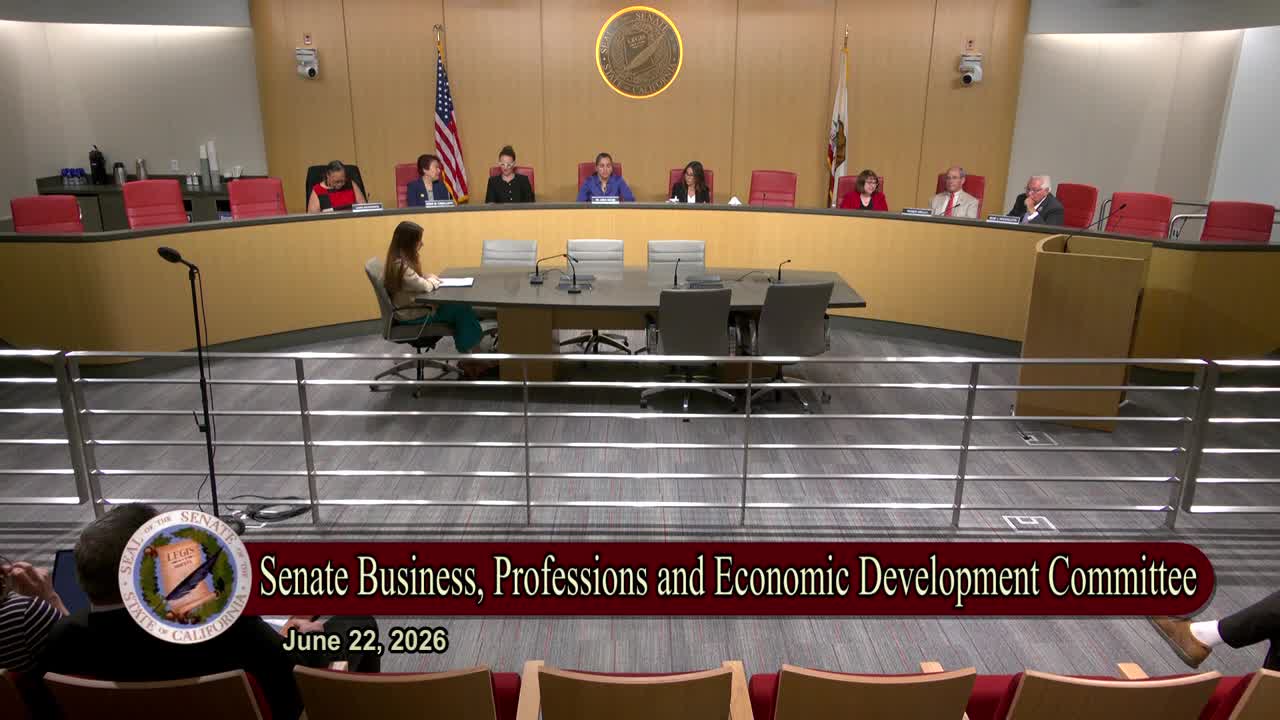 40MIN
Senate Standing Committee on Business, Professions and Economic Development
 7MIN
Assembly Floor
 47MIN
Assembly Standing Committee on Appropriations
 54MIN
Assembly Standing Committee on Judiciary
 43MIN
Assembly Standing Committee on Agriculture
Bill Author

Bill Co-Author(s):