AB 932: Community youth athletics programs: sex or gender discrimination.
- Session Year: 2025-2026
- House: Assembly
- Latest Version Date: 2025-10-11
Current Status:
Passed
(2025-10-11: Chaptered by Secretary of State - Chapter 628, Statutes of 2025.)
Introduced
In Committee
Awaiting First Chamber Vote
Passed First Chamber
In Committee
Awaiting Second Chamber Vote
Passed Second Chamber
Enacted
Existing law prohibits public funds from being used in connection with any athletic program conducted under the auspices of a school district governing board or any student organization within the district, which does not provide equal opportunity to both sexes for participation and for use of facilities.
Existing law prohibits a city, county, city and county, or special district from discriminating against any person on the basis of gender in the operation, conduct, or administration of community youth athletics programs, as defined, or in the allocation of parks and recreation facilities and resources, as defined, that support or enable these programs. Existing law creates an independent right to bring a civil action for a violation of this prohibition for equitable and monetary relief, as specified.
This bill would instead prohibit a city, county, city and county, special district, school district, county office of education, or charter school from discriminating against a person on the basis of sex or gender in the operation, conduct, or administration of community youth athletics programs, or in the allocation of parks and recreation facilities and resources or school and recreation facilities and resources that support or enable these programs. The bill would define various terms for these purposes and make related conforming changes. By imposing a new duties on local agencies, the bill would impose a state-mandated local program.
The California Constitution requires the state to reimburse local agencies and school districts for certain costs mandated by the state. Statutory provisions establish procedures for making that reimbursement.
This bill would provide that, if the Commission on State Mandates determines that the bill contains costs mandated by the state, reimbursement for those costs shall be made pursuant to the statutory provisions noted above.
Existing law prohibits public funds from being used in connection with any athletic program conducted under the auspices of a school district governing board or any student organization within the district, which does not provide equal opportunity to both sexes for participation and for use of facilities.
Existing law prohibits a city, county, city and county, or special district from discriminating against any person on the basis of gender in the operation, conduct, or administration of community youth athletics programs, as defined, or in the allocation of parks and recreation facilities and resources, as defined, that support or enable these programs. Existing law creates an independent right to bring a civil action for a violation of this prohibition for equitable and monetary relief, as specified.
This bill would instead prohibit a city, county, city and county, special district, school district, county office of education, or charter school from discriminating against a person on the basis of sex or gender in the operation, conduct, or administration of community youth athletics programs or interscholastic athletic programs, programs, or in the allocation of parks and recreation facilities and resources or school and recreation facilities and resources that support or enable these programs. The bill would define various terms for these purposes and make related conforming changes. By imposing a new duties on local agencies, the bill would impose a state-mandated local program.
The California Constitution requires the state to reimburse local agencies and school districts for certain costs mandated by the state. Statutory provisions establish procedures for making that reimbursement.
This bill would provide that, if the Commission on State Mandates determines that the bill contains costs mandated by the state, reimbursement for those costs shall be made pursuant to the statutory provisions noted above.
Existing law prohibits public funds from being used in connection with any athletic program conducted under the auspices of a school district governing board or any student organization within the district, which does not provide equal opportunity to both sexes for participation and for use of facilities.
Existing law prohibits a city, county, city and county, or special district from discriminating against any person on the basis of gender in the operation, conduct, or administration of community youth athletics programs, as defined, or in the allocation of school parks and recreation facilities and resources, as defined, that support or enable these programs. Existing law creates an independent right to bring a civil action for a violation of this prohibition for equitable and monetary relief, as specified.
This bill would instead prohibit a city, county, city and county, special district, school district, county office of education, or charter school from discriminating against a person on the basis of sex or gender in the operation, conduct, or administration of community youth athletics programs or interscholastic athletic programs, or in the allocation or rental to a third-party community youth athletics program of parks and recreation facilities and resources or school and recreation facilities and resources that support or enable the program. these programs. The bill would create an independent right to bring a civil action for equitable and monetary relief for a violation of this prohibition, as specified. The bill would require the courts to consider, in civil actions brought under these provisions or applicable antidiscrimination laws alleging discrimination in community youth athletics programs, specified factors in determining whether discrimination exists, including whether the selection of community youth athletics programs offered effectively accommodates the athletic interests and abilities of members of both genders. define various terms for these purposes and make related conforming changes. By imposing a new duties on local educational agencies, the bill would impose a state-mandated local program.
The California Constitution requires the state to reimburse local agencies and school districts for certain costs mandated by the state. Statutory provisions establish procedures for making that reimbursement.
This bill would provide that, if the Commission on State Mandates determines that the bill contains costs mandated by the state, reimbursement for those costs shall be made pursuant to the statutory provisions noted above.
Existing law prohibits public funds from being used in connection with any athletic program conducted under the auspices of a school district governing board or any student organization within the district, which does not provide equal opportunity to both sexes for participation and for use of facilities.
Existing law prohibits a city, county, city and county, or special district from discriminating against any person on the basis of gender in the operation, conduct, or administration of community youth athletics programs, as defined, or in the allocation of school and recreation facilities and resources, as defined, that support or enable these programs. Existing law creates an independent right to bring a civil action for a violation of this prohibition for equitable and monetary relief, as specified.
This bill would prohibit a school district, county office of education, or charter school from discriminating against a person on the basis of sex or gender in the operation, conduct, or administration of community youth athletics programs or in the allocation or rental to a third-party community youth athletics program of school and recreation facilities and resources that support or enable the program. The bill would create an independent right to bring a civil action for equitable and monetary relief for a violation of this prohibition, as specified. The bill would require the courts to consider, in civil actions brought under these provisions or applicable antidiscrimination laws alleging discrimination in community youth athletics programs, specified factors in determining whether discrimination exists, including whether the selection of community youth athletics programs offered effectively accommodates the athletic interests and abilities of members of both genders. By imposing a new duties on local educational agencies, the bill would impose a state-mandated local program.
The California Constitution requires the state to reimburse local agencies and school districts for certain costs mandated by the state. Statutory provisions establish procedures for making that reimbursement.
This bill would provide that, if the Commission on State Mandates determines that the bill contains costs mandated by the state, reimbursement for those costs shall be made pursuant to the statutory provisions noted above.
(a)No city, county, city and county, or special district, including, but not limited to, a community services district, recreation and park district, regional park district, regional park and open-space district, regional open-space park district, or resort improvement district, or local educational agency shall discriminate against any person on the basis of sex or gender in the operation, conduct, or administration of community youth athletics programs, or in the allocation of parks and recreation facilities and resources, or school and recreation facilities and resources, that support or enable these programs.
(b)The Unruh Civil Rights Act (Section 51 of the Civil Code) has been held to prohibit local governmental agencies from discriminating on the bases proscribed by the act, and Section 11135 also prohibits local governmental agencies that receive financial assistance from the state from discriminating on the basis of gender, among other bases.
(c)It is the intent of the Legislature in enacting this section that girls shall be accorded opportunities for participation in community youth athletics programs equal, both in quality and scope, to those accorded to boys.
(d)In civil actions brought under this section or under other applicable antidiscrimination laws alleging discrimination in community youth athletics programs, courts shall consider the following factors, among others, in determining whether discrimination exists:
(1)Whether the selection of community youth athletics programs offered effectively accommodate the athletic interests and abilities of members of both genders.
(2)The provision of moneys, equipment, and supplies.
(3)Scheduling of games and practice times.
(4)Opportunity to receive coaching.
(5)Assignment and compensation of coaches.
(6)Access to lands and areas accessed through permitting, leasing, or other land use arrangements, or otherwise accessed through a city, a county, a city and county, or a special district.
(7)Selection of the season for a sport.
(8)Location of the games and practices.
(9)Locker rooms.
(10)Practice and competitive facilities.
(11)Publicity.
(12)Officiation by umpires, referees, or judges who have met training and certification standards.
(e)In making the determination under paragraph (1) of subdivision (d), a court shall assess whether the city, county, city and county, special district, or local educational agency has effectively accommodated the athletic interests and abilities of both genders in any one of the following ways:
(1)The community youth athletics program opportunities for boys and girls are provided in numbers substantially proportionate to their respective numbers in the community.
(2)Where the members of one gender are underrepresented in community youth athletics programs, the city, county, city and county, special district, or local educational agency can demonstrate that the interests and abilities of the members of that gender have been fully and effectively accommodated by the present program and allocation of resources.
(f)Nothing in this section shall be construed to invalidate any existing consent decree or any other settlement agreement entered into by a city, county, city and county, special district, or local educational agency to address gender equity in athletic programs.
(g)This section and any ordinances, regulations, or resolutions adopted pursuant to this section by a city, county, city and county, special district, or local educational agency may be enforced against a city, county, city and county, special district, or local educational agency by a civil action for injunctive relief or damages or both, which shall be independent of any other rights and remedies.
(h)For purposes of this section, the following definitions apply:
(1)Community youth athletics program means any athletic program in which youth solely or predominantly participate, that is organized for the purposes of training for and engaging in athletic activity and competition, and that is in any way operated, conducted, administered, supported, or enabled by a city, county, city and county, or special district.
(2)Local educational agency means a school district, county office of education, or charter school.
(3)Parks and recreation facilities and resources include, but are not limited to, park facilities, including, but not limited to, athletic fields, athletic courts, gymnasiums, recreational rooms, restrooms, concession stands and storage spaces; lands and areas accessed through permitting, leasing, or other land use arrangements, or otherwise accessed through cities, counties, cities and counties, or special districts; sports and recreation equipment; devices used to promote athletics such as scoreboards, banners, and advertising; and all moneys used in conjunction with youth athletics.
(4)School and recreation facilities and resources include, but are not limited to, school facilities, including, but not limited to, athletic fields, athletic courts, gymnasiums, recreational rooms, restrooms, concession stands, and storage spaces; lands and areas accessed through permitting, renting, leasing, or other land use arrangements, or otherwise accessed through local educational agencies; sports and recreation equipment; devices used to promote athletics such as scoreboards, banners, and advertising; and all moneys used in conjunction with youth athletics.
SEC. 2.If the Commission on State Mandates determines that this act contains costs mandated by the state, reimbursement to local agencies and school districts for those costs shall be made pursuant to Part 7 (commencing with Section 17500) of Division 4 of Title 2 of the Government Code.
(a)No city, county, city and county, or special district, including, but not limited to, a community services district, recreation and park district, regional park district, regional park and open-space district, regional open-space park district, or resort improvement district, or local educational agency shall discriminate against any person on the basis of sex or gender in the operation, conduct, or administration of community youth athletics programs or interscholastic athletic programs, programs, or in the allocation of parks and recreation facilities and resources, or school and recreation facilities and resources, that support or enable these programs.
(b)The Unruh Civil Rights Act (Section 51 of the Civil Code) has been held to prohibit local governmental agencies from discriminating on the bases proscribed by the act, and Section 11135 also prohibits local governmental agencies that receive financial assistance from the state from discriminating on the basis of gender, among other bases.
(c)It is the intent of the Legislature in enacting this section that girls shall be accorded opportunities for participation in community youth athletics programs equal, both in quality and scope, to those accorded to boys.
(d)In civil actions brought under this section or under other applicable antidiscrimination laws alleging discrimination in community youth athletics programs, courts shall consider the following factors, among others, in determining whether discrimination exists:
(1)Whether the selection of community youth athletics programs offered effectively accommodate the athletic interests and abilities of members of both genders.
(2)The provision of moneys, equipment, and supplies.
(3)Scheduling of games and practice times.
(4)Opportunity to receive coaching.
(5)Assignment and compensation of coaches.
(6)Access to lands and areas accessed through permitting, leasing, or other land use arrangements, or otherwise accessed through a city, a county, a city and county, or a special district.
(7)Selection of the season for a sport.
(8)Location of the games and practices.
(9)Locker rooms.
(10)Practice and competitive facilities.
(11)Publicity.
(12)Officiation by umpires, referees, or judges who have met training and certification standards.
(e)In making the determination under paragraph (1) of subdivision (d), a court shall assess whether the city, county, city and county, special district, or local educational agency has effectively accommodated the athletic interests and abilities of both genders in any one of the following ways:
(1)The community youth athletics program opportunities for boys and girls are provided in numbers substantially proportionate to their respective numbers in the community.
(2)Where the members of one gender are underrepresented in community youth athletics programs, the city, county, city and county, special district, or local educational agency can demonstrate that the interests and abilities of the members of that gender have been fully and effectively accommodated by the present program and allocation of resources.
(f)Nothing in this section shall be construed to invalidate any existing consent decree or any other settlement agreement entered into by a city, county, city and county, special district, or local educational agency to address gender equity in athletic programs.
(g)This section and any ordinances, regulations, or resolutions adopted pursuant to this section by a city, county, city and county, special district, or local educational agency may be enforced against a city, county, city and county, special district, or local educational agency by a civil action for injunctive relief or damages or both, which shall be independent of any other rights and remedies.
(h)For purposes of this section, the following definitions apply:
(1)Community youth athletics program means any athletic program in which youth solely or predominantly participate, that is organized for the purposes of training for and engaging in athletic activity and competition, and that is in any way operated, conducted, administered, supported, or enabled by a city, county, city and county, or special district.
(2)Local educational agency means a school district, county office of education, or charter school.
(3)Parks and recreation facilities and resources include, but are not limited to, park facilities, including, but not limited to, athletic fields, athletic courts, gymnasiums, recreational rooms, restrooms, concession stands and storage spaces; lands and areas accessed through permitting, leasing, or other land use arrangements, or otherwise accessed through cities, counties, cities and counties, or special districts; sports and recreation equipment; devices used to promote athletics such as scoreboards, banners, and advertising; and all moneys used in conjunction with youth athletics.
(4)School and recreation facilities and resources include, but are not limited to, school facilities, including, but not limited to, athletic fields, athletic courts, gymnasiums, recreational rooms, restrooms, concession stands, and storage spaces; lands and areas accessed through permitting, renting, leasing, or other land use arrangements, or otherwise accessed through local educational agencies; sports and recreation equipment; devices used to promote athletics such as scoreboards, banners, and advertising; and all moneys used in conjunction with youth athletics.
SEC. 2.If the Commission on State Mandates determines that this act contains costs mandated by the state, reimbursement to local agencies and school districts for those costs shall be made pursuant to Part 7 (commencing with Section 17500) of Division 4 of Title 2 of the Government Code.
(a)No city, county, city and county, or special district, including, but not limited to, a community services district, recreation and park district, regional park district, regional park and open-space district, regional open-space park district, or resort improvement district district, or local educational agency shall discriminate against any person on the basis of sex or gender in the operation, conduct, or administration of community youth athletics programs or interscholastic athletic programs, or in the allocation of parks and recreation facilities and resources resources, or school and recreation facilities and resources, that support or enable these programs.
(b)The Unruh Civil Rights Act (Section 51 of the Civil Code) has been held to prohibit local governmental agencies from discriminating on the bases proscribed by the act, and Section 11135 also prohibits local governmental agencies that receive financial assistance from the state from discriminating on the basis of gender, among other bases.
(c)As used in this section, community youth athletics program means any athletic program in which youth solely or predominantly participate, that is organized for the purposes of training for and engaging in athletic activity and competition, and that is in any way operated, conducted, administered, supported, or enabled by a city, county, city and county, or special district.(d)As used in this section, parks and recreation facilities and resources include, but are not limited to, park facilities, including, but not limited to, athletic fields, athletic courts, gymnasiums, recreational rooms, restrooms, concession stands and storage spaces; lands and areas accessed through permitting, leasing, or other land use arrangements, or otherwise accessed through cities, counties, cities and counties, or special districts; sports and recreation equipment; devices used to promote athletics such as scoreboards, banners, and advertising; and all moneys used in conjunction with youth athletics.(e)(c)It is the intent of the Legislature in enacting this section that girls shall be accorded opportunities for participation in community youth athletics programs equal, both in quality and scope, to those accorded to boys.
(f)(d)In civil actions brought under this section or under other applicable antidiscrimination laws alleging discrimination in community youth athletics programs, courts shall consider the following factors, among others, in determining whether discrimination exists:
(1)Whether the selection of community youth athletics programs offered effectively accommodate the athletic interests and abilities of members of both genders.
(2)The provision of moneys, equipment, and supplies.
(3)Scheduling of games and practice times.
(4)Opportunity to receive coaching.
(5)Assignment and compensation of coaches.
(6)Access to lands and areas accessed through permitting, leasing, or other land use arrangements, or otherwise accessed through a city, a county, a city and county, or a special district.
(7)Selection of the season for a sport.
(8)Location of the games and practices.
(9)Locker rooms.
(10)Practice and competitive facilities.
(11)Publicity.
(12)Officiation by umpires, referees, or judges who have met training and certification standards.
(g)(e)In making the determination under paragraph (1) of subdivision (f), (d), a court shall assess whether the city, county, city and county, or special district district, or local educational agency has effectively accommodated the athletic interests and abilities of both genders in any one of the following ways:
(1)The community youth athletics program opportunities for boys and girls are provided in numbers substantially proportionate to their respective numbers in the community.
(2)Where the members of one gender have been, and continue to be, underrepresented in community youth athletics programs, the city, county, city and county, or special district can show a history and continuing practice of program expansion and allocation of resources that are demonstrably responsive to the developing interests and abilities of the members of that gender.(3)(2)Where the members of one gender are underrepresented in community youth athletics programs, the city, county, city and county, or special district district, or local educational agency can demonstrate that the interests and abilities of the members of that gender have been fully and effectively accommodated by the present program and allocation of resources.
(h)Effective January 1, 2015, a city, county, city and county, and special district may no longer rely on paragraph (2) of subdivision (g) to show that they have accommodated the athletic interests and abilities of both genders.(i)(f)Nothing in this section shall be construed to invalidate any existing consent decree or any other settlement agreement entered into by a city, county, city and county, or special district district, or local educational agency to address gender equity in athletic programs.
(j)(g)This section and any ordinances, regulations, or resolutions adopted pursuant to this section by a city, county, city and county, or special district district, or local educational agency may be enforced against a city, county, city and county, or special district district, or local educational agency by a civil action for injunctive relief or damages or both, which shall be independent of any other rights and remedies.
(h)For purposes of this section, the following definitions apply:
(1)Community youth athletics program means any athletic program in which youth solely or predominantly participate, that is organized for the purposes of training for and engaging in athletic activity and competition, and that is in any way operated, conducted, administered, supported, or enabled by a city, county, city and county, or special district.
(2)Local educational agency means a school district, county office of education, or charter school.
(3)Parks and recreation facilities and resources include, but are not limited to, park facilities, including, but not limited to, athletic fields, athletic courts, gymnasiums, recreational rooms, restrooms, concession stands and storage spaces; lands and areas accessed through permitting, leasing, or other land use arrangements, or otherwise accessed through cities, counties, cities and counties, or special districts; sports and recreation equipment; devices used to promote athletics such as scoreboards, banners, and advertising; and all moneys used in conjunction with youth athletics.
(4)School and recreation facilities and resources include, but are not limited to, school facilities, including, but not limited to, athletic fields, athletic courts, gymnasiums, recreational rooms, restrooms, concession stands, and storage spaces; lands and areas accessed through permitting, renting, leasing, or other land use arrangements, or otherwise accessed through local educational agencies; sports and recreation equipment; devices used to promote athletics such as scoreboards, banners, and advertising; and all moneys used in conjunction with youth athletics.
SEC. 2.If the Commission on State Mandates determines that this act contains costs mandated by the state, reimbursement to local agencies and school districts for those costs shall be made pursuant to Part 7 (commencing with Section 17500) of Division 4 of Title 2 of the Government Code.
REVISIONS: HeadingLine 2.(a)(1)The Legislature finds and declares that the Unruh Civil Rights Act (Section 51 of the Civil Code) has been held to prohibit local governmental agencies from discriminating on the bases proscribed by the act, and Section 11135 of the Government Code also prohibits local governmental agencies that receive financial assistance from the state from discriminating on the basis of gender, among other bases.
(2)It is the intent of the Legislature in enacting this section that girls be accorded opportunities for participation in community youth athletics programs on an equal basis, both in quality and scope, to those accorded to boys.
(b)A local educational agency shall not discriminate against a person on the basis of sex or gender in the operation, conduct, or administration of community youth athletics programs, or in the allocation or rental to a third-party community youth athletics program of school and recreation facilities and resources that support or enable the program.
(c)This section and any policies, regulations, or resolutions adopted pursuant to this section by a local educational agency may be enforced against a local educational agency by a civil action for injunctive relief or damages or both, which shall be independent of any other rights and remedies.
(d)In civil actions brought under this section or under other applicable antidiscrimination laws alleging discrimination in community youth athletics programs, courts shall consider the following factors, among others, in determining whether discrimination exists:
(1)Whether the selection of community youth athletics programs offered effectively accommodates the athletic interests and abilities of members of both genders.
(2)The provision of moneys, equipment, and supplies.
(3)Scheduling of games and practice times.
(4)Opportunity to receive coaching.
(5)Assignment and compensation of coaches.
(6)Access to lands and areas accessed through permitting, renting, leasing, or other land use arrangements, or otherwise accessed through a local educational agency.
(7)Selection of the season for a sport.
(8)Location of the games and practices.
(9)Locker rooms.
(10)Practice and competitive facilities.
(11)Publicity.
(12)Officiation by umpires, referees, or judges who have met training and certification standards.
(e)In making the determination under paragraph (1) of subdivision (d), a court shall assess whether the local educational agency has effectively accommodated the athletic interests and abilities of both genders in either of the following ways:
(1)The community youth athletics program opportunities for boys and girls are provided in numbers substantially proportionate to their respective numbers in the community.
(2)Where the members of one gender are underrepresented in community youth athletics programs, the local educational agency can demonstrate that the interests and abilities of the members of that gender have been fully and effectively accommodated by the present program and allocation of resources.
(f)This section shall not be construed to invalidate an existing consent decree or any other settlement agreement entered into by a local educational agency to address gender equity in athletic programs.
(g)For purposes of this section, the following definitions apply:
(1)Community youth athletics program means an athletic program in which youth solely or predominantly participate, that is organized for the purposes of training for, and engaging in, athletic activity and competition, and that is in any way operated, conducted, administered, supported, or enabled by a local educational agency.
(2)Local educational agency means a school district, county office of education, or charter school.
(3)School and recreation facilities and resources include, but are not limited to, school facilities, including, but not limited to, athletic fields, athletic courts, gymnasiums, recreational rooms, restrooms, concession stands, and storage spaces; lands and areas accessed through permitting, renting, leasing, or other land use arrangements, or otherwise accessed through local educational agencies; sports and recreation equipment; devices used to promote athletics such as scoreboards, banners, and advertising; and all moneys used in conjunction with youth athletics.
(4)Third-party community youth athletics program is a community youth athletics program operated, conducted, or administered by a person or entity that is not a local educational agency.
SEC. 2.If the Commission on State Mandates determines that this act contains costs mandated by the state, reimbursement to local agencies and school districts for those costs shall be made pursuant to Part 7 (commencing with Section 17500) of Division 4 of Title 2 of the Government Code.
|
Date
|
Status
|
|---|---|
| Oct 11, 2025 | Chaptered by Secretary of State - Chapter 628, Statutes of 2025. |
| Oct 11, 2025 | Approved by the Governor. |
| Sep 11, 2025 | Enrolled and presented to the Governor at 4 p.m. |
| Sep 4, 2025 | Senate amendments concurred in. To Engrossing and Enrolling. (Ayes 62. Noes 1. Page 2921.). |
| Sep 3, 2025 | In Assembly. Concurrence in Senate amendments pending. |
| Sep 3, 2025 | Read third time. Passed. Ordered to the Assembly. (Ayes 30. Noes 7. Page 2441.). |
| Aug 29, 2025 | Read second time. Ordered to third reading. |
| Aug 29, 2025 | From committee: Do pass. (Ayes 5. Noes 2.) (August 29). |
| Aug 18, 2025 | In committee: Referred to suspense file. |
| Jul 17, 2025 | From committee: Do pass and re-refer to Com. on APPR. (Ayes 5. Noes 1.) (July 16). Re-referred to Com. on APPR. |
| Jul 2, 2025 | From committee: Do pass and re-refer to Com. on ED. (Ayes 11. Noes 0.) (July 1). Re-referred to Com. on ED. |
| Jun 19, 2025 | From committee chair, with author's amendments: Amend, and re-refer to committee. Read second time, amended, and re-referred to Com. on JUD. |
| Jun 11, 2025 | Referred to Coms. on JUD. and ED. |
| Jun 3, 2025 | In Senate. Read first time. To Com. on RLS. for assignment. |
| Jun 2, 2025 | Read third time. Passed. Ordered to the Senate. (Ayes 65. Noes 1. Page 1868.) |
| May 27, 2025 | Read second time. Ordered to third reading. |
| May 23, 2025 | From committee: Do pass. (Ayes 13. Noes 0.) (May 23). |
| May 14, 2025 | In committee: Set, first hearing. Referred to APPR. suspense file. |
| Apr 30, 2025 | From committee: Do pass and re-refer to Com. on APPR. (Ayes 11. Noes 0.) (April 29). Re-referred to Com. on APPR. |
| Apr 30, 2025 | Coauthors revised. |
| Apr 10, 2025 | Re-referred to Com. on JUD. |
| Apr 9, 2025 | Read second time and amended. |
| Apr 8, 2025 | From committee: Amend, and do pass as amended and re-refer to Com. on JUD. (Ayes 6. Noes 0.) (April 8). |
| Mar 17, 2025 | Referred to Coms. on A.,E.,S., & T. and JUD. |
| Feb 20, 2025 | From printer. May be heard in committee March 22. |
| Feb 19, 2025 | Read first time. To print. |
|
Date
|
Description
|
Location
|
Votes
|
|
|---|---|---|---|---|
| Sep 4, 2025 | AB 932 Irwin Concurrence in Senate Amendments | Assembly Floor |
Passed |
|
| Sep 3, 2025 | Assembly 3rd Reading AB932 Irwin et al. By Cabaldon | Senate Floor |
Passed |
|
| Aug 29, 2025 | Do pass | Senate Standing Committee on Appropriations |
Passed |
|
| Aug 18, 2025 | Placed on suspense file | Senate Standing Committee on Appropriations |
Passed |
|
| Jul 16, 2025 | Do pass, but first be re-referred to the Committee on [Appropriations] | Senate Standing Committee on Education |
Passed |
|
| Jul 1, 2025 | Do pass, but first be re-referred to the Committee on [Education] | Senate Standing Committee on Judiciary |
Passed |
|
| Jun 2, 2025 | AB 932 Irwin Assembly Third Reading | Assembly Floor |
Passed |
|
| May 23, 2025 | Do pass. | Assembly Standing Committee on Appropriations |
Passed |
|
| Apr 29, 2025 | Do pass and be re-referred to the Committee on [Appropriations] | Assembly Standing Committee on Judiciary |
Passed |
|
| Apr 8, 2025 | Do pass as amended and be re-referred to the Committee on [Judiciary] | Assembly Standing Committee on Arts, Entertainment, Sports, and Tourism |
Passed |
This list shows positions taken on this bill by organizations on the date displayed, which is linked to the original source.
Positions by individuals are not included.
|
Organization
|
Position
|
Date
|
|---|---|---|
| American Academy Of Pediatrics, California | ** Support | |
| Californians United for Sex-Based Evidence in Policy and Law | ** Against | |
| California Teachers Association | ** Support | |
| CFT- a Union of Educators & Classified Professionals, Aft, Afl-cio | ** Support | |
| Davis Storm Girls Basketball Club | ** Support | |
| Davis Storm Girls' Basketball (sponsor) | ** Support | |
| LGBTQ+ Inclusivity, Visibility, and Empowerment | ** Support | |
| LIVE | ** Support | |
| Our Duty-USA | ** Against | |
| Women'S Liberation Front | ** Against |
CONCURRENCE IN SENATE AMENDMENTS
CSA1 Bill Id:AB 932
Author:(Irwin)
As Amended Ver:June 19, 2025
Majority vote
SUMMARY
AB 932 extends existing gender discrimination prohibitions in youth sports to local educational agencies, specific to school and recreation facilities and resources.
Senate Amendments
Senate amendments specify that the provisions of the bill apply to community your athletic programs.
COMMENTS
Background. Existing law prohibits a city, county, or special district, including a community services district, recreation and park district, regional park district, regional park and open-space district, regional open-space park district, or resort improvement district from discriminating against any person on the basis of sex or gender in its operation of a community youth athletics program or in its allocation of parks and recreation facilities supporting such programs.
Existing law also provides that, in civil actions brought alleging discrimination in community youth athletics programs, courts shall consider several enumerated factors, among others, in determining whether discrimination exists, including: (1) Whether the selection of community youth athletics programs offered effectively accommodate the athletic interests and abilities of members of both genders; (2) The provision of moneys, equipment, and supplies; (3) Scheduling of games and practice times; (4) Opportunity to receive coaching; (5) Assignment and compensation of coaches; (6) Access to lands and areas accessed through permitting, leasing, or other land use arrangements, or otherwise accessed through a city, a county, a city and county, or a special district; (7) Selection of the season for a sport; (8) Location of the games and practices; (9) Locker rooms; (10) Practice and competitive facilities; (11) Publicity, and (12) Officiation by umpires, referees, or judges who have met training and certification standards.
Currently, this prohibition does not apply to schools or school facilities and resources.
According to the Author
"AB 932 shines a light on longstanding practices that exclude and marginalize girls in sports. Oftentimes girls join a club sports team because their preferred sport is not available until high school, or because they are hoping to improve to be able to play at a college or professional level. Under current law, boys' club teams can still be afforded better practice times, more gym or field time, or different prices than the girls' team for the corresponding sport by a school district or local education agency. Many of these practices are borne out of longstanding relationships between boys' club teams and school rental facilities, compounding historical inequities. In addition to concerns about disparities in the quality of facilities, girls' sports clubs face gender-based discrimination when trying to find adequate practice times to rent out school facilities. While previous legislation has aimed to curtail inequities at city and county parks, AB 932 would close the loophole that still allows discrimination against young women in school facility rentals to third-parties such as club sports groups. This loophole creates a pathway for continued gender-based discrimination, and sends the message to young women that their sport, their talent, and their hard work will be overlooked from the start of their athletic careers."
Arguments in Support
According to the Davis Storm Girls Basketball Club, sponsor of the bill, "In our experience as a program serving only female athletes, we have learned that there is a deficiency in the law that this legislation would solve. For example, when it was time to reserve gym time for practices for the spring 2025 semester in the Davis Joint Unified School District (DJUSD), we found ourselves competing with three basketball clubs that serve only boys. DJUSD has historically used a first-come, first-served model in accordance with district policy. Although our club serves roughly the same number of athletes as all of the boys' basketball clubs in Davis combined, we did not enter our reservations quickly enough on the day the system opened for spring 2025, and the boys' basketball clubs reserved 90% of the available gym time at the two gyms we utilize. We were left with one evening (four hours) per week at one gym to be split among our six teams (73 total girls) to practice and host games, while the boys' teams secured nine days (between the two gyms) per week. We were fortunate that the district governing board and superintendent stepped in to prevent us from having to cancel our season by ensuring that we were able to reserve 1.5 additional days (amounts to 25% of available gym time at the two gyms), which is still not enough for our program and is an inequitable result compared to the boys’ teams now having 7.5 days (75%). This result is clearly inequitable due to a process that does not include an equity lens and an absence of relevant state law on the subject to prevent this outcome."
Arguments in Opposition
According to Our Duty-USA, "While we support parity in usage of field and facilities for sports between male and female activities, because community sports permit males who believe that they are females to compete on female teams, we cannot support this bill."
FISCAL COMMENTS
According to the Senate Committee on Appropriations:
- Ongoing Proposition 98 General Fund cost pressures potentially in the millions of dollars to the extent LEAs face an increased number of lawsuits resulting from allegations of discrimination and have to respond. This bill expands discrimination prohibitions to all of the state's approximately 2,300 LEAs, many of which own recreational facilities used by third-party athletic programs.
- Unknown, potentially significant costs to the state funded trial court system (Trial Court Trust Fund, General Fund) to adjudicate civil actions. Expanding existing law to local education agencies could lead to lengthier and more complex court proceedings with attendant workload and resource costs to the court. The fiscal impact of this bill to the courts will depend on many unknowns, including the number of cases filed and the factors unique to each case. An eight-hour court day costs approximately $10,500 in staff in workload. If court days exceed 10, costs to the trial courts could reach hundreds of thousands of dollars. While the courts are not funded on a workload basis, an increase in workload could result in delayed court services and would put pressure on the General Fund to fund additional staff and resources and to increase the amount appropriated to backfill for trial court operations.
VOTES:
ASM ARTS, ENTERTAINMENT, SPORTS, AND TOURISM: 6-0-3
YES: Ward, Elhawary, McKinnor, Ortega, Valencia, Zbur
ABS, ABST OR NV: Lackey, Jeff Gonzalez, Quirk-Silva
ASM JUDICIARY: 11-0-1
YES: Kalra, Dixon, Bryan, Connolly, Harabedian, Macedo, Pacheco, Papan, Sanchez, Stefani, Zbur
ABS, ABST OR NV: Bauer-Kahan
ASM APPROPRIATIONS: 13-0-2
YES: Wicks, Arambula, Calderon, Caloza, Dixon, Elhawary, Fong, Mark González, Hart, Pacheco, Pellerin, Solache, Tangipa
ABS, ABST OR NV: Sanchez, Ta
ASSEMBLY FLOOR: 65-1-13
YES: Addis, Aguiar-Curry, Ahrens, Alvarez, Arambula, Ávila Farías, Bains, Bauer-Kahan, Bennett, Berman, Boerner, Bonta, Bryan, Calderon, Caloza, Carrillo, Chen, Connolly, Davies, Dixon, Elhawary, Fong, Gabriel, Garcia, Gipson, Mark González, Hadwick, Haney, Harabedian, Hart, Hoover, Irwin, Jackson, Kalra, Krell, Lee, Lowenthal, McKinnor, Muratsuchi, Nguyen, Ortega, Pacheco, Papan, Patel, Pellerin, Petrie-Norris, Quirk-Silva, Ramos, Ransom, Celeste Rodriguez, Michelle Rodriguez, Rogers, Blanca Rubio, Schiavo, Schultz, Sharp-Collins, Solache, Soria, Stefani, Valencia, Ward, Wicks, Wilson, Zbur, Rivas
NO: DeMaio
ABS, ABST OR NV: Alanis, Castillo, Ellis, Flora, Gallagher, Jeff Gonzalez, Lackey, Macedo, Patterson, Sanchez, Ta, Tangipa, Wallis
SENATE FLOOR: 30-7-3
YES: Allen, Archuleta, Arreguín, Ashby, Becker, Blakespear, Cabaldon, Caballero, Cervantes, Cortese, Durazo, Gonzalez, Grayson, Hurtado, Laird, Limón, McGuire, McNerney, Menjivar, Padilla, Pérez, Reyes, Richardson, Rubio, Smallwood-Cuevas, Stern, Umberg, Wahab, Weber Pierson, Wiener
NO: Alvarado-Gil, Choi, Dahle, Grove, Jones, Seyarto, Strickland
ABS, ABST OR NV: Niello, Ochoa Bogh, Valladares
UPDATED
VERSION: June 19, 2025
CONSULTANT: Brian V. Anderson, Jr. / A.,E.,S., & T. / (916) 319-3450 FN: 0001611
SENATE RULES COMMITTEE Office of Senate Floor Analyses (916) 651-1520 Fax: (916) 327-4478 | AB 932 |
THIRD READING
Bill No: AB 932
Author: Irwin (D), et al.
Amended: 6/19/25 in Senate
Vote: 21
SENATE JUDICIARY COMMITTEE: 11-0, 7/1/25
AYES: Umberg, Allen, Arreguín, Ashby, Caballero, Durazo, Laird, Stern, Wahab, Weber Pierson, Wiener
NO VOTE RECORDED: Niello, Valladares
SENATE EDUCATION COMMITTEE: 5-1, 7/16/25
AYES: Pérez, Cabaldon, Cortese, Gonzalez, Laird
NOES: Choi
NO VOTE RECORDED: Ochoa Bogh
SENATE APPROPRIATIONS COMMITTEE: 5-2, 8/29/25
AYES: Caballero, Cabaldon, Grayson, Richardson, Wahab
NOES: Seyarto, Dahle
ASSEMBLY FLOOR: 65-1, 6/2/25 - See last page for vote
SUBJECT: Community youth athletics programs: sex or gender discrimination
SOURCE: Davis Storm Girls’ Basketball
DIGEST:
This bill applies the statute prohibiting discrimination in youth athletics (Government (Gov.) Code section 53080) to local educational agencies and school and recreation facilities and resources.
ANALYSIS:
Existing law:
- Provides that no city, county, city and county, or special district, including, but not limited to, a community services district, recreation and park district, regional park district, regional park and open-space district, regional open-space park district, or resort improvement district shall discriminate against any person on the basis of sex or gender in the operation, conduct, or administration of community youth athletics programs or in the allocation of parks and recreation facilities and resources that support or enable these programs. (Gov. Code § 53080 (a).)
- Specifies that in civil actions brought for violations of 1), above, or under other applicable antidiscrimination laws alleging discrimination in community youth athletics programs, courts shall consider the following factors, among others, in determining whether discrimination exists:
- whether the selection of community youth athletics programs offered effectively accommodate the athletic interests and abilities of members of both genders;
- the provision of moneys, equipment, and supplies;
- scheduling of games and practice times;
- opportunity to receive coaching;
- assignment and compensation of coaches;
- access to lands and areas accessed through permitting, leasing, or other land use arrangements, or otherwise accessed through a city, a county, a city and county, or a special district;
- selection of the season for a sport;
- location of the games and practices;
- locker rooms;
- practice and competitive facilities;
- publicity; and
- officiation by umpires, referees, or judges who have met training and certification standards. (Gov. Code § 53080 (f).)
- Defines “community youth athletics program” to mean any athletic program in which youth solely or predominantly participate, that is organized for the purposes of training for and engaging in athletic activity and competition, and that is in any way operated, conducted, administered, supported, or enabled by a city, county, city and county, or special district. (Gov. Code § 53080 (c).)
- Defines “parks and recreation facilities and resources” as specified. (Gov. Code § 53080 (d).)
- Provides that in making the determination under 2), above of whether the selection of community youth athletics programs offered effectively accommodate the athletic interests and abilities of members of both genders, a court shall assess whether the city, county, city and county, or special district has effectively accommodated the athletic interests and abilities of both genders in any of the following ways: the community youth athletics program opportunities for boys and girls are provided in numbers substantially proportionate to their respective numbers in the community; and where the members of one gender are underrepresented in community youth athletics programs, the city, county, city and county, or special district can demonstrate that the interests and abilities of the members of that gender have been fully and effectively accommodated by the present program and allocation of resources. (Gov. Code § 53080 (g).)
- Specifies that it is the intent of the Legislature in enacting Government Code section 53080 that girls shall be accorded opportunities for participation in community youth athletics programs equal, both in quality and scope, to those accorded to boys. (Gov. Code § 53080 (e).)
- Provides that nothing in section 53080 shall be construed to invalidate any existing consent decree or any other settlement agreement entered into by a city, county, city and county, or special district to address gender equity in athletic programs. (Gov. Code § 53080 (i).)
- Provides that section 53080 and any ordinances, regulations, or resolutions adopted pursuant to this section by a city, county, city and county, or special district may be enforced against a city, county, city and county, or special district by a civil action for injunctive relief or damages or both, which shall be independent of any other rights and remedies. (Gov. Code § 53080 (j).)
This bill:
- Revises the statute prohibiting discrimination in youth athletics (Gov. Code section 53080) to also apply to local educational agencies and school and recreation facilities and resources.
- Provides that nothing in revised section 53080 shall be construed to invalidate any existing consent decree or any other settlement agreement entered into by a city, county, city and county, special district, or local educational agency to address gender equity in athletic programs.
- Provides that revised section 53080 and any ordinances, regulations, or resolutions adopted pursuant to this section by a city, county, city and county, special district, or local educational agency may be enforced against a city, county, city and county, special district, or local educational agency by a civil action for injunctive relief or damages or both, which shall be independent of any other rights and remedies.
- Defines “local educational agency” as a school district, county office of education, or charter school.
- Defines “school and recreation facilities and resources” as including, but not limited to, school facilities, including, but not limited to, athletic fields, athletic courts, gymnasiums, recreational rooms, restrooms, concession stands, and storage spaces; lands and areas accessed through permitting, renting, leasing, or other land use arrangements, or otherwise accessed through local educational agencies; sports and recreation equipment; devices used to promote athletics such as scoreboards, banners, and advertising; and all moneys used in conjunction with youth athletics.
Comments
According to the author:
AB 932 shines a light on longstanding practices that exclude and marginalize girls in sports. Oftentimes girls join a club sports team because their preferred sport is not available until high school, or because they are hoping to improve to be able to play at a college or professional level. Under current law, boys’ club teams can still be afforded better practice times, more gym or field time, or different prices than the girls’ team for the corresponding sport by a school district or local education agency. Many of these practices are borne out of longstanding relationships between boys’ club teams and school rental facilities, compounding historical inequities. In addition to concerns about disparities in the quality of facilities, girls’ sports clubs face gender-based discrimination when trying to find adequate practice times to rent out school facilities. While previous legislation has aimed to curtail inequities at city and county parks, AB 932 would close the loophole that still allows discrimination against young women in school facility rentals to third-parties such as club sports groups. This loophole creates a pathway for continued gender-based discrimination, and sends the message to young women that their sport, their talent, and their hard work will be overlooked from the start of their athletic careers.
The Davis Storm Girls Basketball Club sponsor this bill to fill a gap in state law. They point out that Education Code section 221.7 prohibits the use of public funds for school sponsored athletic programs that fail to provide equal opportunities for athletes of different genders. Subsequently, in 2004, AB 2404 (Steinberg, Ch. 852, Stats. 2004) prohibited local governments and special districts from discriminating against any person on the basis of sex or gender in the operation, conduct, or administration of community youth athletics programs or in the allocation of parks and recreation facilities and resources that support or enable these programs. As noted by Davis Storm Girls Basketball Club, “neither of those laws addresses equal opportunities when a school rents its facilities to third-party community athletics programs.” The sponsors explain:
In our experience as a program serving only female athletes, we have learned that there is a deficiency in the law that this legislation would solve. For example, when it was time to reserve gym time for practices for the spring 2025 semester in the Davis Joint Unified School District (DJUSD), we found ourselves competing with three basketball clubs that serve only boys. DJUSD has historically used a first-come, first-served model in accordance with district policy. Although our club serves roughly the same number of athletes as all of the boys’ basketball clubs in Davis combined, we did not enter our reservations quickly enough on the day the system opened for spring 2025, and the boys’ basketball clubs reserved 90% of the available gym time at the two gyms we utilize. We were left with one evening (four hours) per week at one gym to be split among our six teams (73 total girls) to practice and host games, while the boys’ teams secured 9 days (between the two gyms) per week. We were fortunate that the district governing board and superintendent stepped in to prevent us from having to cancel our season by ensuring that we were able to reserve 1.5 additional days (amounts to 25% of available gym time at the two gyms), which is still not enough for our program and is an inequitable result compared to the boys’ teams now having 7.5 days (75%). This result is clearly inequitable due to a process that does not include an equity lens and an absence of relevant state law on the subject to prevent this outcome.
The author brings AB 932 to ensure the inequity described by the bill sponsors ceases to exist. The bill does this by expanding the antidiscrimination statute, enacted twenty years ago through AB 2402, to local educational agencies and school and recreation facilities and resources.
FISCAL EFFECT: Appropriation: No Fiscal Com.: Yes Local: Yes
According to the Senate Appropriations Committee the fiscal impact is as follows:
- Ongoing Proposition 98 General Fund cost pressures potentially in the millions of dollars to the extent LEAs face an increased number of lawsuits resulting from allegations of discrimination and have to respond. This bill expands discrimination prohibitions to all of the state’s approximately 2,300 LEAs, many of which own recreational facilities used by third-party athletic programs.
- Unknown, potentially significant costs to the state funded trial court system (Trial Court Trust Fund, General Fund) to adjudicate civil actions. Expanding existing law to local education agencies could lead to lengthier and more complex court proceedings with attendant workload and resource costs to the court. The fiscal impact of this bill to the courts will depend on many unknowns, including the number of cases filed and the factors unique to each case. An eight-hour court day costs approximately $10,500 in staff in workload. If court days exceed 10, costs to the trial courts could reach hundreds of thousands of dollars. While the courts are not funded on a workload basis, an increase in workload could result in delayed court services and would put pressure on the General Fund to fund additional staff and resources and to increase the amount appropriated to backfill for trial court operations.
SUPPORT: (Verified 8/29/25)
Davis Storm Girls’ Basketball (sponsor)
American Academy of Pediatrics, California
CFT- A Union of Educators & Classified Professionals, AFT, AFL-CIO
California Teachers Association
LGBTQ+ Inclusivity, Visibility, and Empowerment
OPPOSITION: (Verified 8/29/25)
Californians United for Sex-Based Evidence in Policy and Law
Our Duty-USA
Women’s Liberation Front
ASSEMBLY FLOOR: 65-1, 6/2/25
AYES: Addis, Aguiar-Curry, Ahrens, Alvarez, Arambula, Ávila Farías, Bains, Bauer-Kahan, Bennett, Berman, Boerner, Bonta, Bryan, Calderon, Caloza, Carrillo, Chen, Connolly, Davies, Dixon, Elhawary, Fong, Gabriel, Garcia, Gipson, Mark González, Hadwick, Haney, Harabedian, Hart, Hoover, Irwin, Jackson, Kalra, Krell, Lee, Lowenthal, McKinnor, Muratsuchi, Nguyen, Ortega, Pacheco, Papan, Patel, Pellerin, Petrie-Norris, Quirk-Silva, Ramos, Ransom, Celeste Rodriguez, Michelle Rodriguez, Rogers, Blanca Rubio, Schiavo, Schultz, Sharp-Collins, Solache, Soria, Stefani, Valencia, Ward, Wicks, Wilson, Zbur, Rivas
NOES: DeMaio
NO VOTE RECORDED: Alanis, Castillo, Ellis, Flora, Gallagher, Jeff Gonzalez, Lackey, Macedo, Patterson, Sanchez, Ta, Tangipa, Wallis
Prepared by: Margie Estrada / JUD. / (916) 651-4113
8/29/25 20:41:32
**** END ****
SENATE COMMITTEE ON APPROPRIATIONS
Senator Anna Caballero, Chair
2025 - 2026 Regular Session
AB 932 (Irwin) - Community youth athletics programs: sex or gender discrimination
Version: June 19, 2025 | Policy Vote: JUD. 11 - 0, ED. 5 - 1 |
Urgency: No | Mandate: Yes |
Hearing Date: August 18, 2025 | Consultant: Liah Burnley |
Bill Summary:
AB 932 extends existing gender discrimination prohibitions in youth sports to local educational agencies.
Fiscal Impact:
- Ongoing Proposition 98 General Fund cost pressures potentially in the millions of dollars to the extent LEAs face an increased number of lawsuits resulting from allegations of discrimination and have to respond. This bill expands discrimination prohibitions to all of the state’s approximately 2,300 LEAs, many of which own recreational facilities used by third-party athletic programs.
- Unknown, potentially significant costs to the state funded trial court system (Trial Court Trust Fund, General Fund) to adjudicate civil actions. Expanding existing law to local education agencies could lead to lengthier and more complex court proceedings with attendant workload and resource costs to the court. The fiscal impact of this bill to the courts will depend on many unknowns, including the number of cases filed and the factors unique to each case. An eight-hour court day costs approximately $10,500 in staff in workload. If court days exceed 10, costs to the trial courts could reach hundreds of thousands of dollars. While the courts are not funded on a workload basis, an increase in workload could result in delayed court services and would put pressure on the General Fund to fund additional staff and resources and to increase the amount appropriated to backfill for trial court operations.
Background:
Existing law prohibits a city, county, or special district, including a community services district, recreation and park district, regional park district, regional park and open-space district, regional open-space park district, or resort improvement district from discriminating against any person on the basis of sex or gender in its operation of a community youth athletics program or in its allocation of parks and recreation facilities supporting such programs.
Existing law also provides that, in civil actions brought alleging discrimination in community youth athletics programs, courts shall consider several enumerated factors, among others, in determining whether discrimination exists, including: (1) Whether the selection of community youth athletics programs offered effectively accommodate the athletic interests and abilities of members of both genders; (2) The provision of moneys, equipment, and supplies; (3) Scheduling of games and practice times; (4) Opportunity to receive coaching; (5) Assignment and compensation of coaches; (6) Access to lands and areas accessed through permitting, leasing, or other land use arrangements, or otherwise accessed through a city, a county, a city and county, or a special district; (7) Selection of the season for a sport; (8) Location of the games and practices; (9) Locker rooms; (10) Practice and competitive facilities; (11) Publicity, and (12) Officiation by umpires, referees, or judges who have met training and certification standards.
Currently, this prohibition does not apply to schools or school facilities and resources.
Proposed Law:
This bill adds local educational agencies to the list of entities prohibited from discriminating against a person on the basis of gender in its operation of any community youth athletic program or interscholastic athletic program and how it allocates use of its facilities for such programs. Specifically, this bill:
- Defines “Local educational agency” means a school district, county office of education, or charter school.
- Defines “School and recreation facilities and resources” to include school facilities, including, but not limited to, athletic fields, athletic courts, gymnasiums, recreational rooms, restrooms, concession stands, and storage spaces; lands and areas accessed through permitting, renting, leasing, or other land use arrangements, or otherwise accessed through local educational agencies; sports and recreation equipment; devices used to promote athletics such as scoreboards, banners, and advertising; and all moneys used in conjunction with youth athletics.
- Requires, in an action alleging discrimination, a court to assess whether the local educational agency has effectively accommodated the athletic interests and abilities of both genders in any one of the following ways:
- The community youth athletics program opportunities for boys and girls are provided in numbers substantially proportionate to their respective numbers in the community; or,
- Where the members of one gender are underrepresented in community youth athletics programs, the local educational agency can demonstrate that the interests and abilities of the members of that gender have been fully and effectively accommodated by the present program and allocation of resources.
-- END --
SENATE COMMITTEE ON EDUCATION
Senator Sasha Renée Pérez, Chair
2025 - 2026 Regular
Bill No: AB 932 Hearing Date: July 16, 2025
Author: | |||
Version: | June 19, 2025 | ||
Urgency: | No | Fiscal: | Yes |
Consultant: | Lynn Lorber | ||
Subject: Community youth athletics programs: sex or gender discrimination.
SUMMARY
This bill extends existing anti-discrimination provisions in youth sports to also apply to local educational agencies (LEAs) and to school and recreation facilities and resources.
BACKGROUND
Existing law:
- Prohibits any city, county, city and county, or special district, including, but not limited to, a community services district, recreation and park district, regional park district, regional park and open-space district, regional open-space park district, or resort improvement district from discriminating against any person on the basis of sex or gender in the operation, conduct, or administration of community youth athletics programs or in the allocation of parks and recreation facilities and resources that support or enable these programs. (Government Code (GOV) § 53080 (a))
- Defines “community youth athletics program” to mean any athletic program in which youth solely or predominantly participate, that is organized for the purposes of training for and engaging in athletic activity and competition, and that is in any way operated, conducted, administered, supported, or enabled by a city, county, city and county, or special district. (GOV § 53080 (c))
- Defines “parks and recreation facilities and resources” to include, but not be limited to, park facilities, including, but not limited to, athletic fields, athletic courts, gymnasiums, recreational rooms, restrooms, concession stands and storage spaces; lands and areas accessed through permitting, leasing, or other land use arrangements, or otherwise accessed through cities, counties, cities and counties, or special districts; sports and recreation equipment; devices used to promote athletics such as scoreboards, banners, and advertising; and all moneys used in conjunction with youth athletics. (GOV § 53080 (d))
- Requires, in civil actions brought for violations of # 1 above, or under other applicable anti-discrimination laws alleging discrimination in community youth athletics programs, courts to consider specified factors, among others, in determining whether discrimination exists. (GOV § 53080 (f))
- Requires, in making the determination pursuant to # 4 above, a court to assess whether the city, county, city and county, or special district has effectively accommodated the athletic interests and abilities of both genders in any of the following ways: the community youth athletics program opportunities for boys and girls are provided in numbers substantially proportionate to their respective numbers in the community; and where the members of one gender are underrepresented in community youth athletics programs, the city, county, city and county, or special district can demonstrate that the interests and abilities of the members of that gender have been fully and effectively accommodated by the present program and allocation of resources. (GOV § 53080 (g))
- States legislative intent that girls shall be accorded opportunities for participation in community youth athletics programs equal, both in quality and scope, to those accorded to boys. (GOV § 53080 (e))
- Authorizes enforcement by a civil action for injunctive relief or damages or both, which shall be independent of any other rights and remedies. (GOV § 53080 (j))
ANALYSIS
This bill:
- Extends existing anti-discrimination provisions in youth sports to also apply to LEAs and to school and recreation facilities and resources.
- Prohibits anything in this bill from being construed to invalidate any existing consent decree or any other settlement agreement entered into by a city, county, city and county, special district, or LEA to address gender equity in athletic programs.
- Authorizes enforcement against a city, county, city and county, special district, or LEA by a civil action for injunctive relief or damages or both, which shall be independent of any other rights and remedies.
- Defines “local educational agency” as a school district, county office of education, or charter school.
- Defines “school and recreation facilities and resources” as including, but not limited to, school facilities, including, but not limited to, athletic fields, athletic courts, gymnasiums, recreational rooms, restrooms, concession stands, and storage spaces; lands and areas accessed through permitting, renting, leasing, or other land use arrangements, or otherwise accessed through LEAs; sports and recreation equipment; devices used to promote athletics such as scoreboards, banners, and advertising; and all moneys used in conjunction with youth athletics.
STAFF COMMENTS
- Need for the bill. According to the author, “AB 932 shines a light on longstanding practices that exclude and marginalize girls in sports. Oftentimes girls join a club sports team because their preferred sport is not available until high school, or because they are hoping to improve to be able to play at a college or professional level. Under current law, boys’ club teams can still be afforded better practice times, more gym or field time, or different prices than the girls’ team for the corresponding sport by a school district or local education agency. Many of these practices are borne out of longstanding relationships between boys’ club teams and school rental facilities, compounding historical inequities. In addition to concerns about disparities in the quality of facilities, girls’ sports clubs face gender-based discrimination when trying to find adequate practice times to rent out school facilities. While previous legislation has aimed to curtail inequities at city and county parks, AB 932 would close the loophole that still allows discrimination against young women in school facility rentals to third-parties such as club sports groups. This loophole creates a pathway for continued gender-based discrimination, and sends the message to young women that their sport, their talent, and their hard work will be overlooked from the start of their athletic careers.”
- School facilities used by community athletic programs. Existing law prohibits the use of public funds for school sponsored athletic programs that fail to provide equal opportunities for athletes of different genders. Existing law also prohibits local governments and special districts from discriminating against any person on the basis of sex or gender in the operation, conduct, or administration of community youth athletics programs or in the allocation of parks and recreation facilities and resources that support or enable these programs. Neither of these laws address situations where school facilities are used by third-party community athletics programs - there is no requirement that LEAs allocate facilities and resources to third-party organizations on an equitable basis.
As noted in other committee analyses of this bill, the Davis Joint Unified School District had used a first-come first-served model as its district policy to allocate use of its gymnasium by third-parties. While this should be a Title IX issue, it is considered a loophole because the facilities in question are being rented to third parties. Upon receipt of complaints about inequitable practice times, the Davis Joint Unified School District voluntarily changed its policy.
Also noted in other committee analyses of this bill, the City of Davis settled with the Davis Youth Softball Association after allegations that the girls’ softball teams were paying for field rental and electricity fees at a city park, while the boys’ baseball team enjoyed shaded dugouts and water fountains at the field across the street, at a field reserved for their exclusive use, for $1 per year. - Prior legislation.
AB 2881 (Aguiar-Curry, 2020) would have required gender equity in community sports and reporting of gender equity information by each local agency with a community athletics program. AB 2881 was never heard due to the compressed legislative schedule in 2020.
SUPPORT
American Academy of Pediatrics, California
California Teachers Association
CFT — A Union of Educators & Classified Professionals, AFT, AFL-CIO
LGBTQ+ Inclusivity, Visibility, and Empowerment
OPPOSITION
Californians United for Sex-Based Evidence in Policy and Law
-- END --
Senator Thomas Umberg, Chair
2025-2026 Regular Session
Bill No: AB 932 (Author:Irwin)
Version: June 19, 2025
Hearing Date: July 1, 2025
Fiscal: Yes
Urgency: No
Consultant: ME
SUBJECT
Community youth athletics programs: sex or gender discrimination
DIGEST
This bill applies the statute prohibiting discrimination in youth athletics (Government Code section 53080) to local educational agencies and school and recreation facilities and resources.
EXECUTIVE SUMMARY
In 2004 the Legislature passed and the Governor signed AB 2404 (Steinberg, Ch. 852, Stats. 2004) into law. The bill prohibited local governments and special districts from discriminating against any person on the basis of sex or gender in the operation, conduct, or administration of community youth athletics programs or in the allocation of parks and recreation facilities and resources that support or enable these programs. Still, twenty years later, research by the Women’s Sports Foundation found that 36 percent of girls participate in youth athletics while 46 percent of boys participate. The author brings AB 932 to apply the antidiscrimination statute, enacted through AB 2402, to local educational agencies and school and recreation facilities and resources to expand equal access for youth of all genders and hopefully increase their participation in sports.
The bill is sponsored by the Davis Storm Girls’ Basketball Club and supported by organizations that support children and student health and education, including the California Teachers Association. The bill is opposed by Californians United for Sex-Based Evidence in Policy and Law and Our Duty-USA. If this bill passes this Committee, it will then be referred to the Senate Committee on Education.
PROPOSED CHANGES TO THE LAW
Existing law:
- Provides that no city, county, city and county, or special district, including, but not limited to, a community services district, recreation and park district, regional park district, regional park and open-space district, regional open-space park district, or resort improvement district shall discriminate against any person on the basis of sex or gender in the operation, conduct, or administration of community youth athletics programs or in the allocation of parks and recreation facilities and resources that support or enable these programs. (Gov. Code § 53080 (a).)
- Specifies that in civil actions brought for violations of 1), above, or under other applicable antidiscrimination laws alleging discrimination in community youth athletics programs, courts shall consider the following factors, among others, in determining whether discrimination exists:
- whether the selection of community youth athletics programs offered effectively accommodate the athletic interests and abilities of members of both genders;
- the provision of moneys, equipment, and supplies;
- scheduling of games and practice times;
- opportunity to receive coaching;
- assignment and compensation of coaches;
- access to lands and areas accessed through permitting, leasing, or other land use arrangements, or otherwise accessed through a city, a county, a city and county, or a special district;
- selection of the season for a sport;
- location of the games and practices;
- locker rooms;
- practice and competitive facilities;
- publicity; and
- officiation by umpires, referees, or judges who have met training and certification standards. (Gov. Code § 53080 (f).)
- Defines “community youth athletics program” to mean any athletic program in which youth solely or predominantly participate, that is organized for the purposes of training for and engaging in athletic activity and competition, and that is in any way operated, conducted, administered, supported, or enabled by a city, county, city and county, or special district. (Gov. Code § 53080 (c).)
- Defines “parks and recreation facilities and resources” as specified. (Gov. Code § 53080 (d).)
- Provides that in making the determination under 2), above of whether the selection of community youth athletics programs offered effectively accommodate the athletic interests and abilities of members of both genders, a court shall assess whether the city, county, city and county, or special district has effectively accommodated the athletic interests and abilities of both genders in any of the following ways: the community youth athletics program opportunities for boys and girls are provided in numbers substantially proportionate to their respective numbers in the community; and where the members of one gender are underrepresented in community youth athletics programs, the city, county, city and county, or special district can demonstrate that the interests and abilities of the members of that gender have been fully and effectively accommodated by the present program and allocation of resources. (Gov. Code § 53080 (g).)
- Specifies that it is the intent of the Legislature in enacting Government Code section 53080 that girls shall be accorded opportunities for participation in community youth athletics programs equal, both in quality and scope, to those accorded to boys. (Gov. Code § 53080 (e).)
- Provides that nothing in section 53080 shall be construed to invalidate any existing consent decree or any other settlement agreement entered into by a city, county, city and county, or special district to address gender equity in athletic programs. (Gov. Code § 53080 (i).)
- Provides that section 53080 and any ordinances, regulations, or resolutions adopted pursuant to this section by a city, county, city and county, or special district may be enforced against a city, county, city and county, or special district by a civil action for injunctive relief or damages or both, which shall be independent of any other rights and remedies. (Gov. Code § 53080 (j).)
This bill:
- Revises the statute prohibiting discrimination in youth athletics (Government Code section 53080) to also apply to local educational agencies and school and recreation facilities and resources.
- Provides that nothing in revised section 53080 shall be construed to invalidate any existing consent decree or any other settlement agreement entered into by a city, county, city and county, special district, or local educational agency to address gender equity in athletic programs.
- Provides that revised section 53080 and any ordinances, regulations, or resolutions adopted pursuant to this section by a city, county, city and county, special district, or local educational agency may be enforced against a city, county, city and county, special district, or local educational agency by a civil action for injunctive relief or damages or both, which shall be independent of any other rights and remedies.
- Defines “local educational agency” as a school district, county office of education, or charter school.
- Defines “school and recreation facilities and resources” as including, but not limited to, school facilities, including, but not limited to, athletic fields, athletic courts, gymnasiums, recreational rooms, restrooms, concession stands, and storage spaces; lands and areas accessed through permitting, renting, leasing, or other land use arrangements, or otherwise accessed through local educational agencies; sports and recreation equipment; devices used to promote athletics such as scoreboards, banners, and advertising; and all moneys used in conjunction with youth athletics.
COMMENTS
- Stated need for the bill
According to the author:
AB 932 shines a light on longstanding practices that exclude and marginalize girls in sports. Oftentimes girls join a club sports team because their preferred sport is not available until high school, or because they are hoping to improve to be able to play at a college or professional level. Under current law, boys’ club teams can still be afforded better practice times, more gym or field time, or different prices than the girls’ team for the corresponding sport by a school district or local education agency. Many of these practices are borne out of longstanding relationships between boys’ club teams and school rental facilities, compounding historical inequities. In addition to concerns about disparities in the quality of facilities, girls’ sports clubs face gender-based discrimination when trying to find adequate practice times to rent out school facilities. While previous legislation has aimed to curtail inequities at city and county parks, AB 932 would close the loophole that still allows discrimination against young women in school facility rentals to third-parties such as club sports groups. This loophole creates a pathway for continued gender-based discrimination, and sends the message to young women that their sport, their talent, and their hard work will be overlooked from the start of their athletic careers.
The California Teachers Association, supporters of the bill, note that participation “in sports is critical to the development of young people. The Office of Disease Prevention and Health Promotion published in 2020 that organized youth sports not only kept young people active and physically healthy, but also had benefits to mental and social health, by promoting teamwork, leadership, and increased life skills, goal setting, time management, negotiation.”
As noted by the American Academy of Pediatrics, California, in support of the bill:
Despite longstanding protections under Title IX, girls, especially girls of color and those from low-income communities—still face significant barriers to equal participation in sports. According to the Women’s Sports Foundation’s 2022 report, "The State of High School Sports in America", girls have 1.1 million fewer opportunities to participate in high school sports compared to boys. Additionally, schools serving predominantly students of color have 33% fewer athletic opportunities than schools with predominantly white students.
Further, research shows that access to youth sports is directly correlated with higher academic achievement, increased self-esteem, and improved physical and mental health outcomes. According to the Aspen Institute’s Project Play, youth who participate in sports are twice as likely to be engaged in school, 15% more likely to attend college, and less likely to engage in risky behavior.
However, these benefits cannot be fully realized if girls and gender-diverse youth continue to be systemically underserved. AB 932 empowers families and communities by creating an independent right to bring civil action, offering a clear path to accountability and recourse when discrimination occurs.
2. The bill closes a loophole in state law
The Davis Storm Girls Basketball Club sponsor this bill to fill a gap in state law. They point out that Education Code section 221.7 prohibits the use of public funds for school sponsored athletic programs that fail to provide equal opportunities for athletes of different genders. Subsequently, in 2004, AB 2404 (Steinberg, Ch. 852, Stats. 2004) prohibited local governments and special districts from discriminating against any person on the basis of sex or gender in the operation, conduct, or administration of community youth athletics programs or in the allocation of parks and recreation facilities and resources that support or enable these programs. As noted by Davis Storm Girls Basketball Club, “neither of those laws addresses equal opportunities when a school rents its facilities to third-party community athletics programs.” The sponsors explain:
In our experience as a program serving only female athletes, we have learned that there is a deficiency in the law that this legislation would solve. For example, when it was time to reserve gym time for practices for the spring 2025 semester in the Davis Joint Unified School District (DJUSD), we found ourselves competing with three basketball clubs that serve only boys. DJUSD has historically used a first-come, first-served model in accordance with district policy. Although our club serves roughly the same number of athletes as all of the boys’ basketball clubs in Davis combined, we did not enter our reservations quickly enough on the day the system opened for spring 2025, and the boys’ basketball clubs reserved 90% of the available gym time at the two gyms we utilize. We were left with one evening (four hours) per week at one gym to be split among our six teams (73 total girls) to practice and host games, while the boys’ teams secured 9 days (between the two gyms) per week. We were fortunate that the district governing board and superintendent stepped in to prevent us from having to cancel our season by ensuring that we were able to reserve 1.5 additional days (amounts to 25% of available gym time at the two gyms), which is still not enough for our program and is an inequitable result compared to the boys’ teams now having 7.5 days (75%). This result is clearly inequitable due to a process that does not include an equity lens and an absence of relevant state law on the subject to prevent this outcome.
The author brings AB 932 to ensure the inequity described by the bill sponsors ceases to exist. The bill does this by expanding the antidiscrimination statute, enacted twenty years ago through AB 2402, to local educational agencies and school and recreation facilities and resources.
SUPPORT
Davis Storm Girls’ Basketball (sponsor)
American Academy of Pediatrics, California
CFT- A Union of Educators & Classified Professionals, AFT, AFL-CIO
California Teachers Association
LGBTQ+ Inclusivity, Visibility, and Empowerment
OPPOSITION
Californians United for Sex-Based Evidence in Policy and Law
Our Duty-USA
RELATED LEGISLATION
Pending Legislation: None known.
Prior Legislation:
AB 2881 (Aguiar-Curry, 2020) would have enacted the Fair Play in Community Sports Act which would have required gender equity in community sports and reporting of gender equity information by each local agency with a community athletics program. The bill was never heard by any committee because of the limitations placed on bills due to the COVID-19 pandemic.
AB 2404 (Steinberg, Ch. 852, Stats. 2004) provided that no city, county, city and county, or special district, including, but not limited to, a community services district, recreation and park district, regional park district, regional park and open-space district, regional open-space park district, or resort improvement district shall discriminate against any person on the basis of sex or gender in the operation, conduct, or administration of community youth athletics programs or in the allocation of parks and recreation facilities and resources that support or enable these programs.
PRIOR VOTES:
Assembly Floor (Ayes 65, Noes 1)
Assembly Appropriations Committee (Ayes 13, Noes 0)
Assembly Judiciary Committee (Ayes 11, Noes 0)
Assembly Arts, Entertainment, Sports, and Tourism Committee (Ayes 6, Noes 0)
**************
ASSEMBLY THIRD READING
ATR Bill Id:AB 932
Author:(Irwin)
As Amended Ver:April 9, 2025
Majority vote
SUMMARY
This bill extends existing prohibitions regarding gender discrimination in youth sports that apply to specified local governments to also apply to facilities rented from local educational agencies (LEAs).
Major Provisions
- Prohibits a city, county, city and county, or special district, including, but not limited to, a community services district, recreation and park district, regional park district, regional park and open-space district, regional open-space park district, resort improvement district, or local educational agency from discriminating against any person on the basis of sex or gender in the operation, conduct, or administration of community youth athletics programs or in the allocation of parks and recreation facilities and resources or school and recreation facilities and resources that support or enable these programs.
- Clarifies that a violation of 1) may be enforce by a private right of action seeking injunctive relief and damages.
- Defines the following terms:
- "Community youth athletics program" means any athletic program in which youth solely or predominantly participate, that is organized for the purposes of training for and engaging in athletic activity and competition, and that is in any way operated, conducted, administered, supported, or enabled by a city, county, city and county, or special district;
- "Local educational agency" means a school district, county office of education, or charter school;
- "Parks and recreation facilities and resources" include, but are not limited to, park facilities, including, but not limited to, athletic fields, athletic courts, gymnasiums, recreational rooms, restrooms, concession stands and storage spaces; lands and areas accessed through permitting, leasing, or other land use arrangements, or otherwise accessed through cities, counties, cities and counties, or special districts; sports and recreation equipment; devices used to promote athletics such as scoreboards, banners, and advertising; and all moneys used in conjunction with youth athletics; and
- "School and recreation facilities and resources" include, but are not limited to, school facilities, including, but not limited to, athletic fields, athletic courts, gymnasiums, recreational rooms, restrooms, concession stands, and storage spaces; lands and areas accessed through permitting, renting, leasing, or other land use arrangements, or otherwise accessed through local educational agencies; sports and recreation equipment; devices used to promote athletics such as scoreboards, banners, and advertising; and all moneys used in conjunction with youth athletics.
COMMENTS
Background. The Unruh Civil Rights Act prohibits discrimination on a range of protected classes, including gender. However, this longstanding prohibition has not ended all discrimination in California. Even in progressive bastions, like Davis, CA, unlawful gender-based discrimination recently occurred involving youth sports. In 2022, the City of Davis settled a lawsuit with the Davis Youth Softball Association in which the City was accused of providing substandard athletic facilities to female softball players when compared with the facilities provided to male baseball players. A similar lawsuit was settled by the City of Santee as a result of that jurisdiction providing female softball players with unequal and inadequate athletic facilities.
The author and proponents of this bill note that disparate treatment of female athletes, like the occurrences in Davis and Santee, can sometimes be traced back to local sports leagues affiliations with local schools for the use of school facilities for practices and games. The author notes that because male sports leagues have a longer history than women's leagues, men's teams are still getting preferential treatment in terms of scheduling and facility access. The author notes that although gender-based discrimination in youth sports is specifically prohibited when the discrimination results from the actions of a city, county, or special district, the existing law does not apply to facilities rented from local educational agencies.
Seeking to close the loophole in the existing law that may permit unequal access to school facilities for youth sports, this bill would explicitly add local educational agencies to the list of entities that are prohibited from discriminating on the basis of gender in youth sports. The bill makes various conforming changes to the existing prohibition on discrimination in youth sports and modernizes several definitions used in that code section.
According to the Author
"AB 932 shines a light on longstanding practices that exclude and marginalize girls in sports. Oftentimes girls join a club sports team because their preferred sport is not available until high school, or because they are hoping to improve to be able to play at a college or professional level. Under current law, boys' club teams can still be afforded better practice times, more gym or field time, or different prices than the girls' team for the corresponding sport by a school district or local education agency. Many of these practices are borne out of longstanding relationships between boys' club teams and school rental facilities, compounding historical inequities. In addition to concerns about disparities in the quality of facilities, girls' sports clubs face gender-based discrimination when trying to find adequate practice times to rent out school facilities. While previous legislation has aimed to curtail inequities at city and county parks, AB 932 would close the loophole that still allows discrimination against young women in school facility rentals to third-parties such as club sports groups. This loophole creates a pathway for continued gender-based discrimination, and sends the message to young women that their sport, their talent, and their hard work will be overlooked from the start of their athletic careers."
Arguments in Support
According to the American Academy of Pediatrics, "Under current law, local government agencies are already prohibited from engaging in gender discrimination in youth sports programming. AB 932 ensures that public educational institutions are held to the same standard, particularly in the allocation and rental of facilities and resources. This is a much-needed expansion that will promote greater equity in how youth athletics programs are developed, supported, and accessed."
Arguments in Opposition
Although this bill has nothing to do with transgender youth participation in sports this bill is opposed by Our Duty who argue against transgender youth participating in sports leagues that match their gender identity. While not related to the topic of this bill, Our Duty writes:
"This is yet another bill that is designed to force schools to both violate Federal law and the Trump Administration's Executive Orders. Sex and gender identity cannot co-exist without a hierarchy. This bill once again chooses to place the fluid, flexible and mutable category of an internal belief above truth, above science. Females cannot magically obtain the strength, endurance or agility of male categories to fairly and safely compete with males."
FISCAL COMMENTS
According to the Assembly Committee on Appropriations:
- Minor potential Proposition 98 General Fund costs for LEAs to comply with this bill's requirements.
- Ongoing Proposition 98 General Fund cost pressures potentially in the millions of dollars to the extent LEAs face an increased number of lawsuits resulting from allegations of discrimination and have to respond. This bill expands discrimination prohibitions to all of the state's approximately 2,300 LEAs, many of which own recreational facilities used by third-party athletic programs.
- Cost pressures (Trial Court Trust Fund, General Fund) of an unknown but potentially significant amount, possibly in the hundreds of thousands of dollars annually, to the courts to adjudicate cases filed under the private right of action expanded by this bill. Actual costs will depend on the number of cases filed and the amount of court time needed to resolve each case. It generally costs approximately $1,000 to operate a courtroom for one hour. Although courts are not funded on the basis of workload, increased pressure on the Trial Court Trust Fund may create a demand for increased funding for courts from the General Fund. The fiscal year 2024-25 state budget provides $37.3 million ongoing General Fund to backfill declining revenue to the Trial Court Trust Fund.
VOTES
ASM ARTS, ENTERTAINMENT, SPORTS, AND TOURISM: 6-0-3
YES: Ward, Elhawary, McKinnor, Ortega, Valencia, Zbur
ABS, ABST OR NV: Lackey, Jeff Gonzalez, Quirk-Silva
ASM JUDICIARY: 11-0-1
YES: Kalra, Dixon, Bryan, Connolly, Harabedian, Macedo, Pacheco, Papan, Sanchez, Stefani, Zbur
ABS, ABST OR NV: Bauer-Kahan
ASM APPROPRIATIONS: 13-0-2
YES: Wicks, Arambula, Calderon, Caloza, Dixon, Elhawary, Fong, Mark González, Hart, Pacheco, Pellerin, Solache, Tangipa
ABS, ABST OR NV: Sanchez, Ta
UPDATED
VERSION: April 9, 2025
CONSULTANT: Brian V. Anderson, Jr. / A.,E.,S., & T. / (916) 319-3450 FN: 0000786
Date of Hearing: May 14, 2025
ASSEMBLY COMMITTEE ON APPROPRIATIONS
Buffy Wicks, Chair
ABPCA Bill Id:AB 932
Author:(Irwin) – As Amended Ver:April 9, 2025
Policy Committee: | Arts, Entertainment, Sports, and Tourism | Vote: | 6 - 0 |
Judiciary | 11 - 0 | ||
|
|
Urgency: No State Mandated Local Program: Yes Reimbursable: Yes
SUMMARY:
This bill extends existing prohibitions regarding gender discrimination in youth sports for specified local governments to also include local educational agencies (LEAs).
FISCAL EFFECT:
- Minor potential Proposition 98 General Fund costs for LEAs to comply with this bill’s requirements.
- Ongoing Proposition 98 General Fund cost pressures potentially in the millions of dollars to the extent LEAs face an increased number of lawsuits resulting from allegations of discrimination and have to respond. This bill expands discrimination prohibitions to all of the state’s approximately 2,300 LEAs, many of which own recreational facilities used by third-party athletic programs.
- Cost pressures (Trial Court Trust Fund, General Fund) of an unknown but potentially significant amount, possibly in the hundreds of thousands of dollars annually, to the courts to adjudicate cases filed under the private right of action expanded by this bill. Actual costs will depend on the number of cases filed and the amount of court time needed to resolve each case. It generally costs approximately $1,000 to operate a courtroom for one hour. Although courts are not funded on the basis of workload, increased pressure on the Trial Court Trust Fund may create a demand for increased funding for courts from the General Fund. The fiscal year 2024-25 state budget provides $37.3 million ongoing General Fund to backfill declining revenue to the Trial Court Trust Fund.
COMMENTS:
Existing law prohibits a city, county, city and county, or special district, such as a recreation park district, to discriminate against any person on the basis of sex or gender in its operation of a community youth athletics program or in its allocation of parks and recreation facilities supporting such programs. State law even prescribes which factors, among others, that a civil action brought pursuant to these protections should consider, such as scheduling of games and practice times or access to lands and facilities through permits or leases. However, these prohibitions do not apply to schools. This bill prohibits an LEA from discriminating against any person on the basis of gender in its operation of any community youth athletic program or interscholastic athletic program and how it allocates use of its parks or recreation facilities for such programs.
Analysis Prepared by: Aaron Heredia / APPR. / (916) 319-2081
Date of Hearing: April 29, 2025
ASSEMBLY COMMITTEE ON JUDICIARY
Ash Kalra, Chair
ABPCA Bill Id:AB 932
Author:(Irwin) – As Amended Ver:April 9, 2025
SUBJECT: Community youth athletics programs: sex or gender discrimination
KEY ISSUE: should local educational agencies be added to the existing list of local agencies that are PROHIBITED FROM discriminating on the basis of sex or gender in the provision of youth sports opportunities and facilities?
SYNOPSIS
For decades the Unruh Civil Rights Act has prohibited discrimination on a range of protected classes, including gender. Despite these protections, in 2004, the Legislature felt that it was necessary to adopt specific statutory protections to ensure equality in youth sports leagues operated by local governments. Even with clear statutory guidance in place, in recent years two localities have been sued for providing unequal access to sports facilities and practice opportunities for female sports leagues. The author and proponents of this bill note that the existing law contains a loophole that does not require youth sports leagues renting space from local educational agencies to provide equal practice opportunities.
This bill closes the above-described loophole by explicitly adding local educational agencies to the list of governmental entities that must provide equal opportunities to all youth sport leagues. Amendments recently taken in a prior committee harmonize the provisions of this bill with the framework prohibiting discrimination in youth sports found in existing law.
This bill is supported by the American Academy of Pediatrics, teachers organizations, and a local basketball team from the City of Davis. The proponents note that this bill will ensure that women’s sports leagues have access to facilities and opportunities on par with their male counterparts. Despite not containing a single reference to transgender youth participation in sports leagues, this bill is vehemently opposed by Our , who write at length about their disdain for transgender athletes participating in the sports league that best matches their gender identity. To reiterate, nothing in this measure relates to Our Duty’s purported opposition. This measure was previously heard and approved by the Committee on Arts, Entertainment, Sports, and Tourism by a vote of 6 to 0.
SUMMARY: Clarifies that existing prohibitions regarding gender discrimination in youth sports that apply to specified local governments also apply to facilities rented from local educational agencies. Specifically, this bill:
- Prohibits a city, county, city and county, or special district, including, but not limited to, a community services district, recreation and park district, regional park district, regional park and open-space district, regional open-space park district, resort improvement district, or local educational agency from discriminating against any person on the basis of sex or gender in the operation, conduct, or administration of community youth athletics programs or in the allocation of parks and recreation facilities and resources or school and recreation facilities and resources that support or enable these programs.
- Clarifies that a violation of 1) may be enforce by a private right of action seeking injunctive relief and damages.
- Defines the following terms:
- “Community youth athletics program” means any athletic program in which youth solely or predominantly participate, that is organized for the purposes of training for and engaging in athletic activity and competition, and that is in any way operated, conducted, administered, supported, or enabled by a city, county, city and county, or special district;
- “Local educational agency” means a school district, county office of education, or charter school;
- “Parks and recreation facilities and resources” include, but are not limited to, park facilities, including, but not limited to, athletic fields, athletic courts, gymnasiums, recreational rooms, restrooms, concession stands and storage spaces; lands and areas accessed through permitting, leasing, or other land use arrangements, or otherwise accessed through cities, counties, cities and counties, or special districts; sports and recreation equipment; devices used to promote athletics such as scoreboards, banners, and advertising; and all moneys used in conjunction with youth athletics; and
- “School and recreation facilities and resources” include, but are not limited to, school facilities, including, but not limited to, athletic fields, athletic courts, gymnasiums, recreational rooms, restrooms, concession stands, and storage spaces; lands and areas accessed through permitting, renting, leasing, or other land use arrangements, or otherwise accessed through local educational agencies; sports and recreation equipment; devices used to promote athletics such as scoreboards, banners, and advertising; and all moneys used in conjunction with youth athletics.
EXISTING LAW:
- Provides, in the Unruh Civil Rights Act, that all persons within the jurisdiction of this state are free and equal, and no matter what their sex, race, color, religion, ancestry, national origin, disability, medical condition, genetic information, marital status, sexual orientation, citizenship, primary language, or immigration status are entitled to the full and equal accommodations, advantages, facilities, privileges, or services in all business establishments of every kind whatsoever. (Civil Code Section 51 (a).)
- Prohibits a city, county, city and county, or special district, including, but not limited to, a community services district, recreation and park district, regional park district, regional park and open-space district, regional open-space park district, or resort improvement district from discriminating against any person on the basis of sex or gender in the operation, conduct, or administration of community youth athletics programs or in the allocation of parks and recreation facilities and resources that support or enable these programs. (Government Code Section 53080 (a).)
- Authorizes a private right of action to enforce the prohibition in 2) and requires the court to assess the following:
- Whether the selection of community youth athletics programs offered effectively accommodate the athletic interests and abilities of members of both genders;
- The provision of moneys, equipment, and supplies;
- Scheduling of games and practice times;
- Opportunity to receive coaching;
- Assignment and compensation of coaches;
- Access to lands and areas accessed through permitting, leasing, or other land use arrangements, or otherwise accessed through a city, a county, a city and county, or a special district;
- Selection of the season for a sport;
- Location of the games and practices;
- Locker rooms;
- Practice and competitive facilities;
- Publicity; and
- Officiating by umpires, referees, or judges who have met training and certification standards. (Government Code Section 53080 (f).)
- Requires a court, when determining if a community youth athletics program effectively accommodated the interests of both genders, to consider the following:
- The community youth athletics program opportunities for boys and girls are provided in numbers substantially proportionate to their respective numbers in the community;
- Where the members of one gender have been, and continue to be, underrepresented in community youth athletics programs, the city, county, city and county, or special district can show a history and continuing practice of program expansion and allocation of resources that are demonstrably responsive to the developing interests and abilities of the members of that gender; and
- Where the members of one gender are underrepresented in community youth athletics programs, the city, county, city and county, or special district can demonstrate that the interests and abilities of the members of that gender have been fully and effectively accommodated by the present program and allocation of resources. (Government Code Section 53080 (g).)
FISCAL EFFECT: As currently in print this bill is keyed fiscal.
COMMENTS: Existing law prohibits cities, counties, and special districts (most notably park districts) from discriminating on the basis of gender in the conduct, operation and administrative of youth sports program. Although the Unruh Civil Rights Act (Civil Code Section 51) should prevent all governmental discrimination on the basis of gender, recent settlements in litigation involving several local governments highlight that local agencies renting from local educational agencies are still discriminating on the basis of gender. This bill would explicitly add local educational agencies to the list of government entities formally prohibited from discriminating on the basis of gender. In support of the bill the author states:
AB 932 shines a light on longstanding practices that exclude and marginalize girls in sports. Oftentimes girls join a club sports team because their preferred sport is not available until high school, or because they are hoping to improve to be able to play at a college or professional level. Under current law, boys’ club teams can still be afforded better practice times, more gym or field time, or different prices than the girls’ team for the corresponding sport by a school district or local education agency. Many of these practices are borne out of longstanding relationships between boys’ club teams and school rental facilities, compounding historical inequities. In addition to concerns about disparities in the quality of facilities, girls’ sports clubs face gender-based discrimination when trying to find adequate practice times to rent out school facilities. While previous legislation has aimed to curtail inequities at city and county parks, AB 932 would close the loophole that still allows discrimination against young women in school facility rentals to third-parties such as club sports groups. This loophole creates a pathway for continued gender-based discrimination, and sends the message to young women that their sport, their talent, and their hard work will be overlooked from the start of their athletic careers.
Recent litigation highlights a potential loophole in existing anti-discrimination laws. The Unruh Civil Rights Act prohibits discrimination on a range of protected classes, including gender. However, this longstanding prohibition has not ended all discrimination in California. Even in progressive bastions, like Davis, CA, unlawful gender-based discrimination recently occurred involving youth sports. In 2022, the City of Davis settled a lawsuit with the Davis Youth Softball Association in which the City was accused of providing substandard athletic facilities to female softball players when compared with the facilities provided to male baseball players. A similar lawsuit was settled by the City of Santee as a result of that jurisdiction providing female softball players with unequal and inadequate athletic facilities.
The author and proponents of this bill note that disparate treatment of female athletes, like the occurrences in Davis and Santee, can sometimes be traced back to local sports leagues affiliations with local schools for the use of school facilities for practices and games. The author notes that because male sports leagues have a longer history than women’s leagues, men’s teams are still getting preferential treatment in terms of scheduling and facility access. The author notes that although gender-based discrimination in youth sports is specifically prohibited when the discrimination results from the actions of a city, county, or special district, the existing law does not apply to facilities rented from local educational agencies.
This bill guarantees equal access in youth sports. Seeking to close the loophole in the existing law that may permit unequal access to school facilities for youth sports, this bill would explicitly add local educational agencies to the list of entities that are prohibited from discriminating on the basis of gender in youth sports. The bill makes various conforming changes to the existing prohibition on discrimination in youth sports and modernizes several definitions used in that code section.
This measure utilizes proven legal frameworks in existing law. As noted, the Unruh Civil Rights Act provides the primary tool for stopping discrimination in this state on the basis of a protected class. In order to ensure that subsequent legislation does not undermine the strong protections of the Unruh Act, this Committee frequently adopts a skeptical view of legislation that may inadvertently undermine the Unruh Act. One such bill was AB 2404 (Steinberg) Chap. 852, Stats. 2004, which adopted the existing law’s specific prohibition regarding gender-based discrimination in youth sports. At the time this Committee considered AB 2404 it was noted that the bill was needed to close a gap in Title IX, because Title IX as then-adopted in state law only applied in the educational context and not to independently run youth sports.
Ironically, this bill is now required to close a loophole in the law designed to close the Title IX loophole for youth sports. Thankfully, as amended in the Committee on Art, Entertainment, Sports and Tourism, this bill now simply modifies the AB 2404 framework. By clarifying the existing legal framework, this bill should not risk confusing the existing law or inadvertently undermining the Unruh Act. Accordingly, this bill appears to provide helpful clarity to the existing law. Although opponent Our Duty seeks to characterize this bill as somehow affecting the participation of transgender youth in sports (see below), the bill focuses solely on female sports leagues obtaining fair access to facilities. It has nothing to do with transgender athletes participating in youth sports.
ARGUMENTS IN SUPPORT: In support of the bill, the American Academy of Pediatrics writes:
Under current law, local government agencies are already prohibited from engaging in gender discrimination in youth sports programming. AB 932 ensures that public educational institutions are held to the same standard, particularly in the allocation and rental of facilities and resources. This is a much-needed expansion that will promote greater equity in how youth athletics programs are developed, supported, and accessed.
Despite longstanding protections under Title IX, girls, especially girls of color and those from low-income communities—still face significant barriers to equal participation in sports. According to the Women’s Sports Foundation’s 2022 report, "The State of High School Sports in America", girls have 1.1 million fewer opportunities to participate in high school sports compared to boys. Additionally, schools serving predominantly students of color have 33% fewer athletic opportunities than schools with predominantly white students.
Further, research shows that access to youth sports is directly correlated with higher academic achievement, increased self-esteem, and improved physical and mental health outcomes. According to the Aspen Institute’s Project Play, youth who participate in sports are twice as likely to be engaged in school, 15% more likely to attend college, and less likely to engage in risky behavior.
However, these benefits cannot be fully realized if girls and gender-diverse youth continue to be systemically underserved. AB 932 empowers families and communities by creating an independent right to bring civil action, offering a clear path to accountability and recourse when discrimination occurs. We urge the Legislature to pass AB 932 to ensure all youth in California, regardless of gender, have equitable access to the life-changing benefits of sports.
ARGUMENTS IN OPPOSITION: Although this bill has nothing to do with transgender youth participation in sports this bill is opposed by Our Duty who argue against transgender youth participating in sports leagues that match their gender identity. While not related to the topic of this bill, Our Duty writes:
On behalf of Our Duty and myself, we offer our OPPOSITION to Assembly Bill (AB) 932.
California has stolen the dignity, safety and fairness to girls and women. Females’ rights are civil rights. Sex is an immutable characteristic recognized at the highest echelons of law. Sex cannot be created, altered or manufactured. No human has changed sex, and there are physical differences between the binary sex categories. There is no third sex, and gender identity does not alter a person’s sex. This is yet another bill that is designed to force schools to both violate Federal law and the Trump Administration’s Executive Orders. Sex and gender identity cannot co-exist without a hierarchy. This bill once again chooses to place the fluid, flexible and mutable category of an internal belief above truth, above science. Females cannot magically obtain the strength, endurance or agility of male categories to fairly and safely compete with males.
This bill is also terribly unkind to the males who are being “affirmed” that they can be women and girls. You spoke of your daughter in the recent hearings, and how you will have to answer to her. How will you answer to her when she loses her spot on a team that she worked so hard to get on, when a male decides he wants her spot? How will you answer to her when she asks you why you allowed an intact male to expose himself to her when she was showering, naked and alone in the locker room. Will you respond but that man is just a woman because he said so? How will you explain to her that her missing teeth from the whack of the lacrosse stick into her face from a male who believes that he is a girl, was because you let males onto the field with her?
Every male that takes a female’s position on a team harms hundreds of other school athletes. He harms the females who did not make the team. He harms his female teammates by placing them in harm’s way in practice. He harms their mental health by signaling to the females that they do not matter and must make way for a male. He harms the coaches who are forced into silence and rejection of biological reality. He harms the females who lose scholarships to him, and lose playing time and self-esteem as they languish on the bench. He harms every female who is forced to compete against him. He harms every female who wants to become an athlete. He harms every student at his educational institution, because that school is at risk of losing much needed federal dollars. And, he harms himself, because he is setting himself up for a lifelong impossible quest to become a female. He also harms his body and future should he engage in any form of medicalization. Overall, any policy to permit gender identity to replace biological sex, harms everyone. Placing gender identity above sex only serves to provide fleeting benefits to the male only each time he plunders the females’ podium spots, trophies and winnings.
We urge a “no” vote to return biological reality to California.
REGISTERED SUPPORT / OPPOSITION:
Support
American Academy of Pediatrics, California
CFT
CTA
Davis Storm Girls Basketball
LIVE
Opposition
Our Duty
Analysis Prepared by: Nicholas Liedtke / JUD. / (916) 319-2334
Date of Hearing:
ASSEMBLY COMMITTEE ON ARTS, ENTERTAINMENT, SPORTS, AND TOURISM
Christopher M. Ward, Chair
ABPCA Bill Id:AB 932 (
Author:Irwin) – As Introduced Ver:February 19, 2025
SUBJECT: Community youth athletics programs: sex or gender discrimination
SUMMARY: This bill would prohibit a local educational agency (LEA) from discriminating against community youth athletic programs in the allocation or rental of school and recreation facilities and resources on the basis of sex or gender.
Specifically, this bill:
- Prohibits LEAs from discriminating against a person on the basis of sex or gender in the operation, conduct, or administration of community youth athletics programs, or in the allocation or rental to a third-party community youth athletics program of school and recreation facilities and resources that support or enable the program.
- Allows community youth athletic programs to bring civil actions against LEAs for discrimination, for injunctive relief and/or damages, with the courts considering among specific resources and facilities provided by the LEAs, whether the selection of community youth athletics programs offered effectively accommodates the athletic interests and abilities of members of both genders.
- Allows courts to assess the following when determining whether an LEA has effectively accommodated the athletic interests and abilities of both genders:
- Whether community youth athletics program opportunities for boys and girls are provided in numbers substantially proportionate to their respective numbers in the community.
- Where the members of one gender are underrepresented in community youth athletics programs, whether the LEA can demonstrate that the interests and abilities of the members of that gender have been fully and effectively accommodated by the present program and allocation of resources.
- Defines “school and recreation facilities and resources” to include, but not be limited to, school facilities, including athletic fields, athletic courts, gymnasiums, recreational rooms, restrooms, concession stands, and storage spaces; lands and areas accessed through permitting, renting, leasing, or other land use arrangements, or otherwise accessed through LEAs; sports and recreation equipment; devices used to promote athletics such as scoreboards, banners, and advertising; and all moneys used in conjunction with youth athletics.
EXISTING LAW:
- Prohibits a city, county, city and county, or special district, including, but not limited to, a community services district, recreation and park district, regional park district, regional park and open-space district, regional open-space park district, or resort improvement district from discriminating against any person on the basis of sex or gender in the operation, conduct, or administration of community youth athletics programs or in the allocation of parks and recreation facilities and resources that support or enable these programs. (Government Code (GOV) Section 53080 (a))
- Allows community youth athletic programs to bring civil actions against a city, county, city and county, or special district for discrimination, for injunctive relief and/or damages, with the courts considering among specific resources and facilities provided by the city, county, city and county, or special district, whether the selection of community youth athletics programs offered effectively accommodates the athletic interests and abilities of members of both genders. (GOV 53080 (f))
- Allows courts to assess the following when determining whether a city, county, city and county, or special district has effectively accommodated the athletic interests and abilities of both genders: (GOV 53080 (g))
- Whether community youth athletics program opportunities for boys and girls are provided in numbers substantially proportionate to their respective numbers in the community.
- Where the members of one gender have been, and continue to be, underrepresented in community youth athletics programs, whether the city, county, city and county, or special district can show a history and continuing practice of program expansion and allocation of resources that are demonstrably responsive to the developing interests and abilities of the members of that gender.
- Where the members of one gender are underrepresented in community youth athletics programs, whether the city, county, city and county, or special district can demonstrate that the interests and abilities of the members of that gender have been fully and effectively accommodated by the present program and allocation of resources.
- Provides in the Unruh Civil Rights Act, that all persons within the jurisdiction of this State are free and equal, and no matter what their sex, race, color, religion, ancestry, national origin, disability, medical condition, genetic information, marital status, sexual orientation, citizenship, primary language, or immigration status are entitled to the full and equal accommodations, advantages, facilities, privileges, or services in all business establishments of every kind whatsoever. (Civil Code 51).
- Declares that no person in the State of California shall, on the basis of sex, race, color, religion, ancestry, national origin, ethnic group identification, age, mental disability, physical disability, medical condition, genetic information, marital status, or sexual orientation, be unlawfully denied full and equal access to the benefits of, or be unlawfully subjected to discrimination under, any program or activity that is conducted, operated, or administered by the state or by any state agency, is funded directly by the state, or receives any financial assistance from the state. Notwithstanding Section 11000, this section applies to the California State University. (GOV 11135).
FISCAL EFFECT: Unknown. This measure has been keyed fiscal by the Legislative Counsel.
COMMENTS:
- Author’s statement. According to the author, “AB 932 shines a light on longstanding practices that exclude and marginalize girls in sports. Oftentimes girls join a club sports team because their preferred sport is not available until high school, or because they are hoping to improve to be able to play at a college or professional level. Under current law, boys’ club teams can still be afforded better practice times, more gym or field time, or different prices than the girls’ team for the corresponding sport by a school district or local education agency. Many of these practices are borne out of longstanding relationships between boys’ club teams and school rental facilities, compounding historical inequities. In addition to concerns about disparities in the quality of facilities, girls’ sports clubs face gender-based discrimination when trying to find adequate practice times to rent out school facilities. While previous legislation has aimed to curtail inequities at city and county parks, AB 932 would close the loophole that still allows discrimination against young women in school facility rentals to third-parties such as club sports groups. This loophole creates a pathway for continued gender-based discrimination, and sends the message to young women that their sport, their talent, and their hard work will be overlooked from the start of their athletic careers.”
- Background. In October 2022, the City of Davis settled with the Davis Youth Softball Association after allegations that the city was out of compliance with state laws protecting gender-based equity in community sports. Davis agreed to make softball-oriented improvements to facilities, constructing shaded dugouts, providing quality spectator seating and installing portable restrooms and nearby drinking water stations. Davis also agreed to collect data on participation levels in youth competitive sports, hosted or ran by the city, to ensure every girl has an equal opportunity to play. They additionally agreed to monitor funding, equipment, practice and game schedules, opportunities to receive coaching, coaching assignments and coach compensation, access to locations and facilities for games and practices, seasonal sport selection, publicity, and officiating by qualified and certified umpires, referees or judges.
Title IX is a federal civil rights law passed as part of the Education Amendments of 1972. It prohibits sex-based discrimination in any educational program or activity that receives federal funding. The law applies to schools, colleges, and universities, ensuring equal opportunities in academics, athletics, and other aspects of education. Title IX had a transformative impact on girls' sports. Before Title IX, girls had limited opportunities to participate in organized sports, and funding for girls' sports programs was almost nonexistent.
Title IX led to a surge in female participation in sports. High school girls went from comprising about 7% of all athletes in 1972 to nearly 43% by the 2010s, with millions of girls now competing annually.
- Arguments in support. According to the American Academy of Pediatrics, “Under current law, local government agencies are already prohibited from engaging in gender discrimination in youth sports programming. AB 932 ensures that public educational institutions are held to the same standard, particularly in the allocation and rental of facilities and resources. This is a much-needed expansion that will promote greater equity in how youth athletics programs are developed, supported, and accessed.”
- Double-referral. Should the bill pass from this committee, it will be re-referred to the Assembly Committee on Judiciary.
- Policy considerations. The language of this bill as it impacts LEAs and school facilities was drafted into the Education Code; however, similar provisions impacting cities, counties, and special districts are located in the Government Code. In order to standardize the locations of these protections against discrimination on the basis of sex or gender, the committee has asked the author to accept amendments that will add LEAs and school and recreation facilities and resources to Government Code 53080.
- Prior and related legislation.
- AB 2881 (Aguiar-Curry), of 2020, would have repealed section 53080 of the Government Code and replaced it with the Fair Play in Community Sports Act. Died in the Assembly Arts, Entertainment, Sports, Tourism, and Internet Media committee.
- AB 2404 (Steinberg), Chapter 852, Statutes of 2004, extended laws requiring equal access in state school sports to all local government sports programs.
REGISTERED SUPPORT / OPPOSITION:
Support
American Academy of Pediatrics, California
Davis Storm Girls Basketball
Opposition
None on file.
Analysis Prepared by: Brian V. Anderson, Jr. / A.,E.,S., & T. / (916) 319-3450
Discussed in Hearing
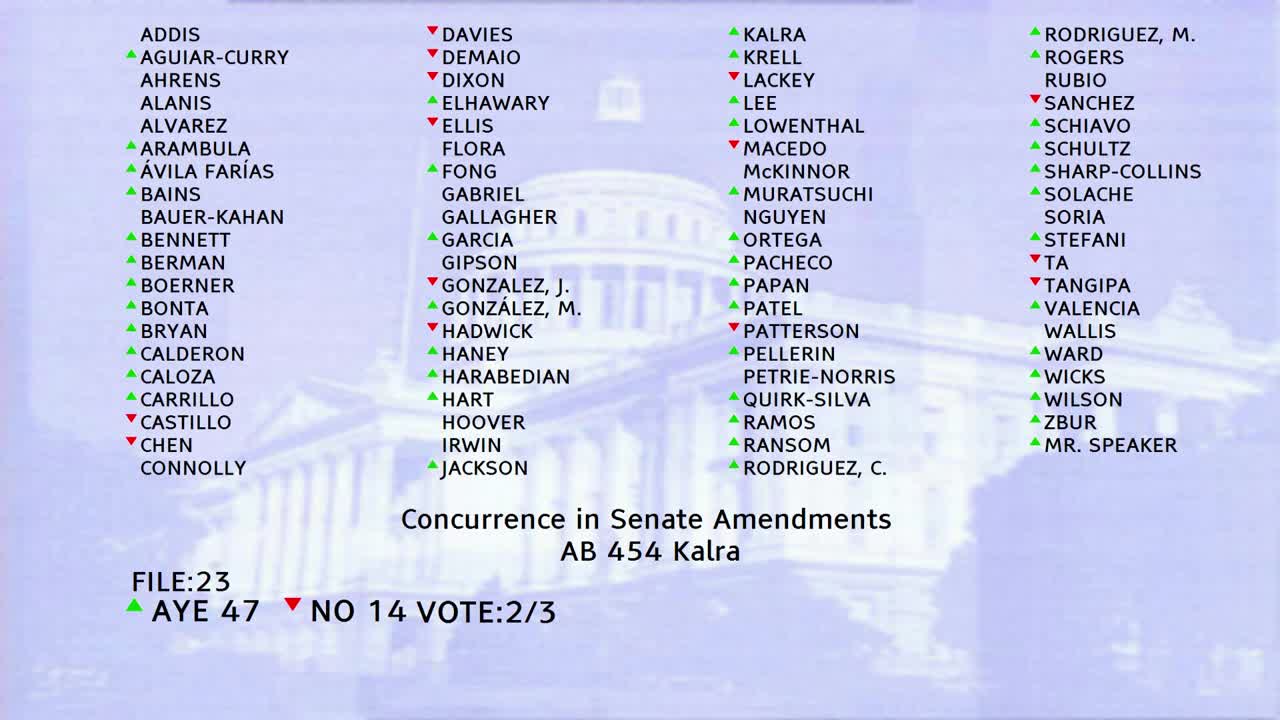 57SEC
Assembly Floor
 3MIN
Senate Floor
 13MIN
Senate Standing Committee on Education
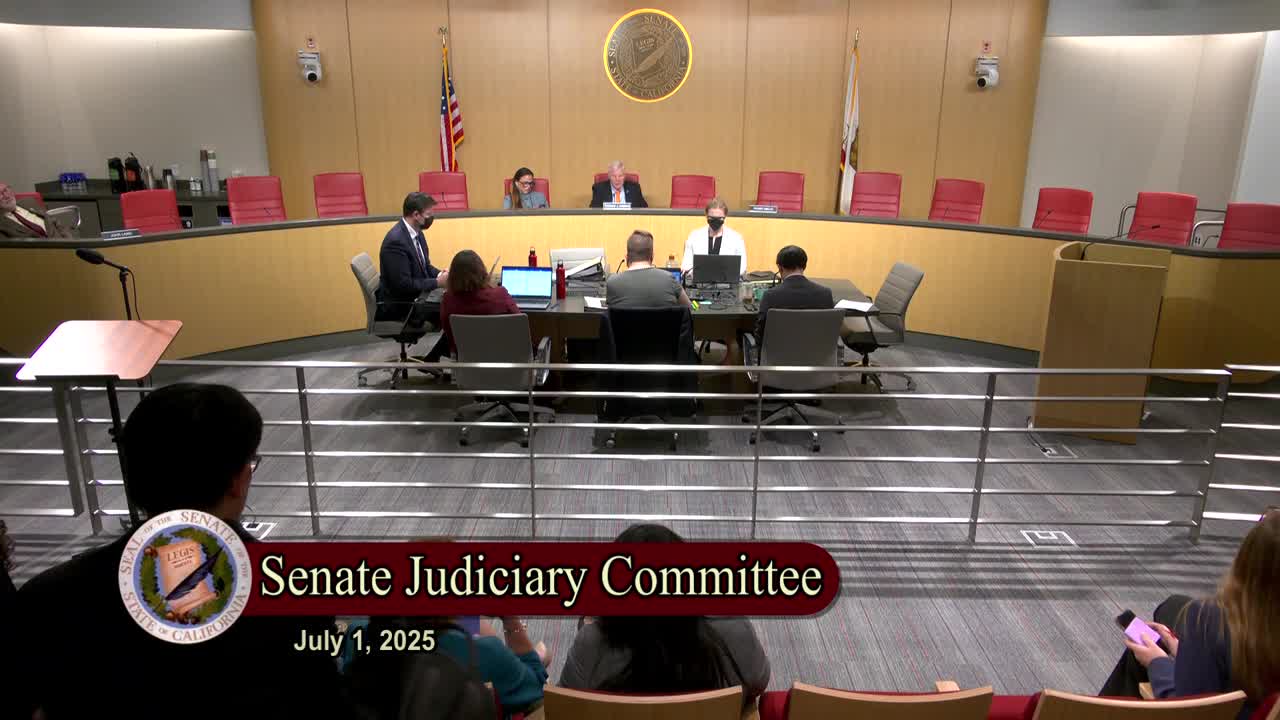 13MIN
Senate Standing Committee on Judiciary
 51SEC
Assembly Floor
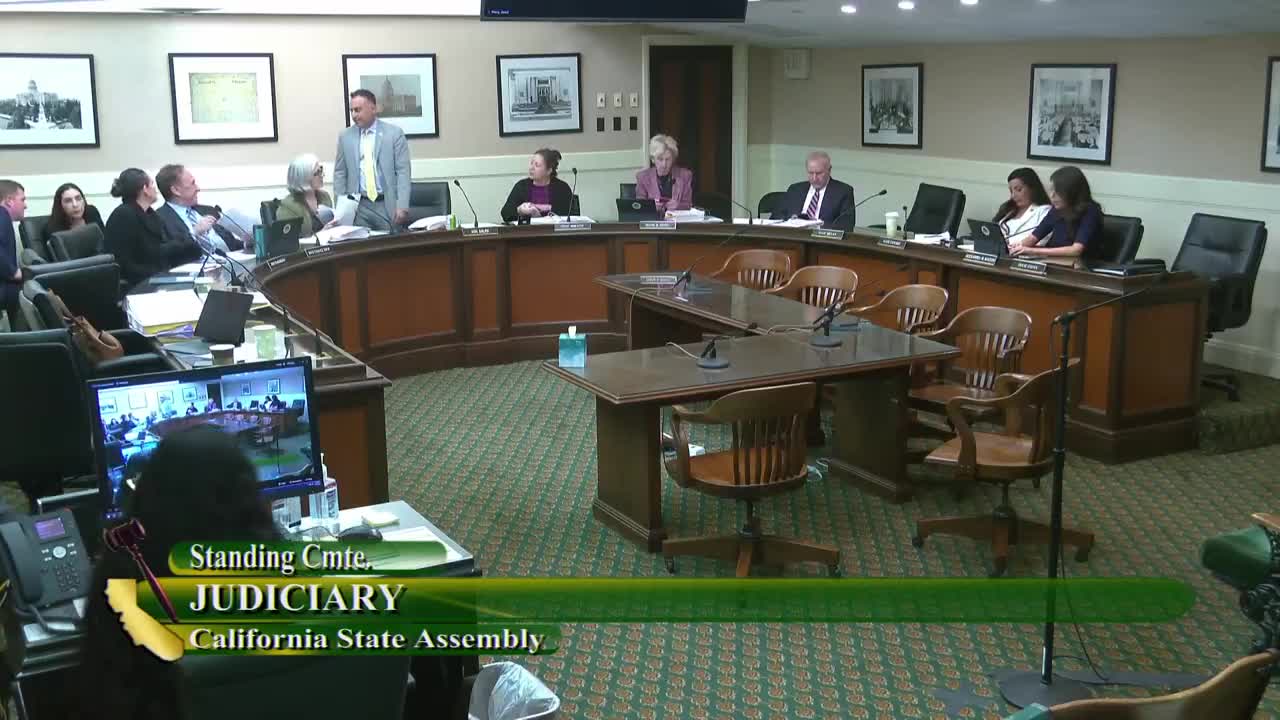 10MIN
Assembly Standing Committee on Judiciary
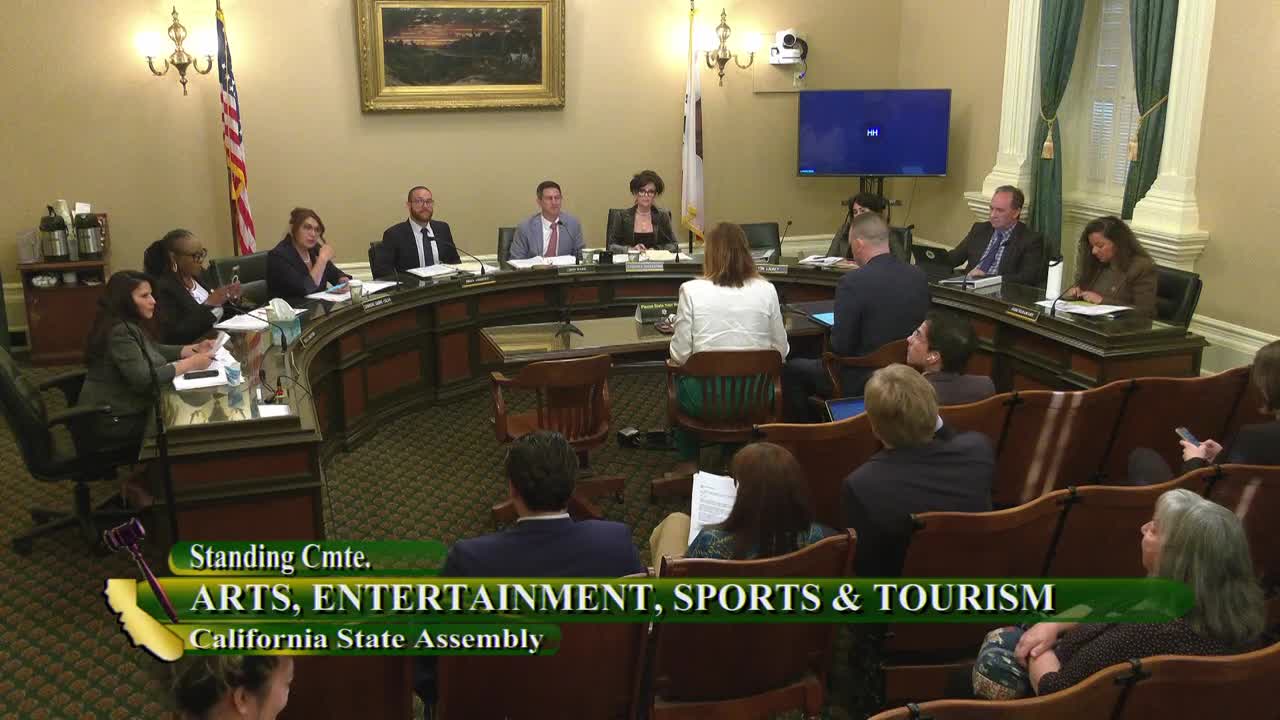 12MIN
Assembly Standing Committee on Arts, Entertainment, Sports, and Tourism
Bill Author

Bill Co-Author(s):