AB 946: Natural resources: equitable outdoor access: 30x30 goal: urban nature-based projects.
- Session Year: 2025-2026
- House: Assembly
- Latest Version Date: 2026-06-10
Current Status:
In Progress
(2026-08-13: In committee: Held under submission.)
Introduced
In Committee
Awaiting First Chamber Vote
Passed First Chamber
In Committee
Awaiting Second Chamber Vote
Passed Second Chamber
Enacted
By Executive Order No. N-82-20, Governor Gavin Newsom directed the Natural Resources Agency to combat the biodiversity and climate crises by, among other things, establishing the California Biodiversity Collaborative and conserving at least 30% of the states lands and coastal waters by 2030. Existing law requires the Secretary of the Natural Resources Agency to prepare and submit, on or before March 31, 2024, and annually thereafter, a report to the Legislature on the progress made in the prior calendar year toward achieving the goal to conserve 30% of Californias lands and coastal waters by 2030. Existing law provides that it is the goal of the state to conserve at least 30% of Californias lands and coastal waters by 2030, known as the 30x30 goal.
Existing law establishes the Equitable Outdoor Access Act, which sets forth the states commitment to ensuring all Californians can benefit from, and have meaningful access to, the states rich cultural and natural resources. Existing law declares that it is state policy, among other things, to ensure that all Californians have equitable opportunities to safe and affordable access to nature and access to the benefits of nature, and to prevent and minimize the intentional and unwarranted limitation of sustainable public access to public lands, where appropriate, including, but not limited to, local, regional, state, and federal parks, rivers, lakes, beaches, forests, mountain ranges, deserts, and other natural landscapes. Existing law requires specified state agencies to consider and incorporate, as appropriate, the state policy when revising, adopting, or establishing policies, regulations, or grant criteria, or making expenditures, as specified. Existing law requires all state agencies implementing the above-described state policy to do so in a manner consistent with the mission of their agency and that protects the health and safety of the public and conserves natural and cultural resources.
This bill would provide that, to advance and promote environmental, conservation, and public access policies and budget actions, the Governors office, state agencies, and the Legislature, when distributing resources, shall aspire to recognize the coequal goals and benefits of the 30x30 goal and the Outdoors for All initiative, and, to the extent practical, maximize investment in historically underserved urban communities consistent with those initiatives. The bill would encourage decisionmakers, when distributing resources to achieve the goals and benefits of the 30x30 goal and the Outdoors for All initiative, to consider factors that are unique to urban settings, including, among other things, higher land value acquisition and development costs per acre, the acute health needs of a local population due to historic lack of greenspace access and development externalities, local park needs assessment plans, current or impending loss of parks or greenspace as a result of state or federal infrastructure projects, and the availability of mobility options near a proposed land conservation site. The bill would encourage regulatory agencies, including the Department of Toxic Substances Control, to work with local communities to restore degraded lands that could contribute to a more equitable strategy for meeting the states environmental, conservation, and public access goals. The bill would require state funding agencies, including certain state conservancies and the Wildlife Conservation Board, to allow, to the extent consistent with the funding source, the funding programs authorizing statutes, and the states goals, for urban nature-based projects on degraded lands to be eligible and competitive for state funds.
Existing law requires every county to appoint a chief probation officer, and requires the chief probation officer to be nominated, as specified. Existing law requires the chief probation officer to perform the duties and discharge the obligations imposed on the office by law or by order of the superior court, including, among other things, the operation of juvenile halls pursuant to specified provisions.This bill would create an exception to those provisions by requiring, in a county with a population of at least 3,500,000 people, the chief probation officer, or a designee who is appointed by the county board of supervisors and who has jurisdiction over youth development, to perform those duties and discharge those obligations.Existing law requires every county to appoint a chief probation officer, and requires the chief probation officer to be nominated, as specified. Existing law requires the chief probation officer to perform the duties and discharge the obligations imposed on the office by law or by order of the superior court, including, among other things, the operation of juvenile halls pursuant to specified provisions.
This bill would create an exception to those provisions by requiring, in a county with a population of at least 3,500,000 people, the chief probation officer, or a designee who is appointed by the county board of supervisors and who has jurisdiction over youth development, to perform those duties and discharge those obligations.
(a)The Legislature finds and declares all of the following:
(1)Executive Order No. N-82-20 by Governor Gavin Newsom directs the Natural Resources Agency to combat the biodiversity and climate crises by, among other things, establishing the California Biodiversity Collaborative and conserving at least 30 percent of Californias lands and coastal waters by 2030, known as the 30x30 goal. The executive order directs the Natural Resources Agency to develop strategies to achieve this goal in a manner that, among other things, expands equitable outdoor access and recreation for all Californians. Senate Bill 337 (Chapter 392 of the Statutes of 2023) codifies the 30x30 goal.
(2)Hundreds of millions of dollars in General Fund allocations have been directed to the Wildlife Conservation Board, the Department of Conservation, and state conservancies, among others, to meet the 30x30 goal.
(3)Governor Newsom and First Partner Jennifer Siebel Newsom are championing the Outdoors for All initiative under the Natural Resources Agency that, among other things, seeks to expand parks in communities with little outdoor space and supports and underwrites programs to connect people who lack access to green space, fostering a sense of belonging and stewardship of the states outdoors.
(4)Senate Bill 337 (Chapter 392 of the Statutes of 2023) codifies the 30x30 goal.(4)The November 2023 Strategy of the Outdoors for All initiative, Providing Equitable Access to Parks and Nature, establishes the following six priorities to achieve the goal of outdoors for all:
(A)Establish spaces for people and nature to thrive.
(B)Foster belonging.
(C)Connect people and the outdoors.
(D)Cocreate with communities.
(E)Build equitable career pathways and a representative workforce.
(F)Align funding to achieve the Outdoors for All initiative.
(5)The County of Los Angeles adopted the 2022 Parks Needs Assessment Plus (PNA+) as its 30x30 plan. to form the basis for a 30x30 strategy for the county. PNA+ identifies environmental conservation opportunities in the County of Los Angeles, including both natural lands as well as and the restoration of degraded lands, such as brownfields, that would provide increased access to open space in highly urbanized parts of the County of Los Angeles.
(6)PNA+ goes beyond traditional conservation models that involve the acquisition and protection of natural lands and reimagines the 30x30 goal through a more equity- and access-facing lens to direct funding and resources into the healing and conversion of blighted, degraded, and otherwise underutilized urban-based lands into green spaces and microhabitats promoting nature-based opportunities, access, and enhanced community and neighborhood aesthetics.(7)Through thorough analysis, PNA+ identifies possible green space acquisition and restoration opportunities within the county and reveals a sharp contrast among regions in the county.(8)
(6)PNA+ discovered that most of the available land for acquisition pursuant to the 30x30 goal was in the northern part of the County of Los Angeles, an area already rich in park and open-space resources as compared to the southern part of the County of Los Angeles, an area richer in diversity and more challenged economically, wherein the opportunities for 30x30 projects are confined to degraded and underutilized lands.
(b)It is the intent of the Legislature, in order to promote equity in the allocation of resources and investments in nature-based solutions, including any funding that is already available for these purposes from the Greenhouse Gas Reduction Fund, particularly in Californias marginalized and historically underserved communities, that the Legislature, the Governor, and state agencies and departments charged with the distribution of state and federal funds creatively strive to reintroduce nature through land restoration and land healing interventions for the greening of Californias most nature-deficient communities.
SEC. 2.Section 1004 is added to the Public Resources Code, to read:1004.(a)The Legislature finds and declares that the November 2023 report of the Outdoors for All initiative, Providing Equitable Access to Parks and Nature, proposes the following priorities to achieve the goal of outdoors for all:(1)Establish spaces for people and nature to thrive. This priority includes strategies to achieve all of the following goals:(A)Develop, improve, and maintain local and regional outdoor spaces.(B)Support tribal ancestral land return as a pathway for outdoor access.(C)Support the use of cultural easements by California Native American tribes to protect cultural and sacred sites.(D)Support multibenefit solutions for access and environmental priorities.(E)Support deferred maintenance projects statewide that seek to expand access to recreation and provide a safe and welcoming experience for visitors.(F)Coordinate with school districts and regional governments to enhance green schoolyards and explore opportunities for schoolyards to fill gaps outside of school hours.(G)Support connecting different-sized outdoor spaces, including statewide and regional trail networks, to provide diverse experiences for all skill levels, with the cobenefit of creating wildlife corridors.(H)Ensure outdoor space development and management is consistent with Californias climate adaptation strategy, climate change scoping plan, and Natural and Working Lands Climate Smart Strategy.(I)Support implementation of antidisplacement measures to ensure access to open space does not lead to gentrification.(J)Collaborate with private landowners and federal, state, regional, and local governments to explore opportunities to expand recreation access on private lands.(2)Foster belonging. This priority includes strategies to achieve all of the following goals:(A)Share culturally diverse, relevant, and relatable stories and images of Californias people and history through the programming, interpretive materials, art, and signage offered at outdoor spaces, cultural and historic places, and museums.(B)Foster public appreciation of, and connection to, Californias natural and cultural resources.(C)Support improvements to language access for outdoor programming, educational materials, and staff at open spaces, cultural and historic places, and museums.(D)Build trust between and among staff and visitors.(E)Create adult- and youth-centered programming, including intergenerational opportunities, at outdoor spaces to inspire and build confidence across a broad range of recreational users and activities.(F)Rename offensive and derogatory geographic features and place names across outdoor spaces to address historical wrongs and create safe and inclusive spaces.(3)Connect people and the outdoors. This priority includes strategies to achieve all of the following goals:(A)Make information about Californias parks and outdoor spaces easier to find and understand.(B)Explore opportunities to offer free broadband on state recreation lands and cultural and historic properties, allowing for more accessible information, inclusive signage, programming, and connectivity to address safety concerns.(C)Enhance and create more green, accessible, safe, active, public, and shared transportation options linking the outdoors and communities.(D)Explore ways to provide free access to California state parks for low-income communities.(E)Support tribal members in harvesting culturally significant materials in outdoor spaces.(F)Explore public-private partnerships to support gear libraries and low-cost outings and classes at outdoor spaces.(G)Prioritize funding and a streamlined process for building lower cost coastal accommodations.(H)Prioritize partnerships with nonprofit organizations that provide youth and families from underserved communities and people with disabilities with access to state lands through supervised programming.(4)Cocreate with communities. This priority includes strategies to achieve all of the following goals:(A)Conduct early, often, and meaningful tribal consultations with the goal of enhancing tribal partnerships and collaboration.(B)Invite and embed meaningful tribal consultation and community engagement into grant processes.(C)Update the grant applications of the Natural Resources Agency and its departments to increase support and reduce barriers for underserved communities, including California Native American tribes, and the organizations that serve them.(D)Collaborate with other agencies to build best practices for public meetings that are accessible to people with disabilities and increase involvement by underserved communities through language access and greater transparency about state processes.(E)Collaborate with the Governors office to enhance outreach efforts for appointed positions on Natural Resources Agency boards and commissions to increase community representation.(F)Identify opportunities for tribal governments and community-based organizations to cocreate and comanage parks and outdoor spaces.(G)Continue to grow the Natural Resources Agencys capacity to meaningfully engage underserved communities.(5)Build equitable career pathways and a representative workforce. This priority includes strategies to achieve all of the following goals:(A)Bridge internships, California Conservation Corps, community conservation corps that have been certified as described in Section 14507.5, and other career development programs to careers with the state.(B)Enhance strategies and inclusive career outreach and programming through dedicated staff at the Natural Resources Agencys career center.(C)Continue coordination of intraagency workgroups and the Department of Human Resources to reassess job classifications, hiring processes, and salary ranges.(D)Continue coordination efforts of intraagency workgroups to develop career pathways strategies to support aligned efforts in employee retention.(6)Align funding to achieve the Outdoors for All initiative. This priority includes strategies to achieve all of the following goals:(A)Develop and communicate an inventory of equitable access investments and impacts.(B)Prioritize resource efficiency and reduce redundancies.(C)Establish partnerships with philanthropic and for-profit sectors.(D)Align existing funding sources to create multibenefit projects and programs.(E)Streamline standards and decisionmaking tools for equitable outdoor access to determine strategic investments for the state.(b)SEC. 2.Section 1006 is added to the Public Resources Code, immediately following Section 1003, to read:1006.(a)(1)To advance and promote environmental, conservation, and public access policies and budget actions, the Governors office, state agencies and state departments, and the Legislature, when distributing resources, shall aspire to recognize the coequal goals and benefits of the 30x30 goal, as defined in Section 71450, and the Equitable Outdoor Access Act, as established pursuant to Section 1000, and the Outdoors for All initiative and, to the extent practical, maximize investment in historically underserved urban communities consistent with those initiatives.
(2)When distributing resources to achieve the goals and benefits of the 30x30 goal and the Outdoors for All initiative, decisionmakers are encouraged to consider factors that are unique to urban settings, including, but not limited to, higher land value acquisition and development costs per acre, the use and rehabilitation of degraded lands for conservation projects, the proximity to populations lacking park and greenspace access, the acute health needs of a local population due to historic lack of greenspace access and development externalities, local park needs assessment plans, current or impending loss of parks or greenspace as a result of state or federal infrastructure projects, and the availability of mobility options near a proposed land conservation site.
(c)(b)Regulatory agencies, including, but not limited to, the Department of Toxic Substances Control, are encouraged to work with local communities to restore degraded lands that could contribute to a more equitable strategy for meeting the states environmental, conservation, and public access goals.
(d)(c)State funding agencies, including, but not limited to, the Natural Resources Agency, the Department of Parks and Recreation, the conservancies established pursuant to Sections 31100, 32320, 32510, 32555, 32602, 32633, 33200, and 33501 of this code, Section 66906 of the Government Code, and the Wildlife Conservation Board, shall allow, to the extent consistent with the funding source, the funding programs authorizing statutes, and the states goals, for urban nature-based projects on degraded lands to be eligible and competitive for state funds.
(a)The Legislature finds and declares all of the following:
(1)Executive Order No. N-82-20 by Governor Gavin Newsom directs the Natural Resources Agency to combat the biodiversity and climate crises by, among other things, establishing the California Biodiversity Collaborative and conserving at least 30 percent of Californias lands and coastal waters by 2030, known as the 30x30 goal. The executive order directs the Natural Resources Agency to develop strategies to achieve this goal in a manner that, among other things, expands equitable outdoor access and recreation for all Californians.
(2)Hundreds of millions of dollars in General Fund allocations have been directed to the Wildlife Conservation Board, the Department of Conservation, and state conservancies, among others, to meet the 30x30 goal.
(3)Governor Newsom and First Partner Jennifer Siebel Newsom are championing the Outdoors for All initiative under the Natural Resources Agency that, among other things, seeks to expand parks in communities with little outdoor space and supports and underwrites programs to connect people who lack access to green space, fostering a sense of belonging and stewardship of the states outdoors.
(4)Senate Bill 337 (Chapter 392 of the Statutes of 2023) codifies the 30x30 goal.
(5)The County of Los Angeles adopted the 2022 Parks Needs Assessment Plus (PNA+) as its 30x30 plan. PNA+ identifies environmental conservation opportunities in the County of Los Angeles, including both natural lands as well as the restoration of degraded lands, such as brownfields, that would provide increased access to open space in highly urbanized parts of the County of Los Angeles.
(6)PNA+ goes beyond traditional conservation models that involve the acquisition and protection of natural lands and reimagines the 30x30 goal through a more equity- and access-facing lens to direct funding and resources into the healing and conversion of blighted, degraded, and otherwise underutilized urban-based lands into green spaces and microhabitats promoting nature-based opportunities, access, and enhanced community and neighborhood aesthetics.
(7)Through thorough analysis, PNA+ identifies possible green space acquisition and restoration opportunities within the county and reveals a sharp contrast among regions in the county.
(8)PNA+ discovered that most of the available land for acquisition pursuant to the 30x30 goal was in the northern part of the County of Los Angeles, an area already rich in park and open-space resources as compared to the southern part of the County of Los Angeles, an area richer in diversity and more challenged economically, wherein the opportunities for 30x30 projects are confined to degraded and underutilized lands.
(b)It is the intent of the Legislature, in order to promote equity in the allocation of resources and investments in nature-based solutions, including any funding that is already available for these purposes from the Greenhouse Gas Reduction Fund, particularly in Californias marginalized and historically underserved communities, that the Legislature, the Governor, and state agencies and departments charged with the distribution of state and federal funds creatively strive to reintroduce nature through land restoration and land healing interventions for the greening of Californias most nature-deficient communities.
SEC. 2.Section 1004 is added to the Public Resources Code, to read:1004.(a)The Legislature finds and declares that the November 2023 report of the Outdoors for All initiative, Providing Equitable Access to Parks and Nature, proposes the following priorities to achieve the goal of outdoors for all:
(1)Establish spaces for people and nature to thrive. This priority includes strategies to achieve all of the following goals:
(A)Develop, improve, and maintain local and regional outdoor spaces.
(B)Support tribal ancestral land return as a pathway for outdoor access.
(C)Support the use of cultural easements by California Native American tribes to protect cultural and sacred sites.
(D)Support multibenefit solutions for access and environmental priorities.
(E)Support deferred maintenance projects statewide that seek to expand access to recreation and provide a safe and welcoming experience for visitors.
(F)Coordinate with school districts and regional governments to enhance green schoolyards and explore opportunities for schoolyards to fill gaps outside of school hours.
(G)Support connecting different-sized outdoor spaces, including statewide and regional trail networks, to provide diverse experiences for all skill levels, with the cobenefit of creating wildlife corridors.
(H)Ensure outdoor space development and management is consistent with Californias climate adaptation strategy, climate change scoping plan, and Natural and Working Lands Climate Smart Strategy.
(I)Support implementation of antidisplacement measures to ensure access to open space does not lead to gentrification.
(J)Collaborate with private landowners and federal, state, regional, and local governments to explore opportunities to expand recreation access on private lands.
(2)Foster belonging. This priority includes strategies to achieve all of the following goals:
(A)Share culturally diverse, relevant, and relatable stories and images of Californias people and history through the programming, interpretive materials, art, and signage offered at outdoor spaces, cultural and historic places, and museums.
(B)Foster public appreciation of, and connection to, Californias natural and cultural resources.
(C)Support improvements to language access for outdoor programming, educational materials, and staff at open spaces, cultural and historic places, and museums.
(D)Build trust between and among staff and visitors.
(E)Create adult- and youth-centered programming, including intergenerational opportunities, at outdoor spaces to inspire and build confidence across a broad range of recreational users and activities.
(F)Rename offensive and derogatory geographic features and place names across outdoor spaces to address historical wrongs and create safe and inclusive spaces.
(3)Connect people and the outdoors. This priority includes strategies to achieve all of the following goals:
(A)Make information about Californias parks and outdoor spaces easier to find and understand.
(B)Explore opportunities to offer free broadband on state recreation lands and cultural and historic properties, allowing for more accessible information, inclusive signage, programming, and connectivity to address safety concerns.
(C)Enhance and create more green, accessible, safe, active, public, and shared transportation options linking the outdoors and communities.
(D)Explore ways to provide free access to California state parks for low-income communities.
(E)Support tribal members in harvesting culturally significant materials in outdoor spaces.
(F)Explore public-private partnerships to support gear libraries and low-cost outings and classes at outdoor spaces.
(G)Prioritize funding and a streamlined process for building lower cost coastal accommodations.
(H)Prioritize partnerships with nonprofit organizations that provide youth and families from underserved communities and people with disabilities with access to state lands through supervised programming.
(4)Cocreate with communities. This priority includes strategies to achieve all of the following goals:
(A)Conduct early, often, and meaningful tribal consultations with the goal of enhancing tribal partnerships and collaboration.
(B)Invite and embed meaningful tribal consultation and community engagement into grant processes.
(C)Update the grant applications of the Natural Resources Agency and its departments to increase support and reduce barriers for underserved communities, including California Native American tribes, and the organizations that serve them.
(D)Collaborate with other agencies to build best practices for public meetings that are accessible to people with disabilities and increase involvement by underserved communities through language access and greater transparency about state processes.
(E)Collaborate with the Governors office to enhance outreach efforts for appointed positions on Natural Resources Agency boards and commissions to increase community representation.
(F)Identify opportunities for tribal governments and community-based organizations to cocreate and comanage parks and outdoor spaces.
(G)Continue to grow the Natural Resources Agencys capacity to meaningfully engage underserved communities.
(5)Build equitable career pathways and a representative workforce. This priority includes strategies to achieve all of the following goals:
(A)Bridge internships, California Conservation Corps, community conservation corps that have been certified as described in Section 14507.5, and other career development programs to careers with the state.
(B)Enhance strategies and inclusive career outreach and programming through dedicated staff at the Natural Resources Agencys career center.
(C)Continue coordination of intraagency workgroups and the Department of Human Resources to reassess job classifications, hiring processes, and salary ranges.
(D)Continue coordination efforts of intraagency workgroups to develop career pathways strategies to support aligned efforts in employee retention.
(6)Align funding to achieve the Outdoors for All initiative. This priority includes strategies to achieve all of the following goals:
(A)Develop and communicate an inventory of equitable access investments and impacts.
(B)Prioritize resource efficiency and reduce redundancies.
(C)Establish partnerships with philanthropic and for-profit sectors.
(D)Align existing funding sources to create multibenefit projects and programs.
(E)Streamline standards and decisionmaking tools for equitable outdoor access to determine strategic investments for the state.
(b)(1)To advance and promote environmental, conservation, and public access policies and budget actions, the Governors office, state agencies and state departments, and the Legislature, when distributing resources, shall aspire to recognize the coequal goals and benefits of the 30x30 goal, as defined in Section 71450, and the Outdoors for All initiative and, to the extent practical, maximize investment in historically underserved urban communities consistent with those initiatives.
(2)When distributing resources to achieve the goals and benefits of the 30x30 goal and the Outdoors for All initiative, decisionmakers are encouraged to consider factors that are unique to urban settings, including, but not limited to, higher land value acquisition and development costs per acre, the use and rehabilitation of degraded lands for conservation projects, the proximity to populations lacking park and greenspace access, the acute health needs of a local population due to historic lack of greenspace access and development externalities, local park needs assessment plans, current or impending loss of parks or greenspace as a result of state or federal infrastructure projects, and the availability of mobility options near a proposed land conservation site.
(c)Regulatory agencies, including, but not limited to, the Department of Toxic Substances Control, are encouraged to work with local communities to restore degraded lands that could contribute to a more equitable strategy for meeting the states environmental, conservation, and public access goals.
(d)State funding agencies, including, but not limited to, the Natural Resources Agency, the Department of Parks and Recreation, the conservancies established pursuant to Sections 31100, 32320, 32510, 32555, 32602, 32633, 33200, and 33501 of this code, Section 66906 of the Government Code, and the Wildlife Conservation Board, shall allow, to the extent consistent with the funding source, the funding programs authorizing statutes, and the states goals, for urban nature-based projects on degraded lands to be eligible and competitive for state funds.
SECTION 1.Section 27771 of the Government Code is amended to read:27771.(a)Except as provided in subdivision (b), the chief probation officer shall perform the duties and discharge the obligations imposed on the office by law or by order of the superior court, including the following:(1)Community supervision of offenders subject to the jurisdiction of the juvenile court pursuant to Section 602 or 1766 of the Welfare and Institutions Code.(2)Operation of juvenile halls pursuant to Section 852 of the Welfare and Institutions Code.(3)Operation of juvenile camps and ranches established under Section 880 of the Welfare and Institutions Code.(4)Community supervision of individuals subject to probation pursuant to conditions imposed under Section 1203 of the Penal Code.(5)Community supervision of individuals subject to mandatory supervision pursuant to subparagraph (B) of paragraph (5) of subdivision (h) of Section 1170 of the Penal Code.(6)Community supervision of individuals subject to postrelease community supervision pursuant to Section 3451 of the Penal Code.(7)Administration of community-based corrections programming, including, but not limited to, programs authorized by Chapter 3 (commencing with Section 1228) of Title 8 of Part 2 of the Penal Code.(8)Serving as chair of the Community Corrections Partnership pursuant to Section 1230 of the Penal Code.(9)Making recommendations to the court, including, but not limited to, pre-sentence investigative reports pursuant to Sections 1203.7 and 1203.10 of the Penal Code.(b)In a county with a population of at least 3,500,000 people, the chief probation officer, or a designee who is appointed by the county board of supervisors and who has jurisdiction over youth development, shall perform the duties and discharge the obligations described in subdivision (a).(c)The chief probation officer may perform other duties that are consistent with those enumerated in subdivision (a) and may accept appointment to the Board of State and Community Corrections and collect the per diem authorized by Section 6025.1 of the Penal Code. REVISIONS: HeadingLine 2.(a)The Except as provided in subdivision (b), the chief probation officer shall perform the duties and discharge the obligations imposed on the office by law or by order of the superior court, including the following:
(1)Community supervision of offenders subject to the jurisdiction of the juvenile court pursuant to Section 602 or 1766 of the Welfare and Institutions Code.
(2)Operation of juvenile halls pursuant to Section 852 of the Welfare and Institutions Code.
(3)Operation of juvenile camps and ranches established under Section 880 of the Welfare and Institutions Code.
(4)Community supervision of individuals subject to probation pursuant to conditions imposed under Section 1203 of the Penal Code.
(5)Community supervision of individuals subject to mandatory supervision pursuant to subparagraph (B) of paragraph (5) of subdivision (h) of Section 1170 of the Penal Code.
(6)Community supervision of individuals subject to postrelease community supervision pursuant to Section 3451 of the Penal Code.
(7)Administration of community-based corrections programming, including, but not limited to, programs authorized by Chapter 3 (commencing with Section 1228) of Title 8 of Part 2 of the Penal Code.
(8)Serving as chair of the Community Corrections Partnership pursuant to Section 1230 of the Penal Code.
(9)Making recommendations to the court, including, but not limited to, pre-sentence investigative reports pursuant to Sections 1203.7 and 1203.10 of the Penal Code.
(b)In a county with a population of at least 3,500,000 people, the chief probation officer, or a designee who is appointed by the county board of supervisors and who has jurisdiction over youth development, shall perform the duties and discharge the obligations described in subdivision (a).
(b)(c)The chief probation officer may perform other duties that are consistent with those enumerated in subdivision (a) and may accept appointment to the Board of State and Community Corrections and collect the per diem authorized by Section 6025.1 of the Penal Code.
|
Date
|
Status
|
|---|---|
| Aug 13, 2026 | In committee: Held under submission. |
| Jun 22, 2026 | In committee: Referred to APPR. suspense file. |
| Jun 10, 2026 | Read second time and amended. Re-referred to Com. on APPR. |
| Jun 9, 2026 | From committee: Amend, and do pass as amended and re-refer to Com. on APPR. (Ayes 7. Noes 0.) (June 9). |
| May 6, 2026 | Referred to Com. on N.R. & W. |
| Jan 27, 2026 | In Senate. Read first time. To Com. on RLS. for assignment. |
| Jan 26, 2026 | Read third time. Passed. Ordered to the Senate. (Ayes 71. Noes 0. Page 3833.) |
| Jan 22, 2026 | Read second time. Ordered to third reading. |
| Jan 22, 2026 | From committee: Do pass. (Ayes 15. Noes 0.) (January 22). |
| Jan 22, 2026 | In committee: Set, first hearing. Referred to suspense file. |
| Jan 22, 2026 | Assembly Rule 63 suspended. (Page 3806.) |
| Jan 13, 2026 | From committee: Do pass and re-refer to Com. on APPR. (Ayes 11. Noes 0.) (January 13). Re-referred to Com. on APPR. |
| Jan 13, 2026 | Coauthors revised. |
| Jan 13, 2026 | From committee: Do pass and re-refer to Com. on W. P., & W. with recommendation: To Consent Calendar. (Ayes 13. Noes 0.) (January 12). Re-referred to Com. on W. P., & W. |
| Jan 8, 2026 | (Pending re-refer to Com. on W., P., & W.) |
| Jan 8, 2026 | Assembly Rule 56 suspended. (Page 3717.) |
| Jan 5, 2026 | Re-referred to Coms. on NAT. RES. and W. P., & W. pursuant to Assembly Rule 96. |
| Jan 5, 2026 | Re-referred to Com. on PUB. S. |
| Jan 5, 2026 | From committee chair, with author's amendments: Amend, and re-refer to Com. on PUB. S. Read second time and amended. |
| Apr 22, 2025 | In committee: Hearing postponed by committee. |
| Apr 2, 2025 | In committee: Set, second hearing. Hearing canceled at the request of author. |
| Mar 27, 2025 | In committee: Set, first hearing. Hearing canceled at the request of author. |
| Mar 10, 2025 | Referred to Com. on PUB. S. |
| Feb 21, 2025 | From printer. May be heard in committee March 23. |
| Feb 20, 2025 | Read first time. To print. |
|
Date
|
Description
|
Location
|
Votes
|
|
|---|---|---|---|---|
| Jun 22, 2026 | Placed on suspense file | Senate Standing Committee on Appropriations |
Passed |
|
| Jun 9, 2026 | Do pass as amended, but first amend, and re-refer to the Committee on [Appropriations] | Senate Standing Committee on Natural Resources and Water |
Passed |
|
| Jan 26, 2026 | AB 946 Bryan Assembly Third Reading | Assembly Floor |
Passed |
|
| Jan 22, 2026 | Do pass. | Assembly Standing Committee on Appropriations |
Passed |
|
| Jan 13, 2026 | Do pass and be re-referred to the Committee on [Appropriations] | Assembly Standing Committee on Water, Parks, and Wildlife |
Passed |
|
| Jan 12, 2026 | Do pass and be re-referred to the Committee on [Water, Parks, and Wildlife] with recommendation: To Consent Calendar | Assembly Standing Committee on Natural Resources |
Passed |
This list shows positions taken on this bill by organizations on the date displayed, which is linked to the original source.
Positions by individuals are not included.
|
Organization
|
Position
|
Date
|
|---|---|---|
| Aclu California Action | ** Support | |
| American Federation Of State, County And Municipal Employees, Afl-Cio | ** Against | |
| BU 702- SEIU 721 Joint Council | ** Against | |
| California Association Of Recreation & Park Districts | ** Support | |
| California Outdoor Recreation Partnership | ** Support | |
| California Park & Recreation Society | ** Support | |
| California Public Defenders Association | ** Support | |
| Chief Probation Officers Of California | ** Against | |
| County Of Kern | ** Against | |
| County of Monterey | ** Against | |
| Fresno County Board of Supervisors | ** Against | |
| Inyo County Board of Supervisors | ** Against | |
| Judicial Council of California | ** Against | |
| LA Defensa | ** Support | |
| Los Angeles County | ** Support | |
| Los Angeles County Probation Managers Association Afscme Local 1967 | ** Against | |
| Los Angeles County Probation Officers Union Afscme Local 685 | ** Against | |
| Marin County Probation Department | ** Against | |
| Mendocino County Board of Supervisors | ** Against | |
| Pacific Juvenile Defender Center | ** Support | |
| Prevention Institute | ** Support | |
| Sacramento County Probation Association | ** Against | |
| San Diego County Probation Officers Association | ** Against | |
| San Joaquin County Probation Officers Association | ** Against | |
| San Mateo County Probation Detention Association | ** Against | |
| State Coalition Of Probation Organizations | ** Against | |
| VENTURA COUNTY PROFESSIONAL PEACE OFFICERS ASSOCIATION | ** Against |
SENATE COMMITTEE ON
Senator Sabrina Cervantes, Chair
2025 - 2026 Regular Session
AB 946 (Bryan) - Natural resources: equitable outdoor access: 30x30 goal: urban nature-based projects
Version: | Policy Vote: |
Urgency: | Mandate: |
Hearing Date: | Consultant: |
Bill Summary:
This bill would provide that, to advance and promote environmental, conservation, and public access policies and budget actions, the Governor’s office, state agencies, and the Legislature, when distributing resources, shall aspire to recognize the coequal goals and benefits of the 30x30 goal and the Outdoors for All initiative, and, to the extent practical, maximize investment in historically underserved urban communities consistent with those initiatives.
Fiscal Impact:
- Unknown, potentially significant cost pressures on the Wildlife Conservation Board (WCB). To the extent this bill requires urban nature-based projects to be prioritized over other wildlife projects, it would leave less funding available for important wildlife and habitat projects outside of urban areas, thereby creating cost pressures.
Background:
30x30. California’s 30x30 initiative to conserve 30% of the state’s land and coastal waters by 2030 is part of an international movement to conserve natural areas across our planet, through which scores of countries have established their own 30x30 commitments. California’s initiative seeks to protect and restore biodiversity, expand access to nature, and mitigate and build resilience to climate change.
Equitable Outdoor Access Act. The Equitable Outdoor Access Act (AB 30, Kalra, Chapter 939, Statutes of 2022) established that it is the policy of the state to 1) ensure all Californians have equitable opportunities to the benefits of nature; 2) maximize public access to public lands; and 3) prevent and minimize the intentional and unwarranted limitation of sustainable public access to public lands.
Proposed Law:
This bill would:
- Incorporate the priorities and implementation strategies of the November 2023 Outdoors for All Strategy into statute.
- Require the Governor’s office, state agencies and state departments, and the Legislature to recognize the coequal goals and benefits of the 30x30 goal and the Outdoors for All initiative. Also requires those offices to maximize investment in historically underserved urban communities, to the extent practical.
- Encourage decisionmakers to consider factors unique to urban settings when distributing resources to achieve the goals and benefits of 30x30 and Outdoors for All.
- Encourage regulatory agencies to work with local communities to restore degraded lands.
- Allow state agencies to fund urban nature-based projects that are eligible and competitive for such funds, consistent with the funding program’s authorizing statutes.
- Make related findings and declarations.
Related Legislation:
SB 1268 (Gonzalez, 2026) would codify the Outdoors for All Initiative.
AB 900 (Papan, Chapter 385, Statutes of 2025) requires CNRA to develop strategies to reduce barriers and increase support for stewardship of conserved lands.
AB 2440 (Reyes, Chapter 716, Statutes of 2024) requires CNRA to prioritize promoting and supporting partnering state agencies and departments that acquire and steward state land, and requires the 30x30 progress report include information on the amount of funding expended by each partnering state agency and department for land and water conservation, science and research, public outreach and engagement, and managing, monitoring, and restoring conserved lands and water, as well as information on state funding invested in equitable outdoor access.
SB 1402 (Min, 2024) would have required all state agencies, departments, boards, offices, commissions, and conservancies to consider the 30x30 goal when adopting, revising, or establishing plans, policies, or regulations that directly affect the use of coastal waters or land, management of natural resources, or biodiversity conservation. This bill was held on the Assembly Appropriations suspense file.
AB 30 (Kalra, Chapter 939, Statutes of 2022) established the Equitable Outdoor Access Act.
Staff Comments:
The California Natural Resources Agency notes that the successful achievement of both 30x30 and Outdoors for All will be dependent on continued investment from the legislature in regional conservation planning and initiatives, Nature-Based Solutions programs, tribal partnerships, management and monitoring programs, and community capacity building.
-- END --
SENATE COMMITTEE ON NATURAL RESOURCES AND WATER
Senator Josh Becker, Chair
2025 - 2026 Regular
Bill No: AB Hearing Date: June 9, 2026
Author: | |||
Version: | Amended | ||
Urgency: | Fiscal: | ||
Consultant: | |||
Subject: Natural resources: equitable outdoor access: 30x30 goal: urban nature-based projects
SUMMARY
This bill would provide that, to advance and promote environmental, conservation, and public access policies and budget actions, the Governor’s office, state agencies, and the Legislature, when distributing resources, shall aspire to recognize the coequal goals and benefits of the 30x30 goal and the Outdoors for All initiative, and, to the extent practical, maximize investment in historically underserved urban communities consistent with those initiatives.
BACKGROUND AND EXISTING LAW
Outdoors for All Initiative. The California Natural Resources Agency (CNRA) administers the Outdoors for All initiative championed by Governor Gavin Newsom and First Partner Jennifer Siebel Newsom. CNRA published a strategy (Strategy) for the initiative in November 2023 identifying six priorities:
- Establish Spaces for People and Nature to Thrive.
- Foster Belonging.
- Connect People and the Outdoors.
- Co-Create with Communities.
- Build Equitable Career Pathways and a Representative Workforce.
- Align Funding to Achieve Outdoors for All.
30x30. California’s 30x30 initiative to conserve 30% of the state’s land and coastal waters by 2030 is part of an international movement to conserve natural areas across our planet, through which scores of countries have established their own 30x30 commitments. California’s initiative seeks to protect and restore biodiversity, expand access to nature, and mitigate and build resilience to climate change.
Equitable Outdoor Access Act. The Equitable Outdoor Access Act (AB 30, Kalra, Chapter 939, Statutes of 2022) established that it is the policy of the state to 1) ensure all Californians have equitable opportunities to the benefits of nature; 2) maximize public access to public lands; and 3) prevent and minimize the intentional and unwarranted limitation of sustainable public access to public lands.
Existing law:
- Establishes CNRA and vests it with the responsibility to restore, protect, and manage the state’s natural, historical, and cultural resources for current and future generations (Government Code (GOV) § 12805).
- Establishes a goal to conserve 30 percent of California’s land and coastal waters by 2030 (“30x30”) (Public Resources Code (PRC) § 71450 and Executive Order No. N-82-20).
- Requires relevant state agencies, including CNRA and its departments, boards, offices, conservancies, and commissions, and the Department of Transportation to consider and incorporate state policy regarding equitable outdoor access when revising, adopting, or establishing policies, regulations, or grant criteria, or making expenditures (PRC § 1002).
- Establishes the Equitable Outdoor Access Act, and sets forth the state’s commitment to ensuring all Californians can benefit from, and have meaningful and sustainable access to, the state’s rich cultural and natural resources (PRC § 1000).
- Requires CNRA to submit a report to the Legislature regarding the implementation of the Equitable Outdoor Access Act by January 1, 2024 (PRC § 1003).
PROPOSED LAW
This bill would:
- Incorporate the priorities and implementation strategies of the November 2023 Outdoors for All Strategy into statute.
- Require the Governor’s office, state agencies and state departments, and the Legislature to aspire to recognize the coequal goals and benefits of the 30x30 goal and the Outdoors for All initiative. Also requires those offices to maximize investment in historically underserved urban communities, to the extent practical.
- Encourage decisionmakers to consider factors unique to urban settings when distributing resources to achieve the goals and benefits of 30x30 and Outdoors for All.
- Encourage regulatory agencies to work with local communities to restore degraded lands.
- Allow state agencies to fund urban nature-based projects that are eligible and competitive for such funds, consistent with the funding program’s authorizing statutes.
- Make related findings and declarations.
ARGUMENTS IN SUPPORT
According to the author, “California has made a strong commitment to protecting and preserving its natural lands, but it is just as important to make sure that densely populated and underserved communities are not overlooked in this work. By urging the state to focus on greening and restoring land in heavily urbanized areas, AB 946 will ensure we take a comprehensive approach to environmental protection that supports vulnerable communities and expands access to nature throughout California.”
ARGUMENTS IN OPPOSITION
None received
COMMENTS
Overlap with SB 1268 (Gonzalez). Heard in this committee on April 21, 2026, SB 1268 authored by Senator Gonzalez proposes to codify the Outdoors for All initiative in statute under the provisions of the Equitable Outdoor Access Act (PRC §§ 1001-1003). AB 946 contains some duplicative language to SB 1268 but also addresses additional cobenefits of 30x30 and Outdoors for All that are not included in SB 1268. The Committee may wish to amend the bill so that, if both bills are enacted, the language in statute is harmonized, and that if only one bill is enacted, there is enough context for the chosen statute to be implemented [See amendments 1 and 2].
Understanding the 30x30 goal. The goal to conserve 30% of California lands and coastal waters by 2030 is a goal based on conserving a certain quantity of California lands. Although the authorizing statute mentions equitable public access to nature, it is acknowledged as a secondary priority of 30x30 and a cobenefit of stewardship rather than a primary priority related to choosing which lands or coastal waters to conserve under the 30x30 goal (PRC §§ 71451, 71453).
No functional changes to how projects are funded. This bill requires state agencies such as CNRA to “aspire to” recognize coequal funding goals and fund projects “as practical.” It also “encourages” them to consider unique urban factors and “encourages” work with communities to restore degraded land, and “allows” eligible projects to be funded through relevant programs.
This bill does not contain statutory language that would functionally change the funding practices of the agencies implementing 30x30 and Outdoors for All. Although letters received by the committee in support of this Legislation, such as from Los Angeles County, appear to mistakenly believe there will be changes to guidelines, there is no requirement in this bill that state agencies change the way they program or award funding.
Related Legislation
SB 1268 (Gonzalez, 2026) codifies the Outdoors for All Initiative. This bill is pending hearing in the Assembly Water, Parks, and Wildlife Committee.
AB 900 (Papan, Chapter 385, Statutes of 2025) requires CNRA to develop strategies to reduce barriers and increase support for stewardship of conserved lands.
AB 2440 (Reyes, Chapter 716, Statutes of 2024) requires CNRA to prioritize promoting and supporting partnering state agencies and departments that acquire and steward state land, and requires the 30x30 progress report include information on the amount of funding expended by each partnering state agency and department for land and water conservation, science and research, public outreach and engagement, and managing, monitoring, and restoring conserved lands and water, as well as information on state funding invested in equitable outdoor access.
SB 1402 (Min, 2024) would have required all state agencies, departments, boards, offices, commissions, and conservancies to consider the 30x30 goal when adopting, revising, or establishing plans, policies, or regulations that directly affect the use of coastal waters or land, management of natural resources, or biodiversity conservation. This bill was held on the Assembly Appropriations suspense file.
AB 30 (Kalra, Chapter 939, Statutes of 2022) established the Equitable Outdoor Access Act.
SUGGESTED AMENDMENTS
AMENDMENT 1
Amend Section 1. as follows:
(a) The Legislature finds and declares all of the following:
(1) Executive Order No. N-82-20 by Governor Gavin Newsom directs the Natural Resources Agency to combat the biodiversity and climate crises by, among other things, establishing the California Biodiversity Collaborative and conserving at least 30 percent of California’s lands and coastal waters by 2030, known as the 30x30 goal. The executive order directs the Natural Resources Agency to develop strategies to achieve this goal in a manner that, among other things, expands equitable outdoor access and recreation for all Californians. Senate Bill 337 (Chapter 392 of the Statutes of 2023) codified the 30x30 goal.
(2) Hundreds of millions of dollars in General Fund allocations have been directed to the Wildlife Conservation Board, the Department of Conservation, and state conservancies, among others, to meet the 30x30 goal.
(3) Governor Newsom and First Partner Jennifer Siebel Newsom are championing the Outdoors for All initiative under the Natural Resources Agency that, among other things, seeks to expand parks in communities with little outdoor space and supports and underwrites programs to connect people who lack access to green space, fostering a sense of belonging and stewardship of the state’s outdoors.
(4) Senate Bill 337 (Chapter 392 of the Statutes of 2023) codifies the 30x30 goal.
The November 2023 Strategy of the Outdoors for All initiative, “Providing Equitable Access to Parks and Nature,” establishes six priorities to achieve the goal of outdoors for all:
(A) Establish spaces for people and nature to thrive.
(B) Foster belonging.
(C) Connect people and the outdoors
(D) Cocreate with communities.
(E) Build equitable career pathways and a representative workforce.
(F) Align funding to achieve the Outdoors for All initiative.
(5) The County of Los Angeles adopted the 2022 Parks Needs Assessment Plus (PNA+), which forms the basis for a 30x30 strategy for the County as its 30x30 plan. PNA+ identifies environmental conservation opportunities in the County of Los Angeles, including both natural lands as well as and the restoration of degraded lands, such as brownfields, that would provide increased access to open space in highly urbanized parts of the County of Los Angeles.
(6) PNA+ goes beyond traditional conservation models that involve the acquisition and protection of natural lands and reimagines the 30x30 goal through a more equity- and access-facing lens to direct funding and resources into the healing and conversion of blighted, degraded, and otherwise underutilized urban-based lands into green spaces and microhabitats promoting nature-based opportunities, access, and enhanced community and neighborhood aesthetics.
(7) Through thorough analysis, PNA+ identifies possible green space acquisition and restoration opportunities within the county and reveals a sharp contrast among regions in the county.
(8) PNA+ discovered that most of the available land for acquisition pursuant to the 30x30 goal was in the northern part of the County of Los Angeles, an area already rich in park and open-space resources as compared to the southern part of the County of Los Angeles, an area richer in diversity and more challenged economically, wherein the opportunities for 30x30 projects are confined to degraded and underutilized lands.
(b8) It is the intent of the Legislature, in order to promote equity in the allocation of resources and investments in nature-based solutions, including any funding that is already available for these purposes from the Greenhouse Gas Reduction Fund, particularly in California’s marginalized and historically underserved communities, that the Legislature, the Governor, and state agencies and departments charged with the distribution of state and federal funds creatively strive to reintroduce nature through land restoration and land healing interventions for the greening of California’s most nature-deficient communities.
AMENDMENT 2
Amend Section 2. as follows:
SEC. 2. Section 1004 1006 is added to the Public Resources Code, to read:
10041006. (a) The Legislature finds and declares that the November 2023 report of the Outdoors for All initiative, “Providing Equitable Access to Parks and Nature,” proposes the following priorities to achieve the goal of outdoors for all:
(1) Establish spaces for people and nature to thrive. This priority includes strategies to achieve all of the following goals:
(A) Develop, improve, and maintain local and regional outdoor spaces.
(B) Support tribal ancestral land return as a pathway for outdoor access.
(C) Support the use of cultural easements by California Native American tribes to protect cultural and sacred sites.
(D) Support multibenefit solutions for access and environmental priorities.
(E) Support deferred maintenance projects statewide that seek to expand access to recreation and provide a safe and welcoming experience for visitors.
(F) Coordinate with school districts and regional governments to enhance green schoolyards and explore opportunities for schoolyards to fill gaps outside of school hours.
(G) Support connecting different-sized outdoor spaces, including statewide and regional trail networks, to provide diverse experiences for all skill levels, with the cobenefit of creating wildlife corridors.
(H) Ensure outdoor space development and management is consistent with California’s climate adaptation strategy, climate change scoping plan, and Natural and Working Lands Climate Smart Strategy.
(I) Support implementation of antidisplacement measures to ensure access to open space does not lead to gentrification.
(J) Collaborate with private landowners and federal, state, regional, and local governments to explore opportunities to expand recreation access on private lands.
(2) Foster belonging. This priority includes strategies to achieve all of the following goals:
(A) Share culturally diverse, relevant, and relatable stories and images of California’s people and history through the programming, interpretive materials, art, and signage offered at outdoor spaces, cultural and historic places, and museums.
(B) Foster public appreciation of, and connection to, California’s natural and cultural resources.
(C) Support improvements to language access for outdoor programming, educational materials, and staff at open spaces, cultural and historic places, and museums.
(D) Build trust between and among staff and visitors.
(E) Create adult- and youth-centered programming, including intergenerational opportunities, at outdoor spaces to inspire and build confidence across a broad range of recreational users and activities.
(F) Rename offensive and derogatory geographic features and place names across outdoor spaces to address historical wrongs and create safe and inclusive spaces.
(3) Connect people and the outdoors. This priority includes strategies to achieve all of the following goals:
(A) Make information about California’s parks and outdoor spaces easier to find and understand.
(B) Explore opportunities to offer free broadband on state recreation lands and cultural and historic properties, allowing for more accessible information, inclusive signage, programming, and connectivity to address safety concerns.
(C) Enhance and create more green, accessible, safe, active, public, and shared transportation options linking the outdoors and communities.
(D) Explore ways to provide free access to California state parks for low-income communities.
(E) Support tribal members in harvesting culturally significant materials in outdoor spaces.
(F) Explore public-private partnerships to support gear libraries and low-cost outings and classes at outdoor spaces.
(G) Prioritize funding and a streamlined process for building lower cost coastal accommodations.
(H) Prioritize partnerships with nonprofit organizations that provide youth and families from underserved communities and people with disabilities with access to state lands through supervised programming.
(4) Cocreate with communities. This priority includes strategies to achieve all of the following goals:
(A) Conduct early, often, and meaningful tribal consultations with the goal of enhancing tribal partnerships and collaboration.
(B) Invite and embed meaningful tribal consultation and community engagement into grant processes.
(C) Update the grant applications of the Natural Resources Agency and its departments to increase support and reduce barriers for underserved communities, including California Native American tribes, and the organizations that serve them.
(D) Collaborate with other agencies to build best practices for public meetings that are accessible to people with disabilities and increase involvement by underserved communities through language access and greater transparency about state processes.
(E) Collaborate with the Governor’s office to enhance outreach efforts for appointed positions on Natural Resources Agency boards and commissions to increase community representation.
(F) Identify opportunities for tribal governments and community-based organizations to cocreate and comanage parks and outdoor spaces.
(G) Continue to grow the Natural Resources Agency’s capacity to meaningfully engage underserved communities.
(5) Build equitable career pathways and a representative workforce. This priority includes strategies to achieve all of the following goals:
(A) Bridge internships, California Conservation Corps, community conservation corps that have been certified as described in Section 14507.5, and other career development programs to careers with the state.
(B) Enhance strategies and inclusive career outreach and programming through dedicated staff at the Natural Resources Agency’s career center.
(C) Continue coordination of intraagency workgroups and the Department of Human Resources to reassess job classifications, hiring processes, and salary ranges.
(D) Continue coordination efforts of intraagency workgroups to develop career pathways strategies to support aligned efforts in employee retention.
(6) Align funding to achieve the Outdoors for All initiative. This priority includes strategies to achieve all of the following goals:
(A) Develop and communicate an inventory of equitable access investments and impacts.
(B) Prioritize resource efficiency and reduce redundancies.
(C) Establish partnerships with philanthropic and for-profit sectors.
(D) Align existing funding sources to create multibenefit projects and programs.
(E) Streamline standards and decisionmaking tools for equitable outdoor access to determine strategic investments for the state.
(b) (1) To advance and promote environmental, conservation, and public access policies and budget actions, the Governor’s office, state agencies and state departments, and the Legislature, when distributing resources, shall aspire to recognize the coequal goals and benefits of the 30x30 goal, as defined in Section 71450, and the Equitable Outdoor Access Act, as established in Chapter 2, Division 1.5, including the Outdoors for All initiative, and, to the extent practical, maximize investment in historically underserved urban communities consistent with those initiatives.
(2) When distributing resources to achieve the goals and benefits of the 30x30 goal and the Outdoors for All initiative, decisionmakers are encouraged to consider factors that are unique to urban settings, including, but not limited to, higher land value acquisition and development costs per acre, the use and rehabilitation of degraded lands for conservation projects, the proximity to populations lacking park and greenspace access, the acute health needs of a local population due to historic lack of greenspace access and development externalities, local park needs assessment plans, current or impending loss of parks or greenspace as a result of state or federal infrastructure projects, and the availability of mobility options near a proposed land conservation site.
(cb) Regulatory agencies, including, but not limited to, the Department of Toxic Substances Control, are encouraged to work with local communities to restore degraded lands that could contribute to a more equitable strategy for meeting the state’s environmental, conservation, and public access goals.
(dc) State funding agencies, including, but not limited to, the Natural Resources Agency, the Department of Parks and Recreation, the conservancies established pursuant to Sections 31100, 32320, 32510, 32555, 32602, 32633, 33200, and 33501 of this code, Section 66906 of the Government Code, and the Wildlife Conservation Board, shall allow, to the extent consistent with the funding source, the funding program’s authorizing statutes, and the state’s goals, for urban nature-based projects on degraded lands to be eligible and competitive for state funds.
SUPPORT
California Association of Recreation & Park Districts
California Outdoor Recreation Partnership
California Park & Recreation Society
Los Angeles County
Prevention Institute
OPPOSITION
None Received
-- END --
ASSEMBLY THIRD READING
ATR Bill Id:AB 946
Author:(Bryan)
As Amended Ver:January 5, 2026
Majority vote
SUMMARY
Requires the Governor′s office, state agencies, and the Legislature, when distributing resources, to aspire to recognize the coequal goals and benefits of the 30x30 goal and the Outdoors for All initiative, and, to the extent practical, maximize investment in historically underserved urban communities consistent with those initiatives.
Major Provisions
- Requires the Governor′s office, state agencies and state departments, and the Legislature, to advance and promote environmental, conservation, and public access policies and budget actions, when distributing resources, to aspire to recognize the coequal goals and benefits of the 30x30 goal, the Outdoors for All initiative, and, to the extent practical, maximize investment in historically underserved urban communities consistent with those initiatives.
- Encourages decisionmakers to consider factors that are unique to urban settings, including, but not limited to, higher land value acquisition and development costs per acre, the use and rehabilitation of degraded lands for conservation projects, the proximity to populations lacking park and greenspace access, the acute health needs of a local population due to historic lack of greenspace access and development externalities, local park needs assessment plans, current or impending loss of parks or greenspace as a result of state or federal infrastructure projects, and the availability of mobility options near a proposed land conservation site.
- Encourages regulatory agencies to work with local communities to restore degraded lands that could contribute to a more equitable strategy for meeting the state′s environmental, conservation, and public access goals.
- Requires state funding agencies to allow, to the extent consistent with the funding source, the funding program′s authorizing statutes, and the state′s goals, for urban nature-based projects on degraded lands to be eligible and competitive for state funds.
COMMENTS
In October 2020, Governor Newsom issued Executive Order (EO) N-82-20 which establishes a state goal of conserving 30% of California′s lands and coastal waters by 2030 – known as 30x30. As of November 2025, the state has conserved 26.1% of its lands (26.5 million acres) and 21.9% of coastal waters (737.61 acres), which includes a network of 124 marine protected areas, toward 30x30 goals.
The Outdoors for All initiative is intended to expand parks and nature access in communities with little outdoor space, supporting programs to connect people who lack access. Spending time outdoors directly benefits mental and physical health, but outdoor access is not equitably distributed to all communities. A history of discriminatory policies and exclusionary zoning have led to long-term disinvestment, fewer parks and outdoor spaces, and less coastal access for many communities. Outdoors for All also furthers two other California Natural Resources Agency (NRA) priorities, Nature Based Solutions and 30x30, by investing in California′s public lands and natural resources.
In Los Angeles (LA) County, communities with the fewest parks often have the highest environmental burdens, i.e., pollutants and other stressors that directly impact public health and well-being. The LA County Parks Needs Assessment Plus identifies priority areas for environmental conservation and restoration to form the basis of a local 30x30 strategy. This assessment reimagines conservation to include both traditional efforts to acquire and protect natural lands as well as the restoration of degraded areas, such as brownfields, landfills, and oil fields. There is a special focus on lower-income communities of color, in which vulnerable populations and environmental burdens are concentrated.
In November 2024, California voters enacted the Safe Drinking Water, Wildfire Prevention, Drought Preparedness, and Clean Air Bond Act, approving $10 billion for climate, water, and fire resilience projects. NRA is charged with implementing the bond, which allocates at least 40% of funds to benefit disadvantaged, severely disadvantaged, and vulnerable communities.
AB 946 requires state funding agencies to allow for urban nature-based projects on degraded lands to be eligible and competitive for state funds. While nothing in current law or the Governor′s EO prohibits these investments, this bill would expressly prioritize them.
According to the Author
California has made a strong commitment to protecting and preserving its natural lands, but it is just as important to make sure that densely populated and underserved communities are not overlooked in this work. By urging the state to focus on greening and restoring land in heavily urbanized areas, AB 946 will ensure we take a comprehensive approach to environmental protection that supports vulnerable communities and expands access to nature throughout California.
Arguments in Support
The California Park and Recreation Society writes that by encouraging California to prioritize greening and restoration of lands in heavily urbanized areas concurrent with conservation efforts to protect natural and rural working lands, the state is committing to taking a comprehensive approach to environmental protection that will protect vulnerable communities and provide greater access to nature across California.
Arguments in Opposition
None on file
FISCAL COMMENTS
According to the Assembly Appropriations Committee, this bill would result in:
- Cost pressure of an unknown but potentially significant amount, possibly in the tens of millions of dollars (General Fund, special fund such as the Greenhouse Gas Reduction Fund, or bond funds), for state agencies to maximize investments in urban communities consistent with 30x30 and Outdoors for All, consider factors unique to urban settings when making funding decisions, work with local communities to restore degraded lands to help meet the state′s environmental, conservation, and public access goals, and increase funding for urban nature-based projects on degraded lands.
- Potentially significant costs to certain state agencies that are unable to absorb new workload created by this bill (various funds).
- While implementation of the administration′s Outdoors for All initiative is already underway, referencing the initiative′s priorities in statute creates potential cost pressures on state agencies to effectuate the priorities of the initiative.
VOTES
ASM NATURAL RESOURCES: 13-0-1
YES: Bryan, Alanis, Connolly, Ellis, Garcia, Haney, Hoover, Kalra, Macedo, Muratsuchi, Pellerin, Schultz, Zbur
ABS, ABST OR NV: Wicks
ASM WATER, PARKS, AND WILDLIFE: 11-0-2
YES: Papan, Jeff Gonzalez, Alvarez, Bains, Bennett, Boerner, Caloza, Hart, Macedo, Schiavo, Rogers
ABS, ABST OR NV: Ávila Farías, Tangipa
ASM APPROPRIATIONS: 15-0-0
YES: Wicks, Hoover, Stefani, Calderon, Caloza, Dixon, Fong, Mark González, Krell, Bauer-Kahan, Pacheco, Pellerin, Solache, Ta, Tangipa
UPDATED
VERSION: January 5, 2026
CONSULTANT: Paige Brokaw / NAT. RES. / FN: 0002224
Date of Hearing: January 22, 2026
ASSEMBLY COMMITTEE ON APPROPRIATIONS
Buffy Wicks, Chair
ABPCA Bill Id:AB 946
Author:(Bryan) – As Amended Ver:January 5, 2026
Policy Committee: | Natural Resources | Vote: | 13 - 0 |
Water, Parks and Wildlife | 11 - 0 | ||
|
|
Urgency: No State Mandated Local Program: No Reimbursable: No
SUMMARY:
This bill encourages the Governor’s office, state agencies, and the Legislature to recognize the coequal goals of the state’s 30x30 target and Outdoors for All initiative when distributing resources, and, to the extent practical, maximize investment in urban communities consistent with those initiatives.
Specifically, this bill, among other things:
1) Finds and declares that the November 2023 report of the Outdoors for All initiative, “Outdoors for All: Providing Equitable Access to Parks and Nature,” proposes specified priorities to achieve the goal of outdoors for all.
2) Requires the Governor’s office, state agencies, and the Legislature, when distributing resources, to aspire to recognize the coequal goals of the state’s 30x30 goal and Outdoors for All initiative and, to the extent practical, maximize investment in urban communities consistent with those initiatives.
3) Encourages decisionmakers, when distributing resources to achieve the goals and benefits of the 30x30 goal and Outdoors for All initiative, to consider factors that are unique to urban settings, as specified.
4) Encourages regulatory agencies, such as the Department of Toxic Substances Control (DTSC), to work with local communities to restore degraded lands that could contribute to a more equitable strategy for meeting the state’s environmental, conservation, and public access goals.
5) Requires state funding agencies, including specified state conservancies and the Wildlife Conservation Board (WCB), to allow for urban nature-based projects on degraded lands that are consistent with the state’s goals to be eligible and competitive for state funds.
FISCAL EFFECT:
1) Cost pressure of an unknown but potentially significant amount, possibly in the tens of millions of dollars (General Fund, special fund such as the Greenhouse Gas Reduction Fund, or bond funds), for state agencies to maximize investments in urban communities consistent with 30x30 and Outdoors for All, consider factors unique to urban settings when making funding decisions, work with local communities to restore degraded lands to help meet the state’s environmental, conservation, and public access goals, and increase funding for urban nature-based projects on degraded lands. As discussed below, many of the state’s existing grant programs fund the types of projects described by this bill; however, to the extent administering agencies view this bill as prioritizing urban nature-based projects over other types of projects, there may be less funding available for other projects outside of urban areas. For example, the Department of Fish and Wildlife estimates unknown but potentially significant ongoing cost pressures on WCB’s fund sources. To the extent this bill requires WCB to prioritize urban nature-based projects over other wildlife projects, WCB contends less funding may be available for wildlife and habitat projects outside of urban areas.
2) Potentially significant costs to certain state agencies that are unable to absorb new workload created by this bill (various funds). For example, the San Diego River Conservancy (SDRC) is one of the smallest agencies in the state, employing only three staff members. If SDRC were to newly consider as part of its grantmaking process factors that are unique to urban settings, as encouraged by this bill, it contends it would need to solicit input from stakeholders and local urban areas and revise and modify its program guidelines, thereby creating the need for additional resources, which SDRC estimates to have an ongoing annual cost of approximately $214,000 for one new position (General Fund or bond funds).
3) While implementation of the administration’s Outdoors for All initiative is already underway, referencing the initiative’s priorities in statute creates potential cost pressures on state agencies to effectuate the priorities of the initiative. For example, the California Conservation Corps (CCC) estimates ongoing costs of about $425,000 annually (General Fund or special fund) to support its Career Pathways unit in bridging corps internships and career development programs to careers. In addition, CCC anticipates ongoing cost pressures ranging from $62,000 to $1.2 million annually to facilitate up to 20 corpsmember internships per year to fulfill the intent of the bill.
COMMENTS:
1) Purpose. According to the author:
California has made a strong commitment to protecting and preserving its natural lands, but it is just as important to make sure that densely populated and underserved communities are not overlooked in this work. By urging the state to focus on greening and restoring land in heavily urbanized areas, [this bill] will ensure we take a comprehensive approach to environmental protection that supports vulnerable communities and expands access to nature throughout California.
2) Background. A history of discriminatory policies and exclusionary zoning in the state have led to long-term disinvestment, fewer parks and outdoor spaces, and less coastal access for many communities. The administration’s Outdoors for All initiative seeks to expand park and nature access in communities with little outdoor space. In October 2020, Governor Newsom issued Executive Order N-82-20, which establishes a state goal of conserving 30% of California’s lands and coastal waters by 2030. The 30x30 goal was codified by SB 337 (Min), Chapter 392, Statutes of 2023. As of November 2025, the state has conserved 26.1% of its lands (26.5 million acres) and 21.9% of its coastal waters (737.61 acres), which includes a network of 124 marine protected areas. The Outdoors for All initiative is complementary and a companion strategy to 30x30.
The state funds a number of programs and initiatives to further its 30x30 goal and increase green space and outdoor access in urban areas, including the urban forestry program and green schoolyards program administered by the Department of Forestry and Fire Protection; the urban greening program administered by CNRA; the statewide park development and community revitalization grant program, outdoor equity grants program, land and water conservation fund, habitat conservation fund, recreational trails program, various free or discounted park pass programs, and other programs administered by the Department of Parks and Recreation; and loans and grants offered by DTSC for environmental cleanup.
According to CNRA’s 2025 “Pathways to 30x30 Annual Progress Report,” the state has invested approximately $1.24 billion in over 500 different projects to further nature-based solutions, including 30x30. In addition to previous bond funds and General Fund investments, the Proposition 4 climate bond allocates billions of dollars for outdoor access, coastal resilience, biodiversity and nature-based solutions, and other related priorities. The fiscal year (FY) 2025-26 budget appropriated $3.3 billion from the climate bond. The Governor’s January budget proposal for FY 2026-27 proposes an additional $2.1 billion to continue funding critical projects and programs.
3) Prior Legislation. AB 2285 (Rendon), of the 2023-2024 legislative session, was substantially similar to this bill and was held on the Senate Appropriations Committee’s suspense file.
Analysis Prepared by: Nikita Koraddi / APPR. / (916) 319-2081
Date of Hearing: January 12, 2026
ASSEMBLY COMMITTEE ON NATURAL RESOURCES
Isaac G. Bryan, Chair
ABPCA Bill Id:AB 946 (
Author:Bryan) – As Amended Ver:January 5, 2026
SUBJECT: Natural resources: equitable outdoor access: 30x30 goal: urban nature-based projects
SUMMARY: Requires the Governor’s office, state agencies, and the Legislature, when distributing resources, to aspire to recognize the coequal goals and benefits of the 30x30 goal and the Outdoors for All initiative, and, to the extent practical, maximize investment in historically underserved urban communities consistent with those initiatives.
EXISTING LAW:
- Directs California Natural Resources Agency (NRA) to combat the biodiversity and climate crisis by, among other things, establishing the California Biodiversity Collaborative and establishing the 30x30 goal. (Executive Order (EO) No. N-82-20)
- Codifies the 30x30 goal. (Public Resources Code (PRC) 71450)
- Requires NRA, in implementing actions to achieve the 30x30 goal, to prioritize specified actions. Requires the Secretary of NRA to prepare and submit, beginning on or before March 31, 2024, an annual report to the Legislature on the progress made during the prior calendar year toward achieving that goal, as provided. (PRC 71451-71452)
- Establishes the Equitable Outdoor Access Act and sets forth the state’s commitment to ensuring all Californians can benefit from, and have meaningful and sustainable access to, the state’s rich cultural and natural resources. (PRC 1000)
- Creates, under the federal Comprehensive Environmental Response, Compensation, and Liability Act (CERCLA), a "Superfund" to clean up uncontrolled or abandoned hazardous waste sites, as well as accidents, spills, and other emergency releases of pollutants and contaminants into the environment. Provides the United States Environmental Protection Agency with the authority to seek out those parties responsible for any release and assure their cooperation in the cleanup. (42 United States Code (USC) 9601 et seq.)
- Directs the Department of Toxic Substances Control (DTSC) to implement CERCLA through the state’s Hazardous Substance Account Act. (Health & Safety Code 78000 et seq.)
THIS BILL:
- Requires the Governor’s office, state agencies and state departments, and the Legislature, to advance and promote environmental, conservation, and public access policies and budget actions, when distributing resources, to aspire to recognize the coequal goals and benefits of the 30x30 goal, the Outdoors for All initiative, and, to the extent practical, maximize investment in historically underserved urban communities consistent with those initiatives.
- Encourages decisionmakers to consider factors that are unique to urban settings, including, but not limited to, higher land value acquisition and development costs per acre, the use and rehabilitation of degraded lands for conservation projects, the proximity to populations lacking park and greenspace access, the acute health needs of a local population due to historic lack of greenspace access and development externalities, local park needs assessment plans, current or impending loss of parks or greenspace as a result of state or federal infrastructure projects, and the availability of mobility options near a proposed land conservation site.
- Encourages regulatory agencies, including, but not limited to, DTSC, to work with local communities to restore degraded lands that could contribute to a more equitable strategy for meeting the state’s environmental, conservation, and public access goals.
- Requires state funding agencies, including, but not limited to, NRA, the Department of Parks and Recreation, state conservancies, and the Wildlife Conservation Board, to allow, to the extent consistent with the funding source, the funding program’s authorizing statutes, and the state’s goals, for urban nature-based projects on degraded lands to be eligible and competitive for state funds.
FISCAL EFFECT: Unknown
COMMENTS:
- Author’s statement:
California has made a strong commitment to protecting and preserving its natural lands, but it is just as important to make sure that densely populated and underserved communities are not overlooked in this work. By urging the state to focus on greening and restoring land in heavily urbanized areas, AB 946 will ensure we take a comprehensive approach to environmental protection that supports vulnerable communities and expands access to nature throughout California.
- 30x30. In October 2020, Governor Newsom issued Executive Order N-82-20 which establishes a state goal of conserving 30% of California’s lands and coastal waters by 2030 – known as 30x30. The 30x30 goal is intended to help conserve our lands and coastal waters through voluntary, collaborative action with partners across the state to meet three objectives: conserve and restore biodiversity, expand access to nature, and mitigate and build resilience to climate change. The 30x30 goal was codified by SB 337 (Min), Chapter 392, Statutes of 2023.
As of November 2025, the state has conserved 26.1% of its lands (26.5 million acres) and 21.9% of coastal waters (737.61 acres), which includes a network of 124 marine protected areas, toward 30x30 goals. California’s strategy to conserve an additional six million acres of land and half a million acres of coastal waters is organized into ten pathways that are specific state actions that will help achieve 30x30.
- Outdoors for All. The Outdoors for All initiative is intended to expand parks and nature access in communities with little outdoor space, supporting programs to connect people who lack access.
Spending time outdoors directly benefits mental and physical health. It improves mood and happiness, lowers stress, and strengthens people’s sense of meaning. Research shows that people who visit outdoor spaces for 30 minutes or more during a week have lower rates of depression and high blood pressure. Access to outdoor spaces also facilitates exercise, which improves long-term physical health. Many healthcare professionals recognize these benefits, and in some places have started to issue medical prescriptions to spend time in nature to improve health outcomes.
Outdoor access is not equitably distributed to all communities. A history of discriminatory policies and exclusionary zoning have led to long-term disinvestment, fewer parks and outdoor spaces, and less coastal access for many communities. The practice of redlining led to neighborhoods with far fewer trees and parks that provide shade and clean the air for lower-income residents and communities of color. Instead, these neighborhoods have more paved surfaces that absorb and radiate heat. During extreme heat events some cities experience differences of up to 12 degrees between formally red- and green-lined areas.
Establishing welcoming places where all people feel safe and have a sense of belonging is essential to building an Outdoors for All. AB 30 (Kalra), Chapter 939, Statutes of 2022, codified the state’s commitment to ensuring all Californians can benefit from, and have meaningful access to, the state’s rich cultural and natural resources.
Outdoors for All also furthers two other NRA priorities, Nature Based Solutions and 30x30, by investing in California’s public lands and natural resources. Tying it all together, the Pathways to 30x30 Annual Progress Report (May 2023) notes:
By increasing both the variety and accessibility of outdoor recreation, California’s 30x30 initiative is working to enable everyone in California to enjoy and connect with nature. Seizing opportunities to expand conservation that also increase access has been a priority over the past year and will remain so going forward. The Outdoors for All strategy will guide this facet of its 30x30 work.
One success at the intersection of access and conservation in 2024 was the opening of Dos Rios State Park, the first new state park in more than a decade. The park opened in June 2024, offering respite and recreation in an area with few accessible parks.
- Need for urban investments. Parks, open spaces, recreation facilities, trails, and gardens are essential community infrastructure, but, as mentioned, not all communities have access to these resources. In Los Angeles (LA) County, communities with the fewest parks often have the highest (?) environmental burdens, i.e., pollutants and other stressors that directly impact public health and well-being. In LA, people of color account for 84% of the population living in areas with highest environmental burdens. Over time, some areas of the county have accrued significant environmental burdens as the result of historic land development practices, natural resource extraction and consumption, industrial operations, transportation projects, energy production and other impacts of urbanization.
The LA County Parks Needs Assessment Plus identifies priority areas for environmental conservation and restoration to form the basis of a local 30x30 strategy. This assessment reimagines conservation to include both traditional efforts to acquire and protect natural lands as well as the restoration of degraded areas, such as brownfields, landfills, and oil fields. There is a special focus on lower-income communities of color, in which vulnerable populations and environmental burdens are concentrated.
Specific actions already taken to further 30x30 in urbanized areas include the San Gabriel and Lower Los Angeles Rivers and Mountains Conservancy investment of $1.5 million in the Colorado Lagoon Open Channel Improvement Project to remove a 900 foot long culvert that runs through Marina Vista Park and replace it with a shallow earthen channel, reintroducing full tidal connectivity between Colorado Lagoon and Alamitos Bay to create 3.35 acres of new subtidal habitat and enhance 17.28 acres of existing marsh habitat at Colorado Lagoon. The project includes tree planting and other amenities to contribute to recreational benefits.
The Santa Monica Mountains Conservancy also invested $8.3 million in the River Wilderness Park (RWP) to serve as a trailhead at the northern terminus of the San Gabriel River Bike Trail, which stretches approximately 38 miles through the Los Angeles Basin and to the ocean—linking many of the region’s most underserved communities to dynamic open spaces. Construction of the RWP will include walking paths, river overlooks, extension of the San Gabriel River Bike trail, and public amenities, such as interpretive features, restrooms, play areas, and concessions.
There could be additional urban investments to advance these state goals. Maps that show where land has been conserved toward 30x30 goals demonstrate that it is nearly all outside of disadvantaged, urbanized communities. Indeed, much of the LA region, including Southeast LA County, and East LA, show no conserved lands. This is also true for more challenged Bay Area communities, such as Oakland, Richmond, and San Leandro. Public feedback gathered through the 30x30 Partnership 2024 Summit informed NRA of the key lesson that conservation and biodiversity are highly relevant to urban communities and historically excluded groups, and develop more connections and projects in these communities.
In November 2024, California voters enacted the Safe Drinking Water, Wildfire Prevention, Drought Preparedness, and Clean Air Bond Act, approving $10 billion for climate, water, and fire resilience projects. NRA is charged with implementing the bond, which allocates at least 40% of funds to benefit disadvantaged, severely disadvantaged, and vulnerable communities.
- This bill. AB 946 requires state funding agencies to allow for urban nature-based projects on degraded lands to be eligible and competitive for state funds. While nothing in current law or the Governor’s EO prohibits these investments, this bill would expressly prioritize them.
- Double referral. This bill is also referred to the Assembly Water, Parks & Wildlife Committee.
- Related legislation. AB 2285 (Rendon, 2024) was identical to this bill. It was held in the Senate Appropriations Committee.
REGISTERED SUPPORT / OPPOSITION:
Support
California Park & Recreation Society
Opposition
None on file
Analysis Prepared by: Paige Brokaw / NAT. RES. /
Date of Hearing: January 13, 2026
ASSEMBLY COMMITTEE ON WATER, PARKS, AND WILDLIFE
Diane Papan, Chair
ABPCA Bill Id:AB 946 (
Author:Bryan) – As Amended Ver:January 5, 2026
SUBJECT: Natural resources: equitable outdoor access: 30x30 goal: urban nature-based projects
SUMMARY: Encourages the Governor’s office, state agencies, and the Legislature to aspire to recognize the coequal goals and benefits of the 30x30 goal (conserving at least 30% of the state’s land and coastal waters by 2030) and Outdoors for All when distributing resources, and, to the extent practical, maximize investment in urban communities consistent with those initiatives. Specifically, this bill:
- Codifies the priorities to achieve the goals of the Outdoors for All initiative as provided in the November 2023 report “Outdoors for All: Providing Equitable Access to Parks and Nature” as legislative findings and declarations.
- Encourages the Governor’s office, state agencies, and the Legislature, when distributing resources, to aspire to recognize the coequal goals and benefits of 30x30 and to the extent practical, maximize investment in historically underserved urban communities consistent with those initiatives.
- Encourages consideration of factors unique to urban settings when distributing resources, including higher land value acquisition and development costs per acre, the use and rehabilitation of degraded lands and brownfield sites for conservation projects, the proximity to populations lacking park and greenspace access with programming interests and uses preferred within urban outdoor recreation spaces, the acute health needs of a local population due to historic lack of greenspace access and development externalities, local park needs assessment plans, and the availability of mobility options near a proposed land conservation site.
- Encourages regulatory agencies, such as the Department of Toxic Substances Control (DTSC), to work with local communities to restore degraded lands that could contribute to a more equitable strategy to meet the state’s goals.
- Requires state funding agencies, including the state conservancies and the Wildlife Conservation Board, when programming and awarding funds to allow for urban nature-based projects on degraded lands that are consistent with the state’s goals to be eligible and competitive for state funds.
- Makes findings and declarations about the state’s 30x30 goal, funding to achieve the 30x30 goal, and Los Angeles County’s Parks Needs Assessment Plus and establishes that it is the intent of the Legislature to promote equity in funding.
EXISTING LAW:
- Establishes the Department of Parks and Recreation (State Parks) within the California Natural Resources Agency (CNRA) and vests State Parks with control of the state park system. State Parks is responsible for administering and managing the state park system for the use and enjoyment of the public, protecting this system from damage, and preserving the peace [Public Resources Code (PRC) §§501, 5001, 5003, and 5008].
- Establishes the Equitable Outdoor Access Act and sets forth the state’s commitment to ensuring all Californians can benefit from, and have meaningful and sustainable access to, the state’s rich cultural and natural resources (PRC § 1000).
- Codifies the 30x30 goal (PRC § 71450).
- Requires CNRA, in implementing actions to achieve the 30x30 goal, to prioritize specified actions. Requires the Secretary of CNRA to prepare and submit, beginning on or before March 31, 2024, an annual report to the Legislature on the progress made during the prior calendar year toward achieving that goal, as provided (PRC §§ 71451–71452).
- Creates, under the federal Comprehensive Environmental Response, Compensation, and Liability Act (CERCLA), a "Superfund" to clean up uncontrolled or abandoned hazardous waste sites, as well as accidents, spills, and other emergency releases of pollutants and contaminants into the environment. Provides the United States Environmental Protection Agency with the authority to seek out those parties responsible for any release and assure their cooperation in the cleanup (42 United States Code § 9601 et seq.).
- Directs DTSC to implement CERCLA through the state’s Hazardous Substance Account Act (Health & Safety Code § 78000, et seq.).
FISCAL EFFECT: Unknown. This bill is keyed fiscal.
COMMENTS:
- Purpose of this bill. This bill codifies the strategy described in the November 2023 report Outdoors for All: Providing Equitable Access to Parks and Nature and encourages the Governor’s office, state agencies, and the Legislature to maximize investment in urban communities, to the extent practical, to accomplish both 30x30 and Outdoors for All goals. According to the author, “California has made a strong commitment to protecting and preserving its natural lands, but it is just as important to make sure that densely populated and underserved communities are not overlooked in this work. By urging the state to focus on greening and restoring land in heavily urbanized areas, [this bill] will ensure we take a comprehensive approach to environmental protection that supports vulnerable communities and expands access to nature throughout California.”
- Background. Spending time outdoors is understood to benefit mental and physical health, but outdoor access is not equitably distributed to all communities. A history of discriminatory policies and exclusionary zoning have led to long-term disinvestment, fewer parks and outdoor spaces, and less coastal access for many communities. The practice of redlining led to neighborhoods with far fewer trees and parks and more paved surfaces that for lower-income residents and communities of color. The Outdoors for All initiative is intended to expand access to parks and nature for communities with little outdoor space.
The Outdoors for All: Providing Equitable Access to Parks and Nature report has several strategies regarding urban and/or park-poor communities including:
Develop, improve, and maintain local and regional outdoor spaces, which includes: (1) prioritize funding programs for park and open space development in park-poor communities such as the Statewide Park Development and Community Revitalization Program, and the Urban Waterways Program; (2) create priorities for park-poor communities within existing funding sources for open space acquisition, development, enhancement, and/or maintenance; and (3) assist local and regional entities to bring federal investments to California for outdoor space renovation and acquisition, especially in underserved communities.
30x30. In October 2020, Governor Newsom issued Executive Order N-82-20, which establishes a state goal of conserving 30% of California’s lands and coastal waters by 2030. The 30x30 goal is intended to help conserve state lands and coastal waters through voluntary, collaborative action with partners across the state to meet three objectives: conserve and restore biodiversity, expand access to nature, and mitigate and build resilience to climate change. As of May 2023, the state has conserved 24.4% of lands and 16.2% of coastal waters for 30x30.
CNRA released Pathways to 30x30 California Accelerating Conservation of California’s Nature in April 2022, which describes the key objectives and core commitments that are a part of California’s 30x30 conservation framework; defines conservation for the purpose of California’s 30x30 initiative and establishes a current baseline of conserved areas; outlines strategic actions necessary to achieve 30x30; and, introduces CA Nature, a suite of publicly available applications to identify conservation opportunities and track our collective progress.
30x30 for All? The 30x30 Annual Progress Report (May 2023) recognizes that Outdoors for All initiative is a companion strategy to 30x30:
By increasing both the variety and accessibility of outdoor recreation, California’s 30x30 initiative is working to enable everyone in California to enjoy and connect with nature. Seizing opportunities to expand conservation that also increase access has been a priority over the past year and will remain so going forward. The Outdoors for All strategy will guide this facet of its 30x30 work.
The 2022 Pathways to 30x30 report acknowledges that conservation is best achieved when acquired areas can meet all three objectives (i.e., conservation, access, and resilience), but that not every acquisition will be able serve all three objectives. The report also lists several conservation priorities to expand access to nature, including to protect and restore natural areas and connections within and near urban and rural communities that have barriers of access to nature and to increase access points and trails within existing natural areas including coastal areas and urban rivers. Several pathways to 30x30 mention environmental remediation, including to “identify and prioritize acquisition of degraded landscapes and waterways most important to protecting biodiversity.” Work is underway on that effort through funding for restoration projects with improved information expected from the State Wildlife Action Plan scheduled to be released in 2025.
Investments in urban nature-based investments. Parks, open spaces, recreation facilities, trails, and gardens are essential community infrastructure, but, as mentioned, not all communities have access to these resources. In Los Angeles (LA) County, communities with the fewest parks often have the environmental burdens (i.e., most pollutants and other stressors that directly impact public health and well-being). In LA, people of color account for 84% of the population living in areas with highest environmental burdens.
The LA County 2022 Parks Needs Assessment Plus identifies priority areas for environmental conservation and restoration to form the basis of a local 30x30 strategy. This assessment reimagines conservation to include both traditional efforts to acquire and protect natural lands as well as the restoration of degraded areas, such as brownfields, landfills, and oil fields. There is a special focus on lower-income communities of color, in which vulnerable populations and environmental burdens are concentrated.
Specific actions already taken to further 30x30 in urbanized areas include the San Gabriel and Lower Los Angeles Rivers and Mountains Conservancy investment of $1.5 million in the Colorado Lagoon Open Channel Improvement Project to remove a 900 foot long culvert that runs through Marina Vista Park and replace it with a shallow earthen channel, reintroducing full tidal connectivity between Colorado Lagoon and Alamitos Bay to create 3.35 acres of new subtidal habitat and enhance 17.28 acres of existing marsh habitat at Colorado Lagoon. The project includes tree planting and other amenities to contribute to recreational benefits.
Santa Monica Mountains Conservancy also invested $8.3 million in the River Wilderness Park (RWP) to serve as a trailhead at the northern terminus of the San Gabriel River Bike Trail, which stretches approximately 38 miles through the Los Angeles Basin and to the ocean—linking many of the region’s most underserved communities to dynamic open spaces. Construction of the RWP will include walking paths, river overlooks, extension of the San Gabriel River Bike trail, and public amenities (interpretive features, restrooms, play areas, and concessions).
Funding urban projects. California has various programs for creating more green space in urbanized areas. Last year, nearly $30 million was awarded through the Department of Forestry and Fire Prevention’s (CAL FIRE) Urban and Community Forestry Grant Program for sustainable urban forest projects. These projects help local communities create green spaces, increase long-term benefits for surrounding communities, protect communities from extreme heat, and advance urban forest management. CAL FIRE is also in the process of awarding $117 million for green schoolyards. Other examples include the Urban Greening Program administered by CNRA, the Statewide Park Development and Community Revitalization Program administered by State Parks, and loans and grants offered by DTSC for environmental cleanup.
Restoration. These programs are important for improving the quality of life in our urban environments, but they are not necessarily investing in the restoration of degraded areas to create new open space. Restoration of degraded lands is typically costly, complicated, and requires time and commitment. Mapping where environmental benefits and burdens are concentrated is a critical step in reversing policies, systems, and norms that have led to pervasive open space inequities in our most diverse communities.
The 30x30 progress report notes that last year, a $97 million acquisition was finalized by the Trust for Public Land and made possible by funding from the state and other sources to secure Banning Ranch, 387 acres of lowlands and coastal bluffs in West Newport Beach near where the Santa Ana River meets the Pacific Ocean. Over the next several years, Banning Ranch will undergo substantial clean up and limited restoration to convert former oil fields into a coastal park that can be opened to the public.
This bill requires state funding agencies to allow for urban nature-based projects on degraded lands to be eligible and competitive for state funds. While nothing in current law or the Governor’s EO prohibits these investments, this bill would expressly prioritize them.
- Arguments in support. The sponsors, The California Park & Recreation Society (CPRS), write in support of this bill. CPRS lauds the $1.2 billion in project funding for distressed, park poor communities underwritten by the State Parks Office of Grants and Local Services since 2010. They note, however, “this is indeed a robust investment in the parks and greening space, the demand for these funds generally runs nearly ten dollars of need to one dollar available through each grant round.” They also believe that “by encouraging California to prioritize greening and restoration of lands in heavily urbanized areas concurrent with conservation efforts to protect natural and rural working lands, the state is committing to taking a comprehensive approach to environmental protection that will protect vulnerable communities and provide greater access to nature across California.”
- Double referral. This bill has also been referred to the Assembly Natural Resources Committee.
- Related legislation. AB 2285 (Rendon) of 2024 was substantially similar to this bill. AB 2285 was held in the Senate Appropriations Committee.
AB 2440 (Reyes), Chapter 716, Statutes of 2024, requires CNRA, in implementing the strategies to achieve the 30x30 goal, to promote and support partnering state agencies and departments, including State Parks, in the acquisition and responsible stewardship of state land.
AB 30 (Kalra), Chapter 939, Statutes of 2022, established the Equitable Outdoor Access Act.
AB 2278 (Kalra), Chapter 349, Statutes of 2022, requires CNRA to annually report to the Legislature the progress made toward accomplishing the 30x30 goal.
AB 3030 (Kalra) of 2020 would have established new land, water, and ocean protection goals, including to protect 30% of the state’s land areas and water by 2030. AB 3030 was held in Senate Appropriations Committee.
REGISTERED SUPPORT / OPPOSITION:
Support
California Park & Recreation Society (sponsor)
Opposition
None on file
Analysis Prepared by: Stephanie Mitchell / W., P., & W. / (916) 319-2096
Date of Hearing: April 22, 2025
Consultant: Samarpreet Kaur
ASSEMBLY COMMITTEE ON PUBLIC SAFETY
Nick Schultz, Chair
ABPCA Bill Id:AB 946
Author:(Bryan) – As Introduced Ver:February 20, 2025
SUMMARY:
Requires, in a county with a population of at least 3,500,000 people, the chief probation officer (CPO), or a designee who is appointed by the county board of supervisors and who has jurisdiction over youth development, to perform duties and discharge obligations normally within the jurisdiction of the CPO.
EXISTING LAW:
- States that a chief probation officer (CPO) shall be appointed and removed in every county in one of the following ways:
- The CPO shall be nominated by the juvenile justice commission or regional juvenile justice commission of the county and shall thereafter be appointed by the presiding judge or majority of judges. The CPO may be removed for good cause as determined by the presiding judge or majority of judges ; or,
- In counties with charters that provide for appointment and tenure of office for the chief probation officer, the provisions of the charter shall establishes the methods of appointment and the tenure for the chief probation officer. (Gov. Code § 27770 subd. (a)(b).)
- The CPO shall be nominated by the juvenile justice commission or regional juvenile justice commission of the county and shall thereafter be appointed by the presiding judge or majority of judges. The CPO may be removed for good cause as determined by the presiding judge or majority of judges ; or,
- States that every probation officer, assistant probation officer, and deputy probation officer shall have the powers and authority conferred by law upon peace officers listed in Section 830.5 of the Penal Code. (Wel & Inst Code § 283)
- Provides that a probation officer or a deputy probation officer are peace officers whose authority extends to any place in the state while engaged in the performance of the duties of their respective employment and for the purpose of carrying out the primary function of their employment. Except as specified in this section, these peace officers may carry firearms only if authorized and under those terms and conditions specified by their employing agency.
- Except as otherwise provided in this subdivision, the authority of these parole or probation officers shall extend only as follows:
- To conditions of parole, probation, mandatory supervision, or postrelease community supervision by any person in this state on parole, probation, mandatory supervision, or postrelease community supervision;
- To the escape of any inmate or ward from a state or local institution;
- To the transportation of persons on parole, probation, mandatory supervision, or postrelease community supervision; and,
- To violations of any penal provisions of law which are discovered while performing the usual or authorized duties of the officer’s employment. (Pen Code § 830.5 subd. (a)(1-4).)
- Requires that every person described in this chapter as a peace officer shall satisfactorily complete an introductory training course prescribed by the Commission on Peace Officer Standards and Training. (Pen Code § 832 subd.(a))
- Requires the Board of State and Community Corrections to create standards and training for Local Corrections and Probation Officers.
- States that for the purpose of raising the level of competence of local corrections and probation officers and other correctional personnel, the board shall adopt, and may from time to time amend, rules establishing minimum standards for the selection and training of these personnel employed by any city, county, or city and county who provide for the custody, supervision, treatment, or rehabilitation of persons accused of, or adjudged responsible for, criminal or delinquent conduct who are currently under local jurisdiction;
- Any city, county, or city and county may adhere to the standards for selection and training established by the board. The board may defer the promulgation of selection standards until necessary research for job relatedness is completed; and,
- Minimum training standards may include, but are not limited to, basic, entry, continuation, supervisory, management, and specialized assignments. (Pen Code § 832 subd.(a-c))
- Requires the COP to perform the duties and discharge the obligations imposed on the office by law or by order of the superior court, including the following:
- Community supervision of offenders subject to the jurisdiction of the juvenile court as specified in the Welfare and Institutions Code;
- Operation of juvenile halls as specified in the Welfare and Institutions Code;
- Operation of juvenile camps and ranches as specified in the Welfare and Institutions Code;
- Community supervision of individuals subject to probation pursuant to conditions as specified in the Penal Code;
- Community supervision of individuals subject to mandatory supervision as specified in the Penal Code;
- Community supervision of individuals subject to postrelease community supervision as specified in the Penal Code;
- Administration of community-based corrections programming, as specified in Title 8 of Part 2 of the Penal Code;
- Serving as chair of the Community Corrections Partnership as specified in the Penal Code; and,
- Making recommendations to the court, including, but not limited to, pre-sentence investigative reports as specified in the Penal Code. (Gov. Code § 27771 subd. (a).)
- Provides that the CPO may perform other duties that are consistent with those enumerated in subdivision (a) and may accept appointment to the Board of State and Community Corrections and collect the per diem authorized in the Penal Code. (Gov. Code § 27771 subd. (b).)
FISCAL EFFECT:
Unknown
COMMENTS:
- Author's Statement: According to the author, “In the last decades, youth in the custody of the Los Angeles County probation department have been subject to rampant sexual abuse, egregious misconduct, and staff facilitated violence.
“AB 946 will address these deficiencies by allowing the county board of supervisors to designate new authority to their youth development department that was established to bridge the gap between accountability and opportunity for the regions youth.”
- CA Probation Departments Appointments and Training: Existing law states that each county shall appoint a chief probation officer (CPO), depending on the county charter, either by the Board of Supervisors or by the Presiding Judge of the Superior Court. (Gov. Code § 27770 subd. (a)) The probation departments, which is led by the CPO, handles the duties and obligations, including but not limited to, adult probation, juvenile probation, and pretrial detainees, as codified in existing law. According to California State Association of Counties (CSAC) “The primary staff of the Probation Department are probation officers and institutional counselors who are sworn peace officers (Penal Code Section 830.5) with the powers of arrest, search, and seizure. Probation Officers are required to have 200 hours of comprehensive training prior to assuming their duties and 40 hours each year thereafter. This training is certified and paid for by the Standards and Training for Corrections Program of the State Board of Corrections.”[1] In order to carry out these duties the Board of State and Community Corrections (BSCC) is required to establish selection criteria and minimum training standards for correctional facilities, including probation departments. BSCC established the Standards and Training for Corrections (STC) program in 1980.[2] The STC programs main purpose is to raise the level of competence of individuals in the state’s local corrections and probation departments.
- Effects of the bill: AB 946 will amend government code section 27771 to allow the board of supervisors, in a county with a population of at least 3,500,000 individuals, to appoint a designee who has jurisdiction over youth development to carry out the duties and obligation which fall under the jurisdiction of the CPO. This bill gives discretion to the board of supervisors to replace the CPO with a youth development designee to carry out duties, including but not limited to juvenile probation, adult probation, and making recommendation to the courts in connection to pre-sentence investigations. As this bill is currently written it is unclear what the qualifications of this designee shall be, what training they shall receive in order to carry out the duties of the CPO, and if this designee may be sworn in as a peace officer and have the powers of arrest, search, and seizure.
AB 946 is currently only applicable to LA County, as it is the only county in California that has more than 3.5 million people, with a population of roughly 9.6 million individuals. However, if signed this bill may apply to more counties if the populations were to grow in other counties, for example as of December 2024 San Diego County had a population of roughly 3.3 million individuals and right behind that is Orange County with 3.1 individuals.[3]
- Argument in Support: According to the Pacific Juvenile Defender Center, “Every county is currently required to nominate a chief probation officer to perform the duties and discharge the obligations imposed by the office by law. AB 946 would create an exception to counties with a population of at least 3,500,000 people and allow either the chief probation officer or a designee who is appointed by the county board of supervisors and who has jurisdiction over youth development to perform those same duties and discharge those same obligations.
“Large counties should have broad discretion to make decisions on behalf of youth and regarding youth justice. AB 946 would ensure large counties are able to designate leaders who will be tasked with carrying out the duties and obligations the law requires and that will lead directly to the success of justice-involved youth in their counties.”
- Argument in Opposition: According to the Chief Probation Officers’ of California, “This bill would redirect the authority and provision of services provided by probation to a non-public safety entity. This redirection of authority would include the operation of juvenile halls and camps which provide supervision and care for youth with the most serious and violent offenses including youth and young adults realigned from the State Division of Juvenile Justice closure, supervision of individuals released from state prison onto Post Release Community Supervision, supervision of individuals on felony and mandatory supervision, and making recommendations to the court.
“Redirecting these responsibilities to another department or entity with separate and distinct missions, and without expertise, training, and linkages to the court and peace officer functions would disrupt service continuity and undermine those other entities’ ability to adhere to their core functions. Perhaps more importantly, it would create serious public safety risks and negatively impact the community safety services to balance safety and treatment for youth and adults.
“As Probation Chiefs with extensive training and experience in evidence-based approaches to working with youth and young adults, we are deeply concerned not only about the potential impacts of this bill on community safety, service coordination at the county level, coordination with the courts, and the justice system’s ability to function effectively, but also about similar impacts to recipient departments and the constituencies they serve.
“This proposal raises significant questions and concerns:
• Would the lack of a structured probation system lead to more youth being transferred to the adult system or more custodial options being sought due to diminished confidence in responses that offer community supervision in lieu of custody?
• Without probation’s dual role in juvenile and adult criminal justice systems and as an arm of the court, how would the system ensure compliance with court orders and provide necessary updates to the Judiciary?
• What impact would occur from having non-peace officers managing juvenile detention facilities as well as supervision of adults returning from jail, prison and on felony supervision as ordered by the court? How would training be conducted and managed for an entity to oversee these duties and oversight to ensure compliance with the court and regulatory requirements?
• How would another county department—one without probation’s specialized training—adapt to handling duties that fall outside its core mission?
“The first question which must be answered before all others however, is whether it is truly the desire of the Legislature to eliminate the adjudicatory and supervisory elements of the role of probation in relation to the court ordered requirements for youth and adults and transferring those duties to non-peace officers. This bill would represent a redirection of all juvenile and adult public safety and rehabilitative services provided by county probation departments.”
- Related Legislation: SB 357 (Menjivar) of the current Legislative Session, will allow the board of supervisors of any county to delegate to another county department all or part of the duties and authorities concerning minors who fall under the jurisdiction of the juvenile court and that are granted to the probation department or a probation officer. This bill has been referred to the Senate Public Safety Committee.
- Prior Legislation: AB 103 (Committee on Budget), Chapter 17, Statues of 2017, was a public safety omnibus bill that required the presiding judge to appoint the chief probation officer upon nomination of the juvenile justice commission. This bill also deleted the creation of the office of adult probation officer.
REGISTERED SUPPORT / OPPOSITION:
Support
ACLU California Action
California Public Defenders Association (CPDA)
LA Defensa
Pacific Juvenile Defender Center
Oppose
American Federation of State, County and Municipal Employees, Afl-cio
Bu 702- Seiu 721 Joint Council
Chief Probation Officers' of California (CPOC)
County of Kern
County of Monterey
Fresno County Board of Supervisors
Inyo County Board of Supervisors
Judicial Council of California
Los Angeles County Probation Managers Association Afscme Local 1967
Los Angeles County Probation Officers Union, Afscme Local 685
Marin County Probation Department
Mendocino County Board of Supervisors
Sacramento County Probation Association
San Diego County Probation Officers Association
San Joaquin County Probation Officers Association
San Mateo County Probation Detention Association
State Coalition of Probation Organizations
Ventura County Professional Peace Officers Association
1 Private Individual
Analysis Prepared by:
Samarpreet Kaur / PUB. S. / (916) 319-3744
Probation - California State Association of Counties (Last accessed March 26th, 2025) ↑
Probation-Officer-Core-Training-Course-Manual-July-2020.pdf (Last accessed March 26th, 2025) ↑
California Counties by Population (2025) (Last accessed March 27th, 2025) ↑
Discussed in Hearing
 58SEC
Assembly Floor
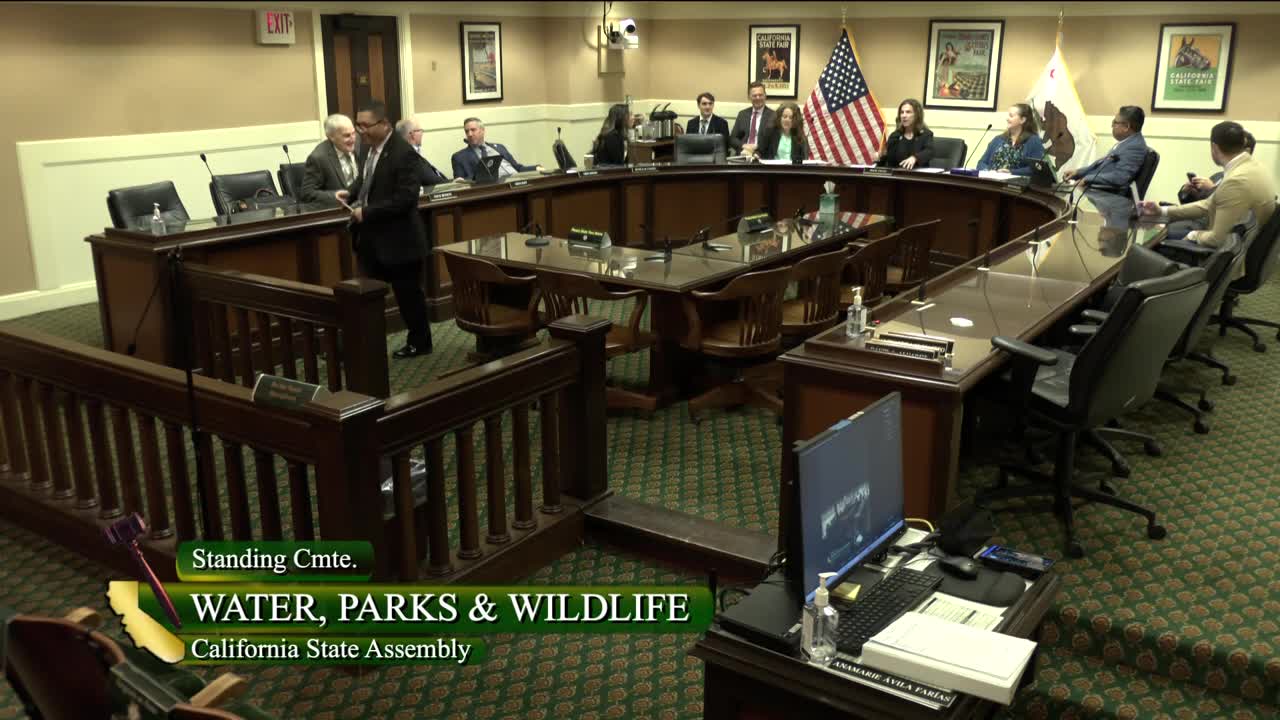 13MIN
Assembly Standing Committee on Water, Parks, and Wildlife
Bill Author