AB 963: Public works: prevailing wages: access to records.
- Session Year: 2025-2026
- House: Assembly
- Latest Version Date: 2025-09-16
Current Status:
Failed
(2026-01-22: Consideration of Governor's veto stricken from file.)
Introduced
In Committee
Awaiting First Chamber Vote
Passed First Chamber
In Committee
Awaiting Second Chamber Vote
Passed Second Chamber
Enacted
Existing law requires that, except as specified, not less than the general prevailing rate of per diem wages be paid to workers employed on public works and imposes misdemeanor penalties for a willful violation of this requirement. Existing law defines public works, for the purposes of regulating public works contracts, as, among other things, construction, alteration, demolition, installation, or repair work done under contract and paid for, in whole or in part, out of public funds.
Existing law requires the Labor Commissioner to investigate allegations that a contractor or subcontractor violated the law regulating public works projects, including the payment of prevailing wages. Existing law requires each contractor and subcontractor on a public works project to keep accurate payroll records, showing the name, address, social security number, work classification, straight time and overtime hours worked each day and week, and the actual per diem wages paid to each journeyman, apprentice, worker, or other employee employed by the contractor or subcontractor in connection with the public work. Existing law requires any copy of records made available for inspection as copies and furnished upon request to the public or any public agency to be marked or obliterated to prevent disclosure of an individuals name, address, and social security number but specifies that any copy of records made available to a Taft-Hartley trust fund for the purposes of allocating contributions to participants be marked or obliterated only to prevent disclosure of an individuals full social security number, as specified.
This bill would require an owner or developer, as defined, undertaking any work, subject to the prevailing wage requirements, to make specified records available upon request to the Division of Labor Standards Enforcement, to multiemployer Taft-Hartley trust funds, and to joint labor-management committees, as specified. The bill would set forth timelines for the owner or developer to comply with a request for records and for a fund or committee to submit a complaint to the division in case of an owners or developers failure to comply. Under the latter circumstance, the bill would require the division to submit to the owner or developer a new written request for records, as specified.
Under the bill, if the owner or developer fails to comply with the request from the division, they would be subject to penalties, to be deposited into the State Public Works Enforcement Fund, as specified.
If a request for records is made, the bill would require that the request be made within 3 years of the completion of the work.
The bill would require the Director of Industrial Relations to adopt rules governing the release of these records, as specified.
Existing law requires that, except as specified, not less than the general prevailing rate of per diem wages be paid to workers employed on public works and imposes misdemeanor penalties for a willful violation of this requirement. Existing law defines public works, for the purposes of regulating public works contracts, as, among other things, construction, alteration, demolition, installation, or repair work done under contract and paid for, in whole or in part, out of public funds.
Existing law requires the Labor Commissioner to investigate allegations that a contractor or subcontractor violated the law regulating public works projects, including the payment of prevailing wages. Existing law requires each contractor and subcontractor on a public works project to keep accurate payroll records, showing the name, address, social security number, work classification, straight time and overtime hours worked each day and week, and the actual per diem wages paid to each journeyman, apprentice, worker, or other employee employed by the contractor or subcontractor in connection with the public work. Existing law requires any copy of records made available for inspection as copies and furnished upon request to the public or any public agency to be marked or obliterated to prevent disclosure of an individuals name, address, and social security number but specifies that any copy of records made available to a Taft-Hartley trust fund for the purposes of allocating contributions to participants be marked or obliterated only to prevent disclosure of an individuals full social security number, as specified.
This bill would require an owner or developer, as defined, undertaking any public works project work, subject to the prevailing wage requirements, to make specified records available upon request to the Division of Labor Standards Enforcement, to multiemployer Taft-Hartley trust funds, and to joint labor-management committees, as specified. The bill would also apply this requirement to an owner or developer that undertakes a development project that includes work subject to the requirements of public works. The bill would subject an owner or developer, for failing to comply with the provisions of this bill, to a penalty by the commissioner, as specified, and would deposit the penalties into a specified fund. This bill would require the Director of Industrial Relations to adopt rules to govern the release of those records, as specified. set forth timelines for the owner or developer to comply with a request for records and for a fund or committee to submit a complaint to the division in case of an owners or developers failure to comply. Under the latter circumstance, the bill would require the division to submit to the owner or developer a new written request for records, as specified.
Under the bill, if the owner or developer fails to comply with the request from the division, they would be subject to penalties, to be deposited into the State Public Works Enforcement Fund, as specified.
If a request for records is made, the bill would require that the request be made within 3 years of the completion of the work.
The bill would require the Director of Industrial Relations to adopt rules governing the release of these records, as specified.
Existing law requires that, except as specified, not less than the general prevailing rate of per diem wages be paid to workers employed on public works and imposes misdemeanor penalties for a willful violation of this requirement. Existing law defines public works, for the purposes of regulating public works contracts, as, among other things, construction, alteration, demolition, installation, or repair work done under contract and paid for, in whole or in part, out of public funds.
Existing law requires the Labor Commissioner to investigate allegations that a contractor or subcontractor violated the law regulating public works projects, including the payment of prevailing wages. Existing law requires each contractor and subcontractor on a public works project to keep accurate payroll records, showing the name, address, social security number, work classification, straight time and overtime hours worked each day and week, and the actual per diem wages paid to each journeyman, apprentice, worker, or other employee employed by the contractor or subcontractor in connection with the public work. Existing law requires any copy of records made available for inspection as copies and furnished upon request to the public or any public agency to be marked or obliterated to prevent disclosure of an individuals name, address, and social security number but specifies that any copy of records made available to a Taft-Hartley trust fund for the purposes of allocating contributions to participants be marked or obliterated only to prevent disclosure of an individuals full social security number, as specified.
This bill would require an owner or developer, as defined, undertaking any public works project to make specified records available upon request to the Division of Labor Standards Enforcement, to multiemployer Taft-Hartley trust funds, and to joint labor-management committees, as specified. The bill would also apply this requirement to an owner or developer that undertakes a development project that includes work subject to the requirements of public works. The bill would subject an owner or developer, for failing to comply with the provisions of this bill, to a penalty by the commissioner, as specified, and would deposit the penalties into a specified fund. This bill would require the Director of Industrial Relations to adopt rules to govern the release of those records, as specified.
(a)An owner or developer undertaking any work, subject to the prevailing wage requirements of this chapter, shall make the following records with respect to that work available upon request to the Division of Labor Standards Enforcement of the Department of Industrial Relations, to multiemployer Taft-Hartley trust funds (29 U.S.C. Sec. 186(c)), and to joint labor-management committees established pursuant to the federal Labor Management Cooperation Act of 1978 (29 U.S.C. Sec. 175a):
(1)Request for bids.
(2)Lists of bids received and total bid amounts.
(3)Final executed construction contracts, between the direct contractor and either the owner or developer, demonstrating compliance with contract requirements of this chapter.
(4)The names and license numbers of the contractors and subcontractors performing the work.
(5)A certified copy of payroll records described in Section 1776 if the owner or developer has possession, custody, or control of these records.
(6)If the owner or developer were required to provide an enforceable commitment that a skilled and trained workforce will be used to complete a contract or project, the monthly reports required under Section 2602 of the Public Contract Code.
(b)(1)Any records of work performed that are made available under this section shall be redacted only to prevent disclosure of any individuals social security number.
(2)The owner or developer may redact pricing information and other proprietary or confidential information from contracts and subcontracts if that information has not been made public. The names of contractors and subcontractors, the scope of work, and any contractual requirements to pay prevailing wages or use a skilled and trained workforce shall not be redacted.
(c)Where the requesting department, trust fund, or joint labor-management committee has identified the documents or information sought with specificity, the owner or developer shall reasonably assist in identifying responsive records.
(d)(1)An owner or developer has 30 calendar days in which to comply subsequent to receipt of a written notice requesting the records enumerated in subdivision (a). The requesting and responding parties may agree in writing to an extension of time to respond.
(2)In the event that the owner or developer fails to comply with a request from a multiemployer Taft-Hartley trust fund or a joint labor-management committee, the fund or committee may submit a complaint to the Division of Labor Standards Enforcement within 30 calendar days after compliance was required.
(3)If the Division of Labor Standards Enforcement receives a complaint pursuant to paragraph (2), the division shall submit to the owner or developer a new written request for the records enumerated in subdivision (a). If the owner or developer fails to comply subsequent to receipt of that new written request from the division within 10 calendar days, the owner or developer shall be subject to a penalty by the Labor Commissioner until strict compliance is effectuated. The penalty shall be one hundred dollars ($100) for each calendar day, or portion thereof, for each worker, starting from the first day following that 10-day period, until strict compliance is effectuated with respect to records described by paragraph (5) of subdivision (a). For records described by paragraphs (1) through (4) and (6) of subdivision (a), the penalty shall be five hundred dollars ($500) for each calendar day, or portion thereof, starting from the first day following that 10-day period, until strict compliance is effectuated. Penalties received pursuant to this paragraph shall be deposited in the State Public Works Enforcement Fund established by Section 1771.3 and shall be used only for the purposes specified in that section.
(4)The director shall adopt rules consistent with the California Public Records Act (Division 10 (commencing with Section 7920.000) of Title 1 of the Government Code) and the Information Practices Act of 1977 (Chapter 1 (commencing with Section 1798) of Title 1.8 of of Part 4 of Division 3 of the Civil Code) governing the release of these records, including the establishment of reasonable fees to be charged for reproducing copies of records required by this section.
(e)For purposes of this section, an owner or developer includes a corporation, limited liability company, partnership, joint venture, or other legal entity, that enters into a contract with a contractor to perform work on a project first advertised for bid or, if there is no bid advertisement date, executed on or after January 1, 2026, but does not include the state or a political subdivision.
(f)(1)A multiemployer Taft-Hartley trust fund or a joint labor-management committee shall not disclose or share a certified copy of payroll records or an executed construction contract received under this section and shall maintain them as confidential.
(2)Notwithstanding paragraph (1), a multiemployer Taft-Hartley trust fund or a joint labor-management committee may share a certified copy of payroll records or an executed construction contract with the Division of Labor Standards Enforcement or an awarding agency to provide evidence of a violation of this chapter.
(g)If a request for records is made pursuant to subdivision(a), the request shall be made within three years of the completion of the work subject to the prevailing wage requirements of this chapter.
(a)An owner or developer undertaking any public works project subject to the requirements of this chapter work, subject to the prevailing wage requirements of this chapter, shall make the following records with respect to that work available upon request to the Division of Labor Standards Enforcement of the Department of Industrial Relations, to multiemployer Taft-Hartley trust funds (29 U.S.C. Sec. 186(c)), and to joint labor-management committees established pursuant to the federal Labor Management Cooperation Act of 1978 (29 U.S.C. Sec. 175a):
(1)Final executed construction contracts.(1)Request for bids.
(2)Lists of bids received and total bid amounts.
(3)Final executed construction contracts, between the direct contractor and either the owner or developer, demonstrating compliance with contract requirements of this chapter.
(4)The names and license numbers of the contractors and subcontractors performing the work.
(2)(5)A certified copy of payroll records described in Section 1776 if the owner or developer has possession, custody, or control of these records.
(3)(6)If the owner or developer were required to provide an enforceable commitment that a skilled and trained workforce will be used to complete a contract or project, the monthly reports required under Section 2602 of the Public Contract Code.
(b)The requirements of subdivision (a) shall apply to any owner or developer that undertakes a development project that includes work subject to the requirements of this chapter, regardless of whether the project is in its entirety a public work, as defined in Article 1 (commencing with Section 1720).(c)(b)(1)Any records of work performed that are made available under this section shall be redacted only to prevent disclosure of any individuals social security number.
(2)The owner or developer may redact pricing information and other proprietary or confidential information from contracts and subcontracts if that information has not been made public. The names of contractors and subcontractors, the scope of work, and any contractual requirements to pay prevailing wages or use a skilled and trained workforce shall not be redacted.
(d)(c)Where the requesting department, trust fund, or joint labor-management committee has identified the documents or information sought with specificity, the owner or developer shall reasonably assist in identifying responsive records.
(e)(d)(1)An owner or developer has 10 30 calendar days in which to comply subsequent to receipt of a written notice requesting the records enumerated in subdivision (a). The requesting and responding parties may agree in writing to an extension of time to respond.
(2)In the event that the owner or developer fails to comply with a request from a multiemployer Taft-Hartley trust fund or a joint labor-management committee, the fund or committee shall may submit a complaint to the Division of Labor Standards Enforcement within 10 30 calendar days after compliance was required. The Division of Labor Standards Enforcement shall promptly investigate any complaints.
(3)If the Division of Labor Standards Enforcement determines that the owner or developer has failed to provide any records subject to disclosure pursuant to subdivision (a) or (b), or failed to comply with subdivisions (c) to (e), inclusive, receives a complaint pursuant to paragraph (2), the division shall submit to the owner or developer a new written request for the records enumerated in subdivision (a). If the owner or developer fails to comply subsequent to receipt of that new written request from the division within 10 calendar days, the owner or developer shall be subject to a penalty by the Labor Commissioner until strict compliance is effectuated. The penalty shall be one hundred dollars ($100) for each calendar day, or portion thereof, for each worker, starting from the first day following that 10-day period, until strict compliance is effectuated with respect to records described by paragraph (2) (5) of subdivision (a). For records described by paragraphs (1) and (3) through (4) and (6) of subdivision (a), the penalty shall be five hundred dollars ($500) for each calendar day, or portion thereof, starting from the first day following that 10-day period, until strict compliance is effectuated. Penalties received pursuant to this paragraph shall be deposited in the State Public Works Enforcement Fund established by Section 1771.3 and shall be used only for the purposes specified in that section.
(4)The director shall adopt rules consistent with the California Public Records Act (Division 10 (commencing with Section 7920.000) of Title 1 of the Government Code) and the Information Practices Act of 1977 (Title 1.8 (Chapter 1 (commencing with Section 1798) of Title 1.8 of of Part 4 of Division 3 of the Civil Code) governing the release of these records, including the establishment of reasonable fees to be charged for reproducing copies of records required by this section.
(f)(e)For purposes of this section, an owner or developer includes a corporation, limited liability company, partnership, joint venture, or other legal entity entity, that enters into a contract with a contractor to perform work on a project first advertised for bid or, if there is no bid advertisement date, executed on or after January 1, 2026, but does not include the state or a political subdivision.
(g)(f)(1)A multiemployer Taft-Hartley trust fund or a joint labor-management committee shall not disclose or share a certified copy of payroll records or an executed construction contract received under this section and shall maintain them as confidential.
(2)Notwithstanding paragraph (1), a multiemployer Taft-Hartley trust fund or a joint labor-management committee may share a certified copy of payroll records or an executed construction contract with the Division of Labor Standards Enforcement or an awarding agency to provide evidence of a violation of this chapter.
(g)If a request for records is made pursuant to subdivision(a), the request shall be made within three years of the completion of the work subject to the prevailing wage requirements of this chapter.
(a)An owner or developer undertaking any public works project subject to the requirements of this chapter shall make the following records available upon request to the Division of Labor Standards Enforcement of the Department of Industrial Relations, to multiemployer Taft-Hartley trust funds (29 U.S.C. Sec. 186(c)), and to joint labor-management committees established pursuant to the federal Labor Management Cooperation Act of 1978 (29 U.S.C. Sec. 175a):
(1)Final executed construction contracts.
(2)A certified copy of payroll records described in Section 1776 if the owner or developer has possession, custody, or control of these records.
(3)If the owner or developer were required to provide an enforceable commitment that a skilled and trained workforce will be used to complete a contract or project, the monthly reports required under Section 2602 of the Public Contract Code.
(b)The requirements of subdivision (a) shall apply to any owner or developer that undertakes a development project that includes work subject to the requirements of this chapter, regardless of whether the project is in its entirety a public work, as defined in Article 1 (commencing with Section 1720).
(c)(1)Any records of work performed that are made available under this section shall be redacted only to prevent disclosure of any individuals social security number.
(2)The owner or developer may redact pricing information and other proprietary or confidential information from contracts and subcontracts if that information has not been made public. The names of contractors and subcontractors, the scope of work, and any contractual requirements to pay prevailing wages or use a skilled and trained workforce shall not be redacted.
(d)Where the requesting department, trust fund, or joint labor-management committee has identified the documents or information sought with specificity, the owner or developer shall reasonably assist in identifying responsive records.
(e)(1)An owner or developer has 10 days in which to comply subsequent to receipt of a written notice requesting the records enumerated in subdivision (a).
(2)In the event that the owner or developer fails to comply with a request from a multiemployer Taft-Hartley trust fund or a joint labor-management committee, the fund or committee shall submit a complaint to the Division of Labor Standards Enforcement within 10 days after compliance was required. The Division of Labor Standards Enforcement shall promptly investigate any complaints.
(3)If the Division of Labor Standards Enforcement determines that the owner or developer has failed to provide any records subject to disclosure pursuant to subdivision (a) or (b), or failed to comply with subdivisions (c) to (e), inclusive, the owner or developer shall be subject to a penalty by the Labor Commissioner until strict compliance is effectuated. The penalty shall be one hundred dollars ($100) for each calendar day, or portion thereof, for each worker, until strict compliance is effectuated with respect to records described by paragraph (2) of subdivision (a). For records described by paragraphs (1) and (3) of subdivision (a), the penalty shall be five hundred dollars ($500) for each calendar day, or portion thereof, until strict compliance is effectuated. Penalties received pursuant to this paragraph shall be deposited in the State Public Works Enforcement Fund established by Section 1771.3 and shall be used only for the purposes specified in that section.
(4)The director shall adopt rules consistent with the California Public Records Act (Division 10 (commencing with Section 7920.000) of Title 1 of the Government Code) and the Information Practices Act of 1977 (Title 1.8 (commencing with Section 1798) of Part 4 of Division 3 of the Civil Code) governing the release of these records, including the establishment of reasonable fees to be charged for reproducing copies of records required by this section.
(f)For purposes of this section, an owner or developer includes a corporation, limited liability company, partnership, joint venture, or other legal entity but does not include the state or a political subdivision.
(g)(1)A multiemployer Taft-Hartley trust fund or a joint labor-management committee shall not disclose or share a certified copy of payroll records or an executed construction contract received under this section and shall maintain them as confidential.
(2)Notwithstanding paragraph (1), a multiemployer Taft-Hartley trust fund or a joint labor-management committee may share a certified copy of payroll records or an executed construction contract with the Division of Labor Standards Enforcement or an awarding agency to provide evidence of a violation of this chapter.
(a)An owner or developer undertaking any public works project subject to the requirements of this chapter shall make the following records available upon request to the Division of Labor Standards Enforcement of the Department of Industrial Relations, to multiemployer Taft-Hartley trust funds (29 U.S.C. Sec. 186(c)), and to joint labor-management committees established pursuant to the federal Labor Management Cooperation Act of 1978 (29 U.S.C. Sec. 175a):
(1)Final executed construction contracts.
(2)A certified copy of payroll records described in Section 1776 if the owner or developer has possession, custody, or control of these records.
(3)If the owner or developer were required to provide an enforceable commitment that a skilled and trained workforce will be used to complete a contract or project, the monthly reports required under Section 2602 of the Public Contract Code.
(b)The requirements of subdivision (a) shall apply to any owner or developer that undertakes a development project that includes work subject to the requirements of this chapter, regardless of whether the project is in its entirety a public work, as defined in Article 1 (commencing with Section 1720).
(c)(1)Any records of work performed that are made available under this section shall be redacted only to prevent disclosure of any individuals social security number.
(2)The owner or developer may redact pricing information from contracts and subcontracts if that information has not been made public.
(d)Where the requesting department, trust fund, or joint labor-management committee has identified the documents or information sought with specificity, the owner or developer shall reasonably assist in identifying responsive records.
(e)(1)An owner or developer has 10 days in which to comply subsequent to receipt of a written notice requesting the records enumerated in subdivision (a).
(2)In the event that the owner or developer fails to comply with a request from a multiemployer Taft-Hartley trust fund or a joint labor-management committee, the fund or committee shall submit a complaint to the Division of Labor Standards Enforcement within 10 days after compliance was required. The Division of Labor Standards Enforcement shall promptly investigate any complaints.
(3)If the Division of Labor Standards Enforcement determines that the owner or developer has failed to provide any records subject to disclosure pursuant to subdivision (a) or (b), or failed to comply with subdivisions (c) to (e), inclusive, the owner or developer shall be subject to a penalty by the Labor Commissioner until strict compliance is effectuated. The penalty shall be one hundred dollars ($100) for each calendar day, or portion thereof, for each worker, until strict compliance is effectuated with respect to records described by paragraph (2) of subdivision (a). For records described by paragraphs (1) and (3) of subdivision (a), the penalty shall be five hundred dollars ($500) for each calendar day, or portion thereof, until strict compliance is effectuated. Penalties received pursuant to this paragraph shall be deposited in the State Public Works Enforcement Fund established by Section 1771.3 and shall be used only for the purposes specified in that section.
(4)The director shall adopt rules consistent with the California Public Records Act (Division 10 (commencing with Section 7920.000) of Title 1 of the Government Code) and the Information Practices Act of 1977 (Title 1.8 (commencing with Section 1798) of Part 4 of Division 3 of the Civil Code) governing the release of these records, including the establishment of reasonable fees to be charged for reproducing copies of records required by this section.
(f)For purposes of this section, an owner or developer includes a corporation, limited liability company, partnership, joint venture, or other legal entity but does not include the state or a political subdivision.
|
Date
|
Status
|
|---|---|
| Jan 22, 2026 | Consideration of Governor's veto stricken from file. |
| Oct 13, 2025 | Consideration of Governor's veto pending. |
| Oct 13, 2025 | Vetoed by Governor. |
| Sep 24, 2025 | Enrolled and presented to the Governor at 3 p.m. |
| Sep 13, 2025 | Senate amendments concurred in. To Engrossing and Enrolling. (Ayes 66. Noes 6. Page 3473.). |
| Sep 13, 2025 | Joint Rules 61(a)(14) and 51(a)(4) suspended. (Ayes 59. Noes 20. Page 3413.) |
| Sep 12, 2025 | In Assembly. Concurrence in Senate amendments pending. |
| Sep 12, 2025 | Read third time. Passed. Ordered to the Assembly. (Ayes 29. Noes 8. Page 2991.). |
| Sep 10, 2025 | Read second time. Ordered to third reading. |
| Sep 9, 2025 | Read third time and amended. Ordered to second reading. |
| Sep 9, 2025 | Joint Rule 61(a)(13) suspended. (Ayes 28. Noes 8. Page 2568.) |
| Aug 29, 2025 | Read second time. Ordered to third reading. |
| Aug 29, 2025 | From committee: Do pass. (Ayes 6. Noes 1.) (August 29). |
| Aug 18, 2025 | In committee: Referred to suspense file. |
| Jul 17, 2025 | Read second time and amended. Re-referred to Com. on APPR. |
| Jul 16, 2025 | From committee: Amend, and do pass as amended and re-refer to Com. on APPR. (Ayes 11. Noes 2.) (July 15). |
| Jul 9, 2025 | From committee: Do pass and re-refer to Com. on JUD. (Ayes 4. Noes 1.) (July 9). Re-referred to Com. on JUD. |
| Jun 19, 2025 | In committee: Hearing postponed by committee. |
| Jun 16, 2025 | In committee: Set, first hearing. Hearing canceled at the request of author. |
| Jun 11, 2025 | Referred to Coms. on L., P.E. & R. and JUD. |
| Jun 3, 2025 | In Senate. Read first time. To Com. on RLS. for assignment. |
| Jun 2, 2025 | Read third time. Passed. Ordered to the Senate. (Ayes 69. Noes 4. Page 1869.) |
| May 27, 2025 | Read second time. Ordered to third reading. |
| May 23, 2025 | From committee: Do pass. (Ayes 12. Noes 2.) (May 23). |
| May 7, 2025 | In committee: Set, first hearing. Referred to APPR. suspense file. |
| Apr 24, 2025 | From committee: Do pass and re-refer to Com. on APPR. (Ayes 7. Noes 0.) (April 23). Re-referred to Com. on APPR. |
| Apr 2, 2025 | In committee: Set, first hearing. Hearing canceled at the request of author. |
| Mar 10, 2025 | Referred to Com. on L. & E. |
| Feb 21, 2025 | From printer. May be heard in committee March 23. |
| Feb 20, 2025 | Read first time. To print. |
|
Date
|
Description
|
Location
|
Votes
|
|
|---|---|---|---|---|
| Sep 13, 2025 | AB 963 Petrie-Norris Concurrence in Senate Amendments | Assembly Floor |
Passed |
|
| Sep 12, 2025 | Assembly 3rd Reading AB963 Petrie-Norris By Durazo | Senate Floor |
Passed |
|
| Aug 29, 2025 | Do pass | Senate Standing Committee on Appropriations |
Passed |
|
| Aug 18, 2025 | Placed on suspense file | Senate Standing Committee on Appropriations |
Passed |
|
| Jul 15, 2025 | Do pass as amended, but first amend, and re-refer to the Committee on [Appropriations] | Senate Standing Committee on Judiciary |
Passed |
|
| Jul 9, 2025 | Do pass, but first be re-referred to the Committee on [Judiciary] | Senate Standing Committee on Labor, Public Employment and Retirement |
Passed |
|
| Jun 2, 2025 | AB 963 Petrie-Norris Assembly Third Reading | Assembly Floor |
Passed |
|
| May 23, 2025 | Do pass. | Assembly Standing Committee on Appropriations |
Passed |
|
| Apr 23, 2025 | Do pass and be re-referred to the Committee on [Appropriations] | Assembly Standing Committee on Labor and Employment |
Passed |
This list shows positions taken on this bill by organizations on the date displayed, which is linked to the original source.
Positions by individuals are not included.
|
Organization
|
Position
|
Date
|
|---|---|---|
| A & B Painting, Inc. | ** Support | |
| A&B Painting, Inc. | ** Support | |
| All County Flooring | ** Support | |
| Aragon Construction, INC. | ** Support | |
| Associated General Contractors Of California | ** Against | |
| B.T. Mancini Co., Inc. | ** Support | |
| C. A. Bucher Painting Co., INC. | ** Support | |
| California Building Industry Association | ** Against | |
| California Council For Affordable Housing | ** Against | |
| California Federation of Labor Unions | ** Support | |
| California Housing Consortium | ** Against | |
| California Housing Partnership | ** Against | |
| California-Nevada Conference Of Operating Engineers | ** Support | |
| California Solar & Storage Association | ** Against | |
| California State Association Of Electrical Workers | ** Support | |
| California State Council Of Laborers | ** Support | |
| California State Pipe Trades Council | ** Support | |
| Capital Industrial Coatings, LLC | ** Support | |
| Certified Coatings Company | ** Support | |
| Concord Drywall Inc. | ** Support | |
| Conley & Sons Construction | ** Support | |
| Construction Employers Association | ** Against | |
| Crown Sheet Metal & Skylights Inc. | ** Support | |
| CUSTOM DRYWALL | ** Support | |
| Devco Drywall Interiors Inc | ** Support | |
| District Council Of Iron Workers Of The State Of California And Vicinity | ** Support | |
| Drywall Finishers Regional Local Union 1136 | ** Support | |
| Eladio and Sons | ** Support | |
| Ellis Flooring INC. | ** Support | |
| Finishing Contractors Association Of Southern California | ** Support | |
| Fisher Design + Build, INC. | ** Support | |
| Future Flooring Group Dba. C&S Flooring Systems, Inc. | ** Support | |
| Genesis Flooring | ** Support | |
| Giroux Glass Inc.. | ** Support | |
| Giroux Glass, Inc. | ** Support | |
| Glaziers Local 718 | ** Support | |
| Golden Gate Glass & Mirror Co. | ** Support | |
| Golden State Contract Flooring | ** Support | |
| Hoem & Associates | ** Support | |
| Housing California | ** Against | |
| INTERNATIONAL BROTHERHOOD OF BOILERMAKERS, WESTERN STATES SECTION | ** Support | |
| International Union of Painters and Allied Trades, District Council 16 | ** Support | |
| International Union of Painters and Allied Trades - District Council 36 | ** Support | |
| International Union of Painters and Allied Trades Local 1036 | ** Support | |
| International Union of Painters and Allied Trades Local 1621 | ** Support | |
| International Union of Painters and Allied Trades Local 272 | ** Support | |
| International Union of Painters and Allied Trades Local 376 | ** Support | |
| International Union of Painters and Allied Trades Local 507 | ** Support | |
| International Union of Painters and Allied Trades Local 831 | ** Support | |
| J&J Acoustics, Inc. | ** Support | |
| Johnson and Turner Painting Company, INC. | ** Support | |
| KARSYN CONSTRUCTION INC | ** Support | |
| KBI Painting, Inc. | ** Support | |
| Kirk Builders | ** Support | |
| Local Union 1036 | ** Support | |
| Local Union 272 | ** Support | |
| Local Union 831 | ** Support | |
| Magnum Drywall, Inc. | ** Support | |
| Mastria Inc. | ** Support | |
| Mgm Drywall, Inc. | ** Support | |
| Murphy Industrial Coatings, Inc. | ** Support | |
| NC Flooring Group Inc | ** Support | |
| Non-Profit Housing Association of Northern California | ** Against | |
| Nor Cal Glass | ** Support | |
| Northern California Allied Trades | ** Support | |
| Numerous individuals | ** Support | |
| Pacific Glazing Contractors | ** Support | |
| Painters Local 376 | ** Support | |
| Painting and Decorating Contractors Association of Sacramento | ** Support | |
| Paramount Interiors LLC | ** Support | |
| Pari & Gershon Inc. | ** Support | |
| Polytech Industrial Incorporated | ** Support | |
| Primal Paint, Inc. | ** Support | |
| Pro Spectra Contract Flooring, Union City | ** Support | |
| Ralls Construction | ** Support | |
| R.E. Cuddie Co. | ** Support | |
| Redwood Painting Co., Inc. | ** Support | |
| Reno's Floor Covering, Inc. | ** Support | |
| San Diego Housing Federation | ** Against | |
| Satellite Painting, Inc. | ** Support | |
| Signature Glass & Windows Inc. Lic # 750091 | ** Support | |
| Silicon Valley Glass Inc. | ** Support | |
| Southern California Association of Non-Profit Housing | ** Against | |
| Southern California Glass Management Association | ** Support | |
| State Building and Construction Trades Council | ** Support | |
| TISYS Construction | ** Support | |
| VALLEY INDUSTRY AND COMMERCE ASSOCIATION | ** Against | |
| Vanguard Painting, INC. | ** Support | |
| Western Painting and Coating Contractors Association | ** Support | |
| Western States Council Of Sheet Metal Workers | ** Support | |
| Wm. B. Saleh Co. | ** Support |
GOVERNOR'S VETO
GV Bill Id:AB 963
Author:(Petrie-Norris)
As Enrolled Ver:September 16, 2025
2/3 vote
SUMMARY
Requires owners and developers undertaking any work subject to prevailing wage requirements to make specified records available to the Division of Labor Standards Enforcement (DLSE), multi-employer Taft-Hartley trust funds, and joint labor-management committees (JLMCs), as specified.
Senate amendments:
- Apply the bill's provisions to an owner or developer undertaking any work subject to prevailing wage requirements, instead of an owner or developer undertaking any public works project.
- Expand the list of documents that an owner or developer must make available upon request to the DLSE, Taft-Hartley trust funds, and JLMCs to also include the following:
- Requests for bids.
- Lists of bids received and total bid amounts.
- Final executed construction contracts between the direct contractor and either the owner or developer demonstrating compliance with public works contract requirements.
- The names and license numbers of the contractors and subcontractors performing the work.
- Delete the requirement that the bill apply to any owner or developer that undertakes a development project subject to public works requirements, regardless of whether the project in its entirety is a public work.
- Provide that an owner or developer may redact other proprietary or confidential information from contracts and subcontracts if that information has not been made public, but prohibit redaction of the names of contractors and subcontractors, the scope of work, and any contractual requirements to pay prevailing wages or use a skilled and trained workforce.
- Extend the amount of time that an owner or developer has to comply with a request from 10 calendar days to 30 calendar days.
- Modify when the DLSE can enforce penalties against an owner or developer for noncompliance.
- Prohibit a Taft-Hartley trust fund or a JLMC from disclosing or sharing a certified copy of payroll records or an executed construction contract received pursuant to the bill's provisions, and require the entities to maintain the documents as confidential.
- Authorize a Taft-Hartley trust fund or a JLMC, notwithstanding (7) above, to share a certified copy of payroll records or an executed construction contract with the DLSE or an awarding agency to provide evidence of a public works violation.
- Require a request for records to be made within three years of the completion of the work subject to prevailing wage requirements.
- Modify the definition of "owner or developer."
Governor's Veto Message
This bill would require owners or developers undertaking a project subject to state prevailing wage laws to make certain records, such as certified payroll records or final construction contracts, available to the Labor Commissioner's Office (LCO), a multi-employer Taft-Hartley trust fund, or a joint labor-management committee. This bill also would set compliance timelines and require the LCO to submit its own request for these records.
While I agree with the author's goal to ensure all parties comply with California's prevailing wage laws, this bill creates redundant processes that could undermine other enforcement priorities. Current law already grants parties the ability to request relevant payroll records from contractors, and the public may access such records through the LCO or the awarding entity. Moreover, this measure generates a significant new workload for the LCO. Given the LCO's limited capacity, the proposed record request process is not a prudent use of department resources. I encourage the author to introduce a bill in 2026 that takes a less burdensome and more streamlined approach to ensuring compliance with prevailing wage laws.
COMMENTS
Public works laws require that, among other things, prevailing wage is paid to workers on publicly-funded projects, as specified. In California, the prevailing wage rate is an hourly rate paid on public works projects that is often set in the terms of a collective bargaining agreement. According to the DIR, the wage rate relies upon such factors as "the particular craft, classification or type of work within the locality and in the nearest labor market area (if majorities of such workers are paid at a single rate). If there is no single rate paid to a majority, then the single or modal rate being paid to the greater number of workers is prevailing."
Prevailing wage laws are intended to ensure that contractors are not awarded public works contracts by paying low wages and undercutting competitors who provide higher compensation. In this way, these laws create a level playing field by requiring an across-the-board rate for all bidders on publicly-subsidized projects.
To ensure compliance with various pay requirements under public works laws, contractors and subcontractors are required to submit their payroll records to the Labor Commissioner (LC). In addition to the LC's oversight, JLMCs and multiemployer Taft-Hartley trust funds play a critical role in verifying the accuracy and thoroughness of payroll records, and filing complaints with the LC for suspected violations pertaining to the payment of prevailing wages on public works projects. These payroll records are also available to the public, but must be requested through DLSE or the entity awarding the contract.
Under existing law, certain projects overseen by private entities are subject to public works law if they meet specific criteria. However, private entities are not subject to the California Public Records Act. Because of this, JLMCs and multiemployer Taft-Hartley Trust Funds have had record requests denied on public works projects administered by private entities.
The author provided the following examples to the Committee:
"In San Jose County, the private entity building the PATH Villas on 4th Street, funded in part by the County's Office of Supportive Housing Measure A dollars, failed to respond to requests for project documents, stating that they are not currently required to under the law (because they are not a public entity). This is a $33 million project.
Another privately developed but publicly-funded project that failed to respond to multiple requests for project documents is the Light Tree New Construction Project – a $61.5 million project. Ultimately, the JLMC resorted to seeking state assistance to receive certified payroll records."
According to the Author
"The California Public Records Act (CPRA) is a fundamental transparency pillar of state and local government, granting the public access to information that enables it to monitor the functioning of its government, including the appropriate and honest use of taxpayer dollars. While exhaustive in nature, the CPRA does not cover private entities that own, undertake, or develop a project funded in whole or in part by public financing. To ensure that workers on these projects are being paid their due wages, are being classified accurately, and are being treated fairly, this measure will extend to private entities a very limited set of accountability measures to ensure compliance with existing state laws."
Arguments in Support
The State Building and Construction Trades Council is in support and states, "Often, on construction projects, workers are underpaid and or misclassified and, without oversight, this growing problem will only continue to get bigger. Existing law provides the Division of Labor Standards Enforcement (DLSE), multiemployer Taft-Hartley trust funds, and joint labor-management committees with the ability to request documents from contractors when they are using public funds to develop public works projects. It is imperative that the Public Contract Code, the California Labor Code, and prevailing wage requirements are followed on every public works project.
It is understood that private entities are just that, private. However, private entities using public funds also should be held to the same standards and accountability as governmental bodies when it comes to producing project documents and information. Unfortunately, the California Public Records Act currently has no oversight over private entities."
Arguments in Opposition
A coalition of affordable housing organizations, including the California Housing Partnership, California Housing Consortium, and Housing California are in opposition and state that "The stated intent of the bill is to ensure compliance with prevailing wage laws. However, there is already a process in place to achieve that goal through the Department of Industrial Relations, and this bill is unnecessary. We agree that compliance with prevailing wage laws is important, but we fail to understand how the current information that the state already collects is deficient.
When a private development is subject to prevailing wage requirements, the general contractor has a duty to ensure that the project complies with the applicable labor and wage laws. Owners and developers of affordable housing already submit prevailing wage reports to the Department of Industrial Relations (DIR) to demonstrate compliance. The system is online, and these records can be requested by anyone. If there are problems with the public obtaining the records from DIR, we recommend focusing on improving DIR's response capacity. Creating a redundant and unnecessary requirement for those building housing will put a strain on their limited resources and will make it more difficult to build the housing that the state desperately needs."
FISCAL COMMENTS
According to the Senate Appropriations Committee:
- The Department of Industrial Relations (DIR) indicates that it would minimally incur first-year costs of $876,000, and $828,000 annually thereafter, to implement the provisions of the bill (State Public Works Enforcement Fund). Cost drivers would include investigating and adjudicating complaints for non-compliance with records requirements, and adopting rules for records release consistent with the California Public Records Act (CPRA). DIR notes it may need additional resources if there is a larger volume of complaints than anticipated.
- This bill could result in an increase in penalty revenue to the State. The magnitude is unknown, but probably minor (State Public Works Enforcement Fund).
VOTES
ASM LABOR AND EMPLOYMENT: 7-0-0
YES: Ortega, Flora, Chen, Elhawary, Kalra, Lee, Ward
ASM APPROPRIATIONS: 12-2-1
YES: Wicks, Arambula, Calderon, Caloza, Elhawary, Fong, Mark González, Hart, Pacheco, Pellerin, Solache, Ta
NO: Dixon, Tangipa
ABS, ABST OR NV: Sanchez
ASSEMBLY FLOOR: 69-4-6
YES: Addis, Aguiar-Curry, Ahrens, Alanis, Alvarez, Arambula, Ávila Farías, Bains, Bauer-Kahan, Bennett, Berman, Boerner, Bonta, Bryan, Calderon, Caloza, Carrillo, Chen, Connolly, Davies, Elhawary, Flora, Fong, Gabriel, Garcia, Gipson, Jeff Gonzalez, Mark González, Haney, Harabedian, Hart, Irwin, Jackson, Kalra, Krell, Lackey, Lee, Lowenthal, McKinnor, Muratsuchi, Nguyen, Ortega, Pacheco, Papan, Patel, Patterson, Pellerin, Petrie-Norris, Quirk-Silva, Ramos, Ransom, Celeste Rodriguez, Michelle Rodriguez, Rogers, Blanca Rubio, Schiavo, Schultz, Sharp-Collins, Solache, Soria, Stefani, Ta, Valencia, Wallis, Ward, Wicks, Wilson, Zbur, Rivas
NO: DeMaio, Hadwick, Macedo, Tangipa
ABS, ABST OR NV: Castillo, Dixon, Ellis, Gallagher, Hoover, Sanchez
SENATE FLOOR: 29-8-3
YES: Allen, Archuleta, Arreguín, Ashby, Becker, Cabaldon, Caballero, Cervantes, Cortese, Dahle, Durazo, Grayson, Hurtado, Laird, Limón, McGuire, McNerney, Menjivar, Padilla, Pérez, Reyes, Richardson, Rubio, Smallwood-Cuevas, Stern, Umberg, Wahab, Weber Pierson, Wiener
NO: Alvarado-Gil, Grove, Jones, Niello, Ochoa Bogh, Seyarto, Strickland, Valladares
ABS, ABST OR NV: Blakespear, Choi, Gonzalez
ASSEMBLY FLOOR: 66-6-8
YES: Addis, Aguiar-Curry, Ahrens, Alanis, Alvarez, Arambula, Ávila Farías, Bains, Bauer-Kahan, Bennett, Berman, Boerner, Bonta, Bryan, Calderon, Caloza, Carrillo, Chen, Connolly, Davies, Elhawary, Fong, Gabriel, Garcia, Gipson, Jeff Gonzalez, Mark González, Haney, Harabedian, Hart, Irwin, Jackson, Kalra, Krell, Lackey, Lee, Lowenthal, Muratsuchi, Nguyen, Ortega, Pacheco, Papan, Patel, Pellerin, Petrie-Norris, Quirk-Silva, Ramos, Ransom, Celeste Rodriguez, Michelle Rodriguez, Rogers, Blanca Rubio, Schiavo, Schultz, Sharp-Collins, Solache, Soria, Stefani, Ta, Valencia, Wallis, Ward, Wicks, Wilson, Zbur, Rivas
NO: DeMaio, Dixon, Ellis, Johnson, Macedo, Tangipa
ABS, ABST OR NV: Castillo, Flora, Gallagher, Hadwick, Hoover, McKinnor, Patterson, Sanchez
UPDATED
VERSION: September 16, 2025
CONSULTANT: Erin Hickey / L. & E. / (916) 319-2091 FN: 0002081
CONCURRENCE IN SENATE AMENDMENTS
CSA1 Bill Id:AB 963
Author:(Petrie-Norris)
As Amended Ver:September 9, 2025
Majority vote
SUMMARY
Requires owners and developers undertaking any work subject to prevailing wage requirements to make specified records available to the Division of Labor Standards Enforcement (DLSE), multi-employer Taft-Hartley trust funds, and joint labor-management committees (JLMCs), as specified.
Senate Amendments
- Apply the bill's provisions to an owner or developer undertaking any work subject to prevailing wage requirements, instead of an owner or developer undertaking any public works project.
- Expand the list of documents that an owner or developer must make available upon request to the DLSE, Taft-Hartley trust funds, and JLMCs to also include the following:
- Requests for bids.
- Lists of bids received and total bid amounts.
- Final executed construction contracts between the direct contractor and either the owner or developer demonstrating compliance with public works contract requirements.
- The names and license numbers of the contractors and subcontractors performing the work.
- Delete the requirement that the bill apply to any owner or developer that undertakes a development project subject to public works requirements, regardless of whether the project in its entirety is a public work.
- Provide that an owner or developer may redact other proprietary or confidential information from contracts and subcontracts if that information has not been made public, but prohibit redaction of the names of contractors and subcontractors, the scope of work, and any contractual requirements to pay prevailing wages or use a skilled and trained workforce.
- Extend the amount of time that an owner or developer has to comply with a request from 10 calendar days to 30 calendar days.
- Modify when the DLSE can enforce penalties against an owner or developer for noncompliance.
- Prohibit a Taft-Hartley trust fund or a JLMC from disclosing or sharing a certified copy of payroll records or an executed construction contract received pursuant to the bill's provisions, and require the entities to maintain the documents as confidential.
- Authorize a Taft-Hartley trust fund or a JLMC, notwithstanding (7) above, to share a certified copy of payroll records or an executed construction contract with the DLSE or an awarding agency to provide evidence of a public works violation.
- Require a request for records to be made within three years of the completion of the work subject to prevailing wage requirements.
- Modify the definition of "owner or developer."
COMMENTS
Public works laws require that, among other things, prevailing wage is paid to workers on publicly-funded projects, as specified. In California, the prevailing wage rate is an hourly rate paid on public works projects that is often set in the terms of a collective bargaining agreement. According to the DIR, the wage rate relies upon such factors as "the particular craft, classification or type of work within the locality and in the nearest labor market area (if majorities of such workers are paid at a single rate). If there is no single rate paid to a majority, then the single or modal rate being paid to the greater number of workers is prevailing."
Prevailing wage laws are intended to ensure that contractors are not awarded public works contracts by paying low wages and undercutting competitors who provide higher compensation. In this way, these laws create a level playing field by requiring an across-the-board rate for all bidders on publicly-subsidized projects.
To ensure compliance with various pay requirements under public works laws, contractors and subcontractors are required to submit their payroll records to the Labor Commissioner (LC). In addition to the LC's oversight, JLMCs and multiemployer Taft-Hartley trust funds play a critical role in verifying the accuracy and thoroughness of payroll records, and filing complaints with the LC for suspected violations pertaining to the payment of prevailing wages on public works projects. These payroll records are also available to the public, but must be requested through DLSE or the entity awarding the contract.
Under existing law, certain projects overseen by private entities are subject to public works law if they meet specific criteria. However, private entities are not subject to the California Public Records Act. Because of this, JLMCs and multiemployer Taft-Hartley Trust Funds have had record requests denied on public works projects administered by private entities.
The author provided the following examples to the Committee:
"In San Jose County, the private entity building the PATH Villas on 4th Street, funded in part by the County's Office of Supportive Housing Measure A dollars, failed to respond to requests for project documents, stating that they are not currently required to under the law (because they are not a public entity). This is a $33 million project.
Another privately developed but publicly-funded project that failed to respond to multiple requests for project documents is the Light Tree New Construction Project – a $61.5 million project. Ultimately, the JLMC resorted to seeking state assistance to receive certified payroll records."
According to the Author
"The California Public Records Act (CPRA) is a fundamental transparency pillar of state and local government, granting the public access to information that enables it to monitor the functioning of its government, including the appropriate and honest use of taxpayer dollars. While exhaustive in nature, the CPRA does not cover private entities that own, undertake, or develop a project funded in whole or in part by public financing. To ensure that workers on these projects are being paid their due wages, are being classified accurately, and are being treated fairly, this measure will extend to private entities a very limited set of accountability measures to ensure compliance with existing state laws."
Arguments in Support
The State Building and Construction Trades Council is in support and states, "Often, on construction projects, workers are underpaid and or misclassified and, without oversight, this growing problem will only continue to get bigger. Existing law provides the Division of Labor Standards Enforcement (DLSE), multiemployer Taft-Hartley trust funds, and joint labor-management committees with the ability to request documents from contractors when they are using public funds to develop public works projects. It is imperative that the Public Contract Code, the California Labor Code, and prevailing wage requirements are followed on every public works project.
It is understood that private entities are just that, private. However, private entities using public funds also should be held to the same standards and accountability as governmental bodies when it comes to producing project documents and information. Unfortunately, the California Public Records Act currently has no oversight over private entities."
Arguments in Opposition
A coalition of affordable housing organizations, including the California Housing Partnership, California Housing Consortium, and Housing California are in opposition and state that "The stated intent of the bill is to ensure compliance with prevailing wage laws. However, there is already a process in place to achieve that goal through the Department of Industrial Relations, and this bill is unnecessary. We agree that compliance with prevailing wage laws is important, but we fail to understand how the current information that the state already collects is deficient.
When a private development is subject to prevailing wage requirements, the general contractor has a duty to ensure that the project complies with the applicable labor and wage laws. Owners and developers of affordable housing already submit prevailing wage reports to the Department of Industrial Relations (DIR) to demonstrate compliance. The system is online, and these records can be requested by anyone. If there are problems with the public obtaining the records from DIR, we recommend focusing on improving DIR's response capacity. Creating a redundant and unnecessary requirement for those building housing will put a strain on their limited resources and will make it more difficult to build the housing that the state desperately needs."
FISCAL COMMENTS
According to the Senate Appropriations Committee:
- The Department of Industrial Relations (DIR) indicates that it would minimally incur first-year costs of $876,000, and $828,000 annually thereafter, to implement the provisions of the bill (State Public Works Enforcement Fund). Cost drivers would include investigating and adjudicating complaints for non-compliance with records requirements, and adopting rules for records release consistent with the California Public Records Act (CPRA). DIR notes it may need additional resources if there is a larger volume of complaints than anticipated.
- This bill could result in an increase in penalty revenue to the State. The magnitude is unknown, but probably minor (State Public Works Enforcement Fund).
VOTES:
ASM LABOR AND EMPLOYMENT: 7-0-0
YES: Ortega, Flora, Chen, Elhawary, Kalra, Lee, Ward
ASM APPROPRIATIONS: 12-2-1
YES: Wicks, Arambula, Calderon, Caloza, Elhawary, Fong, Mark González, Hart, Pacheco, Pellerin, Solache, Ta
NO: Dixon, Tangipa
ABS, ABST OR NV: Sanchez
ASSEMBLY FLOOR: 69-4-6
YES: Addis, Aguiar-Curry, Ahrens, Alanis, Alvarez, Arambula, Ávila Farías, Bains, Bauer-Kahan, Bennett, Berman, Boerner, Bonta, Bryan, Calderon, Caloza, Carrillo, Chen, Connolly, Davies, Elhawary, Flora, Fong, Gabriel, Garcia, Gipson, Jeff Gonzalez, Mark González, Haney, Harabedian, Hart, Irwin, Jackson, Kalra, Krell, Lackey, Lee, Lowenthal, McKinnor, Muratsuchi, Nguyen, Ortega, Pacheco, Papan, Patel, Patterson, Pellerin, Petrie-Norris, Quirk-Silva, Ramos, Ransom, Celeste Rodriguez, Michelle Rodriguez, Rogers, Blanca Rubio, Schiavo, Schultz, Sharp-Collins, Solache, Soria, Stefani, Ta, Valencia, Wallis, Ward, Wicks, Wilson, Zbur, Rivas
NO: DeMaio, Hadwick, Macedo, Tangipa
ABS, ABST OR NV: Castillo, Dixon, Ellis, Gallagher, Hoover, Sanchez
UPDATED
VERSION: September 9, 2025
CONSULTANT: Erin Hickey / L. & E. / (916) 319-2091 FN: 0002081
SENATE RULES COMMITTEE Office of Senate Floor Analyses (916) 651-1520 Fax: (916) 327-4478 | AB 963 |
THIRD READING
Bill No: AB 963
Author: Petrie-Norris (D)
Amended: 9/9/25 in Senate
Vote: 21
SENATE LABOR, PUB. EMP. & RET. COMMITTEE: 4-1, 7/9/25
AYES: Smallwood-Cuevas, Cortese, Durazo, Laird
NOES: Strickland
SENATE JUDICIARY COMMITTEE: 11-2, 7/15/25
AYES: Umberg, Allen, Arreguín, Ashby, Caballero, Durazo, Laird, Stern, Wahab, Weber Pierson, Wiener
NOES: Niello, Valladares
SENATE APPROPRIATIONS COMMITTEE: 6-1, 8/29/25
AYES: Caballero, Cabaldon, Dahle, Grayson, Richardson, Wahab
NOES: Seyarto
ASSEMBLY FLOOR: 69-4, 6/2/25 - See last page for vote
SUBJECT: Public works: prevailing wages: access to records
SOURCE: International Union of Painters and Allied Trades, District Council 16
DIGEST:
This bill requires an owner or developer undertaking any work subject to prevailing wage requirements to make certain records available to the Division of Labor Standards Enforcement (DLSE), multi-employer Taft-Hartley trust funds, and joint labor-management committees (JLMCs), as specified.
Senate Floor Amendments of 9/9/25 1) apply the bill’s provisions to an “owner or developer” undertaking any work subject to prevailing wage requirements, rather than an owner or developer undertaking any public works project; 2) modify the definition of “owner or developer;” 3) expand the list of documents DLSE, multi-employer Taft-Hartley trust funds, and JLMCs can request to include, among other things, requests for bids, lists of bids received, total bid amounts, and final executed construction contracts; 4) extend the timeline an owner or developer has to comply with a request from 10 calendar days to 30 calendar days; 5) modify when DLSE can enforce penalties against an owner or developer for noncompliance; and 6) require a request for records to be made within three years of the completion of the work subject to prevailing wage requirements.
ANALYSIS:
Existing federal law:
- Permits, pursuant to the Labor Management Cooperation Act of 1978, the establishment of plant, area, and industrywide labor management committees JLMCs, which have been organized jointly by employers and labor organizations representing employees in that plant, area, or industry, as specified. (29 U.S.C. §175a)
- Establishes multiemployer Taft-Hartley trust funds, which are collectively bargained pension, health, or welfare benefit trusts jointly administered by an equal number of employer and employee representatives, as specified. (29 U.S.C. §186(c)(5)-(c)(8))
Existing state law:
- Establishes within the Department of Industrial Relations (DIR) the Division of Labor Standards Enforcement (DLSE) under the direction of the Labor Commissioner (LC), and empowers the LC to ensure a just day’s pay in every work place and to promote justice through robust enforcement of labor laws. (Labor Code §79-107)
- Defines “public works,” for the purposes of regulating public works contracts, as, among other things, construction, alteration, demolition, installation, or repair work done under contract and paid for, in whole or in part, out of public funds. (Labor Code §1720(a))
- Specifies that if the state or political subdivision reimburses a private developer for costs that would normally be borne by the public, or provides directly or indirectly a public subsidy to a private development project that is de minimis in the context of the project, an otherwise private development project is not subject to public works law. (Labor Code §1720(c)(3))
- Requires that not less than the general prevailing rate of per diem wages be paid to all workers employed on a “public works” project costing over $1,000 dollars and imposes misdemeanor penalties for violation of this requirement. (Labor Code §1771)
- Requires each contractor and subcontractor to keep accurate payroll records, showing the name, address, social security number, work classification, straight time and overtime hours worked each day and week, and the actual per diem wages paid to each journeyman, apprentice, worker, or other employee employed by the contractor or subcontractor in connection with the public work. (Labor Code §1776 (a))
- Requires the payroll records in 5), above, to be certified and made available for inspection to all of the following:
- An employee or an employee’s authorized representative, upon request.
- A representative of the body awarding the contract and DLSE.
- The public, however, requests by the public shall be made through either the body awarding the contract or DLSE.
(Labor Code §1776(b))
- Requires contractors or subcontractors to file a certified copy of payroll records with the entity that requested the records within 10 days after receipt of written request. (Labor Code §1776(d))
- Requires contractors and subcontractors, in the event that they do not comply within the 10- day period, to pay to the state or subdivision on whose behalf the contract was made or awarded a penalty of $100 per day or portion thereof for every worker until strict compliance is effectuated. A contractor is not subject to a penalty due to the failure of a subcontractor to comply with this section. (Labor Code §1776(h))
- Specifies that any records made available for inspection as copies and furnished upon request to the public or any public agency by the awarding body or DLSE shall be marked or obliterated to prevent disclosure of an individual’s name, address, and social security number. The name and address of the contractor awarded the contract or the subcontractor performing the contract shall not be marked or obliterated. (Labor Code §1776(e))
- Requires any copy of payroll records in 5), above, made available for inspection by, or furnished to, JLMCs to be marked or obliterated only to prevent disclosure of an individual’s social security number. Records made available to a multiemployer Taft-Hartley trust fund shall be marked or obliterated only to prevent disclosure of an individual’s full social security number, but shall provide the last four digits. (Labor Code §1776(e))
- Requires contractors and subcontractors, while performing public works, to furnish specified payroll records at least once a month directly to the LC, in an electronic format, in the manner prescribed by the LC, on the department’s internet website. (Labor Code §1771.4(a)(3))
- Requires a contractor, bidder, or other entity to provide to the public entity or other awarding body, on a monthly basis while the project or contract is being performed, a report demonstrating compliance with skilled and trained workforce requirements. (Public Contract Code §2602)
This bill:
- Requires an owner or developer undertaking any work, subject to prevailing wage requirements, as specified, to make the following records with respect to that work available upon request to DLSE, multiemployer Taft-Hartley trust funds, and JLMCs:
- Request for bids.
- Lists of bids received and total bid amount.
- Final executed construction contracts, between the direct contractor and either the owner or developer, demonstrating compliance with contract requirements found within public works law, as specified.
- The names and license numbers of the contractors and subcontractors performing the work.
- A certified copy of payroll records, as described in Section 1776 of the Labor Code, if the owner or developer has possession, custody, or control of these records.
- If the owner or developer were required to provide an enforceable commitment that a skilled and trained workforce will be used to complete a contract or project, the monthly reports required under Section 2602 of the Public Contract Code.
- Provides that any records of work performed that are made available under the requirements of 1), above, be redacted only to prevent disclosure of social security numbers, but allows an owner or developer to redact pricing information and other proprietary or confidential information from contracts and subcontracts if that information has not been made public. The names of contractors and subcontractors, the scope of work, and any contractual requirements to pay prevailing wages or use a skilled and trained workforce shall not be redacted.
- Requires an owner or developer to reasonably assist in identifying responsive records when the requesting department, trust fund, or JLMC has identified the documents or information sought with specificity.
- Provides that an owner or developer has 30 days in which to comply with a written request for records enumerated in 1), above. The requesting and responding parties may agree in writing to an extension of time to respond.
- Provides that, in the event an owner or developer fails to comply with a request from a multi-employer Taft-Hartley trust fund or JLMC, the fund or JLMC may submit a complaint to DLSE 30 calendar days after compliance was required.
- Requires DLSE, if a complaint is received pursuant to 4), above, to submit to the owner or developer a new written request for the records enumerated in 1), above.
- Provides that if an owner or developer fails to comply with a request from DLSE within 10 calendar days, the owner or developer shall be subject to a penalty by the LC until strict compliance is effectuated.
- Provides that the penalty for an owner or developer’s failure to provide certified payroll records, as specified, shall be one hundred dollars ($100) for each calendar day, or portion thereof, for each worker, starting from the first day following the 10-day period in 7), above.
- Provides that the penalty for an owner or developer’s failure to provide the following: request for bids, list of bids received and total amounts, final executed construction contracts, as specified, the names and license number of the contractors and subcontractors performing the work, and monthly reports demonstrating compliance, shall be five hundred dollars ($500) for each calendar day, or portion thereof, for each worker, starting from the first day following the 10-day period in 7), above.
- Requires penalties received pursuant to 8) and 9), above, to be deposited in the State Public Works Enforcement Fund, as specified.
- Requires the Director of DIR to adopt rules consistent with the California Public Records Act and the Information Practices Act of 1977 governing the release of records enumerated in 1), above, including the establishment of reasonable fees to be charged for reproducing copies of records.
- Provides that "owner or developer" includes a corporation, limited liability company, partnership, joint venture, or other legal entity, that enters into a contract with a contractor to perform work on a project first advertised for bid or, if there is no bid advertisement date, executed on or after January 1, 2026, but does not include the state or a political subdivision.
- Prohibits a multiemployer Taft-Hartley trust fund or JLMC from disclosing or sharing a certified copy of payroll records or an executed construction contract received under these provisions.
- Authorizes a multiemployer Taft-Hartley trust fund or JLMC to share a certified copy of payroll records or an executed construction contract with DLSE or an awarding agency to provide evidence of a violation of these provisions.
- Requires a request for the records in 1), above, to be made within three years of the completion of the work subject to prevailing wage requirements.
Comments
California’s public works laws prevent worker exploitation and promote the creation of a skilled workforce. Recently, the Legislature has extended prevailing wage requirements to non-public works projects. These extensions are typically found in statutes governing housing and energy projects.
This bill, AB 963, would require an owner or developer undertaking any work subject to prevailing wages to make specified documents, including requests for bids, final executed construction contracts, and payroll records available to DLSE, multiemployer Taft-Hartley trust funds, and JLMCs, as specified.
Senate Floor Amendments of 9/9/25 may do the following:
- Though projects subject to prevailing wage extensions are not governed by the full breadth of public works law, these projects often include a requirement to maintain certified payroll records and make them available, pursuant to Labor Code Section 1775. Under this section, a request to inspect payroll records must be made through either DLSE or the awarding body. Once made, contractors and subcontractors have ten days upon receipt of a written request to furnish the records.
AB 963 would extend the timeline that an owner or developer has to comply with a request for payroll records from 10 days to 30 days. This could create statutory inconsistencies for non-public works projects (such as some housing or energy projects) that are still subject to prevailing wage and record keeping requirements, pursuant to Labor Code Section 1775, but are not considered a “public work” for all other purposes.
- AB 963 would require an owner or developer to furnish final executed construction contracts, between the direct contractor and either the owner or developer, demonstrating compliance with contract requirements found within the entirety of public works law.
However, non-public works projects subject to prevailing wage requirements may be under no statutory obligation to comply with the entirety of contract requirements found within public works law.
Related/Prior Legislation
AB 538 (Berman, 2025) would require an awarding body, upon request by the public, to obtain CPRs from a contractor and make them available to the requesting entity. Contractors would have 10 days to comply upon receipt of a written notice. This bill is pending on the Senate Floor.
AB 3186 (Petrie-Norris, 2024) would have required an owner or developer undertaking any public works project to make certain records available to the DLSE, multi-employer Taft-Hartley trust funds, and joint labor-management JLMCs, as specified. AB 3186 was nearly identical to the prior version of AB 963, before September 9, 2025 floor amendments. This bill was held in the Senate Rules Committee.
FISCAL EFFECT: Appropriation: No Fiscal Com.: Yes Local: No
According to the Senate Appropriations Committee:
- The Department of Industrial Relations (DIR) indicates that it would minimally incur first-year costs of $876,000, and $828,000 annually thereafter, to implement the provisions of the bill (State Public Works Enforcement Fund). Cost drivers would include investigating and adjudicating complaints for non-compliance with records requirements, and adopting rules for records release consistent with the California Public Records Act (CPRA). DIR notes it may need additional resources if there is a larger volume of complaints than anticipated.
- This bill could result in an increase in penalty revenue to the State. The magnitude is unknown, but probably minor (State Public Works Enforcement Fund).
SUPPORT: (Verified 9/10/25)
International Union of Painters and Allied Trades, District Council 16 (Source)
A&B Painting, Inc.
All County Flooring
Aragon Construction, Inc.
B.T. Mancini Co., Inc.
C.A. Bucher Painting Co., Inc.
California Federation of Labor Unions
California-Nevada Conference of Operating Engineers
California State Association of Electrical Workers
California State Council of Laborers
California State Pipe Trades Council
Capital Industrial Coatings, LLC
Certified Coatings Company
Concord Drywall Inc.
Conley & Sons Construction
Crown Sheet Metal & Skylights Inc.
Custom Drywall
Devco Drywall Interiors Inc.
District Council of Iron Workers of the State of California and Vicinity
Drywall Finishers Regional Local Union 1136
Eladio and Sons
Ellis Flooring Inc.
Finishing Contractors Association of Southern California
Fisher Design + Build, Inc.
Future Flooring Group Dba. C&S Flooring Systems, Inc.
Genesis Flooring
Giroux Glass Inc..
Glaziers Local 718
Golden Gate Glass & Mirror Co.
Golden State Contract Flooring
Hoem & Associates
International Brotherhood of Boilermakers, Western States Section
International Union of Painters & Allied Trades District Council 36
International Union of Painters and Allied Trades Local 272
International Union of Painters and Allied Trades Local 376
International Union of Painters and Allied Trades Local 507
International Union of Painters and Allied Trades Local 831
International Union of Painters and Allied Trades Local 1036
International Union of Painters and Allied Trades Local 1621
J&J Acoustics, Inc.
Johnson and Turner Painting Company, Inc.
Karsyn Construction Inc.
KBI Painting, Inc.
Kirk Builders
Magnum Drywall, Inc.
Mastria Inc.
MGM Drywall, Inc.
Murphy Industrial Coatings, Inc.
NC Flooring Group INC
Nor Cal Glass
Northern California Allied Trades
Pacific Glazing Contractors
Paramount Interiors LLC
Pari & Gershon Inc.
Polytech Industrial Incorporated
Primal Paint, Inc.
Pro Spectra Contract Flooring, Union City
R.E. Cuddie Co.
Ralls Construction
Redwood Painting Co., Inc.
Reno's Floor Covering, Inc.
Satellite Painting, Inc.
Signature Glass & Windows Inc. Lic # 750091
Silicon Valley Glass Inc.
Southern California Glass Management Association
State Building and Construction Trades Council
Tisys Construction
Vanguard Painting, Inc.
Western Painting and Coating Contractors Association
Western States Council of Sheet Metal Workers
Wm. B. Saleh Co.
OPPOSITION: (Verified 9/10/25)
Associated General Contractors of California
California Building Industry Association
California Council for Affordable Housing
California Housing Consortium
California Housing Partnership
California Solar & Storage Association
Construction Employers’ Association
Housing California
Non-profit Housing Association of Northern California
San Diego Housing Federation
Southern California Association of Non-profit Housing
Valley Industry and Commerce Association
ARGUMENTS IN SUPPORT:
The International Union of Painters and Allied Trades, District Council 16, sponsors of the measure, argue:
“Often, on construction projects, workers are underpaid and or misclassified and, without oversight, this growing problem will only continue to get worse. Existing law provides the Division of Labor Standards Enforcement (DLSE), multiemployer Taft-Hartley trust funds, and joint labor-management committees with the ability to request documents from contractors when they are using public funds to develop public works projects. It is imperative that the Public Contract Code, the California Labor Code, and prevailing wage requirements are met on every public works project.
It is understood that private entities are just that, private. However, private entities using public funds also should be held to the same standards and accountability as governmental bodies when it comes to producing project documents and information. Private entities currently have no oversight through the California Public Records Act.
AB 963 will grant the ability to the DLSE, multiemployer Taft-Hartley trust funds, and joint labor management committees to request a limited scope of documents from a corporation, limited liability company, partnership, joint venture, or other legal entity when developing projects that utilize public funds regardless of whether the project is in its entirety a public works project. AB 963 will provide oversight to publicly funded projects to ensure that the Public Contract Code, the California Labor Code, and prevailing wage requirements are being enforced on all public works projects that utilize public funds.”
ARGUMENTS IN OPPOSITION:
A coalition of opponents, including the California Housing Consortium and Housing California, argue:
“This bill requires that affordable housing developers make extensive private documentation available, including final executed construction contracts. It also creates a duplicative process that would require an owner or developer of affordable housing to make certified payroll records and skilled and trained workforce monthly reports available upon request by the Division of Labor Standards Enforcement, multi-employer Taft-Hartley trust funds, and joint labor-management committees. The stated intent of the bill is to ensure compliance with prevailing wage laws. However, there is already a process in place to achieve that goal through the Department of Industrial Relations, and this bill is unnecessary.
We agree that compliance with prevailing wage laws is important, but we fail to understand how the current information that the state already collects is deficient.
When a private development is subject to prevailing wage requirements, the general contractor has a duty to ensure that the project complies with the applicable labor and wage laws. Owners and developers of affordable housing already submit prevailing wage reports to the Department of Industrial Relations (DIR) to demonstrate compliance. The system is online, and these records can be requested by anyone.
If there are problems with the public obtaining the records from DIR, we recommend focusing on improving DIR’s response capacity. Creating a redundant and unnecessary requirement for those building housing will put a strain on their limited resources and will make it more difficult to build the housing that the state desperately needs.”
ASSEMBLY FLOOR: 69-4, 6/2/25
AYES: Addis, Aguiar-Curry, Ahrens, Alanis, Alvarez, Arambula, Ávila Farías, Bains, Bauer-Kahan, Bennett, Berman, Boerner, Bonta, Bryan, Calderon, Caloza, Carrillo, Chen, Connolly, Davies, Elhawary, Flora, Fong, Gabriel, Garcia, Gipson, Jeff Gonzalez, Mark González, Haney, Harabedian, Hart, Irwin, Jackson, Kalra, Krell, Lackey, Lee, Lowenthal, McKinnor, Muratsuchi, Nguyen, Ortega, Pacheco, Papan, Patel, Patterson, Pellerin, Petrie-Norris, Quirk-Silva, Ramos, Ransom, Celeste Rodriguez, Michelle Rodriguez, Rogers, Blanca Rubio, Schiavo, Schultz, Sharp-Collins, Solache, Soria, Stefani, Ta, Valencia, Wallis, Ward, Wicks, Wilson, Zbur, Rivas
NOES: DeMaio, Hadwick, Macedo, Tangipa
NO VOTE RECORDED: Castillo, Dixon, Ellis, Gallagher, Hoover, Sanchez
Prepared by: Emma Bruce / L., P.E. & R. / (916) 651-1556
9/11/25 10:07:01
**** END ****
SENATE RULES COMMITTEE Office of Senate Floor Analyses (916) 651-1520 Fax: (916) 327-4478 | AB 963 |
THIRD READING
Bill No: AB 963
Author: Petrie-Norris (D)
Amended: 7/17/25 in Senate
Vote: 21
SENATE LABOR, PUB. EMP. & RET. COMMITTEE: 4-1, 7/9/25
AYES: Smallwood-Cuevas, Cortese, Durazo, Laird
NOES: Strickland
SENATE JUDICIARY COMMITTEE: 11-2, 7/15/25
AYES: Umberg, Allen, Arreguín, Ashby, Caballero, Durazo, Laird, Stern, Wahab, Weber Pierson, Wiener
NOES: Niello, Valladares
SENATE APPROPRIATIONS COMMITTEE: 6-1, 8/29/25
AYES: Caballero, Cabaldon, Dahle, Grayson, Richardson, Wahab
NOES: Seyarto
ASSEMBLY FLOOR: 69-4, 6/2/25 - See last page for vote
SUBJECT: Public works: prevailing wages: access to records
SOURCE: International Union of Painters and Allied Trades, District Council 16
DIGEST:
This bill requires an owner or developer undertaking any public works project to make certain records available to the Division of Labor Standards Enforcement (DLSE), multi-employer Taft-Hartley trust funds, and joint labor-management committees (JLMCs), as specified.
ANALYSIS:
Existing federal law:
- Permits, pursuant to the Labor Management Cooperation Act of 1978, the establishment of plant, area, and industrywide labor management committees JLMCs, which have been organized jointly by employers and labor organizations representing employees in that plant, area, or industry, as specified. (29 U.S.C. §175a)
- Establishes multiemployer Taft-Hartley trust funds, which are collectively bargained pension, health, or welfare benefit trusts jointly administered by an equal number of employer and employee representatives, as specified. (29 U.S.C. §186(c)(5)-(c)(8))
Existing state law:
- Establishes within the Department of Industrial Relations (DIR) the DLSE under the direction of the Labor Commissioner (LC), and empowers the LC to ensure a just day’s pay in every work place and to promote justice through robust enforcement of labor laws. (Labor Code §79-107)
- Defines “public works,” for the purposes of regulating public works contracts, as, among other things, construction, alteration, demolition, installation, or repair work done under contract and paid for, in whole or in part, out of public funds. (Labor Code §1720(a))
- Specifies that if the state or political subdivision reimburses a private developer for costs that would normally be borne by the public, or provides directly or indirectly a public subsidy to a private development project that is de minimis in the context of the project, an otherwise private development project is not subject to public works law. (Labor Code §1720(c)(3))
- Requires that not less than the general prevailing rate of per diem wages be paid to all workers employed on a “public works” project costing over $1,000 dollars and imposes misdemeanor penalties for violation of this requirement. (Labor Code §1771)
- Requires each contractor and subcontractor to keep accurate payroll records, showing the name, address, social security number, work classification, straight time and overtime hours worked each day and week, and the actual per diem wages paid to each journeyman, apprentice, worker, or other employee employed by the contractor or subcontractor in connection with the public work. (Labor Code §1776 (a))
- Requires the payroll records in 5), above, to be certified and made available for inspection to all of the following:
- An employee or an employee’s authorized representative, upon request.
- A representative of the body awarding the contract and DLSE.
- The public, however, requests by the public shall be made through either the body awarding the contract or DLSE.
(Labor Code §1776(b))
- Requires contractors or subcontractors to file a certified copy of payroll records with the entity that requested the records within 10 days after receipt of written request. (Labor Code §1776(d))
- Requires contractors and subcontractors, in the event that they do not comply within the 10- day period, to pay to the state or subdivision on whose behalf the contract was made or awarded a penalty of $100 per day or portion thereof for every worker until strict compliance is effectuated. A contractor is not subject to a penalty due to the failure of a subcontractor to comply with this section. (Labor Code §1776(h))
- Specifies that any records made available for inspection as copies and furnished upon request to the public or any public agency by the awarding body or DLSE shall be marked or obliterated to prevent disclosure of an individual’s name, address, and social security number. The name and address of the contractor awarded the contract or the subcontractor performing the contract shall not be marked or obliterated. (Labor Code §1776(e))
- Requires any copy of payroll records in 5), above, made available for inspection by, or furnished to, JLMCs to be marked or obliterated only to prevent disclosure of an individual’s social security number. Records made available to a multiemployer Taft-Hartley trust fund shall be marked or obliterated only to prevent disclosure of an individual’s full social security number, but shall provide the last four digits. (Labor Code §1776(e))
- Requires contractors and subcontractors, while performing public works, to furnish specified payroll records at least once a month directly to the LC, in an electronic format, in the manner prescribed by the LC, on the department’s internet website. (Labor Code §1771.4(a)(3))
- Requires a contractor, bidder, or other entity to provide to the public entity or other awarding body, on a monthly basis while the project or contract is being performed, a report demonstrating compliance with skilled and trained workforce requirements. (Public Contract Code §2602)
This bill:
- Requires an owner or developer undertaking any public works project to make the following records available upon request to DLSE, to multiemployer Taft-Hartley trust funds, and to JLMCs, as specified:
- Final executed construction contracts.
- A certified copy of payroll records, as described in Section 1776 of the Labor Code, if the owner or developer has possession, custody, or control of these records.
- If the owner or developer were required to provide an enforceable commitment that a skilled and trained workforce will be used to complete a contract or project, the monthly reports required under Section 2602 of the Public Contract Code.
- Applies the records requirements in 1), above, to any owner or developer that undertakes a development project that includes work subject to public works law, regardless of whether the project is in its entirety a public work.
- Provides that any records of work performed that are made available under the requirements of 1), above, be redacted only to prevent disclosure of social security numbers, but allows an owner or developer to redact pricing information and other proprietary or confidential information from contracts and subcontracts if that information has not been made public. The names of contractors and subcontractors, the scope of work, and any contractual requirements to pay prevailing wages or use a skilled and trained workforce shall not be redacted.
- Requires an owner or developer to reasonably assist in identifying responsive records when the requesting department, trust fund, or JLMC has identified the documents or information sought with specificity.
- Provides that an owner or developer has 10 days in which to comply with a written request for records enumerated in 1), above, and, in the event that the owner or developer fails to comply with a request from a multi-employer Taft-Hartley trust fund or JLMC, requires the fund or JLMC to submit a complaint to DLSE within 10 days after compliance was required. Requires DLSE to promptly investigate any complaints.
- Provides that if DLSE determines that an owner or developer has failed to comply with the provisions of this bill, the owner or developer shall be subject to a penalty by the LC until strict compliance is effectuated.
- Provides that the penalty for an owner or developer’s failure to provide certified payroll records, as specified, shall be one hundred dollars ($100) for each calendar day, or portion thereof, for each worker, until strict compliance is effectuated.
- Provides that the penalty for an owner or developer’s failure to provide final executed construction contracts and monthly reports demonstrating compliance with skilled and trained requirements, as specified, shall be five hundred dollars ($500) for each calendar day, or portion thereof, until strict compliance is effectuated.
- Requires penalties received pursuant to 7) and 8), above, to be deposited in the State Public Works Enforcement Fund, as specified.
- Requires the Director of DIR to adopt rules consistent with the California Public Records Act governing the release of records enumerated in 1), above, including the establishment of reasonable fees to be charged for reproducing copies of records.
- Provides that "owner or developer" includes a corporation, limited liability company, partnership, joint venture, or other legal entity but does not include the state or a political subdivision.
- Prohibits a multiemployer Taft-Hartley trust fund or JLMC from disclosing or sharing a certified copy of payroll records or an executed construction contract received under these provisions.
- Authorizes a multiemployer Taft-Hartley trust fund or JLMC to share a certified copy of payroll records or an executed construction contract with DLSE or an awarding agency to provide evidence of a violation of these provisions.
Background
All awarding bodies and contractors working on “public works” projects are required to abide by a set of laws that ensure the responsible use of public funds. Among other things, these laws require awarding bodies to notify DIR of public works contracts and require contractors and subcontractors to maintain accurate payroll records and make them available for inspection or copy. Below is a brief overview of current statutes and regulations that apply to public works projects.
[Please see the Senate Labor, Public Employment and Retirement Committee’s policy analysis for a detailed overview of public works recordkeeping requirements.]
Comments
California’s public works laws prevent worker exploitation and promote the creation of a skilled workforce. Prevailing wage and recordkeeping requirements keep contractors that pay low wages to undercut their competition from working on publicly funded projects. Given the prevalence of wage theft in the construction industry, rigorous enforcement of public works law is vital. However, the committee raises the following questions:
- AB 963 would require an owner or developer undertaking any public works project subject to public works requirements (Labor Code, Chapter 1. Public Works, §1720-1861) to make the following records available upon request to DLSE, multiemployer Taft-Hartley trust funds, and JLMCs:
- Final executed construction contracts.
- A copy of CPRs if the owner or developer has possession, custody, or control of these records.
- If applicable, skilled and trained compliance reports.
In conversations with the committee, the author’s office noted that “owners or developers” undertaking a public works project are awarding bodies and that their responsibilities should reflect that. DIR’s definition of an awarding body includes private entities. If owners or developers are awarding bodies and the project is subject to public works law, why are the existing records requirements, detailed above, insufficient?
- Provisions in this bill require an owner or developer to make final executed contracts available upon request. The author noted that the existing payroll records statute does not require private entities to supply this information.
However, awarding bodies are required to submit a PWC-100 form to DIR before work on a project can begin. This form contains the name and DIR-issued registration number for each contractor and any subcontractor listed on the successful bid, the bid and contract award dates, the contract amount, the estimated start and completion dates, and the jobsite location. Existing law empowers DIR to make this information available for public review. Does the PWC-100 form provide the same information that would be available in final executed contracts? If DIR is not readily supplying the information collected in PWC-100 forms, should the provisions of this bill focus on expanding access to this information?
In previous conversations, the author’s office noted that private entities, acting as awarding bodies, have erroneously denied JLMCs access to CPRs. Subsequently, the author’s intention is to guarantee that private entities working on public works projects comply with records requests. It appears, however, that DLSE, multiemployer Taft-Hartley trust funds, and JLMCs already have access to the records referenced in AB 963. If enforcement, not access is the issue, it is not clear whether another reporting requirement will increase compliance. The author is working with the sponsors and opposition to address some of the questions and concerns raised in this analysis.
Related/Prior Legislation
AB 538 (Berman, 2025) would require an awarding body, upon request by the public, to obtain CPRs from a contractor and make them available to the requesting entity. Contractors would have 10 days to comply upon receipt of a written notice. This bill is pending on the Senate Floor.
AB 3186 (Petrie-Norris, 2024) was nearly identical to AB 963, above. This bill was held in the Senate Rules Committee.
FISCAL EFFECT: Appropriation: No Fiscal Com.: Yes Local: No
According to the Senate Appropriations Committee:
- The Department of Industrial Relations (DIR) indicates that it would minimally incur first-year costs of $876,000, and $828,000 annually thereafter, to implement the provisions of the bill (State Public Works Enforcement Fund). Cost drivers would include investigating and adjudicating complaints for non-compliance with records requirements, and adopting rules for records release consistent with the California Public Records Act (CPRA). DIR notes it may need additional resources if there is a larger volume of complaints than anticipated.
- This bill could result in an increase in penalty revenue to the State. The magnitude is unknown, but probably minor (State Public Works Enforcement Fund).
SUPPORT: (Verified 8/29/25)
International Union of Painters and Allied Trades, District Council 16 (Source)
A&B Painting, Inc.
All County Flooring
Aragon Construction, Inc.
B.T. Mancini Co., Inc.
C.A. Bucher Painting Co., Inc.
California Federation of Labor Unions
California-Nevada Conference of Operating Engineers
California State Association of Electrical Workers
California State Council of Laborers
California State Pipe Trades Council
Capital Industrial Coatings, LLC
Certified Coatings Company
Concord Drywall Inc.
Conley & Sons Construction
Crown Sheet Metal & Skylights Inc.
Custom Drywall
Devco Drywall Interiors Inc.
District Council of Iron Workers of the State of California and Vicinity
Drywall Finishers Regional Local Union 1136
Eladio and Sons
Ellis Flooring Inc.
Finishing Contractors Association of Southern California
Fisher Design + Build, Inc.
Future Flooring Group Dba. C&S Flooring Systems, Inc.
Genesis Flooring
Giroux Glass Inc..
Glaziers Local 718
Golden Gate Glass & Mirror Co.
Golden State Contract Flooring
Hoem & Associates
International Brotherhood of Boilermakers, Western States Section
International Union of Painters & Allied Trades District Council 36
International Union of Painters and Allied Trades Local 272
International Union of Painters and Allied Trades Local 376
International Union of Painters and Allied Trades Local 507
International Union of Painters and Allied Trades Local 831
International Union of Painters and Allied Trades Local 1036
International Union of Painters and Allied Trades Local 1621
J&J Acoustics, Inc.
Johnson and Turner Painting Company, Inc.
Karsyn Construction Inc.
KBI Painting, Inc.
Kirk Builders
Magnum Drywall, Inc.
Mastria Inc.
MGM Drywall, Inc.
Murphy Industrial Coatings, Inc.
NC Flooring Group INC
Nor Cal Glass
Northern California Allied Trades
Pacific Glazing Contractors
Paramount Interiors LLC
Pari & Gershon Inc.
Polytech Industrial Incorporated
Primal Paint, Inc.
Pro Spectra Contract Flooring, Union City
R.E. Cuddie Co.
Ralls Construction
Redwood Painting Co., Inc.
Reno's Floor Covering, Inc.
Satellite Painting, Inc.
Signature Glass & Windows Inc. Lic # 750091
Silicon Valley Glass Inc.
Southern California Glass Management Association
State Building and Construction Trades Council
Tisys Construction
Vanguard Painting, Inc.
Western Painting and Coating Contractors Association
Western States Council of Sheet Metal Workers
Wm. B. Saleh Co.
OPPOSITION: (Verified 8/29/25)
Associated General Contractors, California Chapters
California Building Industry Association
California Council for Affordable Housing
California Housing Consortium
California Housing Partnership
California Solar & Storage Association
Construction Employers’ Association
Housing California
Non-profit Housing Association of Northern California
San Diego Housing Federation
Southern California Association of Non-profit Housing
Valley Industry and Commerce Association
ARGUMENTS IN SUPPORT:
The International Union of Painters and Allied Trades, District Council 16, sponsors of the measure, argue:
“Often, on construction projects, workers are underpaid and or misclassified and, without oversight, this growing problem will only continue to get worse. Existing law provides the Division of Labor Standards Enforcement (DLSE), multiemployer Taft-Hartley trust funds, and joint labor-management committees with the ability to request documents from contractors when they are using public funds to develop public works projects. It is imperative that the Public Contract Code, the California Labor Code, and prevailing wage requirements are met on every public works project.
It is understood that private entities are just that, private. However, private entities using public funds also should be held to the same standards and accountability as governmental bodies when it comes to producing project documents and information. Private entities currently have no oversight through the California Public Records Act.
AB 963 will grant the ability to the DLSE, multiemployer Taft-Hartley trust funds, and joint labor management committees to request a limited scope of documents from a corporation, limited liability company, partnership, joint venture, or other legal entity when developing projects that utilize public funds regardless of whether the project is in its entirety a public works project. AB 963 will provide oversight to publicly funded projects to ensure that the Public Contract Code, the California Labor Code, and prevailing wage requirements are being enforced on all public works projects that utilize public funds.”
ARGUMENTS IN OPPOSITION:
A coalition of opponents, including the California Housing Consortium and Housing California, argue:
“Our organizations represent the development, non-profit, financial, and public sectors united in the goal of increasing the supply of safe, stable, and affordable housing options for the people of California. Given our collective mission, we are concerned that the costs of AB 963 and its impact on affordable housing production would outweigh any benefits from the bill.
We share your interest in ensuring compliance with prevailing wage laws. When a private development is subject to prevailing wage requirements, the general contractor has a duty to ensure that both itself and all of the subcontractors comply with the applicable laws. These companies are responsible for submitting prevailing wage reports to the Department of Industrial Relations (DIR) to demonstrate compliance. The system is on-line, so no paper is produced, and these records can be requested by anyone. If there are issues with the public obtaining the records from DIR, we recommend focusing on improving DIR’s response capacity.
Since the records already submitted establish whether prevailing wages were paid or not, it is not clear that the additional documentation referenced in the bill is actually necessary to enforce compliance. According to our members and partners, the proposed list of documents in the bill is overly broad and the third-party compliance firms often employed rarely if ever have the breadth and scope of documents that are specified. As a result, the production of records becomes a burdensome and costly task that provides little to no benefit.”
ASSEMBLY FLOOR: 69-4, 6/2/25
AYES: Addis, Aguiar-Curry, Ahrens, Alanis, Alvarez, Arambula, Ávila Farías, Bains, Bauer-Kahan, Bennett, Berman, Boerner, Bonta, Bryan, Calderon, Caloza, Carrillo, Chen, Connolly, Davies, Elhawary, Flora, Fong, Gabriel, Garcia, Gipson, Jeff Gonzalez, Mark González, Haney, Harabedian, Hart, Irwin, Jackson, Kalra, Krell, Lackey, Lee, Lowenthal, McKinnor, Muratsuchi, Nguyen, Ortega, Pacheco, Papan, Patel, Patterson, Pellerin, Petrie-Norris, Quirk-Silva, Ramos, Ransom, Celeste Rodriguez, Michelle Rodriguez, Rogers, Blanca Rubio, Schiavo, Schultz, Sharp-Collins, Solache, Soria, Stefani, Ta, Valencia, Wallis, Ward, Wicks, Wilson, Zbur, Rivas
NOES: DeMaio, Hadwick, Macedo, Tangipa
NO VOTE RECORDED: Castillo, Dixon, Ellis, Gallagher, Hoover, Sanchez
Prepared by: Emma Bruce / L., P.E. & R. / (916) 651-1556
8/29/25 20:41:34
SENATE COMMITTEE ON
Senator Anna Caballero, Chair
2025 - 2026 Regular Session
AB 963 (Petrie-Norris) - Public works: prevailing wages: access to records
Version: | Policy Vote: |
Urgency: | Mandate: |
Hearing Date: | Consultant: |
Bill Summary:
AB 963 would require an owner or developer undertaking any public works project to make certain records available to the Division of Labor Standards Enforcement (DLSE), multi-employer Taft-Hartley trust funds, and joint labor-management committees (JLMCs), as specified.
Fiscal Impact:
- The Department of Industrial Relations (DIR) indicates that it would minimally incur first-year costs of $876,000, and $828,000 annually thereafter, to implement the provisions of the bill (State Public Works Enforcement Fund). Cost drivers would include investigating and adjudicating complaints for non-compliance with records requirements, and adopting rules for records release consistent with the California Public Records Act (CPRA). DIR notes it may need additional resources if there is a larger volume of complaints than anticipated.
- This bill could result in an increase in penalty revenue to the State. The magnitude is unknown, but probably minor (State Public Works Enforcement Fund).
Background:
The CPRA requires documents and records of state and local agencies be open and available for public inspection unless they are exempt from disclosure. Exemptions generally include personnel records, investigative records, drafts, and material made confidential by other state or federal statutes. Under CPRA, when a state or local agency withholds a record because it is exempt from disclosure, the agency must notify the requester of the reasons for withholding the record, whose only remedy is to file a lawsuit in superior court to compel disclosure of the records.
Certified payroll records (CPRs) reflect a company’s accounting of funds paid out on a contract performed for a public works project, detailing the hours worked, wages paid to each employee, and the jobs performed. The CPR’s primary purpose is to provide the contracting agency with a method of oversight to guarantee contractors compensate employees with prevailing wages. Current law requires a public works contractor to (1) keep accurate CPRs, and (2) make a copy of any CPR available for inspection at the contractor’s principal office by an employee or the employee’s authorized representative. Additionally, current law requires a public works contractor to furnish CPRs to DLSE, at least monthly, via DIR’s eCPR system. Payroll records with an individual’s name, address and social security number redacted are generally accessible to the public on the DIR’s website.
A Taft-Hartley trust fund (THTF) or joint labor-management committee (JLMC) may request, through the body awarding the contract or DLSE, a copy of a CPR with the individual’s social security number redacted. Additionally, SB 954 (Archuleta, 2022) required DIR to establish an eCPR database specifically for THTFs and JLMCs, through which these entities can gain easier access to more detailed CPRs than records published on DIR’s website, without having to rely on the awarding body or DLSE to facilitate inspection of a paper copy.
Proposed Law:
This bill, among other things, would do the following:
- Require an owner or developer undertaking any public works project to make the following records available upon request to DLSE, to multiemployer THTFs, and to JLMCs, as specified: (1) final executed construction contracts, (2) a certified copy of payroll records, as described in Section 1776 of the Labor Code, if the owner or developer has possession, custody, or control of these records, and (3) if the owner or developer were required to provide an enforceable commitment that a skilled and trained workforce will be used to complete a contract or project, the monthly reports required under Section 2602 of the Public Contract Code.
- Apply the above records requirements to any owner or developer that undertakes a development project that includes work subject to public works law, regardless of whether the project is in its entirety a public work.
- Provide that any records of work performed that are made available under the above requirements be redacted only to prevent disclosure of social security numbers, but allows an owner or developer to redact pricing information from contracts and subcontracts if that information has not been made public, as specified.
- Require an owner or developer to reasonably assist in identifying responsive records when the requesting department, trust fund, or JLMC has identified the documents or information sought with specificity.
- Provide that an owner or developer has 10 days in which to comply with a written request for specified records, and, in the event that the owner or developer fails to comply with a request from a multi-employer Taft-Hartley trust fund or JLMC, requires the fund or JLMC to submit a complaint to DLSE within 10 days after compliance was required. DLSE would be required to promptly investigate any complaints.
- Provide that if DLSE determines that an owner or developer has failed to comply with the provisions of this bill, the owner or developer shall be subject to a penalty by the Labor Commissioner, as specified.
- Provide that the penalty for an owner or developer’s failure to provide certified payroll records, as specified, shall be one hundred dollars $100 for each calendar day, or portion thereof, for each worker, until strict compliance is effectuated.
- Provide that the penalty for an owner or developer’s failure to provide final executed construction contracts and monthly reports demonstrating compliance with skilled and trained requirements, as specified, shall be $500 for each calendar day, or portion thereof, until strict compliance is effectuated.
- Require the aforementioned penalty revenue to be deposited in the State Public Works Enforcement Fund, as specified.
- Require DIR to adopt rules consistent with the California Public Records Act and the Information Practices Act of 1977 governing the release of specified records, including the establishment of reasonable fees to be charged for reproducing copies of records.
- Provide that "owner or developer" includes a corporation, limited liability company, partnership, joint venture, or other legal entity but does not include the state or a political subdivision.
- Provide that a multiemployer Taft-Hartley trust fund or a joint labor-management committee shall not disclose or share a certified copy of payroll records or an executed construction contract received under the bill and shall maintain them as confidential. Further provide that a multiemployer Taft-Hartley trust fund or a joint labor-management committee may share a certified copy of payroll records or an executed construction contract with DLSE or an awarding agency to provide evidence of a violation.
Related Legislation:
- AB 538 (Berman) would require an awarding body, upon request by the public, to obtain CPRs from a contractor and make them available to the requesting entity. Contractors would have 10 days to comply upon receipt of a written notice. This bill is pending in the Senate Appropriations Committee.
- AB 3186 (Petrie-Norris, 2024) was nearly identical to this bill, and was held in the Senate Rules Committee.
- AB 2439 (Quirk-Silva, 2024) would have required an owner, developer, or the agent of an owner or developer, that, among other things, receives public funds from a public agency to perform specified public works projects, to make available specified records to JLMCs, multiemployer Taft-Hartley trust funds, and nonprofits established to ensure compliance within the building and construction trades. This bill was held under submission on the Suspense File of the the Assembly Appropriations Committee.
- AB 2182 (Haney, 2024) would have, among other things, specified that when the Labor Commissioner requests to review a contractor’s payroll records to verify their accuracy, the contractor must make available all of the items specified in the California Code of Regulation’s definition of payroll records. This bill was vetoed by Governor Newsom.
- AB 587 (Robert Rivas, Chapter 806, Statutes of 2023) required any copy of records requested by, and made available for inspection by or furnished to, a Taft-Hartley trust fund or JLMC to be on forms provided by the DLSE or contain the same information as the forms provided by the DLSE. Additionally, AB 587 clarified that copies of electronic certified payroll records do not satisfy payroll records requests made by Taft-Hartley trust funds and JLMCs.
-- END --
Senator Thomas Umberg, Chair
2025-2026 Regular Session
Bill No: AB 963 (Author:Petrie-Norris)
Version: February 20, 2025
Hearing Date: July 15, 2025
Fiscal: Yes
Urgency: No
Consultant: AM
SUBJECT
Public works: prevailing wages: access to records
DIGEST
This bill requires an owner or developer undertaking any public works project to make certain records available to the Division of Labor Standards Enforcement (DLSE), multi-employer Taft-Hartley trust funds, and joint labor-management committees (JLMCs), as specified.
EXECUTIVE SUMMARY
When a state or local agency completes any construction or similar work through the use of public funds, it is considered a “public works” project. Under state law, when a public agency contracts for a public works project, all workers employed by a contractor or subcontractor on the public works project must be paid a prevailing wage for the locality. The proponents of the bill argue that access to records relating to publicly-funded projects is critical to ensuring proper use of taxpayer dollars, to prevent public funds from being used by contractors with a history of labor violations, and to ensure proper classification of construction and apprentices. This bill seeks to provide access to certain records, such as certified payroll records and final executed construction contracts for public works projects, from an owner or developer of a public works project.
The bill is sponsored by the International Union of Painters and Allied Trades, District Council 16 and District Council 36. It is supported by numerous labor organizations, including the California Federation of Labor Unions, AFL-CIO and the State Building and Construction Trades Council. The bill is opposed by various non-profit housing organizations and organizations representing the building industry, including the California Building Industry and Housing California. The bill passed the Senate Labor, Public Employment and Retirement Committee of a vote of 4 to 1.
PROPOSED CHANGES TO THE LAW
Existing federal law:
- Authorizes, pursuant to the Labor Management Cooperation Act of 1978, the establishment of plant, area, and industrywide labor management committees (JLMCs), which have been organized jointly by employers and labor organizations representing employees in that plant, area, or industry, as specified. (29 U.S.C. §175a.)
- Establishes labor management committees for the purpose of improving labor management relationships, job security, organizational effectiveness, enhancing economic development, or involving workers in decisions affecting their jobs. (29 U.S.C. §175a.)
- Establishes multiemployer Taft-Hartley trust funds, which are collectively bargained pension, health, or welfare benefit trusts jointly administered by an equal number of employer and employee representatives, as specified. (29 U.S.C. §186(c)(5)-(c)(8))
Existing state law:
- Provides all people have inalienable rights, including the right to pursue and obtain privacy. (Cal. Const., art. I, Sec. 1.)
- Establishes within the Department of Industrial Relations (DIR) the Division of Labor Standards Enforcement (DLSE) under the direction of the Labor Commissioner (LC), and empowers the LC to ensure a just day’s pay in every work place and to promote justice through robust enforcement of labor laws. (Lab. Code §§ 79-107.)
- Defines “public works,” for the purposes of regulating public works contracts, as, among other things, construction, alteration, demolition, installation, or repair work done under contract and paid for, in whole or in part, out of public funds. (Lab. Code § 1720(a).)
- Specifies that if the state or political subdivision reimburses a private developer for costs that would normally be borne by the public, or provides directly or indirectly a public subsidy to a private development project that is de minimis in the context of the project, an otherwise private development project is not subject to public works law. (Lab. Code § 1720(c)(3).)
- Defines “de minimis” for purposes of 4), above, to mean the following:
- A public subsidy is de minimis if it is both less than $600,000 and less than 2 percent of the total project cost.
- Notwithstanding a), above, a public subsidy for a project that consists entirely of single-family dwellings is de minimis if it is less than 2 percent of the total project cost. (Lab. Code § 1720(c)(3).)
- Requires that not less than the general prevailing rate of per diem wages be paid to all workers employed on a “public works” project costing over $1,000 dollars and imposes misdemeanor penalties for violation of this requirement. (Lab. Code § 1771.)
- Requires each contractor and subcontractor to keep accurate payroll records, showing the name, address, social security number, work classification, straight time and overtime hours worked each day and week, and the actual per diem wages paid to each journeyman, apprentice, worker, or other employee employed by the contractor or subcontractor in connection with the public work. (Lab. Code § 1776 (a).)
- Requires the payroll records in 6), above, to be certified and made available for inspection to all of the following:
- An employee or an employee’s authorized representative, upon request.
- A representative of the body awarding the contract and DLSE.
- Requests by the public shall be made through either the body awarding the contract or DLSE. (Lab. Code § 1776(b).)
- Requires contractors or subcontractors to file a certified copy of payroll records with the entity that requested the records within 10 days after receipt of written request. (Lab. Code § 1776(d).)
- Requires contractors and subcontractors, in the event that they do not comply within the 10- day period, to pay to the state or subdivision on whose behalf the contract was made or awarded a penalty of $100 per day or portion thereof for every worker until strict compliance is effectuated. A contractor is not subject to a penalty due to the failure of a subcontractor to comply with this section. (Lab. Code § 1776(h).)
- Specifies that any records made available for inspection as copies and furnished upon request to the public or any public agency by the awarding body or DLSE shall be marked or obliterated to prevent disclosure of an individual’s name, address, and social security number. The name and address of the contractor awarded the contract or the subcontractor performing the contract shall not be marked or obliterated. (Lab. Code § 1776(e).)
- Requires any copy of payroll records in 6), above, made available for inspection by, or furnished to, JLMCs to be marked or obliterated only to prevent disclosure of an individual’s social security number. Records made available to a multiemployer Taft-Hartley trust fund shall be marked or obliterated only to prevent disclosure of an individual’s full social security number, but shall provide the last four digits. (Lab. Code § 1776(e).)
- Requires contractors and subcontractors, while performing public works, to furnish specified payroll records at least once a month directly to the LC, in an electronic format, in the manner prescribed by the LC, on the department’s internet website. (Lab. Code § 1771.4(a)(3).)
- Requires a contractor, bidder, or other entity to provide to the public entity or other awarding body, on a monthly basis while the project or contract is being performed, a report demonstrating compliance with skilled and trained workforce requirements. (Pub. Cont. Code § 2602.)
This bill:
- Requires an owner or developer undertaking any public works project to make the following records available upon request to DLSE, to multiemployer Taft-Hartley trust funds, and to JLMCs, as specified:
- Final executed construction contracts.
- A certified copy of payroll records, as described in Section 1776 of the Labor Code, if the owner or developer has possession, custody, or control of these records.
- If the owner or developer were required to provide an enforceable commitment that a skilled and trained workforce will be used to complete a contract or project, the monthly reports required under Section 2602 of the Public Contract Code.
- Applies the records requirements in 1), above, to any owner or developer that undertakes a development project that includes work subject to public works law, regardless of whether the project is in its entirety a public work.
- Provides that any records of work performed that are made available under the requirements of 1), above, be redacted only to prevent disclosure of social security numbers, but allows an owner or developer to redact pricing information from contracts and subcontracts if that information has not been made public.
- Requires an owner or developer to reasonably assist in identifying responsive records when the requesting department, trust fund, or JLMC has identified the documents or information sought with specificity.
- Provides that an owner or developer has 10 days in which to comply with a written request for records enumerated in 1), above, and, in the event that the owner or developer fails to comply with a request from a multi-employer Taft-Hartley trust fund or JLMC, requires the fund or JLMC to submit a complaint to DLSE within 10 days after compliance was required. Requires DLSE to promptly investigate any complaints.
- Provides that if DLSE determines that an owner or developer has failed to comply with the provisions of this bill, the owner or developer shall be subject to a penalty by the LC until strict compliance is effectuated.
- Provides that the penalty for an owner or developer’s failure to provide certified payroll records, as specified, shall be one hundred dollars $100 for each calendar day, or portion thereof, for each worker, until strict compliance is effectuated.
- Provides that the penalty for an owner or developer’s failure to provide final executed construction contracts and monthly reports demonstrating compliance with skilled and trained requirements, as specified, shall be $500 for each calendar day, or portion thereof, until strict compliance is effectuated.
- Requires penalties received pursuant to 7) and 8), above, to be deposited in the State Public Works Enforcement Fund, as specified.
- Requires the Director of DIR to adopt rules consistent with the California Public Records Act and the Information Practices Act of 1977 governing the release of records enumerated in 1), above, including the establishment of reasonable fees to be charged for reproducing copies of records.
- Provides that "owner or developer" includes a corporation, limited liability company, partnership, joint venture, or other legal entity but does not include the state or a political subdivision.
- Governs the disclosure of information collected and maintained by public agencies pursuant to the CPRA. (Gov. Code §§ 7920.000 et seq.)
- States that the Legislature, mindful of the individual right to privacy, finds and declares that access to information concerning the conduct of the people’s business is a fundamental and necessary right of every person in this state. (Gov. Code § 7921.000.)
- Defines “public records” as any writing containing information relating to the conduct of the public’s business prepared, owned, used, or retained by any state or local agency regardless of physical form or characteristics. (Gov. Code § 7920.530.)
- Provides that all public records are accessible to the public upon request, unless the record requested is exempt from public disclosure. (Gov. Code § 7922.530.)
COMMENTS
- Stated need for the bill
The author writes:
The California Public Records Act (CPRA) is a fundamental transparency pillar of state and local government, granting the public access to information that enables it to monitor the functioning of its government, including the appropriate and honest use of taxpayer dollars.
While exhaustive in nature, the CPRA does not cover private entities that own, undertake, or develop a project funded, in whole or in part, by public financing. To ensure that workers on these projects are being paid their due wages, are being classified accurately, and are being treated fairly, this measure will extend to private entities a very limited set of accountability measures to ensure compliance with existing state laws.
- California’s protections for workers’ wages and equity in public works projects
Many of California’s labor laws aim to protect the state’s workers and ensure they are paid fairly and adequately for their work. These laws are of significant importance, as they ensure that workers can meet their basic needs and protect their right to just compensation for their labor. However, wage theft, in which an employer does not pay a worker the amount the worker is due, or does not pay the worker for all of their working hours, is a major problem across the nation.[1]
When a state or local agency completes any construction, demolition, installation, alteration, or repair work, or work on any irrigation, utility, or street, sewer, public transportation, or other infrastructure project through the use of public funds, it is considered a “public works” project. (Labor Code § 1720.) When a California state or local agency initiates a public works project, the agency often lacks the staff and expertise to carry out the project itself. Instead, it turns to contractors to which it awards funds and a contract to complete the project for the agency. Under state law, when a public agency contracts for a public works project, all workers employed on the public works project must be paid a prevailing wage for the locality, as determined by the Director of DIR. (Labor Code § 1771.) Furthermore, in any call for bids for a public works contract, as well as in the final contract for the contracted-for work, the agency must specify the prevailing wage rate for each type of worker needed for the project, or otherwise make the rate available upon request. (Labor Code § 1773.2.) The prevailing wage is based on the standard wages for a particular work or position, and is often based on the rate in local collective bargaining agreements. The function of prevailing wage laws is to ensure that a contractor’s ability to obtain a public works contract is not based on paying lower wage rates than competing bidders. Thus, all bidders on a public works project are required to use the same wage rates when bidding for a public works project, and contractors cannot squeeze their employees or rely on non-unionized workers in order to outbid another contractor for the project.
However, for such a public works project, ensuring compliance with the prevailing wages law requires a variety of mechanisms as well as enforcement from the Labor Commissioner. An awarding agency is supposed to “take cognizance” of a violation of the prevailing wage and public works laws and promptly report any suspected violations to the Commissioner. (Labor Code § 1726.) The awarding agency is empowered to withhold contract payments until the violations are resolved when the contractor has not paid a prevailing wage. (Labor Code §§ 1726, 1771.6.) The Commissioner will investigate and determine whether there has been a violation of the prevailing wage laws, whether by notification of a suspected violation from the awarding agency or from a worker. If the Commissioner’s investigation determines there has been a violation, the Commissioner must, with reasonable promptness, issue an assessment of the wages and civil penalty stating the wages, penalties, and forfeitures due. (Labor Code § 1741.) The law provides the Commissioner 18 months from the completion of the public works project (when a notice of completion for the project is recorded, or upon acceptance by the awarding agency of the public work) to serve the assessment on the project’s contractor or subcontractor. (Labor Code § 1741.) This timeline may additionally be tolled if DIR must investigate whether the project is in fact a public works project. (Labor Code § 1741.1.) If the public awarding agency has not disbursed all of the funds under the public works contract when the Commissioner issues an assessment, the agency must withhold from any disbursements the amounts needed to satisfy the Commissioner’s civil wage and penalty assessment, which the agency can disburse when the Commissioner’s assessment order is final. (Labor Code § 1727.)
A joint labor-management committee (JLMC) is an organization jointly organized by management and labor organizations representing employees in the area for the purpose of improving labor-management relationships, job security, organizational effectiveness, and economic opportunity pursuant to Title 29 of the United States Code, Section 175a. A JLMC also may enforce the prevailing wage requirements for public projects by bringing a civil action against the contractor that failed to pay the required prevailing wage. (Labor Code § 1771.2.) A JLMC may request copies of certified payroll records from a contractor, which are to redact the first five numbers of an employees’ social security number. (Labor Code § 1776.) Contractors and subcontractors on public works projects are also required to pay prevailing rate of per diem wages, which generally are employer payments toward a worker’s healthcare, pension, vacation, travel, subsistence, and other payments for training or assistance programs and fees. (Labor Code § 1773.1.) As noted by the Senate Committee on Labor, Public Employment and Retirement analysis of this bill, certified public records “are an essential tool for combatting wage theft. DLSE and JLMCs use the records to confirm that contractors and subcontractors pay prevailing wages. JLMCs can bring an action in any court of competent jurisdiction against an employer that fails to pay prevailing wages or that fails to provide [certified payroll records] CPRs. Multiemployer Taft-Hartley trust funds use the records to allocate contributions to pension, health, or welfare benefit trusts.”[2]
- This bill seeks to require an owner or developer undertaking any public works project to turn over certified payroll documents, executed contracts, and information regarding an enforceable commitment to use a skilled and trained workforce, upon request, to the DLSE, a Taft-Hartley trust fund, or a JLMC
This bill requires an owner or developer undertaking any public works project to make the following documents available upon request of DLSE, a Taft-Hartley trust fund, and JLMCs within 10 days:
- a certified copy of payroll records already required to be disclosed by contractors under Section 1776 of the Labor Code;
- a final executed construction contract; and
- an existing report already required to be disclosed under existing law if an enforceable commitment was made that a skilled and trained workforce will be used to complete a contract or project available upon request to DLSE.
The payroll records are to have the social security numbers of the employees redacted, but their name, address, salary and any other information will be visible when provided. In regards to the executed construction contract, the bill authorizes the redaction of pricing information from contracts and subcontracts if that information has not been made public. The bill provides a penalty for an owner or developer’s failure to provide certified payroll records, at $100 for each calendar day, or portion thereof, for each worker, until strict compliance is effectuated. Additionally, the bill provides a penalty for an owner or developer’s failure to provide final executed construction contracts and monthly reports demonstrating compliance with skilled and trained requirements at $500 for each calendar day, or portion thereof, until strict compliance is effectuated.
As noted by the Senate Labor Committee analysis of this bill, most of the information this bill requires to be provided by an owner or developer undertaking any public works project is already required to be provided under existing law by a contractor pursuant to Section 1776 of the Labor Code and Section 2602 of the Public Contract Code. To this extent, it is unclear why existing law is not sufficient to provide access to this information. The Committee may wish to consider whether placing a burden on an owner or developer undertaking any public works project to provide this information, when it is already readily accessible from contractors under existing law will actually lead to better enforcement for workers. The major piece of information that this bill provides access to that existing law does not is the final executed construction contracts.
The proponents of the bill argue that this bill is needed because “private entities currently have no oversight through the California Public Records Act.” The California Public Records act is explicitly designed to apply to public records held by a public agency—it was never designed nor intended to apply to private persons or private entities. The proponents argue that since public works projects are financed by public funds, private entities receiving these funds should be required to provide access to records to ensure they are complying with prevailing wage provisions as required under existing law. In this vein, Section 1776 of the Labor Code mandates contractors on public works projects provide access to certified payroll records to not only DSLE, Taft-Hartley trust funds, and JMLCS, but also the public. This section provides that payroll records disclosed to the public must have the social security number, name, and address of the employee redacted. For payroll records provided to Taft-Hartley trust funds under that section, the records are to have the social security number redacted, except for the last four digits. For payroll records provided to JMLCs, only the social security number is to be redacted. This bill is modeled off Section 1776 of the Labor Code.
- The California Public Records Act and the right to privacy
An integral component of the California Public Records Act is the recognition that individuals have a right to privacy.[3] The California Constitution provides that all people have inalienable rights, including the right to pursue and obtain privacy. (Cal. Const., art. I, Sec. 1.) The California Supreme Court writes:
The right of privacy is vitally important. It derives, in this state, not only from the protections against unreasonable searches and seizures guaranteed by the Fourth Amendment and article I, section 13, but also from article I, section 1, of our State Constitution. Homage to personhood is the foundation for individual rights protected by our state and national Constitutions. (In re William G. (1985) 40 Cal.3d 550, 563.)
This bill implicates privacy concerns as it mandates a private entity provide personally identifiable information to another private entity without any guardrails on how that other entity can use the information or to keep it confidential. This Committee has consistently been concerned about how both government and private entities use, store, share, and maintain sensitive private information. The current federal administration’s disregard for privacy protections for citizens and non-citizens alike has only amplified these concerns.
- Amendments
In order to ensure the purpose of the bill is effectuated, while also providing privacy protections for the personal information the bill requires to be shared, the author has agreed to amend the bill to require a Taft-Hartley trust fund or a JLMC to not disclose or share a certified copy of payroll or an executed construction contract and keep them confidential except for sharing this information with DLSE or an awarding agency to provide evidence of a violation of the prevailing wage laws. Additionally, the author has agreed to amend the bill to also allow an owner or developer to redact other proprietary or confidential information when providing a final executed construction contract. However, the names of contractors and subcontractors, the scope of work, and any contractual requirements to pay prevailing wages or use a skilled and trained workforce are not to be redacted.
The specific amendments are as follows:[4]
SECTION 1. Section 1776.1 as added to the Labor Code, is amended to read:
1776.1. (a) An owner or developer undertaking any public works project subject to the requirements of this chapter shall make the following records available upon request to the Division of Labor Standards Enforcement of the Department of Industrial Relations, to multiemployer Taft-Hartley trust funds (29 U.S.C. Sec. 186(c)), and to joint labor-management committees established pursuant to the federal Labor Management Cooperation Act of 1978 (29 U.S.C. Sec. 175a):
(1) Final executed construction contracts.
(2) A certified copy of payroll records described in Section 1776 if the owner or developer has possession, custody, or control of these records.
(3) If the owner or developer were required to provide an enforceable commitment that a skilled and trained workforce will be used to complete a contract or project, the monthly reports required under Section 2602 of the Public Contract Code.
(b) The requirements of subdivision (a) shall apply to any owner or developer that undertakes a development project that includes work subject to the requirements of this chapter, regardless of whether the project is in its entirety a public work, as defined in Article 1 (commencing with Section 1720).
(c) (1) Any records of work performed that are made available under this section shall be redacted only to prevent disclosure of any individual’s social security number.
(2) The owner or developer may redact pricing information and other proprietary or confidential information from contracts and subcontracts if that information has not been made public. The names of contractors and subcontractors, the scope of work, and any contractual requirements to pay prevailing wages or use a skilled and trained workforce shall not be redacted.
(d) Where the requesting department, trust fund, or joint labor-management committee has identified the documents or information sought with specificity, the owner or developer shall reasonably assist in identifying responsive records.
(e) (1) An owner or developer has 10 days in which to comply subsequent to receipt of a written notice requesting the records enumerated in subdivision (a).
(2) In the event that the owner or developer fails to comply with a request from a multiemployer Taft-Hartley trust fund or a joint labor-management committee, the fund or committee shall submit a complaint to the Division of Labor Standards Enforcement within 10 days after compliance was required. The Division of Labor Standards Enforcement shall promptly investigate any complaints.
(3) If the Division of Labor Standards Enforcement determines that the owner or developer has failed to provide any records subject to disclosure pursuant to subdivision (a) or (b), or failed to comply with subdivisions (c) to (e), inclusive, the owner or developer shall be subject to a penalty by the Labor Commissioner until strict compliance is effectuated. The penalty shall be one hundred dollars ($100) for each calendar day, or portion thereof, for each worker, until strict compliance is effectuated with respect to records described by paragraph (2) of subdivision (a). For records described by paragraphs (1) and (3) of subdivision (a), the penalty shall be five hundred dollars ($500) for each calendar day, or portion thereof, until strict compliance is effectuated. Penalties received pursuant to this paragraph shall be deposited in the State Public Works Enforcement Fund established by Section 1771.3 and shall be used only for the purposes specified in that section.
(4) The director shall adopt rules consistent with the California Public Records Act (Division 10 (commencing with Section 7920.000) of Title 1 of the Government Code) and the Information Practices Act of 1977 (Title 1.8 (commencing with Section 1798) of Part 4 of Division 3 of the Civil Code) governing the release of these records, including the establishment of reasonable fees to be charged for reproducing copies of records required by this section.
(f) For purposes of this section, an “owner or developer” includes a corporation, limited liability company, partnership, joint venture, or other legal entity but does not include the state or a political subdivision.
(g)(1) A multiemployer Taft-Hartley trust fund or a joint labor-management committee shall not disclose or share a certified copy of payroll records or an executed construction contract received under this section and shall maintain them as confidential.
(2) Notwithstanding paragraph (1), a multiemployer Taft-Hartley trust fund or a joint labor-management committee may share a certified copy of payroll records or an executed construction contract with the Division of Labor Standards Enforcement or an awarding agency to provide evidence of a violation this chapter.
- Statements in support
The bill is sponsored by the International Union of Painters and Allied Trades, District Council 16 and District Council 36. They write in support, stating:
Often, on construction projects, workers are underpaid and or misclassified and, without oversight, this growing problem will only continue to get worse. Existing law provides the Division of Labor Standards Enforcement (DLSE), multiemployer Taft-Hartley trust funds, and joint labor management committees with the ability to request documents from contractors when they are using public funds to develop public works projects. It is imperative that the Public Contract Code, the California Labor Code, and prevailing wage requirements are met on every public works project.
It is understood that private entities are just that, private. However, private entities using public funds also should be held to the same standards and accountability as governmental bodies when it comes to producing project documents and information. Private entities currently have no oversight through the California Public Records Act.
AB 963 will grant the ability to the DLSE, multiemployer Taft-Hartley trust funds, and joint labor management committees to request a limited scope of documents from a corporation, limited liability company, partnership, joint venture, or other legal entity when developing projects that utilize public funds regardless of whether the project is in its entirety a public works project. AB 963 will provide oversight to publicly funded projects to ensure that the Public Contract Code, the California Labor Code, and prevailing wage requirements are being enforced on all public works projects that utilize public funds.
- Statements in opposition
The California Building Industry Association (CBIA) writes in opposition, stating:
The California Building Industry Association (CBIA) opposes AB 963 and has listed this bill as a Housing Killer. CBIA represents the state’s approximately 3,000 member companies within the home construction industry who collectively produce over 80% of all new homes built and sold annually in California. The purpose of CBIA’s Housing Killer list is to identify legislation that will significantly exacerbate the current housing crisis for Californians in dire need of affordable places for individuals and their families to live. AB 963 is a bill that is unnecessary, unfair, and will drive up the cost of housing in California.
For more than two months, we have requested a meeting with the bill’s author and sponsors to discuss our concerns. Those requests have been ignored, despite our efforts to engage constructively and share proposed amendments.
Key Concerns:
- Unreasonable Burden on Owners and Developers:
AB 963 requires owners and developers to collect detailed payroll records from general contractors and all subcontractors within 10 days of a public request—a timeline that is unworkably short.
- Penalizes the Wrong Parties:
These payroll records pertain to workers who are not employees of the owner or developer, yet failure to provide them within 10 days results in massive fines levied against the owner or developer, not the contractors responsible for the records.
- No Accountability for Contractors:
If a general contractor or subcontractor fails to respond, there are no penalties for them—only for the project owner or developer.
- Redundant and Unnecessary:
The public already has the right to request and obtain this information directly from the general contractor. AB 963 simply creates an additional layer of liability without improving transparency or enforcement.
- Bottom Line:
AB 963 is unnecessary, increases legal and administrative risks for housing providers, and will contribute to higher housing costs in California.
SUPPORT
District Council 16, International Union of Painters and Allied Trades (sponsor)
District Council 36, International Union of Painters and Allied Trades (sponsor)
California Federation of Labor Unions, AFL-CIO
California State Association of Electrical Workers
California State Council of Laborers
California State Pipe Trades Council
International Brotherhood of Boilermakers, Western States Section
International Union of Operating Engineers, Cal-Nevada Conference
State Building and Construction Trades Council
Western States Council Sheet Metal, Air, Rail and Transportation
OPPOSITION
California Building Industry Association
California Housing Consortium
California Housing Partnership
California Solar & Storage Association
Housing California
Non-Profit Housing Association of Northern California
San Diego Housing Federation
Southern California Association of Non-Profit Housing
RELATED LEGISLATION
Pending Legislation: None known.
AB 538 (Berman, 2025) would require an awarding body, upon request by the public, to obtain certified payroll records from a contractor and make them available to the requesting entity. Contractors would have 10 days to comply upon receipt of a written notice. This bill is currently pending in the Senate Appropriations Committee.
Prior Legislation:
AB 3186 (Petrie-Norris, 2024) was nearly identical to this bill. AB 3186 was held in the Senate Rules Committee.
AB 2439 (Quirk-Silva, 2024) would have required an owner, developer, or the agent of an owner or developer, that, among other things, receives public funds from a public agency to perform specified public works projects, to make available specified records to JLMCs, multiemployer Taft-Hartley trust funds, and nonprofits established to ensure compliance within the building and construction trades. AB 2439 was held in the Assembly Appropriations Committee.
AB 2182 (Haney, 2024) would have, among other things, specified that when the LC requests to review a contractor’s payroll records to verify their accuracy, the contractor must make available all of the items specified in the California Code of Regulation’s definition of payroll records. This bill was vetoed by Governor Newsom stating: “While I am a steadfast supporter of prevailing wage law, the adjustments proposed by this measure would likely lead to uncertainty in the cost of public works projects, potentially creating significant cost pressures on the state budget.”
AB 587 (Robert Rivas, Ch. 806, Stats. 2023) required any copy of records requested by, and made available for inspection by or furnished to, a Taft-Hartley trust fund or JLMC to be on forms provided by the DLSE or contain the same information as the forms provided by the DLSE, and clarified that copies of electronic certified payroll records do not satisfy payroll records requests made by Taft-Hartley trust funds and JLMCs.
SB 954 (Archuleta, Ch. 824, Stats. 2022) required the DIR to develop and implement an online database of certified payroll records submitted to comply with public works requirements.
AB 1023 (Flora, Ch. 326, Stats. 2021) revised the requirement to furnish payroll records monthly to require that the contractor or subcontractor furnish those records at least once every 30 days while work is being performed on the project and within 30 days after the final day of work performed on the project, as specified.
PRIOR VOTES
Senate Labor, Public Employment and Retirement Committee (Ayes 4, Noes 1)
Assembly Floor (Ayes 69, Noes 4)
Assembly Appropriations Committee (Ayes 12, Noes 2)
Assembly Labor and Employment Committee (Ayes 7, Noes 0)
**************
Margaret Poydock & Jiayi (Sonia) Zhang, More than $1.5 billion in stolen wages recovered for workers between 2021 and 2023, Economic Policy Institute, (Dec. 20, 2024), available at https://www.epi.org/publication/wage-theft-2021-23/. ↑
Sen. Comm. on Lab., Pub. Empl. and Retirement Comm. analysis of AB 963 (2025-26 reg. sess.) as amended Feb. 20, 2025 at p. 6. ↑
See Gov. Code § 7921.000 stating that the Legislature, mindful of the individual right to privacy, finds and declares that access to information concerning the conduct of the people’s business is a fundamental and necessary right of every person in this state. ↑
The amendments may also include technical, nonsubstantive changes recommended by the Office of Legislative Counsel. ↑
SENATE COMMITTEE ON LABOR, PUBLIC EMPLOYMENT AND RETIREMENT
Senator Lola Smallwood-Cuevas, Chair
2025 - 2026 Regular
Bill No: AB 963 Hearing Date: July 9, 2025
Author: | Petrie-Norris | ||
Version: | February 20, 2025 | ||
Urgency: | No | Fiscal: | Yes |
Consultant: | Emma Bruce | ||
SUBJECT: Public works: prevailing wages: access to records
KEY ISSUE
This bill requires an owner or developer undertaking any public works project to make certain records available to the Division of Labor Standards Enforcement (DLSE), multi-employer Taft-Hartley trust funds, and joint labor-management committees (JLMCs), as specified.
ANALYSIS
Existing federal law:
- Permits, pursuant to the Labor Management Cooperation Act of 1978, the establishment of plant, area, and industrywide labor management committees (JLMCs), which have been organized jointly by employers and labor organizations representing employees in that plant, area, or industry, as specified. (29 U.S.C. §175a)
- Establishes labor management committees for the purpose of improving labor management relationships, job security, organizational effectiveness, enhancing economic development, or involving workers in decisions affecting their jobs. (29 U.S.C. §175a.)
- Establishes multiemployer Taft-Hartley trust funds, which are collectively bargained pension, health, or welfare benefit trusts jointly administered by an equal number of employer and employee representatives, as specified. (29 U.S.C. §186(c)(5)-(c)(8))
Existing law:
- Establishes within the Department of Industrial Relations (DIR) the Division of Labor Standards Enforcement (DLSE) under the direction of the Labor Commissioner (LC), and empowers the LC to ensure a just day’s pay in every work place and to promote justice through robust enforcement of labor laws. (Labor Code §79-107)
- Defines “public works,” for the purposes of regulating public works contracts, as, among other things, construction, alteration, demolition, installation, or repair work done under contract and paid for, in whole or in part, out of public funds. (Labor Code §1720(a))
- Specifies that if the state or political subdivision reimburses a private developer for costs that would normally be borne by the public, or provides directly or indirectly a public subsidy to a private development project that is de minimis in the context of the project, an otherwise private development project is not subject to public works law. (Labor Code §1720(c)(3))
- Defines “de minimis” for purposes of 3), above, to mean the following:
- A public subsidy is de minimis if it is both less than $600,000 and less than 2 percent of the total project cost.
- Notwithstanding a., above, a public subsidy for a project that consists entirely of single-family dwellings is de minimis if it is less than 2 percent of the total project cost.
(Labor Code §1720(c)(3))
- Requires that not less than the general prevailing rate of per diem wages be paid to all workers employed on a “public works” project costing over $1,000 dollars and imposes misdemeanor penalties for violation of this requirement. (Labor Code §1771)
- Requires each contractor and subcontractor to keep accurate payroll records, showing the name, address, social security number, work classification, straight time and overtime hours worked each day and week, and the actual per diem wages paid to each journeyman, apprentice, worker, or other employee employed by the contractor or subcontractor in connection with the public work. (Labor Code §1776 (a))
- Requires the payroll records in 6), above, to be certified and made available for inspection to all of the following:
- An employee or an employee’s authorized representative, upon request.
- A representative of the body awarding the contract and DLSE.
- The public, however, requests by the public shall be made through either the body awarding the contract or DLSE.
(Labor Code §1776(b))
- Requires contractors or subcontractors to file a certified copy of payroll records with the entity that requested the records within 10 days after receipt of written request. (Labor Code §1776(d))
- Requires contractors and subcontractors, in the event that they do not comply within the 10- day period, to pay to the state or subdivision on whose behalf the contract was made or awarded a penalty of $100 per day or portion thereof for every worker until strict compliance is effectuated. A contractor is not subject to a penalty due to the failure of a subcontractor to comply with this section. (Labor Code §1776(h))
- Specifies that any records made available for inspection as copies and furnished upon request to the public or any public agency by the awarding body or DLSE shall be marked or obliterated to prevent disclosure of an individual’s name, address, and social security number. The name and address of the contractor awarded the contract or the subcontractor performing the contract shall not be marked or obliterated. (Labor Code §1776(e))
- Requires any copy of payroll records in 6), above, made available for inspection by, or furnished to, JLMCs to be marked or obliterated only to prevent disclosure of an individual’s social security number. Records made available to a multiemployer Taft-Hartley trust fund shall be marked or obliterated only to prevent disclosure of an individual’s full social security number, but shall provide the last four digits. (Labor Code §1776(e))
- Requires contractors and subcontractors, while performing public works, to furnish specified payroll records at least once a month directly to the LC, in an electronic format, in the manner prescribed by the LC, on the department’s internet website. (Labor Code §1771.4(a)(3))
- Requires a contractor, bidder, or other entity to provide to the public entity or other awarding body, on a monthly basis while the project or contract is being performed, a report demonstrating compliance with skilled and trained workforce requirements. (Public Contract Code §2602)
This bill:
- Requires an owner or developer undertaking any public works project to make the following records available upon request to DLSE, to multiemployer Taft-Hartley trust funds, and to JLMCs, as specified:
- Final executed construction contracts.
- A certified copy of payroll records, as described in Section 1776 of the Labor Code, if the owner or developer has possession, custody, or control of these records.
- If the owner or developer were required to provide an enforceable commitment that a skilled and trained workforce will be used to complete a contract or project, the monthly reports required under Section 2602 of the Public Contract Code.
- Applies the records requirements in 1), above, to any owner or developer that undertakes a development project that includes work subject to public works law, regardless of whether the project is in its entirety a public work.
- Provides that any records of work performed that are made available under the requirements of 1), above, be redacted only to prevent disclosure of social security numbers, but allows an owner or developer to redact pricing information from contracts and subcontracts if that information has not been made public.
- Requires an owner or developer to reasonably assist in identifying responsive records when the requesting department, trust fund, or JLMC has identified the documents or information sought with specificity.
- Provides that an owner or developer has 10 days in which to comply with a written request for records enumerated in 1), above, and, in the event that the owner or developer fails to comply with a request from a multi-employer Taft-Hartley trust fund or JLMC, requires the fund or JLMC to submit a complaint to DLSE within 10 days after compliance was required. Requires DLSE to promptly investigate any complaints.
- Provides that if DLSE determines that an owner or developer has failed to comply with the provisions of this bill, the owner or developer shall be subject to a penalty by the LC until strict compliance is effectuated.
- Provides that the penalty for an owner or developer’s failure to provide certified payroll records, as specified, shall be one hundred dollars ($100) for each calendar day, or portion thereof, for each worker, until strict compliance is effectuated.
- Provides that the penalty for an owner or developer’s failure to provide final executed construction contracts and monthly reports demonstrating compliance with skilled and trained requirements, as specified, shall be five hundred dollars ($500) for each calendar day, or portion thereof, until strict compliance is effectuated.
- Requires penalties received pursuant to 7) and 8), above, to be deposited in the State Public Works Enforcement Fund, as specified.
- Requires the Director of DIR to adopt rules consistent with the California Public Records Act governing the release of records enumerated in 1), above, including the establishment of reasonable fees to be charged for reproducing copies of records.
- Provides that "owner or developer" includes a corporation, limited liability company, partnership, joint venture, or other legal entity but does not include the state or a political subdivision.
COMMENTS
1. Background:
All awarding bodies and contractors working on “public works” projects are required to abide by a set of laws that ensure the responsible use of public funds. Among other things, these laws require awarding bodies to notify DIR of public works contracts and require contractors and subcontractors to maintain accurate payroll records and make them available for inspection or copy. Below is a brief overview of current statutes and regulations that apply to public works projects.
Awarding Bodies
An awarding body is the entity that awards a contract for public works, sometimes known as the project owner. The awarding body could be any public agency (state, county, city, school board, water district, etc.) or a private entity using public funds. On new public works projects valued at $25,000 or more and maintenance projects valued at $15,000 or more, awarding bodies are required to notify DIR within 30 days of the award, but in no event later than the first day in which work is performed. Awarding bodies use the PWC-100 form on DIR’s website to fulfill this notification requirement. The form contains the name and registration number issued by DIR of the contractor and any subcontractor listed on the successful bid, the bid and contract award dates, the contract amount, the estimated start and completion dates, and the jobsite location. In lieu of responding to any specific request for contract award information, DIR may make the information provided through the PWC-100 form available for public review online.
In addition to registering the project with DIR, awarding bodies are required to use contractors and subcontractors who register with DIR. A public works contractor is anyone who bids on or enters into a contract to perform work that requires the payment of prevailing wages. This includes sole proprietors and brokers who are responsible for performing work on a project, as well as subcontractors who enter into a contract with another contractor to perform a portion of the work.
Awarding bodies that fail to notify DIR or that enter into a contract with unregistered contractors or subcontractors are subject to penalties of $100 per day of non-compliance, up to a total of $10,000.
Certified Payroll Records (CPRs) Requests
All contractors and subcontractors working on public works projects, with few exceptions, are required to maintain accurate payroll records and make them available for inspection or copy. Records must contain the name, address, social security number, work classification, straight time, and overtime hours worked each day and week, and the actual per diem wages paid to each journeyman, apprentice, worker, or other employee employed by the contractor or subcontractor. Access to CPRs varies depending on the requesting entity. For example, representatives from awarding bodies and DLSE can inspect CPRs at all reasonable hours at the principal office of the contractor, whereas the public cannot. CPRs made available to the public or any public agency must be marked or obliterated to prevent disclosure of an individual’s name, address, and social security number. Any CPRs made available to a multiemployer Taft-Hartley trust fund shall be marked or obliterated only to prevent disclosure of an individual’s full social security address, but shall provide the last four digits. CPRs available to JLMCs shall be marked or obliterated only to prevent disclosure of an individual’s social security number.
A request by the public to inspect CPRs must be made through either the awarding body or DLSE. Once made, contractors and subcontractors have ten days upon receipt of a written request to furnish CPRs. In the event that a contractor or subcontractor fails to comply, they forfeit $100 for each calendar day, or portion thereof, for each worker, until strict compliance is effectuated. To facilitate compliance, DLSE provides a standard public works payroll reporting form (Form A-1-131) in all written requests. However, contractors and subcontractors can use an alternate format as long as it contains all of the required information.
CPRs are an essential tool for combatting wage theft. DLSE and JLMCs use the records to confirm that contractors and subcontractors pay prevailing wages. JLMCs can bring an action in any court of competent jurisdiction against an employer that fails to pay prevailing wages or that fails to provide CPRs. Multiemployer Taft-Hartley trust funds use the records to allocate contributions to pension, health, or welfare benefit trusts.
Electronic Certified Payroll Records Database
Contractors and subcontractors working on public works projects are required to furnish specified payroll records at least once a month directly to the LC, in an electronic format, in the manner prescribed by the LC, on DIR’s website. This requirement is separate and distinct from the requirement to make CPRs available within 10 days upon receipt of a written request. Electronic certified payroll records (e-CPRs) do not contain all of the payroll information that is required for a contractor to comply with written requests. Contractors and subcontractors who fail to submit e-CPRs are subject to penalties of $100 per day of non-compliance, up to a total of $5,000 per project. DIR also maintains an online database of e-CPRs accessible only to JLMCs and multiemployer Taft-Hartley trust funds.
Skilled and Trained Requirements and Monitoring
A “skilled and trained” workforce is one where all workers performing work in an apprenticeable occupation in the building and construction trades are either skilled journeypersons[1] or apprentices registered in a DAS[2] approved apprenticeship program. Additionally, at least 60 percent of the skilled journeypersons employed to perform work on the contract or project must be graduates of an apprenticeship program. Not all public works projects are subject to skilled and trained requirements.
Contractors required to use a skilled and trained workforce to complete a project commit to doing so in an enforceable agreement with the public entity or awarding body. Contractors must comply at every tier and are required to complete and submit to the awarding body a monthly report demonstrating compliance. The report includes the full name of each worker and the name, location, and graduation date of their completed apprenticeship. Should a contractor fail to provide the monthly report or fall out of compliance, the awarding body will withhold payments until compliance is achieved and notify the LC for issuance of a civil wage and penalty assessment. These monthly skilled and trained reports are open to public inspection. DAS is currently working on an online database that will be available to the public and searchable by first name, last name, and graduation date of the worker.
2. Comments:
California’s public works laws prevent worker exploitation and promote the creation of a skilled workforce. Prevailing wage and recordkeeping requirements keep contractors that pay low wages to undercut their competition from working on publicly funded projects. Given the prevalence of wage theft in the construction industry, rigorous enforcement of public works law is vital. However, the committee raises the following questions:
- AB 963 would require an owner or developer undertaking any public works project subject to public works requirements (Labor Code, Chapter 1. Public Works, §1720-1861) to make the following records available upon request to DLSE, multiemployer Taft-Hartley trust funds, and JLMCs:
- Final executed construction contracts.
- A copy of CPRs if the owner or developer has possession, custody, or control of these records.
- If applicable, skilled and trained compliance reports.
In conversations with the committee, the author’s office noted that “owners or developers” undertaking a public works project are awarding bodies and that their responsibilities should reflect that. DIR’s definition of an awarding body includes private entities. If owners or developers are awarding bodies and the project is subject to public works law, why are the existing records requirements, detailed above, insufficient?
- Provisions in this bill require an owner or developer to make final executed contracts available upon request. The author notes that the existing payroll records statute does not require private entities to supply this information.
However, awarding bodies are required to submit a PWC-100 form to DIR before work on a project can begin. This form contains the name and DIR-issued registration number for each contractor and any subcontractor listed on the successful bid, the bid and contract award dates, the contract amount, the estimated start and completion dates, and the jobsite location. Existing law empowers DIR to make this information available for public review. Does the PWC-100 form provide the same information that would be available in final executed contracts? If DIR is not readily supplying the information collected in PWC-100 forms, should the provisions of this bill focus on expanding access to this information?
In previous conversations the author’s office noted that private entities, acting as awarding bodies, have erroneously denied JLMCs access to CPRs. Subsequently, the author’s intention is to guarantee that private entities working on public works projects comply with records requests. It appears, however, that DLSE, multiemployer Taft-Hartley trust funds, and JLMCs already have access to the records referenced in AB 963. If enforcement, not access is the issue, it is not clear whether another reporting requirement will increase compliance. The author is working with the sponsors and opposition to address some of the questions and concerns raised in this analysis.
3. Need for this bill?
According to the author:
“Access to records relating to publicly-funded projects is critical to ensuring proper use of taxpayer dollars, to prevent public funds from being used by contractors with a history of labor violations, and to ensure proper classification of construction and apprentices. Existing law allows the Division of Labor Standards Enforcement (DLSE), multiemployer Taft-Hartl[e]y trust funds, and joint labor-management committees (JLMCs) the ability to request documents provided to a public entity when using public funds to develop public works projects. However, private entities that utilize public funds to develop public works projects are not required to respond to the same types of requests for project documents, lists of contractors and subcontractors performing work on the projects, payroll records, and other information. This lack of transparency makes it nearly impossible to verify that existing public works laws are being followed and that workers and apprentices are being properly compensated as required by law.
AB 963 will ensure that project owners or project developers performing work funded in whole or in part by taxpayer dollars are in compliance with existing Public Contract and State Labor laws, including prevailing wage requirements.”
3. Proponent Arguments:
The International Union of Painters and Allied Trades, District Council 16, sponsors of the measure, argue:
“Often, on construction projects, workers are underpaid and or misclassified and, without oversight, this growing problem will only continue to get worse. Existing law provides the Division of Labor Standards Enforcement (DLSE), multiemployer Taft-Hartley trust funds, and joint labor-management committees with the ability to request documents from contractors when they are using public funds to develop public works projects. It is imperative that the Public Contract Code, the California Labor Code, and prevailing wage requirements are met on every public works project.
It is understood that private entities are just that, private. However, private entities using public funds also should be held to the same standards and accountability as governmental bodies when it comes to producing project documents and information. Private entities currently have no oversight through the California Public Records Act.
AB 963 will grant the ability to the DLSE, multiemployer Taft-Hartley trust funds, and joint labor management committees to request a limited scope of documents from a corporation, limited liability company, partnership, joint venture, or other legal entity when developing projects that utilize public funds regardless of whether the project is in its entirety a public works project. AB 963 will provide oversight to publicly funded projects to ensure that the Public Contract Code, the California Labor Code, and prevailing wage requirements are being enforced on all public works projects that utilize public funds.”
4. Opponent Arguments:
A coalition of opponents, including the California Housing Consortium and Housing California, argue:
“Our organizations represent the development, non-profit, financial, and public sectors united in the goal of increasing the supply of safe, stable, and affordable housing options for the people of California. Given our collective mission, we are concerned that the costs of AB 963 and its impact on affordable housing production would outweigh any benefits from the bill.
We share your interest in ensuring compliance with prevailing wage laws. When a private development is subject to prevailing wage requirements, the general contractor has a duty to ensure that both itself and all of the subcontractors comply with the applicable laws. These companies are responsible for submitting prevailing wage reports to the Department of Industrial Relations (DIR) to demonstrate compliance. The system is on-line, so no paper is produced, and these records can be requested by anyone. If there are issues with the public obtaining the records from DIR, we recommend focusing on improving DIR’s response capacity.
Since the records already submitted establish whether prevailing wages were paid or not, it is not clear that the additional documentation referenced in the bill is actually necessary to enforce compliance. According to our members and partners, the proposed list of documents in the bill is overly broad and the third-party compliance firms often employed rarely if ever have the breadth and scope of documents that are specified. As a result, the production of records becomes a burdensome and costly task that provides little to no benefit.”
5. Double Referral:
The Senate Rules Committee referred AB 963 to the Senate Labor, Public Employment and Retirement Committee and the Senate Judiciary Committee.
6. Prior Legislation:
AB 538 (Berman, 2025) would require an awarding body, upon request by the public, to obtain CPRs from a contractor and make them available to the requesting entity. Contractors would have 10 days to comply upon receipt of a written notice. This bill is pending in the Senate Appropriations Committee.
AB 3186 (Petrie-Norris, 2024) was nearly identical to AB 963, above. This bill was held in the Senate Rules Committee.
AB 2439 (Quirk-Silva, 2024) would have required an owner, developer, or the agent of an owner or developer, that, among other things, receives public funds from a public agency to perform specified public works projects, to make available specified records to JLMCs, multiemployer Taft-Hartley trust funds, and nonprofits established to ensure compliance within the building and construction trades. This bill was held in the Assembly Appropriations Committee.
AB 2182 (Haney, 2024, Vetoed) would have, among other things, specified that when the LC requests to review a contractor’s payroll records to verify their accuracy, the contractor must make available all of the items specified in the California Code of Regulation’s definition of payroll records. Governor Gavin Newsom vetoed this bill.
AB 587 (Robert Rivas, Chapter 806, Statutes of 2023) required any copy of records requested by, and made available for inspection by or furnished to, a Taft-Hartley trust fund or JLMC to be on forms provided by the DLSE or contain the same information as the forms provided by the DLSE. Additionally, AB 587 clarified that copies of electronic certified payroll records do not satisfy payroll records requests made by Taft-Hartley trust funds and JLMCs.
SB 954 (Archuleta, Chapter 824, Statutes of 2022) required the Department of Industrial Relations to develop and implement an online database of certified payroll records submitted to comply with public works requirements.
AB 1023 (Flora, Chapter 326, Statutes of 2021) revised the requirement to furnish payroll records monthly to require that the contractor or subcontractor furnish those records at least once every 30 days while work is being performed on the project and within 30 days after the final day of work performed on the project. The bill also required that the contractor or subcontractor furnish these records in an electronic format, in the manner prescribed by the Labor Commissioner, on the department’s internet website.
SUPPORT
International Union of Painters and Allied Trades District Council 16 (Sponsor)
A&B Painting, Inc.
All County Flooring
Aragon Construction, Inc.
B.T. Mancini Co., Inc.
C.A. Bucher Painting Co., Inc.
California Federation of Labor Unions
California-Nevada Conference of Operating Engineers
California State Association of Electrical Workers
California State Council of Laborers
California State Pipe Trades Council
Capital Industrial Coatings, LLC
Certified Coatings Company
Concord Drywall Inc.
Conley & Sons Construction
Crown Sheet Metal & Skylights Inc.
Custom Drywall
Devco Drywall Interiors Inc.
District Council of Iron Workers of the State of California and Vicinity
Drywall Finishers Regional Local Union 1136
Eladio and Sons
Ellis Flooring Inc.
Finishing Contractors Association of Southern California
Fisher Design + Build, Inc.
Future Flooring Group Dba. C&S Flooring Systems, Inc.
Genesis Flooring
Giroux Glass Inc..
Glaziers Local 718
Golden Gate Glass & Mirror Co.
Golden State Contract Flooring
Hoem & Associates
International Brotherhood of Boilermakers, Western States Section
International Union of Painters & Allied Trades District Council 36
International Union of Painters and Allied Trades Local 272
International Union of Painters and Allied Trades Local 376
International Union of Painters and Allied Trades Local 507
International Union of Painters and Allied Trades Local 831
International Union of Painters and Allied Trades Local 1036
International Union of Painters and Allied Trades Local 1621
J&J Acoustics, Inc.
Johnson and Turner Painting Company, Inc.
Karsyn Construction Inc.
KBI Painting, Inc.
Kirk Builders
Magnum Drywall, Inc.
Mastria Inc.
MGM Drywall, Inc.
Murphy Industrial Coatings, Inc.
NC Flooring Group INC
Nor Cal Glass
Northern California Allied Trades
Pacific Glazing Contractors
Paramount Interiors LLC
Pari & Gershon Inc.
Polytech Industrial Incorporated
Primal Paint, Inc.
Pro Spectra Contract Flooring, Union City
R.E. Cuddie Co.
Ralls Construction
Redwood Painting Co., Inc.
Reno's Floor Covering, Inc.
Satellite Painting, Inc.
Signature Glass & Windows Inc. Lic # 750091
Silicon Valley Glass Inc.
Southern California Glass Management Association
State Building and Construction Trades Council
Tisys Construction
Vanguard Painting, Inc.
Western Painting and Coating Contractors Association
Western States Council of Sheet Metal Workers
Wm. B. Saleh Co.
OPPOSITION
Associated General Contractors of California
California Building Industry Association
California Housing Consortium
California Housing Partnership
California Solar & Storage Association
Construction Employers’ Association
Housing California
Non-profit Housing Association of Northern California
San Diego Housing Federation
Southern California Association of Non-profit Housing
Valley Industry and Commerce Association
-- END --
A “skilled journeyperson” means a worker who either: 1) graduated from an apprenticeship program for the applicable occupation that was approved by DAS or located outside California and approved for federal purposes pursuant to the apprenticeship regulations adopted by the federal Secretary of Labor, or 2) has at least as many hours of on-the-job experience in the applicable occupation as would be required to graduate from an apprenticeship program for the applicable occupation that is approved by DAS. ↑
Division of Apprenticeship Standards ↑
ASSEMBLY THIRD READING
ATR Bill Id:AB 963
Author:(Petrie-Norris)
As Introduced Ver:February 20, 2025
Majority vote
SUMMARY
Requires owners and developers undertaking any public works project to make specified records available to the Division of Labor Standards Enforcement (DLSE), multi-employer Taft-Hartley trust funds, and to joint labor-management committees (JLMCs), as specified.
Major Provisions
- Requires an owner or developer undertaking any public works project to make the following records available upon request to the DLSE, to multiemployer Taft-Hartley trust funds, and to JLMCs, as specified:
- Final executed construction contracts;
- A certified copy of payroll records, as specified, if the owner or developer has possession, custody, or control of these records.
- If the owner or developer were required to provide an enforceable commitment that a skilled and trained workforce will be used to complete a contract or project, the monthly reports required, as specified.
- Applies the requirements of 1), above, to an owner or developer that undertakes a development project that includes work subject to public works law, regardless of whether the project is in its entirety a public work.
- Provides that any records of work performed that are made available under the requirements of (1) above be redacted only to prevent disclosure of social security numbers, but allows the owner or developer to redact pricing information from contracts and subcontracts if that information has not been made public.
- Requires an owner or developer to reasonably assist in identifying responsive records when the requesting department, trust fund, or JLMC has identified the documents or information sought with specificity.
- Provides that an owner or developer has 10 days in which to comply with a written request for records enumerated in 1) above and, in the event that the owner or developer fails to comply with a request from a multi-employer Taft-Hartley trust fund or JLMC, requires the fund or committee to submit a complaint to the DLSE within 10 days after compliance was required, and requires the DLSE to promptly investigate any complaints.
- Subjects an owner or developer, for failing to comply with the provisions of this bill, to penalties by the Labor Commissioner (LC), as specified, and would deposit the penalties into a specified fund.
- Requires the Director of the Department of Industrial Relations (DIR) to adopt rules to govern the release of those records, as specified.
- Provides that "owner or developer" includes a corporation, limited liability company, partnership, joint venture, or other legal entity but does not include the state or a political subdivision.
COMMENTS
Public works laws require that, among other things, prevailing wage is paid to workers on publicly-funded projects, as specified. In California, the prevailing wage rate is an hourly rate paid on public works projects that is often set in the terms of a collective bargaining agreement. According to the DIR, the wage rate relies upon such factors as "the particular craft, classification or type of work within the locality and in the nearest labor market area (if majorities of such workers are paid at a single rate). If there is no single rate paid to a majority, then the single or modal rate being paid to the greater number of workers is prevailing."
Prevailing wage laws are intended to ensure that contractors are not awarded public works contracts by paying low wages and undercutting competitors who provide higher compensation. In this way, these laws create a level playing field by requiring an across-the-board rate for all bidders on publicly-subsidized projects.
To ensure compliance with various pay requirements under public works laws, contractors and subcontractors are required to submit their payroll records to the LC. In addition to the LC's oversight, JLMCs and multiemployer Taft-Hartley trust funds play a critical role in verifying the accuracy and thoroughness of payroll records, and filing complaints with the LC for suspected violations pertaining to the payment of prevailing wages on public works projects. These payroll records are also available to the public, but must be requested through DLSE or the entity awarding the contract.
Under existing law, certain projects overseen by private entities are subject to public works law if they meet specific criteria. However, private entities are not subject to the California Public Records Act. Because of this, JLMCs and multiemployer Taft-Hartley Trust Funds have had record requests denied on public works projects administered by private entities.
The author provided the following examples to the Committee:
"In San Jose County, the private entity building the PATH Villas on 4th Street, funded in part by the County's Office of Supportive Housing Measure A dollars, failed to respond to requests for project documents, stating that they are not currently required to under the law (because they are not a public entity). This is a $33 million project.
Another privately developed but publicly-funded project that failed to respond to multiple requests for project documents is the Light Tree New Construction Project – a $61.5 million project. Ultimately, the JLMC resorted to seeking state assistance to receive certified payroll records."
This bill would require owners and developers undertaking any public works project, regardless of whether the project is in its entirety a public work, to comply with specific record requests related to the project from JLMCs, multiemployer Taft-Hartley trust funds, and the DLSE.
According to the Author
"The California Public Records Act (CPRA) is a fundamental transparency pillar of state and local government, granting the public access to information that enables it to monitor the functioning of its government, including the appropriate and honest use of taxpayer dollars. While exhaustive in nature, the CPRA does not cover private entities that own, undertake, or develop a project funded in whole or in part by public financing. To ensure that workers on these projects are being paid their due wages, are being classified accurately, and are being treated fairly, this measure will extend to private entities a very limited set of accountability measures to ensure compliance with existing state laws."
Arguments in Support
The State Building and Construction Trades Council is in support and states, "Often, on construction projects, workers are underpaid and or misclassified and, without oversight, this growing problem will only continue to get bigger. Existing law provides the Division of Labor Standards Enforcement (DLSE), multiemployer Taft-Hartley trust funds, and joint labor-management committees with the ability to request documents from contractors when they are using public funds to develop public works projects. It is imperative that the Public Contract Code, the California Labor Code, and prevailing wage requirements are followed on every public works project.
It is understood that private entities are just that, private. However, private entities using public funds also should be held to the same standards and accountability as governmental bodies when it comes to producing project documents and information. Unfortunately, the California Public Records Act currently has no oversight over private entities."
Arguments in Opposition
The California Housing Partnership, California Housing Consortium, and Housing California are in opposition and state that "We share the author's interest in ensuring compliance with prevailing wage laws. When a private development is subject to prevailing wage requirements, the general contractor has a duty to ensure that both itself and all of the subcontractors comply with the applicable laws. These companies are responsible for submitting prevailing wage reports to the Department of Industrial Relations (DIR) to demonstrate compliance. The system is on-line, so no paper is produced, and these records can be requested by anyone. If there are issues with the public obtaining the records from DIR, we recommend focusing on improving DIR's response capacity.
Since the records already submitted establish whether prevailing wages were paid or not, it is not clear that the additional documentation referenced in the bill is actually necessary to enforce compliance. According to our members and partners, the proposed list of documents in the bill is overly broad and the third-party compliance firms often employed rarely if ever have the breadth and scope of documents that are specified. As a result, the production of records becomes a burdensome and costly task that provides little to no benefit."
FISCAL COMMENTS
According to the Assembly Appropriations Committee:
Costs of approximately $876,000 in the first year and $828,000 annually thereafter, at a minimum, to DIR to investigate and adjudicate complaints for non-compliance with records requirements, partially offset by specified penalty revenue, and to adopt rules for records release consistent with the CPRA (State Public Works Enforcement Fund). DIR notes it may need further resources if there is a larger volume of complaints.
Additionally, the CPRA is a complex statute with specific exemptions, processes, timelines, and remedies. For example, under the CPRA, a requester whose public records request is denied may file a lawsuit in superior court to compel disclosure of records. It is unclear whether DIR's investigation of complaints must meet a similar adjudication threshold.
VOTES
ASM LABOR AND EMPLOYMENT: 7-0-0
YES: Ortega, Flora, Chen, Elhawary, Kalra, Lee, Ward
ASM APPROPRIATIONS: 12-2-1
YES: Wicks, Arambula, Calderon, Caloza, Elhawary, Fong, Mark González, Hart, Pacheco, Pellerin, Solache, Ta
NO: Dixon, Tangipa
ABS, ABST OR NV: Sanchez
UPDATED
VERSION: February 20, 2025
CONSULTANT: Erin Hickey / L. & E. / (916) 319-2091 FN: 0000741
Date of Hearing: May 7, 2025
ASSEMBLY COMMITTEE ON APPROPRIATIONS
Buffy Wicks, Chair
ABPCA Bill Id:AB 963
Author:(Petrie-Norris) – As Introduced Ver:February 20, 2025
Policy Committee: | Labor and Employment | Vote: | 7 - 0 |
|
| ||
|
|
Urgency: No State Mandated Local Program: No Reimbursable: No
SUMMARY:
This bill requires an owner or developer undertaking a public works project or a project subject to provisions of public works law to make certain records available upon request.
Specifically, this bill:
- Requires an owner or developer undertaking a public works project, including work that is not in its entirety a public work, to make specified records available, within 10 days, upon request by the Division of Labor Standards Enforcement (DLSE), multi-employer Taft-Hartley trust funds (THTFs), and joint labor-management committees (JLMCs). Records subject to release include: (a) final executed construction contracts, (b) a certified copy of payroll records (CPRs) if the owner or developer has possession or control of the CPRs, and (c) if applicable, monthly reports regarding the skilled and trained workforce. The owner or developer must redact an individual’s social security number from the record and may redact pricing information from contracts that has not been made public, but is prohibited from making any other record redactions.
- Requires DLSE to promptly investigate a complaint by a THTF or JLMC against an owner or developer for non-compliance with record requests. An owner or developer is subject to a penalty of $100 per worker, per day for non-compliance with a CPR request and $500 per day for non-compliance with a construction contract or skilled and trained monthly report request, to be deposited in the State Public Works Enforcement Fund.
- Requires the Department of Industrial Relations (DIR) director to adopt rules consistent with the California Public Records Act (CPRA) to govern the release of records, including the establishment of reasonable fees for reproducing records.
FISCAL EFFECT:
Costs of approximately $876,000 in the first year and $828,000 annually thereafter, at a minimum, to DIR to investigate and adjudicate complaints for non-compliance with records requirements, partially offset by specified penalty revenue, and to adopt rules for records release consistent with the CPRA (State Public Works Enforcement Fund). DIR notes it may need further resources if there is a larger volume of complaints.
Additionally, the CPRA is a complex statute with specific exemptions, processes, timelines, and remedies. For example, under the CPRA, a requester whose public records request is denied may file a lawsuit in superior court to compel disclosure of records. It is unclear whether DIR’s investigation of complaints must meet a similar adjudication threshold.
COMMENTS:
- Purpose. According to the author:
The [CPRA] is a fundamental transparency pillar of state and local government, granting the public access to information that enables it to monitor the functioning of its government, including the appropriate and honest use of taxpayer dollars. While exhaustive in nature, the CPRA does not cover private entities that own, undertake, or develop a project funded in whole or in part by public financing. To ensure that workers on these projects are being paid their due wages, are being classified accurately, and are being treated fairly, this measure will extend to private entities a very limited set of accountability measures to ensure compliance with existing state laws.
- Background.
CPRA. The CPRA requires documents and records of state and local agencies be open and available for public inspection unless they are exempt from disclosure. Exemptions generally include personnel records, investigative records, drafts, and material made confidential by other state or federal statutes. In addition, CPRA authorizes a record be withheld whenever the public interest in nondisclosure clearly outweighs the public interest in disclosure. Under CPRA, when a state or local agency withholds a record because it is exempt from disclosure, the agency must notify the requester of the reasons for withholding the record. The only remedy available to a requester whose public records request has been denied is to file a lawsuit in superior court to compel disclosure of the records.
Inspection of CPRs. CPRs reflect a company’s accounting of funds paid out on a contract performed for a public works project, detailing the hours worked, wages paid to each employee, and the jobs performed. The primary purpose of a CPR is to provide the contracting agency with a method of oversight to guarantee contractors compensate employees with prevailing wages. Existing law requires a public works contractor to keep accurate CPRs and make a copy of any CPR available for inspection at the contractor’s principal office by an employee or the employee’s authorized representative. Existing law also requires a public works contractor to furnish CPRs to the Labor Commissioner (also known as DLSE), at least monthly, via DIR’s eCPR system. Payroll records with an individual’s name, address and social security number redacted are generally accessible to the public on DIR’s website using its Payroll Search tool (although a notice on DIR’s website currently states that enforcement of the requirement to submit eCPRs using DIR’s system is “temporarily paused for the period of 12 months, which runs from 6/22/2024 through 6/22/2025”).
A THTF or JLMC may request, through the body awarding the contract or DLSE, a copy of a CPR with the individual’s social security number redacted. Additionally, SB 954 (Archuleta), Chapter 824, Statutes of 2022, required DIR to establish an eCPR database specifically for THTFs and JLMCs, through which these entities can gain easier access to more detailed CPRs than records published on DIR’s website, without having to rely on the awarding body or DLSE to facilitate inspection of a paper copy. This bill allows a THTF or JLMC to directly request CPRs from an owner or developer, without having to make the request through the awarding entity or DLSE, as well as well as additional types of records. Thus, this bill provides a way for a THTF or JLMC to gain access to additional records from a private entity not subject to disclosure under the CPRA, such as the developer of a private project that receives some public funds or a private project that must follow certain provisions of public works law.
- Support and Opposition. This bill is supported by a large coalition of individual contractors and labor organizations, with the State Building and Construction Trades Council arguing, “AB 963 will provide oversight to publicly funded projects to ensure that the Public Contract Code, the California Labor Code, and prevailing wage requirements are being enforced on all public works projects that utilize public funds.”
This bill is opposed by a contractor association and housing developers, with a coalition of affordable housing developers led by the California Housing Consortium arguing, “it is not clear that the additional documentation referenced in the bill is actually necessary to enforce compliance…the proposed list of documents in the bill is overly broad.”
- Related Legislation. AB 538 (Berman) requires the awarding body of a public works project to obtain CPRs from a contractor and make CPRs available to the requesting entity. AB 538 is pending on this committee’s suspense file.
- Prior Legislation. AB 963 (Petrie-Norris), of the 2021-22 Legislative Session, was identical to this bill. AB 963 was referred to the Senate Rules Committee without further action.
Analysis Prepared by: Irene Ho / APPR. / (916) 319-2081
Date of Hearing: April 23, 2025
ASSEMBLY COMMITTEE ON LABOR AND EMPLOYMENT
Liz Ortega, Chair
ABPCA Bill Id:AB 963 (
Author:Petrie-Norris) – As Introduced Ver:February 20, 2025
SUBJECT: Public works: prevailing wages: access to records
SUMMARY: Requires owners and developers undertaking any public works project to make specified records available to the Division of Labor Standards Enforcement (DLSE), multi-employer Taft-Hartley trust funds, and to joint labor-management committees (JLMCs), as specified. Specifically, this bill:
- Requires an owner or developer undertaking any public works project to make the following records available upon request to the DLSE, to multiemployer Taft-Hartley trust funds, and to JLMCs, as specified:
- Final executed construction contracts;
- A certified copy of payroll records, as specified, if the owner or developer has possession, custody, or control of these records.
- If the owner or developer were required to provide an enforceable commitment that a skilled and trained workforce will be used to complete a contract or project, the monthly reports required, as specified.
- Applies the requirements of 1), above, to an owner or developer that undertakes a development project that includes work subject to public works law, regardless of whether the project is in its entirety a public work.
- Provides that any records of work performed that are made available under the requirements of (1) above be redacted only to prevent disclosure of social security numbers, but allows the owner or developer to redact pricing information from contracts and subcontracts if that information has not been made public.
- Requires an owner or developer to reasonably assist in identifying responsive records when the requesting department, trust fund, or JLMC has identified the documents or information sought with specificity.
- Provides that an owner or developer has 10 days in which to comply with a written request for records enumerated in (1) above and, in the event that the owner or developer fails to comply with a request from a multi-employer Taft-Hartley trust fund or JLMC, requires the fund or committee to submit a complaint to the DLSE within 10 days after compliance was required, and requires the DLSE to promptly investigate any complaints.
- Subjects an owner or developer, for failing to comply with the provisions of this bill, to penalties by the Labor Commissioner (LC), as specified, and would deposit the penalties into a specified fund.
- Requires the Director of the Department of Industrial Relations (DIR) to adopt rules to govern the release of those records, as specified.
- Provides that "owner or developer" includes a corporation, limited liability company, partnership, joint venture, or other legal entity but does not include the state or a political subdivision.
EXISTING STATE LAW:
- Defines “public works,” for the purposes of regulating public works contracts, as, among other things, construction, alteration, demolition, installation, or repair work done under contract and paid for, in whole or in part, out of public funds. Labor Code § 1720(a).
- Specifies that, if the state or a political subdivision reimburses a private developer for costs that would normally be borne by the public, or provides directly or indirectly a public subsidy to a private development project that is de minimis in the context of the project, then the project is not subject to existing public works law. Labor Code § 1720(c)(3)(A).
- Defines “de minimis” for purposes of (2) above to mean both less than $600,000 and less than 2 percent of the total project cost. Labor Code § 1720(c)(3)(B)(i).
- Requires that not less than the general prevailing rate of per diem wages be paid to all workers employed on a public works project costing over $1,000 dollars and imposes misdemeanor penalties for violation of this requirement. Labor Code § 1771.
- Requires contractors and subcontractors, while performing public works, to furnish specified payroll records at least once a month directly to the LC, in an electronic format, in the manner prescribed by the LC, on the department’s internet website. Labor Code, § 1771.4 (a)(3).
- Requires the DIR, by July 1, 2024, to develop and implement an online database, accessible only to multiemployer Taft-Hartley trust funds and JLMCs, of electronic certified payroll records submitted in compliance with public works requirements. Labor Code, §1771.4 (e).
- Requires each contractor and subcontractor on a public works project to keep accurate payroll records, showing the name, address, social security number, work classification, straight time and overtime hours worked each day and week, and the actual per diem wages paid to each journeyman, apprentice, worker, or other employee employed by the contractor or subcontractor in connection with the public work. Labor Code § 1776(a).
- Requires a certified copy of all payroll records enumerated in (7) above to be made available upon request by the public for inspection or for copies thereof, but requires that such a request be made through either the body awarding the contract or the DLSE. Labor Code § 1776(b)(3).
- Requires any copy of records made available for inspection as copies and furnished upon request to the public or any public agency to be marked or obliterated to prevent disclosure of an individual’s name, address, and social security number but specifies that any copy of records made available to a Taft-Hartley trust fund for the purposes of allocating contributions to participants be marked or obliterated only to prevent disclosure of an individual’s full social security number, as specified. Labor Code § 1776(e).
EXISTING FEDERAL LAW
- Establishes JLMCs pursuant to the federal Labor Management Cooperation Act of 1978. 29 U.S.C. § 175a.
- Establishes Taft-Hartley trust funds, which are employee pension or welfare benefit trusts jointly administered by equal numbers of representatives of employees and employers, as specified. 29 U.S.C. § 186(c)(5)-(c)(8).
FISCAL EFFECT: Unknown
COMMENTS: Public works laws require that, among other things, prevailing wage is paid to workers on publicly-funded projects, as specified. In California, the prevailing wage rate is an hourly rate paid on public works projects that is often set in the terms of a collective bargaining agreement. According to the DIR, the wage rate relies upon such factors as "the particular craft, classification or type of work within the locality and in the nearest labor market area (if majorities of such workers are paid at a single rate). If there is no single rate paid to a majority, then the single or modal rate being paid to the greater number of workers is prevailing."
Prevailing wage laws are intended to ensure that contractors are not awarded public works contracts by paying low wages and undercutting competitors who provide higher compensation. In this way, these laws create a level playing field by requiring an across-the-board rate for all bidders on publicly-subsidized projects.
To ensure compliance with various pay requirements under public works laws, contractors and subcontractors are required to submit their payroll records to the LC. In addition to the LC's oversight, JLMCs and multiemployer Taft-Hartley trust funds play a critical role in verifying the accuracy and thoroughness of payroll records, and filing complaints with the LC for suspected violations pertaining to the payment of prevailing wages on public works projects. These payroll records are also available to the public, but must be requested through DLSE or the entity awarding the contract.
Under existing law, certain projects overseen by private entities are subject to public works law if they meet specific criteria. However, private entities are not subject to the California Public Records Act. Because of this, JLMCs and multiemployer Taft-Hartley Trust Funds have had record requests denied on public works projects administered by private entities.
The author provided the following examples to the Committee:
"In San Jose County, the private entity building the PATH Villas on 4th Street, funded in part by the County's Office of Supportive Housing Measure A dollars, failed to respond to requests for project documents, stating that they are not currently required to under the law (because they are not a public entity). This is a $33 million project.
Another privately developed but publicly-funded project that failed to respond to multiple requests for project documents is the Light Tree New Construction Project – a $61.5 million project. Ultimately, the JLMC resorted to seeking state assistance to receive certified payroll records."
This bill would require owners and developers undertaking any public works project, regardless of whether the project is in its entirety a public work, to comply with specific record requests related to the project from JLMCs, multiemployer Taft-Hartley trust funds, and the DLSE.
According to the author, “The California Public Records Act (CPRA) is a fundamental transparency pillar of state and local government, granting the public access to information that enables it to monitor the functioning of its government, including the appropriate and honest use of taxpayer dollars. While exhaustive in nature, the CPRA does not cover private entities that own, undertake, or develop a project funded in whole or in part by public financing. To ensure that workers on these projects are being paid their due wages, are being classified accurately, and are being treated fairly, this measure will extend to private entities a very limited set of accountability measures to ensure compliance with existing state laws.”
Arguments in Support
The State Building and Construction Trades Council is in support and states, “Often, on construction projects, workers are underpaid and or misclassified and, without oversight, this growing problem will only continue to get bigger. Existing law provides the Division of Labor Standards Enforcement (DLSE), multiemployer Taft-Hartley trust funds, and joint labor-management committees with the ability to request documents from contractors when they are using public funds to develop public works projects. It is imperative that the Public Contract Code, the California Labor Code, and prevailing wage requirements are followed on every public works project.
It is understood that private entities are just that, private. However, private entities using public funds also should be held to the same standards and accountability as governmental bodies when it comes to producing project documents and information. Unfortunately, the California Public Records Act currently has no oversight over private entities.”
Arguments in Opposition
The California Housing Partnership, California Housing Consortium, and Housing California are in opposition and state that “We share the author’s interest in ensuring compliance with prevailing wage laws. When a private development is subject to prevailing wage requirements, the general contractor has a duty to ensure that both itself and all of the subcontractors comply with the applicable laws. These companies are responsible for submitting prevailing wage reports to the Department of Industrial Relations (DIR) to demonstrate compliance. The system is on-line, so no paper is produced, and these records can be requested by anyone. If there are issues with the public obtaining the records from DIR, we recommend focusing on improving DIR’s response capacity.
Since the records already submitted establish whether prevailing wages were paid or not, it is not clear that the additional documentation referenced in the bill is actually necessary to enforce compliance. According to our members and partners, the proposed list of documents in the bill is overly broad and the third-party compliance firms often employed rarely if ever have the breadth and scope of documents that are specified. As a result, the production of records becomes a burdensome and costly task that provides little to no benefit.”
Prior and Related Legislation
AB 538 (Berman) of 2025 would require the awarding body of a public works project, if a request for a certified copy of payroll records is made by the public through the awarding body and the body is not in possession of the records, to obtain those records from the relevant contractor and make them available to the requesting entity; would require the contractor to comply within 10 days of receiving a written notice from the awarding body requesting the records; and would authorize the DLSE to enforce certain penalties against a subcontractor or contractor if it fails to comply within 10 days. This measure is pending before the Assembly Appropriations Committee.
AB 3186 (Petrie-Norris) of 2024 was identical to this bill. Died in Senate Rules Committee.
AB 2439 (Quirk-Silva) of 2024 would have required an owner, developer, or the agent of an owner or developer, that, among other things, receives public funds from a public agency to perform specified public works projects, to make available specified records to JLMCs, multiemployer Taft-Hartley trust funds, and nonprofits established to ensure compliance within the building and construction trades. Died in Assembly Appropriations Committee.
AB 587 (Robert Rivas), Chapter 806, Statutes of 2023 required any copy of records requested by, and made available for inspection by or furnished to, a Taft-Hartley trust fund or JLMC to be on forms provided by the DLSE or contain the same information as the forms provided by the DLSE. Additionally, AB 587 clarified that copies of electronic certified payroll records do not satisfy payroll records requests made by Taft-Hartley trust funds and JLMCs.
SB 954 (Archuleta), Chapter 824, Statutes of 2022 required the DIR to develop and implement an online database of certified payroll records submitted to comply with public works requirements.
AB 1023 (Flora), Chapter 326, Statutes of 2021 allowed the Labor Commissioner to impose a penalty on a contractor or subcontractor on a public works project if they fail to furnish payroll records to the Labor Commissioner as required by public works standards.
AB 2744 (Committee on Labor and Employment), Chapter 297, Statutes of 2014 made conforming changes to reflect a merger of duties within the DLSE and more fully integrate enforcement of apprenticeship standards within the enforcement mechanisms already available to address other violations of the requirements for contractors and subcontractors on public works projects under existing law.
REGISTERED SUPPORT / OPPOSITION:
Support
A & B Painting, Inc.
Aragon Construction, INC.
B.T. Mancini Co., Inc.
C. A. Bucher Painting Co., INC.
California Federation of Labor Unions
California State Association of Electrical Workers
California State Pipe Trades Council
Certified Coatings Company
Concord Drywall Inc.
Conley & Sons Construction
Crown Sheet Metal & Skylights Inc.
Custom Drywall
Devco Drywall Interiors Inc
District Council 36 Painters and Allied Trades the Drywall Finishers Regional Local Union 1136
District Council 36, International Union of Painters and Allied Trades
District Council of Iron Workers of The State of California and Vicinity
Eladio and Sons
Ellis Flooring INC.
Finishing Contractors Association of Southern California
Fisher Design + Build, INC.
Future Flooring Group Dba. C&S Flooring Systems, Inc.
Genesis Flooring
Giroux Glass Inc.
Glaziers Local 718
Golden Gate Glass & Mirror Co.
Golden State Contract Flooring
International Union of Operating Engineers, Cal-Nevada Conference
J&J Acoustics, Inc.
Johnson and Turner Painting Company, INC.
Karsyn Construction Inc.
KBI Painting, Inc.
Kirk Builders
Local Union 1036
Local Union 272
Local Union 831
Magnum Drywall, Inc.
Mastria Inc.
Mgm Drywall, Inc.
Murphy Industrial Coatings, Inc.
Northern California Allied Trades
Numerous Individuals
Pacific Glazing Contractors
Painters and Tapers Local 507
Painters Local 376
Painting & Decorating Contractors Association of Sacramento
Paramount Interiors LLC
Pari & Gershon Inc.
Polytech Industrial Incorporated
Primal Paint, Inc.
Pro Spectra Contract Flooring, Union City
R.E. Cuddie Co.
Ralls Construction
Redwood Painting Co., Inc.
Satellite Painting, Inc.
Southern California Glass Management Association
State Building and Construction Trades Council
TISYS Construction
Vanguard Painting, INC.
Western Painting and Coating Contractors Association
Western States Council Sheet Metal, Air, Rail and Transportation
Wm. B. Saleh Co.
Oppose
California Housing Consortium
California Housing Partnership
Housing California
Oppose Unless Amended
California Building Industry Association
Construction Employers' Association
Analysis Prepared by: Erin Hickey / L. & E. / (916) 319-2733
Date of Hearing: April 2, 2025
ASSEMBLY COMMITTEE ON LABOR AND EMPLOYMENT
Liz Ortega, Chair
ABPCA Bill Id:AB 963 (
Author:Petrie-Norris) – As Introduced Ver:February 20, 2025
SUBJECT: Public works: prevailing wages: access to records
SUMMARY: Requires owners and developers undertaking any public works project to make specified records available to the Division of Labor Standards Enforcement (DLSE), multi-employer Taft-Hartley trust funds, and to joint labor-management committees (JLMCs), as specified. Specifically, this bill:
- Requires an owner or developer undertaking any public works project to make the following records available upon request to the DLSE, to multiemployer Taft-Hartley trust funds, and to JLMCs, as specified:
- Final executed construction contracts;
- A certified copy of payroll records, as specified, if the owner or developer has possession, custody, or control of these records.
- If the owner or developer were required to provide an enforceable commitment that a skilled and trained workforce will be used to complete a contract or project, the monthly reports required, as specified.
- Applies the requirements of 1), above, to an owner or developer that undertakes a development project that includes work subject to public works law, regardless of whether the project is in its entirety a public work.
- Provides that any records of work performed that are made available under the requirements of (1) above be redacted only to prevent disclosure of social security numbers, but allows the owner or developer to redact pricing information from contracts and subcontracts if that information has not been made public.
- Requires an owner or developer to reasonably assist in identifying responsive records when the requesting department, trust fund, or JLMC has identified the documents or information sought with specificity.
- Provides that an owner or developer has 10 days in which to comply with a written request for records enumerated in (1) above and, in the event that the owner or developer fails to comply with a request from a multi-employer Taft-Hartley trust fund or JLMC, requires the fund or committee to submit a complaint to the DLSE within 10 days after compliance was required, and requires the DLSE to promptly investigate any complaints.
- Subjects an owner or developer, for failing to comply with the provisions of this bill, to penalties by the Labor Commissioner (LC), as specified, and would deposit the penalties into a specified fund.
- Requires the Director of the Department of Industrial Relations (DIR) to adopt rules to govern the release of those records, as specified.
- Provides that "owner or developer" includes a corporation, limited liability company, partnership, joint venture, or other legal entity but does not include the state or a political subdivision.
EXISTING STATE LAW:
- Defines “public works,” for the purposes of regulating public works contracts, as, among other things, construction, alteration, demolition, installation, or repair work done under contract and paid for, in whole or in part, out of public funds. Labor Code § 1720(a).
- Specifies that, if the state or a political subdivision reimburses a private developer for costs that would normally be borne by the public, or provides directly or indirectly a public subsidy to a private development project that is de minimis in the context of the project, then the project is not subject to existing public works law. Labor Code § 1720(c)(3)(A).
- Defines “de minimis” for purposes of (2) above to mean both less than $600,000 and less than 2 percent of the total project cost. Labor Code § 1720(c)(3)(B)(i).
- Requires that not less than the general prevailing rate of per diem wages be paid to all workers employed on a public works project costing over $1,000 dollars and imposes misdemeanor penalties for violation of this requirement. Labor Code § 1771.
- Requires contractors and subcontractors, while performing public works, to furnish specified payroll records at least once a month directly to the LC, in an electronic format, in the manner prescribed by the LC, on the department’s internet website. Labor Code, § 1771.4 (a)(3).
- Requires the DIR, by July 1, 2024, to develop and implement an online database, accessible only to multiemployer Taft-Hartley trust funds and JLMCs, of electronic certified payroll records submitted in compliance with public works requirements. Labor Code, §1771.4 (e).
- Requires each contractor and subcontractor on a public works project to keep accurate payroll records, showing the name, address, social security number, work classification, straight time and overtime hours worked each day and week, and the actual per diem wages paid to each journeyman, apprentice, worker, or other employee employed by the contractor or subcontractor in connection with the public work. Labor Code § 1776(a).
- Requires a certified copy of all payroll records enumerated in (7) above to be made available upon request by the public for inspection or for copies thereof, but requires that such a request be made through either the body awarding the contract or the DLSE. Labor Code § 1776(b)(3).
- Requires any copy of records made available for inspection as copies and furnished upon request to the public or any public agency to be marked or obliterated to prevent disclosure of an individual’s name, address, and social security number but specifies that any copy of records made available to a Taft-Hartley trust fund for the purposes of allocating contributions to participants be marked or obliterated only to prevent disclosure of an individual’s full social security number, as specified. Labor Code § 1776(e).
EXISTING FEDERAL LAW
- Establishes JLMCs pursuant to the federal Labor Management Cooperation Act of 1978. 29 U.S.C. § 175a.
- Establishes Taft-Hartley trust funds, which are employee pension or welfare benefit trusts jointly administered by equal numbers of representatives of employees and employers, as specified. 29 U.S.C. § 186(c)(5)-(c)(8).
FISCAL EFFECT: Unknown
COMMENTS: Public works laws require that, among other things, prevailing wage is paid to workers on publicly-funded projects, as specified. In California, the prevailing wage rate is an hourly rate paid on public works projects that is often set in the terms of a collective bargaining agreement. According to the DIR, the wage rate relies upon such factors as "the particular craft, classification or type of work within the locality and in the nearest labor market area (if majorities of such workers are paid at a single rate). If there is no single rate paid to a majority, then the single or modal rate being paid to the greater number of workers is prevailing."
Prevailing wage laws are intended to ensure that contractors are not awarded public works contracts by paying low wages and undercutting competitors who provide higher compensation. In this way, these laws create a level playing field by requiring an across-the-board rate for all bidders on publicly-subsidized projects.
To ensure compliance with various pay requirements under public works laws, contractors and subcontractors are required to submit their payroll records to the LC. In addition to the LC's oversight, JLMCs and multiemployer Taft-Hartley trust funds play a critical role in verifying the accuracy and thoroughness of payroll records, and filing complaints with the LC for suspected violations pertaining to the payment of prevailing wages on public works projects. These payroll records are also available to the public, but must be requested through DLSE or the entity awarding the contract.
Under existing law, certain projects overseen by private entities are subject to public works law if they meet specific criteria. However, private entities are not subject to the California Public Records Act. Because of this, JLMCs and multiemployer Taft-Hartley Trust Funds have had record requests denied on public works projects administered by private entities.
The author provided the following examples to the Committee:
"In San Jose County, the private entity building the PATH Villas on 4th Street, funded in part by the County's Office of Supportive Housing Measure A dollars, failed to respond to requests for project documents, stating that they are not currently required to under the law (because they are not a public entity). This is a $33 million project.
Another privately developed but publicly-funded project that failed to respond to multiple requests for project documents is the Light Tree New Construction Project – a $61.5 million project. Ultimately, the JLMC resorted to seeking state assistance to receive certified payroll records."
This bill would require owners and developers undertaking any public works project, regardless of whether the project is in its entirety a public work, to comply with specific record requests related to the project from JLMCs, multiemployer Taft-Hartley trust funds, and the DLSE.
According to the author, “The California Public Records Act (CPRA) is a fundamental transparency pillar of state and local government, granting the public access to information that enables it to monitor the functioning of its government, including the appropriate and honest use of taxpayer dollars. While exhaustive in nature, the CPRA does not cover private entities that own, undertake, or develop a project funded in whole or in part by public financing. To ensure that workers on these projects are being paid their due wages, are being classified accurately, and are being treated fairly, this measure will extend to private entities a very limited set of accountability measures to ensure compliance with existing state laws.”
Arguments in Support
The State Building and Construction Trades Council is in support and states, “Often, on construction projects, workers are underpaid and or misclassified and, without oversight, this growing problem will only continue to get bigger. Existing law provides the Division of Labor Standards Enforcement (DLSE), multiemployer Taft-Hartley trust funds, and joint labor-management committees with the ability to request documents from contractors when they are using public funds to develop public works projects. It is imperative that the Public Contract Code, the California Labor Code, and prevailing wage requirements are followed on every public works project.
It is understood that private entities are just that, private. However, private entities using public funds also should be held to the same standards and accountability as governmental bodies when it comes to producing project documents and information. Unfortunately, the California Public Records Act currently has no oversight over private entities.”
Arguments in Opposition
The California Housing Partnership, California Housing Consortium, and Housing California are in opposition and state that “We share the author’s interest in ensuring compliance with prevailing wage laws. When a private development is subject to prevailing wage requirements, the general contractor has a duty to ensure that both itself and all of the subcontractors comply with the applicable laws. These companies are responsible for submitting prevailing wage reports to the Department of Industrial Relations (DIR) to demonstrate compliance. The system is on-line, so no paper is produced, and these records can be requested by anyone. If there are issues with the public obtaining the records from DIR, we recommend focusing on improving DIR’s response capacity.
Since the records already submitted establish whether prevailing wages were paid or not, it is not clear that the additional documentation referenced in the bill is actually necessary to enforce compliance. According to our members and partners, the proposed list of documents in the bill is overly broad and the third-party compliance firms often employed rarely if ever have the breadth and scope of documents that are specified. As a result, the production of records becomes a burdensome and costly task that provides little to no benefit.”
Prior and Related Legislation
AB 538 (Berman) of 2025 would require the awarding body of a public works project, if a request for a certified copy of payroll records is made by the public through the awarding body and the body is not in possession of the records, to obtain those records from the relevant contractor and make them available to the requesting entity; would require the contractor to comply within 10 days of receiving a written notice from the awarding body requesting the records; and would authorize the DLSE to enforce certain penalties against a subcontractor or contractor if it fails to comply within 10 days. This measure is pending before the Assembly Appropriations Committee.
AB 3186 (Petrie-Norris) of 2024 was identical to this bill. Died in Senate Rules Committee.
AB 2439 (Quirk-Silva) of 2024 would have required an owner, developer, or the agent of an owner or developer, that, among other things, receives public funds from a public agency to perform specified public works projects, to make available specified records to JLMCs, multiemployer Taft-Hartley trust funds, and nonprofits established to ensure compliance within the building and construction trades. Died in Assembly Appropriations Committee.
AB 587 (Robert Rivas), Chapter 806, Statutes of 2023 required any copy of records requested by, and made available for inspection by or furnished to, a Taft-Hartley trust fund or JLMC to be on forms provided by the DLSE or contain the same information as the forms provided by the DLSE. Additionally, AB 587 clarified that copies of electronic certified payroll records do not satisfy payroll records requests made by Taft-Hartley trust funds and JLMCs.
SB 954 (Archuleta), Chapter 824, Statutes of 2022 required the DIR to develop and implement an online database of certified payroll records submitted to comply with public works requirements.
AB 1023 (Flora), Chapter 326, Statutes of 2021 allowed the Labor Commissioner to impose a penalty on a contractor or subcontractor on a public works project if they fail to furnish payroll records to the Labor Commissioner as required by public works standards.
AB 2744 (Committee on Labor and Employment), Chapter 297, Statutes of 2014 made conforming changes to reflect a merger of duties within the DLSE and more fully integrate enforcement of apprenticeship standards within the enforcement mechanisms already available to address other violations of the requirements for contractors and subcontractors on public works projects under existing law.
REGISTERED SUPPORT / OPPOSITION:
Support
California State Association of Electrical Workers
California State Pipe Trades Council
District Council of Iron Workers of The State of California and Vicinity
International Union of Operating Engineers, Cal-Nevada Conference
State Building and Construction Trades Council
Western States Council Sheet Metal, Air, Rail and Transportation
Oppose
California Housing Consortium
California Housing Partnership
Housing California
Oppose Unless Amended
California Building Industry Association
Construction Employers' Association
Analysis Prepared by: Erin Hickey / L. & E. / (916) 319-2733
Discussed in Hearing
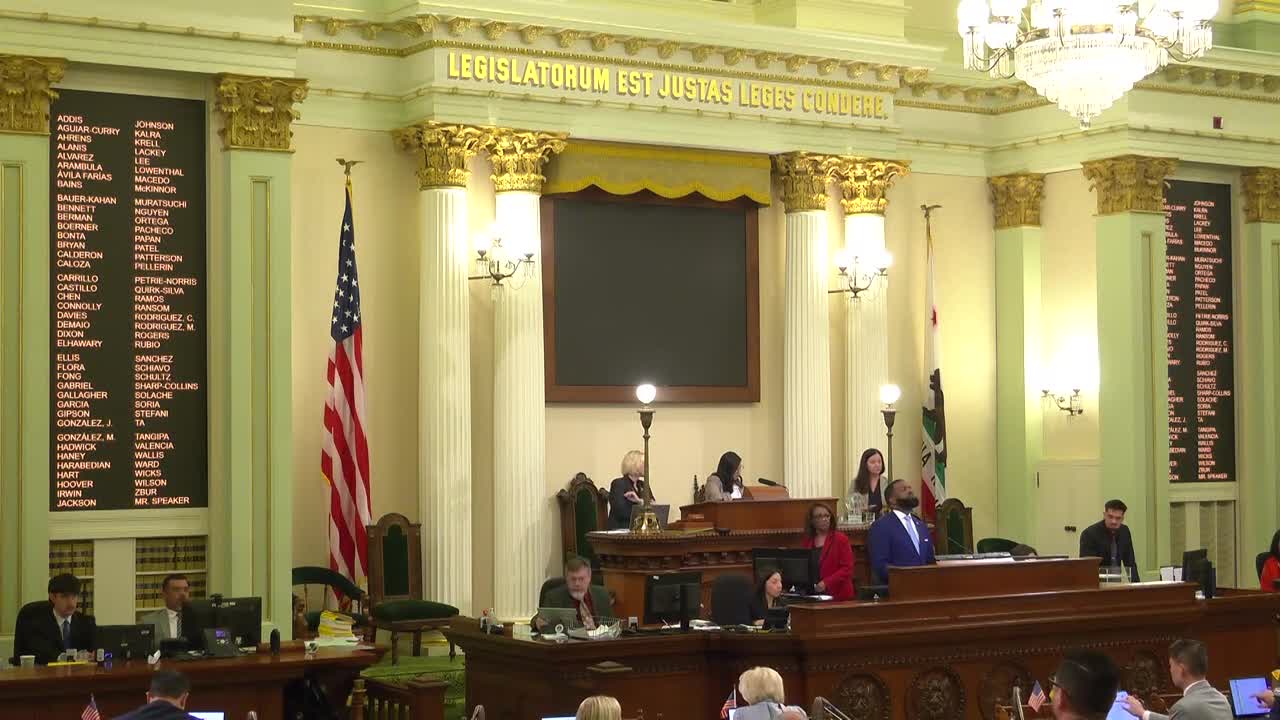 38SEC
Assembly Floor
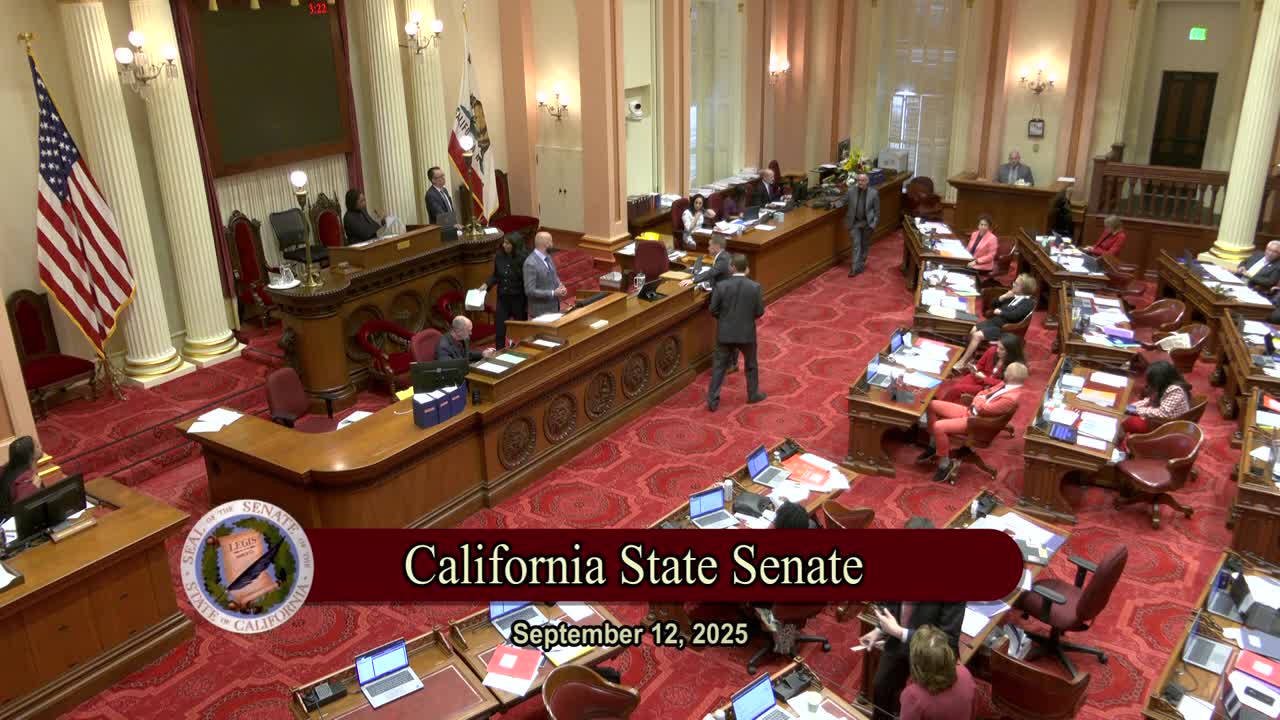 2MIN
Senate Floor
 16MIN
Senate Standing Committee on Judiciary
 19MIN
Senate Standing Committee on Labor, Public Employment and Retirement
 1MIN
Assembly Floor
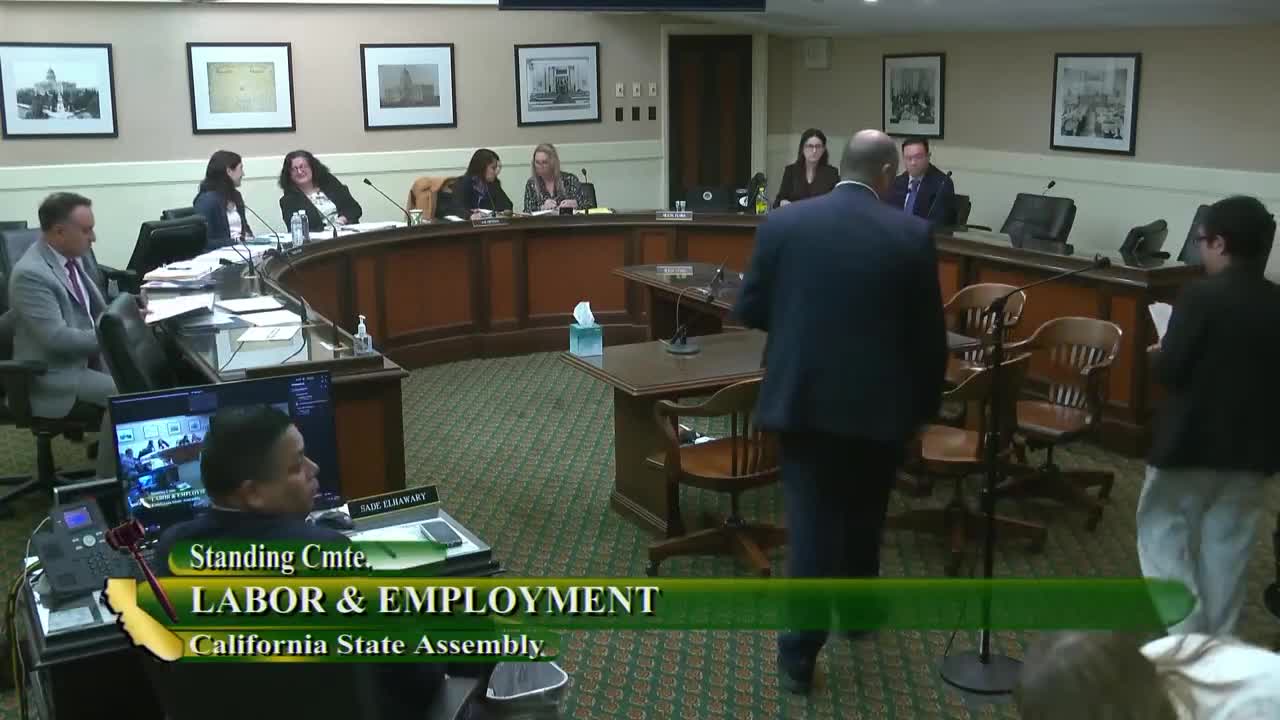 16MIN
Assembly Standing Committee on Labor and Employment
Bill Author

Bill Co-Author(s):