AB 967: Physicians and surgeons: licensure: expedite fee.
- Session Year: 2025-2026
- House: Assembly
- Latest Version Date: 2025-04-23
Current Status:
In Progress
(2025-07-14: In committee: Set, second hearing. Hearing canceled at the request of author.)
Introduced
In Committee
Awaiting First Chamber Vote
Passed First Chamber
In Committee
Awaiting Second Chamber Vote
Passed Second Chamber
Enacted
Existing law establishes the Department of Consumer Affairs under the direction of the Director of Consumer Affairs and sets forth its powers and duties relating to the administration of the various boards, including the Medical Board of California, under its jurisdiction that license and regulate various professions and vocations.
Existing law requires a board to expedite the licensure process for certain applicants, including an applicant who has a specified relationship with an active duty member of the Armed Forces of the United States, as prescribed, and holds a current license in another state, district, or territory of the United States in the profession or vocation for which the applicant seeks a license from the board.
Existing law establishes the Medical Board of California to enforce the licensing and regulatory provisions relating to physicians and surgeons. Existing law imposes various fees on applicants for licensure of physicians and surgeons, including an application and processing fee of $625 to be paid by an applicant for a certificate based on reciprocity, and an applicant for a certificate based upon written examination, as specified. Under existing law, all moneys paid to and received by the board are required to be paid into the State Treasury and credited to the Contingent Fund of the Medical Board of California. Existing law requires moneys in that fund to be available, upon appropriation by the Legislature, as provided.
This bill would require the Medical Board of California to expedite the licensure process for an applicant who submits an application that is accompanied by by, among other things, payment of an expedite fee fixed by the board. The bill would require the board to fix the expedite fee board at an amount equal to the cost of expediting the licensure process, but not to exceed $250, as specified. The bill would repeal these provisions on January 1, 2030.
Existing law establishes the Department of Consumer Affairs under the direction of the Director of Consumer Affairs and sets forth its powers and duties relating to the administration of the various boards, including the Medical Board of California, under its jurisdiction that license and regulate various professions and vocations.
Existing law requires a board to expedite the licensure process for certain applicants, including an applicant who has a specified relationship with an active duty member of the Armed Forces of the United States, as prescribed, and holds a current license in another state, district, or territory of the United States in the profession or vocation for which the applicant seeks a license from the board.
Existing law establishes the Medical Board of California to enforce the licensing and regulatory provisions relating to physicians and surgeons. Existing law imposes various fees on applicants for licensure of physicians and surgeons, including an application and processing fee of $625 to be paid by an applicant for a certificate based on reciprocity, and an applicant for a certificate based upon written examination, as specified. Under existing law, all moneys paid to and received by the board are required to be paid into the State Treasury and credited to the Contingent Fund of the Medical Board of California. Existing law requires moneys in that fund to be available, upon appropriation by the Legislature, as provided.
This bill would require the Medical Board of California to expedite the licensure process for an applicant who submits an application that is accompanied by an expedite fee fixed by the board. The bill would require the board to fix the expedite fee at an amount equal to the cost of expediting the licensure process, but not to exceed $250, as specified.
(a)The board shall expedite the licensure process for an applicant who submits an application that is accompanied by an expedite fee fixed by the board.
(b)The board shall fix the all of the following:
(1)Payment of an expedite fee fixed by the board at an amount equal to the cost of expediting the licensure process for applicants applying under subdivision (a), but the fee shall not to exceed two hundred fifty dollars ($250).
(2)Proof of an active and unrestricted license issued by another state, district, or territory of the United States to practice medicine.
(3)Documentation demonstrating that the applicant intends to provide direct patient care in this state within 90 days of the date of the application, including, but not limited to, a letter from an employer or health care entity indicating all of the following:
(A)The applicant has accepted employment or entered into a contract to provide direct patient care.
(B)The applicants starting date.
(C)The location where the applicant will be providing direct patient care.
(c)(b)(1)This section does not change any existing licensure requirements.
(2)An applicant applying for expedited licensure under subdivision (a) shall meet all applicable statutory and regulatory licensure requirements.
(d)(c)(1)This section does not require an applicant applying for expedited licensure pursuant to Sections 115.4, 115.5, 135.4, 870, and 2092 to pay the expedite fee established in subdivision (a).
(2)Applications submitted under this section shall not take priority over applications for expedited licensure under any of the sections described in this subdivision.
(d)This section shall remain in effect only until January 1, 2030, and as of that date is repealed.
(a)The board shall expedite the licensure process for an applicant who submits an application that is accompanied by an expedite fee fixed by the board.
(b)The board shall fix the expedite fee at an amount equal to the cost of expediting the licensure process for applicants applying under subdivision (a), but the fee shall not exceed two hundred fifty dollars ($250).
(c)(1)This section does not change any existing licensure requirements.
(2)An applicant applying for expedited licensure under subdivision (a) shall meet all applicable statutory and regulatory licensure requirements.
(d)This section does not require an applicant applying for expedited licensure pursuant to Sections 115.4, 115.5, 135.4, 870, and 2092 to pay the expedite fee established in subdivision (a).
|
Date
|
Status
|
|---|---|
| Jul 14, 2025 | In committee: Set, second hearing. Hearing canceled at the request of author. |
| Jun 18, 2025 | In committee: Set, first hearing. Hearing canceled at the request of author. |
| Jun 11, 2025 | In committee: Hearing postponed by committee. |
| Jun 4, 2025 | Referred to Com. on B. P. & E.D. |
| May 28, 2025 | In Senate. Read first time. To Com. on RLS. for assignment. |
| May 27, 2025 | Read third time. Passed. Ordered to the Senate. (Ayes 76. Noes 0. Page 1736.) |
| May 22, 2025 | Read second time. Ordered to third reading. |
| May 21, 2025 | From committee: Do pass. (Ayes 15. Noes 0.) (May 21). |
| May 14, 2025 | In committee: Hearing postponed by committee. |
| Apr 24, 2025 | Re-referred to Com. on APPR. |
| Apr 23, 2025 | Read second time and amended. |
| Apr 22, 2025 | From committee: Amend, and do pass as amended and re-refer to Com. on APPR. (Ayes 17. Noes 0.) (April 22). |
| Mar 10, 2025 | Referred to Com. on B. & P. |
| Feb 21, 2025 | From printer. May be heard in committee March 23. |
| Feb 20, 2025 | Read first time. To print. |
|
Date
|
Description
|
Location
|
Votes
|
|
|---|---|---|---|---|
| May 27, 2025 | AB 967 Valencia Assembly Third Reading | Assembly Floor |
Passed |
|
| May 21, 2025 | Do pass. | Assembly Standing Committee on Appropriations |
Passed |
|
| Apr 22, 2025 | Do pass as amended and be re-referred to the Committee on [Appropriations] | Assembly Standing Committee on Business and Professions |
Passed |
This list shows positions taken on this bill by organizations on the date displayed, which is linked to the original source.
Positions by individuals are not included.
|
Organization
|
Position
|
Date
|
|---|---|---|
| California Medical Association | ** Support | |
| Medical Board of California | ** Against | |
| Sutter Health | ** Support |
SENATE COMMITTEE ON
BUSINESS, PROFESSIONS AND ECONOMIC DEVELOPMENT
Senator Angelique Ashby, Chair
2025 - 2026 Regular
Bill No: AB 967 Hearing Date: July 14, 2025
Author: | Valencia | ||
Version: |
| ||
Urgency: | Fiscal: | ||
Consultant: | |||
Subject: Physicians and surgeons: licensure: expedite fee
SUMMARY:
Until January 1, 2030, requires the Medical Board of California (MBC) and Osteopathic Medical Board of California (OMBC) to expedite the licensure process for an applicant currently licensed in another state who pays a $250 fee.
Existing law:
- Establishes the Department of Consumer Affairs (DCA) within the Business, Consumer Services, and Housing Agency. (Business and Professions Code (BPC) §§ 100 et seq.)
- Establishes various boards, bureaus, and other entities within the jurisdiction of the DCA. (BPC § 101)
- Requires boards within the DCA to expedite, and authorizes boards to assist, the initial licensure process for an applicant who has served as an active duty member of the Armed Forces of the United States and was honorably discharged or who, beginning July 1, 2024, is enrolled in the United States Department of Defense SkillBridge program. (BPC § 115.4)
- Requires boards within the DCA to expedite the licensure process and waive any associated fees for applicants who hold a current license in another state and who are married to, or in a domestic partnership or other legal union with, an active duty member of the Armed Forces of the United States who is assigned to a duty station in this state under official active duty military orders. (BPC § 115.5)
- Requires boards within the DCA to expedite, and authorizes boards to assist, the initial licensure process for applicants who have been admitted to the United States as a refugee, have been granted asylum by the Secretary of Homeland Security or the Attorney General of the United States, or have a special immigrant visa. (BPC § 135.4)
- Requires the MBC and the OMBC, the Board of Registered Nursing (BRN), and the Physician Assistant Board (PAB) to expedite the licensure process for applicants who demonstrate that they intend to provide abortions within the scope of practice of their license. (BPC § 870)
- Requires the MBC to give priority review status to the application of an applicant for a physician and surgeon’s certificate who can demonstrate that they intend to practice in a medically underserved area or serve a medically underserved population. (BPC § 2092)
- Requires the MBC to issue a physician’s and surgeon’s certificate to an applicant that holds an unlimited license as a physician and surgeon in another state, or in a Canadian province, and that no disciplinary action has been taken against the applicant by any medical licensing authority and that the applicant has not been the subject of adverse judgments or settlements resulting from any evidence, as determined by the board, of negligence or incompetence. (BPC § 2135)
- Requires the OMBC to issue an osteopathic physician’s and surgeon’s certificate on reciprocity if the applicant holds an unlimited license in another state equivalent to content administered in California, and, among other requirements, that no disciplinary action has been taken against the applicant by any medical licensing authority and that the applicant has not been the subject of adverse judgements or settlements resulting from evidence, as determined by the board of negligence or incompetence. (BPC § 2153.5)
This bill:
- Until January 1, 2030, requires the MBC and OMBC to expedite the licensure process for an applicant from another state who submits an application, along with a $250 expedite fee, proof of licensure in another state, and documentation demonstrating they intend to provide direct patient care in California within 90 days of applying. Specifies that demonstration includes, but is not limited to, a letter from an employer or health care entity that the applicant has accepted employment or entered into a contract to provide direct patient care, their starting date, and the location where they will be providing direct patient care.
- Clarifies that certain applicants from another state do not have to pay the $250 expedite fee and states that these applications shall not take priority over applications for expedited licensure under any of the other categories established in the Act.
FISCAL EFFECT:
This bill is keyed fiscal by Legislative Counsel. According to the Assembly Committee on Appropriations, MBC anticipates minor and absorbable costs and OMBC estimates costs of $112,000 in fiscal year (FY) 2025-26 and $104,000 in FY 2026-27 to address increased workload, assuming 700 applications annually, with each one requiring two to three hours for communication with licensees and staff, in-house fingerprint submissions, and results tracking functions. The Department of Consumer Affairs (DCA), Office of Information Services anticipates a one-time, absorbable cost of $8,000 to make changes in its online licensing and enforcement system.
COMMENTS:
- Purpose. This bill is sponsored by the California Medical Association. According to the Author, “AB 967 tackles the urgent need to expand California’s physician workforce by expediting licensure for physicians who possess an active medical license in another state. With our population aging and becoming increasingly more diverse, the demand for healthcare is growing faster than our current system can handle. This bill takes direct action to increase our physician workforce, and especially in underserved communities, ensuring that everyone can access quality, culturally competent care. AB 967 is a proactive step to streamline the licensure process and allow qualified physicians to practice medicine without unnecessary barriers.”
The Author states that “Out-of-State physicians aiming to practice in California are experiencing long delays in the licensure process. The Medical Board of California recommends that applicants apply for at least six months prior to when they need their license. In many cases, it has taken longer than six months for physicians who practice out-of-state to receive their license. Specifically, a constituent of ours detailed their experience of waiting one year to obtain a license due to a flagged signature. The constituent attempted to cure the signature six times. Eventually, the constituent reached out to a current state senator who then reached out to the Board to assist in getting the license.
In FY 2023-24, the board also received more deficient applications than complete applications, with the deficient applications taking an estimated eight months to process. One of the reasons an application may be flagged is that an applicant did “.not provide their full legal name.” This directly impacts professionals who have accepted job offers in California and need to wait until they receive a license before they can start practicing medicine. The unpredictability on licensure approval makes it difficult for physicians to plan their move to California. In some instances, physicians abandon plans to move, undermining efforts to bolster the primary care workforce.”
- Background.
MBC Licensing. Physician applicants for licensure by MBC must pass nationally recognized examinations, the United States Medical Licensing Examination (USMLE) Step 1, Step 2 Clinical Knowledge (CK) and Step 3. Effective February 4, 2021, the Federation of State Medical Boards (FSMB) discontinued the USMLE Step 2 Clinical Skills (CS) examination that was suspended May 2020, due to COVID-19. The examination encompasses basic sciences, medical knowledge, patient diagnosis and treatment as well as practical knowledge by testing core areas of medicine, surgery, psychiatry, obstetrics/gynecology, pediatrics and family medicine. Examinations are offered throughout the world on an ongoing basis, although USMLE Step 3 is offered only in the US as a computer-based and mock patient-based. Applicants are eligible for USMLE Steps 1 and 2 CK upon satisfactory completion of specific basic science curriculum coursework. At the time of eligibility, the applicant participates in and completes the application process, ultimately gaining admittance to the examinations. Once the scores are released and the applicant has passed Step 1 and Steps 2 CK, the applicant continues with their medical education. The applicant is eligible for Step 3 immediately upon graduation from medical school. However, as this examination is practical and clinical based, many graduates prefer to complete at least one year of postgraduate training prior to attempting the Step 3 examination. Per USMLE requirements, applicants must complete the entire examination series, Steps 1 through 3, within seven years from the date of the first passing examination.
MBC requires documents to be sent directly from medical schools, postgraduate training programs, other state medical boards and other sources to MBC as means of verifying proof of attendance, completion, licensure in another state and other evidence that is necessary to consider for licensure. MBC notes that approximately 88 percent of the applications it receives and reviews are deficient at the time of review.
All applicants must obtain fingerprint criminal record checks from both the Department of Justice (DOJ) and the Federal Bureau of Investigation (FBI) prior to the issuance of a physician’s medical license in California. If applicants respond affirmatively to a series of questions on the application related to issues during postgraduate training, unusual circumstances during medical school, or discipline, the applicant is able to provide narrative information to MBC and MBC requires that documentation supporting the applicant’s assertion be provided directly to MBC. MBC also requires documentation to be provided directly to the board for proof of residency from medical education providers and previous medical licensure from the licensing agency. MBC queries the National Practitioner Databank (NPDB), a confidential information clearinghouse created by Congress to improve health care quality, protect the public, and reduce health care fraud and abuse in the U.S., for certain applicants with issues of concern disclosed on the application or during the application process as well as applicants who disclose that he or she holds a license in another state, territory or province. MBC also queries all applicants in the FSMB database, which contains a record of disciplinary actions taken by other states and jurisdictions, as well as any inappropriate behavior in another state or jurisdiction during an examination. MBC does not recognize true reciprocity in that applicants for licensure in California must still adhere to certain medical school education requirements not present in all other states or jurisdictions.
OMBC Licensing. D.O. applicants for licensure must graduate from an accredited college of osteopathic medicine, complete 36 months year of postgraduate training, which includes a minimum of four months of medicine and successfully complete all levels of a national exam. The exam is, generated and administered by the National Board of Osteopathic Medical Examiners (NBOME), is known as the NBOME Comprehensive Osteopathic Medical Licensing Examination (COMLEX-USA) and serves as the recognized national evaluative instrument for osteopathic students and graduates. The examination consists of three levels: COMLEX Level 1 is a problem-based assessment which integrates the foundational and basic biomedical sciences of anatomy, behavioral science, biochemistry microbiology, osteopathic principles, pathology, pharmacology, physiology and other areas of medical knowledge as they relate to solving clinical problems and in providing osteopathic medical care to patients. COMLEX Level 2 Cognitive Evaluation is a problem-based and symptoms-based assessment, which integrates the clinical disciplines of emergency medicine, family medicine, internal medicine, obstetrics/gynecology, osteopathic principles and neuromusculoskeletal medicine, pediatrics, psychiatry, surgery, and other areas relevant to solving clinical problems in proving osteopathic medical care to patients. COMLEX-USA Level 2-Performance Evaluation is a one-day examination of clinical skills where each candidate encounters 12 standardized patients over the course of a seven-hour examination day. Clinical skills tested include: physician-patient communication, interpersonal skills and professionalism, medical history-taking and physical examination skills, osteopathic principles and osteopathic manipulative treatment, and documentation skills. COMLEX Level 3 is also a problem-based and symptoms-based assessment, which integrates the clinical disciplines of emergency medicine, family medicine, internal medicine, obstetrics/gynecology, osteopathic principles and neuromusculoskeletal medicine, pediatrics, psychiatry, surgery, and other areas relevant to solving clinical problems in proving osteopathic medical care to patients. The COMLEX-USA is only offered in English.
OMBC requires documents to be sent directly from osteopathic schools, postgraduate training programs, other state medical boards, COMLEX-USA and others to OMBC as means of gauging proof of attendance, completion, licensure in another state and other evidence that is necessary to consider for licensure. OMBC does not accept foreign graduates for licensure.
Like MBC applicants, all OMBC applicants must also obtain fingerprint criminal record checks from both DOJ and FBI; OMBC also queries the NPDB and; OMBC also queries all applicants in the FSMB database, which contains a record of disciplinary actions taken by other states and jurisdictions, as well as any inappropriate behavior in another state or jurisdiction during an examination.
OMBC has established performance targets for the D.O. license application process at 75 days from the receipt of the application until the issuance of the license. OMBC asserts that all applications are deficient in some way, typically because documents required from primary sources have not been received at the time an application is received.
Department of Consumer Affairs (DCA) licensure and regulation of professions. The DCA consists of 36 boards, bureaus, and other entities responsible for licensing, certifying, or otherwise regulating professionals in California, including 16 that issue licenses to healing arts professionals. As of March 2023, there were over 3.4 million active licensees who were issued a license by a program within DCA. Licensure is intended to protect consumers by ensuring applicants have the knowledge, skills, and abilities to engage in regulated activity without creating a negative impact on public health, safety, and welfare.
Each of DCA’s 280 license types has its own unique requirements, with the practice act for each profession providing for various prerequisites including demonstration of prelicensure education, experience, training, passing an examination, and other requirements. Most boards require a background check to ensure the applicant does not have a history of convictions that are substantially related to the scope of the profession (BPC § 144). Boards additionally require the applicant to pay a fee, which is set at an amount reasonable for the board to recover the cost of processing an application. Additionally, business applicants may be required to obtain insurance and/or a bond, demonstrate good standing with the Secretary of State, and appoint a qualified manager or responsible managing employee to oversee the business’ operations within the scope of the license, among other requirements.
Boards typically set internal targets for application processing timelines and seek adequate staffing in an effort to meet those targets. The average processing time between initial application submission and license issuance varies depending on multiple factors, some that are within the programs’ control; however, most delays occur based on factors outside the licensing programs’ control. These include, but are not limited to, the number of applications received, length of time to obtain an applicant’s criminal history, time for the applicant to take and pass a required examination, time for an applicant’s school to send transcripts, and application deficiencies that must be resolved by the applicant, among others. License processing timelines are then regularly evaluated through the Legislature’s sunset review oversight process.
Current and Proposed Expedited Application Processing Laws. Several mandates already require DCA programs to expedite applications, including applications received from: 1) former members of the military; 2) military spouses, domestic partners, and those in any other legal union with a current member of the military stationed in California; 3) refugees and those granted asylum; 4) active-duty members of a regular component of the Armed Forces who are enrolled in the U.S. Department of Defense SkillBridge program under; and 5) specified healing arts licensees who intend to perform abortions in California.
Last year, two bills, AB 2442 (Zbur of 2024) and SB 1067 (Smallwood-Cuevas of 2024), would have required specified healing arts boards within DCA to expedite the licensure process for applicants who demonstrate their intent to provide gender-affirming health care or gender-affirming mental health care services or those who intend to practice in a medically underserved area, respectively. For each bill, the methods of demonstrating the applicant’s eligibility include demonstrating intent to work in one of the relevant areas. The applicant may do this by submitting a letter from an employer or contracting entity indicating that the applicant has accepted employment or entered into a contract to provide the relevant services, as specified by each bill.
In vetoing both measures, the Governor noted…”As the number of applicants who qualify for expedited licensure grows through legislation, the benefits of mandated prioritization may start to diminish, at the expense of potential negative impacts to other applicants. Additionally, the increase in staff needed to ensure expedited applications may lead to licensing fee increases. It would be prudent to allow time for the current expedited licensure processes to continue so that we can gather data on their effectiveness. This will allow the state to be well informed on the efficacy of this practice before pursuing additional frameworks for expedited licensure and confirm these processes do not lead to unintended consequences on the broader healthcare workforce.”
- Arguments in Support. The California Medical Association and Sutter Health state that “To practice in California, out-of-state physicians must obtain their license by applying through the Medical Board of California. However, many of these physicians have run into long delays during their licensing process, causing some to abandon the move altogether. AB 967 ensures that physicians can be recruited to move to California and have certainty that they will have an active license to practice when they relocate.”
- Arguments in Opposition. According to the Medical Board of California, “this bill would, unfortunately, not make a meaningful reduction in the timeframe to process an application. Instead, this bill would increase the Board’s workload and force the Board to prioritize out-of-state applicants over California residents seeking licensure as a physician…If the Board initially reviews a complete application and no issues are identified with the applicant, then a license could be issued within approximately 7-10 days after that review.”
MBC states that it “will not issue a license until all relevant requirements have been met. Application processing is necessarily delayed while the Board awaits receipt of missing information or required documents. Some notable examples include:
- Applicants who do not provide their full legal name.
- Incomplete or missing forms.
- Missing exam scores/transcripts.
- Missing or inadequate fingerprint results
MBC notes that “Rather than streamlining the application review process, AB 967 would increase staff workload by adding an additional step: reviewing documentation provided to verify whether an applicant qualifies for expedited review. Applicants who request expedited review, but don't initially qualify would be notified via email, necessitating additional communications between the applicant and the Board to determine whether they qualify under this bill. If AB 967 had been the law during Fiscal Year 2023-2024, we estimate that more than 20 percent of all physician's and surgeon's licenses issued during that year could have qualified for one of the pathways for expedited/priority review. Attempting to expedite such a large portion of the Board's application volume would delay processing of all non-expedited applications.”
MBC concludes by noting that “Under AB 967, California residents who need a license from the Board to pursue postgraduate training, or continue practicing here after completing their training, must wait longer for their applications to be processed, compared to out-of-state applicants.”
- Policy Concerns. Despite statutory attempts to ensure swifter licensing timeframes for specified applicants, factors beyond a program’s control (deficiencies in applications, the length of time fingerprint clearance is provided, delays in receiving transcripts and education program completion verification, time for the applicant to take and pass an examination, and more) can lead to lengthy holdups in the process, regardless of the program’s internal efforts to expedite processing. Sunset review oversight of regulatory programs has shown that many are typically processing licenses in shorter timeframes than even their internal goals and historic averages.
Expediting a license can only happen when a licensing program begins processing a complete application. As the Author himself notes in justifying the need for this bill, “In FY 2023-24, the board also received more deficient applications than complete applications, with the deficient applications taking an estimated eight months to process.” Forcing MBC and OMBC to expedite application processing does absolutely zero if the problem is an influx of incomplete applications, and applicants cannot benefit from anything that makes the process move more quickly if they do not submit complete applications to begin with.
Out-of-state licensed physicians and surgeons who have been licensed for four years or longer already have a streamlined pathway to licensure in California in that their medical education requirements and examination requirements are deemed satisfied by virtue of being licensed in good standing in their state.
Additionally, this bill creates disparity in the ability for physician and surgeon applicants to have their applications processed by allowing an existing licensee from another state to pay a fee to jump to the front of the queue of pending applications. While the Legislature has narrowly allowed this for categories of applicants based on their unique circumstances (like being in the military or a military spouse or refugee granted asylum) or based on their commitment to providing specific care (like abortion services or to underserved patients), simply allowing any physician applicant to receive special dispensation because they pay extra money is inequitable. This bill could result in California residents, who have gone to school in California, served California patients in postgraduate programs, and who wish to continue working in California as a physician to take lower priority than someone from another state simply because that person is already licensed and paid extra money to be considered for licensure before others following the normal process.
SUPPORT AND OPPOSITION:
Support:
California Medical Association
Sutter Health
Opposition:
Medical Board of California
-- END --
ASSEMBLY THIRD READING
ATR Bill Id:AB 967
Author:(Valencia)
As Amended Ver:April 23, 2025
Majority vote
SUMMARY
Until January 1, 2030, requires the Medical Board of California (MBC) to expedite the licensure process for applicants licensed to practice medicine in other states who intend to provide direct patient care in California and who pay an additional fee.
Major Provisions
- Requires the MBC to expedite the licensure process for an applicant who submits all of the following:
- Payment of an expedite fee.
- Proof of an active and unrestricted license issued by another state, district, or territory of the United States to practice medicine.
- Documentation demonstrating that the applicant intends to provide direct patient care in California within 90 days of the date of the application.
- Provides that the expedite fee shall be fixed by the MBC at an amount equal to the cost of expediting the licensure process for those applicants, not to exceed $250.
- Expressly provides that the bill does not change any existing licensure requirements for license applicants and does not require applicants applying for expedited licensure pursuant to another provision of current law to pay a fee.
- Provides that applicants expedited under the bill shall not take priority over applications for expedited licensure under other expedited licensure programs.
- Subjects the provisions of the bill to repeal on January 1, 2030, unless that sunset date is subsequently extended or eliminated.
COMMENTS
Health Care Workforce Inequities. There has long been an acknowledged decline in the number of accessible primary care physicians in California, which has disproportionately impacted communities with concentrated populations of immigrant families and people of color. A recent study found that between 2010 and 2019, the number of primary care physicians in proportion to population remained largely unchanged nationally, and that counties with a high proportion of minorities saw a decline during that period.[1] Additionally, physicians who are accessible to immigrant communities often do not possess the linguistic or cultural competence to appropriately treat all patients.[2]
Expedited Licensure. The Department of Consumer Affairs (DCA) consists of 36 boards, bureaus, and other entities responsible for licensing, certifying, or otherwise regulating professionals in California. As of March 2023, there are over 3.4 million licensees overseen by programs under the DCA, including health professionals regulated by healing arts boards under Division 2 of the Business and Professions Code. Each licensing program has its own unique requirements, with the governing acts for each profession providing for various prerequisites including prelicensure education, training, and examination. Most boards additionally require the payment of a fee and some form of background check for each applicant.
The average length of time between the submission of an initial license application and approval by an entity under the DCA can vary based on a number of circumstances, including increased workload, delays in obtaining an applicant's criminal history, and deficiencies in an application. Boards typically set internal targets for application processing timelines and seek adequate staffing in an effort to meet those targets consistently. License processing timelines are then regularly evaluated through the Legislature's sunset review oversight process.
The first expedited licensure laws specifically related to the unique needs of military families. The Syracuse University Institute for Veterans and Military Families found that up to 35% of military spouses are employed in fields requiring licensure. Because each state possesses its own licensing regime for professional occupations, military family members are required to obtain a new license each time they move states, with one-third of military spouses reportedly moving four or more times while their partner is on active duty. Because of the barriers encountered by military family members who seek to relocate their licensed work to a new state, it is understood that continuing to work in their field is often challenging if not impossible.
In an effort to address these concerns, Assembly Bill 1904 (Block) was enacted in 2012 to require boards and bureaus under the DCA to expedite the licensure process for military spouses and domestic partners of a military member who is on active duty in California. Two years later, Senate Bill 1226 (Correa) was enacted to similarly require boards and bureaus under the DCA to expedite applications from honorably discharged veterans, with the goal of enabling these individuals to quickly transition into civilian employment upon retiring from service.
Statute requires entities under the DCA to annually report the number of applications for expedited licensure that were submitted by veterans and active-duty spouses and partners. For example, in Fiscal Year 2022-23, the MBC received 14 applications from military spouses or partners and 101 applications from honorably discharged veterans subject to expedited processing. In 2023, the federal Servicemembers Civil Relief Act (SCRA) imposed new requirements on states to recognize qualifying out-of-state licenses for service members and their spouses. This new form of enhanced license portability potentially displaces the need for expedited licensure for these applicants.
A decade after the first expedited licensure laws were enacted for military families, the Legislature enacted Assembly Bill 2113 (Low) in 2020 to require licensing entities under the DCA to expedite licensure applications for refugees, asylees, and Special Immigrant Visa holders. The intent of this bill was to address the urgency of allowing those forced to flee their homes to restart their lives upon acceptance into California with refugee status. It is understood that the population of license applicants who have utilized this new expedited licensure program across all DCA entities is, to date, relatively small.
Subsequently in 2022, the Legislature enacted Assembly Bill 657 (Cooper) to add another category of applicants eligible for expedited licensure. This bill required the MBC, OMBC, the BRN, and the PAB to expedite the license application for an applicant who demonstrates that they intend to provide abortions. This bill was passed in the wake of the Supreme Court’s decision to overturn Roe v. Wade, which led to concerns that with approximately half of all states likely to seek to ban abortion, patients in those states would come to California to receive abortion services, creating a swell in demand for abortion providers. Assembly Bill 657 was passed to ensure that there is an adequate health care provider workforce to provide urgent reproductive care services.
This bill would establish another process for expedited licensure that would be accessible to applicants licensed in other states who intend to provide direct patient care in California and who pay an additional fee as part of their application. The MBC would be required to establish a fee at an amount equal to the cost of expediting the licensure process for applicants, but the fee would be capped at no more than $250. The author believes that this new expedited licensure process would be utilized by physicians and surgeons who are already licensed in other states and are seeking to practice in California but who can often face delays in the application process that prevent them from engaging in care. By allowing those applicants to have their applications processed more expeditiously, the author hopes that communities in California will see a meaningful increase in access to primary care.
According to the Author
"AB 967 tackles the urgent need to expand California's primary care workforce by establishing an optional fee for out-state-physicians to quickly obtain a medical license to practice here. With our population aging and becoming increasingly more diverse, the demand for healthcare is growing faster than our current system can handle. This bill takes direct action to increase our physician workforce, especially in underserved communities, ensuring that everyone can access quality, culturally competent care. AB 967 is about keeping Californians healthy by getting more doctors where they're need most."
Arguments in Support
The California Medical Association writes in support of this bill as its sponsor: "AB 967 ensures that physicians can be recruited to move to California and have certainty that they will have an active license to practice when they relocate. Additionally, CMA will continue to collaborate with Assemblymember Valencia and relevant stakeholders to find a fee amount that is accessible and reasonable for all out-of-state physician applicants and the Medical Board of California."
Arguments in Opposition
The Medical Board of California opposes this bill, writing that its staff "analyzed the processing timeframes for the past three fiscal years for expedited vs. non-expedited license applications for a physician's and surgeon's license" and found that "there is a very modest difference in the average number of days to issue an expedited license." The Board concludes: "Although the Board shares your desire to increase the volume of qualified health care providers in this state, considering the aforementioned facts, the Board is opposed to AB 967, as it will increase the Board's workload and will not lead to a meaningful reduction in application processing timeframes."
FISCAL COMMENTS
According to the Assembly Committee on Appropriations, minor and absorbable costs to the MBC; the Osteopathic Medical Board of California estimates costs of $112,000 in fiscal year (FY) 2025-26 and $104,000 in FY 2026-27 to address increased workload; one-time absorbable costs to the DCA.
VOTES
ASM BUSINESS AND PROFESSIONS: 17-0-1
YES: Berman, Flora, Ahrens, Alanis, Bains, Bauer-Kahan, Caloza, Chen, Elhawary, Hadwick, Haney, Jackson, Krell, Lowenthal, Macedo, Nguyen, Pellerin
ABS, ABST OR NV: Irwin
ASM APPROPRIATIONS: 15-0-0
YES: Wicks, Sanchez, Arambula, Calderon, Caloza, Dixon, Elhawary, Fong, Mark González, Hart, Pacheco, Pellerin, Solache, Ta, Tangipa
UPDATED
VERSION: April 23, 2025
CONSULTANT: Robert Sumner / B. & P. / (916) 319-3301 FN: 0000475
Date of Hearing: May 21, 2025
ASSEMBLY COMMITTEE ON APPROPRIATIONS
Buffy Wicks, Chair
ABPCA Bill Id:AB 967
Author:(Valencia) – As Amended Ver:April 23, 2025
Policy Committee: | Business and Professions | Vote: | 17 - 0 |
|
| ||
|
|
Urgency: No State Mandated Local Program: No Reimbursable: No
SUMMARY:
This bill requires, until January 1, 2030, the Medical Board of California (MBC) expedite licensure for an applicant who (1) pays an expedited license fee determined by MBC not to exceed $250, (2) provides proof of licensure to practice medicine in another state, district, or territory of the U.S., and (3) demonstrates intent to provide direct patient care in the state within 90 days of the application date, as specified. The bill also provides that applications submitted under the provisions of this bill are not to take priority over other applications for expedited licensure.
FISCAL EFFECT:
- Minor and absorbable costs to MBC.
- The Osteopathic Medical Board of California (OMBC) estimates costs of $112,000 in fiscal year (FY) 2025-26 and $104,000 in FY 2026-27 to address increased workload, assuming 700 applications annually, with each one requiring two to three hours for communication with licensees and staff, in-house fingerprint submissions, and results tracking functions (Osteopathic Medical Board of California Contingent Fund).
- The Department of Consumer Affairs (DCA), Office of Information Services anticipates a one-time, absorbable cost of $8,000 to make changes in its online licensing and enforcement system.
MBC states that while it anticipates a workload increase for the first year to update online and paper application contents, procedures, trainings, reviews, and verification requirements, respond to additional questions and complaints from licensees, and promulgate regulations, the additional workload will not justify an additional expedite fee, so revenue will not increase.
COMMENTS:
Purpose. This bill is sponsored by the California Medical Association. According to the author:
AB 967 tackles the urgent need to expand California’s primary care workforce by establishing an optional fee for out-state-physicians to quickly obtain a medical license to practice here. With our population aging and becoming increasingly more diverse, the demand for healthcare is growing faster than our current system can handle. This bill takes direct action to increase our physician workforce, especially in underserved communities, ensuring that everyone can access quality, culturally competent care. AB 967 is about keeping Californians healthy by getting more doctors where they’re need most.
Background. The first expedited licensure laws specifically related to the unique needs of military families. The Syracuse University Institute for Veterans and Military Families found that up to 35% of military spouses are employed in fields requiring licensure, and one-third of military spouses reportedly move four or more times while their partner is on active duty. Because each state possesses its own licensing regime for professional occupations, military family members are required to obtain a new license each time they move states. To address these concerns, the Legislature and governor have enacted legislation to require boards and bureaus under the DCA to expedite the licensure process for military spouses and domestic partners of a military member who is on active duty in California, and later for honorably discharged veterans.
In 2023, the federal Servicemembers Civil Relief Act imposed new requirements on states to recognize qualifying out-of-state licenses for service members and their spouses. This new form of enhanced license portability potentially displaces the need for expedited licensure for these applicants. The Legislature has since provided expedited licensure for refugees, asylees, and Special Immigrant Visa holders, and in 2022, for applicants who intend to provide abortions.
The author believes the expedited licensure process in this bill would be used by physicians who are already licensed in other states and are seeking to practice in California, but who often face delays in the application process that prevent them from engaging in care.
Analysis Prepared by: Allegra Kim / APPR. / (916) 319-2081
Date of Hearing:
ASSEMBLY COMMITTEE ON BUSINESS AND PROFESSIONS
Marc Berman, Chair
ABPCA Bill Id:AB 967
Author:(Valencia) – As Introduced Ver:February 20, 2025
SUBJECT: Physicians and surgeons: licensure: expedite fee.
SUMMARY: Requires the Medical Board of California (MBC) to expedite the licensure process for any applicant who pays an additional fee.
EXISTING LAW:
- Establishes the DCA within the Business, Consumer Services, and Housing Agency. (Business and Professions Code (BPC) § 100)
- Enumerates various regulatory boards, bureaus, committees, and commissions under the DCA’s jurisdiction, including healing arts boards under Division 2. (BPC § 101)
- States that boards, bureaus, and commissions within the DCA must establish minimum qualifications and levels of competency and license persons desiring to engage in the occupations they regulate, upon determining that such persons possess the requisite skills and qualifications necessary to provide safe and effective services to the public. (BPC § 101.6)
- Requires boards within the DCA to expedite, and authorizes boards to assist, the initial licensure process for an applicant who has served as an active duty member of the Armed Forces of the United States and was honorably discharged or who, beginning July 1, 2024, is enrolled in the United States Department of Defense SkillBridge program. (BPC § 115.4)
- Requires boards within the DCA to expedite the licensure process and waive any associated fees for applicants who hold a current license in another state and who are married to, or in a domestic partnership or other legal union with, an active duty member of the Armed Forces of the United States who is assigned to a duty station in this state under official active duty military orders. (BPC § 115.5)
- Requires boards within the DCA to expedite, and authorizes boards to assist, the initial licensure process for applicants who have been admitted to the United States as a refugee, have been granted asylum by the Secretary of Homeland Security or the Attorney General of the United States, or have a special immigrant visa. (BPC § 135.4)
- Establishes the MBC within the DCA to regulate physicians and surgeons under the Medical Practice Act. (BPC §§ 2000 et seq.)
- Requires the MBC to develop a process to give priority review status to applicants who can demonstrate that they intend to practice in a medically underserved area or serve a medically underserved population. (BPC § 2092)
- Requires the MBC and other specified healing arts boards to expedite the licensure process for applicants who demonstrate that they intend to provide abortions within the scope of practice of their license. (BPC § 870)
THIS BILL:
- Requires the MBC to expedite the licensure process for an applicant who submits an application that is accompanied by an expedite fee.
- Provides that the expedite fee shall be fixed by the MBC at an amount equal to the cost of expediting the licensure process for those applicants, not to exceed $250.
- Expressly provides that the bill does not change any existing licensure requirements for license applicants and does not require applicants applying for expedited licensure pursuant to another provision of current law to pay a fee.
FISCAL EFFECT: Unknown; this bill is keyed fiscal by the Legislative Counsel.
COMMENTS:
Purpose. This bill is sponsored by the California Medical Association. According to the author:
AB 967 tackles the urgent need to expand California’s primary care workforce by establishing an optional fee for out-state-physicians to quickly obtain a medical license to practice here. With our population aging and becoming increasingly more diverse, the demand for healthcare is growing faster than our current system can handle. This bill takes direct action to increase our physician workforce, especially in underserved communities, ensuring that everyone can access quality, culturally competent care. AB 967 is about keeping Californians healthy by getting more doctors where they’re need most.
Background.
Medical Board of California. The MBC is primarily responsible for licensing and regulating physicians and surgeons, whose certificates authorize the plenary practice of all recognized fields of medicine. The MBC also has jurisdiction over special program registrants and organizations and special faculty permits, which allow those who are not MBC licensees but who meet certain licensure exemption criteria to perform duties in specified settings. The MBC also has authority over licensed midwives, medical assistants, and registered polysomnographic professionals. The MBC additionally approves accreditation agencies that accredit outpatient surgery settings and issues fictitious name permits to physicians practicing under a name other than their own.
Health Care Workforce Inequities. There has long been an acknowledged decline in the number of accessible primary care physicians in California, which has disproportionately impacted communities with concentrated populations of immigrant families and people of color. A recent study found that between 2010 and 2019, the number of primary care physicians in proportion to population remained largely unchanged nationally, and that counties with a high proportion of minorities saw a decline during that period.[1] Additionally, physicians who are accessible to immigrant communities often do not possess the linguistic or cultural competence to appropriately treat all patients.[2]
Expedited Licensure. The DCA consists of 36 boards, bureaus, and other entities responsible for licensing, certifying, or otherwise regulating professionals in California. As of March 2023, there are over 3.4 million licensees overseen by programs under the DCA, including health professionals regulated by healing arts boards under Division 2 of the Business and Professions Code. Each licensing program has its own unique requirements, with the governing acts for each profession providing for various prerequisites including prelicensure education, training, and examination. Most boards additionally require the payment of a fee and some form of background check for each applicant.
The average length of time between the submission of an initial license application and approval by an entity under the DCA can vary based on a number of circumstances, including increased workload, delays in obtaining an applicant’s criminal history, and deficiencies in an application. Boards typically set internal targets for application processing timelines and seek adequate staffing in an effort to meet those targets consistently. License processing timelines are then regularly evaluated through the Legislature’s sunset review oversight process.
The first expedited licensure laws specifically related to the unique needs of military families. The Syracuse University Institute for Veterans and Military Families found that up to 35 percent of military spouses are employed in fields requiring licensure. Because each state possesses its own licensing regime for professional occupations, military family members are required to obtain a new license each time they move states, with one-third of military spouses reportedly moving four or more times while their partner is on active duty. Because of the barriers encountered by military family members who seek to relocate their licensed work to a new state, it is understood that continuing to work in their field is often challenging if not impossible.
In an effort to address these concerns, Assembly Bill 1904 (Block) was enacted in 2012 to require boards and bureaus under the DCA to expedite the licensure process for military spouses and domestic partners of a military member who is on active duty in California. Two years later, Senate Bill 1226 (Correa) was enacted to similarly require boards and bureaus under the DCA to expedite applications from honorably discharged veterans, with the goal of enabling these individuals to quickly transition into civilian employment upon retiring from service.
Statute requires entities under the DCA to annually report the number of applications for expedited licensure that were submitted by veterans and active-duty spouses and partners. For example, in Fiscal Year 2022-23, the MBC received 14 applications from military spouses or partners and 101 applications from honorably discharged veterans subject to expedited processing. In 2023, the federal Servicemembers Civil Relief Act (SCRA) imposed new requirements on states to recognize qualifying out-of-state licenses for service members and their spouses. This new form of enhanced license portability potentially displaces the need for expedited licensure for these applicants.
A decade after the first expedited licensure laws were enacted for military families, the Legislature enacted Assembly Bill 2113 (Low) in 2020 to require licensing entities under the DCA to expedite licensure applications for refugees, asylees, and Special Immigrant Visa holders. The intent of this bill was to address the urgency of allowing those forced to flee their homes to restart their lives upon acceptance into California with refugee status. It is understood that the population of license applicants who have utilized this new expedited licensure program across all DCA entities is, to date, relatively small.
Subsequently in 2022, the Legislature enacted Assembly Bill 657 (Cooper) to add another category of applicants eligible for expedited licensure. This bill required the MBC, OMBC, the BRN, and the PAB to expedite the license application for an applicant who demonstrates that they intend to provide abortions. This bill was passed in the wake of the Supreme Court’s decision to overturn Roe v. Wade, which led to concerns that with approximately half of all states likely to seek to ban abortion, patients in those states would come to California to receive abortion services, creating a swell in demand for abortion providers. Assembly Bill 657 was passed to ensure that there is an adequate health care provider workforce to provide urgent reproductive care services.
This bill would establish another process for expedited licensure that would be accessible to any applicant who pays an additional fee as part of their application. The MBC would be required to establish a fee at an amount equal to the cost of expediting the licensure process for applicants, but the fee would be capped at no more than $250. The author believes that this new expedited licensure process would be utilized by physicians and surgeons who are already licensed in other states and are seeking to practice in California but who can often face delays in the application process that prevent them from engaging in care. By allowing those applicants to have their applications processed more expeditiously, the author hopes that communities in California will see a meaningful increase in access to primary care.
Current Related Legislation. AB 742 (Elhawary) would require state licensing boards to prioritize applicants seeking licensure who are descendants of American slaves. This bill is pending in the Assembly Committee on Judiciary.
Prior Related Legislation. AB 2862 (Gipson) of 2024 would have required state licensing boards under the DCA to prioritize African American applicants seeking licenses, especially applicants who are descended from a person enslaved in the United States. This bill died in the Senate Committee on Business, Professions, and Economic Development.
AB 657 (Cooper), Chapter 560, Statutes of 2022 required specified boards under the DCA to expedite applications from applicants who demonstrate that they intend to provide abortions.
AB 2113 (Low), Chapter 186, Statutes of 2020 required entities under the DCA to expedite applications from refugees, asylees, and special immigrant visa holders.
SB 1226 (Correa), Chapter 657, Statutes of 2014 required entities under the DCA to expedite applications from honorable discharged veterans.
AB 1904 (Block), Chapter 399, Statutes of 2012 required entities under the DCA to expedite applications from military spouses and partners.
ARGUMENTS IN SUPPORT:
The California Medical Association writes in support of this bill as its sponsor: “AB 967 ensures that physicians can be recruited to move to California and have certainty that they will have an active license to practice when they relocate. Additionally, CMA will continue to collaborate with Assemblymember Valencia and relevant stakeholders to find a fee amount that is accessible and reasonable for all out-of-state physician applicants and the Medical Board of California.”
ARGUMENTS IN OPPOSITION:
There is no opposition on file.
POLICY ISSUE(S) FOR CONSIDERATION:
Creation of Additional Expedited Licensure Processes. When expedited licensure was first established in California, it was intended to address unique issues relating to military families who move frequently and can often not afford to wait to qualify for a new license each time they relocate to a new state. The addition of refugee and asylee applicants was intended to respond to a growing international refugee crisis by providing similar benefits to a small number of applicants whose relocation to California was presumably abrupt and who would need to rebuild their professions. In that same spirit, the extension of expedited licensure to abortion care providers was aimed at preparing for a potential influx of demand for those services in the wake of the Supreme Court’s decision to overturn longstanding protections for reproductive rights.
Several pieces of legislation have been subsequently introduced to establish new expedited licensure requirements for additional populations of applicants. Each of these proposals has arguably been meritorious, as were each of the measures previously signed into law. However, there is potentially a cause for concern that as the state contemplates adding more categories of license applicants to the growing list of applications that must be expedited by entities within the DCA, the value of expediting each applicant type becomes diluted and non-expedited applications could become unduly delayed.
If the Legislature intends to extend expedited licensure requirements to new demographics of applicants—which the author of this bill has argued cogently in favor of doing—attention should be paid to the impact that all these proposals ultimately have in their totality. The Legislature should also subsequently revisit the need for expedited licensure requirements that were established in particular contexts and determine if they are still needed, which could be achieved by the addition of sunset clauses.
Equity Considerations. Historically, legislation proposing to create new laws requiring expedited licensure in California has been targeted to address the unique needs of either specific categories of applicants (such as military spouses or refugees) or specific patient populations (including those in underserved communities or those seeking reproductive care). While the author’s intent appears to be similarly targeted toward applicants who are licensed as physicians in other states and who plan to relocate to California to provide primary care, there is currently no language in the bill limiting its applicability to those applicants. As written, this bill would allow any applicant to pay to have their license application expedited, with no requirement that they have been previously licensed elsewhere and regardless of what patients they intend to serve or what type of medicine they intend to practice.
Furthermore, because the only prerequisite to qualify for the new expedited licensure would be payment of a fee, there should be consideration that this could propagate inequities within the medical profession. If the fee is set at a relatively high amount, then presumably only those physicians who have chosen more lucrative specialties or those who plan to provide care to more affluent communities would be able to easily afford to have their licenses expedited. Meanwhile, if the fee is set at a level that most applicants would find affordable, it may result in nearly every license being “expedited,” therefore diluting the value of all forms of expedited licensure in the state. The author may wish to narrow the bill to more directly address its stated intent.
AMENDMENTS:
- To specifically apply the eligibility for expedited licensure under the bill to physicians seeking to relocate to California to provide direct patient care, amend subdivision (a) in Section 1 of the bill as follows:
(a) The board shall expedite the licensure process for an applicant who submits an application that is accompanied by all of the following:
(1) The board shall fix the Payment of an expedite fee fixed by the board at an amount equal to the cost of expediting the licensure process for applicants applying under subdivision (a), but the fee shall not to exceed two hundred fifty dollars ($250).
(2) Proof of an active and unrestricted license issued by another state, district, or territory of the United States to practice medicine.
(3) Documentation demonstrating that the applicant intends to provide direct patient care in this state within 90 days of the date of the application, including, but not limited to, a letter from an employer or health care entity indicating all of the following:
(A) The applicant has accepted employment or entered into a contract to provide direct patient care.
(B) The applicant’s starting date.
(C) The location where the applicant will be providing direct patient care.
- To provide that the MBC should not prioritize expedited licensure obtained through payment of a fee over applicants who qualify for other expedited licensure processes, amend Section 1 of the bill to add the following language:
(c)(2) Applications submitted under this section shall not take priority over applications for expedited licensure under any of the sections described in this subdivision.
- To allow the Legislature to revisit the expedited licensure requirements of this bill in the future to determine if those requirements are still needed, add a new subdivision providing that the bill’s provisions will sunset in four years unless extended by the Legislature.
REGISTERED SUPPORT:
California Medical Association (Sponsor)
Sutter Health
REGISTERED OPPOSITION:
None on file
Analysis Prepared by: Robert Sumner / B. & P. / (916) 319-3301
Discussed in Hearing
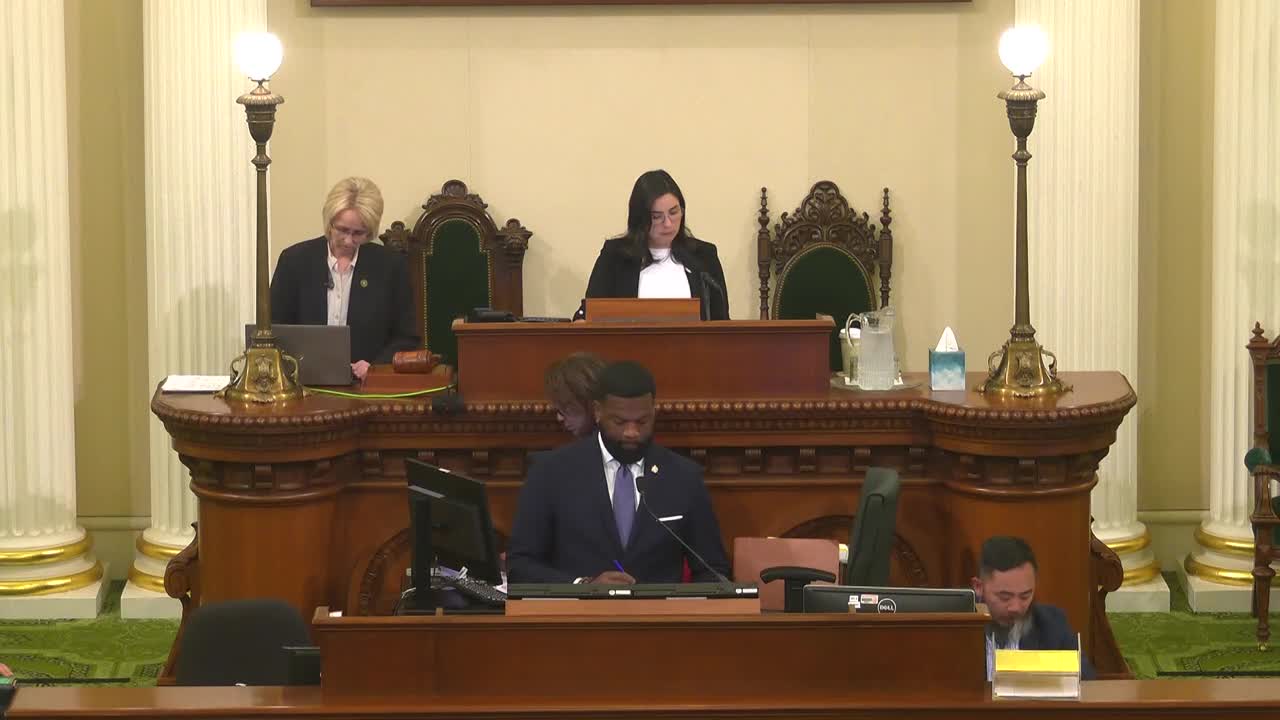 1MIN
Assembly Floor
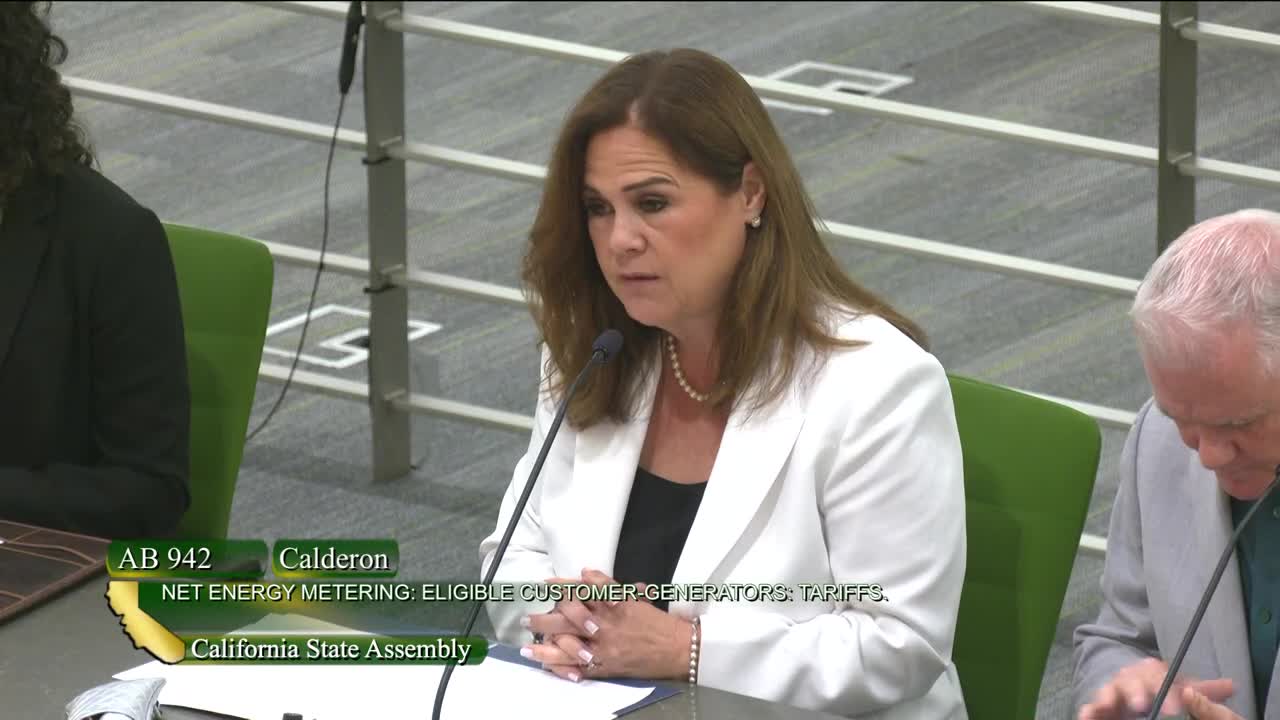 2MIN
Assembly Standing Committee on Appropriations
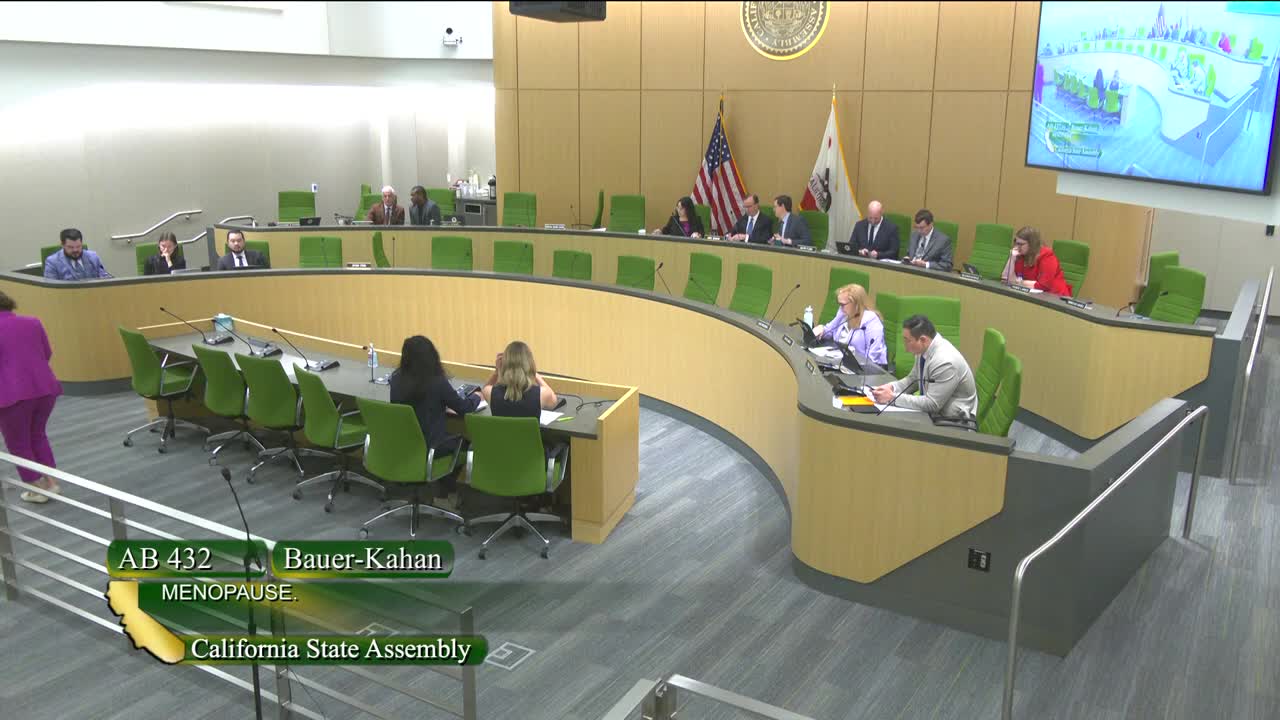 5MIN
Assembly Standing Committee on Business and Professions
Bill Author
Bill Co-Author(s):