AB 975: Lake and streambed alteration agreements: exemptions: culverts and bridges.
- Session Year: 2025-2026
- House: Assembly
- Latest Version Date: 2025-09-16
Current Status:
Failed
(2026-01-22: Consideration of Governor's veto stricken from file.)
Introduced
In Committee
Awaiting First Chamber Vote
Passed First Chamber
In Committee
Awaiting Second Chamber Vote
Passed Second Chamber
Enacted
Existing law prohibits a person, a state or local governmental agency, or a public utility from substantially diverting or obstructing the natural flow of, or substantially changing or using any material from the bed, channel, or bank of, any river, stream, or lake, or depositing or disposing of debris, waste, or other material containing crumbled, flaked, or ground pavement where it may pass into any river, stream, or lake, unless prescribed requirements are met, including written notification to the Department of Fish and Wildlife regarding the activity. Existing law requires the department to determine whether the activity may substantially adversely affect an existing fish and wildlife resource and, if so, to provide a draft lake or streambed alteration agreement to the person, agency, or utility. Existing law prescribes various requirements for lake and streambed alteration agreements. Existing law also establishes various exemptions from these provisions.
This bill would, until January 1, 2027, exempt from these provisions, subject to certain requirements, projects to repair or reconstruct a bridge 30 feet long or less or a culvert 70 feet long or less within the County of Sutter that has been damaged or destroyed as a result of fire, flood, storm, earthquake, land subsidence, gradual earth movement, or landslide, between January 1, 2022, and December 31, 2024, inclusive, except as specified.
This bill would make legislative findings and declarations as to the necessity of a special statute for the County of Sutter.
Existing law prohibits a person, a state or local governmental agency, or a public utility from substantially diverting or obstructing the natural flow of, or substantially changing or using any material from the bed, channel, or bank of, any river, stream, or lake, or depositing or disposing of debris, waste, or other material containing crumbled, flaked, or ground pavement where it may pass into any river, stream, or lake, unless prescribed requirements are met, including written notification to the Department of Fish and Wildlife regarding the activity. Existing law requires the department to determine whether the activity may substantially adversely affect an existing fish and wildlife resource and, if so, to provide a draft lake or streambed alteration agreement to the person, agency, or utility. Existing law prescribes various requirements for lake and streambed alteration agreements. Existing law also establishes various exemptions from these provisions.
This bill would, until January 1, 2027, exempt from these provisions provisions, subject to certain requirements, projects to repair or reconstruct a bridge 30 feet long or less or a culvert 70 feet long or less within the County of Sutter that has been damaged or destroyed as a result of fire, flood, storm, earthquake, land subsidence, gradual earth movement, or landslide, in, or after, 2022, between January 1, 2022, and December 31, 2024, inclusive, except as specified.
This bill would make legislative findings and declarations as to the necessity of a special statute for the County of Sutter.
Existing law prohibits a person, a state or local governmental agency, or a public utility from substantially diverting or obstructing the natural flow of, or substantially changing or using any material from the bed, channel, or bank of, any river, stream, or lake, or depositing or disposing of debris, waste, or other material containing crumbled, flaked, or ground pavement where it may pass into any river, stream, or lake, unless prescribed requirements are met, including written notification to the Department of Fish and Wildlife regarding the activity. Existing law requires the department to determine whether the activity may substantially adversely affect an existing fish and wildlife resource and, if so, to provide a draft lake or streambed alteration agreement to the person, agency, or utility. Existing law prescribes various requirements for lake and streambed alteration agreements. Existing law also establishes various exemptions from these provisions.
This bill would, until January 1, 2027, exempt from these provisions projects to repair or reconstruct a bridge 30 feet long or less or a culvert 70 feet long or less within the County of Sutter that has been damaged or destroyed as a result of fire, flood, storm, earthquake, land subsidence, gradual earth movement, or landslide, in, or after, 2021. 2022, as specified.
This bill would make legislative findings and declarations as to the necessity of a special statute for the County of Sutter.
Existing law prohibits a person, a state or local governmental agency, or a public utility from substantially diverting or obstructing the natural flow of, or substantially changing or using any material from the bed, channel, or bank of, any river, stream, or lake, or depositing or disposing of debris, waste, or other material containing crumbled, flaked, or ground pavement where it may pass into any river, stream, or lake, unless prescribed requirements are met, including written notification to the Department of Fish and Wildlife regarding the activity. Existing law requires the department to determine whether the activity may substantially adversely affect an existing fish and wildlife resource and, if so, to provide a draft lake or streambed alteration agreement to the person, agency, or utility. Existing law prescribes various requirements for lake and streambed alteration agreements. Existing law also establishes various exemptions from these provisions.
This bill would, until January 1, 2029, 2027, exempt from these provisions projects to repair or reconstruct a bridge 30 feet long or less or a culvert 70 feet long or less within the County of Sutter that has been damaged or destroyed as a result of fire, flood, storm, earthquake, land subsidence, gradual earth movement, or landslide, in, or after, 2021.
This bill would make legislative findings and declarations as to the necessity of a special statute for the County of Sutter.
Existing law prohibits a person, a state or local governmental agency, or a public utility from substantially diverting or obstructing the natural flow of, or substantially changing or using any material from the bed, channel, or bank of, any river, stream, or lake, or depositing or disposing of debris, waste, or other material containing crumbled, flaked, or ground pavement where it may pass into any river, stream, or lake, unless prescribed requirements are met, including written notification to the Department of Fish and Wildlife regarding the activity. Existing law requires the department to determine whether the activity may substantially adversely affect an existing fish and wildlife resource and, if so, to provide a draft lake or streambed alteration agreement to the person, agency, or utility. Existing law prescribes various requirements for lake and streambed alteration agreements. Existing law also establishes various exemptions from these provisions.
This bill would would, until January 1, 2029, exempt from these provisions emergency projects undertaken, carried out, or approved by a state or local government agency to maintain, repair, restore, projects to repair or reconstruct a bridge 30 feet long or less or reconstruct a culvert 70 feet long or less, less within the County of Sutter that has been damaged or destroyed as a result of fire, flood, storm, earthquake, land subsidence, gradual earth movement, or landslide, within one year of the damage. in, or after, 2021.
This bill would make legislative findings and declarations as to the necessity of a special statute for the County of Sutter.
Existing law prohibits a person, a state or local governmental agency, or a public utility from substantially diverting or obstructing the natural flow of, or substantially changing or using any material from the bed, channel, or bank of, any river, stream, or lake, or depositing or disposing of debris, waste, or other material containing crumbled, flaked, or ground pavement where it may pass into any river, stream, or lake, unless prescribed requirements are met, including written notification to the Department of Fish and Wildlife regarding the activity. Existing law requires the department to determine whether the activity may substantially adversely affect an existing fish and wildlife resource and, if so, to provide a draft lake or streambed alteration agreement to the person, agency, or utility. Existing law prescribes various requirements for lake and streambed alteration agreements. Existing law also establishes various exemptions from these provisions.
This bill would exempt from these provisions emergency projects undertaken, carried out, or approved by a state or local government agency to maintain, repair, restore, or reconstruct a bridge 30 feet long or less or reconstruct a culvert 70 feet long or less, that has been damaged as a result of fire, flood, storm, earthquake, land subsidence, gradual earth movement, or landslide, within one year of the damage.
(2)The California Environmental Quality Act (CEQA) requires a lead agency, as defined, to prepare, or cause to be prepared, and certify the completion of an environmental impact report on a project that it proposes to carry out or approve that may have a significant effect on the environment or to adopt a negative declaration if it finds that the project will not have that effect. CEQA also requires a lead agency to prepare a mitigated negative declaration for a project that may have a significant effect on the environment if revisions in the project would avoid or mitigate that effect and there is no substantial evidence that the project, as revised, would have a significant effect on the environment.This bill would provide an exemption from CEQA those projects or actions taken for the installation, maintenance, repair, or replacement of culverts and those projects or actions taken for the repair or replacement of a bridge with a span of 200 feet or less.Because the bill would require a local agency to determine the applicability of the above exemptions, this bill would impose a state-mandated local program.The California Constitution requires the state to reimburse local agencies and school districts for certain costs mandated by the state. Statutory provisions establish procedures for making that reimbursement.This bill would provide that no reimbursement is required by this act for a specified reason.(1)Existing law prohibits a person, a state or local governmental agency, or a public utility from substantially diverting or obstructing the natural flow of, or substantially changing or using any material from the bed, channel, or bank of, any river, stream, or lake, or depositing or disposing of debris, waste, or other material containing crumbled, flaked, or ground pavement where it may pass into any river, stream, or lake, unless prescribed requirements are met, including written notification to the Department of Fish and Wildlife regarding the activity. Existing law requires the department to determine whether the activity may substantially adversely affect an existing fish and wildlife resource and, if so, to provide a draft lake or streambed alteration agreement to the person, agency, or utility. Existing law prescribes various requirements for lake and streambed alteration agreements. Existing law also establishes various exemptions from these provisions.
This bill would exempt from these provisions emergency projects undertaken, carried out, or approved by a state or local government agency to maintain, repair, restore, or reconstruct a bridge 30 feet long or less or reconstruct a culvert 70 feet long or less, that has been damaged as a result of fire, flood, storm, earthquake, land subsidence, gradual earth movement, or landslide, within one year of the damage.
The(2)The California Environmental Quality Act (CEQA) requires a lead agency, as defined, to prepare, or cause to be prepared, and certify the completion of an environmental impact report on a project that it proposes to carry out or approve that may have a significant effect on the environment or to adopt a negative declaration if it finds that the project will not have that effect. CEQA also requires a lead agency to prepare a mitigated negative declaration for a project that may have a significant effect on the environment if revisions in the project would avoid or mitigate that effect and there is no substantial evidence that the project, as revised, would have a significant effect on the environment.
This bill would provide an exemption from CEQA those projects or actions taken for the installation, maintenance, repair, or replacement of culverts and those projects or actions taken for the repair or replacement of a bridge with a span of 200 feet or less.
Because the bill would require a local agency to determine the applicability of the above exemptions, this bill would impose a state-mandated local program.
The California Constitution requires the state to reimburse local agencies and school districts for certain costs mandated by the state. Statutory provisions establish procedures for making that reimbursement.
This bill would provide that no reimbursement is required by this act for a specified reason.
The California Environmental Quality Act (CEQA) requires a lead agency, as defined, to prepare, or cause to be prepared, and certify the completion of an environmental impact report on a project that it proposes to carry out or approve that may have a significant effect on the environment or to adopt a negative declaration if it finds that the project will not have that effect. CEQA also requires a lead agency to prepare a mitigated negative declaration for a project that may have a significant effect on the environment if revisions in the project would avoid or mitigate that effect and there is no substantial evidence that the project, as revised, would have a significant effect on the environment.
This bill would provide an exemption from CEQA those projects or actions taken for the installation, maintenance, repair, or replacement of culverts and those projects or actions taken for the repair or replacement of a bridge with a span of 200 feet or less.
Because the bill would require a local agency to determine the applicability of the above exemptions, this bill would impose a state-mandated local program.
The California Constitution requires the state to reimburse local agencies and school districts for certain costs mandated by the state. Statutory provisions establish procedures for making that reimbursement.
This bill would provide that no reimbursement is required by this act for a specified reason.
(a)Except as provided in subdivision (b), this chapter does not apply to any of the following:
(1)Immediate emergency work necessary to protect life or property.
(2)Immediate emergency repairs to public service facilities necessary to maintain service as a result of a disaster in an area in which a state of emergency has been proclaimed by the Governor pursuant to Chapter 7 (commencing with Section 8550) of Division 1 of Title 2 of the Government Code.
(3)Emergency projects undertaken, carried out, or approved by a state or local governmental agency to maintain, repair, or restore an existing highway, as defined in Section 360 of the Vehicle Code, within the existing right-of-way of the highway, that has been damaged as a result of fire, flood, storm, earthquake, land subsidence, gradual earth movement, or landslide, within one year of the damage. Work needed in the vicinity above and below a highway may be conducted outside of the existing right-of-way if it is needed to stop ongoing or recurring mudslides, landslides, or erosion that pose an immediate threat to the highway, or to restore those roadways damaged by mudslides, landslides, or erosion to their predamage condition and functionality. This paragraph does not exempt from this chapter any project undertaken, carried out, or approved by a state or local governmental agency to expand or widen a highway damaged by fire, flood, storm, earthquake, land subsidence, gradual earth movement, or landslide. The exception provided in this paragraph does not apply to a highway designated as an official state scenic highway pursuant to Section 262 of the Streets and Highways Code.
(4)(A)Projects to repair or reconstruct a bridge 30 feet long or less or a culvert 70 feet long or less within the County of Sutter that has been damaged or destroyed as a result of fire, flood, storm, earthquake, land subsidence, gradual earth movement, or landslide, between January 1, 2022, and December 31, 2024, inclusive, except that a project listed in Environmental Permit Information Management System (EPIMS) Notification No. SUT-53568-R2, executed on January 31, 2025, pursuant to this chapter, is not an eligible project under this paragraph.
(B)The entity undertaking a project pursuant to this paragraph shall conduct a biological survey to identify any species that are present, consult with the department on appropriate species protection measures, and implement those recommended measures.
(C)This paragraph shall not apply to the state highway system or at locations of intersection or connection to the state highway system.
(D)This paragraph shall remain in effect only until January 1, 2027, and is inoperative thereafter.
(b)The entity performing the work described in subdivision (a) shall notify the department of the work, in writing, within 14 days of beginning the work. Any work described in the notification that does not meet the criteria for the work described in subdivision (a) is a violation of this chapter if the entity did not first notify the department in accordance with Section 1602 or 1611.
(c)This chapter does not apply to activities undertaken pursuant to Section 1242.1 of the Water Code.
SEC. 2.The Legislature finds and declares that a special statute is necessary and that a general statute cannot be made applicable within the meaning of Section 16 of Article IV of the California Constitution because the need to repair the County of Sutters bridges and culverts, which are often in rural areas and vital to evacuation routes in the event of an emergency, presents a unique risk that needs to be urgently remedied.
(a)Except as provided in subdivision (b), this chapter does not apply to any of the following:
(1)Immediate emergency work necessary to protect life or property.
(2)Immediate emergency repairs to public service facilities necessary to maintain service as a result of a disaster in an area in which a state of emergency has been proclaimed by the Governor pursuant to Chapter 7 (commencing with Section 8550) of Division 1 of Title 2 of the Government Code.
(3)Emergency projects undertaken, carried out, or approved by a state or local governmental agency to maintain, repair, or restore an existing highway, as defined in Section 360 of the Vehicle Code, within the existing right-of-way of the highway, that has been damaged as a result of fire, flood, storm, earthquake, land subsidence, gradual earth movement, or landslide, within one year of the damage. Work needed in the vicinity above and below a highway may be conducted outside of the existing right-of-way if it is needed to stop ongoing or recurring mudslides, landslides, or erosion that pose an immediate threat to the highway, or to restore those roadways damaged by mudslides, landslides, or erosion to their predamage condition and functionality. This paragraph does not exempt from this chapter any project undertaken, carried out, or approved by a state or local governmental agency to expand or widen a highway damaged by fire, flood, storm, earthquake, land subsidence, gradual earth movement, or landslide. The exception provided in this paragraph does not apply to a highway designated as an official state scenic highway pursuant to Section 262 of the Streets and Highways Code.
(4)(A)Projects to repair or reconstruct a bridge 30 feet long or less or a culvert 70 feet long or less within the County of Sutter that has been damaged or destroyed as a result of fire, flood, storm, earthquake, land subsidence, gradual earth movement, or landslide, in, or after, 2022, between January 1, 2022, and December 31, 2024, inclusive, except that a project listed in Environmental Permit Information Management System (EPIMS) Notification No. SUT-53568-R2, executed on January 31, 2025, pursuant to this chapter, is not an eligible project under this paragraph.
(B)The entity undertaking a project pursuant to this paragraph shall conduct a biological survey to identify any species that are present, consult with the department on appropriate species protection measures, and implement those recommended measures.
(C)This paragraph shall not apply to the state highway system or at locations of intersection or connection to the state highway system.
(C)(D)This paragraph shall remain in effect only until January 1, 2027, and is inoperative thereafter.
(b)The entity performing the work described in subdivision (a) shall notify the department of the work, in writing, within 14 days of beginning the work. Any work described in the notification that does not meet the criteria for the work described in subdivision (a) is a violation of this chapter if the entity did not first notify the department in accordance with Section 1602 or 1611.
(c)This chapter does not apply to activities undertaken pursuant to Section 1242.1 of the Water Code.
SEC. 2.The Legislature finds and declares that a special statute is necessary and that a general statute cannot be made applicable within the meaning of Section 16 of Article IV of the California Constitution because the need to repair the County of Sutters bridges and culverts, which are often in rural areas and vital to evacuation routes in the event of an emergency, presents a unique risk that needs to be urgently remedied.
(a)Except as provided in subdivision (b), this chapter does not apply to any of the following:
(1)Immediate emergency work necessary to protect life or property.
(2)Immediate emergency repairs to public service facilities necessary to maintain service as a result of a disaster in an area in which a state of emergency has been proclaimed by the Governor pursuant to Chapter 7 (commencing with Section 8550) of Division 1 of Title 2 of the Government Code.
(3)Emergency projects undertaken, carried out, or approved by a state or local governmental agency to maintain, repair, or restore an existing highway, as defined in Section 360 of the Vehicle Code, within the existing right-of-way of the highway, that has been damaged as a result of fire, flood, storm, earthquake, land subsidence, gradual earth movement, or landslide, within one year of the damage. Work needed in the vicinity above and below a highway may be conducted outside of the existing right-of-way if it is needed to stop ongoing or recurring mudslides, landslides, or erosion that pose an immediate threat to the highway, or to restore those roadways damaged by mudslides, landslides, or erosion to their predamage condition and functionality. This paragraph does not exempt from this chapter any project undertaken, carried out, or approved by a state or local governmental agency to expand or widen a highway damaged by fire, flood, storm, earthquake, land subsidence, gradual earth movement, or landslide. The exception provided in this paragraph does not apply to a highway designated as an official state scenic highway pursuant to Section 262 of the Streets and Highways Code.
(4)(A)Projects to repair or reconstruct a bridge 30 feet long or less or a culvert 70 feet long or less within the County of Sutter that has been damaged or destroyed as a result of fire, flood, storm, earthquake, land subsidence, gradual earth movement, or landslide, in, or after, 2021. 2022, except that a project listed in Environmental Permit Information Management System (EPIMS) Notification No. SUT-53568-R2, executed on January 31, 2025, pursuant to this chapter, is not an eligible project under this paragraph.
(B)The entity undertaking a project pursuant to this paragraph shall conduct a biological survey to identify any species that are present, consult with the department on appropriate species protection measures, and implement those recommended measures.
(B)(C)This paragraph shall remain in effect only until January 1, 2027, and is inoperative thereafter.
(b)The entity performing the work described in subdivision (a) shall notify the department of the work, in writing, within 14 days of beginning the work. Any work described in the notification that does not meet the criteria for the work described in subdivision (a) is a violation of this chapter if the entity did not first notify the department in accordance with Section 1602 or 1611.
(c)This chapter does not apply to activities undertaken pursuant to Section 1242.1 of the Water Code.
SEC. 2.The Legislature finds and declares that a special statute is necessary and that a general statute cannot be made applicable within the meaning of Section 16 of Article IV of the California Constitution because the need to repair the County of Sutters bridges and culverts, which are often in rural areas and vital to evacuation routes in the event of an emergency, presents a unique risk that needs to be urgently remedied.
(a)Except as provided in subdivision (b), this chapter does not apply to any of the following:
(1)Immediate emergency work necessary to protect life or property.
(2)Immediate emergency repairs to public service facilities necessary to maintain service as a result of a disaster in an area in which a state of emergency has been proclaimed by the Governor pursuant to Chapter 7 (commencing with Section 8550) of Division 1 of Title 2 of the Government Code.
(3)Emergency projects undertaken, carried out, or approved by a state or local governmental agency to maintain, repair, or restore an existing highway, as defined in Section 360 of the Vehicle Code, within the existing right-of-way of the highway, that has been damaged as a result of fire, flood, storm, earthquake, land subsidence, gradual earth movement, or landslide, within one year of the damage. Work needed in the vicinity above and below a highway may be conducted outside of the existing right-of-way if it is needed to stop ongoing or recurring mudslides, landslides, or erosion that pose an immediate threat to the highway, or to restore those roadways damaged by mudslides, landslides, or erosion to their predamage condition and functionality. This paragraph does not exempt from this chapter any project undertaken, carried out, or approved by a state or local governmental agency to expand or widen a highway damaged by fire, flood, storm, earthquake, land subsidence, gradual earth movement, or landslide. The exception provided in this paragraph does not apply to a highway designated as an official state scenic highway pursuant to Section 262 of the Streets and Highways Code.
(4)(A)Projects to repair or reconstruct a bridge 30 feet long or less or a culvert 70 feet long or less within the County of Sutter that has been damaged or destroyed as a result of fire, flood, storm, earthquake, land subsidence, gradual earth movement, or landslide, in, or after, 2021.
(B)This paragraph shall remain in effect only until January 1, 2029, 2027, and is inoperative thereafter.
(b)The entity performing the work described in subdivision (a) shall notify the department of the work, in writing, within 14 days of beginning the work. Any work described in the notification that does not meet the criteria for the work described in subdivision (a) is a violation of this chapter if the entity did not first notify the department in accordance with Section 1602 or 1611.
(c)This chapter does not apply to activities undertaken pursuant to Section 1242.1 of the Water Code.
SEC. 2.The Legislature finds and declares that a special statute is necessary and that a general statute cannot be made applicable within the meaning of Section 16 of Article IV of the California Constitution because the need to repair the County of Sutters bridges and culverts, which are often in rural areas and vital to evacuation routes in the event of an emergency, presents a unique risk that needs to be urgently remedied.
(a)Except as provided in subdivision (b), this chapter does not apply to any of the following:
(1)Immediate emergency work necessary to protect life or property.
(2)Immediate emergency repairs to public service facilities necessary to maintain service as a result of a disaster in an area in which a state of emergency has been proclaimed by the Governor pursuant to Chapter 7 (commencing with Section 8550) of Division 1 of Title 2 of the Government Code.
(3)Emergency projects undertaken, carried out, or approved by a state or local governmental agency to maintain, repair, or restore an existing highway, as defined in Section 360 of the Vehicle Code, within the existing right-of-way of the highway, that has been damaged as a result of fire, flood, storm, earthquake, land subsidence, gradual earth movement, or landslide, within one year of the damage. Work needed in the vicinity above and below a highway may be conducted outside of the existing right-of-way if it is needed to stop ongoing or recurring mudslides, landslides, or erosion that pose an immediate threat to the highway, or to restore those roadways damaged by mudslides, landslides, or erosion to their predamage condition and functionality. This paragraph does not exempt from this chapter any project undertaken, carried out, or approved by a state or local governmental agency to expand or widen a highway damaged by fire, flood, storm, earthquake, land subsidence, gradual earth movement, or landslide. The exception provided in this paragraph does not apply to a highway designated as an official state scenic highway pursuant to Section 262 of the Streets and Highways Code.
(4)Emergency projects undertaken, carried out, or approved by a state or local government agency to maintain, repair, restore, (A)Projects to repair or reconstruct a bridge 30 feet long or less or reconstruct a culvert 70 feet long or less, less within the County of Sutter that has been damaged or destroyed as a result of fire, flood, storm, earthquake, land subsidence, gradual earth movement, or landslide, within one year of the damage. in, or after, 2021.
(B)This paragraph shall remain in effect only until January 1, 2029, and is inoperative thereafter.
(b)The entity performing the emergency work described in subdivision (a) shall notify the department of the work, in writing, within 14 days of beginning the work. Any work described in the emergency notification that does not meet the criteria for the emergency work described in subdivision (a) is a violation of this chapter if the entity did not first notify the department in accordance with Section 1602 or 1611.
(c)This chapter does not apply to activities undertaken pursuant to Section 1242.1 of the Water Code.
SEC. 2.The Legislature finds and declares that a special statute is necessary and that a general statute cannot be made applicable within the meaning of Section 16 of Article IV of the California Constitution because the need to repair County of Sutters bridges and culverts, which are often in rural areas and vital to evacuation routes in the event of an emergency, presents a unique risk that needs to be urgently remedied.
(a)Except as provided in subdivision (b), this chapter does not apply to any of the following:
(1)Immediate emergency work necessary to protect life or property.
(2)Immediate emergency repairs to public service facilities necessary to maintain service as a result of a disaster in an area in which a state of emergency has been proclaimed by the Governor pursuant to Chapter 7 (commencing with Section 8550) of Division 1 of Title 2 of the Government Code.
(3)Emergency projects undertaken, carried out, or approved by a state or local governmental agency to maintain, repair, or restore an existing highway, as defined in Section 360 of the Vehicle Code, within the existing right-of-way of the highway, that has been damaged as a result of fire, flood, storm, earthquake, land subsidence, gradual earth movement, or landslide, within one year of the damage. Work needed in the vicinity above and below a highway may be conducted outside of the existing right-of-way if it is needed to stop ongoing or recurring mudslides, landslides, or erosion that pose an immediate threat to the highway, or to restore those roadways damaged by mudslides, landslides, or erosion to their predamage condition and functionality. This paragraph does not exempt from this chapter any project undertaken, carried out, or approved by a state or local governmental agency to expand or widen a highway damaged by fire, flood, storm, earthquake, land subsidence, gradual earth movement, or landslide. The exception provided in this paragraph does not apply to a highway designated as an official state scenic highway pursuant to Section 262 of the Streets and Highways Code.
(4)Emergency projects undertaken, carried out, or approved by a state or local government agency to maintain, repair, restore, or reconstruct a bridge 30 feet long or less or reconstruct a culvert 70 feet long or less, that has been damaged as a result of fire, flood, storm, earthquake, land subsidence, gradual earth movement, or landslide, within one year of the damage.
(b)The entity performing the emergency work described in subdivision (a) shall notify the department of the work, in writing, within 14 days of beginning the work. Any work described in the emergency notification that does not meet the criteria for the emergency work described in subdivision (a) is a violation of this chapter if the entity did not first notify the department in accordance with Section 1602 or 1611.
(c)This chapter does not apply to activities undertaken pursuant to Section 1242.1 of the Water Code.
SEC. 2.Section 21080.63 is added to the Public Resources Code, to read:21080.63.This division does not apply to a project or action taken for the installation, maintenance, repair, or replacement of culverts.SEC. 3.Section 21080.64 is added to the Public Resources Code, to read:21080.64.This division does not apply to a project or action taken for the repair or replacement of a bridge with span of 200 feet or less.SEC. 4.No reimbursement is required by this act pursuant to Section 6 of Article XIIIB of the California Constitution because a local agency or school district has the authority to levy service charges, fees, or assessments sufficient to pay for the program or level of service mandated by this act, within the meaning of Section 17556 of the Government Code.(a)Except as provided in subdivision (b), this chapter does not apply to any of the following:
(1)Immediate emergency work necessary to protect life or property.
(2)Immediate emergency repairs to public service facilities necessary to maintain service as a result of a disaster in an area in which a state of emergency has been proclaimed by the Governor pursuant to Chapter 7 (commencing with Section 8550) of Division 1 of Title 2 of the Government Code.
(3)Emergency projects undertaken, carried out, or approved by a state or local governmental agency to maintain, repair, or restore an existing highway, as defined in Section 360 of the Vehicle Code, within the existing right-of-way of the highway, that has been damaged as a result of fire, flood, storm, earthquake, land subsidence, gradual earth movement, or landslide, within one year of the damage. Work needed in the vicinity above and below a highway may be conducted outside of the existing right-of-way if it is needed to stop ongoing or recurring mudslides, landslides, or erosion that pose an immediate threat to the highway, or to restore those roadways damaged by mudslides, landslides, or erosion to their predamage condition and functionality. This paragraph does not exempt from this chapter any project undertaken, carried out, or approved by a state or local governmental agency to expand or widen a highway damaged by fire, flood, storm, earthquake, land subsidence, gradual earth movement, or landslide. The exception provided in this paragraph does not apply to a highway designated as an official state scenic highway pursuant to Section 262 of the Streets and Highways Code.
(4)Emergency projects undertaken, carried out, or approved by a state or local government agency to maintain, repair, restore, or reconstruct a bridge 30 feet long or less or reconstruct a culvert 70 feet long or less, that has been damaged as a result of fire, flood, storm, earthquake, land subsidence, gradual earth movement, or landslide, within one year of the damage.
(b)The entity performing the emergency work described in subdivision (a) shall notify the department of the work, in writing, within 14 days of beginning the work. Any work described in the emergency notification that does not meet the criteria for the emergency work described in subdivision (a) is a violation of this chapter if the entity did not first notify the department in accordance with Section 1602 or 1611.
(c)This chapter does not apply to activities undertaken pursuant to Section 1242.1 of the Water Code.
SECTION 1.Section 21080.62 is added to the Public Resources Code, to read:21080.62.SEC. 2.Section 21080.63 is added to the Public Resources Code, to read:21080.63.This division does not apply to a project or action taken for the installation, maintenance, repair, or replacement of culverts.
SEC. 2.Section 21080.63 is added to the Public Resources Code, to read:21080.63.SEC. 3.Section 21080.64 is added to the Public Resources Code, to read:21080.64.This division does not apply to a project or action taken for the repair or replacement of a bridge with span of 200 feet or less.
SEC. 3.SEC. 4.No reimbursement is required by this act pursuant to Section 6 of Article XIIIB of the California Constitution because a local agency or school district has the authority to levy service charges, fees, or assessments sufficient to pay for the program or level of service mandated by this act, within the meaning of Section 17556 of the Government Code.
This division does not apply to a project or action taken for the installation, maintenance, repair, or replacement of culverts.
SEC. 2.Section 21080.63 is added to the Public Resources Code, to read:21080.63.This division does not apply to a project or action taken for the repair or replacement of a bridge with span of 200 feet or less.
SEC. 3.No reimbursement is required by this act pursuant to Section 6 of Article XIIIB of the California Constitution because a local agency or school district has the authority to levy service charges, fees, or assessments sufficient to pay for the program or level of service mandated by this act, within the meaning of Section 17556 of the Government Code.
|
Date
|
Status
|
|---|---|
| Jan 22, 2026 | Consideration of Governor's veto stricken from file. |
| Oct 1, 2025 | Consideration of Governor's veto pending. |
| Oct 1, 2025 | Vetoed by Governor. |
| Sep 24, 2025 | Enrolled and presented to the Governor at 3 p.m. |
| Sep 13, 2025 | Senate amendments concurred in. To Engrossing and Enrolling. (Ayes 73. Noes 0. Page 3493.). |
| Sep 13, 2025 | Joint Rules 61(a)(14) and 51(a)(4) suspended. (Ayes 59. Noes 20. Page 3413.) |
| Sep 9, 2025 | In Assembly. Concurrence in Senate amendments pending. |
| Sep 9, 2025 | Read third time. Passed. Ordered to the Assembly. (Ayes 40. Noes 0. Page 2701.). |
| Sep 3, 2025 | Read second time. Ordered to third reading. |
| Sep 2, 2025 | Read third time and amended. Ordered to second reading. |
| Aug 25, 2025 | Ordered to third reading. |
| Aug 25, 2025 | From Consent Calendar. |
| Aug 20, 2025 | Read second time. Ordered to Consent Calendar. |
| Aug 19, 2025 | From committee: Be ordered to second reading file pursuant to Senate Rule 28.8 and ordered to Consent Calendar. |
| Jul 17, 2025 | Read second time and amended. Re-referred to Com. on APPR. |
| Jul 17, 2025 | From committee: Amend, and do pass as amended and re-refer to Com. on APPR. with recommendation: To Consent Calendar. (Ayes 7. Noes 0.) (July 16). |
| Jun 4, 2025 | Referred to Com. on N.R. & W. |
| May 23, 2025 | In Senate. Read first time. To Com. on RLS. for assignment. |
| May 23, 2025 | Read third time. Passed. Ordered to the Senate. (Ayes 72. Noes 0. Page 1655.) |
| May 15, 2025 | Read second time. Ordered to third reading. |
| May 14, 2025 | From committee: Do pass. (Ayes 15. Noes 0.) (May 14). |
| May 5, 2025 | Re-referred to Com. on APPR. |
| May 1, 2025 | Read second time and amended. |
| Apr 30, 2025 | From committee: Amend, and do pass as amended and re-refer to Com. on APPR. (Ayes 13. Noes 0.) (April 29). |
| Apr 21, 2025 | Re-referred to Com. on W. P., & W. pursuant to Assembly Rule 96. |
| Apr 21, 2025 | From committee chair, with author's amendments: Amend, and re-refer to Com. on NAT. RES. Read second time and amended. |
| Apr 21, 2025 | Re-referred to Com. on NAT. RES. |
| Apr 10, 2025 | From committee chair, with author's amendments: Amend, and re-refer to Com. on NAT. RES. Read second time and amended. |
| Mar 19, 2025 | Re-referred to Com. on NAT. RES. |
| Mar 18, 2025 | From committee chair, with author's amendments: Amend, and re-refer to Com. on NAT. RES. Read second time and amended. |
| Mar 10, 2025 | Referred to Com. on NAT. RES. |
| Feb 21, 2025 | From printer. May be heard in committee March 23. |
| Feb 20, 2025 | Read first time. To print. |
|
Date
|
Description
|
Location
|
Votes
|
|
|---|---|---|---|---|
| Sep 13, 2025 | AB 975 Gallagher Concurrence in Senate Amendments | Assembly Floor |
Passed |
|
| Sep 9, 2025 | Assembly 3rd Reading AB975 Gallagher By Niello | Senate Floor |
Passed |
|
| Jul 16, 2025 | Do pass as amended, but first amend, and re-refer to the Committee on [Appropriations] with the recommendation: To Consent Calendar | Senate Standing Committee on Natural Resources and Water |
Passed |
|
| May 23, 2025 | AB 975 Gallagher Assembly Third Reading | Assembly Floor |
Passed |
|
| May 14, 2025 | Do pass. | Assembly Standing Committee on Appropriations |
Passed |
|
| Apr 29, 2025 | Do pass as amended and be re-referred to the Committee on [Appropriations] | Assembly Standing Committee on Water, Parks, and Wildlife |
Passed |
This list shows positions taken on this bill by organizations on the date displayed, which is linked to the original source.
Positions by individuals are not included.
|
Organization
|
Position
|
Date
|
|---|---|---|
| Associated General Contractors Of California | ** Support | |
| California Department of Finance | ** Against | |
| County of Sutter | ** Support | |
| Sutter County | ** Support |
GOVERNOR′S VETO
GV Bill Id:AB 975
Author:(Gallagher)
As Enrolled Ver:September 16, 2025
2/3 vote
SUMMARY
Exempts specified projects to repair or reconstruct a bridge up to 30 feet long or a culvert up to 70 feet long, in the County of Sutter, that has been damaged or destroyed by a fire, flood, storm, earthquake, land subsidence, gradual earth movement, or landslide between January 1, 2022 and December 31, 2024 from the need to obtain a Lake and Streambed Alteration Agreement (LSAA) from the Department of Fish and Wildlife (DFW). Sunsets this provision on January 1, 2027.
- Provides that any projects covered by the LSAA with Sutter County numbered ″SUT-53568-RS″ and executed on January 31, 2025 shall not be subject to the exemption in this bill.
- Requires the entity undertaking projects under the exemption in this bill shall conduct a biological survey to identify any species that are present, consult with DFW on appropriate species protection measures for those species, and implement the DFW recommended measures.
- Provides the exemption in this bill does not apply to the state highway system or locations of intersection or connection to the state highway system.
Governor′s Veto Message
″This bill exempts specified Sutter County projects and activities for bridges and culverts that have been damaged as a result of fire, flood, storm, earthquake, subsidence, gradual earth movement, or landslide between January 1, 2022 and December 31, 2024 from existing specified state requirements related to lake and streambed alteration.
[DFW] is tasked with determining if bridge and culvert project activity would substantially and adversely impact fish and wildlife resources. If found to have such impacts, [DFW] must draft a[n] [LSAA] that identifies species present in the area and for the project developer to mitigate the adverse impacts in conjunction with the activity. [DFW] also assesses an administrative fee to support the implementation of these agreements.
Though this bill is intended to expedite damaged bridge and culvert projects, [DFW] would still be required to develop individualized fish and wildlife resource protections for exempt projects, creating unknown but potentially significant General Fund cost pressures because the number and scope of projects that meet this bill′s exemption criteria are not fully known.
In partnership with the Legislature this year, my Administration has enacted a balanced budget that recognizes the challenging fiscal landscape our state faces while maintaining our commitment to working families and our most vulnerable communities. With significant fiscal pressures and the federal government′s hostile economic policies, it is vital that we remain disciplined when considering bills with significant fiscal implications that are not included in the budget, such as this measure.
For this reason, I cannot sign this bill.″
COMMENTS
The LSAA program requires any person, state or local governmental agency, or public utility to notify DFW and enter into an LSAA prior to beginning any activity that may do one or more of the following: (1) divert or obstruct the natural flow of any river, stream, or lake; (2) change the bed, channel, or bank of any river, stream, or lake; (3) use material from any river, stream, or lake; or (4) deposit or dispose of material into any river, stream, or lake.
LSAAs determine the extent to which a planned activity within a river, stream, or lake may adversely affect fish or wildlife or habitat and what off-setting mitigation may be required. An entity proposing work in a lake or streambed must notify DFW, which triggers the negotiation of the standards that may apply to the request. At that point, the entity and DFW enter into an LSAA that contains any necessary provisions to mitigate the planned activity′s potentially adverse consequences. Before issuing an LSAA, DFW typically must comply with the California Environmental Quality Act.
Current law exempts from LSAA requirements: immediate emergency work necessary to protect life or property, immediate emergency repairs to public service facilities necessary to maintain service as a result of a disaster in an area subject to a declaration of emergency, and emergency projects undertaken to repair a highway damaged as a result of fire, flood, storm, earthquake, land subsidence, gradual earth movement, or landslide within one year of the damage. The entity performing the emergency work is required to notify DFW within 14 days of beginning the work.
On January 31, 2025, DFW issued a notice of exemption from LSAA requirements to Sutter County for culvert repair projects at nine different locations on the Snake River, Pleasant Grove Creek Canal, and multiple unnamed tributaries in Sutter County. These projects are limited to the removal and replacement of culverts (including road repair and stormwater infrastructure repair), backfill of the release channels, installation of new culverts, and installation of permanent crossings. Senate amendments clarify that these projects are not subject to the LSAA exemption in this bill as these projects have already been exempted through the process for emergency exemptions under existing law.
According to the Author
The author indicates this bill arises out of a miscommunication between the County of Sutter and DFW about the length of time the county had to conduct emergency repairs under the existing exemption from LSAA requirements. Based on information provided by Sutter County, there are nine culvert repair projects that the county is currently attempting to implement. The author asserts ″red tape and regulatory obscurity have held back the repair of Sutter County′s small bridges and culverts for too long. The affected roadways are often the primary or only evacuation routes in wildfire zones, and communities should not risk losing evacuation access due to overregulation.″
Arguments in Support
Sutter County supports this bill and maintains that it addresses a pressing need in the county to repair culverts under roadways that oftentimes serve as emergency egress routes. The county asserts that the types of projects this bill addresses ″generally have minimal environmental impact″ and that the activities covered ″are often maintenance activities within existing rights-of-way and do not involve any new construction.″
Arguments in Opposition
None on file.
FISCAL COMMENTS
The Assembly Appropriations Committee indicated that the version of this bill passed by the Assembly on May 23, 2025 resulted in minor and absorbable costs to DFW.
The Senate Appropriations Committee did not hear this bill and, instead, reported it to the Senate Floor pursuant to Senate Rule 28.8; indicating this bill does not appropriate money, does not result in significant state costs or require the appropriation of funds, and will cause no significant reduction in revenues.
VOTES
ASM WATER, PARKS, AND WILDLIFE: 13-0-0
YES: Papan, Jeff Gonzalez, Alvarez, Ávila Farías, Bains, Bennett, Boerner, Caloza, Hart, Macedo, Celeste Rodriguez, Rogers, Tangipa
ASM APPROPRIATIONS: 15-0-0
YES: Wicks, Sanchez, Arambula, Calderon, Caloza, Dixon, Elhawary, Fong, Mark González, Hart, Pacheco, Pellerin, Solache, Ta, Tangipa
ASSEMBLY FLOOR: 72-0-7
YES: Addis, Aguiar-Curry, Ahrens, Alanis, Alvarez, Arambula, Ávila Farías, Bains, Bauer-Kahan, Bennett, Berman, Boerner, Bonta, Calderon, Caloza, Carrillo, Castillo, Connolly, Davies, DeMaio, Dixon, Elhawary, Ellis, Flora, Fong, Gabriel, Gallagher, Garcia, Gipson, Jeff Gonzalez, Mark González, Hadwick, Haney, Harabedian, Hart, Hoover, Irwin, Jackson, Kalra, Krell, Lackey, Lowenthal, Macedo, McKinnor, Muratsuchi, Ortega, Pacheco, Papan, Patel, Patterson, Pellerin, Petrie-Norris, Quirk-Silva, Ramos, Ransom, Celeste Rodriguez, Michelle Rodriguez, Rogers, Blanca Rubio, Schiavo, Schultz, Solache, Soria, Stefani, Ta, Tangipa, Valencia, Wallis, Ward, Wilson, Zbur, Rivas
ABS, ABST OR NV: Bryan, Chen, Lee, Nguyen, Sanchez, Sharp-Collins, Wicks
SENATE FLOOR: 40-0-0
YES: Allen, Alvarado-Gil, Archuleta, Arreguín, Ashby, Becker, Blakespear, Cabaldon, Caballero, Cervantes, Choi, Cortese, Dahle, Durazo, Gonzalez, Grayson, Grove, Hurtado, Jones, Laird, Limón, McGuire, McNerney, Menjivar, Niello, Ochoa Bogh, Padilla, Pérez, Reyes, Richardson, Rubio, Seyarto, Smallwood-Cuevas, Stern, Strickland, Umberg, Valladares, Wahab, Weber Pierson, Wiener
ASSEMBLY FLOOR: 73-0-7
YES: Addis, Aguiar-Curry, Ahrens, Alanis, Alvarez, Arambula, Ávila Farías, Bains, Bauer-Kahan, Bennett, Berman, Boerner, Bonta, Bryan, Calderon, Caloza, Carrillo, Castillo, Chen, Connolly, Davies, DeMaio, Dixon, Ellis, Flora, Fong, Gabriel, Gallagher, Gipson, Jeff Gonzalez, Mark González, Haney, Harabedian, Hart, Hoover, Irwin, Johnson, Kalra, Krell, Lackey, Lowenthal, Macedo, Muratsuchi, Nguyen, Ortega, Pacheco, Papan, Patel, Patterson, Pellerin, Petrie-Norris, Quirk-Silva, Ramos, Ransom, Celeste Rodriguez, Michelle Rodriguez, Rogers, Blanca Rubio, Sanchez, Schiavo, Schultz, Sharp-Collins, Solache, Soria, Stefani, Tangipa, Valencia, Wallis, Ward, Wicks, Wilson, Zbur, Rivas
ABS, ABST OR NV: Elhawary, Garcia, Hadwick, Jackson, Lee, McKinnor, Ta
UPDATED
VERSION: September 16, 2025
CONSULTANT: Pablo Garza / W., P., & W. / (916) 319-2096 FN: 0002152
CONCURRENCE IN SENATE AMENDMENTS
CSA1 Bill Id:AB 975
Author:(Gallagher)
As Amended Ver:September 2, 2025
Majority vote
SUMMARY
Exempts specified projects to repair or reconstruct a bridge up to 30 feet long or a culvert up to 70 feet long, in the County of Sutter, that has been damaged or destroyed by a fire, flood, storm, earthquake, land subsidence, gradual earth movement, or landslide between January 1, 2022 and December 31, 2024 from the need to obtain a Lake and Streambed Alteration Agreement (LSAA) from the Department of Fish and Wildlife (DFW). Sunsets this provision on January 1, 2027.
Senate Amendments
- Limit application of the exemption in this bill to only projects damaged between January 1, 2022 and December 31, 2024.
- Provide that any projects covered by the LSAA with Sutter County numbered "SUT-53568-RS" and executed on January 31, 2025 shall not be subject to the exemption in this bill.
- Require the entity undertaking projects under the exemption in this bill shall conduct a biological survey to identify any species that are present, consult with DFW on appropriate species protection measures for those species, and implement the DFW recommended measures.
- Provide the exemption in this bill does not apply to the state highway system or locations of intersection or connection to the state highway system.
COMMENTS
The LSAA program requires any person, state or local governmental agency, or public utility to notify DFW and enter into an LSAA prior to beginning any activity that may do one or more of the following: (1) divert or obstruct the natural flow of any river, stream, or lake; (2) change the bed, channel, or bank of any river, stream, or lake; (3) use material from any river, stream, or lake; or (4) deposit or dispose of material into any river, stream, or lake.
LSAAs determine the extent to which a planned activity within a river, stream, or lake may adversely affect fish or wildlife or habitat and what off-setting mitigation may be required. An entity proposing work in a lake or streambed must notify DFW, which triggers the negotiation of the standards that may apply to the request. At that point, the entity and DFW enter into an LSAA that contains any necessary provisions to mitigate the planned activity's potentially adverse consequences. Before issuing an LSAA, DFW typically must comply with the California Environmental Quality Act.
Current law exempts from LSAA requirements: immediate emergency work necessary to protect life or property, immediate emergency repairs to public service facilities necessary to maintain service as a result of a disaster in an area subject to a declaration of emergency, and emergency projects undertaken to repair a highway damaged as a result of fire, flood, storm, earthquake, land subsidence, gradual earth movement, or landslide within one year of the damage. The entity performing the emergency work is required to notify DFW within 14 days of beginning the work.
On January 31, 2025, DFW issued a notice of exemption from LSAA requirements to Sutter County for culvert repair projects at nine different locations on the Snake River, Pleasant Grove Creek Canal, and multiple unnamed tributaries in Sutter County. These projects are limited to the removal and replacement of culverts (including road repair and stormwater infrastructure repair), backfill of the release channels, installation of new culverts, and installation of permanent crossings. Senate amendments clarify that these projects are not subject to the LSAA exemption in this bill as these projects have already been exempted through the process for emergency exemptions under existing law.
According to the Author
The author indicates this bill arises out of a miscommunication between the County of Sutter and DFW about the length of time the county had to conduct emergency repairs under the existing exemption from LSAA requirements. Based on information provided by Sutter County, there are nine culvert repair projects that the county is currently attempting to implement. The author asserts "red tape and regulatory obscurity have held back the repair of Sutter County's small bridges and culverts for too long. The affected roadways are often the primary or only evacuation routes in wildfire zones, and communities should not risk losing evacuation access due to overregulation."
Arguments in Support
Sutter County supports this bill and maintains that it addresses a pressing need in the county to repair culverts under roadways that oftentimes serve as emergency egress routes. The county asserts that the types of projects this bill addresses "generally have minimal environmental impact" and that the activities covered "are often maintenance activities within existing rights-of-way and do not involve any new construction."
Arguments in Opposition
None on file.
FISCAL COMMENTS
The Assembly Appropriations Committee indicated that the version of this bill passed by the Assembly on May 23, 2025 resulted in minor and absorbable costs to DFW.
The Senate Appropriations Committee did not hear this bill and, instead, reported it to the Senate Floor pursuant to Senate Rule 28.8; indicating this bill does not appropriate money, does not result in significant state costs or require the appropriation of funds, and will cause no significant reduction in revenues.
VOTES:
ASM WATER, PARKS, AND WILDLIFE: 13-0-0
YES: Papan, Jeff Gonzalez, Alvarez, Ávila Farías, Bains, Bennett, Boerner, Caloza, Hart, Macedo, Celeste Rodriguez, Rogers, Tangipa
ASM APPROPRIATIONS: 15-0-0
YES: Wicks, Sanchez, Arambula, Calderon, Caloza, Dixon, Elhawary, Fong, Mark González, Hart, Pacheco, Pellerin, Solache, Ta, Tangipa
ASSEMBLY FLOOR: 72-0-7
YES: Addis, Aguiar-Curry, Ahrens, Alanis, Alvarez, Arambula, Ávila Farías, Bains, Bauer-Kahan, Bennett, Berman, Boerner, Bonta, Calderon, Caloza, Carrillo, Castillo, Connolly, Davies, DeMaio, Dixon, Elhawary, Ellis, Flora, Fong, Gabriel, Gallagher, Garcia, Gipson, Jeff Gonzalez, Mark González, Hadwick, Haney, Harabedian, Hart, Hoover, Irwin, Jackson, Kalra, Krell, Lackey, Lowenthal, Macedo, McKinnor, Muratsuchi, Ortega, Pacheco, Papan, Patel, Patterson, Pellerin, Petrie-Norris, Quirk-Silva, Ramos, Ransom, Celeste Rodriguez, Michelle Rodriguez, Rogers, Blanca Rubio, Schiavo, Schultz, Solache, Soria, Stefani, Ta, Tangipa, Valencia, Wallis, Ward, Wilson, Zbur, Rivas
ABS, ABST OR NV: Bryan, Chen, Lee, Nguyen, Sanchez, Sharp-Collins, Wicks
UPDATED
VERSION: September 2, 2025
CONSULTANT: Pablo Garza / W., P., & W. / (916) 319-2096 FN: 0001976
SENATE RULES COMMITTEE Office of Senate Floor Analyses (916) 651-1520 Fax: (916) 327-4478 | AB 975 |
THIRD READING
Bill No: AB 975
Author: Gallagher (R)
Amended: 9/2/25 in Senate
Vote: 21
SENATE NATURAL RES. & WATER COMMITTEE: 7-0, 7/16/25
AYES: Limón, Seyarto, Allen, Grove, Hurtado, Laird, Stern
SENATE APPROPRIATIONS COMMITTEE: Senate Rule 28.8
ASSEMBLY FLOOR: 72-0, 5/23/25 - See last page for vote
SUBJECT: Lake and streambed alteration agreements: exemptions: culverts and bridges
SOURCE: Author
DIGEST:
This bill exempts from Lake and Streambed Alteration Agreement requirements until January 1, 2027, projects to repair or reconstruct a bridge up to 30 feet in length or a culvert up to 70 feet in length within Sutter County that has been damaged or destroyed as a result of fire, flood, storm, earthquake, land subsidence, gradual earth movement, or landslide, between January 1, 2022, and December 31, 2024, inclusive, with specified exception, as provided.
Senate Floor Amendments of 9/2/25 clarify that the state highway system is excluded and the time period the damage or destruction occurred.
ANALYSIS:
Existing law:
- Provides that the Legislature finds and declares that the protection and conservation of the fish and wildlife resources of this state are of utmost public interest, that their conservation is a proper responsibility of the state and that Lake and Streambed Alteration Agreements (LSAAs) are enacted to provide for conservation of these resources. (Fish and Game Code (FGC) §1600)
- Prohibits any entity from substantially diverting or obstructing the natural flow of, or substantially changing or using any material from a streambed, unless the California Department of Fish and Wildlife (CDFW) determines the activity will not adversely affect fish and wildlife resources or the entity enters into an agreement with CDFW to take reasonable measures to protect fish and wildlife resources (i.e. an LSAA). (FGC §1602)
- Authorizes, if CDFW does not issue a draft agreement within 60 days of the notification of the application being complete and the applicable fees paid, the applicant to conduct the activity as described. (FGC §1602 (a)(4)(D))
- Exempts from these LSAA requirements emergency work necessary to protect life or property:
- Immediate emergency repairs to public service facilities necessary to maintain service as a result of a disaster in an area in which a state of emergency has been proclaimed by the Governor.
- Emergency projects undertaken, carried out, or approved by a state or local government agency to maintain, repair, or restore an existing highway within the existing right-of-way of the highway, that has been damaged as a result of fire, flood, storm, earthquake, land subsidence, gradual earth movement, or landslide.
- Defines “emergency” to mean a sudden, unexpected occurrence, involving a clear and imminent danger, demanding immediate action to prevent or mitigate loss of, or damage to, life, health, property, or essential public services. “Emergency” includes such occurrences as fire, flood, earthquake, or other soil or geologic movements, as well as such occurrences such as riot, accident, or sabotage. (FGC §1601, which references the definition in Public Resources Code §21060.3)
- Exempts the diversion of certain floodflows for groundwater recharge from having to obtain an LSAA until January 1, 2029. (Water Code §1242.1)
- Provides that any time line prescribed for LSAAs can be extended by mutual agreement. (FGC §1607)
This bill:
- Exempts from LSAA requirements until January 1, 2027, projects to repair or reconstruct a bridge up to 30 feet in length or a culvert up to 70 feet in length within Sutter County that has been damaged or destroyed as a result of fire, flood, storm, earthquake, land subsidence, gradual earth movement, or landslide, between January 1, 2022, and December 31, 2024, inclusive.
- Excludes a project listed in Environmental Permit Information Management Notification No. SUT-53568-R2 from this exemption.
- Requires the entity undertaking a project pursuant to this act to conduct a biological survey to identify any species that are present, consult with CDFW on appropriate species protection measures, and implement those recommended measures.
- Clarifies that this provision does not apply to the state highway system, as specified.
- Justifies the need for a special statute for Sutter County, as provided.
FISCAL EFFECT: Appropriation: No Fiscal Com.: Yes Local: No
SUPPORT: (Verified 8/30/25)
Associated General Contractors of California
Sutter County Board of Supervisors
OPPOSITION: (Verified 8/30/25)
California Department of Finance
ARGUMENTS IN SUPPORT: According to the author, “AB 975 speeds up the restoration of bridges and culverts which provide vital access to the residents of Sutter County. These repairs are overdue and this bill cuts through unnecessary red tape to repair these important roadways.”
ARGUMENTS IN OPPOSITION: The California Department of Finance writes in opposition because the bill “creates General Fund cost pressures, and the reduced fee revenue projected from implementing the provisions of this bill will have significant impacts to the program's operations.”
ASSEMBLY FLOOR: 72-0, 5/23/25
AYES: Addis, Aguiar-Curry, Ahrens, Alanis, Alvarez, Arambula, Ávila Farías, Bains, Bauer-Kahan, Bennett, Berman, Boerner, Bonta, Calderon, Caloza, Carrillo, Castillo, Connolly, Davies, DeMaio, Dixon, Elhawary, Ellis, Flora, Fong, Gabriel, Gallagher, Garcia, Gipson, Jeff Gonzalez, Mark González, Hadwick, Haney, Harabedian, Hart, Hoover, Irwin, Jackson, Kalra, Krell, Lackey, Lowenthal, Macedo, McKinnor, Muratsuchi, Ortega, Pacheco, Papan, Patel, Patterson, Pellerin, Petrie-Norris, Quirk-Silva, Ramos, Ransom, Celeste Rodriguez, Michelle Rodriguez, Rogers, Blanca Rubio, Schiavo, Schultz, Solache, Soria, Stefani, Ta, Tangipa, Valencia, Wallis, Ward, Wilson, Zbur, Rivas
NO VOTE RECORDED: Bryan, Chen, Lee, Nguyen, Sanchez, Sharp-Collins, Wicks
Prepared by: Katharine Moore / N.R. & W. / (916) 651-4116
9/3/25 18:31:28
**** END ****
SENATE RULES COMMITTEE Office of Senate Floor Analyses (916) 651-1520 Fax: (916) 327-4478 | AB 975 |
THIRD READING
Bill No: AB 975
Author: Gallagher (R)
Amended: 7/17/25 in Senate
Vote: 21
SENATE NATURAL RES. & WATER COMMITTEE: 7-0, 7/16/25
AYES: Limón, Seyarto, Allen, Grove, Hurtado, Laird, Stern
SENATE APPROPRIATIONS COMMITTEE: Senate Rule 28.8
ASSEMBLY FLOOR: 72-0, 5/23/25 - See last page for vote
SUBJECT: Lake and streambed alteration agreements: exemptions: culverts and bridges
SOURCE: Author
DIGEST:
This bill exempts from Lake and Streambed Alteration Agreement requirements until January 1, 2027, projects to repair or reconstruct a bridge up to 30 feet in length or a culvert up to 70 feet in length within Sutter County that has been damaged or destroyed as a result of fire, flood, storm, earthquake, land subsidence, gradual earth movement, or landslide, in, or after, 2022, with specified exception, as provided.
ANALYSIS:
Existing law:
- Provides that the Legislature finds and declares that the protection and conservation of the fish and wildlife resources of this state are of utmost public interest, that their conservation is a proper responsibility of the state and that Lake and Streambed Alteration Agreements (LSAAs) are enacted to provide for conservation of these resources. (Fish and Game Code (FGC) §1600)
- Prohibits any entity from substantially diverting or obstructing the natural flow of, or substantially changing or using any material from a streambed, unless the California Department of Fish and Wildlife (CDFW) determines the activity will not adversely affect fish and wildlife resources or the entity enters into an agreement with CDFW to take reasonable measures to protect fish and wildlife resources (i.e. an LSAA). (FGC §1602)
- Authorizes, if CDFW does not issue a draft agreement within 60 days of the notification of the application being complete and the applicable fees paid, the applicant to conduct the activity as described. (FGC §1602 (a)(4)(D))
- Exempts from these LSAA requirements emergency work necessary to protect life or property:
- Immediate emergency repairs to public service facilities necessary to maintain service as a result of a disaster in an area in which a state of emergency has been proclaimed by the Governor.
- Emergency projects undertaken, carried out, or approved by a state or local government agency to maintain, repair, or restore an existing highway within the existing right-of-way of the highway, that has been damaged as a result of fire, flood, storm, earthquake, land subsidence, gradual earth movement, or landslide.
- Defines “emergency” to mean a sudden, unexpected occurrence, involving a clear and imminent danger, demanding immediate action to prevent or mitigate loss of, or damage to, life, health, property, or essential public services. “Emergency” includes such occurrences as fire, flood, earthquake, or other soil or geologic movements, as well as such occurrences such as riot, accident, or sabotage. (FGC §1601, which references the definition in Public Resources Code §21060.3)
- Exempts the diversion of certain floodflows for groundwater recharge from having to obtain an LSAA until January 1, 2029. (Water Code §1242.1)
- Provides that any time line prescribed for LSAAs can be extended by mutual agreement. (FGC §1607)
This bill:
- Exempts from LSAA requirements until January 1, 2027, projects to repair or reconstruct a bridge up to 30 feet in length or a culvert up to 70 feet in length within Sutter County that has been damaged or destroyed as a result of fire, flood, storm, earthquake, land subsidence, gradual earth movement, or landslide, in, or after, 2022.
- Excludes a project listed in Environmental Permit Information Management Notification No. SUT-53568-R2 from this exemption.
- Requires the entity undertaking a project pursuant to this act to conduct a biological survey to identify any species that are present, consult with CDFW on appropriate species protection measures, and implement those recommended measures.
- Justifies the need for a special statute for Sutter County, as provided.
FISCAL EFFECT: Appropriation: No Fiscal Com.: Yes Local: No
SUPPORT: (Verified 8/18/25)
Associated General Contractors of California
Sutter County Board of Supervisors
OPPOSITION: (Verified 8/18/25)
None received
ARGUMENTS IN SUPPORT: According to the author, “AB 975 speeds up the restoration of bridges and culverts which provide vital access to the residents of Sutter County. These repairs are overdue and this bill cuts through unnecessary red tape to repair these important roadways.”
ASSEMBLY FLOOR: 72-0, 5/23/25
AYES: Addis, Aguiar-Curry, Ahrens, Alanis, Alvarez, Arambula, Ávila Farías, Bains, Bauer-Kahan, Bennett, Berman, Boerner, Bonta, Calderon, Caloza, Carrillo, Castillo, Connolly, Davies, DeMaio, Dixon, Elhawary, Ellis, Flora, Fong, Gabriel, Gallagher, Garcia, Gipson, Jeff Gonzalez, Mark González, Hadwick, Haney, Harabedian, Hart, Hoover, Irwin, Jackson, Kalra, Krell, Lackey, Lowenthal, Macedo, McKinnor, Muratsuchi, Ortega, Pacheco, Papan, Patel, Patterson, Pellerin, Petrie-Norris, Quirk-Silva, Ramos, Ransom, Celeste Rodriguez, Michelle Rodriguez, Rogers, Blanca Rubio, Schiavo, Schultz, Solache, Soria, Stefani, Ta, Tangipa, Valencia, Wallis, Ward, Wilson, Zbur, Rivas
NO VOTE RECORDED: Bryan, Chen, Lee, Nguyen, Sanchez, Sharp-Collins, Wicks
Prepared by: Katharine Moore / N.R. & W. / (916) 651-4116
8/25/25 16:40:11
**** END ****
SENATE RULES COMMITTEE Office of Senate Floor Analyses (916) 651-1520 Fax: (916) 327-4478 | AB 975 |
CONSENT
Bill No: AB 975
Author: Gallagher (R)
Amended: 7/17/25 in Senate
Vote: 21
SENATE NATURAL RES. & WATER COMMITTEE: 7-0, 7/16/25
AYES: Limón, Seyarto, Allen, Grove, Hurtado, Laird, Stern
SENATE APPROPRIATIONS COMMITTEE: Senate Rule 28.8
ASSEMBLY FLOOR: 72-0, 5/23/25 - See last page for vote
SUBJECT: Lake and streambed alteration agreements: exemptions: culverts and bridges
SOURCE: Author
DIGEST:
This bill exempts from Lake and Streambed Alteration Agreement requirements until January 1, 2027, projects to repair or reconstruct a bridge up to 30 feet in length or a culvert up to 70 feet in length within Sutter County that has been damaged or destroyed as a result of fire, flood, storm, earthquake, land subsidence, gradual earth movement, or landslide, in, or after, 2022, with specified exception, as provided.
ANALYSIS:
Existing law:
- Provides that the Legislature finds and declares that the protection and conservation of the fish and wildlife resources of this state are of utmost public interest, that their conservation is a proper responsibility of the state and that Lake and Streambed Alteration Agreements (LSAAs) are enacted to provide for conservation of these resources. (Fish and Game Code (FGC) §1600)
- Prohibits any entity from substantially diverting or obstructing the natural flow of, or substantially changing or using any material from a streambed, unless the California Department of Fish and Wildlife (CDFW) determines the activity will not adversely affect fish and wildlife resources or the entity enters into an agreement with CDFW to take reasonable measures to protect fish and wildlife resources (i.e. an LSAA). (FGC §1602)
- Authorizes, if CDFW does not issue a draft agreement within 60 days of the notification of the application being complete and the applicable fees paid, the applicant to conduct the activity as described. (FGC §1602 (a)(4)(D))
- Exempts from these LSAA requirements emergency work necessary to protect life or property:
- Immediate emergency repairs to public service facilities necessary to maintain service as a result of a disaster in an area in which a state of emergency has been proclaimed by the Governor.
- Emergency projects undertaken, carried out, or approved by a state or local government agency to maintain, repair, or restore an existing highway within the existing right-of-way of the highway, that has been damaged as a result of fire, flood, storm, earthquake, land subsidence, gradual earth movement, or landslide.
- Defines “emergency” to mean a sudden, unexpected occurrence, involving a clear and imminent danger, demanding immediate action to prevent or mitigate loss of, or damage to, life, health, property, or essential public services. “Emergency” includes such occurrences as fire, flood, earthquake, or other soil or geologic movements, as well as such occurrences such as riot, accident, or sabotage. (FGC §1601, which references the definition in Public Resources Code §21060.3)
- Exempts the diversion of certain floodflows for groundwater recharge from having to obtain an LSAA until January 1, 2029. (Water Code §1242.1)
- Provides that any time line prescribed for LSAAs can be extended by mutual agreement. (FGC §1607)
This bill:
- Exempts from LSAA requirements until January 1, 2027, projects to repair or reconstruct a bridge up to 30 feet in length or a culvert up to 70 feet in length within Sutter County that has been damaged or destroyed as a result of fire, flood, storm, earthquake, land subsidence, gradual earth movement, or landslide, in, or after, 2022.
- Excludes a project listed in Environmental Permit Information Management Notification No. SUT-53568-R2 from this exemption.
- Requires the entity undertaking a project pursuant to this act to conduct a biological survey to identify any species that are present, consult with CDFW on appropriate species protection measures, and implement those recommended measures.
- Justifies the need for a special statute for Sutter County, as provided.
FISCAL EFFECT: Appropriation: No Fiscal Com.: Yes Local: No
SUPPORT: (Verified 8/18/25)
Associated General Contractors of California
Sutter County Board of Supervisors
OPPOSITION: (Verified 8/18/25)
None received
ARGUMENTS IN SUPPORT: According to the author, “AB 975 speeds up the restoration of bridges and culverts which provide vital access to the residents of Sutter County. These repairs are overdue and this bill cuts through unnecessary red tape to repair these important roadways.”
ASSEMBLY FLOOR: 72-0, 5/23/25
AYES: Addis, Aguiar-Curry, Ahrens, Alanis, Alvarez, Arambula, Ávila Farías, Bains, Bauer-Kahan, Bennett, Berman, Boerner, Bonta, Calderon, Caloza, Carrillo, Castillo, Connolly, Davies, DeMaio, Dixon, Elhawary, Ellis, Flora, Fong, Gabriel, Gallagher, Garcia, Gipson, Jeff Gonzalez, Mark González, Hadwick, Haney, Harabedian, Hart, Hoover, Irwin, Jackson, Kalra, Krell, Lackey, Lowenthal, Macedo, McKinnor, Muratsuchi, Ortega, Pacheco, Papan, Patel, Patterson, Pellerin, Petrie-Norris, Quirk-Silva, Ramos, Ransom, Celeste Rodriguez, Michelle Rodriguez, Rogers, Blanca Rubio, Schiavo, Schultz, Solache, Soria, Stefani, Ta, Tangipa, Valencia, Wallis, Ward, Wilson, Zbur, Rivas
NO VOTE RECORDED: Bryan, Chen, Lee, Nguyen, Sanchez, Sharp-Collins, Wicks
Prepared by: Katharine Moore / N.R. & W. / (916) 651-4116
8/21/25 16:45:36
**** END ****
SENATE COMMITTEE ON NATURAL RESOURCES AND WATER
Senator Monique Limón, Chair
2025 - 2026 Regular
Bill No: AB 975 Hearing Date: July 16, 2025
Author: | |||
Version: | Amended | ||
Urgency: | Fiscal: | ||
Consultant: | |||
Subject: Lake and streambed alteration agreements: exemptions: culverts and bridges
SUMMARY
This bill would exempt from Lake and Streambed Alteration Agreement requirements until January 1, 2027, projects to repair or reconstruct a bridge up to 30 feet in length or a culvert up to 70 feet in length within Sutter County that has been damaged or destroyed as a result of fire, flood, storm, earthquake, land subsidence, gradual earth movement, or landslide, in, or after, 2021, as provided.
BACKGROUND AND EXISTING LAW
Lake or Streambed Alteration Agreements (LSAAs).
The Lake or Streambed Alteration Program (Fish and Game Code (FGC) §§1600 et seq.) requires any person, state or local governmental agency, or public utility to notify the California Department of Fish and Wildlife (CDFW) before beginning any activity that may do any of the following:
- Divert or obstruct the natural flow of any river, stream, or lake;
- Change the bed, channel, or bank of any river, stream, or lake;
- Use material from any river, stream, or lake; or
- Deposit or dispose of material into any river, stream, or lake.
If CDFW determines that the activity, as described in the notification, would substantially alter a river, stream, or lake, and that it may substantially adversely affect existing fish or wildlife resources, an LSAA is required. An LSAA is a type of permit that includes “reasonable” mitigation measures necessary to protect fish and wildlife resources.
Existing law provides for certain exclusions from the need to obtain a LSAA – particularly to undertake emergency repairs (FGC §1610). Specific categories include:
- Immediate work necessary to protect life or property;
- Immediate emergency repairs to public service facilities necessary to maintain service as a result of a disaster, as provided; and
- Emergency projects undertaken, carried out, or approved by a state or local governmental agency to maintain, repair, or restore an existing highway, as defined, within the existing right-of-way of the highway that has been damaged as a result of fire, flood, storm, earthquake, land subsidence, gradual earth movement, or landslide, within one year of the damage. This work may include work in the vicinity of the highway if needed to stem erosion and related complications, subject to certain exclusions.
In these instances, CDFW must be notified of the work within 14 days of beginning the work, and any work undertaken that does not meet the emergency criteria remains subject to regular LSAA procedures.
Sutter County.
According to materials submitted by the author, emergency repairs to certain roadway damage in Sutter County from natural disasters that would have qualified for the LSAA exclusion for emergency projects to repair an existing highway described above were not undertaken within the one year timeframe necessary to qualify for the exclusions due to a miscommunication. There appear to be 9 projects involving the repair or reconstruction of culverts of up to 70 feet long or a bridge up to 30 feet long that were damaged or destroyed due to fire, flood, storm, earthquake, land subsidence, gradual earth movement, or landslide starting in 2021.
Existing law:
- Provides that the Legislature finds and declares that the protection and conservation of the fish and wildlife resources of this state are of utmost public interest, that their conservation is a proper responsibility of the state and that LSAAs are enacted to provide for conservation of these resources. (FGC §1600)
- Prohibits any entity from substantially diverting or obstructing the natural flow of, or substantially changing or using any material from a streambed, unless CDFW determines the activity will not adversely affect fish and wildlife resources or the entity enters into an agreement with CDFW to take reasonable measures to protect fish and wildlife resources (i.e. an LSAA). (FGC §1602)
- If CDFW does not issue a draft agreement within 60 days of the notification of the application being complete and the applicable fees paid, authorizes the applicant to conduct the activity as described. (FGC §1602 (a)(4)(D))
- Exempts from these LSAA requirements emergency work necessary to protect life or property:
- Immediate emergency repairs to public service facilities necessary to maintain service as a result of a disaster in an area in which a state of emergency has been proclaimed by the Governor.
- Emergency projects undertaken, carried out, or approved by a state or local government agency to maintain, repair, or restore an existing highway within the existing right-of-way of the highway, that has been damaged as a result of fire, flood, storm, earthquake, land subsidence, gradual earth movement, or landslide.
- Defines “emergency” to mean a sudden, unexpected occurrence, involving a clear and imminent danger, demanding immediate action to prevent or mitigate loss of, or damage to, life, health, property, or essential public services. “Emergency” includes such occurrences as fire, flood, earthquake, or other soil or geologic movements, as well as such occurrences such as riot, accident, or sabotage. (FGC §1601, which references the definition in Public Resources Code §21060.3)
- Exempts the diversion of certain floodflows for groundwater recharge from having to obtain an LSAA until January 1, 2029. (Water Code §1242.1)
- Provides that any time line prescribed for LSAAs can be extended by mutual agreement. (FGC §1607)
PROPOSED LAW
This bill would exempt from Lake and Streambed Alterations Agreement requirements until January 1, 2027, projects to repair or reconstruct a bridge up to 30 feet in length or a culvert up to 70 feet in length within Sutter County that has been damaged or destroyed as a result of fire, flood, storm, earthquake, land subsidence, gradual earth movement, or landslide, in, or after, 2021, as provided.
Specifically, this bill would:
- Exempt from LSAA requirements until January 1, 2027, projects to repair or reconstruct a bridge up to 30 feet in length or a culvert up to 70 feet in length within Sutter County that has been damaged or destroyed as a result of fire, flood, storm, earthquake, land subsidence, gradual earth movement, or landslide, in, or after, 2021.
- Justify the need for a special statute for Sutter County, as provided.
ARGUMENTS IN SUPPORT
According to the author, “AB 975 speeds up the restoration of bridges and culverts which provide vital access to the residents of Sutter County. These repairs are overdue and this bill cuts through unnecessary red tape to repair these important roadways.”
ARGUMENTS IN OPPOSITION
None received
COMMENTS
Timeliness. Existing law clearly exempts certain emergency repairs from the need to obtain a LSAA, consistent with the underlying policy of addressing these emergencies as soon as possible. It is unclear when the miscommunication or misunderstanding occurred that resulted in Sutter County’s delay in addressing the roadway-related repairs included in this bill or when the miscommunication or misunderstanding was recognized. The proposal includes damages that extend back to 2021 – four years ago – and provides through 2026 for the work to be undertaken. At least some of the roadways identified in materials provided by the County appear to be open for use.
Existing law provides, as noted above, that any LSAA time line can be extended by mutual agreement. This was not pursued by either party to Committee staff’s knowledge. Committee staff understand that Sutter County has used the emergency exemption for roadway repairs in the past.
Sutter County pursued a LSAA for the nine projects identified in materials provided by the author’s office. A LSAA between Sutter County and CDFW for these nine projects was executed on January 31, 2025 and is valid for 5 years.[1]
Through the author, Sutter County cited storm damage no earlier than 2022.
In some instances, as the damage has now persisted for years, it is more than sufficient time for the surrounding environment and ecosystem to adjust to the “new normal.” In other words, affected areas may now host flora and fauna dependent on the new conditions. While the affected areas appear to be relatively small, the presumption that the biological impacts would necessarily also be small may not be warranted. In view of this, there is merit in checking.
In view of this, the Committee may wish to amend the bill to exclude the nine projects in the executed LSAA, change the starting year to 2022, and require biological surveys to identify any species present, consultation with CDFW staff on appropriate protection measures, if any, and implementation of those recommended measures. [Amendment #1]
Recent related legislation.
SB 2060 (Soria, 2024) would have exempted temporary urgency permits to divert water for underground storage from LSAA requirements, as provided. (This bill died on the Senate floor inactive file.)
SB 122 (Committee on Budget and Fiscal Review, Chapter 51, Statutes of 2023), the Public Resources Trailer Bill, included, among other provisions, streamlined permitting to divert certain excess flood flows, including an exemption from LSAA permitting, as provided.
AB 1024 (Aguilar-Curry, 2023) would have exempted entities in specified counties that hold a registration for small domestic, small irrigation, or livestock stockpond water use from LSAA requirements. (This bill was held in the Senate Appropriations Committee.)
AB 830 (Soria, 2023) would have exempted from LSAA permitting requirements, temporary operation of existing infrastructure or temporary pumps to divert flood stage flows, or near-flood stage flows, to groundwater recharge in certain conditions. (This bill was held on the suspense file in the Senate Appropriations Committee.)
AB 1458 (Frazier, 2021) would have exempted fire-prevention and mitigation activities from LSAA requirements for projects approved by a state or local agency. (This bill was held in the Assembly Water, Parks, and Wildlife Committee.)
AB 947 (Gallagher, 2017) would have further defined the terms “river” and “stream” with respect to the LSAA application process. (This bill was held in the Assembly Appropriations Committee.)
SB 506 (Nielsen, 2017) would have limited diversions and obstructions regulated by a LSAA and would have exempted maintenance and repair facilities for instream agricultural diversions. (This bill was vetoed by then-Governor Brown.)
SB 1026 (Nielsen, 2016) would have limited diversions and obstructions regulated by a LSAA and would have exempted maintenance and repair facilities for instream agricultural diversions. (This bill failed passage in this Committee.)
SUGGESTED AMENDMENTS
AMENDMENT 1
Revise proposed FGC §1610(a) as follows:
(4) (A) Projects to repair or reconstruct a bridge 30 feet long or less or a culvert 70 feet long or less within the County of Sutter that has been damaged or destroyed as a result of fire, flood, storm, earthquake, land subsidence, gradual earth movement, or landslide, in, or after, 2021 2022, except that no project listed in EPIMS #SUT-53568-R2 executed on January 31, 2025 pursuant to this chapter is an eligible project under this paragraph.
(B) The entity undertaking a project pursuant to this paragraph shall conduct a biological survey to identify any species that are present, consult with the department on appropriate species protections measures, and implement those recommended measures.
(C) (B) This paragraph shall remain in effect only until January 1, 2027, and is inoperative thereafter.
SUPPORT
Associated General Contractors of California
Sutter County Board of Supervisors
OPPOSITION
None received
-- END --
EPIMS #SUT-53568-R2 ↑
ASSEMBLY THIRD READING
ATR Bill Id:AB 975
Author:(Gallagher)
As Amended Ver:May 1, 2025
Majority vote
SUMMARY
Exempts projects to repair or reconstruct a bridge up to 30 feet long or a culvert up to 70 feet long, in the County of Sutter, that has been damaged or destroyed by a fire, flood, storm, earthquake, land subsidence, gradual earth movement, or landslide since 2021 from the need to obtain a Lake and Streambed Alteration Agreement (LSAA) from the Department of Fish and Wildlife (DFW). Sunsets this provision on January 1, 2027 and makes a finding regarding the need for a special statute.
Major Provisions
COMMENTS
The LSAA program requires any person, state or local governmental agency, or public utility to notify DFW and enter into an LSAA prior to beginning any activity that may do one or more of the following: 1) divert or obstruct the natural flow of any river, stream, or lake; 2) change the bed, channel, or bank of any river, stream, or lake; 3) use material from any river, stream, or lake; or 4) deposit or dispose of material into any river, stream, or lake.
LSAAs determine the extent to which a planned activity within a stream or river may adversely affect fish or wildlife or habitat and what off-setting mitigation may be required. An entity proposing work in a lake or streambed must notify DFW, which triggers the negotiation of the standards that may apply to the request. At that point, the entity and DFW enter into an LSAA that contains any necessary provisions to mitigate the planned activity's potentially adverse consequences. Before issuing an LSAA, DFW typically must comply with the California Environmental Quality Act.
Current law exempts from LSAA requirements: immediate emergency work necessary to protect life or property, immediate emergency repairs to public service facilities necessary to maintain service as a result of a disaster in an area subject to a declaration of emergency, and emergency projects undertaken to repair a highway damaged as a result of fire, flood, storm, earthquake, land subsidence, gradual earth movement, or landslide within one year of the damage. The entity performing the emergency work is required to notify DFW within 14 days of beginning the work.
According to the Author
The author indicates this bill arises out of a miscommunication between the County of Sutter and DFW about the length of time the county had to conduct emergency repairs under the existing exemption from LSAA requirements. Based on information provided by Sutter County, there are nine culvert repair projects that the county is currently attempting to implement. The author asserts "red tape and regulatory obscurity have held back the repair of Sutter County's small bridges and culverts for too long. The affected roadways are often the primary or only evacuation routes in wildfire zones, and communities should not risk losing evacuation access due to overregulation."
Arguments in Support
Sutter County supports this bill and maintains that it addresses a pressing need in the county to repair culverts under roadways that oftentimes serve as emergency egress routes. The county asserts that the types of projects this bill addresses "generally have minimal environmental impact" and that the activities covered "are often maintenance activities within existing rights-of-way and do not involve any new construction."
Arguments in Opposition
None on file.
FISCAL COMMENTS
According to the Assembly Appropriations Committee:
DFW reports minor and absorbable costs (Fish and Game Preservation Fund).
Current law authorizes DFW to charge an entity submitting a notification to the department under the LSAA program a fee before the department processes the notification. These fees are established in an amount necessary to pay the total costs incurred by the department in administering and enforcing the LSAA program. Under current law, the fee amount paid by an applicant is dependent on the cost of the project. For example, for 2025, if the term of the LSAA is five years or less, and if the project costs between $200,000 and $350,000, an applicant is required to pay a $5,623.75 fee.
This bill eliminates, for one year, LSAA review and the corresponding notification fee revenue from projects that qualify for this bill's exemption. It is difficult to determine the exact number of projects that qualify for and will utilize the exemption, but based on information provided by Sutter County, it is likely under a dozen projects. This would result in a one-time loss of LSAA fee revenue ranging from several thousand to tens of thousands of dollars.
VOTES
ASM WATER, PARKS, AND WILDLIFE: 13-0-0
YES: Papan, Jeff Gonzalez, Alvarez, Ávila Farías, Bains, Bennett, Boerner, Caloza, Hart, Macedo, Celeste Rodriguez, Rogers, Tangipa
ASM APPROPRIATIONS: 15-0-0
YES: Wicks, Sanchez, Arambula, Calderon, Caloza, Dixon, Elhawary, Fong, Mark González, Hart, Pacheco, Pellerin, Solache, Ta, Tangipa
UPDATED
VERSION: May 1, 2025
CONSULTANT: Pablo Garza / W., P., & W. / (916) 319-2096 FN: 0000456
Date of Hearing: May 14, 2025
ASSEMBLY COMMITTEE ON APPROPRIATIONS
Buffy Wicks, Chair
ABPCA Bill Id:AB 975
Author:(Gallagher) – As Amended Ver:May 1, 2025
Policy Committee: | Water, Parks and Wildlife | Vote: | 13 - 0 |
|
| ||
|
|
Urgency: No State Mandated Local Program: No Reimbursable: No
SUMMARY:
This bill exempts from the requirement to obtain a Lake and Streambed Alteration Agreement (LSAA) from the Department of Fish and Wildlife (DFW) a project to repair or reconstruct a bridge up to 30 feet long or a culvert up to 70 feet long, in the County of Sutter, that has been damaged or destroyed by a fire, flood, storm, earthquake, land subsidence, gradual earth movement, or landslide, in, or after, 2021. This exemption applies until January 1, 2027.
FISCAL EFFECT:
DFW reports minor and absorbable costs (Fish and Game Preservation Fund).
Current law authorizes DFW to charge an entity submitting a notification to the department under the LSAA program a fee before the department processes the notification. These fees are established in an amount necessary to pay the total costs incurred by the department in administering and enforcing the LSAA program. Under current law, the fee amount paid by an applicant is dependent on the cost of the project. For example, for 2025, if the term of the LSAA is five years or less, and if the project costs between $200,000 and $350,000, an applicant is required to pay a $5,623.75 fee.
This bill eliminates, for one year, LSAA review and the corresponding notification fee revenue from projects that qualify for this bill’s exemption. It is difficult to determine the exact number of projects that qualify for and will utilize the exemption, but based on information provided by Sutter County (see below), it is likely under a dozen projects. This would result in a one-time loss of LSAA fee revenue ranging from several thousand to tens of thousands of dollars.
COMMENTS:
The LSAA program requires any person, state or local government agency, or public utility to notify DFW and enter into an LSAA prior to beginning any activity that may divert or obstruct the natural flow of, change the bed, channel, or bank of, use material from, or deposit or dispose of material into any river, stream, or lake.
DFW requires an LSAA if it determines the activity, as described in the notification, would substantially alter a river, stream, or lake, and that it may adversely affect existing fish or wildlife resources. An LSAA is a type of permit that includes “reasonable” mitigation measures necessary to protect fish and wildlife resources. Before issuing an LSAA, DFW typically must comply with the California Environmental Quality Act.
Once an entity submits an LSAA application to DFW and pays the applicable fee, DFW has 30 days to review the application for completeness and an additional 60 days to prepare a draft agreement. If DFW does not prepare a draft agreement within 60 days, the proposed project may conduct the activity as described in the applicant’s notification.
Current law exempts from LSAA requirements immediate emergency work necessary to protect life or property, immediate emergency repairs to public service facilities necessary to maintain service as a result of a disaster in an area subject to a declaration of emergency, and emergency projects undertaken to repair a highway damaged as a result of fire, flood, storm, earthquake, land subsidence, gradual earth movement, or landslide within one year of the damage. The entity performing the emergency work is required to notify DFW within 14 days of beginning the work.
According to the author, this bill arises out of a miscommunication between Sutter County and DFW about how long the county had to conduct emergency repairs under its existing LSAA exemption. Based on information provided by Sutter County, there are nine culvert repair projects the county is attempting to implement. The author asserts “red tape and regulatory obscurity have held back the repair of Sutter County’s small bridges and culverts for too long.”
Sutter County supports this bill and maintains that it addresses a pressing need in the county to repair culverts under roadways that oftentimes serve as emergency egress routes. The county asserts the types of projects this bill addresses “generally have minimal environmental impact” and that the activities covered “are often maintenance activities within existing rights-of-way and do not involve any new construction.”
Analysis Prepared by: Nikita Koraddi / APPR. / (916) 319-2081
Date of Hearing: April 29, 2025
ASSEMBLY COMMITTEE ON WATER, PARKS, AND WILDLIFE
Diane Papan, Chair
ABPCA Bill Id:AB 975 (
Author:Gallagher) – As Amended Ver:April 21, 2025
SUBJECT: Lake and streambed alteration agreements: exemptions: culverts and bridges
SUMMARY: Exempts projects to repair or reconstruct a bridge up to 30 feet long or a culvert up to 70 feet long, in the County of Sutter, that has been damaged or destroyed by a fire, flood, storm, earthquake, land subsidence, gradual earth movement, or landslide since 2021 from the need to obtain a Lake and Streambed Alteration Agreement (LSAA) from the Department of Fish and Wildlife (DFW). Sunsets this provision on January 1, 2029 and makes a finding regarding the need for a special statute.
EXISTING LAW:
- Prohibits any entity from substantially diverting or obstructing the natural flow of, or substantially changing or using any material from a streambed, unless DFW determines the activity will not adversely affect fish and wildlife resources or the entity enters into an LSAA with DFW to take reasonable measures to protect fish and wildlife resources (Fish and Game Code § 1602).
- Exempts immediate emergency work necessary to protect life or property, immediate emergency repairs to public service facilities necessary to maintain service as a result of disaster in an area subject to a declaration of emergency, and emergency projects undertaken to repair a highway damaged as a result of fire, flood, storm, earthquake, land subsidence, gradual earth movement, or landslide within one year of the damage from LSAA requirements (Fish and Game Code § 1610).
FISCAL EFFECT: Unknown. This bill is keyed fiscal.
COMMENTS:
- Purpose of this bill. This bill is a five-year exemption from LSAA requirements for culvert repair projects in Sutter County. The author indicates this bill arises out of a miscommunication between the County of Sutter and DFW about how long the county had to conduct emergency repairs under the existing exemption from LSAA requirements. Based on information provided by Sutter County, there are nine culvert repair projects that the county is currently attempting to implement. The author asserts “red tape and regulatory obscurity have held back the repair of Sutter County’s small bridges and culverts for too long. The affected roadways are often the primary or only evacuation routes in wildfire zones, and communities should not risk losing evacuation access due to overregulation.”
- Background. The LSAA program requires any person, state or local governmental agency, or public utility to notify DFW and enter into an LSAA prior to beginning any activity that may do one or more of the following:
- Divert or obstruct the natural flow of any river, stream, or lake;
- Change the bed, channel, or bank of any river, stream, or lake;
- Use material from any river, stream, or lake; or
- Deposit or dispose of material into any river, stream, or lake.
LSAAs, when issued, determine the extent to which a planned activity within a stream or river may adversely affect fish or wildlife or habitat and what off-setting mitigation may be required. In the absence of an LSAA, an entity may not substantially divert or obstruct the natural flow of a stream or deposit or dispose of material. Existing law requires the entity to notify DFW, which triggers the negotiation of the standards that may apply to the request. At that point, the entity and DFW enter into an LSAA that contains any necessary provisions to mitigate the planned activity’s potentially adverse consequences. Before issuing an LSAA, DFW typically must comply with the California Environmental Quality Act.
Under historical practice, an LSAA could be required for an activity adversely affecting a river, stream, or lake, including those that are episodic and dry for periods of time. An LSAA may also apply to work undertaken within the floodplain of a body of water.
- Arguments in support. Sutter County supports this bill and maintains that it addresses a pressing need in the county to repair culverts under roadways that oftentimes serve as emergency egress routes. The county asserts that the types of projects this bill addresses “generally have minimal environmental impact” and that the activities covered “are often maintenance activities within existing rights-of-way and do not involve any new construction.”
- Proposed committee amendment. Change the inoperative date for this bill from January 1, 2029 to January 1, 2027. This will provide the County of Sutter a one-year period from the potential effective date of this bill to begin culvert or bridge repair projects, a period that is consistent with the existing LSAA exemption for emergency repair projects. Should the county experience future emergencies beyond the inoperative date of this bill, it will be able to avail itself of the emergency repair exemption under existing law (See #2 under Existing Law, above).
- Related legislation. AB 2060 (Soria) of 2024 would have exempted a temporary water right permit (“temporary urgency permit”) to divert water for groundwater recharge from LSAA requirements if the water diversion commences before January 1, 2029. AB 2024 was held on the Senate Floor.
AB 1024 (Aguiar-Curry) of 2023 would have exempted entities in specified Central Coast and Northern California counties that hold a registration for small domestic, small irrigation, or livestock stockpond water use from LSAA requirements. AB 1024 was held in the Senate Appropriations Committee.
AB 830 (Soria) of 2023 would have exempted the temporary operation of existing infrastructure or temporary pumps to divert flood stage flows, or near-flood stage flows, to groundwater recharge from LSAAs if certain conditions are met. SB 830 was held in the Senate Appropriations Committee.
AB 1458 (Frazier) of 2021 would have exempted fire-prevention and mitigation measures activities from LSAA requirements for projects approved by a state or local agency. AB 1458 was held in this Committee.
AB 947 (Gallagher) of 2017 would have further defined the terms “river” and “stream” with respect to the LSAA application process. AB 947 was held in the Assembly Appropriations Committee.
SB 506 (Nielsen) of 2017 would have limited diversions and obstructions regulated by an LSAA and would exempt maintenance and repair facilities for instream agricultural diversions. The bill was vetoed by the Governor. The veto message stated:
This bill requires [DFW] to upgrade its [LSAA] website and post any documents created for informational, guidance, or regulatory purposes on the website by December 31, 2018.
[DFW] is beginning a rulemaking process on [LSAA] and the bill, as currently written, is premature.
I am directing [DFW] to update its website to reflect the new guidance, once the regulations are complete.
SB 1026 (Nielsen) of 2016 would have limited diversions and obstructions regulated by LSAA and would have exempted maintenance and repair facilities for instream agricultural diversions. The bill failed passage by a vote of 3-4 in the Senate Natural Resources and Water Committee.
REGISTERED SUPPORT / OPPOSITION:
Support
County of Sutter
Opposition
None on file
Analysis Prepared by: Pablo Garza / W., P., & W. / (916) 319-2096
Discussed in Hearing
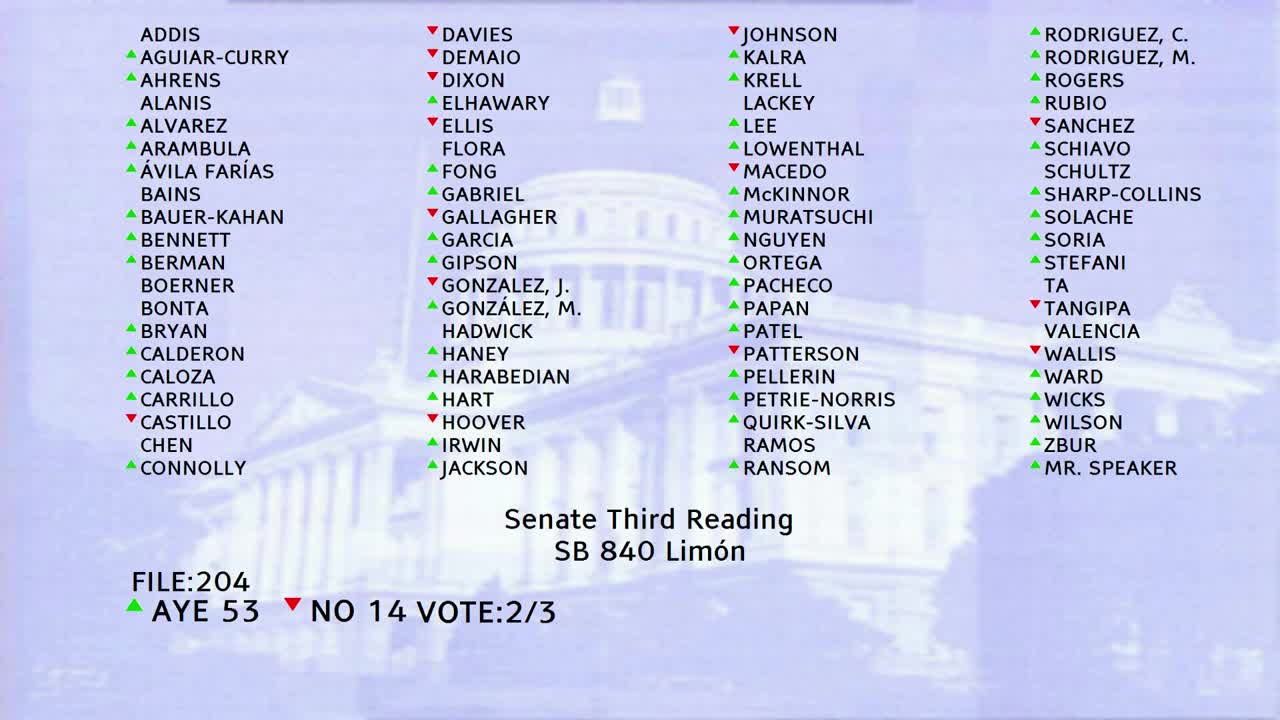 45SEC
Assembly Floor
 1MIN
Senate Floor
 1MIN
Assembly Floor
 7MIN
Assembly Standing Committee on Water, Parks, and Wildlife
Bill Author

Bill Co-Author(s):