ACA 18: University of California: regents: student members.
- Session Year: 2025-2026
- House: Assembly
- Latest Version Date: 2026-06-09
Current Status:
In Progress
(2026-08-13: In committee: Hearing postponed by committee.)
Introduced
In Committee
Awaiting First Chamber Vote
Passed First Chamber
In Committee
Awaiting Second Chamber Vote
Passed Second Chamber
Enacted
The California Constitution provides that the University of California constitutes a public trust, and requires the university to be administered by the Regents of the University of California, a corporation in the form of a board, with full powers of organization and government, subject to legislative control only for specified purposes. The California Constitution requires the board to consist of 7 ex officio members and 18 appointive members appointed by the Governor and approved by the Senate. The California Constitution authorizes the members of the board to appoint either a member of the faculty at a campus of the university or of another institution of higher education, or a person enrolled as a student at a campus of the university, or both, as members of the board serving for no less than one year with all rights of participation.
Beginning on July 1, 2027, this measure would require, instead of authorize, the members of the board to appoint to the board for 2-year terms, 2 undergraduate students and 2 graduate students enrolled at a campus of the university for each regular academic term during their service as members of the board, as provided. The measure would require each student board member to serve as a nonvoting student regent-designate in the first year of their 2-year term, and would authorize a student member who graduates from the university on or after January 1 of the 2nd year of the student members 2-year term to serve the remainder of their term.
The California Constitution provides that the University of California constitutes a public trust, and requires the university to be administered by the Regents of the University of California, a corporation in the form of a board, with full powers of organization and government, subject to legislative control only for specified purposes. The California Constitution requires the board to consist of 7 ex officio members and 18 appointive members appointed by the Governor and approved by the Senate. The California Constitution authorizes the members of the board to appoint either a member of the faculty at a campus of the university or of another institution of higher education, or a person enrolled as a student at a campus of the university, or both, as members of the board serving for no less than one year with all rights of participation.
ThisBeginning on July 1, 2027, this measure would require, instead of authorize, the members of the board to appoint to the board 2 students for 2-year terms, 2 undergraduate students and 2 graduate students enrolled at a campus of the university for each regular academic term during their service as members of the board, as provided. The measure would also require each student board member to serve as a nonvoting student regent-designate in the year preceding the start of their term as a member of the board, and would require one nonvoting student regent-designate to be enrolled as an undergraduate student and one nonvoting student regent-designate to be enrolled as a graduate or professional student when appointed to the nonvoting student regent-designate position, as specified. first year of their 2-year term, and would authorize a student member who graduates from the university on or after January 1 of the 2nd year of the student members 2-year term to serve the remainder of their term.
The California Constitution provides that the University of California constitutes a public trust, and requires the university to be administered by the Regents of the University of California, a corporation in the form of a board, with full powers of organization and government, subject to legislative control only for specified purposes. The California Constitution requires the board to consist of 7 ex officio members and 18 appointive members appointed by the Governor and approved by the Senate. The California Constitution authorizes the members of the board to appoint either a member of the faculty at a campus of the university or of another institution of higher education, or a person enrolled as a student at a campus of the university, or both, as members of the board serving for no less than one year with all rights of participation.
This measure would require, instead of authorize, the members of the board to appoint to the board 2 students enrolled at a campus of the university for each regular academic term during their service as members of the board, as provided. The measure would also require each student board member to serve as a nonvoting student regent-designate in the year preceding the start of their term as a member of the board, and would require one nonvoting student regent-designate to be enrolled as an undergraduate student and one nonvoting student regent-designate to be enrolled as a graduate or professional student when appointed to the nonvoting student regent-designate position, as specified.
Resolved by the Assembly, the Senate concurring, That the Legislature of the State of California at its 202526 Regular Session commencing on the second day of December 2024, two-thirds of the membership of each house concurring, hereby proposes to the people of the State of California, that the Constitution of the State be amended as follows:
This measure shall be known, and may be cited, as the Student Empowerment Referendum for Voting Inclusion in Colleges and Education (SERVICE) Act.
The Legislature finds and declares all of the following:
(a)The University of California currently enrolls nearly 300,000 students across 10 campuses.
(b)A voting student regent position was first created in 1974 through the passage of Proposition 4 at a time when the University of California enrolled approximately 124,000 students.
(c)The size, diversity, programmatic scope, and governance responsibilities of the University of California have significantly expanded since 1974, yet student representation on the Board of Regents has not changed accordingly.
(d)Students serving in systemwide roles report difficulty in meaningfully participating in regent decisionmaking due to limited committee coverage, concurrent committee meetings, and a lack of continuity and institutional memory across one-year terms.
(e)Expanding the number of voting student regents and the length of student regent terms will enhance shared governance, strengthen continuity, and provide representation that is better aligned with the student population served by the University of California.
(f)Maintaining the existing selection structure though the University of California Student Association and the University of California Graduate and Professional Council systemwide student associations designated as official representatives by a majority of undergraduate and graduate student governments ensures that representation remains independent, systemwide, and nonpartisan.
(a)The University of California shall constitute a public trust, to be administered by the existing corporation known as The Regents of the University of California, with full powers of organization and government, subject only to such legislative control as may be necessary to ensure the security of its funds and compliance with the terms of the endowments of the university and such competitive bidding procedures as may be made applicable to the university by statute for the letting of construction contracts, sales of real property, and purchasing of materials, goods, and services. The corporation shall be in form a board composed of seven ex officio members, who shall be: the Governor, the Lieutenant Governor, the Speaker of the Assembly, the Superintendent of Public Instruction, the president and the vice president of the alumni association of the university, and the acting president of the university, and 18 appointive members appointed by the Governor and approved by the Senate, a majority of the membership concurring.
(b)(1)The terms of the members appointed before November 5, 1974, shall be 16 years; the terms of two appointive members to expire as heretofore on March 1 of every even-numbered calendar year, and two members shall be appointed for terms commencing on March 1, 1976, and on March 1 of each year thereafter; provided that no such appointments shall be made for terms to commence on March 1, 1979, or on March 1 of each fourth year thereafter, to the end that no appointment to the regents for a newly commencing term shall be made during the first year of any gubernatorial term of office. The terms of the members appointed for terms commencing on and after March 1, 1976, shall be 12 years.
(2)In case of any vacancy, the term of office of the appointee to fill that vacancy, who shall be appointed by the Governor and approved by the Senate, a majority of the membership concurring, shall be for the balance of the term for which that vacancy exists.
(c)(1)The members of the board may, in their discretion, following procedures established by them and after consultation with representatives of faculty and students of the university, including appropriate officers of the academic senate and student governments, appoint to the board either or both of the following persons as members with all rights of participation: a member of the faculty at a campus of the university or of another institution of higher education; a person enrolled as a student at a campus of the university for each regular academic term during their service as a member of the board. Any person so appointed shall serve for not less than one year commencing on July 1. This paragraph shall become inoperative on July 1, 2027.
(2)Beginning on July 1, 2027, and every July 1 thereafter, the members of the board, following procedures established by them and after consultation with representatives of faculty of the university, including appropriate officers of the academic senate, may, in their discretion, appoint to the board a member of the faculty at a campus of the university or of another institution of higher education. Any A faculty member appointed pursuant to this subdivision shall serve for not less than one year commencing on July 1, and shall be a member of the board with all rights of participation as regular members of the board.
(d)(1)Beginning on July 1, 2027, and every July 1 thereafter, the members of the board, following procedures established by them and after consultation with representatives of students of the university, including the University of California Student Association and the University of California Graduate and Professional Council, or their successor organizations, respectively, including, but not limited to, the systemwide student associations designated as official representatives by a majority of undergraduate and graduate student governments, shall appoint to the board four students enrolled at a campus of the university for each regular academic term during their service as a member of the board with all powers, duties, voting authority, rights, and responsibilities as regular members of the board as follows:
(A)(i)One student member shall be appointed to serve a term of two years beginning on July 1 of an even-numbered year and expiring on June 30 two years thereafter. During the first year of the two-year term, the student shall serve as a nonvoting student regent-designate. A student member appointed to the board pursuant to this clause shall be enrolled as an undergraduate student at the time of appointment to the nonvoting student regent-designate position.
(ii)One student member shall be appointed to serve a term of two years beginning on July 1 of an odd-numbered year and expiring on June 30 two years thereafter. During the first year of the two-year term, the student shall serve as a nonvoting student regent-designate. A student member appointed to the board pursuant to this clause shall be enrolled as an undergraduate student at the time of appointment to the nonvoting student regent-designate position.
(B)(i)One student member shall be appointed to serve a term of two years beginning on July 1 of an even-numbered year and expiring on June 30 two years thereafter. During the first year of the two-year term, the student shall serve as a nonvoting student regent-designate. A student member appointed to the board pursuant to this clause shall be enrolled as a graduate student at the time of appointment to the nonvoting student regent-designate position.
(ii)One student member shall be appointed to serve a term of two years beginning on July 1 of an odd-numbered year and expiring on June 30 two years thereafter. During the first year of the two-year term, the student shall serve as a nonvoting student regent-designate. A student member appointed to the board pursuant to this clause shall be enrolled as a graduate student at the time of appointment to the nonvoting student regent-designate position.
(2)A student regent appointed to the board pursuant to this subdivision who graduates from the university on or after January 1 of the second year of the student members two-year term of office may serve the remainder of the student members term.
(e)Regents shall be able persons broadly reflective of the economic, cultural, and social diversity of the State, including ethnic minorities and women. However, it is not intended that formulas or specific ratios be applied in the selection of regents.
(f)In the selection of the regents, the Governor shall consult an advisory committee composed as follows: The Speaker of the Assembly and two public members appointed by the Speaker, the President pro Tempore of the Senate and two public members appointed by the Senate Committee on Rules, two public members appointed by the Governor, the chairperson of the regents of the university, an alumnus of the university chosen by the alumni association of the university, a student of the university chosen by the Council of Student Body Presidents, and a member of the faculty of the university chosen by the academic senate of the university. Public members shall serve for four years, except that one each of the initially appointed members selected by the Speaker of the Assembly, the President pro Tempore of the Senate, and the Governor shall be appointed to serve for two years; student, alumni, and faculty members shall serve for one year and may not be regents of the university at the time of their service on the advisory committee.
(g)The Regents of the University of California shall be vested with the legal title and the management and disposition of the property of the university and of property held for its benefit, and shall have the power to take and hold, either by purchase or by donation, or gift, testamentary or otherwise, or in any other manner, without restriction, all real and personal property for the benefit of the university or incidentally to its conduct. However, sales of university real property shall be subject to such competitive bidding procedures as may be provided by statute. The corporation shall also have all the powers necessary or convenient for the effective administration of its trust, including the power to sue and to be sued, to use a seal, and to delegate to its committees or to the faculty of the university, or to others, such authority or functions as it may deem wise. The regents shall receive all funds derived from the sale of lands pursuant to the Act of Congress of July 2, 1862, and any subsequent acts amendatory thereof. The university shall be entirely independent of all political or sectarian influence and kept free therefrom in the appointment of its regents and in the administration of its affairs, and no person shall be debarred admission to any department of the university on account of race, religion, ethnic heritage, or sex.
(h)Meetings of the Regents of the University of California shall be public, with exceptions and notice requirements as may be provided by statute.
Resolved by the Assembly, the Senate concurring, That the Legislature of the State of California at its 202526 Regular Session commencing on the second day of December 2024, two-thirds of the membership of each house concurring, hereby proposes to the people of the State of California, that the Constitution of the State be amended as follows:
This measure shall be known, and may be cited, as the Student Empowerment Referendum for Voting Inclusion in Colleges and Education (SERVICE) Act.
The Legislature finds and declares all of the following:
(a)The University of California currently enrolls nearly 300,000 students across 10 campuses.
(b)A voting student regent position was first created in 1974 through the passage of Proposition 4 at a time when the University of California enrolled approximately 124,000 students.
(c)The size, diversity, programmatic scope, and governance responsibilities of the University of California have significantly expanded since 1974, yet student representation on the Board of Regents has not changed accordingly.
(d)Students serving in systemwide roles report difficulty in meaningfully participating in regent decisionmaking due to limited committee coverage, concurrent committee meetings, and a lack of continuity and institutional memory across one-year terms.
(e)Expanding the number of voting student regents and the length of student regent terms will enhance shared governance, strengthen continuity, and provide representation that is better aligned with the student population served by the University of California.
(f)Maintaining the existing selection structure though the University of California Student Association and the University of California Graduate and Professional Council ensures that representation remains independent, systemwide, and nonpartisan.
(a)The University of California shall constitute a public trust, to be administered by the existing corporation known as The Regents of the University of California, with full powers of organization and government, subject only to such legislative control as may be necessary to ensure the security of its funds and compliance with the terms of the endowments of the university and such competitive bidding procedures as may be made applicable to the university by statute for the letting of construction contracts, sales of real property, and purchasing of materials, goods, and services. The corporation shall be in form a board composed of seven ex officio members, who shall be: the Governor, the Lieutenant Governor, the Speaker of the Assembly, the Superintendent of Public Instruction, the president and the vice president of the alumni association of the university, and the acting president of the university, and 18 appointive members appointed by the Governor and approved by the Senate, a majority of the membership concurring.
(b)(1)The terms of the members appointed before November 5, 1974, shall be 16 years; the terms of two appointive members to expire as heretofore on March 1 of every even-numbered calendar year, and two members shall be appointed for terms commencing on March 1, 1976, and on March 1 of each year thereafter; provided that no such appointments shall be made for terms to commence on March 1, 1979, or on March 1 of each fourth year thereafter, to the end that no appointment to the regents for a newly commencing term shall be made during the first year of any gubernatorial term of office. The terms of the members appointed for terms commencing on and after March 1, 1976, shall be 12 years.
(2)In case of any vacancy, the term of office of the appointee to fill that vacancy, who shall be appointed by the Governor and approved by the Senate, a majority of the membership concurring, shall be for the balance of the term for which that vacancy exists.
(c)(1)The members of the board may, in their discretion, following procedures established by them and after consultation with representatives of faculty and students of the university, including appropriate officers of the academic senate and student governments, appoint to the board either or both of the following persons as members with all rights of participation: a member of the faculty at a campus of the university or of another institution of higher education; a person enrolled as a student at a campus of the university for each regular academic term during their service as a member of the board. Any person so appointed shall serve for not less than one year commencing on July 1. This paragraph shall become inoperative on July 1, 2027.
(c)The members(2)Beginning on July 1, 2027, and every July 1 thereafter, the members of the board, following procedures established by them and after consultation with representatives of faculty of the university, including appropriate officers of the academic senate, may, in their discretion, appoint to the board a member of the faculty at a campus of the university or of another institution of higher education. Any faculty appointed pursuant to this subdivision shall serve for not less than one year commencing on July 1, and shall be a member of the board with all rights of participation as regular members of the board.
(d)(1)The Beginning on July 1, 2027, and every July 1 thereafter, the members of the board, following procedures established by them and after consultation with representatives of students of the university, including the University of California Student Association and the University of California Graduate and Professional Council, or their successor organizations, respectively, shall appoint to the board two four students enrolled at a campus of the university for each regular academic term during their service as a member of the board with all powers, duties, voting authority, rights, and responsibilities as regular members of the board as follows:
(A)(i)One student member shall be appointed to serve a term of two years beginning on July 1 of an even-numbered year and expiring on June 30 two years thereafter. Beginning on July 1 of the odd-numbered year preceding the start of their term as a member of the board, and expiring on June 30 of the year thereafter, During the first year of the two-year term, the student shall serve as a nonvoting student regent-designate. A student member appointed to the board pursuant to this subparagraph clause shall be enrolled as an undergraduate student at the time of appointment to the nonvoting student regent-designate position.
(B)(ii)One student member shall be appointed to serve a term of two years beginning on July 1 of an odd-numbered year and expiring on June 30 two years thereafter. Beginning on July 1 of the even-numbered year preceding the start of their term as a member of the board, and expiring on June 30 of the year thereafter, During the first year of the two-year term, the student shall serve as a nonvoting student regent-designate. A student member appointed to the board pursuant to this subparagraph clause shall be enrolled as a graduate or professional an undergraduate student at the time of appointment to the nonvoting student regent-designate position.
(B)(i)One student member shall be appointed to serve a term of two years beginning on July 1 of an even-numbered year and expiring on June 30 two years thereafter. During the first year of the two-year term, the student shall serve as a nonvoting student regent-designate. A student member appointed to the board pursuant to this clause shall be enrolled as a graduate student at the time of appointment to the nonvoting student regent-designate position.
(ii)One student member shall be appointed to serve a term of two years beginning on July 1 of an odd-numbered year and expiring on June 30 two years thereafter. During the first year of the two-year term, the student shall serve as a nonvoting student regent-designate. A student member appointed to the board pursuant to this clause shall be enrolled as a graduate student at the time of appointment to the nonvoting student regent-designate position.
(2)A student regent appointed to the board pursuant to this subdivision shall not serve more than one year as a nonvoting student regent-designate or more than two years as a student member. who graduates from the university on or after January 1 of the second year of the student members two-year term of office may serve the remainder of the student members term.
(e)Regents shall be able persons broadly reflective of the economic, cultural, and social diversity of the State, including ethnic minorities and women. However, it is not intended that formulas or specific ratios be applied in the selection of regents.
(f)In the selection of the regents, the Governor shall consult an advisory committee composed as follows: The Speaker of the Assembly and two public members appointed by the Speaker, the President pro Tempore of the Senate and two public members appointed by the Senate Committee on Rules, two public members appointed by the Governor, the chairperson of the regents of the university, an alumnus of the university chosen by the alumni association of the university, a student of the university chosen by the Council of Student Body Presidents, and a member of the faculty of the university chosen by the academic senate of the university. Public members shall serve for four years, except that one each of the initially appointed members selected by the Speaker of the Assembly, the President pro Tempore of the Senate, and the Governor shall be appointed to serve for two years; student, alumni, and faculty members shall serve for one year and may not be regents of the university at the time of their service on the advisory committee.
(g)The Regents of the University of California shall be vested with the legal title and the management and disposition of the property of the university and of property held for its benefit, and shall have the power to take and hold, either by purchase or by donation, or gift, testamentary or otherwise, or in any other manner, without restriction, all real and personal property for the benefit of the university or incidentally to its conduct. However, sales of university real property shall be subject to such competitive bidding procedures as may be provided by statute. The corporation shall also have all the powers necessary or convenient for the effective administration of its trust, including the power to sue and to be sued, to use a seal, and to delegate to its committees or to the faculty of the university, or to others, such authority or functions as it may deem wise. The regents shall receive all funds derived from the sale of lands pursuant to the Act of Congress of July 2, 1862, and any subsequent acts amendatory thereof. The university shall be entirely independent of all political or sectarian influence and kept free therefrom in the appointment of its regents and in the administration of its affairs, and no person shall be debarred admission to any department of the university on account of race, religion, ethnic heritage, or sex.
(h)Meetings of the Regents of the University of California shall be public, with exceptions and notice requirements as may be provided by statute.
Resolved by the Assembly, the Senate concurring, That the Legislature of the State of California at its 202526 Regular Session commencing on the second day of December 2024, two-thirds of the membership of each house concurring, hereby proposes to the people of the State of California, that the Constitution of the State be amended as follows:
This measure shall be known, and may be cited, as the Student Empowerment Referendum for Voting Inclusion in Colleges and Education (SERVICE) Act.
The Legislature finds and declares all of the following:
(a)The University of California currently enrolls nearly 300,000 students across 10 campuses.
(b)A voting student regent position was first created in 1974 through the passage of Proposition 4 at a time when the University of California enrolled approximately 124,000 students.
(c)The size, diversity, programmatic scope, and governance responsibilities of the University of California have significantly expanded since 1974, yet student representation on the Board of Regents has not changed accordingly.
(d)Students serving in systemwide roles report difficulty in meaningfully participating in regent decisionmaking due to limited committee coverage, concurrent committee meetings, and a lack of continuity and institutional memory across one-year terms.
(e)Expanding the number of voting student regents and the length of student regent terms will enhance shared governance, strengthen continuity, and provide representation that is better aligned with the student population served by the University of California.
(f)Maintaining the existing selection structure though the University of California Student Association and the University of California Graduate and Professional Council ensures that representation remains independent, systemwide, and nonpartisan.
(a)The University of California shall constitute a public trust, to be administered by the existing corporation known as The Regents of the University of California, with full powers of organization and government, subject only to such legislative control as may be necessary to insure ensure the security of its funds and compliance with the terms of the endowments of the university and such competitive bidding procedures as may be made applicable to the university by statute for the letting of construction contracts, sales of real property, and purchasing of materials, goods, and services. Said The corporation shall be in form a board composed of seven ex officio members, which who shall be: the Governor, the Lieutenant Governor, the Speaker of the Assembly, the Superintendent of Public Instruction, the president and the vice president of the alumni association of the university university, and the acting president of the university, and 18 appointive members appointed by the Governor and approved by the Senate, a majority of the membership concurring; provided, however that the present appointive members shall hold office until the expiration of their present terms. concurring.
(b)(1)The terms of the members appointed prior to before November 5, 1974, shall be 16 years; the terms of two appointive members to expire as heretofore on March 1st 1 of every even-numbered calendar year, and two members shall be appointed for terms commencing on March 1, 1976, and on March 1 of each year thereafter; provided that no such appointments shall be made for terms to commence on March 1, 1979, or on March 1 of each fourth year thereafter, to the end that no appointment to the regents for a newly commencing term shall be made during the first year of any gubernatorial term of office. The terms of the members appointed for terms commencing on and after March 1, 1976, shall be 12 years. During the period of transition until the time when the appointive membership is comprised exclusively of persons serving for terms of 12 years, the total number of appointive members may exceed the numbers specified in the preceeding paragraph.
In(2)In case of any vacancy, the term of office of the appointee to fill such that vacancy, who shall be appointed by the Governor and approved by the Senate, a majority of the membership concurring, shall be for the balance of the term for which such that vacancy exists.
(c)The members of the board may, in their discretion, board, following procedures established by them and after consultation with representatives of faculty and students of the university, including appropriate officers of the academic senate and student governments, senate, may, in their discretion, appoint to the board either or both of the following persons as members with all rights of participation: a member of the faculty at a campus of the university or of another institution of higher education; a person enrolled as a student at a campus of the university for each regular academic term during his service as a member of the board. education. Any person so faculty appointed pursuant to this subdivision shall serve for not less than one year commencing on July 1. 1, and shall be a member of the board with all rights of participation as regular members of the board.
(d)(1)The members of the board, following procedures established by them and after consultation with representatives of students of the university, including the University of California Student Association and the University of California Graduate and Professional Council, or their successor organizations, respectively, shall appoint to the board two students enrolled at a campus of the university for each regular academic term during their service as a member of the board with all powers, duties, voting authority, rights, and responsibilities as regular members of the board as follows:
(A)One student member shall be appointed to serve a term of two years beginning on July 1 of an even-numbered year and expiring on June 30 two years thereafter. Beginning on July 1 of the odd-numbered year preceding the start of their term as a member of the board, and expiring on June 30 of the year thereafter, the student shall serve as a nonvoting student regent-designate. A student member appointed to the board pursuant to this subparagraph shall be enrolled as an undergraduate student at the time of appointment to the nonvoting student regent-designate position.
(B)One student member shall be appointed to serve a term of two years beginning on July 1 of an odd-numbered year and expiring on June 30 two years thereafter. Beginning on July 1 of the even-numbered year preceding the start of their term as a member of the board, and expiring on June 30 of the year thereafter, the student shall serve as a nonvoting student regent-designate. A student member appointed to the board pursuant to this subparagraph shall be enrolled as a graduate or professional student at the time of appointment to the nonvoting student regent-designate position.
(2)A student regent appointed to the board pursuant to this subdivision shall not serve more than one year as a nonvoting student regent-designate or more than two years as a student member.
(d)(e)Regents shall be able persons broadly reflective of the economic, cultural, and social diversity of the State, including ethnic minorities and women. However, it is not intended that formulas or specific ratios be applied in the selection of regents.
(e)(f)In the selection of the Regents, regents, the Governor shall consult an advisory committee composed as follows: The Speaker of the Assembly and two public members appointed by the Speaker, the President Pro pro Tempore of the Senate and two public members appointed by the Rules Committee of the Senate, Senate Committee on Rules, two public members appointed by the Governor, the chairman chairperson of the regents of the university, an alumnus of the university chosen by the alumni association of the university, a student of the university chosen by the Council of Student Body Presidents, and a member of the faculty of the university chosen by the academic senate of the university. Public members shall serve for four years, except that one each of the initially appointed members selected by the Speaker of the Assembly, the President Pro pro Tempore of the Senate, and the Governor shall be appointed to serve for two years; student, alumni, and faculty members shall serve for one year and may not be regents of the university at the time of their service on the advisory committee.
(f)(g)The Regents of the University of California shall be vested with the legal title and the management and disposition of the property of the university and of property held for its benefit benefit, and shall have the power to take and hold, either by purchase or by donation, or gift, testamentary or otherwise, or in any other manner, without restriction, all real and personal property for the benefit of the university or incidentally to its conduct; provided, however, that conduct. However, sales of university real property shall be subject to such competitive bidding procedures as may be provided by statute. Said The corporation shall also have all the powers necessary or convenient for the effective administration of its trust, including the power to sue and to be sued, to use a seal, and to delegate to its committees or to the faculty of the university, or to others, such authority or functions as it may deem wise. The Regents regents shall receive all funds derived from the sale of lands pursuant to the act Act of Congress of July 2, 1862, and any subsequent acts amendatory thereof. The university shall be entirely independent of all political or sectarian influence and kept free therefrom in the appointment of its regents and in the administration of its affairs, and no person shall be debarred admission to any department of the university on account of race, religion, ethnic heritage, or sex.
(g)(h)Meetings of the Regents of the University of California shall be public, with exceptions and notice requirements as may be provided by statute.
|
Date
|
Status
|
|---|---|
| Aug 13, 2026 | In committee: Hearing postponed by committee. |
| Jun 9, 2026 | From committee chair, with author's amendments: Amend, and re-refer to committee. Read second time, amended, and re-referred to Com. on APPR. |
| Jun 9, 2026 | From committee: Be adopted, and re-refer to Com. on APPR. Re-referred. (Ayes 5. Noes 0.) (June 9). Re-referred to Com. on APPR. |
| Jun 4, 2026 | From committee: Be adopted, and re-refer to Com. on E. & C.A. Re-referred. (Ayes 6. Noes 0.) (June 3). Re-referred to Com. on E. & C.A. |
| May 27, 2026 | Referred to Coms. on ED. and E. & C.A. |
| May 27, 2026 | In Senate. To Com. on RLS. |
| May 26, 2026 | Adopted and to Senate. (Ayes 76. Noes 0. Page 5353.) |
| May 26, 2026 | Adopted and to Senate. (Ayes 76. Noes 0.) |
| May 26, 2026 | Adopted and to Senate. |
| May 18, 2026 | Read second time. Ordered to third reading. |
| May 14, 2026 | Joint Rule 62(a), file notice suspended. (Page 5070.) |
| May 14, 2026 | From committee: Be adopted. (Ayes 15. Noes 0.) (May 14). |
| May 14, 2026 | Joint Rule 62(a), file notice suspended. |
| May 13, 2026 | In committee: Set, first hearing. Referred to APPR. suspense file. |
| May 6, 2026 | In committee: Hearing postponed by committee. |
| Apr 30, 2026 | Re-referred to Com. on APPR. |
| Apr 29, 2026 | Read second time and amended. |
| Apr 28, 2026 | From committee: Amend, and be adopted as amended, and re-refer to Com. on APPR. (Ayes 9. Noes 0.) (April 28). |
| Apr 13, 2026 | Referred to Com. on HIGHER ED. |
| Feb 21, 2026 | From printer. |
| Feb 20, 2026 | Introduced. To print. |
|
Date
|
Description
|
Location
|
Votes
|
|
|---|---|---|---|---|
| Jun 15, 2026 | Placed on suspense file | Senate Standing Committee on Appropriations |
Passed |
|
| Jun 9, 2026 | Be adopted, but first be re-referred to the Committee on [Appropriations] | Senate Standing Committee on Elections and Constitutional Amendments |
Passed |
|
| Jun 3, 2026 | Be adopted, but first be re-referred to the Committee on [Elections and Constitutional Amendments] | Senate Standing Committee on Education |
Passed |
|
| May 26, 2026 | ACA 18 Caloza Assembly Third Reading | Assembly Floor |
Passed |
|
| May 14, 2026 | Be adopted. | Assembly Standing Committee on Appropriations |
Passed |
|
| Apr 28, 2026 | Be adopted as amended, and re-refer to the Committee on [Appropriations] | Assembly Standing Committee on Higher Education |
Passed |
This list shows positions taken on this bill by organizations on the date displayed, which is linked to the original source.
Positions by individuals are not included.
|
Organization
|
Position
|
Date
|
|---|---|---|
| Alliance for a Better Community (UNREG) | ** Support | |
| John Burton Advocates for Youth | ** Support | |
| Michelson Center For Public Policy | ** Support | |
| United Food And Commercial Workers Western States Council | ** Support | |
| University Of California Student Association | ** Support | |
| Young Invincibles | ** Support |
SENATE COMMITTEE ON
Senator Sabrina Cervantes, Chair
2025 - 2026 Regular Session
ACA 18 (Caloza) - University of California: regents: student members
Version: | Policy Vote: |
Urgency: | Mandate: |
Hearing Date: | Consultant: |
Bill Summary:
ACA 18, if approved by voters, would modify Article IX of the State Constitution to require, rather than authorize, the University of California (UC) Board of Regents to appoint four students enrolled at a UC campus to the Board of Regents.
Fiscal Impact:
- The UC estimates ongoing General Fund costs of $172,000 each year for the Board of Regents to add two additional student members. This estimate assumes that the cost of one student Regent, voting or non-voting, is $86,000 each year which includes expenses associated with tuition, fees, scholarships, room, board, and transportation provided to the student in the form of credits and reimbursements. The UC indicates that it currently pays these costs for both the student voting member and the student non-voting member, therefore the bill would double those costs by creating a total of four required student members.
- This measure would result in one-time General Fund costs to the Secretary of State (SOS) in the range of $738,000 to $984,000, likely in 2026-27, for printing and mailing costs to place the measure on the ballot in a statewide election. Actual costs may be higher or lower, depending on the length of required elements and the overall size of the ballot.
Background:
The California Constitution establishes the UC, a public trust to be administered by the Regents of the UC and grants the Regents full powers of organization and government, subject only to such legislative control as may be necessary to insure security of its funds, compliance with the terms of its endowments, statutory requirements around competitive bidding and contracts, sales of property and the purchase of materials, goods and services. The California Constitution also establishes requirements for the appointment and terms to be served by a member of the Regents of the UC. Specifically, it requires that members of the Board be composed of 7 ex officio members—the Governor, the Lieutenant Governor, the Speaker of the Assembly, the Superintendent of Public Instruction, the president and the vice president of the alumni association of the university, and the acting president of the university, and 18 appointive members. The Constitution provides that the Senate approve any Regent appointee made by the Governor.
The California Constitution authorizes the UC Regents to appoint students or faculty and establishes procedures for their appointment. It authorizes the members of the Board to appoint either a member of the faculty at a university campus or of another institution of higher education, or a person enrolled as a student at a campus of the university, or both, as members of the Board serving for no less than one year with all rights of participation. The Constitution also provides that the Board appointed student or faculty member serve for not less than one year commencing on July 1.
Proposed Law:
This bill would place before the voters a change to the California Constitution to modify the membership of the Board of Regents of the UC. Specifically, it requires, rather than authorizes, the UC Regents, beginning on July 1, 2027, to consult annually with the student representatives including, but not limited to, the systemwide student associations designated as official representatives by a majority of undergraduate and graduate student governments, to appoint four UC students to serve as members with all powers, duties, voting authority, rights, and responsibilities as regular members of the Board. Specifically, the bill requires the Board of Regents to appoint two undergraduate and two graduate student members, each serving two-year terms, with one graduate student and one undergraduate student appointed for a total of two student appointees each year in even and odd numbered years. During the first year, each appointee is to serve as the student Regent-designee with no voting authority, and in the second year, the graduate student is to serve as the student Regent with full voting authority.
Related Legislation:
SCA 5 (Glazer, 2021) would have required, rather than authorize, members of the UC Board of Regents to appoint two students enrolled at a UC campus. The bill was held in the Assembly Appropriations Committee.
Staff Comments:
The California Constitution requires the UC Board of Regents to be composed of 25 voting members—seven ex officio members and 18 members appointed by the Governor and approved by the Senate. The Constitution also authorizes the Board of Regents to appoint either a faculty member or a student enrolled at a UC campus, or both, as voting members of the Board. This bill would expand student representation by increasing the number of voting students from one to two and the number of nonvoting students from one to two.
Additionally, the SOS indicates that printing and mailing costs associated with placing a measure on the statewide ballot are $123,000 per page, depending on the length of the ballot. The fiscal estimates noted above reflect the addition of 6-8 pages in the Voter Information Guide. Actual costs would depend upon the length of the title and summary, analysis by the LAO, proponent and opponent arguments, and text of the proposal.
-- END --
SENATE COMMITTEE ON
ELECTIONS AND CONSTITUTIONAL AMENDMENTS
Senator Scott Wiener, Chair
2025 - 2026 Regular
Bill No: Hearing Date: 6/9/26
Author: | |||
Version: |
| ||
Urgency: | Fiscal: | ||
Consultant: | |||
Subject:
DIGEST
This measure, if approved by voters, requires the University of California (UC) Board of Regents (Regents) to appoint four students to the UC Regents.
ANALYSIS
Existing law:
- Provides, pursuant to the California Constitution, that the UC Regents administer the UC with full powers of organization and government, subject only to such legislative control as may be necessary to insure the security of its funds and compliance with the terms of the endowments of the university and such competitive bidding procedures as may be made applicable to the UC by statute for the letting of construction contracts, sales of real property, and purchasing of materials, goods, and services.
- Requires the UC Regents to be composed of the following:
- The Governor.
- The Lieutenant Governor.
- The Speaker of the Assembly.
- The Superintendent of Public Instruction.
- The president and the vice president of the alumni association of the university.
- The acting president of the university.
- 18 members appointed by the Governor and approved by the Senate, as specified.
- Permits the UC Regents, at their discretion, following procedures established by them and after consultation with representatives of faculty and students of the UC, including appropriate officers of the academic senate and student governments, to appoint to the board either or both of the following persons as members with all rights of participation:
- A member of the faculty at a campus of the UC or of another institution of higher education.
- A student enrolled at a UC campus for each regular academic term during their service as a UC Regent.
- Any person so appointed under 3) serves for not less than one year commencing on July 1.
This measure, if approved by voters:
- Requires the UC Regents to appoint four students (two voting and two non-voting) to the UC Regents. Beginning on July 1, 2027, and every July 1 thereafter, the students are to be appointed as follows:
- One undergraduate student appointed in an odd-numbered year and one undergraduate student appointed in an even-numbered year. Both students will serve a two-year term. During the first year, the undergraduate students serve as the student Regent-designee with nonvoting authority, and in the second year, the undergraduate students is to serve as student Regent with full voting authority.
- One graduate student appointed in an odd-numbered year and one graduate student appointed in an even-numbered year is to serve a term of two years. During the first year, the graduate students serve as the student Regent-designee with nonvoting authority, and in the second year, the graduate students serve as the student Regent with full voting authority.
- The UC Regents must consult with representatives of students of the UC, including the UC Student Association (UCSA) and the UC Graduate and Professional Council, or their successor organizations.
- The appointed students who graduate from the UC on or after January 1 of the second year of the student’s two-year term of office may serve the remainder of the student’s term.
- Makes technical changes.
COMMENTS
- Author’s Statement. Sixteen years ago, I came to the State Capitol as a UC San Diego student to protest tuition hikes by the UC Regents. Today, students are facing those same challenges: rising tuition, unaffordable housing, and growing uncertainty that impacts their ability to succeed. Yet on the 26-member UC Board of Regents, only one student has a vote.
Students deserve more than a seat in the room. They deserve a vote that counts. This measure is about fairness, accountability, and meaningful representation. By expanding student voting power on the UC Regents, this constitutional amendment ensures that the voices of those most impacted by decisions on tuition, housing, and student life are heard loud and clear.
Now more than ever, it’s time to put students first and give them a real say in the decisions that shape their education and future.
- Student Consultation. Under this measure, student-regent appointments are to be made in consultation with student representatives, including UCSA and the UC Graduate and Professional Council.
UCSA is a systemwide organization composed of representatives from UC student governments and participates in student engagement, policy discussions, and shared governance matters affecting UC students. Nine of the ten UC campuses are represented in UCSA, with the exception being UC San Francisco.
The Graduate and Professional Council is the equivalent organization for graduate and professional students. According to their website, there are nine board directors who represent each active Graduate Student Association on each UC campus. UC Santa Cruz is currently not recognized.
It should be noted that the Regents are permitted to consult with student organizations beyond UCSA and the UC Graduate and Professional Council.
- What’s on the Ballot? The author intends for this measure to be placed for the November 3, 2026, statewide general election. The measure would need to be adopted by the Legislature by June 25, 2026.
As of June 1, 2026, there are three legislature ballot measures and five initiatives eligible for the November 3, 2026, statewide general election.
- Double Referral. Prior to being heard by this committee, this measure was heard and approved by the Senate Committee on Education with a vote of 6-0.
RELATED/PRIOR LEGISLATION
SCA 5 (Glazer) of 2021 would have required, rather than authorized, the members of the UC Regents to appoint two students enrolled at a UC campus. The measure was held on the Assembly Committee on Appropriations’ Suspense File.
PRIOR ACTION
Assembly Floor: | |
Assembly Appropriations Committee: | |
Assembly Committee: |
|
POSITIONS
Sponsor: University of California Students Association
Support: John Burton Advocates for Youth
United Food and Commercial Workers Western States Council
Oppose: None received
-- END --
SENATE COMMITTEE ON EDUCATION
Senator Sasha Renée Pérez, Chair
2025 - 2026 Regular
Bill No: Hearing Date: June 3, 2026
Author: | |||
Version: |
| ||
Urgency: | Fiscal: | ||
Consultant: | |||
Subject: .
NOTE: This measure has been referred to the Committees on Education and Elections and Constitutional Amendments. A “do pass” motion should include referral to the Elections and Constitutional Amendments Committee.
SUMMARY
This measure proposes to modify Article IX of the State Constitution to require, rather than authorize, the members of the University of California (UC) Board of Regents to appoint four students enrolled at a UC campus to the Board of Regents.
BACKGROUND
Existing law:
- The California Constitution establishes the UC, a public trust to be administered by the Regents of the UC and grants the Regents full powers of organization and government, subject only to such legislative control as may be necessary to insure security of its funds, compliance with the terms of its endowments, statutory requirements around competitive bidding and contracts, sales of property and the purchase of materials, goods and services. (Article IX, Section (9)(a) of the California Constitution)
- The California Constitution establishes the requirements for appointment and terms to be served by a member of the Regents of the UC. The Constitution specifically requires that members of the board be composed of 7 ex officio members of which include; the Governor, the Lieutenant Governor, the Speaker of the Assembly, the Superintendent of Public Instruction, the president and the vice president of the alumni association of the university, and the acting president of the university, and 18 appointive members. The Constitution also provides that the Senate, a majority of the membership concurring, approve any Regent appointee made by the Governor. (Article IX, Section (9)(a) and (b)(1) of the California Constitution)
- The California Constitution authorizes the UC Regents to appoint students or faculty and establishes procedures for their appointment. Specifically, it authorizes the members of the board to appoint either a member of the faculty at a campus of the university or of another institution of higher education, or a person enrolled as a student at a campus of the university, or both, as members of the board serving for no less than one year with all rights of participation. The Constitution also provides that the board appointed student or faculty member serve for not less than one year commencing on July 1. (Article IX, Section (9)(c) of the California Constitution)
ANALYSIS
This constitutional amendment proposes to place before the voters a change to the California Constitution to modify the membership of the Board of Regents of the UC. Specifically, it:
- Requires, rather than authorizes, the UC Regents, beginning on July 1, 2027, to consult annually with the student representatives including University of California Student Association (UCSA) and the University of California Graduate and Professional Council, or their successor organizations, respectively, to appoint to the board four UC students to serve as members of the board with all powers, duties, voting authority, rights, and responsibilities as regular members of the board. The students are to be appointed as follows:
- One undergraduate student appointed in an even numbered year is to
serve a term of two years. The first year, the undergraduate student is to serve as the student Regent-designee with nonvoting authority, and in the second year, the undergraduate student is to serve as student Regent with full voting authority.
- One undergraduate student appointed in an odd numbered year is to
serve a term of two years. The first year, the undergraduate student is to serve as the student Regent-designee with no voting authority, and in the second year, the undergraduate student is to serve as student Regent with full voting authority.
- One graduate student appointed in an even numbered year is to serve a
term of two years. The first year, the graduate student is to serve as the student Regent-designee with no voting authority, and in the second year, the graduate student is to serve as the student Regent with full voting authority.
- One graduate student appointed in an odd numbered year is to serve a
term of two years. The first year, the graduate student is to serve as the student Regent-designee with no voting authority, and in the second year, the graduate student is to serve as the student Regent with full voting authority.
- Provides that a student Regent who is authorized to serve as a Regent
who graduates on or after January 1 in the second year of student’s two year term can continue to serve for the remainder of the student’s term as Regent.
- Makes other technical and clarifying changes.
STAFF COMMENTS
- Need for the bill. According to the author, “Sixteen years ago, I came to the State Capitol as a UC San Diego student to protest tuition hikes by the UC Regents. Today, students are facing those same challenges—only worse: rising tuition, unaffordable housing, and growing uncertainty that impacts their ability to succeed. Yet on the 26-member UC Board of Regents, only one student has a vote.
“Students deserve more than a seat in the room—they deserve a vote that counts. ACA 18 is about fairness, accountability, and meaningful representation. By expanding student voting power on the UC Board of Regents, we ensure that the voices of those most impacted by decisions on tuition, housing, and student life are heard loud and clear.
“Now more than ever, it’s time to put students first and give them a real say in the decisions that shape their education and future.”
- Student Regents. Under the Constitution, the UC Regents have the option of appointing a student to serve as a member of the Board. The student Regent and Regent-designate positions are established and affirmed by regental policy. The two student members of the UC Regents serve staggered two-year terms, with the first year of a student’s membership, known as a regent-designate, limited to participation but not voting. This bill requires the appointment of four student representatives, two with voting privileges. The proposed changes also ensure representation from both the undergraduate and graduate student populations. The author notes that the last time an undergraduate student was represented on the UC Regents was in 2021.
- Student consultation. Under this measure, appointments are to be made in consultation with student representatives, including UCSA (sponsors of this measure) and the Graduate and Professional Council. UCSA is a systemwide organization composed of representatives from UC student governments that participates in student engagement, policy discussions, and shared governance matters affecting UC students. The Graduate and Professional Council is the equivalent organization for graduate and professional students. This measure identifies UCSA and the Graduate and Professional Council as student representative organizations to be consulted during the selection process but does not prohibit the Regents from seeking input from other student groups. Further, the student Regent serves as an individual member of the Board and is not formally designated as a representative of any particular student organization.
- Effect on existing Regents. The California Constitution provides for 18 Regents to be appointed by the Governor and approved by the Senate. In addition, the Constitution affords seven ex officio members, that include publicly elected officials. UC Regents may choose to also appoint a member of the faculty. According to the UC website, two faculty members-- the chair and vice chair of the Academic Council, sit on the Board as non-voting members. This measure does not change the number of gubernatorial appointees or ex officio members. Instead, it expands student representation by increasing the number of voting student Regents from one to two and nonvoting student Regents from one to two, resulting in a larger board and giving students two votes instead of one in Board decisions. It additionally provides that student Regents serve with the same authority and responsibilities as other Regents.
- Prior and related legislation.
SCA 5 (Glazer, 2021) would have modified Article IX of the State Constitution to require, rather than authorize, the members of the UC Board of Regents to appoint two students enrolled at a UC campus. SCA 5 died in the Assembly Appropriations Committee.
SCA 1 (Lara, 2016) proposed to modify Article IX of the State Constitution to reduce the term of an appointment as a Regent of the UC from 12 years to 10 years for terms commencing on or after the effective date of this measure and prohibits these members from serving more than two terms. SCA 1 was placed on the inactive file on the Senate Floor by the author.
SUPPORT
University of California Student Association (sponsor)
OPPOSITION
None received
-- END --
ASSEMBLY THIRD READING
ATR Bill Id:ACA 18
Author:(Caloza and Ahrens)
As Amended Ver:April 29, 2026
2/3 vote
SUMMARY
Amends the California State Constitution to include two voting Student Regent positions and creates two nonvoting Student Regent-Designate positions for the University of California Board of Regents.
Major Provisions
- Requires the University of California Board of Regents (Board of Regents), beginning on July 1, 2027 and every July 1 thereafter, to consult with the representatives of the student of the university to appoint to the board four students enrolled at a campus of the University to serve as student Regents. The students are to be appointed as follows:
- One undergraduate student appointed in an even numbered year will serve a term of two years; in which the first year the undergraduate student will serve as the Student Regent -Designee with no voting authority and in the second year, the undergraduate student will be Student Regent with full voting authority;
- One undergraduate student appointed in an odd numbered year will serve a term of two years; in which the first year the undergraduate student will serve as the Student Regent -Designee with no voting authority and in the second year, the undergraduate student will be Student Regent with full voting authority;
- One graduate student appointed in an even numbered year will serve a term of two years; in which the first year the graduate student will serve as the Student Regent -Designee with no voting authority and in the second year, the graduate student will be Student Regent with full voting authority;
- One graduate student appointed in an odd numbered year will serve a term of two years; in which the first year the graduate student will serve as the Student Regent -Designee with no voting authority and in the second year, the graduate student will be Student Regent with full voting authority.
- Clarifies a student regent who is authorized to serve as a Regent who graduates on or after January 1 in the second year of the student′s two-year term may continue to serve for the remainder of the student′s term as Regent.
- Makes technical and clarifying changes to Section 09 of Article IX of the California Constitution.
COMMENTS
The need for a constitutional amendment. In 2021, then-Senator Glazer authored a constitutional amendment to expand the UC Board of Regents to include two Student Regents with full voting authority. SCA 5 (Glazer) of 2021, was held under submission in the Assembly Appropriations Committee. In the Assembly Committee on Higher Education′s analysis for SCA 5, Committee staff asserted the constitutional amendment was not necessary as the UC Regents had already expanded the membership of the board with non-voting faculty representatives and non-voting student representatives. A suggestion was made in the analysis that the UC Board of Regents already contained the authority to establish another Student Regent with full voting authority.
While this may have been the interpretation of the Committee at the time, history contradicts this interpretation. In 1974, the voting population of California voted to implement Proposition 04. Among other things, Proposition 04 of 1974 expanded the UC Board of Regents to include: the Vice President of the Alumni Association as an ex officio member, two additional Governor-appointed Regents, and the opportunity for the Regents to appoint one faculty member and one student to the UC Board of Regents. According to the original ballot pamphlet provided by UC Law San Francisco Scholarship Repository, the changes to composition of the UC Board of Regents was to ″insure that the University will be more responsive and reflective of the interests of a rapidly changing California.″ According to Ballotpedia, Proposition 04 was a legislatively referred constitutional amendment, meaning the legal interpretation at the time was a constitutional amendment was required to reorganize the UC Board of Regents. While the UC Board of Regents has expanded their membership since 1974 to include additional non-voting members, history would suggest in order to expand voting authority to additional members, a constitutional amendment is required.
The authority delegated to the UC Board of Regents by the California Constitution render the UC as ″″a branch of state government equal and coordinate with the legislative, judiciary, and the executive branches.″ If the understanding of a previous Attorney General of California is that the UC Board of Regents is a fourth branch of government, than the language of the California Constitution establishing the UC Board of Regents should be interpreted in the same manner as the language establishing the California State Assembly (Assembly) and California State Senate (Senate). To expand the voting membership of the Assembly or the Senate, it would require a constitutional amendment as the number of elected officials, 80 for the Assembly, and 40 for the Senate, as enshrined in the California Constitution. The members of both houses simply could not vote to expand their membership without the authorization of the people of California. Therefore, so too is the UC Board of Regents prohibited from expanding their voting membership since ″the courts and the Attorney General [of California] recognize the Regents as a separate branch of government because of its incredible power and autonomy over the UC system.″
This measure takes the necessary step of authorizing a constitutional amendment and subsequent ballot proposition to expand the UC Board of Regents membership to include four Student Regents – two acting as a designee and two with full voting authority. The measure would also remove the discretion of the UC Regents to determine whether a Student Regent should be appointed each year. Instead, the constitutional amendment would remove the discretion and require two students to be appointed as voting Regents and two students as Student Regent -Designees to be appointed in perpetuity.
According to the Author
As explained by the author, ″sixteen years ago, I came to the State Capitol as a UC San Diego student to protest tuition hikes by the UC Regents. Today, students are facing those same challenges—only worse: rising tuition, unaffordable housing, and growing uncertainty that impacts their ability to succeed. Yet on the 26-member UC Board of Regents, only one student has a vote. Students deserve more than a seat in the room—they deserve a vote that counts. ACA 18 is about fairness, accountability, and meaningful representation. By expanding student voting power on the UC Board of Regents, we ensure that the voices of those most impacted by decisions on tuition, housing, and student life are heard loud and clear. Now more than ever, it′s time to put students first and give them a real say in the decisions that shape their education and future.″
The author further indicates the need for the measure as, ″UC enrollment has grown exponentially since the creation of the Student Regent position with over 300,000 students enrolled at the undergraduate, graduate, and doctoral levels. It is imperative that student voices are meaningfully amplified on decision-making tables. With only one voting Student Regent and one non-voting Student Regent, students are not adequately heard or represented.″
Arguments in Support
As the sponsors of the measure, the UC Student Association (UCSA) emphasizes the need for the expansion of the UC Board of Regents because ″the UC serves as a cornerstone for the state′s economic growth, research innovation, and workforce development, and given the UC′s scale and impact, it is essential that students, who are at the heart of our mission, have meaningful representation in the decisions that directly impact them and their futures. Student Regents have historically played a critical role in shaping policies that directly affect students. For example, in 2021, the UC Board of Regents were considering a cohort-based tuition increase proposal, which increased rates for incoming freshmen and transfers by upwards of five percent. In response, the UC Student Regent, Alexis Zaragoza, championed student-led negotiations which ultimately secured an amendment to the tuition plan that increased the return to financial aid from 33% to 45% of every tuition dollar charged. This has contributed towards the UC Blue and Gold opportunity plan becoming one of the most robust financial aid packages that support our low-income students with financing their education.″
Additionally, UCSA notes, ″as it stands, there are 26 members on the UC Board of Regents.1 Since the passage of Proposition 4 in 1974, students have been represented by only one voting Student Regent. UC enrollment has grown exponentially since the creation of the Student Regent position, with over 300,000 students enrolled at the undergraduate, graduate, and doctoral levels. With rising attacks on higher education nationally and increasing cost pressures at a state and campus level, it is imperative that student voices are meaningfully consulted and amplified at the decision-making table. ACA 18 will double the voting membership on the UC Board of Regents and allow for increased representation, engagement and participation from students in the nation′s premiere public research university.″
Finally, UCSA states, ″with more student voices on the UC Board of Regents, ACA 18 demonstrates our value in university shared governance and the possibilities when students can lead by example. When stakeholders of any institution are meaningfully included, they bring urgently needed perspectives to the forefront. ACA 18 will propel generations of students and future leaders by ensuring that there is one undergraduate representative and one graduate or professional candidate on the Regents to compel their case and voice support for the UC′s systemwide priorities on affordability, student well-being, and the lived experiences of those the university ultimately serves. ACA 18 ensures that those most directly impacted by decisions made by the Board of Regents, the students, have more consistent and representative voices among the University′s highest governing body.″
Arguments in Opposition
None on file.
FISCAL COMMENTS
According to the Assembly Committee on Appropriations:
- Ongoing General Fund costs of $172,000 annually to the UC for the UC Board of Regents to add two additional student Regents.
According to the UC Office of the President (UCOP), the cost of one student Regent, voting or non-voting, is $86,000 per year, which represents costs associated with tuition, fees, scholarships, room, board, and transportation provided to the student in the form of credits and reimbursements. UCOP reports it currently pays these costs for both one student voting member and one student non-voting member on the Board of Regents. Therefore, this bill would double those costs by creating a total of four required student members.
- One-time General Fund costs to the Secretary of State in the hundreds of thousands of dollars for printing and mailing costs to place the measure on the ballot in a statewide election. Actual costs may be higher or lower, depending on the length of required elements and the overall size of the ballot. Over the last three election cycles, the printing and mailing costs per page averaged around $80,000.
VOTES
ASM HIGHER EDUCATION: 9-0-1
YES: Fong, DeMaio, Solache, Jeff Gonzalez, Jackson, Muratsuchi, Patel, Gipson, Tangipa
ABS, ABST OR NV: Celeste Rodriguez
ASM APPROPRIATIONS: 15-0-0
YES: Wicks, Hoover, Aguiar-Curry, Calderon, Caloza, Dixon, Fong, Mark González, Krell, Pacheco, Pellerin, Sharp-Collins, Solache, Ta, Tangipa
UPDATED
VERSION: April 29, 2026
CONSULTANT: Ellen Cesaretti-Monroy / HIGHER ED. / (916) 319-3960 FN: 0002834
Date of Hearing: May 13, 2026
ASSEMBLY COMMITTEE ON APPROPRIATIONS
Buffy Wicks, Chair
ABPCA Bill Id:ACA 18
Author:(Caloza) – As Amended Ver:April 29, 2026
Policy Committee: | Higher Education | Vote: | 9 - 0 |
|
| ||
|
|
Urgency: State Mandated Local Program: No Reimbursable: No
SUMMARY:
This bill amends the California State Constitution to require, rather than authorize, the University of California (UC) Board of Regents to appoint four student members to the Board of Regents, effective July 1, 2027.
Specifically, the bill requires the Board of Regents to appoint two undergraduate and two graduate student members, each serving two-year terms, with one graduate student and one undergraduate student appointed for a total of two student appointees each year in even- and odd-numbered years. The bill also requires that each appointee’s first year of their two-year term be served as a nonvoting student regent-designate.
Because this measure is a constitutional amendment, it requires a two-thirds vote in each house of the Legislature to pass, at which point the measure would be placed on the next statewide ballot.
FISCAL EFFECT:
- Ongoing General Fund costs of $172,000 annually to the UC for the UC Board of Regents to add two additional student Regents.
According to the UC Office of the President (UCOP), the cost of one student Regent, voting or non-voting, is $86,000 per year, which represents costs associated with tuition, fees, scholarships, room, board, and transportation provided to the student in the form of credits and reimbursements. UCOP reports it currently pays these costs for both one student voting member and one student non-voting member on the Board of Regents. Therefore, this bill would double those costs by creating a total of four required student members.
- One-time General Fund costs to the Secretary of State in the hundreds of thousands of dollars for printing and mailing costs to place the measure on the ballot in a statewide election. Actual costs may be higher or lower, depending on the length of required elements and the overall size of the ballot. Over the last three election cycles, the printing and mailing costs per page averaged around $80,000.
COMMENTS:
- Purpose. According to the author:
ACA 18 is about fairness, accountability, and meaningful representation. By expanding student voting power on the UC Board of Regents, we ensure that the voices of those most impacted by decisions on tuition, housing, and student life are heard loud and clear. Now more than ever, it’s time to put students first and give them a real say in the decisions that shape their education and future.
- Background. Per the California Constitution, the UC is a public trust to be administered by the UC Board of Regents with full powers of organization and government. The UC is subject to legislative control only in certain situations, such as in insuring the security of UC funds.
The constitution requires the UC Board of Regents to be composed of 25 voting members: seven ex officio members and 18 members appointed by the Governor and approved by the Senate. The constitution also authorizes the Board of Regents to appoint either a faculty member or a student enrolled at a UC campus, or both, as voting members of the Board of Regents.
Analysis Prepared by: Aaron Heredia / APPR. / (916) 319-2081
Date of Hearing: April 28, 2026
ASSEMBLY COMMITTEE ON HIGHER EDUCATION
Mike Fong, Chair
ABPCA Bill Id:ACA 18 (
Author:Caloza) – As Introduced Ver:February 20, 2026
SUBJECT: University of California: regents: student members
SUMMARY: Amends the California State Constitution to include additional voting Student Regent positions and creates nonvoting Student Regent-Designate positions for the University of California Board of Regents. Specifically, this bill:
- Requires the Regents of the University of California Board of Regents (Board of Regents) to establish procedures, consult with the representatives of students at the University of California (UC), and appoint two students from a UC campus to serve as a full member of the Board of Regents. The Student Regents selected will be as follows:
- One voting undergraduate student regent appointed to serve two years beginning on July 1 in an even-numbered year and expiring in June two years later. In the year prior to the student’s official term, the student will serve as a nonvoting student regent-designate (designate); and,
- One voting graduate student regent appointed to serve two years beginning on July 1 in an odd-numbered year and expiring in June two years later. In the year prior to the student’s official term, the student will serve as a nonvoting student regent-designate (designate).
- Clarifies a Student Regent appointed by the UC Board of Regents will serve no more than one year as the designate and no more than two years as a voting student regent; for a total of three years of service on the UC Board of Regents.
- Defines representatives of students to include the UC Student Association (UCSA) and the UC Graduate and Professional Counsel, or their successor organization.
- Makes technical and confirming language.
EXISTING LAW:
- Establishes the UC as a public trust administered by the UC Board of Regents and endows the Regents with full powers of organization and government. Clarifies the UC is only beholden to legislative control as necessary to ensure the security of funds, compliance with the terms of the endowments of the university, and competitive bidding procedures where applicable to the university by statute for construction contracts, sales of property, and purchasing of materials, goods and services (Subdivision a, Section 9, Article IX of the California Constitution).
- Authorizes the UC Board of Regents to be comprised of seven ex-officio members, 18 members of the public appointed by the Governor, one student appointed by the Regents, and one faculty appointed by the Regents.
- The seven ex-officio members on the Board are the Governor, the Lieutenant Governor, the Speaker of the Assembly, the Superintendent of Public Instruction, the president and vice president of the UC alumni association, and the acting president of the UC system.
- The 18 public members are appointed by the Governor and approved by the California State Senate. The appointed members serve 12 year terms and shall have a majority of membership concurring. In the case of a vacancy, the Governor shall appoint and the California State Senate shall approve a replacement who shall remain in office for the remainder of the term.
- The aforementioned public appointed members of the board and the ex officio members may at their discretion appoint after conferring with representatives of faculty and students, one faculty member from a higher education institution and one student member who attends a UC campus. The faculty and student members are permitted to serve for at least one year and have the same privilege as any other Regent (Subdivision a and c, Section 9, Article IX of the California Constitution).
- Clarifies the Regents are to be a reflection of the economic, cultural, and social diversity of the State and will include ethnic minorities and women (Subdivision d, Section 9, Article IX of the California Constitution).
- Requires the Governor, when selecting the appointed Regents, to consult with an advisory committee. The advisory committee membership includes the Speaker of the Assembly, two members of the public appointed by the Speaker, the President pro Tempore of the Senate, two members of the public appointed by the Senate Rules Committee, Two public members appointed by the Governor, the chairperson of the Board, an alumni of the UC chosen by the alumni association, a student selected by the Council of Student Body Presidents, and a member of the faculty of the University chosen by the academic senate of the UC. Public members will serve on the advisory committee for four years except for those initially appointed by the Speaker, the President pro Tempore, and the Governor who will serve two years. Student, alumni, and faculty members will serve for one year. Members of the public, the student, alumni, and faculty members selected may not be members of the Board of Regents when they serve on the advisory committee (Subdivision e, Section 9, Article IX of the California Constitution).
FISCAL EFFECT: Unknown
COMMENTS: Author’s intent. As explained by the author, “sixteen years ago, I came to the State Capitol as a UC San Diego student to protest tuition hikes by the UC Regents. Today, students are facing those same challenges—only worse: rising tuition, unaffordable housing, and growing uncertainty that impacts their ability to succeed. Yet on the 26-member UC Board of Regents, only one student has a vote. Students deserve more than a seat in the room—they deserve a vote that counts. ACA 18 is about fairness, accountability, and meaningful representation. By expanding student voting power on the UC Board of Regents, we ensure that the voices of those most impacted by decisions on tuition, housing, and student life are heard loud and clear. Now more than ever, it’s time to put students first and give them a real say in the decisions that shape their education and future.”
The author further indicates the need for the measure as, “UC enrollment has grown exponentially since the creation of the Student Regent position with over 300,000 students enrolled at the undergraduate, graduate, and doctoral levels. It is imperative that student voices are meaningfully amplified on decision-making tables. With only one voting Student Regent and one non-voting Student Regent, students are not adequately heard or represented.”
University of California. In 1862, the federal government enacted the federal Morrill Act; which, authorized each state to receive federal land which could be sold to fund a state college. California used this to establish the first UC campus near the city of Oakland.[1] The UC would operate for 10 years before it was codified in the California Constitution as a public higher education system. In 1879, a proposal was considered by California’s second constitutional convention to remove the pre-1879 legislative authority over the UC and to instead promote the UC to a “public trust.”[2] The intention of the constitutional framers was to insulate the UC from any politics which may infringe upon the system’s ability to perform the public services of education and research.[3] The existing governance structure of the UC as a public trust overseen by the UC Regents was codified and ratified in 1897 as part of the California Constitution.
Since its inception in 1879, the UC system has provided a public service to the people of California and the citizens of the world by providing world-class educational opportunities, empirical research, top-rated health care, and agricultural expertise. The UC system has expanded in size and scope from a single campus with 151 students to 10 campuses with 301,098 students.[4] The UC Board of Regents oversees the operations of the UC system and is endowed with full autonomy from the Legislature by the California Constitution.
The courts have interpreted the autonomy of the UC Board of Regents to mean the Regents have “full autonomy over ‘exclusively university affairs.’”4 The scope of this autonomy extends to the business decision, operational decisions, and truly any decision affecting the UC system. In practice the UC is immune from many laws executed by the Legislature that apply to public higher education institutions. For a portion of the Education Code to apply to the UC, the UC Regents must adopt a policy to comply with the law. The Legislature has very little authority over the UC and is limited in methods to hold the UC accountable:
- The Legislature can withhold funding until action is taken by the UC or condition the receipt of specific funding for a specific task or the implementation of a specific program;
- The UC is bound to uphold state laws that regulate private persons and corporations; and,
- The UC is bound to uphold state laws that regulate statewide concerns and do not regulate university affairs.4
The autonomy from the Legislature and the authority to govern UC affairs, is bestowed upon the UC Board of Regents.
The UC Board of Regents. The UC Board of Regents is the governing body of the UC system, whose authority and structure is established in the California Constitution. As mentioned in the existing law section of this analysis, Section 9 of Article IX in the California Constitution outlines the membership of the UC Board to include: 18 Governor appointed positions, 7 ex officio members, one student representative, and one faculty representative. The California Constitution, while detailed on the number of Governor appointed Regents and who may participate as ex officio, neither prohibits nor authorizes the UC Board of Regents to add additional member as either voting members or as non-voting member of the UC Board of Regents.
Despite this lack of specific authority in the California Constitution to establish additional membership to the UC Board of Regents, the current composition of the UC Board of Regents has been expanded beyond the language contained in the California Constitution. The current membership of the UC Board of Regents includes:
- 18 Regents appointed by the Governor and approved by the California State Senate;
- Seven ex officio Regents – the Governor, the Lieutenant Governor, Speaker of the Assembly, State Superintendent of Public Instruction, the President of the UC, and the President and Vice-President of the UC alumni association;
- Two Alumni Regent-designates – appointed by the alumni associations and are the incoming president and vice-president of the alumni associations;
- Two faculty representatives to the Regents – the current president and vice-president of the UC Academic Senate; and
- A Student Regent (voting) and a Student Regent-designate (not voting) – are the student representatives appointed by the UC Board through a consultation process.[5]
The UC Governance Bylaw 20 identifies the active members of the UC Board of Regents – those with authority to vote and participate in discussion – as the following members:
“The Board consists of the following members: The Governor, the Lieutenant Governor, the Speaker of the Assembly, the Superintendent of Public Instruction, the President and the Vice President of the University’s alumni associations and the President of the University; eighteen Regents appointed by the Governor; and one Student Regent.”[6]
The Alumni Regent-designates were established by Regents Policy 1200 on June 14, 1984; which, enables the incoming president and vice-president of the UC Alumni Associations to serve for one year as a non-voting members of the UC Board of Regents before assuming their position as a voting ex officio Regents.[7] The Student Regent-designate was established by Regents Policy 1202 on March 19, 1993, and is a student selected to eventually become the Student Regent. The Student Regent-designate serves for one year as a non-voting member on the UC Board of Regents before becoming a voting member of the UC Board of Regents.[8]
The position of faculty representative to the UC Board of Regents was established on September 16, 1977, by Regents Policy 1201. The two faculty who serve as non-voting members of the UC Board of Regents are the chair and vice-chair of the UC Academic Senate. Upon confirmation by the faculty groups, the chair and vice-chair are permitted to participate in UC Board of Regents meetings but are not permitted to vote on any action before the UC Board of Regents.[9]
Process of selecting a Student Regent. As mentioned previously, the California Constitution authorizes the UC Board of Regents to appoint, at their discretion, a Student Regent as a voting member for a one-year term beginning on July 1 of the given year. Regents Policy 1202 depicts exactly how the UC Board of Regents selects a student and what the student is permitted to do as a Regent.
To select a Student Regent, applications are submitted by qualifying students by March 22 each year. Applicants are then put through an application process that includes three phases in which the pool of candidates is whittled down until the new Student Regent emerges. First, the Student Body Presidents of all the UC Campuses review the applications and select a subset of applications to begin the interview process. The first round of interviews for applicants, who make it past the initial phase, is with the UC Student Association (USCA) and Graduate Professional Councils. These student groups select a subset of applicants to interview and select three to four students to advance to the final interview. The final interview is with the UC Board of Regents Selection Committee, which is composed of a smaller subset of Regents. From here the Selection Committee, which recommends a student to the full UC Board of Regents. The final candidate recommended is confirmed as the Student Regent–designate for one year and then subsequently becomes the Student Regent.
The student selected serves for two years on the UC Board of Regents, first as the Student Regent-designate and then as the Student Regent. During their two years as a Regent, the student receives a tuition fee waiver, a parking pass, and peridium for travel to meetings. The student may also receive a stipend or scholarship depending on financial need. Essentially by having a Student Regent-designate, the UC Board of Regents has parity with the California State University (CSU) Board of Trustees and the California Community Colleges (CCC) Board of Governors who both have two student representatives. However, unlike the CSU Board of Trustees and the CCC Board of Governors, the UC Board of Regents does not have two students with full voting authority.
ACA 18 (Caloza) would remedy this inequity by proposing a ballot proposition to expand the UC Board of Regents to include two voting Student Regents. ACA 18 (Caloza) also honors the existing UC Regent Policy of having a designee by amending the California Constitution to recognize the inclusion of a Student Regent-designate. Furthermore, ACA 18 (Caloza) removes the discretion of the UC Regents to determine whether a Student Regent should be appointed each year. Instead, the constitutional amendment would remove the discretion and require two students to be appointed as voting Regents in perpetuity.
The need for a constitutional amendment. In 2021, then-Senator Glazer authored a constitutional amendment to expand the UC Board of Regents to include two Student Regents with full voting authority. SCA 5 (Glazer) of 2021, was held under submission in the Assembly Appropriations Committee. In the Assembly Committee on Higher Education’s analysis for SCA 5, Committee staff asserted the constitutional amendment was not necessary as the UC Regents had already expanded the membership of the board with non-voting faculty representatives and non-voting student representatives. A suggestion was made in the analysis that the UC Board of Regents already contained the authority to establish another Student Regent with full voting authority.[10]
While this may have been the interpretation of the Committee at the time, history contradicts this interpretation. In 1974, the voting population of California voted to implement Proposition 04. Among other things, Proposition 04 of 1974 expanded the UC Board of Regents to include: the Vice President of the Alumni Association as an ex officio member, two additional Governor-appointed Regents, and the opportunity for the Regents to appoint one faculty member and one student to the UC Board of Regents.[11] According to the original ballot pamphlet provided by UC Law San Francisco Scholarship Repository, the changes to composition of the UC Board of Regents was to “insure that the University will be more responsive and reflective of the interests of a rapidly changing California.”11 According to Ballotpedia, Proposition 04 was a legislatively referred constitutional amendment, meaning the legal interpretation at the time was a constitutional amendment was required to reorganize the UC Board of Regents.[12] While the UC Board of Regents has expanded their membership since 1974 to include additional non-voting members, history would suggest in order to expand voting authority to additional members, a constitutional amendment is required.
The authority delegated to the UC Board of Regents by the California Constitution render the UC as “a branch of state government equal and coordinate with the legislative, judiciary, and the executive branches.”[13] If the understanding of a previous Attorney General of California is that the UC Board of Regents is a fourth branch of government, than the language of the California Constitution establishing the UC Board of Regents should be interpreted in the same manner as the language establishing the California State Assembly (Assembly) and California State Senate (Senate). To expand the voting membership of the Assembly or the Senate, it would require a constitutional amendment as the number of elected officials, 80 for the Assembly, and 40 for the Senate, as enshrined in the California Constitution. The members of both houses simply could not vote to expand their membership without the authorization of the people of California. Therefore, so too is the UC Board of Regents prohibited from expanding their voting membership since “the courts and the Attorney General [of California] recognize the Regents as a separate branch of government because of its incredible power and autonomy over the UC system.”[14]
ACA 18 (Caloza) takes the necessary step of authorizing a constitutional amendment and subsequent ballot proposition to expand the UC Board of Regents membership to include two Student Regents.
Arguments in support. As the sponsors of the measure, the UC Student Association (UCSA) emphasizes the need for the expansion of the UC Board of Regents because “the UC serves as a cornerstone for the state’s economic growth, research innovation, and workforce development, and given the UC’s scale and impact, it is essential that students, who are at the heart of our mission, have meaningful representation in the decisions that directly impact them and their futures. Student Regents have historically played a critical role in shaping policies that directly affect students. For example, in 2021, the UC Board of Regents were considering a cohort-based tuition increase proposal, which increased rates for incoming freshmen and transfers by upwards of five percent. In response, the UC Student Regent, Alexis Zaragoza, championed student-led negotiations which ultimately secured an amendment to the tuition plan that increased the return to financial aid from 33% to 45% of every tuition dollar charged. This has contributed towards the UC Blue and Gold opportunity plan becoming one of the most robust financial aid packages that support our low-income students with financing their education.”
Additionally, UCSA notes, “as it stands, there are 26 members on the UC Board of Regents.1 Since the passage of Proposition 4 in 1974, students have been represented by only one voting Student Regent. UC enrollment has grown exponentially since the creation of the Student Regent position, with over 300,000 students enrolled at the undergraduate, graduate, and doctoral levels. With rising attacks on higher education nationally and increasing cost pressures at a state and campus level, it is imperative that student voices are meaningfully consulted and amplified at the decision-making table. ACA 18 will double the voting membership on the UC Board of Regents and allow for increased representation, engagement and participation from students in the nation's premiere public research university.”
Finally, UCSA states, “with more student voices on the UC Board of Regents, ACA 18 demonstrates our value in university shared governance and the possibilities when students can lead by example. When stakeholders of any institution are meaningfully included, they bring urgently needed perspectives to the forefront. ACA 18 will propel generations of students and future leaders by ensuring that there is one undergraduate representative and one graduate or professional candidate on the Regents to compel their case and voice support for the UC’s systemwide priorities on affordability, student well-being, and the lived experiences of those the university ultimately serves. ACA 18 ensures that those most directly impacted by decisions made by the Board of Regents, the students, have more consistent and representative voices among the University’s highest governing body.”
Committee amendments. Committee staff understand from the author’s office and the sponsors that the preference is to have ACA 18 (Caloza) qualify for the November 03, 2026 ballot. In order to accomplish this goal, the measure would need to pass both legislative house with a 2/3 majority on or before June 25, 2026.[15]
Moving forward the author may wish to amend ACA 18 to state, “this measure shall appear on the ballot at the November 3, 2026, statewide general election.”
The language of ACA 18 (Caloza) would establish two voting Student Regents and one Student-designate Regent and eliminates the discretion of the UC Regents over the inclusion of those positions as part of the membership of the UC Board of Regents. Committee staff understand the intention of the author and sponsors was to ensure there are two voting Student Regents and two Student-designate Regents positions.
To align the language with the author’s intentions, the Committee has suggested, and the author has accepted the following amendments:
- Repeals the existing language of ACA.
- Restores and amends the existing language of subdivision (c) of Section 09 of Article IX of the California Constitution to read as follows:
(c) (1) The members of the board may, in their discretion, following procedures established by them and after consultation with representatives of faculty and students of the university, including appropriate officers of the academic senate and student governments, appoint to the board either or both of the following persons as members with all rights of participation: a member of the faculty at a campus of the university or of another institution of higher education; a person enrolled as a student at a campus of the university for each regular academic term during his service as a member of the board. Any person so appointed shall serve for not less than one year commencing on July 1. This section shall sunset on June 30, 2027.
- Adds paragraph (2) to subdivision (c) of Section 09 of Article IX of the California Constitution to read as follows:
(2) Beginning on July 1, 2027 and each July 1 thereafter, the members of the board, following procedures established by them and after consultation with representatives of faculty of the university, including appropriate officers of the academic senate, may, in their discretion, appoint to the board a member of the faculty at a campus of the university or of another institution of higher education. Any faculty appointed pursuant to this subdivision shall serve for not less than one year commencing on July 1 and shall be a member of the board with all rights of participation as regular members of the board.
- Adds subdivision (d) to Section 09 of Article IX of the California Constitution to read as follows:
(d)(1) Beginning on July 1, 2027 and each July 1 thereafter the members of the board, following procedures established by them and after consultation with representatives of undergraduate students of the university, including the University of California Student Association, or their successor organizations, shall appoint to the board two students enrolled at a campus of the university for each regular academic term during their service as a member of the board with all powers, duties, voting authority, rights, and responsibilities as regular members of the board as follows:
(A) One student member appointed pursuant to this paragraph shall serve a term of two years beginning on July 1 of an even-numbered year and expiring on June 30 two years thereafter. During the first year of the two-year term, the student shall be a nonvoting student regent-designate. A student member appointed to the board pursuant to this subparagraph shall be enrolled as an undergraduate student at the time of appointment to the nonvoting student regent-designate position.
(B) The second student member appointed pursuant to this paragraph shall serve a term of two years beginning on July 1 of an odd-numbered year and expiring on June 30 two years thereafter. During the first year of the two-year term, the student shall be a nonvoting student regent-designate. A student member appointed to the board pursuant to this subparagraph shall be enrolled as an undergraduate student at the time of appointment to the nonvoting student regent-designate position.
(2) Beginning on July 1, 2027 and each July 1 thereafter the members of the board, following procedures established by them and after consultation with representatives of undergraduate students of the university, including the University of California Graduate and Professional Council, or their successor organizations, shall appoint to the board two students enrolled at a campus of the university for each regular academic term during their service as a member of the board with all powers, duties, voting authority, rights, and responsibilities as regular members of the board as follows:
(A) One student member appointed pursuant to this paragraph shall serve a term of two years beginning on July 1 of an even-numbered year and expiring on June 30 two years thereafter. During the first year of the two-year term, the student shall be a nonvoting student regent-designate. A student member appointed to the board pursuant to this subparagraph shall be enrolled as a graduate student at the time of appointment to the nonvoting student regent-designate position.
(B) The second student member appointed pursuant to this paragraph shall serve a term of two years beginning on July 1 of an odd-numbered year and expiring on June 30 two years thereafter. During the first year of the two-year term, the student shall be a nonvoting student regent-designate. A student member appointed to the board pursuant to this subparagraph shall be enrolled as a graduate student at the time of appointment to the nonvoting student regent-designate position.
(3) A student appointed pursuant to this subdivision who graduates from the university on or after January 1 of the second year of the student member’s term of office may serve the remainder of the term.
REGISTERED SUPPORT / OPPOSITION:
Support
Alliance for a Better Community (UNREG)
John Burton Advocates for Youth
Michelson Center for Public Policy
University of California Student Association
Young Invincibles
Opposition
None on file.
Analysis Prepared by: Ellen Cesaretti-Monroy / HIGHER ED. / (916) 319-3960
https://www.library.ca.gov/crb/quick-hits/uc-history/origin/ ↑
https://www.library.ca.gov/crb/quick-hits/uc-history/origin/ ↑
Veronica Gray, A Government Branch of Its Own: Reining in the Power of the Regents of the University of California, 51 UC Law SF Const. Q. 503 (2024).
Available at: https://repository.uclawsf.edu/hastings_constitutional_law_quaterly/vol51/iss4/4 ↑https://ucop.edu/institutional-research-academic-planning/_files/uc-facts-at-a-glance.pdf ↑
https://regents.universityofcalifornia.edu/about/members-and-advisors/#ex-officio ↑
https://regents.universityofcalifornia.edu/governance/bylaws/bl20.html ↑
https://regents.universityofcalifornia.edu/governance/policies/1200.html ↑
https://regents.universityofcalifornia.edu/governance/policies/1202.html ↑
https://regents.universityofcalifornia.edu/governance/policies/1201.html ↑
https://leginfo.legislature.ca.gov/faces/billAnalysisClient.xhtml?bill_id=202120220SCA5# ↑
Voter Information Guide for 1974, General Election (1974).
http://repository.uchastings.edu/ca_ballot_props/804 ↑
https://ballotpedia.org/California_1974_ballot_propositions ↑
30 Ops. Cal. Atty. Gen., 162, 166 (1957). ↑
Veronica Gray, A Government Branch of Its Own: Reining in the Power of the Regents of the University of California, 51 UC Law SF Const. Q. 503 (2024).
Available at: https://repository.uclawsf.edu/hastings_constitutional_law_quaterly/vol51/iss4/4 ↑Elections Code Section 9040 ↑
Discussed in Hearing
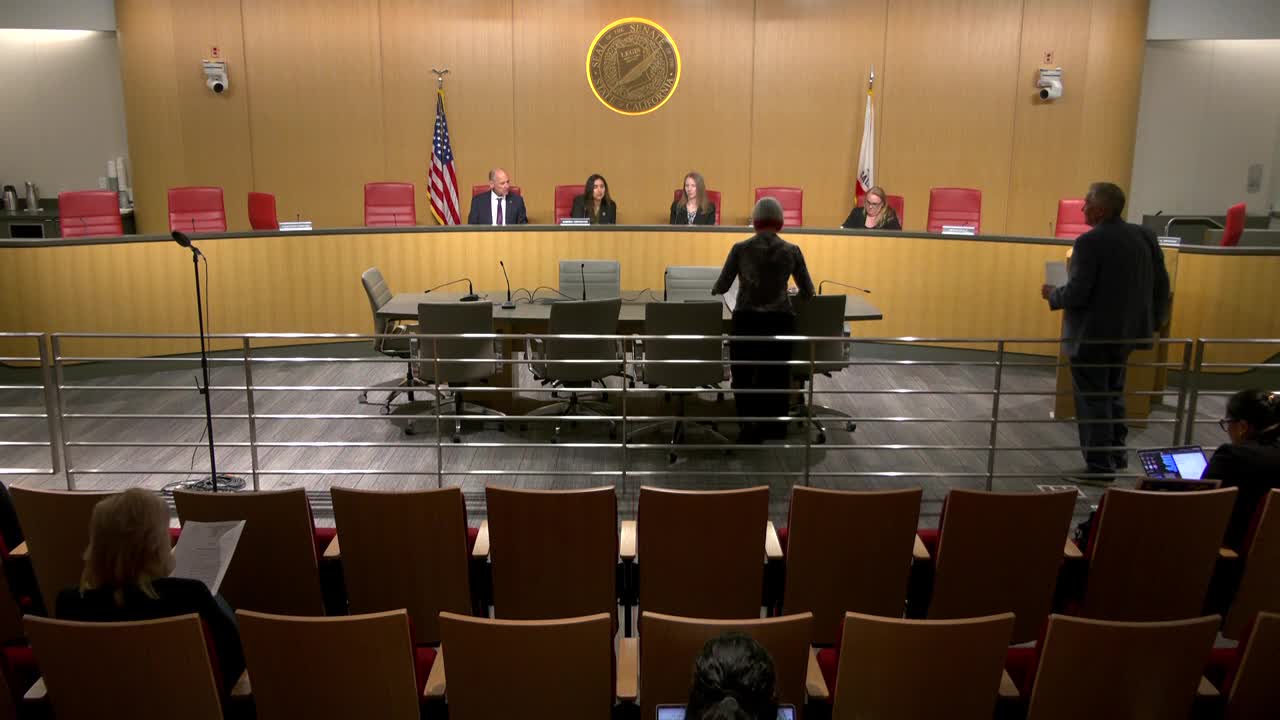 15MIN
Senate Standing Committee on Appropriations
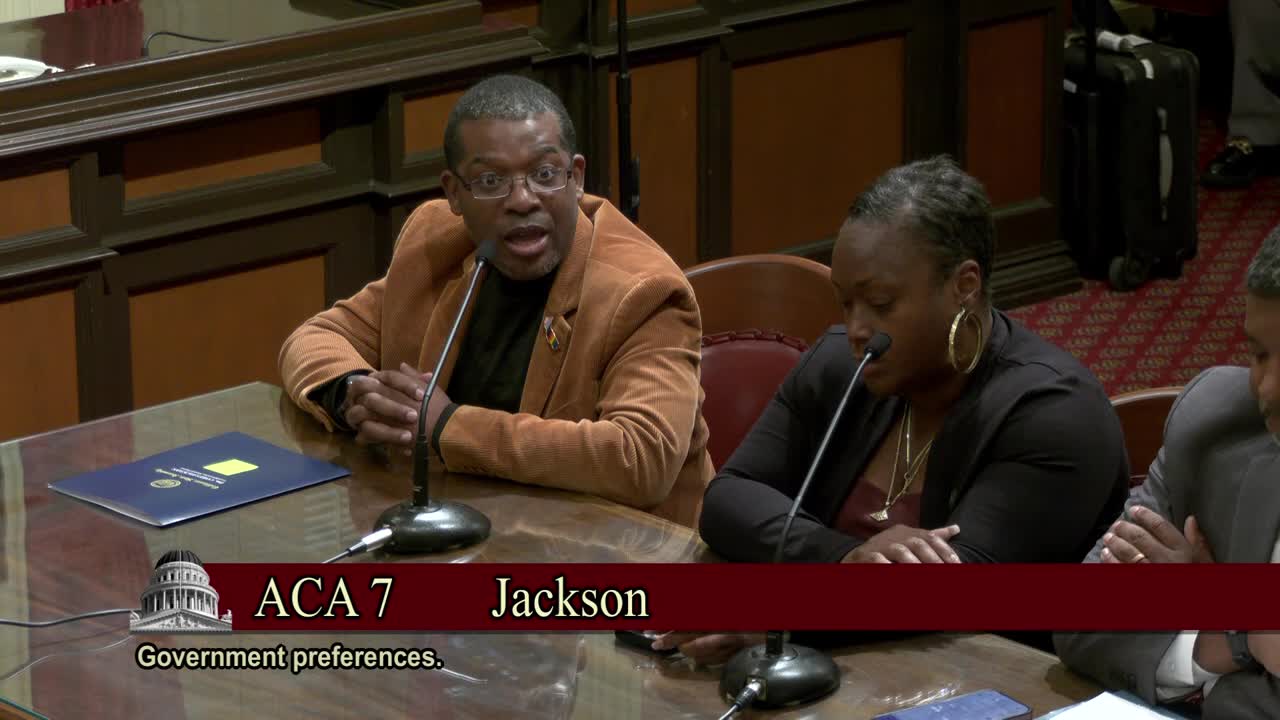 9MIN
Senate Standing Committee on Elections and Constitutional Amendments
 22MIN
Senate Standing Committee on Education
 3MIN
Assembly Floor
 23MIN
Assembly Standing Committee on Higher Education


Bill Co-Author(s):