ACR 80: Elder and Dependent Adult Abuse Awareness Month.
- Session Year: 2025-2026
- House: Assembly
- Latest Version Date: 2025-06-25
Current Status:
Passed
(2025-06-25: Chaptered by Secretary of State - Res. Chapter 103, Statutes of 2025.)
Introduced
In Committee
Awaiting First Chamber Vote
Passed First Chamber
In Committee
Awaiting Second Chamber Vote
Passed Second Chamber
Enacted
This measure would proclaim and acknowledge the month of June 2025 as Elder and Dependent Adult Abuse Awareness Month in California and would reiterate the importance of annually recognizing Elder and Dependent Adult Abuse Awareness Month in the state.
This measure would proclaim and acknowledge the month of June 2025 as Elder and Dependent Adult Abuse Awareness Month in California and would reiterate the importance of annually recognizing Elder and Dependent Adult Abuse Awareness Month in the state.
This measure would proclaim and acknowledge the month of June 2025 as Elder and Dependent Adult Abuse Awareness Month in California and would reiterate the importance of annually recognizing Elder and Dependent Adult Abuse Awareness Month in the state.
WHEREAS, The population of Californians over 60 years of age is expected to increase 166 percent during the period from 2010 to 2060, inclusive, with more than one-half of the counties seeing a 100-percent increase in this age group; and
WHEREAS, Research by the National Institute of Justice found that 11 percent of older adults reported experiencing at least one form of mistreatment in the past year, including emotional, physical, nutritional, or sexual mistreatment or neglect; and
WHEREAS, It is estimated that only 1 in 24 incidents are reported and fewer than 15 percent of those harmed access formal support services each year; and
WHEREAS, Many victims of abuse fail to report out of fear of losing their relationships with those harming them, shame that someone they trust mistreated them, or distrust of the police and agencies charged to help them; and
WHEREAS, Elder and dependent adult abuse may be physical, emotional, sexual, or financial. The abuse knows no boundaries with respect to the gender, race, culture, religion, geographic location, or economic, educational, or social status of the victim; and
WHEREAS, Financial abuse ranked first among the types of abuse reported to adult protective services during 202324, with nearly 170,000 reports received; and
WHEREAS, According to the Federal Bureau of Investigations Internet Crime Complaint Center, over 101,068 victims who are 60 years of age and older reported scam-related losses equaling $3,400,000,000 in 2023. Technical support, customer support, and government impersonation call centers overwhelmingly target older adults, with devastating effects. Almost half - 40 percent - of the complainants report being 60 years of age or older, and experience 58 percent of the losses, which equates to over $770,000,000; and
WHEREAS, Barriers to accessing help include cognitive and communication impairments, literacy, lack of culturally specific services, and shame. Additionally, elder adults may distrust their ability to protect themselves, self-advocate, report to authorities when the abuse occurs, or to testify against perpetrators; and
WHEREAS, Factors that place older Californians at risk for abuse include cognitive and physical decline, dementia, isolation, and loneliness, as well as a lack of access to preventive services like estate planning, daily money management, affordable supported housing, and assistance with decisionmaking; and
WHEREAS, One in every nine individuals over 65 years of age is living with Alzheimers disease or dementia, 20 to 25 percent, inclusive, of the older adult population experience mild cognitive impairment, and one in two people with dementia experience some form of abuse by others; and
WHEREAS, Subtle indicators that abuse may be occurring include bruises or pressure marks, unexplained withdrawal from normal activities, a change in alertness, unusual depression, sudden changes in financial situations, strained or tense relationships, or frequent arguments; and
WHEREAS, Recognizing these signs is the first step toward the prevention of elder and dependent adult abuse; and
WHEREAS, Elders who experience abuse or mistreatment face a greater risk of impacting the health system or impacting the social services system; and
WHEREAS, Elder and dependent adult abuse victims have a mortality rate three times that of the general public and are 300 percent more likely to die a premature death; and
WHEREAS, All older adults, including those with disabilities, have the right to live safely in the least restrictive environment, whether in their homes or in health care facilities, and to enjoy an optimum quality of life while being protected from all forms of injustice; and
WHEREAS, Since 2019, California has begun collecting comprehensive data on abuse cases, including reports and investigations. Because data collection has just recently begun, the government has not only a limited capacity to track existing trends and make informed decisions regarding the strategic use of existing resources, but a limited ability to improve the reporting system, enhance protections, or give law enforcement partners the tools necessary to secure justice; and
WHEREAS, Private citizens and public agencies must work to combat crime and violence against older adults and adults with disabilities by identifying and preventing the social isolation of elders through the expansion and resourcing of home- and community-based long-term support and services programs, by increasing law enforcement, increasing public awareness, and expanding social service programs; and
WHEREAS, Elder and Dependent Adult Abuse Awareness Month in California aligns with World Elder Abuse Awareness Day, first established in 2006 and observed on June 15 every year and created to promote a better understanding of the cultural, social, economic, and demographic issues associated with abuse around the globe; and
WHEREAS, On June 10, 2019, Governor Newsom issued Executive Order No. N-14-19, calling for the development of a 10-year Master Plan for Aging (MPA) to serve as a blueprint for state government, local government, the private sector, and philanthropy to prepare the state for the coming demographic changes and continue Californias leadership in aging, disability, and equity; and
WHEREAS, Goal 3 of the MPA, Inclusion and Equity, Not Isolation, calls for lifelong opportunities for older Californians and protection against isolation, discrimination, abuse, neglect, and exploitation; and
WHEREAS, All Californians are strongly encouraged to report suspected abuse of an elder or dependent adult by calling their local adult protective services agency, local Long-Term Care Ombudsman program, law enforcement, or emergency services agencies; now, therefore, be it
Resolved by the Assembly of the State of California, the Senate thereof concurring, That the Legislature proclaims and acknowledges the month of June 2025 as Elder and Dependent Adult Abuse Awareness Month and reiterates the importance of annually recognizing Elder and Dependent Adult Abuse Awareness Month in the state; and be it further
Resolved, That the Chief Clerk of the Assembly transmit copies of this resolution to the author for appropriate distribution.
|
Date
|
Status
|
|---|---|
| Jun 25, 2025 | Chaptered by Secretary of State - Res. Chapter 103, Statutes of 2025. |
| Jun 25, 2025 | Enrolled and filed with the Secretary of State at 1 p.m. |
| Jun 19, 2025 | In Assembly. Ordered to Engrossing and Enrolling. |
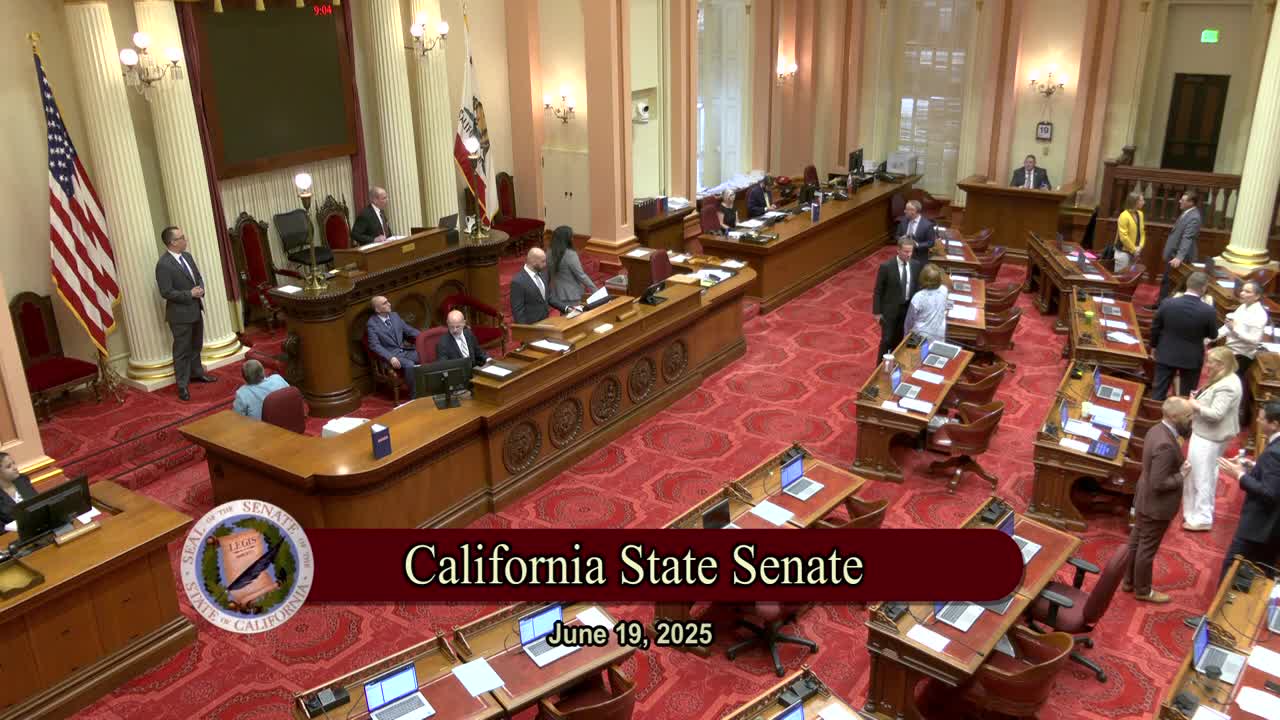
| Jun 19, 2025 | Adopted and to Assembly. (Ayes 35. Noes 0. Page 1663.) |
| May 28, 2025 | From committee: Ordered to third reading. |
| May 15, 2025 | In Senate. To Com. on RLS. |
| May 15, 2025 | Adopted and to Senate. (Ayes 69. Noes 0. Page 1572.) |
| May 12, 2025 | From committee: Be adopted. To Consent Calendar. (Ayes 7. Noes 0.) (May 12). |
| May 12, 2025 | Referred to Com. on RLS. |
| May 6, 2025 | From printer. |
| May 5, 2025 | Introduced. To print. |
|
Date
|
Description
|
Location
|
Votes
|
|
|---|---|---|---|---|
| Jun 19, 2025 | Assembly 3rd Reading ACR80 Stefani By Wiener | Senate Floor |
Passed |
|
| May 15, 2025 | ACR 80 Stefani Consent Calendar Second Day Regular Session | Assembly Floor |
Passed |
|
| May 12, 2025 | Be adopted. To Consent Calendar. | Assembly Standing Committee on Rules |
Passed |
This list shows positions taken on this bill by organizations on the date displayed, which is linked to the original source.
Positions by individuals are not included.
|
Organization
|
Position
|
Date
|
|---|---|---|
| AlzheimerS Association | ** Support |
SENATE RULES COMMITTEE Office of Senate Floor Analyses (916) 651-1520 Fax: (916) 327-4478 | ACR 80 |
THIRD READING
Bill No: ACR 80
Author: Stefani (D)
Introduced: 5/5/25
Vote: 21
ASSEMBLY FLOOR: 69-0, 5/15/25 (Consent) - See last page for vote
SUBJECT: Elder and Dependent Adult Abuse Awareness Month
SOURCE: Author
DIGEST:
This resolution proclaims and acknowledges the month of June 2025 as Elder and Dependent Adult Abuse Awareness Month in California and reiterates the importance of annually recognizing Elder and Dependent Adult Abuse Awareness Month in the state.
ANALYSIS: This resolution makes the following legislative findings:
- Research by the National Institute of Justice found that 11% of older adults reported experiencing at least one form of mistreatment in the past year, including emotional, physical, nutritional, or sexual mistreatment or neglect.
- It is estimated that only 1 in 24 incidents are reported and fewer than 15% of those harmed access formal support services each year. Many victims of abuse fail to report out of fear of losing their relationships with those harming them, shame that someone they trust mistreated them, or distrust of the police and agencies charged to help them.
- According to the Federal Bureau of Investigation’s Internet Crime Complaint Center, over 101,068 victims who are 60 years of age and older reported scam-related losses equaling $3.4 billion in 2023. Technical support, customer support, and government impersonation call centers overwhelmingly target older adults, with devastating effects. Almost half – 40%- of the complainants report being 60 years of age or older, and experience 58% of the losses, which equates to over $770 million.
This resolution proclaims and acknowledges the month of June 2025 as Elder and Dependent Adult Abuse Awareness Month and reiterates the importance of annually recognizing Elder and Dependent Adult Abuse Awareness Month in the state.
Related/Prior Legislation
SCR 64 (Dodd, Resolution Chapter 116, Statutes of 2023)
SCR 153 (Dodd, Resolution Chapter 146, Statutes of 2024)
SCR 112 (Dodd, Resolution Chapter 111, Statutes of 2022)
SCR 45 (Dodd, Resolution Chapter 100, Statutes of 2021)
FISCAL EFFECT: Appropriation: No Fiscal Com.: No Local: No
SUPPORT: (Verified 5/27/25)
Alzheimer’s Association
OPPOSITION: (Verified 5/27/25)
None received
ASSEMBLY FLOOR: 69-0, 5/15/25
AYES: Addis, Aguiar-Curry, Ahrens, Alvarez, Ávila Farías, Bains, Bauer-Kahan, Berman, Boerner, Bonta, Bryan, Calderon, Carrillo, Chen, Connolly, Davies, DeMaio, Dixon, Elhawary, Ellis, Flora, Fong, Gabriel, Gallagher, Garcia, Gipson, Mark González, Hadwick, Haney, Harabedian, Hoover, Irwin, Jackson, Kalra, Krell, Lackey, Lee, Lowenthal, Macedo, McKinnor, Muratsuchi, Nguyen, Ortega, Pacheco, Papan, Patel, Patterson, Pellerin, Petrie-Norris, Ransom, Celeste Rodriguez, Michelle Rodriguez, Rogers, Blanca Rubio, Sanchez, Schiavo, Schultz, Sharp-Collins, Solache, Soria, Ta, Tangipa, Valencia, Wallis, Ward, Wicks, Wilson, Zbur, Rivas
NO VOTE RECORDED: Alanis, Arambula, Bennett, Caloza, Castillo, Jeff Gonzalez, Hart, Quirk-Silva, Ramos, Stefani
Prepared by: Hunter Flynn / SFA / (916) 651-1520
5/27/25 17:45:36
**** END ****
Date of Hearing: May 12, 2025
ASSEMBLY COMMITTEE ON RULES
Blanca Pacheco, Chair
ABPCA Bill Id:ACR 80 (
Author:Stefani) – As Introduced Ver:May 5, 2025
SUBJECT: Elder and Dependent Adult Abuse Awareness Month.
SUMMARY: Proclaims and acknowledges the month of June 2025 as Elder and Dependent Adult Abuse Awareness Month, and reiterates the importance of annually recognizing Elder and Dependent Adult Abuse Awareness Month in California. Specifically, this resolution makes the following legislative findings:
- The population of Californians over 60 years of age is expected to increase 166 percent during the period from 2010 to 2060, inclusive, with more than one-half of the counties seeing a 100-percent increase in this age group.
- Elder and dependent adult abuse knows no boundaries with respect to the gender, race, culture, religion, geographic location, or economic, educational, or social status of the victim.
- Research by the National Institute of Justice found that 11 percent of older adults reported experiencing at least one form of mistreatment in the past year, including emotional, physical, nutritional, or sexual mistreatment, or neglect.
- Many victims of abuse fail to report out of fear of losing their relationships with those harming them, shame that someone they trust mistreated them, or distrust of the police and agencies charged to help them.
- Financial abuse ranked first among the types of abuse reported to adult protective services during 2023-24, with nearly 170,000 reports received. According to the Federal Bureau of Investigation’s Internet Crime Complaint Center, over 101,068 victims above 60 years of age reported scam-related losses equaling $3.4 billion in 2023.
- Factors that place older Californians at risk for abuse include cognitive and physical decline, dementia, isolation, and loneliness, as well as a lack of access to preventive services like estate planning, daily money management, affordable supported housing, and assistance with decisionmaking.
- Subtle indicators that abuse may be occurring include bruises or pressure marks, unexplained withdrawal from normal activities, a change in alertness, unusual depression, sudden changes in financial situations, strained or tense relationships, or frequent arguments. Recognizing these signs is the first step toward the prevention of elder and dependent adult abuse.
- Private citizens and public agencies must work to combat crime and violence against older adults and adults with disabilities by identifying and preventing the social isolation of elders, through the expansion and resourcing of home- and community-based long-term support and services programs, by increasing law enforcement, increasing public awareness, and expanding social service programs.
- Elder and Dependent Adult Abuse Awareness Month in California aligns with World Elder Abuse Awareness Day, first established in 2006 and observed on June 15 every year, and created to promote a better understanding of the cultural, social, economic, and demographic issues associated with abuse around the globe.
FISCAL EFFECT: This resolution is keyed non-fiscal by Legislative Counsel.
REGISTERED SUPPORT / OPPOSITION:
Support
Alzheimer’s Association
Opposition
None on file
Analysis Prepared by: Michael Erke / RLS. / (916) 319-2800
Bill Author
Bill Co-Author(s):