AJR 17: The Renewing Immigration Provisions of the Immigration Act of 1929.
- Session Year: 2025-2026
- House: Assembly
- Latest Version Date: 2026-08-25
Current Status:
Passed
(2026-08-25: Chaptered by Secretary of State - Res. Chapter 210, Statutes of 2026.)
Introduced
In Committee
Awaiting First Chamber Vote
Passed First Chamber
In Committee
Awaiting Second Chamber Vote
Passed Second Chamber
Enacted
This measure would support the Renewing Immigration Provisions of the Immigration Act of 1929.
This measure would support the Renewing Immigration Provisions of the Immigration Act of 1929.
This measure would support the Renewing Immigration Provisions of the Immigration Act of 1929.
This measure would support the Renewing Immigration Provisions of the Immigration Act of 1929.
WHEREAS, The United States of America is a nation founded on the principles that all people are created equal and the promise of freedom for all; and
WHEREAS, Our strength as a country has always been greater when we welcome newcomers; and
WHEREAS, California has the highest number of migrants in the country; and
WHEREAS, It has been nearly 40 years since the federal government passed an immigration reform bill, and our current immigration system is unable to meet the needs of the present day; and
WHEREAS, California is home to more than 10,900,000 immigrants, the majority of whom have lived in the United States for more than 10 years; and
WHEREAS, Undocumented immigrants contribute significantly to Californias economy; and
WHEREAS, One in 10 workers in California is an undocumented immigrant, and undocumented immigrants contribute $51,400,000,000 dollars in state and local taxes; and
WHEREAS, California would directly benefit from Congress updating immigration law because it has been shown that providing citizenship for undocumented immigrants boosts the economy and increases the job market; and
WHEREAS, In 2023, California congressional leaders introduced the Renewing Immigration Provisions of the Immigration Act of 1929 (Registry bills) that allows undocumented people living continuously in the United States for at least seven years to apply for legal permanent residency, and it is estimated that approximately 8,000,000 undocumented people may benefit from the passage of that bill; and
WHEREAS, Eighty percent of Californians believe there should be a pathway to citizenship for undocumented immigrants; and
WHEREAS, Immigrant communities continue to organize around passing immigration reform, and in June of 2025, the Northern California Coalition for Just Immigration Reform completed a three-day walk from the City of Vacaville to the City of Sacramento in support of the Registry bills H.R. No. 4696 (Lofgren) and Sen. No. 2468 (Padilla); and
WHEREAS, Passing immigration reform that recognizes the contributions and humanity of immigrants is in line with our values as a state and as a country; now, therefore, be it
Resolved by the Assembly and the Senate of the State of California, jointly, That a workable, humane, and just approach to solving our nations broken immigration system would benefit California and the United States as a whole, and therefore, the Registry bills should be supported; and be it further
Resolved, That the Chief Clerk of the Assembly transmit copies of this resolution to the author for appropriate distribution.
WHEREAS, The United States of America is a nation founded on the principles that all people are created equal and the promise of freedom for all; and
WHEREAS, Our strength as a country has always been greater when we welcome newcomers; and
WHEREAS, California has the highest number of migrants in the country; and
WHEREAS, It has been nearly 40 years since the federal government passed an immigration reform bill, and our current immigration system is unable to meet the needs of the present day; and
WHEREAS, California is home to nearly 10,000,000 more than 10,900,000 immigrants, the majority of whom have lived in the United States for more than 10 years; and
WHEREAS, Undocumented immigrants contribute significantly to Californias economy; and
WHEREAS, One in 10 workers in California is an undocumented immigrant, and undocumented immigrants contribute $51.4 billion $51,400,000,000 dollars in state and local taxes; and
WHEREAS, California would directly benefit from Congress updating immigration law because it has been shown that providing citizenship for undocumented immigrants boosts the economy and increases the job market; and
WHEREAS, In 2023, California congressional leaders introduced the Renewing Immigration Provisions of the Immigration Act of 1929 (Registry bills) that allows undocumented people living continuously in the United States for at least seven years to apply for legal permanent residency, and it is estimated that approximately 8,000,000 undocumented people may benefit from the passage of that bill; and
WHEREAS, Eighty percent of Californians believe there should be a pathway to citizenship for undocumented immigrants; and
WHEREAS, Immigrant communities continue to organize around passing immigration reform, and this month, in June of 2025, the Northern California Coalition for Just Immigration Reform completed a three-day walk from the City of Vacaville to the City of Sacramento in support of the Registry bills; and bills H.R. No. 4696 (Lofgren) and Sen. No. 2468 (Padilla); and
WHEREAS, Passing immigration reform that recognizes the contributions and humanity of immigrants is in line with our values as a state and as a country; now, therefore, be it
Resolved by the Assembly and the Senate of the State of California, jointly, That a workable, humane, and just approach to solving our nations broken immigration system would benefit California and the United States as a whole, and therefore, the Registry bills should be supported; and be it further
Resolved, That the Chief Clerk of the Assembly transmit copies of this resolution to the author for appropriate distribution.
WHEREAS, The United States of America is a nation founded on the principles that all people are created equal and the promise of freedom for all; and
WHEREAS, Our strength as a country has always been greater when we welcome newcomers; and
WHEREAS, California has the highest number of migrants in the country; and
WHEREAS, It has been nearly 40 years since the federal government passed an immigration reform bill, and our current immigration system is unable to meet the needs of the present day; and
WHEREAS, California is home to nearly 10,000,000 immigrants, the majority of whom have lived in the United States for more than 10 years; and
WHEREAS, Undocumented immigrants contribute significantly to Californias economy; and
WHEREAS, One in 10 workers in California is an undocumented immigrant, and undocumented immigrants contribute $51.4 billion dollars in state and local taxes; and
WHEREAS, California would directly benefit from Congress updating immigration law because it has been shown that providing citizenship for undocumented immigrants boosts the economy and increases the job market; and
WHEREAS, In 2023, California congressional leaders introduced the Renewing Immigration Provisions of the Immigration Act of 1929 (Registry bills) that allows undocumented people living continuously in the United States for at least seven years to apply for legal permanent residency, and it is estimated that approximately 8,000,000 undocumented people may benefit from the passage of that bill; and
WHEREAS, Eighty percent of Californians believe there should be a pathway to citizenship for undocumented immigrants; and
WHEREAS, Immigrant communities continue to organize around passing immigration reform, and this month, the Northern California Coalition for Just Immigration Reform completed a three-day walk from the City of Vacaville to the City of Sacramento in support of the Registry bills; and
WHEREAS, Passing immigration reform that recognizes the contributions and humanity of immigrants is in line with our values as a state and as a country; now, therefore, be it
Resolved by the Assembly and the Senate of the State of California, jointly, That a workable, humane, and just approach to solving our nations broken immigration system would benefit California and the United States as a whole, and therefore, the Registry bills should be supported; and be it further
Resolved, That the Chief Clerk of the Assembly transmit copies of this resolution to the author for appropriate distribution.
|
Date
|
Status
|
|---|---|
| Aug 25, 2026 | Chaptered by Secretary of State - Res. Chapter 210, Statutes of 2026. |
| Aug 25, 2026 | Enrolled and filed with the Secretary of State at 3 p.m. |
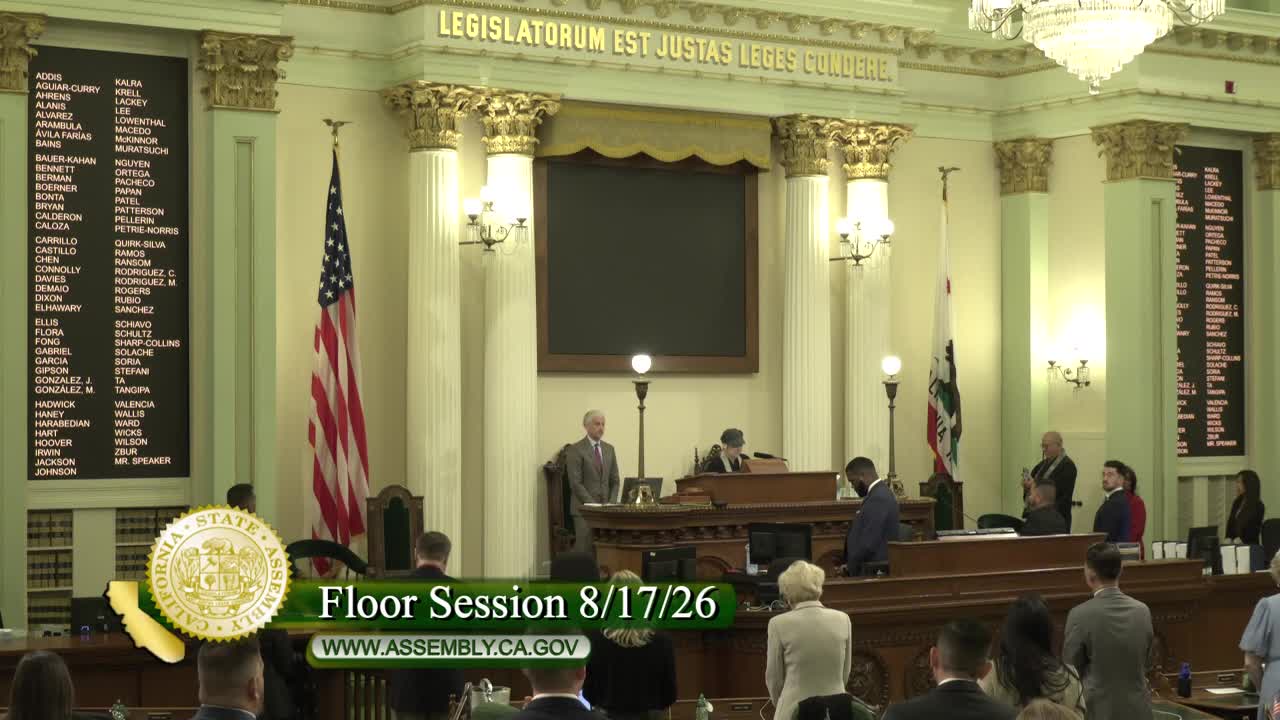
| Aug 17, 2026 | Senate amendments concurred in. To Engrossing and Enrolling. (Ayes 57. Noes 6. Page 6201.). |
| Aug 17, 2026 | Senate amendments concurred in. To Engrossing and Enrolling. |
| Aug 13, 2026 | In Assembly. Concurrence in Senate amendments pending. |
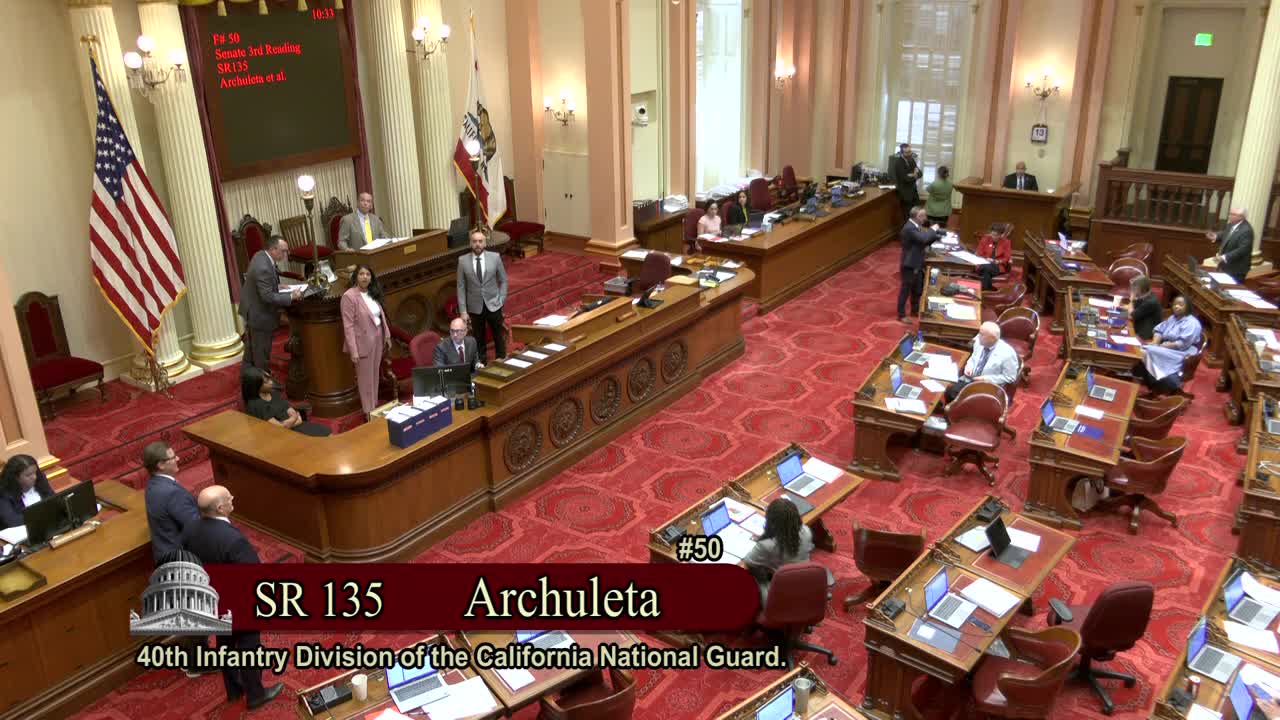
| Aug 13, 2026 | Adopted and to Assembly. (Ayes 28. Noes 0. Page 5354.) |
| Aug 13, 2026 | Adopted and to Assembly. (Ayes 28. Noes 0.) |
| Jun 25, 2026 | Amended. Ordered to third reading. |
| Jun 24, 2026 | From committee: Amend, and be adopted as amended. (Ayes 11. Noes 0.) (June 23). |
| Aug 27, 2025 | Referred to Com. on JUD. |
| Aug 25, 2025 | In Senate. To Com. on RLS. |
| Aug 25, 2025 | Adopted and to Senate. (Ayes 57. Noes 7. Page 2728.) |
| Jul 9, 2025 | From committee: Be adopted. Ordered to Third Reading. (Ayes 9. Noes 2.) (July 8). |
| Jul 9, 2025 | Coauthors revised. |
| Jun 30, 2025 | Referred to Com. on JUD. |
| Jun 25, 2025 | From printer. |
| Jun 24, 2025 | Introduced. To print. |
|
Date
|
Description
|
Location
|
Votes
|
|
|---|---|---|---|---|
| Aug 17, 2026 | AJR 17 Celeste Rodriguez Concurrence in Senate Amendments | Assembly Floor |
Passed |
|
| Aug 13, 2026 | Assembly 3rd Reading AJR17 Celeste Rodriguez By Arreguín | Senate Floor |
Passed |
|
| Jun 23, 2026 | Be adopted as amended | Senate Standing Committee on Judiciary |
Passed |
|
| Aug 25, 2025 | AJR 17 Celeste Rodriguez Assembly Third Reading | Assembly Floor |
Passed |
|
| Jul 8, 2025 | Be adopted. To third reading. | Assembly Standing Committee on Judiciary |
Passed |
This list shows positions taken on this bill by organizations on the date displayed, which is linked to the original source.
Positions by individuals are not included.
|
Organization
|
Position
|
Date
|
|---|---|---|
| Coalition for Humane Immigrant Rights (CHIRLA) | ** Support | |
| SEIU California | ** Support |
CONCURRENCE IN SENATE AMENDMENTS
CSA1 Bill Id:AJR 17
Author:(Celeste Rodriguez)
As Amended Ver:June 25, 2026
Majority vote
SUMMARY
Supports House Resolution No. 1151 and Senate Bill 2606 that propose to modify Section 249 of the Immigration and Nationality Act to allow undocumented immigrants who meet specified criteria and who entered the United States at least seven years before their application to apply for legal permanent residency.
Major Provisions
- Makes the following findings:
- The United States of America is a nation founded on the principles that all people are created equal and the promise of freedom for all;
- Our strength as a country has always been greater when we welcome newcomers;
- California has the highest number of migrants in the country;
- It has been nearly 40 years since the federal government passed an immigration reform bill, and our current immigration system is unable to meet the needs of the present day;
- California is home to more than 10,900,000 immigrants, the majority of whom have lived in the United States for more than 10 years;
- Undocumented immigrants contribute significantly to California's economy;
- One in 10 workers in California is an undocumented immigrant, and undocumented immigrants contribute $51.4 billion dollars in state and local taxes;
- In 2023, California congressional leaders introduced the Renewing Immigration Provisions of the Immigration Act of 1929 (Registry bills) that allows undocumented people living continuously in the United States for at least seven years to apply for legal permanent residency, and it is estimated that approximately 8,000,000 undocumented people may benefit from the passage of that bill;
- 80% of Californians believe there should be a pathway to citizenship for undocumented immigrants;
- Immigrant communities continue to organize around passing immigration reform, and in June of 2025, the Northern California Coalition for Just Immigration Reform completed a three-day walk from the City of Vacaville to the City of Sacramento in support of the Registry bills;
- Passing immigration reform that recognizes the contributions and humanity of immigrants is in line with our values as a state and as a country.
- Resolves, on behalf of the Assembly and the Senate of the State of California, jointly, that a workable, humane, and just approach to solving our nation's broken immigration system would benefit California and the United States as a whole, and therefore, the Registry bills should be supported.
Senate Amendments
Make minor technical amendments to reflect updated data and Registry bill numbers.
COMMENTS
California is home to nearly a quarter of the country's immigrant population, totaling approximately 10.6 million people across the state. This population consists of individuals from dozens of countries, with the most common countries of origin being Mexico, the Philippines, and China. As of the most recent data, 83% of California's immigrant population were naturalized citizens, or had some form of legal residency status. Approximately the remaining 17% are undocumented. (Public Policy Institute of California, Immigrants in California available at: https://www.ppic.org/publication/immigrants-in-california/.)
In 1986, Ronald Reagan signed the Immigration Reform and Control Act (IRCA), which implemented sweeping reform policies, including prohibitions on employers hiring or recruiting immigrants without work authorization. IRCA also included an amnesty program that granted the Attorney General the discretion to grant legal permanent residence to undocumented individuals who entered the United States before July 1, 1972 and immigrants who were employed in the agricultural sector for at least 90 days before May, 1986. In order to qualify, applicants must have also maintained continuous residence in the United States since their date of entry, be of good moral character, and were not otherwise ineligible for citizenship or deportable. According to a 2001 report from the Department of Homeland Security, nearly three million people applied for amnesty under the 1986 provisions, and nearly 2.7 million were ultimately granted legal permanent residence. (Nancy Rytina, Department of Homeland Security Office of Policy and Planning, U.S. Immigration and Naturalization Service, IRCA Legalization Effects: Lawful Permanent Residence and Naturalization through 2001 (October 25, 2002) available at: https://www.dhs.gov/xlibrary/assets/statistics/publications/irca0114int.pdf.)
H.R. 1511 and S. 2606: Renewing Immigration Provisions of the Immigration Act of 1929. Since 1986, Congress has struggled to pass any comprehensive immigration reform. Most recently, a bipartisan measure which included significant increases to funding for immigration enforcement as well as creating new pathways for legal immigration died in the Senate following a sharp rebuke from then-candidate Trump. (Kelly Garrity (Politico) February 5, 2024 available at: https://www.politico.com/news/2024/02/05/border-bill-trump-00139584.) On March 9, 2023 Representative Zoe Lofgren (D-CA-18) introduced H.R. 1511: Renewing Immigration Provisions of the Immigration Act of 1929. On July 27, 2023, Senator Padilla (D-CA) introduced S.2606 titled the same. The bills together are known as the "Registry Bills" and seek to revive the key provision of IRCA (still titled the Immigration Act of 1929 due to its original enactment date which was subsequently amended by IRCA). Both measures would remove the existing language which has effectively sunset. The statute as amended would allow those who are "long-term residents of the United States" and entered at least seven years before their application date to apply for legal permanent residence as long as they met the same conditions as the Reagan amnesty program. It is estimated that 8 million people would be eligible for the program.
In recognition of both bills' potential to bring millions of people out of the shadows this resolution voices this Legislature's support for the "Registry bills" and immigration reform generally.
Since their introduction, neither measure have been brought up for a vote. Nonetheless, legislators and advocates have taken the opportunity to call for immigration reform. Immigrants' rights advocacy groups such as the Coalition for Humane Immigrants Rights Los Angeles (CHIRLA) organized a campaign to "move Congress to update an immigration provision already in the books known as the registry, and we say yes to a path to citizenship, and yes to a life with dignity, liberty, and justice for millions of Americans in waiting." (All in for Registry Digital Toolkit (CHIRLA) available at: https://www.chirla.org/wp-content/uploads/2023/08/Registry_AllInAugustToolkit.pdf.) As part of the campaign, in August of 2023, advocates walked more than 40 miles from the North and South Bay Area to San Francisco. (40-mile walk for immigration reform and migrant rights to focus on residency status in Bay Area-wide event - CBS San Francisco.) This year, the Northern California Coalition for Just Immigration Reform (NCCJIR) continued efforts to advocate for the bills, organizing the Three-Day Walk for Immigrant Rights from Vacaville to Sacramento. After 37 miles, the march concluded at Capitol Park. (Jack Rodriquez-Vars (The Sacramento Bee) 'Come join us." Immigrant-rights advocates complete 3-day march to Sacramento, June 11, 2025 available at: https://www.sacbee.com/news/local/article308263435.html.) Despite both bills' longshot odds, they stand as a call to action for legislators and advocates nationwide, a call which this resolution seeks to amplify.
According to the Author
The immigration system in the United States is broken. There are millions of immigrants living, working and contributing to our communities and economy who are living with fear and uncertainty. Joint Resolution 17 supports federal bills SB 2606 and HR 1511, urging Congress to modernize the Immigration Act of 1929, "the Registry Act". The federal registry provision of the Act offered a pathway to permanent residency for people who resided in the US continuously for several years. However, the eligibility date requiring entry before 1972 has not been updated since 1986, and now the law is virtually obsolete. It also fails to recognize the reality of millions of long-term residents who have built lives, families, and careers in this country, including the two million Dreamers who were brought to this country as minors.
In California, where roughly 2.8 million undocumented immigrants live, updating the registry would provide much-needed stability for communities, strengthen the economy, and support a more compassionate and modern immigration system for the individuals who collectively contribute $51.4 billion in state and local taxes. Legal residency would allow thousands of Californians to contribute more fully, secure better jobs, and invest in their families' futures.
This resolution is a commonsense step that reflects our values and the urgent need for federal action. California must reaffirm its support for Congress to modernize the immigration registry and ensure that dignity and opportunity are extended to those who have proven their deep ties to our nation.
Arguments in Support
This bill is sponsored by the Coalition for Humane Immigrant Rights (CHIRLA) and supported by SEIU California. In support of the measure, CHIRLA submits:
AJR 17 reaffirms the State of California's commitment to protecting our immigrant communities by supporting the passage of H.R. 1511 and S. 2606, which would update the "Registry Act of 1929" which would provide a pathway to citizenship for immigrants who have lived in the United States for at least seven years. CHIRLA is a statewide membership-based organization that seeks to advance the human, civil, and labor rights of immigrants in California by advocating for immigrant communities at all levels of government. For years, CHIRLA has worked to advance legislation at a national level that pushes to ensure there is a clear pathway to citizenship for all immigrants.
Currently, section 249 (8 U.S.C. Section 1259) of the Immigration and Nationality Act provides a pathway to citizenship, stating that a person can apply to adjust their status to lawful permanent resident if they meet the following criteria: (a) entered the US prior to January 1, 1972 (commonly known as the "registry date"); (b) has been here continuously since entering; (c) is of good moral character; and (d) is not ineligible for citizenship or deportable on national security or certain other grounds.
The registry has been updated several times. Most significantly, the 1986 Immigration Reform and Control Act (IRCA) moved the cut-off date from June 30, 1948, to January 1, 1972. Without an additional update, the Registry is now effectively obsolete. Using American Community Survey data, approximately 8 million immigrants could initially be eligible for permanent legal status under this bill, with additional immigrants becoming eligible once they meet the seven-year requirement.
SJR 8 will not change federal immigration law. It would support the passage of two key pieces of Federal Legislation which would update current law to create a pathway to citizenship for immigrants who have lived in this country for at least seven years. H.R. 1511 and S. 2606 are currently the only pieces of legislation at the federal level which provides impactful solutions to our federal immigration laws. It is for these reasons we support AJR 17 and respectfully request your "aye" vote.
Arguments in Opposition
None on file
FISCAL COMMENTS
None.
VOTES:
ASM JUDICIARY: 9-2-1
YES: Kalra, Hart, Bryan, Connolly, Harabedian, Pacheco, Papan, Stefani, Zbur
NO: Dixon, Sanchez
ABS, ABST OR NV: Macedo
ASSEMBLY FLOOR: 57-7-15
YES: Addis, Aguiar-Curry, Ahrens, Alvarez, Ávila Farías, Bauer-Kahan, Bennett, Berman, Boerner, Bryan, Calderon, Caloza, Carrillo, Connolly, Elhawary, Fong, Gabriel, Garcia, Gipson, Mark González, Haney, Harabedian, Hart, Irwin, Jackson, Kalra, Krell, Lee, Lowenthal, McKinnor, Muratsuchi, Nguyen, Ortega, Pacheco, Papan, Patel, Pellerin, Petrie-Norris, Quirk-Silva, Ramos, Ransom, Celeste Rodriguez, Michelle Rodriguez, Rogers, Blanca Rubio, Schiavo, Schultz, Sharp-Collins, Solache, Soria, Stefani, Valencia, Ward, Wicks, Wilson, Zbur, Rivas
NO: Chen, DeMaio, Dixon, Ellis, Gallagher, Hadwick, Sanchez
ABS, ABST OR NV: Alanis, Arambula, Bains, Bonta, Castillo, Davies, Flora, Jeff Gonzalez, Hoover, Lackey, Macedo, Patterson, Ta, Tangipa, Wallis
SENATE FLOOR: 28-0-12
YES: Allen, Archuleta, Arreguín, Ashby, Blakespear, Cabaldon, Caballero, Cervantes, Cortese, Durazo, Gonzalez, Grayson, Hurtado, Laird, Limón, McGuire, McNerney, Menjivar, Padilla, Pérez, Reyes, Richardson, Rubio, Smallwood-Cuevas, Stern, Umberg, Wahab, Wiener
ABS, ABST OR NV: Alvarado-Gil, Becker, Choi, Dahle, Grove, Jones, Niello, Ochoa Bogh, Seyarto, Strickland, Valladares, Weber Pierson
UPDATED
VERSION: June 25, 2026
CONSULTANT: Manuela Boucher / JUD. / (916) 319-2334 FN: 0003528
SENATE RULES COMMITTEE Office of Senate Floor Analyses (916) 651-4171 | AJR 17 |
THIRD READING
Bill No: AJR 17
Author: Celeste Rodriguez (D), et al.
Amended: 6/25/26 in Senate
Vote: 21
SENATE JUDICIARY COMMITTEE: 11-0, 6/23/26
AYES: Umberg, Allen, Ashby, Caballero, Durazo, Laird, Reyes, Stern, Wahab, Weber Pierson, Wiener
NO VOTE RECORDED: Niello, Valladares
ASSEMBLY FLOOR: 57-7, 8/25/25 - See last page for vote
SUBJECT: The Renewing Immigration Provisions of the Immigration Act of 1929
SOURCE: Coalition for Humane Immigrant Rights of Los Angeles (CHIRLA)
DIGEST:
This resolution makes various findings regarding the importance and value of immigrants to the state and declares support for the federal Registry bills as a just approach to solving the nation’s broken immigration system.
ANALYSIS:
Existing law:
- Provides, through various authorities, that the federal government has the exclusive authority to regulate immigration and naturalization. (U.S. Constitution, Article I, § 8, clauses 3 and 4; Arizona v. United States (2012) 567 U.S. 387, 394.)
- Grants the Attorney General of the United States the discretion to grant lawful admission for permanent residence to undocumented immigrants who meet the following requirements:
- they are not inadmissible under Section 212 (a)(3)(E) or Section 212 (a) of the Immigration and Nationality Act insofar as it relates to criminals, procurers and other immoral persons, subversives, violators of the narcotic laws or smugglers of aliens;
- entered the United States before January 1, 1972;
- have established continuous residence in the United States since entry;
- are of good moral character; and
- are not ineligible for citizenship or are not deportable under Section 237 (a)(4)(B) of the Immigration and Nationality Act. (8 U.S.C. § 1259.)
This resolution:
- Declares that:
- the United States is a nation founded on the principles that all people are created equal and with the promise of freedom for all;
- our strength as a nation has always been greater when we welcome newcomers;
- California has the highest number of immigrants in the country;
- it has been nearly 40 years since any immigration reform has been passed by the federal government, and the current immigration system is unable to meet the needs of the present;
- California is home to nearly 10.9 million immigrants, the majority of whom have lived in the United States for more than 10 years;
- undocumented immigrants contribute significantly to California’s economy;
- one in 10 California workers is undocumented, and that undocumented immigrants contribute 51.4 billion dollars in state and local taxes;
- California would benefit directly from Congress updating the immigration laws because it has been shown that providing citizenship to undocumented immigrants boosts the economy and increases the job market;
- In 2023, Congressional leaders introduced the “Renewing Immigration Provisions of the Immigration Act of 1929” bill that allows undocumented people living continuously in the United States for at least seven years the ability to apply for lawful permanent residency, from which approximately 8 million undocumented people may benefit;
- 80% of Californians believe that there should be a pathway to citizenship for undocumented immigrants;
- immigrant communities continue to organize around passing immigration reform, and in June of 2025, the Northern California Coalition for Just Immigration Reform completed a three-day walk from Vacaville to Sacramento this month to support the registry bills H.R. 4696 (Lofgren) and S. 2468 (Padilla); and
- passing immigration reform that recognizes the contributions and humanity of immigrants is in line with the state’s and country’s values.
- Resolves the following by the Senate and Assembly of the state:
- that a workable, humane, and just approach to solving the nation’s broken immigration system would benefit California and the United States as a whole, and that the Registry bills should be supported; and
- that the Secretary of the Senate transmit this resolution to the author for appropriate distribution.
Comments
California is home to about 10.9 million immigrants, accounting for 22% of the foreign-born population nationwide.[1] In 2023, 27% of the state’s population was foreign born, the highest of any state. Of California’s foreign-born population, about 45% are non-citizens, and about 1.8 million are undocumented. There are an estimated 133,000 undocumented children in California public K-12 schools, and one in five California children live in a mixed-status household where at least one member is not a U.S. Citizen.[2] According to a report from the U.S. Department of Homeland Security, nearly 80 percent of undocumented immigrants in 2022 had been in the U.S. for more than a decade.[3] Of all of the undocumented individuals in the United States as of 2022, about 48 percent lived in California.[4]
Immigrants are valuable members of their communities who also contribute considerably to the economy and tax rolls. In 2022, immigrants paid $382.9 billion in federal taxes and $196.2 billion in state and local taxes, including considerable amounts into social security and Medicare, public benefits which most immigrants are ineligible to receive.[5] In California, it is estimated that immigrants contributed $51.4 billion in state and local taxes in 2021.[6] Immigrants also contribute to economic growth, with the Congressional Budget Office estimating that immigrants will add $7 trillion to the economy over the next 10 years and $8.7 trillion in growth in the Gross Domestic Product (GDP).[7] In fact, economists estimate that providing a pathway to legal status to undocumented individuals would contribute $1.2 trillion to the U.S. economy over ten years, and an extra $184 billion per year in federal, state, and local taxes.[8] By 2017 estimates, about 1.75 million workers in California are undocumented, accounting for nearly one in ten California workers.[9]
Beyond these clear economic and tax roll numbers, immigrants are important members of their communities who are entitled to dignity, due process, and a fair immigration system. Many immigrants live in mixed status families, in which at least one member of the family is a U.S. citizen. Being undocumented and under the constant threat of deportation and potential family separation has significant, negative impacts on undocumented Californians and their families. Research has shown that many immigrant youth experience high levels of mental health conditions like anxiety, depression, and post-traumatic stress due to fears of immigration enforcement and separation from their family due to immigration enforcement.[10]
An undocumented person may have entered the United States without any visa or immigration status, or they may have entered with an immigration status that has since expired. A person with a visa that is expiring is generally expected to renew or apply to adjust their status to a new category of immigration status or depart the United States. However, many visas do not allow for renewals or are only designed to be temporary, and eligibility for and availability of permanent immigration status – called lawful permanent residency (LPR), or a green card – is incredibly limited. Even those who qualify for a green card may have to wait a decade or even two decades due to backlogs and administrative delays to actually be able to receive it. Without immigration reform from Congress, the United States’ immigration system continues to be broken and fails to provide meaningful opportunities for undocumented students and those who wish to stay in the United States to do so with immigration status.
For much of the nation’s history, the federal government did not regulate immigration to the United States. Near the end of the Nineteenth Century and early Twentieth Century, as xenophobia and racism toward individuals of Asian descent grew in the U.S., Congress enacted a number of restrictive immigration laws that set numerical quotas, or limits, on immigrants from particular countries and that outright banned immigration from certain countries. The most infamous of these laws was the Chinese Exclusion Act of 1882. The current immigration system was largely formed through the Immigration and Nationality Act of 1952, which established a comprehensive system for regulating immigration and removed explicitly race-based restrictions from the immigration laws.
Despite considerable organizing and advocacy for immigration reform over the last few decades, Congress has failed to deliver any considerable immigration reform since the 90s. The last major immigration reform legislation to be enacted by Congress was the Illegal Immigration Reform and Immigrant Responsibility Act of 1996 (IIRIRA), which generally placed more restrictions on immigration by expanding the bases by which a noncitizen may be deported, increasing the relationship between immigration law and criminal law, creating the expedited removal process, restricting asylum, and increasing immigration enforcement at the border.
The last major immigration reform legislation that provided a new opportunity for undocumented individuals to obtain legal status was the Immigration Reform and Control Act of 1986 (IRCA), which created an “amnesty” program to provide a pathway to legal status for millions of undocumented immigrants who had been living in the U.S. since at least 1982.
IRCA also adjusted the “registry,” a provision of immigration law that allows certain noncitizens who are undocumented or have temporary status to obtain lawful permanent status if they have been living in the United States since a specified date. The registry was originally created in 1929, and permitted any noncitizen who entered the U.S. prior to June 3, 1921, had continuously resided in the country since that date, demonstrated “good moral character,” was not deportable, and who had no lawful admission to apply for and obtain lawful permanent status.[11] Since 1929, the registry has been amended and updated multiple times. It was updated in 1958 to remove the requirement that individuals not be subject to a basis for deportation, instead excluding only those who had previously been granted lawful permanent resident status or who were ineligible to be admitted into the U.S. on certain criminal or national security grounds. In 1965, the required date of residence was updated to 1948, and in 1986, IRCA updated the date to January 1, 1972.
The registry program has not been updated since IRCA; thus, it continues to require any potentially-eligible immigrant to have resided in the United States since 1972 in order to obtain its benefits. Considering that anyone who could meet this requirement is at least 53 years old, and that it has been almost 40 years since IRCA was passed, virtually no individuals are eligible for the registry at this time. Despite Congress’s failure to pass immigration reform, 80% of Californians support of providing a pathway to citizenship for undocumented individuals in the United States.[12]
In recent years, as comprehensive immigration reform efforts have stalled, there has emerged a movement to update the registry. Doing so could provide many undocumented individuals in the U.S. the opportunity to receive LPR status, simply by virtue of the fact that they have lived in the U.S. for a considerable amount of time and meet the requirements for having good moral character. If, for example, the registry date was updated to 2010, estimates are that 6.8 million undocumented individuals would potentially be eligible to apply for LPR status through the registry.[13]
Considering this, U.S. Representative Zoe Lofgren (CA – 18) introduced a bill in Congress in 2023 that would update the registry. (H.R. 1511 (Lofgren, 2023).) Rather than update the registry date to a new date, as have all previous laws that have amended the registry program, H.R. 1511 would replace the registry date with a requirement that eligible individuals have resided in the U.S. for at least seven years. An estimated 8.3 million individuals could be eligible under H.R. 1511’s revised registry provisions.[14] While the bill was introduced, it did not pass out of committee or receive a vote. On July 27, 2023, Senator Padilla (CA) introduced S. 2606, which is substantially similar to Representative Lofgren’s bill. It likewise did not receive a vote. Both bills are collectively called the “registry bills.” These bills were reintroduced last year as H.R. 4696 (Lofgren, 2025) and S. 2468 (Padilla, 2025).
This resolution, after making a variety of findings related to the importance and value of immigrants to California and the United States, calls for the support of the Congressional bills that update the registry.
FISCAL EFFECT: Appropriation: Fiscal Com.: No Local:
SUPPORT: (Verified 6/29/26)
Coalition for Humane Immigrant Rights of Los Angeles (CHIRLA) (source)
SEIU California
OPPOSITION: (Verified 6/29/26)
None received
ARGUMENTS IN SUPPORT:
According to the author:
The immigration system in the United States is broken. There are millions of immigrants living, working, and contributing to our communities and economy who are living with fear and uncertainty. Joint Resolution 17 supports federal bills SB 2606 and HR 1511, urging Congress to modernize the Immigration Act of 1929, “The Registry Act”. The federal registry provision of the Act offered a pathway to permanent residency for people who resided in the US continuously for several years. However, the eligibility date requiring entry before 1972 has not been updated since 1986, and now the law is virtually obsolete. It also fails to recognize the reality of millions of long-term residents who have built lives, families, and careers in this country, including the 2 million Dreamers who were brought to this country as minors.
In California, where roughly 2.8 million undocumented immigrants live, updating the registry would provide much-needed stability for communities, strengthen the economy, and support a more compassionate and modern immigration system for the individuals who collectively contribute $51.4 billion in state and local taxes. Legal residency would allow thousands of Californians to contribute more fully, secure better jobs, and invest in their families’ futures.
This resolution is a commonsense step that reflects our values and the urgent need for federal action. California must reaffirm its support for Congress in modernizing the immigration registry and ensuring that dignity and opportunity are extended to those who have proven their deep ties to our nation.
ASSEMBLY FLOOR: 57-7, 8/25/25
AYES: Addis, Aguiar-Curry, Ahrens, Alvarez, Ávila Farías, Bauer-Kahan, Bennett, Berman, Boerner, Bryan, Calderon, Caloza, Carrillo, Connolly, Elhawary, Fong, Gabriel, Garcia, Gipson, Mark González, Haney, Harabedian, Hart, Irwin, Jackson, Kalra, Krell, Lee, Lowenthal, McKinnor, Muratsuchi, Nguyen, Ortega, Pacheco, Papan, Patel, Pellerin, Petrie-Norris, Quirk-Silva, Ramos, Ransom, Celeste Rodriguez, Michelle Rodriguez, Rogers, Blanca Rubio, Schiavo, Schultz, Sharp-Collins, Solache, Soria, Stefani, Valencia, Ward, Wicks, Wilson, Zbur, Rivas
NOES: Chen, DeMaio, Dixon, Ellis, Gallagher, Hadwick, Sanchez
NO VOTE RECORDED: Alanis, Arambula, Bains, Bonta, Castillo, Davies, Flora, Jeff Gonzalez, Hoover, Lackey, Macedo, Patterson, Ta, Tangipa, Wallis
Prepared by: Ian Dougherty / JUD. / (916) 651-4113
6/29/26 10:57:49
**** END ****
Marisol Cuellar Mejia et al., Fact Sheet: Immigrants in California, Public Policy Institute of California (Jan. 2026), available at https://www.ppic.org/publication/immigrants-in-california/. ↑
Migrant Policy Institute, “Profile of the unauthorized population: California” (accessed Apr. 13, 2025), https://www.migrationpolicy.org/data/unauthorized-immigrant-population/state/CA#; Office of Digital Services, “Immigration and California families,” Ca.gov (accessed Apr. 13, 2025), https://www.ca.gov/immigration/. ↑
Karen Aho, “Are more undocumented immigrants living in the U.S. now? Here’s what the numbers say,” American Immigration Council (Jun. 7, 2024) https://www.americanimmigrationcouncil.org/blog/undocumented-immigrants-living-in-united-states-now/. ↑
Id. ↑
Kevin Appleby, “The importance of immigrant labor to the US economy,” Center for Migration Studies (Sept. 2, 2024) https://cmsny.org/importance-of-immigrant-labor-to-us-economy/. ↑
State of California, “Immigration and California families,” (accessed Jul. 6, 2025) https://www.ca.gov/immigration/. ↑
Id. ↑
Id. ↑
Joseph Hayes & Laura Hill, Undocumented Immigrants in California¸ Public Policy Institute of California (Mar. 2017), https://www.ppic.org/publication/undocumented-immigrants-in-california/. ↑
Randy Capps & Michael Fox, “How the fear of immigration enforcement affects the mental health of latino youth,” Migration Policy Institute (Dec. 2020), https://www.migrationpolicy.org/news/how-fear-immigration-enforcement-affects-mental-health-latino-youth. ↑
American Immigration Council, Legalization Through “Registry,” (Sept. 28, 2021), https://www.americanimmigrationcouncil.org/fact-sheet/legalization-through-registry/. ↑
Mark Baldassare, “Commentary: the importance of Californians’ views on immigration policies,” Public Policy Institute of California (Jun. 27, 2023), https://www.ppic.org/blog/commentary-the-importance-of-californians-views-on-immigration-policies/. ↑
Id. ↑
Andrew Moriarty, “Priority bill spotlight: renewing immigration provisions of the Immigration Act of 1929,” FWD.us (Mar. 9, 2023) https://www.fwd.us/news/immigration-registry-bill/. ↑
Senator Thomas Umberg, Chair
2025-2026 Regular Session
Bill No: AJR 17 (Author:Celeste Rodriguez)
Version: June 24, 2025
Hearing Date: June 23, 2026
Fiscal: No
Urgency: No
Consultant: ID
SUBJECT
The Renewing Immigration Provisions of the Immigration Act of 1929
DIGEST
This bill makes various findings regarding the importance and value of immigrants to the state, and declares support for the federal Registry bills as a just approach to solving the nation’s broken immigration system.
EXECUTIVE SUMMARY
California is home to about 10.9 million immigrants, accounting for 22% of the foreign-born population nationwide. In 2023, 27% of the state’s population was foreign born, the highest of any state. Of California’s foreign-born population, about 45% are non-citizens, and about 1.8 million are undocumented. According to a report from the U.S. Department of Homeland Security, nearly 80 percent of undocumented immigrants in 2022 had been in the U.S. for more than a decade. Of all of the undocumented individuals in the United States as of 2022, about 48 percent lived in California. Unfortunately, Congress has failed to pass comprehensive immigration reform for decades, and the immigration system remains broken without any avenue for immigration status for undocumented individuals who have lived in the U.S. for a considerable amount of time. Two measures, collectively called the Registry bills, were introduced in Congress in 2023 to update a little-known immigration law that permits individuals who have continuously resided in the U.S. at least since a specified date and demonstrate good moral character to obtain lawful permanent residence.
This joint resolution makes various findings related to the value and importance of immigrants to the state, and declares support for the Registry bills. It is sponsored by the Coalition for Humane Immigrant Rights LA (CHIRLA) and supposed by SEIU California. The Committee received no timely letters of opposition to this resolution.
PROPOSED CHANGES TO THE LAW
Existing law:
- Provides, through various authorities, that the federal government has the exclusive authority to regulate immigration and naturalization. (U.S. Const., Art. I, § 8, clauses 3 and 4; Arizona v. United States (2012) 567 U.S. 387, 394.)
- Grants the Attorney General of the United States the discretion to grant lawful admission for permanent residence to undocumented immigrants who meet the following requirements:
- they are not inadmissible under Section 212 (a)(3)(E) or Section 212 (a) of the Immigration and Nationality Act insofar as it relates to criminals, procurers and other immoral persons, subversives, violators of the narcotic laws or smugglers of aliens;
- entered the United States before January 1, 1972;
- have established continuous residence in the United States since entry;
- are of good moral character; and
- are not ineligible for citizenship or are not deportable under Section 237 (a)(4)(B) of the Immigration and Nationality Act. (8 U.S.C. § 1259.)
This resolution:
- Declares that:
- the United States is a nation founded on the principles that all people are created equal and with the promise of freedom for all;
- our strength as a nation has always been greater when we welcome newcomers;
- California has the highest number of immigrants in the country;
- it has been nearly 40 years since any immigration reform has been passed by the federal government, and the current immigration system is unable to meet the needs of the present;
- California is home to nearly 10,000,000 immigrants, the majority of whom have lived in the United States for more than 10 years;
- undocumented immigrants contribute significantly to California’s economy;
- one in 10 California workers is undocumented, and that undocumented immigrants contribute $51.4 billion in state and local taxes;
- California would benefit directly from Congress updating the immigration laws because it has been shown that providing citizenship to undocumented immigrants boosts the economy and increases the job market;
- In 2023, Congressional leaders introduced the “Renewing Immigration Provisions of the Immigration Act of 1929” bill that allows undocumented people living continuously in the United States for at least seven years the ability to apply for lawful permanent residency, from which approximately 8,000,000 undocumented people may benefit;
- 80 percent of Californians believe that there should be a pathway to citizenship for undocumented immigrants;
- immigrant communities continue to organize around passing immigration reform, and this month, the Northern California Coalition for Just Immigration Reform completed a three-day walk from Vacaville to Sacramento this month to support the registry bills; and
- passing immigration reform that recognizes the contributions and humanity of immigrants is in line with the state’s and country’s values.
- Resolves the following by the Senate and Assembly of the state:
- that a workable, humane, and just approach to solving the nation’s broken immigration system would benefit California and the United States as a whole, and that the Registry bills should be supported; and
- that the Secretary of the Senate transmit this resolution to the author for appropriate distribution.
COMMENTS
- Author’s statement
In support of this resolution, the author states:
The immigration system in the United States is broken. There are millions of immigrants living, working, and contributing to our communities and economy who are living with fear and uncertainty. Joint Resolution 17 supports federal bills SB 2606 and HR 1511, urging Congress to modernize the Immigration Act of 1929, “The Registry Act”. The federal registry provision of the Act offered a pathway to permanent residency for people who resided in the US continuously for several years. However, the eligibility date requiring entry before 1972 has not been updated since 1986, and now the law is virtually obsolete. It also fails to recognize the reality of millions of long-term residents who have built lives, families, and careers in this country, including the 2 million Dreamers who were brought to this country as minors.
In California, where roughly 2.8 million undocumented immigrants live, updating the registry would provide much-needed stability for communities, strengthen the economy, and support a more compassionate and modern immigration system for the individuals who collectively contribute $51.4 billion in state and local taxes. Legal residency would allow thousands of Californians to contribute more fully, secure better jobs, and invest in their families’ futures.
This resolution is a commonsense step that reflects our values and the urgent need for federal action. California must reaffirm its support for Congress in modernizing the immigration registry and ensuring that dignity and opportunity are extended to those who have proven their deep ties to our nation.
- Most undocumented individuals have lived in the United States for a considerable amount of time and are valuable members of their communities
California is home to about 10.9 million immigrants, accounting for 22% of the foreign-born population nationwide.[1] In 2023, 27% of the state’s population was foreign born, the highest of any state. Of California’s foreign-born population, about 45% are non-citizens, and about 1.8 million are undocumented. There are an estimated 133,000 undocumented children in California public K-12 schools, and one in five California children live in a mixed-status household where at least one member is not a U.S. Citizen.[2] According to a report from the U.S. Department of Homeland Security, nearly 80 percent of undocumented immigrants in 2022 had been in the U.S. for more than a decade.[3] Of all of the undocumented individuals in the United States as of 2022, about 48 percent lived in California.[4]
Immigrants are valuable members of their communities who also contribute considerably to the economy and tax rolls. In 2022, immigrants paid $382.9 billion in federal taxes and $196.2 billion in state and local taxes, including considerable amounts into social security and Medicare, public benefits which most immigrants are ineligible to receive.[5] In California, it is estimated that immigrants contributed $51.4 billion in state and local taxes in 2021.[6] Immigrants also contribute to economic growth, with the Congressional Budget Office estimating that immigrants will add $7 trillion to the economy over the next 10 years and $8.7 trillion in growth in the Gross Domestic Product (GDP).[7] In fact, economists estimate that providing a pathway to legal status to undocumented individuals would contribute $1.2 trillion to the U.S. economy over ten years, and an extra $184 billion per year in federal, state, and local taxes.[8] By 2017 estimates, about 1.75 million workers in California are undocumented, accounting for nearly one in ten California workers.[9]
Beyond these clear economic and tax roll numbers, immigrants are important members of their communities who are entitled to dignity, due process, and a fair immigration system. Many immigrants live in mixed status families, in which at least one member of the family is a U.S. citizen. Being undocumented and under the constant threat of deportation and potential family separation has significant, negative impacts on undocumented Californians and their families. Research has shown that many immigrant youth experience high levels of mental health conditions like anxiety, depression, and post-traumatic stress due to fears of immigration enforcement and separation from their family due to immigration enforcement.[10]
An undocumented person may have entered the United States without any visa or immigration status, or they may have entered with an immigration status that has since expired. A person with a visa that is expiring is generally expected to renew or apply to adjust their status to a new category of immigration status, or depart the United States. However, many visas do not allow for renewals or are only designed to be temporary, and eligibility for and availability of permanent immigration status – called lawful permanent residency (LPR), or a green card – is incredibly limited. Even those who qualify for a green card may have to wait a decade or even two decades due to backlogs and administrative delays to actually be able to receive it. Without immigration reform from Congress, the United States’ immigration system continues to be broken and fails to provide meaningful opportunities for undocumented students and those who wish to stay in the United States to do so with immigration status.
- Immigration law and the Registry
For much of the nation’s history, the federal government did not regulate immigration to the United States. Near the end of the Nineteenth Century and early Twentieth Century, as xenophobia and racism toward individuals of Asian descent grew in the U.S., Congress enacted a number of restrictive immigration laws that set numerical quotas, or limits, on immigrants from particular countries and that outright banned immigration from certain countries. The most infamous of these laws was the Chinese Exclusion Act of 1882. The current immigration system was largely formed through the Immigration and Nationality Act of 1952, which established a comprehensive system for regulating immigration and removed explicitly race-based restrictions from the immigration laws.
Despite considerable organizing and advocacy for immigration reform over the last few decades, Congress has failed to deliver any considerable immigration reform since the 90s. The last major immigration reform legislation to be enacted by Congress was the Illegal Immigration Reform and Immigrant Responsibility Act of 1996 (IIRIRA), which generally placed more restrictions on immigration by expanding the bases by which a noncitizen may be deported, increasing the relationship between immigration law and criminal law, creating the expedited removal process, restricting asylum, and increasing immigration enforcement at the border.
The last major immigration reform legislation that provided a new opportunity for undocumented individuals to obtain legal status was the Immigration Reform and Control Act of 1986 (IRCA), which created an “amnesty” program to provide a pathway to legal status for millions of undocumented immigrants who had been living in the U.S. since at least 1982.
IRCA also adjusted the “registry,” a provision of immigration law that allows certain noncitizens who are undocumented or have temporary status to obtain lawful permanent status if they have been living in the United States since a specified date. The registry was originally created in 1929, and permitted any noncitizen who entered the U.S. prior to June 3, 1921, had continuously resided in the country since that date, demonstrated “good moral character,” was not deportable, and who had no lawful admission to apply for and obtain lawful permanent status.[11] Since 1929, the registry has been amended and updated multiple times. It was updated in 1958 to remove the requirement that individuals not be subject to a basis for deportation, instead excluding only those who had previously been granted lawful permanent resident status or who were ineligible to be admitted into the U.S. on certain criminal or national security grounds. In 1965, the required date of residence was updated to 1948, and in 1986, IRCA updated the date to January 1, 1972.
The registry program has not been updated since IRCA; thus, it continues to require any potentially-eligible immigrant to have resided in the United States since 1972 in order to obtain its benefits. Considering that anyone who could meet this requirement is at least 53 years old, and that it has been almost 40 years since IRCA was passed, virtually no individuals are eligible for the registry at this time. Despite Congress’s failure to pass immigration reform, 80 percent of Californians support of providing a pathway to citizenship for undocumented individuals in the United States.[12]
- The most recent efforts to update the registry
In recent years, as comprehensive immigration reform efforts have stalled, there has emerged a movement to update the registry. Doing so could provide many undocumented individuals in the U.S. the opportunity to receive LPR status, simply by virtue of the fact that they have lived in the U.S. for a considerable amount of time and meet the requirements for having good moral character. If, for example, the registry date was updated to 2010, estimates are that 6.8 million undocumented individuals would potentially be eligible to apply for LPR status through the registry.[13]
- This Resolution supports updating the registry
Considering this, U.S. Representative Zoe Lofgren (CA – 18) introduced a bill in Congress in 2023 that would update the registry. (H.R. 1511 (Lofgren, 2023).) Rather than update the registry date to a new date, as have all previous laws that have amended the registry program, H.R. 1511 would replace the registry date with a requirement that eligible individuals have resided in the U.S. for at least seven years. An estimated 8.3 million individuals could be eligible under H.R. 1511’s revised registry provisions.[14] While the bill was introduced, it did not pass out of committee or receive a vote. On July 27, 2023, Senator Padilla (CA) introduced S. 2606, which is substantially similar to Representative Lofgren’s bill. It likewise did not receive a vote. Both bills are collectively called the “registry bills.” These bills were reintroduced last year as H.R. 4696 (Lofgren, 2025) and S. 2468 (Padilla, 2025).
This resolution, after making a variety of findings related to the importance and value of immigrants to California and the United States, calls for the support of the Congressional bills that update the registry.
- Amendments
The author has agreed to take amendments that will correct outdated language in the bill. A full mock-up is attached to the end of this analysis.
SUPPORT
Coalition for Humane Immigrant Rights of Los Angeles (CHIRLA) (sponsor)
SEIU California
OPPOSITION
None received
RELATED LEGISLATION
Pending Legislation: SJR 8 (Arreguín, 2025) is substantially similar to this resolution and declares the Senate and Assembly’s support for the bills updating the Registry. SJR 8 is currently pending on the floor of the Assembly.
Prior Legislation: None known.
PRIOR VOTES:
Assembly Floor (Ayes 57, Noes 7)
Assembly Judiciary Committee (Ayes 9, Noes 2)
**************
Amended Mock-up for 2025-2026 AJR-17 (Celeste Rodriguez (A))
(Amendments may be subject to technical changes required by Legislative Counsel)
Mock-up based on Version Number 99 - Introduced 6/24/25
Submitted by: Staff Name, Office Name
WHEREAS, The United States of America is a nation founded on the principles that all people are created equal and the promise of freedom for all; and
WHEREAS, Our strength as a country has always been greater when we welcome newcomers; and
WHEREAS, California has the highest number of migrants in the country; and
WHEREAS, It has been nearly 40 years since the federal government passed an immigration reform bill, and our current immigration system is unable to meet the needs of the present day; and
WHEREAS, California is home to more than 10,900,000 nearly10,000,000 immigrants, the majority of whom have lived in the United States for more than 10 years; and
WHEREAS, Undocumented immigrants contribute significantly to California’s economy; and
WHEREAS, One in 10 workers in California is an undocumented immigrant, and undocumented immigrants contribute $51.4 billion dollars in state and local taxes; and
WHEREAS, California would directly benefit from Congress updating immigration law because it has been shown that providing citizenship for undocumented immigrants boosts the economy and increases the job market; and
WHEREAS, In 2023, California congressional leaders introduced the Renewing Immigration Provisions of the Immigration Act of 1929 (Registry bills) that allows undocumented people living continuously in the United States for at least seven years to apply for legal permanent residency, and it is estimated that approximately 8,000,000 undocumented people may benefit from the passage of that bill; and
WHEREAS, Eighty percent of Californians believe there should be a pathway to citizenship for undocumented immigrants; and
WHEREAS, Immigrant communities continue to organize around passing immigration reform, and in June of 2025, and this month, the Northern California Coalition for Just Immigration Reform completed a three-day walk from the City of Vacaville to the City of Sacramento in support of the Registry bills H.R. 4696 (Lofgren) and S. 2468 (Padilla); and
WHEREAS, Passing immigration reform that recognizes the contributions and humanity of immigrants is in line with our values as a state and as a country; now, therefore, be it
Resolved by the Assembly and the Senate of the State of California, jointly, that a workable, humane, and just approach to solving our nation’s broken immigration system would benefit California and the United States as a whole, and therefore, the Registry bills should be supported; and be it further
Resolved, That the Chief Clerk of the Assembly transmit copies of this resolution to the author for appropriate distribution.____Corrections REVISIONS: Heading—Line 3.____
Marisol Cuellar Mejia et al., Fact Sheet: Immigrants in California, Public Policy Institute of California (Jan. 2026), available at https://www.ppic.org/publication/immigrants-in-california/. ↑
Migrant Policy Institute, “Profile of the unauthorized population: California” (accessed Apr. 13, 2025), https://www.migrationpolicy.org/data/unauthorized-immigrant-population/state/CA#; Office of Digital Services, “Immigration and California families,” Ca.gov (accessed Apr. 13, 2025), https://www.ca.gov/immigration/. ↑
Karen Aho, “Are more undocumented immigrants living in the U.S. now? Here’s what the numbers say,” American Immigration Council (Jun. 7, 2024) https://www.americanimmigrationcouncil.org/blog/undocumented-immigrants-living-in-united-states-now/. ↑
Id. ↑
Kevin Appleby, “The importance of immigrant labor to the US economy,” Center for Migration Studies (Sept. 2, 2024) https://cmsny.org/importance-of-immigrant-labor-to-us-economy/. ↑
State of California, “Immigration and California families,” (accessed Jul. 6, 2025) https://www.ca.gov/immigration/. ↑
Id. ↑
Id. ↑
Joseph Hayes & Laura Hill, Undocumented Immigrants in California¸ Public Policy Institute of California (Mar. 2017), https://www.ppic.org/publication/undocumented-immigrants-in-california/. ↑
Randy Capps & Michael Fox, “How the fear of immigration enforcement affects the mental health of latino youth,” Migration Policy Institute (Dec. 2020), https://www.migrationpolicy.org/news/how-fear-immigration-enforcement-affects-mental-health-latino-youth. ↑
American Immigration Council, Legalization Through “Registry,” (Sept. 28, 2021), https://www.americanimmigrationcouncil.org/fact-sheet/legalization-through-registry/. ↑
Mark Baldassare, “Commentary: the importance of Californians’ views on immigration policies,” Public Policy Institute of California (Jun. 27, 2023), https://www.ppic.org/blog/commentary-the-importance-of-californians-views-on-immigration-policies/. ↑
Id. ↑
Andrew Moriarty, “Priority bill spotlight: renewing immigration provisions of the Immigration Act of 1929,” FWD.us (Mar. 9, 2023) https://www.fwd.us/news/immigration-registry-bill/. ↑
ASSEMBLY THIRD READING
ATR Bill Id:AJR 17
Author:(Celeste Rodriguez)
As Introduced Ver:June 24, 2025
Majority vote
SUMMARY
Supports House Resolution No. 1151 and Senate Bill 2606 that propose to modify Section 249 of the Immigration and Nationality Act to allow undocumented immigrants who meet specified criteria and who entered the United States at least seven years before their application to apply for legal permanent residency.
Major Provisions
- Makes the following findings:
- The United States of America is a nation founded on the principles that all people are created equal and the promise of freedom for all;
- Our strength as a country has always been greater when we welcome newcomers;
- California has the highest number of migrants in the country;
- It has been nearly 40 years since the federal government passed an immigration reform bill, and our current immigration system is unable to meet the needs of the present day;
- California is home to nearly 10,000,000 immigrants, the majority of whom have lived in the United States for more than 10 years;
- Undocumented immigrants contribute significantly to California's economy;
- One in 10 workers in California is an undocumented immigrant, and undocumented immigrants contribute $51.4 billion dollars in state and local taxes;
- In 2023, California congressional leaders introduced the Renewing Immigration Provisions of the Immigration Act of 1929 (Registry bills) that allows undocumented people living continuously in the United States for at least seven years to apply for legal permanent residency, and it is estimated that approximately 8,000,000 undocumented people may benefit from the passage of that bill;
- 80% of Californians believe there should be a pathway to citizenship for undocumented immigrants;
- Immigrant communities continue to organize around passing immigration reform, and this month, the Northern California Coalition for Just Immigration Reform completed a three-day walk from the City of Vacaville to the City of Sacramento in support of the Registry bills;
- Passing immigration reform that recognizes the contributions and humanity of immigrants is in line with our values as a state and as a country.
- Resolves, on behalf of the Assembly and the Senate of the State of California, jointly, that a workable, humane, and just approach to solving our nation's broken immigration system would benefit California and the United States as a whole, and therefore, the Registry bills should be supported.
COMMENTS
California is home to nearly a quarter of the country's immigrant population, totaling approximately 10.6 million people across the state. This population consists of individuals from dozens of countries, with the most common countries of origin being Mexico, the Philippines, and China. As of the most recent data, 83% of California's immigrant population were naturalized citizens, or had some form of legal residency status. Approximately the remaining 17% are undocumented. (Public Policy Institute of California, Immigrants in California available at: https://www.ppic.org/publication/immigrants-in-california/.)
In 1986, Ronald Reagan signed the Immigration Reform and Control Act (IRCA), which implemented sweeping reform policies, including prohibitions on employers hiring or recruiting immigrants without work authorization. IRCA also included an amnesty program that granted the Attorney General the discretion to grant legal permanent residence to undocumented individuals who entered the United States before July 1, 1972 and immigrants who were employed in the agricultural sector for at least 90 days before May, 1986. In order to qualify, applicants must have also maintained continuous residence in the United States since their date of entry, be of good moral character, and were not otherwise ineligible for citizenship or deportable. According to a 2001 report from the Department of Homeland Security, nearly three million people applied for amnesty under the 1986 provisions, and nearly 2.7 million were ultimately granted legal permanent residence. (Nancy Rytina, Department of Homeland Security Office of Policy and Planning, U.S. Immigration and Naturalization Service, IRCA Legalization Effects: Lawful Permanent Residence and Naturalization through 2001 (October 25, 2002) available at: https://www.dhs.gov/xlibrary/assets/statistics/publications/irca0114int.pdf.)
H.R. 1511 and S. 2606: Renewing Immigration Provisions of the Immigration Act of 1929. Since 1986, Congress has struggled to pass any comprehensive immigration reform. Most recently, a bipartisan measure which included significant increases to funding for immigration enforcement as well as creating new pathways for legal immigration died in the Senate following a sharp rebuke from then-candidate Trump. (Kelly Garrity (Politico) February 5, 2024 available at: https://www.politico.com/news/2024/02/05/border-bill-trump-00139584.) On March 9, 2023 Representative Zoe Lofgren (D-CA-18) introduced H.R. 1511: Renewing Immigration Provisions of the Immigration Act of 1929. On July 27, 2023, Senator Padilla (D-CA) introduced S.2606 titled the same. The bills together are known as the "Registry Bills" and seek to revive the key provision of IRCA (still titled the Immigration Act of 1929 due to its original enactment date which was subsequently amended by IRCA). Both measures would remove the existing language which has effectively sunset. The statute as amended would allow those who are "long-term residents of the United States" and entered at least seven years before their application date to apply for legal permanent residence as long as they met the same conditions as the Reagan amnesty program. It is estimated that 8 million people would be eligible for the program.
In recognition of both bills' potential to bring millions of people out of the shadows this resolution voices this Legislature's support for the "Registry bills" and immigration reform generally.
Since their introduction, neither measure have been brought up for a vote. Nonetheless, legislators and advocates have taken the opportunity to call for immigration reform. Immigrants' rights advocacy groups such as the Coalition for Humane Immigrants Rights Los Angeles (CHIRLA) organized a campaign to "move Congress to update an immigration provision already in the books known as the registry, and we say yes to a path to citizenship, and yes to a life with dignity, liberty, and justice for millions of Americans in waiting." (All in for Registry Digital Toolkit (CHIRLA) available at: https://www.chirla.org/wp-content/uploads/2023/08/Registry_AllInAugustToolkit.pdf.) As part of the campaign, in August of 2023, advocates walked more than 40 miles from the North and South Bay Area to San Francisco. (40-mile walk for immigration reform and migrant rights to focus on residency status in Bay Area-wide event - CBS San Francisco.) This year, the Northern California Coalition for Just Immigration Reform (NCCJIR) continued efforts to advocate for the bills, organizing the Three-Day Walk for Immigrant Rights from Vacaville to Sacramento. After 37 miles, the march concluded at Capitol Park. (Jack Rodriquez-Vars (The Sacramento Bee) 'Come join us." Immigrant-rights advocates complete 3-day march to Sacramento, June 11, 2025 available at: https://www.sacbee.com/news/local/article308263435.html.) Despite both bills' longshot odds, they stand as a call to action for legislators and advocates nationwide, a call which this resolution seeks to amplify.
According to the Author
The immigration system in the United States is broken. There are millions of immigrants living, working and contributing to our communities and economy who are living with fear and uncertainty. Joint Resolution 17 supports federal bills SB 2606 and HR 1511, urging Congress to modernize the Immigration Act of 1929, "the Registry Act". The federal registry provision of the Act offered a pathway to permanent residency for people who resided in the US continuously for several years. However, the eligibility date requiring entry before 1972 has not been updated since 1986, and now the law is virtually obsolete. It also fails to recognize the reality of millions of long-term residents who have built lives, families, and careers in this country, including the two million Dreamers who were brought to this country as minors.
In California, where roughly 2.8 million undocumented immigrants live, updating the registry would provide much-needed stability for communities, strengthen the economy, and support a more compassionate and modern immigration system for the individuals who collectively contribute $51.4 billion in state and local taxes. Legal residency would allow thousands of Californians to contribute more fully, secure better jobs, and invest in their families' futures.
This resolution is a commonsense step that reflects our values and the urgent need for federal action. California must reaffirm its support for Congress to modernize the immigration registry and ensure that dignity and opportunity are extended to those who have proven their deep ties to our nation.
Arguments in Support
None on file
Arguments in Opposition
None on file
FISCAL COMMENTS
None
VOTES
ASM JUDICIARY: 9-2-1
YES: Kalra, Hart, Bryan, Connolly, Harabedian, Pacheco, Papan, Stefani, Zbur
NO: Dixon, Sanchez
ABS, ABST OR NV: Macedo
UPDATED
VERSION: June 24, 2025
CONSULTANT: Manuela Boucher / JUD. / (916) 319-2334 FN: 0001091

Bill Author

Bill Co-Author(s):