AJR 29: Voting by mail.
- Session Year: 2025-2026
- House: Assembly
- Latest Version Date: 2026-08-20
Current Status:
Passed
(2026-08-20: Chaptered by Secretary of State - Res. Chapter 195, Statutes of 2026.)
Introduced
In Committee
Awaiting First Chamber Vote
Passed First Chamber
In Committee
Awaiting Second Chamber Vote
Passed Second Chamber
Enacted
This measure would declare the Legislatures opposition to any federal executive action that restricts, burdens, or interferes with Californias vote by mail system and would call upon the United States Congress to reject any federal legislation that would restrict or eliminate vote by mail options and to protect the constitutional authority of states to administer their own elections.
This measure would declare the Legislatures opposition to any federal executive action that restricts, burdens, or interferes with Californias vote by mail system and would call upon the United States Congress to reject any federal legislation that would restrict or eliminate vote by mail options and to protect the constitutional authority of states to administer their own elections.
This measure would declare the Legislatures opposition to any federal executive action that restricts, burdens, or interferes with Californias vote by mail system and would call upon the United States Congress to reject any federal legislation that would restrict or eliminate vote by mail options and to protect the constitutional authority of states to administer their own elections.
WHEREAS, Assembly Bill 37 of the 202122 Regular Session (Chapter 312, Statutes of 2021) made California a permanent vote by mail state, ensuring that every registered voter in California receives a vote by mail ballot for each election, a historic expansion of access to the franchise that reflected the Legislatures commitment to making voting convenient, accessible, and safe for all Californians; and
WHEREAS, Voting by mail has proven enormously popular with California voters across party lines, with a significant and growing majority of voters choosing to cast their ballots by mail in recent election cycles, demonstrating that Californians of all political persuasions value and rely upon this method of voting; and
WHEREAS, The security and integrity of voting by mail in California is robust, with multiple layers of safeguards including voters attesting to their identity and residency under penalty of perjury on ballot envelopes, signature verification, ballot tracking technology, secure drop boxes, and strict chain-of-custody procedures that protect every ballot from submission through counting; and
WHEREAS, Independent studies, election administrators, and nonpartisan experts across the country have consistently found that voting by mail is safe, secure, and reliable, and that the rate of fraudulent vote by mail ballots in California elections is negligibly small and statistically insignificant; and
WHEREAS, Californias Secretary of State and county election officials have repeatedly confirmed that voter fraud in California elections is extraordinarily rare, that cases of fraud are vigorously investigated and prosecuted, and that the states election infrastructure is among the most secure in the nation; and
WHEREAS, Voting by mail expands access to democracy for seniors and people with disabilities, working parents, rural residents, and others for whom in-person voting presents logistical hardships, and restricting this method of voting would impose a disproportionate burden on the most vulnerable Californians; and
WHEREAS, On March 31, 2026, President Donald J. Trump signed Executive Order No. 14399, entitled Ensuring Citizenship Verification and Integrity in Federal Elections, which purports to direct the United States Postal Service (USPS) to transmit mail-in and absentee ballots only to individuals on a federally compiled list, to require states to submit voter eligibility lists to the USPS at least 60 days before a federal election, and to impose new ballot envelope design and tracking requirements subject to federal approval; and
WHEREAS, The administration, distribution, and processing of ballots in California elections is the responsibility of county election officials under state law; the USPS does not administer elections, does not compile voter rolls, and has no role in determining which voters are eligible to receive a ballotfunctions that the United States Constitution vests in the states, not in a federal postal agency; and
WHEREAS, The USPS is a chronically underfunded and operationally strained agency; and tasking the USPS with policing the distribution of ballots in elections across the country would impose an enormous new administrative burden on an agency that lacks the capacity, infrastructure, and legal authority to fulfill such a mandate; and
WHEREAS, The United States Constitution vests in state legislatures the primary authority to regulate the time, place, and manner of elections, and Executive Order No. 14399 represents an unprecedented and unlawful federal intrusion into state election administration that threatens Californias ability to run its own elections free from partisan interference; and
WHEREAS, California currently has millions of registered voters who consistently vote by mail, and any federal action that restricts, delays, or invalidates vote by mail ballots has the potential to disenfranchise a substantial portion of Californias electorate and undermine the fundamental right to vote; and
WHEREAS, President Donald J. Trump himself has voted by mail in Florida elections, including as recently as March 2026, availing himself of the same secure and convenient process he now seeks to restrict for millions of American voters, revealing Executive Order No. 14399 to be motivated by political advantage rather than any genuine concern about election security; and
WHEREAS, Restricting access to voting by mail disproportionately harms communities of color, low-income voters, voters with disabilities, elderly voters, recently naturalized citizens, military service members and overseas voters, and others who face greater barriers to in-person voting, and any policy that has the effect of reducing voter participation strikes at the heart of representative democracy; and
WHEREAS, A functioning democracy requires broad, equitable access to the ballot, and the State of California reaffirms its commitment to protecting every eligible voters right to cast a ballot through the method of their choosing, free from federal intimidation or interference; now, therefore, be it
Resolved by the Assembly and the Senate of the State of California, jointly, That the Legislature hereby opposes Executive Order No. 14399 and any other federal executive action that restricts, burdens, or interferes with Californias vote by mail system, that seeks to improperly deputize the United States Postal Service as an administrator of state elections, or that seeks to disenfranchise California voters who cast their ballots by mail in accordance with state law; and be it further
Resolved, That the Legislature affirms the safety, security, and integrity of Californias vote by mail system and reaffirms the right of every eligible California voter to vote by mail; and be it further
Resolved, That the Legislature calls upon the United States Congress to reject any federal legislation that would restrict or eliminate vote by mail options currently available to voters in California and other states, and to protect the constitutional authority of states to administer their own elections; and be it further
Resolved, That the Chief Clerk of the Assembly transmit copies of this resolution to the President and Vice President of the United States, the Speaker of the House of Representatives, the Majority Leader of the Senate, and each Senator and Representative from California in the Congress of the United States.
|
Date
|
Status
|
|---|---|
| Aug 20, 2026 | Chaptered by Secretary of State - Res. Chapter 195, Statutes of 2026. |
| Aug 20, 2026 | Enrolled and filed with the Secretary of State at 3:30 p.m. |
| Aug 13, 2026 | In Assembly. Ordered to Engrossing and Enrolling. |
| Aug 13, 2026 | Adopted and to Assembly. (Ayes 29. Noes 9. Page 5354.) |
| Aug 13, 2026 | Adopted and to Assembly. (Ayes 29. Noes 9.) |
| Jun 9, 2026 | From committee: Be adopted. Ordered to Third Reading. (Ayes 4. Noes 1.) (June 9). |
| May 20, 2026 | Referred to Com. on E. & C.A. |
| May 12, 2026 | In Senate. To Com. on RLS. |
| May 11, 2026 | Adopted and to Senate. (Ayes 56. Noes 14. Page 4995.) |
| May 11, 2026 | Adopted and to Senate. (Ayes 56. Noes 14.) |
| May 11, 2026 | Adopted and to Senate. |
| May 11, 2026 | Coauthors revised. |
| Apr 15, 2026 | From committee: Be adopted. Ordered to Third Reading. (Ayes 6. Noes 0.) (April 15). |
| Apr 15, 2026 | Coauthors revised. |
| Apr 13, 2026 | Referred to Com. on ELECTIONS. |
| Apr 8, 2026 | From printer. |
| Apr 7, 2026 | Introduced. To print. |
|
Date
|
Description
|
Location
|
Votes
|
|
|---|---|---|---|---|
| Aug 13, 2026 | Assembly 3rd Reading AJR29 Berman et al. By Wiener | Senate Floor |
Passed |
|
| Jun 9, 2026 | Be adopted. Ordered to third reading | Senate Standing Committee on Elections and Constitutional Amendments |
Passed |
|
| May 11, 2026 | AJR 29 Berman Assembly Third Reading | Assembly Floor |
Passed |
|
| Apr 15, 2026 | Be adopted. To third reading. | Assembly Standing Committee on Elections |
Passed |
This list shows positions taken on this bill by organizations on the date displayed, which is linked to the original source.
Positions by individuals are not included.
SENATE RULES COMMITTEE Office of Senate Floor Analyses (916) 651-4171 | AJR 29 |
THIRD READING
Bill No: AJR 29
Author: Berman (D), et al.
Introduced: 4/7/26
Vote: 21
SENATE ELECTIONS & C.A. COMMITTEE: 4-1, 6/9/26
AYES: Wiener, Allen, Cervantes, Umberg
NOES: Choi
ASSEMBLY FLOOR: 56-14, 5/11/26 - See last page for vote
SUBJECT: Voting by mail
SOURCE: Author
DIGEST:
This joint resolution states the Legislature’s opposition to presidential Executive Order #14399 (EO) relating to vote by mail (VBM) voting and calls on the U.S. Congress to protect the constitutional authority of states to administer their own elections.
ANALYSIS:
Existing law:
- Provides, pursuant to the U.S. Constitution, that state legislatures prescribes the times, places, and manner of holding elections for U.S. Senators and Members of the House of Representatives. Congress may, at any time, make law or alter regulations, except as to the places of choosing U.S. Senators.
- Requires every active registered voter to receive a VBM ballot for any election. Election officials must begin mailing VBM ballots not later than 29 days before the election.
- Requires a county elections official, upon receiving a VBM ballot, to compare the signature on the VBM ballot identification envelope with a signature appearing on any affidavit of registration of the voter, or on any form issued by an elections official that contains the voter's signature and is part of the voter's registration record. If a signature on a VBM ballot identification envelope is missing or does not compare with the signature(s) on file, a voter is permitted to cure their signature and have their VBM ballot counted.
- Requires, pursuant to federal law, election officers to retain and preserve, for a period of 22 months from the date of any election that included a candidate for federal office, all records and papers relating to any application, registration, payment of poll tax, or other act requisite to voting in such election.
- Requires, pursuant to state law, specified materials from an election that included a candidate for federal office to be preserved for 22 months from the date of the election, including all of the following: voted ballots, VBM voter identification envelopes, provisional ballot voter identification envelopes, spoiled ballots, canceled ballots, and unused VBM ballots surrendered by the voter. These records must be unopened and unaltered during the preservation period, unless an election contest or criminal prosecution commences during that period. These materials must be destroyed or recycled at the end of the preservation period.
This joint resolution:
- States the Legislature’s opposition to the EO and calls on the U.S. Congress to protect the constitutional authority of states to administer their own elections.
- Specifies that the Legislature affirms the safety, security, and integrity of California’s VBM system and reaffirms the right of every eligible California voter to vote by mail.
- Calls upon the U.S. Congress to reject any federal legislation that would restrict or eliminate VBM options currently available to voters in California and other states, and to protect the constitutional authority of states to administer their own elections.
Background
Executive Order #14399 on Elections. On March 31, 2026, President Trump issued Executive Order #14399, Ensuring Citizenship Verification and Integrity in Federal Elections.
The EO directs the Department of Homeland Security and the Social Security Administration (SSA) to compile and provide each state’s election official with a “State Citizenship List” of confirmed U.S. citizens. This list would be generated using federal citizenship and naturalization records, SSA records, and other federal databases, and is intended to identify individuals who are eligible to vote in federal elections in each state.
The EO also requires states to notify the USPS at least 90 days before a federal election if they intend to allow mail-in voting and provides for specific design requirements for VBM ballot envelopes. States would also be required to provide the USPS, at least 60 days before the election, with a list of voters to whom ballots will be sent. It further directs the USPS not to transmit VBM ballots from any individual who is not included on such a state-submitted list.
Finally, the EO directs states and localities to preserve all records and materials related to voter participation in federal elections, including ballot envelopes but excluding cast ballots, for a period of five years.
The EO faced immediate legal challenges. On April 3, 2026, California Attorney General Rob Bonta announced that he was co-leading a coalition of 23 attorneys general and the Governor of Pennsylvania in filing a lawsuit challenging the EO. The lawsuit, which was filed in the U.S. District Court for the District of Massachusetts, alleges that the EO violates provisions of the U.S. Constitution granting states the authority to determine the times, places, and manner for holding elections for U.S. Senators and Representatives, subject to preemption only by Congress.
Advocate organizations, political entities, and government officials also challenged the EO. The plaintiffs argued the EO will disrupt established election procedures and causes harm to voters. In a separate ruling, a federal judge determined it was premature for the court to intervene and decided not to block the EO because the federal government has not yet acted on the EO in a way that would harm the plaintiffs.
Comments
Author’s Statement. Free and fair elections are the foundation of our democracy. When the federal government oversteps its constitutional authority to undermine them, California must push back. Every Californian deserves the right to have their vote counted, and President Trump’s EO is a direct attack on that fundamental right. California has built one of the most secure, accessible, and trusted VBM systems in the nation, and our voters — Republicans, Democrats, and independents alike — use it in ever increasing numbers. The Constitution is clear that states run elections, not the White House or USPS. And let’s not forget — the same president attacking mail-in voting used it himself just last month in Florida. I am proud to author this resolution, and I will always fight to protect every Californian’s access to the ballot box.
Related/Prior Legislation
AB 37 (Berman, Chapter 312, Statutes of 2021) among other provisions, required the mailing of a VBM ballot to every active registered voter, required VBM ballot drop-off locations, and established a seven-day deadline for VBM ballots to be returned if postmarked on or before Election Day.
FISCAL EFFECT: Appropriation: No Fiscal Com.: No Local: No
SUPPORT: (Verified 6/9/26)
None received
OPPOSITION: (Verified 6/9/26)
None received
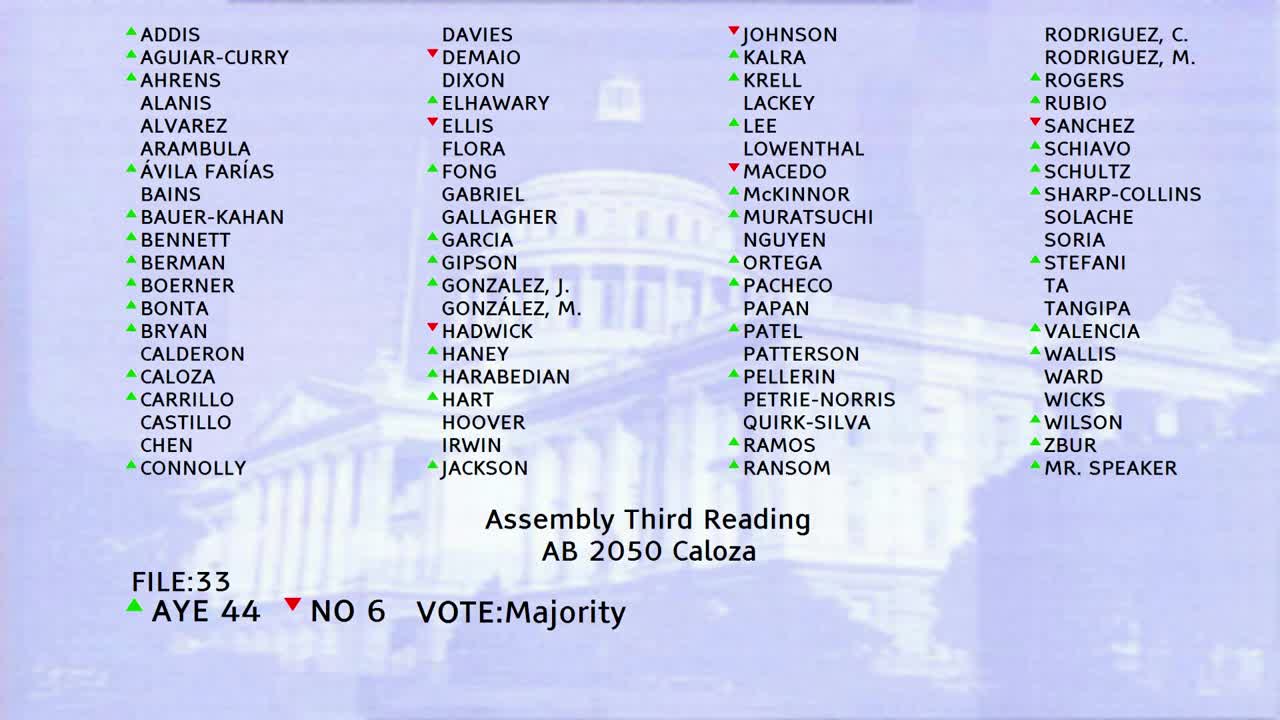
ASSEMBLY FLOOR: 56-14, 5/11/26
AYES: Addis, Aguiar-Curry, Ahrens, Alanis, Alvarez, Ávila Farías, Bains, Bauer-Kahan, Bennett, Berman, Boerner, Bonta, Bryan, Calderon, Caloza, Carrillo, Connolly, Davies, Elhawary, Fong, Gabriel, Garcia, Gipson, Mark González, Haney, Harabedian, Hart, Irwin, Jackson, Kalra, Krell, Lee, McKinnor, Muratsuchi, Nguyen, Ortega, Pacheco, Papan, Patel, Pellerin, Petrie-Norris, Ramos, Ransom, Rogers, Blanca Rubio, Schiavo, Schultz, Sharp-Collins, Stefani, Valencia, Wallis, Ward, Wicks, Wilson, Zbur, Rivas
NOES: Chen, DeMaio, Dixon, Ellis, Flora, Gallagher, Hadwick, Johnson, Lackey, Macedo, Patterson, Sanchez, Ta, Tangipa
NO VOTE RECORDED: Arambula, Castillo, Jeff Gonzalez, Hoover, Lowenthal, Quirk-Silva, Celeste Rodriguez, Michelle Rodriguez, Solache, Soria
Prepared by: Scott Matsumoto / E. & C.A. / (916) 651-4106
6/10/26 16:52:24
**** END ****
SENATE COMMITTEE ON
ELECTIONS AND CONSTITUTIONAL AMENDMENTS
Senator Scott Wiener, Chair
2025 - 2026 Regular
Bill No: Hearing Date: 6/9/26
Author: | |||
Version: |
| ||
Urgency: | Fiscal: | ||
Consultant: | |||
Subject:
DIGEST
This measure states the Legislature’s opposition to presidential Executive Order #14399 (EO) relating to vote by mail (VBM) voting and calls on the U.S. Congress to protect the constitutional authority of states to administer their own elections.
ANALYSIS
Existing law:
- Provides, pursuant to the U.S. Constitution, that state legislatures prescribes the times, places, and manner of holding elections for U.S. Senators and Members of the House of Representatives. Congress may, at any time, make law or alter regulations, except as to the places of choosing U.S. Senators.
- Requires every active registered voter to receive a VBM ballot for any election. Election officials must begin mailing VBM ballots not later than 29 days before the election.
- Requires a county elections official, upon receiving a VBM ballot, to compare the signature on the VBM ballot identification envelope with a signature appearing on any affidavit of registration of the voter, or on any form issued by an elections official that contains the voter's signature and is part of the voter's registration record. If a signature on a VBM ballot identification envelope is missing or does not compare with the signature(s) on file, a voter is permitted to cure their signature and have their VBM ballot counted.
- Requires, pursuant to federal law, election officers to retain and preserve, for a period of 22 months from the date of any election that included a candidate for federal office, all records and papers relating to any application, registration, payment of poll tax, or other act requisite to voting in such election.
- Requires, pursuant to state law, specified materials from an election that included a candidate for federal office to be preserved for 22 months from the date of the election, including all of the following: voted ballots, VBM voter identification envelopes, provisional ballot voter identification envelopes, spoiled ballots, canceled ballots, and unused VBM ballots surrendered by the voter. These records must be unopened and unaltered during the preservation period, unless an election contest or criminal prosecution commences during that period. These materials must be destroyed or recycled at the end of the preservation period.
This measure:
- States the Legislature’s opposition to the EO and calls on the U.S. Congress to protect the constitutional authority of states to administer their own elections.
- Specifies that the Legislature affirms the safety, security, and integrity of California’s VBM system and reaffirms the right of every eligible California voter to vote by mail.
- Calls upon the U.S. Congress to reject any federal legislation that would restrict or eliminate VBM options currently available to voters in California and other states, and to protect the constitutional authority of states to administer their own elections.
BACKGROUND
Executive Order #14399 on Elections. On March 31, 2026, President Trump issued Executive Order #14399, Ensuring Citizenship Verification and Integrity in Federal Elections.
The EO directs the Department of Homeland Security and the Social Security Administration (SSA) to compile and provide each state’s election official with a “State Citizenship List” of confirmed U.S. citizens. This list would be generated using federal citizenship and naturalization records, SSA records, and other federal databases, and is intended to identify individuals who are eligible to vote in federal elections in each state.
The EO also requires states to notify the USPS at least 90 days before a federal election if they intend to allow mail-in voting and provides for specific design requirements for VBM ballot envelopes. States would also be required to provide the USPS, at least 60 days before the election, with a list of voters to whom ballots will be sent. It further directs the USPS not to transmit VBM ballots from any individual who is not included on such a state-submitted list.
Finally, the EO directs states and localities to preserve all records and materials related to voter participation in federal elections, including ballot envelopes but excluding cast ballots, for a period of five years.
The EO faced immediate legal challenges. On April 3, 2026, California Attorney General Rob Bonta announced that he was co-leading a coalition of 23 attorneys general and the Governor of Pennsylvania in filing a lawsuit challenging the EO. The lawsuit, which was filed in the U.S. District Court for the District of Massachusetts, alleges that the EO violates provisions of the U.S. Constitution granting states the authority to determine the times, places, and manner for holding elections for U.S. Senators and Representatives, subject to preemption only by Congress.
Advocate organizations, political entities, and government officials also challenged the EO. The plaintiffs argued the EO will disrupt established election procedures and causes harm to voters. In a separate ruling, a federal judge determined it was premature for the court to intervene and decided not to block the EO because the federal government has not yet acted on the EO in a way that would harm the plaintiffs.
COMMENTS
Author’s Statement. Free and fair elections are the foundation of our democracy. When the federal government oversteps its constitutional authority to undermine them, California must push back. Every Californian deserves the right to have their vote counted, and President Trump’s EO is a direct attack on that fundamental right. California has built one of the most secure, accessible, and trusted VBM systems in the nation, and our voters — Republicans, Democrats, and independents alike — use it in ever increasing numbers. The Constitution is clear that states run elections, not the White House or USPS. And let’s not forget — the same president attacking mail-in voting used it himself just last month in Florida. I am proud to author this resolution, and I will always fight to protect every Californian’s access to the ballot box.
RELATED/PRIOR LEGISLATION
AB 37 (Berman), Chapter 312, Statutes of 2021, among other provisions, required the mailing of a VBM ballot to every active registered voter, required VBM ballot drop-off locations, and established a seven-day deadline for VBM ballots to be returned if postmarked on or before Election Day.
PRIOR ACTION
Assembly Floor: | |
Assembly Committee: |
|
POSITIONS
Sponsor: Author
Support: None received
Oppose: None received
-- END --
ASSEMBLY THIRD READING
ATR Bill Id:AJR 29
Author:(Berman)
As Introduced Ver:April 7, 2026
Majority vote
SUMMARY
States the Legislature's opposition to a recent Presidential executive order that seeks to impose new restrictions on vote by mail (VBM) voting, and calls on the United States (US) Congress to protect the constitutional authority of states to administer their own elections.
Major Provisions
- States the Legislature's opposition to Executive Order No. 14399 and any other federal executive action that restricts, burdens, or interferes with California's VBM system, that seeks to improperly deputize the United States Postal Service (USPS) as an administrator of state elections, or that seeks to disenfranchise California voters who cast their ballots by mail in accordance with state law.
- Specifies that the Legislature affirms the safety, security, and integrity of California's VBM system and reaffirms the right of every eligible California voter to vote by mail.
- Calls upon the US Congress to reject any federal legislation that would restrict or eliminate VBM options currently available to voters in California and other states, and to protect the constitutional authority of states to administer their own elections.
COMMENTS
On March 31, 2026, President Trump issued an executive order titled "Ensuring Citizenship Verification and Integrity in Federal Elections" (Executive Order No. 14399). The order purports to restrict voting by mail to individuals included on federally created lists of US citizens.
Specifically, the order directs the Department of Homeland Security and the Social Security Administration (SSA) to compile and provide each state's election official with a "State Citizenship List" of confirmed US citizens. This list would be generated using federal citizenship and naturalization records, SSA records, and other federal databases, and is intended to identify individuals who are eligible to vote in federal elections in each state.
The order also requires states to notify the USPS at least 90 days before a federal election if they intend to allow mail-in voting. In addition, states would be required to provide the USPS, at least 60 days before the election, with a list of voters to whom ballots will be sent. The order further directs the USPS not to transmit VBM ballots from any individual who is not included on such a state-submitted list.
Finally, the order directs states and localities to preserve all records and materials related to voter participation in federal elections, including ballot envelopes but excluding cast ballots, for a period of five years.
The order has faced immediate legal challenges. On April 3, 2026, California Attorney General Rob Bonta announced that he was co-leading a coalition of 23 attorneys general and the Governor of Pennsylvania in filing a lawsuit challenging the executive order. The lawsuit, which was filed in the US District Court for the District of Massachusetts, alleges that the executive order violates provisions of the US Constitution granting states the authority to determine the times, places, and manner for holding elections for US Senators and Representatives (subject to preemption by Congress).
The lawsuit seeks declaratory and injunctive relief against several provisions of the order, including those that: 1) direct federal agencies to create and distribute State Citizenship Lists to state elections officials, 2) require the USPS to adopt new policies for mail voting, including prohibiting the transmission of VBM ballots from individuals not included on state-submitted lists of VBM voters, and 3) mandate states to maintain certain election records for a 5-year period.
Please see the policy committee analysis for a full discussion of this resolution.
According to the Author
"Free and fair elections are the foundation of our democracy, and when the federal government oversteps its constitutional authority to undermine them, California must push back. Every Californian deserves the right to have their vote counted, and President Trump's Executive Order 14399 is a direct attack on that fundamental right. California has built one of the most secure, accessible, and trusted vote-by-mail systems in the nation, and our voters — Republicans, Democrats, and independents alike — use it in ever increasing numbers. The Constitution is clear that states run elections, not the White House or the Postal Service. And let's not forget — the same president attacking mail-in voting used it himself just last month in Florida. I am proud to author this resolution, and I will always fight to protect every Californian's access to the ballot box."
Arguments in Support
None received.
Arguments in Opposition
None received.
FISCAL COMMENTS
None. This resolution is keyed non-fiscal by the Legislative Counsel.
VOTES
ASM ELECTIONS: 6-0-2
YES: Pellerin, Bennett, Berman, Elhawary, Solache, Stefani
ABS, ABST OR NV: Gallagher, Johnson
UPDATED
VERSION: April 7, 2026
CONSULTANT: Ethan Jones / ELECTIONS / (916) 319-2094 FN: 0002365
Date of Hearing: April 15, 2026
ASSEMBLY COMMITTEE ON ELECTIONS
Gail Pellerin, Chair
ABPCA Bill Id:AJR 29 (
Author:Berman) – As Introduced Ver:April 7, 2026
SUBJECT: Voting by mail.
SUMMARY: States the Legislature’s opposition to a recent Presidential executive order that seeks to impose new restrictions on vote by mail (VBM) voting, and calls on the United States (US) Congress to protect the constitutional authority of states to administer their own elections. Specifically, this resolution:
- States the Legislature’s opposition to Executive Order No. 14399 and any other federal executive action that restricts, burdens, or interferes with California’s VBM system, that seeks to improperly deputize the United States Postal Service (USPS) as an administrator of state elections, or that seeks to disenfranchise California voters who cast their ballots by mail in accordance with state law.
- Specifies that the Legislature affirms the safety, security, and integrity of California’s VBM system and reaffirms the right of every eligible California voter to vote by mail.
- Calls upon the US Congress to reject any federal legislation that would restrict or eliminate VBM options currently available to voters in California and other states, and to protect the constitutional authority of states to administer their own elections.
- Provides all of the following:
- AB 37 of the 2021–22 Regular Session made California a permanent VBM state, ensuring that every registered voter in California receives a VBM ballot for each election.
- Voting by mail has proven enormously popular with California voters across party lines, with a significant and growing majority of voters choosing to cast their ballots by mail in recent election cycles.
- The security and integrity of voting by mail in California is robust, with multiple layers of safeguards.
- Independent studies, election administrators, and nonpartisan experts have consistently found that voting by mail is safe, secure, and reliable, and that the rate of fraudulent VBM ballots in California elections is negligibly small and statistically insignificant.
- California’s Secretary of State and county election officials have repeatedly confirmed that voter fraud in California elections is extraordinarily rare, that cases of fraud are vigorously investigated and prosecuted, and that the state’s election infrastructure is among the most secure in the nation.
- Voting by mail expands access to democracy for seniors and people with disabilities, working parents, rural residents, and others for whom in-person voting presents logistical hardships, and restricting this method of voting would impose a disproportionate burden on the most vulnerable Californians.
- On March 31, 2026, President Donald J. Trump signed Executive Order No. 14399, which purports to direct the USPS to transmit mail-in and absentee ballots only to individuals on a federally compiled list, to require states to submit voter eligibility lists to the USPS at least 60 days before a federal election, and to impose new ballot envelope design and tracking requirements subject to federal approval.
- The USPS is underfunded and operationally strained and tasking it with policing the distribution of ballots would impose an enormous new administrative burden.
- The US Constitution vests in state legislatures the primary authority to regulate the time, place, and manner of elections, and Executive Order No. 14399 represents an unprecedented and unlawful federal intrusion into state election administration.
- President Donald J. Trump himself has voted by mail in Florida elections, including as recently as March 2026.
- AB 37 of the 2021–22 Regular Session made California a permanent VBM state, ensuring that every registered voter in California receives a VBM ballot for each election.
EXISTING STATE LAW:
- Requires an elections official to mail a ballot to every active registered voter for every election in which the voter is eligible to participate. Requires the elections official to begin mailing VBM ballots not later than 29 days before the election, as specified. (Elections Code §§3000.5, 3001, 3010)
- Requires a county elections official, upon receiving a VBM ballot, to compare the signature on the VBM ballot identification envelope with a signature appearing on any affidavit of registration of the voter, or on any form issued by an elections official that contains the voter's signature and is part of the voter's registration record. (Elections Code §3019(a)(1))
- Provides that if the elections official determines, upon comparing signatures, that the signature on the VBM ballot identification envelope possesses multiple, significant, and obvious differing characteristics when compared to all signatures in the voter's registration record, the signature is subject to additional procedures that provide that a signature shall be rejected only if two additional elections officials each find beyond a reasonable doubt that the signature differs in multiple, significant, and obvious respects from all signatures in the voter's registration record. (Elections Code §3019(c))
- Requires specified materials from an election that included a candidate for federal office to be preserved for 22 months from the date of the election, including all of the following:
- Voted ballots.
- VBM voter identification envelopes.
- Provisional ballot voter identification envelopes.
- Spoiled ballots.
- Canceled ballots.
- Unused VBM ballots surrendered by the voter, as specified..
Requires these records to be maintained unopened and unaltered during the preservation period, unless an election contest or criminal prosecution is commenced during that period, as specified. Requires the materials to be destroyed or recycled at the end of the preservation period. (Elections Code §§17301, 17303, 17305)
EXISTING FEDERAL LAW:
- Grants states the legislative power to prescribe the times, places, and manner of holding elections for US Senators and Representatives, provided that Congress may make or alter such regulations except as to the places of choosing Senators. (US Constitution, Article I, Section 4, clause 1)
- Grants states the legislative power to direct the manner in which the state’s presidential electors are appointed. (US Constitution, Article II, Section 1, clause 2)
- Requires election officers to retain and preserve, for a period of 22 months from the date of any election that included a candidate for federal office, all records and papers relating to any application, registration, payment of poll tax, or other act requisite to voting in such election, as specified. (52 USC 20701)
FISCAL EFFECT: None. This resolution is keyed non-fiscal by the Legislative Counsel.
COMMENTS:
- Purpose of the Resolution: According to the author:
Free and fair elections are the foundation of our democracy, and when the federal government oversteps its constitutional authority to undermine them, California must push back. Every Californian deserves the right to have their vote counted, and President Trump’s Executive Order 14399 is a direct attack on that fundamental right. California has built one of the most secure, accessible, and trusted vote-by-mail systems in the nation, and our voters — Republicans, Democrats, and independents alike — use it in ever increasing numbers. The Constitution is clear that states run elections, not the White House or the Postal Service. And let’s not forget — the same president attacking mail-in voting used it himself just last month in Florida. I am proud to author this resolution, and I will always fight to protect every Californian’s access to the ballot box.
- March 2026 Executive Order on Elections: On March 31, 2026, President Trump issued an executive order titled “Ensuring Citizenship Verification and Integrity in Federal Elections” (Executive Order No. 14399). The order purports to restrict voting by mail to individuals included on federally created lists of US citizens.
Specifically, the order directs the Department of Homeland Security and the Social Security Administration (SSA) to compile and provide each state’s election official with a “State Citizenship List” of confirmed US citizens. This list would be generated using federal citizenship and naturalization records, SSA records, and other federal databases, and is intended to identify individuals who are eligible to vote in federal elections in each state.
The order also requires states to notify the USPS at least 90 days before a federal election if they intend to allow mail-in voting. In addition, states would be required to provide the USPS, at least 60 days before the election, with a list of voters to whom ballots will be sent. The order further directs the USPS not to transmit VBM ballots from any individual who is not included on such a state-submitted list.
Finally, the order directs states and localities to preserve all records and materials related to voter participation in federal elections, including ballot envelopes but excluding cast ballots, for a period of five years.
The order has faced immediate legal challenges. On April 3, 2026, California Attorney General Rob Bonta announced that he was co-leading a coalition of 23 attorneys general and the Governor of Pennsylvania in filing a lawsuit challenging the executive order. The lawsuit, which was filed in the US District Court for the District of Massachusetts, alleges that the executive order violates provisions of the US Constitution granting states the authority to determine the times, places, and manner for holding elections for US Senators and Representatives (subject to preemption by Congress).
The lawsuit seeks declaratory and injunctive relief against several provisions of the order, including those that: (1) direct federal agencies to create and distribute State Citizenship Lists to state elections officials, (2) require the USPS to adopt new policies for mail voting, including prohibiting the transmission of VBM ballots from individuals not included on state-submitted lists of VBM voters, and (3) mandate states to maintain certain election records for a 5-year period. - Voting by Mail: As an accommodation to facilitate voting at the 2020 general election during the height of the COVID-19 pandemic, the Legislature approved and Governor Newsom signed AB 860 (Berman), Chapter 4, Statutes of 2020, which required county elections officials to mail a ballot to every active registered voter for the November 3, 2020, statewide general election, among other provisions. The policy of requiring county elections officials to mail a ballot to all active registered voters ultimately was made permanent through the passage of AB 37 (Berman), Chapter 312, Statutes of 2021. At every statewide election held since California began mailing a ballot to every active registered voter, more than 80% of Californians who voted did so using a VBM ballot.
- Prior Elections Executive Order: The executive order issued by President Trump last month was not the first elections-related executive order that he issued during this term in office. In March 2025, he signed an order titled “Preserving and Protecting the Integrity of American Elections” (Executive Order 14248), which proposed significant changes to federal policies related to election administration. Among other provisions, the order purported to require people to provide documentary proof of citizenship when registering to vote.
The order prompted several legal challenges, including a lawsuit filed by a coalition of 19 state attorneys general that was led by California Attorney General Rob Bonta and Nevada Attorney General Aaron Ford. In June 2025, the court in that case issued a preliminary injunction blocking implementation of many of the provisions of that order, in part based on a finding that those provisions likely exceeded the President’s authority. Two other courts similarly blocked implementation of other parts of the order. - Federal Efforts to Access State Voter Registration Records: According to the Brennan Center for Justice, since May 2025, the US Department of Justice (DOJ) has sought election-related records from nearly every state and Washington, D.C., including requests for unredacted statewide voter registration lists. The Brennan Center reports that at least 48 states and Washington, D.C., received such requests.
At least 12 states either provided or indicated that they would provide their full statewide voter registration lists to the DOJ, including sensitive information such as voters’ driver’s license numbers and Social Security numbers. In contrast, the DOJ filed lawsuits against Washington, D.C., and 30 states—including California—that declined to provide unredacted records.
In California, Secretary of State Shirley N. Weber refused to produce an electronic, unredacted copy of the state’s voter registration list, citing state laws that prohibit disclosure of sensitive personal information, including driver’s license and Social Security numbers. The DOJ filed suit in September 2025. In January 2026, a federal court granted California’s motion to dismiss, holding that the state was not required to disclose unredacted information to the DOJ and that the state’s voter privacy laws were not preempted by federal law. The DOJ has appealed that decision to the U.S. Court of Appeals for the Ninth Circuit, where the case remains pending.
REGISTERED SUPPORT / OPPOSITION:
Support
None on file.
Opposition
None on file.
Analysis Prepared by: Ethan Jones / ELECTIONS / (916) 319-2094
Discussed in Hearing
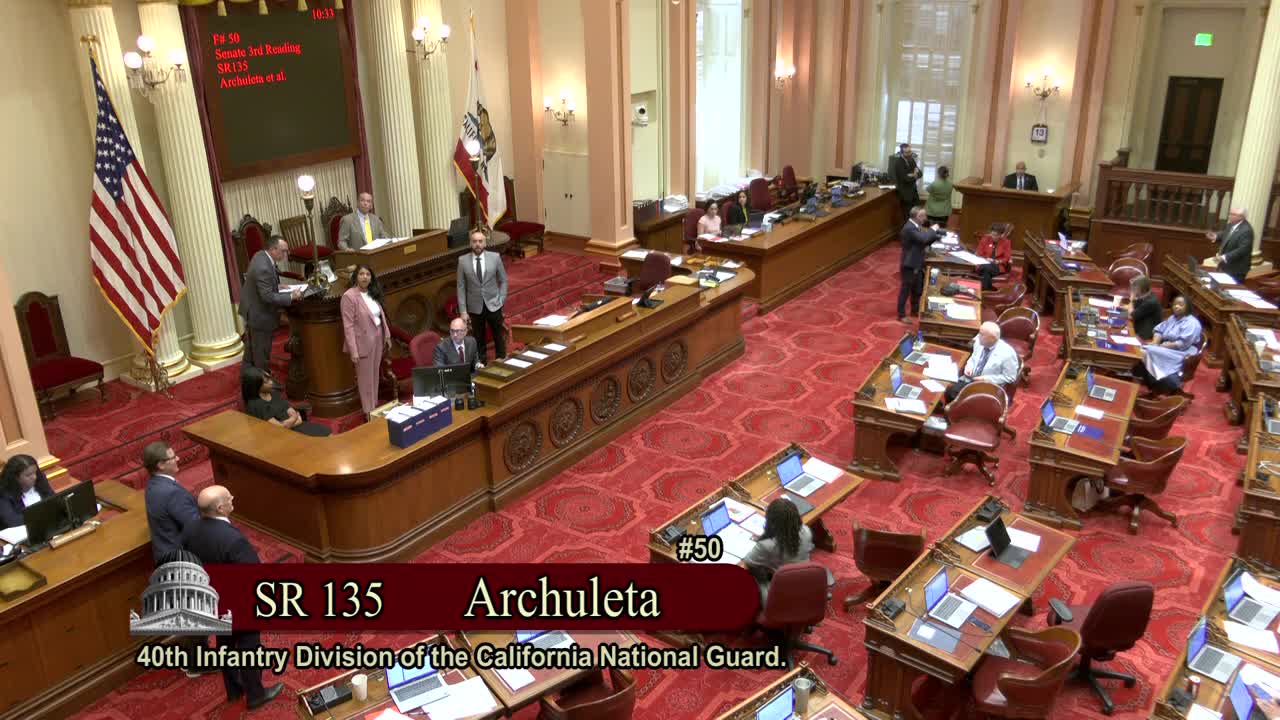 8MIN
Senate Floor
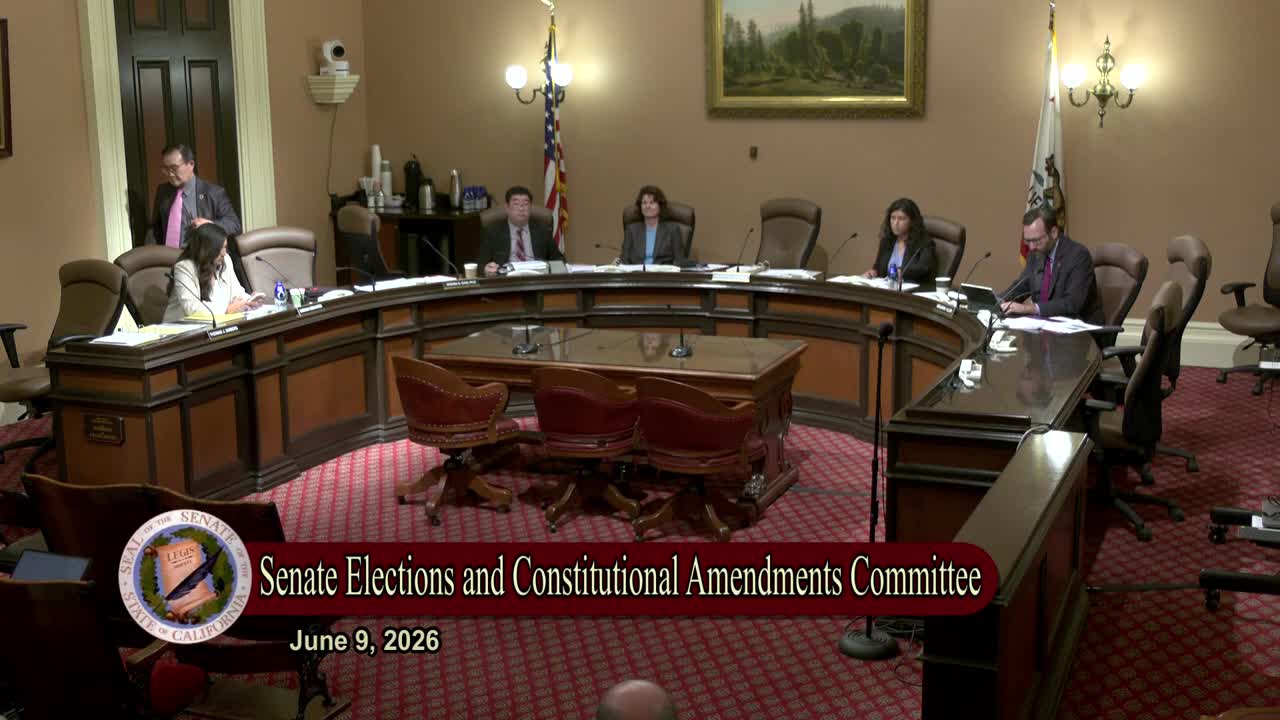 4MIN
Senate Standing Committee on Elections and Constitutional Amendments
 24MIN
Assembly Floor
 3MIN
Assembly Standing Committee on Elections
Bill Author

Bill Co-Author(s):