AJR 6: Child nutrition: federal programs: funding cuts.
- Session Year: 2025-2026
- House: Assembly
- Latest Version Date: 2025-03-26
Current Status:
In Progress
(2026-08-20: Read second time. Ordered to third reading.)
Introduced
In Committee
Awaiting First Chamber Vote
Passed First Chamber
In Committee
Awaiting Second Chamber Vote
Passed Second Chamber
Enacted
This measure would call on the states Representatives in Congress to continue to support investments in the federal Local Food for Schools and Child Care program and would call on the President of the United States to work with Congress to support family farmers who produce fresh, locally sourced food for school meals.
WHEREAS, Over 30 million children eat school lunch every day nationwide; and
WHEREAS, Healthy school meals ensure children are well-nourished, which contributes to better academic achievement and school attendance rates; and
WHEREAS, Buying locally grown food helps Californian farmers, food producers, employees, and their families; and
WHEREAS, Farming and related industries employ more than 22.1 million people, making up over 10.4 percent of employment in the United States; and
WHEREAS, For more than 60 consecutive years, California has been the number one agricultural state in the nation, producing more than 400 crop and livestock products and accounting for over one-third of vegetables and nearly three-quarters of the fruits and nuts produced in the United States; and
WHEREAS, California is the nations leader in agricultural exports, shipping $23.6 billion in food and agricultural commodities around the world in 2022, which represents a 4.4 percent increase from the previous year; and
WHEREAS, The federal Local Food for Schools and Child Care (LFSCC) program was established to build a more resilient food supply chain and has facilitated a connection between hundreds of California farms, schools, and food banks, leading to revenues for farmers, growers, and other food producers, and creating more jobs for food system workers; and
WHEREAS, In 2022, the United States Department of Agriculture allocated over $23 million in LFSCC funding to the State Department of Education from the Commodity Credit Corporation, providing funds to 319 school food authorities, and those funds helped schools purchase local, regional, and state-grown food, supported local farms, enhanced access to nutritious meals, and helped stabilize local food systems; and
WHEREAS, On March 7, 2025, the Trump Administration canceled over $70 million in anticipated LFSCC program funding for 2025 and canceled over $1 billion nationally for the Local Food Purchase Assistance Cooperative Agreement Program and the Local Food for Schools Cooperative Agreement Program; and
WHEREAS, Research demonstrates that each dollar invested in local food systems generates an additional $2.16 in economic activity, which indicates that canceling $70 million in funding could result in an estimated loss exceeding $150 million in economic activity statewide; and
WHEREAS, The loss of federal investment jeopardizes the economic viability of farmers and food producers in California who relied on these institutional markets; now, therefore, be it
Resolved by the Assembly and the Senate of the State of California, jointly, That the Legislature opposes cuts to the LFSCC program, and calls on our states Representatives in Congress to continue to support investments in the LFSCC program; and be it further
Resolved, That the Legislature calls on the President of the United States to work with Congress to support family farmers who produce fresh, locally sourced food for school meals; and be it further
Resolved, That the Chief Clerk of the Assembly transmit copies of this resolution to the President and Vice President of the United States, to the Speaker of the House of Representatives, to the Majority Leader of the Senate, and to each Senator and Representative from California in the Congress of the United States.
|
Date
|
Status
|
|---|---|
| Aug 20, 2026 | Read second time. Ordered to third reading. |
| Aug 19, 2026 | Ordered to second reading. |
| Aug 19, 2026 | From inactive file. |
| Sep 13, 2025 | Ordered to inactive file at the request of Senator Grayson. |
| Jul 1, 2025 | From committee: Be adopted. Ordered to Third Reading. (Ayes 5. Noes 0.) (July 1). |
| May 14, 2025 | Referred to Com. on AGRI. |
| May 6, 2025 | In Senate. To Com. on RLS. |
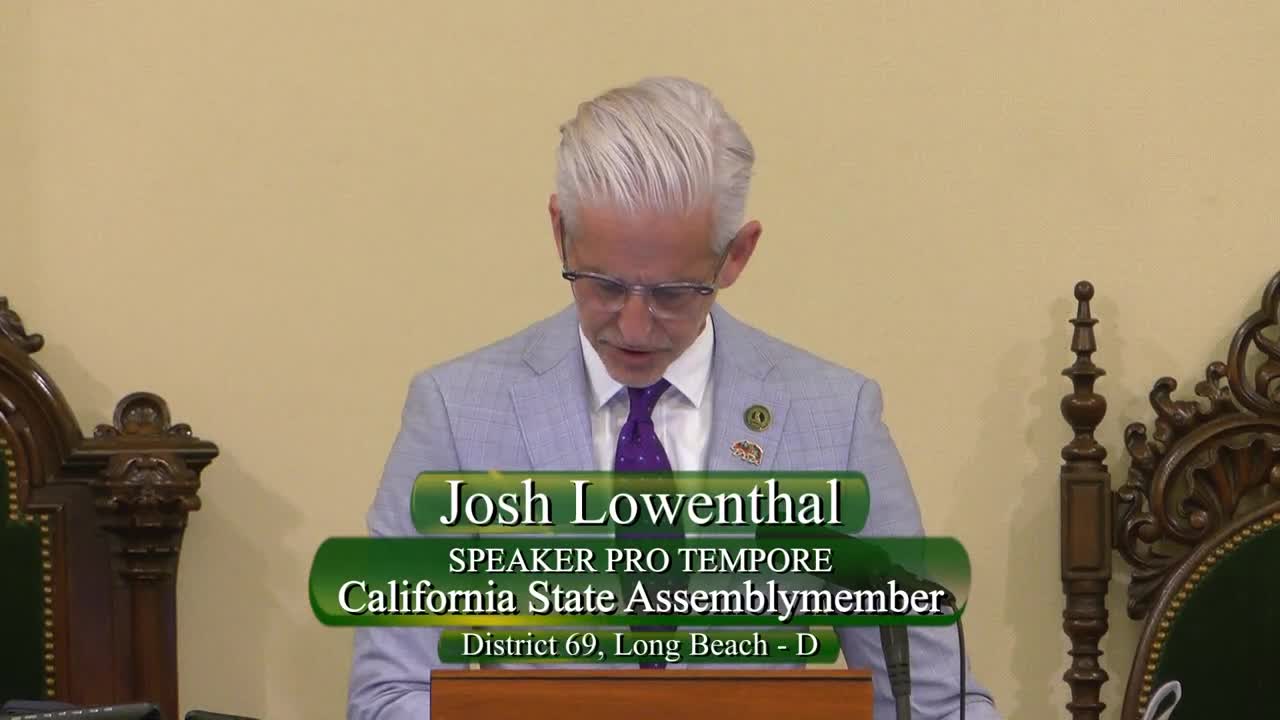
| May 5, 2025 | Adopted and to Senate. (Ayes 77. Noes 0. Page 1418.) |
| May 5, 2025 | Coauthors revised. |
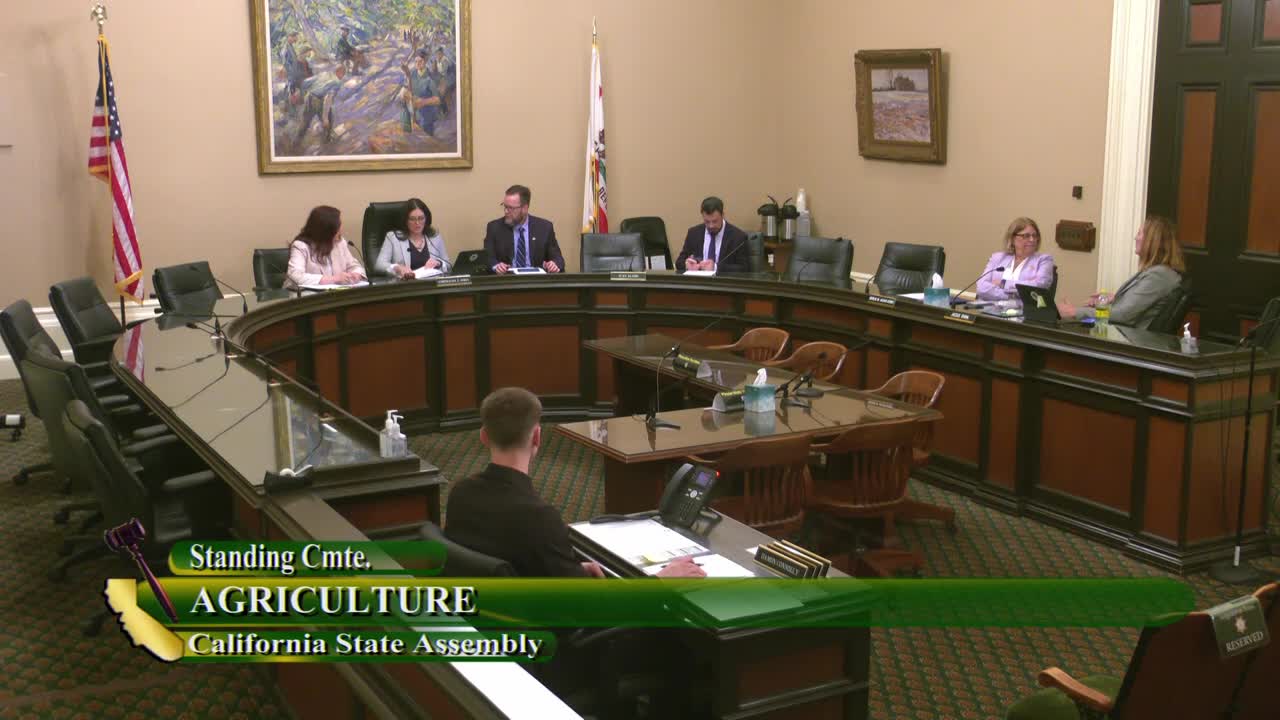
| Apr 9, 2025 | From committee: Be adopted. Ordered to Third Reading. (Ayes 8. Noes 0.) (April 9). |
| Mar 28, 2025 | Referred to Com. on AGRI. |
| Mar 27, 2025 | From printer. |
| Mar 26, 2025 | Introduced. To print. |
|
Date
|
Description
|
Location
|
Votes
|
|
|---|---|---|---|---|
| Jul 1, 2025 | Be adopted. Ordered to third reading | Senate Standing Committee on Agriculture |
Passed |
|
| May 5, 2025 | AJR 6 Aguiar-Curry Assembly Third Reading | Assembly Floor |
Passed |
|
| Apr 9, 2025 | Be adopted. To third reading. | Assembly Standing Committee on Agriculture |
Passed |
This list shows positions taken on this bill by organizations on the date displayed, which is linked to the original source.
Positions by individuals are not included.
|
Organization
|
Position
|
Date
|
|---|---|---|
| California School Employees Association | ** Support |
SENATE COMMITTEE ON AGRICULTURE
Senator Melissa Hurtado, Chair
2025 - 2026 Regular
Bill No: AJR 6 Hearing Date: 7/1/25
Author: | Aguiar-Curry | ||
Version: | 3/26/25 Introduced | ||
Urgency: |
| Fiscal: | No |
Consultant: | Reichel Everhart | ||
Subject: Child nutrition: federal programs: funding cuts
SUMMARY
:
This resolution would call on the state’s representatives in Congress to continue to support investments in the federal Local Food for Schools and Child Care (LFSCC) program and would call on the President of the United States to work with Congress to support family farmers who produce fresh, locally-sourced food for school meals.
BACKGROUND AND EXISTING LAW
:
Existing Law:
- Agricultural Marketing Services Local Food for Schools and Child Care program: USDA awards funds to states for food assistance purchases of domestic local foods for distribution to schools and child care institutions. LFSCC strengthens the food system for schools and childcare institutions by helping to build a fair, competitive, and resilient local food chain, and expand local and regional markets.[1]
PROPOSED LAW
:
This resolution:
- Declares the following:
- Over 30 million children eat school lunch every day, nationwide;
- Healthy school meals ensure children are well-nourished, which contributes to better academic achievement and school attendance rates;
- Buying locally grown food helps Californian farmers, food producers, employees, and their families;
- Farming and related industries employ more than 22.1 million people, making up over 10.4 % of employment in the United States;
- For more than 60 consecutive years, California has been the number one agricultural state in the nation, producing more than 400 crop and livestock products and accounting for over one-third of vegetables and nearly three-quarters of the fruits and nuts produced in the United States;
- California is the nation’s leader in agricultural exports, shipping $23.6 billion in food and agricultural commodities around the world in 2022, which represents a 4.4 % increase from the previous year;
- The federal Local Food for Schools and Child Care (LFSCC) program was established to build a more resilient food supply chain and has assisted in connecting hundreds of California farms, schools, and food banks, leading to revenues for farmers, growers, and other food producers, while creating more jobs for food system workers.
- In 2022, the United States Department of Agriculture allocated over $23 million in LFSCC funding to the State Department of Education from the Commodity Credit Corporation, providing funds to 319 school food authorities. Those funds helped schools purchase local, regional, and state-grown food at the same time supporting local farms, enhancing access to nutritious meals, and help stabilize local food systems;
- On March 7, 2025, the Trump Administration canceled over $70 million in anticipated LFSCC program funding for the current year and canceled over $1 billion nationally for the Local Food Purchase Assistance Cooperative Agreement Program and the Local Food for Schools Cooperative Agreement Program;
- Research demonstrates each dollar invested in local food systems generates an additional $2.16 in economic activity, which indicates canceling $70 million in funding could result in an estimated loss exceeding $150 million in economic activity statewide;
- The loss of federal investments jeopardizes the economic viability of farmers and food producers in California who are relying on these institutional markets.
- States the Assembly and Senate of the State of California oppose cuts to the LFSCC program.
- Calls on California’s congressional delegation to continue to support investments in the federal Local Food for Schools and Child Care program.
- Calls on the President of the United States to work with Congress to support family farmers.
ARGUMENTS IN SUPPORT: According to the author:
"AJR 6 calls on the Trump Administration to restore funding for the Local Food for Schools and Child Care (LFSCC) program. LFSCC provides healthy, locally sourced meals to students while supporting small farmers and food producers. School meal programs play a vital role in ensuring California schoolchildren receive the nutrition needed to thrive academically and physically. Additionally, the LFSCC program strengthens local economies by creating opportunities for California's farmers, their workers, and California's agricultural industry as a whole. Cutting this funding threatens students' well-being, weakens local food systems, and could cause California to lose over $150 million in economic impact. Restoring these investments is essential to protecting California's most vulnerable children, supporting family farmers, and maintaining a strong California economy. Our Congressional Delegation and the Trump Administration should do everything possible to prevent the damage from cutting this program."
The California School Employees Association wrote in support of the resolution stating:
“The LFSCC program provides federal funding to school food authorities to help increase local food purchases in schools and expand economic opportunities for local farmers and ranchers. The California Department of Education has received over $23 million through this program and distributed that money to schools to purchase local foods. Eliminating this program will hurt both kids and small family farmers, forcing school food authorities to spend limited nutrition funds on cheaper alternatives that are less likely to be locally sourced.”
ARGUMENTS IN OPPOSITION:
None received.
COMMENTS
:
The LFSCC program, among other things, helps states address supply chain disruptions and support local and regional food systems. In December, 2021, LFSCC was part of several COVID relief programs and provided $200 million in non-competitive grant funding to state agencies through cooperative agreements for the purchase of local, unprocessed or minimally processed foods from farmers, ranchers, and small businesses to distribute to schools that participate in the National School Lunch and Breakfast programs.
In October, 2024, USDA announced it would provide $660 million for LFSCC to continue providing these services and add childcare. However, in March 2025, USDA’s Agricultural Marketing Service terminated this second round of funding with a 60-day notice that cooperative agreements would be ended because the program “no longer effectuates agency priorities.”[2]
PRIOR ACTIONS
:
Assembly Floor: | 77 - 0 |
Assembly Appropriations Committee: |
|
Assembly Agriculture Committee: | 8 - 0 |
SUPPORT
:
California School Boards Association
California School Employees Association
-- END --
ASSEMBLY THIRD READING
ATR Bill Id:AJR 6
Author:(Aguiar-Curry)
As Introduced Ver:March 26, 2025
Majority vote
SUMMARY
This resolution would call on the state's Representatives in Congress to continue to support investments in the federal Local Food for Schools and Child Care program and ask the President of the United States to work with Congress to support family farmers who produce fresh, locally grown food for school meals.
Major Provisions
- Over 30 million children eat school lunch every day nationwide; and, healthy schools meals ensure children are well nourished; which contributes to better academic achievement and higher school attendance rates.
- Farming and related industries employ more than 22.1 million people, making up over 10.4% of employment in the United States.
- California is the nation's leader in agricultural exports, shipping $23.6 billion in food and agricultural commodities around the world in 2022, which represents a 4.4% increase from the previous year.
- The federal Local Food for Schools and Child Care (LFSCC) program was established to build a more resilient food supply chain and has assisted in connecting hundreds of California farms, schools, and food banks, leading to revenues for farmers, growers, and other food producers, while creating more jobs for food system workers.
- In 2022, the United States Department of Agriculture allocated over $23 million in LFSCC funding to the State Department of Education from the Commodity Credit Corporation, providing funds to 319 school food authorities. Those funds helped schools purchase local, regional, and state-grown food at the same time supporting local farms, enhancing access to nutritious meals, and help stabilize local food systems.
- March 7, 2025, the Trump Administration canceled over $70 million in anticipated LFSCC program funding for the current year and canceled over $1 billion nationally for the Local Food Purchase Assistance Cooperative Agreement Program and the Local Food for Schools Cooperative Agreement Program.
- Research shows that each dollar invested in local food systems generates an additional $2.16 in economic activity, which would indicate that canceling $70 million in funding could result in an estimated loss exceeding $150 million in economic activity across the state.
- The loss of federal investments jeopardizes the economic viability of farmers and food producers in California who are relying on these institutional markets.
COMMENTS
In December 2021, Agricultural Marketing Services launched the Local Food for Schools (LFS) program as part of a suite of federal COVID-19 relief programs to help states address supply chain disruptions and boost local and regional food systems. The first round of LFS provided $200 million in Commodity Credit Corporation (CCC) in non-competitive funding to state agencies through cooperative agreements. Forty-two states and the District of Columbia benefitted from this round. The funding was solely for purchases of local, unprocessed or minimally processed foods from farmers, ranchers, and small businesses, for distribution to schools participating in the National School Lunch and School Breakfast programs.
In October 2024, the USDA announced it would provide $660M for a second round of funding for the LFS program. The new round of funding mirrored the first but expanded the program to childcare. Now called LFSCC, this program would have allocated $472M to K-12 schools and $189M to childcare sites participating in the Child and Adult Care Food Program. The first round targeted small businesses and "socially disadvantaged" producers, and this round prioritized "Historically Underserved" producers, farmers, fishers, and small businesses, which includes beginning, veteran, and limited resource farmers and ranchers.
This resolution calls on the federal government to restore funding for the Local Food for Schools and Child Care (LFSCC) program. Established to strengthen the food supply chain, the LFSCC program has connected hundreds of California farms, schools, and food banks, generating revenue for farmers, growers, and food producers while creating jobs in the food sector. Similarly, the Local Food Purchase Assistance Cooperative Agreement Program enhances supply chain resilience and supports local food production by supplying food banks and other feeding organizations.
According to the Author
According to the author, "AJR 6 calls on the Trump Administration to restore funding for the Local Food for Schools and Child Care (LFSCC) program. LFSCC provides healthy, locally sourced meals to students while supporting small farmers and food producers. School meal programs play a vital role in ensuring California schoolchildren receive the nutrition needed to thrive academically and physically. Additionally, the LFSCC program strengthens local economies by creating opportunities for California's farmers, their workers, and California's agricultural industry as a whole. Cutting this funding threatens students' well-being, weakens local food systems, and could cause California to lose over $150 million in economic impact. Restoring these investments is essential to protecting California's most vulnerable children, supporting family farmers, and maintaining a strong California economy. Our Congressional Delegation and the Trump Administration should do everything possible to prevent the damage from cutting this program."
Arguments in Support
Supporters state that for many students, school meals are a crucial lifeline to reduce food insecurity that they may experience at home. Our members know that students are not well equipped to learn if they go to class hungry, which is why CSEA previously sponsored legislation to make school meals universal and free to all.
The LFSCC program provides federal funding to school food authorities to help increase local food purchases in schools and expand economic opportunities for local farmers and ranchers. The California Department of Education has received over $23 million through this program and distributed that money to schools to purchase local foods. Eliminating this program will hurt both kids and small family farmers, forcing school food authorities to spend limited nutrition funds on cheaper alternatives that are less likely to be locally sourced.
Arguments in Opposition
None on file
FISCAL COMMENTS
This resolution is keyed non-fiscal by Legislative Counsel.
VOTES
ASM AGRICULTURE: 8-0-0
YES: Soria, Alanis, Aguiar-Curry, Connolly, Jeff Gonzalez, Hadwick, Irwin, Ransom
UPDATED
VERSION: March 26, 2025
CONSULTANT: Nicole Willis / AGRI. / (916) 319-2084 FN: 0000229
ASSEMBLY THIRD READING
ATR Bill Id:AJR 6
Author:(Aguiar-Curry)
As Introduced Ver:March 26, 2025
Majority vote
SUMMARY
This resolution would call on the state's Representatives in Congress to continue to support investments in the federal Local Food for Schools and Child Care program and ask the President of the United States to work with Congress to support family farmers who produce fresh, locally grown food for school meals.
Major Provisions
- Over 30 million children eat school lunch every day nationwide; and, healthy schools meals ensure children are well nourished; which contributes to better academic achievement and higher school attendance rates.
- Farming and related industries employ more than 22.1 million people, making up over 10.4 percent of employment in the United States.
- California is the nation's leader in agricultural exports, shipping $23.6 billion in food and agricultural commodities around the world in 2022, which represents a 4.4% increase from the previous year.
- The federal Local Food for Schools and Child Care (LFSCC) program was established to build a more resilient food supply chain and has assisted in connecting hundreds of California farms, schools, and food banks, leading to revenues for farmers, growers, and other food producers, while creating more jobs for food system workers.
- In 2022, the United States Department of Agriculture allocated over $23 million in LFSCC funding to the State Department of Education from the Commodity Credit Corporation, providing funds to 319 school food authorities. Those funds helped schools purchase local, regional, and state-grown food at the same time supporting local farms, enhancing access to nutritious meals, and help stabilize local food systems.
- March 7, 2025, the Trump Administration canceled over $70 million in anticipated LFSCC program funding for the current year and canceled over $1 billion nationally for the Local Food Purchase Assistance Cooperative Agreement Program and the Local Food for Schools Cooperative Agreement Program.
- Research shows that each dollar invested in local food systems generates an additional $2.16 in economic activity, which would indicate that canceling $70 million in funding could result in an estimated loss exceeding $150 million in economic activity across the state.
- The loss of federal investments jeopardizes the economic viability of farmers and food producers in California who are relying on these institutional markets.
COMMENTS
In December 2021, Agricultural Marketing Services launched the Local Food for Schools (LFS) program as part of a suite of federal COVID-19 relief programs to help states address supply chain disruptions and boost local and regional food systems. The first round of LFS provided $200 million in Commodity Credit Corporation (CCC) in non-competitive funding to state agencies through cooperative agreements. Forty-two states and the District of Columbia benefitted from this round. The funding was solely for purchases of local, unprocessed or minimally processed foods from farmers, ranchers, and small businesses, for distribution to schools participating in the National School Lunch and School Breakfast programs.
In October 2024, the USDA announced it would provide $660M for a second round of funding for the LFS program. The new round of funding mirrored the first but expanded the program to childcare. Now called LFSCC, this program would have allocated $472M to K-12 schools and $189M to childcare sites participating in the Child and Adult Care Food Program. The first round targeted small businesses and "socially disadvantaged" producers, and this round prioritized "Historically Underserved" producers, farmers, fishers, and small businesses, which includes beginning, veteran, and limited resource farmers and ranchers.
This resolution calls on the federal government to restore funding for the Local Food for Schools and Child Care (LFSCC) program. Established to strengthen the food supply chain, the LFSCC program has connected hundreds of California farms, schools, and food banks, generating revenue for farmers, growers, and food producers while creating jobs in the food sector. Similarly, the Local Food Purchase Assistance Cooperative Agreement Program enhances supply chain resilience and supports local food production by supplying food banks and other feeding organizations.
According to the Author
According to the author, "AJR 6 calls on the Trump Administration to restore funding for the Local Food for Schools and Child Care (LFSCC) program. LFSCC provides healthy, locally sourced meals to students while supporting small farmers and food producers. School meal programs play a vital role in ensuring California schoolchildren receive the nutrition needed to thrive academically and physically. Additionally, the LFSCC program strengthens local economies by creating opportunities for California's farmers, their workers, and California's agricultural industry as a whole. Cutting this funding threatens students' well-being, weakens local food systems, and could cause California to lose over $150 million in economic impact. Restoring these investments is essential to protecting California's most vulnerable children, supporting family farmers, and maintaining a strong California economy. Our Congressional Delegation and the Trump Administration should do everything possible to prevent the damage from cutting this program."
Arguments in Support
Supporters state that for many students, school meals are a crucial lifeline to reduce food insecurity that they may experience at home. Our members know that students are not well equipped to learn if they go to class hungry, which is why CSEA previously sponsored legislation to make school meals universal and free to all.
The LFSCC program provides federal funding to school food authorities to help increase local food purchases in schools and expand economic opportunities for local farmers and ranchers. The California Department of Education has received over $23 million through this program and distributed that money to schools to purchase local foods. Eliminating this program will hurt both kids and small family farmers, forcing school food authorities to spend limited nutrition funds on cheaper alternatives that are less likely to be locally sourced.
Arguments in Opposition
None on file
FISCAL COMMENTS
This resolution is keyed non-fiscal by Legislative Counsel.
VOTES
ASM AGRICULTURE: 8-0-0
YES: Soria, Alanis, Aguiar-Curry, Connolly, Jeff Gonzalez, Hadwick, Irwin, Ransom
UPDATED
VERSION: March 26, 2025
CONSULTANT: Nicole Willis / AGRI. / (916) 319-2084 FN: 0000225
Date of Hearing: April 9, 2025
ASSEMBLY COMMITTEE ON AGRICULTURE
Esmeralda Soria, Chair
ABPCA Bill Id:AJR 6 (
Author:Aguiar-Curry) – As Introduced Ver:March 26, 2025
SUBJECT: Child nutrition: federal programs: funding cuts
SUMMARY: This resolution would call on the state’s Representatives in Congress to continue to support investments in the federal Local Food for Schools and Child Care program and ask the President of the United States to work with Congress to support family farmers who produce fresh, locally grown food for school meals. Specifically, this resolution makes the following legislative findings and declarations:
- Over 30 million children eat school lunch every day nationwide; and, healthy schools meals ensure children are well nourished; which contributes to better academic achievement and higher school attendance rates.
- Farming and related industries employ more than 22.1 million people, making up over 10.4 percent of employment in the United States.
- California is the nation’s leader in agricultural exports, shipping $23.6 billion in food and agricultural commodities around the world in 2022, which represents a 4.4 percent increase from the previous year.
- The federal Local Food for Schools and Child Care (LFSCC) program was established to build a more resilient food supply chain and has assisted in connecting hundreds of California farms, schools, and food banks, leading to revenues for farmers, growers, and other food producers, while creating more jobs for food system workers.
- In 2022, the United States Department of Agriculture allocated over $23 million in LFSCC funding to the State Department of Education from the Commodity Credit Corporation, providing funds to 319 school food authorities. Those funds helped schools purchase local, regional, and state-grown food at the same time supporting local farms, enhancing access to nutritious meals, and help stabilize local food systems.
- March 7, 2025, the Trump Administration canceled over $70 million in anticipated LFSCC program funding for the current year and canceled over $1 billion nationally for the Local Food Purchase Assistance Cooperative Agreement Program and the Local Food for Schools Cooperative Agreement Program.
- Research shows that each dollar invested in local food systems generates an additional $2.16 in economic activity, which would indicate that canceling $70 million in funding could result in an estimated loss exceeding $150 million in economic activity across the state.
- The loss of federal investments jeopardizes the economic viability of farmers and food producers in California who are relying on these institutional markets.
FISCAL EFFECT: This resolution is keyed non-fiscal by Legislative Counsel.
COMMENTS:
In December 2021, Agricultural Marketing Services launched the Local Food for Schools (LFS) program as part of a suite of federal COVID-19 relief programs to help states address supply chain disruptions and boost local and regional food systems. The first round of LFS provided $200 million in Commodity Credit Corporation (CCC) in non-competitive funding to state agencies through cooperative agreements. Forty-two states and the District of Columbia benefitted from this round. The funding was solely for purchases of local, unprocessed or minimally processed foods from farmers, ranchers, and small businesses, for distribution to schools participating in the National School Lunch and School Breakfast programs.
In October 2024, the USDA announced it would provide $660M for a second round of funding for the LFS program. The new round of funding mirrored the first but expanded the program to childcare. Now called LFSCC, this program would have allocated $472M to K-12 schools and $189M to childcare sites participating in the Child and Adult Care Food Program. The first round targeted small businesses and “socially disadvantaged” producers, and this round prioritized “Historically Underserved” producers, farmers, fishers, and small businesses, which includes beginning, veteran, and limited resource farmers and ranchers.
This resolution calls on the federal government to restore funding for the Local Food for Schools and Child Care (LFSCC) program. Established to strengthen the food supply chain, the LFSCC program has connected hundreds of California farms, schools, and food banks, generating revenue for farmers, growers, and food producers while creating jobs in the food sector. Similarly, the Local Food Purchase Assistance Cooperative Agreement Program enhances supply chain resilience and supports local food production by supplying food banks and other feeding organizations.
According to the author, “AJR 6 calls on the Trump Administration to restore funding for the Local Food for Schools and Child Care (LFSCC) program. LFSCC provides healthy, locally sourced meals to students while supporting small farmers and food producers. School meal programs play a vital role in ensuring California schoolchildren receive the nutrition needed to thrive academically and physically. Additionally, the LFSCC program strengthens local economies by creating opportunities for California’s farmers, their workers, and California’s agricultural industry as a whole. Cutting this funding threatens students’ well-being, weakens local food systems, and could cause California to lose over $150 million in economic impact. Restoring these investments is essential to protecting California’s most vulnerable children, supporting family farmers, and maintaining a strong California economy. Our Congressional Delegation and the Trump Administration should do everything possible to prevent the damage from cutting this program.”
REGISTERED SUPPORT / OPPOSITION:
Support
California School Employees Association
Opposition
None on file
Analysis Prepared by: Nicole Willis / AGRI. / (916) 319-2084
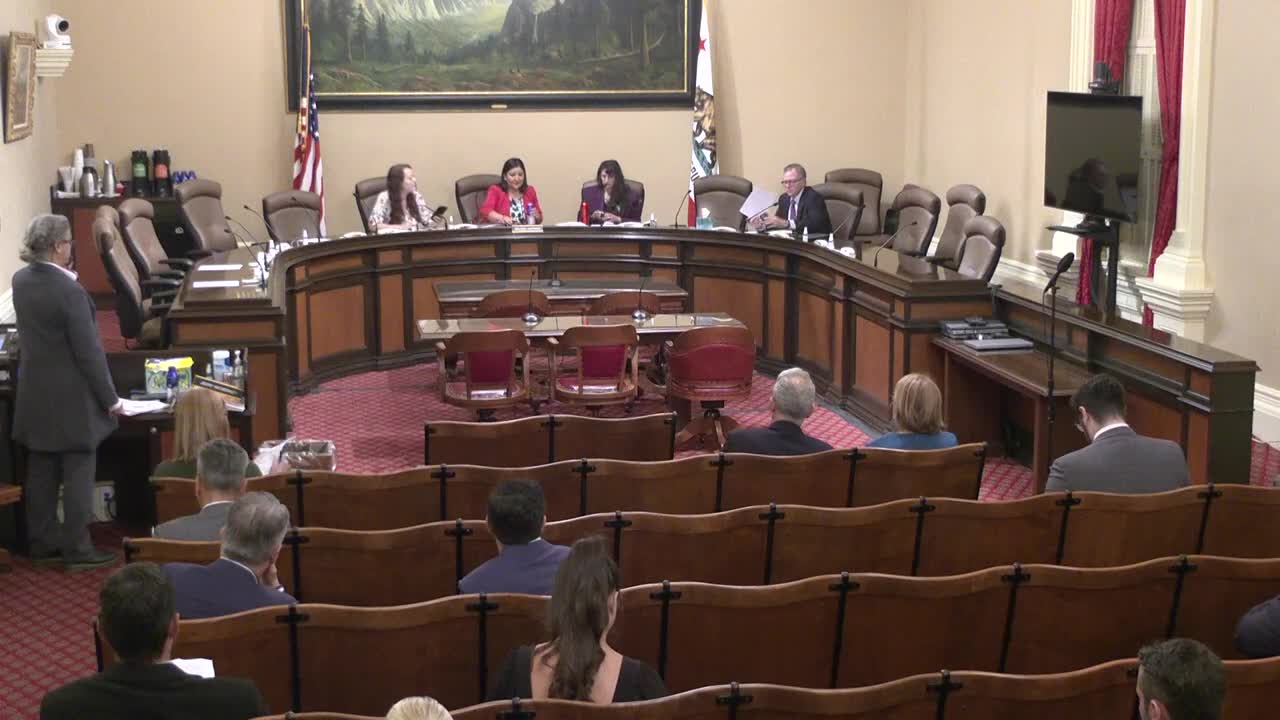
Discussed in Hearing
 13MIN
Senate Standing Committee on Agriculture
 46MIN
Assembly Floor
 11MIN
Assembly Standing Committee on Agriculture
Bill Author

Bill Co-Author(s):