AJR 7: Special education funding: protection.
- Session Year: 2025-2026
- House: Assembly
- Latest Version Date: 2025-08-29
Current Status:
Passed
(2025-08-29: Chaptered by Secretary of State - Res. Chapter 160, Statutes of 2025.)
Introduced
In Committee
Awaiting First Chamber Vote
Passed First Chamber
In Committee
Awaiting Second Chamber Vote
Passed Second Chamber
Enacted
This measure would call on members of the United States Congress to oppose reductions to funding that negatively impact educational services for students with disabilities and would call on the President of the United States and Congress to ensure that services and funding for students with disabilities are uninterrupted.
This measure would call on members of the United States Congress to oppose reductions to funding that negatively impact educational services for students with disabilities and would call on the President of the United States and Congress to ensure that services and funding for students with disabilities are uninterrupted.
This measure would call on members of the United States Congress to oppose reductions to funding that negatively impact educational services for students with disabilities and would call on the President of the United States and Congress to ensure that services and funding for students with disabilities are uninterrupted.
WHEREAS, The federal government plays a vital role in ensuring that California students, particularly those students with the greatest needs, including students with disabilities, receive the education to which they are entitled; and
WHEREAS, The federal Individuals with Disabilities Education Act (IDEA) (20 U.S.C. 1400 et seq.) provides a free and appropriate education to eligible children with disabilities. California receives over $1,500,000,000 in federal IDEA funding to support special education and related services. Further, federal Medicaid funding plays a crucial role in assisting with the cost of providing education-related services like speech therapy and physical therapy for eligible students with disabilities; and
WHEREAS, The federal government is critical to the protection and defense of the rights of students with disabilities. Families trust and rely on the government to ensure that their children receive a free appropriate public education, as required by federal law; and
WHEREAS, California has over 700 cases pending with the United States Department of Education Office for Civil Rights, and nearly 400 of these cases address disability discrimination. Justice will be delayed or denied for hundreds of families given the lack of enforcement capacity due to the abrupt reduction in the departments workforce and the closure of regional offices; and
WHEREAS, Funding cuts to federal programs that support students with disabilities will have significant and detrimental educational impacts; now, therefore, be it
Resolved by the Assembly and the Senate of the State of California, jointly, That the Legislature calls on members of the United States Congress to oppose reductions to funding that negatively impact educational services for students with disabilities; and be it further
Resolved, That the Legislature calls on the President of the United States and Congress to ensure that services and funding for students with disabilities are uninterrupted, including the allocation, monitoring, and management of IDEA formula funding and discretionary grant-funded programs; and be it further
Resolved, That the Chief Clerk of the Assembly transmit copies of this resolution to the President and Vice President of the United States, to the Speaker of the House of Representatives, to the Majority Leader of the Senate, to each Senator and Representative from California in the Congress of the United States, and to the author for appropriate distribution.
|
Date
|
Status
|
|---|---|
| Aug 29, 2025 | Chaptered by Secretary of State - Res. Chapter 160, Statutes of 2025. |
| Aug 29, 2025 | Enrolled and filed with the Secretary of State at 2 p.m. |
| Aug 26, 2025 | In Assembly. Ordered to Engrossing and Enrolling. |
| Aug 25, 2025 | Adopted and to Assembly. (Ayes 37. Noes 0. Page 2250.) |
| Aug 19, 2025 | Read second time. Ordered to Consent Calendar. |
| Jul 17, 2025 | From committee: Be adopted. To Consent Calendar. (Ayes 7. Noes 0.) (July 16). |
| Jun 11, 2025 | Referred to Com. on ED. |
| Jun 2, 2025 | In Senate. To Com. on RLS. |
| May 29, 2025 | Adopted and to Senate. (Ayes 72. Noes 0. Page 1767.) |
| May 29, 2025 | Coauthors revised. |
| Apr 10, 2025 | From committee: Be adopted. Ordered to Third Reading. (Ayes 9. Noes 0.) (April 9). |
| Apr 10, 2025 | Coauthors revised. |
| Mar 28, 2025 | Referred to Com. on ED. |
| Mar 27, 2025 | From printer. |
| Mar 26, 2025 | Introduced. To print. |
|
Date
|
Description
|
Location
|
Votes
|
|
|---|---|---|---|---|
| Aug 25, 2025 | Consent Calendar 2nd AJR7 Addis et al. | Senate Floor |
Passed |
|
| Jul 16, 2025 | Be adopted and be ordered to the Consent Calendar | Senate Standing Committee on Education |
Passed |
|
| May 29, 2025 | AJR 7 Addis Assembly Third Reading | Assembly Floor |
Passed |
|
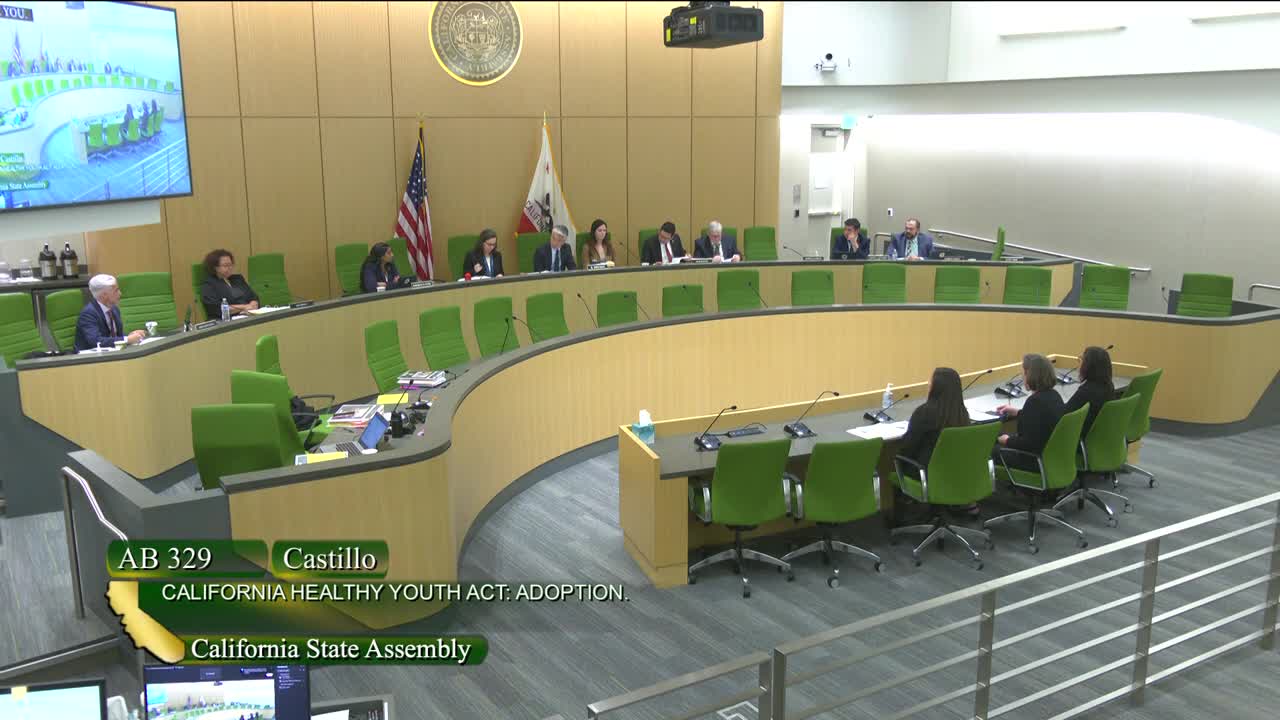
| Apr 9, 2025 | Be adopted. To third reading. | Assembly Standing Committee on Education |
Passed |
This list shows positions taken on this bill by organizations on the date displayed, which is linked to the original source.
Positions by individuals are not included.
|
Organization
|
Position
|
Date
|
|---|---|---|
| California County Superintendents | ** Support | |
| San Diego Unified School District | ** Support | |
| San Francisco Unified School District | ** Support | |
| SELPA Administrators of California | ** Support |
SENATE RULES COMMITTEE Office of Senate Floor Analyses (916) 651-1520 Fax: (916) 327-4478 | AJR 7 |
CONSENT
Bill No: AJR 7
Author: Addis (D), et al.
Introduced: 3/26/25
Vote: 21
SENATE EDUCATION COMMITTEE: 7-0, 7/16/25
AYES: Pérez, Ochoa Bogh, Cabaldon, Choi, Cortese, Gonzalez, Laird
ASSEMBLY FLOOR: 72-0, 5/29/25 - See last page for vote
SUBJECT: Special education funding: protection
SOURCE: Author
DIGEST:
This resolution urges the President of the United States (U.S.) and the U.S. Congress to protect federal funding for students with disabilities by ensuring that services and funding under the Individuals with Disabilities Education Act (IDEA) and related programs remain uninterrupted and under the administration of the U.S. Department of Education.
ANALYSIS:
Existing law:
- Guarantees all children with disabilities a free appropriate public education (FAPE) under IDEA. (20 U.S. Code § 1400 et seq.)
- Requires education in the least restrictive environment to the maximum extent appropriate.
- Provides federal grants to states to partially fund the excess costs of special education.
- Establishes Special Education Local Plan Areas (SELPAs) as the coordinating entities for special education funding and services in California. (Education Code (EC) §§ 56195, 56205)
This resolution:
- States that the federal government plays a vital role in providing education to students with the greatest needs, including those with disabilities.
- Highlights that California receives over $1.5 billion in federal IDEA funding annually, which supports special education and related services.
- Notes that federal Medicaid funding also supports education-related services like speech and physical therapy.
- Emphasizes the role of the federal government in defending the rights of students with disabilities and the trust families place in that role.
- Notes that California has over 700 cases pending with the U.S. Department of Education’s Office for Civil Rights, nearly 400 of which relate to disability discrimination.
- Warns that federal staffing reductions have diminished enforcement capacity and will delay or deny justice for affected families.
- Urges Congress to oppose any funding cuts that would harm educational services for students with disabilities.
- Calls on the President and Congress to ensure continued allocation and oversight of IDEA formula and discretionary grant programs.
- Directs the Chief Clerk of the Assembly to distribute copies of this resolution to federal officials and the author.
Comments
- Need for this bill. According to the author, “For nearly fifty years, the federal law has promised students with disabilities the right to a free appropriate public education. The Individuals with Disabilities Education Act, through the Department of Education, has been instrumental in providing support and services to our most vulnerable students, a mission that has been reaffirmed by Democratic and Republican administrations alike.
“The Trump Administration has threatened the immense progress we as a country have made for students with disabilities as they attempt to eliminate the Department of Education and the decades of expertise in supporting these students. I call upon the President and Congress to ensure that both services and funding for students with disabilities remain under the Department of Education, where they belong.”
- Potential consequences of federal proposals. Shifting IDEA to the U.S. Department of Health and Human Services raises serious concerns about the loss of institutional expertise, the weakening of civil rights enforcement, and a retreat to a “medical model” of disability that segregates students and emphasizes treatment over inclusion. The U.S. Department of Education is uniquely positioned to support the civil and educational rights of students with disabilities. Its dismantling would disrupt enforcement and threaten long-standing progress toward inclusive education.
- Federal funding gap and state burden. Despite decades of bipartisan support, IDEA has never been fully funded. The law envisions federal funding at 40% of the average per-pupil expenditure, but California receives less than 10% of its special education funding from the federal government. As a result, local districts are covering a growing share of special education costs—from 46% in 2006–07 to 63% in 2019–20—due in part to stagnant state and federal contributions and rising service demands.
- Historical context. The IDEA, originally enacted as the Education for All Handicapped Children Act in 1975, was a direct response to the widespread exclusion and segregation of children with disabilities. The law mandates that students with disabilities be educated alongside their peers whenever possible and with the supports necessary for success. Weakening or dislocating this framework risks returning to an era when disability was treated as a condition to be managed outside of the classroom.
- Arguments in support. Supporters like San Francisco Unified School District emphasize that IDEA funding is essential to maintaining inclusive educational environments and supporting specialized services. Reductions or administrative shifts would exacerbate federal underfunding and jeopardize decades of civil rights progress.
FISCAL EFFECT: Appropriation: No Fiscal Com.: No Local: No
SUPPORT: (Verified 7/16/25)
California County Superintendents
San Francisco Unified School District
SELPA Administrators of California
OPPOSITION: (Verified 7/16/25)
None received
ASSEMBLY FLOOR: 72-0, 5/29/25
AYES: Addis, Aguiar-Curry, Ahrens, Alanis, Arambula, Ávila Farías, Bains, Bauer-Kahan, Bennett, Berman, Boerner, Bonta, Calderon, Caloza, Carrillo, Castillo, Connolly, Davies, DeMaio, Dixon, Elhawary, Ellis, Flora, Fong, Gabriel, Gallagher, Garcia, Gipson, Jeff Gonzalez, Mark González, Hadwick, Haney, Harabedian, Hart, Hoover, Irwin, Jackson, Kalra, Krell, Lackey, Lee, Lowenthal, Macedo, McKinnor, Muratsuchi, Ortega, Pacheco, Papan, Patel, Patterson, Pellerin, Petrie-Norris, Quirk-Silva, Ramos, Ransom, Celeste Rodriguez, Michelle Rodriguez, Rogers, Blanca Rubio, Sanchez, Schiavo, Schultz, Sharp-Collins, Soria, Stefani, Ta, Valencia, Wallis, Wicks, Wilson, Zbur, Rivas
NO VOTE RECORDED: Alvarez, Bryan, Chen, Nguyen, Solache, Tangipa, Ward
Prepared by: Ian Johnson / ED. / (916) 651-4105
8/21/25 8:36:31
**** END ****
SENATE COMMITTEE ON EDUCATION
Senator Sasha Renée Pérez, Chair
2025 - 2026 Regular
Bill No: Hearing Date: July 16, 2025
Author: | Addis | ||
Version: |
| ||
Urgency: | Fiscal: | ||
Consultant: | |||
Subject: .
SUMMARY
This resolution urges the President of the United States and the U.S. Congress to protect federal funding for students with disabilities by ensuring that services and funding under the Individuals with Disabilities Education Act (IDEA) and related programs remain uninterrupted and under the administration of the U.S. Department of Education.
BACKGROUND
Existing law:
- Guarantees all children with disabilities a free appropriate public education (FAPE) under IDEA. (20 U.S.Code § 1400 et seq.)
- Requires education in the least restrictive environment to the maximum extent appropriate.
- Provides federal grants to states to partially fund the excess costs of special education.
- Establishes Special Education Local Plan Areas (SELPAs) as the coordinating entities for special education funding and services in California. (EC §§ 56195, 56205)
ANALYSIS
This resolution:
- States that the federal government plays a vital role in providing education to students with the greatest needs, including those with disabilities.
- Highlights that California receives over $1.5 billion in federal IDEA funding annually, which supports special education and related services.
- Notes that federal Medicaid funding also supports education-related services like speech and physical therapy.
- Emphasizes the role of the federal government in defending the rights of students with disabilities and the trust families place in that role.
- Notes that California has over 700 cases pending with the U.S. Department of Education’s Office for Civil Rights (OCR), nearly 400 of which relate to disability discrimination.
- Warns that federal staffing reductions have diminished enforcement capacity and will delay or deny justice for affected families.
- Urges Congress to oppose any funding cuts that would harm educational services for students with disabilities.
- Calls on the President and Congress to ensure continued allocation and oversight of IDEA formula and discretionary grant programs.
- Directs the Chief Clerk of the Assembly to distribute copies of this resolution to federal officials and the author.
STAFF COMMENTS
- Need for the bill. According to the author, “For nearly fifty years, the federal law has promised students with disabilities the right to a free appropriate public education. The Individuals with Disabilities Education Act, through the Department of Education, has been instrumental in providing support and services to our most vulnerable students, a mission that has been reaffirmed by Democratic and Republican administrations alike.
“The Trump Administration has threatened the immense progress we as a country have made for students with disabilities as they attempt to eliminate the Department of Education and the decades of expertise in supporting these students. I call upon the President and Congress to ensure that both services and funding for students with disabilities remain under the Department of Education, where they belong.”
- Potential consequences of federal proposals. Shifting IDEA to the U.S. Department of Health and Human Services (HHS) raises serious concerns about the loss of institutional expertise, the weakening of civil rights enforcement, and a retreat to a “medical model” of disability that segregates students and emphasizes treatment over inclusion. The U.S. Department of Education is uniquely positioned to support the civil and educational rights of students with disabilities. Its dismantling would disrupt enforcement and threaten long-standing progress toward inclusive education.
- Federal funding gap and state burden. Despite decades of bipartisan support, IDEA has never been fully funded. The law envisions federal funding at 40% of the average per-pupil expenditure (APPE), but California receives less than 10% of its special education funding from the federal government. As a result, local districts are covering a growing share of special education costs—from 46% in 2006–07 to 63% in 2019–20—due in part to stagnant state and federal contributions and rising service demands.
- Historical context. The IDEA, originally enacted as the Education for All Handicapped Children Act in 1975, was a direct response to the widespread exclusion and segregation of children with disabilities. The law mandates that students with disabilities be educated alongside their peers whenever possible and with the supports necessary for success. Weakening or dislocating this framework risks returning to an era when disability was treated as a condition to be managed outside of the classroom.
- Arguments in support. Supporters like San Francisco Unified School District emphasize that IDEA funding is essential to maintaining inclusive educational environments and supporting specialized services. Reductions or administrative shifts would exacerbate federal underfunding and jeopardize decades of civil rights progress.
SUPPORT
California County Superintendents
San Francisco Unified School District
SELPA Administrators of California
OPPOSITION
None received
-- END --
ASSEMBLY THIRD READING
ATR Bill Id:AJR 7
Author:(Addis)
As Introduced Ver:March 26, 2025
Majority vote
SUMMARY
Calls on the President of the United States and Congress to ensure that services and funding for students with disabilities are uninterrupted, including the allocation, monitoring, and management of Individuals with Disabilities Education Act (IDEA) formula funding and discretionary grant-funded programs.
Major Provisions
- States that the federal government plays a vital role in ensuring that California students, particularly those students with the greatest needs, including students with disabilities, receive the education to which they are entitled.
- States that federal IDEA provides a free and appropriate education to eligible children with disabilities.
- States that California receives over $1.5 billion in federal IDEA funding to support special education and related services.
- States that federal Medicaid funding plays a crucial role in assisting with the cost of providing education-related services like speech therapy and physical therapy, for eligible students with disabilities.
- States that the federal government is critical to the protection and defense of the rights of students with disabilities, and that families trust and rely on the government to ensure that their children receive a free appropriate public education (FAPE), as required by federal law.
- States that California has over 700 cases pending with the United States Department of Education (USDOE) Office for Civil Rights (OCR), and nearly 400 of these cases address disability discrimination.
- States that justice will be delayed or denied for hundreds of families given the lack of enforcement capacity due to the abrupt reduction in the USDOE workforce and the closure of regional offices.
- States that funding cuts to federal programs that support students with disabilities will have significant and detrimental educational impacts.
- Resolves by the Assembly and the Senate of the State of California, jointly, that the Legislature calls on members of the United States Congress to oppose reductions to funding that negatively impact educational services for students with disabilities.
- Resolves that the Legislature calls on the President of the United States and Congress to ensure that services and funding for students with disabilities are uninterrupted, including the allocation, monitoring, and management of IDEA formula funding and discretionary grant-funded programs.
- Resolves that the Chief Clerk of the Assembly transmit copies of this resolution to the President and Vice President of the United States, to the Speaker of the House of Representatives, to the Majority Leader of the Senate, to each Senator and Representative from California in the Congress of the United States, and to the author, for appropriate distribution.
COMMENTS
Recent federal actions to close USDOE, reduce staffing. On March 12, 2025, the Trump Administration announced a 50% "reduction in force″ at the USDOE, which brought staff from 4,133 to roughly 2,183. On March 20, 2025, President Trump signed an executive order directing the U.S. Secretary of Education to, "to the maximum extent appropriate and permitted by law, take all necessary steps to facilitate the closure of the Department of Education.″
According to the National Conference of State Legislatures (NCSL), the staff reductions cut roughly half of the staff of the OCR and the Institute for Education Sciences, along with over $1 billion in grant funding. Many research grants were also terminated. The Office of English Language Acquisition office was reduced to one staff member. Some of these reductions were subsequently challenged and restored, and litigation is ongoing.
Plans to move IDEA funding to U.S. Department of Health and Human Services raises concerns about increased segregation, loss of expertise, and the revival of a 'medical model' of disability. For fifty years, the IDEA has entitled students with disabilities to an education in the least restrictive environment, to ensure that students with disabilities are not segregated from their peers but instead viewed as rightful members of the school community. IDEA was enacted in response to a long history of excluding children with disabilities from school altogether, and later segregating them from their peers at school.
On March 31, 2025, President Trump announced plans to move IDEA funding from the USDOE to the U.S. Department of Health and Human Services (HHS). These plans to separate IDEA from other education programs have raised concerns that students with disabilities might be further segregated from their peers. Placing it within a healthcare agency also reinforces a "medical model" of disability, which emphasizes treatment as the approach to disability, rather than improving the systems and structures that can inhibit the potential of people with disabilities.
The Arc, a national organization advocating for and with people with intellectual and developmental disabilities, notes that "Moving IDEA to HHS risks turning back the clock on inclusion and sends a harmful message that children with disabilities are 'patients' to be managed rather than students with potential to be fulfilled."
A letter sent on April 2, 2025 to the U.S. Secretary of Education from 23 U.S. Senators, expressed deep concern over the loss of enforcement capacity and expertise:
The Department of Education has the statutory authority to implement and enforce IDEA. Without an act of Congress giving authority to HHS, this administration's attempts to shift IDEA responsibility to HHS will merely prevent the law from being enforced at all. The Department of Education is the only agency with an existing institutional infrastructure and a staff of subject matter experts dedicated to ensuring equal educational opportunity for children and students with disabilities.
More than this, disabled students deserve to be seen as and treated as the learners and scholars they are. Students with disabilities belong in classrooms alongside their nondisabled peers, and they deserve the accommodations and supports that enable them to thrive. Because of the Department of Education's specific expertise, it is best positioned to do the job well and efficiently. Transferring these authorities to HHS will not only overburden an agency already confronting massive workforce cuts orchestrated by this administration, but it will also stretch HHS beyond its expertise as medical, rather than educational, professionals.
We are alarmed by the potential consequences your proposed reassignment will have on the larger framework of education for students with disabilities. Prior to the passage of IDEA, only one in five children with disabilities were educated in schools, and more than 1.8 million children were systemically excluded from public school in the United States. Disabilities were seen as medical conditions to be treated and as a result, many children with disabilities were institutionalized rather than educated. We cannot risk regression to an outdated and dehumanizing perspective on disability, which prevented millions of children from accessing the inclusive public education they deserve.
Uncertain fate of disability discrimination complaints at OCR. This resolution states that California has over 700 cases pending with the OCR, and that nearly 400 of these cases address disability discrimination. It also states that resolution of these cases will be delayed or denied given the lack of enforcement capacity due to the abrupt reduction in the USDOE workforce and the closure of regional offices.
According to the NCSL, in 1979, Congress established the USDOE as the primary executive agency tasked with enforcing education-related civil rights law. The OCR is responsible for interpreting and enforcing civil rights laws in schools and other recipients of federal education aid. In federal fiscal year 2024, the OCR was funded at $627 million.
In March of this year, the Trump administration reduced the staff of the OCR by half, and announced the closure of 7 of its 12 regional offices. While the statutory responsibilities of this office have not changed, these reductions raise doubts about the capacity of the OCR to resolve existing and future complaints.
According to the Author
According to the author, "For nearly 50 years, the federal law has promised students with disabilities the right to a free appropriate public education. The Individuals with Disabilities Education Act, through the Department of Education, has been instrumental in providing support and services to our most vulnerable students, a mission that has been reaffirmed by Democratic and Republican administrations alike.
The Trump Administration has threatened the immense progress we as a country have made for students with disabilities as they attempt to eliminate the Department of Education and the decades of expertise in supporting these students. I call upon the President and Congress to ensure that both services and funding for students with disabilities remain under the Department of Education, where they belong."
Arguments in Support
The San Diego Unified School District writes, "For the past 50 years, IDEA has protected the rights of students with disabilities to receive a free, appropriate education in the least restrictive environment. Although IDEA has never been fully funded, the financial support it provides is crucial to offset the cost of providing specialized services that enable our students with disabilities to thrive in school.
Any reductions to IDEA funding would worsen the federal government's longstanding underinvestment in these students. Such cuts would not only undermine IDEA's original intent to fund 40% of the cost of providing specialized services but would also impose an unsustainable financial burden on states and local educational agencies.
Furthermore, moving IDEA oversight outside the Department of Education raises serious concerns. IDEA operates within a framework that focuses on inclusive practices in general education settings — an approach supported by decades of research and proven to deliver positive outcomes for all students. The Department of Education is uniquely positioned with the expertise, infrastructure, and legal framework necessary to effectively administer and enforce IDEA.
The Department of Education, IDEA, and the supports and services it provides are vital to the continued success of students with disabilities in San Diego and across the nation. Reducing IDEA funding or shifting its administration away from the Department of Education would undermine decades of progress and jeopardize the well-being of our most vulnerable students."
Arguments in Opposition
None on file
FISCAL COMMENTS
This resolution has been keyed non-fiscal by the Office of Legislative Counsel.
VOTES
ASM EDUCATION: 9-0-0
YES: Muratsuchi, Hoover, Addis, Alvarez, Bonta, Castillo, Garcia, Lowenthal, Patel
UPDATED
VERSION: March 26, 2025
CONSULTANT: Tanya Lieberman / ED. / (916) 319-2087 FN: 0000243
Date of Hearing: April 9, 2025
ASSEMBLY COMMITTEE ON EDUCATION
Al Muratsuchi, Chair
ABPCA Bill Id:AJR 7 (
Author:Addis) – As Introduced Ver:March 26, 2025
SUBJECT: Special education funding: protection
SUMMARY: Calls on the President of the United States and Congress to ensure that services and funding for students with disabilities are uninterrupted, including the allocation, monitoring, and management of Individuals with Disabilities Education Act (IDEA) formula funding and discretionary grant-funded programs. Specifically, this resolution:
- States that the federal government plays a vital role in ensuring that California students, particularly those students with the greatest needs, including students with disabilities, receive the education to which they are entitled.
- States that federal IDEA provides a free and appropriate education to eligible children with disabilities.
- States that California receives over $1.5 billion in federal IDEA funding to support special education and related services.
- States that federal Medicaid funding plays a crucial role in assisting with the cost of providing education-related services like speech therapy and physical therapy, for eligible students with disabilities.
- States that the federal government is critical to the protection and defense of the rights of students with disabilities, and that families trust and rely on the government to ensure that their children receive a free appropriate public education (FAPE), as required by federal law.
- States that California has over 700 cases pending with the United States Department of Education (USDOE) Office for Civil Rights (OCR), and nearly 400 of these cases address disability discrimination.
- States that justice will be delayed or denied for hundreds of families given the lack of enforcement capacity due to the abrupt reduction in the USDOE workforce and the closure of regional offices.
- States that funding cuts to federal programs that support students with disabilities will have significant and detrimental educational impacts.
- Resolves by the Assembly and the Senate of the State of California, jointly, that the Legislature calls on members of the United States Congress to oppose reductions to funding that negatively impact educational services for students with disabilities.
- Resolves that the Legislature calls on the President of the United States and Congress to ensure that services and funding for students with disabilities are uninterrupted, including the allocation, monitoring, and management of IDEA formula funding and discretionary grant-funded programs.
- Resolves, that the Chief Clerk of the Assembly transmit copies of this resolution to the President and Vice President of the United States, to the Speaker of the House of Representatives, to the Majority Leader of the Senate, to each Senator and Representative from California in the Congress of the United States, and to the author, for appropriate distribution.
EXISTING LAW:
- Requires that, in accordance with federal law, a free appropriate public education (FAPE) be available to individuals with exceptional needs. (20 U.S.C. 1400 et seq)
- Requires that every individual with exceptional needs who is eligible to receive special education instruction and related services receive that instruction and those services at no cost to his or her parents or, as appropriate, to him or her. (20 U.S.C. 1400 et seq)
- Requires that, in accordance with federal law, each public agency ensure the following to address the least restrictive environment for individuals with exceptional needs such that:
- To the maximum extent appropriate, individuals with exceptional needs, including children in public or private institutions or other care facilities, are educated with children who are nondisabled; and
- Special classes, separate schooling, or other removal of individuals with exceptional needs from the regular educational environment occurs only if the nature or severity of the disability is such that education in the regular classes with the use of supplementary aids and services cannot be achieved satisfactorily. (20 U.S.C. 1400 et seq)
- Provides, under the federal IDEA, grants to states to partially fund the excess costs associated with educating students with disabilities, using a formula based on the national average per pupil expenditure (APPE). (20 U.S.C. 1400 et seq)
- Establishes special education local plan areas (SELPAs) as the entity responsible for distributing state allocated special education funding to school districts and for coordinating services to students with disabilities. (Education Code (EC) 56195, 56205)
FISCAL EFFECT: This resolution has been keyed non-fiscal by the Office of Legislative Counsel.
COMMENTS:
Need for the resolution. According to the author, “For nearly fifty years, the federal law has promised students with disabilities the right to a free appropriate public education. The Individuals with Disabilities Education Act, through the Department of Education, has been instrumental in providing support and services to our most vulnerable students, a mission that has been reaffirmed by Democratic and Republican administrations alike.
The Trump Administration has threatened the immense progress we as a country have made for students with disabilities as they attempt to eliminate the Department of Education and the decades of expertise in supporting these students. I call upon the President and Congress to ensure that both services and funding for students with disabilities remain under the Department of Education, where they belong.”
Recent federal actions to close USDOE, reduce staffing. On March 12, 2025, the Trump Administration announced a 50% “reduction in force” at the USDOE, which brought staff from 4,133 to roughly 2,183. On March 20, 2025, President Trump signed an executive order directing the Secretary of Education, “to the maximum extent appropriate and permitted by law, take all necessary steps to facilitate the closure of the Department of Education.”
According to the National Conference of State Legislatures (NCSL), the staff reductions cut roughly half of the staff of the OCR and the Institute for Education Sciences, along with over $1 billion in grant funding. Many research grants were also terminated. The Office of English Language Acquisition office was reduced to one staff member. Some of these reductions were subsequently challenged and restored, and litigation is ongoing.
Plans to move IDEA funding to U.S. Department of Health and Human Services raises concerns about increased segregation, loss of expertise, and the revival of a ‘medical model’ of disability. On March 31, 2025, President Trump announced plans to move IDEA funding to the U.S. Department of Health and Human Services (HHS).
For fifty years, the IDEA has entitled students with disabilities to an education in the least restrictive environment, to ensure that students with disabilities are not segregated from their peers but instead viewed as rightful members of the school community. IDEA was enacted in response to a long history of excluding children with disabilities from school altogether, and later segregating them from their peers at school.
The plans to separate IDEA from other education programs have raised concerns that students with disabilities might be further segregated from their peers. Placing it within a healthcare agency also reinforces a “medical model” of disability, which emphasizes intervention and treatment as the approach to disability, rather than improving the systems and structures that can inhibit the potential of people with disabilities.
The Arc, a national organization advocating for and with people with intellectual and developmental disabilities, notes that “Moving IDEA to HHS risks turning back the clock on inclusion and sends a harmful message that children with disabilities are ‘patients’ to be managed rather than students with potential to be fulfilled.”
A letter sent on April 2, 2025 to the U.S. Secretary of Education from 23 U.S. Senators, expressed deep concern over the loss of enforcement capacity and expertise:
The Department of Education has the statutory authority to implement and enforce IDEA. Without an act of Congress giving authority to HHS, this administration’s attempts to shift IDEA responsibility to HHS will merely prevent the law from being enforced at all. The Department of Education is the only agency with an existing institutional infrastructure and a staff of subject matter experts dedicated to ensuring equal educational opportunity for children and students with disabilities.
More than this, disabled students deserve to be seen as and treated as the learners and scholars they are. Students with disabilities belong in classrooms alongside their nondisabled peers, and they deserve the accommodations and supports that enable them to thrive. Because of the Department of Education’s specific expertise, it is best positioned to do the job well and efficiently. Transferring these authorities to HHS will not only overburden an agency already confronting massive workforce cuts orchestrated by this administration, but it will also stretch HHS beyond its expertise as medical, rather than educational, professionals.
We are alarmed by the potential consequences your proposed reassignment will have on the larger framework of education for students with disabilities. Prior to the passage of IDEA, only one in five children with disabilities were educated in schools, and more than 1.8 million children were systemically excluded from public school in the United States. Disabilities were seen as medical conditions to be treated and as a result, many children with disabilities were institutionalized rather than educated. We cannot risk regression to an outdated and dehumanizing perspective on disability, which prevented millions of children from accessing the inclusive public education they deserve.
Uncertain fate of disability discrimination complaints at OCR. This resolution states that California has over 700 cases pending with the OCR, and that nearly 400 of these cases address disability discrimination. It also states that resolution of these cases will be delayed or denied given the lack of enforcement capacity due to the abrupt reduction in the USDOE workforce and the closure of regional offices.
According to the NCSL, in 1979, Congress established the USDOE as the primary executive agency tasked with enforcing education-related civil rights law. The OCR is responsible for interpreting and enforcing civil rights laws in schools and other recipients of federal education aid. In federal fiscal year 2024, the OCR was funded at $627 million.
In March of this year, the Trump administration reduced the staff of the OCR by half, and announced the closure of 7 of its 12 regional offices. While the statutory responsibilities of this office have not changed, these reductions raise doubts about the capacity of the OCR to resolve existing and future complaints.
A brief history of federal special education funding. According to the Congressional Research Service (CRS), the federal government did not begin providing assistance to states for the education of children with disabilities until 1966, when the Elementary and Secondary Education Act (ESEA) was amended to create a two-year grant program that funded states’ efforts to educate students with disabilities in preschool, elementary, and secondary grades. ESEA grant allotments were based on a state’s population of children with disabilities, ages 3-21, who were in need of special education services.
Despite this provision, by 1970, the United States Office of Education estimated that 60% of school-aged children with disabilities were not receiving special education services. In response, Congress enacted the Education of the Handicapped Act (EHA), which consolidated all federal educational assistance for children with disabilities into one statute and established a grant program to support projects that provided services for students with disabilities. The EHA distributed federal funds to states based on the number of all children, aged 3 to 21, within each state.
By 1974, continuing financial constraints prevented states from being able to meet special education requirements established by court mandates, federal law, and their own laws. As a result, Congress amended the EHA to provide a one-year emergency assistance program, which supported state-run special education programs and set the stage for subsequent enactment of the Education of All Handicapped Children Act in 1975.
Since 1975, special education law has been reauthorized by Congress five times, most recently in 2004. A reauthorization in 1990 renamed the act the IDEA. According to the CRS, “in its current form, the IDEA both authorizes federal funding for special education and related services and, for states that accept these funds, sets out principles under which special education and related services are to be provided.” Among these principles is the requirement that students with exceptional needs, aged birth to 22, be provided a free and appropriate public education in the least restrictive environment.
The current IDEA funding formula is not based on states’ actual special education costs. In 1975, Congress appointed a conference committee to resolve differing versions of the Education of All Handicapped Children Act produced by the Senate and House. According to the CRS, the Committee agreed to a funding formula that established a maximum grant for each state, equal to the number of children with disabilities served in each state, multiplied by a gradually increasing percentage of the national APPE. Congressional intent was for the federal government to pay a portion of the “excess” cost associated with educating students with disabilities, using APPE as the metric for determining this cost.
The funding level began at 5% of national APPE in 1978 and was slated to reach 40% in 1982. This funding level—40% of APPE multiplied by the number of children with disabilities served by a state—represented the maximum allowable grant that each state could receive per special education student from 1982 onward, and has come to be known as “full funding” under special education law. It remains in effect today with some modifications, as described below. In 1975, the Senate Committee on Labor and Public Welfare explained its rationale for the formula by stating:
The Committee adopted this formula in order to provide an incentive to states to serve all handicapped children and to assure that the entitlement is based on the number of children actually receiving special education and related services within the State and for whom the State or the local educational agency is paying for such education.
According to the CRS, Congress revised the IDEA funding formula in 1997 to account for growing concerns that the existing formula created a financial incentive to over-identify children as having disabilities; in particular, there were concerns that minority children were being over-identified as having disabilities in the categories of intellectual disability, specific learning disability, and emotional disturbance. Specifically, Congress changed the formula so that it appropriated funds on the basis of the total population of children in each state and the percentage of those children living in poverty rather than on the basis of the number of children receiving special education services. However, the maximum allowable grant amount for each state—that is, full funding—was still calculated using 40% of APPE, adjusted for the number of children with disabilities served by a state. The 2004 IDEA amendments changed the full funding calculation slightly, such that today, a state’s full funding level is calculated as 40% of APPE, multiplied by the number of children with disabilities served, and adjusted for each state’s annual changes in child population and poverty rate.
 The 1997 formula revisions took effect in 2000, guaranteeing states a minimum base-year amount equal to their fiscal year 1999 funding level. In subsequent years, when Congress appropriated more special education funding to states than it had in the prior year, funding above the base-year amount would be allocated based on two criteria: 1) each state’s total population of children (not just children with disabilities), ages 3-21, and 2) the percentage of those children living in poverty. 85% of funds above the base grant would be allocated based on the former criterion, while 15% of funds above the base grant would be allocated on the basis of the latter. This basic structure remains in place today, although IDEA amendments in 2004 made some additional modifications to the formula.
The IDEA has never received full federal funding. Full federal funding for special education has been an issue of national concern for decades. The CRS states that as early as 1969, federal appropriations to special education were only about 18% of the authorized amount. The CRS further states that in the four decades since the signing of the Education for All Handicapped Children Act, special education appropriations have never met the full funding level of 40% of the national APPE. The chart above, provided by the Legislative Analyst’s Office (LAO), shows that federal funding for special education in California results in a $3.2 billion deficit in federal appropriations for special education.
Federal funds cover declining share of California’s special education spending. Special education in California is funded with a combination of federal, state, and local revenues, totaling $14.6 billion in 2019-20. In 2019-20, local general purpose funds covered the largest share of these costs ($9.2 billion, or 63%), followed by state special education categorical funds ($4.1 billion, or 29%), combined with federal special education funds ($1.2 billion, or 8%). In recent years local general fund dollars have been covering an increasing share of special education costs.
As shown in the chart on the following page, provided by the LAO, between 2006-07 and 2019-20 the local share of special education funding has increased from 46% to 63%. This is a result of a number of factors, including:
- The growth formula for state special education funding is based on overall student growth and not on growth in special education. Because overall student growth has been declining, state funding for special education has been relatively flat, despite growing special education enrollment.
 The federal share of special education costs has declined from 14% in 2005-06 to 8% in 2019-20.
- The following compensation-related factors increase demands on local funds: 1) since special education personnel are paid on the same salary schedules as general education personnel, any negotiated increases in compensation raise special education costs, and 2) in recent years the state has required LEAs to provide an increased share of contributions to state retirement systems for school employees.
- There has been a marked increase in special education placements that require a higher level of service (such as autism spectrum disorders (ASD)) and a decline in placements requiring a lower level of service (such as Specific Learning Disability).
- Dedicated funding for higher cost placements, already small in proportion to overall funding, has not kept pace with the changing composition of student needs.
Arguments in support. The San Diego Unified School District writes, “For the past 50 years, IDEA has protected the rights of students with disabilities to receive a free, appropriate education in the least restrictive environment. Although IDEA has never been fully funded, the financial support it provides is crucial to offset the cost of providing specialized services that enable our students with disabilities to thrive in school.
Any reductions to IDEA funding would worsen the federal government’s longstanding underinvestment in these students. Such cuts would not only undermine IDEA’s original intent to fund 40% of the cost of providing specialized services but would also impose an unsustainable financial burden on states and local educational agencies.
Furthermore, moving IDEA oversight outside the Department of Education raises serious concerns. IDEA operates within a framework that focuses on inclusive practices in general education settings — an approach supported by decades of research and proven to deliver positive outcomes for all students. The Department of Education is uniquely positioned with the expertise, infrastructure, and legal framework necessary to effectively administer and enforce IDEA.
The Department of Education, IDEA, and the supports and services it provides are vital to the continued success of students with disabilities in San Diego and across the nation. Reducing IDEA funding or shifting its administration away from the Department of Education would undermine decades of progress and jeopardize the well-being of our most vulnerable students.”
Related legislation. SJR 4 (Wilk), Resolution Chapter 114, 2022, memorializes the 117th Congress of the United States and the President of the United States to reintroduce and enact legislation similar to H.R. 2902, introduced in 2017, or S. 866, introduced in 2019, which would fully fund the IDEA.
SJR 8 (Wilk) Resolution Chapter 131, 2019 memorializes the Congress and the President of the United States to enact S. 866, which was pending before Congress, to fully fund the IDEA.
SJR 19 (Wilk), Resolution Chapter 126, 2018, memorializes the Congress and the President of the United States to enact H.R. 2902, which would fully fund the Individuals with Disabilities Education Act (IDEA).
AB 428 (Medina) of the 2019-20 Session would have required that special education funding rates be equalized to the 95th percentile after the Local Control Funding Formula (LCFF) is fully funded, created a funding mechanism for state support of special education preschool, established a high cost service allowance to provide supplemental funding on the basis of the number of students with severe disabilities, and changed the calculation of the declining enrollment adjustment so that it is based on school district enrollment. This bill was held in the Senate Appropriations Committee.
AB 3136 (O’Donnell) of the 2017-18 Session was substantially similar to AB 428 of the 2019-20
Session. This bill was held in the Senate Appropriations Committee.
AJR 31(Buchanan), Resolution Chapter 41, 2010, recognized the shortfall in funding available from the federal government for special education purposes and the need for the federal government to generate and allocate sufficient funds for special education.
AJR 83 (Daucher), Resolution Chapter 132, 2004, memorialized the President and the Congress of the United States to provide the full federal share of funding for special education programs to the states so that this state and other states will not be required to take funding from other vital state and local programs to fund this underfunded federal mandate.
SJR 11 (Alpert), Resolution Chapter 68, 2003, memorialized the President and Congress of the United States to provide the full federal share of funding for special education programs to the states so that this state and other states will not be required to take funding from other vital state and local programs to fund this underfunded federal mandate.
AJR 12 (Lempert), Resolution Chapter 76, 1999, memorialized the President and the Congress of the United States to provide the full federal share of funding for special education programs.
REGISTERED SUPPORT / OPPOSITION:
Support
San Diego Unified School District
Opposition
None on file
Analysis Prepared by: Tanya Lieberman / ED. / (916) 319-2087
Discussed in Hearing
View Older Hearings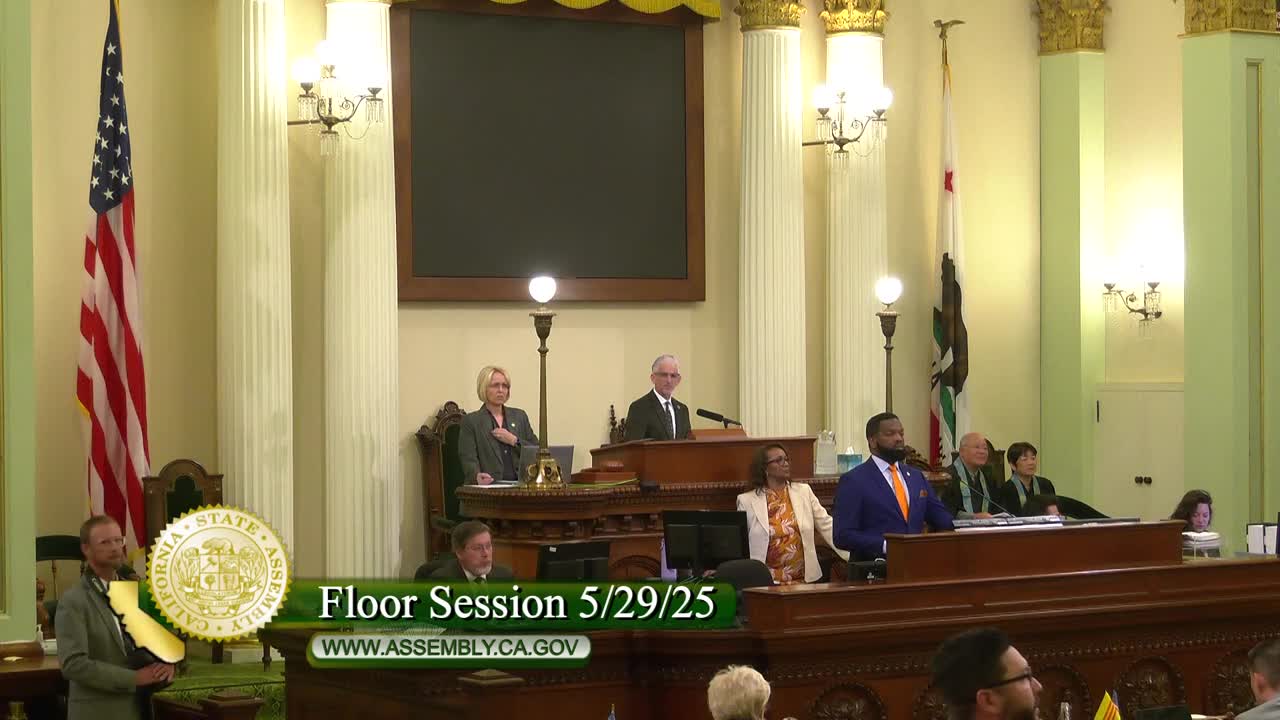
Bill Author

Bill Co-Author(s):