AJR 8: Older Americans Act of 1965.
- Session Year: 2015-2016
- House: Assembly
- Latest Version Date: 2015-06-02
This measure would recognize the 50th anniversary of the Older Americans Act of 1965, affirm the Legislatures continuing support for the goals of the act, and memorialize the United States House of Representatives and United States Senate to reauthorize the act.
This measure would recognize the 50th anniversary of the Older Americans Act of 1965, affirm the Legislatures continuing support for the goals of the act, and memorialize the United States House of Representatives and United States Senate to reauthorize the act.
This measure would recognize the 50th anniversary of the Older Americans Act of 1965, affirm the Legislatures continuing support for the goals of the act, and memorialize the United States House of Representatives and United States Senate to reauthorize the act.
This measure would recognize the 50th anniversary of the Older Americans Act of 1965, affirm the Legislatures continuing support for the goals of the act, and memorialize the United States House of Representatives and United States Senate to reauthorize the act.
This measure would recognize the 50th anniversary of the Older Americans Act of 1965, affirm the Legislatures continuing support for the goals of the act, and memorialize the United States House of Representatives and United States Senate to reauthorize the act.
WHEREAS, 2015 marks the 50th anniversary of the enactment of the Older Americans Act of 1965; and
WHEREAS, During the past 50 years, the implementation of the Older Americans Act of 1965 has contributed to the economic well-being of millions of older Americans, and has improved the quality of life for those individuals; and
WHEREAS, One of the key elements contributing to the successful implementation of the Older Americans Act of 1965 has been the establishment of an aging network composed of local area agencies on aging, providers of congregate and home-delivered nutrition, and many other community service providers; and
WHEREAS, The federal Administration on Aging in the United States Department of Health and Human Services was created by the Older Americans Act of 1965, and has been empowered to act as an effective advocate for the concerns and needs of older individuals; and
WHEREAS, The Older Americans Act of 1965 serves as a model for the development of community-based services, including services that provide alternatives to the institutionalization of older individuals; and
WHEREAS, Some of the programs authorized under the Older Americans Act of 1965 were created to address the specific concerns of those older Americans with the greatest social and economic needs, especially minority older Americans; and
WHEREAS, Many services under the Older Americans Act of 1965, including long-term care ombudsman and legal services providers, have acted as powerful advocates for older individuals; and
WHEREAS, The Older Americans Act of 1965 has brought together thousands of dedicated professionals and volunteers and has provided inspiration to those individuals; and
WHEREAS, Services authorized under the Older Americans Act of 1965 have provided important part-time community service employment opportunities for low-income older individuals; and
WHEREAS, Many older individuals, and those who serve them, have benefited greatly from the research, training, and education that programs established under the Older Americans Act of 1965 have provided; and
WHEREAS, Some of the programs under the Older Americans Act of 1965 were designed to address the special needs of older Native Americans; and
WHEREAS, In recognition of the changing needs of a rapidly aging society, the Older Americans Act of 1965 has been periodically amended; and
WHEREAS, The Older Americans Act of 1965 served as the foundation for an effective human services policy for millions of Americans as the United States entered the 21st century; now, therefore, be it
Resolved by the Assembly of the State of California and the Senate of the State of California, jointly, That the Legislature recognizes the 50th anniversary of the enactment of the Older Americans Act of 1965, and the successful implementation of that act; and be it further
Resolved, That the Legislature applauds the many and varied contributions at all levels of the aging network fostered by the Older Americans Act of 1965; and be it further
Resolved, That the Legislature affirms support for the Older Americans Act of 1965, and the primary goals of that act of providing services to maintain the dignity of older Californians, and promoting the independence of those individuals; and be it further
Resolved, That the Legislature memorializes the United States House of Representatives and the United States Senate to reauthorize the Older Americans Act of 1965 forthwith, with adequate funding to reflect the growing populations of Americans who benefit from the acts programs and services; and be it further
Resolved, That the Chief Clerk of the Assembly transmit copies of this resolution to the President and Vice President of the United States, to the Speaker of the United States House of Representatives, to the Majority Leader of the United States Senate, and to each Senator and Representative from the State of California in the Congress of the United States.
WHEREAS, 2015 marks the 50th anniversary of the enactment of the Older Americans Act of 1965; and
WHEREAS, During the past 50 years, the implementation of the Older Americans Act of 1965 has contributed to the economic well-being of millions of older Americans, and has improved the quality of life for those individuals; and
WHEREAS, One of the key elements contributing to the successful implementation of the Older Americans Act of 1965 has been the establishment of an aging network composed of local area agencies on aging, providers of congregate and home-delivered nutrition, and many other community service providers; and
WHEREAS, The federal Administration on Aging in the United States Department of Health and Human Services was created by the Older Americans Act of 1965, and has been empowered to act as an effective advocate for the concerns and needs of older individuals; and
WHEREAS, The Older Americans Act of 1965 serves as a model for the development of community-based services, including services that provide alternatives to the institutionalization of older individuals; and
WHEREAS, Some of the programs authorized under the Older Americans Act of 1965 were created to address the specific concerns of those older Americans with the greatest social and economic needs, especially minority older Americans; and
WHEREAS, Many services under the Older Americans Act of 1965, including long-term care ombudsman and legal services providers, have acted as powerful advocates for older individuals; and
WHEREAS, The Older Americans Act of 1965 has brought together thousands of dedicated professionals and volunteers and has provided inspiration to those individuals; and
WHEREAS, Services authorized under the Older Americans Act of 1965 have provided important part-time community service employment opportunities for low-income older individuals; and
WHEREAS, Many older individuals, and those who serve them, have benefited greatly from the research, training, and education that programs established under the Older Americans Act of 1965 have provided; and
WHEREAS, Some of the programs under the Older Americans Act of 1965 were designed to address the special needs of older Native Americans; and
WHEREAS, In recognition of the changing needs of a rapidly aging society, the Older Americans Act of 1965 has been periodically amended; and
WHEREAS, The Older Americans Act of 1965 served as the foundation for an effective human services policy for millions of Americans as the United States entered the 21st century; now, therefore, be it
Resolved by the Assembly of the State of California and the Senate of the State of California, jointly, That the Legislature recognizes the 50th anniversary of the enactment of the Older Americans Act of 1965, and the successful implementation of that act; and be it further
Resolved, That the Legislature applauds the many and varied contributions at all levels of the aging network fostered by the Older Americans Act of 1965; and be it further
Resolved, That the Legislature affirms support for the Older Americans Act of 1965, and the primary its goals of that act of providing services to maintain the dignity of older Californians, and promoting the independence of those individuals; and be it further
Resolved, That the Legislature memorializes the United States House of Representatives and the United States Senate to reauthorize the Older Americans Act of 1965 forthwith, with adequate funding to reflect the growing populations of Americans who benefit from the acts programs and services; and be it further
Resolved, That the Chief Clerk of the Assembly transmit copies of this resolution to the President and Vice President of the United States, to the Speaker of the United States House of Representatives, to the Majority Leader of the United States Senate, and to each Senator and Representative from the State of California in the Congress of the United States.
|
Date
|
Status
|
|---|---|
| Jun 2, 2015 | Chaptered by Secretary of State - Res. Chapter 53, Statutes of 2015. |
| Jun 2, 2015 | Enrolled and filed with the Secretary of State at 4 p.m. |
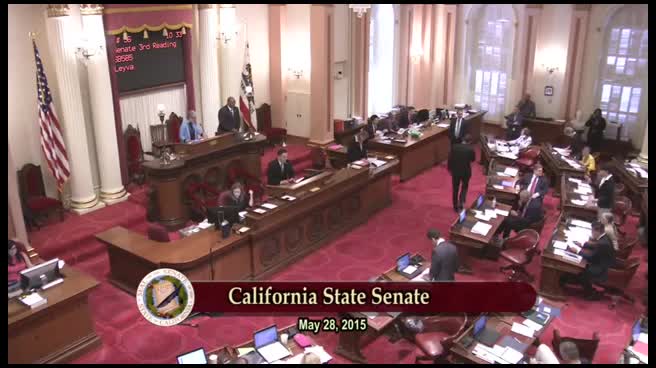
| May 28, 2015 | Adopted and to Assembly. (Ayes 38. Noes 0. Page 1122.) |
| May 28, 2015 | In Assembly. Ordered to Engrossing and Enrolling. |
| May 21, 2015 | From committee: Ordered to third reading. |
| May 11, 2015 | In Senate. To Com. on RLS. |
| May 7, 2015 | Amended, adopted, and to Senate. (Ayes 75. Noes 0. Page 1345.) |
| May 7, 2015 | Amended, adopted, and to Senate. |
| May 6, 2015 | From committee: Be adopted. Ordered to Third Reading. (Ayes 7. Noes 0.) (May 5). |
| Apr 16, 2015 | Re-referred to Com. on AGING & L.T.C. |
| Apr 15, 2015 | From committee chair, with author's amendments: Amend, and re-refer to Com. on AGING & L.T.C. Amended. |
| Apr 6, 2015 | Referred to Com. on AGING & L.T.C. |
| Feb 26, 2015 | From printer. |
| Feb 25, 2015 | Introduced. To print. |
|
Date
|
Description
|
Location
|
Votes
|
|
|---|---|---|---|---|
| May 28, 2015 | Assembly 3rd Reading AJR8 Brown By Liu | Senate Floor |
Passed |
|
| May 7, 2015 | AJR 8 BROWN Assembly Third Reading | Assembly Floor |
Passed |
|
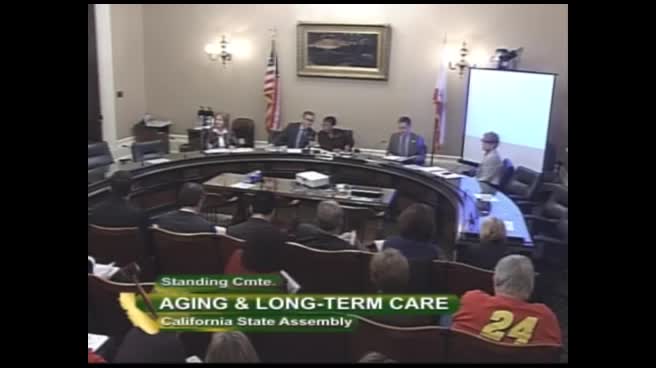
| May 5, 2015 | Be adopted. To third reading. | Assembly Standing Committee on Aging and Long-Term Care |
Passed |
This list shows positions taken on this bill by organizations on the date displayed, which is linked to the original source.
Positions by individuals are not included.
AJR 8
Page 4
|
Office of Senate Floor Analyses (916) 651-1520 Fax: (916) 327-4478 |
THIRD READING
Bill No: AJR 8
Amended: 5/7/15 in Assembly
ASSEMBLY FLOOR: 75-0, 5/7/15 - See last page for vote
SUBJECT: Older Americans Act of 1965
SOURCE: California Association of Area Agencies on Aging
California Association of Public Authorities for IHSS
California Commission on Aging
DIGEST: This resolution recognizes the 50th anniversary of the Older Americans Act of 1965, affirms the Legislature’s continuing support for the goals of the Act, and memorializes the United States House of Representatives and United States Senate to reauthorize the Act.
ANALYSIS: This resolution makes the following legislative findings:
2015 marks the 50th anniversary of the enactment of the Older Americans Act of 1965.
During the past 50 years, the implementation of the Older Americans Act of 1965 has contributed to the economic well-being of millions of older Americans, and has improved the quality of life for those individuals.
One of the key elements contributing to the successful implementation of the Older Americans Act of 1965 has been the establishment of an aging network composed of local area agencies on aging, providers of congregate and home-delivered nutrition, and many other community service providers.
The federal Administration on Aging in the United States Department of Health and Human Services was created by the Older Americans Act of 1965, and has been empowered to act as an effective advocate for the concerns and needs of older individuals.
The Older Americans Act of 1965 serves as a model for the development of community-based services, including services that provide alternatives to the institutionalization of older individuals.
This resolution recognizes the 50th anniversary of the enactment of the Older Americans Act of 1965, and the successful implementation of that Act. This resolution applauds the many and varied contributions at all levels of the aging network fostered by the Older Americans Act of 1965, and affirms support for the Older Americans Act of 1965, and the primary goals of that act of providing services to maintain the dignity of older Californians, and promoting the independence of those individuals. This resolution also memorializes the United States House of Representatives and the United States Senate to reauthorize the Older Americans Act of 1965 forthwith, with adequate funding to reflect the growing populations of Americans who benefit from the Act’s programs and services.
Prior Legislation
SCR 84 (Alquist, Resolution Chapter 54, Statutes of 2006) recognized the month of May 2006 as Older Americans Month.
ACR 226 (Berg, Resolution Chapter 86, Statutes of 2004) declared the month of May 2004 as Older Americans Month.
ACR 94 (Berg, Resolution Chapter 47, Statutes of 2003) declared the month of May 2003 as Older Americans Month.
FISCAL EFFECT: Appropriation: No Fiscal Com.: No Local: No
California Association of Area Agencies on Aging (co-source)
California Association of Public Authorities for IHSS (co-source)
California Commission on Aging (co-source)
AARP
California Assisted Living Association
California Long-Term Care Ombudsman Association
California PACE Association
California School Employees Association
California Senior Legislature
The Arc and United Cerebral Palsy California Collaboration
OPPOSITION: (Verified 5/19/15)
None received
ARGUMENTS IN SUPPORT: AARP writes:
OAA [Older Americans Act] created an array of services aimed at maintaining older persons with dignity, independence and vitality in their homes and communities for as long as possible as they age. The Act’s current authorization expired in FY11.
Congress has been unable to overcome partisan differences about whether to add new authorities or alter funding authorizations, preventing the OAA from being reauthorized for the past three years. AARP, in concert with other aging advocates, is promoting a simple reauthorization that will protect core OAA programs and improve program coordination to achieve greater effectiveness for funds already dedicated to the core programs of the Act.
AARP believes that helping seniors live independently in their homes for as long as they want — and supporting the family or friends who make this possible — is just good sense. OAA programs are vital supports that maximize the independence of older persons -- especially the vulnerable elderly -- in their homes and communities through a continuum of care services.
ASSEMBLY FLOOR: 75-0, 5/7/15
AYES: Achadjian, Alejo, Travis Allen, Baker, Bigelow, Bloom, Bonilla, Bonta, Brough, Brown, Calderon, Chang, Chau, Chávez, Chiu, Chu, Cooley, Cooper, Dababneh, Dahle, Daly, Dodd, Eggman, Frazier, Beth Gaines, Gallagher, Cristina Garcia, Eduardo Garcia, Gatto, Gipson, Gomez, Gonzalez, Gordon, Gray, Grove, Hadley, Harper, Holden, Irwin, Jones, Jones-Sawyer, Kim, Lackey, Levine, Linder, Lopez, Low, Maienschein, Mathis, Mayes, McCarty, Medina, Melendez, Mullin, Nazarian, Obernolte, O'Donnell, Olsen, Patterson, Perea, Quirk, Rendon, Ridley-Thomas, Rodriguez, Salas, Santiago, Mark Stone, Ting, Wagner, Waldron, Weber, Wilk, Williams, Wood, Atkins
NO VOTE RECORDED: Burke, Campos, Roger Hernández, Steinorth, Thurmond
Prepared by: Karen Chow / SFA / (916) 651-1520
5/26/15 11:30:22
AJR 8
Page 2
ASSEMBLY THIRD READING
AJR 8
(Brown)
As Amended April 15, 2015
Majority vote
Committee |
Votes |
Ayes |
Noes |
Aging |
7-0 |
Brown, Hadley, Gipson, Gray, Levine, Lopez, Mathis |
|
SUMMARY: Recognizes the 50th Anniversary of the Older Americans Act of 1965, affirm support thereof, and encourage the reauthorization of the Act with adequate funding to reflect the growing population that benefits from its services. Specifically, this resolution:
Finds that the State Legislature acknowledges the 50th anniversary of the Older Americans Act (OAA);
Acknowledges the OAA's influence upon the improved economic, well-being and improved quality of life for elders in the state;
Highlights the establishment of the "aging network," which consists of local area agencies on aging and their partner community-based organizations and lead by the Administration on Aging (AoA) in Washington, D.C.;
Acknowledges the OAA's focus upon elders in greatest economic and/or social need by targeting their needs and services that keep them independent longer, offer employment opportunities to low income older adults, as well as targeted research, education and training;
Acknowledges the special attention to Native Populations, while paying tribute to the generation of new beneficiaries, also known as "baby-boomers," and the influences they will create;
Resolves that the Legislature memorialize the 50th anniversary of the implementation of the OAA, commends the many contributions of it, supports the reauthorization of the OAA with adequate funding; and,
Directs the Chief Clerk of the Assembly to distribute copies of this resolution to the President and Vice President of the United States, the Speaker of the House, and the Majority Leader of the Senate, and to every member of the California Legislative Delegation to Washington, D.C.
Background: The Older Americans Act of 1965 (as amended in 2006, Public Law 109-365) was passed to preserve the inherent dignity of older individuals and assure equal opportunity to the full and free enjoyment of, adequate income in retirement, the best possible physical and mental health which science can make available and without regard to economic status, obtaining and maintaining suitable housing at costs which older citizens can afford, full restorative services for those who require institutional care, a comprehensive array of community-based, long-term care services adequate to appropriately sustain older people in their communities and in their homes, including support to family members and other persons providing voluntary care to older individuals needing long-term care services, retirement in health, honor, and dignity, after years of contribution to the economy, participation in and contribution to meaningful activity within the widest range of civic, cultural, educational and training, and recreational opportunities, freedom, independence, and the free exercise of individual initiative in planning and managing their own lives, full participation in the planning and operation of community-based services and programs provided for their benefit, and, protection against abuse, neglect, and exploitation.
The author underscores the current demographic realities for the State of California which indicates that for about the next 14 years, roughly 1,000 people in the state will turn 65 each day. Life-spans continue to be extended as health care advances continue to reduce risk of conditions that once contributed to shorter life-spans. The 65 and over cohort is currently growing at a rate about three-times that of those under age 65. This phenomenon will continue until the 65 and over population reaches about 24% of the total population around 2050. Today, California's 65 and over population represents about 12.5%, and stands at about 5.1 million people. Within 10 years, those over the age of 65 will represent about 18% of the population. Supporting the needs of elders during the next several decades remains a concern. Numerous reports, hearings, and legislative proposals have pointed out the inadequacies of California's patchwork of long-term care (LTC) programs, services, and policies to support a growing cohort of older people. The combination of fragmented jurisdictions which places the programs that seniors need under the direction of multiple administrators, all of whom operate under separate authorities and mandates, coupled with resource constraints, and programmatic overlap and diffused accountability, creates the impression that a great deal of work is being performed, but the degree to which the same amount of work could be done with focused leadership, coordination, and accountability remains untested. Absent substantial reform of the state's aging and long-term care system, the costs of over-institutionalization, lost productivity, and degraded quality of life will remain the hallmark of California's efforts to serve older people.
The state's economic recovery offers an opportunity to address an unanswered call to action to build an LTC infrastructure that meets the needs of aging and disabled adults, as well as those who care for them, while economizing to contain unnecessary costs.
Analysis Prepared by: Robert MacLaughlin / AGING & L.T.C. / (916) 319-3990 FN: 0000296
AJR 8
Page 5
Date of Hearing: May 5, 2015
ASSEMBLY COMMITTEE ON AGING AND LONG-TERM CARE
Cheryl Brown, Chair
AJR 8
(Brown) – As Amended April 15, 2015
SUBJECT: Older Americans Act of 1965.
SUMMARY: Recognizes the 50th Anniversary of the Older Americans Act of 1965, affirms support thereof, and encourages the reauthorization of the Act with adequate funding to reflect the growing population that benefits from its services. Specifically, this bill:
Finds that the State Legislature acknowledges the 50th anniversary of the Older Americans Act (OAA);
Acknowledges the OAA’s influence upon the improved economic, well-being and improved quality of life for elders in the state;
Highlights the establishment of the “aging network,” which consists of local area agencies on aging and their partner community-based organizations and lead by the Administration on Aging (AoA) in Washington D.C.;
Acknowledges the OAA’s focus upon elders in greatest economic and/or social need by targeting their needs and services that keep them independent longer, offer employment opportunities to low income older adults, as well as targeted research, education and training;
Acknowledges the special attention to Native Populations, while paying tribute to the generation of new beneficiaries, also known as “baby-boomers,” and the influences they will create;
Resolves that the Legislature memorialize the 50th anniversary of the implementation of the OAA, commends the many contributions of it, supports the reauthorization of the OAA with adequate funding; and,
Directs the Chief Clerk to distribute copies of AJR 8 to the President and Vice President, the Speaker of the House, and the Majority Leader of the Senate, and to every member of the California Legislative Delegation to Washington D.C.
EXISTING LAW:
Establishes the Older Americans Act of 1965 (as amended in 2006, Public Law 109-365) in order to preserve the inherent dignity of older individuals and assure equal opportunity to the full and free enjoyment of, among other things:
adequate income in retirement;
the best possible physical and mental health which science can make available and without regard to economic status;
obtaining and maintaining suitable housing at costs which older citizens can afford;
full restorative services for those who require institutional care;
a comprehensive array of community-based, long-term care services adequate to appropriately sustain older people in their communities and in their homes, including:
support to family members and other persons providing voluntary care to older individuals needing long-term care services;
retirement in health, honor, and dignity, after years of contribution to the economy;
participation in and contribution to meaningful activity within the widest range of civic, cultural, educational and training, and recreational opportunities;
freedom, independence, and the free exercise of individual initiative in planning and managing their own lives;
full participation in the planning and operation of community-based services and programs provided for their benefit; and,
protection against abuse, neglect, and exploitation.
Existing state law establishes the Mello-Granlund Older Californians Act (OCA) that sets forth the state’s commitment to its older population and other populations served by the programs administered by the California Department of Aging (CDA), and that older individuals constitute a fundamental resource of the state that previously has been undervalued and poorly utilized, and encourages that ways must be found to enable older individuals to apply their competence, wisdom, and experience for the benefit of all Californians. The Act acknowledges that there is a continuing increase in the number of older individuals in proportion to the total population, that:
By the year 2010, the first influx of baby boomers will constitute 29.2 percent of California’s total population over 60 years of age. By the year 2020, baby boomers will constitute 70.2 percent of California’s total population over 60 years of age, that;
By the year 2020, older individuals will represent 21 percent of California’s total population, that;
While the number of persons over 60 years of age is increasing rapidly, the number of older women, minorities and persons over the age of 75 are increasing at an even greater rate, that;
Among persons over 75 years of age, there is a higher incidence of functional disabilities, that;
The social and health problems of the older individual are further compounded by inaccessibility to existing services and by the unavailability of a complete range of services, that;
Services to older individuals are administered by many different agencies and departments at both the state and local level, that;
The planning and delivery of these services is not carried out with any degree of coordination among those agencies, that;
Enhanced coordination reduces duplication, eliminates inefficiencies, and enhances service delivery for the consumer, that;
The ability of the constantly increasing number of aged in the state to maintain self-sufficiency and personal well-being with the dignity to which their years of labor entitle them and to realize their maximum potential as creative and productive individuals are matters of profound importance and concern for all of the people of this state., and that;
The OCA specifies that CDA shall ensure that programs and services provided through the Older Americans Act and the Older Californians Act in each planning and service area are available to all older adults regardless of physical or mental disabilities, language barriers, cultural or social isolation, including that caused by actual or perceived racial and ethnic status, ancestry, national origin, religion, sex, gender, identity, marital status, familial status, sexual orientation, or by any other basis set forth in Section 12921 of the Government Code, or by association with a person or persons with one or more of these actual or perceived characteristics, that restrict an individual’s ability to perform normal daily tasks or that threaten his or her capacity to live independently.
By Presidential Proclamation, designates May as Older American’s Month, and establishes a theme for 2015; “Get into the Act” to assure the benefits of community living become a reality for more “senior” Americans, and to promote healthy aging, increased community involvement, and to tackle important issues like the prevention of elder abuse.
FISCAL EFFECT: This measure has not yet been analyzed by a fiscal committee.
COMMENTS:
Author’s Statement: “The 50th anniversary of the Older Americans Act (OAA) of 1965 warrants formal recognition by the legislative body of California. AJR 8 would affirm the important role the OAA has played in the lives of older Americans throughout our nation and in our state. It will also memorialize Congress to reauthorize the Act.
“Congress passed the Older Americans Act (OAA) in 1965 in response to concerns by policymakers about a lack of community social services for older persons. The original legislation established authority for grants to States for community planning and social services, research and development projects, and personnel training in the field of aging. The law also established the Administration on Aging (AoA) to administer the newly created grant programs and to serve as the Federal focal point on matters concerning older persons.
“During the past 50 years, the OAA has been instrumental in contributing to the well-being of millions of older Americans. More importantly, the Act has improved the quality of life for some 4.5 million older Californians and has helped the neediest of our seniors; however, over the past ten years state funding for senior programs within the OAA has been slashed.
“Since 2004, approximately $25 million has been cut, resulting in the elimination or dramatic reduction of critical community-based programs and services provided through the state’s Area Agencies on Aging, including the Alzheimer’s Day Care Resource Centers, Senior Companion, Linkages, Respite Care, Brown Bag, Caregiver Resource Centers, and the Long-term Care Ombudsman.
“The state’s older population is on the rise. The AoA projects that, in 2030, there will be approximately 72.1 million older persons in the United States; which is more than twice the number of seniors that were counted in 2000. People aged 65 or older represented 12.4% of the population in the year 2000 but are expected to be 19% of the population by 2030. The Older Americans Act is needed more than ever in order to bring attention to senior issues and prepare for the ‘silver tsunami’.”
Background: The author underscores the current demographic realities for the state of California which indicates that for about the next 14 years, roughly 1,000 people in the state will turn 65 each day. Life-spans continue to be extended, and health care advances continue to reduce risk of conditions that once contributed to shorter life-spans. The 65+ cohort is currently growing at a rate about three-times that of those under age 65. This phenomenon will continue until the 65+ population reaches about 24% of the total population around 2050. Today, the 65+ population represents about 12.5% of the population, and stands at about 5.1 million people. Within 10 years, those over the age of 65 will represent about 18% of the population. Supporting the needs of elders during the next several decades remains a concern. Nonetheless, numerous reports, hearings, and legislative proposals have pointed out the inadequacies of California’s patchwork of long-term care (LTC) programs, services, and policies to support a growing cohort of older people. The combination of fragmented jurisdictions which places the programs that seniors need under the direction of multiple administrators all of whom operate under separate authorities and mandates, coupled with resource constraints, and programmatic overlap, diffused accountability, creates the impression that a great deal of work is being performed, but the degree to which the same amount of work could be done with focused leadership, coordination and accountability remains untested. Absent substantial reform of the state’s aging and long-term care system, the costs of over-institutionalization, lost productivity, and degraded quality of life will remain the hallmark of California’s efforts to serve older people.
The state’s economic recovery offers an opportunity to address an unanswered call to action to build an LTC infrastructure that meets the needs of aging and disabled adults, as well as those who care for them. The data are clear that a crisis is potentially eminent: adults age 65 and older currently comprise 12.5% of California’s population, with projections showing that almost 20% of the population will be over age 65 in 2030.
Previous Legislation:
SCR 84 (Alquist/Resolution Chapter 54, Statutes of 2006). This resolution recognized the month of May 2006 as Older Americans Month.
ACR 36 (Wayne, et.al./Resolution Chapter 17, Statutes of 1999). This resolution declared the month of May 1999 as Older Californians Month.
ACR 192 (Zettle, et.
al./Resolution Chapter 75, Statutes of 2002) Declared the month of
May 2002 as Elder Abuse Prevention Month in California.
ACR 94 (Berg, et.al./Resolution Chapter 47, Statutes of 2003). This resolution declared the month of May 2003 as Older Americans Month.
ACR 226 (Berg/Resolution Chapter 86, Statutes of 2004). This resolution declared the month of May 2004 as Older Americans Month.
ACR 111 (Huffman, Berg/Resolution Chapter 34, Statutes of 2008) Recognized the month of May 2008 as Senior Volunteer Month to honor the contributions of California senior volunteers.
ACR 78 (Galgiani/Resolution Chapter 116, Statutes of 2011). This resolution declared the month of November 2011 as California Senior Center Month
REGISTERED SUPPORT / OPPOSITION:
Support
California Association of Area Agencies on Aging (C4A) – Co-Sponsor
California Association of Public Authorities for IHSS (CAPA) – Co-Sponsor
American Association of Retired Persons (AARP)
California Assisted Living Association (CALA)
California Long-Term Care Ombudsman Association (CLTCOA)
California PACE Association (CalPACE)
California School Employees Association (CSEA)
Opposition
None on file.
Analysis Prepared by: Robert MacLaughlin / AGING & L.T.C. / (916) 319-3990
Discussed in Hearing
 1MIN
Senate Floor
 1MIN
Assembly Floor
 8MIN
Assembly Standing Committee on Aging and Long-Term Care
Bill Author

Bill Co-Author(s):