SB 1: Personal income taxes: exclusion: Military Services Retirement and Surviving Spouse Benefit Payment Act.
- Session Year: 2025-2026
- House: Senate
- Latest Version Date: 2025-02-20
Current Status:
Failed
(2026-02-02: Returned to Secretary of Senate pursuant to Joint Rule 56.)
Introduced
In Committee
Awaiting First Chamber Vote
Passed First Chamber
In Committee
Awaiting Second Chamber Vote
Passed Second Chamber
Enacted
The Personal Income Tax Law imposes a tax on individual taxpayers measured by the taxpayers taxable income for the taxable year, but excludes certain items of income from the computation of tax, Law, in conformity with federal income tax laws, defines gross income as income from whatever source derived, except as specifically excluded, and provides various exclusions from gross income, including an exclusion for combat-related special compensation.
This bill, for taxable years beginning on or after January 1, 2024, 2025, and before January 1, 2034, 2035, would exclude from gross income retirement pay received by a taxpayer qualified taxpayer, as defined, during the taxable year, not to exceed $20,000, from the federal government for service performed in the uniformed services, as defined, during the taxable year. defined. The bill, for taxable years beginning on or after January 1, 2024, 2025, and before January 1, 2034, 2035, would also exclude from gross income annuity payments received by a qualified taxpayer, as defined, during the taxable year, not to exceed $20,000, pursuant to a United States Department of Defense Survivor Benefit Plan during the taxable year. Plan. The bill would make related findings and declarations.
Existing law requires any bill authorizing a new tax expenditure to contain, among other things, specific goals, purposes, and objectives that the tax expenditure will achieve, detailed performance indicators, and data collection requirements.
This bill also would include additional information required for any bill authorizing a new tax expenditure. The bill would require the Franchise Tax Board and the Department of Veterans Affairs to provide any data requested by the Legislative Analyst to write the report, as provided, and would make taxpayer information received by the Legislative Analyst subject to limitation on the collection and use of that information. By expanding the scope of a crime, this bill would impose a state-mandated local program.
The California Constitution requires the state to reimburse local agencies and school districts for certain costs mandated by the state. Statutory provisions establish procedures for making that reimbursement.This bill would provide that no reimbursement is required by this act for a specified reason.This bill would take effect immediately as a tax levy.
The Personal Income Tax Law imposes a tax on individual taxpayers measured by the taxpayers taxable income for the taxable year, but excludes certain items of income from the computation of tax, including an exclusion for combat-related special compensation.
This bill, for taxable years beginning on or after January 1, 2024, and before January 1, 2034, would exclude from gross income retirement pay received by a taxpayer from the federal government for service performed in the uniformed services, as defined, during the taxable year. The bill, for taxable years beginning on or after January 1, 2024, and before January 1, 2034, would also exclude from gross income annuity payments received by a qualified taxpayer, as defined, pursuant to a United States Department of Defense Survivor Benefit Plan during the taxable year. The bill would make related findings and declarations.
Existing law requires any bill authorizing a new tax expenditure to contain, among other things, specific goals, purposes, and objectives that the tax expenditure will achieve, detailed performance indicators, and data collection requirements.
This bill also would include additional information required for any bill authorizing a new tax expenditure. The bill would require the Franchise Tax Board and the Department of Veterans Affairs to provide any data requested by the Legislative Analyst to write the report, as provided, and would make taxpayer information received by the Legislative Analyst subject to limitation on the collection and use of that information. By expanding the scope of a crime, this bill would impose a state-mandated local program.
The California Constitution requires the state to reimburse local agencies and school districts for certain costs mandated by the state. Statutory provisions establish procedures for making that reimbursement.
This bill would provide that no reimbursement is required by this act for a specified reason.
This bill would take effect immediately as a tax levy.
This measure shall be known, and may be cited, as the Military Services Retirement and Surviving Spouse Benefit Payment Act.
SEC. 2.The Legislature finds and declares all of the following:
(a)Servicemembers are eligible to retire from the military after 20 years of service. These retirees devoted the prime years of their life to defending the freedom of all Americans.
(b)To preserve the current policy of an all-volunteer force while still maintaining critical skills and readiness requires the retention of qualified military personnel, both enlisted and officers. This retention of military professionals also saves the costs to the taxpayer associated with training replacement personnel in essential skills.
(c)Retired members of the nations two nonarmed uniformed services, which consist of the commissioned corps of the United States Public Health Service and the National Oceanic and Atmospheric Administration Commissioned Officer Corps, also provide valuable service to the nations health and environmental safety.
(d)Providing a state income tax exclusion to retirees of the uniformed services not only signifies the gratitude of Californians for these men and women who chose to serve our country, it also benefits the state and local economies by helping to retain skilled and motivated individuals in California.
(e)The number one issue for employers in California is attracting a qualified workforce. Approximately 60,000 high-tech jobs are unfilled. Uniformed service retirees are highly skilled, often in areas requiring technical and management expertise. These men and women often continue to be valuable assets to our schools, local charities, and nonprofit organizations.
(f)Substantial new federal funds are infused into the state and local economies not only from retirement pay, but also from the full taxation of their second careers. These retirees may also qualify for federal veterans benefits, which further bring new monies moneys into the state.
(g)The United States Department of Defenses Survivor Benefit Plan allows a retiree to ensure, after death, a continuous lifetime annuity for their dependents. The maximum annuity for a spouse is based on 55 percent of the members retirement pay. Eligible children may also be beneficiaries. State income taxation of these funds, which are critical to the economic well-being of those who have suffered the loss of a husband, wife, father, or mother, can place the surviving family members in risk of falling into the state and local safety nets.
SEC. 3.Section 17132.9 is added to the Revenue and Taxation Code, to read:17132.9.(a)For taxable years beginning on or after January 1, 2024, 2025, and before January 1, 2034, 2035, gross income shall not include retirement pay received by a taxpayer qualified taxpayer during the taxable year, not to exceed twenty thousand dollars ($20,000), from the federal government for service in the uniformed services during the taxable year. services.
(b)For purposes of this section, the following definitions apply:
(1)Armed Forces of the United States includes all regular and reserve components of the uniformed services which are subject to the jurisdiction of the Secretary of Defense, the Secretary of the Army, the Secretary of the Navy, or the Secretary of the Air Force, and each term also includes the Coast Guard and United States Space Force. The members of such forces include commissioned officers and personnel below the grade of commissioned officers in such forces.(1)Qualified taxpayer means a taxpayer that satisfies either of the following:
(A)In the case of a surviving spouse or spouses filing a joint return, adjusted gross income does not exceed two hundred fifty thousand dollars ($250,000).
(B)In the case of any other individual, adjusted gross income does not exceed one hundred twenty-five thousand dollars ($125,000).
(2)Uniformed services means the Armed Forces of the United States, the Army National Guard and the Air National Guard when engaged in active duty for training, inactive duty training, or full-time National Guard duty, the commissioned corps of the United States Public Health Service, and the National Oceanic and Atmospheric Administration Commissioned Officer Corps.
(c)This section shall remain in effect only until December 1, 2034, 2035, and as of that date is repealed.
SEC. 4.Section 17132.10 is added to the Revenue and Taxation Code, to read:17132.10.(a)For taxable years beginning on or after January 1, 2024, 2025, and before January 1, 2034, 2035, gross income shall not include annuity payments received by a qualified taxpayer taxpayer during the taxable year, not to exceed twenty thousand dollars ($20,000), pursuant to a United States Department of Defense Survivor Benefit Plan during the taxable year. Plan.
(b)For purposes of this section, the following definitions apply:
(1)Qualified taxpayer means the surviving spouse or other named beneficiary of a plan. plan who satisfies either of the following:
(A)In the case of a surviving spouse or spouses filing a joint return, adjusted gross income does not exceed two hundred fifty thousand dollars ($250,000).
(B)In the case of any other individual, adjusted gross income does not exceed one hundred twenty-five thousand dollars ($125,000).
(2)United States Department of Defense Survivor Benefit Plan or plan means a survivor benefit plan established pursuant to Sections 1447 to 1455, inclusive, of Title 10 of the United States Code.
(c)This section shall remain in effect only until December 1, 2034, 2035, and as of that date is repealed.
SEC. 5.For purposes of complying with the requirements of Section 41 of the Revenue and Taxation Code, with respect to the exclusions allowed by Sections 17132.9 and 17132.10 of the Revenue and Taxation Code, as added by this act, hereafter known as the exclusions, the Legislature finds and declares the following:
(a)The specific goals, purposes, and objectives of the exclusions are as follows:
(1)To honor the service of California veterans and provide fiscal relief so that they and their families will remain or retire in California.
(2)To increase the number of highly skilled retired veterans in Californias workforce.
(b)Detailed performance indicators for the Legislature to use in determining whether the exclusions meet the goals, purposes, and objectives described in subdivision (a) are as follows:(1)The number of retired veterans and survivor benefit plan beneficiaries taking advantage of the tax exclusions.(2)The economic security of retired veterans and survivor benefit plan beneficiaries in California.(3)The number of retired veterans and survivor benefit plan beneficiaries leaving California.(4)The earned income generated by retired veterans and survivor benefit plan beneficiaries subject to state income tax under the Revenue and Taxation Code.(c)The data collection requirements for the exclusions are as follows:(1)On or before December 1, 2034, the Legislative Analyst, in collaboration with the Department of Veterans Affairs and the Franchise Tax Board, shall write and submit a report to the Legislature on the effectiveness of the exclusions. To the extent data is available, the report shall include, but not be limited to, an analysis of the number of retired veterans and survivor benefit plan beneficiaries taking advantage of the exclusions, the impact of the exclusions on the economic security of retired veterans and survivor benefit plan beneficiaries in California, the number of retired veterans and survivor benefit plan beneficiaries leaving California, and the earned income generated by retired veterans and survivor benefit plan beneficiaries subject to state income tax under the Revenue and Taxation Code. The report shall be submitted in compliance with Section 9795 of the Government Code and shall not include any personally identifiable information.(2)To write the report required by this subdivision, the Legislative Analyst may request information from the Franchise Tax Board and the Department of Veterans Affairs.(3)Notwithstanding Section 19542 of the Revenue and Taxation Code, the Franchise Tax Board and the Department of Veterans Affairs shall provide any data requested by the Legislative Analyst pursuant to this subdivision to the extent that data is available. Taxpayer information received pursuant to this section by the Legislative Analyst is subject to Section 19542 of the Revenue and Taxation Code.(b)There is no available data to collect or report with respect to the exclusions.
SEC. 6.No reimbursement is required by this act pursuant to Section 6 of Article XIIIB of the California Constitution because the only costs that may be incurred by a local agency or school district will be incurred because this act creates a new crime or infraction, eliminates a crime or infraction, or changes the penalty for a crime or infraction, within the meaning of Section 17556 of the Government Code, or changes the definition of a crime within the meaning of Section 6 of Article XIIIB of the California Constitution.SEC. 7.SEC. 6.This act provides for a tax levy within the meaning of Article IV of the California Constitution and shall go into immediate effect.
This measure shall be known, and may be cited, as the Military Services Retirement and Surviving Spouse Benefit Payment Act.
SEC. 2.The Legislature finds and declares all of the following:
(a)Servicemembers are eligible to retire from the military after 20 years of service. These retirees devoted the prime years of their life to defending the freedom of all Americans.
(b)To preserve the current policy of an all-volunteer force while still maintaining critical skills and readiness requires the retention of qualified military personnel, both enlisted and officers. This retention of military professionals also saves the costs to the taxpayer associated with training replacement personnel in essential skills.
(c)Retired members of the nations two nonarmed uniformed services, which consist of the commissioned corps of the United States Public Health Service and the National Oceanic and Atmospheric Administration Commissioned Officer Corps, also provide valuable service to the nations health and environmental safety.
(d)Providing a state income tax exclusion to retirees of the uniformed services not only signifies the gratitude of Californians for these men and women who chose to serve our country, it also benefits the state and local economies by helping to retain skilled and motivated individuals in California.
(e)The number one issue for employers in California is attracting a qualified workforce. Approximately 60,000 high-tech jobs are unfilled. Uniformed service retirees are highly skilled, often in areas requiring technical and management expertise. These men and women often continue to be valuable assets to our schools, local charities, and nonprofit organizations.
(f)Substantial new federal funds are infused into the state and local economies not only from retirement pay, but also from the full taxation of their second careers. These retirees may also qualify for federal veterans benefits, which further bring new monies into the state.
(g)The United States Department of Defenses Survivor Benefit Plan allows a retiree to ensure, after death, a continuous lifetime annuity for their dependents. The maximum annuity for a spouse is based on 55 percent of the members retirement pay. Eligible children may also be beneficiaries. State income taxation of these funds, which are critical to the economic well-being of those who have suffered the loss of a husband, wife, father, or mother, can place the surviving family members in risk of falling into the state and local safety nets.
SEC. 3.Section 17132.9 is added to the Revenue and Taxation Code, to read:17132.9.(a)For taxable years beginning on or after January 1, 2024, and before January 1, 2034, gross income shall not include retirement pay received by a taxpayer from the federal government for service in the uniformed services during the taxable year.
(b)For purposes of this section, the following definitions apply:
(1)Armed Forces of the United States includes all regular and reserve components of the uniformed services which are subject to the jurisdiction of the Secretary of Defense, the Secretary of the Army, the Secretary of the Navy, or the Secretary of the Air Force, and each term also includes the Coast Guard and United States Space Force. The members of such forces include commissioned officers and personnel below the grade of commissioned officers in such forces.
(2)Uniformed services means the Armed Forces of the United States, the Army National Guard and the Air National Guard when engaged in active duty for training, inactive duty training, or full-time National Guard duty, the commissioned corps of the United States Public Health Service, and the National Oceanic and Atmospheric Administration Commissioned Officer Corps.
(c)This section shall remain in effect only until December 1, 2034, and as of that date is repealed.
SEC. 4.Section 17132.10 is added to the Revenue and Taxation Code, to read:17132.10.(a)For taxable years beginning on or after January 1, 2024, and before January 1, 2034, gross income shall not include annuity payments received by a qualified taxpayer pursuant to a United States Department of Defense Survivor Benefit Plan during the taxable year.
(b)For purposes of this section, the following definitions apply:
(1)Qualified taxpayer means the surviving spouse or other named beneficiary of a plan.
(2)United States Department of Defense Survivor Benefit Plan or plan means a survivor benefit plan established pursuant to Sections 1447 to 1455, inclusive, of Title 10 of the United States Code.
(c)This section shall remain in effect only until December 1, 2034, and as of that date is repealed.
SEC. 5.For purposes of complying with the requirements of Section 41 of the Revenue and Taxation Code, with respect to the exclusions allowed by Sections 17132.9 and 17132.10 of the Revenue and Taxation Code, as added by this act, hereafter known as the exclusions, the Legislature finds and declares the following:
(a)The specific goals, purposes, and objectives of the exclusions are as follows:
(1)To honor the service of California veterans and provide fiscal relief so that they and their families will remain or retire in California.
(2)To increase the number of highly skilled retired veterans in Californias workforce.
(b)Detailed performance indicators for the Legislature to use in determining whether the exclusions meet the goals, purposes, and objectives described in subdivision (a) are as follows:
(1)The number of retired veterans and survivor benefit plan beneficiaries taking advantage of the tax exclusions.
(2)The economic security of retired veterans and survivor benefit plan beneficiaries in California.
(3)The number of retired veterans and survivor benefit plan beneficiaries leaving California.
(4)The earned income generated by retired veterans and survivor benefit plan beneficiaries subject to state income tax under the Revenue and Taxation Code.
(c)The data collection requirements for the exclusions are as follows:
(1)On or before December 1, 2034, the Legislative Analyst, in collaboration with the Department of Veterans Affairs and the Franchise Tax Board, shall write and submit a report to the Legislature on the effectiveness of the exclusions. To the extent data is available, the report shall include, but not be limited to, an analysis of the number of retired veterans and survivor benefit plan beneficiaries taking advantage of the exclusions, the impact of the exclusions on the economic security of retired veterans and survivor benefit plan beneficiaries in California, the number of retired veterans and survivor benefit plan beneficiaries leaving California, and the earned income generated by retired veterans and survivor benefit plan beneficiaries subject to state income tax under the Revenue and Taxation Code. The report shall be submitted in compliance with Section 9795 of the Government Code and shall not include any personally identifiable information.
(2)To write the report required by this subdivision, the Legislative Analyst may request information from the Franchise Tax Board and the Department of Veterans Affairs.
(3)Notwithstanding Section 19542 of the Revenue and Taxation Code, the Franchise Tax Board and the Department of Veterans Affairs shall provide any data requested by the Legislative Analyst pursuant to this subdivision to the extent that data is available. Taxpayer information received pursuant to this section by the Legislative Analyst is subject to Section 19542 of the Revenue and Taxation Code.
SEC. 6.No reimbursement is required by this act pursuant to Section 6 of Article XIIIB of the California Constitution because the only costs that may be incurred by a local agency or school district will be incurred because this act creates a new crime or infraction, eliminates a crime or infraction, or changes the penalty for a crime or infraction, within the meaning of Section 17556 of the Government Code, or changes the definition of a crime within the meaning of Section 6 of Article XIIIB of the California Constitution.
SEC. 7.This act provides for a tax levy within the meaning of Article IV of the California Constitution and shall go into immediate effect.
CORRECTIONS: HeadingLine 2.|
Date
|
Status
|
|---|---|
| Feb 2, 2026 | Returned to Secretary of Senate pursuant to Joint Rule 56. |
| May 23, 2025 | May 23 hearing: Held in committee and under submission. |
| May 16, 2025 | Set for hearing May 23. |
| May 12, 2025 | May 12 hearing: Placed on APPR. suspense file. |
| May 2, 2025 | Set for hearing May 12. |
| Apr 29, 2025 | From committee: Do pass and re-refer to Com. on APPR. (Ayes 4. Noes 0. Page 918.) (April 28). Re-referred to Com. on APPR. |
| Mar 28, 2025 | Set for hearing April 28. |
| Mar 12, 2025 | From committee: Do pass and re-refer to Com. on M. & V.A. (Ayes 5. Noes 0.) (March 12). Re-referred to Com. on M. & V.A. |
| Feb 26, 2025 | Set for hearing March 12. |
| Feb 20, 2025 | From committee with author's amendments. Read second time and amended. Re-referred to Com. on REV. & TAX. |
| Jan 29, 2025 | Referred to Coms. on REV. & TAX. and M. & V.A. |
| Dec 3, 2024 | (Corrected December 12). |
| Dec 3, 2024 | From printer. May be acted upon on or after January 2. |
| Dec 2, 2024 | Introduced. Read first time. To Com. on RLS. for assignment. To print. |
|
Date
|
Description
|
Location
|
Votes
|
|
|---|---|---|---|---|
| May 12, 2025 | Placed on suspense file | Senate Standing Committee on Appropriations |
Passed |
|
| Apr 28, 2025 | Do pass, but first be re-referred to the Committee on [Appropriations] | Senate Standing Committee on Military and Veterans Affairs |
Passed |
|
| Mar 12, 2025 | Do pass, but first be re-referred to the Committee on [Military and Veterans Affairs] | Senate Standing Committee on Revenue and Taxation |
Passed |
This list shows positions taken on this bill by organizations on the date displayed, which is linked to the original source.
Positions by individuals are not included.
|
Organization
|
Position
|
Date
|
|---|---|---|
| American Legion, Department Of California | ** Support | |
| Amvets, Department Of California | ** Support | |
| California Association Of County Veterans Service Officers | ** Support | |
| California State Commanders Veterans Council | ** Support | |
| California State Treasurer | ** Support | |
| California State Treasurer Fiona Ma | ** Support | |
| Coronado City Of | ** Support | |
| Howard Jarvis Taxpayers Association | ** Support | |
| Military Officers Association Of America, California Council Of Chapters | ** Support | |
| Peace Officers Research Association Of California | ** Support | |
| SAN BERNARDINO; COUNTY OF | ** Support | |
| San Diego Regional Chamber Of Commerce | ** Support | |
| Solano County Chapter, Military Officers Association of America | ** Support | |
| Ventura County Chapter of The Military Officers Association of America | ** Support | |
| Vet Fund Foundation | ** Support | |
| Vietnam Veterans Of America, California State Council | ** Support |
SENATE COMMITTEE ON APPROPRIATIONS
Senator Anna Caballero, Chair
2025 - 2026 Regular Session
SB 1 (Seyarto) - Personal income taxes: exclusion: Military Services Retirement and Surviving Spouse Benefit Payment Act
Version: February 20, 2025 | Policy Vote: REV. & TAX. 5 - 0, M.&V.A. 4 - 0 |
Urgency: No | Mandate: No |
Hearing Date: May 12, 2025 | Consultant: Robert Ingenito |
Bill Summary:
SB 1 would exclude two forms of military retirement income from state income tax.
Fiscal Impact:
The Franchise Tax Board (FTB) indicates that this bill would result in a General Fund revenue loss of $110 million in 2025-26, $75 million in 2026-27, and $75 million in 2027-28. FTB’s administrative costs have yet to be identified.
Background:
Tax expenditure programs (TEPs) are special tax provisions that reduce the amount of revenues the “basic” tax system would otherwise generate in order to provide (1) benefits to certain groups of taxpayers, and/or (2) incentives to encourage certain types of behavior and activities, such as charitable giving. Specifically, current law provides for, among other things, various income and corporation tax credits and deductions, as well as exemptions from the sales and use tax. The Department of Finance is required to publish a list of TEPs (currently totaling several hundred), which currently exceed $91 billion annually.
Existing federal and state laws provide that gross income includes all income from any source, including compensation for services, business income, gains from property, interest, dividends, rents, and royalties, unless specifically excluded. Existing federal and state laws exclude certain types of income from gross income, such as amounts received as a gift or inheritance, certain compensation for injuries and sickness, qualified scholarships, educational assistance programs, foster care payments, and interest received on certain state or federal obligations, among others.
Military service members generally can retire from active duty at any age with at least 20 years of service. In addition, persons who meet retirement requirements partially or entirely through reserve or National Guard service receive retirement pay after age 59. Military retirement pay received by a taxpayer is usually taxable for federal and state purposes. However, federal and state law exclude certain types of military income from tax, including military death benefits paid to qualified survivors, military pay for time serviced in combat zones, and the premium paid into a survivor annuity account for qualified survivors of military personnel.
The Survivor Benefit Plan is a United States Department of Defense (DoD) sponsored and subsidized program that allows a military retiree to ensure, after death, a continuous lifetime annuity for their dependents. Under existing federal law, members of the uniformed services may elect to reduce their retirement pay to provide an annuity to their survivors, and the reduction is excluded from gross income. However, payments received by beneficiaries of the survivor annuity accounts, are included in gross income calculation for those beneficiaries.
Proposed Law:
This bill, for taxable years 2025 through 2034, would do the following:
- Enact the Military Services Retirement and Surviving Spouse Benefit Payment Act, and exclude excludes up to $20,000 of received by qualified taxpayers from income for state tax purposes. The qualifying payments must be for either (1) retirement pay received by a taxpayer from the federal government for services in the uniformed services, or (2) annuity payments received by a qualified taxpayer pursuant to a DoD Survivor Benefit Plan.
- Define "Qualified taxpayer" to mean a surviving spouse or spouses filing a joint return with an adjusted gross income (AGI) of $250,000 or less or any other individual with an AGI of $125,000 or less.
Related Legislation:
- AB 53 (Ramos) for taxable years 2025 through 2029, would exclude from gross income retirement pay received for service in the uniformed services and annuity payments received from a Survivor Benefit Plan. The bill is currently pending in the Assembly Appropriations Committee.
- AB 46 (Ramos, 2024) was similar to this bill, and would have excluded from gross income retirement pay received for service in the uniformed services and annuity payments received from a Survivor Benefit Plan. The bill was held under submission on the Suspense File of this Committee.
- AB 1623 (Ramos, 2022), was similar to this bill, and would have under the PITL, excluded from gross income retirement pay received for service in the uniformed services and annuity payments received from a Survivor Benefit Plan. The bill was held under submission on the Suspense File of the Assembly Appropriations Committee.
Staff Comments:
DoD data indicate that, as of December 31, 2022, 127,657 military retirees in California received total monthly payments of over $334 million or about $4 billion annually. Also, as of December 31, 2021, 26,036 survivors in California received total monthly Survivor Benefit Plan payments of $36 million or about $429 million annually.
California previously offered a military-specific income exclusion until taxable year 1987, when the tax benefit morphed into a tax credit equal to 4 percent of the eligible income received by an individual with adjusted gross income under $27,000. The tax credit sunset on January 1, 1992.
Staff notes that the Governor’s proposed budget for 2025-26 Budget includes an exclusion identical to the one contained in this bill.
-- END --
SENATE COMMITTEE ON MILITARY AND VETERANS AFFAIRS
Senator Bob Archuleta, Chair
2025 - 2026 Regular
Bill No: SB 1 Hearing Date: 4/28/25
Author: | Seyarto | ||
Version: | 2/20/25 Amended | ||
Urgency: | No | Fiscal: | Yes |
Consultant: | Jenny Callison | ||
Subject: Personal income taxes: exclusion: Military Services Retirement and Surviving Spouse Benefit Payment Act
DESCRIPTION
Summary:
Excludes military services retirement pay and surviving spouse benefit payments from state income tax.
Existing law:
Provides that gross income includes all income from any source, including compensation for services, business income, gains from property, interest, dividends, rents, and royalties, unless specifically excluded. Examples of exclusions include specified amounts received as a gift or inheritance, certain compensation for injuries and sickness, qualified scholarships, educational assistance programs, foster care payments, and interest received on certain state or federal obligations, among other things.
This bill:
- Excludes from gross income military retirement pay received on or after January 1, 2025, and before January 1, 2035, by a qualified taxpayer, not to exceed $20,000.
- Excludes from gross income annuity payments for taxable years beginning on or after January 1, 2025, and before January 1, 2035, received by a qualified taxpayer pursuant to a United States Department of Defense Survivor Benefit Plan, not to exceed $20,000.
- Makes related findings and declarations.
BACKGROUND
Military Retirement
Members who accumulate 20 or more years of active service are eligible for retirement. There are three non-disability retirement plans currently in effect for active duty retirees. These are Final Pay plan, High-36 Month Average plan, and Military Retirement Reform Act of 1986 (more commonly referred to as REDUX) plan. All military retirement plans are from inflation by annual Cost of Living Adjustments, based on changes in the Consumer Price Index.
The basic retirement formula is: Retired Pay Base X Multiplier % (Multiplier is usually 2.5%)
The years of creditable service for computation of the retired pay percentage multiplier include all active duty and any credited reserve points divided by 360.
Survivors Benefit Plan
Surviving family members of military members who die while on active duty or retirement may qualify for the Survivors Benefit Plan (SBP). This program provides a monthly annuity to ensure a continued income stream to beneficiaries, such as surviving spouses, children, and sometime former spouses.
The monthly annuity is based on a percentage of the deceased member’s retired pay. The maximum SBP benefit is 55% of the base amount of retired pay and the minimum is $300.
Declining Veterans Population
California is home to approximately 1,397,000 veterans and 8% of the nation’s veteran population. Just 5 years ago, in 2020, California was home to approximately 1,643,000 veterans and 9% of total veterans. Downward trends are anticipated to continue with only 750,000 veterans expected to live in California by 2050.[1]
Declining at a more rapid rate are California’s population of military retirees who receive military retirement pay.
Currently, 41 states either partially or fully exempt military retirement and SBP payments, leaving California as the only state in the country fully taxing these earned benefits. Since 2016, California has consistently seen an annual decline in recipients of these benefits with a median drop of over 1,000 people a year, resulting in California going from the number one state in the country in number of recipients of SBP to third in the country, as of 2020. This drop also reflects the number of military retirees, where California has consistently lost retirees every year since 2016 with a median drop of 2,600 people a year. This drop is uncharacteristic to the rest of the nation which has seen increases in both SBP participants and retirees. The loss of both populations from California has resulted in over $558 million leaving the state in federal retirement and SBP payments.
COMMENT
Veterans face a variety of hardships, including mental health issues, financial challenges, and difficulties transitioning to civilian life. Financial insecurity and uncertainty, especially around retirement pay or survivor benefits, can exacerbate these stressors. SB 1 reduces the economic burden on veterans and their families, which can help reduce overall stress. SB 1 also creates an incentive for veterans to remain in California. Additionally, surviving spouses are more vulnerable to financial hardship following the death of a loved one. State income tax on survivor benefits can threaten the economic security of a family after the death of a service member. SB 1 will help surviving spouses maintain financial stability by reducing state income taxes on survivor benefits.
According to the author:
With just over 27,000 military survivors receiving SBP payments and just over 141,000 military retirees within California, it is imperative that California provide relief. SB 1 will exempt the first $20k in military retirement or survivor benefits payments from taxable income. These families and survivors have paid the highest price for our state and nation. It is long overdue that California join the rest of the nation in providing relief to these families.
According to the San Diego Military Advisory Council:
SB 1 along with the Governor’s language in his current budget proposal, provide a tax exemption on up to but not to exceed $20,000 of military pension. The language also places caps on this exemption on single veterans with an adjusted gross income of greater than $125,000 or joint taxpayers with greater than $250,000. While we are pleased with the movement on this issue and applaud all parties with making progress in this endeavor, we would hope that we could continue to advance this issue by eliminating barriers for veterans to stay in California. If the litmus test is whether we set the conditions for veterans to stay, I would offer that we have to be more aggressive in competing with other states and to attract veterans to “Stay California”.
The average military retiree received approximately $34,000 in retirement pay in 2023. A Navy electrician with 20 years of service would easily exceed $100,000 in salary as an electrician in private sector and would exceed the income caps in the budget proposal. And the same would apply for joint taxpayers as most military families are dual income families. So the point is the current language targets the lower income veterans to benefit while we want to also attract the middle class veteran earners to remain here, begin second careers and contribute to the economy and tax base well beyond what would be lost from pension tax exemption. The higher we set thresholds or the more we eliminate restrictions, the more we will see veterans staying in our state.
POSITIONS
Sponsor: San Diego Military Advisory Council (SDMAC)
Support: American Legion, Department of California
AMVETs, Department of California
California Association of County Veterans Service Officers
California State Commanders Veterans Council
California State Treasurer
Coronado; City of
Howard Jarvis Taxpayers Association
Military Officers Association of America, California Council of Chapters
Peace Officers Research Association of California
San Bernardino; County of
San Diego Regional Chamber of Commerce
Solano County Chapter Military Officers Association of America
Ventura County Chapter of the Military Officers Association of America
Vetfund Foundation
Vietnam Veterans of America, California State Council
Oppose: None on File.
-- END --
CalVet Master Plan, 2025. https://www.calvet.ca.gov/Pages/Homes-Master-Plans.aspx ↑
SENATE COMMITTEE ON REVENUE AND TAXATION
Senator Jerry McNerney, Chair
2025 - 2026 Regular
Bill No: | SB 1 | Hearing Date: | 3/12/25 |
Author: | Seyarto | Tax Levy: | Yes |
Version: | 2/20/25 | Fiscal: | Yes |
Consultant: | Summers | ||
Personal income taxes: exclusion: Military Services Retirement and Surviving Spouse Benefit Payment Act
Enacts the Military Services Retirement and Surviving Spouse Benefit Payment Act, which excludes two forms of military retirement income from state income tax.
Background
Tax expenditures. California law allows various income tax credits, deductions, exemptions, and exclusions. The Legislature enacts such tax incentives to compensate taxpayers for incurring certain expenses, such as child adoption, or to influence certain behavior, such as charitable giving. The Legislature uses tax incentives to encourage taxpayers to do something they would otherwise not do, but for the tax credit. The Department of Finance is required annually to publish a list of tax expenditures, which currently total around $91.5 billion per year.
Income. Existing federal and state laws provide that gross income includes all income from any source, including compensation for services, business income, gains from property, interest, dividends, rents, and royalties, unless specifically excluded. Existing federal and state laws exclude certain types of income from gross income, such as specified amounts received as a gift or inheritance, certain compensation for injuries and sickness, qualified scholarships, educational assistance programs, foster care payments, and interest received on certain state or federal obligations, among other things.
Military retirement income. Generally, military service members can retire from active duty at any age with at least 20 years of service. In addition, persons who meet retirement requirements partially or entirely through reserve or National Guard service receive retirement pay after age
59. Military retirement pay received by a taxpayer is usually taxable for federal and state purposes. However, federal and state law exclude certain types of military income from tax, including military death benefits paid to qualified survivors and pay for time served in combat zones. According to the Legislative Analyst’s Office, California is currently the only state that fully taxes military retirement income.
The Survivor Benefit Plan (SBP) is a United States Department of Defense (DoD) sponsored and subsidized program that allows a military retiree to ensure, after death, a continuous lifetime annuity for their dependents. Under existing federal law, members of the uniformed services may elect to reduce their retirement pay to provide an annuity to their survivors, and the reduction is excluded from gross income. However, payments received by beneficiaries of the survivor annuity accounts are included in gross income calculation for those beneficiaries.
Economic impact of exodus of military retirees and survivors. Comparing US Census reports with DoD data for the last four years, California is losing military retirees at a rate forty times greater than its overall population decline. Since 2016, California has slipped from 3rd to 4th in the for the highest population of military retirees, with a median loss rate of 2,698 per year and a loss of $472.9 million from 2016 to 2022 in taxable income from retirement pay. Since 2016, California has gone from having the highest population of survivors in the country to just the third highest, with a median loss rate of 1,078 per year and a loss of $86 million from 2016 to 2022 in taxable income from survivor benefits. According to the DoD, as of December 31, 2022, the 127,657 military retirees in California received a combined total of monthly payments over $333.7 million, or about $4.0 billion annually from the United States Department of Defense (DoD). In addition, as of December 31, 2022, the 26,036 survivors in California received total monthly Survivor Benefit Plan payments of $35.8 million or about $429 million annually.
Seeking to honor veterans and create incentives for military retirees to reside in the state, the author wants to exclude military retirement and survivor benefit payments from state income tax.
Proposed Law
Senate Bill 1 enacts the Military Services Retirement and Surviving Spouse Benefit Payment Act. This bill excludes up to $20,000 of received by qualified taxpayers from income for state tax purposes. The qualifying payments must be for either:
- Retirement pay received by a taxpayer from the federal government for services in the uniformed services, or
- Annuity payments received by a qualified taxpayer pursuant to a DoD Survivor Benefit Plan.
“Qualified taxpayer” means a surviving spouse or spouses filing a joint return with an adjusted gross income (AGI) of $250,000 or less or any other individual with an AGI of $125,000 or less.
SB 1 applies beginning on or after January 1, 2025, and before January 1, 2035. The bill makes legislative findings and declarations supporting its purposes, defines several terms, and complies with Section 41 of the Revenue and Taxation Code.
State Revenue Impact
According to the Franchise Tax Board (FTB), SB 1 would result in a revenue loss of $110 million in 2025-26, $75 million in 2026-27, and $75 million in 2027-28.
Comments
- Purpose of the bill. According to the author, “With just over 27,000 military survivors receiving SBP payments and just over 141,000 military retirees within California, it is imperative that California provide relief. SB 1 seeks to relieve the families of our service members from the undue burden of taxes from retirement and SBP payments. These families and survivors have paid the highest price for our state and nation. It is long overdue that California join the rest of the nation in providing relief to these families.”
- “Windfall” or “but for” tax benefit? Tax expenditures produce two different outcomes. The first outcome is a “windfall,” where the tax expenditure rewards behavior that would have occurred without the tax benefit. The second outcome is a “but for tax benefit,” where a particular activity would not have occurred without the incentive created by the tax expenditure. Here, military personnel, like other public servants, agree to enter into service in exchange for predetermined benefits. In California, income exclusion from retirement income was not an anticipated benefit. Therefore, this would be a windfall for those retirees and their beneficiary survivors. On the other hand, California is losing military retirees at a disproportionate rate compared to other states. Therefore, this exclusion may serve a “but for” incentive to retain veterans, where they otherwise would have relocated to a state with more favorable tax policy.
- Revenue loss. Existing tax law provides various credits, deductions, exclusions, and exemptions for certain taxpayers. By excluding $20,000 from gross income, SB 1 will result in the State General Fund receiving less revenue. It is estimated that the average amount of tax revenue loss from excluding this $20,000 from income is about $600 per taxpayer. As a result, the state will have to reduce spending or increase taxes to account for the loss.
- Precedent. Income is generally taxable, regardless of the source from which it is derived. If the Legislature exempts retirement income for one line of work that provides a direct benefit to the public, why should it not extend the same treatment for other commendable professions, such as teachers, firefighters, or police officers? This may lead to a slippery slope where retirement income from other professions is excluded from gross income, thereby eroding the income tax base.
- Equity. Veterans face a variety of hardships, including mental health issues, financial challenges, and difficulties transitioning to civilian life. Financial insecurity and uncertainty, especially around retirement pay or survivor benefits, can exacerbate these stressors. SB 1 reduces the economic burden on veterans and their families, which can help reduce overall stress. SB 1 also creates an incentive for veterans to remain in California. Additionally, surviving spouses are more vulnerable to financial hardship following the death of a loved one. State income tax on survivor benefits can threaten the economic security of a family after the death of a service member. SB 1 will help surviving spouses maintain financial stability by reducing state income taxes on survivor benefits.
- Who benefits? California’s progressive income tax system applies higher marginal rates as annual taxable income grows above certain thresholds. As a result, enacting a gross income exclusion benefits higher income earners more than others; a taxpayer whose income from other sources puts them in the 12.3% bracket has a higher dollar benefit from SB 1’s exclusion than a taxpayer in the 4% bracket.
- Last to the party. California is currently the only state that fully taxes military retirement income. This places California at a competitive disadvantage in retaining skilled veterans who often transition into second careers in industries such as aerospace, defense, and technology. By aligning the state’s tax policies with those of 49 other states, California can reverse the trend of military retirees relocating to states with more favorable tax environments.
- Conformity. SB 1 would exempt certain military retirement benefits for state tax purposes that are taxable under federal law unless and until Congress adopts similar treatment. While the bill would provide a financial benefit to military retirees, taxpayers often find different treatment between state and federal taxes for the same item of income confusing and frustrating when filing their taxes.
- Related legislation. AB 53 (Ramos, 2025) would exclude from gross income retirement pay received for service in the uniformed services and annuity payments received from a Survivor Benefit Plan. AB 53 does not contain AGI or exclusion amount limitations.
Additionally, Governor Newsom’s proposed 2025-26 Budget includes an exclusion identical to SB 1.
- Section 41. Section 41 of the Revenue and Taxation Code requires any bill enacting a new tax expenditure to contain, among other things, specific goals, purposes, and objectives that the tax expenditure will achieve and detailed performance indicators, along with data collection and reporting requirements (SB 1335, Leno, 2014). A bill that would authorize a new gross income exclusion is exempt from the requirement that the bill contain detailed performance indicators and data collection reporting if the Legislature determines there is no available data to collect and report (AB 3289, Committee on Revenue and Taxation, 2024). To satisfy these requirements, SB 1 states that its purpose is to honor the service of California veterans and provide fiscal relief so they and their families will remain or retire in California, and to increase the number of highly skilled retired veterans in California’s workforce. The bill also states that there is no available data to collect or report with respect to the exclusions.
11. Double-referred. The Senate Rules Committee ordered a double referral for SB 1: first to the Committee on Revenue and Taxation, and second to the Committee on Military and Veterans Affairs.
Support and Opposition
(2/20/25)
Support: California State Treasurer Fiona Ma
American Legion, Department of California
AMVETS, Department of California
California Association of County Veterans Service Officers
California State Commanders Veterans Council
Howard Jarvis Taxpayers Association (HJTA)
Military Officers Association of America, California Council of Chapters
Solano County Chapter of the Military Officers Association of America (SCC-MOAA)
Ventura County Chapter of the Military Officers Association of America (VCC-MOAA)
Vietnam Veterans of America, California State Council
20 Individuals
Opposition: None submitted.
-- END --
SENATE COMMITTEE ON REVENUE AND TAXATION
Senator Jerry McNerney, Chair
2025 - 2026 Regular
Bill No: | SB 1 | Hearing Date: | 3/12/25 |
Author: | Seyarto | Tax Levy: | Yes |
Version: | 2/20/25 | Fiscal: | Yes |
Consultant: | Summers | ||
Personal income taxes: exclusion: Military Services Retirement and Surviving Spouse Benefit Payment Act
Enacts the Military Services Retirement and Surviving Spouse Benefit Payment Act, which excludes two forms of military retirement income from state income tax.
Background
Tax expenditures. California law allows various income tax credits, deductions, exemptions, and exclusions. The Legislature enacts such tax incentives to compensate taxpayers for incurring certain expenses, such as child adoption, or to influence certain behavior, such as charitable giving. The Legislature uses tax incentives to encourage taxpayers to do something they would otherwise not do, but for the tax credit. The Department of Finance is required annually to publish a list of tax expenditures, which currently total around $91.5 billion per year.
Income. Existing federal and state laws provide that gross income includes all income from any source, including compensation for services, business income, gains from property, interest, dividends, rents, and royalties, unless specifically excluded. Existing federal and state laws exclude certain types of income from gross income, such as specified amounts received as a gift or inheritance, certain compensation for injuries and sickness, qualified scholarships, educational assistance programs, foster care payments, and interest received on certain state or federal obligations, among other things.
Military retirement income. Generally, military service members can retire from active duty at any age with at least 20 years of service. In addition, persons who meet retirement requirements partially or entirely through reserve or National Guard service receive retirement pay after age
59. Military retirement pay received by a taxpayer is usually taxable for federal and state purposes. However, federal and state law exclude certain types of military income from tax, including military death benefits paid to qualified survivors and pay for time served in combat zones. According to the Legislative Analyst’s Office, California is currently the only state that fully taxes military retirement income.
The Survivor Benefit Plan (SBP) is a United States Department of Defense (DoD) sponsored and subsidized program that allows a military retiree to ensure, after death, a continuous lifetime annuity for their dependents. Under existing federal law, members of the uniformed services may elect to reduce their retirement pay to provide an annuity to their survivors, and the reduction is excluded from gross income. However, payments received by beneficiaries of the survivor annuity accounts are included in gross income calculation for those beneficiaries.
Economic impact of exodus of military retirees and survivors. Comparing US Census reports with DoD data for the last four years, California is losing military retirees at a rate forty times greater than its overall population decline. Since 2016, California has slipped from 3rd to 4th in the for the highest population of military retirees, with a median loss rate of 2,698 per year and a loss of $472.9 million from 2016 to 2022 in taxable income from retirement pay. Since 2016, California has gone from having the highest population of survivors in the country to just the third highest, with a median loss rate of 1,078 per year and a loss of $86 million from 2016 to 2022 in taxable income from survivor benefits. According to the DoD, as of December 31, 2022, the 127,657 military retirees in California received a combined total of monthly payments over $333.7 million, or about $4.0 billion annually from the United States Department of Defense (DoD). In addition, as of December 31, 2022, the 26,036 survivors in California received total monthly Survivor Benefit Plan payments of $35.8 million or about $429 million annually.
Seeking to honor veterans and create incentives for military retirees to reside in the state, the author wants to exclude military retirement and survivor benefit payments from state income tax.
Proposed Law
Senate Bill 1 enacts the Military Services Retirement and Surviving Spouse Benefit Payment Act. This bill excludes up to $20,000 of received by qualified taxpayers from income for state tax purposes. The qualifying payments must be for either:
- Retirement pay received by a taxpayer from the federal government for services in the uniformed services, or
- Annuity payments received by a qualified taxpayer pursuant to a DoD Survivor Benefit Plan.
“Qualified taxpayer” means a surviving spouse or spouses filing a joint return with an adjusted gross income (AGI) of $250,000 or less or any other individual with an AGI of $125,000 or less.
SB 1 applies beginning on or after January 1, 2025, and before January 1, 2035. The bill makes legislative findings and declarations supporting its purposes, defines several terms, and complies with Section 41 of the Revenue and Taxation Code.
State Revenue Impact
According to the Franchise Tax Board (FTB), SB 1 would result in a revenue loss of $110 million in 2025-26, $75 million in 2026-27, and $75 million in 2027-28.
Comments
- Purpose of the bill. According to the author, “With just over 27,000 military survivors receiving SBP payments and just over 141,000 military retirees within California, it is imperative that California provide relief. SB 1 seeks to relieve the families of our service members from the undue burden of taxes from retirement and SBP payments. These families and survivors have paid the highest price for our state and nation. It is long overdue that California join the rest of the nation in providing relief to these families.”
- “Windfall” or “but for” tax benefit? Tax expenditures produce two different outcomes. The first outcome is a “windfall,” where the tax expenditure rewards behavior that would have occurred without the tax benefit. The second outcome is a “but for tax benefit,” where a particular activity would not have occurred without the incentive created by the tax expenditure. Here, military personnel, like other public servants, agree to enter into service in exchange for predetermined benefits. In California, income exclusion from retirement income was not an anticipated benefit. Therefore, this would be a windfall for those retirees and their beneficiary survivors. On the other hand, California is losing military retirees at a disproportionate rate compared to other states. Therefore, this exclusion may serve a “but for” incentive to retain veterans, where they otherwise would have relocated to a state with more favorable tax policy.
- Revenue loss. Existing tax law provides various credits, deductions, exclusions, and exemptions for certain taxpayers. By excluding $20,000 from gross income, SB 1 will result in the State General Fund receiving less revenue. It is estimated that the average amount of tax revenue loss from excluding this $20,000 from income is about $600 per taxpayer. As a result, the state will have to reduce spending or increase taxes to account for the loss.
- Precedent. Income is generally taxable, regardless of the source from which it is derived. If the Legislature exempts retirement income for one line of work that provides a direct benefit to the public, why should it not extend the same treatment for other commendable professions, such as teachers, firefighters, or police officers? This may lead to a slippery slope where retirement income from other professions is excluded from gross income, thereby eroding the income tax base.
- Equity. Veterans face a variety of hardships, including mental health issues, financial challenges, and difficulties transitioning to civilian life. Financial insecurity and uncertainty, especially around retirement pay or survivor benefits, can exacerbate these stressors. SB 1 reduces the economic burden on veterans and their families, which can help reduce overall stress. SB 1 also creates an incentive for veterans to remain in California. Additionally, surviving spouses are more vulnerable to financial hardship following the death of a loved one. State income tax on survivor benefits can threaten the economic security of a family after the death of a service member. SB 1 will help surviving spouses maintain financial stability by reducing state income taxes on survivor benefits.
- Who benefits? California’s progressive income tax system applies higher marginal rates as annual taxable income grows above certain thresholds. As a result, enacting a gross income exclusion benefits higher income earners more than others; a taxpayer whose income from other sources puts them in the 12.3% bracket has a higher dollar benefit from SB 1’s exclusion than a taxpayer in the 4% bracket.
- Last to the party. California is currently the only state that fully taxes military retirement income. This places California at a competitive disadvantage in retaining skilled veterans who often transition into second careers in industries such as aerospace, defense, and technology. By aligning the state’s tax policies with those of 49 other states, California can reverse the trend of military retirees relocating to states with more favorable tax environments.
- Conformity. SB 1 would exempt certain military retirement benefits for state tax purposes that are taxable under federal law unless and until Congress adopts similar treatment. While the bill would provide a financial benefit to military retirees, taxpayers often find different treatment between state and federal taxes for the same item of income confusing and frustrating when filing their taxes.
- Related legislation. AB 53 (Ramos, 2025) would exclude from gross income retirement pay received for service in the uniformed services and annuity payments received from a Survivor Benefit Plan. AB 53 does not contain AGI or exclusion amount limitations.
Additionally, Governor Newsom’s proposed 2025-26 Budget includes an exclusion identical to SB 1.
- Section 41. Section 41 of the Revenue and Taxation Code requires any bill enacting a new tax expenditure to contain, among other things, specific goals, purposes, and objectives that the tax expenditure will achieve and detailed performance indicators, along with data collection and reporting requirements (SB 1335, Leno, 2014). A bill that would authorize a new gross income exclusion is exempt from the requirement that the bill contain detailed performance indicators and data collection reporting if the Legislature determines there is no available data to collect and report (AB 3289, Committee on Revenue and Taxation, 2024). To satisfy these requirements, SB 1 states that its purpose is to honor the service of California veterans and provide fiscal relief so they and their families will remain or retire in California, and to increase the number of highly skilled retired veterans in California’s workforce. The bill also states that there is no available data to collect or report with respect to the exclusions.
11. Double-referred. The Senate Rules Committee ordered a double referral for SB 1: first to the Committee on Revenue and Taxation, and second to the Committee on Military and Veterans Affairs.
Support and Opposition
(2/20/25)
Support: California State Treasurer Fiona Ma
American Legion, Department of California
AMVETS, Department of California
California State Commanders Veterans Council
Military Officers Association of America, California Council of Chapters
Solano County Chapter Military Officers Association of America (MOAA)
Vietnam Veterans of America, California State Council
Three Individuals
Opposition: None submitted.
-- END --
Discussed in Hearing
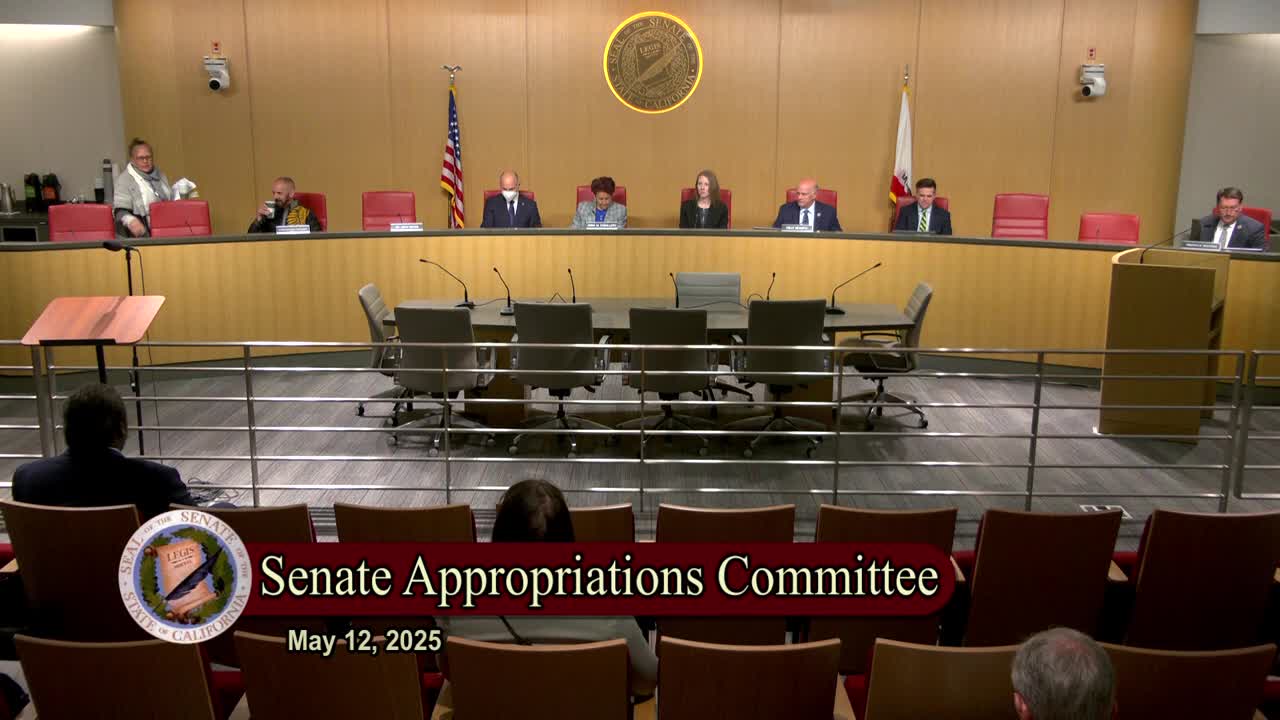 34SEC
Senate Standing Committee on Appropriations
 6MIN
Senate Standing Committee on Military and Veterans Affairs
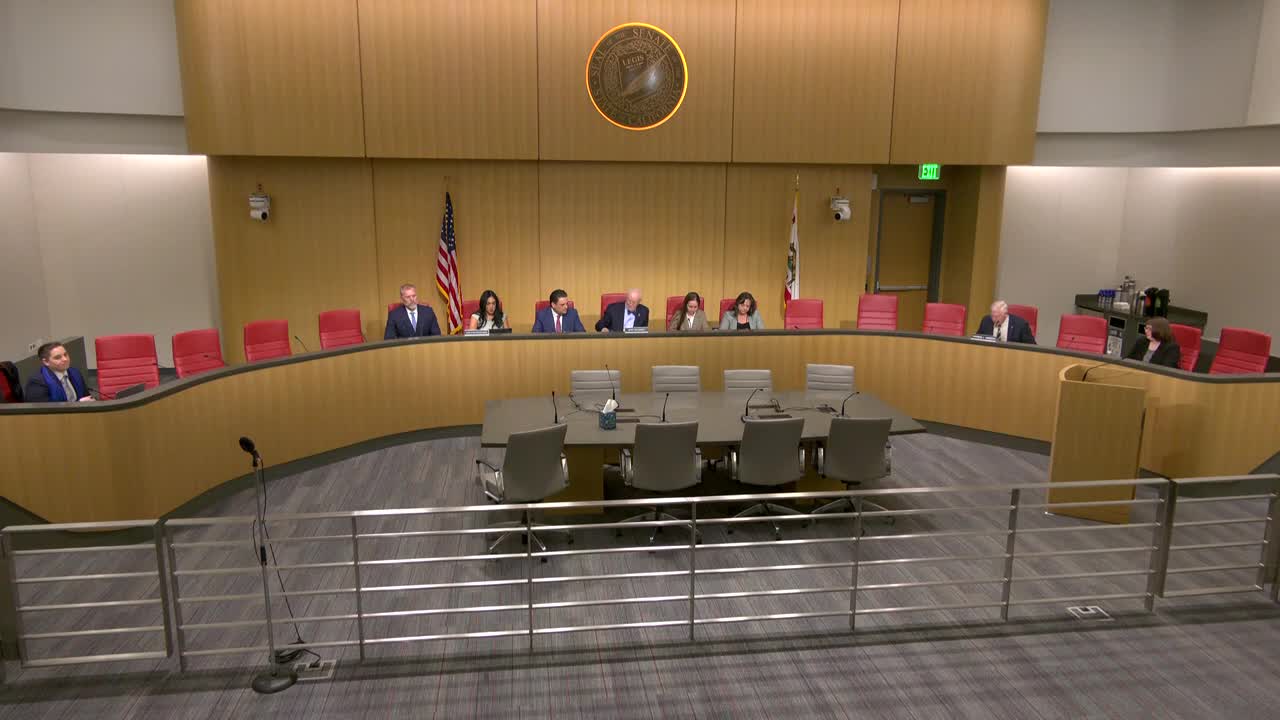 13MIN
Senate Standing Committee on Revenue and Taxation
Bill Author