SB 1009: Juveniles: detention.
- Session Year: 2025-2026
- House: Senate
- Latest Version Date: 2026-09-30
Current Status:
Passed
(2026-09-30: Chaptered by Secretary of State. Chapter 996, Statutes of 2026.)
Introduced
In Committee
Awaiting First Chamber Vote
Passed First Chamber
In Committee
Awaiting Second Chamber Vote
Passed Second Chamber
Enacted
(1)Existing law requires a court to determine whether a minor in custody will be released from, or detained in, custody, considering, among other things, whether it is a matter of immediate and urgent necessity for the protection of the minor or reasonably necessary for the protection of the person or property of another and whether continuance in the home is contrary to the minors welfare.
This bill would prohibit the court from ordering that a minor be detained in a juvenile hall unless it makes a finding that a less restrictive alternative to detention in the juvenile hall is unsuitable. The bill would also require the court, upon request, to reconsider whether continued detention in the juvenile hall is necessary based on new or current information and consistent with these provisions.
(2)Existing law prohibits a ward or dependent child from being taken from the physical custody of a parent or guardian unless the court makes specified findings. Under existing law, if a minor is removed from the physical custody of the minors parent or guardian as a result of an order of wardship pursuant to specified provisions, the order is required to specify the period of imprisonment. Existing law authorizes the court to commit a minor to a juvenile hall, juvenile home, ranch, camp, or forestry camp.
This bill would prohibit a minor from being committed to physical confinement, unless the court finds that a less restrictive alternative disposition for the ward is unsuitable. The bill would require the court to consider, prior to removing a minor from the physical custody of the minors parent or guardian, whether reasonable efforts were made to prevent or eliminate the need for removal or continued removal from the home, and whether services could be provided to enable the childs parent or legal guardian to effectively provide the care and control necessary for the child to return home.
(1)Existing law requires a court to determine whether a minor in custody will be released from, or detained in, custody, considering, among other things, whether it is a matter of immediate and urgent necessity for the protection of the minor or reasonably necessary for the protection of the person or property of another and whether continuance in the home is contrary to the minors welfare.
This bill would prohibit the court from ordering that a minor be detained in a juvenile hall unless it makes a finding that a less restrictive alternative to detention in the juvenile hall is unsuitable. The bill would also require the court, upon request, to reconsider whether continued detention in the juvenile hall is necessary based on new or current information and consistent with these provisions.
(2)Existing law prohibits a ward or dependent child from being taken from the physical custody of a parent or guardian unless the court makes specified findings. Under existing law, if a minor is removed from the physical custody of the minors parent or guardian as a result of an order of wardship pursuant to specified provisions, the order is required to specify the period of imprisonment. Existing law authorizes the court to commit a minor to a juvenile hall, juvenile home, ranch, camp, or forestry camp.
This bill would prohibit a minor from being removed from the physical custody of the minors parent or guardian as a result of an order of wardship committed to physical confinement, unless the court finds that a less restrictive alternative disposition for the ward is unsuitable. The bill would require the court to consider all relevant and material evidence, as specified, and consider consider, prior to removing a minor from the physical custody of the minors parent or guardian, whether reasonable efforts were made to prevent or eliminate the need for removal or continued removal from the home, and whether services could be provided to enable the childs parent or legal guardian to obtain assistance that may be needed to effectively provide the care and control necessary for the child to return home in lieu of an order of removal. The bill would require the court to state the reasons for its decision on the record, as specified. home.
(1)Existing law requires a court to determine whether a minor in custody will be released from, or detained in, custody, considering, among other things, whether it is a matter of immediate and urgent necessity for the protection of the minor or reasonably necessary for the protection of the person or property of another and whether continuance in the home is contrary to the minors welfare.
This bill would prohibit the court from ordering that a minor be detained in a juvenile hall unless it makes a finding that a less restrictive alternative to detention in the juvenile hall is unsuitable. The bill would also require the court, upon request, to reconsider whether continued detention in the juvenile hall is necessary based on current information and consistent with these provisions.
(2)Existing law prohibits a ward or dependent child from being taken from the physical custody of a parent or guardian unless the court makes specified findings. Under existing law, if a minor is removed from the physical custody of the minors parent or guardian as a result of an order of wardship pursuant to specified provisions, the order is required to specify the period of imprisonment. Existing law authorizes the court to commit a minor to a juvenile hall, juvenile home, ranch, camp, or forestry camp.
This bill would prohibit a minor from being removed from the physical custody of the minors parent or guardian as a result of an order of wardship unless the court finds that a less restrictive alternative disposition for the ward is unsuitable. The bill would require the court to consider all relevant and material evidence, as specified, and consider whether reasonable efforts were made to eliminate the need for removal or continued removal from the home, and whether services could be provided to enable the childs parent or legal guardian to obtain assistance that may be needed to effectively provide the care and control necessary for the child to return home in lieu of an order of removal. The bill would require the court to state the reasons for its decision on the record, as specified.
(1)Existing law requires a court to determine whether a minor in custody will be released from, or detained in, custody, considering, among other things, whether it is a matter of immediate and urgent necessity for the protection of the minor or reasonably necessary for the protection of the person or property of another and whether continuance in the home is contrary to the minors welfare.
This bill would instead require the court to order the release of a minor from custody unless the court finds, based on clear and convincing evidence, that the minor has violated an order of the juvenile court, has escaped from the commitment of the juvenile court, or that it is a matter of immediate and urgent necessity for the protection of the minor or for the protection of the person of another that the minor be detained or that the minor is likely to flee to avoid jurisdiction of the court. The bill would prohibit the court from ordering that a minor be detained in a juvenile hall unless it makes a finding that a less restrictive alternative to detention in the juvenile hall is unsuitable. The bill would also require the court, upon request, to reconsider whether continued detention in the juvenile hall is necessary based on current information and consistent with these provisions.
(2)Existing law prohibits a ward or dependent child from being taken from the physical custody of a parent or guardian unless the court makes specified findings. Under existing law, if a minor is removed from the physical custody of the minors parent or guardian as a result of an order of wardship pursuant to specified provisions, the order is required to specify the period of imprisonment. Existing law authorizes the court to commit a minor to a juvenile hall, juvenile home, ranch, camp, or forestry camp.
This bill would prohibit a minor from being removed from the physical custody of the minors parent or guardian as a result of an order of wardship unless the court finds by clear and convincing evidence that a less restrictive alternative disposition for the ward is unsuitable. The bill would require the court to consider all relevant and material evidence, as specified, and consider whether reasonable efforts were made to eliminate the need for removal or continued removal from the home, and whether services could be provided to enable the childs parent or legal guardian to obtain assistance that may be needed to effectively provide the care and control necessary for the child to return home in lieu of an order of removal. The bill would require the court to state the reasons for its decision on the record, as specified.
The Legislature finds and declares all of the following:
(a)It is widely recognized that youth held in secure facilities while awaiting court hearings experience significant negative impacts as a result of incarceration. Research highlights the traumatizing effect of detention on youth, the poor educational and employment outcomes of detained youth, the exacerbation of mental health issues, and the fact that youth incarceration may increase recidivism. See The Evolution of Juvenile Justice and Probation Practices in California (2022), a report commissioned by the California Probation Resource Institute, a project of the Chief Probation Officers of California.
(b)Youth confinement disrupts healthy development and worsens long-term rehabilitative outcomes. Juvenile halls concentrate in one place youth with diverse trauma histories, mental health needs, stages of adolescent development, and degree of justice system involvement. This setting can facilitate unintended peer associations and foster attitudes and choices that are contrary to the rehabilitative goals of the juvenile justice system.
(c)Detention forecloses opportunities for youth to demonstrate and develop positive behavior in the community during the pendency of the proceedings and limits a youths ability to assist in their defense, thereby increasing the likelihood that continued confinement will be ordered at disposition.
(d)Youth of color, tribal youth, LGBTQ youth, youth with disabilities, and youth involved in the child welfare system are disproportionately represented in county juvenile halls across California. Data consistently demonstrate that these populations experience significantly higher rates of detention and institutional placement compared to their peers, reflecting systemic inequities that persist at every decision point in the juvenile justice process.
(e)Despite a sustained decline in youth arrest rates in recent decades, the number of detained youth has not fallen at a comparable pace. California dedicates considerable taxpayer resources to juvenile incarceration, often exceeding $250,000 annually per youth according to the Board of State and Community Corrections. These expenditures are not justified given the well-documented harms of youth confinement and the frequent availability of community-based alternatives that are shown to improve public safety outcomes as well as reduce costs.
(f)The Legislature reaffirms its intention stated in Senate Bill 823 (Chapter 337 of the Statutes of 2020) to ensure that dispositions are imposed in the least restrictive appropriate environment and to reduce the use of confinement in the juvenile justice system by utilizing community-based responses and interventions. Accordingly, courts should prioritize noncustodial dispositions that maintain youth connections to their families and communities, reserving custodial commitments for circumstances in which no suitable alternative exists and, if imposed, only for the duration necessary to meet the youths rehabilitative needs.
(g)For these reasons, the Legislature reaffirms the longstanding principle that detention be the exception, not the rule for justice-involved youth. (In re William M. (1970) 3 Cal.3d 16, 26.)
SEC. 2.Section 635 of the Welfare and Institutions Code is amended to read:635.(a)(1)The court will examine the minor, their parent, legal guardian, or other person having relevant knowledge, hear relevant evidence the minor, their parent, legal guardian, or counsel desires to present, and, unless it appears that the minor has violated an order of the juvenile court or has escaped from the commitment of the juvenile court or that it is a matter of immediate and urgent necessity for the protection of the minor or reasonably necessary for the protection of the person or property of another that they be detained or that the minor is likely to flee to avoid the jurisdiction of the court, the court shall make its order releasing the minor from custody.
(2)The court shall not order a minor detained in the juvenile hall unless it makes a finding that a less restrictive alternative to detention in the juvenile hall is unsuitable.
(b)(1)The circumstances and gravity of the alleged offense may be considered, in conjunction with other factors, to determine whether it is a matter of immediate and urgent necessity for the protection of the minor or reasonably necessary for the protection of the person or property of another that the minor be detained.
(2)The courts decision to detain shall be based on the above factors, and shall not be based solely on the minors county of residence. A minor shall be given equal consideration for release on home supervision pursuant to Section 628.1, which may include electronic monitoring pursuant to Section 628.2, regardless of whether the minor lives in the county where the offense occurred. The juvenile court has authority to order the minor be placed on home supervision, with or without electronic monitoring, regardless of the minors county of residence.
(3)If a minor is a dependent of the court pursuant to Section 300, the courts decision to detain shall not be based on the minors status as a dependent of the court or the child welfare services departments inability to provide a placement for the minor.
(c)(1)The court shall order release of the minor from custody unless a prima facie showing has been made that the minor is a person described in Section 601 or 602.
(2)If the court orders release of a minor who is a dependent of the court pursuant to Section 300, the court shall order the child welfare services department either to ensure that the minors current foster parent or other caregiver takes physical custody of the minor or to take physical custody of the minor and place the minor in a licensed or approved placement.
(d)If the probation officer has reason to believe that the minor is at risk of entering foster care placement as described in Section 11402, then the probation officer shall submit a written report to the court containing all of the following:
(1)The reasons why the minor has been removed from the parents custody.
(2)Any prior referrals for abuse or neglect of the minor or any prior filings regarding the minor pursuant to Section 300.
(3)The need, if any, for continued detention.
(4)The available services that could facilitate the return of the minor to the custody of the minors parents or guardians.
(5)Whether there are any relatives who are able and willing to provide effective care and control over the minor.
SEC. 3.Section 636 of the Welfare and Institutions Code is amended to read:636.(a)(1)If it appears upon the hearing that the minor has violated an order of the juvenile court or has escaped from a commitment of the juvenile court or that it is a matter of immediate and urgent necessity for the protection of the minor or reasonably necessary for the protection of the person or property of another that the minor be detained or that the minor is likely to flee to avoid the jurisdiction of the court, and that continuance in the home is contrary to the minors welfare, the court may make its order that the minor be detained in the juvenile hall or other suitable place designated by the juvenile court for a period not to exceed 15 judicial days and shall enter the order together with its findings of fact in support thereof in the records of the court. The circumstances and gravity of the alleged offense may be considered, in conjunction with other factors, to determine whether it is a matter of immediate and urgent necessity for the protection of the minor or the person or property of another that the minor be detained. The court shall not order a minor detained in the juvenile hall unless it makes a finding that a less restrictive alternative to detention in the juvenile hall is unsuitable.
(2)The courts decision to detain shall be based on the above factors, and shall not be based solely on the minors county of residence. A minor shall be given equal consideration for release on home supervision pursuant to Section 628.1, which may include electronic monitoring pursuant to Section 628.2, regardless of whether the minor lives in the county where the offense occurred. The juvenile court has authority to order the minor be placed on home supervision, with or without electronic monitoring, regardless of the minors county of residence. If a minor is a dependent of the court pursuant to Section 300, the courts decision to detain shall not be based on the minors status as a dependent of the court or the child welfare services departments inability to provide a placement for the minor.
(b)If the court finds that the criteria of Section 628.1 are applicable, the court shall place the minor on home supervision for a period not to exceed 15 judicial days, and shall enter the order together with its findings of fact in support thereof in the records of the court. If the court releases the minor on home supervision, the court may continue, modify, or augment any conditions of release previously imposed by the probation officer, or may impose new conditions on a minor released for the first time. If there are new or modified conditions, the minor shall be required to sign a written promise to obey those conditions pursuant to Section 628.1.
(c)If the probation officer is recommending that the minor be detained, the probation officer shall submit to the court documentation, as follows:
(1)Documentation that continuance in the home is contrary to the minors welfare shall be submitted to the court as part of the detention report prepared pursuant to Section 635.
(2)Documentation that reasonable efforts were made to prevent or eliminate the need for removal of the minor from the home and documentation of the nature and results of the services provided shall be submitted to the court either as part of the detention report prepared pursuant to Section 635, or as part of a case plan prepared pursuant to Section 636.1, but in no case later than 60 days from the date of detention.
(d)Except as provided in subdivision (e), before detaining the minor, the court shall determine whether continuance in the home is contrary to the minors welfare and whether there are available services that would prevent the need for further detention. The court shall make that determination on a case-by-case basis and shall make reference to the documentation provided by the probation officer or other evidence relied upon in reaching its decision.
(1)If the minor can be returned to the custody of the minors parent or legal guardian at the detention hearing, through the provision of services to prevent removal, the court shall release the minor to the physical custody of the minors parent or legal guardian and order that those services be provided.
(2)If the minor cannot be returned to the custody of the minors parent or legal guardian at the detention hearing, the court shall state the facts upon which the detention is based. The court shall make the following findings on the record and reference the probation officers report or other evidence relied upon to make its setting determinations:
(A)Whether continuance in the home of the parent or legal guardian is contrary to the minors welfare.
(B)Whether reasonable efforts have been made to safely maintain the minor in the home of the minors parent or legal guardian and to prevent or eliminate the need for removal of the minor from the minors home. This finding shall be made at the detention hearing if possible, but in no case later than 60 days following the minors removal from the home.
(3)If the minor cannot be returned to the custody of the minors parent or legal guardian at the detention hearing, the court shall make the following orders:
(A)The probation officer shall provide services as soon as possible to enable the minors parent or legal guardian to obtain any assistance as may be needed to enable the parent or guardian to effectively provide the care and control necessary for the minor to return to the home.
(B)The minors placement and care shall be the responsibility of the probation department pending disposition or further order of the court.
(4)If the matter is set for rehearing pursuant to Section 637, or continued pursuant to Section 638, or continued for any other reason, the court shall find that the continuance of the minor in the parents or guardians home is contrary to the minors welfare at the initial petition hearing or order the release of the minor from custody.
(e)For a minor who is a dependent of the court pursuant to Section 300, the courts decision to detain the minor shall not be based on a finding that continuance in the minors current placement is contrary to the minors welfare. If the court determines that continuance in the minors current placement is contrary to the minors welfare, the court shall order the child welfare services department to place the minor in another licensed or approved placement.
(f)For a placement made on or after October 1, 2021, each placement of the minor in a short-term residential therapeutic program shall comply with the requirements of Section 4096 and be reviewed by the court pursuant to Section 727.12.
(g)For a placement made on or after July 1, 2022, each placement of the minor in a community treatment facility shall comply with the requirements of Section 4096 and be reviewed by the court pursuant to Section 727.12.
(h)Whether the minor is returned home or detained, the court shall order the minors parent or guardian to cooperate with the probation officer in obtaining those services described in paragraph (1) of, or in subparagraph (A) of paragraph (3) of, subdivision (d).
SEC. 4.Section 636.3 is added to the Welfare and Institutions Code, to read:636.3.(a)Whenever a court orders a minor detained in the juvenile hall, the court shall, upon request, reconsider whether continued detention in the juvenile hall is necessary based on new or current information and consistent with the provisions of this chapter.
(b)This section shall not be construed to affect a minors rights under Sections 636 and 657.
SEC. 5.Section 726 of the Welfare and Institutions Code is amended to read:726.(a)In all cases in which a minor is adjudged a ward or dependent child of the court, the court may limit the control to be exercised over the ward or dependent child by any parent or guardian and shall, in its order, clearly and specifically set forth all those limitations, but no ward or dependent child shall be taken from the physical custody of a parent or guardian, unless upon the hearing the court finds one of the following facts:
(1)That the parent or guardian is incapable of providing or has failed or neglected to provide proper maintenance, training, and education for the minor.
(2)That the minor has been tried on probation while in custody and has failed to reform.
(3)That the welfare of the minor requires that custody be taken from the minors parent or guardian.
(b)Whenever the court specifically limits the right of the parent or guardian to make educational or developmental services decisions for the minor, the court shall at the same time appoint a responsible adult to make educational or developmental services decisions for the child until one of the following occurs:
(1)The minor reaches 18 years of age, unless the child chooses not to make educational or developmental services decisions for themselves, or is deemed by the court to be incompetent.
(2)Another responsible adult is appointed to make educational or developmental services decisions for the minor pursuant to this section.
(3)The right of the parent or guardian to make educational or developmental services decisions for the minor is fully restored.
(4)A successor guardian or conservator is appointed.
(5)The child is placed into a planned permanent living arrangement pursuant to paragraph (5) or (6) of subdivision (b) of Section 727.3, at which time, for educational decisionmaking, the foster parent, relative caretaker, or nonrelative extended family member, as defined in Section 362.7, has the right to represent the child in educational matters pursuant to Section 56055 of the Education Code, and for decisions relating to developmental services, unless the court specifies otherwise, the foster parent, relative caregiver, or nonrelative extended family member of the planned permanent living arrangement has the right to represent the child in matters related to developmental services.
(c)An individual who would have a conflict of interest in representing the child, as specified under federal regulations, may not be appointed to make educational decisions. The limitations applicable to conflicts of interest for educational rights holders shall also apply to authorized representatives for developmental services decisions pursuant to subdivision (b) of Section 4701.6. For purposes of this section, an individual who would have a conflict of interest means a person having any interests that might restrict or bias their ability to make educational or developmental services decisions, including, but not limited to, those conflicts of interest prohibited by Section 1126 of the Government Code, and the receipt of compensation or attorneys fees for the provision of services pursuant to this section. A foster parent may not be deemed to have a conflict of interest solely because the foster parent receives compensation for the provision of services pursuant to this section.
(1)If the court limits the parents educational rights pursuant to subdivision (a), the court shall determine whether there is a responsible adult who is a relative, nonrelative extended family member, or other adult known to the child and who is available and willing to serve as the childs educational representative before appointing an educational representative or surrogate who is not known to the child.
If the court cannot identify a responsible adult who is known to the child and available to make educational decisions for the child and paragraphs (1) to (5), inclusive, of subdivision (b) do not apply, and the child has either been referred to the local educational agency for special education and related services or has a valid individualized education program, the court shall refer the child to the local educational agency for appointment of a surrogate parent pursuant to Section 7579.5 of the Government Code.
(2)All educational and school placement decisions shall seek to ensure that the child is in the least restrictive educational programs and has access to the academic resources, services, and extracurricular and enrichment activities that are available to all pupils. In all instances, educational and school placement decisions shall be based on the best interests of the child. If an educational representative or surrogate is appointed for the child, the representative or surrogate shall meet with the child, shall investigate the childs educational needs and whether those needs are being met, and shall, before each review hearing held under Article 10 (commencing with Section 360), provide information and recommendations concerning the childs educational needs to the childs social worker, make written recommendations to the court, or attend the hearing and participate in those portions of the hearing that concern the childs education.
(3)Nothing in this section in any way removes the obligation to appoint surrogate parents for students with disabilities who are without parental representation in special education procedures as required by state and federal law, including Section 1415(b)(2) of Title 20 of the United States Code, Section 56050 of the Education Code, Section 7579.5 of the Government Code, and Rule 5.650 of the California Rules of Court.
If the court appoints a developmental services decisionmaker pursuant to this section, they shall have the authority to access the childs information and records pursuant to subdivision (u) of Section 4514 and paragraph (23) of subdivision (a) of Section 5328, and to act on the childs behalf for the purposes of the individual program plan process pursuant to Sections 4646, 4646.5, and 4648 and the fair hearing process pursuant to Chapter 7 (commencing with Section 4700) of Division 4.5, and as set forth in the court order.
(d)(1)Prior to removing a minor from the physical custody of the minors parent or guardian as a result of an order of wardship, the court shall consider all of the following:
(A)Whether reasonable efforts were made to prevent or eliminate the need for removal, or continued removal, of the child from the home.
(B)Whether services could be provided to enable the childs parent or legal guardian to effectively provide the care and control necessary for the child to return home.
(2)A minor may not be committed to physical confinement, as defined in paragraph (8), unless the court finds that a less restrictive alternative to physical confinement is unsuitable.
(3)If the court orders the removal of the minor under this section, the court shall state on the record the reasons for its decision.
(4)If the minor is removed from the physical custody of the minors parent or guardian as the result of an order of wardship made pursuant to Section 602, the order shall specify that the minor may not be held in physical confinement for a period in excess of the middle term of imprisonment which could be imposed upon an adult convicted of the offense or offenses which brought or continued the minor under the jurisdiction of the juvenile court.
(5)As used in this section and in Section 731, maximum term of imprisonment means the middle of the three time periods set forth in paragraph (3) of subdivision (a) of Section 1170 of the Penal Code, but without the need to follow the provisions of subdivision (b) of Section 1170 of the Penal Code or to consider time for good behavior or participation pursuant to Sections 2930, 2931, and 2932 of the Penal Code, plus enhancements which must be proven if pled.
(6)If the court elects to aggregate the period of physical confinement on multiple counts or multiple petitions, including previously sustained petitions adjudging the minor a ward within Section 602, the maximum term of imprisonment shall be the aggregate term of imprisonment specified in subdivision (a) of Section 1170.1 of the Penal Code, which includes any additional term imposed pursuant to Section 667, 667.5, 667.6, or 12022.1 of the Penal Code, and Section 11370.2 of the Health and Safety Code.
(7)If the charged offense is a misdemeanor or a felony not included within the scope of Section 1170 of the Penal Code, the maximum term of imprisonment is the middle term of imprisonment prescribed by law.
(8)Physical confinement means placement in a juvenile hall, ranch, camp, forestry camp or secure juvenile home pursuant to Section 730, or in a secure youth treatment facility pursuant to Section 875.
(9)This section does not limit the power of the court to retain jurisdiction over a minor and to make appropriate orders pursuant to Section 727 for the period permitted by Section 607.
SEC. 6.Section 730 of the Welfare and Institutions Code is amended to read:730.(a)(1)When a minor is adjudged a ward of the court on the ground that they are a person described by Section 602, the court may order any of the types of treatment referred to in Section 727, and as an additional alternative, may commit the minor to a juvenile home, ranch, camp, or forestry camp. The court shall comply with the requirements of subdivision (d) of Section 726 if the court orders a commitment to a juvenile home, ranch, camp, or forestry camp. If there is no county juvenile home, ranch, camp, or forestry camp within the county, the court may commit the minor to the county juvenile hall. In addition, the court may also make any of the following orders:
(A)Order the ward to make restitution.
(B)Commit the ward to a sheltered-care facility.
(C)Order that the ward and the wards family or guardian participate in a program of professional counseling as arranged and directed by the probation officer as a condition of continued custody of the ward.
(D)Order placement of the ward at the Pine Grove Youth Conservation Camp if the ward meets the placement criteria, the county has entered into a contract with the Department of Corrections and Rehabilitation, either directly or through another county, the department has found the ward amenable, and there is space and resources available for the placement. The county probation department shall receive approval from the department before transporting the ward to the camp. The department shall immediately notify the county probation department if the ward is no longer amenable for continued camp placement and coordinate the immediate return of the ward to the county of jurisdiction.
(2)A court shall not commit a juvenile to any juvenile facility for a period that exceeds the middle term of imprisonment that could be imposed upon an adult convicted of the same offense.
(b)When a ward described in subdivision (a) is placed under the supervision of the probation officer, or committed to the care, custody, and control of the probation officer, or the court orders the youth on unsupervised probation pursuant to paragraph (2) of subdivision (a) of Section 727, the court may make any and all reasonable orders for the conduct of the ward, including conditions of probation that shall meet all of the following requirements:
(1)The conditions are individually tailored, developmentally appropriate, and reasonable.
(2)The burden imposed by the conditions shall be proportional to the legitimate interests served by the conditions.
(3)The conditions are determined by the court to be fitting and proper to the end that justice may be done and the reformation and rehabilitation of the ward enhanced.
(c)When a ward described in subdivision (a) is placed under the supervision of the probation officer or committed to the care, custody, and control of the probation officer, and is required as a condition of probation to participate in community service or graffiti cleanup, the court may impose a condition that if the minor unreasonably fails to attend or unreasonably leaves before completing the assigned daily hours of community service or graffiti cleanup, a law enforcement officer may take the minor into custody for the purpose of returning the minor to the site of the community service or graffiti cleanup.
(d)When a minor is adjudged or continued as a ward of the court on the ground that the ward is a person described by Section 602 by reason of the commission of rape, sodomy, oral copulation, or an act of sexual penetration specified in Section 289 of the Penal Code, the court shall order the minor to complete a sex offender treatment program, if the court determines, in consultation with the county probation officer, that suitable programs are available. In determining what type of treatment is appropriate, the court shall consider all of the following: the seriousness and circumstances of the offense, the vulnerability of the victim, the minors criminal history and prior attempts at rehabilitation, the sophistication of the minor, the threat to public safety, the minors likelihood of reoffending, and any other relevant information presented. If ordered by the court to complete a sex offender treatment program, the minor shall pay all or a portion of the reasonable costs of the sex offender treatment program after a determination is made of the ability of the minor to pay.
SEC. 7.Section 875 of the Welfare and Institutions Code is amended to read:875.(a)In addition to the types of treatment specified in Sections 727 and 730, commencing July 1, 2021, the court may order that a ward who is 14 years of age or older be committed to a secure youth treatment facility for a period of confinement described in subdivision (b) if the ward meets all of the following criteria:
(1)The juvenile is adjudicated and found to be a ward of the court based on an offense listed in subdivision (b) of Section 707 that was committed when the juvenile was 14 years of age or older.
(2)The adjudication described in paragraph (1) is the most recent offense for which the juvenile has been adjudicated.
(3)The court has made a finding on the record that a less restrictive, alternative disposition for the ward is unsuitable. In determining this, the court shall consider all relevant and material evidence, including the recommendations of counsel, the probation department, and any other agency or individual designated by the court to advise on the appropriate disposition of the case. The court shall additionally make its determination based on all of the following criteria:
(A)The severity of the offense or offenses for which the ward has been most recently adjudicated, including the wards role in the offense, the wards behavior, and harm done to victims.
(B)The wards previous delinquent history, including the adequacy and success of previous attempts by the juvenile court to rehabilitate the ward.
(C)Whether the programming, treatment, and education offered and provided in a secure youth treatment facility is appropriate to meet the treatment and security needs of the ward.
(D)Whether the goals of rehabilitation and community safety can be met by assigning the ward to an alternative, less restrictive disposition that is available to the court.
(E)The wards age, developmental maturity, mental and emotional health, sexual orientation, gender identity and expression, and any disabilities or special needs affecting the safety or suitability of committing the ward to a term of confinement in a secure youth treatment facility.
(b)(1)In making its order of commitment for a ward, the court shall set a baseline term of confinement for the ward that is based on the most serious recent offense for which the ward has been adjudicated. The baseline term of confinement shall represent the time in custody necessary to meet the developmental and treatment needs of the ward and to prepare the ward for discharge to a period of probation supervision in the community. The baseline term of confinement for the ward shall be determined according to offense-based classifications that are approved by the Judicial Council, as described in subdivision (h). Pending the development and adoption of offense-based classifications by the Judicial Council, the court shall set a baseline term of confinement for the ward utilizing the discharge consideration date guidelines applied by the Department of Corrections and Rehabilitation, Division of Juvenile Justice prior to its closure and as set forth in Sections 30807 to 30813, inclusive, of Title 9 of the California Code of Regulations. These guidelines shall be used only to determine a baseline confinement time for the ward and shall not be used or relied on to modify the wards confinement time in any manner other than as provided in this section. The court may, pending the adoption of Judicial Council guidelines, modify the initial baseline term with a deviation of plus or minus six months. The baseline term shall also be subject to modification in progress review hearings as described in subdivision (e).
(2)For youth transferred from the Division of Juvenile Justice and committed to a secure youth treatment facility, the baseline term of confinement shall not exceed a youths projected juvenile parole board date as defined in paragraph (12) of Section 30800 of Title 9 of the California Code of Regulations, at the time of their transfer from the Division of Juvenile Justice. Youth shall receive credit against their secure youth treatment facility baseline term for all programs completed or substantially completed at the Division of Juvenile Justice, as reflected in the transition report completed by the Division of Juvenile Justice.
(c)(1)In making its order of commitment, the court shall additionally set a maximum term of confinement for the ward based upon the facts and circumstances of the matter or matters that brought or continued the ward under the jurisdiction of the court and as deemed appropriate to achieve rehabilitation. The maximum term of confinement shall represent the longest term of confinement in a facility that the ward may serve subject to the following:
(A)A ward committed to a secure youth treatment facility under this section shall not be held in secure confinement beyond 23 years of age, or two years from the date of the commitment, whichever occurs later. However, if the ward has been committed to a secure youth treatment facility based on adjudication for an offense or offenses for which the ward, if convicted in adult criminal court, would face an aggregate sentence of seven or more years, the ward shall not be held in secure confinement beyond 25 years of age, or two years from the date of commitment, whichever occurs later.
(B)The maximum term of confinement shall not exceed the middle term of imprisonment that can be imposed upon an adult convicted of the same offense or offenses. If the court elects to aggregate the period of physical confinement on multiple counts or multiple petitions, including previously sustained petitions adjudging the minor a ward within Section 602, the maximum term of confinement shall be the aggregate term of imprisonment specified in subdivision (a) of Section 1170.1 of the Penal Code, which includes any additional term imposed pursuant to Section 667, 667.5, 667.6, or 12022.1 of the Penal Code, and Section 11370.2 of the Health and Safety Code.
(C)Precommitment credits for time served must be applied against the maximum term of confinement as set pursuant to this subdivision.
(2)For purposes of this section, maximum term of confinement has the same meaning as maximum term of imprisonment, as defined in paragraph (5) of subdivision (d) of Section 726.
(d)(1)Within 30 judicial days of making an order of commitment to a secure youth treatment facility, the court shall receive, review, and approve an individual rehabilitation plan that meets the requirements of paragraph (2) for the ward that has been submitted to the court by the probation department and any other agencies or individuals the court deems necessary for the development of the plan. The plan may be developed in consultation with a multidisciplinary team of youth service, mental and behavioral health, education, and other treatment providers who are convened to advise the court for this purpose. The prosecutor and the counsel for the ward may provide input in the development of the rehabilitation plan prior to the courts approval of the plan. The plan may be modified by the court based on all of the information provided.
(2)An individual rehabilitation plan shall do all of the following:
(A)Identify the wards needs in relation to treatment, education, and development, including any special needs the ward may have in relation to health, mental or emotional health, disabilities, or gender-related or other special needs.
(B)Describe the programming, treatment, and education to be provided to the ward in relation to the identified needs during the commitment period.
(C)Reflect, and be consistent with, the principles of trauma-informed, evidence-based, and culturally responsive care.
(D)The ward and their family shall be given the opportunity to provide input regarding the needs of the ward during the identification process stated in subparagraph (A), and the opinions of the ward and the wards family shall be included in the rehabilitation plan report to the court.
(e)(1)(A)The court shall, during the term of commitment, including any term spent in a less restrictive program pursuant to subdivision (f), schedule and hold a progress review hearing for the ward not less frequently than once every six months. In the review hearing, the court shall evaluate the wards progress in relation to the rehabilitation plan and shall determine whether the baseline term of confinement is to be modified. The court shall consider the recommendations of counsel, the probation department and any behavioral, educational, or other specialists having information relevant to the wards progress. At the conclusion of each review hearing, upon making a finding on the record, the court may order that the ward remain in custody for the remainder of the baseline term or may order that the wards baseline term or previously modified baseline term be modified downward by a reduction of confinement time not to exceed six months for each review hearing. The court may additionally order that the ward be assigned to a less restrictive program, as provided in subdivision (f). The determination of whether the baseline term will be modified, or whether a youth will be assigned to a less restrictive program, is a judicial decision and the juvenile courts discretion may not be limited by stipulation of the parties at any time.
(B)If the ward is already assigned to a less restrictive program, the court may, based on the wards progress, order a reduction in the length of time the ward is to remain in the less restrictive program prior to a probation discharge hearing. If the court determines that ward has failed materially to comply with the court-ordered conditions of placement in the less restrictive program, the court may modify the order of placement in the less restrictive program as provided in paragraph (2) of subdivision (f).
(2)The wards confinement time, including time spent in a less restrictive program described in subdivision (f), shall not be extended beyond the baseline confinement term, or beyond a modified baseline term, for disciplinary infractions or other in-custody behaviors. Any infractions or behaviors shall be addressed by alternative means, which may include a system of graduated sanctions for disciplinary infractions adopted by the operator of a secure youth treatment facility and subject to any relevant state standards or regulations that apply to juvenile facilities generally.
(3)The court shall, at the conclusion of the baseline confinement term, including any modified baseline term, hold a probation discharge hearing for the ward. For a ward who has been placed in a less restrictive program described in subdivision (f), the probation discharge hearing shall occur at the end of the period, or modified period, of placement that has been ordered by the court. At the discharge hearing, the court shall review the wards progress toward meeting the goals of the individual rehabilitation plan and the recommendations of counsel, the probation department, and any other agencies or individuals having information the court deems necessary. At the conclusion of the hearing, the court shall order that the ward be discharged to a period of probation supervision in the community under conditions approved by the court, unless the court finds that the ward constitutes a substantial risk of imminent harm to others in the community if released from custody. If the court so finds, the ward may be retained in custody in a secure youth treatment facility for up to one additional year of confinement, subject to the review hearing and probation discharge hearing provisions of this subdivision and subject to the maximum confinement provisions of subdivision (c).
(4)If the ward is discharged to probation supervision, the court shall determine the reasonable conditions of probation that are suitable to meet the developmental needs and circumstances of the ward and to facilitate the wards successful reentry into the community. The court shall periodically review the wards progress under probation supervision and shall make any additional orders deemed necessary to modify the program of supervision in order to facilitate the provision of services or to otherwise support the wards successful reentry into the community. If the court finds that the ward has failed materially to comply with the reasonable orders of probation imposed by the court, the court may order that the ward be returned to a juvenile facility or to a placement described in subdivision (f) for a period not to exceed either the remainder of the baseline term, including any court-ordered modifications, or six months, whichever is longer, and in any case not to exceed the maximum confinement limits of subdivision (c).
(f)(1)Upon a motion from the probation department or the ward, the court may order that the ward be transferred from a secure youth treatment facility to less restrictive program, such as a halfway house, a camp or ranch, or a community residential or nonresidential service program. The purpose of a less restrictive program is to facilitate the safe and successful reintegration of the ward into the community. The court shall consider the transfer request at the next scheduled treatment review hearing or at a separately scheduled hearing. The court shall consider the recommendations of the probation department on the proposed change in placement. Approval of the request for a less restrictive program shall be made only upon the courts determination that the ward has made substantial progress toward the goals of the individual rehabilitation plan described in subdivision (d) and that placement is consistent with the goals of youth rehabilitation and community safety. In making its determination, the court shall consider both of the following factors:
(A)The wards overall progress in relation to the rehabilitation plan during the period of confinement in a secure youth treatment facility.
(B)The programming and community transition services to be provided, or coordinated by the less restrictive program, including, but not limited to, any educational, vocational, counseling, housing, or other services made available through the program.
(2)In any order transferring the ward from a secure youth treatment facility to a less restrictive program, the court may require the ward to observe any conditions of performance or compliance with the program that are reasonable and appropriate in the individual case and that are within the capacity of the ward to perform. The court shall set the length of time the ward is to remain in a less restrictive program, not to exceed the remainder of the baseline or modified baseline term, prior to a probation discharge hearing described in subdivision (e). If, after placement in a less restrictive program, the court determines that the ward has materially failed to comply with the court-ordered conditions of placement in the program, the court may modify the terms and conditions of placement in the program or may order the ward to be returned to a secure youth treatment facility for the remainder of the baseline term, or modified baseline term, and subject to further periodic review hearings, as provided in subdivision (e) and to the maximum confinement provisions of subdivision (c). If the ward is returned to the secure youth treatment facility under the provisions of this paragraph, the wards baseline or modified baseline term shall be adjusted to include credit for the time served by the ward in the less restrictive program.
(g)A secure youth treatment facility, as described in this section, shall meet the following criteria:
(1)The facility shall be a secure facility that is operated, utilized, or accessed by the county of commitment to provide appropriate programming, treatment, and education for wards having been adjudicated for the offenses specified in subdivision (a).
(2)The facility may be a stand-alone facility, such as a probation camp or other facility operated under contract with the county, or with another county, or may be a unit or portion of an existing county juvenile facility, including a juvenile hall or probation camp, that is configured and programmed to serve the population described in subdivision (a) and is in compliance with the standards described in paragraph (3).
(3)The Board of State and Community Corrections shall by July 1, 2023, review existing juvenile facility standards and modify or add standards for the establishment, design, security, programming and education, and staffing of any facility that is utilized or accessed by the court as a secure youth treatment facility under the provisions of this section. The standards shall be developed by the board with the coordination and concurrence of the Office of Youth and Community Restoration established by Section 2200. The standards shall specify how the facility may be used to serve or to separate juveniles, other than juveniles described in subdivision (a) serving baseline confinement terms, who may also be detained in or committed to the facility or to some portion of the facility. Pending the final adoption of these modified standards, a secure youth treatment facility shall comply with applicable minimum standards for juvenile facilities in Title 15 and Title 24 of the California Code of Regulations.
(4)A county proposing to establish a secure youth treatment facility for wards described in subdivision (a) shall notify the Board of State and Community Corrections of the operation of the facility and shall submit a description of the facility to the board in a format designated by the board. Commencing July 1, 2022, the Board of State and Community Corrections shall conduct a biennial inspection in accordance with Section 209 of each secure youth treatment facility that was used for the confinement of juveniles placed pursuant to subdivision (a) during the preceding calendar year. To the extent new standards are not yet in place, the board shall utilize the standards in existing regulations.
(5)In lieu of establishing its own secure youth treatment facility, a county may contract with another county having a secure youth treatment facility to accept commitments of wards described in subdivision (a).
(6)A county may establish a secure youth treatment facility to serve as a regional center for commitment of juveniles by one or more other counties on a contract payment basis.
(h)(1)By July 1, 2023, the Judicial Council shall develop and adopt a matrix of offense-based classifications to be applied by the juvenile courts in all counties in setting the baseline confinement terms described in subdivision (b). Each classification level or category shall specify a set of offenses within the level or category that is linked to a standard baseline term of years to be assigned to youth, based on their most serious recent adjudicated offense, who are committed to a secure youth treatment facility as provided in this section. The individual baseline term of years to be assigned in each case may be derived from a standard range of years for each offense level or category as designated by the Judicial Council. The classification matrix may provide for upward or downward deviations from the baseline term and may also provide for a system of positive incentives or credits for time served. In developing the matrix, the Judicial Council shall be advised by a working group of stakeholders, which shall include representatives from prosecution, defense, probation, behavioral health, youth service providers, youth formerly incarcerated in the Division of Juvenile Justice, and youth advocacy and other stakeholders and organizations having relevant expertise or information on dispositions and sentencing of youth in the juvenile justice system. In the development process, the Judicial Council shall also examine and take into account youth sentencing and length-of-stay guidelines or practices adopted by other states or recommended by organizations, academic institutions, or individuals having expertise or having conducted relevant research on dispositions and sentencing of youth in the juvenile justice system.
(2)Upon final adoption by the Judicial Council, the matrix of offense-based classifications shall be applied in a standardized manner by juvenile courts in each county in cases where the court is required to set a baseline confinement term under subdivision (b) for wards who are committed to a secure youth treatment facility. The discharge consideration date guidelines of the Division of Juvenile Justice that were applied on an interim basis, as provided in subdivision (b), shall not thereafter be utilized to determine baseline confinement terms for wards who are committed to a secure youth treatment facility under the provisions of this section.
(i)A court shall not commit a juvenile to any juvenile facility, including a secure youth treatment facility as defined in this section, for a period that exceeds the middle term of imprisonment that could be imposed upon an adult convicted of the same offense or offenses.
(j)A person who is 25 years of age or older shall not be committed to or detained in a county juvenile facility, unless the court finds that such a commitment or detention is in the best interest of that person and does not find that it would create a risk to the other youth in the juvenile facility. A juvenile court exercising jurisdiction over a person who is 25 years of age or older may order commitment or detention of the person into an adult facility, including a jail or other facility established for the confinement of adults, or into a less restrictive program, as defined in subdivision (f), if the person is otherwise eligible for that program.
(k)Upon return to local custody, a person who was, prior to July 1, 2023, sentenced to state prison and was found to be a ward of the court and committed to the Division of Juvenile Justice, shall not be committed or detained in a juvenile facility, unless the juvenile court with jurisdiction over that person finds it is in the persons best interest and does not find that it would create a risk to the other youth in the juvenile facility. A juvenile court exercising jurisdiction over the commitment or detention of a person described in this subdivision may order the person into an adult facility, including a jail or other facility established for the confinement of adults, a less restrictive program, as defined in section (f), if the person is otherwise eligible for that program, or returned to the Department of Corrections and Rehabilitation pursuant to subdivision (f) of Section 1732.9.
The Legislature finds and declares all of the following:
(a)It is widely recognized that youth held in secure facilities while awaiting court hearings experience significant negative impacts as a result of incarceration. Research highlights the traumatizing effect of detention on youth, the poor educational and employment outcomes of detained youth, the exacerbation of mental health issues, and the fact that youth incarceration may increase recidivism. See The Evolution of Juvenile Justice and Probation Practices in California (2022), a report commissioned by the California Probation Resource Institute, a project of the Chief Probation Officers of California.
(b)Youth confinement disrupts healthy development and worsens long-term rehabilitative outcomes. Juvenile halls concentrate in one place youth with diverse trauma histories, mental health needs, stages of adolescent development, and degree of justice system involvement. This setting can facilitate unintended peer associations and foster attitudes and choices that are contrary to the rehabilitative goals of the juvenile justice system.
(c)Detention forecloses opportunities for youth to demonstrate and develop positive behavior in the community during the pendency of the proceedings and limits a youths ability to assist in their defense, thereby increasing the likelihood that continued confinement will be ordered at disposition.
(d)Youth of color, tribal youth, LGBTQ youth, youth with disabilities, and youth involved in the child welfare system are disproportionately represented in county juvenile halls across California. Data consistently demonstrate that these populations experience significantly higher rates of detention and institutional placement compared to their peers, reflecting systemic inequities that persist at every decision point in the juvenile justice process.
(e)Despite a sustained decline in youth arrest rates in recent decades, the number of detained youth has not fallen at a comparable pace. California dedicates considerable taxpayer resources to juvenile incarceration, often exceeding $250,000 annually per youth according to the Board of State and Community Corrections. These expenditures are not justified given the well-documented harms of youth confinement and the frequent availability of community-based alternatives that are shown to improve public safety outcomes as well as reduce costs.
(f)The Legislature reaffirms its intention stated in Senate Bill 823 (Chapter 337 of the Statutes of 2020) to ensure that dispositions are imposed in the least restrictive appropriate environment and to reduce the use of confinement in the juvenile justice system by utilizing community-based responses and interventions. Accordingly, courts should prioritize noncustodial dispositions that maintain youth connections to their families and communities, reserving custodial commitments for circumstances in which no suitable alternative exists and, if imposed, only for the duration necessary to meet the youths rehabilitative needs.
(g)For these reasons, the Legislature reaffirms the longstanding principle that detention be the exception, not the rule for justice-involved youth. (In re William M. (1970) 3 Cal.3d 16, 26.)
SEC. 2.Section 635 of the Welfare and Institutions Code is amended to read:635.(a)(1)The court will examine the minor, their parent, legal guardian, or other person having relevant knowledge, hear relevant evidence the minor, their parent, legal guardian, or counsel desires to present, and, unless it appears that the minor has violated an order of the juvenile court or has escaped from the commitment of the juvenile court or that it is a matter of immediate and urgent necessity for the protection of the minor or reasonably necessary for the protection of the person or property of another that they be detained or that the minor is likely to flee to avoid the jurisdiction of the court, the court shall make its order releasing the minor from custody.
(2)The court shall not order a minor detained in the juvenile hall unless it makes a finding that a less restrictive alternative to detention in the juvenile hall is unsuitable.
(b)(1)The circumstances and gravity of the alleged offense may be considered, in conjunction with other factors, to determine whether it is a matter of immediate and urgent necessity for the protection of the minor or reasonably necessary for the protection of the person or property of another that the minor be detained.
(2)The courts decision to detain shall be based on the above factors, and shall not be based solely on the minors county of residence. A minor shall be given equal consideration for release on home supervision pursuant to Section 628.1, which may include electronic monitoring pursuant to Section 628.2, regardless of whether the minor lives in the county where the offense occurred. The juvenile court has authority to order the minor be placed on home supervision, with or without electronic monitoring, regardless of the minors county of residence.
(3)If a minor is a dependent of the court pursuant to Section 300, the courts decision to detain shall not be based on the minors status as a dependent of the court or the child welfare services departments inability to provide a placement for the minor.
(c)(1)The court shall order release of the minor from custody unless a prima facie showing has been made that the minor is a person described in Section 601 or 602.
(2)If the court orders release of a minor who is a dependent of the court pursuant to Section 300, the court shall order the child welfare services department either to ensure that the minors current foster parent or other caregiver takes physical custody of the minor or to take physical custody of the minor and place the minor in a licensed or approved placement.
(d)If the probation officer has reason to believe that the minor is at risk of entering foster care placement as described in Section 11402, then the probation officer shall submit a written report to the court containing all of the following:
(1)The reasons why the minor has been removed from the parents custody.
(2)Any prior referrals for abuse or neglect of the minor or any prior filings regarding the minor pursuant to Section 300.
(3)The need, if any, for continued detention.
(4)The available services that could facilitate the return of the minor to the custody of the minors parents or guardians.
(5)Whether there are any relatives who are able and willing to provide effective care and control over the minor.
SEC. 3.Section 636 of the Welfare and Institutions Code is amended to read:636.(a)(1)If it appears upon the hearing that the minor has violated an order of the juvenile court or has escaped from a commitment of the juvenile court or that it is a matter of immediate and urgent necessity for the protection of the minor or reasonably necessary for the protection of the person or property of another that the minor be detained or that the minor is likely to flee to avoid the jurisdiction of the court, and that continuance in the home is contrary to the minors welfare, the court may make its order that the minor be detained in the juvenile hall or other suitable place designated by the juvenile court for a period not to exceed 15 judicial days and shall enter the order together with its findings of fact in support thereof in the records of the court. The circumstances and gravity of the alleged offense may be considered, in conjunction with other factors, to determine whether it is a matter of immediate and urgent necessity for the protection of the minor or the person or property of another that the minor be detained. The court shall not order a minor detained in the juvenile hall unless it makes a finding that a less restrictive alternative to detention in the juvenile hall is unsuitable.
(2)The courts decision to detain shall be based on the above factors, and shall not be based solely on the minors county of residence. A minor shall be given equal consideration for release on home supervision pursuant to Section 628.1, which may include electronic monitoring pursuant to Section 628.2, regardless of whether the minor lives in the county where the offense occurred. The juvenile court has authority to order the minor be placed on home supervision, with or without electronic monitoring, regardless of the minors county of residence. If a minor is a dependent of the court pursuant to Section 300, the courts decision to detain shall not be based on the minors status as a dependent of the court or the child welfare services departments inability to provide a placement for the minor.
(b)If the court finds that the criteria of Section 628.1 are applicable, the court shall place the minor on home supervision for a period not to exceed 15 judicial days, and shall enter the order together with its findings of fact in support thereof in the records of the court. If the court releases the minor on home supervision, the court may continue, modify, or augment any conditions of release previously imposed by the probation officer, or may impose new conditions on a minor released for the first time. If there are new or modified conditions, the minor shall be required to sign a written promise to obey those conditions pursuant to Section 628.1.
(c)If the probation officer is recommending that the minor be detained, the probation officer shall submit to the court documentation, as follows:
(1)Documentation that continuance in the home is contrary to the minors welfare shall be submitted to the court as part of the detention report prepared pursuant to Section 635.
(2)Documentation that reasonable efforts were made to prevent or eliminate the need for removal of the minor from the home and documentation of the nature and results of the services provided shall be submitted to the court either as part of the detention report prepared pursuant to Section 635, or as part of a case plan prepared pursuant to Section 636.1, but in no case later than 60 days from the date of detention.
(d)Except as provided in subdivision (e), before detaining the minor, the court shall determine whether continuance in the home is contrary to the minors welfare and whether there are available services that would prevent the need for further detention. The court shall make that determination on a case-by-case basis and shall make reference to the documentation provided by the probation officer or other evidence relied upon in reaching its decision.
(1)If the minor can be returned to the custody of the minors parent or legal guardian at the detention hearing, through the provision of services to prevent removal, the court shall release the minor to the physical custody of the minors parent or legal guardian and order that those services be provided.
(2)If the minor cannot be returned to the custody of the minors parent or legal guardian at the detention hearing, the court shall state the facts upon which the detention is based. The court shall make the following findings on the record and reference the probation officers report or other evidence relied upon to make its setting determinations:
(A)Whether continuance in the home of the parent or legal guardian is contrary to the minors welfare.
(B)Whether reasonable efforts have been made to safely maintain the minor in the home of the minors parent or legal guardian and to prevent or eliminate the need for removal of the minor from the minors home. This finding shall be made at the detention hearing if possible, but in no case later than 60 days following the minors removal from the home.
(3)If the minor cannot be returned to the custody of the minors parent or legal guardian at the detention hearing, the court shall make the following orders:
(A)The probation officer shall provide services as soon as possible to enable the minors parent or legal guardian to obtain any assistance as may be needed to enable the parent or guardian to effectively provide the care and control necessary for the minor to return to the home.
(B)The minors placement and care shall be the responsibility of the probation department pending disposition or further order of the court.
(4)If the matter is set for rehearing pursuant to Section 637, or continued pursuant to Section 638, or continued for any other reason, the court shall find that the continuance of the minor in the parents or guardians home is contrary to the minors welfare at the initial petition hearing or order the release of the minor from custody.
(e)For a minor who is a dependent of the court pursuant to Section 300, the courts decision to detain the minor shall not be based on a finding that continuance in the minors current placement is contrary to the minors welfare. If the court determines that continuance in the minors current placement is contrary to the minors welfare, the court shall order the child welfare services department to place the minor in another licensed or approved placement.
(f)For a placement made on or after October 1, 2021, each placement of the minor in a short-term residential therapeutic program shall comply with the requirements of Section 4096 and be reviewed by the court pursuant to Section 727.12.
(g)For a placement made on or after July 1, 2022, each placement of the minor in a community treatment facility shall comply with the requirements of Section 4096 and be reviewed by the court pursuant to Section 727.12.
(h)Whether the minor is returned home or detained, the court shall order the minors parent or guardian to cooperate with the probation officer in obtaining those services described in paragraph (1) of, or in subparagraph (A) of paragraph (3) of, subdivision (d).
SEC. 4.Section 636.3 is added to the Welfare and Institutions Code, to read:636.3.(a)Whenever a court orders a minor detained in the juvenile hall, the court shall, upon request, reconsider whether continued detention in the juvenile hall is necessary based on new or current information and consistent with the provisions of this chapter.
(b)This section shall not be construed to affect a minors rights under Sections 636 and 657.
SEC. 5.Section 726 of the Welfare and Institutions Code is amended to read:726.(a)In all cases in which a minor is adjudged a ward or dependent child of the court, the court may limit the control to be exercised over the ward or dependent child by any parent or guardian and shall, in its order, clearly and specifically set forth all those limitations, but no ward or dependent child shall be taken from the physical custody of a parent or guardian, unless upon the hearing the court finds one of the following facts:
(1)That the parent or guardian is incapable of providing or has failed or neglected to provide proper maintenance, training, and education for the minor.
(2)That the minor has been tried on probation while in custody and has failed to reform.
(3)That the welfare of the minor requires that custody be taken from the minors parent or guardian.
(b)Whenever the court specifically limits the right of the parent or guardian to make educational or developmental services decisions for the minor, the court shall at the same time appoint a responsible adult to make educational or developmental services decisions for the child until one of the following occurs:
(1)The minor reaches 18 years of age, unless the child chooses not to make educational or developmental services decisions for themselves, or is deemed by the court to be incompetent.
(2)Another responsible adult is appointed to make educational or developmental services decisions for the minor pursuant to this section.
(3)The right of the parent or guardian to make educational or developmental services decisions for the minor is fully restored.
(4)A successor guardian or conservator is appointed.
(5)The child is placed into a planned permanent living arrangement pursuant to paragraph (5) or (6) of subdivision (b) of Section 727.3, at which time, for educational decisionmaking, the foster parent, relative caretaker, or nonrelative extended family member, as defined in Section 362.7, has the right to represent the child in educational matters pursuant to Section 56055 of the Education Code, and for decisions relating to developmental services, unless the court specifies otherwise, the foster parent, relative caregiver, or nonrelative extended family member of the planned permanent living arrangement has the right to represent the child in matters related to developmental services.
(c)An individual who would have a conflict of interest in representing the child, as specified under federal regulations, may not be appointed to make educational decisions. The limitations applicable to conflicts of interest for educational rights holders shall also apply to authorized representatives for developmental services decisions pursuant to subdivision (b) of Section 4701.6. For purposes of this section, an individual who would have a conflict of interest means a person having any interests that might restrict or bias their ability to make educational or developmental services decisions, including, but not limited to, those conflicts of interest prohibited by Section 1126 of the Government Code, and the receipt of compensation or attorneys fees for the provision of services pursuant to this section. A foster parent may not be deemed to have a conflict of interest solely because the foster parent receives compensation for the provision of services pursuant to this section.
(1)If the court limits the parents educational rights pursuant to subdivision (a), the court shall determine whether there is a responsible adult who is a relative, nonrelative extended family member, or other adult known to the child and who is available and willing to serve as the childs educational representative before appointing an educational representative or surrogate who is not known to the child.
If the court cannot identify a responsible adult who is known to the child and available to make educational decisions for the child and paragraphs (1) to (5), inclusive, of subdivision (b) do not apply, and the child has either been referred to the local educational agency for special education and related services or has a valid individualized education program, the court shall refer the child to the local educational agency for appointment of a surrogate parent pursuant to Section 7579.5 of the Government Code.
(2)All educational and school placement decisions shall seek to ensure that the child is in the least restrictive educational programs and has access to the academic resources, services, and extracurricular and enrichment activities that are available to all pupils. In all instances, educational and school placement decisions shall be based on the best interests of the child. If an educational representative or surrogate is appointed for the child, the representative or surrogate shall meet with the child, shall investigate the childs educational needs and whether those needs are being met, and shall, before each review hearing held under Article 10 (commencing with Section 360), provide information and recommendations concerning the childs educational needs to the childs social worker, make written recommendations to the court, or attend the hearing and participate in those portions of the hearing that concern the childs education.
(3)Nothing in this section in any way removes the obligation to appoint surrogate parents for students with disabilities who are without parental representation in special education procedures as required by state and federal law, including Section 1415(b)(2) of Title 20 of the United States Code, Section 56050 of the Education Code, Section 7579.5 of the Government Code, and Rule 5.650 of the California Rules of Court.
If the court appoints a developmental services decisionmaker pursuant to this section, they shall have the authority to access the childs information and records pursuant to subdivision (u) of Section 4514 and paragraph (23) of subdivision (a) of Section 5328, and to act on the childs behalf for the purposes of the individual program plan process pursuant to Sections 4646, 4646.5, and 4648 and the fair hearing process pursuant to Chapter 7 (commencing with Section 4700) of Division 4.5, and as set forth in the court order.
(d)(1)Prior to removing a minor from the physical custody of the minors parent or guardian as a result of an order of wardship, the court shall consider all of the following:
(A)Whether reasonable efforts were made to prevent or eliminate the need for removal, or continued removal, of the child from the home.
(B)Whether services could be provided to enable the childs parent or legal guardian to effectively provide the care and control necessary for the child to return home.
(2)A minor may not be committed to physical confinement confinement, as defined in paragraph (8), unless the court finds that a less restrictive alternative to physical confinement is unsuitable.
(3)If the court orders the removal of the minor under this section, the court shall state on the record the reasons for its decision.
(4)If the minor is removed from the physical custody of the minors parent or guardian as the result of an order of wardship made pursuant to Section 602, the order shall specify that the minor may not be held in physical confinement for a period in excess of the middle term of imprisonment which could be imposed upon an adult convicted of the offense or offenses which brought or continued the minor under the jurisdiction of the juvenile court.
(5)As used in this section and in Section 731, maximum term of imprisonment means the middle of the three time periods set forth in paragraph (3) of subdivision (a) of Section 1170 of the Penal Code, but without the need to follow the provisions of subdivision (b) of Section 1170 of the Penal Code or to consider time for good behavior or participation pursuant to Sections 2930, 2931, and 2932 of the Penal Code, plus enhancements which must be proven if pled.
(6)If the court elects to aggregate the period of physical confinement on multiple counts or multiple petitions, including previously sustained petitions adjudging the minor a ward within Section 602, the maximum term of imprisonment shall be the aggregate term of imprisonment specified in subdivision (a) of Section 1170.1 of the Penal Code, which includes any additional term imposed pursuant to Section 667, 667.5, 667.6, or 12022.1 of the Penal Code, and Section 11370.2 of the Health and Safety Code.
(7)If the charged offense is a misdemeanor or a felony not included within the scope of Section 1170 of the Penal Code, the maximum term of imprisonment is the middle term of imprisonment prescribed by law.
(8)As used in this section, physical Physical confinement means placement in a juvenile hall, ranch, camp, forestry camp or secure juvenile home pursuant to Section 730, or in a secure youth treatment facility pursuant to Section 875, or in any institution operated by the Department of Corrections and Rehabilitation, Division of Juvenile Justice. 875.
(9)This section does not limit the power of the court to retain jurisdiction over a minor and to make appropriate orders pursuant to Section 727 for the period permitted by Section 607.
SEC. 6.Section 730 of the Welfare and Institutions Code is amended to read:730.(a)(1)When a minor is adjudged a ward of the court on the ground that they are a person described by Section 602, the court may order any of the types of treatment referred to in Section 727, and as an additional alternative, may commit the minor to a juvenile home, ranch, camp, or forestry camp. The court shall comply with the requirements of subdivision (d) of Section 726 if the court orders a commitment to a juvenile home, ranch, camp, or forestry camp. If there is no county juvenile home, ranch, camp, or forestry camp within the county, the court may commit the minor to the county juvenile hall. In addition, the court may also make any of the following orders:
(A)Order the ward to make restitution.
(B)Commit the ward to a sheltered-care facility.
(C)Order that the ward and the wards family or guardian participate in a program of professional counseling as arranged and directed by the probation officer as a condition of continued custody of the ward.
(D)Order placement of the ward at the Pine Grove Youth Conservation Camp if the ward meets the placement criteria, the county has entered into a contract with the Department of Corrections and Rehabilitation, either directly or through another county, the department has found the ward amenable, and there is space and resources available for the placement. The county probation department shall receive approval from the department before transporting the ward to the camp. The department shall immediately notify the county probation department if the ward is no longer amenable for continued camp placement and coordinate the immediate return of the ward to the county of jurisdiction.
(2)A court shall not commit a juvenile to any juvenile facility for a period that exceeds the middle term of imprisonment that could be imposed upon an adult convicted of the same offense.
(b)When a ward described in subdivision (a) is placed under the supervision of the probation officer, or committed to the care, custody, and control of the probation officer, or the court orders the youth on unsupervised probation pursuant to paragraph (2) of subdivision (a) of Section 727, the court may make any and all reasonable orders for the conduct of the ward, including conditions of probation that shall meet all of the following requirements:
(1)The conditions are individually tailored, developmentally appropriate, and reasonable.
(2)The burden imposed by the conditions shall be proportional to the legitimate interests served by the conditions.
(3)The conditions are determined by the court to be fitting and proper to the end that justice may be done and the reformation and rehabilitation of the ward enhanced.
(c)When a ward described in subdivision (a) is placed under the supervision of the probation officer or committed to the care, custody, and control of the probation officer, and is required as a condition of probation to participate in community service or graffiti cleanup, the court may impose a condition that if the minor unreasonably fails to attend or unreasonably leaves before completing the assigned daily hours of community service or graffiti cleanup, a law enforcement officer may take the minor into custody for the purpose of returning the minor to the site of the community service or graffiti cleanup.
(d)When a minor is adjudged or continued as a ward of the court on the ground that the ward is a person described by Section 602 by reason of the commission of rape, sodomy, oral copulation, or an act of sexual penetration specified in Section 289 of the Penal Code, the court shall order the minor to complete a sex offender treatment program, if the court determines, in consultation with the county probation officer, that suitable programs are available. In determining what type of treatment is appropriate, the court shall consider all of the following: the seriousness and circumstances of the offense, the vulnerability of the victim, the minors criminal history and prior attempts at rehabilitation, the sophistication of the minor, the threat to public safety, the minors likelihood of reoffending, and any other relevant information presented. If ordered by the court to complete a sex offender treatment program, the minor shall pay all or a portion of the reasonable costs of the sex offender treatment program after a determination is made of the ability of the minor to pay.
SEC. 7.Section 875 of the Welfare and Institutions Code is amended to read:875.(a)In addition to the types of treatment specified in Sections 727 and 730, commencing July 1, 2021, the court may order that a ward who is 14 years of age or older be committed to a secure youth treatment facility for a period of confinement described in subdivision (b) if the ward meets all of the following criteria:
(1)The juvenile is adjudicated and found to be a ward of the court based on an offense listed in subdivision (b) of Section 707 that was committed when the juvenile was 14 years of age or older.
(2)The adjudication described in paragraph (1) is the most recent offense for which the juvenile has been adjudicated.
(3)The court has made a finding on the record that a less restrictive, alternative disposition for the ward is unsuitable. In determining this, the court shall consider all relevant and material evidence, including the recommendations of counsel, the probation department, and any other agency or individual designated by the court to advise on the appropriate disposition of the case. The court shall additionally make its determination based on all of the following criteria:
(A)The severity of the offense or offenses for which the ward has been most recently adjudicated, including the wards role in the offense, the wards behavior, and harm done to victims.
(B)The wards previous delinquent history, including the adequacy and success of previous attempts by the juvenile court to rehabilitate the ward.
(C)Whether the programming, treatment, and education offered and provided in a secure youth treatment facility is appropriate to meet the treatment and security needs of the ward.
(D)Whether the goals of rehabilitation and community safety can be met by assigning the ward to an alternative, less restrictive disposition that is available to the court.
(E)The wards age, developmental maturity, mental and emotional health, sexual orientation, gender identity and expression, and any disabilities or special needs affecting the safety or suitability of committing the ward to a term of confinement in a secure youth treatment facility.
(b)(1)In making its order of commitment for a ward, the court shall set a baseline term of confinement for the ward that is based on the most serious recent offense for which the ward has been adjudicated. The baseline term of confinement shall represent the time in custody necessary to meet the developmental and treatment needs of the ward and to prepare the ward for discharge to a period of probation supervision in the community. The baseline term of confinement for the ward shall be determined according to offense-based classifications that are approved by the Judicial Council, as described in subdivision (h). Pending the development and adoption of offense-based classifications by the Judicial Council, the court shall set a baseline term of confinement for the ward utilizing the discharge consideration date guidelines applied by the Department of Corrections and Rehabilitation, Division of Juvenile Justice prior to its closure and as set forth in Sections 30807 to 30813, inclusive, of Title 9 of the California Code of Regulations. These guidelines shall be used only to determine a baseline confinement time for the ward and shall not be used or relied on to modify the wards confinement time in any manner other than as provided in this section. The court may, pending the adoption of Judicial Council guidelines, modify the initial baseline term with a deviation of plus or minus six months. The baseline term shall also be subject to modification in progress review hearings as described in subdivision (e).
(2)For youth transferred from the Division of Juvenile Justice and committed to a secure youth treatment facility, the baseline term of confinement shall not exceed a youths projected juvenile parole board date as defined in paragraph (12) of Section 30800 of Title 9 of the California Code of Regulations, at the time of their transfer from the Division of Juvenile Justice. Youth shall receive credit against their secure youth treatment facility baseline term for all programs completed or substantially completed at the Division of Juvenile Justice, as reflected in the transition report completed by the Division of Juvenile Justice.
(c)(1)In making its order of commitment, the court shall additionally set a maximum term of confinement for the ward based upon the facts and circumstances of the matter or matters that brought or continued the ward under the jurisdiction of the court and as deemed appropriate to achieve rehabilitation. The maximum term of confinement shall represent the longest term of confinement in a facility that the ward may serve subject to the following:
(A)A ward committed to a secure youth treatment facility under this section shall not be held in secure confinement beyond 23 years of age, or two years from the date of the commitment, whichever occurs later. However, if the ward has been committed to a secure youth treatment facility based on adjudication for an offense or offenses for which the ward, if convicted in adult criminal court, would face an aggregate sentence of seven or more years, the ward shall not be held in secure confinement beyond 25 years of age, or two years from the date of commitment, whichever occurs later.
(B)The maximum term of confinement shall not exceed the middle term of imprisonment that can be imposed upon an adult convicted of the same offense or offenses. If the court elects to aggregate the period of physical confinement on multiple counts or multiple petitions, including previously sustained petitions adjudging the minor a ward within Section 602, the maximum term of confinement shall be the aggregate term of imprisonment specified in subdivision (a) of Section 1170.1 of the Penal Code, which includes any additional term imposed pursuant to Section 667, 667.5, 667.6, or 12022.1 of the Penal Code, and Section 11370.2 of the Health and Safety Code.
(C)Precommitment credits for time served must be applied against the maximum term of confinement as set pursuant to this subdivision.
(2)For purposes of this section, maximum term of confinement has the same meaning as maximum term of imprisonment, as defined in paragraph (5) of subdivision (d) of Section 726.
(d)(1)Within 30 judicial days of making an order of commitment to a secure youth treatment facility, the court shall receive, review, and approve an individual rehabilitation plan that meets the requirements of paragraph (2) for the ward that has been submitted to the court by the probation department and any other agencies or individuals the court deems necessary for the development of the plan. The plan may be developed in consultation with a multidisciplinary team of youth service, mental and behavioral health, education, and other treatment providers who are convened to advise the court for this purpose. The prosecutor and the counsel for the ward may provide input in the development of the rehabilitation plan prior to the courts approval of the plan. The plan may be modified by the court based on all of the information provided.
(2)An individual rehabilitation plan shall do all of the following:
(A)Identify the wards needs in relation to treatment, education, and development, including any special needs the ward may have in relation to health, mental or emotional health, disabilities, or gender-related or other special needs.
(B)Describe the programming, treatment, and education to be provided to the ward in relation to the identified needs during the commitment period.
(C)Reflect, and be consistent with, the principles of trauma-informed, evidence-based, and culturally responsive care.
(D)The ward and their family shall be given the opportunity to provide input regarding the needs of the ward during the identification process stated in subparagraph (A), and the opinions of the ward and the wards family shall be included in the rehabilitation plan report to the court.
(e)(1)(A)The court shall, during the term of commitment, including any term spent in a less restrictive program pursuant to subdivision (f), schedule and hold a progress review hearing for the ward not less frequently than once every six months. In the review hearing, the court shall evaluate the wards progress in relation to the rehabilitation plan and shall determine whether the baseline term of confinement is to be modified. The court shall consider the recommendations of counsel, the probation department and any behavioral, educational, or other specialists having information relevant to the wards progress. At the conclusion of each review hearing, upon making a finding on the record, the court may order that the ward remain in custody for the remainder of the baseline term or may order that the wards baseline term or previously modified baseline term be modified downward by a reduction of confinement time not to exceed six months for each review hearing. The court may additionally order that the ward be assigned to a less restrictive program, as provided in subdivision (f). The determination of whether the baseline term will be modified, or whether a youth will be assigned to a less restrictive program, is a judicial decision and the juvenile courts discretion may not be limited by stipulation of the parties at any time.
(B)If the ward is already assigned to a less restrictive program, the court may, based on the wards progress, order a reduction in the length of time the ward is to remain in the less restrictive program prior to a probation discharge hearing. If the court determines that ward has failed materially to comply with the court-ordered conditions of placement in the less restrictive program, the court may modify the order of placement in the less restrictive program as provided in paragraph (2) of subdivision (f).
(2)The wards confinement time, including time spent in a less restrictive program described in subdivision (f), shall not be extended beyond the baseline confinement term, or beyond a modified baseline term, for disciplinary infractions or other in-custody behaviors. Any infractions or behaviors shall be addressed by alternative means, which may include a system of graduated sanctions for disciplinary infractions adopted by the operator of a secure youth treatment facility and subject to any relevant state standards or regulations that apply to juvenile facilities generally.
(3)The court shall, at the conclusion of the baseline confinement term, including any modified baseline term, hold a probation discharge hearing for the ward. For a ward who has been placed in a less restrictive program described in subdivision (f), the probation discharge hearing shall occur at the end of the period, or modified period, of placement that has been ordered by the court. At the discharge hearing, the court shall review the wards progress toward meeting the goals of the individual rehabilitation plan and the recommendations of counsel, the probation department, and any other agencies or individuals having information the court deems necessary. At the conclusion of the hearing, the court shall order that the ward be discharged to a period of probation supervision in the community under conditions approved by the court, unless the court finds that the ward constitutes a substantial risk of imminent harm to others in the community if released from custody. If the court so finds, the ward may be retained in custody in a secure youth treatment facility for up to one additional year of confinement, subject to the review hearing and probation discharge hearing provisions of this subdivision and subject to the maximum confinement provisions of subdivision (c).
(4)If the ward is discharged to probation supervision, the court shall determine the reasonable conditions of probation that are suitable to meet the developmental needs and circumstances of the ward and to facilitate the wards successful reentry into the community. The court shall periodically review the wards progress under probation supervision and shall make any additional orders deemed necessary to modify the program of supervision in order to facilitate the provision of services or to otherwise support the wards successful reentry into the community. If the court finds that the ward has failed materially to comply with the reasonable orders of probation imposed by the court, the court may order that the ward be returned to a juvenile facility or to a placement described in subdivision (f) for a period not to exceed either the remainder of the baseline term, including any court-ordered modifications, or six months, whichever is longer, and in any case not to exceed the maximum confinement limits of subdivision (c).
(f)(1)Upon a motion from the probation department or the ward, the court may order that the ward be transferred from a secure youth treatment facility to less restrictive program, such as a halfway house, a camp or ranch, or a community residential or nonresidential service program. The purpose of a less restrictive program is to facilitate the safe and successful reintegration of the ward into the community. The court shall consider the transfer request at the next scheduled treatment review hearing or at a separately scheduled hearing. The court shall consider the recommendations of the probation department on the proposed change in placement. Approval of the request for a less restrictive program shall be made only upon the courts determination that the ward has made substantial progress toward the goals of the individual rehabilitation plan described in subdivision (d) and that placement is consistent with the goals of youth rehabilitation and community safety. In making its determination, the court shall consider both of the following factors:
(A)The wards overall progress in relation to the rehabilitation plan during the period of confinement in a secure youth treatment facility.
(B)The programming and community transition services to be provided, or coordinated by the less restrictive program, including, but not limited to, any educational, vocational, counseling, housing, or other services made available through the program.
(2)In any order transferring the ward from a secure youth treatment facility to a less restrictive program, the court may require the ward to observe any conditions of performance or compliance with the program that are reasonable and appropriate in the individual case and that are within the capacity of the ward to perform. The court shall set the length of time the ward is to remain in a less restrictive program, not to exceed the remainder of the baseline or modified baseline term, prior to a probation discharge hearing described in subdivision (e). If, after placement in a less restrictive program, the court determines that the ward has materially failed to comply with the court-ordered conditions of placement in the program, the court may modify the terms and conditions of placement in the program or may order the ward to be returned to a secure youth treatment facility for the remainder of the baseline term, or modified baseline term, and subject to further periodic review hearings, as provided in subdivision (e) and to the maximum confinement provisions of subdivision (c). If the ward is returned to the secure youth treatment facility under the provisions of this paragraph, the wards baseline or modified baseline term shall be adjusted to include credit for the time served by the ward in the less restrictive program.
(g)A secure youth treatment facility, as described in this section, shall meet the following criteria:
(1)The facility shall be a secure facility that is operated, utilized, or accessed by the county of commitment to provide appropriate programming, treatment, and education for wards having been adjudicated for the offenses specified in subdivision (a).
(2)The facility may be a stand-alone facility, such as a probation camp or other facility operated under contract with the county, or with another county, or may be a unit or portion of an existing county juvenile facility, including a juvenile hall or probation camp, that is configured and programmed to serve the population described in subdivision (a) and is in compliance with the standards described in paragraph (3).
(3)The Board of State and Community Corrections shall by July 1, 2023, review existing juvenile facility standards and modify or add standards for the establishment, design, security, programming and education, and staffing of any facility that is utilized or accessed by the court as a secure youth treatment facility under the provisions of this section. The standards shall be developed by the board with the coordination and concurrence of the Office of Youth and Community Restoration established by Section 2200. The standards shall specify how the facility may be used to serve or to separate juveniles, other than juveniles described in subdivision (a) serving baseline confinement terms, who may also be detained in or committed to the facility or to some portion of the facility. Pending the final adoption of these modified standards, a secure youth treatment facility shall comply with applicable minimum standards for juvenile facilities in Title 15 and Title 24 of the California Code of Regulations.
(4)A county proposing to establish a secure youth treatment facility for wards described in subdivision (a) shall notify the Board of State and Community Corrections of the operation of the facility and shall submit a description of the facility to the board in a format designated by the board. Commencing July 1, 2022, the Board of State and Community Corrections shall conduct a biennial inspection in accordance with Section 209 of each secure youth treatment facility that was used for the confinement of juveniles placed pursuant to subdivision (a) during the preceding calendar year. To the extent new standards are not yet in place, the board shall utilize the standards in existing regulations.
(5)In lieu of establishing its own secure youth treatment facility, a county may contract with another county having a secure youth treatment facility to accept commitments of wards described in subdivision (a).
(6)A county may establish a secure youth treatment facility to serve as a regional center for commitment of juveniles by one or more other counties on a contract payment basis.
(h)(1)By July 1, 2023, the Judicial Council shall develop and adopt a matrix of offense-based classifications to be applied by the juvenile courts in all counties in setting the baseline confinement terms described in subdivision (b). Each classification level or category shall specify a set of offenses within the level or category that is linked to a standard baseline term of years to be assigned to youth, based on their most serious recent adjudicated offense, who are committed to a secure youth treatment facility as provided in this section. The individual baseline term of years to be assigned in each case may be derived from a standard range of years for each offense level or category as designated by the Judicial Council. The classification matrix may provide for upward or downward deviations from the baseline term and may also provide for a system of positive incentives or credits for time served. In developing the matrix, the Judicial Council shall be advised by a working group of stakeholders, which shall include representatives from prosecution, defense, probation, behavioral health, youth service providers, youth formerly incarcerated in the Division of Juvenile Justice, and youth advocacy and other stakeholders and organizations having relevant expertise or information on dispositions and sentencing of youth in the juvenile justice system. In the development process, the Judicial Council shall also examine and take into account youth sentencing and length-of-stay guidelines or practices adopted by other states or recommended by organizations, academic institutions, or individuals having expertise or having conducted relevant research on dispositions and sentencing of youth in the juvenile justice system.
(2)Upon final adoption by the Judicial Council, the matrix of offense-based classifications shall be applied in a standardized manner by juvenile courts in each county in cases where the court is required to set a baseline confinement term under subdivision (b) for wards who are committed to a secure youth treatment facility. The discharge consideration date guidelines of the Division of Juvenile Justice that were applied on an interim basis, as provided in subdivision (b), shall not thereafter be utilized to determine baseline confinement terms for wards who are committed to a secure youth treatment facility under the provisions of this section.
(i)A court shall not commit a juvenile to any juvenile facility, including a secure youth treatment facility as defined in this section, for a period that exceeds the middle term of imprisonment that could be imposed upon an adult convicted of the same offense or offenses.
(j)A person who is 25 years of age or older shall not be committed to or detained in a county juvenile facility, unless the court finds that such a commitment or detention is in the best interest of that person and does not find that it would create a risk to the other youth in the juvenile facility. A juvenile court exercising jurisdiction over a person who is 25 years of age or older may order commitment or detention of the person into an adult facility, including a jail or other facility established for the confinement of adults, or into a less restrictive program, as defined in subdivision (f), if the person is otherwise eligible for that program.
(k)Upon return to local custody, a person who was, prior to July 1, 2023, sentenced to state prison and was found to be a ward of the court and committed to the Division of Juvenile Justice, shall not be committed or detained in a juvenile facility, unless the juvenile court with jurisdiction over that person finds it is in the persons best interest and does not find that it would create a risk to the other youth in the juvenile facility. A juvenile court exercising jurisdiction over the commitment or detention of a person described in this subdivision may order the person into an adult facility, including a jail or other facility established for the confinement of adults, a less restrictive program, as defined in section (f), if the person is otherwise eligible for that program, or returned to the Department of Corrections and Rehabilitation pursuant to subdivision (f) of Section 1732.9.
The Legislature finds and declares all of the following:
(a)It is widely recognized that youth held in secure facilities while awaiting court hearings experience significant negative impacts as a result of incarceration. Research highlights the traumatizing effect of detention on youth, the poor educational and employment outcomes of detained youth, the exacerbation of mental health issues, and the fact that youth incarceration may increase recidivism. See The Evolution of Juvenile Justice and Probation Practices in California (2022), a report commissioned by the California Probation Resource Institute, a project of the Chief Probation Officers of California.
(b)Youth confinement disrupts healthy development and worsens long-term rehabilitative outcomes. Juvenile halls concentrate in one place youth with diverse trauma histories, mental health needs, stages of adolescent development, and degree of justice system involvement. This setting can facilitate unintended peer associations and foster attitudes and choices that are contrary to the rehabilitative goals of the juvenile justice system.
(c)Detention forecloses opportunities for youth to demonstrate and develop positive behavior in the community during the pendency of the proceedings and limits a youths ability to assist in their defense, thereby increasing the likelihood that continued confinement will be ordered at disposition.
(d)Youth of color, tribal youth, LGBTQ youth, youth with disabilities, and youth involved in the child welfare system are disproportionately represented in county juvenile halls across California. Data consistently demonstrate that these populations experience significantly higher rates of detention and institutional placement compared to their peers, reflecting systemic inequities that persist at every decision point in the juvenile justice process.
(e)Despite a sustained decline in youth arrest rates in recent decades, the number of detained youth has not fallen at a comparable pace. California dedicates considerable taxpayer resources to juvenile incarceration, often exceeding $250,000 annually per youth according to the Board of State and Community Corrections. These expenditures are not justified given the well-documented harms of youth confinement and the frequent availability of community-based alternatives that are shown to improve public safety outcomes as well as reduce costs.
(f)The Legislature reaffirms its intention stated in Senate Bill 823 (Chapter 337 of the Statutes of 2020) to ensure that dispositions are imposed in the least restrictive appropriate environment and to reduce the use of confinement in the juvenile justice system by utilizing community-based responses and interventions. Accordingly, courts should prioritize noncustodial dispositions that maintain youth connections to their families and communities, reserving custodial commitments for circumstances in which no suitable alternative exists and, if imposed, only for the duration necessary to meet the youths rehabilitative needs.
(g)For these reasons, the Legislature reaffirms the longstanding principle that detention be the exception, not the rule for justice-involved youth. (In re William M. (1970) 3 Cal.3d 16, 26.)
SEC. 2.Section 635 of the Welfare and Institutions Code is amended to read:635.(a)(1)The court will examine the minor, their parent, legal guardian, or other person having relevant knowledge, hear relevant evidence the minor, their parent, legal guardian, or counsel desires to present, and, unless it appears that the minor has violated an order of the juvenile court or has escaped from the commitment of the juvenile court or that it is a matter of immediate and urgent necessity for the protection of the minor or reasonably necessary for the protection of the person or property of another that they be detained or that the minor is likely to flee to avoid the jurisdiction of the court, the court shall make its order releasing the minor from custody.
(2)The court shall not order a minor detained in the juvenile hall unless it makes a finding that a less restrictive alternative to detention in the juvenile hall is unsuitable.
(b)(1)The circumstances and gravity of the alleged offense may be considered, in conjunction with other factors, to determine whether it is a matter of immediate and urgent necessity for the protection of the minor or reasonably necessary for the protection of the person or property of another that the minor be detained.
(2)The courts decision to detain shall be based on the above factors, and shall not be based solely on the minors county of residence. A minor shall be given equal consideration for release on home supervision pursuant to Section 628.1, which may include electronic monitoring pursuant to Section 628.2, regardless of whether the minor lives in the county where the offense occurred. The juvenile court has authority to order the minor be placed on home supervision, with or without electronic monitoring, regardless of the minors county of residence.
(3)If a minor is a dependent of the court pursuant to Section 300, the courts decision to detain shall not be based on the minors status as a dependent of the court or the child welfare services departments inability to provide a placement for the minor.
(c)(1)The court shall order release of the minor from custody unless a prima facie showing has been made that the minor is a person described in Section 601 or 602.
(2)If the court orders release of a minor who is a dependent of the court pursuant to Section 300, the court shall order the child welfare services department either to ensure that the minors current foster parent or other caregiver takes physical custody of the minor or to take physical custody of the minor and place the minor in a licensed or approved placement.
(d)If the probation officer has reason to believe that the minor is at risk of entering foster care placement as described in Section 11402, then the probation officer shall submit a written report to the court containing all of the following:
(1)The reasons why the minor has been removed from the parents custody.
(2)Any prior referrals for abuse or neglect of the minor or any prior filings regarding the minor pursuant to Section 300.
(3)The need, if any, for continued detention.
(4)The available services that could facilitate the return of the minor to the custody of the minors parents or guardians.
(5)Whether there are any relatives who are able and willing to provide effective care and control over the minor.
SEC. 3.Section 636 of the Welfare and Institutions Code is amended to read:636.(a)(1)If it appears upon the hearing that the minor has violated an order of the juvenile court or has escaped from a commitment of the juvenile court or that it is a matter of immediate and urgent necessity for the protection of the minor or reasonably necessary for the protection of the person or property of another that the minor be detained or that the minor is likely to flee to avoid the jurisdiction of the court, and that continuance in the home is contrary to the minors welfare, the court may make its order that the minor be detained in the juvenile hall or other suitable place designated by the juvenile court for a period not to exceed 15 judicial days and shall enter the order together with its findings of fact in support thereof in the records of the court. The circumstances and gravity of the alleged offense may be considered, in conjunction with other factors, to determine whether it is a matter of immediate and urgent necessity for the protection of the minor or the person or property of another that the minor be detained. The court shall not order a minor detained in the juvenile hall unless it makes a finding that a less restrictive alternative to detention in the juvenile hall is unsuitable.
(2)The courts decision to detain shall be based on the above factors, and shall not be based solely on the minors county of residence. A minor shall be given equal consideration for release on home supervision pursuant to Section 628.1, which may include electronic monitoring pursuant to Section 628.2, regardless of whether the minor lives in the county where the offense occurred. The juvenile court has authority to order the minor be placed on home supervision, with or without electronic monitoring, regardless of the minors county of residence. If a minor is a dependent of the court pursuant to Section 300, the courts decision to detain shall not be based on the minors status as a dependent of the court or the child welfare services departments inability to provide a placement for the minor.
(b)If the court finds that the criteria of Section 628.1 are applicable, the court shall place the minor on home supervision for a period not to exceed 15 judicial days, and shall enter the order together with its findings of fact in support thereof in the records of the court. If the court releases the minor on home supervision, the court may continue, modify, or augment any conditions of release previously imposed by the probation officer, or may impose new conditions on a minor released for the first time. If there are new or modified conditions, the minor shall be required to sign a written promise to obey those conditions pursuant to Section 628.1.
(c)If the probation officer is recommending that the minor be detained, the probation officer shall submit to the court documentation, as follows:
(1)Documentation that continuance in the home is contrary to the minors welfare shall be submitted to the court as part of the detention report prepared pursuant to Section 635.
(2)Documentation that reasonable efforts were made to prevent or eliminate the need for removal of the minor from the home and documentation of the nature and results of the services provided shall be submitted to the court either as part of the detention report prepared pursuant to Section 635, or as part of a case plan prepared pursuant to Section 636.1, but in no case later than 60 days from the date of detention.
(d)Except as provided in subdivision (e), before detaining the minor, the court shall determine whether continuance in the home is contrary to the minors welfare and whether there are available services that would prevent the need for further detention. The court shall make that determination on a case-by-case basis and shall make reference to the documentation provided by the probation officer or other evidence relied upon in reaching its decision.
(1)If the minor can be returned to the custody of the minors parent or legal guardian at the detention hearing, through the provision of services to prevent removal, the court shall release the minor to the physical custody of the minors parent or legal guardian and order that those services be provided.
(2)If the minor cannot be returned to the custody of the minors parent or legal guardian at the detention hearing, the court shall state the facts upon which the detention is based. The court shall make the following findings on the record and reference the probation officers report or other evidence relied upon to make its setting determinations:
(A)Whether continuance in the home of the parent or legal guardian is contrary to the minors welfare.
(B)Whether reasonable efforts have been made to safely maintain the minor in the home of the minors parent or legal guardian and to prevent or eliminate the need for removal of the minor from the minors home. This finding shall be made at the detention hearing if possible, but in no case later than 60 days following the minors removal from the home.
(3)If the minor cannot be returned to the custody of the minors parent or legal guardian at the detention hearing, the court shall make the following orders:
(A)The probation officer shall provide services as soon as possible to enable the minors parent or legal guardian to obtain any assistance as may be needed to enable the parent or guardian to effectively provide the care and control necessary for the minor to return to the home.
(B)The minors placement and care shall be the responsibility of the probation department pending disposition or further order of the court.
(4)If the matter is set for rehearing pursuant to Section 637, or continued pursuant to Section 638, or continued for any other reason, the court shall find that the continuance of the minor in the parents or guardians home is contrary to the minors welfare at the initial petition hearing or order the release of the minor from custody.
(e)For a minor who is a dependent of the court pursuant to Section 300, the courts decision to detain the minor shall not be based on a finding that continuance in the minors current placement is contrary to the minors welfare. If the court determines that continuance in the minors current placement is contrary to the minors welfare, the court shall order the child welfare services department to place the minor in another licensed or approved placement.
(f)For a placement made on or after October 1, 2021, each placement of the minor in a short-term residential therapeutic program shall comply with the requirements of Section 4096 and be reviewed by the court pursuant to Section 727.12.
(g)For a placement made on or after July 1, 2022, each placement of the minor in a community treatment facility shall comply with the requirements of Section 4096 and be reviewed by the court pursuant to Section 727.12.
(h)Whether the minor is returned home or detained, the court shall order the minors parent or guardian to cooperate with the probation officer in obtaining those services described in paragraph (1) of, or in subparagraph (A) of paragraph (3) of, subdivision (d).
SEC. 4.Section 636.3 is added to the Welfare and Institutions Code, to read:636.3.(a)Whenever a court orders a minor detained in the juvenile hall, the court shall, upon request, reconsider whether continued detention in the juvenile hall is necessary based on new or current information and consistent with the provisions of this chapter.
(b)This section shall not be construed to affect a minors rights under Sections 636 and 657.
SEC. 5.Section 726 of the Welfare and Institutions Code is amended to read:726.(a)In all cases in which a minor is adjudged a ward or dependent child of the court, the court may limit the control to be exercised over the ward or dependent child by any parent or guardian and shall, in its order, clearly and specifically set forth all those limitations, but no ward or dependent child shall be taken from the physical custody of a parent or guardian, unless upon the hearing the court finds one of the following facts:
(1)That the parent or guardian is incapable of providing or has failed or neglected to provide proper maintenance, training, and education for the minor.
(2)That the minor has been tried on probation while in custody and has failed to reform.
(3)That the welfare of the minor requires that custody be taken from the minors parent or guardian.
(b)Whenever the court specifically limits the right of the parent or guardian to make educational or developmental services decisions for the minor, the court shall at the same time appoint a responsible adult to make educational or developmental services decisions for the child until one of the following occurs:
(1)The minor reaches 18 years of age, unless the child chooses not to make educational or developmental services decisions for themselves, or is deemed by the court to be incompetent.
(2)Another responsible adult is appointed to make educational or developmental services decisions for the minor pursuant to this section.
(3)The right of the parent or guardian to make educational or developmental services decisions for the minor is fully restored.
(4)A successor guardian or conservator is appointed.
(5)The child is placed into a planned permanent living arrangement pursuant to paragraph (5) or (6) of subdivision (b) of Section 727.3, at which time, for educational decisionmaking, the foster parent, relative caretaker, or nonrelative extended family member, as defined in Section 362.7, has the right to represent the child in educational matters pursuant to Section 56055 of the Education Code, and for decisions relating to developmental services, unless the court specifies otherwise, the foster parent, relative caregiver, or nonrelative extended family member of the planned permanent living arrangement has the right to represent the child in matters related to developmental services.
(c)An individual who would have a conflict of interest in representing the child, as specified under federal regulations, may not be appointed to make educational decisions. The limitations applicable to conflicts of interest for educational rights holders shall also apply to authorized representatives for developmental services decisions pursuant to subdivision (b) of Section 4701.6. For purposes of this section, an individual who would have a conflict of interest means a person having any interests that might restrict or bias their ability to make educational or developmental services decisions, including, but not limited to, those conflicts of interest prohibited by Section 1126 of the Government Code, and the receipt of compensation or attorneys fees for the provision of services pursuant to this section. A foster parent may not be deemed to have a conflict of interest solely because the foster parent receives compensation for the provision of services pursuant to this section.
(1)If the court limits the parents educational rights pursuant to subdivision (a), the court shall determine whether there is a responsible adult who is a relative, nonrelative extended family member, or other adult known to the child and who is available and willing to serve as the childs educational representative before appointing an educational representative or surrogate who is not known to the child.
If the court cannot identify a responsible adult who is known to the child and available to make educational decisions for the child and paragraphs (1) to (5), inclusive, of subdivision (b) do not apply, and the child has either been referred to the local educational agency for special education and related services or has a valid individualized education program, the court shall refer the child to the local educational agency for appointment of a surrogate parent pursuant to Section 7579.5 of the Government Code.
(2)All educational and school placement decisions shall seek to ensure that the child is in the least restrictive educational programs and has access to the academic resources, services, and extracurricular and enrichment activities that are available to all pupils. In all instances, educational and school placement decisions shall be based on the best interests of the child. If an educational representative or surrogate is appointed for the child, the representative or surrogate shall meet with the child, shall investigate the childs educational needs and whether those needs are being met, and shall, before each review hearing held under Article 10 (commencing with Section 360), provide information and recommendations concerning the childs educational needs to the childs social worker, make written recommendations to the court, or attend the hearing and participate in those portions of the hearing that concern the childs education.
(3)Nothing in this section in any way removes the obligation to appoint surrogate parents for students with disabilities who are without parental representation in special education procedures as required by state and federal law, including Section 1415(b)(2) of Title 20 of the United States Code, Section 56050 of the Education Code, Section 7579.5 of the Government Code, and Rule 5.650 of the California Rules of Court.
If the court appoints a developmental services decisionmaker pursuant to this section, they shall have the authority to access the childs information and records pursuant to subdivision (u) of Section 4514 and paragraph (23) of subdivision (a) of Section 5328, and to act on the childs behalf for the purposes of the individual program plan process pursuant to Sections 4646, 4646.5, and 4648 and the fair hearing process pursuant to Chapter 7 (commencing with Section 4700) of Division 4.5, and as set forth in the court order.
(d)(1)A minor may not be removed from the physical custody of the minors parent or guardian as the result of an order of wardship made pursuant to Section 602 unless the court finds that a less restrictive, alternative disposition for the ward is unsuitable. In making this determination, the court shall consider all relevant and material evidence, including, but not limited to, the recommendations of counsel, the probation department, and any other agency or individual designated by the court to advise on the appropriate disposition of the case.(2)When considering an order of removal or continued removal based on the evidence specified in paragraph (1),(d)(1)Prior to removing a minor from the physical custody of the minors parent or guardian as a result of an order of wardship, the court shall consider all of the following:
(A)Whether reasonable efforts were made to prevent or eliminate the need for removal, or continued removal, of the child from the home.
(B)Whether services could be provided to enable the childs parent or legal guardian to obtain assistance that may be needed to effectively provide the care and control necessary for the child to return home in lieu of an order of removal. home.
(2)A minor may not be committed to physical confinement unless the court finds that a less restrictive alternative to physical confinement is unsuitable.
(3)If the court orders the removal of the minor under this section, the court shall state on the record the reasons for its decision, including the reasons supporting the courts finding that a less restrictive, alternative disposition for the ward is unsuitable. The court shall further specify how it weighed the factors specified in paragraph (2). The court shall also set forth the reasons in an order entered upon the minutes if requested by either party or in any case in which the proceedings are not being recorded electronically or reported by a court reporter. decision.
(4)If the minor is removed from the physical custody of the minors parent or guardian as the result of an order of wardship made pursuant to Section 602, the order shall specify that the minor may not be held in physical confinement for a period in excess of the middle term of imprisonment which could be imposed upon an adult convicted of the offense or offenses which brought or continued the minor under the jurisdiction of the juvenile court.
(5)As used in this section and in Section 731, maximum term of imprisonment means the middle of the three time periods set forth in paragraph (3) of subdivision (a) of Section 1170 of the Penal Code, but without the need to follow the provisions of subdivision (b) of Section 1170 of the Penal Code or to consider time for good behavior or participation pursuant to Sections 2930, 2931, and 2932 of the Penal Code, plus enhancements which must be proven if pled.
(6)If the court elects to aggregate the period of physical confinement on multiple counts or multiple petitions, including previously sustained petitions adjudging the minor a ward within Section 602, the maximum term of imprisonment shall be the aggregate term of imprisonment specified in subdivision (a) of Section 1170.1 of the Penal Code, which includes any additional term imposed pursuant to Section 667, 667.5, 667.6, or 12022.1 of the Penal Code, and Section 11370.2 of the Health and Safety Code.
(7)If the charged offense is a misdemeanor or a felony not included within the scope of Section 1170 of the Penal Code, the maximum term of imprisonment is the middle term of imprisonment prescribed by law.
(8)Physical As used in this section, physical confinement means placement in a juvenile hall, ranch, camp, forestry camp or secure juvenile home pursuant to Section 730, or in a secure youth treatment facility pursuant to Section 875, or in any institution operated by the Department of Corrections and Rehabilitation, Division of Juvenile Justice.
(9)This section does not limit the power of the court to retain jurisdiction over a minor and to make appropriate orders pursuant to Section 727 for the period permitted by Section 607.
SEC. 6.Section 730 of the Welfare and Institutions Code is amended to read:730.(a)(1)When a minor is adjudged a ward of the court on the ground that they are a person described by Section 602, the court may order any of the types of treatment referred to in Section 727, and as an additional alternative, may commit the minor to a juvenile home, ranch, camp, or forestry camp. The court shall comply with the requirements of subdivision (d) of Section 726 if the court orders a commitment to a juvenile home, ranch, camp, or forestry camp. If there is no county juvenile home, ranch, camp, or forestry camp within the county, the court may commit the minor to the county juvenile hall. In addition, the court may also make any of the following orders:
(A)Order the ward to make restitution.
(B)Commit the ward to a sheltered-care facility.
(C)Order that the ward and the wards family or guardian participate in a program of professional counseling as arranged and directed by the probation officer as a condition of continued custody of the ward.
(D)Order placement of the ward at the Pine Grove Youth Conservation Camp if the ward meets the placement criteria, the county has entered into a contract with the Department of Corrections and Rehabilitation, either directly or through another county, the department has found the ward amenable, and there is space and resources available for the placement. The county probation department shall receive approval from the department before transporting the ward to the camp. The department shall immediately notify the county probation department if the ward is no longer amenable for continued camp placement and coordinate the immediate return of the ward to the county of jurisdiction.
(2)A court shall not commit a juvenile to any juvenile facility for a period that exceeds the middle term of imprisonment that could be imposed upon an adult convicted of the same offense.
(b)When a ward described in subdivision (a) is placed under the supervision of the probation officer, or committed to the care, custody, and control of the probation officer, or the court orders the youth on unsupervised probation pursuant to paragraph (2) of subdivision (a) of Section 727, the court may make any and all reasonable orders for the conduct of the ward, including conditions of probation that shall meet all of the following requirements:
(1)The conditions are individually tailored, developmentally appropriate, and reasonable.
(2)The burden imposed by the conditions shall be proportional to the legitimate interests served by the conditions.
(3)The conditions are determined by the court to be fitting and proper to the end that justice may be done and the reformation and rehabilitation of the ward enhanced.
(c)When a ward described in subdivision (a) is placed under the supervision of the probation officer or committed to the care, custody, and control of the probation officer, and is required as a condition of probation to participate in community service or graffiti cleanup, the court may impose a condition that if the minor unreasonably fails to attend or unreasonably leaves before completing the assigned daily hours of community service or graffiti cleanup, a law enforcement officer may take the minor into custody for the purpose of returning the minor to the site of the community service or graffiti cleanup.
(d)When a minor is adjudged or continued as a ward of the court on the ground that the ward is a person described by Section 602 by reason of the commission of rape, sodomy, oral copulation, or an act of sexual penetration specified in Section 289 of the Penal Code, the court shall order the minor to complete a sex offender treatment program, if the court determines, in consultation with the county probation officer, that suitable programs are available. In determining what type of treatment is appropriate, the court shall consider all of the following: the seriousness and circumstances of the offense, the vulnerability of the victim, the minors criminal history and prior attempts at rehabilitation, the sophistication of the minor, the threat to public safety, the minors likelihood of reoffending, and any other relevant information presented. If ordered by the court to complete a sex offender treatment program, the minor shall pay all or a portion of the reasonable costs of the sex offender treatment program after a determination is made of the ability of the minor to pay.
SEC. 7.Section 875 of the Welfare and Institutions Code is amended to read:875.(a)In addition to the types of treatment specified in Sections 727 and 730, commencing July 1, 2021, the court may order that a ward who is 14 years of age or older be committed to a secure youth treatment facility for a period of confinement described in subdivision (b) if the ward meets all of the following criteria:
(1)The juvenile is adjudicated and found to be a ward of the court based on an offense listed in subdivision (b) of Section 707 that was committed when the juvenile was 14 years of age or older.
(2)The adjudication described in paragraph (1) is the most recent offense for which the juvenile has been adjudicated.
(3)The court has made a finding on the record that a less restrictive, alternative disposition for the ward is unsuitable. In determining this, the court shall consider all relevant and material evidence, including the recommendations of counsel, the probation department, and any other agency or individual designated by the court to advise on the appropriate disposition of the case. The court shall additionally make its determination based on all of the following criteria:
(A)The severity of the offense or offenses for which the ward has been most recently adjudicated, including the wards role in the offense, the wards behavior, and harm done to victims.
(B)The wards previous delinquent history, including the adequacy and success of previous attempts by the juvenile court to rehabilitate the ward.
(C)Whether the programming, treatment, and education offered and provided in a secure youth treatment facility is appropriate to meet the treatment and security needs of the ward.
(D)Whether the goals of rehabilitation and community safety can be met by assigning the ward to an alternative, less restrictive disposition that is available to the court.
(E)The wards age, developmental maturity, mental and emotional health, sexual orientation, gender identity and expression, and any disabilities or special needs affecting the safety or suitability of committing the ward to a term of confinement in a secure youth treatment facility.
(b)(1)In making its order of commitment for a ward, the court shall set a baseline term of confinement for the ward that is based on the most serious recent offense for which the ward has been adjudicated. The baseline term of confinement shall represent the time in custody necessary to meet the developmental and treatment needs of the ward and to prepare the ward for discharge to a period of probation supervision in the community. The baseline term of confinement for the ward shall be determined according to offense-based classifications that are approved by the Judicial Council, as described in subdivision (h). Pending the development and adoption of offense-based classifications by the Judicial Council, the court shall set a baseline term of confinement for the ward utilizing the discharge consideration date guidelines applied by the Department of Corrections and Rehabilitation, Division of Juvenile Justice prior to its closure and as set forth in Sections 30807 to 30813, inclusive, of Title 9 of the California Code of Regulations. These guidelines shall be used only to determine a baseline confinement time for the ward and shall not be used or relied on to modify the wards confinement time in any manner other than as provided in this section. The court may, pending the adoption of Judicial Council guidelines, modify the initial baseline term with a deviation of plus or minus six months. The baseline term shall also be subject to modification in progress review hearings as described in subdivision (e).
(2)For youth transferred from the Division of Juvenile Justice and committed to a secure youth treatment facility, the baseline term of confinement shall not exceed a youths projected juvenile parole board date as defined in paragraph (12) of Section 30800 of Title 9 of the California Code of Regulations, at the time of their transfer from the Division of Juvenile Justice. Youth shall receive credit against their secure youth treatment facility baseline term for all programs completed or substantially completed at the Division of Juvenile Justice, as reflected in the transition report completed by the Division of Juvenile Justice.
(c)(1)In making its order of commitment, the court shall additionally set a maximum term of confinement for the ward based upon the facts and circumstances of the matter or matters that brought or continued the ward under the jurisdiction of the court and as deemed appropriate to achieve rehabilitation. The maximum term of confinement shall represent the longest term of confinement in a facility that the ward may serve subject to the following:
(A)A ward committed to a secure youth treatment facility under this section shall not be held in secure confinement beyond 23 years of age, or two years from the date of the commitment, whichever occurs later. However, if the ward has been committed to a secure youth treatment facility based on adjudication for an offense or offenses for which the ward, if convicted in adult criminal court, would face an aggregate sentence of seven or more years, the ward shall not be held in secure confinement beyond 25 years of age, or two years from the date of commitment, whichever occurs later.
(B)The maximum term of confinement shall not exceed the middle term of imprisonment that can be imposed upon an adult convicted of the same offense or offenses. If the court elects to aggregate the period of physical confinement on multiple counts or multiple petitions, including previously sustained petitions adjudging the minor a ward within Section 602, the maximum term of confinement shall be the aggregate term of imprisonment specified in subdivision (a) of Section 1170.1 of the Penal Code, which includes any additional term imposed pursuant to Section 667, 667.5, 667.6, or 12022.1 of the Penal Code, and Section 11370.2 of the Health and Safety Code.
(C)Precommitment credits for time served must be applied against the maximum term of confinement as set pursuant to this subdivision.
(2)For purposes of this section, maximum term of confinement has the same meaning as maximum term of imprisonment, as defined in paragraph (5) of subdivision (d) of Section 726.
(d)(1)Within 30 judicial days of making an order of commitment to a secure youth treatment facility, the court shall receive, review, and approve an individual rehabilitation plan that meets the requirements of paragraph (2) for the ward that has been submitted to the court by the probation department and any other agencies or individuals the court deems necessary for the development of the plan. The plan may be developed in consultation with a multidisciplinary team of youth service, mental and behavioral health, education, and other treatment providers who are convened to advise the court for this purpose. The prosecutor and the counsel for the ward may provide input in the development of the rehabilitation plan prior to the courts approval of the plan. The plan may be modified by the court based on all of the information provided.
(2)An individual rehabilitation plan shall do all of the following:
(A)Identify the wards needs in relation to treatment, education, and development, including any special needs the ward may have in relation to health, mental or emotional health, disabilities, or gender-related or other special needs.
(B)Describe the programming, treatment, and education to be provided to the ward in relation to the identified needs during the commitment period.
(C)Reflect, and be consistent with, the principles of trauma-informed, evidence-based, and culturally responsive care.
(D)The ward and their family shall be given the opportunity to provide input regarding the needs of the ward during the identification process stated in subparagraph (A), and the opinions of the ward and the wards family shall be included in the rehabilitation plan report to the court.
(e)(1)(A)The court shall, during the term of commitment, including any term spent in a less restrictive program pursuant to subdivision (f), schedule and hold a progress review hearing for the ward not less frequently than once every six months. In the review hearing, the court shall evaluate the wards progress in relation to the rehabilitation plan and shall determine whether the baseline term of confinement is to be modified. The court shall consider the recommendations of counsel, the probation department and any behavioral, educational, or other specialists having information relevant to the wards progress. At the conclusion of each review hearing, upon making a finding on the record, the court may order that the ward remain in custody for the remainder of the baseline term or may order that the wards baseline term or previously modified baseline term be modified downward by a reduction of confinement time not to exceed six months for each review hearing. The court may additionally order that the ward be assigned to a less restrictive program, as provided in subdivision (f). The determination of whether the baseline term will be modified, or whether a youth will be assigned to a less restrictive program, is a judicial decision and the juvenile courts discretion may not be limited by stipulation of the parties at any time.
(B)If the ward is already assigned to a less restrictive program, the court may, based on the wards progress, order a reduction in the length of time the ward is to remain in the less restrictive program prior to a probation discharge hearing. If the court determines that ward has failed materially to comply with the court-ordered conditions of placement in the less restrictive program, the court may modify the order of placement in the less restrictive program as provided in paragraph (2) of subdivision (f).
(2)The wards confinement time, including time spent in a less restrictive program described in subdivision (f), shall not be extended beyond the baseline confinement term, or beyond a modified baseline term, for disciplinary infractions or other in-custody behaviors. Any infractions or behaviors shall be addressed by alternative means, which may include a system of graduated sanctions for disciplinary infractions adopted by the operator of a secure youth treatment facility and subject to any relevant state standards or regulations that apply to juvenile facilities generally.
(3)The court shall, at the conclusion of the baseline confinement term, including any modified baseline term, hold a probation discharge hearing for the ward. For a ward who has been placed in a less restrictive program described in subdivision (f), the probation discharge hearing shall occur at the end of the period, or modified period, of placement that has been ordered by the court. At the discharge hearing, the court shall review the wards progress toward meeting the goals of the individual rehabilitation plan and the recommendations of counsel, the probation department, and any other agencies or individuals having information the court deems necessary. At the conclusion of the hearing, the court shall order that the ward be discharged to a period of probation supervision in the community under conditions approved by the court, unless the court finds that the ward constitutes a substantial risk of imminent harm to others in the community if released from custody. If the court so finds, the ward may be retained in custody in a secure youth treatment facility for up to one additional year of confinement, subject to the review hearing and probation discharge hearing provisions of this subdivision and subject to the maximum confinement provisions of subdivision (c).
(4)If the ward is discharged to probation supervision, the court shall determine the reasonable conditions of probation that are suitable to meet the developmental needs and circumstances of the ward and to facilitate the wards successful reentry into the community. The court shall periodically review the wards progress under probation supervision and shall make any additional orders deemed necessary to modify the program of supervision in order to facilitate the provision of services or to otherwise support the wards successful reentry into the community. If the court finds that the ward has failed materially to comply with the reasonable orders of probation imposed by the court, the court may order that the ward be returned to a juvenile facility or to a placement described in subdivision (f) for a period not to exceed either the remainder of the baseline term, including any court-ordered modifications, or six months, whichever is longer, and in any case not to exceed the maximum confinement limits of subdivision (c).
(f)(1)Upon a motion from the probation department or the ward, the court may order that the ward be transferred from a secure youth treatment facility to less restrictive program, such as a halfway house, a camp or ranch, or a community residential or nonresidential service program. The purpose of a less restrictive program is to facilitate the safe and successful reintegration of the ward into the community. The court shall consider the transfer request at the next scheduled treatment review hearing or at a separately scheduled hearing. The court shall consider the recommendations of the probation department on the proposed change in placement. Approval of the request for a less restrictive program shall be made only upon the courts determination that the ward has made substantial progress toward the goals of the individual rehabilitation plan described in subdivision (d) and that placement is consistent with the goals of youth rehabilitation and community safety. In making its determination, the court shall consider both of the following factors:
(A)The wards overall progress in relation to the rehabilitation plan during the period of confinement in a secure youth treatment facility.
(B)The programming and community transition services to be provided, or coordinated by the less restrictive program, including, but not limited to, any educational, vocational, counseling, housing, or other services made available through the program.
(2)In any order transferring the ward from a secure youth treatment facility to a less restrictive program, the court may require the ward to observe any conditions of performance or compliance with the program that are reasonable and appropriate in the individual case and that are within the capacity of the ward to perform. The court shall set the length of time the ward is to remain in a less restrictive program, not to exceed the remainder of the baseline or modified baseline term, prior to a probation discharge hearing described in subdivision (e). If, after placement in a less restrictive program, the court determines that the ward has materially failed to comply with the court-ordered conditions of placement in the program, the court may modify the terms and conditions of placement in the program or may order the ward to be returned to a secure youth treatment facility for the remainder of the baseline term, or modified baseline term, and subject to further periodic review hearings, as provided in subdivision (e) and to the maximum confinement provisions of subdivision (c). If the ward is returned to the secure youth treatment facility under the provisions of this paragraph, the wards baseline or modified baseline term shall be adjusted to include credit for the time served by the ward in the less restrictive program.
(g)A secure youth treatment facility, as described in this section, shall meet the following criteria:
(1)The facility shall be a secure facility that is operated, utilized, or accessed by the county of commitment to provide appropriate programming, treatment, and education for wards having been adjudicated for the offenses specified in subdivision (a).
(2)The facility may be a stand-alone facility, such as a probation camp or other facility operated under contract with the county, or with another county, or may be a unit or portion of an existing county juvenile facility, including a juvenile hall or probation camp, that is configured and programmed to serve the population described in subdivision (a) and is in compliance with the standards described in paragraph (3).
(3)The Board of State and Community Corrections shall by July 1, 2023, review existing juvenile facility standards and modify or add standards for the establishment, design, security, programming and education, and staffing of any facility that is utilized or accessed by the court as a secure youth treatment facility under the provisions of this section. The standards shall be developed by the board with the coordination and concurrence of the Office of Youth and Community Restoration established by Section 2200. The standards shall specify how the facility may be used to serve or to separate juveniles, other than juveniles described in subdivision (a) serving baseline confinement terms, who may also be detained in or committed to the facility or to some portion of the facility. Pending the final adoption of these modified standards, a secure youth treatment facility shall comply with applicable minimum standards for juvenile facilities in Title 15 and Title 24 of the California Code of Regulations.
(4)A county proposing to establish a secure youth treatment facility for wards described in subdivision (a) shall notify the Board of State and Community Corrections of the operation of the facility and shall submit a description of the facility to the board in a format designated by the board. Commencing July 1, 2022, the Board of State and Community Corrections shall conduct a biennial inspection in accordance with Section 209 of each secure youth treatment facility that was used for the confinement of juveniles placed pursuant to subdivision (a) during the preceding calendar year. To the extent new standards are not yet in place, the board shall utilize the standards in existing regulations.
(5)In lieu of establishing its own secure youth treatment facility, a county may contract with another county having a secure youth treatment facility to accept commitments of wards described in subdivision (a).
(6)A county may establish a secure youth treatment facility to serve as a regional center for commitment of juveniles by one or more other counties on a contract payment basis.
(h)(1)By July 1, 2023, the Judicial Council shall develop and adopt a matrix of offense-based classifications to be applied by the juvenile courts in all counties in setting the baseline confinement terms described in subdivision (b). Each classification level or category shall specify a set of offenses within the level or category that is linked to a standard baseline term of years to be assigned to youth, based on their most serious recent adjudicated offense, who are committed to a secure youth treatment facility as provided in this section. The individual baseline term of years to be assigned in each case may be derived from a standard range of years for each offense level or category as designated by the Judicial Council. The classification matrix may provide for upward or downward deviations from the baseline term and may also provide for a system of positive incentives or credits for time served. In developing the matrix, the Judicial Council shall be advised by a working group of stakeholders, which shall include representatives from prosecution, defense, probation, behavioral health, youth service providers, youth formerly incarcerated in the Division of Juvenile Justice, and youth advocacy and other stakeholders and organizations having relevant expertise or information on dispositions and sentencing of youth in the juvenile justice system. In the development process, the Judicial Council shall also examine and take into account youth sentencing and length-of-stay guidelines or practices adopted by other states or recommended by organizations, academic institutions, or individuals having expertise or having conducted relevant research on dispositions and sentencing of youth in the juvenile justice system.
(2)Upon final adoption by the Judicial Council, the matrix of offense-based classifications shall be applied in a standardized manner by juvenile courts in each county in cases where the court is required to set a baseline confinement term under subdivision (b) for wards who are committed to a secure youth treatment facility. The discharge consideration date guidelines of the Division of Juvenile Justice that were applied on an interim basis, as provided in subdivision (b), shall not thereafter be utilized to determine baseline confinement terms for wards who are committed to a secure youth treatment facility under the provisions of this section.
(i)A court shall not commit a juvenile to any juvenile facility, including a secure youth treatment facility as defined in this section, for a period that exceeds the middle term of imprisonment that could be imposed upon an adult convicted of the same offense or offenses.
(j)A person who is 25 years of age or older shall not be committed to or detained in a county juvenile facility, unless the court finds that such a commitment or detention is in the best interest of that person and does not find that it would create a risk to the other youth in the juvenile facility. A juvenile court exercising jurisdiction over a person who is 25 years of age or older may order commitment or detention of the person into an adult facility, including a jail or other facility established for the confinement of adults, or into a less restrictive program, as defined in subdivision (f), if the person is otherwise eligible for that program.
(k)Upon return to local custody, a person who was, prior to July 1, 2023, sentenced to state prison and was found to be a ward of the court and committed to the Division of Juvenile Justice, shall not be committed or detained in a juvenile facility, unless the juvenile court with jurisdiction over that person finds it is in the persons best interest and does not find that it would create a risk to the other youth in the juvenile facility. A juvenile court exercising jurisdiction over the commitment or detention of a person described in this subdivision may order the person into an adult facility, including a jail or other facility established for the confinement of adults, a less restrictive program, as defined in section (f), if the person is otherwise eligible for that program, or returned to the Department of Corrections and Rehabilitation pursuant to subdivision (f) of Section 1732.9.
The Legislature finds and declares all of the following:
(a)It is widely recognized that youth held in secure facilities while awaiting court hearings experience significant negative impacts as a result of incarceration. Research highlights the traumatizing effect of detention on youth, the poor educational and employment outcomes of detained youth, the exacerbation of mental health issues, and the fact that youth incarceration may increase recidivism. See The Evolution of Juvenile Justice and Probation Practices in California (2022), a report commissioned by the California Probation Resource Institute, a project of the Chief Probation Officers of California.
(b)Youth confinement disrupts healthy development and worsens long-term rehabilitative outcomes. Juvenile halls concentrate in one place youth with diverse trauma histories, mental health needs, stages of adolescent development, and degree of justice system involvement. This setting can facilitate unintended peer associations and foster attitudes and choices that are contrary to the rehabilitative goals of the juvenile justice system.
(c)Detention forecloses opportunities for youth to demonstrate and develop positive behavior in the community during the pendency of the proceedings and limits a youths ability to assist in their defense, thereby increasing the likelihood that continued confinement will be ordered at disposition.
(d)Youth of color, tribal youth, LGBTQ youth, youth with disabilities, and youth involved in the child welfare system are disproportionately represented in county juvenile halls across California. Data consistently demonstrate that these populations experience significantly higher rates of detention and institutional placement compared to their peers, reflecting systemic inequities that persist at every decision point in the juvenile justice process.
(e)Despite a sustained decline in youth arrest rates in recent decades, the number of detained youth has not fallen at a comparable pace. California dedicates considerable taxpayer resources to juvenile incarceration, often exceeding $250,000 annually per youth according to the Board of State and Community Corrections. These expenditures are not justified given the well-documented harms of youth confinement and the frequent availability of community-based alternatives that are shown to improve public safety outcomes as well as reduce costs.
(f)The Legislature reaffirms its intention stated in Senate Bill 823 (Chapter 337 of the Statutes of 2020) to ensure that dispositions are imposed in the least restrictive appropriate environment and to reduce the use of confinement in the juvenile justice system by utilizing community-based responses and interventions. Accordingly, courts should prioritize noncustodial dispositions that maintain youth connections to their families and communities, reserving custodial commitments for circumstances in which no suitable alternative exists and, if imposed, only for the duration necessary to meet the youths rehabilitative needs.
(g)For these reasons, the Legislature reaffirms the longstanding principle that detention be the exception, not the rule for justice-involved youth. (In re William M. (1970) 3 Cal.3d 16, 26.)
SEC. 2.Section 635 of the Welfare and Institutions Code is amended to read:635.(a)(1)The court will examine the minor, their parent, legal guardian, or other person having relevant knowledge, hear relevant evidence the minor, their parent, legal guardian, or counsel desires to present, and, unless it appears that the minor has violated an order of the juvenile court or has escaped from the commitment of the juvenile court or that it is a matter of immediate and urgent necessity for the protection of the minor or for the protection of the person or property of another person that they be detained or that the minor is likely to flee to avoid the jurisdiction of the court, the court shall make its order releasing the minor from custody.
(2)The court shall not order a minor detained in the juvenile hall unless it makes a finding that a less restrictive alternative to detention in the juvenile hall is unsuitable.
(b)(1)The circumstances and gravity of the alleged offense may be considered, in conjunction with other factors, to determine whether it is a matter of immediate and urgent necessity for the protection of the minor or reasonably necessary for the protection of the person or property of another that the minor be detained.
(2)The courts decision to detain shall be based on the above factors, and shall not be based solely on the minors county of residence. A minor shall be given equal consideration for release on home supervision pursuant to Section 628.1, which may include electronic monitoring pursuant to Section 628.2, regardless of whether the minor lives in the county where the offense occurred. The juvenile court has authority to order the minor be placed on home supervision, with or without electronic monitoring, regardless of the minors county of residence.
(3)If a minor is a dependent of the court pursuant to Section 300, the courts decision to detain shall not be based on the minors status as a dependent of the court or the child welfare services departments inability to provide a placement for the minor.
(c)(1)The court shall order release of the minor from custody unless a prima facie showing has been made that the minor is a person described in Section 601 or 602.
(2)If the court orders release of a minor who is a dependent of the court pursuant to Section 300, the court shall order the child welfare services department either to ensure that the minors current foster parent or other caregiver takes physical custody of the minor or to take physical custody of the minor and place the minor in a licensed or approved placement.
(d)If the probation officer has reason to believe that the minor is at risk of entering foster care placement as described in Section 11402, then the probation officer shall submit a written report to the court containing all of the following:
(1)The reasons why the minor has been removed from the parents custody.
(2)Any prior referrals for abuse or neglect of the minor or any prior filings regarding the minor pursuant to Section 300.
(3)The need, if any, for continued detention.
(4)The available services that could facilitate the return of the minor to the custody of the minors parents or guardians.
(5)Whether there are any relatives who are able and willing to provide effective care and control over the minor.
SEC. 3.Section 636 of the Welfare and Institutions Code is amended to read:636.(a)(1)If it appears upon the hearing that the minor has violated an order of the juvenile court or has escaped from a commitment of the juvenile court or that it is a matter of immediate and urgent necessity for the protection of the minor or for the protection of the person or property of another person that the minor be detained or that the minor is likely to flee to avoid the jurisdiction of the court, and that continuance in the home is contrary to the minors welfare, the court may make its order that the minor be detained in the juvenile hall or other suitable place designated by the juvenile court for a period not to exceed 15 judicial days and shall enter the order together with its findings of fact in support thereof in the records of the court. The circumstances and gravity of the alleged offense may be considered, in conjunction with other factors, to determine whether it is a matter of immediate and urgent necessity for the protection of the minor or the person or property of another person that the minor be detained. The court shall not order a minor detained in the juvenile hall unless it makes a finding that a less restrictive alternative to detention in the juvenile hall is unsuitable.
(2)The courts decision to detain shall be based on the above factors, and shall not be based solely on the minors county of residence. A minor shall be given equal consideration for release on home supervision pursuant to Section 628.1, which may include electronic monitoring pursuant to Section 628.2, regardless of whether the minor lives in the county where the offense occurred. The juvenile court has authority to order the minor be placed on home supervision, with or without electronic monitoring, regardless of the minors county of residence. If a minor is a dependent of the court pursuant to Section 300, the courts decision to detain shall not be based on the minors status as a dependent of the court or the child welfare services departments inability to provide a placement for the minor.
(b)If the court finds that the criteria of Section 628.1 are applicable, the court shall place the minor on home supervision for a period not to exceed 15 judicial days, and shall enter the order together with its findings of fact in support thereof in the records of the court. If the court releases the minor on home supervision, the court may continue, modify, or augment any conditions of release previously imposed by the probation officer, or may impose new conditions on a minor released for the first time. If there are new or modified conditions, the minor shall be required to sign a written promise to obey those conditions pursuant to Section 628.1.
(c)If the probation officer is recommending that the minor be detained, the probation officer shall submit to the court documentation, as follows:
(1)Documentation that continuance in the home is contrary to the minors welfare shall be submitted to the court as part of the detention report prepared pursuant to Section 635.
(2)Documentation that reasonable efforts were made to prevent or eliminate the need for removal of the minor from the home and documentation of the nature and results of the services provided shall be submitted to the court either as part of the detention report prepared pursuant to Section 635, or as part of a case plan prepared pursuant to Section 636.1, but in no case later than 60 days from the date of detention.
(d)Except as provided in subdivision (e), before detaining the minor, the court shall determine whether continuance in the home is contrary to the minors welfare and whether there are available services that would prevent the need for further detention. The court shall make that determination on a case-by-case basis and shall make reference to the documentation provided by the probation officer or other evidence relied upon in reaching its decision.
(1)If the minor can be returned to the custody of the minors parent or legal guardian at the detention hearing, through the provision of services to prevent removal, the court shall release the minor to the physical custody of the minors parent or legal guardian and order that those services be provided.
(2)If the minor cannot be returned to the custody of the minors parent or legal guardian at the detention hearing, the court shall state the facts upon which the detention is based. The court shall make the following findings on the record and reference the probation officers report or other evidence relied upon to make its setting determinations:
(A)Whether continuance in the home of the parent or legal guardian is contrary to the minors welfare.
(B)Whether reasonable efforts have been made to safely maintain the minor in the home of the minors parent or legal guardian and to prevent or eliminate the need for removal of the minor from the minors home. This finding shall be made at the detention hearing if possible, but in no case later than 60 days following the minors removal from the home.
(3)If the minor cannot be returned to the custody of the minors parent or legal guardian at the detention hearing, the court shall make the following orders:
(A)The probation officer shall provide services as soon as possible to enable the minors parent or legal guardian to obtain any assistance as may be needed to enable the parent or guardian to effectively provide the care and control necessary for the minor to return to the home.
(B)The minors placement and care shall be the responsibility of the probation department pending disposition or further order of the court.
(4)If the matter is set for rehearing pursuant to Section 637, or continued pursuant to Section 638, or continued for any other reason, the court shall find that the continuance of the minor in the parents or guardians home is contrary to the minors welfare at the initial petition hearing or order the release of the minor from custody.
(e)For a minor who is a dependent of the court pursuant to Section 300, the courts decision to detain the minor shall not be based on a finding that continuance in the minors current placement is contrary to the minors welfare. If the court determines that continuance in the minors current placement is contrary to the minors welfare, the court shall order the child welfare services department to place the minor in another licensed or approved placement.
(f)For a placement made on or after October 1, 2021, each placement of the minor in a short-term residential therapeutic program shall comply with the requirements of Section 4096 and be reviewed by the court pursuant to Section 727.12.
(g)For a placement made on or after July 1, 2022, each placement of the minor in a community treatment facility shall comply with the requirements of Section 4096 and be reviewed by the court pursuant to Section 727.12.
(h)Whether the minor is returned home or detained, the court shall order the minors parent or guardian to cooperate with the probation officer in obtaining those services described in paragraph (1) of, or in subparagraph (A) of paragraph (3) of, subdivision (d).
SEC. 4.Section 636.3 is added to the Welfare and Institutions Code, to read:636.3.(a)Whenever a court orders a minor detained in the juvenile hall, the court shall, upon request, reconsider whether continued detention in the juvenile hall is necessary based on current information and consistent with the provisions of this chapter.
(b)This section shall not be construed to affect a minors rights under Sections 636 and 657.
SEC. 5.Section 726 of the Welfare and Institutions Code is amended to read:726.(a)In all cases in which a minor is adjudged a ward or dependent child of the court, the court may limit the control to be exercised over the ward or dependent child by any parent or guardian and shall, in its order, clearly and specifically set forth all those limitations, but no ward or dependent child shall be taken from the physical custody of a parent or guardian, unless upon the hearing the court finds one of the following facts:
(1)That the parent or guardian is incapable of providing or has failed or neglected to provide proper maintenance, training, and education for the minor.
(2)That the minor has been tried on probation while in custody and has failed to reform.
(3)That the welfare of the minor requires that custody be taken from the minors parent or guardian.
(b)Whenever the court specifically limits the right of the parent or guardian to make educational or developmental services decisions for the minor, the court shall at the same time appoint a responsible adult to make educational or developmental services decisions for the child until one of the following occurs:
(1)The minor reaches 18 years of age, unless the child chooses not to make educational or developmental services decisions for themselves, or is deemed by the court to be incompetent.
(2)Another responsible adult is appointed to make educational or developmental services decisions for the minor pursuant to this section.
(3)The right of the parent or guardian to make educational or developmental services decisions for the minor is fully restored.
(4)A successor guardian or conservator is appointed.
(5)The child is placed into a planned permanent living arrangement pursuant to paragraph (5) or (6) of subdivision (b) of Section 727.3, at which time, for educational decisionmaking, the foster parent, relative caretaker, or nonrelative extended family member, as defined in Section 362.7, has the right to represent the child in educational matters pursuant to Section 56055 of the Education Code, and for decisions relating to developmental services, unless the court specifies otherwise, the foster parent, relative caregiver, or nonrelative extended family member of the planned permanent living arrangement has the right to represent the child in matters related to developmental services.
(c)An individual who would have a conflict of interest in representing the child, as specified under federal regulations, may not be appointed to make educational decisions. The limitations applicable to conflicts of interest for educational rights holders shall also apply to authorized representatives for developmental services decisions pursuant to subdivision (b) of Section 4701.6. For purposes of this section, an individual who would have a conflict of interest means a person having any interests that might restrict or bias their ability to make educational or developmental services decisions, including, but not limited to, those conflicts of interest prohibited by Section 1126 of the Government Code, and the receipt of compensation or attorneys fees for the provision of services pursuant to this section. A foster parent may not be deemed to have a conflict of interest solely because the foster parent receives compensation for the provision of services pursuant to this section.
(1)If the court limits the parents educational rights pursuant to subdivision (a), the court shall determine whether there is a responsible adult who is a relative, nonrelative extended family member, or other adult known to the child and who is available and willing to serve as the childs educational representative before appointing an educational representative or surrogate who is not known to the child.
If the court cannot identify a responsible adult who is known to the child and available to make educational decisions for the child and paragraphs (1) to (5), inclusive, of subdivision (b) do not apply, and the child has either been referred to the local educational agency for special education and related services or has a valid individualized education program, the court shall refer the child to the local educational agency for appointment of a surrogate parent pursuant to Section 7579.5 of the Government Code.
(2)All educational and school placement decisions shall seek to ensure that the child is in the least restrictive educational programs and has access to the academic resources, services, and extracurricular and enrichment activities that are available to all pupils. In all instances, educational and school placement decisions shall be based on the best interests of the child. If an educational representative or surrogate is appointed for the child, the representative or surrogate shall meet with the child, shall investigate the childs educational needs and whether those needs are being met, and shall, before each review hearing held under Article 10 (commencing with Section 360), provide information and recommendations concerning the childs educational needs to the childs social worker, make written recommendations to the court, or attend the hearing and participate in those portions of the hearing that concern the childs education.
(3)Nothing in this section in any way removes the obligation to appoint surrogate parents for students with disabilities who are without parental representation in special education procedures as required by state and federal law, including Section 1415(b)(2) of Title 20 of the United States Code, Section 56050 of the Education Code, Section 7579.5 of the Government Code, and Rule 5.650 of the California Rules of Court.
If the court appoints a developmental services decisionmaker pursuant to this section, they shall have the authority to access the childs information and records pursuant to subdivision (u) of Section 4514 and paragraph (23) of subdivision (a) of Section 5328, and to act on the childs behalf for the purposes of the individual program plan process pursuant to Sections 4646, 4646.5, and 4648 and the fair hearing process pursuant to Chapter 7 (commencing with Section 4700) of Division 4.5, and as set forth in the court order.
(d)(1)A minor may not be removed from the physical custody of the minors parent or guardian as the result of an order of wardship made pursuant to Section 602 unless the court finds that a less restrictive, alternative disposition for the ward is unsuitable. In making this determination, the court shall consider all relevant and material evidence, including, but not limited to, the recommendations of counsel, the probation department, and any other agency or individual designated by the court to advise on the appropriate disposition of the case.
(2)When considering an order of removal or continued removal based on the evidence specified in paragraph (1), the court shall consider all of the following:
(A)Whether reasonable efforts were made to eliminate the need for removal, or continued removal, of the child from the home.
(B)Whether services could be provided to enable the childs parent or legal guardian to obtain assistance that may be needed to effectively provide the care and control necessary for the child to return home in lieu of an order of removal.
(3)If the court orders the removal of the minor under this section, the court shall state on the record the reasons for its decision, including the reasons supporting the courts finding that a less restrictive, alternative disposition for the ward is unsuitable. The court shall further specify how it weighed the factors specified in paragraph (2). The court shall also set forth the reasons in an order entered upon the minutes if requested by either party or in any case in which the proceedings are not being recorded electronically or reported by a court reporter.
(4)If the minor is removed from the physical custody of the minors parent or guardian as the result of an order of wardship made pursuant to Section 602, the order shall specify that the minor may not be held in physical confinement for a period in excess of the middle term of imprisonment which could be imposed upon an adult convicted of the offense or offenses which brought or continued the minor under the jurisdiction of the juvenile court.
(5)As used in this section and in Section 731, maximum term of imprisonment means the middle of the three time periods set forth in paragraph (3) of subdivision (a) of Section 1170 of the Penal Code, but without the need to follow the provisions of subdivision (b) of Section 1170 of the Penal Code or to consider time for good behavior or participation pursuant to Sections 2930, 2931, and 2932 of the Penal Code, plus enhancements which must be proven if pled.
(6)If the court elects to aggregate the period of physical confinement on multiple counts or multiple petitions, including previously sustained petitions adjudging the minor a ward within Section 602, the maximum term of imprisonment shall be the aggregate term of imprisonment specified in subdivision (a) of Section 1170.1 of the Penal Code, which includes any additional term imposed pursuant to Section 667, 667.5, 667.6, or 12022.1 of the Penal Code, and Section 11370.2 of the Health and Safety Code.
(7)If the charged offense is a misdemeanor or a felony not included within the scope of Section 1170 of the Penal Code, the maximum term of imprisonment is the middle term of imprisonment prescribed by law.
(8)Physical confinement means placement in a juvenile hall, ranch, camp, forestry camp or secure juvenile home pursuant to Section 730, or in a secure youth treatment facility pursuant to Section 875, or in any institution operated by the Department of Corrections and Rehabilitation, Division of Juvenile Justice.
(9)This section does not limit the power of the court to retain jurisdiction over a minor and to make appropriate orders pursuant to Section 727 for the period permitted by Section 607.
SEC. 6.Section 730 of the Welfare and Institutions Code is amended to read:730.(a)(1)When a minor is adjudged a ward of the court on the ground that they are a person described by Section 602, the court may order any of the types of treatment referred to in Section 727, and as an additional alternative, may commit the minor to a juvenile home, ranch, camp, or forestry camp. The court shall comply with the requirements of subdivision (d) of Section 726 if the court orders a commitment to a juvenile home, ranch, camp, or forestry camp. If there is no county juvenile home, ranch, camp, or forestry camp within the county, the court may commit the minor to the county juvenile hall. In addition, the court may also make any of the following orders:
(A)Order the ward to make restitution.
(B)Commit the ward to a sheltered-care facility.
(C)Order that the ward and the wards family or guardian participate in a program of professional counseling as arranged and directed by the probation officer as a condition of continued custody of the ward.
(D)Order placement of the ward at the Pine Grove Youth Conservation Camp if the ward meets the placement criteria, the county has entered into a contract with the Department of Corrections and Rehabilitation, either directly or through another county, the department has found the ward amenable, and there is space and resources available for the placement. The county probation department shall receive approval from the department before transporting the ward to the camp. The department shall immediately notify the county probation department if the ward is no longer amenable for continued camp placement and coordinate the immediate return of the ward to the county of jurisdiction.
(2)A court shall not commit a juvenile to any juvenile facility for a period that exceeds the middle term of imprisonment that could be imposed upon an adult convicted of the same offense.
(b)When a ward described in subdivision (a) is placed under the supervision of the probation officer, or committed to the care, custody, and control of the probation officer, or the court orders the youth on unsupervised probation pursuant to paragraph (2) of subdivision (a) of Section 727, the court may make any and all reasonable orders for the conduct of the ward, including conditions of probation that shall meet all of the following requirements:
(1)The conditions are individually tailored, developmentally appropriate, and reasonable.
(2)The burden imposed by the conditions shall be proportional to the legitimate interests served by the conditions.
(3)The conditions are determined by the court to be fitting and proper to the end that justice may be done and the reformation and rehabilitation of the ward enhanced.
(c)When a ward described in subdivision (a) is placed under the supervision of the probation officer or committed to the care, custody, and control of the probation officer, and is required as a condition of probation to participate in community service or graffiti cleanup, the court may impose a condition that if the minor unreasonably fails to attend or unreasonably leaves before completing the assigned daily hours of community service or graffiti cleanup, a law enforcement officer may take the minor into custody for the purpose of returning the minor to the site of the community service or graffiti cleanup.
(d)When a minor is adjudged or continued as a ward of the court on the ground that the ward is a person described by Section 602 by reason of the commission of rape, sodomy, oral copulation, or an act of sexual penetration specified in Section 289 of the Penal Code, the court shall order the minor to complete a sex offender treatment program, if the court determines, in consultation with the county probation officer, that suitable programs are available. In determining what type of treatment is appropriate, the court shall consider all of the following: the seriousness and circumstances of the offense, the vulnerability of the victim, the minors criminal history and prior attempts at rehabilitation, the sophistication of the minor, the threat to public safety, the minors likelihood of reoffending, and any other relevant information presented. If ordered by the court to complete a sex offender treatment program, the minor shall pay all or a portion of the reasonable costs of the sex offender treatment program after a determination is made of the ability of the minor to pay.
SEC. 7.Section 875 of the Welfare and Institutions Code is amended to read:875.(a)In addition to the types of treatment specified in Sections 727 and 730, commencing July 1, 2021, the court may order that a ward who is 14 years of age or older be committed to a secure youth treatment facility for a period of confinement described in subdivision (b) if the ward meets all of the following criteria:
(1)The juvenile is adjudicated and found to be a ward of the court based on an offense listed in subdivision (b) of Section 707 that was committed when the juvenile was 14 years of age or older.
(2)The adjudication described in paragraph (1) is the most recent offense for which the juvenile has been adjudicated.
(3)The court has made a finding on the record that a less restrictive, alternative disposition for the ward is unsuitable. In determining this, the court shall consider all relevant and material evidence, including the recommendations of counsel, the probation department, and any other agency or individual designated by the court to advise on the appropriate disposition of the case. The court shall additionally make its determination based on all of the following criteria:
(A)The severity of the offense or offenses for which the ward has been most recently adjudicated, including the wards role in the offense, the wards behavior, and harm done to victims.
(B)The wards previous delinquent history, including the adequacy and success of previous attempts by the juvenile court to rehabilitate the ward.
(C)Whether the programming, treatment, and education offered and provided in a secure youth treatment facility is appropriate to meet the treatment and security needs of the ward.
(D)Whether the goals of rehabilitation and community safety can be met by assigning the ward to an alternative, less restrictive disposition that is available to the court.
(E)The wards age, developmental maturity, mental and emotional health, sexual orientation, gender identity and expression, and any disabilities or special needs affecting the safety or suitability of committing the ward to a term of confinement in a secure youth treatment facility.
(b)(1)In making its order of commitment for a ward, the court shall set a baseline term of confinement for the ward that is based on the most serious recent offense for which the ward has been adjudicated. The baseline term of confinement shall represent the time in custody necessary to meet the developmental and treatment needs of the ward and to prepare the ward for discharge to a period of probation supervision in the community. The baseline term of confinement for the ward shall be determined according to offense-based classifications that are approved by the Judicial Council, as described in subdivision (h). Pending the development and adoption of offense-based classifications by the Judicial Council, the court shall set a baseline term of confinement for the ward utilizing the discharge consideration date guidelines applied by the Department of Corrections and Rehabilitation, Division of Juvenile Justice prior to its closure and as set forth in Sections 30807 to 30813, inclusive, of Title 9 of the California Code of Regulations. These guidelines shall be used only to determine a baseline confinement time for the ward and shall not be used or relied on to modify the wards confinement time in any manner other than as provided in this section. The court may, pending the adoption of Judicial Council guidelines, modify the initial baseline term with a deviation of plus or minus six months. The baseline term shall also be subject to modification in progress review hearings as described in subdivision (e).
(2)For youth transferred from the Division of Juvenile Justice and committed to a secure youth treatment facility, the baseline term of confinement shall not exceed a youths projected juvenile parole board date as defined in paragraph (12) of Section 30800 of Title 9 of the California Code of Regulations, at the time of their transfer from the Division of Juvenile Justice. Youth shall receive credit against their secure youth treatment facility baseline term for all programs completed or substantially completed at the Division of Juvenile Justice, as reflected in the transition report completed by the Division of Juvenile Justice.
(c)(1)In making its order of commitment, the court shall additionally set a maximum term of confinement for the ward based upon the facts and circumstances of the matter or matters that brought or continued the ward under the jurisdiction of the court and as deemed appropriate to achieve rehabilitation. The maximum term of confinement shall represent the longest term of confinement in a facility that the ward may serve subject to the following:
(A)A ward committed to a secure youth treatment facility under this section shall not be held in secure confinement beyond 23 years of age, or two years from the date of the commitment, whichever occurs later. However, if the ward has been committed to a secure youth treatment facility based on adjudication for an offense or offenses for which the ward, if convicted in adult criminal court, would face an aggregate sentence of seven or more years, the ward shall not be held in secure confinement beyond 25 years of age, or two years from the date of commitment, whichever occurs later.
(B)The maximum term of confinement shall not exceed the middle term of imprisonment that can be imposed upon an adult convicted of the same offense or offenses. If the court elects to aggregate the period of physical confinement on multiple counts or multiple petitions, including previously sustained petitions adjudging the minor a ward within Section 602, the maximum term of confinement shall be the aggregate term of imprisonment specified in subdivision (a) of Section 1170.1 of the Penal Code, which includes any additional term imposed pursuant to Section 667, 667.5, 667.6, or 12022.1 of the Penal Code, and Section 11370.2 of the Health and Safety Code.
(C)Precommitment credits for time served must be applied against the maximum term of confinement as set pursuant to this subdivision.
(2)For purposes of this section, maximum term of confinement has the same meaning as maximum term of imprisonment, as defined in paragraph (5) of subdivision (d) of Section 726.
(d)(1)Within 30 judicial days of making an order of commitment to a secure youth treatment facility, the court shall receive, review, and approve an individual rehabilitation plan that meets the requirements of paragraph (2) for the ward that has been submitted to the court by the probation department and any other agencies or individuals the court deems necessary for the development of the plan. The plan may be developed in consultation with a multidisciplinary team of youth service, mental and behavioral health, education, and other treatment providers who are convened to advise the court for this purpose. The prosecutor and the counsel for the ward may provide input in the development of the rehabilitation plan prior to the courts approval of the plan. The plan may be modified by the court based on all of the information provided.
(2)An individual rehabilitation plan shall do all of the following:
(A)Identify the wards needs in relation to treatment, education, and development, including any special needs the ward may have in relation to health, mental or emotional health, disabilities, or gender-related or other special needs.
(B)Describe the programming, treatment, and education to be provided to the ward in relation to the identified needs during the commitment period.
(C)Reflect, and be consistent with, the principles of trauma-informed, evidence-based, and culturally responsive care.
(D)The ward and their family shall be given the opportunity to provide input regarding the needs of the ward during the identification process stated in subparagraph (A), and the opinions of the ward and the wards family shall be included in the rehabilitation plan report to the court.
(e)(1)(A)The court shall, during the term of commitment, including any term spent in a less restrictive program pursuant to subdivision (f), schedule and hold a progress review hearing for the ward not less frequently than once every six months. In the review hearing, the court shall evaluate the wards progress in relation to the rehabilitation plan and shall determine whether the baseline term of confinement is to be modified. The court shall consider the recommendations of counsel, the probation department and any behavioral, educational, or other specialists having information relevant to the wards progress. At the conclusion of each review hearing, upon making a finding on the record, the court may order that the ward remain in custody for the remainder of the baseline term or may order that the wards baseline term or previously modified baseline term be modified downward by a reduction of confinement time not to exceed six months for each review hearing. The court may additionally order that the ward be assigned to a less restrictive program, as provided in subdivision (f). The determination of whether the baseline term will be modified, or whether a youth will be assigned to a less restrictive program, is a judicial decision and the juvenile courts discretion may not be limited by stipulation of the parties at any time.
(B)If the ward is already assigned to a less restrictive program, the court may, based on the wards progress, order a reduction in the length of time the ward is to remain in the less restrictive program prior to a probation discharge hearing. If the court determines that ward has failed materially to comply with the court-ordered conditions of placement in the less restrictive program, the court may modify the order of placement in the less restrictive program as provided in paragraph (2) of subdivision (f).
(2)The wards confinement time, including time spent in a less restrictive program described in subdivision (f), shall not be extended beyond the baseline confinement term, or beyond a modified baseline term, for disciplinary infractions or other in-custody behaviors. Any infractions or behaviors shall be addressed by alternative means, which may include a system of graduated sanctions for disciplinary infractions adopted by the operator of a secure youth treatment facility and subject to any relevant state standards or regulations that apply to juvenile facilities generally.
(3)The court shall, at the conclusion of the baseline confinement term, including any modified baseline term, hold a probation discharge hearing for the ward. For a ward who has been placed in a less restrictive program described in subdivision (f), the probation discharge hearing shall occur at the end of the period, or modified period, of placement that has been ordered by the court. At the discharge hearing, the court shall review the wards progress toward meeting the goals of the individual rehabilitation plan and the recommendations of counsel, the probation department, and any other agencies or individuals having information the court deems necessary. At the conclusion of the hearing, the court shall order that the ward be discharged to a period of probation supervision in the community under conditions approved by the court, unless the court finds that the ward constitutes a substantial risk of imminent harm to others in the community if released from custody. If the court so finds, the ward may be retained in custody in a secure youth treatment facility for up to one additional year of confinement, subject to the review hearing and probation discharge hearing provisions of this subdivision and subject to the maximum confinement provisions of subdivision (c).
(4)If the ward is discharged to probation supervision, the court shall determine the reasonable conditions of probation that are suitable to meet the developmental needs and circumstances of the ward and to facilitate the wards successful reentry into the community. The court shall periodically review the wards progress under probation supervision and shall make any additional orders deemed necessary to modify the program of supervision in order to facilitate the provision of services or to otherwise support the wards successful reentry into the community. If the court finds that the ward has failed materially to comply with the reasonable orders of probation imposed by the court, the court may order that the ward be returned to a juvenile facility or to a placement described in subdivision (f) for a period not to exceed either the remainder of the baseline term, including any court-ordered modifications, or six months, whichever is longer, and in any case not to exceed the maximum confinement limits of subdivision (c).
(f)(1)Upon a motion from the probation department or the ward, the court may order that the ward be transferred from a secure youth treatment facility to less restrictive program, such as a halfway house, a camp or ranch, or a community residential or nonresidential service program. The purpose of a less restrictive program is to facilitate the safe and successful reintegration of the ward into the community. The court shall consider the transfer request at the next scheduled treatment review hearing or at a separately scheduled hearing. The court shall consider the recommendations of the probation department on the proposed change in placement. Approval of the request for a less restrictive program shall be made only upon the courts determination that the ward has made substantial progress toward the goals of the individual rehabilitation plan described in subdivision (d) and that placement is consistent with the goals of youth rehabilitation and community safety. In making its determination, the court shall consider both of the following factors:
(A)The wards overall progress in relation to the rehabilitation plan during the period of confinement in a secure youth treatment facility.
(B)The programming and community transition services to be provided, or coordinated by the less restrictive program, including, but not limited to, any educational, vocational, counseling, housing, or other services made available through the program.
(2)In any order transferring the ward from a secure youth treatment facility to a less restrictive program, the court may require the ward to observe any conditions of performance or compliance with the program that are reasonable and appropriate in the individual case and that are within the capacity of the ward to perform. The court shall set the length of time the ward is to remain in a less restrictive program, not to exceed the remainder of the baseline or modified baseline term, prior to a probation discharge hearing described in subdivision (e). If, after placement in a less restrictive program, the court determines that the ward has materially failed to comply with the court-ordered conditions of placement in the program, the court may modify the terms and conditions of placement in the program or may order the ward to be returned to a secure youth treatment facility for the remainder of the baseline term, or modified baseline term, and subject to further periodic review hearings, as provided in subdivision (e) and to the maximum confinement provisions of subdivision (c). If the ward is returned to the secure youth treatment facility under the provisions of this paragraph, the wards baseline or modified baseline term shall be adjusted to include credit for the time served by the ward in the less restrictive program.
(g)A secure youth treatment facility, as described in this section, shall meet the following criteria:
(1)The facility shall be a secure facility that is operated, utilized, or accessed by the county of commitment to provide appropriate programming, treatment, and education for wards having been adjudicated for the offenses specified in subdivision (a).
(2)The facility may be a stand-alone facility, such as a probation camp or other facility operated under contract with the county, or with another county, or may be a unit or portion of an existing county juvenile facility, including a juvenile hall or probation camp, that is configured and programmed to serve the population described in subdivision (a) and is in compliance with the standards described in paragraph (3).
(3)The Board of State and Community Corrections shall by July 1, 2023, review existing juvenile facility standards and modify or add standards for the establishment, design, security, programming and education, and staffing of any facility that is utilized or accessed by the court as a secure youth treatment facility under the provisions of this section. The standards shall be developed by the board with the coordination and concurrence of the Office of Youth and Community Restoration established by Section 2200. The standards shall specify how the facility may be used to serve or to separate juveniles, other than juveniles described in subdivision (a) serving baseline confinement terms, who may also be detained in or committed to the facility or to some portion of the facility. Pending the final adoption of these modified standards, a secure youth treatment facility shall comply with applicable minimum standards for juvenile facilities in Title 15 and Title 24 of the California Code of Regulations.
(4)A county proposing to establish a secure youth treatment facility for wards described in subdivision (a) shall notify the Board of State and Community Corrections of the operation of the facility and shall submit a description of the facility to the board in a format designated by the board. Commencing July 1, 2022, the Board of State and Community Corrections shall conduct a biennial inspection in accordance with Section 209 of each secure youth treatment facility that was used for the confinement of juveniles placed pursuant to subdivision (a) during the preceding calendar year. To the extent new standards are not yet in place, the board shall utilize the standards in existing regulations.
(5)In lieu of establishing its own secure youth treatment facility, a county may contract with another county having a secure youth treatment facility to accept commitments of wards described in subdivision (a).
(6)A county may establish a secure youth treatment facility to serve as a regional center for commitment of juveniles by one or more other counties on a contract payment basis.
(h)(1)By July 1, 2023, the Judicial Council shall develop and adopt a matrix of offense-based classifications to be applied by the juvenile courts in all counties in setting the baseline confinement terms described in subdivision (b). Each classification level or category shall specify a set of offenses within the level or category that is linked to a standard baseline term of years to be assigned to youth, based on their most serious recent adjudicated offense, who are committed to a secure youth treatment facility as provided in this section. The individual baseline term of years to be assigned in each case may be derived from a standard range of years for each offense level or category as designated by the Judicial Council. The classification matrix may provide for upward or downward deviations from the baseline term and may also provide for a system of positive incentives or credits for time served. In developing the matrix, the Judicial Council shall be advised by a working group of stakeholders, which shall include representatives from prosecution, defense, probation, behavioral health, youth service providers, youth formerly incarcerated in the Division of Juvenile Justice, and youth advocacy and other stakeholders and organizations having relevant expertise or information on dispositions and sentencing of youth in the juvenile justice system. In the development process, the Judicial Council shall also examine and take into account youth sentencing and length-of-stay guidelines or practices adopted by other states or recommended by organizations, academic institutions, or individuals having expertise or having conducted relevant research on dispositions and sentencing of youth in the juvenile justice system.
(2)Upon final adoption by the Judicial Council, the matrix of offense-based classifications shall be applied in a standardized manner by juvenile courts in each county in cases where the court is required to set a baseline confinement term under subdivision (b) for wards who are committed to a secure youth treatment facility. The discharge consideration date guidelines of the Division of Juvenile Justice that were applied on an interim basis, as provided in subdivision (b), shall not thereafter be utilized to determine baseline confinement terms for wards who are committed to a secure youth treatment facility under the provisions of this section.
(i)A court shall not commit a juvenile to any juvenile facility, including a secure youth treatment facility as defined in this section, for a period that exceeds the middle term of imprisonment that could be imposed upon an adult convicted of the same offense or offenses.
(j)A person who is 25 years of age or older shall not be committed to or detained in a county juvenile facility, unless the court finds that such a commitment or detention is in the best interest of that person and does not find that it would create a risk to the other youth in the juvenile facility. A juvenile court exercising jurisdiction over a person who is 25 years of age or older may order commitment or detention of the person into an adult facility, including a jail or other facility established for the confinement of adults, or into a less restrictive program, as defined in subdivision (f), if the person is otherwise eligible for that program.
(k)Upon return to local custody, a person who was, prior to July 1, 2023, sentenced to state prison and was found to be a ward of the court and committed to the Division of Juvenile Justice, shall not be committed or detained in a juvenile facility, unless the juvenile court with jurisdiction over that person finds it is in the persons best interest and does not find that it would create a risk to the other youth in the juvenile facility. A juvenile court exercising jurisdiction over the commitment or detention of a person described in this subdivision may order the person into an adult facility, including a jail or other facility established for the confinement of adults, a less restrictive program, as defined in section (f), if the person is otherwise eligible for that program, or returned to the Department of Corrections and Rehabilitation pursuant to subdivision (f) of Section 1732.9.
The Legislature finds and declares all of the following:
(a)It is widely recognized that youth held in secure facilities while awaiting court hearings experience significant negative impacts as a result of incarceration. Research highlights the traumatizing effect of detention on youth, the poor educational and employment outcomes of detained youth, the exacerbation of mental health issues, and the fact that youth incarceration may increase recidivism. See The Evolution of Juvenile Justice and Probation Practices in California (2022), a report commissioned by the California Probation Resource Institute, a project of the Chief Probation Officers of California.
(b)Youth confinement disrupts healthy development and worsens long-term rehabilitative outcomes. Juvenile halls concentrate in one place youth with diverse trauma histories, mental health needs, stages of adolescent development, and degree of justice system involvement. This setting can facilitate unintended peer associations and foster attitudes and choices that are contrary to the rehabilitative goals of the juvenile justice system.
(c)Detention forecloses opportunities for youth to demonstrate and develop positive behavior in the community during the pendency of the proceedings and limits a youths ability to assist in their defense, thereby increasing the likelihood that continued confinement will be ordered at disposition.
(d)Youth of color, tribal youth, LGBTQ youth, youth with disabilities, and youth involved in the child welfare system are disproportionately represented in county juvenile halls across California. Data consistently demonstrate that these populations experience significantly higher rates of detention and institutional placement compared to their peers, reflecting systemic inequities that persist at every decision point in the juvenile justice process.
(e)While the pretrial detention of adults requires clear and convincing evidence that no other conditions of release could reasonably protect public safety as explained in People v. Humphrey (2021) 11 Cal.5th 135, 153, there is no enumerated evidentiary standard for the detention of youth. A clear and convincing evidence standard similarly should apply to the detention of youth. (f)(e)Despite a sustained decline in youth arrest rates in recent decades, the number of detained youth has not fallen at a comparable pace. California dedicates considerable taxpayer resources to juvenile incarceration, often exceeding $250,000 annually per youth according to the Board of State and Community Corrections. These expenditures are not justified given the well-documented harms of youth confinement and the frequent availability of community-based alternatives that are shown to improve public safety outcomes as well as reduce costs.
(g)(f)The Legislature reaffirms its intention stated in Senate Bill 823 (Chapter 337 of the Statutes of 2020) to ensure that dispositions are imposed in the least restrictive appropriate environment and to reduce the use of confinement in the juvenile justice system by utilizing community-based responses and interventions. Accordingly, courts should prioritize noncustodial dispositions that maintain youth connections to their families and communities, reserving custodial commitments for circumstances in which no suitable alternative exists and, if imposed, only for the duration necessary to meet the youths rehabilitative needs.
(h)(g)For these reasons, the Legislature reaffirms the longstanding principle that detention be the exception, not the rule for justice-involved youth. (In re William M. (1970) 3 Cal.3d 16, 26.)
SEC. 2.Section 635 of the Welfare and Institutions Code is amended to read:635.(a)(1)The court will examine the minor, their parent, legal guardian, or other person having relevant knowledge, hear relevant evidence the minor, their parent, legal guardian, or counsel desires to present, and, unless the court finds by clear and convincing evidence it appears that the minor has violated an order of the juvenile court or has escaped from the commitment of the juvenile court or that it is a matter of immediate and urgent necessity for the protection of the minor or for the protection of the person of another person that they be detained or that the minor is likely to flee to avoid the jurisdiction of the court, the court shall make its order releasing the minor from custody.
(2)The court shall not order a minor detained in the juvenile hall unless it makes a finding that a less restrictive alternative to detention in the juvenile hall is unsuitable.
(b)(1)The circumstances and gravity of the alleged offense may be considered, in conjunction with other factors, to determine whether it is a matter of immediate and urgent necessity for the protection of the minor or reasonably necessary for the protection of the person or property of another that the minor be detained.
(2)The courts decision to detain shall be based on the above factors, and shall not be based solely on the minors county of residence. A minor shall be given equal consideration for release on home supervision pursuant to Section 628.1, which may include electronic monitoring pursuant to Section 628.2, regardless of whether the minor lives in the county where the offense occurred. The juvenile court has authority to order the minor be placed on home supervision, with or without electronic monitoring, regardless of the minors county of residence.
(3)If a minor is a dependent of the court pursuant to Section 300, the courts decision to detain shall not be based on the minors status as a dependent of the court or the child welfare services departments inability to provide a placement for the minor.
(c)(1)The court shall order release of the minor from custody unless a prima facie showing has been made that the minor is a person described in Section 601 or 602.
(2)If the court orders release of a minor who is a dependent of the court pursuant to Section 300, the court shall order the child welfare services department either to ensure that the minors current foster parent or other caregiver takes physical custody of the minor or to take physical custody of the minor and place the minor in a licensed or approved placement.
(d)If the probation officer has reason to believe that the minor is at risk of entering foster care placement as described in Section 11402, then the probation officer shall submit a written report to the court containing all of the following:
(1)The reasons why the minor has been removed from the parents custody.
(2)Any prior referrals for abuse or neglect of the minor or any prior filings regarding the minor pursuant to Section 300.
(3)The need, if any, for continued detention.
(4)The available services that could facilitate the return of the minor to the custody of the minors parents or guardians.
(5)Whether there are any relatives who are able and willing to provide effective care and control over the minor.
SEC. 3.Section 636 of the Welfare and Institutions Code is amended to read:636.(a)(1)If the court finds by clear and convincing evidence it appears upon the hearing that the minor has violated an order of the juvenile court or has escaped from a commitment of the juvenile court or that it is a matter of immediate and urgent necessity for the protection of the minor or for the protection of the person of another person that the minor be detained or that the minor is likely to flee to avoid the jurisdiction of the court, and that continuance in the home is contrary to the minors welfare, the court may make its order that the minor be detained in the juvenile hall or other suitable place designated by the juvenile court for a period not to exceed 15 judicial days and shall enter the order together with its findings of fact in support thereof in the records of the court. The circumstances and gravity of the alleged offense may be considered, in conjunction with other factors, to determine whether it is a matter of immediate and urgent necessity for the protection of the minor or the person or property of another person that the minor be detained. The court shall not order a minor detained in the juvenile hall unless it makes a finding that a less restrictive alternative to detention in the juvenile hall is unsuitable.
(2)The courts decision to detain shall be based on the above factors, and shall not be based solely on the minors county of residence. A minor shall be given equal consideration for release on home supervision pursuant to Section 628.1, which may include electronic monitoring pursuant to Section 628.2, regardless of whether the minor lives in the county where the offense occurred. The juvenile court has authority to order the minor be placed on home supervision, with or without electronic monitoring, regardless of the minors county of residence. If a minor is a dependent of the court pursuant to Section 300, the courts decision to detain shall not be based on the minors status as a dependent of the court or the child welfare services departments inability to provide a placement for the minor.
(b)If the court finds that the criteria of Section 628.1 are applicable, the court shall place the minor on home supervision for a period not to exceed 15 judicial days, and shall enter the order together with its findings of fact in support thereof in the records of the court. If the court releases the minor on home supervision, the court may continue, modify, or augment any conditions of release previously imposed by the probation officer, or may impose new conditions on a minor released for the first time. If there are new or modified conditions, the minor shall be required to sign a written promise to obey those conditions pursuant to Section 628.1.
(c)If the probation officer is recommending that the minor be detained, the probation officer shall submit to the court documentation, as follows:
(1)Documentation that continuance in the home is contrary to the minors welfare shall be submitted to the court as part of the detention report prepared pursuant to Section 635.
(2)Documentation that reasonable efforts were made to prevent or eliminate the need for removal of the minor from the home and documentation of the nature and results of the services provided shall be submitted to the court either as part of the detention report prepared pursuant to Section 635, or as part of a case plan prepared pursuant to Section 636.1, but in no case later than 60 days from the date of detention.
(d)Except as provided in subdivision (e), before detaining the minor, the court shall determine whether continuance in the home is contrary to the minors welfare and whether there are available services that would prevent the need for further detention. The court shall make that determination on a case-by-case basis and shall make reference to the documentation provided by the probation officer or other evidence relied upon in reaching its decision.
(1)If the minor can be returned to the custody of the minors parent or legal guardian at the detention hearing, through the provision of services to prevent removal, the court shall release the minor to the physical custody of the minors parent or legal guardian and order that those services be provided.
(2)If the minor cannot be returned to the custody of the minors parent or legal guardian at the detention hearing, the court shall state the facts upon which the detention is based. The court shall make the following findings on the record and reference the probation officers report or other evidence relied upon to make its setting determinations:
(A)Whether continuance in the home of the parent or legal guardian is contrary to the minors welfare.
(B)Whether reasonable efforts have been made to safely maintain the minor in the home of the minors parent or legal guardian and to prevent or eliminate the need for removal of the minor from the minors home. This finding shall be made at the detention hearing if possible, but in no case later than 60 days following the minors removal from the home.
(3)If the minor cannot be returned to the custody of the minors parent or legal guardian at the detention hearing, the court shall make the following orders:
(A)The probation officer shall provide services as soon as possible to enable the minors parent or legal guardian to obtain any assistance as may be needed to enable the parent or guardian to effectively provide the care and control necessary for the minor to return to the home.
(B)The minors placement and care shall be the responsibility of the probation department pending disposition or further order of the court.
(4)If the matter is set for rehearing pursuant to Section 637, or continued pursuant to Section 638, or continued for any other reason, the court shall find that the continuance of the minor in the parents or guardians home is contrary to the minors welfare at the initial petition hearing or order the release of the minor from custody.
(e)For a minor who is a dependent of the court pursuant to Section 300, the courts decision to detain the minor shall not be based on a finding that continuance in the minors current placement is contrary to the minors welfare. If the court determines that continuance in the minors current placement is contrary to the minors welfare, the court shall order the child welfare services department to place the minor in another licensed or approved placement.
(f)For a placement made on or after October 1, 2021, each placement of the minor in a short-term residential therapeutic program shall comply with the requirements of Section 4096 and be reviewed by the court pursuant to Section 727.12.
(g)For a placement made on or after July 1, 2022, each placement of the minor in a community treatment facility shall comply with the requirements of Section 4096 and be reviewed by the court pursuant to Section 727.12.
(h)Whether the minor is returned home or detained, the court shall order the minors parent or guardian to cooperate with the probation officer in obtaining those services described in paragraph (1) of, or in subparagraph (A) of paragraph (3) of, subdivision (d).
SEC. 4.Section 636.3 is added to the Welfare and Institutions Code, to read:636.3.(a)Whenever a court orders a minor detained in the juvenile hall, the court shall, upon request, reconsider whether continued detention in the juvenile hall is necessary based on current information and consistent with the provisions of this chapter.
(b)This section shall not be construed to affect a minors rights under Sections 636 and 657.
SEC. 5.Section 726 of the Welfare and Institutions Code is amended to read:726.(a)In all cases in which a minor is adjudged a ward or dependent child of the court, the court may limit the control to be exercised over the ward or dependent child by any parent or guardian and shall, in its order, clearly and specifically set forth all those limitations, but no ward or dependent child shall be taken from the physical custody of a parent or guardian, unless upon the hearing the court finds one of the following facts:
(1)That the parent or guardian is incapable of providing or has failed or neglected to provide proper maintenance, training, and education for the minor.
(2)That the minor has been tried on probation while in custody and has failed to reform.
(3)That the welfare of the minor requires that custody be taken from the minors parent or guardian.
(b)Whenever the court specifically limits the right of the parent or guardian to make educational or developmental services decisions for the minor, the court shall at the same time appoint a responsible adult to make educational or developmental services decisions for the child until one of the following occurs:
(1)The minor reaches 18 years of age, unless the child chooses not to make educational or developmental services decisions for themselves, or is deemed by the court to be incompetent.
(2)Another responsible adult is appointed to make educational or developmental services decisions for the minor pursuant to this section.
(3)The right of the parent or guardian to make educational or developmental services decisions for the minor is fully restored.
(4)A successor guardian or conservator is appointed.
(5)The child is placed into a planned permanent living arrangement pursuant to paragraph (5) or (6) of subdivision (b) of Section 727.3, at which time, for educational decisionmaking, the foster parent, relative caretaker, or nonrelative extended family member, as defined in Section 362.7, has the right to represent the child in educational matters pursuant to Section 56055 of the Education Code, and for decisions relating to developmental services, unless the court specifies otherwise, the foster parent, relative caregiver, or nonrelative extended family member of the planned permanent living arrangement has the right to represent the child in matters related to developmental services.
(c)An individual who would have a conflict of interest in representing the child, as specified under federal regulations, may not be appointed to make educational decisions. The limitations applicable to conflicts of interest for educational rights holders shall also apply to authorized representatives for developmental services decisions pursuant to subdivision (b) of Section 4701.6. For purposes of this section, an individual who would have a conflict of interest means a person having any interests that might restrict or bias their ability to make educational or developmental services decisions, including, but not limited to, those conflicts of interest prohibited by Section 1126 of the Government Code, and the receipt of compensation or attorneys fees for the provision of services pursuant to this section. A foster parent may not be deemed to have a conflict of interest solely because the foster parent receives compensation for the provision of services pursuant to this section.
(1)If the court limits the parents educational rights pursuant to subdivision (a), the court shall determine whether there is a responsible adult who is a relative, nonrelative extended family member, or other adult known to the child and who is available and willing to serve as the childs educational representative before appointing an educational representative or surrogate who is not known to the child.
If the court cannot identify a responsible adult who is known to the child and available to make educational decisions for the child and paragraphs (1) to (5), inclusive, of subdivision (b) do not apply, and the child has either been referred to the local educational agency for special education and related services or has a valid individualized education program, the court shall refer the child to the local educational agency for appointment of a surrogate parent pursuant to Section 7579.5 of the Government Code.
(2)All educational and school placement decisions shall seek to ensure that the child is in the least restrictive educational programs and has access to the academic resources, services, and extracurricular and enrichment activities that are available to all pupils. In all instances, educational and school placement decisions shall be based on the best interests of the child. If an educational representative or surrogate is appointed for the child, the representative or surrogate shall meet with the child, shall investigate the childs educational needs and whether those needs are being met, and shall, before each review hearing held under Article 10 (commencing with Section 360), provide information and recommendations concerning the childs educational needs to the childs social worker, make written recommendations to the court, or attend the hearing and participate in those portions of the hearing that concern the childs education.
(3)Nothing in this section in any way removes the obligation to appoint surrogate parents for students with disabilities who are without parental representation in special education procedures as required by state and federal law, including Section 1415(b)(2) of Title 20 of the United States Code, Section 56050 of the Education Code, Section 7579.5 of the Government Code, and Rule 5.650 of the California Rules of Court.
If the court appoints a developmental services decisionmaker pursuant to this section, they shall have the authority to access the childs information and records pursuant to subdivision (u) of Section 4514 and paragraph (23) of subdivision (a) of Section 5328, and to act on the childs behalf for the purposes of the individual program plan process pursuant to Sections 4646, 4646.5, and 4648 and the fair hearing process pursuant to Chapter 7 (commencing with Section 4700) of Division 4.5, and as set forth in the court order.
(d)(1)A minor may not be removed from the physical custody of the minors parent or guardian as the result of an order of wardship made pursuant to Section 602 unless the court finds by clear and convincing evidence that a less restrictive, alternative disposition for the ward is unsuitable. In making this determination, the court shall consider all relevant and material evidence, including, but not limited to, the recommendations of counsel, the probation department, and any other agency or individual designated by the court to advise on the appropriate disposition of the case.
(2)When considering an order of removal or continued removal based on the evidence specified in paragraph (1), the court shall consider all of the following:
(A)Whether reasonable efforts were made to eliminate the need for removal, or continued removal, of the child from the home.
(B)Whether services could be provided to enable the childs parent or legal guardian to obtain assistance that may be needed to effectively provide the care and control necessary for the child to return home in lieu of an order of removal.
(3)If the court orders the removal of the minor under this section, the court shall state on the record the reasons for its decision, including the reasons supporting the courts finding that a less restrictive, alternative disposition for the ward is unsuitable. The court shall further specify how it weighed the factors specified in paragraph (2). The court shall also set forth the reasons in an order entered upon the minutes if requested by either party or in any case in which the proceedings are not being recorded electronically or reported by a court reporter.
(4)If the minor is removed from the physical custody of the minors parent or guardian as the result of an order of wardship made pursuant to Section 602, the order shall specify that the minor may not be held in physical confinement for a period in excess of the middle term of imprisonment which could be imposed upon an adult convicted of the offense or offenses which brought or continued the minor under the jurisdiction of the juvenile court.
(5)As used in this section and in Section 731, maximum term of imprisonment means the middle of the three time periods set forth in paragraph (3) of subdivision (a) of Section 1170 of the Penal Code, but without the need to follow the provisions of subdivision (b) of Section 1170 of the Penal Code or to consider time for good behavior or participation pursuant to Sections 2930, 2931, and 2932 of the Penal Code, plus enhancements which must be proven if pled.
(6)If the court elects to aggregate the period of physical confinement on multiple counts or multiple petitions, including previously sustained petitions adjudging the minor a ward within Section 602, the maximum term of imprisonment shall be the aggregate term of imprisonment specified in subdivision (a) of Section 1170.1 of the Penal Code, which includes any additional term imposed pursuant to Section 667, 667.5, 667.6, or 12022.1 of the Penal Code, and Section 11370.2 of the Health and Safety Code.
(7)If the charged offense is a misdemeanor or a felony not included within the scope of Section 1170 of the Penal Code, the maximum term of imprisonment is the middle term of imprisonment prescribed by law.
(8)Physical confinement means placement in a juvenile hall, ranch, camp, forestry camp or secure juvenile home pursuant to Section 730, or in a secure youth treatment facility pursuant to Section 875, or in any institution operated by the Department of Corrections and Rehabilitation, Division of Juvenile Justice.
(9)This section does not limit the power of the court to retain jurisdiction over a minor and to make appropriate orders pursuant to Section 727 for the period permitted by Section 607.
SEC. 6.Section 730 of the Welfare and Institutions Code is amended to read:730.(a)(1)When a minor is adjudged a ward of the court on the ground that they are a person described by Section 602, the court may order any of the types of treatment referred to in Section 727, and as an additional alternative, may commit the minor to a juvenile home, ranch, camp, or forestry camp. The court shall comply with the requirements of subdivision (d) of Section 726 if the court orders a commitment to a juvenile home, ranch, camp, or forestry camp. If there is no county juvenile home, ranch, camp, or forestry camp within the county, the court may commit the minor to the county juvenile hall. In addition, the court may also make any of the following orders:
(A)Order the ward to make restitution.
(B)Commit the ward to a sheltered-care facility.
(C)Order that the ward and the wards family or guardian participate in a program of professional counseling as arranged and directed by the probation officer as a condition of continued custody of the ward.
(D)Order placement of the ward at the Pine Grove Youth Conservation Camp if the ward meets the placement criteria, the county has entered into a contract with the Department of Corrections and Rehabilitation, either directly or through another county, the department has found the ward amenable, and there is space and resources available for the placement. The county probation department shall receive approval from the department before transporting the ward to the camp. The department shall immediately notify the county probation department if the ward is no longer amenable for continued camp placement and coordinate the immediate return of the ward to the county of jurisdiction.
(2)A court shall not commit a juvenile to any juvenile facility for a period that exceeds the middle term of imprisonment that could be imposed upon an adult convicted of the same offense.
(b)When a ward described in subdivision (a) is placed under the supervision of the probation officer, or committed to the care, custody, and control of the probation officer, or the court orders the youth on unsupervised probation pursuant to paragraph (2) of subdivision (a) of Section 727, the court may make any and all reasonable orders for the conduct of the ward, including conditions of probation that shall meet all of the following requirements:
(1)The conditions are individually tailored, developmentally appropriate, and reasonable.
(2)The burden imposed by the conditions shall be proportional to the legitimate interests served by the conditions.
(3)The conditions are determined by the court to be fitting and proper to the end that justice may be done and the reformation and rehabilitation of the ward enhanced.
(c)When a ward described in subdivision (a) is placed under the supervision of the probation officer or committed to the care, custody, and control of the probation officer, and is required as a condition of probation to participate in community service or graffiti cleanup, the court may impose a condition that if the minor unreasonably fails to attend or unreasonably leaves before completing the assigned daily hours of community service or graffiti cleanup, a law enforcement officer may take the minor into custody for the purpose of returning the minor to the site of the community service or graffiti cleanup.
(d)When a minor is adjudged or continued as a ward of the court on the ground that the ward is a person described by Section 602 by reason of the commission of rape, sodomy, oral copulation, or an act of sexual penetration specified in Section 289 of the Penal Code, the court shall order the minor to complete a sex offender treatment program, if the court determines, in consultation with the county probation officer, that suitable programs are available. In determining what type of treatment is appropriate, the court shall consider all of the following: the seriousness and circumstances of the offense, the vulnerability of the victim, the minors criminal history and prior attempts at rehabilitation, the sophistication of the minor, the threat to public safety, the minors likelihood of reoffending, and any other relevant information presented. If ordered by the court to complete a sex offender treatment program, the minor shall pay all or a portion of the reasonable costs of the sex offender treatment program after a determination is made of the ability of the minor to pay.
SEC. 7.Section 875 of the Welfare and Institutions Code is amended to read:875.(a)In addition to the types of treatment specified in Sections 727 and 730, commencing July 1, 2021, the court may order that a ward who is 14 years of age or older be committed to a secure youth treatment facility for a period of confinement described in subdivision (b) if the ward meets all of the following criteria:
(1)The juvenile is adjudicated and found to be a ward of the court based on an offense listed in subdivision (b) of Section 707 that was committed when the juvenile was 14 years of age or older.
(2)The adjudication described in paragraph (1) is the most recent offense for which the juvenile has been adjudicated.
(3)The court has made a finding on the record that a less restrictive, alternative disposition for the ward is unsuitable. In determining this, the court shall consider all relevant and material evidence, including the recommendations of counsel, the probation department, and any other agency or individual designated by the court to advise on the appropriate disposition of the case. The court shall additionally make its determination based on all of the following criteria:
(A)The severity of the offense or offenses for which the ward has been most recently adjudicated, including the wards role in the offense, the wards behavior, and harm done to victims.
(B)The wards previous delinquent history, including the adequacy and success of previous attempts by the juvenile court to rehabilitate the ward.
(C)Whether the programming, treatment, and education offered and provided in a secure youth treatment facility is appropriate to meet the treatment and security needs of the ward.
(D)Whether the goals of rehabilitation and community safety can be met by assigning the ward to an alternative, less restrictive disposition that is available to the court.
(E)The wards age, developmental maturity, mental and emotional health, sexual orientation, gender identity and expression, and any disabilities or special needs affecting the safety or suitability of committing the ward to a term of confinement in a secure youth treatment facility.
(b)(1)In making its order of commitment for a ward, the court shall set a baseline term of confinement for the ward that is based on the most serious recent offense for which the ward has been adjudicated. The baseline term of confinement shall represent the time in custody necessary to meet the developmental and treatment needs of the ward and to prepare the ward for discharge to a period of probation supervision in the community. The baseline term of confinement for the ward shall be determined according to offense-based classifications that are approved by the Judicial Council, as described in subdivision (h). Pending the development and adoption of offense-based classifications by the Judicial Council, the court shall set a baseline term of confinement for the ward utilizing the discharge consideration date guidelines applied by the Department of Corrections and Rehabilitation, Division of Juvenile Justice prior to its closure and as set forth in Sections 30807 to 30813, inclusive, of Title 9 of the California Code of Regulations. These guidelines shall be used only to determine a baseline confinement time for the ward and shall not be used or relied on to modify the wards confinement time in any manner other than as provided in this section. The court may, pending the adoption of Judicial Council guidelines, modify the initial baseline term with a deviation of plus or minus six months. The baseline term shall also be subject to modification in progress review hearings as described in subdivision (e).
(2)For youth transferred from the Division of Juvenile Justice and committed to a secure youth treatment facility, the baseline term of confinement shall not exceed a youths projected juvenile parole board date as defined in paragraph (12) of Section 30800 of Title 9 of the California Code of Regulations, at the time of their transfer from the Division of Juvenile Justice. Youth shall receive credit against their secure youth treatment facility baseline term for all programs completed or substantially completed at the Division of Juvenile Justice, as reflected in the transition report completed by the Division of Juvenile Justice.
(c)(1)In making its order of commitment, the court shall additionally set a maximum term of confinement for the ward based upon the facts and circumstances of the matter or matters that brought or continued the ward under the jurisdiction of the court and as deemed appropriate to achieve rehabilitation. The maximum term of confinement shall represent the longest term of confinement in a facility that the ward may serve subject to the following:
(A)A ward committed to a secure youth treatment facility under this section shall not be held in secure confinement beyond 23 years of age, or two years from the date of the commitment, whichever occurs later. However, if the ward has been committed to a secure youth treatment facility based on adjudication for an offense or offenses for which the ward, if convicted in adult criminal court, would face an aggregate sentence of seven or more years, the ward shall not be held in secure confinement beyond 25 years of age, or two years from the date of commitment, whichever occurs later.
(B)The maximum term of confinement shall not exceed the middle term of imprisonment that can be imposed upon an adult convicted of the same offense or offenses. If the court elects to aggregate the period of physical confinement on multiple counts or multiple petitions, including previously sustained petitions adjudging the minor a ward within Section 602, the maximum term of confinement shall be the aggregate term of imprisonment specified in subdivision (a) of Section 1170.1 of the Penal Code, which includes any additional term imposed pursuant to Section 667, 667.5, 667.6, or 12022.1 of the Penal Code, and Section 11370.2 of the Health and Safety Code.
(C)Precommitment credits for time served must be applied against the maximum term of confinement as set pursuant to this subdivision.
(2)For purposes of this section, maximum term of confinement has the same meaning as maximum term of imprisonment, as defined in paragraph (5) of subdivision (d) of Section 726.
(d)(1)Within 30 judicial days of making an order of commitment to a secure youth treatment facility, the court shall receive, review, and approve an individual rehabilitation plan that meets the requirements of paragraph (2) for the ward that has been submitted to the court by the probation department and any other agencies or individuals the court deems necessary for the development of the plan. The plan may be developed in consultation with a multidisciplinary team of youth service, mental and behavioral health, education, and other treatment providers who are convened to advise the court for this purpose. The prosecutor and the counsel for the ward may provide input in the development of the rehabilitation plan prior to the courts approval of the plan. The plan may be modified by the court based on all of the information provided.
(2)An individual rehabilitation plan shall do all of the following:
(A)Identify the wards needs in relation to treatment, education, and development, including any special needs the ward may have in relation to health, mental or emotional health, disabilities, or gender-related or other special needs.
(B)Describe the programming, treatment, and education to be provided to the ward in relation to the identified needs during the commitment period.
(C)Reflect, and be consistent with, the principles of trauma-informed, evidence-based, and culturally responsive care.
(D)The ward and their family shall be given the opportunity to provide input regarding the needs of the ward during the identification process stated in subparagraph (A), and the opinions of the ward and the wards family shall be included in the rehabilitation plan report to the court.
(e)(1)(A)The court shall, during the term of commitment, including any term spent in a less restrictive program pursuant to subdivision (f), schedule and hold a progress review hearing for the ward not less frequently than once every six months. In the review hearing, the court shall evaluate the wards progress in relation to the rehabilitation plan and shall determine whether the baseline term of confinement is to be modified. The court shall consider the recommendations of counsel, the probation department and any behavioral, educational, or other specialists having information relevant to the wards progress. At the conclusion of each review hearing, upon making a finding on the record, the court may order that the ward remain in custody for the remainder of the baseline term or may order that the wards baseline term or previously modified baseline term be modified downward by a reduction of confinement time not to exceed six months for each review hearing. The court may additionally order that the ward be assigned to a less restrictive program, as provided in subdivision (f). The determination of whether the baseline term will be modified, or whether a youth will be assigned to a less restrictive program, is a judicial decision and the juvenile courts discretion may not be limited by stipulation of the parties at any time.
(B)If the ward is already assigned to a less restrictive program, the court may, based on the wards progress, order a reduction in the length of time the ward is to remain in the less restrictive program prior to a probation discharge hearing. If the court determines that ward has failed materially to comply with the court-ordered conditions of placement in the less restrictive program, the court may modify the order of placement in the less restrictive program as provided in paragraph (2) of subdivision (f).
(2)The wards confinement time, including time spent in a less restrictive program described in subdivision (f), shall not be extended beyond the baseline confinement term, or beyond a modified baseline term, for disciplinary infractions or other in-custody behaviors. Any infractions or behaviors shall be addressed by alternative means, which may include a system of graduated sanctions for disciplinary infractions adopted by the operator of a secure youth treatment facility and subject to any relevant state standards or regulations that apply to juvenile facilities generally.
(3)The court shall, at the conclusion of the baseline confinement term, including any modified baseline term, hold a probation discharge hearing for the ward. For a ward who has been placed in a less restrictive program described in subdivision (f), the probation discharge hearing shall occur at the end of the period, or modified period, of placement that has been ordered by the court. At the discharge hearing, the court shall review the wards progress toward meeting the goals of the individual rehabilitation plan and the recommendations of counsel, the probation department, and any other agencies or individuals having information the court deems necessary. At the conclusion of the hearing, the court shall order that the ward be discharged to a period of probation supervision in the community under conditions approved by the court, unless the court finds that the ward constitutes a substantial risk of imminent harm to others in the community if released from custody. If the court so finds, the ward may be retained in custody in a secure youth treatment facility for up to one additional year of confinement, subject to the review hearing and probation discharge hearing provisions of this subdivision and subject to the maximum confinement provisions of subdivision (c).
(4)If the ward is discharged to probation supervision, the court shall determine the reasonable conditions of probation that are suitable to meet the developmental needs and circumstances of the ward and to facilitate the wards successful reentry into the community. The court shall periodically review the wards progress under probation supervision and shall make any additional orders deemed necessary to modify the program of supervision in order to facilitate the provision of services or to otherwise support the wards successful reentry into the community. If the court finds that the ward has failed materially to comply with the reasonable orders of probation imposed by the court, the court may order that the ward be returned to a juvenile facility or to a placement described in subdivision (f) for a period not to exceed either the remainder of the baseline term, including any court-ordered modifications, or six months, whichever is longer, and in any case not to exceed the maximum confinement limits of subdivision (c).
(f)(1)Upon a motion from the probation department or the ward, the court may order that the ward be transferred from a secure youth treatment facility to less restrictive program, such as a halfway house, a camp or ranch, or a community residential or nonresidential service program. The purpose of a less restrictive program is to facilitate the safe and successful reintegration of the ward into the community. The court shall consider the transfer request at the next scheduled treatment review hearing or at a separately scheduled hearing. The court shall consider the recommendations of the probation department on the proposed change in placement. Approval of the request for a less restrictive program shall be made only upon the courts determination that the ward has made substantial progress toward the goals of the individual rehabilitation plan described in subdivision (d) and that placement is consistent with the goals of youth rehabilitation and community safety. In making its determination, the court shall consider both of the following factors:
(A)The wards overall progress in relation to the rehabilitation plan during the period of confinement in a secure youth treatment facility.
(B)The programming and community transition services to be provided, or coordinated by the less restrictive program, including, but not limited to, any educational, vocational, counseling, housing, or other services made available through the program.
(2)In any order transferring the ward from a secure youth treatment facility to a less restrictive program, the court may require the ward to observe any conditions of performance or compliance with the program that are reasonable and appropriate in the individual case and that are within the capacity of the ward to perform. The court shall set the length of time the ward is to remain in a less restrictive program, not to exceed the remainder of the baseline or modified baseline term, prior to a probation discharge hearing described in subdivision (e). If, after placement in a less restrictive program, the court determines that the ward has materially failed to comply with the court-ordered conditions of placement in the program, the court may modify the terms and conditions of placement in the program or may order the ward to be returned to a secure youth treatment facility for the remainder of the baseline term, or modified baseline term, and subject to further periodic review hearings, as provided in subdivision (e) and to the maximum confinement provisions of subdivision (c). If the ward is returned to the secure youth treatment facility under the provisions of this paragraph, the wards baseline or modified baseline term shall be adjusted to include credit for the time served by the ward in the less restrictive program.
(g)A secure youth treatment facility, as described in this section, shall meet the following criteria:
(1)The facility shall be a secure facility that is operated, utilized, or accessed by the county of commitment to provide appropriate programming, treatment, and education for wards having been adjudicated for the offenses specified in subdivision (a).
(2)The facility may be a stand-alone facility, such as a probation camp or other facility operated under contract with the county, or with another county, or may be a unit or portion of an existing county juvenile facility, including a juvenile hall or probation camp, that is configured and programmed to serve the population described in subdivision (a) and is in compliance with the standards described in paragraph (3).
(3)The Board of State and Community Corrections shall by July 1, 2023, review existing juvenile facility standards and modify or add standards for the establishment, design, security, programming and education, and staffing of any facility that is utilized or accessed by the court as a secure youth treatment facility under the provisions of this section. The standards shall be developed by the board with the coordination and concurrence of the Office of Youth and Community Restoration established by Section 2200. The standards shall specify how the facility may be used to serve or to separate juveniles, other than juveniles described in subdivision (a) serving baseline confinement terms, who may also be detained in or committed to the facility or to some portion of the facility. Pending the final adoption of these modified standards, a secure youth treatment facility shall comply with applicable minimum standards for juvenile facilities in Title 15 and Title 24 of the California Code of Regulations.
(4)A county proposing to establish a secure youth treatment facility for wards described in subdivision (a) shall notify the Board of State and Community Corrections of the operation of the facility and shall submit a description of the facility to the board in a format designated by the board. Commencing July 1, 2022, the Board of State and Community Corrections shall conduct a biennial inspection in accordance with Section 209 of each secure youth treatment facility that was used for the confinement of juveniles placed pursuant to subdivision (a) during the preceding calendar year. To the extent new standards are not yet in place, the board shall utilize the standards in existing regulations.
(5)In lieu of establishing its own secure youth treatment facility, a county may contract with another county having a secure youth treatment facility to accept commitments of wards described in subdivision (a).
(6)A county may establish a secure youth treatment facility to serve as a regional center for commitment of juveniles by one or more other counties on a contract payment basis.
(h)(1)By July 1, 2023, the Judicial Council shall develop and adopt a matrix of offense-based classifications to be applied by the juvenile courts in all counties in setting the baseline confinement terms described in subdivision (b). Each classification level or category shall specify a set of offenses within the level or category that is linked to a standard baseline term of years to be assigned to youth, based on their most serious recent adjudicated offense, who are committed to a secure youth treatment facility as provided in this section. The individual baseline term of years to be assigned in each case may be derived from a standard range of years for each offense level or category as designated by the Judicial Council. The classification matrix may provide for upward or downward deviations from the baseline term and may also provide for a system of positive incentives or credits for time served. In developing the matrix, the Judicial Council shall be advised by a working group of stakeholders, which shall include representatives from prosecution, defense, probation, behavioral health, youth service providers, youth formerly incarcerated in the Division of Juvenile Justice, and youth advocacy and other stakeholders and organizations having relevant expertise or information on dispositions and sentencing of youth in the juvenile justice system. In the development process, the Judicial Council shall also examine and take into account youth sentencing and length-of-stay guidelines or practices adopted by other states or recommended by organizations, academic institutions, or individuals having expertise or having conducted relevant research on dispositions and sentencing of youth in the juvenile justice system.
(2)Upon final adoption by the Judicial Council, the matrix of offense-based classifications shall be applied in a standardized manner by juvenile courts in each county in cases where the court is required to set a baseline confinement term under subdivision (b) for wards who are committed to a secure youth treatment facility. The discharge consideration date guidelines of the Division of Juvenile Justice that were applied on an interim basis, as provided in subdivision (b), shall not thereafter be utilized to determine baseline confinement terms for wards who are committed to a secure youth treatment facility under the provisions of this section.
(i)A court shall not commit a juvenile to any juvenile facility, including a secure youth treatment facility as defined in this section, for a period that exceeds the middle term of imprisonment that could be imposed upon an adult convicted of the same offense or offenses.
(j)A person who is 25 years of age or older shall not be committed to or detained in a county juvenile facility, unless the court finds that such a commitment or detention is in the best interest of that person and does not find that it would create a risk to the other youth in the juvenile facility. A juvenile court exercising jurisdiction over a person who is 25 years of age or older may order commitment or detention of the person into an adult facility, including a jail or other facility established for the confinement of adults, or into a less restrictive program, as defined in subdivision (f), if the person is otherwise eligible for that program.
(k)Upon return to local custody, a person who was, prior to July 1, 2023, sentenced to state prison and was found to be a ward of the court and committed to the Division of Juvenile Justice, shall not be committed or detained in a juvenile facility, unless the juvenile court with jurisdiction over that person finds it is in the persons best interest and does not find that it would create a risk to the other youth in the juvenile facility. A juvenile court exercising jurisdiction over the commitment or detention of a person described in this subdivision may order the person into an adult facility, including a jail or other facility established for the confinement of adults, a less restrictive program, as defined in section (f), if the person is otherwise eligible for that program, or returned to the Department of Corrections and Rehabilitation pursuant to subdivision (f) of Section 1732.9.
The Legislature finds and declares all of the following:
(a)It is widely recognized that youth held in secure facilities while awaiting court hearings experience significant negative impacts as a result of incarceration. Research highlights the traumatizing effect of detention on youth, the poor educational and employment outcomes of detained youth, the exacerbation of mental health issues, and the fact that youth incarceration may increase recidivism. See The Evolution of Juvenile Justice and Probation Practices in California (2022), a report commissioned by the California Probation Resource Institute, a project of the Chief Probation Officers of California.
(b)Youth confinement disrupts healthy development and worsens long-term rehabilitative outcomes. Juvenile halls concentrate in one place youth with diverse trauma histories, mental health needs, stages of adolescent development, and degree of justice system involvement. This setting can facilitate unintended peer associations and foster attitudes and choices that are contrary to the rehabilitative goals of the juvenile justice system.
(c)Detention forecloses opportunities for youth to demonstrate and develop positive behavior in the community during the pendency of the proceedings and limits a youths ability to assist in their defense, thereby increasing the likelihood that continued confinement will be ordered at disposition.
(d)Youth of color, tribal youth, LGBTQ youth, youth with disabilities, and youth involved in the child welfare system are disproportionately represented in county juvenile halls across California. Data consistently demonstrate that these populations experience significantly higher rates of detention and institutional placement compared to their peers, reflecting systemic inequities that persist at every decision point in the juvenile justice process.
(e)While the pretrial detention of adults requires clear and convincing evidence that no other conditions of release could reasonably protect public safety as explained in People v. Humphrey (2021) 11 Cal.5th 135, 153, there is no enumerated evidentiary standard for the detention of youth. A clear and convincing evidence standard similarly should apply to the detention of youth.
(f)Despite a sustained decline in youth arrest rates in recent decades, the number of detained youth has not fallen at a comparable pace. California dedicates considerable taxpayer resources to juvenile incarceration, often exceeding $250,000 annually per youth according to the Board of State and Community Corrections. These expenditures are not justified given the well-documented harms of youth confinement and the frequent availability of community-based alternatives that are shown to improve public safety outcomes as well as reduce costs.
(g)The Legislature reaffirms its intention stated in Senate Bill 823 (Chapter 337 of the Statutes of 2020) to ensure that dispositions are imposed in the least restrictive appropriate environment and to reduce the use of confinement in the juvenile justice system by utilizing community-based responses and interventions. Accordingly, courts should prioritize noncustodial dispositions that maintain youth connections to their families and communities, reserving custodial commitments for circumstances in which no suitable alternative exists and, if imposed, only for the duration necessary to meet the youths rehabilitative needs.
(h)For these reasons, the Legislature reaffirms the longstanding principle that detention be the exception, not the rule for justice-involved youth. (In re William M. (1970) 3 Cal.3d 16, 26.)
SEC. 2.Section 635 of the Welfare and Institutions Code is amended to read:635.(a)(1)The court will examine the minor, their parent, legal guardian, or other person having relevant knowledge, hear relevant evidence the minor, their parent, legal guardian, or counsel desires to present, and, unless the court finds by clear and convincing evidence that the minor has violated an order of the juvenile court or has escaped from the commitment of the juvenile court or that it is a matter of immediate and urgent necessity for the protection of the minor or for the protection of the person of another that they be detained or that the minor is likely to flee to avoid the jurisdiction of the court, the court shall make its order releasing the minor from custody.
(2)The court shall not order a minor detained in the juvenile hall unless it makes a finding that a less restrictive alternative to detention in the juvenile hall is unsuitable.
(b)(1)The circumstances and gravity of the alleged offense may be considered, in conjunction with other factors, to determine whether it is a matter of immediate and urgent necessity for the protection of the minor or reasonably necessary for the protection of the person or property of another that the minor be detained.
(2)The courts decision to detain shall be based on the above factors, and shall not be based solely on the minors county of residence. A minor shall be given equal consideration for release on home supervision pursuant to Section 628.1, which may include electronic monitoring pursuant to Section 628.2, regardless of whether the minor lives in the county where the offense occurred. The juvenile court has authority to order the minor be placed on home supervision, with or without electronic monitoring, regardless of the minors county of residence.
(3)If a minor is a dependent of the court pursuant to Section 300, the courts decision to detain shall not be based on the minors status as a dependent of the court or the child welfare services departments inability to provide a placement for the minor.
(c)(1)The court shall order release of the minor from custody unless a prima facie showing has been made that the minor is a person described in Section 601 or 602.
(2)If the court orders release of a minor who is a dependent of the court pursuant to Section 300, the court shall order the child welfare services department either to ensure that the minors current foster parent or other caregiver takes physical custody of the minor or to take physical custody of the minor and place the minor in a licensed or approved placement.
(d)If the probation officer has reason to believe that the minor is at risk of entering foster care placement as described in Section 11402, then the probation officer shall submit a written report to the court containing all of the following:
(1)The reasons why the minor has been removed from the parents custody.
(2)Any prior referrals for abuse or neglect of the minor or any prior filings regarding the minor pursuant to Section 300.
(3)The need, if any, for continued detention.
(4)The available services that could facilitate the return of the minor to the custody of the minors parents or guardians.
(5)Whether there are any relatives who are able and willing to provide effective care and control over the minor.
SEC. 3.Section 636 of the Welfare and Institutions Code is amended to read:636.(a)(1)If the court finds by clear and convincing evidence that the minor has violated an order of the juvenile court or has escaped from a commitment of the juvenile court or that it is a matter of immediate and urgent necessity for the protection of the minor or for the protection of the person of another that the minor be detained or that the minor is likely to flee to avoid the jurisdiction of the court, and that continuance in the home is contrary to the minors welfare, the court may make its order that the minor be detained in the juvenile hall or other suitable place designated by the juvenile court for a period not to exceed 15 judicial days and shall enter the order together with its findings of fact in support thereof in the records of the court. The circumstances and gravity of the alleged offense may be considered, in conjunction with other factors, to determine whether it is a matter of immediate and urgent necessity for the protection of the minor or the person or property of another that the minor be detained. The court shall not order a minor detained in the juvenile hall unless it makes a finding that a less restrictive alternative to detention in the juvenile hall is unsuitable.
(2)The courts decision to detain shall be based on the above factors, and shall not be based solely on the minors county of residence. A minor shall be given equal consideration for release on home supervision pursuant to Section 628.1, which may include electronic monitoring pursuant to Section 628.2, regardless of whether the minor lives in the county where the offense occurred. The juvenile court has authority to order the minor be placed on home supervision, with or without electronic monitoring, regardless of the minors county of residence. If a minor is a dependent of the court pursuant to Section 300, the courts decision to detain shall not be based on the minors status as a dependent of the court or the child welfare services departments inability to provide a placement for the minor.
(b)If the court finds that the criteria of Section 628.1 are applicable, the court shall place the minor on home supervision for a period not to exceed 15 judicial days, and shall enter the order together with its findings of fact in support thereof in the records of the court. If the court releases the minor on home supervision, the court may continue, modify, or augment any conditions of release previously imposed by the probation officer, or may impose new conditions on a minor released for the first time. If there are new or modified conditions, the minor shall be required to sign a written promise to obey those conditions pursuant to Section 628.1.
(c)If the probation officer is recommending that the minor be detained, the probation officer shall submit to the court documentation, as follows:
(1)Documentation that continuance in the home is contrary to the minors welfare shall be submitted to the court as part of the detention report prepared pursuant to Section 635.
(2)Documentation that reasonable efforts were made to prevent or eliminate the need for removal of the minor from the home and documentation of the nature and results of the services provided shall be submitted to the court either as part of the detention report prepared pursuant to Section 635, or as part of a case plan prepared pursuant to Section 636.1, but in no case later than 60 days from the date of detention.
(d)Except as provided in subdivision (e), before detaining the minor, the court shall determine whether continuance in the home is contrary to the minors welfare and whether there are available services that would prevent the need for further detention. The court shall make that determination on a case-by-case basis and shall make reference to the documentation provided by the probation officer or other evidence relied upon in reaching its decision.
(1)If the minor can be returned to the custody of the minors parent or legal guardian at the detention hearing, through the provision of services to prevent removal, the court shall release the minor to the physical custody of the minors parent or legal guardian and order that those services be provided.
(2)If the minor cannot be returned to the custody of the minors parent or legal guardian at the detention hearing, the court shall state the facts upon which the detention is based. The court shall make the following findings on the record and reference the probation officers report or other evidence relied upon to make its setting determinations:
(A)Whether continuance in the home of the parent or legal guardian is contrary to the minors welfare.
(B)Whether reasonable efforts have been made to safely maintain the minor in the home of the minors parent or legal guardian and to prevent or eliminate the need for removal of the minor from the minors home. This finding shall be made at the detention hearing if possible, but in no case later than 60 days following the minors removal from the home.
(3)If the minor cannot be returned to the custody of the minors parent or legal guardian at the detention hearing, the court shall make the following orders:
(A)The probation officer shall provide services as soon as possible to enable the minors parent or legal guardian to obtain any assistance as may be needed to enable the parent or guardian to effectively provide the care and control necessary for the minor to return to the home.
(B)The minors placement and care shall be the responsibility of the probation department pending disposition or further order of the court.
(4)If the matter is set for rehearing pursuant to Section 637, or continued pursuant to Section 638, or continued for any other reason, the court shall find that the continuance of the minor in the parents or guardians home is contrary to the minors welfare at the initial petition hearing or order the release of the minor from custody.
(e)For a minor who is a dependent of the court pursuant to Section 300, the courts decision to detain the minor shall not be based on a finding that continuance in the minors current placement is contrary to the minors welfare. If the court determines that continuance in the minors current placement is contrary to the minors welfare, the court shall order the child welfare services department to place the minor in another licensed or approved placement.
(f)For a placement made on or after October 1, 2021, each placement of the minor in a short-term residential therapeutic program shall comply with the requirements of Section 4096 and be reviewed by the court pursuant to Section 727.12.
(g)For a placement made on or after July 1, 2022, each placement of the minor in a community treatment facility shall comply with the requirements of Section 4096 and be reviewed by the court pursuant to Section 727.12.
(h)Whether the minor is returned home or detained, the court shall order the minors parent or guardian to cooperate with the probation officer in obtaining those services described in paragraph (1) of, or in subparagraph (A) of paragraph (3) of, subdivision (d).
SEC. 4.Section 636.3 is added to the Welfare and Institutions Code, to read:636.3.(a)Whenever a court orders a minor detained in the juvenile hall, the court shall, upon request, reconsider whether continued detention in the juvenile hall is necessary based on current information and consistent with the provisions of this chapter.
(b)This section shall not be construed to affect a minors rights under Sections 636 and 657.
SEC. 5.Section 726 of the Welfare and Institutions Code is amended to read:726.(a)In all cases in which a minor is adjudged a ward or dependent child of the court, the court may limit the control to be exercised over the ward or dependent child by any parent or guardian and shall, in its order, clearly and specifically set forth all those limitations, but no ward or dependent child shall be taken from the physical custody of a parent or guardian, unless upon the hearing the court finds one of the following facts:
(1)That the parent or guardian is incapable of providing or has failed or neglected to provide proper maintenance, training, and education for the minor.
(2)That the minor has been tried on probation while in custody and has failed to reform.
(3)That the welfare of the minor requires that custody be taken from the minors parent or guardian.
(b)Whenever the court specifically limits the right of the parent or guardian to make educational or developmental services decisions for the minor, the court shall at the same time appoint a responsible adult to make educational or developmental services decisions for the child until one of the following occurs:
(1)The minor reaches 18 years of age, unless the child chooses not to make educational or developmental services decisions for themselves, or is deemed by the court to be incompetent.
(2)Another responsible adult is appointed to make educational or developmental services decisions for the minor pursuant to this section.
(3)The right of the parent or guardian to make educational or developmental services decisions for the minor is fully restored.
(4)A successor guardian or conservator is appointed.
(5)The child is placed into a planned permanent living arrangement pursuant to paragraph (5) or (6) of subdivision (b) of Section 727.3, at which time, for educational decisionmaking, the foster parent, relative caretaker, or nonrelative extended family member, as defined in Section 362.7, has the right to represent the child in educational matters pursuant to Section 56055 of the Education Code, and for decisions relating to developmental services, unless the court specifies otherwise, the foster parent, relative caregiver, or nonrelative extended family member of the planned permanent living arrangement has the right to represent the child in matters related to developmental services.
(c)An individual who would have a conflict of interest in representing the child, as specified under federal regulations, may not be appointed to make educational decisions. The limitations applicable to conflicts of interest for educational rights holders shall also apply to authorized representatives for developmental services decisions pursuant to subdivision (b) of Section 4701.6. For purposes of this section, an individual who would have a conflict of interest means a person having any interests that might restrict or bias their ability to make educational or developmental services decisions, including, but not limited to, those conflicts of interest prohibited by Section 1126 of the Government Code, and the receipt of compensation or attorneys fees for the provision of services pursuant to this section. A foster parent may not be deemed to have a conflict of interest solely because the foster parent receives compensation for the provision of services pursuant to this section.
(1)If the court limits the parents educational rights pursuant to subdivision (a), the court shall determine whether there is a responsible adult who is a relative, nonrelative extended family member, or other adult known to the child and who is available and willing to serve as the childs educational representative before appointing an educational representative or surrogate who is not known to the child.
If the court cannot identify a responsible adult who is known to the child and available to make educational decisions for the child and paragraphs (1) to (5), inclusive, of subdivision (b) do not apply, and the child has either been referred to the local educational agency for special education and related services or has a valid individualized education program, the court shall refer the child to the local educational agency for appointment of a surrogate parent pursuant to Section 7579.5 of the Government Code.
(2)All educational and school placement decisions shall seek to ensure that the child is in the least restrictive educational programs and has access to the academic resources, services, and extracurricular and enrichment activities that are available to all pupils. In all instances, educational and school placement decisions shall be based on the best interests of the child. If an educational representative or surrogate is appointed for the child, the representative or surrogate shall meet with the child, shall investigate the childs educational needs and whether those needs are being met, and shall, before each review hearing held under Article 10 (commencing with Section 360), provide information and recommendations concerning the childs educational needs to the childs social worker, make written recommendations to the court, or attend the hearing and participate in those portions of the hearing that concern the childs education.
(3)Nothing in this section in any way removes the obligation to appoint surrogate parents for students with disabilities who are without parental representation in special education procedures as required by state and federal law, including Section 1415(b)(2) of Title 20 of the United States Code, Section 56050 of the Education Code, Section 7579.5 of the Government Code, and Rule 5.650 of the California Rules of Court.
If the court appoints a developmental services decisionmaker pursuant to this section, they shall have the authority to access the childs information and records pursuant to subdivision (u) of Section 4514 and paragraph (23) of subdivision (a) of Section 5328, and to act on the childs behalf for the purposes of the individual program plan process pursuant to Sections 4646, 4646.5, and 4648 and the fair hearing process pursuant to Chapter 7 (commencing with Section 4700) of Division 4.5, and as set forth in the court order.
(d)(1)A minor may not be removed from the physical custody of the minors parent or guardian as the result of an order of wardship made pursuant to Section 602 unless the court finds by clear and convincing evidence that a less restrictive, alternative disposition for the ward is unsuitable. In making this determination, the court shall consider all relevant and material evidence, including, but not limited to, the recommendations of counsel, the probation department, and any other agency or individual designated by the court to advise on the appropriate disposition of the case.
(2)When considering an order of removal or continued removal based on the evidence specified in paragraph (1), the court shall consider all of the following:
(A)Whether reasonable efforts were made to eliminate the need for removal, or continued removal, of the child from the home.
(B)Whether services could be provided to enable the childs parent or legal guardian to obtain assistance that may be needed to effectively provide the care and control necessary for the child to return home in lieu of an order of removal.
(3)If the court orders the removal of the minor under this section, the court shall state on the record the reasons for its decision, including the reasons supporting the courts finding that a less restrictive, alternative disposition for the ward is unsuitable. The court shall further specify how it weighed the factors specified in paragraph (2). The court shall also set forth the reasons in an order entered upon the minutes if requested by either party or in any case in which the proceedings are not being recorded electronically or reported by a court reporter.
(4)If the minor is removed from the physical custody of the minors parent or guardian as the result of an order of wardship made pursuant to Section 602, the order shall specify that the minor may not be held in physical confinement for a period in excess of the middle term of imprisonment which could be imposed upon an adult convicted of the offense or offenses which brought or continued the minor under the jurisdiction of the juvenile court.
(5)As used in this section and in Section 731, maximum term of imprisonment means the middle of the three time periods set forth in paragraph (3) of subdivision (a) of Section 1170 of the Penal Code, but without the need to follow the provisions of subdivision (b) of Section 1170 of the Penal Code or to consider time for good behavior or participation pursuant to Sections 2930, 2931, and 2932 of the Penal Code, plus enhancements which must be proven if pled.
(6)If the court elects to aggregate the period of physical confinement on multiple counts or multiple petitions, including previously sustained petitions adjudging the minor a ward within Section 602, the maximum term of imprisonment shall be the aggregate term of imprisonment specified in subdivision (a) of Section 1170.1 of the Penal Code, which includes any additional term imposed pursuant to Section 667, 667.5, 667.6, or 12022.1 of the Penal Code, and Section 11370.2 of the Health and Safety Code.
(7)If the charged offense is a misdemeanor or a felony not included within the scope of Section 1170 of the Penal Code, the maximum term of imprisonment is the middle term of imprisonment prescribed by law.
(8)Physical confinement means placement in a juvenile hall, ranch, camp, forestry camp or secure juvenile home pursuant to Section 730, or in a secure youth treatment facility pursuant to Section 875, or in any institution operated by the Department of Corrections and Rehabilitation, Division of Juvenile Justice.
(9)This section does not limit the power of the court to retain jurisdiction over a minor and to make appropriate orders pursuant to Section 727 for the period permitted by Section 607.
SEC. 6.Section 730 of the Welfare and Institutions Code is amended to read:730.(a)(1)When a minor is adjudged a ward of the court on the ground that they are a person described by Section 602, the court may order any of the types of treatment referred to in Section 727, and as an additional alternative, may commit the minor to a juvenile home, ranch, camp, or forestry camp. The court shall comply with the requirements of subdivision (d) of Section 726 if the court orders a commitment to a juvenile home, ranch, camp, or forestry camp. If there is no county juvenile home, ranch, camp, or forestry camp within the county, the court may commit the minor to the county juvenile hall. In addition, the court may also make any of the following orders:
(A)Order the ward to make restitution.
(B)Commit the ward to a sheltered-care facility.
(C)Order that the ward and the wards family or guardian participate in a program of professional counseling as arranged and directed by the probation officer as a condition of continued custody of the ward.
(D)Order placement of the ward at the Pine Grove Youth Conservation Camp if the ward meets the placement criteria, the county has entered into a contract with the Department of Corrections and Rehabilitation, either directly or through another county, the department has found the ward amenable, and there is space and resources available for the placement. The county probation department shall receive approval from the department prior to before transporting the ward to the camp. The department shall immediately notify the county probation department if the ward is no longer amenable for continued camp placement and coordinate the immediate return of the ward to the county of jurisdiction.
(2)A court shall not commit a juvenile to any juvenile facility for a period that exceeds the middle term of imprisonment that could be imposed upon an adult convicted of the same offense.
(b)When a ward described in subdivision (a) is placed under the supervision of the probation officer, or committed to the care, custody, and control of the probation officer, or the court orders the youth on unsupervised probation pursuant to paragraph (2) of subdivision (a) of Section 727, the court may make any and all reasonable orders for the conduct of the ward, including conditions of probation that shall meet all of the following requirements:
(1)The conditions are individually tailored, developmentally appropriate, and reasonable.
(2)The burden imposed by the conditions shall be proportional to the legitimate interests served by the conditions.
(3)The conditions are determined by the court to be fitting and proper to the end that justice may be done and the reformation and rehabilitation of the ward enhanced.
(c)When a ward described in subdivision (a) is placed under the supervision of the probation officer or committed to the care, custody, and control of the probation officer, and is required as a condition of probation to participate in community service or graffiti cleanup, the court may impose a condition that if the minor unreasonably fails to attend or unreasonably leaves prior to before completing the assigned daily hours of community service or graffiti cleanup, a law enforcement officer may take the minor into custody for the purpose of returning the minor to the site of the community service or graffiti cleanup.
(d)When a minor is adjudged or continued as a ward of the court on the ground that the ward is a person described by Section 602 by reason of the commission of rape, sodomy, oral copulation, or an act of sexual penetration specified in Section 289 of the Penal Code, the court shall order the minor to complete a sex offender treatment program, if the court determines, in consultation with the county probation officer, that suitable programs are available. In determining what type of treatment is appropriate, the court shall consider all of the following: the seriousness and circumstances of the offense, the vulnerability of the victim, the minors criminal history and prior attempts at rehabilitation, the sophistication of the minor, the threat to public safety, the minors likelihood of reoffending, and any other relevant information presented. If ordered by the court to complete a sex offender treatment program, the minor shall pay all or a portion of the reasonable costs of the sex offender treatment program after a determination is made of the ability of the minor to pay.
SEC. 7.Section 875 of the Welfare and Institutions Code is amended to read:875.(a)In addition to the types of treatment specified in Sections 727 and 730, commencing July 1, 2021, the court may order that a ward who is 14 years of age or older be committed to a secure youth treatment facility for a period of confinement described in subdivision (b) if the ward meets all of the following criteria:
(1)The juvenile is adjudicated and found to be a ward of the court based on an offense listed in subdivision (b) of Section 707 that was committed when the juvenile was 14 years of age or older.
(2)The adjudication described in paragraph (1) is the most recent offense for which the juvenile has been adjudicated.
(3)The court has made a finding on the record that a less restrictive, alternative disposition for the ward is unsuitable. In determining this, the court shall consider all relevant and material evidence, including the recommendations of counsel, the probation department, and any other agency or individual designated by the court to advise on the appropriate disposition of the case. The court shall additionally make its determination based on all of the following criteria:
(A)The severity of the offense or offenses for which the ward has been most recently adjudicated, including the wards role in the offense, the wards behavior, and harm done to victims.
(B)The wards previous delinquent history, including the adequacy and success of previous attempts by the juvenile court to rehabilitate the ward.
(C)Whether the programming, treatment, and education offered and provided in a secure youth treatment facility is appropriate to meet the treatment and security needs of the ward.
(D)Whether the goals of rehabilitation and community safety can be met by assigning the ward to an alternative, less restrictive disposition that is available to the court.
(E)The wards age, developmental maturity, mental and emotional health, sexual orientation, gender identity and expression, and any disabilities or special needs affecting the safety or suitability of committing the ward to a term of confinement in a secure youth treatment facility.
(b)(1)In making its order of commitment for a ward, the court shall set a baseline term of confinement for the ward that is based on the most serious recent offense for which the ward has been adjudicated. The baseline term of confinement shall represent the time in custody necessary to meet the developmental and treatment needs of the ward and to prepare the ward for discharge to a period of probation supervision in the community. The baseline term of confinement for the ward shall be determined according to offense-based classifications that are approved by the Judicial Council, as described in subdivision (h). Pending the development and adoption of offense-based classifications by the Judicial Council, the court shall set a baseline term of confinement for the ward utilizing the discharge consideration date guidelines applied by the Department of Corrections and Rehabilitation, Division of Juvenile Justice prior to its closure and as set forth in Sections 30807 to 30813, inclusive, of Title 9 of the California Code of Regulations. These guidelines shall be used only to determine a baseline confinement time for the ward and shall not be used or relied on to modify the wards confinement time in any manner other than as provided in this section. The court may, pending the adoption of Judicial Council guidelines, modify the initial baseline term with a deviation of plus or minus six months. The baseline term shall also be subject to modification in progress review hearings as described in subdivision (e).
(2)For youth transferred from the Division of Juvenile Justice and committed to a secure youth treatment facility, the baseline term of confinement shall not exceed a youths projected juvenile parole board date as defined in paragraph (12) of Section 30800 of Title 9 of the California Code of Regulations, at the time of their transfer from the Division of Juvenile Justice. Youth shall receive credit against their secure youth treatment facility baseline term for all programs completed or substantially completed at the Division of Juvenile Justice, as reflected in the transition report completed by the Division of Juvenile Justice.
(c)(1)In making its order of commitment, the court shall additionally set a maximum term of confinement for the ward based upon the facts and circumstances of the matter or matters that brought or continued the ward under the jurisdiction of the court and as deemed appropriate to achieve rehabilitation. The maximum term of confinement shall represent the longest term of confinement in a facility that the ward may serve subject to the following:
(A)A ward committed to a secure youth treatment facility under this section shall not be held in secure confinement beyond 23 years of age, or two years from the date of the commitment, whichever occurs later. However, if the ward has been committed to a secure youth treatment facility based on adjudication for an offense or offenses for which the ward, if convicted in adult criminal court, would face an aggregate sentence of seven or more years, the ward shall not be held in secure confinement beyond 25 years of age, or two years from the date of commitment, whichever occurs later.
(B)The maximum term of confinement shall not exceed the middle term of imprisonment that can be imposed upon an adult convicted of the same offense or offenses. If the court elects to aggregate the period of physical confinement on multiple counts or multiple petitions, including previously sustained petitions adjudging the minor a ward within Section 602, the maximum term of confinement shall be the aggregate term of imprisonment specified in subdivision (a) of Section 1170.1 of the Penal Code, which includes any additional term imposed pursuant to Section 667, 667.5, 667.6, or 12022.1 of the Penal Code, and Section 11370.2 of the Health and Safety Code.
(C)Precommitment credits for time served must be applied against the maximum term of confinement as set pursuant to this subdivision.
(2)For purposes of this section, maximum term of confinement has the same meaning as maximum term of imprisonment, as defined in paragraph (5) of subdivision (d) of Section 726.
(d)(1)Within 30 judicial days of making an order of commitment to a secure youth treatment facility, the court shall receive, review, and approve an individual rehabilitation plan that meets the requirements of paragraph (2) for the ward that has been submitted to the court by the probation department and any other agencies or individuals the court deems necessary for the development of the plan. The plan may be developed in consultation with a multidisciplinary team of youth service, mental and behavioral health, education, and other treatment providers who are convened to advise the court for this purpose. The prosecutor and the counsel for the ward may provide input in the development of the rehabilitation plan prior to the courts approval of the plan. The plan may be modified by the court based on all of the information provided.
(2)An individual rehabilitation plan shall do all of the following:
(A)Identify the wards needs in relation to treatment, education, and development, including any special needs the ward may have in relation to health, mental or emotional health, disabilities, or gender-related or other special needs.
(B)Describe the programming, treatment, and education to be provided to the ward in relation to the identified needs during the commitment period.
(C)Reflect, and be consistent with, the principles of trauma-informed, evidence-based, and culturally responsive care.
(D)The ward and their family shall be given the opportunity to provide input regarding the needs of the ward during the identification process stated in subparagraph (A), and the opinions of the ward and the wards family shall be included in the rehabilitation plan report to the court.
(e)(1)(A)The court shall, during the term of commitment, including any term spent in a less restrictive program pursuant to subdivision (f), schedule and hold a progress review hearing for the ward not less frequently than once every six months. In the review hearing, the court shall evaluate the wards progress in relation to the rehabilitation plan and shall determine whether the baseline term of confinement is to be modified. The court shall consider the recommendations of counsel, the probation department and any behavioral, educational, or other specialists having information relevant to the wards progress. At the conclusion of each review hearing, upon making a finding on the record, the court may order that the ward remain in custody for the remainder of the baseline term or may order that the wards baseline term or previously modified baseline term be modified downward by a reduction of confinement time not to exceed six months for each review hearing. The court may additionally order that the ward be assigned to a less restrictive program, as provided in subdivision (f). The determination of whether the baseline term will be modified, or whether a youth will be assigned to a less restrictive program, is a judicial decision and the juvenile courts discretion may not be limited by stipulation of the parties at any time.
(B)If the ward is already assigned to a less restrictive program, the court may, based on the wards progress, order a reduction in the length of time the ward is to remain in the less restrictive program prior to a probation discharge hearing. If the court determines that ward has failed materially to comply with the court-ordered conditions of placement in the less restrictive program, the court may modify the order of placement in the less restrictive program as provided in paragraph (2) of subdivision (f).
(2)The wards confinement time, including time spent in a less restrictive program described in subdivision (f), shall not be extended beyond the baseline confinement term, or beyond a modified baseline term, for disciplinary infractions or other in-custody behaviors. Any infractions or behaviors shall be addressed by alternative means, which may include a system of graduated sanctions for disciplinary infractions adopted by the operator of a secure youth treatment facility and subject to any relevant state standards or regulations that apply to juvenile facilities generally.
(3)The court shall, at the conclusion of the baseline confinement term, including any modified baseline term, hold a probation discharge hearing for the ward. For a ward who has been placed in a less restrictive program described in subdivision (f), the probation discharge hearing shall occur at the end of the period, or modified period, of placement that has been ordered by the court. At the discharge hearing, the court shall review the wards progress toward meeting the goals of the individual rehabilitation plan and the recommendations of counsel, the probation department, and any other agencies or individuals having information the court deems necessary. At the conclusion of the hearing, the court shall order that the ward be discharged to a period of probation supervision in the community under conditions approved by the court, unless the court finds that the ward constitutes a substantial risk of imminent harm to others in the community if released from custody. If the court so finds, the ward may be retained in custody in a secure youth treatment facility for up to one additional year of confinement, subject to the review hearing and probation discharge hearing provisions of this subdivision and subject to the maximum confinement provisions of subdivision (c).
(4)If the ward is discharged to probation supervision, the court shall determine the reasonable conditions of probation that are suitable to meet the developmental needs and circumstances of the ward and to facilitate the wards successful reentry into the community. The court shall periodically review the wards progress under probation supervision and shall make any additional orders deemed necessary to modify the program of supervision in order to facilitate the provision of services or to otherwise support the wards successful reentry into the community. If the court finds that the ward has failed materially to comply with the reasonable orders of probation imposed by the court, the court may order that the ward be returned to a juvenile facility or to a placement described in subdivision (f) for a period not to exceed either the remainder of the baseline term, including any court-ordered modifications, or six months, whichever is longer, and in any case not to exceed the maximum confinement limits of subdivision (c).
(f)(1)Upon a motion from the probation department or the ward, the court may order that the ward be transferred from a secure youth treatment facility to less restrictive program, such as a halfway house, a camp or ranch, or a community residential or nonresidential service program. The purpose of a less restrictive program is to facilitate the safe and successful reintegration of the ward into the community. The court shall consider the transfer request at the next scheduled treatment review hearing or at a separately scheduled hearing. The court shall consider the recommendations of the probation department on the proposed change in placement. Approval of the request for a less restrictive program shall be made only upon the courts determination that the ward has made substantial progress toward the goals of the individual rehabilitation plan described in subdivision (d) and that placement is consistent with the goals of youth rehabilitation and community safety. In making its determination, the court shall consider both of the following factors:
(A)The wards overall progress in relation to the rehabilitation plan during the period of confinement in a secure youth treatment facility.
(B)The programming and community transition services to be provided, or coordinated by the less restrictive program, including, but not limited to, any educational, vocational, counseling, housing, or other services made available through the program.
(2)In any order transferring the ward from a secure youth treatment facility to a less restrictive program, the court may require the ward to observe any conditions of performance or compliance with the program that are reasonable and appropriate in the individual case and that are within the capacity of the ward to perform. The court shall set the length of time the ward is to remain in a less restrictive program, not to exceed the remainder of the baseline or modified baseline term, prior to a probation discharge hearing described in subdivision (e). If, after placement in a less restrictive program, the court determines that the ward has materially failed to comply with the court-ordered conditions of placement in the program, the court may modify the terms and conditions of placement in the program or may order the ward to be returned to a secure youth treatment facility for the remainder of the baseline term, or modified baseline term, and subject to further periodic review hearings, as provided in subdivision (e) and to the maximum confinement provisions of subdivision (c). If the ward is returned to the secure youth treatment facility under the provisions of this paragraph, the wards baseline or modified baseline term shall be adjusted to include credit for the time served by the ward in the less restrictive program.
(g)A secure youth treatment facility, as described in this section, shall meet the following criteria:
(1)The facility shall be a secure facility that is operated, utilized, or accessed by the county of commitment to provide appropriate programming, treatment, and education for wards having been adjudicated for the offenses specified in subdivision (a).
(2)The facility may be a stand-alone facility, such as a probation camp or other facility operated under contract with the county, or with another county, or may be a unit or portion of an existing county juvenile facility, including a juvenile hall or probation camp, that is configured and programmed to serve the population described in subdivision (a) and is in compliance with the standards described in paragraph (3).
(3)The Board of State and Community Corrections shall by July 1, 2023, review existing juvenile facility standards and modify or add standards for the establishment, design, security, programming and education, and staffing of any facility that is utilized or accessed by the court as a secure youth treatment facility under the provisions of this section. The standards shall be developed by the board with the coordination and concurrence of the Office of Youth and Community Restoration established by Section 2200. The standards shall specify how the facility may be used to serve or to separate juveniles, other than juveniles described in subdivision (a) serving baseline confinement terms, who may also be detained in or committed to the facility or to some portion of the facility. Pending the final adoption of these modified standards, a secure youth treatment facility shall comply with applicable minimum standards for juvenile facilities in Title 15 and Title 24 of the California Code of Regulations.
(4)A county proposing to establish a secure youth treatment facility for wards described in subdivision (a) shall notify the Board of State and Community Corrections of the operation of the facility and shall submit a description of the facility to the board in a format designated by the board. Commencing July 1, 2022, the Board of State and Community Corrections shall conduct a biennial inspection in accordance with Section 209 of each secure youth treatment facility that was used for the confinement of juveniles placed pursuant to subdivision (a) during the preceding calendar year. To the extent new standards are not yet in place, the board shall utilize the standards in existing regulations.
(5)In lieu of establishing its own secure youth treatment facility, a county may contract with another county having a secure youth treatment facility to accept commitments of wards described in subdivision (a).
(6)A county may establish a secure youth treatment facility to serve as a regional center for commitment of juveniles by one or more other counties on a contract payment basis.
(h)(1)By July 1, 2023, the Judicial Council shall develop and adopt a matrix of offense-based classifications to be applied by the juvenile courts in all counties in setting the baseline confinement terms described in subdivision (b). Each classification level or category shall specify a set of offenses within the level or category that is linked to a standard baseline term of years to be assigned to youth, based on their most serious recent adjudicated offense, who are committed to a secure youth treatment facility as provided in this section. The individual baseline term of years to be assigned in each case may be derived from a standard range of years for each offense level or category as designated by the Judicial Council. The classification matrix may provide for upward or downward deviations from the baseline term and may also provide for a system of positive incentives or credits for time served. In developing the matrix, the Judicial Council shall be advised by a working group of stakeholders, which shall include representatives from prosecution, defense, probation, behavioral health, youth service providers, youth formerly incarcerated in the Division of Juvenile Justice, and youth advocacy and other stakeholders and organizations having relevant expertise or information on dispositions and sentencing of youth in the juvenile justice system. In the development process, the Judicial Council shall also examine and take into account youth sentencing and length-of-stay guidelines or practices adopted by other states or recommended by organizations, academic institutions, or individuals having expertise or having conducted relevant research on dispositions and sentencing of youth in the juvenile justice system.
(2)Upon final adoption by the Judicial Council, the matrix of offense-based classifications shall be applied in a standardized manner by juvenile courts in each county in cases where the court is required to set a baseline confinement term under subdivision (b) for wards who are committed to a secure youth treatment facility. The discharge consideration date guidelines of the Division of Juvenile Justice that were applied on an interim basis, as provided in subdivision (b), shall not thereafter be utilized to determine baseline confinement terms for wards who are committed to a secure youth treatment facility under the provisions of this section.
(i)A court shall not commit a juvenile to any juvenile facility, including a secure youth treatment facility as defined in this section, for a period that exceeds the middle term of imprisonment that could be imposed upon an adult convicted of the same offense or offenses.
(j)A person who is 25 years of age or older shall not be committed to or detained in a county juvenile facility, unless the court finds that such a commitment or detention is in the best interest of that person and does not find that it would create a risk to the other youth in the juvenile facility. A juvenile court exercising jurisdiction over a person who is 25 years of age or older may order commitment or detention of the person into an adult facility, including a jail or other facility established for the confinement of adults, or into a less restrictive program, as defined in subdivision (f), if the person is otherwise eligible for that program.
(k)Upon return to local custody, a person who was, prior to July 1, 2023, sentenced to state prison and was found to be a ward of the court and committed to the Division of Juvenile Justice, shall not be committed or detained in a juvenile facility, unless the juvenile court with jurisdiction over that person finds it is in the persons best interest and does not find that it would create a risk to the other youth in the juvenile facility. A juvenile court exercising jurisdiction over the commitment or detention of a person described in this subdivision may order the person into an adult facility, including a jail or other facility established for the confinement of adults, a less restrictive program, as defined in section (f), if the person is otherwise eligible for that program, or returned to the Department of Corrections and Rehabilitation pursuant to subdivision (f) of Section 1732.9.
The Legislature finds and declares all of the following:
(a)It is widely recognized that youth held in secure facilities while awaiting court hearings experience significant negative impacts as a result of incarceration. Research highlights the traumatizing effect of detention on youth, the poor educational and employment outcomes of detained youth, the exacerbation of mental health issues, and the fact that youth incarceration may increase recidivism. See The Evolution of Juvenile Justice and Probation Practices in California (2022), a report commissioned by the California Probation Resource Institute, a project of the Chief Probation Officers of California.
(b)Youth confinement disrupts healthy development and worsens long-term rehabilitative outcomes. Juvenile halls concentrate in one place youth with diverse trauma histories, mental health needs, stages of adolescent development, and degree of justice system involvement. This setting can facilitate unintended peer associations and foster attitudes and choices that are contrary to the rehabilitative goals of the juvenile justice system.
(c)Detention forecloses opportunities for youth to demonstrate and develop positive behavior in the community during the pendency of the proceedings and limits a youths ability to assist in their defense, thereby increasing the likelihood that continued confinement will be ordered at disposition.
(d)Youth of color, tribal youth, LGBTQ youth, youth with disabilities, and youth involved in the child welfare system are disproportionately represented in county juvenile halls across California. Data consistently demonstrate that these populations experience significantly higher rates of detention and institutional placement compared to their peers, reflecting systemic inequities that persist at every decision point in the juvenile justice process.
(e)While the pretrial detention of adults requires clear and convincing evidence that no other conditions of release could reasonably protect public safety as explained in People v. Humphrey (2021) 11 Cal.5th 135, 153, there is no enumerated evidentiary standard for the detention of youth. A clear and convincing evidence standard similarly should apply to the detention of youth.
(f)Despite a sustained decline in youth arrest rates in recent decades, the number of detained youth has not fallen at a comparable pace. California dedicates considerable taxpayer resources to juvenile incarceration, often exceeding $250,000 annually per youth according to the Board of State and Community Corrections. These expenditures are not justified given the well-documented harms of youth confinement and the frequent availability of community-based alternatives that are shown to improve public safety outcomes as well as reduce costs.
(g)The Legislature reaffirms its intention stated in Senate Bill 823 (Chapter 337 of the Statutes of 2020) to ensure that dispositions are imposed in the least restrictive appropriate environment and to reduce the use of confinement in the juvenile justice system by utilizing community-based responses and interventions. Accordingly, courts should prioritize noncustodial dispositions that maintain youth connections to their families and communities, reserving custodial commitments for circumstances in which no suitable alternative exists and, if imposed, only for the duration necessary to meet the youths rehabilitative needs.
(h)For these reasons, the Legislature reaffirms the longstanding principle that detention be the exception, not the rule for justice-involved youth. (In re William M. (1970) 3 Cal.3d 16, 26.)
SEC. 2.Section 635 of the Welfare and Institutions Code is amended to read:635.(a)(1)The court will examine the minor, their parent, legal guardian, or other person having relevant knowledge, hear relevant evidence the minor, their parent, legal guardian, or counsel desires to present, and, unless the court finds by clear and convincing evidence that the minor has violated an order of the juvenile court or has escaped from the commitment of the juvenile court or that it is a matter of immediate and urgent necessity for the protection of the minor or for the protection of the person of another that they be detained or that the minor is likely to flee to avoid the jurisdiction of the court, the court shall make its order releasing the minor from custody.
(2)The court shall not order a minor detained in the juvenile hall unless it makes a finding that a less restrictive alternative to detention in the juvenile hall is unsuitable.
(b)(1)The circumstances and gravity of the alleged offense may be considered, in conjunction with other factors, to determine whether it is a matter of immediate and urgent necessity for the protection of the minor or reasonably necessary for the protection of the person or property of another that the minor be detained.
(2)The courts decision to detain shall be based on the above factors, and shall not be based solely on the minors county of residence. A minor shall be given equal consideration for release on home supervision pursuant to Section 628.1, which may include electronic monitoring pursuant to Section 628.2, regardless of whether the minor lives in the county where the offense occurred. The juvenile court has authority to order the minor be placed on home supervision, with or without electronic monitoring, regardless of the minors county of residence.
(3)If a minor is a dependent of the court pursuant to Section 300, the courts decision to detain shall not be based on the minors status as a dependent of the court or the child welfare services departments inability to provide a placement for the minor.
(c)(1)The court shall order release of the minor from custody unless a prima facie showing has been made that the minor is a person described in Section 601 or 602.
(2)If the court orders release of a minor who is a dependent of the court pursuant to Section 300, the court shall order the child welfare services department either to ensure that the minors current foster parent or other caregiver takes physical custody of the minor or to take physical custody of the minor and place the minor in a licensed or approved placement.
(d)If the probation officer has reason to believe that the minor is at risk of entering foster care placement as described in Section 11402, then the probation officer shall submit a written report to the court containing all of the following:
(1)The reasons why the minor has been removed from the parents custody.
(2)Any prior referrals for abuse or neglect of the minor or any prior filings regarding the minor pursuant to Section 300.
(3)The need, if any, for continued detention.
(4)The available services that could facilitate the return of the minor to the custody of the minors parents or guardians.
(5)Whether there are any relatives who are able and willing to provide effective care and control over the minor.
SEC. 3.Section 636 of the Welfare and Institutions Code is amended to read:636.(a)(1)If the court finds by clear and convincing evidence that the minor has violated an order of the juvenile court or has escaped from a commitment of the juvenile court or that it is a matter of immediate and urgent necessity for the protection of the minor or for the protection of the person of another that the minor be detained or that the minor is likely to flee to avoid the jurisdiction of the court, and the court finds by clear and convincing evidence that continuance in the home is contrary to the minors welfare, the court may make its order that the minor be detained in the juvenile hall or other suitable place designated by the juvenile court for a period not to exceed 15 judicial days and shall enter the order together with its findings of fact in support thereof in the records of the court. The circumstances and gravity of the alleged offense may be considered, in conjunction with other factors, to determine whether it is a matter of immediate and urgent necessity for the protection of the minor or the person or property of another that the minor be detained. The court shall not order a minor detained in the juvenile hall unless it makes a finding that a less restrictive alternative to detention in the juvenile hall is unsuitable.
(2)The courts decision to detain shall be based on the above factors, and shall not be based solely on the minors county of residence. A minor shall be given equal consideration for release on home supervision pursuant to Section 628.1, which may include electronic monitoring pursuant to Section 628.2, regardless of whether the minor lives in the county where the offense occurred. The juvenile court has authority to order the minor be placed on home supervision, with or without electronic monitoring, regardless of the minors county of residence. If a minor is a dependent of the court pursuant to Section 300, the courts decision to detain shall not be based on the minors status as a dependent of the court or the child welfare services departments inability to provide a placement for the minor.
(b)If the court finds that the criteria of Section 628.1 are applicable, the court shall place the minor on home supervision for a period not to exceed 15 judicial days, and shall enter the order together with its findings of fact in support thereof in the records of the court. If the court releases the minor on home supervision, the court may continue, modify, or augment any conditions of release previously imposed by the probation officer, or may impose new conditions on a minor released for the first time. If there are new or modified conditions, the minor shall be required to sign a written promise to obey those conditions pursuant to Section 628.1.
(c)If the probation officer is recommending that the minor be detained, the probation officer shall submit to the court documentation, as follows:
(1)Documentation that continuance in the home is contrary to the minors welfare shall be submitted to the court as part of the detention report prepared pursuant to Section 635.
(2)Documentation that reasonable efforts were made to prevent or eliminate the need for removal of the minor from the home and documentation of the nature and results of the services provided shall be submitted to the court either as part of the detention report prepared pursuant to Section 635, or as part of a case plan prepared pursuant to Section 636.1, but in no case later than 60 days from the date of detention.
(d)Except as provided in subdivision (e), before detaining the minor, the court shall determine whether continuance in the home is contrary to the minors welfare and whether there are available services that would prevent the need for further detention. The court shall make that determination on a case-by-case basis and shall make reference to the documentation provided by the probation officer or other evidence relied upon in reaching its decision.
(1)If the minor can be returned to the custody of the minors parent or legal guardian at the detention hearing, through the provision of services to prevent removal, the court shall release the minor to the physical custody of the minors parent or legal guardian and order that those services be provided.
(2)If the minor cannot be returned to the custody of the minors parent or legal guardian at the detention hearing, the court shall state the facts upon which the detention is based. The court shall make the following findings on the record and reference the probation officers report or other evidence relied upon to make its setting determinations:
(A)Whether continuance in the home of the parent or legal guardian is contrary to the minors welfare.
(B)Whether reasonable efforts have been made to safely maintain the minor in the home of the minors parent or legal guardian and to prevent or eliminate the need for removal of the minor from the minors home. This finding shall be made at the detention hearing if possible, but in no case later than 60 days following the minors removal from the home.
(3)If the minor cannot be returned to the custody of the minors parent or legal guardian at the detention hearing, the court shall make the following orders:
(A)The probation officer shall provide services as soon as possible to enable the minors parent or legal guardian to obtain any assistance as may be needed to enable the parent or guardian to effectively provide the care and control necessary for the minor to return to the home.
(B)The minors placement and care shall be the responsibility of the probation department pending disposition or further order of the court.
(4)If the matter is set for rehearing pursuant to Section 637, or continued pursuant to Section 638, or continued for any other reason, the court shall find that the continuance of the minor in the parents or guardians home is contrary to the minors welfare at the initial petition hearing or order the release of the minor from custody.
(e)For a minor who is a dependent of the court pursuant to Section 300, the courts decision to detain the minor shall not be based on a finding that continuance in the minors current placement is contrary to the minors welfare. If the court determines that continuance in the minors current placement is contrary to the minors welfare, the court shall order the child welfare services department to place the minor in another licensed or approved placement.
(f)For a placement made on or after October 1, 2021, each placement of the minor in a short-term residential therapeutic program shall comply with the requirements of Section 4096 and be reviewed by the court pursuant to Section 727.12.
(g)For a placement made on or after July 1, 2022, each placement of the minor in a community treatment facility shall comply with the requirements of Section 4096 and be reviewed by the court pursuant to Section 727.12.
(h)Whether the minor is returned home or detained, the court shall order the minors parent or guardian to cooperate with the probation officer in obtaining those services described in paragraph (1) of, or in subparagraph (A) of paragraph (3) of, subdivision (d).
SEC. 4.Section 636.3 is added to the Welfare and Institutions Code, to read:636.3.(a)Whenever a court orders a minor detained in the juvenile hall, the court shall, upon request, reconsider whether continued detention in the juvenile hall is necessary based on current information and consistent with the provisions of this chapter.
(b)This section shall not be construed to affect a minors rights under Sections 636 and 657.
SEC. 5.Section 726 of the Welfare and Institutions Code is amended to read:726.(a)In all cases in which a minor is adjudged a ward or dependent child of the court, the court may limit the control to be exercised over the ward or dependent child by any parent or guardian and shall, in its order, clearly and specifically set forth all those limitations, but no ward or dependent child shall be taken from the physical custody of a parent or guardian, unless upon the hearing the court finds one of the following facts:
(1)That the parent or guardian is incapable of providing or has failed or neglected to provide proper maintenance, training, and education for the minor.
(2)That the minor has been tried on probation while in custody and has failed to reform.
(3)That the welfare of the minor requires that custody be taken from the minors parent or guardian.
(b)Whenever the court specifically limits the right of the parent or guardian to make educational or developmental services decisions for the minor, the court shall at the same time appoint a responsible adult to make educational or developmental services decisions for the child until one of the following occurs:
(1)The minor reaches 18 years of age, unless the child chooses not to make educational or developmental services decisions for themselves, or is deemed by the court to be incompetent.
(2)Another responsible adult is appointed to make educational or developmental services decisions for the minor pursuant to this section.
(3)The right of the parent or guardian to make educational or developmental services decisions for the minor is fully restored.
(4)A successor guardian or conservator is appointed.
(5)The child is placed into a planned permanent living arrangement pursuant to paragraph (5) or (6) of subdivision (b) of Section 727.3, at which time, for educational decisionmaking, the foster parent, relative caretaker, or nonrelative extended family member, as defined in Section 362.7, has the right to represent the child in educational matters pursuant to Section 56055 of the Education Code, and for decisions relating to developmental services, unless the court specifies otherwise, the foster parent, relative caregiver, or nonrelative extended family member of the planned permanent living arrangement has the right to represent the child in matters related to developmental services.
(c)An individual who would have a conflict of interest in representing the child, as specified under federal regulations, may not be appointed to make educational decisions. The limitations applicable to conflicts of interest for educational rights holders shall also apply to authorized representatives for developmental services decisions pursuant to subdivision (b) of Section 4701.6. For purposes of this section, an individual who would have a conflict of interest means a person having any interests that might restrict or bias their ability to make educational or developmental services decisions, including, but not limited to, those conflicts of interest prohibited by Section 1126 of the Government Code, and the receipt of compensation or attorneys fees for the provision of services pursuant to this section. A foster parent may not be deemed to have a conflict of interest solely because the foster parent receives compensation for the provision of services pursuant to this section.
(1)If the court limits the parents educational rights pursuant to subdivision (a), the court shall determine whether there is a responsible adult who is a relative, nonrelative extended family member, or other adult known to the child and who is available and willing to serve as the childs educational representative before appointing an educational representative or surrogate who is not known to the child.
If the court cannot identify a responsible adult who is known to the child and available to make educational decisions for the child and paragraphs (1) to (5), inclusive, of subdivision (b) do not apply, and the child has either been referred to the local educational agency for special education and related services or has a valid individualized education program, the court shall refer the child to the local educational agency for appointment of a surrogate parent pursuant to Section 7579.5 of the Government Code.
(2)All educational and school placement decisions shall seek to ensure that the child is in the least restrictive educational programs and has access to the academic resources, services, and extracurricular and enrichment activities that are available to all pupils. In all instances, educational and school placement decisions shall be based on the best interests of the child. If an educational representative or surrogate is appointed for the child, the representative or surrogate shall meet with the child, shall investigate the childs educational needs and whether those needs are being met, and shall, before each review hearing held under Article 10 (commencing with Section 360), provide information and recommendations concerning the childs educational needs to the childs social worker, make written recommendations to the court, or attend the hearing and participate in those portions of the hearing that concern the childs education.
(3)Nothing in this section in any way removes the obligation to appoint surrogate parents for students with disabilities who are without parental representation in special education procedures as required by state and federal law, including Section 1415(b)(2) of Title 20 of the United States Code, Section 56050 of the Education Code, Section 7579.5 of the Government Code, and Rule 5.650 of the California Rules of Court.
If the court appoints a developmental services decisionmaker pursuant to this section, they shall have the authority to access the childs information and records pursuant to subdivision (u) of Section 4514 and paragraph (23) of subdivision (a) of Section 5328, and to act on the childs behalf for the purposes of the individual program plan process pursuant to Sections 4646, 4646.5, and 4648 and the fair hearing process pursuant to Chapter 7 (commencing with Section 4700) of Division 4.5, and as set forth in the court order.
(d)(1)A minor may not be removed from the physical custody of the minors parent or guardian as the result of an order of wardship made pursuant to Section 602 unless the court finds by clear and convincing evidence that a less restrictive, alternative disposition for the ward is unsuitable. In making this determination, the court shall consider all relevant and material evidence, including, but not limited to, the recommendations of counsel, the probation department, and any other agency or individual designated by the court to advise on the appropriate disposition of the case.
(2)When considering an order of removal or continued removal based on the evidence specified in paragraph (1), the court shall consider all of the following:
(A)Whether reasonable efforts were made to eliminate the need for removal, or continued removal, of the child from the home.
(B)Whether services could be provided to enable the childs parent or legal guardian to obtain assistance that may be needed to effectively provide the care and control necessary for the child to return home in lieu of an order of removal.
(3)If the court orders the removal of the minor under this section, the court shall state on the record the reasons for its decision, including the reasons supporting the courts finding that a less restrictive, alternative disposition for the ward is unsuitable. The court shall further specify how it weighed the factors specified in paragraph (2). The court shall also set forth the reasons in an order entered upon the minutes if requested by either party or in any case in which the proceedings are not being recorded electronically or reported by a court reporter.
(4)If the minor is removed from the physical custody of the minors parent or guardian as the result of an order of wardship made pursuant to Section 602, the order shall specify that the minor may not be held in physical confinement for a period in excess of the middle term of imprisonment which could be imposed upon an adult convicted of the offense or offenses which brought or continued the minor under the jurisdiction of the juvenile court.
(5)As used in this section and in Section 731, maximum term of imprisonment means the middle of the three time periods set forth in paragraph (3) of subdivision (a) of Section 1170 of the Penal Code, but without the need to follow the provisions of subdivision (b) of Section 1170 of the Penal Code or to consider time for good behavior or participation pursuant to Sections 2930, 2931, and 2932 of the Penal Code, plus enhancements which must be proven if pled.
(6)If the court elects to aggregate the period of physical confinement on multiple counts or multiple petitions, including previously sustained petitions adjudging the minor a ward within Section 602, the maximum term of imprisonment shall be the aggregate term of imprisonment specified in subdivision (a) of Section 1170.1 of the Penal Code, which includes any additional term imposed pursuant to Section 667, 667.5, 667.6, or 12022.1 of the Penal Code, and Section 11370.2 of the Health and Safety Code.
(7)If the charged offense is a misdemeanor or a felony not included within the scope of Section 1170 of the Penal Code, the maximum term of imprisonment is the middle term of imprisonment prescribed by law.
(8)Physical confinement means placement in a juvenile hall, ranch, camp, forestry camp or secure juvenile home pursuant to Section 730, or in a secure youth treatment facility pursuant to Section 875, or in any institution operated by the Department of Corrections and Rehabilitation, Division of Juvenile Justice.
(9)This section does not limit the power of the court to retain jurisdiction over a minor and to make appropriate orders pursuant to Section 727 for the period permitted by Section 607.
SEC. 6.Section 730 of the Welfare and Institutions Code is amended to read:730.(a)(1)When a minor is adjudged a ward of the court on the ground that they are a person described by Section 602, the court may order any of the types of treatment referred to in Section 727, and as an additional alternative, may commit the minor to a juvenile home, ranch, camp, or forestry camp. The court shall comply with the requirements of subdivision (d) of Section 726 if the court orders a commitment to a juvenile home, ranch, camp, or forestry camp. If there is no county juvenile home, ranch, camp, or forestry camp within the county, the court may commit the minor to the county juvenile hall. In addition, the court may also make any of the following orders:
(A)Order the ward to make restitution.
(B)Commit the ward to a sheltered-care facility.
(C)Order that the ward and the wards family or guardian participate in a program of professional counseling as arranged and directed by the probation officer as a condition of continued custody of the ward.
(D)Order placement of the ward at the Pine Grove Youth Conservation Camp if the ward meets the placement criteria, the county has entered into a contract with the Department of Corrections and Rehabilitation, either directly or through another county, the department has found the ward amenable, and there is space and resources available for the placement. The county probation department shall receive approval from the department prior to transporting the ward to the camp. The department shall immediately notify the county probation department if the ward is no longer amenable for continued camp placement and coordinate the immediate return of the ward to the county of jurisdiction.
(2)A court shall not commit a juvenile to any juvenile facility for a period that exceeds the middle term of imprisonment that could be imposed upon an adult convicted of the same offense.
(b)When a ward described in subdivision (a) is placed under the supervision of the probation officer, or committed to the care, custody, and control of the probation officer, or the court orders the youth on unsupervised probation pursuant to paragraph (2) of subdivision (a) of Section 727, the court may make any and all reasonable orders for the conduct of the ward, including conditions of probation that shall meet all of the following requirements:
(1)The conditions are individually tailored, developmentally appropriate, and reasonable.
(2)The burden imposed by the conditions shall be proportional to the legitimate interests served by the conditions.
(3)The conditions are determined by the court to be fitting and proper to the end that justice may be done and the reformation and rehabilitation of the ward enhanced.
(c)When a ward described in subdivision (a) is placed under the supervision of the probation officer or committed to the care, custody, and control of the probation officer, and is required as a condition of probation to participate in community service or graffiti cleanup, the court may impose a condition that if the minor unreasonably fails to attend or unreasonably leaves prior to completing the assigned daily hours of community service or graffiti cleanup, a law enforcement officer may take the minor into custody for the purpose of returning the minor to the site of the community service or graffiti cleanup.
(d)When a minor is adjudged or continued as a ward of the court on the ground that the ward is a person described by Section 602 by reason of the commission of rape, sodomy, oral copulation, or an act of sexual penetration specified in Section 289 of the Penal Code, the court shall order the minor to complete a sex offender treatment program, if the court determines, in consultation with the county probation officer, that suitable programs are available. In determining what type of treatment is appropriate, the court shall consider all of the following: the seriousness and circumstances of the offense, the vulnerability of the victim, the minors criminal history and prior attempts at rehabilitation, the sophistication of the minor, the threat to public safety, the minors likelihood of reoffending, and any other relevant information presented. If ordered by the court to complete a sex offender treatment program, the minor shall pay all or a portion of the reasonable costs of the sex offender treatment program after a determination is made of the ability of the minor to pay.
SEC. 7.Section 875 of the Welfare and Institutions Code is amended to read:875.(a)In addition to the types of treatment specified in Sections 727 and 730, commencing July 1, 2021, the court may order that a ward who is 14 years of age or older be committed to a secure youth treatment facility for a period of confinement described in subdivision (b) if the ward meets all of the following criteria:
(1)The juvenile is adjudicated and found to be a ward of the court based on an offense listed in subdivision (b) of Section 707 that was committed when the juvenile was 14 years of age or older.
(2)The adjudication described in paragraph (1) is the most recent offense for which the juvenile has been adjudicated.
(3)The court has made a finding on the record that a less restrictive, alternative disposition for the ward is unsuitable. In determining this, the court shall consider all relevant and material evidence, including the recommendations of counsel, the probation department, and any other agency or individual designated by the court to advise on the appropriate disposition of the case. The court shall additionally make its determination based on all of the following criteria:
(A)The severity of the offense or offenses for which the ward has been most recently adjudicated, including the wards role in the offense, the wards behavior, and harm done to victims.
(B)The wards previous delinquent history, including the adequacy and success of previous attempts by the juvenile court to rehabilitate the ward.
(C)Whether the programming, treatment, and education offered and provided in a secure youth treatment facility is appropriate to meet the treatment and security needs of the ward.
(D)Whether the goals of rehabilitation and community safety can be met by assigning the ward to an alternative, less restrictive disposition that is available to the court.
(E)The wards age, developmental maturity, mental and emotional health, sexual orientation, gender identity and expression, and any disabilities or special needs affecting the safety or suitability of committing the ward to a term of confinement in a secure youth treatment facility.
(b)(1)In making its order of commitment for a ward, the court shall set a baseline term of confinement for the ward that is based on the most serious recent offense for which the ward has been adjudicated. The baseline term of confinement shall represent the time in custody necessary to meet the developmental and treatment needs of the ward and to prepare the ward for discharge to a period of probation supervision in the community. The baseline term of confinement for the ward shall be determined according to offense-based classifications that are approved by the Judicial Council, as described in subdivision (h). Pending the development and adoption of offense-based classifications by the Judicial Council, the court shall set a baseline term of confinement for the ward utilizing the discharge consideration date guidelines applied by the Department of Corrections and Rehabilitation, Division of Juvenile Justice prior to its closure and as set forth in Sections 30807 to 30813, inclusive, of Title 9 of the California Code of Regulations. These guidelines shall be used only to determine a baseline confinement time for the ward and shall not be used or relied on to modify the wards confinement time in any manner other than as provided in this section. The court may, pending the adoption of Judicial Council guidelines, modify the initial baseline term with a deviation of plus or minus six months. The baseline term shall also be subject to modification in progress review hearings as described in subdivision (e).
(2)For youth transferred from the Division of Juvenile Justice and committed to a secure youth treatment facility, the baseline term of confinement shall not exceed a youths projected juvenile parole board date as defined in paragraph (12) of Section 30800 of Title 9 of the California Code of Regulations, at the time of their transfer from the Division of Juvenile Justice. Youth shall receive credit against their secure youth treatment facility baseline term for all programs completed or substantially completed at the Division of Juvenile Justice, as reflected in the transition report completed by the Division of Juvenile Justice.
(c)(1)In making its order of commitment, the court shall additionally set a maximum term of confinement for the ward based upon the facts and circumstances of the matter or matters that brought or continued the ward under the jurisdiction of the court and as deemed appropriate to achieve rehabilitation. The maximum term of confinement shall represent the longest term of confinement in a facility that the ward may serve subject to the following:
(A)A ward committed to a secure youth treatment facility under this section shall not be held in secure confinement beyond 23 years of age, or two years from the date of the commitment, whichever occurs later. However, if the ward has been committed to a secure youth treatment facility based on adjudication for an offense or offenses for which the ward, if convicted in adult criminal court, would face an aggregate sentence of seven or more years, the ward shall not be held in secure confinement beyond 25 years of age, or two years from the date of commitment, whichever occurs later.
(B)The maximum term of confinement shall not exceed the middle term of imprisonment that can be imposed upon an adult convicted of the same offense or offenses. If the court elects to aggregate the period of physical confinement on multiple counts or multiple petitions, including previously sustained petitions adjudging the minor a ward within Section 602, the maximum term of confinement shall be the aggregate term of imprisonment specified in subdivision (a) of Section 1170.1 of the Penal Code, which includes any additional term imposed pursuant to Section 667, 667.5, 667.6, or 12022.1 of the Penal Code, and Section 11370.2 of the Health and Safety Code.
(C)Precommitment credits for time served must be applied against the maximum term of confinement as set pursuant to this subdivision.
(2)For purposes of this section, maximum term of confinement has the same meaning as maximum term of imprisonment, as defined in paragraph (5) of subdivision (d) of Section 726.
(d)(1)Within 30 judicial days of making an order of commitment to a secure youth treatment facility, the court shall receive, review, and approve an individual rehabilitation plan that meets the requirements of paragraph (2) for the ward that has been submitted to the court by the probation department and any other agencies or individuals the court deems necessary for the development of the plan. The plan may be developed in consultation with a multidisciplinary team of youth service, mental and behavioral health, education, and other treatment providers who are convened to advise the court for this purpose. The prosecutor and the counsel for the ward may provide input in the development of the rehabilitation plan prior to the courts approval of the plan. The plan may be modified by the court based on all of the information provided.
(2)An individual rehabilitation plan shall do all of the following:
(A)Identify the wards needs in relation to treatment, education, and development, including any special needs the ward may have in relation to health, mental or emotional health, disabilities, or gender-related or other special needs.
(B)Describe the programming, treatment, and education to be provided to the ward in relation to the identified needs during the commitment period.
(C)Reflect, and be consistent with, the principles of trauma-informed, evidence-based, and culturally responsive care.
(D)The ward and their family shall be given the opportunity to provide input regarding the needs of the ward during the identification process stated in subparagraph (A), and the opinions of the ward and the wards family shall be included in the rehabilitation plan report to the court.
(e)(1)(A)The court shall, during the term of commitment, including any term spent in a less restrictive program pursuant to subdivision (f), schedule and hold a progress review hearing for the ward not less frequently than once every six months. In the review hearing, the court shall evaluate the wards progress in relation to the rehabilitation plan and shall determine whether the baseline term of confinement is to be modified. The court shall consider the recommendations of counsel, the probation department and any behavioral, educational, or other specialists having information relevant to the wards progress. At the conclusion of each review hearing, upon making a finding on the record, the court may order that the ward remain in custody for the remainder of the baseline term or may order that the wards baseline term or previously modified baseline term be modified downward by a reduction of confinement time not to exceed six months for each review hearing. The court may additionally order that the ward be assigned to a less restrictive program, as provided in subdivision (f). The determination of whether the baseline term will be modified, or whether a youth will be assigned to a less restrictive program, is a judicial decision and the juvenile courts discretion may not be limited by stipulation of the parties at any time.
(B)If the ward is already assigned to a less restrictive program, the court may, based on the wards progress, order a reduction in the length of time the ward is to remain in the less restrictive program prior to a probation discharge hearing. If the court determines that ward has failed materially to comply with the court-ordered conditions of placement in the less restrictive program, the court may modify the order of placement in the less restrictive program as provided in paragraph (2) of subdivision (f).
(2)The wards confinement time, including time spent in a less restrictive program described in subdivision (f), shall not be extended beyond the baseline confinement term, or beyond a modified baseline term, for disciplinary infractions or other in-custody behaviors. Any infractions or behaviors shall be addressed by alternative means, which may include a system of graduated sanctions for disciplinary infractions adopted by the operator of a secure youth treatment facility and subject to any relevant state standards or regulations that apply to juvenile facilities generally.
(3)The court shall, at the conclusion of the baseline confinement term, including any modified baseline term, hold a probation discharge hearing for the ward. For a ward who has been placed in a less restrictive program described in subdivision (f), the probation discharge hearing shall occur at the end of the period, or modified period, of placement that has been ordered by the court. At the discharge hearing, the court shall review the wards progress toward meeting the goals of the individual rehabilitation plan and the recommendations of counsel, the probation department, and any other agencies or individuals having information the court deems necessary. At the conclusion of the hearing, the court shall order that the ward be discharged to a period of probation supervision in the community under conditions approved by the court, unless the court finds that the ward constitutes a substantial risk of imminent harm to others in the community if released from custody. If the court so finds, the ward may be retained in custody in a secure youth treatment facility for up to one additional year of confinement, subject to the review hearing and probation discharge hearing provisions of this subdivision and subject to the maximum confinement provisions of subdivision (c).
(4)If the ward is discharged to probation supervision, the court shall determine the reasonable conditions of probation that are suitable to meet the developmental needs and circumstances of the ward and to facilitate the wards successful reentry into the community. The court shall periodically review the wards progress under probation supervision and shall make any additional orders deemed necessary to modify the program of supervision in order to facilitate the provision of services or to otherwise support the wards successful reentry into the community. If the court finds that the ward has failed materially to comply with the reasonable orders of probation imposed by the court, the court may order that the ward be returned to a juvenile facility or to a placement described in subdivision (f) for a period not to exceed either the remainder of the baseline term, including any court-ordered modifications, or six months, whichever is longer, and in any case not to exceed the maximum confinement limits of subdivision (c).
(f)(1)Upon a motion from the probation department or the ward, the court may order that the ward be transferred from a secure youth treatment facility to less restrictive program, such as a halfway house, a camp or ranch, or a community residential or nonresidential service program. The purpose of a less restrictive program is to facilitate the safe and successful reintegration of the ward into the community. The court shall consider the transfer request at the next scheduled treatment review hearing or at a separately scheduled hearing. The court shall consider the recommendations of the probation department on the proposed change in placement. Approval of the request for a less restrictive program shall be made only upon the courts determination that the ward has made substantial progress toward the goals of the individual rehabilitation plan described in subdivision (d) and that placement is consistent with the goals of youth rehabilitation and community safety. In making its determination, the court shall consider both of the following factors:
(A)The wards overall progress in relation to the rehabilitation plan during the period of confinement in a secure youth treatment facility.
(B)The programming and community transition services to be provided, or coordinated by the less restrictive program, including, but not limited to, any educational, vocational, counseling, housing, or other services made available through the program.
(2)In any order transferring the ward from a secure youth treatment facility to a less restrictive program, the court may require the ward to observe any conditions of performance or compliance with the program that are reasonable and appropriate in the individual case and that are within the capacity of the ward to perform. The court shall set the length of time the ward is to remain in a less restrictive program, not to exceed the remainder of the baseline or modified baseline term, prior to a probation discharge hearing described in subdivision (e). If, after placement in a less restrictive program, the court determines that the ward has materially failed to comply with the court-ordered conditions of placement in the program, the court may modify the terms and conditions of placement in the program or may order the ward to be returned to a secure youth treatment facility for the remainder of the baseline term, or modified baseline term, and subject to further periodic review hearings, as provided in subdivision (e) and to the maximum confinement provisions of subdivision (c). If the ward is returned to the secure youth treatment facility under the provisions of this paragraph, the wards baseline or modified baseline term shall be adjusted to include credit for the time served by the ward in the less restrictive program.
(g)A secure youth treatment facility, as described in this section, shall meet the following criteria:
(1)The facility shall be a secure facility that is operated, utilized, or accessed by the county of commitment to provide appropriate programming, treatment, and education for wards having been adjudicated for the offenses specified in subdivision (a).
(2)The facility may be a stand-alone facility, such as a probation camp or other facility operated under contract with the county, or with another county, or may be a unit or portion of an existing county juvenile facility, including a juvenile hall or probation camp, that is configured and programmed to serve the population described in subdivision (a) and is in compliance with the standards described in paragraph (3).
(3)The Board of State and Community Corrections shall by July 1, 2023, review existing juvenile facility standards and modify or add standards for the establishment, design, security, programming and education, and staffing of any facility that is utilized or accessed by the court as a secure youth treatment facility under the provisions of this section. The standards shall be developed by the board with the coordination and concurrence of the Office of Youth and Community Restoration established by Section 2200. The standards shall specify how the facility may be used to serve or to separate juveniles, other than juveniles described in subdivision (a) serving baseline confinement terms, who may also be detained in or committed to the facility or to some portion of the facility. Pending the final adoption of these modified standards, a secure youth treatment facility shall comply with applicable minimum standards for juvenile facilities in Title 15 and Title 24 of the California Code of Regulations.
(4)A county proposing to establish a secure youth treatment facility for wards described in subdivision (a) shall notify the Board of State and Community Corrections of the operation of the facility and shall submit a description of the facility to the board in a format designated by the board. Commencing July 1, 2022, the Board of State and Community Corrections shall conduct a biennial inspection in accordance with Section 209 of each secure youth treatment facility that was used for the confinement of juveniles placed pursuant to subdivision (a) during the preceding calendar year. To the extent new standards are not yet in place, the board shall utilize the standards in existing regulations.
(5)In lieu of establishing its own secure youth treatment facility, a county may contract with another county having a secure youth treatment facility to accept commitments of wards described in subdivision (a).
(6)A county may establish a secure youth treatment facility to serve as a regional center for commitment of juveniles by one or more other counties on a contract payment basis.
(h)(1)By July 1, 2023, the Judicial Council shall develop and adopt a matrix of offense-based classifications to be applied by the juvenile courts in all counties in setting the baseline confinement terms described in subdivision (b). Each classification level or category shall specify a set of offenses within the level or category that is linked to a standard baseline term of years to be assigned to youth, based on their most serious recent adjudicated offense, who are committed to a secure youth treatment facility as provided in this section. The individual baseline term of years to be assigned in each case may be derived from a standard range of years for each offense level or category as designated by the Judicial Council. The classification matrix may provide for upward or downward deviations from the baseline term and may also provide for a system of positive incentives or credits for time served. In developing the matrix, the Judicial Council shall be advised by a working group of stakeholders, which shall include representatives from prosecution, defense, probation, behavioral health, youth service providers, youth formerly incarcerated in the Division of Juvenile Justice, and youth advocacy and other stakeholders and organizations having relevant expertise or information on dispositions and sentencing of youth in the juvenile justice system. In the development process, the Judicial Council shall also examine and take into account youth sentencing and length-of-stay guidelines or practices adopted by other states or recommended by organizations, academic institutions, or individuals having expertise or having conducted relevant research on dispositions and sentencing of youth in the juvenile justice system.
(2)Upon final adoption by the Judicial Council, the matrix of offense-based classifications shall be applied in a standardized manner by juvenile courts in each county in cases where the court is required to set a baseline confinement term under subdivision (b) for wards who are committed to a secure youth treatment facility. The discharge consideration date guidelines of the Division of Juvenile Justice that were applied on an interim basis, as provided in subdivision (b), shall not thereafter be utilized to determine baseline confinement terms for wards who are committed to a secure youth treatment facility under the provisions of this section.
(i)A court shall not commit a juvenile to any juvenile facility, including a secure youth treatment facility as defined in this section, for a period that exceeds the middle term of imprisonment that could be imposed upon an adult convicted of the same offense or offenses.
(j)A person who is 25 years of age or older shall not be committed to or detained in a county juvenile facility, unless the court finds that such a commitment or detention is in the best interest of that person and does not find that it would create a risk to the other youth in the juvenile facility. A juvenile court exercising jurisdiction over a person who is 25 years of age or older may order commitment or detention of the person into an adult facility, including a jail or other facility established for the confinement of adults, or into a less restrictive program, as defined in subdivision (f), if the person is otherwise eligible for that program.
(k)Upon return to local custody, a person who was, prior to July 1, 2023, sentenced to state prison and was found to be a ward of the court and committed to the Division of Juvenile Justice, shall not be committed or detained in a juvenile facility, unless the juvenile court with jurisdiction over that person finds it is in the persons best interest and does not find that it would create a risk to the other youth in the juvenile facility. A juvenile court exercising jurisdiction over the commitment or detention of a person described in this subdivision may order the person into an adult facility, including a jail or other facility established for the confinement of adults, a less restrictive program, as defined in section (f), if the person is otherwise eligible for that program, or returned to the Department of Corrections and Rehabilitation pursuant to subdivision (f) of Section 1732.9.
The Legislature finds and declares all of the following:
(a)It is widely recognized that youth held in secure facilities while awaiting court hearings experience significant negative impacts as a result of incarceration. Research highlights the traumatizing effect of detention on youth, the poor educational and employment outcomes of detained youth, the exacerbation of mental health issues, and the fact that youth incarceration may increase recidivism. See The Evolution of Juvenile Justice and Probation Practices in California (2022), a report commissioned by the California Probation Resource Institute, a project of the Chief Probation Officers of California.
(b)Youth confinement disrupts healthy development and worsens long-term rehabilitative outcomes. Juvenile halls concentrate in one place youth with diverse trauma histories, mental health needs, stages of adolescent development, and degree of justice system involvement. This setting can facilitate unintended peer associations and foster attitudes and choices that are contrary to the rehabilitative goals of the juvenile justice system.
(c)Detention forecloses opportunities for youth to demonstrate and develop positive behavior in the community during the pendency of the proceedings and limits a youths ability to assist in their defense, thereby increasing the likelihood that continued confinement will be ordered at disposition.
(d)Youth of color, tribal youth, LGBTQ youth, youth with disabilities, and youth involved in the child welfare system are disproportionately represented in county juvenile halls across California. Data consistently demonstrate that these populations experience significantly higher rates of detention and institutional placement compared to their peers, reflecting systemic inequities that persist at every decision point in the juvenile justice process.
(e)While the pretrial detention of adults requires clear and convincing evidence that no other conditions of release could reasonably protect public safety as explained in People v. Humphrey (2021) 11 Cal.5th 135, 153, there is no enumerated evidentiary standard for the detention of youth. A clear and convincing evidence standard similarly should apply to the detention of youth.
(f)Despite a sustained decline in youth arrest rates in recent decades, the number of detained youth has not fallen at a comparable pace. California dedicates considerable taxpayer resources to juvenile incarceration, often exceeding $250,000 annually per youth according to the Board of State and Community Corrections. These expenditures are not justified given the well-documented harms of youth confinement and the frequent availability of community-based alternatives that are shown to improve public safety outcomes as well as reduce costs.
(g)The Legislature reaffirms its intention to ensure that dispositions are imposed in the least restrictive appropriate environment and to reduce the use of confinement in the juvenile justice system by utilizing community-based responses and interventions. Accordingly, courts should prioritize noncustodial dispositions that maintain youth connections to their families and communities, reserving custodial commitments for circumstances in which no suitable alternative exists and, if imposed, only for the duration necessary to meet the youths rehabilitative needs.
(h)For these reasons, the Legislature reaffirms the longstanding principle that detention be the exception, not the rule for justice-involved youth. (In re William M. (1970) 3 Cal.3d 16, 26.)
SEC. 2.Section 635 of the Welfare and Institutions Code is amended to read:635.(a)(1)The court will examine the minor, their parent, legal guardian, or other person having relevant knowledge, hear relevant evidence the minor, their parent, legal guardian, or counsel desires to present, and, unless it appears the court finds by clear and convincing evidence that the minor has violated an order of the juvenile court or has escaped from the commitment of the juvenile court or that it is a matter of immediate and urgent necessity for the protection of the minor or reasonably necessary for the protection of the person or property of another that they be detained or that the minor is likely to flee to avoid the jurisdiction of the court, the court shall make its order releasing the minor from custody.
(2)The court shall not order a minor detained in the juvenile hall unless it makes a finding that a less restrictive alternative to detention in the juvenile hall is unsuitable.
(b)(1)The circumstances and gravity of the alleged offense may be considered, in conjunction with other factors, to determine whether it is a matter of immediate and urgent necessity for the protection of the minor or reasonably necessary for the protection of the person or property of another that the minor be detained.
(2)The courts decision to detain shall be based on the above factors, and shall not be based solely on the minors county of residence. A minor shall be given equal consideration for release on home supervision pursuant to Section 628.1, which may include electronic monitoring pursuant to Section 628.2, regardless of whether the minor lives in the county where the offense occurred. The juvenile court has authority to order the minor be placed on home supervision, with or without electronic monitoring, regardless of the minors county of residence.
(3)If a minor is a dependent of the court pursuant to Section 300, the courts decision to detain shall not be based on the minors status as a dependent of the court or the child welfare services departments inability to provide a placement for the minor.
(c)(1)The court shall order release of the minor from custody unless a prima facie showing has been made that the minor is a person described in Section 601 or 602.
(2)If the court orders release of a minor who is a dependent of the court pursuant to Section 300, the court shall order the child welfare services department either to ensure that the minors current foster parent or other caregiver takes physical custody of the minor or to take physical custody of the minor and place the minor in a licensed or approved placement.
(d)If the probation officer has reason to believe that the minor is at risk of entering foster care placement as described in Section 11402, then the probation officer shall submit a written report to the court containing all of the following:
(1)The reasons why the minor has been removed from the parents custody.
(2)Any prior referrals for abuse or neglect of the minor or any prior filings regarding the minor pursuant to Section 300.
(3)The need, if any, for continued detention.
(4)The available services that could facilitate the return of the minor to the custody of the minors parents or guardians.
(5)Whether there are any relatives who are able and willing to provide effective care and control over the minor.
SEC. 3.Section 636 of the Welfare and Institutions Code is amended to read:636.(a)(1)If it appears upon the hearing the court finds by clear and convincing evidence that the minor has violated an order of the juvenile court or has escaped from a commitment of the juvenile court or that it is a matter of immediate and urgent necessity for the protection of the minor or reasonably necessary for the protection of the person or property of another that the minor be detained or that the minor is likely to flee to avoid the jurisdiction of the court, and the court finds by clear and convincing evidence that continuance in the home is contrary to the minors welfare, the court may make its order that the minor be detained in the juvenile hall or other suitable place designated by the juvenile court for a period not to exceed 15 judicial days and shall enter the order together with its findings of fact in support thereof in the records of the court. The circumstances and gravity of the alleged offense may be considered, in conjunction with other factors, to determine whether it is a matter of immediate and urgent necessity for the protection of the minor or the person or property of another that the minor be detained. The The court shall not order a minor detained in the juvenile hall unless it makes a finding that a less restrictive alternative to detention in the juvenile hall is unsuitable.
(2)The courts decision to detain shall be based on the above factors, and shall not be based solely on the minors county of residence. A minor shall be given equal consideration for release on home supervision pursuant to Section 628.1, which may include electronic monitoring pursuant to Section 628.2, regardless of whether the minor lives in the county where the offense occurred. The juvenile court has authority to order the minor be placed on home supervision, with or without electronic monitoring, regardless of the minors county of residence. If a minor is a dependent of the court pursuant to Section 300, the courts decision to detain shall not be based on the minors status as a dependent of the court or the child welfare services departments inability to provide a placement for the minor.
(b)If the court finds that the criteria of Section 628.1 are applicable, the court shall place the minor on home supervision for a period not to exceed 15 judicial days, and shall enter the order together with its findings of fact in support thereof in the records of the court. If the court releases the minor on home supervision, the court may continue, modify, or augment any conditions of release previously imposed by the probation officer, or may impose new conditions on a minor released for the first time. If there are new or modified conditions, the minor shall be required to sign a written promise to obey those conditions pursuant to Section 628.1.
(c)If the probation officer is recommending that the minor be detained, the probation officer shall submit to the court documentation, as follows:
(1)Documentation that continuance in the home is contrary to the minors welfare shall be submitted to the court as part of the detention report prepared pursuant to Section 635.
(2)Documentation that reasonable efforts were made to prevent or eliminate the need for removal of the minor from the home and documentation of the nature and results of the services provided shall be submitted to the court either as part of the detention report prepared pursuant to Section 635, or as part of a case plan prepared pursuant to Section 636.1, but in no case later than 60 days from the date of detention.
(d)Except as provided in subdivision (e), before detaining the minor, the court shall determine whether continuance in the home is contrary to the minors welfare and whether there are available services that would prevent the need for further detention. The court shall make that determination on a case-by-case basis and shall make reference to the documentation provided by the probation officer or other evidence relied upon in reaching its decision.
(1)If the minor can be returned to the custody of the minors parent or legal guardian at the detention hearing, through the provision of services to prevent removal, the court shall release the minor to the physical custody of the minors parent or legal guardian and order that those services be provided.
(2)If the minor cannot be returned to the custody of the minors parent or legal guardian at the detention hearing, the court shall state the facts upon which the detention is based. The court shall make the following findings on the record and reference the probation officers report or other evidence relied upon to make its setting determinations:
(A)Whether continuance in the home of the parent or legal guardian is contrary to the minors welfare.
(B)Whether reasonable efforts have been made to safely maintain the minor in the home of the minors parent or legal guardian and to prevent or eliminate the need for removal of the minor from the minors home. This finding shall be made at the detention hearing if possible, but in no case later than 60 days following the minors removal from the home.
(3)If the minor cannot be returned to the custody of the minors parent or legal guardian at the detention hearing, the court shall make the following orders:
(A)The probation officer shall provide services as soon as possible to enable the minors parent or legal guardian to obtain any assistance as may be needed to enable the parent or guardian to effectively provide the care and control necessary for the minor to return to the home.
(B)The minors placement and care shall be the responsibility of the probation department pending disposition or further order of the court.
(4)If the matter is set for rehearing pursuant to Section 637, or continued pursuant to Section 638, or continued for any other reason, the court shall find that the continuance of the minor in the parents or guardians home is contrary to the minors welfare at the initial petition hearing or order the release of the minor from custody.
(e)For a minor who is a dependent of the court pursuant to Section 300, the courts decision to detain the minor shall not be based on a finding that continuance in the minors current placement is contrary to the minors welfare. If the court determines that continuance in the minors current placement is contrary to the minors welfare, the court shall order the child welfare services department to place the minor in another licensed or approved placement.
(f)For a placement made on or after October 1, 2021, each placement of the minor in a short-term residential therapeutic program shall comply with the requirements of Section 4096 and be reviewed by the court pursuant to Section 727.12.
(g)For a placement made on or after July 1, 2022, each placement of the minor in a community treatment facility shall comply with the requirements of Section 4096 and be reviewed by the court pursuant to Section 727.12.
(h)Whether the minor is returned home or detained, the court shall order the minors parent or guardian to cooperate with the probation officer in obtaining those services described in paragraph (1) of, or in subparagraph (A) of paragraph (3) of, subdivision (d).
SEC. 4.Section 636.3 is added to the Welfare and Institutions Code, to read:636.3.(a)Whenever a court orders a minor detained in the juvenile hall, the court shall, upon request, reconsider whether continued detention in the juvenile hall is necessary based on current information and consistent with the provisions of this chapter.
(b)This section shall not be construed to affect a minors rights under Sections 636 and 657.
SEC. 5.Section 726 of the Welfare and Institutions Code is amended to read:726.(a)In all cases in which a minor is adjudged a ward or dependent child of the court, the court may limit the control to be exercised over the ward or dependent child by any parent or guardian and shall, in its order, clearly and specifically set forth all those limitations, but no ward or dependent child shall be taken from the physical custody of a parent or guardian, unless upon the hearing the court finds one of the following facts:
(1)That the parent or guardian is incapable of providing or has failed or neglected to provide proper maintenance, training, and education for the minor.
(2)That the minor has been tried on probation while in custody and has failed to reform.
(3)That the welfare of the minor requires that custody be taken from the minors parent or guardian.
(b)Whenever the court specifically limits the right of the parent or guardian to make educational or developmental services decisions for the minor, the court shall at the same time appoint a responsible adult to make educational or developmental services decisions for the child until one of the following occurs:
(1)The minor reaches 18 years of age, unless the child chooses not to make educational or developmental services decisions for themselves, or is deemed by the court to be incompetent.
(2)Another responsible adult is appointed to make educational or developmental services decisions for the minor pursuant to this section.
(3)The right of the parent or guardian to make educational or developmental services decisions for the minor is fully restored.
(4)A successor guardian or conservator is appointed.
(5)The child is placed into a planned permanent living arrangement pursuant to paragraph (5) or (6) of subdivision (b) of Section 727.3, at which time, for educational decisionmaking, the foster parent, relative caretaker, or nonrelative extended family member, as defined in Section 362.7, has the right to represent the child in educational matters pursuant to Section 56055 of the Education Code, and for decisions relating to developmental services, unless the court specifies otherwise, the foster parent, relative caregiver, or nonrelative extended family member of the planned permanent living arrangement has the right to represent the child in matters related to developmental services.
(c)An individual who would have a conflict of interest in representing the child, as specified under federal regulations, may not be appointed to make educational decisions. The limitations applicable to conflicts of interest for educational rights holders shall also apply to authorized representatives for developmental services decisions pursuant to subdivision (b) of Section 4701.6. For purposes of this section, an individual who would have a conflict of interest means a person having any interests that might restrict or bias their ability to make educational or developmental services decisions, including, but not limited to, those conflicts of interest prohibited by Section 1126 of the Government Code, and the receipt of compensation or attorneys fees for the provision of services pursuant to this section. A foster parent may not be deemed to have a conflict of interest solely because the foster parent receives compensation for the provision of services pursuant to this section.
(1)If the court limits the parents educational rights pursuant to subdivision (a), the court shall determine whether there is a responsible adult who is a relative, nonrelative extended family member, or other adult known to the child and who is available and willing to serve as the childs educational representative before appointing an educational representative or surrogate who is not known to the child.
If the court cannot identify a responsible adult who is known to the child and available to make educational decisions for the child and paragraphs (1) to (5), inclusive, of subdivision (b) do not apply, and the child has either been referred to the local educational agency for special education and related services or has a valid individualized education program, the court shall refer the child to the local educational agency for appointment of a surrogate parent pursuant to Section 7579.5 of the Government Code.
(2)All educational and school placement decisions shall seek to ensure that the child is in the least restrictive educational programs and has access to the academic resources, services, and extracurricular and enrichment activities that are available to all pupils. In all instances, educational and school placement decisions shall be based on the best interests of the child. If an educational representative or surrogate is appointed for the child, the representative or surrogate shall meet with the child, shall investigate the childs educational needs and whether those needs are being met, and shall, before each review hearing held under Article 10 (commencing with Section 360), provide information and recommendations concerning the childs educational needs to the childs social worker, make written recommendations to the court, or attend the hearing and participate in those portions of the hearing that concern the childs education.
(3)Nothing in this section in any way removes the obligation to appoint surrogate parents for students with disabilities who are without parental representation in special education procedures as required by state and federal law, including Section 1415(b)(2) of Title 20 of the United States Code, Section 56050 of the Education Code, Section 7579.5 of the Government Code, and Rule 5.650 of the California Rules of Court.
If the court appoints a developmental services decisionmaker pursuant to this section, they shall have the authority to access the childs information and records pursuant to subdivision (u) of Section 4514 and paragraph (23) of subdivision (a) of Section 5328, and to act on the childs behalf for the purposes of the individual program plan process pursuant to Sections 4646, 4646.5, and 4648 and the fair hearing process pursuant to Chapter 7 (commencing with Section 4700) of Division 4.5, and as set forth in the court order.
(d)(1)A minor may not be removed from the physical custody of the minors parent or guardian as the result of an order of wardship made pursuant to Section 602 unless the court finds by clear and convincing evidence that a less restrictive, alternative disposition for the ward is unsuitable. In making this determination, the court shall consider all relevant and material evidence, including, but not limited to, the recommendations of counsel, the probation department, and any other agency or individual designated by the court to advise on the appropriate disposition of the case.
(2)When considering an order of removal or continued removal based on the evidence specified in paragraph (1), the court shall consider all of the following:
(A)Whether reasonable efforts were made to eliminate the need for removal, or continued removal, of the child from the home.
(B)Whether services could be provided to enable the childs parent or legal guardian to obtain assistance that may be needed to effectively provide the care and control necessary for the child to return home in lieu of an order of removal.
(3)If the court orders the removal of the minor under this section, the court shall state on the record the reasons for its decision, including the reasons supporting the courts finding that a less restrictive, alternative disposition for the ward is unsuitable. The court shall further specify how it weighed the factors specified in paragraph (2). The court shall also set forth the reasons in an order entered upon the minutes if requested by either party or in any case in which the proceedings are not being recorded electronically or reported by a court reporter.
(d)(1)If(4)If the minor is removed from the physical custody of the minors parent or guardian as the result of an order of wardship made pursuant to Section 602, the order shall specify that the minor may not be held in physical confinement for a period in excess of the middle term of imprisonment which could be imposed upon an adult convicted of the offense or offenses which brought or continued the minor under the jurisdiction of the juvenile court.
(2)(5)As used in this section and in Section 731, maximum term of imprisonment means the middle of the three time periods set forth in paragraph (3) of subdivision (a) of Section 1170 of the Penal Code, but without the need to follow the provisions of subdivision (b) of Section 1170 of the Penal Code or to consider time for good behavior or participation pursuant to Sections 2930, 2931, and 2932 of the Penal Code, plus enhancements which must be proven if pled.
(3)(6)If the court elects to aggregate the period of physical confinement on multiple counts or multiple petitions, including previously sustained petitions adjudging the minor a ward within Section 602, the maximum term of imprisonment shall be the aggregate term of imprisonment specified in subdivision (a) of Section 1170.1 of the Penal Code, which includes any additional term imposed pursuant to Section 667, 667.5, 667.6, or 12022.1 of the Penal Code, and Section 11370.2 of the Health and Safety Code.
(4)(7)If the charged offense is a misdemeanor or a felony not included within the scope of Section 1170 of the Penal Code, the maximum term of imprisonment is the middle term of imprisonment prescribed by law.
(5)(8)Physical confinement means placement in a juvenile hall, ranch, camp, forestry camp or secure juvenile home pursuant to Section 730, or in a secure youth treatment facility pursuant to Section 875, or in any institution operated by the Department of Corrections and Rehabilitation, Division of Juvenile Justice.
(6)(9)This section does not limit the power of the court to retain jurisdiction over a minor and to make appropriate orders pursuant to Section 727 for the period permitted by Section 607.
SEC. 6.Section 730 of the Welfare and Institutions Code is amended to read:730.(a)(1)When a minor is adjudged a ward of the court on the ground that they are a person described by Section 602, the court may order any of the types of treatment referred to in Section 727, and as an additional alternative, may commit the minor to a juvenile home, ranch, camp, or forestry camp. The court shall comply with the requirements of subdivision (d) of Section 726 if the court orders a commitment to a juvenile home, ranch, camp, or forestry camp. If there is no county juvenile home, ranch, camp, or forestry camp within the county, the court may commit the minor to the county juvenile hall. In addition, the court may also make any of the following orders:
(A)Order the ward to make restitution.
(B)Commit the ward to a sheltered-care facility.
(C)Order that the ward and the wards family or guardian participate in a program of professional counseling as arranged and directed by the probation officer as a condition of continued custody of the ward.
(D)Order placement of the ward at the Pine Grove Youth Conservation Camp if the ward meets the placement criteria, the county has entered into a contract with the Department of Corrections and Rehabilitation, either directly or through another county, the department has found the ward amenable, and there is space and resources available for the placement. The county probation department shall receive approval from the department prior to transporting the ward to the camp. The department shall immediately notify the county probation department if the ward is no longer amenable for continued camp placement and coordinate the immediate return of the ward to the county of jurisdiction.
(2)A court shall not commit a juvenile to any juvenile facility for a period that exceeds the middle term of imprisonment that could be imposed upon an adult convicted of the same offense.
(b)When a ward described in subdivision (a) is placed under the supervision of the probation officer, or committed to the care, custody, and control of the probation officer, or the court orders the youth on unsupervised probation pursuant to paragraph (2) of subdivision (a) of Section 727, the court may make any and all reasonable orders for the conduct of the ward, including conditions of probation that shall meet all of the following requirements:
(1)The conditions are individually tailored, developmentally appropriate, and reasonable.
(2)The burden imposed by the conditions shall be proportional to the legitimate interests served by the conditions.
(3)The conditions are determined by the court to be fitting and proper to the end that justice may be done and the reformation and rehabilitation of the ward enhanced.
(c)When a ward described in subdivision (a) is placed under the supervision of the probation officer or committed to the care, custody, and control of the probation officer, and is required as a condition of probation to participate in community service or graffiti cleanup, the court may impose a condition that if the minor unreasonably fails to attend or unreasonably leaves prior to completing the assigned daily hours of community service or graffiti cleanup, a law enforcement officer may take the minor into custody for the purpose of returning the minor to the site of the community service or graffiti cleanup.
(d)When a minor is adjudged or continued as a ward of the court on the ground that the ward is a person described by Section 602 by reason of the commission of rape, sodomy, oral copulation, or an act of sexual penetration specified in Section 289 of the Penal Code, the court shall order the minor to complete a sex offender treatment program, if the court determines, in consultation with the county probation officer, that suitable programs are available. In determining what type of treatment is appropriate, the court shall consider all of the following: the seriousness and circumstances of the offense, the vulnerability of the victim, the minors criminal history and prior attempts at rehabilitation, the sophistication of the minor, the threat to public safety, the minors likelihood of reoffending, and any other relevant information presented. If ordered by the court to complete a sex offender treatment program, the minor shall pay all or a portion of the reasonable costs of the sex offender treatment program after a determination is made of the ability of the minor to pay.
(e)This section shall become operative July 1, 2021.SEC. 7.Section 875 of the Welfare and Institutions Code is amended to read:875.(a)In addition to the types of treatment specified in Sections 727 and 730, commencing July 1, 2021, the court may order that a ward who is 14 years of age or older be committed to a secure youth treatment facility for a period of confinement described in subdivision (b) if the ward meets all of the following criteria:
(1)The juvenile is adjudicated and found to be a ward of the court based on an offense listed in subdivision (b) of Section 707 that was committed when the juvenile was 14 years of age or older.
(2)The adjudication described in paragraph (1) is the most recent offense for which the juvenile has been adjudicated.
(3)The court has made a finding on the record that a less restrictive, alternative disposition for the ward is unsuitable. In determining this, the court shall consider all relevant and material evidence, including the recommendations of counsel, the probation department, and any other agency or individual designated by the court to advise on the appropriate disposition of the case. The court shall additionally make its determination based on all of the following criteria:
(A)The severity of the offense or offenses for which the ward has been most recently adjudicated, including the wards role in the offense, the wards behavior, and harm done to victims.
(B)The wards previous delinquent history, including the adequacy and success of previous attempts by the juvenile court to rehabilitate the ward.
(C)Whether the programming, treatment, and education offered and provided in a secure youth treatment facility is appropriate to meet the treatment and security needs of the ward.
(D)Whether the goals of rehabilitation and community safety can be met by assigning the ward to an alternative, less restrictive disposition that is available to the court.
(E)The wards age, developmental maturity, mental and emotional health, sexual orientation, gender identity and expression, and any disabilities or special needs affecting the safety or suitability of committing the ward to a term of confinement in a secure youth treatment facility.
(b)(1)In making its order of commitment for a ward, the court shall set a baseline term of confinement for the ward that is based on the most serious recent offense for which the ward has been adjudicated. The baseline term of confinement shall represent the time in custody necessary to meet the developmental and treatment needs of the ward and to prepare the ward for discharge to a period of probation supervision in the community. The baseline term of confinement for the ward shall be determined according to offense-based classifications that are approved by the Judicial Council, as described in subdivision (h). Pending the development and adoption of offense-based classifications by the Judicial Council, the court shall set a baseline term of confinement for the ward utilizing the discharge consideration date guidelines applied by the Department of Corrections and Rehabilitation, Division of Juvenile Justice prior to its closure and as set forth in Sections 30807 to 30813, inclusive, of Title 9 of the California Code of Regulations. These guidelines shall be used only to determine a baseline confinement time for the ward and shall not be used or relied on to modify the wards confinement time in any manner other than as provided in this section. The court may, pending the adoption of Judicial Council guidelines, modify the initial baseline term with a deviation of plus or minus six months. The baseline term shall also be subject to modification in progress review hearings as described in subdivision (e).
(2)For youth transferred from the Division of Juvenile Justice and committed to a secure youth treatment facility, the baseline term of confinement shall not exceed a youths projected juvenile parole board date as defined in paragraph (12) of Section 30800 of Title 9 of the California Code of Regulations, at the time of their transfer from the Division of Juvenile Justice. Youth shall receive credit against their secure youth treatment facility baseline term for all programs completed or substantially completed at the Division of Juvenile Justice, as reflected in the transition report completed by the Division of Juvenile Justice.
(c)(1)In making its order of commitment, the court shall additionally set a maximum term of confinement for the ward based upon the facts and circumstances of the matter or matters that brought or continued the ward under the jurisdiction of the court and as deemed appropriate to achieve rehabilitation. The maximum term of confinement shall represent the longest term of confinement in a facility that the ward may serve subject to the following:
(A)A ward committed to a secure youth treatment facility under this section shall not be held in secure confinement beyond 23 years of age, or two years from the date of the commitment, whichever occurs later. However, if the ward has been committed to a secure youth treatment facility based on adjudication for an offense or offenses for which the ward, if convicted in adult criminal court, would face an aggregate sentence of seven or more years, the ward shall not be held in secure confinement beyond 25 years of age, or two years from the date of commitment, whichever occurs later.
(B)The maximum term of confinement shall not exceed the middle term of imprisonment that can be imposed upon an adult convicted of the same offense or offenses. If the court elects to aggregate the period of physical confinement on multiple counts or multiple petitions, including previously sustained petitions adjudging the minor a ward within Section 602, the maximum term of confinement shall be the aggregate term of imprisonment specified in subdivision (a) of Section 1170.1 of the Penal Code, which includes any additional term imposed pursuant to Section 667, 667.5, 667.6, or 12022.1 of the Penal Code, and Section 11370.2 of the Health and Safety Code.
(C)Precommitment credits for time served must be applied against the maximum term of confinement as set pursuant to this subdivision.
(2)For purposes of this section, maximum term of confinement has the same meaning as maximum term of imprisonment, as defined in paragraph (2) (5) of subdivision (d) of Section 726.
(d)(1)Within 30 judicial days of making an order of commitment to a secure youth treatment facility, the court shall receive, review, and approve an individual rehabilitation plan that meets the requirements of paragraph (2) for the ward that has been submitted to the court by the probation department and any other agencies or individuals the court deems necessary for the development of the plan. The plan may be developed in consultation with a multidisciplinary team of youth service, mental and behavioral health, education, and other treatment providers who are convened to advise the court for this purpose. The prosecutor and the counsel for the ward may provide input in the development of the rehabilitation plan prior to the courts approval of the plan. The plan may be modified by the court based on all of the information provided.
(2)An individual rehabilitation plan shall do all of the following:
(A)Identify the wards needs in relation to treatment, education, and development, including any special needs the ward may have in relation to health, mental or emotional health, disabilities, or gender-related or other special needs.
(B)Describe the programming, treatment, and education to be provided to the ward in relation to the identified needs during the commitment period.
(C)Reflect, and be consistent with, the principles of trauma-informed, evidence-based, and culturally responsive care.
(D)The ward and their family shall be given the opportunity to provide input regarding the needs of the ward during the identification process stated in subparagraph (A), and the opinions of the ward and the wards family shall be included in the rehabilitation plan report to the court.
(e)(1)(A)The court shall, during the term of commitment, including any term spent in a less restrictive program pursuant to subdivision (f), schedule and hold a progress review hearing for the ward not less frequently than once every six months. In the review hearing, the court shall evaluate the wards progress in relation to the rehabilitation plan and shall determine whether the baseline term of confinement is to be modified. The court shall consider the recommendations of counsel, the probation department and any behavioral, educational, or other specialists having information relevant to the wards progress. At the conclusion of each review hearing, upon making a finding on the record, the court may order that the ward remain in custody for the remainder of the baseline term or may order that the wards baseline term or previously modified baseline term be modified downward by a reduction of confinement time not to exceed six months for each review hearing. The court may additionally order that the ward be assigned to a less restrictive program, as provided in subdivision (f). The determination of whether the baseline term will be modified, or whether a youth will be assigned to a less restrictive program, is a judicial decision and the juvenile courts discretion may not be limited by stipulation of the parties at any time.
(B)If the ward is already assigned to a less restrictive program, the court may, based on the wards progress, order a reduction in the length of time the ward is to remain in the less restrictive program prior to a probation discharge hearing. If the court determines that ward has failed materially to comply with the court-ordered conditions of placement in the less restrictive program, the court may modify the order of placement in the less restrictive program as provided in paragraph (2) of subdivision (f).
(2)The wards confinement time, including time spent in a less restrictive program described in subdivision (f), shall not be extended beyond the baseline confinement term, or beyond a modified baseline term, for disciplinary infractions or other in-custody behaviors. Any infractions or behaviors shall be addressed by alternative means, which may include a system of graduated sanctions for disciplinary infractions adopted by the operator of a secure youth treatment facility and subject to any relevant state standards or regulations that apply to juvenile facilities generally.
(3)The court shall, at the conclusion of the baseline confinement term, including any modified baseline term, hold a probation discharge hearing for the ward. For a ward who has been placed in a less restrictive program described in subdivision (f), the probation discharge hearing shall occur at the end of the period, or modified period, of placement that has been ordered by the court. At the discharge hearing, the court shall review the wards progress toward meeting the goals of the individual rehabilitation plan and the recommendations of counsel, the probation department, and any other agencies or individuals having information the court deems necessary. At the conclusion of the hearing, the court shall order that the ward be discharged to a period of probation supervision in the community under conditions approved by the court, unless the court finds that the ward constitutes a substantial risk of imminent harm to others in the community if released from custody. If the court so finds, the ward may be retained in custody in a secure youth treatment facility for up to one additional year of confinement, subject to the review hearing and probation discharge hearing provisions of this subdivision and subject to the maximum confinement provisions of subdivision (c).
(4)If the ward is discharged to probation supervision, the court shall determine the reasonable conditions of probation that are suitable to meet the developmental needs and circumstances of the ward and to facilitate the wards successful reentry into the community. The court shall periodically review the wards progress under probation supervision and shall make any additional orders deemed necessary to modify the program of supervision in order to facilitate the provision of services or to otherwise support the wards successful reentry into the community. If the court finds that the ward has failed materially to comply with the reasonable orders of probation imposed by the court, the court may order that the ward be returned to a juvenile facility or to a placement described in subdivision (f) for a period not to exceed either the remainder of the baseline term, including any court-ordered modifications, or six months, whichever is longer, and in any case not to exceed the maximum confinement limits of subdivision (c).
(f)(1)Upon a motion from the probation department or the ward, the court may order that the ward be transferred from a secure youth treatment facility to less restrictive program, such as a halfway house, a camp or ranch, or a community residential or nonresidential service program. The purpose of a less restrictive program is to facilitate the safe and successful reintegration of the ward into the community. The court shall consider the transfer request at the next scheduled treatment review hearing or at a separately scheduled hearing. The court shall consider the recommendations of the probation department on the proposed change in placement. Approval of the request for a less restrictive program shall be made only upon the courts determination that the ward has made substantial progress toward the goals of the individual rehabilitation plan described in subdivision (d) and that placement is consistent with the goals of youth rehabilitation and community safety. In making its determination, the court shall consider both of the following factors:
(A)The wards overall progress in relation to the rehabilitation plan during the period of confinement in a secure youth treatment facility.
(B)The programming and community transition services to be provided, or coordinated by the less restrictive program, including, but not limited to, any educational, vocational, counseling, housing, or other services made available through the program.
(2)In any order transferring the ward from a secure youth treatment facility to a less restrictive program, the court may require the ward to observe any conditions of performance or compliance with the program that are reasonable and appropriate in the individual case and that are within the capacity of the ward to perform. The court shall set the length of time the ward is to remain in a less restrictive program, not to exceed the remainder of the baseline or modified baseline term, prior to a probation discharge hearing described in subdivision (e). If, after placement in a less restrictive program, the court determines that the ward has materially failed to comply with the court-ordered conditions of placement in the program, the court may modify the terms and conditions of placement in the program or may order the ward to be returned to a secure youth treatment facility for the remainder of the baseline term, or modified baseline term, and subject to further periodic review hearings, as provided in subdivision (e) and to the maximum confinement provisions of subdivision (c). If the ward is returned to the secure youth treatment facility under the provisions of this paragraph, the wards baseline or modified baseline term shall be adjusted to include credit for the time served by the ward in the less restrictive program.
(g)A secure youth treatment facility, as described in this section, shall meet the following criteria:
(1)The facility shall be a secure facility that is operated, utilized, or accessed by the county of commitment to provide appropriate programming, treatment, and education for wards having been adjudicated for the offenses specified in subdivision (a).
(2)The facility may be a stand-alone facility, such as a probation camp or other facility operated under contract with the county, or with another county, or may be a unit or portion of an existing county juvenile facility, including a juvenile hall or probation camp, that is configured and programmed to serve the population described in subdivision (a) and is in compliance with the standards described in paragraph (3).
(3)The Board of State and Community Corrections shall by July 1, 2023, review existing juvenile facility standards and modify or add standards for the establishment, design, security, programming and education, and staffing of any facility that is utilized or accessed by the court as a secure youth treatment facility under the provisions of this section. The standards shall be developed by the board with the coordination and concurrence of the Office of Youth and Community Restoration established by Section 2200. The standards shall specify how the facility may be used to serve or to separate juveniles, other than juveniles described in subdivision (a) serving baseline confinement terms, who may also be detained in or committed to the facility or to some portion of the facility. Pending the final adoption of these modified standards, a secure youth treatment facility shall comply with applicable minimum standards for juvenile facilities in Title 15 and Title 24 of the California Code of Regulations.
(4)A county proposing to establish a secure youth treatment facility for wards described in subdivision (a) shall notify the Board of State and Community Corrections of the operation of the facility and shall submit a description of the facility to the board in a format designated by the board. Commencing July 1, 2022, the Board of State and Community Corrections shall conduct a biennial inspection in accordance with Section 209 of each secure youth treatment facility that was used for the confinement of juveniles placed pursuant to subdivision (a) during the preceding calendar year. To the extent new standards are not yet in place, the board shall utilize the standards in existing regulations.
(5)In lieu of establishing its own secure youth treatment facility, a county may contract with another county having a secure youth treatment facility to accept commitments of wards described in subdivision (a).
(6)A county may establish a secure youth treatment facility to serve as a regional center for commitment of juveniles by one or more other counties on a contract payment basis.
(h)(1)By July 1, 2023, the Judicial Council shall develop and adopt a matrix of offense-based classifications to be applied by the juvenile courts in all counties in setting the baseline confinement terms described in subdivision (b). Each classification level or category shall specify a set of offenses within the level or category that is linked to a standard baseline term of years to be assigned to youth, based on their most serious recent adjudicated offense, who are committed to a secure youth treatment facility as provided in this section. The individual baseline term of years to be assigned in each case may be derived from a standard range of years for each offense level or category as designated by the Judicial Council. The classification matrix may provide for upward or downward deviations from the baseline term and may also provide for a system of positive incentives or credits for time served. In developing the matrix, the Judicial Council shall be advised by a working group of stakeholders, which shall include representatives from prosecution, defense, probation, behavioral health, youth service providers, youth formerly incarcerated in the Division of Juvenile Justice, and youth advocacy and other stakeholders and organizations having relevant expertise or information on dispositions and sentencing of youth in the juvenile justice system. In the development process, the Judicial Council shall also examine and take into account youth sentencing and length-of-stay guidelines or practices adopted by other states or recommended by organizations, academic institutions, or individuals having expertise or having conducted relevant research on dispositions and sentencing of youth in the juvenile justice system.
(2)Upon final adoption by the Judicial Council, the matrix of offense-based classifications shall be applied in a standardized manner by juvenile courts in each county in cases where the court is required to set a baseline confinement term under subdivision (b) for wards who are committed to a secure youth treatment facility. The discharge consideration date guidelines of the Division of Juvenile Justice that were applied on an interim basis, as provided in subdivision (b), shall not thereafter be utilized to determine baseline confinement terms for wards who are committed to a secure youth treatment facility under the provisions of this section.
(i)A court shall not commit a juvenile to any juvenile facility, including a secure youth treatment facility as defined in this section, for a period that exceeds the middle term of imprisonment that could be imposed upon an adult convicted of the same offense or offenses.
(j)A person who is 25 years of age or older shall not be committed to or detained in a county juvenile facility, unless the court finds that such a commitment or detention is in the best interest of that person and does not find that it would create a risk to the other youth in the juvenile facility. A juvenile court exercising jurisdiction over a person who is 25 years of age or older may order commitment or detention of the person into an adult facility, including a jail or other facility established for the confinement of adults, or into a less restrictive program, as defined in subdivision (f), if the person is otherwise eligible for that program.
(k)Upon return to local custody, a person who was, prior to July 1, 2023, sentenced to state prison and was found to be a ward of the court and committed to the Division of Juvenile Justice, shall not be committed or detained in a juvenile facility, unless the juvenile court with jurisdiction over that person finds it is in the persons best interest and does not find that it would create a risk to the other youth in the juvenile facility. A juvenile court exercising jurisdiction over the commitment or detention of a person described in this subdivision may order the person into an adult facility, including a jail or other facility established for the confinement of adults, a less restrictive program, as defined in section (f), if the person is otherwise eligible for that program, or returned to the Department of Corrections and Rehabilitation pursuant to subdivision (f) of Section 1732.9.
|
Date
|
Status
|
|---|---|
| Sep 30, 2026 | Chaptered by Secretary of State. Chapter 996, Statutes of 2026. |
| Sep 30, 2026 | Approved by the Governor. |
| Sep 9, 2026 | Enrolled and presented to the Governor at 2 p.m. |
| Aug 31, 2026 | Assembly amendments concurred in. (Ayes 25. Noes 11.) Ordered to engrossing and enrolling. |
| Aug 30, 2026 | In Senate. Concurrence in Assembly amendments pending. |
| Aug 30, 2026 | Read third time. Passed. Ordered to the Senate. |
| Aug 30, 2026 | Read third time. Passed. (Ayes 43. Noes 20. Page 6891.) Ordered to the Senate. |
| Aug 17, 2026 | Ordered to third reading. |
| Aug 17, 2026 | Read third time and amended. |
| Aug 17, 2026 | Read second time. Ordered to third reading. |
| Aug 13, 2026 | Read second time and amended. Ordered to second reading. |
| Aug 13, 2026 | From committee: Do pass as amended. (Ayes 11. Noes 4.) (August 13). |
| Aug 13, 2026 | Assembly Rule 63 suspended. |
| Aug 5, 2026 | August 5 set for first hearing. Placed on suspense file. |
| Jun 25, 2026 | Read second time and amended. Re-referred to Com. on APPR. |
| Jun 24, 2026 | From committee: Do pass as amended and re-refer to Com. on APPR. (Ayes 5. Noes 2.) (June 23). |
| Jun 4, 2026 | Referred to Com. on PUB. S. |
| May 27, 2026 | In Assembly. Read first time. Held at Desk. |
| May 27, 2026 | Read third time. Passed. (Ayes 27. Noes 9. Page 4498.) Ordered to the Assembly. |
| May 27, 2026 | Read third time. Passed. (Ayes 27. Noes 9.) Ordered to the Assembly. |
| May 18, 2026 | Read second time. Ordered to third reading. |
| May 14, 2026 | From committee: Do pass as amended. (Ayes 5. Noes 2. Page 4260.) (May 14). |
| May 14, 2026 | Read second time and amended. Ordered to second reading. |
| May 14, 2026 | From committee: Do pass as amended. (Ayes 5. Noes 2.) (May 14). |
| May 8, 2026 | Set for hearing May 14. |
| Apr 13, 2026 | April 13 hearing: Placed on APPR. suspense file. |
| Apr 13, 2026 | Set for hearing April 13. |
| Apr 10, 2026 | Set for hearing April 13. |
| Apr 7, 2026 | From committee with author's amendments. Read second time and amended. Re-referred to Com. on APPR. |
| Mar 18, 2026 | Read second time and amended. Re-referred to Com. on APPR. |
| Mar 17, 2026 | From committee: Do pass as amended and re-refer to Com. on APPR. (Ayes 4. Noes 1. Page 3590.) (March 17). |
| Mar 17, 2026 | From committee: Do pass as amended and re-refer to Com. on APPR. (Ayes 4. Noes 1.) (March 17). |
| Mar 3, 2026 | Set for hearing March 17. |
| Feb 18, 2026 | Referred to Com. on PUB. S. |
| Feb 11, 2026 | From printer. May be acted upon on or after March 13. |
| Feb 10, 2026 | Introduced. Read first time. To Com. on RLS. for assignment. To print. |
|
Date
|
Description
|
Location
|
Votes
|
|
|---|---|---|---|---|
| Aug 31, 2026 | Unfinished Business SB1009 Becker et al. Concurrence | Senate Floor |
Passed |
|
| Aug 30, 2026 | SB 1009 Becker Senate Third Reading By Harabedian | Assembly Floor |
Passed |
|
| Aug 30, 2026 | SB 1009 Becker Senate Third Reading By Harabedian Appeal the Decision of the Speaker By BRYAN | Assembly Floor |
Failed |
|
| Aug 13, 2026 | Do pass as amended. | Assembly Standing Committee on Appropriations |
Passed |
|
| Jun 23, 2026 | Do pass as amended and be re-referred to the Committee on [Appropriations] | Assembly Standing Committee on Public Safety |
Passed |
|
| May 27, 2026 | Senate 3rd Reading SB1009 Becker et al. | Senate Floor |
Passed |
|
| May 14, 2026 | Do pass as amended | Senate Standing Committee on Appropriations |
Passed |
|
| Apr 13, 2026 | Placed on suspense file | Senate Standing Committee on Appropriations |
Passed |
|
| Mar 17, 2026 | Do pass as amended, but first amend, and re-refer to the Committee on [Appropriations] | Senate Standing Committee on Public Safety |
Passed |
This list shows positions taken on this bill by organizations on the date displayed, which is linked to the original source.
Positions by individuals are not included.
|
Organization
|
Position
|
Date
|
|---|---|---|
| Aclu California Action | ** Support | |
| Alianza for Opportunity | ** Support | |
| Alliance for Boys and Men of Color | ** Support | |
| Alliance for Children’s Rights | ** Support | |
| American Federation Of State, County, And Municipal Employees, Afl-Cio | ** Against | |
| A New PATH | ** Support | |
| A New Path (Parents for Addiction Treatment & Healing) | ** Support | |
| A New Way of Life Reentry Project | ** Support | |
| Anti Police-Terror Project | ** Support | |
| Anti-Recidivism Coalition | ** Support | |
| Arts for Healing and Justice Network | ** Support | |
| Association Of Orange County Deputy Sheriffs | ** Against | |
| Back to the Start | ** Support | |
| Brotherhood Crusade | ** Support | |
| California Alliance for Youth and Community Justice | ** Support | |
| California Attorneys For Criminal Justice | ** Support | |
| California Coalition for Women Prisoners | ** Support | |
| California District Attorneys Association | ** Against | |
| California Judges Association | ** Against | |
| Californians for Safety and Justice | ** Support | |
| Californians United for a Responsible Budget | ** Support | |
| California Police Chiefs Association | ** Against | |
| California Public Defenders Association | ** Support | |
| California State Sheriffs' Association | ** Against | |
| California State Sheriffs’ Association | ** Against | |
| California Youth Connection | ** Support | |
| California Youth Defender Center (co-source) | ** Support | |
| Center on Juvenile and Criminal Justice | ** Support | |
| Chief Probation Officers’ of California | ** Against | |
| Children’s Advocacy Institute | ** Support | |
| Chopra Law Firm | ** Support | |
| Coalition of California State Tribes | ** Support | |
| Communities United for Restorative Youth Justice (co-source) | ** Support | |
| Community Interventions | ** Support | |
| Community Works | ** Support | |
| Community Works West | ** Support | |
| Courage California | ** Support | |
| Disability Rights California | ** Support | |
| East Bay Community Law Center | ** Support | |
| Ella Baker Center For Human Rights | ** Support | |
| Empowering Women Impacted by Incarceration | ** Support | |
| End Child Poverty California Powered by Grace | ** Support | |
| Fair Chance Project | ** Support | |
| Families Inspiring Reentry & Reunification 4 Everyone | ** Support | |
| Families United to End Life Without the Possibility of Parole | ** Support | |
| Families United to End Life Without the Possibility of Parole (FUEL) | ** Support | |
| Felony Murder Elimination Project | ** Support | |
| Freedom 4 Youth | ** Support | |
| Fresh Lifelines for Youth (co-source) | ** Support | |
| Friends Committee On Legislation Of California | ** Support | |
| Glide Foundation | ** Support | |
| Haywood Burns Institute | ** Support | |
| Initiate Justice | ** Support | |
| In Our Care San Mateo County | ** Support | |
| Integral Community Solutions Institute | ** Support | |
| Jesse’s Place Organization | ** Support | |
| Justice2jobs Coalition | ** Support | |
| Justice Teams Network | ** Support | |
| Juvenile Justice Advocates of California | ** Support | |
| Kern County Criminal Justice Coalition | ** Support | |
| LA County Public Defenders Union, Local 148 | ** Support | |
| LA Defensa | ** Support | |
| Law Office of Edward Geil | ** Support | |
| Law Office of Laura R. Sheppard | ** Support | |
| Law Office of Monika Y. Loya | ** Support | |
| Legal Aid At Work | ** Support | |
| Legal Services for Prisoners with Children | ** Support | |
| Los Angeles County Deputy Probation Officers, AFSCME Local 685 | ** Against | |
| Los Angeles County District Attorney’s Office | ** Against | |
| Los Angeles County Public Defender's Office | ** Support | |
| Los Angeles County Public Defender’s Office | ** Support | |
| Los Angeles Regional Reentry Partnership (LARRP) | ** Support | |
| Milpa Collective | ** Support | |
| National Center for Youth Law | ** Support | |
| National Compadres Network | ** Support | |
| Peace and Justice Law Center | ** Support | |
| Peace Officers Research Association of California (PORAC) | ** Against | |
| Restore 180 | ** Support | |
| Restoring Hope California | ** Support | |
| Returning Home Foundation | ** Support | |
| Reuniting Families Contra Costa | ** Support | |
| Riverside Sheriffs' Association | ** Against | |
| Rubicon Programs | ** Support | |
| Sacramento County Probation Association | ** Against | |
| San Diego County Probation Officers Association | ** Against | |
| San Francisco Public Defender’s Office | ** Support | |
| San Joaquin County Probation Officers Association | ** Against | |
| San Quentin Skunkworks | ** Support | |
| Santa Cruz Barrios Unidos | ** Support | |
| Silicon Valley De-Bug | ** Support | |
| Sister Warriors Freedom Coalition | ** Support | |
| Smart Justice California | ** Support | |
| Starting Over Inc. | ** Support | |
| Starting Over Strong | ** Support | |
| State Coalition Of Probation Organizations | ** Against | |
| Success Stories Program | ** Support | |
| Supervising Deputy Probation Officers Union, Teamsters Local 986 | ** Against | |
| The Araminta Ross Foundation (TAR) | ** Support | |
| The California Youth Justice Project | ** Support | |
| The Change Parallel Project | ** Support | |
| The Collective for Liberatory Lawyering | ** Support | |
| The Place4grace | ** Support | |
| Underground Grit | ** Support | |
| Universidad Popular | ** Support | |
| Unlocked Futures | ** Support | |
| Urban Peace Institute | ** Support | |
| Urban Peace Movement | ** Support | |
| Viet Voices | ** Support | |
| western center on law & poverty | ** Support | |
| Youngsters for Change | ** Support | |
| Youth Alliance | ** Support | |
| Youth Empowerment | ** Support | |
| Youth for Innocence | ** Support | |
| Youth Forward | ** Support | |
| Youth Leadership Institute | ** Support |
SENATE RULES COMMITTEE Office of Senate Floor Analyses (916) 651-4171 | SB 1009 |
UNFINISHED BUSINESS
Bill No: SB 1009
Author: Becker (D), et al.
Amended: 8/17/26
Vote: 21
SENATE PUBLIC SAFETY COMMITTEE: 4-1, 3/17/26
AYES: Arreguín, Pérez, Reyes, Wiener
NOES: Seyarto
NO VOTE RECORDED: Caballero
SENATE APPROPRIATIONS COMMITTEE: 5-2, 5/14/26
AYES: Cervantes, Cabaldon, Grayson, Richardson, Wahab
NOES: Seyarto, Dahle
SENATE FLOOR: 27-9, 5/27/26
AYES: Allen, Archuleta, Arreguín, Ashby, Becker, Blakespear, Cabaldon, Caballero, Cervantes, Cortese, Durazo, Gonzalez, Grayson, Laird, Limón, McGuire, McNerney, Menjivar, Padilla, Pérez, Reyes, Richardson, Smallwood-Cuevas, Stern, Wahab, Weber Pierson, Wiener
NOES: Alvarado-Gil, Choi, Grove, Jones, Niello, Ochoa Bogh, Seyarto, Strickland, Valladares
NO VOTE RECORDED: Dahle, Hurtado, Rubio, Umberg
ASSEMBLY FLOOR: 43-20, 8/30/26 - See last page for vote
SUBJECT: Juveniles: detention
SOURCE: California Youth Defender Center; Communities United for Restorative Youth Justice; Fresh Lifelines for Youth
DIGEST:
This bill prohibits a court from ordering a minor detained in the juvenile hall unless it makes a finding that a less restrictive alternative to detention in the juvenile hall is unsuitable; requires a court to reconsider whether continued detention in the juvenile hall is necessary whenever the court orders a minor detained in the juvenile hall; and prohibits a minor from being removed from the physical custody of the minor’s parent or guardian as the result of an order of wardship unless the court finds that a less restrictive alternative disposition for the ward is unsuitable.
Assembly Amendments remove specific types of evidence that the court must consider prior to removing a minor from the physical custody of their parent or guardian as a result of a wardship order and delete specific requirements related to the court’s statement of reasons when it orders the minor’s removal.
ANALYSIS:
Existing law:
- Provides that a peace officer may, without a warrant, take into temporary custody a minor when there is reasonable cause for believing that the minor will be adjudged a ward of the court or charged with a criminal action, or that the minor has violated an order of the juvenile court or escaped from any commitment ordered by the juvenile court, or the minor is found in any street or public place suffering from any sickness or injury which requires medical treatment, hospitalization, or other remedial care. (Welfare (Welf.) & Institutions (Inst.) Code, § 625.)
- Requires, except as provided, that a minor taken into custody be brought before a judge or referee of the juvenile court for a hearing to determine whether the minor must be further detained as soon as possible and no later than the next judicial day after a petition has been filed. Provides that such a hearing be referred to as a “detention hearing.” (Welf. & Inst. Code, § 632, subd. (a).)
- Requires, upon the minor’s appearance before the court at the detention hearing, the minor and the minor’s parent or guardian, if present, to be informed of the reasons why the minor was taken into custody, the nature of the juvenile court proceedings, and the right of the minor to be represented at every stage of the proceedings by counsel. (Welf. & Inst. Code, § 633.)
- Provides that the court examine the minor, his or her parent, legal guardian, or other person having relevant knowledge, hear relevant evidence the minor, his or her parent, legal guardian, or counsel desires to present, and, unless it appears that the minor has violated an order of the juvenile court or has escaped from the commitment of the juvenile court or that it is a matter of immediate and urgent necessity for the protection of the minor or reasonably necessary for the protection of the person or property of another that he or she be detained or that the minor is likely to flee to avoid the jurisdiction of the court, the court must make its order releasing the minor from custody. (Welf. & Inst. Code, § 635, subd. (a).)
- Provides that the circumstances and gravity of the alleged offense may be considered, in conjunction with other factors, to determine whether it is a matter of immediate and urgent necessity for the protection of the minor or reasonably necessary for the protection of the person or property of another that the minor be detained. (Welf. & Inst. Code, § 635, subd. (b)(1).)
- Requires the court to order the release of the minor from custody unless a prima facie showing has been made that the minor will be adjudged a ward of the court or charged with a criminal action. (Welf. & Inst. Code, § 635, subd. (c)(1).)
- Provides that if it appears upon the hearing that the minor has violated an order of the juvenile court or has escaped from a commitment of the juvenile court, or that it is a matter of immediate and urgent necessity for the protection of the minor or reasonably necessary for the protection of the person or property of another that the minor be detained or that the minor is likely to flee to avoid the jurisdiction of the court, and that continuance in the home is contrary to the minor’s welfare, the court may make its order that the minor be detained in the juvenile hall, or other suitable place designated by the juvenile court for a period not to exceed 15 judicial days. Requires the court to enter the order together with its findings of fact in support in the records of the court. (Welf. & Inst. Code, § 636, subd. (a).)
- Requires the court to determine whether continuance in the home is contrary to the minor’s welfare and whether there are available services that would prevent the need for further detention. Requires the court to make that determination on a case-by-case basis and to make reference to the documentation provided by the probation officer or other evidence relied upon in reaching its decision. (Welf. & Inst. Code, § 636, subd. (d).)
- Requires the court to release the minor to the physical custody of the minor’s parent or legal guardian if the minor can be returned to the custody of the minor’s parent or legal guardian at the detention hearing through the provision of services to prevent removal. (Welf. & Inst. Code, § 636, subd. (d)(1).)
- Requires the court to state the facts upon which the detention is based if the minor cannot be returned to the custody of the minor’s parent or legal guardian at the detention hearing. (Welf. & Inst. Code, § 636, subd. (d)(2).)
- Requires the court, in all cases in which a minor is adjudged a ward or dependent child of the court, to limit the control to be exercised over the ward or dependent child by any parent or guardian and requires the court, in its order, to clearly and specifically set forth all those limitations. Prohibits a ward or dependent child from being taken from the physical custody of a parent or guardian unless the court finds one of the following facts: that the parent or guardian is incapable of providing or has failed or neglected to provide proper maintenance, training, and education for the minor; that the minor has been tried on probation while in custody and has failed to reform; or that the welfare of the minor requires that custody be taken from the minor’s parent or guardian. (Welf. & Inst. Code, § 726, subd. (a).)
- Requires, if the minor is removed from the physical custody of the minor’s parent or guardian as the result of an order of wardship, the order to specify that the minor may not be held in physical confinement for a period in excess of the middle term of imprisonment which could be imposed upon an adult convicted of the offense or offenses which brought or continued the minor under the jurisdiction of the juvenile court. (Welf. & Inst. Code, § 726, subd. (d)(1).)
- Authorizes the court, if a minor or nonminor is adjudged a ward of the court, to make any reasonable orders for the care, supervision, custody, conduct, maintenance, and support of the minor or nonminor, including medical treatment, subject to further order of the court. (Welf. & Inst. Code, § 727, subd. (a).)
- Authorizes the court, when a minor is adjudged a ward of the court, to order one of several specified types of treatment. Provides that as an additional alternative, the court may commit the minor to a juvenile home, ranch, camp, or forestry camp. Specifies that if there is no county juvenile home, ranch, camp, or forestry camp within the county, the court may commit the minor to the county juvenile hall. (Welf. & Inst. Code, § 727, subd. (a).)
This bill:
- Prohibits the court from ordering a minor detained in the juvenile hall unless it makes a finding that a less restrictive alternative to detention in the juvenile hall is unsuitable.
- Requires the court, whenever it orders a minor detained in the juvenile hall, to, upon request, reconsider whether continued detention in the juvenile hall is necessary based on current information and consistent with existing law. Specifies that this provision shall not be construed to affect a minor’s rights, as specified.
- Provides that a minor may not be removed from the physical custody of the minor’s parent or guardian as the result of an order of wardship unless the court finds by that a less restrictive alternative disposition for the ward is unsuitable.
- Requires the court, when considering an order of removal or continued removal based on the evidence, to consider all of the following: whether reasonable efforts were made to prevent or eliminate the need for removal, or continued removal, of the child from the home, and whether services could be provided to enable the child’s parent or legal guardian to effectively provide the care and control necessary for the child to return home.
- Requires the court, if it orders the removal of the minor, to state on the record the reasons for its decision.
- Includes several legislative findings and declarations.
Background
Detention Hearings. When a minor is taken into custody, the minor must be taken before a juvenile court judge or referee for a hearing to determine whether the minor must be further detained. (Welf. & Inst. Code, § 632, subd. (a).) The detention hearing must take place as soon as possible and no later than the next court day after a petition has been filed with the court. (Ibid.) However, for a misdemeanor not involving violence, the detention hearing must take place as soon as possible and no later than 48 hours after being taken into custody. (Welf. & Inst. Code, § 632, subd. (b).)
At the detention hearing, the minor and the minor’s parent or guardian are informed of the reasons why the minor was taken into custody, the nature of the juvenile court proceedings, and the right of the minor and the minor’s parents or guardian to be represented at every stage of the proceedings by an attorney. (Welf. & Inst. Code, § 633.) During the detention hearing, the court will question the minor, the minor’s parent or legal guardian, or other individuals with relevant knowledge, and hear relevant evidence the minor, the minor’s parent or legal guardian, or their attorney presents. (Welf. & Inst. Code, § 635, subd. (a).)
The court is required to order the release of the minor from custody unless the court finds that the prosecutor has made a prima facie case that the minor has committed a crime and that one of the following is true: (1) the minor has violated a juvenile court order; (2) the minor has escaped from the commitment of the juvenile court; (3) that it is a matter of immediate and urgent necessity for the protection of the minor; (4) that it is reasonably necessary for the protection of the person or property of another that the minor be detained; or (5) that the minor is likely to flee to avoid the jurisdiction of the court. (Welf. & Inst. Code, § 635, subds. (a), (c).) The court may consider the circumstances and gravity of the alleged offense, in conjunction with other factors, to determine whether it is a matter of immediate and urgent necessity for the protection of the minor or reasonably necessary for the protection of the person or property of another that the minor be detained. (Welf. & Inst. Code, § 635, subd. (b)(1).)
If the court finds that the minor has violated a juvenile court order, the minor has escaped from the commitment of the juvenile court, that it is a matter of immediate and urgent necessity for the protection of the minor, that it is reasonably necessary for the protection of the person or property of another that the minor be detained, or that the minor is likely to flee to avoid the jurisdiction of the court, and continuance in the home is contrary to the minor’s welfare, the court may order the minor detained in juvenile hall or another suitable placement. (Welf. & Inst. Code, § 636, subd. (a).) If the probation officer recommends that the minor be detained, the probation officer must submit documentation to the court that continuance in the home is contrary to the minor’s welfare or that reasonable efforts were made to prevent or eliminate the need for removal of the minor from the home as well as documentation of the nature and results of the services provided. (Welf. & Inst. Code, § 636, subd. (c).) Before detaining the minor, the court must determine whether continuance in the home is contrary to the minor’s welfare and whether there are available services that would prevent the need for further detention. (Welf. & Inst. Code, § 636, subd. (d).) This determination is made on a case-by-case basis and the court is required to make reference to the documentation provided by the probation officer or other evidence relied upon in reaching its decision. (Ibid.) If the court finds that 24-hour supervision is not necessary, the minor must be released on home supervision. (Welf. & Inst. Code, §§ 628.1, 636, subd. (b).)
Detention Standard. As stated above, Welfare and Institutions Code section 635 requires the court to order the release of a minor from custody at the detention hearing unless it appears that one of the following circumstances is true: the minor has violated an order of the juvenile court; the minor has escaped from the commitment of the juvenile court; it is a matter of immediate and urgent necessity for the protection of the minor; it is reasonably necessary for the protection of the person or property of another that they be detained; or the minor is likely to flee to avoid the jurisdiction of the court. (See also Cal. Rules of Court, rule 5.760.)
This bill prohibits a court from ordering a minor detained in the juvenile hall unless it makes a finding that a less restrictive alternative to detention in the juvenile hall is unsuitable. This bill additionally requires a court to reconsider, upon request, whether continued detention in the juvenile hall is necessary whenever the court orders a minor detained in the juvenile hall. Finally, this bill amends Welfare and Institutions Code section 726 to prohibit a minor from being removed from the physical custody of the minor’s parent or guardian as the result of an order of wardship unless the court finds that a less restrictive, alternative disposition for the ward is unsuitable.
FISCAL EFFECT: Appropriation: No Fiscal Com.: Yes Local: No
According to the Assembly Appropriations Committee:
Court cost pressures of approximately $100,000 to $260,000 annually (Trial Court Trust Fund (TCTF), General Fund (GF)) to conduct reconsideration hearings and to make and document the required findings. According to the Judicial Council, costs reflect additional hearing time as well as judicial and clerk workload associated with the new requirements the bill places on juvenile courtrooms. The magnitude of new workload depends on how frequently reconsideration is requested and whether the required findings lengthen hearings. Where proceedings are not recorded or reported, the requirement to enter reasons in a written order would create new workload. Although courts are not funded on a workload basis, an increase in workload could create a demand for increased court funding. The state budget provides annual GF backfills to the TCTF to offset revenue reductions, totaling approximately $117.3 million in 2025-26.
Potential costs of an unknown amount to the extent the bill results in the release of youth who cannot return to a parent or guardian and who instead enter foster care. Although these are state-mandated costs, they are not reimbursable, but are potentially required to be funded by the state General Fund pursuant to Proposition 30.
Potential costs of an unknown amount to county probation departments to identify, evaluate, and document alternatives to detention for each youth within the detention-hearing timeline of roughly 48 to 72 hours. Whether these costs are borne by counties, reimbursable, or required to be funded by the state General Fund pursuant to Proposition 30 depends on whether the workload increases the cost of a program or level of service mandated by realignment.
SUPPORT: (Verified 8/20/26)
California Youth Defender Center (co-source)
Communities United for Restorative Youth Justice (co-source)
Fresh Lifelines for Youth (co-source)
A New Path
A New Way of Life Reentry Project
ACLU California Action
Alianza for Opportunity
Alliance for Boys and Men of Color
Alliance for Children’s Rights
Anti Police-Terror Project
Anti-Recidivism Coalition
Arts for Healing and Justice Network
Back to the Start
Brotherhood Crusade
California Alliance for Youth and Community Justice
California Attorneys for Criminal Justice
California Public Defenders Association
Californians for Safety and Justice
Californians United for a Responsible Budget
Center on Juvenile and Criminal Justice
Children’s Advocacy Institute
Coalition of California State Tribes
Community Interventions
Community Works
Community Works West
Courage California
East Bay Community Law Center
Ella Baker Center for Human Rights
Empowering Women Impacted by Incarceration
Fair Chance Project
Families Inspiring Reentry & Reunification 4 Everyone
Families United to End Life Without the Possibility of Parole
Freedom 4 Youth
Friends Committee on Legislation of California
Glide Foundation
Haywood Burns Institute
In Our Care San Mateo County
Jesse’s Place Organization
Justice2Jobs Coalition
LA County Public Defenders Union, Local 148
La Defensa
Legal Aid At Work
Legal Services for Prisoners With Children
Los Angeles County Public Defender’s Office
Milpa Collective
National Center for Youth Law
Peace and Justice Law Center
Restore 180
Restoring Hope California
Rubicon Programs
San Francisco Public Defender’s Office
Silicon Valley De-Bug
Sister Warriors Freedom Coalition
Smart Justice California
Starting Over Strong
Success Stories Program
The California Youth Justice Project
The Place4Grace
Underground Grit
Unlocked Futures
Urban Peace Institute
Urban Peace Movement
Western Center on Law & Poverty
Youngsters for Change
Youth Alliance
Youth Empowerment
Youth Leadership Institute
OPPOSITION: (Verified 8/20/26)
American Federation of State, County, and Municipal Employees, AFL-CIO
Association of Orange County Deputy Sheriffs
California District Attorneys Association
California Police Chiefs Association
California State Sheriffs’ Association
Chief Probation Officers’ of California
Los Angeles County Deputy Probation Officers, AFSCME Local 685
Los Angeles County District Attorney’s Office
Sacramento County Probation Association
San Diego County Probation Officers Association
San Joaquin County Probation Officers Association
State Coalition of Probation Organizations
Supervising Deputy Probation Officers Union, Teamsters Local 986
ASSEMBLY FLOOR: 43-20 8/30/26
AYES: Addis, Aguiar-Curry, Ahrens, Arambula, Bauer-Kahan, Bennett, Berman, Boerner, Bonta, Bryan, Caloza, Connolly, Elhawary, Fong, Gabriel, Garcia, Gipson, Mark González, Haney, Harabedian, Hart, Irwin, Jackson, Kalra, Krell, Lee, Lowenthal, McKinnor, Ortega, Papan, Pellerin, Petrie-Norris, Quirk-Silva, Celeste Rodriguez, Rogers, Schultz, Sharp-Collins, Stefani, Ward, Wicks, Wilson, Zbur, Rivas
NOES: Alanis, Ávila Farías, Castillo, Chen, Davies, DeMaio, Dixon, Ellis, Flora, Jeff Gonzalez, Hadwick, Hoover, Johnson, Lackey, Macedo, Patterson, Sanchez, Ta, Tangipa, Wallis
NO VOTE RECORDED: Alvarez, Bains, Calderon, Carrillo, Muratsuchi, Nguyen, Pacheco, Patel, Ramos, Ransom, Michelle Rodriguez, Blanca Rubio, Schiavo, Solache, Soria, Valencia
Prepared by: Stephanie Jordan / PUB. S. /
9/14/26 10:57:31
**** END ****
SENATE RULES COMMITTEE Office of Senate Floor Analyses (916) 651-4171 | SB 1009 |
UNFINISHED BUSINESS
Bill No: SB 1009
Author: Becker (D), et al.
Amended: 8/17/26
Vote: 21
SENATE PUBLIC SAFETY COMMITTEE: 4-1, 3/17/26
AYES: Arreguín, Pérez, Reyes, Wiener
NOES: Seyarto
NO VOTE RECORDED: Caballero
SENATE APPROPRIATIONS COMMITTEE: 5-2, 5/14/26
AYES: Cervantes, Cabaldon, Grayson, Richardson, Wahab
NOES: Seyarto, Dahle
SENATE FLOOR: 27-9, 5/27/26
AYES: Allen, Archuleta, Arreguín, Ashby, Becker, Blakespear, Cabaldon, Caballero, Cervantes, Cortese, Durazo, Gonzalez, Grayson, Laird, Limón, McGuire, McNerney, Menjivar, Padilla, Pérez, Reyes, Richardson, Smallwood-Cuevas, Stern, Wahab, Weber Pierson, Wiener
NOES: Alvarado-Gil, Choi, Grove, Jones, Niello, Ochoa Bogh, Seyarto, Strickland, Valladares
NO VOTE RECORDED: Dahle, Hurtado, Rubio, Umberg
ASSEMBLY FLOOR: Passed, 8/30/26
SUBJECT: Juveniles: detention
SOURCE: California Youth Defender Center; Communities United for Restorative Youth Justice; Fresh Lifelines for Youth
DIGEST:
This bill prohibits a court from ordering a minor detained in the juvenile hall unless it makes a finding that a less restrictive alternative to detention in the juvenile hall is unsuitable; requires a court to reconsider whether continued detention in the juvenile hall is necessary whenever the court orders a minor detained in the juvenile hall; and prohibits a minor from being removed from the physical custody of the minor’s parent or guardian as the result of an order of wardship unless the court finds that a less restrictive alternative disposition for the ward is unsuitable.
Assembly Amendments remove specific types of evidence that the court must consider prior to removing a minor from the physical custody of their parent or guardian as a result of a wardship order and delete specific requirements related to the court’s statement of reasons when it orders the minor’s removal.
ANALYSIS:
Existing law:
- Provides that a peace officer may, without a warrant, take into temporary custody a minor when there is reasonable cause for believing that the minor will be adjudged a ward of the court or charged with a criminal action, or that the minor has violated an order of the juvenile court or escaped from any commitment ordered by the juvenile court, or the minor is found in any street or public place suffering from any sickness or injury which requires medical treatment, hospitalization, or other remedial care. (Welfare (Welf.) & Institutions (Inst.) Code, § 625.)
- Requires, except as provided, that a minor taken into custody be brought before a judge or referee of the juvenile court for a hearing to determine whether the minor must be further detained as soon as possible and no later than the next judicial day after a petition has been filed. Provides that such a hearing be referred to as a “detention hearing.” (Welf. & Inst. Code, § 632, subd. (a).)
- Requires, upon the minor’s appearance before the court at the detention hearing, the minor and the minor’s parent or guardian, if present, to be informed of the reasons why the minor was taken into custody, the nature of the juvenile court proceedings, and the right of the minor to be represented at every stage of the proceedings by counsel. (Welf. & Inst. Code, § 633.)
- Provides that the court examine the minor, his or her parent, legal guardian, or other person having relevant knowledge, hear relevant evidence the minor, his or her parent, legal guardian, or counsel desires to present, and, unless it appears that the minor has violated an order of the juvenile court or has escaped from the commitment of the juvenile court or that it is a matter of immediate and urgent necessity for the protection of the minor or reasonably necessary for the protection of the person or property of another that he or she be detained or that the minor is likely to flee to avoid the jurisdiction of the court, the court must make its order releasing the minor from custody. (Welf. & Inst. Code, § 635, subd. (a).)
- Provides that the circumstances and gravity of the alleged offense may be considered, in conjunction with other factors, to determine whether it is a matter of immediate and urgent necessity for the protection of the minor or reasonably necessary for the protection of the person or property of another that the minor be detained. (Welf. & Inst. Code, § 635, subd. (b)(1).)
- Requires the court to order the release of the minor from custody unless a prima facie showing has been made that the minor will be adjudged a ward of the court or charged with a criminal action. (Welf. & Inst. Code, § 635, subd. (c)(1).)
- Provides that if it appears upon the hearing that the minor has violated an order of the juvenile court or has escaped from a commitment of the juvenile court, or that it is a matter of immediate and urgent necessity for the protection of the minor or reasonably necessary for the protection of the person or property of another that the minor be detained or that the minor is likely to flee to avoid the jurisdiction of the court, and that continuance in the home is contrary to the minor’s welfare, the court may make its order that the minor be detained in the juvenile hall, or other suitable place designated by the juvenile court for a period not to exceed 15 judicial days. Requires the court to enter the order together with its findings of fact in support in the records of the court. (Welf. & Inst. Code, § 636, subd. (a).)
- Requires the court to determine whether continuance in the home is contrary to the minor’s welfare and whether there are available services that would prevent the need for further detention. Requires the court to make that determination on a case-by-case basis and to make reference to the documentation provided by the probation officer or other evidence relied upon in reaching its decision. (Welf. & Inst. Code, § 636, subd. (d).)
- Requires the court to release the minor to the physical custody of the minor’s parent or legal guardian if the minor can be returned to the custody of the minor’s parent or legal guardian at the detention hearing through the provision of services to prevent removal. (Welf. & Inst. Code, § 636, subd. (d)(1).)
- Requires the court to state the facts upon which the detention is based if the minor cannot be returned to the custody of the minor’s parent or legal guardian at the detention hearing. (Welf. & Inst. Code, § 636, subd. (d)(2).)
- Requires the court, in all cases in which a minor is adjudged a ward or dependent child of the court, to limit the control to be exercised over the ward or dependent child by any parent or guardian and requires the court, in its order, to clearly and specifically set forth all those limitations. Prohibits a ward or dependent child from being taken from the physical custody of a parent or guardian unless the court finds one of the following facts: that the parent or guardian is incapable of providing or has failed or neglected to provide proper maintenance, training, and education for the minor; that the minor has been tried on probation while in custody and has failed to reform; or that the welfare of the minor requires that custody be taken from the minor’s parent or guardian. (Welf. & Inst. Code, § 726, subd. (a).)
- Requires, if the minor is removed from the physical custody of the minor’s parent or guardian as the result of an order of wardship, the order to specify that the minor may not be held in physical confinement for a period in excess of the middle term of imprisonment which could be imposed upon an adult convicted of the offense or offenses which brought or continued the minor under the jurisdiction of the juvenile court. (Welf. & Inst. Code, § 726, subd. (d)(1).)
- Authorizes the court, if a minor or nonminor is adjudged a ward of the court, to make any reasonable orders for the care, supervision, custody, conduct, maintenance, and support of the minor or nonminor, including medical treatment, subject to further order of the court. (Welf. & Inst. Code, § 727, subd. (a).)
- Authorizes the court, when a minor is adjudged a ward of the court, to order one of several specified types of treatment. Provides that as an additional alternative, the court may commit the minor to a juvenile home, ranch, camp, or forestry camp. Specifies that if there is no county juvenile home, ranch, camp, or forestry camp within the county, the court may commit the minor to the county juvenile hall. (Welf. & Inst. Code, § 727, subd. (a).)
This bill:
- Prohibits the court from ordering a minor detained in the juvenile hall unless it makes a finding that a less restrictive alternative to detention in the juvenile hall is unsuitable.
- Requires the court, whenever it orders a minor detained in the juvenile hall, to, upon request, reconsider whether continued detention in the juvenile hall is necessary based on current information and consistent with existing law. Specifies that this provision shall not be construed to affect a minor’s rights, as specified.
- Provides that a minor may not be removed from the physical custody of the minor’s parent or guardian as the result of an order of wardship unless the court finds by that a less restrictive alternative disposition for the ward is unsuitable.
- Requires the court, when considering an order of removal or continued removal based on the evidence, to consider all of the following: whether reasonable efforts were made to prevent or eliminate the need for removal, or continued removal, of the child from the home, and whether services could be provided to enable the child’s parent or legal guardian to effectively provide the care and control necessary for the child to return home.
- Requires the court, if it orders the removal of the minor, to state on the record the reasons for its decision.
- Includes several legislative findings and declarations.
Background
Detention Hearings. When a minor is taken into custody, the minor must be taken before a juvenile court judge or referee for a hearing to determine whether the minor must be further detained. (Welf. & Inst. Code, § 632, subd. (a).) The detention hearing must take place as soon as possible and no later than the next court day after a petition has been filed with the court. (Ibid.) However, for a misdemeanor not involving violence, the detention hearing must take place as soon as possible and no later than 48 hours after being taken into custody. (Welf. & Inst. Code, § 632, subd. (b).)
At the detention hearing, the minor and the minor’s parent or guardian are informed of the reasons why the minor was taken into custody, the nature of the juvenile court proceedings, and the right of the minor and the minor’s parents or guardian to be represented at every stage of the proceedings by an attorney. (Welf. & Inst. Code, § 633.) During the detention hearing, the court will question the minor, the minor’s parent or legal guardian, or other individuals with relevant knowledge, and hear relevant evidence the minor, the minor’s parent or legal guardian, or their attorney presents. (Welf. & Inst. Code, § 635, subd. (a).)
The court is required to order the release of the minor from custody unless the court finds that the prosecutor has made a prima facie case that the minor has committed a crime and that one of the following is true: (1) the minor has violated a juvenile court order; (2) the minor has escaped from the commitment of the juvenile court; (3) that it is a matter of immediate and urgent necessity for the protection of the minor; (4) that it is reasonably necessary for the protection of the person or property of another that the minor be detained; or (5) that the minor is likely to flee to avoid the jurisdiction of the court. (Welf. & Inst. Code, § 635, subds. (a), (c).) The court may consider the circumstances and gravity of the alleged offense, in conjunction with other factors, to determine whether it is a matter of immediate and urgent necessity for the protection of the minor or reasonably necessary for the protection of the person or property of another that the minor be detained. (Welf. & Inst. Code, § 635, subd. (b)(1).)
If the court finds that the minor has violated a juvenile court order, the minor has escaped from the commitment of the juvenile court, that it is a matter of immediate and urgent necessity for the protection of the minor, that it is reasonably necessary for the protection of the person or property of another that the minor be detained, or that the minor is likely to flee to avoid the jurisdiction of the court, and continuance in the home is contrary to the minor’s welfare, the court may order the minor detained in juvenile hall or another suitable placement. (Welf. & Inst. Code, § 636, subd. (a).) If the probation officer recommends that the minor be detained, the probation officer must submit documentation to the court that continuance in the home is contrary to the minor’s welfare or that reasonable efforts were made to prevent or eliminate the need for removal of the minor from the home as well as documentation of the nature and results of the services provided. (Welf. & Inst. Code, § 636, subd. (c).) Before detaining the minor, the court must determine whether continuance in the home is contrary to the minor’s welfare and whether there are available services that would prevent the need for further detention. (Welf. & Inst. Code, § 636, subd. (d).) This determination is made on a case-by-case basis and the court is required to make reference to the documentation provided by the probation officer or other evidence relied upon in reaching its decision. (Ibid.) If the court finds that 24-hour supervision is not necessary, the minor must be released on home supervision. (Welf. & Inst. Code, §§ 628.1, 636, subd. (b).)
Detention Standard. As stated above, Welfare and Institutions Code section 635 requires the court to order the release of a minor from custody at the detention hearing unless it appears that one of the following circumstances is true: the minor has violated an order of the juvenile court; the minor has escaped from the commitment of the juvenile court; it is a matter of immediate and urgent necessity for the protection of the minor; it is reasonably necessary for the protection of the person or property of another that they be detained; or the minor is likely to flee to avoid the jurisdiction of the court. (See also Cal. Rules of Court, rule 5.760.)
This bill prohibits a court from ordering a minor detained in the juvenile hall unless it makes a finding that a less restrictive alternative to detention in the juvenile hall is unsuitable. This bill additionally requires a court to reconsider, upon request, whether continued detention in the juvenile hall is necessary whenever the court orders a minor detained in the juvenile hall. Finally, this bill amends Welfare and Institutions Code section 726 to prohibit a minor from being removed from the physical custody of the minor’s parent or guardian as the result of an order of wardship unless the court finds that a less restrictive, alternative disposition for the ward is unsuitable.
FISCAL EFFECT: Appropriation: No Fiscal Com.: Yes Local: No
According to the Assembly Appropriations Committee:
Court cost pressures of approximately $100,000 to $260,000 annually (Trial Court Trust Fund (TCTF), General Fund (GF)) to conduct reconsideration hearings and to make and document the required findings. According to the Judicial Council, costs reflect additional hearing time as well as judicial and clerk workload associated with the new requirements the bill places on juvenile courtrooms. The magnitude of new workload depends on how frequently reconsideration is requested and whether the required findings lengthen hearings. Where proceedings are not recorded or reported, the requirement to enter reasons in a written order would create new workload. Although courts are not funded on a workload basis, an increase in workload could create a demand for increased court funding. The state budget provides annual GF backfills to the TCTF to offset revenue reductions, totaling approximately $117.3 million in 2025-26.
Potential costs of an unknown amount to the extent the bill results in the release of youth who cannot return to a parent or guardian and who instead enter foster care. Although these are state-mandated costs, they are not reimbursable, but are potentially required to be funded by the state General Fund pursuant to Proposition 30.
Potential costs of an unknown amount to county probation departments to identify, evaluate, and document alternatives to detention for each youth within the detention-hearing timeline of roughly 48 to 72 hours. Whether these costs are borne by counties, reimbursable, or required to be funded by the state General Fund pursuant to Proposition 30 depends on whether the workload increases the cost of a program or level of service mandated by realignment.
SUPPORT: (Verified 8/20/26)
California Youth Defender Center (co-source)
Communities United for Restorative Youth Justice (co-source)
Fresh Lifelines for Youth (co-source)
A New Path
A New Way of Life Reentry Project
ACLU California Action
Alianza for Opportunity
Alliance for Boys and Men of Color
Alliance for Children’s Rights
Anti Police-Terror Project
Anti-Recidivism Coalition
Arts for Healing and Justice Network
Back to the Start
Brotherhood Crusade
California Alliance for Youth and Community Justice
California Attorneys for Criminal Justice
California Public Defenders Association
Californians for Safety and Justice
Californians United for a Responsible Budget
Center on Juvenile and Criminal Justice
Children’s Advocacy Institute
Coalition of California State Tribes
Community Interventions
Community Works
Community Works West
Courage California
East Bay Community Law Center
Ella Baker Center for Human Rights
Empowering Women Impacted by Incarceration
Fair Chance Project
Families Inspiring Reentry & Reunification 4 Everyone
Families United to End Life Without the Possibility of Parole
Freedom 4 Youth
Friends Committee on Legislation of California
Glide Foundation
Haywood Burns Institute
In Our Care San Mateo County
Jesse’s Place Organization
Justice2Jobs Coalition
LA County Public Defenders Union, Local 148
La Defensa
Legal Aid At Work
Legal Services for Prisoners With Children
Los Angeles County Public Defender’s Office
Milpa Collective
National Center for Youth Law
Peace and Justice Law Center
Restore 180
Restoring Hope California
Rubicon Programs
San Francisco Public Defender’s Office
Silicon Valley De-Bug
Sister Warriors Freedom Coalition
Smart Justice California
Starting Over Strong
Success Stories Program
The California Youth Justice Project
The Place4Grace
Underground Grit
Unlocked Futures
Urban Peace Institute
Urban Peace Movement
Western Center on Law & Poverty
Youngsters for Change
Youth Alliance
Youth Empowerment
Youth Leadership Institute
OPPOSITION: (Verified 8/20/26)
American Federation of State, County, and Municipal Employees, AFL-CIO
Association of Orange County Deputy Sheriffs
California District Attorneys Association
California Police Chiefs Association
California State Sheriffs’ Association
Chief Probation Officers’ of California
Los Angeles County Deputy Probation Officers, AFSCME Local 685
Los Angeles County District Attorney’s Office
Sacramento County Probation Association
San Diego County Probation Officers Association
San Joaquin County Probation Officers Association
State Coalition of Probation Organizations
Supervising Deputy Probation Officers Union, Teamsters Local 986
Prepared by: Stephanie Jordan / PUB. S. /
8/30/26 18:30:11
**** END ****
SENATE THIRD READING
STR Bill Id:SB 1009
Author:(Becker)
As Amended Ver:August 17, 2026
Majority vote
SUMMARY
Prohibits a court from ordering a minor to be detained in a juvenile hall unless it makes a finding that a less restrictive alternative is unsuitable and specifies that a court shall, upon request, reconsider whether continued detention in the juvenile hall is necessary based on new or current information.
Major Provisions
- Requires the court to find that it is a matter of immediate and urgent necessity, instead of reasonably necessary, to detain the minor for protection of the minor.
- States that whenever a court orders a minor detained in the juvenile hall, the court shall, upon request, reconsider whether continued detention in the juvenile hall is necessary based on new or current information and consistent with existing law.
- Specifies that the above provision shall not be construed to affect a minor′s rights under existing law.
- States that prior to removing a minor from the physical custody of the minor′s parent or guardian as a result of an order of wardship, the court shall consider all of the following:
- Whether reasonable efforts were made to prevent or eliminate the need for removal, or continued removal, of the child from the home; and,
- Whether services could be provided to enable the child′s parent or legal guardian to effectively provide the care and control necessary for the child to return home.
- Prohibits a minor from being committed to physical confinement unless the court finds that a less restrictive alternative to physical confinement is unsuitable.
- Requires the court, if the court orders the removal of the minor from the physical custody of the minor′s parents or guardian, to state on the record the reasons for its decision.
- Makes conforming and technical changes.
- States Legislative findings and declarations regarding detention of juveniles.
COMMENTS
According to the Author
″For too long, California′s juvenile justice system has relied on locked doors and high walls as our first response to youth behavior, rather than our last resort. SB 1009 is a common-sense reform that updates this outdated model to reflect better what we know today about brain science, public safety, and fiscal responsibility. The data shows that young people with existing behavioral and mental health problems often deteriorate in detention, not improve. It disrupts education, severs family ties, and counterintuitively increases the risk of future legal trouble. SB 1009 ensures we are no longer setting our kids up for a cycle of incarceration before they′ve even reached adulthood. This bill isn′t just about compassion, it′s about systemic efficiency. Incarceration is our most expensive and least effective tool for rehabilitation. By prioritizing community-based alternatives such as counseling and supervision, we are investing in solutions that reduce recidivism and save taxpayer dollars. SB 1009 stops treating our children like ′criminals in training′ and start treating them like the future of our state. It brings transparency to our courtrooms and accountability to our justice system, ensuring that every child is given a fair chance to succeed within their own community.″
Arguments in Support
According to California Youth Defender Center, Communities United for Restorative Youth Justice, and Fresh Lifelines for Youth, the sponsors of this bill: ″The decision to detain a young person in juvenile hall prior to adjudication is among the most consequential determinations a juvenile court can make. Research consistently demonstrates that detention disrupts education, destabilizes families, exacerbates mental health conditions, and increases recidivism. Even short periods of confinement can produce lasting harm.
″Despite the gravity of this decision, California′s detention statutes permit detention if ″it is a matter of immediate and urgent necessity for the protection of the minor or reasonably necessary for the protection of the person or property of another.″ ″Immediate and urgent necessity″ is a well-recognized, appropriate standard to govern detention decisions. However, the second clause of this criterion allows youth to be detained under a ″reasonably necessary″ standard—not an ″immediate and urgent necessity″ standard—under a wide variety of circumstances, including when a youth poses no threat to themselves or to others, but only poses a purported risk to property.
″This standard fails to provide meaningful protection against unnecessary confinement, as it allows confinement of youth for minor property offenses, such as petty theft or vandalism. Detaining a youth in juvenile hall on what amounts to a no-bail warrant for a property crime is not consistent with evidence-based practices, and treats youth far more harshly than adults accused of similar conduct.
″These gaps create a system that allows youth to be separated from the very relationships, routines, and support that promote their stability and well-being, even when such separation is not necessary for the youth′s or community safety.
″SB 1009 strengthens and clarifies existing laws governing pre-adjudication detention in three meaningful ways. First, it replaces the ″reasonably necessary″ standard with a clearer threshold that already exists in youth detention law: ′immediate and urgent necessity.′
″Second, SB 1009 prevents detention based solely on a risk to property, ensuring that youth are not confined for minor property crimes in circumstances where adults would typically be released on their own recognizance.
″Finally, SB 1009 requires courts to consider less restrictive alternatives to juvenile hall before ordering detention, reinforcing the principles that juvenile courts should favor the least restrictive appropriate environment for youth and utilize detention in the juvenile hall only when necessary.
. . . .
″When a court determines that a youth should remain in juvenile hall following the initial detention hearing, the youth is entitled to a detention rehearing. This rehearing provides an important procedural safeguard: it allows the youth, through their attorney, to confront and cross-examine the individual who prepared the detention report and to challenge the evidence used to establish a prima facie case. Critically, this detention rehearing typically occurs quickly, within three judicial days after the court′s initial detention order.
″Because both the initial detention hearing and rehearing occur at the very beginning stages of the case, the juvenile court often has limited information at that time about the youth and the youth′s strengths and needs. Following those hearings, it is common that additional information becomes available that is of significant consequence to the question of whether the youth should remain detained pre-adjudication. However, there currently is a lack of clarity as to the scope of a juvenile court′s authority to reconsider its previous detention orders and the procedure by which it may do so.
″The detention statutes as written provide no clear process to determine whether continued detention remains justified. Therefore, a young person may stay in custody in ″time waived″ cases for weeks or months without reassessment—even when the needs of the youth and public safety no longer merit detention.
. . . .
″SB 1009 codifies the commonsense principle that juvenile judges always have authority at any pre-adjudication court hearing to reconsider whether a youth′s detention in juvenile hall remains necessary. The court′s decision should be based on current information about the youth, the criminal charges, and any other information relevant to the court′s detention decision under the existing detention statutes.
. . . .
″Presently, despite the gravity of the disposition decision to commit a youth to a camp, ranch or juvenile hall, courts are not required to make specific findings justifying that commitment. In contrast, the court is required to make specific findings when placing a youth on electronic monitoring, committing a youth to a secure youth treatment facility, or transferring a youth to criminal court. Yet under current law, courts can order confinement without making findings on the record about the necessity of a camp, ranch, or juvenile hall commitment, whether its duration is proportionate, whether less restrictive placements were considered and rejected, and what efforts were made to avoid the need for a custodial commitment.
″Similarly, the court is required to find that custody is the least restrictive option only when committing a youth to a secure youth treatment facility —the most restrictive placement—but not when ordering a commitment to a ranch, camp, or juvenile hall. This significant statutory gap exists despite the fact that the Legislature has declared its desire to ″ensure that dispositions are in the least restrictive appropriate environment.″
″To address these inconsistencies, SB 1009 will require courts to consider the efforts that were made to eliminate the need for a custodial commitment, and whether services could be provided to the youth and the youth′s family to eliminate the need for post-disposition confinement of the youth. Moreover, the bill requires that judges articulate the court′s evaluative process by detailing how it weighed the evidence and by identifying the specific facts which persuaded the court to determine that the specified custodial commitment is required.″
Arguments in Opposition
According to Chief Probation Officers of California, ″Probation, in concert with the courts, counties, and additional stakeholders, have done significant work over the last decade to proactively develop and utilize evidence-based approaches to addressing youth violence and crime, ensuring that system interventions address individual rehabilitative and criminogenic needs, and public safety impacts. This has resulted in an over 70% decline in juvenile detention rates while keeping juvenile crime rates low. It is important to note that juvenile detention rates have decreased significantly over the last decade reflecting this work to ensure that there is a continuum of responses to address juvenile offenses including, where appropriate, non-detention alternatives such as informal probation and diversion, and that detention is used only by the court when deemed necessary. It is equally important to note however that where juveniles are being detained, the offenses they are charged with, and adjudicated for, are statistically the most serious and violent felony offenses.
″In light of these declines in detention rates, and commensurate policy changes around a continuum of system responses, it is unclear what problem this bill seeks to address. It also appears that this bill does not take into account the steps required in detention assessments to identify appropriate placement for youth based on all of the factors which must be taken into consideration when making such determinations. Nor does the bill set adequate and appropriate guardrails to prevent unintended consequences arising from inhibiting necessary detention decisions for the highest risk and most serious juvenile offenses.
″Despite the intent language that this bill seeks to align with the adult system, it should be noted that the state has made a public policy decision that juveniles and adults should be treated differently in numerous aspects when charged with crimes. Accordingly, there are various ways in which the juvenile and adult systems differ and important reasons for that. For example, people in the criminal justice system can be released to their own responsibility as adults whereas youth under 18 return to a parent or guardian or placement outside of the home as determined by the court. This requires various considerations that differ for youth, rather than an adult, including youth cannot just be released to a multitude of less restrictive alternatives, as proposed by the bill, on their own. Appropriately, probation and the court must determine and weigh a variety of factors that not only takes into account the impact of crime on the community but is primarily focused on what is most appropriate for the youth or young adult in question.
″Additionally, this bill does not take into account the type, scope, and timing of information that would be required to be investigated and prepared to ensure comprehensive information is provided to the court in in order to make a finding that no less restrictive option is suitable. In the absence of identifying an existing problem, the barriers erected in this bill are devoid of reflecting the various considerations within the juvenile justice system, especially in light of the most recent changes made to the juvenile justice system. It is unclear if the intent behind the bill is to narrow the path to detention for any youth or young adult. While CPOC agrees detention should be a last resort, we need to be sure that it is grounded in a way that reflects the unique issues presented by juveniles who commit crime and not arbitrarily close necessary pathways that enable courts to be responsive to community safety impacts for the most serious and violent offenses.″
FISCAL COMMENTS
According to the Assembly Appropriations Committee:
- Court cost pressures of approximately $100,000 to $260,000 annually (Trial Court Trust Fund (TCTF), General Fund (GF)) to conduct reconsideration hearings and to make and document the required findings. According to the Judicial Council, costs reflect additional hearing time as well as judicial and clerk workload associated with the new requirements the bill places on juvenile courtrooms. The magnitude of new workload depends on how frequently reconsideration is requested and whether the required findings lengthen hearings. Where proceedings are not recorded or reported, the requirement to enter reasons in a written order would create new workload. Although courts are not funded on a workload basis, an increase in workload could create a demand for increased court funding. The state budget provides annual GF backfills to the TCTF to offset revenue reductions, totaling approximately $117.3 million in 2025-26.
- Potential costs of an unknown amount to the extent the bill results in the release of youth who cannot return to a parent or guardian and who instead enter foster care. Although these are state-mandated costs, they are not reimbursable, but are potentially required to be funded by the state General Fund pursuant to Proposition 30.
VOTES
SENATE FLOOR: 27-9-4
YES: Allen, Archuleta, Arreguín, Ashby, Becker, Blakespear, Cabaldon, Caballero, Cervantes, Cortese, Durazo, Gonzalez, Grayson, Laird, Limón, McGuire, McNerney, Menjivar, Padilla, Pérez, Reyes, Richardson, Smallwood-Cuevas, Stern, Wahab, Weber Pierson, Wiener
NO: Alvarado-Gil, Choi, Grove, Jones, Niello, Ochoa Bogh, Seyarto, Strickland, Valladares
ABS, ABST OR NV: Dahle, Hurtado, Rubio, Umberg
ASM PUBLIC SAFETY: 5-2-2
YES: Schultz, Mark González, Haney, Harabedian, Sharp-Collins
NO: Alanis, Lackey
ABS, ABST OR NV: Nguyen, Ramos
ASM APPROPRIATIONS: 11-4-0
YES: Wicks, Arambula, Calderon, Caloza, Fong, Mark González, Krell, Pacheco, Pellerin, Sharp-Collins, Solache
NO: Hoover, Dixon, Ta, Tangipa
UPDATED
VERSION: August 17, 2026
CONSULTANT: Stella Choe / PUB. S. / (916) 319-3744 FN: 0003751
SENATE THIRD READING
STR Bill Id:SB 1009
Author:(Becker)
As Amended Ver:August 13, 2026
Majority vote
SUMMARY
Prohibits a court from ordering a minor to be detained in a juvenile hall unless it makes a finding that a less restrictive alternative is unsuitable and specifies that a court shall, upon request, reconsider whether continued detention in the juvenile hall is necessary based on new or current information.
Major Provisions
- Requires the court to find that it is a matter of immediate and urgent necessity, instead of reasonably necessary, to detain the minor for protection of the minor.
- States that whenever a court orders a minor detained in the juvenile hall, the court shall, upon request, reconsider whether continued detention in the juvenile hall is necessary based on new or current information and consistent with existing law.
- Specifies that the above provision shall not be construed to affect a minor's rights under existing law.
- States that prior to removing a minor from the physical custody of the minor's parent or guardian as a result of an order of wardship, the court shall consider all of the following:
- Whether reasonable efforts were made to prevent or eliminate the need for removal, or continued removal, of the child from the home; and,
- Whether services could be provided to enable the child's parent or legal guardian to effectively provide the care and control necessary for the child to return home.
- Prohibits a minor from being committed to physical confinement unless the court finds that a less restrictive alternative to physical confinement is unsuitable.
- Requires the court, if the court orders the removal of the minor from the physical custody of the minor's parents or guardian, to state on the record the reasons for its decision.
- Makes conforming changes.
- States Legislative findings and declarations regarding detention of juveniles.
COMMENTS
According to the Author
"For too long, California's juvenile justice system has relied on locked doors and high walls as our first response to youth behavior, rather than our last resort. SB 1009 is a common-sense reform that updates this outdated model to reflect better what we know today about brain science, public safety, and fiscal responsibility. The data shows that young people with existing behavioral and mental health problems often deteriorate in detention, not improve. It disrupts education, severs family ties, and counterintuitively increases the risk of future legal trouble. SB 1009 ensures we are no longer setting our kids up for a cycle of incarceration before they've even reached adulthood. This bill isn't just about compassion, it's about systemic efficiency. Incarceration is our most expensive and least effective tool for rehabilitation. By prioritizing community-based alternatives such as counseling and supervision, we are investing in solutions that reduce recidivism and save taxpayer dollars. SB 1009 stops treating our children like 'criminals in training' and start treating them like the future of our state. It brings transparency to our courtrooms and accountability to our justice system, ensuring that every child is given a fair chance to succeed within their own community."
Arguments in Support
According to California Youth Defender Center, Communities United for Restorative Youth Justice, and Fresh Lifelines for Youth, the sponsors of this bill: "The decision to detain a young person in juvenile hall prior to adjudication is among the most consequential determinations a juvenile court can make. Research consistently demonstrates that detention disrupts education, destabilizes families, exacerbates mental health conditions, and increases recidivism. Even short periods of confinement can produce lasting harm.
"Despite the gravity of this decision, California's detention statutes permit detention if "it is a matter of immediate and urgent necessity for the protection of the minor or reasonably necessary for the protection of the person or property of another." "Immediate and urgent necessity" is a well-recognized, appropriate standard to govern detention decisions. However, the second clause of this criterion allows youth to be detained under a "reasonably necessary" standard—not an "immediate and urgent necessity" standard—under a wide variety of circumstances, including when a youth poses no threat to themselves or to others, but only poses a purported risk to property.
"This standard fails to provide meaningful protection against unnecessary confinement, as it allows confinement of youth for minor property offenses, such as petty theft or vandalism. Detaining a youth in juvenile hall on what amounts to a no-bail warrant for a property crime is not consistent with evidence-based practices, and treats youth far more harshly than adults accused of similar conduct.
"These gaps create a system that allows youth to be separated from the very relationships, routines, and support that promote their stability and well-being, even when such separation is not necessary for the youth's or community safety.
"SB 1009 strengthens and clarifies existing laws governing pre-adjudication detention in three meaningful ways. First, it replaces the "reasonably necessary" standard with a clearer threshold that already exists in youth detention law: 'immediate and urgent necessity.'
"Second, SB 1009 prevents detention based solely on a risk to property, ensuring that youth are not confined for minor property crimes in circumstances where adults would typically be released on their own recognizance.
"Finally, SB 1009 requires courts to consider less restrictive alternatives to juvenile hall before ordering detention, reinforcing the principles that juvenile courts should favor the least restrictive appropriate environment for youth and utilize detention in the juvenile hall only when necessary.
. . . .
"When a court determines that a youth should remain in juvenile hall following the initial detention hearing, the youth is entitled to a detention rehearing. This rehearing provides an important procedural safeguard: it allows the youth, through their attorney, to confront and cross-examine the individual who prepared the detention report and to challenge the evidence used to establish a prima facie case. Critically, this detention rehearing typically occurs quickly, within three judicial days after the court's initial detention order.
"Because both the initial detention hearing and rehearing occur at the very beginning stages of the case, the juvenile court often has limited information at that time about the youth and the youth's strengths and needs. Following those hearings, it is common that additional information becomes available that is of significant consequence to the question of whether the youth should remain detained pre-adjudication. However, there currently is a lack of clarity as to the scope of a juvenile court's authority to reconsider its previous detention orders and the procedure by which it may do so.
"The detention statutes as written provide no clear process to determine whether continued detention remains justified. Therefore, a young person may stay in custody in "time waived" cases for weeks or months without reassessment—even when the needs of the youth and public safety no longer merit detention.
. . . .
"SB 1009 codifies the commonsense principle that juvenile judges always have authority at any pre-adjudication court hearing to reconsider whether a youth's detention in juvenile hall remains necessary. The court's decision should be based on current information about the youth, the criminal charges, and any other information relevant to the court's detention decision under the existing detention statutes.
. . . .
"Presently, despite the gravity of the disposition decision to commit a youth to a camp, ranch or juvenile hall, courts are not required to make specific findings justifying that commitment. In contrast, the court is required to make specific findings when placing a youth on electronic monitoring, committing a youth to a secure youth treatment facility, or transferring a youth to criminal court. Yet under current law, courts can order confinement without making findings on the record about the necessity of a camp, ranch, or juvenile hall commitment, whether its duration is proportionate, whether less restrictive placements were considered and rejected, and what efforts were made to avoid the need for a custodial commitment.
"Similarly, the court is required to find that custody is the least restrictive option only when committing a youth to a secure youth treatment facility —the most restrictive placement—but not when ordering a commitment to a ranch, camp, or juvenile hall. This significant statutory gap exists despite the fact that the Legislature has declared its desire to "ensure that dispositions are in the least restrictive appropriate environment."
"To address these inconsistencies, SB 1009 will require courts to consider the efforts that were made to eliminate the need for a custodial commitment, and whether services could be provided to the youth and the youth's family to eliminate the need for post-disposition confinement of the youth. Moreover, the bill requires that judges articulate the court's evaluative process by detailing how it weighed the evidence and by identifying the specific facts which persuaded the court to determine that the specified custodial commitment is required."
Arguments in Opposition
According to Chief Probation Officers of California, "Probation, in concert with the courts, counties, and additional stakeholders, have done significant work over the last decade to proactively develop and utilize evidence-based approaches to addressing youth violence and crime, ensuring that system interventions address individual rehabilitative and criminogenic needs, and public safety impacts. This has resulted in an over 70% decline in juvenile detention rates while keeping juvenile crime rates low. It is important to note that juvenile detention rates have decreased significantly over the last decade reflecting this work to ensure that there is a continuum of responses to address juvenile offenses including, where appropriate, non-detention alternatives such as informal probation and diversion, and that detention is used only by the court when deemed necessary. It is equally important to note however that where juveniles are being detained, the offenses they are charged with, and adjudicated for, are statistically the most serious and violent felony offenses.
"In light of these declines in detention rates, and commensurate policy changes around a continuum of system responses, it is unclear what problem this bill seeks to address. It also appears that this bill does not take into account the steps required in detention assessments to identify appropriate placement for youth based on all of the factors which must be taken into consideration when making such determinations. Nor does the bill set adequate and appropriate guardrails to prevent unintended consequences arising from inhibiting necessary detention decisions for the highest risk and most serious juvenile offenses.
"Despite the intent language that this bill seeks to align with the adult system, it should be noted that the state has made a public policy decision that juveniles and adults should be treated differently in numerous aspects when charged with crimes. Accordingly, there are various ways in which the juvenile and adult systems differ and important reasons for that. For example, people in the criminal justice system can be released to their own responsibility as adults whereas youth under 18 return to a parent or guardian or placement outside of the home as determined by the court. This requires various considerations that differ for youth, rather than an adult, including youth cannot just be released to a multitude of less restrictive alternatives, as proposed by the bill, on their own. Appropriately, probation and the court must determine and weigh a variety of factors that not only takes into account the impact of crime on the community but is primarily focused on what is most appropriate for the youth or young adult in question.
"Additionally, this bill does not take into account the type, scope, and timing of information that would be required to be investigated and prepared to ensure comprehensive information is provided to the court in in order to make a finding that no less restrictive option is suitable. In the absence of identifying an existing problem, the barriers erected in this bill are devoid of reflecting the various considerations within the juvenile justice system, especially in light of the most recent changes made to the juvenile justice system. It is unclear if the intent behind the bill is to narrow the path to detention for any youth or young adult. While CPOC agrees detention should be a last resort, we need to be sure that it is grounded in a way that reflects the unique issues presented by juveniles who commit crime and not arbitrarily close necessary pathways that enable courts to be responsive to community safety impacts for the most serious and violent offenses."
FISCAL COMMENTS
According to the Assembly Appropriations Committee:
- Court cost pressures of approximately $100,000 to $260,000 annually (Trial Court Trust Fund (TCTF), General Fund (GF)) to conduct reconsideration hearings and to make and document the required findings. According to the Judicial Council, costs reflect additional hearing time as well as judicial and clerk workload associated with the new requirements the bill places on juvenile courtrooms. The magnitude of new workload depends on how frequently reconsideration is requested and whether the required findings lengthen hearings. Where proceedings are not recorded or reported, the requirement to enter reasons in a written order would create new workload. Although courts are not funded on a workload basis, an increase in workload could create a demand for increased court funding. The state budget provides annual GF backfills to the TCTF to offset revenue reductions, totaling approximately $117.3 million in 2025-26.
- Potential costs of an unknown amount to the extent the bill results in the release of youth who cannot return to a parent or guardian and who instead enter foster care. Although these are state-mandated costs, they are not reimbursable, but are potentially required to be funded by the state General Fund pursuant to Proposition 30.
VOTES
SENATE FLOOR: 27-9-4
YES: Allen, Archuleta, Arreguín, Ashby, Becker, Blakespear, Cabaldon, Caballero, Cervantes, Cortese, Durazo, Gonzalez, Grayson, Laird, Limón, McGuire, McNerney, Menjivar, Padilla, Pérez, Reyes, Richardson, Smallwood-Cuevas, Stern, Wahab, Weber Pierson, Wiener
NO: Alvarado-Gil, Choi, Grove, Jones, Niello, Ochoa Bogh, Seyarto, Strickland, Valladares
ABS, ABST OR NV: Dahle, Hurtado, Rubio, Umberg
ASM PUBLIC SAFETY: 5-2-2
YES: Schultz, Mark González, Haney, Harabedian, Sharp-Collins
NO: Alanis, Lackey
ABS, ABST OR NV: Nguyen, Ramos
ASM APPROPRIATIONS: 11-4-0
YES: Wicks, Arambula, Calderon, Caloza, Fong, Mark González, Krell, Pacheco, Pellerin, Sharp-Collins, Solache
NO: Hoover, Dixon, Ta, Tangipa
UPDATED
VERSION: August 13, 2026
CONSULTANT: Stella Choe / PUB. S. / (916) 319-3744 FN: 0003521
Date of Hearing: August 5, 2026
ASSEMBLY COMMITTEE ON APPROPRIATIONS
Buffy Wicks, Chair
SBPCA Bill Id:SB 1009
Author:(Becker) – As Amended Ver:June 25, 2026
Policy Committee: | Public Safety | Vote: | 5 - 2 |
|
| ||
|
|
Urgency: No State Mandated Local Program: No Reimbursable: No
SUMMARY:
This bill prohibits a court from ordering a minor detained in a juvenile hall, whether at a detention hearing or as a disposition, unless the court finds that a less restrictive alternative is unsuitable.
This bill also requires a court, upon request, to reconsider whether continued detention in the juvenile hall is necessary based on current information, replaces the “reasonably necessary” standard for detention for the protection of a person or property with an “immediate and urgent necessity” standard, and requires a court ordering removal of a minor from parental custody to state the reasons for the removal decision on the record and, in specified circumstances, in a written order.
FISCAL EFFECT:
- Court cost pressures of approximately $100,000 to $260,000 annually (Trial Court Trust Fund (TCTF), General Fund (GF)) to conduct reconsideration hearings and to make and document the required findings. According to the Judicial Council, costs reflect additional hearing time as well as judicial and clerk workload associated with the new requirements the bill places on juvenile courtrooms. The magnitude of new workload depends on how frequently reconsideration is requested and whether the required findings lengthen hearings. Where proceedings are not recorded or reported, the requirement to enter reasons in a written order would create new workload. Although courts are not funded on a workload basis, an increase in workload could create a demand for increased court funding. The state budget provides annual GF backfills to the TCTF to offset revenue reductions, totaling approximately $117.3 million in 2025-26.
- Potential costs of an unknown amount to the extent the bill results in the release of youth who cannot return to a parent or guardian and who instead enter foster care. Although these are state-mandated costs, they are not reimbursable, but are potentially required to be funded by the state General Fund pursuant to Proposition 30.
- Potential costs of an unknown amount to county probation departments to identify, evaluate, and document alternatives to detention for each youth within the detention-hearing timeline of roughly 48 to 72 hours. Whether these costs are borne by counties, reimbursable, or required to be funded by the state General Fund pursuant to Proposition 30 depends on whether the workload increases the cost of a program or level of service mandated by realignment.
COMMENTS:
- Purpose. According to the author:
For too long, California’s juvenile justice system has relied on locked doors and high walls as our first response to youth behavior, rather than our last resort... By prioritizing community-based alternatives such as counseling and supervision, we are investing in solutions that reduce recidivism and save taxpayer dollars.
- Background. Existing law requires a court to release a minor from custody at a detention hearing unless specified criteria are met, including that detention is a matter of immediate and urgent necessity for the protection of the minor or reasonably necessary for the protection of the person or property of another. Existing law requires a less-restrictive-alternative finding for commitment to a secure youth treatment facility, the most restrictive placement. This bill extends a similar finding requirement to detention in the juvenile hall and to removal from parental custody at disposition, and codifies a court’s authority to reconsider detention upon request. Supporters, including the bill’s public defender and youth advocacy sponsors, argue that probation reports rarely identify the specific community-based alternatives available or explain why those alternatives are inadequate. Opponents, including the Chief Probation Officers of California and the California Judges Association, argue that juvenile detention rates have declined over 70% in the past decade, that detained youth are charged with the most serious offenses, and that the required findings could inhibit necessary detention decisions. Opponents further contend that the bill would create significant workload for probation departments within the 48-to-72-hour detention-hearing deadline, as probation must assemble and present less-restrictive-alternative information for every detained youth in that window, and that the bill assumes released youth can return home when, for some youth, no safe home exists — with the practical result that those youth would be redirected into the child welfare system rather than released to a parent or guardian.
Analysis Prepared by: Shiran Zohar / APPR. / (916) 319-2081
Date of Hearing: June 23, 2026
Deputy Chief Counsel: Stella Choe
ASSEMBLY COMMITTEE ON PUBLIC SAFETY
Nick Schultz, Chair
SBPCA Bill Id:SB 1009
Author:(Becker) – As Amended Ver:May 14, 2026
As Proposed to be Amended in Committee
SUMMARY: Prohibits a court from ordering a minor to be detained in a juvenile hall unless it makes a finding that a less restrictive alternative is unsuitable and specifies that a court shall, upon request, reconsider whether continued detention in the juvenile hall continues to be necessary. Specifically, this bill:
- Removes the requirement that the court find that it is reasonably necessary to protect another person or property as a reason to detain a minor, and instead requires the court to find that it is a matter of immediate and urgent necessity to detain the minor for protection of another person or property.
- States that whenever a court orders a minor detained in the juvenile hall, the court shall, upon request, reconsider whether continued detention in the juvenile hall is necessary based on current information and consistent with existing law.
- Specifies that the above provision shall not be construed to affect a minor’s rights under existing law.
- Prohibits a minor from being removed from the physical custody of the minor’s parents or guardian as the result of an order of wardship unless the court finds that a less restrictive, alternative disposition for the ward is unsuitable.
- Specifies that in making the determination of whether a less restrictive, alternative disposition for the ward is unsuitable, the court shall consider all relevant and material evidence, including, but not limited to, the recommendations of counsel, the probation department, and any other agency or individual designated by the court to advise on the appropriate disposition of the case.
- States that when considering an order of removal or continued removal based on the evidence in the above provision, the court shall consider all of the following:
- Whether reasonable efforts were made to eliminate the need for removal, or continued removal, of the child from the home; and,
- Whether services could be provided to enable the child’s parent or legal guardian to obtain assistance that may be needed to effectively provide the care and control necessary for the child to return home in lieu of an order of removal.
- Requires the court, if the court orders the removal of the minor from the physical custody of the minor’s parents or guardian, to state on the record the reasons for its decision, including the reasons supporting the court’s finding that a less restrictive, alternative disposition for the ward is unsuitable and specify how it weighed the factors.
- Requires the court to set forth the reasons in an order entered upon the minutes if requested by either party or in any case in which the proceedings are not being recorded electronically or reported by a court reporter.
- Makes conforming changes.
- States Legislative findings and declarations regarding detention of juveniles.
EXISTING LAW:
- Provides that, any minor who is between 12 and 17 years of age that violates any law of this state or of the United States or any ordinance of any city or county other than an ordinance establishing a curfew based solely on age, is within the jurisdiction of the juvenile court, and may be adjudged to be a ward of the court. (Welf. & Inst. Code, § 602, subd. (a).)
- Provides that a peace officer may, without a warrant, take into temporary custody a minor when there is reasonable cause for believing that the minor will be adjudged a ward of the court or charged with a criminal action, or that the minor has violated an order of the juvenile court or escaped from any commitment ordered by the juvenile court, or the minor is found in any street or public place suffering from any sickness or injury which requires medical treatment, hospitalization, or other remedial care. (Welf. & Inst. Code, § 625.)
- Provides that an officer who takes a minor into temporary custody may do any of the following: release the minor; deliver or refer the minor to a public or private agency with which the city or county has an agreement or plan to provide shelter, counseling, or diversion services; prepare a written notice to appear before the probation officer of the county in which the minor was taken into custody at a specified time and place; or take the minor without necessary delay before the probation officer of which the minor was taken into custody. (Welf. & Inst. Code, § 626.)
- Requires, when an officer takes a minor before a probation officer at a juvenile hall or to any other place of confinement, the officer take immediate steps to notify the minor’s parent, guardian, or a responsible relative that such minor is in custody and the place where he is being held. (Welf. & Inst. Code, § 627.)
- Requires the probation officer to immediately investigate the circumstances of the minor and the facts surrounding his or her being taken into custody and immediately release the minor to the custody of his or her parent, legal guardian, or responsible relative unless it can be demonstrated upon the evidence before the court that continuance in the home is contrary to the minor’s welfare and one or more of the following conditions exist:
- Continued detention of the minor is a matter of immediate and urgent necessity for the protection of the minor or reasonable necessity for the protection of the person or property of another;
- The minor is likely to flee the jurisdiction of the court; or,
- The minor has violated an order of the juvenile court. (Welf. & Inst. Code, § 628, subd. (a)(1).)
- Requires the probation officer to release a minor to his or her parent, guardian, or responsible relative on home supervision unless one of the above conditions exists. (Welf. & Inst. Code, § 628.1.)
- States that if electronic monitoring is imposed for a period greater than 30 days, the court shall hold a hearing no less than once every 30 days to ensure that the minor does not remain on electronic monitoring for an unreasonable length of time. In determining whether a length of time is unreasonable, the court shall consider whether there are less restrictive conditions of release that would achieve the rehabilitative purpose of the juvenile court. If less restrictive conditions of release are warranted, the court shall order removal of the electronic monitor or modify the terms of the electronic monitoring order to achieve the less restrictive alternative. (Welf. & Inst. Code, § 628.2.)
- Requires, except as provided, that a minor taken into custody be brought before a judge or referee of the juvenile court for a hearing to determine whether the minor must be further detained as soon as possible and no later than the next judicial day after a petition has been filed. Provides that such a hearing be referred to as a “detention hearing.” (Welf. & Inst. Code, § 632, subd. (a).)
- Requires, upon the minor’s appearance before the court at the detention hearing, the minor and the minor’s parent or guardian, if present, to be informed of the reasons why the minor was taken into custody, the nature of the juvenile court proceedings, and the right of the minor to be represented at every stage of the proceedings by counsel. (Welf. & Inst. Code, § 633.)
- Provides that the court examine the minor, his or her parent, legal guardian, or other person having relevant knowledge, hear relevant evidence the minor, his or her parent, legal guardian, or counsel desires to present, and, unless it appears that the minor has violated an order of the juvenile court or has escaped from the commitment of the juvenile court or that it is a matter of immediate and urgent necessity for the protection of the minor or reasonably necessary for the protection of the person or property of another that he or she be detained or that the minor is likely to flee to avoid the jurisdiction of the court, the court must make its order releasing the minor from custody. (Welf. & Inst. Code, § 635, subd. (a).)
- Provides that the circumstances and gravity of the alleged offense may be considered, in conjunction with other factors, to determine whether it is a matter of immediate and urgent necessity for the protection of the minor or reasonably necessary for the protection of the person or property of another that the minor be detained. (Welf. & Inst. Code, § 635, subd. (b)(1).)
- Requires the court to order the release of the minor from custody unless a prima facie showing has been made that the minor will be adjudged a ward of the court or charged with a criminal action. (Welf. & Inst. Code, § 635, subd. (c)(1).)
- Provides that if it appears upon the hearing that the minor has violated an order of the juvenile court or has escaped from a commitment of the juvenile court, or that it is a matter of immediate and urgent necessity for the protection of the minor or reasonably necessary for the protection of the person or property of another that the minor be detained or that the minor is likely to flee to avoid the jurisdiction of the court, and that continuance in the home is contrary to the minor’s welfare, the court may make its order that the minor be detained in the juvenile hall or other suitable place designated by the juvenile court for a period not to exceed 15 judicial days. Requires the court to enter the order together with its findings of fact in support in the records of the court. (Welf. & Inst. Code, § 636, subd. (a).)
- Requires the probation officer to submit to the court specified documentation if the probation officer is recommending that the minor be detained. (Welf. & Inst. Code, § 636, subd. (c).)
- Requires the court to determine whether continuance in the home is contrary to the minor’s welfare and whether there are available services that would prevent the need for further detention. Requires the court to make that determination on a case-by-case basis and to make reference to the documentation provided by the probation officer or other evidence relied upon in reaching its decision. (Welf. & Inst. Code, § 636, subd. (d).)
- Requires the court to release the minor to the physical custody of the minor’s parent or legal guardian if the minor can be returned to the custody of the minor’s parent or legal guardian at the detention hearing through the provision of services to prevent removal. (Welf. & Inst. Code, § 636, subd. (d)(1).)
- Requires the court to state the facts upon which the detention is based if the minor cannot be returned to the custody of the minor’s parent or legal guardian at the detention hearing. (Welf. & Inst. Code, § 636, subd. (d)(2).)
- States that if the minor or, if the minor is represented by an attorney, the minor’s attorney, requests evidence of the prima facie case, a rehearing shall be held within three judicial days to consider evidence of the prima facie case. If the prima facie case is not established, the minor shall be released from detention. (Welf. & Inst. Code, § 637.)
- Provides that when the court ascertains that the rehearing cannot be held within three judicial days because of the unavailability of a witness, a reasonable continuance may be granted for a period not to exceed five judicial days. (Welf. & Inst. Code, § 637.)
- States that the court, in all cases in which a minor is adjudged a ward or dependent child of the court, may limit the control to be exercised over the ward or dependent child by any parent or guardian and requires the court, in its order, to clearly and specifically set forth all those limitations. Prohibits a ward or dependent child from being taken from the physical custody of a parent or guardian unless the court finds one of the following facts:
- That the parent or guardian is incapable of providing or has failed or neglected to provide proper maintenance, training, and education for the minor;
- That the minor has been tried on probation while in custody and has failed to reform; or,
- That the welfare of the minor requires that custody be taken from the minor’s parent or guardian. (Welf. & Inst. Code, § 726, subd. (a).)
- Provides that whenever the court specifically limits the right of the parent or guardian to make educational or developmental services decisions for the minor, the court shall at the same time appoint a responsible adult to make educational or developmental services decisions for the child until one of the following occurs:
- The minor reaches 18 years of age, unless the child chooses not to make educational or developmental services decisions for themselves, or is deemed by the court to be incompetent;
- Another responsible adult is appointed to make educational or developmental services decisions for the minor;
- The right of the parent or guardian to make educational or developmental services decisions for the minor is fully restored;
- A successor guardian or conservator is appointed; or,
- The child is placed into a planned permanent living arrangement as specified. (Welf. & Inst. Code, § 726, subd. (b).)
- Requires, if the minor is removed from the physical custody of the minor’s parent or guardian as the result of an order of wardship, the order to specify that the minor may not be held in physical confinement for a period in excess of the middle term of imprisonment which could be imposed upon an adult convicted of the offense or offenses which brought or continued the minor under the jurisdiction of the juvenile court. (Welf. & Inst. Code, § 726, subd. (d)(1).)
- Authorizes the court, if a minor or nonminor is adjudged a ward of the court, to make any reasonable orders for the care, supervision, custody, conduct, maintenance, and support of the minor or nonminor, including medical treatment, subject to further order of the court. (Welf. & Inst. Code, § 727, subd. (a).)
- Authorizes the court, when a minor is adjudged a ward of the court, to order one of several specified types of treatment. Provides that as an additional alternative, the court may commit the minor to a juvenile home, ranch, camp, or forestry camp. Specifies that if there is no county juvenile home, ranch, camp, or forestry camp within the county, the court may commit the minor to the county juvenile hall. (Welf. & Inst. Code, § 727, subd. (a).)
- Provides that when a minor is adjudged a ward of the court, the court may order any of the types of treatment referred in Welfare and Institutions Code Section 727, and as an alternative, may commit the minor to a juvenile home, ranch, camp, or forestry camp. If there is no county juvenile home, ranch, camp, or forestry camp within the county, the court may commit the minor to the county juvenile hall. (Welf. & Inst. Code, § 730, subd. (a)(1).)
FISCAL EFFECT: Unknown.
COMMENTS:
- Sponsors: California Youth Defender Center; Communities United for Restorative Youth Justice; and Fresh Lifelines for Youth
- Author's Statement: According to the author, “For too long, California’s juvenile justice system has relied on locked doors and high walls as our first response to youth behavior, rather than our last resort. SB 1009 is a common-sense reform that updates this outdated model to reflect better what we know today about brain science, public safety, and fiscal responsibility. The data shows that young people with existing behavioral and mental health problems often deteriorate in detention, not improve. It disrupts education, severs family ties, and counterintuitively increases the risk of future legal trouble. SB 1009 ensures we are no longer setting our kids up for a cycle of incarceration before they’ve even reached adulthood. This bill isn’t just about compassion, it’s about systemic efficiency. Incarceration is our most expensive and least effective tool for rehabilitation. By prioritizing community-based alternatives such as counseling and supervision, we are investing in solutions that reduce recidivism and save taxpayer dollars. SB 1009 stops treating our children like ‘criminals in training’ and start treating them like the future of our state. It brings transparency to our courtrooms and accountability to our justice system, ensuring that every child is given a fair chance to succeed within their own community.”
- Juvenile Court Jurisdiction: As a general rule, any person between the age of 12 and 17 who commits a crime falls within the jurisdiction of the juvenile court. (Welf. & Inst. Code, § 602.) This extends to a youth alleged to have committed a crime before their 18th birthday, even if they were an adult at the time of arrest or commencement of proceedings. (Welf. & Inst. Code, § 603.) For example, if someone commits a crime at age 17, but it is not discovered or tried until the person is 20, the person can still be tried in juvenile court. The jurisdiction of the juvenile court generally continues until the youth is 21 years old, unless the youth committed a 707(b) offense, then the court may retain jurisdiction until the person attains 23 years of age. Additionally, if the youth would have, in criminal court, faced an aggregate sentence of 7 years or more, the juvenile court’s jurisdiction continues until the youth turns 25. (Welf. & Inst. Code, § 607.)
The creation of the juvenile court, now over 100 years old, was rooted in the idea that adolescents, who are not fully developed or mature, are less culpable than adults. Accordingly, the focus of the juvenile court was rehabilitation, not punishment. (See, e.g., In re Gault (1967) 387 U.S. 1, 15-16.) The purpose of the juvenile law is to provide for the protection and safety of the public and each minor under the jurisdiction of the court and to preserve and strengthen family ties when possible. (Welf. & Inst. Code, § 202, subd. (a).) Minors under the jurisdiction of the juvenile court as a consequence of delinquent conduct receive care, treatment, and guidance that is consistent with their best interest, that holds them accountable for their behavior, and that is appropriate for their circumstances. This may include punishment that is consistent with rehabilitative objectives. (Welf. & Inst. Code, § 202, subd. (b).) The juvenile court has a wide range of options available for placing its wards, including probation, placement in a relative's home, foster home, licensed community care facility, or group home, and commitment to “a juvenile home, ranch, camp, or forestry camp” or “the county juvenile hall.” (Welf. & Inst. Code, §§ 727, subd. (a); 730, subd. (a)(1).)
This bill provides that when making an order to place the minor in one of the listed treatment options in Welfare and Institutions Code Section 727 and 730, the court shall make a finding that a less restrictive, alternative disposition for the ward is unsuitable. In making this determination, the court shall consider whether reasonable efforts were made to eliminate the need for removal, or continued removal, of the child from the home and whether services could be provided to enable the child’s parent or legal guardian to obtain assistance that may be needed to effectively provide the care and control necessary for the child to return home in lieu of an order of removal. The court shall state on the record the reasons for its decision and specify how it weighed the factors.
Supporters of the bill note that probation is responsible for providing a report to help the juvenile court make its disposition decision and such report should include “in addition to other relevant and material evidence, the age of the minor, his social, personal and behavioral history, the circumstances and gravity of the offense committed by the minor, and the minor's ‘previously delinquent history.’ The social study should also include “an exploration of and recommendation to the wide range of alternative facilities potentially available to rehabilitate the minor.” (In re L.S. (1990) 220 Cal.App.3d 1100, 1104.) However, in practice, these reports officers rarely identify the specific community-based resources available to the youth, describe what those resources would offer, or explain why those alternatives would be inadequate compared to confinement in juvenile hall. Their disposition recommendations can favor secure placement without demonstrating that less restrictive options were meaningfully considered and found insufficient.
Opponents of the bill argue that the requirements in the bill do not take into account the steps required in detention assessments to identify appropriate placement for youth based on all of the factors which must be taken into consideration when making such determinations. They anticipate that the additional finding required by this bill could inhibit necessary detention decisions for the highest risk and most serious juvenile offenses.
- Juvenile Detention Hearings: When a minor is taken into custody, the minor must be taken before a juvenile court judge or referee for a hearing to determine whether the minor must be further detained. (Welf. & Inst. Code, § 632, subd. (a).) The detention hearing must take place as soon as possible and no later than the next court day after a petition has been filed with the court. (Ibid.) However, for a misdemeanor not involving violence, the detention hearing must take place as soon as possible and no later than 48 hours after being taken into custody. (Welf. & Inst. Code, § 632, subd. (b).) If a minor is not brought before a judge or referee within the statutorily required periods, they shall be released from custody. (Welf. & Inst. Code, § 632, subd. (c).)
At the detention hearing, the minor and the minor’s parent or guardian are informed of the reasons why the minor was taken into custody, the nature of the juvenile court proceedings, and the right of the minor and the minor’s parents or guardian to be represented at every stage of the proceedings by an attorney. (Welf. & Inst. Code, § 633.) During the detention hearing, the court will question the minor, the minor’s parent or legal guardian, or other individuals with relevant knowledge, and hear relevant evidence the minor, the minor’s parent or legal guardian, or their attorney presents. (Welf. & Inst. Code, § 635, subd. (a).)
The court is required to order the release of the minor from custody unless the court finds that the prosecutor has made a prima facie case that the minor has committed a crime and that one of the following is true: (1) the minor has violated a juvenile court order; (2) the minor has escaped from the commitment of the juvenile court; (3) that it is a matter of immediate and urgent necessity for the protection of the minor; (4) that it is reasonably necessary for the protection of the person or property of another that the minor be detained; or (5) that the minor is likely to flee to avoid the jurisdiction of the court. (Welf. & Inst. Code, § 635, subds. (a), (c).) The court may consider the circumstances and gravity of the alleged offense, in conjunction with other factors, to determine whether it is a matter of immediate and urgent necessity for the protection of the minor or reasonably necessary for the protection of the person or property of another that the minor be detained. (Welf. & Inst. Code, § 635, subd. (b)(1).)
If the court finds that the minor has violated a juvenile court order, the minor has escaped from the commitment of the juvenile court, that it is a matter of immediate and urgent necessity for the protection of the minor, that it is reasonably necessary for the protection of the person or property of another that the minor be detained, or that the minor is likely to flee to avoid the jurisdiction of the court, and continuance in the home is contrary to the minor’s welfare, the court may order the minor detained in juvenile hall or another suitable placement for a period not to exceed 15 judicial days. (Welf. & Inst. Code, § 636, subd. (a).) If the probation officer recommends that the minor be detained, the probation officer must submit documentation to the court that continuance in the home is contrary to the minor’s welfare or that reasonable efforts were made to prevent or eliminate the need for removal of the minor from the home as well as documentation of the nature and results of the services provided. (Welf. & Inst. Code, § 636, subd. (c).) Before detaining the minor, the court must determine whether continuance in the home is contrary to the minor’s welfare and whether there are available services that would prevent the need for further detention. (Welf. & Inst. Code, § 636, subd. (d).) This determination is made on a case-by-case basis and the court is required to make reference to the documentation provided by the probation officer or other evidence relied upon in reaching its decision. (Ibid.) If the court finds that 24-hour supervision is not necessary, the minor must be released on home supervision. (Welf. & Inst. Code, §§ 628.1, 636, subd. (b).)
This bill prohibits a court from ordering a minor detained pre-adjudication in the juvenile hall unless it makes a finding that a less restrictive alternative to detention in the juvenile hall is unsuitable. As discussed above, existing law provides that a court shall release the minor from custody unless it appears that the minor has violated an order of the juvenile court, has escaped from the commitment of the juvenile court, that it is a matter of immediate and urgent necessity for the protection of the minor, or that it is reasonably necessary for the protection the person or property of another that they be detained. The Rules of Court provide guidance on these factors. As for detention for the immediate and urgent necessity of the child, the court must consider whether or not: 1) There are means to ensure the care and protection of the child until the next scheduled court appearance; 2) The child is addicted to or is in imminent danger from the use of a controlled substance or alcohol; and, 3) There exist other compelling circumstances that make detention reasonably necessary. (Cal. Rules of Court, rule 5.760(j).) As for detention reasonably necessary for protection of the person or property of another, the court must consider whether or not: 1) The alleged offense involved physical harm to the person or property of another; 2) The prior history of the child reveals that the child has caused physical harm to the person or property of another or has posed a substantial threat to the person or property of another; and, 3) There exist other compelling circumstances that make detention reasonably necessary. (Cal. Rules of Court, rule 5.760(k).)
This bill revises the requirement that the court find that it is reasonably necessary for the protection of the person or property of another to detain the minor and instead requires the court to find that it is a matter of immediate and urgent necessity for the protection of the person or property of another. In print, the bill deletes reasonably necessary protection of another’s property as one of the factors for the court to consider when determining whether the minor should be detained. The author is planning to amend the bill in committee to add back in protection of property as a factor for the court to consider. The amendments would also clean up reference to the existing “reasonably necessary” that was inadvertently left in the bill.
Additionally, this bill requires, whenever a court orders a minor detained in the juvenile hall, the court, upon request, to reconsider whether continued detention in the juvenile hall is necessary based on current information and consistent with the provisions of existing law in order to prevent unnecessarily prolonged detentions.
- Argument in Support: According to California Youth Defender Center, Communities United for Restorative Youth Justice, and Fresh Lifelines for Youth, the sponsors of this bill: “The decision to detain a young person in juvenile hall prior to adjudication is among the most consequential determinations a juvenile court can make. Research consistently demonstrates that detention disrupts education, destabilizes families, exacerbates mental health conditions, and increases recidivism. Even short periods of confinement can produce lasting harm.
“Despite the gravity of this decision, California’s detention statutes permit detention if “it is a matter of immediate and urgent necessity for the protection of the minor or reasonably necessary for the protection of the person or property of another.” “Immediate and urgent necessity” is a well-recognized, appropriate standard to govern detention decisions. However, the second clause of this criterion allows youth to be detained under a “reasonably necessary” standard—not an “immediate and urgent necessity” standard—under a wide variety of circumstances, including when a youth poses no threat to themselves or to others, but only poses a purported risk to property.
“This standard fails to provide meaningful protection against unnecessary confinement, as it allows confinement of youth for minor property offenses, such as petty theft or vandalism. Detaining a youth in juvenile hall on what amounts to a no-bail warrant for a property crime is not consistent with evidence-based practices, and treats youth far more harshly than adults accused of similar conduct.
“These gaps create a system that allows youth to be separated from the very relationships, routines, and support that promote their stability and well-being, even when such separation is not necessary for the youth’s or community safety.
“SB 1009 strengthens and clarifies existing laws governing pre-adjudication detention in three meaningful ways. First, it replaces the “reasonably necessary” standard with a clearer threshold that already exists in youth detention law: ‘immediate and urgent necessity.’
“Second, SB 1009 prevents detention based solely on a risk to property, ensuring that youth are not confined for minor property crimes in circumstances where adults would typically be released on their own recognizance.
“Finally, SB 1009 requires courts to consider less restrictive alternatives to juvenile hall before ordering detention, reinforcing the principles that juvenile courts should favor the least restrictive appropriate environment for youth and utilize detention in the juvenile hall only when necessary.
. . . .
“When a court determines that a youth should remain in juvenile hall following the initial detention hearing, the youth is entitled to a detention rehearing. This rehearing provides an important procedural safeguard: it allows the youth, through their attorney, to confront and cross-examine the individual who prepared the detention report and to challenge the evidence used to establish a prima facie case. Critically, this detention rehearing typically occurs quickly, within three judicial days after the court's initial detention order.
“Because both the initial detention hearing and rehearing occur at the very beginning stages of the case, the juvenile court often has limited information at that time about the youth and the youth’s strengths and needs. Following those hearings, it is common that additional information becomes available that is of significant consequence to the question of whether the youth should remain detained pre-adjudication. However, there currently is a lack of clarity as to the scope of a juvenile court’s authority to reconsider its previous detention orders and the procedure by which it may do so.
“The detention statutes as written provide no clear process to determine whether continued detention remains justified. Therefore, a young person may stay in custody in “time waived” cases for weeks or months without reassessment—even when the needs of the youth and public safety no longer merit detention.
. . . .
“SB 1009 codifies the commonsense principle that juvenile judges always have authority at any pre-adjudication court hearing to reconsider whether a youth’s detention in juvenile hall remains necessary. The court’s decision should be based on current information about the youth, the criminal charges, and any other information relevant to the court’s detention decision under the existing detention statutes.
. . . .
“Presently, despite the gravity of the disposition decision to commit a youth to a camp, ranch or juvenile hall, courts are not required to make specific findings justifying that commitment. In contrast, the court is required to make specific findings when placing a youth on electronic monitoring, committing a youth to a secure youth treatment facility, or transferring a youth to criminal court. Yet under current law, courts can order confinement without making findings on the record about the necessity of a camp, ranch, or juvenile hall commitment, whether its duration is proportionate, whether less restrictive placements were considered and rejected, and what efforts were made to avoid the need for a custodial commitment.
“Similarly, the court is required to find that custody is the least restrictive option only when committing a youth to a secure youth treatment facility —the most restrictive placement—but not when ordering a commitment to a ranch, camp, or juvenile hall. This significant statutory gap exists despite the fact that the Legislature has declared its desire to “ensure that dispositions are in the least restrictive appropriate environment.”
“To address these inconsistencies, SB 1009 will require courts to consider the efforts that were made to eliminate the need for a custodial commitment, and whether services could be provided to the youth and the youth’s family to eliminate the need for post-disposition confinement of the youth. Moreover, the bill requires that judges articulate the court’s evaluative process by detailing how it weighed the evidence and by identifying the specific facts which persuaded the court to determine that the specified custodial commitment is required.”
- Argument in Opposition: According to Chief Probation Officers of California, “Probation, in concert with the courts, counties, and additional stakeholders, have done significant work over the last decade to proactively develop and utilize evidence-based approaches to addressing youth violence and crime, ensuring that system interventions address individual rehabilitative and criminogenic needs, and public safety impacts. This has resulted in an over 70% decline in juvenile detention rates while keeping juvenile crime rates low. It is important to note that juvenile detention rates have decreased significantly over the last decade reflecting this work to ensure that there is a continuum of responses to address juvenile offenses including, where appropriate, non-detention alternatives such as informal probation and diversion, and that detention is used only by the court when deemed necessary. It is equally important to note however that where juveniles are being detained, the offenses they are charged with, and adjudicated for, are statistically the most serious and violent felony offenses.
“In light of these declines in detention rates, and commensurate policy changes around a continuum of system responses, it is unclear what problem this bill seeks to address. It also appears that this bill does not take into account the steps required in detention assessments to identify appropriate placement for youth based on all of the factors which must be taken into consideration when making such determinations. Nor does the bill set adequate and appropriate guardrails to prevent unintended consequences arising from inhibiting necessary detention decisions for the highest risk and most serious juvenile offenses.
“Despite the intent language that this bill seeks to align with the adult system, it should be noted that the state has made a public policy decision that juveniles and adults should be treated differently in numerous aspects when charged with crimes. Accordingly, there are various ways in which the juvenile and adult systems differ and important reasons for that. For example, people in the criminal justice system can be released to their own responsibility as adults whereas youth under 18 return to a parent or guardian or placement outside of the home as determined by the court. This requires various considerations that differ for youth, rather than an adult, including youth cannot just be released to a multitude of less restrictive alternatives, as proposed by the bill, on their own. Appropriately, probation and the court must determine and weigh a variety of factors that not only takes into account the impact of crime on the community but is primarily focused on what is most appropriate for the youth or young adult in question.
“Additionally, this bill does not take into account the type, scope, and timing of information that would be required to be investigated and prepared to ensure comprehensive information is provided to the court in in order to make a finding that no less restrictive option is suitable. In the absence of identifying an existing problem, the barriers erected in this bill are devoid of reflecting the various considerations within the juvenile justice system, especially in light of the most recent changes made to the juvenile justice system. It is unclear if the intent behind the bill is to narrow the path to detention for any youth or young adult. While CPOC agrees detention should be a last resort, we need to be sure that it is grounded in a way that reflects the unique issues presented by juveniles who commit crime and not arbitrarily close necessary pathways that enable courts to be responsive to community safety impacts for the most serious and violent offenses.”
- Related Legislation:
- AB 1647 (Bryan) would prohibit the use of the minor’s statements made during a transfer hearing or to the minor’s probation officer from being used against the minor during subsequent juvenile proceedings or subsequent criminal proceedings, as specified. AB 1647 is pending hearing in Senate Public Safety Committee.
- SB 1285 (Durazo) would expressly state that the statute that authorizes juvenile court judges discretion to dismiss a petition in the interests of justice is a general dismissal statute. SB 1285 is pending hearing in this committee.
- Prior Legislation:
- SB 448 (Becker), Chapter 608, Statutes of 2023, prohibited the juvenile court from basing the decision to detain a minor in custody solely on the minor’s county of residence and requires that a minor be given equal consideration for release on home supervision, which may include electronic monitoring, regardless of whether the minor lives in the county where the offense occurred.
- AB 2658 (Bauer-Kahan), Chapter 796, Statutes of 2022, awarded custody credits off a ward's maximum time of confinement for time spent on electronic monitoring, and requires periodic reviews by the court to ensure that electronic monitoring is still appropriate.
REGISTERED SUPPORT / OPPOSITION:
Support
California Youth Defender Center (Sponsor)
Communities United for Restorative Youth Justice (Sponsor)
Fresh Lifelines for Youth (Sponsor)
A New Path (parents for Addiction Treatment & Healing)
A New Way of Life Reentry Project
ACLU California Action
Alianza for Opportunity
Alliance for Boys and Men of Color
Alliance for Children's Rights
Anti Police-terror Project
Anti-recidivism Coalition
Arts for Healing and Justice Network
Attorney-at-law, Michael Whelan
Back to the Start
Brotherhood Crusade
California Alliance for Youth and Community Justice
California Attorneys for Criminal Justice
California Coalition for Women Prisoners
California for Safety and Justice
California Public Defenders Association
California United for a Responsible Budget (CURB)
California Youth Connection
Californians for Safety and Justice
Californians United for a Responsible Budget
Center on Juvenile and Criminal Justice
Children's Advocacy Institute
Chopra Law Firm
Coalition of California State Tribes
Community Interventions
Community Works
Community Works West
Courage California
Disability Rights California
East Bay Community Law Center
Ella Baker Center for Human Rights
Empowering Women Impacted by Incarceration
End Child Poverty California Powered by Grace
Fair Chance Project
Families Inspiring Reentry & Reunification 4 Everyone
Families United to End Life Without the Possibility of Parole (FUEL)
Felony Murder Elimination Project
Freedom 4 Youth
Friends Committee on Legislation of California
Glide Foundation
Haywood Burns Institute
In Our Care San Mateo County
Initiate Justice
Integral Community Solutions Institute
Jesse's Place Organization
Justice Teams Network
Justice2jobs Coalition
Juvenile Justice Advocates of California
Kern County Criminal Justice Coalition
LA County Public Defenders Union, Local 148
LA Defensa
Law Office of Edward Geil
Law Office of Laura R. Sheppard
Law Office of Monika Y. Loya
Legal Aid At Work
Legal Services for Prisoners With Children
Local 148 Los Angeles County Public Defender's Union
Los Angeles County Public Defender's Office
Los Angeles Regional Reentry Partnership (LARRP)
Milpa Collective
National Center for Youth Law
National Compadres Network
Peace and Justice Law Center
Restore 180
Restoring Hope California
Returning Home Foundation
Reuniting Families Contra Costa
Rubicon Programs
San Francisco Public Defender's Office
San Quentin Skunkworks
Santa Cruz Barrios Unidos
Silicon Valley De-bug
Sister Warriors Freedom Coalition
Smart Justice California, a Project of Beyond Impact
Starting Over INC.
Starting Over Strong
Success Stories Program
The Araminta Ross Foundation (TAR)
The California Youth Justice Project
The Change Parallel Project
The Collective for Liberatory Lawyering
The Place4grace
Underground Grit
Universidad Popular
Unlocked Futures
Urban Peace Institute
Urban Peace Movement
Viet Voices
Western Center on Law & Poverty
Youngsters for Change
Youth Alliance
Youth Empowerment
Youth for Innocence
Youth Forward
Youth Leadership Institute
Opposition
American Federation of State, County and Municipal Employees, Afl-cio
Association of Orange County Deputy Sheriffs
California District Attorneys Association
California Judges Association
California Police Chiefs Association
California State Sheriffs' Association
Chief Probation Officers' of California (CPOC)
Los Angeles County Deputy Probation Officers, Afscme Local 685
Los Angeles County District Attorney's Office
Peace Officers Research Association of California (PORAC)
Riverside Sheriffs' Association
Sacramento County Probation Association
San Diego County Probation Officers Association
San Joaquin County Probation Officers Association
State Coalition of Probation Organizations
Supervising Deputy Probation Officers Union, Teamsters Local 986
Analysis Prepared by: Stella Choe / PUB. S. / (916) 319-3744
SENATE RULES COMMITTEE Office of Senate Floor Analyses (916) 651-4171 | SB 1009 |
THIRD READING
Bill No: SB 1009
Author: Becker (D), et al.
Amended: 5/14/26
Vote: 21
SENATE PUBLIC SAFETY COMMITTEE: 4-1, 3/17/26
AYES: Arreguín, Pérez, Reyes, Wiener
NOES: Seyarto
NO VOTE RECORDED: Caballero
SENATE APPROPRIATIONS COMMITTEE: 5-2, 5/14/26
AYES: Cervantes, Cabaldon, Grayson, Richardson, Wahab
NOES: Seyarto, Dahle
SUBJECT: Juveniles: detention
SOURCE: California Youth Defender Center; Communities United for Restorative Youth Justice; Fresh Lifelines for Youth
DIGEST:
This bill prohibits a court from ordering a minor detained in the juvenile hall unless it makes a finding that a less restrictive alternative to detention in the juvenile hall is unsuitable; requires a court to reconsider whether continued detention in the juvenile hall is necessary whenever the court orders a minor detained in the juvenile hall; and prohibits a minor from being removed from the physical custody of the minor’s parent or guardian as the result of an order of wardship unless the court finds that a less restrictive alternative disposition for the ward is unsuitable.
ANALYSIS:
Existing law:
- Provides that a peace officer may, without a warrant, take into temporary custody a minor when there is reasonable cause for believing that the minor will be adjudged a ward of the court or charged with a criminal action, or that the minor has violated an order of the juvenile court or escaped from any commitment ordered by the juvenile court, or the minor is found in any street or public place suffering from any sickness or injury which requires medical treatment, hospitalization, or other remedial care. (Welfare (Welf.) & Institutions (Inst.) Code, § 625.)
- Requires, except as provided, that a minor taken into custody be brought before a judge or referee of the juvenile court for a hearing to determine whether the minor must be further detained as soon as possible and no later than the next judicial day after a petition has been filed. Provides that such a hearing be referred to as a “detention hearing.” (Welf. & Inst. Code, § 632, subd. (a).)
- Requires, upon the minor’s appearance before the court at the detention hearing, the minor and the minor’s parent or guardian, if present, to be informed of the reasons why the minor was taken into custody, the nature of the juvenile court proceedings, and the right of the minor to be represented at every stage of the proceedings by counsel. (Welf. & Inst. Code, § 633.)
- Provides that the court examine the minor, his or her parent, legal guardian, or other person having relevant knowledge, hear relevant evidence the minor, his or her parent, legal guardian, or counsel desires to present, and, unless it appears that the minor has violated an order of the juvenile court or has escaped from the commitment of the juvenile court or that it is a matter of immediate and urgent necessity for the protection of the minor or reasonably necessary for the protection of the person or property of another that he or she be detained or that the minor is likely to flee to avoid the jurisdiction of the court, the court must make its order releasing the minor from custody. (Welf. & Inst. Code, § 635, subd. (a).)
- Provides that the circumstances and gravity of the alleged offense may be considered, in conjunction with other factors, to determine whether it is a matter of immediate and urgent necessity for the protection of the minor or reasonably necessary for the protection of the person or property of another that the minor be detained. (Welf. & Inst. Code, § 635, subd. (b)(1).)
- Requires the court to order the release of the minor from custody unless a prima facie showing has been made that the minor will be adjudged a ward of the court or charged with a criminal action. (Welf. & Inst. Code, § 635, subd. (c)(1).)
- Provides that if it appears upon the hearing that the minor has violated an order of the juvenile court or has escaped from a commitment of the juvenile court, or that it is a matter of immediate and urgent necessity for the protection of the minor or reasonably necessary for the protection of the person or property of another that the minor be detained or that the minor is likely to flee to avoid the jurisdiction of the court, and that continuance in the home is contrary to the minor’s welfare, the court may make its order that the minor be detained in the juvenile hall, or other suitable place designated by the juvenile court for a period not to exceed 15 judicial days. Requires the court to enter the order together with its findings of fact in support in the records of the court. (Welf. & Inst. Code, § 636, subd. (a).)
- Requires the court to determine whether continuance in the home is contrary to the minor’s welfare and whether there are available services that would prevent the need for further detention. Requires the court to make that determination on a case-by-case basis and to make reference to the documentation provided by the probation officer or other evidence relied upon in reaching its decision. (Welf. & Inst. Code, § 636, subd. (d).)
- Requires the court to release the minor to the physical custody of the minor’s parent or legal guardian if the minor can be returned to the custody of the minor’s parent or legal guardian at the detention hearing through the provision of services to prevent removal. (Welf. & Inst. Code, § 636, subd. (d)(1).)
- Requires the court to state the facts upon which the detention is based if the minor cannot be returned to the custody of the minor’s parent or legal guardian at the detention hearing. (Welf. & Inst. Code, § 636, subd. (d)(2).)
- Requires the court, in all cases in which a minor is adjudged a ward or dependent child of the court, to limit the control to be exercised over the ward or dependent child by any parent or guardian and requires the court, in its order, to clearly and specifically set forth all those limitations. Prohibits a ward or dependent child from being taken from the physical custody of a parent or guardian unless the court finds one of the following facts: that the parent or guardian is incapable of providing or has failed or neglected to provide proper maintenance, training, and education for the minor; that the minor has been tried on probation while in custody and has failed to reform; or that the welfare of the minor requires that custody be taken from the minor’s parent or guardian. (Welf. & Inst. Code, § 726, subd. (a).)
- Requires, if the minor is removed from the physical custody of the minor’s parent or guardian as the result of an order of wardship, the order to specify that the minor may not be held in physical confinement for a period in excess of the middle term of imprisonment which could be imposed upon an adult convicted of the offense or offenses which brought or continued the minor under the jurisdiction of the juvenile court. (Welf. & Inst. Code, § 726, subd. (d)(1).)
- Authorizes the court, if a minor or nonminor is adjudged a ward of the court, to make any reasonable orders for the care, supervision, custody, conduct, maintenance, and support of the minor or nonminor, including medical treatment, subject to further order of the court. (Welf. & Inst. Code, § 727, subd. (a).)
- Authorizes the court, when a minor is adjudged a ward of the court, to order one of several specified types of treatment. Provides that as an additional alternative, the court may commit the minor to a juvenile home, ranch, camp, or forestry camp. Specifies that if there is no county juvenile home, ranch, camp, or forestry camp within the county, the court may commit the minor to the county juvenile hall. (Welf. & Inst. Code, § 727, subd. (a).)
This bill:
- Prohibits the court from ordering a minor detained in the juvenile hall unless it makes a finding that a less restrictive alternative to detention in the juvenile hall is unsuitable.
- Requires the court, whenever it orders a minor detained in the juvenile hall, to, upon request, reconsider whether continued detention in the juvenile hall is necessary based on current information and consistent with existing law. Specifies that this provision shall not be construed to affect a minor’s rights, as specified.
- Provides that a minor may not be removed from the physical custody of the minor’s parent or guardian as the result of an order of wardship unless the court finds by that a less restrictive alternative disposition for the ward is unsuitable. Requires the court, in making this determination, to consider all relevant and material evidence, including, but not limited to, the recommendations of counsel, the probation department, and any other agency or individual designated by the court to advise on the appropriate disposition of the case.
- Requires the court, when considering an order of removal or continued removal based on the evidence, to consider all of the following: whether reasonable efforts were made to eliminate the need for removal, or continued removal, of the child from the home, and whether services could be provided to enable the child’s parent or legal guardian to obtain assistance that may be needed to effectively provide the care and control necessary for the child to return home in lieu of an order of removal.
- Requires the court, if it orders the removal of the minor, to state on the record the reasons for its decision, including the reasons supporting the court’s finding that a less restrictive, alternative disposition for the ward is unsuitable. Requires the court to specify how it weighed the specified factors. Requires the court to also set forth the reasons in an order entered upon the minutes if requested by either party or in any case in which the proceedings are not being recorded electronically or reported by a court reporter.
- Includes several legislative findings and declarations.
Background
Detention Hearings. When a minor is taken into custody, the minor must be taken before a juvenile court judge or referee for a hearing to determine whether the minor must be further detained. (Welf. & Inst. Code, § 632, subd. (a).) The detention hearing must take place as soon as possible and no later than the next court day after a petition has been filed with the court. (Ibid.) However, for a misdemeanor not involving violence, the detention hearing must take place as soon as possible and no later than 48 hours after being taken into custody. (Welf. & Inst. Code, § 632, subd. (b).)
At the detention hearing, the minor and the minor’s parent or guardian are informed of the reasons why the minor was taken into custody, the nature of the juvenile court proceedings, and the right of the minor and the minor’s parents or guardian to be represented at every stage of the proceedings by an attorney. (Welf. & Inst. Code, § 633.) During the detention hearing, the court will question the minor, the minor’s parent or legal guardian, or other individuals with relevant knowledge, and hear relevant evidence the minor, the minor’s parent or legal guardian, or their attorney presents. (Welf. & Inst. Code, § 635, subd. (a).)
The court is required to order the release of the minor from custody unless the court finds that the prosecutor has made a prima facie case that the minor has committed a crime and that one of the following is true: (1) the minor has violated a juvenile court order; (2) the minor has escaped from the commitment of the juvenile court; (3) that it is a matter of immediate and urgent necessity for the protection of the minor; (4) that it is reasonably necessary for the protection of the person or property of another that the minor be detained; or (5) that the minor is likely to flee to avoid the jurisdiction of the court. (Welf. & Inst. Code, § 635, subds. (a), (c).) The court may consider the circumstances and gravity of the alleged offense, in conjunction with other factors, to determine whether it is a matter of immediate and urgent necessity for the protection of the minor or reasonably necessary for the protection of the person or property of another that the minor be detained. (Welf. & Inst. Code, § 635, subd. (b)(1).)
If the court finds that the minor has violated a juvenile court order, the minor has escaped from the commitment of the juvenile court, that it is a matter of immediate and urgent necessity for the protection of the minor, that it is reasonably necessary for the protection of the person or property of another that the minor be detained, or that the minor is likely to flee to avoid the jurisdiction of the court, and continuance in the home is contrary to the minor’s welfare, the court may order the minor detained in juvenile hall or another suitable placement. (Welf. & Inst. Code, § 636, subd. (a).) If the probation officer recommends that the minor be detained, the probation officer must submit documentation to the court that continuance in the home is contrary to the minor’s welfare or that reasonable efforts were made to prevent or eliminate the need for removal of the minor from the home as well as documentation of the nature and results of the services provided. (Welf. & Inst. Code, § 636, subd. (c).) Before detaining the minor, the court must determine whether continuance in the home is contrary to the minor’s welfare and whether there are available services that would prevent the need for further detention. (Welf. & Inst. Code, § 636, subd. (d).) This determination is made on a case-by-case basis and the court is required to make reference to the documentation provided by the probation officer or other evidence relied upon in reaching its decision. (Ibid.) If the court finds that 24-hour supervision is not necessary, the minor must be released on home supervision. (Welf. & Inst. Code, §§ 628.1, 636, subd. (b).)
Detention Standard. As stated above, Welfare and Institutions Code section 635 requires the court to order the release of a minor from custody at the detention hearing unless it appears that one of the following circumstances is true: the minor has violated an order of the juvenile court; the minor has escaped from the commitment of the juvenile court; it is a matter of immediate and urgent necessity for the protection of the minor; it is reasonably necessary for the protection of the person or property of another that they be detained; or the minor is likely to flee to avoid the jurisdiction of the court. (See also Cal. Rules of Court, rule 5.760.)
This bill prohibits a court from ordering a minor detained in the juvenile hall unless it makes a finding that a less restrictive alternative to detention in the juvenile hall is unsuitable. This bill additionally requires a court to reconsider, upon request, whether continued detention in the juvenile hall is necessary whenever the court orders a minor detained in the juvenile hall. Finally, this bill amends Welfare and Institutions Code section 726 to prohibit a minor from being removed from the physical custody of the minor’s parent or guardian as the result of an order of wardship unless the court finds that a less restrictive, alternative disposition for the ward is unsuitable. In making its determination, the court is required to consider all relevant and material evidence, including the recommendations of counsel, the probation department, and any other agency or individual designated by the court.
FISCAL EFFECT: Appropriation: No Fiscal Com.: Yes Local: No
According to the Senate Appropriations Committee:
Cost pressures (Trial Court Trust Fund, General Fund) to the courts will depend on the number of actions and the amount of court time required by each action. It generally costs $1,000 to operate a courtroom for one hour. Although courts are not funded on the basis of workload, increased pressure on the Trial Court Trust Fund may create a demand for increased funding for courts from the General Fund.
Although courts are not funded on the basis of workload, increased pressure on the Trial Court Trust Fund and staff workload may create a need for increased funding for courts from the General Fund to perform existing duties.
Unknown, potentially significant to major, county specific cost savings to the extent a higher evidentiary standard and requested hearings on the current detention of minors results in moving minors from more costly placements, for example, juvenile halls or secure youth treatment facilities to less costly placements (camps and ranches, group homes or foster homes or home detection utilizing electronic monitoring). While enabling additional requests for hearings, presumably because there is a change in circumstances, may not always result in more hearings, the effect could be longer hearings. Savings may increase due to credits juvenile wards may accumulate while doing electronic monitoring. Smaller counties may have fewer options for less restrictive non-detention options.
SUPPORT: (Verified 5/14/26)
California Youth Defender Center (co-source)
Communities United for Restorative Youth Justice (co-source)
Fresh Lifelines for Youth (co-source)
A New Path
A New Way of Life Reentry Project
ACLU California Action
Alianza for Opportunity
Alliance for Boys and Men of Color
Alliance for Children’s Rights
Anti Police-Terror Project
Anti-Recidivism Coalition
Arts for Healing and Justice Network
Back to the Start
Brotherhood Crusade
California Alliance for Youth and Community Justice
California Attorneys for Criminal Justice
California Public Defenders Association
Californians for Safety and Justice
Californians United for a Responsible Budget
Center on Juvenile and Criminal Justice
Children’s Advocacy Institute
Coalition of California State Tribes
Community Interventions
Community Works
Community Works West
Courage California
East Bay Community Law Center
Ella Baker Center for Human Rights
Empowering Women Impacted by Incarceration
Fair Chance Project
Families Inspiring Reentry & Reunification 4 Everyone
Families United to End Life Without the Possibility of Parole
Freedom 4 Youth
Friends Committee on Legislation of California
Glide Foundation
Haywood Burns Institute
In Our Care San Mateo County
Jesse’s Place Organization
Justice2Jobs Coalition
LA County Public Defenders Union, Local 148
La Defensa
Legal Aid At Work
Legal Services for Prisoners With Children
Los Angeles County Public Defender’s Office
Milpa Collective
National Center for Youth Law
Peace and Justice Law Center
Restore 180
Restoring Hope California
Rubicon Programs
San Francisco Public Defender’s Office
Silicon Valley De-Bug
Sister Warriors Freedom Coalition
Smart Justice California
Starting Over Strong
Success Stories Program
The California Youth Justice Project
The Place4Grace
Underground Grit
Unlocked Futures
Urban Peace Institute
Urban Peace Movement
Western Center on Law & Poverty
Youngsters for Change
Youth Alliance
Youth Empowerment
Youth Leadership Institute
OPPOSITION: (Verified 5/14/26)
American Federation of State, County, and Municipal Employees, AFL-CIO
Association of Orange County Deputy Sheriffs
California District Attorneys Association
California Police Chiefs Association
California State Sheriffs’ Association
Chief Probation Officers’ of California
Los Angeles County Deputy Probation Officers, AFSCME Local 685
Sacramento County Probation Association
San Diego County Probation Officers Association
San Joaquin County Probation Officers Association
State Coalition of Probation Organizations
Supervising Deputy Probation Officers Union, Teamsters Local 986
Prepared by: Stephanie Jordan / PUB. S. /
5/18/26 15:16:30
**** END ****
SENATE COMMITTEE ON
Senator Sabrina Cervantes, Chair
2025 - 2026 Regular Session
SB 1009 (Becker) - Juveniles: detention
Version: | Policy Vote: |
Urgency: | Mandate: |
Hearing Date: | Consultant: |
Bill Summary:
SB 1009 would require a juvenile court to order a minor released from custody unless the court finds by clean and convincing evidence that one of several specified criteria has been met. The bill would require that whenever a court orders a minor detained in the juvenile hall, the court shall, upon request, reconsider whether continued detention in the juvenile hall is necessary, based on current information.
*********** ANALYSIS ADDENDUM – SUSPENSE FILE ***********
The following information is revised to reflect amendments
adopted by the committee on May 14, 2026
Fiscal Impact:
Unknown, potentially significant costs to probation agencies, county welfare services and juvenile courts. Probation agencies would need to develop a stronger evidentiary basis for detention likely requiring additional staff resources to accomplish that goal. The provision allowing a court to revisit detention, upon request, would create some additional hearings, though some courts may hold these hearings already when they are requested. Board of State and Community Corrections data on how many juveniles are held in detention shows that the average daily population in pre-disposition detention last year was just over 1,100 so courts are holding potentially thousands of these hearings annually. While there were just over 30,000 total delinquency filings not all of them would involve detained youth. There is uncertainty whether the changes will result in these hearings taking longer as judges generally already considering whether a less restrictive option was available as part of their findings.
Typically, a court reporter is present in juvenile justice cases so judges can orally state these findings on the record but where there is a shortage of court reporters and judges are required to put these findings in writing it would create a new additional workload. Welfare and Institutions Code 726 (d) (3), as added by this bill, would result in additional workload by requiring a written statement of decision, similar to what is expected in a transfer hearing at a dispositional hearing (WIC 707), even where there is a court reporter’s transcript.
Cost pressures (Trial Court Trust Fund, General Fund) to the courts will depend on the number of actions and the amount of court time required by each action. It generally costs $1,000 to operate a courtroom for one hour. Although courts are not funded on the basis of workload, increased pressure on the Trial Court Trust Fund may create a demand for increased funding for courts from the General Fund. The FY 2025-26 state budget provided $82 million ongoing General Fund support to the Trial Court Trust Fund for court operations. The proposed FY 2026-07 budget would provide $70 million General Fund support.
Although courts are not funded on the basis of workload, increased pressure on the Trial Court Trust Fund and staff workload may create a need for increased funding for courts from the General Fund to perform existing duties. Numerous trial court operations are funded through the imposition and collection of criminal fines and fees. However, the Legislature has reduced and eliminated criminal fines and fees over the past several years. As a result, annual appropriations from the General Fund are needed to address declining revenue to the Trial Court Trust Fund.
Unknown, potentially significant to major, county specific cost savings to the extent a higher evidentiary standard and requested hearings on the current detention of minors results in moving minors from more costly placements, for example, juvenile halls or secure youth treatment facilities to less costly placements (camps and ranches, group homes or foster homes or home detection utilizing electronic monitoring). While enabling additional requests for hearings, presumably because there is a change in circumstances, may not always result in more hearings, the effect could be longer hearings. Savings may increase due to credits juvenile wards may accumulate while doing electronic monitoring. Smaller counties may have fewer options for less restrictive non-detention options.
Committee Amendments:
Amend to delete use of adult evidence standard in juvenile court.
-- END --
SENATE COMMITTEE ON
Senator Sabrina Cervantes, Chair
2025 - 2026 Regular Session
SB 1009 (Becker) - Juveniles: detention
Version: | Policy Vote: |
Urgency: | Mandate: |
Hearing Date: | Consultant: |
Bill Summary: SB 1009 would require a juvenile court to order a minor released from custody unless the court finds by clean and convincing evidence that one of several specified criteria has been met. The bill would require that whenever a court orders a minor detained in the juvenile hall, the court shall, upon request, reconsider whether continued detention in the juvenile hall is necessary, based on current information.
Fiscal Impact: Unknown, potentially significant costs to probation agencies, county welfare services and juvenile courts. Probation agencies would need to develop a stronger evidentiary basis for detention likely requiring additional staff resources to accomplish that goal. The provision allowing a court to revisit detention, upon request, would create some additional hearings, though some courts may hold these hearings already when they are requested. Board of State and Community Corrections data on how many juveniles are held in detention shows that the average daily population in pre-disposition detention last year was just over 1,100 so courts are holding potentially thousands of these hearings annually. While there were just over 30,000 total delinquency filings not all of them would involve detained youth. There is uncertainty whether the changes will result in these hearings taking longer as judges generally already considering whether a less restrictive option was available as part of their findings.
Typically, a court reporter is present in juvenile justice cases so judges can orally state these findings on the record but where there is a shortage of court reporters and judges are required to put these findings in writing it would create a new additional workload. Welfare and Institutions Code 726 (d) (3), as added by this bill, would result in additional workload by requiring a written statement of decision, similar to what is expected in a transfer hearing at a dispositional hearing (WIC 707), even where there is a court reporter’s transcript.
Cost pressures (Trial Court Trust Fund, General Fund) to the courts will depend on the number of actions and the amount of court time required by each action. It generally costs $1,000 to operate a courtroom for one hour. Although courts are not funded on the basis of workload, increased pressure on the Trial Court Trust Fund may create a demand for increased funding for courts from the General Fund. The FY 2025-26 state budget provided $82 million ongoing General Fund support to the Trial Court Trust Fund for court operations. The proposed FY 2026-07 budget would provide $70 million General Fund support.
Although courts are not funded on the basis of workload, increased pressure on the Trial Court Trust Fund and staff workload may create a need for increased funding for courts from the General Fund to perform existing duties. Numerous trial court operations are funded through the imposition and collection of criminal fines and fees. However, the Legislature has reduced and eliminated criminal fines and fees over the past several years. As a result, annual appropriations from the General Fund are needed to address declining revenue to the Trial Court Trust Fund.
Unknown, potentially significant to major, county specific cost savings to the extent a higher evidentiary standard and requested hearings on the current detention of minors results in moving minors from more costly placements, for example, juvenile halls or secure youth treatment facilities to less costly placements (camps and ranches, group homes or foster homes or home detection utilizing electronic monitoring). While enabling additional requests for hearings, presumably because there is a change in circumstances, may not always result in more hearings, the effect could be longer hearings. Savings may increase due to credits juvenile wards may accumulate while doing electronic monitoring. Smaller counties may have fewer options for less restrictive non-detention options.
Background: This bill makes the following changes to the juvenile detention process:
Changes the standard at a youth’s initial detention hearing to instead require the court to order the minor released from custody unless the court finds by clear and convincing evidence that the minor has violated an order of the juvenile court.
Prohibits the court from ordering a minor detained in the juvenile hall unless it makes a finding that a less restrictive alternative to detention in the juvenile hall is unsuitable.
Requires the court, whenever it orders a minor detained in the juvenile hall, to, upon request, reconsider whether continued detention in the juvenile hall is necessary based on current information and consistent with existing law. Specifies that this provision shall not be construed to affect a minor’s rights, as specified.
Provides that a minor may not be removed from the physical custody of the minor’s parent or guardian as the result of an order of wardship unless the court finds by clear and convincing evidence that a less restrictive, alternative disposition for the ward is unsuitable.
Requires the court, in making this determination, to consider all relevant and material evidence, including, but not limited to, the recommendations of counsel, the probation department, and any other agency or individual designated by the court to advise on the appropriate disposition of the case.
Requires the court, when considering an order of removal or continued removal based on the evidence, to consider the following:
- Whether reasonable efforts were made to eliminate the need for removal, or continued removal, of the child from the home.
- Whether services could be provided to enable the child’s parent or legal guardian to obtain assistance that may be needed to effectively provide the care and control necessary for the child to return home in lieu of an order of removal.
Requires the court, if it orders the removal of the minor, to state on the record the reasons for its decision, including the reasons supporting the court’s finding that a less restrictive, alternative disposition for the ward is unsuitable. Requires the court to specify how it weighed the specified factors. Requires the court to also set forth the reasons in an order entered upon the minutes if requested by either party or in any case in which the proceedings are not being recorded electronically or reported by a court.
Staff Notes Welfare and Institutions Code 636 (a) states:
(a) If it appears upon the hearing that the minor has violated an order of the juvenile court or has escaped from a commitment of the juvenile court or that it is a matter of immediate and urgent necessity for the protection of the minor or reasonably necessary for the protection of the person or property of another that the minor be detained or that the minor is likely to flee to avoid the jurisdiction of the court, and that continuance in the home is contrary to the minor’s welfare, the court may make its order that the minor be detained in the juvenile hall or other suitable place designated by the juvenile court for a period not to exceed 15 judicial days and shall enter the order together with its findings of fact in support thereof in the records of the court…
The statute is silent on evidence or its form.
This bill would amend WIC 636 (a) to state:
(a) If it appears upon the hearing the court finds by clear and convincing evidence that the minor has violated an order of the juvenile court or has escaped from a commitment of the juvenile court or that it is a matter of immediate and urgent necessity for the protection of the minor or reasonably necessary for the protection of the person or property of another that the minor be detained or that the minor is likely to flee to avoid the jurisdiction of the court, and that continuance in the home is contrary to the minor’s welfare, the court may make its order that the minor be detained in the juvenile hall or other suitable place designated by the juvenile court for a period not to exceed 15 judicial days and shall enter the order together with its findings of fact in support thereof in the records of the court…
To the extend probation agencies and the courts are not currently meeting a clear and convincing evidentiary standard there would be unknown, likely significant costs to both.
Staff Notes this bill amends WIC 726 to add (d) (1) to require that a minor may not be removed from the physical custody of the minor’s parent or guardian as the result of an order of wardship made pursuant to Section 602 unless the court finds by clear and convincing evidence that a less restrictive, alternative disposition for the ward is unsuitable
Staff Comments: Juvenile detention rates have been trending downward and there are specific rules of court and statutory guidance the courts must follow in order to make a determination to detain a minor. The decline generally suggests that alternatives to detention are being utilized appropriately. Minors determined appropriate for detention represent the highest risk and most serious offenses.
-- END --
SENATE COMMITTEE ON PUBLIC SAFETY
Senator Jesse Arreguín, Chair
2025 - 2026 Regular
Bill No: SB 1009 Hearing Date: March 17, 2026
Author: | Becker | ||
Version: | February 10, 2026 | ||
Urgency: | No | Fiscal: | Yes |
Consultant: | SJ | ||
Subject: Juveniles: detention
HISTORY
Source: California Youth Defender Center
Communities United for Restorative Youth Justice
Fresh Lifelines for Youth
Prior Legislation: SB 448 (Becker), Ch. 608, Stats. of 2023
AB 2658 (Bauer-Kahan), Ch. 796, Stats. of 2022
SB 92 (Com. on Budget), Ch. 18, Stats. of 2021
Support: A New Path; A New Way of Life Reentry Project; ACLU California Action; Alianza for Opportunity; Alliance for Boys and Men of Color; Alliance for Children’s Rights; Anti Police-Terror Project; Anti-Recidivism Coalition; Arts for Healing and Justice Network; Brotherhood Crusade; California Alliance for Youth and Community Justice; California Attorneys for Criminal Justice; California Public Defenders Association; Californians for Safety and Justice; Californians United for a Responsible Budget; Center on Juvenile and Criminal Justice; Children’s Advocacy Institute; Coalition of California State Tribes; Community Interventions; Community Works; Community Works West; Courage California; East Bay Community Law Center; Ella Baker Center for Human Rights; Empowering Women Impacted by Incarceration; Fair Chance Project; Families Inspiring Reentry & Reunification 4 Everyone; Families United to End Life Without the Possibility of Parole; Freedom 4 Youth; Friends Committee on Legislation of California; Glide Foundation; Haywood Burns Institute; In Our Care San Mateo County; Jesse’s Place Organization; Justice2Jobs Coalition; La Defensa; Legal Aid At Work; Legal Services for Prisoners With Children; Local 148 LA County Public Defenders Union; Los Angeles County Public Defender’s Office; Milpa Collective; National Center for Youth Law; Peace and Justice Law Center; Restore 180; Restoring Hope California; Rubicon Programs; San Francisco Public Defender’s Office; Silicon Valley De-Bug; Sister Warriors Freedom Coalition; Smart Justice California; Starting Over Strong; Success Stories Program; The California Youth Justice Project; The Place4Grace; Underground Grit; Unlocked Futures; Urban Peace Institute; Urban Peace Movement; Western Center on Law & Poverty; Youngsters for Change; Youth Alliance; Youth Empowerment; Youth Leadership Institute
Opposition: Association of Orange County Deputy Sheriffs; California Police Chiefs Association; California State Sheriffs’ Association; Chief Probation Officers’ of California; Sacramento County Probation Association; San Diego County Probation Officers Association; San Joaquin County Probation Officers Association; State Coalition of Probation Organizations
PURPOSE
The purpose of this bill is to: require a juvenile court to order a minor released from custody unless the court finds by clear and convincing evidence that one of several specified criteria has been met; prohibit the court from ordering a minor detained in the juvenile hall unless it makes a finding that a less restrictive alternative to detention in the juvenile hall is unsuitable;
require the court, upon request, to reconsider whether continued detention in the juvenile hall is necessary whenever it orders a minor detained in the juvenile hall; and prohibit a minor from being removed from the physical custody of their parent or guardian as the result of an order of wardship unless the court finds by clear and convincing evidence that a less restrictive, alternative disposition for the ward is unsuitable.
Existing law provides that, any minor who is between 12 and 17 years of age that violates any law of this state or of the United States or any ordinance of any city or county other than an ordinance establishing a curfew based solely on age, is within the jurisdiction of the juvenile court, and may be adjudged to be a ward of the court. (Welf. & Inst. Code, § 602, subd. (a).)
Existing law provides that a peace officer may, without a warrant, take into temporary custody a minor when there is reasonable cause for believing that the minor will be adjudged a ward of the court or charged with a criminal action, or that the minor has violated an order of the juvenile court or escaped from any commitment ordered by the juvenile court, or the minor is found in any street or public place suffering from any sickness or injury which requires medical treatment, hospitalization, or other remedial care. (Welf. & Inst. Code, § 625.)
Existing law provides that an officer who takes a minor into temporary custody may do any of the following: release the minor; deliver or refer the minor to a public or private agency with which the city or county has an agreement or plan to provide shelter, counseling, or diversion services; prepare a written notice to appear before the probation officer of the county in which the minor was taken into custody at a specified time and place; or take the minor without necessary delay before the probation officer of which the minor was taken into custody. (Welf. & Inst. Code, § 626.)
Existing law requires, when an officer takes a minor before a probation officer at a juvenile hall or to any other place of confinement, the officer take immediate steps to notify the minor’s parent, guardian, or a responsible relative that such minor is in custody and the place where he is being held. (Welf. & Inst. Code, § 627.)
Existing law requires the probation officer to immediately investigate the circumstances of the minor and the facts surrounding his or her being taken into custody and immediately release the minor to the custody of his or her parent, legal guardian, or responsible relative unless it can be demonstrated upon the evidence before the court that continuance in the home is contrary to the minor’s welfare and one or more of the following conditions exist:
- Continued detention of the minor is a matter of immediate and urgent necessity for the protection of the minor or reasonable necessity for the protection of the person or property of another.
- The minor is likely to flee the jurisdiction of the court.
- The minor has violated an order of the juvenile court.
(Welf. & Inst. Code, § 628, subd. (a)(1).)
Existing law requires the probation officer to release a minor to his or her parent, guardian, or responsible relative on home supervision unless one of the above conditions exists. (Welf. & Inst. Code, § 628.1.)
Existing law requires, except as provided, that a minor taken into custody be brought before a judge or referee of the juvenile court for a hearing to determine whether the minor must be further detained as soon as possible and no later than the next judicial day after a petition has been filed. Provides that such a hearing be referred to as a “detention hearing.” (Welf. & Inst. Code, § 632, subd. (a).)
Existing law requires, upon the minor’s appearance before the court at the detention hearing, the minor and the minor’s parent or guardian, if present, to be informed of the reasons why the minor was taken into custody, the nature of the juvenile court proceedings, and the right of the minor to be represented at every stage of the proceedings by counsel. (Welf. & Inst. Code, § 633.)
Existing law provides that the court examine the minor, his or her parent, legal guardian, or other person having relevant knowledge, hear relevant evidence the minor, his or her parent, legal guardian, or counsel desires to present, and, unless it appears that the minor has violated an order of the juvenile court or has escaped from the commitment of the juvenile court or that it is a matter of immediate and urgent necessity for the protection of the minor or reasonably necessary for the protection of the person or property of another that he or she be detained or that the minor is likely to flee to avoid the jurisdiction of the court, the court must make its order releasing the minor from custody. (Welf. & Inst. Code, § 635, subd. (a).)
Existing law provides that the circumstances and gravity of the alleged offense may be considered, in conjunction with other factors, to determine whether it is a matter of immediate and urgent necessity for the protection of the minor or reasonably necessary for the protection of the person or property of another that the minor be detained. (Welf. & Inst. Code, § 635, subd. (b)(1).)
Existing law requires the court to order the release of the minor from custody unless a prima facie showing has been made that the minor will be adjudged a ward of the court or charged with a criminal action. (Welf. & Inst. Code, § 635, subd. (c)(1).)
Existing law provides that if it appears upon the hearing that the minor has violated an order of the juvenile court or has escaped from a commitment of the juvenile court, or that it is a matter of immediate and urgent necessity for the protection of the minor or reasonably necessary for the protection of the person or property of another that the minor be detained or that the minor is likely to flee to avoid the jurisdiction of the court, and that continuance in the home is contrary to
the minor’s welfare, the court may make its order that the minor be detained in the juvenile hall
or other suitable place designated by the juvenile court for a period not to exceed 15 judicial days. Requires the court to enter the order together with its findings of fact in support in the records of the court. (Welf. & Inst. Code, § 636, subd. (a).)
Existing law requires the probation officer to submit to the court specified documentation if the probation officer is recommending that the minor be detained. (Welf. & Inst. Code, § 636, subd. (c).)
Existing law requires the court to determine whether continuance in the home is contrary to the minor’s welfare and whether there are available services that would prevent the need for further detention. Requires the court to make that determination on a case-by-case basis and to make reference to the documentation provided by the probation officer or other evidence relied upon in reaching its decision. (Welf. & Inst. Code, § 636, subd. (d).)
Existing law requires the court to release the minor to the physical custody of the minor’s parent or legal guardian if the minor can be returned to the custody of the minor’s parent or legal guardian at the detention hearing through the provision of services to prevent removal. (Welf. & Inst. Code, § 636, subd. (d)(1).)
Existing law requires the court to state the facts upon which the detention is based if the minor cannot be returned to the custody of the minor’s parent or legal guardian at the detention hearing. (Welf. & Inst. Code, § 636, subd. (d)(2).)
Existing law requires the court, in all cases in which a minor is adjudged a ward or dependent child of the court, to limit the control to be exercised over the ward or dependent child by any parent or guardian and requires the court, in its order, to clearly and specifically set forth all those limitations. Prohibits a ward or dependent child from being taken from the physical custody of a parent or guardian unless the court finds one of the following facts:
- That the parent or guardian is incapable of providing or has failed or neglected to provide proper maintenance, training, and education for the minor.
- That the minor has been tried on probation while in custody and has failed to reform.
- That the welfare of the minor requires that custody be taken from the minor’s parent or guardian.
(Welf. & Inst. Code, § 726, subd. (a).)
Existing law requires, if the minor is removed from the physical custody of the minor’s parent or guardian as the result of an order of wardship, the order to specify that the minor may not be held in physical confinement for a period in excess of the middle term of imprisonment which could be imposed upon an adult convicted of the offense or offenses which brought or continued the minor under the jurisdiction of the juvenile court. (Welf. & Inst. Code, § 726, subd. (d)(1).)
Existing law authorizes the court, if a minor or nonminor is adjudged a ward of the court, to make any reasonable orders for the care, supervision, custody, conduct, maintenance, and support of the minor or nonminor, including medical treatment, subject to further order of the court. (Welf. & Inst. Code, § 727, subd. (a).)
Existing law authorizes the court, when a minor is adjudged a ward of the court, to order one of several specified types of treatment. Provides that as an additional alternative, the court may commit the minor to a juvenile home, ranch, camp, or forestry camp. Specifies that if there is no county juvenile home, ranch, camp, or forestry camp within the county, the court may commit the minor to the county juvenile hall. (Welf. & Inst. Code, § 727, subd. (a).)
This bill changes the standard at a youth’s initial detention hearing to instead require the court to order the minor released from custody unless the court finds by clear and convincing evidence that the minor has violated an order of the juvenile court or has escaped from the commitment of the juvenile court or that it is a matter of immediate and urgent necessity for the protection of the minor or for the protection of another person that he or she be detained or that the minor is likely to flee to avoid the jurisdiction of the court.
This bill prohibits the court from ordering a minor detained in the juvenile hall unless it makes a finding that a less restrictive alternative to detention in the juvenile hall is unsuitable.
This bill requires the court, whenever it orders a minor detained in the juvenile hall, to, upon request, reconsider whether continued detention in the juvenile hall is necessary based on current information and consistent with existing law. Specifies that this provision shall not be construed to affect a minor’s rights, as specified.
This bill provides that a minor may not be removed from the physical custody of the minor’s parent or guardian as the result of an order of wardship unless the court finds by clear and convincing evidence that a less restrictive, alternative disposition for the ward is unsuitable. Requires the court, in making this determination, to consider all relevant and material evidence, including, but not limited to, the recommendations of counsel, the probation department, and any other agency or individual designated by the court to advise on the appropriate disposition of the case.
This bill requires the court, when considering an order of removal or continued removal based on the evidence, to consider all of the following:
- Whether reasonable efforts were made to eliminate the need for removal, or continued removal, of the child from the home.
- Whether services could be provided to enable the child’s parent or legal guardian to obtain assistance that may be needed to effectively provide the care and control necessary for the child to return home in lieu of an order of removal.
This bill requires the court, if it orders the removal of the minor, to state on the record the reasons for its decision, including the reasons supporting the court’s finding that a less restrictive, alternative disposition for the ward is unsuitable. Requires the court to specify how it weighed the specified factors. Requires the court to also set forth the reasons in an order entered upon the minutes if requested by either party or in any case in which the proceedings are not being recorded electronically or reported by a court reporter.
This bill makes other technical or conforming changes.
This bill includes several legislative findings and declarations.
COMMENTS
- Need For This Bill
According to the author:
For too long, California’s juvenile justice system has relied on locked doors and high walls as our first response to youth behavior, rather than our last resort. SB 1009 is a common-sense reform that updates this outdated model to reflect better what we know today about brain science, public safety, and fiscal responsibility. The data shows that young people with existing behavioral and mental health problems often deteriorate in detention, not improve. It disrupts education, severs family ties, and counterintuitively increases the risk of future legal trouble. By requiring clear and convincing evidence that detention is an “immediate and urgent necessity,” SB 1009 ensures we are no longer setting our kids up for a cycle of incarceration before they’ve even reached adulthood. This bill isn’t just about compassion, it’s about systemic efficiency. Incarceration is our most expensive and least effective tool for rehabilitation. By prioritizing community-based alternatives such as counseling and supervision, we are investing in solutions that reduce recidivism and save taxpayer dollars. SB 1009 stops treating our children like “criminals in training” and start treating them like the future of our state. It brings transparency to our courtrooms and accountability to our justice system, ensuring that every child is given a fair chance to succeed within their own community.
- Data and Research on Juvenile Arrests and Detention
According to the most recently published report of statewide juvenile justice data, 32,874 juvenile arrests were made in 2024. (Department of Justice (DOJ), Juvenile Justice in California 2024 (Jul. 2025), p. 2 <https://data-openjustice.doj.ca.gov/sites/default/files/2025-07/Juvenile%20Justice%20In%20CA%202024%20final.pdf>.) Felony arrests accounted for 46.5% of those arrests. (Ibid.) Of felony arrests, 44.1% were for violent crimes, 24.8% were for property offenses, 1.4% were for drug offenses, 29.7% were for all other felony offenses. (Id. at p. 4.) With respect to pre-adjudication detentions, 95.3% of the 11,402 juveniles who were detained in 2024 were detained in a secured facility. (Id. at p. 22.)
While the annual DOJ report focuses exclusively on annual data, the Board of State and Community Corrections (BSCC) publishes annual data that reports average daily and average monthly populations. In 2025, the average daily population for youth held pre-disposition across the state’s juvenile halls was 1,111. (BSCC, Juvenile Detention Profile Survey Dashboards <https://www.bscc.ca.gov/jdps-dashboard/>.)
Research on youth detention has found several negative associated outcomes. Youth detention is generally associated with a reduction in the likelihood of high school graduation, low school re-enrollment rates, reduced college enrollment and completion, reduced employment rates and wages, and harm to physical and mental health. (The Sentencing Project, Why Youth Incarceration Fails: An Updated Review of the Evidence (Mar. 2023), p. 4 <https://www.sentencingproject.org/app/uploads/2023/03/Why-Youth-Incarceration-Fails.pdf>.) More specifically, youth detained pre-adjudication are more likely to be detained post-adjudication, to recidivate, and to be arrested and incarcerated in adulthood. (Id. at p. 13)
- Detention Hearings
When a minor is taken into custody, the minor must be taken before a juvenile court judge or referee for a hearing to determine whether the minor must be further detained. (Welf. & Inst. Code, § 632, subd. (a).) The detention hearing must take place as soon as possible and no later than the next court day after a petition has been filed with the court. (Ibid.) However, for a misdemeanor not involving violence, the detention hearing must take place as soon as possible and no later than 48 hours after being taken into custody. (Welf. & Inst. Code, § 632, subd. (b).)
At the detention hearing, the minor and the minor’s parent or guardian are informed of the reasons why the minor was taken into custody, the nature of the juvenile court proceedings, and the right of the minor and the minor’s parents or guardian to be represented at every stage of the proceedings by an attorney. (Welf. & Inst. Code, § 633.) During the detention hearing, the court will question the minor, the minor’s parent or legal guardian, or other individuals with relevant knowledge, and hear relevant evidence the minor, the minor’s parent or legal guardian, or their attorney presents. (Welf. & Inst. Code, § 635, subd. (a).)
The court is required to order the release of the minor from custody unless the court finds that the prosecutor has made a prima facie case that the minor has committed a crime and that one of the following is true: (1) the minor has violated a juvenile court order; (2) the minor has escaped from the commitment of the juvenile court; (3) that it is a matter of immediate and urgent necessity for the protection of the minor; (4) that it is reasonably necessary for the protection of the person or property of another that the minor be detained; or (5) that the minor is likely to flee to avoid the jurisdiction of the court. (Welf. & Inst. Code, § 635, subds. (a), (c).) The court may consider the circumstances and gravity of the alleged offense, in conjunction with other factors, to determine whether it is a matter of immediate and urgent necessity for the protection of the minor or reasonably necessary for the protection of the person or property of another that the minor be detained. (Welf. & Inst. Code, § 635, subd. (b)(1).)
If the court finds that the minor has violated a juvenile court order, the minor has escaped from the commitment of the juvenile court, that it is a matter of immediate and urgent necessity for the protection of the minor, that it is reasonably necessary for the protection of the person or property of another that the minor be detained, or that the minor is likely to flee to avoid the jurisdiction of the court, and continuance in the home is contrary to the minor’s welfare, the court may order the minor detained in juvenile hall or another suitable placement. (Welf. & Inst. Code, § 636, subd. (a).) If the probation officer recommends that the minor be detained, the probation officer must submit documentation to the court that continuance in the home is contrary to the minor’s welfare or that reasonable efforts were made to prevent or eliminate the need for removal of the minor from the home as well as documentation of the nature and results of the services provided. (Welf. & Inst. Code, § 636, subd. (c).) Before detaining the minor, the court must determine whether continuance in the home is contrary to the minor’s welfare and whether there are available services that would prevent the need for further detention. (Welf. & Inst. Code, § 636, subd. (d).) This determination is made on a case-by-case basis and the court is required to make reference to the documentation provided by the probation officer or other evidence relied upon in reaching its decision. (Ibid.) If the court finds that 24-hour supervision is not necessary, the minor must be released on home supervision. (Welf. & Inst. Code, §§ 628.1, 636, subd. (b).)
- Detention Standard
As stated above, Welfare and Institutions Code section 635 requires the court to order the release of a minor from custody at the detention hearing unless it appears that one of the following circumstances is true: the minor has violated an order of the juvenile court; the minor has escaped from the commitment of the juvenile court; it is a matter of immediate and urgent necessity for the protection of the minor; it is reasonably necessary for the protection of the person or property of another that they be detained; or the minor is likely to flee to avoid the jurisdiction of the court. (See also Cal. Rules of Court, rule 5.760.)
The proponents of this bill argue that the lack of a standard of proof for courts to apply at juvenile detention hearings leads to unnecessary detention of youth who are safe to be released. They assert that juvenile courts should apply the same standard at juvenile detention hearings that applies in pre-trial detention hearings in criminal court. In In re Humphrey (11 Cal. 5th 135, 156), the California Supreme Court held:
An arrestee may not be held in custody pending trial unless the court has made an individualized determination that (1) the arrestee has the financial ability to pay, but nonetheless failed to pay, the amount of bail the court finds reasonably necessary to protect compelling government interests; or (2) detention is necessary to protect victim or public safety, or ensure the defendant’s appearance, and there is clear and convincing evidence that no less restrictive alternative will reasonably vindicate those interests. (Italics added for emphasis.)
This bill adopts the clear and convincing standard outlined in Humphrey and removes protection of the property of another as one of the grounds for which detention can be ordered. Specifically, this bill requires the court to order the minor released from custody unless the court finds by clear and convincing evidence that the minor has violated an order of the juvenile court, the minor has escaped from the commitment of the juvenile court, it is a matter of immediate and urgent necessity for the protection of the minor or for the protection of another person that he or she be detained, or the minor is likely to flee to avoid the jurisdiction of the court. This bill also prohibits a court from ordering a minor detained in the juvenile hall unless it makes a finding that a less restrictive alternative to detention in the juvenile hall is unsuitable. These provisions are included in both Welfare and Institutions Code sections 635 and 636.
This bill additionally requires a court to reconsider, upon request, whether continued detention in the juvenile hall is necessary whenever the court orders a minor detained in the juvenile hall. Finally, this bill amends Welfare and Institutions Code section 726 to prohibit a minor from being removed from the physical custody of the minor’s parent or guardian as the result of an order of wardship unless the court finds by clear and convincing evidence that a less restrictive, alternative disposition for the ward is unsuitable. In making its determination, the court is required to consider all relevant and material evidence, including the recommendations of counsel, the probation department, and any other agency or individual designated by the court.
- Argument in Support
Smart Justice writes:
California has long recognized that youth differ from adults, that they are uniquely capable of growth and change, and that justice-involved youth who remain in their communities have better long-term outcomes. Yet current statutes governing pre-adjudication detention and post-adjudication confinement contain gaps and ambiguities that lead to unnecessary incarceration.
SB 1009 ensures that well-established, widely accepted principles relating to youth detention and confinement are accurately reflected in the Welfare and Institutions Code. The bill ensures that judges have clear standards when making detention and custodial disposition decisions, reducing arbitrary determinations and facilitating more uniform application of these principles. Clear standards will also enable appellate courts to more effectively review lower court orders related to the detention and confinement of youth.
SB 1009 clarifies the legal standard governing pre-adjudication detention, ensuring that detention is used only when necessary for the safety of the minor and the public. Research consistently demonstrates that detention disrupts education, destabilizes families, exacerbates mental health conditions, and increases recidivism, yet current law lacks an evidentiary standard for detention decisions and does not require courts to consider less restrictive alternatives to detention. SB 1009 addresses these gaps by requiring courts to base detention decisions on clear and convincing evidence, prohibits detention based solely on minor property offenses that pose no risk to the youth or to others, and requires courts to consider less restrictive alternatives before ordering detention—reinforcing the longstanding principle that detention remain “the exception, not the rule.” (In re William M. (1970) 3 Cal.3d 16, 26.)
In addition, SB 1009 clarifies the procedure for the juvenile court when considering whether a youth’s continued detention at juvenile hall remains necessary. SB 1009 codifies the commonsense principle that juvenile judges always have authority at any pre-adjudication hearing to reconsider whether a youth’s detention in juvenile hall remains necessary based on current information about the youth, the criminal charges, and any other information relevant to the court’s detention decision under existing detention statutes.
Finally, SB 1009 clarifies the legal standard and required findings for non-secure track custodial commitments. Current law allows courts to commit a youth to a ranch, camp, or juvenile hall without making specific findings to justify the commitment—unlike orders for electronic monitoring, secure youth treatment facility commitments, or transfers to criminal court, all of which require explicit findings on the record and consideration of less restrictive alternatives. To address these inconsistencies, SB 1009 will require courts to find by clear and convincing evidence that the specific custodial commitment is the least restrictive and most appropriate disposition, and to state the basis of its decision. It also requires courts to consider the efforts that were made to eliminate the need for a custodial commitment, and whether services could be provided to the youth and the youth’s family to eliminate the need for post-disposition confinement of the youth.
SB 1009 will bring clarity, coherence, and consistency to the statutory framework that governs when and how youth may be detained in or committed to a juvenile hall and harmonizes existing law with longstanding principles that advance youth development, public safety, and rehabilitation.
- Argument in Opposition
According to the Chief Probation Officers of California:
Probation, in concert with the courts, counties, and additional stakeholders, have done significant work over the last decade to proactively develop and utilize evidence-based approaches to addressing youth violence and crime, ensuring that system interventions address individual rehabilitative and criminogenic needs, and public safety impacts. This has resulted in an over 70% decline in juvenile detention rates while keeping juvenile crime rates low. It is important to note that juvenile detention rates have decreased significantly over the last decade reflecting this work to ensure that there is a continuum of responses to address juvenile offenses including, where appropriate, non-detention alternatives such as informal probation and diversion, and that detention is used only by the court when deemed necessary. It is equally important to note however that where juveniles are being detained, the offenses they are charged with, and adjudicated for, are statistically the most serious and violent felony offenses.
In light of these declines in detention rates, and commensurate policy changes around a continuum of system responses, it is unclear what problem this bill seeks to address. It also appears that this bill does not take into account the steps required in detention assessments to identify appropriate placement for youth based on all of the factors which must be taken into consideration when making such determinations. Nor does the bill set adequate and appropriate guardrails to prevent unintended consequences arising from inhibiting necessary detention decisions for the highest risk and most serious juvenile offenses.
Despite the intent language that this bill seeks to align with the adult system, it should be noted that the state has made a public policy decision that juveniles and adults should be treated differently in numerous aspects when charged with crimes. Accordingly, there are various ways in which the juvenile and adult systems differ and important reasons for that. For example, people in the criminal justice system can be released to their own responsibility as adults whereas youth under 18 return to a parent or guardian or placement outside of the home as determined by the court. This requires various considerations that differ for youth, rather than an adult, including youth cannot just be released to a multitude of less restrictive alternatives, as proposed by the bill, on their own. Appropriately, probation and the court must determine and weigh a variety of factors that not only takes into account the impact of crime on the community but is primarily focused on what is most appropriate for the youth or young adult in question.
Additionally, this bill does not take into account the type and scope of information that would be required to be investigated and prepared to ensure comprehensive information is provided to the court in order to meet a determination of a clear and convincing standard and the existing timelines for these court processes and detention hearings. In the absence of identifying an existing problem, the barriers erected in this bill are devoid of reflecting the various considerations within the juvenile justice system, especially in light of the most recent changes made to the juvenile justice system. It is unclear if the intent behind the bill is to narrow the path to detention for any youth or young adult. While CPOC agrees detention should be a last resort, we need to be sure that it is grounded in a way that reflects the unique issues presented by juveniles who commit crime and not arbitrarily close necessary pathways that enable courts to be responsive to community safety impacts for the most serious and violent offenses.
In practical terms, the concern is that this bill would inhibit the court’s ability to make safe and appropriate detention decisions and could result in youth with the most serious offenses being released. Factors that must be considered by the court in making detention decisions are already enumerated in statute and Rules of Court and this bill impedes courts in making determinations that account for the various factors involved.
-- END --
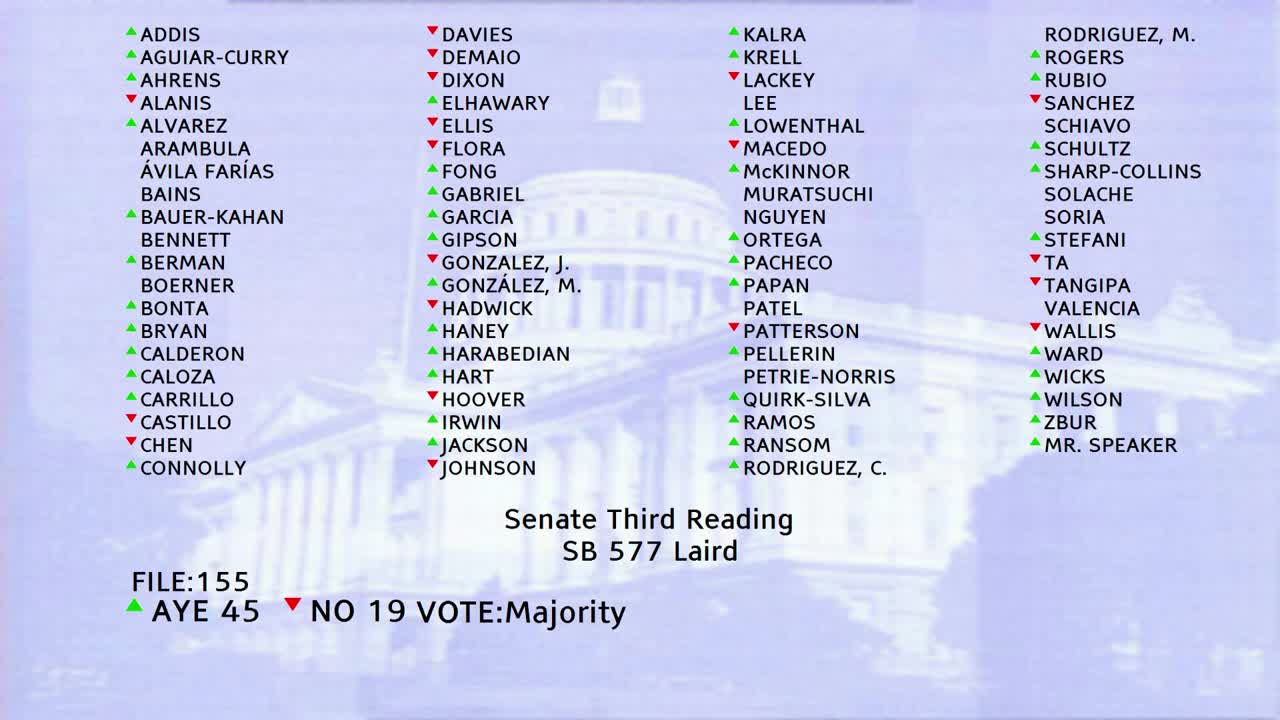
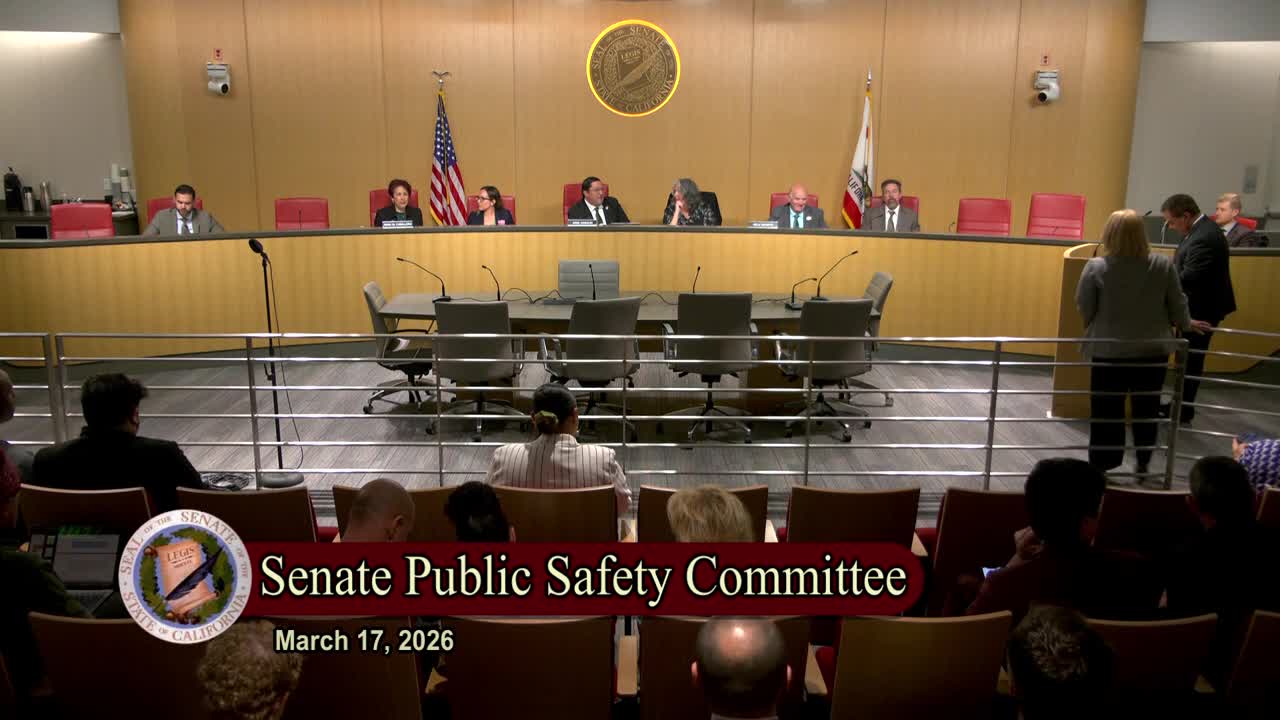
Bill Author