SB 1021: Fishing and hunting: youth program.
- Session Year: 2025-2026
- House: Senate
- Latest Version Date: 2026-06-17
Current Status:
In Progress
(2026-08-13: August 13 hearing: Held in committee and under submission.)
Introduced
In Committee
Awaiting First Chamber Vote
Passed First Chamber
In Committee
Awaiting Second Chamber Vote
Passed Second Chamber
Enacted
The California Constitution establishes the Fish and Game Commission and provides for the delegation to the commission of powers relating to the protection and propagation of fish and game. Existing law places the Fish and Game Commission in the Natural Resources Agency.
This bill would require the commission to, on or before January 1, 2028, establish a program adopt regulations, as provided, to increase opportunities to fish, and to hunt big game, wild pigs, upland game birds, and migratory game birds, for resident youth with life-threatening illnesses. The bill would require the commission, in developing the program, to consult with the Department of Fish and Wildlife, certain interested nonprofit organizations, and other interested parties. The bill would require the commission, in establishing and implementing the program, to provide adopting those regulations, to ensure reasonable accommodations for participants in accordance with federal and state disability laws, are incorporated into the regulations and to consider authorizing special hunts, as prescribed. The bill would authorize the commission to adopt include in the regulations additional reasonable accommodations consistent with safe, ethical, and science-based wildlife management practices. The bill would require the department Department of Fish and Wildlife to, on or before January 1, 2032, prepare and submit a report to the relevant legislative policy and budget committees in both houses of the Legislature, Legislature and to the commission, as provided. The bill would make the implementation of its provisions contingent upon an appropriation by the Legislature. The bill would repeal these provisions on January 1, 2033.
The California Constitution establishes the Fish and Game Commission and provides for the delegation to the commission of powers relating to the protection and propagation of fish and game. Existing law places the Fish and Game Commission in the Natural Resources Agency.
This bill would require the commission to, on or before January 1, 2028, establish a program to increase opportunities to fish, and to hunt big game, wild pigs, upland game birds, and migratory game birds, for resident youth with life-threatening illnesses. The bill would require the commission, in developing the program, to consult with the Department of Fish and Wildlife, certain interested nonprofit organizations, and other interested parties. The bill would require the commission, in establishing and implementing the program, to provide reasonable accommodations for participants in accordance with federal and state disability laws, as prescribed. The bill would authorize the commission to adopt additional reasonable accommodations consistent with safe, ethical, and science-based wildlife management practices. The bill would require the department to, on or before January 1, 2032, prepare and submit a report to the relevant legislative policy and budget committees in both houses of the Legislature, as provided. The bill would make the implementation of its provisions contingent upon an appropriation by the Legislature. The bill would repeal these provisions on January 1, 2033.
The California Constitution establishes the Fish and Game Commission and provides for the delegation to the commission of powers relating to the protection and propagation of fish and game. Existing law places the Fish and Game Commission in the Natural Resources Agency.
This bill would require the commission to to, on or before January 1, 2028, establish a program to increase opportunities to fish, and to hunt big game, wild pigs, upland game birds, and migratory game birds, for resident youth with life-threatening illnesses. The bill would require the commission, in developing the program, to consult with the Department of Fish and Wildlife and Wildlife, certain interested nonprofit organizations. organizations, and other interested parties. The bill would require the department to, on or before January 1, 2032, prepare and submit a report to the relevant legislative policy and budget committees in both houses of the Legislature, as provided. The bill would repeal these provisions on January 1, 2033.
The California Constitution establishes the Fish and Game Commission and provides for the delegation to the commission of powers relating to the protection and propagation of fish and game. Existing law places the Fish and Game Commission in the Natural Resources Agency.
This bill would require the commission to establish a program to increase opportunities to fish, and to hunt big game, upland game birds, and migratory game birds, for youth with life-threatening illnesses and youth who have lost a parent in service to the state or country. illnesses. The bill would require the commission, in developing the program, to consult with the Department of Fish and Wildlife and certain interested nonprofit organizations.
The California Constitution establishes the Fish and Game Commission and provides for the delegation to the commission of powers relating to the protection and propagation of fish and game. Existing law places the Fish and Game Commission in the Natural Resources Agency.
This bill would require the commission to establish a program to increase opportunities to fish, and to hunt big game, upland game birds, and migratory game birds, for youth with life-threatening illnesses and youth who have lost a parent in service to the state or country. The bill would require the commission, in developing the program, to consult with the Department of Fish and Wildlife and certain interested nonprofit organizations.
The Legislature finds and declares all of the following:
(a)Time in nature and access to outdoor recreation can provide meaningful experiences for youth with life-threatening illnesses.
(b)Hunting and fishing provide a valuable opportunity for youth with life-threatening illnesses to spend time with family, learn and develop skills, and fulfill lifelong dreams.
(c)Youth with life-threatening illnesses may require accommodations and adaptive equipment to equitably access outdoor recreation opportunities, including hunting and fishing.
(d)Existing programs for hunters with disabilities may not provide all necessary accommodations to allow youth with life-threatening illnesses to successfully complete hunting or fishing opportunities.
(e)It is the policy of the state, pursuant to Section 703.3 of the Fish and Game Code, that the Department of Fish and Wildlife and the Fish and Game Commission use ecosystem-based management informed by credible science in all resources management decisions to the extent feasible.
(f)It is the policy of the state, pursuant to Section 1002 of the Public Resources Code, to ensure all Californians have equitable opportunities to safe and affordable access to nature and access to the benefits of nature, with a special emphasis on creating and promoting opportunities for people and communities that face disproportionate barriers.
SECTION 1.SEC. 2.Section 318 is added to the Fish and Game Code, immediately following Section 317, to read:318.(a)(1)On or before January 1, 2028, the commission shall establish a program adopt regulations, except as provided in subdivision (b), to increase opportunities to fish, and to hunt big game, wild pigs, upland game birds, and migratory game birds, for resident youth with life-threatening illnesses.
(2)In developing the program, the commission, through a public process, shall consult with the department, interested nonprofit organizations that have goals and objectives directly related to the management and conservation of fish, big game, wild pigs, upland game birds, and migratory game bird species and primarily represent the interests of persons licensed pursuant to Sections 3031 and 7145, and any other interested parties.(b)The program shall include, but is not limited to, Regulations adopted pursuant to subdivision (a) shall not include any of the following:
(1)Any An exemption from any hunter education requirements established pursuant to Article 2.5 (commencing with Section 3049) of Chapter 1 of Part 1 of Division 4 shall not be waived. 4.
(2)The department shall take any potential allocation of an animal or animals to the program into consideration when determining the number of opportunities to be made available to the hunting community to take species with limited populations where tags are available by lottery or auction only.(3)The director shall notify the commission of any program activities at commission meetings.(4)The commission may authorize the establishment of special hunts for the program within the general season for the species.(2)An exemption from any requirement to possess a valid hunting or sport fishing license.
(3)An exemption from any other requirements to be otherwise eligible to hunt or fish.
(4)Any additional availability of tags, stamps, permits, or reservations beyond the allocations made available for all hunters or recreational fishers when those tags, stamps, permits, or reservations are available by lottery or auction only, such as by increasing the number of tags or allocating a subset of tags for this purpose.
(c)In establishing and implementing the program, adopting regulations pursuant to subdivision (a), the commission shall provide do both of the following:
(1)Ensure reasonable accommodations for participants in accordance with the federal Americans with Disabilities Act of 1990 (42 U.S.C. Sec. 12101 et seq.), Section 504 of the federal Rehabilitation Act of 1973 (29 U.S.C. Sec. 794), and any applicable state disability laws. laws are incorporated into the regulations. These accommodations shall include, but not be limited to, authorization for a qualified assistant to accompany the youth for the purposes of tracking, retrieving, and dispatching game or fish. The commission may adopt include in the regulations additional reasonable accommodations consistent with safe, ethical, and science-based wildlife management practices, including modified equipment or access provisions where appropriate. The commission shall adopt rules and regulations as necessary to implement these accommodations.
(2)Consider authorizing special hunts within the general season for the species as an accommodation for youth with life-threatening illnesses.
(d)Nothing in this section precludes the commission from granting reasonable accommodations for persons with disabilities in accordance with federal and state law or limits the commissions existing authority under this code to adopt regulations implementing the program. law.
(e)(1)On or before January 1, 2032, the department shall prepare and submit a report to the relevant legislative policy and budget committees in both houses of the Legislature. Legislature and to the commission. The report shall include, but is not limited to, the following:
(A)The number and types of opportunities provided to youth with life-threatening illnesses pursuant to the program regulations adopted pursuant to subdivision (a) and the number of youth who participated in those opportunities. The date or dates of each opportunity and any participating nonprofit organization that assisted with the opportunity.
(B)Recommendations, if any, to improve the program. for further regulatory or statutory changes to improve access for youth with life-threatening illnesses. The department may shall solicit recommendations from stakeholders and the public. public, including interested nonprofit organizations that have goals and objectives directly related to the management and conservation of fish, big game, wild pigs, upland game birds, and migratory game bird species and primarily represent the interests of persons licensed pursuant to Sections 3031 and 7145, and any other interested parties.
(C)All department and commission costs in developing and implementing the program, regulations, and revenues, if any, associated with the program. hunting and fishing opportunities for youth with life-threatening illnesses.
(2)For purposes of the report described in paragraph (1), data collection efforts shall avoid duplication and data collected for other purposes shall be used to the extent feasible.
(3)A report submitted to the Legislature pursuant to paragraph (1) shall be submitted in compliance with Section 9795 of the Government Code.
(f)For purposes of this section, the following definitions apply:
(1)Big game has the same meaning as defined in Section 350 of Title 14 of the California Code of Regulations.
(2)Life-threatening illness means an illness that can lead to a possibility of a termination of life within five years or less as stated in writing by the patients attending physician or surgeon.
(3)Program means the program developed by the commission pursuant to subdivision (a).(4)(3)Youth means an individual younger than 18 years of age.
(g)The implementation of this section is contingent upon an appropriation for its purposes by the Legislature in the annual Budget Act or another act.
(h)This section shall remain in effect only until January 1, 2033, and as of that date is repealed.
(a)(1)On or before January 1, 2028, the commission shall establish a program to increase opportunities to fish, and to hunt big game, wild pigs, upland game birds, and migratory game birds, for resident youth with life-threatening illnesses.
(2)In developing the program, the commission, through a public process, shall consult with the department, interested nonprofit organizations that have goals and objectives directly related to the management and conservation of fish, big game, wild pigs, upland game birds, and migratory game bird species and primarily represent the interests of persons licensed pursuant to Sections 3031 and 7145, and any other interested parties.
(b)The program shall include, but is not limited to, the following:
(1)Any hunter education requirements established pursuant to Article 2.5 (commencing with Section 3049) of Chapter 1 of Part 1 of Division 4 shall not be waived.
(2)The department shall take any potential allocation of an animal or animals to the program into consideration when determining the number of opportunities to be made available to the hunting community to take species with limited populations where tags are available by lottery or auction only.
(3)The director shall notify the commission of any program activities at commission meetings.
(4)The commission may authorize the establishment of special hunts for the program within the general season for the species.
(c)In establishing and implementing the program, the commission shall provide reasonable accommodations for participants in accordance with the federal Americans with Disabilities Act of 1990 (42 U.S.C. Sec. 12101 et seq.), Section 504 of the federal Rehabilitation Act of 1973 (29 U.S.C. Sec. 794), and any applicable state disability laws. These accommodations shall include, but not be limited to, authorization for a qualified assistant to accompany the youth for the purposes of tracking, retrieving, and dispatching game or fish. The commission may adopt additional reasonable accommodations consistent with safe, ethical, and science-based wildlife management practices, including modified equipment or access provisions where appropriate. The commission shall adopt rules and regulations as necessary to implement these accommodations.
(d)Nothing in this section precludes the commission from granting reasonable accommodations for persons with disabilities in accordance with federal and state law or limits the commissions existing authority under this code to adopt regulations implementing the program.
(c)(e)(1)On or before January 1, 2032, the department shall prepare and submit a report to the relevant legislative policy and budget committees in both houses of the Legislature. The report shall include, but is not limited to, the following:
(A)The number and types of opportunities provided to youth with life-threatening illnesses pursuant to the program and the number of youth who participated in those opportunities. The date or dates of each opportunity and any participating nonprofit organization that assisted with the opportunity.
(B)Recommendations, if any, to improve the program. The department may solicit recommendations from stakeholders and the public.
(C)All department and commission costs in developing and implementing the program, and revenues, if any, associated with the program.
(2)For purposes of the report described in paragraph (1), data collection efforts shall avoid duplication and data collected for other purposes shall be used to the extent feasible.
(3)A report submitted pursuant to paragraph (1) shall be submitted in compliance with Section 9795 of the Government Code.
(d)(f)For purposes of this section, the following definitions apply:
(1)Big game has the same meaning as defined in Section 350 of Title 14 of the California Code of Regulations.
(2)Life-threatening illness means an illness that can lead to a possibility of a termination of life within five years or less as stated in writing by the patients attending physician or surgeon.
(3)Program means the program developed by the commission pursuant to subdivision (a).
(4)Youth means an individual younger than 18 years of age.
(g)The implementation of this section is contingent upon an appropriation for its purposes by the Legislature in the annual Budget Act or another act.
(e)(h)This section shall remain in effect only until January 1, 2033, and as of that date is repealed.
(a)(1)The On or before January 1, 2028, the commission shall establish a program to increase opportunities to fish, and to hunt big game, wild pigs, upland game birds, and migratory game birds, for resident youth with life-threatening illnesses.
(2)In developing the program, the commission commission, through a public process, shall consult with the department and department, interested nonprofit organizations that have goals and objectives directly related to the management and conservation of fish, big game, wild pigs, upland game, game birds, and migratory game bird species and primarily represent the interests of persons licensed pursuant to Section 3031. Sections 3031 and 7145, and any other interested parties.
(b)The program shall include, but is not limited to, the following:
(1)Any hunter education requirements established pursuant to Article 2.5 (commencing with Section 3049) of Chapter 1 of Part 1 of Division 4 shall not be waived.
(2)The department shall take any potential allocation of an animal or animals to the program into consideration when determining the number of opportunities to be made available to the hunting community to take species with limited populations where tags are available by lottery or auction only.
(3)The director shall notify the commission of any program activities at commission meetings.
(4)The commission may authorize the establishment of special hunts for the program within the general season for the species.
(c)(1)On or before January 1, 2032, the department shall prepare and submit a report to the relevant legislative policy and budget committees in both houses of the Legislature. The report shall include, but is not limited to, the following:
(A)The number and types of opportunities provided to youth with life-threatening illnesses pursuant to the program and the number of youth who participated in those opportunities. The date or dates of each opportunity and any participating nonprofit organization that assisted with the opportunity.
(B)Recommendations, if any, to improve the program. The department may solicit recommendations from stakeholders and the public.
(C)All department and commission costs in developing and implementing the program, and revenues, if any, associated with the program.
(2)For purposes of the report described in paragraph (1), data collection efforts shall avoid duplication and data collected for other purposes shall be used to the extent feasible.
(3)A report submitted pursuant to paragraph (1) shall be submitted in compliance with Section 9795 of the Government Code.
(b)(d)For purposes of this section, big the following definitions apply:
(1)Big game has the same meaning as defined in Section 350 of Title 14 of the California Code of Regulations.
(2)Life-threatening illness means an illness that can lead to a possibility of a termination of life within five years or less as stated in writing by the patients attending physician or surgeon.
(3)Program means the program developed by the commission pursuant to subdivision (a).
(4)Youth means an individual younger than 18 years of age.
(e)This section shall remain in effect only until January 1, 2033, and as of that date is repealed.
(a)(1)The commission shall establish a program to increase opportunities to fish, and to hunt big game, upland game birds, and migratory game birds, for youth with life-threatening illnesses and youth who have lost a parent in service to the state or country. illnesses.
(2)In developing the program, the commission shall consult with the department and interested nonprofit organizations that have goals and objectives directly related to the management and conservation of fish, big game, upland game, and migratory game species and primarily represent the interests of persons licensed pursuant to Section 3031.
(b)For purposes of this section, big game has the same meaning as defined in Section 350 of Title 14 of the California Code of Regulations.
(a)(1)The commission shall establish a program to increase opportunities to fish, and to hunt big game, upland game birds, and migratory game birds, for youth with life-threatening illnesses and youth who have lost a parent in service to the state or country.
(2)In developing the program, the commission shall consult with the department and interested nonprofit organizations that have goals and objectives directly related to the management and conservation of fish, big game, upland game, and migratory game species and primarily represent the interests of persons licensed pursuant to Section 3031.
(b)For purposes of this section, big game has the same meaning as defined in Section 350 of Title 14 of the California Code of Regulations.
|
Date
|
Status
|
|---|---|
| Aug 13, 2026 | August 13 hearing: Held in committee and under submission. |
| Jul 1, 2026 | July 1 set for first hearing. Placed on suspense file. |
| Jun 17, 2026 | Read second time and amended. Re-referred to Com. on APPR. |
| Jun 16, 2026 | From committee: Do pass as amended and re-refer to Com. on APPR. (Ayes 9. Noes 1.) (June 16). |
| Jun 4, 2026 | Referred to Com. on W., P., & W. |
| May 27, 2026 | In Assembly. Read first time. Held at Desk. |
| May 27, 2026 | Read third time. Passed. (Ayes 35. Noes 4. Page 4501.) Ordered to the Assembly. |
| May 27, 2026 | Read third time. Passed. (Ayes 35. Noes 4.) Ordered to the Assembly. |
| May 19, 2026 | Read second time. Ordered to third reading. |
| May 18, 2026 | From committee: Do pass as amended. (Ayes 7. Noes 0. Page 4261.) (May 14). |
| May 18, 2026 | Read second time and amended. Ordered to second reading. |
| May 18, 2026 | From committee: Do pass as amended. (Ayes 7. Noes 0.) (May 14). |
| May 8, 2026 | Set for hearing May 14. |
| Apr 20, 2026 | April 20 hearing: Placed on APPR. suspense file. |
| Apr 10, 2026 | Set for hearing April 20. |
| Apr 7, 2026 | Read second time and amended. Re-referred to Com. on APPR. |
| Apr 6, 2026 | From committee: Do pass as amended and re-refer to Com. on APPR. (Ayes 7. Noes 0. Page 3660.) (March 24). |
| Apr 6, 2026 | From committee: Do pass as amended and re-refer to Com. on APPR. (Ayes 7. Noes 0.) (March 24). |
| Mar 16, 2026 | From committee with author's amendments. Read second time and amended. Re-referred to Com. on N.R. & W. |
| Mar 11, 2026 | Set for hearing March 24. |
| Feb 18, 2026 | Referred to Com. on N.R. & W. |
| Feb 11, 2026 | From printer. May be acted upon on or after March 13. |
| Feb 10, 2026 | Introduced. Read first time. To Com. on RLS. for assignment. To print. |
|
Date
|
Description
|
Location
|
Votes
|
|
|---|---|---|---|---|
| Jun 16, 2026 | Do pass as amended and be re-referred to the Committee on [Appropriations] | Assembly Standing Committee on Water, Parks, and Wildlife |
Passed |
|
| May 27, 2026 | Senate 3rd Reading SB1021 Choi et al. | Senate Floor |
Passed |
|
| May 14, 2026 | Do pass as amended | Senate Standing Committee on Appropriations |
Passed |
|
| Apr 20, 2026 | Placed on suspense file | Senate Standing Committee on Appropriations |
Passed |
|
| Mar 24, 2026 | Do pass as amended, but first amend, and re-refer to the Committee on [Appropriations] | Senate Standing Committee on Natural Resources and Water |
Passed |
This list shows positions taken on this bill by organizations on the date displayed, which is linked to the original source.
Positions by individuals are not included.
|
Organization
|
Position
|
Date
|
|---|---|---|
| Angel's Furry Friends Rescue | ** Against | |
| Animal Cruelty Club, Hueneme High School | ** Against | |
| Animal Rescue Mission | ** Against | |
| Animal Rescuers for Change | ** Against | |
| ANIMAL WELLNESS ACTION | ** Against | |
| Backcountry Hunters and Anglers | ** Support | |
| Backcountry Hunters & Anglers | ** Support | |
| Beezy's Rescue | ** Against | |
| Berkeley Animal Rights Center | ** Against | |
| betterTogether Forever | ** Against | |
| Better Together Forever | ** Against | |
| Black Brant Group, The | ** Support | |
| Black Pearl Sportfishing | ** Support | |
| Born Again Animal Rescue and Adoption | ** Against | |
| California Bowmen Hunters/State Archery Association | ** Support | |
| California Deer Association | ** Support | |
| California Hawking Club | ** Support | |
| California Houndsmen For Conservation | ** Support | |
| California Waterfowl Association | ** Support | |
| Cal-Ore Wetlands and Waterfowl Council | ** Support | |
| Captain Rollo’s Kids at Sea | ** Support | |
| Captain Rollo's Kids At Sea | ** Support | |
| Citizens for Los Angeles Wildlife | ** Against | |
| Coastal Charters | ** Support | |
| Coastal Conservation Association | ** Support | |
| Coastal Conservation Association – CAL | ** Support | |
| Coastal Conservation Association Of California | ** Support | |
| Compassionate Bay | ** Against | |
| Compassion Bay | ** Against | |
| Concerned Citizens Animal Rescue | ** Against | |
| Concerned Citizens Animal Rescue Inc. | ** Against | |
| Dana Landing | ** Support | |
| Dana Landing Market and Fuel Dock | ** Support | |
| Dana Wharf Sportfishing | ** Support | |
| Direct Action Everywhere | ** Against | |
| Eartheart | ** Against | |
| Feline Lucky Adventures | ** Against | |
| Field of Dreams | ** Support | |
| Field of Dreams, Inc. (sponsor) | ** Support | |
| Field of Dreams (sponsor) | ** Support | |
| Fish Emeryville | ** Support | |
| Giantmecha Syndicate | ** Against | |
| grasslands water district | ** Support | |
| Greater Los Angeles Animal Spay Neuter Collaborative | ** Against | |
| Hugs and Kisses Animal Fund | ** Against | |
| Hunt of a Lifetime | ** Support | |
| Jaimie Brianna's Legacy Fund | ** Against | |
| Jamie Brianna’s Legacy Fund | ** Against | |
| Latino Alliance for Animal Care Foundation | ** Against | |
| Leaders for Ethics, Animals, & the Planet | ** Against | |
| Leaders for Ethics, Animals, & the Planet (LEAP) | ** Against | |
| Lockwood Animal Rescue Center | ** Against | |
| Long Beach Spay and Neuter Foundation | ** Against | |
| Long Beach Spay & Neuter Foundation | ** Against | |
| Los Angeles County Democrats For The Protection Of Animals | ** Against | |
| Marina Del Rey Anglers | ** Support | |
| National Wild Turkey Association – California State Chapter | ** Support | |
| National Wild Turkey Federation | ** Support | |
| NY4Whales | ** Against | |
| NY 4 Whales | ** Against | |
| Outdoor Sporting Caucus Adv. Com. | ** Support | |
| Pet Loss Support Group | ** Against | |
| Pibbles N Kibbles Animal Rescue | ** Against | |
| Plant-based Advocates | ** Against | |
| Project Minnie | ** Against | |
| Rabbit Savior | ** Against | |
| Real Good Rescue | ** Against | |
| Reel Guppy Outdoors | ** Support | |
| Rocky Mountain Elk Foundation | ** Support | |
| San Diego County Wildlife Federation | ** Support | |
| San Diego Rod and Reel Club | ** Support | |
| San Diego Rod & Reel Club | ** Support | |
| Santa Barbara Landing | ** Support | |
| SCI California Coalition | ** Support | |
| Seeds 4 Change Now | ** Against | |
| Seeds 4 Change Now Animal Rescue | ** Against | |
| Seniors Citizens for Humane Education and Legislation | ** Against | |
| Social Compassion In Legislation | ** Against | |
| START Rescue | ** Against | |
| Stoked on Fishing | ** Support | |
| Students Against Animal Cruelty Club - Hueneme High School | ** Against | |
| Suisun Resource Conservation District | ** Support | |
| The Canine Condition | ** Against | |
| The Origins Foundation | ** Support | |
| The Pet Loss Support Group | ** Against | |
| The Spayce Project | ** Against | |
| The Wild Sheep Foundation – California Chapter | ** Support | |
| Tulare Basin Wetlands Association | ** Support | |
| Underdog Heroes, INC. | ** Against | |
| Wild Sheep Foundation, California Chapter | ** Support | |
| Women for Wolves | ** Against | |
| Women United for Animal Welfare (WUFAW) | ** Against |
Date of Hearing: July 1, 2026
ASSEMBLY COMMITTEE ON APPROPRIATIONS
Buffy Wicks, Chair
SBPCA Bill Id:SB 1021
Author:(Choi) – As Amended Ver:June 17, 2026
Policy Committee: | Water, Parks and Wildlife | Vote: | 9 - 1 |
|
| ||
|
|
Urgency: No State Mandated Local Program: No Reimbursable: No
SUMMARY:
This bill requires the Fish and Game Commission (FGC) to adopt regulations to increase hunting and fishing opportunities for resident youth with life-threatening illnesses.
Specifically, this bill, among other things and contingent upon appropriation:
1) Requires FGC, by January 1, 2028, to adopt regulations, except as provided below, to increase opportunities to fish, and to hunt big game, wild pigs, upland game birds, and migratory game birds, for resident youth with life-threatening illnesses.
2) Prohibits the regulations from including an exemption from specified hunter education requirements; an exemption from any requirement to possess a valid hunting or sport fishing license; an exemption from any other requirements to be otherwise eligible to hunt or fish; or any additional availability of tags, stamps, permits, or reservations beyond the allocations made available for all hunters or recreational fishers when those tags, stamps, permits, or reservations are available by lottery or auction only.
3) Requires FGC, in adopting the regulations, to (a) ensure reasonable accommodations for participants in accordance with specified state and federal laws such as the federal Americans with Disabilities Act, as specified, and (b) consider authorizing special hunts within the general season for the species as an accommodation for youth with life-threatening illnesses.
4) Requires the California Department of Fish and Wildlife (CDFW) to submit a report to the Legislature and requires the report to include (a) the number and types of opportunities provided to youth with life-threatening illnesses pursuant to the regulations adopted by FGC and the number of youth who participated in those opportunities; (b) recommendations, if any, for further regulatory or statutory changes to improve access for youth with life-threatening illnesses, as specified; and (c) all CDFW and FGC costs in developing and implementing the regulations, and revenues, if any, associated with hunting and fishing opportunities for youth with life-threatening illnesses.
5) Sunsets on January 1, 2033.
FISCAL EFFECT:
One-time costs of an unknown amount, likely in excess of $150,000 (General Fund or special fund such as the Fish and Game Preservation Fund), for FGC to adopt the required regulations and CDFW to prepare and submit the required report to the Legislature.
CDFW has experienced longstanding budget challenges which have persisted despite repeated efforts over many years to address them. The department’s service-based budgeting (SBB) analysis for fiscal year (FY) 2023-24 indicates the department (including its “Public Use & Enjoyment” program – where most of the tasks associated with sport fishing and hunting are located) is funded for only one-third of its mandated program work. The SBB effort highlights the degree to which CDFW operates with significant gaps between what is required to achieve its mandated mission and the level at which it is currently funded.
The Governor’s January budget for FY 2026-27 included the permanent elimination of certain vacant state positions in environmental departments to generate budgetary savings, initially proposed as part of the 2025-26 budget but delayed subject to further legislative review. The June 2026 legislative budget agreement maintains, among other positions, about 60 vacant positions at CDFW.
COMMENTS:
1) Purpose. According to the author:
California is home to tens of thousands of children living with serious, life-threatening illnesses. However, when a child’s last wish is to go fishing or hunting for possibly the last time in their lives, these children often require reasonable accommodations for medical equipment or assistance. [This bill] expands reasonable accommodations to children with life-threatening illnesses so they may participate in supervised hunting and fishing experiences. This bill is about exposing all youth to California’s ecosystem, creating unforgettable experiences, and fostering the next generation of conservationists in California.
2) Background. FGC and CDFW have implemented a variety of accommodations to allow individuals with disabilities to access fishing and hunting opportunities in California. For example, CDFW offers free and reduced-cost fishing licenses and group fishing permits for people with disabilities and reduced-cost hunting licenses for disabled veterans and recovering servicemembers. According to the Assembly Water, Parks, and Wildlife Committee, CDFW issues three hunting permits to assist individuals with disabilities – the mobility impaired motor vehicle hunting permit, the disabled muzzleloader scope permit, and the disabled archer permit. FGC has also authorized special hunts for hunters with disabilities. Additionally, CDFW and the U.S. Fish and Wildlife Service provide hunting blinds and accessible pond access for mobility-impaired hunters at 20 state wildlife areas and national wildlife refuges in California.
Despite these efforts, the author argues, a child experiencing a life-threatening illness may have physical limitations and medical needs that impact their ability to navigate outdoor areas or operate hunting or fishing equipment, and existing accommodations may be insufficient for these youth to realize their dream hunting or fishing experience.
Writing in support of the bill, a coalition of hunting, fishing, and conservation organizations argues, among other things, that for children facing grave health challenges, “a guided, supervised experience in nature offers healing, hope, and cherished family moments.” The coalition contends that current systems, waiting periods, and seasonal limits can unintentionally exclude vulnerable youth from timely experiences, and that this bill will inspire “the next generation of licensed hunters, anglers, and conservation advocates who will continue safeguarding California’s natural resources.”
Writing in opposition, Social Compassion in Legislation and a coalition of organizations argues that while they understand the intent of providing meaningful experiences for youth facing serious health challenges, this bill “misses the mark by expanding access to the killing of animals as a form of therapeutic or recreational activity” rather than “promoting non-lethal, compassionate interactions with wildlife and nature.”
Analysis Prepared by: Nikita Koraddi / APPR. / (916) 319-2081
Date of Hearing: June 16, 2026
ASSEMBLY COMMITTEE ON WATER, PARKS, AND WILDLIFE
Diane Papan, Chair
SBPCA Bill Id:SB 1021
Author:(Choi) – As Amended Ver:May 18, 2026
SENATE VOTE: 35-4
SUBJECT: Fishing and hunting: youth program
SUMMARY: Requires the Fish and Game Commission (Commission) to establish a program to increase opportunities to hunt and fish for resident youth with life-threatening illnesses. Specifically, this bill:
- Requires the Commission to establish a program to increase opportunities to fish, and to hunt big game, wild pigs, upland game birds, and migratory game birds, for resident youth with life-threatening illnesses, on or before January 1, 2028.
- Requires the Commission, as it develops the program, to conduct a public process to consult with the Department of Fish and Wildlife (CDFW), interested nonprofit organizations that have goals and objectives directly related to the management and conservation of fish and wildlife and primarily represent the interests of licensed hunters and fishers, and any other interested parties.
- States that the program must do the following:
- Include any hunter education requirements.
- Require CDFW to take any potential allocation of an animal or animals to the program into consideration when determining the number of opportunities to be made available to the hunting community to take species with limited populations where tags are available by lottery or auction only.
- Require the director of CDFW to notify the Commission of any program activities at Commission meetings.
- Consider the establishment of special hunts for the program within the general season for the species.
- Requires the Commission to provide reasonable accommodations for participants in accordance with the federal Americans with Disabilities Act [42 U.S. Code (USC) § 12101 et seq.], Section 504 of the Rehabilitation Act (29 USC § 794), and any applicable state disability laws.
- Requires that the accommodations provided include authorization for a qualified assistant to accompany the youth for the purposes of tracking, retrieving, and dispatching game or fish.
- Authorizes the Commission to adopt additional reasonable accommodations consistent with safe, ethical, and science-based wildlife management practices, including modified equipment or access provisions where appropriate.
- Requires the Commission to adopt rules and regulations as necessary to implement these accommodations.
- Provides that nothing in this bill precludes the Commission from granting reasonable accommodations for persons with disabilities in accordance with federal and state law or limits the Commission’s existing authority to adopt regulations implementing the program.
- Requires CDFW to submit a report to the Legislature on or before January 1, 2032, which must include:
- The number and types of opportunities provided to youth with life-threatening illnesses pursuant to the program and the number of youth who participated in those opportunities;
- The date or dates of each opportunity and any participating nonprofit organization that assisted with the opportunity;
- Recommendations, if any, to improve the program, which CDFW may solicit from stakeholders and the public; and
- All CDFW and Commission costs for developing and implementing the program, and revenues, if any, associated with the program.
- Defines terms for the purpose of this bill:
- “Life-threatening illness” as an illness that can lead to a possibility of a termination of life within five years or less as stated in writing by the patient’s attending physician or surgeon.
- “Youth” as an individual younger than 18 years of age.
- Provides that the implementation of this bill is contingent upon an appropriation for its purposes by the Legislature in the annual Budget Act or another act.
- Sunsets the program on January 1, 2033.
EXISTING LAW:
- Establishes CDFW to manage California’s diverse fish, wildlife, and plant resources, and the habitats upon which they depend, for their ecological values and for their use and enjoyment of the public [Fish and Game Code (FGC) § 712.1].
- Establishes the Commission for the protection of fish and game, including the power to regulate the taking or possession of birds, mammals, fish, amphibians, and reptiles (California Constitution, Article IV, Section 20; FGC § 200).
- Requires every person engaged in taking any bird, mammal, fish, amphibian, or reptile to have in their immediate possession any required license, tag, stamp, or permit (FGC § 1054.2).
- Authorizes the Commission to set the terms and conditions under which any permit, license, tag, reservation application, or other entitlement shall be issued under the FGC (FGC § 1050).
- Prohibits the issuance of a hunting license to any person unless that person presents evidence of completion of a course in hunter education or current or past possession of a hunting license (FGC § 3050).
- Requires CDFW to issue a reduced fee hunting license to a disabled veteran or recovering servicemember who has not been convicted of a violation of the FGC (FGC § 3033).
- Requires CDFW to issue a reduced fee sport fishing license to a disabled veteran or recovering servicemember who has not been convicted of a violation of the FGC (FGC § 7150).
- Requires CDFW to issue a hunting permit to any member of the armed forces of the United States who is in a military medical facility and who is at least 70% disabled in lieu of a hunting license and appropriate tags (FGC § 3038).
- Requires CDFW to issue a free sport fishing license to any person who has not been convicted of a violation of the FGC, if that person is:
- Blind, as specified;
- A resident Native American who is, in the discretion of CDFW, financially unable to pay the fee required for the license;
- A person with a developmental disability, as specified; or
- A resident of the state who is permanently unable to move from place to place without the aid of a wheelchair, walker, forearm crutches, or a comparable mobility-related device (FGC § 7151).
- Provides that the Commission may issue, under such terms and conditions as it may impose, a permit to any organization conducting a special hunt for servicemembers or veterans residing in or assigned to a veterans or armed services medical facility authorizing the take of birds and mammals notwithstanding the prohibition on the possession of a loaded rifle or shotgun in any vehicle or conveyance or the prohibition on shooting at any game bird or mammal from a powerboat, sailboat, motor vehicle, or airplane (FGC § 317).
- Prohibits any otherwise qualified individual with a disability from being excluded from participation in, denied the benefits of, or subjected to discrimination under any program or activity receiving federal funds, solely due to their disability (29 USC § 794).
- Prohibits any qualified individual with a disability from being excluded from participation in or denied the benefits of the services, programs, or activities of a public entity, solely due to their disability (42 USC § 12132).
FISCAL EFFECT: Unknown. This bill is keyed fiscal.
COMMENTS:
- Purpose of this bill. According to the author, “California is home to tens of thousands of children living with serious, life-threatening illnesses. However, when a child’s last wish is to go fishing or hunting for possibly the last time in their lives, these children often require reasonable accommodations for medical equipment or assistance. [This bill] expands reasonable accommodations to children with life-threatening illnesses so they may participate in supervised hunting and fishing experiences. This bill is about exposing all youth to California’s ecosystem, creating unforgettable experiences, and fostering the next generation of conservationists in California.”
- Background. Access to the outdoors has a positive effect on everyone, including children with life-threatening illnesses. Hunting and fishing can provide children with an opportunity to spend precious time with family, connect with nature, and learn new skills. However, hunting and fishing have historically been challenging for individuals with disabilities to access. Access challenges include difficult terrain, extended time in the elements, and the need to operate equipment. Technological solutions to some of these challenges exist, including tracked chairs and adaptive hunting and fishing equipment, but this equipment can be prohibitively expensive and it can still be difficult to safely complete a hunting or fishing experience without help from an able-bodied assistant. To meet these needs, a number of nonprofit organizations exist to provide hunting opportunities to various communities of hunters with disabilities, including, among others, children with life-threatening illnesses and disabled veterans.
Accommodations are available for people with disabilities in California. The Commission and CDFW have implemented a variety of accommodations to allow individuals with disabilities to access fishing and hunting opportunities in California. CDFW offers free and reduced cost fishing licenses and group fishing permits for people with disabilities, and reduced cost hunting licenses for disabled veterans and recovering servicemembers. Additionally, CDFW issues three hunting permits to assist individuals with disabilities: the mobility impaired motor vehicle hunting permit [14 California Code of Regulations (CCR) § 251 (b)], the disabled muzzleloader scope permit [14 CCR § 353 (l)], and the disabled archer permit [14 CCR § 354 (j)]. Additionally, the Commission has authorized special hunts for hunters with disabilities (14 CCR § 715). Finally, CDFW and the U.S. Fish and Wildlife Service provide hunting blinds and accessible pond access for mobility-impaired hunters at 20 state wildlife areas and national wildlife refuges in California.
Achieving a dream hunting or fishing trip can still be a challenge. A child experiencing a life-threatening illness may have physical limitations and medical needs that impact their ability to navigate outdoor areas or operate hunting or fishing equipment. For these individuals, the existing accommodations may be insufficient for them to be able to realize their dream hunting or fishing experience. In particular, these children may benefit from an assistant who can help them throughout the process of taking fish or game. Currently, nonprofit organizations dedicated to supporting this population report that the law is ambiguous as to whether such assistance is authorized, which makes it difficult to provide opportunities in California; one organization reported that California children seeking a hunting or fishing experience needed to travel to Texas in order to successfully complete a hunt. This bill would direct the Commission to develop a program to increase opportunities to fish and hunt for children with life-threatening illnesses.
Programs exist in other states. A number of other states, including Colorado, Georgia, Illinois, Maine, Mississippi, South Carolina, South Dakota, and Wisconsin, have enacted laws to create opportunities for children with life-threatening illnesses to access hunting and fishing experiences. Many of these programs allow for special permits to be issued, often free or at a reduced cost. Some of these permits authorize take outside of the established season or provide additional tags dedicated for children with life-threatening illnesses. The actual opportunities enabled by these programs are generally offered by nonprofit organizations that use volunteers to take children on guided hunting or fishing experiences.
- Proposed committee amendments. The establishment of a program may be unnecessarily costly and burdensome, requiring dedicated staff at CDFW. Accommodations for impacted youth could instead be provided through regulations adopted by the Commission. Additionally, the Legislature may wish to make clear its intent when directing the Commission to adopt regulations by specifying that all requirements for hunting and fishing safety, licensing, and eligibility be adhered to, and that tags, stamps, permits, or reservations available only by lottery or auction will not be created or specially allocated for these purposes. The Committee may wish to adopt the following amendments:
Amendment 1
SECTION 1. The Legislature finds and declares all of the following:
(a) Time in nature and access to outdoor recreation can provide meaningful experiences for youth with life-threatening illnesses.
(b) Hunting and fishing provide a valuable opportunity for youth with life-threatening illnesses to spend time with family, learn and develop skills, and fulfill lifelong dreams.
(c) Youth with life-threatening illnesses may require accommodations and adaptive equipment to equitably access outdoor recreation opportunities, including hunting and fishing.
(d) Existing programs for hunters with disabilities may not provide all necessary accommodations to allow youth with life-threatening illnesses to successfully complete hunting or fishing opportunities.
(e) It is the policy of the state, pursuant to Section 703.3 of the Fish and Game Code, that the Department of Fish and Wildlife and the Fish and Game Commission use ecosystem-based management informed by credible science in all resources management decisions to the extent feasible.
(f) It is the policy of the state, pursuant to Section 1002 of the Public Resources Code, to ensure all Californians have equitable opportunities to safe and affordable access to nature and access to the benefits of nature, with a special emphasis on creating and promoting opportunities for people and communities that face disproportionate barriers.
Amendment 2
FGC § 318. (a) (1) On or before January 1, 2028, the commission shall establish a program adopt regulations, except as provided in subdivision (b), to increase opportunities to fish, and to hunt big game, wild pigs, upland game birds, and migratory game birds, for resident youth with life-threatening illnesses.
(2) In developing the program, the commission, through a public process, shall consult with the department, interested nonprofit organizations that have goals and objectives directly related to the management and conservation of fish, big game, wild pigs, upland game birds, and migratory game bird species and primarily represent the interests of persons licensed pursuant to Sections 3031 and 7145, and any other interested parties.
(b) The program Regulations adopted pursuant to this section shall not include, but is not limited to, any of the following:
(1) Any An exemption from any hunter education requirements established pursuant to Article 2.5 (commencing with Section 3049) of Chapter 1 of Part 1 of Division 4 shall not be waived.
(2) An exemption from any requirement to possess a valid hunting or sport fishing license.
(3) An exemption from any other requirements to be otherwise eligible to hunt or fish.
(2) The department shall take any potential allocation of an animal or animals to the program into consideration when determining the number of opportunities to be made available to the hunting community(4) Any additional availability of tags, stamps, permits, or reservations beyond the allocations made available for all hunters or recreational fishers to take species with limited populations where such tags, stamps, permits, or reservations are available by lottery or auction only, such as by increasing the number of tags or allocating a subset of tags for this purpose.
(3) The director shall notify the commission of any program activities at commission meetings.
(4) The commission may authorize the establishment of special hunts for the program within the general season for the species.
(c) In establishing and implementing the program, the In adopting regulations pursuant to subdivision (a), the commission shall:
(1) provide Ensure reasonable accommodations for participants in accordance with the federal Americans with Disabilities Act of 1990 (42 U.S.C. Sec. 12101 et seq.), Section 504 of the federal Rehabilitation Act of 1973 (29 U.S.C. Sec. 794), and any applicable state disability laws are incorporated in the regulations. These accommodations shall include, but not be limited to, authorization for a qualified assistant to accompany the youth for the purposes of tracking, retrieving, and dispatching game or fish. The commission may adopt additional reasonable accommodations consistent with safe, ethical, and science-based wildlife management practices, including modified equipment or access provisions where appropriate. The commission shall adopt rules and regulations as necessary to implement these accommodations.
(2) Consider authorizing special hunts within the general season for the species as an accommodation for youth with life-threatening illnesses.
(d) Nothing in this section precludes the commission from granting reasonable accommodations for persons with disabilities in accordance with federal and state law or limits the commission’s existing authority under this code to adopt regulations implementing the program.
(e) (1) On or before January 1, 2032, the department shall prepare and submit a report to the relevant legislative policy and budget committees in both houses of the Legislature and to the commission. The report shall include, but is not limited to, the following:
(A) The number and types of opportunities provided to youth with life-threatening illnesses pursuant to the program regulations adopted pursuant to this section and the number of youth who participated in those opportunities. The date or dates of each opportunity and any participating nonprofit organization that assisted with the opportunity.
(B) Recommendations, if any, to improve the program for further regulatory or statutory changes to improve access for youth with life-threatening illnesses. The department may shall solicit recommendations from stakeholders and the public, including interested nonprofit organizations that have goals and objectives directly related to the management and conservation of fish, big game, wild pigs, upland game birds, and migratory game bird species and primarily represent the interests of persons licensed pursuant to Sections 3031 and 7145, and any other interested parties.
(C) All department and commission costs in developing and implementing the program regulations, and revenues, if any, associated with the program hunting and fishing opportunities for youth with life-threatening illnesses.
(2) For purposes of the report described in paragraph (1), data collection efforts shall avoid duplication and data collected for other purposes shall be used to the extent feasible.
(3) A report submitted pursuant to paragraph (1) shall be submitted in compliance with Section 9795 of the Government Code.
(f) For purposes of this section, the following definitions apply:
(1) “Big game” has the same meaning as defined in Section 350 of Title 14 of the California Code of Regulations.
(2) “Life-threatening illness” means an illness that can lead to a possibility of a termination of life within five years or less as stated in writing by the patient’s attending physician or surgeon.
(3) “Program” means the program developed by the commission pursuant to subdivision (a).
(4)(4) “Youth” means an individual younger than 18 years of age.
(g) The implementation of this section is contingent upon an appropriation for its purposes by the Legislature in the annual Budget Act or another act.
(h) This section shall remain in effect only until January 1, 2033, and as of that date is repealed.
- Arguments in support. Writing in support, SCI California Coalition states, “[This bill] is a compassionate, science-based measure that maintains our mission to provide wildlife conservation with science driven policies and provide opportunities to youth, in this case those that are stricken with life-threatening illnesses that may not allow them the time to participate otherwise. By providing these unique outdoor experiences, the bill offers meaningful support to families facing unimaginable challenges without compromising California’s rigorous wildlife management standards.”
- Arguments in opposition. Writing for a coalition of animal rights groups, Social Compassion in Legislation states, “[This bill] misses the mark by expanding access to the killing of animals as a form of therapeutic or recreational activity. California has long been a national leader in promoting humane values and responsible wildlife stewardship. [this bill] moves the state in the wrong direction in promoting hunting, rather than promoting non-lethal, compassionate interactions with wildlife and nature. . . . Programs centered on wildlife observation, conservation, habitat restoration, and humane education provide meaningful and restorative experiences without ethical conflict.”
- Related legislation. AB 2207 (Hadwick) of the current legislative session requires CDFW to establish a big game hunting tag transfer program for certain nonprofit organizations, including those that serve youth with a life-threatening illness or permanent physical disability.
AB 2523 (Gray) of 2020, would have required the Commission to establish a program to increase opportunities to fish and to hunt big game, upland game birds, and migratory game birds for youth with life-threatening illnesses and youth who lost a parent in service to the state or country. AB 2523 was held in the Assembly Appropriations Committee.
REGISTERED SUPPORT / OPPOSITION:
Support
Field of Dreams (sponsor)
Backcountry Hunters & Anglers
Black Brant Group, the
Black Pearl Sportfishing
Cal-Ore Wetlands and Waterfowl Council
California Bowmen Hunters/State Archery Association
California Deer Association
California Hawking Club
California Houndsmen for Conservation
California Waterfowl Association
Captain Rollo's Kids At Sea
Coastal Charters
Coastal Conservation Association of California
Dana Landing Market and Fuel Dock
Dana Wharf Sportfishing
Fish Emeryville
Hunt of a Lifetime
Marina Del Rey Anglers
National Wild Turkey Federation
Reel Guppy Outdoors
Rocky Mountain Elk Foundation
San Diego County Wildlife Federation
San Diego Rod & Reel Club
Santa Barbara Landing
SCI California Coalition
Stoked on Fishing
Suisun Resource Conservation District
The Origins Foundation
Tulare Basin Wetlands Association
Wild Sheep Foundation, California Chapter
Opposition
Angel's Furry Friends Rescue
Animal Rescue Mission
Animal Rescuers for Change
Animal Wellness Action
Beezy's Rescue
Berkeley Animal Rights Center
Better Together Forever
Born Again Animal Rescue and Adoption
Compassionate Bay
Concerned Citizens Animal Rescue
Direct Action Everywhere
Eartheart
Feline Lucky Adventures
Giantmecha Syndicate
Greater Los Angeles Animal Spay Neuter Collaborative
Hugs and Kisses Animal Fund
Jaimie Brianna's Legacy Fund
Latino Alliance for Animal Care Foundation
Lockwood Animal Rescue Center
Long Beach Spay and Neuter Foundation
Los Angeles County Democrats for the Protection of Animals
NY 4 Whales
Pibbles N Kibbles Animal Rescue
Plant-based Advocates
Project Minnie
Rabbit Savior
Real Good Rescue
Seeds 4 Change Now Animal Rescue
Seniors Citizens for Humane Education and Legislation
Social Compassion in Legislation
Start Rescue
Students Against Animal Cruelty Club - Hueneme High School
The Canine Condition
The Pet Loss Support Group
The Spayce Project
Underdog Heroes, INC.
Women United for Animal Welfare (WUFAW)
958 Individuals
Analysis Prepared by: Sean Clair / W., P., & W. / (916) 319-2096
SENATE RULES COMMITTEE Office of Senate Floor Analyses (916) 651-4171 | SB 1021 |
THIRD READING
Bill No: SB 1021
Author: Choi (R), et al.
Amended: 4/7/26
Vote: 21
SENATE NATURAL RES. & WATER COMMITTEE: 7-0, 3/24/26
AYES: Becker, Seyarto, Allen, Cabaldon, Grove, Laird, Stern
SENATE APPROPRIATIONS COMMITTEE: 7-0, 5/14/26
AYES: Cervantes, Seyarto, Cabaldon, Dahle, Grayson, Richardson, Wahab
SUBJECT: Fishing and hunting: youth program
SOURCE: Field of Dreams, Inc.
DIGEST:
This bill requires, contingent upon appropriation, the California Fish and Game Commission (commission) to develop and establish a program to increase opportunities to fish and hunt for youth with life-threatening illness, sets certain program requirements, including hunter education, authorizes the commission to provide reasonable accommodations, requires a legislative report containing information about the program, and sunsets on January 1, 2033, among other provisions, as provided.
ANALYSIS:
Existing law:
- Establishes the commission and the California Department of Fish and Wildlife (department) in the California Natural Resources Agency. The department is led by its director.
- Requires the commission to determine the form of all licenses, permits, tags, reservations, and other entitlements issued pursuant to the Fish and Game Code, and the method of carrying and displaying all licenses, and requires the department to prepare and issue all licenses, permits, tags, reservations, and other entitlements, as provided. Requires both the commission and the department to establish fees in an amount sufficient to recover all reasonable administration implementation costs of the department and commission relating to the program for which the fee is paid. (Fish and Game Code (FGC) §1050)
- Declares the legislative intent that the costs of hunting and sport fishing programs shall be provided out of hunting and sport fishing revenues and reimbursements and federal funds received for hunting and sport fishing programs, and other funds appropriated by the Legislature for this purpose, as specified. (FGC §711)
- Requires a resident or a nonresident, 16 years of age or older, upon payment of a specified fee, to be issued a 365-day sport fishing license. The angler must possess the license while fishing. (FGC §7149.05) Requires a resident or nonresident to be issued a hunting license upon payment of a specified fee, as provided. (FGC §3031)
- Makes it unlawful to:
- Take or possess a bird, mammal, fish, reptile, or amphibian except as provided by the Fish and Game Code or applicable regulations, as specified. (FGC §§2000, 2002)
- Transfer licenses, tags, validations, permits, applications, or reservations to another person. (FGC §1052)
- Use or possess any license, tag, validation, permit, application, or reservation not lawfully issued to the user. (FGC §1052)
- Hunt any game bird or mammal without having the required licenses, tags, and/or stamps in possession. (FGC §1054.2)
- Defines “life-threatening illness” to mean the individual has an illness that can lead to a possibility of a termination of life within five years or less as stated in writing by his or her attending physician and surgeon. (Health and Safety Code §1250(i)(2)(B))
Existing regulation defines “big game” to mean deer (genus Odocoileus), elk (genus Cervus), pronghorn antelope (genus Antilocarpa), black bear (genus Ursus), and Nelson big horn sheep (subspecies Ovis canadensis nelsoni) found in certain locations, as specified. (Title 14, Code of California Regulations, §350)(14 California Code of Regulations (CCR) 350).
This bill:
- Requires the commission to establish a program to increase opportunities to fish, and to hunt big game, upland game birds, and migratory game birds for youth with life-threatening illness on or before January 1, 2028.
- Requires the commission in developing the program to consult through a public process with the department and interested nonprofit organizations that have goals and objectives directly related to the management and conservation of fish, big game, upland game, and migratory game species and primarily represent licensed anglers and hunters.
- Requires the program to include, but not be limited to:
- A prohibition on the waiver of hunter education requirements, as provided.
- The department is required to take into consideration any potential allocation or an animal or animals to the program when determining the number of opportunities to be made available to take species with limited populations where tags are available by auction or lottery only.
- The department director is required to notify the commission of any program activities at commission meetings.
- The commission is authorized to establish special hunts for the program, as specified.
- Requires the commission in establishing and implementing the program to provide reasonable accommodations for participants in accordance with the federal Americans with Disabilities Act of 1990, the federal Rehabilitation Act of 1973, and any applicable state laws, as provided.
- Accommodations include, but are not limited to, the presence of a qualified assistant during a hunt or modifications to the method of take, as provided.
- Provides that nothing precludes the commission from granting reasonable accommodations for persons with disabilities or limits the commission’s existing authority to adopt regulations to implement the program, as provided.
- Requires the department on or before January 1, 2032 to prepare and submit a report to the relevant legislative policy and budget committees including the number and types of opportunities provided, the number of youth who participated, the date or dates of participation, participating non-profit organizations, all department and commission costs in developing and implementing the program and any recommendations to improve the program, among other information, as provided.
- Defines “big game” to be the same as identified in 14 CCR 350. Defines “life-threatening illness” to mean an illness that can lead to a possibility of a termination of life within five years or less, as provided.
- Provides that implementation of all provisions is contingent upon appropriation by the Legislature, as provided. Sunsets all provisions on January 1, 2033, as provided.
FISCAL EFFECT: Appropriation: No Fiscal Com.: Yes Local: No
According to the Senate Appropriations Committee:
- Unknown but likely significant ongoing costs (General Fund or special fund). The Department of Fish and Wildlife reports that the fiscal impact of the bill is unknown at this time without knowing the full magnitude of the program the Commission might develop. Unknown impacts include, but are not limited to, staff time and resources required to create, implement, and administer the program on an ongoing basis.
Field of Dreams, Inc. (sponsor)
Backcountry Hunters and Anglers
Black Pearl Sportfishing
Cal-Ore Wetland and Waterfowl Council
California Bowmen Hunters/State Archery Association
California Deer Association
California Houndsmen for Conservation
California Hawking Club
California Waterfowl Association
Captain Rollo’s Kids at Sea
Coastal Charters
Coastal Conservation Association
Dana Landing
Dana Wharf Sportfishing
Fish Emeryville
Grasslands Water District
Hunt of a Lifetime
Marina Del Rey Anglers
National Wild Turkey Association – California State Chapter
Outdoor Sporting Caucus Adv. Com.
Reel Guppy Outdoors
Rocky Mountain Elk Foundation
San Diego County Wildlife Federation
San Diego Rod and Reel Club
Santa Barbara Landing
Stoked on Fishing
Suisun Resource Conservation District
The Black Brant Group
The Origins Foundation
The Wild Sheep Foundation – California Chapter
Tulare Basin Wetlands Association
OPPOSITION: (Verified 5/14/26)
Angel’s Furry Friends Rescue
Animal Cruelty Club, Hueneme High School
Animal Rescue Mission
Animal Rescuers for Change
Animal Wellness Action
Berkeley Animal Rights Center
betterTogether Forever
Born Again Animal Rescue and Adoption
Citizens for Los Angeles Wildlife
Compassion Bay
Concerned Citizens Animal Rescue Inc.
Direct Action Everywhere
EartHeart
Feline Lucky Adventures
Giantmecha Syndicate
Greater Los Angeles Animal Spay Neuter Collaborative
Hugs and Kisses Animal Fund
Jamie Brianna’s Legacy Fund
Latino Alliance for Animal Care Foundation
Leaders for Ethics, Animals, & the Planet
Lockwood Animal Rescue Center
Long Beach Spay & Neuter Foundation
Los Angeles Democrats for the Protection of Animals
NY4Whales
Pet Loss Support Group
Pibbles n Kibbles Animal Rescue
Plant-Based Advocates
Project Minnie
RABBIT SAVIOR
Real Good Rescue
Seeds 4 Change Now
Senior Citizens for Humane Education and Legislation
Social Compassion in Legislation
START Rescue
The Canine Condition
The Spayce Project
Underdog Heroes, Inc.
Women for Wolves
Women United for Animal Welfare
ARGUMENTS IN SUPPORT: According to the author, “Each year in the United States, tens of thousands of children are diagnosed with a life-threatening illness such as cancer, cystic fibrosis, or chronic heart condition. There are thousands of children with these illnesses in California that simply want to go hunting or fishing one last time. For the vast majority of these children, they do not have the luxury of waiting for the extremely small chance of being allowed to hunt or fish under California’s existing permit and tag systems. For example, in order to get a tag to hunt elk, pronghorn, bighorn sheep, and premium deer in California, the [department] only accepts applications from April 15 through June 2 of each year. SB 1021 creates hunting and fishing experiences specifically tailored to children with life-threatening illnesses. This bill is about getting children out in nature, creating unforgettable experiences, and fostering the next generation of conservationists in California.”
ARGUMENTS IN OPPOSITION: Writing in a joint opposition letter, Social Compassion in Legislation states “While we sincerely appreciate the goal of providing terminally ill youth and children […] opportunities to enjoy California’s great outdoors and wildlife, we believe that [commission] and [department] resources would be better directed toward programs which provide opportunities to enjoy the same, but without the need to kill an animal in the process.”
They continue, “Exposure to nature can provide proven emotional and mental health benefits through peaceful engagement, conservation education, outdoor recreation, and wildlife observation. Additionally, directing the [commission] to partner primarily with hunting-interest organizations limits broader perspectives and excludes conservation groups focused on the enjoyment of our wildlife with non-lethal activities.”
Prepared by: Katharine Moore / N.R. & W. / (916) 651-4116
5/18/26 15:18:00
**** END ****
SENATE COMMITTEE ON
Senator Sabrina Cervantes, Chair
2025 - 2026 Regular Session
SB 1021 (Choi) - Fishing and hunting: youth program
Version: | Policy Vote: |
Urgency: | Mandate: |
Hearing Date: | Consultant: |
Bill Summary:
This bill would require the California Fish and Game Commission (commission) to establish a program to increase opportunities to fish and hunt for youth with life-threatening illness, and to develop the program through a public process, as provided.
*********** ANALYSIS ADDENDUM – SUSPENSE FILE ***********
The following information is revised to reflect amendments
adopted by the committee on May 14, 2026
Fiscal Impact:
- Unknown but likely significant ongoing costs (General Fund or special fund). The Department of Fish and Wildlife reports that the fiscal impact of the bill is unknown at this time without knowing the full magnitude of the program the Commission might develop. Unknown impacts include, but are not limited to, staff time and resources required to create, implement, and administer the program on an ongoing basis.
Author Amendments:
Author amendments would require the commission, in establishing and implementing the program, to provide reasonable accommodations for participants in accordance with federal and state disability laws, as prescribed. The commission would be authorized to adopt additional reasonable accommodations consistent with safe, ethical, and science-based wildlife management practices.
Committee Amendments:
Committee amendments would make establishment of the program contingent upon an appropriation.
-- END --
SENATE COMMITTEE ON
Senator Sabrina Cervantes, Chair
2025 - 2026 Regular Session
SB 1021 (Choi) - Fishing and hunting: youth program
Version: | Policy Vote: |
Urgency: | Mandate: |
Hearing Date: | Consultant: |
Bill Summary:
This bill would require the California Fish and Game Commission (commission) to establish a program to increase opportunities to fish and hunt for youth with life-threatening illness, and to develop the program through a public process, as provided.
Fiscal Impact:
- Unknown but likely significant ongoing costs (General Fund or special fund). The Department of Fish and Wildlife reports that the fiscal impact of the bill is unknown at this time without knowing the full magnitude of the program the Commission might develop. Unknown impacts include, but are not limited to, staff time and resources required to create, implement, and administer the program on an ongoing basis.
Background:
With the exception of free fishing and free hunting days and other limited circumstances, a valid fishing or hunting license is required to sport fish or hunt in California for those 16 years of age or older. A junior hunting license is required for those under 16 years of age at the time of licensing. In addition, to legally take certain species, an individual may be required to additionally purchase applicable stamps, validations, report cards, or tags. For example, an individual wishing to fish for steelhead would be required to purchase both a fishing license and a steelhead report card, and an individual wishing to hunt for black bear would be required to purchase both a hunting license and a black bear tag. To hunt for certain big game species – wild pig, deer, elk, and pronghorn antelope – a hunter must be at least 12 years of age. A hunter must be 16 years of age to hunt for a bighorn sheep. In addition, completion of a hunter safety education course is generally required to obtain a hunting license.
For both sport fishing and hunting, certain participants are eligible for reduced price licenses – such as disabled veterans and recovering service members. Sport fishing provides for additional reduced price or free fishing licenses for low-income seniors, the visually impaired, the severely physically or developmentally disabled, and Native American tribe members who cannot afford a resident year-long license. Hunters with certain disabilities may also be able to receive accommodations, such as the use of a motor vehicle and the authorization to shoot from the vehicle while hunting, or the authorization to use different or modified equipment to take a species, than otherwise allowed.
For sport fishing, while some species may be taken year-round, the commission may establish limited seasons, and bag and possession limits for others to provide for a sustainable fishery. Some areas may be closed to fishing for certain species at a particular time (e.g. red abalone) and fisheries may be closed to protect public health (e.g. Dungeness crab due to the presence of domoic acid), among other reasons. While there are limited-entry commercial fisheries, the same is not true for recreational fisheries.
Similarly to sport fishing, while some species may be hunted year-round, such as wild pigs, most species have defined seasons when, for example, a migratory species is present in the state, and to provide for a sustainable hunt, among other considerations. Various types of hunts in different locations – such as for apprentices and different methods of take – may be available depending upon the species. In contrast to sport fishing, some hunts – particularly for certain big game species, such as elk, pronghorn antelope, bighorn sheep, and certain deer populations – have considerably more demand from hunters than animals available. In these instances, a lottery, the Big Game Drawing (drawing), has been established by regulation to distribute tags. Licensed hunters may file one drawing application between April 15 and June 2 of each year for forthcoming hunts. Each application may apply for up to two hunts for “premium” deer, and one each for elk, pronghorn antelope, and bighorn sheep. The exact method of choosing successful applications can vary between hunts – in some instances hunters who have accumulated preference points may be advantaged compared to others, while other hunt draws are random. The odds of obtaining a premium (or non-premium) deer tag in any year can be pretty good, particularly if the applicant is flexible on the location of the hunt. However, it is not unusual for there to be 100 or more applicants for every pronghorn antelope, elk, or bighorn sheep tag available. Bear tags are readily available, but bear may only be hunted until the limit of 1,700 animals killed is reached. In addition, a limited number of big game tags are made available to nonprofit organizations to auction for fundraising purposes.
In the last two decades, there have been efforts to facilitate the ability of seriously ill youth to access hunting and fishing opportunities in several states. For example, successful legislation in Mississippi in 2010 and in Wisconsin in 2018 modified or authorized the modification of applicable hunting and fishing requirements for youth with life-threatening or terminal illness. These laws are not uniform, and establish varying eligibility requirements (e.g. 18 or 21 years of age maximum, and description of illness), and approaches to facilitate hunting and fishing opportunities (e.g. fee waiver or reduction, and special permitting, among other provisions). In at least some instances, the participation of nonprofit organizations to facilitate these opportunities is specifically acknowledged such as through sponsoring participants and providing the support for the opportunities. In Maine, for example, up to 5 moose hunting permits annually may be issued to nonprofit organizations that provide hunting and fishing adventures to children with life threatening, critical, or terminal illnesses, among other provisions (see Public Law Chapter 526 of 2024). Multiple nonprofit organizations -- such as Field of Dreams, Hope Outdoors, Hunt of a Lifetime Foundation, the Tennessee Wildlife Resources Foundation, Colorado Dream Hunts, Outdoor Buddies, and the Catch-A-Dream Foundation – specialize in organizing and hosting seriously ill or special needs youth for hunting and fishing activities. These organizations anecdotally report sustained interest in the opportunities they help to provide for eligible youth annually, and hundreds may participate nationwide where there are opportunities to do so. Detailed application materials to participate in one of the available programs found online illustrate the commitment to providing the logistical support necessary to provide successful trips for eligible youth.
Field of Dreams, this bill’s sponsor, reports serving up to about a dozen youth annually over the last 5 years in this state. They also reported that for a sportfishing opportunity approximately 80 families showed up to participate. Field of Dreams estimates that 80 – 150 youth could be provided these opportunities annually in California through coordination of 2 – 4 nonprofit organizations, and note the impact these programs additionally have on the families of the youth.
Proposed Law:
This bill would require the commission to establish a program to increase opportunities to fish and hunt for youth with life-threatening illness, and to develop the program through a public process, as provided.
Specifically, this bill would:
- Require the commission, on or before January 1, 2028, the to establish a program to increase opportunities to fish, and to hunt big game, wild pigs, upland game birds, and migratory game birds, for resident youth with life-threatening illnesses.
- Require the commission in developing the program, through a public process, to consult with the department and interested nonprofit organizations that have goals and objectives directly related to the management and conservation of fish, big game, wild pigs, upland game, game birds, and migratory game bird species and primarily represent the interests of persons licensed pursuant to Sections 3031 and 7145, and any other interested parties.
- Specify what the program shall include.
Related Legislation:
SB 718 (Dahle, 2025) would have expanded the eligibility for certain reduced-price hunting and sport fishing licenses to persons receiving public benefits from specified programs, as provided.
AB 2523 (Gray, 2020) would have required the commission to establish a program to increase hunting opportunities for youths who are terminally ill or have lost a parent in service to the state or country, as specified.
Staff Comments:
The department has longstanding budget concerns which have persisted despite repeated efforts over multiple decades to address them. When the state has significant fiscal concerns – as it does now – ensuring consistent and sustained funding for the department is particularly challenging. Recently, at legislative direction, the department undertook a “service-based” budgeting effort to identify the personnel needed to perform the services required by its mandates. The department’s services were separated into eight general programs for analysis. In 2021, the initial results of this effort were released that revealed that the department’s funding was inadequate to meet its “mission” service level. The “Public Use & Enjoyment” program – where most of the tasks associated with sport fishing and hunting are located – only had about 1/3 of the mission service level resources. The Newsom Administration proposed, and the Legislature approved, significant one-time General Fund moneys to support the department’s activities in the near-term. Some progress in addressing the gaps in service were subsequently made, although this was offset, at least in part, by new duties.
Unfortunately, a recent update (for fiscal year 2024/2025) shows that the Public Use & Enjoyment program resources remain at about 34% overall, with a 5-year average of about 32%. This does not show significant improvement. Sport fishing and hunting continue to receive significant General Fund and non-dedicated Fish and Game Preservation Fund support (in other words – these activities are not self-supporting from fees). In addition, Hunting and Fishing Enforcement is by far the largest category under the General Fund and non-dedicated Fish and Game Preservation Fund expenditures by the department.
To the extent any new fishing or hunting program is unfunded or does not generate revenue, it will contribute to the long-standing and continuing fiscal challenges at the department.
-- END --
SENATE COMMITTEE ON NATURAL RESOURCES AND WATER
Senator Josh Becker, Chair
2025 - 2026 Regular
Bill No: SB Hearing Date: March 24, 2026
Author: | |||
Version: | Amended | ||
Urgency: | Fiscal: | ||
Consultant: | |||
Subject: Fishing and hunting: youth program
SUMMARY
This bill would require the California Fish and Game Commission (commission) to establish a program to increase opportunities to fish and hunt for youth with life-threatening illness, and to develop the program in consultation with the California Department of Fish and Wildlife (department) and interested nonprofit organizations who represent certain hunters and sport anglers, as provided.
BACKGROUND AND EXISTING LAW
The Missions of the Commission and the Department
Existing law establishes the commission and the department in the California Natural Resources Agency (CNRA).
The commission’s mission is “to provide leadership for transparent and open dialogue where information, ideas and facts are easily available, understood and discussed to ensure that California will have abundant, healthy, and diverse fish and wildlife that thrive within dynamic ecosystems, managed with public confidence and participation […] We embrace our responsibility to hold California’s fish and wildlife and their habitats in the public trust, as well as their cultural and intrinsic value, and therefore work collaboratively with other federal, tribal, state and local government agencies, non-governmental organizations and the people of California to establish scientifically-sound policies and regulations that protect, enhance and restore California’s native fish and wildlife in their natural habitats, and to secure a rich and sustainable outdoor heritage for all generations to experience and enjoy through both consumptive and non-consumptive activities.” Among other responsibilities, the commission establishes hunting and sport fishing regulations including seasons, bag and possession limits, methods of take, area descriptions, and any special conditions.
The department’s mission statement is “to manage California’s diverse fish, wildlife, and plant resources, and the habitats upon which they depend, for their ecological values and for their use and enjoyment by the public.” In general, the department implements and enforces the regulations set by the commission, as well as providing biological data and expertise to inform the commission’s decision-making process.
Hunting and sport fishing in California
With the exception of free fishing and free hunting days and other limited circumstances, a valid fishing or hunting license is required to sport fish or hunt in California for those 16 years of age or older. A junior hunting license is required for those under 16 years of age at the time of licensing. In addition, to legally take certain species, an individual may be required to additionally purchase applicable stamps, validations, report cards, or tags[1]. For example, an individual wishing to fish for steelhead would be required to purchase both a fishing license and a steelhead report card, and an individual wishing to hunt for black bear would be required to purchase both a hunting license and a black bear tag. To hunt for certain big game species – wild pig, deer, elk, and pronghorn antelope – a hunter must be at least 12 years of age. A hunter must be 16 years of age to hunt for a bighorn sheep. In addition, completion of a hunter safety education course is generally required to obtain a hunting license.
For both sport fishing and hunting, certain participants are eligible for reduced price licenses – such as disabled veterans and recovering service members. Sport fishing provides for additional reduced price or free fishing licenses for low-income seniors, the visually impaired, the severely physically or developmentally disabled, and Native American tribe members who cannot afford a resident year-long license. Hunters with certain disabilities may also be able to receive accommodations, such as the use of a motor vehicle and the authorization to shoot from the vehicle while hunting, or the authorization to use different or modified equipment to take a species, than otherwise allowed.
For sport fishing, while some species may be taken year-round, the commission may establish limited seasons, and bag and possession limits for others to provide for a sustainable fishery. Some areas may be closed to fishing for certain species at a particular time (e.g. red abalone) and fisheries may be closed to protect public health (e.g. Dungeness crab due to the presence of domoic acid), among other reasons. While there are limited-entry commercial fisheries, the same is not true for recreational fisheries.
Similarly to sport fishing, while some species may be hunted year-round, such as wild pigs, most species have defined seasons when, for example, a migratory species is present in the state, and to provide for a sustainable hunt, among other considerations. Various types of hunts in different locations – such as for apprentices and different methods of take – may be available depending upon the species. In contrast to sport fishing, some hunts – particularly for certain big game species, such as elk, pronghorn antelope, bighorn sheep, and certain deer populations – have considerably more demand from hunters than animals available. In these instances, a lottery, the Big Game Drawing (drawing), has been established by regulation to distribute tags. Licensed hunters may file one drawing application between April 15 and June 2 of each year for forthcoming hunts. Each application may apply for up to two hunts for “premium” deer, and one each for elk, pronghorn antelope, and bighorn sheep. The exact method of choosing successful applications can vary between hunts – in some instances hunters who have accumulated preference points may be advantaged compared to others, while other hunt draws are random. The odds of obtaining a premium (or non-premium) deer tag in any year can be pretty good, particularly if the applicant is flexible on the location of the hunt. However, it is not unusual for there to be 100 or more applicants for every pronghorn antelope, elk, or bighorn sheep tag available. Bear tags are readily available, but bear may only be hunted until the limit of 1,700 animals killed is reached. In addition, a limited number of big game tags are made available to nonprofit organizations to auction for fundraising purposes.
Hunting and fishing opportunities for seriously ill youth
In the last two decades, there have been efforts to facilitate the ability of seriously ill youth to access hunting and fishing opportunities in several states. For example, successful legislation in Mississippi in 2010 and in Wisconsin in 2018[2] modified or authorized the modification of applicable hunting and fishing requirements for youth with life-threatening or terminal illness. These laws are not uniform, and establish varying eligibility requirements (e.g. 18 or 21 years of age maximum, and description of illness), and approaches to facilitate hunting and fishing opportunities (e.g. fee waiver or reduction, and special permitting, among other provisions). In at least some instances, the participation of nonprofit organizations to facilitate these opportunities is specifically acknowledged such as through sponsoring participants and providing the support for the opportunities. In Maine, for example, up to 5 moose hunting permits annually may be issued to nonprofit organizations that provide hunting and fishing adventures to children with life threatening, critical, or terminal illnesses, among other provisions (see Public Law Chapter 526 of 2024)[3]. Multiple nonprofit organizations -- such as Field of Dreams, Hope Outdoors, Hunt of a Lifetime Foundation, the Tennessee Wildlife Resources Foundation, Colorado Dream Hunts, Outdoor Buddies, and the Catch-A-Dream Foundation – specialize in organizing and hosting seriously ill or special needs youth for hunting and fishing activities. These organizations anecdotally report sustained interest in the opportunities they help to provide for eligible youth annually, and hundreds may participate nationwide where there are opportunities to do so. Detailed application materials to participate in one of the available programs found online illustrate the commitment to providing the logistical support necessary to provide successful trips for eligible youth.
Field of Dreams, this bill’s sponsor, reports serving up to about a dozen youth annually over the last 5 years in this state. They also reported that for a sportfishing opportunity approximately 80 families showed up to participate. Field of Dreams estimates that 80 – 150 youth could be provided these opportunities annually in California through coordination of 2 – 4 nonprofit organizations, and note the impact these programs additionally have on the families of the youth.
Existing law:
- Establishes the commission and the department in CNRA.
- Requires the commission to determine the form of all licenses, permits, tags, reservations, and other entitlements issued pursuant to the Fish and Game Code, and the method of carrying and displaying all licenses, and requires the department to prepare and issue all licenses, permits, tags, reservations, and other entitlements, as provided. Requires both the commission and the department to establish fees in an amount sufficient to recover all reasonable administration implementation costs of the department and commission relating to the program for which the fee is paid. (Fish and Game Code (FGC) §1050)
- Declares the legislative intent that the costs of hunting and sport fishing programs shall be provided out of hunting and sport fishing revenues and reimbursements and federal funds received for hunting and sport fishing programs, and other funds appropriated by the Legislature for this purpose, as specified. (FGC §711)
- Requires a resident or a nonresident, 16 years of age or older, upon payment of a specified fee, to be issued a 365-day sport fishing license. The angler must possess the license while fishing. (FGC §7149.05) Requires a resident or nonresident to be issued a hunting license upon payment of a specified fee, as provided. (FGC §3031)
- Makes it unlawful to:
- Take or possess a bird, mammal, fish, reptile, or amphibian except as provided by the Fish and Game Code or applicable regulations, as specified. (FGC §§2000, 2002)
- Transfer licenses, tags, validations, permits, applications, or reservations to another person. (FGC §1052)
- Use or possess any license, tag, validation, permit, application, or reservation not lawfully issued to the user. (FGC §1052)
- Hunt any game bird or mammal without having the required licenses, tags, and/or stamps in possession. (FGC §1054.2)
Existing regulation:
- Defines “big game” to mean deer (genus Odocoileus), elk (genus Cervus), pronghorn antelope (genus Antilocarpa), black bear (genus Ursus), and Nelson big horn sheep (subspecies Ovis canadensis nelsoni) found in certain locations, as specified. (Title 14, Code of California Regulations, §350)(14 CCR 350).
PROPOSED LAW
This bill would require the commission to establish a program to increase opportunities to fish and hunt for youth with life-threatening illness, and to develop the program in consultation with the department and interested nonprofit organizations who represent certain hunters and sport anglers, as provided.
Specifically, this bill would:
- Require the commission to establish a program to increase opportunities to fish, and to hunt big game, upland game birds, and migratory game birds for youth with life-threatening illness.
- Require the commission in developing the program to consult with the department and interested nonprofit organizations that have goals and objectives directly related to the management and conservation of fish, big game, upland game, and migratory game species and primarily represent licensed hunters.
- Define “big game” to be the same as identified in 14 CCR 350.
ARGUMENTS IN SUPPORT
According to the author, “Each year in the United States, tens of thousands of children are diagnosed with a life-threatening illness such as cancer, cystic fibrosis, or chronic heart condition. There are thousands of children with these illnesses in California that simply want to go hunting or fishing one last time. For the vast majority of these children, they do not have the luxury of waiting for the extremely small chance of being allowed to hunt or fish under California’s existing permit and tag systems. For example, in order to get a tag to hunt elk, pronghorn, bighorn sheep, and premium deer in California, the [department] only accepts applications from April 15 through June 2 of each year. SB 1021 creates hunting and fishing experiences specifically tailored to children with life-threatening illnesses. This bill is about getting children out in nature, creating unforgettable experiences, and fostering the next generation of conservationists in California.”
ARGUMENTS IN OPPOSITION
Writing in a joint opposition letter, Social Compassion in Legislation states “While we sincerely appreciate the goal of providing terminally ill youth and children […] opportunities to enjoy California’s great outdoors and wildlife, we believe that [commission] and [department] resources would be better directed toward programs which provide opportunities to enjoy the same, but without the need to kill an animal in the process.”
They continue, “Exposure to nature can provide proven emotional and mental health benefits through peaceful engagement, conservation education, outdoor recreation, and wildlife observation. Additionally, directing the [commission] to partner primarily with hunting-interest organizations limits broader perspectives and excludes conservation groups focused on the enjoyment of our wildlife with non-lethal activities.”
COMMENTS
Existing obstacles to providing opportunities for seriously ill youth to hunt and fish. From a permitting perspective and as cited by the author, the most significant obstacle to providing opportunities for seriously ill youth to hunt and fish is obtaining the tags to legally hunt the certain big game species whose tags are generally only available by lottery. The lottery is only open for a fixed period of time each year and is generally substantially oversubscribed. Tags to be obtained via the lottery must be applied for well in advance of the hunt. This issue is not specifically addressed in the bill.
Open-ended language. The bill in its current form provides limited direction to the commission in what to take into consideration when developing the proposed program, lacks clarity, and does not provide for legislative oversight, among other concerns. Of particular note:
- Lack of deadline for program development. While the commission regularly revisits its hunting and sportfishing regulations, the bill does not require the commission to develop the proposed program by a date certain. Given various constraints, including funding and other existing mandates, providing a deadline would make explicit legislative expectations for the program to be operational.
- Public engagement and transparency. As noted above, the commission emphasizes public engagement and transparency in its efforts to pursue its mission. Decision making by the commission is also subject to existing state law and regulation requiring public engagement and transparency, such as the Bagley-Keene Open Meeting Act. The department interpreted a previous version of this bill to require the development in regulations (AB 2523 (Gray, 2020)). The opposition raises concerns about not being included in the development of the program by the commission due to the lack of clarity on this point.
- Hunter Education. It is unclear if youth participating in the program will be required to take Hunter Education (FGC §§3049 et seq.) which helps to ensure safe hunting experiences and is generally required to obtain a hunting license in the state.
- Oversubscribed big game hunts. The commission, with the assistance of the department, takes various factors into consideration when determining the allowable hunting opportunities for elk, pronghorn antelope, premium deer, and certain bighorn sheep, to ensure ongoing sustainable hunting. In the event that the commission wishes to allocate tags for these hunts to the proposed program, this allocation should be taken into consideration when determining how many tags will be available to the public through the drawing.
- Special hunts. While accommodations, as noted above, may be available for hunters needing them, the state does not appear to offer special hunts for those needing accommodations, although scheduling and tag limits are tools that at least can partially address any issues raised by the use of the accommodations. At least one state schedules hunts specifically for disabled participants.
- Legislative oversight. As written, the existing language does not provide a ready method for legislative oversight. It is unclear that any use of the proposed program to increase opportunities will be tracked by either the department or the commission. Further, it is typical for new programs to be piloted initially in order to, among other reasons, facilitate the identification of any implementation challenges.
- Wild pigs. While wild pigs are part of the definition of big game for purposes of the Big Game Management Account (FGC §3953), they are not otherwise generally treated as big game in the Fish and Game Code. As an abundant species, validations to take wild pigs are readily- available.
- Definitions. There are at least two definitions of “life-threatening illness” in state statute (see Health and Safety Code §§1250(i)(2)(B), 1568.01). “Youth” does not necessarily need to be constrained by the ages of certain existing junior hunting and fishing licensing requirements. Explicit definitions are warranted to provide clear direction to the commission in developing the program.
- Clarifying and technical changes to language. In addition to the issues identified above, there are multiple drafting inconsistencies internal to the bill and other minor changes that would clarify legislative intent.
In view of this, the Committee may wish to amend the bill to provide more explicit direction to the commission and sideboards for the proposed program by adding a deadline for program development by the commission of one year, adding wild pigs to the program, clarifying that program development by the commission will be by a public process with public engagement, requiring that allocation of over-subscribed big game tags to the proposed program be taken into consideration when determining the number of big game tags to make publicly available by lottery or auction, authorizing the creation of special hunts for the program, adding definitions of “youth” and “life-threatening illness,” providing for a legislative report about the program, including recommendation for program improvement, adding a 5 year sunset for the program to provide an opportunity for legislative oversight, and additional technical and clarifying changes. [Amendment #1]
Underfunded and overmandated. The department has longstanding budget concerns which have persisted despite repeated efforts over multiple decades to address them. When the state has significant fiscal concerns – as it does now – ensuring consistent and sustained funding for the department is particularly challenging. Recently, at legislative direction, the department undertook a “service-based” budgeting effort to identify the personnel needed to perform the services required by its mandates. The department’s services were separated into eight general programs for analysis. In 2021, the initial results of this effort were released that revealed that the department’s funding was inadequate to meet its “mission” service level. The “Public Use & Enjoyment” program – where most of the tasks associated with sport fishing and hunting are located – only had about 1/3 of the mission service level resources. The Newsom Administration proposed, and the Legislature approved, significant one-time General Fund moneys to support the department’s activities in the near-term. Some progress in addressing the gaps in service were subsequently made, although this was offset, at least in part, by new duties.
Unfortunately, a recent update (for fiscal year 2024/2025) shows that the Public Use & Enjoyment program resources remain at about 34% overall, with a 5-year average of about 32%. This does not show significant improvement. Sport fishing and hunting continue to receive significant General Fund and non-dedicated Fish and Game Preservation Fund support (in other words – these activities are not self-supporting from fees). In addition, Hunting and Fishing Enforcement is by far the largest category under the General Fund and non-dedicated Fish and Game Preservation Fund expenditures by the department.
To the extent any new fishing or hunting program is unfunded or does not generate revenue, it will contribute to the long-standing and continuing fiscal challenges at the department.
Recent related legislation
SB 718 (Dahle, 2025) would have expanded the eligibility for certain reduced-price hunting and sport fishing licenses to persons receiving public benefits from specified programs, as provided. (This bill was held on suspense by the Assembly Appropriations Committee.)
AB 2523 (Gray, 2020) would have required the commission to establish a program to increase hunting opportunities for youths who are terminally ill or have lost a parent in service to the state or country, as specified. (This bill was held on suspense by the Assembly Appropriations Committee.)
SUGGESTED AMENDMENTS
AMENDMENT 1
Revise the bill’s language as follows:
318. (a) (1) On or before January 1, 2028, The commission shall establish a program to increase opportunities to fish, and to hunt big game, wild pigs, upland game birds, and migratory game birds, for resident youth with life-threatening illnesses.
(2) In developing the program, the commission through a public process shall consult with the department, and interested nonprofit organizations that have goals and objectives directly related to the management and conservation of fish, big game, wild pig, upland game bird, and migratory game bird species and primarily represent the interests of persons licensed pursuant to Sections 3031 and 7145, and any other interested parties.
(b) The program shall include, but is not limited to, the following:
(1) Any hunter education requirements established pursuant to Article 2.5 of Chapter 1 of Part 1 of Division 4 of this code (commencing with section 3049) shall not be waived.
(2) The department shall take any potential allocation of an animal or animals to the program into consideration when determining the number of opportunities to be made available to the hunting community to take species with limited populations where tags are available by lottery or auction only.
(3) The department director shall notify the commission of any program activities at commission meetings.
(4) The commission may authorize the establishment of special hunts for the program within the general season for the species.
(c) On or by January 1, 2032, the department shall prepare a report and submit the report to the relevant legislative policy and budget committees in both houses of the Legislature. The report shall include at least the following information:
(1) The number and type of opportunities provided to youth with life-threatening illnesses pursuant to the program and the number of youth who participated in those opportunities. The date or dates of the opportunity and any participating nonprofit organization that assisted with the opportunity shall be included.
(2) Recommendations, if any, to improve the program. The department may solicit recommendations from stakeholders and the public.
(3) All department and commission costs in developing and implementing the program, and revenues, if any, associated with the program.
(4) Data collection efforts shall avoid duplication and use data collected for other purposes to the extent feasible.
(5) A report to be submitted pursuant to this subdivision shall be submitted in compliance with Section 9795 of the Government Code.
(d) (b) For purposes of this section, the following terms mean the following:
(1) “big game” has the same meaning as defined in Section 350 of Title 14 of the California Code of Regulations.
(2) “Life-threatening illness” means the individual has an illness that can lead to a possibility of a termination of life within five years or less as stated in writing by his or her attending physician and surgeon.
(3) “Program” means the program developed by the commission pursuant to subdivision (a).
(4) “Youth” means the individual is younger than 18 years of age.
(e) This section shall remain in effect until January 1, 2033, and as of that date is repealed, unless a later enacted statute deletes or extends that date.
SUPPORT
Field of Dreams (sponsor)
Backcountry Hunters and Anglers
Black Pearl Sportfishing
Cal-Ore Wetland and Waterfowl Council
California Bowmen Hunters/State Archery Association
California Deer Association
California Houndsmen for Conservation
California Hawking Club
California Waterfowl Association
Captain Rollo’s Kids at Sea
Coastal Conservation Association – CAL
Dana Wharf Sportfishing
Fish Emeryville
Hunt of a Lifetime
Marina Del Rey Anglers
National Wild Turkey Association – California State Chapter
Reel Guppy Outdoors
Rocky Mountain Elk Foundation
San Diego County Wildlife Federation
San Diego Rod and Reel Club
Santa Barbara Landing
Stoked on Fishing
Suisun Resource Conservation District
The Black Brant Group
The Origins Foundation
The Wild Sheep Foundation – California Chapter
Tulare Basin Wetlands Association
OPPOSITION
Leaders for Ethics, Animals, & the Planet (LEAP)
Social Compassion in Legislation
Women for Wolves
one individual
-- END --
Exceptions include junior hunting license holders who are exempt from purchasing a state duck hunting validation, an upland game bird hunting validation, and wildlife area hunting passes. (Title 14, California Code of Regulations, §§313, 510, 550.5) ↑
HB 1070 (Mississippi) and AB 461 (Wisconsin). ↑
Moose hunting permits in Maine are generally only available by lottery. ↑
Discussed in Hearing
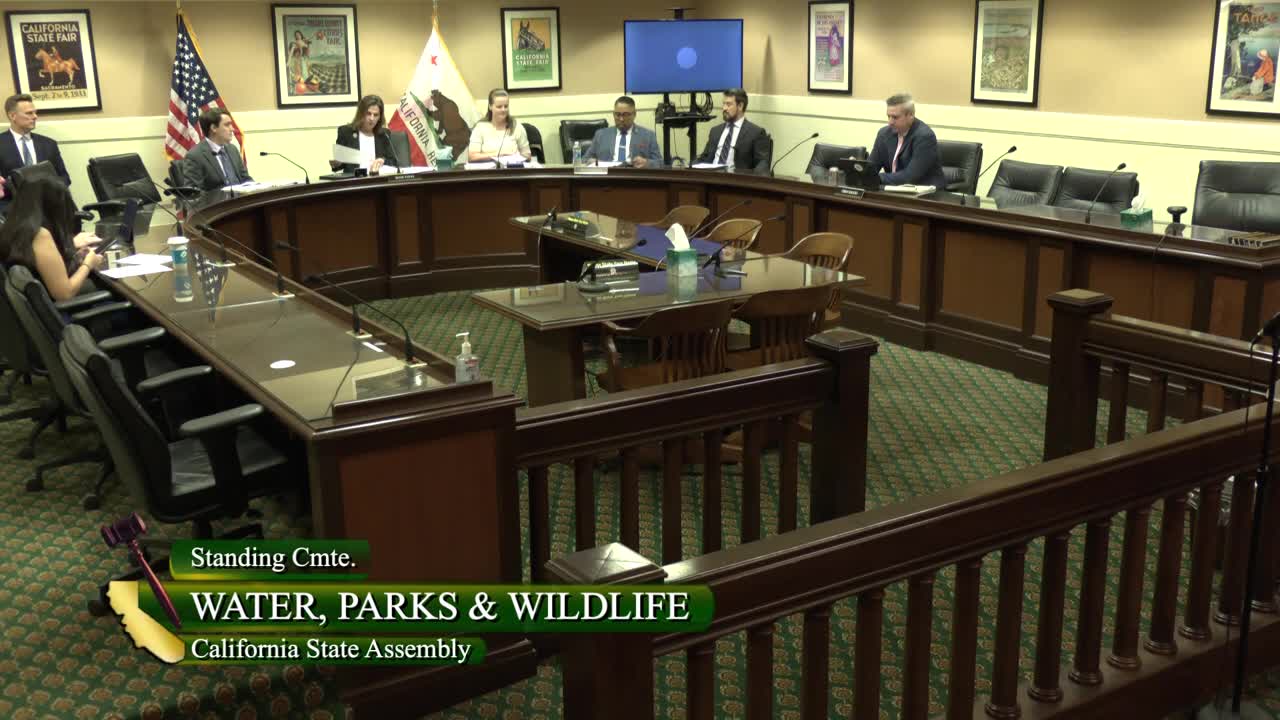 13MIN
Assembly Standing Committee on Water, Parks, and Wildlife
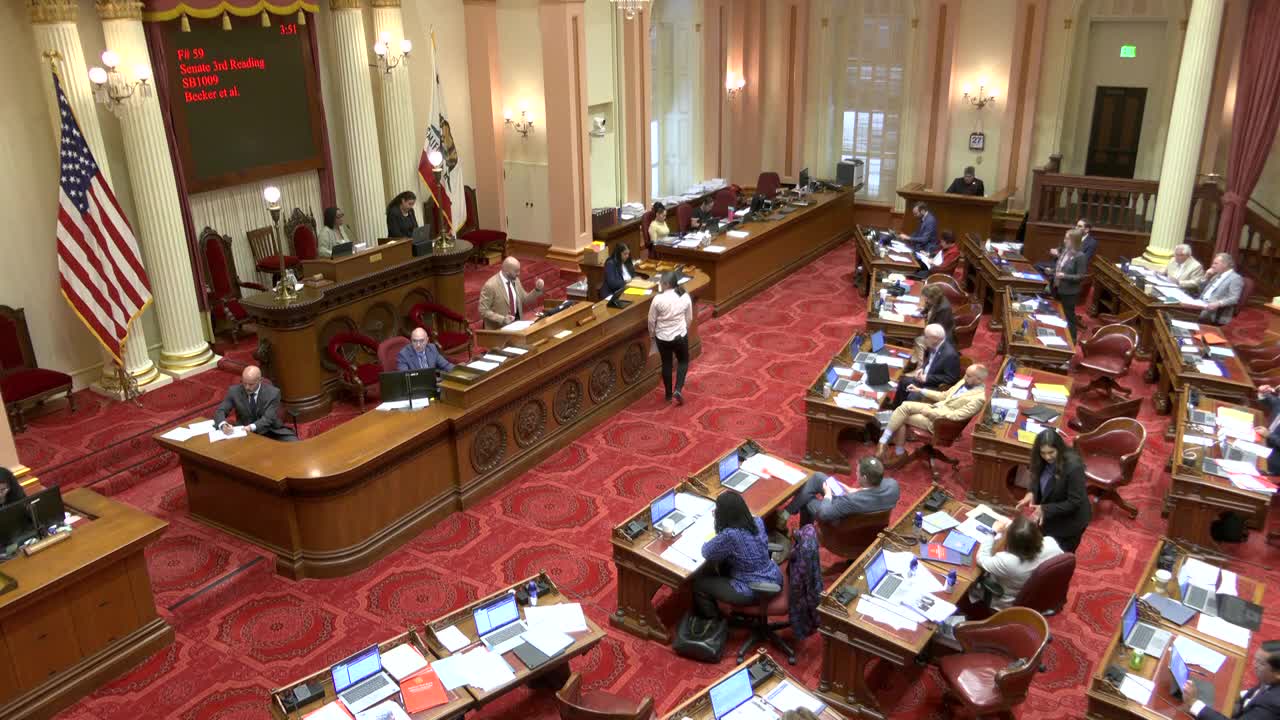 2MIN
Senate Floor
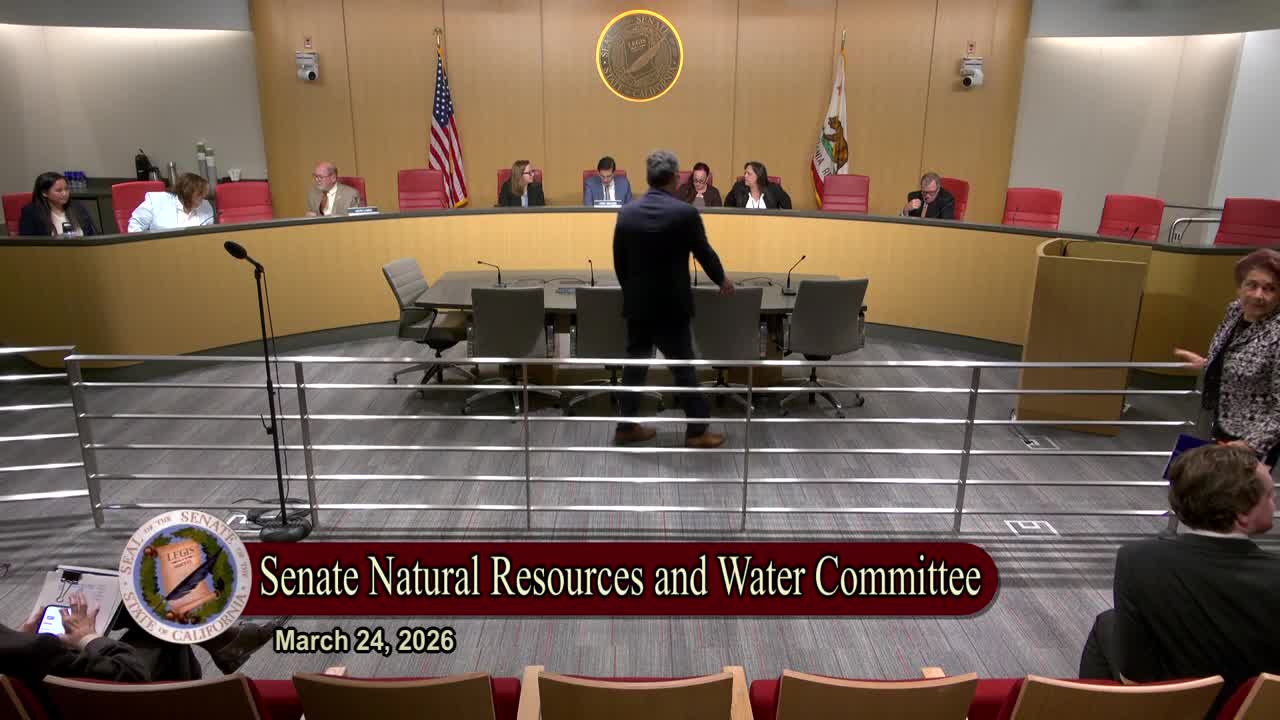 9MIN
Senate Standing Committee on Natural Resources and Water
Bill Author