SB 1023: Health care coverage: antiretroviral drugs, drug devices, and drug products.
- Session Year: 2025-2026
- House: Senate
- Latest Version Date: 2026-09-26
Current Status:
Passed
(2026-09-26: Chaptered by Secretary of State. Chapter 470, Statutes of 2026.)
Introduced
In Committee
Awaiting First Chamber Vote
Passed First Chamber
In Committee
Awaiting Second Chamber Vote
Passed Second Chamber
Enacted
Existing law, the Knox-Keene Health Care Service Plan Act of 1975, provides for the licensure and regulation of health care service plans by the Department of Managed Health Care and makes a willful violation of the act a crime. Existing law provides for the regulation of health insurers by the Department of Insurance. Existing law generally prohibits a health care service plan, excluding a Medi-Cal managed care plan, or health insurer from subjecting antiretroviral drugs that are medically necessary for the prevention of HIV/AIDS, including preexposure prophylaxis or postexposure prophylaxis, to prior authorization or step therapy. Under existing law, a health care service plan or health insurer is not required to cover all of the therapeutically equivalent versions of those drugs without prior authorization or step therapy if at least one is covered without prior authorization or step therapy.
This bill would instead prohibit a health care service plan, excluding a Medi-Cal managed care plan, or health insurer from subjecting antiretroviral drugs, drug devices, or drug products that are medically necessary for the prevention of HIV/AIDS to prior authorization or step therapy. The bill would require, for a health care service plan contract or health insurance policy issued, amended, or renewed on or after January 1, 2027, a non-self-administered antiretroviral drug, drug device, or drug product that is approved by the United States Food and Drug Administration for the prevention of HIV/AIDS to be covered under both the plan or policys medical benefit and prescription drug benefit, and if obtained under the plan or policys drug benefit, would require the drug, device, or product to be dispensed and administered by a health care provider acting within the scope of their license. Because a willful violation of these provisions by a health care service plan would be a crime, this bill would impose a state-mandated local program.
The California Constitution requires the state to reimburse local agencies and school districts for certain costs mandated by the state. Statutory provisions establish procedures for making that reimbursement.
This bill would provide that no reimbursement is required by this act for a specified reason.
Existing law, the Knox-Keene Health Care Service Plan Act of 1975, provides for the licensure and regulation of health care service plans by the Department of Managed Health Care and makes a willful violation of the act a crime. Existing law provides for the regulation of health insurers by the Department of Insurance. Existing law generally prohibits a health care service plan, excluding a Medi-Cal managed care plan, or health insurer from subjecting antiretroviral drugs that are medically necessary for the prevention of HIV/AIDS, including preexposure prophylaxis or postexposure prophylaxis, to prior authorization or step therapy. Under existing law, a health care service plan or health insurer is not required to cover all of the therapeutically equivalent versions of those drugs without prior authorization or step therapy if at least one is covered without prior authorization or step therapy.
This bill would instead prohibit a health care service plan, excluding a Medi-Cal managed care plan, or health insurer from subjecting antiretroviral drugs, drug devices, or drug products that are medically necessary for the prevention of HIV/AIDS to prior authorization or step therapy. The bill would require, for a health care service plan contract or health insurance policy issued, amended, or renewed on or after January 1, 2027, a non-self-administered antiretroviral drug, drug device, or drug product that is approved by the United States Food and Drug Administration for the prevention of HIV/AIDS to be covered under both the plan or policys medical benefit and prescription drug benefit, and if obtained under the plan or policys drug benefit, would require the drug, device, or product to be dispensed and administered by a health care provider acting within the scope of their license. Because a willful violation of these provisions by a health care service plan would be a crime, this bill would impose a state-mandated local program.
The California Constitution requires the state to reimburse local agencies and school districts for certain costs mandated by the state. Statutory provisions establish procedures for making that reimbursement.
This bill would provide that no reimbursement is required by this act for a specified reason.
Existing law, the Knox-Keene Health Care Service Plan Act of 1975, provides for the licensure and regulation of health care service plans by the Department of Managed Health Care and makes a willful violation of the act a crime. Existing law provides for the regulation of health insurers by the Department of Insurance. Existing law generally prohibits a health care service plan, excluding a Medi-Cal managed care plan, or health insurer from subjecting antiretroviral drugs that are medically necessary for the prevention of HIV/AIDS, including preexposure prophylaxis or postexposure prophylaxis, to prior authorization or step therapy. Under existing law, a health care service plan or health insurer is not required to cover all of the therapeutically equivalent versions of those drugs without prior authorization or step therapy if at least one is covered without prior authorization or step therapy.
This bill would instead prohibit a health care service plan, excluding a Medi-Cal managed care plan, or health insurer from subjecting antiretroviral drugs, drug devices, or drug products that are medically necessary for the prevention of HIV/AIDS to prior authorization or step therapy. The bill would require require, for a health care service plan contract or health insurance policy issued, amended, or renewed on or after January 1, 2027, that covers non-self-administered antiretroviral drugs, drug devices, or drug products that are approved by the United States Food and Drug Administration (FDA) for the prevention of HIV/AIDS as a medical benefit to also include those non-self-administered antiretroviral drugs, drug devices, or drug products as an outpatient prescription drug benefit. a non-self-administered antiretroviral drug, drug device, or drug product that is approved by the United States Food and Drug Administration for the prevention of HIV/AIDS to be covered under both the plan or policys medical benefit and prescription drug benefit, and if obtained under the plan or policys drug benefit, would require the drug, device, or product to be dispensed and administered by a health care provider acting within the scope of their license. Because a willful violation of these provisions by a health care service plan would be a crime, this bill would impose a state-mandated local program.
The California Constitution requires the state to reimburse local agencies and school districts for certain costs mandated by the state. Statutory provisions establish procedures for making that reimbursement.
This bill would provide that no reimbursement is required by this act for a specified reason.
Existing law, the Knox-Keene Health Care Service Plan Act of 1975, provides for the licensure and regulation of health care service plans by the Department of Managed Health Care and makes a willful violation of the act a crime. Existing law provides for the regulation of health insurers by the Department of Insurance. Existing law generally prohibits a health care service plan, excluding a Medi-Cal managed care plan, or health insurer from subjecting antiretroviral drugs that are medically necessary for the prevention of HIV/AIDS, including preexposure prophylaxis or postexposure prophylaxis, to prior authorization or step therapy. Under existing law, a health care service plan or health insurer is not required to cover all of the therapeutically equivalent versions of those drugs without prior authorization or step therapy if at least one is covered without prior authorization or step therapy.
This bill would instead prohibit a health care service plan, excluding a Medi-Cal managed care plan, or health insurer from subjecting antiretroviral drugs, drug devices, or drug products that are medically necessary for the prevention of HIV/AIDS to prior authorization or step therapy. The bill would require a health care service plan contract or health insurance policy issued, amended, or renewed on or after January 1, 2027, that covers non-self-administered antiretroviral drugs, drug devices, or drug products that are approved by the United States Food and Drug Administration (FDA) for the prevention of HIV/AIDS as a medical benefit to also include those non-self-administered antiretroviral drugs, drug devices, or drug products as an outpatient prescription drug benefit. Because a willful violation of these provisions by a health care service plan would be a crime, this bill would impose a state-mandated local program.
The California Constitution requires the state to reimburse local agencies and school districts for certain costs mandated by the state. Statutory provisions establish procedures for making that reimbursement.
This bill would provide that no reimbursement is required by this act for a specified reason.
Existing law creates the Department of Insurance to regulate the business of insurance. Existing law makes it a crime for a person engaging in the practice of processing, presenting or negotiating claims for policies of insurance to offer, deliver, receive or accept consideration, as specified, as compensation for the referral or procurement of clients or cases, among others. Existing law makes it unlawful for an insurance agent or broker to receive financial benefit from an automobile repair facility, or other specified consideration, for referring insureds to the facility for vehicle repairs covered under certain specified insurance policies issued by the agent or broker.This bill would make technical, nonsubstantive changes to these provisions.Existing law creates the Department of Insurance to regulate the business of insurance. Existing law makes it a crime for a person engaging in the practice of processing, presenting or negotiating claims for policies of insurance to offer, deliver, receive or accept consideration, as specified, as compensation for the referral or procurement of clients or cases, among others. Existing law makes it unlawful for an insurance agent or broker to receive financial benefit from an automobile repair facility, or other specified consideration, for referring insureds to the facility for vehicle repairs covered under certain specified insurance policies issued by the agent or broker.
This bill would make technical, nonsubstantive changes to these provisions.
(a)(1)Notwithstanding Section 1342.71, a health care service plan shall not subject antiretroviral drugs, drug devices, or drug products that are medically necessary for the prevention of HIV/AIDS, including preexposure prophylaxis or postexposure prophylaxis, to prior authorization or step therapy, except as provided in paragraph (2).
(2)If the United States Food and Drug Administration (FDA) has approved one or more therapeutic equivalents of a drug, drug device, or drug product for the prevention of HIV/AIDS, this section does not require a health care service plan to cover all of the therapeutically equivalent versions without prior authorization or step therapy, if at least one therapeutically equivalent version is covered without prior authorization or step therapy.
(b)Notwithstanding any other law, a health care service plan shall not prohibit, or permit a delegated pharmacy benefit manager to prohibit, a pharmacy provider from dispensing preexposure prophylaxis or postexposure prophylaxis.
(c)A health care service plan shall cover preexposure prophylaxis or postexposure prophylaxis that has been furnished by a pharmacist, as authorized in Sections 4052.02 and 4052.03 of the Business and Professions Code, including the pharmacists services and related testing ordered by the pharmacist. A health care service plan shall pay or reimburse, consistent with the requirements of this chapter, for the service performed by a pharmacist at an in-network pharmacy or a pharmacist at an out-of-network pharmacy if the health care service plan has an out-of-network pharmacy benefit.
(d)This section does not require a health care service plan to cover preexposure prophylaxis or postexposure prophylaxis by a pharmacist at an out-of-network pharmacy, unless the health care service plan has an out-of-network pharmacy benefit.
(e)Notwithstanding paragraph (2) of subdivision (f), for a health care service plan contract issued, amended, or renewed on or after January 1, 2027, a non-self-administered antiretroviral drug, drug device, or drug product that is approved by the FDA for the prevention of HIV/AIDS shall be covered under both the plans medical benefit and prescription drug benefit. If obtained under a plans prescription drug benefit, the antiretroviral drug, drug device, or drug product shall be dispensed and administered by a health care provider acting within the scope of their license.
(f)(1)This section does not apply to a specialized health care service plan contract that covers only dental, mental health, or vision benefits, or a Medicare supplement contract.
(2)This section applies regardless of whether or not an antiretroviral drug, drug device, or drug product is self-administered.
(3)This section does not apply to Medi-Cal managed care plans contracting with the State Department of Health Care Services pursuant to Chapter 7 (commencing with Section 14000), Chapter 8 (commencing with Section 14200), or Chapter 8.75 (commencing with Section 14590) of Part 3 of Division 9 of the Welfare and Institutions Code, to the extent that the services described in this section are excluded from coverage under the contract between the Medi-Cal managed care plans and the State Department of Health Care Services.
SEC. 2.Section 10123.1933 of the Insurance Code is amended to read:10123.1933.(a)(1)Notwithstanding Section 10123.201, a health insurer shall not subject antiretroviral drugs, drug devices, or drug products that are medically necessary for the prevention of HIV/AIDS, including preexposure prophylaxis or postexposure prophylaxis, to prior authorization or step therapy, except as provided in paragraph (2).
(2)If the United States Food and Drug Administration (FDA) has approved one or more therapeutic equivalents of a drug, drug device, or drug product for the prevention of HIV/AIDS, this section does not require a health insurer to cover all of the therapeutically equivalent versions without prior authorization or step therapy, if at least one therapeutically equivalent version is covered without prior authorization or step therapy.
(b)Notwithstanding any other law, a health insurer shall not prohibit, or permit a contracted pharmacy benefit manager to prohibit, a pharmacist from dispensing preexposure prophylaxis or postexposure prophylaxis.
(c)A health insurer shall cover preexposure prophylaxis or postexposure prophylaxis that has been furnished by a pharmacist, as authorized in Sections 4052.02 and 4052.03 of the Business and Professions Code, including the pharmacists services and related testing ordered by the pharmacist. A health insurer shall pay or reimburse, consistent with the requirements of this chapter, for the service performed by a pharmacist at an in-network pharmacy or a pharmacist at an out-of-network pharmacy if the health insurer has an out-of-network pharmacy benefit.
(d)Notwithstanding paragraph (2) of subdivision (e), for a health insurance policy issued, amended, or renewed on or after January 1, 2027, a non-self-administered antiretroviral drug, drug device, or drug product that is approved by the FDA for the prevention of HIV/AIDS shall be covered under both the insurers medical benefit and prescription drug benefit. If obtained under an insurers prescription drug benefit, the antiretroviral drug, drug device, or drug product shall be dispensed and administered by a health care provider acting within the scope of their license.
(e)(1)This section does not apply to a specialized health insurance policy that covers only dental, mental health, or vision benefits, or a Medicare supplement contract.
(2)This section applies regardless of whether or not an antiretroviral drug, drug device, or drug product is self-administered.
(f)The department and commissioner may exercise the authority provided by this code and the Administrative Procedure Act (Chapter 3.5 (commencing with Section 11340), Chapter 4.5 (commencing with Section 11400), and Chapter 5 (commencing with Section 11500) of Part 1 of Division 3 of Title 2 of the Government Code) to implement and enforce this section. If the commissioner assesses an administrative penalty for a violation, any hearing that is requested by the insurer may be conducted by an administrative law judge of the administrative hearing bureau of the department under the formal procedure of Chapter 5 (commencing with Section 11500) of Part 1 of Division 3 of Title 2 of the Government Code. This subdivision does not impair or restrict the commissioners authority pursuant to another provision of this code or the Administrative Procedure Act.
SEC. 3.No reimbursement is required by this act pursuant to Section 6 of Article XIIIB of the California Constitution because the only costs that may be incurred by a local agency or school district will be incurred because this act creates a new crime or infraction, eliminates a crime or infraction, or changes the penalty for a crime or infraction, within the meaning of Section 17556 of the Government Code, or changes the definition of a crime within the meaning of Section 6 of Article XIIIB of the California Constitution.
(a)(1)Notwithstanding Section 1342.71, a health care service plan shall not subject antiretroviral drugs, drug devices, or drug products that are medically necessary for the prevention of HIV/AIDS, including preexposure prophylaxis or postexposure prophylaxis, to prior authorization or step therapy, except as provided in paragraph (2).
(2)If the United States Food and Drug Administration (FDA) has approved one or more therapeutic equivalents of a drug, drug device, or drug product for the prevention of HIV/AIDS, this section does not require a health care service plan to cover all of the therapeutically equivalent versions without prior authorization or step therapy, if at least one therapeutically equivalent version is covered without prior authorization or step therapy.
(b)Notwithstanding any other law, a health care service plan shall not prohibit, or permit a delegated pharmacy benefit manager to prohibit, a pharmacy provider from dispensing preexposure prophylaxis or postexposure prophylaxis.
(c)A health care service plan shall cover preexposure prophylaxis or postexposure prophylaxis that has been furnished by a pharmacist, as authorized in Sections 4052.02 and 4052.03 of the Business and Professions Code, including the pharmacists services and related testing ordered by the pharmacist. A health care service plan shall pay or reimburse, consistent with the requirements of this chapter, for the service performed by a pharmacist at an in-network pharmacy or a pharmacist at an out-of-network pharmacy if the health care service plan has an out-of-network pharmacy benefit.
(d)This section does not require a health care service plan to cover preexposure prophylaxis or postexposure prophylaxis by a pharmacist at an out-of-network pharmacy, unless the health care service plan has an out-of-network pharmacy benefit.
(e)Notwithstanding paragraph (2) of subdivision (f), for a health care service plan contract issued, amended, or renewed on or after January 1, 2027, a non-self-administered antiretroviral drug, drug device, or drug product that is approved by the FDA for the prevention of HIV/AIDS shall be covered under both the plans medical benefit and prescription drug benefit. If obtained under a plans prescription drug benefit, the antiretroviral drug, drug device, or drug product shall be dispensed and administered by a health care provider acting within the scope of their license.
(f)(1)This section does not apply to a specialized health care service plan contract that covers only dental, mental health, or vision benefits, or a Medicare supplement contract.
(2)This section applies regardless of whether or not an antiretroviral drug, drug device, or drug product is self-administered.
(3)This section does not apply to Medi-Cal managed care plans contracting with the State Department of Health Care Services pursuant to Chapter 7 (commencing with Section 14000), Chapter 8 (commencing with Section 14200), or Chapter 8.75 (commencing with Section 14590) of Part 3 of Division 9 of the Welfare and Institutions Code, to the extent that the services described in this section are excluded from coverage under the contract between the Medi-Cal managed care plans and the State Department of Health Care Services.
SEC. 2.Section 10123.1933 of the Insurance Code is amended to read:10123.1933.(a)(1)Notwithstanding Section 10123.201, a health insurer shall not subject antiretroviral drugs, drug devices, or drug products that are medically necessary for the prevention of HIV/AIDS, including preexposure prophylaxis or postexposure prophylaxis, to prior authorization or step therapy, except as provided in paragraph (2).
(2)If the United States Food and Drug Administration (FDA) has approved one or more therapeutic equivalents of a drug, drug device, or drug product for the prevention of HIV/AIDS, this section does not require a health insurer to cover all of the therapeutically equivalent versions without prior authorization or step therapy, if at least one therapeutically equivalent version is covered without prior authorization or step therapy.
(b)Notwithstanding any other law, a health insurer shall not prohibit, or permit a contracted pharmacy benefit manager to prohibit, a pharmacist from dispensing preexposure prophylaxis or postexposure prophylaxis.
(c)A health insurer shall cover preexposure prophylaxis or postexposure prophylaxis that has been furnished by a pharmacist, as authorized in Sections 4052.02 and 4052.03 of the Business and Professions Code, including the pharmacists services and related testing ordered by the pharmacist. A health insurer shall pay or reimburse, consistent with the requirements of this chapter, for the service performed by a pharmacist at an in-network pharmacy or a pharmacist at an out-of-network pharmacy if the health insurer has an out-of-network pharmacy benefit.
(d)Notwithstanding paragraph (2) of subdivision (e), for a health insurance policy issued, amended, or renewed on or after January 1, 2027, a non-self-administered antiretroviral drug, drug device, or drug product that is approved by the FDA for the prevention of HIV/AIDS shall be covered under both the insurers medical benefit and prescription drug benefit. If obtained under an insurers prescription drug benefit, the antiretroviral drug, drug device, or drug product shall be dispensed and administered by a health care provider acting within the scope of their license.
(e)(1)This section does not apply to a specialized health insurance policy that covers only dental, mental health, or vision benefits, or a Medicare supplement contract.
(2)This section applies regardless of whether or not an antiretroviral drug, drug device, or drug product is self-administered.
(f)The department and commissioner may exercise the authority provided by this code and the Administrative Procedure Act (Chapter 3.5 (commencing with Section 11340), Chapter 4.5 (commencing with Section 11400), and Chapter 5 (commencing with Section 11500) of Part 1 of Division 3 of Title 2 of the Government Code) to implement and enforce this section. If the commissioner assesses an administrative penalty for a violation, any hearing that is requested by the insurer may be conducted by an administrative law judge of the administrative hearing bureau of the department under the formal procedure of Chapter 5 (commencing with Section 11500) of Part 1 of Division 3 of Title 2 of the Government Code. This subdivision does not impair or restrict the commissioners authority pursuant to another provision of this code or the Administrative Procedure Act.
SEC. 3.No reimbursement is required by this act pursuant to Section 6 of Article XIIIB of the California Constitution because the only costs that may be incurred by a local agency or school district will be incurred because this act creates a new crime or infraction, eliminates a crime or infraction, or changes the penalty for a crime or infraction, within the meaning of Section 17556 of the Government Code, or changes the definition of a crime within the meaning of Section 6 of Article XIIIB of the California Constitution.
(a)(1)Notwithstanding Section 1342.71, a health care service plan shall not subject antiretroviral drugs, drug devices, or drug products that are medically necessary for the prevention of HIV/AIDS, including preexposure prophylaxis or postexposure prophylaxis, to prior authorization or step therapy, except as provided in paragraph (2).
(2)If the United States Food and Drug Administration (FDA) has approved one or more therapeutic equivalents of a drug, drug device, or drug product for the prevention of HIV/AIDS, this section does not require a health care service plan to cover all of the therapeutically equivalent versions without prior authorization or step therapy, if at least one therapeutically equivalent version is covered without prior authorization or step therapy.
(b)Notwithstanding any other law, a health care service plan shall not prohibit, or permit a delegated pharmacy benefit manager to prohibit, a pharmacy provider from dispensing preexposure prophylaxis or postexposure prophylaxis.
(c)A health care service plan shall cover preexposure prophylaxis or postexposure prophylaxis that has been furnished by a pharmacist, as authorized in Sections 4052.02 and 4052.03 of the Business and Professions Code, including the pharmacists services and related testing ordered by the pharmacist. A health care service plan shall pay or reimburse, consistent with the requirements of this chapter, for the service performed by a pharmacist at an in-network pharmacy or a pharmacist at an out-of-network pharmacy if the health care service plan has an out-of-network pharmacy benefit.
(d)This section does not require a health care service plan to cover preexposure prophylaxis or postexposure prophylaxis by a pharmacist at an out-of-network pharmacy, unless in the case of a medical emergency or if the health care service plan has an out-of-network pharmacy benefit.
(e)Notwithstanding paragraph (2) of subdivision (f), for a health care service plan contract issued, amended, or renewed on or after January 1, 2027, that covers non-self-administered antiretroviral drugs, drug devices, or drug products that are approved by the FDA for the prevention of HIV/AIDS as a medical benefit shall also include those non-self-administered antiretroviral drugs, drug devices, or drug products that are approved by the FDA for the prevention of HIV/AIDS as an outpatient prescription drug benefit. a non-self-administered antiretroviral drug, drug device, or drug product that is approved by the FDA for the prevention of HIV/AIDS shall be covered under both the plans medical benefit and prescription drug benefit. If obtained under a plans prescription drug benefit, the antiretroviral drug, drug device, or drug product shall be dispensed and administered by a health care provider acting within the scope of their license.
(f)(1)This section does not apply to a specialized health care service plan contract that covers only dental, mental health, or vision benefits, or a Medicare supplement contract.
(2)This section applies regardless of whether or not an antiretroviral drug, drug device, or drug product is self-administered.
(3)This section does not apply to Medi-Cal managed care plans contracting with the State Department of Health Care Services pursuant to Chapter 7 (commencing with Section 14000), Chapter 8 (commencing with Section 14200), or Chapter 8.75 (commencing with Section 14590) of Part 3 of Division 9 of the Welfare and Institutions Code, to the extent that the services described in this section are excluded from coverage under the contract between the Medi-Cal managed care plans and the State Department of Health Care Services.
SEC. 2.Section 10123.1933 of the Insurance Code is amended to read:10123.1933.(a)(1)Notwithstanding Section 10123.201, a health insurer shall not subject antiretroviral drugs, drug devices, or drug products that are medically necessary for the prevention of HIV/AIDS, including preexposure prophylaxis or postexposure prophylaxis, to prior authorization or step therapy, except as provided in paragraph (2).
(2)If the United States Food and Drug Administration (FDA) has approved one or more therapeutic equivalents of a drug, drug device, or drug product for the prevention of HIV/AIDS, this section does not require a health insurer to cover all of the therapeutically equivalent versions without prior authorization or step therapy, if at least one therapeutically equivalent version is covered without prior authorization or step therapy.
(b)Notwithstanding any other law, a health insurer shall not prohibit, or permit a contracted pharmacy benefit manager to prohibit, a pharmacist from dispensing preexposure prophylaxis or postexposure prophylaxis.
(c)A health insurer shall cover preexposure prophylaxis or postexposure prophylaxis that has been furnished by a pharmacist, as authorized in Sections 4052.02 and 4052.03 of the Business and Professions Code, including the pharmacists services and related testing ordered by the pharmacist. A health insurer shall pay or reimburse, consistent with the requirements of this chapter, for the service performed by a pharmacist at an in-network pharmacy or a pharmacist at an out-of-network pharmacy if the health insurer has an out-of-network pharmacy benefit.
(d)Notwithstanding paragraph (2) of subdivision (e), for a health insurance policy issued, amended, or renewed on or after January 1, 2027, that covers non-self-administered antiretroviral drugs, drug devices, or drug products that are approved by the FDA for the prevention of HIV/AIDS as a medical benefit shall also include those non-self-administered antiretroviral drugs, drug devices, or drug products that are approved by the FDA for the prevention of HIV/AIDS as an outpatient prescription drug benefit. a non-self-administered antiretroviral drug, drug device, or drug product that is approved by the FDA for the prevention of HIV/AIDS shall be covered under both the insurers medical benefit and prescription drug benefit. If obtained under an insurers prescription drug benefit, the antiretroviral drug, drug device, or drug product shall be dispensed and administered by a health care provider acting within the scope of their license.
(e)(1)This section does not apply to a specialized health insurance policy that covers only dental, mental health, or vision benefits, or a Medicare supplement contract.
(2)This section applies regardless of whether or not an antiretroviral drug, drug device, or drug product is self-administered.
(f)The department and commissioner may exercise the authority provided by this code and the Administrative Procedure Act (Chapter 3.5 (commencing with Section 11340), Chapter 4.5 (commencing with Section 11400), and Chapter 5 (commencing with Section 11500) of Part 1 of Division 3 of Title 2 of the Government Code) to implement and enforce this section. If the commissioner assesses an administrative penalty for a violation, any hearing that is requested by the insurer may be conducted by an administrative law judge of the administrative hearing bureau of the department under the formal procedure of Chapter 5 (commencing with Section 11500) of Part 1 of Division 3 of Title 2 of the Government Code. This subdivision does not impair or restrict the commissioners authority pursuant to another provision of this code or the Administrative Procedure Act.
SEC. 3.No reimbursement is required by this act pursuant to Section 6 of Article XIIIB of the California Constitution because the only costs that may be incurred by a local agency or school district will be incurred because this act creates a new crime or infraction, eliminates a crime or infraction, or changes the penalty for a crime or infraction, within the meaning of Section 17556 of the Government Code, or changes the definition of a crime within the meaning of Section 6 of Article XIIIB of the California Constitution.
(a)(1)Notwithstanding Section 1342.71, a health care service plan shall not subject antiretroviral drugs drugs, drug devices, or drug products that are medically necessary for the prevention of AIDS/HIV, HIV/AIDS, including preexposure prophylaxis or postexposure prophylaxis, to prior authorization or step therapy, except as provided in paragraph (2).
(2)If the United States Food and Drug Administration (FDA) has approved one or more therapeutic equivalents of a drug, drug device, or drug product for the prevention of AIDS/HIV, HIV/AIDS, this section does not require a health care service plan to cover all of the therapeutically equivalent versions without prior authorization or step therapy, if at least one therapeutically equivalent version is covered without prior authorization or step therapy.
(b)Notwithstanding any other law, a health care service plan shall not prohibit, or permit a delegated pharmacy benefit manager to prohibit, a pharmacy provider from dispensing preexposure prophylaxis or postexposure prophylaxis.
(c)A health care service plan shall cover preexposure prophylaxis and or postexposure prophylaxis that has been furnished by a pharmacist, as authorized in Sections 4052.02 and 4052.03 of the Business and Professions Code, including the pharmacists services and related testing ordered by the pharmacist. A health care service plan shall pay or reimburse, consistent with the requirements of this chapter, for the service performed by a pharmacist at an in-network pharmacy or a pharmacist at an out-of-network pharmacy if the health care service plan has an out-of-network pharmacy benefit.
(d)This section does not require a health care service plan to cover preexposure prophylaxis or postexposure prophylaxis by a pharmacist at an out-of-network pharmacy, unless in the case of a medical emergency or if the health care service plan has an out-of-network pharmacy benefit.
(e)Notwithstanding paragraph (2) of subdivision (f), a health care service plan contract issued, amended, or renewed on or after January 1, 2027, that covers non-self-administered antiretroviral drugs, drug devices, or drug products that are approved by the FDA for the prevention of HIV/AIDS as a medical benefit shall also include those non-self-administered antiretroviral drugs, drug devices, or drug products that are approved by the FDA for the prevention of HIV/AIDS as an outpatient prescription drug benefit.
(f)(1)This section does not apply to a specialized health care service plan contract that covers only dental, mental health, or vision benefits, or a Medicare supplement contract.
(2)This section applies regardless of whether or not an antiretroviral drug, drug device, or drug product is self-administered.
(e)(3)This section shall does not apply to Medi-Cal managed care plans contracting with the State Department of Health Care Services pursuant to Chapter 7 (commencing with Section 14000), Chapter 8 (commencing with Section 14200), or Chapter 8.75 (commencing with Section 14590) of Part 3 of Division 9 of the Welfare and Institutions Code, to the extent that the services described in this section are excluded from coverage under the contract between the Medi-Cal managed care plans and the State Department of Health Care Services.
SEC. 2.Section 10123.1933 of the Insurance Code is amended to read:10123.1933.(a)(1)Notwithstanding Section 10123.201, a health insurer shall not subject antiretroviral drugs drugs, drug devices, or drug products that are medically necessary for the prevention of AIDS/HIV, HIV/AIDS, including preexposure prophylaxis or postexposure prophylaxis, to prior authorization or step therapy, except as provided in paragraph (2).
(2)If the United States Food and Drug Administration (FDA) has approved one or more therapeutic equivalents of a drug, drug device, or drug product for the prevention of AIDS/HIV, HIV/AIDS, this section does not require a health insurer to cover all of the therapeutically equivalent versions without prior authorization or step therapy, if at least one therapeutically equivalent version is covered without prior authorization or step therapy.
(b)Notwithstanding any other law, a health insurer shall not prohibit, or permit a contracted pharmacy benefit manager to prohibit, a pharmacist from dispensing preexposure prophylaxis or postexposure prophylaxis.
(c)A health insurer shall cover preexposure prophylaxis and or postexposure prophylaxis that has been furnished by a pharmacist, as authorized in Sections 4052.02 and 4052.03 of the Business and Professions Code, including the pharmacists services and related testing ordered by the pharmacist. A health insurer shall pay or reimburse, consistent with the requirements of this chapter, for the service performed by a pharmacist at an in-network pharmacy or a pharmacist at an out-of-network pharmacy if the health insurer has an out-of-network pharmacy benefit.
(d)Notwithstanding paragraph (2) of subdivision (e), a health insurance policy issued, amended, or renewed on or after January 1, 2027, that covers non-self-administered antiretroviral drugs, drug devices, or drug products that are approved by the FDA for the prevention of HIV/AIDS as a medical benefit shall also include those non-self-administered antiretroviral drugs, drug devices, or drug products that are approved by the FDA for the prevention of HIV/AIDS as an outpatient prescription drug benefit.
(e)(1)This section does not apply to a specialized health insurance policy that covers only dental, mental health, or vision benefits, or a Medicare supplement contract.
(2)This section applies regardless of whether or not an antiretroviral drug, drug device, or drug product is self-administered.
(f)The department and commissioner may exercise the authority provided by this code and the Administrative Procedure Act (Chapter 3.5 (commencing with Section 11340), Chapter 4.5 (commencing with Section 11400), and Chapter 5 (commencing with Section 11500) of Part 1 of Division 3 of Title 2 of the Government Code) to implement and enforce this section. If the commissioner assesses an administrative penalty for a violation, any hearing that is requested by the insurer may be conducted by an administrative law judge of the administrative hearing bureau of the department under the formal procedure of Chapter 5 (commencing with Section 11500) of Part 1 of Division 3 of Title 2 of the Government Code. This subdivision does not impair or restrict the commissioners authority pursuant to another provision of this code or the Administrative Procedure Act.
SEC. 3.No reimbursement is required by this act pursuant to Section 6 of Article XIIIB of the California Constitution because the only costs that may be incurred by a local agency or school district will be incurred because this act creates a new crime or infraction, eliminates a crime or infraction, or changes the penalty for a crime or infraction, within the meaning of Section 17556 of the Government Code, or changes the definition of a crime within the meaning of Section 6 of Article XIIIB of the California Constitution.
SECTION 1.Section 753 of the Insurance Code is amended to read:753.(a)It is unlawful for an insurance agent or broker, or an insurance solicitor employed thereby, to receive a financial benefit from an automobile repair facility or other form of direct or indirect consideration from a person for referring insureds to that person or that persons designee for vehicle repairs covered under the automobile comprehensive coverage, property damage coverage, or automobile collision coverage, of an insurance policy issued through the insurance agent or broker or by an insurer represented by the insurance agent.(b)Subdivision (a) applies with respect to commercial and noncommercial policies of automobile insurance.(c)For purposes of this section, financial benefit means the receiving of a commission or gratuity, discount on repair costs, free repairs, or employment by a repair facility.(a)It is unlawful for any an insurance agent or broker, or any an insurance solicitor employed thereby, to receive any a financial benefit from an automobile repair facility or any other form of direct or indirect consideration from any a person for referring insureds to that person or that persons designee for vehicle repairs covered under the automobile comprehensive coverage, property damage coverage, or automobile collision coverage, of an insurance policy issued through the insurance agent or broker or by an insurer represented by the insurance agent.
(b)Subdivision (a) applies with respect to commercial and noncommercial policies of automobile insurance.
(c)For purposes of this section, financial benefit means the receiving of any a commission or gratuity, discount on repair costs, free repairs, or employment by a repair facility.
|
Date
|
Status
|
|---|---|
| Sep 26, 2026 | Chaptered by Secretary of State. Chapter 470, Statutes of 2026. |
| Sep 26, 2026 | Approved by the Governor. |
| Aug 30, 2026 | Enrolled and presented to the Governor at 6 p.m. |
| Aug 25, 2026 | Assembly amendments concurred in. (Ayes 30. Noes 0. Page 5757.) Ordered to engrossing and enrolling. |
| Aug 25, 2026 | Reconsideration granted. (Ayes 38. Noes 0. Page 5757.) |
| Aug 25, 2026 | Assembly amendments concurred in. (Ayes 31. Noes 1. Page 5755.) Ordered to engrossing and enrolling. |
| Aug 25, 2026 | Assembly amendments concurred in. (Ayes 30. Noes 0.) Ordered to engrossing and enrolling. |
| Aug 25, 2026 | Reconsideration granted. (Ayes 38. Noes 0.) |
| Aug 25, 2026 | Assembly amendments concurred in. (Ayes 29. Noes 0.) Ordered to engrossing and enrolling. |
| Aug 25, 2026 | Reconsideration granted. (Ayes 37. Noes 0.) |
| Aug 25, 2026 | Motion to reconsider made by Senator Ashby. |
| Aug 25, 2026 | Assembly amendments concurred in. (Ayes 31. Noes 1.) Ordered to engrossing and enrolling. |
| Aug 24, 2026 | In Senate. Concurrence in Assembly amendments pending. |
| Aug 24, 2026 | Read third time. Passed. (Ayes 62. Noes 3. Page 6392.) Ordered to the Senate. |
| Aug 24, 2026 | Read third time. Passed. Ordered to the Senate. |
| Aug 18, 2026 | Ordered to third reading. |
| Aug 18, 2026 | Read third time and amended. |
| Aug 13, 2026 | Read second time. Ordered to third reading. |
| Aug 13, 2026 | From committee: Do pass. (Ayes 11. Noes 1.) (August 13). |
| Aug 13, 2026 | Assembly Rule 63 suspended. |
| Jul 1, 2026 | July 1 set for first hearing. Placed on suspense file. |
| Jun 10, 2026 | From committee: Do pass and re-refer to Com. on APPR. (Ayes 11. Noes 0.) (June 9). Re-referred to Com. on APPR. |
| May 26, 2026 | Referred to Com. on HEALTH. |
| May 19, 2026 | In Assembly. Read first time. Held at Desk. |
| May 18, 2026 | Read third time. Passed. (Ayes 29. Noes 0. Page 4312.) Ordered to the Assembly. |
| May 18, 2026 | Read third time. Passed. (Ayes 28. Noes 0.) Ordered to the Assembly. |
| May 14, 2026 | From committee: Do pass. (Ayes 5. Noes 0. Page 4261.) (May 14). |
| May 14, 2026 | Read second time. Ordered to third reading. |
| May 14, 2026 | From committee: Do pass. (Ayes 5. Noes 0.) (May 14). |
| May 8, 2026 | Set for hearing May 14. |
| Apr 20, 2026 | April 20 hearing: Placed on APPR. suspense file. |
| Apr 10, 2026 | Set for hearing April 20. |
| Apr 9, 2026 | From committee: Do pass and re-refer to Com. on APPR. (Ayes 9. Noes 0. Page 3793.) (April 8). Re-referred to Com. on APPR. |
| Apr 9, 2026 | From committee: Do pass and re-refer to Com. on APPR. (Ayes 9. Noes 0.) (April 8). Re-referred to Com. on APPR. |
| Mar 26, 2026 | Set for hearing April 8. |
| Mar 25, 2026 | Re-referred to Com. on HEALTH. |
| Mar 16, 2026 | From committee with author's amendments. Read second time and amended. Re-referred to Com. on RLS. |
| Feb 18, 2026 | Referred to Com. on RLS. |
| Feb 11, 2026 | From printer. May be acted upon on or after March 13. |
| Feb 10, 2026 | Introduced. Read first time. To Com. on RLS. for assignment. To print. |
|
Date
|
Description
|
Location
|
Votes
|
|
|---|---|---|---|---|
| Aug 25, 2026 | Unfinished Business SB1023 Laird et al. Concurrence | Senate Floor |
Passed |
|
| Aug 25, 2026 | Unfinished Business SB1023 Laird et al. Concurrence Reconsider | Senate Floor |
Passed |
|
| Aug 25, 2026 | Unfinished Business SB1023 Laird et al. Concurrence | Senate Floor |
Passed |
|
| Aug 24, 2026 | SB 1023 Laird Senate Third Reading By Mark González | Assembly Floor |
Passed |
|
| Aug 13, 2026 | Do pass. | Assembly Standing Committee on Appropriations |
Passed |
|
| Jun 9, 2026 | Do pass and be re-referred to the Committee on [Appropriations] | Assembly Standing Committee on Health |
Passed |
|
| May 18, 2026 | Senate 3rd Reading SB1023 Laird et al. | Senate Floor |
Passed |
|
| May 14, 2026 | Do pass | Senate Standing Committee on Appropriations |
Passed |
|
| Apr 20, 2026 | Placed on suspense file | Senate Standing Committee on Appropriations |
Passed |
|
| Apr 8, 2026 | Do pass, but first be re-referred to the Committee on [Appropriations] | Senate Standing Committee on Health |
Passed |
This list shows positions taken on this bill by organizations on the date displayed, which is linked to the original source.
Positions by individuals are not included.
|
Organization
|
Position
|
Date
|
|---|---|---|
| Access Reproductive Justice | ** Support | |
| Access Support Network | ** Support | |
| Aids Healthcare Foundation | ** Support | |
| American Academy of HIV Medicine California/Hawaii Chapter | ** Support | |
| APLA Health | ** Support | |
| Association of California Life and Health Insurance Companies (ACLHIC) | ** Against | |
| Association Of California Life & Health Insurance Companies | ** Against | |
| Association of Life & Health Insurance Companies | ** Against | |
| Beyond AIDS Foundation | ** Support | |
| Bienestar Human Services | ** Support | |
| Biocom | ** Support | |
| California Association Of Health Plans | ** Against | |
| California Association of Health Plans (CAPH) | ** Against | |
| California Federation of Teachers, AFT, AFL-CIO | ** Support | |
| California Insurance Commissioner Ricardo Lara | ** Support | |
| California Legislative LGBTQ Caucus | ** Support | |
| California LGBTQ Health and Human Services Network | ** Support | |
| California LGBTQ+ Health and Human Services Network | ** Support | |
| California Life Sciences | ** Support | |
| California Medical Association | ** Support | |
| California Pharmacists Association | ** Support | |
| California STD/HIV Controller's Association | ** Support | |
| Casita Feliz Latine LGBTQ+ Center | ** Support | |
| City of West Hollywood | ** Support | |
| County Health Executives Association Of California | ** Support | |
| County Of Los Angeles | ** Support | |
| Courage California | ** Support | |
| Drug Policy Alliance | ** Support | |
| El/La Para TransLatinas | ** Support | |
| Equality California | ** Support | |
| Essential Access Health | ** Support | |
| four individuals | ** Support | |
| Gender Affirming Professionals | ** Support | |
| Gender Alchemy | ** Support | |
| Glide | ** Support | |
| Health Access California | ** Support | |
| HealthRight 360 | ** Support | |
| LGBTQ+ Inclusivity, Visibility, and Empowerment | ** Support | |
| Los Angeles (Lesbian Gay Bisexual and Transgender) LGBT Center | ** Support | |
| Los Angeles LGBT Center | ** Support | |
| Lyon-Martin Community Health Services | ** Support | |
| National Health Law Program | ** Support | |
| Planned Parenthood Affiliates Of California | ** Support | |
| Rainbow Families Action Bay Area | ** Support | |
| San Francisco Aids Foundation | ** Support | |
| Somos Familia Valle | ** Support | |
| Stonewall Democratic Club of Greater Sacramento | ** Support | |
| Sunburst Projects | ** Support | |
| the san diego lgbt community center | ** Support | |
| The TransLatin@Coalition | ** Support | |
| ViiV Healthcare | ** Support | |
| ViiV Healthcare Company | ** Support |
SENATE RULES COMMITTEE Office of Senate Floor Analyses (916) 651-4171 | SB 1023 |
UNFINISHED BUSINESS
Bill No: SB 1023
Author: Laird (D), et al.
Amended: 8/18/26
Vote: 21
SENATE HEALTH COMMITTEE: 9-0, 4/8/26
AYES: Weber Pierson, Caballero, Durazo, Gonzalez, Menjivar, Padilla, Pérez, Rubio, Smallwood-Cuevas
NO VOTE RECORDED: Valladares, Grove
SENATE APPROPRIATIONS COMMITTEE: 5-0, 5/14/26
AYES: Cervantes, Cabaldon, Grayson, Richardson, Wahab
NO VOTE RECORDED: Seyarto, Dahle
SENATE FLOOR: 29-0, 5/18/26
AYES: Allen, Archuleta, Arreguín, Ashby, Becker, Blakespear, Cabaldon, Caballero, Cervantes, Cortese, Durazo, Gonzalez, Grayson, Hurtado, Laird, Limón, McGuire, McNerney, Menjivar, Pérez, Reyes, Richardson, Rubio, Smallwood-Cuevas, Stern, Umberg, Wahab, Weber Pierson, Wiener
NO VOTE RECORDED: Alvarado-Gil, Choi, Dahle, Grove, Jones, Niello, Ochoa Bogh, Padilla, Seyarto, Strickland, Valladares
ASSEMBLY FLOOR: 62-3, 8/24/26 - See last page for vote
SUBJECT: Health care coverage: antiretroviral drugs, drug devices, and drug products
SOURCE: California Insurance Commissioner Ricardo Lara
APLA Health
California Legislative LGBTQ Caucus
Equality California
Los Angeles LGBT Center
San Francisco AIDS Foundation
DIGEST:
This bill (1) adds to an existing health plan and insurer prohibition on prior authorization and step therapy for medically necessary HIV/AIDS antiretroviral drugs, drug devices and drug products. (2) Requires a health plan or insurer to cover a non-self-administered antiretroviral drug, drug device, or drug product approved by the federal Food and Drug Administration for the prevention of HIV/AIDS both under the medical benefit and outpatient prescription drug benefit.
Assembly Amendments delete a requirement that preexposure prophylaxis or postexposure prophylaxis provided by an out-of-network pharmacy are covered in the case of a medical emergency and make other clarifying changes.
ANALYSIS:
Existing law:
- Establishes the Department of Managed Health Care (DMHC) to regulate health plans under the Knox-Keene Health Care Services Plan Act of 1975; the California Department of Insurance (CDI) to regulate health and other insurers; and the Department of Health Care Services (DHCS) to administer the Medi-Cal program. [Health and Safety Code [HSC] §1340, et seq., Insurance Code [INS] §106, et seq., and Welfare and Institutions Code [WIC] §14000, et seq.]
- Prohibits health plans and insurers from subjecting antiretroviral drugs that are medically necessary for the prevention of AIDS/HIV, including preexposure prophylaxis (PrEP) and postexposure prophylaxis (PEP, to prior authorization or step therapy, except that if the federal Food and Drug Administration (FDA) approves one or more therapeutic equivalents of a drug, device, or product for the prevention of AIDS/HIV, health plans and insurers are only required to cover at least one therapeutically equivalent version without prior authorization or step therapy. [Health and Safety Code (HSC) §1342.74(a) and Insurance Code (INS) §10123.1933(a)]
- Prohibits health plans and insurers or their designated pharmacy benefit manager from prohibiting, a pharmacy provider from dispensing PrEP or PEP. [HSC §1342.74(b) and INS §10123.1933(b)]
- Requires health plans and insurers to cover PrEP and PEP that has been furnished by a pharmacist, as authorized in the law, including the pharmacist’s services and related testing ordered by the pharmacist. Requires plans and insurers to pay or reimburse, consistent with the law, the service performed by a pharmacist at an in-network pharmacy or a pharmacist at an out-of-network pharmacy if the health plan has an out-of-network pharmacy benefit. [HSC §1342.74(c) and INS §10123.1933(c)]
- Exempts health plans and insurers from covering PrEP and PEP furnished by a pharmacist at an out-of-network pharmacy, unless the health plan or insurer has an out-of-network pharmacy benefit. [HSC §1342.74(d) and INS §10123.1933(d)]
- Exempts Medi-Cal managed care plans from 2) through 5) above to the extent that the services are excluded from coverage under the contract between the Medi-Cal managed care plans and DHCS. [HSC §1342.74(e)]
- Establishes the California Department of Public Health (CDPH) to administer a variety of public health programs (HSC §131000, et Seq.)
This bill:
- Adds drug devices, and drug products to an existing prohibition on plans and insurers from requiring prior authorization or step therapy under specified circumstances.
- Requires a health plan contract or insurance policy issued, amended, or renewed on or after January 1, 2027, to cover a non-self-administered antiretroviral drug, drug device, or drug product that is approved by the FDA for the prevention of HIV/AIDS as a medical benefit and as an outpatient prescription drug benefit.
- Exempts specialized health plan contracts or insurance policies that cover only dental, mental health, or vision benefits, and Medicare supplement contracts and policies.
- Applies the law regardless of whether an antiretroviral drug, drug device, or drug product is self-administered.
- Authorizes CDI to exercise the authority provided in law and the Administrative Procedures Act (APA) as specified, to implement and enforce this bill and the law it amends. Permits a hearing requested by an insurer when a penalty is assessed to be conducted by an administrative law judge or the administrative hearing bureau of CDI under specified procedures. States that this does not impair or restrict the CDI Commissioner’s authority pursuant to another provision of the law or the APA.
Comments
According to the author of this bill:
This bill increases access to HIV PrEP by requiring health plans that already cover the medication to offer reimbursement through their outpatient prescription drug benefit pathway. PrEP is a highly effective clinical strategy that uses antiretroviral medication to prevent HIV-negative individuals from acquiring the virus. Currently, plans may restrict reimbursement for PrEP to the medical benefit pathway. Medical benefit billing is often unsustainable for smaller healthcare providers due to administrative and financial barriers. This bill allows healthcare providers to secure timely reimbursement, increasing access to HIV PrEP for patients who receive care at small local clinics. Given the current volatility of federal grants, structural adjustments to the reimbursement process are necessary to ensure California’s public health infrastructure supports HIV prevention efforts.
Related/Prior Legislation
AB 554 (Mark González of 2025) would have prohibited nongrandfathered (established by the ACA) health plans and insurance policies from imposing any cost-sharing for antiretroviral drugs, devices, or drug products that are approved by the federal FDA for PrEP, and would have applied this bill and the law it amends to an antiretroviral drug, drug device, or drug product regardless of whether it is self-administered. AB 554 was vetoed by the Governor, who wrote:
I wholeheartedly support efforts to ensure affordable and accessible prevention and treatment of HIV/AIDS, and I share the author's desire to address politically motivated changes to long-standing preventive services requirements by the current hostile federal administration. This year's budget specifically codified the January 1, 2025, recommendations made by the USPSTF for no-cost share preventive services - ensuring the prior federal administration's guidelines are a matter of state law. As a result, CDPH now has the explicit authority to modify or supplement these baseline guidelines based on recommendations and guidance from medical and scientific organizations.
However, certain components of this measure raise concerns about affordability. By exceeding the cost-sharing provisions under the ACA, this bill would result in increased costs to health plans, which would then be passed on to consumers. At a time when individuals are facing double-digit rate increases in their health care premiums across the nation, the state must weigh the potential benefits of all new mandates against the comprehensive costs to the entire health care delivery system.
FISCAL EFFECT: Appropriation: No Fiscal Com.: Yes Local: Yes
According to the Assembly Appropriations Committee:
- General Fund costs to the California Public Employees Retirement System of an unknown amount, likely exceeding $150,000 per year, by increasing access to antiretroviral treatment.
- DMHC and CDI estimate minor and absorbable costs.
SUPPORT: (Verified 8/20/26)
California Insurance Commissioner Ricardo Lara (co-source)
APLA Health (co-source)
California Legislative LGBTQ Caucus (co-source)
Equality California (co-source)
Los Angeles LGBT Center (co-source)
San Francisco AIDS Foundation (co-source)
Access Reproductive Justice
Access Support Network
AIDS Healthcare Foundation
Bienestar Human Services
Beyond AIDS Foundation
California Federation of Teachers, AFT, AFL-CIO
California LGBTQ+ Health and Human Services Network
California Life Sciences
California Medical Association
California Pharmacists Association
Casita Feliz Latine LGBTQ+ Center
City of West Hollywood
County Health Executives Association of California
County of Los Angeles
Courage California
Drug Policy Alliance
El/La Para Translatinas
Essential Access Health
Gender Affirming Professionals
Gender Alchemy
GLIDE
Health Access California
HealthRIGHT 360
LGBTQ+ Inclusivity, Visibility, and Empowerment
Lyon-Martin Community Health Services
National Health Law Program
Planned Parenthood Affiliates of California
Rainbow Families Action Bay Area
Somos Familia Valle
Stonewall Democratic Club of Greater Sacramento
Sunburst Projects
The San Diego LGBT Community Center
The TransLatin@Coalition
ViiV Healthcare Company
4 individuals
OPPOSITION: (Verified 8/20/26)
Association of California Life & Health Insurance Companies
California Association of Health Plans
ARGUMENTS IN SUPPORT: The Los Angeles LGBT Center, one of this bill’s cosponsors and a Federally Qualified Health Center specializing in HIV/AIDS specialty care, cites statistics indicating that uptake of HIV prevention among Black and Latine gay, bisexual, and same gender loving cisgender men and transgender women remains low despite innovations in treatment. According to this cosponsor, “commercial health plans and insurance policies cover PrEP through two pathways: the “medical benefit” and the “pharmacy benefit,” also known as the “outpatient prescription drug benefit.” For the purposes of provider reimbursement, the medical benefit typically requires providers to purchase drugs upfront, administer them to a covered patient, and then seek reimbursement after the fact. In contrast, the pharmacy benefit is adjudicated at the point of sale—coverage and reimbursement are calculated near instantaneously, and reimbursement is typically paid faster than claims made under the medical benefit. When injectable PrEP is only covered under the medical benefit, many providers are unable to offer it—particularly those that lack the resources to purchase medications upfront and seek reimbursement. As a result, patients are left with fewer options to access the modality that works best for them.” The San Francisco AIDS Foundation, also a cosponsor, writes supporting providers by enabling them to choose the best billing pathway for their operations, and patients’ needs, can help reduce these disparities in HIV diagnoses and inequities in health care delivery. Cosponsors believe this bill will remove one more barrier to PrEP access. California Life Sciences believes this bill expands protections beyond antiretroviral drugs to also cover devices and drug products used for HIV prevention, ensuring that emerging treatment modalities are not excluded on a technicality, and it blocks pharmacy benefit managers from blocking pharmacists from dispensing PrEP or PEP.
ARGUMENTS IN OPPOSITION: The California Association of Health Plans (CAHP) and the Association of California Life & Health Insurance Companies (ACLHIC) indicate that they are already required to cover antiretroviral drugs for the prevention of HIV/AIDS without step therapy or prior authorization, as required under state law. They write this bill establishes a troubling precedent by directing how health plans and insurers structure their benefit designs, an area that has traditionally been within their purview based on clinical care guidelines, actuarial considerations, and regulatory standards. According to CAHP/ACLHIC, this bill requires plans and insurers to categorize certain provider-administered drugs as outpatient prescription drug benefits, despite that they are not self-administered and are delivered in clinical settings, and reclassifying these drugs in this manner is inconsistent with long industry standards and could create operational and administrative challenges.
ASSEMBLY FLOOR: 62-3, 8/24/26
AYES: Addis, Aguiar-Curry, Ahrens, Alanis, Alvarez, Arambula, Ávila Farías, Bains, Bauer-Kahan, Bennett, Berman, Boerner, Bonta, Bryan, Calderon, Caloza, Carrillo, Connolly, Davies, Elhawary, Fong, Gabriel, Garcia, Gipson, Mark González, Haney, Harabedian, Hart, Irwin, Jackson, Kalra, Krell, Lee, Lowenthal, Muratsuchi, Nguyen, Ortega, Pacheco, Papan, Patel, Pellerin, Petrie-Norris, Quirk-Silva, Ramos, Ransom, Celeste Rodriguez, Michelle Rodriguez, Rogers, Blanca Rubio, Schiavo, Schultz, Sharp-Collins, Solache, Soria, Stefani, Valencia, Wallis, Ward, Wicks, Wilson, Zbur, Rivas
NOES: DeMaio, Flora, Tangipa
NO VOTE RECORDED: Castillo, Chen, Dixon, Ellis, Jeff Gonzalez, Hadwick, Hoover, Johnson, Lackey, Macedo, McKinnor, Patterson, Sanchez, Ta
Prepared by: Teri Boughton / HEALTH / (916) 651-4111
9/14/26 11:51:35
**** END ****
SENATE RULES COMMITTEE Office of Senate Floor Analyses (916) 651-4171 | SB 1023 |
UNFINISHED BUSINESS
Bill No: SB 1023
Author: Laird (D), et al.
Amended: 8/18/26
Vote: 21
SENATE HEALTH COMMITTEE: 9-0, 4/8/26
AYES: Weber Pierson, Caballero, Durazo, Gonzalez, Menjivar, Padilla, Pérez, Rubio, Smallwood-Cuevas
NO VOTE RECORDED: Valladares, Grove
SENATE APPROPRIATIONS COMMITTEE: 5-0, 5/14/26
AYES: Cervantes, Cabaldon, Grayson, Richardson, Wahab
NO VOTE RECORDED: Seyarto, Dahle
SENATE FLOOR: 29-0, 5/18/26
AYES: Allen, Archuleta, Arreguín, Ashby, Becker, Blakespear, Cabaldon, Caballero, Cervantes, Cortese, Durazo, Gonzalez, Grayson, Hurtado, Laird, Limón, McGuire, McNerney, Menjivar, Pérez, Reyes, Richardson, Rubio, Smallwood-Cuevas, Stern, Umberg, Wahab, Weber Pierson, Wiener
NO VOTE RECORDED: Alvarado-Gil, Choi, Dahle, Grove, Jones, Niello, Ochoa Bogh, Padilla, Seyarto, Strickland, Valladares
ASSEMBLY FLOOR: Passed, 8/24/26
SUBJECT: Health care coverage: antiretroviral drugs, drug devices, and drug products
SOURCE: California Insurance Commissioner Ricardo Lara
APLA Health
California Legislative LGBTQ Caucus
Equality California
Los Angeles LGBT Center
San Francisco AIDS Foundation
DIGEST:
This bill (1) adds to an existing health plan and insurer prohibition on prior authorization and step therapy for medically necessary HIV/AIDS antiretroviral drugs, drug devices and drug products. (2) Requires a health plan or insurer to cover a non-self-administered antiretroviral drug, drug device, or drug product approved by the federal Food and Drug Administration for the prevention of HIV/AIDS both under the medical benefit and outpatient prescription drug benefit.
Assembly Amendments delete a requirement that preexposure prophylaxis or postexposure prophylaxis provided by an out-of-network pharmacy are covered in the case of a medical emergency and make other clarifying changes.
ANALYSIS:
Existing law:
- Establishes the Department of Managed Health Care (DMHC) to regulate health plans under the Knox-Keene Health Care Services Plan Act of 1975; the California Department of Insurance (CDI) to regulate health and other insurers; and the Department of Health Care Services (DHCS) to administer the Medi-Cal program. [Health and Safety Code [HSC] §1340, et seq., Insurance Code [INS] §106, et seq., and Welfare and Institutions Code [WIC] §14000, et seq.]
- Prohibits health plans and insurers from subjecting antiretroviral drugs that are medically necessary for the prevention of AIDS/HIV, including preexposure prophylaxis (PrEP) and postexposure prophylaxis (PEP, to prior authorization or step therapy, except that if the federal Food and Drug Administration (FDA) approves one or more therapeutic equivalents of a drug, device, or product for the prevention of AIDS/HIV, health plans and insurers are only required to cover at least one therapeutically equivalent version without prior authorization or step therapy. [Health and Safety Code (HSC) §1342.74(a) and Insurance Code (INS) §10123.1933(a)]
- Prohibits health plans and insurers or their designated pharmacy benefit manager from prohibiting, a pharmacy provider from dispensing PrEP or PEP. [HSC §1342.74(b) and INS §10123.1933(b)]
- Requires health plans and insurers to cover PrEP and PEP that has been furnished by a pharmacist, as authorized in the law, including the pharmacist’s services and related testing ordered by the pharmacist. Requires plans and insurers to pay or reimburse, consistent with the law, the service performed by a pharmacist at an in-network pharmacy or a pharmacist at an out-of-network pharmacy if the health plan has an out-of-network pharmacy benefit. [HSC §1342.74(c) and INS §10123.1933(c)]
- Exempts health plans and insurers from covering PrEP and PEP furnished by a pharmacist at an out-of-network pharmacy, unless the health plan or insurer has an out-of-network pharmacy benefit. [HSC §1342.74(d) and INS §10123.1933(d)]
- Exempts Medi-Cal managed care plans from 2) through 5) above to the extent that the services are excluded from coverage under the contract between the Medi-Cal managed care plans and DHCS. [HSC §1342.74(e)]
- Establishes the California Department of Public Health (CDPH) to administer a variety of public health programs (HSC §131000, et Seq.)
This bill:
- Adds drug devices, and drug products to an existing prohibition on plans and insurers from requiring prior authorization or step therapy under specified circumstances.
- Requires a health plan contract or insurance policy issued, amended, or renewed on or after January 1, 2027, to cover a non-self-administered antiretroviral drug, drug device, or drug product that is approved by the FDA for the prevention of HIV/AIDS as a medical benefit and as an outpatient prescription drug benefit.
- Exempts specialized health plan contracts or insurance policies that cover only dental, mental health, or vision benefits, and Medicare supplement contracts and policies.
- Applies the law regardless of whether an antiretroviral drug, drug device, or drug product is self-administered.
- Authorizes CDI to exercise the authority provided in law and the Administrative Procedures Act (APA) as specified, to implement and enforce this bill and the law it amends. Permits a hearing requested by an insurer when a penalty is assessed to be conducted by an administrative law judge or the administrative hearing bureau of CDI under specified procedures. States that this does not impair or restrict the CDI Commissioner’s authority pursuant to another provision of the law or the APA.
Comments
According to the author of this bill:
This bill increases access to HIV PrEP by requiring health plans that already cover the medication to offer reimbursement through their outpatient prescription drug benefit pathway. PrEP is a highly effective clinical strategy that uses antiretroviral medication to prevent HIV-negative individuals from acquiring the virus. Currently, plans may restrict reimbursement for PrEP to the medical benefit pathway. Medical benefit billing is often unsustainable for smaller healthcare providers due to administrative and financial barriers. This bill allows healthcare providers to secure timely reimbursement, increasing access to HIV PrEP for patients who receive care at small local clinics. Given the current volatility of federal grants, structural adjustments to the reimbursement process are necessary to ensure California’s public health infrastructure supports HIV prevention efforts.
Related/Prior Legislation
AB 554 (Mark González of 2025) would have prohibited nongrandfathered (established by the ACA) health plans and insurance policies from imposing any cost-sharing for antiretroviral drugs, devices, or drug products that are approved by the federal FDA for PrEP, and would have applied this bill and the law it amends to an antiretroviral drug, drug device, or drug product regardless of whether it is self-administered. AB 554 was vetoed by the Governor, who wrote:
I wholeheartedly support efforts to ensure affordable and accessible prevention and treatment of HIV/AIDS, and I share the author's desire to address politically motivated changes to long-standing preventive services requirements by the current hostile federal administration. This year's budget specifically codified the January 1, 2025, recommendations made by the USPSTF for no-cost share preventive services - ensuring the prior federal administration's guidelines are a matter of state law. As a result, CDPH now has the explicit authority to modify or supplement these baseline guidelines based on recommendations and guidance from medical and scientific organizations.
However, certain components of this measure raise concerns about affordability. By exceeding the cost-sharing provisions under the ACA, this bill would result in increased costs to health plans, which would then be passed on to consumers. At a time when individuals are facing double-digit rate increases in their health care premiums across the nation, the state must weigh the potential benefits of all new mandates against the comprehensive costs to the entire health care delivery system.
FISCAL EFFECT: Appropriation: No Fiscal Com.: Yes Local: Yes
According to the Assembly Appropriations Committee:
- General Fund costs to the California Public Employees Retirement System of an unknown amount, likely exceeding $150,000 per year, by increasing access to antiretroviral treatment.
- DMHC and CDI estimate minor and absorbable costs.
SUPPORT: (Verified 8/20/26)
California Insurance Commissioner Ricardo Lara (co-source)
APLA Health (co-source)
California Legislative LGBTQ Caucus (co-source)
Equality California (co-source)
Los Angeles LGBT Center (co-source)
San Francisco AIDS Foundation (co-source)
Access Reproductive Justice
Access Support Network
AIDS Healthcare Foundation
Bienestar Human Services
Beyond AIDS Foundation
California Federation of Teachers, AFT, AFL-CIO
California LGBTQ+ Health and Human Services Network
California Life Sciences
California Medical Association
California Pharmacists Association
Casita Feliz Latine LGBTQ+ Center
City of West Hollywood
County Health Executives Association of California
County of Los Angeles
Courage California
Drug Policy Alliance
El/La Para Translatinas
Essential Access Health
Gender Affirming Professionals
Gender Alchemy
GLIDE
Health Access California
HealthRIGHT 360
LGBTQ+ Inclusivity, Visibility, and Empowerment
Lyon-Martin Community Health Services
National Health Law Program
Planned Parenthood Affiliates of California
Rainbow Families Action Bay Area
Somos Familia Valle
Stonewall Democratic Club of Greater Sacramento
Sunburst Projects
The San Diego LGBT Community Center
The TransLatin@Coalition
ViiV Healthcare Company
4 individuals
OPPOSITION: (Verified 8/20/26)
Association of California Life & Health Insurance Companies
California Association of Health Plans
ARGUMENTS IN SUPPORT: The Los Angeles LGBT Center, one of this bill’s cosponsors and a Federally Qualified Health Center specializing in HIV/AIDS specialty care, cites statistics indicating that uptake of HIV prevention among Black and Latine gay, bisexual, and same gender loving cisgender men and transgender women remains low despite innovations in treatment. According to this cosponsor, “commercial health plans and insurance policies cover PrEP through two pathways: the “medical benefit” and the “pharmacy benefit,” also known as the “outpatient prescription drug benefit.” For the purposes of provider reimbursement, the medical benefit typically requires providers to purchase drugs upfront, administer them to a covered patient, and then seek reimbursement after the fact. In contrast, the pharmacy benefit is adjudicated at the point of sale—coverage and reimbursement are calculated near instantaneously, and reimbursement is typically paid faster than claims made under the medical benefit. When injectable PrEP is only covered under the medical benefit, many providers are unable to offer it—particularly those that lack the resources to purchase medications upfront and seek reimbursement. As a result, patients are left with fewer options to access the modality that works best for them.” The San Francisco AIDS Foundation, also a cosponsor, writes supporting providers by enabling them to choose the best billing pathway for their operations, and patients’ needs, can help reduce these disparities in HIV diagnoses and inequities in health care delivery. Cosponsors believe this bill will remove one more barrier to PrEP access. California Life Sciences believes this bill expands protections beyond antiretroviral drugs to also cover devices and drug products used for HIV prevention, ensuring that emerging treatment modalities are not excluded on a technicality, and it blocks pharmacy benefit managers from blocking pharmacists from dispensing PrEP or PEP.
ARGUMENTS IN OPPOSITION: The California Association of Health Plans (CAHP) and the Association of California Life & Health Insurance Companies (ACLHIC) indicate that they are already required to cover antiretroviral drugs for the prevention of HIV/AIDS without step therapy or prior authorization, as required under state law. They write this bill establishes a troubling precedent by directing how health plans and insurers structure their benefit designs, an area that has traditionally been within their purview based on clinical care guidelines, actuarial considerations, and regulatory standards. According to CAHP/ACLHIC, this bill requires plans and insurers to categorize certain provider-administered drugs as outpatient prescription drug benefits, despite that they are not self-administered and are delivered in clinical settings, and reclassifying these drugs in this manner is inconsistent with long industry standards and could create operational and administrative challenges.
Prepared by: Teri Boughton / HEALTH / (916) 651-4111
8/24/26 16:10:52
**** END ****
SENATE THIRD READING
STR Bill Id:SB 1023
Author:(Laird)
As Amended Ver:August 18, 2026
Majority vote
SUMMARY
Requires a health plan or insurer to cover non-self-administered drugs, drug devices, or drug products that are approved by the United States Food and Drug Administration (FDA) for the prevention of human immunodeficiency virus (HIV) and acquired immunodeficiency syndrome (AIDS) as both a medical benefit and a prescription drug benefit. Requires, if obtained under the prescription drug benefit, the drug, device or product to be dispensed and administered by a health care provider acting within the scope of their license.
Major Provisions
COMMENTS
HIV attacks the body′s CD4 and/or T-cells (i.e., a type of white blood cell), which are integral to the body′s immune function. If undiagnosed and left untreated, HIV invades and effectively destroys CD4 cells during the virus replication process, leading to opportunistic infections, opportunistic cancers, and death. Without initial treatment and routine adherence to treatment, HIV typically progresses through three stages of disease: acute HIV infection; chronic HIV infection; and AIDS. There is no cure for HIV/AIDS; however, with routine care and proper treatment, HIV-related morbidity and mortality can be prevented through antiretroviral (ARV) therapy.
ARVs for prevention of HIV/AIDs. Preventing the transmission of HIV to the HIV-negative population has been the focus of a concerted U.S. public health effort for more than 30 years. According to the California Health Benefits Review Program (CHBRP), ARV therapy is the use of HIV medicines — also referred to as an HIV regimen — to treat or prevent HIV. There are more than 30 FDA-approved ARV drugs from eight drug classes that may be used to prevent initial HIV infection (PrEP or PEP) or treat HIV infection, prevent HIV transmission to other people, and prevent progression to AIDS. Given the availability of ARV drugs, it is possible for people living with HIV to achieve a life expectancy similar to that of the general population.
Medical vs. pharmacy benefit coverage for ARVs. In general, drugs that are physician-ordered and administered under the supervision of a physician (such as in a hospital, a provider′s office, infusion center, or similar medical facility), along with the hospital stay or office visit, are covered through the medical benefit. Pharmacy benefits typically cover outpatient prescription drugs by covering prescriptions that are filled at a retail pharmacy, a mail-order pharmacy, or a specialty pharmacy. According to CHBRP, the majority of ARV drugs are covered under the pharmacy benefit. However, long-acting injectable ARV drugs, such as cabotegravir and lenacapavir, are typically covered under the medical benefit. This bill would require health plans and insurers that cover FDA approved drugs for the prevention of HIV/AIDS as a medical benefit to also cover those drugs as a pharmacy benefit.
According to the Author
This bill increases access to HIV PrEP by requiring health plans that already cover the medication to offer reimbursement through their outpatient prescription drug benefit pathway. The author continues that PrEP is a highly effective clinical strategy that uses ARV medication to prevent HIV-negative individuals from acquiring the virus. The author notes that plans may currently restrict reimbursement for PrEP to the medical benefit pathway. The author argues that medical benefit billing is often unsustainable for smaller healthcare providers due to administrative and financial barriers. The author states that this bill allows healthcare providers to secure timely reimbursement, increasing access to HIV PrEP for patients who receive care at small local clinics. The author concludes that given the current volatility of federal grants, structural adjustments to the reimbursement process are necessary to ensure California′s public health infrastructure supports HIV prevention efforts.
Arguments in Support
The Los Angeles (Lesbian Gay Bisexual and Transgender) LGBT Center (the Center), a cosponsor of this bill, writes that PrEP is an essential tool in curbing the spread of HIV and keeping health care costs down. The Center notes that there has been significant innovation in the field of biomedical HIV prevention since Truvada, the first oral formulation of HIV PrEP, was approved by the FDA in 2012. The Center continues that today, two injectable formulations (one administered every two months and another every six months) are available, offering improved adherence and greater clinical effectiveness for many patients. The Center argues that investing in effective HIV prevention yields significant health care savings over the lifespan. The San Francisco Aids Foundation (SFAF), another cosponsor of this bill, notes that despite PrEP′s proven clinical effectiveness and ample insurance coverage, uptake remains low, particularly among Black and Latine gay, bisexual, and same-gender loving cisgender men. SFAF cites that approximately 71% of the nation′s white men with a PrEP indication initiate a regimen, whereas Black and Latine men trail far behind in PrEP uptake at 15% and 18%, respectively. SFAF argues that when injectable PrEP is only covered under the medical benefit, many providers are unable to offer it—particularly those that lack the resources to purchase medications upfront and seek reimbursement. SFAF continues that as a result, patients are left with fewer options to access the modality that works best for them. SFAF states that supporting providers by enabling them to choose the best billing pathway for their operations, and thus their patients′ needs, can help reduce these disparities in HIV diagnoses and inequities in health care delivery.
Arguments in Opposition
The California Association of Health Plans and Association of California Life and Health Insurance Companies oppose this bill, stating that health plans are already required to cover antiretroviral drugs used for the prevention of HIV/AIDS without step therapy or prior authorization. The opposition continues that legislative mandates that change how plans structure their benefit design – without any clear nexus to consumer access – is not only costly, but creates confusion, reduces flexibility, and undermines the ability of plans to design benefits in a manner that is clinically appropriate and responsive to patient needs. The opposition argues that this bill establishes a troubling precedent by directing how health plans/insurers must structure their benefit designs, an area that has traditionally been within their purview based on clinical care guidelines, actuarial considerations, and regulatory standards. The opposition notes that health plans/insurers distinguish between medical and pharmacy benefits primarily based on the method and setting of administration. The opposition continues that this bill would require plans to categorize certain provider-administered drugs as outpatient prescription drug benefits, despite the fact that these medications are, by definition, not self-administered and are delivered in clinical settings. The opposition concludes that reclassifying these drugs in this manner is inconsistent with longstanding industry standards and could create operational and administrative challenges.
FISCAL COMMENTS
According to the Assembly Committee on Appropriations:
- General Fund costs to the California Public Employees Retirement System of an unknown amount, likely exceeding $150,000 per year, by increasing access to ARV treatment.
- The Department of Managed Health Care and California Department of Insurance estimate minor and absorbable costs.
VOTES
SENATE FLOOR: 29-0-11
YES: Allen, Archuleta, Arreguín, Ashby, Becker, Blakespear, Cabaldon, Caballero, Cervantes, Cortese, Durazo, Gonzalez, Grayson, Hurtado, Laird, Limón, McGuire, McNerney, Menjivar, Pérez, Reyes, Richardson, Rubio, Smallwood-Cuevas, Stern, Umberg, Wahab, Weber Pierson, Wiener
ABS, ABST OR NV: Alvarado-Gil, Choi, Dahle, Grove, Jones, Niello, Ochoa Bogh, Padilla, Seyarto, Strickland, Valladares
ASM HEALTH: 11-0-5
YES: Bonta, Addis, Aguiar-Curry, Ahrens, Caloza, Carrillo, Elhawary, Patel, Celeste Rodriguez, Sharp-Collins, Stefani
ABS, ABST OR NV: Chen, Johnson, Patterson, Sanchez, Schiavo
ASM APPROPRIATIONS: 11-1-3
YES: Wicks, Arambula, Calderon, Caloza, Fong, Mark González, Krell, Pacheco, Pellerin, Sharp-Collins, Solache
NO: Tangipa
ABS, ABST OR NV: Hoover, Dixon, Ta
UPDATED
VERSION: August 18, 2026
CONSULTANT: Riana King / HEALTH / (916) 319-2097 FN: 0003761
SENATE THIRD READING
STR Bill Id:SB 1023
Author:(Laird)
As Amended Ver:March 16, 2026
Majority vote
SUMMARY
Requires a health plan and health insurer that covers non-self-administered drugs, drug devices, or drug products that are approved by the United States Food and Drug Administration (FDA) for the prevention of human immunodeficiency virus (HIV) and acquired immunodeficiency syndrome (AIDS) as a medical benefit to also cover those items as an outpatient prescription drug benefit.
Major Provisions
COMMENTS
HIV attacks the body′s CD4 and/or T-cells (i.e., a type of white blood cell), which are integral to the body′s immune function. If undiagnosed and left untreated, HIV invades and effectively destroys CD4 cells during the virus replication process, leading to opportunistic infections, opportunistic cancers, and death. Without initial treatment and routine adherence to treatment, HIV typically progresses through three stages of disease: acute HIV infection; chronic HIV infection; and AIDS. There is no cure for HIV/AIDS; however, with routine care and proper treatment, HIV-related morbidity and mortality can be prevented through antiretroviral (ARV) therapy.
ARVs for prevention of HIV/AIDs. Preventing the transmission of HIV to the HIV-negative population has been the focus of a concerted U.S. public health effort for more than 30 years. According to the California Health Benefits Review Program (CHBRP), ARV therapy is the use of HIV medicines — also referred to as an HIV regimen — to treat or prevent HIV. There are more than 30 FDA-approved ARV drugs from eight drug classes that may be used to prevent initial HIV infection (PrEP or PEP) or treat HIV infection, prevent HIV transmission to other people, and prevent progression to AIDS. Given the availability of ARV drugs, it is possible for people living with HIV to achieve a life expectancy similar to that of the general population.
Medical vs. pharmacy benefit coverage for ARVs. In general, drugs that are physician-ordered and administered under the supervision of a physician (such as in a hospital, a provider′s office, infusion center, or similar medical facility), along with the hospital stay or office visit, are covered through the medical benefit. Pharmacy benefits typically cover outpatient prescription drugs by covering prescriptions that are filled at a retail pharmacy, a mail-order pharmacy, or a specialty pharmacy. According to CHBRP, the majority of ARV drugs are covered under the pharmacy benefit. However, long-acting injectable ARV drugs, such as cabotegravir and lenacapavir, are typically covered under the medical benefit. This bill would require health plans and insurers that cover FDA approved drugs for the prevention of HIV/AIDS as a medical benefit to also cover those drugs as a pharmacy benefit.
According to the Author
This bill increases access to HIV PrEP by requiring health plans that already cover the medication to offer reimbursement through their outpatient prescription drug benefit pathway. The author continues that PrEP is a highly effective clinical strategy that uses ARV medication to prevent HIV-negative individuals from acquiring the virus. The author notes that plans may currently restrict reimbursement for PrEP to the medical benefit pathway. The author argues that medical benefit billing is often unsustainable for smaller healthcare providers due to administrative and financial barriers. The author states that this bill allows healthcare providers to secure timely reimbursement, increasing access to HIV PrEP for patients who receive care at small local clinics. The author concludes that given the current volatility of federal grants, structural adjustments to the reimbursement process are necessary to ensure California′s public health infrastructure supports HIV prevention efforts.
Arguments in Support
The Los Angeles LGBT Center (the Center), a cosponsor of this bill, writes that PrEP is an essential tool in curbing the spread of HIV and keeping health care costs down. The Center notes that there has been significant innovation in the field of biomedical HIV prevention since Truvada, the first oral formulation of HIV PrEP, was approved by the FDA in 2012. The Center continues that today, two injectable formulations (one administered every two months and another every six months) are available, offering improved adherence and greater clinical effectiveness for many patients. The Center argues that investing in effective HIV prevention yields significant health care savings over the lifespan. The San Francisco Aids Foundation (SFAF), another cosponsor of this bill, notes that despite PrEP′s proven clinical effectiveness and ample insurance coverage, uptake remains low, particularly among Black and Latine gay, bisexual, and same-gender loving cisgender men. SFAF cites that approximately 71% of the nation′s white men with a PrEP indication initiate a regimen, whereas Black and Latine men trail far behind in PrEP uptake at 15% and 18%, respectively. SFAF argues that when injectable PrEP is only covered under the medical benefit, many providers are unable to offer it—particularly those that lack the resources to purchase medications upfront and seek reimbursement. SFAF continues that as a result, patients are left with fewer options to access the modality that works best for them. SFAF states that supporting providers by enabling them to choose the best billing pathway for their operations, and thus their patients′ needs, can help reduce these disparities in HIV diagnoses and inequities in health care delivery.
Arguments in Opposition
The California Association of Health Plans and Association of California Life and Health Insurance Companies oppose this bill, stating that health plans are already required to cover antiretroviral drugs used for the prevention of HIV/AIDS without step therapy or prior authorization. The opposition continues that legislative mandates that change how plans structure their benefit design – without any clear nexus to consumer access – is not only costly, but creates confusion, reduces flexibility, and undermines the ability of plans to design benefits in a manner that is clinically appropriate and responsive to patient needs. The opposition argues that this bill establishes a troubling precedent by directing how health plans/insurers must structure their benefit designs, an area that has traditionally been within their purview based on clinical care guidelines, actuarial considerations, and regulatory standards. The opposition notes that health plans/insurers distinguish between medical and pharmacy benefits primarily based on the method and setting of administration. The opposition continues that this bill would require plans to categorize certain provider-administered drugs as outpatient prescription drug benefits, despite the fact that these medications are, by definition, not self-administered and are delivered in clinical settings. The opposition concludes that reclassifying these drugs in this manner is inconsistent with longstanding industry standards and could create operational and administrative challenges.
FISCAL COMMENTS
According to the Assembly Committee on Appropriations:
- General Fund costs to the California Public Employees Retirement System of an unknown amount, likely exceeding $150,000 per year, by increasing access to ARV treatment.
- The Department of Managed Health Care and California Department of Insurance estimate minor and absorbable costs.
VOTES
SENATE FLOOR: 29-0-11
YES: Allen, Archuleta, Arreguín, Ashby, Becker, Blakespear, Cabaldon, Caballero, Cervantes, Cortese, Durazo, Gonzalez, Grayson, Hurtado, Laird, Limón, McGuire, McNerney, Menjivar, Pérez, Reyes, Richardson, Rubio, Smallwood-Cuevas, Stern, Umberg, Wahab, Weber Pierson, Wiener
ABS, ABST OR NV: Alvarado-Gil, Choi, Dahle, Grove, Jones, Niello, Ochoa Bogh, Padilla, Seyarto, Strickland, Valladares
ASM HEALTH: 11-0-5
YES: Bonta, Addis, Aguiar-Curry, Ahrens, Caloza, Carrillo, Elhawary, Patel, Celeste Rodriguez, Sharp-Collins, Stefani
ABS, ABST OR NV: Chen, Johnson, Patterson, Sanchez, Schiavo
ASM APPROPRIATIONS: 11-1-3
YES: Wicks, Arambula, Calderon, Caloza, Fong, Mark González, Krell, Pacheco, Pellerin, Sharp-Collins, Solache
NO: Tangipa
ABS, ABST OR NV: Hoover, Dixon, Ta
UPDATED
VERSION: March 16, 2026
CONSULTANT: Riana King / HEALTH / (916) 319-2097 FN: 0003582
Date of Hearing: July 1, 2026
ASSEMBLY COMMITTEE ON APPROPRIATIONS
Buffy Wicks, Chair
SBPCA Bill Id:SB 1023
Author:(Laird) – As Amended Ver:March 16, 2026
Policy Committee: | Health | Vote: | 11 - 0 |
|
| ||
|
|
Urgency: No State Mandated Local Program: Yes Reimbursable: No
SUMMARY:
This bill requires a health plan and health insurer (collectively, health plan) that covers non-self-administered antiretroviral (ARV) drugs, drug devices, or drug products for the prevention of HIV/AIDS as a medical benefit to also cover those items as an outpatient prescription drug benefit.
Specifically, this bill:
- Requires a health plan that covers non-self-administered ARV drugs, drug devices, or drug products that are approved by the U.S. Food and Drug Administration (FDA) for the prevention of HIV/AIDS as a medical benefit to also cover the same drugs, drug devices, or drug products as an outpatient prescription drug benefit.
- Specifies that the coverage outlined in item 1, above, applies regardless of whether an ARV drug, drug device, or drug product is self-administered.
- Adds drug devices and drug products to existing prior authorization and step therapy exemptions for ARV drugs that are medically necessary for the prevention of HIV/AIDS.
- Exempts specialized health plans that cover only dental, mental health, or vision benefits, and Medicare supplement contracts and policies.
- Authorizes the California Department of Insurance (CDI) and the Insurance Commissioner to exercise the authority provided in law and the Administrative Procedures Act as specified, to implement and enforce this bill and the law it amends, and authorizes a hearing requested by an insurer when a penalty is assessed to be conducted by an administrative law judge or the administrative hearing bureau of CDI under specified procedures.
FISCAL EFFECT:
- General Fund costs to the California Public Employees Retirement System of an unknown amount, likely exceeding $150,000 per year, by increasing access to ARV treatment.
- The Department of Managed Health Care (DMHC) and CDI estimate minor and absorbable costs.
COMMENTS:
- Purpose. This bill is sponsored by the California Legislative LGBTQ Caucus, San Francisco AIDS Foundation, APLA Health, Equality California, Los Angeles LGBT Center, and Insurance Commissioner Ricardo Lara. According to the author:
[This bill] increases access to [HIV] Pre-Exposure Prophylaxis (PrEP) by requiring health plans that already cover the medication to offer reimbursement through their outpatient prescription drug benefit pathway.
PrEP is a highly effective clinical strategy that uses [ARV] medication to prevent HIV-negative individuals from acquiring the virus. Currently, plans may restrict reimbursement for PrEP to the medical benefit pathway. Medical benefit billing is often unsustainable for smaller healthcare providers due to administrative and financial barriers. [This bill] allows healthcare providers to secure timely reimbursement, increasing access to HIV PrEP for patients who receive care at small local clinics. Given the current volatility of federal grants, structural adjustments to the reimbursement process are necessary to ensure California’s public health infrastructure supports HIV prevention efforts.
- Background. Drugs that are administered under the supervision of a physician (such as in a physician’s office, infusion center, or similar medical facility), along with a hospital stay or office visit, are generally covered through a health plan’s medical benefit. In contrast, pharmacy benefits typically cover outpatient prescription drugs that a patient obtains from a retail pharmacy, a mail-order pharmacy, or a specialty pharmacy. The majority of ARV drugs are covered under a health plan’s pharmacy benefit. However, certain long-acting injectable ARV drugs are typically covered only under the health plan’s medical benefit, which requires health care providers to purchase, store, and manage inventory of expensive medications before being reimbursed by the health plan. The author explains many smaller, community-based health care providers, such as sexually transmitted infection clinics, are not equipped to manage the complex billing, storage, and financial requirements associated with using the medical benefit. If the drugs are available through the pharmacy benefit, as this bill requires, a specialty pharmacy may dispense the drugs and bill the health plan directly.
- Opposition. The California Association of Health Plans (CAPH) and Association of California Life and Health Insurance Companies (ACLHIC) oppose this bill, arguing state law already requires health plans to cover ARV drugs for the prevention of HIV/AIDS without step therapy or prior authorization, and this bill establishes a troubling precedent by directing how health plans must structure their benefit designs—an area that has traditionally been within their purview. CAPH and ACLHIC state that health plans distinguish between medical and pharmacy benefits primarily based on the method and setting of administration, and this bill would require plans to categorize certain provider-administered drugs as outpatient prescription drug benefits, despite the fact that these medications are, by definition, not self-administered and are delivered in clinical settings. CAPH and ACLHIC further contend that reclassifying ARV drugs as required by this bill is inconsistent with longstanding industry standards and could create operational and administrative challenges.
- Prior Legislation. AB 554 (Mark González), of the current legislative session, would have required a health plan to provide coverage for ARV drugs, devices, or products that are approved by the FDA for PrEP, without cost sharing and without prior authorization or step therapy, with some exceptions. Governor Newsom vetoed AB 554, citing increased costs.
SB 427 (Portantino), of the 2023-24 Legislative Session, was substantially similar to AB 554 and was held at the Assembly Desk.
Analysis Prepared by: Allegra Kim / APPR. / (916) 319-2081
Date of Hearing: June 9, 2026
ASSEMBLY COMMITTEE ON HEALTH
Mia Bonta, Chair
SBPCA Bill Id:SB 1023
Author:(Laird) – As Amended Ver:March 16, 2026
SENATE VOTE: 29-0
SUBJECT: Health care coverage: antiretroviral drugs, drug devices, and drug products.
SUMMARY: Requires a health plan and health insurer that covers non-self-administered drugs, drug devices, or drug products that are approved by the United States Food and Drug Administration (FDA) for the prevention of human immunodeficiency virus (HIV) and acquired immunodeficiency syndrome (AIDS) as a medical benefit to also cover those items as an outpatient prescription drug benefit. Specifically, this bill:
- Requires a health plan and health insurer that covers non-self-administered drugs, drug devices, or drug products that are approved by the FDA for the prevention of HIV/AIDS as a medical benefit to also include those non-self-administered antiretroviral drugs, drug devices, or drug products that are approved by the FDA for the prevention of HIV/AIDS as an outpatient prescription drug benefit.
- Adds drug devices and drug products to existing prior authorization and step therapy exemptions for antiretroviral (ARV) drugs that are medically necessary for the prevention of HIV/AIDS.
- Exempts specialized health plan contracts or insurance policies that cover only dental, mental health, or vision benefits, and Medicare supplement contracts and policies.
- Applies the law regardless of whether an antiretroviral drug, drug device, or drug product is self-administered.
- Authorizes the California Department of Insurance (CDI) to exercise the authority provided in law and the Administrative Procedures Act (APA) as specified, to implement and enforce this bill and the law it amends. Permits a hearing requested by an insurer when a penalty is assessed to be conducted by an administrative law judge or the administrative hearing bureau of CDI under specified procedures. States that this does not impair or restrict the CDI Commissioner’s authority pursuant to another provision of the law or the APA.
EXISTING LAW:
- Establishes the Department of Managed Health Care (DMHC) to regulate health plans under the Knox-Keene Health Care Service Plan Act of 1975 (Knox-Keene Act) and CDI to regulate health and other insurance. [Health & Safety Code (HSC) § 1340, et seq. and Insurance Code (INS) § 106, et seq.]
- Establishes California's essential health benefits (EHBs) benchmark under the Patient Protection and Affordable Care Act (ACA) as the Kaiser Small Group Health Maintenance Organization, establishes existing California health insurance mandates, and the 10 ACA mandated benefits, including prescription drug coverage. [HSC § 1367.005 and INS § 10112.27]
- Requires health plans and insurers, at a minimum, to provide coverage for and prohibits any cost-sharing requirements for the following:
- Evidence-based items or services that had in effect on January 1, 2025 a rating of “A” or “B” in the recommendations of the United States Preventive Services Taskforce (USPSTF);
- Immunizations that had a recommendation in effect on January 1, 2025 from the Advisory Committee on Immunization Practices (ACIP) of the Center for Disease Control; and,
- With respect to infants, children, adolescents, and women, additional preventive care and screenings provided for in comprehensive guidelines supported by the United States Health Resources and Services Administration (HRSA) as of January 1, 2025. [HSC § 1367.002 and INS § 10112.2]
- Permits the State Department of Public Health (DPH) to modify or supplement baseline recommendations by the USPSTF, ACIP and HRSA that were in effect on January 1, 2025. Allows DPH to take into consideration guidance and recommendations from additional medical and scientific organizations, including the American Academy of Pediatrics, American College of Obstetricians and Gynecologists, and the American Academy of Family Physicians. [HSC § 120164]
- Defines “basic health care services” as all of the following:
- Physician services, including consultation and referral;
- Hospital inpatient services and ambulatory care services;
- Diagnostic laboratory and therapeutic radiologic services;
- Home health services;
- Preventive health services;
- Emergency health care services, including ambulance and ambulance transport services and out-of-area coverage. Basic health care services includes ambulance and ambulance transport services provided through the 911 emergency response system; and,
- Hospice care, as specified. [HSC § 1345 and INS § 10112.281]
- Requires the criteria or guidelines used by health plans and insurers, or any entities with which plans or insurers contract for utilization review (UR) or utilization management (UM) functions, to determine whether to authorize, modify, or deny health care services to:
- Be developed with involvement from actively practicing health care providers;
- Be consistent with sound clinical principles and processes;
- Be evaluated, and updated if necessary, at least annually;
- If used as the basis of a decision to modify, delay, or deny services in a specified case under review, be disclosed to the provider and the enrollee or insured in that specified case; and,
- Be available to the public upon request. [HSC § 1363.5 and INS § 10123.135]
- Authorizes a health plan or insurer that provides coverage for prescription drugs to require step therapy if there is more than one drug that is clinically appropriate for the treatment of a medical condition. [HSC § 1367.206 and INS § 10123.201]
- Requires a health plan or insurer to expeditiously grant a request for a step therapy exception within the applicable time limit if a prescribing provider submits necessary justification and supporting clinical documentation that the required prescription drug is inconsistent with good professional practice for provision of medically necessary covered services, taking into consideration the enrollee’s or insured’s needs and medical history. Permits the basis of the provider’s determination to include, but not be limited to, any of the following criteria:
- The prescription drug required by the plan or insurer is contraindicated or is likely, or expected, to cause an adverse reaction or physical or mental harm in comparison to the requested prescription drug;
- The required prescription drug is expected to be ineffective based on the known clinical characteristics of the enrollee or insured and the known characteristics and history of the enrollee’s or insured’s prescription drug regimen;
- The enrollee or insured has tried the required prescription drug while covered by their current or previous health coverage or Medicaid, and that prescription drug was discontinued due to lack of efficacy or effectiveness, diminished effect, or an adverse reaction. Permits the plan or insurer to require the submission of documentation demonstrating that the enrollee or insured tried the required prescription drug before it was discontinued;
- The required prescription drug is not clinically appropriate for the enrollee or insured because the required drug is expected to do any of the following, as determined by the prescribing provider:
- Worsen a comorbid condition;
- Decrease the capacity to maintain a reasonable functional ability in performing daily activities; or,
- Pose a significant barrier to adherence to, or compliance with, the enrollee or insured’s drug regimen or plan of care.
- The enrollee or insured is stable on a prescription drug selected by the prescribing provider for the medical condition under consideration while covered by their current or previous health coverage or Medicaid. [HSC § 1367.206 and INS § 10123.201]
- Authorizes a health care provider or prescribing provider, enrollee, insured, or their designee or guardian to appeal a denial of an exception request for coverage of a nonformulary drug, prior authorization request, or step therapy exception request consistent with the plan’s or insurer’s current UM process. [HSC § 1367.206 and INS § 10123.201]
- Prohibits a health plan or insurer from subjecting antiretroviral drugs that are medically necessary for the prevention of AIDS/HIV, including preexposure prophylaxis (PrEP) and postexposure prophylaxis (PEP), to prior authorization or step therapy. Permits a health plan or insurer not to cover all of the therapeutically equivalent versions without prior authorization or step therapy, if at least one therapeutically equivalent version is covered without prior authorization or step therapy, if the FDA has approved one or more therapeutic equivalents of a drug, device, or product for the prevention of AIDS/HIV. [HSC § 1342.74 and INS § 10123.1933]
- Prohibits health plans and insurers or their designated pharmacy benefit manager from prohibiting, a pharmacy provider from dispensing PrEP or PEP. Requires health plans and insurers to cover PrEP and PEP that has been furnished by a pharmacist, as authorized in the law, including the pharmacist’s services and related testing ordered by the pharmacist. Requires plans and insurers to pay or reimburse, consistent with the law, the service performed by a pharmacist at an in-network pharmacy or a pharmacist at an out-of-network pharmacy if the health plan has an out-of-network pharmacy benefit. [Ibid.]
- Exempts health plans and insurers from covering PrEP and PEP furnished by a pharmacist at an out-of-network pharmacy, unless the health plan or insurer has an out-of-network pharmacy benefit. [Ibid.]
- Prohibits, for specified plans and insurers, the copayment, coinsurance, or any other form of cost sharing for a covered outpatient prescription drug for an individual prescription from exceeding $250 for a supply of up to 30 days or $500 for bronze products. [HSC § 1342.73 and INS § 10123.1932]
FISCAL EFFECT: According to the Senate Appropriation Committee, DMHC estimates costs of approximately $288,000 in 2027-28, and $276,000 in 2028-29 and annually thereafter for state administration (Managed Care Fund) and unknown costs, likely minor, for CDI for state administration (Insurance Fund).
COMMENTS:
- PURPOSE OF THIS BILL. According to the author, this bill increases access to HIV PrEP by requiring health plans that already cover the medication to offer reimbursement through their outpatient prescription drug benefit pathway. The author continues that PrEP is a highly effective clinical strategy that uses ARV medication to prevent HIV-negative individuals from acquiring the virus. The author notes that plans may currently restrict reimbursement for PrEP to the medical benefit pathway. The author argues that medical benefit billing is often unsustainable for smaller healthcare providers due to administrative and financial barriers. The author states that this bill allows healthcare providers to secure timely reimbursement, increasing access to HIV PrEP for patients who receive care at small local clinics. The author concludes that given the current volatility of federal grants, structural adjustments to the reimbursement process are necessary to ensure California’s public health infrastructure supports HIV prevention efforts.
- BACKGROUND. HIV attacks the body’s CD4 and/or T-cells (i.e., a type of white blood cell), which are integral to the body’s immune function. If undiagnosed and left untreated, HIV invades and effectively destroys CD4 cells during the virus replication process, leading to opportunistic infections, opportunistic cancers, and death. Without initial treatment and routine adherence to treatment, HIV typically progresses through three stages of disease: acute HIV infection; chronic HIV infection; and AIDS. There is no cure for HIV/AIDS; however, with routine care and proper treatment, HIV-related morbidity and mortality can be prevented through ARV therapy.
- ARVs for prevention of HIV/AIDs. Preventing the transmission of HIV to the HIV-negative population has been the focus of a concerted U.S. public health effort for more than 30 years. According to the California Health Benefits Review Program (CHBRP), ARV therapy is the use of HIV medicines — also referred to as an HIV regimen — to treat or prevent HIV. There are more than 30 FDA-approved ARV drugs from eight drug classes that may be used to prevent initial HIV infection (PREP or PEP) or treat HIV infection, prevent HIV transmission to other people, and prevent progression to AIDS. Given the availability of ARV drugs, it is possible for people living with HIV to achieve a life expectancy similar to that of the general population.
- Medical vs. pharmacy benefit coverage for ARVs. In general, drugs that are physician-ordered and administered under the supervision of a physician (such as in a hospital, a provider’s office, infusion center, or similar medical facility), along with the hospital stay or office visit, are covered through the medical benefit. Pharmacy benefits typically cover outpatient prescription drugs by covering prescriptions that are filled at a retail pharmacy, a mail-order pharmacy, or a specialty pharmacy. According to CHBRP, the majority of ARV drugs are covered under the pharmacy benefit. However, long-acting injectable ARV drugs, such as cabotegravir and lenacapavir, are typically covered under the medical benefit. This bill would require health plans and insurers that cover FDA approved drugs for the prevention of HIV/AIDS as a medical benefit to also cover those drugs as a pharmacy benefit.
- SUPPORT. The Los Angeles LGBT Center (the Center), a cosponsor of this bill, writes that PrEP is an essential tool in curbing the spread of HIV and keeping health care costs down. The Center notes that there has been significant innovation in the field of biomedical HIV prevention since Truvada, the first oral formulation of HIV PrEP, was approved by the FDA in 2012. The Center continues that today, two injectable formulations (one administered every two months and another every six months) are available, offering improved adherence and greater clinical effectiveness for many patients. The Center argues that investing in effective HIV prevention yields significant health care savings over the lifespan. The San Francisco Aids Foundation (SFAF), another cosponsor of this bill, notes that despite PrEP’s proven clinical effectiveness and ample insurance coverage, uptake remains low, particularly among Black and Latine gay, bisexual, and same-gender loving cisgender men. SFAF cites that approximately 71% of the nation’s white men with a PrEP indication initiate a regimen, whereas Black and Latine men trail far behind in PrEP uptake at 15% and 18%, respectively. SFAF argues that when injectable PrEP is only covered under the medical benefit, many providers are unable to offer it—particularly those that lack the resources to purchase medications upfront and seek reimbursement. SFAF continues that as a result, patients are left with fewer options to access the modality that works best for them. SFAF states that supporting providers by enabling them to choose the best billing pathway for their operations, and thus their patients’ needs, can help reduce these disparities in HIV diagnoses and inequities in health care delivery.
- OPPOSITION. The California Association of Health Plans and Association of California Life and Health Insurance Companies oppose this bill, stating that health plans are already required to cover antiretroviral drugs used for the prevention of HIV/AIDS without step therapy or prior authorization. The opposition continues that legislative mandates that change how plans structure their benefit design – without any clear nexus to consumer access – is not only costly, but creates confusion, reduces flexibility, and undermines the ability of plans to design benefits in a manner that is clinically appropriate and responsive to patient needs. The opposition argues that this bill establishes a troubling precedent by directing how health plans/insurers must structure their benefit designs, an area that has traditionally been within their purview based on clinical care guidelines, actuarial considerations, and regulatory standards. The opposition notes that health plans/insurers distinguish between medical and pharmacy benefits primarily based on the method and setting of administration. The opposition continues that this bill would require plans to categorize certain provider-administered drugs as outpatient prescription drug benefits, despite the fact that these medications are, by definition, not self-administered and are delivered in clinical settings. The opposition concludes that reclassifying these drugs in this manner is inconsistent with longstanding industry standards and could create operational and administrative challenges.
- PREVIOUS LEGISLATION.
- AB 554 (Mark González) of 2025, would have required a nongrandfathered health plan contract or health insurance policy to provide coverage, without any cost-sharing, for ARV drugs, devices, or products that are approved by the FDA for PrEP. Would have prohibited a health plan or health insurer from subjecting ARV drug devices or drug products that are medically necessary for the prevention HIV/AIDS to prior authorization or step therapy, but authorizes prior authorization or step therapy if at least one therapeutically equivalent version is covered without prior authorization or step therapy. Would have prohibited a health plan or insurer from imposing cost sharing on a nonformulary ARV drug, drug device, or drug product covered pursuant to an exception request if the nonformulary ARV drug, drug device, or drug product is therapeutically equivalent to a formulary ARV drug, drug device, or drug product that is covered by the health plan or insurer without cost sharing. AB 554 was vetoed by Governor Newsom, who stated in part:
I wholeheartedly support efforts to ensure affordable and accessible prevention and treatment of HIV/AIDS, and I share the author's desire to address politically motivated changes to long-standing preventive services requirements by the current hostile federal administration…However, certain components of this measure raise concerns about affordability. By exceeding the cost-sharing provisions under the ACA, this bill would result in increased costs to health plans, which would then be passed on to consumers. At a time when individuals are facing double-digit rate increases in their health care premiums across the nation, the state must weigh the potential benefits of all new mandates against the comprehensive costs to the entire health care delivery system.
- SB 339 (Weiner), Chapter 1, Statutes of 2024, requires health plans and insurers to cover HIV PrEP and PEP furnished by a pharmacist, including costs for the pharmacist’s services and related testing ordered by the pharmacist. Permits a pharmacist to furnish up to a 90-day course of PrEP, or beyond 90-days if specified conditions are met.
- SB 427 (Portantino) of 2024 was substantially similar to AB 554. SB 427 was held at the Assembly Desk.
- SB 159 (Wiener), Chapter 532, Statutes of 2019, permits pharmacists to furnish a 60-day supply of PrEP and PEP; prohibits health plans and insurers from requiring prior authorization or step therapy for PrEP or PEP; requires coverage of pharmacist-prescribed PrEP and PEP; and, permits Medi-Cal reimbursement for pharmacists prescribing PrEP and PEP.
REGISTERED SUPPORT / OPPOSITION:
Support
APLA Health (sponsor)
Insurance Commissioner Ricardo Lara / California Department of Insurance (sponsor)
Los Angeles LGBT Center (sponsor)
San Francisco AIDs Foundation (sponsor)
Aids Healthcare Foundation
American Academy of HIV Medicine California/Hawaii Chapter
Biocom
California Federation of Teachers
California LGBTQ Health and Human Services Network
California Life Sciences Association
California Medical Association
California STD/HIV Controller's Association
County Health Executives Association of California
Drug Policy Alliance
Essential Access Health
Glide
Health Access California
Healthright 360
National Health Law Program
Planned Parenthood Affiliates of California
Sunburst Projects
ViiV Healthcare
Opposition
Association of California Life & Health Insurance Companies
California Association of Health Plans
Analysis Prepared by: Riana King / HEALTH / (916) 319-2097
SENATE RULES COMMITTEE Office of Senate Floor Analyses (916) 651-4171 | SB 1023 |
THIRD READING
Bill No: SB 1023
Author: Laird (D), et al.
Amended: 3/16/26
Vote: 21
SENATE HEALTH COMMITTEE: 9-0, 4/8/26
AYES: Weber Pierson, Caballero, Durazo, Gonzalez, Menjivar, Padilla, Pérez, Rubio, Smallwood-Cuevas
NO VOTE RECORDED: Valladares, Grove
SENATE APPROPRIATIONS COMMITTEE: 5-0, 5/14/26
AYES: Cervantes, Cabaldon, Grayson, Richardson, Wahab
NO VOTE RECORDED: Seyarto, Dahle
SUBJECT: Health care coverage: antiretroviral drugs, drug devices, and drug products
SOURCE: California Insurance Commissioner Ricardo Lara
APLA Health
California Legislative LGBTQ Caucus
Equality California
Los Angeles LGBT Center
San Francisco AIDS Foundation
DIGEST: This bill adds to an existing health plan and insurer prohibition on prior authorization and step therapy for medically necessary HIV/AIDS antiretroviral drugs, drug devices and drug products. Requires coverage of preexposure prophylaxis or postexposure prophylaxis provided by an out-of-network pharmacy in the case of a medical emergency; and, requires a health plan or insurer that covers non-self-administered antiretroviral drugs, drug devices, or drug products that are approved by the federal Food and Drug Administration for the prevention of HIV/AIDS as a medical benefit to also include those same drugs, devices, and products as an outpatient prescription drug benefit.
ANALYSIS:
Existing law:
- Establishes the Department of Managed Health Care (DMHC) to regulate health plans under the Knox-Keene Health Care Services Plan Act of 1975; the California Department of Insurance (CDI) to regulate health and other insurers; and the Department of Health Care Services (DHCS) to administer the Medi-Cal program. [Health and Safety Code [HSC] §1340, et seq., Insurance Code [INS] §106, et seq., and Welfare and Institutions Code [WIC] §14000, et seq.]
- Prohibits health plans and insurers from subjecting antiretroviral drugs that are medically necessary for the prevention of AIDS/HIV, including preexposure prophylaxis (PrEP) and postexposure prophylaxis (PEP, to prior authorization or step therapy, except that if the federal Food and Drug Administration (FDA) approves one or more therapeutic equivalents of a drug, device, or product for the prevention of AIDS/HIV, health plans and insurers are only required to cover at least one therapeutically equivalent version without prior authorization or step therapy. [Health and Safety Code (HSC) §1342.74(a) and Insurance Code (INS) §10123.1933(a)]
- Prohibits health plans and insurers or their designated pharmacy benefit manager from prohibiting, a pharmacy provider from dispensing PrEP or PEP. [HSC §1342.74(b) and INS §10123.1933(b)]
- Requires health plans and insurers to cover PrEP and PEP that has been furnished by a pharmacist, as authorized in the law, including the pharmacist’s services and related testing ordered by the pharmacist. Requires plans and insurers to pay or reimburse, consistent with the law, the service performed by a pharmacist at an in-network pharmacy or a pharmacist at an out-of-network pharmacy if the health plan has an out-of-network pharmacy benefit. [HSC §1342.74(c) and INS §10123.1933(c)]
- Exempts health plans and insurers from covering PrEP and PEP furnished by a pharmacist at an out-of-network pharmacy, unless the health plan or insurer has an out-of-network pharmacy benefit. [HSC §1342.74(d) and INS §10123.1933(d)]
- Exempts Medi-Cal managed care plans from 2) through 5) above to the extent that the services are excluded from coverage under the contract between the Medi-Cal managed care plans and DHCS. [HSC §1342.74(e)]
- Establishes the California Department of Public Health (CDPH) to administer a variety of public health programs (HSC §131000, et Seq.)
This bill:
- Adds drug devices, and drug products to an existing prohibition on plans and insurers from requiring prior authorization or step therapy under specified circumstances.
- Requires a health plan or insurer to cover PrEP or PEP dispensed by a pharmacist at an out-of-network pharmacy in the case of a medical emergency.
- Requires a health plan contract or insurance policy issued, amended, or renewed on or after January 1, 2027, that covers non-self-administered antiretroviral drugs, drug devices, or drug products approved by the FDA for the prevention of HIV/AIDS as a medical benefit, to also include those non-self-administered antiretroviral drugs, drug devices, or drug products that are approved by the FDA for the prevention of HIV/AIDS as an outpatient prescription drug benefit.
- Exempts specialized health plan contracts or insurance policies that cover only dental, mental health, or vision benefits, and Medicare supplement contracts and policies.
- Applies the law regardless of whether an antiretroviral drug, drug device, or drug product is self-administered.
- Authorizes CDI to exercise the authority provided in law and the Administrative Procedures Act (APA) as specified, to implement and enforce this bill and the law it amends. Permits a hearing requested by an insurer when a penalty is assessed to be conducted by an administrative law judge or the administrative hearing bureau of CDI under specified procedures. States that this does not impair or restrict the CDI Commissioner’s authority pursuant to another provision of the law or the APA.
Background
- California Health Benefits Review Program (CHBRP) report. CHBRP published a report last year for a similar but more expansive bill (AB 554, Mark González of 2025). There are more than 30 FDA-approved antiretroviral drugs from eight drug classes that may be used to prevent initial HIV infection (PrEP or PEP); or treat HIV infection, prevent HIV transmission to other people, and prevent progression to AIDS. Sustained HIV treatment reduces a person’s viral load, or the amount of HIV in their blood. It is possible for HIV treatment to make the viral load so low that it is undetectable. People with an undetectable viral load will not transmit HIV to others through sex. Furthermore, undetectable viral loads reduce the risk of HIV transmission through sharing drug injection equipment, and during pregnancy, labor, and delivery.
- PrEP is a long-term regimen, indicated for all routes of sexual exposure. PrEP can be administered in oral or injection form. At present, there are two FDA-approved oral medications for use as PrEP, one FDA-approved injectable medication for use as PrEP, and another injectable medication recently approved by the FDA.
- PEP is a short-term, daily therapy considered an emergency treatment and recommended for those with episodic suspected or confirmed exposure such as sexual assault survivors, workers with occupational exposure (e.g., prison or health care systems after a needle stick injury), men who have sex with men, people who inject drugs, as well for the prevention of perinatal HIV transmission in infants. This regimen must be started within 72 hours of (suspected) HIV exposure and is only taken for 28 days. Treatment of HIV also reduces the progression of the virus to AIDS and reduces mortality and morbidity of AIDS.
- The average annual cost of antiretrovirals is $19,318.
Medi-Cal. Long-acting PrEP injectables (both cabotegravir and lenacapavir) are covered under both the fee-for-service pharmacy benefit (Medi-Cal Rx) and medical benefit directly through the Department’s Medi-Cal Fiscal Intermediary, the California Medicaid Management Information System (CA-MMIS), because as of January 1, 2021, HIV/AIDS drugs are carved-out of all Medi-Cal managed care plans.
Comments
According to the author of this bill, this bill increases access to HIV PrEP by requiring health plans that already cover the medication to offer reimbursement through their outpatient prescription drug benefit pathway. PrEP is a highly effective clinical strategy that uses antiretroviral medication to prevent HIV-negative individuals from acquiring the virus. Currently, plans may restrict reimbursement for PrEP to the medical benefit pathway. Medical benefit billing is often unsustainable for smaller healthcare providers due to administrative and financial barriers. This bill allows healthcare providers to secure timely reimbursement, increasing access to HIV PrEP for patients who receive care at small local clinics. Given the current volatility of federal grants, structural adjustments to the reimbursement process are necessary to ensure California’s public health infrastructure supports HIV prevention efforts.
Related/Prior Legislation
AB 554 (Mark González of 2025) would have prohibited nongrandfathered (established by the ACA) health plans and insurance policies from imposing any cost-sharing for antiretroviral drugs, devices, or drug products that are approved by the federal FDA for PrEP, and would have applied this bill and the law it amends to an antiretroviral drug, drug device, or drug product regardless of whether it is self-administered. AB 554 was vetoed by the Governor, who wrote: I wholeheartedly support efforts to ensure affordable and accessible prevention and treatment of HIV/AIDS, and I share the author's desire to address politically motivated changes to long-standing preventive services requirements by the current hostile federal administration. This year's budget specifically codified the January 1, 2025, recommendations made by the USPSTF for no-cost share preventive services - ensuring the prior federal administration's guidelines are a matter of state law. As a result, CDPH now has the explicit authority to modify or supplement these baseline guidelines based on recommendations and guidance from medical and scientific organizations.
However, certain components of this measure raise concerns about affordability. By exceeding the cost-sharing provisions under the ACA, this bill would result in increased costs to health plans, which would then be passed on to consumers. At a time when individuals are facing double-digit rate increases in their health care premiums across the nation, the state must weigh the potential benefits of all new mandates against the comprehensive costs to the entire health care delivery system.
FISCAL EFFECT: Appropriation: No Fiscal Com.: Yes Local: Yes
According to the Senate Appropriation Committee, DMHC estimates costs of approximately $288,000 in 2027-28, and $276,000 in 2028-29 and annually thereafter for state administration (Managed Care Fund) and unknown costs, likely minor, for CDI for state administration (Insurance Fund).
SUPPORT: (Verified 5/14/26)
California Insurance Commissioner Ricardo Lara (co-source)
APLA Health (co-source)
California Legislative LGBTQ Caucus (co-source)
Equality California (co-source)
Los Angeles LGBT Center (co-source)
San Francisco AIDS Foundation (co-source)
Access Reproductive Justice
Access Support Network
AIDS Healthcare Foundation
Bienestar Human Services
Beyond AIDS Foundation
California LGBTQ+ Health and Human Services Network
California Life Sciences
California Medical Association
California Pharmacists Association
Casita Feliz Latine LGBTQ+ Center
County Health Executives Association of California
Courage California
El/La Para Translatinas
Essential Access Health
Gender Affirming Professionals
Gender Alchemy
GLIDE
Health Access California
HealthRIGHT 360
Lyon-Martin Community Health Services
National Health Law Program
Planned Parenthood Affiliates of California
Rainbow Families Action Bay Area
Somos Familia Valle
Sunburst Projects
The San Diego LGBT Community Center
The TransLatin@Coalition
ViiV Healthcare Company
4 individuals
OPPOSITION: (Verified 5/14/26)
Association of California Life & Health Insurance Companies
California Association of Health Plans
ARGUMENTS IN SUPPORT: The Los Angeles LGBT Center, one of this bill’s cosponsors and a Federally Qualified Health Center specializing in HIV/AIDS specialty care, cites statistics indicating that uptake of HIV prevention among Black and Latine gay, bisexual, and same gender loving cisgender men and transgender women remains low despite innovations in treatment. According to this cosponsor, “commercial health plans and insurance policies cover PrEP through two pathways: the “medical benefit” and the “pharmacy benefit,” also known as the “outpatient prescription drug benefit.” For the purposes of provider reimbursement, the medical benefit typically requires providers to purchase drugs upfront, administer them to a covered patient, and then seek reimbursement after the fact. In contrast, the pharmacy benefit is adjudicated at the point of sale—coverage and reimbursement are calculated near instantaneously, and reimbursement is typically paid faster than claims made under the medical benefit. When injectable PrEP is only covered under the medical benefit, many providers are unable to offer it—particularly those that lack the resources to purchase medications upfront and seek reimbursement. As a result, patients are left with fewer options to access the modality that works best for them.” The San Francisco AIDS Foundation, also a cosponsor, writes supporting providers by enabling them to choose the best billing pathway for their operations, and patients’ needs, can help reduce these disparities in HIV diagnoses and inequities in health care delivery. Cosponsors believe this bill will remove one more barrier to PrEP access. California Life Sciences believes this bill expands protections beyond antiretroviral drugs to also cover devices and drug products used for HIV prevention, ensuring that emerging treatment modalities are not excluded on a technicality, and it blocks pharmacy benefit managers from blocking pharmacists from dispensing PrEP or PEP.
ARGUMENTS IN OPPOSITION: The California Association of Health Plans (CAHP) and the Association of California Life & Health Insurance Companies (ACLHIC) indicate that they are already required to cover antiretroviral drugs for the prevention of HIV/AIDS without step therapy or prior authorization, as required under state law. They write this bill establishes a troubling precedent by directing how health plans and insurers structure their benefit designs, an area that has traditionally been within their purview based on clinical care guidelines, actuarial considerations, and regulatory standards. According to CAHP/ACLHIC, this bill requires plans and insurers to categorize certain provider-administered drugs as outpatient prescription drug benefits, despite that they are not self-administered and are delivered in clinical settings, and reclassifying these drugs in this manner is inconsistent with long industry standards and could create operational and administrative challenges.
Prepared by: Teri Boughton / HEALTH / (916) 651-4111
5/16/26 10:15:11
**** END ****
SENATE COMMITTEE ON
Senator Sabrina Cervantes, Chair
2025 - 2026 Regular Session
SB 1023 (Laird) - Health care coverage: antiretroviral drugs, drug devices, and drug products
Version: | Policy Vote: |
Urgency: | Mandate: |
Hearing Date: | Consultant: |
Bill Summary:
SB 1023 would add antiretroviral “drug devices, or drug products” to the existing prohibition on health plans and insurers from requiring prior authorization or step therapy for antiretroviral drugs; and require a health plan or insurer that covers non-self-administered antiretroviral drugs, drug devices, or drug products that are approved for the prevention of HIV/AIDS as a medical benefit to also include those non-self-administered antiretroviral drugs, drug devices, or drug products as an outpatient prescription drug benefit.
Fiscal Impact:
- The Department of Managed Health Care (DMHC) estimates costs of approximately $288,000 in 2027-28, and $276,000 in 2028-29 and annually thereafter for state administration (Managed Care Fund).
- Unknown costs, likely minor, for the California Department of Insurance (CDI) for state administration (Insurance Fund).
Background:
According to the California Health Benefits Review Program (CHBRP), preexposure prophylaxis (PrEP) and postexposure prophylaxis (PEP) are antiretroviral drugs used by the HIV-negative population to prevent contraction of the virus. PrEP, a long-term regimen, is taken prior to possible HIV exposure to reduce the risk of transmission. PEP is a short-term, daily therapy and is taken after a potential exposure to prevent the risk of transmission. The PEP regimen must be started within 72 hours of suspected HIV exposure and is only taken for 28 days. Antiretroviral drugs are also used to treat HIV infection, prevent HIV transmission to other people, and prevent progression to AIDS.
CHBRP indicates that in general, drugs that are physician-ordered and administered under the supervision of a physician (generally in a hospital, a provider’s office, infusion center, or similar medical facility), along with the hospital stay or office visit, are generally covered through health coverage as a medical benefit. Pharmacy benefits typically cover outpatient prescription drugs by covering prescriptions that are generally filled at a retail pharmacy, a mail-order pharmacy, or a specialty pharmacy. The majority of antiretroviral drugs are covered under the pharmacy benefit. However, long-acting injectable antiretroviral drugs, are typically covered under the medical benefit.
Current law prohibits health plans and insurers from subjecting antiretroviral drugs that are medically necessary for the prevention of AIDS/HIV, including PrEP and PEP, to prior authorization or step therapy, except that if the United States Food and Drug Administration (FDA) has approved one or more therapeutic equivalents of a drug, device, or product for the prevention of AIDS/HIV, health plans and insurers are not required to cover all of the therapeutically equivalent versions without prior authorization or step therapy, if at least one therapeutically equivalent version is covered without prior authorization or step therapy.
Current law also requires health plans and insurers to cover PrEP and PEP that has been furnished by a pharmacist, as authorized in state law, including the pharmacist’s services and related testing ordered by the pharmacist. A health plan or insurer must pay or reimburse for the service performed by a pharmacist at an in-network pharmacy or a pharmacist at an out-of-network pharmacy if the health plan/insurer has an out-of-network pharmacy benefit.
Proposed Law:
Specific provisions of the bill would:
- Add antiretroviral “drug devices, or drug products” to the existing prohibition on health plans and insurers from requiring prior authorization or step therapy for antiretroviral drugs.
- Require a health plan to cover PrEP or PEP dispensed by a pharmacist at an out-of-network pharmacy in the case of a medical emergency.
- Require a health plan or insurer, that covers non-self-administered antiretroviral drugs, drug devices, or drug products that are approved by the FDA for the prevention of HIV/AIDS as a medical benefit to also include those non-self-administered antiretroviral drugs, drug devices, or drug products that are approved by the FDA for the prevention of HIV/AIDS as an outpatient prescription drug benefit.
Related Legislation:
AB 554 (M. Gonzalez, 2025) included provisions that were similar to provisions in this bill. AB 554 was vetoed by the Governor.
-- END --
SENATE COMMITTEE ON HEALTH
Senator Dr. Akilah Weber Pierson, Chair
BILL NO: SB 1023
AUTHOR: | Laird | ||
VERSION: | March 16, 2026 | ||
HEARING DATE: | April 8, 2026 | ||
CONSULTANT: | Teri Boughton | ||
SUBJECT: Health care coverage: antiretroviral drugs, drug devices, and drug products
SUMMARY:
Adds, to an existing health plan and insurer prohibition on prior authorization and step therapy for medically necessary HIV/AIDS antiretroviral drugs, drug devices or drug products. Requires coverage of preexposure prophylaxis or postexposure prophylaxis provided by an out-of-network pharmacy in the case of an emergency; and, requires a health plan or insurer that covers non-self-administered antiretroviral drugs, drug devices, or drug products that are approved by the federal Food and Drug Administration for the prevention of HIV/AIDS as a medical benefit to also include those same drugs, devices, and products as an outpatient prescription drug benefit.
Existing law:
- Establishes the Department of Managed Health Care (DMHC) to regulate health plans under the Knox-Keene Health Care Services Plan Act of 1975; the California Department of Insurance (CDI) to regulate health and other insurers; and the Department of Health Care Services (DHCS) to administer the Medi-Cal program. [HSC §1340, et seq., INS §106, et seq., and WIC §14000, et seq.]
- Prohibits health plans and insurers from subjecting antiretroviral drugs that are medically necessary for the prevention of AIDS/HIV, including preexposure prophylaxis (PrEP) and postexposure prophylaxis (PEP, to prior authorization or step therapy, except that if the federal Food and Drug Administration (FDA) approves one or more therapeutic equivalents of a drug, device, or product for the prevention of AIDS/HIV, health plans and insurers are only required to cover at least one therapeutically equivalent version without prior authorization or step therapy. [HSC §1342.74(a) and INS §10123.1933(a)]
- Prohibits health plans and insurers or their designated pharmacy benefit manager from prohibiting, a pharmacy provider from dispensing PrEP or PEP. [HSC §1342.74(b) and INS §10123.1933(b)]
- Requires health plans and insurers to cover PrEP and PEP that has been furnished by a pharmacist, as authorized in the law, including the pharmacist’s services and related testing ordered by the pharmacist. Requires plans and insurers to pay or reimburse, consistent with the law, the service performed by a pharmacist at an in-network pharmacy or a pharmacist at an out-of-network pharmacy if the health plan has an out-of-network pharmacy benefit. [HSC §1342.74(c) and INS §10123.1933(c)]
- Exempts health plans and insurers from covering PrEP and PEP furnished by a pharmacist at an out-of-network pharmacy, unless the health plan or insurer has an out-of-network pharmacy benefit. [HSC §1342.74(d) and INS §10123.1933(d)]
- Exempts Medi-Cal managed care plans from 2) through 5) above to the extent that the services are excluded from coverage under the contract between the Medi-Cal managed care plans and DHCS. [HSC §1342.74(e)]
- Establishes the California Department of Public Health (CDPH) to administer a variety of public health programs (HSC §131000, et Seq.)
This bill:
- Adds drug devices, or drug products to an existing prohibition on plans and insurers from requiring prior authorization or step therapy under specified circumstances.
- Requires a health plan or insurer to cover PrEP or PEP dispensed by a pharmacist at an out-of-network pharmacy in the case of a medical emergency.
- Requires a health plan contract or insurance policy issued, amended, or renewed on or after January 1, 2027, that covers non-self-administered antiretroviral drugs, drug devices, or drug products approved by the FDA for the prevention of HIV/AIDS as a medical benefit, to also include those non-self-administered antiretroviral drugs, drug devices, or drug products that are approved by the FDA for the prevention of HIV/AIDS as an outpatient prescription drug benefit.
- Exempts specialized health plan contracts or insurance policies that cover only dental, mental health, or vision benefits, and Medicare supplement contracts and policies.
- Applies the law regardless of whether an antiretroviral drug, drug device, or drug product is self-administered.
- Authorizes CDI to exercise the authority provided in law and the Administrative Procedures Act (APA) as specified, to implement and enforce this bill and the law it amends. Permits a hearing requested by an insurer when a penalty is assessed to be conducted by an administrative law judge or the administrative hearing bureau of CDI under specified procedures. States that this does not impair or restrict the CDI Commissioner’s authority pursuant to another provision of the law or the APA.
FISCAL EFFECT:
This bill has not been analyzed by a fiscal committee.
COMMENTS:
- Author’s statement. According to the author, this bill increases access to HIV PrEP by requiring health plans that already cover the medication to offer reimbursement through their outpatient prescription drug benefit pathway. PrEP is a highly effective clinical strategy that uses antiretroviral medication to prevent HIV-negative individuals from acquiring the virus. Currently, plans may restrict reimbursement for PrEP to the medical benefit pathway. Medical benefit billing is often unsustainable for smaller healthcare providers due to administrative and financial barriers. This bill allows healthcare providers to secure timely reimbursement, increasing access to HIV PrEP for patients who receive care at small local clinics. Given the current volatility of federal grants, structural adjustments to the reimbursement process are necessary to ensure California’s public health infrastructure supports HIV prevention efforts.
- California Health Benefits Review Program (CHBRP) report. CHBRP was created in response to AB 1996 (Thomson, Chapter 795, Statutes of 2002) requests the University of California to assess legislation proposing a mandated health insurance benefit or service and prepare a written analysis with relevant data on the medical, economic, and public health impacts of proposed health plans and health insurance benefit mandate legislation. CHBRP published a report last year for a similar but more expansive bill (AB 554, Mark González of 2025). Findings that are relevant to this bill are summarized below.
- HIV Prevalence in California. From 2018 to 2022, the number of new HIV diagnoses remained relatively steady in California. New diagnoses increased by 0.4%, from 4,863 in 2018 to 4,882 in 2022, while the rate of new diagnoses per 100,000 population declined by approximately 0.8%, from 12.3 to 12.2. During the same four-year period (2018 to 2022), the number of people living with HIV increased in California from approximately 136,100 to more than 142,700 — indicating the effectiveness of initiating and sustaining antiretroviral use.
- Race and ethnicity. CHBRP found literature identifying disparities in antiretroviral drug uptake, adherence, and viral suppression by race/ethnicity, gender identity/sexual orientation, and age. Black people in California are disproportionately affected by new HIV diagnoses with rates 4.4 times higher among men and nearly 5.7 times higher among women than for White people. Similarly, Latino people in California are disproportionately affected by new HIV diagnoses with rates 2.7 times higher among men and 1.7 times higher among women than for White people. CHBRP found several studies indicating racial/ethnic disparities in antiretroviral use and viral suppression among Black people in California.
- Gender Identity or Sexual Orientation. The subpopulations at highest risk for HIV, are men who have sex with men inclusive of gay, heterosexual, and bisexual men, who experience disproportionate rates of HIV. In 2022, men who had sex with men accounted for 66% of the population living with HIV, and 55% of all new HIV diagnoses. Disparities among Black and Latino men who have sex with men newly diagnosed with HIV have increased between 2018 and 2022, primarily due to a decrease in rates among White men who have sex with men. In 2022, Black men who have sex with men were 4.8 times more likely to be diagnosed with HIV compared to White men who have sex with men. Similarly, Latino men who have sex with men were approximately 3.3 times as likely to be diagnosed with HIV compared to White men who have sex with men. Moreover, Black men who have sex with men were found to have lower linkages to HIV care within one month of diagnosis and lower viral suppression within six months of HIV diagnosis compared to other race/ethnicities.
- Other relevant background. Under the Affordable Care Act (ACA) and California law, nongrandfathered health plans are required to cover preventive services, without cost-sharing, that have been graded A and B from the United States Preventive Services Task Force (USPSTF). USPSTF currently has a Grade A recommendation for the prescription of PrEP with effective antiretroviral therapy to decrease the risk of acquiring HIV in adolescents and adults who do not have HIV and are at increased risk of contracting the virus. There is also a PrEP Assistance Program in CDPH, Office of AIDS which provides services at no cost, including antiretroviral drugs (PrEP and PEP), testing for HIV, and PrEP-related office visits. There is also an AIDS Drug Assistance Program which provides free FDA-approved medications for the treatment and suppression of HIV/AIDS and HIV/AIDS-related infections, and health insurance premium assistance. There are eligibility requirements for these state programs.
- HIV/AIDS. HIV attacks cells in the body that are integral to the body’s immune function and if undiagnosed and untreated, HIV leads to opportunistic infections, cancers and death. HIV can progress to acute HIV diseases, chronic HIV infection, and AIDS. There is no cure for HIV/AIDS but with routine care and proper treatment, HIV-related morbidity and mortality can be prevented through antiretroviral therapy.
- Antiretroviral therapy: There are more than 30 FDA-approved antiretroviral drugs from eight drug classes that may be used to prevent initial HIV infection (PrEP or PEP); or treat HIV infection, prevent HIV transmission to other people, and prevent progression to AIDS. Sustained HIV treatment reduces a person’s viral load, or the amount of HIV in their blood. It is possible for HIV treatment to make the viral load so low that it is undetectable. People with an undetectable viral load will not transmit HIV to others through sex. Furthermore, undetectable viral loads reduce the risk of HIV transmission through sharing drug injection equipment, and during pregnancy, labor, and delivery.
- PrEP is a long-term regimen, indicated for all routes of sexual exposure. PrEP can be administered in oral or injection form. At present, there are two FDA-approved oral medications for use as PrEP, one FDA-approved injectable medication for use as PrEP, and another injectable medication recently approved by the FDA.
- PEP is a short-term, daily therapy considered an emergency treatment and recommended for those with episodic suspected or confirmed exposure such as sexual assault survivors, workers with occupational exposure (e.g., prison or health care systems after a needle stick injury), men who have sex with men, people who inject drugs, as well for the prevention of perinatal HIV transmission in infants. This regimen must be started within 72 hours of (suspected) HIV exposure and is only taken for 28 days. Treatment of HIV also reduces the progression of the virus to AIDS and reduces mortality and morbidity of AIDS.
- The average annual cost of antiretrovirals is $19,318.
- Medical vs. Pharmacy. In general, drugs that are physician-ordered and administered under the supervision of a physician (generally in a hospital, a provider’s office, infusion center, or similar medical facility), along with the hospital stay or office visit, are generally covered through the medical benefit. Pharmacy benefits typically cover outpatient prescription drugs by covering prescriptions that are generally filled at a retail pharmacy, a mail-order pharmacy, or a specialty pharmacy. The majority of antiretroviral drugs are covered under the pharmacy benefit. However, long-acting injectable antiretroviral drugs, such as cabotegravir and lenacapavir, are typically covered under the medical benefit.
- Medi-Cal. Long-acting PrEP injectables (both cabotegravir and lenacapavir) are covered under both the fee-for-service pharmacy benefit (Medi-Cal Rx) and medical benefit directly through the Department’s Medi-Cal Fiscal Intermediary, the California Medicaid Management Information System (CA-MMIS), because as of January 1, 2021, HIV/AIDS drugs are carved-out of all Medi-Cal managed care plans.
- Prior legislation. AB 554 (Mark González of 2025) would have prohibited nongrandfathered (established by the ACA) health plans and insurance policies from imposing any cost-sharing for antiretroviral drugs, devices, or drug products that are approved by the federal FDA for PrEP, and would have applied this bill and the law it amends to an antiretroviral drug, drug device, or drug product regardless of whether it is self-administered. AB 554 was vetoed by the Governor, who wrote: I wholeheartedly support efforts to ensure affordable and accessible prevention and treatment of HIV/AIDS, and I share the author's desire to address politically motivated changes to long-standing preventive services requirements by the current hostile federal administration. This year's budget specifically codified the January 1, 2025, recommendations made by the USPSTF for no-cost share preventive services - ensuring the prior federal administration's guidelines are a matter of state law. As a result, CDPH now has the explicit authority to modify or supplement these baseline guidelines based on recommendations and guidance from medical and scientific organizations.
However, certain components of this measure raise concerns about affordability. By exceeding the cost-sharing provisions under the ACA, this bill would result in increased costs to health plans, which would then be passed on to consumers. At a time when individuals are facing double-digit rate increases in their health care premiums across the nation, the state must weigh the potential benefits of all new mandates against the comprehensive costs to the entire health care delivery system.
AB 144 (Committee on Budget, Chapter 105, Statutes of 2025) establishes a list of immunizations, items, and services recommended by the USPSTF, the Advisory Committee on Immunization Practices, and the Health Resources and Services Administration, in effect on January 1, 2025, as baseline recommendations for California, and gives CDPH authority to modify or supplement those baseline recommendations in consultation with medical and scientific organizations, including the American Academy of Pediatrics, the American College of Obstetricians and Gynecologists, and the American Academy of Family Physicians.
SB 427 (Portantino of 2024) was similar to AB 554 but did not include therapeutic equivalence of long-acting injectable drugs. SB 427 was held in the Assembly at the request of the author.
- Support. The Los Angeles LGBT Center, one of this bill’s cosponsors and a Federally Qualified Health Center specializing in HIV/AIDS specialty care, cites statistics indicating that uptake of HIV prevention among Black and Latine gay, bisexual, and same gender loving cisgender men and transgender women remains low despite innovations in treatment. According to this cosponsor, “commercial health plans and insurance policies cover PrEP through two pathways: the “medical benefit” and the “pharmacy benefit,” also known as the “outpatient prescription drug benefit.” For the purposes of provider reimbursement, the medical benefit typically requires providers to purchase drugs upfront, administer them to a covered patient, and then seek reimbursement after the fact. In contrast, the pharmacy benefit is adjudicated at the point of sale—coverage and reimbursement are calculated near instantaneously, and reimbursement is typically paid faster than claims made under the medical benefit. When injectable PrEP is only covered under the medical benefit, many providers are unable to offer it—particularly those that lack the resources to purchase medications upfront and seek reimbursement. As a result, patients are left with fewer options to access the modality that works best for them.” The San Francisco AIDS Foundation, also a cosponsor, writes supporting providers by enabling them to choose the best billing pathway for their operations, and patients’ needs, can help reduce these disparities in HIV diagnoses and inequities in health care delivery. Cosponsors believe this bill will remove one more barrier to PrEP access. California Life Sciences believes this bill expands protections beyond antiretroviral drugs to also cover devices and drug products used for HIV prevention, ensuring that emerging treatment modalities are not excluded on a technicality, and it blocks pharmacy benefit managers from blocking pharmacists from dispensing PrEP or PEP.
- Support if amended. The California Pharmacists Association (CPhA) writes that pharmacy benefit managers frequently reimburse pharmacies below their cost of acquisition, particularly for high-cost therapies, and ensuring fair and sustainable reimbursement is fundamental to achieving the goals of this bill. CPhA requests the author consider amendments that ensure pharmacies are reimbursed at or above their cost of acquisition for these medications.
- Opposition. The California Association of Health Plans (CAHP) and the Association of Life & Health Insurance Companies (ACLHIC) indicate that they are already required to cover antiretroviral drugs for the prevention of HIV/AIDS without step therapy or prior authorization, as required under state law. They write this bill establishes a troubling precedent by directing how health plans and insurers structure their benefit designs, an area that has traditionally been within their purview based on clinical care guidelines, actuarial considerations, and regulatory standards. According to CAHP/ACLHIC, this bill requires plans and insurers to categorize certain provider-administered drugs as outpatient prescription drug benefits, despite that they are not self-administered and are delivered in clinical settings, and reclassifying these drugs in this manner is inconsistent with long industry standards and could create operational and administrative challenges.
- Policy comments.
- Background provided by the author indicates that a break-through long-acting PrEP injectable taken twice-yearly was recently approved by the FDA and additional formulations are expected to reach the market in coming years. The author indicates these products are promising for patients facing barriers to accessing treatment due to stigma, housing instability, or treatment fatigue. The author also states that these typically physician-administered products are expensive and create inventory issues for smaller community-based providers which is why this bill is requiring plans and insurers to cover these products under a pharmacy benefit where the patient can obtain the injectable through a specialty pharmacy or as a medical benefit through their clinic or providers’ office, if available.
- While the author has indicated this bill is not intended to be a new coverage mandate or require health plans or insurers to create a new pharmacy benefit where one does not already exist, coverage of PrEP for out-of-network pharmacy in the case of a medical emergency is likely an expansion as PEP is clearly considered an emergency treatment, but PrEP is not. Furthermore, it may be unnecessary and redundant to include PEP as plans are already required to cover out-of-network emergency treatment.
- Background provided by the author indicates that a break-through long-acting PrEP injectable taken twice-yearly was recently approved by the FDA and additional formulations are expected to reach the market in coming years. The author indicates these products are promising for patients facing barriers to accessing treatment due to stigma, housing instability, or treatment fatigue. The author also states that these typically physician-administered products are expensive and create inventory issues for smaller community-based providers which is why this bill is requiring plans and insurers to cover these products under a pharmacy benefit where the patient can obtain the injectable through a specialty pharmacy or as a medical benefit through their clinic or providers’ office, if available.
SUPPORT AND OPPOSITION:
Support: APLA Health (cosponsor)
California Insurance Commissioner Ricardo Lara (cosponsor)
Equality California (cosponsor)
Los Angeles LGBT Center (cosponsor)
San Francisco AIDS Foundation (cosponsor)
Access Reproductive Justice
Access Support Network
Bienestar Human Services
California Legislative LGBTQ Caucus
California LGBTQ+ Health and Human Services Network
California Life Sciences
California Medical Association
Casita Feliz Latine LGBTQ+ Center
Courage California
El/La Para Translatinas
Essential Access Health
Gender Affirming Professionals
Gender Alchemy
GLIDE
Health Access California
HealthRIGHT 360
Lyon-Martin Community Health Services
National Health Law Program
Rainbow Families Action Bay Area
Somos Familia Valle
Sunburst Projects
The TransLatin@Coalition
ViiV Healthcare Company
Four individuals
Oppose: Association of Life & Health Insurance Companies
California Association of Health Plans
-- END --
SENATE COMMITTEE ON HEALTH
Senator Dr. Akilah Weber Pierson, Chair
BILL NO: SB 1023
AUTHOR: | Laird | ||
VERSION: | March 16, 2026 | ||
HEARING DATE: | April 8, 2026 | ||
CONSULTANT: | Teri Boughton | ||
SUBJECT: Health care coverage: antiretroviral drugs, drug devices, and drug products
SUMMARY:
Adds, to an existing health plan and insurer prohibition on prior authorization and step therapy for medically necessary HIV/AIDS antiretroviral drugs, drug devices or drug products. Requires coverage of preexposure prophylaxis or postexposure prophylaxis provided by an out-of-network pharmacy in the case of an emergency; and, requires a health plan or insurer that covers non-self-administered antiretroviral drugs, drug devices, or drug products that are approved by the federal Food and Drug Administration for the prevention of HIV/AIDS as a medical benefit to also include those same drugs, devices, and products as an outpatient prescription drug benefit.
Existing law:
- Establishes the Department of Managed Health Care (DMHC) to regulate health plans under the Knox-Keene Health Care Services Plan Act of 1975; the California Department of Insurance (CDI) to regulate health and other insurers; and the Department of Health Care Services (DHCS) to administer the Medi-Cal program. [HSC §1340, et seq., INS §106, et seq., and WIC §14000, et seq.]
- Prohibits health plans and insurers from subjecting antiretroviral drugs that are medically necessary for the prevention of AIDS/HIV, including preexposure prophylaxis (PrEP) and postexposure prophylaxis (PEP, to prior authorization or step therapy, except that if the federal Food and Drug Administration (FDA) approves one or more therapeutic equivalents of a drug, device, or product for the prevention of AIDS/HIV, health plans and insurers are only required to cover at least one therapeutically equivalent version without prior authorization or step therapy. [HSC §1342.74(a) and INS §10123.1933(a)]
- Prohibits health plans and insurers or their designated pharmacy benefit manager from prohibiting, a pharmacy provider from dispensing PrEP or PEP. [HSC §1342.74(b) and INS §10123.1933(b)]
- Requires health plans and insurers to cover PrEP and PEP that has been furnished by a pharmacist, as authorized in the law, including the pharmacist’s services and related testing ordered by the pharmacist. Requires plans and insurers to pay or reimburse, consistent with the law, the service performed by a pharmacist at an in-network pharmacy or a pharmacist at an out-of-network pharmacy if the health plan has an out-of-network pharmacy benefit. [HSC §1342.74(c) and INS §10123.1933(c)]
- Exempts health plans and insurers from covering PrEP and PEP furnished by a pharmacist at an out-of-network pharmacy, unless the health plan or insurer has an out-of-network pharmacy benefit. [HSC §1342.74(d) and INS §10123.1933(d)]
- Exempts Medi-Cal managed care plans from 2) through 5) above to the extent that the services are excluded from coverage under the contract between the Medi-Cal managed care plans and DHCS. [HSC §1342.74(e)]
- Establishes the California Department of Public Health (CDPH) to administer a variety of public health programs (HSC §131000, et Seq.)
This bill:
- Adds drug devices, or drug products to an existing prohibition on plans and insurers from requiring prior authorization or step therapy under specified circumstances.
- Requires a health plan or insurer to cover PrEP or PEP dispensed by a pharmacist at an out-of-network pharmacy in the case of a medical emergency.
- Requires a health plan contract or insurance policy issued, amended, or renewed on or after January 1, 2027, that covers non-self-administered antiretroviral drugs, drug devices, or drug products approved by the FDA for the prevention of HIV/AIDS as a medical benefit, to also include those non-self-administered antiretroviral drugs, drug devices, or drug products that are approved by the FDA for the prevention of HIV/AIDS as an outpatient prescription drug benefit.
- Exempts specialized health plan contracts or insurance policies that cover only dental, mental health, or vision benefits, and Medicare supplement contracts and policies.
- Applies the law regardless of whether an antiretroviral drug, drug device, or drug product is self-administered.
- Authorizes CDI to exercise the authority provided in law and the Administrative Procedures Act (APA) as specified, to implement and enforce this bill and the law it amends. Permits a hearing requested by an insurer when a penalty is assessed to be conducted by an administrative law judge or the administrative hearing bureau of CDI under specified procedures. States that this does not impair or restrict the CDI Commissioner’s authority pursuant to another provision of the law or the APA.
FISCAL EFFECT:
This bill has not been analyzed by a fiscal committee.
COMMENTS:
- Author’s statement. According to the author, this bill increases access to HIV PrEP by requiring health plans that already cover the medication to offer reimbursement through their outpatient prescription drug benefit pathway. PrEP is a highly effective clinical strategy that uses antiretroviral medication to prevent HIV-negative individuals from acquiring the virus. Currently, plans may restrict reimbursement for PrEP to the medical benefit pathway. Medical benefit billing is often unsustainable for smaller healthcare providers due to administrative and financial barriers. This bill allows healthcare providers to secure timely reimbursement, increasing access to HIV PrEP for patients who receive care at small local clinics. Given the current volatility of federal grants, structural adjustments to the reimbursement process are necessary to ensure California’s public health infrastructure supports HIV prevention efforts.
- California Health Benefits Review Program (CHBRP) report. CHBRP was created in response to AB 1996 (Thomson, Chapter 795, Statutes of 2002) requests the University of California to assess legislation proposing a mandated health insurance benefit or service and prepare a written analysis with relevant data on the medical, economic, and public health impacts of proposed health plans and health insurance benefit mandate legislation. CHBRP published a report last year for a similar but more expansive bill (AB 554, Mark González of 2025). Findings that are relevant to this bill are summarized below.
- HIV Prevalence in California. From 2018 to 2022, the number of new HIV diagnoses remained relatively steady in California. New diagnoses increased by 0.4%, from 4,863 in 2018 to 4,882 in 2022, while the rate of new diagnoses per 100,000 population declined by approximately 0.8%, from 12.3 to 12.2. During the same four-year period (2018 to 2022), the number of people living with HIV increased in California from approximately 136,100 to more than 142,700 — indicating the effectiveness of initiating and sustaining antiretroviral use.
- Race and ethnicity. CHBRP found literature identifying disparities in antiretroviral drug uptake, adherence, and viral suppression by race/ethnicity, gender identity/sexual orientation, and age. Black people in California are disproportionately affected by new HIV diagnoses with rates 4.4 times higher among men and nearly 5.7 times higher among women than for White people. Similarly, Latino people in California are disproportionately affected by new HIV diagnoses with rates 2.7 times higher among men and 1.7 times higher among women than for White people. CHBRP found several studies indicating racial/ethnic disparities in antiretroviral use and viral suppression among Black people in California.
- Gender Identity or Sexual Orientation. The subpopulations at highest risk for HIV, are men who have sex with men inclusive of gay, heterosexual, and bisexual men, who experience disproportionate rates of HIV. In 2022, men who had sex with men accounted for 66% of the population living with HIV, and 55% of all new HIV diagnoses. Disparities among Black and Latino men who have sex with men newly diagnosed with HIV have increased between 2018 and 2022, primarily due to a decrease in rates among White men who have sex with men. In 2022, Black men who have sex with men were 4.8 times more likely to be diagnosed with HIV compared to White men who have sex with men. Similarly, Latino men who have sex with men were approximately 3.3 times as likely to be diagnosed with HIV compared to White men who have sex with men. Moreover, Black men who have sex with men were found to have lower linkages to HIV care within one month of diagnosis and lower viral suppression within six months of HIV diagnosis compared to other race/ethnicities.
- Other relevant background. Under the Affordable Care Act (ACA) and California law, nongrandfathered health plans are required to cover preventive services, without cost-sharing, that have been graded A and B from the United States Preventive Services Task Force (USPSTF). USPSTF currently has a Grade A recommendation for the prescription of PrEP with effective antiretroviral therapy to decrease the risk of acquiring HIV in adolescents and adults who do not have HIV and are at increased risk of contracting the virus. There is also a PrEP Assistance Program in CDPH, Office of AIDS which provides services at no cost, including antiretroviral drugs (PrEP and PEP), testing for HIV, and PrEP-related office visits. There is also an AIDS Drug Assistance Program which provides free FDA-approved medications for the treatment and suppression of HIV/AIDS and HIV/AIDS-related infections, and health insurance premium assistance. There are eligibility requirements for these state programs.
- HIV/AIDS. HIV attacks cells in the body that are integral to the body’s immune function and if undiagnosed and untreated, HIV leads to opportunistic infections, cancers and death. HIV can progress to acute HIV diseases, chronic HIV infection, and AIDS. There is no cure for HIV/AIDS but with routine care and proper treatment, HIV-related morbidity and mortality can be prevented through antiretroviral therapy.
- Antiretroviral therapy: There are more than 30 FDA-approved antiretroviral drugs from eight drug classes that may be used to prevent initial HIV infection (PrEP or PEP); or treat HIV infection, prevent HIV transmission to other people, and prevent progression to AIDS. Sustained HIV treatment reduces a person’s viral load, or the amount of HIV in their blood. It is possible for HIV treatment to make the viral load so low that it is undetectable. People with an undetectable viral load will not transmit HIV to others through sex. Furthermore, undetectable viral loads reduce the risk of HIV transmission through sharing drug injection equipment, and during pregnancy, labor, and delivery.
- PrEP is a long-term regimen, indicated for all routes of sexual exposure. PrEP can be administered in oral or injection form. At present, there are two FDA-approved oral medications for use as PrEP, one FDA-approved injectable medication for use as PrEP, and another injectable medication recently approved by the FDA.
- PEP is a short-term, daily therapy considered an emergency treatment and recommended for those with episodic suspected or confirmed exposure such as sexual assault survivors, workers with occupational exposure (e.g., prison or health care systems after a needle stick injury), men who have sex with men, people who inject drugs, as well for the prevention of perinatal HIV transmission in infants. This regimen must be started within 72 hours of (suspected) HIV exposure and is only taken for 28 days. Treatment of HIV also reduces the progression of the virus to AIDS and reduces mortality and morbidity of AIDS.
- The average annual cost of antiretrovirals is $19,318.
- Medical vs. Pharmacy. In general, drugs that are physician-ordered and administered under the supervision of a physician (generally in a hospital, a provider’s office, infusion center, or similar medical facility), along with the hospital stay or office visit, are generally covered through the medical benefit. Pharmacy benefits typically cover outpatient prescription drugs by covering prescriptions that are generally filled at a retail pharmacy, a mail-order pharmacy, or a specialty pharmacy. The majority of antiretroviral drugs are covered under the pharmacy benefit. However, long-acting injectable antiretroviral drugs, such as cabotegravir and lenacapavir, are typically covered under the medical benefit.
- Medi-Cal. Long-acting PrEP injectables (both cabotegravir and lenacapavir) are covered under both the fee-for-service pharmacy benefit (Medi-Cal Rx) and medical benefit directly through the Department’s Medi-Cal Fiscal Intermediary, the California Medicaid Management Information System (CA-MMIS), because as of January 1, 2021, HIV/AIDS drugs are carved-out of all Medi-Cal managed care plans.
- Prior legislation. AB 554 (Mark González of 2025) would have prohibited nongrandfathered (established by the ACA) health plans and insurance policies from imposing any cost-sharing for antiretroviral drugs, devices, or drug products that are approved by the federal FDA for PrEP, and would have applied this bill and the law it amends to an antiretroviral drug, drug device, or drug product regardless of whether it is self-administered. AB 554 was vetoed by the Governor, who wrote: I wholeheartedly support efforts to ensure affordable and accessible prevention and treatment of HIV/AIDS, and I share the author's desire to address politically motivated changes to long-standing preventive services requirements by the current hostile federal administration. This year's budget specifically codified the January 1, 2025, recommendations made by the USPSTF for no-cost share preventive services - ensuring the prior federal administration's guidelines are a matter of state law. As a result, CDPH now has the explicit authority to modify or supplement these baseline guidelines based on recommendations and guidance from medical and scientific organizations.
However, certain components of this measure raise concerns about affordability. By exceeding the cost-sharing provisions under the ACA, this bill would result in increased costs to health plans, which would then be passed on to consumers. At a time when individuals are facing double-digit rate increases in their health care premiums across the nation, the state must weigh the potential benefits of all new mandates against the comprehensive costs to the entire health care delivery system.
AB 144 (Committee on Budget, Chapter 105, Statutes of 2025) establishes a list of immunizations, items, and services recommended by the USPSTF, the Advisory Committee on Immunization Practices, and the Health Resources and Services Administration, in effect on January 1, 2025, as baseline recommendations for California, and gives CDPH authority to modify or supplement those baseline recommendations in consultation with medical and scientific organizations, including the American Academy of Pediatrics, the American College of Obstetricians and Gynecologists, and the American Academy of Family Physicians.
SB 427 (Portantino of 2024) was similar to AB 554 but did not include therapeutic equivalence of long-acting injectable drugs. SB 427 was held in the Assembly at the request of the author.
- Support. The Los Angeles LGBT Center, one of this bill’s cosponsors and a Federally Qualified Health Center specializing in HIV/AIDS specialty care, cites statistics indicating that uptake of HIV prevention among Black and Latine gay, bisexual, and same gender loving cisgender men and transgender women remains low despite innovations in treatment. According to this cosponsor, “commercial health plans and insurance policies cover PrEP through two pathways: the “medical benefit” and the “pharmacy benefit,” also known as the “outpatient prescription drug benefit.” For the purposes of provider reimbursement, the medical benefit typically requires providers to purchase drugs upfront, administer them to a covered patient, and then seek reimbursement after the fact. In contrast, the pharmacy benefit is adjudicated at the point of sale—coverage and reimbursement are calculated near instantaneously, and reimbursement is typically paid faster than claims made under the medical benefit. When injectable PrEP is only covered under the medical benefit, many providers are unable to offer it—particularly those that lack the resources to purchase medications upfront and seek reimbursement. As a result, patients are left with fewer options to access the modality that works best for them.” The San Francisco AIDS Foundation, also a cosponsor, writes supporting providers by enabling them to choose the best billing pathway for their operations, and patients’ needs, can help reduce these disparities in HIV diagnoses and inequities in health care delivery. Cosponsors believe this bill will remove one more barrier to PrEP access. California Life Sciences believes this bill expands protections beyond antiretroviral drugs to also cover devices and drug products used for HIV prevention, ensuring that emerging treatment modalities are not excluded on a technicality, and it blocks pharmacy benefit managers from blocking pharmacists from dispensing PrEP or PEP.
- Support if amended. The California Pharmacists Association (CPhA) writes that pharmacy benefit managers frequently reimburse pharmacies below their cost of acquisition, particularly for high-cost therapies, and ensuring fair and sustainable reimbursement is fundamental to achieving the goals of this bill. CPhA requests the author consider amendments that ensure pharmacies are reimbursed at or above their cost of acquisition for these medications.
- Opposition. The California Association of Health Plans (CAHP) and the Association of Life & Health Insurance Companies (ACLHIC) indicate that they are already required to cover antiretroviral drugs for the prevention of HIV/AIDS without step therapy or prior authorization, as required under state law. They write this bill establishes a troubling precedent by directing how health plans and insurers structure their benefit designs, an area that has traditionally been within their purview based on clinical care guidelines, actuarial considerations, and regulatory standards. According to CAHP/ACLHIC, this bill requires plans and insurers to categorize certain provider-administered drugs as outpatient prescription drug benefits, despite that they are not self-administered and are delivered in clinical settings, and reclassifying these drugs in this manner is inconsistent with long industry standards and could create operational and administrative challenges.
- Policy comments.
- Background provided by the author indicates that a break-through long-acting PrEP injectable taken twice-yearly was recently approved by the FDA and additional formulations are expected to reach the market in coming years. The author indicates these products are promising for patients facing barriers to accessing treatment due to stigma, housing instability, or treatment fatigue. The author also states that these typically physician-administered products are expensive and create inventory issues for smaller community-based providers which is why this bill is requiring plans and insurers to cover these products under a pharmacy benefit where the patient can obtain the injectable through a specialty pharmacy or as a medical benefit through their clinic or providers’ office, if available.
- While the author has indicated this bill is not intended to be a new coverage mandate or require health plans or insurers to create a new pharmacy benefit where one does not already exist, coverage of PrEP for out-of-network pharmacy in the case of a medical emergency is likely an expansion as PEP is clearly considered an emergency treatment, but PrEP is not. Furthermore, it may be unnecessary and redundant to include PEP as plans are already required to cover out-of-network emergency treatment.
- Background provided by the author indicates that a break-through long-acting PrEP injectable taken twice-yearly was recently approved by the FDA and additional formulations are expected to reach the market in coming years. The author indicates these products are promising for patients facing barriers to accessing treatment due to stigma, housing instability, or treatment fatigue. The author also states that these typically physician-administered products are expensive and create inventory issues for smaller community-based providers which is why this bill is requiring plans and insurers to cover these products under a pharmacy benefit where the patient can obtain the injectable through a specialty pharmacy or as a medical benefit through their clinic or providers’ office, if available.
SUPPORT AND OPPOSITION:
Support: Access Support Network (cosponsor)
California Insurance Commissioner Ricardo Lara (cosponsor)
Equality California (cosponsor)
Los Angeles LGBT Center (cosponsor)
San Francisco AIDS Foundation (cosponsor)
Access Reproductive Justice
APLA Health
Bienestar Human Services
California Legislative LGBTQ Caucus
California LGBTQ+ Health and Human Services Network
California Life Sciences
California Medical Association
Casita Feliz Latine LGBTQ+ Center
Courage California
El/La Para Translatinas
Essential Access Health
Gender Affirming Professionals
Gender Alchemy
GLIDE
Health Access California
HealthRIGHT 360
Lyon-Martin Community Health Services
National Health Law Program
Rainbow Families Action Bay Area
Somos Familia Valle
Sunburst Projects
The TransLatin@Coalition
ViiV Healthcare Company
Four individuals
Oppose: Association of Life & Health Insurance Companies
California Association of Health Plans
-- END --
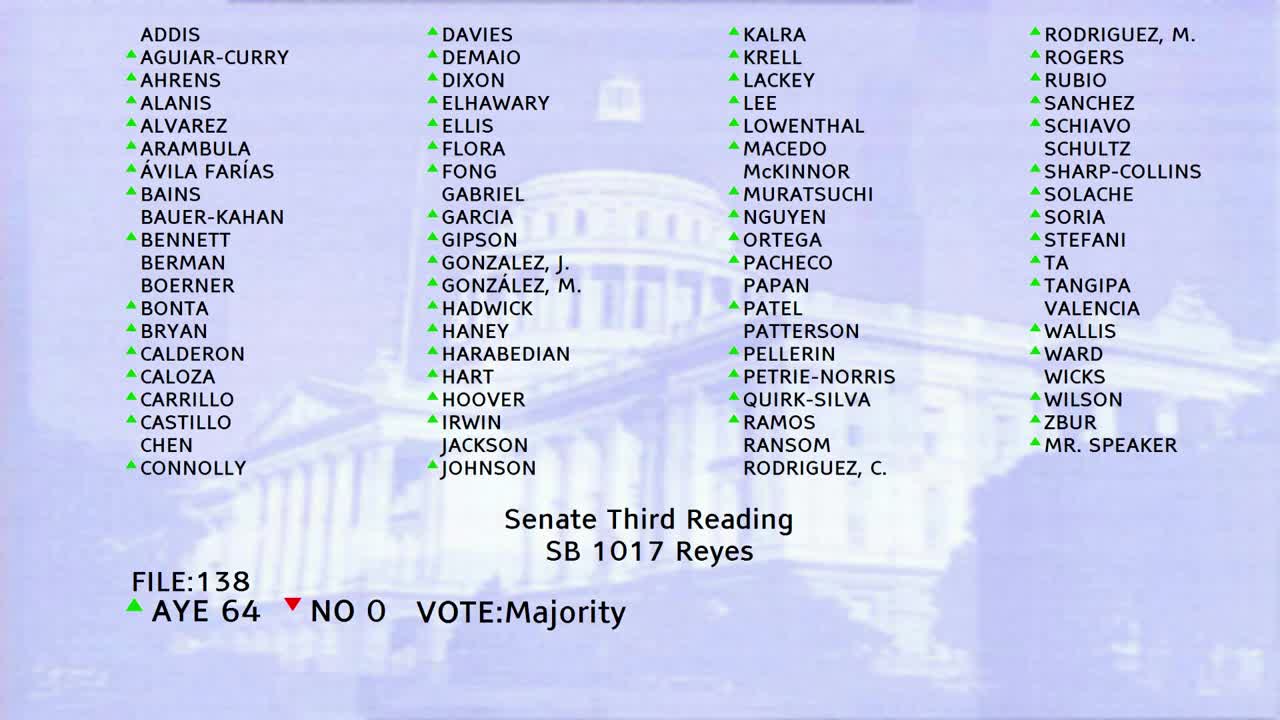

Bill Author

Bill Co-Author(s):