SB 1024: Firefighter postpartum and recovery leave.
- Session Year: 2025-2026
- House: Senate
- Latest Version Date: 2026-09-20
Current Status:
Passed
(2026-09-20: Chaptered by Secretary of State. Chapter 419, Statutes of 2026.)
Introduced
In Committee
Awaiting First Chamber Vote
Passed First Chamber
In Committee
Awaiting Second Chamber Vote
Passed Second Chamber
Enacted
Existing law, the Healthy Workplaces, Healthy Families Act of 2014, entitles an employee who works in California for the same employer for 30 or more days within a year from the commencement of employment to paid sick days. Under existing law, an employee accrues paid sick days at a rate of not less than one hour per every 30 hours worked, subject to certain use, accrual, and yearly carryover limitations.
This bill would require specified fire departments to provide a paid leave of absence of up to 26 weeks to an active firefighting member who requests leave because the firefighter is disabled by pregnancy, childbirth, or a related medical condition, as provided. The bill would apply to an active firefighting member who has at least 1,250 hours of service with the fire department in the 12-month period before the date on which the paid leave begins and would require the leave to be with full pay, except as specified, at the firefighters regular rate of pay set forth in a collective bargaining agreement and in accordance with their normal pay schedule. The bill would require all benefits to continue to accrue during the paid leave, as specified, and would require a firefighter returning from the paid leave to be restored to their prior position, as provided. The bill would request a fire department of the University of California to comply with these provisions.
Existing law, the Healthy Workplaces, Healthy Families Act of 2014, entitles an employee who works in California for the same employer for 30 or more days within a year from the commencement of employment to paid sick days. Under existing law, an employee accrues paid sick days at a rate of not less than one hour per every 30 hours worked, subject to certain use, accrual, and yearly carryover limitations.
This bill would entitle active firefighting members of specified fire departments who, after 20 weeks of gestation, give birth or have a stillbirth or miscarriage to 26 weeks of fully paid postpartum and recovery leave, as provided, if the firefighter has been employed by the fire department for at least 12 months as of the date of the birth, stillbirth, or miscarriage, has at least 1,250 hours of service with the fire department in that 12-month period, and takes the leave continuously. The bill would require the leave to be granted without regard to employment classification and to begin immediately upon the date of the childbirth, stillbirth, or miscarriage. The bill would require a firefighter on postpartum and recovery leave to be compensated require specified fire departments to provide a paid leave of absence of up to 26 weeks to an active firefighting member who requests leave because the firefighter is disabled by pregnancy, childbirth, or a related medical condition, as provided. The bill would apply to an active firefighting member who has at least 1,250 hours of service with the fire department in the 12-month period before the date on which the paid leave begins and would require the leave to be with full pay, except as specified, at the firefighters regular rate of pay set forth in a collective bargaining agreement and in accordance with their normal pay schedule and schedule. The bill would require all benefits to continue to accrue during the paid leave, as specified. The bill specified, and would require a firefighter returning from postpartum and recovery the paid leave to be restored to their prior position, as provided. The bill would request a fire department of the University of California to comply with these provisions.
Existing law, the Healthy Workplaces, Healthy Families Act of 2014, entitles an employee who works in California for the same employer for 30 or more days within a year from the commencement of employment to paid sick days. Under existing law, an employee accrues paid sick days at a rate of not less than one hour per every 30 hours worked, subject to certain use, accrual, and yearly carryover limitations.
This bill would entitle active firefighting members of specified fire departments who, after 20 weeks of gestation, give birth or have a stillbirth or miscarriage to 26 weeks of fully paid postpartum and recovery leave, provided that as provided, if the member firefighter has been employed by the fire department for at least 12 months as of the date of the birth, stillbirth, or miscarriage, has at least 1,250 hours of service with the fire department in the that 12-month period before the date of the childbirth, stillbirth, or miscarriage. period, and takes the leave continuously. The bill would require the leave to be granted without regard to employment classification and to begin immediately upon the date of the childbirth, stillbirth, or miscarriage. The bill would require a firefighter on postpartum and recovery leave to be compensated at the firefighters regular rate of pay set forth in a collective bargaining agreement and in accordance with their normal pay schedule and would require all benefits to continue to accrue during the leave, as specified. The bill would require a firefighter returning from postpartum and recovery leave to be restored to their prior position, as provided. The bill would request a fire department of the University of California to comply with these provisions.
Existing law, the Healthy Workplaces, Healthy Families Act of 2014, entitles an employee who works in California for the same employer for 30 or more days within a year from the commencement of employment to paid sick days. Under existing law, an employee accrues paid sick days at a rate of not less than one hour per every 30 hours worked, subject to certain use, accrual, and yearly carryover limitations.
This bill would entitle active firefighting members of specified fire departments who, after 20 weeks of gestation, give birth or have a stillbirth or miscarriage to 26 weeks of fully paid postpartum and recovery leave. leave, provided that the member has at least 1,250 hours of service with the fire department in the 12-month period before the date of the childbirth, stillbirth, or miscarriage. The bill would require the leave to be granted without regard to length of service or employment classification and to begin immediately upon the date of the childbirth, stillbirth, or miscarriage. The bill would require a firefighter on postpartum and recovery leave to be compensated at the firefighters regular rate of pay and would require all benefits to continue to accrue during the leave, as specified. The bill would require a firefighter returning from postpartum and recovery leave to be restored to their prior position, as provided. The bill would request a fire department of the University of California to comply with these provisions.
Existing law, the Healthy Workplaces, Healthy Families Act of 2014, entitles an employee who works in California for the same employer for 30 or more days within a year from the commencement of employment to paid sick days. Under existing law, an employee accrues paid sick days at a rate of not less than one hour per every 30 hours worked, subject to certain use, accrual, and yearly carryover limitations.
This bill would entitle active firefighting members of specified fire departments who, after 20 weeks of gestation, give birth or have a stillbirth or miscarriage to 26 weeks of fully paid postpartum and recovery leave. The bill would require the leave to be granted without regard to length of service or employment classification and to begin immediately upon the childbirth, stillbirth, or miscarriage. The bill would require a firefighter on postpartum and recovery leave to be compensated at the firefighters regular rate of pay and would require all benefits to continue to accrue during the leave, as specified. The bill would require a firefighter returning from postpartum and recovery leave to be restored to their prior position, as provided. The bill would request a fire department of the University of California to comply with these provisions.
Existing law, the Meyers-Milias-Brown Act, generally governs the labor relations of local public agencies and their employees, as specified. The acts states that its purposes are, among other things, to promote the improvement of personnel management and employer-employee relations within the various public agencies in the State of California by providing a uniform basis for recognizing the right of public employees to join organizations of their own choice and to be represented by those organizations in their employment relationships with public agencies.This bill would make a nonsubstantive change to the above-described purpose.Existing law, the Meyers-Milias-Brown Act, generally governs the labor relations of local public agencies and their employees, as specified. The acts states that its purposes are, among other things, to promote the improvement of personnel management and employer-employee relations within the various public agencies in the State of California by providing a uniform basis for recognizing the right of public employees to join organizations of their own choice and to be represented by those organizations in their employment relationships with public agencies.
This bill would make a nonsubstantive change to the above-described purpose.
The Legislature finds and declares all of the following:
(a)The Commission to Recruit Women for the Fire Service was created in 2005 by the California Firefighter Joint Apprenticeship Committee and the goals of the commission include expanding outreach and education to women of all ages about careers in the fire service and ensuring that fire departments reflect the communities that they serve.
(b)While the profession of firefighting presents health and safety hazards for all firefighters, these hazards can present unique health challenges and outcomes for women.
(c)Fire agencies have been working to diversify their workforce, but structural barriers, including inadequate parental leave, have contributed to gender inequity and workforce attrition among firefighters who give birth.
(d)Postpartum recovery is a medical necessity, not a personal convenience, and requires sufficient time free from hazardous duty to protect the health of the firefighter and infant.
(e)Ensuring robust postpartum leave for firefighters improves public safety by reducing injury, preventing premature return to hazardous duty, and strengthening retention in an essential profession.
SEC. 2.Chapter 9.6.1 (commencing with Section 3270) is added to Division 4 of Title 1 of the Government Code, to read:9.6.1.Firefighter Postpartum and Recovery Leave3270.(a)(1)(A)A fire department shall provide a paid leave of absence of up to 26 weeks to a firefighter who requests leave because the firefighter is disabled by pregnancy, childbirth, or a related medical condition.
(B)As a condition of granting or continuing the paid leave under this section, a fire department may require the firefighter to provide written medical certification from the firefighters health care provider documenting that the firefighter requires leave because the firefighter is actually disabled by pregnancy, childbirth, or a related medical condition, and stating the anticipated start date and duration of the leave.
(C)Except as provided in paragraph (2), the leave of absence shall be with full pay, at the firefighters regular rate of pay set forth in the applicable collective bargaining agreement and in accordance with their normal pay schedule.
(D)Paid leave under this section shall run concurrently with job-protected leave under paragraph (1) of subdivision (a) of Section 12945 or leave under paragraph (1) of subdivision (m) of Section 12940, or both.
(2)For part-time firefighters, the amount of paid leave per week, subject to a maximum of 26 weeks, shall be calculated in accordance with the both following:
(A)If the part-time firefighter works a fixed number of hours per week, the firefighter shall receive weekly pay for the total number of hours the firefighter is normally scheduled to work for the fire department.
(B)If the part-time firefighter does not work a fixed number of hours per week, the firefighter shall receive weekly pay in an amount equaling the firefighters average weekly pay during the six-month period immediately preceding the date that the firefighter began their paid leave.
(3)All benefits, including retirement contributions, seniority, promotional eligibility, and step increases, shall continue to accrue during the paid leave as if the firefighter were actively working. Notwithstanding any other law, a fire department shall maintain group health coverage for a firefighter who takes paid leave under this section for the duration of the paid leave at the same level and under the same conditions that coverage would have been provided if the firefighter had not taken the paid leave.
(4)A fire department shall not require a firefighter to exhaust paid sick leave, vacation, or compensatory leave time before or while taking the paid leave under this section.
(5)Compensation during the paid leave taken under this section shall include retirement fund contributions required of the fire department. The firefighter shall earn full service credit during the paid leave and shall pay member contributions to the retirement fund.
(6)A firefighter returning from paid leave taken under this section shall be restored to their prior position or a position of equivalent rank, pay, schedule, station assignment, and promotional trajectory.
(b)(1)This section applies to an active firefighting member who has at least 1,250 hours of service with the fire department in the 12-month period before the date on which the paid leave begins.
(2)Notwithstanding paragraph (1), there are no eligibility requirements, including minimum hours worked or length of service, before an employee may take unpaid, job-protected leave for a disability due to pregnancy, childbirth, or a related medical condition under paragraph (1) of subdivision (a) of Section 12945.
(c)This section does not preempt or limit any collective bargaining agreement, state law or policy, or local law or policy providing greater rights or benefits.
(d)A fire department may count benefits provided to a firefighter under another law, employer-provided paid leave policy, or disability insurance plan that are payable for the reasons listed in paragraph (1) of subdivision (a), other than vacation, sick, or other compensated leave time, toward the requirements of this section. Full satisfaction of the requirements of this section is met if the fire department ensures that the firefighter receives their full pay during the leave of absence required by this section without a reduction to the firefighters vacation, sick, or other compensated leave time balances.
(e)(1)This section applies to active firefighting members of the following fire departments:
(A)A fire department of a city, county, city and county, district, or other public or municipal corporation or political subdivision.
(B)A fire department of the California State University.
(C)The Department of Forestry and Fire Protection.
(D)A county forestry or firefighting department or unit.
(2)A fire department of the University of California is requested to comply with this section.
SECTION 1.The Legislature finds and declares all of the following:(a)The Commission to Recruit Women for the Fire Service was created in 2005 by the California Firefighter Joint Apprenticeship Committee and the goals of the commission include expanding outreach and education to women of all ages about careers in the fire service and ensuring that fire departments reflect the communities that they serve.(b)While the profession of firefighting presents health and safety hazards for all firefighters, these hazards can present unique health challenges and outcomes for women.(c)Fire agencies have been working to diversify their workforce, but structural barriers, including inadequate parental leave, have contributed to gender inequity and workforce attrition among firefighters who give birth.(d)Postpartum recovery is a medical necessity, not a personal convenience, and requires sufficient time free from hazardous duty to protect the health of the firefighter and infant.(e)Ensuring robust postpartum leave for firefighters improves public safety by reducing injury, preventing premature return to hazardous duty, and strengthening retention in an essential profession.SEC. 2.Article 5 (commencing with Section 290) is added to Chapter 1 of Part 1 of Division 2 of the Labor Code, to read:5.Firefighter Postpartum and Recovery Leave290.(a)(1)This section applies to active firefighting members of all of the following fire departments:(A)A fire department of a city, county, city and county, district, or other public or municipal corporation or political subdivision.(B)A fire department of the California State University.(C)The Department of Forestry and Fire Protection.(D)A county forestry or firefighting department or unit.(E)A fire department that serves a United States Department of War installation and who is certified by the United States Department of War as meeting its standards for firefighters.(F)A fire department that serves a National Aeronautics and Space Administration installation and who adheres to training standards established in accordance with Article 4 (commencing with Section 13155) of Chapter 1 of Part 2 of Division 12 of the Health and Safety Code.(G)A fire department that provides fire protection to a commercial airport regulated by the Federal Aviation Administration (FAA) under Part 139 (commencing with Section 139.1) of Subchapter G of Chapter I of Title 14 of the Federal Code of Regulations and is trained on the standards of Section 139.319 of Title 14 of the Federal Code of Regulations.(2)A fire department of the University of California is requested to comply with this section.(b)(1)A firefighter who, after 20 weeks of gestation, gives birth or has a stillbirth or miscarriage shall be entitled to 26 weeks of fully paid postpartum and recovery leave if all of the following requirements are met:(A)The firefighter has been employed by the fire department for at least 12 months as of the date of the birth, stillbirth, or miscarriage. (B)The firefighter has at least 1,250 hours of service with the fire department in the 12-month period before the date of the childbirth, stillbirth, or miscarriage.(C)The leave is taken continuously.(2)The leave shall be granted without regard to employment classification and shall begin immediately upon the date of the childbirth, stillbirth, or miscarriage.(c)A firefighter on postpartum and recovery leave shall be compensated at the firefighters regular rate of pay set forth in a collective bargaining agreement and in accordance with their normal pay schedule.(d)All benefits, including health coverage, retirement contributions, seniority, promotional eligibility, and step increases, shall continue to accrue during the postpartum and recovery leave as if the firefighter were actively working.(e)An employing entity shall not require a firefighter to exhaust sick leave, vacation, or compensatory time during the postpartum and recovery leave.(f)A firefighter returning from postpartum and recovery leave shall be restored to their prior position or a position of equivalent rank, pay, schedule, station assignment, and promotional trajectory.(g)If an employer pays a firefighter another supplemental benefit for leave that is payable under subdivision (b) and that supplemental benefit compensates the firefighter in an amount equal to or greater than the amount of compensation in subdivisions (c) and (d), the employer may count the hours of the other paid benefit or leave toward the total number of weeks of postpartum and recovery leave that the employer is required to provide to the firefighter under subdivision (b). (h)This section establishes a statewide minimum standard and shall not be construed to preempt or limit any collective bargaining agreement or local policy providing greater rights or benefits.The Legislature finds and declares all of the following:
(a)The Commission to Recruit Women for the Fire Service was created in 2005 by the California Firefighter Joint Apprenticeship Committee and the goals of the commission include expanding outreach and education to women of all ages about careers in the fire service and ensuring that fire departments reflect the communities that they serve.
(b)While the profession of firefighting presents health and safety hazards for all firefighters, these hazards can present unique health challenges and outcomes for women.
(c)Fire agencies have been working to diversify their workforce, but structural barriers, including inadequate parental leave, have contributed to gender inequity and workforce attrition among firefighters who give birth.
(d)Postpartum recovery is a medical necessity, not a personal convenience, and requires sufficient time free from hazardous duty to protect the health of the firefighter and infant.
(e)Ensuring robust postpartum leave for firefighters improves public safety by reducing injury, preventing premature return to hazardous duty, and strengthening retention in an essential profession.
SEC. 2.Article 5 (commencing with Section 290) is added to Chapter 1 of Part 1 of Division 2 of the Labor Code, to read:5.Firefighter Postpartum and Recovery Leave290.(a)(1)This section applies to active firefighting members of all of the following fire departments:
(A)A fire department of a city, county, city and county, district, or other public or municipal corporation or political subdivision.
(B)A fire department of the California State University.
(C)The Department of Forestry and Fire Protection.
(D)A county forestry or firefighting department or unit.
(E)A fire department that serves a United States Department of War installation and who is certified by the United States Department of War as meeting its standards for firefighters.
(F)A fire department that serves a National Aeronautics and Space Administration installation and who adheres to training standards established in accordance with Article 4 (commencing with Section 13155) of Chapter 1 of Part 2 of Division 12 of the Health and Safety Code.
(G)A fire department that provides fire protection to a commercial airport regulated by the Federal Aviation Administration (FAA) under Part 139 (commencing with Section 139.1) of Subchapter G of Chapter I of Title 14 of the Federal Code of Regulations and is trained on the standards of Section 139.319 of Title 14 of the Federal Code of Regulations.
(2)A fire department of the University of California is requested to comply with this section.
(b)(1)A firefighter who, after 20 weeks of gestation, gives birth or has a stillbirth or miscarriage shall be entitled to 26 weeks of fully paid postpartum and recovery leave if they have all of the following requirements are met:
(A)The firefighter has been employed by the fire department for at least 12 months as of the date of the birth, stillbirth, or miscarriage.
(B)The firefighter has at least 1,250 hours of service with the fire department in the 12-month period before the date of the childbirth, stillbirth, or miscarriage. The
(C)The leave is taken continuously.
(2)The leave shall be granted without regard to employment classification and shall begin immediately upon the date of the childbirth, stillbirth, or miscarriage.
(c)A firefighter on postpartum and recovery leave shall be compensated at the firefighters regular rate of pay. pay set forth in a collective bargaining agreement and in accordance with their normal pay schedule.
(d)All benefits, including health coverage, retirement contributions, seniority, promotional eligibility, and step increases, shall continue to accrue during the postpartum and recovery leave as if the firefighter were actively working.
(e)An employing entity shall not require a firefighter to exhaust sick leave, vacation, or compensatory time during the postpartum and recovery leave.
(f)A firefighter returning from postpartum and recovery leave shall be restored to their prior position or a position of equivalent rank, pay, schedule, station assignment, and promotional trajectory.
(g)If an employer pays a firefighter another supplemental benefit for leave that is payable under subdivision (b) and that supplemental benefit compensates the firefighter in an amount equal to or greater than the amount of compensation in subdivisions (c) and (d), the employer may count the hours of the other paid benefit or leave toward the total number of weeks of postpartum and recovery leave that the employer is required to provide to the firefighter under subdivision (b).
(g)(h)This section establishes a statewide minimum standard and shall not be construed to preempt or limit any collective bargaining agreement or local policy providing greater rights or benefits.
The Legislature finds and declares all of the following:
(a)The Commission to Recruit Women for the Fire Service was created in 2005 by the California Firefighter Joint Apprenticeship Committee and the goals of the commission include expanding outreach and education to women of all ages about careers in the fire service and ensuring that fire departments reflect the communities that they serve.
(b)While the profession of firefighting presents health and safety hazards for all firefighters, these hazards can present unique health challenges and outcomes for women.
(c)Fire agencies have been working to diversify their workforce, but structural barriers, including inadequate parental leave, have contributed to gender inequity and workforce attrition among firefighters who give birth.
(d)Postpartum recovery is a medical necessity, not a personal convenience, and requires sufficient time free from hazardous duty to protect the health of the firefighter and infant.
(e)Ensuring robust postpartum leave for firefighters improves public safety by reducing injury, preventing premature return to hazardous duty, and strengthening retention in an essential profession.
SEC. 2.Article 5 (commencing with Section 290) is added to Chapter 1 of Part 1 of Division 2 of the Labor Code, to read:5.Firefighter Postpartum and Recovery Leave290.(a)(1)This section applies to active firefighting members of all of the following fire departments:
(A)A fire department of a city, county, city and county, district, or other public or municipal corporation or political subdivision.
(B)A fire department of the California State University.
(C)The Department of Forestry and Fire Protection.
(D)A county forestry or firefighting department or unit.
(E)A fire department that serves a United States Department of War installation and who is certified by the United States Department of War as meeting its standards for firefighters.
(F)A fire department that serves a National Aeronautics and Space Administration installation and who adheres to training standards established in accordance with Article 4 (commencing with Section 13155) of Chapter 1 of Part 2 of Division 12 of the Health and Safety Code.
(G)A fire department that provides fire protection to a commercial airport regulated by the Federal Aviation Administration (FAA) under Part 139 (commencing with Section 139.1) of Subchapter G of Chapter I of Title 14 of the Federal Code of Regulations and is trained on the standards of Section 139.319 of Title 14 of the Federal Code of Regulations.
(2)A fire department of the University of California is requested to comply with this section.
(b)A firefighter who, after 20 weeks of gestation, gives birth or has a stillbirth or miscarriage is shall be entitled to 26 weeks of fully paid postpartum and recovery leave. leave if they have at least 1,250 hours of service with the fire department in the 12-month period before the date of the childbirth, stillbirth, or miscarriage. The leave shall be granted without regard to length of service or employment classification and shall begin immediately upon the date of the childbirth, stillbirth, or miscarriage.
(c)A firefighter on postpartum and recovery leave shall be compensated at the firefighters regular rate of pay.
(d)All benefits, including health coverage, retirement contributions, seniority, promotional eligibility, and step increases, shall continue to accrue during the postpartum and recovery leave as if the firefighter were actively working.
(e)An employing entity shall not require a firefighter to exhaust sick leave, vacation, or compensatory time during the postpartum and recovery leave.
(f)A firefighter returning from postpartum and recovery leave shall be restored to their prior position or a position of equivalent rank, pay, schedule, station assignment, and promotional trajectory.
(g)This section establishes a statewide minimum standard and shall not be construed to preempt or limit any collective bargaining agreement or local policy providing greater rights or benefits.
The Legislature finds and declares all of the following:
(a)The Commission to Recruit Women for the Fire Service was created in 2005 by the California Firefighter Joint Apprenticeship Committee and the goals of the commission include expanding outreach and education to women of all ages about careers in the fire service and ensuring that fire departments reflect the communities that they serve.
(b)While the profession of firefighting presents health and safety hazards for all firefighters, these hazards can present unique health challenges and outcomes for women.
(c)Fire agencies have been working to diversify their workforce, but structural barriers, including inadequate parental leave, have contributed to gender inequity and workforce attrition among firefighters who give birth.
(d)Postpartum recovery is a medical necessity, not a personal convenience, and requires sufficient time free from hazardous duty to protect the health of the firefighter and infant.
(e)Ensuring robust postpartum leave for firefighters improves public safety by reducing injury, preventing premature return to hazardous duty, and strengthening retention in an essential profession.
SEC. 2.Article 5 (commencing with Section 290) is added to Chapter 1 of Part 1 of Division 2 of the Labor Code, to read:5.Firefighter Postpartum and Recovery Leave290.(a)(1)This section applies to active firefighting members of all of the following fire departments:
(A)A fire department of a city, county, city and county, district, or other public or municipal corporation or political subdivision.
(B)A fire department of the California State University.
(C)The Department of Forestry and Fire Protection.
(D)A county forestry or firefighting department or unit.
(E)A fire department that serves a United States Department of War installation and who is certified by the United States Department of War as meeting its standards for firefighters.
(F)A fire department that serves a National Aeronautics and Space Administration installation and who adheres to training standards established in accordance with Article 4 (commencing with Section 13155) of Chapter 1 of Part 2 of Division 12 of the Health and Safety Code.
(G)A fire department that provides fire protection to a commercial airport regulated by the Federal Aviation Administration (FAA) under Part 139 (commencing with Section 139.1) of Subchapter G of Chapter I of Title 14 of the Federal Code of Regulations and is trained on the standards of Section 139.319 of Title 14 of the Federal Code of Regulations.
(2)A fire department of the University of California is requested to comply with this section.
(b)A firefighter who, after 20 weeks of gestation, gives birth or has a stillbirth or miscarriage is entitled to 26 weeks of fully paid postpartum and recovery leave. The leave shall be granted without regard to length of service or employment classification and shall begin immediately upon the childbirth, stillbirth, or miscarriage.
(c)A firefighter on postpartum and recovery leave shall be compensated at the firefighters regular rate of pay.
(d)All benefits, including health coverage, retirement contributions, seniority, promotional eligibility, and step increases, shall continue to accrue during the postpartum and recovery leave as if the firefighter were actively working.
(e)An employing entity shall not require a firefighter to exhaust sick leave, vacation, or compensatory time during the postpartum and recovery leave.
(f)A firefighter returning from postpartum and recovery leave shall be restored to their prior position or a position of equivalent rank, pay, schedule, station assignment, and promotional trajectory.
(g)This section establishes a statewide minimum standard and shall not be construed to preempt or limit any collective bargaining agreement or local policy providing greater rights or benefits.
SECTION 1.Section 3500 of the Government Code is amended to read:3500.(a)It is the purpose of this chapter to promote full communication between public employers and their employees by providing a reasonable method of resolving disputes regarding wages, hours, and other terms and conditions of employment between public employers and public employee organizations. It is also the purpose of this chapter to promote the improvement of personnel management and employer-employee relations within the various public agencies in the State of California by providing a uniform basis for recognizing the right of public employees to join organizations of their own choice and to be represented by those organizations in their employment relationships with public agencies. Nothing contained herein shall be deemed to supersede the provisions of existing state law and the charters, ordinances, and rules of local public agencies that establish and regulate a merit or civil service system or which provide for other methods of administering employer-employee relations nor is it intended that this chapter be binding upon those public agencies that provide procedures for the administration of employer-employee relations in accordance with the provisions of this chapter. This chapter is intended, instead, to strengthen merit, civil service and other methods of administering employer-employee relations through the establishment of uniform and orderly methods of communication between employees and the public agencies by which they are employed.(b)The Legislature finds and declares that the duties and responsibilities of local agency employer representatives under this chapter are substantially similar to the duties and responsibilities required under existing collective bargaining enforcement procedures and therefore the costs incurred by the local agency employer representatives in performing those duties and responsibilities under this chapter are not reimbursable as state-mandated costs.(a)It is the purpose of this chapter to promote full communication between public employers and their employees by providing a reasonable method of resolving disputes regarding wages, hours, and other terms and conditions of employment between public employers and public employee organizations. It is also the purpose of this chapter to promote the improvement of personnel management and employer-employee relations within the various public agencies in the State of California by providing a uniform basis for recognizing the right of public employees to join organizations of their own choice and to be represented by those organizations in their employment relationships with public agencies. Nothing contained herein shall be deemed to supersede the provisions of existing state law and the charters, ordinances, and rules of local public agencies that establish and regulate a merit or civil service system or which provide for other methods of administering employer-employee relations nor is it intended that this chapter be binding upon those public agencies that provide procedures for the administration of employer-employee relations in accordance with the provisions of this chapter. This chapter is intended, instead, to strengthen merit, civil service and other methods of administering employer-employee relations through the establishment of uniform and orderly methods of communication between employees and the public agencies by which they are employed.
(b)The Legislature finds and declares that the duties and responsibilities of local agency employer representatives under this chapter are substantially similar to the duties and responsibilities required under existing collective bargaining enforcement procedures and therefore the costs incurred by the local agency employer representatives in performing those duties and responsibilities under this chapter are not reimbursable as state-mandated costs.
|
Date
|
Status
|
|---|---|
| Sep 20, 2026 | Chaptered by Secretary of State. Chapter 419, Statutes of 2026. |
| Sep 20, 2026 | Approved by the Governor. |
| Sep 2, 2026 | Enrolled and presented to the Governor at 3 p.m. |
| Aug 27, 2026 | Assembly amendments concurred in. (Ayes 40. Noes 0. Page 6036.) Ordered to engrossing and enrolling. |
| Aug 27, 2026 | Assembly amendments concurred in. (Ayes 40. Noes 0.) Ordered to engrossing and enrolling. |
| Aug 26, 2026 | In Senate. Concurrence in Assembly amendments pending. |
| Aug 26, 2026 | Read third time. Passed. (Ayes 79. Noes 0. Page 6611.) Ordered to the Senate. |
| Aug 26, 2026 | Read third time. Passed. Ordered to the Senate. |
| Aug 19, 2026 | Ordered to third reading. |
| Aug 19, 2026 | Read third time and amended. |
| Aug 17, 2026 | Read second time. Ordered to third reading. |
| Aug 13, 2026 | Read second time and amended. Ordered to second reading. |
| Aug 13, 2026 | From committee: Do pass as amended. (Ayes 11. Noes 0.) (August 13). |
| Aug 13, 2026 | Assembly Rule 63 suspended. |
| Aug 5, 2026 | August 5 set for first hearing. Placed on suspense file. |
| Jun 25, 2026 | From committee: Do pass and re-refer to Com. on APPR. with recommendation: To consent calendar. (Ayes 7. Noes 0.) (June 24). Re-referred to Com. on APPR. |
| Jun 24, 2026 | From committee: Do pass and re-refer to Com. on L. & E. with recommendation: To consent calendar. (Ayes 6. Noes 0.) (June 24). Re-referred to Com. on L. & E. |
| Jun 15, 2026 | Assembly Rule 56 suspended. |
| Jun 8, 2026 | Referred to Coms. on P. E. & R. and L. & E. |
| May 20, 2026 | In Assembly. Read first time. Held at Desk. |
| May 19, 2026 | Read third time. Passed. (Ayes 39. Noes 0. Page 4352.) Ordered to the Assembly. |
| May 19, 2026 | Read third time. Passed. (Ayes 39. Noes 0.) Ordered to the Assembly. |
| May 18, 2026 | Read second time. Ordered to third reading. |
| May 14, 2026 | From committee: Do pass as amended. (Ayes 7. Noes 0. Page 4261.) (May 14). |
| May 14, 2026 | Read second time and amended. Ordered to second reading. |
| May 14, 2026 | From committee: Do pass as amended. (Ayes 7. Noes 0.) (May 14). |
| May 8, 2026 | Set for hearing May 14. |
| Apr 27, 2026 | April 27 hearing: Placed on APPR. suspense file. |
| Apr 17, 2026 | Set for hearing April 27. |
| Apr 15, 2026 | From committee: Do pass and re-refer to Com. on APPR. (Ayes 5. Noes 0. Page 3903.) (April 15). Re-referred to Com. on APPR. |
| Apr 15, 2026 | From committee: Do pass and re-refer to Com. on APPR. (Ayes 5. Noes 0.) (April 15). Re-referred to Com. on APPR. |
| Apr 9, 2026 | Set for hearing April 15. |
| Mar 25, 2026 | Re-referred to Com. on L., P.E. & R. |
| Mar 16, 2026 | From committee with author's amendments. Read second time and amended. Re-referred to Com. on RLS. |
| Feb 18, 2026 | Referred to Com. on RLS. |
| Feb 11, 2026 | From printer. May be acted upon on or after March 13. |
| Feb 10, 2026 | Introduced. Read first time. To Com. on RLS. for assignment. To print. |
|
Date
|
Description
|
Location
|
Votes
|
|
|---|---|---|---|---|
| Aug 27, 2026 | Unfinished Business SB1024 Menjivar et al. Concurrence | Senate Floor |
Passed |
|
| Aug 26, 2026 | SB 1024 Menjivar Senate Third Reading By Wicks | Assembly Floor |
Passed |
|
| Aug 13, 2026 | Do pass as amended. | Assembly Standing Committee on Appropriations |
Passed |
|
| Jun 24, 2026 | Do pass and be re-referred to the Committee on [Labor and Employment] with recommendation: To Consent Calendar | Assembly Standing Committee on Public Employment and Retirement |
Passed |
|
| Jun 24, 2026 | Do pass and be re-referred to the Committee on [Appropriations] with recommendation: To Consent Calendar | Assembly Standing Committee on Labor and Employment |
Passed |
|
| May 19, 2026 | Senate 3rd Reading SB1024 Menjivar et al. | Senate Floor |
Passed |
|
| May 14, 2026 | Do pass as amended | Senate Standing Committee on Appropriations |
Passed |
|
| Apr 27, 2026 | Placed on suspense file | Senate Standing Committee on Appropriations |
Passed |
|
| Apr 15, 2026 | Do pass, but first be re-referred to the Committee on [Appropriations] | Senate Standing Committee on Labor, Public Employment and Retirement |
Passed |
This list shows positions taken on this bill by organizations on the date displayed, which is linked to the original source.
Positions by individuals are not included.
|
Organization
|
Position
|
Date
|
|---|---|---|
| Cal Fire Local 2881 | ** Support | |
| California Federation of Labor Unions | ** Support | |
| California Professional Firefighters | ** Support | |
| California Professional Firefighters (Sponsor) | ** Support | |
| California Teachers Association | ** Support | |
| Health Access California | ** Support | |
| Planned Parenthood Affiliates Of California | ** Support | |
| Teamsters California | ** Support |
SENATE RULES COMMITTEE Office of Senate Floor Analyses (916) 651-4171 | SB 1024 |
UNFINISHED BUSINESS
Bill No: SB 1024
Author: Menjivar (D), et al.
Amended: 8/19/26
Vote: 21
SENATE LABOR, PUB. EMP. & RET. COMMITTEE: 5-0, 4/15/26
AYES: Smallwood-Cuevas, Strickland, Cortese, Durazo, Laird
SENATE APPROPRIATIONS COMMITTEE: 7-0, 5/14/26
AYES: Cervantes, Seyarto, Cabaldon, Dahle, Grayson, Richardson, Wahab
SENATE FLOOR: 39-0, 5/19/26
AYES: Allen, Alvarado-Gil, Archuleta, Arreguín, Ashby, Becker, Blakespear, Cabaldon, Caballero, Cervantes, Choi, Cortese, Dahle, Durazo, Gonzalez, Grayson, Grove, Hurtado, Jones, Laird, Limón, McGuire, McNerney, Menjivar, Ochoa Bogh, Padilla, Pérez, Reyes, Richardson, Rubio, Seyarto, Smallwood-Cuevas, Stern, Strickland, Umberg, Valladares, Wahab, Weber Pierson, Wiener
NO VOTE RECORDED: Niello
ASSEMBLY FLOOR: 79-0, 8/26/26 - See last page for vote
SUBJECT: Firefighter postpartum and recovery leave
SOURCE: California Professional Firefighters
DIGEST:
This bill requires a fire department to provide a paid leave of absence of up to 26 weeks to a requesting firefighter who is disabled by pregnancy, childbirth, or a related medical condition.
Assembly Amendments
struck the provisions of this bill as it left the Senate which would have entitled firefighters with up to 26 weeks of fully paid postpartum and recovery leave for birth, stillbirth or miscarriage of a child to instead entitle firefighters to this time only when the leave is associated with a disability due to pregnancy, childbirth, or related medical condition.
ANALYSIS:
Existing federal law establishes the Family Medical Leave Act (FMLA) to provide employees, working for an employer with 50 or more employees, the right to take up to 12 weeks of job-protected, unpaid time off work for the birth or adoption of a child, due to a serious health condition of the employee, for an exigency arising out of the fact that the employee’s close relative is a military member on active duty, and for the employee to care for a close relative with a serious health condition. (28 United States Code (U.S.C.) §2601 et seq., §2611)
Existing state law:
- Establishes the California Family Rights Act (CFRA) making it an unlawful employment practice for an employer to refuse to grant a request from an eligible employee to take up to a total of 12 weeks off in any 12-month period for specified family care and medical leave. Defines “family care and medical leave,” for purposes of CFRA, to mean taking leave to care for a new child; to care for a child, parent, grandparent, grandchild, sibling, spouse, or domestic partner who has a serious health condition; to take leave because of the employee’s own serious health condition; or for a qualifying exigency related to the employee’s close family’s active duty as a member of the Armed Forces, as specified. Provides that CFRA provisions only apply to employers with five or more employees, and to employees who have held their job for at least a year and worked at least 1,250 hours in the previous 12-month period. (Government Code §12945.2)
- Under Pregnancy Disability Leave (PDL) provisions, makes it an unlawful employment practice for an employer to refuse to allow an employee disabled by pregnancy, childbirth, or a related medical condition to take a leave for a reasonable period of time not to exceed four months and thereafter return to work. The employee is entitled to utilize any accrued vacation leave during this period of time. Also makes it an unlawful employment practice for an employer to refuse to provide reasonable accommodation for an employee for a condition related to pregnancy, childbirth, or a related medical condition, if the employee so requests, and with the advice of the employee’s health care provider. (Government Code §12945)
- Provides, through the State Disability Insurance (SDI) program, short-term wage replacement benefits to eligible workers who are unable to work due to a non-work-related illness or injury and for a maximum of 52 weeks. SDI benefits can be used for an illness or injury, either physical or mental, which prevents an employee from performing their regular and customary work and includes elective surgery, pregnancy, childbirth, or other medical conditions. (Unemployment Insurance Code §2601-3308)
- Provides, through the Paid Family Leave (PFL) program, a component of SDI, eligible employees up to eight weeks of wage replacement benefits within a 12-month period to workers who need to take time off work to care for a seriously ill child, spouse, parent, grandparent, grandchild, sibling, or domestic partner; to bond with a minor child within one year of the birth or placement of the child in connection with foster care or adoption; or to participate in a qualifying event because of a family member’s military deployment. (Unemployment Insurance Code §3301)
- Through the Fair Employment and Housing Act (FEHA), makes it an unlawful employment practice for an employer to refuse to grant a request by any employee to take up to five days of reproductive loss leave following a reproductive loss event. Defines “reproductive loss event” to mean the day or, for a multiple-day event, the final day of a failed adoption, failed surrogacy, miscarriage, stillbirth, or an unsuccessful assisted reproduction. If an employee experiences more than one reproductive loss event within a 12-month period, an employer shall not be obligated to grant a total amount of reproductive loss leave time in excess of 20 days within a 12-month period. (Government Code §12945.6)
This bill:
- Requires a fire department to provide a paid leave of absence of up to 26 weeks to a firefighter who requests leave because the firefighter is disabled by pregnancy, childbirth, or a related medical condition.
- Specifies that the paid leave applies to an active firefighter member who has at least 1,250 hours of service with the fire department in the 12-month period before the date on which the paid leave begins. However, clarifies that there are no eligibility requirements, including minimum hours worked or length of service, before an employee may take unpaid, job-protected leave for disability due to pregnancy, childbirth, or related medical condition as provided in existing law, as specified.
- Authorizes a fire department, as a condition of granting or continuing the paid leave, to require the firefighter to provide written medical certification from the firefighter’s health care provider documenting that the leave is required because of a disability by pregnancy, childbirth, or a related medical condition, and stating the anticipated start date and duration of the leave.
- For purposes of this paid leave, requires that:
- It be provided with full pay, except as specified, at the firefighter’s regular rate of pay set forth in the applicable collective bargaining agreement and in accordance with their normal pay schedule.
- It run concurrently with job-protected leave under the existing Pregnancy Disability Leave provisions or the reasonable accommodation provisions of the Fair Employment and Housing Act, or both, as specified.
- Notwithstanding any other law, the fire department maintain group health coverage for a firefighter on leave for the duration of the leave and at the same level and under the same conditions that coverage would have been provided had the firefighter not taken the paid leave.
- All benefits, including retirement contributions, seniority, promotional eligibility, and step increases, to continue to accrue during the paid leave as if the firefighter were actively working.
- A firefighter returning from paid leave be restored to their prior position or a position of equivalent rank, pay, schedule, station assignment, and promotional trajectory.
- Specifies that compensation during the paid leave must include retirement fund contributions by the fire department and the firefighter, and the firefighters must earn full service credit during the paid leave.
- Prescribes the manner in which the paid leave must be calculated for part-time firefighters.
- Prohibits a fire department from requiring a firefighter to exhaust paid sick leave, vacation, or compensatory leave time before or while taking the paid leave under this section.
- Specifies that these provisions do not preempt or limit any collective bargaining agreement, state law or policy, or local law or policy providing greater rights or benefits.
- Authorizes a fire department to count benefits provided to a firefighter under another law, employer-provided paid leave policy, or disability insurance plan that are payable, as provided, other than vacation, sick, or other compensated leave time, toward the requirements of this bill. Additionally, specifies that full satisfaction is met if the fire department ensures that the firefighter receives their full pay during the leave of absence, as required, without a reduction to the firefighter’s vacation, sick, or other compensated leave time balances.
- Apply the above-described provisions to active firefighting members of the following fire departments:
- A fire department of a city, county, city and county, district, or other public or municipal corporation or political subdivision.
- A fire department of the California State University.
- The Department of Forestry and Fire Protection.
- A county forestry or firefighting department or unit.
- A fire department of the University of California is requested to comply with the provisions of this bill.
Background
Parental leave is proven to benefit families and communities by improving long-term health outcomes for mothers and children, decreasing stress for caregivers and new parents, encouraging equitable co-parenting, and reducing income volatility. Whether or not the parental leave is paid or has some wage replacement component is often the deciding factor on whether or not, and for how long, an employee is likely to take time to care for themselves and their families while financially providing for them.
California has several medical leaves under which an employee may be able to take leave from work to care for their illness, that of specified family members or for the bonding with a new child. Below is a summary of some and their eligibility requirements.
| CA Family Rights Act (CFRA) Job Protected | Paid Family Leave (PFL) No Job Protection | Pregnancy Disability Leave (PDL) Job Protected | Reproductive Loss Leave Job Protected | Family Medical Leave Act (FMLA) Job Protected | SB 1024 (This bill) |
Employers Covered | Five or more employees | One or more (employee pays, employee gets) | Five or more employees | Public employers of any size/ private employers with five or more employees | 50+ employees within 75-mile radius | All specified fire departments |
Employee Eligibility | Worked 1,250 hours in prior 12 months | Once employee earns $300 in base period for fund contribution | Immediate as necessary | Worked with the employer at least 30 days | Worked 1,250 in prior 12 months | Worked 1,250 hours of service in prior 12 months |
Reason for Leave | Employee serious health condition; seriously ill family member care; bond with newborn or newly placed adopted or foster child | Care for seriously ill family member; bond with a child within 1 year of birth, foster care or adoption placement; qualifying event because of a family member’s military deployment | Disability due to pregnancy, childbirth or related medical condition | Miscarriage, stillbirth, failed adoption, failed surrogacy, or unsuccessful assisted reproduction | Bond with a child w/in 1 year of birth, adoption or foster care placement OR due to serious pregnancy-related health condition | Disability due to pregnancy, childbirth, or related medical condition |
Length of Leave | 12 weeks in 12-month period | 8 weeks in 12-month period | Up to 4 months | 5 days, nonconsecutive, per loss event (max of 20 days w/in 12 months) | Up to 12 weeks | Up to 26 weeks pending medical certification |
Paid or Unpaid | Unpaid, may run concurrent with other paid leave | Partial wage replacement (70-90%, depending on income) | Unpaid, may run concurrent with SDI for partial wage replacement | Unpaid, employee can use vacation, personal leave, paid sick leave, or comp time | Unpaid, employee can use vacation, paid sick time | Fully paid, prohibits exhausting sick leave, vacation or comp time |
Continued Health Coverage | Yes | No | Yes | Unspecified | Yes | Yes |
Points of note regarding these leaves:
- When both state and federal laws apply, the employee receives the benefit of the more protective law.
- PFL provides benefit payments but not job protection; however, the employee’s job may be protected if taken concurrently with FMLA or CFRA.
- There is no pay associated with the FMLA and CFRA, other than what the employee has earned in other accrued leaves that may apply.
- Employees may only be eligible for the PFL program if they are covered by the SDI program. SDI is employee funded. If an employee does not pay into the SDI program, they are not eligible to receive disability benefits PFL.
- Some state employees may be able to access Nonindustrial Disability Insurance (NDI), which is a partial wage replacement benefit for state employees. NDI provides income to eligible employees when they lose wages due to a non-work-related disability. NDI is an employer paid benefit that covers excluded employees and rank-and-file employees in bargaining units 2, 5, 6, 7, 8, 9, 12, 13, 16, 18, and 19.
Need for this bill? According to the author: “Firefighters who wish to take additional leave face the impossible decision between their own health, the health of their newborn, and their family's financial stability. Unfortunately, many have faced this choice and found that they have no option but to leave a career they love. The lack of supportive pregnancy and maternity policies has significant impacts on both initial recruitment and long-term retention following childbirth, deeply impacting the ability of fire departments to sustainably build a diverse and representative fire service. Every firefighter who leaves represents a loss of the substantial time, funding, and effort invested in their training. SB 1024 promotes fair, accessible, and sustainable careers in the fire service by establishing a statewide uniform paid postpartum and recovery policy for firefighters who give birth.”
[NOTE: Please see the Senate Labor, Public Employment and Retirement Committee analysis on this bill for more background information and information on prior legislation.]
FISCAL EFFECT: Appropriation: No Fiscal Com.: Yes Local: No
According to the Assembly Appropriations Committee:
- Cal FIRE anticipates ongoing costs (General Fund) associated with providing this expanded benefit to firefighters but asserts it is unable to quantify these costs because it cannot reliably predict how many employees will utilize this benefit in a given year. Nonetheless, the California Department of Human Resources (CalHR) estimates the bill likely results in ongoing annual costs in the hundreds of thousands of dollars for eligible Bargaining Unit 8 state employees working at Cal FIRE. However, to the extent that the extended leave provided by the bill results in more female firefighters returning to work instead of abandoning firefighting employment due to insufficient leave time the cost savings from reduced recruitment and training of new firefighters could lower total costs.
- Ongoing General Fund costs of $400,000 annually for the Labor Commissioner’s Office (under the Department of Industrial Relations) to facilitate the creation of a parental leave program.
- Ongoing costs in the tens of thousands to low hundreds of thousands of dollars (General Fund) for the University of California for campuses with fire departments to provide this expanded benefit.
- No fiscal effect to the California State University (CSU) as CSU is protected by local city and county fire departments, not firefighters directly employed by the CSU.
SUPPORT: (Verified 8/24/26)
California Professional Firefighters (Source)
Cal Fire Local 2881
California Federation of Labor Unions
California Teachers Association
Health Access California
Planned Parenthood Affiliates of California
Teamsters California
OPPOSITION: (Verified 8/24/26)
None received
ARGUMENTS IN SUPPORT: According to the sponsors of the measure, the California Professional Firefighters:
“It is imperative that the fire service not only continue its existing work but take new strides towards expanding its ranks to all who wish to serve. Firefighters should not have to choose between starting a family and pursuing their careers or be forced to step aside in order to protect themselves and their infants from harm. Given the unique, dangerous, and physically demanding nature of the job, a unified policy ensuring that all firefighters can recover and bond with their child will protect existing personnel and provide more flexibility and security for those who are considering a career in public service.”
ASSEMBLY FLOOR: 79-0, 8/26/26
AYES: Addis, Aguiar-Curry, Ahrens, Alanis, Alvarez, Arambula, Ávila Farías, Bains, Bauer-Kahan, Bennett, Berman, Boerner, Bonta, Bryan, Calderon, Caloza, Carrillo, Castillo, Chen, Connolly, Davies, DeMaio, Dixon, Elhawary, Ellis, Flora, Fong, Gabriel, Garcia, Gipson, Jeff Gonzalez, Mark González, Hadwick, Haney, Harabedian, Hart, Hoover, Irwin, Jackson, Johnson, Kalra, Krell, Lackey, Lee, Lowenthal, Macedo, McKinnor, Muratsuchi, Nguyen, Ortega, Pacheco, Papan, Patel, Patterson, Pellerin, Petrie-Norris, Quirk-Silva, Ramos, Ransom, Celeste Rodriguez, Michelle Rodriguez, Rogers, Blanca Rubio, Sanchez, Schiavo, Schultz, Sharp-Collins, Solache, Soria, Stefani, Ta, Tangipa, Valencia, Wallis, Ward, Wicks, Wilson, Zbur, Rivas
Prepared by: Alma Perez-Schwab / L., P.E. & R. / (916) 651-1556
9/14/26 12:13:03
**** END ****
SENATE RULES COMMITTEE Office of Senate Floor Analyses (916) 651-4171 | SB 1024 |
UNFINISHED BUSINESS
Bill No: SB 1024
Author: Menjivar (D), et al.
Amended: 8/19/26
Vote: 21
SENATE LABOR, PUB. EMP. & RET. COMMITTEE: 5-0, 4/15/26
AYES: Smallwood-Cuevas, Strickland, Cortese, Durazo, Laird
SENATE APPROPRIATIONS COMMITTEE: 7-0, 5/14/26
AYES: Cervantes, Seyarto, Cabaldon, Dahle, Grayson, Richardson, Wahab
SENATE FLOOR: 39-0, 5/19/26
AYES: Allen, Alvarado-Gil, Archuleta, Arreguín, Ashby, Becker, Blakespear, Cabaldon, Caballero, Cervantes, Choi, Cortese, Dahle, Durazo, Gonzalez, Grayson, Grove, Hurtado, Jones, Laird, Limón, McGuire, McNerney, Menjivar, Ochoa Bogh, Padilla, Pérez, Reyes, Richardson, Rubio, Seyarto, Smallwood-Cuevas, Stern, Strickland, Umberg, Valladares, Wahab, Weber Pierson, Wiener
NO VOTE RECORDED: Niello
ASSEMBLY FLOOR: Passed, 8/26/26
SUBJECT: Firefighter postpartum and recovery leave
SOURCE: California Professional Firefighters
DIGEST:
This bill requires a fire department to provide a paid leave of absence of up to 26 weeks to a requesting firefighter who is disabled by pregnancy, childbirth, or a related medical condition.
Assembly Amendments
struck the provisions of this bill as it left the Senate which would have entitled firefighters with up to 26 weeks of fully paid postpartum and recovery leave for birth, stillbirth or miscarriage of a child to instead entitle firefighters to this time only when the leave is associated with a disability due to pregnancy, childbirth, or related medical condition.
ANALYSIS:
Existing federal law establishes the Family Medical Leave Act (FMLA) to provide employees, working for an employer with 50 or more employees, the right to take up to 12 weeks of job-protected, unpaid time off work for the birth or adoption of a child, due to a serious health condition of the employee, for an exigency arising out of the fact that the employee’s close relative is a military member on active duty, and for the employee to care for a close relative with a serious health condition. (28 United States Code (U.S.C.) §2601 et seq., §2611)
Existing state law:
- Establishes the California Family Rights Act (CFRA) making it an unlawful employment practice for an employer to refuse to grant a request from an eligible employee to take up to a total of 12 weeks off in any 12-month period for specified family care and medical leave. Defines “family care and medical leave,” for purposes of CFRA, to mean taking leave to care for a new child; to care for a child, parent, grandparent, grandchild, sibling, spouse, or domestic partner who has a serious health condition; to take leave because of the employee’s own serious health condition; or for a qualifying exigency related to the employee’s close family’s active duty as a member of the Armed Forces, as specified. Provides that CFRA provisions only apply to employers with five or more employees, and to employees who have held their job for at least a year and worked at least 1,250 hours in the previous 12-month period. (Government Code §12945.2)
- Under Pregnancy Disability Leave (PDL) provisions, makes it an unlawful employment practice for an employer to refuse to allow an employee disabled by pregnancy, childbirth, or a related medical condition to take a leave for a reasonable period of time not to exceed four months and thereafter return to work. The employee is entitled to utilize any accrued vacation leave during this period of time. Also makes it an unlawful employment practice for an employer to refuse to provide reasonable accommodation for an employee for a condition related to pregnancy, childbirth, or a related medical condition, if the employee so requests, and with the advice of the employee’s health care provider. (Government Code §12945)
- Provides, through the State Disability Insurance (SDI) program, short-term wage replacement benefits to eligible workers who are unable to work due to a non-work-related illness or injury and for a maximum of 52 weeks. SDI benefits can be used for an illness or injury, either physical or mental, which prevents an employee from performing their regular and customary work and includes elective surgery, pregnancy, childbirth, or other medical conditions. (Unemployment Insurance Code §2601-3308)
- Provides, through the Paid Family Leave (PFL) program, a component of SDI, eligible employees up to eight weeks of wage replacement benefits within a 12-month period to workers who need to take time off work to care for a seriously ill child, spouse, parent, grandparent, grandchild, sibling, or domestic partner; to bond with a minor child within one year of the birth or placement of the child in connection with foster care or adoption; or to participate in a qualifying event because of a family member’s military deployment. (Unemployment Insurance Code §3301)
- Through the Fair Employment and Housing Act (FEHA), makes it an unlawful employment practice for an employer to refuse to grant a request by any employee to take up to five days of reproductive loss leave following a reproductive loss event. Defines “reproductive loss event” to mean the day or, for a multiple-day event, the final day of a failed adoption, failed surrogacy, miscarriage, stillbirth, or an unsuccessful assisted reproduction. If an employee experiences more than one reproductive loss event within a 12-month period, an employer shall not be obligated to grant a total amount of reproductive loss leave time in excess of 20 days within a 12-month period. (Government Code §12945.6)
This bill:
- Requires a fire department to provide a paid leave of absence of up to 26 weeks to a firefighter who requests leave because the firefighter is disabled by pregnancy, childbirth, or a related medical condition.
- Specifies that the paid leave applies to an active firefighter member who has at least 1,250 hours of service with the fire department in the 12-month period before the date on which the paid leave begins. However, clarifies that there are no eligibility requirements, including minimum hours worked or length of service, before an employee may take unpaid, job-protected leave for disability due to pregnancy, childbirth, or related medical condition as provided in existing law, as specified.
- Authorizes a fire department, as a condition of granting or continuing the paid leave, to require the firefighter to provide written medical certification from the firefighter’s health care provider documenting that the leave is required because of a disability by pregnancy, childbirth, or a related medical condition, and stating the anticipated start date and duration of the leave.
- For purposes of this paid leave, requires that:
- It be provided with full pay, except as specified, at the firefighter’s regular rate of pay set forth in the applicable collective bargaining agreement and in accordance with their normal pay schedule.
- It run concurrently with job-protected leave under the existing Pregnancy Disability Leave provisions or the reasonable accommodation provisions of the Fair Employment and Housing Act, or both, as specified.
- Notwithstanding any other law, the fire department maintain group health coverage for a firefighter on leave for the duration of the leave and at the same level and under the same conditions that coverage would have been provided had the firefighter not taken the paid leave.
- All benefits, including retirement contributions, seniority, promotional eligibility, and step increases, to continue to accrue during the paid leave as if the firefighter were actively working.
- A firefighter returning from paid leave be restored to their prior position or a position of equivalent rank, pay, schedule, station assignment, and promotional trajectory.
- Specifies that compensation during the paid leave must include retirement fund contributions by the fire department and the firefighter, and the firefighters must earn full service credit during the paid leave.
- Prescribes the manner in which the paid leave must be calculated for part-time firefighters.
- Prohibits a fire department from requiring a firefighter to exhaust paid sick leave, vacation, or compensatory leave time before or while taking the paid leave under this section.
- Specifies that these provisions do not preempt or limit any collective bargaining agreement, state law or policy, or local law or policy providing greater rights or benefits.
- Authorizes a fire department to count benefits provided to a firefighter under another law, employer-provided paid leave policy, or disability insurance plan that are payable, as provided, other than vacation, sick, or other compensated leave time, toward the requirements of this bill. Additionally, specifies that full satisfaction is met if the fire department ensures that the firefighter receives their full pay during the leave of absence, as required, without a reduction to the firefighter’s vacation, sick, or other compensated leave time balances.
- Apply the above-described provisions to active firefighting members of the following fire departments:
- A fire department of a city, county, city and county, district, or other public or municipal corporation or political subdivision.
- A fire department of the California State University.
- The Department of Forestry and Fire Protection.
- A county forestry or firefighting department or unit.
- A fire department of the University of California is requested to comply with the provisions of this bill.
Background
Parental leave is proven to benefit families and communities by improving long-term health outcomes for mothers and children, decreasing stress for caregivers and new parents, encouraging equitable co-parenting, and reducing income volatility. Whether or not the parental leave is paid or has some wage replacement component is often the deciding factor on whether or not, and for how long, an employee is likely to take time to care for themselves and their families while financially providing for them.
California has several medical leaves under which an employee may be able to take leave from work to care for their illness, that of specified family members or for the bonding with a new child. Below is a summary of some and their eligibility requirements.
| CA Family Rights Act (CFRA) Job Protected | Paid Family Leave (PFL) No Job Protection | Pregnancy Disability Leave (PDL) Job Protected | Reproductive Loss Leave Job Protected | Family Medical Leave Act (FMLA) Job Protected | SB 1024 (This bill) |
Employers Covered | Five or more employees | One or more (employee pays, employee gets) | Five or more employees | Public employers of any size/ private employers with five or more employees | 50+ employees within 75-mile radius | All specified fire departments |
Employee Eligibility | Worked 1,250 hours in prior 12 months | Once employee earns $300 in base period for fund contribution | Immediate as necessary | Worked with the employer at least 30 days | Worked 1,250 in prior 12 months | Worked 1,250 hours of service in prior 12 months |
Reason for Leave | Employee serious health condition; seriously ill family member care; bond with newborn or newly placed adopted or foster child | Care for seriously ill family member; bond with a child within 1 year of birth, foster care or adoption placement; qualifying event because of a family member’s military deployment | Disability due to pregnancy, childbirth or related medical condition | Miscarriage, stillbirth, failed adoption, failed surrogacy, or unsuccessful assisted reproduction | Bond with a child w/in 1 year of birth, adoption or foster care placement OR due to serious pregnancy-related health condition | Disability due to pregnancy, childbirth, or related medical condition |
Length of Leave | 12 weeks in 12-month period | 8 weeks in 12-month period | Up to 4 months | 5 days, nonconsecutive, per loss event (max of 20 days w/in 12 months) | Up to 12 weeks | Up to 26 weeks pending medical certification |
Paid or Unpaid | Unpaid, may run concurrent with other paid leave | Partial wage replacement (70-90%, depending on income) | Unpaid, may run concurrent with SDI for partial wage replacement | Unpaid, employee can use vacation, personal leave, paid sick leave, or comp time | Unpaid, employee can use vacation, paid sick time | Fully paid, prohibits exhausting sick leave, vacation or comp time |
Continued Health Coverage | Yes | No | Yes | Unspecified | Yes | Yes |
Points of note regarding these leaves:
- When both state and federal laws apply, the employee receives the benefit of the more protective law.
- PFL provides benefit payments but not job protection; however, the employee’s job may be protected if taken concurrently with FMLA or CFRA.
- There is no pay associated with the FMLA and CFRA, other than what the employee has earned in other accrued leaves that may apply.
- Employees may only be eligible for the PFL program if they are covered by the SDI program. SDI is employee funded. If an employee does not pay into the SDI program, they are not eligible to receive disability benefits PFL.
- Some state employees may be able to access Nonindustrial Disability Insurance (NDI), which is a partial wage replacement benefit for state employees. NDI provides income to eligible employees when they lose wages due to a non-work-related disability. NDI is an employer paid benefit that covers excluded employees and rank-and-file employees in bargaining units 2, 5, 6, 7, 8, 9, 12, 13, 16, 18, and 19.
Need for this bill? According to the author: “Firefighters who wish to take additional leave face the impossible decision between their own health, the health of their newborn, and their family's financial stability. Unfortunately, many have faced this choice and found that they have no option but to leave a career they love. The lack of supportive pregnancy and maternity policies has significant impacts on both initial recruitment and long-term retention following childbirth, deeply impacting the ability of fire departments to sustainably build a diverse and representative fire service. Every firefighter who leaves represents a loss of the substantial time, funding, and effort invested in their training. SB 1024 promotes fair, accessible, and sustainable careers in the fire service by establishing a statewide uniform paid postpartum and recovery policy for firefighters who give birth.”
[NOTE: Please see the Senate Labor, Public Employment and Retirement Committee analysis on this bill for more background information and information on prior legislation.]
FISCAL EFFECT: Appropriation: No Fiscal Com.: Yes Local: No
According to the Assembly Appropriations Committee:
- Cal FIRE anticipates ongoing costs (General Fund) associated with providing this expanded benefit to firefighters but asserts it is unable to quantify these costs because it cannot reliably predict how many employees will utilize this benefit in a given year. Nonetheless, the California Department of Human Resources (CalHR) estimates the bill likely results in ongoing annual costs in the hundreds of thousands of dollars for eligible Bargaining Unit 8 state employees working at Cal FIRE. However, to the extent that the extended leave provided by the bill results in more female firefighters returning to work instead of abandoning firefighting employment due to insufficient leave time the cost savings from reduced recruitment and training of new firefighters could lower total costs.
- Ongoing General Fund costs of $400,000 annually for the Labor Commissioner’s Office (under the Department of Industrial Relations) to facilitate the creation of a parental leave program.
- Ongoing costs in the tens of thousands to low hundreds of thousands of dollars (General Fund) for the University of California for campuses with fire departments to provide this expanded benefit.
- No fiscal effect to the California State University (CSU) as CSU is protected by local city and county fire departments, not firefighters directly employed by the CSU.
SUPPORT: (Verified 8/24/26)
California Professional Firefighters (Source)
Cal Fire Local 2881
California Federation of Labor Unions
California Teachers Association
Health Access California
Planned Parenthood Affiliates of California
Teamsters California
OPPOSITION: (Verified 8/24/26)
None received
ARGUMENTS IN SUPPORT: According to the sponsors of the measure, the California Professional Firefighters:
“It is imperative that the fire service not only continue its existing work but take new strides towards expanding its ranks to all who wish to serve. Firefighters should not have to choose between starting a family and pursuing their careers or be forced to step aside in order to protect themselves and their infants from harm. Given the unique, dangerous, and physically demanding nature of the job, a unified policy ensuring that all firefighters can recover and bond with their child will protect existing personnel and provide more flexibility and security for those who are considering a career in public service.”
Prepared by: Alma Perez-Schwab / L., P.E. & R. / (916) 651-1556
8/26/26 15:27:38
**** END ****
SENATE THIRD READING
STR Bill Id:SB 1024
Author:(Menjivar)
As Amended Ver:August 19, 2026
Majority vote
SUMMARY
Entitles firefighters, as prescribed, up to 26 weeks of paid leave associated with a disability by pregnancy, childbirth, or related medical condition, among other provisions.
Major Provisions
- Stipulate that the paid leave applies to an active firefighter member who has at least 1,250 hours of service with the fire department in the 12-month period before the date on which the paid leave begins. However, there are no eligibility requirements, including minimum hours worked or length of service, before an employee may take unpaid, job-protected leave for disability due to pregnancy, childbirth, or related medical condition as to existing laws incorporated by reference.
- Provide that, as a condition of granting or continuing the paid leave, a fire department may require the firefighter to provide written medical certification from their health care provider documenting that the leave is required because of a disability by pregnancy, childbirth, or related medical condition, and stating the anticipated start date and duration of the leave.
- Require, except as provided, (i) the leave to be with full pay at the firefighter's regular rate of pay set forth in a collective bargaining agreement and in accordance with their normal pay schedule; (ii) all benefits, as prescribed, to continue to accrue during the leave as if the firefighter were actively working; and, (iii) the firefighter who has taken the paid leave to be restored to their prior position or position of equivalent rank, pay, schedule, station assignment, and promotional trajectory.
- Prescribe the manner as to how the paid leave must be calculated for part-time firefighters.
- Stipulate that compensation during the paid leave must include retirement fund contributions by the fire department and firefighter, and the firefighter must earn full service credit during the paid leave.
- Require the paid leave to concurrently run with job-protected leave under existing law, as referenced, and prohibit a fire department from requiring a firefighter to exhaust paid sick leave, vacation, or compensatory leave time before or while taking the above-described leave.
- Require fire departments to maintain group health coverage for a firefighter who takes the duration of the prescribed paid leave, to be at the same level and under the same circumstances that the coverage would have been provided if the firefighter had not taken the paid leave.
- Establish that the provisions of this bill do not preempt or limit any collective bargaining agreement, state law or policy, or local law or policy providing greater rights or benefits, thereby, establishing these provisions as a minimum standard.
- Authorize a fire department to count benefits provided to a firefighter under another law, employer-provided paid leave policy, or disability insurance plan that are payable, as provided, other than vacation, sick, or other compensated leave time, toward the requirements of this bill. In addition, full satisfaction is met if the fire department ensures that the firefighter receives their full pay during the leave of absence, as required, without a reduction to the firefighter's vacation, sick, or other compensated leave time balances.
- Apply the above-described provisions to active firefighters of fire departments of cities, counties, a city and county, districts, or other public municipal corporations or political subdivisions; the California State University; the Department of Forestry and Fire Protection; a county forestry or firefighting department or unit, and requests the University of California to comply with the provisions of this bill.
COMMENTS
The Health Risks of Firefighting. The risks of occupational exposure to toxic substances in firefighting are well documented. Firefighters are exposed to toxic chemicals in concentrations that exceed recommended limits during their everyday duties, and the accumulated health risks of these exposures make the profession so dangerous to human health that the International Association of Research on Cancer (IARC) has placed the occupation in the same category as carcinogens.[1] In addition, for firefighters who give birth, there are risks associated with breast feeding.
A 2023 study on firefighter reproduction in Australia found that several chemicals were present in higher concentrations in the breast milk of firefighters than in other groups, with varying concentrations of fire-related chemicals passing through to breast-fed infants.[2] Because of exposure and concerning related health matters, women firefighters are subjected to a choice of pregnancy and childbirth v. acute commitment to their firefighting career.
This Bill. This bill proposes a generous entitlement for firefighters that may be viewed or considered as a model statewide public policy for other high-risk occupations.
Please refer to the respective policy committee analyses for a full discussion of this bill.
According to the Author
"While still low, California has the highest number of women firefighters in the United States, yet there is no policy on the books that ensures paid postpartum and recovery leave for those who give birth. The absence of this paid leave either pushes firefighters to return to work before fully healing or leave the service completely. Unfortunately for many, they end up leaving. Over decades, significant effort has been dedicated towards ensuring that a career in the fire service is accessible to all who want to join and that fire departments represent the communities they serve. A critical piece of that effort is ensuring that all who join can stay. By ensuring firefighters who give birth receive 26 weeks of fully paid leave, [this bill] promotes fair, accessible, and sustainable careers in the fire service."
Arguments in Support
The California Professional Firefighters state, "[o]ver the past decades, significant effort has been dedicated towards ensuring that a career in the fire service is accessible to all who want to join and that fire departments reflect the communities that they serve. While progress has been made, a significant gap still exists with many barriers for those who may be considering a future as a firefighter. One of the most substantial barriers is the lack of adequate, paid leave following the birth of a child. No uniform family leave policies exist in the United States, with a patchwork of federal, state, and local regulations covering workers who have children. For fire service employees, the landscape of family leave policies is even more varied. Some municipal fire departments have instituted policies for firefighters who are pregnant or who have given birth, however these policies are not standardized. Additionally, even departments that have established pregnancy policies that provide for leave following birth require the firefighter to exhaust their accumulated sick and/or vacation time before accessing that leave. A lack of supportive pregnancy and maternity policies have significant impacts on both initial recruitment and long-term retention following childbirth, deeply impacting the ability of fire departments to build a diverse and representative fire service. Not only does a firefighter being forced to choose between their career and their family represent an unacceptable outcome for every firefighter faced with this choice, when viewed from a personnel and financial standpoint for the departments this becomes unsustainable. Significant time, effort, and funding is required for every recruit to achieve the level of training necessary for a career in the fire service, and when a firefighter must walk away to prioritize their health and family those investments are lost. Cost estimates for training range from $80,000 - $120,000 per recruit and may in fact be much higher when training beyond the initial academy period is considered. Firefighters should not have to choose between starting a family and pursuing their careers or be forced to step aside in order to protect themselves and their infants from harm."
Other organizations offer similar statements in support of this bill.
Arguments in Opposition
None.
FISCAL COMMENTS
According to the Assembly Committee on Appropriations, this bill would result in the following:
- The CAL FIRE anticipates ongoing costs (General Fund) associated with providing this expanded benefit to firefighters but asserts it is unable to quantify these costs because it cannot reliably predict how many employees will utilize this benefit in a given year. Nonetheless, the Department of Human Resources (CalHR) estimates the bill likely results in ongoing annual costs in the hundreds of thousands of dollars for eligible Bargaining Unit 8 state employees working at CAL FIRE. However, to the extent that the extended leave provided by the bill results in more female firefighters returning to work instead of abandoning firefighting employment due to insufficient leave time the cost savings from reduced recruitment and training of new firefighters could lower total costs.
- Ongoing General Fund costs of $400,000 annually for the Labor Commissioner’s Office (under the Department of Industrial Relations) to facilitate the creation of a parental leave program.
- Ongoing costs in the tens of thousands to low hundreds of thousands of dollars (General Fund) for the University of California for campuses with fire departments to provide this expanded benefit.
- No fiscal effect to the CSU as the CSU is protected by local city and county fire departments, not firefighters directly employed by the CSU.
VOTES
SENATE FLOOR: 39-0-1
YES: Allen, Alvarado-Gil, Archuleta, Arreguín, Ashby, Becker, Blakespear, Cabaldon, Caballero, Cervantes, Choi, Cortese, Dahle, Durazo, Gonzalez, Grayson, Grove, Hurtado, Jones, Laird, Limón, McGuire, McNerney, Menjivar, Ochoa Bogh, Padilla, Pérez, Reyes, Richardson, Rubio, Seyarto, Smallwood-Cuevas, Stern, Strickland, Umberg, Valladares, Wahab, Weber Pierson, Wiener
ABS, ABST OR NV: Niello
ASM LABOR AND EMPLOYMENT: 7-0-0
YES: Ortega, Alanis, Chen, Elhawary, Kalra, Lee, Ward
ASM PUBLIC EMPLOYMENT AND RETIREMENT: 6-0-1
YES: McKinnor, Alanis, Boerner, Garcia, Nguyen, Michelle Rodriguez
ABS, ABST OR NV: Lackey
ASM APPROPRIATIONS: 11-0-4
YES: Wicks, Arambula, Calderon, Caloza, Fong, Mark González, Krell, Pacheco, Pellerin, Sharp-Collins, Solache
ABS, ABST OR NV: Hoover, Dixon, Ta, Tangipa
UPDATED
VERSION: August 19, 2026
CONSULTANT: Michael Bolden / P. E. & R. / (916) 319-3957 FN: 0003858
“IARC Monographs Volume 132: Occupational Exposure as a Firefighter.” International Agency for Research on Cancer, July 27, 2023. ↑
“An Exploratory Analysis of Firefighter Reproduction through Survey Data and Biomonitoring.” International Journal of Environmental Research ad Public Health, April 2023. ↑
SENATE THIRD READING
STR Bill Id:SB 1024
Author:(Menjivar)
As Amended Ver:August 13, 2026
Majority vote
SUMMARY
Entitles firefighters, as prescribed, to receive fully paid postpartum and recovery leave, among other provisions.
Major Provisions
- Entitle an active firefighter who, after 20 weeks of gestation, gives birth or has a stillbirth or miscarriage, to 26 weeks of fully paid postpartum and recovery leave without regard to employment classification if: (a) they have been employed by the fire department for at least 12 months as of the date of the postpartum event; (b) they have at least 1,250 hours of service with the fire department in the 12-month period before the date of the postpartum event; and, (c) the leave is taken continuously. However, if the employer pays a firefighter another supplemental benefit for leave that is payable as enumerated above, and that supplemental benefit compensates them in an amount equal to or greater than the amount in 2)(a) and (b) immediately below, the employer is authorized to count the hours of the other paid benefit or leave toward the total number of weeks of postpartum and recovery lave that the employer is required to provide to the firefighter, as prescribed.
- Require a firefighter on postpartum and recovery leave to: (a) be compensated at their regular rate of pay set forth in a collective bargaining agreement and in accordance with their normal pay schedule; (b) continue to accrue all benefits, as provided, during the leave as if the firefighter were actively working; and, (c) be restored to their position or its equivalent rank, pay, schedule, station assignment, and promotional trajectory after returning from leave.
- Prohibit the employing entity from requiring the firefighter to exhaust all sick leave, vacation, or compensatory time during the postpartum and recovery leave.
- Establish the above-described as a statewide minimum standard that must not be construed to preempt or limit any collective bargaining agreement or local policy providing greater rights or benefits, and apply these provisions to fire departments of cities; counties; a city and county; public or municipal corporations; the California State University (CSU) fire department; the Department of Forestry and Fire Protection (CAL FIRE); county forestry or firefighting departments or units; a fire department of a United State Department of War installation or National Aeronautics and Space Administration, as respectively specified; fire department of a commercial airport, as specified; and, requests the fire department of the University of California (UC) to comply with these provisions.
COMMENTS
The Health Risks of Firefighting. The risks of occupational exposure to toxic substances in firefighting are well documented. They are exposed to toxic chemicals in concentrations that exceed recommended limits during their everyday duties, and the accumulated health risks of these exposures make the profession so dangerous to human health that the International Association of Research on Cancer (IARC) has placed the occupation in the same category as carcinogens.[1] In addition, for firefighters who give birth, there are risks associated with breast feeding.
A 2023 study on firefighter reproduction in Australia found that several chemicals were present in higher concentrations in the breast milk of firefighters than in other groups, with varying concentrations of fire-related chemicals passing through to breast-fed infants.[2]
This bill proposes a generous entitlement to firefighters that would separately and independently apply in addition to existing federal and state parental or family care leave laws that also may apply, as well as accrued sick and vacation leave balances. However, it is noted that this bill specifically targets and would apply to a limited number of firefighters among the total firefighting population, as prescribed.
With respect to firefighters who are members of the California Public Employees' Retirement System (CalPERS), existing law defines "compensation" as remuneration paid out of employer-controlled funds for the member's services performed during normal working hours or for time during the time in which the member is excused from work for, among other things, a leave of absence. Further, when compensation is reported to CalPERS, the employer is required to identify the pay period the compensation was earned as compensation earnable regardless of when reported or paid. Under this bill and with respect to those firefighters where they could be absent for 26 weeks, i.e., six months, they would continue to be fully compensated while maintaining or accruing other employment-related benefits including service credit towards their retirement during the leave of absence (years of service is one among several factors used to calculate a pension). To the extent that compensation during the proposed leave must be reported in accord with existing law, both the employer and firefighter would be required to continue to remit contributions to CalPERS during the firefighter's absence.
Please see the respective policy committee analyses for a full discussion of this bill.
According to the Author
"While still low, California has the highest number of women firefighters in the United States, yet there is no policy on the books that ensures paid postpartum and recovery leave for those who give birth. The absence of this paid leave either pushes firefighters to return to work before fully healing or leave the service completely. Unfortunately for many, they end up leaving. Over decades, significant effort has been dedicated towards ensuring that a career in the fire service is accessible to all who want to join and that fire departments represent the communities they serve. A critical piece of that effort is ensuring that all who join can stay. By ensuring firefighters who give birth receive 26 weeks of fully paid leave, [this bill] promotes fair, accessible, and sustainable careers in the fire service."
Arguments in Support
The California Professional Firefighters state, "[o]ver the past decades, significant effort has been dedicated towards ensuring that a career in the fire service is accessible to all who want to join and that fire departments reflect the communities that they serve. While progress has been made, a significant gap still exists with many barriers for those who may be considering a future as a firefighter. One of the most substantial barriers is the lack of adequate, paid leave following the birth of a child. No uniform family leave policies exist in the United States, with a patchwork of federal, state, and local regulations covering workers who have children. For fire service employees, the landscape of family leave policies is even more varied. Some municipal fire departments have instituted policies for firefighters who are pregnant or who have given birth, however these policies are not standardized. Additionally, even departments that have established pregnancy policies that provide for leave following birth require the firefighter to exhaust their accumulated sick and/or vacation time before accessing that leave. A lack of supportive pregnancy and maternity policies have significant impacts on both initial recruitment and long-term retention following childbirth, deeply impacting the ability of fire departments to build a diverse and representative fire service. Not only does a firefighter being forced to choose between their career and their family represent an unacceptable outcome for every firefighter faced with this choice, when viewed from a personnel and financial standpoint for the departments this becomes unsustainable. Significant time, effort, and funding is required for every recruit to achieve the level of training necessary for a career in the fire service, and when a firefighter must walk away to prioritize their health and family those investments are lost. Cost estimates for training range from $80,000 - $120,000 per recruit and may in fact be much higher when training beyond the initial academy period is considered. Firefighters should not have to choose between starting a family and pursuing their careers or be forced to step aside in order to protect themselves and their infants from harm."
Other organizations offer similar statements in support of this bill.
Arguments in Opposition
None on file.
FISCAL COMMENTS
According to the Assembly Committee on Appropriations, this bill would result in the following:
- The CAL FIRE anticipates ongoing costs (General Fund) associated with providing this expanded benefit to firefighters but asserts it is unable to quantify these costs because it cannot reliably predict how many employees will utilize this benefit in a given year. Nonetheless, the Department of Human Resources (CalHR) estimates the bill likely results in ongoing annual costs in the hundreds of thousands of dollars for eligible Bargaining Unit 8 state employees working at CAL FIRE. However, to the extent that the extended leave provided by the bill results in more female firefighters returning to work instead of abandoning firefighting employment due to insufficient leave time the cost savings from reduced recruitment and training of new firefighters could lower total costs.
- Ongoing General Fund costs of $400,000 annually for the Labor Commissioner's Office (under the Department of Industrial Relations) to facilitate the creation of a parental leave program.
- Ongoing costs in the tens of thousands to low hundreds of thousands of dollars (General Fund) for the University of California for campuses with fire departments to provide this expanded benefit.
- No fiscal effect to the CSU as the CSU is protected by local city and county fire departments, not firefighters directly employed by the CSU.
VOTES
SENATE FLOOR: 39-0-1
YES: Allen, Alvarado-Gil, Archuleta, Arreguín, Ashby, Becker, Blakespear, Cabaldon, Caballero, Cervantes, Choi, Cortese, Dahle, Durazo, Gonzalez, Grayson, Grove, Hurtado, Jones, Laird, Limón, McGuire, McNerney, Menjivar, Ochoa Bogh, Padilla, Pérez, Reyes, Richardson, Rubio, Seyarto, Smallwood-Cuevas, Stern, Strickland, Umberg, Valladares, Wahab, Weber Pierson, Wiener
ABS, ABST OR NV: Niello
ASM LABOR AND EMPLOYMENT: 7-0-0
YES: Ortega, Alanis, Chen, Elhawary, Kalra, Lee, Ward
ASM PUBLIC EMPLOYMENT AND RETIREMENT: 6-0-1
YES: McKinnor, Alanis, Boerner, Garcia, Nguyen, Michelle Rodriguez
ABS, ABST OR NV: Lackey
ASM APPROPRIATIONS: 11-0-4
YES: Wicks, Arambula, Calderon, Caloza, Fong, Mark González, Krell, Pacheco, Pellerin, Sharp-Collins, Solache
ABS, ABST OR NV: Hoover, Dixon, Ta, Tangipa
UPDATED
VERSION: August 13, 2026
CONSULTANT: Michael Bolden / P. E. & R. / (916) 319-3957 FN: 0003574
"IARC Monographs Volume 132: Occupational Exposure as a Firefighter." International Agency for Research on Cancer, July 27, 2023. ↑
"An Exploratory Analysis of Firefighter Reproduction through Survey Data and Biomonitoring." International Journal of Environmental Research ad Public Health, April 2023. ↑
Date of Hearing: August 5, 2026
ASSEMBLY COMMITTEE ON APPROPRIATIONS
Buffy Wicks, Chair
SBPCA Bill Id:SB 1024
Author:(Menjivar) – As Amended Ver:May 14, 2026
Policy Committee: | Labor and Employment | Vote: | 7 - 0 |
Public Employment and Retirement | 6 - 0 | ||
|
|
Urgency: No State Mandated Local Program: No Reimbursable: No
SUMMARY:
This bill provides firefighters, as defined, with fully paid postpartum and recovery leave, among other things.
Specifically, the bill provides 26 weeks of fully paid postpartum and recovery leave, at the employee’s regular rate of pay, to a firefighter who, after 20 weeks of gestation, gives birth, has a still birth, or has a miscarriage if they have at least 1,250 hours of service with the fire department within the previous 12 months before the date of the birth or miscarriage.
FISCAL EFFECT:
- Cal FIRE anticipates ongoing costs (General Fund) associated with providing this expanded benefit to firefighters but asserts it is unable to quantify these costs because it cannot reliably predict how many employees will utilize this benefit in a given year. Nonetheless, the California Department of Human Resources (CalHR) estimates the bill likely results in ongoing annual costs in the hundreds of thousands of dollars for eligible Bargaining Unit 8 state employees working at Cal FIRE. However, to the extent that the extended leave provided by the bill results in more female firefighters returning to work instead of abandoning firefighting employment due to insufficient leave time the cost savings from reduced recruitment and training of new firefighters could lower total costs.
- Ongoing General Fund costs of $400,000 annually for the Labor Commissioner’s Office (under the Department of Industrial Relations) to facilitate the creation of a parental leave program.
- Ongoing costs in the tens of thousands to low hundreds of thousands of dollars (General Fund) for the University of California for campuses with fire departments to provide this expanded benefit.
- No fiscal effect to the California State University (CSU) as CSU is protected by local city and county fire departments, not firefighters directly employed by the CSU.
COMMENTS:
- Purpose. According to the author:
While still low, California has the highest number of women firefighters in the United States, yet there is no policy on the books that ensures paid postpartum and recovery leave for those who give birth. The absence of this paid leave either pushes firefighters to return to work before fully healing or leave the service completely. Unfortunately for many, they end up leaving. Over decades, significant effort has been dedicated towards ensuring that a career in the fire service is accessible to all who want to join and that fire departments represent the communities they serve. A critical piece of that effort is ensuring that all who join can stay. By ensuring firefighters who give birth receive 26 weeks of fully paid leave, [this bill] promotes fair, accessible, and sustainable careers in the fire service.
- Background. In general, while firefighters are eligible for family and medical leave in the case of birth or miscarriage under the Federal Medical Leave Act (FMLA) or the California Family Rights Act (CFRA), both types of leave are unpaid as firefighters do not pay into state disability insurance. Proponents of this bill argue that this lack of fully paid leave for postpartum and recovering firefighters is a direct disincentive to taking adequate time off post-birth or miscarriage. Additionally, this bill provides that the expanded leave provided does not require an employee to exhaust their existing leave, further eliminating potential disincentives to taking additional recovery leave time.
- Related Legislation. AB 126 (Committee on Budget), Chapter 65, Statutes of 2026, provides additional funding through the Local Control Funding Formula to K-12 local educational agencies to cover the cost of providing employees with up to 14 weeks of paid pregnancy disability leave.
AB 65 (Aguiar-Curry), of the current legislative session, requires K-12 public schools and community college districts to provide up to 14 weeks of paid leave for employees experiencing pregnancy, miscarriage, childbirth, termination of pregnancy, or recovery from those conditions. AB 65 was set for hearing in the Senate Education Committee, but the hearing was canceled at the request of the author.
Analysis Prepared by: Aaron Heredia / APPR. / (916) 319-2081
Date of Hearing: June 24, 2026
ASSEMBLY COMMITTEE ON LABOR AND EMPLOYMENT
Liz Ortega, Chair
SBPCA Bill Id:SB 1024
Author:(Menjivar) – As Amended Ver:May 14, 2026
SENATE VOTE: 39-0
SUBJECT: Firefighter postpartum and recovery leave
SUMMARY: Provides that a firefighter who, after 20 weeks of gestation, gives birth or has a stillbirth or miscarriage shall be entitled to 26 weeks of fully paid postpartum and recovery leave if they have at least 1,250 hours of service with the fire department in the 12-month period before the date of the childbirth, stillbirth, or miscarriage. Requires employment benefits, as specified, to continue during the leave. Further requires the firefighter, upon the termination of the leave, to return to their prior position or a similar position. Specifically, this bill:
- Makes findings and declarations as to the necessity of postpartum leave for firefighters who give birth.
- Provides that the bill applies to active firefighting members of all of the following fire departments:
- A fire department of a city, county, city and county, district, or other public or municipal corporation or political subdivision.
- A fire department of the California State University.
- The Department of Forestry and Fire Protection.
- A county forestry or firefighting department or unit.
- A fire department that serves a United States Department of War installation and who is certified by the United States Department of War as meeting its standards for firefighters.
- A fire department that serves a National Aeronautics and Space Administration installation and who adheres to training standards established in accordance with the training and education in the fire service sector under the State Fire Marshal’s jurisdiction.
- A fire department that provides fire protection to a commercial airport regulated by the Federal Aviation Administration (FAA), as specified, and is trained on the operational standards for aircraft rescue and firefighting under federal law.
- A fire department of the University of California is requested to comply with these provisions.
- States that a firefighter who, after 20 weeks of gestation, gives birth or has a stillbirth or miscarriage shall be entitled to 26 weeks of fully paid postpartum and recovery leave if they have at least 1,250 hours of service with the fire department in the 12-month period before the date of the childbirth, stillbirth, or miscarriage.
- The postpartum and recovery leave shall be granted without regard to employment classification and shall begin immediately upon the date of the childbirth, stillbirth, or miscarriage.
- Requires a firefighter on postpartum and recovery leave to be compensated at the firefighter’s regular rate of pay.
- Requires all benefits, including health coverage, retirement contributions, seniority, promotional eligibility, and step increases, to continue to accrue during the postpartum and recovery leave as if the firefighter were actively working.
- Prohibits an employing entity from requiring a firefighter to exhaust sick leave, vacation, or compensatory time during the postpartum and recovery leave.
- Requires a firefighter returning from postpartum and recovery leave to be restored to their prior position or a position of equivalent rank, pay, schedule, station assignment, and promotional trajectory.
- States that this bill establishes a statewide minimum standard and shall not be construed to preempt or limit any collective bargaining agreement or local policy providing greater rights or benefits.
EXISTING STATE LAW:
- Establishes the California Family Rights Act (CFRA) that makes it unlawful for an employer to refuse to grant a request by any employee with more than 12 months of service with the employer, and who has at least 1,250 hours of service with the employer during the previous 12-month period or as specified, to take up to a total of 12 workweeks in any 12-month period for family care and medical leave. Family care and medical leave requested shall not be deemed to have been granted unless the employer provides the employee, upon granting the leave request, a guarantee of employment in the same or a comparable position upon the termination of the leave. Government Code §12945.2(a).
- Provides that an employee taking a leave permitted by CFRA may elect, or an employer may require the employee, to substitute, for leave allowed under 1) above, any of the employee’s accrued vacation leave or other accrued time off during this period or any other paid or unpaid time off negotiated with the employer. If an employee takes a leave because of the employee’s own serious health condition, the employee may also elect, or the employer may also require the employee, to substitute accrued sick leave during the period of the leave. Government Code §12945.2(d).
- States that, for purposes of pregancy disability leave (PDL), it is unlawful for an employer to refuse to allow an employee disabled by pregnancy, childbirth, or a related medical condition to take a leave for a reasonable period of time not to exceed four months and thereafter return to work, as specified. The employee shall be entitled to utilize any accrued vacation leave during this period of time. Reasonable period of time means that period during which the employee is disabled on account of pregnancy, childbirth, or a related medical condition. Government Code §12945(a)(1).
- Provides that it is an unlawful employment practice for an employer to refuse to grant a request by any employee to take up to five days of reproductive loss leave following a reproductive loss event. If an employee experiences more than one reproductive loss event within a 12-month period, an employer shall not be obligated to grant a total amount of reproductive loss leave time in excess of 20 days within a 12-month period. Government Code §12945.6(b)(1).
- Defines a “reproductive loss event” to mean the day or, for a multiple-day event, the final day of a failed adoption, failed surrogacy, miscarriage, stillbirth, or an unsuccessful assisted reproduction. Government Code §12945.6(a)(7).
EXISTING FEDERAL LAW:
- Establishes the Family Medical Leave Act (FMLA) of 1993 which entitles an eligible employee to a total of 12 workweeks of leave during any 12-month period for circumstances such as to care for a family member with a serious health condition or because of their own serious health condition. 29 U.S. Code, Chapter 28, Subchapter I, §2612.
FISCAL EFFECT: According to the Senate Appropriations Committee,
- The California Department of Forestry and Fire Protection (CAL FIRE), the state entity most affected by this bill’s proposed changes, has yet to determine the bill’s resulting fiscal impacts. However, total costs to CAL FIRE, at a minimum, would likely reach the low millions of dollars annually (General Fund).
- Any costs to the California Department of Human Resources (CalHR) and the California State University (CSU) system also have yet to be identified (General Fund). However, CSU campuses are generally protected by local city and county fire departments, not by firefighters directly employed by CSU.
- The University of California (UC) indicates that it would incur ongoing annual General Fund costs of up to $50,000 to implement the provisions of the bill.
COMMENTS: As discussed by the sponsor below, although firefighters who give birth or experience a miscarriage may qualify for family and medical leave under either the federal leave (FMLA) or state leave (CFRA) program, they do not pay into state disability insurance so either leave would be unpaid. This is a strong disincentive for a firefighter to take the necessary time off for their health or to even return to work. SB 1024 would address that barrier by providing 26 weeks of fully paid leave with continued benefits. A firefighter covered by the bill would not be required to exhaust their existing leave, which is the case under many leave programs. A fire department of any size would be required to provide the postpartum and recovery leave.
The following chart, provided in the Senate Labor, Public Employment, and Retirement Committee’s analysis of SB 1024, shows how current leave programs compare to the leave required under SB 1024:
| CA Family Rights Act (CFRA) Job Protected | Paid Family Leave (PFL) No Job Protection | Pregnancy Disability Leave (PDL) Job Protected | Reproductive Loss Leave Job Protected | Family Medical Leave Act (FMLA) Job Protected | SB 1024 (This bill) |
Employers Covered | Five or more employees | One or more (employee pays, employee gets) | Five or more employees | Public employers of any size/ private employers with five or more employees | 50+ employees within 75-mile radius | All specified fire departments |
Employee Eligibility | Worked 1,250 hours in prior 12 months | Once employee earns $300 in base period for fund contribution | Immediate as necessary | Worked with the employer at least 30 days | Worked 1,250 in prior 12 months | Immediate without regard to length of service or employment |
Reason for Leave | Employee serious health condition; seriously ill family member care; bond with newborn or newly placed adopted or foster child | Care for seriously ill family member; bond with a child within 1 year of birth, foster care or adoption placement; qualifying event because of a family member’s military deployment | Disability due to pregnancy, childbirth or related medical condition | Miscarriage, stillbirth, failed adoption, failed surrogacy, or unsuccessful assisted reproduction | Bond with a child w/in 1 year of birth, adoption or foster care placement OR due to serious pregnancy-related health condition | After 20 weeks of gestation, for birth, stillbirth, or miscarriage |
Length of Leave | 12 weeks in 12-month period | 8 weeks in 12-month period | Up to 4 months | 5 days, nonconsecutive, per loss event (max of 20 days w/in 12 months) | Up to 12 weeks | 26 weeks |
Paid or Unpaid | Unpaid, may run concurrent with other paid leave | Partial wage replacement (70-90%, depending on income) | Unpaid, may run concurrent with SDI for partial wage replacement | Unpaid, employee can use vacation, personal leave, paid sick leave, or comp time | Unpaid, employee can use vacation, paid sick time | Fully paid, prohibits exhausting sick leave, vacation or comp time |
Continued Health Coverage | Yes | No | Yes | Unspecified | Yes | Yes |
The health risks of firefighting
The risks of occupational exposure to toxic substances in firefighting are well documented. Firefighters are exposed to toxic chemicals in concentrations that exceed recommended limits during their everyday duties. The accumulated health risks of these exposures make the profession so dangerous to human health that the International Association of Research on Cancer (IARC) has placed the occupation in the same category as carcinogens.[1] In addition, for firefighters who give birth, there are risks associated with breast feeding. A 2023 study on firefighter reproduction in Australia found that several chemicals were present in higher concentrations in the breast milk of firefighters than in other groups, with varying concentrations of fire-related chemicals passing through to breast-fed infants.[2]
According to the author, “While still low, California has the highest number of women firefighters in the United States, yet there is no policy on the books that ensures paid postpartum and recovery leave for those who give birth. The absence of this paid leave either pushes firefighters to return to work before fully healing or leave the service completely. Unfortunately for many, they end up leaving. Over decades, significant effort has been dedicated towards ensuring that a career in the fire service is accessible to all who want to join and that fire departments represent the communities they serve. A critical piece of that effort is ensuring that all who join can stay. By ensuring firefighters who give birth receive 26 weeks of fully paid leave, SB 1024 promotes fair, accessible, and sustainable careers in the fire service.”
The author further believes the measure will promote equity solutions and states, “Despite significant effort, women remain severely underrepresented in California's fire service. There are 37,000 professional firefighters in California and only about 1,440, or 4%, are women. The lack of supportive pregnancy and reproductive policy continues to be a barrier to a career in the fire service for women. Establishing pregnancy and reproductive policy that supports women through every stage of their careers is a direct investment in diversity, ensuring that our fire service reflects and serves all Californians.”
Arguments in Support
The California Professional Firefighters (CPF), state council of the International Association of Fire Fighters, sponsor of the bill, states, “No uniform family leave policies exist in the United States, with a patchwork of federal, state, and local regulations covering workers who have children. Federally, the Family and Medical Leave Act of 1993 requires employers of 50 or more employees to provide employees with 12 weeks of job-protected, unpaid leave. Some states, including California, provide some measure of wage replacement for family leave periods; California’s Paid Family Leave (PFL) program provides up to 8 weeks of wage replacement of up to $1,765 per week for a maximum benefit of $14,120. However, PFL is only available to workers who pay into State Disability Insurance (SDI) and most public employees, including firefighters, do not participate in SDI and therefore are not eligible to receive this benefit.
For fire service employees, the landscape of family leave policies is even more varied. Some municipal fire departments have instituted policies for firefighters who are pregnant or who have given birth, such as the Phoenix Fire Department that provides for light duty assignments both during pregnancy and up to one year post childbirth. However these policies are not standardized - in “Maternal and Child Health among Female Firefighters in the U.S.” of 1,821 firefighters responding to the study’s survey, only 58.5% responded that their department had a policy related to pregnancy, with 23.9% reporting that their department definitely did not and the remainder stating that they did not know. Additionally, even departments that have established pregnancy policies that provide for leave following birth require the firefighter to exhaust their accumulated sick and/or vacation time before accessing that leave.
A lack of supportive pregnancy and maternity policies have significant impacts on both initial recruitment and long-term retention following childbirth, deeply impacting the ability of fire departments to build a diverse and representative fire service. Not only does a firefighter being forced to choose between their career and their family represent an unacceptable outcome for every firefighter faced with this choice, when viewed from a personnel and financial standpoint for the departments this becomes unsustainable. Significant time, effort, and funding is required for every recruit to achieve the level of training necessary for a career in the fire service, and when a firefighter must walk away to prioritize their health and family those investments are lost. Cost estimates for training range from $80,000 - $120,000 per recruit and may in fact be much higher when training beyond the initial academy period is considered. Ensuring that a fully trained and experienced firefighter can return to their job following childbirth is not just the right thing to do but saves money in the long term.”
Arguments in Opposition
None on file.
Prior Legislation
AB 65 (Aguiar-Curry) of 2025 would have required K-12 public schools and community college districts to provide up to 14 weeks of paid leave for employees experiencing pregnancy, miscarriage, childbirth, termination of pregnancy, or recovery from those conditions. AB 65 was set for hearing in the Senate Education Committee in 2025, but the hearing was canceled at the request of the author.
AB 2901 (Aguiar-Curry) of 2024 would have required school and community college districts to provide up to 14 weeks of paid leave for employees experiencing pregnancy, miscarriage, childbirth, termination of pregnancy, or recovery from those conditions. AB 2901 died on the Senate inactive file.
AB 1123 (Addis) of 2023 would have required the California State University (CSU) to provide employees with a paid leave of absence of one semester of an academic year, as specified, following the birth of a child of the employee or the placement of a child with an employee in connection with adoption or foster care placement. AB 1123 was vetoed by Governor Newsom.
SB 848 (Rubio) Chapter 724, Statutes of 2023 provides that it is an unlawful employment practice for an employer to refuse to grant a request by an employee who has worked for the employer at least 30 days to take up to five days of reproductive loss leave following a reproductive loss event.
REGISTERED SUPPORT / OPPOSITION:
Support
California Professional Firefighters (Sponsor)
Cal Fire, Local 2881
California Federation of Labor Unions, AFL-CIO
California Teachers Association
Health Access California
Planned Parenthood Affiliates of California
Teamsters California
Opposition
None on file.
Analysis Prepared by: Megan Lane / L. & E. / (916) 319-2091
IARC Monographs Volume 132: Occupational Exposure as a firefighter, 2023. ↑
Engelsman M, Banks APW, He C, Nilsson S, Blake D, Jayarthne A, Ishaq Z, Toms LL, Wang X. An Exploratory Analysis of Firefighter Reproduction through Survey Data and Biomonitoring. Int J Environ Res Public Health. 2023 Apr 11;20(8):5472. ↑
Date of Hearing: June 24, 2026
ASSEMBLY COMMITTEE ON PUBLIC EMPLOYMENT AND RETIREMENT
Tina S. McKinnor, Chair
SBPCA Bill Id:SB 1024
Author:(Menjivar) – As Amended Ver:May 14, 2026
SENATE VOTE: 39-0
SUBJECT: Firefighter postpartum and recovery leave
The committee is informed that this bill is also referred to the Assembly Committee on Labor and Employment should it advance beyond this committee. As such, this writing only discusses matters that are germane to the jurisdiction of this committee and defers to that committee to discuss matters that are germane to its jurisdiction.
SUMMARY: Entitles firefighters, as specified, to receive fully paid postpartum and recovery leave, among other provisions. Specifically, this bill:
- Entitles a firefighter who, without regard to employment classification, after 20 weeks of gestation, childbirth, stillbirth, or miscarriage, 26 weeks of fully paid postpartum and recovery leave if they have at least 1,250 hours of service with the fire department in the 12-month period before the date of the postpartum event, and where the leave must be granted and immediately begin.
- Requires a firefighter on postpartum and recovery leave to be compensated at their regular rate of pay, all benefits, including health coverage, retirement contributions, seniority, promotional eligibility, step increases, and to continue to accrue during the postpartum and recovery leave as if the firefighter were actively working.
- Prohibits the employing entity from requiring the firefighter to exhaust all sick leave, vacation, or compensatory time during the postpartum and recovery leave.
- Establishes the above-described as a statewide minimum standard that must not be construed to preempt or limit any collective bargaining agreement or local policy providing greater rights or benefits.
- Applies the above-described provisions to fire departments of cities; counties; a city and county; public or municipal corporations; the California State University (CSU) fire department; the Department of Forestry and Fire Protection (CAL FIRE); county forestry or firefighting departments or units; a fire department of a United State Department of War installation or National Aeronautics and Space Administration, as respectively specified; fire department of a commercial airport, as specified; and, requests the fire department of the University of California (UC) to comply with these provisions.
- Includes uncodified legislative findings and declarations for these purposes.
EXISTING LAW:
- Establishes the Family Medical Leave Act (FMLA) to provide most employees the right to take up to 12 weeks of job-protected, unpaid time off work for the birth or adoption of a child, due to a serious health condition of the employee, for an exigency arising out of the fact that the employee’s close relative is a military member on active duty, and for the employee to care for a close relative with a serious health condition. Applies these provisions to private employers that employ 50 or more employees during each of 20 or more calendar workweeks in the current or preceding year. (Sections 2601 et seq., Title 28, United States Code.)
- Establishes the California Family Rights Act (CFRA) that, among other things, makes it unlawful for an employer to refuse to grant a request from an eligible employee to take up to a total of 12 weeks off in any 12-month period for specified family care and medical leave, but provides that its provisions only apply to employers with five or more employees, and to employees who have held their job for at least a year and worked at least 1,250 hours in the previous 12-month period. (Section 12945.2, Gov. Code.)
- Establishes under Pregnancy Disability Leave (PDL), among other things, that it is unlawful for an employer to refuse to allow an employee disabled by pregnancy, childbirth, or a related medical condition to take a leave for a reasonable period of time not to exceed four months and thereafter return to work, unless based upon a bona fide occupational qualification. (Section 12945, Gov. Code.)
- Provides, through the State Disability Insurance (SDI) program, short-term wage replacement benefits to eligible workers who are unable to work due to a non-work-related illness or injury and for a maximum of 52 weeks. This benefit can be used for a physical or mental illness or injury that prevents an employee from performing their regular and customary work and includes elective surgery, pregnancy, childbirth, or other medical conditions. (Sections 2601 through 3308, UI Code.)
- Provides, through the Paid Family Leave (PFL) program, a component of SDI, granting eligible employees up to eight weeks of wage replacement benefits within a 12-month period to workers who need to take time off work to care for a seriously ill child, spouse, parent, grandparent, grandchild, sibling, or domestic partner; to bond with a minor child within one year of the birth or placement of the child in connection with foster care or adoption; or to participate in a qualifying event because of a family member’s military deployment. (Section 3301, UI. Code.)
- Pursuant to the Fair Employment and Housing Act (FEHA), makes it an unlawful employment practice for an employer to refuse to grant a request by any employee to take up to five days of reproductive loss leave following a reproductive loss event, among other provisions. (Section 12945.6. Gov. Code.)
FISCAL EFFECT: According to the Senate Committee on Appropriations the CAL FIRE, the state entity most affected by this bill’s proposed changes, has yet to determine its resulting fiscal impacts. However, total costs to CAL FIRE, at a minimum, would likely reach the low millions of dollars annually (General Fund.) Any costs to the California Department of Human Resources (CalHR) and the CSU also have yet to be identified (General Fund). However, CSU campuses are generally protected by local city and county fire departments, not by firefighters directly employed by CSU. The UC indicates that it would incur ongoing annual General Fund costs of up to $50,000 to implement the provisions of the bill.
COMMENTS:
Information provided by the author states, “[no] uniform family leave policies exist in the United States. Federal law requires employers of 50 or more employees to provide twelve weeks of job-protected, unpaid family leave. California provides short-term wage replacement for family leave through [SDI], but most public employees, including firefighters, do not participate in SDI and are therefore ineligible for this benefit. Some municipal fire departments have instituted pregnancy and postpartum policies, but they are not standardized. Even where policies exist, firefighters are often required to exhaust their accumulated sick and/or vacation time before accessing leave.
“Currently, the only guaranteed job-protected leave firefighters are entitled to after childbirth is twelve weeks and unpaid. Twelve weeks falls far short of the time needed to recover from childbirth or bond with a new child, but without pay firefighters are pushed to return to work and full duties before they are fully healed. This puts them at significant risk of injury and the harm associated with early return doesn’t stop at the firefighter. Firefighters are repeatedly exposed to toxic chemicals in concentrations that exceed recommended limits during normal firefighting duties. In fact, the accumulated health risks of these exposures are numerous, making the profession so dangerous to human health that the International Association for Research on Cancer (IARC) has placed the occupation in the same category as toxic substances as a known carcinogen. A 2023 study found that several chemicals were present in higher concentrations in the breast milk of firefighters, with varying concentrations of fire-related chemicals passing through to breast-fed infants. Firefighters who wish to take additional leave face the impossible decision between their own health, the health of their newborn, and their family's financial stability. Unfortunately, many have faced this choice and found that they have no option but to leave a career they love. The lack of supportive pregnancy and maternity policies has significant impacts on both initial recruitment and long-term retention following childbirth, deeply impacting the ability of fire departments to sustainably build a diverse and representative fire service. Every firefighter who leaves represents a loss of the substantial time, funding, and effort invested in their training.”
This Bill
As noted under “Existing Law,” several federal and state laws afford employees with various leaves of absence relating to the care of a family member. In addition to these policies, during the course of employment, firefighters also may accrue sick and vacation leave balances that may be used for personal purposes.
This bill proposes a generous entitlement to firefighters that would separately and independently apply in addition to existing federal and state parental or family care leave laws that also may apply, in addition to accrued sick and vacation leave balances. However, it is noted that this bill specifically targets and would apply to a limited number of firefighters among the total firefighting population, as prescribed.
With respect to firefighters who are members of the California Public Employees’ Retirement System (CalPERS), Section 20630 of the Gov. Code defines “compensation” as remuneration paid out of employer-controlled funds for the member’s services performed during normal working hours or for time during the time in which the member is excused from work for, among other things, a leave of absence. Further, when compensation is reported to CalPERS, the employer is required to identify the pay period the compensation was earned as compensation earnable, as prescribed in Section 20636 of the Gov Code, regardless of when reported or paid. Under this bill and with respect to those firefighters where they could be absent for 26 weeks, i.e., six months, they would continue to be fully compensated while maintaining or accruing other employment-related benefits including service credit towards their retirement during the leave of absence (years of service is one among several factors used to calculate a pension). To the extent that compensation during the proposed leave must be reported in accord with the aforementioned statutes, both the employer and firefighter would be required to continue to remit contributions to CalPERS during the firefighter’s absence.
Suggestion to Author for Consideration Should This Bill Move Beyond This Committee
Should this bill advance beyond this committee, the author may wish to consider extending the proposed postpartum entitlement leave to apply to firefighters who may become a parent of a newborn child through surrogacy or adoption.
Author’s Statement
“While still low, California has the highest number of women firefighters in the United States, yet there is no policy on the books that ensures paid postpartum and recovery leave for those who give birth. The absence of this paid leave either pushes firefighters to return to work before fully healing or leave the service completely. Unfortunately for many, they end up leaving. Over decades, significant effort has been dedicated towards ensuring that a career in the fire service is accessible to all who want to join and that fire departments represent the communities they serve. A critical piece of that effort is ensuring that all who join can stay. By ensuring firefighters who give birth receive 26 weeks of fully paid leave, [this bill] promotes fair, accessible, and sustainable careers in the fire service.”
Comments by Supporters
The California Professional Firefighters state, “[o]ver the past decades, significant effort has been dedicated towards ensuring that a career in the fire service is accessible to all who want to join and that fire departments reflect the communities that they serve. While progress has been made, a significant gap still exists with many barriers for those who may be considering a future as a firefighter. One of the most substantial barriers is the lack of adequate, paid leave following the birth of a child. No uniform family leave policies exist in the United States, with a patchwork of federal, state, and local regulations covering workers who have children. For fire service employees, the landscape of family leave policies is even more varied. Some municipal fire departments have instituted policies for firefighters who are pregnant or who have given birth, however these policies are not standardized. Additionally, even departments that have established pregnancy policies that provide for leave following birth require the firefighter to exhaust their accumulated sick and/or vacation time before accessing that leave. A lack of supportive pregnancy and maternity policies have significant impacts on both initial recruitment and long-term retention following childbirth, deeply impacting the ability of fire departments to build a diverse and representative fire service. Not only does a firefighter being forced to choose between their career and their family represent an unacceptable outcome for every firefighter faced with this choice, when viewed from a personnel and financial standpoint for the departments this becomes unsustainable. Significant time, effort, and funding is required for every recruit to achieve the level of training necessary for a career in the fire service, and when a firefighter must walk away to prioritize their health and family those investments are lost. Cost estimates for training range from $80,000 - $120,000 per recruit and may in fact be much higher when training beyond the initial academy period is considered. Firefighters should not have to choose between starting a family and pursuing their careers or be forced to step aside in order to protect themselves and their infants from harm.”
Other organizations offer similar statements in support of this bill.
Comments by Opponents
None on file.
Prior or Related Legislation
Assembly Bill 2134 (Addis, 2026) prohibits parental leave from counting toward allowed absences for city council members, prohibits a city from refusing permission for a city council member to take absences for parental leave, and prohibits a city from requiring a city council member to request approval for parental leave at a public hearing. This bill is currently pending in the Senate.
Assembly Bill 65 (Aguiar-Curry, 2025) proposed to require K-12 public schools and community college districts to provide up to 14 weeks of paid leave for employees experiencing pregnancy, miscarriage, childbirth, termination of pregnancy, or recovery from those conditions. This bill was held in the Senate Committee on Education.
Assembly Bill 2901 (Aguiar-Curry, 2024) proposed to require school and community college districts to provide up to 14 weeks of paid leave for employees experiencing pregnancy, miscarriage, childbirth, termination of pregnancy, or recovery from those conditions. The bill was held on the Senate inactive file.
Assembly Bill 1123 (Addis, 2023) proposed to require the CSU to provide employees with a paid leave of absence of one semester of an academic year, as specified, following the birth of a child of the employee or the placement of a child with an employee in connection with adoption or foster care placement. The bill was vetoed by Governor Newsom stating:
“I vetoed a nearly identical bill last year, citing more than $20 million in fiscal impact outside of the budget process and pending collective bargaining negotiations between the CSU and the California Faculty Association. I implore both entities to come together to resolve this issue during this negotiation. In partnership with the Legislature, we enacted a budget that closed a shortfall of more than $30 billion through balanced solutions that avoided deep program cuts and protected education, health care, climate, public safety, and social service programs that are relied on by millions of Californians. This year, however, the Legislature sent me bills outside of this budget process that, if all enacted, would add nearly $19 billion of unaccounted costs in the budget, of which $11 billion would be ongoing. With our state facing continuing economic risk and revenue uncertainty, it is important to remain disciplined when considering bills with significant fiscal implications, such as this measure.”
REGISTERED SUPPORT / OPPOSITION:
Support
California Professional Firefighters (Sponsor)
CAL FIRE, Local 2881
California Federation of Labor Unions, AFL-CIO
California Teachers Association
Health Access California
Planned Parenthood Affiliates of California
Teamsters California
Opposition
None on file.
Analysis Prepared by: Michael Bolden / P. E. & R. / (916) 319-3957
SENATE RULES COMMITTEE Office of Senate Floor Analyses (916) 651-4171 | SB 1024 |
THIRD READING
Bill No: SB 1024
Author: Menjivar (D), et al.
Amended: 5/14/26
Vote: 21
SENATE LABOR, PUB. EMP. & RET. COMMITTEE: 5-0, 4/15/26
AYES: Smallwood-Cuevas, Strickland, Cortese, Durazo, Laird
SENATE APPROPRIATIONS COMMITTEE: 7-0, 5/14/26
AYES: Cervantes, Seyarto, Cabaldon, Dahle, Grayson, Richardson, Wahab
SUBJECT: Firefighter postpartum and recovery leave
SOURCE: California Professional Firefighters
DIGEST:
This bill entitles active firefighting members of specified fire departments to 26 weeks of fully paid postpartum and recovery leave for birth, stillbirth or miscarriage of a child and requires that, upon return, the firefighter be restored to their prior position, as specified.
ANALYSIS:
Existing federal law establishes the Family Medical Leave Act (FMLA) to provide employees, working for an employer with 50 or more employees, the right to take up to 12 weeks of job-protected, unpaid time off work for the birth or adoption of a child, due to a serious health condition of the employee, for an exigency arising out of the fact that the employee’s close relative is a military member on active duty, and for the employee to care for a close relative with a serious health condition. (28 United States Code (U.S.C.) §2601 et seq., §2611)
Existing state law:
- Establishes the California Family Rights Act (CFRA) making it an unlawful employment practice for an employer to refuse to grant a request from an eligible employee to take up to a total of 12 weeks off in any 12-month period for specified family care and medical leave. Defines “family care and medical leave,” for purposes of CFRA, to mean taking leave to care for a new child; to care for a child, parent, grandparent, grandchild, sibling, spouse, or domestic partner who has a serious health condition; to take leave because of the employee’s own serious health condition; or for a qualifying exigency related to the employee’s close family’s active duty as a member of the Armed Forces, as specified. Provides that CFRA provisions only apply to employers with five or more employees, and to employees who have held their job for at least a year and worked at least 1,250 hours in the previous 12-month period. (Government Code §12945.2)
- Under Pregnancy Disability Leave (PDL) provisions, makes it an unlawful employment practice for an employer to refuse to allow an employee disabled by pregnancy, childbirth, or a related medical condition to take a leave for a reasonable period of time not to exceed four months and thereafter return to work. The employee is entitled to utilize any accrued vacation leave during this period of time. Also makes it an unlawful employment practice for an employer to refuse to provide reasonable accommodation for an employee for a condition related to pregnancy, childbirth, or a related medical condition, if the employee so requests, and with the advice of the employee’s health care provider. (Government Code §12945)
- Provides, through the State Disability Insurance (SDI) program, short-term wage replacement benefits to eligible workers who are unable to work due to a non-work-related illness or injury and for a maximum of 52 weeks. SDI benefits can be used for an illness or injury, either physical or mental, which prevents an employee from performing their regular and customary work and includes elective surgery, pregnancy, childbirth, or other medical conditions. (Unemployment Insurance Code §2601-3308)
- Provides, through the Paid Family Leave (PFL) program, a component of SDI, eligible employees up to eight weeks of wage replacement benefits within a 12-month period to workers who need to take time off work to care for a seriously ill child, spouse, parent, grandparent, grandchild, sibling, or domestic partner; to bond with a minor child within one year of the birth or placement of the child in connection with foster care or adoption; or to participate in a qualifying event because of a family member’s military deployment. (Unemployment Insurance Code §3301)
- Through the Fair Employment and Housing Act (FEHA), makes it an unlawful employment practice for an employer to refuse to grant a request by any employee to take up to five days of reproductive loss leave following a reproductive loss event. Defines “reproductive loss event” to mean the day or, for a multiple-day event, the final day of a failed adoption, failed surrogacy, miscarriage, stillbirth, or an unsuccessful assisted reproduction. If an employee experiences more than one reproductive loss event within a 12-month period, an employer shall not be obligated to grant a total amount of reproductive loss leave time in excess of 20 days within a 12-month period. (Government Code §12945.6)
This bill:
- Enacts Firefighter Postpartum and Recovery Leave entitling a firefighter who, after 20 weeks of gestation, gives birth or has a stillbirth or miscarriage, to 26 weeks of fully paid postpartum and recovery leave if they have at least 1,250 hours of service with the fire department in the 12-month period before the date of the childbirth, still birth, or miscarriage.
- Requires that the leave be granted without regard to employment classification and shall begin immediately upon the date of the childbirth, stillbirth, or miscarriage.
- Requires a firefighter on postpartum and recovery leave to be compensated at the firefighter’s regular rate of pay.
- Requires that all benefits, including health coverage, retirement contributions, seniority, promotional eligibility, and step increases, continue to accrue during the postpartum and recovery leave as if the firefighter were actively working.
- Prohibits an employing entity from requiring a firefighter to exhaust sick leave, vacation, or compensatory time during the postpartum and recovery leave.
- Requires that a firefighter returning from postpartum and recovery leave be restored to their prior position or a position of equivalent rank, pay, schedule, station assignment, and promotional trajectory.
- Applies these requirements to active firefighters of all the following fire departments:
- A fire department of a city, county, city and county, district, or other public or municipal corporation or political subdivision.
- A fire department of the California State University.
- The Department of Forestry and Fire Protection.
- A county forestry or firefighting department or unit.
- A fire department that serves a United States Department of War installation and who is certified by the United States Department of War as meeting its standards for firefighters.
- A fire department that serves a National Aeronautics and Space Administration installation and who adheres to training standards, as specified.
- A fire department that provides fire protection to a commercial airport regulated by the Federal Aviation Administration (FAA), as specified, and is trained on the standards of Section 139.319 of Title 14 of the Federal Code of Regulations.
- Requests that a fire department of the University of California comply with these provisions.
- Specifies that these provisions establish a statewide minimum standard and shall not be construed to preempt or limit any collective bargaining agreement or local policy providing greater rights or benefits.
- Makes findings and declarations relative to the medical necessity of postpartum recovery and declaring its need for firefighters to improve public safety by reducing injury, preventing premature return to hazardous duty, and strengthening retention in an essential profession.
Background
Parental leave is proven to benefit families and communities by improving long-term health outcomes for mothers and children, decreasing stress for caregivers and new parents, encouraging equitable co-parenting, and reducing income volatility. Whether or not the parental leave is paid or has some wage replacement component is often the deciding factor on whether or not, and for how long, an employee is likely to take time to care for themselves and their families while financially providing for them.
California has several medical leaves under which an employee may be able to take leave from work to care for their illness, that of specified family members or for the bonding with a new child. Below is a summary of some and their eligibility requirements.
| CA Family Rights Act (CFRA) Job Protected | Paid Family Leave (PFL) No Job Protection | Pregnancy Disability Leave (PDL) Job Protected | Reproductive Loss Leave Job Protected | Family Medical Leave Act (FMLA) Job Protected | SB 1024 (This bill) |
Employers Covered | Five or more employees | One or more (employee pays, employee gets) | Five or more employees | Public employers of any size/ private employers with five or more employees | 50+ employees within 75-mile radius | All specified fire departments |
Employee Eligibility | Worked 1,250 hours in prior 12 months | Once employee earns $300 in base period for fund contribution | Immediate as necessary | Worked with the employer at least 30 days | Worked 1,250 in prior 12 months | Worked 1,250 hours of service in prior 12 months |
Reason for Leave | Employee serious health condition; seriously ill family member care; bond with newborn or newly placed adopted or foster child | Care for seriously ill family member; bond with a child within 1 year of birth, foster care or adoption placement; qualifying event because of a family member’s military deployment | Disability due to pregnancy, childbirth or related medical condition | Miscarriage, stillbirth, failed adoption, failed surrogacy, or unsuccessful assisted reproduction | Bond with a child w/in 1 year of birth, adoption or foster care placement OR due to serious pregnancy-related health condition | After 20 weeks of gestation, for birth, stillbirth, or miscarriage |
Length of Leave | 12 weeks in 12-month period | 8 weeks in 12-month period | Up to 4 months | 5 days, nonconsecutive, per loss event (max of 20 days w/in 12 months) | Up to 12 weeks | 26 weeks |
Paid or Unpaid | Unpaid, may run concurrent with other paid leave | Partial wage replacement (70-90%, depending on income) | Unpaid, may run concurrent with SDI for partial wage replacement | Unpaid, employee can use vacation, personal leave, paid sick leave, or comp time | Unpaid, employee can use vacation, paid sick time | Fully paid, prohibits exhausting sick leave, vacation or comp time |
Continued Health Coverage | Yes | No | Yes | Unspecified | Yes | Yes |
Points of note regarding these leaves:
- When both state and federal laws apply, the employee receives the benefit of the more protective law.
- PFL provides benefit payments but not job protection; however, the employee’s job may be protected if taken concurrently with FMLA or CFRA.
- There is no pay associated with the FMLA and CFRA, other than what the employee has earned in other accrued leaves that may apply.
- Employees may only be eligible for the PFL program if they are covered by the SDI program. SDI is employee funded. If an employee does not pay into the SDI program, they are not eligible to receive disability benefits PFL.
- Some state employees may be able to access Nonindustrial Disability Insurance (NDI), which is a partial wage replacement benefit for state employees. NDI provides income to eligible employees when they lose wages due to a non-work-related disability. NDI is an employer paid benefit that covers excluded employees and rank-and-file employees in bargaining units 2, 5, 6, 7, 8, 9, 12, 13, 16, 18, and 19.
Need for this bill? According to the author: “No uniform family leave policies exist in the United States. Federal law requires employers of 50 or more employees to provide twelve weeks of job-protected, unpaid family leave... Some municipal fire departments have instituted pregnancy and postpartum policies, but they are not standardized. Even where policies exist, firefighters are often required to exhaust their accumulated sick and/or vacation time before accessing leave. Currently, the only guaranteed job-protected leave firefighters are entitled to after childbirth is twelve weeks and unpaid. Twelve weeks falls far short of the time needed to recover from childbirth or bond with a new child, but without pay firefighters are pushed to return to work and full duties before they are fully healed. This puts them at significant risk of injury and the harm associated with early return doesn’t stop at the firefighter…
Firefighters who wish to take additional leave face the impossible decision between their own health, the health of their newborn, and their family's financial stability. Unfortunately, many have faced this choice and found that they have no option but to leave a career they love. The lack of supportive pregnancy and maternity policies has significant impacts on both initial recruitment and long-term retention following childbirth, deeply impacting the ability of fire departments to sustainably build a diverse and representative fire service. Every firefighter who leaves represents a loss of the substantial time, funding, and effort invested in their training. SB 1024 promotes fair, accessible, and sustainable careers in the fire service by establishing a statewide uniform paid postpartum and recovery policy for firefighters who give birth.”
[NOTE: Please see the Senate Labor, Public Employment and Retirement Committee analysis on this bill for more background information and information on prior legislation.]
FISCAL EFFECT: Appropriation: No Fiscal Com.: Yes Local: No
According to the Senate Appropriations Committee:
- The California Department of Forestry and Fire Protection (CAL FIRE), the state entity most affected by this bill’s proposed changes, has yet to determine the bill’s resulting fiscal impacts. However, total costs to CAL FIRE, at a minimum, would likely reach the low millions of dollars annually (General Fund).
- Any costs to the California Department of Human Resources (CalHR) and the California State University (CSU) system also have yet to be identified (General Fund). However, CSU campuses are generally protected by local city and county fire departments, not by firefighters directly employed by CSU.
- The University of California (UC) indicates that it would incur ongoing annual General Fund costs of up to $50,000 to implement the provisions of the bill.
SUPPORT: (Verified 5/14/26)
California Professional Firefighters (Source)
Cal Fire Local 2881
California Federation of Labor Unions
California Teachers Association
Health Access California
Planned Parenthood Affiliates of California
Teamsters California
OPPOSITION: (Verified 5/14/26)
None received
ARGUMENTS IN SUPPORT: According to the sponsors of the measure, the California Professional Firefighters:
“Twelve weeks of unpaid leave is not sufficient time for recovery from childbirth, particularly for firefighters faced with a job that is intensely physically and mentally demanding with a non-traditional schedule that requires extended periods of time away from home. Pushing a firefighter to return to work and full duties before they are completely recovered puts them at significant risk of injury and has potential health risks for their child following repeated toxic exposures.
The occupation of firefighting involves repeated and varied exposures to toxic chemicals, with substances such as carbon monoxide, sulfur dioxide, benzene, chromium, heavy metals and others present in concentrations exceeding recommended limits during normal firefighting activities. The accumulated health risks of these exposures are numerous, with the profession so dangerous to human health that the International Association for Research on Cancer (IARC) has placed the occupation in the same category as toxic substances as a known carcinogen. ‘An Exploratory Analysis of Firefighter Reproduction through Survey Data and Biomonitoring” published in the International Journal of Environmental Research and Public Health, found that several chemicals were present in higher concentrations in the breast milk of firefighters, with varying concentrations following different fire exposures…’
It is imperative that the fire service not only continue its existing work but take new strides towards expanding its ranks to all who wish to serve. Firefighters should not have to choose between starting a family and pursuing their careers or be forced to step aside in order to protect themselves and their infants from harm. Given the unique, dangerous, and physically demanding nature of the job, a unified policy ensuring that all firefighters can recover and bond with their child will protect existing personnel and provide more flexibility and security for those who are considering a career in public service.”Click here to enter text.
Prepared by: Alma Perez-Schwab / L., P.E. & R. / (916) 651-1556
5/18/26 15:18:02
**** END ****
SENATE COMMITTEE ON
Senator Sabrina Cervantes, Chair
2025 - 2026 Regular Session
SB 1024 (Menjivar) - Firefighter postpartum and recovery leave
Version: | Policy Vote: |
Urgency: | Mandate: |
Hearing Date: | Consultant: |
Bill Summary:
SB 1024 would (1) provide active firefighting members of specified fire departments 26 weeks of fully paid postpartum and recovery leave for birth, stillbirth or miscarriage of a child, and (2) require that, upon return, the firefighter be restored to their prior position, as specified.
*********** ANALYSIS ADDENDUM – SUSPENSE FILE ***********
The following information is revised to reflect amendments
adopted by the committee on May 14, 2026
Fiscal Impact:
- The California Department of Forestry and Fire Protection (CAL FIRE), the state entity most affected by this bill’s proposed changes, has yet to determine the bill’s resulting fiscal impacts. However, total costs to CAL FIRE, at a minimum, would likely reach the low millions of dollars annually (General Fund).
- Any costs to the California Department of Human Resources (CalHR) and the California State University (CSU) system also have yet to be identified (General Fund). However, CSU campuses are generally protected by local city and county fire departments, not by firefighters directly employed by CSU.
- The University of California (UC) indicates that it would incur ongoing annual General Fund costs of up to $50,000 to implement the provisions of the bill.
Author Amendments:
Establish an eligibility requirement of having worked a minimum of 1,250 hours in the last 12 months, and add Senator Richardson as a coauthor.
Committee Amendments: Add Senator Cervantes as a coauthor.
-- END --
SENATE COMMITTEE ON
Senator Sabrina Cervantes, Chair
2025 - 2026 Regular Session
SB 1024 (Menjivar) - Firefighter postpartum and recovery leave
Version: | Policy Vote: |
Urgency: | Mandate: |
Hearing Date: | Consultant: |
Bill Summary:
SB 1024 would (1) provide active firefighting members of specified fire departments 26 weeks of fully paid postpartum and recovery leave for birth, stillbirth or miscarriage of a child, and (2) require that, upon return, the firefighter be restored to their prior position, as specified.
Fiscal Impact:
- The California Department of Forestry and Fire Protection (CAL FIRE), the state entity most affected by this bill’s proposed changes, has yet to determine the bill’s resulting fiscal impacts. However, total costs to CAL FIRE, at a minimum, would likely reach the low millions of dollars annually (General Fund, see Staff Comments).
- Any costs to the California Department of Human Resources (CalHR) and the California State University (CSU) system also have yet to be identified (General Fund). However, CSU campuses are generally protected by local city and county fire departments, not by firefighters directly employed by CSU.
- The University of California (UC) indicates that it would incur ongoing annual General Fund costs of up to $50,000 to implement the provisions of the bill.
Background:
California has several medical leaves under which an employee may be able to take leave from work to care for their illness, that of specified family members or for the bonding with a new child, including (1) California Family Rights Act (CFRA), (2) Paid Family Leave (PFL), (3) Pregnancy Disability Leave (PDL), (4) Reproductive Loss Leave, and (5) Family Medical Leave Act (FMLA). Coverage, eligibility, and length of leave vary. Some include partial wage replacement, while others are unpaid leave. None of the aforementioned types of leave include full wage replacement. Additionally, as summarized by the Senate Committee on Labor, Public Employment and Retirement:
- When both state and federal laws apply, the employee receives the benefit of the more protective law.
- PFL provides benefit payments but not job protection; however, the employee’s job may be protected if taken concurrently with FMLA or CFRA.
- There is no pay associated with FMLA and CFRA, other than what the employee has earned in other accrued leaves that may apply.
- Employees may only be eligible for PFL if they are covered by the State Disability Insurance (SDI) program. SDI is employee funded. If an employee does not pay into the SDI program, they are not eligible to receive disability benefits PFL.
Thus, there is no fully-paid parental leave policy mandated under current law allowing a firefighter to take time off from work to care for themselves and their child after a birth, stillbirth or miscarriage. However, some localities have adopted paid parental leave policies for their employees. For example, some bargaining units for the City of San Jose are entitled to receive 320 hours (8 weeks) of paid time off in addition to being authorized to use up to 120 hours of their available sick leave for the purpose of bonding with the employee’s or the employee’s spouse/domestic partner’s new child through birth, adoption, or foster care placement. To be eligible, employees must be full-time (35 or more hours) and have at least 2,080 hours of service from the most recent date of hire.
Proposed Law:
This bill, among other things, would do the following:
- Enact Firefighter Postpartum and Recovery Leave granting a firefighter who, after 20 weeks of gestation, gives birth or has a stillbirth or miscarriage, 26 weeks of fully paid postpartum and recovery leave.
- Require the leave to be granted without regard to length of service or employment classification and shall begin immediately upon the childbirth, stillbirth, or miscarriage.
- Require a firefighter on postpartum and recovery leave to be compensated at the firefighter’s regular rate of pay.
- Require that all benefits, including health coverage, retirement contributions, seniority, promotional eligibility, and step increases, continue to accrue during the postpartum and recovery leave as if the firefighter were actively working.
- Prohibit an employing entity from requiring a firefighter to exhaust sick leave, vacation, or compensatory time during the postpartum and recovery leave.
- Require that a firefighter returning from postpartum and recovery leave be restored to their prior position or a position of equivalent rank, pay, schedule, station assignment, and promotional trajectory.
- Apply these requirements to active firefighters of all the following fire departments: (1) a fire department of a city, county, city and county, district, or other public or municipal corporation or political subdivision, (2) a fire department of CSU, (3) CAL FIRE, (4) a county forestry or firefighting department or unit, (5) a fire department that serves a United States Department of War installation and who is certified by the United States Department of War as meeting its standards for firefighters, (6) a fire department that serves a National Aeronautics and Space Administration installation and who adheres to training standards, as specified, and (7) a fire department that provides fire protection to a commercial airport regulated by the Federal Aviation Administration (FAA), as specified, and is trained on the standards of Section 139.319 of Title 14 of the Federal Code of Regulations.
- Request that a fire department of UC comply with these provisions.
- Specify that these provisions establish a statewide minimum standard and shall not be construed to preempt or limit any collective bargaining agreement or local policy providing greater rights or benefits.
Related Legislation:
- AB 65 (Aguiar-Curry, 2025) would have required K-12 public schools and community college districts to provide up to 14 weeks of paid leave for employees experiencing pregnancy, miscarriage, childbirth, termination of pregnancy, or recovery from those conditions. The bill was set for hearing in the Senate Committee on Education, but was canceled at the request of the author.
- AB 2901 (Aguiar-Curry, 2024) would have required school and community college districts to provide up to 14 weeks of paid leave for employees experiencing pregnancy, miscarriage, childbirth, termination of pregnancy, or recovery from those conditions. The bill died on the Senate inactive file.
- AB 1123 (Addis, 2023) would have required CSU to provide employees with a paid leave of absence of one semester of an academic year, as specified, following the birth of a child of the employee or the placement of a child with an employee in connection with adoption or foster care placement. The bill was vetoed by Governor Newsom.
Staff Comments:
As noted above, CAL FIRE has yet to determine the fiscal effects of this bill. However, available data regarding (1) the number of firefighters employed by the State, (2) the proportion that is female and of child-bearing age, (3) fertility rates, and (4) average state firefighter salary and benefit amounts suggest that this bill’s cost minimally would be in the low millions of dollars annually. Cost drivers of this bill include (1) how many firefighters in impacted state departments give birth or experience qualifying events each year, and (2) whether departments would backfill their shifts. Specifically, costs would be driven by staffing replacement, the extent to which the State either (1) used overtime, temporary/seasonal, or other options as a substitute for firefighters using the leave provided by the bill.
Existing family and medical care leaves have various eligibility requirements that must be met before an employee can access the programs. CFRA and FMLA, for example, require employees to have worked 1,250 hours in the prior 12 months (roughly 31.25 weeks assuming a 40-hour workweek) to be eligible to access the 12 weeks of leave. The reproductive loss leave provisions require a worker to have worked with the employer at least 30 days before accessing the protected time. Under this bill, as noted above, firefighter postpartum and recovery leave would be granted without regard to length of service or employment classification and would begin immediately, as provided. To the extent that leave eligibility requirements in the bill mirror that of other leave types in current law, the fiscal impact would be lessened.
As noted above, UC estimates ongoing costs of up to $50,000 resulting from the bill. The annual cost associated with providing the new benefit would be up to $25,000; ongoing administrative costs would potentially reach the low tens of thousands of dollars. UC also notes one-time, minor and absorbable costs to update collective bargaining agreements to reflect this new benefit for those covered
Costs resulting from this bill would increase steadily over time, reflecting among other factors (1) increases in the number of female firefighters, and (2) increases in costs for firefighter salary and benefits. The number and severity of future fires would also influence the bill’s future costs, as would changes in future fertility.
-- END --
SENATE COMMITTEE ON LABOR, PUBLIC EMPLOYMENT AND RETIREMENT
Senator Lola Smallwood-Cuevas, Chair
2025 - 2026 Regular
Bill No: SB 1024 Hearing Date: April 15, 2026
Author: | Menjivar | ||
Version: | March 16, 2026 | ||
Urgency: | No | Fiscal: | Yes |
Consultant: | Alma Perez-Schwab | ||
SUBJECT: Firefighter postpartum and recovery leave
KEY ISSUE
This bill grants active firefighting members of specified fire departments, 26 weeks of fully paid postpartum and recovery leave for birth, stillbirth or miscarriage of a child and requires that, upon return, the firefighter be restored to their prior position, as provided.
ANALYSIS
Existing federal law:
- Establishes the Family Medical Leave Act (FMLA) to provide most employees the right to take up to 12 weeks of job-protected, unpaid time off work for the birth or adoption of a child, due to a serious health condition of the employee, for an exigency arising out of the fact that the employee’s close relative is a military member on active duty, and for the employee to care for a close relative with a serious health condition. Applies these provisions to private employers that employ 50 or more employees during each of 20 or more calendar workweeks in the current or preceding year. (28 U.S.C. §2601 et seq., §2611)
Existing state law:
- Establishes the California Family Rights Act (CFRA) making it an unlawful employment practice for an employer to refuse to grant a request from an eligible employee to take up to a total of 12 weeks off in any 12-month period for specified family care and medical leave. Defines “family care and medical leave,” for purposes of CFRA, to mean taking leave to care for a new child; to care for a child, parent, grandparent, grandchild, sibling, spouse, or domestic partner who has a serious health condition; to take leave because of the employee’s own serious health condition; or for a qualifying exigency related to the employee’s close family’s active duty as a member of the Armed Forces, as specified. Provides that CFRA provisions only apply to employers with five or more employees, and to employees who have held their job for at least a year and worked at least 1,250 hours in the previous 12-month period. (Government Code §12945.2)
- Under Pregnancy Disability Leave (PDL) provisions, makes it an unlawful employment practice, unless based upon a bona fide occupational qualification, for an employer to refuse to allow an employee disabled by pregnancy, childbirth, or a related medical condition to take a leave for a reasonable period of time not to exceed four months and thereafter return to work. The employee is entitled to utilize any accrued vacation leave during this period of time. Also makes it an unlawful employment practice for an employer to refuse to provide reasonable accommodation for an employee for a condition related to pregnancy, childbirth, or a related medical condition, if the employee so requests, and with the advice of the employee’s health care provider. (Government Code §12945)
- Provides, through the State Disability Insurance (SDI) program, short-term wage replacement benefits to eligible workers who are unable to work due to a non-work-related illness or injury and for a maximum of 52 weeks. SDI benefits can be used for an illness or injury, either physical or mental, which prevents an employee from performing their regular and customary work and includes elective surgery, pregnancy, childbirth, or other medical conditions. (Unemployment Insurance Code §2601-3308)
- Provides, through the Paid Family Leave (PFL) program, a component of SDI, eligible employees up to eight weeks of wage replacement benefits within a 12-month period to workers who need to take time off work to care for a seriously ill child, spouse, parent, grandparent, grandchild, sibling, or domestic partner; to bond with a minor child within one year of the birth or placement of the child in connection with foster care or adoption; or to participate in a qualifying event because of a family member’s military deployment. (Unemployment Insurance Code §3301)
- Through the Fair Employment and Housing Act (FEHA), makes it an unlawful employment practice for an employer to refuse to grant a request by any employee to take up to five days of reproductive loss leave following a reproductive loss event. Defines “reproductive loss event” to mean the day or, for a multiple-day event, the final day of a failed adoption, failed surrogacy, miscarriage, stillbirth, or an unsuccessful assisted reproduction. If an employee experiences more than one reproductive loss event within a 12-month period, an employer shall not be obligated to grant a total amount of reproductive loss leave time in excess of 20 days within a 12-month period. (Government Code §12945.6)
This bill:
- Enacts Firefighter Postpartum and Recovery Leave granting a firefighter who, after 20 weeks of gestation, gives birth or has a stillbirth or miscarriage, 26 weeks of fully paid postpartum and recovery leave.
- Requires the leave to be granted without regard to length of service or employment classification and shall begin immediately upon the childbirth, stillbirth, or miscarriage.
- Requires a firefighter on postpartum and recovery leave to be compensated at the firefighter’s regular rate of pay.
- Requires that all benefits, including health coverage, retirement contributions, seniority, promotional eligibility, and step increases, continue to accrue during the postpartum and recovery leave as if the firefighter were actively working.
- Prohibits an employing entity from requiring a firefighter to exhaust sick leave, vacation, or compensatory time during the postpartum and recovery leave.
- Requires that a firefighter returning from postpartum and recovery leave be restored to their prior position or a position of equivalent rank, pay, schedule, station assignment, and promotional trajectory.
- Applies these requirements to active firefighters of all the following fire departments:
- A fire department of a city, county, city and county, district, or other public or municipal corporation or political subdivision.
- A fire department of the California State University.
- The Department of Forestry and Fire Protection.
- A county forestry or firefighting department or unit.
- A fire department that serves a United States Department of War installation and who is certified by the United States Department of War as meeting its standards for firefighters.
- A fire department that serves a National Aeronautics and Space Administration installation and who adheres to training standards, as specified.
- A fire department that provides fire protection to a commercial airport regulated by the Federal Aviation Administration (FAA), as specified, and is trained on the standards of Section 139.319 of Title 14 of the Federal Code of Regulations.
- Requests that a fire department of the University of California comply with these provisions.
- Specifies that these provisions establish a statewide minimum standard and shall not be construed to preempt or limit any collective bargaining agreement or local policy providing greater rights or benefits.
- Makes findings and declarations relative to the medical necessity of postpartum recovery and declaring its need for firefighters to improve public safety by reducing injury, preventing premature return to hazardous duty, and strengthening retention in an essential profession.
COMMENTS
1. Background:
Parental leave is proven to benefit families and communities by improving long-term health outcomes for mothers and children, decreasing stress for caregivers and new parents, encouraging equitable co-parenting, and reducing income volatility. Studies have found that longer paid maternity leave was associated with, among other things: 1) lower rates of postpartum depression and lower rates of depression later in life; 2) for mothers who chose to breastfeed, higher rates of breastfeeding that continued for twice as long; 3) a lower likelihood of the mother or child returning to the hospital with medical complications in the first year; and 4) babies were more likely to have well-child visits and timely vaccinations.[1] Additionally, women who take paid leave are more likely to return to work and to see a wage increase and less likely to rely on public assistance and food stamps.[2] Whether or not the parental leave is paid or has some wage replacement component is often the deciding factor on whether or not, and for how long, an employee is likely to take time to care for themselves and their families while financially providing for them.
California has several medical leaves under which an employee may be able to take leave from work to care for their illness, that of specified family members or for the bonding with a new child. Below is a summary of some and their eligibility requirements.
| CA Family Rights Act (CFRA) Job Protected | Paid Family Leave (PFL) No Job Protection | Pregnancy Disability Leave (PDL) Job Protected | Reproductive Loss Leave Job Protected | Family Medical Leave Act (FMLA) Job Protected | SB 1024 (This bill) |
Employers Covered | Five or more employees | One or more (employee pays, employee gets) | Five or more employees | Public employers of any size/ private employers with five or more employees | 50+ employees within 75-mile radius | All specified fire departments |
Employee Eligibility | Worked 1,250 hours in prior 12 months | Once employee earns $300 in base period for fund contribution | Immediate as necessary | Worked with the employer at least 30 days | Worked 1,250 in prior 12 months | Immediate without regard to length of service or employment |
Reason for Leave | Employee serious health condition; seriously ill family member care; bond with newborn or newly placed adopted or foster child | Care for seriously ill family member; bond with a child within 1 year of birth, foster care or adoption placement; qualifying event because of a family member’s military deployment | Disability due to pregnancy, childbirth or related medical condition | Miscarriage, stillbirth, failed adoption, failed surrogacy, or unsuccessful assisted reproduction | Bond with a child w/in 1 year of birth, adoption or foster care placement OR due to serious pregnancy-related health condition | After 20 weeks of gestation, for birth, stillbirth, or miscarriage |
Length of Leave | 12 weeks in 12-month period | 8 weeks in 12-month period | Up to 4 months | 5 days, nonconsecutive, per loss event (max of 20 days w/in 12 months) | Up to 12 weeks | 26 weeks |
Paid or Unpaid | Unpaid, may run concurrent with other paid leave | Partial wage replacement (70-90%, depending on income) | Unpaid, may run concurrent with SDI for partial wage replacement | Unpaid, employee can use vacation, personal leave, paid sick leave, or comp time | Unpaid, employee can use vacation, paid sick time | Fully paid, prohibits exhausting sick leave, vacation or comp time |
Continued Health Coverage | Yes | No | Yes | Unspecified | Yes | Yes |
Points of note regarding these leaves:
- When both state and federal laws apply, the employee receives the benefit of the more protective law.
- PFL provides benefit payments but not job protection; however, the employee’s job may be protected if taken concurrently with FMLA or CFRA.
- There is no pay associated with the FMLA and CFRA, other than what the employee has earned in other accrued leaves that may apply.
- Employees may only be eligible for the PFL program if they are covered by the SDI program. SDI is employee funded. If an employee does not pay into the SDI program, they are not eligible to receive disability benefits PFL.
As noted in the chart above, existing family and medical care leaves have various eligibility requirements that must be met before an employee can access the programs. CFRA and FMLA, for example, require employees to have worked 1,250 hours in the prior 12 months (assuming a 40 hour workweek, this is roughly 31.25 weeks) to be eligible to access the 12 weeks of leave. The reproductive loss leave provisions require a worker to have worked with the employer at least 30 days before accessing the protected time. This bill specifies that the firefighter postpartum and recovery leave “shall be granted without regard to length of service or employment classification and shall begin immediately upon the childbirth, stillbirth, or miscarriage.” Should eligibility for this leave align with other existing eligibility requirements?
2. Example of existing leave options for some firefighters:
As noted above, there is no fully paid parental leave policy mandated under existing law under which a firefighter may be able to take time off from work to care for themselves and their child after a birth, stillbirth or miscarriage. There are, however, some localities that have adopted paid parental leave policies for their employees. For example, some bargaining units for the City of San Jose are entitled to receive 320 hours (8 weeks) of paid time off in addition to being authorized to use up to 120 hours of their available sick leave for the purpose of bonding with the employee’s or the employee’s spouse/domestic partner’s new child through birth, adoption, or foster care placement. To be eligible, employees must be full-time (35+ hours) and have at least 2,080 hours of service from the most recent date of hire.[3]
Having a paid postpartum and recovery leave policy is something that could be bargained for during collective bargaining negotiations, however, considering the demographics of the profession, this benefit may not always be at the top of the list of priorities. As noted by a November 2024 news article aired and published by NBC Bay Area which surveyed 20 fire departments across the Bay Area region, among the 17 agencies that responded, the average percentage of women firefighters was about 7%, 2 percentage points higher than the national average.[4] San Francisco Fire Department and Mountain View Fire Department were the only two departments with women represented in the double digits, with San Francisco at 15.2% and Mountain View at 12.1%.
3. Need for this bill?
According to the author:
“No uniform family leave policies exist in the United States. Federal law requires employers of 50 or more employees to provide twelve weeks of job-protected, unpaid family leave. California provides short-term wage replacement for family leave through State Disability Insurance (SDI), but most public employees, including firefighters, do not participate in SDI and are therefore ineligible for this benefit. Some municipal fire departments have instituted pregnancy and postpartum policies, but they are not standardized. Even where policies exist, firefighters are often required to exhaust their accumulated sick and/or vacation time before accessing leave. Currently, the only guaranteed job-protected leave firefighters are entitled to after childbirth is twelve weeks and unpaid. Twelve weeks falls far short of the time needed to recover from childbirth or bond with a new child, but without pay firefighters are pushed to return to work and full duties before they are fully healed. This puts them at significant risk of injury and the harm associated with early return doesn’t stop at the firefighter.
Firefighters are repeatedly exposed to toxic chemicals in concentrations that exceed recommended limits during normal firefighting duties. In fact, the accumulated health risks of these exposures are numerous, making the profession so dangerous to human health that the International Association for Research on Cancer (IARC) has placed the occupation in the same category as toxic substances as a known carcinogen. A 2023 study found that several chemicals were present in higher concentrations in the breast milk of firefighters, with varying concentrations of fire-related chemicals passing through to breast-fed infants[5].
Firefighters who wish to take additional leave face the impossible decision between their own health, the health of their newborn, and their family's financial stability. Unfortunately, many have faced this choice and found that they have no option but to leave a career they love. The lack of supportive pregnancy and maternity policies has significant impacts on both initial recruitment and long-term retention following childbirth, deeply impacting the ability of fire departments to sustainably build a diverse and representative fire service. Every firefighter who leaves represents a loss of the substantial time, funding, and effort invested in their training. SB 1024 promotes fair, accessible, and sustainable careers in the fire service by establishing a statewide uniform paid postpartum and recovery policy for firefighters who give birth.”
4. Proponent Arguments:
According to the sponsors of the measure, the California Professional Firefighters:
“Significant time, effort, and funding is required for every recruit to achieve the level of training necessary for a career in the fire service, and when a firefighter must walk away to prioritize their health and family those investments are lost. Cost estimates for training range from $80,000 - $120,000 per recruit and may in fact be much higher when training beyond the initial academy period is considered. Ensuring that a fully trained and experienced firefighter can return to their job following childbirth is not just the right thing to do but saves money in the long term.
Twelve weeks of unpaid leave is not sufficient time for recovery from childbirth, particularly for firefighters faced with a job that is intensely physically and mentally demanding with a non-traditional schedule that requires extended periods of time away from home. Pushing a firefighter to return to work and full duties before they are completely recovered puts them at significant risk of injury and has potential health risks for their child following repeated toxic exposures.
The occupation of firefighting involves repeated and varied exposures to toxic chemicals, with substances such as carbon monoxide, sulfur dioxide, benzene, chromium, heavy metals and others present in concentrations exceeding recommended limits during normal firefighting activities. The accumulated health risks of these exposures are numerous, with the profession so dangerous to human health that the International Association for Research on Cancer (IARC) has placed the occupation in the same category as toxic substances as a known carcinogen. ‘An Exploratory Analysis of Firefighter Reproduction through Survey Data and Biomonitoring” published in the International Journal of Environmental Research and Public Health, found that several chemicals were present in higher concentrations in the breast milk of firefighters, with varying concentrations following different fire exposures…’
It is imperative that the fire service not only continue its existing work but take new strides towards expanding its ranks to all who wish to serve. Firefighters should not have to choose between starting a family and pursuing their careers or be forced to step aside in order to protect themselves and their infants from harm. Given the unique, dangerous, and physically demanding nature of the job, a unified policy ensuring that all firefighters can recover and bond with their child will protect existing personnel and provide more flexibility and security for those who are considering a career in public service.”
5. Opponent Arguments:
None received.
6. Prior/Related Legislation:
AB 65 (Aguiar-Curry, 2025) would have required K-12 public schools and community college districts to provide up to 14 weeks of paid leave for employees experiencing pregnancy, miscarriage, childbirth, termination of pregnancy, or recovery from those conditions. AB 65 was set for hearing in Senate Education Committee in 2025, but hearing was canceled at the request of the author.
AB 2901 (Aguiar-Curry, 2024) would have required school and community college districts to provide up to 14 weeks of paid leave for employees experiencing pregnancy, miscarriage, childbirth, termination of pregnancy, or recovery from those conditions. AB 2901 died on the Senate inactive file.
AB 1123 (Addis, Cervantes, 2023) would have required the California State University (CSU) to provide employees with a paid leave of absence of one semester of an academic year, as specified, following the birth of a child of the employee or the placement of a child with an employee in connection with adoption or foster care placement. AB 1126 was vetoed by Governor Newsom who stated, “I vetoed a nearly identical bill last year, citing more than $20 million in fiscal impact outside of the budget process and pending collective bargaining negotiations between the CSU and the California Faculty Association. I implore both entities to come together to resolve this issue during this negotiation…With our state facing continuing economic risk and revenue uncertainty, it is important to remain disciplined when considering bills with significant fiscal implications, such as this measure.”
SUPPORT
California Professional Firefighters – Sponsor
Cal Fire Local 2881
California Federation of Labor Unions
California Teachers Association
OPPOSITION
None received
-- END --
Waldron, Patricia citing Stanford psychiatrist Amy Alexander, “The case for national paid maternity leave,” Women’s Health, May 18, 2020. https://med.stanford.edu/news/insights/2020/05/the-case-for-national-paid-maternity-leave.html ↑
Ibid. ↑
City of San Jose Human Resources City-Paid Parental Leave Overview + Frequently Asked Questions: https://www.sanjoseca.gov/home/showpublisheddocument/76768/638992321754152602 ↑
Hilda Gutierrez, Michael Bott, Alex Bozovic and Michael Horn (2024, November 26). Bay Area fire departments still struggle to hire women, NBC Bay Area survey finds. NBC Bay Area. https://www.nbcbayarea.com/investigations/bay-area-fire-departments-gender-gap-survey/3721165/ ↑
Engelsman, M.; Banks, A.P.W.; He, C.; Nilsson, S.; Blake, D.; Jayarthne, A.; Ishaq, Z.; Toms, L.-M.L.; Wang, X. An Exploratory Analysis of Firefighter Reproduction through Survey Data and Biomonitoring. Int. J. Environ. Res. Public Health 2023, 20, 5472. https:// doi.org/10.3390/ijerph20085472 (Engelsman, et al., 2023) ↑
Discussed in Hearing
 2MIN
Senate Floor
 2MIN
Assembly Floor
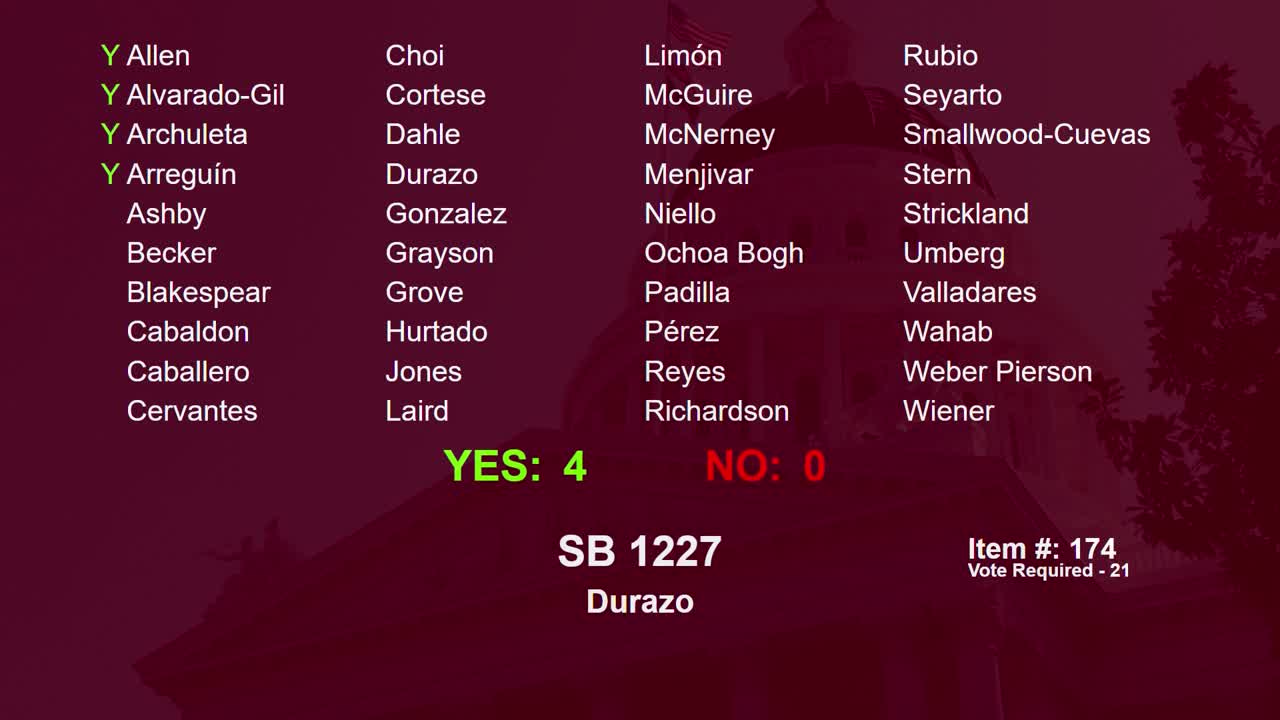 3MIN
Senate Floor
 16MIN
Senate Standing Committee on Labor, Public Employment and Retirement
Bill Author