SB 1025: Office of Food Security and Affordability.
- Session Year: 2025-2026
- House: Senate
- Latest Version Date: 2026-06-08
Current Status:
In Progress
(2026-08-13: August 13 hearing: Held in committee and under submission.)
Introduced
In Committee
Awaiting First Chamber Vote
Passed First Chamber
In Committee
Awaiting Second Chamber Vote
Passed Second Chamber
Enacted
Existing law declares that it is the established policy of the state that every human being has the right to access sufficient affordable and healthy food. Existing law establishes various food assistance programs, including, among others, the federal Supplemental Nutrition Assistance Program (SNAP), known in California as CalFresh, under which supplemental nutrition assistance benefits allocated to the state by the federal government are distributed to eligible individuals by each county.
This bill would establish the Office of Food Security and Affordability, an independent public entity not affiliated with another state agency or department, to be administered by a Director of Food Security and Affordability. The bill would require the director to be appointed by the Governor and confirmed by the Senate. The bill would require the office to collaborate with appropriate state agencies or departments to, among other things, coordinate statewide outreach for food insecurity programs and establish best practices for food banks and emergency food providers, as specified. The bill would create the Food Security and Affordability Fund for the receipt and deposit of moneys from federal, state, local, or private sources, and upon appropriation by the Legislature, would require the office to use those moneys to implement and administer these provisions. The bill would repeal these provisions on January 1, 2037.
Existing law declares that it is the established policy of the state that every human being has the right to access sufficient affordable and healthy food. Existing law establishes various food assistance programs, including, among others, the federal Supplemental Nutrition Assistance Program (SNAP), known in California as CalFresh, under which supplemental nutrition assistance benefits allocated to the state by the federal government are distributed to eligible individuals by each county.
This bill would establish the Office of Food Security and Affordability, an independent public entity not affiliated with another state agency or department, to be administered by a Director of Food Security and Affordability. The bill would require the director to be appointed by the Governor and confirmed by the Senate. The bill would require the office to collaborate with appropriate state agencies or departments to, among other things, coordinate statewide outreach for food insecurity programs, establish and maintain a 24-hour toll-free hunger hotline, programs and establish best practices for food banks and emergency food providers, as specified. The bill would create the Food Security and Affordability Fund for the receipt and deposit of moneys from federal, state, local, or private sources, and upon appropriation by the Legislature, would require the office to use those moneys to implement and administer these provisions. The bill would repeal these provisions on January 1, 2037.
Existing law declares that it is the established policy of the state that every human being has the right to access sufficient affordable and healthy food. Existing law establishes various food assistance programs, including, among others, the federal Supplemental Nutrition Assistance Program (SNAP), known in California as CalFresh, under which supplemental nutrition assistance benefits allocated to the state by the federal government are distributed to eligible individuals by each county.
This bill would establish the Office of Food Security and Affordability, an independent public entity not affiliated with another state agency, agency or department, to be administered by a Director of Food Security and Affordability. The bill would require the director to be appointed by the Governor and confirmed by the Senate. The bill would require the office to collaborate with appropriate state agencies or departments to, among other things, coordinate statewide outreach for food insecurity programs, establish and maintain a 24-hour toll-free hunger hotline, and establish best practices for food banks and emergency food providers, as specified. The bill would create the Food Security and Affordability Fund for the receipt and deposit of moneys from federal, state, local, or private sources, and upon appropriation by the Legislature, would authorize require the office to use those moneys to implement and administer these provisions. The bill would repeal these provisions on January 1, 2037.
Existing law declares that it is the established policy of the state that every human being has the right to access sufficient affordable and healthy food. Existing law establishes various food assistance programs, including, among others, the federal Supplemental Nutrition Assistance Program (SNAP), known in California as CalFresh, under which supplemental nutrition assistance benefits allocated to the state by the federal government are distributed to eligible individuals by each county.
This bill would establish the Office of Food Security and Affordability, an independent public entity not affiliated with another state agency, to be administered by a Director of Food Security and Affordability. The bill would require the director to be appointed by the Governor and confirmed by the Senate. The bill would require the office to collaborate with appropriate state agencies to, among other things, coordinate statewide outreach for food insecurity programs, establish and maintain a 24-hour toll-free hunger hotline, and establish best practices for food banks and emergency food providers, as specified. The bill would create the Food Security and Affordability Fund for the receipt and deposit of moneys from federal, state, local, or private sources, and upon appropriation by the Legislature, would authorize the office to use those moneys to implement and administer these provisions.
(a)The Legislature finds and declares all of the following:
(1)Food insecurity affects millions of Californians, including children, seniors, persons with disabilities, college students, and working families, and undermines health, educational attainment, and economic stability.
(2)Multiple state agencies and departments administer food and nutrition assistance programs, including, but not limited to, CalFresh, CalWORKs, the California Supplemental Food Program for Women, Infants, and Children, school nutrition programs, and emergency food assistance programs.
(3)Despite the availability of these programs, eligible Californians frequently experience barriers to access, including lack of awareness, administrative complexity, fragmented outreach, and inconsistent coordination among state and local entities.
(4)Establishing an independent Office of Food Security and Affordability will improve coordination across programs, increase enrollment, reduce food waste, strengthen emergency response, and promote equitable access to food assistance statewide.
(b)It is the intent of the Legislature to create an independent office to serve as a central coordinating entity for food security policy, outreach, research, and system alignment.
SEC. 2.Title 27 (commencing with Section 101000) is added to the Government Code, to read:27.Office of Food Security and Affordability101000.For purposes of this title, the following definitions apply:
(a)Director means the Director of Food Security and Affordability.
(b)Office means the Office of Food Security and Affordability.
101001.(a)There is in state government the Office of Food Security and Affordability, an independent public entity not affiliated with another state agency or department.
(b)The office shall be independent of any supervision, direction, or control by another state agency or department, or by any officer or employee thereof, in the performance of its duties.
101002.(a)The administrator and chief executive officer of the office is the Director of Food Security and Affordability.
(b)The director shall be a person qualified by training and experience to perform the duties of the office.
(c)The director shall be appointed by the Governor and confirmed by the Senate.
(d)The director shall devote full time to the duties of the position and shall receive a salary as determined by law.
(e)Any vacancy occurring in the position of director shall be filled in the same manner as the original appointment. If the director dies, resigns, becomes ineligible to serve for any reason, or is removed from office, the Governor may appoint an acting director who shall serve until the appointment and confirmation of a successor, but in no event longer than six months, and who shall exercise all powers and duties of the director during that period.
101003.The office shall collaborate with appropriate state agencies or departments to do all of the following:
(a)Coordinate statewide outreach for food insecurity programs, including developing new initiatives and outreach campaigns and identifying best practices to increase enrollment in state-administered food assistance programs.
(b)Support grant application processes related to food security for in-state providers and state agencies or departments by monitoring available grant opportunities, recommending grant applications, and assisting with the grant application process.
(c)Coordinate communication with and among food banks and emergency food providers.
(d)Establish best practices for food banks and emergency food providers to reduce food waste and increase the distribution of fresh produce and protein-rich foods.
(e)Cooperate with research organizations and institutions of higher education to monitor ongoing gap analyses identifying geographic or demographic areas underserved by existing food assistance programs.
(f)Work with state and community partners to develop and update a strategic plan to address identified gaps in food assistance coverage.
(g)Oversee Assist with the development and implementation of public-private partnerships to address food insecurity. This subdivision does not preclude agencies from participating in current, planned, or future public-private partnerships independently.
(h)Coordinate outreach about food assistance to address food insecurity during federally declared or state-declared emergencies.
(i)Coordinate Assist institutions of higher education, upon request, with the development and implementation of food insecurity programming and initiatives for institutions of higher education in collaboration with the federal Office of Postsecondary Education. initiatives.
(j)Develop new initiatives, establish outreach campaigns, and identify best practices to reach seniors, persons with disabilities, and other vulnerable populations.
(k)Coordinate outreach efforts for individuals who are newly unemployed and may be eligible for food assistance programs.
101004.The director shall do all of the following:
(a)Administer and organize the work of the office and establish any administrative subdivisions necessary for its efficient operation.
(b)Adopt rules and procedures and prescribe duties for the efficient conduct of the business and administration of the office.
(c)Delegate authority to subordinate officers or employees as deemed necessary.
(d)Appoint and remove staff, subject to applicable civil service laws, and, within available funding, appoint or contract with professional or technical personnel without regard to civil service requirements when necessary to carry out the purposes of this title.
(e)Maintain suitable headquarters and other offices as necessary.
(f)Solicit and accept grants or funds from federal, state, local, or private sources.
(g)Serve as a liaison between the office and relevant state agencies or departments, including, but not limited to, the State Department of Social Services, the State Department of Public Health, the State Department of Education, and the Department of Food and Agriculture.
(h)Perform any other functions necessary to carry out the purposes of this title.
101005.(a)The Food Security and Affordability Fund is hereby created in the State Treasury for the receipt and deposit of moneys from federal, state, local, or private sources for the purposes of implementing and administering this title.
(b)Upon appropriation by the Legislature, the office shall use moneys in the fund to implement and administer this title.
101006.Pursuant to the Administrative Procedure Act (Chapter 3.5 (commencing with Section 11340) of Part 1 of Division 3 of Title 2), the director and any collaborating state agency or department may adopt regulations necessary to implement this title.
101007.This title shall remain in effect only until January 1, 2037, and as of that date is repealed.
REVISIONS: HeadingLine 2.(a)The Legislature finds and declares all of the following:
(1)Food insecurity affects millions of Californians, including children, seniors, persons with disabilities, college students, and working families, and undermines health, educational attainment, and economic stability.
(2)Multiple state agencies and departments administer food and nutrition assistance programs, including, but not limited to, CalFresh, CalWORKs, the California Supplemental Food Program for Women, Infants, and Children, school nutrition programs, and emergency food assistance programs.
(3)Despite the availability of these programs, eligible Californians frequently experience barriers to access, including lack of awareness, administrative complexity, fragmented outreach, and inconsistent coordination among state and local entities.
(4)Establishing an independent Office of Food Security and Affordability will improve coordination across programs, increase enrollment, reduce food waste, strengthen emergency response, and promote equitable access to food assistance statewide.
(b)It is the intent of the Legislature to create an independent office to serve as a central coordinating entity for food security policy, outreach, research, and system alignment.
SEC. 2.Title 27 (commencing with Section 101000) is added to the Government Code, to read:27.Office of Food Security and Affordability101000.For purposes of this title, the following definitions apply:
(a)Director means the Director of Food Security and Affordability.
(b)Office means the Office of Food Security and Affordability.
101001.(a)There is in state government the Office of Food Security and Affordability, an independent public entity not affiliated with another state agency or department.
(b)The office shall be independent of any supervision, direction, or control by another state agency or department, or by any officer or employee thereof, in the performance of its duties.
101002.(a)The administrator and chief executive officer of the office is the Director of Food Security and Affordability.
(b)The director shall be a person qualified by training and experience to perform the duties of the office.
(c)The director shall be appointed by the Governor and confirmed by the Senate.
(d)The director shall devote full time to the duties of the position and shall receive a salary as determined by law.
(e)Any vacancy occurring in the position of director shall be filled in the same manner as the original appointment. If the director dies, resigns, becomes ineligible to serve for any reason, or is removed from office, the Governor may appoint an acting director who shall serve until the appointment and confirmation of a successor, but in no event longer than six months, and who shall exercise all powers and duties of the director during that period.
101003.The office shall collaborate with appropriate state agencies or departments to do all of the following:
(a)Coordinate statewide outreach for food insecurity programs, including developing new initiatives and outreach campaigns and identifying best practices to increase enrollment in state-administered food assistance programs.
(b)Establish and maintain a 24-hour toll-free hunger hotline to make information about food assistance programs widely available to the public. (c)(b)Support grant application processes related to food security for in-state providers and state agencies or departments by monitoring available grant opportunities, recommending grant applications, and assisting with the grant application process.
(d)(c)Coordinate communication with and among food banks and emergency food providers.
(e)(d)Establish best practices for food banks and emergency food providers to reduce food waste and increase the distribution of fresh produce and protein-rich foods.
(f)(e)Cooperate with research organizations and institutions of higher education to monitor ongoing gap analyses identifying geographic or demographic areas underserved by existing food assistance programs.
(g)(f)Work with state and community partners to develop and update a strategic plan to address identified gaps in food assistance coverage.
(h)(g)Oversee the development and implementation of public-private partnerships to address food insecurity.
(i)(h)Coordinate outreach about food assistance to address food insecurity during federally declared or state-declared emergencies.
(j)(i)Coordinate food insecurity programming and initiatives for institutions of higher education in collaboration with the federal Office of Postsecondary Education.
(k)(j)Develop new initiatives, establish outreach campaigns, and identify best practices to reach seniors, persons with disabilities, and other vulnerable populations.
(l)(k)Coordinate outreach efforts for individuals who are newly unemployed and may be eligible for food assistance programs.
101004.The director shall do all of the following:
(a)Administer and organize the work of the office and establish any administrative subdivisions necessary for its efficient operation.
(b)Adopt rules and procedures and prescribe duties for the efficient conduct of the business and administration of the office.
(c)Delegate authority to subordinate officers or employees as deemed necessary.
(d)Appoint and remove staff, subject to applicable civil service laws, and, within available funding, appoint or contract with professional or technical personnel without regard to civil service requirements when necessary to carry out the purposes of this title.
(e)Maintain suitable headquarters and other offices as necessary.
(f)Solicit and accept grants or funds from federal, state, local, or private sources.
(g)Serve as a liaison between the office and relevant state agencies or departments, including, but not limited to, the State Department of Social Services, the State Department of Public Health, the State Department of Education, and the Department of Food and Agriculture.
(h)Perform any other functions necessary to carry out the purposes of this title.
101005.(a)The Food Security and Affordability Fund is hereby created in the State Treasury for the receipt and deposit of moneys from federal, state, local, or private sources for the purposes of implementing and administering this title.
(b)Upon appropriation by the Legislature, the office shall use moneys in the fund to implement and administer this title.
101006.Pursuant to the Administrative Procedure Act (Chapter 3.5 (commencing with Section 11340) of Part 1 of Division 3 of Title 2), the director and any collaborating state agency or department may adopt regulations necessary to implement this title.
101007.This title shall remain in effect only until January 1, 2037, and as of that date is repealed.
(a)The Legislature finds and declares all of the following:
(1)Food insecurity affects millions of Californians, including children, seniors, persons with disabilities, college students, and working families, and undermines health, educational attainment, and economic stability.
(2)Multiple state agencies and departments administer food and nutrition assistance programs, including, but not limited to, CalFresh, CalWORKs, the California Supplemental Food Program for Women, Infants, and Children, school nutrition programs, and emergency food assistance programs.
(3)Despite the availability of these programs, eligible Californians frequently experience barriers to access, including lack of awareness, administrative complexity, fragmented outreach, and inconsistent coordination among state and local entities.
(4)Establishing an independent Office of Food Security and Affordability will improve coordination across programs, increase enrollment, reduce food waste, strengthen emergency response, and promote equitable access to food assistance statewide.
(b)It is the intent of the Legislature to create an independent office to serve as a central coordinating entity for food security policy, outreach, research, and system alignment.
SEC. 2.Title 27 (commencing with Section 101000) is added to the Government Code, to read:27.Office of Food Security and Affordability101000.For purposes of this title, the following definitions apply:
(a)Director means the Director of Food Security and Affordability.
(b)Office means the Office of Food Security and Affordability.
101001.(a)There is in state government the Office of Food Security and Affordability, an independent public entity not affiliated with another state agency. agency or department.
(b)The office shall be independent of any supervision, direction, or control by another state agency, agency or department, or by any officer or employee thereof, in the performance of its duties.
101002.(a)The administrator and chief executive officer of the office is the Director of Food Security and Affordability.
(b)The director shall be a person qualified by training and experience to perform the duties of the office.
(c)The director shall be appointed by the Governor and confirmed by the Senate.
(d)The director shall devote full time to the duties of the position and shall receive a salary as determined by law.
(e)Any vacancy occurring in the position of director shall be filled in the same manner as the original appointment. If the director dies, resigns, becomes ineligible to serve for any reason, or is removed from office, the Governor may appoint an acting director who shall serve until the appointment and confirmation of a successor, but in no event longer than six months, and who shall exercise all powers and duties of the director during that period.
101003.The office shall collaborate with appropriate state agencies or departments to do all of the following:
(a)Coordinate statewide outreach for food insecurity programs, including developing new initiatives and outreach campaigns and identifying best practices to increase enrollment in state-administered food assistance programs.
(b)Establish and maintain a 24-hour toll-free hunger hotline to make information about food assistance programs widely available to the public.
(c)Support grant application processes related to food security for in-state providers and state agencies or departments by monitoring available grant opportunities, recommending grant applications, and assisting with the grant application process.
(d)Coordinate communication with and among food banks and emergency food providers.
(e)Establish best practices for food banks and emergency food providers to reduce food waste and increase the distribution of fresh produce and protein-rich foods.
(f)Cooperate with research organizations and institutions of higher education to monitor ongoing gap analyses identifying geographic or demographic areas underserved by existing food assistance programs.
(g)Work with state and community partners to develop and update a strategic plan to address identified gaps in food assistance coverage.
(h)Oversee the development and implementation of public-private partnerships to address food insecurity.
(i)Coordinate outreach about food assistance to address food insecurity during federally declared or state-declared emergencies.
(j)Coordinate food insecurity programming and initiatives for institutions of higher education in collaboration with the federal Office of Postsecondary Education.
(k)Develop new initiatives, establish outreach campaigns, and identify best practices to reach seniors, persons with disabilities, and other vulnerable populations.
(l)Coordinate outreach efforts for individuals who are newly unemployed and may be eligible for food assistance programs.
101004.The director shall do all of the following:
(a)Administer and organize the work of the office and establish any administrative subdivisions necessary for its efficient operation.
(b)Adopt rules and procedures and prescribe duties for the efficient conduct of the business and administration of the office.
(c)Delegate authority to subordinate officers or employees as deemed necessary.
(d)Appoint and remove staff, subject to applicable civil service laws, and, within available funding, appoint or contract with professional or technical personnel without regard to civil service requirements when necessary to carry out the purposes of this title.
(e)Maintain suitable headquarters and other offices as necessary.
(f)Solicit and accept grants or funds from federal, state, local, or private sources.
(g)Serve as a liaison between the office and relevant state agencies, agencies or departments, including, but not limited to, the State Department of Social Services, the State Department of Public Health, the State Department of Education, and the Department of Food and Agriculture.
(h)Perform any other functions necessary to carry out the purposes of this title.
101005.(a)The Food Security and Affordability Fund is hereby created in the State Treasury for the receipt and deposit of moneys from federal, state, local, or private sources for the purposes of implementing and administering this title.
(b)Upon appropriation by the Legislature, the office may shall use moneys in the fund to implement and administer this title.
101006.Pursuant to the Administrative Procedure Act (Chapter 3.5 (commencing with Section 11340) of Part 1 of Division 3 of Title 2), the director and any collaborating state agency or department may adopt regulations necessary to implement this title.
101007.This title shall remain in effect only until January 1, 2037, and as of that date is repealed.
(a)The Legislature finds and declares all of the following:
(1)Food insecurity affects millions of Californians, including children, seniors, persons with disabilities, college students, and working families, and undermines health, educational attainment, and economic stability.
(2)Multiple state agencies administer food and nutrition assistance programs, including, but not limited to, CalFresh, CalWORKs, the California Supplemental Food Program for Women, Infants, and Children, school nutrition programs, and emergency food assistance programs.
(3)Despite the availability of these programs, eligible Californians frequently experience barriers to access, including lack of awareness, administrative complexity, fragmented outreach, and inconsistent coordination among state and local entities.
(4)Establishing an independent Office of Food Security and Affordability will improve coordination across programs, increase enrollment, reduce food waste, strengthen emergency response, and promote equitable access to food assistance statewide.
(b)It is the intent of the Legislature to create an independent office to serve as a central coordinating entity for food security policy, outreach, research, and system alignment.
SEC. 2.Title 27 (commencing with Section 101000) is added to the Government Code, to read:27.Office of Food Security and Affordability101000.For purposes of this title, the following definitions apply:
(a)Director means the Director of Food Security and Affordability.
(b)Office means the Office of Food Security and Affordability.
101001.(a)There is in state government the Office of Food Security and Affordability, an independent public entity not affiliated with another state agency.
(b)The office shall be independent of any supervision, direction, or control by another state agency, or by any officer or employee thereof, in the performance of its duties.
101002.(a)The administrator and chief executive officer of the office is the Director of Food Security and Affordability.
(b)The director shall be a person qualified by training and experience to perform the duties of the office.
(c)The director shall be appointed by the Governor and confirmed by the Senate.
(d)The director shall devote full time to the duties of the position and shall receive a salary as determined by law.
(e)Any vacancy occurring in the position of director shall be filled in the same manner as the original appointment. If the director dies, resigns, becomes ineligible to serve for any reason, or is removed from office, the Governor may appoint an acting director who shall serve until the appointment and confirmation of a successor, but in no event longer than six months, and who shall exercise all powers and duties of the director during that period.
101003.The office shall collaborate with appropriate state agencies to do all of the following:
(a)Coordinate statewide outreach for food insecurity programs, including developing new initiatives and outreach campaigns and identifying best practices to increase enrollment in state-administered food assistance programs.
(b)Establish and maintain a 24-hour toll-free hunger hotline to make information about food assistance programs widely available to the public.
(c)Support grant application processes related to food security for in-state providers and state agencies by monitoring available grant opportunities, recommending grant applications, and assisting with the grant application process.
(d)Coordinate communication with and among food banks and emergency food providers.
(e)Establish best practices for food banks and emergency food providers to reduce food waste and increase the distribution of fresh produce and protein-rich foods.
(f)Cooperate with research organizations and institutions of higher education to monitor ongoing gap analyses identifying geographic or demographic areas underserved by existing food assistance programs.
(g)Work with state and community partners to develop and update a strategic plan to address identified gaps in food assistance coverage.
(h)Oversee the development and implementation of public-private partnerships to address food insecurity.
(i)Coordinate assistance to address food insecurity during federally declared or state-declared emergencies.
(j)Coordinate food insecurity programming and initiatives for institutions of higher education in collaboration with the federal Office of Postsecondary Education.
(k)Develop new initiatives, establish outreach campaigns, and identify best practices to reach seniors, persons with disabilities, and other vulnerable populations.
(l)Coordinate outreach efforts for individuals who are newly unemployed and may be eligible for food assistance programs.
101004.The director shall do all of the following:
(a)Administer and organize the work of the office and establish any administrative subdivisions necessary for its efficient operation.
(b)Adopt rules and procedures and prescribe duties for the efficient conduct of the business and administration of the office.
(c)Delegate authority to subordinate officers or employees as deemed necessary.
(d)Appoint and remove staff, subject to applicable civil service laws, and, within available funding, appoint or contract with professional or technical personnel without regard to civil service requirements when necessary to carry out the purposes of this title.
(e)Maintain suitable headquarters and other offices as necessary.
(f)Solicit and accept grants or funds from federal, state, local, or private sources.
(g)Serve as a liaison between the office and relevant state agencies, including, but not limited to, the State Department of Social Services, the State Department of Public Health, the State Department of Education, and the Department of Food and Agriculture.
(h)Perform any other functions necessary to carry out the purposes of this title.
101005.(a)The Food Security and Affordability Fund is hereby created in the State Treasury for the receipt and deposit of moneys from federal, state, local, or private sources for the purposes of implementing and administering this title.
(b)Upon appropriation by the Legislature, the office may use moneys in the fund to implement and administer this title.
101006.Pursuant to the Administrative Procedure Act (Chapter 3.5 (commencing with Section 11340) of Part 1 of Division 3 of Title 2), the director and any collaborating state agency may adopt regulations necessary to implement this title.
|
Date
|
Status
|
|---|---|
| Aug 13, 2026 | August 13 hearing: Held in committee and under submission. |
| Aug 5, 2026 | August 5 set for first hearing. Placed on suspense file. |
| Jun 23, 2026 | From committee: Do pass and re-refer to Com. on APPR. (Ayes 8. Noes 0.) (June 23). Re-referred to Com. on APPR. |
| Jun 23, 2026 | Coauthors revised. |
| Jun 17, 2026 | From committee: Do pass and re-refer to Com. on E.D., G., & H.I. (Ayes 6. Noes 1.) (June 16). Re-referred to Com. on E.D., G., & H.I. |
| Jun 17, 2026 | Coauthors revised. |
| Jun 8, 2026 | From committee with author's amendments. Read second time and amended. Re-referred to Com. on HUM. S. |
| Jun 4, 2026 | Referred to Coms. on HUM. S. and E.D., G., & H.I. |
| May 28, 2026 | In Assembly. Read first time. Held at Desk. |
| May 28, 2026 | Read third time. Passed. (Ayes 37. Noes 0. Page 4523.) Ordered to the Assembly. |
| May 28, 2026 | Read third time. Passed. (Ayes 37. Noes 0.) Ordered to the Assembly. |
| May 18, 2026 | Read second time. Ordered to third reading. |
| May 14, 2026 | From committee: Do pass as amended. (Ayes 7. Noes 0. Page 4261.) (May 14). |
| May 14, 2026 | Read second time and amended. Ordered to second reading. |
| May 14, 2026 | From committee: Do pass as amended. (Ayes 7. Noes 0.) (May 14). |
| May 8, 2026 | Set for hearing May 14. |
| Apr 27, 2026 | April 27 hearing: Placed on APPR. suspense file. |
| Apr 17, 2026 | Set for hearing April 27. |
| Apr 14, 2026 | From committee: Do pass and re-refer to Com. on APPR. (Ayes 13. Noes 0. Page 3865.) (April 14). Re-referred to Com. on APPR. |
| Apr 14, 2026 | From committee: Do pass and re-refer to Com. on APPR. (Ayes 13. Noes 0.) (April 14). Re-referred to Com. on APPR. |
| Apr 8, 2026 | Set for hearing April 14. |
| Apr 7, 2026 | From committee: Do pass and re-refer to Com. on G.O. (Ayes 4. Noes 0. Page 3740.) (April 6). Re-referred to Com. on G.O. |
| Apr 7, 2026 | From committee: Do pass and re-refer to Com. on G.O. (Ayes 4. Noes 0.) (April 6). Re-referred to Com. on G.O. |
| Mar 26, 2026 | From committee with author's amendments. Read second time and amended. Re-referred to Com. on HUMAN S. |
| Mar 17, 2026 | Set for hearing April 6. |
| Feb 18, 2026 | Referred to Coms. on HUMAN S. and G.O. |
| Feb 11, 2026 | From printer. May be acted upon on or after March 13. |
| Feb 10, 2026 | Introduced. Read first time. To Com. on RLS. for assignment. To print. |
|
Date
|
Description
|
Location
|
Votes
|
|
|---|---|---|---|---|
| Jun 16, 2026 | Do pass and be re-referred to the Committee on [Economic Development, Growth, and Household Impact] | Assembly Standing Committee on Human Services |
Passed |
|
| May 28, 2026 | Senate 3rd Reading SB1025 Hurtado | Senate Floor |
Passed |
|
| May 14, 2026 | Do pass as amended | Senate Standing Committee on Appropriations |
Passed |
|
| Apr 27, 2026 | Placed on suspense file | Senate Standing Committee on Appropriations |
Passed |
|
| Apr 14, 2026 | Do pass, but first be re-referred to the Committee on [Appropriations] | Senate Standing Committee on Governmental Organization |
Passed |
|
| Apr 6, 2026 | Do pass, but first be re-referred to the Committee on [Governmental Organization] | Senate Standing Committee on Human Services |
Passed |
This list shows positions taken on this bill by organizations on the date displayed, which is linked to the original source.
Positions by individuals are not included.
|
Organization
|
Position
|
Date
|
|---|---|---|
| American Academy Of Pediatrics, California | ** Support | |
| Bakersfield College | ** Support | |
| California Retired Teachers Association | ** Support | |
| Community Action Partnership of Kern | ** Support | |
| Community Action Partnership of Kern Food Bank | ** Support | |
| County Welfare Directors Association of California | ** Support | |
| Foodlink for Tulare County | ** Support | |
| Kern County Food Policy Council | ** Support | |
| Little Hoover Commission | ** Support | |
| Mom's Meals | ** Support | |
| Purfoods, LLC A/k/a Mom's Meals | ** Support | |
| The Hope Center | ** Support | |
| University of California | ** Support | |
| Wasco Recreation and Parks District | ** Support |
Date of Hearing: August 5, 2026
ASSEMBLY COMMITTEE ON APPROPRIATIONS
Buffy Wicks, Chair
SBPCA Bill Id:SB 1025
Author:(Hurtado) – As Amended Ver:June 8, 2026
Policy Committee: | Human Services | Vote: | 6 - 1 |
Economic Development, Growth, and Household Impact | 8 - 0 | ||
|
|
Urgency: No State Mandated Local Program: No Reimbursable: No
SUMMARY:
This bill establishes the Office of Food Security and Affordability (Office) as an independent state entity to strengthen California's efforts to combat food insecurity.
Specifically, this bill:
- Establishes, until January 1, 2037, the Office as an independent public entity not affiliated with another state agency or department.
- Establishes the director of the Office and requires the director to be qualified by training and experience to perform the duties of the Office.
- Specifies the duties of the director, including, among others, to solicit and accept grants or funds from federal, state, local, or private sources, and serve as a liaison between the Office and relevant state agencies, including but not limited to the California Department of Social Services (CDSS), the California Department of Public Health (CDPH), the California Department of Education (CDE), and the California Department of Food and Agriculture (CDFA).
- Requires the Office to collaborate with appropriate state agencies or departments to:
- Coordinate statewide outreach for food insecurity programs including developing new initiatives.
- Support application processes for food security grants for in-state providers and state agencies or departments, as specified.
- Coordinate communication among food banks and emergency food providers.
- Establish best practices for food banks and emergency food providers to reduce food waste and increase the distribution of fresh produce and protein-rich foods.
- Cooperate with research organizations and institutions of higher education to maintain ongoing gap analyses of areas underserved by food assistance programs.
- Work with state and community partners to develop and update a strategic plan based on gap analyses.
- Assist with the development and implementation of public- private partnerships.
- Coordinate outreach about assistance to address food insecurity during federally or state- declared emergencies.
- Assist institutions of higher education, upon request, with the development and implementation of food insecurity programming and initiatives.
- Develop new initiatives, establish outreach campaigns, and identify best practices to reach seniors, persons with disabilities, and other vulnerable populations.
- Coordinate outreach efforts to individuals who are newly unemployed and may be eligible for food assistance programs.
- Creates the Food Security and Affordability Fund in the State Treasury for the receipt and deposit of moneys from federal, state, local, or private sources.
FISCAL EFFECT:
CDSS estimates General Fund costs of $864,000 in the first year and $844,000 annually until January 1, 2037, for four full-time positions to establish the new Office and implement the requirements of the bill.
COMMENTS:
- Purpose. According to the author:
Despite significant state investments in programs like CalFresh, WIC, CalWORKs, school nutrition, and emergency food assistance, fragmented administration across multiple agencies has led to uneven outreach, enrollment barriers, and inconsistent coordination. Far too many eligible seniors, students, people with disabilities, and working families continue to fall through the cracks. [This bill] ensures California takes a comprehensive, equity-centered approach to reducing hunger, strengthening emergency response, and promoting long-term food security.
- Background. California operates various food assistance programs through multiple state departments, primarily CDSS and CDE, but also through CDPH, CDFA, and the California Department of Aging. Programs include, among many others, CalFresh, the California Food Assistance Program, the Emergency Food Assistance Program, the National School Lunch Program, the Summer Food Service Program, SUN Bucks, the Women, Infants, and Children (WIC) Program, and older adult nutrition programs.
The author and advocates assert this fragmentation creates challenges for effective coordination and oversight. The Little Hoover Commission in its 2024 report on food insecurity recommended the state establish a Food Security Council to coordinate and oversee the state’s efforts in this area.
This bill requires the director of the Office created by this bill to serve as liaison to all food-involved state agencies to better coordinate food assistance outreach and delivery and to promote long-term food security in the state.
- Prior Legislation. AB 1967 (Jackson), of the 2023-24 Legislative Session, would have created the position of Food Insecurity Officer within CDSS to coordinate efforts among relevant state agencies to address food insecurity. AB 1967 was held on the Senate Appropriations Committee’s suspense file.
Analysis Prepared by: Jennifer Swenson / APPR. / (916) 319-2081
Date of Hearing:
ASSEMBLY COMMITTEE ON ECONOMIC DEVELOPMENT, GROWTH, AND HOUSEHOLD IMPACT
José Luis Solache, Jr., Chair
SBPCA Bill Id:SB 1025
Author:(Hurtado) – As Amended Ver:June 8, 2026
SENATE VOTE: 37-0
SUBJECT: Office of Food Security and Affordability
SUMMARY: This bill establishes the Office of Food Security and Affordability as an independent state entity to strengthen California's efforts to combat food insecurity. The office would coordinate statewide food assistance programs, including CalFresh, collaborate with state agencies to improve outreach and emergency food services, administer a dedicated Food Security and Affordability Fund, and operate until its repeal on January 1, 2037.
Specifically, this bill:
- Declares that it is the established policy of the state that every human being has the right to access sufficient affordable and healthy food. Existing law establishes various food assistance programs, including, among others, the federal Supplemental Nutrition Assistance Program (SNAP), known in California as CalFresh, under which supplemental nutrition assistance benefits allocated to the state by the federal government are distributed to eligible individuals by each county.
EXISTING LAW:
- Establishes various food assistance programs, including, among others, the federal Supplemental Nutrition Assistance Program (SNAP), known in California as CalFresh, under which supplemental nutrition assistance benefits allocated to the state by the federal government are distributed to eligible individuals by each county.
- Establishes the Office of Food Security and Affordability, an independent public entity not affiliated with another state agency or department, to be administered by a Director of Food Security and Affordability. This bill would require the director to be appointed by the Governor and confirmed by the Senate.
- Requires the office to collaborate with appropriate state agencies or departments to, among other things, coordinate statewide outreach for food insecurity programs and establish best practices for food banks and emergency food providers, as specified.
- Create the Food Security and Affordability Fund for the receipt and deposit of moneys from federal, state, local, or private sources, and upon appropriation by the Legislature, would require the office to use those moneys to implement and administer these provisions.
- Repeal these provisions on January 1, 2037.
FISCAL EFFECT: According to the author’s office, the bill would result in unknown General Fund costs, potentially in the hundreds of thousands of dollars annually through January 1, 2037, to establish and operate the Office of Food Security and Affordability. Recent amendments removing the proposed 24-hour hunger hotline are expected to reduce implementation costs. The bill also creates the Food Security and Affordability Fund to receive federal, state, local, and private funding, which, upon legislative appropriation, would be used to implement and administer the office’s programs.
COMMENTS: SB 1025 seeks to improve food security by creating a centralized state office responsible for coordinating food assistance programs, outreach efforts, research, and policy development across multiple agencies. The bill is premised on the view that California's food assistance system is fragmented and that greater coordination could improve access to available benefits and services for households experiencing food insecurity. The measure raises several policy considerations for the Committee. Centralized coordination may help reduce administrative barriers, improve awareness of existing programs, strengthen emergency food response efforts, and increase participation among eligible households. Supporters also note that previous reviews of California's food assistance system have identified coordination challenges and recommended a more centralized approach to statewide food security policy.
Author’s Statement: According to the author,” California is the agricultural powerhouse of the nation, producing nearly half of the country’s fruits and vegetables. Yet more than 1 in 5 Californians, approximately 8.8 million people, struggle with food insecurity. Twenty-two percent of households and 27 percent of households with children lack consistent access to enough food for a healthy, active life, with even higher rates among Hispanic/Latine and Black families. Despite significant state investments in programs like CalFresh, WIC, CalWORKs, school nutrition, and emergency food assistance, fragmented administration across multiple agencies has led to uneven outreach, enrollment barriers, and inconsistent coordination. Far too many eligible seniors, students, people with disabilities, and working families continue to fall through the cracks.
Food insecurity is more than a moral issue. It is as issue interconnected with public health, education, and economic stability of Californians across that state. Rising food costs and a $2.6 billion annual food budget shortfall highlight the urgency of a coordinated statewide strategy. SB 1025 ensures California takes a comprehensive, equity-centered approach to reducing hunger, strengthening emergency response, and promoting long-term food security. No Californian should have to worry about where their next meal will come from, and this bill moves us closer to making that vision a reality.”
REGISTERED SUPPORT / OPPOSITION:
Support
American Academy of Pediatrics, California
Bakersfield College
California Retired Teachers Association
Community Action Partnership of Kern
County Welfare Directors Association of California
Foodlink for Tulare County
Kern County Food Policy Council
Little Hoover Commission
Purfoods, LLC A/k/a Mom's Meals
The Hope Center
University of California
Wasco Recreation and Parks District
Opposition
None on file.
Analysis Prepared by: Carla Castilla / E.D., G., & H.I. / (916) 319-2090
Date of Hearing: June 23, 2026
ASSEMBLY COMMITTEE ON ECONOMIC DEVELOPMENT, GROWTH, AND HOUSEHOLD IMPACT
José Luis Solache, Jr., Chair
SBPCA Bill Id:SB 1025
Author:(Hurtado) – As Amended Ver:June 8, 2026
SENATE VOTE: 37-0
SUBJECT: Office of Food Security and Affordability
SUMMARY: This bill establishes the Office of Food Security and Affordability as an independent state entity to strengthen California's efforts to combat food insecurity. The office would coordinate statewide food assistance programs, including CalFresh, collaborate with state agencies to improve outreach and emergency food services, administer a dedicated Food Security and Affordability Fund, and operate until its repeal on January 1, 2037.
Specifically, this bill:
- Declares that it is the established policy of the state that every human being has the right to access sufficient affordable and healthy food. Existing law establishes various food assistance programs, including, among others, the federal Supplemental Nutrition Assistance Program (SNAP), known in California as CalFresh, under which supplemental nutrition assistance benefits allocated to the state by the federal government are distributed to eligible individuals by each county.
EXISTING LAW:
- Establishes various food assistance programs, including, among others, the federal Supplemental Nutrition Assistance Program (SNAP), known in California as CalFresh, under which supplemental nutrition assistance benefits allocated to the state by the federal government are distributed to eligible individuals by each county.
- Establishes the Office of Food Security and Affordability, an independent public entity not affiliated with another state agency or department, to be administered by a Director of Food Security and Affordability. This bill would require the director to be appointed by the Governor and confirmed by the Senate.
- Requires the office to collaborate with appropriate state agencies or departments to, among other things, coordinate statewide outreach for food insecurity programs and establish best practices for food banks and emergency food providers, as specified.
- Create the Food Security and Affordability Fund for the receipt and deposit of moneys from federal, state, local, or private sources, and upon appropriation by the Legislature, would require the office to use those moneys to implement and administer these provisions.
- Repeal these provisions on January 1, 2037.
FISCAL EFFECT: According to the author’s office, the bill would result in unknown General Fund costs, potentially in the hundreds of thousands of dollars annually through January 1, 2037, to establish and operate the Office of Food Security and Affordability. Recent amendments removing the proposed 24-hour hunger hotline are expected to reduce implementation costs. The bill also creates the Food Security and Affordability Fund to receive federal, state, local, and private funding, which, upon legislative appropriation, would be used to implement and administer the office’s programs.
COMMENTS: SB 1025 seeks to improve food security by creating a centralized state office responsible for coordinating food assistance programs, outreach efforts, research, and policy development across multiple agencies. The bill is premised on the view that California's food assistance system is fragmented and that greater coordination could improve access to available benefits and services for households experiencing food insecurity. The measure raises several policy considerations for the Committee. Centralized coordination may help reduce administrative barriers, improve awareness of existing programs, strengthen emergency food response efforts, and increase participation among eligible households. Supporters also note that previous reviews of California's food assistance system have identified coordination challenges and recommended a more centralized approach to statewide food security policy.
Author’s Statement: According to the author,” California is the agricultural powerhouse of the nation, producing nearly half of the country’s fruits and vegetables. Yet more than 1 in 5 Californians, approximately 8.8 million people, struggle with food insecurity. Twenty-two percent of households and 27 percent of households with children lack consistent access to enough food for a healthy, active life, with even higher rates among Hispanic/Latine and Black families. Despite significant state investments in programs like CalFresh, WIC, CalWORKs, school nutrition, and emergency food assistance, fragmented administration across multiple agencies has led to uneven outreach, enrollment barriers, and inconsistent coordination. Far too many eligible seniors, students, people with disabilities, and working families continue to fall through the cracks.
Food insecurity is more than a moral issue. It is as issue interconnected with public health, education, and economic stability of Californians across that state. Rising food costs and a $2.6 billion annual food budget shortfall highlight the urgency of a coordinated statewide strategy. SB 1025 ensures California takes a comprehensive, equity-centered approach to reducing hunger, strengthening emergency response, and promoting long-term food security. No Californian should have to worry about where their next meal will come from, and this bill moves us closer to making that vision a reality.”
REGISTERED SUPPORT / OPPOSITION:
Support
Opposition
None on file.
Analysis Prepared by: Carla Castilla / E.D., G., & H.I. / (916) 319-2090
Date of Hearing: June 16, 2026
ASSEMBLY COMMITTEE ON HUMAN SERVICES
Alex Lee, Chair
SBPCA Bill Id:SB 1025
Author:(Hurtado) – As Amended Ver:June 8, 2026
SENATE VOTE: 37-0
SUBJECT: Office of Food Security and Affordability
SUMMARY: Establishes the Office of Food Security and Affordability (Office) to develop programs and services that promote food security in California and creates a Food Security and Affordability Fund. Specifically, this bill:
- Creates the Office and stipulates that the Office will be an independent public entity not affiliated with another state agency, and cannot be under the supervision, direction, or control of another state agency or their officers.
- Requires the Office to collaborate with appropriate departments to:
- Coordinate statewide outreach for food insecurity programs including developing new initiatives.
- Support application processes for food security grants for in-state providers and state agencies.
- Coordinate communication among food banks and emergency food providers.
- Establish best practices for food banks and emergency food providers.
- Cooperate with research organizations and institutions of higher education to maintain ongoing gap analyses of areas underserved by food assistance programs.
- Work with state and community partners to develop and update a strategic plan based on gap analyses.
- Oversee the development and implementation of public- private partnerships.
- Coordinate outreach about assistance to address food insecurity during federally- or state- declared emergencies.
- Coordinate food insecurity programming for institutions of higher learning in collaboration with the federal Office of Postsecondary Education.
- Develop outreach campaigns to seniors, persons with disabilities, and other vulnerable populations.
- Coordinate outreach efforts to individuals who are newly unemployed and may be eligible for food assistance programs.
- Establishes that the Director of the Office is the administrator and chief executive officer of the Office, requires the Director to be qualified by training and experience to perform the duties of the Office, work for the Office full-time, and receive a salary determined by law.
- Requires the Director to be appointed by the Governor and confirmed by the California State Senate, and requires, upon a vacancy of the Director position, a new Director be appointed in the same manner as the original appointment. Allows the Governor to appoint an acting director for no longer than six months.
- Requires the Director to do the following:
- Administer and organize the work of the Office for efficient operation.
- Adopt rules and procedures for the business and administration of the Office.
- Delegate authority to subordinate officers as necessary.
- Appoint and remove staff, subject to applicable civil service laws, as necessary.
- Maintain a headquarters and other offices as needed.
- Solicit and accept grants or funds from federal, state, local, or private sources.
- Serve as a liaison between the Office and relevant state agencies including but not limited to the California Department of Social Services (CDSS), the California Department of Public Health (CDPH), the California Department of Education (CDE), and the California Department of Food and Agriculture (CDFA).
- Perform any other functions necessary to carry out the purpose of this title.
- Creates the Food Security and Affordability Fund in the State Treasury for depositing money to implement this bill.
- Requires the Office to use money from this fund, upon appropriation by the Legislature.
- Sunsets this section on January 1, 2037.
EXISTING LAW:
State law:
- Declares that every human being has the right to access sufficient affordable and healthy food. (Welfare and Institutions Code (WIC) § 18700(a)(1))
- Defines food insecurity as the occasional or constant lack of access to the food one needs to live a healthy life and the uncertainty of whether one can acquire enough food to meet the needs of themselves or their household due to lack money or other resources. (WIC § 18700(a)(2))
- Requires all relevant state agencies, including but not limited to, CDSS, CDFA, the California Department of Health Care Services, CDE, and CDPH, to consider the right to affordable and healthy food when creating policies or regulation related to the distribution of affordable food. (WIC § 18700(b))
- Establishes CalFresh as California’s implementation of the federal Supplemental Nutrition Assistance Program (SNAP) program. (WIC § 18900)
- Establishes CDSS as the lead agency to partner with CDE to maximize participation in the federal Summer Electronic Benefit Transfer for Children Program (also known as SUNBucks). (WIC § 18901.57)
- Requires CDSS, on or before July 1, 2026, to develop a methodology for estimating the CalFresh participation rate and identifying characteristics of Californians who are eligible for, but not receiving, CalFresh benefits, in consultation with specified stakeholders. Requires the department to use that data to develop informed and targeted outreach strategies and to maximize federal funding for CalFresh outreach to reach eligible Californians. (WIC § 18901.58)
- Allows CDSS to identify data-sharing opportunities with other state and local public entities, and any other unit of state government, for the purposes of improving the administration of CalFresh, increasing CalFresh participation, measuring the impact of CalFresh, and increasing access to critical public health and poverty-alleviating services and other services and benefits available to low-income individuals. Requires CDSS to designate an executive level employee to implement this statute. (WIC § 18901.59)
- Requires county human services agencies to compile a list of emergency food providers in their area. Allows a county human services agency to elect to refer a CalFresh applicant or recipient to the 2-1-1 dial code to access information on emergency food providers and supplemental food assistance providers, including child nutrition programs, in lieu of providing a list, if it is deemed appropriate. (WIC § 18911(e))
- Requires CDSS to establish the California Food Assistance Program which provides food assistance to certain noncitizens of the United States (U.S.), if the person’s immigration status meets the eligibility criteria of SNAP, but the person is not eligible for SNAP benefits solely due to the person’s immigration status under Public Law 104-193. (WIC § 18930)
- Establishes the State Emergency Food Assistance Program, administered by CDSS, to provide food and funding for emergency food to food banks that are established pursuant to the federal Emergency Food Assistance Program and whose ongoing primary function is to facilitate the distribution of food to low-income households. (WIC § 18995)
- Requires the California Commission on Aging, with the approval of the Secretary of California Health and Human Services, to develop a state plan that includes projects that, five or more days per week, provide at least one meal per day to older Californians, either served in an in-person setting, or provided for to-go pickup to be consumed in a virtual congregate setting. (WIC § 18326)
- Requires CDPH to operate a statewide program to be known as the California Special Supplemental Nutrition Program for Women, Infants, and Children (WIC Program) to provide nutritional food supplements to low-income pregnant women, low-income postpartum and lactating women, and low-income infants and children under five years of age, who have been determined to be at nutritional risk by a health professional. (Health and Safety Code § 123280)
- Requires a school district, county superintendent of schools, or charter school maintaining kindergarten or any grades 1 to 12, to make available a nutritionally adequate breakfast and a nutritionally adequate lunch, free of charge, and with adequate time to eat during each school day to any pupil who requests a meal without consideration of the pupil’s eligibility for a federally funded free- or reduced-price meal. (Education Code (ED) § 49501.5)
- Requires CDE to work with CDSS to maximize participation in the SUNBucks program established by federal law. (ED § 49506)
- Requires CDFA, with support from CDSS, to establish a grant program designed to expand the use of the electronic benefit transfer (also known as EBT) acceptance systems at California certified farmers’ markets or tribe-operated farmer’s markets on Indian reservations. (Food and Agricultural Code § 49020)
Federal law:
- Establishes the SNAP program to promote the general welfare and to safeguard the health and wellbeing of the nation’s population by raising the levels of nutrition among low-income households. (7 United States Code 2011 et seq.)
FISCAL EFFECT: According to the Senate Appropriations Committee, “Unknown General Fund costs, potentially hundreds of thousands annually (until January 1, 2037), to establish the new office and implement the duties.”
COMMENTS:
Background: Food Insecurity in California. The United States Department of Agriculture (USDA) defines “food insecurity” as the occasional or constant lack of access to the food that one needs in order to live a healthy, active life. It is considered a household-level economic and social condition while hunger is the individual-level physiological condition that may result from food insecurity. While California declared food as a human right in 2023 and produces nearly half of the nation’s fruits and vegetables, about 8 million Californians currently struggle with food insecurity, representing 20.3% of the state’s population. Factors contributing to food insecurity include economic disparities, high living costs, limited access to affordable nutrition options, and systemic barriers such as racism and discrimination.
Economic factors play a significant role in driving food insecurity, particularly among low-income households. Many Californians struggle to afford basic necessities like housing, healthcare, and transportation, leaving little room in their budgets for nutritious food. High living costs, especially in urban areas like Los Angeles and San Francisco, further exacerbate this challenge, pushing individuals and families into situations where they must choose between paying for rent or putting food on the table.
Limited access to affordable and nutritious food options, commonly referred to as food deserts, is another critical aspect of food insecurity in California. In rural areas, residents may have to travel long distances to reach grocery stores or farmers’ markets, while in urban neighborhoods, access to fresh produce and healthy food choices may be scarce. Transportation barriers, inadequate public transportation, and the prevalence of fast food restaurants and convenience stores offering unhealthy, processed foods compound the lack of access to healthy food. The USDA defines “limited access” as living more than a mile from a large grocery store for urban communities and more than 10 miles for rural areas. In 2016, the California Endowment’s FreshWorks Food Access Report stated that “nearly one million Californians, 45% of whom are low-income, live without access to nearby supermarkets or large grocery stores.”
Moreover, systemic issues such as racism and discrimination disproportionately impact marginalized communities, including Black, Latinx, and Indigenous populations, immigrants, and individuals with disabilities, exacerbating their vulnerability to food insecurity. According to the same California Association of Food Banks study, 35% of Black households and 31% of Latino households reported food insecurity in September 2024.[1] According to the Public Policy Institute of California, “Black and Latino households (18%) and households with children (17%) are more likely to experience food insecurity compared to white and Asian American households (7%) and households without children (11%).”[2]
Beyond mere hunger, a lack of adequate food can have long-term physical and mental health consequences, particularly for children. Chronic diseases such as diabetes, obesity, and cardiovascular conditions are more prevalent among food-insecure individuals due to poor nutrition and limited access to healthcare. Children growing up in food-insecure households are at risk of developmental delays, academic struggles, and long-term health consequences, perpetuating intergenerational cycles of poverty and food insecurity.
Food Assistance Programs in California. California's food assistance system is spread across several state departments, with the largest role played by CDSS. There is a wide array of programs with differing eligibility requirements as well as different access points. This can be challenging to coordinate outreach and ensure eligible people are enrolled. The following is a list of major statewide food assistance programs and the state agency responsible for administration:
Program | What it Provides | Responsible Department |
CalFresh (SNAP) | Monthly EBT benefits for groceries | CDSS (state supervision; county welfare departments administer locally) |
California Food Assistance Program (CFAP) | Food benefits for certain immigrants who do not qualify for federal SNAP | CDSS |
Disaster CalFresh | Temporary food assistance during federally approved disasters | CDSS |
Restaurant Meals Program | Allows eligible EBT recipients to buy prepared meals at participating restaurants | CDSS with county administration |
Emergency Food Assistance Program | Food banks, food pantries, and emergency food distribution | CDSS |
Commodity Supplemental Food Program | Monthly food packages for low-income seniors | CDSS |
Women, Infants, and Children Program | Nutrition benefits, healthy foods, breastfeeding support, and nutrition education | CDPH |
School Breakfast Program | Free or reduced-price school breakfasts | CDE |
National School Lunch Program | Free or reduced-price school lunches | CDE |
Summer Food Service Program | Free summer meals for children | CDE |
Seamless Summer Option | Alternative summer meal program for children | CDE |
Child and Adult Care Food Program | Meals and snacks in child care centers, family day cares, and adult day care facilities | CDSS |
SUN Bucks | Summer grocery benefits for eligible school-age children | Jointly administered by CDSS and CDE |
CalFresh Healthy Living | Nutrition education and healthy lifestyle programs | CDPH and CDSS partnership |
Senior Farmers' Market Nutrition Program | Coupons for seniors to buy produce at farmers' markets | CDFA |
Farmers' Market Nutrition Program | Produce vouchers for WIC participants | CDPH through WIC |
This bill would require the Director of the Office to serve as the liaison with agencies listed in the table above.
Other States. Four other states have an Office or a Council dedicated to statewide food security or food policy. In New Jersey, the Office of the Food Security Advocate is located within the Governor's Office and supported by the state Department of Agriculture. The Food Security Advocate focuses on four main areas: “supporting state agencies in conducting food security work, supporting the advancement of policy that is aligned with ongoing food security work, collaborating with the philanthropic sector, and supporting and participating in community-driven food security work.”[3]
In Nevada, the Office of Food Security is part of the state's Department of Health and Human Services and is responsible for monitoring the Funds for Healthy Nevada Hunger Funds used to support initiatives and programs aimed to reduce hunger throughout Nevada communities and promote public health and improve health services for all Nevadans. In addition, it provides administrative support to the Governor’s Council on Food Security.
In Alaska, the Office of Food Security was created within the Governor's Office in 2022 to coordinate statewide food security and food production efforts. The Office of Food Security has three stated objectives:
- “Identify resources and set policies to build a strong, sustainable, and healthy food system in the state to ensure food security for all Alaskans;
- “Enhance access to, availability, affordability, and quality of food for all Alaskans; and
- “Identify or expand economic opportunities for the state in food production, food processing, and food distribution businesses.”[4]
In Pennsylvania, the Pennsylvania Food Policy Council is an Interagency council involving multiple state agencies to improve food security and food systems. The Pennsylvania Food Policy Council was established to:
- “Evaluate issues facing Pennsylvania’s food system including, but not limited to, developing and implementing strategies to improve food security and nutrition, and reduce food waste.
- “Facilitate coordination of interagency efforts designated to reduce hunger and improve nutrition for Pennsylvania residents over their entire lifespan.
- “Facilitate the organization of private and public sector efforts to improve the Commonwealth’s response to challenges in the food system and support food sovereignty.” [5]
Author’s Statement: According to the Author, “California is the agricultural powerhouse of the nation, producing nearly half of the country’s fruits and vegetables. Yet more than 1 in 5 Californians, approximately 8.8 million people, struggle with food insecurity. Twenty-two percent of households and 27 percent of households with children lack consistent access to enough food for a healthy, active life, with even higher rates among Hispanic/Latine and Black families. Despite significant state investments in programs like CalFresh, WIC, CalWORKs, school nutrition, and emergency food assistance, fragmented administration across multiple agencies has led to uneven outreach, enrollment barriers, and inconsistent coordination. Far too many eligible seniors, students, people with disabilities, and working families continue to fall through the cracks.
“Food insecurity is more than a moral issue. It is as issue interconnected with public health, education, and economic stability of Californians across that state. Rising food costs and a $2.6 billion annual food budget shortfall highlight the urgency of a coordinated statewide strategy. [This bill] ensures California takes a comprehensive, equity-centered approach to reducing hunger, strengthening emergency response, and promoting long-term food security. No Californian should have to worry about where their next meal will come from, and this bill moves us closer to making that vision a reality.”
Equity Implications: Hunger and lack of access to healthy foods disproportionately impact vulnerable communities, particularly among low-income individuals, pregnant women, households with children, Black and Latinx populations, immigrants, people who are disabled, and the elderly often face greater food hardship.
According to a 2021 analysis by the Center on Budget and Policy Priorities of the Census Bureau's Household Pulse Survey, 18 million adults in the U.S. reported that their households didn't have enough to eat sometimes or often in the past week. In California, alarming rates of food insecurity were found among minority communities, with 40% of Black households and 30% of Latinx households reporting food insecurity. Moreover, a study of four tribes across Northern California revealed that a staggering 92% of Native American households suffer from food insecurity.
Creating an office for the purposes of collaborating with state agencies responsible for food assistance programs may reduce barriers to accessing these programs, create efficiencies and help reduce redundancies in outreach and eligibility requirements.
Double referral: Should this bill pass out of this committee, it will be referred to the Assembly Committee on Economic Development, Growth, and Household Impact.
RELATED AND PRIOR LEGISLATION:
SB 444 (Hurtado) of 2025, would have declared that the established policy of the state is that every human being has a right to locally grown and raised, affordable, and healthy food. It would have also required specified state agencies to report to the Legislature by January 1, 2027, at a minimum, their progress on revising, adopting, or establishing those pertinent policies, regulations, and grant criteria pertinent to distributing sufficient locally grown and raised, affordable and healthy food. SB 444 was held on the Assembly Appropriations suspense file.
AB 518 (Wicks), Chapter 910, Statutes of 2024, required CDSS, in consultation with various stakeholders, on or before July 1, 2025, to develop a methodology for estimating the CalFresh participation rate and identifying characteristics of Californians who are eligible for, but not receiving, CalFresh benefits. It also requires targeted outreach to increase enrollment based on that data.
AB 1961 (Wicks) of 2024, would have required the Strategic Growth Council, in consultation with specified agencies, to convene the End Hunger in California Master Plan Task Force to develop strategies for ensuring access to healthy and culturally relevant food for all Californians. AB 1961 was vetoed by Governor Newsom.
SB 628 (Hurtado), Chapter 879, Statutes of 2023, declared that it is the established policy of the state that every human being has the right to access sufficient, affordable, and healthy food and required all relevant state agencies to consider this policy when revising, adopting, or establishing policies, regulations, and grant criteria when those policies, regulations, and criteria are pertinent to the distribution of sufficient affordable food.
AB 1967 (Jackson) of 2023, would have created the position of Food Insecurity Officer within CDSS. The officer would have been required to promote the benefit adequacy and enrollment rates in the CalFresh and California Food Assistance Program, coordinate efforts to address food insecurity among relevant state agencies, and to consult with relevant state entities and stakeholders with expertise in food insecurity about best practices in carrying out their duties.
AB 1967 was held on the Senate Appropriations suspense file.
Arguments in Support: The Little Hoover Commission writes, “In its 2024 report, Artificial Intelligence, Food Insecurity, and California’s Vulnerable Populations, the Commission found that food aid programs in California are dispersed across multiple agencies, programs, and stakeholders, creating challenges for effective coordination and oversight. As a result, the Commission recommended that California establish a Food Security Council to coordinate and oversee the state’s efforts in this area.
“[This bill] would implement the Commission’s recommendation by coordinating statewide food security initiatives, improving outreach to individuals experiencing food insecurity, and supporting the organizations that provide emergency food assistance. For this reason, the Little Hoover Commission supports this bill. If I, the Commission, or our staff can provide any further assistance as this proposal moves through the legislative process, please do not hesitate to ask.”
Arguments in Opposition: None on file.
REGISTERED SUPPORT / OPPOSITION:
Support
Community Action Partnership of Kern (Sponsor)
American Academy of Pediatrics, California
Bakersfield College
California Retired Teachers Association
County Welfare Directors Association of California
FoodLink for Tulare County
Kern County Food Policy Council
Little Hoover Commission
Mom's Meals
The Hope Center
University of California
Wasco Recreation and Parks District
Opposition
None on file.
Analysis Prepared by: Alexandria Smith / HUM. S. / (916) 319-2089
www.cafoodbanks.org/food-insecurity-data/ ↑
Thorman, T.; Malagon P. California’s Nutrition Safety Net. Public Policy Institute of California. May, 2025. www.ppic.org/publication/californias-nutrition-safety-net ↑
www.nj.gov/foodsecurity/about/office/ ↑
https://gov.alaska.gov/governor-dunleavy-announces-office-of-food-security/?utm_source=chatgpt.com ↑
https://www.pa.gov/agencies/pda/about-pda/boards-commissions/pennsylvania-food-policy-council/pennsylvania-food-policy-council-state-agencies?utm_source=chatgpt.com ↑
SENATE RULES COMMITTEE Office of Senate Floor Analyses (916) 651-4171 | SB 1025 |
THIRD READING
Bill No: SB 1025
Author: Hurtado (D)
Amended: 5/14/26
Vote: 21
SENATE HUMAN SERVICES COMMITTEE: 4-0, 4/6/26
AYES: Becker, Laird, Pérez, Weber Pierson
NO VOTE RECORDED: Ochoa Bogh
SENATE GOVERNMENTAL ORG. COMMITTEE: 13-0, 4/14/26
AYES: Rubio, Archuleta, Ashby, Blakespear, Cervantes, Choi, Hurtado, Ochoa Bogh, Padilla, Richardson, Smallwood-Cuevas, Wahab, Weber Pierson
NO VOTE RECORDED: Alvarado-Gil, Dahle
SENATE APPROPRIATIONS COMMITTEE: 7-0, 5/14/26
AYES: Cervantes, Seyarto, Cabaldon, Dahle, Grayson, Richardson, Wahab
SUBJECT: Office of Food Security and Affordability
SOURCE: Community Action Partnership of Kern
DIGEST:
This bill (1) creates the Office of Food Security and Affordability to develop programs and services that promote food security in California; (2) creates the position of Director of Food Security and Affordability to serve as administrator of the Office of Food Security and Affordability and creates a Food Security and Affordability Fund.
ANALYSIS:
Existing law:
- Declares that every human being has the right to access sufficient affordable and healthy food. (Welfare and Institutions Code (WIC) 18700(a)(1))
- Defines food insecurity as the occasional or constant lack of access to the food one needs to live a healthy life and the uncertainty of whether one can acquire enough food to meet the needs of themselves or their household due to lack money or other resources. (WIC 18700(a)(2))
- Requires all relevant state agencies, including but not limited to, the California Department of Social Services (CDSS), the California Department of Food and Agriculture, the California Department of Health Care Services, the California Department of Education, and the California Department of Public Health, to consider the right to affordable and healthy food when creating policies or regulation related to the distribution of affordable food. (WIC 18700(b))
- Establishes CalFresh as California’s implementation of the SNAP program. (WIC 18900)
- Establishes CDSS as the lead agency to partner with the California Department of Education to maximize participation in the federal Summer Electronic Benefit Transfer for Children Program (also known as SUNBucks). (WIC 18901.57)
- Requires CDSS, on or before July 1, 2026, to develop a methodology for estimating the CalFresh participation rate and identifying characteristics of Californians who are eligible for, but not receiving, CalFresh benefits, in consultation with specified stakeholders. Requires the department to use that data to develop informed and targeted outreach strategies and to maximize federal funding for CalFresh outreach to reach eligible Californians. (WIC 18901.58)
- Allows CDSS to identify data-sharing opportunities with other state and local public entities, and any other unit of state government, for the purposes of improving the administration of CalFresh, increasing CalFresh participation, measuring the impact of CalFresh, and increasing access to critical public health and poverty-alleviating services and other services and benefits available to low-income individuals. Requires CDSS to designate an executive level employee to implement this statute. (WIC 18901.59)
- Requires CDSS to establish the California Food Assistance Program which provides food assistance to certain noncitizens of the United States, if the person’s immigration status meets the eligibility criteria of SNAP, but the person is not eligible for SNAP benefits solely due to the person’s immigration status under Public Law 104-193. (WIC 18930)
- Establishes the State Emergency Food Assistance Program, administered by CDSS, to provide food and funding for emergency food to food banks that are established pursuant to the federal Emergency Food Assistance Program and whose ongoing primary function is to facilitate the distribution of food to low-income households. (WIC 18995)
- Requires the California Commission on Aging, with the approval of the Secretary of California Health and Human Services, to develop a state plan that includes projects that, five or more days per week, provide at least one meal per day to older Californians, either served in an in-person setting, or provided for to-go pickup to be consumed in a virtual congregate setting. (WIC 18326)
- Requires the California Department of Public Health to operate a statewide program to be known as the California Special Supplemental Nutrition Program for Women, Infants, and Children (WIC Program) to provide nutritional food supplements to low-income pregnant women, low-income postpartum and lactating women, and low-income infants and children under five years of age, who have been determined to be at nutritional risk by a health professional. (Health and Safety Code 123280)
- Requires a school district, county superintendent of schools, or charter school maintaining kindergarten or any grades 1 to 12 to make available a nutritionally adequate breakfast and a nutritionally adequate lunch, free of charge, and with adequate time to eat during each schoolday to any pupil who requests a meal without consideration of the pupil’s eligibility for a federally funded free or reduced-price meal. (Education Code (EDC) 49501.5)
- Requires the California Department of Education to work with CDSS to maximize participation in the Summer Electronic Benefit Transfer for Children program (SUNBucks) established by state law. (EDC 49506)
- Requires the California Department of Food and Agriculture, with support from CDSS, to establish a grant program designed to expand the use of the electronic benefit transfer (also known as EBT) acceptance systems at California certified farmers’ markets or tribe-operated farmer’s markets on Indian reservation. (Food and Agricultural Code 49020)
This bill:
- Defines “Director” to mean the Director of Food Insecurity and Affordability.
- Defines “Office” to mean the Office of Food Insecurity and Affordability.
- Creates the Office of Food Security and Affordability in state government.
- Requires the Office to be an independent public entity not affiliated with another state agency. The Office also cannot be under the supervision, direction, or control of another state agency or their officers.
- States that the Director is the administrator and chief executive officer of the Office.
- Requires the Director to be a person qualified by training and experience to perform the duties of the office, work for the office full-time, and receive a salary determined by law.
- Requires the Director to be appointed by the Governor and confirmed by the Senate.
- Requires, upon a vacancy of the Director position, a new Director be appointed in the same manner as the original appointment. The bill allows the Governor to appoint an acting director but for no longer than six months.
- Requires the Office of Food Insecurity and Affordability to collaborate with relevant departments to:
- Coordinate statewide outreach for food insecurity programs including developing new initiatives.
- Support application processes for food security grants for in- state providers and state agencies.
- Coordinate communication among food banks and emergency food providers.
- Establish best practices for food banks and emergency food providers.
- Cooperate with research organizations and institutions of higher education to maintain ongoing gap analyses of areas underserved by food assistance programs.
- Work with state and community partners to develop and update a strategic plan based on gap analyses.
- Oversee the development and implementation of public- private partnerships.
- Coordinate outreach about assistance to address food insecurity during federally or state- declared emergencies.
- Coordinate food insecurity programming for institutions of higher learning in collaboration with the federal Office of Postsecondary Education.
- Develop outreach campaigns to outreach to seniors, persons with disabilities, and other vulnerable populations.
- Coordinate outreach efforts to individuals who are newly unemployed and may be eligible for food assistance programs.
- Requires the Director of Food Insecurity and Affordability to do the following:
- Administer and organize the work of the Office for efficient operation.
- Adopt rules and procedures for the business and administration of the Office.
- Delegate authority to subordinate officers as necessary.
- Appoint and remove staff, subject to applicable civil service laws, as necessary.
- Maintain a headquarters and other offices as needed.
- Solicit and accept grants or funds from federal, state, local or private sources.
- Serve as a liaison between the Office and relevant state agencies including but not limited to CDSS, the California Department of Public Health, the California Department of Education, and the California Department of Food and Agriculture.
- Perform any other functions necessary to carry out the purpose of this title.
- Creates the Food Security and Affordability Fund in the State Treasury for depositing money to implement this bill.
- Requires the Office to use money from this fund, upon appropriation by the Legislature.
- Sunsets this section on January 1, 2037.
Comments
According to the author, “California is the agricultural powerhouse of the nation, producing nearly half of the country’s fruits and vegetables. Yet more than 1 in 5 Californians, approximately 8.8 million people, struggle with food insecurity. Twenty-two percent of households and 27 percent of households with children lack consistent access to enough food for a healthy, active life, with even higher rates among Hispanic/Latine and Black families. Despite significant state investments in programs like CalFresh, WIC, CalWORKs, school nutrition, and emergency food assistance, fragmented administration across multiple agencies has led to uneven outreach, enrollment barriers, and inconsistent coordination. Too many eligible seniors, students, people with disabilities, and working families continue to fall through the cracks.
“SB 1025 establishes the Office of Food Security and Affordability as an independent public entity to bring accountability, coordination, and strategic leadership to California’s hunger response. Led by a Governor-appointed, Senate-confirmed Director, the Office will serve as a centralized hub to align state agencies, reduce inefficiencies, and ensure equitable access to food assistance programs statewide. The Office will expand outreach to increase enrollment, operate a 24-hour hunger hotline, set best practices for food banks and emergency food providers, and conduct data-driven analyses to identify geographic and demographic gaps in service delivery. The bill also creates a dedicated Food Security and Affordability Fund to leverage public and private resources in support of these efforts.
“Food insecurity is not only a moral issue it is a public health, education, and economic stability issue. Rising food costs and a $2.6 billion annual food budget shortfall highlight the urgency of a coordinated statewide strategy. SB 1025 ensures California takes a comprehensive, equity-centered approach to reducing hunger, strengthening emergency response, and promoting long-term food security. No Californian should have to worry about where their next meal will come from, and this bill moves us closer to making that vision a reality.”
Food Insecurity in California. Food insecurity is a statewide problem that affects people from all backgrounds. While California is the greatest food-producing state in the country, 22% of households and 27% of households with children faced food insecurity in 2024, according to the California Association of Food Banks. Food insecurity disproportionally affects certain communities. According to the same California Association of Food Banks study, 35% of Black households and 31% of Latino households reported food insecurity in September 2024.[1] According to the Public Policy Institute of California, “Black and Latino households (18%) and households with children (17%) are more likely to experience food insecurity compared to white and Asian American households (7%) and households without children (11%).”[2]
Because of limited financial resources, those who are food insecure sometimes use cost cutting measures to stretch budgets that are harmful to their health, such as: forgoing the foods needed for special medical diets; purchasing a low-cost diet that relies on foods that are energy-dense but nutrient-poor; diluting or rationing infant formula; and making trade-offs between food and other basic necessities, like housing, utilities, and transportation.
Food Assistance Programs. There are several food assistance programs operated throughout the state and administered by the California Departments of Aging, California Department of Education, CDSS, California Department of Food and Agriculture, and the California Department of Public Health. CalFresh, California’s version of federal SNAP, provides monthly food benefits to qualified low-income individuals and families to assist with the purchase of the food they need to maintain adequate nutrition levels. With 3.2 million households (and over 5.2 million people) receiving benefits, CalFresh is the largest nutrition assistance program in California. CalFresh benefits have historically been 100 percent federally funded, but recent changes in federal law will soon require states to fund a share of that cost. Income eligibility standards and benefit levels for the program are established by the federal government, with one standard used nationally. CalFresh is administered by CDSS on the state level but applicants and participants are primarily served at the county level. For assistance, participants can call the CalFresh Benefits Helpline or reach out to their county office.
This bill would require the state departments listed above and other stakeholders to work together with the Office of Food Insecurity and Affordability to fulfill the mandates of the bill including coordinating outreach for food security programs and doing gaps analyses of underserved areas.
New Jersey Office of the Food Security Advocate. The New Jersey Office of the Food Security Advocate is located within the Office of the New Jersey Governor and began operating in September 2022. The legislative mandates of the New Jersey office are nearly identical to the ones proposed in this bill. The New Jersey Office of the Food Security Advocate focuses on four main areas: “supporting state agencies in conducting food security work, supporting the advancement of policy that is aligned with ongoing food security work, collaborating with the philanthropic sector, and supporting and participating in community-driven food security work.”[3] Some of the Office’s accomplishments include creating the New Jersey Statewide Food Security Index, working with Rutger Cooperative Extension to study barriers to signing up for SNAP in New Jersey, and creating a number of outreach materials for individuals and households that are facing food insecurity. This bill would create an office similar to the New Jersey Office of the Food Security Advocate.
Related/Prior Legislation
AB 518 (Wicks, Chapter 910, Statutes of 2024) requires CDSS, in consultation with various stakeholders, on or before July 1, 2025, to develop a methodology for estimating the CalFresh participation rate and identifying characteristics of Californians who are eligible for, but not receiving, CalFresh benefits. It also requires targeted outreach to increase enrollment based on that data.
AB 1961 (Wicks, 2024) would have required the Strategic Growth Council, in consultation with specified agencies, to convene the End Hunger in California Master Plan Task Force to develop strategies for ensuring access to healthy and culturally relevant food for all Californians. AB 1961 was vetoed by the Governor.
AB 1967 (Jackson, 2023) would have created the position of Food Insecurity Officer within CDSS. The officer would have been required to promote the benefit adequacy and enrollment rates in the CalFresh and California Food Assistance Program, coordinate efforts to address food insecurity among relevant state agencies, and to consult with relevant state entities and stakeholders with expertise in food insecurity about best practices in carrying out their duties. AB 1967 was held on the Senate Appropriations Suspense File.
FISCAL EFFECT: Appropriation: No Fiscal Com.: Yes Local: No
According to the Senate Appropriations Committee, “Unknown General Fund costs, potentially hundreds of thousands annually (until January 1, 2037), to establish the new office and implement the duties.”
SUPPORT: (5/15/26)
Community Action Partnership of Kern (Sponsor)
California Retired Teachers Association
County Welfare Directors Association of California
Foodlink for Tulare County
Kern County Food Policy Council
Little Hoover Commission
OPPOSITION: (5/15/26)
None received
Prepared by: Naima Ford Antal / HUMAN S. / (916) 651-1524
5/18/26 15:18:02
**** END ****
SENATE COMMITTEE ON
Senator Sabrina Cervantes, Chair
2025 - 2026 Regular Session
SB 1025 (Hurtado) - Office of Food Security and Affordability
Version: | Policy Vote: |
Urgency: | Mandate: |
Hearing Date: | Consultant: |
Bill Summary:
SB 1025 would establish the Office of Food Security and Affordability.
*********** ANALYSIS ADDENDUM – SUSPENSE FILE ***********
The following information is revised to reflect amendments
adopted by the committee on May 14, 2026
Fiscal Impact:
Unknown General Fund costs, potentially hundreds of thousands annually (until January 1, 2037), to establish the new office and implement the duties.
Author Amendments:
Delete the requirement to establish a 24-hour toll-free hotline.
-- END --
SENATE COMMITTEE ON
Senator Sabrina Cervantes, Chair
2025 - 2026 Regular Session
SB 1025 (Hurtado) - Office of Food Security and Affordability
Version: | Policy Vote: |
Urgency: | Mandate: |
Hearing Date: | Consultant: |
Bill Summary:
SB 1025 would establish the Office of Food Security and Affordability.
Fiscal Impact:
Unknown General Fund costs, potentially hundreds of thousands annually (until January 1, 2037), to establish the new office and implement the duties.
Background:
California operates various food assistance programs, including:
CalFresh. CalFresh, administered by the California Department of Social Services (CDSS), provides monthly food benefits to qualified low-income individuals and families to assist with the purchase of the food they need to maintain adequate nutrition levels.
CalFood. The CalFood program, administered by CDSS, allocates funding to California’s network of food banks to purchase food primarily sourced from California. Food banks distribute free food to food pantries, community and senior centers that serve hot food, student pantries on college campuses and other organizations.
Child and Adult Care Food Program. CDSS also administers the Child and Adult Care Food Program, which provides free meals in facilities such as child care centers, homeless shelters, adult daycare centers and afterschool care centers.
School Meal Programs. The California Department of Education administers two meal programs for school-age children, the National School Lunch Program and the School Breakfast Program. Both programs provide free or reduced priced healthy meals to students.
Women, Infants, and Children (WIC) Program. The California Department of Public Health administers the WIC program, which provides supplemental foods, nutrition education, and health care referrals to low-income pregnant, breastfeeding and postpartum women, infants, and children up to age five who are determined to be at nutritional risk.
Older Adult Nutrition Programs. The California Department of Aging oversees nutrition programs that provide meals for older adults. These services are typically offered at congregate nutrition sites or through home-delivered meals.
Proposed Law:
Specific provisions of the bill would:
- Establish the Office of Food Security and Affordability, an independent public entity not affiliated with another state agency or department.
- Require that the Director of Food Security and Affordability be appointed by the Governor and confirmed by the Senate, and specify the duties of the director.
- Require the office to collaborate with appropriate state agencies or departments to do all of the following:
- Coordinate statewide outreach for food insecurity programs, including developing new initiatives and outreach campaigns and identifying best practices to increase enrollment in state-administered food assistance programs.
- Establish and maintain a 24-hour toll-free hunger hotline to make information about food assistance programs widely available to the public.
- Support grant application processes related to food security for in-state providers and state agencies or departments by monitoring available grant opportunities, recommending grant applications, and assisting with the grant application process.
- Coordinate communication with and among food banks and emergency food providers.
- Establish best practices for food banks and emergency food providers to reduce food waste and increase the distribution of fresh produce and protein-rich foods.
- Cooperate with research organizations and institutions of higher education to monitor ongoing gap analyses identifying geographic or demographic areas underserved by existing food assistance programs.
- Work with state and community partners to develop and update a strategic plan to address identified gaps in food assistance coverage.
- Oversee the development and implementation of public-private partnerships to address food insecurity.
- Coordinate outreach about food assistance to address food insecurity during federally declared or state-declared emergencies.
- Coordinate food insecurity programming and initiatives for institutions of higher education in collaboration with the federal Office of Postsecondary Education.
- Develop new initiatives, establish outreach campaigns, and identify best practices to reach seniors, persons with disabilities, and other vulnerable populations.
- Coordinate outreach efforts for individuals who are newly unemployed and may be eligible for food assistance programs.
- Create the Food Security and Affordability Fund in the State Treasury for the receipt and deposit of moneys from federal, state, local, or private sources; and require, upon appropriation by the Legislature, the office to use moneys in the fund for implementation and administration.
- Sunset the bill’s provisions on January 1, 2037.
-- END --
SENATE COMMITTEE ON GOVERNMENTAL ORGANIZATION
Senator Susan Rubio
Chair
2025 - 2026 Regular
Bill No: Hearing Date: 4/14/2026
Author: | |||
Version: | Amended | ||
Urgency: | Fiscal: | ||
Consultant: | |||
SUBJECT:
DIGEST: This bill establishes the Office of Food Security and Affordability (OFSA) and requires the OFSA to collaborate with appropriate state agencies to, among other things, coordinate statewide outreach for food insecurity programs, establish and maintain a 24-hour toll-free hunger hotline, and establish best practices for food banks and emergency food providers, as specified.
ANALYSIS:
Existing law:
- Declares, that it is the established policy of the state that every human being has the right to access sufficient affordable and healthy food.
- Establishes various food assistance programs, including, among others, the federal Supplemental Nutrition Assistance Program (SNAP), known in California as CalFresh, under which supplemental nutrition assistance benefits allocated to the state by the federal government are distributed to eligible individuals by each county.
- Provides for and sets forth, pursuant to the Administrative Procedures Act (APA), requirements for the adoption, publication, review, and implementation of regulations by state agencies, as specified.
This bill:
- Establishes, in state government, the OFSA, as an independent public entity not affiliated with another state agency or department.
- Provides that the OFSA is independent of any supervision, direction, or control by another state agency or department, or by any officer or employee thereof, in the performance of its duties.
- Provides that the administrator and chief executive officer (CEO) of the OFSA is the Director of Food Security and Affordability (Director).
- Requires the Director to be a person qualified by training and experience to perform the duties of the OFSA, that the Director be appointed by the Governor and confirmed by the Senate, and that the Director devotes full time to the duties of the position and to receive a salary as determined by law.
- Provides that any vacancy occurring in the position of Director shall be filled in the same manner as the original appointment, as specified.
- Requires the OFSA to collaborate with appropriate state agencies or departments to do all of the following:
- Coordinate statewide outreach for food insecurity programs, including developing new initiatives and outreach campaigns and identifying best practices to increase enrollment in state-administered food assistance programs.
- Establish and maintain a 24-hour toll-free hunger hotline to make information about food assistance programs widely available to the public.
- Support grant application processes related to food security for in-state providers and state agencies or departments by monitoring available grant opportunities, recommending grant applications, and assisting with the grant application process.
- Coordinate communication with and among food banks and emergency food providers.
- Establish best practices for food banks and emergency food providers to reduce food waste and increase the distribution of fresh produce and protein-rich foods.
- Cooperate with research organizations and institutions of higher education to monitor ongoing gap analyses identifying geographic or demographic areas underserved by existing food assistance programs.
- Work with state and community partners to develop and update a strategic plan to address identified gaps in food assistance coverage.
- Oversee the development and implementation of public-private partnerships to address food insecurity.
- Coordinate outreach about food assistance to address food insecurity during federally declared or state-declared emergencies.
- Coordinate food insecurity programming and initiatives for institutions of higher education in collaboration with the federal Office of Postsecondary Education.
- Develop new initiatives, establish outreach campaigns, and identify best practices to reach seniors, persons with disabilities, and other vulnerable populations.
- Coordinate outreach efforts for individuals who are newly unemployed and may be eligible for food assistance programs.
- Requires the Director to do all of the following:
- Administer and organize the work of the OFSA and establish any administrative subdivisions necessary for its efficient operation.
- Adopt rules and procedures and prescribe duties for the efficient conduct of the business and administration of the OFSA.
- Delegate authority to subordinate officers or employees deemed necessary.
- Appoint and remove staff, subject to applicable civil service laws, and, within available funding, appoint or contract with professional or technical personnel without regard to civil service requirements when necessary to carry out the purposes of this bill.
- Maintain suitable headquarters and other offices as necessary.
- Solicit and accept grants or funds from federal, state, local, or private sources.
- Serve as a liaison between the OFSA and relevant state agencies or departments, including, but not limited to, the State Department of Social Services (DSS), the State Department of Public Health (DPH), the State Department of Education (DOE), and the Department of Food and Agriculture (DFA).
- Perform any other functions necessary to carry out the purposes of this bill.
- Establishes the Food Security and Affordability Fund (Fund) in the State Treasury for the receipt and deposits of moneys from federal, state, local, or private sources for the purposes of implementing and administering this bill.
- Requires, upon appropriation by the Legislature, the OFSA to use moneys in the Fund to implement and administer this bill.
- Authorizes the Director or any collaborating state agency, pursuant to the APA, to adopt regulations necessary to implement this bill.
- Includes a sunset provision for this bill of January 1, 2037, and as of that date, it is repealed.
- Includes related Legislative findings and declarations, as specified.
Background
Author Statement. According to the author’s office, “California is the agricultural powerhouse of the nation, producing nearly half of the country’s fruits and vegetables. Yet more than 1 in 5 Californians, approximately 8.8 million people, struggle with food insecurity. Twenty-two percent of households and 27 percent of households with children lack consistent access to enough food for a healthy, active life, with even higher rates among Hispanic/Latine and Black families. Despite significant state investments in programs like CalFresh, WIC, CalWORKs, school nutrition, and emergency food assistance, fragmented administration across multiple agencies has led to uneven outreach, enrollment barriers, and inconsistent coordination. Too many eligible seniors, students, people with disabilities, and working families continue to fall through the cracks.”
Additionally, “SB 1025 establishes the OFSA as an independent public entity to bring accountability, coordination, and strategic leadership to California’s hunger response. Led by a Governor-appointed, Senate-confirmed Director, the Office will serve as a centralized hub to align state agencies, reduce inefficiencies, and ensure equitable access to food assistance programs statewide. The Office will expand outreach to increase enrollment, operate a 24-hour hunger hotline, set best practices for food banks and emergency food providers, and conduct data-driven analyses to identify geographic and demographic gaps in service delivery. The bill also creates a dedicated Food Security and Affordability Fund to leverage public and private resources in support of these efforts.”
And finally, “[f]ood insecurity is not only a moral issue; it is a public health, education, and economic stability issue. Rising food costs and a $2.6 billion annual food budget shortfall highlight the urgency of a coordinated statewide strategy. SB 1025 ensures California takes a comprehensive, equity-centered approach to reducing hunger, strengthening emergency response, and promoting long-term food security. No Californian should have to worry about where their next meal will come from, and this bill moves us closer to making that vision a reality.”
Food Insecurity in California. According to the Senate Human Services Committee analysis of this bill:
Food insecurity is a statewide problem that affects people from all backgrounds. While California is the greatest food-producing state in the country, 22% of households and 27% of households with children faced food insecurity in 2024, according to the California Association of Food Banks. Food insecurity disproportionately affects certain communities. According to the same California Association of Food Banks study, 35% of Black households and 31% of Latino households reported food insecurity in September 2024. According to the Public Policy Institute of California, “Black and Latino households (18%) and households with children (17%) are more likely to experience food insecurity compared to white and Asian American households (7%) and households without children (11%).”
Because of limited financial resources, those who are food insecure sometimes use cost cutting measures to stretch budgets that are harmful to their health, such as: forgoing the foods needed for special medical diets; purchasing a low-cost diet that relies on foods that are energy-dense but nutrient-poor; diluting or rationing infant formula; and making trade-offs between food and other basic necessities, like housing, utilities, and transportation. Moreover, the impacts of childhood hunger are well known. Children who live in households experiencing food insecurity are at higher risk of health, academic, behavioral, and emotional problems than those who are not.
Additionally, the Senate Human Services Committee analysis of this bill notes that:
There are several food assistance programs operated throughout the state and administered by the California Departments of Aging, California Department of Education, CDSS, California Department of Food and Agriculture, and the California Department of Public Health. CalFresh, California’s version of federal SNAP, provides monthly food benefits to qualified low-income individuals and families to assist with the purchase of the food they need to maintain adequate nutrition levels. With 3.2 million households (and over 5.2 million people) receiving benefits, CalFresh is the largest nutrition assistance program in California. CalFresh benefits have historically been 100 percent federally funded, but recent changes in federal law will soon require states to fund a share of that cost. Income eligibility standards and benefit levels for the program are established by the federal government, with one standard used nationally. CalFresh is administered by CDSS on the state level but applicants and participants are primarily served at the county level. For assistance, participants can call the CalFresh Benefits Helpline or reach out to their county office.
CDSS also administers other nutrition programs like the Child and Adult Care Food Program, a federally funded program that provides free meals in facilities such as child care centers, homeless shelters, adult daycare centers and afterschool care centers, and the California Food Assistance program which provides food assistance to certain noncitizens. CDSS also partners with other departments to administer food assistance programs. For example, CDSS partners with the Department of Education to administer SUNBucks which provides $40 per month to low-income students during the summer. Also, CDSS and the California Department of Food and Agriculture partner to support Market Match, part of a healthy food incentive program and funded by the California Nutrition Incentive Program. Market Match allows CalFresh recipients that go to participating farmers’ markets receive up to $15 in matching funds when they buy fruits and vegetables. The farmers are then reimbursed by the state to ensure they are made whole.
The California Department of Education independently administers two federally funded meal programs that target school age children, the National School Lunch Program and the School Breakfast Program. Both programs provide free or reduced priced healthy meals to income eligible students. Beginning in the 2022-23 school year, California became the first state to implement and fully fund a Universal Meals Program for school children grades PK-12. The program allows all students who request a meal to be able to receive free meals regardless of their federal eligibility for free or reduced priced school meals. Students may receive up to two free meals during the school day. According to the Public Policy Institute of California, approximately “3.6 million of California’s 5.8 million public K–12 students are income eligible for federal free or reduced-price meals.”
California Department of Public Health administers a federally funded program called the California Special Supplemental Nutrition Program for Women, Infants, and Children (WIC). WIC provides, at no cost to participants, supplemental foods, nutrition education, and health care referrals to low-income pregnant, breastfeeding and postpartum women, infants, and children up to age five who are determined to be at nutritional risk. To be eligible for WIC, applicants must be determined by a health professional to be at nutritional risk (i.e., have certain medical-based or diet-based risk conditions). There is also a specific WIC Farmers’ Market Program that allows eligible households to receive $30 worth of WIC checks to be used at authorized farmers’ markets.
The Department of Aging oversees nutrition programs that provide meals for older adults. These services are typically offered at congregate nutrition sites or through home delivered meals. Both congregate nutrition and home delivered meals serve broad populations, with preference given to those in the greatest economic or social need. These programs are administered by Area Agencies on Aging through Community-Based Adult Services, Adult Day Services, Multi-Purpose Senior Services Programs, and other services. Federally funded Home-Delivered Nutrition Programs, like Meals on Wheels, are longstanding programs that deliver healthy meals to older adults who cannot go out and purchase food and/or prepare meals in their homes.
This bill would require the state departments listed above and other stakeholders to work together with the Office of Food Insecurity and Affordability to fulfill the mandates of the bill including coordinating outreach for food security programs and doing gaps analyses of underserved areas.
Office of Food Security and Affordability. This bill establishes the OFSA as an independent public entity not affiliated with another state agency or department, to serve as a centralized hub for coordinating California’s food assistance programs. This bill tasks the OFSA with improving coordination, access, and efficiency across food assistance systems statewide. Its responsibilities include leading outreach programs, operating a 24-hour hunger hotline, supporting grant applications, coordinating with food banks and emergency providers, reducing food waste, and conducting research to identify underserved populations.
OFSA must also develop strategic plans, foster public-private partnerships, and tailer outreach to vulnerable groups such as seniors, persons with disabilities, students, and the newly unemployed.
The Office of Administrative Law (OAL) is responsible for ensuring that California state agencies comply with the rulemaking procedures and standards set forth in the APA. A “regulation” is any rule, regulation, order or standard of general application or the amendment, supplement, or revision of any rule, regulation, order, or standard adopted by any state agency to implement, interpret, or make specific the law enforced or administered by it. When adopting regulations, every department, division, office, officer, bureau, board or commission in the executive branch of California state government must follow the rulemaking procedures in the APA (Government Code section 11340 et seq.) and regulations adopted by the OAL, unless expressly exempted by statute from some or all of these requirements.
This bill authorizes the Director of the OFSA, and any collaborating state agency or department, to adopt regulations necessary to implement this bill, pursuant to the APA. Additionally, this bill includes a 10-year sunset of the bill’s provisions, thereby repealing the OFSA on January 1, 2037.
Prior/Related Legislation
SB 1240 (McNerney, 2026) establishes the Office of Nonprofit Empowerment (ONE) with the primary responsibility of overseeing and coordinating state policy in support of California’s nonprofit organizations, as specified. (Pending in the Senate Appropriations Committee)
SB 444 (Hurtado, 2025) would have declared the policy of the state is that every human being has a right to locally grown and raised, affordable, and healthy food. And would have required specified state agencies to report to the Legislature their progress on revising, adopting, or establishing those pertinent policies, as specified. (Held on the Assembly Appropriations Committee Suspense File)
AB 1961 (Wicks, 2024) would have required the Strategic Growth Council, in consultation with specified agencies, to convene the End Hunger in California Master Plan Task Force to develop strategies for ensuring access to healthy and culturally relevant food for all Californians, as specified. (Vetoed by Governor Newsom)
AB 1967 (Jackson, 2024) would have established a Food Insecurity Officer, within DSS, to coordinate and address food insecurity across state government operations, as specified. (Held on the Senate Appropriations Suspense File)
FISCAL EFFECT: Appropriation: Fiscal Com.: Local:
SUPPORT:
California Retired Teachers Association
Community Action Partnership of Kern Food Bank
County Welfare Directors Association
FoodLink for Tulare County
Little Hoover Commission
OPPOSITION:
None received
ARGUMENTS IN SUPPORT: In support of the bill, the Little Hoover Commission writes, in part, that in its “2024 report, Artificial Intelligence, Food Insecurity, and California’s Vulnerable Populations, the Commission found that food aid programs in California are dispersed across multiple agencies, programs, and stakeholders, creating challenges for effective coordination and oversight. As a result, the Commission recommended that California establish a Food Security Council to coordinate and oversee the state’s efforts in this area.”
Additionally, “SB 1025 would implement the Commission’s recommendation by coordinating statewide food security initiatives, improving outreach to individuals experiencing food insecurity, and supporting the organizations that provide emergency food assistance. For this reason, the Little Hoover Commission supports this bill.”
DUAL REFERRAL: Senate Human Services Committee (4-0) & Senate Governmental Organization Committee
SENATE COMMITTEE ON HUMAN SERVICES
Senator Becker, Chair
2025 - 2026 Regular
Bill No: | SB 1025 | ||
Author: | Hurtado | ||
Version: | March 26, 2026 | Hearing Date: | April 6, 2025 |
Urgency: | No | Fiscal: | Yes |
Consultant: | Naima Ford Antal | ||
Subject: Office of Food Security and Affordability
SUMMARY
This bill creates the Office of Food Security and Affordability to develop programs and services that promote food security in California. The bill also creates the position of Director of Food Security and Affordability to serve as administrator of the Office of Food Security and Affordability and creates a Food Security and Affordability Fund.
ABSTRACT
Existing Law:
- Establishes under federal law the Supplemental Nutrition Assistance Program (SNAP) to promote the general welfare and to safeguard the health and wellbeing of the nation’s population by raising the levels of nutrition among low-income households. (7 USC 2011 et seq.)
- Declares that every human being has the right to access sufficient affordable and healthy food. (Welfare and Institutions Code (WIC) 18700(a)(1))
- Defines food insecurity as the occasional or constant lack of access to the food one needs to live a healthy life and the uncertainty of whether one can acquire enough food to meet the needs of themselves or their household due to lack money or other resources. (WIC 18700(a)(2))
- Requires all relevant state agencies, including but not limited to, the California Department of Social Services (CDSS), the California Department of Food and Agriculture, the California Department of Health Care Services, the California Department of Education, and the California Department of Public Health, to consider the right to affordable and healthy food when creating policies or regulation related to the distribution of affordable food. (WIC 18700(b))
- Establishes CalFresh as California’s implementation of the SNAP program. (WIC 18900)
- Establishes CDSS as the lead agency to partner with the California Department of Education to maximize participation in the federal Summer Electronic Benefit Transfer for Children Program (also known as SUNBucks). (WIC 18901.57)
- Requires CDSS, on or before July 1, 2026, to develop a methodology for estimating the CalFresh participation rate and identifying characteristics of Californians who are eligible for, but not receiving, CalFresh benefits, in consultation with specified stakeholders. Requires the department to use that data to develop informed and targeted outreach strategies and to maximize federal funding for CalFresh outreach to reach eligible Californians. (WIC 18901.58)
- Allows CDSS to identify data-sharing opportunities with other state and local public entities, and any other unit of state government, for the purposes of improving the administration of CalFresh, increasing CalFresh participation, measuring the impact of CalFresh, and increasing access to critical public health and poverty-alleviating services and other services and benefits available to low-income individuals. Requires CDSS to designate an executive level employee to implement this statute. (WIC 18901.59)
- Requires county human services agencies to compile a list of emergency food providers in their area. Allows a county human services agency to elect to refer a CalFresh applicant or recipient to the 2-1-1 dial code to access information on emergency food providers and supplemental food assistance providers, including child nutrition programs, in lieu of providing a list, if it is deemed appropriate. (WIC 18911(e))
- Requires CDSS to establish the California Food Assistance Program which provides food assistance to certain noncitizens of the United States, if the person’s immigration status meets the eligibility criteria of SNAP, but the person is not eligible for SNAP benefits solely due to the person’s immigration status under Public Law 104-193. (WIC 18930)
- Establishes the State Emergency Food Assistance Program, administered by CDSS, to provide food and funding for emergency food to food banks that are established pursuant to the federal Emergency Food Assistance Program and whose ongoing primary function is to facilitate the distribution of food to low-income households. (WIC 18995)
- Requires the California Commission on Aging, with the approval of the Secretary of California Health and Human Services, to develop a state plan that includes projects that, five or more days per week, provide at least one meal per day to older Californians, either served in an in-person setting, or provided for to-go pickup to be consumed in a virtual congregate setting. (WIC 18326)
- Requires the California Department of Public Health to operate a statewide program to be known as the California Special Supplemental Nutrition Program for Women, Infants, and Children (WIC Program) to provide nutritional food supplements to low-income pregnant women, low-income postpartum and lactating women, and low-income infants and children under five years of age, who have been determined to be at nutritional risk by a health professional. (Health and Safety Code 123280)
- Requires a school district, county superintendent of schools, or charter school maintaining kindergarten or any grades 1 to 12 to make available a nutritionally adequate breakfast and a nutritionally adequate lunch, free of charge, and with adequate time to eat during each schoolday to any pupil who requests a meal without consideration of the pupil’s eligibility for a federally funded free or reduced-price meal. (Education Code (ED) 49501.5)
- Requires the California Department of Education to work with CDSS to maximize participation in the Summer Electronic Benefit Transfer for Children program (SUNBucks program) established by federal law. (ED 49506)
- Requires the California Department of Food and Agriculture, with support from CDSS, to establish a grant program designed to expand the use of the electronic benefit transfer (also known as EBT) acceptance systems at California certified farmers’ markets or tribe-operated farmer’s markets on Indian reservation. (Food and Agricultural Code 49020)
This Bill:
- Defines “Director” to mean the Director of Food Insecurity and Affordability.
- Defines “Office” to mean the Office of Food Insecurity and Affordability.
- Creates the Office of Food Security and Affordability in state government.
- Requires the Office to be an independent public entity not affiliated with another state agency. The Office also cannot be under the supervision, direction, or control of another state agency or their officers.
- States that the Director is the administrator and chief executive officer of the Office.
- Requires the Director to be a person qualified by training and experience to perform the duties of the office, work for the office full-time, and receive a salary determined by law.
- Requires the Director to be appointed by the Governor and confirmed by the Senate.
- Requires, upon a vacancy of the Director position, a new Director be appointed in the same manner as the original appointment. The bill allows the Governor to appoint an acting director but for no longer than six months.
- Requires the Office of Food Insecurity and Affordability to collaborate with relevant departments to:
- Coordinate statewide outreach for food insecurity programs including developing new initiatives.
- Establish and maintain a 24- hour toll free hotline to provide information about food assistance to the public.
- Support application processes for food security grants for in- state providers and state agencies.
- Coordinate communication among food banks and emergency food providers.
- Establish best practices for food banks and emergency food providers.
- Cooperate with research organizations and institutions of higher education to maintain ongoing gap analyses of areas underserved by food assistance programs.
- Work with state and community partners to develop and update a strategic plan based on gap analyses.
- Oversee the development and implementation of public- private partnerships.
- Coordinate outreach about assistance to address food insecurity during federally or state- declared emergencies.
- Coordinate food insecurity programming for institutions of higher learning in collaboration with the federal Office of Postsecondary Education.
- Develop outreach campaigns to outreach to seniors, persons with disabilities, and other vulnerable populations.
- Coordinate outreach efforts to individuals who are newly unemployed and may be eligible for food assistance programs.
- Requires the Director of Food Insecurity and Affordability to do the following:
- Administer and organize the work of the Office for efficient operation.
- Adopt rules and procedures for the business and administration of the Office.
- Delegate authority to subordinate officers as necessary.
- Appoint and remove staff, subject to applicable civil service laws, as necessary.
- Maintain a headquarters and other offices as needed.
- Solicit and accept grants or funds from federal, state, local or private sources.
- Serve as a liaison between the Office and relevant state agencies including but not limited to CDSS, the California Department of Public Health, the California Department of Education, and the California Department of Food and Agriculture.
- Perform any other functions necessary to carry out the purpose of this title.
- Creates the Food Security and Affordability Fund in the State Treasury for depositing money to implement this bill.
- Requires the Office to use money from this fund, upon appropriation by the Legislature.
- Sunsets this section on January 1, 2037.
FISCAL IMPACT
This bill has not yet been analyzed by a fiscal committee.
BACKGROUND AND DISCUSSION
Purpose of the Bill:
According to the author, “California is the agricultural powerhouse of the nation, producing nearly half of the country’s fruits and vegetables. Yet more than 1 in 5 Californians, approximately 8.8 million people, struggle with food insecurity. Twenty-two percent of households and 27 percent of households with children lack consistent access to enough food for a healthy, active life, with even higher rates among Hispanic/Latine and Black families. Despite significant state investments in programs like CalFresh, WIC, CalWORKs, school nutrition, and emergency food assistance, fragmented administration across multiple agencies has led to uneven outreach, enrollment barriers, and inconsistent coordination. Too many eligible seniors, students, people with disabilities, and working families continue to fall through the cracks.
“SB 1025 establishes the Office of Food Security and Affordability as an independent public entity to bring accountability, coordination, and strategic leadership to California’s hunger response. Led by a Governor-appointed, Senate-confirmed Director, the Office will serve as a centralized hub to align state agencies, reduce inefficiencies, and ensure equitable access to food assistance programs statewide. The Office will expand outreach to increase enrollment, operate a 24-hour hunger hotline, set best practices for food banks and emergency food providers, and conduct data-driven analyses to identify geographic and demographic gaps in service delivery. The bill also creates a dedicated Food Security and Affordability Fund to leverage public and private resources in support of these efforts.
“Food insecurity is not only a moral issue it is a public health, education, and economic stability issue. Rising food costs and a $2.6 billion annual food budget shortfall highlight the urgency of a coordinated statewide strategy. SB 1025 ensures California takes a comprehensive, equity-centered approach to reducing hunger, strengthening emergency response, and promoting long-term food security. No Californian should have to worry about where their next meal will come from, and this bill moves us closer to making that vision a reality.”
Food Insecurity in California
Food insecurity is a statewide problem that affects people from all backgrounds. While California is the greatest food-producing state in the country, 22% of households and 27% of households with children faced food insecurity in 2024, according to the California Association of Food Banks. Food insecurity disproportionally affects certain communities. According to the same California Association of Food Banks study, 35% of Black households and 31% of Latino households reported food insecurity in September 2024.[1] According to the Public Policy Institute of California, “Black and Latino households (18%) and households with children (17%) are more likely to experience food insecurity compared to white and Asian American households (7%) and households without children (11%).”[2]
Because of limited financial resources, those who are food insecure sometimes use cost cutting measures to stretch budgets that are harmful to their health, such as: forgoing the foods needed for special medical diets; purchasing a low-cost diet that relies on foods that are energy-dense but nutrient-poor; diluting or rationing infant formula; and making trade-offs between food and other basic necessities, like housing, utilities, and transportation. Moreover, the impacts of childhood hunger are well known. Children who live in households experiencing food insecurity are at higher risk of health, academic, behavioral, and emotional problems than those who are not.
Food Assistance Programs
There are several food assistance programs operated throughout the state and administered by the California Departments of Aging, California Department of Education, CDSS, California Department of Food and Agriculture, and the California Department of Public Health. CalFresh, California’s version of federal SNAP, provides monthly food benefits to qualified low-income individuals and families to assist with the purchase of the food they need to maintain adequate nutrition levels. With 3.2 million households (and over 5.2 million people) receiving benefits, CalFresh is the largest nutrition assistance program in California. CalFresh benefits have historically been 100 percent federally funded, but recent changes in federal law will soon require states to fund a share of that cost. Income eligibility standards and benefit levels for the program are established by the federal government, with one standard used nationally. CalFresh is administered by CDSS on the state level but applicants and participants are primarily served at the county level. For assistance, participants can call the CalFresh Benefits Helpline or reach out to their county office.
CDSS also administers other nutrition programs like the Child and Adult Care Food Program, a federally funded program that provides free meals in facilities such as child care centers, homeless shelters, adult daycare centers and afterschool care centers, and the California Food Assistance program which provides food assistance to certain noncitizens. CDSS also partners with other departments to administer food assistance programs. For example, CDSS partners with the Department of Education to administer SUNBucks which provides $40 per month to low-income students during the summer. Also, CDSS and the California Department of Food and Agriculture partner to support Market Match, part of a healthy food incentive program and funded by the California Nutrition Incentive Program. Market Match allows CalFresh recipients that go to participating farmers’ markets receive up to $15 in matching funds when they buy fruits and vegetables. The farmers are then reimbursed by the state to ensure they are made whole.
The California Department of Education independently administers two federally funded meal programs that target school age children, the National School Lunch Program and the School Breakfast Program. Both programs provide free or reduced priced healthy meals to income eligible students. Beginning in the 2022-23 school year, California became the first state to implement and fully fund a Universal Meals Program for school children grades PK-12. The program allows all students who request a meal to be able to receive free meals regardless of their federal eligibility for free or reduced priced school meals. Students may receive up to two free meals during the school day. According to the Public Policy Institute of California, approximately “3.6 million of California’s 5.8 million public K–12 students are income eligible for federal free or reduced-price meals.”[3]
California Department of Public Health administers a federally funded program called the California Special Supplemental Nutrition Program for Women, Infants, and Children (WIC). WIC provides, at no cost to participants, supplemental foods, nutrition education, and health care referrals to low-income pregnant, breastfeeding and postpartum women, infants, and children up to age five who are determined to be at nutritional risk. To be eligible for WIC, applicants must be determined by a health professional to be at nutritional risk (i.e., have certain medical-based or diet-based risk conditions). There is also a specific WIC Farmers’ Market Program that allows eligible households to receive $30 worth of WIC checks to be used at authorized farmers’ markets.
The Department of Aging oversees nutrition programs that provide meals for older adults. These services are typically offered at congregate nutrition sites or through home delivered meals. Both congregate nutrition and home delivered meals serve broad populations, with preference given to those in the greatest economic or social need. These programs are administered by Area Agencies on Aging through Community-Based Adult Services, Adult Day Services, Multi-Purpose Senior Services Programs, and other services. Federally funded Home-Delivered Nutrition Programs, like Meals on Wheels, are longstanding programs that deliver healthy meals to older adults who cannot go out and purchase food and/or prepare meals in their homes.
This bill would require the state departments listed above and other stakeholders to work together with the Office of Food Insecurity and Affordability to fulfill the mandates of the bill including coordinating outreach for food security programs and doing gaps analyses of underserved areas.
2-1-1 in California
In 2000, the federal government designated the 2-1-1 dialing code to be reserved as a toll-free phone number the public can use to obtain information and referrals to human services resources. In California, the technical operation is overseen by the Public Utilities Commission and state level coordination and leadership is provided by the nonprofit organization the California 2-1-1 Providers Network. The service is primarily operated by county led agencies, commonly the county’s respective United Way, which partner with human service agencies to provide referrals to physical and mental health resources; housing, utility, food, and employment assistance; and suicide and crisis interventions. California 2-1-1 also provides help during federally or state declared emergencies. According to the California 2-1-1 Providers Network, 2-1-1 received 898,309 requests for help in 2025 and 217,168 were for food assistance. This was the third highest need after housing and general personal assistance. The 2-1-1 providers expect an increased demand for food assistance in 2026. [4]According to the Public Utilities Commission, there are five counties, representing approximately 0.7% of the state’s population, that do not have 2-1-1 service. This bill would require the Office to create a 24-hour hotline for food assistance.
Food Banks and Emergency Food Assistance
Food banks are a significant part of California’s food security safety net. It is estimated that 10 percent of Californians are supplementing their food costs with free food from an organization that is supplied by a food bank. There are 41 food banks in California that distribute free food to food pantries, community and senior centers that serve hot food, student pantries on college campuses and other organizations that provide free food to those who need it. California food banks receive funding from the United States Department of Agriculture but also have received funding from the state since 2011 through the CalFood program. The CalFood program allocates funding to California’s network of food banks to purchase food primarily sourced from California. Originally funding was $8 million per year but when the COVID- 19 pandemic disrupted the economy, the state significantly increased CalFood funding to an average of $62.7 million per year. In 2024, the Legislature created the State Emergency Food Bank Reserve Program which requires CDSS to create a food distribution program solely for low-income families after a natural or man-made disaster. This bill would require the Office to establish best practices for food banks and emergency food providers and coordinate communication between these organizations.
New Jersey Office of the Food Security Advocate
The New Jersey Office of the Food Security Advocate is located within the Office of the New Jersey Governor and began operating in September 2022. The legislative mandates of the New Jersey office are nearly identical to the ones proposed in this bill. The New Jersey Office of the Food Security Advocate focuses on four main areas: “supporting state agencies in conducting food security work, supporting the advancement of policy that is aligned with ongoing food security work, collaborating with the philanthropic sector, and supporting and participating in community-driven food security work.”[5] Some of the Office’s accomplishments include creating the New Jersey Statewide Food Security Index, working with Rutger Cooperative Extension to study barriers to signing up for SNAP in New Jersey, and creating a number of outreach materials for individuals and households that are facing food insecurity. This bill would create an office similar to the New Jersey Office of the Food Security Advocate.
Related/Prior Legislation:
SB 444 (Hurtado, 2025) would have declared that the established policy of the state is that every human being has a right to locally grown and raised, affordable, and healthy food. It would have also required specified state agencies to report to the Legislature by January 1, 2027, at a minimum, their progress on revising, adopting, or establishing those pertinent policies, regulations, and grant criteria pertinent to distributing sufficient locally grown and raised, affordable and healthy food. SB 444 was held on the Assembly Appropriations Suspense File.
AB 518 (Wicks, Chapter 910, Statutes of 2024) requires CDSS, in consultation with various stakeholders, on or before July 1, 2025, to develop a methodology for estimating the CalFresh participation rate and identifying characteristics of Californians who are eligible for, but not receiving, CalFresh benefits. It also requires targeted outreach to increase enrollment based on that data.
AB 1961 (Wicks, 2024) would have required the Strategic Growth Council, in consultation with specified agencies, to convene the End Hunger in California Master Plan Task Force to develop strategies for ensuring access to healthy and culturally relevant food for all Californians. AB 1961 was vetoed by the Governor.
SB 628 (Hurtado, Chapter 879, Statutes of 2023) declares that it is the established policy of the state that every human being has the right to access sufficient affordable and healthy food and requires relevant agencies to consider that right when making policies.
AB 1967 (Jackson, 2023) would have created the position of Food Insecurity Officer within CDSS. The officer would have been required to promote the benefit adequacy and enrollment rates in the CalFresh and California Food Assistance Program, coordinate efforts to address food insecurity among relevant state agencies, and to consult with relevant state entities and stakeholders with expertise in food insecurity about best practices in carrying out their duties. AB 1967 was held on the Senate Appropriations Suspense File.
COMMENTS
SB 1025 would create the Office of Food Security and Affordability which would coordinate the outreach for California’s various food security programs and create collaboration among state departments and stakeholders that run food security programs. It also describes the role of the Director of Food Security and Affordability and creates the Food Security and Affordability Fund to financially support these efforts. Food insecurity is a growing problem in California and across the country. As food prices increase, various strategies and programs will need to be utilized to support those in need. This bill seeks to create an Office of Food Security and Affordability in an effort to coordinate those various strategies and programs to ensure California is maximizing its resources.
POSITIONS
Support:
Community Action Partnership of Kern (Sponsor)
California Retired Teachers Association
County Welfare Directors Association of California
Foodlink for Tulare County
Little Hoover Commission
Oppose:
None received
-- END --
www.cafoodbanks.org/food-insecurity-data/ ↑
Thorman, T.; Malagon P. California’s Nutrition Safety Net. Public Policy Institute of California. May, 2025. www.ppic.org/publication/californias-nutrition-safety-net ↑
Thorman, T.; Malagon P. California’s Nutrition Safety Net. Public Policy Institute of California. May, 2025. www.ppic.org/publication/californias-nutrition-safety-net ↑
www.211california.org/impact-data ↑
www.nj.gov/foodsecurity/about/office/ ↑
Discussed in Hearing
 8MIN
Assembly Standing Committee on Economic Development, Growth, and Household Impact
 6MIN
Assembly Standing Committee on Human Services
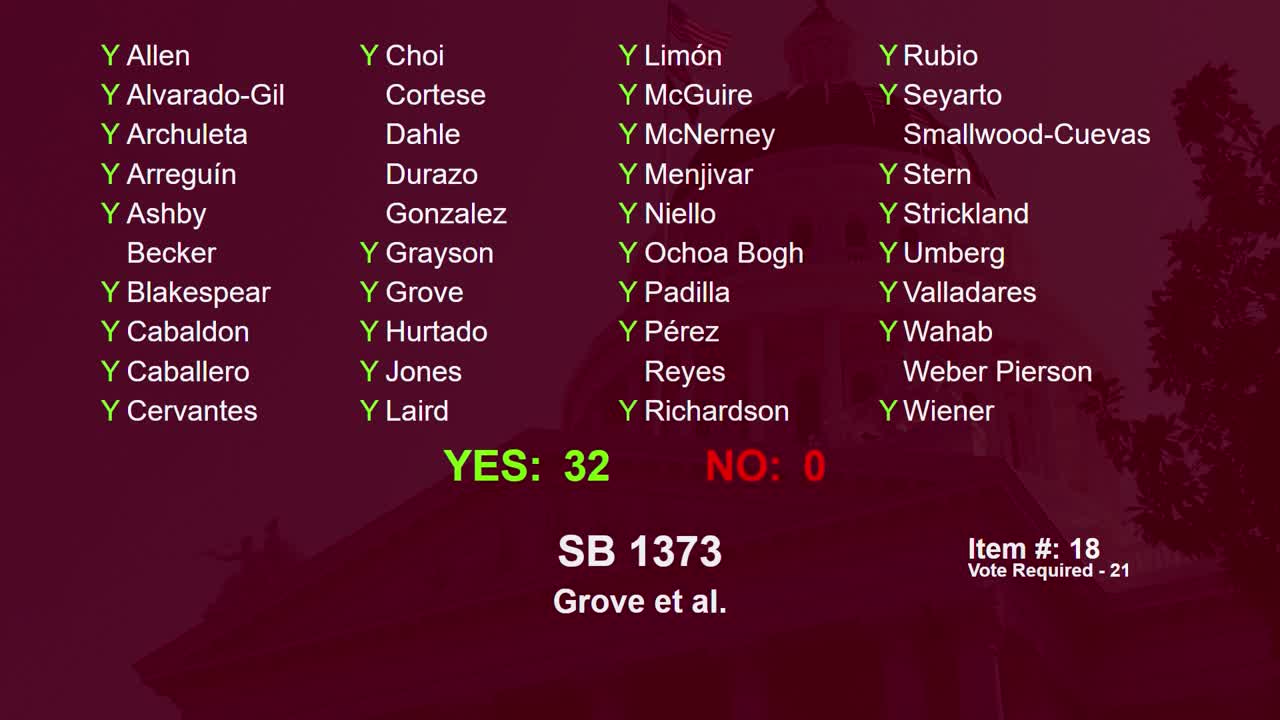 2MIN
Senate Floor
 18MIN
Senate Standing Committee on Governmental Organization
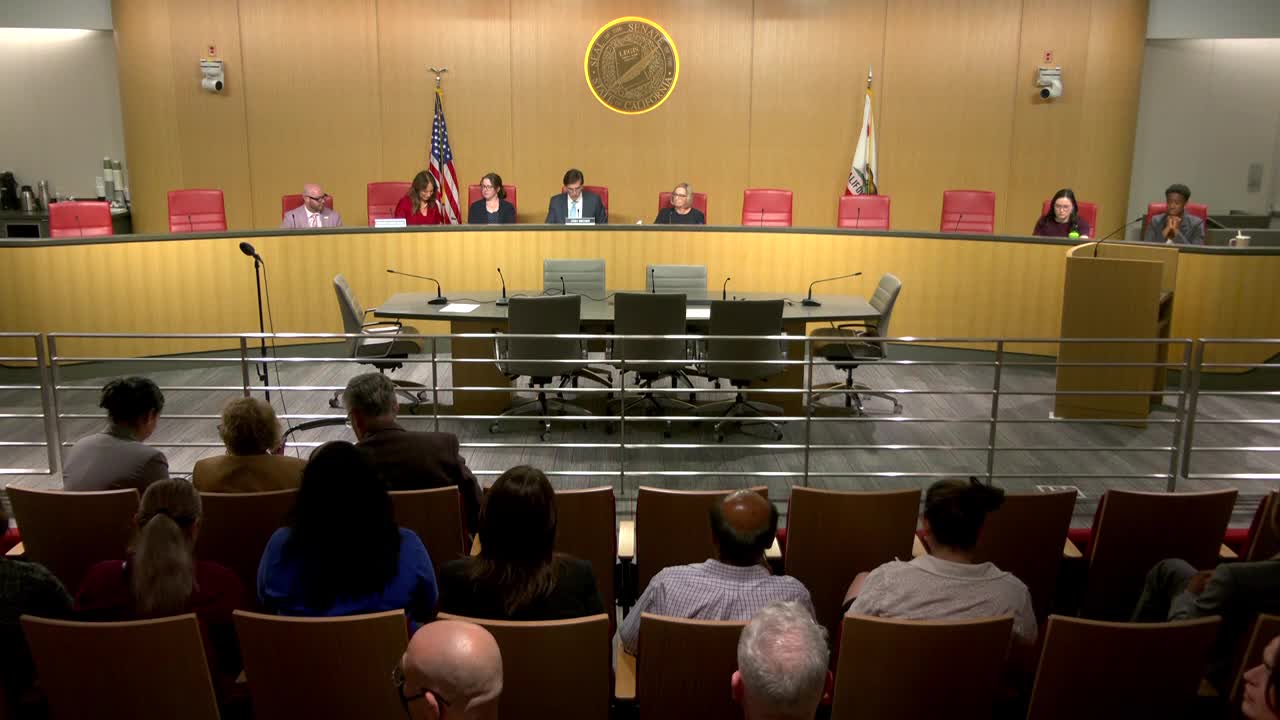 22MIN
Senate Standing Committee on Human Services
Bill Author