SB 1030: CalWORKs: unrelated adult male.
- Session Year: 2025-2026
- House: Senate
- Latest Version Date: 2026-09-30
Current Status:
Passed
(2026-09-30: Chaptered by Secretary of State. Chapter 999, Statutes of 2026.)
Introduced
In Committee
Awaiting First Chamber Vote
Passed First Chamber
In Committee
Awaiting Second Chamber Vote
Passed Second Chamber
Enacted
Existing federal law provides for the allocation of federal funds through the federal Temporary Assistance for Needy Families (TANF) block grant program to eligible states. Existing law provides for the California Work Opportunity and Responsibility to Kids (CalWORKs) program under which, through a combination of state and county funds and federal funds received through the TANF program, each county provides cash assistance and other benefits to qualified low-income families. Existing law requires an unrelated adult male who resides with a family who is applying for or receiving aid from the CalWORKs program to make a financial contribution to the family, as specified.
This bill would, beginning July 1, 2027, or a later date, as specified, repeal the above-described provisions requiring an unrelated adult male who resides with a family applying for or receiving aid from the CalWORKs program to make a financial contribution to the family. The bill would authorize the department to implement, interpret, or make specific, this change by means of all-county letters, or similar written instructions, until regulations are adopted. By expanding eligibility for the CalWORKs program, the bill would impose a state-mandated local program.
Existing law continuously appropriates moneys from the General Fund to defray a portion of county costs under the CalWORKs program.
This bill would provide that the continuous appropriation would not be made for purposes of implementing the bill.
The California Constitution requires the state to reimburse local agencies and school districts for certain costs mandated by the state. Statutory provisions establish procedures for making that reimbursement.
This bill would provide that, if the Commission on State Mandates determines that the bill contains costs mandated by the state, reimbursement for those costs shall be made pursuant to the statutory provisions noted above.
Existing federal law provides for the allocation of federal funds through the federal Temporary Assistance for Needy Families (TANF) block grant program to eligible states. Existing law provides for the California Work Opportunity and Responsibility to Kids (CalWORKs) program under which, through a combination of state and county funds and federal funds received through the TANF program, each county provides cash assistance and other benefits to qualified low-income families. Existing law requires an unrelated adult male who resides with a family who is applying for or receiving aid from the CalWORKs program to make a financial contribution to the family, as specified.
This bill would would, beginning July 1, 2027, or a later date, as specified, repeal the above-described provisions requiring an unrelated adult male who resides with a family applying for or receiving aid from the CalWORKs program to make a financial contribution to the family. The bill would authorize the department to implement, interpret, or make specific, this change by means of all-county letters, or similar written instructions, until regulations are adopted. By expanding eligibility for the CalWORKs program, the bill would impose a state-mandated local program.
Existing law continuously appropriates moneys from the General Fund to defray a portion of county costs under the CalWORKs program.
This bill would provide that the continuous appropriation would not be made for purposes of implementing the bill.
The California Constitution requires the state to reimburse local agencies and school districts for certain costs mandated by the state. Statutory provisions establish procedures for making that reimbursement.
This bill would provide that, if the Commission on State Mandates determines that the bill contains costs mandated by the state, reimbursement for those costs shall be made pursuant to the statutory provisions noted above.
Existing federal law provides for the allocation of federal funds through the federal Temporary Assistance for Needy Families (TANF) block grant program to eligible states. Existing law provides for the California Work Opportunity and Responsibility to Kids (CalWORKs) program under which, through a combination of state and county funds and federal funds received through the TANF program, each county provides cash assistance and other benefits to qualified low-income families. Existing law requires an unrelated adult male who resides with a family who is applying for or receiving aid from the CalWORKs program to make a financial contribution to the family, as specified.
This bill would repeal those the above-described provisions requiring an unrelated adult male who resides with a family applying for or receiving aid from the CalWORKs program to make a financial contribution to the family. By expanding eligibility for the CalWORKs program, the bill would impose a state-mandated local program.
Existing law continuously appropriates moneys from the General Fund to defray a portion of county costs under the CalWORKs program.
This bill would provide that the continuous appropriation would not be made for purposes of implementing the bill.
The California Constitution requires the state to reimburse local agencies and school districts for certain costs mandated by the state. Statutory provisions establish procedures for making that reimbursement.
This bill would provide that, if the Commission on State Mandates determines that the bill contains costs mandated by the state, reimbursement for those costs shall be made pursuant to the statutory provisions noted above.
Existing federal law provides for allocation of federal funds through the federal Temporary Assistance for Needy Families (TANF) block grant program to eligible states. Existing law provides for the California Work Opportunity and Responsibility to Kids (CalWORKs) program under which, through a combination of state and county funds and federal funds received through the TANF program, each county provides cash assistance and other benefits to qualified low-income families. Existing law requires an unrelated adult male who resides with a family who is applying for or receiving aid from the CalWORKs program to make a financial contribution to the family, as specified.
This bill would repeal those provisions requiring an unrelated adult male who resides with a family applying for or receiving aid from the CalWORKs program to make a financial contribution to the family. By expanding eligibility for the CalWORKs program, the bill would impose a state-mandated local program.
Existing law continuously appropriates moneys from the General Fund to defray a portion of county costs under the CalWORKs program.
This bill would provide that the continuous appropriation would not be made for purposes of implementing the bill.
The California Constitution requires the state to reimburse local agencies and school districts for certain costs mandated by the state. Statutory provisions establish procedures for making that reimbursement.
This bill would provide that, if the Commission on State Mandates determines that the bill contains costs mandated by the state, reimbursement for those costs shall be made pursuant to the statutory provisions noted above.
(a)(1)If an unrelated adult male resides with a family applying for or receiving aid under this chapter, he shall be required to make a financial contribution to the family that is not less than it would cost him to provide himself with an independent living arrangement.
(2)The minimum financial contribution to the family shall be determined in accordance with standards established by the department that take into account the adult male persons income and expenses. The regulations formulated by the department shall require the mother of the children and the unrelated male to present all of the facts in connection with the sharing of expenses that comprise the agreement by which the adult male resides with the family. The conditions of the agreement and the facts related to the sharing of the family expenses shall be signed under penalty of perjury by both the mother of the child and the unrelated male. In the event that either the mother or the adult male person willfully and knowingly fails to cooperate during the period the joint sharing of expenses arrangement exists in setting forth all of the facts in accordance with this section, aid to the family may be discontinued.
(3)This section does not apply to a bona fide paying lodger, roomer, or boarder living in the home of a family applying for or receiving aid under this chapter.
(b) This section shall become inoperative on July 1, 2027, or the date that the department has notified the Legislature that the Statewide Automated Welfare System can perform the necessary automation to implement the repeal of this section, and, as of January 1 of the following year, is repealed.
SEC. 2.Notwithstanding the rulemaking provisions of the Administrative Procedure Act (Chapter 3.5 (commencing with Section 11340) of Part 1 of Division 3 of Title 2 of the Government Code), the department may implement, interpret, or make specific the repeal of Section 11351.5 of the Welfare and Institutions Code, as accomplished by the act that added this section, by means of all-county letters or similar written instructions from the department until regulations are adopted. These all-county letters or similar instructions shall have the same force and effect as regulations until the adoption of regulations.
SEC. 3.No appropriation under Section 15200 of the Welfare and Institutions Code shall be made for purposes of implementing this act.
SEC. 4.If the Commission on State Mandates determines that this act contains costs mandated by the state, reimbursement to local agencies and school districts for those costs shall be made pursuant to Part 7 (commencing with Section 17500) of Division 4 of Title 2 of the Government Code.
Whenever (a)(1)If an unrelated adult male resides with a family applying for or receiving aid under this chapter, he shall be required to make a financial contribution to the family which shall not be that is not less than it would cost him to provide himself with an independent living arrangement.
The(2)The minimum financial contribution to the family shall be determined in accordance with standards established by the department which takes that take into account such the adult male persons income and expenses. The regulations formulated by the department shall require the mother of the children and the unrelated male to present all of the facts in connection with the sharing of expenses which that comprise the agreement whereby said by which the adult male resides with the family. The conditions of the agreement and the facts related to the sharing of the family expenses shall be signed under penalty of perjury by both the mother of the child and the unrelated male. In the event that either the mother or the adult male person willfully and knowingly fails to cooperate during the period such the joint sharing of expenses arrangement exists in setting forth all of the facts in accordance with provisions of this section, aid to the family may be discontinued.
The provisions of this section do(3)This section does not apply to a bona fide paying lodger, roomer roomer, or boarder living in the home of a family applying for or receiving aid under this chapter.
(b) This section shall become inoperative on July 1, 2027, or the date that the department has notified the Legislature that the Statewide Automated Welfare System can perform the necessary automation to implement the repeal of this section, and, as of January 1 of the following year, is repealed.
SEC. 2.Notwithstanding the rulemaking provisions of the Administrative Procedure Act (Chapter 3.5 (commencing with Section 11340) of Part 1 of Division 3 of Title 2 of the Government Code), the department may implement, interpret, or make specific the repeal of Section 11351.5 of the Welfare and Institutions Code, as accomplished by the act that added this section, by means of all-county letters or similar written instructions from the department until regulations are adopted. These all-county letters or similar instructions shall have the same force and effect as regulations until the adoption of regulations.
SEC. 2.SEC. 3.No appropriation under Section 15200 of the Welfare and Institutions Code shall be made for purposes of implementing this act.
SEC. 3.SEC. 4.If the Commission on State Mandates determines that this act contains costs mandated by the state, reimbursement to local agencies and school districts for those costs shall be made pursuant to Part 7 (commencing with Section 17500) of Division 4 of Title 2 of the Government Code.
No appropriation pursuant to under Section 15200 of the Welfare and Institutions Code shall be made for purposes of implementing this act.
SEC. 3.If the Commission on State Mandates determines that this act contains costs mandated by the state, reimbursement to local agencies and school districts for those costs shall be made pursuant to Part 7 (commencing with Section 17500) of Division 4 of Title 2 of the Government Code.
REVISIONS:HeadingLine 3.No appropriation pursuant to Section 15200 of the Welfare and Institutions Code shall be made for purposes of implementing this act.
SEC. 3.If the Commission on State Mandates determines that this act contains costs mandated by the state, reimbursement to local agencies and school districts for those costs shall be made pursuant to Part 7 (commencing with Section 17500) of Division 4 of Title 2 of the Government Code.
|
Date
|
Status
|
|---|---|
| Sep 30, 2026 | Chaptered by Secretary of State. Chapter 999, Statutes of 2026. |
| Sep 30, 2026 | Approved by the Governor. |
| Aug 28, 2026 | Enrolled and presented to the Governor at 11 a.m. |
| Aug 24, 2026 | Assembly amendments concurred in. (Ayes 40. Noes 0. Page 5684.) Ordered to engrossing and enrolling. |
| Aug 24, 2026 | Assembly amendments concurred in. (Ayes 40. Noes 0.) Ordered to engrossing and enrolling. |
| Aug 24, 2026 | Assembly amendments concurred in. (Ayes 39. Noes 0.) Ordered to engrossing and enrolling. |
| Aug 19, 2026 | In Senate. Concurrence in Assembly amendments pending. |
| Aug 19, 2026 | Read third time. Passed. (Ayes 77. Noes 0. Page 6268.) Ordered to the Senate. |
| Aug 19, 2026 | Read third time. Passed. Ordered to the Senate. |
| Aug 17, 2026 | Read second time. Ordered to third reading. |
| Aug 13, 2026 | Read second time and amended. Ordered to second reading. |
| Aug 13, 2026 | From committee: Do pass as amended. (Ayes 11. Noes 0.) (August 13). |
| Aug 13, 2026 | Assembly Rule 63 suspended. |
| Jul 1, 2026 | July 1 set for first hearing. Placed on suspense file. |
| Jun 17, 2026 | From committee: Do pass and re-refer to Com. on APPR. (Ayes 6. Noes 0.) (June 16). Re-referred to Com. on APPR. |
| Jun 17, 2026 | Coauthors revised. |
| May 26, 2026 | Referred to Com. on HUM. S. |
| May 20, 2026 | In Assembly. Read first time. Held at Desk. |
| May 20, 2026 | Read third time. Passed. (Ayes 38. Noes 0. Page 4378.) Ordered to the Assembly. |
| May 20, 2026 | Read third time. Passed. (Ayes 38. Noes 0.) Ordered to the Assembly. |
| May 18, 2026 | Read second time. Ordered to third reading. |
| May 14, 2026 | From committee: Do pass as amended. (Ayes 7. Noes 0. Page 4262.) (May 14). |
| May 14, 2026 | Read second time and amended. Ordered to second reading. |
| May 14, 2026 | From committee: Do pass as amended. (Ayes 7. Noes 0.) (May 14). |
| May 8, 2026 | Set for hearing May 14. |
| Apr 20, 2026 | April 20 hearing: Placed on APPR. suspense file. |
| Apr 10, 2026 | Set for hearing April 20. |
| Apr 7, 2026 | From committee: Do pass and re-refer to Com. on APPR. with recommendation: To consent calendar. (Ayes 5. Noes 0. Page 3740.) (April 6). Re-referred to Com. on APPR. |
| Apr 7, 2026 | From committee: Do pass and re-refer to Com. on APPR. with recommendation: To consent calendar. (Ayes 5. Noes 0.) (April 6). Re-referred to Com. on APPR. |
| Mar 17, 2026 | Set for hearing April 6. |
| Feb 18, 2026 | Referred to Com. on HUMAN S. |
| Feb 11, 2026 | From printer. May be acted upon on or after March 13. |
| Feb 10, 2026 | Introduced. Read first time. To Com. on RLS. for assignment. To print. |
|
Date
|
Description
|
Location
|
Votes
|
|
|---|---|---|---|---|
| Aug 24, 2026 | Unfinished Business SB1030 Smallwood-Cuevas Concurrence | Senate Floor |
Passed |
|
| Aug 19, 2026 | SB 1030 Smallwood-Cuevas Senate Third Reading By Sharp-Collins | Assembly Floor |
Passed |
|
| Aug 13, 2026 | Do pass as amended. | Assembly Standing Committee on Appropriations |
Passed |
|
| Jun 16, 2026 | Do pass and be re-referred to the Committee on [Appropriations] | Assembly Standing Committee on Human Services |
Passed |
|
| May 20, 2026 | Senate 3rd Reading SB1030 Smallwood-Cuevas | Senate Floor |
Passed |
|
| May 14, 2026 | Do pass as amended | Senate Standing Committee on Appropriations |
Passed |
|
| Apr 20, 2026 | Placed on suspense file | Senate Standing Committee on Appropriations |
Passed |
|
| Apr 6, 2026 | Do pass, but first be re-referred to the Committee on [Appropriations] with the recommendation: To Consent Calendar | Senate Standing Committee on Human Services |
Passed |
This list shows positions taken on this bill by organizations on the date displayed, which is linked to the original source.
Positions by individuals are not included.
|
Organization
|
Position
|
Date
|
|---|---|---|
| California Legislative Women's Caucus | ** Support | |
| California Legislative Women's Caucus | ** Support | |
| California Partnership To End Domestic Violence | ** Support | |
| California Partnership To End Domestic Violence | ** Support | |
| Center for Access to QDROs | ** Support | |
| Center for Access to QDROs | ** Support | |
| City of Glendale | ** Support | |
| City of Glendale | ** Support | |
| Coalition of California Welfare Rights Organizations (Co-Source) | ** Support | |
| Coalition of California Welfare Rights Organizations (Sponsor) | ** Support | |
| Coalition of Welfare Rights Organizations | ** Support | |
| Coalition of Welfare Rights Organizations | ** Support | |
| County Welfare Directors Association of California | ** Support | |
| County Welfare Directors Association of California | ** Support | |
| County Welfare Diretors Association of California | ** Support | |
| End Child Poverty California Powered by Grace | ** Support | |
| End Child Poverty California Powered by Grace | ** Support | |
| End Child Poverty CA Powered by Grace | ** Support | |
| First 5 California | ** Support | |
| First 5 California | ** Support | |
| First 5 La | ** Support | |
| First 5 La | ** Support | |
| Glide | ** Support | |
| Glide | ** Support | |
| Grace Institute - End Child Poverty in Ca | ** Support | |
| Grace Institute - End Child Poverty in Ca | ** Support | |
| Lieutenant Governor Eleni Kounalakis | ** Support | |
| National Council Of Jewish Women Los Angeles | ** Support | |
| National Council Of Jewish Women Los Angeles | ** Support | |
| Parent Voices | ** Support | |
| Parent Voices | ** Support | |
| SEIU California | ** Support | |
| SEIU California | ** Support | |
| Service Employees International Union (SEIU) | ** Support | |
| Service Employees International Union (SEIU) | ** Support | |
| The Reimagine CalWORKs Coalition | ** Support | |
| Western Center on Law & Poverty (Co-source) | ** Support | |
| Western Center on Law & Poverty (co-sponsor) | ** Support |
SENATE RULES COMMITTEE Office of Senate Floor Analyses (916) 651-4171 | SB 1030 |
UNFINISHED BUSINESS
Bill No: SB 1030
Author: Smallwood-Cuevas (D), et al.
Amended: 8/13/26
Vote: 21
SENATE HUMAN SERVICES COMMITTEE: 5-0, 4/6/26
AYES: Becker, Ochoa Bogh, Laird, Pérez, Weber Pierson
SENATE APPROPRIATIONS COMMITTEE: 7-0, 5/14/26
AYES: Cervantes, Seyarto, Cabaldon, Dahle, Grayson, Richardson, Wahab
SENATE FLOOR: 38-0, 5/20/26
AYES: Allen, Alvarado-Gil, Archuleta, Arreguín, Ashby, Blakespear, Cabaldon, Caballero, Cervantes, Choi, Cortese, Dahle, Durazo, Gonzalez, Grayson, Hurtado, Jones, Laird, Limón, McGuire, McNerney, Menjivar, Niello, Ochoa Bogh, Padilla, Pérez, Reyes, Richardson, Rubio, Seyarto, Smallwood-Cuevas, Stern, Strickland, Umberg, Valladares, Wahab, Weber Pierson, Wiener
NO VOTE RECORDED: Becker, Grove
ASSEMBLY FLOOR: 77-0, 8/19/26 - See last page for vote
SUBJECT: CalWORKs: unrelated adult male
SOURCE: Coalition of California Welfare Rights Organizations; Western Center on law and Poverty
DIGEST:
This bill removes the statute that requires an unrelated adult male who lives in a household that is receiving aid from the California Work Opportunity and Responsibility to Kids program (CalWORKs) to contribute financially to the family on July 1, 2027 or when the necessary automation can be performed.
Assembly Amendments
delays the repeal to July 1, 2027 or the date that the California Department of Social Services (CDSS) has notified the Legislature that the Statewide Automated Welfare System can perform the necessary automation to implement the repeal. Amendments also allow implementation by all county letters until regulations are adopted.
ANALYSIS:
Existing federal law:
- Establishes the federal Temporary Assistance for Needy Families (TANF) program, which provides block grants to states to develop and implement their own state welfare-to-work programs which provide cash assistance and other support and services to low-income families. (42 United States Code [U.S.C.] §601 et seq.)
- Finds that the increase in the number of children receiving public assistance is closely related to the increase in births to unmarried women and that the increase in out-of-wedlock pregnancies is a national crisis, and states therefore it is the sense of Congress that prevention of out-of-wedlock pregnancy and reduction in out-of-wedlock birth are very important Government interests and the Personal Responsibility and Work Opportunity Reconciliation Act of 1996 is meant to address that crisis. (42 U.S.C. §601(a))
- Describes the criteria to determine whether a child has been deprived of parental support thereby qualifying them for aid. Prohibits states from finding ineligibility solely based on the presence of a “substitute parent” or “man-in-the-house”. (45 Code of Federal Regulations §233.90(a))
Existing state law:
- Establishes the CalWORKs program to provide cash assistance and other social services for low-income families through the federal TANF program. Under CalWORKs, each county provides assistance through a combination of state, county, and federal TANF funds. (Welfare and Institutions Code [WIC] §11200 et seq.)
- Defines a “needy child” to be a person under 18 years old who has been deprived of parental support or care due to: (a) the death, physical or mental incapacity, or incarceration of a parent, (b) the unemployment of a parent or parents, or (c) continued absence of a parent from the home due to divorce, separation, desertion, or any other reason. (WIC §11202)
- Establishes the income, asset, and real property limits used to determine eligibility for the CalWORKs program, and CalWORKs grant amounts, based on family size and county of residence. (WIC §11150 to 11160; 11450 et seq.)
- Requires every CalWORKs beneficiary to participate in welfare-to-work activities in order to be eligible for CalWORKs aid, unless they are exempt, as specified. (WIC §11320.3)
- Establishes the number of weekly hours of welfare-to-work participation necessary to remain eligible for aid, including requirements for an unemployed parent in a two-parent assistance unit, as specified. (WIC §11322.8)
- Requires an unrelated adult male who lives with a family that is receiving aid from CalWORKs to contribute financially at least as much as it would cost him to provide for himself in an independent living arrangement. Counties are required to determine the minimum financial contribution to the family using regulations set by the CDSS. Those regulations should include requirements that the mother of the children and unrelated male provide all information about household expenses and create an agreement about shared expenses. The agreement must be signed by the mother of the children and unrelated male under penalty of perjury. If either the mother or unrelated male willfully and knowingly violate the agreement the family may lose CalWORKs aid. (WIC §11351.5)
This bill:
- Repeals the statute that requires an unrelated adult male who lives with a family that is receiving aid from CalWORKs to contribute financially to the family and report their income and contribution on July 1, 2027 or the date that the CDSS has notified the Legislature that the Statewide Automated Welfare System can perform the necessary automation to implement the repeal.
- Provides that no continuous appropriation shall be made to implement the statute.
- Allows CDSS to implement the bill through all- county letters or other written instructions until regulations are created.
Comments
According to the author, “The inclusion of the unrelated adult male rule in California’s welfare program reflects a broader legacy of punitive policy design that has disproportionately harmed families of color. Policies structured around work requirements, time limits, and restrictive household composition rules trace back to stereotypes that cast Black and Brown mothers and caregivers as suspect, irresponsible, or undeserving. These frameworks reinforce stigma rather than address the structural barriers to economic security that communities of color face, including wage inequities, housing instability, and systemic discrimination.
“SB 1030 is an important step toward dismantling elements of welfare policy that echo this racist legacy and replacing them with policies grounded in dignity, equity, and evidence. By eliminating harmful and outdated barriers, SB 1030 moves California closer to a safety net that truly supports family stability and economic mobility. It represents a commitment to designing a system that supports families equitably and improves economic stability for all children and caregivers.”
California Work Opportunity and Responsibility to Kids (CalWORKs). As California’s version of the federal TANF program, CalWORKs is the state’s largest anti-poverty program. CalWORKs provides temporary cash assistance aimed at moving children out of poverty and helping qualified low-income families meet their basic needs, such as rent, clothing, utility bills, food, and other items needed to ensure children are cared for at home and safely remain with their families. In addition to cash assistance, adult CalWORKs recipients are provided education, employment, and training services designed to help remove barriers to work and promote self-sufficiency.
CalWORKs services and requirements are typically outlined in a welfare-to-work plan. Welfare-to-work plans are documents that describe the work activities an adult must participate in for the family to receive aid. The plan also describes the support services they will receive to ensure they can fulfill their work requirements. Work activities can include employment, education, job skills training, and/or vocational education, work study on college campuses, on-the-job training, community service, job retention services, or activities to address or remove barriers like mental health, substance use disorder, and domestic abuse. An adult in a one-parent household must work 30 hours per week each month (or 20 hours per week if they have a child under six years old) in order to remain eligible for aid. In two-parent households, one or both adults must participate for a combined 35 hours per week.
Eligibility for CalWORKs is based on family size, income level, and region and tied to the needs of the children in the home. Families must show economic hardship through income and asset tests and participation in the program is also time limited. Family size and income are based on CDSS procedures that county eligibility workers use to establish who is living in the home, including adults unrelated to the children, and the income of those adults, and whether enough of that income is available to support those children.
Adults receiving aid are only allowed to use CalWORKs for 60 months in their lifetime. Children of adults who receive cash aid can continue to receive benefits until they are 18 years old in California. However, families can have cash aid temporarily cut through “sanctions” for not complying with certain required elements of CalWORKs or their welfare-to-work- plan.
Welfare Reform. In 1996, the federal government made a number of changes to the Aid to Families with Dependent Children welfare program. The reform bill was called the Personal Responsibility and Work Opportunity Reconciliation Act of 1996. The bill came in response to concerns that the number of families relying on welfare was growing too quickly due to an increase in single mothers. The program was renamed the Temporary Assistance to Needy Families (TANF) program and included major changes like being funded as a block grant to states with a capped amount instead of an entitlement guaranteed by the federal government. The program also emphasized two-parent families and proponents often referenced the stereotype of the “welfare queen” and a lack of men acting as breadwinners as why reforms were needed.
Those assertions were debunked by academics and antipoverty advocates as often based on racist, sexist, and homophobic stereotypes. The “welfare queen” stereotype is based on a story from the Chicago Tribune in 1974 about Linda Taylor that was retold by President Ronald Regan when he was campaigning for president. She had been investigated for multiple more serious crimes like insurance fraud, kidnapping, and murder but also convicted of committing $8000 worth of welfare fraud. When the story was retold during the campaign he focused only on welfare fraud, saying she was using welfare, food aid, and veterans benefits to make $150,000 a year.[1] Taylor was seen as the rule, not the exception, to how women in welfare programs behaved. The story aligned with a larger narrative. According to one article, “even when the [Aid to Families with Dependent Children] program was at its largest, no more than 6 percent of Americans received cash welfare, so most people weren’t actually affected by the changes within the program. Their image of welfare was less about the changing contours of the actual program than about longstanding stereotypes of the lazy poor [emphasis added] that have existed in one form or another—think of the so-called welfare queen—since long before welfare became a big political issue in the 1980s.” [2]
This bill will strike the statute that assumes facts about the contributions of a person living in a household based only on gender, relationship status, and sexual orientation.
King v. Smith, 392 U.S. 309 (1968) and Lewis v. Martin, 397 U.S. 552 (1970). Even before welfare reform, under Aid to Families with Dependent Children, California had a regulation that assumed the income of stepfathers or non- parent men living in a house is available to the children of the house as did many other states. This would affect the household’s eligibility for and level of assistance. Two United States Supreme Court cases, King v. Smith and Lewis v. Martin, challenged the assumption that the income of stepfathers or a man assuming the role of a spouse (now known as the unrelated adult male) is available to children when determining the amount of CalWORKs aid they are eligible to receive.
In King v. Smith, the Supreme Court held that Alabama’s substitute father regulation was invalid because it defines “parent” in a manner that is inconsistent with section 406(a) of the Social Security Act. In Lewis v. Martin, the Supreme Court held that the income of a nonadoptive stepfather or man not married to the mother of the children in the household cannot be treated as available countable income unless there is proof that he is contributing by stating, “California may not consider the child’s ‘resources’ to include either the income of a nonadopting stepfather who is not legally obligated to support the child as is a natural parent or the income of a MARS [man assuming role of spouse]” This was based on a federal statute that says only the income and resources of the parent is considered available for children and used to establish eligibility and assistance levels unless there is proof otherwise.
California passed a law in 1969 that changes the unrelated adult male statute to remove the assumption that the income of the unrelated adult male is available but still required the man to financially contribute to the family at least as much as it would require him to support himself and to report that information. While the reported income doesn’t automatically count as income available to a child, failure to report any income could lead to sanctions on aid for the family. This occurs even though that person has no legal obligation to financially support the children at the time of reporting or in the future. That statute has remained unchanged since 1969 through the major changes created by the Personal Responsibility and Work Opportunity Reconciliation Act of 1996 and state regulatory changes that modernize eligibility determinations.
Today, households with an unrelated adult male living in the household need to submit an additional form, the Statement of Cash Aid Mother and Unrelated Adult Male (CW 71), that households with unrelated adult women, grandparents or adult siblings of the parent do not. Households with unrelated adult males must also abide by the shared financial responsibilities stated on the form or they could be vulnerable to sanctions. According to CDSS, as of April 2023, 19,950 CalWORKs households contained an unrelated adult male, approximately 6% of CalWORKs households.
This bill removes the statute that requires financial contributions, reporting, and related sanctions for CalWORKs families with an unrelated adult male in the home. It would allow county eligibility workers to evaluate a family’s eligibility and aid levels the way they would for any adult of any gender or relationship status living in the home.
Related/Prior Legislation
SB 290 (Smallwood-Cuevas, 2025) would have sunset the requirement that CalWORKs recipients must provide evidence of vaccination for children under the age of six years old and required CDSS to provide CalWORKs recipients and applicants information on childhood immunizations and where to access immunizations through fee-for-service Medi-Cal providers. SB 290 was held on the Assembly Appropriations Suspense file.
AB 79 (Committee on Budget, Chapter 11, Statutes of 2020) authorized a 60-month CalWORKs lifetime time limit and eliminated the 24-month time clock for certain welfare to work activities.
FISCAL EFFECT: Appropriation: No Fiscal Com.: Yes Local: Yes
According to the Assembly Appropriations Committee:
- Ongoing General Fund (GF) costs of $935,000 based on data assumptions that 48 families would be newly eligible for CalWORKs benefits. This includes estimated costs for related increases in employment and childcare services.
- One-time absorbable GF automation costs of $116,000 to update the California Statewide Automated Welfare System.
- Ongoing likely cost savings to counties due to reduced administrative burden on county workers who would no longer be required to determine single-parent families’ financial arrangements with unrelated adult males.
SUPPORT: (Verified 8/19/26)
Coalition of California Welfare Rights Organizations (co-source)
Western Center on Law & Poverty (co-source)
California Legislative Women's Caucus
California Partnership to End Domestic Violence
Center for Access to Qdros
City of Glendale
Coalition of Welfare Rights Organizations
County Welfare Directors Association of California
End Child Poverty California Powered by Grace
First 5 California
First 5 LA
Glide
Grace Institute - End Child Poverty in CA
National Council of Jewish Women Los Angeles
Parent Voices
Seiu California
Service Employees International Union (SEIU)
Western Center on Law & Poverty
OPPOSITION: (Verified 8/19/26)
None received
ASSEMBLY FLOOR: 77-0, 8/19/26
AYES: Addis, Aguiar-Curry, Ahrens, Alanis, Alvarez, Arambula, Ávila Farías, Bains, Bauer-Kahan, Bennett, Berman, Boerner, Bonta, Bryan, Calderon, Caloza, Carrillo, Castillo, Chen, Connolly, Davies, DeMaio, Dixon, Elhawary, Ellis, Flora, Fong, Gabriel, Garcia, Gipson, Jeff Gonzalez, Mark González, Hadwick, Haney, Harabedian, Hart, Hoover, Irwin, Jackson, Johnson, Kalra, Krell, Lackey, Lee, Lowenthal, Macedo, McKinnor, Muratsuchi, Nguyen, Ortega, Pacheco, Papan, Patel, Patterson, Pellerin, Petrie-Norris, Quirk-Silva, Ramos, Ransom, Celeste Rodriguez, Michelle Rodriguez, Rogers, Sanchez, Schiavo, Schultz, Sharp-Collins, Solache, Soria, Stefani, Ta, Valencia, Wallis, Ward, Wicks, Wilson, Zbur, Rivas
NO VOTE RECORDED: Blanca Rubio, Tangipa
Prepared by: Naima Ford Antal / HUMAN S. / (916) 651-1524
8/19/26 14:59:35
**** END ****
SENATE RULES COMMITTEE Office of Senate Floor Analyses (916) 651-4171 | SB 1030 |
UNFINISHED BUSINESS
Bill No: SB 1030
Author: Smallwood-Cuevas (D), et al.
Amended: 8/13/26
Vote: 21
SENATE HUMAN SERVICES COMMITTEE: 5-0, 4/6/26
AYES: Becker, Ochoa Bogh, Laird, Pérez, Weber Pierson
SENATE APPROPRIATIONS COMMITTEE: 7-0, 5/14/26
AYES: Cervantes, Seyarto, Cabaldon, Dahle, Grayson, Richardson, Wahab
SENATE FLOOR: 38-0, 5/20/26
AYES: Allen, Alvarado-Gil, Archuleta, Arreguín, Ashby, Blakespear, Cabaldon, Caballero, Cervantes, Choi, Cortese, Dahle, Durazo, Gonzalez, Grayson, Hurtado, Jones, Laird, Limón, McGuire, McNerney, Menjivar, Niello, Ochoa Bogh, Padilla, Pérez, Reyes, Richardson, Rubio, Seyarto, Smallwood-Cuevas, Stern, Strickland, Umberg, Valladares, Wahab, Weber Pierson, Wiener
NO VOTE RECORDED: Becker, Grove
ASSEMBLY FLOOR: 77-0, 8/19/26 - See last page for vote
SUBJECT: CalWORKs: unrelated adult male
SOURCE: Coalition of California Welfare Rights Organizations; Western Center on law and Poverty
DIGEST:
This bill removes the statute that requires an unrelated adult male who lives in a household that is receiving aid from the California Work Opportunity and Responsibility to Kids program (CalWORKs) to contribute financially to the family on July 1, 2027 or when the necessary automation can be performed.
Assembly Amendments
delays the repeal to July 1, 2027 or the date that the California Department of Social Services (CDSS) has notified the Legislature that the Statewide Automated Welfare System can perform the necessary automation to implement the repeal. Amendments also allow implementation by all county letters until regulations are adopted.
ANALYSIS:
Existing federal law:
- Establishes the federal Temporary Assistance for Needy Families (TANF) program, which provides block grants to states to develop and implement their own state welfare-to-work programs which provide cash assistance and other support and services to low-income families. (42 United States Code [U.S.C.] §601 et seq.)
- Finds that the increase in the number of children receiving public assistance is closely related to the increase in births to unmarried women and that the increase in out-of-wedlock pregnancies is a national crisis, and states therefore it is the sense of Congress that prevention of out-of-wedlock pregnancy and reduction in out-of-wedlock birth are very important Government interests and the Personal Responsibility and Work Opportunity Reconciliation Act of 1996 is meant to address that crisis. (42 U.S.C. §601(a))
- Describes the criteria to determine whether a child has been deprived of parental support thereby qualifying them for aid. Prohibits states from finding ineligibility solely based on the presence of a “substitute parent” or “man-in-the-house”. (45 Code of Federal Regulations §233.90(a))
Existing state law:
- Establishes the CalWORKs program to provide cash assistance and other social services for low-income families through the federal TANF program. Under CalWORKs, each county provides assistance through a combination of state, county, and federal TANF funds. (Welfare and Institutions Code [WIC] §11200 et seq.)
- Defines a “needy child” to be a person under 18 years old who has been deprived of parental support or care due to: (a) the death, physical or mental incapacity, or incarceration of a parent, (b) the unemployment of a parent or parents, or (c) continued absence of a parent from the home due to divorce, separation, desertion, or any other reason. (WIC §11202)
- Establishes the income, asset, and real property limits used to determine eligibility for the CalWORKs program, and CalWORKs grant amounts, based on family size and county of residence. (WIC §§11150 to 11160; §11450 et seq.)
- Requires every CalWORKs beneficiary to participate in welfare-to-work activities in order to be eligible for CalWORKs aid, unless they are exempt, as specified. (WIC §11320.3)
- Establishes the number of weekly hours of welfare-to-work participation necessary to remain eligible for aid, including requirements for an unemployed parent in a two-parent assistance unit, as specified. (WIC §11322.8)
- Requires an unrelated adult male who lives with a family that is receiving aid from CalWORKs to contribute financially at least as much as it would cost him to provide for himself in an independent living arrangement. Counties are required to determine the minimum financial contribution to the family using regulations set by the CDSS. Those regulations should include requirements that the mother of the children and unrelated male provide all information about household expenses and create an agreement about shared expenses. The agreement must be signed by the mother of the children and unrelated male under penalty of perjury. If either the mother or unrelated male willfully and knowingly violate the agreement the family may lose CalWORKs aid. (WIC §11351.5)
This bill:
- Repeals the statute that requires an unrelated adult male who lives with a family that is receiving aid from CalWORKs to contribute financially to the family and report their income and contribution on July 1, 2027 or the date that the CDSS has notified the Legislature that the Statewide Automated Welfare System can perform the necessary automation to implement the repeal.
- Provides that no continuous appropriation shall be made to implement the statute.
- Allows CDSS to implement this bill through all- county letters or other written instructions until regulations are created.
Comments
According to the author, “The inclusion of the unrelated adult male rule in California’s welfare program reflects a broader legacy of punitive policy design that has disproportionately harmed families of color. Policies structured around work requirements, time limits, and restrictive household composition rules trace back to stereotypes that cast Black and Brown mothers and caregivers as suspect, irresponsible, or undeserving. These frameworks reinforce stigma rather than address the structural barriers to economic security that communities of color face, including wage inequities, housing instability, and systemic discrimination.
“SB 1030 is an important step toward dismantling elements of welfare policy that echo this racist legacy and replacing them with policies grounded in dignity, equity, and evidence. By eliminating harmful and outdated barriers, SB 1030 moves California closer to a safety net that truly supports family stability and economic mobility. It represents a commitment to designing a system that supports families equitably and improves economic stability for all children and caregivers.”
California Work Opportunity and Responsibility to Kids (CalWORKs). As California’s version of the federal TANF program, CalWORKs is the state’s largest anti-poverty program. CalWORKs provides temporary cash assistance aimed at moving children out of poverty and helping qualified low-income families meet their basic needs, such as rent, clothing, utility bills, food, and other items needed to ensure children are cared for at home and safely remain with their families. In addition to cash assistance, adult CalWORKs recipients are provided education, employment, and training services designed to help remove barriers to work and promote self-sufficiency.
CalWORKs services and requirements are typically outlined in a welfare-to-work plan. Welfare-to-work plans are documents that describe the work activities an adult must participate in for the family to receive aid. The plan also describes the support services they will receive to ensure they can fulfill their work requirements. Work activities can include employment, education, job skills training, and/or vocational education, work study on college campuses, on-the-job training, community service, job retention services, or activities to address or remove barriers like mental health, substance use disorder, and domestic abuse. An adult in a one-parent household must work 30 hours per week each month (or 20 hours per week if they have a child under six years old) in order to remain eligible for aid. In two-parent households, one or both adults must participate for a combined 35 hours per week.
Eligibility for CalWORKs is based on family size, income level, and region and tied to the needs of the children in the home. Families must show economic hardship through income and asset tests and participation in the program is also time limited. Family size and income are based on CDSS procedures that county eligibility workers use to establish who is living in the home, including adults unrelated to the children, and the income of those adults, and whether enough of that income is available to support those children.
Adults receiving aid are only allowed to use CalWORKs for 60 months in their lifetime. Children of adults who receive cash aid can continue to receive benefits until they are 18 years old in California. However, families can have cash aid temporarily cut through “sanctions” for not complying with certain required elements of CalWORKs or their welfare-to-work- plan.
Welfare Reform. In 1996, the federal government made a number of changes to the Aid to Families with Dependent Children welfare program. The reform bill was called the Personal Responsibility and Work Opportunity Reconciliation Act of 1996. The bill came in response to concerns that the number of families relying on welfare was growing too quickly due to an increase in single mothers. The program was renamed the Temporary Assistance to Needy Families (TANF) program and included major changes like being funded as a block grant to states with a capped amount instead of an entitlement guaranteed by the federal government. The program also emphasized two-parent families and proponents often referenced the stereotype of the “welfare queen” and a lack of men acting as breadwinners as why reforms were needed.
Those assertions were debunked by academics and antipoverty advocates as often based on racist, sexist, and homophobic stereotypes. The “welfare queen” stereotype is based on a story from the Chicago Tribune in 1974 about Linda Taylor that was retold by President Ronald Regan when he was campaigning for president. She had been investigated for multiple more serious crimes like insurance fraud, kidnapping, and murder but also convicted of committing $8000 worth of welfare fraud. When the story was retold during the campaign he focused only on welfare fraud, saying she was using welfare, food aid, and veterans benefits to make $150,000 a year.[1] Taylor was seen as the rule, not the exception, to how women in welfare programs behaved. The story aligned with a larger narrative. According to one article, “even when the [Aid to Families with Dependent Children] program was at its largest, no more than 6 percent of Americans received cash welfare, so most people weren’t actually affected by the changes within the program. Their image of welfare was less about the changing contours of the actual program than about longstanding stereotypes of the lazy poor [emphasis added] that have existed in one form or another—think of the so-called welfare queen—since long before welfare became a big political issue in the 1980s.” [2]
This bill will strike the statute that assumes facts about the contributions of a person living in a household based only on gender, relationship status, and sexual orientation.
King v. Smith, 392 U.S. 309 (1968) and Lewis v. Martin, 397 U.S. 552 (1970). Even before welfare reform, under Aid to Families with Dependent Children, California had a regulation that assumed the income of stepfathers or non- parent men living in a house is available to the children of the house as did many other states. This would affect the household’s eligibility for and level of assistance. Two United States Supreme Court cases, King v. Smith and Lewis v. Martin, challenged the assumption that the income of stepfathers or a man assuming the role of a spouse (now known as the unrelated adult male) is available to children when determining the amount of CalWORKs aid they are eligible to receive.
In King v. Smith, the Supreme Court held that Alabama’s substitute father regulation was invalid because it defines “parent” in a manner that is inconsistent with section 406(a) of the Social Security Act. In Lewis v. Martin, the Supreme Court held that the income of a nonadoptive stepfather or man not married to the mother of the children in the household cannot be treated as available countable income unless there is proof that he is contributing by stating, “California may not consider the child’s ‘resources’ to include either the income of a nonadopting stepfather who is not legally obligated to support the child as is a natural parent or the income of a MARS [man assuming role of spouse]” This was based on a federal statute that says only the income and resources of the parent is considered available for children and used to establish eligibility and assistance levels unless there is proof otherwise.
California passed a law in 1969 that changes the unrelated adult male statute to remove the assumption that the income of the unrelated adult male is available but still required the man to financially contribute to the family at least as much as it would require him to support himself and to report that information. While the reported income doesn’t automatically count as income available to a child, failure to report any income could lead to sanctions on aid for the family. This occurs even though that person has no legal obligation to financially support the children at the time of reporting or in the future. That statute has remained unchanged since 1969 through the major changes created by the Personal Responsibility and Work Opportunity Reconciliation Act of 1996 and state regulatory changes that modernize eligibility determinations.
Today, households with an unrelated adult male living in the household need to submit an additional form, the Statement of Cash Aid Mother and Unrelated Adult Male (CW 71), that households with unrelated adult women, grandparents or adult siblings of the parent do not. Households with unrelated adult males must also abide by the shared financial responsibilities stated on the form or they could be vulnerable to sanctions. According to CDSS, as of April 2023, 19,950 CalWORKs households contained an unrelated adult male, approximately 6% of CalWORKs households.
This bill removes the statute that requires financial contributions, reporting, and related sanctions for CalWORKs families with an unrelated adult male in the home. It would allow county eligibility workers to evaluate a family’s eligibility and aid levels the way they would for any adult of any gender or relationship status living in the home.
Related/Prior Legislation
SB 290 (Smallwood-Cuevas, 2025) would have sunset the requirement that CalWORKs recipients must provide evidence of vaccination for children under the age of six years old and required CDSS to provide CalWORKs recipients and applicants information on childhood immunizations and where to access immunizations through fee-for-service Medi-Cal providers. SB 290 was held on the Assembly Appropriations Suspense file.
AB 79 (Committee on Budget, Chapter 11, Statutes of 2020) authorized a 60-month CalWORKs lifetime time limit and eliminated the 24-month time clock for certain welfare to work activities.
FISCAL EFFECT: Appropriation: No Fiscal Com.: Yes Local: Yes
According to the Assembly Appropriations Committee:
- Ongoing General Fund (GF) costs of $935,000 based on data assumptions that 48 families would be newly eligible for CalWORKs benefits. This includes estimated costs for related increases in employment and childcare services.
- One-time absorbable GF automation costs of $116,000 to update the California Statewide Automated Welfare System.
- Ongoing likely cost savings to counties due to reduced administrative burden on county workers who would no longer be required to determine single-parent families’ financial arrangements with unrelated adult males.
SUPPORT: (Verified 8/19/26)
Coalition of California Welfare Rights Organizations (Sponsor)
Western Center on Law & Poverty (Co-Sponsor)
California Legislative Women's Caucus
California Partnership to End Domestic Violence
Center for Access to Qdros
City of Glendale
Coalition of Welfare Rights Organizations
County Welfare Directors Association of California
End Child Poverty California Powered by Grace
First 5 California
First 5 LA
Glide
Grace Institute - End Child Poverty in CA
National Council of Jewish Women Los Angeles
Parent Voices
Seiu California
Service Employees International Union (SEIU)
Western Center on Law & Poverty
OPPOSITION: (Verified 8/19/26)
None received
ASSEMBLY FLOOR: 77-0, 8/19/26
AYES: Addis, Aguiar-Curry, Ahrens, Alanis, Alvarez, Arambula, Ávila Farías, Bains, Bauer-Kahan, Bennett, Berman, Boerner, Bonta, Bryan, Calderon, Caloza, Carrillo, Castillo, Chen, Connolly, Davies, DeMaio, Dixon, Elhawary, Ellis, Flora, Fong, Gabriel, Garcia, Gipson, Jeff Gonzalez, Mark González, Hadwick, Haney, Harabedian, Hart, Hoover, Irwin, Jackson, Johnson, Kalra, Krell, Lackey, Lee, Lowenthal, Macedo, McKinnor, Muratsuchi, Nguyen, Ortega, Pacheco, Papan, Patel, Patterson, Pellerin, Petrie-Norris, Quirk-Silva, Ramos, Ransom, Celeste Rodriguez, Michelle Rodriguez, Rogers, Sanchez, Schiavo, Schultz, Sharp-Collins, Solache, Soria, Stefani, Ta, Valencia, Wallis, Ward, Wicks, Wilson, Zbur, Rivas
NO VOTE RECORDED: Blanca Rubio, Tangipa
Prepared by: Naima Ford Antal / HUMAN S. / (916) 651-1524
8/19/26 15:01:41
**** END ****
SENATE THIRD READING
STR Bill Id:SB 1030
Author:(Smallwood-Cuevas)
As Amended Ver:August 13, 2026
Majority vote
SUMMARY
Effective July 1, 2027, or the date that the California Department of Social Services (CDSS) has notified the Legislature that the Statewide Automated Welfare System can perform the necessary automation to implement the repeal, the statute that requires an unrelated adult male (UAM) who lives in a household that is receiving aid from the California Work Opportunity and Responsibility to Kids program (CalWORKs) to contribute financially to the family. Permits CDSS to implement this bill via an all counties letter.
Major Provisions
COMMENTS
Background: California Work Opportunity and Responsibility to Kids Eligibility and Program Requirements. CalWORKs is the state's primary cash assistance program. More specifically, CalWORKs implements the federal Temporary Assistance for Needy Families (TANF) program, which is a federal block grant with the objective of providing income and support to families with children. CalWORKs provides eligible low-income families with cash grants and supportive services and resources, such as subsidized child care, employment training, mental health counseling, and housing assistance.
CalWORKs is administered at the county level; it is funded largely through the federal TANF block grant and state maintenance-of-effort contributions. The federal Personal Responsibility and Work Opportunity Reconciliation Act (PRWORA) of 1996 (Public Law 104-193) adopted the TANF program. TANF provides block grants (to be supplemented by state maintenance-of-effort funds) to states to design their own welfare programs that meet federal requirements, including the establishment of work requirements and imposition of a lifetime limit of no more than five years on receipt of TANF benefits. Among many other provisions, PRWORA authorized states to create individual responsibility plans for program participants, whereby states could opt to establish a number of obligations related to receipt of TANF benefits, including requiring school attendance, immunizations, and work requirements.
To qualify for CalWORKs, families generally must earn less than about 80% of the federal poverty level. In 2025-26, the administration estimates that the average CalWORKs grant will be $999 per month across all family sizes and income levels.
Eligibility for CalWORKs is based on family size, income level, and region and tied to the needs of the children in the home. Families must show economic hardship through income and asset tests, and participation in the program is also time-limited. Family size and income are based on CDSS regulations that county eligibility workers use to establish who is living in the home, including adults unrelated to the children, and the income of those adults, and whether enough of that income is available to support those children.
Adults receiving aid are only allowed to use CalWORKs for 60 months in their lifetime. Children of adults who receive cash aid can continue to receive benefits until they are 18 years old in California. However, families can have cash aid temporarily cut through "sanctions" for not complying with certain required elements of CalWORKs or their welfare-to-work- plan.
CalWORKs services and requirements are typically outlined in a welfare-to-work plan. Welfare-to-work plans are documents that describe the work activities an adult must participate in for the family to receive aid. The plan also describes the support services they will receive to ensure they can fulfill their work requirements. Work activities can include employment, education, job skills training, and/or vocational education, work study on college campuses, on-the-job training, community service, job retention services, or activities to address or remove barriers like mental health, substance use disorder, and domestic abuse. An adult in a one-parent household must work 30 hours per week each month (or 20 hours per week if they have a child under six years old) in order to remain eligible for aid. In two-parent households, one or both adults must participate for a combined 35 hours per week.
Unrelated Adult Male. An (UMA) is someone who is over 18 years old, is not the father of any children in the home, and lives with the CalWORKs family. Roommates and boarders are not considered a UMA.
A UAM is required to have income or resources sufficient to make a financial contribution to the CalWORKs family of at least their needs for housing, utilities, and food. The UAM who lives within the home must help pay each month for living expenses. The amount of money they pay must be at least as much as it would cost him to live by himself. Both the CalWORKs mother and the UAM must sign sworn statements explaining his actual financial contribution and his income. This is done through completion of the CW 71 form. If the mother refuses to complete the CW 71 form, aid is denied or discontinued. If the UAM refuses to complete the CW 71 form, or has insufficient income to meet his needs, a referral is made to Welfare Fraud Prevention and Investigation so that the matter can be investigated further for possible misuse of CalWORKs funds.
This bill would remove the statute that requires financial contributions, reporting, and related sanctions for CalWORKs families with an UAM in the home.
According to the Author
"The inclusion of the unrelated adult male rule in California's welfare program reflects a broader legacy of punitive policy design that has disproportionately harmed families of color. Policies structured around work requirements, time limits, and restrictive household composition rules trace back to stereotypes that cast Black and Brown mothers and caregivers as suspect, irresponsible, or undeserving. These frameworks reinforce stigma rather than address the structural barriers to economic security that communities of color face, including wage inequities, housing instability, and systemic discrimination.
"[This bill] is an important step toward dismantling elements of welfare policy that echo this racist legacy and replacing them with policies grounded in dignity, equity, and evidence. By eliminating harmful and outdated barriers, [This bill] moves California closer to a safety net that truly supports family stability and economic mobility. It represents a commitment to designing a system that supports families equitably and improves economic stability for all children and caregivers."
Arguments in Support
The Reimagine CalWORKs Coalition writes, this bill... "would simplify the CalWORKs program by repealing the "Man-in-the-House" policy of the 1950s and 1960s. These policies were a product of the old Aid to Families with Dependent Children (AFDC) program whereby states enacted laws which required the unrelated adult male to complete welfare forms under penalty of perjury. If the partner does not complete the form, the CalWORKs benefits will be stopped for the entire family. States implemented these rules to restrict welfare eligibility and enforce morality, often cutting off aid if a mother was dating, even if the man did not support the children. These policies were used to police the households of, particularly, Black women."
Arguments in Opposition
None on file.
FISCAL COMMENTS
According to the Assembly Appropriations Committee on August 13, 2026:
The California Department of Social Services (CDSS) estimates the following costs:
- Upon completion of necessary automation, ongoing, Ongoing General Fund (GF) costs of $935,000 based on data assumptions that 48 families would be newly eligible for CalWORKs benefits. This includes estimated costs for related increases in employment and childcare services.
California's annual $3.7 billion federal TANF block grant can be used flexibly within the CalWORKs program. It is fully allocated within the existing and proposed state budgets. Therefore, this analysis assumes any new costs for the CalWORKs program will be funded by the GF. State GF costs may be mitigated to the extent TANF funding is not fully expended in any particular year, or if one of the CalWORKs subaccounts has sufficient revenue available to support grant costs.
- One-time absorbable GF automation costs of $116,000 to update the California Statewide Automated Welfare System.
- Ongoing likely cost savings to counties due to reduced administrative burden on county workers who would no longer be required to determine single-parent families' financial arrangements with unrelated adult males.
VOTES
SENATE FLOOR: 38-0-2
YES: Allen, Alvarado-Gil, Archuleta, Arreguín, Ashby, Blakespear, Cabaldon, Caballero, Cervantes, Choi, Cortese, Dahle, Durazo, Gonzalez, Grayson, Hurtado, Jones, Laird, Limón, McGuire, McNerney, Menjivar, Niello, Ochoa Bogh, Padilla, Pérez, Reyes, Richardson, Rubio, Seyarto, Smallwood-Cuevas, Stern, Strickland, Umberg, Valladares, Wahab, Weber Pierson, Wiener
ABS, ABST OR NV: Becker, Grove
ASM HUMAN SERVICES: 6-0-1
YES: Lee, Calderon, Alanis, Elhawary, Jackson, Celeste Rodriguez
ABS, ABST OR NV: Tangipa
ASM APPROPRIATIONS: 11-0-4
YES: Wicks, Arambula, Calderon, Caloza, Fong, Mark González, Krell, Pacheco, Pellerin, Sharp-Collins, Solache
ABS, ABST OR NV: Hoover, Dixon, Ta, Tangipa
UPDATED
VERSION: August 13, 2026
CONSULTANT: Alexandria Smith / HUM. S. / (916) 319-2089 FN: 0003603
Date of Hearing: July 1, 2026
ASSEMBLY COMMITTEE ON APPROPRIATIONS
Buffy Wicks, Chair
SBPCA Bill Id:SB 1030
Author:(Smallwood-Cuevas) – As Amended Ver:May 14, 2026
Policy Committee: | Human Services | Vote: | 6 - 0 |
|
| ||
|
|
Urgency: No State Mandated Local Program: Yes Reimbursable: Yes
SUMMARY:
This bill repeals the requirement that an unrelated adult male residing with a family applying for or receiving California Work Opportunity and Responsibility to Kids (CalWORKs) aid make a financial contribution to the family of not less than the amount it would cost to provide himself an independent living arrangement.
FISCAL EFFECT:
The California Department of Social Services (CDSS) estimates the following costs:
- Ongoing General Fund (GF) costs of $935,000 based on data assumptions that 48 families would be newly eligible for CalWORKs benefits. This includes estimated costs for related increases in employment and childcare services.
California's annual $3.7 billion federal TANF block grant can be used flexibly within the CalWORKs program. It is fully allocated within the existing and proposed state budgets. Therefore, this analysis assumes any new costs for the CalWORKs program will be funded by the GF. State GF costs may be mitigated to the extent TANF funding is not fully expended in any particular year, or if one of the CalWORKs subaccounts has sufficient revenue available to support grant costs.
- One-time absorbable GF automation costs of $116,000 to update the California Statewide Automated Welfare System.
- Ongoing likely cost savings to counties due to reduced administrative burden on county workers who would no longer be required to determine single-parent families’ financial arrangements with unrelated adult males.
COMMENTS:
- Purpose. According to the author:
The inclusion of the unrelated adult male rule in California’s welfare program reflects a broader legacy of punitive policy design that has disproportionately harmed families of color. Policies structured around work requirements, time limits, and restrictive household composition rules trace back to stereotypes that cast Black and Brown mothers and caregivers as suspect, irresponsible, or undeserving. These frameworks reinforce stigma rather than address the structural barriers to economic security that communities of color face, including wage inequities, housing instability, and systemic discrimination. [This bill] is an important step toward dismantling elements of welfare policy that echo this racist legacy and replacing them with policies grounded in dignity, equity, and evidence.
- Background. CalWORKs provides eligible low-income families with cash grants and supportive services, such as subsidized childcare, employment training, mental health counseling, and housing assistance. Eligibility for CalWORKs is based on family size, income level, and region and tied to the needs of the children in the home. Family size and income are based on CDSS regulations that county eligibility workers use to establish who is living in the home, including adults unrelated to the children, and the income of those adults, and whether enough of that income is available to support those children.
Existing regulations define an “unrelated adult male” as someone who is at least 18 years of age, is not the father of any children in the home, is not married to or the registered domestic partner of the CalWORKs mother, and lives with the CalWORKs family. This definition explicitly excludes a paying lodger, roomer, or boarder.
Existing law requires an unrelated adult male who resides with a family applying for or receiving CalWORKs aid to make a financial contribution to the family, which cannot be less than it would cost him to provide himself with an independent living arrangement. Existing law requires the minimum financial contribution to the family to be determined according to CDSS regulations which consider the adult male’s income and expenses. Existing law also requires the mother of the children and the unrelated adult male to present facts showing the sharing of expenses and to sign sworn statements explaining his financial contribution and income. Refusal to sign the required forms may result in aid being denied or discontinued.
This bill repeals the requirement that an unrelated adult male residing in a CalWORKs home make a financial contribution to the family not less than it would cost to provide himself with an independent living arrangement as a condition of the family receiving aid. Notably, if the unrelated adult male’s income or resources are used to support the CalWORKs family, the income and resources are counted in the CalWORKs eligibility and aid determination.
Analysis Prepared by: Jennifer Swenson / APPR. / (916) 319-2081
Date of Hearing: June 16, 2026
ASSEMBLY COMMITTEE ON HUMAN SERVICES
Alex Lee, Chair
SBPCA Bill Id:SB 1030
Author:(Smallwood-Cuevas) – As Amended Ver:May 14, 2026
SENATE VOTE: 38-0
SUBJECT: CalWORKs: unrelated adult male
SUMMARY: Repeals the statute that requires an unrelated adult male (UAM) who lives in a household that is receiving aid from the California Work Opportunity and Responsibility to Kids program (CalWORKs) to contribute financially to the family.
EXISTING LAW:
State law:
- Establishes the CalWORKs program to provide cash assistance and other social services for low-income families through the federal Temporary Assistance for Needy Families (TANF) program. Under CalWORKs, each county provides assistance through a combination of state, county, and federal TANF funds. (Welfare and Institutions Code [WIC] § 11200 et seq.)
- Defines a “needy child” to be a person under 18 years old who has been deprived of parental support or care due to: (a) the death, physical or mental incapacity, or incarceration of a parent, (b) the unemployment of a parent or parents, or (c) continued absence of a parent from the home due to divorce, separation, desertion, or any other reason. (WIC § 11202)
- Establishes the income, asset, and real property limits used to determine eligibility for the CalWORKs program, and CalWORKs grant amounts, based on family size and county of residence. (WIC § 11150 to § 11160; § 11450 et seq.)
- Requires every CalWORKs beneficiary to participate in welfare-to-work activities in order to be eligible for CalWORKs aid, unless they are exempt, as specified. (WIC § 11320.3)
- Establishes the number of weekly hours of welfare-to-work participation necessary to remain eligible for aid, including requirements for an unemployed parent in a two-parent assistance unit, as specified. (WIC § 11322.8)
- Requires an UAM who lives with a family that is receiving aid from CalWORKs to contribute financially at least as much as it would cost him to provide for himself in an independent living arrangement. Counties are required to determine the minimum financial contribution to the family using regulations set by the California Department of Social Services (CDSS). Those regulations should include requirements that the mother of the children and unrelated male provide all information about household expenses and create an agreement about shared expenses. The agreement must be signed by the mother of the children and unrelated male under penalty of perjury. If either the mother or unrelated male willfully and knowingly violate the agreement the family may lose CalWORKs aid. (WIC § 11351.5)
Federal law:
- Establishes the TANF program, which provides block grants to states to develop and implement their own state welfare-to-work programs which provide cash assistance and other support and services to low-income families. (42 United States Code [U.S.C.] 601 et seq.)
- Finds that the increase in the number of children receiving public assistance is closely related to the increase in births to unmarried women and that the increase in out-of-wedlock pregnancies is a national crisis, and states therefore it is the sense of Congress that prevention of out-of-wedlock pregnancy and reduction in out-of-wedlock birth are very important government interests and the Personal Responsibility and Work Opportunity Reconciliation Act of 1996 is meant to address that crisis. (42 U.S.C. 601(a))
- Describes the criteria to determine whether a child has been deprived of parental support thereby qualifying them for aid. Prohibits states from finding ineligibility solely based on the presence of a “substitute parent” or “man-in-the-house”. (45 Code of Federal Regulations 233.90(a))
FISCAL EFFECT: According to the Senate Committee on Appropriations :
- The California Department of Social Services estimates the following costs:
- Ongoing General Fund costs of $934,000 based on data assumptions that 48 families would be newly eligible for CalWORKs benefits. This includes estimated costs for related increases in employment and child care services.
- One-time automation costs of $75,000 to update the California Statewide Automated Welfare System (CalSAWS). The costs would be absorbable using CalSAWS Maintenance and Enhancements funding.
- Costs to counties for administration would be potentially reimbursable by the state, subject to a determination by the Commission on State Mandates.
COMMENTS:
Background: California Work Opportunity and Responsibility to Kids Eligibility and Program Requirements. CalWORKs is the state’s primary cash assistance program. More specifically, CalWORKs implements the federal TANF program, which is a federal block grant with the objective of providing income and support to families with children. CalWORKs provides eligible low-income families with cash grants and supportive services and resources, such as subsidized child care, employment training, mental health counseling, and housing assistance.
CalWORKs is administered at the county level; it is funded largely through the federal TANF block grant and state maintenance-of-effort contributions. The federal Personal Responsibility and Work Opportunity Reconciliation Act (PRWORA) of 1996 (Public Law 104-193) adopted the TANF program. TANF provides block grants (to be supplemented by state maintenance-of-effort funds) to states to design their own welfare programs that meet federal requirements, including the establishment of work requirements and imposition of a lifetime limit of no more than five years on receipt of TANF benefits. Among many other provisions, PRWORA authorized states to create individual responsibility plans for program participants, whereby states could opt to establish a number of obligations related to receipt of TANF benefits, including requiring school attendance, immunizations, and work requirements.
To qualify for CalWORKs, families generally must earn less than about 80% of the federal poverty level. In 2025-26, the administration estimates that the average CalWORKs grant will be $999 per month across all family sizes and income levels.
Eligibility for CalWORKs is based on family size, income level, and region and tied to the needs of the children in the home. Families must show economic hardship through income and asset tests, and participation in the program is also time-limited. Family size and income are based on CDSS regulations that county eligibility workers use to establish who is living in the home, including adults unrelated to the children, and the income of those adults, and whether enough of that income is available to support those children.
Adults receiving aid are only allowed to use CalWORKs for 60 months in their lifetime. Children of adults who receive cash aid can continue to receive benefits until they are 18 years old in California. However, families can have cash aid temporarily cut through “sanctions” for not complying with certain required elements of CalWORKs or their welfare-to-work- plan.
CalWORKs services and requirements are typically outlined in a welfare-to-work plan. Welfare-to-work plans are documents that describe the work activities an adult must participate in for the family to receive aid. The plan also describes the support services they will receive to ensure they can fulfill their work requirements. Work activities can include employment, education, job skills training, and/or vocational education, work study on college campuses, on-the-job training, community service, job retention services, or activities to address or remove barriers like mental health, substance use disorder, and domestic abuse. An adult in a one-parent household must work 30 hours per week each month (or 20 hours per week if they have a child under six years old) in order to remain eligible for aid. In two-parent households, one or both adults must participate for a combined 35 hours per week.
Unrelated Adult Male. An UMA is someone who is over 18 years old, is not the father of any children in the home, and lives with the CalWORKs family. Roommates and boarders are not considered a UMA.
A UAM is required to have income or resources sufficient to make a financial contribution to the CalWORKs family of at least their needs for housing, utilities, and food. The UAM who lives within the home must help pay each month for living expenses. The amount of money they pay must be at least as much as it would cost him to live by himself. Both the CalWORKs mother and the UAM must sign sworn statements explaining his actual financial contribution and his income. This is done through completion of the CW 71 form. If the mother refuses to complete the CW 71 form, aid is denied or discontinued. If the UAM refuses to complete the CW 71 form, or has insufficient income to meet his needs, a referral is made to Welfare Fraud Prevention and Investigation so that the matter can be investigated further for possible misuse of CalWORKs funds.
This bill would remove the statute that requires financial contributions, reporting, and related sanctions for CalWORKs families with an UAM in the home.
Author’s Statement: According to the Author, “The inclusion of the unrelated adult male rule in California’s welfare program reflects a broader legacy of punitive policy design that has disproportionately harmed families of color. Policies structured around work requirements, time limits, and restrictive household composition rules trace back to stereotypes that cast Black and Brown mothers and caregivers as suspect, irresponsible, or undeserving. These frameworks reinforce stigma rather than address the structural barriers to economic security that communities of color face, including wage inequities, housing instability, and systemic discrimination.
“[This bill] is an important step toward dismantling elements of welfare policy that echo this racist legacy and replacing them with policies grounded in dignity, equity, and evidence. By eliminating harmful and outdated barriers, [This bill] moves California closer to a safety net that truly supports family stability and economic mobility. It represents a commitment to designing a system that supports families equitably and improves economic stability for all children and caregivers.”
RELATED AND PRIOR LEGISLATION:
AB 1324 (Sharp Collins, Lee) of 2025, would have required the CDSS to conduct a feasibility study on expanding the CalWORKs program; update various eligibility requirements for CalWORKs; and, prioritize specified employers to participate in CalWORKs’ employment services placements. AB 1324 was vetoed by Governor Newsom.
Arguments in Support: The Reimagine CalWORKs Coalition writes:
“Reimagine CalWORKs Coalition, we are writing as cosponsors of [this bill] which would repeal the CalWORKs Unrelated Adult Male (UAM) rule which is an outdated misogynistic policy that incorporates racist and sexist assumptions about people who receive CalWORKs. This old law was based on the presumption that mothers receiving cash benefits were trying to game the system and fraudulently claim benefits if an unrelated adult male lived in the household, even though a UAM is not required to support the family. It also stemmed from outdated social mores, which disapproved of a couple who cohabitated without being married.
“[This bill] would simplify the CalWORKs program by repealing the “Man-in-the-House” policy of the 1950s and 1960s. These policies were a product of the old Aid to Families with Dependent Children (AFDC) program whereby states enacted laws which required the unrelated adult male to complete welfare forms under penalty of perjury. If the partner does not complete the form, the CalWORKs benefits will be stopped for the entire family. States implemented these rules to restrict welfare eligibility and enforce morality, often cutting off aid if a mother was dating, even if the man did not support the children. These policies were used to police the households of, particularly, Black women.”
Arguments in Opposition: None on file.
REGISTERED SUPPORT / OPPOSITION:
Support
California Partnership to End Domestic Violence (Co-Sponsor)
Coalition of California Welfare Rights Organization (Co-Sponsor)
County Welfare Directors Association of California (CWDA) (Co-Sponsor)
End Child Poverty CA Powered by Grace (Co-Sponsor)
Parent Voices (Co-Sponsor)
Service Employees International Union (SEIU) (Co-Sponsor)
Western Center on Law & Poverty (Co-Sponsor)
California Legislative Women's Caucus
First 5 LA
Lieutenant Governor Eleni Kounalakis
Opposition
None on file.
Analysis Prepared by: Alexandria Smith / HUM. S. / (916) 319-2089
SENATE RULES COMMITTEE Office of Senate Floor Analyses (916) 651-4171 | SB 1030 |
THIRD READING
Bill No: SB 1030
Author: Smallwood-Cuevas (D), et al.
Amended: 5/14/26
Vote: 21
SENATE HUMAN SERVICES COMMITTEE: 5-0, 4/6/26
AYES: Becker, Ochoa Bogh, Laird, Pérez, Weber Pierson
SENATE APPROPRIATIONS COMMITTEE: 7-0, 5/14/26
AYES: Cervantes, Seyarto, Cabaldon, Dahle, Grayson, Richardson, Wahab
SUBJECT: CalWORKs: unrelated adult male
SOURCE: Coalition of California Welfare Rights Organizations; Western Center on law and Poverty
DIGEST:
This bill removes the statute that requires an unrelated adult male who lives in a household that is receiving aid from the California Work Opportunity and Responsibility to Kids program (CalWORKs) to contribute financially to the family.
ANALYSIS:
Existing federal law:
- Establishes the federal Temporary Assistance for Needy Families (TANF) program, which provides block grants to states to develop and implement their own state welfare-to-work programs which provide cash assistance and other support and services to low-income families. (42 United States Code [U.S.C.] 601 et seq.)
- Finds that the increase in the number of children receiving public assistance is closely related to the increase in births to unmarried women and that the increase in out-of-wedlock pregnancies is a national crisis, and states therefore it is the sense of Congress that prevention of out-of-wedlock pregnancy and reduction in out-of-wedlock birth are very important Government interests and the Personal Responsibility and Work Opportunity Reconciliation Act of 1996 is meant to address that crisis. (42 U.S.C. 601(a))
- Describes the criteria to determine whether a child has been deprived of parental support thereby qualifying them for aid. Prohibits states from finding ineligibility solely based on the presence of a “substitute parent” or “man-in-the-house”. (45 Code of Federal Regulations 233.90(a))
Existing state law:
- Establishes the CalWORKs program to provide cash assistance and other social services for low-income families through the federal TANF program. Under CalWORKs, each county provides assistance through a combination of state, county, and federal TANF funds. (Welfare and Institutions Code [WIC] 11200 et seq.)
- Defines a “needy child” to be a person under 18 years old who has been deprived of parental support or care due to: (a) the death, physical or mental incapacity, or incarceration of a parent, (b) the unemployment of a parent or parents, or (c) continued absence of a parent from the home due to divorce, separation, desertion, or any other reason. (WIC 11202)
- Establishes the income, asset, and real property limits used to determine eligibility for the CalWORKs program, and CalWORKs grant amounts, based on family size and county of residence. (WIC 11150 to 11160; 11450 et seq.)
- Requires every CalWORKs beneficiary to participate in welfare-to-work activities in order to be eligible for CalWORKs aid, unless they are exempt, as specified. (WIC 11320.3)
- Establishes the number of weekly hours of welfare-to-work participation necessary to remain eligible for aid, including requirements for an unemployed parent in a two-parent assistance unit, as specified. (WIC 11322.8)
- Requires an unrelated adult male who lives with a family that is receiving aid from CalWORKs to contribute financially at least as much as it would cost him to provide for himself in an independent living arrangement. Counties are required to determine the minimum financial contribution to the family using regulations set by the California Department of Social Services (CDSS). Those regulations should include requirements that the mother of the children and unrelated male provide all information about household expenses and create an agreement about shared expenses. The agreement must be signed by the mother of the children and unrelated male under penalty of perjury. If either the mother or unrelated male willfully and knowingly violate the agreement the family may lose CalWORKs aid. (WIC 11351.5)
This bill:
- Deletes the statute that requires an unrelated adult male who lives with a family that is receiving aid from CalWORKs to contribute financially to the family and report their income and contribution.
- Provides that no continuous appropriation shall be made to implement the statute.
Comments
According to the author, “The inclusion of the unrelated adult male rule in California’s welfare program reflects a broader legacy of punitive policy design that has disproportionately harmed families of color. Policies structured around work requirements, time limits, and restrictive household composition rules trace back to stereotypes that cast Black and Brown mothers and caregivers as suspect, irresponsible, or undeserving. These frameworks reinforce stigma rather than address the structural barriers to economic security that communities of color face, including wage inequities, housing instability, and systemic discrimination.
“SB 1030 is an important step toward dismantling elements of welfare policy that echo this racist legacy and replacing them with policies grounded in dignity, equity, and evidence. By eliminating harmful and outdated barriers, SB 1030 moves California closer to a safety net that truly supports family stability and economic mobility. It represents a commitment to designing a system that supports families equitably and improves economic stability for all children and caregivers.”
California Work Opportunity and Responsibility to Kids (CalWORKs). As California’s version of the federal TANF program, CalWORKs is the state’s largest anti-poverty program. CalWORKs provides temporary cash assistance aimed at moving children out of poverty and helping qualified low-income families meet their basic needs, such as rent, clothing, utility bills, food, and other items needed to ensure children are cared for at home and safely remain with their families. In addition to cash assistance, adult CalWORKs recipients are provided education, employment, and training services designed to help remove barriers to work and promote self-sufficiency.
CalWORKs is funded through federal, state, county, and realignments funds. CDSS is the designated state agency responsible for program supervision at the state level, and counties are responsible for administering the program at the local level. The federal government gives the state a TANF block grant, and the CalWORKs program receives most of that allocation. California and local governments spend non-federal funds towards a maintenance-of-effort amount, as required by federal law, that also funds CalWORKs. The state also uses General Fund money for state-only programs and provides counties with a single allocation to fund many CalWORKs services. Funds from the 1991 realignment are also used for fund assistance payments and are part of the single allocation.
CalWORKs services and requirements are typically outlined in a welfare-to-work plan. Welfare-to-work plans are documents that describe the work activities an adult must participate in for the family to receive aid. The plan also describes the support services they will receive to ensure they can fulfill their work requirements. Work activities can include employment, education, job skills training, and/or vocational education, work study on college campuses, on-the-job training, community service, job retention services, or activities to address or remove barriers like mental health, substance use disorder, and domestic abuse. An adult in a one-parent household must work 30 hours per week each month (or 20 hours per week if they have a child under six years old) in order to remain eligible for aid. In two-parent households, one or both adults must participate for a combined 35 hours per week.
Eligibility for CalWORKs is based on family size, income level, and region and tied to the needs of the children in the home. Families must show economic hardship through income and asset tests and participation in the program is also time limited. Family size and income are based on CDSS procedures that county eligibility workers use to establish who is living in the home, including adults unrelated to the children, and the income of those adults, and whether enough of that income is available to support those children.
Adults receiving aid are only allowed to use CalWORKs for 60 months in their lifetime. Children of adults who receive cash aid can continue to receive benefits until they are 18 years old in California. However, families can have cash aid temporarily cut through “sanctions” for not complying with certain required elements of CalWORKs or their welfare-to-work- plan.
Welfare Reform. In 1996, the federal government made a number of changes to the Aid to Families with Dependent Children welfare program. The reform bill was called the Personal Responsibility and Work Opportunity Reconciliation Act of 1996. The bill came in response to concerns that the number of families relying on welfare was growing too quickly due to an increase in single mothers. The program was renamed the Temporary Assistance to Needy Families (TANF) program and included major changes like being funded as a block grant to states with a capped amount instead of an entitlement guaranteed by the federal government. The program also emphasized two-parent families and proponents often referenced the stereotype of the “welfare queen” and a lack of men acting as breadwinners as why reforms were needed.
Those assertions were debunked by academics and antipoverty advocates as often based on racist, sexist, and homophobic stereotypes. The “welfare queen” stereotype is based on a story from the Chicago Tribune in 1974 about Linda Taylor that was retold by President Ronald Regan when he was campaigning for president. She had been investigated for multiple more serious crimes like insurance fraud, kidnapping, and murder but also convicted of committing $8000 worth of welfare fraud. When the story was retold during the campaign he focused only on welfare fraud, saying she was using welfare, food aid, and veterans benefits to make $150,000 a year.[1] Taylor was seen as the rule, not the exception, to how women in welfare programs behaved. The story aligned with a larger narrative. According to one article, “even when the [Aid to Families with Dependent Children] program was at its largest, no more than 6 percent of Americans received cash welfare, so most people weren’t actually affected by the changes within the program. Their image of welfare was less about the changing contours of the actual program than about longstanding stereotypes of the lazy poor [emphasis added] that have existed in one form or another—think of the so-called welfare queen—since long before welfare became a big political issue in the 1980s.” [2]
The bill will strike the statute that assumes facts about the contributions of a person living in a household based only on gender, relationship status, and sexual orientation.
King v. Smith, 392 U.S. 309 (1968) and Lewis v. Martin, 397 U.S. 552 (1970). Even before welfare reform, under Aid to Families with Dependent Children, California had a regulation that assumed the income of stepfathers or non- parent men living in a house is available to the children of the house as did many other states. This would affect the household’s eligibility for and level of assistance. Two United States Supreme Court cases, King v. Smith and Lewis v. Martin, challenged the assumption that the income of stepfathers or a man assuming the role of a spouse (now known as the unrelated adult male) is available to children when determining the amount of CalWORKs aid they are eligible to receive.
In King v. Smith, the Supreme Court held that Alabama’s substitute father regulation was invalid because it defines “parent” in a manner that is inconsistent with section 406(a) of the Social Security Act. In Lewis v. Martin, the Supreme Court held that the income of a nonadoptive stepfather or man not married to the mother of the children in the household cannot be treated as available countable income unless there is proof that he is contributing by stating, “California may not consider the child’s ‘resources’ to include either the income of a nonadopting stepfather who is not legally obligated to support the child as is a natural parent or the income of a MARS [man assuming role of spouse]” This was based on a federal statute that says only the income and resources of the parent is considered available for children and used to establish eligibility and assistance levels unless there is proof otherwise.
California passed a law in 1969 that changes the unrelated adult male statute to remove the assumption that the income of the unrelated adult male is available but still required the man to financially contribute to the family at least as much as it would require him to support himself and to report that information. While the reported income doesn’t automatically count as income available to a child, failure to report any income could lead to sanctions on aid for the family. This occurs even though that person has no legal obligation to financially support the children at the time of reporting or in the future. That statute has remained unchanged since 1969 through the major changes created by the Personal Responsibility and Work Opportunity Reconciliation Act of 1996 and state regulatory changes that modernize eligibility determinations.
Today, households with an unrelated adult male living in the household need to submit an additional form, the Statement of Cash Aid Mother and Unrelated Adult Male (CW 71), that households with unrelated adult women, grandparents or adult siblings of the parent do not. Households with unrelated adult males must also abide by the shared financial responsibilities stated on the form or they could be vulnerable to sanctions. According to CDSS, as of April 2023, 19,950 CalWORKs households contained an unrelated adult male, approximately 6% of CalWORKs households.
This bill would remove the statute that requires financial contributions, reporting, and related sanctions for CalWORKs families with an unrelated adult male in the home. It would allow county eligibility workers to evaluate a family’s eligibility and aid levels the way they would for any adult of any gender or relationship status living in the home.
Related/Prior Legislation
SB 290 (Smallwood-Cuevas, 2025) would have sunset the requirement that CalWORKs recipients must provide evidence of vaccination for children under the age of six years old and required CDSS to provide CalWORKs recipients and applicants information on childhood immunizations and where to access immunizations through fee-for-service Medi-Cal providers. SB 290 was held on the Assembly Appropriations Suspense file.
AB 310 (Arambula, 2023) would have made various changes to the CalWORKs Act and welfare-to-work requirements. AB 310 was amended to address a different policy area.
AB 79 (Committee on Budget, Chapter 11, Statutes of 2020) authorized a 60-month CalWORKs lifetime time limit and eliminated the 24-month time clock for certain welfare to work activities.
FISCAL EFFECT: Appropriation: No Fiscal Com.: Yes Local: Yes
According to the Senate Appropriations Committee: “The California Department of Social Services estimates the following costs: Ongoing General Fund costs of $934,000 based on data assumptions that 48 families would be newly eligible for CalWORKs benefits. This includes estimated costs for related increases in employment and childcare services. One-time automation costs of $75,000 to update the California Statewide Automated Welfare System (CalSAWS). The costs would be absorbable using CalSAWS Maintenance and Enhancements funding. Costs to counties for administration would be potentially reimbursable by the state, subject to a determination by the Commission on State Mandates.”
SUPPORT: (5/15/26)
Coalition of California Welfare Rights Organizations (Co-Sponsor)
Western Center on Law & Poverty (Co-Sponsor)
California Legislative Women's Caucus
California Partnership to End Domestic Violence
Center for Access to Qdros
Coalition of Welfare Rights Organizations
County Welfare Directors Association of California
County Welfare Diretors Association of California
End Child Poverty California Powered by Grace
First 5 California
First 5 LA
Glide
Grace Institute - End Child Poverty in CA
National Council of Jewish Women Los Angeles
Parent Voices
Seiu California
Service Employees International Union
OPPOSITION: (5/15/26)
None received
Prepared by: Naima Ford Antal / HUMAN S. / (916) 651-1524
5/18/26 15:18:03
**** END ****
SENATE COMMITTEE ON
Senator Sabrina Cervantes, Chair
2025 - 2026 Regular Session
SB 1030 (Smallwood-Cuevas) - CalWORKs: unrelated adult male
Version: | Policy Vote: |
Urgency: | Mandate: |
Hearing Date: | Consultant: |
Bill Summary:
SB 1030 would repeal existing provisions requiring an unrelated adult male who resides with a family applying for or receiving aid from the CalWORKs program to make a financial contribution to the family.
*********** ANALYSIS ADDENDUM – SUSPENSE FILE ***********
The following information is revised to reflect amendments
adopted by the committee on May 14, 2026
Fiscal Impact:
- The California Department of Social Services estimates the following costs:
- Ongoing General Fund costs of $934,000 based on data assumptions that 48 families would be newly eligible for CalWORKs benefits. This includes estimated costs for related increases in employment and child care services.
- One-time automation costs of $75,000 to update the California Statewide Automated Welfare System (CalSAWS). The costs would be absorbable using CalSAWS Maintenance and Enhancements funding.
- Costs to counties for administration would be potentially reimbursable by the state, subject to a determination by the Commission on State Mandates.
Author Amendments:
Add co-authors.
-- END --
SENATE COMMITTEE ON
Senator Sabrina Cervantes, Chair
2025 - 2026 Regular Session
SB 1030 (Smallwood-Cuevas) - CalWORKs: unrelated adult male
Version: | Policy Vote: |
Urgency: | Mandate: |
Hearing Date: | Consultant: |
Bill Summary:
SB 1030 would repeal existing provisions requiring an unrelated adult male who resides with a family applying for or receiving aid from the CalWORKs program to make a financial contribution to the family.
Fiscal Impact:
The California Department of Social Services estimates the following costs:
- Ongoing General Fund costs of $934,000 based on data assumptions that 48 families would be newly eligible for CalWORKs benefits. This includes estimated costs for related increases in employment and child care services.
- One-time automation costs of $75,000 to update the California Statewide Automated Welfare System (CalSAWS). The costs would be absorbable using CalSAWS Maintenance and Enhancements funding.
- Costs to counties for administration would be potentially reimbursable by the state, subject to a determination by the Commission on State Mandates.
Background:
CalWORKs provides temporary cash assistance aimed at moving children out of poverty and helping qualified low-income families meet their basic needs, such as rent, clothing, utility bills, food, and other items needed to ensure children are cared for at home and safely remain with their families. In addition to cash assistance, adult CalWORKs recipients are provided education, employment, and training services designed to help remove barriers to work and promote self-sufficiency.
Eligibility for CalWORKs is based on family size, income level, and region and tied to the needs of the children in the home. Families must show economic hardship through income and asset tests. Family size and income are based on CDSS procedures that county eligibility workers use to establish who is living in the home, including adults unrelated to the children, and the income of those adults, and whether enough of that income is available to support those children.
State law requires that whenever an unrelated adult male resides with a family applying for or receiving aid for CalWORKs, he must be required to make a financial contribution to the family which cannot be less than it would cost him to provide himself with an independent living arrangement. The minimum financial contribution to the family must be determined in accordance with standards established by CDSS which takes into account the adult male person’s income and expenses. CDSS regulations must require the mother of the children and the unrelated male to present all of the facts in connection with the sharing of expenses which comprise the agreement whereby the adult male resides with the family. The conditions of the agreement and the facts related to the sharing of the family expenses must be signed under penalty of perjury by both the mother of the child and the unrelated male. In the event that either the mother or the adult male person willfully and knowingly fails to cooperate during the period such joint sharing of expenses arrangement exists, aid to the family may be discontinued.
Proposed Law:
SB 1030 would repeal existing provisions requiring an unrelated adult male who resides with a family applying for or receiving aid from the CalWORKs program to make a financial contribution to the family.
-- END --
SENATE COMMITTEE ON HUMAN SERVICES
Senator Becker, Chair
2025 - 2026 Regular
Bill No: | SB 1030 | ||
Author: | Smallwood-Cuevas | ||
Version: | February 10, 2026 | Hearing Date: | April 6, 2026 |
Urgency: | No | Fiscal: | Yes |
Consultant: | Naima Ford Antal | ||
Subject: CalWORKs: unrelated adult male
SUMMARY
This bill removes the statute that requires an unrelated adult male who lives in a household that is receiving aid from the California Work Opportunity and Responsibility to Kids program (CalWORKs) to contribute financially to the family.
ABSTRACT
Existing Law:
- Establishes the federal Temporary Assistance for Needy Families (TANF) program, which provides block grants to states to develop and implement their own state welfare-to-work programs which provide cash assistance and other support and services to low-income families. (42 United States Code [U.S.C.] 601 et seq.)
- Finds that the increase in the number of children receiving public assistance is closely related to the increase in births to unmarried women and that the increase in out-of-wedlock pregnancies is a national crisis, and states therefore it is the sense of Congress that prevention of out-of-wedlock pregnancy and reduction in out-of-wedlock birth are very important Government interests and the Personal Responsibility and Work Opportunity Reconciliation Act of 1996 is meant to address that crisis. (42 U.S.C. 601(a))
- Describes the criteria to determine whether a child has been deprived of parental support thereby qualifying them for aid. Prohibits states from finding ineligibility solely based on the presence of a “substitute parent” or “man-in-the-house”. (45 Code of Federal Regulations 233.90(a))
- Establishes the CalWORKs program to provide cash assistance and other social services for low-income families through the federal TANF program. Under CalWORKs, each county provides assistance through a combination of state, county, and federal TANF funds. (Welfare and Institutions Code [WIC] 11200 et seq.)
- Defines a “needy child” to be a person under 18 years old who has been deprived of parental support or care due to: (a) the death, physical or mental incapacity, or incarceration of a parent, (b) the unemployment of a parent or parents, or (c) continued absence of a parent from the home due to divorce, separation, desertion, or any other reason. (WIC 11202)
- Establishes the income, asset, and real property limits used to determine eligibility for the CalWORKs program, and CalWORKs grant amounts, based on family size and county of residence. (WIC 11150 to 11160; 11450 et seq.)
- Requires every CalWORKs beneficiary to participate in welfare-to-work activities in order to be eligible for CalWORKs aid, unless they are exempt, as specified. (WIC 11320.3)
- Establishes the number of weekly hours of welfare-to-work participation necessary to remain eligible for aid, including requirements for an unemployed parent in a two-parent assistance unit, as specified. (WIC 11322.8)
- Requires an unrelated adult male who lives with a family that is receiving aid from CalWORKs to contribute financially at least as much as it would cost him to provide for himself in an independent living arrangement. Counties are required to determine the minimum financial contribution to the family using regulations set by the California Department of Social Services (CDSS). Those regulations should include requirements that the mother of the children and unrelated male provide all information about household expenses and create an agreement about shared expenses. The agreement must be signed by the mother of the children and unrelated male under penalty of perjury. If either the mother or unrelated male willfully and knowingly violate the agreement the family may lose CalWORKs aid. (WIC 11351.5)
This Bill:
- Deletes the statute that requires an unrelated adult male who lives with a family that is receiving aid from CalWORKs to contribute financially to the family and report their income and contribution.
- Provides that no continuous appropriation shall be made to implement the statute.
FISCAL IMPACT
This bill has not yet been analyzed by a fiscal committee.
BACKGROUND AND DISCUSSION
Purpose of the Bill:
According to the author, “The inclusion of the unrelated adult male rule in California’s welfare program reflects a broader legacy of punitive policy design that has disproportionately harmed families of color. Policies structured around work requirements, time limits, and restrictive household composition rules trace back to stereotypes that cast Black and Brown mothers and caregivers as suspect, irresponsible, or undeserving. These frameworks reinforce stigma rather than address the structural barriers to economic security that communities of color face, including wage inequities, housing instability, and systemic discrimination.
“SB 1030 is an important step toward dismantling elements of welfare policy that echo this racist legacy and replacing them with policies grounded in dignity, equity, and evidence. By eliminating harmful and outdated barriers, SB 1030 moves California closer to a safety net that truly supports family stability and economic mobility. It represents a commitment to designing a system that supports families equitably and improves economic stability for all children and caregivers.”
California Work Opportunity and Responsibility to Kids (CalWORKs)
As California’s version of the federal TANF program, CalWORKs is the state’s largest anti-poverty program. CalWORKs provides temporary cash assistance aimed at moving children out of poverty and helping qualified low-income families meet their basic needs, such as rent, clothing, utility bills, food, and other items needed to ensure children are cared for at home and safely remain with their families. In addition to cash assistance, adult CalWORKs recipients are provided education, employment, and training services designed to help remove barriers to work and promote self-sufficiency.
CalWORKs is funded through federal, state, county, and realignments funds. CDSS is the designated state agency responsible for program supervision at the state level, and counties are responsible for administering the program at the local level. The federal government gives the state a TANF block grant, and the CalWORKs program receives most of that allocation. California and local governments spend non-federal funds towards a maintenance-of-effort amount, as required by federal law, that also funds CalWORKs. The state also uses General Fund money for state-only programs and provides counties with a single allocation to fund many CalWORKs services. Funds from the 1991 realignment are also used for fund assistance payments and are part of the single allocation.
CalWORKs services and requirements are typically outlined in a welfare-to-work plan. Welfare-to-work plans are documents that describe the work activities an adult must participate in for the family to receive aid. The plan also describes the support services they will receive to ensure they can fulfill their work requirements. Work activities can include employment, education, job skills training, and/or vocational education, work study on college campuses, on-the-job training, community service, job retention services, or activities to address or remove barriers like mental health, substance use disorder, and domestic abuse. An adult in a one-parent household must work 30 hours per week each month (or 20 hours per week if they have a child under six years old) in order to remain eligible for aid. In two-parent households, one or both adults must participate for a combined 35 hours per week.
Eligibility for CalWORKs is based on family size, income level, and region and tied to the needs of the children in the home. Families must show economic hardship through income and asset tests and participation in the program is also time limited. Family size and income are based on CDSS procedures that county eligibility workers use to establish who is living in the home, including adults unrelated to the children, and the income of those adults, and whether enough of that income is available to support those children.
Adults receiving aid are only allowed to use CalWORKs for 60 months in their lifetime. Children of adults who receive cash aid can continue to receive benefits until they are 18 years old in California. However, families can have cash aid temporarily cut through “sanctions” for not complying with certain required elements of CalWORKs or their welfare-to-work- plan.
Welfare Reform
In 1996, the federal government made a number of changes to the Aid to Families with Dependent Children welfare program. The reform bill was called the Personal Responsibility and Work Opportunity Reconciliation Act of 1996. The bill came in response to concerns that the number of families relying on welfare was growing too quickly due to an increase in single mothers. The program was renamed the Temporary Assistance to Needy Families (TANF) program and included major changes like being funded as a block grant to states with a capped amount instead of an entitlement guaranteed by the federal government. The program also emphasized two-parent families and proponents often referenced the stereotype of the “welfare queen” and a lack of men acting as breadwinners as why reforms were needed.
Those assertions were debunked by academics and antipoverty advocates as often based on racist, sexist, and homophobic stereotypes. The “welfare queen” stereotype is based on a story from the Chicago Tribune in 1974 about Linda Taylor that was retold by President Ronald Regan when he was campaigning for president. She had been investigated for multiple more serious crimes like insurance fraud, kidnapping, and murder but also convicted of committing $8000 worth of welfare fraud. When the story was retold during the campaign he focused only on welfare fraud, saying she was using welfare, food aid, and veterans benefits to make $150,000 a year.[1] Taylor was seen as the rule, not the exception, to how women in welfare programs behaved. The story aligned with a larger narrative. According to one article, “even when the [Aid to Families with Dependent Children] program was at its largest, no more than 6 percent of Americans received cash welfare, so most people weren’t actually affected by the changes within the program. Their image of welfare was less about the changing contours of the actual program than about longstanding stereotypes of the lazy poor [emphasis added] that have existed in one form or another—think of the so-called welfare queen—since long before welfare became a big political issue in the 1980s.” [2]
The bill will strike the statute that assumes facts about the contributions of a person living in a household based only on gender, relationship status, and sexual orientation.
King v. Smith, 392 U.S. 309 (1968) and Lewis v. Martin, 397 U.S. 552 (1970)
Even before welfare reform, under Aid to Families with Dependent Children, California had a regulation that assumed the income of stepfathers or non- parent men living in a house is available to the children of the house as did many other states. This would affect the household’s eligibility for and level of assistance. Two United States Supreme Court cases, King v. Smith and Lewis v. Martin, challenged the assumption that the income of stepfathers or a man assuming the role of a spouse (now known as the unrelated adult male) is available to children when determining the amount of CalWORKs aid they are eligible to receive.
In King v. Smith, the Supreme Court held that Alabama’s substitute father regulation was invalid because it defines “parent” in a manner that is inconsistent with section 406(a) of the Social Security Act. In Lewis v. Martin, the Supreme Court held that the income of a nonadoptive stepfather or man not married to the mother of the children in the household cannot be treated as available countable income unless there is proof that he is contributing by stating, “California may not consider the child’s ‘resources’ to include either the income of a nonadopting stepfather who is not legally obligated to support the child as is a natural parent or the income of a MARS [man assuming role of spouse]” This was based on a federal statute that says only the income and resources of the parent is considered available for children and used to establish eligibility and assistance levels unless there is proof otherwise.
California passed a law in 1969 that changes the unrelated adult male statute to remove the assumption that the income of the unrelated adult male is available but still required the man to financially contribute to the family at least as much as it would require him to support himself and to report that information. While the reported income doesn’t automatically count as income available to a child, failure to report any income could lead to sanctions on aid for the family. This occurs even though that person has no legal obligation to financially support the children at the time of reporting or in the future. That statute has remained unchanged since 1969 through the major changes created by the Personal Responsibility and Work Opportunity Reconciliation Act of 1996 and state regulatory changes that modernize eligibility determinations.
Today, households with an unrelated adult male living in the household need to submit an additional form, the Statement of Cash Aid Mother and Unrelated Adult Male (CW 71), that households with unrelated adult women, grandparents or adult siblings of the parent do not. Households with unrelated adult males must also abide by the shared financial responsibilities stated on the form or they could be vulnerable to sanctions. According to CDSS, as of April 2023, 19,950 CalWORKs households contained an unrelated adult male, approximately 6% of CalWORKs households.
This bill would remove the statute that requires financial contributions, reporting, and related sanctions for CalWORKs families with an unrelated adult male in the home. It would allow county eligibility workers to evaluate a family’s eligibility and aid levels the way they would for any adult of any gender or relationship status living in the home.
Related/Prior Legislation:
SB 290 (Smallwood-Cuevas, 2025) would have sunset the requirement that CalWORKs recipients must provide evidence of vaccination for children under the age of six years old and required CDSS to provide CalWORKs recipients and applicants information on childhood immunizations and where to access immunizations through fee-for-service Medi-Cal providers. SB 290 was held on the Assembly Appropriations Suspense file.
AB 310 (Arambula, 2023) would have made various changes to the CalWORKs Act and welfare-to-work requirements. AB 310 was amended to address a different policy area.
AB 79 (Committee on Budget, Chapter 11, Statutes of 2020) authorized a 60-month CalWORKs lifetime time limit and eliminated the 24-month time clock for certain welfare to work activities.
COMMENTS
SB 1030 would remove a section of the state code that has been unchanged since 1969 and deemed by the United States Supreme Court as unnecessary for the calculation of eligibility for CalWORKs aid. It creates additional forms and requirements that target unmarried women. Federal and state laws and regulations have created guardrails around income determination. Current practices that address various living arrangements with the foundation of ensuring the parties legally responsible for caring for a child are also those who are receiving the financial assistance to care for those children, no matter their living situation, should be sufficient. This bill could lead to decreased paperwork for families and counties and decrease the risk of sanctions.
POSITIONS
Support:
Coalition of California Welfare Rights Organizations (Sponsor)
Western Center on Law & Poverty (Co-Sponsor)
California Partnership to End Domestic Violence
Center for Access to Qdros
Coalition of Welfare Rights Organizations
County Welfare Directors Association of California
End Child Poverty California Powered by Grace
Glide
Grace Institute - End Child Poverty in CA
National Council of Jewish Women Los Angeles
Parent Voices
SEIU California
Oppose:
None received
-- END --
Discussed in Hearing
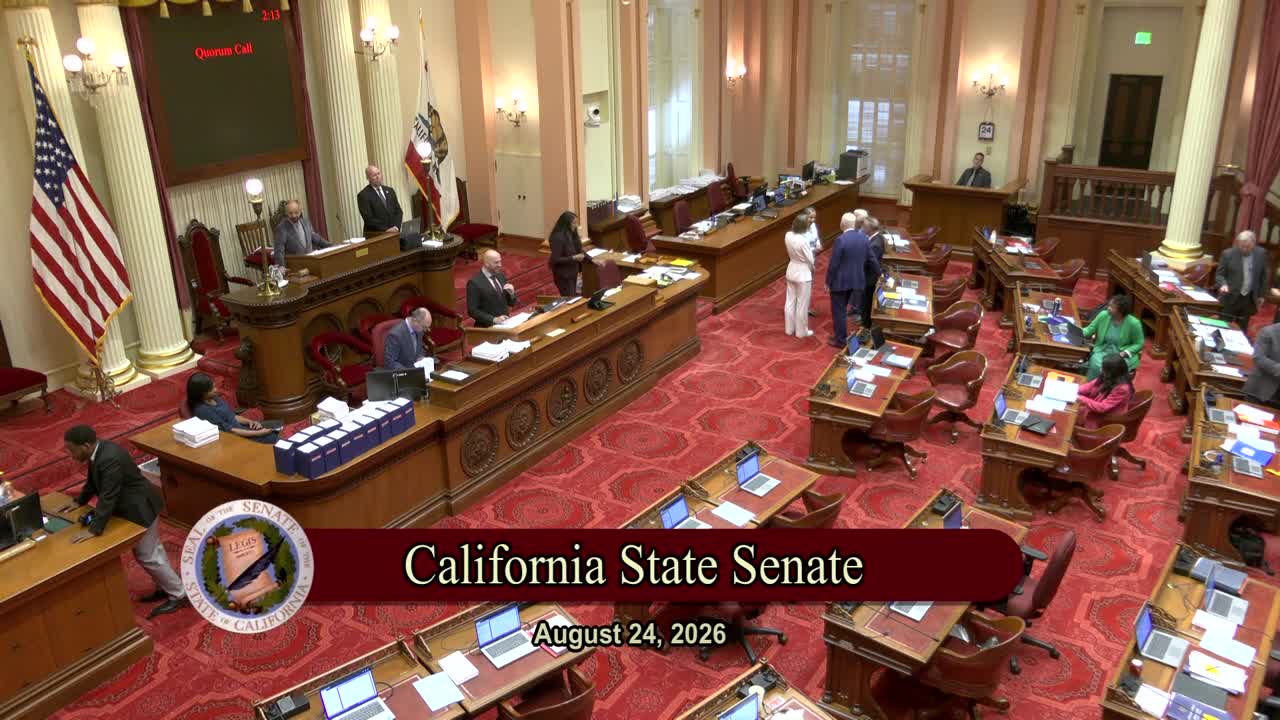 57SEC
Senate Floor
 1MIN
Assembly Floor
 9MIN
Assembly Standing Committee on Human Services
 2MIN
Senate Floor
Bill Author

Bill Co-Author(s):