SB 1039: Air resources: refinery-related community air monitoring system.
- Session Year: 2025-2026
- House: Senate
- Latest Version Date: 2026-03-19
Current Status:
In Progress
(2026-05-14: May 14 hearing: Held in committee and under submission.)
Introduced
In Committee
Awaiting First Chamber Vote
Passed First Chamber
In Committee
Awaiting Second Chamber Vote
Passed Second Chamber
Enacted
Existing law requires a refinery-related community air monitoring system to be installed near each refinery, as provided, and requires the monitoring system to include equipment capable of measuring compounds emitted to the atmosphere from refinery processes. Existing law requires owners or operators of petroleum refineries to develop, install, operate, and maintain a fence-line monitoring system in accordance with guidance developed by the appropriate regional air pollution control district or regional air quality management district.
This bill would prohibit require guidance adopted to implement the fence-line monitoring system from requiring the system to monitor emissions of substances that cannot be generated by the facility that is being monitored. to include a process for a petroleum refinery to provide substantial evidence to the appropriate air district to exclude a pollutant for monitoring in a fence-line monitoring system and would authorize the air district to exclude a pollutant for monitoring at a petroleum refinery fence-line monitoring system if the air district determines that substantial evidence supports certain considerations. Because the bill would require air districts to revise their guidance related to the fence-line monitoring system, this bill would impose a state-mandated local program.
The California Constitution requires the state to reimburse local agencies and school districts for certain costs mandated by the state. Statutory provisions establish procedures for making that reimbursement.
This bill would provide that no reimbursement is required by this act for a specified reason.
Existing law requires a refinery-related community air monitoring system to be installed near each refinery, as provided, and requires the monitoring system to include equipment capable of measuring compounds emitted to the atmosphere from refinery processes. Existing law requires owners or operators of petroleum refineries to develop, install, operate, and maintain a fence-line monitoring system in accordance with guidance developed by the appropriate regional air pollution control district or regional air quality management district.
This bill would prohibit guidance adopted to implement the fence-line monitoring system from requiring the system to monitor emissions of substances that cannot be generated by the facility that is being monitored. Because the bill would require air districts to revise their guidance related to the fence-line monitoring system, this bill would impose a state-mandated local program.
The California Constitution requires the state to reimburse local agencies and school districts for certain costs mandated by the state. Statutory provisions establish procedures for making that reimbursement.
This bill would provide that no reimbursement is required by this act for a specified reason.
(a)For purposes of this section, the following definitions apply:
(1)Refinery-related community air monitoring system means equipment that measures and records air pollutant concentrations in the ambient air at or near sensitive receptor locations near a petroleum refinery and that may be useful for estimating associated pollutant exposures and health risks and in determining trends in air pollutant levels over time.
(2)Fence-line monitoring system means equipment that measures and records air pollutant concentrations at or adjacent to a petroleum refinery and that may be useful for detecting or estimating the quantity of fugitive emissions, gas leaks, and other air emissions from the refinery.
(b)Notwithstanding Section 42708, and on or before January 1, 2020, a refinery-related community air monitoring system shall be installed near each refinery that is consistent with the requirements and guidance applicable to the siting of air quality monitors as established by the federal Environmental Protection Agency and that meets all of the following requirements:
(1)A district shall design, develop, install, operate, and maintain the refinery-related community air monitoring system, which shall be operated and maintained in accordance with guidance from the appropriate district. A district may contract with a third party to implement this paragraph.
(2)The refinery-related community air monitoring system shall include equipment capable of measuring compounds emitted to the atmosphere from refinery processes, as determined by the appropriate district.
(c)(1)On or before January 1, 2020, the owner or operator of a petroleum refinery shall develop, install, operate, and maintain a fence-line monitoring system in accordance with guidance developed by the appropriate district.
(2)Guidance adopted pursuant to this section shall not require a fence-line monitoring system to monitor emissions of substances that cannot be generated by the facility that is being monitored. include a process for a petroleum refinery to provide substantial evidence to the appropriate district to exclude a pollutant for monitoring in a fence-line monitoring system.
(3)Recognizing that emissions vary among refineries, a district may exclude a pollutant for monitoring at a petroleum refinery fence-line monitoring system if the district determines that substantial evidence supports any of the following:
(A)The pollutant would not be released through routine and nonroutine operations, activities, and processes of the petroleum refinery.
(B)Realtime monitoring of the pollutant is technologically infeasible.
(C)Technical justifications deemed appropriate by the district.
(d)The district and the owner or operator of a petroleum refinery shall collect real-time data from the refinery-related community air monitoring system and the fence-line monitoring system and shall maintain records of that data. To the extent feasible, the data generated by these systems shall be provided to the public as quickly as possible in a publicly accessible format.
(e)Guidance developed by a district pursuant to this section shall take into account technological capabilities and incorporate input from affected parties and, to the extent feasible, shall be informed by refinery-related guidance in the monitoring plan prepared pursuant to subdivision (b) of Section 42705.5.
(f)(1)Except as provided in paragraph (2), the owner or operator of a petroleum refinery shall be responsible for the costs associated with implementing this section.
(2)To the extent a refinery-related community air monitoring system is intentionally used by a district to monitor emissions from sources under its jurisdiction other than a petroleum refinery, the district shall ensure the costs of the system are shared in a reasonably equitable manner.
SEC. 2.No reimbursement is required by this act pursuant to Section 6 of Article XIIIB of the California Constitution because a local agency or school district has the authority to levy service charges, fees, or assessments sufficient to pay for the program or level of service mandated by this act, within the meaning of Section 17556 of the Government Code.
(a)For purposes of this section, the following definitions apply:
(1)Refinery-related community air monitoring system means equipment that measures and records air pollutant concentrations in the ambient air at or near sensitive receptor locations near a petroleum refinery and that may be useful for estimating associated pollutant exposures and health risks and in determining trends in air pollutant levels over time.
(2)Fence-line monitoring system means equipment that measures and records air pollutant concentrations at or adjacent to a petroleum refinery and that may be useful for detecting or estimating the quantity of fugitive emissions, gas leaks, and other air emissions from the refinery.
(b)Notwithstanding Section 42708, and on or before January 1, 2020, a refinery-related community air monitoring system shall be installed near each refinery that is consistent with the requirements and guidance applicable to the siting of air quality monitors as established by the federal Environmental Protection Agency and that meets all of the following requirements:
(1)A district shall design, develop, install, operate, and maintain the refinery-related community air monitoring system, which shall be operated and maintained in accordance with guidance from the appropriate district. A district may contract with a third party to implement this paragraph.
(2)The refinery-related community air monitoring system shall include equipment capable of measuring compounds emitted to the atmosphere from refinery processes, as determined by the appropriate district.
(c)(1)On or before January 1, 2020, the owner or operator of a petroleum refinery shall develop, install, operate, and maintain a fence-line monitoring system in accordance with guidance developed by the appropriate district.
(2)Guidance adopted pursuant to this section shall not require a fence-line monitoring system to monitor emissions of substances that cannot be generated by the facility that is being monitored.
(d)The district and the owner or operator of a petroleum refinery shall collect real-time data from the refinery-related community air monitoring system and the fence-line monitoring system and shall maintain records of that data. To the extent feasible, the data generated by these systems shall be provided to the public as quickly as possible in a publicly accessible format.
(e)Guidance developed by a district pursuant to this section shall take into account technological capabilities and incorporate input from affected parties and, to the extent feasible, shall be informed by refinery-related guidance in the monitoring plan prepared pursuant to subdivision (b) of Section 42705.5.
(f)(1)Except as provided in paragraph (2), the owner or operator of a petroleum refinery shall be responsible for the costs associated with implementing this section.
(2)To the extent a refinery-related community air monitoring system is intentionally utilized used by a district to monitor emissions from sources under its jurisdiction other than a petroleum refinery, the district shall ensure the costs of the system are shared in a reasonably equitable manner.
SEC. 2.No reimbursement is required by this act pursuant to Section 6 of Article XIIIB of the California Constitution because a local agency or school district has the authority to levy service charges, fees, or assessments sufficient to pay for the program or level of service mandated by this act, within the meaning of Section 17556 of the Government Code.
|
Date
|
Status
|
|---|---|
| May 14, 2026 | May 14 hearing: Held in committee and under submission. |
| May 8, 2026 | Set for hearing May 14. |
| Apr 20, 2026 | April 20 hearing: Placed on APPR. suspense file. |
| Apr 10, 2026 | Set for hearing April 20. |
| Apr 7, 2026 | April 13 hearing postponed by committee. |
| Mar 27, 2026 | Set for hearing April 13. |
| Mar 19, 2026 | Read second time and amended. Re-referred to Com. on APPR. |
| Mar 18, 2026 | From committee: Do pass as amended and re-refer to Com. on APPR. (Ayes 4. Noes 0. Page 3600.) (March 18). |
| Mar 18, 2026 | From committee: Do pass as amended and re-refer to Com. on APPR. (Ayes 4. Noes 0.) (March 18). |
| Feb 25, 2026 | Set for hearing March 18. |
| Feb 18, 2026 | Referred to Com. on E.Q. |
| Feb 12, 2026 | From printer. May be acted upon on or after March 14. |
| Feb 11, 2026 | Introduced. Read first time. To Com. on RLS. for assignment. To print. |
|
Date
|
Description
|
Location
|
Votes
|
|
|---|---|---|---|---|
| Apr 20, 2026 | Placed on suspense file | Senate Standing Committee on Appropriations |
Passed |
|
| Mar 18, 2026 | Do pass as amended, but first amend, and re-refer to the Committee on [Appropriations] | Senate Standing Committee on Environmental Quality |
Passed |
This list shows positions taken on this bill by organizations on the date displayed, which is linked to the original source.
Positions by individuals are not included.
|
Organization
|
Position
|
Date
|
|---|---|---|
| 350 Bay Area Action | ** Against | |
| Active San Gabriel Valley | ** Against | |
| Asian Pacific Environmental Network | ** Against | |
| Benicians for a Safe and Healthy Community | ** Against | |
| California Air Pollution Control Officers Association | ** Against | |
| California Environmental Voters | ** Against | |
| California Independent Petroleum Association (Cipa) | ** Support | |
| Center For Environmental Health | ** Against | |
| Center on Race, Poverty & the Environment | ** Against | |
| Clean Water Action | ** Against | |
| Coalition For Clean Air | ** Against | |
| Communities for a Better Environment | ** Against | |
| Earthjustice | ** Against | |
| East Yard Communities for Environmental Justice | ** Against | |
| Facts Families Advocating for Chemical and Toxics Safety | ** Against | |
| Good Neighbor Steering Committee | ** Against | |
| San Francisco Baykeeper | ** Against | |
| Sierra Club California | ** Against | |
| Union Of Concerned Scientists | ** Against |
SENATE COMMITTEE ON
Senator Sabrina Cervantes, Chair
2025 - 2026 Regular Session
SB 1039 (Grove) - Air resources: refinery-related community air monitoring system
Version: | Policy Vote: |
Urgency: | Mandate: |
Hearing Date: | Consultant: |
Bill Summary:
This bill would require guidance for refinery fenceline air monitoring systems to include a process for a petroleum refinery to provide substantial evidence to the appropriate air district to exclude a pollutant for monitoring in a fence-line monitoring system and would authorize the air district to exclude a pollutant for monitoring at a petroleum refinery fence-line monitoring system if the air district determines that substantial evidence supports certain considerations.
Fiscal Impact:
- To the extent that air districts must modify existing rules as a result of the provisions of this bill, unknown but potentially significant costs (various funds) for the state agencies supporting air districts.
Background:
Petroleum refineries generate various emissions that can deteriorate air quality and impact the health and safety of on-site workers and nearby communities. The emissions generated depends on what the facility is producing, the processing techniques used, equipment and its condition, and at times, incidents or accidents that occur at the facility.
Following two explosions at the Chevron Richmond refinery in 2012 and the ExxonMobil Torrance refinery in 2015, AB 1647 (Muratsuchi, Chapter 589, Statutes of 2017) was passed, which required the implementation of fenceline monitoring systems at refineries and community air monitoring systems nearby the facilities. The intent of the bill was to increase community awareness of air quality impacts, and to identify sources of pollution, appropriately mitigate them, and understand when they may be hazardous, especially in emergency situations.
In particular, fenceline monitoring systems can be useful in detecting fugitive emissions and gas leaks. If emissions detected at the fence are abnormally high from a leak or malfunctioning equipment, the facility can be responsive and promptly address the source of emissions. The 2019 report issued by the Interagency Refinery Task Force provided recommendations for robust air monitoring systems that includes fenceline monitoring that would allow for the rapid detection of potentially hazardous releases and equip the refinery and emergency responders with the necessary information to make the appropriate safety decisions. Furthermore, data collected for long time periods can provide information on chronic exposures and support efforts to reduce routine releases.
AB 1647 also required the air districts to develop guidance for the refineries’ implementation of their monitoring systems and that both the air districts and refineries make the monitoring data publicly accessible. All of California’s remaining refineries covered by AB 1647 fall under the jurisdiction of either the Bay Area Air Quality Management District (BAAQMD), South Coast Air Quality Management District (SCAQMD), or San Joaquin Valley Air Pollution Control District (Valley Air District). Each of these air districts have published guidance that outlines the requirements for fenceline air monitoring plans, pollutants to be monitored, siting considerations, best available monitoring technologies, quality assurance and control, and data transparency and public notification.
The implementation of AB 1647 faced many challenges. The guidance developed by the air districts varied, and smaller emitting refineries were excluded from regulation, which led to litigation. Following a 2022 report by Earthjustice that compared the guidance and implementation of AB 1647 across the three air districts and highlighted gaps and shortfalls of the policy, AB 674 (Gonzalez, 2023) attempted to close some of those gaps by ensuring the provisions of AB 1647 applied to all emitting facilities, standardizing the monitoring requirements for specific pollutants, and improving data transparency through reporting and notification requirements.
Notably, SB 674 included an authorization for an air district to exclude a pollutant for monitoring in either the fenceline or community air monitoring systems if the refinery provided substantial evidence that real-time monitoring of the pollutant was technologically infeasible, or the pollutant would not be released by refining processes during routine and non-routine operations at the facility. SB 674 included this exemption process because the bill also required all refineries to monitor all 18 toxic chemicals identified by OEHHA, recognizing that not every refinery emits all of the pollutants. This exemption process was already established in the air district guidelines for fenceline monitoring, and SB 674 would have codified it. SB 674 was vetoed by the Governor, however, the guidelines from each air district maintain the opportunity for refineries to provide rationale to exclude monitoring certain pollutants.
Proposed Law:
This bill would require guidance for refinery fenceline air monitoring systems to include a process for a petroleum refinery to provide substantial evidence to the appropriate air district to exclude a pollutant for monitoring in a fence-line monitoring system and would authorize the air district to exclude a pollutant for monitoring at a petroleum refinery fence-line monitoring system if the air district determines that substantial evidence supports certain considerations. It would allow a district to exclude a pollutant for monitoring at a petroleum refinery fence-line monitoring system if the district determines that substantial evidence supports any of the following:
(A) The pollutant would not be released through routine and nonroutine operations, activities, and processes of the petroleum refinery.
(B) Realtime monitoring of the pollutant is technologically infeasible.
(C) Technical justifications deemed appropriate by the district.
Related Legislation:
SB 674 (Gonzalez, 2023) would have specified covered facilities and monitoring requirements, enhanced data transparency and public notification, required auditing and root cause analyses, and made related provisions for refinery-related monitoring systems. This bill was vetoed by the Governor.
AB 1647 (Muratsuchi, Chapter 589, Statutes of 2017) established requirements for refinery-related community air monitoring systems and fenceline monitoring systems.
Staff Comments:
Although air districts themselves are not state agencies, they rely on state funding and cooperation with state agencies, like the California Air Resources Board (CARB). Current monitoring networks are a result of recommendations made in collaboration between CARB and Air Districts. CARB would likely need to provide air district staff with additional guidance and support on issues that may come up in response to changes in state law. This bill would potentially require air districts to modify existing rules and guidance material to align with state law. Increased litigation could further fiscally burden air districts, and in turn, increase reliance on state funds or resources to fill gaps.
-- END --
SENATE COMMITTEE ON ENVIRONMENTAL QUALITY
Senator Blakespear, Chair
2025 - 2026 Regular
Bill No: SB 1039
Author: | Grove | ||
Version: | 2/11/2026 | Hearing Date: | 3/18/2026 |
Urgency: | No | Fiscal: | Yes |
Consultant: | Taylor McKie | ||
SUBJECT: Air resources: refinery-related community air monitoring system
DIGEST: Prohibits guidance for refinery fenceline air monitoring systems from requiring refineries to monitor emissions the facility cannot generate.
ANALYSIS:
Existing federal law:
- Establishes the National Ambient Air Quality Standards (NAAQS) for six criteria pollutants through the Federal Clean Air Act (CAA) and its implementing regulations, designates air basins that do not achieve NAAQS as nonattainment, allows only California to set vehicular emissions standards stricter than the federal government, and allows other states to adopt either the federal or California vehicular emissions standards. (42 United States Code (USC) § 7401 et seq.)
- Requires the owner or operator of a petroleum refinery that is a major source under the CAA to report biweekly sampling results for benzene from fenceline monitoring systems and conduct a root cause analysis if a specified threshold is exceeded (40 Code of Federal Regulations (CFR) § 63.658)
Existing state law:
- Establishes the California Air Resources Board (CARB) as the air pollution control agency in California and requires CARB, among other things, to control emissions from a wide array of mobile sources and coordinate with local air districts to control emissions from stationary sources in order to implement the CAA. (Health and Safety Code (HSC) § 39500 et seq.)
- Requires, subject to the powers and duties of CARB, the local air districts to adopt and enforce rules and regulations to achieve and maintain the state and federal ambient air quality standards in all areas affected by emission sources under their jurisdiction, and to enforce all applicable provisions of state and federal law. (HSC §40001)
- Provides shared authority over toxic air contaminant (TAC) emissions between CARB and local air districts. (HSC §39650 et seq.)
- Required, pursuant to AB 617 (C. Garcia, Chapter 136, Statutes of 2017), by October 1, 2018, CARB to prepare a monitoring plan regarding the availability and effectiveness of air quality monitoring technologies and existing community air monitoring systems, including the need for establishing additional community air monitoring systems, and to update that plan every five years. (HSC § 42705.5)
- Defines a “refinery-related community air monitoring system” to mean equipment that measures and records air pollutant concentrations in the ambient air at or near sensitive receptor locations near a petroleum refinery and that may be useful for estimating associated pollutant exposures and health risks and determining trends in air pollution levels over time. (HSC § 42705.6(a)(1))
- Defines a “fence-line monitoring system” to mean equipment that measures and records air pollutant concentrations at or adjacent to a petroleum refinery and that may be useful for detecting or estimating the quantity of fugitive emissions, gas leaks, and other air emissions from the refinery. (HSC § 42705.6(a)(2))
- Required, pursuant to AB 1647 (Muratsuchi, Chapter 589, Statutes of 2017), by January 1, 2020, a refinery-related community air monitoring system to be installed near each refinery that is consistent with the requirements and guidance as established by the U.S. Environmental Protection Agency (U.S. EPA) and that meets the following criteria:
- The air monitoring system must be designed, developed, installed, operated, and maintained by the respective air district; and
- The air monitoring system must include equipment capable of measuring compounds, determined by the respective air district, emitted into the atmosphere from refinery processes. (HSC § 42705.6(b))
- Required, by January 1, 2020, the owner or operator of a petroleum refinery to develop, install, operate, and maintain a fence-line monitoring system in accordance with guidance developed by the respective air district. (HSC § 42705.6(c))
- Requires the air districts and the owner or operator of a petroleum refinery to collect real-time data from both air monitoring systems, maintain the data records, and make the data publicly accessible. (HSC § 42705.6(d))
- Requires the guidance for fenceline monitoring at petroleum refineries developed by an air district to take into account technological capabilities, incorporate input from affected parties, and be informed by refinery related guidance in the monitoring plan. (HSC § 42705.6(e))
- Requires the owner or operator of a petroleum refinery to be responsible for the costs of implementing both air monitoring systems, unless the refinery-related community air monitoring system is intentionally used by an air district to monitor emissions from other emission sources, then the costs will be shared equitably as determined by the district. (HSC § 42705.6(f))
This bill:
- Prohibits the guidance developed and adopted by the appropriate air district from requiring the fence-line monitoring system to monitor emissions of substances that cannot be generated by the facility that is being monitored.
- Makes other non-substantive amendments.
Background
- Petroleum refinery emissions. Petroleum refineries generate various emissions that can deteriorate air quality and impact the health and safety of on-site workers and nearby communities. The emissions generated depends on what the facility is producing, the processing techniques used, equipment and its condition, and at times, incidents or accidents that occur at the facility.[1] Some of the major categories of emissions originating from refineries include combustion, process, and fugitive emissions. Notably, fugitive emissions are unintended leaks from equipment, pipelines and other process components and are more challenging to identify and manage.
In a 2019 report, the Office of Environmental Health Hazard Assessment (OEHHA) listed 188 chemicals that are emitted from California’s refineries and identified 18 chemicals as top candidates for air monitoring, based on their toxicity, demonstrated level of emissions, and involvement in refinery processes and incidences.[2] Exposure to many of these chemicals can contribute to adverse health impacts to those proximal to the facility and its operations, including but not limited to respiratory diseases, neurological effects, cardiovascular impacts, and cancer. For some emissions, short term exposures to elevated levels can lead to increases in hospitalizations and premature death.1,[3]
- Establishing air monitoring systems. Following two explosions at the Chevron Richmond refinery in 2012 and the ExxonMobil Torrance refinery in 2015, AB 1647 (Muratsuchi, Chapter 589, Statutes of 2017) was passed, which required the implementation of fenceline monitoring systems at refineries and community air monitoring systems nearby the facilities. The intent of the bill was to increase community awareness of air quality impacts, and to identify sources of pollution, appropriately mitigate them, and understand when they may be hazardous, especially in emergency situations.
In particular, fenceline monitoring systems can be useful in detecting fugitive emissions and gas leaks. If emissions detected at the fence are abnormally high from a leak or malfunctioning equipment, the facility can be responsive and promptly address the source of emissions.[4] The 2019 report issued by the Interagency Refinery Task Force provided recommendations for robust air monitoring systems that includes fenceline monitoring that would allow for the rapid detection of potentially hazardous releases and equip the refinery and emergency responders with the necessary information to make the appropriate safety decisions. Furthermore, data collected for long time periods can provide information on chronic exposures and support efforts to reduce routine releases.[5]
AB 1647 also required the air districts to develop guidance for the refineries’ implementation of their monitoring systems and that both the air districts and refineries make the monitoring data publicly accessible. All of California’s remaining refineries covered by AB 1647 fall under the jurisdiction of either the Bay Area Air Quality Management District (BAAQMD), South Coast Air Quality Management District (SCAQMD), or San Joaquin Valley Air Pollution Control District (Valley Air District). Each of these air districts have published guidance that outlines the requirements for fenceline air monitoring plans, pollutants to be monitored, siting considerations, best available monitoring technologies, quality assurance and control, and data transparency and public notification.[6],[7],[8]
- Hmm, does this look familiar? The implementation of AB 1647 faced many challenges. The guidance developed by the air districts varied, and smaller emitting refineries were excluded from regulation, which led to litigation. Following a 2022 report by Earthjustice that compared the guidance and implementation of AB 1647 across the three air districts and highlighted gaps and shortfalls of the policy,[9] AB 674 (Gonzalez, 2023) attempted to close some of those gaps by ensuring the provisions of AB 1647 applied to all emitting facilities, standardizing the monitoring requirements for specific pollutants, and improving data transparency through reporting and notification requirements.
Notably, SB 674 included an authorization for an air district to exclude a pollutant for monitoring in either the fenceline or community air monitoring systems if the refinery provided substantial evidence that real-time monitoring of the pollutant was technologically infeasible, or the pollutant would not be released by refining processes during routine and non-routine operations at the facility. SB 674 included this exemption process because the bill also required all refineries to monitor all 18 toxic chemicals identified by OEHHA, recognizing that not every refinery emits all of the pollutants.2 This exemption process was already established in the air district guidelines for fenceline monitoring, and SB 674 would have codified it. SB 674 was vetoed by the Governor, however, the guidelines from each air district maintain the opportunity for refineries to provide rationale to exclude monitoring certain pollutants.
This bill takes a different approach to resolving the same issue considered by the provisions in SB 674. It would expressly prohibit the air district guidance from requiring monitoring pollutants that cannot be generated by the facility, rather than authorizing the air district to develop a process based on substantial evidence to exclude a pollutant from monitoring.
Comments
- Purpose of Bill. According to the author, “SB 1039 fixes existing refinery air monitoring requirements to ensure that monitoring systems are practical, facility-specific, and focused on pollutants a refinery can actually emit. Current guidance requires facilities to monitor substances that are not generated by their operations. This bill clarifies that fence-line monitoring guidance cannot require tracking substances that a facility cannot produce. SB 1039 promotes accurate, meaningful air monitoring while reducing unnecessary regulatory burden and associated costs.”
- A process to opt-out. Currently, a refinery is required to monitor pollutants listed in the guidance of the appropriate air district. The guidance of SCAQMD and Valley Air District requires refineries in their jurisdiction to monitor all 18 pollutants listed by OEHHA, whereas BAAQMD only requires refineries in their jurisdiction to measure only 5 of those 18 pollutants and lists a few other compounds for them to consider in their monitoring system. Federally, petroleum refineries that are major sources under the CAA are required to monitor and report benzene levels at the fenceline, which is one of the pollutants all refineries are required to monitor per the guidance of the three air districts.
A refinery may elect to opt-out of monitoring requirements for certain pollutants as not all refineries are the same. California’s refineries vary in size and the types of products they produce. This can involve differences in the processes or equipment that facilities have, thus differences in the types of pollutants they emit. For example, if a facility does not have a fluid catalytic cracking unit, which converts crude oil into petroleum products such as gasoline, it is less likely to emit heavy metals such as cadmium, manganese, and nickel, which are included as part of the 18 pollutants listed by OEHHA. A refinery may also opt-out if technologies to monitor certain pollutants are unavailable or for any other technical justification subject to the discretion of the air district.
The ability to opt-out saves refineries money. Facilities have indicated that each monitoring device can cost between $100,000-$500,000 with ongoing maintenance costs of $150,000 or more per year. These costs can be reduced by lowering the number of pollutants monitored for, especially if a refinery does not emit certain compounds, but it is extremely important to ensure that the discretion to exclude certain compounds from monitoring lies with the air districts.
There are various considerations an air district may raise in reviewing an exclusion request from a refinery. Pollutants emitted from the facility can react and form secondary pollutants that might be relevant for fenceline monitoring.[10] Air districts can also evaluate whether facilities would have the potential to generate certain pollutants, especially unintended emissions such as fugitive emissions or emissions generated from accidents or incidents. Because fenceline monitoring is intended to detect the possibility of such events, serve as an early indicator for response actions in emergencies, and allow nearby communities to take the appropriate precautions, it is important to ensure monitoring systems are fully comprehensive to be the most protective of the surrounding communities. Additionally, air districts have responded to requests for exclusions based on the public health risk level of certain pollutants emitted by facilities, and it is important that such determinations are made with their discretion and within the established process.
Because there is already a process in place to preclude refineries from certain monitoring requirements, the proposed provision may be redundant. It is also unclear how the proposed provision could impact the process in place. However, if the committee should wish to move forward with this proposal, aligning the law with the current guidelines could ensure consistency with the air districts’ current practices. The author and committee may wish to consider codifying the existing opt-out process air districts use to grant exemptions to ensure consistency in the decision-making process to exclude refineries from certain monitoring requirements.
- Generating emissions. The proposed provision targets the emissions of substances that cannot be generated by the facility. While it might seem pedantic to closely examine this language, minor changes to technical language can have major results. This raises a few questions about the implications of this bill. Would pollutants from both routine and non-routine emissions be considered as emissions generated or not generated by the facility? Is generation limited to processes and equipment of the facility or does it consider unintended incidents, malfunctions, accidents, or fugitive emissions from leaks? Does “generated” hold the same meaning as “emitted”? The proposed language may be considered ambiguous and could potentially create a loophole whereby bona fide emissions of pollutants could be argued to be excluded from monitoring, thus final decisions regarding monitoring requirements and exclusions should be left to the air districts rather than set firmly in statute.
- Jumping the gun. As proposed, prohibiting air district guidance from requiring facilities to monitor pollutants that are not generated by the facility doesn’t quite fit into the current regulatory framework. Currently, the guidance only lists the pollutants that are required to be monitored by all petroleum refineries in the respective air district’s jurisdiction. The opt-out process allows individual refineries to exclude pollutants from that list, at the discretion of the air district. The guidance is not refinery specific and is intended to support each facility in completing their fenceline air monitoring plans, as opposed to precluding them from certain requirements. Such exclusions are also fully dependent on the approval of the air districts, based on evidence provided by the refineries. The intent of the proposed amendment is to clarify that a requirement to monitor specified pollutants does not apply under a certain circumstance, and such a requirement would fit well into the current regulatory framework if made contingent on the established exclusion process. The author and committee may wish to consider precluding refineries from monitoring certain pollutants only if the appropriate air district determines that the exclusion is justified, instead of requiring that the guidance precludes refineries from monitoring certain pollutants.
- Committee amendments. Staff recommends the committee adopt the bolded amendments contained in comments 2 & 4 above.
Related/Prior Legislation
SB 674 (Gonzalez, 2023) would have specified covered facilities and monitoring requirements, enhanced data transparency and public notification, required auditing and root cause analyses, and made related provisions for refinery-related monitoring systems. This bill was vetoed by the Governor.
AB 1647 (Muratsuchi, Chapter 589, Statutes of 2017) established requirements for refinery-related community air monitoring systems and fenceline monitoring systems.
SOURCE:
Author
SUPPORT:
California Independent Petroleum Association (CIPA)
OPPOSITION:
350 Bay Area Action
Active San Gabriel Valley
Asian Pacific Environmental Network
Benicians for a Safe and Healthy Community
California Air Pollution Control Officers Association
California Environmental Voters
Center for Environmental Health
Center on Race, Poverty & the Environment
Clean Water Action
Coalition for Clean Air
Communities for a Better Environment
Earthjustice
East Yard Communities for Environmental Justice
Facts Families Advocating for Chemical and Toxics Safety
Good Neighbor Steering Committee
San Francisco Baykeeper
Sierra Club California
Union of Concerned Scientists
-- END --
Otitolaiye, VO., Al-Harethiya, GM. (2022). Impacts of petroleum refinery emissions on the health and safety of local residents. ↑
Office of Environmental Health Hazard Assessment. (2019). Analysis of Refinery Chemical Emissions and Health Effects. ↑
Tavella, R., et. al. (2025). A Review of Air Pollution from Petroleum Refining and Petrochemical Industrial Complexes: Sources, Key Pollutants, Health Impacts, and Challenges. ↑
Environmental Integrity Project. (2020). Monitoring for Benzene at Refinery Fencelines. ↑
California Air Resources Board and California Air Pollution Control Officers Association. (2019). Refinery Emergency Air Monitoring Assessment Report: Objective 2: Evaluation of Air Monitoring Capabilities, Gaps, and Potential Enhancements. ↑
Bay Area Air Quality Management District. (2016). Air Monitoring Guidelines for Petroleum Refineries. ↑
South Coast Air Quality Management District. (2024). Rule 1180 and Rule 1180.1 Fenceline Air Monitoring Plan Guidelines. ↑
San Joaquin Valley Air Pollution Control District. (2022). Rule 4460: Petroleum Refinery Fence-line Air Monitoring Plan Guidelines. ↑
Fuhrmann, L., et. al. (2022). Crossing the Fenceline: Critical Reforms to California’s Petroleum Refinery Emissions Monitoring Law. ↑
Ragothaman, A. and Anderson, W. (2017). Air Quality Impacts of Petroleum Refining and Petrochemical Industries. ↑
Discussed in Hearing
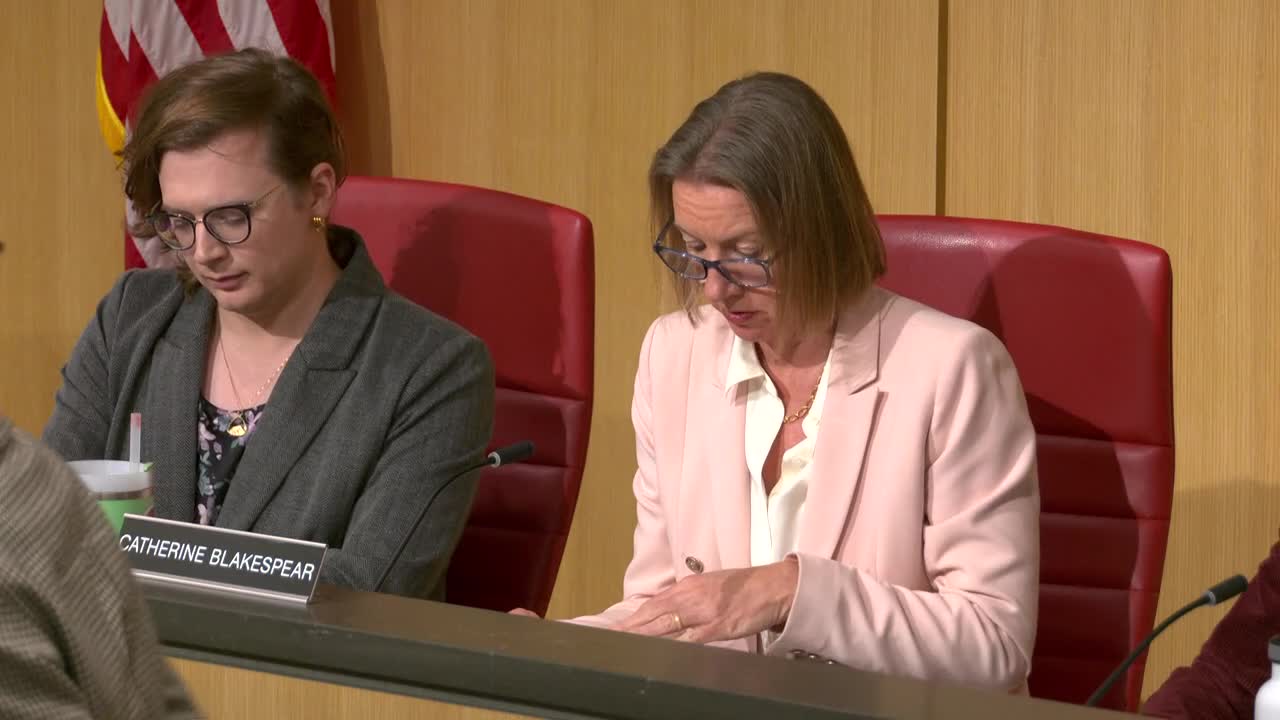 33MIN
Senate Standing Committee on Environmental Quality
Bill Author

Bill Co-Author(s):