SB 1048: State Seal of Climate Literacy.
- Session Year: 2025-2026
- House: Senate
- Latest Version Date: 2026-09-29
Current Status:
Passed
(2026-09-29: Chaptered by Secretary of State. Chapter 819, Statutes of 2026.)
Introduced
In Committee
Awaiting First Chamber Vote
Passed First Chamber
In Committee
Awaiting Second Chamber Vote
Passed Second Chamber
Enacted
Existing law establishes the State Seal of Civic Engagement to recognize pupils who have demonstrated excellence in civics education and participation and have demonstrated an understanding of the United States Constitution, the California Constitution, and the democratic system of government, as provided, and establishes the State Seal of Biliteracy to recognize high school graduates who have attained a high level of proficiency in speaking, reading, and writing in one or more languages in addition to English.
Commencing January 1, 2027, existing law vests all executive and administrative functions of the State Department of Education in an Education Commissioner.
This bill would establish the State Seal of Climate Literacy for the purpose of giving high school pupils personal agency to help them and their communities understand and adapt to the effects of climate change. The bill would require the Education Commissioner, on or before December 31, 2027, to recommend to the State Board of Education criteria for awarding a State Seal of Climate Literacy to pupils who have demonstrated mastery in climate literacy disciplines, green skills or technical green skills, as defined, and any and all other best practices for climate literacy. The bill would require the Commissioner, in developing the criteria, to consider including (1) the successful completion of at least 2 approved courses in the area of climate literacy and (2) the successful completion and presentation of a climate literacy final experiential learning project, as provided. The bill would require the state board, on or before January 31, 2029, to adopt, or adopt with modifications, the criteria recommended by the Commissioner. The bill would require the Commissioner to, among other things, prepare and deliver to participating local educational agencies an appropriate insignia to be affixed to the diploma or transcript of the pupil indicating that the pupil has been awarded a State Seal of Climate Literacy by the Commissioner. The bill would make a local educational agencys participation in awarding the State Seal of Climate Literacy voluntary. For a local educational agency that chooses to participate, the bill would require the local educational agency, on or after the date that the state board adopts criteria, to, among other things, establish a process for determining if a pupil has met the criteria necessary to earn a State Seal of Climate Literacy.
Existing law establishes the State Seal of Civic Engagement to recognize pupils who have demonstrated excellence in civics education and participation and have demonstrated an understanding of the United States Constitution, the California Constitution, and the democratic system of government, as provided, and establishes the State Seal of Biliteracy to recognize high school graduates who have attained a high level of proficiency in speaking, reading, and writing in one or more languages in addition to English.
Commencing January 1, 2027, existing law vests all executive and administrative functions of the State Department of Education in an Education Commissioner.
This bill would establish the State Seal of Climate Literacy for the purpose of giving high school pupils personal agency to help them and their communities understand and adapt to the effects of climate change. The bill would require the Superintendent of Public Instruction, Education Commissioner, on or before July 1, December 31, 2027, to recommend to the State Board of Education criteria for awarding a State Seal of Climate Literacy to pupils who have demonstrated mastery in climate literacy disciplines, green skills or technical green skills, as defined, and any and all other best practices for climate literacy. The bill would require the Superintendent, Commissioner, in developing the criteria, to consider including (1) the successful completion of at least 2 approved courses in the area of climate literacy and (2) the successful completion and presentation of a climate literacy final experiential learning project, as provided. The bill would require the state board, on or before January 1, 2028, 31, 2029, to adopt, or adopt with modifications, the criteria recommended by the Superintendent. Commissioner. The bill would require the Superintendent Commissioner to, among other things, prepare and deliver to participating local educational agencies an appropriate insignia to be affixed to the diploma or transcript of the pupil indicating that the pupil has been awarded a State Seal of Climate Literacy by the Superintendent. Commissioner. The bill would make a local educational agencys participation in awarding the State Seal of Climate Literacy voluntary. For a local educational agency that chooses to participate, the bill would require the local educational agency, beginning with the 202829 school year, on or after the date that the state board adopts criteria, to, among other things, establish a process for determining if a pupil has met the criteria necessary to earn a State Seal of Climate Literacy.
Existing law establishes the State Seal of Civic Engagement to recognize pupils who have demonstrated excellence in civics education and participation and have demonstrated an understanding of the United States Constitution, the California Constitution, and the democratic system of government, as provided, and establishes the State Seal of Biliteracy to recognize high school graduates who have attained a high level of proficiency in speaking, reading, and writing in one or more languages in addition to English.
This bill would establish the State Seal of Climate Literacy for the purpose of giving high school pupils personal agency to help them and their communities understand and adapt to the effects of climate change. The bill would require the Superintendent of Public Instruction, on or before July 1, 2027, to recommend to the State Board of Education criteria for awarding a State Seal of Climate Literacy to pupils who have demonstrated mastery in climate literacy disciplines, green skills or technical green skills, as defined, and any and all other best practices for climate literacy. The bill would require the Superintendent, in developing the criteria, to consider including (1) the successful completion of at least 2 approved courses in the area of climate literacy and (2) the successful completion and presentation of a climate literacy final experiential learning project, as provided. The bill would require the Superintendent to also recommend to the state board the criteria necessary to award a State Seal of Climate Literacy with specified distinctions. The bill would require the state board, on or before November 15, 2027, January 1, 2028, to adopt, or adopt with modifications, the criteria recommended by the Superintendent. The bill would require the Superintendent to, among other things, prepare and deliver to participating local educational agencies an appropriate insignia to be affixed to the diploma or transcript of the pupil indicating that the pupil has been awarded a State Seal of Climate Literacy by the Superintendent. The bill would make a local educational agencys participation in awarding the State Seal of Climate Literacy voluntary. For a local educational agency that chooses to participate, the bill would require the local educational agency agency, beginning with the 202829 school year, to, among other things, establish a process for determining if a pupil has met the criteria necessary to earn a State Seal of Climate Literacy and on or before September 15, 2028, and on or before September 15 of each year thereafter, provide specified data to the State Department of Education. Literacy.
Existing law establishes the State Seal of Civic Engagement to recognize pupils who have demonstrated excellence in civics education and participation and have demonstrated an understanding of the United States Constitution, the California Constitution, and the democratic system of government, as provided, and establishes the State Seal of Biliteracy to recognize high school graduates who have attained a high level of proficiency in speaking, reading, and writing in one or more languages in addition to English.
This bill would establish the State Seal of Climate Literacy for the purpose of giving high school pupils personal agency to help them and their communities understand and adapt to the effects of climate change. The bill would require the Superintendent of Public Instruction, on or before March 15, July 1, 2027, to recommend to the State Board of Education criteria for awarding a State Seal of Climate Literacy to pupils who have demonstrated mastery in climate literacy disciplines, green skills or technical green skills, as defined, and any and all other best practices for climate literacy. The bill would require the Superintendent, in developing the criteria, to consider including (1) the successful completion of at least 2 approved courses in the area of climate literacy and (2) the successful completion and presentation of a climate literacy final experiential learning project, as provided. The bill would require the Superintendent to also recommend to the state board the criteria necessary to award a State Seal of Climate Literacy with specified distinctions. The bill would require the state board, on or before May 1, November 15, 2027, to adopt, or adopt with modifications, the criteria recommended by the Superintendent. The bill would require the Superintendent to, among other things, prepare and deliver to participating local educational agencies an appropriate insignia to be affixed to the diploma or transcript of the pupil indicating that the pupil has been awarded a State Seal of Climate Literacy by the Superintendent. The bill would make a local educational agencys participation in awarding the State Seal of Climate Literacy voluntary. For a local educational agency that chooses to participate, the bill would require the local educational agency to, among other things, establish a process for determining if a pupil has met the criteria necessary to earn a State Seal of Climate Literacy and on or before September 15, 2027, 2028, and on or before September 15 of each year thereafter, provide specified data to the State Department of Education.
Existing law establishes the State Seal of Civic Engagement to recognize pupils who have demonstrated excellence in civics education and participation and have demonstrated an understanding of the United States Constitution, the California Constitution, and the democratic system of government, as provided, and establishes the State Seal of Biliteracy to recognize high school graduates who have attained a high level of proficiency in speaking, reading, and writing in one or more languages in addition to English.
This bill would establish the State Seal of Climate Literacy to recognize for the purpose of giving high school graduates pupils personal agency to help them and their communities understand and adapt to the effects of climate change. The bill would require the Superintendent of Public Instruction, on or before March 15, 2027, to recommend to the State Board of Education criteria for awarding a State Seal of Climate Literacy to pupils who have demonstrated mastery in climate literacy disciplines and have attained disciplines, green skills or technical green skills, as defined. defined, and any and all other best practices for climate literacy. The bill would require the Superintendent of Public Instruction to, Superintendent, in developing the criteria, to consider including (1) the successful completion of at least 2 approved courses in the area of climate literacy and (2) the successful completion and presentation of a climate literacy final experiential learning project, as provided. The bill would require the Superintendent to also recommend to the state board the criteria necessary to award a State Seal of Climate Literacy with specified distinctions. The bill would require the state board, on or before May 1, 2027, to adopt, or adopt with modifications, the criteria recommended by the Superintendent. The bill would require the Superintendent to, among other things, prepare and deliver to participating local educational agencies an appropriate insignia to be affixed to the diploma or transcript of the pupil indicating that the pupil has been awarded a State Seal of Climate Literacy by the Superintendent. The bill would make a local educational agencys participation in awarding the State Seal of Climate Literacy voluntary. For a local educational agency that chooses to participate, the bill would require the local educational agency to (1) award a State Seal of Climate Literacy to a pupil that successfully completes at least 2 courses in the area of climate literacy and a climate literacy final experiential learning project that focuses on the effects of climate change in the pupils local community, as provided, (2) maintain appropriate records in order to identify pupils who have earned a State Seal of Climate Literacy, and (3) to, among other things, establish a process for determining if a pupil has met the criteria necessary to earn a State Seal of Climate Literacy and on or before July 1, September 15, 2027, and on or before July 1 September 15 of each year thereafter, provide specified data to the State Department of Education. The bill would require the department, on or before October 1, 2027, and on or before October 1 of each year thereafter, to submit a report to the Legislature with the data collected by participating local educational agencies.
Existing law establishes the State Seal of Civic Engagement to recognize pupils who have demonstrated excellence in civics education and participation and have demonstrated an understanding of the United States Constitution, the California Constitution, and the democratic system of government, as provided, and establishes the State Seal of Biliteracy to recognize high school graduates who have attained a high level of proficiency in speaking, reading, and writing in one or more languages in addition to English.
This bill would establish the State Seal of Climate Literacy to recognize high school graduates who have demonstrated mastery in climate literacy disciplines and have attained green skills or technical green skills, as defined. The bill would require the Superintendent of Public Instruction to, among other things, prepare and deliver to participating local educational agencies an appropriate insignia to be affixed to the diploma or transcript of the pupil indicating that the pupil has been awarded a State Seal of Climate Literacy by the Superintendent. The bill would make a local educational agencys participation in awarding the State Seal of Climate Literacy voluntary. For a local educational agency that chooses to participate, the bill would require the local educational agency to (1) award a State Seal of Climate Literacy to a pupil that successfully completes at least 2 courses in the area of climate literacy and a climate literacy final experiential learning project that focuses on the effects of climate change in the pupils local community, as provided, (2) maintain appropriate records in order to identify pupils who have earned a State Seal of Climate Literacy, and (3) on or before July 1, 2027, and on or before July 1 of each year thereafter, provide specified data to the State Department of Education. The bill would require the department, on or before October 1, 2027, and on or before October 1 of each year thereafter, to submit a report to the Legislature with the data collected by participating local educational agencies.
(a)The State Seal of Climate Literacy is established for the purpose of giving high school pupils personal agency to help them and their communities understand and adapt to the effects of climate change.
(b)A local educational agencys participation in awarding the State Seal of Climate Literacy to pupils under this article is voluntary.
51481.(a)On or before December 31, 2027, the Commissioner shall recommend to the state board criteria for awarding a State Seal of Climate Literacy to pupils who have demonstrated mastery in climate literacy disciplines, green skills or technical green skills, and any and all other best practices for climate literacy. In developing criteria for the State Seal of Climate Literacy, the Commissioner shall consider including both of the following criteria:
(1)Successful completion of at least two approved courses in the area of climate literacy. Approved courses may include, but are not limited to, any of the following:
(A)High-school-level or advanced placement courses that cover physical science, life science, or earth science.
(B)Dual or concurrent enrollment, career technical education, or high-school-level courses that integrate climate literacy.
(C)Courses that integrate the states environmental principles and concepts pursuant to Section 71301 of the Public Resources Code or courses that integrate the states Seeds to Solutions curriculum.
(D)Courses that integrate the states Native American Studies model curriculum developed pursuant to Section 51226.9.
(2)Successful completion and presentation of a climate literacy final experiential learning project that focuses on the causes and effects of climate change in the pupils local community, and demonstrates an academic understanding and practical application of climate literacy as it relates to local climate issues present in the pupils community. Final projects shall be conducted on a voluntary basis, be independent from pupil coursework, and may include, but are not limited to, any of the following:
(A)A capstone project centered on the pupils community, including the communitys effect on, or vulnerability to, climate change, or both.
(B)Field experiences or practica.
(C)Internships, externships, or employment with climate literacy or green career experiential learning providers.
(D)One or more community projects with a climate literacy experiential learning provider.
(E)Hands-on laboratory experiments.
(F)Original artwork or writing.
(G)Pupil-led and designed programming that has an effect on the pupils community and other pupils.
(b)In developing criteria pursuant to subdivision (a), the Commissioner may partner with nonprofit organizations and shall ensure, to the greatest extent feasible, that the criteria adhere to all of the following:
(1)Provide all pupils in participating local educational agencies with an opportunity to earn the State Seal of Climate Literacy.
(2)Recognize pupil excellence and outstanding achievement.
(3)Are not based primarily on pupil achievement that is already recognized through grades or other standard measures of pupil achievement.
(4)Result in a seal that confers a benefit to pupils beyond high school, signaling to employers and institutions of higher education the pupils readiness to contribute to a sustainable and resilient future.
(c)On or before January 31, 2029, the state board shall adopt, or adopt with modifications, all criteria recommended by the Commissioner pursuant to this section.
51482.The Commissioner shall do all of the following:
(a)(1)Prepare and deliver to participating local educational agencies an appropriate insignia to be affixed to the diploma or transcript of the pupil indicating that the pupil has been awarded a State Seal of Climate Literacy by the Commissioner.
(2)The Commissioner may partner with nonprofit organizations to determine the best design for the insignia described in paragraph (1) and the fulfillment of the insignia to be affixed to the diploma or transcript.
(b)(1)Provide other information it deems necessary for local educational agencies to successfully and equitably participate in awarding the State Seal of Climate Literacy to pupils.
(2)The department may partner with nonprofit organizations to provide the information pursuant to paragraph (1), which may include any of the following:
(A)Guidance or criteria to support equitable implementation and access for priority pupil groups in alignment with the California School Dashboard established pursuant to subdivision (f) of Section 52064.5.
(B)Sample project frameworks.
(C)Professional development resources.
(D)Guidance for developing partnerships with community-based organizations, industry leaders, or institutions of higher education.
(E)Resources for determining if a pupil has met the criteria necessary to earn a State Seal of Climate Literacy.
(3)The department may partner with nonprofit organizations to conduct outreach and provide technical assistance to local educational agencies in awarding the State Seal of Climate Literacy to ensure broad participation from diverse communities throughout the state.
(c)(1)Provide information to pupils who earn a State Seal of Climate Literacy about postsecondary opportunities and career pathways that leverage the knowledge and skills that pupils develop through earning the State Seal of Climate Literacy.
(2)The department may partner with nonprofit, labor, or private sector organizations to provide the information pursuant to paragraph (1).
51483.On or after the date that the state board adopts criteria pursuant to subdivision (c) of Section 51481, a participating local educational agency shall do all of the following:
(a)Maintain appropriate records in order to identify pupils who have earned a State Seal of Climate Literacy.
(b)Affix the appropriate insignia to the diploma or transcript of each pupil who earns a State Seal of Climate Literacy.
(c)Provide information to pupils about available options and supports, including, but not limited to, approved courses, experiential learning, or final projects that pupils may complete to meet the criteria to earn a State Seal of Climate Literacy.
(d)Establish a process for determining if a pupil has met the criteria necessary to earn a State Seal of Climate Literacy.
51484.For purposes of this article, the following definitions apply:
(a)Climate literacy means an understanding of the essential principles of the earths climate system, assessing scientifically credible climate information, learning to communicate about the climate in a meaningful manner, and making informed and responsible decisions regarding actions that may affect the climate.
(b)Climate literacy experiential learning provider means a provider that facilitates a pupils final project, including, but not limited to, a school organization or club, local media outlet, business, nonprofit organization, or industry focused on green skills or technical green skills.
(c)Green jobs or green career means occupations or employment positions that reduce harmful effects on the climate, adapt processes to minimize their effect on the climate, recognize and mitigate the disproportionate social effects of climate change, support the economic, social, and environmental sustainability of communities, or contribute to the well-being and resilience of present and future generations.
(d)Green skills means the adaptable knowledge, abilities, values, and attitudes to live in, develop, and support an evolving, sustainable, and resource-efficient society.
(e)Local educational agency means a school district, county office of education, or charter school.
(f)Technical green skills means skills that fulfill the requirements of green jobs and that support the transition to a low-carbon sustainable economy.
(a)The State Seal of Climate Literacy is established for the purpose of giving high school pupils personal agency to help them and their communities understand and adapt to the effects of climate change.
(b)A local educational agencys participation in awarding the State Seal of Climate Literacy to pupils under this article is voluntary.
51481.(a)On or before July 1, December 31, 2027, the Superintendent Commissioner shall recommend to the state board criteria for awarding a State Seal of Climate Literacy to pupils who have demonstrated mastery in climate literacy disciplines, green skills or technical green skills, and any and all other best practices for climate literacy. In developing criteria for the State Seal of Climate Literacy, the Superintendent Commissioner shall consider including both of the following criteria:
(1)Successful completion of at least two approved courses in the area of climate literacy. Approved courses may include, but are not limited to, any of the following:
(A)High-school-level or advanced placement courses that cover physical science, life science, or earth science.
(B)Dual or concurrent enrollment, career technical education, or high-school-level courses that integrate climate literacy.
(C)Courses that integrate the states environmental principles and concepts pursuant to Section 71301 of the Public Resources Code or courses that integrate the states Seeds to Solutions curriculum.
(D)Courses that integrate the states Native American Studies model curriculum developed pursuant to Section 51226.9.
(2)Successful completion and presentation of a climate literacy final experiential learning project that focuses on the causes and effects of climate change in the pupils local community, and demonstrates an academic understanding and practical application of climate literacy as it relates to local climate issues present in the pupils community. Final projects shall be conducted on a voluntary basis, be independent from pupil coursework, and may include, but are not limited to, any of the following:
(A)A capstone project centered on the pupils community, including the communitys effect on, or vulnerability to, climate change, or both.
(B)Field experiences or practica.
(C)Internships, externships, or employment with climate literacy or green career experiential learning providers.
(D)One or more community projects with a climate literacy experiential learning provider.
(E)Hands-on laboratory experiments.
(F)Original artwork or writing.
(G)Pupil-led and designed programming that has an effect on the pupils community and other pupils.
(b)In developing criteria pursuant to subdivision (a), the Superintendent Commissioner may partner with nonprofit organizations and shall ensure, to the greatest extent feasible, that the criteria adhere to all of the following:
(1)Provide all pupils in participating local educational agencies with an opportunity to earn the State Seal of Climate Literacy.
(2)Recognize pupil excellence and outstanding achievement.
(3)Are not based primarily on pupil achievement that is already recognized through grades or other standard measures of pupil achievement.
(4)Result in a seal that confers a benefit to pupils beyond high school, signaling to employers and institutions of higher education the pupils readiness to contribute to a sustainable and resilient future.
(c)On or before January 1, 2028, 31, 2029, the state board shall adopt, or adopt with modifications, all criteria recommended by the Superintendent Commissioner pursuant to this section.
51482.The Superintendent Commissioner shall do all of the following:
(a)(1)Prepare and deliver to participating local educational agencies an appropriate insignia to be affixed to the diploma or transcript of the pupil indicating that the pupil has been awarded a State Seal of Climate Literacy by the Superintendent. Commissioner.
(2)The Superintendent Commissioner may partner with nonprofit organizations to determine the best design for the insignia described in paragraph (1) and the fulfillment of the insignia to be affixed to the diploma or transcript.
(b)(1)Provide other information it deems necessary for local educational agencies to successfully and equitably participate in awarding the State Seal of Climate Literacy to pupils.
(2)The department may partner with nonprofit organizations to provide the information pursuant to paragraph (1), which may include any of the following:
(A)Guidance or criteria to support implementation. equitable implementation and access for priority pupil groups in alignment with the California School Dashboard established pursuant to subdivision (f) of Section 52064.5.
(B)Sample project frameworks.
(C)Professional development resources.
(D)Guidance for developing partnerships with community-based organizations, industry leaders, or institutions of higher education.
(E)Resources for determining if a pupil has met the criteria necessary to earn a State Seal of Climate Literacy.
(3)The department may partner with nonprofit organizations to conduct outreach and provide technical assistance to local educational agencies in awarding the State Seal of Climate Literacy to ensure broad participation from diverse communities throughout the state.
(c)(1)Provide information to pupils who earn a State Seal of Climate Literacy about postsecondary opportunities and career pathways that leverage the knowledge and skills that pupils develop through earning the State Seal of Climate Literacy.
(2)The department may partner with nonprofit, labor, or private sector organizations to provide the information pursuant to paragraph (1).
51483.Beginning with the 202829 school year, On or after the date that the state board adopts criteria pursuant to subdivision (c) of Section 51481, a participating local educational agency shall do all of the following:
(a)Maintain appropriate records in order to identify pupils who have earned a State Seal of Climate Literacy.
(b)Affix the appropriate insignia to the diploma or transcript of each pupil who earns a State Seal of Climate Literacy.
(c)Provide information to pupils about available options and supports, including, but not limited to, approved courses, experiential learning, or final projects that pupils may complete to meet the criteria to earn a State Seal of Climate Literacy.
(d)Establish a process for determining if a pupil has met the criteria necessary to earn a State Seal of Climate Literacy.
51484.For purposes of this article, the following definitions apply:
(a)Climate literacy means an understanding of the essential principles of the earths climate system, assessing scientifically credible climate information, learning to communicate about the climate in a meaningful manner, and making informed and responsible decisions regarding actions that may affect the climate.
(b)Climate literacy experiential learning provider means a provider that facilitates a pupils final project, including, but not limited to, a school organization or club, local media outlet, business, nonprofit organization, or industry focused on green skills or technical green skills.
(c)Green jobs or green career means occupations or employment positions that reduce harmful effects on the climate, adapt processes to minimize their effect on the climate, recognize and mitigate the disproportionate social effects of climate change, support the economic, social, and environmental sustainability of communities, or contribute to the well-being and resilience of present and future generations.
(d)Green skills means the adaptable knowledge, abilities, values, and attitudes to live in, develop, and support an evolving, sustainable, and resource-efficient society.
(e)Local educational agency means a school district, county office of education, or charter school.
(f)Technical green skills means skills that fulfill the requirements of green jobs and that support the transition to a low-carbon sustainable economy.
(a)The State Seal of Climate Literacy is established for the purpose of giving high school pupils personal agency to help them and their communities understand and adapt to the effects of climate change.
(b)A local educational agencys participation in awarding the State Seal of Climate Literacy to pupils under this article is voluntary.
51481.(a)On or before July 1, 2027, the Superintendent shall recommend to the state board criteria for awarding a State Seal of Climate Literacy to pupils who have demonstrated mastery in climate literacy disciplines, green skills or technical green skills, and any and all other best practices for climate literacy. In developing criteria for the State Seal of Climate Literacy, the Superintendent shall consider including both of the following criteria:
(1)Successful completion of at least two approved courses in the area of climate literacy. Approved courses may include, but are not limited to, all any of the following:
(A)High-school-level or advanced placement courses that cover physical science, life science, or earth science.
(B)Dual or concurrent enrollment, career technical education, or high-school-level courses that integrate climate literacy.
(C)Courses that integrate the states environmental principles and concepts pursuant to Section 71301 of the Public Resources Code or courses that integrate the states Seeds to Solutions curriculum.
(D)Courses that integrate the states Native American Studies model curriculum developed pursuant to Section 51226.9.
(2)Successful completion and presentation of a climate literacy final experiential learning project that focuses on the causes and effects of climate change in the pupils local community community, and demonstrates an academic understanding and practical application of climate literacy through the practical application of climate literacy that addresses as it relates to local climate issues present in the pupils community. Final projects shall be conducted on a voluntary basis, be independent from pupil coursework, and may include, but are not limited to, all any of the following:
(A)A capstone project centered on the pupils community, including both the communitys effect on and on, or vulnerability to to, climate change. change, or both.
(B)Field experiences or practica related to the coursework described in paragraph (1). practica.
(C)Internships, externships, or employment with climate literacy or green career experiential learning providers.
(D)One or more community projects with a climate literacy experiential learning provider.
(E)Hands-on laboratory experiments.
(F)Original artwork or writing.
(G)Pupil-led and designed programming that has an effect on the pupils community and other pupils.
(b)The Superintendent shall also recommend to the state board the criteria necessary for a participating local educational agency to additionally award to a pupil who meets the requirements for the State Seal of Climate Literacy, one or both of the following distinctions:(1)A State Seal of Climate Literacy with Industry Distinction to recognize a pupil who demonstrates proficiency in technical green skills through coursework or the pupils final experiential learning project together with an authorization for a local educational agency to identify the technical green skills needed for a climate-impacted or green career by collaborating with local businesses, nonprofit organizations, and industry leaders.(2)A State Seal of Climate Literacy with Higher Education Distinction to recognize a pupil who earns college credit in attaining the State Seal of Climate Literacy.(c)(b)In developing criteria pursuant to subdivisions (a) and (b), subdivision (a), the Superintendent may partner with nonprofit organizations and shall ensure, to the greatest extent feasible, that the criteria adhere to all of the following:
(1)Provide all pupils in participating local educational agencies with an opportunity to earn the State Seal of Climate Literacy.
(2)Recognize pupil excellence and outstanding achievement.
(3)Are not based primarily on pupil achievement that is already recognized through grades or other standard measures of pupil achievement.
(4)Result in a seal that confers a benefit to pupils beyond high school, signaling to employers and institutions of higher education the pupils readiness to contribute to a sustainable and resilient future.
(d)(c)On or before November 15, 2027, January 1, 2028, the state board shall adopt, or adopt with modifications, all criteria recommended by the Superintendent pursuant to this section.
51482.The Superintendent shall do all of the following:
(a)(1)Prepare and deliver to participating local educational agencies an appropriate insignia to be affixed to the diploma or transcript of the pupil indicating that the pupil has been awarded a State Seal of Climate Literacy by the Superintendent.
(2)The Superintendent may partner with nonprofit organizations to determine the best design for the insignia described in paragraph (1) and the fulfillment of the insignia to be affixed to the diploma or transcript.
(b)(1)Provide other information it deems necessary for local educational agencies to successfully participate in awarding the State Seal of Climate Literacy to pupils.
(2)The department may partner with nonprofit organizations to provide the information pursuant to paragraph (1), which may include any of the following:
(A)Guidance or criteria to support implementation.
(B)Sample project frameworks.
(C)Professional development resources.
(D)Guidance for developing partnerships with community-based organizations, industry leaders, or institutions of higher education.
(E)Resources for determining if a pupil has met the criteria necessary to earn a State Seal of Climate Literacy.
(c)(1)Provide information to pupils who earn a State Seal of Climate Literacy about postsecondary opportunities and career pathways that leverage the knowledge and skills that pupils develop through earning the State Seal of Climate Literacy.
(2)The department may partner with nonprofit, labor, or private sector organizations to provide the information pursuant to paragraph (1).
51483.After the state board adopts criteria for the State Seal of Climate Literacy pursuant to subdivision (d) of Section 51481, Beginning with the 202829 school year, a participating local educational agency shall do all of the following:
(a)Maintain appropriate records in order to identify pupils who have earned a State Seal of Climate Literacy.
(b)Affix the appropriate insignia to the diploma or transcript of each pupil who earns a State Seal of Climate Literacy.
(c)Provide information to pupils about available options and supports, including, but not limited to, approved courses, experiential learning, or final projects that pupils may complete to meet the criteria to earn a State Seal of Climate Literacy.
(d)Establish a process for determining if a pupil has met the criteria necessary to earn a State Seal of Climate Literacy.
(e)On or before September 15, 2028, and on or before September 15 of each year thereafter, provide all of the following data to the department:(1)The names of schools that awarded the State Seal of Climate Literacy.(2)The number of pupils from each school of the local educational agency that received a State Seal of Climate Literacy.(3)Evidence of how pupils who received a State Seal of Climate Literacy met the adopted criteria, including, but not limited to, any final projects, coursework, or providers that the pupils worked with.51484.For purposes of this article, the following definitions apply:
(a)Climate literacy means an understanding of the essential principles of the earths climate system, assessing scientifically credible climate information, learning to communicate about the climate in a meaningful manner, and making informed and responsible decisions regarding actions that may affect the climate.
(b)Climate literacy experiential learning provider means a provider that facilitates a pupils final project, including, but not limited to, a school organization or club, local media outlet, business, nonprofit organization, or industry focused on green skills or technical green skills.
(c)Green jobs or green career means occupations or employment positions that reduce harmful effects on the climate, adapt processes to minimize their effect on the climate, recognize and mitigate the disproportionate social effects of climate change, support the economic, social, and environmental sustainability of communities, or contribute to the well-being and resilience of present and future generations.
(d)Green skills means the adaptable knowledge, abilities, values, and attitudes to live in, develop, and support an evolving, sustainable, and resource-efficient society.
(e)Local educational agency means a school district, county office of education, or charter school.
(f)Technical green skills means skills that fulfill the requirements of green jobs and that support the transition to a low-carbon sustainable economy.
(a)The State Seal of Climate Literacy is established for the purpose of giving high school pupils personal agency to help them and their communities understand and adapt to the effects of climate change.
(b)A local educational agencys participation in awarding the State Seal of Climate Literacy to pupils under this article is voluntary.
51481.(a)On or before March 15, July 1, 2027, the Superintendent shall recommend to the state board criteria for awarding a State Seal of Climate Literacy to pupils who have demonstrated mastery in climate literacy disciplines, green skills or technical green skills, and any and all other best practices for climate literacy. In developing criteria for the State Seal of Climate Literacy, the Superintendent shall consider including both of the following criteria:
(1)Successful completion of at least two approved courses in the area of climate literacy. Approved courses may include, but are not limited to, all of the following:
(A)High-school-level or advanced placement courses that cover physical science, life science, or earth science.
(B)Dual or concurrent enrollment, career technical education, or high-school-level courses that integrate climate literacy.
(C)Courses that integrate the states environmental principles and concepts pursuant to Section 71301 of the Public Resources Code or courses that integrate the states Seeds to Solutions curriculum.
(D)Courses that integrate the states Native American Studies model curriculum developed pursuant to Section 51226.9.
(2)Successful completion and presentation of a climate literacy final experiential learning project that focuses on the causes and effects of climate change in the pupils local community and demonstrates an academic understanding of climate literacy through the practical application of climate literacy that addresses local climate issues present in the pupils community. Final projects may include, but are not limited to, all of the following:
(A)A capstone project centered on the pupils community and community, including both the communitys effect on and vulnerability to climate change.
(B)Field experiences or practica related to the coursework described in paragraph (1).
(C)Internships, externships, or employment with climate literacy or green career experiential learning providers.
(D)One or more community projects with a climate literacy experiential learning provider.
(E)Hands-on laboratory experiments.
(F)Original artwork or writing.
(G)Pupil-led and designed programming that has an effect on the pupils community and other pupils.
(b)The Superintendent shall also recommend to the state board the criteria necessary for a participating local educational agency to additionally award to a pupil who meets the requirements for the State Seal of Climate Literacy, one or both of the following distinctions:
(1)A State Seal of Climate Literacy with Industry Distinction to recognize a pupil who demonstrates proficiency in technical green skills through coursework or the pupils final experiential learning project together with an authorization for a local educational agency to identify the technical green skills needed for a climate-impacted or green career by collaborating with local businesses, nonprofit organizations, and industry leaders.
(2)A State Seal of Climate Literacy with Higher Education Distinction to recognize a pupil who earns college credit in attaining the State Seal of Climate Literacy.
(c)In developing criteria pursuant to subdivisions (a) and (b), the Superintendent may partner with nonprofit organizations and shall ensure, to the greatest extent feasible, that the criteria adhere to all of the following:
(1)Provide all pupils in participating local educational agencies with an opportunity to earn the State Seal of Climate Literacy.
(2)Recognize pupil excellence and outstanding achievement.
(3)Are not based primarily on pupil achievement that is already recognized through grades or other standard measures of pupil achievement.
(4)Result in a seal that confers a benefit to pupils beyond high school. school, signaling to employers and institutions of higher education the pupils readiness to contribute to a sustainable and resilient future.
(d)On or before May 1, November 15, 2027, the state board shall adopt, or adopt with modifications, all criteria recommended by the Superintendent pursuant to this section.
51482.The Superintendent shall do all of the following:
(a)(1)Prepare and deliver to participating local educational agencies an appropriate insignia to be affixed to the diploma or transcript of the pupil indicating that the pupil has been awarded a State Seal of Climate Literacy by the Superintendent.
(2)The Superintendent may partner with nonprofit organizations to determine the best design for the insignia described in paragraph (1) and the fulfillment of the insignia to be affixed to the diploma or transcript.
(b)(1)Provide other information it deems necessary for local educational agencies to successfully participate in awarding the State Seal of Climate Literacy to pupils.
(2)The Superintendent department may partner with nonprofit organizations to provide the information pursuant to paragraph (1), which may include any of the following:
(A)Guidance or criteria to support implementation.
(B)Sample project frameworks.
(C)Professional development resources.
(D)Guidance for developing partnerships with community-based organizations, industry leaders, or institutions of higher education.
(E)Resources for determining if a pupil has met the criteria necessary to earn a State Seal of Climate Literacy.
(c)(1)Provide information to pupils who earn a State Seal of Climate Literacy about postsecondary opportunities and career pathways that leverage the knowledge and skills that pupils develop through earning the State Seal of Climate Literacy.
(2)The Superintendent department may partner with nonprofit, labor, or private sector organizations to provide the information pursuant to paragraph (1).
51483.After the state board adopts criteria for the State Seal of Climate Literacy pursuant to subdivision (d) of Section 51481, a participating local educational agency shall do all of the following:
(a)Maintain appropriate records in order to identify pupils who have earned a State Seal of Climate Literacy.
(b)Affix the appropriate insignia to the diploma or transcript of each pupil who earns a State Seal of Climate Literacy.
(c)Provide information to pupils about available options and supports, including, but not limited to, approved courses, experiential learning, or final projects that pupils may complete to meet the criteria to earn a State Seal of Climate Literacy.
(d)Establish a process for determining if a pupil has met the criteria necessary to earn a State Seal of Climate Literacy.
(e)On or before September 15, 2027, 2028, and on or before September 15 of each year thereafter, provide all of the following data to the department:
(1)The names of schools that awarded the State Seal of Climate Literacy.
(2)The number of pupils from each school of the local educational agency that received a State Seal of Climate Literacy.
(3)Evidence of how pupils who received a State Seal of Climate Literacy met the adopted criteria, including, but not limited to, any final projects, coursework, or providers that the pupils worked with.
51484.For purposes of this article, the following definitions apply:
(a)Climate literacy means an understanding of the essential principles of the earths climate system, assessing scientifically credible climate information, learning to communicate about the climate in a meaningful manner, and making informed and responsible decisions regarding actions that may affect the climate.
(b)Climate literacy experiential learning provider means a provider that facilitates a pupils final project, including, but not limited to, a school organization or club, local media outlet, business, nonprofit organization, or industry focused on green skills or technical green skills.
(c)Green jobs or green career means occupations or employment positions that reduce harmful effects on the climate, adapt processes to minimize their effect on the climate, recognize and mitigate the disproportionate social effects of climate change, support the economic, social, and environmental sustainability of communities, or contribute to the well-being and resilience of present and future generations.
(d)Green skills means the adaptable knowledge, abilities, values, and attitudes to live in, develop, and support a sustainable an evolving, sustainable, and resource-efficient society.
(e)Local educational agency means a school district, county office of education, or charter school.
(f)Technical green skills means skills that fulfill the requirements of green jobs and that support the transition to a low-carbon sustainable economy.
(a)The State Seal of Climate Literacy is established to recognize high school graduates who have demonstrated mastery in climate literacy disciplines and have attained green skills or technical green skills. The purpose of the State Seal of Climate Literacy is to give for the purpose of giving high school pupils personal agency to help the pupil and the pupils them and their communities understand and adapt to the effects of climate change.
(b)A local educational agencys participation in awarding the State Seal of Climate Literacy to pupils under this article is voluntary.
51481.(a)A participating local educational agency shall award On or before March 15, 2027, the Superintendent shall recommend to the state board criteria for awarding a State Seal of Climate Literacy to a pupil that meets pupils who have demonstrated mastery in climate literacy disciplines, green skills or technical green skills, and any and all other best practices for climate literacy. In developing criteria for the State Seal of Climate Literacy, the Superintendent shall consider including both of the following criteria:
(1)Successful completion of at least two approved courses in the area of climate literacy. A participating local educational agency shall create, maintain, and share with pupils a list of approved courses that pupils may complete to satisfy this requirement. Approved courses may include, but are not limited to, all of the following:
(A)High-school-level or advanced placement courses that cover physical science, life science, or earth science.
(B)Dual or concurrent enrollment, career technical education, or high-school-level courses that integrate climate literacy.
(C)Courses that integrate the states environmental principles and concepts or courses that integrate the Seeds to Solutions curriculum developed pursuant to Section 71301 of the Public Resources Code. Code or courses that integrate the states Seeds to Solutions curriculum.
(2)(A)Successful completion and presentation of a climate literacy final experiential learning project that focuses on the causes and effects of climate change in the pupils local community and demonstrates an academic understanding of climate literacy through the practical application of climate literacy that addresses local climate issues present in the pupils community. The pupil shall present the final project to an individual or group that is identified and selected by the pupil and the local educational agency or climate literacy experiential learning provider. Final projects may include, but are not limited to, all of the following:
(i)(A)A capstone project centered on the pupils community and the communitys effect on climate change.
(ii)(B)Field experiences or practica related to the coursework described in paragraph (1).
(iii)(C)Internships, externships, or employment with climate literacy or green career experiential learning providers.
(iv)(D)One or more community projects with a climate literacy experiential learning provider.
(v)(E)Hands-on laboratory experiments.
(vi)(F)Original artwork or writing.
(vii)(G)Pupil-led and designed programming that has an effect on the pupils community and other pupils.
(B)A participating local educational agency shall approve a pupils final project proposal or authorize a climate literacy experiential learning provider to facilitate, support, and approve a pupils final project proposal before the pupil begins the final project.(b)A The Superintendent shall also recommend to the state board the criteria necessary for a participating local educational agency may also to additionally award to a pupil that who meets the requirements for the State Seal of Climate Literacy Literacy, one or both of the following distinctions:
(1)A State Seal of Climate Literacy with Industry Distinction may be earned by to recognize a pupil that who demonstrates proficiency in technical green skills through coursework or the pupils final experiential learning project. To project together with an authorization for a local educational agency to identify the technical green skills needed for a climate-impacted or green career, a participating local educational agency is encouraged to collaborate career by collaborating with local businesses, nonprofit organizations, and industry leaders.
(2)A State Seal of Climate Literacy with Higher Education Distinction may be earned by to recognize a pupil that who earns college credit in attaining the State Seal of Climate Literacy.
(c)In developing criteria pursuant to subdivisions (a) and (b), the Superintendent may partner with nonprofit organizations and shall ensure, to the greatest extent feasible, that the criteria adhere to all of the following:
(1)Provide all pupils with an opportunity to earn the State Seal of Climate Literacy.
(2)Recognize pupil excellence and outstanding achievement.
(3)Are not based primarily on pupil achievement that is already recognized through grades or other standard measures of pupil achievement.
(4)Result in a seal that confers a benefit to pupils beyond high school.
(d)On or before May 1, 2027, the state board shall adopt, or adopt with modifications, all criteria recommended by the Superintendent pursuant to this section.
51482.The Superintendent shall do both all of the following:
(a)(1)Prepare and deliver to participating local educational agencies an appropriate insignia to be affixed to the diploma or transcript of the pupil indicating that the pupil has been awarded a State Seal of Climate Literacy by the Superintendent.
(2)The Superintendent may partner with relevant entities nonprofit organizations to determine the best design for the insignia described in paragraph (1) and the fulfillment of the insignia to be affixed to the diploma or transcript.
(b)(1)Provide other information it deems necessary for local educational agencies to successfully participate in awarding the State Seal of Climate Literacy to pupils.
(2)The Superintendent may partner with nonprofit organizations to provide the information pursuant to paragraph (1), which may include any of the following:
(A)Guidance or criteria to support implementation.
(B)Sample project frameworks.
(C)Professional development resources.
(D)Guidance for developing partnerships with community-based organizations, industry leaders, or institutions of higher education.
(c)(1)Provide information to pupils who earn a State Seal of Climate Literacy about postsecondary opportunities and career pathways that leverage the knowledge and skills that pupils develop through earning the State Seal of Climate Literacy.
(2)The Superintendent may partner with nonprofit, labor, or private sector organizations to provide the information pursuant to paragraph (1).
51483.A After the state board adopts criteria for the State Seal of Climate Literacy pursuant to subdivision (d) of Section 51481, a participating local educational agency shall do all of the following:
(a)Maintain appropriate records in order to identify pupils who have earned a State Seal of Climate Literacy.
(b)Affix the appropriate insignia to the diploma or transcript of each pupil who earns a State Seal of Climate Literacy.
(c)Provide information to pupils about available options and supports, including, but not limited to, approved courses, experiential learning, or final projects that pupils may complete to meet the criteria to earn a State Seal of Climate Literacy.
(d)Establish a process for determining if a pupil has met the criteria necessary to earn a State Seal of Climate Literacy.
(c)(e)On or before July 1, September 15, 2027, and on or before July 1 September 15 of each year thereafter, provide all of the following data to the department:
(1)The names of schools that awarded the State Seal of Climate Literacy.
(2)The number of pupils from each school of the local educational agency that received a State Seal of Climate Literacy.
(3)The types of final projects described in paragraph (2) of subdivision (a) of Section 51481 that pupils completed.(4)The names of climate literacy experiential learning providers that approved, supported, and facilitated pupils final projects, if applicable.(5)A list of approved courses pupils completed to earn the State Seal of Climate Literacy.(3)Evidence of how pupils who received a State Seal of Climate Literacy met the adopted criteria, including, but not limited to, any final projects, coursework, or providers that the pupils worked with.
51484.Notwithstanding Section 10231.5 of the Government Code, on or before October 1, 2027, and on or before October 1 of each year thereafter, the department shall submit a report to the Legislature, consistent with Section 9795 of the Government Code, with a summary of the data the department receives pursuant to subdivision (c) of Section 51483.51485.51484.For purposes of this article, all of the following definitions apply:
(a)Climate literacy means an understanding of the essential principles of the earths climate system, assessing scientifically credible climate information, learning to communicate about the climate in a meaningful manner, and making informed and responsible decisions regarding actions that may affect the climate.
(b)Climate literacy experiential learning provider means a provider that facilitates a pupils final project, including, but not limited to, a school organization or club, local media outlet, business, nonprofit organization, or industry focused on green skills or technical green skills.
(c)Green jobs or green career means occupations or employment positions that reduce harmful effects on the climate, adapt processes to minimize their effect on the climate, recognize and mitigate the disproportionate social effects of climate change, support the economic, social, and environmental sustainability of communities, or contribute to the well-being and resilience of present and future generations.
(d)Green skills means the knowledge, abilities, values, and attitudes to live in, develop, and support a sustainable and resource-efficient society.
(e)Local educational agency means a school district, county office of education, or charter school.
(f)Technical green skills means skills that fulfill the requirements of green jobs and that support the transition to a low-carbon sustainable economy.
(a)The State Seal of Climate Literacy is established to recognize high school graduates who have demonstrated mastery in climate literacy disciplines and have attained green skills or technical green skills. The purpose of the State Seal of Climate Literacy is to give high school pupils personal agency to help the pupil and the pupils communities understand and adapt to the effects of climate change.
(b)A local educational agencys participation in awarding the State Seal of Climate Literacy to pupils under this article is voluntary.
51481.(a)A participating local educational agency shall award a State Seal of Climate Literacy to a pupil that meets both of the following criteria:
(1)Successful completion of at least two approved courses in the area of climate literacy. A participating local educational agency shall create, maintain, and share with pupils a list of approved courses that pupils may complete to satisfy this requirement. Approved courses may include, but are not limited to, all of the following:
(A)High-school-level or advanced placement courses that cover physical science, life science, or earth science.
(B)Dual or concurrent enrollment, career technical education, or high-school-level courses that integrate climate literacy.
(C)Courses that integrate the states environmental principles and concepts or courses that integrate the Seeds to Solutions curriculum developed pursuant to Section 71301 of the Public Resources Code.
(2)(A)Successful completion of a climate literacy final experiential learning project that focuses on the effects of climate change in the pupils local community and demonstrates an academic understanding of climate literacy through the practical application of climate literacy that addresses local climate issues present in the pupils community. The pupil shall present the final project to an individual or group that is identified and selected by the pupil and the local educational agency or climate literacy experiential learning provider. Final projects may include, but are not limited to, all of the following:
(i)A capstone project centered on the pupils community and the communitys effect on climate change.
(ii)Field experiences or practica related to the coursework described in paragraph (1).
(iii)Internships, externships, or employment with climate literacy experiential learning providers.
(iv)One or more community projects with a climate literacy experiential learning provider.
(v)Hands-on laboratory experiments.
(vi)Original artwork or writing.
(vii)Pupil-led and designed programming that has an effect on the pupils community and other pupils.
(B)A participating local educational agency shall approve a pupils final project proposal or authorize a climate literacy experiential learning provider to facilitate, support, and approve a pupils final project proposal before the pupil begins the final project.
(b)A participating local educational agency may also award to a pupil that meets the requirements for the State Seal of Climate Literacy one or both of the following distinctions:
(1)A State Seal of Climate Literacy with Industry Distinction may be earned by a pupil that demonstrates proficiency in technical green skills through coursework or the pupils final experiential learning project. To identify the technical green skills needed for a climate-impacted or green career, a participating local educational agency is encouraged to collaborate with local businesses, nonprofit organizations, and industry leaders.
(2)A State Seal of Climate Literacy with Higher Education Distinction may be earned by a pupil that earns college credit in attaining the Seal of Climate Literacy.
51482.The Superintendent shall do both of the following:
(a)(1)Prepare and deliver to participating local educational agencies an appropriate insignia to be affixed to the diploma or transcript of the pupil indicating that the pupil has been awarded a State Seal of Climate Literacy by the Superintendent.
(2)The Superintendent may partner with relevant entities to determine the best design for the insignia described in paragraph (1) and the fulfillment of the insignia to be affixed to the diploma or transcript.
(b)Provide other information it deems necessary for local educational agencies to successfully participate in awarding the State Seal of Climate Literacy to pupils.
51483.A participating local educational agency shall do all of the following:
(a)Maintain appropriate records in order to identify pupils who have earned a State Seal of Climate Literacy.
(b)Affix the appropriate insignia to the diploma or transcript of each pupil who earns a State Seal of Climate Literacy.
(c)On or before July 1, 2027, and on or before July 1 of each year thereafter, provide all of the following data to the department:
(1)The names of schools that awarded the State Seal of Climate Literacy.
(2)The number of pupils from each school of the local educational agency that received a State Seal of Climate Literacy.
(3)The types of final projects described in paragraph (2) of subdivision (a) of Section 51481 that pupils completed.
(4)The names of climate literacy experiential learning providers that approved, supported, and facilitated pupils final projects, if applicable.
(5)A list of approved courses pupils completed to earn the State Seal of Climate Literacy.
51484.Notwithstanding Section 10231.5 of the Government Code, on or before October 1, 2027, and on or before October 1 of each year thereafter, the department shall submit a report to the Legislature, consistent with Section 9795 of the Government Code, with a summary of the data the department receives pursuant to subdivision (c) of Section 51483.
51485.For purposes of this article, all of the following definitions apply:
(a)Climate literacy means an understanding of the essential principles of the earths climate system, assessing scientifically credible climate information, learning to communicate about the climate in a meaningful manner, and making informed and responsible decisions regarding actions that may affect the climate.
(b)Climate literacy experiential learning provider means a provider that facilitates a pupils final project, including, but not limited to, a school organization or club, local media outlet, business, nonprofit organization, or industry focused on green skills or technical green skills.
(c)Green jobs means occupations or employment positions that reduce harmful effects on the climate, adapt processes to minimize their effect on the climate, recognize and mitigate the disproportionate social effects of climate change, support the economic, social, and environmental sustainability of communities, or contribute to the well-being and resilience of present and future generations.
(d)Green skills means the knowledge, abilities, values, and attitudes to live in, develop, and support a sustainable and resource-efficient society.
(e)Local educational agency means a school district, county office of education, or charter school.
(f)Technical green skills means skills that fulfill the requirements of green jobs and that support the transition to a low-carbon sustainable economy.
|
Date
|
Status
|
|---|---|
| Sep 29, 2026 | Chaptered by Secretary of State. Chapter 819, Statutes of 2026. |
| Sep 29, 2026 | Approved by the Governor. |
| Sep 2, 2026 | Enrolled and presented to the Governor at 3 p.m. |
| Aug 27, 2026 | Assembly amendments concurred in. (Ayes 40. Noes 0. Page 6017.) Ordered to engrossing and enrolling. |
| Aug 27, 2026 | Assembly amendments concurred in. (Ayes 39. Noes 0.) Ordered to engrossing and enrolling. |
| Aug 24, 2026 | In Senate. Concurrence in Assembly amendments pending. |
| Aug 24, 2026 | Read third time. Passed. (Ayes 72. Noes 3. Page 6375.) Ordered to the Senate. |
| Aug 24, 2026 | Read third time. Passed. Ordered to the Senate. |
| Aug 12, 2026 | Ordered to third reading. |
| Aug 12, 2026 | Read third time and amended. |
| Aug 6, 2026 | Read second time. Ordered to third reading. |
| Aug 5, 2026 | From committee: Do pass. (Ayes 15. Noes 0.) (August 5). |
| Jul 2, 2026 | Read second time and amended. Re-referred to Com. on APPR. |
| Jul 2, 2026 | From committee: Do pass as amended and re-refer to Com. on APPR. (Ayes 8. Noes 0.) (July 1). |
| Jun 17, 2026 | From committee with author's amendments. Read second time and amended. Re-referred to Com. on ED. |
| May 26, 2026 | Referred to Com. on ED. |
| May 20, 2026 | In Assembly. Read first time. Held at Desk. |
| May 19, 2026 | Read third time. Passed. (Ayes 37. Noes 0. Page 4335.) Ordered to the Assembly. |
| May 19, 2026 | Read third time. Passed. (Ayes 37. Noes 0.) Ordered to the Assembly. |
| Apr 21, 2026 | Read second time. Ordered to third reading. |
| Apr 20, 2026 | From committee: Be ordered to second reading pursuant to Senate Rule 28.8. |
| Apr 10, 2026 | Set for hearing April 20. |
| Apr 8, 2026 | From committee: Do pass and re-refer to Com. on APPR. (Ayes 7. Noes 0. Page 3790.) (April 8). Re-referred to Com. on APPR. |
| Apr 8, 2026 | From committee: Do pass and re-refer to Com. on APPR. (Ayes 7. Noes 0.) (April 8). Re-referred to Com. on APPR. |
| Apr 6, 2026 | From committee with author's amendments. Read second time and amended. Re-referred to Com. on ED. |
| Mar 23, 2026 | Set for hearing April 8. |
| Feb 26, 2026 | Referred to Com. on ED. |
| Feb 13, 2026 | From printer. May be acted upon on or after March 15. |
| Feb 12, 2026 | Introduced. Read first time. To Com. on RLS. for assignment. To print. |
|
Date
|
Description
|
Location
|
Votes
|
|
|---|---|---|---|---|
| Aug 27, 2026 | Unfinished Business SB1048 Becker et al. Concurrence | Senate Floor |
Passed |
|
| Aug 24, 2026 | SB 1048 Becker Senate Third Reading By Garcia | Assembly Floor |
Passed |
|
| Aug 5, 2026 | Do pass. | Assembly Standing Committee on Appropriations |
Passed |
|
| Jul 1, 2026 | Do pass as amended and be re-referred to the Committee on [Appropriations] | Assembly Standing Committee on Education |
Passed |
|
| May 19, 2026 | Senate 3rd Reading SB1048 Becker et al. | Senate Floor |
Passed |
|
| Apr 8, 2026 | Do pass, but first be re-referred to the Committee on [Appropriations] | Senate Standing Committee on Education |
Passed |
This list shows positions taken on this bill by organizations on the date displayed, which is linked to the original source.
Positions by individuals are not included.
|
Organization
|
Position
|
Date
|
|---|---|---|
| 350 Bay Area Action | ** Support | |
| 503 individuals | ** Support | |
| 7th Generation Advisors | ** Support | |
| Acterra: Action for A Healthy Planet | ** Support | |
| Adolfo Camarillo High School | ** Support | |
| American River Natural History Association | ** Support | |
| American River Natural History Association dba Effie Yeaw Nature Center | ** Support | |
| ARC | ** Support | |
| Arc Experience | ** Support | |
| Association For Environmental And Outdoor Education | ** Support | |
| Association of Nature Center Administrators | ** Support | |
| Bay Tree Design | ** Support | |
| Berkeley Unified School District | ** Support | |
| Bluesky Consulting | ** Support | |
| Burbank Eco Council | ** Support | |
| Cadman Cooking and Garden Education Program | ** Support | |
| California Academy Of Sciences | ** Support | |
| California Department of Education | ** Support | |
| California Nurses for Environmental Health & Justice | ** Support | |
| California Outdoor Recreation Partnership | ** Support | |
| California State Parent Teacher Association | ** Support | |
| California State Parks Foundation | ** Support | |
| California State PTA | ** Support | |
| California Teachers Association | ** Support | |
| Camp Chrysalis | ** Support | |
| Camp Ocean Pines | ** Support | |
| Canopy | ** Support | |
| Center for Ecoliteracy | ** Support | |
| Center For Environmental Health | ** Support | |
| CFT | ** Support | |
| Children Now | ** Support | |
| Children's Environmental Literacy Foundation | ** Support | |
| Children’s Environmental Literacy Foundation | ** Support | |
| Citizens’ Climate Lobby San Mateo County Chapter | ** Support | |
| City and County of San Francisco | ** Support | |
| City of Mountain View | ** Support | |
| Climate Action Campaign of the Humboldt Unitarian Universalist Fellowship | ** Support | |
| Climate Action Pathways for Schools | ** Support | |
| Climate Justice Committee, Unitarian Universalist Church of Berkeley | ** Support | |
| Common Vision | ** Support | |
| Community for Natural Play Surfaces | ** Support | |
| Community Resources for Science | ** Support | |
| Craig Strang Consulting | ** Support | |
| Crystal Cove Conservancy | ** Support | |
| Dfusion Inc. | ** Support | |
| Dfusion INC | ** Support | |
| Earthday.org | ** Support | |
| EdTrust-West | ** Support | |
| Elder Climate Action Northern California Chapter | ** Support | |
| Elders Climate Action Northern CA Chapter | ** Support | |
| Elders Climate Action Southern CA Chapter | ** Support | |
| Elders Climate Action Southern California Chapter | ** Support | |
| Environmental Education Collaborative | ** Support | |
| Environmental Nature Center | ** Support | |
| Equity Meets Design | ** Support | |
| Escondido Creek Conservancy, the | ** Support | |
| Exploring New Horizons Outdoor Schools | ** Support | |
| Fremont Union High School District | ** Support | |
| Fresno Chaffee Zoo | ** Support | |
| Friends Of The La River | ** Support | |
| Friends of the Lost Coast | ** Support | |
| GENup | ** Support | |
| Grades Of Green | ** Support | |
| Green Schoolyards America | ** Support | |
| HED | ** Support | |
| Heirs To Our Oceans | ** Support | |
| iCrest Education Foundation | ** Support | |
| Inner City Bliss | ** Support | |
| Life Lab | ** Support | |
| Living Classroom | ** Support | |
| Los Angeles County Office Of Education | ** Support | |
| Los Angeles County Sanitation Districts | ** Support | |
| Los Gatos Almaden Pollinator Garden | ** Support | |
| Master Gardener Association of San Diego County | ** Support | |
| Menlo Spark | ** Support | |
| Monterey Bay Aquarium Foundation | ** Support | |
| Mothers Out Front Silicon Valley | ** Support | |
| Municipal Water District Of Orange County | ** Support | |
| National Center for Science Education | ** Support | |
| National Marine Educators Association | ** Support | |
| Natural Resources Defense Council | ** Support | |
| Nurture Nature | ** Support | |
| Oakland Goes Outdoors | ** Support | |
| Palo Alto Unified School District | ** Support | |
| People, Food and Land Foundation | ** Support | |
| Petaluma City Schools | ** Support | |
| Pittsburg Unified School District | ** Support | |
| Plant-based Advocates | ** Support | |
| RIALTO UNIFIED SCHOOL DISTRICT | ** Support | |
| Richmond Outdoors Coalition | ** Support | |
| Roots to Branches Education | ** Support | |
| Sacramento Splash | ** Support | |
| Samuel Lawrence Foundation | ** Support | |
| SanDiego350 | ** Support | |
| San Diego Pediatricians for Clean Air | ** Support | |
| San Francisco Climate Literacy Advocates | ** Support | |
| San Jose Conservation Corps & Charter School | ** Support | |
| San Mateo County Office Of Education | ** Support | |
| SANTA CLARA COUNTY MEDICAL ASSOCIATION | ** Support | |
| Santa Clara Valley Open Space Authority | ** Support | |
| Santa Cruz Climate Action Network | ** Support | |
| Silicon Valley Youth Climate Action | ** Support | |
| Silicon Valley Youth Climate Action (co-sponsor) | ** Support | |
| State Superintendent of Public Instruction Tony Thurmond | ** Support | |
| Steam Learning Institute | ** Support | |
| StopWaste | ** Support | |
| Strategic Energy Innovations | ** Support | |
| Sustainable Marin Schools | ** Support | |
| Sustainable Mill Valley | ** Support | |
| Sustainconsulting | ** Support | |
| SustainConsulting, LLC | ** Support | |
| Ten Strands | ** Support | |
| Ten Strands (co-sponsor) | ** Support | |
| The Escondido Creek Conservancy | ** Support | |
| The Friends of Daley Ranch | ** Support | |
| Three individuals | ** Support | |
| Three Oaks Outdoor Science School | ** Support | |
| Three Oaks Outdoor Science School, Inc. | ** Support | |
| Tomorrow's Talent | ** Support | |
| Tomorrow’s Talent | ** Support | |
| Treepeople | ** Support | |
| trubel&co | ** Support | |
| UC Davis Center for Community and Citizen Science | ** Support | |
| UndauntedK12 | ** Support | |
| UndauntedK12 (co-sponsor) | ** Support | |
| United Teachers Los Angeles | ** Support | |
| U.S. Green Building Council | ** Support | |
| Utmost Atmos | ** Support | |
| Water Energy Education Alliance | ** Support | |
| Water Replenishment District | ** Support | |
| Water Replenishment District Of Southern California | ** Support | |
| Western Municipal Water District | ** Support | |
| Yes Nature to Neighborhoods | ** Support | |
| Youth v. Oil | ** Support | |
| Zerow.org | ** Support |
SENATE RULES COMMITTEE Office of Senate Floor Analyses (916) 651-4171 | SB 1048 |
UNFINISHED BUSINESS
Bill No: SB 1048
Author: Becker (D), et al.
Amended: 8/12/26
Vote: 21
SENATE EDUCATION COMMITTEE: 7-0, 4/8/26
AYES: Pérez, Ochoa Bogh, Cabaldon, Choi, Cortese, Gonzalez, Reyes
SENATE APPROPRIATIONS COMMITTEE: Senate Rule 28.8
SENATE FLOOR: 37-0, 5/19/26
AYES: Allen, Alvarado-Gil, Archuleta, Arreguín, Ashby, Becker, Blakespear, Cabaldon, Caballero, Cervantes, Choi, Cortese, Dahle, Durazo, Gonzalez, Grayson, Grove, Hurtado, Laird, Limón, McGuire, McNerney, Menjivar, Ochoa Bogh, Padilla, Pérez, Reyes, Richardson, Rubio, Seyarto, Smallwood-Cuevas, Stern, Umberg, Valladares, Wahab, Weber Pierson, Wiener
NO VOTE RECORDED: Jones, Niello, Strickland
ASSEMBLY FLOOR: 72-3, 8/24/26 - See last page for vote
SUBJECT: State Seal of Climate Literacy
SOURCE: California State PTA
Silicon Valley Youth Climate Action
Ten Strands
UndauntedK12
DIGEST:
This bill establishes the voluntary State Seal of Climate Literacy (SSCL), allowing local educational agencies (LEAs) to create pathways towards climate literacy disciplines and reward students who have demonstrated mastery. The bill also requires the Education Commissioner (Commissioner) and State Board of Education (SBE) to develop and adopt criteria for awarding the SSCL based on student coursework and experiential learning projects.
Assembly Amendments
1) extend the implementation timeline; 2) replace references to the State Superintendent of Public Instruction (SPI) with the Commissioner; 3) specify that final experiential learning projects must be completed on a voluntary basis and be independent from student coursework; 4) remove provisions related to the Seal Distinctions; 5) remove LEA reporting requirements to align with policies of existing seals; and 6) emphasize equitable implementation wherever possible to ensure participation from diverse communities throughout the state.
ANALYSIS:
Existing law:
- Establishes the Office of Education and the Environment (OEE) in the California Department of Resources Recycling and Recovery (CalRecycle) and requires the OEE to implement a statewide environmental education program. (Public Resources Code (PRC) § 71300)
- Requires the OEE, under the direction of CalRecycle and in cooperation with the CDE and the State Board of Education (SBE), to develop and implement a unified education strategy of the environment for elementary and secondary schools, as specified. (PRC § 71300)
- Requires the CDE and SBE, in cooperation with CalRecycle, to develop and implement, to the extent feasible, a teacher training and implementation plan that guides the phased implementation of the unified education strategy in elementary, middle, and high school programs, for the education of pupils, faculty, and administrators on the importance of integrating environmental concepts and programs in schools. (PRC § 71300)
- Establishes the voluntary State Seal of Civic Engagement (SSCE), affixed to the diploma or transcript of an eligible student, to encourage, and create pathways for, students in elementary and secondary schools to become civically engaged in democratic governmental institutions at the local, state, and national levels. (Education Code (EC) § 51475)
- Requires the SPI, in developing criteria for the SSCE, to incorporate the Six Proven Practices for Effective Civic Learning, and to consult with a diverse group of credentialed, current classroom teachers who teach the subject of history-social science, including government, in secondary schools. Requires the SPI, on or before January 1, 2020, to recommend to the SBE criteria for awarding a SSCE to students, as specified. Requires the SBE, on or before January 31, 2021, to adopt, reject, or modify the SSCE criteria recommended by the SPI. (EC § 51470 et seq.)
This bill:
- Establishes the voluntary SSCL for the purpose of giving high school pupils personal agency to help them and their communities understand and adapt to the effects of climate change.
- Requires the Commissioner, on or before December 31, 2027, to recommend to the SBE criteria for awarding the SSCL to pupils who have demonstrated mastery in climate literacy disciplines, green skills or technical green skills, and any and all other best practices for climate literacy. Requires the Commissioner to consider, in the development of criteria, the following:
- Successful completion of at least two approved courses in the area of climate literacy, as specified.
- Successful completion and presentation of a climate literacy final experiential learning project, as specified.
- Requires the Commissioner to ensure, to the greatest extent feasible, that the criteria developed pursuant to #2 above adhere to all of the following:
- Provides all pupils in participating LEAs with an opportunity to earn the SSCL.
- Recognizes pupil excellence and outstanding achievement.
- Is not based primarily on pupil achievement that is already recognized through grades or other standard measures of pupil achievement.
- Results in a seal that confers a benefit to pupils beyond high school, signaling to employers and institutions of higher education the pupil’s readiness to contribute to a sustainable and resilient future.
- Requires the SBE, on or before January 31, 2029, to adopt or adopt with modifications, all SSCL criteria recommended by the Commissioner.
- Requires the Commissioner to do all of the following:
- Prepare and deliver to participating LEAs an appropriate insignia to be affixed to the diploma or transcript of the pupil indicating that the pupil has been awarded an SSCL by the Commissioner.
- Provide other information the Commissioner deems necessary for LEAs to successfully participate in awarding the SSCL to pupils.
- Provide information to pupils who earn a SSCL about postsecondary opportunities and career pathways that leverage the knowledge and skills that pupils develop through earning the SSCL.
- Authorizes the CDE to partner with nonprofit organizations to conduct outreach and provide technical assistance to LEAs in awarding the SSCL to ensure broad participation from diverse communities throughout the state.
- Requires a participating LEA, on or after the date that the SBE adopts SSCL criteria, to do the following:
- Maintain appropriate records in order to identify pupils who have earned a SSCL.
- Affix the appropriate insignia to the diploma or transcript of each pupil who earns a SSCL.
- Provide information to pupils about available options and supports, including, but not limited to, approved courses, experiential learning, or final projects that pupils may complete to meet the criteria to earn a SSCL.
- Establish a process for determining if a pupil has met the criteria necessary to earn a SSCL.
- Defines the following terms:
- “Climate literacy” means an understanding of the essential principles of the earth’s climate system, assessing scientifically credible climate information, learning to communicate about the climate in a meaningful manner, and making informed and responsible decisions regarding actions that may affect the climate.
- “Climate literacy experiential learning provider” means a provider that facilitates a pupil’s final project, including, but not limited to, a school organization or club, local media outlet, business, nonprofit organization, or industry focused on green skills or technical green skills.
- “Green jobs” or “green career” means occupations or employment positions that reduce harmful effects on the climate, adapt processes to minimize their effect on the climate, recognize and mitigate the disproportionate social effects of climate change, support the economic, social, and environmental sustainability of communities, or contribute to the well-being and resilience of present and future generations.
- “Green skills” means the adaptable knowledge, abilities, values, and attitudes to live in, develop, and support an evolving, sustainable, and resource-efficient society.
- “Local educational agency” means a school district, county office of education, or charter school.
- “Technical green skills” means skills that fulfill the requirements of green jobs and that support the transition to a low-carbon sustainable economy.
Comments
Need for the bill. According to the author, “California has long led the nation in climate action. SB 1048 ensures we are also leading in climate education by preparing the next generation with the knowledge and real-world experience they need to meet the challenges of a changing climate.”
California’s Environmental Principles and Concepts. In 2003 and 2005, the Legislature passed AB 1548 (Pavley, Chapter 665, Statutes of 2003) and AB 1721 (Pavley, Chapter 581, Statutes of 2005), which ultimately established the OEE under CalRecycle to develop education principles for the environment for elementary and secondary school pupils. The resulting California Environmental Principles and Concepts (EP&Cs) are comprised of five environmental principles and 15 supporting concepts that highlight the deep relationship between humans and the natural world and serve as “big ideas” intended to inform standards-based instruction and fuel student inquiry. These EP&Cs have been integrated into several state curriculum frameworks for California public schools serving kindergarten through grade twelve, including the 2016 History and Social Science Framework, the 2016 Science Framework, and the 2019 Health Education Framework.
Equity in Access to Climate Literacy Opportunities. This bill borrows the model of SSCE to create the SSCL. Specifically, it requires the SPI to recommend to the SBE criteria that would allow LEAs to recognize students who have demonstrated mastery in climate literacy disciplines, green skills or technical green skills, and any and all other best practices for climate literacy. In the development of criteria, the bill requires the SPI to consider factors such as the completion of courses in the area of climate literacy and the completion and presentation of a climate literacy final experiential learning project, as specified.
While the SSCL is intended to serve as a voluntary program, its implementation relies heavily on an LEA’s ability to leverage partnerships with state and local climate literacy nonprofits, as well as labor and private sector entities engaged in the green economy. There are certainly areas of the state that have an abundance of local entities that are engaged with LEAs and have the capacity to partner with schools to provide learning opportunities for students; however, without careful attention to expanded access, such opportunities cannot be guaranteed for all students across the state.
This bill requires the Commissioner and the CDE to develop guidance, to the greatest extent feasible, provides all pupils with an opportunity to earn the SSCL and results in a seal that confers a benefit to the pupil beyond high school. This bill also authorizes the CDE to work with nonprofit organizations in furtherance of these priorities and others.
FISCAL EFFECT: Appropriation: No Fiscal Com.: Yes Local: No
According to the Assembly Appropriations Committee:
- Minor, ongoing Proposition 98 General Fund costs to high schools to verify whether a student has demonstrated climate literacy as prescribed by the criteria to be set forth by the SBE pursuant to this bill.
- Ongoing General Fund costs, likely minor, for CDE to send out additional seals authorized under this new designation.
SUPPORT: (Verified 8/24/26)
California State PTA (co-source)
Silicon Valley Youth Climate Action (co-source)
Ten Strands (co-source)
UndauntedK12 (co-source)
State Superintendent of Public Instruction Tony Thurmond
350 Bay Area Action
7th Generation Advisors
Acterra: Action for a Healthy Planet
Adolfo Camarillo High School
American River Natural History Association dba Effie Yeaw Nature Center
Arc
Association for Environmental and Outdoor Education
Association of Nature Center Administrators
Bay Tree Design
Bluesky Consulting
Burbank Eco Council
Cadman Cooking and Garden Education Program
California Academy of Sciences
California Nurses for Environmental Health & Justice
California Outdoor Recreation Partnership
California State Parks Foundation
California Teachers Association
Camp Chrysalis
Camp Ocean Pines
Canopy
Center for Ecoliteracy
Center for Environmental Health
CFT
Children Now
Children’s Environmental Literacy Foundation
Citizens’ Climate Lobby San Mateo County Chapter
City and County of San Francisco
City of Mountain View
Climate Action Campaign of the Humboldt Unitarian Universalist Fellowship
Climate Action Pathways for Schools
Climate Justice Committee, Unitarian Universalist Church of Berkeley
Common Vision
Community for Natural Play Surfaces
Community Resources for Science
Crystal Cove Conservancy
Dfusion Inc.
Earthday.org
EdTrust-West
Elder Climate Action Northern California Chapter
Elders Climate Action Southern California Chapter
Environmental Education Collaborative
Environmental Nature Center
Equity Meets Design
Exploring New Horizons Outdoor Schools
Fremont Union High School District
Fresno Chaffee Zoo
Friends of the LA River
Friends of the Lost Coast
Grades of Green
Green Schoolyards America
HED
Heirs to Our Oceans
iCrest Education Foundation
Inner City Bliss
Life Lab
Living Classroom
Los Angeles County Office of Education
Los Angeles County Sanitation Districts
Los Gatos Almaden Pollinator Garden
Master Gardener Association of San Diego County
Menlo Spark
Monterey Bay Aquarium Foundation
Mothers Out Front Silicon Valley
National Center for Science Education
National Marine Educators Association
Natural Resources Defense Council
Nurture Nature
Oakland Goes Outdoors
Palo Alto Unified School District
People, Food and Land Foundation
Petaluma City Schools
Pittsburg Unified School District
Plant-Based Advocates
Rialto Unified School District
Richmond Outdoors Coalition
Roots to Branches Education
Sacramento Splash
Samuel Lawrence Foundation
San Diego Pediatricians for Clean Air
San Francisco Climate Literacy Advocates
San Jose Conservation Corps & Charter School
SanDiego350
Santa Clara County Medical Association
Santa Clara Valley Open Space Authority
Santa Cruz Climate Action Network
Steam Learning Institute
Strategic Energy Innovations
Sustainable Marin Schools
Sustainable Mill Valley
SustainConsulting, LLC
The Escondido Creek Conservancy
The Friends of Daley Ranch
Three Oaks Outdoor Science School, Inc.
Tomorrow’s Talent
TreePeople
trubel&co
U.S. Green Building Council
UC Davis Center for Community and Citizen Science
United Teachers Los Angeles
Utmost Atmos
Water Energy Education Alliance
Water Replenishment District of Southern California
Western Municipal Water District
YES Nature to Neighborhoods
Youth v. Oil
Three Individuals
OPPOSITION: (Verified 8/24/26)
ASSEMBLY FLOOR: 72-3 8/24/26
AYES: Addis, Aguiar-Curry, Ahrens, Alanis, Alvarez, Arambula, Ávila Farías, Bains, Bauer-Kahan, Bennett, Berman, Boerner, Bonta, Bryan, Calderon, Caloza, Carrillo, Castillo, Chen, Connolly, Davies, Dixon, Elhawary, Fong, Gabriel, Garcia, Gipson, Jeff Gonzalez, Mark González, Haney, Harabedian, Hart, Hoover, Irwin, Jackson, Johnson, Kalra, Krell, Lackey, Lee, Lowenthal, Macedo, Muratsuchi, Nguyen, Ortega, Pacheco, Papan, Patel, Pellerin, Petrie-Norris, Quirk-Silva, Ramos, Ransom, Celeste Rodriguez, Michelle Rodriguez, Rogers, Blanca Rubio, Sanchez, Schiavo, Schultz, Sharp-Collins, Solache, Soria, Stefani, Ta, Valencia, Wallis, Ward, Wicks, Wilson, Zbur, Rivas
NOES: DeMaio, Ellis, Tangipa
NO VOTE RECORDED: Flora, Hadwick, McKinnor, Patterson
Prepared by: Therresa Austin / ED. / (916) 651-4105
9/16/26 10:16:37
**** END ****
SENATE RULES COMMITTEE Office of Senate Floor Analyses (916) 651-4171 | SB 1048 |
UNFINISHED BUSINESS
Bill No: SB 1048
Author: Becker (D), et al.
Amended: 8/12/26
Vote: 21
SENATE EDUCATION COMMITTEE: 7-0, 4/8/26
AYES: Pérez, Ochoa Bogh, Cabaldon, Choi, Cortese, Gonzalez, Reyes
SENATE APPROPRIATIONS COMMITTEE: Senate Rule 28.8
SENATE FLOOR: 37-0, 5/19/26
AYES: Allen, Alvarado-Gil, Archuleta, Arreguín, Ashby, Becker, Blakespear, Cabaldon, Caballero, Cervantes, Choi, Cortese, Dahle, Durazo, Gonzalez, Grayson, Grove, Hurtado, Laird, Limón, McGuire, McNerney, Menjivar, Ochoa Bogh, Padilla, Pérez, Reyes, Richardson, Rubio, Seyarto, Smallwood-Cuevas, Stern, Umberg, Valladares, Wahab, Weber Pierson, Wiener
NO VOTE RECORDED: Jones, Niello, Strickland
ASSEMBLY FLOOR: Passed, 8/24/26
SUBJECT: State Seal of Climate Literacy
SOURCE: California State PTA
Silicon Valley Youth Climate Action
Ten Strands
UndauntedK12
DIGEST:
This bill establishes the voluntary State Seal of Climate Literacy (SSCL), allowing local educational agencies (LEAs) to create pathways towards climate literacy disciplines and reward students who have demonstrated mastery. The bill also requires the Education Commissioner (Commissioner) and State Board of Education (SBE) to develop and adopt criteria for awarding the SSCL based on student coursework and experiential learning projects.
Assembly Amendments
1) extend the implementation timeline; 2) replace references to the State Superintendent of Public Instruction (SPI) with the Commissioner; 3) specify that final experiential learning projects must be completed on a voluntary basis and be independent from student coursework; 4) remove provisions related to the Seal Distinctions; 5) remove LEA reporting requirements to align with policies of existing seals; and 6) emphasize equitable implementation wherever possible to ensure participation from diverse communities throughout the state.
ANALYSIS:
Existing law:
- Establishes the Office of Education and the Environment (OEE) in the California Department of Resources Recycling and Recovery (CalRecycle) and requires the OEE to implement a statewide environmental education program. (Public Resources Code (PRC) § 71300)
- Requires the OEE, under the direction of CalRecycle and in cooperation with the CDE and the State Board of Education (SBE), to develop and implement a unified education strategy of the environment for elementary and secondary schools, as specified. (PRC § 71300)
- Requires the CDE and SBE, in cooperation with CalRecycle, to develop and implement, to the extent feasible, a teacher training and implementation plan that guides the phased implementation of the unified education strategy in elementary, middle, and high school programs, for the education of pupils, faculty, and administrators on the importance of integrating environmental concepts and programs in schools. (PRC § 71300)
- Establishes the voluntary State Seal of Civic Engagement (SSCE), affixed to the diploma or transcript of an eligible student, to encourage, and create pathways for, students in elementary and secondary schools to become civically engaged in democratic governmental institutions at the local, state, and national levels. (Education Code (EC) § 51475)
- Requires the SPI, in developing criteria for the SSCE, to incorporate the Six Proven Practices for Effective Civic Learning, and to consult with a diverse group of credentialed, current classroom teachers who teach the subject of history-social science, including government, in secondary schools. Requires the SPI, on or before January 1, 2020, to recommend to the SBE criteria for awarding a SSCE to students, as specified. Requires the SBE, on or before January 31, 2021, to adopt, reject, or modify the SSCE criteria recommended by the SPI. (EC § 51470 et seq.)
This bill:
- Establishes the voluntary SSCL for the purpose of giving high school pupils personal agency to help them and their communities understand and adapt to the effects of climate change.
- Requires the Commissioner, on or before December 31, 2027, to recommend to the SBE criteria for awarding the SSCL to pupils who have demonstrated mastery in climate literacy disciplines, green skills or technical green skills, and any and all other best practices for climate literacy. Requires the Commissioner to consider, in the development of criteria, the following:
- Successful completion of at least two approved courses in the area of climate literacy, as specified.
- Successful completion and presentation of a climate literacy final experiential learning project, as specified.
- Requires the Commissioner to ensure, to the greatest extent feasible, that the criteria developed pursuant to #2 above adhere to all of the following:
- Provides all pupils in participating LEAs with an opportunity to earn the SSCL.
- Recognizes pupil excellence and outstanding achievement.
- Is not based primarily on pupil achievement that is already recognized through grades or other standard measures of pupil achievement.
- Results in a seal that confers a benefit to pupils beyond high school, signaling to employers and institutions of higher education the pupil’s readiness to contribute to a sustainable and resilient future.
- Requires the SBE, on or before January 31, 2029, to adopt or adopt with modifications, all SSCL criteria recommended by the Commissioner.
- Requires the Commissioner to do all of the following:
- Prepare and deliver to participating LEAs an appropriate insignia to be affixed to the diploma or transcript of the pupil indicating that the pupil has been awarded an SSCL by the Commissioner.
- Provide other information the Commissioner deems necessary for LEAs to successfully participate in awarding the SSCL to pupils.
- Provide information to pupils who earn a SSCL about postsecondary opportunities and career pathways that leverage the knowledge and skills that pupils develop through earning the SSCL.
- Authorizes the CDE to partner with nonprofit organizations to conduct outreach and provide technical assistance to LEAs in awarding the SSCL to ensure broad participation from diverse communities throughout the state.
- Requires a participating LEA, on or after the date that the SBE adopts SSCL criteria, to do the following:
- Maintain appropriate records in order to identify pupils who have earned a SSCL.
- Affix the appropriate insignia to the diploma or transcript of each pupil who earns a SSCL.
- Provide information to pupils about available options and supports, including, but not limited to, approved courses, experiential learning, or final projects that pupils may complete to meet the criteria to earn a SSCL.
- Establish a process for determining if a pupil has met the criteria necessary to earn a SSCL.
- Defines the following terms:
- “Climate literacy” means an understanding of the essential principles of the earth’s climate system, assessing scientifically credible climate information, learning to communicate about the climate in a meaningful manner, and making informed and responsible decisions regarding actions that may affect the climate.
- “Climate literacy experiential learning provider” means a provider that facilitates a pupil’s final project, including, but not limited to, a school organization or club, local media outlet, business, nonprofit organization, or industry focused on green skills or technical green skills.
- “Green jobs” or “green career” means occupations or employment positions that reduce harmful effects on the climate, adapt processes to minimize their effect on the climate, recognize and mitigate the disproportionate social effects of climate change, support the economic, social, and environmental sustainability of communities, or contribute to the well-being and resilience of present and future generations.
- “Green skills” means the adaptable knowledge, abilities, values, and attitudes to live in, develop, and support an evolving, sustainable, and resource-efficient society.
- “Local educational agency” means a school district, county office of education, or charter school.
- “Technical green skills” means skills that fulfill the requirements of green jobs and that support the transition to a low-carbon sustainable economy.
Comments
Need for the bill. According to the author, “California has long led the nation in climate action. SB 1048 ensures we are also leading in climate education by preparing the next generation with the knowledge and real-world experience they need to meet the challenges of a changing climate.”
California’s Environmental Principles and Concepts. In 2003 and 2005, the Legislature passed AB 1548 (Pavley, Chapter 665, Statutes of 2003) and AB 1721 (Pavley, Chapter 581, Statutes of 2005), which ultimately established the OEE under CalRecycle to develop education principles for the environment for elementary and secondary school pupils. The resulting California Environmental Principles and Concepts (EP&Cs) are comprised of five environmental principles and 15 supporting concepts that highlight the deep relationship between humans and the natural world and serve as “big ideas” intended to inform standards-based instruction and fuel student inquiry. These EP&Cs have been integrated into several state curriculum frameworks for California public schools serving kindergarten through grade twelve, including the 2016 History and Social Science Framework, the 2016 Science Framework, and the 2019 Health Education Framework.
Equity in Access to Climate Literacy Opportunities. This bill borrows the model of SSCE to create the SSCL. Specifically, it requires the SPI to recommend to the SBE criteria that would allow LEAs to recognize students who have demonstrated mastery in climate literacy disciplines, green skills or technical green skills, and any and all other best practices for climate literacy. In the development of criteria, the bill requires the SPI to consider factors such as the completion of courses in the area of climate literacy and the completion and presentation of a climate literacy final experiential learning project, as specified.
While the SSCL is intended to serve as a voluntary program, its implementation relies heavily on an LEA’s ability to leverage partnerships with state and local climate literacy nonprofits, as well as labor and private sector entities engaged in the green economy. There are certainly areas of the state that have an abundance of local entities that are engaged with LEAs and have the capacity to partner with schools to provide learning opportunities for students; however, without careful attention to expanded access, such opportunities cannot be guaranteed for all students across the state.
This bill requires the Commissioner and the CDE to develop guidance, to the greatest extent feasible, provides all pupils with an opportunity to earn the SSCL and results in a seal that confers a benefit to the pupil beyond high school. This bill also authorizes the CDE to work with nonprofit organizations in furtherance of these priorities and others.
FISCAL EFFECT: Appropriation: No Fiscal Com.: Yes Local: No
According to the Assembly Appropriations Committee:
- Minor, ongoing Proposition 98 General Fund costs to high schools to verify whether a student has demonstrated climate literacy as prescribed by the criteria to be set forth by the SBE pursuant to this bill.
- Ongoing General Fund costs, likely minor, for CDE to send out additional seals authorized under this new designation.
SUPPORT: (Verified 8/24/26)
California State PTA (co-source)
Silicon Valley Youth Climate Action (co-source)
Ten Strands (co-source)
UndauntedK12 (co-source)
State Superintendent of Public Instruction Tony Thurmond
350 Bay Area Action
7th Generation Advisors
Acterra: Action for a Healthy Planet
Adolfo Camarillo High School
American River Natural History Association dba Effie Yeaw Nature Center
Arc
Association for Environmental and Outdoor Education
Association of Nature Center Administrators
Bay Tree Design
Bluesky Consulting
Burbank Eco Council
Cadman Cooking and Garden Education Program
California Academy of Sciences
California Nurses for Environmental Health & Justice
California Outdoor Recreation Partnership
California State Parks Foundation
California Teachers Association
Camp Chrysalis
Camp Ocean Pines
Canopy
Center for Ecoliteracy
Center for Environmental Health
CFT
Children Now
Children’s Environmental Literacy Foundation
Citizens’ Climate Lobby San Mateo County Chapter
City and County of San Francisco
City of Mountain View
Climate Action Campaign of the Humboldt Unitarian Universalist Fellowship
Climate Action Pathways for Schools
Climate Justice Committee, Unitarian Universalist Church of Berkeley
Common Vision
Community for Natural Play Surfaces
Community Resources for Science
Crystal Cove Conservancy
Dfusion Inc.
Earthday.org
EdTrust-West
Elder Climate Action Northern California Chapter
Elders Climate Action Southern California Chapter
Environmental Education Collaborative
Environmental Nature Center
Equity Meets Design
Exploring New Horizons Outdoor Schools
Fremont Union High School District
Fresno Chaffee Zoo
Friends of the LA River
Friends of the Lost Coast
Grades of Green
Green Schoolyards America
HED
Heirs to Our Oceans
iCrest Education Foundation
Inner City Bliss
Life Lab
Living Classroom
Los Angeles County Office of Education
Los Angeles County Sanitation Districts
Los Gatos Almaden Pollinator Garden
Master Gardener Association of San Diego County
Menlo Spark
Monterey Bay Aquarium Foundation
Mothers Out Front Silicon Valley
National Center for Science Education
National Marine Educators Association
Natural Resources Defense Council
Nurture Nature
Oakland Goes Outdoors
Palo Alto Unified School District
People, Food and Land Foundation
Petaluma City Schools
Pittsburg Unified School District
Plant-Based Advocates
Rialto Unified School District
Richmond Outdoors Coalition
Roots to Branches Education
Sacramento Splash
Samuel Lawrence Foundation
San Diego Pediatricians for Clean Air
San Francisco Climate Literacy Advocates
San Jose Conservation Corps & Charter School
SanDiego350
Santa Clara County Medical Association
Santa Clara Valley Open Space Authority
Santa Cruz Climate Action Network
Steam Learning Institute
Strategic Energy Innovations
Sustainable Marin Schools
Sustainable Mill Valley
SustainConsulting, LLC
The Escondido Creek Conservancy
The Friends of Daley Ranch
Three Oaks Outdoor Science School, Inc.
Tomorrow’s Talent
TreePeople
trubel&co
U.S. Green Building Council
UC Davis Center for Community and Citizen Science
United Teachers Los Angeles
Utmost Atmos
Water Energy Education Alliance
Water Replenishment District of Southern California
Western Municipal Water District
YES Nature to Neighborhoods
Youth v. Oil
Three Individuals
OPPOSITION: (Verified 8/24/26)
Prepared by: Therresa Austin / ED. / (916) 651-4105
8/24/26 17:05:39
**** END ****
SENATE THIRD READING
STR Bill Id:SB 1048
Author:(Becker)
As Amended Ver:August 12, 2026
Majority vote
SUMMARY
Establishes the State Seal of Climate Literacy (SSCL), a voluntary program through which local educational agencies (LEAs) create pathways towards climate literacy disciplines and reward students who have demonstrated mastery. Requires the Education Commissioner and State Board of Education (SBE) to develop and adopt criteria for awarding the SSCL based on student coursework and experiential learning projects.
Major Provisions
- Requires the Commissioner, on or before December 31, 2027, to recommend to the SBE criteria for awarding the SSCL to students who have demonstrated mastery in climate literacy disciplines, green skills, or technical green skills, and other best practices for climate literacy. Requires the Commissioner to consider including the following in the SSCL award criteria:
- Successful completion of at least two approved courses in the area of climate literacy, which may include but not be limited to:
- High-school-level or advanced placement courses that cover physical science, life science, or earth science;
- Dual or concurrent enrollment, career technical education, or high-school-level courses that integrate climate literacy;
- Courses that integrate the state's environmental principles and concepts or the state's Seeds to Solutions Curriculum; and
- Courses that integrate the state's Native American Studies model curriculum.
- Successful completion and presentation of a climate literacy final experiential learning project on the causes and effects of climate change in the student's local community, which demonstrates academic understanding and practical application of climate literacy. Final projects may include, but are not limited to:
- A capstone project centered on the pupil's community, including the community's effect on and/or vulnerability to climate change;
- Field experiences or practica;
- Internships, externships, or employment with climate literacy or green career experiential learning providers;
- Community projects with a climate literacy experiential learning provider;
- Hands-on laboratory experiments;
- Original artwork or writing; and
- Student-led and designed programming that has an effect on their community.
- Successful completion of at least two approved courses in the area of climate literacy, which may include but not be limited to:
- Requires the Commissioner to ensure, to the extent possible, that SSCL criteria adhere to the following:
- Provide all students in participating LEAs with an opportunity to earn the SSCL;
- Recognize student excellence and outstanding achievement;
- Are not based primarily on student achievement already recognized through grades or other standard measures of student achievement; and
- Result in a seal that confers a benefit to students beyond high school, signaling to employers and higher education institutions the student's readiness to contribute to a sustainable and resilient future.
- Requires the SBE, on or before January 31, 2029, to adopt, with or without modifications, the SSCL criteria recommended by the Commissioner.
- Requires the Commissioner to do the following, in partnership with nonprofit organizations if desired:
- Prepare and deliver appropriate diploma or transcript insignia to participating LEAs;
- Provide information the Commissioner deems necessary for LEAs to successfully and equitably participate in the SSCL, which may include guidance or criteria to support equitable implementation and access for priority pupil groups in alignment with the California School Dashboard; sample project frameworks; professional development resources; guidance for developing partnerships with community-based organizations, industry leaders, or institutions of higher education; and resources for determining if a student has met the SSCL criteria.
- Provide SSCL students with information about post-secondary opportunities and career pathways that leverage the knowledge and skills that pupils develop through earning the SSCL. The SPI may partner with nonprofit, labor, or private sector organizations to provide such information.
- Authorizes the CDE to partner with nonprofit organizations to conduct outreach and provide technical assistance to LEAs in awarding the SSCL to ensure broad participation from diverse communities throughout the state.
- Requires a participating LEA, on or after the date that the SBE adopts SSCL criteria, to do the following:
- Maintain appropriate records in order to identify pupils who have earned an SSCL.
- Affix the insignia to the diploma or transcript of each student who earns an SSCL.
- Provide information to students about available options and supports, including but not limited to approved courses, experiential learning, or final projects that may enable students to meet the SSCL criteria.
- Establish a process for determining if a student has met the criteria to earn an SSCL.
- Provides several definitions related to climate literacy and green skills pursuant to this bill.
COMMENTS
Most recent amendments. The most recent amendments replace Superintendent of Public Instruction with Education Commissioner, extend the implementation timeline, and emphasize equitable implementation wherever possible to ensure participation from diverse communities throughout the state.
Existing California State Seal Programs. The state has established three State Seals – the Golden State Seal Merit Diploma (GGSMD), the State Seal of Biliteracy (SSB), and the State Seal of Civic Engagement (SSCE). Each Seal is awarded to tens of thousands of graduates each year. The establishment of the SSCL most closely resembles the framework of the SSCE.
Equity concerns in access to climate literacy opportunities. While the SSCL is intended to serve as a voluntary program, its implementation relies heavily on an LEA's ability to leverage partnerships with state and local climate literacy nonprofits, as well as labor and private sector entities engaged in the green economy. There are certainly areas of the state that have an abundance of local entities that are engaged with LEAs and have the capacity to partner with schools to provide learning opportunities for students. However, without careful attention to expanded access, such opportunities cannot be guaranteed for all students across the state. As a result, the SSCL may have the unintended consequence of highlighting LEAs that have the means to provide an environment where students can meet eligibility criteria, and leaving students at LEAs without such means behind.
State commitments to environmental literacy. California's education system has made numerous investments in environmental literacy, of which climate literacy is a subset. These include SB 720 (Allen), Chapter 374, Statutes of 2018, which updated the state's Environmental Principles and Concepts (EP&Cs) to incorporate contemporary challenges, including climate change and environmental justice. SB 720 further required the Instructional Quality Commission (IQC) integrate these principles into K12 content standards and curriculum frameworks in science, history-social science, health, and English language arts, when those frameworks were next revised. In 2014, SPI Torlakson assembled the California Environmental Literacy Task Force (ELTF) to create a blueprint for achieving environmental literacy for all California students. The Blueprint identified six educational strategies to improve environmental literacy, which include strengthening collaboration between key stakeholders and leveraging the SPI's influence to build support for the importance of environmental literacy. In 2003, the Legislature required the Secretary of the California Environmental Protection Agency to develop environmental principles and concepts for elementary and secondary school students, and use those principles and concepts to develop model environmental curricula. The result is the Education and the Environment Initiative (EEI), which is designed to increase environmental literacy, now housed within CalRecycle. The EEI Curriculum is available to educators in print and online at no cost.
The creation of the SSCL appears well-aligned with the goals and programs of these previous investments.
According to the Author
"California has long led the nation in climate action. SB 1048 ensures we are also leading in climate education by preparing the next generation with the knowledge and real-world experience they need to meet the challenges of a changing climate."
Arguments in Support
According to the organization Children Now, "Young people are asking for a comprehensive, interdisciplinary climate education that will help prepare them for the future they face. 80% of California youth between ages of 14 and 24 report experiencing climate distress, the antidote to which is a solutions-oriented climate education that provides them with an outlet to channel this anxiety into empowering, community-based, career-ready action. By establishing a formal diploma distinction, the bill envisions the state recognizing coursework, hands-on learning, and real-world projects, and provides a framework to increase access to climate learning across the state. Final criteria for earning the Seal will be established by the State Board of Education, ensuring the framework reflects the needs of California students and communities."
Arguments in Opposition
None on file.
FISCAL COMMENTS
According to the Assembly Appropriations Committee:
- Minor, ongoing Proposition 98 General Fund costs to high schools to verify whether a student has demonstrated climate literacy as prescribed by the criteria to be set forth by the SBE pursuant to this bill.
- Ongoing General Fund costs, likely minor, for the California Department of Education (CDE) to send out additional seals authorized under this new designation.
VOTES
SENATE FLOOR: 37-0-3
YES: Allen, Alvarado-Gil, Archuleta, Arreguín, Ashby, Becker, Blakespear, Cabaldon, Caballero, Cervantes, Choi, Cortese, Dahle, Durazo, Gonzalez, Grayson, Grove, Hurtado, Laird, Limón, McGuire, McNerney, Menjivar, Ochoa Bogh, Padilla, Pérez, Reyes, Richardson, Rubio, Seyarto, Smallwood-Cuevas, Stern, Umberg, Valladares, Wahab, Weber Pierson, Wiener
ABS, ABST OR NV: Jones, Niello, Strickland
ASM EDUCATION: 8-0-1
YES: Patel, Hoover, Alvarez, Bonta, Castillo, Lowenthal, Pellerin, Zbur
ABS, ABST OR NV: Garcia
ASM APPROPRIATIONS: 15-0-0
YES: Wicks, Hoover, Arambula, Calderon, Caloza, Dixon, Fong, Mark González, Krell, Pacheco, Pellerin, Sharp-Collins, Solache, Ta, Tangipa
UPDATED
VERSION: August 12, 2026
CONSULTANT: Sarah Cate Hawthorne / ED. / (916) 319-2087 FN: 0003450
SENATE THIRD READING
STR Bill Id:SB 1048
Author:(Becker)
As Amended Ver:July 2, 2026
Majority vote
SUMMARY
Establishes the State Seal of Climate Literacy (SSCL), a voluntary program through which local educational agencies (LEAs) create pathways towards climate literacy disciplines and reward students who have demonstrated mastery. Requires the Superintendent of Public Instruction (SPI) and State Board of Education (SBE) to develop and adopt criteria for awarding the SSCL based on student coursework and experiential learning projects.
Major Provisions
- Requires the SPI, on or before July 1, 2027, to recommend to the SBE criteria for awarding the SSCL to students who have demonstrated mastery in climate literacy disciplines, green skills, or technical green skills, and other best practices for climate literacy. Requires the SPI to consider including the following in the SSCL award criteria:
- Successful completion of at least two approved courses in the area of climate literacy, which may include but not be limited to:
- High-school-level or advanced placement courses that cover physical science, life science, or earth science;
- Dual or concurrent enrollment, career technical education, or high-school-level courses that integrate climate literacy;
- Courses that integrate the state's environmental principles and concepts or the state's Seeds to Solutions Curriculum; and
- Courses that integrate the state's Native American Studies model curriculum.
- Successful completion and presentation of a climate literacy final experiential learning project on the causes and effects of climate change in the student's local community, which demonstrates academic understanding and practical application of climate literacy. Final projects may include, but are not limited to:
- A capstone project centered on the pupil's community, including the community's effect on and/or vulnerability to climate change;
- Field experiences or practica;
- Internships, externships, or employment with climate literacy or green career experiential learning providers;
- Community projects with a climate literacy experiential learning provider;
- Hands-on laboratory experiments;
- Original artwork or writing; and
- Student-led and designed programming that has an effect on their community.
- Successful completion of at least two approved courses in the area of climate literacy, which may include but not be limited to:
- Requires the SPI to ensure, to the extent possible, that SSCL criteria adhere to the following:
- Provide all students in participating LEAs with an opportunity to earn the SSCL;
- Recognize student excellence and outstanding achievement;
- Are not based primarily on student achievement already recognized through grades or other standard measures of student achievement; and
- Result in a seal that confers a benefit to students beyond high school, signaling to employers and higher education institutions the student's readiness to contribute to a sustainable and resilient future.
- Requires the SBE, on or before January 1, 2028, to adopt, with or without modifications, the SSCL criteria recommended by the SPI.
- Requires the SPI to do the following, in partnership with nonprofit organizations if desired:
- Prepare and deliver appropriate diploma or transcript insignia to participating LEAs;
- Provide information the SPI deems necessary for LEAs to successfully participate in the SSCL, which may include guidance or criteria to support implementation, sample project frameworks, professional development resources; guidance for developing partnerships with community-based organizations, industry leaders, or institutions of higher education; and resources for determining if a student has met the SSCL criteria.
- Provide SSCL students with information about post-secondary opportunities and career pathways that leverage the knowledge and skills that pupils develop through earning the SSCL. The SPI may partner with nonprofit, labor, or private sector organizations to provide such information.
- Requires a participating LEA to do the following:
- Maintain appropriate records in order to identify pupils who have earned an SSCL.
- Affix the insignia to the diploma or transcript of each student who earns an SSCL.
- Provide information to students about available options and supports, including but not limited to approved courses, experiential learning, or final projects that may enable students to meet the SSCL criteria.
- Establish a process for determining if a student has met the criteria to earn an SSCL.
- Provides several definitions related to climate literacy and green skills pursuant to this bill.
COMMENTS
Existing California State Seal Programs. The state has established three State Seals – the Golden State Seal Merit Diploma (GGSMD), the State Seal of Biliteracy (SSB), and the State Seal of Civic Engagement (SSCE). Each Seal is awarded to tens of thousands of graduates each year. The establishment of the SSCL most closely resembles the framework of the SSCE.
Equity concerns in access to climate literacy opportunities. While the SSCL is intended to serve as a voluntary program, its implementation relies heavily on an LEA's ability to leverage partnerships with state and local climate literacy nonprofits, as well as labor and private sector entities engaged in the green economy. There are certainly areas of the state that have an abundance of local entities that are engaged with LEAs and have the capacity to partner with schools to provide learning opportunities for students. However, without careful attention to expanded access, such opportunities cannot be guaranteed for all students across the state. As a result, the SSCL may have the unintended consequence of highlighting LEAs that have the means to provide an environment where students can meet eligibility criteria, and leaving students at LEAs without such means behind.
State commitments to environmental literacy. California's education system has made numerous investments in environmental literacy, of which climate literacy is a subset. These include SB 720 (Allen), Chapter 374, Statutes of 2018, which updated the state's Environmental Principles and Concepts (EP&Cs) to incorporate contemporary challenges, including climate change and environmental justice. SB 720 further required the Instructional Quality Commission (IQC) integrate these principles into K12 content standards and curriculum frameworks in science, history-social science, health, and English language arts, when those frameworks were next revised. In 2014, SPI Torlakson assembled the California Environmental Literacy Task Force (ELTF) to create a blueprint for achieving environmental literacy for all California students. The Blueprint identified six educational strategies to improve environmental literacy, which include strengthening collaboration between key stakeholders and leveraging the SPI's influence to build support for the importance of environmental literacy. In 2003, the Legislature required the Secretary of the California Environmental Protection Agency to develop environmental principles and concepts for elementary and secondary school students, and use those principles and concepts to develop model environmental curricula. The result is the Education and the Environment Initiative (EEI), which is designed to increase environmental literacy, now housed within CalRecycle. The EEI Curriculum is available to educators in print and online at no cost.
The creation of the SSCL appears well-aligned with the goals and programs of these previous investments.
According to the Author
"California has long led the nation in climate action. SB 1048 ensures we are also leading in climate education by preparing the next generation with the knowledge and real-world experience they need to meet the challenges of a changing climate."
Arguments in Support
According to the organization Children Now, "Young people are asking for a comprehensive, interdisciplinary climate education that will help prepare them for the future they face. 80% of California youth between ages of 14 and 24 report experiencing climate
distress, the antidote to which is a solutions-oriented climate education that provides them with
an outlet to channel this anxiety into empowering, community-based, career-ready action. By
establishing a formal diploma distinction, the bill envisions the state recognizing coursework,
hands-on learning, and real-world projects, and provides a framework to increase access to
climate learning across the state. Final criteria for earning the Seal will be established by the
State Board of Education, ensuring the framework reflects the needs of California students and
communities."
Arguments in Opposition
None on file.
FISCAL COMMENTS
According to the Assembly Appropriations Committee:
- Minor, ongoing Proposition 98 General Fund costs to high schools to verify whether a student has demonstrated climate literacy as prescribed by the criteria to be set forth by the SBE pursuant to this bill.
- Ongoing General Fund costs, likely minor, for the California Department of Education (CDE) to send out additional seals authorized under this new designation.
VOTES
SENATE FLOOR: 37-0-3
YES: Allen, Alvarado-Gil, Archuleta, Arreguín, Ashby, Becker, Blakespear, Cabaldon, Caballero, Cervantes, Choi, Cortese, Dahle, Durazo, Gonzalez, Grayson, Grove, Hurtado, Laird, Limón, McGuire, McNerney, Menjivar, Ochoa Bogh, Padilla, Pérez, Reyes, Richardson, Rubio, Seyarto, Smallwood-Cuevas, Stern, Umberg, Valladares, Wahab, Weber Pierson, Wiener
ABS, ABST OR NV: Jones, Niello, Strickland
ASM EDUCATION: 8-0-1
YES: Patel, Hoover, Alvarez, Bonta, Castillo, Lowenthal, Pellerin, Zbur
ABS, ABST OR NV: Garcia
ASM APPROPRIATIONS: 15-0-0
YES: Wicks, Hoover, Arambula, Calderon, Caloza, Dixon, Fong, Mark González, Krell, Pacheco, Pellerin, Sharp-Collins, Solache, Ta, Tangipa
UPDATED
VERSION: July 2, 2026
CONSULTANT: Sarah Cate Hawthorne / ED. / (916) 319-2087 FN: 0003373
Date of Hearing: August 5, 2026
ASSEMBLY COMMITTEE ON APPROPRIATIONS
Buffy Wicks, Chair
SBPCA Bill Id:SB 1048
Author:(Becker) – As Amended Ver:July 2, 2026
Policy Committee: | Education | Vote: | 8 - 0 |
|
| ||
|
|
Urgency: No State Mandated Local Program: No Reimbursable: No
SUMMARY:
This bill requires the Superintendent of Public Instruction (SPI), by July 1, 2027, to recommend to the State Board of Education (SBE) criteria for awarding a State Seal of Climate Literacy to pupils demonstrating mastery in climate literacy disciplines. The bill requires the SBE to adopt, or adopt with modifications, all criteria recommended by the SPI by July 1, 2028.
Specifically, the bill requires a participating local educational agency (LEA), beginning with the 2028-29 school year, to identify which pupils have earned a State Seal of Climate Literacy, affix the appropriate insignia to a pupil’s diploma or transcript, and provide information to pupils regarding available options to meet the seal’s criteria. The bill also requires the SPI to determine the best design for the insignia and prepare and deliver it to each participating LEA along with guidance to support implementation.
FISCAL EFFECT:
- Minor, ongoing Proposition 98 General Fund costs to high schools to verify whether a student has demonstrated climate literacy as prescribed by the criteria to be set forth by the SBE pursuant to this bill.
- Ongoing General Fund costs, likely minor, for CDE to send out additional seals authorized under this new designation.
COMMENTS:
- Purpose. According to the author:
California has long led the nation in climate action. SB 1048 ensures we are also leading in climate education by preparing the next generation with the knowledge and real-world experience they need to meet the challenges of a changing climate.
- Background. Diploma seals are badges that are affixed to the diplomas of qualifying high school graduates to indicate excellence in certain areas. CDE sends out the seals to California schools to affix. Currently, there are three established state seals: the Golden State Seal Merit Diploma (GGSMD), the State Seal of Biliteracy (SSB), and the State Seal of Civic Engagement (SSCE). Thousands of California high school graduates are awarded a seal each year, for example, according to CDE, 23,040 SSCEs were awarded to graduates from 492 participating schools in the 2024-25 school year. This bill would establish a fourth seal for recognizing pupils achieving mastery in climate literacy, which the bill defines as understanding of the essential principles of the earth’s climate system, assessing scientifically credible climate information, learning to communicate about the climate in a meaningful manner, and making informed and responsible decisions regarding actions that may affect the climate.
Analysis Prepared by: Aaron Heredia / APPR. / (916) 319-2081
Date of Hearing: July 1, 2026
ASSEMBLY COMMITTEE ON EDUCATION
Darshana R. Patel, Chair
SBPCA Bill Id:SB 1048
Author:(Becker) – As Amended Ver:June 17, 2026
SENATE VOTE: 37-0
SUBJECT: State Seal of Climate Literacy
SUMMARY: Establishes the State Seal of Climate Literacy (SSCL), a voluntary program to create pathway towards climate literacy disciplines and reward students who have demonstrated mastery. Requires the Superintendent of Public Instruction (SPI) and State Board of Education (SBE) to develop and adopt criteria for awarding the SSCL based on student coursework and experiential learning projects. Specifically, this bill:
- Establishes the SSCL for the purpose of giving high school students personal agency to help them and their communities understand and adapt to the effects of climate change.
- States that an LEA’s participation in awarding the SSCL is voluntary.
- Requires the SPI, on or before July 1, 2027, to recommend to the SBE criteria for awarding the SSCL to students who have demonstrated mastery in climate literacy disciplines, green skills, or technical green skills, and other best practices for climate literacy. Requires the SPI to consider including the following in the SSCL award criteria:
- Successful completion of at least two approved courses in the area of climate literacy, including but not limited to:
- High-school-level or advanced placement courses that cover physical science, life science, or earth science;
- Dual or concurrent enrollment, career technical education, or high-school-level courses that integrate climate literacy;
- Courses that integrate the state’s environmental principles and concepts or the state’s Seeds to Solutions Curriculum; and
- Courses that integrate the state’s Native American Studies model curriculum.
- Successful completion and presentation of a climate literacy final experiential learning project on the causes and effects of climate change in the student’s local community, which demonstrates academic understanding and practical application of climate literacy by addressing local climate issues. Final projects may include, but are not limited to:
- A capstone project centered on the pupil’s community, including the community’s effect on and vulnerability to climate change;
- Field experiences or practica related to the student’s climate literacy coursework;
- Internships, externships, or employment with climate literacy or green career experiential learning providers;
- Community projects with a climate literacy experiential learning provider;
- Hands-on laboratory experiments;
- Original artwork or writing; and
- Student-led and designed programming that has an effect on the student’s community and students.
- Requires the SPI to recommend criteria for participating LEAs to additionally award one or both of the following distinctions to a student who meets the requirements for the SSCL:
- SSCL with Industry Distinction to recognize a student who demonstrates proficiency in technical green skills through coursework or their experiential learning project; and
- SSCL with Higher Education Distinction to recognize a student who earns college credit in attaining the SSCL.
- Requires the SPI to ensure, to the greatest extent feasible, that the criteria developed for the SSCL and its Distinctions adhere to the following:
- Provide all students in participating LEAs with an opportunity to earn the SSCL;
- Recognize student excellence and outstanding achievement;
- Are not based primarily on student achievement that is already recognized through grades or other standard measures of student achievement; and
- Result in a seal that confers a benefit to students beyond high school, signaling to employers and higher education institutions the student’s readiness to contribute to a sustainable and resilient future.
- Requires the SBE, on or before November 15, 2027, to adopt, or adopt with modifications, the SSCL criteria recommended by the SPI.
- Requires the SPI to do the following:
- Prepare and deliver appropriate insignia to participating LEAs, which shall be affixed to the diploma or transcript of students awarded with the SSCL. The SPI may partner with nonprofit organizations to determine the best design for the insignia and fulfill its attachment to student diplomas or transcripts;
- Provide other information the SPI deems necessary for LEAs to successfully participate in awarding the SSCL to students. The SPI may partner with nonprofit organizations to provide this information, which may include:
- Guidance or criteria to support implementation;
- Sample project frameworks;
- Professional development resources;
- Guidance for developing partnerships with community-based organizations, industry leaders, or institutions of higher education; and
- Resources for determining if a student has met the SSCL criteria.
- Provide SSCL students with information about post-secondary opportunities and career pathways that leverage the knowledge and skills that pupils develop through earning the SSCL. The SPI may partner with nonprofit, labor, or private sector organizations to provide such information.
- Requires a participating LEA to do the following:
- Maintain appropriate records in order to identify pupils who have earned an SSCL.
- Affix the insignia to the diploma or transcript of each student who earns an SSCL.
- Provide information to students about available options and supports, including but not limited to approved courses, experiential learning, or final projects that may enable students to meet the SSCL criteria.
- Establish a process for determining if a student has met the criteria to earn an SSCL.
- On or before September 15, 2027, and annually thereafter, provide CDE with the following data:
- The names of schools that awarded the SSCL.
- The number of students from each school that received a SSCL.
- Evidence of how students who received a SSCL met the adopted criteria, including, but not limited to, any final projects, coursework, or providers that the student worked with.
- Defines the following:
- Climate literacy: an understanding of the essential principles of Earth’s climate system, assessing scientifically credible information, learning to communicate about the climate in a meaningful manner, and making informed and responsible decisions regarding actions that may affect the climate;
- Climate literacy experiential learning provider: a provider that facilitates a student’s final project, including, but not limited to, a school organization or club, local media outlet, business, nonprofit organization, or industry focused on technical green skills;
- Green jobs or career: occupations that reduce harmful effects on the climate, adapt processes to minimize their effect on the climate, recognize and mitigate the disproportionate social effects of climate change, support the economic, social, and environmental sustainability of communities, or contribute to the well-being and resilience of present and future generations;
- Green skills: the knowledge, abilities, values, and attitudes to live in, develop, and support a sustainable and resource-efficient society; and
- Technical green skills: skills that fulfill the requirement of green jobs and that support the transition to a low-carbon sustainable economy.
EXISTING LAW:
- Establishes the Office of Education and the Environment (OEE) in the California Department of Resources Recycling and Recovery (CalRecycle) and requires the OEE to implement a statewide environmental education program. (Public Resources Code (PRC) 71300)
- Requires the OEE, under the direction of CalRecycle and in cooperation with the CDE and SBE, to develop and implement a unified education environmental strategy for elementary and secondary schools, including coordinating instructional resources and strategies for providing student participating in conservation efforts and promoting service-learning opportunities between schools and local communities. (PRC 71300)
- Establishes the voluntary State Seal of Civic Engagement (SSCE) to encourage, and create pathways for, students to become civically engaged in democratic governmental institutions. Requires the SPI, in consultation with a diverse group of educators, to develop criteria for the SSCE which incorporate the Six Proven Practices for Effective Civic Learning and consider the following criteria:
- Successful completion of history, government, and civics courses, including courses that incorporate character education;
- Voluntary participation in community service or extracurricular activities; and
- Any other related requirements as deemed appropriate. (Education Code (EC) 51470)
- Establishes the State Seal of Biliteracy (SSB), to recognize high school graduates who have attained a high level of proficiency in speaking, reading, and writing in one or more languages in addition to English. Establishes criteria that graduates must meet in order to be eligible for the SSB. (EC 51461)
FISCAL EFFECT: According to the Senate Appropriations Committee, pursuant to Seante Rule 28.8, negligible state costs.
COMMENTS:
Need for the bill. According to the author’s office, “California has long led the nation in climate action. SB 1048 ensures we are also leading in climate education by preparing the next generation with the knowledge and real-world experience they need to meet the challenges of a changing climate”
Existing California State Seal Programs. The state has established three State Seals – the Golden State Seal Merit Diploma (GGSMD), the State Seal of Biliteracy (SSB), and the State Seal of Civic Engagement (SSCE). Each Seal is awarded to tens of thousands of graduates each year. The establishment of the SSCL most closely resembles the framework of the SSCE.
The GGSMD was established in 1997 to recognize high school graduates who demonstrate mastery of the high school curriculum in six subject areas, including English, history, mathematics, science, and two subjects selected by the student. When originally authorized, Governor Wilson argued that this diploma would serve as an ambitious goal that would both shape teaching and inspire students. It was envisioned as California version of the New York’s Regent’s Diploma, conferring advantages in University of California (UC) and California State University (CSU) admission. The state created a series of assessments, called the Golden State Merit Examinations, which were taken by hundreds of thousands of students, who spent time and resources preparing to take the exams. These examinations were eliminated in 2009, and now the GSSMDs are awarded based on grades, Smart Balance Assessment Consortium (SBAC) scores, and, in some cases, local assessments. The CDE estimates that approximately 100,000 students receive the GGSMD each year.
The SSB was established in 2011 to recognize high school graduates who attain a high level of proficiency in speaking, reading, and writing one or more languages in addition to English. The importance of this initiative was recently highlighted in the CDE’s Global California 2030 report, which noted:
California’s K–12 education system has made great strides in teaching world languages to students, providing more opportunities for fluency and the benefits fluency brings. But we can and should go further. To better prepare students to succeed in the changing economy and to strengthen California’s own rich mixture of cultures and languages, California needs to vastly expand opportunities for students to learn a second and possibly even a third language.
By 2030, we want half of all K–12 students to participate in programs leading to proficiency in two or more languages, either through a class, a program, or an experience. By 2040, we want three out of four students to be proficient in two or more languages, earning them a State Seal of Biliteracy.
In its first year, more than 10,000 graduating high school students earned the SSB. The CDE reports that for the 2024-25 school year, 75,911 SSBs were awarded to graduating seniors across 515 participating school districts.
The SSCE was established in 2017 to recognize high school graduates who demonstrate excellence in civics education and participation, and an understanding of the U.S and California Constitutions and the democratic system of government. The development of the SSCE is most similar to the proposed framework of the SSCL under SB 1048. In developing the SSCE, statute required the SPI to recommend criteria to the SBE, with consideration of a student’s completion of relevant coursework and voluntary participation in community service or extracurricular activities. The CDE reports that in the 2024-25 school year, 23,040 seals were awarded across 492 participating schools.
The adopted SSCE criteria are meant to provide LEAs with a framework for determining student qualifications required to earn the SSCE, based on their local contexts, and require students to do the following:
- Be engaged in academic work in a productive way;
- Demonstrate a competent understanding of the US and California constitutions; functions and governance of local governments; tribal government structures and organizations; the citizen’s role in a constitutional democracy; and democratic principles, concepts, and processes;
- Participate in one or more informed civic engagement project(s) that address real-world problems and require students to identify and inquire into civic needs or problems, consider varied responses, take action, and reflect on efforts;
- Demonstrate civic knowledge, skills, and dispositions through self-reflection; and
- Exhibit character traits that reflect civic-mindedness and a commitment to positively impact the classroom, school, community and/or society.
According to the CDE, the criteria are written to ensure that no student is excluded from an opportunity to earn an SSCE based on academic ability, alternative school setting, or unique or unconventional expressions of civic engagement. As civic engagement may look different from community to community, the CDE encourages LEAs to work with local and statewide organizations to develop local criteria and to design and implement impactful civic engagement programs and pathways that reflect community interests, needs, and resources.
State commitments to environmental literacy. California’s education system has made numerous investments in environmental literacy, of which climate literacy is a subset. The creation of the SSCL appears well-aligned with the goals and programs of these previous investments.
SB 720 (Allen), Chapter 374 of the 2018 Session, formalized California’s commitment to public environmental education by updating the state’s Environmental Principles and Concepts (EP&Cs), first developed in 2008, and establishing a statutory definition of environmental literacy. SB 720 expanded the scope of the EP&Cs to incorporate contemporary challenges, including climate change and environmental justice. It further required the Instructional Quality Commission (IQC) to integrate these principles into K12 content standards and curriculum frameworks in science, history-social science, health, and English language arts, when those frameworks were next revised. Additionally, the bill encouraged LEAs to embed environmental literacy goals into their Local Control and Accountability Plans (LCAPs); provide professional development related to environmental literacy to educators; build partnerships with community-based environmental organizations; and ensure that environmental literacy is equitably available to all students. Finally, it required the SPI, SBE, California Environmental Protection Agency, and Natural Resources Agency to collaboratively review and update the EP&Cs every four years to reflect the most current scientific and technical knowledge.
In 2014, SPI Torlakson assembled the California Environmental Literacy Task Force (ELTF) to create a blueprint for achieving environmental literacy for all California students. The result, A Blueprint for Environmental Literacy: Educating Every Student In, About, and For the Environment, was published in 2015 and states:
A false perception persists from the No Child Left Behind accountability era that environmental and outdoor programs are non-academic and not connected to the core curriculum. Research shows, however, that in schools where environmental content is integrated as a primary part of instruction, student achievement has improved.
The Blueprint further identified six educational strategies to improve environmental literacy, which include strengthening collaboration between key stakeholders and leveraging the SPI’s influence to build support for the importance of environmental literacy.
In 2003 and 2005, the Legislature passed AB 1548 (Pavley, Chapter 665, Statutes of 2003) and AB 1721 (Pavley, Chapter 581, Statutes of 2005), which ultimately established the OEE within CalRecycle to develop environmental education principles for elementary and secondary school pupils. The resulting EP&Cs were comprised of five environmental principles and 15 supporting concepts that highlight the deep relationship between humans and the natural world and serve as “big ideas” intended to inform standards-based instruction and fuel student inquiry. These EP&Cs, which were updated in 2018 and every four years thereafter (SB 720 (Allen), Chapter 374 of the 2018 Session), continue to be integrated into several state curriculum frameworks.
In 2003, the Legislature required the Secretary of the California Environmental Protection Agency to develop environmental principles and concepts for elementary and secondary school students, and use those principles and concepts to develop model environmental curricula. The result is the Education and the Environment Initiative (EEI), which is designed to increase environmental literacy, now housed within CalRecycle. The EEI Curriculum is available to educators in print and online at no cost.
Equity in access to climate literacy opportunities. This bill borrows the model of SSCE to create the SSCL. Specifically, it requires the SPI to recommend to the SBE criteria that would allow LEAs to recognize students who have demonstrated mastery in climate literacy disciplines, green skills or technical green skills, and any and all other best practices for climate literacy. In the development of criteria, the bill requires the SPI to consider factors such as the completion of courses in the area of climate literacy and the completion and presentation of a climate literacy final experiential learning project, as specified.
While the SSCL is intended to serve as a voluntary program, its implementation relies heavily on an LEA’s ability to leverage partnerships with state and local climate literacy nonprofits, as well as labor and private sector entities engaged in the green economy. There are certainly areas of the state that have an abundance of local entities that are engaged with LEAs and have the capacity to partner with schools to provide learning opportunities for students; however, without careful attention to expanded access, such opportunities cannot be guaranteed for all students across the state. As a result, the SSCL may have the unintended consequence of highlighting LEAs that have the means to provide an environment where students can meet eligibility criteria, and leaving students at LEAs without such means behind.
Arguments in support. According to the organization Children Now, “Young people are asking for a comprehensive, interdisciplinary climate education that will help prepare them for the future they face. 80% of California youth between ages of 14 and 24 report experiencing climate
distress, the antidote to which is a solutions-oriented climate education that provides them with
an outlet to channel this anxiety into empowering, community-based, career-ready action. By
establishing a formal diploma distinction, the bill envisions the state recognizing coursework,
hands-on learning, and real-world projects, and provides a framework to increase access to
climate learning across the state. Final criteria for earning the Seal will be established by the
State Board of Education, ensuring the framework reflects the needs of California students and
communities.”
Recommended Committee Amendments. Staff recommend the bill be amended to:
- Specify that final experiential learning projects must be completed on a voluntary basis and be independent from student coursework.
- Remove the Seal Distinctions to align with policies of the existing seals.
- Update the implementation timeline such that the SBE adopts Seal criteria by January 1, 2028, and LEAs begin conferring the Seal in the 2028-29 school year.
- Remove the LEA reporting requirements to align with policies of the existing seals.
- Make technical and clarifying changes throughout.
Related legislation. AB 2158 (Hoover) of the 2025-26 Session would require the SPI to publish statewide guidance on outdoor learning. AB 2158 is currently in the Senate Education Committee.
AB 370 (Addis), Chapter 326, Statutes of 2023, modifies the criteria for earning the State Seal of Biliteracy, including increasing the English language arts GPA threshold, removing duplicative requirements for English learners, and allowing additional assessments to show language proficiency.
SB 720 (Allen), Chapter 374, Statutes of 2018, revised provisions relating to the education principles for the environment by, among other things, (1) renaming them the environmental principles and concepts; (2) revising the process for, and entities involved in, updating the environmental principles and concepts; and (3) requiring the Instructional Quality Commission (IQC) to ensure that the environmental principles and concepts are integrated into content standards and curriculum frameworks whenever those standards and frameworks are revised.
AB 24 (Eggman), Chapter 604, Statutes of 2017, established the State Seal of Civic Engagement, to be affixed to the diploma of qualifying high school graduates, based on a demonstration of excellence in civics education and participation.
AB 1142 (Medina), Chapter 208, Statutes of 2017, updated the English language arts and English language development assessments used to determine recipients of the SSB.
AB 2072 (Chang), of the 2015-16 Session would have established the State Seal of Science, Technology, Engineering, and Math (STEM) to recognize high school graduates who have attained proficiency in STEM content. AB 2072 was held in the Senate Appropriations Committee.
AB 815 (Brownley), Chapter 618, Statutes of 2011, established the SSB to recognize high school graduates who have attained a high level of proficiency in speaking, reading, and writing in one or more languages in addition to English.
AB 1721 (Pavley), Chapter 581, Statutes of 2005, placed decision-making authority regarding the incorporation of environmental principles into academic content standards and instructional materials with the SPI and the SBE.
AB 1548 (Pavley), Chapter 665, Statutes of 2003, established the OEE within the California Environmental Protection Agency and required it to develop environmental education principles and a model curriculum.
REGISTERED SUPPORT / OPPOSITION:
Support
350 Bay Area Action
7th Generation Advisors
Acterra: Action for a Healthy Planet
Adolfo Camarillo High School
American River Natural History Association
Arc Experience
Association for Environmental and Outdoor Education
Association of Nature Center Administrators
Bay Tree Design
Berkeley Unified School District
Bluesky Consulting
Burbank Eco Council
Cadman Cooking and Garden Education Program
California Academy of Sciences
California Department of Education
California Nurses for Environmental Health & Justice
California Outdoor Recreation Partnership
California State Parks Foundation
California State Parent Teacher Association
California Teachers Association
Camp Chrysalis
Camp Ocean Pines
Canopy
Center for Ecoliteracy
Center for Environmental Health
California Federation of Teachers
Children Now
Children's Environmental Literacy Foundation
Citizens' Climate Lobby
City of Mountain View
Climate Action Campaign of the Humboldt Unitarian Universalist Fellowship
Climate Action Pathways for Schools
Climate Justice Committee, Unitarian Universalist Church of Berkeley
Common Vision
Community for Natural Play Surfaces
Community Resources for Science
Craig Strang Consulting
Crystal Cove Conservancy
Dfusion INC
Earthday.org
Edtrust-west
Elders Climate Action Northern CA Chapter
Elders Climate Action Southern CA Chapter
Environmental Education Collaborative
Environmental Nature Center
Equity Meets Design
Escondido Creek Conservancy, the
Exploring New Horizons Outdoor Schools
Fremont Union High School District
Fresno Chaffee Zoo
Friends of the Los Angeles River
Friends of the Lost Coast
Genup
Grades of Green
Green Schoolyards America
Hed
Heirs to Our Oceans
Icrest Education Foundation
Inner City Bliss
Life Lab
Living Classroom
Los Angeles County Office of Education
Los Angeles County Sanitation Districts
Los Gatos Almaden Pollinator Garden
Master Gardener Association of San Diego County
Menlo Spark
Mothers Out Front Silicon Valley
Municipal Water District of Orange County
National Center for Science Education
National Marine Educators Association
Natural Resources Defense Council
Nurture Nature
Oakland Goes Outdoors
People, Food and Land Foundation
Petaluma City Schools
Pittsburg Unified School District
Plant-based Advocates
Rialto Unified School District
Richmond Outdoors Coalition
Roots to Branches Education
Sacramento Splash
Samuel Lawrence Foundation
San Diego Pediatricians for Clean Air
San Francisco Climate Literacy Advocates
San Jose Conservation Corps & Charter School
San Mateo County Office of Education
SanDiego350
Santa Clara County Medical Association
Santa Clara Valley Open Space Authority
Santa Cruz Climate Action Network
Silicon Valley Youth Climate Action
Steam Learning Institute
Stopwaste
Strategic Energy Innovations
Sustainable Marin Schools
Sustainable Mill Valley
Sustainconsulting
Ten Strands
The Friends of Daley Ranch
Three Oaks Outdoor Science School
Tomorrow's Talent
Treepeople
Trubel&Co
UC Davis Center for Community and Citizen Science
Undauntedk12
United Teachers Los Angeles
Utmost Atmos
Water Energy Education Alliance
Water Replenishment District
Western Municipal Water District
Yes Nature to Neighborhoods
Youth V. Oil
Zerow.org
503 individuals
Opposition
None on file
Analysis Prepared by: Sarah Cate Hawthorne / ED. / (916) 319-2087
SENATE RULES COMMITTEE Office of Senate Floor Analyses (916) 651-4171 | SB 1048 |
THIRD READING
Bill No: SB 1048
Author: Becker (D), et al.
Amended: 4/6/26
Vote: 21
SENATE EDUCATION COMMITTEE: 7-0, 4/8/26
AYES: Pérez, Ochoa Bogh, Cabaldon, Choi, Cortese, Gonzalez, Reyes
SENATE APPROPRIATIONS COMMITTEE: Senate Rule 28.8
SUBJECT: State Seal of Climate Literacy
SOURCE: California State PTA
Silicon Valley Youth Climate Action
Ten Strands
UndauntedK12
DIGEST:
This bill (1) establishes the voluntary State Seal of Climate Literacy (SSCL) to be affixed to the diploma of qualifying high school graduates and requires the Superintendent of Public Instruction (SPI) to recommend criteria under which participating local educational agencies (LEA) may award said seal to qualified students; (2) requires participating LEAs to collect and annually submit to the California Department of Education (CDE) specified data related to SSCL participation.
ANALYSIS:
Existing law:
- Establishes the Office of Education and the Environment (OEE) in the California Department of Resources Recycling and Recovery (CalRecycle) and requires the OEE to implement a statewide environmental education program. (Public Resources Code (PRC) § 71300)
- Requires the OEE, under the direction of CalRecycle and in cooperation with the CDE and the State Board of Education (SBE), to develop and implement a unified education strategy of the environment for elementary and secondary schools, as specified. (PRC § 71300)
- Requires the CDE and SBE, in cooperation with CalRecycle, to develop and implement, to the extent feasible, a teacher training and implementation plan that guides the phased implementation of the unified education strategy in elementary, middle, and high school programs, for the education of pupils, faculty, and administrators on the importance of integrating environmental concepts and programs in schools. (PRC § 71300)
- Establishes the voluntary State Seal of Civic Engagement (SSCE), affixed to the diploma or transcript of an eligible student, to encourage, and create pathways for, students in elementary and secondary schools to become civically engaged in democratic governmental institutions at the local, state, and national levels. (Education Code (EC) § 51475)
- Requires the SPI, in developing criteria for the SSCE, to incorporate the Six Proven Practices for Effective Civic Learning, and to consult with a diverse group of credentialed, current classroom teachers who teach the subject of history-social science, including government, in secondary schools. Requires the SPI, on or before January 1, 2020, to recommend to the SBE criteria for awarding a SSCE to students, as specified. Requires the SBE, on or before January 31, 2021, to adopt, reject, or modify the SSCE criteria recommended by the SPI. (EC § 51470 et seq.)
This bill:
- Establishes the voluntary SSCL for the purpose of giving high school pupils personal agency to help them and their communities understand and adapt to the effects of climate change.
- Requires the SPI, on or before March 15, 2027, to recommend to the SBE criteria for awarding the SSCL to pupils who have demonstrated mastery in climate literacy disciplines, green skills or technical green skills, and any and all other best practices for climate literacy. Requires the SPI to consider, in the development of criteria, the following:
- Successful completion of at least two approved courses in the area of climate literacy, as specified.
- Successful completion and presentation of a climate literacy final experiential learning project as specified.
- Requires the SPI to also recommend the criteria necessary for a participating LEA to additionally award to eligible pupils with an Industry and/or Higher Education Distinction, as specified.
- Requires the SPI to ensure, to the greatest extent feasible, that the criteria developed pursuant to 2) and 3) above adhere to all of the following:
- Provides all pupils with an opportunity to earn the SSCL.
- Recognizes pupil excellence and outstanding achievement.
- Is not based primarily on pupil achievement that is already recognized through grades or other standard measures of pupil achievement.
- Results in a seal that confers a benefit to pupils beyond high school.
- Requires the SBE, on or before May 1, 2027, to adopt, or adopt with modifications, the SSCL criteria recommended by the SPI.
- Requires the SPI to do all of the following:
- Prepare and deliver to participating LEAs, an appropriate insignia to be affixed to the diploma or transcript of the pupil indicating that the pupil has been awarded an SSCL by the SPI.
- Provide other information the SPI deems necessary for LEAs to successfully participate in awarding the SSCL to pupils.
- Provide information to pupils who earn a SSCL about post secondary opportunities and career pathways that leverage the knowledge and skills that pupils develop through earning the SSCL.
- Requires a participating LEA, after the SBE adopts criteria for the SSCL, to do the following:
- Maintain appropriate records in order to identify pupils who have earned an SSCL.
- Affix the appropriate insignia to the diploma or transcript of each pupil who earns an SSCL.
- Provide information to pupils about available options and supports, including, but not limited to, approved courses, experiential learning, or final projects that pupils may complete to meet the criteria to earn an SSCL.
- Establish a process for determining if a pupil has met the criteria necessary to earn an SSCL.
- On or before September 15, 2027, and on or before September 15 of each year thereafter, provide CDE with specified data.
- Establishes several definitions pursuant to this bill.
Comments
Need for this bill. According to the author, “California has long led the nation in climate action. SB 1048 ensures we are also leading in climate education by preparing the next generation with the knowledge and real-world experience they need to meet the challenges of a changing climate.”
California’s Environmental Principles and Concepts. In 2003 and 2005, the Legislature passed AB 1548 (Pavley, Chapter 665, Statutes of 2003) and AB 1721 (Pavley, Chapter 581, Statutes of 2005), which ultimately established the OEE under CalRecycle to develop education principles for the environment for elementary and secondary school pupils. The resulting California Environmental Principles and Concepts (EP&Cs) are comprised of five environmental principles and 15 supporting concepts that highlight the deep relationship between humans and the natural world and serve as “big ideas” intended to inform standards-based instruction and fuel student inquiry. These EP&Cs have been integrated into several state curriculum frameworks for California public schools serving kindergarten through grade twelve, including the 2016 History and Social Science Framework, the 2016 Science Framework, and the 2019 Health Education Framework.
Equity in Access to Climate Literacy Opportunities. This bill borrows the model of SSCE to create the SSCL. Specifically, it requires the SPI to recommend to the SBE criteria that would allow LEAs to recognize students who have demonstrated mastery in climate literacy disciplines, green skills or technical green skills, and any and all other best practices for climate literacy. In the development of criteria, the bill requires the SPI to consider factors such as the completion of courses in the area of climate literacy and the completion and presentation of a climate literacy final experiential learning project, as specified.
While the SSCL is intended to serve as a voluntary program, its implementation relies heavily on an LEA’s ability to leverage partnerships with state and local climate literacy nonprofits, as well as labor and private sector entities engaged in the green economy. There are certainly areas of the state that have an abundance of local entities that are engaged with LEAs and have the capacity to partner with schools to provide learning opportunities for students; however, without careful attention to expanded access, such opportunities cannot be guaranteed for all students across the state. As a result, the SSCL may have the unintended consequence of highlighting LEAs that have the means to provide an environment where students can meet eligibility criteria, and leaving students at LEAs without such means behind.
This bill requires the SPI, in the development of recommended criteria, to ensure that to the greatest extent feasible, the recommended criteria provides all pupils with an opportunity to earn the SSCL and results in a seal that confers a benefit to the pupil beyond high school. This bill also authorizes the SPI to work with nonprofit organizations in furtherance of these priorities and others.
FISCAL EFFECT: Appropriation: No Fiscal Com.: Yes Local: No
SUPPORT: (Verified 4/16/26)
California State PTA (co-source)
Silicon Valley Youth Climate Action (co-source)
Ten Strands (co-source)
UndauntedK12 (co-source)
State Superintendent of Public Instruction Tony Thurmond
350 Bay Area Action
7th Generation Advisors
Acterra: Action for a Healthy Planet
Adolfo Camarillo High School
American River Natural History Association dba Effie Yeaw Nature Center
Arc
Association for Environmental and Outdoor Education
Bay Tree Design
Bluesky Consulting
Burbank Eco Council
Cadman Cooking and Garden Education Program
California Academy of Sciences
California Outdoor Recreation Partnership
California State Parks Foundation
California Teachers Association
Camp Chrysalis
Camp Ocean Pines
Canopy
Center for Ecoliteracy
CFT
Children Now
Children’s Environmental Literacy Foundation
Citizens’ Climate Lobby San Mateo County Chapter
City and County of San Francisco
City of Mountain View
Climate Action Campaign of the Humboldt Unitarian Universalist Fellowship
Climate Action Pathways for Schools
Climate Justice Committee, Unitarian Universalist Church of Berkeley
Common Vision
Community for Natural Play Surfaces
Community Resources for Science
Crystal Cove Conservancy
Dfusion Inc.
Earthday.org
EdTrust-West
Elder Climate Action Northern California Chapter
Elders Climate Action Southern California Chapter
Environmental Education Collaborative
Environmental Nature Center
Equity Meets Design
Exploring New Horizons Outdoor Schools
Fremont Union High School District
Fresno Chaffee Zoo
Friends of the LA River
Friends of the Lost Coast
Green Schoolyards America
HED
Heirs to Our Oceans
iCrest Education Foundation
Inner City Bliss
Life Lab
Living Classroom
Los Angeles County Office of Education
Los Gatos Almaden Pollinator Garden
Master Gardener Association of San Diego County
Menlo Spark
National Marine Educators Association
Natural Resources Defense Council
Nurture Nature
Oakland Goes Outdoors
People, Food and Land Foundation
Petaluma City Schools
Pittsburg Unified School District
Plant-Based Advocates
Rialto Unified School District
Richmond Outdoors Coalition
Roots to Branches Education
Sacramento Splash
Samuel Lawrence Foundation
San Diego Pediatricians for Clean Air
San Francisco Climate Literacy Advocates
San Jose Conservation Corps & Charter School
SanDiego350
Santa Clara County Medical Association
Santa Cruz Climate Action Network
Steam Learning Institute
Strategic Energy Innovations
Sustainable Marin Schools
Sustainable Mill Valley
SustainConsulting, LLC
The Escondido Creek Conservancy
The Friends of Daley Ranch
Three Oaks Outdoor Science School, Inc.
Tomorrow’s Talent
TreePeople
trubel&co
U.S. Green Building Council
UC Davis Center for Community and Citizen Science
United Teachers Los Angeles
Water Energy Education Alliance
Western Municipal Water District
YES Nature to Neighborhoods
Youth v. Oil
Three Individuals
OPPOSITION: (Verified 4/16/26)
None received
Prepared by: Therresa Austin / ED. / (916) 651-4105
4/21/26 16:19:37
SENATE COMMITTEE ON EDUCATION
Senator Sasha Renée Pérez, Chair
2025 - 2026 Regular
Bill No: Hearing Date: April 8, 2026
Author: | |||
Version: | April 6, 2026 | ||
Urgency: | Fiscal: | ||
Consultant: | |||
Subject: .
SUMMARY
This bill establishes the voluntary State Seal of Climate Literacy (SSCL) to be affixed to the diploma of qualifying high school graduates and requires the Superintendent of Public Instruction (SPI) to recommend criteria under which participating local educational agencies (LEA) may award said seal to qualified students. This bill also requires participating LEAs to collect and annually submit to the California Department of Education (CDE) specified data related to SSCL participation.
BACKGROUND
Existing law:
- Establishes the Office of Education and the Environment (OEE) in the California Department of Resources Recycling and Recovery (CalRecycle) and requires the OEE to implement a statewide environmental education program. (Public Resources Code (PRC) § 71300)
- Requires the OEE, under the direction of CalRecycle and in cooperation with the CDE and the State Board of Education (SBE), to develop and implement a unified education strategy of the environment for elementary and secondary schools that does all of the following:
a) Coordinate instructional resources and strategies for providing active pupil participation in onsite conservation efforts.
b) Promote service-learning opportunities between schools and local communities.
c) Assess the impact of the unified education strategy on the achievement and resource conservation of participating pupils. (PRC § 71300)
- Requires the CDE and SBE, in cooperation with CalRecycle, to develop and implement, to the extent feasible, a teacher training and implementation plan that guides the phased implementation of the unified education strategy in elementary, middle, and high school programs, for the education of pupils, faculty, and administrators on the importance of integrating environmental concepts and programs in schools. (PRC § 71300)
- Requires the OEE, as part of the unified education strategy, to develop education principles for the environment for elementary and secondary school pupils, in cooperation with the Secretary for Environmental Protection, the Natural Resources Agency, the CDE, and the SBE. (PRC § 71301)
- Requires that the environmental principles and concepts be aligned to the academic content standards adopted by the SBE in the subjects of English language arts, science, history-social science, health, and, to the extent practicable, mathematics, and shall not conflict with any academic content standards. Requires that the environmental principles and concepts be used to do all of the following:
- To direct state agencies that include environmental education components for elementary and secondary education in regulatory decisions or enforcement actions.
- To align state agency environmental education programs and materials that are developed for elementary and secondary education.
- For provision, by the office, of technical assistance to state agencies involved in the integration of the environmental principles and concepts in programs they operate, and in the integration of the environmental principles and concepts into state curriculum standards, frameworks, and instructional materials, as specified. (PRC § 71301)
- Establishes the voluntary State Seal of Civic Engagement (SSCE), affixed to the diploma or transcript of an eligible student, to encourage, and create pathways for, students in elementary and secondary schools to become civically engaged in democratic governmental institutions at the local, state, and national levels. (Education Code (EC) § 51475)
- Requires the SPI, in developing criteria for the SSCE, to incorporate the Six Proven Practices for Effective Civic Learning, and to consult with a diverse group of credentialed, current classroom teachers who teach the subject of history-social science, including government, in secondary schools. Requires the SPI to also consider including criteria based on each of the following:
- Successful completion of history, government, and civics courses, including courses that incorporate character education;
- Voluntary participation in community service or extracurricular activities; and
- Any other related requirements as deemed appropriate. (EC § 51470)
- Requires the SPI, on or before January 1, 2020, to recommend to the SBE criteria for awarding a SSCE to students who have demonstrated excellence in civics education and participation and have demonstrated an understanding of the United States Constitution, the California Constitution, and the democratic system of government. (EC § 51470)
- Requires the SBE, on or before January 31, 2021, to adopt, reject, or modify the SSCE criteria recommended by the SPI. (EC § 51471)
- Establishes the State Seal of Biliteracy (SSB), affixed to the diploma or transcript of an eligible student, to recognize high school graduates who have attained a high level of proficiency in speaking, reading, and writing in one or more languages in addition to English. Establishes criteria that graduates must meet in order to be eligible for the SSB. (EC § 51461)
ANALYSIS
This bill:
- Establishes the SSCL for the purpose of giving high school pupils personal agency to help them and their communities understand and adapt to the effects of climate change.
- States that an LEA’s participation in awarding the SSCL is voluntary.
- Requires the SPI, on or before March 15, 2027, to recommend to the SBE criteria for awarding the SSCL to pupils who have demonstrated mastery in climate literacy disciplines, green skills or technical green skills, and any and all other best practices for climate literacy. Requires the SPI to consider, in the development of criteria, the following:
- Successful completion of at least two approved courses in the area of climate literacy, including but not limited to:
- High-school-level or advanced placement courses that cover physical science, life science, or earth science.
- Dual or concurrent enrollment, career technical education, or high-school-level courses that integrate climate literacy.
- Courses that integrate the state’s environmental principles and concepts, as specified.
- Successful completion and presentation of a climate literacy final experiential learning project focused on the causes and effects of climate change in the pupil’s local community and demonstrates an academic understanding of climate literacy through the practical application of climate literacy that addresses local climate issues present in the pupil’s community. Final projects may include, but are not limited to:
- A capstone project centered on the pupil’s community and the community’s effect on climate change.
- Field experiences or practica related to specified climate literacy coursework.
- Internships, externships, or employment with climate literacy or green career experiential learning providers.
- One or more community projects with a climate literacy experiential learning provider.
- Hands-on laboratory experiments.
- Original artwork or writing.
- Pupil-led and designed programming that has an effect on the pupil’s community and other pupils.
- Successful completion of at least two approved courses in the area of climate literacy, including but not limited to:
- Requires the SPI to also recommend the criteria necessary for a participating LEA to additionally award to a pupil who meets the requirements for the SSCL, one or both of the following distinctions:
- A SSCL with Industry Distinction to recognize a pupil who demonstrates proficiency in technical green skills through coursework or the pupil’s final experiential learning project.
- A SSCL with Higher Education Distinction to recognize a pupil who earns college credit in attaining the SSCL.
- Requires the SPI to ensure, to the greatest extent feasible, that the criteria developed pursuant to #2 and #3 above adhere to all of the following:
- Provides all pupils with an opportunity to earn the SSCL.
- Recognizes pupil excellence and outstanding achievement.
- Is not based primarily on pupil achievement that is already recognized through grades or other standard measures of pupil achievement.
- Results in a seal that confers a benefit to pupils beyond high school.
- Requires the SBE, on or before May 1, 2027, to adopt, or adopt with modifications, the SSCL criteria recommended by the SPI.
- Requires the SPI to do all of the following:
- Prepare and deliver to participating LEAs, an appropriate insignia to be affixed to the diploma or transcript of the pupil indicating that the pupil has been awarded an SSCL by the SPI.
- Provide other information the SPI deems necessary for LEAs to successfully participate in awarding the SSCL to pupils.
- Authorizes the SPI to partner with nonprofit organizations to provide such information, which may include any of the following: guidance or criteria to support implementation; sample project frameworks; professional development resources; and guidance for developing partnerships with community-based organizations, industry leaders, or institutions of higher education.
- Provide information to pupils who earn a SSCL about post secondary opportunities and career pathways that leverage the knowledge and skills that pupils develop through earning the SSCL.
- Authorizes the SPI to partner with nonprofit, labor, or private sector organizations to provide such information.
- Requires a participating LEA, after the SBE adopts criteria for the SSCL, to do the following:
- Maintain appropriate records in order to identify pupils who have earned an SSCL.
- Affix the appropriate insignia to the diploma or transcript of each pupil who earns an SSCL.
- Provide information to pupils about available options and supports, including, but not limited to, approved courses, experiential learning, or final projects that pupils may complete to meet the criteria to earn an SSCL.
- Establish a process for determining if a pupil has met the criteria necessary to earn an SSCL.
- On or before September 15, 2027, and on or before September 15 of each year thereafter, provide CDE with the following data:
- The names of schools that awarded the SSCL.
- The number of pupils from each school of an LEA that received a SSCL.
- Evidence of how pupils who received a SSCL met the adopted criteria, including, but not limited to, any final projects, coursework, or providers that the pupils worked with.
- Establishes the following definitions:
- “Climate literacy” means an understanding of the essential principles of Earth’s climate system, assessing scientifically credible information, learning to communicate about the climate in a meaningful manner, and making informed and responsible decisions regarding actions that may affect the climate.
- “Climate literacy experiential learning provider” means a provider that facilitates a pupil’s final project, including, but not limited to, a school organization or club, local media outlet, business, nonprofit organization, or industry focused on green skills or technical green skills.
- “Green jobs” or “green career” means occupations or employment positions that reduce harmful effects on the climate, adapt processes to minimize their effect on the climate, recognize and mitigate the disproportionate social effects of climate change, support the economic, social, and environmental sustainability of communities, or contribute to the well-being and resilience of present and future generations.
- “Green skills” means the knowledge, abilities, values, and attitudes to live in, develop, and support a sustainable and resource-efficient society.
- “Local Education agency” means a school district, county office of education, or charter school.
- “Technical green skills” means skills that fulfill the requirement of green jobs and that support the transition to a low-carbon sustainable economy.
STAFF COMMENTS
- Need for the bill. According to the author, “California has long led the nation in climate action. SB 1048 ensures we are also leading in climate education by preparing the next generation with the knowledge and real-world experience they need to meet the challenges of a changing climate.”
- California’s Environmental Principles and Concepts. In 2003 and 2005, the Legislature passed AB 1548 (Pavley, Chapter 665, Statutes of 2003) and AB 1721 (Pavley, Chapter 581, Statutes of 2005), which ultimately established the OEE under CalRecycle to develop education principles for the environment for elementary and secondary school pupils. The resulting California Environmental Principles and Concepts (EP&Cs) are comprised of five environmental principles and 15 supporting concepts that highlight the deep relationship between humans and the natural world and serve as “big ideas” intended to inform standards-based instruction and fuel student inquiry. These EP&Cs have been integrated into several state curriculum frameworks for California public schools serving kindergarten through grade twelve, including the 2016 History and Social Science Framework, the 2016 Science Framework, and the 2019 Health Education Framework.
- California Environmental Literacy Task Force (ELTF). In 2014, the SPI assembled the ELTF to create a blueprint for achieving environmental literacy for all California students. The Blueprint, titled A Blueprint for Environmental Literacy: Educating Every Student In, About, and For the Environment, was published in 2015. The Blueprint highlights the need for expanded environmental literacy education by referencing a recent survey of 520 California school principals. This survey showed that 13% of schools have integrated environmental education into their curricula, and 77% spend less than $5,000 on field trips, professional development, and curricular materials for environmental education. In addition, the Blueprint states, “A false perception persists from the No Child Left Behind accountability era that environmental and outdoor programs are non-academic and not connected to the core curriculum. Research shows, however, that in schools where environmental content is integrated as a primary part of instruction, student achievement has improved.”
To improve environmental literacy among California’s students, the Blueprint identified the following six strategies:
- Systematically integrate environmental literacy concepts into statewide educational priorities.
- Strengthen collaboration across the state between key stakeholders.
- Leverage the SPI’s influence and create a public awareness campaign to build broad support for the importance of environmental literacy, and encourage and support increased allocation of state and locally controlled funding to environmental literacy programs.
- Implement changes to relevant state law and policy and ensure that relevant existing laws are funded and effectively implemented.
- Create an Environmental Literacy Steering Committee (ELSC) to oversee the implementation of the recommendations of the Blueprint.
- Develop a coherent strategy for funding environmental literacy across the state.
In 2016, SPI appointed the ELSC to create an implementation plan for environmental literacy. The ELSC is comprised of 30 educational leaders and nonprofit stakeholders, and includes representatives from the CDE, CalRecycle, University of California (UC), and the SBE.
- Existing California State Seal Programs. The state has established three State Seals— the Golden State Seal Merit Diploma (GGSMD), the State Seal of Biliteracy (SSB), and the State Seal of Civic Engagement (SSCE):
The GGSMD was established in 1997 to provide recognition to public high school graduates who have demonstrated mastery of the high school curriculum in six subject areas four of which are English, history, mathematics and science the remaining two are selected by the student. When originally authorized in the 1990’s, Governor Wilson argued that this diploma would serve as an ambitious goal that would both shape teaching and inspire students. It was envisioned as California version of the New York’s Regent’s Diploma, conferring advantages in University of California (UC) and California State University (CSU) admission. The state created a series of assessments, called the Golden State Merit Examinations, which were taken by hundreds of thousands of students, who spent time and resources preparing to take the exams. These examinations were eliminated in 2009, and now the GSSMDs are awarded based on grades, Smart Balance Assessment Consortium (SBAC) scores, and, in some cases, local assessments.
The SSB was established in 2011 with the goal of recognizing high school graduates who have attained a high level of proficiency in speaking, reading, and writing one or more languages in addition to English. In his 2021 letter to LEAs on the Importance of the SSB, Superintendent Tony Thurmond noted that fluency in more than one language has always been an admirable skill and biliteracy is increasingly important to employment in an international and global context to prepare students for the jobs of tomorrow. In its first year, more than 10,000 graduating high school students across California earned recognition for achieving proficiency in multiple languages. Most recently, the CDE reports for the 2024-25 school year, 75,911 SSBs have been awarded to graduating seniors across 515 participating school districts.
The SSCE was established in 2017 with the goal of recognizing students who have demonstrated excellence in civics education and participation, and an understanding of the United States Constitution, the California Constitution, and the democratic system of government. In furtherance of this recognition, statute required the SPI to recommend criteria to the SBE, with specific consideration of a student’s successful completion of history, government, and civics courses, including courses that incorporate character education and voluntary participation in community service or extracurricular activities. The final criteria adopted statewide are meant to provide LEAs with a framework for making determinations of student qualifications required to earn the SSCE, based on their own local contexts. These include requirements for students to do the following:
- Be engaged in academic work in a productive way;
- Demonstrate a competent understanding of the United States and California constitutions; functions and governance of local governments; tribal government structures and organizations; the role of the citizen in a constitutional democracy; and democratic principles, concepts, and processes;
- Participate in one or more informed civic engagement project(s) that address real-world problems and require students to identify and inquire into civic needs or problems, consider varied responses, take action, and reflect on efforts;
- Demonstrate civic knowledge, skills, and dispositions through self-reflection; and
- Exhibit character traits that reflect civic-mindedness and a commitment to positively impact the classroom, school, community and/or society.
According to the CDE, the criteria are written to ensure that no student is excluded from an opportunity to earn an SSCE based on academic ability, alternative school setting, or unique or unconventional expressions of civic engagement. As civic engagement may look different from community to community, the CDE encourages LEAs to work with local and statewide organizations to develop local criteria and to design and implement impactful civic engagement programs and pathways that reflect community interests, needs, and resources.
The CDE reports that for the 2024-25 school year, 23,040 seals have been awarded across 492 participating schools.
- Equity in Access to Climate Literacy Opportunities. This bill borrows the model of SSCE to create the SSCL. Specifically, it requires the SPI to recommend to the SBE criteria that would allow LEAs to recognize students who have demonstrated mastery in climate literacy disciplines, green skills or technical green skills, and any and all other best practices for climate literacy. In the development of criteria, the bill requires the SPI to consider factors such as the completion of courses in the area of climate literacy and the completion and presentation of a climate literacy final experiential learning project, as specified.
While the SSCL is intended to serve as a voluntary program, its implementation relies heavily on an LEA’s ability to leverage partnerships with state and local climate literacy nonprofits, as well as labor and private sector entities engaged in the green economy. There are certainly areas of the state that have an abundance of local entities that are engaged with LEAs and have the capacity to partner with schools to provide learning opportunities for students; however, without careful attention to expanded access, such opportunities cannot be guaranteed for all students across the state. As a result, the SSCL may have the unintended consequence of highlighting LEAs that have the means to provide an environment where students can meet eligibility criteria, and leaving students at LEAs without such means behind.
This bill requires the SPI, in the development of recommended criteria, to ensure that to the greatest extent feasible, the recommended criteria provides all pupils with an opportunity to earn the SSCL and results in a seal that confers a benefit to the pupil beyond high school. The bill also authorizes the SPI to work with nonprofit organizations in furtherance of these priorities and others.
- Prior and related legislation.
SB 720 (Allen, Chapter 374, Statutes of 2018) revised provisions relating to the education principles for the environment by, among other things, (1) renaming them the environmental principles and concepts; (2) revising the process for, and entities involved in, updating the environmental principles and concepts; and (3) requiring the Instructional Quality Commission (IQC) to ensure that the environmental principles and concepts are integrated into content standards and curriculum frameworks whenever those standards and frameworks are revised.
AB 1142 (Medina, Chapter 208, Statutes of 2017) updated the English language arts and English language development assessments used to determine recipients of the SSB.
AB 2072 (Chang, 2016) would have established the State Seal of STEM to recognize high school graduates who have attained proficiency in STEM content. AB 2072 was held in the Senate Appropriations Committee.
AB 815 (Brownley, Chapter 618, Statutes of 2011) established the SSB to recognize high school graduates who what attained a high level of proficiency in speaking, reading, and writing in one or more languages in addition to English.
AB 1721 (Pavley, Chapter 581, Statutes of 2005) placed decision making authority, regarding the incorporation of environmental principles into academic content standards and instructional materials, with the SPI and the SBE.
AB 1548 (Pavley, Chapter 665, Statutes of 2003) established the OEE within the California Environmental Protection Agency and required it to develop environmental education principles and a model curriculum.
SUPPORT
California State PTA (co-sponsor)
Silicon Valley Youth Climate Action (co-sponsor)
Ten Strands (co-sponsor)
UndauntedK12 (co-sponsor)
State Superintendent of Public Instruction Tony Thurmond
350 Bay Area Action
7th Generation Advisors
Adolfo Camarillo High School
American River Natural History Association dba Effie Yeaw Nature Center
Arc
Association for Environmental and Outdoor Education
Bay Tree Design
Bluesky Consulting
Burbank Eco Council
Cadman Cooking and Garden Education Program
California Academy of Sciences
California Outdoor Recreation Partnership
California State Parks Foundation
Camp Chrysalis
Canopy
Center for Ecoliteracy
CFT
Children Now
Children’s Environmental Literacy Foundation
Citizens’ Climate Lobby San Mateo County Chapter
City and County of San Francisco
City of Mountain View
Climate Action Campaign of the Humboldt Unitarian Universalist Fellowship
Climate Action Pathways for Schools
Climate Justice Committee, Unitarian Universalist Church of Berkeley
Common Vision
Dfusion Inc.
EdTrust-West
Elder Climate Action Northern California Chapter
Elders Climate Action Southern California Chapter
Environmental Education Collaborative
Environmental Nature Center
Equity Meets Design
Exploring New Horizons Outdoor Schools
Fremont Union High School District
Fresno Chaffee Zoo
Friends of the LA River
Friends of the Lost Coast
Green Schoolyards America
HED
iCrest Education Foundation
Inner City Bliss
Life Lab
Living Classroom
Los Angeles County Office of Education
Los Gatos Almaden Pollinator Garden
Master Gardener Association of San Diego County
Menlo Spark
National Marine Educators Association
Natural Resources Defense Council
Nurture Nature
Oakland Goes Outdoors
People, Food and Land Foundation
Richmond Outdoors Coalition
Roots to Branches Education
Sacramento Splash
Samuel Lawrence Foundation
San Diego Pediatricians for Clean Air
San Francisco Climate Literacy Advocates
SanDiego350
Santa Clara County Medical Association
Steam Learning Institute
Strategic Energy Innovations
Sustainable Marin Schools
Sustainable Mill Valley
SustainConsulting, LLC
The Escondido Creek Conservancy
The Friends of Daley Ranch
Three Oaks Outdoor Science School, Inc.
Tomorrow’s Talent
TreePeople
trubel&co
UC Davis Center for Community and Citizen Science
United Teachers Los Angeles
Western Municipal Water District
YES Nature to Neighborhoods
Youth v. Oil
Three individuals
OPPOSITION
None received
-- END --
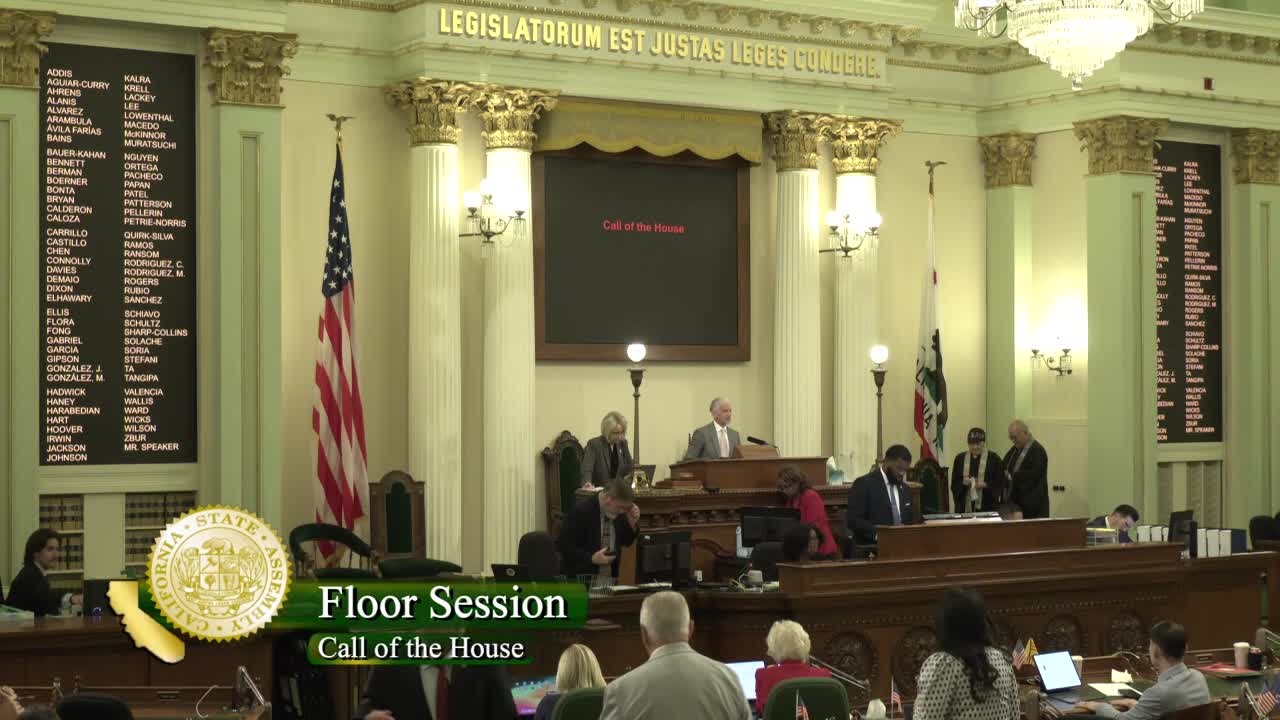
Bill Author