SB 1050: False advertising: synthetic performers.
- Session Year: 2025-2026
- House: Senate
- Latest Version Date: 2026-09-16
Current Status:
Passed
(2026-09-16: Chaptered by Secretary of State. Chapter 246, Statutes of 2026.)
Introduced
In Committee
Awaiting First Chamber Vote
Passed First Chamber
In Committee
Awaiting Second Chamber Vote
Passed Second Chamber
Enacted
Existing law makes it a misdemeanor for a person or a firm, corporation, or association, or any employee thereof, to engage in false or misleading advertising practices. Existing law makes various unfair competition practices unlawful, including any unlawful, unfair, or fraudulent business act or practice and unfair, deceptive, untrue, or misleading advertising.
This bill would make it an unlawful advertising practice for a person to create and cause to be published in an advertising medium an advertisement that prominently includes a synthetic performer without a clear and conspicuous disclosure that the advertisement includes a synthetic performer. The bill would prohibit an advertising medium from transmitting, distributing, displaying, airing, or otherwise making available an advertisement containing a synthetic performer if a court of competent jurisdiction has issued an order finding that the advertisement violates the bills provisions or enjoining the creator from publishing the advertisement, and the advertising medium is served with the order, as specified. The bill would define various terms for these purposes. By expanding the scope of a crime, the bill would impose a state-mandated local program.
The California Constitution requires the state to reimburse local agencies and school districts for certain costs mandated by the state. Statutory provisions establish procedures for making that reimbursement.
This bill would provide that no reimbursement is required by this act for a specified reason.
Existing law makes it a misdemeanor for a person or a firm, corporation, or association, or any employee thereof, to engage in false or misleading advertising practices. Existing law makes various unfair competition practices unlawful, including any unlawful, unfair, or fraudulent business act or practice and unfair, deceptive, untrue, or misleading advertising.
This bill would make it an unlawful advertising practice for a person to create and cause to be published in an advertising medium an advertisement that prominently includes a synthetic performer without a clear and conspicuous disclosure that the performer is synthetic. advertisement includes a synthetic performer. The bill would prohibit an advertising medium from transmitting, distributing, displaying, airing, or otherwise making available an advertisement containing a synthetic performer if a court of competent jurisdiction has issued an order finding that the advertisement violates the bills provisions or enjoining the creator from publishing the advertisement, and the advertising medium is served with the order, as specified. The bill would define various terms for these purposes. By expanding the scope of a crime, the bill would impose a state-mandated local program.
The California Constitution requires the state to reimburse local agencies and school districts for certain costs mandated by the state. Statutory provisions establish procedures for making that reimbursement.
This bill would provide that no reimbursement is required by this act for a specified reason.
Existing law makes it a misdemeanor for a person or a firm, corporation, or association, or any employee thereof, to engage in false or misleading advertising practices. Existing law makes various unfair competition practices unlawful, including any unlawful, unfair, or fraudulent business act or practice and unfair, deceptive, untrue, or misleading advertising.
This bill would make it an unlawful advertising practice for a person, in connection with the creation or dissemination of an advertisement in this state, to use or cause to be used a synthetic performer without a clear and conspicuous disclosure that the performer is synthetic. person to create and cause to be published in an advertising medium an advertisement that includes a synthetic performer without a clear and conspicuous disclosure that the performer is synthetic. The bill would prohibit an advertising medium from transmitting, distributing, displaying, airing, or otherwise making available an advertisement containing a synthetic performer if a court of competent jurisdiction has issued an order finding that the advertisement violates the bills provisions or enjoining the creator from publishing the advertisement, and the advertising medium is served with the order, as specified. The bill would define various terms for these purposes. By expanding the scope of a crime, the bill would impose a state-mandated local program.
The California Constitution requires the state to reimburse local agencies and school districts for certain costs mandated by the state. Statutory provisions establish procedures for making that reimbursement.
This bill would provide that no reimbursement is required by this act for a specified reason.
Existing law makes it a misdemeanor for a person or a firm, corporation, or association, or any employee thereof, to engage in false or misleading advertising practices. Existing law makes various unfair competition practices unlawful, including any unlawful, unfair, or fraudulent business act or practice and unfair, deceptive, untrue, or misleading advertising.
This bill would make it an unlawful advertising practice for a person, in connection with the creation or dissemination of an advertisement in this state, to use or cause to be used a synthetic performer without a clear and conspicuous disclosure that the performer is synthetic. By expanding the scope of a crime, the bill would impose a state-mandated local program.
The California Constitution requires the state to reimburse local agencies and school districts for certain costs mandated by the state. Statutory provisions establish procedures for making that reimbursement.
This bill would provide that no reimbursement is required by this act for a specified reason.
(a)The Legislature finds and declares as follows:
(1)Consumers have a substantial interest in knowing when an advertisement uses a synthetic performer in a manner that could reasonably be interpreted as a human performance.
(2)Requiring a factual disclosure regarding the use of a synthetic performer is necessary to prevent deceptive or misleading advertising practices.
(b)It is the intent of the Legislature that the disclosure required by this act is a purely factual commercial disclosure consistent with constitutional protections for commercial speech.
SEC. 2.Article 10 (commencing with Section 17610) is added to Chapter 1 of Part 3 of Division 7 of the Business and Professions Code, to read:10.Synthetic Performers17610.(a)For purposes of this section, the following definitions apply:
(1)Advertisement means any audio, video, or audiovisual message, statement, audiovisual recording, digital communication, or other representation disseminated in any manner or by any means, including through online platforms, that is intended to induce, or that is reasonably expected to induce, the purchase of goods or services, as described in Section 17500.
(2)(A)Advertising medium means any broadcast station, cable operator, multichannel video programming distributor, online platform, streaming service, digital advertising network, publisher, or other person or entity that distributes, displays, transmits, or makes available an audio or audiovisual advertisement to consumers in this state.
(B)Advertising medium does not include a person or entity that is not capable of removing, disabling access to, or ceasing further dissemination of, an advertisement.
(3)Clear and conspicuous disclosure means a disclosure that is difficult to miss, easily understandable, and presented in a manner that a reasonable consumer would notice, read, and comprehend, taking into account the medium, format, and context in which the advertisement appears.
(4)Generative artificial intelligence means an artificial intelligence system that can generate derived synthetic content, such as text, images, video, and audio, that emulates the structure and characteristics of the systems training data.
(5)Prominently means the synthetic performer is any of the following:
(A)In the foreground and demonstrating or illustrating the product or service.
(B)Providing or voicing the on- or off-camera narration or commercial message.
(C)Illustrating or reacting to the on- or off-camera narration or commercial message.
(6)Synthetic performer means a digital figure, voice, or representation created in whole or in part using generative artificial intelligence that creates the realistic impression of the audio, audiovisual, or visual performance of a human performer who is not recognizable as any identifiable natural person.
(b)It is unlawful for any person to create and cause to be published in an advertising medium an advertisement that prominently includes a synthetic performer without a clear and conspicuous disclosure that the advertisement includes a synthetic performer.
(c)A disclosure required by this section shall use wording substantially similar to this performance features a synthetic performer or no human performer is depicted.
(d)Nothing in this section shall be construed to do any of the following:
(1)Restrict or prohibit the creation, distribution, or exhibition of synthetic content.
(2)Regulate the expressive or informational content of an advertisement, except to require the factual disclosure described in subdivision (b).
(3)Affect or limit any rights or remedies available under Section 17200 or 17500 or any other law concerning deceptive, unfair, or misleading business practices.
(4)Apply to advertisements for expressive works, including, but not limited to, motion pictures, television programs, streaming content, documentaries, video games, or other similar audio or audiovisual works, provided that the use of a synthetic performer in the advertisement or promotional material is consistent with its use in the expressive work.
(5)Apply to an advertisement in which the use of the generative artificial intelligence solely involves the language translation of a human performer or other accessibility features.
(e)(1)An advertising medium shall not transmit, distribute, display, air, or otherwise make available an advertisement containing a synthetic performer if both of the following conditions are met:
(A)A court of competent jurisdiction has issued an order finding that the advertisement violates this chapter or enjoining the creator from publishing the advertisement, including, but not limited to, an injunction issued under Section 527 of the Code of Civil Procedure.
(B)The advertising medium is served with the order and information reasonably sufficient to identify the advertisement.
(2)Upon receipt of an order described in subparagraph (A) of paragraph (1), the advertising medium shall, as soon as commercially reasonable and technically feasible, do both of the following:
(A)Remove, disable access to, or cease further dissemination of the advertisement on the advertising medium in this state.
(B)Cease accepting payment for further dissemination of the advertisement.
(f)A violation of this section constitutes a violation of Section 17500 and may be enforced pursuant to Chapter 5 (commencing with Section 17200) of Part 2.
(g)The requirements of this section are severable. If any provision or its application is held invalid, that invalidity shall not affect other provisions or applications that can be given effect without the invalid provision or application.
SEC. 3.No reimbursement is required by this act pursuant to Section 6 of Article XIIIB of the California Constitution because the only costs that may be incurred by a local agency or school district will be incurred because this act creates a new crime or infraction, eliminates a crime or infraction, or changes the penalty for a crime or infraction, within the meaning of Section 17556 of the Government Code, or changes the definition of a crime within the meaning of Section 6 of Article XIIIB of the California Constitution.
(a)The Legislature finds and declares as follows:
(1)Consumers have a substantial interest in knowing when an advertisement uses a synthetic performer in a manner that could reasonably be interpreted as a human performance.
(2)Requiring a factual disclosure regarding the use of a synthetic performer is necessary to prevent deceptive or misleading advertising practices.
(b)It is the intent of the Legislature that the disclosure required by this act is a purely factual commercial disclosure consistent with constitutional protections for commercial speech.
SEC. 2.Article 10 (commencing with Section 17610) is added to Chapter 1 of Part 3 of Division 7 of the Business and Professions Code, to read:10.Synthetic Performers17610.(a)For purposes of this section, the following definitions apply:
(1)Advertisement means any audio, video, or audiovisual message, statement, audiovisual recording, digital communication, or other representation disseminated in any manner or by any means, including through online platforms, that is intended to induce, or that is reasonably expected to induce, the purchase of goods or services, as described in Section 17500.
(2)(A)Advertising medium means any broadcast station, cable operator, multichannel video programming distributor, online platform, streaming service, digital advertising network, publisher, or other person or entity that distributes, displays, transmits, or makes available an audio or audiovisual advertisement to consumers in this state.
(B)Advertising medium does not include a person or entity that is not capable of removing, disabling access to, or ceasing further dissemination of, an advertisement.
(3)Clear and conspicuous disclosure means a disclosure that is difficult to miss, easily understandable, and presented in a manner that a reasonable consumer would notice, read, and comprehend, taking into account the medium, format, and context in which the advertisement appears.
(4)Generative artificial intelligence means an artificial intelligence system that can generate derived synthetic content, such as text, images, video, and audio, that emulates the structure and characteristics of the systems training data.
(5)Prominently means the synthetic performer is any of the following:
(A)In the foreground and demonstrating or illustrating the product or service.
(B)Providing or voicing the on- or off-camera narration or commercial message.
(C)Illustrating or reacting to the on- or off-camera narration or commercial message.
(5)(6)Synthetic performer means a digital figure, voice, or representation created in whole or in part using generative artificial intelligence that creates the realistic impression of the audio, audiovisual, or visual performance of a human performer who is not recognizable as any identifiable natural person.
(b)It is unlawful for any person to create and cause to be published in an advertising medium an advertisement that prominently includes a synthetic performer without a clear and conspicuous disclosure that the advertisement includes a synthetic performer.
(c)A disclosure required by this section shall use wording substantially similar to this performance features a synthetic performer or no human performer is depicted.
(d)Nothing in this section shall be construed to do any of the following:
(1)Restrict or prohibit the creation, distribution, or exhibition of synthetic content.
(2)Regulate the expressive or informational content of an advertisement, except to require the factual disclosure described in subdivision (b).
(3)Affect or limit any rights or remedies available under Section 17200 or 17500 or any other law concerning deceptive, unfair, or misleading business practices.
(4)Apply to advertisements for expressive works, including, but not limited to, motion pictures, television programs, streaming content, documentaries, video games, or other similar audio or audiovisual works, provided that the use of a synthetic performer in the advertisement or promotional material is consistent with its use in the expressive work.
(5)Apply to an advertisement in which the use of the generative artificial intelligence solely involves the language translation of a human performer. performer or other accessibility features.
(e)(1)An advertising medium shall not transmit, distribute, display, air, or otherwise make available an advertisement containing a synthetic performer if both of the following conditions are met:
(A)A court of competent jurisdiction has issued an order finding that the advertisement violates this chapter or enjoining the creator from publishing the advertisement, including, but not limited to, an injunction issued under Section 527 of the Code of Civil Procedure.
(B)The advertising medium is served with the order and information reasonably sufficient to identify the advertisement.
(2)Upon receipt of an order described in subparagraph (A) of paragraph (1), the advertising medium shall, as soon as commercially reasonable and technically feasible, do both of the following:
(A)Remove, disable access to, or cease further dissemination of the advertisement on the advertising medium in this state.
(B)Cease accepting payment for further dissemination of the advertisement.
(f)A violation of this section constitutes a violation of Section 17500 and may be enforced pursuant to Chapter 5 (commencing with Section 17200) of Part 2.
(g)The requirements of this section are severable. If any provision or its application is held invalid, that invalidity shall not affect other provisions or applications that can be given effect without the invalid provision or application.
SEC. 3.No reimbursement is required by this act pursuant to Section 6 of Article XIIIB of the California Constitution because the only costs that may be incurred by a local agency or school district will be incurred because this act creates a new crime or infraction, eliminates a crime or infraction, or changes the penalty for a crime or infraction, within the meaning of Section 17556 of the Government Code, or changes the definition of a crime within the meaning of Section 6 of Article XIIIB of the California Constitution.
(a)The Legislature finds and declares as follows:
(1)Consumers have a substantial interest in knowing when an advertisement uses a synthetic performer in a manner that could reasonably be interpreted as a human performance.
(2)Requiring a factual disclosure regarding the use of a synthetic performer is necessary to prevent deceptive or misleading advertising practices.
(b)It is the intent of the Legislature that the disclosure required by this act is a purely factual commercial disclosure consistent with constitutional protections for commercial speech.
SEC. 2.Article 10 (commencing with Section 17610) is added to Chapter 1 of Part 3 of Division 7 of the Business and Professions Code, to read:10.Synthetic Performers17610.(a)For purposes of this section, the following definitions apply:
(1)Advertisement means any audio, video, or audiovisual message, statement, audiovisual recording, digital communication, or other representation disseminated in any manner or by any means, including through online platforms, that is intended to induce, or that is reasonably expected to induce, the purchase of goods or services, as described in Section 17500.
(2)(A)Advertising medium means any broadcast station, cable operator, multichannel video programming distributor, online platform, streaming service, digital advertising network, publisher, or other person or entity that distributes, displays, transmits, or makes available an audio or audiovisual advertisement to consumers in this state.
(B)Advertising medium does not include a person or entity that is not capable of removing, disabling access to, or ceasing further dissemination of, an advertisement.
(3)Clear and conspicuous disclosure means a disclosure that is difficult to miss, easily understandable, and presented in a manner that a reasonable consumer would notice, read, and comprehend, taking into account the medium, format, and context in which the advertisement appears.
(4)Generative artificial intelligence means an artificial intelligence system that can generate derived synthetic content, such as text, images, video, and audio, that emulates the structure and characteristics of the systems training data.
(5)Synthetic performer means a digital figure, voice, or representation created in whole or in part using generative artificial intelligence that creates the realistic impression of the audio, audiovisual, or visual performance of a human performer who is not recognizable as any identifiable natural person.
(b)It is unlawful for any person to create and cause to be published in an advertising medium an advertisement that prominently includes a synthetic performer without a clear and conspicuous disclosure that the advertisement includes a synthetic performer.
(c)A disclosure required by this section shall use wording substantially similar to this performance features a synthetic performer or no human performer is depicted.
(d)Nothing in this section shall be construed to do any of the following:
(1)Restrict or prohibit the creation, distribution, or exhibition of synthetic content.
(2)Regulate the expressive or informational content of an advertisement, except to require the factual disclosure described in subdivision (b).
(3)Affect or limit any rights or remedies available under Section 17200 or 17500 or any other law concerning deceptive, unfair, or misleading business practices.
(4)Apply to advertisements for expressive works, including, but not limited to, motion pictures, television programs, streaming content, documentaries, video games, or other similar audio or audiovisual works, provided that the use of a synthetic performer in the advertisement or promotional material is consistent with its use in the expressive work.
(5)Apply to an advertisement in which the use of the generative artificial intelligence solely involves the language translation of a human performer.
(e)(1)An advertising medium shall not transmit, distribute, display, air, or otherwise make available an advertisement containing a synthetic performer if both of the following conditions are met:
(A)A court of competent jurisdiction has issued an order finding that the advertisement violates this chapter or enjoining the creator from publishing the advertisement, including, but not limited to, an injunction issued under Section 527 of the Code of Civil Procedure.
(B)The advertising medium is served with the order and information reasonably sufficient to identify the advertisement.
(2)Upon receipt of an order described in subparagraph (A) of paragraph (1), the advertising medium shall, as soon as commercially reasonable and technically feasible, do both of the following:
(A)Remove, disable access to, or cease further dissemination of the advertisement on the advertising medium in this state.
(B)Cease accepting payment for further dissemination of the advertisement.
(f)A violation of this section constitutes a violation of Section 17500 and may be enforced pursuant to Chapter 5 (commencing with Section 17200) of Part 2.
(g)(1)Subdivision (b) of this section shall not apply to a person who creates or causes to be created an advertisement subject to subdivision (b) of Section 651.4, as added by Senate Bill 1146 of the 202526 Regular Session. However, subdivision (e) of this section applies to an advertising medium that transmits, distributes, displays, airs, or otherwise makes available an advertisement subject to subdivision (b) of Section 651.4.(2)This subdivision shall only become operative if Senate Bill 1146 of the 202526 Regular Session is enacted and becomes effective on or before January 1, 2027, and that bill adds Section 651.4 to the Business and Professions Code. (h)(g)The requirements of this section are severable. If any provision or its application is held invalid, that invalidity shall not affect other provisions or applications that can be given effect without the invalid provision or application.
SEC. 3.No reimbursement is required by this act pursuant to Section 6 of Article XIIIB of the California Constitution because the only costs that may be incurred by a local agency or school district will be incurred because this act creates a new crime or infraction, eliminates a crime or infraction, or changes the penalty for a crime or infraction, within the meaning of Section 17556 of the Government Code, or changes the definition of a crime within the meaning of Section 6 of Article XIIIB of the California Constitution.
(a)The Legislature finds and declares as follows:
(1)Consumers have a substantial interest in knowing when an advertisement uses a synthetic digital performer in a manner that could reasonably be interpreted as a human performance.
(2)Requiring a factual disclosure regarding the use of a synthetic performer is necessary to prevent deceptive or misleading advertising practices.
(b)It is the intent of the Legislature that the disclosure required by this act is a purely factual commercial disclosure consistent with constitutional protections for commercial speech.
SEC. 2.Article 10 (commencing with Section 17610) is added to Chapter 1 of Part 3 of Division 7 of the Business and Professions Code, to read:10.Synthetic Performers17610.(a)For purposes of this section, the following definitions apply:
(1)Advertisement means any video audio, video, or audiovisual message, statement, audiovisual recording, digital communication, or other representation disseminated in any manner or by any means, including through online platforms, that is intended to induce, or that is reasonably expected to induce, the purchase of goods or services, as described in Section 17500. Advertisement does not include an audio-only advertisement.
(2)(A)Advertising medium means any broadcast station, cable operator, multichannel video programming distributor, online platform, streaming service, digital advertising network, publisher, or other person or entity that distributes, displays, transmits, or makes available an audio or audiovisual advertisement to consumers in this state.
(B)Advertising medium does not include a person or entity that is not capable of removing, disabling access to, or ceasing further dissemination of, an advertisement.
(3)Clear and conspicuous disclosure means a disclosure that is difficult to miss, easily understandable, and presented in a manner that a reasonable consumer would notice, read, and comprehend, taking into account the medium, format, and context in which the advertisement appears.
(4)Generative artificial intelligence means an artificial intelligence system that can generate derived synthetic content, such as text, images, video, and audio, that emulates the structure and characteristics of the systems training data.
(4)(5)Synthetic performer means a human-like digital figure, voice, or representation created in whole or in part using artificial intelligence, machine learning, or computational techniques, generative artificial intelligence that creates the realistic impression that the asset is engaging in an audiovisual of the audio, audiovisual, or visual performance of a human performer who is not recognizable as any identifiable natural performer. person.
(b)It is unlawful for any person to create and cause to be published in an advertising medium an advertisement that prominently includes a synthetic performer without a clear and conspicuous disclosure that the performer is synthetic. advertisement includes a synthetic performer.
(c)A disclosure required by this section shall, at a minimum, satisfy all of the following: shall use wording substantially similar to this performance features a synthetic performer or no human performer is depicted.
(1)Appear in close proximity to the synthetic performer.(2)Be presented in a manner and duration sufficient for a reasonable consumer to understand that the performer is not a real human being.(3)Use wording substantially similar to this performance features a synthetic digital performer, or no human performer is depicted.(d)Nothing in this section shall be construed to do any of the following:
(1)Restrict or prohibit the creation, distribution, or exhibition of synthetic content.
(2)Regulate the expressive or informational content of an advertisement, except to require the factual disclosure described in subdivision (b).
(3)Affect or limit any rights or remedies available under Section 17200 or 17500 or any other law concerning deceptive, unfair, or misleading business practices.
(4)Apply to advertisements for expressive works, including, but not limited to, motion pictures, television programs, streaming content, documentaries, video games, or other similar audio or audiovisual works, provided that the use of a synthetic performer in the advertisement or promotional material is consistent with its use in the expressive work.
(5)Apply to an advertisement in which the use of the generative artificial intelligence solely involves the language translation of a human performer.
(e)(1)An advertising medium shall not transmit, distribute, display, air, or otherwise make available an advertisement containing a synthetic performer if both of the following conditions are met:
(A)A court of competent jurisdiction has issued an order finding that the advertisement violates this chapter or enjoining the creator from publishing the advertisement, including, but not limited to, an injunction issued under Section 527 of the Code of Civil Procedure.
(B)The advertising medium is served with the order and information reasonably sufficient to identify the advertisement.
(2)Upon receipt of an order described in subparagraph (A) of paragraph (1), the advertising medium shall, as soon as commercially reasonable and technically feasible, do both of the following:
(A)Remove, disable access to, or cease further dissemination of the advertisement on the advertising medium in this state.
(B)Cease accepting payment for further dissemination of the advertisement.
(f)A violation of this section constitutes a violation of Section 17500 and may be enforced pursuant to Chapter 5 (commencing with Section 17200) of Part 2.
(g)(1)Subdivision (b) of this section shall not apply to a person who creates or causes to be created an advertisement subject to subdivision (b) of Section 651.4, as added by Senate Bill 1146 of the 202526 Regular Session. However, subdivision (e) of this section applies to an advertising medium that transmits, distributes, displays, airs, or otherwise makes available an advertisement subject to subdivision (b) of Section 651.4.
(2)This subdivision shall only become operative if Senate Bill 1146 of the 202526 Regular Session is enacted and becomes effective on or before January 1, 2027, and that bill adds Section 651.4 to the Business and Professions Code.
(g)(h)The requirements of this section are severable. If any provision or its application is held invalid, that invalidity shall not affect other provisions or applications that can be given effect without the invalid provision or application.
SEC. 3.No reimbursement is required by this act pursuant to Section 6 of Article XIIIB of the California Constitution because the only costs that may be incurred by a local agency or school district will be incurred because this act creates a new crime or infraction, eliminates a crime or infraction, or changes the penalty for a crime or infraction, within the meaning of Section 17556 of the Government Code, or changes the definition of a crime within the meaning of Section 6 of Article XIIIB of the California Constitution.
(a)The Legislature finds and declares as follows:
(1)Consumers have a substantial interest in knowing when an advertisement uses a synthetic digital performer in a manner that could reasonably be interpreted as a human performance.
(2)Requiring a factual disclosure regarding the use of a synthetic performer is necessary to prevent deceptive or misleading advertising practices.
(b)It is the intent of the Legislature that the disclosure required by this act is a purely factual commercial disclosure consistent with constitutional protections for commercial speech.
SEC. 2.Article 10 (commencing with Section 17610) is added to Chapter 1 of Part 3 of Division 7 of the Business and Professions Code, to read:10.Synthetic Performers17610.(a)For purposes of this section, the following definitions apply:
(1)Advertisement means any video or audiovisual message, statement, audiovisual recording, digital communication, or other representation disseminated in any manner or by any means, including through online platforms, that is intended to induce, or that is reasonably expected to induce, the purchase of goods or services, as described in Section 17500. Advertisement does not include an audio-only advertisement.
(2)Advertising medium means any broadcast station, cable operator, multichannel video programming distributor, online platform, streaming service, digital advertising network, publisher, or other person or entity that distributes, displays, transmits, or makes available an audiovisual advertisement to consumers in this state.
(2)(3)Clear and conspicuous disclosure means a disclosure that is difficult to miss, easily understandable, and presented in a manner that a reasonable consumer would notice, read, and comprehend, taking into account the medium, format, and context in which the advertisement appears.
(3)(4)Synthetic performer means a human-like digital figure, voice, or representation created in whole or in part using artificial intelligence, machine learning, or computational techniques, and not based on, derived from, or intended to depict any particular identifiable natural person as described in Section 3344 of the Civil Code. that creates the impression that the asset is engaging in an audiovisual or visual performance of a human performer who is not recognizable as any identifiable natural performer.
(b)It is unlawful for any person, in connection with the creation or dissemination of an advertisement in this state, to use or cause to be used person to create and cause to be published in an advertising medium an advertisement that includes a synthetic performer without a clear and conspicuous disclosure that the performer is synthetic.
(c)A disclosure required by this section shall, at a minimum, satisfy all of the following:
(1)Appear in close proximity to the synthetic performer.
(2)Be presented in a manner and duration sufficient for a reasonable consumer to understand that the performer is not a real human being.
(3)Use wording substantially similar to this performance features a synthetic digital performer, or no human performer is depicted.
(d)Nothing in this section shall be construed to do any of the following:
(1)Restrict or prohibit the creation, distribution, or exhibition of synthetic content.
(2)Regulate the expressive or informational content of an advertisement, except to require the factual disclosure described in subdivision (b).
(3)Affect or limit any rights or remedies available under Section 17200 or 17500 or any other law concerning deceptive, unfair, or misleading business practices.
(4)Apply to advertisements for expressive works, including, but not limited to, motion pictures, television programs, streaming content, documentaries, video games, or other similar audiovisual works, provided that the use of a synthetic performer in the advertisement or promotional material is consistent with its use in the expressive work.
(5)Apply to an advertisement in which the use of the artificial intelligence solely involves the language translation of a human performer.
(e)(1)An advertising medium shall not transmit, distribute, display, air, or otherwise make available an advertisement containing a synthetic performer if both of the following conditions are met:
(A)A court of competent jurisdiction has issued an order finding that the advertisement violates this chapter or enjoining the creator from publishing the advertisement, including, but not limited to, an injunction issued under Section 527 of the Code of Civil Procedure.
(B)The advertising medium is served with the order and information reasonably sufficient to identify the advertisement.
(2)Upon receipt of an order described in subparagraph (A) of paragraph (1), the advertising medium shall, as soon as commercially reasonable and technically feasible, do both of the following:
(A)Remove, disable access to, or cease further dissemination of the advertisement on the advertising medium in this state.
(B)Cease accepting payment for further dissemination of the advertisement.
(e)(f)A violation of this section constitutes a violation of Section 17500 and may be enforced pursuant to Chapter 5 (commencing with Section 17200) of Part 2.
(f)(g)The requirements of this section are severable. If any provision or its application is held invalid, that invalidity shall not affect other provisions or applications that can be given effect without the invalid provision or application.
SEC. 3.No reimbursement is required by this act pursuant to Section 6 of Article XIIIB of the California Constitution because the only costs that may be incurred by a local agency or school district will be incurred because this act creates a new crime or infraction, eliminates a crime or infraction, or changes the penalty for a crime or infraction, within the meaning of Section 17556 of the Government Code, or changes the definition of a crime within the meaning of Section 6 of Article XIIIB of the California Constitution.
(a)The Legislature finds and declares as follows:
(1)Consumers have a substantial interest in knowing when an advertisement uses a synthetic digital performer in a manner that could reasonably be interpreted as a human performance.
(2)Requiring a factual disclosure regarding the use of a synthetic performer is necessary to prevent deceptive or misleading advertising practices.
(b)It is the intent of the Legislature that the disclosure required by this act is a purely factual commercial disclosure consistent with constitutional protections for commercial speech.
SEC. 2.Article 10 (commencing with Section 17610) is added to Chapter 1 of Part 3 of Division 7 of the Business and Professions Code, to read:10.Synthetic Performers17610.(a)For purposes of this section, the following definitions apply:
(1)Advertisement means any message, statement, audiovisual recording, digital communication, or other representation disseminated in any manner or by any means, including through online platforms, that is intended to induce, or that is reasonably expected to induce, the purchase of goods or services, as described in Section 17500.
(2)Clear and conspicuous disclosure means a disclosure that is difficult to miss, easily understandable, and presented in a manner that a reasonable consumer would notice, read, and comprehend, taking into account the medium, format, and context in which the advertisement appears.
(3)Synthetic performer means a human-like digital figure, voice, or representation created in whole or in part using artificial intelligence, machine learning, or computational techniques, and not based on, derived from, or intended to depict any particular identifiable natural person as described in Section 3344 of the Civil Code.
(b)It is unlawful for any person, in connection with the creation or dissemination of an advertisement in this state, to use or cause to be used a synthetic performer without a clear and conspicuous disclosure that the performer is synthetic.
(c)A disclosure required by this section shall, at a minimum, satisfy all of the following:
(1)Appear in close proximity to the synthetic performer.
(2)Be presented in a manner and duration sufficient for a reasonable consumer to understand that the performer is not a real human being.
(3)Use wording substantially similar to this performance features a synthetic digital performer, or no human performer is depicted.
(d)Nothing in this section shall be construed to do any of the following:
(1)Restrict or prohibit the creation, distribution, or exhibition of synthetic content.
(2)Regulate the expressive or informational content of an advertisement, except to require the factual disclosure described in subdivision (b).
(3)Affect or limit any rights or remedies available under Section 17200 or 17500 or any other law concerning deceptive, unfair, or misleading business practices.
(4)Apply to advertisements for expressive works, including, but not limited to, motion pictures, television programs, streaming content, documentaries, video games, or other similar audiovisual works, provided that the use of a synthetic performer in the advertisement or promotional material is consistent with its use in the expressive work.
(e)A violation of this section constitutes a violation of Section 17500 and may be enforced pursuant to Chapter 5 (commencing with Section 17200) of Part 2.
(f)The requirements of this section are severable. If any provision or its application is held invalid, that invalidity shall not affect other provisions or applications that can be given effect without the invalid provision or application.
SEC. 3.No reimbursement is required by this act pursuant to Section 6 of Article XIIIB of the California Constitution because the only costs that may be incurred by a local agency or school district will be incurred because this act creates a new crime or infraction, eliminates a crime or infraction, or changes the penalty for a crime or infraction, within the meaning of Section 17556 of the Government Code, or changes the definition of a crime within the meaning of Section 6 of Article XIIIB of the California Constitution.
|
Date
|
Status
|
|---|---|
| Sep 16, 2026 | Chaptered by Secretary of State. Chapter 246, Statutes of 2026. |
| Sep 16, 2026 | Approved by the Governor. |
| Sep 9, 2026 | Enrolled and presented to the Governor at 2 p.m. |
| Aug 31, 2026 | Assembly amendments concurred in. (Ayes 40. Noes 0.) Ordered to engrossing and enrolling. |
| Aug 31, 2026 | Unanimous consent granted to take up without reference to file. |
| Aug 31, 2026 | In Senate. Concurrence in Assembly amendments pending. |
| Aug 31, 2026 | Read third time. Passed. (Ayes 66. Noes 7. Page 7045.) Ordered to the Senate. |
| Aug 31, 2026 | Read third time. Passed. Ordered to the Senate. |
| Aug 19, 2026 | Ordered to third reading. |
| Aug 19, 2026 | Read third time and amended. |
| Aug 17, 2026 | Read second time. Ordered to third reading. |
| Aug 13, 2026 | Read second time and amended. Ordered to second reading. |
| Aug 13, 2026 | From committee: Do pass as amended. (Ayes 12. Noes 1.) (August 13). |
| Aug 13, 2026 | Assembly Rule 63 suspended. |
| Aug 5, 2026 | August 5 set for first hearing. Placed on suspense file. |
| Jul 1, 2026 | From committee: Do pass and re-refer to Com. on APPR. (Ayes 10. Noes 1.) (June 30). Re-referred to Com. on APPR. |
| Jun 23, 2026 | From committee: Do pass and re-refer to Com. on JUD. (Ayes 9. Noes 0.) (June 23). Re-referred to Com. on JUD. |
| Jun 17, 2026 | From committee: Do pass and re-refer to Com. on A.,E.,S., & T. (Ayes 13. Noes 2.) (June 16). Re-referred to Com. on A.,E.,S., & T. |
| Jun 11, 2026 | From committee with author's amendments. Read second time and amended. Re-referred to Com. on P. & C.P. |
| Jun 4, 2026 | Referred to Coms. on P. & C.P., A.,E.,S., & T., and JUD. |
| May 28, 2026 | In Assembly. Read first time. Held at Desk. |
| May 28, 2026 | Read third time. Passed. (Ayes 38. Noes 0. Page 4520.) Ordered to the Assembly. |
| May 28, 2026 | Read third time. Passed. (Ayes 38. Noes 0.) Ordered to the Assembly. |
| May 14, 2026 | From committee: Do pass. (Ayes 7. Noes 0. Page 4262.) (May 14). |
| May 14, 2026 | Read second time. Ordered to third reading. |
| May 14, 2026 | From committee: Do pass. (Ayes 7. Noes 0.) (May 14). |
| May 12, 2026 | Set for hearing May 14. |
| May 11, 2026 | May 11 hearing: Placed on APPR. suspense file. |
| May 4, 2026 | Set for hearing May 11. |
| Apr 23, 2026 | Read second time and amended. Re-referred to Com. on APPR. |
| Apr 22, 2026 | From committee: Do pass as amended and re-refer to Com. on APPR. (Ayes 13. Noes 0. Page 3977.) (April 21). |
| Apr 22, 2026 | From committee: Do pass as amended and re-refer to Com. on APPR. (Ayes 13. Noes 0.) (April 21). |
| Apr 8, 2026 | Set for hearing April 21. |
| Apr 7, 2026 | From committee: Do pass and re-refer to Com. on JUD. (Ayes 7. Noes 0. Page 3741.) (April 6). Re-referred to Com. on JUD. |
| Apr 7, 2026 | From committee: Do pass and re-refer to Com. on JUD. (Ayes 7. Noes 0.) (April 6). Re-referred to Com. on JUD. |
| Mar 10, 2026 | Set for hearing April 6. |
| Feb 26, 2026 | Referred to Coms. on P., D.T., & C.P. and JUD. |
| Feb 13, 2026 | From printer. May be acted upon on or after March 15. |
| Feb 12, 2026 | Introduced. Read first time. To Com. on RLS. for assignment. To print. |
|
Date
|
Description
|
Location
|
Votes
|
|
|---|---|---|---|---|
| Aug 31, 2026 | W/O REF. TO FILE SB1050 Ashby | Senate Floor |
Passed |
|
| Aug 31, 2026 | SB 1050 Ashby Senate Third Reading By Elhawary | Assembly Floor |
Passed |
|
| Aug 13, 2026 | Do pass as amended. | Assembly Standing Committee on Appropriations |
Passed |
|
| Jun 30, 2026 | Do pass and be re-referred to the Committee on [Appropriations] | Assembly Standing Committee on Judiciary |
Passed |
|
| Jun 23, 2026 | Do pass and be re-referred to the Committee on [Judiciary] | Assembly Standing Committee on Arts, Entertainment, Sports, and Tourism |
Passed |
|
| Jun 16, 2026 | Do pass and be re-referred to the Committee on [Arts, Entertainment, Sports, and Tourism] | Assembly Standing Committee on Privacy and Consumer Protection |
Passed |
|
| May 28, 2026 | Senate 3rd Reading SB1050 Ashby | Senate Floor |
Passed |
|
| May 14, 2026 | Do pass | Senate Standing Committee on Appropriations |
Passed |
|
| May 11, 2026 | Placed on suspense file | Senate Standing Committee on Appropriations |
Passed |
|
| Apr 21, 2026 | Do pass as amended, but first amend, and re-refer to the Committee on [Appropriations] | Senate Standing Committee on Judiciary |
Passed |
|
| Apr 6, 2026 | Do pass, but first be re-referred to the Committee on [Judiciary] | Senate Standing Committee on Privacy, Digital Technologies, and Consumer Protection |
Passed |
This list shows positions taken on this bill by organizations on the date displayed, which is linked to the original source.
Positions by individuals are not included.
|
Organization
|
Position
|
Date
|
|---|---|---|
| AAF Orange County | ** Against | |
| american advertising federation | ** Against | |
| American Advertising Federation (AAF) | ** Against | |
| American Advertising Federation Orange County | ** Against | |
| American Association Of Advertising Agencies | ** Against | |
| American Association of Advertising Agencies (4A's) | ** Against | |
| American Association of Advertising Agencies (4A’S) | ** Against | |
| Association of National Advertisers | ** Against | |
| CalBroadband | ** Against | |
| California Broadcasters Association | ** Against | |
| California Chamber Of Commerce | ** Against | |
| California Federation of Labor Unions | ** Support | |
| California Initiative for Technology & Democracy | ** Support | |
| California Institute for Technology & Democracy | ** Support | |
| Common Sense Media | ** Support | |
| Computer & Communications Industry Association | ** Against | |
| Creators Coalition on AI | ** Support | |
| Creators Coalition on AI | ** Support | |
| Entertainment Union Coalition | ** Support | |
| Genup (generation Up) | ** Support | |
| Motion Picture Association | ** Against | |
| Music Artists Coalition | ** Support | |
| Music Artists Coalition (MAC) | ** Support | |
| National Ai Youth Council | ** Support | |
| National Association of Voice Actors | ** Support | |
| SAG-AFTRA | ** Support | |
| Screen Actors Guild – American Federation of Television and Radio Artists (SAG-AFTRA) | ** Support | |
| Techequity Action | ** Support | |
| Technet | ** Against | |
| Transparency Coalition.ai | ** Support |
SENATE RULES COMMITTEE Office of Senate Floor Analyses (916) 651-4171 | SB 1050 |
UNFINISHED BUSINESS
Bill No: SB 1050
Author: Ashby (D), et al.
Amended: 8/19/26
Vote: 21
SENATE PRIV., DIGITAL TECH. & CONS. PROT. COMMITTEE: 7-0, 4/6/26
AYES: Cabaldon, Gonzalez, McNerney, Padilla, Reyes, Umberg, Wiener
NO VOTE RECORDED: Jones, Ochoa Bogh
SENATE JUDICIARY COMMITTEE: 13-0, 4/21/26
AYES: Umberg, Niello, Allen, Ashby, Caballero, Durazo, Laird, Reyes, Stern, Valladares, Wahab, Weber Pierson, Wiener
SENATE APPROPRIATIONS COMMITTEE: 7-0, 5/14/26
AYES: Cervantes, Seyarto, Cabaldon, Dahle, Grayson, Richardson, Wahab
SENATE FLOOR: 38-0, 5/28/26
AYES: Allen, Alvarado-Gil, Archuleta, Arreguín, Ashby, Becker, Blakespear, Cabaldon, Caballero, Cervantes, Cortese, Durazo, Gonzalez, Grayson, Grove, Hurtado, Jones, Laird, Limón, McGuire, McNerney, Menjivar, Niello, Ochoa Bogh, Padilla, Pérez, Reyes, Richardson, Rubio, Seyarto, Smallwood-Cuevas, Stern, Strickland, Umberg, Valladares, Wahab, Weber Pierson, Wiener
NO VOTE RECORDED: Choi, Dahle
ASSEMBLY FLOOR: 66-7, 8/31/26 - See last page for vote
SUBJECT: False advertising: synthetic performers
SOURCE: SAG-AFTRA
DIGEST:
This bill makes it an unlawful practice for a person to create or publish an advertisement with a synthetic performer, as defined, without a clear and conspicuous disclosure that the performer is synthetic, and prohibits an advertising medium, as defined, from making an advertisement available if specified conditions are met.
Assembly Amendments
add and recast various definitions, including the definition of “synthetic performer” and “advertisement”, remove the exemption for audio-only advertisements, and refine the disclosure requirements.
ANALYSIS: Existing law:
- Establishes the California AI Transparency Act, which becomes operative, in part, on August 2, 2026, and requires certain “covered providers” to make an artificial intelligence (AI) detection tool available at no cost by which a person can assess whether content was created or altered by the provider’s GenAI system. (Business (Bus.) & Professions (Prof.) Code § 22757 et seq.)
- Requires a covered provider to offer users the option to include in AI-generated image, video, or audio content created by its own generative AI system a manifest disclosure that meets specified criteria, including that it identifies the content as AI-generated content. (Bus. & Prof. Code § 22757.3(a).)
- Requires a covered provider to include in AI-generated image, audio, and video content created by its generative AI system a latent disclosure that is detectable by the tool specified above and is, to the extent technically feasible, permanent or extraordinarily difficult to remove. (Bus. & Prof. Code § 22757.3(b).)
- Requires a large online platform, starting January 1, 2027, to do one of the following:
- Detect whether any provenance data that is compliant with widely adopted specifications adopted by an established standards-setting body is embedded into or attached to content distributed on the large online platform.
- Provide a user interface to disclose the availability of system provenance data that reliably indicates that the content was generated or substantially altered by a GenAI system or captured by a capture device. The user interface shall make clearly and conspicuously available to users information sufficient to identify the content’s authenticity, origin, or history of modification, including specified information such as whether provenance data is available.
- Allow a user to inspect all available system provenance data that is compliant with widely adopted specifications adopted by an established standards-setting body in an easily accessible manner by any of several specified means. (Bus. & Prof. Code § 22757.3.1.)
- Provides that violators of the above provisions are liable for a civil penalty in the amount of $5,000 per violation to be collected in a civil action filed by the Attorney General, a city attorney, or a county counsel. Each day in violation is deemed a discrete violation. (Bus. & Prof. Code § 22757.4.)
- Establishes the Unfair Competition Law (UCL), which provides a statutory cause of action for any unlawful, unfair, or fraudulent business act or practice and unfair, deceptive, untrue, or misleading advertising, including over the internet. (Bus. & Prof. Code § 17200 et seq.)
- Establishes the False Advertising Law (FAL), which proscribes making or disseminating any statement that is known or should be known to be untrue or misleading with intent to directly or indirectly dispose of real or personal property. (Bus. & Prof. Code § 17500 et seq.)
- Provides remedies for individuals who have suffered damages as a result of fraud or deceit, including situations involving fraudulent misrepresentations. (Civil (Civ.) Code §§ 1709-1710, 1572-1573.)
- Provides that any person who knowingly uses another’s name, voice, signature, photograph, or likeness, in any manner, on or in products, merchandise, or goods, or for purposes of advertising or selling, or soliciting purchases of, products, merchandise, goods, or services, without that person’s prior consent, or, in the case of a minor, the prior consent of their parent or legal guardian, shall be liable for any damages sustained by the person or persons injured as a result thereof. (Civ. Code § 3344(a).)
This bill:
- Makes it unlawful for any person to create and cause to be published in an advertising medium an advertisement that prominently includes a synthetic performer without a clear and conspicuous disclosure that the advertisement includes a synthetic performer.
- Prohibits an advertising medium from transmitting, distributing, displaying, airing, or otherwise making available an advertisement containing a synthetic performer if both of the following are met:
- A court of competent jurisdiction has issued an order finding that the advertisement violates this chapter or enjoining the creator from publishing the advertisement, including, but not limited to, an injunction issued under Section 527 of the Code of Civil Procedure.
- The advertising medium is served with the order and information reasonably sufficient to identify the advertisement.
- Requires an advertising medium that receives an order described above to, as soon as commercially reasonable and technically feasible, remove, disable access to, or cease further dissemination of the advertisement on the advertising medium in the state and cease accepting payment for further dissemination of the advertisement.
- Defines the relevant terms:
- “Advertisement” means any audio, video, or audiovisual message, statement, audiovisual recording, digital communication, or other representation disseminated in any manner or by any means, including through online platforms, that is intended to induce, or that is reasonably expected to induce, the purchase of goods or services, as described in the FAL.
- “Advertising medium” means any broadcast station, cable operator, multichannel video programming distributor, online platform, streaming service, digital advertising network, publisher, or other person or entity that distributes, displays, transmits, or makes available an audio or audiovisual advertisement to consumers in the state. Provides that “advertising medium” does not include a person or entity that is not capable of removing, disabling, or ceasing further dissemination of an advertisement.
- “Clear and conspicuous disclosure” means a disclosure that is difficult to miss, easily understandable, and presented in a manner that a reasonable consumer would notice, read, and comprehend, taking into account the medium, format, and context in which the advertisement appears.
- “Synthetic performer” means a digital figure, voice, or representation created in whole or in part using generative artificial intelligence that creates the realistic impression of the audio, audiovisual, or visual performance of a human performer who is not recognizable as any identifiable natural person.
- Clarifies that it shall not be construed to do any of the following:
- Restrict or prohibit the creation, distribution, or exhibition of synthetic content.
- Regulate the expressive or informational content of an advertisement, except to require the factual disclosure described in subdivision (b).
- Affect or limit any rights or remedies available under Section 17200 or 17500 or any other law concerning deceptive, unfair, or misleading business practices.
- Apply to advertisements for expressive works, including, but not limited to, motion pictures, television programs, streaming content, documentaries, video games, or other similar audio or audiovisual works, provided that the use of a synthetic performer in the advertisement or promotional material is consistent with its use in the expressive work.
- Apply to an advertisement that uses generative artificial intelligence solely for language translation of a human performer or other accessibility features.
- Provides that a violation constitutes a violation of the FAL and may be enforced pursuant to the UCL.
- Includes a severability clause.
Background
As AI models and applications become more sophisticated and integrated into our daily lives, more attention is being paid to where thoughtful regulation may be needed, including measures to ensure the safety and reliability of these systems. In addition, the rapid advancement of this technology, specifically the wide-scale introduction of GenAI models, has made it drastically cheaper and easier to produce synthetic content—audio, images, text, and video recordings that are not real, but that are so realistic that they are virtually impossible to distinguish from authentic content, including so-called “deepfakes.”
Existing law prohibits false advertising and falsely holding oneself out to have certain qualifications or to unlawfully use the likeness of another for commercial purposes. This bill seeks to address the increased usage of synthetic performers, specifically in advertisements, by making it unlawful for any person to create and publish an advertisement in an advertising medium that includes a synthetic performer without a clear and conspicuous disclosure that the advertisement includes a synthetic performer. It further requires an advertising medium not to make available an advertisement containing a synthetic performer and to cease dissemination of the advertisement if certain conditions are met.
This bill is sponsored by SAG-AFTRA. This bill is supported by various groups, including TechEquity Action and the California Initiative for Technology & Democracy. It is opposed by the Motion Picture Association and industry groups. For a more thorough discussion, please see the Senate Privacy, Digital Technologies, and Consumer Protection Committee analysis of this bill.
Comments
According to the author:
California is home to the largest and most influential creative sector in the world. Hundreds of thousands of workers power the state’s creative economy, which generates billions of dollars in economic activity. At the heart of this industry are the people who bring stories and brands to life. However, recent advances in artificial intelligence have led to the creation of human-like digital figures that convincingly appear, speak, move, and perform like real people. These ‘synthetic performers' are increasingly used online and in advertisements to promote products and services, often without any disclosure to consumers. The absence of transparency threatens California’s entertainment workforce and enables the continued deception of consumers.
California has long led the nation in protecting both workers and consumers. With the advent of AI and its impact on commercial media, the state must ensure existing advertising laws are updated to reflect new realities. SB 1050 addresses this issue by establishing a disclosure requirement for advertisements that include synthetic performers. The disclosure must be clear, conspicuous, and understandable to a reasonable consumer, and a violation of this requirement falls under the existing False Advertising Law. This bill is necessary to provide greater transparency and to protect workers and consumers.
FISCAL EFFECT: Appropriation: No Fiscal Com.: Yes Local: Yes
According to the Senate Appropriations Committee:
- Unknown, significant to major cost pressure to the courts to the extent there are additional civil filings for new violations created by this bill. Actual costs would depend on the number of violations and the amount of court time required for each action, for example, advertisements without proper disclosure. Although courts are not funded based on workload, increased pressure on the Trial Court Trust Fund may create a demand for increased funding for courts. The proposed FY 2026-07 Governor’s budget would provide $70 million General Fund support (Trial Court Trust Fund, General Fund).
According to the Assembly Appropriations Committee:
- Potential court cost pressures of an unknown, but potentially significant amount (Trial Court Trust Fund (TCTF)), to the extent civil actions are filed to enforce the bill’s new disclosure requirement. Actual costs would depend on the number of violations and the amount of court time each action requires. Although trial courts are not funded on a workload basis, increased pressure on the TCTF may create demand for increased General Fund support. The state provides approximately $117.3 million in annual General Fund backfill to the TCTF in 2025-26.
- Minor and absorbable costs to the Department of Justice (DOJ) to enforce the bill’s provisions, as UCL enforcement is discretionary and falls within DOJ’s baseline false advertising enforcement operations.
SUPPORT: (Verified 8/31/26)
SAG-AFTRA (source)
California Federation of Labor Unions
California Initiative for Technology & Democracy
Entertainment Union Coalition
GenUp (Generation Up)
Music Artists Coalition
National AI Youth Council
TechEquity Action
Transparency Coalition.AI
OPPOSITION: (Verified 8/31/26)
American Advertising Federation Orange County
American Advertising Federation (AAF)
American Association of Advertising Agencies (4A’S)
Association of National Advertisers
CalBroadband
California Broadcasters Association
California Chamber of Commerce
Computer & Communications Industry Association
Motion Picture Association
TechNet
ARGUMENTS IN SUPPORT: SAG-AFTRA, the source of the bill, writes:
Generative artificial intelligence models present unique opportunities and create serious risks. To maintain trust in a digital world, we need guardrails on certain synthetic creations. This bill is narrowly tailored to target the use of synthetics in advertisements. People deserve to know who is selling to them, and this bill provides that safeguard.
SB 1050 arrives amid increasing concerns over the proliferation of generative A.I. in media, where hyper-realistic clones, deepfake influencers and A.I. spokespersons have blurred the line between real and fake. This bill puts consumers first, providing a level of accountability and trust urgently needed in the digital world.
ARGUMENTS IN OPPOSITION: A coalition of advertisers, including the Association of National Advertisers, writes:
SB 1050 contains no right to cure provision. Adding a reasonable cure period would give businesses and other individuals a critical safeguard by allowing them to correct unintentional violations, such as a missed disclosure or misclassification of a synthetic performer, before facing enforcement actions. It's also important to define the AG enforcement process for notifying a “person” of a violation and giving them the opportunity to correct it, to ensure the issue can be properly resolved. This approach acknowledges the evolving nature of artificial intelligence tools and reduces the risk of disproportionate penalties for good-faith errors, especially in a fast-moving production environment. It would also promote compliance by encouraging timely corrections rather than immediate punishment, fostering a more practical and collaborative enforcement framework.
ASSEMBLY FLOOR: 66-7 8/31/26
AYES: Addis, Aguiar-Curry, Ahrens, Alvarez, Arambula, Ávila Farías, Bains, Bauer-Kahan, Bennett, Berman, Boerner, Bonta, Bryan, Calderon, Caloza, Carrillo, Chen, Connolly, Davies, Elhawary, Ellis, Fong, Gabriel, Garcia, Gipson, Jeff Gonzalez, Mark González, Haney, Harabedian, Hart, Hoover, Irwin, Jackson, Kalra, Krell, Lackey, Lee, Lowenthal, Macedo, McKinnor, Nguyen, Ortega, Pacheco, Papan, Patel, Pellerin, Petrie-Norris, Quirk-Silva, Ramos, Ransom, Celeste Rodriguez, Michelle Rodriguez, Rogers, Blanca Rubio, Schiavo, Schultz, Sharp-Collins, Solache, Soria, Stefani, Valencia, Ward, Wicks, Wilson, Zbur, Rivas
NOES: Castillo, DeMaio, Hadwick, Johnson, Patterson, Sanchez, Tangipa
NO VOTE RECORDED: Alanis, Dixon, Flora, Muratsuchi, Ta, Wallis
Prepared by: Christian Kurpiewski / P., D.T., & C.P. / (916) 651-1548, Benjamin Diaz / P., D.T., & C.P. / (916) 651-1548
9/16/26 10:26:48
**** END ****
SENATE RULES COMMITTEE Office of Senate Floor Analyses (916) 651-4171 | SB 1050 |
UNFINISHED BUSINESS
Bill No: SB 1050
Author: Ashby (D), et al.
Amended: 8/19/26
Vote: 21
SENATE PRIV., DIGITAL TECH. & CONS. PROT. COMMITTEE: 7-0, 4/6/26
AYES: Cabaldon, Gonzalez, McNerney, Padilla, Reyes, Umberg, Wiener
NO VOTE RECORDED: Jones, Ochoa Bogh
SENATE JUDICIARY COMMITTEE: 13-0, 4/21/26
AYES: Umberg, Niello, Allen, Ashby, Caballero, Durazo, Laird, Reyes, Stern, Valladares, Wahab, Weber Pierson, Wiener
SENATE APPROPRIATIONS COMMITTEE: 7-0, 5/14/26
AYES: Cervantes, Seyarto, Cabaldon, Dahle, Grayson, Richardson, Wahab
SENATE FLOOR: 38-0, 5/28/26
AYES: Allen, Alvarado-Gil, Archuleta, Arreguín, Ashby, Becker, Blakespear, Cabaldon, Caballero, Cervantes, Cortese, Durazo, Gonzalez, Grayson, Grove, Hurtado, Jones, Laird, Limón, McGuire, McNerney, Menjivar, Niello, Ochoa Bogh, Padilla, Pérez, Reyes, Richardson, Rubio, Seyarto, Smallwood-Cuevas, Stern, Strickland, Umberg, Valladares, Wahab, Weber Pierson, Wiener
NO VOTE RECORDED: Choi, Dahle
ASSEMBLY FLOOR: Passed, 8/31/26
SUBJECT: False advertising: synthetic performers
SOURCE: SAG-AFTRA
DIGEST:
This bill makes it an unlawful practice for a person to create or publish an advertisement with a synthetic performer, as defined, without a clear and conspicuous disclosure that the performer is synthetic, and prohibits an advertising medium, as defined, from making an advertisement available if specified conditions are met.
Assembly Amendments
add and recast various definitions, including the definition of “synthetic performer” and “advertisement”, remove the exemption for audio-only advertisements, and refine the disclosure requirements.
ANALYSIS: Existing law:
- Establishes the California AI Transparency Act, which becomes operative, in part, on August 2, 2026, and requires certain “covered providers” to make an artificial intelligence (AI) detection tool available at no cost by which a person can assess whether content was created or altered by the provider’s GenAI system. (Business (Bus.) & Professions (Prof.) Code § 22757 et seq.)
- Requires a covered provider to offer users the option to include in AI-generated image, video, or audio content created by its own generative AI system a manifest disclosure that meets specified criteria, including that it identifies the content as AI-generated content. (Bus. & Prof. Code § 22757.3(a).)
- Requires a covered provider to include in AI-generated image, audio, and video content created by its generative AI system a latent disclosure that is detectable by the tool specified above and is, to the extent technically feasible, permanent or extraordinarily difficult to remove. (Bus. & Prof. Code § 22757.3(b).)
- Requires a large online platform, starting January 1, 2027, to do one of the following:
- Detect whether any provenance data that is compliant with widely adopted specifications adopted by an established standards-setting body is embedded into or attached to content distributed on the large online platform.
- Provide a user interface to disclose the availability of system provenance data that reliably indicates that the content was generated or substantially altered by a GenAI system or captured by a capture device. The user interface shall make clearly and conspicuously available to users information sufficient to identify the content’s authenticity, origin, or history of modification, including specified information such as whether provenance data is available.
- Allow a user to inspect all available system provenance data that is compliant with widely adopted specifications adopted by an established standards-setting body in an easily accessible manner by any of several specified means. (Bus. & Prof. Code § 22757.3.1.)
- Provides that violators of the above provisions are liable for a civil penalty in the amount of $5,000 per violation to be collected in a civil action filed by the Attorney General, a city attorney, or a county counsel. Each day in violation is deemed a discrete violation. (Bus. & Prof. Code § 22757.4.)
- Establishes the Unfair Competition Law (UCL), which provides a statutory cause of action for any unlawful, unfair, or fraudulent business act or practice and unfair, deceptive, untrue, or misleading advertising, including over the internet. (Bus. & Prof. Code § 17200 et seq.)
- Establishes the False Advertising Law (FAL), which proscribes making or disseminating any statement that is known or should be known to be untrue or misleading with intent to directly or indirectly dispose of real or personal property. (Bus. & Prof. Code § 17500 et seq.)
- Provides remedies for individuals who have suffered damages as a result of fraud or deceit, including situations involving fraudulent misrepresentations. (Civil (Civ.) Code §§ 1709-1710, 1572-1573.)
- Provides that any person who knowingly uses another’s name, voice, signature, photograph, or likeness, in any manner, on or in products, merchandise, or goods, or for purposes of advertising or selling, or soliciting purchases of, products, merchandise, goods, or services, without that person’s prior consent, or, in the case of a minor, the prior consent of their parent or legal guardian, shall be liable for any damages sustained by the person or persons injured as a result thereof. (Civ. Code § 3344(a).)
This bill:
- Makes it unlawful for any person to create and cause to be published in an advertising medium an advertisement that prominently includes a synthetic performer without a clear and conspicuous disclosure that the advertisement includes a synthetic performer.
- Prohibits an advertising medium from transmitting, distributing, displaying, airing, or otherwise making available an advertisement containing a synthetic performer if both of the following are met:
- A court of competent jurisdiction has issued an order finding that the advertisement violates this chapter or enjoining the creator from publishing the advertisement, including, but not limited to, an injunction issued under Section 527 of the Code of Civil Procedure.
- The advertising medium is served with the order and information reasonably sufficient to identify the advertisement.
- Requires an advertising medium that receives an order described above to, as soon as commercially reasonable and technically feasible, remove, disable access to, or cease further dissemination of the advertisement on the advertising medium in the state and cease accepting payment for further dissemination of the advertisement.
- Defines the relevant terms:
- “Advertisement” means any audio, video, or audiovisual message, statement, audiovisual recording, digital communication, or other representation disseminated in any manner or by any means, including through online platforms, that is intended to induce, or that is reasonably expected to induce, the purchase of goods or services, as described in the FAL.
- “Advertising medium” means any broadcast station, cable operator, multichannel video programming distributor, online platform, streaming service, digital advertising network, publisher, or other person or entity that distributes, displays, transmits, or makes available an audio or audiovisual advertisement to consumers in the state. Provides that “advertising medium” does not include a person or entity that is not capable of removing, disabling, or ceasing further dissemination of an advertisement.
- “Clear and conspicuous disclosure” means a disclosure that is difficult to miss, easily understandable, and presented in a manner that a reasonable consumer would notice, read, and comprehend, taking into account the medium, format, and context in which the advertisement appears.
- “Synthetic performer” means a digital figure, voice, or representation created in whole or in part using generative artificial intelligence that creates the realistic impression of the audio, audiovisual, or visual performance of a human performer who is not recognizable as any identifiable natural person.
- Clarifies that it shall not be construed to do any of the following:
- Restrict or prohibit the creation, distribution, or exhibition of synthetic content.
- Regulate the expressive or informational content of an advertisement, except to require the factual disclosure described in subdivision (b).
- Affect or limit any rights or remedies available under Section 17200 or 17500 or any other law concerning deceptive, unfair, or misleading business practices.
- Apply to advertisements for expressive works, including, but not limited to, motion pictures, television programs, streaming content, documentaries, video games, or other similar audio or audiovisual works, provided that the use of a synthetic performer in the advertisement or promotional material is consistent with its use in the expressive work.
- Apply to an advertisement that uses generative artificial intelligence solely for language translation of a human performer or other accessibility features.
- Provides that a violation constitutes a violation of the FAL and may be enforced pursuant to the UCL.
- Includes a severability clause.
Background
As AI models and applications become more sophisticated and integrated into our daily lives, more attention is being paid to where thoughtful regulation may be needed, including measures to ensure the safety and reliability of these systems. In addition, the rapid advancement of this technology, specifically the wide-scale introduction of GenAI models, has made it drastically cheaper and easier to produce synthetic content—audio, images, text, and video recordings that are not real, but that are so realistic that they are virtually impossible to distinguish from authentic content, including so-called “deepfakes.”
Existing law prohibits false advertising and falsely holding oneself out to have certain qualifications or to unlawfully use the likeness of another for commercial purposes. This bill seeks to address the increased usage of synthetic performers, specifically in advertisements, by making it unlawful for any person to create and publish an advertisement in an advertising medium that includes a synthetic performer without a clear and conspicuous disclosure that the advertisement includes a synthetic performer. It further requires an advertising medium not to make available an advertisement containing a synthetic performer and to cease dissemination of the advertisement if certain conditions are met.
This bill is sponsored by SAG-AFTRA. This bill is supported by various groups, including TechEquity Action and the California Initiative for Technology & Democracy. It is opposed by the Motion Picture Association and industry groups. For a more thorough discussion, please see the Senate Privacy, Digital Technologies, and Consumer Protection Committee analysis of this bill.
Comments
According to the author:
California is home to the largest and most influential creative sector in the world. Hundreds of thousands of workers power the state’s creative economy, which generates billions of dollars in economic activity. At the heart of this industry are the people who bring stories and brands to life. However, recent advances in artificial intelligence have led to the creation of human-like digital figures that convincingly appear, speak, move, and perform like real people. These ‘synthetic performers' are increasingly used online and in advertisements to promote products and services, often without any disclosure to consumers. The absence of transparency threatens California’s entertainment workforce and enables the continued deception of consumers.
California has long led the nation in protecting both workers and consumers. With the advent of AI and its impact on commercial media, the state must ensure existing advertising laws are updated to reflect new realities. SB 1050 addresses this issue by establishing a disclosure requirement for advertisements that include synthetic performers. The disclosure must be clear, conspicuous, and understandable to a reasonable consumer, and a violation of this requirement falls under the existing False Advertising Law. This bill is necessary to provide greater transparency and to protect workers and consumers.
FISCAL EFFECT: Appropriation: No Fiscal Com.: Yes Local: Yes
According to the Senate Appropriations Committee:
- Unknown, significant to major cost pressure to the courts to the extent there are additional civil filings for new violations created by this bill. Actual costs would depend on the number of violations and the amount of court time required for each action, for example, advertisements without proper disclosure. Although courts are not funded based on workload, increased pressure on the Trial Court Trust Fund may create a demand for increased funding for courts. The proposed FY 2026-07 Governor’s budget would provide $70 million General Fund support (Trial Court Trust Fund, General Fund).
According to the Assembly Appropriations Committee:
- Potential court cost pressures of an unknown, but potentially significant amount (Trial Court Trust Fund (TCTF)), to the extent civil actions are filed to enforce the bill’s new disclosure requirement. Actual costs would depend on the number of violations and the amount of court time each action requires. Although trial courts are not funded on a workload basis, increased pressure on the TCTF may create demand for increased General Fund support. The state provides approximately $117.3 million in annual General Fund backfill to the TCTF in 2025-26.
- Minor and absorbable costs to the Department of Justice (DOJ) to enforce the bill’s provisions, as UCL enforcement is discretionary and falls within DOJ’s baseline false advertising enforcement operations.
SUPPORT: (Verified 8/31/26)
SAG-AFTRA (source)
California Federation of Labor Unions
California Initiative for Technology & Democracy
Entertainment Union Coalition
GenUp (Generation Up)
Music Artists Coalition
National AI Youth Council
TechEquity Action
Transparency Coalition.AI
OPPOSITION: (Verified 8/31/26)
American Advertising Federation Orange County
American Advertising Federation (AAF)
American Association of Advertising Agencies (4A’S)
Association of National Advertisers
CalBroadband
California Broadcasters Association
California Chamber of Commerce
Computer & Communications Industry Association
Motion Picture Association
TechNet
ARGUMENTS IN SUPPORT: SAG-AFTRA, the source of the bill, writes:
Generative artificial intelligence models present unique opportunities and create serious risks. To maintain trust in a digital world, we need guardrails on certain synthetic creations. This bill is narrowly tailored to target the use of synthetics in advertisements. People deserve to know who is selling to them, and this bill provides that safeguard.
SB 1050 arrives amid increasing concerns over the proliferation of generative A.I. in media, where hyper-realistic clones, deepfake influencers and A.I. spokespersons have blurred the line between real and fake. This bill puts consumers first, providing a level of accountability and trust urgently needed in the digital world.
ARGUMENTS IN OPPOSITION: A coalition of advertisers, including the Association of National Advertisers, writes:
SB 1050 contains no right to cure provision. Adding a reasonable cure period would give businesses and other individuals a critical safeguard by allowing them to correct unintentional violations, such as a missed disclosure or misclassification of a synthetic performer, before facing enforcement actions. It's also important to define the AG enforcement process for notifying a “person” of a violation and giving them the opportunity to correct it, to ensure the issue can be properly resolved. This approach acknowledges the evolving nature of artificial intelligence tools and reduces the risk of disproportionate penalties for good-faith errors, especially in a fast-moving production environment. It would also promote compliance by encouraging timely corrections rather than immediate punishment, fostering a more practical and collaborative enforcement framework.
Prepared by: Christian Kurpiewski / P., D.T., & C.P. / (916) 651-1548, Benjamin Diaz / P., D.T., & C.P. / (916) 651-1548
8/31/26 21:13:39
**** END ****
SENATE THIRD READING
STR Bill Id:SB 1050
Author:(Ashby)
As Amended Ver:August 19, 2026
Majority vote
SUMMARY
Makes it unlawful for any person to create and cause to be published in an advertising medium an advertisement that prominently includes a "synthetic performer" without a clear and conspicuous disclosure that the advertisement includes a synthetic performer.
Major Provisions
- Defines "synthetic performer" as a digital figure, voice, or representation created in whole or in part using generative artificial intelligence that creates the realistic impression of a human performance.
- Requires the disclosure to use wording substantially similar to "this performance features a synthetic performer" or "no human performer is depicted."
- Exempts advertisements for expressive works, where the use of the synthetic performer is consistent with its use in the expressive work, and advertisements in which generative artificial intelligence is used solely for language translation of a human performer.
- Prohibits an advertising medium from continuing to transmit or display an advertisement after being served with a court order finding the advertisement violates these provisions, and requires the advertising medium to remove the advertisement and cease accepting payment as soon as commercially reasonable and technically feasible.
- Provides that a violation constitutes a violation of the False Advertising Law (FAL), enforceable pursuant to the Unfair Competition Law (UCL) by public prosecutors and, in limited circumstances, injured private parties.
COMMENTS
This bill makes it unlawful for any person to create and cause to be published in an advertising medium that includes a synthetic performer – a human-like digital figure, voice, or representation created in whole or in part using GenAI that gives the impression of a human performer who is not recognizable as any identifiable natural performer – without a clear and conspicuous disclosure that the performer is synthetic. "Clear and conspicuous disclosure" means a disclosure that is difficult to miss, easily understandable, and presented in a manner that a reasonable consumer would notice, read, and comprehend, taking into account the medium, format, and context in which the advertisement appears. Such disclosures must use wording substantially similar to "this performance features a synthetic digital performer," or "no human performer is depicted."
The bill prohibits an advertising medium from transmitting, distributing, displaying, airing, or otherwise making available an advertisement containing a synthetic performer if a court has issued an order finding the advertisement violates the bill, and the advertising medium is served with the order and information reasonably sufficient to identify the advertisement. Upon receipt of such an order, the bill requires the advertising medium, to the extent commercially reasonable and technically feasible, to remove, disable access to, or cease further dissemination of the advertisement in this state, and to cease accepting payment for further dissemination of the advertisement. "Advertising medium" does not include entities that are not capable of removing, disabling access to, or ceasing further dissemination of an advertisement, ensuring that certain service providers merely acting as conduits for advertisements are not subject to these requirements.
The bill does not apply to advertisements for expressive works, such as motion pictures, television programs, and video games, provided that the use of a synthetic performer in the advertisement or promotional material is consistent with its use in the expressive work. A violation of the bill constitutes a violation of the FAL, enforceable pursuant to the UCL.
According to the Author
Recent advances in artificial intelligence have led to the creation of human-like digital figures that convincingly appear, speak, move, and perform like real people. These "synthetic performers" are increasingly used online and in advertisements to promote products and services, often without any disclosure to consumers. The absence of transparency threatens California's entertainment workforce and enables the continued deception of consumers.
Arguments in Support
According to the Screen Actors Guild – American Federation of Television and Radio Artists (SAG-AFTRA), the bill's sponsor:
Generative artificial intelligence models present unique opportunities and create serious risks. To maintain trust in a digital world, we need guardrails on certain synthetic creations. This bill is narrowly tailored to target the use of synthetics in advertisements. People deserve to know who is selling to them, and this bill provides that safeguard.
SB 1050 arrives amid increasing concerns over the proliferation of generative A.I. in media, where hyper-realistic clones, deep-fake influencers and A.I. spokespersons have blurred the line between real and fake. This bill puts consumers first, providing a level of accountability and trust urgently needed in the digital world.
The transparency required by this measure also protects our creative community. Disclosure will provide advertisers and consumers with a clear choice when it comes to replacing human performers with synthetics.
Arguments in Opposition
TechNet, Chamber of Commerce, Computer and Communications Industry Association jointly write:
We share the goal of preventing deceptive advertising, including fake endorsements or uses of synthetic performers that falsely imply a real person's participation. But SB 1050 goes beyond deception by requiring labels even when the synthetic element would not affect a reasonable consumer's purchasing decision. As such, we respectfully write to suggest that several targeted amendments be considered and adopted before the bill can be effectively implemented, and we urge the committee to adopt them.
[ . . . ]
SB 1050 raises concerns related to overbroad definitions, rigid disclosure requirements, and a litigation-driven enforcement structure that could create uncertainty and unintended consequences without advancing meaningful consumer protection.
FISCAL COMMENTS
- Potential court cost pressures of an unknown, but potentially significant amount (Trial Court Trust Fund (TCTF)), to the extent civil actions are filed to enforce the bill's new disclosure requirement. Actual costs would depend on the number of violations and the amount of court time each action requires. Although trial courts are not funded on a workload basis, increased pressure on the TCTF may create demand for increased General Fund support. The state provides approximately $117.3 million in annual General Fund backfill to the TCTF in 2025-26.
- Minor and absorbable costs to the Department of Justice (DOJ) to enforce the bill's provisions, as UCL enforcement is discretionary and falls within DOJ's baseline false advertising enforcement operations.
VOTES
SENATE FLOOR: 38-0-2
YES: Allen, Alvarado-Gil, Archuleta, Arreguín, Ashby, Becker, Blakespear, Cabaldon, Caballero, Cervantes, Cortese, Durazo, Gonzalez, Grayson, Grove, Hurtado, Jones, Laird, Limón, McGuire, McNerney, Menjivar, Niello, Ochoa Bogh, Padilla, Pérez, Reyes, Richardson, Rubio, Seyarto, Smallwood-Cuevas, Stern, Strickland, Umberg, Valladares, Wahab, Weber Pierson, Wiener
ABS, ABST OR NV: Choi, Dahle
ASM PRIVACY AND CONSUMER PROTECTION: 13-2-0
YES: Bauer-Kahan, Macedo, Bryan, Hoover, Irwin, Lowenthal, McKinnor, Ortega, Pellerin, Petrie-Norris, Ward, Wicks, Wilson
NO: DeMaio, Patterson
ASM ARTS, ENTERTAINMENT, SPORTS, AND TOURISM: 9-0-0
YES: Ward, Lackey, Elhawary, Jeff Gonzalez, McKinnor, Ortega, Quirk-Silva, Valencia, Zbur
ASM JUDICIARY: 10-1-1
YES: Kalra, Macedo, Bauer-Kahan, Bryan, Connolly, Harabedian, Pacheco, Papan, Stefani, Zbur
NO: Sanchez
ABS, ABST OR NV: Dixon
ASM APPROPRIATIONS: 12-1-2
YES: Wicks, Hoover, Arambula, Calderon, Caloza, Fong, Mark González, Krell, Pacheco, Pellerin, Sharp-Collins, Solache
NO: Tangipa
ABS, ABST OR NV: Dixon, Ta
UPDATED
VERSION: August 19, 2026
CONSULTANT: Josh Tosney / P. & C.P. / (916) 319-2200 FN: 0003832
SENATE THIRD READING
STR Bill Id:SB 1050
Author:(Ashby)
As Amended Ver:August 13, 2026
Majority vote
SUMMARY
Makes it unlawful for any person to create and cause to be published in an advertising medium an advertisement that prominently includes a "synthetic performer" without a clear and conspicuous disclosure that the advertisement includes a synthetic performer.
Major Provisions
- Defines "synthetic performer" as a digital figure, voice, or representation created in whole or in part using generative artificial intelligence that creates the realistic impression of a human performance.
- Requires the disclosure to use wording substantially similar to "this performance features a synthetic performer" or "no human performer is depicted."
- Exempts advertisements for expressive works, where the use of the synthetic performer is consistent with its use in the expressive work, and advertisements in which generative artificial intelligence is used solely for language translation of a human performer.
- Prohibits an advertising medium from continuing to transmit or display an advertisement after being served with a court order finding the advertisement violates these provisions, and requires the advertising medium to remove the advertisement and cease accepting payment as soon as commercially reasonable and technically feasible.
- Provides that a violation constitutes a violation of the False Advertising Law (FAL), enforceable pursuant to the Unfair Competition Law (UCL) by public prosecutors and, in limited circumstances, injured private parties.
COMMENTS
This bill makes it unlawful for any person to create and cause to be published in an advertising medium that includes a synthetic performer – a human-like digital figure, voice, or representation created in whole or in part using GenAI that gives the impression of a human performer who is not recognizable as any identifiable natural performer – without a clear and conspicuous disclosure that the performer is synthetic. "Clear and conspicuous disclosure" means a disclosure that is difficult to miss, easily understandable, and presented in a manner that a reasonable consumer would notice, read, and comprehend, taking into account the medium, format, and context in which the advertisement appears. Such disclosures must use wording substantially similar to "this performance features a synthetic digital performer," or "no human performer is depicted."
The bill prohibits an advertising medium from transmitting, distributing, displaying, airing, or otherwise making available an advertisement containing a synthetic performer if a court has issued an order finding the advertisement violates the bill, and the advertising medium is served with the order and information reasonably sufficient to identify the advertisement. Upon receipt of such an order, the bill requires the advertising medium, to the extent commercially reasonable and technically feasible, to remove, disable access to, or cease further dissemination of the advertisement in this state, and to cease accepting payment for further dissemination of the advertisement. "Advertising medium" does not include entities that are not capable of removing, disabling access to, or ceasing further dissemination of an advertisement, ensuring that certain service providers merely acting as conduits for advertisements are not subject to these requirements.
The bill does not apply to advertisements for expressive works, such as motion pictures, television programs, and video games, provided that the use of a synthetic performer in the advertisement or promotional material is consistent with its use in the expressive work. A violation of the bill constitutes a violation of the FAL, enforceable pursuant to the UCL.
According to the Author
Recent advances in artificial intelligence have led to the creation of human-like digital figures that convincingly appear, speak, move, and perform like real people. These "synthetic performers" are increasingly used online and in advertisements to promote products and services, often without any disclosure to consumers. The absence of transparency threatens California's entertainment workforce and enables the continued deception of consumers.
Arguments in Support
According to the Screen Actors Guild – American Federation of Television and Radio Artists (SAG-AFTRA), the bill's sponsor:
Generative artificial intelligence models present unique opportunities and create serious risks. To maintain trust in a digital world, we need guardrails on certain synthetic creations. This bill is narrowly tailored to target the use of synthetics in advertisements. People deserve to know who is selling to them, and this bill provides that safeguard.
SB 1050 arrives amid increasing concerns over the proliferation of generative A.I. in media, where hyper-realistic clones, deep-fake influencers and A.I. spokespersons have blurred the line between real and fake. This bill puts consumers first, providing a level of accountability and trust urgently needed in the digital world.
The transparency required by this measure also protects our creative community. Disclosure will provide advertisers and consumers with a clear choice when it comes to replacing human performers with synthetics.
Arguments in Opposition
TechNet, Chamber of Commerce, Computer and Communications Industry Association jointly write:
We share the goal of preventing deceptive advertising, including fake endorsements or uses of synthetic performers that falsely imply a real person's participation. But SB 1050 goes beyond deception by requiring labels even when the synthetic element would not affect a reasonable consumer's purchasing decision. As such, we respectfully write to suggest that several targeted amendments be considered and adopted before the bill can be effectively implemented, and we urge the committee to adopt them.
[ . . . ]
SB 1050 raises concerns related to overbroad definitions, rigid disclosure requirements, and a litigation-driven enforcement structure that could create uncertainty and unintended consequences without advancing meaningful consumer protection.
FISCAL COMMENTS
- Potential court cost pressures of an unknown, but potentially significant amount (Trial Court Trust Fund (TCTF)), to the extent civil actions are filed to enforce the bill's new disclosure requirement. Actual costs would depend on the number of violations and the amount of court time each action requires. Although trial courts are not funded on a workload basis, increased pressure on the TCTF may create demand for increased General Fund support. The state provides approximately $117.3 million in annual General Fund backfill to the TCTF in 2025-26.
- Minor and absorbable costs to the Department of Justice (DOJ) to enforce the bill's provisions, as UCL enforcement is discretionary and falls within DOJ's baseline false advertising enforcement operations.
VOTES
SENATE FLOOR: 38-0-2
YES: Allen, Alvarado-Gil, Archuleta, Arreguín, Ashby, Becker, Blakespear, Cabaldon, Caballero, Cervantes, Cortese, Durazo, Gonzalez, Grayson, Grove, Hurtado, Jones, Laird, Limón, McGuire, McNerney, Menjivar, Niello, Ochoa Bogh, Padilla, Pérez, Reyes, Richardson, Rubio, Seyarto, Smallwood-Cuevas, Stern, Strickland, Umberg, Valladares, Wahab, Weber Pierson, Wiener
ABS, ABST OR NV: Choi, Dahle
ASM PRIVACY AND CONSUMER PROTECTION: 13-2-0
YES: Bauer-Kahan, Macedo, Bryan, Hoover, Irwin, Lowenthal, McKinnor, Ortega, Pellerin, Petrie-Norris, Ward, Wicks, Wilson
NO: DeMaio, Patterson
ASM ARTS, ENTERTAINMENT, SPORTS, AND TOURISM: 9-0-0
YES: Ward, Lackey, Elhawary, Jeff Gonzalez, McKinnor, Ortega, Quirk-Silva, Valencia, Zbur
ASM JUDICIARY: 10-1-1
YES: Kalra, Macedo, Bauer-Kahan, Bryan, Connolly, Harabedian, Pacheco, Papan, Stefani, Zbur
NO: Sanchez
ABS, ABST OR NV: Dixon
ASM APPROPRIATIONS: 12-1-2
YES: Wicks, Hoover, Arambula, Calderon, Caloza, Fong, Mark González, Krell, Pacheco, Pellerin, Sharp-Collins, Solache
NO: Tangipa
ABS, ABST OR NV: Dixon, Ta
UPDATED
VERSION: August 13, 2026
CONSULTANT: Josh Tosney / P. & C.P. / (916) 319-2200 FN: 0003682
Date of Hearing: August 5, 2026
ASSEMBLY COMMITTEE ON APPROPRIATIONS
Buffy Wicks, Chair
SBPCA Bill Id:SB 1050
Author:(Ashby) – As Amended Ver:June 11, 2026
Policy Committee: | Privacy and Consumer Protection | Vote: | 13 - 2 |
Arts, Entertainment, Sports, and Tourism | 9 - 0 | ||
Judiciary | 10 - 1 |
Urgency: No State Mandated Local Program: Yes Reimbursable: No
SUMMARY:
This bill makes it unlawful for any person to create and cause to be published in an advertising medium an advertisement that prominently includes a “synthetic performer” without a clear and conspicuous disclosure that the advertisement includes a synthetic performer.
Specifically, this bill:
- Defines “synthetic performer” as a digital figure, voice, or representation created in whole or in part using generative artificial intelligence that creates the realistic impression of a human performance.
- Requires the disclosure to use wording substantially similar to “this performance features a synthetic performer” or “no human performer is depicted.”
- Exempts advertisements for expressive works, where the use of the synthetic performer is consistent with its use in the expressive work, and advertisements in which generative artificial intelligence is used solely for language translation of a human performer.
- Prohibits an advertising medium from continuing to transmit or display an advertisement after being served with a court order finding the advertisement violates these provisions, and requires the advertising medium to remove the advertisement and cease accepting payment as soon as commercially reasonable and technically feasible.
- Provides that a violation constitutes a violation of the False Advertising Law (FAL), enforceable pursuant to the Unfair Competition Law (UCL) by public prosecutors and, in limited circumstances, injured private parties.
FISCAL EFFECT:
- Potential court cost pressures of an unknown, but potentially significant amount (Trial Court Trust Fund (TCTF)), to the extent civil actions are filed to enforce the bill’s new disclosure requirement. Actual costs would depend on the number of violations and the amount of court time each action requires. Although trial courts are not funded on a workload basis, increased pressure on the TCTF may create demand for increased General Fund support. The state provides approximately $117.3 million in annual General Fund backfill to the TCTF in 2025-26.
- Minor and absorbable costs to the Department of Justice (DOJ) to enforce the bill’s provisions, as UCL enforcement is discretionary and falls within DOJ’s baseline false advertising enforcement operations.
COMMENTS:
- Purpose. According to the author:
Recent advances in artificial intelligence have led to the creation of human-like digital figures that convincingly appear, speak, move, and perform like real people. These “synthetic performers” are increasingly used online and in advertisements to promote products and services, often without any disclosure to consumers. The absence of transparency threatens California’s entertainment workforce and enables the continued deception of consumers.
- Background. Unlike “digital replicas,” which are AI-generated versions of actual performers, synthetic performers do not correspond to any identifiable natural person. This bill, modeled after New York’s AB 8887B and sponsored by SAG-AFTRA, requires a purely factual disclosure in advertisements that prominently include a synthetic performer, and expressly disclaims any regulation of the expressive or informational content of an advertisement. The bill builds on California’s existing AI transparency framework, including SB 942 (Becker), Chapter 291, Statutes of 2024, and AB 853 (Wicks), Chapter 674, Statutes of 2025, which impose provenance and disclosure requirements on generative artificial intelligence providers, large online platforms, and capture device manufacturers.
Opponents, including the Motion Picture Association and a coalition led by TechNet and the California Chamber of Commerce, argue the disclosure requirement is overbroad because the requirement applies regardless of whether a use is likely to deceive a reasonable consumer, and contend the bill is likely to be challenged under the First Amendment’s commercial speech doctrine. The bill includes legislative findings that the required disclosure is a purely factual commercial disclosure consistent with constitutional protections for commercial speech, and the Assembly Judiciary Committee analysis concludes the bill would likely satisfy the applicable four-prong test in Central Hudson Gas & Electric Corp. v. Public Service Commission (1980) 447 U.S. 557. To the extent the bill is challenged in court, any defense costs would be borne by the Department of Justice.
- Support and Opposition. Supporters, including the California Federation of Labor Unions and the National Association of Voice Actors, argue consumers deserve to know when a performance is synthetic and that disclosure protects performers from displacement without transparency. Opponents, including advertising industry associations, seek a materiality standard tied to the risk of consumer deception, flexibility in disclosure methods, and a right to cure.
- Related Legislation. SB 1146 (Gonzalez), of this legislative session, requires disclosures for advertisements depicting AI-generated health care providers promoting health-related products or services; this bill contains a contingent carve-out to avoid overlapping liability if both bills are enacted. SB 1146 is pending in this committee.
SB 1111 (Ashby), of this legislative session, would incorporate digital replicas into the right of publicity law and criminal false impersonation statutes and is also pending in this committee.
Analysis Prepared by: Shiran Zohar / APPR. / (916) 319-2081
Date of Hearing: June 30, 2026
ASSEMBLY COMMITTEE ON JUDICIARY
Ash Kalra, Chair
SBPCA Bill Id:SB 1050
Author:(Ashby) – As Amended Ver:June 11, 2026
SENATE VOTE: 38-0
SUBJECT: FALSE ADVERTISING: SYNTHETIC PERFORMERS
SYNOPSIS
The development of generative artificial intelligence (GenAI) offers significant potential to enhance California’s economy and improve residents' lives by rapidly generating text, images, and audio. However, the state’s creative economy might suffer from the increasing use of GenAI technology. GenAI is now being used in creative endeavors, such as movies, music, and television, shrinking job opportunities from some of California’s most prominent industries. Beyond those industries, GenAI is being used in advertising—historically an industry that employs creative performers—with the use of synthetic performers. Not only does the use of synthetic performers in advertising take away jobs from creative performers but also has tremendous potential to deceive people who may have no idea they are not seeing or hearing a human being. This bill would require any advertisement that prominently uses a synthetic performer to sell a product or service, to clearly disclose the use of artificial intelligence.
This bill is sponsored by SAG-AFTRA and supported by artist advocacy groups and technology/media reform organizations. This bill is opposed by the California Chamber of Commerce (CalChamber) and several advertising industry and media industry advocacy groups. The bill previously passed unanimously out of the Assembly Committee on Arts, Entertainment, Sports, and Tourism.
SUMMARY: Makes it an unlawful practice for a person, in connection with the creation or dissemination of an advertisement in this state, to use a synthetic performer, as defined, without a clear and conspicuous disclosure that the performer is synthetic. Specifically, this bill:
- Makes it unlawful for any person to create and cause to be published in an advertising medium that includes a synthetic performer without a clear and conspicuous disclosure that the performer is synthetic. Such disclosures must use wording substantially similar to “this performance features a synthetic digital performer,” or “no human performer is depicted.”
- Provides that the bill is not intended to do any of the following:
- Restrict or prohibit the creation, distribution, or exhibition of synthetic content;
- Regulate the expressive or informational content of an advertisement;
- Affect or limit rights available under other laws concerning deceptive, unfair, or misleading business practices;
- Apply to advertisements for expressive works, including, but not limited to, motion pictures, television programs, streaming content, documentaries, video games, or other similar audio or audiovisual works, provided that the use of a synthetic performer in the advertisement or promotional material is consistent with its use in the expressive work; or
- Apply to an advertisement in which the use of GenAI solely involves the language translation of a human performer.
- Prohibits an advertising medium from transmitting, distributing, displaying, airing, or otherwise making available an advertisement containing a synthetic performer if a court has issued an order finding the advertisement violates the bill and the advertising medium is served with the order and information reasonably sufficient to identify the advertisement. Upon receipt of such an order, requires the advertising medium, as commercially reasonable and technically feasible, to remove, disable access to, or cease further dissemination of the advertisement in this state, and to cease accepting payment for further dissemination of the advertisement.
- Provides that a violation of the bill constitutes a violation of the False Advertising Law (FAL), enforceable pursuant to the Unfair Competition Law (UCL).
- Provides that if SB 1146 (Gonzalez) and this bill are enacted, this bill does not apply to an entity that creates or causes the creation of an advertisement that includes a synthetic performer depicted as a health care provider to promote the sale of a health-related consumer product or service.
- Includes a severability clause.
- Makes certain findings and declarations.
- Defines the following terms:
- “Advertisement” means any audio, video, or audiovisual message, statement, audiovisual recording, digital communication, or other representation disseminated in any manner or by any means, including through online platforms, that is intended to induce, or that is reasonably expected to induce, the purchase of goods or services, as described in Business and Professions Code Section 17500.
- “Advertising medium” means any broadcast station, cable operator, multichannel video programming distributor, online platform, streaming service, digital advertising network, publisher, or other person or entity that distributes, displays, transmits, or makes available an audio or audiovisual advertisement to consumers in this state. “Advertising medium” does not include a person or entity that is not capable of removing, disabling access to, or ceasing further dissemination of, an advertisement.
- “Clear and conspicuous disclosure” means a disclosure that is difficult to miss, easily understandable, and presented in a manner that a reasonable consumer would notice, read, and comprehend, taking into account the medium, format, and context in which the advertisement appears.
- “Generative artificial intelligence” means an artificial intelligence system that can generate derived synthetic content, such as text, images, video, and audio, that emulates the structure and characteristics of the system’s training data.
- “Synthetic performer” means a digital figure, voice, or representation created in whole or in part using generative artificial intelligence that creates the realistic impression of the audio, audiovisual, or visual performance of a human performer who is not recognizable as any identifiable natural person.
EXISTING LAW:
- Establishes the UCL, which provides a statutory cause of action for any unlawful, unfair, or fraudulent business act or practice and unfair, deceptive, untrue, or misleading advertising, including over the internet. (Business and Professions Code Section 17200 et seq.)
- Defines “unfair competition” for purposes of 1) to mean and include any unlawful, unfair, or fraudulent business act or practice, any unfair, deceptive, untrue, or misleading advertising, and any act prohibited by the FAL. (Business and Professions Code Section 17200.)
- Provides that any person who engages, has engaged, or proposes to engage in unfair competition may be enjoined in any court of competent jurisdiction. (Business and Professions Code Section 17203.)
- Requires actions for relief pursuant to the UCL to be prosecuted exclusively in a court of competent jurisdiction and only by specified public prosecutors and certain injured parties, as specified. (Business and Professions Code Section 17204.)
- Provides that any person who engages, has engaged, or proposes to engage in unfair competition is liable for a civil penalty not to exceed $2,500 for each violation in a suit brought by a qualified public prosecutor. (Business and Professions Code Section 17206.)
- Establishes the FAL which proscribes making or disseminating any statement that is known or should be known to be untrue or misleading with intent to directly or indirectly dispose of real or personal property. (Business and Professions Code Section 17500 et seq.)
- Establishes the California AI Transparency Act, which becomes operative, in part, on August 2, 2026, and requires certain “covered providers” to make an AI detection tool available at no cost by which a person can assess whether content was created or altered by the provider’s GenAI system. (Business and Professions Code Section 22757 et seq.)
- Requires a covered provider under 7) to offer users the option to include in AI-generated image, video, or audio content created by its own generative AI system a manifest disclosure that meets specified criteria, including that it identifies the content as AI-generated content. (Business and Professions Code Section 22757.3 (a).)
- Requires a covered provider to include in AI-generated image, audio, and video content created by its generative AI system a latent disclosure that is detectable by the tool specified above and is, to the extent technically feasible, permanent or extraordinarily difficult to remove. (Business and Professions Code Section 22757.3 (b).)
- Requires a large online platform, beginning January 1, 2027, to do one of the following:
- Detect whether any provenance data that is compliant with widely adopted specifications adopted by an established standards-setting body is embedded into or attached to content distributed on the large online platform;
- Provide a user interface to disclose the availability of system provenance data that reliably indicates that the content was generated or substantially altered by a GenAI system or captured by a capture device. The user interface must make clearly and conspicuously available to users information sufficient to identify the content’s authenticity, origin, or history of modification, including specified information such as whether provenance data is available; or
- Allow a user to inspect all available system provenance data that is compliant with widely adopted specifications adopted by an established standards-setting body in an easily accessible manner by any of several specified means. (Business and Professions Code Section 22757.3.1.)
- Provides that violators of 7)-10) are liable for a civil penalty in the amount of $5,000 per violation to be collected in a civil action filed by the Attorney General, a city attorney, or a county counsel. Each day in violation is deemed a discrete violation. (Business and Professions Code Section 22757.4.)
- Provides remedies for individuals who have suffered damages as a result of fraud or deceit, including situations involving fraudulent misrepresentations. (Civil Code Sections 1572-1573, 1709-1710.)
- Provides that any person who knowingly uses another’s name, voice, signature, photograph, or likeness, in any manner, on or in products, merchandise, or goods, or for purposes of advertising or selling, or soliciting purchases of, products, merchandise, goods, or services, without that person’s prior consent, or, in the case of a minor, the prior consent of their parent or legal guardian, shall be liable for any damages sustained by the person or persons injured as a result thereof. (Civil Code Section 3344 (a).)
FISCAL EFFECT: As currently in print this bill is keyed fiscal.
COMMENTS: The development of generative artificial intelligence (GenAI) offers significant potential to enhance California’s economy and improve residents' lives by rapidly generating text, images, and audio. However, the state’s creative economy might suffer from the increasing use of GenAI technology. GenAI is now being used in creative endeavors, such as movies, music, and television, shrinking job opportunities from some of California’s most prominent industries. Beyond those industries, GenAI is being used in advertising—historically an industry that employs creative performers—with the use of synthetic performers. Not only does the use of synthetic performers in advertising take away jobs from creative performers but also has tremendous potential to deceive people who may have no idea they are not seeing or hearing a human being. The author writes:
California is home to the largest and most influential creative sector in the world. Hundreds of thousands of workers power the state’s creative economy, which generates billions of dollars in economic activity. At the heart of this industry are the people who bring stories and brands to life. However, recent advances in artificial intelligence have led to the creation of human-like digital figures that convincingly appear, speak, move, and perform like real people. These ‘synthetic performers' are increasingly used online and in advertisements to promote products and services, often without any disclosure to consumers. The absence of transparency threatens California’s entertainment workforce and enables the continued deception of consumers.
California has long led the nation in protecting both workers and consumers. With the advent of AI and its impact on commercial media, the state must ensure existing advertising laws are updated to reflect new realities. SB 1050 addresses this issue by establishing a disclosure requirement for advertisements that include synthetic performers. The disclosure must be clear, conspicuous, and understandable to a reasonable consumer, and a violation of this requirement falls under the existing False Advertising Law. This bill is necessary to provide greater transparency and to protect workers and consumers.
California’s Creative Economy. According to the Otis College 2025 report, California’s creative economy is estimated to employ over 760,000 people, which is roughly 5% of California’s workforce. (Otis College of Art and Design, Otis College Update on the Creative Economy (Mar. 27, 2025) available at: https://www.otis.edu/about/initiatives/documents/25-063-CreativeEconomy_Report4_250325.pdf.) The average salary of these jobs was $191,000 per year. (Ibid.) In the 2023 Otis College report, the state’s creative economy accounted for almost 15% of the overall California economy, which generated over $194 billion in federal, state, and municipal taxes. (Otis College of Art and Design, Otis College Report on the Creative Economy, (2023), available at: https://www.televisionacademy.com/files/assets/Downloads/2023-otis-report-on-the-creative-economy-v1.pdf.) The 2023 report also detailed that about 120,000 jobs in California are in the fields of marketing, advertising, or public relations. (Ibid.) However, with the increasing use of GenAI, job opportunities in the creative economy may become few and far between. According to the author:
Technology used to create synthetic performers has become incredibly sophisticated, easy to use, and inexpensive. As a result, there has been an increasing use of synthetics to replace real persons in every medium, including commercials and advertisements. The use of synthetics in advertisements not only diminishes opportunities for workers but is also deceiving for consumers. A clear and conspicuous disclosure that a synthetic performer is being used in place of a human actor or spokesperson will allow consumers to understand that the “person” urging them to use a product or service is artificially created.
This bill, modeled after New York’s AB8887B, would require advertisements—both audio and video—that prominently include a synthetic performer to include a clear and conspicuous disclosure that the advertisement includes a synthetic performer. (N.Y. Asm. Bill A8887B (2025) https://www.nysenate.gov/legislation/bills/2025/A8887/amendment/B.) The bill clarifies that the disclosure must use wording substantially similar to “the performance features a synthetic performer” or “no human performer is depicted.” The disclosure requirement does not apply to advertisements for expressive works or when GenAI is used for language translation.
If an advertising medium receives a court order enjoining a creator from publishing an advertisement using a synthetic performer, and the advertising medium is served with the court order, then the medium must remove and disable access to the advertisement. The bill clarifies that the advertising medium has until as soon as commercially reasonable and technically feasible to remove the advertisement. The medium must also cease receiving payments.
The bill provides that any violation of the bill constitutes a violation of the False Advertising Law, which is enforceable under the Unfair Competition Law. The UCL protects consumers against unlawful, unfair, or fraudulent business practices and advertising. The UCL provides remedies for “anything that can properly be called a business practice and that at the same time is forbidden by law.” (Cel-Tech Communications, Inc. v. Los Angeles Cellular Telephone Co. (1999) 20 Cal.4th 163, 180 [citations omitted].) The UCL provides for civil penalties to be assessed and recovered from violators in the name of the people of California by various governmental agencies and specifically details how the proceeds from those actions are to be distributed and used.
SB 1146 (Gonzalez), which passed out of this Committee, if enacted, would place disclosure requirements on advertisements for health-related products or services, if the advertisement depicts a healthcare provider using GenAI. This bill contains a carve out, in the event both bills are enacted, so there will not be an overlap in liability.
Commercial Speech. The First Amendment provides that “Congress shall make no law respecting an establishment of religion, or prohibiting the free exercise thereof; or abridging the freedom of speech, or of the press; or the right of the people peaceably to assemble, and to petition the Government for a redress of grievances.” (U.S. Const., amend. I.) While commercial speech is a type of content-based restriction, and content-based restrictions ordinarily receive strict scrutiny analysis under the First Amendment, the U.S. Supreme Court has held that the First Amendment accords commercial speech lesser protection than other constitutionally guaranteed expression. This is in part because, unlike other varieties of speech, speech proposing a commercial transaction occurs in an area traditionally subject to governmental regulation. (Central Hudson Gas & Elec. Corp. v. Public Service Commission (1980) 447 U.S. 557, 562-63.) Ultimately, the First Amendment prohibits commercial speech against “unwarranted” governmental regulation.
The U.S. Supreme Court has articulated a four-prong test by which commercial speech regulations are evaluated for constitutionality. This test asks: (1) whether the expression concerns lawful activity and is not misleading; (2) whether the asserted governmental interest is substantial; (3) whether the regulation directly advances the governmental interest asserted; and (4) whether it is not more extensive than is necessary to achieve that interest. (Central Hudson Gas & Elec. Corp., supra, 447 U.S. at pp. 561-66.)
Here, on the first prong, the expression in question concerns advertisements that utilize synthetic performers. Depending on how synthetic performers are utilized in the advertisement, the expression could be misleading. However, even with the use of human performers, advertisements are given wide latitude, therefore this is likely lawful activity. On the second prong, the asserted governmental interest is to prevent deceptive or misleading advertising practices. This would appear to be substantial and already appears in law when it comes to false advertising. By disclosing that the performers in the advertisement are GenAI, this advances the governmental interest of preventing deceptive or misleading advertising where people may believe a real human being is endorsing or supporting a product or service. Lastly, for the fourth prong, the regulation does not appear to be more extensive than necessary to achieve the government’s interest. The bill does not prohibit the use of synthetic performers; it simply requires a disclosure of the use of AI. However, the opposition has put forth a narrower disclosure requirement, discussed below.
Narrowing the Disclosure. The opposition to this bill suggests several amendments to the bill. One suggested amendment is to narrow the obligation to state a disclosure to specific instances where there is potential harm. There is some varying language provided, however, the essence of the proposal would only require the disclosure of the use of the synthetic performer in the advertisement if a reasonable consumer would likely be deceived regarding a claim or characteristic of the goods or services. This would mean in practice, that if a reasonable person, viewed or listened to an advertisement using a synthetic performer, could decipher that the synthetic performer was not human, the advertisement would not be required to include the disclosure. There may be challenges in the interpretation and enforcement, and therefore the narrowing of the requirement might hinder the goal of the bill. However, if the author wishes to focus on just the harm of deceiving viewers or listeners of advertisements, they may wish to narrow the disclosure requirement.
ARGUMENTS IN SUPPORT: This bill is sponsored by SAG-AFTRA and supported by artist advocacy groups and technology/media reform organizations. SAG-AFTRA writes:
SB 1050 would establish a disclosure requirement for advertisements that include synthetic performers. The disclosure must be clear, conspicuous, and understandable to a consumer. Violation of this requirement falls under the existing False Advertising Law.
Generative artificial intelligence models present unique opportunities and create serious risks. To maintain trust in a digital world, we need guardrails on certain synthetic creations. This bill is narrowly tailored to target the use of synthetics in advertisements. People deserve to know who is selling to them, and this bill provides that safeguard.
SB 1050 arrives amid increasing concerns over the proliferation of generative A.I. in media, where hyper-realistic clones, deepfake influencers and A.I. spokespersons have blurred the line between real and fake. This bill puts consumers first, providing a level of accountability and trust urgently needed in the digital world.
The transparency required by this measure also protects our creative community. Disclosure will provide advertisers and consumers with a clear choice when it comes to replacing human performers with synthetics.
The California Initiative for Technology & Democracy (CITED) writes in support:
Synthetic performers are increasingly being used online and in advertisements to promote products and services, often without any disclosure. The use of synthetic performers in advertisements misleads consumers into believing a real person is endorsing or demonstrating a service or product. As AI technology continues to replace or replicate human performers, the lack of transparency threatens California’s creative workforce and deceives consumers. California has long led the nation in protecting both workers and consumers. With the evolution of AI and its impact on commercial media, the state must ensure existing advertising laws are updated to reflect new realities.
CITED is pleased to support SB 1050 which strikes a balance by setting necessary AI advertising standards without prohibiting the creation of such content. This bill is necessary to provide greater transparency and to protect workers and consumers.
ARGUMENTS IN OPPOSITION: This bill is opposed by the California Chamber of Commerce (CalChamber) and several advertising industry and media industry advocacy groups. A coalition of TechNet, CalChamber, and the Computer & Communications Industry Association write in opposition, unless amended:
Narrow the Definition of “Synthetic Performer” (§17610(a)(4))
The current definition captures any “human-like digital figure, voice, or representation” created “in whole or in part” using artificial intelligence, machine learning, or computational techniques. This definition is overbroad in two respects.
First, the “in part” language, combined with the broad reference to “computational techniques,” risks sweeping in widely used production tools — color correction, motion stabilization, image sharpening, and other standard post-production processes — that incorporate algorithmic components but do not produce anything resembling a synthetic human performance. These tools are ubiquitous in modern advertising production and their capture by this bill would require disclosures in circumstances that pose no realistic risk of consumer confusion.
Second, the inclusion of “voice” in the definition, alongside the bill’s existing exclusion of audio-only advertisements, creates inconsistency and uncertainty about whether AI-generated or AI-modified voice components in audiovisual advertisements trigger the bill’s requirements even when no synthetic visual figure is present.
[…]
Allow Flexibility in Disclosure Method
SB 1050 requires a 55-character text disclosure to appear on the face of advertisements in close proximity to the synthetic performer. While disclosure is appropriate where there is genuine risk of consumer confusion, a rigid “in-ad” requirement may be technically difficult across formats and may reduce effectiveness by encouraging overuse of labels that consumers may ignore, risking diluting the efficacy of truly meaningful transparency.
A more flexible approach that ensures disclosures are readily accessible and, understandable to customers in a way that is logical and tailored for diverse ad formats, different surfaces, and marketing channels would better serve the bill’s transparency goals.
[…]
Add a Materiality Standard to the Core Disclosure Obligation (§17610(b))
As currently drafted, §17610(b) requires a disclosure whenever an advertisement includes a synthetic performer, regardless of whether the use would actually mislead a reasonable consumer or materially affect their purchasing decision. This departs from the foundational principles of California advertising law, which has consistently required that disclosure obligations be tied to a risk of material deception.
Without a materiality threshold, the bill risks requiring disclosures of incidental, clearly stylized, or obviously fictional content — diluting the value of disclosures where they are genuinely needed, and burdening advertisers with labeling obligations that do not serve consumer protection interests. Courts have recognized that disclosure mandates untethered to consumer harm risk generating label fatigue, where consumers learn to ignore disclosures because they appear everywhere regardless of relevance.
Enforcement Structure Requires a Right to Cure, Safe Harbor and Proportionate Penalties (§17610(f))
Even with the definitional amendments above, the bill’s enforcement structure creates unreasonable risk for good-faith actors. As currently drafted, a violation of §17610 constitutes a violation of Section 17500 and is enforceable under California’s Unfair Competition Law, including through its private enforcement mechanism and uncapped per-impression penalties that can quickly accumulate for scaled digital campaigns. This means that compliance will be determined after the fact through litigation — often brought by private plaintiffs — rather than through clear, predictable pre-event standards.
This is particularly concerning because the bill’s key thresholds — whether content is “highly realistic,” whether a use is “likely to deceive” a reasonable consumer, and whether a disclosure was “clear and conspicuous” in a given format and context — all require judgment calls that reasonable businesses may make differently. Without any opportunity to correct an inadvertent error before litigation is filed, the bill will inevitably penalize good-faith actors alongside bad ones.
The Motion Picture Association writes in opposition, unless amended:
First, the Bill is premised on an overbroad disclosure requirement that applies to any use of a “synthetic performer” that appears “prominently” in an advertisement, regardless of whether that use is at all deceptive or likely to confuse consumers. This requirement is unnecessary to accomplish the statute’s objectives and likely to run afoul of the First Amendment. Additionally, the Bill departs from a similar law in New York in two critical respects: it contains a private right of action, which creates an unnecessary threat of frivolous litigation, particularly where no showing of harm is required to establish a violation, and it applies to audio-only advertisements, which creates potential operational challenges.
[…]
MPA proposes an amendment that is consistent with the First Amendment and focuses on the actual potential harm to consumers. This amendment will limit the obligation to circumstances where the use of a synthetic performer may mislead consumers as to the quality or nature of the goods or services advertised. This requirement would be added to Section 17610(b), which would read, in full:
(b) It is unlawful for any person to create and cause to be published in an advertising medium an advertisement that prominently includes a synthetic performer which creates a false consumer perception about the nature, origin, or authenticity of the goods or services being advertised without a clear and conspicuous disclosure that the advertisement includes a synthetic performer.
REGISTERED SUPPORT / OPPOSITION:
Support
California Federation of Labor Unions, AFL-CIO
California Initiative for Technology & Democracy, a Project of California Common CAUSE
Common Sense Media
Creators Coalition on Ai
Entertainment Union Coalition
Genup (generation Up)
Music Artists Coalition (MAC)
National Ai Youth Council
National Association of Voice Actors
SAG-AFTRA (Sponsor)
Techequity Action
Transparency Coalition.ai
Opposition
American Advertising Federation (AAF)
American Advertising Federation Orange County
American Association of Advertising Agencies (4A's)
Association of National Advertisers
Oppose Unless Amended
Calbroadband
California Broadcasters Association
California Chamber of Commerce
Computer & Communications Industry Association
Motion Picture Association
Technet
Other
Reason Foundation
Analysis Prepared by: Griff Ryan-Roberts / JUD. / (916) 319-2334
Date of Hearing: June 23, 2026
ASSEMBLY COMMITTEE ON ARTS, ENTERTAINMENT, SPORTS, AND TOURISM
Christopher M. Ward, Chair
SBPCA Bill Id:SB 1050
Author:(Ashby) – As Amended Ver:June 11, 2026
SENATE VOTE: 38-0
SUBJECT: False advertising: synthetic performers
SUMMARY: SB 1050 would make it an unlawful advertising practice for a person to create and cause to be published in an advertising medium an advertisement that includes a synthetic performer without a clear and conspicuous disclosure that the performer is synthetic.
Specifically, this bill:
- Provides the following definitions:
- “Advertisement” as any audio, video, or audiovisual message, statement, audiovisual recording, digital communication, or other representation disseminated in any manner or by any means, including through online platforms, that is intended to induce, or that is reasonably expected to induce, the purchase of goods or services, as specified.
- “Advertising medium” as any broadcast station, cable operator, multichannel video programming distributor, online platform, streaming service, digital advertising network, publisher, or other person or entity that distributes, displays, transmits, or makes available an audio or audiovisual advertisement to consumers in this state. Excludes entities not capable of removing, disabling access to, or ceasing further dissemination of an advertisement.
- “Clear and conspicuous disclosure” as a disclosure that is difficult to miss, easily understandable, and presented in a manner that a reasonable consumer would notice, read, and comprehend, taking into account the medium, format, and context in which the advertisement appears.
- “Generative artificial intelligence” (GenAI) means an artificial intelligence system that can generate derived synthetic content, such as text, images, video, and audio, that emulates the structure and characteristics of the system’s training data.
- “Synthetic performer” as a human-like digital figure, voice, or representation created in whole or in part using GenAI, that creates the impression that the asset is engaging in an audio, audiovisual, or visual performance of a human performer who is not recognizable as any identifiable natural performer.
- Makes it unlawful for any person to create and cause to be published in an advertising medium that prominently includes a synthetic performer without a clear and conspicuous disclosure that the performer is synthetic. Such disclosures must use wording substantially similar to “this performance features a synthetic digital performer,” or “no human performer is depicted.”
- Provides that the bill is not intended to do any of the following:
- Restrict or prohibit the creation, distribution, or exhibition of synthetic content.
- Regulate the expressive or informational content of an advertisement.
- Affect or limit rights available under other laws concerning deceptive, unfair, or misleading business practices.
- Apply to advertisements for expressive works, including, but not limited to, motion pictures, television programs, streaming content, documentaries, video games, or other similar audio or audiovisual works, provided that the use of a synthetic performer in the advertisement or promotional material is consistent with its use in the expressive work.
- Apply to an advertisement in which the use of the GenAI solely involves the language translation of a human performer.
- Prohibits an advertising medium from transmitting, distributing, displaying, airing, or otherwise making available an advertisement containing a synthetic performer if a court has issued an order finding the advertisement violates the bill and the advertising medium is served with the order and information reasonably sufficient to identify the advertisement. Upon receipt of such an order, requires the advertising medium, as commercially reasonable and technically feasible, to remove, disable access to, or cease further dissemination of the advertisement in this state, and to cease accepting payment for further dissemination of the advertisement.
- Provides that a violation of the bill constitutes a violation of the FAL, enforceable pursuant to the UCL.
- Provides that if SB 1146 (Gonzalez) and this bill are enacted, this bill does not apply to an entity that creates or causes the creation of an advertisement that includes a synthetic performer depicted as a health care provider to promote the sale of a health-related consumer product or service.
- Includes a severability clause.
EXISTING LAW:
- Establishes the California AI Transparency Act, which becomes operative, in part, on August 2, 2026, and requires certain “covered providers” to make an artificial intelligence (AI) detection tool available at no cost by which a person can assess whether content was created or altered by the provider’s GenAI system. (Business and Professions Code (BPC) Section 22757 et seq.)
- Requires a covered provider to offer users the option to include in AI-generated image, video, or audio content created by its own generative AI system a manifest disclosure that meets specified criteria, including that it identifies the content as AI-generated content. (BPC 22757.3(a).)
- Requires a covered provider to include in AI-generated image, audio, and video content created by its generative AI system a latent disclosure that is detectable by the tool specified above and is, to the extent technically feasible, permanent or extraordinarily difficult to remove. (BPC 22757.3(b).)
- Requires a large online platform, starting January 1, 2027, to do one of the following:
- Detect whether any provenance data that is compliant with widely adopted specifications adopted by an established standards-setting body is embedded into or attached to content distributed on the large online platform.
- Provide a user interface to disclose the availability of system provenance data that reliably indicates that the content was generated or substantially altered by a GenAI system or captured by a capture device. The user interface shall make clearly and conspicuously available to users information sufficient to identify the content’s authenticity, origin, or history of modification, including specified information such as whether provenance data is available.
- Allow a user to inspect all available system provenance data that is compliant with widely adopted specifications adopted by an established standards-setting body in an easily accessible manner by any of several specified means. (BPC 22757.3.1.)
- Provides that violators of the above provisions are liable for a civil penalty in the amount of $5,000 per violation to be collected in a civil action filed by the Attorney General, a city attorney, or a county counsel. Each day in violation is deemed a discrete violation. (BPC 22757.4.)
- Establishes the Unfair Competition Law (UCL), which provides a statutory cause of action for any unlawful, unfair, or fraudulent business act or practice and unfair, deceptive, untrue, or misleading advertising, including over the internet. (BPC 17200 et seq.)
- Establishes the False Advertising Law (FAL), which proscribes making or disseminating any statement that is known or should be known to be untrue or misleading with intent to directly or indirectly dispose of real or personal property. (BPC 17500 et seq.)
- Provides remedies for individuals who have suffered damages as a result of fraud or deceit, including situations involving fraudulent misrepresentations. (Civil Code (CIV) Sections 1709-1710, 1572-1573.)
- Provides that any person who knowingly uses another’s name, voice, signature, photograph, or likeness, in any manner, on or in products, merchandise, or goods, or for purposes of advertising or selling, or soliciting purchases of, products, merchandise, goods, or services, without that person’s prior consent, or, in the case of a minor, the prior consent of their parent or legal guardian, shall be liable for any damages sustained by the person or persons injured as a result thereof. (CIV 3344(a).)
FISCAL EFFECT: According to the Senate Committee on Appropriations, the fiscal impact of this bill is unknown. There could be significant to major cost pressure to the courts to the extent there are additional civil filings for new violations created by this bill. Actual costs would depend on the number of violations and the amount of court time required for each action, for example advertisements without proper disclosure. Although courts are not funded based on workload, increased pressure on the Trial Court Trust Fund may create a demand for increased funding for courts. The proposed FY 2026-27 Governor’s budget would provide $70 million General Fund support (Trial Court Trust Fund, General Fund).
COMMENTS:
- Author’s statement. According to the author, “California is home to the largest and most influential creative sector in the world. Hundreds of thousands of workers power the state’s creative economy, which generates billions of dollars in economic activity. At the heart of this industry are the people who bring stories and brands to life. However, recent advances in artificial intelligence have led to the creation of human-like digital figures that convincingly appear, speak, move, and perform like real people. These ‘synthetic performers' are increasingly used online and in advertisements to promote products and services, often without any disclosure to consumers. The absence of transparency threatens California’s entertainment workforce and enables the continued deception of consumers.
“California has long led the nation in protecting both workers and consumers. With the advent of AI and its impact on commercial media, the state must ensure existing advertising laws are updated to reflect new realities. SB 1050 addresses this issue by establishing a disclosure requirement for advertisements that include synthetic performers. The disclosure must be clear, conspicuous, and understandable to a reasonable consumer, and a violation of this requirement falls under the existing False Advertising Law. This bill is necessary to provide greater transparency and to protect workers and consumers.”
- Background. California is a national leader in commercial and advertising production. The state’s advertising production ecosystem is anchored by major production centers in Los Angeles, San Francisco, and a variety of regions that offer distinctive locations and production infrastructure. Commercial production encompasses a wide range of activities, including television advertisements, online video campaigns, product photography, visual effects, branded entertainment, and content created for streaming and social media platforms. California’s concentration of creative agencies, production companies, post-production facilities, technology firms, and skilled workers has historically allowed the state to maintain a competitive advantage in the advertising sector.
The industry supports tens of thousands of workers across a broad range of occupations, including directors, producers, camera operators, editors, visual effects artists, set designers, makeup artists, drivers, and production assistants. Commercial productions often employ a combination of union and nonunion labor depending on the size and scope of the project. Because commercial shoots are generally shorter than feature film or television productions, they create significant opportunities for freelance and project-based employment while generating demand for ancillary services such as catering, transportation, equipment rental, security, lodging, and location management.
The economic impact of commercial and advertising production extends well beyond the direct spending associated with filming. Production expenditures circulate through local economies as companies purchase goods and services, hire workers, and utilize public and private facilities. Commercial shoots generate revenue for local governments through permitting fees and taxes while supporting small businesses that serve production crews and talent. California’s advertising production sector also contributes to the state’s broader creative economy, which is one of the largest in the world and a major source of high-wage employment.
- Artificial Intelligence in the Entertainment Industry. GenAI is increasingly being adopted across the entertainment industry as a tool for content creation, production, localization, visual effects, and marketing. One of the most significant emerging applications is the creation of digital replicas, which are AI-generated representations of a performer’s likeness, voice, movements, or other identifiable characteristics. Advances in machine learning, facial capture, voice synthesis, and computer-generated imagery now allow studios and production companies to create highly realistic digital versions of actors, musicians, broadcasters, and other performers. These technologies can be used to de-age performers, recreate historical appearances, dub content into multiple languages while preserving a performer’s voice, or generate new performances without requiring the performer’s physical presence on set.
A related development is the emergence of synthetic performers, which are entirely AI-generated characters that can sing, speak, act, or interact with audiences without being based on a specific human performer. Synthetic performers have appeared in music, advertising, gaming, virtual production, and social media, where they can operate continuously across multiple platforms and languages. Entertainment companies view these tools as opportunities to reduce production costs, expand creative possibilities, and produce content more efficiently. At the same time, GenAI raises important questions about intellectual property, rights of publicity, labor protections, compensation, and consumer transparency, particularly when audiences may have difficulty distinguishing between human and AI-generated performances.
The rapid advancement of digital replica and synthetic performer technologies has prompted significant policy and labor discussions throughout the entertainment sector. During the 2023 labor negotiations involving the SAG-AFTRA and the Alliance of Motion Picture and Television Producers, protections related to digital replicas became a central issue, resulting in contractual provisions governing consent, compensation, and disclosure requirements. Several states, including California, have also considered or enacted legislation addressing unauthorized digital replicas and AI-generated uses of performers’ likenesses.
- Arguments in support. According to the National Association of Voice Actors in support, “As GenAI technology becomes increasingly advanced, it has become more and more difficult to discern a synthetic performer from a human performer. For audio-only commercials that do not include a visual representation of the performer speaking, discerning an authentic human performance from a synthetic performance is even more difficult.
“This bill requires an advertisement using a synthetic performer to provide consumers with a “clear and conspicuous disclosure” that identifies the performer in that advertisement as ‘synthetic’. This disclosure is vital for consumer rights and protections to ensure consumers are not being misled by deceptive advertising practices. For voice actors whose voices are being used without their permission, disclosure provides an important tool to protect performers from serious reputational and professional harm.”
- Arguments in opposition. According to the California Broadcasters Association with an oppose unless amended position on the bill, “We share the goal of ensuring consumers are not misled and believe there is a path forward that accomplishes that objective without creating unintended consequences for broadcasters… the bill would impose liability on broadcasters for third-party content they neither create nor control. Broadcasters generally have no practical ability to determine how an advertisement was produced, whether synthetic media was used, or whether required disclosures were included during production. We respectfully suggest that liability for distributors be limited to circumstances where the broadcaster has actual knowledge of a violation and is provided notice and a reasonable opportunity to cure.”
- Triple-referral. This bill was first heard by the Assembly’s Committee of Privacy and Consumer Protection, where it passed on a 13-2 vote. Should the bill pass from this committee, it will be re-referred to the Assembly Judiciary Committee.
- Policy considerations. This committee held a joint informational hearing with the Assembly Committee on Privacy and Consumer Protection on May 28, 2024, on the usage of AI in the entertainment industry. We heard testimony not only from SAG-AFTRA member Jason George, but concept artists and designers Drew Leung and Tiana Oreglia. It is concerning to the committee, as the legislature looks for ways to support the state’s creative economy, the loss of wages and opportunities that can be associated with a company deciding to create a single project or commercial using GenAI instead of human artists and talent.
The purpose of recent legislation providing tax credits for film and television production, post-production, and commercials has been to keep jobs in the entertainment industry in California. While this bill does not contain language specific to in-state production, it is well received by the committee for advancing that cause. The clear takeaway is that if companies do not want to make the disclosure about the use of GenAI in their advertisements, dealing with the associated impacts that the disclosure could have on their potential consumers, all they need to do is employ a human performer.
- Prior and related legislation:
- AB 2403 (Elhawary), of 2026, would create a commercial production tax credit, administered by the California Film Commission (CFC), for qualified commercial production in California of costs exceeding $500,000, up to $15 million total in aggregate credits provided in a given fiscal year. Of note, the use of GenAI to create a commercial in its entirety, or using GenAI in a manner that replaces or diminishes the job functions customarily performed by a human worker in the production, would cause the production to be deemed ineligible for the credit. This bill is currently in the Senate Revenue and Taxation Committee.
- SB 1111 (Ashby), of 2026, would ensure that “digital replicas” are incorporated into the right of publicity law and criminal false impersonation statutes. This bill is currently with the Assembly Committee on Public Safety.
- SB 1142 (Becker), of 2026, would have enacted the Digital Dignity Act relating to personal digital rights. This bill was held in Senate Appropriations.
- SB 1146 (Gonzalez), of 2026, would require advertisements with digital replicas or synthetic performers that are depicted as a health care provider who is promoting a health-related service or product to include a clear and conspicuous disclosure indicating that the health care provider is AI generated. This bill is currently with the Assembly Committee on Judiciary.
- AB 853 (Wicks), Chapter 674, Statutes of 2025, requires large online platforms to develop a way for users to easily access provenance data of uploaded content. The bill would also require capture device manufacturers to include features on their products that enable users to include provenance data in the content that they capture.
- AB 1836 (Bauer-Kahan), Chapter 258, Statutes of 2024, establishes a specific cause of action for beneficiaries of deceased celebrities for the unauthorized use of a digital replica of the celebrity in audiovisual works or sound recordings.
- AB 2013 (Irwin), Chapter 817, Statutes of 2024, requires a developer of a GenAI system or service to publicly disclose specific information related to the system or service’s training data, except as provided.
- AB 2602 (Kalra), Chapter 259, Statutes of 2024, provides that a provision in an agreement for the performance of personal or professional services is unenforceable as it relates to a new performance, fixed on or after January 1, 2025, if it contains a provision allowing for the use of a digital replica of an individual's voice or likeness; does not include a reasonably specific description of the digital replica's intended uses with limited exception; and is not negotiated with legal counsel or by a labor union.
- AB 2885 (Bauer-Kahan), Chapter 843, Statutes of 2024, defines "artificial intelligence" to mean "an engineered or machine-based system that varies in its level of autonomy and that can, for explicit or implicit objectives, infer from the input it receives how to generate outputs that can influence physical or virtual environments."
- SB 942 (Becker) Chapter 291, Statutes of 2024, places obligations on businesses that provide GenAI systems to make accessible tools to detect whether specified content was generated by those systems. These “covered providers” are required to offer visible, and include imperceptible, markings on AI-generated content to identify it as such.
REGISTERED SUPPORT / OPPOSITION:
Support
California Federation of Labor Unions, AFL-CIO
California Initiative for Technology & Democracy, a Project of California Common CAUSE
Creators Coalition on AI
Music Artists Coalition (MAC)
National Association of Voice Actors
SAG-AFTRA
Techequity Action
Oppose Unless Amended
CalBroadband
California Broadcasters Association
California Chamber of Commerce
Computer & Communications Industry Association
Motion Picture Association
TechNet
Other
Reason Foundation
Analysis Prepared by: Brian V. Anderson, Jr. / A.,E.,S., & T. / (916) 319-3450
Date of Hearing: June 16, 2026
Fiscal: Yes
ASSEMBLY COMMITTEE ON PRIVACY AND CONSUMER PROTECTION
Rebecca Bauer-Kahan, Chair
SBPCA Bill Id:SB 1050
Author:(Ashby) – As Amended Ver:June 11, 2026
SENATE VOTE: 38-0
SUBJECT: False advertising: synthetic performers
SYNOPSIS
Rapid advances in artificial intelligence (AI) have enabled the creation of life-like digital “performers” that can compete for roles with their human counterparts. While this Committee has considered legislation addressing “digital replicas” – digital versions of actual performers – existing law does not address “synthetic performers,” which do not correspond to any actual human. The most prominent example is “Tilly Norwood,” a fully AI-generated synthetic “actress” created in 2025. Tilly has a social media following, was signed by a talent agency, profiled in The New York Times, and has featured in multiple advertisements and videos. Her creator hailed her as the next Scarlett Johansson or Natalie Portman, leading to a swift backlash in Hollywood.
This bill, sponsored by the Screen Actors Guild (SAG-AFTRA), requires creators of advertisements containing synthetic performers to include clear and conspicuous disclosures that a performer is synthetic. The bill prohibits an advertising medium from transmitting, distributing, displaying, airing, or otherwise making available an advertisement containing a synthetic performer if a court has issued an order finding the advertisement violates the bill and the advertising medium is served with the order and information reasonably sufficient to identify the advertisement. A violation of this bill’s requirements constitutes a violation of the False Advertising Law (FAL) and may be enforced through the Unfair Competition Law (UCL).
The bill is supported by the California Federation of Labor Unions, AFL-CIO, the California Institute for Technology & Democracy, and TechEquity Action. They argue the bill enhances transparency and trust for consumers while protecting human performers.
The California Broadband & Video Association; the California Chamber of Commerce; the Computer and Communications Industry Association; the Motion Picture Association; and TechNet take an oppose unless amended position. Recent amendments respond to some of their concerns by clarifying the bill and making its disclosure requirements less prescriptive. The amendments also add audio advertisements and align the bill more closely with a related measure – SB 1146 (Gonzalez), which would create disclosure requirements for the use of synthetic performers and digital replicas in health care advertisements.
If passed by this Committee, the bill will be re-referred to the Arts, Entertainment, Sports, and Tourism Committee, and to the Judiciary Committee.
EXISTING LAW:
- Provides that any person who knowingly uses another’s name, voice, signature, photograph or likeness, in any manner, on or in products, merchandise, or goods, or for the purposes of advertising or selling, or soliciting purchases of, products, merchandise, goods or services, without such person’s prior consent, is liable for statutory damages, actual damages, lost profits, punitive damages, and attorney’s fees and costs. (Civ. Code § 3344(a).)
- Beginning August 2, 2026, requires a covered provider to include a latent disclosure in AI-generated image, video, or audio content, or content that is any combination thereof, created by the covered provider’s GenAI system that, to the extent technically feasible and reasonable, conveys the name of the covered provider, the name and version number of the GenAI system that created or altered the content, the time and date of the content’s creation or alteration, and a unique identifier, either directly or through a link to a permanent internet website. (Bus. & Prof. Code § 22757.3.)
- Beginning January 1, 2028, requires a capture device manufacturer to, with respect to any capture device the capture device manufacturer first produced for sale in the state on or after January 1, 2028, provide a user with the option to include a latent disclosure in content captured by the capture device, and to embed latent disclosures in content captured by the device by default.
- Establishes the FAL, which proscribes making or disseminating any untrue or misleading statements in connection with advertisements. (Bus. & Prof. Code § 17500 et seq.)
- Establishes the UCL, which provides a statutory cause of action for any unlawful, unfair, or fraudulent business act or practice and unfair, deceptive, untrue, or misleading advertising. (Bus. & Prof. Code § 17200 et seq.)
THIS BILL:
- Makes certain findings and declarations.
- Defines:
- “Advertisement” as any audio, video, or audiovisual message, statement, audiovisual recording, digital communication, or other representation disseminated in any manner or by any means, including through online platforms, that is intended to induce, or that is reasonably expected to induce, the purchase of goods or services, as specified.
- “Advertising medium” as any broadcast station, cable operator, multichannel video programming distributor, online platform, streaming service, digital advertising network, publisher, or other person or entity that distributes, displays, transmits, or makes available an audio or audiovisual advertisement to consumers in this state. Excludes entities not capable for removing, disabling access to, or ceasing further dissemination of an advertisement.
- “Clear and conspicuous disclosure” as a disclosure that is difficult to miss, easily understandable, and presented in a manner that a reasonable consumer would notice, read, and comprehend, taking into account the medium, format, and context in which the advertisement appears.
- “Generative artificial intelligence” means an artificial intelligence system that can generate derived synthetic content, such as text, images, video, and audio, that emulates the structure and characteristics of the system’s training data.
- “Synthetic performer” as a human-like digital figure, voice, or representation created in whole or in part using GenAI, that creates the impression that the asset is engaging in an audio, audiovisual, or visual performance of a human performer who is not recognizable as any identifiable natural performer.
- Makes it unlawful for any person to create and cause to be published in an advertising medium that includes a synthetic performer without a clear and conspicuous disclosure that the performer is synthetic. Such disclosures must use wording substantially similar to “this performance features a synthetic digital performer,” or “no human performer is depicted.”
- Provides that the bill is not intended to do any of the following:
- Restrict or prohibit the creation, distribution, or exhibition of synthetic content.
- Regulate the expressive or informational content of an advertisement.
- Affect or limit rights available under other laws concerning deceptive, unfair, or misleading business practices.
- Apply to advertisements for expressive works, including, but not limited to, motion pictures, television programs, streaming content, documentaries, video games, or other similar audio or audiovisual works, provided that the use of a synthetic performer in the advertisement or promotional material is consistent with its use in the expressive work.
- Apply to an advertisement in which the use of the GenAI solely involves the language translation of a human performer.
- Prohibits an advertising medium from transmitting, distributing, displaying, airing, or otherwise making available an advertisement containing a synthetic performer if a court has issued an order finding the advertisement violates the bill and the advertising medium is served with the order and information reasonably sufficient to identify the advertisement. Upon receipt of such an order, requires the advertising medium, as commercially reasonable and technically feasible, to remove, disable access to, or cease further dissemination of the advertisement in this state, and to cease accepting payment for further dissemination of the advertisement.
- Provides that a violation of the bill constitutes a violation of the FAL, enforceable pursuant to the UCL.
- Provides that if SB 1146 (Gonzalez) and this bill are enacted, this bill does not apply to an entity that creates or causes the creation of an advertisement that includes a synthetic performer depicted as a health care provider to promote the sale of a health-related consumer product or service.
- Includes a severability clause.
COMMENTS:
1) Author’s statement. According to the author:
California is home to the largest and most influential creative sector in the world. Hundreds of thousands of workers power the state’s creative economy, which generates billions of dollars in economic activity. At the heart of this industry are the people who bring stories and brands to life. However, recent advances in artificial intelligence have led to the creation of human-like digital figures that convincingly appear, speak, move, and perform like real people. These ‘synthetic performers' are increasingly used online and in advertisements to promote products and services, often without any disclosure to consumers. The absence of transparency threatens California’s entertainment workforce and enables the continued deception of consumers.
California has long led the nation in protecting both workers and consumers. With the advent of AI and its impact on commercial media, the state must ensure existing advertising laws are updated to reflect new realities. SB 1050 addresses this issue by establishing a disclosure requirement for advertisements that include synthetic performers. The disclosure must be clear, conspicuous, and understandable to a reasonable consumer, and a violation of this requirement falls under the existing False Advertising Law. This bill is necessary to provide greater transparency and to protect workers and consumers.
2) Background. GenAI. “Artificial intelligence” (AI) refers to the mimicking of human intelligence by artificial systems, such as computers. AI uses algorithms – sets of rules – to transform inputs into outputs. Inputs and outputs can be anything a computer is capable of processing, including numbers, text, audio, video, or other data.[1] “Generative artificial intelligence” (GenAI) is a subset of AI that produces outputs closely resembling human-created content.[2]
Data is the lifeblood of GenAI. Compared to conventional computer programs, which act according to pre-programmed rules, GenAI models “learn” from examples such as books, articles, photos, film, or music. This learning occurs within “neural networks” – massive systems of nodes linked by adjustable connections – that encode statistical patterns gleaned from data. During training, data is broken into fundamental units known as “tokens” – groups of syllables, pixels, or musical notes, for example – that can be represented numerically. A naïve neural network is exposed to an incomplete sequence of tokens and prompted to predict the next token in the sequence. If the prediction is incorrect, the network adjusts the strengths of its connections in order to minimize error and improve its next prediction. This process continues iteratively until the neural network can reliably emulate the human-created content it was trained on. A trained neural network embedded in a GenAI system is known as a “model,” and the strengths of its connections are known as its “model weights.”[3]
Staggering quantities of data are required to train the most advanced models. For example, GPT-4 – the large language model (LLM) embedded in ChatGPT 4 – is reported to have been trained on roughly 10 trillion words of text, mostly compiled from automated web crawlers “scraping” the publicly available internet.[4] Adjusting the model’s 1.8 trillion parameters continuously as it was exposed to this vast corpus required trillions upon trillions of computations, which were performed by running approximately 25,000 expensive, energy-consuming microchips for nearly 100 days nonstop, at an estimated cost of $63 million.[5] Because the model does not directly store its training data, but rather encodes abstract patterns gleaned from the data, the model itself can fit on a thumb drive.
Quality data is essential for ensuring that a model generates naturalistic outputs. Copyrighted materials are often among the highest quality content available. Developers have assembled massive datasets, often without obtaining consent or providing compensation to the creators of the expressive content in those datasets. Automated web crawlers are used to “scrape” content from the internet and compile it into sources such as Common Crawl, which includes over 300 billion web pages.[6] The content is downloaded, copied, filtered, scrubbed of attribution, and tokenized for training.
Although GenAI models learn patterns rather than directly storing data, models can sometimes absorb distinctive or duplicated content so deeply that they can summarize the content, mimic an artist’s unique style, or even reproduce the content verbatim – a phenomenon researchers describe as “memorization.”[7] Such outputs can directly compete with the original work or the artist, potentially substituting for them in the marketplace.
Digital replicas. Technological advances have had major implications for likeness rights. The term “digital replicas” is used to describe computer-generated avatars of an individual’s likeness—including their face, body, voice, movement; indeed, their very identity—that can appear authentic but be manipulated to create entirely new “performances,” even if the actor had no active role in the making of the performance. For example, James Dean, despite passing away over 60 years ago, was cast in a 2019 movie using a digital replica.[8]
Meanwhile, “[a]spiring musicians, actors, and models routinely sign predatory blanket, long-term (sometimes perpetual) assignments and licenses of their publicity rights as a condition of getting representation, a record deal, a role, or a photo shoot,” writes Professor Jennifer Rothman, a leading scholar on the issue. “Similarly, the NCAA has had student-athletes sign contracts as a condition of participation in college athletics that the NCAA claimed assigned to it the perpetual rights to those students’ names and likenesses for use in any context.”[9]
Concerns regarding the use of artificial intelligence in the entertainment industry played a major role in the 2023 strike by writers and performers that brought Hollywood to a standstill. After months of negotiations with the Alliance of Motion Picture and Television Producers, SAG-AFTRA ratified an agreement that, among other things, “establishes detailed informed consent and compensation guardrails for the use of AI, hair and makeup equity, meaningful protections for the casting process, sexual harassment prevention protections and more.”[10]
Last session, two bills enacted protections related to digital replicas in the entertainment industry. AB 2602 (Kalra, Stats. 2024, Ch. 259) deemed unenforceable contractual provisions governing digital replicas that (1) do not sufficiently delineate the uses of the digital replica, or (2) for which the performer lacked proper representation, either by an attorney or labor union representative. Additionally, to prevent the unauthorized reanimation of dead celebrities, AB 1836 (Bauer-Kahan, Stats. 2024, Ch. 258) established a specific cause of action for beneficiaries of deceased celebrities for the unauthorized use of a digital replica of the celebrity in audiovisual works or sound recordings.
Synthetic performers. In contrast to digital replicas, synthetic performers do not correspond to any particular human being. The most prominent example is “Tilly Norwood,” a fully AI-generated synthetic “actress” created in 2025. Tilly has a social media following, was signed by a talent agency, profiled in The New York Times, and has featured in multiple advertisements and videos. Her creator hailed her as the next Scarlett Johansson or Natalie Portman.[11]
Backlash from Hollywood has been swift. SAG-AFTRA stated “‘Tilly Norwood’ is not an actor . . . It’s a character generated by a computer program that was trained on the work of countless professional performers - without permission or compensation.”[12] SAG-AFTRA’s most recent agreement with the studios establishes “a principle strongly favoring human performances” and bars the use of synthetic performers unless they bring “significant additional value” to a production.[13] Producers must notify and bargain with SAG-AFTRA before deploying a synthetic performer; if no agreement is reached, the union may arbitrate.[14]
SB 942 and AB 853. Seeking to enact a comprehensive content provenance framework to ensure transparency around the rapid online proliferation of AI-generated content, the Legislature passed SB 942 (Becker, Stats. 2024, Ch. 291). The law applies to “covered providers” – developers of publicly-accessible GenAI systems with over one million monthly users – requiring them to provide a free, publicly accessible tool that allows users to detect whether audio, image, or video content was generated or altered by their systems. The bill permits visible disclosures and requires latent, machine-detectable provenance data to be embedded into content generated by these providers’ GenAI systems.
While SB 942 focused primarily on developers of large GenAI systems, AB 853 (Wicks, Stats. 2025, Ch. 674) imposed disclosure requirements on large online platforms and manufacturers of devices capable of capturing digital content (e.g. digital cameras.) Together, these bills effectively require GenAI developers to disclose that content generated by their systems is “fake” beginning in mid-2026, recording device manufacturers to disclose that content captured by their devices is “real” beginning in early 2028, and large online platforms to prominently disclose this provenance data to users beginning in early 2027.
3) What this bill would do. This bill makes it unlawful for any person to create and cause to be published in an advertising medium that includes a synthetic performer – a human-like digital figure, voice, or representation created in whole or in part using GenAI that gives the impression of a human performer who is not recognizable as any identifiable natural performer – without a clear and conspicuous disclosure that the performer is synthetic. “Clear and conspicuous disclosure” means a disclosure that is difficult to miss, easily understandable, and presented in a manner that a reasonable consumer would notice, read, and comprehend, taking into account the medium, format, and context in which the advertisement appears. Such disclosures must use wording substantially similar to “this performance features a synthetic digital performer,” or “no human performer is depicted.”
The bill prohibits an advertising medium from transmitting, distributing, displaying, airing, or otherwise making available an advertisement containing a synthetic performer if a court has issued an order finding the advertisement violates the bill, and the advertising medium is served with the order and information reasonably sufficient to identify the advertisement. Upon receipt of such an order, the bill requires the advertising medium, to the extent commercially reasonable and technically feasible, to remove, disable access to, or cease further dissemination of the advertisement in this state, and to cease accepting payment for further dissemination of the advertisement. “Advertising medium” does not include entities that are not capable of removing, disabling access to, or ceasing further dissemination of an advertisement, ensuring that certain service providers merely acting as conduits for advertisements are not subject to these requirements.
The bill does not apply to advertisements for expressive works, such as motion pictures, television programs, and video games, provided that the use of a synthetic performer in the advertisement or promotional material is consistent with its use in the expressive work. A violation of the bill constitutes a violation of the FAL, enforceable pursuant to the UCL.[15]
Finally, the bill provides that if SB 1146 (Gonzalez) and this bill are enacted, this bill does not apply to an entity that creates or causes the creation of an advertisement that includes a synthetic performer depicted as a health care provider to promote the sale of a health-related consumer product or service. This avoids duplicative enforcement of overlapping provisions.
ARGUMENTS IN SUPPORT: According to SAG-AFTRA, the bill’s sponsor:
Generative artificial intelligence models present unique opportunities and create serious risks. To maintain trust in a digital world, we need guardrails on certain synthetic creations. This bill is narrowly tailored to target the use of synthetics in advertisements. People deserve to know who is selling to them, and this bill provides that safeguard.
SB 1050 arrives amid increasing concerns over the proliferation of generative A.I. in media, where hyper-realistic clones, deep-fake influencers and A.I. spokespersons have blurred the line between real and fake. This bill puts consumers first, providing a level of accountability and trust urgently needed in the digital world.
The transparency required by this measure also protects our creative community. Disclosure will provide advertisers and consumers with a clear choice when it comes to replacing human performers with synthetics.
ARGUMENTS IN OPPOSITION: A coalition of opponents led by TechNet takes an oppose unless amended position on the bill. Some of their concerns appear to have been addressed by recent amendments. The coalition writes:
Allow Flexibility in Disclosure Method
SB 1050 requires a 55-character text disclosure to appear on the face of
advertisements in close proximity to the synthetic performer. While disclosure is
appropriate where there is genuine risk of consumer confusion, a rigid “in-ad”
requirement may be technically difficult across formats and may reduce effectiveness
by encouraging overuse of labels that consumers may ignore, risking diluting the
efficacy of truly meaningful transparency.
A more flexible approach that ensures disclosures are readily accessible and,
understandable to customers in a way that is logical and tailored for diverse ad formats,
different surfaces, and marketing channels would better serve the bill’s transparency
goals.
Add a Materiality Standard to the Core Disclosure Obligation (§17610(b))
As currently drafted, §17610(b) requires a disclosure whenever an advertisement
includes a synthetic performer, regardless of whether the use would actually mislead a
reasonable consumer or materially affect their purchasing decision. This departs from
the foundational principles of California advertising law, which has consistently required
that disclosure obligations be tied to a risk of material deception.
Without a materiality threshold, the bill risks requiring disclosures of incidental, clearly
stylized, or obviously fictional content — diluting the value of disclosures where they
are genuinely needed, and burdening advertisers with labeling obligations that do not
serve consumer protection interests. Courts have recognized that disclosure mandates
untethered to consumer harm risk generating label fatigue, where consumers learn to
ignore disclosures because they appear everywhere regardless of relevance.
We respectfully request that subdivision (b) be amended as follows:
(b) It is unlawful for any person to create and cause to be published in an
advertising medium an advertisement that includes a synthetic performer in
a manner that is likely to deceive a reasonable consumer regarding a
material claim or characteristic of the goods or services without a clear
and conspicuous disclosure that the performer is synthetic.
This amendment aligns the bill with established advertising law principles and ensures
that disclosure obligations are calibrated to actual consumer protection risk. It does not
weaken the bill’s core purpose — it focuses that purpose where it matters most.
Expand Existing Carve-Outs (§17610(d))
We request two additions to the existing carve-outs in §17610(d) to address scenarios
that fall outside the bill’s consumer protection rationale.
First, we request that the existing carve-out for language translation in §17610(d)(5)
be expanded to include other accessibility features:
(5) Apply to an advertisement in which the use of the artificial intelligence
solely involves the language translation of a human performer or other
accessibility features.
AI is increasingly used to make advertisements accessible to consumers with disabilities
— for example, generating audio descriptions, sign language overlays, or captioning
enhancements. These uses serve the public interest and pose no risk of material
consumer deception. They should not trigger disclosure obligations.
Second, we request the addition of a new carve-out for synthetic performers used for
illustrative or thematic purposes:
(6) Apply to an advertisement in which the synthetic performer is
used for illustrative or thematic purposes and does not endorse or
make a material representation regarding the goods or services.
Many advertisements use clearly stylized, fantastical, or abstract digital figures to
establish a mood, illustrate a concept, or provide visual interest — without making any
claim about the advertised product. For example, an advertisement featuring blurry AI-generated figures in the background to provide lifestyle context, or a synthetic
depiction of a human hand faithfully modeling the advertised product, poses no realistic
risk of consumer deception. Requiring disclosures in these circumstances serves no
consumer protection purpose and would require labeling that provides no meaningful
information to consumers.
Enforcement Structure Requires a Right to Cure,Safe Harbor and Proportionate
Penalties (§17610(f))
Even with the definitional amendments above, the bill’s enforcement structure creates
unreasonable risk for good-faith actors. As currently drafted, a violation of §17610
constitutes a violation of Section 17500 and is enforceable under California’s Unfair
Competition Law, including through its private enforcement mechanism and uncapped
per-impression penalties that can quickly accumulate for scaled digital campaigns. This
means that compliance will be determined after the fact through litigation — often
brought by private plaintiffs — rather than through clear, predictable pre-event
standards.
This is particularly concerning because the bill’s key thresholds — whether content is
“highly realistic,” whether a use is “likely to deceive” a reasonable consumer, and
whether a disclosure was “clear and conspicuous” in a given format and context — all
require judgment calls that reasonable businesses may make differently. Without any
opportunity to correct an inadvertent error before litigation is filed, the bill will
inevitably penalize good-faith actors alongside bad ones.
We urge the committee to address this by:
• Adding a right to cure. Businesses should have a reasonable opportunity — such
as 30 days following written notice — to correct inadvertent disclosure errors
before a civil action may be initiated. This is standard in comparable disclosure
frameworks and focuses enforcement on willful noncompliance.
• Establishing a compliance safe harbor. A business that makes a reasonable,
documented good-faith determination that its content does not trigger the bill’s
requirements should not face liability for that determination. A safe harbor tied
to reasonable compliance efforts would reduce litigation risk without weakening
enforcement against bad actors.
• Private Right of Action should be eliminated. At minimum, enforcement should
be primarily channeled through the Attorney General. The UCL’s broad private
enforcement mechanism is ill-suited to a disclosure framework requiring
subjective judgment calls and is likely to generate opportunistic litigation against
compliant businesses.
• Capping civil penalties. The bill's current penalty structure can escalate quickly
and disproportionately given the realities of modern advertising, where brands
launch multiple campaigns daily across numerous placements, surfaces, and
channels. Programmatic digital ads generate impressions at scale, making it
impossible to halt distribution instantly when a labeling issue is detected. A civil
penalties cap of $25,000 maintains meaningful deterrence while avoiding
punitive outcomes that punish good-faith actors actively working to comply.
We share the author’s goal of promoting transparency and preventing consumers from being misled by synthetic digital performers in advertising. The targeted amendments
we have proposed are designed to focus the bill’s obligations on the circumstances
where consumer protection is genuinely at stake, consistent with established advertising law principles, while ensuring that good-faith actors have clear guidance and fair enforcement. We believe these amendments would make SB 1050 a stronger and more durable piece of consumer protection legislation.
REGISTERED SUPPORT / OPPOSITION:
Support
Sag-aftra (Sponsor)
California Federation of Labor Unions, Afl-cio
California Initiative for Technology & Democracy, a Project of California Common CAUSE
Common Sense Media
Music Artists Coalition (MAC)
Techequity Action
Oppose
AAF Orange County
American Advertising Federation
American Association of Advertising Agencies
Association of National Advertisers
Oppose Unless Amended
Calbroadband
California Broadcasters Association
California Chamber of Commerce
Computer & Communications Industry Association
Motion Picture Association
Technet
Analysis Prepared by: Josh Tosney / P. & C.P. / (916) 319-2200
AB 2885 (Bauer-Kahan & Umberg; Ch. 843, Stats. 2024) defined AI as “an engineered or machine-based system that varies in its level of autonomy and that can, for explicit or implicit objectives, infer from the input it receives how to generate outputs that can influence physical or virtual environments.” ↑
AB 2013 (Irwin, Ch. 817, Stats. 2024) defined GenAI as “artificial intelligence that can generate derived synthetic content, such as text, images, video, and audio, that emulates the structure and characteristics of the artificial intelligence’s training data.” ↑
IBM, What is generative AI?, https://www.ibm.com/think/topics/generative-ai; IBM, What is machine learning?, www.ibm.com/topics/machine-learning. ↑
Schreiner, GPT-4 architecture, datasets, costs and more leaked, The Decoder (Jul. 11, 2023), available at https://the-decoder.com/gpt-4-architecture-datasets-costs-and-more-leaked/; Begum, OpenAI Releases GPT-4: A Smarter and Faster AI-Language Model with ‘Human-level Performance,’ Vocal Media (2023), available at https://vocal.media/01/open-ai-releases-gpt-4-a-smarter-and-faster-ai-language-model-with-human-level-performance. ↑
Ludvigsen, The carbon footprint of GPT-4, Medium (Jul. 18, 2023), https://medium.com/data-science/the-carbon-footprint-of-gpt-4-d6c676eb21ae. ↑
Common Crawl, available at https://commoncrawl.org/. ↑
Freeman, Exploring Memorization and Copyright Violation in Frontier LLMs: A Study of the New York Times v. OpenAI 2023 Lawsuit, arXiv (Dec. 2024), available at https://arxiv.org/html/2412.06370v1. ↑
“James Dean set to star in new film through digital resurrection, horrifying fans” (Nov. 7, 2019) NBC News, https://www.nbcnews.com/pop-culture/celebrity/james-dean-set-star-new-film-through-digital-resurrection-horrifying-n1078051. ↑
Jennifer E. Rothman, The Right of Publicity: Privacy Reimagined for a Public World (Harvard University Press, 2018), p. 117. ↑
Lawler, Hollywood’s actors vote to make their new deal official—the strikes are really over (Dec. 5, 2023) The Verge, https://www.theverge.com/2023/12/5/23990186/hollywoods-actors-vote-to-make-their-new-deal-official-the-strikes-are-really-over. ↑
Joel Mathis, “Is the first AI ‘actor’ the beginning of Hollywood’s existential crisis?” The Week (Oct. 1, 2025), https://theweek.com/media/first-ai-actor-tilly-norwood-hollwood-backlash. ↑
Wesley Yin-Pooole, :SAG-AFTRA Hits Out at Tilly Norwood, the AI-Generated ‘Actress’That Has Enraged Hollywood” IGN (Sep. 30, 2025), https://www.ign.com/articles/sag-aftra-hits-out-at-tilly-norwood-the-ai-generated-actress-that-has-enraged-hollywood. ↑
“2026 Memorandum of Agreements Between the Screen Actors Guild-American Federation of Television and Radio Artists and The Alliance of Motion Picture and Television Producers,” p. 132, https://www.sagaftra.org/sites/default/files/2026-05/2026%20Theatrical-Television%20MOA.pdf. ↑
Ibid. ↑
California’s Unfair Competition Law (UCL), which prohibits “unlawful, unfair, or fraudulent” activities, including “anything that [is] a business practice and that at the same time is forbidden by law.” (Nolte v. Cedars-Sinai Medical Center (2015) 236 Cal.App.4th 1401, 1407, internal citations and nested quotation marks omitted.) An action under the UCL may be brought by the Attorney General, a district attorney, and, in certain large jurisdictions, city attorneys and county counsels, who may seek injunctive relief and civil penalties of up to $2,500. While private plaintiffs who have suffered injury in fact and lost money because of unfair competition may bring a limited action for restitution and injunctive relief, in practice, this bill would likely be enforced almost exclusively by public prosecutors. ↑
SENATE RULES COMMITTEE Office of Senate Floor Analyses (916) 651-4171 | SB 1050 |
THIRD READING
Bill No: SB 1050
Author: Ashby (D)
Amended: 4/23/26
Vote: 21
SENATE PRIV., DIGITAL TECH. & CONS. PROT. COMMITTEE: 7-0, 4/6/26
AYES: Cabaldon, Gonzalez, McNerney, Padilla, Reyes, Umberg, Wiener
NO VOTE RECORDED: Jones, Ochoa Bogh
SENATE JUDICIARY COMMITTEE: 13-0, 4/21/26
AYES: Umberg, Niello, Allen, Ashby, Caballero, Durazo, Laird, Reyes, Stern, Valladares, Wahab, Weber Pierson, Wiener
SENATE APPROPRIATIONS COMMITTEE: 7-0, 5/14/26
AYES: Cervantes, Seyarto, Cabaldon, Dahle, Grayson, Richardson, Wahab
SUBJECT: False advertising: synthetic digital performers
SOURCE: SAG-AFTRA
DIGEST:
This bill makes it an unlawful practice for a person to create or publish an advertisement with a synthetic performer, as defined, without a clear and conspicuous disclosure that the performer is synthetic, and prohibits an advertising medium, as defined, from making an advertisement available if specified conditions are met.
ANALYSIS:
Existing law:
- Establishes the California AI Transparency Act, which becomes operative, in part, on August 2, 2026, and requires certain “covered providers” to make an artificial intelligence (AI) detection tool available at no cost by which a person can assess whether content was created or altered by the provider’s GenAI system. (Business (Bus.) & Professions (Prof.) Code § 22757 et seq.)
- Requires a covered provider to offer users the option to include in AI-generated image, video, or audio content created by its own generative AI system a manifest disclosure that meets specified criteria, including that it identifies the content as AI-generated content. (Bus. & Prof. Code § 22757.3(a).)
- Requires a covered provider to include in AI-generated image, audio, and video content created by its generative AI system a latent disclosure that is detectable by the tool specified above and is, to the extent technically feasible, permanent or extraordinarily difficult to remove. (Bus. & Prof. Code § 22757.3(b).)
- Requires a large online platform, starting January 1, 2027, to do one of the following:
- Detect whether any provenance data that is compliant with widely adopted specifications adopted by an established standards-setting body is embedded into or attached to content distributed on the large online platform.
- Provide a user interface to disclose the availability of system provenance data that reliably indicates that the content was generated or substantially altered by a GenAI system or captured by a capture device. The user interface shall make clearly and conspicuously available to users information sufficient to identify the content’s authenticity, origin, or history of modification, including specified information such as whether provenance data is available.
- Allow a user to inspect all available system provenance data that is compliant with widely adopted specifications adopted by an established standards-setting body in an easily accessible manner by any of several specified means. (Bus. & Prof. Code § 22757.3.1.)
- Provides that violators of the above provisions are liable for a civil penalty in the amount of $5,000 per violation to be collected in a civil action filed by the Attorney General, a city attorney, or a county counsel. Each day in violation is deemed a discrete violation. (Bus. & Prof. Code § 22757.4.)
- Establishes the Unfair Competition Law (UCL), which provides a statutory cause of action for any unlawful, unfair, or fraudulent business act or practice and unfair, deceptive, untrue, or misleading advertising, including over the internet. (Bus. & Prof. Code § 17200 et seq.)
- Establishes the False Advertising Law (FAL), which proscribes making or disseminating any statement that is known or should be known to be untrue or misleading with intent to directly or indirectly dispose of real or personal property. (Bus. & Prof. Code § 17500 et seq.)
- Provides remedies for individuals who have suffered damages as a result of fraud or deceit, including situations involving fraudulent misrepresentations. (Civil (Civ.) Code §§ 1709-1710, 1572-1573.)
- Provides that any person who knowingly uses another’s name, voice, signature, photograph, or likeness, in any manner, on or in products, merchandise, or goods, or for purposes of advertising or selling, or soliciting purchases of, products, merchandise, goods, or services, without that person’s prior consent, or, in the case of a minor, the prior consent of their parent or legal guardian, shall be liable for any damages sustained by the person or persons injured as a result thereof. (Civ. Code § 3344(a).)
This bill:
- Makes it unlawful for any person to create and cause to be published in an advertising medium an advertisement that includes a synthetic performer without a clear and conspicuous disclosure that the performer is synthetic.
- Requires an advertising medium to not transmit, distribute, display, air, or otherwise make available an advertisement containing a synthetic perform if both of the following are met:
- A court of competent jurisdiction has issued an order finding that the advertisement violates this chapter or enjoining the creator from publishing the advertisement, including, but not limited to, an injunction issued under Section 527 of the Code of Civil Procedure.
- The advertising medium is served with the order and information reasonably sufficient to identify the advertisement.
- Requires an advertising medium that receives an order described above to, as soon as commercially reasonable and technically feasible, remove, disable access to, or cease further dissemination of the advertisement and cease accepting payment for further dissemination of the advertisement.
- A disclosure required by this section shall, at a minimum, satisfy all of the following:
- Appear in close proximity to the synthetic performer.
- Be presented in a manner and duration sufficient for a reasonable consumer to understand that the performer is not a real human being.
- Use wording substantially similar to “this performance features a synthetic digital performer,” or “no human performer is depicted.”
- Defines the relevant terms:
- “Advertisement” means any video or audiovisual message, statement, audiovisual recording, digital communication, or other representation disseminated in any manner or by any means, including through online platforms, that is intended to induce, or that is reasonably expected to induce, the purchase of goods or services, as described in the FAL, excluding an audio-only advertisement.
- “Advertising medium” means any broadcast station, cable operator, multichannel video programming distributor, online platform, streaming service, digital advertising network, publisher, or other person or entity that distributes, displays, transmits, or makes available an audiovisual advertisement to consumers in the state.
- “Clear and conspicuous disclosure” means a disclosure that is difficult to miss, easily understandable, and presented in a manner that a reasonable consumer would notice, read, and comprehend, taking into account the medium, format, and context in which the advertisement appears.
- “Synthetic performer” means a human-like digital figure, voice, or representation created in whole or in part using artificial intelligence, machine learning, or computational techniques that creates the impression that the asset is engaging in an audiovisual or visual performance of a human performer who is not recognizable as any identifiable natural performer.
- Clarifies that it shall not be construed to do any of the following:
- Restrict or prohibit the creation, distribution, or exhibition of synthetic content.
- Regulate the expressive or informational content of an advertisement, except to require the factual disclosure described in subdivision (b).
- Affect or limit any rights or remedies available under Section 17200 or 17500 or any other law concerning deceptive, unfair, or misleading business practices.
- Apply to advertisements for expressive works, including, but not limited to, motion pictures, television programs, streaming content, documentaries, video games, or other similar audiovisual works, provided that the use of a synthetic performer in the advertisement or promotional material is consistent with its use in the expressive work.
- Apply to an advertisement that uses artificial intelligence solely for language translation of a human performer.
- Provides that a violation constitutes a violation of the FAL and may be enforced pursuant to the UCL.
- Includes a severability clause.
Background
As AI models and applications become more sophisticated and integrated into our daily lives, more attention is being paid to where thoughtful regulation may be needed, including measures to ensure the safety and reliability of these systems. In addition, the rapid advancement of this technology, specifically the wide-scale introduction of GenAI models, has made it drastically cheaper and easier to produce synthetic content—audio, images, text, and video recordings that are not real, but that are so realistic that they are virtually impossible to distinguish from authentic content, including so-called “deepfakes.”
Existing law prohibits false advertising and falsely holding oneself out to have certain qualifications or to unlawfully use the likeness of another for commercial purposes. This bill seeks to address the increased usage of synthetic performers, specifically in advertisements, by making it unlawful for any person to create and publish an advertisement in an advertising medium that includes a synthetic performer without a clear and conspicuous disclosure that the performer is synthetic. It further requires an advertising medium not to make available an advertisement containing a synthetic performer and to cease dissemination of the advertisement if certain conditions are met.
This bill is sponsored by SAG-AFTRA. This bill is supported by various groups, including TechEquity Action and the California Initiative for Technology & Democracy. It is opposed by the Motion Picture Association and industry groups.
For a more thorough discussion, please see the Senate Privacy, Digital Technologies, and Consumer Protection Committee analysis of this bill.
Comment
According to the author:
California is home to the largest and most influential creative sector in the world. Hundreds of thousands of workers power the state’s creative economy, which generates billions of dollars in economic activity. At the heart of this industry are the people who bring stories and brands to life. However, recent advances in artificial intelligence have led to the creation of human-like digital figures that convincingly appear, speak, move, and perform like real people. These ‘synthetic performers' are increasingly used online and in advertisements to promote products and services, often without any disclosure to consumers. The absence of transparency threatens California’s entertainment workforce and enables the continued deception of consumers.
California has long led the nation in protecting both workers and consumers. With the advent of AI and its impact on commercial media, the state must ensure existing advertising laws are updated to reflect new realities. SB 1050 addresses this issue by establishing a disclosure requirement for advertisements that include synthetic performers. The disclosure must be clear, conspicuous, and understandable to a reasonable consumer, and a violation of this requirement falls under the existing False Advertising Law. This bill is necessary to provide greater transparency and to protect workers and consumers.
FISCAL EFFECT: Appropriation: No Fiscal Com.: Yes Local: Yes
According to the Senate Appropriations Committee:
Unknown, significant to major cost pressure to the courts to the extent there are additional civil filings for new violations created by this bill. Actual costs would depend on the number of violations and the amount of court time required for each action, for example, advertisements without proper disclosure. Although courts are not funded based on workload, increased pressure on the Trial Court Trust Fund may create a demand for increased funding for courts. The proposed FY 2026-07 Governor’s budget would provide $70 million General Fund support (Trial Court Trust Fund, General Fund).
SUPPORT: (Verified 5/13/26)
SAG-AFTRA (source)
California Federation of Labor Unions
California Initiative for Technology & Democracy
Entertainment Union Coalition
GenUp (Generation Up)
Music Artists Coalition
National AI Youth Council
TechEquity Action
Transparency Coalition.AI
OPPOSITION: (Verified 5/13/26)
American Advertising Federation Orange County
American Advertising Federation (AAF)
American Association of Advertising Agencies (4A’S)
Association of National Advertisers
CalBroadband
California Chamber of Commerce
Computer & Communications Industry Association
Motion Picture Association
TechNet
ARGUMENTS IN SUPPORT: SAG-AFTRA, the sponsor of the bill, writes:
Generative artificial intelligence models present unique opportunities and create serious risks. To maintain trust in a digital world, we need guardrails on certain synthetic creations. This bill is narrowly tailored to target the use of synthetics in advertisements. People deserve to know who is selling to them, and this bill provides that safeguard.
SB 1050 arrives amid increasing concerns over the proliferation of generative A.I. in media, where hyper-realistic clones, deepfake influencers and A.I. spokespersons have blurred the line between real and fake. This bill puts consumers first, providing a level of accountability and trust urgently needed in the digital world.
ARGUMENTS IN OPPOSITION: CalBroadband writes from an “Oppose Unless Amended” position:
SB 1050 would create exposure for broadcasters, cable operators, and video
providers that air advertisements created by third parties. Unlike the creators of political advertisements, distributors:
- Do not have visibility into how content was produced or whether synthetic media was used.
- Can not independently verify whether an advertisement contains synthetic or manipulated media.
- Do not control whether required disclosures are included in the advertisement at the time it is produced.
Imposing liability on dissemination creates a risk that entities acting in good faith will be penalized for actions outside of their control.
Prepared by: Benjamin Diaz / P., D.T., & C.P. / (916) 651-1548, Christian Kurpiewski / P., D.T., & C.P. / (916) 651-1548
5/16/26 10:14:55
**** END ****
SENATE COMMITTEE ON
Senator Sabrina Cervantes, Chair
2025 - 2026 Regular Session
SB 1050 (Ashby) - False advertising: synthetic digital performers
Version: | Policy Vote: |
Urgency: | Mandate: |
Hearing Date: | Consultant: |
Bill Summary:
SB 1050 would make it unlawful for a person, in connection with the creation or dissemination of any advertisement to use or cause to use a synthetic performer without a clear and conspicuous disclosure that the performer is synthetic.
Fiscal Impact:
Unknown, significant to major cost pressure to the courts to the extent there are additional civil filings for new violations created by this bill. Actual costs would depend on the number of violations and the amount of court time required for each action, for example advertisements without proper disclosure. Although courts are not funded based on workload, increased pressure on the Trial Court Trust Fund may create a demand for increased funding for courts. The proposed FY 2026-07 Governor’s budget would provide $70 million General Fund support (Trial Court Trust Fund, General Fund).
Background:
The introduction of GenAI models has made it cheap and easy to produce synthetic content, for example audio, images, text, and video recordings that are not real, but that are so realistic that they are virtually impossible to distinguish from authentic content, including so-called “deepfakes.”
Existing law prohibits false advertising and falsely holding oneself out to have certain qualifications or to unlawfully use the likeness of another for commercial purposes. This bill seeks to address the increased usage of synthetic performers, specifically in advertisements, by making it unlawful for any person, in connection with the creation or dissemination of an advertisement in this state, to use or cause to be used a synthetic performer without a clear and conspicuous disclosure that the performer is synthetic.
As used in this chapter, unfair competition shall mean and include any unlawful, unfair or fraudulent business act or practice and unfair, deceptive, untrue or misleading advertising and any act prohibited by Unfair Competition Law. Actions for relief shall be prosecuted by the Attorney General, a district attorney, county counsel or by a city attorney, as specified,
Proposed Law:
This bill would prohibit an advertising medium from transmitting, distributing, displaying, airing, or otherwise making available an advertisement containing a synthetic performer if a court of competent jurisdiction has issued an order finding that the advertisement violates the bill’s provisions or enjoining the creator from publishing the advertisement, and the advertising medium is served with the order, as specified. The bill would define various terms for these purposes. By expanding the scope of a crime, the bill would impose a state-mandated local program.
Any violation of the provisions of this section is a misdemeanor punishable by imprisonment in the county jail not exceeding six months, or by a fine not exceeding two thousand five hundred dollars ($2,500), or by both that imprisonment and fine
Related Legislation:
SB 942 (Becker) Chapter 291/2024, the California AI Transparency Act (CAIT Act) imposes obligations on “covered providers,” persons that create, code, or produce a GenAI system that has over 1,000,000 monthly visitors or users and is publicly accessible within California. The bill requires such providers to make an AI detection tool available at no cost by which a person can assess whether content was created or altered by the provider’s GenAI system.
AB 853 (Wicks), Chapter 674/2025 bolstered the CAIT Act by establishing similar transparency requirements on large online platforms, capture device manufacturers, and GenAI system hosting platforms.
SB 1146 (Gonzalez) 2026 requires an advertisement to include a disclosure, as applicable, when it depicts a digitally altered or generated person representing themselves to be, or “identifiably depicting” a person as, a health care provider to promote the sale of a health-related consumer product or service. SB 1146 is on the Appropriations Committee Suspense File.
Staff Comments:
This bill would make it unlawful for any person, in connection with the creation or dissemination of an advertisement in this state, to use or cause a synthetic performer to be used without a clear and conspicuous disclosure that the performer is synthetic.
Senator Thomas Umberg, Chair
2025-2026 Regular Session
Bill No: SB 1050 (Author:Ashby)
Version: February 12, 2026
Hearing Date: April 21, 2026
Fiscal: Yes
Urgency: No
Consultant: AWM
SUBJECT
False advertising: synthetic digital performers
DIGEST
This bill makes it an unlawful practice for a person, in connection with the creation or dissemination of an advertisement in this state, to use or cause to be used a synthetic performer, as defined, without a clear and conspicuous disclosure that the performer is synthetic.
EXECUTIVE SUMMARY
As AI models and applications become more sophisticated and integrated into our daily lives, more attention is being paid to where thoughtful regulation may be needed, including measures to ensure the safety and reliability of these systems. In addition, the rapid advancement of this technology, specifically the wide-scale introduction of generative AI (GenAI) models, has made it drastically cheaper and easier to produce synthetic content—audio, images, text, and video recordings that are not real, but that are so realistic that they are virtually impossible to distinguish from authentic content, including so-called “deepfakes.” Existing law addresses the artificially generated use of a real person’s image, but does not currently regulate the use of an AI-generated image of a human who does not correspond to any particular living, breathing human being.
This bill is intended to address the issue of synthetic content in advertisements by making it unlawful for any person, in connection with the creation or dissemination of an advertisement in this state, to include a synthetic performer in the advertisement without a clear and conspicuous disclosure that the performer is synthetic. The bill details the requirements, including that the disclosure appear in close proximity to the synthetic performer; be presented in a manner and duration sufficient for a reasonable consumer to understand that the performer is not a real human being; and use wording substantially similar to “this performance features a synthetic digital performer,” or “no human performer is depicted.” A violation of this bill’s requirements constitutes a violation of the False Advertising Law (FAL) and may be enforced through the Unfair Competition Law (UCL). The author has agreed to amendments to respond to stakeholder concerns relating to the scope of the bill and liability for a publisher who broadcasts, streams, or otherwise disseminates an advertisement without a disclosure in violation of the bill’s requirements.
This bill is sponsored by the Screen Actors Guild (SAG-AFTRA) and is supported by the California Federation of Labor Unions, AFL-CIO; the California Institute for Technology & Democracy; the Music Artists Coalition; and TechEquity Action. This bill is opposed by the California Broadband & Video Association; the California Chamber of Commerce; the Computer and Communications Industry Association; the Motion Picture Association; and TechNet. The Senate Privacy, Digital Technologies, and Consumer Protection Committee passed this bill with a vote of 7-0.
PROPOSED CHANGES TO THE LAW
Existing law:
- Establishes the California AI Transparency Act, which becomes operative, in part, on August 2, 2026, and requires certain “covered providers” to make an AI detection tool available at no cost by which a person can assess whether content was created or altered by the provider’s GenAI system. (Bus. & Prof. Code, div. 8, ch. 25, §§ 22757 et seq.)
- Requires a covered provider under 1) to offer users the option to include in AI-generated image, video, or audio content created by its own generative AI system a manifest disclosure that meets specified criteria, including that it identifies the content as AI-generated content. (Bus. & Prof. Code, § 22757.3(a).)
- Requires a covered provider to include in AI-generated image, audio, and video content created by its generative AI system a latent disclosure that is detectable by the tool specified above and is, to the extent technically feasible, permanent or extraordinarily difficult to remove. (Bus. & Prof. Code, § 22757.3(b).)
- Requires a large online platform, beginning January 1, 2027, to do one of the following:
- Detect whether any provenance data that is compliant with widely adopted specifications adopted by an established standards-setting body is embedded into or attached to content distributed on the large online platform.
- Provide a user interface to disclose the availability of system provenance data that reliably indicates that the content was generated or substantially altered by a GenAI system or captured by a capture device. The user interface shall make clearly and conspicuously available to users information sufficient to identify the content’s authenticity, origin, or history of modification, including specified information such as whether provenance data is available.
- Allow a user to inspect all available system provenance data that is compliant with widely adopted specifications adopted by an established standards-setting body in an easily accessible manner by any of several specified means. (Bus. & Prof. Code, § 22757.3.1.)
- Provides that violators of 1)-4) are liable for a civil penalty in the amount of $5,000 per violation to be collected in a civil action filed by the Attorney General, a city attorney, or a county counsel. Each day in violation is deemed a discrete violation. (Bus. & Prof. Code, § 22757.4.)
- Establishes the Unfair Competition Law (UCL), which provides a statutory cause of action for any unlawful, unfair, or fraudulent business act or practice and unfair, deceptive, untrue, or misleading advertising, including over the internet. (Bus. & Prof. Code, div. 7, pt. 2, ch. 5, §§ 17200 et seq.)
- Establishes the False Advertising Law (FAL), which proscribes making or disseminating any statement that is known or should be known to be untrue or misleading with intent to directly or indirectly dispose of real or personal property. (Bus. & Prof. Code, div. 7, pt. 3, ch. 1, §§ 17500 et seq.)
- Defines “unfair competition” for purposes of 6) to mean and include any unlawful, unfair, or fraudulent business act or practice, any unfair, deceptive, untrue, or misleading advertising, and any act prohibited by the FAL. (Bus. & Prof. Code, § 17200.)
- Provides that any person who engages, has engaged, or proposes to engage in unfair competition may be enjoined in any court of competent jurisdiction. (Bus. & Prof. Code, § 17203.)
- Requires actions for relief pursuant to the UCL to be prosecuted exclusively in a court of competent jurisdiction and only by specified public prosecutors and certain injured parties, as specified. (Bus. & Prof. Code, § 17204.)
- Provides that any person who engages, has engaged, or proposes to engage in unfair competition is liable for a civil penalty not to exceed $2,500 for each violation in a suit brought by a qualified public prosecutor. (Bus. & Prof. Code, § 17206.)
- Provides remedies for individuals who have suffered damages as a result of fraud or deceit, including situations involving fraudulent misrepresentations. (Civ. Code, §§ 1572-1573, 1709-1710.)
- Provides that any person who knowingly uses another’s name, voice, signature, photograph, or likeness, in any manner, on or in products, merchandise, or goods, or for purposes of advertising or selling, or soliciting purchases of, products, merchandise, goods, or services, without that person’s prior consent, or, in the case of a minor, the prior consent of their parent or legal guardian, shall be liable for any damages sustained by the person or persons injured as a result thereof. (Civ. Code, § 3344(a).)
This bill:
- Finds and declares the following:
- Consumers have a substantial interest in knowing when an advertisement uses a synthetic digital performer in a manner that could reasonably be interpreted as a human performance.
- Requiring a factual disclosure regarding the use of a synthetic performer is necessary to prevent deceptive or misleading advertising practices.
- It is the intent of the Legislature that the disclosure required by this act is a purely factual commercial disclosure consistent with constitutional protections for commercial speech.
- Defines the following terms:
- “Advertisement” means any message, statement, audiovisual recording, digital communication, or other representation disseminated in any manner or by any means, including through online platforms, that is intended to induce, or that is reasonably expected to induce, the purchase of goods or services, as described in the FAL.
- “Clear and conspicuous disclosure” means a disclosure that is difficult to miss, easily understandable, and presented in a manner that a reasonable consumer would notice, read, and comprehend, taking into account the medium, format, and context in which the advertisement appears.
- “Synthetic performer” means a human-life digital figure, voice, or representation created in whole or in part using artificial intelligence, machine learning, or computational techniques, and not based on, derived from, or intended to depict any particular identifiable natural person as described in Civil Code section 3344.
- Provides that it is unlawful for any person, in connection with the creation or dissemination of an advertisement in this state, to use or cause to be used a synthetic performer without a clear and conspicuous disclosure that the performer is synthetic.
- Requires the disclosure under 3) to satisfy, at a minimum, all of the following:
- Appear in close proximity to the synthetic performer.
- Be presented in a manner and duration sufficient for a reasonable consumer to understand that the performer is not a real human being.
- Use wording substantially similar to “this performance features a synthetic digital performer,” or “no human performer is depicted.”
- Provides that nothing in 2)-7) shall be construed to do any of the following:
- Restrict or prohibit the creation, distribution, or exhibition of synthetic content.
- Regulate the expressive or informational content of an advertisement, except to require the factual disclosure under 3).
- Affect or limit any rights or remedies under the UCL or the FAL.
- Apply to advertisements for expressive works, including, but not limited to, motion pictures, television programs, streaming content, documentaries, video games, or other similar audiovisual works, provided that the use of a synthetic performer in the advertisement in the promotional material is consistent with its use in the expressive work.
- Provides that a violation of 2)-5) constitutes a violation of the FAL and may be enforced through the UCL.
- Includes a severability clause.
COMMENTS
- Author’s comment
California is home to the largest and most influential creative sector in the world. Hundreds of thousands of workers power the state’s creative economy, which generates billions of dollars in economic activity. At the heart of this industry are the people who bring stories and brands to life. However, recent advances in artificial intelligence have led to the creation of human-like digital figures that convincingly appear, speak, move, and perform like real people. These ‘synthetic performers’ are increasingly used online and in advertisements to promote products and services, often without any disclosure to consumers. The absence of transparency threatens California’s entertainment workforce and enables the continued deception of consumers.
California has long led the nation in protecting both workers and consumers. With the advent of AI and its impact on commercial media, the state must ensure existing advertising laws are updated to reflect new realities. SB 1050 addresses this issue by establishing a disclosure requirement for advertisements that include synthetic performers. The disclosure must be clear, conspicuous, and understandable to a reasonable consumer, and a violation of this requirement falls under the existing False Advertising Law. This bill is necessary to provide greater transparency and to protect workers and consumers.
2. Background on AI-generated content
GenAI produces text, images, code, or music based on works produced by humans. A GenAI platform is “trained” on billions of books, poems, paintings, photos, etc., and “learns” patterns that appear throughout those works. When a user enters a prompt into a GenAI platform, the GenAI spits out a writing, image, code, or song that is based on the common themes, or “statistically probable outputs,” that it picked up from human artists’ works.[1]
Because of the widespread availability of photographic and video materials for GenAI to train on (especially through social media platforms), some GenAI platforms are now able to generate convincingly photorealistic images and videos. As explained by the Senate Privacy, Digital Technologies, and Consumer Protection Committee’s analysis of this bill:
The relevant issue here is not about the growing incidence of synthetic content alone, but about the quickly blurring line between what is real and what is not. As one recent article phrased it, there is a “New Authenticity Crisis”:
OpenAI launched Sora 2 recently, an app that generates photorealistic video from text prompts. Within a week, Hollywood talent agencies called it exploitation. The Motion Picture Association objected to its copyright policies. Then came the flood of videos featuring copyrighted characters in unauthorized scenes. Despite being invite-only, the app hit one million downloads in five days. Faster than ChatGPT’s launch. Social media is now overwhelmed with synthetic clips so convincing that Zelda Williams, daughter of Robin Williams, publicly asked strangers to stop sending her AI-generated videos of her deceased father.
This is not an isolated technology story. It represents the acceleration of something larger happening across business and wider society.[2]
Relevant here, the deployment of online, synthetic content has exploded, from fake influencers to full advertising campaigns:
When Representative Nancy Pelosi of California, the former speaker of the House, attended the Outside Lands music festival last month in her home district of San Francisco, she took a selfie with a popular influencer who has 2.4 million followers.
“me vibing to @gracieabrams and i look up and it’s literally @speakerpelosi,” the influencer, who goes by Lil’ Miquela, captioned the photo, in which the two are seen smiling.
The catch, of course, is that Lil’ Miquela isn’t real. She is one of a slew of influencers created through artificial intelligence who have gained popularity in recent years, despite the fact that they don’t exist.
Mia Zelu, a blond-haired, blue-eyed A.I. influencer with 167,000 followers, recently made headlines for “attending” Wimbledon. And a recent report by the online creation platform Kapwing found that computer-generated celebrities are amassing millions of followers — and dollars — for the teams behind them. Lu of Magalu, a Brazilian A.I. influencer with more than eight million Instagram followers who serves as the voice of the Brazilian retailer Magalu, rakes in $34,320 per post, while Miquela makes about $73,920.
Introduced in 2016, and considered by many to be the “original” A.I. influencer, Miquela has appeared on magazine covers, released music and served as the face of campaigns for Calvin Klein and Prada, all while purporting to be a Brazilian American teen from Downey, Calif. (She now identifies as 22.)
The account is run by a team at the tech company Dapper Labs, which specializes in creating video games and collectibles. The team creates the story lines, images and captions that bring Miquela to life, and builds partnerships with brands, celebrities and politicians that give the impression Miquela exists beyond the computer screen.[3]
3. Prior legislative efforts to regulate AI-generated content
As explained by the Senate Privacy, Digital Technologies, and Consumer Protection’s analysis of this bill:
Last session, the Legislature responded to some of these issues by passing the California AI Transparency Act (CAIT Act), SB 942 (Becker, Ch. 291, Stats. 2024), which is set to become operative, in part, later this year. The CAIT Act imposes obligations on “covered providers,” persons that create, code, or otherwise produce a GenAI system that has over 1,000,000 monthly visitors or users and is publicly accessible within the geographic boundaries of the state. It requires such providers to make an AI detection tool available at no cost by which a person can assess whether content was created or altered by the provider’s GenAI system.
The CAIT Act also regulates AI-generated images, video, or audio that are created by a GenAI system. Covered providers are required to include a latent disclosure in such content that is detectable using the above tool, and that is, to the extent technically feasible, permanent or extraordinarily difficult to remove. This latent disclosure must identify the provider, the tool, and the time and date of the content’s creation or alteration. Covered providers are also required to provide users making such content with their system with the option to include a manifest disclosure that identifies it as AI-generated content.
Last year, AB 853 (Wicks, Ch. 674, Stats. 2025) bolstered the CAIT Act by establishing similar transparency requirements on large online platforms, capture device manufacturers, and GenAI system hosting platforms.
4. This bill requires an advertisement featuring a synthetic performer to include a disclosure identifying the synthetic performer
This bill is intended to address the issue of synthetic content in advertisements by making it unlawful for any person, in connection with the creation or dissemination of an advertisement in this state, to include a synthetic performer in the advertisement without a clear and conspicuous disclosure that the performer is synthetic. The bill details the requirements, including that the disclosure appear in close proximity to the synthetic performer; be presented in a manner and duration sufficient for a reasonable consumer to understand that the performer is not a real human being; and use wording substantially similar to “this performance features a synthetic digital performer,” or “no human performer is depicted.” A violation of this bill’s requirements constitutes a violation of the FAL and may be enforced through the UCL. The author has agreed to amendments to narrow the definition of “synthetic performer” in response to stakeholder concerns.
The Senate Privacy, Digital Technologies, and Consumer Protection Committee considered this bill from an overall policy standpoint and passed it with a vote of 7-0. This Committee has jurisdiction over (1) the remedies created by the bill and (2) the First Amendment question that arises whenever the state compels commercial speech.
a. Remedies
Rather than creating a new enforcement mechanism, this bill provides that a violation of its requirements constitutes a violation of the FAL and that a violation may be enforced under the UCL.
The FAL makes it a misdemeanor to make or disseminate statements that are untrue or misleading in an advertisement or other inducement to sell a product or service, when the speaker or disseminator knew or should have known that the statement was untrue or misleading.[4] The FAL has an exception for broadcasters and publishers who disseminated the advertisement in good faith and without knowledge of its false, deceptive, or misleading character.[5] As currently drafted, this bill could be read to impose liability on an entity that broadcasts, streams, or otherwise transmits an advertisement created by a third party that omits the required disclosure. In response to stakeholder concerns, the author has agreed to amend the bill to provide that a disseminating entity has no obligations under the bill until they are served with a court judgment or order finding that the advertisement violates the bill or enjoining the publication of the advertisement, at which point the entity must cease publication of the advertisement. The author has committed to continue working with stakeholders to ensure that broadcasters with no ability to control the content of a broadcast are provided with an appropriately tailored exemption.
A violation of the FAL also constitutes an act of unfair competition prohibited by the UCL.[6] The UCL does not establish an action for damages; instead, it establishes equitable remedies, plus the possibility of civil penalties in actions brought by specified public prosecutors.[7] Specifically, any person injured by an act of unfair competition may file a UCL action to obtain an injunction to stop the practice, and the court may also award restitution of any property obtained by means of the unfair competition.[8] The Attorney General, a district attorney, and specified city attorneys and county counsels from counties with a population in excess of 750,000 can also file a UCL suit and obtain a civil penalty of up to $2,500 for each violation.[9] In assessing the amount of the civil penalty, the court shall consider the factors relevant to the case, including: “the nature and seriousness of the misconduct, the number of violations, the persistence of the misconduct, the length of time over which the misconduct occurred, the willfulness of the defendant’s misconduct, and the defendant’s assets, liabilities, and net worth.”[10]
b. First Amendment analysis
“Commercial speech,” including statements made in advertising, is protected by the First Amendment but enjoys a lesser degree of protection than other forms of constitutionally guaranteed expression.[11] “The First Amendment’s concern for commercial speech is based on the informational function of advertising.”[12] Advertising that is misleading or unlawful has no informational value and can be banned by the government.[13] But for an advertisement that “is neither misleading nor unrelated to unlawful activity, the government’s power is more circumscribed.”[14] To regulate accurate speech relating to legal activity, the government must assert a “substantial interest” to be achieved, and the limitation “must be designed carefully to achieve the State’s goal.”[15] When a state seeks to compel commercial speech, e.g., require an advertisement to disclose specific information, “a requirement that [an advertiser] include in [their] advertising purely factual and uncontroversial information” that will “dissipate the possibility of consumer confusion or deception” will generally pass First Amendment muster.[16]
It seems likely that the state has a substantial interest in informing consumers that they are watching a synthetic performer in an advertisement. A synthetic performer can convey a type of visual flawlessness or other hyperreal appearance that is impossible in real life, which can be inherently deceptive. Moreover, consumers may wish to consider whether a company uses real human actors or synthetic versions when they are deliberating whether to buy a product.
5. Amendments
As noted above, the author has agreed to a number of amendments to address stakeholder concerns. The amendments are set forth below, subject to any nonsubstantive changes the Office of Legislative Counsel may make.
Amendment 1
On page 2, in line 19, after “any” insert “audiovisual”
Amendment 2
On page 2, in line 24, after “17500.” insert “ “Advertisement” does not include an audio-only advertisement.”
Amendment 3
On page 2, delete line 32 after “techniques,” and delete lines 33-35 and insert:
that creates the impression that the asset is engaging in an audiovisual and/or visual performance of a human performer who is not recognizable as any identifiable natural human performer.
(4) “Advertising medium” means any broadcast station, cable operator, multichannel video programming distributor, online platform, streaming service, digital advertising network, publisher, or other person or entity that distributes, displays, transmits, or makes available an audiovisual advertisement to consumers in this state.
Amendment 4
On page 2, delete lines 36-37, and on page 3, delete lines 1-2, and insert:
(b) It is unlawful for any person to create and cause to be published in an advertising medium an advertisement that includes a synthetic performer without a clear and conspicuous disclosure that the performer is synthetic.
Amendment 5
On page 3, between lines 27 and 28, insert:
(5) Apply to an advertisement in which the use of artificial intelligence solely involves the language translation of a human performer.
(e) (1) An advertising medium shall not transmit, distribute, display, air, or otherwise make available an advertisement containing a synthetic performer if both of the following conditions are met:
(A) A court of competent jurisdiction has issued an order finding that the advertisement violates this chapter or enjoining the creator from publishing the advertisement, including, but not limited to, an injunction issued under Section 527 of the Code of Civil Procedure; and
(B) The advertising medium is served with the order and information reasonably sufficient to identify the advertisement.
(2) Upon receipt of an order described in subparagraph (A) of paragraph (1), the advertising medium shall, as soon as commercially reasonable and technically feasible:
(A) Remove, disable access to, or cease further dissemination of the advertisement on the advertising medium in this state;
(B) Cease accepting payment for further dissemination of the advertisement.
6. Arguments in support
According to SAG-AFTRA:
Generative artificial intelligence models present unique opportunities and create serious risks. To maintain trust in a digital world, we need guardrails on certain synthetic creations. This bill is narrowly tailored to target the use of synthetics in advertisements. People deserve to know who is selling to them, and this bill provides that safeguard.
SB 1050 arrives amid increasing concerns over the proliferation of generative A.I. in media, where hyper-realistic clones, deep-fake influencers and A.I. spokespersons have blurred the line between real and fake. This bill puts consumers first, providing a level of accountability and trust urgently needed in the digital world.
The transparency required by this measure also protects our creative community. Disclosure will provide advertisers and consumers with a clear choice when it comes to replacing human performers with synthetics.
7. Arguments in opposition
According to a coalition of the bill’s opponents:
The bill’s broad reference to artificial intelligence and computational techniques does not distinguish between generative AI systems and long-standing production technologies used across the advertising ecosystem. Absent this distinction, the measure risks capturing widely used tools that do not implicate the bill’s core concern—deceptive, human-like synthetic performances.
SB 1050 requires disclosures to appear in close proximity to the synthetic performer and in a specific format. While disclosure is appropriate, a rigid “in-ad” requirement may be technically difficult across formats and may reduce effectiveness by encouraging overuse of labels that consumers may ignore.
A more flexible approach that ensures disclosures are readily accessible and understandable would better serve the bill’s transparency goals.
The bill requires disclosure regardless of whether the use of a synthetic performer would materially mislead a reasonable consumer. This departs from established advertising law principles, which focus on whether a representation is likely to
influence consumer decision-making. Without a materiality standard, the bill risks requiring disclosures of incidental or clearly fictional content, diluting the value of disclosures where they are truly needed. This approach may not align with the bill’s stated intent to prevent misleading advertising.
SUPPORT
SAG-AFTRA (sponsor)
California Federation of Labor Unions, AFL-CIO
California Institute for Technology & Democracy
Music Artists Coalition
TechEquity Action
OPPOSITION
California Broadband & Video Association
California Chamber of Commerce
Computer and Communications Industry Association
Motion Picture Association
TechNet
RELATED LEGISLATION
Pending legislation:
SB 1146 (Gonzales, 2026) requires an advertisement for a health-related product that features an AI-generated digital replica or synthetic performer depicted as a licensed medical professional to include a disclaimer, except as specified. SB 1146 is pending before the Senate Appropriations Committee.
SB 1142 (Becker, 2026) requires certain online platforms with AI-image generation tools to permit a person to request the removal of content featuring their digital replica, as specified, and provides an enhanced civil remedy for a person whose digital replica was used in certain torts or crimes. SB 1142 is pending before this Committee and is set to be heard on the same date as this bill.
SB 1111 (Ashby, 2026) clarifies that California’s right of publicity statute includes the unauthorized use of a digital replica and removes the presumption that an employee may use an employee’s likeness in an advertisement or publication; and clarifies that the crime of false impersonation includes the use of a digital replica with the intent to impersonate another. SB 1111 is pending before the Senate Public Safety Committee.
Prior legislation:
AB 853 (Wicks, Ch. 674, Stats. 2025) is discussed in Comment 3 of this analysis.
SB 942 (Becker, Ch. 291, Stats. 2024) is discussed in Comment 3 of this analysis.
PRIOR VOTES
Senate Privacy, Digital Technologies, and Consumer Protection Committee (Ayes 7, Noes 0)
**************
Saw & Tan, Unpacking copyright infringement issues in the GenAI development lifecycle and a peek into the future (Sept. 2025) Computer Law & Security Review, Vol. 58. ↑
Saxena, Authenticity in the Age of AI (Dec. 22, 2025) California Management Review, available at https://cmr.berkeley.edu/assets/documents/pdf/2025-12-authenticity-in-the-age-of-ai.pdf. All links in this analysis are current as of April 16, 2026. ↑
Roy, They’re Famous. They’re Everywhere. And They’re Fake. (Sept. 3, 2025) New York Times, https://www.nytimes.com/2025/09/03/style/ai-influencers-lil-miquela-mia-zelu.html?login=email&auth=login-email. ↑
Bus. & Prof. Code, § 17500. ↑
Id., § 17502. ↑
Id., § 17200. ↑
Id., §§ 17203-17206. ↑
Id., §§ 17203, 17204. ↑
Id., § 17206(a). ↑
Id., § 17206(b). ↑
Central Hudson Gas & Elec. Corp. v. Public Service Commission of New York (1980) 447 U.S. 557, 562-563. ↑
Id. at p. 563. ↑
Ibid. ↑
Ibid. ↑
Ibid. ↑
Zauderer v. Office of Disciplinary Counsel of Supreme Court of Ohio (1985) 471 U.S. 626, 651. ↑
SENATE PRIVACY, DIGITAL TECHNOLOGIES, AND CONSUMER PROTECTION COMMITTEE
Senator Christopher Cabaldon, Chair
2025-2026 Regular Session
Bill No: SB 1050 (Author:Ashby)
Version: February 12, 2026
Hearing Date: April 6, 2026
Fiscal: Yes
Urgency: No
Consultant: CK
SUBJECT
False advertising: synthetic digital performers
DIGEST
This bill makes it an unlawful practice for a person, in connection with the creation or dissemination of an advertisement in this state, to use or cause to be used a synthetic performer, as defined, without a clear and conspicuous disclosure that the performer is synthetic.
EXECUTIVE SUMMARY
As AI models and applications become more sophisticated and integrated into our daily lives, more attention is being paid to where thoughtful regulation may be needed, including measures to ensure the safety and reliability of these systems. In addition, the rapid advancement of this technology, specifically the wide-scale introduction of GenAI models, has made it drastically cheaper and easier to produce synthetic content—audio, images, text, and video recordings that are not real, but that are so realistic that they are virtually impossible to distinguish from authentic content, including so-called “deepfakes.”
Existing law prohibits false advertising and falsely holding oneself out to have certain qualifications or to unlawfully use the likeness of another for commercial purposes. This bill seeks to address the increased usage of synthetic performers, specifically in advertisements, by making it unlawful for any person, in connection with the creation or dissemination of an advertisement in this state, to use or cause to be used a synthetic performer without a clear and conspicuous disclosure that the performer is synthetic.
This bill is sponsored by SAG-AFTRA. The bill is supported by various groups, including TechEquity Action and the California Initiative for Technology & Democracy. It is opposed by the Motion Picture Association and industry groups. Should the bill pass out of this Committee, it will be referred to the Senate Judiciary Committee.
PROPOSED CHANGES TO THE LAW
Existing law:
- Establishes the California AI Transparency Act, which becomes operative, in part, on August 2, 2026, and requires certain “covered providers” to make an AI detection tool available at no cost by which a person can assess whether content was created or altered by the provider’s GenAI system. (Bus. & Prof. Code § 22757 et seq.)
- Requires a covered provider to offer users the option to include in AI-generated image, video, or audio content created by its own generative AI system a manifest disclosure that meets specified criteria, including that it identifies the content as AI-generated content. (Bus. & Prof. Code § 22757.3(a).)
- Requires a covered provider to include in AI-generated image, audio, and video content created by its generative AI system a latent disclosure that is detectable by the tool specified above and is, to the extent technically feasible, permanent or extraordinarily difficult to remove. (Bus. & Prof. Code § 22757.3(b).)
- Requires a large online platform, starting January 1, 2027, to do one of the following:
- Detect whether any provenance data that is compliant with widely adopted specifications adopted by an established standards-setting body is embedded into or attached to content distributed on the large online platform.
- Provide a user interface to disclose the availability of system provenance data that reliably indicates that the content was generated or substantially altered by a GenAI system or captured by a capture device. The user interface shall make clearly and conspicuously available to users information sufficient to identify the content’s authenticity, origin, or history of modification, including specified information such as whether provenance data is available.
- Allow a user to inspect all available system provenance data that is compliant with widely adopted specifications adopted by an established standards-setting body in an easily accessible manner by any of several specified means. (Bus. & Prof. Code § 22757.3.1.)
- Provides that violators of the above provisions are liable for a civil penalty in the amount of $5,000 per violation to be collected in a civil action filed by the Attorney General, a city attorney, or a county counsel. Each day in violation is deemed a discrete violation. (Bus. & Prof. Code § 22757.4.)
- Establishes the Unfair Competition Law (UCL), which provides a statutory cause of action for any unlawful, unfair, or fraudulent business act or practice and unfair, deceptive, untrue, or misleading advertising, including over the internet. (Bus. & Prof. Code § 17200 et seq.)
- Establishes the False Advertising Law (FAL), which proscribes making or disseminating any statement that is known or should be known to be untrue or misleading with intent to directly or indirectly dispose of real or personal property. (Bus. & Prof. Code § 17500 et seq.)
- Defines “unfair competition” to mean and include any unlawful, unfair, or fraudulent business act or practice and any unfair, deceptive, untrue, or misleading advertising, and any act prohibited by the FAL. (Bus. & Prof. Code § 17200.)
- Provides that any person who engages, has engaged, or proposes to engage in unfair competition may be enjoined in any court of competent jurisdiction. (Bus. & Prof. Code § 17203.)
- Requires actions for relief pursuant to the UCL be prosecuted exclusively in a court of competent jurisdiction and only by specified public prosecutors and certain injured parties, as specified. (Bus. & Prof. Code § 17204.)
- Provides that any person who engages, has engaged, or proposes to engage in unfair competition is liable for a civil penalty not to exceed $2,500 for each violation. The court shall impose a civil penalty for each violation. (Bus. & Prof. Code § 17206.)
- Provides remedies for individuals who have suffered damages as a result of fraud or deceit, including situations involving fraudulent misrepresentations. (Civ. Code §§ 1709-1710, 1572-1573.)
- Provides that any person who knowingly uses another’s name, voice, signature, photograph, or likeness, in any manner, on or in products, merchandise, or goods, or for purposes of advertising or selling, or soliciting purchases of, products, merchandise, goods, or services, without that person’s prior consent, or, in the case of a minor, the prior consent of their parent or legal guardian, shall be liable for any damages sustained by the person or persons injured as a result thereof. (Civ. Code § 3344(a).)
This bill:
- Makes it unlawful for any person, in connection with the creation or dissemination of an advertisement in this state, to use or cause to be used a synthetic performer without a clear and conspicuous disclosure that the performer is synthetic.
- A disclosure required by this section shall, at a minimum, satisfy all of the following:
- Appear in close proximity to the synthetic performer.
- Be presented in a manner and duration sufficient for a reasonable consumer to understand that the performer is not a real human being.
- Use wording substantially similar to “this performance features a synthetic digital performer,” or “no human performer is depicted.”
- Defines the relevant terms:
- “Advertisement” means any message, statement, audiovisual recording, digital communication, or other representation disseminated in any manner or by any means, including through online platforms, that is intended to induce, or that is reasonably expected to induce, the purchase of goods or services, as described in the FAL.
- “Clear and conspicuous disclosure” means a disclosure that is difficult to miss, easily understandable, and presented in a manner that a reasonable consumer would notice, read, and comprehend, taking into account the medium, format, and context in which the advertisement appears.
- “Synthetic performer” means a human-like digital figure, voice, or representation created in whole or in part using artificial intelligence, machine learning, or computational techniques, and not based on, derived from, or intended to depict any particular identifiable natural person as described in Section 3344 of the Civil Code.
- Clarifies that it shall not be construed to do any of the following:
- Restrict or prohibit the creation, distribution, or exhibition of synthetic content.
- Regulate the expressive or informational content of an advertisement, except to require the factual disclosure described in subdivision (b).
- Affect or limit any rights or remedies available under Section 17200 or 17500 or any other law concerning deceptive, unfair, or misleading business practices.
- Apply to advertisements for expressive works, including, but not limited to, motion pictures, television programs, streaming content, documentaries, video games, or other similar audiovisual works, provided that the use of a synthetic performer in the advertisement or promotional material is consistent with its use in the expressive work.
- Provides that a violation constitutes a violation of the FAL and may be enforced pursuant to the UCL.
- Includes a severability clause.
COMMENTS
- Blurring reality: AI-generated content
GenAI can create new content, including text, images, code, or music, by learning from existing data. GenAI models can produce realistic and novel artifacts that resemble the data they were trained on, but do not copy it. For example, GenAI can write a poem, draw a picture, or compose a song based on a given prompt or theme. It enables users to quickly generate new content based on a variety of inputs.
The world has been in awe of the powers of this new technology, but the capabilities of these advanced systems lead to a blurring between reality and fiction. The National Institute for Standards and Technology frames the issue presented:
In recent years, the quality of digital content generated by artificial intelligence (AI) has advanced considerably across various modalities, including image, video, audio, and text. This surge in generative AI capability presents both opportunities and challenges—generative AI has facilitated creative expression and production, enabling artists, designers, and writers to create digital content at a much faster pace, but has also raised concerns regarding the authenticity and integrity of digital media, especially as it has become increasingly difficult to distinguish AI-generated content from human-generated content.[1]
The relevant issue here is not about the growing incidence of synthetic content alone, but about the quickly blurring line between what is real and what is not. As one recent article phrased it, there is a “New Authenticity Crisis”:
OpenAI launched Sora 2 recently, an app that generates photorealistic video from text prompts. Within a week, Hollywood talent agencies called it exploitation. The Motion Picture Association objected to its copyright policies. Then came the flood of videos featuring copyrighted characters in unauthorized scenes. Despite being invite-only, the app hit one million downloads in five days. Faster than ChatGPT’s launch. Social media is now overwhelmed with synthetic clips so convincing that Zelda Williams, daughter of Robin Williams, publicly asked strangers to stop sending her AI-generated videos of her deceased father.
This is not an isolated technology story. It represents the acceleration of something larger happening across business and wider society.[2]
Relevant here, the deployment of online, synthetic content has exploded, from fake influencers to full advertising campaigns:
When Representative Nancy Pelosi of California, the former speaker of the House, attended the Outside Lands music festival last month in her home district of San Francisco, she took a selfie with a popular influencer who has 2.4 million followers.
“me vibing to @gracieabrams and i look up and it’s literally @speakerpelosi,” the influencer, who goes by Lil’ Miquela, captioned the photo, in which the two are seen smiling.
The catch, of course, is that Lil’ Miquela isn’t real. She is one of a slew of influencers created through artificial intelligence who have gained popularity in recent years, despite the fact that they don’t exist.
Mia Zelu, a blond-haired, blue-eyed A.I. influencer with 167,000 followers, recently made headlines for “attending” Wimbledon. And a recent report by the online creation platform Kapwing found that computer-generated celebrities are amassing millions of followers — and dollars — for the teams behind them. Lu of Magalu, a Brazilian A.I. influencer with more than eight million Instagram followers who serves as the voice of the Brazilian retailer Magalu, rakes in $34,320 per post, while Miquela makes about $73,920.
Introduced in 2016, and considered by many to be the “original” A.I. influencer, Miquela has appeared on magazine covers, released music and served as the face of campaigns for Calvin Klein and Prada, all while purporting to be a Brazilian American teen from Downey, Calif. (She now identifies as 22.)
The account is run by a team at the tech company Dapper Labs, which specializes in creating video games and collectibles. The team creates the story lines, images and captions that bring Miquela to life, and builds partnerships with brands, celebrities and politicians that give the impression Miquela exists beyond the computer screen.[3]
- Identifying synthetic content
Last session, the Legislature responded to some of these issues by passing the California AI Transparency Act (CAIT Act), SB 942 (Becker, Ch. 291, Stats. 2024), which is set to become operative, in part, later this year. The CAIT Act imposes obligations on “covered providers,” persons that create, code, or otherwise produce a GenAI system that has over 1,000,000 monthly visitors or users and is publicly accessible within the geographic boundaries of the state. It requires such providers to make an AI detection tool available at no cost by which a person can assess whether content was created or altered by the provider’s GenAI system.
The CAIT Act also regulates AI-generated images, video, or audio that are created by a GenAI system. Covered providers are required to include a latent disclosure in such content that is detectable using the above tool, and that is, to the extent technically feasible, permanent or extraordinarily difficult to remove. This latent disclosure must identify the provider, the tool, and the time and date of the content’s creation or alteration. Covered providers are also required to provide users making such content with their system with the option to include a manifest disclosure that identifies it as AI-generated content.
Last year, AB 853 (Wicks, Ch. 674, Stats. 2025) bolstered the CAIT Act by establishing similar transparency requirements on large online platforms, capture device manufacturers, and GenAI system hosting platforms.
This bill looks to tackle the issue of synthetic content in advertisements by making it unlawful for any person, in connection with the creation or dissemination of an advertisement in this state, to use or cause to be used a synthetic performer without a clear and conspicuous disclosure that the performer is synthetic. The bill details the requirements, including that the disclosure appear in close proximity to the synthetic performer; be presented in a manner and duration sufficient for a reasonable consumer to understand that the performer is not a real human being; and use wording substantially similar to “this performance features a synthetic digital performer,” or “no human performer is depicted.”
According to the author:
California is home to the largest and most influential creative sector in the world. Hundreds of thousands of workers power the state’s creative economy, which generates billions of dollars in economic activity. At the heart of this industry are the people who bring stories and brands to life. However, recent advances in artificial intelligence have led to the creation of human-like digital figures that convincingly appear, speak, move, and perform like real people. These ‘synthetic performers' are increasingly used online and in advertisements to promote products and services, often without any disclosure to consumers. The absence of transparency threatens California’s entertainment workforce and enables the continued deception of consumers.
California has long led the nation in protecting both workers and consumers. With the advent of AI and its impact on commercial media, the state must ensure existing advertising laws are updated to reflect new realities. SB 1050 addresses this issue by establishing a disclosure requirement for advertisements that include synthetic performers. The disclosure must be clear, conspicuous, and understandable to a reasonable consumer, and a violation of this requirement falls under the existing False Advertising Law. This bill is necessary to provide greater transparency and to protect workers and consumers.
Given that this bill compels specific speech, it could face a constitutional challenge pursuant to the First Amendment if enacted. Commercial speech is protected under the state and federal guarantees of free speech, but to a lesser degree than noncommercial speech.[4] There are numerous examples of mandated commercial disclosures that have been upheld by the court, including food labeling requirements and warnings on cigarette boxes. Generally, if the information is purely factual and uncontroversial information; is reasonably related to a substantial governmental interest; and not unjustified or unduly burdensome[5] it will likely withstand challenge. As the bill itself states:
- Consumers have a substantial interest in knowing when an advertisement uses a synthetic digital performer in a manner that could reasonably be interpreted as a human performance.
- Requiring a factual disclosure regarding the use of a synthetic performer is necessary to prevent deceptive or misleading advertising practices.
- Stakeholder positions
SAG-AFTRA, the sponsor of the bill, writes:
SB 1050 would establish a disclosure requirement for advertisements that include synthetic performers. The disclosure must be clear, conspicuous, and understandable to a consumer. Violation of this requirement falls under the existing False Advertising Law.
Generative artificial intelligence models present unique opportunities and create serious risks. To maintain trust in a digital world, we need guardrails on certain synthetic creations. This bill is narrowly tailored to target the use of synthetics in advertisements. People deserve to know who is selling to them, and this bill provides that safeguard.
SB 1050 arrives amid increasing concerns over the proliferation of generative A.I. in media, where hyper-realistic clones, deepfake influencers and A.I. spokespersons have blurred the line between real and fake. This bill puts consumers first, providing a level of accountability and trust urgently needed in the digital world.
Writing in support, TechEquity Action argues:
Synthetic performers are increasingly being used online and in advertisements to promote products and services, often without any disclosure. The use of synthetic performers in advertisements misleads consumers into believing a real person is endorsing or demonstrating a service or product. As AI technology continues to replace or replicate human performers, the lack of transparency threatens California’s creative workforce and enables the continued deception of consumers. California has long led the nation in protecting both workers and consumers. With the advent of AI and its impact on commercial media, the state must ensure existing advertising laws are updated to reflect new realities.
SB 1050 strikes a balance by setting necessary AI advertising standards without prohibiting the creation of such content. This bill is necessary to provide greater transparency and to protect workers and consumers.
The Motion Picture Association writes in opposition:
The Bill makes it unlawful to “use or cause to be used” a synthetic performer in the “creation or dissemination of an advertisement,” without an adequate disclosure. This requirement is not limited to the entity that creates the advertisement, and without appropriate safeguards would impose liability on streaming platforms, broadcast networks, and numerous other entities that display advertisements provided by third parties. Such a sweeping obligation is both impractical and unnecessary.
As a practical matter, the operator of a medium through which advertisements are distributed—such as a streaming service—cannot possibly police advertising content as the Bill would require. As drafted, the Bill requires disclosures on human-like representations in an advertisement, which may be sufficiently realistic that it is difficult to determine whether they are AI-generated. The obligations apply not only to visual portrayals, but audio as well—such as voice-overs. The operators of streaming platforms and broadcast networks cannot be tasked with determining which advertisements require a disclosure and rejecting those that lack one when these entities took no part in creating the advertisements.
Furthermore, there is no policy justification for putting this responsibility on broadcasters. California has already acknowledged this in its false advertising law, which specifically exempts broadcasters and publishers from liability for the false nature of advertisements they broadcast. See Cal. Bus. & Prof. Code § 17502. This common-sense policy has also been adopted in New York, where a similar synthetic performer disclosure requirement on advertisements was enacted in 2025. See N.Y. Gen. Bus. L § 396-b (eff. June 9, 2026) (disclosure obligation only extends to parties with “actual knowledge,” and specifically exempting “any medium used for advertising”). And comparable disclosure obligations in existing California law do not broadly impose liability on the channels through which advertisements are published. See Cal. Elections Code § 20519 (exempting broadcasting stations paid to broadcast applicable advertisements).
MPA requests several amendments, many of which ask for the bill language to more closely hew with legislation recently adopted in New York. That law, S.8420-A/A.8887-B, provides that any person who for any commercial purpose produces or creates an advertisement in any medium or media in which such advertisement appears, shall conspicuously disclose in such advertisement that a synthetic performer is in such advertisement, where such person has actual knowledge. “Synthetic performer” is defined as a digitally created asset created, reproduced, or modified by computer, using generative artificial intelligence or a software algorithm, that is intended to create the impression that the asset is engaging in an audiovisual and/or visual performance of a human performer who is not recognizable as any identifiable natural performer.
The author has committed to continuing to engage with stakeholders and this Committee on amendments to address some of these concerns.
SUPPORT
SAG-AFTRA (sponsor)
California Federation of Labor Unions, AFL-CIO
California Initiative for Technology & Democracy, a Project of California Common CAUSE
Entertainment Union Coalition
Music Artists Coalition
TechEquity Action
Transparency Coalition.AI
OPPOSITION
California Chamber of Commerce
Computer & Communications Industry Association
Motion Picture Association
Technet
RELATED LEGISLATION
SB 1146 (Gonzalez, 2026) requires an advertisement to include a disclosure, as applicable, when it depicts a digitally altered or generated person representing themselves to be, or “identifiably depicting” a person as, a health care provider to promote the sale of a health-related consumer product or service, except as provided. SB 1146 is set to be heard in this Committee the same day as this bill.
AB 853 (Wicks, Ch. 674, Stats. 2025) See Comment 2.
SB 942 (Becker, Ch. 291, Stats. 2024) See Comment 2.
**************
NIST, GenAI: Text 2026, https://ai-challenges.nist.gov/text-2026. All internet citations are current as of March 23, 2026. ↑
Prashant Saxena, Authenticity in the Age of AI (December 22, 2025) California Management Review, https://cmr.berkeley.edu/assets/documents/pdf/2025-12-authenticity-in-the-age-of-ai.pdf. ↑
Jessica Roy, They’re Famous. They’re Everywhere. And They’re Fake. (September 3, 2025) The New York Times, https://www.nytimes.com/2025/09/03/style/ai-influencers-lil-miquela-mia-zelu.html?login=email&auth=login-email. ↑
See Gerawan Farming, Inc. v. Lyons (2004) 33 Cal.4th 1, 22. ↑
See Zauderer v. Office of Disciplinary Counsel of Supreme Court of Ohio (1985) 471 U.S. 626; Nat'l Ass'n of Wheat Growers v. Bonta, (9th Cir. 2023) 85 F.4th 1263, 1275. ↑
Discussed in Hearing
 2MIN
Senate Floor
 1MIN
Assembly Floor
 18MIN
Assembly Standing Committee on Judiciary
 23MIN
Assembly Standing Committee on Arts, Entertainment, Sports, and Tourism
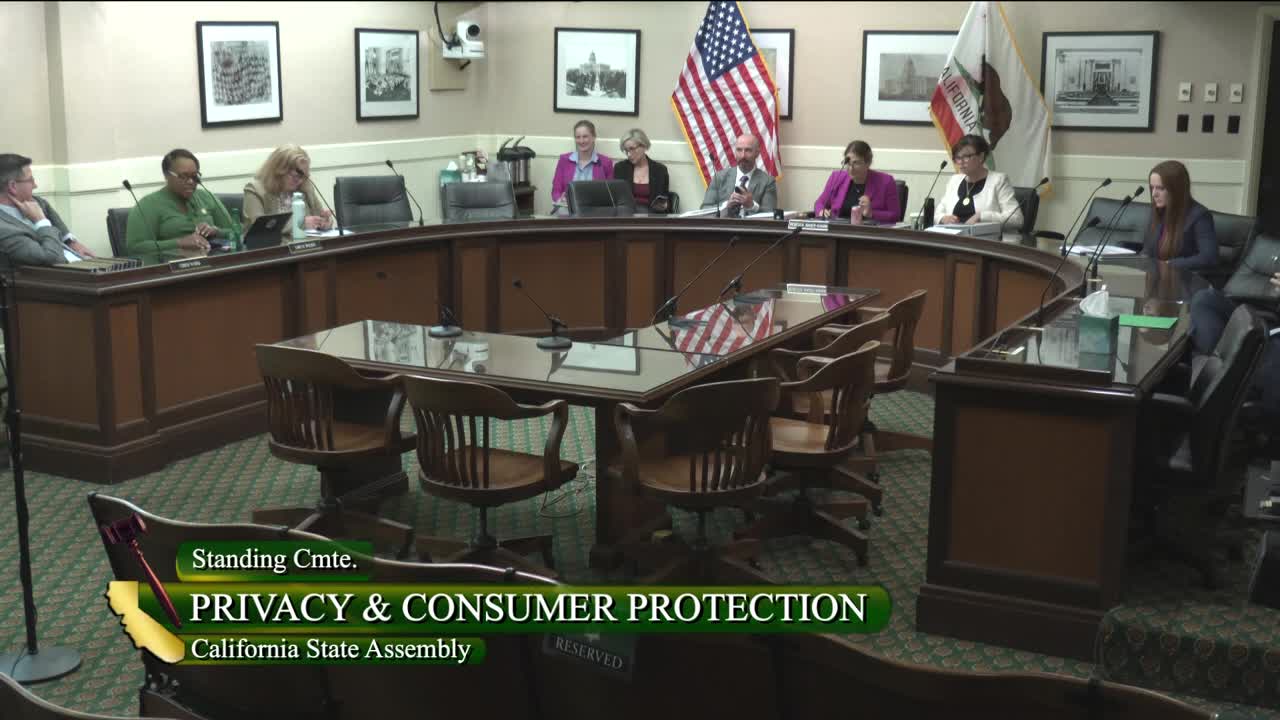 16MIN
Assembly Standing Committee on Privacy and Consumer Protection
 2MIN
Senate Floor
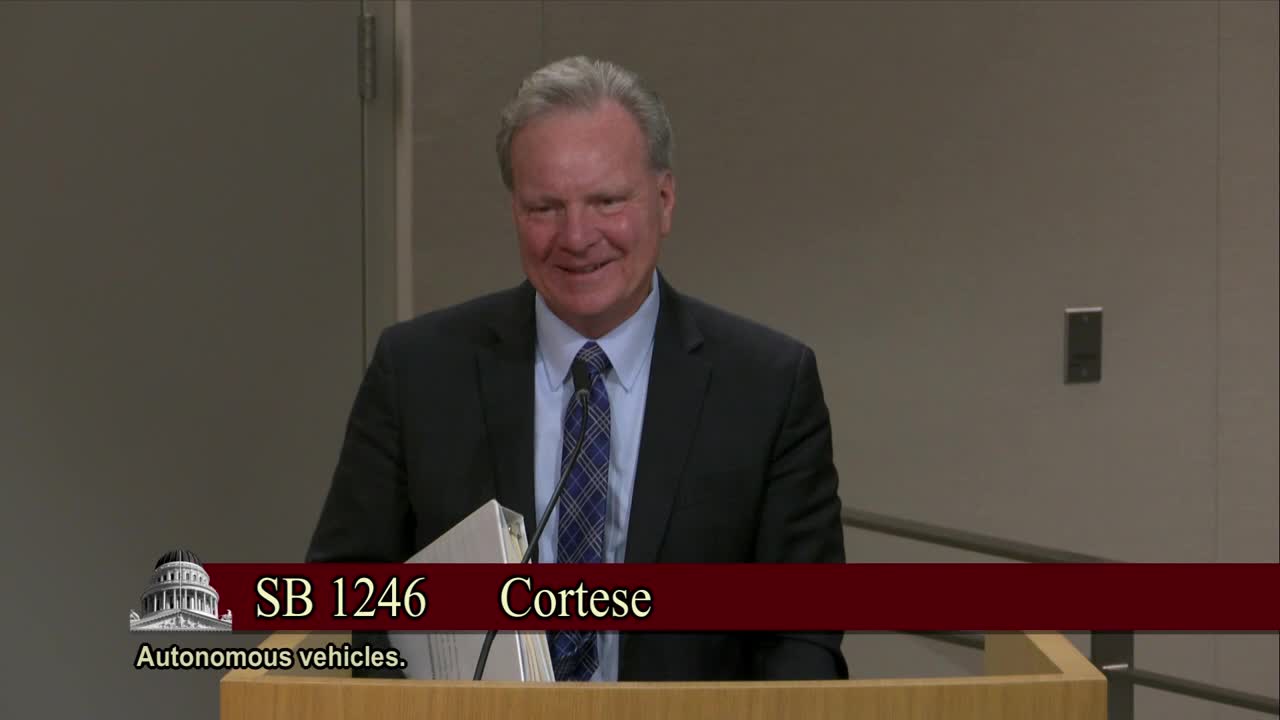 15MIN
Senate Standing Committee on Judiciary
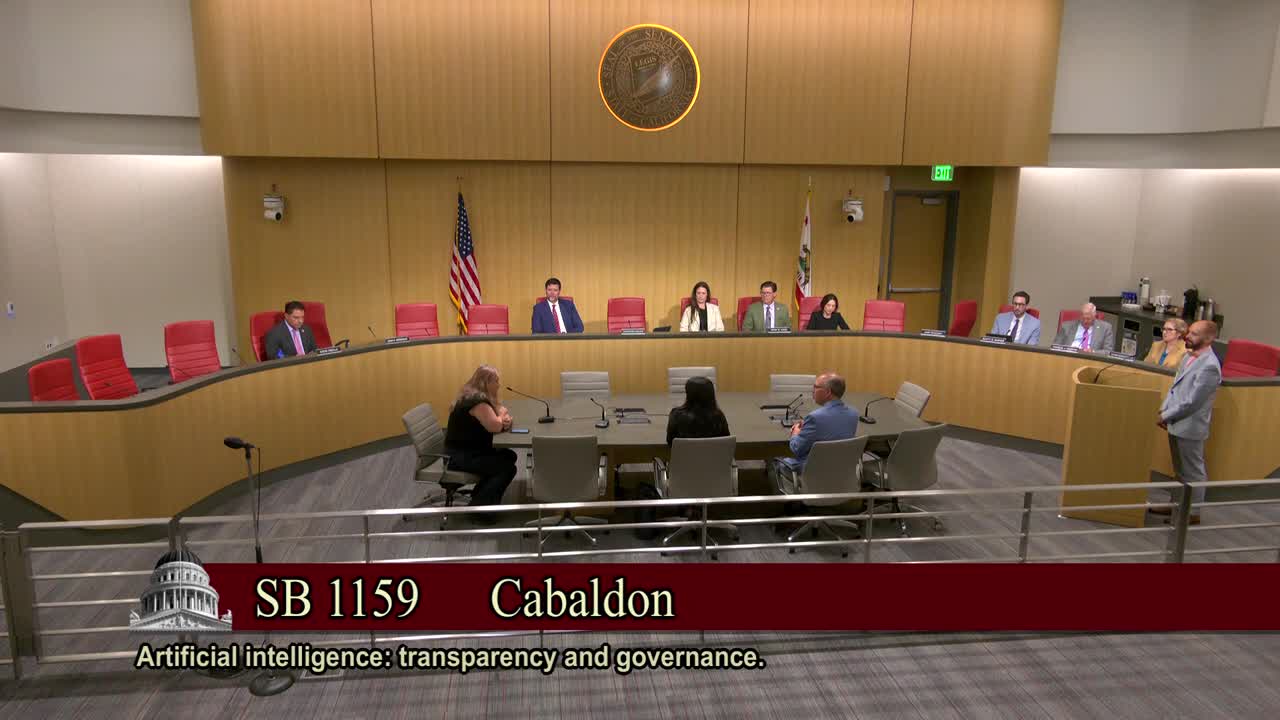 24MIN
Senate Standing Committee on Privacy, Digital Technologies, and Consumer Protection
Bill Author

Bill Co-Author(s):