SB 1059: Employment Training Panel.
- Session Year: 2025-2026
- House: Senate
- Latest Version Date: 2026-08-25
Current Status:
In Progress
(2026-09-18: In Senate. Consideration of Governor's veto pending.)
Introduced
In Committee
Awaiting First Chamber Vote
Passed First Chamber
In Committee
Awaiting Second Chamber Vote
Passed Second Chamber
Enacted
Existing law establishes the Employment Training Panel within the Employment Development Department and sets forth its powers and duties with respect to certain employment training programs. Existing law declares the intent of the Legislature that the purpose of provisions relating to the panel is to establish an employment training program to promote a healthy labor market in a growing, competitive economy and to fund only projects that meet specified criteria, including, among other things, fostering retention of high-wage, high-skilled jobs in manufacturing, and other industries, as provided.
Existing law also establishes the Employment Training Fund in the State Treasury, and requires that moneys in the fund be expended only for the purposes of the Employment Training Panel, except as provided. Existing law authorizes the panel to allocate moneys in the fund for reimbursement of reasonable training costs, administrative costs incurred by contractors, costs of program administration, and related services.
This bill would require the panel to authorize and encourage the use of electronic systems for recordkeeping. The bill would authorize contractors and subcontractors under an agreement with the panel to satisfy recordkeeping and documentation requirements through electronic records, provided that those records are complete, accurate, and meet other specified criteria. The bill would require the panel to adopt recordkeeping and training administration standards, as specified, and to update regulations, guidance, and program materials to implement the bills provisions.
Existing law establishes the Employment Training Panel within the Employment Development Department and sets forth its powers and duties with respect to certain employment training programs. Existing law declares the intent of the Legislature that the purpose of provisions relating to the panel is to establish an employment training program to promote a healthy labor market in a growing, competitive economy and to fund only projects that meet specified criteria, including, among other things, fostering retention of high-wage, high-skilled jobs in manufacturing, and other industries, as provided.
Existing law also establishes the Employment Training Fund in the State Treasury, and requires that moneys in the fund be expended only for the purposes of the Employment Training Panel, except as provided. Existing law authorizes the panel to allocate moneys in the fund for reimbursement of reasonable training costs, administrative costs incurred by contractors, costs of program administration, and related services.
This bill would require the panel to modernize project administration, application review, monitoring, and compliance processes by authorizing and encouraging authorize and encourage the use of electronic systems for applicant tracking, reporting, and recordkeeping. The bill would authorize contractors and subcontractors under an agreement with the panel to satisfy recordkeeping and documentation requirements through electronic records, provided that those records are complete, accurate, and meet other specified criteria. The bill would make various other changes in connection with the panel, including requiring it to update regulations, guidance, and program materials to remove outdated nomenclature, paper-based procedures, and obsolete training delivery classifications. require the panel to adopt recordkeeping and training administration standards, as specified, and to update regulations, guidance, and program materials to implement the bills provisions.
Existing law establishes the Employment Training Panel within the Employment Development Department and sets forth its powers and duties with respect to certain employment training programs. Existing law declares the intent of the Legislature that the purpose of provisions relating to the panel is to establish an employment training program to promote a healthy labor market in a growing, competitive economy and to fund only projects that meet specified criteria, including, among other things, fostering retention of high-wage, high-skilled jobs in manufacturing, and other industries, as provided.
Existing law also establishes the Employment Training Fund in the State Treasury, and requires that moneys in the fund be expended only for the purposes of the Employment Training Panel, except as provided. Existing law authorizes the panel to allocate moneys in the fund for reimbursement of reasonable training costs, administrative costs incurred by contractors, costs of program administration, and related services.
This bill would require the panel to modernize project administration, application review, monitoring, and compliance processes by authorizing and encouraging the use of electronic systems for applicant tracking, reporting, and recordkeeping. The bill would authorize contractors and subcontractors under an agreement with the panel to satisfy recordkeeping and documentation requirements through electronic records, provided that those records are complete, accurate, and meet other specified criteria. The bill would make various other changes in connection with the panel, including requiring it to update regulations, guidance, and program materials to remove outdated nomenclature, paper-based procedures, and obsolete training delivery classifications.
Existing law establishes the Employment Training Panel within the Employment Development Department and sets forth its powers and duties with respect to certain employment training programs. Existing law declares the intent of the Legislature that the purpose of provisions relating to the panel is to establish an employment training program to promote a healthy labor market in a growing, competitive economy and to fund only projects that meet specified criteria, including, among other things, fostering retention of high-wage, high-skilled jobs in manufacturing, and other industries, as provided.
This bill would state the intent of the Legislature to enact subsequent legislation relating to the Employment Training Panel.Existing law also establishes the Employment Training Fund in the State Treasury, and requires that moneys in the fund be expended only for the purposes of the Employment Training Panel, except as provided. Existing law authorizes the panel to allocate moneys in the fund for reimbursement of reasonable training costs, administrative costs incurred by contractors, costs of program administration, and related services.
This bill would require the panel to modernize project administration, application review, monitoring, and compliance processes by authorizing and encouraging the use of electronic systems for applicant tracking, reporting, and recordkeeping. The bill would authorize contractors and subcontractors under an agreement with the panel to satisfy recordkeeping and documentation requirements through electronic records, provided that those records are complete, accurate, and meet other specified criteria. The bill would make various other changes in connection with the panel, including requiring it to update regulations, guidance, and program materials to remove outdated nomenclature, paper-based procedures, and obsolete training delivery classifications.
Existing law establishes the Employment Training Panel within the Employment Development Department and sets forth its powers and duties with respect to certain employment training programs. Existing law declares the intent of the Legislature that the purpose of provisions relating to the panel is to establish an employment training program to promote a healthy labor market in a growing, competitive economy and to fund only projects that meet specified criteria, including, among other things, fostering retention of high-wage, high-skilled jobs in manufacturing, and other industries, as provided.
This bill would state the intent of the Legislature to enact subsequent legislation relating to the Employment Training Panel.
(a)The panel shall authorize and encourage the use of electronic systems for recordkeeping.
(b) Notwithstanding any other law, contractors and subcontractors under an ETP agreement may satisfy recordkeeping and documentation requirements, including requirements prescribed pursuant to Section 10206.5, through electronic records, provided that the records are complete, accurate, secure, and accessible for audit and oversight purposes.
(c) The panel shall update regulations, guidance, and program materials to implement this section.
SEC. 2.Section 10206.5 is added to the Unemployment Insurance Code, to read:10206.5.(a)The panel shall adopt recordkeeping and training administration standards that include, but are not limited to, the following requirements:
(1)Contractors shall maintain and make available, upon request by the panel or its designee, all of the following:
(A)Records that clearly document all aspects of training delivery, trainee participation, and retention outcomes related to the approved training program.
(B)Applicable financial records documenting funds received and disbursed under the ETP agreement.
(C)Payroll and personnel records related to employees participating in the ETP training agreement.
(2)All classroom, laboratory, and videoconference training attendance records shall contain, at a minimum, all of the following elements:
(A)Date or dates on which training occurred. For concurrent or continuous training, a start date and end date may be used.
(B)Type of training and course title, as identified in the approved curriculum.
(C)Number of hours the trainee was in attendance per session or course.
(D)Name or names of the trainer or trainers.
(E)Name or names of the trainees.
(3)All asynchronous, web-based training attendance records shall contain, at a minimum, the following elements:
(A)Date the training system was last accessed for the specific course.
(B)Type of training and course title, as identified in the approved curriculum.
(C)Standard number of hours designated to complete the course.
(D)Percentage of the course completed by the trainee.
(E)Name of the trainee.
(b)Electronic records maintained pursuant to this section shall have the same force and effect as paper records and shall be retained for the period required by the panel.
(c)Structured onsite training (SOST) shall not be considered an eligible training delivery methodology for purposes of reimbursement or approval under the Employment Training Panel program.
(d)The Employment Training Panel shall adopt or amend regulations and guidance as necessary to implement this section.
(a)The panel shall modernize project administration, application review, monitoring, and compliance processes by authorizing and encouraging authorize and encourage the use of electronic systems for applicant tracking, reporting, and recordkeeping.
(b) Notwithstanding any other law, contractors and subcontractors under an ETP agreement may satisfy recordkeeping and documentation requirements, including requirements prescribed pursuant to Section 10206.5, through electronic records, provided that the records are complete, accurate, secure, and accessible for audit and oversight purposes.
(c) The panel shall update regulations, guidance, and program materials to remove outdated nomenclature, paper-based procedures, and obsolete training delivery classifications that are inconsistent with current workforce training practices. implement this section.
SEC. 3.Section 10206 of the Unemployment Insurance Code is amended to read:10206.(a)The panel may allocate money in the fund for any of the following purposes:(1)Reimbursement of reasonable training costs, and administrative costs incurred by contractors. In making a determination of costs to be reimbursed under this paragraph, the panel may allocate funds in accordance with any of the following methods:(A)For purposes of providing simplified fixed-fee performance contracts, a flat rate per hour for categories of training that are substantially similar with respect to content, methodology, and duration, as determined by the panel, not to exceed the reasonable and normal costs for the training. The panel shall periodically adjust the standardized rates established pursuant to this paragraph to reflect changes in training costs.(B)A complete review of the proposal and its costs, including a budget listing the planned costs of training, including personnel, fringe benefits, equipment, supplies, fees for consulting or administrative services, and other costs attributable to training; the services provided by subcontractors; the length and complexity of the training; the method of training; the wages and occupations following training; whether the trainees are new hires or retrainees; and the cost of similar training that the panel has funded previously. The cost of administration shall not exceed 15 percent of the training costs under this paragraph, except that for new hire training the panel may fund administrative costs of up to 25 percent of the training cost.(C)The panel may modify the specific requirements of this paragraph as they apply to employers or contractors proposing projects that involve training for a significant number of small employers in the same project.(D)A contractor is prohibited from utilizing any funds earned or paid as advances or progress payments for the purpose of making payments to any other individual or entity, either directly or indirectly, for costs incurred as a finders fee or for other compensation related to the predevelopment or development phase of a training program, which is based on a percentage of the preliminary or final panel award to the contractor for the training project.(2)(A)Costs of program administration incurred under this chapter. These costs shall be reviewed annually by the Department of Finance and the Legislature and determined through the normal budgetary process.(B)The panels administrative costs, exclusive of the cost of administering Section 976.6, shall not exceed 15 percent of the total amount annually appropriated for expenditure by the panel. Expenditures for marketing, research, and evaluations provided under the contract to the panel that otherwise would have been provided directly by the panel shall not be included in this limitation.(3)Service related to the purposes of this chapter provided by the Small Business Development Centers.(b)For all training contracts, the panel shall establish requirements for in-kind contributions by either the contractor or the employer that reflect a substantial commitment on the part of the contractor or the employer to the value of the training. In developing these requirements, the panel shall take into account the ability of the contractor or the employer, because of size or financial condition, to make any contribution, and the ability of the Employment Training Fund to meet the demand for training authorized by this chapter. In developing policies regarding in-kind contributions, the panel shall hold public hearings.(c)The panel shall do both of the following:(1)Adopt electronic recordkeeping and training administration standards consistent with modern digital systems, in accordance with Section 10206.5.(2)Ensure that all recordkeeping requirements support program accountability while minimizing unnecessary administrative burden on employers and training providers, in accordance with Section 10206.5.SEC. 4.SEC. 2.Section 10206.5 is added to the Unemployment Insurance Code, to read:10206.5.(a)The panel shall adopt recordkeeping and training administration standards that include, but are not limited to, the following requirements:
(1)Contractors shall maintain and make available, upon request by the panel or its designee, all of the following:
(A)Records that clearly document all aspects of training delivery, trainee participation, and retention outcomes related to the approved training program.
(B)Applicable financial records documenting funds received and disbursed under the ETP agreement.
(C)Payroll and personnel records related to employees participating in the ETP training agreement.
(2)All classroom, laboratory, and videoconference training attendance records shall contain, at a minimum, all of the following elements:
(A)Date or dates on which training occurred. For concurrent or continuous training, a start date and end date may be used.
(B)Type of training and course title, as identified in the approved curriculum.
(C)Number of hours the trainee was in attendance per session or course.
(D)Name or names of the trainer or trainers.
(E)Name or names of the trainees.
(3)All asynchronous, web-based training attendance records shall contain, at a minimum, the following elements:
(A)Date the training system was last accessed for the specific course.
(B)Type of training and course title, as identified in the approved curriculum.
(C)Standard number of hours designated to complete the course.
(D)Percentage of the course completed by the trainee.
(E)Name of the trainee.
(b)Electronic records maintained pursuant to this section shall have the same force and effect as paper records and shall be retained for the period required by the panel.
(c)Structured onsite training (SOST) shall not be considered an eligible training delivery methodology for purposes of reimbursement or approval under the Employment Training Panel program.
(d)The Employment Training Panel shall adopt or amend regulations and guidance as necessary to implement this section.
SEC. 5.The Employment Training Panel shall adopt or amend regulations and guidance as necessary to implement this act, including conforming changes to terminology, application materials, compliance procedures, and audit standards, consistent with the purposes of this act.(a)The Legislature finds and declares the following:
(1)Californias economy is being challenged by competition from other states and overseas. In order to meet this challenge, Californias employers, workers, labor organizations, and government need to invest in a skilled and productive workforce, and in developing the skills of frontline workers. For purposes of this section, frontline worker means a worker who directly produces or delivers goods or services.
(2)The purpose of this chapter is to establish a strategically designed employment training program to promote a healthy labor market in a growing, competitive economy that shall fund only projects that meet the following criteria:
(A)Foster creation of high-wage, high-skilled jobs, or foster retention of high-wage, high-skilled jobs in manufacturing and other industries that are threatened by out-of-state and global competition, including, but not limited to, those industries in which targeted training resources for Californias small- and medium-sized business suppliers will increase the states competitiveness to secure federal, private sector, and other nonstate funds, and, in addition, provide for retraining contracts in companies that make a monetary or in-kind contribution to the funded training enhancements.
(B)Encourage industry-based investment in human resources development that promotes the competitiveness of California industry through productivity and product quality enhancements.
(C)Result in secure jobs for those who successfully complete training. All training shall be customized to the specific requirements of one or more employers or a discrete industry and shall include general skills, including soft skills, that trainees can use in the future.
(D)Supplement, rather than displace, funds available through existing programs conducted by employers and government-funded training programs, such as the federal Workforce Innovation and Opportunity Act of 2014 (29 U.S.C. Sec. 3101 et seq.), the Carl D. Perkins Vocational Education Act (Public Law 98-524), CalWORKs (Chapter 2 (commencing with Section 11200) of Part 3 of Division 9 of the Welfare and Institutions Code), the former Enterprise Zone Act (Chapter 12.8 (commencing with Section 7070) of Division 7 of Title 1 of the Government Code), and the McKinney-Vento Homeless Assistance Act (42 U.S.C. Sec. 11301 et seq.), the California Community Colleges Economic Development Program, or apportionment funds allocated to the community colleges, regional occupational centers and programs, or other local educational agencies.
(3)The Employment Training Panel, also known as ETP, housed within the Employment Development Department, plays a critical role in advancing a healthy labor market in a growing and competitive California economy.
(4)Certain statutory and regulatory requirements governing ETP recordkeeping, training delivery nomenclature, and program administration are outdated or no longer reflective of modern workforce training and recordkeeping practices.
(5)Modernizing ETP statutes to expressly authorize electronic recordkeeping, digital training attendance tracking, and updated program terminology will improve clarity, consistency, administrative efficiency, and program performance while reducing unnecessary administrative burden.
(b)It is the intent of the Legislature to establish an employment training program that promotes a healthy labor market in a growing, competitive economy and that funds be expended only for projects that meet all existing minimum standards under current law.
(c)The ETP, in funding projects that meet the requirements of paragraph (2) of subdivision (a), shall give funding priority to those projects that best meet the following goals:
(1)Result in the growth of the California economy by stimulating exports from the state and the production of goods and services that would otherwise be imported from outside the state.
(2)Train new employees of firms locating or expanding in the state that provide high-skilled, high-wage jobs and are committed to an ongoing investment in the training of frontline workers.
(3)Develop workers with skills necessary to work with new technologies or methods.
(4)Train workers who have been displaced, have received notification of impending layoff, or are subject to displacement, because of a plant closure, workforce reduction, changes in technology, or significantly increasing levels of international and out-of-state competition.
(5)Are jointly developed by business management and worker representatives.
(6)Develop high road, as defined in subdivision (r) of Section 14005, jobs and career ladders for workers with demonstrated wage progression and demonstrate high road training partnership, as defined in subdivision (s) of Section 14005, standards to ensure job quality.
(7)Promote the retention and expansion of the states manufacturing workforce.
(8)Promote the hiring, training, and advancement of disadvantaged, marginalized, and underrepresented workers.
(d)The program established through this chapter is to be coordinated with all existing employment training programs and economic development programs, including, but not limited to, programs such as the federal Workforce Innovation and Opportunity Act of 2014 (29 U.S.C. Sec. 3101 et seq.), the California Community Colleges, the regional occupational programs, vocational education programs, joint labor-management training programs, and related programs under the Employment Development Department, the Governors Office of Business and Economic Development, the California Housing and Homelessness Agency, and the Business and Consumer Services Agency.
(e)Projects funded under this chapter may include programs to provide training through apprenticeship programs that are registered with the Division of Apprenticeship Standards.
SEC. 2.Section 10203.5 is added to the Unemployment Insurance Code, to read:10203.5.(a)The panel shall modernize project administration, application review, monitoring, and compliance processes by authorizing and encouraging the use of electronic systems for applicant tracking, reporting, and recordkeeping.
(b)Notwithstanding any other law, contractors and subcontractors under an ETP agreement may satisfy recordkeeping and documentation requirements requirements, including requirements prescribed pursuant to Section 10206.5, through electronic records, provided that the records are complete, accurate, secure, and accessible for audit and oversight purposes.
(c)The panel shall update regulations, guidance, and program materials to remove outdated nomenclature, paper-based procedures, and obsolete training delivery classifications that are inconsistent with current workforce training practices.
SEC. 3.Section 10206 of the Unemployment Insurance Code is amended to read:10206.(a)The panel may allocate money in the fund for any of the following purposes:
(1)Reimbursement of reasonable training costs, and administrative costs incurred by contractors. In making a determination of costs to be reimbursed under this paragraph, the panel may allocate funds in accordance with any of the following methods:
(A)For purposes of providing simplified fixed-fee performance contracts, a flat rate per hour for categories of training that are substantially similar with respect to content, methodology, and duration, as determined by the panel, not to exceed the reasonable and normal costs for the training. The panel shall periodically adjust the standardized rates established pursuant to this paragraph to reflect changes in training costs.
(B)A complete review of the proposal and its costs, including a budget listing the planned costs of training, including personnel, fringe benefits, equipment, supplies, fees for consulting or administrative services, and other costs attributable to training; the services provided by subcontractors; the length and complexity of the training; the method of training; the wages and occupations following training; whether the trainees are new hires or retrainees; and the cost of similar training that the panel has funded previously. The cost of administration shall not exceed 15 percent of the training costs under this paragraph, except that for new hire training the panel may fund administrative costs of up to 25 percent of the training cost.
(C)The panel may modify the specific requirements of this paragraph as they apply to employers or contractors proposing projects that involve training for a significant number of small employers in the same project.
(D)A contractor is prohibited from utilizing any funds earned or paid as advances or progress payments for the purpose of making payments to any other individual or entity, either directly or indirectly, for costs incurred as a finders fee or for other compensation related to the predevelopment or development phase of a training program, which is based on a percentage of the preliminary or final panel award to the contractor for the training project.
(2)(A)Costs of program administration incurred under this chapter. These costs shall be reviewed annually by the Department of Finance and the Legislature and determined through the normal budgetary process.
(B)The panels administrative costs, exclusive of the cost of administering Section 976.6, shall not exceed 15 percent of the total amount annually appropriated for expenditure by the panel. Expenditures for marketing, research, and evaluations provided under the contract to the panel that otherwise would have been provided directly by the panel shall not be included in this limitation.
(3)Service related to the purposes of this chapter provided by the Small Business Development Centers.
(b)For all training contracts, the panel shall establish requirements for in-kind contributions by either the contractor or the employer that reflect a substantial commitment on the part of the contractor or the employer to the value of the training. In developing these requirements, the panel shall take into account the ability of the contractor or the employer, because of size or financial condition, to make any contribution, and the ability of the Employment Training Fund to meet the demand for training authorized by this chapter. In developing policies regarding in-kind contributions, the panel shall hold public hearings.
(c)The panel shall do both of the following:
(1)Adopt electronic recordkeeping and training administration standards consistent with modern digital systems, in accordance with Section 10206.5.
(2)Ensure that all recordkeeping requirements support program accountability while minimizing unnecessary administrative burden on employers and training providers, in accordance with Section 10206.5.
SEC. 4.Section 10206.5 is added to the Unemployment Insurance Code, to read:10206.5.(a)The panel shall adopt electronic recordkeeping and training administration standards that include, but are not limited to, the following requirements:
(1)Contractors shall maintain and make available, upon request by the panel or its designee, all of the following:
(A)Electronic records Records that clearly document all aspects of training delivery, trainee participation, and retention outcomes related to the approved training program.
(B)Applicable financial records documenting funds received and disbursed under the ETP agreement.
(C)Payroll and personnel records related to employees participating in the ETP training agreement.
(2)All classroom, laboratory, and videoconference training attendance records shall contain, at a minimum, all of the following elements:
(A)Date or dates on which training occurred. For concurrent or continuous training, a start date and end date may be used.
(B)Type of training and course title, as identified in the approved curriculum.
(C)Number of hours the trainee was in attendance per session or course.
(D)Name or names of the trainer or trainers.
(E)Name or names of the trainees.
(3)All asynchronous, web-based training attendance records shall contain, at a minimum, the following elements:
(A)Date the training system was last accessed for the specific course.
(B)Type of training and course title, as identified in the approved curriculum.
(C)Standard number of hours designated to complete the course.
(D)Percentage of the course completed by the trainee.
(E)Name of the trainee.
(b)Electronic records maintained pursuant to this section shall have the same force and effect as paper records and shall be retained for the period required by the panel.
(c)Structured onsite training (SOST) shall not be considered an eligible training delivery methodology for purposes of reimbursement or approval under the Employment Training Panel program.
SEC. 5.The Employment Training Panel shall adopt or amend regulations and guidance as necessary to implement this act, including conforming changes to terminology, application materials, compliance procedures, and audit standards, consistent with the purposes of this act.
(a)The Legislature finds and declares the following:
(1)Californias economy is being challenged by competition from other states and overseas. In order to meet this challenge, Californias employers, workers, labor organizations, and government need to invest in a skilled and productive workforce, and in developing the skills of frontline workers. For purposes of this section, frontline worker means a worker who directly produces or delivers goods or services.
(2)The purpose of this chapter is to establish a strategically designed employment training program to promote a healthy labor market in a growing, competitive economy that shall fund only projects that meet the following criteria:
(A)Foster creation of high-wage, high-skilled jobs, or foster retention of high-wage, high-skilled jobs in manufacturing and other industries that are threatened by out-of-state and global competition, including, but not limited to, those industries in which targeted training resources for Californias small- and medium-sized business suppliers will increase the states competitiveness to secure federal, private sector, and other nonstate funds, and, in addition, provide for retraining contracts in companies that make a monetary or in-kind contribution to the funded training enhancements.
(B)Encourage industry-based investment in human resources development that promotes the competitiveness of California industry through productivity and product quality enhancements.
(C)Result in secure jobs for those who successfully complete training. All training shall be customized to the specific requirements of one or more employers or a discrete industry and shall include general skills, including soft skills, that trainees can use in the future.
(D)Supplement, rather than displace, funds available through existing programs conducted by employers and government-funded training programs, such as the federal Workforce Innovation and Opportunity Act of 2014 (29 U.S.C. Sec. 3101 et seq.), the Carl D. Perkins Vocational Education Act (Public Law 98-524), CalWORKs (Chapter 2 (commencing with Section 11200) of Part 3 of Division 9 of the Welfare and Institutions Code), the former Enterprise Zone Act (Chapter 12.8 (commencing with Section 7070) of Division 7 of Title 1 of the Government Code), and the McKinney-Vento Homeless Assistance Act (42 U.S.C. Sec. 11301 et seq.), the California Community Colleges Economic Development Program, or apportionment funds allocated to the community colleges, regional occupational centers and programs, or other local educational agencies.
(3)The Employment Training Panel, also known as ETP, housed within the Employment Development Department, plays a critical role in advancing a healthy labor market in a growing and competitive California economy.
(4)Certain statutory and regulatory requirements governing ETP recordkeeping, training delivery nomenclature, and program administration are outdated or no longer reflective of modern workforce training and recordkeeping practices.
(5)Modernizing ETP statutes to expressly authorize electronic recordkeeping, digital training attendance tracking, and updated program terminology will improve clarity, consistency, administrative efficiency, and program performance while reducing unnecessary administrative burden.
(b)It is the intent of the Legislature to establish an employment training program that promotes a healthy labor market in a growing, competitive economy and that funds be expended only for projects that meet all existing minimum standards under current law.
(c)The ETP, in funding projects that meet the requirements of paragraph (2) of subdivision (a), shall give funding priority to those projects that best meet the following goals:
(1)Result in the growth of the California economy by stimulating exports from the state and the production of goods and services that would otherwise be imported from outside the state.
(2)Train new employees of firms locating or expanding in the state that provide high-skilled, high-wage jobs and are committed to an ongoing investment in the training of frontline workers.
(3)Develop workers with skills necessary to work with new technologies or methods.
(4)Train workers who have been displaced, have received notification of impending layoff, or are subject to displacement, because of a plant closure, workforce reduction, changes in technology, or significantly increasing levels of international and out-of-state competition.
(5)Are jointly developed by business management and worker representatives.
(6)Develop high road, as defined in subdivision (r) of Section 14005, jobs and career ladders for workers with demonstrated wage progression and demonstrate high road training partnership, as defined in subdivision (s) of Section 14005, standards to ensure job quality.
(7)Promote the retention and expansion of the states manufacturing workforce.
(8)Promote the hiring, training, and advancement of disadvantaged, marginalized, and underrepresented workers.
(d)The program established through this chapter is to be coordinated with all existing employment training programs and economic development programs, including, but not limited to, programs such as the federal Workforce Innovation and Opportunity Act of 2014 (29 U.S.C. Sec. 3101 et seq.), the California Community Colleges, the regional occupational programs, vocational education programs, joint labor-management training programs, and related programs under the Employment Development Department, the Governors Office of Business and Economic Development, the California Housing and Homelessness Agency, and the Business and Consumer Services Agency.
(e)Projects funded under this chapter may include programs to provide training through apprenticeship programs that are registered with the Division of Apprenticeship Standards.
SEC. 2.Section 10203.5 is added to the Unemployment Insurance Code, to read:10203.5.(a)The panel shall modernize project administration, application review, monitoring, and compliance processes by authorizing and encouraging the use of electronic systems for applicant tracking, reporting, and recordkeeping.
(b)Notwithstanding any other law, contractors and subcontractors under an ETP agreement may satisfy recordkeeping and documentation requirements through electronic records, provided that the records are complete, accurate, secure, and accessible for audit and oversight purposes.
(c)The panel shall update regulations, guidance, and program materials to remove outdated nomenclature, paper-based procedures, and obsolete training delivery classifications that are inconsistent with current workforce training practices.
SEC. 3.Section 10206 of the Unemployment Insurance Code is amended to read:10206.(a)The panel may allocate money in the fund for any of the following purposes:
(1)Reimbursement of reasonable training costs, and administrative costs incurred by contractors. In making a determination of costs to be reimbursed under this paragraph, the panel may allocate funds in accordance with any of the following methods:
(A)For purposes of providing simplified fixed-fee performance contracts, a flat rate per hour for categories of training that are substantially similar with respect to content, methodology, and duration, as determined by the panel, not to exceed the reasonable and normal costs for the training. The panel shall periodically adjust the standardized rates established pursuant to this paragraph to reflect changes in training costs.
(B)A complete review of the proposal and its costs, including a budget listing the planned costs of training, including personnel, fringe benefits, equipment, supplies, fees for consulting or administrative services, and other costs attributable to training; the services provided by subcontractors; the length and complexity of the training; the method of training; the wages and occupations following training; whether the trainees are new hires or retrainees; and the cost of similar training that the panel has funded previously. The cost of administration shall not exceed 15 percent of the training costs under this paragraph, except that for new hire training the panel may fund administrative costs of up to 25 percent of the training cost.
(C)The panel may modify the specific requirements of this paragraph as they apply to employers or contractors proposing projects that involve training for a significant number of small employers in the same project.
(D)A contractor is prohibited from utilizing any funds earned or paid as advances or progress payments for the purpose of making payments to any other individual or entity, either directly or indirectly, for costs incurred as a finders fee or for other compensation related to the predevelopment or development phase of a training program, which is based on a percentage of the preliminary or final panel award to the contractor for the training project.
(2)(A)Costs of program administration incurred under this chapter. These costs shall be reviewed annually by the Department of Finance and the Legislature and determined through the normal budgetary process.
(B)The panels administrative costs, exclusive of the cost of administering Section 976.6, shall not exceed 15 percent of the total amount annually appropriated for expenditure by the panel. Expenditures for marketing, research, and evaluations provided under the contract to the panel that otherwise would have been provided directly by the panel shall not be included in this limitation.
(3)Service related to the purposes of this chapter provided by the Small Business Development Centers.
(b)For all training contracts, the panel shall establish requirements for in-kind contributions by either the contractor or the employer that reflect a substantial commitment on the part of the contractor or the employer to the value of the training. In developing these requirements, the panel shall take into account the ability of the contractor or the employer, because of size or financial condition, to make any contribution, and the ability of the Employment Training Fund to meet the demand for training authorized by this chapter. In developing policies regarding in-kind contributions, the panel shall hold public hearings.
(c)The panel shall do both of the following:
(1)Adopt electronic recordkeeping and training administration standards consistent with modern digital systems, in accordance with Section 10206.5.
(2)Ensure that all recordkeeping requirements support program accountability while minimizing unnecessary administrative burden on employers and training providers, in accordance with Section 10206.5.
SEC. 4.Section 10206.5 is added to the Unemployment Insurance Code, to read:10206.5.(a)The panel shall adopt electronic recordkeeping and training administration standards that include, but are not limited to, the following requirements:
(1)Contractors shall maintain and make available, upon request by the panel or its designee, all of the following:
(A)Electronic records that clearly document all aspects of training delivery, trainee participation, and retention outcomes related to the approved training program.
(B)Applicable financial records documenting funds received and disbursed under the ETP agreement.
(C)Payroll and personnel records related to employees participating in the ETP training agreement.
(2)All classroom, laboratory, and videoconference training attendance records shall contain, at a minimum, all of the following elements:
(A)Date or dates on which training occurred. For concurrent or continuous training, a start date and end date may be used.
(B)Type of training and course title, as identified in the approved curriculum.
(C)Number of hours the trainee was in attendance per session or course.
(D)Name or names of the trainer or trainers.
(E)Name or names of the trainees.
(3)All asynchronous, web-based training attendance records shall contain, at a minimum, the following elements:
(A)Date the training system was last accessed for the specific course.
(B)Type of training and course title, as identified in the approved curriculum.
(C)Standard number of hours designated to complete the course.
(D)Percentage of the course completed by the trainee.
(E)Name of the trainee.
(b)Electronic records maintained pursuant to this section shall have the same force and effect as paper records and shall be retained for the period required by the panel.
(c)Structured onsite training (SOST) shall not be considered an eligible training delivery methodology for purposes of reimbursement or approval under the Employment Training Panel program.
(d)The panel shall repeal existing trainer-to-trainer ratio rules for ETP reimbursement for all delivery methodologies.SEC. 5.The Employment Training Panel shall adopt or amend regulations and guidance as necessary to implement this act, including conforming changes to terminology, application materials, compliance procedures, and audit standards, consistent with the purposes of this act.
(a)The Legislature finds and declares the following:
(a)(1)Californias economy is being challenged by competition from other states and overseas. In order to meet this challenge, Californias employers, workers, labor organizations, and government need to invest in a skilled and productive workforce, and in developing the skills of frontline workers. For purposes of this section, frontline worker means a worker who directly produces or delivers goods or services.
The(2)The purpose of this chapter is to establish a strategically designed employment training program to promote a healthy labor market in a growing, competitive economy that shall fund only projects that meet the following criteria:
(1)(A)Foster creation of high-wage, high-skilled jobs, or foster retention of high-wage, high-skilled jobs in manufacturing and other industries that are threatened by out-of-state and global competition, including, but not limited to, those industries in which targeted training resources for Californias small- and medium-sized business suppliers will increase the states competitiveness to secure federal, private sector, and other nonstate funds, and, in addition, provide for retraining contracts in companies that make a monetary or in-kind contribution to the funded training enhancements.
(2)(B)Encourage industry-based investment in human resources development that promotes the competitiveness of California industry through productivity and product quality enhancements.
(3)(C)Result in secure jobs for those who successfully complete training. All training shall be customized to the specific requirements of one or more employers or a discrete industry and shall include general skills, including soft skills, that trainees can use in the future.
(4)(D)Supplement, rather than displace, funds available through existing programs conducted by employers and government-funded training programs, such as the federal Workforce Innovation and Opportunity Act of 2014 (29 U.S.C. Sec. 3101 et seq.), the Carl D. Perkins Vocational Education Act (Public Law 98-524), CalWORKs (Chapter 2 (commencing with Section 11200) of Part 3 of Division 9 of the Welfare and Institutions Code), the former Enterprise Zone Act (Chapter 12.8 (commencing with Section 7070) of Division 7 of Title 1 of the Government Code), and the McKinney-Vento Homeless Assistance Act (42 U.S.C. Sec. 11301 et seq.), the California Community Colleges Economic Development Program, or apportionment funds allocated to the community colleges, regional occupational centers and programs, or other local educational agencies.
(3)The Employment Training Panel, also known as ETP, housed within the Employment Development Department, plays a critical role in advancing a healthy labor market in a growing and competitive California economy.
(4)Certain statutory and regulatory requirements governing ETP recordkeeping, training delivery nomenclature, and program administration are outdated or no longer reflective of modern workforce training and recordkeeping practices.
(5)Modernizing ETP statutes to expressly authorize electronic recordkeeping, digital training attendance tracking, and updated program terminology will improve clarity, consistency, administrative efficiency, and program performance while reducing unnecessary administrative burden.
(b)It is the intent of the Legislature to establish an employment training program that promotes a healthy labor market in a growing, competitive economy and that funds be expended only for projects that meet all existing minimum standards under current law.
(b)(c)The Employment Training Panel, ETP, in funding projects that meet the requirements of paragraph (2) of subdivision (a), shall give funding priority to those projects that best meet the following goals:
(1)Result in the growth of the California economy by stimulating exports from the state and the production of goods and services that would otherwise be imported from outside the state.
(2)Train new employees of firms locating or expanding in the state that provide high-skilled, high-wage jobs and are committed to an ongoing investment in the training of frontline workers.
(3)Develop workers with skills necessary to work with new technologies or methods.
(4)Train workers who have been displaced, have received notification of impending layoff, or are subject to displacement, because of a plant closure, workforce reduction, changes in technology, or significantly increasing levels of international and out-of-state competition.
(5)Are jointly developed by business management and worker representatives.
(6)Develop high road, as defined in subdivision (r) of Section 14005, jobs and career ladders for workers with demonstrated wage progression and demonstrate high road training partnership, as defined in subdivision (s) of Section 14005, standards to ensure job quality.
(7)Promote the retention and expansion of the states manufacturing workforce.
(8)Promote the hiring, training, and advancement of disadvantaged, marginalized, and underrepresented workers.
(c)(d)The program established through this chapter is to be coordinated with all existing employment training programs and economic development programs, including, but not limited to, programs such as the federal Workforce Innovation and Opportunity Act of 2014 (29 U.S.C. Sec. 3101 et seq.), the California Community Colleges, the regional occupational programs, vocational education programs, joint labor-management training programs, and related programs under the Employment Development Department and Department, the Governors Office of Business and Economic Development, and the Business, Consumer Services, and Housing Agency. the California Housing and Homelessness Agency, and the Business and Consumer Services Agency.
(d)(e)Projects funded under this chapter may include programs to provide training through apprenticeship programs that are registered with the Division of Apprenticeship Standards.
SEC. 2.Section 10203.5 is added to the Unemployment Insurance Code, to read:10203.5.(a)The panel shall modernize project administration, application review, monitoring, and compliance processes by authorizing and encouraging the use of electronic systems for applicant tracking, reporting, and recordkeeping.
(b)Notwithstanding any other law, contractors and subcontractors under an ETP agreement may satisfy recordkeeping and documentation requirements through electronic records, provided that the records are complete, accurate, secure, and accessible for audit and oversight purposes.
(c)The panel shall update regulations, guidance, and program materials to remove outdated nomenclature, paper-based procedures, and obsolete training delivery classifications that are inconsistent with current workforce training practices.
SEC. 3.Section 10206 of the Unemployment Insurance Code is amended to read:10206.(a)The panel may allocate money in the fund for any of the following purposes:
(1)Reimbursement of reasonable training costs, and administrative costs incurred by contractors. In making a determination of costs to be reimbursed under this paragraph, the panel may allocate funds in accordance with any of the following methods:
(A)For purposes of providing simplified fixed-fee performance contracts, a flat rate per hour for categories of training that are substantially similar with respect to content, methodology, and duration, as determined by the panel, not to exceed the reasonable and normal costs for the training. The panel shall periodically adjust the standardized rates established pursuant to this paragraph to reflect changes in training costs.
(B)A complete review of the proposal and its costs, including a budget listing the planned costs of training, including personnel, fringe benefits, equipment, supplies, fees for consulting or administrative services, and other costs attributable to training; the services provided by subcontractors; the length and complexity of the training; the method of training; the wages and occupations following training; whether the trainees are new hires or retrainees; and the cost of similar training that the panel has funded previously. The cost of administration shall not exceed 15 percent of the training costs under this paragraph, except that for new hire training the panel may fund administrative costs of up to 25 percent of the training cost.
(C)The panel may modify the specific requirements of this paragraph as they apply to employers or contractors proposing projects that involve training for a significant number of small employers in the same project.
(D)A contractor is prohibited from utilizing any funds earned or paid as advances or progress payments for the purpose of making payments to any other individual or entity, either directly or indirectly, for costs incurred as a finders fee or for other compensation related to the predevelopment or development phase of a training program, which is based on a percentage of the preliminary or final panel award to the contractor for the training project.
(2)(A)Costs of program administration incurred under this chapter. These costs shall be reviewed annually by the Department of Finance and the Legislature and determined through the normal budgetary process.
(B)The panels administrative costs, exclusive of the cost of administering Section 976.6, shall not exceed 15 percent of the total amount annually appropriated for expenditure by the panel. Expenditures for marketing, research, and evaluations provided under the contract to the panel that otherwise would have been provided directly by the panel shall not be included in this limitation.
(3)Service related to the purposes of this chapter provided by the Small Business Development Centers.
(b)For all training contracts, the panel shall establish requirements for in-kind contributions by either the contractor or the employer that reflect a substantial commitment on the part of the contractor or the employer to the value of the training. In developing these requirements, the panel shall take into account the ability of the contractor or the employer, because of size or financial condition, to make any contribution, and the ability of the Employment Training Fund to meet the demand for training authorized by this chapter. In developing policies regarding in-kind contributions, the panel shall hold public hearings.
(c)The panel shall do both of the following:
(1)Adopt electronic recordkeeping and training administration standards consistent with modern digital systems, in accordance with Section 10206.5.
(2)Ensure that all recordkeeping requirements support program accountability while minimizing unnecessary administrative burden on employers and training providers, in accordance with Section 10206.5.
SEC. 4.Section 10206.5 is added to the Unemployment Insurance Code, to read:10206.5.(a)The panel shall adopt electronic recordkeeping and training administration standards that include, but are not limited to, the following requirements:
(1)Contractors shall maintain and make available, upon request by the panel or its designee, all of the following:
(A)Electronic records that clearly document all aspects of training delivery, trainee participation, and retention outcomes related to the approved training program.
(B)Applicable financial records documenting funds received and disbursed under the ETP agreement.
(C)Payroll and personnel records related to employees participating in the ETP training agreement.
(2)All classroom, laboratory, and videoconference training attendance records shall contain, at a minimum, all of the following elements:
(A)Date or dates on which training occurred. For concurrent or continuous training, a start date and end date may be used.
(B)Type of training and course title, as identified in the approved curriculum.
(C)Number of hours the trainee was in attendance per session or course.
(D)Name or names of the trainer or trainers.
(E)Name or names of the trainees.
(3)All asynchronous, web-based training attendance records shall contain, at a minimum, the following elements:
(A)Date the training system was last accessed for the specific course.
(B)Type of training and course title, as identified in the approved curriculum.
(C)Standard number of hours designated to complete the course.
(D)Percentage of the course completed by the trainee.
(E)Name of the trainee.
(b)Electronic records maintained pursuant to this section shall have the same force and effect as paper records and shall be retained for the period required by the panel.
(c)Structured onsite training (SOST) shall not be considered an eligible training delivery methodology for purposes of reimbursement or approval under the Employment Training Panel program.
(d)The panel shall repeal existing trainer-to-trainer ratio rules for ETP reimbursement for all delivery methodologies.
SEC. 5.The Employment Training Panel shall adopt or amend regulations and guidance as necessary to implement this act, including conforming changes to terminology, application materials, compliance procedures, and audit standards, consistent with the purposes of this act.
SECTION 1.It is the intent of the Legislature to enact subsequent legislation relating to the Employment Training Panel.It is the intent of the Legislature to enact subsequent legislation relating to the Employment Training Panel.
|
Date
|
Status
|
|---|---|
| Sep 18, 2026 | In Senate. Consideration of Governor's veto pending. |
| Sep 18, 2026 | Vetoed by the Governor. |
| Aug 28, 2026 | Enrolled and presented to the Governor at 11 a.m. |
| Aug 24, 2026 | Assembly amendments concurred in. (Ayes 40. Noes 0. Page 5688.) Ordered to engrossing and enrolling. |
| Aug 24, 2026 | Assembly amendments concurred in. (Ayes 40. Noes 0.) Ordered to engrossing and enrolling. |
| Aug 24, 2026 | Assembly amendments concurred in. (Ayes 39. Noes 0.) Ordered to engrossing and enrolling. |
| Aug 20, 2026 | In Senate. Concurrence in Assembly amendments pending. |
| Aug 20, 2026 | Read third time. Passed. (Ayes 78. Noes 0. Page 6308.) Ordered to the Senate. |
| Aug 20, 2026 | Read third time. Passed. Ordered to the Senate. |
| Aug 17, 2026 | Read second time. Ordered to third reading. |
| Aug 13, 2026 | Read second time and amended. Ordered to second reading. |
| Aug 13, 2026 | From committee: Do pass as amended. (Ayes 11. Noes 0.) (August 13). |
| Aug 13, 2026 | Assembly Rule 63 suspended. |
| Jul 1, 2026 | July 1 set for first hearing. Placed on suspense file. |
| Jun 11, 2026 | From committee: Do pass and re-refer to Com. on APPR. with recommendation: To consent calendar. (Ayes 7. Noes 0.) (June 10). Re-referred to Com. on APPR. |
| Jun 1, 2026 | Referred to Com. on L. & E. |
| May 22, 2026 | In Assembly. Read first time. Held at Desk. |
| May 22, 2026 | Read third time. Passed. (Ayes 33. Noes 0. Page 4418.) Ordered to the Assembly. |
| May 22, 2026 | Read third time. Passed. (Ayes 33. Noes 0.) Ordered to the Assembly. |
| May 20, 2026 | Ordered to special consent calendar. |
| May 14, 2026 | From committee: Do pass. (Ayes 7. Noes 0. Page 4263.) (May 14). |
| May 14, 2026 | Read second time. Ordered to third reading. |
| May 14, 2026 | From committee: Do pass. (Ayes 7. Noes 0.) (May 14). |
| May 8, 2026 | Set for hearing May 14. |
| May 4, 2026 | May 4 hearing: Placed on APPR. suspense file. |
| Apr 24, 2026 | Set for hearing May 4. |
| Apr 16, 2026 | Read second time and amended. Re-referred to Com. on APPR. |
| Apr 15, 2026 | From committee: Do pass as amended and re-refer to Com. on APPR. (Ayes 5. Noes 0. Page 3903.) (April 15). |
| Apr 15, 2026 | From committee: Do pass as amended and re-refer to Com. on APPR. (Ayes 5. Noes 0.) (April 15). |
| Apr 9, 2026 | Set for hearing April 15. |
| Apr 8, 2026 | From committee with author's amendments. Read second time and amended. Re-referred to Com. on L., P.E. & R. |
| Apr 8, 2026 | Re-referred to Com. on L., P.E. & R. |
| Mar 24, 2026 | From committee with author's amendments. Read second time and amended. Re-referred to Com. on RLS. |
| Feb 26, 2026 | Referred to Com. on RLS. |
| Feb 13, 2026 | From printer. May be acted upon on or after March 15. |
| Feb 12, 2026 | Introduced. Read first time. To Com. on RLS. for assignment. To print. |
|
Date
|
Description
|
Location
|
Votes
|
|
|---|---|---|---|---|
| Aug 24, 2026 | Unfinished Business SB1059 Archuleta Concurrence | Senate Floor |
Passed |
|
| Aug 20, 2026 | SB 1059 Archuleta Senate Third Reading By Pacheco | Assembly Floor |
Passed |
|
| Aug 13, 2026 | Do pass as amended. | Assembly Standing Committee on Appropriations |
Passed |
|
| Jun 10, 2026 | Do pass and be re-referred to the Committee on [Appropriations] with recommendation: To Consent Calendar | Assembly Standing Committee on Labor and Employment |
Passed |
|
| May 22, 2026 | Special Consent SB1059 Archuleta | Senate Floor |
Passed |
|
| May 14, 2026 | Do pass | Senate Standing Committee on Appropriations |
Passed |
|
| May 4, 2026 | Placed on suspense file | Senate Standing Committee on Appropriations |
Passed |
|
| Apr 15, 2026 | Do pass as amended, but first amend, and re-refer to the Committee on [Appropriations] | Senate Standing Committee on Labor, Public Employment and Retirement |
Passed |
This list shows positions taken on this bill by organizations on the date displayed, which is linked to the original source.
Positions by individuals are not included.
|
Organization
|
Position
|
Date
|
|---|---|---|
| Aerospace and Defense Alliance of California | ** Support | |
| California Asian Pacific Chamber Of Commerce | ** Support | |
| California Life Sciences Association | ** Support | |
| California Manufacturers And Technology Association | ** Support | |
| Coalition For Etp And Jobs | ** Support | |
| Hands On, LLC | ** Support | |
| HERRERA & COMPANY | ** Support | |
| JobForward | ** Support | |
| JobForward, INC. | ** Support | |
| Sacramento Asian Pacific Chamber of Commerce | ** Support | |
| Strategy Workplace Communications | ** Support |
SENATE RULES COMMITTEE Office of Senate Floor Analyses (916) 651-4171 | SB 1059 |
VETO
Bill No: SB 1059
Author: Archuleta (D)
Enrolled: 8/25/26
Vote: 27
SENATE LABOR, PUB. EMP. & RET. COMMITTEE: 5-0, 4/15/26
AYES: Smallwood-Cuevas, Strickland, Cortese, Durazo, Laird
SENATE APPROPRIATIONS COMMITTEE: 7-0, 5/14/26
AYES: Cervantes, Seyarto, Cabaldon, Dahle, Grayson, Richardson, Wahab
SENATE FLOOR: 33-0, 5/22/26
AYES: Archuleta, Arreguín, Ashby, Blakespear, Cabaldon, Caballero, Cervantes, Choi, Cortese, Dahle, Durazo, Gonzalez, Grayson, Grove, Jones, Laird, Limón, McGuire, McNerney, Menjivar, Ochoa Bogh, Pérez, Reyes, Richardson, Rubio, Seyarto, Smallwood-Cuevas, Strickland, Umberg, Valladares, Wahab, Weber Pierson, Wiener
NO VOTE RECORDED: Allen, Alvarado-Gil, Becker, Hurtado, Niello, Padilla, Stern
SENATE FLOOR: 40-0, 8/24/26
AYES: Allen, Alvarado-Gil, Archuleta, Arreguín, Ashby, Becker, Blakespear, Cabaldon, Caballero, Cervantes, Choi, Cortese, Dahle, Durazo, Gonzalez, Grayson, Grove, Hurtado, Jones, Laird, Limón, McGuire, McNerney, Menjivar, Niello, Ochoa Bogh, Padilla, Pérez, Reyes, Richardson, Rubio, Seyarto, Smallwood-Cuevas, Stern, Strickland, Umberg, Valladares, Wahab, Weber Pierson, Wiener
ASSEMBLY FLOOR: 78-0, 8/20/26 - See last page for vote
SUBJECT: Employment Training Panel
SOURCE: Coalition for ETP and Jobs
DIGEST:
This bill requires the Employment Training Panel (ETP) to authorize and encourage the use of electronic systems for recordkeeping, as specified, adopt specified recordkeeping and training administration standards, and adopt or amend regulations and guidance as necessary. This bill also prohibits structured onsite training (SOST) from being considered an eligible training delivery methodology for purposes of reimbursement or approval under the ETP program.
ANALYSIS:
Existing law:
- Establishes the ETP within the Employment Development Department (EDD) and charges it with performing certain duties including soliciting proposals and writing contracts for the purpose of providing employment training. (Unemployment Insurance Code (UIC) §10202)
- Declares the intent of the Legislature that the purpose of provisions relating to ETP is to establish an employment training program to promote a healthy labor market in a growing, competitive economy and to fund only projects that meet specified criteria, including, among other things, fostering retention of high wage, high-skilled jobs in manufacturing, and other industries, as specified. (UIC §10200)
- Establishes the Employment Training Fund (fund) in the State Treasury and requires that money in the fund be expended only for purposes of the ETP, except as provided. (UIC §§1610-1611.5)
- Authorizes ETP to allocate money in the fund for any of the following purposes:
- Reimbursement of reasonable training costs, and administrative costs incurred by contractors. In making a determination of costs to be reimbursed under this paragraph, ETP may allocate funds in accordance with any of the following methods:
- For purposes of providing simplified fixed-fee performance contracts, a flat rate per hour for categories of training that are substantially similar with respect to content, methodology, and duration, as determined by ETP, not to exceed the reasonable and normal costs for the training. ETP must periodically adjust the standardized rates established pursuant to this paragraph to reflect changes in training costs.
- A complete review of the proposal and its costs, including a budget listing the planned costs of training, including personnel, fringe benefits, equipment, supplies, fees for consulting or administrative services, and other costs attributable to training; the services provided by subcontractors; the length and complexity of the training; the method of training; the wages and occupations following training; whether the trainees are new hires or retrainees; and the cost of similar training that the panel has funded previously. The cost of administration shall not exceed 15% of the training costs under this paragraph, except that for new hire training the panel may fund administrative costs of up to 25% of the training cost.
- ETP may modify the specific requirements of this paragraph as they apply to employers or contractors proposing projects that involve training for a significant number of small employers in the same project.
- A contractor is prohibited from utilizing any funds earned or paid as advances or progress payments for the purpose of making payments to any other individual or entity, either directly or indirectly, for costs incurred as a finder’s fee or for other compensation related to the predevelopment or development phase of a training program, which is based on a percentage of the preliminary or final panel award to the contractor for the training project.
- Costs of program administration incurred, as specified. These costs shall be reviewed annually by the Department of Finance and the Legislature and determined through the normal budgetary process.
- ETP’s administrative costs, as specified, shall not exceed 15 percent of the total amount annually appropriated for expenditure by ETP. Expenditures for marketing, research, and evaluations provided under the contract to the ETP that otherwise would have been provided directly by the ETP shall not be included in this limitation.
- Service related to the purposes of this chapter provided by the Small Business Development Centers. (UIC §10206)
- Reimbursement of reasonable training costs, and administrative costs incurred by contractors. In making a determination of costs to be reimbursed under this paragraph, ETP may allocate funds in accordance with any of the following methods:
This bill:
- Requires ETP to authorize and encourage the use of electronic systems for recordkeeping.
- Authorizes contractors and subcontractors under an ETP agreement, notwithstanding any other law, to satisfy recordkeeping and documentation requirements, as specified, through electronic records, provided that the records are complete, accurate, secure, and accessible for audit and oversight purposes.
- Requires ETP to update regulations, guidance, and program materials, as specified.
- Requires ETP to adopt recordkeeping and training administration standards that include, but are not limited to, the following requirements:
- Contractors must maintain and make available, upon request by the panel or its designee, all of the following:
- Records that clearly document all aspects of training delivery, trainee participation, and retention outcomes related to the approved training program.
- Applicable financial records documenting funds received and disbursed under the ETP agreement.
- Payroll and personnel records related to employees participating in the ETP training agreement.
- All classroom, laboratory, and videoconference training attendance records must contain, at a minimum, all of the following elements:
- Date or dates on which training occurred. For concurrent or continuous training, a start date and end date may be used.
- Type of training and course title, as identified in the approved curriculum.
- Number of hours the trainee was in attendance per session or course.
- Name or names of the trainer or trainers.
- Name or names of the trainees.
- All asynchronous, web-based training attendance records must contain, at a minimum, the following elements:
- Date the training system was last accessed for the specific course.
- Type of training and course title, as identified in the approved curriculum.
- Standard number of hours designated to complete the course.
- Percentage of the course completed by the trainee.
- Name of the trainee.
- Contractors must maintain and make available, upon request by the panel or its designee, all of the following:
- Provides that electronic records pursuant to this section have the same force and effect as paper records and are retained for the period required by ETP.
- Provides that structured onsite training (SOST) is not considered an eligible training delivery methodology for purposes of reimbursement or approval under the ETP program.
- Requires ETP to adopt or amend regulations and guidance as necessary to implement this section.
Background
Employment Training Panel. The Employment Training Panel (ETP) provides funding to employers to assist in upgrading the skills of their workers through training that leads to good paying, long-term jobs. ETP was created in 1982 by the Legislature and is funded by California employers through the California Employment Training Tax. ETP has a three-way governing structure, with appointed ETP members representing business, unions, and state government.
ETP is a performance-based statewide workforce training and economic development program which supports California’s economy by providing financial assistance to California businesses in support of customized worker training for new and existing employees.[1] ETP is a funding agency, not a training agency. Businesses determine their own training needs and how to provide training. ETP staff are available to assist in applying for funds and other aspects of participation.
ETP requires all reimbursable training to be documented on ETP rosters or approved custom rosters with wet signatures. An alternate form of recordkeeping can be requested during the development phase of the application or at any time during the term of the contract.[2] However, the use of an alternate form of recordkeeping requires prior ETP approval. Any recordkeeping modifications agreed to by ETP and the contractor will be incorporated into the contract and may be subject to audit. Prior approved alternate recordkeeping methods do not carry over into subsequent contracts, and a request will need to be submitted per each contract.
This bill, SB 1059, requires ETP to authorize and encourage the use of electronic systems for recordkeeping. It also authorizes contractors and subcontractors under an ETP agreement to satisfy these requirements through electronic records, under specified conditions.
ETP-funded training. ETP funds training that is delivered using the following methods:
- classroom – formal instruction provided in a classroom setting that is removed from the trainee’s usual wok environment,
- laboratory – hands-on instruction or skill acquisition conducted in a non-productive environment, or simulated work setting,
- productive laboratory – practical retraining during which the instructor oversees an employee’s use of special equipment application of particular skills, in the actual work environment that results in the employer’s production of goods or delivery of services for profit,
- e-learning – real-time interactive training conducted in a virtual environment (i.e. Teams, Zoom) with a live instructor,
- computer-based training – self=paced training provided via software platforms (typically provided in conjunction with some classroom/laboratory training),
- medical skills - didactic – health care field training provided via classroom, and
- medical skills - preceptor – clinical training during which a trainee observes hands-on skills performed by a registered nurse or other practitioner (preceptor/mentor) in an active work environment.
According to the author and sponsors, structured onsite training (SOST) is not currently an approved eligible training delivery method under the ETP program, but regulations still include a reference to SOST.[3] They claim that this reference could create confusion for future applicants, and clarifying this language, along with other potentially outdated provisions, is one of the goals of this bill, SB 1059.
Related/Prior Legislation
SB 1321 (Wahab, Chapter 469, Statutes of 2024) included additional criteria and minimum standards for projects the ETP considers funding, including meeting the Division of Apprenticeship Standards’ (DAS) criteria for high road training programs and not duplicating or competing with DAS-approved apprenticeship programs; (2) prohibited the ETP from considering or approving any proposal if an applicant is ineligible to bid, be awarded, or subcontract on a public works project, or has an unsatisfied judgement for a labor law violation; and 3) required the ETP to provide notice of the intent to award proposals at least 30 days before a panel meeting approving or rejecting a proposed award.
FISCAL EFFECT: Appropriation: No Fiscal Com.: Yes Local: No
According to the Assembly Appropriations Committee:
- Costs of an unknown amount, potentially in excess of $150,000, to the Employment Development Department (EDD), for the ETP to adopt electronic recordkeeping and training administration standards, update related regulations, guidance, and program materials, and modernize program processes (Employment Training Fund). For its part, EDD estimates one-time costs of approximately $100,000, but notes that this estimate may increase if the ETP determines additional services are required to implement this bill.
- Although this bill requires the ETP to adopt standards for electronic recordkeeping and training administration and update regulations to remove paper-based procedures, this bill does not explicitly require the ETP to implement electronic systems – rather, this bill requires the ETP to modernize program processes by authorizing and encouraging the use of such electronic systems. However, by authorizing an ETP contractor to satisfy recordkeeping requirements through electronic records, thus requiring the ETP to accept such records, this bill may ultimately require the ETP to implement electronic systems and make related information technology upgrades.
SUPPORT: (Verified 9/22/26)
Coalition for ETP and Jobs (Source)
Aerospace and Defense Alliance of California
California Asian Pacific Chamber of Commerce
California Life Sciences Association
California Manufacturers and Technology Association
Hands On, LLC
Jobforward
Sacramento Asian Pacific Chamber of Commerce
Strategy Workplace Communications
OPPOSITION: (Verified 9/22/26)
None received
ARGUMENTS IN SUPPORT: According to the sponsors of the bill, the Coalition for ETP and Jobs: “SB 1059 takes an important step forward by updating ETP’s statutory framework to reflect how training programs operate today. In particular, the bill’s authorization of electronic systems for application processing, reporting, and recordkeeping will help streamline program administration, reduce unnecessary paperwork, and improve overall program efficiency. Allowing contractors to maintain compliant electronic records will also provide greater clarity and consistency while maintaining accountability and audit integrity. Additionally, directing the Employment Training Panel to update outdated nomenclature, eliminate obsolete processes, and align program guidance with modern training delivery methods will ensure that ETP remains responsive to the evolving needs of employers and workers. As California continues to face increasing economic competition from other states and nations, it is critical that programs like ETP operate as efficiently and effectively as possible. SB 1059 helps position the program for longterm success while maintaining its core mission of supporting high-quality jobs and workforce development.”
GOVERNOR'S VETO MESSAGE:
I am returning Senate Bill 1059 without my signature.
This bill would require the Employment Training Panel (ETP) to authorize and encourage the use of electronic recordkeeping systems. This bill also would require ETP to adopt specified recordkeeping and training administration standards.
While I support efforts to modernize state government programs, the recordkeeping requirements for ETP contracts would be more appropriately addressed under existing regulatory authority. The rulemaking process will provide all employers, contractors, stakeholders, and other affected parties an opportunity to participate and provide input directly to the ETP. This process ensures that ETP considers the effectiveness of changes, as well as the costs of implementation for both the state and employers.
I am directing ETP to consider new requirements consistent with the goals of this legislation that are clear, concise, and consistent with other program priorities and requirements.
For these reasons, I cannot sign this bill.
ASSEMBLY FLOOR: 78-0, 8/20/26
AYES: Addis, Aguiar-Curry, Ahrens, Alanis, Alvarez, Arambula, Ávila Farías, Bains, Bauer-Kahan, Bennett, Berman, Boerner, Bonta, Bryan, Calderon, Caloza, Carrillo, Castillo, Connolly, Davies, DeMaio, Dixon, Elhawary, Ellis, Flora, Fong, Gabriel, Garcia, Gipson, Jeff Gonzalez, Mark González, Hadwick, Haney, Harabedian, Hart, Hoover, Irwin, Jackson, Johnson, Kalra, Krell, Lackey, Lee, Lowenthal, Macedo, McKinnor, Muratsuchi, Nguyen, Ortega, Pacheco, Papan, Patel, Patterson, Pellerin, Petrie-Norris, Quirk-Silva, Ramos, Ransom, Celeste Rodriguez, Michelle Rodriguez, Rogers, Blanca Rubio, Sanchez, Schiavo, Schultz, Sharp-Collins, Solache, Soria, Stefani, Ta, Tangipa, Valencia, Wallis, Ward, Wicks, Wilson, Zbur, Rivas
NO VOTE RECORDED: Chen
Prepared by: Jazmin Marroquin / L., P.E. & R. / (916) 651-1556
10/2/26 12:37:00
**** END ****
Employment Training Panel, Fact Sheet, EDD. https://edd.ca.gov/siteassets/files/de_8714n.pdf ↑
ETP Program Overview, https://etp.ca.gov/wp-content/uploads/sites/70/2025/07/ETP_DetailedProgramOverview_July2025.pdf ↑
22 CCR § 4442 ↑
SENATE RULES COMMITTEE Office of Senate Floor Analyses (916) 651-4171 | SB 1059 |
UNFINISHED BUSINESS
Bill No: SB 1059
Author: Archuleta (D)
Amended: 8/13/26
Vote: 21
SENATE LABOR, PUB. EMP. & RET. COMMITTEE: 5-0, 4/15/26
AYES: Smallwood-Cuevas, Strickland, Cortese, Durazo, Laird
SENATE APPROPRIATIONS COMMITTEE: 7-0, 5/14/26
AYES: Cervantes, Seyarto, Cabaldon, Dahle, Grayson, Richardson, Wahab
SENATE FLOOR: 33-0, 5/22/26
AYES: Archuleta, Arreguín, Ashby, Blakespear, Cabaldon, Caballero, Cervantes, Choi, Cortese, Dahle, Durazo, Gonzalez, Grayson, Grove, Jones, Laird, Limón, McGuire, McNerney, Menjivar, Ochoa Bogh, Pérez, Reyes, Richardson, Rubio, Seyarto, Smallwood-Cuevas, Strickland, Umberg, Valladares, Wahab, Weber Pierson, Wiener
NO VOTE RECORDED: Allen, Alvarado-Gil, Becker, Hurtado, Niello, Padilla, Stern
ASSEMBLY FLOOR: 78-0, 8/20/26 - See last page for vote
SUBJECT: Employment Training Panel
SOURCE: Coalition for ETP and Jobs
DIGEST:
This bill requires the Employment Training Panel (ETP) to authorize and encourage the use of electronic systems for recordkeeping, as specified, adopt specified recordkeeping and training administration standards, and adopt or amend regulations and guidance as necessary. This bill also prohibits structured onsite training (SOST) from being considered an eligible training delivery methodology for purposes of reimbursement or approval under the ETP program.
Assembly Amendments
remove findings and declarations and remove specified requirements for ETP.
ANALYSIS:
Existing law:
- Establishes the ETP within the Employment Development Department (EDD) and charges it with performing certain duties including soliciting proposals and writing contracts for the purpose of providing employment training. (Unemployment Insurance Code (UIC) §10202)
- Declares the intent of the Legislature that the purpose of provisions relating to ETP is to establish an employment training program to promote a healthy labor market in a growing, competitive economy and to fund only projects that meet specified criteria, including, among other things, fostering retention of high wage, high-skilled jobs in manufacturing, and other industries, as specified. (UIC §10200)
- Establishes the Employment Training Fund (fund) in the State Treasury and requires that money in the fund be expended only for purposes of the ETP, except as provided. (UIC §§1610-1611.5)
- Authorizes ETP to allocate money in the fund for any of the following purposes:
- Reimbursement of reasonable training costs, and administrative costs incurred by contractors. In making a determination of costs to be reimbursed under this paragraph, ETP may allocate funds in accordance with any of the following methods:
- For purposes of providing simplified fixed-fee performance contracts, a flat rate per hour for categories of training that are substantially similar with respect to content, methodology, and duration, as determined by ETP, not to exceed the reasonable and normal costs for the training. ETP must periodically adjust the standardized rates established pursuant to this paragraph to reflect changes in training costs.
- A complete review of the proposal and its costs, including a budget listing the planned costs of training, including personnel, fringe benefits, equipment, supplies, fees for consulting or administrative services, and other costs attributable to training; the services provided by subcontractors; the length and complexity of the training; the method of training; the wages and occupations following training; whether the trainees are new hires or retrainees; and the cost of similar training that the panel has funded previously. The cost of administration shall not exceed 15% of the training costs under this paragraph, except that for new hire training the panel may fund administrative costs of up to 25% of the training cost.
- ETP may modify the specific requirements of this paragraph as they apply to employers or contractors proposing projects that involve training for a significant number of small employers in the same project.
- A contractor is prohibited from utilizing any funds earned or paid as advances or progress payments for the purpose of making payments to any other individual or entity, either directly or indirectly, for costs incurred as a finder’s fee or for other compensation related to the predevelopment or development phase of a training program, which is based on a percentage of the preliminary or final panel award to the contractor for the training project.
- Costs of program administration incurred, as specified. These costs shall be reviewed annually by the Department of Finance and the Legislature and determined through the normal budgetary process.
- ETP’s administrative costs, as specified, shall not exceed 15 percent of the total amount annually appropriated for expenditure by ETP. Expenditures for marketing, research, and evaluations provided under the contract to the ETP that otherwise would have been provided directly by the ETP shall not be included in this limitation.
- Service related to the purposes of this chapter provided by the Small Business Development Centers. (UIC §10206)
- Reimbursement of reasonable training costs, and administrative costs incurred by contractors. In making a determination of costs to be reimbursed under this paragraph, ETP may allocate funds in accordance with any of the following methods:
This bill:
- Requires ETP to authorize and encourage the use of electronic systems for recordkeeping.
- Authorizes contractors and subcontractors under an ETP agreement, notwithstanding any other law, to satisfy recordkeeping and documentation requirements, as specified, through electronic records, provided that the records are complete, accurate, secure, and accessible for audit and oversight purposes.
- Requires ETP to update regulations, guidance, and program materials, as specified.
- Requires ETP to adopt recordkeeping and training administration standards that include, but are not limited to, the following requirements:
- Contractors must maintain and make available, upon request by the panel or its designee, all of the following:
- Records that clearly document all aspects of training delivery, trainee participation, and retention outcomes related to the approved training program.
- Applicable financial records documenting funds received and disbursed under the ETP agreement.
- Payroll and personnel records related to employees participating in the ETP training agreement.
- All classroom, laboratory, and videoconference training attendance records must contain, at a minimum, all of the following elements:
- Date or dates on which training occurred. For concurrent or continuous training, a start date and end date may be used.
- Type of training and course title, as identified in the approved curriculum.
- Number of hours the trainee was in attendance per session or course.
- Name or names of the trainer or trainers.
- Name or names of the trainees.
- All asynchronous, web-based training attendance records must contain, at a minimum, the following elements:
- Date the training system was last accessed for the specific course.
- Type of training and course title, as identified in the approved curriculum.
- Standard number of hours designated to complete the course.
- Percentage of the course completed by the trainee.
- Name of the trainee.
- Contractors must maintain and make available, upon request by the panel or its designee, all of the following:
- Provides that electronic records pursuant to this section have the same force and effect as paper records and are retained for the period required by ETP.
- Provides that structured onsite training (SOST) is not considered an eligible training delivery methodology for purposes of reimbursement or approval under the ETP program.
- Requires ETP to adopt or amend regulations and guidance as necessary to implement this section.
Background
Employment Training Panel. The Employment Training Panel (ETP) provides funding to employers to assist in upgrading the skills of their workers through training that leads to good paying, long-term jobs. ETP was created in 1982 by the Legislature and is funded by California employers through the California Employment Training Tax. ETP has a three-way governing structure, with appointed ETP members representing business, unions, and state government.
ETP is a performance-based statewide workforce training and economic development program which supports California’s economy by providing financial assistance to California businesses in support of customized worker training for new and existing employees.[1] ETP is a funding agency, not a training agency. Businesses determine their own training needs and how to provide training. ETP staff are available to assist in applying for funds and other aspects of participation.
ETP requires all reimbursable training to be documented on ETP rosters or approved custom rosters with wet signatures. An alternate form of recordkeeping can be requested during the development phase of the application or at any time during the term of the contract.[2] However, the use of an alternate form of recordkeeping requires prior ETP approval. Any recordkeeping modifications agreed to by ETP and the contractor will be incorporated into the contract and may be subject to audit. Prior approved alternate recordkeeping methods do not carry over into subsequent contracts, and a request will need to be submitted per each contract.
This bill, SB 1059, requires ETP to authorize and encourage the use of electronic systems for recordkeeping. It also authorizes contractors and subcontractors under an ETP agreement to satisfy these requirements through electronic records, under specified conditions.
ETP-funded training. ETP funds training that is delivered using the following methods:
- classroom – formal instruction provided in a classroom setting that is removed from the trainee’s usual wok environment,
- laboratory – hands-on instruction or skill acquisition conducted in a non-productive environment, or simulated work setting,
- productive laboratory – practical retraining during which the instructor oversees an employee’s use of special equipment application of particular skills, in the actual work environment that results in the employer’s production of goods or delivery of services for profit,
- e-learning – real-time interactive training conducted in a virtual environment (i.e. Teams, Zoom) with a live instructor,
- computer-based training – self=paced training provided via software platforms (typically provided in conjunction with some classroom/laboratory training),
- medical skills - didactic – health care field training provided via classroom, and
- medical skills - preceptor – clinical training during which a trainee observes hands-on skills performed by a registered nurse or other practitioner (preceptor/mentor) in an active work environment.
According to the author and sponsors, structured onsite training (SOST) is not currently an approved eligible training delivery method under the ETP program, but regulations still include a reference to SOST.[3] They claim that this reference could create confusion for future applicants, and clarifying this language, along with other potentially outdated provisions, is one of the goals of this bill, SB 1059.
Related/Prior Legislation
SB 1321 (Wahab, Chapter 469, Statutes of 2024) included additional criteria and minimum standards for projects the ETP considers funding, including meeting the Division of Apprenticeship Standards’ (DAS) criteria for high road training programs and not duplicating or competing with DAS-approved apprenticeship programs; (2) prohibited the ETP from considering or approving any proposal if an applicant is ineligible to bid, be awarded, or subcontract on a public works project, or has an unsatisfied judgement for a labor law violation; and 3) required the ETP to provide notice of the intent to award proposals at least 30 days before a panel meeting approving or rejecting a proposed award.
FISCAL EFFECT: Appropriation: No Fiscal Com.: Yes Local: No
According to the Assembly Appropriations Committee:
- Costs of an unknown amount, potentially in excess of $150,000, to the Employment Development Department (EDD), for the ETP to adopt electronic recordkeeping and training administration standards, update related regulations, guidance, and program materials, and modernize program processes (Employment Training Fund). For its part, EDD estimates one-time costs of approximately $100,000, but notes that this estimate may increase if the ETP determines additional services are required to implement this bill.
- Although this bill requires the ETP to adopt standards for electronic recordkeeping and training administration and update regulations to remove paper-based procedures, this bill does not explicitly require the ETP to implement electronic systems – rather, this bill requires the ETP to modernize program processes by authorizing and encouraging the use of such electronic systems. However, by authorizing an ETP contractor to satisfy recordkeeping requirements through electronic records, thus requiring the ETP to accept such records, this bill may ultimately require the ETP to implement electronic systems and make related information technology upgrades.
SUPPORT: (Verified 8/20/26)
Coalition for ETP and Jobs (Source)
Aerospace and Defense Alliance of California
California Asian Pacific Chamber of Commerce
California Life Sciences Association
California Manufacturers and Technology Association
Hands On, LLC
JobForward
Sacramento Asian Pacific Chamber of Commerce
Strategy Workplace Communications
OPPOSITION: (Verified 8/20/26)
None received
ARGUMENTS IN SUPPORT: According to the sponsors of the bill, the Coalition for ETP and Jobs: “SB 1059 takes an important step forward by updating ETP’s statutory framework to reflect how training programs operate today. In particular, the bill’s authorization of electronic systems for application processing, reporting, and recordkeeping will help streamline program administration, reduce unnecessary paperwork, and improve overall program efficiency. Allowing contractors to maintain compliant electronic records will also provide greater clarity and consistency while maintaining accountability and audit integrity. Additionally, directing the Employment Training Panel to update outdated nomenclature, eliminate obsolete processes, and align program guidance with modern training delivery methods will ensure that ETP remains responsive to the evolving needs of employers and workers. As California continues to face increasing economic competition from other states and nations, it is critical that programs like ETP operate as efficiently and effectively as possible. SB 1059 helps position the program for longterm success while maintaining its core mission of supporting high-quality jobs and workforce development.”
ASSEMBLY FLOOR: 78-0, 8/20/26
AYES: Addis, Aguiar-Curry, Ahrens, Alanis, Alvarez, Arambula, Ávila Farías, Bains, Bauer-Kahan, Bennett, Berman, Boerner, Bonta, Bryan, Calderon, Caloza, Carrillo, Castillo, Connolly, Davies, DeMaio, Dixon, Elhawary, Ellis, Flora, Fong, Gabriel, Garcia, Gipson, Jeff Gonzalez, Mark González, Hadwick, Haney, Harabedian, Hart, Hoover, Irwin, Jackson, Johnson, Kalra, Krell, Lackey, Lee, Lowenthal, Macedo, McKinnor, Muratsuchi, Nguyen, Ortega, Pacheco, Papan, Patel, Patterson, Pellerin, Petrie-Norris, Quirk-Silva, Ramos, Ransom, Celeste Rodriguez, Michelle Rodriguez, Rogers, Blanca Rubio, Sanchez, Schiavo, Schultz, Sharp-Collins, Solache, Soria, Stefani, Ta, Tangipa, Valencia, Wallis, Ward, Wicks, Wilson, Zbur, Rivas
NO VOTE RECORDED: Chen
Prepared by: Jazmin Marroquin / L., P.E. & R. / (916) 651-1556
8/20/26 15:39:11
**** END ****
Employment Training Panel, Fact Sheet, EDD. https://edd.ca.gov/siteassets/files/de_8714n.pdf ↑
ETP Program Overview, https://etp.ca.gov/wp-content/uploads/sites/70/2025/07/ETP_DetailedProgramOverview_July2025.pdf ↑
22 CCR § 4442 ↑
SENATE THIRD READING
STR Bill Id:SB 1059
Author:(Archuleta)
As Amended Ver:August 13, 2026
Majority vote
SUMMARY
Requires the Employment Training Panel (ETP) to authorize and encourage the use of electronic systems for recordkeeping, as specified; adopt specified recordkeeping and training administration standards; and update regulations, guidance and program materials to implement the bill's provisions.
Major Provisions
- Requires the ETP to authorize and encourage the use of electronic systems for recordkeeping.
- Authorizes, notwithstanding any other law, contractors and subcontractors under an ETP agreement to satisfy recordkeeping and documentation requirements through electronic records, provided that the records are complete, accurate, secure, and accessible for audit and oversight purposes.
- Requires the ETP to update regulations, guidance, and program materials to implement this provision.
- Requires the ETP to adopt recordkeeping and training administration standards that include, but are not limited to, the following requirements:
- Contractors shall maintain and make available, upon request by the ETP or its designee, all of the following:
- Records that clearly document all aspects of training delivery, trainee participation, and retention outcomes related to the approved training program.
- Applicable financial records documenting funds received and disbursed under the ETP agreement.
- Payroll and personnel records related to employees participating in the ETP training agreement.
- All classroom, laboratory, and videoconference training attendance records shall contain, at a minimum, all of the following elements:
- Date or dates on which training occurred. For concurrent or continuous training, a start date and end date may be used.
- Type of training and course title, as identified in the approved curriculum.
- Number of hours the trainee was in attendance per session or course.
- Name or names of the trainer or trainers.
- Name or names of the trainees.
- All asynchronous, web-based training attendance records shall contain, at a minimum, the following elements:
- The date the training system was last accessed for the specific course.
- Type of training and course title, as identified in the approved curriculum.
- Standard number of hours designated to complete the course.
- Percentage of the course completed by the trainee.
- Name of the trainee.
- Contractors shall maintain and make available, upon request by the ETP or its designee, all of the following:
- Requires electronic records maintained pursuant to 3) above to have the same force and effect as paper records and to be retained for the period required by the ETP.
- Prohibits structured onsite training (SOST) from being considered an eligible training delivery methodology for purposes of reimbursement or approval under the ETP program.
- Requires the ETP to adopt or amend regulations and guidance as necessary to implement 3)-5) above.
COMMENTS
The ETP is a joint labor-business state agency funded by an Employment Training Tax paid by California employers. The ETP reimburses the cost of employer-driven training for incumbent workers, as well as funds training to assist unemployed workers in re-entering the workforce.
As stated on the ETP's website, "ETP's role in the economy is derived from its initial mandate in 1982 of moving large numbers of unemployed workers quickly into employment and saving the jobs of workers threatened with displacement. The program has expanded that role over the years to include an increased support of retraining incumbent workers of businesses in basic industries challenged by out-of-state competition (primarily the manufacturing and high technology sectors). Today, ETP focuses on supporting job creation and business attraction, retention, and expansion, as well as the re-employment and retention of workers."
The ETP funds training that is delivered using the following methods:
- Classroom: formal instruction provided in a classroom setting that is removed from the trainee's usual work environment, and is provided regularly under the direct guidance of a qualified trainer;
- Laboratory: hands-on instruction or skill acquisition conducted in a non-productive environment, or simulated work setting;
- Productive Laboratory: trainers supervise employees in hands-on, on-the-job settings where actual production work is taking place;
- E-Learning: real-time interactive training conducted in a virtual environment with a live instructor;
- Computer-Based Training: self-paced training provided via software platforms;
- Medical Skills – Didactic: health care field training provided via classroom setting; and
- Medical Skills – Preceptor: clinical training during which a trainee observes hands-on skills performed by a registered nurse or other practitioner (preceptor/mentor) in an active work environment.
(Note: This bill prohibits structured onsite training (SOST) from being considered an eligible training delivery methodology for purposes of reimbursement or approval under the ETP program. While SOST does not appear in the list of eligible training methodologies above, it does still appear in the ETP regulations. The author and sponsor assert that this contradiction could create confusion for future applicants and is one of the outdated provisions that this bill seeks to correct.)
The ETP program is performance-based, requiring employers to provide proof that training hours have been completed and trainees have been retrained in well-paying jobs for a specific period of time at a specified wage before the ETP reimburses payment. Currently, the ETP requires training records to be documented on ETP rosters or approved custom rosters with wet signatures. Employers working under an ETP contract can request an alternate form of recordkeeping, but requests require ETP approval and must be resubmitted for each new contract.[1]
According to the Author
"SB 1059 would make important, needed updates to the ETP's statutory framework to better align the program with current training practices. By authorizing the use of electronic systems for application processing, reporting, and recordkeeping, the bill would streamline program administration, reduce unnecessary paperwork, and improve overall efficiency. Permitting contractors to maintain compliant electronic records would also promote greater clarity and consistency while preserving accountability and audit integrity. In addition, by directing the ETP to update outdated nomenclature, eliminate obsolete processes, and align program guidance with modern training delivery methods, SB 1059 would help ensure that the program remains responsive to the evolving needs of employers."
Arguments in Support
The Coalition for ETP and Jobs, sponsor of this measure, writes that "The ETP program remains one of the state's most effective tools for supporting high-wage, high-skill job retention and economic competitiveness. SB 1059 takes an important step forward by updating ETP's statutory framework to reflect how training programs operate today. In particular, the bill's authorization of electronic systems for application processing, reporting, and recordkeeping will help streamline program administration, reduce unnecessary paperwork, and improve overall program efficiency. Allowing contractors to maintain compliant electronic records will also provide greater clarity and consistency while maintaining accountability and audit integrity."
Arguments in Opposition
None on file.
FISCAL COMMENTS
According to the Assembly Appropriations Committee, costs of approximately $100,000 to the Employment Development Department (EDD), for the ETP to adopt electronic recordkeeping and training administration standards and update related regulations, guidance, and program materials (Employment Training Fund). EDD notes that this estimate may increase if the ETP determines additional services are required to implement this bill.
Although this bill requires the ETP to adopt standards for electronic recordkeeping and training administration, this bill does not explicitly require the ETP to implement electronic systems – rather, this bill requires the ETP to authorize and encourage the use of such electronic systems. However, by authorizing an ETP contractor to satisfy recordkeeping requirements through electronic records, thus requiring the ETP to accept such records, this bill may ultimately require the ETP to implement electronic systems and make related information technology upgrades.
VOTES
SENATE FLOOR: 33-0-7
YES: Archuleta, Arreguín, Ashby, Blakespear, Cabaldon, Caballero, Cervantes, Choi, Cortese, Dahle, Durazo, Gonzalez, Grayson, Grove, Jones, Laird, Limón, McGuire, McNerney, Menjivar, Ochoa Bogh, Pérez, Reyes, Richardson, Rubio, Seyarto, Smallwood-Cuevas, Strickland, Umberg, Valladares, Wahab, Weber Pierson, Wiener
ABS, ABST OR NV: Allen, Alvarado-Gil, Becker, Hurtado, Niello, Padilla, Stern
ASM LABOR AND EMPLOYMENT: 7-0-0
YES: Ortega, Alanis, Chen, Arambula, Kalra, Lee, Ward
ASM APPROPRIATIONS: 11-0-4
YES: Wicks, Arambula, Calderon, Caloza, Fong, Mark González, Krell, Pacheco, Pellerin, Sharp-Collins, Solache
ABS, ABST OR NV: Hoover, Dixon, Ta, Tangipa
UPDATED
VERSION: August 13, 2026
CONSULTANT: Erin Hickey / L. & E. / (916) 319-2091 FN: 0003592
ETP Program Overview, https://etp.ca.gov/wp-content/uploads/sites/70/2025/07/ETP_DetailedProgramOverview_July2025.pdf ↑
Date of Hearing: July 1, 2026
ASSEMBLY COMMITTEE ON APPROPRIATIONS
Buffy Wicks, Chair
SBPCA Bill Id:SB 1059
Author:(Archuleta) – As Amended Ver:April 16, 2026
Policy Committee: | Labor and Employment | Vote: | 7 - 0 |
|
| ||
|
|
Urgency: No State Mandated Local Program: No Reimbursable: No
SUMMARY:
This bill requires the Employment Training Panel (ETP) to adopt electronic recordkeeping and training administration standards.
Specifically, this bill:
- Requires the ETP to adopt certain electronic recordkeeping and training administration standards, including a requirement for a contractor to maintain payroll and trainee participation records for employees participating in an ETP training agreement and setting minimum informational requirements for classroom, laboratory, videoconference, and asynchronous, web-based training attendance records.
- Prohibits structured onsite training (SOST) from being considered an eligible training delivery methodology for purposes of reimbursement or approval under the ETP program.
- Requires the ETP to modernize project administration, application review, monitoring, and compliance processes by authorizing and encouraging the use of electronic systems for applicant tracking, reporting, and recordkeeping.
- Authorizes a contractor and subcontractor under an agreement with the ETP to satisfy the ETP’s recordkeeping and documentation requirements through electronic records meeting certain criteria.
- Requires the ETP to update regulations, guidance, and program materials to remove paper-based procedures, outdated nomenclature, and obsolete training delivery classifications inconsistent with current workforce training practices.
FISCAL EFFECT:
Costs of an unknown amount, potentially in excess of $150,000, to the Employment Development Department (EDD), for the ETP to adopt electronic recordkeeping and training administration standards, update related regulations, guidance, and program materials, and modernize program processes (Employment Training Fund). For its part, EDD estimates one-time costs of approximately $100,000, but notes that this estimate may increase if the ETP determines additional services are required to implement this bill.
Although this bill requires the ETP to adopt standards for electronic recordkeeping and training administration and update regulations to remove paper-based procedures, this bill does not explicitly require the ETP to implement electronic systems – rather, this bill requires the ETP to modernize program processes by authorizing and encouraging the use of such electronic systems. However, by authorizing an ETP contractor to satisfy recordkeeping requirements through electronic records, thus requiring the ETP to accept such records, this bill may ultimately require the ETP to implement electronic systems and make related information technology upgrades.
COMMENTS:
- Purpose. According to the author:
SB 1059 would make important, needed updates to the ETP’s statutory framework to better align the program with current training practices. By authorizing the use of electronic systems for application processing, reporting, and recordkeeping, the bill would streamline program administration, reduce unnecessary paperwork, and improve overall efficiency. Permitting contractors to maintain compliant electronic records would also promote greater clarity and consistency while preserving accountability and audit integrity.
This bill is sponsored by the Coalition for ETP and Jobs and supported by business groups.
- ETP Program. The ETP is a joint labor-business state agency within EDD funded by the Employment Training Tax, a payroll tax on employee wages paid by California employers. The ETP provides funds to train unemployed workers to reenter the workforce, and partially reimburses the cost of employer-driven training for incumbent workers in sectors challenged by out-of-state competition, such as manufacturing and technology. The performance-based program provides funds for trainees who successfully complete an approved curriculum and are retained in good-paying jobs for at least 90 days.
In order for an employer to receive reimbursement from the ETP, the employer must provide proof of a trainee’s completed training hours and subsequent employment. Currently, the ETP requires the documentation of training records on paper-based rosters. An employer may request to use an alternate form of recordkeeping, but such a request requires ETP approval and the request must be resubmitted with each new contract. This bill requires the ETP to adopt certain electronic recordkeeping and training administration standards, authorizes and encourages the ETP to use electronic systems, and authorizes an ETP contractor to satisfy recordkeeping requirements electronically.
The ETP supports training delivered through certain classroom, laboratory, and computer-based methodologies. This bill prohibits SOST from being considered an eligible training delivery methodology for purposes of reimbursement or approval under the ETP program. According to the Assembly Labor Committee’s analysis of this bill:
While SOST does not appear in the list of eligible training methodologies above, it does still appear in the ETP regulations. The author and sponsor assert that this contradiction could create confusion for future applicants and is one of the outdated provisions that this bill seeks to correct.
Analysis Prepared by: Irene Ho / APPR. / (916) 319-2081
Date of Hearing: June 10, 2026
ASSEMBLY COMMITTEE ON LABOR AND EMPLOYMENT
Liz Ortega, Chair
SBPCA Bill Id:SB 1059
Author:(Archuleta) – As Amended Ver:April 16, 2026
SENATE VOTE: 33-0
SUBJECT: Employment Training Panel
SUMMARY: Requires the Employment Training Panel (ETP) to modernize project administration, application review, monitoring, and compliance processes by, among other things, updating regulations, guidance and program materials; authorizing the use of electronic systems for applicant tracking, reporting, and recordkeeping; and adopting specified recordkeeping and training administration standards. Specifically, this bill:
- Requires the ETP to modernize project administration, application review, monitoring, and compliance processes by authorizing and encouraging the use of electronic systems for applicant tracking, reporting, and recordkeeping.
- Authorizes, notwithstanding any other law, contractors and subcontractors under an ETP agreement to satisfy recordkeeping and documentation requirements through electronic records, provided that the records are complete, accurate, secure, and accessible for audit and oversight purposes.
- Requires the ETP to update regulations, guidance, and program materials to remove outdated nomenclature, paper-based procedures, and obsolete training delivery classifications that are inconsistent with current workforce training practices.
- Requires the ETP to adopt electronic recordkeeping and training administration standards consistent with modern digital systems, and requires the ETP to ensure that all recordkeeping requirements support program accountability while minimizing unnecessary administrative burden on employers and training providers.
- Requires the ETP to adopt recordkeeping and training administration standards that include, but are not limited to, the following requirements:
- Contractors shall maintain and make available, upon request by the ETP or its designee, all of the following:
- Records that clearly document all aspects of training delivery, trainee participation, and retention outcomes related to the approved training program.
- Applicable financial records documenting funds received and disbursed under the ETP agreement.
- Payroll and personnel records related to employees participating in the ETP training agreement.
- All classroom, laboratory, and videoconference training attendance records shall contain, at a minimum, all of the following elements:
- Date or dates on which training occurred. For concurrent or continuous training, a start date and end date may be used.
- Type of training and course title, as identified in the approved curriculum.
- Number of hours the trainee was in attendance per session or course.
- Name or names of the trainer or trainers.
- Name or names of the trainees.
- All asynchronous, web-based training attendance records shall contain, at a minimum, the following elements:
- The date the training system was last accessed for the specific course.
- Type of training and course title, as identified in the approved curriculum.
- Standard number of hours designated to complete the course.
- Percentage of the course completed by the trainee.
- Name of the trainee.
- Contractors shall maintain and make available, upon request by the ETP or its designee, all of the following:
- Requires electronic records maintained pursuant to (5) above to have the same force and effect as paper records and to be retained for the period required by the ETP.
- Prohibits structured onsite training (SOST) from being considered an eligible training delivery methodology for purposes of reimbursement or approval under the ETP program.
- Requires the ETP to adopt or amend regulations and guidance as necessary to implement this bill, including conforming changes to terminology, application materials, compliance procedures, and audit standards, consistent with the purposes of this bill.
- Adds related findings and declarations.
EXISTING LAW:
- Establishes the ETP within the Employment Development Department (EDD) and charges it with performing certain duties including soliciting proposals and writing contracts for the purpose of providing employment training. Unemployment Insurance Code § 10202.
- Declares the intent of the Legislature that the purpose of provisions relating to the ETP is to establish an employment training program to promote a healthy labor market in a growing, competitive economy and to fund only projects that meet specified criteria, including:
- Fostering the creation of or retention of high-wage, high-skilled jobs in manufacturing and other industries that are threatened by out-of-state and global competition;
- Encouraging industry-based investment in human resources development that promotes the competitiveness of California industry through productivity and product quality enhancements.
- Result in secure jobs for those who successfully complete training, as specified.
- Supplement, rather than displace, funds available through existing programs conducted by employers and government-funded training programs, as specified. Unemployment Insurance Code § 10200(a).
- Requires the ETP to give funding priority to projects that best meet the following goals:
- Result in the growth of the California economy by stimulating exports from the state and the production of goods and services that would otherwise be imported from outside the state.
- Train new employees of firms locating or expanding in the state that provide high-skilled, high-wage jobs and are committed to an ongoing investment in the training of frontline workers.
- Develop workers with skills necessary to work with new technologies or methods.
- Train workers who have been displaced, have received notification of impending layoff, or are subject to displacement, because of a plant closure, workforce reduction, changes in technology, or significantly increasing levels of international and out-of-state competition.
- Are jointly developed by business management and worker representatives.
- Develop high road jobs and career ladders for workers with demonstrated wage progression and demonstrate high road training partnership standards to ensure job quality.
- Promote the retention and expansion of the state’s manufacturing workforce.
- Promote the hiring, training, and advancement of disadvantaged, marginalized, and underrepresented workers. Unemployment Insurance Code § 10200(b).
- Authorizes projects funded by the ETP to include programs to provide training through apprenticeship programs that are registered with the Division of Apprenticeship Standards (DAS). Unemployment Insurance Code § 10200(d).
- Establishes minimum standards for the consideration of proposals including, but not limited to, evidence of labor market demand, the number of jobs available, the skill requirements for the identified jobs, the projected cost per person trained, hired, and retained in employment, the wages paid successful trainees upon placement, and the curriculum for the training. Unemployment Insurance Code § 10205.
- Establishes the Employment Training Fund (fund) in the State Treasury and requires that money in the fund be expended only for purposes of the ETP, except as provided. Unemployment Insurance Code §§ 1610-1611.5.
- Authorizes the ETP to allocate money in the fund for any of the following purposes:
- Requires the ETP to ensure the provision of adequate fiscal and accounting controls for, monitoring and auditing of, and other appropriate technical and administrative assistance to, projects funded. Unemployment Insurance Code § 10205(f).
- Requires the ETP to provide for evaluation of funded projects, as specified. Unemployment Insurance Code § 10205(g).
- Requires the ETP to report annually to the Legislature, by November 30, on projects operating during the previous state fiscal year, as specified. Unemployment Insurance Code § 10205(h).
- Requires the ETP to conduct ongoing reviews of panel policies with the goal of developing an improved process for developing, funding, and implementing panel contracts. Unemployment Insurance Code § 10205(i).
- Requires that ETP contractors maintain specified documentation, including training and retention records, applicable financial documents, and payroll records. 22 CCR § 4442.
FISCAL EFFECT: According to the Senate Appropriations Committee:
- ETP indicates that it would incur administrative costs of $2 million in 2026-27, $1.6 million in 2027-28, and $954,000 to implement the provisions of the bill. (Employment Training Fund).
- Costs to the Employment Development Department (EDD) have yet to be fully identified, but at a minimum would reach the low hundreds of thousands of dollars (General Fund).
COMMENTS: The ETP is a joint labor-business state agency funded by an Employment Training Tax paid by California employers. The ETP reimburses the cost of employer-driven training for incumbent workers, as well as funds training to assist unemployed workers in re-entering the workforce.
As stated on the ETP’s website, “ETP’s role in the economy is derived from its initial mandate in 1982 of moving large numbers of unemployed workers quickly into employment and saving the jobs of workers threatened with displacement. The program has expanded that role over the years to include an increased support of retraining incumbent workers of businesses in basic industries challenged by out-of-state competition (primarily the manufacturing and high technology sectors). Today, ETP focuses on supporting job creation and business attraction, retention, and expansion, as well as the re-employment and retention of workers.”
The ETP funds training that is delivered using the following methods:
- Classroom: formal instruction provided in a classroom setting that is removed from the trainee’s usual work environment, and is provided regularly under the direct guidance of a qualified trainer;
- Laboratory: hands-on instruction or skill acquisition conducted in a non-productive environment, or simulated work setting;
- Productive Laboratory: trainers supervise employees in hands-on, on-the-job settings where actual production work is taking place;
- E-Learning: real-time interactive training conducted in a virtual environment with a live instructor;
- Computer-Based Training: self-paced training provided via software platforms;
- Medical Skills – Didactic: health care field training provided via classroom setting; and
- Medical Skills – Preceptor: clinical training during which a trainee observes hands-on skills performed by a registered nurse or other practitioner (preceptor/mentor) in an active work environment.
(Note: This bill prohibits structured onsite training (SOST) from being considered an eligible training delivery methodology for purposes of reimbursement or approval under the ETP program. While SOST does not appear in the list of eligible training methodologies above, it does still appear in the ETP regulations. The author and sponsor assert that this contradiction could create confusion for future applicants and is one of the outdated provisions that this bill seeks to correct.)
The ETP program is performance-based, requiring employers to provide proof that training hours have been completed and trainees have been retrained in well-paying jobs for a specific period of time at a specified wage before the ETP reimburses payment. Currently, the ETP requires training records to be documented on ETP rosters or approved custom rosters with wet signatures. Employers working under an ETP contract can request an alternate form of recordkeeping, but requests require ETP approval and must be resubmitted for each new contract.[1]
According to the author, “SB 1059 would make important, needed updates to the ETP’s statutory framework to better align the program with current training practices. By authorizing the use of electronic systems for application processing, reporting, and recordkeeping, the bill would streamline program administration, reduce unnecessary paperwork, and improve overall efficiency. Permitting contractors to maintain compliant electronic records would also promote greater clarity and consistency while preserving accountability and audit integrity. In addition, by directing the ETP to update outdated nomenclature, eliminate obsolete processes, and align program guidance with modern training delivery methods, SB 1059 would help ensure that the program remains responsive to the evolving needs of employers.”
The author adds that the bill promotes equity, per HR 39 (Gipson, 2021) in that “ETP allows for high quality, high skilled workforce training that helps Californians advance into the middle class and achieve the California Dream.”
Arguments in Support
The Coalition for ETP and Jobs, sponsor of this measure, writes that “The ETP program remains one of the state’s most effective tools for supporting high-wage, high-skill job retention and economic competitiveness. SB 1059 takes an important step forward by updating ETP’s statutory framework to reflect how training programs operate today. In particular, the bill’s authorization of electronic systems for application processing, reporting, and recordkeeping will help streamline program administration, reduce unnecessary paperwork, and improve overall program efficiency. Allowing contractors to maintain compliant electronic records will also provide greater clarity and consistency while maintaining accountability and audit integrity.”
Arguments in Opposition
None on file.
Prior and Related Legislation
AB 765 (Flora) of 2025 would have prohibited money in the Employment Training Fund from being used to pay interest charged on federal loans to the Unemployment Fund, or related liabilities, without the approval of the Legislature and a public report justifying the necessity. Died in the Assembly Insurance Committee.
SB 1321 (Wahab), Chapter 469, Statutes of 2024, included additional criteria and minimum standards for projects the ETP considers funding, including meeting the DAS criteria for high road training programs and not duplicating or competing with DAS-approved apprenticeship programs; (2) prohibited the ETP from considering or approving any proposal if an applicant is ineligible to bid, be awarded, or subcontract on a public works project, or has an unsatisfied judgement for a labor law violation; and 3) required the ETP to provide notice of the intent to award proposals at least 30 days before a panel meeting approving or rejecting a proposed award.
REGISTERED SUPPORT / OPPOSITION:
Support
Herrera & Company (Sponsor)
Aerospace and Defense Alliance of California
California Asian Pacific Chamber of Commerce
California Life Sciences Association
California Manufacturers and Technology Association
Opposition
None on file.
Analysis Prepared by: Erin Hickey / L. & E. / (916) 319-2091
ETP Program Overview, https://etp.ca.gov/wp-content/uploads/sites/70/2025/07/ETP_DetailedProgramOverview_July2025.pdf ↑
SENATE RULES COMMITTEE Office of Senate Floor Analyses (916) 651-4171 | SB 1059 |
THIRD READING
Bill No: SB 1059
Author: Archuleta (D)
Amended: 4/16/26
Vote: 21
SENATE LABOR, PUB. EMP. & RET. COMMITTEE: 5-0, 4/15/26
AYES: Smallwood-Cuevas, Strickland, Cortese, Durazo, Laird
SENATE APPROPRIATIONS COMMITTEE: 7-0, 5/14/26
AYES: Cervantes, Seyarto, Cabaldon, Dahle, Grayson, Richardson, Wahab
SUBJECT: Employment Training Panel
SOURCE: Coalition for ETP and Jobs
DIGEST:
This bill (1) requires the Employment Training Panel (ETP) to modernize project administration, application review, monitoring, and compliance processes by authorizing and encouraging the use of electronic systems for applicant tracking, reporting, and recordkeeping, as specified, (2) authorizes contractors and subcontractors under an ETP agreement to satisfy these requirements through electronic records, as specified, (3) requires ETP to adopt electronic recordkeeping and training administration standards, as specified; (4) provides that specified records have the same force and effect as paper records and must be retained for the period required by ETP; and (5) prohibits structured onsite training (SOST) from being considered an eligible training delivery methodology for purposes of reimbursement or approval under the ETP program.
ANALYSIS:
Existing law:
- Establishes the ETP within the Employment Development Department (EDD) and charges it with performing certain duties including soliciting proposals and writing contracts for the purpose of providing employment training. (Unemployment Insurance Code (UIC) §10202)
- Declares the intent of the Legislature that the purpose of provisions relating to ETP is to establish an employment training program to promote a healthy labor market in a growing, competitive economy and to fund only projects that meet specified criteria, including, among other things, fostering retention of high wage, high-skilled jobs in manufacturing, and other industries, as specified. (UIC §10200)
- Establishes the Employment Training Fund (fund) in the State Treasury and requires that money in the fund be expended only for purposes of the ETP, except as provided. (UIC §§1610-1611.5)
- Authorizes ETP to allocate money in the fund for any of the following purposes:
- Reimbursement of reasonable training costs, and administrative costs incurred by contractors. In making a determination of costs to be reimbursed under this paragraph, ETP may allocate funds in accordance with any of the following methods:
- For purposes of providing simplified fixed-fee performance contracts, a flat rate per hour for categories of training that are substantially similar with respect to content, methodology, and duration, as determined by ETP, not to exceed the reasonable and normal costs for the training. ETP must periodically adjust the standardized rates established pursuant to this paragraph to reflect changes in training costs.
- A complete review of the proposal and its costs, including a budget listing the planned costs of training, including personnel, fringe benefits, equipment, supplies, fees for consulting or administrative services, and other costs attributable to training; the services provided by subcontractors; the length and complexity of the training; the method of training; the wages and occupations following training; whether the trainees are new hires or retrainees; and the cost of similar training that the panel has funded previously. The cost of administration shall not exceed 15 percent of the training costs under this paragraph, except that for new hire training the panel may fund administrative costs of up to 25 percent of the training cost.
- The ETP may modify the specific requirements of this paragraph as they apply to employers or contractors proposing projects that involve training for a significant number of small employers in the same project.
- A contractor is prohibited from utilizing any funds earned or paid as advances or progress payments for the purpose of making payments to any other individual or entity, either directly or indirectly, for costs incurred as a finder’s fee or for other compensation related to the predevelopment or development phase of a training program, which is based on a percentage of the preliminary or final panel award to the contractor for the training project.
- Costs of program administration incurred, as specified. These costs shall be reviewed annually by the Department of Finance and the Legislature and determined through the normal budgetary process.
- ETP’s administrative costs, as specified, shall not exceed 15 percent of the total amount annually appropriated for expenditure by ETP. Expenditures for marketing, research, and evaluations provided under the contract to the ETP that otherwise would have been provided directly by the ETP shall not be included in this limitation.
- Service related to the purposes of this chapter provided by the Small Business Development Centers. (UIC §10206)
- Reimbursement of reasonable training costs, and administrative costs incurred by contractors. In making a determination of costs to be reimbursed under this paragraph, ETP may allocate funds in accordance with any of the following methods:
This bill:
- Requires ETP to modernize project administration, application review, monitoring, and compliance processes by authorizing and encouraging the use of electronic systems for applicant tracking, reporting, and recordkeeping.
- Authorizes contractors and subcontractors under an ETP agreement, notwithstanding any other law, to satisfy recordkeeping and documentation requirements, as specified, through electronic records, provided that the records are complete, accurate, secure, and accessible for audit and oversight purposes.
- Requires ETP to update regulations, guidance, and program materials to remove outdated nomenclature, paper-based procedures, and obsolete training delivery classifications that are inconsistent with current workforce training practices.
- Requires ETP to do both of the following:
- Adopt electronic recordkeeping and training administration standards consistent with modern digital systems, as specified.
- Ensure that all recordkeeping requirements support program accountability while minimizing unnecessary administrative burden on employers and training providers, as specified.
- Requires ETP to adopt recordkeeping and training administration standards that include, but are not limited to, the following requirements:
- Contractors must maintain and make available, upon request by the panel or its designee, all of the following:
- Records that clearly document all aspects of training delivery, trainee participation, and retention outcomes related to the approved training program.
- Applicable financial records documenting funds received and disbursed under the ETP agreement.
- Payroll and personnel records related to employees participating in the ETP training agreement.
- All classroom, laboratory, and videoconference training attendance records must contain, at a minimum, all of the following elements:
- Date or dates on which training occurred. For concurrent or continuous training, a start date and end date may be used.
- Type of training and course title, as identified in the approved curriculum.
- Number of hours the trainee was in attendance per session or course.
- Name or names of the trainer or trainers.
- Name or names of the trainees.
- All asynchronous, web-based training attendance records must contain, at a minimum, the following elements:
- Date the training system was last accessed for the specific course.
- Type of training and course title, as identified in the approved curriculum.
- Standard number of hours designated to complete the course.
- Percentage of the course completed by the trainee.
- Name of the trainee.
- Contractors must maintain and make available, upon request by the panel or its designee, all of the following:
- Provides that electronic records pursuant to this section have the same force and effect as paper records and are retained for the period required by ETP.
- Provides that structured onsite training (SOST) is not considered an eligible training delivery methodology for purposes of reimbursement or approval under the ETP program.
- Requires ETP to adopt or amend regulations and guidance as necessary to implement this, including conforming changes to terminology, application materials, compliance procedures, and audit standards, as specified.
- Makes several findings and declarations.
Background
Employment Training Panel. The Employment Training Panel (ETP) provides funding to employers to assist in upgrading the skills of their workers through training that leads to good paying, long-term jobs. ETP was created in 1982 by the Legislature and is funded by California employers through the California Employment Training Tax. ETP has a three-way governing structure, with appointed ETP members representing business, unions, and state government.
ETP is a performance-based statewide workforce training and economic development program which supports California’s economy by providing financial assistance to California businesses in support of customized worker training for new and existing employees.[1] ETP is a funding agency, not a training agency. Businesses determine their own training needs and how to provide training. ETP staff are available to assist in applying for funds and other aspects of participation.
ETP requires all reimbursable training to be documented on ETP rosters or approved custom rosters with wet signatures. An alternate form of recordkeeping can be requested during the development phase of the application or at any time during the term of the contract.[2] However, the use of an alternate form of recordkeeping requires prior ETP approval. Any recordkeeping modifications agreed to by ETP and the contractor will be incorporated into the contract and may be subject to audit. Prior approved alternate recordkeeping methods do not carry over into subsequent contracts, and a request will need to be submitted per each contract.
This bill, SB 1059, would require ETP to modernize project administration, application review, monitoring, and compliance processes by authorizing and encouraging the use of electronic systems for applicant tracking, reporting, and recordkeeping. It also authorizes contractors and subcontractors that have an agreement with ETP to satisfy these requirements through electronic records, under specified conditions.
ETP-funded training. ETP funds training that is delivered using the following methods:
- classroom – formal instruction provided in a classroom setting that is removed from the trainee’s usual wok environment,
- laboratory – hands-on instruction or skill acquisition conducted in a non-productive environment, or simulated work setting,
- productive laboratory – practical retraining during which the instructor oversees an employee’s use of special equipment application of particular skills, in the actual work environment that results in the employer’s production of goods or delivery of services for profit,
- e-learning – real-time interactive training conducted in a virtual environment (i.e. Teams, Zoom) with a live instructor,
- computer-based training – self=paced training provided via software platforms (typically provided in conjunction with some classroom/laboratory training),
- medical skills-didactic – health care field training provided via classroom, and
- medical skills-preceptor – clinical training during which a trainee observes hands-on skills performed by a registered nurse or other practitioner (preceptor/mentor) in an active work environment.
According to the author and sponsors, structured onsite training (SOST) is not currently an approved eligible training delivery method under the ETP program, but regulations still include a reference to SOST.[3] They claim that this reference could create confusion for future applicants, and clarifying this language, along with other potentially outdated provisions, is one of the goals of this bill, SB 1059.
Related/Prior Legislation
SB 1321 (Wahab, Chapter 469, Statutes of 2024) included additional criteria and minimum standards for projects the ETP considers funding, including meeting the Division of Apprenticeship Standards’ (DAS) criteria for high road training programs and not duplicating or competing with DAS-approved apprenticeship programs; (2) prohibited the ETP from considering or approving any proposal if an applicant is ineligible to bid, be awarded, or subcontract on a public works project, or has an unsatisfied judgement for a labor law violation; and 3) required the ETP to provide notice of the intent to award proposals at least 30 days before a panel meeting approving or rejecting a proposed award.
FISCAL EFFECT: Appropriation: No Fiscal Com.: Yes Local: No
According to the Senate Appropriations Committee:
- ETP indicates that it would incur administrative costs of $2 million in 2026-27, $1.6 million in 2027-28, and $954,000 to implement the provisions of the bill. (Employment Training Fund).
- Costs to the Employment Development Department (EDD) have yet to be fully identified, but at a minimum would reach the low hundreds of thousands of dollars (General Fund).
SUPPORT: (Verified 5/14/26)
Coalition for ETP and Jobs (Source)
Aerospace and Defense Alliance of California
California Asian Pacific Chamber of Commerce
California Life Sciences Association
Hands On, LLC
JobForward, INC.
Sacramento Asian Pacific Chamber of Commerce
Strategy Workplace Communications
OPPOSITION: (Verified 5/14/26)
None received
ARGUMENTS IN SUPPORT: According to the sponsors of the bill, the Coalition for ETP and Jobs: “SB 1059 takes an important step forward by updating ETP’s statutory framework to reflect how training programs operate today. In particular, the bill’s authorization of electronic systems for application processing, reporting, and recordkeeping will help streamline program administration, reduce unnecessary paperwork, and improve overall program efficiency.
Allowing contractors to maintain compliant electronic records will also provide greater clarity and consistency while maintaining accountability and audit integrity. Additionally, directing the Employment Training Panel to update outdated nomenclature, eliminate obsolete processes, and align program guidance with modern training delivery methods will ensure that ETP remains responsive to the evolving needs of employers and workers.
As California continues to face increasing economic competition from other states and nations, it is critical that programs like ETP operate as efficiently and effectively as possible. SB 1059 helps position the program for longterm success while maintaining its core mission of supporting high-quality jobs and workforce development.”
Prepared by: Jazmin Marroquin / L., P.E. & R. / (916) 651-1556
5/14/26 16:43:30
**** END ****
Employment Training Panel, Fact Sheet, EDD. https://edd.ca.gov/siteassets/files/de_8714n.pdf ↑
ETP Program Overview, https://etp.ca.gov/wp-content/uploads/sites/70/2025/07/ETP_DetailedProgramOverview_July2025.pdf ↑
22 CCR § 4442 ↑
SENATE COMMITTEE ON
Senator Sabrina Cervantes, Chair
2025 - 2026 Regular Session
SB 1059 (Archuleta) - Employment Training Panel
Version: | Policy Vote: |
Urgency: | Mandate: |
Hearing Date: | Consultant: |
Bill Summary:
SB 1059 would make specified changes to administrative workload at the Employment Training Panel (ETP).
Fiscal Impact:
- ETP indicates that it would incur administrative costs of $2 million in 2026-27, $1.6 million in 2027-28, and $954,000 to implement the provisions of the bill. (Employment Training Fund).
- Costs to the Employment Development Department (EDD) have yet to be fully identified, but at a minimum would reach the low hundreds of thousands of dollars (General Fund).
Background:
ETP, housed within EDD, was established in 1982 to work directly with employers to increase the skill level of employees. Governed by an appointed body representing business, labor, and government, ETP allocates funding to qualified businesses through (1) an employment training tax collected by EDD from businesses, and (2) alternative funding designed to support policy initiatives and public sector employers. ETP also (1) funds training for unemployed workers, (2) provides additional incentives to assist small businesses and employers in high unemployment areas of the State, and (3) targets employers that are threatened by out of state competition or that compete in the global economy and provides funds to offset the cost of training.
ETP is a performance-based statewide workforce training and economic development program which supports California’s economy by providing financial assistance to California businesses in support of customized worker training for new and existing employees. ETP is a funding agency, not a training agency. Businesses determine their own training needs and how to provide training. ETP staff are available to assist in applying for funds and other aspects of participation.
ETP requires all reimbursable training to be documented on ETP rosters or approved custom rosters with wet signatures. An alternate form of recordkeeping can be requested during the development phase of the application or at any time during the term of the contract. However, the use of an alternate form of recordkeeping requires prior ETP approval. Any recordkeeping modifications agreed to by ETP and the contractor will be incorporated into the contract and may be subject to audit. Prior approved alternate recordkeeping methods do not carry over into subsequent contracts, and a request will need to be submitted per each contract.
Proposed Law:
This bill, among other things, would do the following:
- Require ETP to modernize project administration, application review, monitoring, and compliance processes by authorizing and encouraging the use of electronic systems for applicant tracking, reporting, and recordkeeping.
- Authorize contractors and subcontractors under an ETP agreement, notwithstanding any other law, to satisfy recordkeeping and documentation requirements, as specified, through electronic records, provided that the records are complete, accurate, secure, and accessible for audit and oversight purposes.
- Require ETP to update regulations, guidance, and program materials to remove outdated nomenclature, paper-based procedures, and obsolete training delivery classifications that are inconsistent with current workforce training practices.
- Require ETP to (1) adopt electronic recordkeeping and training administration standards consistent with modern digital systems, as specified, and (2) ensure that all recordkeeping requirements support program accountability while minimizing unnecessary administrative burden on employers and training providers, as specified.
- Require ETP to adopt recordkeeping and training administration standards that include specified requirements:
- Provide that electronic records pursuant to this section have the same force and effect as paper records and are retained for the period required by ETP.
- Provide that structured onsite training (SOST) is not considered an eligible training delivery methodology for purposes of reimbursement or approval under the ETP program.
- Require ETP to adopt or amend regulations and guidance as necessary to implement this, including conforming changes to terminology, application materials, compliance procedures, and audit standards, as specified.
Related Legislation:
SB 1321 (Wahab, Chapter 469, Statutes of 2024) included additional criteria and minimum standards for projects the ETP considers funding, including meeting the Division of Apprenticeship Standards’ (DAS) criteria for high road training programs and not duplicating or competing with DAS-approved apprenticeship programs. Additionally, the bill (1) prohibited ETP from considering or approving any proposal if an applicant is ineligible to bid, be awarded, or subcontract on a public works project, or has an unsatisfied judgement for a labor law violation, and (2) required ETP to provide notice of the intent to award proposals at least 30 days before a panel meeting approving or rejecting a proposed award.
Staff Comments:
The majority of ETP’s costs would fund temporary staff on a one-year, limited-term basis to perform the workload required by the bill. Thus, administrative costs decline over the three-year window.
-- END --
SENATE COMMITTEE ON LABOR, PUBLIC EMPLOYMENT AND RETIREMENT
Senator Lola Smallwood-Cuevas, Chair
2025 - 2026 Regular
Bill No: SB 1059 Hearing Date: April 15, 2026
Author: | Archuleta | ||
Version: | April 8, 2026 | ||
Urgency: | No | Fiscal: | Yes |
Consultant: | Jazmin Marroquin | ||
SUBJECT: Employment Training Panel
KEY ISSUE
This bill (1) requires the Employment Training Panel (ETP) to modernize project administration, application review, monitoring, and compliance processes by authorizing and encouraging the use of electronic systems for applicant tracking, reporting, and recordkeeping, as specified; (2) authorizes contractors and subcontractors under an ETP agreement to satisfy these requirements through electronic records, as specified; (3) requires ETP to adopt electronic recordkeeping and training administration standards, as specified; (4) provides that specified records have the same force and effect as paper records and must be retained for the period required by ETP; and (5) prohibits structured onsite training (SOST) from being considered an eligible training delivery methodology for purposes of reimbursement or approval under the ETP program.
ANALYSIS
Existing law:
- Establishes the ETP within the Employment Development Department (EDD) and charges it with performing certain duties including soliciting proposals and writing contracts for the purpose of providing employment training. (Unemployment Insurance Code §10202)
- Declares the intent of the Legislature that the purpose of provisions relating to ETP is to establish an employment training program to promote a healthy labor market in a growing, competitive economy and to fund only projects that meet specified criteria, including, among other things, fostering retention of high wage, high-skilled jobs in manufacturing, and other industries, as specified. (Unemployment Insurance Code §10200)
- Establishes the Employment Training Fund (fund) in the State Treasury and requires that money in the fund be expended only for purposes of the ETP, except as provided. (Unemployment Insurance Code §§1610-1611.5)
- Authorizes ETP to allocate money in the fund for any of the following purposes:
- Reimbursement of reasonable training costs, and administrative costs incurred by contractors. In making a determination of costs to be reimbursed under this paragraph, ETP may allocate funds in accordance with any of the following methods:
- For purposes of providing simplified fixed-fee performance contracts, a flat rate per hour for categories of training that are substantially similar with respect to content, methodology, and duration, as determined by ETP, not to exceed the reasonable and normal costs for the training. ETP must periodically adjust the standardized rates established pursuant to this paragraph to reflect changes in training costs.
- A complete review of the proposal and its costs, including a budget listing the planned costs of training, including personnel, fringe benefits, equipment, supplies, fees for consulting or administrative services, and other costs attributable to training; the services provided by subcontractors; the length and complexity of the training; the method of training; the wages and occupations following training; whether the trainees are new hires or retrainees; and the cost of similar training that the panel has funded previously. The cost of administration shall not exceed 15 percent of the training costs under this paragraph, except that for new hire training the panel may fund administrative costs of up to 25 percent of the training cost.
- The ETP may modify the specific requirements of this paragraph as they apply to employers or contractors proposing projects that involve training for a significant number of small employers in the same project.
- A contractor is prohibited from utilizing any funds earned or paid as advances or progress payments for the purpose of making payments to any other individual or entity, either directly or indirectly, for costs incurred as a finder’s fee or for other compensation related to the predevelopment or development phase of a training program, which is based on a percentage of the preliminary or final panel award to the contractor for the training project.
- Costs of program administration incurred, as specified. These costs shall be reviewed annually by the Department of Finance and the Legislature and determined through the normal budgetary process.
- ETP’s administrative costs, as specified, shall not exceed 15 percent of the total amount annually appropriated for expenditure by ETP. Expenditures for marketing, research, and evaluations provided under the contract to the ETP that otherwise would have been provided directly by the ETP shall not be included in this limitation.
- Service related to the purposes of this chapter provided by the Small Business Development Centers. (Unemployment Insurance Code §10206)
- Reimbursement of reasonable training costs, and administrative costs incurred by contractors. In making a determination of costs to be reimbursed under this paragraph, ETP may allocate funds in accordance with any of the following methods:
This bill:
- Requires ETP to modernize project administration, application review, monitoring, and compliance processes by authorizing and encouraging the use of electronic systems for applicant tracking, reporting, and recordkeeping.
- Authorizes contractors and subcontractors under an ETP agreement, notwithstanding any other law, to satisfy recordkeeping and documentation requirements through electronic records, provided that the records are complete, accurate, secure, and accessible for audit and oversight purposes.
- Requires ETP to update regulations, guidance, and program materials to remove outdated nomenclature, paper-based procedures, and obsolete training delivery classifications that are inconsistent with current workforce training practices.
- Requires ETP to do both of the following:
- Adopt electronic recordkeeping and training administration standards consistent with modern digital systems, as specified.
- Ensure that all recordkeeping requirements support program accountability while minimizing unnecessary administrative burden on employers and training providers, as specified.
- Requires ETP to adopt electronic recordkeeping and training administration standards that include, but are not limited to, the following requirements:
- Contractors must maintain and make available, upon request by the panel or its designee, all of the following:
- Electronic records that clearly document all aspects of training delivery, trainee participation, and retention outcomes related to the approved training program.
- Applicable financial records documenting funds received and disbursed under the ETP agreement.
- Payroll and personnel records related to employees participating in the ETP training agreement.
- All classroom, laboratory, and videoconference training attendance records must contain, at a minimum, all of the following elements:
- Date or dates on which training occurred. For concurrent or continuous training, a start date and end date may be used.
- Type of training and course title, as identified in the approved curriculum.
- Number of hours the trainee was in attendance per session or course.
- Name or names of the trainer or trainers.
- Name or names of the trainees.
- All asynchronous, web-based training attendance records must contain, at a minimum, the following elements:
- Date the training system was last accessed for the specific course.
- Type of training and course title, as identified in the approved curriculum.
- Standard number of hours designated to complete the course.
- Percentage of the course completed by the trainee.
- Name of the trainee.
- Contractors must maintain and make available, upon request by the panel or its designee, all of the following:
- Provides that electronic records pursuant to this section have the same force and effect as paper records and are retained for the period required by ETP.
- Provides that structured onsite training (SOST) is not considered an eligible training delivery methodology for purposes of reimbursement or approval under the ETP program.
- Requires ETP to adopt or amend regulations and guidance as necessary to implement this, including conforming changes to terminology, application materials, compliance procedures, and audit standards, as specified.
- Makes several findings and declarations.
COMMENTS
1. Background:
Employment Training Panel
The Employment Training Panel (ETP) provides funding to employers to assist in upgrading the skills of their workers through training that leads to good paying, long-term jobs. ETP was created in 1982 by the Legislature and is funded by California employers through the California Employment Training Tax. ETP has a three-way governing structure, with appointed ETP members representing business, unions, and state government.
ETP is a performance-based statewide workforce training and economic development program which supports California’s economy by providing financial assistance to California businesses in support of customized worker training for new and existing employees.[1] ETP is a funding agency, not a training agency. Businesses determine their own training needs and how to provide training. ETP staff are available to assist in applying for funds and other aspects of participation.
ETP requires all reimbursable training to be documented on ETP rosters or approved custom rosters with wet signatures. An alternate form of recordkeeping can be requested during the development phase of the application or at any time during the term of the contract.[2] However, the use of an alternate form of recordkeeping requires prior ETP approval. Any recordkeeping modifications agreed to by ETP and the contractor will be incorporated into the contract and may be subject to audit. Prior approved alternate recordkeeping methods do not carry over into subsequent contracts, and a request will need to be submitted per each contract.
This bill, SB 1059, would require ETP to modernize project administration, application review, monitoring, and compliance processes by authorizing and encouraging the use of electronic systems for applicant tracking, reporting, and recordkeeping. It also authorizes contractors and subcontractors that have an agreement with ETP to satisfy these requirements through electronic records, under specified conditions.
ETP funds training that is delivered using the following methods:
- classroom – formal instruction provided in a classroom setting that is removed from the trainee’s usual wok environment,
- laboratory – hands-on instruction or skill acquisition conducted in a non-productive environment, or simulated work setting,
- productive laboratory – practical retraining during which the instructor oversees an employee’s use of special equipment application of particular skills, in the actual work environment that results in the employer’s production of goods or delivery of services for profit,
- e-learning – real-time interactive training conducted in a virtual environment (i.e. Teams, Zoom) with a live instructor,
- computer-based training – self=paced training provided via software platforms (typically provided in conjunction with some classroom/laboratory training),
- medical skills-didactic – health care field training provided via classroom, and
- medical skills-preceptor – clinical training during which a trainee observes hands-on skills performed by a registered nurse or other practitioner (preceptor/mentor) in an active work environment.
According to the author and sponsors, structured onsite training (SOST) is not currently an approved eligible training delivery method under the ETP program, but regulations still include a reference to SOST.[3] They claim that this reference could create confusion for future applicants, and clarifying this language, along with other potentially outdated provisions, is one of the goals of this bill, SB 1059.
2. Need for this bill?
According to the author, “Established in 1982, the Employment Training Panel (ETP) has served as California’s premier workforce training program, supporting job creation and retention through employer-driven training. While the Panel has adapted to changes in training delivery over the past four decades, certain legacy attendance-tracking requirements remain outdated and misaligned with current practices. As a result, these provisions create unnecessary compliance and reporting challenges for employers utilizing modern electronic recordkeeping systems, virtual and augmented training modalities, and other contemporary training methods. SB 1059 provides targeted technical fixes to outdated ETP statutes, regulations, and program nomenclature to improve clarity, consistency, and administrative efficiency.”
3. Proponent Arguments
According to the sponsors of the bill, the Coalition for ETP and Jobs (CETP), “SB 1059 takes an important step forward by updating ETP’s statutory framework to reflect how training programs operate today. In particular, the bill’s authorization of electronic systems for application processing, reporting, and recordkeeping will help streamline program administration, reduce unnecessary paperwork, and improve overall program efficiency. Allowing contractors to maintain compliant electronic records will also provide greater clarity and consistency while maintaining accountability and audit integrity.”
4. Opponent Arguments:
None received.
5. Committee Amendments:
The author and sponsors state that the intent for this bill is to authorize the use of electronic systems for application processing by ETP and allow applicants to maintain electronic records. However, the bill currently requires ETP to adopt electronic recordkeeping and training administration standards and requires contractors to maintain and make available electronic records. The author has agreed to take an amendment in committee so it’s clear that an applicant can use electronic or paper records, while still requiring ETP to modernize the recordkeeping requirements in the event that an applicant chooses to use electronic records. A mock-up is below:
UIC 10203.5 (b) Notwithstanding any other law, contractors and subcontractors under an ETP agreement may satisfy recordkeeping and documentation requirements, including requirements under Section 10206.5, through electronic records provided that the records are complete, accurate, secure, and accessible for audit and oversight purposes.
UIC 10206.5 (a) The panel shall adopt electronic recordkeeping and training administration standards that include, but are not limited to, the following requirements:
(1) Contractors shall maintain and make available, upon request by the panel or its designee, all of the following:
(A) Electronic records that clearly document all aspects of training delivery, trainee participation, and retention outcomes related to the approved training program.
6. Prior/Related Legislation:
SB 1321 (Wahab, Chapter 469, Statutes of 2024) included additional criteria and minimum standards for projects the ETP considers funding, including meeting the Division of Apprenticeship Standards’ (DAS) criteria for high road training programs and not duplicating or competing with DAS-approved apprenticeship programs; (2) prohibited the ETP from considering or approving any proposal if an applicant is ineligible to bid, be awarded, or subcontract on a public works project, or has an unsatisfied judgement for a labor law violation; and 3) required the ETP to provide notice of the intent to award proposals at least 30 days before a panel meeting approving or rejecting a proposed award.
SB 43 (Johnson, Chapter 491, Statutes of 2000) streamlined and clarified statutes relating to the ETP.
SUPPORT
Coalition for ETP and Jobs (Sponsor)
Aerospace and Defense Alliance of California
California Asian Pacific Chamber of Commerce
California Life Sciences Association
California Manufacturers and Technology Association
Hands On, LLC
Sacramento Asian Pacific Chamber of Commerce
OPPOSITION
None received.
-- END --
Employment Training Panel, Fact Sheet, EDD. https://edd.ca.gov/siteassets/files/de_8714n.pdf ↑
ETP Program Overview, https://etp.ca.gov/wp-content/uploads/sites/70/2025/07/ETP_DetailedProgramOverview_July2025.pdf ↑
22 CCR § 4442 ↑
Discussed in Hearing
 1MIN
Senate Floor
 1MIN
Assembly Floor
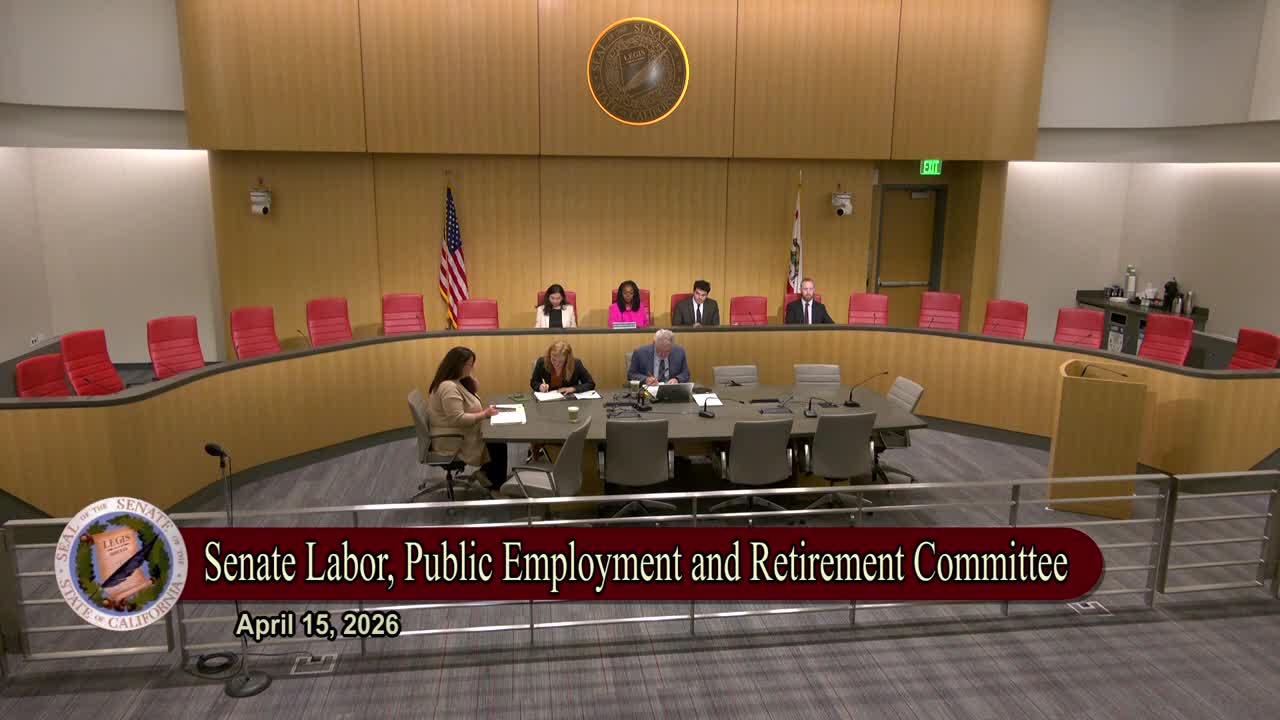 14MIN
Senate Standing Committee on Labor, Public Employment and Retirement
Bill Author

Bill Co-Author(s):