SB 1069: Motor vehicle pollution control devices: aftermarket parts: approval process.
- Session Year: 2025-2026
- House: Senate
- Latest Version Date: 2026-09-16
Current Status:
Passed
(2026-09-16: Chaptered by Secretary of State. Chapter 244, Statutes of 2026.)
Introduced
In Committee
Awaiting First Chamber Vote
Passed First Chamber
In Committee
Awaiting Second Chamber Vote
Passed Second Chamber
Enacted
Existing law prohibits the disconnection, modification, or alteration of required motor vehicle pollution control devices. Existing law exempts from the prohibition an alteration, modification, or modifying device, apparatus, or mechanism that is covered by a resolution of the State Air Resources Board that makes specified findings. Under existing regulations, the executive officer of the state board is authorized to exempt add-on and modified parts for on-road vehicles or engines from the above prohibition based on an evaluation conducted in accordance with certain procedures. Existing law requires the state board to undertake a public process to review the existing procedures for exempting parts for on-highway vehicles under those resolutions with the goal of streamlining the process for issuing executive orders. Existing law authorizes the state board to adopt a schedule of fees to cover all or a portion of the state boards reasonable costs for the certification, audit, and compliance of aftermarket parts sold in the state, as specified.
This bill would authorize a manufacturer of an add-on or modified part for on-road vehicles or engines to request the state board issue a conditional approval to sell an add-on or modified part before issuance of an executive order while the applicant is awaiting final determination for the add-on or modified part, as specified. The bill would require the state board to make a determination on whether the application is complete and satisfies other specified requirements and, if it determines those requirements are met, to grant a conditional approval. If the state board does not make a determination within 30 days of receipt of a request, the bill would deem the request conditionally approved, except as specified. The bill would authorize, upon the effective date of a conditional approval, the add-on or modified part specified in the application to be sold, offered for sale, advertised, or installed in the state. The bill would require a conditional approval to expire 2 years from the effective date of the conditional approval, unless extended by the executive officer, or upon issuance of an executive order, whichever occurs sooner.
Existing law prohibits the disconnection, modification, or alteration of required motor vehicle pollution control devices. Existing law exempts from the prohibition an alteration, modification, or modifying device, apparatus, or mechanism that is covered by a resolution of the State Air Resources Board that makes specified findings. Under existing regulations, the executive officer of the state board is authorized to exempt add-on and modified parts for on-road vehicles or engines from the above prohibition based on an evaluation conducted in accordance with certain procedures. Existing law requires the state board to undertake a public process to review the existing procedures for exempting parts for on-highway vehicles under those resolutions with the goal of streamlining the process for issuing executive orders. Existing law authorizes the state board to adopt a schedule of fees to cover all or a portion of the state boards reasonable costs for the certification, audit, and compliance of aftermarket parts sold in the state, as specified.
This bill would authorize a manufacturer of an add-on or modified part for on-road vehicles or engines to submit an application to request the state board for issue a conditional approval to sell an add-on or modified part before issuance of an executive order while the applicant is awaiting final determination for the add-on or modified part, as specified. The bill would require the state board to make a determination on whether the application is complete and satisfies other specified requirements and, if it determines those requirements are met, to grant a conditional approval. If the state board does not make a determination within 30 days of receipt of an application, a request, the bill would deem the application request conditionally approved. approved, except as specified. The bill would authorize, upon the effective date of a conditional approval, the add-on or modified part specified in the application to be sold, offered for sale, advertised, or installed in the state. The bill would require a conditional approval to expire 2 years from the effective date of the conditional approval, unless extended by the executive officer, or upon issuance of an executive order, whichever occurs sooner.
Existing law prohibits the disconnection, modification, or alteration of required motor vehicle pollution control devices. Existing law exempts from the prohibition an alteration, modification, or modifying device, apparatus, or mechanism that is covered by a resolution of the State Air Resources Board that makes specified findings. Under existing regulations, the executive officer of the state board is authorized to exempt add-on and modified parts for on-road vehicles or engines from the above prohibition based on an evaluation conducted in accordance with certain procedures. Existing law requires the state board to undertake a public process to review the existing procedures for exempting parts for on-highway vehicles under those resolutions with the goal of streamlining the process for issuing executive orders. Existing law authorizes the state board to adopt a schedule of fees to cover all or a portion of the state boards reasonable costs for the certification, audit, and compliance of aftermarket parts sold in the state, as specified.
This bill would require the state board, within 30 days of the receipt of an application to exempt certain aftermarket parts and any associated fees, to determine whether the application is complete and, within 60 days of determining that an application is complete and receiving any additional requested emissions testing data, to approve or deny the application, as specified. The bill would require the state board to approve or deny an amended application within 30 days of the receipt of the amended application. If the state board does not approve or deny an application within those timelines, the bill would require the state board to refund the applicant 50% of any fee collected for the application. The bill would also require the state board to submit a report to the Legislature on review and issuance timelines for executive orders issued to exempt those aftermarket parts on or before March 1, 2028, and biennially thereafter until March 1, 2034.This bill would authorize a manufacturer of an add-on or modified part for on-road vehicles or engines to submit an application to the state board for a conditional approval to sell an add-on or modified part before issuance of an executive order while the applicant is awaiting final determination for the add-on or modified part, as specified. The bill would require the state board to make a determination on whether the application is complete and satisfies other specified requirements and, if it determines those requirements are met, to grant a conditional approval. If the state board does not make a determination within 30 days of receipt of an application, the bill would deem the application conditionally approved. The bill would authorize, upon the effective date of a conditional approval, the add-on or modified part specified in the application to be sold, offered for sale, advertised, or installed in the state. The bill would require a conditional approval to expire 2 years from the effective date of the conditional approval, unless extended by the executive officer, or upon issuance of an executive order, whichever occurs sooner.
Existing law prohibits the disconnection, modification, or alteration of required motor vehicle pollution control devices, except with respect to devices. Existing law exempts from the prohibition an alteration, modification, or modifying device, apparatus, or mechanism that is covered by a resolution of the State Air Resources Board that makes specified findings. Under existing regulations, the executive officer of the state board is authorized to exempt add-on and modified parts for on-road vehicles or engines from the above prohibition based on an evaluation conducted in accordance with certain procedures. Existing law requires the state board to undertake a public process to review the existing procedures for exempting parts for on-highway vehicles under those resolutions with the goal of streamlining the process for issuing executive orders. Existing law authorizes the state board to adopt a schedule of fees to cover all or a portion of the state boards reasonable costs for the certification, audit, and compliance of aftermarket parts sold in the state, as specified.
This bill would require the state board, within 30 days of the receipt of an application for the issuance of an executive order to exempt certain aftermarket parts and any associated fees, to determine whether the application is complete and, within 60 days of determining that an application is complete and receiving any additional requested emissions testing data, to approve or deny the application, as specified. The bill would require the state board to approve or deny an amended application within 30 days of the receipt of the amended application. If the state board does not approve or deny an application within those timelines, the bill would require the state board to refund the applicant 50% of any fee collected for the application. The bill would also require the state board to submit a report to the Legislature on review and issuance timelines for executive orders issued to exempt those aftermarket parts on or before March 1, 2028, and biennially thereafter until March 1, 2034.
Existing law prohibits the disconnection, modification, or alteration of required motor vehicle pollution control devices, except with respect to an alteration, modification, or modifying device, apparatus, or mechanism that is covered by a resolution of the State Air Resources Board that makes specified findings. Existing law requires the state board to undertake a public process to review the existing procedures for exempting parts for on-highway vehicles under those resolutions with the goal of streamlining the process for issuing executive orders. Existing law authorizes the state board to adopt a schedule of fees to cover all or a portion of the state boards reasonable costs for the certification, audit, and compliance of aftermarket parts sold in the state, as specified.
This bill would require the state board, within 30 days of the receipt of an application for the issuance of an executive order to exempt an certain aftermarket part parts and any associated fees, to determine whether the application is complete and, within 60 days of determining that an application is complete, complete and receiving any additional requested emissions testing data, to approve or deny the application, as specified. The bill would require the state board to approve or deny an amended application within 30 days of the denial of the original receipt of the amended application. If the state board does not approve or deny an application within those timelines, the bill would require the state board to refund the applicant 50% of any fee collected for the application. The bill would also require the state board to submit a report to the Legislature on review and issuance timelines for executive orders issued to exempt those aftermarket parts on or before March 1, 2028, and biennially thereafter until March 1, 2034.
Existing law prohibits the disconnection, modification, or alteration of required motor vehicle pollution control devices, except with respect to an alteration, modification, or modifying device, apparatus, or mechanism that is covered by a resolution of the State Air Resources Board that makes specified findings. Existing law requires the state board to undertake a public process to review the existing procedures for exempting parts under those resolutions with the goal of streamlining the process for issuing executive orders. Existing law authorizes the state board to adopt a schedule of fees to cover all or a portion of the state boards reasonable costs for the certification, audit, and compliance of aftermarket parts sold in the state, as specified.
This bill would require the state board, within 30 days of the receipt of an application for the issuance of an executive order to exempt an aftermarket part and any associated fees, to determine whether the application is complete and, within 60 days of determining that an application is complete, to approve or deny the application, as specified. The bill would require the state board to approve or deny an amended application within 30 days of the denial of the original application. If the state board does not approve or deny an application within those timelines, the bill would require the state board to refund the applicant 50% of any fee collected for the application. The bill would also require the state board to submit a report to the Legislature on review and issuance timelines for executive orders issued to exempt aftermarket parts on or before March 1, 2028, and biennially thereafter until March 1, 2034.
(a)The Legislature finds and declares all of the following:
(1)Californias executive order program for add-on and modified parts plays an important role in ensuring compliance with Section 27156 of the Vehicle Code and protecting air quality.
(2)The executive order process has historically enabled collaboration between responsible manufacturers and the State Air Resources Board (state board), fostering innovation while ensuring that aftermarket technologies meet Californias stringent emissions requirements.
(3)Manufacturers who have consistently complied with the executive order process invest substantial time, resources, and technical expertise in developing products that meet Californias air quality standards.
(4)The executive order program serves a critical role in preventing unlawful modifications to vehicle emissions systems and preserving the state boards long-standing authority to assess the emissions impact and compliance of aftermarket parts.
(b)(1)It is the intent of the Legislature for this act to do both of the following:
(A)Establish a pathway for the conditional sale, advertisement, and installation of add-on and modified parts supported by complete applications that include emissions testing, engineering analysis, and other documentation demonstrating compliance with Section 27156 of the Vehicle Code while the state board completes its review of an application for an executive order.
(B)Establish a conditional approval process only for manufacturers with a demonstrated record of compliance and transparent engagement in the executive order program, ensuring that streamlined review benefits responsible actors without weakening emissions safeguards.
(2)It is further the intent of the Legislature that the conditional approval process established by this act provide certainty, transparency, and timely review for applicants that submit complete applications to the state board.
(c)Nothing in this act is intended to alter applicable emissions standards, limit the authority of the state board to request additional information or testing, restrict the authority of the state board to approve or deny an application, or prevent the state board from requiring corrective action, recall, stop-sale orders, or other remedies where warranted.
SEC. 2.Section 43019.4 is added to the Health and Safety Code, to read:43019.4.(a)For purposes of this section, the following definitions apply:
(1)Applicant means a manufacturer of an add-on or modified part, or a manufacturers representative, who submits an application for an executive order pursuant to subdivision (e) of Section 2222 of Title 13 of the California Code of Regulations.
(2)Complete application means an application submitted pursuant to subdivision (e) of Section 2222 of Title 13 of the California Code of Regulations for an executive order that includes all of the following:
(A)The information required by the exemption procedures.
(B)All applicable fees.
(C)A testing report from an emissions test laboratory that complies with the exemption procedures. The testing report shall include, but is not limited to, all of the following:
(i)Complete test results and supporting analysis.
(ii)Identification of all test vehicles, engine families, and configurations.
(iii)Description of all test procedures, conditions, and methodologies.
(iv)Validation and sign-off by the emissions test laboratory.
(v)A clear conclusion regarding whether the part satisfies the criteria for exemption under Section 27156 of the Vehicle Code.
(D)A complete and accurate description of the product, its installation, and the vehicle or engine coverage requested.
(E)A certification to the state board that, based on the submitted test data, the part satisfies the criteria for exemption under Section 27156 of the Vehicle Code.
(3)Emissions test laboratory means a test laboratory determined by the state board to have the equipment necessary to conduct testing, or engineering justification, in support of an application submitted pursuant to subdivision (e) of Section 2222 of Title 13 of the California Code of Regulations.
(4)Exemption procedures means the Procedures for Exemption of Add-On and Modified Part(s) for On-Road Vehicles/Engines, adopted by the state board on June 29, 2021, as amended March 23, 2023, and incorporated by reference in subdivision (e) of Section 2222 of Title 13 of the California Code of Regulations.
(5)Final determination means a written decision issued by the executive officer granting or denying an application for an executive order under subdivision (e) of Section 2222 of Title 13 of the California Code of Regulations.
(b)(1)(A)An applicant who satisfies the requirement set forth in subparagraph (B) may request the state board issue a conditional approval to sell an add-on or modified part before issuance of an executive order while the applicant is awaiting final determination for the add-on or modified part.
(B)An applicant may only submit a request pursuant to subparagraph (A) if the state board issued at least 10 executive orders to the applicant pursuant to subdivision (e) of Section 2222 of Title 13 of the California Code of Regulations and at least one of those executive orders was issued for an add-on or modified part within the same application category set forth in Section III(a) of the exemption procedures as the part that is the subject of the application.
(2)(A)The state board shall do both of the following:
(i)Determine whether the application is a complete application and whether the applicant satisfies the requirement set forth in subparagraph (B) of paragraph (1).
(ii)Notify the applicant in writing whether the requirements set forth in clause (i) have been satisfied.
(B)If the state board determines that the requirements set forth in clause (i) of subparagraph (A) have been satisfied, the state board shall grant a conditional approval, which shall become effective on the date that the state board notifies the applicant pursuant to subparagraph (A).
(C)If the state board determines that the requirements of clause (i) of subparagraph (A) have not been satisfied, the state board shall submit a response to the applicant detailing the reasons why the application is incomplete and shall work with the applicant to satisfy the requirements set forth in subparagraph (A).
(D)Except as provided in subparagraph (E), if the state board does not determine whether the requirements set forth in subparagraph (A) have been satisfied within 30 business days of receipt of a request pursuant to paragraph (1), the request shall be deemed to be conditionally approved. The conditional approval shall become effective on the date that the applicant notifies the state board in writing of its intent to sell the add-on or modified part.
(E)If the state board receives more than 50 applications pursuant to paragraph (1) during any 30-business-day period, the state board may extend the period specified in subparagraph (D) by 15 business days for each increment of 50 applications received during that period. The state board shall notify each affected applicant in writing of the extension and the revised deadline within five business days after the threshold specified in this subparagraph is reached. An application may be subject to no more than one extension pursuant to this subparagraph.
(3)Upon the effective date of a conditional approval, the add-on or modified part specified in the application may be sold, offered for sale, advertised, or installed in the state. A conditional approval shall be treated as the equivalent to an executive order.
(4)Upon the effective date of a conditional approval, the validity of a conditional approval shall not be affected by a request from the state board for additional information, clarification, supplemental documentation, supplemental testing, or other materials necessary for granting an executive order.
(5)A conditional approval shall expire two years from the effective date of the conditional approval, unless extended by the executive officer, or upon issuance of an executive order, whichever occurs sooner.
(6)The manufacturer shall maintain detailed records of all parts sold under the conditional approval and provide those records to the state board within 30 days of a request for those records.
(7)The state board may suspend or revoke a conditional approval for any of the following reasons:
(A)The applicant fails to comply with paragraph (6).
(B)The state board determines that the application contained materially inaccurate or misleading information at the time of submission.
(c)An add-on or modified part sold, offered for sale, advertised, or installed under a conditional approval pursuant to subdivision (b) shall not be deemed a violation of Section 27156 of the Vehicle Code solely because a final determination has not been made.
(d)(1)Upon withdrawal, revocation, or expiration of a conditional approval, the executive officer may require the manufacturer to implement a recall, corrective action, stop-sale order, or other remedy for parts sold, offered for sale, advertised, or installed in the state pursuant to subdivision (b), as the executive officer determines necessary and appropriate.
(2)The manufacturer shall be responsible for all costs associated with any recall and remedy required pursuant to this subdivision. The state board may require the manufacturer to submit and implement a recall or corrective action plan for parts sold, offered for sale, advertised, or installed in the state pursuant to subdivision (b).
(3)A manufacturer that fails to comply with a recall or corrective action plan required pursuant to this subdivision may be subject to civil penalties pursuant to Section 43008.6.
(e)On or before July 1, 2028, the state board shall revise the exemption procedures and any associated forms, guidance documents, or regulations as necessary to implement the requirements of this section.
(a)The Legislature finds and declares all of the following:
(1)Californias executive order program for add-on and modified parts plays an important role in ensuring compliance with Section 27156 of the Vehicle Code and protecting air quality.
(2)Manufacturers seeking executive orders have been partners with the State Air Resources Board for decades, working on the development of regulations to ensure compliance with the states air quality standards.(3)Manufacturers invest substantial time and financial resources to develop compliant products and satisfy the technical, engineering, testing, and administrative requirements necessary to obtain an executive order from the state board.(4)A lengthy executive order review process can impose significant economic burdens on manufacturers by preventing the sale of products while applications remain under review.(2)The executive order process has historically enabled collaboration between responsible manufacturers and the State Air Resources Board (state board), fostering innovation while ensuring that aftermarket technologies meet Californias stringent emissions requirements.
(3)Manufacturers who have consistently complied with the executive order process invest substantial time, resources, and technical expertise in developing products that meet Californias air quality standards.
(4)The executive order program serves a critical role in preventing unlawful modifications to vehicle emissions systems and preserving the state boards long-standing authority to assess the emissions impact and compliance of aftermarket parts.
(b)(1)It is the intent of the Legislature for this act to do both of the following:
(A)Establish a pathway for the conditional sale, advertisement, and installation of add-on and modified parts supported by complete applications that include emissions testing, engineering analysis, and other documentation demonstrating compliance with Section 27156 of the Vehicle Code while the state board completes its review of an application for an executive order.
(B)Establish a conditional approval process for manufacturers that have demonstrated a track record of compliance through prior participation in the executive order program while the state board completes its review of an application. only for manufacturers with a demonstrated record of compliance and transparent engagement in the executive order program, ensuring that streamlined review benefits responsible actors without weakening emissions safeguards.
(2)It is further the intent of the Legislature that the conditional approval process established by this act provide certainty, transparency, and timely review for applicants that submit complete applications to the state board.
(c)Nothing in this act is intended to alter applicable emissions standards, limit the authority of the state board to request additional information or testing, restrict the authority of the state board to approve or deny an application, or prevent the state board from requiring corrective action, recall, stop-sale orders, or other remedies where warranted.
SEC. 2.Section 43019.4 is added to the Health and Safety Code, to read:43019.4.(a)For purposes of this section, the following definitions apply:
(1)Applicant means a manufacturer of an add-on or modified part, or a manufacturers representative, who submits an application for an executive order pursuant to subdivision (e) of Section 2222 of Title 13 of the California Code of Regulations.
(2)(A)Complete application means an application submitted pursuant to subdivision (e) of Section 2222 of Title 13 of the California Code of Regulations for an executive order that includes all information of the following:
(A)The information required by the applicable procedures governing evaluation of the application, all exemption procedures.
(B)All applicable fees, and a fees.
(C)A testing report from an emissions testing facility test laboratory that complies with those procedures, and that complies with subparagraph (B). the exemption procedures. The testing report shall include, but is not limited to, all of the following:
(i)Complete test results and supporting analysis.
(ii)Identification of all test vehicles, engine families, and configurations.
(iii)Description of all test procedures, conditions, and methodologies.
(iv)Validation and sign-off by the emissions testing facility. test laboratory.
(v)A clear conclusion regarding whether the part satisfies the criteria for exemption under Section 27156 of the Vehicle Code.
(B)A complete application shall also include both of the following:(i)(D)A complete and accurate description of the product, its installation, and the vehicle or engine coverage requested.
(ii)(E)A certification to the state board that, based on the submitted test data, the part satisfies the criteria for exemption under Section 27156 of the Vehicle Code.
(3)Emissions testing facility test laboratory means a facility test laboratory determined by the state board to have the equipment necessary to conduct testing, or engineering justification, in support of an application submitted pursuant to subdivision (e) of Section 2222 of Title 13 of the California Code of Regulations.
(4)Exemption procedures means the Procedures for Exemption of Add-On and Modified Part(s) for On-Road Vehicles/Engines, adopted by the state board on June 29, 2021, as amended March 23, 2023, and incorporated by reference in subdivision (e) of Section 2222 of Title 13 of the California Code of Regulations.
(4)(5)Final determination means a written decision issued by the executive officer granting or denying an application for an executive order under subdivision (e) of Section 2222 of Title 13 of the California Code of Regulations.
(b)(1)(A)An applicant who satisfies the requirement set forth in subparagraph (B) may submit an application to request the state board for issue a conditional approval to sell an add-on or modified part before issuance of an executive order while the applicant is awaiting final determination for the add-on or modified part.
(B)An applicant may only submit an application a request pursuant to subparagraph (A) if the state board issued at least 10 executive orders to the applicant pursuant to subdivision (e) of Section 2222 of Title 13 of the California Code of Regulations before January 1, 2027, regardless of whether the executive order was for the same, or similar, add-on or modified parts. and at least one of those executive orders was issued for an add-on or modified part within the same application category set forth in Section III(a) of the exemption procedures as the part that is the subject of the application.
(2)(A)The state board shall do both of the following:
(i)Determine whether the application is a complete application and whether the applicant satisfies the requirement set forth in subparagraph (B) of paragraph (1).
(ii)Notify the applicant in writing whether the requirements of set forth in clause (i) have been satisfied.
(B)If the state board determines that the requirements of set forth in clause (i) of subparagraph (A) have been satisfied, the state board shall grant a conditional approval, which shall become effective on the date that the state board notifies the applicant pursuant to subparagraph (A).
(C)If the state board determines that the requirements of clause (i) of subparagraph (A) have not been satisfied, the state board shall submit a response to the applicant detailing the reasons why the application is incomplete and shall work with the applicant to satisfy the requirements of set forth in subparagraph (A).
(D)If Except as provided in subparagraph (E), if the state board does not determine whether or not the requirements set forth in subparagraph (A) have been satisfied within 30 business days of receipt of an application a request pursuant to paragraph (1), the application request shall be deemed to be conditionally approved. The conditional approval shall become effective on the date that the applicant notifies the state board in writing of its intent to sell the add-on or modified part.
(E)If the state board receives more than 50 applications pursuant to paragraph (1) during any 30-business-day period, the state board may extend the period specified in subparagraph (D) by 15 business days for each increment of 50 applications received during that period. The state board shall notify each affected applicant in writing of the extension and the revised deadline within five business days after the threshold specified in this subparagraph is reached. An application may be subject to no more than one extension pursuant to this subparagraph.
(3)Upon the effective date of a conditional approval, the add-on or modified part specified in the application may be sold, offered for sale, advertised, or installed in the state. A conditional approval shall be treated as the equivalent to an executive order.
(4)Upon the effective date of a conditional approval, the validity of a conditional approval shall not be affected by a request from the state board for additional information, clarification, supplemental documentation, supplemental testing, or other materials necessary for granting an executive order.
(5)A conditional approval shall expire two years from the effective date of the conditional approval, unless extended by the executive officer, or upon issuance of an executive order, whichever occurs sooner.
(6)(A)The manufacturer shall maintain detailed records of all parts sold under the conditional approval and provide those records to the state board within 30 days of a request for those records.
(B)(7)The state board may suspend or revoke a conditional approval if the for any of the following reasons:
(A)The applicant fails to comply with subparagraph (A). paragraph (6).
(B)The state board determines that the application contained materially inaccurate or misleading information at the time of submission.
(c)An add-on or modified part sold, offered for sale, advertised, or installed under a conditional approval pursuant to subdivision (b) shall not be deemed a violation of Section 27156 of the Vehicle Code solely because a final determination has not been made.
(d)(1)Upon withdrawal, revocation, or expiration of a conditional approval, the executive officer may require the manufacturer to implement a recall, corrective action, stop-sale order, or other remedy for parts sold, offered for sale, advertised, or installed in the state pursuant to subdivision (b), as the executive officer determines necessary and appropriate.
(2)The manufacturer shall be responsible for all costs associated with any recall and remedy required pursuant to this subdivision. The state board may require the manufacturer to submit and implement a recall or corrective action plan for parts sold, offered for sale, advertised, or installed in the state pursuant to subdivision (b).
(3)A manufacturer that fails to comply with a recall or corrective action plan required pursuant to this subdivision may be subject to civil penalties pursuant to Section 43008.6.
(e)On or before January July 1, 2028, the state board shall revise the exemption procedures incorporated by reference in subdivision (e) of Section 2222 of Title 13 of the California Code of Regulations, and any associated forms, guidance documents, or regulations, regulations as necessary to conform to implement the requirements of this section.
(a)The Legislature finds and declares all of the following:
(1)Californias executive order program for add-on and modified parts plays an important role in ensuring compliance with Section 27156 of the Vehicle Code and protecting air quality.
(2)Manufacturers seeking executive orders have been partners with the State Air Resources Board for decades, working on the development of regulations to ensure compliance with the states air quality standards.
(3)Manufacturers invest substantial time and financial resources to develop compliant products and satisfy the technical, engineering, testing, and administrative requirements necessary to obtain an executive order from the state board.
(4)A lengthy executive order review process can impose significant economic burdens on manufacturers by preventing the sale of products while applications remain under review.
(b)(1)It is the intent of the Legislature for this act to do both of the following:
(A)Establish a pathway for the conditional sale, advertisement, and installation of add-on and modified parts supported by complete applications that include emissions testing, engineering analysis, and other documentation demonstrating compliance with Section 27156 of the Vehicle Code while the state board completes its review of an application for an executive order.
(B)Establish a conditional approval process for manufacturers that have demonstrated a track record of compliance through prior participation in the executive order program while the state board completes its review of an application.
(2)It is further the intent of the Legislature that the conditional approval process established by this act provide certainty, transparency, and timely review for applicants that submit complete applications to the state board.
(c)Nothing in this act is intended to alter applicable emissions standards, limit the authority of the state board to request additional information or testing, restrict the authority of the state board to approve or deny an application, or prevent the state board from requiring corrective action, recall, stop-sale orders, or other remedies where warranted.
SEC. 2.Section 43019.4 is added to the Health and Safety Code, to read:43019.4.(a)For purposes of this section, the following definitions apply:
(1)Applicant means a manufacturer of an add-on or modified part, or a manufacturers representative, who submits an application for an executive order pursuant to subdivision (e) of Section 2222 of Title 13 of the California Code of Regulations.
(2)(A)Complete application means an application submitted pursuant to subdivision (e) of Section 2222 of Title 13 of the California Code of Regulations for an executive order that includes all information required by the applicable procedures governing evaluation of the application, all applicable fees, and a testing report from an emissions testing facility that complies with those procedures, and that complies with subparagraph (B). The testing report shall include, but is not limited to, all of the following:
(i)Complete test results and supporting analysis.
(ii)Identification of all test vehicles, engine families, and configurations.
(iii)Description of all test procedures, conditions, and methodologies.
(iv)Validation and sign-off by the emissions testing facility.
(v)A clear conclusion regarding whether the part satisfies the criteria for exemption under Section 27156 of the Vehicle Code.
(B)A complete application shall also include both of the following:
(i)A complete and accurate description of the product, its installation, and the vehicle or engine coverage requested.
(ii)A certification to the state board that, based on the submitted test data, the part satisfies the criteria for exemption under Section 27156 of the Vehicle Code.
(3)Emissions testing facility means a facility determined by the state board to have the equipment necessary to conduct testing, or engineering justification, in support of an application submitted pursuant to subdivision (e) of Section 2222 of Title 13 of the California Code of Regulations.
(4)Final determination means a written decision issued by the executive officer granting or denying an application for an executive order under subdivision (e) of Section 2222 of Title 13 of the California Code of Regulations.
(b)(1)(A)An applicant who satisfies the requirement set forth in subparagraph (B) may submit an application to the state board for a conditional approval to sell an add-on or modified part before issuance of an executive order while the applicant is awaiting final determination for the add-on or modified part.
(B)An applicant may only submit an application pursuant to subparagraph (A) if the state board issued at least 10 executive orders to the applicant pursuant to subdivision (e) of Section 2222 of Title 13 of the California Code of Regulations before January 1, 2027, regardless of whether the executive order was for the same, or similar, add-on or modified parts.
(2)(A)The state board shall do both of the following:
(i)Determine whether the application is a complete application and whether the applicant satisfies the requirement set forth in subparagraph (B) of paragraph (1).
(ii)Notify the applicant in writing whether the requirements of clause (i) have been satisfied.
(B)If the state board determines that the requirements of clause (i) of subparagraph (A) have been satisfied, the state board shall grant a conditional approval, which shall become effective on the date that the state board notifies the applicant pursuant to subparagraph (A).
(C)If the state board determines that the requirements of clause (i) of subparagraph (A) have not been satisfied, the state board shall submit a response to the applicant detailing the reasons why the application is incomplete and shall work with the applicant to satisfy the requirements of subparagraph (A).
(D)If the state board does not determine whether or not the requirements set forth in subparagraph (A) have been satisfied within 30 business days of receipt of an application pursuant to paragraph (1), the application shall be deemed to be conditionally approved. The conditional approval shall become effective on the date that the applicant notifies the state board in writing of its intent to sell the add-on or modified part.
(3)Upon the effective date of a conditional approval, the add-on or modified part specified in the application may be sold, offered for sale, advertised, or installed in the state. A conditional approval shall be treated as the equivalent to an executive order.
(4)Upon the effective date of a conditional approval, the validity of a conditional approval shall not be affected by a request from the state board for additional information, clarification, supplemental documentation, supplemental testing, or other materials necessary for granting an executive order.
(5)A conditional approval shall expire two years from the effective date of the conditional approval, unless extended by the executive officer, or upon issuance of an executive order, whichever occurs sooner.
(6)(A)The manufacturer shall maintain detailed records of all parts sold under the conditional approval and provide those records to the state board within 30 days of a request for those records.
(B)The state board may suspend or revoke a conditional approval if the applicant fails to comply with subparagraph (A).
(c)An add-on or modified part sold, offered for sale, advertised, or installed under a conditional approval pursuant to subdivision (b) shall not be deemed a violation of Section 27156 of the Vehicle Code solely because a final determination has not been made.
(d)(1)Upon withdrawal, revocation, or expiration of a conditional approval, the executive officer may require the manufacturer to implement a recall, corrective action, stop-sale order, or other remedy for parts sold, offered for sale, advertised, or installed in the state pursuant to subdivision (b), as the executive officer determines necessary and appropriate.
(2)The manufacturer shall be responsible for all costs associated with any recall and remedy required pursuant to this subdivision. The state board may require the manufacturer to submit and implement a recall or corrective action plan for parts sold, offered for sale, advertised, or installed in the state pursuant to subdivision (b).
(3)A manufacturer that fails to comply with a recall or corrective action plan required pursuant to this subdivision may be subject to civil penalties pursuant to Section 43008.6.
(e)On or before January 1, 2028, the state board shall revise the procedures incorporated by reference in subdivision (e) of Section 2222 of Title 13 of the California Code of Regulations, and any associated forms, guidance documents, or regulations, as necessary to conform to the requirements of this section.
SECTION 1.Section 43019.4 is added to the Health and Safety Code, to read:43019.4.(a)(1)(A)Within 30 days of the receipt of an application to exempt an add-on or modified part under Section 27156 of the Vehicle Code based on an evaluation conducted in accordance with subdivision (e) of Section 2222 of Title 13 of the California Code of Regulations and any associated fees adopted by the state board pursuant to Section 43019.1, the state board shall determine whether the application is complete and, if it determines that the application is incomplete, shall submit a response to the applicant detailing the reasons why the application is incomplete.(B)For purposes of subparagraph (A), an application is complete if it includes all of the requested information for the application, with no missing sections or blanks, and the required signatures.(2)(A)Within 60 days of determining that an application is complete pursuant to paragraph (1) and receiving any additional requested emissions testing data, the state board shall either approve or deny an application and, if it denies the application, shall submit a response to the applicant detailing the reasons why the application was denied.(B)If an application is denied pursuant to subparagraph (A), the applicant may submit an amended application that addresses the deficiency identified pursuant to subparagraph (A) within 30 days of the denial of the application. Within 30 days of the receipt of an amended application pursuant to this subparagraph, the state board shall either approve or deny that application.(b)If the state board does not comply with paragraph (2) of subdivision (a) for the review of an application within the timelines established in that paragraph, the state board shall refund the applicant 50 percent of any fee collected for the application.SEC. 2.Section 43019.5 is added to the Health and Safety Code, to read:43019.5.(a)On or before March 1, 2028, and biennially thereafter, until March 1, 2034, the state board shall submit a report to the Legislature on review and issuance timelines for executive orders issued to exempt aftermarket parts described in Section 43019.4.(b)The report shall include, for executive order applications received during the prior two years, all of the following:(1)The average and median number of calendar days from receipt of an application to issuance of an executive order.(2)A summary of factors affecting review and issuance timelines and actions taken to improve timelines.(c)(1)A report to be submitted pursuant to this section shall be submitted in compliance with Section 9795 of the Government Code.(2)Pursuant to Section 10231.5 of the Government Code, this section shall become inoperative on March 1, 2038, and, as of January 1, 2039, is repealed.(a)(1)(A)Within 30 days of the receipt of an application for the issuance of an executive order pursuant to subdivision (h) of Section 27156 of the Vehicle Code or Section 38395 of the Vehicle Code to exempt an add-on or modified part under Section 27156 of the Vehicle Code based on an evaluation conducted in accordance with subdivision (e) or (j) of Section 2222 of Title 13 of the California Code of Regulations, or an add-on or modified part for an off-road recreational vehicle based on an evaluation conducted in accordance with subdivision (e) of Section 2474 of Title 13 of the California Code of Regulations, Regulations and any associated fees adopted by the state board pursuant to Section 43019.1, the state board shall determine whether the application is complete and, if it determines that the application is incomplete, shall submit a response to the applicant detailing the reasons why the application is incomplete.
(B)For purposes of subparagraph (A), an application is complete if it includes all of the requested information for the application, with no missing sections or blanks, and the required signatures.
(2)(A)Within 60 days of determining that an application is complete pursuant to paragraph (1) and receiving any additional requested emissions testing data, the state board shall either approve or deny an application and, if it denies the application, shall submit a response to the applicant detailing the reasons why the application was denied.
(B)If an application is denied pursuant to subparagraph (A), the applicant may submit an amended application that addresses the deficiency identified pursuant to subparagraph (A) within 30 days of the denial of the application. Within 30 days of the receipt of an amended application pursuant to this subparagraph, the state board shall either approve or deny that application.
(b)If the state board does not comply with paragraph (2) of subdivision (a) for the review of an application within the timelines established in that paragraph, the state board shall refund the applicant 50 percent of any fee collected for the application.
SEC. 2.Section 43019.5 is added to the Health and Safety Code, to read:43019.5.(a)On or before March 1, 2028, and biennially thereafter, until March 1, 2034, the state board shall submit a report to the Legislature on review and issuance timelines for executive orders issued to exempt aftermarket parts described in Section 43019.4.
(b)The report shall include, for executive order applications received during the prior two years, all of the following:
(1)The average and median number of calendar days from receipt of an application to issuance of an executive order.
(2)A summary of factors affecting review and issuance timelines and actions taken to improve timelines.
(c)(1)A report to be submitted pursuant to this section shall be submitted in compliance with Section 9795 of the Government Code.
(2)Pursuant to Section 10231.5 of the Government Code, this section shall become inoperative on March 1, 2038, and, as of repealed January 1, 2039, is repealed.
(a)(1)(A)Within 30 days of the receipt of an application for the issuance of an executive order pursuant to subdivision (h) of Section 27156 of the Vehicle Code or Section 38395 of the Vehicle Code to exempt an aftermarket part pursuant to Section 27156 of the Vehicle Code add-on or modified part based on an evaluation conducted in accordance with subdivision (e) or (j) of Section 2222 of Title 13 of the California Code of Regulations, or an add-on or modified part for an off-road recreational vehicle based on an evaluation conducted in accordance with subdivision (e) of Section 2474 of Title 13 of the California Code of Regulations, and any associated fees adopted by the state board pursuant to Section 43019.1, the state board shall determine whether the application is complete and, if it determines that the application is incomplete, shall submit a response to the applicant detailing the reasons why the application is incomplete.
(B)For purposes of subparagraph (A), an application is complete if it includes all of the requested information for the application, with no missing sections or blanks, and the required signatures.
(2)(A)Within 60 days of determining that an application is complete pursuant to paragraph (1), (1) and receiving any additional requested emissions testing data, the state board shall either approve or deny an application and, if it denies the application, shall submit a response to the applicant detailing the reasons why the application was denied.
(B)If an application is denied pursuant to subparagraph (A), the applicant may submit an amended application that addresses the deficiency identified pursuant to subparagraph (A) within 30 days of the denial of the application. Within 30 days of the receipt of an amended application pursuant to this subparagraph, the state board shall either approve or deny that application.
(b)If the state board does not comply with paragraph (2) of subdivision (a) for the review of an application within the timelines established in that paragraph, the state board shall refund the applicant 50 percent of any fee collected for the application.
SEC. 2.Section 43019.5 is added to the Health and Safety Code, to read:43019.5.(a)On or before March 1, 2028, and biennially thereafter, until March 1, 2034, the state board shall submit a report to the Legislature on review and issuance timelines for executive orders issued to exempt aftermarket parts pursuant to Section 27156 of the Vehicle Code. described in Section 43019.4.
(b)The report shall include, for executive order applications received during the prior two years, all of the following:
(1)The average and median number of calendar days from receipt of an application to issuance of an executive order.
(2)A summary of factors affecting review and issuance timelines and actions taken to improve timelines.
(c)(1)A report to be submitted pursuant to this section shall be submitted in compliance with Section 9795 of the Government Code.
(2)Pursuant to Section 10231.5 of the Government Code, this section shall become inoperative on March 1, 2038, and, as of repealed January 1, 2039, is repealed.
(a)(1)Within 30 days of the receipt of an application for the issuance of an executive order to exempt an aftermarket part pursuant to Section 27156 of the Vehicle Code and any associated fees adopted by the state board pursuant to Section 43019.1, the state board shall determine whether the application is complete and, if it determines that the application is incomplete, shall submit a response to the applicant detailing the reasons why the application is incomplete.
(2)(A)Within 60 days of determining that an application is complete pursuant to paragraph (1), the state board shall either approve or deny an application and, if it denies the application, shall submit a response to the applicant detailing the reasons why the application was denied.
(B)If an application is denied pursuant to subparagraph (A), the applicant may submit an amended application that addresses the deficiency identified pursuant to subparagraph (A) within 30 days of the denial of the application. Within 30 days of the receipt of an amended application pursuant to this subparagraph, the state board shall either approve or deny that application.
(b)If the state board does not comply with paragraph (2) of subdivision (a) for the review of an application within the timelines established in that paragraph, the state board shall refund the applicant 50 percent of any fee collected for the application.
SEC. 2.Section 43019.5 is added to the Health and Safety Code, to read:43019.5.(a)On or before March 1, 2028, and biennially thereafter, until March 1, 2034, the state board shall submit a report to the Legislature on review and issuance timelines for executive orders issued to exempt aftermarket parts pursuant to Section 27156 of the Vehicle Code.
(b)The report shall include, for executive order applications received during the prior two years, all of the following:
(1)The average and median number of calendar days from receipt of an application to issuance of an executive order.
(2)A summary of factors affecting review and issuance timelines and actions taken to improve timelines.
(c)(1)A report to be submitted pursuant to this section shall be submitted in compliance with Section 9795 of the Government Code.
(2)Pursuant to Section 10231.5 of the Government Code, this section shall become inoperative on March 1, 2038, and, as of repealed January 1, 2039, is repealed.
|
Date
|
Status
|
|---|---|
| Sep 16, 2026 | Chaptered by Secretary of State. Chapter 244, Statutes of 2026. |
| Sep 16, 2026 | Approved by the Governor. |
| Sep 3, 2026 | Enrolled and presented to the Governor at 3 p.m. |
| Aug 27, 2026 | Assembly amendments concurred in. (Ayes 40. Noes 0. Page 5985.) Ordered to engrossing and enrolling. |
| Aug 27, 2026 | Assembly amendments concurred in. (Ayes 39. Noes 0.) Ordered to engrossing and enrolling. |
| Aug 26, 2026 | Ordered to special consent calendar. |
| Aug 19, 2026 | In Senate. Concurrence in Assembly amendments pending. |
| Aug 19, 2026 | Read third time. Passed. (Ayes 78. Noes 0. Page 6269.) Ordered to the Senate. |
| Aug 19, 2026 | Read third time. Passed. Ordered to the Senate. |
| Aug 17, 2026 | Read second time. Ordered to third reading. |
| Aug 13, 2026 | Read second time and amended. Ordered to second reading. |
| Aug 13, 2026 | From committee: Do pass as amended. (Ayes 11. Noes 0.) (August 13). |
| Aug 13, 2026 | Assembly Rule 63 suspended. |
| Aug 5, 2026 | August 5 set for first hearing. Placed on suspense file. |
| Jun 30, 2026 | From committee: Do pass and re-refer to Com. on APPR. with recommendation: To consent calendar. (Ayes 15. Noes 0.) (June 29). Re-referred to Com. on APPR. |
| Jun 22, 2026 | From committee with author's amendments. Read second time and amended. Re-referred to Com. on TRANS. |
| Jun 9, 2026 | June 22 set for first hearing canceled at the request of author. |
| Jun 1, 2026 | Referred to Com. on TRANS. |
| May 20, 2026 | In Assembly. Read first time. Held at Desk. |
| May 19, 2026 | Read third time. Passed. (Ayes 39. Noes 0. Page 4361.) Ordered to the Assembly. |
| May 19, 2026 | Read third time. Passed. (Ayes 39. Noes 0.) Ordered to the Assembly. |
| May 18, 2026 | Read second time. Ordered to third reading. |
| May 14, 2026 | From committee: Do pass as amended. (Ayes 7. Noes 0. Page 4263.) (May 14). |
| May 14, 2026 | Read second time and amended. Ordered to second reading. |
| May 14, 2026 | From committee: Do pass as amended. (Ayes 7. Noes 0.) (May 14). |
| May 8, 2026 | Set for hearing May 14. |
| Apr 27, 2026 | April 27 hearing: Placed on APPR. suspense file. |
| Apr 20, 2026 | From committee with author's amendments. Read second time and amended. Re-referred to Com. on APPR. |
| Apr 17, 2026 | Set for hearing April 27. |
| Apr 16, 2026 | April 20 set for first hearing canceled at the request of author. |
| Apr 10, 2026 | Set for hearing April 20. |
| Apr 8, 2026 | From committee: Do pass and re-refer to Com. on APPR. with recommendation: To consent calendar. (Ayes 6. Noes 0. Page 3792.) (April 8). Re-referred to Com. on APPR. |
| Apr 8, 2026 | From committee: Do pass and re-refer to Com. on APPR. with recommendation: To consent calendar. (Ayes 6. Noes 0.) (April 8). Re-referred to Com. on APPR. |
| Mar 10, 2026 | Set for hearing April 8. |
| Feb 26, 2026 | Referred to Com. on E.Q. |
| Feb 17, 2026 | From printer. May be acted upon on or after March 16. |
| Feb 13, 2026 | Introduced. Read first time. To Com. on RLS. for assignment. To print. |
|
Date
|
Description
|
Location
|
Votes
|
|
|---|---|---|---|---|
| Aug 27, 2026 | Special Consent SB1069 Grayson et al. | Senate Floor |
Passed |
|
| Aug 19, 2026 | SB 1069 Grayson Senate Third Reading By Wilson | Assembly Floor |
Passed |
|
| Aug 13, 2026 | Do pass as amended. | Assembly Standing Committee on Appropriations |
Passed |
|
| Jun 29, 2026 | Do pass and be re-referred to the Committee on [Appropriations] with recommendation: To Consent Calendar | Assembly Standing Committee on Transportation |
Passed |
|
| May 19, 2026 | Senate 3rd Reading SB1069 Grayson et al. | Senate Floor |
Passed |
|
| May 14, 2026 | Do pass as amended | Senate Standing Committee on Appropriations |
Passed |
|
| Apr 27, 2026 | Placed on suspense file | Senate Standing Committee on Appropriations |
Passed |
|
| Apr 8, 2026 | Do pass, but first be re-referred to the Committee on [Appropriations] with the recommendation: To Consent Calendar | Senate Standing Committee on Environmental Quality |
Passed |
This list shows positions taken on this bill by organizations on the date displayed, which is linked to the original source.
Positions by individuals are not included.
|
Organization
|
Position
|
Date
|
|---|---|---|
| Advanced Flow Engineering | ** Support | |
| Advanced Flow Engineering, INC. | ** Support | |
| BANKS POWER | ** Support | |
| California Manufacturers And Technology Association | ** Support | |
| Edelbrock | ** Support | |
| Edelbrock, LLC | ** Support | |
| Enthusiast Auto Care | ** Support | |
| Greddy Performance Products | ** Support | |
| Greddy Performance Products INC. | ** Support | |
| Hellion | ** Support | |
| Hellion, INC. | ** Support | |
| Hp Tuners LLC | ** Support | |
| Jackson Racing | ** Support | |
| Jegs Automotive | ** Support | |
| Jegs Automotive, LLC | ** Support | |
| Magnaflow | ** Support | |
| Magnuson Superchargers | ** Support | |
| Mdr Industries | ** Support | |
| Pedal Commander | ** Support | |
| Specialty Equipment Market Association (Sema) | ** Support | |
| Techart North America | ** Support | |
| Techart North America LLC | ** Support | |
| Vmp Performance | ** Support |
SENATE RULES COMMITTEE Office of Senate Floor Analyses (916) 651-4171 | SB 1069 |
UNFINISHED BUSINESS
Bill No: SB 1069
Author: Grayson (D), et al.
Amended: 8/13/26
Vote: 21
SENATE ENVIRONMENTAL QUALITY COMMITTEE: 6-0, 4/8/26
AYES: Blakespear, Valladares, Allen, Gonzalez, Hurtado, Menjivar
NO VOTE RECORDED: Dahle
SENATE APPROPRIATIONS COMMITTEE: 7-0, 5/14/26
AYES: Cervantes, Seyarto, Cabaldon, Dahle, Grayson, Richardson, Wahab
SENATE FLOOR: 39-0, 5/19/26
AYES: Allen, Alvarado-Gil, Archuleta, Arreguín, Ashby, Becker, Blakespear, Cabaldon, Caballero, Cervantes, Choi, Cortese, Dahle, Durazo, Gonzalez, Grayson, Grove, Hurtado, Jones, Laird, Limón, McGuire, McNerney, Menjivar, Ochoa Bogh, Padilla, Pérez, Reyes, Richardson, Rubio, Seyarto, Smallwood-Cuevas, Stern, Strickland, Umberg, Valladares, Wahab, Weber Pierson, Wiener
NO VOTE RECORDED: Niello
ASSEMBLY FLOOR: 78-0, 8/19/26 - See last page for vote
SUBJECT: Motor vehicle pollution control devices: aftermarket parts: approval process
SOURCE: Specialty Equipment Market Association
DIGEST:
Creates a process for the California Air Resources Board (CARB) to grant conditional approval for a manufacturer to sell an add-on or modified part for on-road vehicles or engines before CARB grants them an executive order to sell the part.
Assembly Amendments
recast the bill to define terms, allow for conditional approvals, and specify how CARB may respond to petitions for executive orders.
ANALYSIS:
Existing federal law:
- The Federal Clean Air Act (FCAA) and its implementing regulations set National Ambient Air Quality Standards (NAAQS) for six criteria pollutants, designate air basins that do not achieve NAAQS as nonattainment, allow only California to set vehicular emissions standards stricter than the federal government, and allow other states to adopt either the federal or California vehicular emissions standards. (42 U.S.C. §7401 et seq.)
Existing state law:
- Establishes the California Air Resources Board (CARB) as the air pollution control agency in California and requires the CARB, among other things, to control emissions from a wide array of mobile sources. (Health and Safety Code (HSC) §39500 et seq.)
- Requires the CARB to promulgate and enforce rules and regulations necessary for the proper execution of its statutory mandates. (HSC §39601 et seq.)
- Establishes the Air Pollution Control Fund in the State Treasury for CARB to carry out its duties and functions, upon appropriation by the Legislature. (HSC §43015)
- Establishes the Motor Vehicle Inspection Program, commonly known as the smog check program, to help the state meet federal air quality standards. (HSC §44000 et seq.)
- Prohibits a person from installing, selling, offering for sale, or advertising any device, apparatus, or mechanism intended for use with, or as a part of, a required motor vehicle pollution control device or system that alters or modifies the original design or performance of the motor vehicle pollution control device or system. (Vehicle Code (VEH) §27156)
- Allows, to a vehicle, an alteration, modification, or modifying device, apparatus, or mechanism if CARB finds by resolution that it does not (i) reduce the effectiveness of a required motor vehicle pollution control device, and (ii) result in emissions from the modified or altered vehicle that are above levels that comply with existing state or federal standards for that model-year of the vehicle being modified or converted. (VEH §27156)
This bill:
- Defines "applicant", "complete application", "Emissions test laboratory", "Exemption procedures", and "final determination" for the purposes of the bill.
- States that an applicant who satisfies the following requirements may request CARB issue a conditional approval to sell an add-on or modified part before issuance of an executive order while the applicant is awaiting final determination for the add-on or modified part:
- An applicant may only submit a request if they have received 10 executive orders to the application pursuant to subdivision (e) of section 2222 of Title 13 of the California Code of Regulations and at least one of the executive orders was issued for an add-on or modified part within the same application category set forth in Section III(a) of the exemption procedures as the part that is the subject of the application.
- An applicant may only submit a request if they have received 10 executive orders to the application pursuant to subdivision (e) of section 2222 of Title 13 of the California Code of Regulations and at least one of the executive orders was issued for an add-on or modified part within the same application category set forth in Section III(a) of the exemption procedures as the part that is the subject of the application.
- States that CARB shall do both of the following:
- Determine whether the application is a complete application and the applicant is eligible to apply; and,
- Notify the applicant in writing whether the above requirements have been met.
- States that if CARB determines that the application is complete and the applicant meets all requirements, CARB shall grant a conditional approval, which shall become effective on the date that CARB notifies the applicant that requirements have been met.
- States that if CARB determines that the application is incomplete and the applicant does not meet all requirements, CARB shall submit a response to the applicant detailing the reasons why the application is incomplete and shall work with the applicant to satisfy the requirements.
- States that if CARB does not determine whether or not the application requirements have been satisfied within 30 business days of receipt of the request, the application shall be deemed to be conditionally approved. The conditional approval shall become effective on the date that the applicant notifies CARB in writing of its intent to sell the add-on or modified part.
- If CARB receives more than 50 applications during any 30-business-day period, CARB may extend the determination period by 15 business days for each increment of 50 applications received during that period. CARB must notify each affected applicant in writing of the extension and the revised deadline within five business days after the threshold specified is reached. An application may be subject to no more than one extension.
- If CARB receives more than 50 applications during any 30-business-day period, CARB may extend the determination period by 15 business days for each increment of 50 applications received during that period. CARB must notify each affected applicant in writing of the extension and the revised deadline within five business days after the threshold specified is reached. An application may be subject to no more than one extension.
- States that upon the effective date of a conditional approval, the add-on or modified part specified in the application may be sold, offered for sale, advertised, or installed in the state. A conditional approval shall be treated as the equivalent to an executive order.
- Provides that upon the effective date of conditional approval, the validity of a conditional approval shall not be affected by a request from the state board for additional information, clarification, supplemental documentation, supplemental testing, or other materials necessary for granting an executive order.
- States that a conditional approval shall expire two years from the effective date of the conditional approval, unless extended by the executive officer, or upon issuance of an executive order, whichever occurs sooner.
- States that the manufacturer shall maintain detailed records of all parts sold under the conditional approval and provide those records to the state board within 30 days of a request for those records.
- CARB may suspend or revoke a conditional permit for any of the following reasons:
- The applicant fails to maintain the detailed records as specified;
- CARB determines that the application contained materially inaccurate or misleading information at the time of submission.
- CARB may suspend or revoke a conditional permit for any of the following reasons:
- Provides that an add-on or modified part sold, offered for sale, advertised, or installed under a conditional approval shall not be deemed a violation of Section 27156 of the Vehicle Code solely because a final determination has not been made.
- States that upon withdrawal, revocation, or expiration of a conditional approval, the executive officer may require the manufacturer to implement a recall, corrective action, stop-sale order, or other remedy for parts sold, offered for sale, advertised, or installed in the state, as the executive officer determines necessary and appropriate.
- States that the manufacturer shall be responsible for all costs associated with any recall and remedy required pursuant to this subdivision. CARB may require the manufacturer to submit and implement a recall or corrective action plan for parts sold, offered for sale, advertised, or installed in the state.
- States that a manufacturer that fails to comply with a recall or corrective action plan required pursuant to this subdivision may be subject to civil penalties pursuant to Section 43008.6.
- Provides that on or before July 1, 2028, the state board shall revise the exemption procedures and any associated forms, guidance documents, or regulations as necessary to implement the requirements of this section.
Background
Executive Orders and Aftermarket Parts. Due to the air pollution caused by vehicles, CARB requires vehicle manufacturers to develop engine and emission equipment systems that reduce the specific pollutants that cause California’s severe air quality problem. These emission control systems are also required to be proven durable and reliable.
To ensure that these systems operate as designed, it is prohibited to make modifications to vehicles that increase emissions. If, however, a manufacturer and CARB prove that an aftermarket part or modification does not increase vehicle emissions, it may be installed. The certification process culminates in CARB issuing what is called an Executive Order (EO), which allows the part to be sold, and installed on vehicles, in California.
All aftermarket parts sold in California belong to one of the following four groups:
- Replacement Parts. Replacement parts include things like carburetors, distributers, fuel injection systems, and fuel tanks. Typically these are parts on a vehicle that wear out with use and must be replaced during the lifetime of the vehicle. When a replacement part does not meet the original factory specifications it requires an Executive Order to be legal for street use.
- Legal Add-On or Modified Parts (Executive Order Parts). These parts alter a vehicle from its original equipment manufacturer configuration and are typically added on for safety or performance enhancement. Safety devices include antitheft devices; performance enhancers include air intake systems that cool an engine to increase horsepower or superchargers that increase air pressure in the engine allowing it to burn more fuel to increase power.
- Competition or Racing Use Only Parts. These parts may only be sold and installed on vehicles that are exclusively used for competition off public highways and roads. These parts replace or otherwise interfere with the operation of an emission control device, such as a catalytic converter or oxygen sensor.
- Catalytic Converters. Catalytic converters, as their name implies, catalyze (i.e., cause or accelerate) the conversion of toxic gases created during the combustion of fuel into less harmful ones. Catalytic converters can decrease the performance of an engine so some people chose to replace the catalytic converter that comes installed on a car with a more expensive one that reduces performance less.
- Replacement Parts. Replacement parts include things like carburetors, distributers, fuel injection systems, and fuel tanks. Typically these are parts on a vehicle that wear out with use and must be replaced during the lifetime of the vehicle. When a replacement part does not meet the original factory specifications it requires an Executive Order to be legal for street use.
Comments
- Purpose of Bill. According to the author, “California law prohibits the tampering with, and the sale, installation, or advertising of, emissions-related devices (aftermarket parts) unless the California Air Resources Board (CARB) determines the device complies with the state’s emissions standards (VC § 27156). As such, the CARB Executive Order (EO) process is the only legal pathway for many emissions-related aftermarket parts to be legally sold or installed on vehicles in California. Because the small and medium-sized businesses that develop, manufacture, and sell these parts depend on the issuance of a CARB EO, the time it takes CARB to process and issue an EO directly affects these businesses and the consumers that rely on these parts.
“Despite the creation of additional employment positions, a revised regulatory structure/application process, and the establishment of fees, processing times for EOs have not improved and continue to be a point of uncertainty for manufacturers which can create a sense of competitive disadvantage. Manufacturers depend on timely and predictable EO reviews to lawfully bring emissions-compliant products to market. Yet prolonged and inconsistent review timelines continue to delay market entry, increase costs, and create uncertainty for businesses operating within the aftermarket sector. When processing times are opaque or can vary significantly, businesses may shift investment away from California or toward unregulated markets, undermining the goal of ensuring products are compliant with state emissions standards.
“In an effort to address this issue, SB 1069 would give CARB 30-days, upon receipt of an application for the issuance of an executive order to exempt an aftermarket part and any associated fees, to determine whether the application is complete. Once an application is deemed to be complete, CARB would then have 60-days to approve or deny it. The measure would further require CARB to approve or deny an amended application within 30 days of the denial of the original application. If CARB does not approve or deny an application within those timelines, it would be required to refund the applicant 50% of any fee collected for the application. The bill would also require the state board to submit a report to the Legislature on review and issuance timelines for executive orders issued to exempt aftermarket parts on or before March 1, 2028, and biennially thereafter until March 1, 2034.” - Longstanding problem. Getting more aftermarket parts approved by CARB has been a long-standing request of the industry, and steps have been taken to attempt to address how long it takes. According to information provided by the author, nearly 10 years ago in 2017, SB 660 (Newman) would have provided a legislative basis for enabling industry to fund additional staff at CARB to better address the workload for EO applications. Ultimately, this legislation was set aside and instead, the Administration and the Legislature secured additional staff through the state budget process to accelerate the issuance of EOs, resulting in six additional staff in the Emissions Certification & Compliance Division at CARB.
Recognizing that the new CARB positions required financial support, industry again worked with the Legislature, CARB, and stakeholders to provide a mechanism for funding these new positions. Consequently, additional budget action was taken to allow CARB to impose a reasonable fee on EO applications to help offset some of the costs of the staffing needed to improve processing times. In 2021, during the CARB hearing adopting the new fee on EO applications, CARB committed to reviewing the impact of the fee, and to reevaluating the processing times for EOs. However, subsequent budget constraints meant that some of the positions committed to processing EO applications were removed. In late-2025, CARB began a stakeholder engagement process to attempt to honor these 2021 commitments.
FISCAL EFFECT: Appropriation: No Fiscal Com.: Yes Local: No
According to the Assembly Appropriations Committee:
- ARB estimates ongoing annual costs of $1.8 million (Air Pollution Control Fund and Motor Vehicle Account (MVA)) for seven positions and contract funds to make changes to its regulations (specifically the “Procedures for Exemption of Add-On and Modified Part(s) For On-Road Vehicles/Engines” and the “Mobile Source Certification and Compliance Fees” regulations); workload related to reviewing applications and providing written notices; providing guidance and outreach to manufacturers, Bureau of Automotive Repair, smog check stations, and other stakeholders to ensure consistent understanding of the law and prevent disruptions in vehicle registration at the Department of Motor Vehicles (DMV); and enforcement-related tasks, such as audit testing and field investigations. According to DMV, MVA is projected to become insolvent as early as fiscal year (FY) 2028–29.
- By subjecting a manufacturer that fails to comply with a recall or corrective action plan required pursuant to this bill to civil penalties, this bill may result in cost pressures (Trial Court Trust Fund, General Fund) of an unknown amount to the courts to adjudicate additional filings resulting from this bill. Costs will depend on the number of cases filed and the amount of court time needed to resolve each case. It generally costs approximately $1,000 to operate a courtroom for one hour. Although courts are not funded based on workload, increased pressure on the Trial Court Trust Fund may create a demand for increased funding for courts from the General Fund. The state budget provides annual General Fund backfills to the Trial Court Trust Fund to offset revenue reductions, totaling approximately $117.3 million in FY 2025-26.
SUPPORT: (Verified 8/19/26)
Specialty Equipment Market Association (SEMA) (source)
Advanced Flow Engineering, INC.
Banks Power
Edelbrock, LLC
Enthusiast Auto Care
Greddy Performance Products INC.
Hellion, INC.
Hp Tuners LLC
Jackson Racing
Jegs Automotive, LLC
Magnaflow
Magnuson Superchargers
Mdr Industries
Pedal Commander
Techart North America LLC
Vmp Performance
OPPOSITION: (Verified 8/19/26)
None received
ASSEMBLY FLOOR: 78-0, 8/19/26
AYES: Addis, Aguiar-Curry, Ahrens, Alanis, Alvarez, Arambula, Ávila Farías, Bains, Bauer-Kahan, Bennett, Berman, Boerner, Bonta, Bryan, Calderon, Caloza, Carrillo, Castillo, Chen, Connolly, Davies, DeMaio, Dixon, Elhawary, Ellis, Flora, Fong, Gabriel, Garcia, Gipson, Jeff Gonzalez, Mark González, Hadwick, Haney, Harabedian, Hart, Hoover, Irwin, Jackson, Johnson, Kalra, Krell, Lackey, Lee, Lowenthal, Macedo, McKinnor, Muratsuchi, Nguyen, Ortega, Pacheco, Papan, Patel, Patterson, Pellerin, Petrie-Norris, Quirk-Silva, Ramos, Ransom, Celeste Rodriguez, Michelle Rodriguez, Rogers, Sanchez, Schiavo, Schultz, Sharp-Collins, Solache, Soria, Stefani, Ta, Tangipa, Valencia, Wallis, Ward, Wicks, Wilson, Zbur, Rivas
NO VOTE RECORDED: Blanca Rubio
Prepared by: Heather Walters / E.Q. / (916) 651-4108
8/19/26 16:53:25
**** END ****
SENATE THIRD READING
STR Bill Id:SB 1069
Author:(Grayson)
As Amended Ver:August 13, 2026
Majority vote
SUMMARY
Creates a process for the California Air Resources Board (CARB) to grant conditional approval for a manufacturer to sell an add-on or modified part for on-road vehicles or engines before CARB grants them an executive order to sell the part.
Major Provisions
- Defines "applicant" as a manufacturer of an add-on or modified part, or a manufacturer’s representative, who submits an application for an executive order pursuant to subdivision (e) of section 2222 of Title 13 of the California Code of Regulations.
- Defines "complete application" as an application submitted pursuant to subdivision (e) of section 2222 of Title 13 of the California Code of Regulations for an executive order that includes all information required by the exemption procedures, all applicable fees, and a testing report from an emissions test laboratory that complies with the exemption procedures. The testing report shall include:
- Complete test results and supporting analysis.
- Identification of all test vehicles, engine families, and configurations.
- Description of all test procedures, conditions, and methodologies.
- Validation and sign-off by the emissions testing facility.
- A clear conclusion regarding whether the part satisfies the criteria for exemption under Section 27156 of the Vehicle Code.
- Further states that a complete application shall also include:
- A complete and accurate description of the product, its installation, and the vehicle or engine coverage requested.
- A certification to the state board that, based on the submitted test data, the part satisfies the criteria for exemption under Section 27156 of the Vehicle Code.
- Defines "Emissions test laboratory" as a test laboratory determined by CARB to have the equipment necessary to conduct testing, or engineering justification, in support of an application submitted pursuant to subdivision (e) of section 2222 of Title 13 of the California Code of Regulations.
- Defines "Exemption procedures" as the "Procedures for Exemption of Add-On and Modified Part(s) for On-Road Vehicles/Engines," adopted by CARB on June 29, 2021, as amended March 23, 2023, and incorporated by reference in subdivision € of section 2222 of Title 13 of the California Code of Regulations.
- Defines "final determination" as a written decision issued by the executive officer granting or denying an application for an executive order under subdivision (e) of section 2222 of Title 13 of the California Code of Regulations.
- States that an applicant who satisfies the following requirements may request CARB issue a conditional approval to sell an add-on or modified part before issuance of an executive order while the applicant is awaiting final determination for the add-on or modified part.
- An applicant may only submit a request if they have received 10 executive orders to the application pursuant to subdivision (e) of section 2222 of Title 13 of the California Code of Regulations and at least one of the executive orders was issued for an add-on or modified part within the same application category set forth in Section III(a) of the exemption procedures as the part that is the subject of the application.
- States that CARB shall do both of the following:
- Determine whether the application is a complete application and the applicant is eligible to apply; and,
- Notify the applicant in writing whether the above requirements have been met.
- States that if CARB determines that the application is complete and the applicant meets all requirements, CARB shall grant a conditional approval, which shall become effective on the date that CARB notifies the applicant that requirements have been met.
- States that if CARB determines that the application is incomplete and the applicant does not meet all requirements, CARB shall submit a response to the applicant detailing the reasons why the application is incomplete and shall work with the applicant to satisfy the requirements.
- States that if CARB does not determine whether or not the application requirements have been satisfied within 30 business days of receipt of the request, the application shall be deemed to be conditionally approved. The conditional approval shall become effective on the date that the applicant notifies CARB in writing of its intent to sell the add-on or modified part.
- If CARB receives more than 50 applications during any 30-business-day period, CARB may extend the determination period by 15 business days for each increment of 50 applications received during that period. CARB must notify each affected applicant in writing of the extension and the revised deadline within five business days after the threshold specified is reached. An application may be subject to no more than one extension.
- States that upon the effective date of a conditional approval, the add-on or modified part specified in the application may be sold, offered for sale, advertised, or installed in the state. A conditional approval shall be treated as the equivalent to an executive order.
- Provides that upon the effective date of conditional approval, the validity of a conditional approval shall not be affected by a request from the state board for additional information, clarification, supplemental documentation, supplemental testing, or other materials necessary for granting an executive order.
- States that a conditional approval shall expire two years from the effective date of the conditional approval, unless extended by the executive officer, or upon issuance of an executive order, whichever occurs sooner.
- States that the manufacturer shall maintain detailed records of all parts sold under the conditional approval and provide those records to the state board within 30 days of a request for those records.
- CARB may suspend or revoke a conditional permit for any of the following reasons:
- The applicant fails to maintain the detailed records as specified;
- CARB determines that the application contained materially inaccurate or misleading information at the time of submission.
- CARB may suspend or revoke a conditional permit for any of the following reasons:
- Provides that an add-on or modified part sold, offered for sale, advertised, or installed under a conditional approval shall not be deemed a violation of Section 27156 of the Vehicle Code solely because a final determination has not been made.
- States that upon withdrawal, revocation, or expiration of a conditional approval, the executive officer may require the manufacturer to implement a recall, corrective action, stop-sale order, or other remedy for parts sold, offered for sale, advertised, or installed in the state, as the executive officer determines necessary and appropriate.
States that the manufacturer shall be responsible for all costs associated with any recall and remedy required pursuant to this subdivision. CARB may require the manufacturer to submit and implement a recall or corrective action plan for parts sold, offered for sale, advertised, or installed in the state.
- States that a manufacturer that fails to comply with a recall or corrective action plan required pursuant to this subdivision may be subject to civil penalties pursuant to Section 43008.6.
- Provides that on or before July 1, 2028, the state board shall revise the exemption procedures and any associated forms, guidance documents, or regulations as necessary to implement the requirements of this section.
COMMENTS
Vehicles and air pollution. Vehicles are one of the primary sources of air pollution. As such, the Federal Clean Air Act (FCAA) authorizes the U.S. Environmental Protection Agency (USEPA) to establish and regulate emissions standards for mobile sources.
California has explicit authority under the FCAA to set vehicle-emission standards that are stricter than federal standards due to the state’s severe motor vehicle air pollution problems. Other states may choose to follow either the national standard or the stricter California standards.
State law assigns CARB with primary responsibility for control of mobile-source air pollution, including adoption of rules for reducing vehicle emissions, the specification of vehicular fuel composition, emissions control devices, and engine standards.
Recent actions by Congress and the USEPA preclude CARB from enforcing a number of vehicle emission standards it established that would be more stringent than required under the FCAA. CARB retains the authority to enforce multiple regulations that utilize the executive order process.
Executive Orders and Aftermarket Parts. Due to the air pollution caused by vehicles, CARB requires vehicle manufacturers to develop engine and emission equipment systems that reduce the specific pollutants that cause California's severe air quality problem. These emission control systems are also required to be proven durable and reliable.
To ensure that these systems operate as designed, current law prohibits anyone from making modifications to a vehicle that would increase emissions. A part may be installed if a manufacturer and CARB prove that an aftermarket part or modification does not increase vehicle emissions. The certification process culminates in CARB issuing what is called an Executive Order (EO), which allows the part to be sold, and installed on vehicles in California.
All aftermarket parts sold in California belong to one of the following four groups:
- Replacement Parts. Replacement parts include things like carburetors, distributors, fuel injection systems, and fuel tanks. Typically, these are parts on a vehicle that wear out with use and must be replaced during the lifetime of the vehicle. When a replacement part does not meet the original factory specifications it requires an Executive Order to be legal for street use.
- Legal Add-On or Modified Parts (Executive Order Parts). These parts alter a vehicle from its original equipment manufacturer configuration and are typically added on for safety or performance enhancement. Safety devices include antitheft devices; performance enhancers include air intake systems that cool an engine to increase horsepower or superchargers that increase air pressure in the engine allowing it to burn more fuel to increase power.
- Competition or Racing Use Only Parts. These parts may only be sold and installed on vehicles that are exclusively used for competition off public highways and roads. These parts replace or otherwise interfere with the operation of an emission control device, such as a catalytic converter or oxygen sensor.
- Catalytic Converters. Catalytic converters catalyze (i.e., cause or accelerate) the conversion of toxic gases created during the combustion of fuel into less harmful ones. Catalytic converters can decrease the performance of an engine, so some people chose to replace the catalytic converter that comes installed on a car with a more expensive one that reduces performance less.
Longstanding problem. Getting CARB to approve more aftermarket parts has been a long-standing request of the industry, and steps have been taken to attempt to address approval process length. According to information provided by the author, nearly 10 years ago in 2017, SB 660 (Newman) would have provided a legislative basis for enabling industry to fund additional staff at CARB to better address the workload for EO applications. Ultimately, this legislation was set aside and instead, the Administration and the Legislature secured additional staff through the state budget process to accelerate the issuance of EOs, resulting in six additional staff in the Emissions Certification & Compliance Division at CARB.
Recognizing that the new CARB positions required financial support, industry again worked with the Legislature, CARB, and stakeholders to provide a mechanism secure funding. Consequently, additional budget action was taken to allow CARB to impose a reasonable fee on EO applications to offset some of the costs of the staffing needed to improve processing times. In 2021, CARB committed to reviewing the impact of the fee, and to reevaluating the processing times for EOs. However, subsequent budget constraints meant that some of the positions committed to processing EO applications were removed. In late-2025, CARB began a stakeholder engagement process to attempt to honor these 2021 commitments.
Layers of complexity. Despite the EO process seeming relatively straightforward, there is tremendous variation between parts, applications, and even applicable regulations. Each of these affects the scope of prospective changes that this bill would result in.
CARB's efforts to reduce vehicle emissions are effectuated through many regulations. Some of those make use of the EO process for evaluating aftermarket parts, including those for aftermarket catalytic converters, aftermarket diesel particulate filters for heavy duty diesel engines, auxiliary gasoline fuel tanks, medium- and heavy-duty hybrid conversion systems, off-vehicle charge capable conversion systems, aftermarket critical emission control parts on highway motorcycles, alternative fuel retrofit systems, and various alternative-fuel conversion systems. By making changes to the EO process, many regulations would likely need to be amended.
Consider an aftermarket catalytic converter intended for light-duty trucks. It could affect emissions differently between makes (e.g. a Ford F-150 vs a Chevrolet Silverado), models (e.g. a Ford F-150 vs A Ford F-250), or interactions with other parts. It could be manufactured by a third-party company of any size or capability (e.g. a sophisticated operations that has been making catalytic converters for decades vs a small start-up making its first). It could, because of the chemistry of the device itself, vary in effectiveness across conditions (e.g. at different operating temperatures, during different duty cycles, or using different fuels).
For CARB to be able to attest that a part will still comply with California's air pollution laws, many of these variables must be tested. Further, it may be that the manufacturer responsible for demonstrating the device's performance may be more or less able to provide that information, especially in a timely and reliable manner.
Committee comments. This bill represents a compromise between the sponsor and CARB, though very minor amendments may be needed as conversations continue. This bill only applies to manufacturers that have a good track record of receiving executive orders. The policy further places the onus on the manufacturers of add-on or modified parts to be certain their testing is verifiable. If CARB must suspend or revoke the conditional approval to sell, the manufacturer is responsible for all costs associated with any recall or remedy required by the executive officer. This bill seems to be narrowly crafted and provides for few downsides if it were implemented.
According to the Author
"Despite the creation of additional employment positions, a revised regulatory structure/application process, and the establishment of fees, processing times for EOs have not improved and continue to be a point of uncertainty for manufacturers which can create a sense of competitive disadvantage. Manufacturers depend on timely and predictable EO reviews to lawfully bring emissions-compliant products to market. Yet prolonged and inconsistent review timelines continue to delay market entry, increase costs, and create uncertainty for businesses operating within the aftermarket sector."
Arguments in Support
The Specialty Equipment Market Association, sponsors of this bill, writes, "For decades, SEMA has worked closely with the California Air Resources Board (CARB) to ensure emissions-related aftermarket products meet California's clean-air standards and are lawfully brought to market. SEMA assists manufacturers in securing CARB EOs, which certify that aftermarket parts comply with state emissions regulations and may be legally sold and installed. Because an EO is required under Vehicle Code Section 27156 for many emissions-related products, this process is the only lawful pathway for these products to reach the California market.
"The SEMA Emissions Compliance Center is the foundation of our emissions work and the basis of our constructive relationship with CARB. It provides concrete data and real-world examples of what works and what does not within the EO process. Over the past ten years, SEMA has invested more than $30 million to help the aftermarket industry comply with emissions laws.
Our emissions compliance centers in Diamond Bar, California, and Plymouth, Michigan, offer comprehensive aftermarket product testing supported by state-of-the-art equipment. We have made it our mission to hire experienced emissions professionals who educate manufacturers on compliance requirements and help them design and validate products that meet California's standards. Over the past eight years, SEMA has assisted with approximately 50 percent of all aftermarket EOs issued by CARB and has completed more than 800 EO applications on behalf of member companies.
"These costs are compounded by extended and increasingly unpredictable review timelines. Based on SEMA Emissions Compliance Center data, the average time from application submission to EO issuance is approximately 178 days, representing a notable increase over prior years despite regulatory changes intended to streamline the process. More recent data shows average timelines closer to 8 to 11 months, with prolonged periods of inactivity between CARB responses. In worst case scenarios, applications have remained under review for more than 25 months without resolution."
Arguments in Opposition
None on file.
FISCAL COMMENTS
According to the Assembly Appropriations Committee:
- "ARB estimates ongoing annual costs of $1.8 million (Air Pollution Control Fund and Motor Vehicle Account (MVA)) for seven positions and contract funds to make changes to its regulations (specifically the "Procedures for Exemption of Add-On and Modified Part(s) For On-Road Vehicles/Engines" and the "Mobile Source Certification and Compliance Fees" regulations); workload related to reviewing applications and providing written notices; providing guidance and outreach to manufacturers, Bureau of Automotive Repair, smog check stations, and other stakeholders to ensure consistent understanding of the law and prevent disruptions in vehicle registration at the Department of Motor Vehicles (DMV); and enforcement-related tasks, such as audit testing and field investigations. According to DMV, MVA is projected to become insolvent as early as fiscal year (FY) 2028–29.
In late 2025, ARB conducted a public workshop on amendments to the aforementioned "Procedures for Exemption of Add-On and Modified Part(s) For On-Road Vehicles/Engines" regulation. The proposed amendments are intended to clarify, modify, and update the processes and criteria for obtaining an EO to increase the transparency and efficiency of the application review process. ARB has postponed this regulatory update; therefore, the committee notes ARB may be able to combine efforts and fold some of the work required by this bill into its existing rulemaking process, thereby reducing costs.
The FY 2018-19 budget approved six positions for ARB’s emissions certification and compliance division, four of which are still in ARB’s aftermarket branch (which would implement this bill). In addition, current law gives ARB the authority to adopt fees to cover its costs associated with the certification, audit, compliance, and deficiencies of off-road or non-vehicular engines and equipment, aftermarket parts, and emissions control components sold in the state. Since 2022, ARB's aftermarket branch has collected between $300,000 and $590,000 annually in fees but has expended close to $3 million annually on staffing and administrative workload. Therefore, ARB argues, given that fee revenues are insufficient to cover ARB’s current program costs, these fees and current staffing levels at ARB are unlikely to offset the costs associated with this bill, even if application volume increases.
- By subjecting a manufacturer that fails to comply with a recall or corrective action plan required pursuant to this bill to civil penalties, this bill may result in cost pressures (Trial Court Trust Fund, General Fund) of an unknown amount to the courts to adjudicate additional filings resulting from this bill. Costs will depend on the number of cases filed and the amount of court time needed to resolve each case. It generally costs approximately $1,000 to operate a courtroom for one hour. Although courts are not funded based on workload, increased pressure on the Trial Court Trust Fund may create a demand for increased funding for courts from the General Fund. The state budget provides annual General Fund backfills to the Trial Court Trust Fund to offset revenue reductions, totaling approximately $117.3 million in FY 2025-26."
VOTES
SENATE FLOOR: 39-0-1
YES: Allen, Alvarado-Gil, Archuleta, Arreguín, Ashby, Becker, Blakespear, Cabaldon, Caballero, Cervantes, Choi, Cortese, Dahle, Durazo, Gonzalez, Grayson, Grove, Hurtado, Jones, Laird, Limón, McGuire, McNerney, Menjivar, Ochoa Bogh, Padilla, Pérez, Reyes, Richardson, Rubio, Seyarto, Smallwood-Cuevas, Stern, Strickland, Umberg, Valladares, Wahab, Weber Pierson, Wiener
ABS, ABST OR NV: Niello
ASM TRANSPORTATION: 15-0-1
YES: Wilson, Davies, Aguiar-Curry, Ahrens, Carrillo, Harabedian, Hart, Hoover, Jackson, Macedo, Papan, Ransom, Rogers, Sharp-Collins, Ward
ABS, ABST OR NV: Lackey
ASM APPROPRIATIONS: 11-0-4
YES: Wicks, Arambula, Calderon, Caloza, Fong, Mark González, Krell, Pacheco, Pellerin, Sharp-Collins, Solache
ABS, ABST OR NV: Hoover, Dixon, Ta, Tangipa
UPDATED
VERSION: August 13, 2026
CONSULTANT: Aaron Kurz / TRANS. / (916) 319-2093 FN: 0003674
Date of Hearing: August 5, 2026
ASSEMBLY COMMITTEE ON APPROPRIATIONS
Buffy Wicks, Chair
SBPCA Bill Id:SB 1069
Author:(Grayson) – As Amended Ver:June 22, 2026
Policy Committee: | Transportation | Vote: | 15 - 0 |
|
| ||
|
|
Urgency: No State Mandated Local Program: No Reimbursable: No
SUMMARY:
This bill creates a process for the Air Resources Board (ARB) to grant conditional approval for a manufacturer to sell an add-on or modified part for an on-road vehicle or engine before ARB grants the manufacturer an executive order (EO) to sell that part.
Specifically, this bill, among other things:
1) Authorizes an applicant who meets specified requirements to seek conditional approval from ARB to sell an add-on or modified part before issuance of an EO while a final determination from ARB is pending.
2) Requires ARB to determine application completeness and eligibility and provide written notice of its findings, as specified.
3) Requires ARB to grant conditional approval if specified requirements are met or, if not, explain the deficiencies and work with the applicant to satisfy the requirements.
4) Deems an application conditionally approved if ARB does not determine eligibility within 30 business days of receipt.
5) Authorizes parts covered by a conditional approval to be sold, offered for sale, advertised, or installed in the state and treats the approval as equivalent to an EO.
6) Provides that a conditional approval remains valid despite ARB requests for additional information, testing, or other materials needed for a final determination.
7) Provides that a conditional approval expires upon issuance of an EO or after two years, unless extended by ARB’s executive officer.
8) Requires manufacturers to maintain and provide sales records upon request, authorizes ARB to suspend or revoke conditional approvals for noncompliance, and specifies that sales under a conditional approval are not Vehicle Code violations solely because a final determination is pending.
9) Authorizes the executive officer, upon withdrawal, revocation, or expiration of a conditional approval, to require recalls, stop-sale orders, corrective actions, or other appropriate remedies.
10) Makes manufacturers responsible for recall costs and authorizes ARB to require and enforce recall or corrective action plans.
11) Subjects manufacturers that fail to comply with required recalls or corrective action plans to specified civil penalties.
12) Requires ARB, by January 1, 2028, to revise specified procedures, forms, guidance, and regulations as necessary to implement the bill.
FISCAL EFFECT:
1) ARB estimates ongoing annual costs of $1.8 million (Air Pollution Control Fund and Motor Vehicle Account (MVA)) for seven positions and contract funds to make changes to its regulations (specifically the “Procedures for Exemption of Add-On and Modified Part(s) For On-Road Vehicles/Engines” and the “Mobile Source Certification and Compliance Fees” regulations); workload related to reviewing applications and providing written notices; providing guidance and outreach to manufacturers, Bureau of Automotive Repair, smog check stations, and other stakeholders to ensure consistent understanding of the law and prevent disruptions in vehicle registration at the Department of Motor Vehicles (DMV); and enforcement-related tasks, such as audit testing and field investigations. According to DMV, MVA is projected to become insolvent as early as fiscal year (FY) 2028–29.
In late 2025, ARB conducted a public workshop on amendments to the aforementioned “Procedures for Exemption of Add-On and Modified Part(s) For On-Road Vehicles/Engines” regulation. The proposed amendments are intended to clarify, modify, and update the processes and criteria for obtaining an EO to increase the transparency and efficiency of the application review process. ARB has postponed this regulatory update; therefore, the committee notes ARB may be able to combine efforts and fold some of the work required by this bill into its existing rulemaking process, thereby reducing costs.
The FY 2018-19 budget approved six positions for ARB’s emissions certification and compliance division, four of which are still in ARB’s aftermarket branch (which would implement this bill). In addition, current law gives ARB the authority to adopt fees to cover its costs associated with the certification, audit, compliance, and deficiencies of off-road or non-vehicular engines and equipment, aftermarket parts, and emissions control components sold in the state. Since 2022, ARB’s aftermarket branch has collected between $300,000 and $590,000 annually in fees but has expended close to $3 million annually on staffing and administrative workload. Therefore, ARB argues, given that fee revenues are insufficient to cover ARB’s current program costs, these fees and current staffing levels at ARB are unlikely to offset the costs associated with this bill, even if application volume increases.
2) By subjecting a manufacturer that fails to comply with a recall or corrective action plan required pursuant to this bill to civil penalties, this bill may result in cost pressures (Trial Court Trust Fund, General Fund) of an unknown amount to the courts to adjudicate additional filings resulting from this bill. Costs will depend on the number of cases filed and the amount of court time needed to resolve each case. It generally costs approximately $1,000 to operate a courtroom for one hour. Although courts are not funded based on workload, increased pressure on the Trial Court Trust Fund may create a demand for increased funding for courts from the General Fund. The state budget provides annual General Fund backfills to the Trial Court Trust Fund to offset revenue reductions, totaling approximately $117.3 million in FY 2025-26.
COMMENTS:
1) Purpose. According to the author:
Despite the creation of additional employment positions, a revised regulatory structure/application process, and the establishment of fees, processing times for EOs have not improved and continue to be a point of uncertainty for manufacturers which can create a sense of competitive disadvantage. Manufacturers depend on timely and predictable EO reviews to lawfully bring emissions-compliant products to market. Yet prolonged and inconsistent review timelines continue to delay market entry, increase costs, and create uncertainty for businesses operating within the aftermarket sector.
2) Background. Current law prohibits anyone from modifying a vehicle in a way that may increase emissions. An aftermarket part may be installed if a manufacturer and ARB prove the part or modification does not increase vehicle emissions. The certification process culminates in ARB issuing an EO which allows the part to be sold and installed on vehicles in California. Getting ARB to approve more aftermarket parts has been a long-standing request of the industry.
There is no registered opposition to this bill. The bill is sponsored by the Specialty Equipment Market Association (SEMA), which argues that the cost of the EO process, often in the thousands of dollars per product, is a significant challenge for aftermarket companies – and that these costs are compounded by extended and increasingly unpredictable review timelines. SEMA writes:
Manufacturers must pay these fees upfront, invest in engineering and laboratory testing, dedicate internal compliance staff, and often carry inventory and development costs while awaiting approval. When review timelines extend unpredictably, capital is tied up in products that cannot be sold, revenue is delayed, and small businesses operating on narrow margins bear the strain…
SB 1069 addresses these challenges by establishing a conditional approval process for certain aftermarket emissions-related products. Under the bill, manufacturers that submit a complete application supported by emissions testing, engineering analysis, and technical documentation may receive conditional approval to sell, advertise, and install qualifying products while CARB completes its review of the application.
In July, the Trump administration issued an executive order recognizing SEMA’s Certified Emissions Program as an alternative certification authority that may be used to approve aftermarket vehicle for sale in 49 states; ARB certification is still required in California.
Analysis Prepared by: Nikita Koraddi / APPR. / (916) 319-2081
Date of Hearing: June 29, 2026
ASSEMBLY COMMITTEE ON TRANSPORTATION
Lori D. Wilson, Chair
SBPCA Bill Id:SB 1069
Author:(Grayson) – As Amended Ver:May 14, 2026
SENATE VOTE: 39-0
SUBJECT: Motor vehicle pollution control devices: aftermarket parts: approval process
SUMMARY: Creates a process for the California Air Resources Board (CARB) to grant conditional approval for a manufacturer to sell an add-on or modified part for on-road vehicles or engines before CARB grants them an executive order to sell the part. Specifically, this bill:
- Defines “applicant” as a manufacturer of an add-on or modified part, or a manufacturer’s representative, who submits an application for an executive order pursuant to subdivision (e) of section 2222 of Title 13 of the California Code of Regulations.
- Defines “complete application” as an application submitted pursuant to subdivision (e) of section 2222 of Title 13 of the California Code of Regulations for an executive order that includes all information required by the applicable procedures governing evaluation of the application, all applicable fees, and a testing report from an emissions testing facility that complies with those procedures. The testing report shall include:
- Complete test results and supporting analysis.
- Identification of all test vehicles, engine families, and configurations.
- Description of all test procedures, conditions, and methodologies.
- Validation and sign-off by the emissions testing facility.
- A clear conclusion regarding whether the part satisfies the criteria for exemption under Section 27156 of the Vehicle Code.
- Further states that a complete application shall also include:
- A complete and accurate description of the product, its installation, and the vehicle or engine coverage requested.
- A certification to the state board that, based on the submitted test data, the part satisfies the criteria for exemption under Section 27156 of the Vehicle Code.
- Defines “Emissions testing facility” as a facility determined by CARB to have the equipment necessary to conduct testing, or engineering justification, in support of an application submitted pursuant to subdivision (e) of section 2222 of Title 13 of the California Code of Regulations.
- Defines “final determination” as a written decision issued by the executive officer granting or denying an application for an executive order under subdivision (e) of section 2222 of Title 13 of the California Code of Regulations.
- States that an application who satisfies the following requirements may submit an application to CARB for a conditional approval to sell an add-on or modified part before issuance of an executive order while the applicant is awaiting final determination for the add-on or modified part.
- An application may only be submitted by applicants that have received 10 executive orders to the application pursuant to subdivision (e) of section 2222 of Title 13 of the California Code of Regulations before January 1, 2027, regardless of whether the executive order was for the same, or similar, add-on or modified parts.
- States that CARB shall do both of the following:
- Determine whether the application is a complete application and the applicant is eligible to apply; and,
- Notify the applicant in writing whether the above requirements have been met.
- States that if CARB determines that the application is complete and the applicant meets all requirements, CARB shall grant a conditional approval, which shall become effective on the date that CARB notifies the applicant that requirements have been met.
- States that if CARB determines that the application is incomplete and the applicant does not meet all requirements, CARB shall submit a response to the applicant detailing the reasons why the application is incomplete and shall work with the applicant to satisfy the requirements.
- States that if CARB does not determine whether or not the application requirements have been satisfied within 30 business days of receipt of an application, the application shall be deemed to be conditionally approved. The conditional approval shall become effective on the date that the applicant notifies CARB in writing of its intent to sell the add-on or modified part.
- States that upon the effective date of a conditional approval, the add-on or modified part specified in the application may be sold, offered for sale, advertised, or installed in the state. A conditional approval shall be treated as the equivalent to an executive order.
- Provides that upon the effective date of conditional approval, the validity of a conditional approval shall not be affected by a request from the state board for additional information, clarification, supplemental documentation, supplemental testing, or other materials necessary for granting an executive order.
- States that a conditional approval shall expire two years from the effective date of the conditional approval, unless extended by the executive officer, or upon issuance of an executive order, whichever occurs sooner.
- States that the manufacturer shall maintain detailed records of all parts sold under the conditional approval and provide those records to the state board within 30 days of a request for those records.
- CARB may suspend or revoke a conditional permit if the applicant fails to comply with the above requirement.
- Provides that an add-on or modified part sold, offered for sale, advertised, or installed under a conditional approval shall not be deemed a violation of Section 27156 of the Vehicle Code solely because a final determination has not been made.
- States that upon withdrawal, revocation, or expiration of a conditional approval, the executive officer may require the manufacturer to implement a recall, corrective action, stop-sale order, or other remedy for parts sold, offered for sale, advertised, or installed in the state, as the executive officer determines necessary and appropriate.
- States that the manufacturer shall be responsible for all costs associated with any recall and remedy required pursuant to this subdivision. CARB may require the manufacturer to submit and implement a recall or corrective action plan for parts sold, offered for sale, advertised, or installed in the state.
- States that a manufacturer that fails to comply with a recall or corrective action plan required pursuant to this subdivision may be subject to civil penalties pursuant to Section 43008.6.
- Provides that on or before January 1, 2028, the state board shall revise the procedures incorporated by reference in subdivision (e) of Section 2222 of Title 13 of the California Code of Regulations, and any associated forms, guidance documents, or regulations, as necessary to conform to the requirements of this section.
EXISTING LAW:
- Establishes the California Air Resources Board (CARB) as the air pollution control agency in California and requires the CARB, among other things, to control emissions from a wide array of mobile sources. (Health and Safety Code (HSC) §39500)
- Requires the CARB to promulgate and enforce rules and regulations necessary for the proper execution of its statutory mandates. (HSC §39601)
- Establishes the Air Pollution Control Fund in the State Treasury for CARB to carry out its duties and functions, upon appropriation by the Legislature. (HSC §43015)
- Establishes the Motor Vehicle Inspection Program, commonly known as the smog check program, to help the state meet federal air quality standards. (HSC §44000)
- Prohibits a person from installing, selling, offering for sale, or advertising any device, apparatus, or mechanism intended for use with, or as a part of, a required motor vehicle pollution control device or system that alters or modifies the original design or performance of the motor vehicle pollution control device or system. (Vehicle Code (VEH) §27156)
- Allows, to a vehicle, an alteration, modification, or modifying device, apparatus, or mechanism if CARB finds by resolution that it does not (i) reduce the effectiveness of a required motor vehicle pollution control device, and (ii) result in emissions from the modified or altered vehicle that are above levels that comply with existing state or federal standards for that model-year of the vehicle being modified or converted. (VEH §27156)
Federal law. The Federal Clean Air Act (FCAA) and its implementing regulations, establish National Ambient Air Quality Standards (NAAQS) for six criteria pollutants, designate air basins that do not achieve NAAQS as nonattainment, allow only California to set vehicular emissions standards stricter than the federal government, and allows other states to adopt either the federal or California vehicular emissions standards. (42 United States Code (U.S.C.) §7401)
FISCAL EFFECT: Unknown
COMMENTS: Vehicles and air pollution. Vehicles are one of the primary sources of air pollution. As such, the Federal Clean Air Act (FCAA) authorizes the U.S. Environmental Protection Agency (USEPA) to establish and regulate emissions standards for mobile sources.
California has explicit authority under the FCAA to set vehicle-emission standards that are stricter than federal standards due to the state’s severe motor vehicle air pollution problems. Other states may choose to follow either the national standard or the stricter California standards.
State law assigns CARB with primary responsibility for control of mobile-source air pollution, including adoption of rules for reducing vehicle emissions, the specification of vehicular fuel composition, emissions control devices, and engine standards.
Recent actions by Congress and the USEPA preclude CARB from enforcing a number of vehicle emission standards it established that would be more stringent than required under the FCAA. CARB retains the authority to enforce multiple regulations that utilize the executive order process.
Executive Orders and Aftermarket Parts. Due to the air pollution caused by vehicles, CARB requires vehicle manufacturers to develop engine and emission equipment systems that reduce the specific pollutants that cause California’s severe air quality problem. These emission control systems are also required to be proven durable and reliable.
To ensure that these systems operate as designed, current law prohibits anyone from making modifications to a vehicle that would increase emissions. A part may be installed if a manufacturer and CARB prove that an aftermarket part or modification does not increase vehicle emissions. The certification process culminates in CARB issuing what is called an Executive Order (EO), which allows the part to be sold, and installed on vehicles in California.
All aftermarket parts sold in California belong to one of the following four groups:
- Replacement Parts. Replacement parts include things like carburetors, distributors, fuel injection systems, and fuel tanks. Typically, these are parts on a vehicle that wear out with use and must be replaced during the lifetime of the vehicle. When a replacement part does not meet the original factory specifications it requires an Executive Order to be legal for street use.
- Legal Add-On or Modified Parts (Executive Order Parts). These parts alter a vehicle from its original equipment manufacturer configuration and are typically added on for safety or performance enhancement. Safety devices include antitheft devices; performance enhancers include air intake systems that cool an engine to increase horsepower or superchargers that increase air pressure in the engine allowing it to burn more fuel to increase power.
- Competition or Racing Use Only Parts. These parts may only be sold and installed on vehicles that are exclusively used for competition off public highways and roads. These parts replace or otherwise interfere with the operation of an emission control device, such as a catalytic converter or oxygen sensor.
- Catalytic Converters. Catalytic converters catalyze (i.e., cause or accelerate) the conversion of toxic gases created during the combustion of fuel into less harmful ones. Catalytic converters can decrease the performance of an engine, so some people chose to replace the catalytic converter that comes installed on a car with a more expensive one that reduces performance less.
Longstanding problem. Getting CARB to approve more aftermarket parts has been a long-standing request of the industry, and steps have been taken to attempt to address approval process length. According to information provided by the author, nearly 10 years ago in 2017, SB 660 (Newman) would have provided a legislative basis for enabling industry to fund additional staff at CARB to better address the workload for EO applications. Ultimately, this legislation was set aside and instead, the Administration and the Legislature secured additional staff through the state budget process to accelerate the issuance of EOs, resulting in six additional staff in the Emissions Certification & Compliance Division at CARB.
Recognizing that the new CARB positions required financial support, industry again worked with the Legislature, CARB, and stakeholders to provide a mechanism secure funding. Consequently, additional budget action was taken to allow CARB to impose a reasonable fee on EO applications to offset some of the costs of the staffing needed to improve processing times. In 2021, CARB committed to reviewing the impact of the fee, and to reevaluating the processing times for EOs. However, subsequent budget constraints meant that some of the positions committed to processing EO applications were removed. In late-2025, CARB began a stakeholder engagement process to attempt to honor these 2021 commitments.
Layers of complexity. Despite the EO process seeming relatively straightforward, there is tremendous variation between parts, applications, and even applicable regulations. Each of these affects the scope of prospective changes that this bill would result in.
CARB’s efforts to reduce vehicle emissions are effectuated through many regulations. Some of those make use of the EO process for evaluating aftermarket parts, including those for aftermarket catalytic converters, aftermarket diesel particulate filters for heavy duty diesel engines, auxiliary gasoline fuel tanks, medium- and heavy-duty hybrid conversion systems, off-vehicle charge capable conversion systems, aftermarket critical emission control parts on highway motorcycles, alternative fuel retrofit systems, and various alternative-fuel conversion systems. By making changes to the EO process, many regulations would likely need to be amended.
Consider an aftermarket catalytic converter intended for light-duty trucks. It could affect emissions differently between makes (e.g. a Ford F-150 vs a Chevrolet Silverado), models (e.g. a Ford F-150 vs A Ford F-250), or interactions with other parts. It could be manufactured by a third-party company of any size or capability (e.g. a sophisticated operations that has been making catalytic converters for decades vs a small start-up making its first). It could, because of the chemistry of the device itself, vary in effectiveness across conditions (e.g. at different operating temperatures, during different duty cycles, or using different fuels).
For CARB to be able to attest that a part will still comply with California’s air pollution laws, many of these variables must be tested. Further, it may be that the manufacturer responsible for demonstrating the device’s performance may be more or less able to provide that information, especially in a timely and reliable manner.
Committee comments. This bill represents a compromise between the sponsor and CARB, though very minor amendments may be needed as conversations continue. This bill only applies to manufacturers that have a good track record of receiving executive orders. The policy further places the onus on the manufacturers of add-on or modified parts to be certain their testing is verifiable. If CARB must suspend or revoke the conditional approval to sell, the manufacturer is responsible for all costs associated with any recall or remedy required by the executive officer. This bill seems to be narrowly crafted and provides for few downsides if it were implemented.
According to the author. “Despite the creation of additional employment positions, a revised regulatory structure/application process, and the establishment of fees, processing times for EOs have not improved and continue to be a point of uncertainty for manufacturers which can create a sense of competitive disadvantage. Manufacturers depend on timely and predictable EO reviews to lawfully bring emissions-compliant products to market. Yet prolonged and inconsistent review timelines continue to delay market entry, increase costs, and create uncertainty for businesses operating within the aftermarket sector.”
Arguments in support. The Specialty Equipment Market Association, sponsors of this bill, writes, “For decades, SEMA has worked closely with the California Air Resources Board (CARB) to ensure emissions-related aftermarket products meet California’s clean-air standards and are lawfully brought to market. SEMA assists manufacturers in securing CARB EOs, which certify that aftermarket parts comply with state emissions regulations and may be legally sold and installed. Because an EO is required under Vehicle Code Section 27156 for many emissions-related products, this process is the only lawful pathway for these products to reach the California market.
“The SEMA Emissions Compliance Center is the foundation of our emissions work and the basis of our constructive relationship with CARB. It provides concrete data and real-world examples of what works and what does not within the EO process. Over the past ten years, SEMA has invested more than $30 million to help the aftermarket industry comply with emissions laws.
Our emissions compliance centers in Diamond Bar, California, and Plymouth, Michigan, offer comprehensive aftermarket product testing supported by state-of-the-art equipment. We have made it our mission to hire experienced emissions professionals who educate manufacturers on compliance requirements and help them design and validate products that meet California’s standards. Over the past eight years, SEMA has assisted with approximately 50 percent of all aftermarket EOs issued by CARB and has completed more than 800 EO applications on behalf of member companies.
“These costs are compounded by extended and increasingly unpredictable review timelines. Based on SEMA Emissions Compliance Center data, the average time from application submission to EO issuance is approximately 178 days, representing a notable increase over prior years despite regulatory changes intended to streamline the process. More recent data shows average timelines closer to 8 to 11 months, with prolonged periods of inactivity between CARB responses. In worst case scenarios, applications have remained under review for more than 25 months without resolution.”
Previous and related legislation. AB 2046 (Ransom, 2026) would exempt E-85 conversion systems that are approved by the USEPA from the EO process. AB 2046 is currently in the Senate Transportation Committee.
AB 2188 (Ta, 2024) would have exempted aftermarket catalytic converters approved by the U.S. EPA from the EO process. AB 2188 was never heard in the Assembly Transportation Committee.
SB 660 (Newman, 2017) would have created the After Market Parts Account within the Air Pollution Control Fund, in which moneys may be voluntarily deposited by private parties for the purpose of hiring additional staff for implementing subdivision (h) of Section 27156 of the Vehicle Code. SB 660 was never heard in the Assembly Transportation Committee.
SB 839 (Committee on Budget and Fiscal Review, Chapter 340, Statutes of 2016) included a provision authorizing ARB to enter into agreements with private entities to expedite the processing of aftermarket and performance parts sold on specific motor vehicles.
SB 835 (Committee on Budget and Fiscal Review, Chapter 344, Statutes of 2016) removed the provision relating to aftermarket parts that was enacted in SB 839.
REGISTERED SUPPORT / OPPOSITION:
Support
Advanced Flow Engineering
Banks Power
California Manufacturers and Technology Association
Edelbrock
Enthusiast Auto Care
Greddy Performance Products
Hellion
Jackson Racing
Jegs Automotive
Magnuson Superchargers
MDR Industries
Pedal Commander
Specialty Equipment Market Association
Techart North America
VMP Performance
Opposition
None on file
Analysis Prepared by: Aaron Kurz / TRANS. / (916) 319-2093
SENATE RULES COMMITTEE Office of Senate Floor Analyses (916) 651-4171 | SB 1069 |
THIRD READING
Bill No: SB 1069
Author: Grayson (D), et al.
Amended: 5/14/26
Vote: 21
SENATE ENVIRONMENTAL QUALITY COMMITTEE: 6-0, 4/8/26
AYES: Blakespear, Valladares, Allen, Gonzalez, Hurtado, Menjivar
NO VOTE RECORDED: Dahle
SENATE APPROPRIATIONS COMMITTEE: 7-0, 5/14/26
AYES: Cervantes, Seyarto, Cabaldon, Dahle, Grayson, Richardson, Wahab
SUBJECT: Motor vehicle pollution control devices: aftermarket parts: approval process
SOURCE: Specialty Equipment Market Association
DIGEST:
This bill makes changes to the existing process for the California Air Resources Board (CARB) to issue an executive order exempting an aftermarket vehicle part from existing regulations, and this bill requires CARB to report to the Legislature on the implementation of the process.
ANALYSIS:
Existing federal law sets, via The Federal Clean Air Act (FCAA) and its implementing regulations, National Ambient Air Quality Standards (NAAQS) for six criteria pollutants, designates air basins that do not achieve NAAQS as nonattainment, allows only California to set vehicular emissions standards stricter than the federal government, and allows other states to adopt either the federal or California vehicular emissions standards. (42 United States Code (U.S.C.) §7401 et seq.)
Existing state law:
- Establishes the California Air Resources Board (CARB) as the air pollution control agency in California and requires the CARB, among other things, to control emissions from a wide array of mobile sources. (Health and Safety Code (HSC) §39500 et seq.)
- Requires the CARB to promulgate and enforce rules and regulations necessary for the proper execution of its statutory mandates. (HSC §39601 et seq.)
- Establishes the Air Pollution Control Fund in the State Treasury for CARB to carry out its duties and functions, upon appropriation by the Legislature. (HSC §43015)
- Establishes the Motor Vehicle Inspection Program, commonly known as the smog check program, to help the state meet federal air quality standards. (HSC §44000 et seq.)
- Prohibits a person from installing, selling, offering for sale, or advertising any device, apparatus, or mechanism intended for use with, or as a part of, a required motor vehicle pollution control device or system that alters or modifies the original design or performance of the motor vehicle pollution control device or system. (Vehicle Code (VEH) §27156)
- Allows, to a vehicle, an alteration, modification, or modifying device, apparatus, or mechanism if CARB finds by resolution that it does not (i) reduce the effectiveness of a required motor vehicle pollution control device, and (ii) result in emissions from the modified or altered vehicle that are above levels that comply with existing state or federal standards for that model-year of the vehicle being modified or converted. (VEH §27156)
This bill:
- Requires CARB to determine, within 30 days of the receipt of an application for the issuance of an executive order to exempt an aftermarket part whether the application is complete, as defined. Further:
- If the application is not complete, CARB must submit a response to the applicant detailing why; or
- Once the application is deemed complete, CARB must either approve or deny the application within 60 days. Further:
- If the application is denied, CARB must detail the reasons why the application was denied. Further:
- The applicant may resubmit an amended application within 30 days of denial, and CARB must either approve or deny the resubmission within 30 days.
- If the application is denied, CARB must detail the reasons why the application was denied. Further:
- Requires CARB to refund fifty percent of any fees collected to the applicant if the above timelines are not met.
- Requires CARB to, on or before March 1, 2028 and biennially thereafter until 2034, report to the Legislature (as specified) on the review and issuance timelines for executive orders exempting aftermarket parts.
Background
- Vehicles and air pollution. Vehicles are one of the primary sources of air pollution nationally. As such, the Federal Clean Air Act authorizes the U.S. EPA to establish and regulate emissions standards for mobile sources.
California, due to its preexisting vehicle-emission standards and severe motor vehicle air pollution problems, has historically been authorized under the FCAA to implement separate mobile emission standards from the federal government. Other states may choose to follow either the national standard or the stricter California standards.
State law assigns CARB with primary responsibility for control of mobile-source air pollution, including adoption of rules for reducing vehicle emissions, the specification of vehicular fuel composition, emissions control devices, and engine standards.
Recent actions by the U.S. Environmental Protection Agency (EPA) have precluded CARB from being able to enforce a number of vehicle emission standards that would be more stringent than required under the FCAA. Regardless, a number of existing regulations previously received U.S. EPA FCAA waivers for CARB to hold certain processes to higher standards, some of which make use of an “Executive Order” process, described below. - Executive Orders and Aftermarket Parts. Due to the air pollution caused by vehicles, CARB requires vehicle manufacturers to develop engine and emission equipment systems that reduce the specific pollutants that cause California’s severe air quality problem. These emission control systems are also required to be proven durable and reliable.
To ensure that these systems operate as designed, it is prohibited to make modifications to vehicles that increase emissions. If, however, a manufacturer and CARB prove that an aftermarket part or modification does not increase vehicle emissions, it may be installed. The certification process culminates in CARB issuing what is called an Executive Order (EO), which allows the part to be sold, and installed on vehicles, in California.
All aftermarket parts sold in California belong to one of the following four groups:
- Replacement Parts. Replacement parts include things like carburetors, distributers, fuel injection systems, and fuel tanks. Typically these are parts on a vehicle that wear out with use and must be replaced during the lifetime of the vehicle. When a replacement part does not meet the original factory specifications it requires an Executive Order to be legal for street use.
- Legal Add-On or Modified Parts (Executive Order Parts). These parts alter a vehicle from its original equipment manufacturer configuration and are typically added on for safety or performance enhancement. Safety devices include antitheft devices; performance enhancers include air intake systems that cool an engine to increase horsepower or superchargers that increase air pressure in the engine allowing it to burn more fuel to increase power.
- Competition or Racing Use Only Parts. These parts may only be sold and installed on vehicles that are exclusively used for competition off public highways and roads. These parts replace or otherwise interfere with the operation of an emission control device, such as a catalytic converter or oxygen sensor.
- Catalytic Converters. Catalytic converters, as their name implies, catalyze (i.e., cause or accelerate) the conversion of toxic gases created during the combustion of fuel into less harmful ones. Catalytic converters can decrease the performance of an engine so some people chose to replace the catalytic converter that comes installed on a car with a more expensive one that reduces performance less.
Comments
- Purpose of Bill. According to the author, “California law prohibits the tampering with, and the sale, installation, or advertising of, emissions-related devices (aftermarket parts) unless the California Air Resources Board (CARB) determines the device complies with the state’s emissions standards (VC § 27156). As such, the CARB Executive Order (EO) process is the only legal pathway for many emissions-related aftermarket parts to be legally sold or installed on vehicles in California. Because the small and medium-sized businesses that develop, manufacture, and sell these parts depend on the issuance of a CARB EO, the time it takes CARB to process and issue an EO directly affects these businesses and the consumers that rely on these parts.
“Despite the creation of additional employment positions, a revised regulatory structure/application process, and the establishment of fees, processing times for EOs have not improved and continue to be a point of uncertainty for manufacturers which can create a sense of competitive disadvantage. Manufacturers depend on timely and predictable EO reviews to lawfully bring emissions-compliant products to market. Yet prolonged and inconsistent review timelines continue to delay market entry, increase costs, and create uncertainty for businesses operating within the aftermarket sector. When processing times are opaque or can vary significantly, businesses may shift investment away from California or toward unregulated markets, undermining the goal of ensuring products are compliant with state emissions standards.
“In an effort to address this issue, SB 1069 would give CARB 30-days, upon receipt of an application for the issuance of an executive order to exempt an aftermarket part and any associated fees, to determine whether the application is complete. Once an application is deemed to be complete, CARB would then have 60-days to approve or deny it. The measure would further require CARB to approve or deny an amended application within 30 days of the denial of the original application. If CARB does not approve or deny an application within those timelines, it would be required to refund the applicant 50% of any fee collected for the application. The bill would also require the state board to submit a report to the Legislature on review and issuance timelines for executive orders issued to exempt aftermarket parts on or before March 1, 2028, and biennially thereafter until March 1, 2034.” - Longstanding problem. Getting more aftermarket parts approved by CARB has been a long-standing request of the industry, and steps have been taken to attempt to address how long it takes. According to information provided by the author, nearly 10 years ago in 2017, SB 660 (Newman) would have provided a legislative basis for enabling industry to fund additional staff at CARB to better address the workload for EO applications. Ultimately, this legislation was set aside and instead, the Administration and the Legislature secured additional staff through the state budget process to accelerate the issuance of EOs, resulting in six additional staff in the Emissions Certification & Compliance Division at CARB.
Recognizing that the new CARB positions required financial support, industry again worked with the Legislature, CARB, and stakeholders to provide a mechanism for funding these new positions. Consequently, additional budget action was taken to allow CARB to impose a reasonable fee on EO applications to help offset some of the costs of the staffing needed to improve processing times. In 2021, during the CARB hearing adopting the new fee on EO applications, CARB committed to reviewing the impact of the fee, and to reevaluating the processing times for EOs. However, subsequent budget constraints meant that some of the positions committed to processing EO applications were removed. In late-2025, CARB began a stakeholder engagement process to attempt to honor these 2021 commitments. - More than meets the eye. Despite the EO process seeming relatively straightforward, there is tremendous variation between parts, applications, and even applicable regulations. Each of these affects the scope of prospective changes that SB 1069 would result in.
CARB’s efforts to reduce vehicle emissions are effectuated through many regulations. Some of those make use of the EO process for evaluating aftermarket parts, including those for aftermarket catalytic converters, aftermarket diesel particulate filters for heavy duty diesel engines, auxiliary gasoline fuel tanks, medium- and heavy-duty hybrid conversion systems, off-vehicle charge capable conversion systems, aftermarket critical emission control parts on highway motorcycles, alternative fuel retrofit systems, and various alternative-fuel conversion systems. By making changes to the EO process, many regulations would likely need to be amended.
Consider an aftermarket catalytic converter intended for light-duty trucks. It could affect emissions differently between makes (e.g. a Ford F-150 vs a Chevrolet Silverado), models (e.g. a Ford F-150 vs A Ford F-250), or interactions with other parts. It could be manufactured by a third-party company of any size or capability (e.g. a sophisticated operations that has been making catalytic converters for decades vs a small start-up making its first). It could, because of the chemistry of the device itself, vary in effectiveness across conditions (e.g. at different operating temperatures, during different duty cycles, or using different fuels).
For CARB to be able to attest that the part will still comply with California’s air pollution laws, it may be that many of these variables must be tested. Further, it may be that the manufacturer responsible for demonstrating the device’s performance may be more or less able to provide that information, especially in a timely and reliable manner. - So what’s the fix? The sponsors of this measure, the Specialty Equipment Market Association (SEMA), do the testing for roughly 80% of the parts that seek EOs in California. They claim that a typical timeline for testing to conclude is often 6-12 months, but it can take as long as 24 months in some cases. Especially for companies that are relying on selling their parts in California, these additional months of testing come with added financial hardship.
However, at the same time, given the realities of California’s air quality challenges and limited regulatory tools, the importance of ensuring aftermarket parts do not worsen the state’s air is exceedingly clear. Cutting corners by hampering CARB’s ability to fully evaluate aftermarket parts is undesirable as well. It must be remembered, these are aftermarket parts, and so their addition to the vehicle is not, for most drivers in most applications, essential.
This bill represents an attempt to hold CARB to a set timeline, while still providing flexibilities in the event of an application being incomplete (and thus impossible accurately review). If CARB is held to too aggressive of timelines, the process runs the risk of either inadequately evaluation products or—out of an abundance of caution—more applications being rejected. If CARB continues running the EO process as they do today, some aftermarket parts may take many months to be tested, delaying manufacturers’ ability to sell their product in California (versus only the other 49 states).
FISCAL EFFECT: Appropriation: No Fiscal Com.: Yes Local: No
According to the Senate Appropriations Committee:
- Ongoing costs likely in the millions of dollars annually (Air Pollution Control Fund [APCF] and Motor Vehicle Account [MVA]) for CARB to make required regulatory changes that clarify the application process and timeline, review applications within required timeframes, provide reporting and program review, conduct enforcement, track fee payments and refunds, and make other changes required in order to implement the provisions of this bill.
SUPPORT: (Verified 5/15/2026)
Specialty Equipment Market Association (Source)
Advanced Flow Engineering, INC.
Banks Power
Edelbrock, LLC
Enthusiast Auto Care
Greddy Performance Products INC.
Hellion, INC.
Hp Tuners LLC
Jackson Racing
Jegs Automotive, LLC
Magnaflow
Magnuson Superchargers
Mdr Industries
Pedal Commander
Techart North America LLC
Vmp Performance
OPPOSITION: (Verified 5/15/26)
None received
Prepared by: Heather Walters / E.Q. / (916) 651-4108
5/18/26 15:19:37
**** END ****
SENATE COMMITTEE ON
Senator Sabrina Cervantes, Chair
2025 - 2026 Regular Session
SB 1069 (Grayson) - Motor vehicle pollution control devices: aftermarket parts: approval process
Version: | Policy Vote: |
Urgency: | Mandate: |
Hearing Date: | Consultant: |
Bill Summary:
This bill would make changes to the existing process for the California Air Resources Board (CARB) to issue an executive order exempting certain aftermarket vehicle parts from existing regulations, and would require CARB to report to the Legislature on its implementation of the process.
*********** ANALYSIS ADDENDUM – SUSPENSE FILE ***********
The following information is revised to reflect amendments
adopted by the committee on May 14, 2026
Fiscal Impact:
- Ongoing costs likely in the millions of dollars annually (Air Pollution Control Fund [APCF] and Motor Vehicle Account [MVA]) for CARB to make required regulatory changes that clarify the application process and timeline, review applications within required timeframes, provide reporting and program review, conduct enforcement, track fee payments and refunds, and make other changes required in order to implement the provisions of this bill.
Author Amendments:
Author amendments would eliminate the timelines and reporting requirements for motorcycles and off-highway vehicles.
-- END --
SENATE COMMITTEE ON
Senator Sabrina Cervantes, Chair
2025 - 2026 Regular Session
SB 1069 (Grayson) - Motor vehicle pollution control devices: aftermarket parts: approval process
Version: | Policy Vote: |
Urgency: | Mandate: |
Hearing Date: | Consultant: |
Bill Summary:
This bill would make changes to the existing process for the California Air Resources Board (CARB) to issue an executive order exempting certain aftermarket vehicle parts from existing regulations, and would require CARB to report to the Legislature on its implementation of the process.
Fiscal Impact:
- CARB estimates ongoing costs of about $7.4 million annually (Air Pollution Control Fund [APCF] and Motor Vehicle Account [MVA]) for 28 positions to make required regulatory changes that clarify the application process and timeline, review applications within required timeframes, provide reporting and program review, conduct enforcement, track fee payments and refunds, and make other changes required in order to implement the provisions of this bill.
Background:
Vehicles are one of the primary sources of air pollution nationally. As such, the Federal Clean Air Act authorizes the U.S. EPA to establish and regulate emissions standards for mobile sources.
California, due to its preexisting vehicle-emission standards and severe motor vehicle air pollution problems, has historically been authorized under the FCAA to implement separate mobile emission standards from the federal government. Other states may choose to follow either the national standard or the stricter California standards.
State law assigns CARB with primary responsibility for control of mobile-source air pollution, including adoption of rules for reducing vehicle emissions, the specification of vehicular fuel composition, emissions control devices, and engine standards.
Recent actions by the U.S. EPA have precluded CARB from being able to enforce a number of vehicle emission standards that would be more stringent than required under the FCAA. Regardless, a number of existing regulations previously received U.S. EPA FCAA waivers for CARB to hold certain processes to higher standards, some of which make use of an “Executive Order” process, described below.
Executive Orders and Aftermarket Parts. Due to the air pollution caused by vehicles, CARB requires vehicle manufacturers to develop engine and emission equipment systems that reduce the specific pollutants that cause California’s severe air quality problem. These emission control systems are also required to be proven durable and reliable.
To ensure that these systems operate as designed, it is prohibited to make modifications to vehicles that increase emissions. If, however, a manufacturer and CARB prove that an aftermarket part or modification does not increase vehicle emissions, it may be installed. The certification process culminates in CARB issuing what is called an Executive Order (EO), which allows the part to be sold, and installed on vehicles, in California.
All aftermarket parts sold in California belong to one of the following four groups:
- Replacement Parts. Replacement parts include things like carburetors, distributers, fuel injection systems, and fuel tanks. Typically these are parts on a vehicle that wear out with use and must be replaced during the lifetime of the vehicle. When a replacement part does not meet the original factory specifications it requires an Executive Order to be legal for street use.
- Legal Add-On or Modified Parts (Executive Order Parts). These parts alter a vehicle from its original equipment manufacturer configuration and are typically added on for safety or performance enhancement. Safety devices include antitheft devices; performance enhancers include air intake systems that cool an engine to increase horsepower or superchargers that increase air pressure in the engine allowing it to burn more fuel to increase power.
- Competition or Racing Use Only Parts. These parts may only be sold and installed on vehicles that are exclusively used for competition off public highways and roads. These parts replace or otherwise interfere with the operation of an emission control device, such as a catalytic converter or oxygen sensor.
- Catalytic Converters. Catalytic converters, as their name implies, catalyze (i.e., cause or accelerate) the conversion of toxic gases created during the combustion of fuel into less harmful ones. Catalytic converters can decrease the performance of an engine so some people chose to replace the catalytic converter that comes installed on a car with a more expensive one that reduces performance less.
Getting more aftermarket parts approved by CARB has been a long-standing request of the industry, and steps have been taken to attempt to address how long it takes. According to information provided by the author, nearly 10 years ago in 2017, SB 660 (Newman) would have provided a legislative basis for enabling industry to fund additional staff at CARB to better address the workload for EO applications. Ultimately, this legislation was set aside and instead, the Administration and the Legislature secured additional staff through the state budget process to accelerate the issuance of EOs, resulting in six additional staff in the Emissions Certification & Compliance Division at CARB.
Recognizing that the new CARB positions required financial support, industry again worked with the Legislature, CARB, and stakeholders to provide a mechanism for funding these new positions. Consequently, additional budget action was taken to allow CARB to impose a reasonable fee on EO applications to help offset some of the costs of the staffing needed to improve processing times. In 2021, during the CARB hearing adopting the new fee on EO applications, CARB committed to reviewing the impact of the fee, and to reevaluating the processing times for EOs. However, subsequent budget constraints meant that some of the positions committed to processing EO applications were removed. In late-2025, CARB began a stakeholder engagement process to attempt to honor these 2021 commitments.
Despite the EO process seeming relatively straightforward, there is tremendous variation between parts, applications, and even applicable regulations. Each of these affects the scope of prospective changes that SB 1069 would result in.
CARB’s efforts to reduce vehicle emissions are effectuated through many regulations. Some of those make use of the EO process for evaluating aftermarket parts, including those for aftermarket catalytic converters, aftermarket diesel particulate filters for heavy duty diesel engines, auxiliary gasoline fuel tanks, medium- and heavy-duty hybrid conversion systems, off-vehicle charge capable conversion systems, aftermarket critical emission control parts on highway motorcycles, alternative fuel retrofit systems, and various alternative-fuel conversion systems. By making changes to the EO process, many regulations would likely need to be amended.
Consider an aftermarket catalytic converter intended for light-duty trucks. It could affect emissions differently between makes (e.g. a Ford F-150 vs a Chevrolet Silverado), models (e.g. a Ford F-150 vs A Ford F-250), or interactions with other parts. It could be manufactured by a third-party company of any size or capability (e.g. a sophisticated operations that has been making catalytic converters for decades vs a small start-up making its first). It could, because of the chemistry of the device itself, vary in effectiveness across conditions (e.g. at different operating temperatures, during different duty cycles, or using different fuels).
For CARB to be able to attest that the part will still comply with California’s air pollution laws, it may be that many of these variables must be tested. Further, it may be that the manufacturer responsible for demonstrating the device’s performance may be more or less able to provide that information, especially in a timely and reliable manner.
Proposed Law:
This bill would:
- Require CARB to determine, within 30 days of the receipt of an application for the issuance of an executive order pursuant to subdivision (h) of Section 27156 of the Vehicle Code or Section 38395 of the Vehicle Code to exempt an add-on or modified part based on an evaluation conducted in accordance with subdivision (e) or (j) of Section 2222 of Title 13 of the California Code of Regulations, or an add-on or modified part for an off-road recreational vehicle based on an evaluation conducted in accordance with subdivision (e) of Section 2474 of Title 13 of the California Code of Regulations, and any associated fees adopted CARB pursuant to Section 43019.1, whether the application is complete.
- Provide that an application is complete if it includes all of the requested information for the application, with no missing sections or blanks, and the required signatures.
- Require CARB, if CARB determines that the application is incomplete, to submit a response to the applicant detailing the reasons why the application is incomplete; or
- Require CARB, once the application is deemed complete, to either approve or deny the application within 60 days. Further:
- Require CARB, If the application is denied, to must detail the reasons why the application was denied. Further:
- The applicant may resubmit an amended application within 30 days of denial, and CARB must either approve or deny the resubmission within 30 days.
- Require CARB, If the application is denied, to must detail the reasons why the application was denied. Further:
- Require CARB to refund fifty percent of any fees collected to the applicant if the above timelines are not met.
- Require CARB to, on or before March 1, 2028 and biennially thereafter until 2034, report to the Legislature (as specified) on the review and issuance timelines for executive orders exempting aftermarket parts.
Related Legislation:
AB 2046 (Ransom, 2026) would exempt systems that enable dual-fueling of vehicles from the EO process.
AB 2188 (Ta, 2024) would have exempted aftermarket catalytic converters approved by the U.S. EPA from the EO process. AB 2188 was never heard in the Assembly Transportation Committee.
SB 660 (Newman, 2017) would have created the After Market Parts Account within the Air Pollution Control Fund, in which moneys may be voluntarily deposited by private parties for the purpose of hiring additional staff for implementing subdivision (h) of Section 27156 of the Vehicle Code. SB 660 was never heard in the Assembly Transportation Committee.
SB 839 (Committee on Budget and Fiscal Review, Chapter 340, Statutes of 2016) included a provision authorizing ARB to enter into agreements with private entities to expedite the processing of aftermarket and performance parts sold on specific motor vehicles.
SB 835 (Committee on Budget and Fiscal Review, Chapter 344, Statutes of 2016) removed the provision relating to aftermarket parts that was enacted in SB 839.
-- END --
SENATE COMMITTEE ON ENVIRONMENTAL QUALITY
Senator Blakespear, Chair
2025 - 2026 Regular
Bill No: SB 1069
Author: | Grayson | ||
Version: | 2/13/2026 | Hearing Date: | 4/8/2026 |
Urgency: | No | Fiscal: | Yes |
Consultant: | Heather Walters | ||
SUBJECT: Motor vehicle pollution control devices: aftermarket parts: approval process
DIGEST: This bill makes changes to the existing process for the California Air Resources Board (CARB) to issue an executive order exempting an aftermarket vehicle part from existing regulations, and this bill requires CARB to report to the Legislature on the implementation of the process.
ANALYSIS:
Existing federal law:
- The Federal Clean Air Act (FCAA) and its implementing regulations set National Ambient Air Quality Standards (NAAQS) for six criteria pollutants, designate air basins that do not achieve NAAQS as nonattainment, allow only California to set vehicular emissions standards stricter than the federal government, and allow other states to adopt either the federal or California vehicular emissions standards. (42 U.S.C. §7401 et seq.)
Existing state law:
- Establishes the California Air Resources Board (CARB) as the air pollution control agency in California and requires the CARB, among other things, to control emissions from a wide array of mobile sources. (Health and Safety Code (HSC) §39500 et seq.)
- Requires the CARB to promulgate and enforce rules and regulations necessary for the proper execution of its statutory mandates. (HSC §39601 et seq.)
- Establishes the Air Pollution Control Fund in the State Treasury for CARB to carry out its duties and functions, upon appropriation by the Legislature. (HSC §43015)
- Establishes the Motor Vehicle Inspection Program, commonly known as the smog check program, to help the state meet federal air quality standards. (HSC §44000 et seq.)
- Prohibits a person from installing, selling, offering for sale, or advertising any device, apparatus, or mechanism intended for use with, or as a part of, a required motor vehicle pollution control device or system that alters or modifies the original design or performance of the motor vehicle pollution control device or system. (Vehicle Code (VEH) §27156)
- Allows, to a vehicle, an alteration, modification, or modifying device, apparatus, or mechanism if CARB finds by resolution that it does not (i) reduce the effectiveness of a required motor vehicle pollution control device, and (ii) result in emissions from the modified or altered vehicle that are above levels that comply with existing state or federal standards for that model-year of the vehicle being modified or converted. (VEH §27156)
This bill:
- Requires CARB to determine, within 30 days of the receipt of an application for the issuance of an executive order to exempt an aftermarket part, whether the application is complete. Further:
- If the application is not complete, CARB must submit a response to the applicant detailing why; or
- Once the application is deemed complete, CARB must either approve or deny the application within 60 days. Further:
- If the application is denied, CARB must detail the reasons why the application was denied. Further:
- The applicant may resubmit an amended application within 30 days of denial, and CARB must either approve or deny the resubmission within 30 days.
- The applicant may resubmit an amended application within 30 days of denial, and CARB must either approve or deny the resubmission within 30 days.
- If the application is denied, CARB must detail the reasons why the application was denied. Further:
- Requires CARB to refund fifty percent of any fees collected to the applicant if the above timelines are not met.
- Requires CARB to, on or before March 1, 2028 and biennially thereafter until 2034, report to the Legislature (as specified) on the review and issuance timelines for executive orders exempting aftermarket parts.
Background
- Vehicles and air pollution. Vehicles are one of the primary sources of air pollution nationally. As such, the Federal Clean Air Act authorizes the U.S. EPA to establish and regulate emissions standards for mobile sources.
California, due to its preexisting vehicle-emission standards and severe motor vehicle air pollution problems, has historically been authorized under the FCAA to implement separate mobile emission standards from the federal government. Other states may choose to follow either the national standard or the stricter California standards.
State law assigns CARB with primary responsibility for control of mobile-source air pollution, including adoption of rules for reducing vehicle emissions, the specification of vehicular fuel composition, emissions control devices, and engine standards.
Recent actions by the U.S. EPA have precluded CARB from being able to enforce a number of vehicle emission standards that would be more stringent than required under the FCAA. Regardless, a number of existing regulations previously received U.S. EPA FCAA waivers for CARB to hold certain processes to higher standards, some of which make use of an “Executive Order” process, described below. - Executive Orders and Aftermarket Parts. Due to the air pollution caused by vehicles, CARB requires vehicle manufacturers to develop engine and emission equipment systems that reduce the specific pollutants that cause California’s severe air quality problem. These emission control systems are also required to be proven durable and reliable.
To ensure that these systems operate as designed, it is prohibited to make modifications to vehicles that increase emissions. If, however, a manufacturer and CARB prove that an aftermarket part or modification does not increase vehicle emissions, it may be installed. The certification process culminates in CARB issuing what is called an Executive Order (EO), which allows the part to be sold, and installed on vehicles, in California.
All aftermarket parts sold in California belong to one of the following four groups:- Replacement Parts. Replacement parts include things like carburetors, distributers, fuel injection systems, and fuel tanks. Typically these are parts on a vehicle that wear out with use and must be replaced during the lifetime of the vehicle. When a replacement part does not meet the original factory specifications it requires an Executive Order to be legal for street use.
- Legal Add-On or Modified Parts (Executive Order Parts). These parts alter a vehicle from its original equipment manufacturer configuration and are typically added on for safety or performance enhancement. Safety devices include antitheft devices; performance enhancers include air intake systems that cool an engine to increase horsepower or superchargers that increase air pressure in the engine allowing it to burn more fuel to increase power.
- Competition or Racing Use Only Parts. These parts may only be sold and installed on vehicles that are exclusively used for competition off public highways and roads. These parts replace or otherwise interfere with the operation of an emission control device, such as a catalytic converter or oxygen sensor.
- Catalytic Converters. Catalytic converters, as their name implies, catalyze (i.e., cause or accelerate) the conversion of toxic gases created during the combustion of fuel into less harmful ones. Catalytic converters can decrease the performance of an engine so some people chose to replace the catalytic converter that comes installed on a car with a more expensive one that reduces performance less.
- Replacement Parts. Replacement parts include things like carburetors, distributers, fuel injection systems, and fuel tanks. Typically these are parts on a vehicle that wear out with use and must be replaced during the lifetime of the vehicle. When a replacement part does not meet the original factory specifications it requires an Executive Order to be legal for street use.
Comments
- Purpose of Bill. According to the author, “California law prohibits the tampering with, and the sale, installation, or advertising of, emissions-related devices (aftermarket parts) unless the California Air Resources Board (CARB) determines the device complies with the state’s emissions standards (VC § 27156). As such, the CARB Executive Order (EO) process is the only legal pathway for many emissions-related aftermarket parts to be legally sold or installed on vehicles in California. Because the small and medium-sized businesses that develop, manufacture, and sell these parts depend on the issuance of a CARB EO, the time it takes CARB to process and issue an EO directly affects these businesses and the consumers that rely on these parts.
“Despite the creation of additional employment positions, a revised regulatory structure/application process, and the establishment of fees, processing times for EOs have not improved and continue to be a point of uncertainty for manufacturers which can create a sense of competitive disadvantage. Manufacturers depend on timely and predictable EO reviews to lawfully bring emissions-compliant products to market. Yet prolonged and inconsistent review timelines continue to delay market entry, increase costs, and create uncertainty for businesses operating within the aftermarket sector. When processing times are opaque or can vary significantly, businesses may shift investment away from California or toward unregulated markets, undermining the goal of ensuring products are compliant with state emissions standards.
“In an effort to address this issue, SB 1069 would give CARB 30-days, upon receipt of an application for the issuance of an executive order to exempt an aftermarket part and any associated fees, to determine whether the application is complete. Once an application is deemed to be complete, CARB would then have 60-days to approve or deny it. The measure would further require CARB to approve or deny an amended application within 30 days of the denial of the original application. If CARB does not approve or deny an application within those timelines, it would be required to refund the applicant 50% of any fee collected for the application. The bill would also require the state board to submit a report to the Legislature on review and issuance timelines for executive orders issued to exempt aftermarket parts on or before March 1, 2028, and biennially thereafter until March 1, 2034.” - Longstanding problem. Getting more aftermarket parts approved by CARB has been a long-standing request of the industry, and steps have been taken to attempt to address how long it takes. According to information provided by the author, nearly 10 years ago in 2017, SB 660 (Newman) would have provided a legislative basis for enabling industry to fund additional staff at CARB to better address the workload for EO applications. Ultimately, this legislation was set aside and instead, the Administration and the Legislature secured additional staff through the state budget process to accelerate the issuance of EOs, resulting in six additional staff in the Emissions Certification & Compliance Division at CARB.
Recognizing that the new CARB positions required financial support, industry again worked with the Legislature, CARB, and stakeholders to provide a mechanism for funding these new positions. Consequently, additional budget action was taken to allow CARB to impose a reasonable fee on EO applications to help offset some of the costs of the staffing needed to improve processing times. In 2021, during the CARB hearing adopting the new fee on EO applications, CARB committed to reviewing the impact of the fee, and to reevaluating the processing times for EOs. However, subsequent budget constraints meant that some of the positions committed to processing EO applications were removed. In late-2025, CARB began a stakeholder engagement process to attempt to honor these 2021 commitments. - More than meets the eye. Despite the EO process seeming relatively straightforward, there is tremendous variation between parts, applications, and even applicable regulations. Each of these affects the scope of prospective changes that SB 1069 would result in.
CARB’s efforts to reduce vehicle emissions are effectuated through many regulations. Some of those make use of the EO process for evaluating aftermarket parts, including those for aftermarket catalytic converters, aftermarket diesel particulate filters for heavy duty diesel engines, auxiliary gasoline fuel tanks, medium- and heavy-duty hybrid conversion systems, off-vehicle charge capable conversion systems, aftermarket critical emission control parts on highway motorcycles, alternative fuel retrofit systems, and various alternative-fuel conversion systems. By making changes to the EO process, many regulations would likely need to be amended.
Consider an aftermarket catalytic converter intended for light-duty trucks. It could affect emissions differently between makes (e.g. a Ford F-150 vs a Chevrolet Silverado), models (e.g. a Ford F-150 vs A Ford F-250), or interactions with other parts. It could be manufactured by a third-party company of any size or capability (e.g. a sophisticated operations that has been making catalytic converters for decades vs a small start-up making its first). It could, because of the chemistry of the device itself, vary in effectiveness across conditions (e.g. at different operating temperatures, during different duty cycles, or using different fuels).
For CARB to be able to attest that the part will still comply with California’s air pollution laws, it may be that many of these variables must be tested. Further, it may be that the manufacturer responsible for demonstrating the device’s performance may be more or less able to provide that information, especially in a timely and reliable manner. - So what’s the fix? The sponsors of this measure, the Specialty Equipment Market Association (SEMA), do the testing for roughly 80% of the parts that seek EOs in California. They claim that a typical timeline for testing to conclude is often 6-12 months, but it can take as long as 24 months in some cases. Especially for companies that are relying on selling their parts in California, these additional months of testing come with added financial hardship.
However, at the same time, given the realities of California’s air quality challenges and limited regulatory tools, the importance of ensuring aftermarket parts do not worsen the state’s air is exceedingly clear. Cutting corners by hampering CARB’s ability to fully evaluate aftermarket parts is undesirable as well. It must be remembered, these are aftermarket parts, and so their addition to the vehicle is not, for most drivers in most applications, essential.
This bill represents an attempt to hold CARB to a set timeline, while still providing flexibilities in the event of an application being incomplete (and thus impossible accurately review). If CARB is held to too aggressive of timelines, the process runs the risk of either inadequately evaluation products or—out of an abundance of caution—more applications being rejected. If CARB continues running the EO process as they do today, some aftermarket parts may take many months to be tested, delaying manufacturers’ ability to sell their product in California (versus only the other 49 states). The author should continue to work with CARB to ensure SB 1069 would not unintentionally lead to more applications being rejected than the current status quo.
Related/Prior Legislation
AB 2046 (Ransom, 2026) would exempt systems that enable dual-fueling of vehicles from the EO process. AB 2046 is awaiting hearing in the Assembly Transportation Committee.
AB 2188 (Ta, 2024) would have exempted aftermarket catalytic converters approved by the U.S. EPA from the EO process. AB 2188 was never heard in the Assembly Transportation Committee.
SB 660 (Newman, 2017) would have created the After Market Parts Account within the Air Pollution Control Fund, in which moneys may be voluntarily deposited by private parties for the purpose of hiring additional staff for implementing subdivision (h) of Section 27156 of the Vehicle Code. SB 660 was never heard in the Assembly Transportation Committee.
SB 839 (Committee on Budget and Fiscal Review, Chapter 340, Statutes of 2016) included a provision authorizing ARB to enter into agreements with private entities to expedite the processing of aftermarket and performance parts sold on specific motor vehicles.
SB 835 (Committee on Budget and Fiscal Review, Chapter 344, Statutes of 2016) removed the provision relating to aftermarket parts that was enacted in SB 839.
SOURCE:
Specialty Equipment Market Association
SUPPORT:
Advanced Flow Engineering, INC.
Banks Power
Edelbrock, LLC
Enthusiast Auto Care
Greddy Performance Products INC.
Hellion, INC.
Jackson Racing
Jegs Automotive, LLC
Magnuson Superchargers
Mdr Industries
Pedal Commander
Specialty Equipment Market Association (SEMA)
Techart North America LLC
Vmp Performance
OPPOSITION:
None received
-- END --
Discussed in Hearing
View Older Hearings
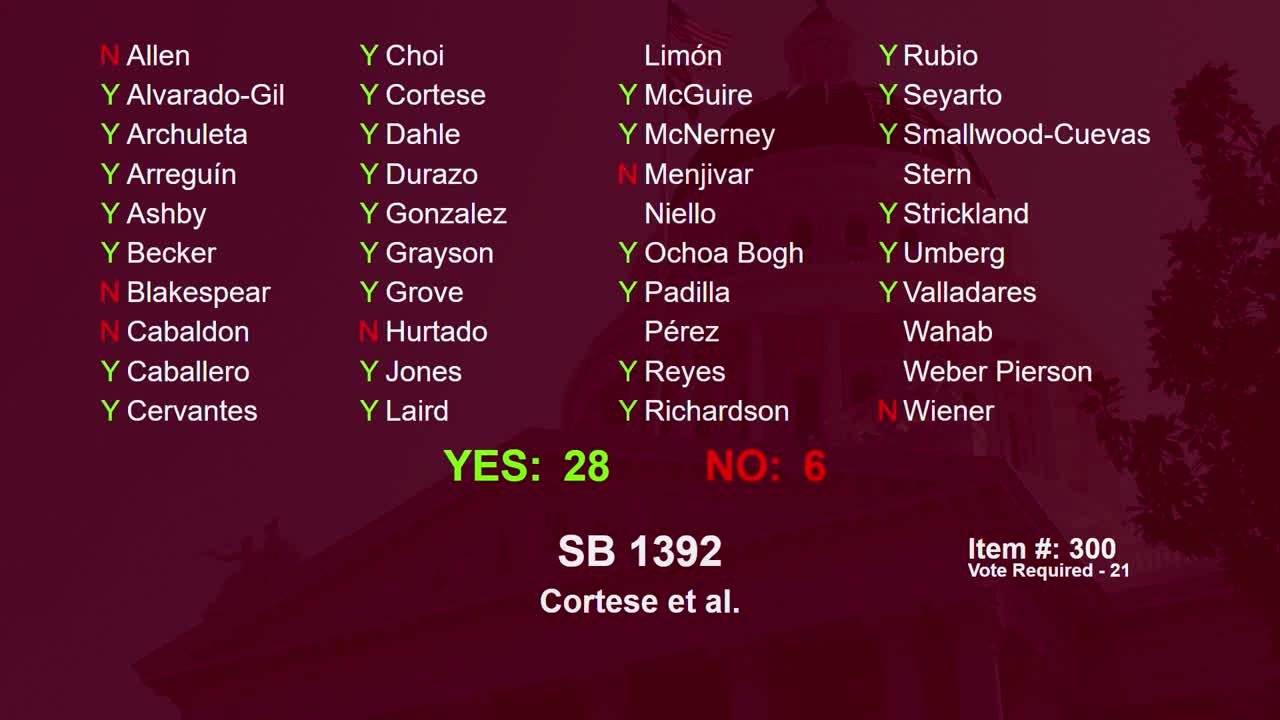
Bill Author

Bill Co-Author(s):