SB 1071: Death certificates.
- Session Year: 2025-2026
- House: Senate
- Latest Version Date: 2026-04-23
Current Status:
In Progress
(2026-05-14: May 14 hearing: Held in committee and under submission.)
Introduced
In Committee
Awaiting First Chamber Vote
Passed First Chamber
In Committee
Awaiting Second Chamber Vote
Passed Second Chamber
Enacted
Existing law requires that each death be registered with the local registrar of births and deaths in the district in which the death was officially pronounced or the body was found. Existing law establishes the required contents of the death certificate, including, but not limited to, the decedents name, sex, race, and the disease or conditions leading directly to death and antecedent causes, among other relevant identifying and medical information.
When the facts are incorrectly stated in a certificate of death, including a typographical error, existing law authorizes a person to make an affidavit under oath stating the changes necessary to make the record correct. Existing law requires that specified information be filed with the state or local registrar, and if the amendments are accepted, the State Registrar is required to transmit copies of the amendment to the county recorder in whose offices the copies of the original record and information are on file. Existing law requires the amendment to be filed with and become a part of the record to which it pertains.
This bill would authorize a family member of the deceased, when a judicial determination is made on the manner of a deceased persons death, to submit a written request to the State Registrar for a new death certificate reflecting the newly determined manner of death. This bill would require the request to be supported by a certified copy of the plea, verdict, statement of decision, or a judgment showing that the manner of death was determined by a finder of fact to be different than stated on the existing certificate. The bill would require the State Registrar to review the request and issue a new death certificate if specified conditions are met, including, but not limited to, that the request identifies the determination of manner of death in the certified court record. The bill would require the State Registrar to transmit copies of the new death certificate and the new certificate will supplant any previously issued certificate for the deceased person. The bill would require the local registrar to transmit any copies of the previously issued death certificate to the State Registrar if it is practical to do so and if it is not practical to do so, seal a cover over the copy, as specified.
The bill would specify that a plea, verdict, statement of decision, or judgment reflects a judicial determination that the manner of death was homicide if it shows criminal responsibility or civil liability for the death of the deceased person. The bill would authorize a family member of the deceased to include additional certified court records with their request to permit the State Registrar to determine the manner of death. The bill would require a determination by the State Registrar to be based solely on the request and the submitted certified court documents.
By imposing new duties on local registrars, this bill would impose a state-mandated program.
The California Constitution requires the state to reimburse local agencies and school districts for certain costs mandated by the state. Statutory provisions establish procedures for making that reimbursement.
This bill would provide that, if the Commission on State Mandates determines that the bill contains costs mandated by the state, reimbursement for those costs shall be made pursuant to the statutory provisions noted above.
Existing law requires that each death be registered with the local registrar of births and deaths in the district in which the death was officially pronounced or the body was found. Existing law establishes the required contents of the death certificate, including, but not limited to, the decedents name, sex, race, and the disease or conditions leading directly to death and antecedent causes, among other relevant identifying and medical information.
When the facts are incorrectly stated in a certificate of death, including a typographical error, existing law authorizes a person to make an affidavit under oath stating the changes necessary to make the record correct. Existing law requires that specified information be filed with the state or local registrar, and if the amendments are accepted, the State Registrar is required to transmit copies of the amendment to the county recorder in whose offices the copies of the original record and information are on file. Existing law requires the amendment to be filed with and become a part of the record to which it pertains.
This bill would authorize a family member of the deceased, when a judicial determination is made on the manner of a deceased persons death, to submit a written request to the State Registrar for a new death certificate reflecting the newly determined manner of death. This bill would require the request to be supported by a certified copy of the plea, verdict, statement of decision, or a judgment showing that the manner of death was determined by a finder of fact to be different than stated on the existing certificate. The bill would require the State Registrar to review the request and issue a new death certificate if specified conditions are met, including, but not limited to, that the request identifies the determination of manner of death in the certified court record. The bill would require the State Registrar to transmit copies of the new death certificate and the new certificate will supplant any previously issued certificate for the deceased person. The bill would require the local registrar to transmit any copies of the previously issued death certificate to the State Registrar if it is practical to do so and if it is not practical to do so, seal a cover over the copy, as specified.
By imposing new duties on local registrars, this bill would impose a state-mandated program.
The California Constitution requires the state to reimburse local agencies and school districts for certain costs mandated by the state. Statutory provisions establish procedures for making that reimbursement.
This bill would provide that, if the Commission on State Mandates determines that the bill contains costs mandated by the state, reimbursement for those costs shall be made pursuant to the statutory provisions noted above.
(a)When a judicial determination of a manner of a deceased persons death has become final, a family member of the deceased may submit a written request to the State Registrar for a new death certificate for the deceased person on the ground that the manner of death stated on the registered certificate does not reflect the ultimate judicial determination. The request shall be supported by a certified copy of the plea, verdict, statement of decision, or judgment showing either expressly or implicitly that the manner of death was determined by a finder of fact to be different than stated on the existing certificate.
(b)The State Registrar shall review the request and issue a new death certificate with the judicially determined manner of death identified in the request if all of the following criteria are met:
(1)The request identifies the determination of manner of death in the certified court record.
(2)The request identifies a differing manner of death stated on the existing certificate.
(3)The request is accompanied with the payment of the fee required by Section 103700.
(c)Once the certificate is issued, the State Registrar shall transmit copies of the new death certificate to both of the following:
(1)The local registrar and county recorder in whose offices copies of the previously issued death certificate are on file.
(2)The person who submitted the request.
(d)Upon receipt of the new death certificate, the local registrar and county recorder shall transmit any copies of the previously issued death certificate to the State Registrar if it is practical to do so. If it is impractical to do so, then they shall effectually seal a cover over the copy in a manner as not to deface or destroy the copy and forward a verified statement of their action to the state registrar.
(e)The new death certificate shall supplant any previously issued death certificate registered for the deceased person and shall be the only death certificate of the deceased person open to public inspection. The request and previously issued death certificate shall remain as part of the records of the State Registrar. All records and information referred to in this section, other than the newly issued death certificate, shall be available only upon the order of a court of competent jurisdiction.
(f)(1)A plea, verdict, statement of decision, or judgment reflects a judicial determination that the manner of death was a homicide if it shows criminal responsibility or civil liability for the murder, the manslaughter, an act causing the death, the wrongful death, or an act that to a reasonable person is likely to cause great bodily injury and results in the death, of the deceased person.
(2)A family member of the deceased may include additional certified court records with the request in subdivision (a) to permit the State Registrar to determine that the manner of death was judicially determined to be a homicide and explain the relevance of the additional records.
(3)A determination by the State Registrar under this section shall be based solely on the request and certified court documents submitted with the request, and the State Registrar is not required to obtain or review any additional documents.
SEC. 2.If the Commission on State Mandates determines that this act contains costs mandated by the state, reimbursement to local agencies and school districts for those costs shall be made pursuant to Part 7 (commencing with Section 17500) of Division 4 of Title 2 of the Government Code.
(a)When a judicial determination of a manner of a deceased persons death has become final, a family member of the deceased may submit a written request to the State Registrar for a new death certificate for the deceased person on the ground that the manner of death stated on the registered certificate does not reflect the ultimate judicial determination. The request shall be supported by a certified copy of the plea, verdict, statement of decision, or judgment showing either expressly or implicitly that the manner of death was determined by a finder of fact to be different than stated on the existing certificate.
(b)The State Registrar shall review the request and issue a new death certificate with the judicially determined manner of death identified in the request if all of the following criteria are met:
(1)The request identifies the determination of manner of death in the certified court record.
(2)The request identifies a differing manner of death stated on the existing certificate.
(3)The request is accompanied with the payment of the fee required by Section 103700.
(c)Once the certificate is issued, the State Registrar shall transmit copies of the new death certificate to both of the following:
(1)The local registrar and county recorder in whose offices copies of the previously issued death certificate are on file.
(2)The person who submitted the request.
(d)Upon receipt of the new death certificate, the local registrar and county recorder shall transmit any copies of the previously issued death certificate to the State Registrar if it is practical to do so. If it is impractical to do so, then they shall effectually seal a cover over the copy in a manner as not to deface or destroy the copy and forward a verified statement of their action to the state registrar.
(e)The new death certificate shall supplant any previously issued death certificate registered for the deceased person and shall be the only death certificate of the deceased person open to public inspection. The request and previously issued death certificate shall remain as part of the records of the State Registrar. All records and information referred to in this section, other than the newly issued death certificate, shall be available only upon the order of a court of competent jurisdiction.
SEC. 2.If the Commission on State Mandates determines that this act contains costs mandated by the state, reimbursement to local agencies and school districts for those costs shall be made pursuant to Part 7 (commencing with Section 17500) of Division 4 of Title 2 of the Government Code.
|
Date
|
Status
|
|---|---|
| May 14, 2026 | May 14 hearing: Held in committee and under submission. |
| May 8, 2026 | Set for hearing May 14. |
| May 4, 2026 | May 4 hearing: Placed on APPR. suspense file. |
| Apr 28, 2026 | Set for hearing May 4. |
| Apr 23, 2026 | Read second time and amended. Re-referred to Com. on APPR. |
| Apr 22, 2026 | From committee: Do pass as amended and re-refer to Com. on APPR. (Ayes 11. Noes 0. Page 3978.) (April 21). |
| Apr 22, 2026 | From committee: Do pass as amended and re-refer to Com. on APPR. (Ayes 11. Noes 0.) (April 21). |
| Apr 10, 2026 | Set for hearing April 21. |
| Apr 9, 2026 | From committee: Do pass and re-refer to Com. on JUD. (Ayes 9. Noes 0. Page 3793.) (April 8). Re-referred to Com. on JUD. |
| Apr 9, 2026 | From committee: Do pass and re-refer to Com. on JUD. (Ayes 9. Noes 0.) (April 8). Re-referred to Com. on JUD. |
| Mar 19, 2026 | Set for hearing April 8. |
| Feb 26, 2026 | Referred to Coms. on HEALTH and JUD. |
| Feb 17, 2026 | From printer. May be acted upon on or after March 16. |
| Feb 13, 2026 | Introduced. Read first time. To Com. on RLS. for assignment. To print. |
|
Date
|
Description
|
Location
|
Votes
|
|
|---|---|---|---|---|
| May 4, 2026 | Placed on suspense file | Senate Standing Committee on Appropriations |
Passed |
|
| Apr 21, 2026 | Do pass as amended, but first amend, and re-refer to the Committee on [Appropriations] | Senate Standing Committee on Judiciary |
Passed |
|
| Apr 8, 2026 | Do pass, but first be re-referred to the Committee on [Judiciary] | Senate Standing Committee on Health |
Passed |
This list shows positions taken on this bill by organizations on the date displayed, which is linked to the original source.
Positions by individuals are not included.
|
Organization
|
Position
|
Date
|
|---|---|---|
| American Society for Clinical Pathology | ** Against | |
| Arcadia Police Officers’ Association | ** Support | |
| Association of Riverside County Chiefs of Police & Sheriff | ** Support | |
| Brea Police Association | ** Support | |
| Burbank Police Officers Association | ** Support | |
| California Association of School Police Chiefs | ** Support | |
| California Coalition of School Safety Professionals | ** Support | |
| California District Attorneys Association | ** Support | |
| California Narcotic Officers’ Association | ** Support | |
| California Reserve Police Officers Association | ** Support | |
| California State Coroners’ Association | ** Against | |
| City of Highland | ** Support | |
| CLAREMONT POLICE OFFICERS ASSOCIATION | ** Support | |
| Conor Lynch Foundation | ** Support | |
| Corona Police Officers’ Association | ** Support | |
| Crime Victims United | ** Support | |
| Culver City Police Officers’ Association | ** Support | |
| Facing Fentanyl | ** Support | |
| FULLERTON POLICE OFFICERS ASSOCIATION | ** Support | |
| Hang Up and Drive | ** Support | |
| International Association of Coroners and Medical Examiners | ** Against | |
| International Association of Coroners & Medical Examiners | ** Against | |
| Kiefer Foundation | ** Support | |
| Los Angeles School Police Association | ** Support | |
| Los Angeles School Police Management Association | ** Support | |
| Mothers Against Drunk Driving | ** Support | |
| Mothers Against Prescription Drug Abuse | ** Support | |
| Mothers for Awareness and Prevention of Drug Abuse | ** Support | |
| Murrieta Police Officers’ Association | ** Support | |
| National Association of Medical Examiners | ** Against | |
| Newport Beach Police Association | ** Support | |
| Not An Accident | ** Support | |
| Not An Accident Campaign | ** Support | |
| Novato Police Officers’ Association | ** Support | |
| Palos Verdes Police Officers’ Association | ** Support | |
| Placer County Deputy Sheriffs’ Association | ** Support | |
| Pomona Police Officers’ Association | ** Support | |
| Retired Public Employees Association | ** Support | |
| Riverside County District Attorney’s Office | ** Support | |
| Riverside County Sheriff’s Office | ** Support | |
| Riverside Police Officers’ Association | ** Support | |
| Riverside Sheriffs’ Association | ** Support | |
| San Diego County District Attorney’s Office | ** Support | |
| Southern California Families for Safe Streets | ** Support | |
| Stop Drug Homicide | ** Support | |
| The California Baptist Capitol Ministry | ** Support | |
| The Kiefer Foundation | ** Support | |
| We Save Lives | ** Support | |
| WeSaveLives.org | ** Support |
SENATE COMMITTEE ON
Senator Sabrina Cervantes, Chair
2025 - 2026 Regular Session
SB 1071 (Ochoa Bogh) - Death certificates
Version: | Policy Vote: |
Urgency: | Mandate: |
Hearing Date: | Consultant: |
Bill Summary:
SB 1071 would require that, when a judicial determination of a manner of a deceased person’s death has become final, a family member of the deceased may submit a written request to the State Registrar for a new death certificate for the deceased person, as specified.
Fiscal Impact:
- Unknown ongoing General Fund costs, potentially hundreds of thousands, for the California Department of Public Health (CDPH) for state administration.
- Unknown potential costs for local registrars and county recorders for administration. Costs to local agencies would be potentially reimbursable by the state, subject to a determination by the Commission on State Mandates.
Background:
CDPH, in its role as the State Registrar, is charged with maintaining a uniform, comprehensive, and continuous index for all birth, death, fetal death, and marriage vital events, which occur in California. Certified copies of vital records are available from CDPH, 58 county recorders, and 61 local health jurisdictions. The local registrar keeps birth and death records for current year events and one year prior in the jurisdiction where the event occurred, but records for all years in the county where the event occurred are maintained by the county recorder.
Current law requires each death to be registered with the local registrar of births and deaths in the district in which the death was officially pronounced or the body was found. The medical and health section data on the death certificate and the physician’s, nurse practitioner’s, or coroner’s certification must be completed by the attending physician or nurse practitioner within 15 hours after the death, or by the coroner within three days after examination of the body.
The cause of death is recorded in Section 107 of death certificates, consisting of two parts. Part I is a sequential list of conditions leading to the immediate cause of death and the time intervals between their onset and the death, as well as any underlying cause of death. Part II is a list of other conditions contributing to, but not directly causing, death. According to CDPH, manner of death categories reflects the value entered on the death certificate by a coroner or medical examiner. The manner of death is recorded in Section 109 of death certificates. Because most California death certificates are not completed by a coroner or medical examiner, this field is blank for many records. However, in specified instances, California law requires coroners or medical examiners to inquire into and determine the circumstances, manner, and cause of specified instances, including all violent, sudden, or usual deaths. In the event where a coroner or medical examiner completes the medical section of the death certificate, manner of death categories include: accident, suicide, homicide, pending investigation, could not be determined, and natural.
To request an amendment to correct personal information on a death certificate, CDPH requires the individual to submit a properly completed Affidavit to Amend a Record Form, notarized sworn statement, appropriate fees(s), and supporting documentation. The Affidavit to Amend a Record Form can correct most typographical or spelling errors, add most information not known at the time of death, and add an “also known as” for the decedent. To amend medical information on a death certificate, however, the individual must submit a Physician/Coroner’s Amendment Form. The medical information includes the date of death, hour of death, cause and manner of death, with the signature of the certifying physician or coroner who originally attested to the death certificate.
Proposed Law:
Specific provisions of the bill would:
- Require that, when a judicial determination of a manner of a deceased person’s death has become final, a family member of the deceased may submit a written request to the State Registrar for a new death certificate for the deceased person on the ground that the manner of death stated on the registered certificate does not reflect the ultimate judicial determination; and require that the request be supported by a certified copy of the plea, verdict, statement of decision, or judgment showing either expressly or implicitly that the manner of death was determined by a finder of fact to be different than stated on the existing certificate.
- Require the State Registrar to review the request and issue a new death certificate with the judicially determined manner of death identified in the request if specified criteria are met.
- Require, once the certificate is issued, the State Registrar to transmit copies of the new death certificate to both of the following:
- The local registrar and county recorder in whose offices copies of the previously issued death certificate are on file.
- The person who submitted the request.
- Require, upon receipt of the new death certificate, the local registrar and county recorder to transmit any copies of the previously issued death certificate to the State Registrar if it is practical to do so; and, if it is impractical to do so, to effectually seal a cover over the copy in a manner as not to deface or destroy the copy and forward a verified statement of their action to the State Registrar.
- Require the new death certificate to supplant any previously issued death certificate registered for the deceased person and to be the only death certificate of the deceased person open to public inspection; require that the request and previously issued death certificate remain as part of the records of the State Registrar; and require that all records and information under these provisions, other than the newly issued death certificate, be available only upon the order of a court of competent jurisdiction.
- Provide that a plea, verdict, statement of decision, or judgment reflects a judicial determination that the manner of death was a homicide if it shows criminal responsibility or civil liability for the murder, the manslaughter, an act causing the death, the wrongful death, or an act that to a reasonable person is likely to cause great bodily injury and results in the death, of the deceased person; provide that a family member of the deceased may include additional certified court records with the request to permit the State Registrar to determine that the manner of death was judicially determined to be a homicide and explain the relevance of the additional records; and provide that a determination by the State Registrar must be based solely on the request and certified court documents submitted with the request, and that the State Registrar is not required to obtain or review any additional documents.
-- END --
Senator Thomas Umberg, Chair
2025-2026 Regular Session
Bill No: SB 1071 (Author:Ochoa Bogh)
Version: February 13, 2026
Hearing Date: April 21, 2026
Fiscal: Yes
Urgency: No
Consultant: AWM
SUBJECT
Death certificates
DIGEST
This bill requires the State Registrar, upon receipt from a request from a family member of a deceased person accompanied by specified evidence of a judicial determination on the manner of the deceased person’s death, to issue a new death certificate reflecting the manner of death identified in the judicial determination, and requires copies of the superseded death certificate to be confiscated or sealed.
EXECUTIVE SUMMARY
Current law requires a coroner or attending physician to attest to the cause and manner of a person’s death on their death certificate. As a matter of medical practice, “manner of death” will be one of a handful of labels, including natural, accident, homicide, suicide, and “could not be determined.” A death certificate can be amended with further information or conclusions from the coroner or attending physician, but there is currently no other way to amend a death certificate to reflect additional information.
This bill requires the State Registrar, upon receipt from a request from a family member of a deceased person accompanied by specified evidence of a judicial determination on the manner of the deceased person’s death, to issue a new death certificate reflecting the manner of death identified in the judicial determination, and requires copies of the superseded death certificate to be confiscated or sealed. The author has agreed to amendments to clarify when a plea, verdict, statement of decision, or judgment should be understood to reflect a finding of homicide.
This bill is sponsored by the Riverside District Attorney’s Office, and is supported by nearly 40 organizations, including law enforcement and anti-substance abuse groups, and eight individuals. This bill is opposed by the American Society for Clinical Pathology, the California State Coroners’ Association, the International Association of Coroners & Medical Examiners, and the National Association of Medical Examiners. The Senate Health Committee passed this bill with a vote of 9-0.
PROPOSED CHANGES TO THE LAW
Existing law:
- Requires each death to be registered with the local registrar of births and deaths in the district in which the death was officially pronounced or the body was found, within eight calendar days after death and prior to any disposition of the human remains. (Health & Saf. Code, § 102775.)
- Provides that a death certificate shall be divided into two sections:
- The first section contains those items necessary to establish the fact of the death, including personal information of the decedent (full name, marital status, date of birth, age at death, usual residence, etc.), date and place of death, the decedents’ parents full names and place of birth, information regarding the disposition of the body, and the certification and signature of the attending physician and surgeon or coroner, when required to act by law. (Health & Saf. Code, § 102875(a).)[1]
- The second section contains those items relating to medical and health data, including the disease or conditions leading to the death and antecedent causes; operations and major findings thereof; accident and injury information; and information indicating whether the decedent was pregnant at the time of death or within a year prior, if known, as determined by observation, autopsy, or review of the medical record. (Health & Saf. Code, § 102875(b).)
- Requires the funeral director, or person acting in lieu thereof, to prepare the death certificate and register it with the local registrar, and requires the funeral director to obtain the required information for the first section of a death certificate from the person or source best qualified to supply the information. (Health & Saf. Code, § 102780, 102790.)
- Requires the second section of a death certificate (the medical and health data section) to be completed and attested to by the physician and surgeon last in attendance, or in the case of a patient in a skilled nursing or intermediate care facility at the time of death, by the medical professional in attendance, as specified; or by the coroner, when the coroner is notified pursuant to 5). (Health & Saf. Code, §§ 102825, 102860.)
- Requires the attending medical professional, funeral director, or other person to immediately notify the coroner when they have knowledge of a death that occurred or have charge of a body in which death occurred in any of the following circumstances:
- Without medical attendance.
- During the continued absence of the attending physician and surgeon.
- Where the attending physician and surgeon or the physician assistant is unable to state the cause of death.
- Where suicide is suspected.
- Following an injury or an accident.
- Under circumstances as to afford a reasonable ground to suspect that the death was caused by the criminal act of another. (Health & Saf. Code, § 102850.)
- Requires the coroner whose duty it is to investigate such deaths to ascertain as many as possible of the facts required for a death certificate when notified pursuant to 5). (Health & Saf. Code, § 102855.)
- Requires the second section of a death certificate to be completed by the attending physician within 15 hours of the death, or by the coroner within three days after examination of the body. (Health & Saf. Code, § 102800.)
- Provides that, whenever the facts are not correctly stated in any certificate of birth, death, fetal death, or marriage already registered, the person asserting that the error exists may make an affidavit under oath stating the changes necessary to make the record correct, that shall be supported by the affidavit of one other credible person having knowledge of the facts, and file it with the state or local registrar. This includes, but is not limited to, the correction of typographical, spelling, or statistical errors in any of these facts. (Health & Saf. Code, § 103225.)
- Provides that an application under 8), above, shall be reviewed as follows:
- If the requested amendment relates to a certificate that has not been transmitted to the State Registrar, the local registrar shall review the amendment for acceptance for filing, and if accepted shall file the amendment and note the fact of the amendment, with its date, on the otherwise-unaltered original certificate. (Health & Saf. Code, § 103235.)
- If the requested amendment to a certificate relates to a certificate that has been transmitted to the State Registrar, the amendment shall be transmitted to the State Registrar who shall review it for acceptance for filing. If the State Registrar accepts the amendment, the State Registrar shall transmit copies of the amendment to the county recorder in whose offices copies of the original record and information are on file, and, if the amendment is within two years of the registration of the original record, to the county’s local registrar. (Health & Saf. Code, §§ 103240, 103245.)
- Provides that an amendment accepted pursuant to 9) shall be filed with and become part of the record to which it pertains. (Health & Saf. Code, § 103255.)
- Provides that, whenever the information originally furnished in the medical and health data section of any record of death is modified by supplemental information relative thereto, the certifying physician or coroner having knowledge of this information may make a declaration stating the changes necessary to make the information correct and file it with the state or local registrar; the new information shall be handled under the procedure set forth in 8)-10). (Health & Saf. Code, §§ 103300, 103305.)
- Permits a person to file a petition with the court for an order to judicially establish the fact of, and the time and place of, a birth, death, or marriage that is not registered or for which a certified copy is not obtainable; if, upon a hearing, the allegations in the petition are established to the satisfaction of the court, the court may make an order determining that the birth, death, or marriage did in fact occur as set forth in the petition on a form prescribed and furnished by the State Registrar, and the order shall become effective upon the filing of a certified copy with the State Registrar. (Health & Saf. Code, §§ 103450-103485.)
- Provides that a forensic autopsy shall only be conducted, and the results of a forensic autopsy shall only be determined, by a licensed physician and surgeon. (Gov. Code, § 27522(a).)
- Provides that the manner of death, when an autopsy has been conducted, shall be determined by the coroner or medical examiner of the county; if a forensic autopsy is conducted, the coroner or medical examiner shall consult with the licensed physician and surgeon in the determination of the manner of death. (Gov. Code, § 27522(d).)
- Provides that 14) does not apply in an investigation for an in-custody death to a county where the offices of the sheriff and coroner are combined; in such cases, the cause and manner of death listed on the death certificate shall match the cause and manner of death determined by the coroner, medical examiner, or private third-party medical examination provider, as specified. (Gov. Code, §§ 27522(d), 27481.56.)
This bill:
- Provides that, when a judicial determination of a manner of a deceased person’s death has become final, a family member of the deceased may submit a written request to the State Registrar for a new death certificate for the deceased person on the ground that the manner of death stated on the registered certificate does not represent the ultimate judicial determination.
- Requires the request in 1) to be supported by a copy of the plea, verdict, statement of decision, or judgment showing either expressly or implicitly that the manner of death was determined by the finder of fact to be different than stated on the existing certificate.
- Requires the State Registrar to review a request received under 1) and issue a new death certificate with the judicially determined manner of death identified in the request if all of the following criteria are met:
- The request identifies the determination of manner of death in the certified court record.
- The request identifies a differing manner of death stated on the existing certificate.
- The request is accompanied by the payment of a statutory fee.
- Provides that, after the State Registrar issues a new death certificate pursuant to 3), the State Registrar shall transmit copies of the new death certificate to both of the following:
- The local registrar and county recorder in whose office copies of the previously issued death certificate are on file.
- The person who submitted the request.
- Provides that, upon receipt of a new death certificate pursuant to 4), the local registrar and county recorder shall transmit any copies of the previously issued death certificate to the State Registrar if it is practicable to do so; if it is impracticable, they shall effectually seal a cover over the copy in a manner as not to deface or destroy the copy and forward a verified statement of their action to the State Registrar.
- Provides that the new death certificate issued under 3) shall supplant any previously issue death certificate registered for the deceased person and shall be the only death certificate of the deceased person open to public inspection.
- The request and previously issued death certificate shall remain as part of the records of the State Registrar.
- All records and information referred to in 1)-5), other than the newly issued death certificate, shall be available only upon the order of a court of competent jurisdiction.
COMMENTS
- Author’s comment
According to the author:
Under current law, next of kin may request certain corrections to a death certificate, including typographical errors or amendments to the cause of death with a physician’s certification. However, there is no process to amend the manner of death, even when a court of law has ruled that the death was a homicide.
SB 1071 would allow a victim’s next of kin, after all appellate rights have been exhausted, to request an amendment so the official death certificate reflects the court’s legal determination.
Families who have already suffered an unimaginable loss should not have to see their loved one’s death labeled as an “accident” when a court has determined it was a homicide. There is nothing accidental about the choice to drive impaired. SB 1071 ensures that once the legal process is complete, the official record reflects the truth and honors the life that was taken.
2. Background on the death certificate process
As explained by the Senate Health Committee’s analysis of this bill:
According to the County of Los Angeles Public Health, the funeral director initiates the death registration process through the web-based California Electronic Death Registration System (CA-EDRS) by gathering personal and demographic information about the deceased. California law requires this process to occur within eight days in which the death occurred, or the body was found. The attending physician or coroner then completes the medical portion of the death certificate to determine the manner in which the individual died within the required 15 hours of receiving notice from the funeral director. Medical examiners or coroners are responsible for investigating any cause of death that is unexpected, unexplained, or resulting from injury, poisoning or public health threat. If a case is referred to the coroner, the coroner enters cause-of-death information directly into CA-EDRS under the “Coroner’s use only” section. In most cases, however, the attending physician is responsible for determining the cause of death. The physician receives a cause-of-death worksheet provided by the funeral director; once completed, they return it to the funeral director. The death certificate is then forwarded to the local registrar.
The local registrar then reviews the death certificate and checks that the cause of death follows the International Classification of Diseases rules and for acceptance of the death certificate in accordance with state guidelines. Once the death certificate is accepted by the local registrar, the physician must attest to the accuracy of the cause-of-death information on the certificate. The death certificate can then be submitted to the local registrar by the funeral director for legal registration. […]
The cause of death is recorded in Section 107 of death certificates. The section consists of two parts: Part I is a sequential list of conditions leading to the immediate cause of death and the time intervals between their onset and the death, as well as any underlying cause of death; and Part II is a list of other conditions contributing to, but not directly causing, death. According to CDPH, manner of death categories reflects the value entered on the death certificate by a coroner or medical examiner. The manner of death is recorded in Section 109 of death certificates. Because most California death certificates are not completed by a coroner or medical examiner, this field is blank for many records. However, in specified instances, California law requires coroners or medical examiners to inquire into and determine the circumstances, manner, and cause of specified instances, including all violent, sudden, or usual deaths. In the event where a coroner or medical examiner completes the medical section of the death certificate, manner of death categories include: accident, suicide, homicide, pending investigation, could not be determined, and natural. The National Association of Medical Examiners state that motor vehicle fatalities, in general, may be classified as accident, as long as there is no evidence from reasonable investigative inference that the at-fault person was using the vehicle as a weapon with an intent to kill the victim, in which case homicide would apply. The Association also states that deaths directly caused by the acute toxic effects of a drug or poison are traditionally classified as an accident, assuming there was no evidence of intent to harm oneself or cause death.
3. The current process for amending a death certificate
As explained by the Senate Health Committee’s analysis of this bill:
To request an amendment to correct personal information on a death certificate, CDPH requires the individual to submit a properly completed VS 24 Form, notarized sworn statement, appropriate fees(s), and supporting documentation. The VS 24 – Affidavit to Amend a Record Form can: correct most typographical or spelling errors, add most information not known at the time of death, and add an “also known as” for the decedent. To amend medical information on a death certificate, however, the individual must submit a VS 24A Form, known as the Physician/Coroner’s Amendment. The medical information includes the date of death, hour of death, and Items 101-125, which include both the cause and manner of death, with the signature of the certifying physician or coroner who originally attested to the death certificate. There are currently two ways to submit this type of amendment: (1) if the death certificate was attested by a physician, the form must be completed, signed by the attesting physician, and mailed to CPDH for processing; or (2) if the death certificate was attested by the coroner, the coroner with the county jurisdiction can submit the form via the CA-EDRS. The funeral home or mortuary that assisted with services can assist with creating the amendment form for signatures. There are no processing fees to file a Physician/Coroner’s Amendment. In any form of amendment to a death certificate, once the amendment is processed, it will be filed with and become part of the record in which it pertains, making the certificate a multiple page document. To obtain a copy of the amended death certificate, an application for a certified copy and a sworn statement is required.
4. This requires the State Registrar to change the manner of death listed on a death certificate upon receipt of a petition from a family member accompanied by proof of a judicial determination reflecting a different manner of death
As noted above, current law allows the portions of a death certificate relating to the cause and manner of death to be amended with additional information from the attesting physician or coroner. There is no procedure, however, to have those portions amended on the basis of other additional information, such as a court judgment that the death was a homicide.
This bill would create a limited right to have a death certificate amended on the basis of a court judgment establishing cause of death. Specifically, this bill permits the family member of a deceased person, after a judicial determination of a manner of the deceased person’s death has become final, to submit a written request to the State Registrar for a new death certificate that reflects the manner of death in the judicial determination. The request must include a certified copy of the plea, verdict, statement of decision, or judgment showing expressly or implicitly that the manner of death was determined by a finder of fact to be different than stated on the existing certificate; the judgment can arise from either a criminal or a civil proceeding. Upon receipt of such a request, the State Registrar must issue a new death certificate reflecting the manner of death reflected in the court judgment.
Copies of the new death certificate must be provided to the family member who submitted the request and the local registrar and county recorder in whose offices the previously issued death certificate are on file. The local registrar must either transmit their copies of the previously issued death certificate to the State Registrar or keep them under seal. The newly issued death certificate is deemed to be the only death certificate of the deceased person open to public inspection; the previously issued death certificate can be obtained only through a court order.
The author and sponsors assert that this bill is necessary to (1) ensure the accuracy of vital records, and (2) give the families of homicide victims a record that reflects the judicial findings. This is consistent with the likely application of the bill: while the bill theoretically permits any listed manner of death to be changed, the requirement of a court judgment establishing cause of death would be difficult to satisfy outside homicide and wrongful death cases. There are very few court judgments that would clearly set forth, e.g., a “natural” death. Moreover, because the bill allows only family members to petition for a change, it could skew the direction of the amendments made; a doctor who was found not liable for medical malpractice may want the cause of death changed to “natural,” but they would not be able to seek such a change. Additionally, the bill does not appear to allow a change based on a finding against charges of wrongful death or homicide, e.g., where a person is acquitted.
The Senate Health Committee considered this bill’s effect on vital records policy and passed it with a vote of 9-0. This Committee has jurisdiction over the portion of the bill that relates to court judgments. The bill requires the State Registrar to assess court documents and decide whether the manner of death listed on the death certificate is inconsistent with the facts established in a plea, verdict, statement of decision, or judgment. In some cases, this will be straightforward: a jury verdict finding a defendant guilty of first-degree murder or liable for wrongful death should be easy to interpret. Other findings might not be so clear. If the jury finds someone not guilty because the death was caused by a “justifiable homicide by peace officer,”[2] should the State Registrar change the death certificate? The bill is not clear.
In order to ensure that the State Registrar has proper guidance to consistently and accurately make the changes required by this bill, the author has agreed to amendments set forth in Comment 5, below.
5. Amendments
The amendments agreed to the author are set forth below, subject to any nonsubstantive changes the Office of Legislative Counsel may make.
Amendment
On page 4, in between lines 2 and 3, insert:
(f) (1) A plea, verdict, statement of decision, or judgment reflects a judicial determination that the manner of death was a homicide if it shows criminal responsibility or civil liability for the murder, the manslaughter, an act causing the death, the wrongful death, or an act that to a reasonable person is likely to cause great bodily injury and results in the death, of the deceased person.
(2) A family member of the deceased may include additional certified court records with the request in subdivision (a) to permit the State Registrar to determine that the manner of death was judicially determined to be a homicide and explain the relevance of the additional records.
(3) A determination by the State Registrar under this section shall be based solely on the request and certified court documents submitted with the request, and the State Registrar is not required to obtain or review any additional documents.
6. Arguments in support
According to the Riverside County District Attorney’s Office:
SB 1071 would provide a legal mechanism to amend the manner of death on the death certificate after a court judgment. Currently, next of kin can only get an amendment to cause of death (not manner of death) and typographical errors to personal information on a death certificate, and they can only get the cause of death amended with a physician’s certification (because again, that part of the death certificate is certified by a medical professional). There is no mechanism to request an amendment to manner of death. []
The example of vehicular homicides demonstrate the problem SB 1071 seeks to solve. Currently, when a victim is killed by a drunk or impaired driver, the pathologist typically classifies the manner of death as an “accident,” not as a homicide. This is unsurprising because the pathologist often may not have all information necessary to rule it a homicide at the time of the autopsy. However, after a court verdict/plea and final judgment after appeal (for instance, a jury verdict of vehicular murder), we do have all such information, and what is more, we have a legal determination of the manner of death — homicide, not an accident. Once all appellate rights have been exhausted and there is a final court judgment, the state’s official legal document regarding a person’s death (the death certificate) should reflect the legal determination of its own courts regarding the true manner of death.
Importantly, SB 1071 does not attempt to change a physician’s or pathologist’s medical opinion in the autopsy protocol or a coroner’s report; rather, the measure seeks to ensure accuracy in our state’s official death records, reflecting not just a court’s official legal determination but also the truth. This change not only provides a measure of justice to the victim’s family and a truthful record of their loved one’s life and death, but it will provide better statistics and data to inform public health, criminal justice, research, and policy systems at multiple levels. Drunk and impaired driving deaths are up in California, and death certificates should accurately categorize these deaths as homicides, not accidents.
7. Arguments in opposition
According to the International Association of Coroners and Medical Examiners:
SB 1071 presents profound concerns due to its conflation of the definition of “homicide” within the legal and medical domains. In the medicolegal context, “homicide” is a neutral medical classification indicating death at the hands of another person, without assigning criminal intent or legal culpability. By contrast, the legal definition depends upon prosecutorial decisions, statutory frameworks, evidentiary thresholds, and jury determinations. Blurring these distinct frameworks introduces significant risk to the accuracy and consistency of death certification.
This conflation would have far-reaching consequences. It threatens the integrity of vital records and undermines the reliability of mortality data collected and analyzed by the Centers for Disease Control and Prevention. Public health surveillance depends on consistent, medically grounded classifications. Introducing variability based on legal outcomes—often influenced by prosecutorial discretion, resource disparities, and jury interpretation—will result in unequal and potentially biased mortality data across jurisdictions.
Additionally, SB 1071 would create disparities in death certification outcomes that hinge not on medical findings, but on the varying capacities and decisions of prosecutors and the unpredictable nature of jury verdicts. Two deaths with identical medical circumstances could be classified differently based solely on legal proceedings, undermining both equity and scientific validity.
SUPPORT
Riverside County District Attorney’s Office (sponsor)
Arcadia Police Officers’ Association
Association of Riverside County Chiefs of Police & Sheriff
Brea Police Association
Burbank Police Officers Association
California Association of School Police Chiefs
California Coalition of School Safety Professionals
California District Attorneys Association
California Narcotic Officers’ Association
California Reserve Police Officers Association
City of Highland
Claremont Police Officers Association
Conor Lynch Foundation
Corona Police Officers’ Association
Crime Victims United
Culver City Police Officers’ Association
Facing Fentanyl
Fullerton Police Officers Association
Hang Up and Drive
Kiefer Foundation
Los Angeles School Police Association
Los Angeles School Police Management Association
Mothers Against Drunk Driving
Mothers for Awareness and Prevention of Drug Abuse
Murrieta Police Officers Association
Newport Beach Police Association
Not An Accident
Novato Police Officers Association
Palos Verdes Police Officers’ Association
Placer County Deputy Sheriffs’ Association
Pomona Police Officers’ Association
Riverside Police Officers’ Association
Riverside County Sheriff’s Office
Riverside Sheriffs’ Association
San Diego County District Attorney’s Office
Southern California Families for Safe Streets
Stop Drug Homicide
The California Baptist Capitol Ministry
We Save Lives
Eight individuals
OPPOSITION
American Society for Clinical Pathology
California State Coroners’ Association
International Association of Coroners & Medical Examiners
National Association of Medical Examiners
RELATED LEGISLATION
Pending legislation: None known.
Prior legislation: None known.
PRIOR VOTES
Senate Health Committee (Ayes 9, Noes 0)
**************
Beginning July 1, 2026, nurse practitioners may also perform many of the acts relating to a death certificate that currently may be performed by a physician and surgeon. (See AB 583 (Pellerin, Ch. 271, Stats. 2025).) This addition is not relevant to the issues presented by this bill. ↑
See CALCRIM No. 507. ↑
SENATE COMMITTEE ON HEALTH
Senator Dr. Akilah Weber Pierson, Chair
BILL NO: SB 1071
AUTHOR: | Ochoa Bogh | ||
VERSION: | February 13, 2026 | ||
HEARING DATE: | April 8, 2026 | ||
CONSULTANT: | Margarita Niemann | ||
SUBJECT: Death certificates
SUMMARY:
Authorizes a family member of a deceased person, when a judicial determination is made on the manner of the person’s death, to submit a written request to the State Registrar for a new death certificate reflecting the newly determined manner of death.
Existing law:
- Establishes the California Department of Public Health (CDPH) and sets forth its powers and duties, including duties as the State Registrar relating to vital records and health statistics. [HSC §102100, et seq.]
- Makes the local health officer of an approved public health department the local registrar in and for all registration districts within that health jurisdiction and requires the local registrar to perform all the duties of a local registrar of births and deaths. Requires the State Registrar, in other areas, to appoint a local registrar of births and deaths for each registration district, as specified. [HSC §102275 and §102280]
- Requires each death to be registered with the local registrar of births and deaths in the district in which the death was officially pronounced or the body was found, within eight calendar days after death and prior to any disposition of the human remains. [HSC §102775]
- Requires the medical and health section data and the physician’s, nurse practitioner’s, or coroner’s certification to be completed by the attending physician or nurse practitioner within 15 hours after the death, or by the coroner within three days after examination of the body. Requires the physician or nurse practitioner to, within 15 hours after the death, deposit the certificate at the place of death, or deliver it to the attending funeral director at his or her place of business or at the office of the physician. [HSC §102800]
- Requires the coroner to state on the certificate of death the disease or condition directly leading to death, antecedent causes, other significant conditions contributing to death and other medical and health section data as required on the certificate, and the hour and day on which death occurred. Requires the coroner to deliver the death certificate to the attending funeral director within three days after examining the body. [HSC §102860]
- Permits, whenever the facts are not correctly stated in any certificate of birth, death, fetal death, or marriage already registered, the person asserting that the error exists to make an affidavit under oath stating the changes necessary to correct the record. Requires that affidavit to be supported by the affidavit of one other credible person having knowledge of the facts, and file it with the state or local registrar. [HSC §103225]
- Requires the amendment to be transmitted to the State Registrar to review it for acceptance for filing. Requires, if the amendment is accepted, the State Registrar to transmit copies of the amendment to the county recorder in whose offices copies of the original record and information are on file. Requires the State Registrar to send a certified copy of the newly amended record of birth, death, or marriage to the applicant without additional charge, except for those amendments that are filed within one year of the date of occurrence of the event. Requires the amendment to be filed with and become a part of the record to which it pertains. [HSC §103240-103255]
This bill:
- Authorizes a family member of a deceased, when a judicial determination of a manner of the person’s death has become final, to submit a written request to the State Registrar for a new death certificate on the grounds that the manner of death stated on the registered certificate does not reflect the ultimate judicial determination.
- Requires the request to be supported by a certified copy of the plea, verdict, statement of decision, or judgement showing either expressly or implicitly that the manner of death determined by a finder of fact to be different than stated on the existing certificate.
- Requires the State Registrar to review the request and issue a new death certificate with the judicially determined manner of death if the request:
- Identifies the determination of manner of death in the certified court record;
- Identifies a differing manner of death stated on the existing certificate; and,
- Is accompanied with the payment of the required fee.
- Requires the State Registrar, once the certificate is issued, to transmit copies of the new death certificate to both of the following:
- The local registrar and county recorder in whose offices copies of the previously issued death certificate are on file; and,
- The person who submitted the request.
- Requires the local registrar and county recorder, upon receipt of the new death certificate, to transmit any copies of the previously issued death certificate to the State Registrar if it is practical to do so. Requires the local registrar and county recorder, if it is impractical to do so, to effectually seal a cover over the copy in a manner as not to deface or destroy the copy and forward a verified statement of their action to the State Registrar.
- Requires the new death certificate to replace any previously issued death certificate registered for the deceased person and shall be the only death certificate of the deceased persons open to public inspection.
- Requires the request and previously issued death certificate to remain as part of the records of the State Registrar.
- Requires all records and information referred to in this bill, other than the newly issued death certificate, to be available only upon the order of a court of competent jurisdiction.
FISCAL EFFECT:
This bill has not been analyzed by a fiscal committee.
COMMENTS:
- Author’s statement. According to the author, “Under current law, next of kin may request certain corrections to a death certificate, including typographical errors or amendments to the cause of death with a physician’s certification. However, there is no process to amend the manner of death, even when a court of law has ruled that the death was a homicide. This bill would allow a victim’s next of kin, after all appellate rights have been exhausted, to request an amendment so the official death certificate reflects the court’s legal determination. Families who have already suffered an unimaginable loss should not have to see their loved one’s death labeled as an ‘accident’ when a court has determined it was a homicide. There is nothing accidental about the choice to drive impaired. This bill ensures that once the legal process is complete, the official record reflects the truth and honors the life that was taken.”
- The State Registrar. CDPH’s Vital Records Registration Branch is charged with maintaining a uniform, comprehensive, and continuous index for all birth, death, fetal death, and marriage vital events, which occur in California, of which there are over one million each year. Certified copies of vital records are available from CDPH, 58 county recorders, and 61 local health jurisdictions. CDPH maintains, and can provide, birth and death records from 1905 to the present. For marriage records, CDPH maintains and can provide those from 1946 to the present, with some years excluded. CDPH uses the data collected through death certificates for public health research and planning.
- Local registrars and county recorders. Local health officers serve as the local registrars for their respective health jurisdictions and perform all the related duties. According to the County Recorders’ Association of California, the local registrar is required to send each original birth or death certificate to the State Registrar, either directly or through the county recorder’s office. Local registrars either send the original birth or death certificate to the county recorder, who makes a special county record and forwards the original to the State Registrar, or the local registrar sends the county recorder a copy of the certificate at the same time they forward the original to the State Registrar. The local registrar keeps birth and death records for current year events and one year prior in the jurisdiction where the event occurred, but records for all years in the county where the event occurred are maintained by the county recorder.
- Death registration process. According to the County of Los Angeles Public Health, the funeral director initiates the death registration process through the web-based California Electronic Death Registration System (CA-EDRS) by gathering personal and demographic information about the deceased. California law requires this process to occur within eight days in which the death occurred, or the body was found. The attending physician or coroner then completes the medical portion of the death certificate to determine the manner in which the individual died within the required 15 hours of receiving notice from the funeral director. Medical examiners or coroners are responsible for investigating any cause of death that is unexpected, unexplained, or resulting from injury, poisoning or public health threat. If a case is referred to the coroner, the coroner enters cause-of-death information directly into CA-EDRS under the “Coroner’s use only” section. In most cases, however, the attending physician is responsible for determining the cause of death. The physician receives a cause-of-death worksheet provided by the funeral director; once completed, they return it to the funeral director. The death certificate is then forwarded to the local registrar.
The local registrar then reviews the death certificate and checks that the cause of death follows the International Classification of Diseases rules and for acceptance of the death certificate in accordance with state guidelines. Once the death certificate is accepted by the local registrar, the physician must attest to the accuracy of the cause-of-death information on the certificate. The death certificate can then be submitted to the local registrar by the funeral director for legal registration.
- Cause and manner of death sections. The cause of death is recorded in Section 107 of death certificates. The section consists of two parts: Part I is a sequential list of conditions leading to the immediate cause of death and the time intervals between their onset and the death, as well as any underlying cause of death; and Part II is a list of other conditions contributing to, but not directly causing, death. According to CDPH, manner of death categories reflects the value entered on the death certificate by a coroner or medical examiner. The manner of death is recorded in Section 109 of death certificates. Because most California death certificates are not completed by a coroner or medical examiner, this field is blank for many records. However, in specified instances, California law requires coroners or medical examiners to inquire into and determine the circumstances, manner, and cause of specified instances, including all violent, sudden, or usual deaths. In the event where a coroner or medical examiner completes the medical section of the death certificate, manner of death categories include: accident, suicide, homicide, pending investigation, could not be determined, and natural. The National Association of Medical Examiners state that motor vehicle fatalities, in general, may be classified as accident, as long as there is no evidence from reasonable investigative inference that the at-fault person was using the vehicle as a weapon with an intent to kill the victim, in which case homicide would apply. The Association also states that deaths directly caused by the acute toxic effects of a drug or poison are traditionally classified as an accident, assuming there was no evidence of intent to harm oneself or cause death.
- Amendment of records. To request an amendment to correct personal information on a death certificate, CDPH requires the individual to submit a properly completed VS 24 Form, notarized sworn statement, appropriate fees(s), and supporting documentation. The VS 24 – Affidavit to Amend a Record Form can: correct most typographical or spelling errors, add most information not known at the time of death, and add an “also known as” for the decedent. To amend medical information on a death certificate, however, the individual must submit a VS 24A Form, known as the Physician/Coroner’s Amendment. The medical information includes the date of death, hour of death, and Items 101-125, which include both the cause and manner of death, with the signature of the certifying physician or coroner who originally attested to the death certificate. There are currently two ways to submit this type of amendment: (1) if the death certificate was attested by a physician, the form must be completed, signed by the attesting physician, and mailed to CPDH for processing; or (2) if the death certificate was attested by the coroner, the coroner with the county jurisdiction can submit the form via the CA-EDRS. The funeral home or mortuary that assisted with services can assist with creating the amendment form for signatures. There are no processing fees to file a Physician/Coroner’s Amendment. In any form of amendment to a death certificate, once the amendment is processed, it will be filed with and become part of the record in which it pertains, making the certificate a multiple page document. To obtain a copy of the amended death certificate, an application for a certified copy and a sworn statement is required.
- Double referral. This bill is double referred. Should it pass out of this Committee, it will be referred to the Senate Committee on Judiciary.
- Support. The Riverside County District Attorney’s Office, a co-sponsor of this bill, writes that this bill would provide a legal mechanism to amend the manner of death on a death certificate after a court judgement to ensure that the manner of death is not classified as an accident when there is a legal finding of a homicide. They state that currently there is no legal mechanism for next of kin to amend manner of death on a death certificate. Motor vehicle fatalities demonstrate the problem that this bill seeks to solve. Currently, when a victim is killed by a drunk or impaired driver, the medical examiner typically classifies the manner of death as an accident rather than as a homicide because they likely lack all the information necessary to rule it a homicide at the time of the autopsy. The attorney’s office further states once all appellate rights have been exhausted and there is a final court judgement, the state’s official death certificate should reflect the legal determination of its own courts regarding the true manner of death. Moreover, the co-sponsor argues that this bill does not attempt to change a medical examiner’s medical opinion in the autopsy protocol or a coroner’s report but instead seeks to ensure accuracy in the state’s official death records. This will help provide a measure of justice to the victim’s family, as well as provide better statistics and data to inform public health, criminal justice, research, and policy systems at multiple levels. Additionally, Not An Accident Campaign adds that families have been told that when a death results from the knowing distribution of lethal drugs, impaired driving, or other reckless criminal conduct, the manner of death must still be recorded as an accident. In many of these cases, the courts later establish criminal responsibility or civil liability; but the death certificate remains unchanged. This disconnect undermines public confidence and leaves families with records that do not reflect established judicial findings. The co-sponsor writes that this bill does not alter medical determinations of the cause of death, nor does it create an automatic reclassification of the manner of death. Instead, this bill provides a lawful pathway to amend the manner of death when there is an official judicial finding. This way, official records can align with adjudicated facts. Allowing official records to reflect court findings provides clarity, accountability, and a measure of justice.
- Oppose. The American Society for Clinical Pathology (ASCP) writes that this bill breaks the essential separation between legal determinations and the independent practice of medicine. ASCP states that death certification is a medical act that must remain grounded in professional judgement rather than judicial outcomes. Physicians, coroners, and medical examiners must be free to certify the cause and manner of death based on their expertise and independent investigations. Changing death certificates to match court verdicts would undermine established forensic and public health standards and contradict national practice. Furthermore, ASCP writes that this bill would distort local, state, and national mortality data, including statistics used by the CDC. They predict that this bill will create a scientific bias in one direction: families are likely to want a manner of death changed from “accident” to “homicide” after a criminal conviction, but if a person is found “not guilty” of a criminal charge, then a family is unlikely to request that the original manner of death of “homicide” be changed to reflect this acquittal. Additionally, following a conviction overturned upon appeal, the amended death certificate would not reflect as such. Artificial increases in homicide classification would, in turn, misdirect public health resources and jeopardize federal funding. ASCP concludes that any amendments to a death certificate must remain the responsibility of the medicolegal investigative agency, and not the courts or State Registrar. In addition to ASCP, the International Association of Coroners and Medical Examiners (IACME) states that this bill presents profound concerns as it conflates the definition of “homicide” within the legal and medical domains. In the medicolegal context, “homicide” is a neutral medical classification indicating death at the hands of another person, without assigning criminal intent or legal culpability. The legal definition, on the other hand, depends upon prosecutorial decisions, statutory frameworks, evidentiary thresholds, and jury determinations. IACME adds that this will result in unequal and potentially biased mortality data across jurisdictions. The California State Coroners’ Association and the National Association of Medical Examiners outline similar concerns that this bill would fundamentally blur the critical distinction between medical determinations and legal findings, leading to significant unintended consequences. They also add that retroactively amend death certificates based on judicial outcomes could create discrepancies between autopsy reports and official records, leading to confusion for families, legal entities, and financial institutions.
SUPPORT AND OPPOSITION:
Support: Not An Accident Campaign (co-sponsor)
Riverside County District Attorney’s Office (co-sponsor)
Arcadia Police Officers' Association
Brea Police Association
Burbank Police Officers' Association
California Association of School Police Chiefs
California Coalition of School Safety Professionals
California Narcotic Officers' Association
California Reserve Peace Officers Association
City of Highland
Claremont Police Officers Association
Corona Police Officers Association
Culver City Police Officers' Association
Fullerton Police Officers' Association
Hang Up and Drive
Los Angeles School Police Management Association
Los Angeles School Police Officers Association
Mothers Against Drunk Driving
Mothers Against Prescription Drug Abuse
Murrieta Police Officers' Association
Newport Beach Police Association
Palos Verdes Police Officers Association
Placer County Deputy Sheriffs' Association
Pomona Police Officers' Association
Retired Public Employees Association
Riverside Police Officers Association
Riverside Sheriffs' Association
The California Baptist Capitol Ministry
The Kiefer Foundation
San Diego County District Attorney’s Office
Stop Drug Homicide
WeSaveLives.org
24 individuals
Oppose: American Society for Clinical Pathology
California State Coroners’ Association
National Association of Medical Examiners
International Association of Coroners and Medical Examiners
-- END --
Discussed in Hearing
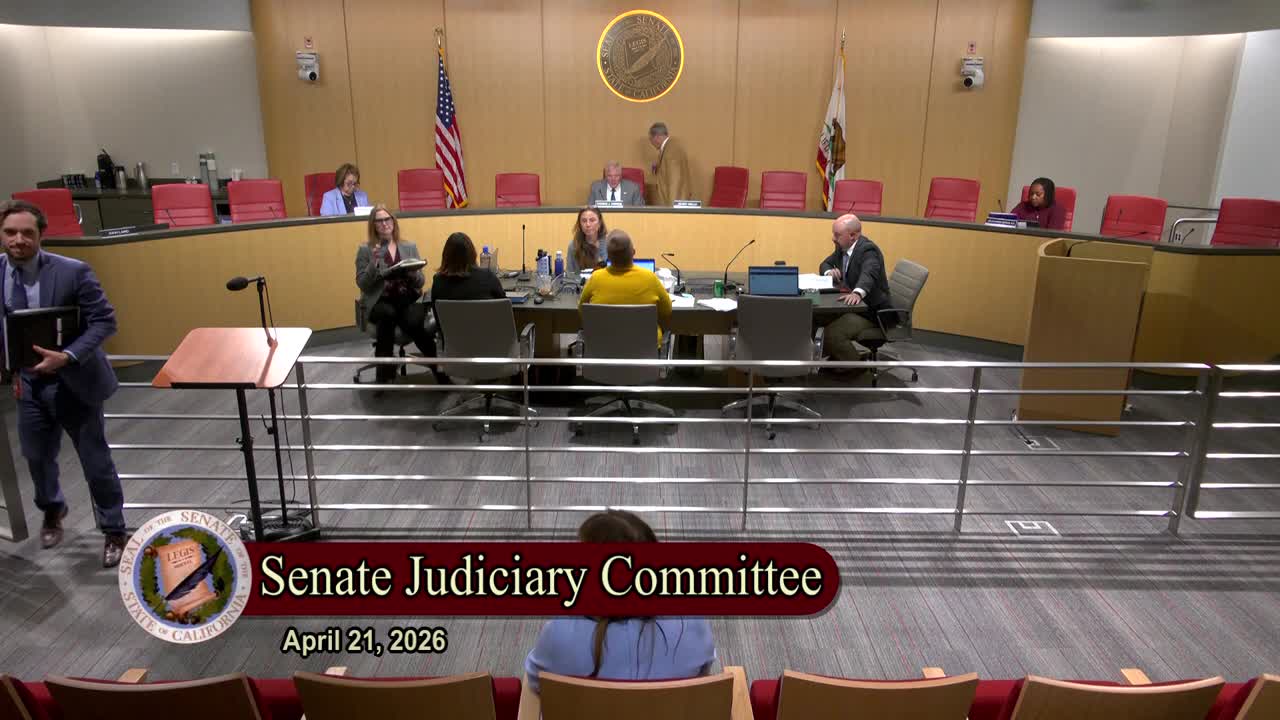 11MIN
Senate Standing Committee on Judiciary
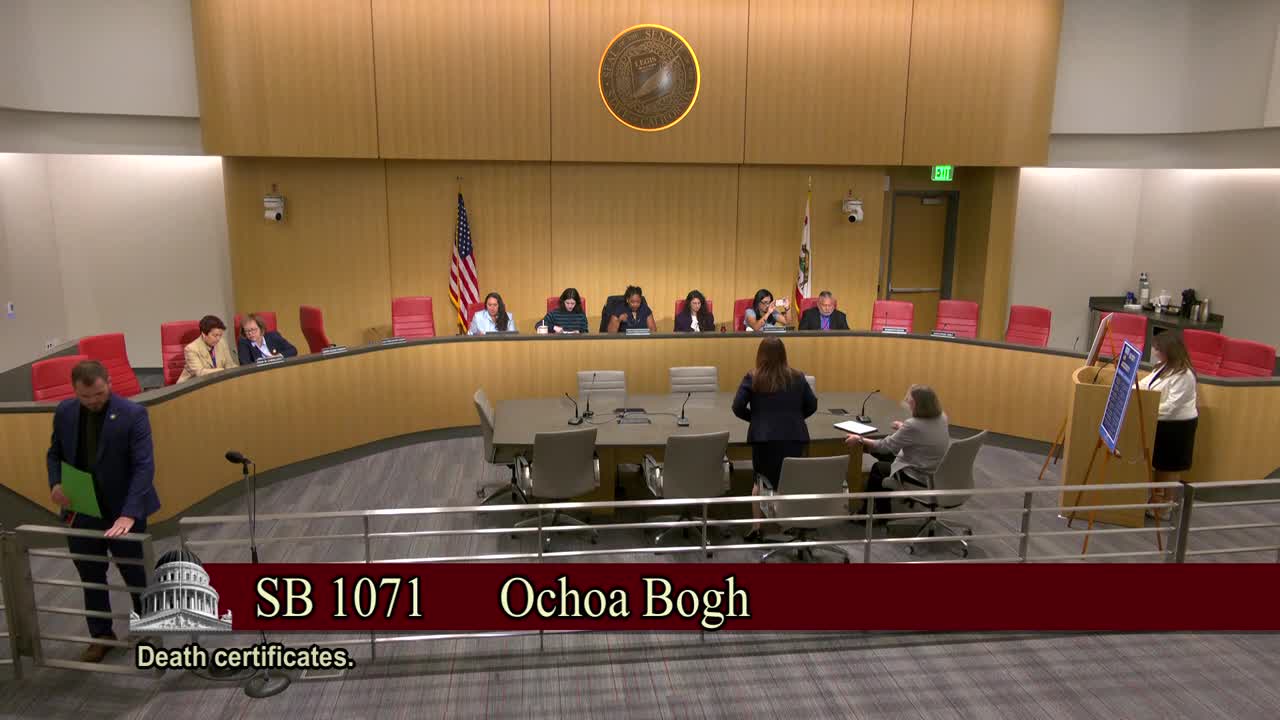 47MIN
Senate Standing Committee on Health

Bill Co-Author(s):