SB 1074: Covered provider: goods and services: self-preferencing conduct.
- Session Year: 2025-2026
- House: Senate
- Latest Version Date: 2026-04-06
Current Status:
In Progress
(2026-04-20: April 20 set for first hearing. Failed passage in committee. (Ayes 3. Noes 3. Page 3957.) Reconsideration granted.)
Introduced
In Committee
Awaiting First Chamber Vote
Passed First Chamber
In Committee
Awaiting Second Chamber Vote
Passed Second Chamber
Enacted
Existing law, known as the Cartwright Act, defines a trust as a combination of capital, skill, or acts by 2 or more persons for certain prohibited purposes, including, among others, creating or carrying out restrictions in trade or commerce, preventing competition in specified activities, including sale or purchase of merchandise or commodities, or entering into certain exclusive dealing agreements that substantially lessen competition or tend to create a monopoly. Existing law authorizes the Attorney General, a district attorney, a specified city attorney, or a person who is injured in their business or property to bring an action for civil or criminal penalties for a violation of those provisions.
This bill would prohibit a covered provider, as defined, from preferencing its own products, services, or lines of business over those of another business user, including manipulating the order of search results or rankings to favor the products or services of the covered provider. The bill would prohibit a covered provider from restricting interoperability or data portability, as specified, including restricting a business user or consumer from obtaining a copy of their data in a useful and portable format.
This bill would declare that its remedies and penalties are cumulative and enforceable in addition to other specified remedies, and would provide an affirmative defense for certain conduct. The bill would exempt from these provisions displays of objective content, including mathematical calculations and standard unit conversions, under certain conditions. The bill would specify that its provisions are enforceable by the same means, penalties, damages, and fees as under the Cartwright Act, thereby expanding the scope of existing crimes. The bill would declare its provisions severable.
The California Constitution requires the state to reimburse local agencies and school districts for certain costs mandated by the state. Statutory provisions establish procedures for making that reimbursement.
This bill would provide that no reimbursement is required by this act for a specified reason.
Existing law generally regulates telephonic sellers and requires a telephonic seller to register with the Department of Justice not less than 10 days before doing business in the state, as prescribed. Existing law defines telephonic seller for these purposes to mean a person who causes certain telephone solicitations or attempted telephone solicitations to occur, including a telephone solicitation or attempted telephone solicitation wherein the telephonic seller initiates contact with a prospective purchaser and represents or implies that the seller is a person other than the person they are.This bill would make a nonsubstantive change to that definition.Existing law generally regulates telephonic sellers and requires a telephonic seller to register with the Department of Justice not less than 10 days before doing business in the state, as prescribed. Existing law defines telephonic seller for these purposes to mean a person who causes certain telephone solicitations or attempted telephone solicitations to occur, including a telephone solicitation or attempted telephone solicitation wherein the telephonic seller initiates contact with a prospective purchaser and represents or implies that the seller is a person other than the person they are.
This bill would make a nonsubstantive change to that definition.
For purposes of this chapter, all of the following definitions apply:
(a)Artificial intelligence means an engineered or machine-based system that varies in its level of autonomy and that can, for explicit or implicit objectives, infer from the input it receives how to generate outputs that can influence physical or virtual environments.
(b)Business user means a person or entity that uses a covered platform for the purpose of connecting with consumers or other business users to provide products or services. services, including a person for whom a covered platform provides access to users or customers.
(c)Nonpublic business user data means data generated by the activities of a business user on a covered platform that is not made publicly available by the covered platform to all similarly situated business users on equivalent terms.
(d)Consumer means a natural person who uses a covered platform for purposes other than as a business user.
(e)Covered platform means a digital interface that allows business users or sellers to connect with consumers or other business users in the state and that meets both of the following:
(1)The platform, at any time in the last 24 months, had an average of 100,000,000 or more monthly active users in the United States.
(2)The platform meets either of the following:
(A)At any point prior to January 1, 2030, it is owned, controlled, or operated by an entity or person that in the last 24 months has had an average of one trillion dollars ($1,000,000,000,000) or greater in market capitalization.
(B)At any point on or after January 1, 2030, it is owned, controlled, or operated by an entity or person that in the last 24 months has had an average of one trillion dollars ($1,000,000,000,000) or greater in market capitalization or private valuation.
(f)Covered provider means a person or entity that owns, controls, or operates a covered platform.
(g)Most Favored Nation Clause means a clause in a contract that gives a party to the contract the legal right to terms and benefits under the contract that are as good as or more favorable than the terms and benefits received by anyone else who enters into a similar contract with the other party.
(h)Self-preferencing conduct means a practice by which a covered provider treats its own products, services, lines of business, or content more favorably than comparable products, services, or content of a business user, whether implemented through ranking, display, algorithmic recommendation, technical access conditions, integration depth, default status, or any other means of determining the relative visibility, accessibility, or prominence of products, services, or content on or through the covered platform.
16851.(a)A covered provider shall not preference its own products, services, or lines of business over those of another business user on the covered platform engage in self-preferencing conduct. Prohibited self-preferencing conduct under this subdivision includes, but is not limited to, all of the following:
(1)Manipulate Manipulating the order of search results or rankings to favor the products or services of the covered provider.
(2)Exploit Exploiting transaction data or nonpublic proprietary data collected from a third-party seller to market or develop the products of the covered provider.
(3)Employ Employing policies or practices that cause a business user to operate at an unreasonable cost disadvantage relative to the covered provider.
(4)Favor Favoring a company on the platform based on the profit margin returned to the covered provider.
(5)Condition Conditioning platform access or preferred status or placement on the covered platform on the purchase or use of other products or services offered by the covered provider, where a materially less restrictive means of achieving any legitimate integration objective is available.
(6)Require Requiring most favored nation clauses or margin guarantees that restrict the ability of a business user to set their own prices.
(7)Provide Providing an agent or third-party service financed in a manner that creates a conflict of interest between the user and the covered provider.
(b)A covered provider shall not restrict the independence or interoperability of business users and consumers on the platform. Prohibited conduct under this subdivision includes, but is not limited to, all of the following:
(1)Restrict, impede, or unreasonably delay a business user from interoperating with the same platform features, operating systems, or hardware available to the covered providers own lines of business.
(2)Restrict a business user or consumer from obtaining a copy of their data in a useful and portable format.
(3)Restrict a consumer from voluntarily providing data through a covered platform to a third party.
(4)(A)Design, deploy, or utilize artificial intelligence in a manner that systematically favors the products, services, content, or commercial partners of the covered platform over those of third parties.
(B)The use of artificial intelligence as described in subparagraph (A) includes a generative artificial intelligence summary, recommendation engine, conversational agent, or shopping assistant.
(C)Subparagraph (A) shall not apply if the covered platform demonstrates that it consistently applies a neutral methodology to both its own and third-party content and that any differential treatment results solely from that neutral methodology and not from the commercial interests of the covered platform.
16852.(a)In any action brought to enforce this chapter, it shall be an affirmative defense if the defendant establishes both of the following:
(1)The alleged conduct was narrowly tailored, nonpretextual, and reasonably necessary to achieve a procompetitive purpose.
(2)The procompetitive justifications and actual effects of the conduct clearly outweigh the competitive harms in the same market.
(b)This chapter shall not be construed to prohibit a covered platform from displaying objective information that is susceptible to a singular result, including mathematical calculations, the current time, standard unit conversions, and publicly available, contemporaneous data feeds that are displayed without the exercise of editorial judgment, if both of the following conditions are met:
(1)The display does not systematically displace a competitive market for the provision of that information.
(2)The covered platform does not apply differential treatment to comparable information provided by a third party.
16853.(a)An action to enforce this chapter may be brought by any person, entity, or public officer authorized to bring an action under the Cartwright Act (Chapter 2 (commencing with Section 16700)).
(b)A covered provider that violates this chapter shall be liable for the same penalties, damages, and fees as those provided in the Cartwright Act (Chapter 2 (commencing with Section 16700)).
16854.(a)The remedies and penalties provided by this chapter are cumulative to each other and to the remedies or penalties available under all other laws of this state, including, but not limited to, the Cartwright Act (Chapter 2 (commencing with Section 16700)), the Unfair Practices Act (Chapter 4 (commencing with Section 17000)), and the Unfair Competition Law (Chapter 5 (commencing with Section 17200)).
(b)The provisions of this chapter are severable. If any provision of this chapter or its application is held invalid, that invalidity shall not affect other provisions or applications that can be given effect without the invalid provision or application.
SEC. 2.No reimbursement is required by this act pursuant to Section 6 of Article XIIIB of the California Constitution because the only costs that may be incurred by a local agency or school district will be incurred because this act creates a new crime or infraction, eliminates a crime or infraction, or changes the penalty for a crime or infraction, within the meaning of Section 17556 of the Government Code, or changes the definition of a crime within the meaning of Section 6 of Article XIIIB of the California Constitution.
For purposes of this chapter, all of the following definitions apply:
(a)Artificial intelligence means an engineered or machine-based system that varies in its level of autonomy and that can, for explicit or implicit objectives, infer from the input it receives how to generate outputs that can influence physical or virtual environments.
(b)Business user means a person or entity that uses a covered platform for the purpose of connecting with consumers or other business users to provide products or services.
(c)Nonpublic business user data means data generated by the activities of a business user on a covered platform that is not made publicly available by the covered platform to all similarly situated business users on equivalent terms.
(d)Consumer means a natural person who uses a covered platform for purposes other than as a business user.
(e)Covered platform means a digital interface that allows business users or sellers to connect with consumers or other business users and that meets both of the following:
(1)The platform, at any time in the last 24 months, had an average of 100,000,000 or more monthly active users in the United States.
(2)The platform meets either of the following:
(A)At any point prior to January 1, 2030, it is owned, controlled, or operated by an entity or person that in the last 24 months has had an average of one trillion dollars ($1,000,000,000,000) or greater in market capitalization.
(B)At any point on or after January 1, 2030, it is owned, controlled, or operated by an entity or person that in the last 24 months has had an average of one trillion dollars ($1,000,000,000,000) or greater in market capitalization or private valuation.
(f)Covered provider means a person or entity that owns, controls, or operates a covered platform.
16851.(a)A covered provider shall not preference its own products, services, or lines of business over those of another business user on the covered platform. Prohibited conduct under this subdivision includes, but is not limited to, all of the following:
(1)Manipulate the order of search results or rankings to favor the products or services of the covered provider.
(2)Exploit transaction data or nonpublic proprietary data collected from a third-party seller to market or develop the products of the covered provider.
(3)Employ policies or practices that cause a business user to operate at an unreasonable cost disadvantage relative to the covered provider.
(4)Favor a company on the platform based on the profit margin returned to the covered provider.
(5)Condition platform access or preferred status or placement on the covered platform on the purchase or use of other products or services offered by the covered provider, where a materially less restrictive means of achieving any legitimate integration objective is available.
(6)Require most favored nation clauses or margin guarantees that restrict the ability of a business user to set their own prices.
(7)Provide an agent or third-party service financed in a manner that creates a conflict of interest between the user and the covered provider.
(b)A covered provider shall not restrict the independence or interoperability of business users and consumers on the platform. Prohibited conduct under this subdivision includes, but is not limited to, all of the following:
(1)Restrict, impede, or unreasonably delay a business user from interoperating with the same platform features, operating systems, or hardware available to the covered providers own lines of business.
(2)Restrict a business user or consumer from obtaining a copy of their data in a useful and portable format.
(3)Restrict a consumer from voluntarily providing data through a covered platform to a third party.
(4)(A)Design, deploy, or utilize artificial intelligence in a manner that systematically favors the products, services, content, or commercial partners of the covered platform over those of third parties.
(B)The use of artificial intelligence as described in subparagraph (A) includes a generative artificial intelligence summary, recommendation engine, conversational agent, or shopping assistant.
(C)Subparagraph (A) shall not apply if the covered platform demonstrates that it consistently applies a neutral methodology to both its own and third-party content and that any differential treatment results solely from that neutral methodology and not from the commercial interests of the covered platform.
16852.(a)In any action brought to enforce this chapter, it shall be an affirmative defense if the defendant establishes both of the following:
(1)The alleged conduct was narrowly tailored, nonpretextual, and reasonably necessary to achieve a procompetitive purpose.
(2)The procompetitive justifications and actual effects of the conduct clearly outweigh the competitive harms in the same market.
(b)This chapter shall not be construed to prohibit a covered platform from displaying objective information that is susceptible to a singular result, including mathematical calculations, the current time, standard unit conversions, and publicly available, contemporaneous data feeds that are displayed without the exercise of editorial judgment, if both of the following conditions are met:
(1)The display does not systematically displace a competitive market for the provision of that information.
(2)The covered platform does not apply differential treatment to comparable information provided by a third party.
16853.(a)An action to enforce this chapter may be brought by any person, entity, or public officer authorized to bring an action under the Cartwright Act (Chapter 2 (commencing with Section 16700)).
(b)A covered provider that violates this chapter shall be liable for the same penalties, damages, and fees as those provided in the Cartwright Act (Chapter 2 (commencing with Section 16700)).
16854.(a)The remedies and penalties provided by this chapter are cumulative to each other and to the remedies or penalties available under all other laws of this state, including, but not limited to, the Cartwright Act (Chapter 2 (commencing with Section 16700)), the Unfair Practices Act (Chapter 4 (commencing with Section 17000)), and the Unfair Competition Law (Chapter 5 (commencing with Section 17200)).
(b)The provisions of this chapter are severable. If any provision of this chapter or its application is held invalid, that invalidity shall not affect other provisions or applications that can be given effect without the invalid provision or application.
SEC. 2.No reimbursement is required by this act pursuant to Section 6 of Article XIIIB of the California Constitution because the only costs that may be incurred by a local agency or school district will be incurred because this act creates a new crime or infraction, eliminates a crime or infraction, or changes the penalty for a crime or infraction, within the meaning of Section 17556 of the Government Code, or changes the definition of a crime within the meaning of Section 6 of Article XIIIB of the California Constitution.
All matter omitted in this version of the bill appears in the bill as introduced in the Senate, February 13, 2026. (JR11)As used in this article, telephonic seller or seller means a person who, on their own behalf or through salespersons or through the use of an automatic dialing-announcing device, as defined in Section 2871 of the Public Utilities Code, causes a telephone solicitation or attempted telephone solicitation to occur which meets the criteria specified in subdivision (a), (b), (c), or (d) and who is not exempted by subdivision (e), as follows:
(a)A telephone solicitation or attempted telephone solicitation wherein where the telephonic seller initiates telephonic contact with a prospective purchaser and represents or implies one or more of the following:
(1)That a prospective purchaser who buys one or more items will also receive additional or other items, whether or not of the same type as purchased, without further cost. For purposes of this subdivision, further cost does not include actual postage or common carrier delivery charges, if any.
(2)That a prospective purchaser will receive a prize or gift, if the person also encourages the prospective purchaser to do either of the following:
(A)Purchase or rent any goods or services.
(B)Pay any money, including, but not limited to, a delivery or handling charge.
(3)That a prospective purchaser is able to obtain any item or service at a price which the seller states or implies is below the regular price of the item or service offered. This paragraph shall not apply to retailers who, within the previous 12 months, have sold a majority of their goods or services through in-person sales at retail stores.
(4)That a prospective purchaser who buys office equipment or supplies will, because of some unusual event or imminent price increase, be able to buy these items at prices which are below those that are usually charged or will be charged for the items.
(5)That the seller is a person other than the person they are.
(6)That the items for sale are manufactured or supplied by a person other than the actual manufacturer or supplier.
(7)That the seller is offering to sell the prospective purchaser any gold, silver, or other metals, including coins, diamonds, rubies, sapphires, or other stones, coal or other minerals, or any interest in oil, gas, or mineral fields, wells, or exploration sites, or any other investment opportunity of any type whatsoever.
(8)That the seller is offering to make a loan, or to arrange or assist in arranging a loan or to assist in providing information which may lead to the obtaining of a loan, unless no payment of any kind is made until the loan proceeds are disbursed to the borrower.
(9)That a prospective purchaser will receive a credit card, as defined in subdivision (a) of Section 1747.02 of the Civil Code, if the purchaser pays an upfront or preapplication fee for the credit card to the telephonic seller.
(b)A solicitation or attempted solicitation which is made by telephone in response to inquiries generated by unrequested notifications sent by the seller to persons who have not previously purchased goods or services from the seller or who have not previously requested credit from the seller, to a prospective purchaser wherein the seller represents or implies to the recipient of the notification that any of the following applies to the recipient:
(1)That the recipient has in any manner been specially selected to receive the notification or the offer contained in the notification.
(2)That the recipient will receive a prize or gift if the recipient calls the seller.
(3)That if the recipient buys one or more items from the seller, the recipient will also receive additional or other items, whether or not of the same type as purchased, without further cost or at a cost which the seller states or implies is less than the regular price of such items.
However, this subdivision does not apply to the solicitation of sales by a catalog seller who periodically issues and delivers catalogs to potential purchasers by mail or by other means. This exception only applies if the catalog includes a written description or illustration and the sales price of each item of merchandise offered for sale, includes at least 24 full pages of written material or illustrations, is distributed in more than one state, and has an annual circulation of not less than 250,000 customers.
(c)A solicitation or attempted solicitation which is made by telephone in response to inquiries generated by advertisements on behalf of the telephonic seller wherein it is represented or implied that the seller is offering to sell to the prospective purchaser any gold, silver, or other metals, including coins, diamonds, rubies, sapphires, or other stones, coal or other minerals, or any interest in oil, gas, or mineral fields, wells, or exploration sites, or any other investment opportunity of any type whatsoever.
(d)A solicitation or attempted solicitation which is made by telephone in response to inquiries generated by advertisements on behalf of the telephonic seller wherein it is represented or implied that the seller is offering to make a loan or to arrange or assist in arranging a loan or to assist in providing information which may lead to the obtaining of a loan, unless no payment of any kind is made until the loan proceeds are disbursed to the borrower.
(e)For purposes of this article, telephonic seller or seller does not include any of the following:
(1)A person offering or selling a security qualified under Section 25110, 25120, or 25130 of the Corporations Code or exempt from qualification under Chapter 1 (commencing with Section 25100) of Part 2 of Division 1 of Title 4 of the Corporations Code. The fact that a notice claiming an exemption under the Corporate Securities Law of 1968 is filed with the Department of Financial Protection and Innovation does not create an exemption under this paragraph.
(2)A person licensed pursuant to Part 1 (commencing with Section 10000) of Division 4, when the solicited transaction is governed by that law.
(3)A person licensed pursuant to Chapter 9 (commencing with Section 7000) of Division 3, when the solicited transaction is governed by that law.
(4)A person licensed or certificated pursuant to Part 2 (commencing with Section 680) of Division 1 of the Insurance Code, including a person licensed pursuant to Chapter 5 (commencing with Section 1621) thereof, when the solicited transaction is governed by that law.
(5)A person offering or selling a franchise registered pursuant to Section 31110 of the Corporations Code or exempt from registration under Chapter 1 (commencing with Section 31100) of Part 2 of Division 5 of Title 4 of the Corporations Code. The fact that a notice claiming an exemption under the Franchise Investment Law is filed with the Department of Financial Protection and Innovation does not create an exemption under this paragraph.
(6)A person soliciting the sale of a seller assisted marketing plan, as defined in Title 2.7 (commencing with Section 1812.200) of Part 4 of Division 3 of the Civil Code, who has filed with the Attorney General the documents required by Section 1812.203 of the Civil Code.
(7)A person primarily soliciting the sale of a newspaper of general circulation, as defined in Article 1 (commencing with Section 6000) of Chapter 1 of Division 7 of Title 1 of the Government Code, a magazine, or membership in a book or record club whose program operates in conformity with the requirements of Section 1584.5 of the Civil Code.
(8)A person soliciting business from prospective purchasers who have previously purchased from the business enterprise for which the person is calling.
(9)A person soliciting without the intent to complete and who does not complete the sales presentation during the telephone solicitation but completes the sales presentation at a later face-to-face meeting between the solicitor and the prospective purchaser. However, if a seller, directly following a telephone solicitation, causes an individual whose primary purpose it is to go to the prospective purchaser to collect the payment or deliver any item purchased, this exemption does not apply.
(10)Any supervised financial institution or parent, subsidiary, or subsidiary of parent thereof. As used in this paragraph, supervised financial institution means any commercial bank, trust company, savings and loan association, credit union, industrial loan company, finance lender or broker, or insurer, provided that the institution is subject to supervision by an official or agency of this state or of the United States.
(11)A person soliciting the sale of a preneed funeral arrangement regulated by Article 9 (commencing with Section 7735) of Chapter 12 of Division 3.
(12)A person licensed pursuant to Chapter 19 (commencing with Section 9600) of Division 3 when acting pursuant to that licensure.
(13)A person soliciting the sale of services provided by a cable television system licensed or franchised pursuant to Section 53066 of the Government Code or any other authority.
(14)A person or an affiliate of a person whose business is regulated by the Public Utilities Commission.
(15)A person soliciting the sale of a commodity pursuant to Part 2 (commencing with Section 58601) of Division 21 of the Food and Agricultural Code, if the solicitation neither intends to, nor actually results in, a sale which costs the purchaser in excess of one hundred dollars ($100).
(16)An issuer or subsidiary of an issuer that has a security listed on a national securities exchange if the exchange has been certified by rule or order of the Commissioner of Financial Protection and Innovation under subdivision (o) of Section 25100 of the Corporations Code. A subsidiary of an issuer that qualifies for exemption under this paragraph is not itself exempt unless not less than 60 percent of the voting power of its shares is owned by the qualifying issuer or issuers.
(17)A person soliciting exclusively the sale of telephone answering services to be provided by that person or that persons employer.
(18)A person soliciting a transaction regulated by the Commodity Futures Trading Commission if the person is registered or temporarily licensed for this activity with the Commodity Futures Trading Commission under the Commodity Exchange Act (7 U.S.C. Sec. 1 et seq.), and the registration or license has not expired or been suspended or revoked.
(19)A person who sells coins or bullion at a price which is not more than 25 percent more than the price at which the seller is concurrently buying the same coins or bullion, if: (A) the seller has had a retail location in California from which they have been selling coins or bullion to the public in person for at least three years; (B) the telephonic solicitations are not the persons primary business and sales made telephonically make up less than 20 percent of the persons total retail sales; and (C) the person claiming an exemption pursuant to this subdivision complies with Section 17511.3, as applicable, and subdivision (p) of Section 17511.4.
(20)A person licensed pursuant to Division 1.2 (commencing with Section 2000) of the Financial Code to engage in the business of money transmission if the license has not expired or been suspended or revoked.
(21)A person licensed as a residential mortgage lender or servicer pursuant to Division 20 (commencing with Section 50000) of the Financial Code, when acting under the authority of that license.
(22)A corporation that meets all of the following conditions:
(A)It has been exempt from taxation under Section 23701e of the Revenue and Taxation Code for a minimum of 10 years.
(B)It has maintained its principal purpose for a minimum of 10 years.
(C)It has been incorporated in the state for a minimum of 25 years.
(f)In any civil proceeding alleging a violation of this article, the burden of proving an exemption or an exception from a definition is upon the person claiming it, and in any criminal proceeding alleging a violation of this article, the burden of producing evidence to support a defense based upon an exemption or an exception from a definition is upon the person claiming it.
(g)Compliance with this article does not satisfy nor substitute for any requirements for license, registration, or regulation mandated by other laws.
|
Date
|
Status
|
|---|---|
| Apr 20, 2026 | April 20 set for first hearing. Failed passage in committee. (Ayes 3. Noes 3. Page 3957.) Reconsideration granted. |
| Apr 20, 2026 | April 20 set for first hearing. Failed passage in committee. (Ayes 3. Noes 3.) Reconsideration granted. |
| Apr 15, 2026 | From committee: Do pass and re-refer to Com. on P., D.T., & C.P. (Ayes 8. Noes 1. Page 3868.) (April 14). Re-referred to Com. on P., D.T., & C.P. |
| Apr 15, 2026 | From committee: Do pass and re-refer to Com. on P., D.T., & C.P. (Ayes 8. Noes 1.) (April 14). Re-referred to Com. on P., D.T., & C.P. |
| Apr 10, 2026 | Set for hearing April 20 in P., D.T., & C.P. pending receipt. |
| Apr 6, 2026 | From committee with author's amendments. Read second time and amended. Re-referred to Com. on JUD. |
| Apr 2, 2026 | Set for hearing April 14. |
| Mar 25, 2026 | Re-referred to Coms. on JUD. and P., D.T., & C.P. |
| Mar 18, 2026 | From committee with author's amendments. Read second time and amended. Re-referred to Com. on RLS. |
| Feb 26, 2026 | Referred to Com. on RLS. |
| Feb 17, 2026 | From printer. May be acted upon on or after March 16. |
| Feb 13, 2026 | Introduced. Read first time. To Com. on RLS. for assignment. To print. |
|
Date
|
Description
|
Location
|
Votes
|
|
|---|---|---|---|---|
| Apr 20, 2026 | [First] hearing set for [04-21-2026]: Failed passage in Committee. Reconsideration granted | Senate Standing Committee on Privacy, Digital Technologies, and Consumer Protection |
Passed |
|
| Apr 20, 2026 | Do pass, but first be re-referred to the Committee on [Appropriations] | Senate Standing Committee on Privacy, Digital Technologies, and Consumer Protection |
Failed |
|
| Apr 14, 2026 | Do pass, but first be re-referred to the Committee on [Privacy, Digital Technologies, and Consumer Protection] | Senate Standing Committee on Judiciary |
Passed |
This list shows positions taken on this bill by organizations on the date displayed, which is linked to the original source.
Positions by individuals are not included.
|
Organization
|
Position
|
Date
|
|---|---|---|
| 0pass INC. | ** Support | |
| 4see, INC. | ** Support | |
| 851 INC. (EMOJIS.COM) | ** Support | |
| A1base INC | ** Support | |
| Abundance Network | ** Support | |
| Access Fund | ** Support | |
| Accessgrid | ** Support | |
| Acclamation Insurance Management Services | ** Against | |
| Agentcard | ** Support | |
| Agentweb | ** Support | |
| Aidy | ** Support | |
| Ai Recruitment Technologies INC. | ** Support | |
| Airgoods | ** Support | |
| Alchemy Ai Scientific, INC. | ** Support | |
| Alixia | ** Support | |
| Alliance | ** Support | |
| Allied Managed Care | ** Against | |
| Altrina | ** Support | |
| Altstore | ** Support | |
| American Economic Liberties Project | ** Support | |
| American Federation of Musicians, Local 7 | ** Support | |
| Andi | ** Support | |
| Arcimus | ** Support | |
| Argonaut Hq, INC | ** Support | |
| Articulate | ** Support | |
| Ashby | ** Support | |
| Assembly, INC. | ** Support | |
| Aster Ai Labs, INC. | ** Support | |
| Atlia, INC. | ** Support | |
| Avelis, INC. | ** Support | |
| Aviary Ai | ** Support | |
| Axle Health | ** Support | |
| Ayc Fund | ** Support | |
| B12, Co. | ** Support | |
| Batch Ventures | ** Support | |
| Bay Area Council | ** Against | |
| Beeper | ** Support | |
| Begin Learning | ** Support | |
| Better Tomorrow Ventures | ** Support | |
| Bild Ai | ** Support | |
| Bitboard | ** Support | |
| Bizfed LA | ** Against | |
| Blaxel | ** Support | |
| Blue | ** Support | |
| Blueshift Labs, INC. | ** Support | |
| Browse.dev | ** Support | |
| Burst Capital | ** Support | |
| Cactus Compute, INC. | ** Support | |
| California Apartment Association | ** Against | |
| California Asian Chamber of Commerce | ** Against | |
| California Automotive Business Coalition | ** Against | |
| California Broadcasters Association | ** Against | |
| California Business Properties Association | ** Against | |
| California Chamber Of Commerce | ** Against | |
| California Federation of Labor Unions | ** Support | |
| California Grocers Association | ** Against | |
| California Hispanic Chambers Of Commerce | ** Against | |
| California Labor Federation | ** Support | |
| California Low-Income Consumer Coalition | ** Support | |
| California Retailers Association | ** Against | |
| California Safety and Legislative Board, Smart – Transportation Division | ** Support | |
| California Safety and Legislative Board, Smart – Transportation Division (SMART – TD) | ** Support | |
| California Teamsters | ** Support | |
| CALinnovates | ** Against | |
| Cambly | ** Support | |
| Camelai | ** Support | |
| Candor Security | ** Support | |
| Captain | ** Support | |
| Caretta | ** Support | |
| Cekura, INC. | ** Support | |
| Centralcoms | ** Support | |
| Chamber Of Progress | ** Against | |
| Chamber San Mateo County | ** Against | |
| Chronicle Labs | ** Support | |
| Cinapse | ** Support | |
| Ciro | ** Support | |
| Civil Justice Association of California (CJAC) | ** Against | |
| Clerky | ** Support | |
| Coalition for App Fairness | ** Support | |
| CODE FOUR | ** Support | |
| Cointracker | ** Support | |
| Commonweal Ventures | ** Support | |
| Computer & Communications Industry Association | ** Against | |
| Confluence Labs | ** Support | |
| Constructable (patera Inc.) | ** Support | |
| Consumer Federation Of California | ** Support | |
| Consumer Watchdog | ** Support | |
| Convictional, INC. | ** Support | |
| Copycat Technologies | ** Support | |
| Corvera | ** Support | |
| Courage California | ** Support | |
| Cradle | ** Support | |
| Creativemode | ** Support | |
| Credal Ai | ** Support | |
| Crow | ** Support | |
| Dart | ** Support | |
| Datafruit | ** Support | |
| Datost | ** Support | |
| Deed | ** Support | |
| Deep Agents | ** Support | |
| Devyce INC. | ** Support | |
| Digipals | ** Support | |
| Disconnect | ** Support | |
| Duckduckgo | ** Support | |
| Durate | ** Support | |
| EcomBack | ** Against | |
| Economic Security Project Action | ** Support | |
| Elevation Partners | ** Support | |
| Ello | ** Support | |
| Endorsed | ** Support | |
| End Poverty in California (EPIC) | ** Support | |
| Euclid | ** Support | |
| Everest | ** Support | |
| Expo | ** Support | |
| Ezdubs | ** Support | |
| Failpunk LLC | ** Support | |
| Family Business Association of California | ** Against | |
| Fed10 | ** Support | |
| Figuro | ** Support | |
| Fire Kicks | ** Support | |
| Flasher Barricade Association | ** Against | |
| Fond | ** Support | |
| Fondo | ** Support | |
| Forerunner Ai | ** Support | |
| Forum Markets Group INC. | ** Support | |
| Friskai | ** Support | |
| Fume Technologies, INC. | ** Support | |
| Fundaimental, INC. | ** Support | |
| Gale | ** Support | |
| Gcast | ** Support | |
| Gemini Therapeutics | ** Support | |
| Geo Advisor | ** Support | |
| Giga | ** Support | |
| Gogograndparent | ** Support | |
| ** Against | ||
| Goriff | ** Support | |
| Governgpt | ** Support | |
| Greptile | ** Support | |
| GrowthSync | ** Support | |
| Haladir | ** Support | |
| Harbor | ** Support | |
| Hazard, INC | ** Support | |
| Hazel | ** Support | |
| Hedgy Labs | ** Support | |
| HIVE | ** Support | |
| Humwork | ** Support | |
| Hyper | ** Support | |
| Incandor | ** Support | |
| Incidentfox | ** Support | |
| Infisical | ** Support | |
| Inkhunter | ** Support | |
| Instinct Space | ** Support | |
| Institute for Local Self-Reliance | ** Support | |
| Interaction Co. | ** Support | |
| Inventoryquant | ** Support | |
| InventoryQuantr | ** Support | |
| Inversion Semiconductor INC. | ** Support | |
| Ishiki Labs | ** Support | |
| Iwp Health INC. | ** Support | |
| Joxy.ai | ** Support | |
| Julep Ai INC. | ** Support | |
| Junction Bioscience | ** Support | |
| Kapor Center Advocacy | ** Support | |
| Keylika | ** Support | |
| Keywords Ai INC. | ** Support | |
| KINDRED | ** Support | |
| Kinect | ** Support | |
| Ledgerup | ** Support | |
| Lemonslice | ** Support | |
| Lexius | ** Support | |
| Like.fm, INC. | ** Support | |
| Lilac Research INC. | ** Support | |
| Limrun, INC. | ** Support | |
| Lingo.dev | ** Support | |
| Linzumi | ** Support | |
| Lodg | ** Support | |
| Loombotic | ** Support | |
| Los Angeles County Business Federation | ** Against | |
| Lucidic Ai, INC. | ** Support | |
| Luthor.ai | ** Support | |
| Magentiq | ** Support | |
| Make Sunsets | ** Support | |
| Malloc INC | ** Support | |
| Marr Labs Technologies, INC | ** Support | |
| Matforge.ai | ** Support | |
| Meadow | ** Support | |
| Mentra | ** Support | |
| Meter Feeder | ** Support | |
| Mica Ai | ** Support | |
| Mindbase | ** Support | |
| Miyagi Labs | ** Support | |
| Mount | ** Support | |
| Movedot Ai | ** Support | |
| Mozilla | ** Support | |
| Multifactor | ** Support | |
| Mux | ** Support | |
| Narrative | ** Support | |
| National Association of Mutual Insurance Companies | ** Against | |
| NetChoice | ** Against | |
| Novoflow | ** Support | |
| Nprompt INC. | ** Support | |
| Numeral | ** Support | |
| o11 | ** Support | |
| Oakland Privacy | ** Support | |
| Octapulse | ** Support | |
| Odo | ** Support | |
| Offbeast | ** Support | |
| Ollie | ** Support | |
| One Lab | ** Support | |
| Ontra Mobility | ** Support | |
| Opalite Health INC. | ** Support | |
| Orange Collective | ** Support | |
| Orange County Business Council | ** Against | |
| Overdrive Health | ** Support | |
| Paces | ** Support | |
| Padmapper | ** Support | |
| Page Turner Labs INC. | ** Support | |
| Pair Team, Pbc | ** Support | |
| Pally Technologies, INC. | ** Support | |
| Palus Finance | ** Support | |
| Panora | ** Support | |
| Paradedb | ** Support | |
| Parsagon | ** Support | |
| Pasadena Chamber of Commerce and Civic Association | ** Against | |
| Patika Technology, INC | ** Support | |
| Pax | ** Support | |
| Peas in a Pod LLC | ** Support | |
| Pebble (core Devices Llc) | ** Support | |
| Personal Insurance Federation Of California | ** Against | |
| Pine Park Health | ** Support | |
| ** Support | ||
| Pocket Worlds | ** Support | |
| Pollinate | ** Support | |
| Potarix | ** Support | |
| Primero Ai | ** Support | |
| Prism Technologies INC. | ** Support | |
| Promoted.ai | ** Support | |
| Proton | ** Support | |
| Puzzle Financial | ** Support | |
| Pylon | ** Support | |
| Qvin (qurasense Inc.) | ** Support | |
| Raysurfer | ** Support | |
| Recheck | ** Support | |
| Recon Dynamics | ** Support | |
| Redemption Games | ** Support | |
| Reflex | ** Support | |
| Regbase | ** Support | |
| Rejuvenation Technologies INC | ** Support | |
| Respell | ** Support | |
| Responsible Online Commerce Coalition (ROCC) | ** Support | |
| Ride Home Ai Fund | ** Support | |
| Rimba, INC. | ** Support | |
| Risely Ai | ** Support | |
| Rocketeer | ** Support | |
| Roundabout Technologies | ** Support | |
| Rthm | ** Support | |
| Saffron | ** Support | |
| Saldor, INC. | ** Support | |
| San Francisco Chamber of Commerce | ** Against | |
| San Mateo County Economic Development Association | ** Against | |
| Seeing Systems INC | ** Support | |
| Sellraze | ** Support | |
| Semiotic | ** Support | |
| Sennu AI | ** Support | |
| Shofo | ** Support | |
| Shor | ** Support | |
| Shorebird | ** Support | |
| Signalfire Vc | ** Support | |
| Sillicon Valley Leadership Group | ** Against | |
| Simple AI | ** Support | |
| Slidely AI | ** Support | |
| Small Business Majority | ** Support | |
| SMART - Transportation Division | ** Support | |
| Software And Information Industry Association | ** Against | |
| Sourcebot | ** Support | |
| Sparkles | ** Support | |
| Spokn | ** Support | |
| Springtail, INC. | ** Support | |
| Stagewise INC. | ** Support | |
| Stardrift | ** Support | |
| Sterling Road | ** Support | |
| Strand Ai | ** Support | |
| Sunset | ** Support | |
| Suprunit | ** Support | |
| Synapse | ** Support | |
| Taiki, INC. | ** Support | |
| Talc Ai INC. | ** Support | |
| Teamsters California | ** Support | |
| Techequity Action | ** Support | |
| Technet | ** Against | |
| Tech Oversight California | ** Support | |
| Tensorpool | ** Support | |
| Tenyks INC. | ** Support | |
| Terminal Use | ** Support | |
| The Prompting Company | ** Support | |
| Tig Technologies | ** Support | |
| Tinfoil | ** Support | |
| Toothy Ai | ** Support | |
| Tpaga LLC | ** Support | |
| Traceroot.ai, INC. | ** Support | |
| Trainy | ** Support | |
| Twolabs INC. | ** Support | |
| Ubicloud | ** Support | |
| UDW/AFSCME Local 3930 | ** Support | |
| Upcodes | ** Support | |
| Vaya | ** Support | |
| Vector Systems Pbc | ** Support | |
| Velvet | ** Support | |
| Veryfi | ** Support | |
| Videogen, INC. | ** Support | |
| Voquill | ** Support | |
| Vortexifyai | ** Support | |
| Warmly | ** Support | |
| Warpfi | ** Support | |
| Wasmer | ** Support | |
| Wasp | ** Support | |
| Wideframe | ** Support | |
| With Riviera, INC. | ** Support | |
| Wonder Monday | ** Support | |
| Wordware | ** Support | |
| Xreal Estate INC. (LANDEED) | ** Support | |
| Y Combinator | ** Support | |
| Yelp | ** Support | |
| Yuba-Sutter Chamber of Commerce | ** Against | |
| Yutori | ** Support | |
| Zentail | ** Support | |
| Zephyr Fusion | ** Support | |
| Zinc.com | ** Support | |
| Zoko | ** Support |
SENATE PRIVACY, DIGITAL TECHNOLOGIES, AND CONSUMER PROTECTION COMMITTEE
Senator Christopher Cabaldon, Chair
2025-2026 Regular Session
Bill No: SB 1074 (Author:Wiener)
Version: April 6, 2026
Hearing Date: April 20, 2026
Fiscal: Yes
Urgency: No
Consultant: CK
SUBJECT
Covered provider: goods and services: self-preferencing conduct
DIGEST
This bill prohibits “covered providers” from engaging in “self-preferencing conduct” and restricting the independence or interoperability of business users and consumers on the providers’ platforms.
EXECUTIVE SUMMARY
The Cartwright Act is California’s principal antitrust statute. It prohibits price fixing, bid rigging, output restrictions, and other anticompetitive conduct, and authorizes both public and private enforcement. Unlike the federal Sherman Antitrust Act, the Cartwright Act does not prohibit conduct by a single company in restraint of trade, which generally occurs when one corporation has monopolistic market power and can impose anticompetitive measures on the market and on consumers.
Concerns have been raised that existing law does not adequately address unilateral self-preferencing conduct by the largest of platforms. Proponents of this bill argue that the largest tech companies have built models that suppress competition through this conduct by, among other things, prioritizing their own products and services, limiting interoperability, and utilizing information gained from businesses operating on their platform to leverage against them. This bill defines and prohibits “self-preferencing” conduct and prohibits restrictions on the independence or interoperability of businesses and users on their platforms. This applies to platforms with a market capitalization or private valuation of $1 trillion or more and at least 100 million monthly active users.
The bill is sponsored by Economic Security Action California and Y Combinator. It is supported by numerous labor, consumer, and advocacy groups, as well as many private companies. The bill is opposed by Google and various industry associations. The bill passed out of the Senate Judiciary Committee on an 8 to 1 vote.
PROPOSED CHANGES TO THE LAW
Existing federal law:
- Establishes the Sherman Antitrust Act of 1890 (Sherman Act). (15 U.S.C. §§ 1-7.)
- Prohibits, under the Sherman Act:
- Every contract, combination in the form of trust or otherwise, or conspiracy in restraint of trade or commerce among the states or with foreign nations. (15 U.S.C. § 1.)
- The monopolization, or attempt to monopolize, or combination or conspiracy with any other persons to monopolize, any part of the trade or commerce among the states, or with foreign nations. (15 U.S.C. § 2.)
- Authorizes a state attorney general to bring a civil action in the name of the state in any district court of the United States having jurisdiction over the defendant to secure monetary relief, as provided, for violations of the Sherman Act or the Clayton Act. (15 U.S.C. § 15c.)
Existing state law:
- Establishes the Cartwright Act. (Bus. & Prof. Code §§ 16700 et seq.)
- Defines “person” within the Cartwright Act to include corporations, firms, partnerships, and associations. (Bus. & Prof. Code § 16702.)
- Defines a “trust” under the Cartwright Act as a combination of capital, skill, or acts by two or more persons for any of the following purposes:
- To create or carry out restrictions in trade or commerce.
- To limit or reduce the production, or increase the price, of merchandise or of any commodity.
- To prevent competition in manufacturing, making, transportation, sale, or purchase of merchandise, produce, or any commodity.
- To fix at any standard or figure, whereby its price to the public or consumer shall be in any manner controlled or established, any article or commodity of merchandise, produce, or commerce intended for sale, barter, use, or consumption in the state.
- To make or enter into, or execute or carry out, any contracts, obligations, or agreements of any kind or description, by which they do all or any combination of the following:
- Bind themselves not to sell, dispose of, or transport any article or any commodity or any article of trade, use, merchandise, commerce, or consumption below a common standard figure, or fixed value.
- Agree in any manner to keep the price of such article, commodity, or transportation at a fixed or graduated figure.
- Establish or settle the price of any article, commodity, or transportation between them or themselves and others, so as directly or indirectly to preclude a free and unrestricted competition among themselves, or any purchasers or consumers in the sale or transportation of any such article or commodity.
- Agree to pool, combine, or directly or indirectly unite any interests that they may have connected with the sale or transportation of any such article or commodity, that its price in any manner might be affected. (Bus. & Prof. Code § 16720.)
- Makes every trust unlawful, against public policy, and void, except as exempted under the Cartwright Act. (Bus. & Prof. Code § 16726.)
- Provides that any contract or agreement in violation of the Cartwright Act is absolutely void and not enforceable. (Bus & Prof. Code § 16722.)
- Authorizes the Attorney General, or the district attorney of any county, subject to specified notice requirements, to initiate a civil action or criminal proceeding for a violation of the Cartwright Act. (Bus. & Prof. Code § 16754.)
- Authorizes any person who is injured in their business or property by reason of anything forbidden under the Cartwright Act, regardless of whether the injured person dealt directly or indirectly with the defendant, to file a civil action to recover treble damages, interest, and injunctive relief.
- The state and its political subdivisions and public agencies are “persons” for the purpose of 7).
- The Attorney General or a district attorney may file a suit for damages on behalf of a state or county political subdivision, respectively. (Bus. & Prof. Code § 16750.)
- Authorizes the Attorney General to file a civil action in the name of the people of the State of California, as parens patriae on behalf of natural persons residing in the state, for a violation of the Cartwright Act, to secure monetary relief in the form of treble damages sustained by those natural persons, interest, costs, and reasonable attorney fees. (Bus. & Prof. Code § 16760.)
- Provides that a violation of the Cartwright Act is a conspiracy against trade, and that knowingly engaging or participating in such a conspiracy is a crime, punishable as follows:
- If the violator is a corporation, by a fine of not more than $6 million or the amount under 9)(c), whichever is greater.
- If the violator is an individual, by imprisonment pursuant to Penal Code section 1170(h) for one, two, or three years; by imprisonment for up to one year in a county jail; by a fine of not more than $1 million or the amount under 9)(c), whichever is greater; or by both a fine and imprisonment.
- If any person derives pecuniary gain from a violation of the Cartwright Act, or the violation results in pecuniary loss to a person other than the violator, the violator may be fined not more than twice the amount of the gain or loss. (Bus. & Prof. Code § 16755(a).)
- Provides that, in any civil action for a violation of the Cartwright Act brought by the Attorney General or a district attorney, a civil penalty of not more than $1 million shall be assessed, as determined by a court or jury based on specified enumerated factors. (Bus. & Prof. Code § 16755.1.)
This bill:
- Defines the following terms:
- “Artificial intelligence” means an engineered or machine-based system that varies in its level of autonomy and that can, for explicit or implicit objectives, infer from the input it receives how to generate outputs that can influence physical or virtual environments.
- “Business user” means a person or entity that uses a covered platform for the purpose of connecting with consumers or other business users to provide products or services, including a person for whom a covered platform provides access to users or customers.
- “Nonpublic business user data” means data generated by the activities of a business user on a covered platform that is not made publicly available by the covered platform to all similarly situated business users on equivalent terms.
- “Consumer” means a natural person who uses a covered platform for purposes other than as a business user.
- “Covered platform” means a digital interface that allows business users or sellers to connect with consumers or other business users in the state and that meets both of the following:
- The platform, at any time in the last 24 months, had an average of 100,000,000 or more monthly active users in the United States.
- The platform is either (1) at any point prior to January 1, 2030, owned, controlled, or operated by an entity or person that in the last 24 months has had an average of $1 trillion or greater in market capitalization, or (2) at any point on or after January 1, 2030, is owned, controlled, or operated by an entity or person that in the last 24 months has had an average of $1 trillion or greater in market capitalization or private valuation.
- “Covered provider” means a person or entity that owns, controls, or operates a covered platform.
- “Most favored nation clause” means a clause in a contract that gives a party to the contract the legal right to terms and benefits under the contract that are as good as or more favorable than the terms and benefits received by anyone else who enters into a similar contract with the other party.
- “Self-preferencing conduct” means a practice by which a covered provider treats its own products, services, lines of business, or content more favorably than comparable products, services, or content of a business user, whether implemented through ranking, display, algorithmic recommendation, technical access conditions, integration depth, default status, or any other means of determining the relative visibility, accessibility, or prominence of products, services, or content on or through the covered platform.
- Prohibits a covered provider from engaging in self-preferencing conduct.
- Provides that the above prohibited conduct includes, but is not limited to, all of the following:
- Manipulating the order of search results or rankings to favor the products or services of the covered provider.
- Exploiting transaction data or nonpublic proprietary data collected from a third-party seller to market or develop the products of the covered provider.
- Employing policies or practices that cause a business user to operate at an unreasonable cost disadvantage relative to the covered provider.
- Favoring a company on the platform based on the profit margin returned to the covered provider.
- Conditioning platform access or preferred status or placement on the covered placement on the purchase or use of other products or services offered by the covered provider, where a materially less restrictive means of achieving any legitimate integration objective is available.
- Requiring most-favored-nation clauses or margin guarantees that restrict the ability of a business user to set their own prices.
- Providing an agent or third-party service financed in a manner that creates a conflict of interest between the user and the covered provider.
- Prohibits a covered provider from restricting the independence or interoperability of business users and consumers on the platform.
- Provides that prohibited conduct under the above includes, but is not limited to, all of the following:
- Restricting, impeding, or unreasonably delaying a business user from interoperating with the same platform features, operating systems, or hardware available to the covered provider’s own lines of business.
- Restricting a business user or consumer from obtaining a copy of their data in a useful and portable format.
- Restricting a consumer from voluntarily providing data through a covered platform to a third party.
- Designing, deploying, or utilizing AI in a manner that systematically favors the products, services, content, or commercial partners of the covered platform over those of third parties, including through the use of a generative AI summary, recommendation engine, conversational agent, or shopping assistant; but this prohibition does not apply if the covered platform demonstrates that it consistently applies a neutral methodology to both its own and third-party content and that any differential treatment results solely from that neutral methodology and not form the commercial interests of the covered platform.
- Provides that in any action brought to enforce 2)-5), it shall be an affirmative defense if the defendant establishes both of the following:
- The alleged conduct was narrowly tailored, nonpretextual, and reasonably necessary to achieve a procompetitive purpose.
- The procompetitive justifications and actual effects of the conduct clearly outweigh the competitive harms in the same market.
- Provides that 2)-5) shall not be construed to prohibit a covered platform from displaying objective information that is susceptible to a singular result, including mathematical calculations, the current time, standard unit conversions, and publicly available, contemporaneous data feeds that are displayed without the exercise of editorial judgment, if both of the following conditions are met:
- The display does not systematically displace a competitive market for the provision of that information.
- The covered platform does not apply differential treatment to comparable information provided by a third party.
- Provides that an action to enforce 2)-5) may be brought by any person, entity, or public officer authorized to bring an action under the Cartwright Act.
- Provides that a covered provider who violates 2)-5) shall be liable for the same penalties, damages, and fees as those provided under the Cartwright Act.
- Provides that the remedies and penalties provided by 2)-9) are cumulative to each other and to the remedies or penalties available under all other laws of this state, including, but not limited to, the Cartwright Act, the Unfair Practices Act, and the Unfair Competition Law.
- Includes a severability clause.
COMMENTS
- Antitrust laws
Enacted in 1907, the Cartwright Act is California’s principal antitrust statute. It prohibits combinations, agreements, and conspiracies that restrain trade, including price fixing, bid rigging, output restrictions, and market allocation. The Cartwright Act provides criminal and civil enforcement mechanisms, permitting the Attorney General or a district attorney to seek fines and jail time for criminal violations, and treble damages in a suit brought on behalf of the people of California or the county in which the district attorney is located. Any person who is injured in their business or property by reason of anything forbidden under the Cartwright Act, regardless of whether the injured person dealt directly or indirectly with the defendant, is authorized to file a civil action to recover treble damages, interest, and injunctive relief.
The Sherman Act is complementary to, and does not preempt, state antitrust laws such as the Cartwright Act. The Sherman Act and the Cartwright Act “have in common the goal of prohibiting trade-restraining combinations and monopolies and thereby preserving competition.” However, unlike the federal Sherman Antitrust Act, the Cartwright Act does not prohibit conduct by a single company in restraint of trade, which generally occurs when one corporation has monopolistic market power and can impose anticompetitive measures on the market and on consumers. The Cartwright Act thus generally does not provide a remedy against corporations which harm competition or consumers through monopolistic or self-preferencing conduct.
- Market dominance by tech titans
In 2019, the House Judiciary Committee, through the Subcommittee on Antitrust, Commercial, and Administrative Law, conducted an investigation into the state of competition online. They focused on the market dominance of four companies, Amazon, Apple, Facebook, and Google. The report found:
Although these four corporations differ in important ways, studying their business practices has revealed common problems. First, each platform now serves as a gatekeeper over a key channel of distribution. By controlling access to markets, these giants can pick winners and losers throughout our economy. They not only wield tremendous power, but they also abuse it by charging exorbitant fees, imposing oppressive contract terms, and extracting valuable data from the people and businesses that rely on them. Second, each platform uses its gatekeeper position to maintain its market power. By controlling the infrastructure of the digital age, they have surveilled other businesses to identify potential rivals, and have ultimately bought out, copied, or cut off their competitive threats. And, finally, these firms have abused their role as intermediaries to further entrench and expand their dominance. Whether through self-preferencing, predatory pricing, or exclusionary conduct, the dominant platforms have exploited their power in order to become even more dominant.
To put it simply, companies that once were scrappy, underdog startups that challenged the status quo have become the kinds of monopolies we last saw in the era of oil barons and railroad tycoons. Although these firms have delivered clear benefits to society, the dominance of Amazon, Apple, Facebook, and Google has come at a price. These firms typically run the marketplace while also competing in it—a position that enables them to write one set of rules for others, while they play by another, or to engage in a form of their own private quasi regulation that is unaccountable to anyone but themselves.
The effects of this significant and durable market power are costly. The Subcommittee’s series of hearings produced significant evidence that these firms wield their dominance in ways that erode entrepreneurship, degrade Americans’ privacy online, and undermine the vibrancy of the free and diverse press. The result is less innovation, fewer choices for consumers, and a weakened democracy.[1]
Supporters of the bill argue that current law fails to recognize that the structural mechanics of digital platform economies differ fundamentally from traditional markets. The author states the problem with current law:
A handful of gatekeepers valued at over $1 trillion serve simultaneously as the primary infrastructure of digital commerce and as direct competitors to the businesses operating on that infrastructure. This dual role creates an overwhelming conflict of interest that current law cannot efficiently address.
Because existing law requires exhaustive litigation, taking years to resolve and often yielding inadequate remedies, these gatekeepers act with near impunity, engaging in self-preferencing to parlay dominance from one core market into adjacent markets.
On the latter point, even successful antitrust litigation over the last few decades has failed to address some of the market problems created by these massive platforms. Recently, Google was found to have violated the Sherman Act by illegally monopolizing the online search market and the online advertising technology market. But Google has not been required to break up or spin off entities to increase competition. Additionally, a federal district court found that Apple violated California’s Unfair Competition Law for anticompetitive practices related to its app store, and then found Apple in contempt of court for violating the court’s injunction and continuing to engage in anticompetitive practices.
- Responding to market imbalance
This bill prohibits “covered providers” from engaging in certain conduct. These are entities that own or control a platform that allows business users or sellers to connect with consumers or other business users in the state and that have an average of at least 100 million active users monthly in the country and that have a market capitalization or private valuation of at least $1 trillion. This likely limits the bill to only five companies: Google, Amazon, Apple, Meta, and Microsoft.
First, these providers are prohibited from engaging in “self-preferencing conduct.” This is defined as a practice by which a covered provider treats its own products, services, lines of business, or content more favorably than those of a business user, whether implemented through ranking, display, algorithmic recommendation, technical access conditions, integration depth, default status, or any other means of determining the relative visibility, accessibility, or prominence of products, services, or content on or through the covered platform.
The bill provides a non-exclusive list of examples, including manipulating the order of search results or rankings to favor the products or services of the platform; requiring “most favored nation” clauses with business users of the platform, which generally prevent the business user from selling their products at a lower price on any other platform, including the business user’s own website; and conditioning access to the platform, or preferred access to the platform, on the purchase or use of other products or services offered by the provider, even when less restrictive means are available.
Second, the bill prohibits providers from restricting the independence or interoperability of business users and consumers on the platform. Again, a nonexclusive list of examples is provided. This includes restricting, impeding, or unreasonably delaying a business user from interoperating with the same platform features, operating systems, or hardware available to the covered provider’s own lines of business; restricting a business user or consumer from obtaining a copy of their data in a useful and portable format; restricting a consumer from voluntarily providing data through a covered platform to a third party; and designing, deploying, or utilizing AI in a manner that systematically favors the products, services, content, or commercial partners of the covered platform over those of third parties. The latter example does not apply if the covered platform demonstrates that it consistently applies a neutral methodology to both its own and third-party content and that any differential treatment results solely from that neutral methodology and not from the commercial interests of the covered platform.
The bill clarifies that it does not prohibit displaying objective information susceptible to a singular results, such as current time or mathematical calculations, except as provided.
The bill imports the enforcement and remedial mechanisms from the Cartwright Act, meaning a violator can be held both criminally and civilly liable for a violation of this bill. Specifically, a civil action to enforce the bill can be brought by: any person injured by a violation; the Attorney General, on behalf of the state or a political subdivision thereof, a class of residents of the state, or in the name of the people of the State as parens patriae; or a district attorney, on behalf of a county or city entity within its jurisdiction, or on behalf of the residents of the county as parens patriae. A prevailing party can recover treble damages, preliminary and permanent injunctive relief, and attorney’s fees and costs. The Attorney General can also obtain expanded injunctive relief, including mandatory injunctions, interest, and a civil penalty of not more than $1 million.
While the bill does not require a showing of competitive harm to make violations actionable, it does provide an affirmative defense to covered providers. To take advantage of this defense, a provider must establish that the conduct was narrowly tailored, nonpretextual, and reasonably necessary to achieve a procompetitive purpose. They must also prove that the procompetitive justifications and actual effects of the conduct clearly outweigh the competitive harms in the same market.
According to the author:
SB 1074 defines prohibited self-preferencing conduct and ties enforcement of the prohibitions by qualifying platforms and providers to the Cartwright Act. Competition is central to American enterprise and has been a major contributor to California’s growth as the fourth largest economy in the world. Self-preferencing is anti-competitive behavior that enables a dominant player in the market to further entrench their position and block out smaller businesses and new entrants.
Self-preferencing can take a variety of forms, but at its core is when a provider utilizes their platform to favor their own product or service to the detriment of competitors. When businesses that have veritable dominance over their sector engage in this behavior, it prevents smaller companies from partaking fairly in the markets. This results in demonstratable harms to consumers in the forms of higher prices, less innovation, and fewer freedoms.
It is essential that California push back against anti-competitive behavior to protect Californians. Without competition, there is no incentive for corporations to innovate and improve their product, to reduce prices, or to otherwise convince consumers that theirs is the best product. Instead, they are able to rely upon the freedom they have stolen from consumers and the predetermined outcomes which they have trapped them in. Dominant players can drive up prices by stealing products from competitors, preferencing it on their platforms, and preventing their competitors from offering discounts, which could attract customers. They can unequally apply hurdles to their competition and favor their own products or those of businesses which have struck deals with them.
SB 1074 is narrowly tailored to only apply to companies that have grown large enough and dominant enough that their behavior goes beyond simply advantaging themselves, but crosses into closing off the market and harming consumers. Without action to combat this noxious behavior, there will be stagnation in our economy, long standing issues that plague consumers will continue to go unaddressed, and the state will only become further locked into a status quo that leaves all but those at the top frustrated.
- Similar approaches in other jurisdictions
The model used here is similar to the approach taken in the European Union through the Digital Markets Act (DMA):
The Digital Markets Act is the EU’s law to make the markets in the digital sector fairer and more contestable. In order to do so, the Digital Markets Act (“DMA”) establishes a set of clearly defined objective criteria to identify “gatekeepers”.
Gatekeepers are large digital platforms providing so called core platform services, such as online search engines, app stores, messenger services. Gatekeepers will have to comply with the do’s (i.e., obligations) and don’ts (i.e., prohibitions) listed in the DMA.
The DMA is one of the first regulatory tools to comprehensively regulate the gatekeeper power of the largest digital companies.[2]
Similar to this bill, there are only a handful of identified “gatekeepers” under the DMA: Alphabet, Amazon, Apple, ByteDance, Meta, and Microsoft. A brief list of the requirements and prohibitions under the DMA:
Requirements:
- Allow third parties to inter-operate with the gatekeeper’s own services in certain specific situations.
- Allow their business users to access the data that they generate in their use of the gatekeeper’s platform.
- Provide companies advertising on their platform with the tools and information necessary for advertisers and publishers to carry out their own independent verification of their advertisements hosted by the gatekeeper.
- Allow their business users to promote their offer and conclude contracts with their customers outside the gatekeeper’s platform.
Prohibitions:
- Treat services and products offered by the gatekeeper itself more favorably in ranking than similar services or products offered by third parties on the gatekeeper's platform.
- Prevent consumers from linking up to businesses outside their platforms.
- Prevent users from un-installing any pre-installed software or app if they wish to.
- Track end users outside of the gatekeepers' core platform service for the purpose of targeted advertising, without effective consent having been granted.
Triggered by the extensive House investigation discussed above, the American Innovation and Choice Online Act (AICOA) was introduced in the United States Congress. Similar to this bill, it prohibited the big tech companies from engaging in self-preferencing conduct and from materially restricting interoperability on their platforms, though the specific proscribed conduct varied between the bills. However, AICOA included a lower threshold and its enforcement scheme was narrower. It was enforceable only by the Attorney General or Federal Trade Commission. The bill ultimately died on the Senate Floor.
For its part, the California Legislature adopted a resolution in 2022, ACR 95 (Cunningham, Ch. 147, Stats. 2022) that directed the California Law Revision Commission (CLRC) to study whether revisions to the law should be made to address antitrust and market competition concerns. Specifically, it called for the study of the following topics:
- Whether the law should be revised to outlaw monopolies by single companies as outlawed by Section 2 of the Sherman Act, as proposed in New York State’s “Twenty-First Century Anti-Trust Act” and in the “Competition and Antitrust Law Enforcement Reform Act of 2021” introduced in the United States Senate, or as outlawed in other jurisdictions.
- Whether the law should be revised in the context of technology companies so that analysis of antitrust injury in that setting reflects competitive benefits such as innovation and permitting the personal freedom of individuals to start their own businesses and not solely whether such monopolies act to raise prices.
- Whether the law should be revised in any other fashion, such as approvals for mergers and acquisitions, and any limitation of existing statutory exemptions to the state’s antitrust laws to promote and ensure the tangible and intangible benefits of free market competition for Californians.
The CLRC concluded:
Based on the foregoing review and analysis, the Commission recommends that California law should include a [“single-firm conduct” (SFC)] provision that is tailored to reflect California’s values and enforcement priorities and is not bound to federal antitrust case law. The Commission concluded that codifying language that establishes the Legislature’s intent in revising California’s antitrust laws and provides guidance for their interpretation would ensure a durable framework for this new body of law. Finally, the Commission found certain federal precedents particularly restrictive, which could limit the effectiveness and enforcement of state law if followed by state or federal courts. Accordingly, it chose to include in statute a nonexclusive list of elements from various federal antitrust law cases that do not need to be proved to establish liability under California antitrust law.[3]
The CLRC report recommends the addition of three new sections to the Cartwright Act to address harmful SFC, including monopolization and monopsonization conduct, across all industries. AB 1776 (Aguiar-Curry, 2026), which is pending before the Assembly Appropriations Committee, sets forth the CLRC’s recommended language nearly verbatim.
- Support
Y Combinator, a co-sponsor of the bill, and a vast list of companies write in support:
A small number of technology corporations have become so dominant that they function as essential infrastructure for the broader digital economy. We depend on them to reach customers, distribute products, and operate our businesses. That dependency creates a structural vulnerability: when the platform also competes with the businesses that rely on it, the incentive and the ability to tilt the playing field are both present. Self-preferencing — systematically favoring a platform's own products not on the merits but through structural advantages unavailable to competitors — is not a hypothetical concern. It is a daily operational reality for many of the businesses signing this letter.
The conduct SB 1074 addresses has been fined and litigated across multiple jurisdictions. U.S. courts found Apple's anti-steering rules unlawful under California's own Unfair Competition Law. The FTC's active case against Amazon alleges the systematic use of third-party seller data to launch competing private-label products — directly harming the independent businesses that sustain the marketplace. The EU's highest court upheld a €2.42 billion fine against Google for exempting its own shopping results from quality filters applied to rivals. These are not edge cases. They represent documented patterns of conduct that disadvantage innovative competitors and harm the businesses that depend on open, fair platform access.
Existing California antitrust law — the Cartwright Act and the Unfair Practices Act — does not expressly address the unilateral self-preferencing conduct of dominant platforms acting as essential intermediaries. SB 1074 fills that gap, consistent with California's tradition of providing broader competitive protections than federal law.
Economic Security California Action, a co-sponsor of the bill, writes:
SB 1074 establishes a clear list of prohibited anticompetitive conduct for only the largest digital platforms - specifically, those owned by firms with a market capitalization of $1 trillion or more that serve 100 million or more U.S. monthly users.
Congress has failed to pass legislation to address this anticompetitive conduct. The American Innovation and Choice Online Act ("AICOA"), which addressed self-preferencing, among other things, passed the United States Senate Judiciary Committee with bipartisan support but never received a floor vote. Meanwhile, the conduct has ballooned - and has now expanded into AI-mediated forms, including search summaries, shopping assistants, and recommendation engines that surface the platform's own products without applying the same neutral criteria to third parties.
As the global center of technology innovation, California has a unique obligation to protect and foster competition. Indeed, to maintain its status, the state must act to prevent dominant market players from stifling innovative competitors. SB 1074 establishes that California will not wait for federal action to protect the consumers, workers, small businesses and start-ups, and all of us who deserve a fair and level tech playing field.
Writing in support, a coalition of consumer, labor, tech policy, and economic justice organizations, including the California Federation of Labor Unions, Small Business Majority, and the Consumer Federation of California make the case for the bill:
A fair economy rests on robust competition, a core American value, and the bedrock of our economy. Anticompetitive conduct by monopolies, trusts, and powerful incumbents, by contrast, has been shown to harm consumers and workers, favor established players over new entrants and innovators, and restrict economic mobility. When dominant firms tilt the playing field to benefit themselves and stifle competition, the economy stops working for consumers, workers, small businesses, and communities. It hampers innovation and chills entrepreneurship.
Self-preferencing, which this bill prohibits, is a well-documented set of anticompetitive practices through which the largest digital platforms systematically favor their own products and services over those of competitors, allowing them to maintain market dominance, suppress competition, disadvantage small businesses, raise prices on consumers and business users, and control how people experience technology in their daily lives.
- Opposition
A coalition of industry associations, led by the California Chamber of Commerce and including the California Apartment Association and the Personal Insurance Federation of California, writes in opposition:
While SB 1074 is crafted to suggest that the law only prohibits conduct that could disadvantage users or rivals, in fact the provisions impose extensive affirmative obligations that dictate product design choices and force successful platforms to share valuable assets and intellectual property with rivals.
For similar reasons, the House companion bill of AICOA drew pointed and valid criticisms from the California delegation. For example, Representative Zoe Lofgren observed: “Many platform products, services, and useful integrations would presumptively be ‘unlawful’…platforms will bear the burden of disproving…that they did not ‘harm the competitive process’ – a vague standard that would require months or years of litigation before it can ever be won as an affirmative defense.” (Press Release, June 23, 2001.) Similarly, in an Op-ed published on May 10, 2022, Rep. Eric Swalwell stated:
My district lies in the San Francisco Bay Area, where thousands of my constituents make and support the tech applications consumers use day in and day out. These innovations, as well as people’s jobs, families and livelihoods, are always top of mind when I review any federal legislation. Likewise, California employs robust privacy, data security, and antitrust laws. I cannot in good conscience support federal antitrust legislation that would weaken those carefully crafted laws…Unfortunately, the antitrust bills being considered in both the House and Senate include antitrust reforms that would have unintended cybersecurity consequences. These issues were recently reinforced by numerous national security experts. (Op-Ed May 10, 2022.)
Senator Alex Padilla also criticized AICOA, expressing his concern that it could “be a gift to bad actors seeking to prevent platforms from blocking business users that peddle hate speech or imagine election disinformation.” (Los Angeles Times, Feb. 1, 2022.)
But the BASED Act takes a bad bill and makes it worse. AICOA would have been enforceable only by federal and state public prosecutors. It did not include a private right of action. The BASED Act would allow any person or entity with standing to bring an action under the Cartwright Act to file a claim, including class actions. A defendant would be subject to the same fees and penalties as a Cartwright Act violation, including treble damages, and those remedies would be cumulative on top of any remedies for violations of other California laws.
AICOA also required that a plaintiff alleging a so-called “self-preferencing” violation show material competitive harm to meet their burden. The BASED Act does not require any comparable showing. It creates a presumption that so-called self-preferencing or other vaguely enumerated product design or platform access choices are unlawful. To rebut that presumption, a covered platform would be required to prove that its design and platform access choices were “reasonably necessary” to achieve a procompetitive purpose and that the procompetitive justifications and actual effects clearly outweigh the competitive harm in the same market. The presumption that design and platform access choices are unlawful, with the high bar for an affirmative defense, would make it difficult for a covered platform to prevail on even common-sense grounds that were expressly allowed in the AICOA, such as compliance with state or federal law, or protection of user privacy and data security. This is especially true due to the requirement of harm and benefit occurring “in the same market,” as a restriction on business users may be necessary to protect consumers, but these could be seen as different markets.
SB 1074 would also serve as a disincentive for companies to continue to try to grow their workforce and economic activity. If a company was coming close to the arbitrary thresholds outlined in the bill, it may stop competing and innovating as vigorously, so as to not be subject to the complex web of compliance and legal liability that the bill would require.
Writing in opposition, Google argues the bill would hurt small businesses:
Free and low-cost services benefit California’s more than four million small businesses and their more than seven million employees. SB 1074 would cause small businesses to lose valuable free traffic to their businesses and encounter more friction and expense in using the tools they use to run their businesses. SB 1074 could:
- Bring to California the DMA’s hit to European innovation and delayed or blocked introduction of new products and services.
- Make digital marketing and advertising less effective and more expensive, forcing small businesses to pay higher commissions to intermediaries.
- End free services that connect small businesses with customers, like Google’s Business Profiles, which rely on product integrations with Maps and Search. (The DMA has reduced business visibility and sales by cutting off free traffic generated by these kinds of Google services.)
- Require platforms to disaggregate integrated productivity tools like email, word processing, video conferencing, and calendars that small businesses rely on for day-to-day operations, making those tools harder and more time-consuming to use. And previously free tools may have to introduce new costs to business users.
As Mitchel Volkering, founder of Vaic.at, an AI start-up based in the Netherlands, told ACT / The App Association, for start-ups these delays “directly translate to missed opportunities, slower market entry, and competitive disadvantages to developers operating in non-DMA jurisdictions… By the time features arrive, the moment has often passed… that is real lost revenue for small businesses.” ACT’s EU/UK/US AI survey findings show that such delays can cost small developers between $109,000 to $375,000 per year.
SUPPORT
Economic Security Project Action (co-sponsor)
Y Combinator (co-sponsor)
0pass INC.
4see, INC.
851 INC. (EMOJIS.COM)
A1base INC
Abundance Network
Access Fund
Accessgrid
Agentcard
Agentweb
Ai Recruitment Technologies INC.
Aidy
Airgoods
Alchemy Ai Scientific, INC.
Alixia
Alliance
Altrina
Altstore
American Economic Liberties Project
American Federation of Musicians, Local 7
Andi
Arcimus
Argonaut Hq, INC
Articulate
Ashby
Assembly, INC.
Aster Ai Labs, INC.
Atlia, INC.
Avelis, INC.
Aviary Ai
Axle Health
Ayc Fund
B12, Co.
Batch Ventures
Beeper
Begin Learning
Better Tomorrow Ventures
Bild AI
Bitboard
Blaxel
Blue
Blueshift Labs, INC.
Browse.dev
Burst Capital
Cactus Compute, INC.
California Federation of Labor Unions
California Labor Federation
California Low-income Consumer Coalition
California Safety and Legislative Board, Smart – Transportation Division (smart – Td)
California Teamsters
Cambly
Camelai
Candor Security
Captain
Caretta
Cekura, INC.
Centralcoms
Chronicle Labs
Cinapse
Ciro
Clerky
Coalition for App Fairness
Code Four
Cointracker
Commonweal Ventures
Confluence Labs
Constructable (patera Inc.)
Consumer Federation of California
Consumer Watchdog
Convictional, INC.
Copycat Technologies
Corvera
Courage California
Cradle
Creativemode
Credal AI
Crow
Dart
Datafruit
Datost
Deed
Deep Agents
Devyce INC.
Digipals
Disconnect
Duckduckgo
Durate
Elevation Partners
Ello
End Poverty in California (EPIC)
Endorsed
Euclid
Everest
Expo
Ezdubs
Failpunk LLC
Fed10
Figuro
Fire Kicks
Fond
Fondo
Forerunner AI
Forum Markets Group INC.
Friskai
Fume Technologies, INC.
Fundaimental, INC.
Gale
Gcast
Gemini Therapeutics
Geo Advisor
Giga
Gogograndparent
Goriff
Governgpt
Greptile
Growthsync
Haladir
Harbor
Hazard, INC
Hazel
Hedgy Labs
Hive
Humwork
Hyper
Incandor
Incidentfox
Infisical
Inkhunter
Instinct Space
Institute for Local Self-reliance
Interaction Co.
Inventoryquant
Inversion Semiconductor INC.
Ishiki Labs
Iwp Health INC.
Joxy.ai
Julep AI INC.
Junction Bioscience
Kapor Center Advocacy
Keylika
Keywords Ai INC.
Kindred
Kinect
Ledgerup
Lemonslice
Lexius
Like.fm, INC.
Lilac Research INC.
Limrun, INC.
Lingo.dev
Linzumi
Lodg
Loombotic
Lucidic AI, INC.
Luthor.AI
Magentiq
Make Sunsets
Malloc INC
Marr Labs Technologies, INC
Matforge.AI
Meadow
Mentra
Meter Feeder
Mica AI
Mindbase
Miyagi Labs
Mount
Movedot AI
Mozilla
Multifactor
Mux
Narrative
Novoflow
Nprompt INC.
Numeral
O11
Oakland Privacy
Octapulse
Odo
Offbeast
Ollie
One Lab
Ontra Mobility
Opalite Health INC.
Orange Collective
Overdrive Health
Paces
Padmapper
Page Turner Labs INC.
Pair Team, Pbc
Pally Technologies, INC.
Palus Finance
Panora
Paradedb
Parsagon
Patika Technology, INC
Pax
Peas in a Pod LLC
Pebble (core Devices Llc)
Pine Park Health
Pocket Worlds
Pollinate
Potarix
Primero AI
Prism Technologies INC.
Promoted.ai
Proton
Puzzle Financial
Pylon
Qvin (qurasense Inc.)
Raysurfer
Recheck
Recon Dynamics
Redemption Games
Reflex
Regbase
Rejuvenation Technologies INC
Respell
Responsible Online Commerce Coalition (ROCC)
Ride Home AI Fund
Rimba, INC.
Risely AI
Rocketeer
Roundabout Technologies
Rthm
Saffron
Saldor, INC.
Seeing Systems INC
Sellraze
Semiotic
Sennu AI
Shofo
Shor
Shorebird
Signalfire Vc
Simple AI
Small Business Majority
Smart - Transportation Division
Sourcebot
Sparkles
Spokn
Springtail, INC.
Stagewise INC.
Stardrift
Sterling Road
Strand AI
Sunset
Suprunit
Synapse
Taiki, INC.
Talc AI INC.
Teamsters California
Tech Oversight California
TechEquity Action
Tensorpool
Tenyks INC.
Terminal Use
The Prompting Company
Tig Technologies
Tinfoil
Toothy AI
Tpaga LLC
Traceroot.ai, INC.
Trainy
Twolabs INC.
Ubicloud
Udw/afscme Local 3930
Upcodes
Vaya
Vector Systems Pbc
Velvet
Veryfi
Videogen, INC.
Voquill
Vortexifyai
Warmly
Warpfi
Wasmer
Wasp
Wideframe
With Riviera, INC.
Wonder Monday
Wordware
Xreal Estate INC. (LANDEED)
Yelp
Yutori
Zentail
Zephyr Fusion
Zinc.com
Zoko
OPPOSITION
Bay Area Council
California Apartment Association
California Broadcasters Association
California Business Properties Association
California Chamber of Commerce
California Grocers Association
California Retailers Association
Chamber of Progress
Civil Justice Association of California (CJAC)
Computer & Communications Industry Association
Los Angeles County Business Federation
National Association of Mutual Insurance Companies
Netchoice
Pasadena Chamber of Commerce and Civic Association
Personal Insurance Federation of California
Sillicon Valley Leadership Group
Software and Information Industry Association
Technet
RELATED LEGISLATION
AB 1776 (Aguiar-Curry, 2026) prohibit one or more persons from acting, causing, taking, or directing measures, actions, or events that are to monopolize or monopsonize in any part of trade or commerce, as specified, or in restraint of trade, as defined. AB 1776 is pending before the Assembly Appropriations Committee.
SB 295 (Hurtado, 2025) establishes the California Preventing Algorithmic Collusion Act of 2025, which prohibits a person from using or distributing any pricing algorithm that uses, incorporates, or was trained with competitor data and requires a person using a pricing algorithm to recommend or set a price or commercial term to make certain commercial disclosures. SB 295 is pending on the Assembly Floor, having failed passage and been granted reconsideration.
AB 1345 (Bauer-Kahan, 2025) would have made it unlawful, under the Cartwright Act, for a person to take actions in restraint of trade or attempt to restrain the free exercise of competition or production, or to create or maintain a monopoly or monopsony in any part of trade or commerce. AB 1345 died in the Assembly Judiciary Committee.
AB 325 (Aguiar-Curry, Ch. 338, Stats. 2025) clarified that using a common pricing algorithm to further a price-fixing conspiracy violates the Cartwright Act, and clarified the Cartwright Act’s pleading standard.
ACR 95 (Cunningham, Ch. 147, Stats. 2022) See Comment 4.
AB 1790 (Wicks, Ch. 635, Stats. 2019) required the terms and conditions of marketplaces, physical or electronic places where sellers offer services or goods for delivery in California, to meet specified requirements. This bill requires marketplaces to communicate with sellers its decision-making process with respect to various terms and processes.
PRIOR VOTES:
Senate Judiciary Committee (Ayes 8, Noes 1)
**************
Investigation of Competition in Digital Markets (July 2022) Subcommittee on Antitrust, Commercial, and Administrative Law of the Committee on the Judiciary of the House of Representatives, https://www.govinfo.gov/content/pkg/CPRT-117HPRT47832/pdf/CPRT-117HPRT47832.pdf. All internet citations are current as of April 16, 2026. ↑
About the Digital Markets Act, European Commission, https://digital-markets-act.ec.europa.eu/about-dma_en. ↑
Preprint Recommendation, Antitrust Law: Single Firm Conduct (March 2026) California Law Revision Commission, https://clrc.ca.gov/pub/Printed-Reports/Pub249-B750.pdf. ↑
Senator Thomas Umberg, Chair
2025-2026 Regular Session
Bill No: SB 1074 (Author:Wiener)
Version: April 6, 2026
Hearing Date: April 14, 2026
Fiscal: Yes
Urgency: No
Consultant: AWM
SUBJECT
Covered provider: goods and services: self-preferencing conduct
DIGEST
This bill prohibits an online platform owned or controlled by an entity with a market capitalization or private valuation of $1 trillion or more from (1) engaging in self-preferencing conduct, or (2) restricting the independence or interoperability of business users or customers on the platform; and authorizes persons harmed and specified public prosecutors to bring an action to enforce a violation of these prohibitions.
EXECUTIVE SUMMARY
California’s primary antitrust law, the Cartwright Act, prohibits “trusts,” or combinations of two or more persons, to restrain trade or commerce. Unlike the federal Sherman Antitrust Act, the Cartwright Act does not also prohibit conduct by a single company in restraint of trade, which generally occurs when one corporation has monopolistic or monopolistic market power and can impose anticompetitive measures on the market and on consumers.
Over the course of this century, a handful of tech companies have been able to amass massive market power through a combination of innovation, sprawling product ranges that keep users inside a company’s ecosystem, and buying up competitors. Whether these acquisitions should have been permitted under federal antitrust law is another question; the reality for Californians today is that the tech landscape is dominated by a handful of firms.
The author and sponsors of the bill believe that these biggest of the tech giants—Alphabet/Google, Amazon, Apple, Meta, and Microsoft—have business models built on the suppression of competition through self-preferencing tactics. These self-preferencing practices include manipulating search rankings to prioritize their own products and services; using consumer data collected from third-party businesses on their platforms to enhance their own business; and restricting interoperability, thereby preventing third parties from developing apps and tools that can work with the provider’s platform or device. The author and sponsors argue that these tactics harm competition and consumers by suppressing, or destroying, small businesses; preventing the development of superior competing products; and artificially inflating prices.
This bill adds new provisions that would prohibit companies with a valuation of $1 trillion or more from engaging in self-preferencing conduct and restricting the independence or interoperability of business users on the platform. The bill provides a safe harbor if a platform can show that its conduct was narrowly tailored and that the procompetitive justifications outweigh the competitive harms. The bill imports the enforcement and remedial mechanisms from the Cartwright Act, meaning a violator can be held both criminally and civilly liable for a violation of this bill.
This bill is sponsored by Economic Security California Action and Y Combinator, and is supported by over 275 organizations and businesses. This bill is opposed by 29 organizations and businesses and 2 individuals If this Committee passes this bill, it will be referred to the Senate Privacy, Digital Technologies, and Consumer Protection Committee.
PROPOSED CHANGES TO THE LAW
Existing federal law:
- Establishes the Sherman Antitrust Act of 1890 (Sherman Act). (15 U.S.C. §§ 1-7.)
- Prohibits, under the Sherman Act:
- Every contract, combination in the form of trust or otherwise, or conspiracy in restraint of trade or commerce among the states or with foreign nations. (15 U.S.C. § 1.)
- The monopolization, or attempt to monopolize, or combination or conspiracy with any other persons to monopolize, any part of the trade or commerce among the states, or with foreign nations. (15 U.S.C. § 2.)
- Authorizes a state attorney general to bring a civil action in the name of the state in any district court of the United States having jurisdiction over the defendant to secure monetary relief, as provided, for violations of the Sherman Act or the Clayton Act. (15 U.S.C. § 15c.)
Existing state law:
- Establishes the Cartwright Act. (Bus. & Prof. Code, div. 7, pt. 2, ch. 2, §§ 16700 et seq.)
- Defines “person” within the Cartwright Act to include corporations, firms, partnerships, and associations. (Bus. & Prof. Code, § 16702.)
- Defines a “trust” under the Cartwright Act as a combination of capital, skill, or acts by two or more persons for any of the following purposes:
- To create or carry out restrictions in trade or commerce.
- To limit or reduce the production, or increase the price, of merchandise or of any commodity.
- To prevent competition in manufacturing, making, transportation, sale, or purchase of merchandise, produce, or any commodity.
- To fix at any standard or figure, whereby its price to the public or consumer shall be in any manner controlled or established, any article or commodity of merchandise, produce, or commerce intended for sale, barter, use, or consumption in the state.
- To make or enter into, or execute or carry out, any contracts, obligations, or agreements of any kind or description, by which they do all or any combination of the following:
- Bind themselves not to sell, dispose of, or transport any article or any commodity or any article of trade, use, merchandise, commerce, or consumption below a common standard figure, or fixed value.
- Agree in any manner to keep the price of such article, commodity, or transportation at a fixed or graduated figure.
- Establish or settle the price of any article, commodity, or transportation between them or themselves and others, so as directly or indirectly to preclude a free and unrestricted competition among themselves, or any purchasers or consumers in the sale or transportation of any such article or commodity.
- Agree to pool, combine, or directly or indirectly unite any interests that they may have connected with the sale or transportation of any such article or commodity, that its price in any manner might be affected. (Bus. & Prof. Code, § 16720.)
- Makes every trust unlawful, against public policy, and void, except as exempted under the Cartwright Act. (Bus. & Prof. Code, § 16726.)
- Provides that any contract or agreement in violation of the Cartwright Act is absolutely void and not enforceable. (Bus & Prof. Code, § 16722.)
- Authorizes the Attorney General, or the district attorney of any county, subject to specified notice requirements, to initiate a civil action or criminal proceeding for a violation of the Cartwright Act. (Bus. & Prof. Code, § 16754.)
- Authorizes any person who is injured in their business or property by reason of anything forbidden under the Cartwright Act, regardless of whether the injured person dealt directly or indirectly with the defendant, to file a civil action to recover treble damages, interest, and injunctive relief.
- The state and its political subdivisions and public agencies are “persons” for the purpose of 7).
- The Attorney General or a district attorney may file a suit for damages on behalf of a state or county political subdivision, respectively. (Bus. & Prof. Code, § 16750.)
- Authorizes the Attorney General to file a civil action in the name of the people of the State of California, as parens patriae on behalf of natural persons residing in the state, for a violation of the Cartwright Act, to secure monetary relief in the form of treble damages sustained by those natural persons, interest, costs, and reasonable attorney fees. (Bus. & Prof. Code, § 16760.)
- Provides that a violation of the Cartwright Act is a conspiracy against trade, and that knowingly engaging or participating in such a conspiracy is a crime, punishable as follows:
- If the violator is a corporation, by a fine of not more than $6 million or the amount under 9)(c), whichever is greater.
- If the violator is an individual, by imprisonment pursuant to Penal Code section 1170(h) for one, two, or three years; by imprisonment for up to one year in a county jail; by a fine of not more than $1 million or the amount under 9)(c), whichever is greater; or by both a fine and imprisonment.
- If any person derives pecuniary gain from a violation of the Cartwright Act, or the violation results in pecuniary loss to a person other than the violator, the violator may be fined not more than twice the amount of the gain or loss. (Bus. & Prof. Code, § 16755(a).)
- Provides that, in any civil action for a violation of the Cartwright Act brought by the Attorney General or a district attorney, a civil penalty of not more than $1 million shall be assessed, as determined by a court or jury based on specified enumerated factors. (Bus. & Prof. Code, § 16755.1.)
This bill:
- Defines the following terms:
- “Artificial intelligence” means an engineered or machine-based system that varies in its level of autonomy and that can, for explicit or implicit objectives, infer from the input it receives how to generate outputs that can influence physical or virtual environments.
- “Business user” means a person or entity that uses a covered platform for the purpose of connecting with consumers or other business users to provide products or services, including a person for whom a covered platform provides access to users or customers.
- “Nonpublic business user data” means data generated by the activities of a business user on a covered platform that is not made publicly available by the covered platform to all similarly situated business users on equivalent terms.
- “Consumer” means a natural person who uses a covered platform for purposes other than as a business user.
- “Covered platform” means a digital interface that allows business users or sellers to connect with consumers or other business users in the state and that meets both of the following:
- The platform, at any time in the last 24 months, had an average of 100,000,000 or more monthly active users in the United States.
- The platform is either (1) at any point prior to January 1, 2030, owned, controlled, or operated by an entity or person that in the last 24 months has had an average of $1 trillion or greater in market capitalization, or (2) at any point on or after January 1, 2030, is owned, controlled, or operated by an entity or person that in the last 24 months has had an average of $1 trillion or greater in market capitalization or private valuation.
- “Covered provider” means a person or entity that owns, controls, or operates a covered platform.
- “Most favored nation clause” means a clause in a contract that gives a party to the contract the legal right to terms and benefits under the contract that are as good as or more favorable than the terms and benefits received by anyone else who enters into a similar contract with the other party.
- “Self-preferencing conduct” means a practice by which a covered provider treats its own products, services, lines of business, or content more favorably than comparable products, services, or content of a business user, whether implemented through ranking, display, algorithmic recommendation, technical access conditions, integration depth, default status, or any other means of determining the relative visibility, accessibility, or prominence of products, services, or content on or through the covered platform.
- Prohibits a covered provider from engaging in self-preferencing conduct.
- Provides that prohibited conduct under 2) includes, but is not limited to, all of the following:
- Manipulating the order of search results or rankings to favor the products or services of the covered provider.
- Exploiting transaction data or nonpublic proprietary data collected from a third-party seller to market or develop the products of the covered provider.
- Employing policies or practices that cause a business user to operate at an unreasonable cost disadvantage relative to the covered provider.
- Favoring a company on the platform based on the profit margin returned to the covered provider.
- Conditioning platform access or preferred status or placement on the covered placement on the purchase or use of other products or services offered by the covered provider, where a materially less restrictive means of achieving any legitimate integration objective is available.
- Requiring most-favored-nation clauses or margin guarantees that restrict the ability of a business user to set their own prices.
- Providing an agent or third-party service financed in a manner that creates a conflict of interest between the user and the covered provider.
- Prohibits a covered provider from restricting the independence or interoperability of business users and consumers on the platform.
- Provides that prohibited conduct under 4) includes, but is not limited to, all of the following:
- Restricting, impeding, or unreasonably delaying a business user from interoperating with the same platform features, operating systems, or hardware available to the covered provider’s own lines of business.
- Restricting a business user or consumer from obtaining a copy of their data in a useful and portable format.
- Restricting a consumer from voluntarily providing data through a covered platform to a third party.
- Designing, deploying, or utilizing AI in a manner that systematically favors the products, services, content, or commercial partners of the covered platform over those of third parties, including through the use of a generative AI summary, recommendation engine, conversational agent, or shopping assistant; but this prohibition does not apply if the covered platform demonstrates that it consistently applies a neutral methodology to both its own and third-party content and that any differential treatment results solely from that neutral methodology and not form the commercial interests of the covered platform.
- Provides that in any action brought to enforce 2)-5), it shall be an affirmative defense if the defendant establishes both of the following:
- The alleged conduct was narrowly tailored, nonpretextual, and reasonably necessary to achieve a procompetitive purpose.
- The procompetitive justifications and actual effects of the conduct clearly outweigh the competitive harms in the same market.
- Provides that 2)-5) shall not be construed to prohibit a covered platform from displaying objective information that is susceptible to a singular result, including mathematical calculations, the current time, standard unit conversions, and publicly available, contemporaneous data feeds that are displayed without the exercise of editorial judgment, if both of the following conditions are met:
- The display does not systematically displace a competitive market for the provision of that information.
- The covered platform does not apply differential treatment to comparable information provided by a third party.
- Provides that an action to enforce 2)-5) may be brought by any person, entity, or public officer authorized to bring an action under the Cartwright Act.
- Provides that a covered provider who violates 2)-5) shall be liable for the same penalties, damages, and fees as those provided under the Cartwright Act.
- Provides that the remedies and penalties provided by 2)-9) are cumulative to each other and to the remedies or penalties available under all other laws of this state, including, but not limited to, the Cartwright Act, the Unfair Practices Act, and the Unfair Competition Law.
- Includes a severability clause.
COMMENTS
- Author’s comment
According to the author:
SB 1074 defines prohibited self-preferencing conduct and ties enforcement of the prohibitions by qualifying platforms and providers to the Cartwright Act. Competition is central to American enterprise and has been a major contributor to California’s growth as the fourth largest economy in the world. Self-preferencing is anti-competitive behavior that enables a dominant player in the market to further entrench their position and block out smaller businesses and new entrants.
Self-preferencing can take a variety of forms, but at its core is when a provider utilizes their platform to favor their own product or service to the detriment of competitors. When businesses that have veritable dominance over their sector engage in this behavior, it prevents smaller companies from partaking fairly in the markets. This results in demonstratable harms to consumers in the forms of higher prices, less innovation, and fewer freedoms.
It is essential that California push back against anti-competitive behavior to protect Californians. Without competition there is no incentive for corporations to innovate and improve their product, to reduce prices, or to otherwise convince consumers that theirs is the best product. Instead, they are able to rely upon the freedom they have stolen from consumers and the predetermined outcomes which they have trapped them in. Dominant players can drive up prices by stealing products from competitors, preferencing it on their platforms, and preventing their competitors from offering discounts which could attract customers. They can unequally apply hurdles to their competition and favor their own products or those of businesses which have struck deals with them.
SB 1074 is narrowly tailored to only apply to companies who have grown large enough and dominant enough that their behavior goes beyond simply advantaging themselves, but crosses into closing off the market and harming consumers. Without action to combat this noxious behavior, there will be stagnation in our economy, longstanding issues that plague consumers will continue to go unaddressed, and the state will only become further locked into a status quo that leaves all but those at the top frustrated.
2. Background on antitrust law and the problem of “bigness”
American antitrust laws were enacted in the Gilded Age as a response to the industrial monopolies that arose during the Industrial Revolution.[1] The Sherman Act was enacted to protect consumers “from practices that deprive them of the benefits of competition and transfer their wealth to firms with market power.”[2]
The Sherman Act has two main components: Section 1, which prohibits combinations or conspiracies in restraint of trade;[3] and Section 2, which prohibits monopolies or attempted monopolies.[4] In the early 20th century, the United States Supreme Court adopted a “rule of reason” for Section 1 antitrust claims, which requires a plaintiff to show that a combination in restraint of trade was unreasonable, “either because a restraint otherwise reasonable is accompanied with a specific intent to accomplish a forbidden restraint or because it falls within the class of restraints that are illegal per se.”[5] In the late 1970s, the Court also adopted Robert Bork’s view that the Sherman Act was primarily a “consumer welfare prescription.”[6] Under this approach, an act violates the Sherman Act “only when it harms both allocative efficiency and raises the price of goods above competitive levels or diminishes their quality.”[7] Through these added requirements, the Court gave corporations significant leeway to vertically integrate[8] and to achieve monopolies “from growth or development as a product of a superior product, business acumen, or historical accident.”[9]
Some, like future Supreme Court Justice Louis Brandeis, argued that many “natural monopolies” were, in fact, unnatural, and that companies can achieve monopolistic status only through unlawful acts that harm competition.[10] Brandeis also warned against “excessive bigness,” arguing that “the evils of excessive bigness are something distinct from and additional to the evils of monopoly,” and that overly large corporations could harm both the economy and American democracy.[11] In an opinion dissenting to the Supreme Court’s decision to allow U.S. Steel to further vertically integrate, Justice Douglas called back to Brandeis’s warning:
We have here the problem of bigness. Its lesson should by now have been burned into our memory by Brandeis. The Curse of Bigness shows how size can become a menace—both industrial and social…In final analysis, size in steel is the measure of the power of a handful of men over our economy. That power can be utilized with lightning speed. It can be benign or it can be dangerous. The philosophy of the Sherman Act is that it should not exist. For all power tends to develop into a government in itself. Power that controls the economy should be in the hands of elected representatives of the people, not in the hands of an industrial oligarchy. Industrial power should be decentralized. It should be scattered into many hands so that the fortunes of the people will not be dependent on the whim or caprice, the political prejudices, the emotional stability of a few self-appointed men. The fact that they are not vicious men but respectable and social minded is irrelevant. That is the philosophy and the command of the Sherman Act. It is founded on a theory of hostility to the concentration in private hands of power so great that only a government of the people should have it. [12]
California passed its own antitrust law, the Cartwright Act, in 1907.[13] The Sherman Act is complimentary to, and does not preempt, state antitrust laws such as the Cartwright Act.[14] The Sherman Act and the Cartwright Act “have in common the goal of prohibiting trade-restraining combinations and monopolies and thereby preserving competition.”[15] Nevertheless, “the Cartwright Act was not modeled on federal antitrust statutes but instead on statutes enacted by California’s sister states around the turn of the 20th century.”[16] One difference is that, while the Cartwright Act prohibits combinations in restraint of trade, similar to Section 1 of the Sherman Act, the Cartwright Act “generally does not apply to conduct by a single firm to monopolize, exclude its competitors, or cause other anticompetitive harms.”[17] The Cartwright Act thus generally does not provide a remedy against corporations which harm competition or consumers through monopolistic or self-preferencing conduct.
3. The modern tech giants
In the 1990s and 2000s, the rise of the internet and online commerce threw established markets and businesses into chaos. The fast pace of advancements led to substantial churn in a short period of time; companies like AOL, MySpace, and Ask Jeeves came and went. “The chaos made it easy to think that bigness—the economies of scale—no longer really mattered in the new economy…maybe better to stay small and stay young, to move fast and break things.”[18] But the chaos didn’t last. A handful of firms survived, thrived, and achieved massive market dominance. They achieved their rapid growth in part because they were permitted to acquire their competitors, such as when Google bought YouTube[19] or Facebook bought Instagram.[20] In all:
Facebook managed to string together 67 unchallenged acquisitions, which seemed impressive, unless you consider that Amazon undertook 91 and Google got away with 214 (a few of which were conditioned). In this way, the tech industry became essentially composed of just a few giant trusts: Google for search and related industries, Facebook for social media, Amazon for online commerce.[21]
While there have been some successful antitrust suits in the past 20 years, the courts have not taken steps to break up the tech trusts. Microsoft was found liable for violating the Sherman Act through its monopoly in the PC operating systems market,[22] but after George W. Bush was elected president, “his Justice Department decided to settle the Microsoft litigation[] instead of seeking the traditional breakup.”[23] This decade, courts found that Google violated Section 2 by illegally monopolizing the online search market[24] and the online advertising technology market;[25] so far Google has not been required to break up or spin off certain subsidiaries to increase competition.[26] Additionally, a federal district court found that Apple violated California’s Unfair Competition Law for anticompetitive practices related to its app store,[27] and then found Apple in contempt of court for violating the court’s injunction and continuing to engage in anticompetitive practices.[28]
One of the bill’s sponsors, Economic Security California Action, writes about the tactics used by the tech giants:
In the tech sector, a small number of corporations have become so entrenched that they effectively control the entire industry, and self-preferencing is how they keep it that way. It shows itself in many forms:
- Manipulating the order of search results to favor a provider’s products or services
- Using non-public data generated by third-party sellers—including sales volumes, pricing, and customer behavior—to develop or improve competing products
- Employing policies, charges, or practices that put business users at an unreasonable cost disadvantage relative to the provider
- Favoring the products of a company based upon the profit margin return to or paid to the provider
- Conditioning access or placement on the platform based on the purchase or use of a contract from the provider
- Requiring most-favored nation clauses or margin guarantees that restrict business users’ ability to set their own prices on or off the platform
Many in the tech industry argue that the “tech monopoly” case is overstated, or that the rise of artificial intelligence (AI) has upended the tech sector. Google, writing in opposition to the bill, states:
The AI revolution means that California’s tech industry is in the midst of unprecedented competition. We’re seeing a flood of venture capital investment in new companies providing innovative alternatives to the very platforms targeted by SB 1074. This makes SB 1074 fundamentally outdated; its concepts originated in 2021, predating the current AI era and the rise of tools like ChatGPT and Claude.
Others argue that we should stop worrying and learn to love monopolies. Peter Thiel, for example, in his “Competition is for Losers” essay, argued that “[m]onopolists can afford to think about things other than making money; non-monopolists can’t…Only one thing can allow a business to transcend the daily brute struggle for survival: monopoly profits.”[29]
4. The European Union’s Digital Markets Act (DMA)
The European Union, in response to concerns like those set forth in Comment 3, above, enacted the DMA in 2022.[30] The DMA regulates “gatekeepers,” identified as companies that “feature an ability to connect many business users with many end users through their services, which, in turn, enables them to leverage their advantages, such as their access to large amounts of data, from one area of activity to another.”[31] The EU concluded that gatekeepers’ hold on large segments of the digital landscape:
…is likely to lead, in many cases, to serious imbalances in bargaining power and, consequently, to unfair practices and conditions for business users, as well as for end users of core platform services provided gatekeepers, to the detriment of prices, quality, fair competition, choice and innovation in the digital sector.[32]
The European Commission (EC), through an administrative process, has named six gatekeeper companies—Alphabet (née Google), Amazon, Apple, ByteDance, Meta, and Microsoft—and designated the “core platform services” provided by each company that are subject to specific DMA regulations.[33] The designated core platform services vary from company to company based on the market share of each service—for example, Google Search is designated as one of Alphabet’s core platform services; but even though Microsoft is a gatekeeper, Microsoft’s Bing search engine is not a “core platform service” because hardly anybody uses Bing.[34] The full map of gatekeepers and designated core platforms is set forth below:[35]

The DMA subjects gatekeepers to a wide range of requirements and prohibitions relating to data interoperability, self-preferencing, and data portability.[36] “Proponents of the DMA contend that this regulation will serve to complement the existing competition laws, reducing consolidation in digital markets and increasing consumer welfare.”[37] Others are concerned that the DMA “includes adequate safeguards against potential misuse of power by the EC,” and “[m]ore staunch opponents question whether the regulation is too aggressive or whether such regulations are necessary at all.”[38] Some, including many opponents of this bill, argue that the DMA forces gatekeepers to make their platforms less convenient and less safe.[39]
In 2025, the EC issued the first-ever DMA fines: Apple was fined €500 million for continuing to restrict communications between users and developers in its app store, and Meta was fined €200 million for “imposing a ‘consent or pay’ system that forces users to either allow their personal data to be used to target advertisements or pay a subscription fee for advertising-free versions of Facebook or Instagram.”[40] Both companies appealed the fines.
5. The American Innovation and Choice Online Act (AICOA)
In 2021, bipartisan legislation was introduced in the United States Senate and the House of Representatives—AICOA—which was “aimed at preventing dominant digital platforms form giving unfair preference to their own products and services over those of competitors.”[41] The legislation was introduced following a bipartisan investigation into competition in the digital marketplace, which found:
…significant evidence that several dominant online platforms possess gatekeeper power over segments of the digital economy, as well as the incentive and ability to use that power to enter and dominate adjacent or vertically related markets. As explained in the Digital Markets Report, the dominant online platforms investigated by the Committee each possess significant and durable market power, as well as the incentive and ability to abuse this power. Moreover, these platforms operate as gatekeepers over key channels of distribution and communication. When a large swath of the economy depends on particular platforms “to access users and markets,” those platforms have “gatekeeper power to dictate terms and extract concessions that third parties would not consent to in a competitive market.”[42]
The United States Senate Judiciary Committee passed the Senate version of AICOA with a vote of 16-6, with Republicans including Chuck Grassley, Lindsey Graham, Ted Cruz, and Josh Hawley voting “aye.”[43]
AICOA was similar to SB 1074 insofar as both bills prohibited very large tech companies from engaging in self-preferencing conduct and from materially restricting interoperability on their platforms, though the specific proscribed conduct varied between the bills.[44] AICOA’s threshold for inclusion within the act was lower than SB 1074: it would have applied to companies with a market capitalization of $550 million, instead of SB 1074’s $1 trillion market capitalization floor.[45] AICOA did not include a private right of action, and was instead enforceable only by the Attorney General or Federal Trade Commission.[46]
AICOA died on the Senate floor. Members of the California Congressional delegation expressed concern about the bill; for example, Representative Eric Swallwell opined that the bill “could have unintended cybersecurity consequences” due to the bill’s interoperability requirements.[47] The bill ultimately died when Senate Majority Leader Chuck Schumer failed to bring the bill for a vote before the end of the Congressional term.[48]
6. The California Law Revision Commission’s antitrust report and recommendations
In 2022, the Legislature adopted a resolution directing the California Law Revision Commission (CLRC) to study and report on the following topics:
- Whether California law should be revised to outlaw monopolies as outlawed by Section 2 of the Sherman Act.
- Whether California law should be revised specifically with respect to technology companies, so that analysis of antitrust injury in the tech context reflects competitive benefits such as innovation and ensuring that individuals have the freedom to start their own businesses, rather than solely asking whether such monopolies act to raise prices.
- Whether California law should be revised in any other fashion, such as requiring approvals for mergers and acquisitions and any limitation of existing statutory exemptions to the state’s antitrust laws to promote and ensure the tangible and intangible benefits of free market competition for Californians.[49]
The CLRC released a pre-print version of its final report in March of 2026.[50] The CLRC notes that antitrust laws generally, both state and federal, “have not kept up with modern developments,” particularly in the context of the digital economy.[51]
The CLRC concluded that California antitrust law needs an explicit provision addressing “single-firm conduct” (SFC) that harms competition and consumers. The report notes that “[t]he vertical integration of some of California’s largest industries, as well as the sheer scale of certain digital platforms present unique competitive challenges not foreseen by the original antitrust law drafters.”[52] Rather than import Section 2 verbatim, or start from scratch with entirely new antitrust language, the CLRC recommended a “hybrid approach that selectively draws on federal statutory and case law to ground the new California standard, while reflecting California’s values and enforcement priorities by tailoring guidelines and definitions to California’s specific concerns.”[53]
On the question of whether an SFC prohibition should be specific to the tech industry, the CLRC said no: “exclusionary practices by dominant companies in every industry have the capacity to harm competition, so any new law should not single out individual sectors but apply to all.”[54] The CLRC also decided against adopting an SFC framework adopting an “abuse of dominance” framework like that in effect in the European Union, on the basis that “the vagaries and arbitrary nature of establishing thresholds for substantial market power, use of differing standards of conduct, and other” efforts to do so in the United States have failed.[55]
The CLRC report recommends the addition of three new sections to the Cartwright Act to address harmful SFC, including monopolization and monopsonization[56] conduct, across all industries.[57] AB 1776 (Aguiar-Curry, 2026), which is pending before the Assembly Appropriations Committee, sets forth the CLRC’s recommended language nearly verbatim.
7. This bill prohibits the very largest corporations from engaging in self-preferencing practices on their own platforms
This bill is intended to rein in the tech giants by imposing targeted prohibitions on corporations with a valuation of $1 trillion or more. The overall approach is similar to the DMA, insofar as the bill applies only to a small number of companies whose size, under the theory of the bill, makes them uniquely able to harm competition and consumers. The bill would likely extend only to Google, Amazon, Apple, Meta, and Microsoft.
Under the bill, a covered company is prohibited from (1) engaging in self-preferencing conduct, and (2) restricting the independence or interoperability of business users and consumers on the platform.
“Self-preferencing conduct” is any practice of a platform by which it treats its own products and services better than those of other businesses on the platform, through tools like algorithmic presentation, technical access, display differences, etc. Examples of self-preferencing conduct in the bill include manipulating the order of search results or rankings to favor the products or services of the platform; requiring “most favored nation” clauses with business users of the platform, which generally prevent the business user from selling their products at a lower price on any other platform, including the business user’s own website; and conditioning access to the platform, or preferred access to the platform, on the purchase or use of other products or services offered by the provider, even when less restrictive means are available.
“Restricting the independence or interoperability of business users and consumers on the platform” refers to practices that prevent third parties from developing tools that can be used with the provider’s platform or devices. Examples include restricting, impeding, or unreasonably delaying a business user from interoperating with the same platform features, operating systems, or hardware that are available to the platform’s own lines of business; restricting a consumer from voluntarily providing data through a covered platform to a third party; and designing, deploying, or utilizing AI in a manner that systematically favors the products, services, content, or commercial partners of the covered platform over those of third parties.
The bill’s enforcement provisions are imported from the Cartwright Act enforcement regime. A violation of the bill will be deemed a conspiracy against trade and a crime, and any person who engages in such a conspiracy, or participates in or aids and abets the conspiracy, can be punished as follows:
- If the violator is a corporation, by a fine of not more than $6 million or twice the violator’s gain or pecuniary losses incurred as a result of the violation, whichever is greater.
- If the violator is an individual, by imprisonment of a term from one to three years, and/or by a fine of up to $1 million or twice the violator’s gain or pecuniary losses incurred as a result of the violation, whichever is greater.[58]
Additionally, an action to enforce the bill can be brought by anyone who is authorized to bring a Cartwright Act action, and a provider found liable under this bill shall be liable for the same penalties, damages, and fees awardable in a Cartwright Act action. This means that a civil action to enforce the bill can be brought by: any person injured by a violation; the Attorney General, on behalf of the state or a political subdivision thereof, a class of residents of the state, or in the name of the people of the State as parens patriae; or a district attorney, on behalf of a county or city entity within its jurisdiction, or on behalf of the residents of the county as parens patriae.[59] A prevailing party can recover treble damages, preliminary and permanent injunctive relief, and attorney’s fees and costs; the Attorney General can also obtain expanded injunctive relief, including mandatory injunctions, interest, and a civil penalty of not more than $1 million.[60]
The bill provides an affirmative defense, in any action brought by a covered provider, available if the defendant can establish both of the following:
- The alleged conduct was narrowly tailored, nonpretextual, and reasonably necessary to achieve a procompetitive purpose
- The procompetitive justifications and actual efforts of the conduct clearly outweigh the competitive harms in the same market.
The bill also specifies that it does not prohibit a provider from displaying objective information that is susceptible to a single result, such as the time, standard unit conversions, and other information that can be displayed without editorial judgment.
Opponents to the bill argue that the bill’s prohibitions are vague, which will make it difficult for them to comply. Relatedly, they argue that the bill’s private right of action will result in a glut of lawsuits, particularly because the bill’s terms are wide enough to support allegations that business practices are self-preferencing; they argue that, even if the platform could ultimately prevail at trial, either by showing no violation or through the safe harbor, the cost of defense will force platforms to settle meritless cases.
One other point of contention between the supporters and opposition the charge that this bill would “degrade” the user experience. Both sides agree that this bill would change how most users experience the internet, particularly Apple and Google users. The sides disagree, however—here and in the debate over the DMA—on whether a “seamless” user experience on a platform or in a device is a benefit that outweighs the cost of allowing the platform or device-maker to act as a gatekeeper. Is Apple’s promise of providing a “curated” technology experience worth more than allowing users to pick and choose their own app store? Is it a problem that Google’s own “Places” ranking service displays restaurant recommendations directly in a Google Search result, making it less likely that a user will scroll down to Yelp or Time Out? These are policy questions inherent to the bill.
8. Arguments in support
According to a coalition of over 250 trade associations, companies, and entrepreneurs:
A small number of technology corporations have become so dominant that they function as essential infrastructure for the broader digital economy. We depend on them to reach customers, distribute products, and operate our businesses. That dependency creates a structural vulnerability: when the platform also competes with the businesses that rely on it, the incentive and the ability to tilt the playing field are both present. Self-preferencing — systematically favoring a platform's own products not on the merits but through structural advantages unavailable to competitors — is
not a hypothetical concern. It is a daily operational reality for many of the businesses signing this letter.
The conduct SB 1074 addresses has been fined and litigated across multiple jurisdictions. U.S. courts found Apple's anti-steering rules unlawful under California's own Unfair Competition Law. The FTC's active case against Amazon alleges the systematic use of third-party seller data to launch competing private-label products — directly harming the independent businesses that sustain the marketplace. The EU's highest court upheld a €2.42 billion fine against Google for
exempting its own shopping results from quality filters applied to rivals. These are not edge cases. They represent documented patterns of conduct that disadvantage innovative competitors and harm the businesses that depend on open, fair platform access.
Existing California antitrust law — the Cartwright Act and the Unfair Practices Act — does not expressly address the unilateral self-preferencing conduct of dominant platforms acting as essential intermediaries. SB 1074 fills that gap, consistent with California's tradition of providing broader competitive protections than federal law.
9. Arguments in opposition
According to a coalition of the bill’s opponents, including the California Chamber of Commerce and TechNet:
To comply with the bill’s prohibitions and avoid liability, covered platforms will be under a mandate to cooperate with their rivals. That, in turn, will necessitate continuing and detailed collaboration, effectively forcing covered platforms to interact and negotiate terms of cooperation and dealing that, absent SB 1074, involve the kind of conduct that could otherwise raise collusion concerns under other provisions of the Cartwright Act.
Rather than competing, rivals will weaponize the bill’s provisions to make wide-ranging demands of covered platforms. Given the very low pleading and evidentiary burdens imposed on plaintiffs under the bill, even weak claims of violation will give rise to the risk of coerced settlements. Settling private suits (threatened or commenced) by rivals would be especially difficult, because it would require agreements on terms of dealing including prices, access, and duration of cooperation that are not specified by the bill. Different rivals might negotiate different terms that favor some, but disfavor others. Government enforcers, and courts, may have to scrutinize those settlements leading to additional litigation over the settlements themselves. And contrary to the goals of the bill, it is more likely to entrench than foster entry and competition among platforms that might otherwise have an incentive to offer the kind of alternative business models the bill tries to force through legislative fiat.
According to Google:
It’s widely recognized that Europe’s regulatory attempts to spur competition in the tech sector have failed — Europe still has only 4 of the world’s top 50 tech companies. In contrast, California is home to 32 of the world’s top 50 AI companies, and has no reason to repeat the mistakes of Europe's unsuccessful DMA experiment.
In The Future of European Competitiveness, former Italian Prime Minister and European Central Bank President Mario Draghi described how European productivity has fallen behind, and its need to “profoundly refocus its collective efforts on closing the innovation gap with the US and China, especially in advanced technologies. ” He acknowledged that “Europe is stuck in a static industrial structure with few new companies rising up to disrupt existing industries or develop new growth engines. In fact, there is no EU company with a market capitalisation over EUR 100 billion that has been set up from scratch in the last fifty years, while all six US companies with a valuation above EUR 1 trillion have been created in this period.”
In fact, California can learn from the failure of the DMA, which has delayed product launches, stifled innovation, and harmed consumers by mandating the removal of product features valued by European businesses and citizens.
SUPPORT
Economic Security California Action (co-sponsor)
Y Combinator (co-sponsor)
0pass INC. |
4see, INC. |
851 INC. (EMOJIS.COM) |
A1base INC |
Access Fund |
Accessgrid |
Agentcard |
Agentweb |
Ai Recruitment Technologies INC. |
Aidy |
Airgoods |
Alchemy Ai Scientific, INC. |
Alixia |
Alliance |
Altrina |
Altstore |
American Economic Liberties Project |
Andi |
Arcimus |
Argonaut Hq, INC |
Ashby |
Assembly, INC. |
Aster Ai Labs, INC. |
Atlia, INC. |
Avelis, INC. |
Aviary Ai |
Axle Health |
Ayc Fund |
B12, Co. |
Batch Ventures |
Beeper |
Begin Learning |
Better Tomorrow Ventures |
Bild Ai |
Bitboard |
Blaxel |
Blue |
Blueshift Labs, INC. |
Browse.dev |
Burst Capital |
Cactus Compute, INC. |
California Labor Federation California Low-Income Consumer Coalition |
California Safety and Legislative Board, Smart – Transportation Division |
California Teamsters |
Cambly |
Camelai |
Candor Security |
Captain |
Caretta |
Cekura, INC. |
Centralcoms |
Chronicle Labs |
Cinapse |
Ciro |
Clerky |
Coalition for App Fairness |
Code Four |
Cointracker |
Commonweal Ventures |
Confluence Labs |
Constructable (patera Inc.) |
Convictional, INC. |
Copycat Technologies |
Corvera |
Cradle |
Creativemode |
Credal Ai |
Crow |
Dart |
Datafruit |
Datost |
Deed |
Deep Agents |
Devyce INC. |
Digipals |
Disconnect |
Duckduckgo |
Durate |
Elevation Partners |
Ello |
Endorsed |
Euclid |
Everest |
Expo |
Ezdubs |
Failpunk LLC |
Fed10 |
Figuro |
Fire Kicks |
Fond |
Fondo |
Forerunner Ai |
Forum Markets Group INC. |
Friskai |
Fume Technologies, INC. |
Fundaimental, INC. |
Gcast Gale |
Gemini Therapeutics |
Geo Advisor |
Giga |
Gogograndparent |
Goriff |
Governgpt |
Greptile GrowthSync |
Haladir |
Harbor |
Hazard, INC |
Hazel |
Hedgy Labs |
Hive |
Humwork |
Hyper |
Incandor |
Incidentfox |
Infisical |
Inkhunter |
Instinct Space |
Institute for Local Self-reliance |
Interaction Co. InventoryQuantr |
Inversion Semiconductor INC. |
Ishiki Labs |
Iwp Health INC. |
Joxy.ai |
Julep Ai INC. |
Junction Bioscience |
Kapor Center Advocacy |
Keylika |
Keywords Ai INC. |
Kindred |
Kinect |
Ledgerup |
Lemonslice |
Lexius |
Like.fm, INC. |
Lilac Research INC. |
Limrun, INC. |
Lingo.dev |
Linzumi |
Lodg |
Loombotic |
Lucidic Ai, INC. |
Luthor.ai |
Magentiq |
Make Sunsets |
Malloc INC |
Marr Labs Technologies, INC |
Matforge.ai |
Meadow |
Mentra |
Meter Feeder |
Mica Ai |
Mindbase Miyagi Labs |
Mount |
Movedot Ai |
Mozilla |
Multifactor |
Mux |
Narrative |
Novoflow |
Nprompt INC. |
Numeral o11 |
Oakland Privacy |
Octapulse |
Odo |
Offbeast |
Ollie |
One Lab |
Ontra Mobility |
Opalite Health INC. |
Orange Collective |
Overdrive Health |
Paces |
Padmapper |
Page Turner Labs INC. |
Pair Team, Pbc |
Pally Technologies, INC. |
Palus Finance |
Panora |
Paradedb |
Parsagon |
Patika Technology, INC |
Pax |
Peas in a Pod LLC |
Pebble (core Devices Llc) |
Pine Park Health |
Pocket Worlds |
Pollinate |
Potarix |
Primero Ai |
Prism Technologies INC. |
Promoted.ai |
Proton |
Puzzle Financial |
Pylon |
Qvin (qurasense Inc.) |
Raysurfer |
Recheck |
Recon Dynamics |
Redemption Games |
Reflex |
Regbase |
Rejuvenation Technologies INC |
Respell |
Responsible Online Commerce Coalition (ROCC) |
Ride Home Ai Fund |
Rimba, INC. |
Risely Ai |
Rocketeer |
Roundabout Technologies |
Rthm |
Saffron |
Saldor, INC. |
Seeing Systems INC |
Sellraze |
Semiotic Sennu AI |
Shofo |
Shor |
Shorebird |
Signalfire Vc Simple AI Slidely AI |
Sourcebot |
Sparkles |
Spokn |
Springtail, INC. |
Stagewise INC. |
Stardrift |
Sterling Road |
Strand Ai |
Sunset |
Suprunit |
Synapse |
Taiki, INC. |
Talc Ai INC. |
Techequity Action |
Tensorpool |
Tenyks INC. |
Terminal Use |
The Prompting Company |
Tig Technologies |
Tinfoil |
Toothy Ai |
Tpaga LLC |
Traceroot.ai, INC. |
Trainy |
Twolabs INC. |
Ubicloud |
Upcodes |
Vaya |
Vector Systems Pbc |
Velvet |
Veryfi |
Videogen, INC. |
Voquill |
Vortexifyai |
Warmly |
Warpfi |
Wasmer |
Wasp |
Wideframe |
With Riviera, INC. |
Wonder Monday |
Wordware |
Xreal Estate INC. (LANDEED) |
Yelp |
Yutori |
Zentail |
Zephyr Fusion |
Zinc.com |
Zoko |
OPPOSITION
Acclamation Insurance Management Services
Allied Managed Care
Bay Area Council
BizFed LA
California Apartment Association
California Asian Chamber of Commerce
California Automotive Business Coalition
California Broadcasters Association
California Chamber of Commerce
California Grocers Association
California Hispanic Chambers of Commerce
California Retailers Association
CALInnovates
Chamber San Mateo County
Civil Justice Association of California
Computer & Communications Industry Association
EcomBack
Family Business Association of California
Flasher Barricade Association
National Association of Mutual Insurance Companies
Orange County Business Council
Pasadena Chamber of Commerce
Personal Insurance Federation of California
San Francisco Chamber of Commerce
San Mateo County Economic Development Association
Silicon Valley Leadership Group
TechNet
Yuba-Sutter Chamber of Commerce
Two individuals
RELATED LEGISLATION
Pending legislation:
AB 1776 (Aguiar-Curry, 2026) prohibit one or more persons from acting, causing, taking, or directing measures, actions, or events that are to monopolize or monopsonize in any part of trade or commerce, as specified, or in restraint of trade, as defined. This bill is discussed further in Comment 4 of this analysis. AB 1776 is pending before the Assembly Appropriations Committee.
SB 295 (Hurtado, 2025) establishes the California Preventing Algorithmic Collusion Act of 2025, which prohibits a person from using or distributing any pricing algorithm that uses, incorporates, or was trained with competitor data and requires a person using a pricing algorithm to recommend or set a price or commercial term to make certain commercial disclosures. SB 295 is pending on the Assembly Floor, having failed passage and being granted reconsideration.
Prior legislation:
AB 1345 (Bauer-Kahan, 2025) would have made it unlawful, under the Cartwright Act, for a person to take actions in restraint of trade or attempt to restrain the free exercise of competition or production, or to create or maintain a monopoly or monopsony in any part of trade or commerce. AB 1345 died in the Assembly Judiciary Committee.
AB 325 (Aguiar-Curry, Ch. 338, Stats. 2025) clarified that using a common pricing algorithm to further a price-fixing conspiracy violates the Cartwright Act, and clarified the Cartwright Act’s pleading standard.
**************
Simpson, Ebbs and Flows in Antitrust Enforcement, and the Resurgence of Public Favor (2022) 28 J.L. Bus. & Eth 109, 117-118. ↑
Id. at p. 121. ↑
15 U.S.C. § 1. ↑
Id., § 2. ↑
U.S. v. Columbia Steel (1948) 334 U.S. 495, 522. ↑
See Reiter v. Sonotone Corp. (1979) 442 U.S. 330, 343. ↑
Rebel Oil Co., Inc. v. Atlantic Richfield Co. (9th Cir. 1995) 51 F.3d 1421, 1433. ↑
E.g., Columbia Steel, supra, 334 U.S. at p. 524. ↑
E.g., U.S. v. Grinnell Corp. (1966) 384 U.S. 563, 571-572; see also Verizon Communications Inc. v. Law Offices of Curtis V. Trinko, LLP (2004) 540 U.S. 398, 407 (“The opportunity to charge monopoly prices—at least for a short period—is what attracts “business acumen” in the first place; it induces risk taking that produces innovation and economic growth. To safeguard the incentive to innovate, the possession of monopoly power will not be found unlawful unless it is accompanied by an element of anticompetitive conduct.”). ↑
See Brandeis, The Curse of Bigness: Miscellaneous Papers of Louis Brandeis (Fraenkel edit., 1934) p. 115. ↑
Louis D. Brandeis, New England Railroad Situation, Boston J. (Dec. 13, 1912); see also, e.g., The Curse of Bigness, supra, at p. 107 (“The successful, the powerful trusts, have created conditions absolutely inconsistent with these—America’s—industrial and social needs. It may be true that as a legal proposition mere size is not a crime, but mere size may become an industrial and social menace, because it frequently creates as against possible competitors and as against the employees conditions of such gross inequality, as to imperil the welfare of the employees and of the industry.”). ↑
Columbia Steel, supra, 334 U.S. 495, 535-36 (dis. opn. of Douglas, J.). ↑
Stats. 1907, Ch. 530, §§ 1-12, pp. 984-987. ↑
See Parker v. Brown (1943) 317 U.S. 341, 351. ↑
Knevelbaard Dairies v. Kraft Foods, Inc. (9th Cir. 2000) 232 F.3d 979, 985. ↑
Aryeh v. Canon Business Solutions, Inc. (2013) 55 Cal.4th 1185, 1195. ↑
See California Law Revision Commission, Preprint Recommendation, Antitrust Law: Single Firm Conduct (Mar. 2026) p. 3, available at https://clrc.ca.gov/pub/Printed-Reports/Pub249-B750.pdf. All links in this analysis are current as of April 10, 2026. ↑
Wu, The Curse of Bigness: Antitrust in the New Gilded Age (2018) p. 120. ↑
Sorkin & Peters, Google to Acquire YouTube for $1.65 Billion (Oct. 9, 2006) New York Times, available at https://www.nytimes.com/2006/10/09/business/09cnd-deal.html. ↑
Rusli, Facebook Buys Instagram for $1 billion (Apr. 9, 2012) New York Times, available at https://archive.nytimes.com/dealbook.nytimes.com/2012/04/09/facebook-buys-instagram-for-1-billion/. ↑
Wu, supra at p. 123. To be fair, it’s not just the tech industry that’s been allowed to rampantly consolidate. Between 1997 and 2012, market concentration increased in 75 percent of industries, including the airline industry, the pharmaceutical industry, and the global alcoholic beverage industry. (Id. at pp. 115-117.) Earlier this year, the Justice Department changed course and settled its antitrust case alleging that Ticketmaster is an illegal monopoly; over two dozen states, including California, plan to continue their own antitrust suits against Ticketmasater’s parent company, LiveNation. (Richer & Neumister, Justice Department and Live Nation reach settlement over illegal monopoly case (Mar. 9, 2025) AP News, https://apnews.com/article/livenation-antitrust-justice-department-0a6ef66f497e5f626096de753bfff8ce.) ↑
See U.S. v. Microsoft Corp. (D.C. Cir. 2001) 253 F.3d 34, 46 (affirming district court’s monopoly maintenance findings but reversing on tying and attempted monopoly claims). ↑
Wu, supra, at p. 101. ↑
See United States v. Google LLC (D.D.C. 2024) 747 F.Supp.3d 1. ↑
See United States v. Google LLC (E.D. Va. 2025) 778 F.Supp.3d 797. ↑
In the online search case, Judge Mehta entered injunctions prohibiting Google from engaging in specified anticompetitive behavior but did not require Google to divest Chrome; both sides have appealed. (See United States v. Google LLC (D.D.C. 2025) 803 F.Supp.3d 18.) In the advertising technology case, the court heard argument on the appropriate remedies in November of 2025 and has yet to issue its ruling; the Department of Justice and the other plaintiff-states (including California) asked the court to force Google to sell its ad exchange subsidiary. (Godoy, Judge in Google ad tech case seeks quick fix for web giant’s monopolies (Nov. 21, 2025) Reuters, https://www.reuters.com/legal/litigation/google-aims-dodge-breakup-ad-business-antitrust-trial-wraps-2025-11-21.) ↑
See Epic Games, Inc. v. Apple, Inc. (9th Cir. 2023) 67 F.4th 946, 999. ↑
See Epic Games, Inc. v. Apple, Inc. (9th Cir. 2025) 161 F.4th 1162, 1172. ↑
Thiel, Competition is for losers (Sept. 12, 2014) Wall Street Journal, available at https://www.wsj.com/articles/peter-thiel-competition-is-for-losers-1410535536. The essay notes that “AT&T had a monopoly on telephone service for most of the 20th century, but now anyone can get a cheap cellphone plan from any number of providers,” without noting that AT&T was forcibly broken up following an antitrust case in which they were found to be a monopoly. (See id.; Wu, supra at p. 96-97.) ↑
Regulation (EU) 2022/1925 of the European Parliament of the Counsel (Sept. 14, 2022), available at https://eur-lex.europa.eu/eli/reg/2022/1925/oj. ↑
See id., ¶ 3. ↑
Id., ¶ 4. ↑
See EC, DMA Gatekeepers Portal, https://digital-markets-act.ec.europa.eu/gatekeepers-portal_en. The EC considered naming Samsung as a gatekeeper, but decided against it; the EC also designated Booking’s online travel reservations platform as a “core platform” even though it was not also named as a gatekeeper. (See EC, Press Release, Commission designates six gatekeepers under the Digital Markets Act (Sept. 6, 2023) https://digital-markets-act.ec.europa.eu/commission-designates-six-gatekeepers-under-digital-markets-act-2023-09-06_en. ↑
See EC, Cases: DMA.100015 Microsoft online search engines (Dec. 2, 2024) available at https://ec.europa.eu/competition/digital_markets_act/cases/202416/DMA_100015_700.pdf. ↑
The graphic is published on the European Commission’s DMA Gatekeepers Portal, supra. ↑
E.g., Goicouria, Extraterritoriality in AI: Harmonizing the Digital Market Act and US Antitrust Law (Oct. 2025) 58 Vand. J. Transnat’l L. 1055, 1096-1097. ↑
Id. at p. 1097. ↑
Ibid. ↑
E.g., Jebelli & Leford, Report: Europe’s Digital Curtain (Dec. 2024) Chamber of Progress, available at https://progresschamber.org/research/europes-digital-curtain/. ↑
Satariano, Apple and Meta Are First to Be Hit by E.U. Digital Competition Law (Apr. 23, 2025) New York Times, https://www.nytimes.com/2025/04/23/technology/apple-meta-eu-fines-competition-law.html. ↑
Williams, Antitrust Law Daily Wrap-Up (Jun. 9, 2022) TR Daily, 2022 WL 2070983; see also H.R. 3816, 117th Cong. (2021-2022 reg sess.). ↑
H.R. Com. on Judiciary, Report 117-655 (117th Cong, 2d sess.) Dec. 21, 2022 (internal citations omitted), available at https://www.congress.gov/committee-report/117th-congress/house-report/655/1. ↑
Feiner, Senate committee votes to advance major tech antitrust bill (Jan. 20, 2022) CNBC, https://www.cnbc.com/2022/01/20/senate-committee-votes-to-advance-major-tech-antitrust-bill.html. ↑
See S. 2992 (117th Cong. 2d sess.) as introduced, available at https://www.congress.gov/bill/117th-congress/senate-bill/2992/text/is. ↑
See ibid. ↑
Ibid. ↑
Swallwell, The federal government must address national security concerns in antitrust reforms (May 10, 2022) CyberScoop, https://cyberscoop.com/the-federal-government-must-address-national-security-concerns-in-antitrust-reforms/. ↑
Cortellessa, Schumer Kills Bills Big Tech Fears Most, But Boosts Budgets of Agencies Targeting Them (Dec. 11, 2023, updated Dec. 22, 2022) Time, https://time.com/6243256/schumer-kills-antitrust-big-tech-bills/. ↑
ACR 95 (Cunningham, Res. Ch. 147, Stats. 2022). ↑
See California Law Revision Commission, Preprint Recommendation, Antitrust Law: Single Firm Conduct, supra. The CLRC approved the substance of the recommendation in the preprint version, but may still make minor editorial changes prior to releasing the final version. (Id. at cover page.) ↑
Id. at p. 5. ↑
Id. at p. 7 (internal citations omitted). ↑
Id. at p. 8. ↑
Id. at p. 9. ↑
Ibid. ↑
A “monopsony” is the inverse of a monopoly: instead of a market with lots of purchasers buying from one predominant seller (monopoly), a monopsony has a single buyer as the predominant purchaser of goods or services offered by many buyers. ↑
California Law Revision Commission, Preprint Recommendation, Antitrust Law: Single Firm Conduct, supra, at pp. 23-27. ↑
See Bus. & Prof. Code, § 16755. ↑
See id., §§ 16750, 16760. ↑
Id., §§ 16750, 16754.5, 16755.1, 16760. A judge can also award, in their discretion, prejudgment interest. (Id., § 16761.) ↑
Discussed in Hearing
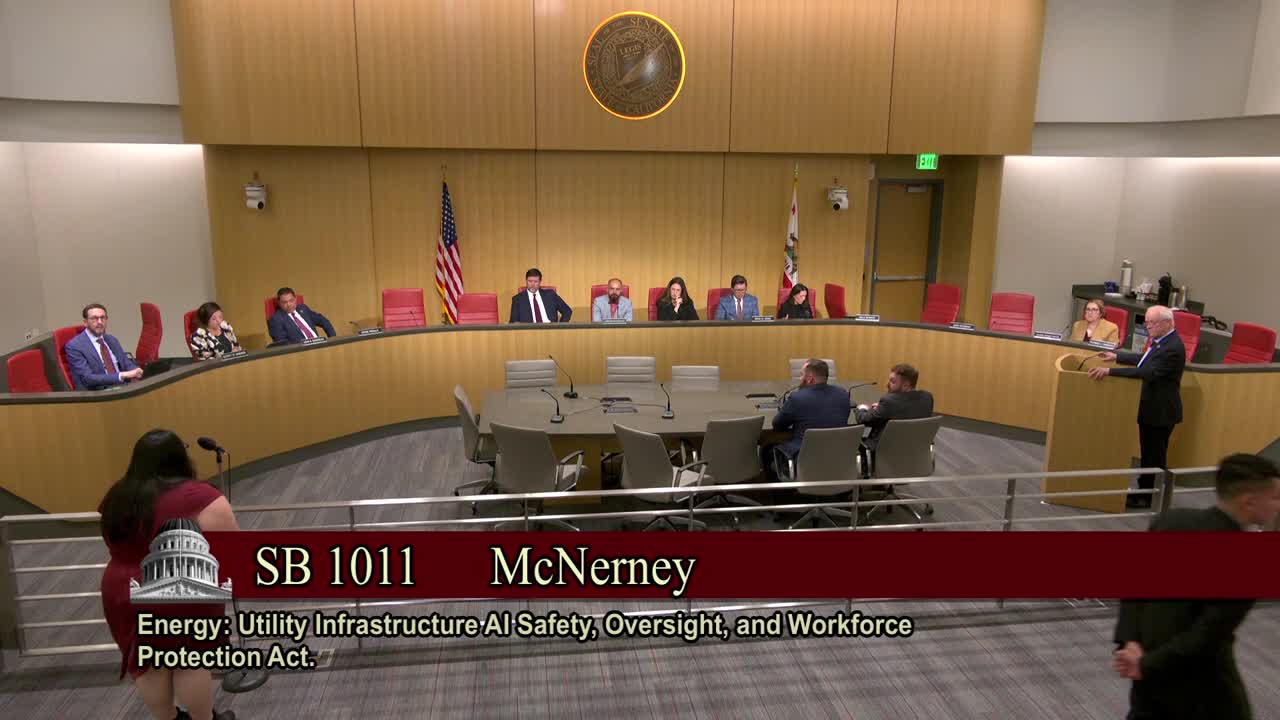 1H
Senate Standing Committee on Privacy, Digital Technologies, and Consumer Protection
 41MIN
Senate Standing Committee on Judiciary
Bill Author

Bill Co-Author(s):