SB 1075: Air resources: toxic air contaminants: criteria air pollutants: community emissions reduction programs: local community emissions reduction plans.
- Session Year: 2025-2026
- House: Senate
- Latest Version Date: 2026-07-02
Current Status:
In Progress
(2026-08-13: August 13 hearing: Held in committee and under submission.)
Introduced
In Committee
Awaiting First Chamber Vote
Passed First Chamber
In Committee
Awaiting Second Chamber Vote
Passed Second Chamber
Enacted
Existing law requires the State Air Resources Board to prepare a statewide strategy to reduce emissions of toxic air contaminants and criteria air pollutants in communities affected by a high cumulative exposure burden that includes an assessment and identification of those communities. Existing law requires the statewide strategy to be updated at least once every 5 years. Existing law requires the state board, based on the assessment and identification, to select locations around the state for preparation of community emissions reduction programs. Existing law requires the assessment and identification to prioritize disadvantaged communities, as defined. Existing law requires the regional air quality management district or the regional air pollution control district encompassing the location selected by the state board, within one year of selection, to adopt a community emissions reduction program to achieve emissions reductions for the location selected using cost-effective measures, as provided. Existing law requires the state board to provide grants to community-based organizations for technical assistance and to support community participation in the implementation of the statewide strategy. Under this existing regulatory authority, the state board provides grants to development and implement local community emissions reduction plans.
This bill would revise the definition of disadvantaged community to include a disadvantaged unincorporated community. By expanding the definition of disadvantaged community, the bill would expand the duties of districts in the preparation of community emissions reduction programs, thereby imposing a state-mandated local program. The bill would require the local community emissions reduction plans to be submitted to the state board for review and approval and would authorize require the state board or the relevant air district to enforce those plans. plans, as provided. The bill would specify that a steering committee formed by an air district to assist it in the development and implementation of a community emissions reduction program remains active until the emissions objectives identified in the program are achieved as determined by the air district or more than 5 years have passed since the adoption of the community emissions reduction program and 2/3 a majority of the members of the committee vote to disband the committee. The bill would require members of the steering committee to meet certain requirements. The bill would specify eligible uses for the grants provided.
This bill would require the state board, on or before June 30, 2027, and annually thereafter, to report to the appropriate subcommittees of the budget committee of the Legislature about the progress the state board has made to implement the statewide strategy and the community emissions reduction programs. programs, as provided. The bill would require the Secretary for Environmental Protection to periodically convene representatives of agencies and departments within the California Environmental Protection Agency with jurisdiction over pollution sources included in a community emissions reduction program to ensure coordination among those agencies and departments with jurisdiction over pollution sources included in a community emissions reduction program to address concerns raised about those pollution sources.
The California Constitution requires the state to reimburse local agencies and school districts for certain costs mandated by the state. Statutory provisions establish procedures for making that reimbursement.
This bill would provide that with regard to certain mandates no reimbursement is required by this act for a specified reason.
With regard to any other mandates, this bill would provide that, if the Commission on State Mandates determines that the bill contains costs so mandated by the state, reimbursement for those costs shall be made pursuant to the statutory provisions noted above.
Existing law requires the State Air Resources Board to prepare a statewide strategy to reduce emissions of toxic air contaminants and criteria air pollutants in communities affected by a high cumulative exposure burden that includes an assessment and identification of those communities. Existing law requires the statewide strategy to be updated at least once every 5 years. Existing law requires the state board, based on the assessment and identification, to select locations around the state for preparation of community emissions reduction programs. Existing law requires the assessment and identification to prioritize disadvantaged communities, as defined. Existing law requires the regional air quality management district or the regional air pollution control district encompassing the location selected by the state board, within one year of selection, to adopt a community emissions reduction program to achieve emissions reductions for the location selected using cost-effective measures, as provided. Existing law requires the state board to provide grants to community-based organizations for technical assistance and to support community participation in the implementation of the statewide strategy. Under this existing regulatory authority, the state board provides grants to development and implement local community emissions reduction plans.
This bill would revise the definition of disadvantaged community to include a disadvantaged unincorporated community. By expanding the definition of disadvantaged community, the bill would expand the duties of districts in the preparation of community emissions reduction programs, thereby imposing a state-mandated local program. The bill would require the local community emissions reduction plans to be submitted to the state board for review and approval and would authorize the state board or the relevant air district to enforce those plans. The bill would specify that a steering committee formed by an air district to assist it in the development and implementation of a community emissions reduction program remains active until the emissions objectives identified in the program are achieved or more than 5 years have passed since the adoption of the community emissions reduction program and 2/3 of the members of the committee vote to disband the committee. The bill would require members of the steering committee to meet certain requirements. The bill would specify eligible uses for the grants provided.
This bill would, except as provided, require a city, including a charter city, or a county for which an approved community emissions reduction program or local community emissions reduction plan has been prepared, before approving a commercial or industrial development located on a site of 5 acres or more, to consider the community emissions reduction program or local community emissions reduction plan, or both the program and plan. The bill would define consider to mean analyze the potential air quality impact of local land use approval of the industrial or commercial development by identifying whether the approval would further contribute to the poor air quality indicators, as specified, and consider adopting applicable mitigation measures contained in the community emissions reduction program or local community emissions reduction plan to mitigate or avoid further contribution to those poor air quality indicators. The bill would require the city or county, upon completion of the analysis and before the approval, to present its findings and analyses in support of its conclusions at a duly noticed meeting of its governing body or planning commission. To the extent the bill would impose additional duties on a city or county in its approval of commercial and industrial development, the bill would impose a state-mandated local program.This bill would require the state board, on or before June 30, 2027, and annually thereafter, to report to the appropriate subcommittees of the budget committee of the Legislature about the progress the state board has made to implement the statewide strategy and the community emissions reduction programs. The bill would require the Secretary for Environmental Protection to periodically convene representatives of agencies and departments within the California Environmental Protection Agency to ensure coordination among agencies and departments with jurisdiction over pollution sources included in a community emissions reduction program to address concerns raised about those sources.
The California Constitution requires the state to reimburse local agencies and school districts for certain costs mandated by the state. Statutory provisions establish procedures for making that reimbursement.
This bill would provide that with regard to certain mandates no reimbursement is required by this act for a specified reason.
With regard to any other mandates, this bill would provide that, if the Commission on State Mandates determines that the bill contains costs so mandated by the state, reimbursement for those costs shall be made pursuant to the statutory provisions noted above.
Existing law requires the State Air Resources Board to prepare a statewide strategy to reduce emissions of toxic air contaminants and criteria air pollutants in communities affected by a high cumulative exposure burden that includes an assessment and identification of those communities. Existing law requires the statewide strategy to be updated at least once every 5 years. Existing law requires the state board, based on the assessment and identification, to select locations around the state for preparation of community emissions reduction programs. Existing law requires the assessment and identification to prioritize disadvantaged communities, as defined. Existing law requires the regional air quality management district or the regional air pollution control district encompassing the location selected by the state board, within one year of selection, to adopt a community emissions reduction program to achieve emissions reductions for the location selected using cost-effective measures, as provided. Existing law requires the state board to provide grants to community-based organizations for technical assistance and to support community participation in the implementation of the statewide strategy. Under this existing regulatory authority, the state board provides grants to development and implement local community emissions reduction plans.
This bill would revise the definition of disadvantaged community to include a disadvantaged unincorporated community. By expanding the definition of disadvantaged community, the bill would expand the duties of districts in the preparation of community emissions reduction programs, thereby imposing a state-mandated local program. The bill would require the local community emissions reduction plans to be submitted to the state board for review and approval and would authorize the state board or the relevant air district to enforce those plans. The bill would specify that a steering committee formed by an air district to assist it in the development and implementation of a community emissions reduction program remains active until the emissions objectives identified in the program are achieved or more than 5 years have passed since the adoption of the community emissions reduction program and 2/3 of the members of the committee vote to disband the committee. The bill would require members of the steering committee to meet certain requirements. The bill would specify eligible uses for the grants provided.
This bill would would, except as provided, require a city, including a charter city, or a county for which an approved community emissions reduction program or local community emissions reduction plan has been prepared, before approving a commercial or industrial development located on a site of 5 acres or more, to consider the community emissions reduction program or local community emissions reduction plan, or both the program and plan. The bill would define consider to mean analyze the potential air quality impact of local land use approval of the industrial or commercial development by identifying whether the approval would further contribute to the poor air quality indicators, as specified, and consider adopting applicable mitigation measures contained in the community emissions reduction program or local community emissions reduction plan to mitigate or avoid further contribution to those poor air quality indicators. The bill would require the city or county, upon completion of the analysis and before the approval, to present its findings and analyses in support of its conclusions at a duly noticed meeting of its governing body or planning commission. To the extent the bill would impose additional duties on a city or county in its approval of commercial and industrial development, this the bill would impose a state-mandated local program.
This bill would require the state board, on or before June 30, 2027, and annually thereafter, to report to the appropriate subcommittees of the budget committee of the Legislature about the progress the state board has made to implement the statewide strategy and the community emissions reduction programs. The bill would require the Secretary for Environmental Protection to periodically convene representatives of agencies and departments within the California Environmental Protection Agency to ensure coordination among agencies and departments with jurisdiction over pollution sources included in a community emissions reduction program to address concerns raised about those sources.
The California Constitution requires the state to reimburse local agencies and school districts for certain costs mandated by the state. Statutory provisions establish procedures for making that reimbursement.
This bill would provide that with regard to certain mandates no reimbursement is required by this act for a specified reason.
With regard to any other mandates, this bill would provide that, if the Commission on State Mandates determines that the bill contains costs so mandated by the state, reimbursement for those costs shall be made pursuant to the statutory provisions noted above.
Existing law requires the State Air Resources Board to prepare a statewide strategy to reduce emissions of toxic air contaminants and criteria air pollutants in communities affected by a high cumulative exposure burden that includes an assessment and identification of those communities. Existing law requires the statewide strategy to be updated at least once every 5 years. Existing law requires the state board, based on the assessment and identification, to select locations around the state for preparation of community emissions reduction programs. Existing law requires the assessment and identification to prioritize disadvantaged communities, as defined. Existing law requires the regional air quality management district or the regional air pollution control district encompassing the location selected by the state board, within one year of selection, to adopt a community emissions reduction program to achieve emissions reductions for the location selected using cost-effective measures, as provided. Existing law requires the state board to provide grants to community-based organizations for technical assistance and to support community participation in the implementation of the statewide strategy. Under this existing regulatory authority, the state board provides grants to development and implement local community emissions reduction plans.
This bill would revise the definition of disadvantaged community to include a disadvantaged unincorporated community. By expanding the definition of disadvantaged community, this the bill would expand the duties of districts in the preparation of community emissions reduction programs. programs, thereby imposing a state-mandated local program. The bill would require the local community emissions reduction plans be submitted to the state board for review and approval and would authorize the state board or the relevant air district to enforce those plans. The bill would specify that a steering committee formed by an air district to assist it in the development and implementation of a community emissions reduction program remains active until the emissions objectives identified in the program are achieved or more than 5 years have passed since the adoption of the community emissions reduction program and 2/3 of the members of the committee vote to disband the committee. The bill would require members of the steering committee to meet certain requirements. The bill would specify eligible uses for the grants provided and would authorize the state board to audit and to take corrective action if those resources are improperly used. provided.
This bill would require a city, including a charter city, or a county for which an approved community emissions reduction program or local community emissions reduction plan has been prepared, before approving a commercial or industrial development located on a site of 5 acres or more, to consider the community emissions reduction program or local community emissions reduction plan, or both program and plan. The bill would define consider to mean analyze the potential air quality impact of local land use approval of the industrial or commercial development by identifying whether the approval would further contribute to the poor air quality indicators, as specified, and consider adopting applicable mitigation measures contained in the community emissions reduction program or local community emissions reduction plan to mitigate or avoid further contribution to those poor air quality indicators. The bill would require the city or county, upon completion of the analysis and before the approval, to present its findings and analyses in support of its conclusions at a duly noticed meeting of its governing body of or planning commission. To the extent the bill would impose additional duties on a city or county in its approval of commercial and industrial development, this bill would impose a state-mandated local program.
This bill would require the state board, on or before June 30, 2027, and annually thereafter, to report to the appropriate subcommittees of the budget committee of the Legislature about the progress the state board has made to implement the statewide strategy and the community emissions reduction programs. The bill would require the Secretary for Environmental Protection to periodically convene representatives of agencies and departments with within the California Environmental Protection Agency to ensure coordination among agencies and departments with jurisdiction over pollution sources included in a community emissions reduction program to address concerns raised about those sources.
The California Constitution requires the state to reimburse local agencies and school districts for certain costs mandated by the state. Statutory provisions establish procedures for making that reimbursement.
This bill would provide that with regard to certain mandates no reimbursement is required by this act for a specified reason.
With regard to any other mandates, this bill would provide that, if the Commission on State Mandates determines that the bill contains costs so mandated by the state, reimbursement for those costs shall be made pursuant to the statutory provisions noted above.
Existing law requires the State Air Resources Board to prepare a statewide strategy to reduce emissions of toxic air contaminants and criteria air pollutants in communities affected by a high cumulative exposure burden that includes an assessment and identification of those communities. Existing law requires the statewide strategy to be updated at least once every 5 years. Existing law requires the state board, based on the assessment and identification, to select locations around the state for preparation of community emissions reduction programs. Existing law requires the assessment and identification to prioritize disadvantaged communities, as defined. Existing law requires the regional air quality management district or the regional air pollution control district encompassing the location selected by the state board, within one year of selection, to adopt a community emissions reduction program to achieve emissions reductions for the location selected using cost-effective measures, as provided. Existing law requires the state board to provide grants to community-based organizations for technical assistance and to support community participation in the implementation of the statewide strategy. Under this existing regulatory authority, the state board provides grants to development and implement local community emissions reduction plans.
This bill would revise the definition of disadvantaged community to include a disadvantaged unincorporated community. The bill would require the statewide strategy to be updated on or before July 1, 2027, and every 3 years thereafter. By expanding the definition of disadvantaged community, this bill would expand the duties of districts in the preparation of community emissions reduction programs. The bill would require the local community emissions reduction plans be submitted to the state board for review and approval and would authorize the state board or the relevant air district to enforce those plans. The bill would specify that a steering committee formed by an air district to assist it in the development and implementation of a community emissions reduction program remains active until the emissions objectives identified in the program are achieved. achieved or more than 5 years have passed since the adoption of the community emissions reduction program and 2/3 of the members of the committee vote to disband the committee. The bill would require members of the steering committee to meet certain requirements. The bill would specify eligible uses for the grants provided and would authorize the state board to audit and to take corrective action if those resources are improperly used.
This bill would require a local government with land use planning authority to align its local land use decisions, as specified, to support the goals of an approved community emissions reduction program, approved local community emissions reduction plan, or both program and plan, and the environmental justice element of the general plan of the local government and to prevent new, substantial modification or substantial expanded uses that contribute to poor air quality, as provided. The bill would authorize a local land use agency, as provided, to make a land use decision that does not align with the community emissions reduction program or local community emissions reduction plan if the decision serves an essential environmental, health, or safety need of the applicable community and there is no reasonable alternative. The bill would authorize a person living in a community with a community emissions reduction program or a local community emissions reduction plan to seek a de novo review of a land use decision that does not align with the program or plan. The bill would authorize the Attorney General to require the local land use agency to take certain actions if it finds that the challenged land use decision did not comply with those requirements. Because the bill would impose additional duties on local land use agencies, this bill would impose a state-mandated local program.This bill would require a city, including a charter city, or a county for which an approved community emissions reduction program or local community emissions reduction plan has been prepared, before approving a commercial or industrial development located on a site of 5 acres or more, to consider the community emissions reduction program or local community emissions reduction plan, or both program and plan. The bill would define consider to mean analyze the potential air quality impact of local land use approval of the industrial or commercial development by identifying whether the approval would further contribute to the poor air quality indicators, as specified, and consider adopting applicable mitigation measures contained in the community emissions reduction program or local community emissions reduction plan to mitigate or avoid further contribution to those poor air quality indicators. The bill would require the city or county, upon completion of the analysis and before the approval, to present its findings and analyses in support of its conclusions at a duly noticed meeting of its governing body of planning commission. To the extent the bill would impose additional duties on a city or county in its approval of commercial and industrial development, this bill would impose a state-mandated local program.
This bill would add one additional member of the governing board of an air district with a community that is in a location that has been selected for the preparation of a community emissions reduction program who is a member of a bona fide environmental justice organization or is a member of a steering committee of the air district and who is appointed by the state board, in collaboration with the steering committee. By expanding the membership of the governing board of air districts, this bill would impose a state-mandated local program. The bill would require the state board, on or before June 30, 2027, and annually thereafter, to report to the appropriate subcommittees of the budget committee of the Legislature about the progress the state board has made to implement the statewide strategy and the community emissions reduction programs. The bill would require the Secretary for Environmental Protection to periodically convene representatives of agencies and departments with the California Environmental Protection Agency to ensure coordination among agencies and departments with jurisdiction over pollution sources included in a community emissions reduction program to address concerns raised about those sources.
The California Constitution requires the state to reimburse local agencies and school districts for certain costs mandated by the state. Statutory provisions establish procedures for making that reimbursement.
This bill would provide that with regard to certain mandates no reimbursement is required by this act for a specified reason.
With regard to any other mandates, this bill would provide that, if the Commission on State Mandates determines that the bill contains costs so mandated by the state, reimbursement for those costs shall be made pursuant to the statutory provisions noted above.
Existing law requires the State Air Resources Board to prepare a statewide strategy to reduce emissions of toxic air contaminants and criteria air pollutants in communities affected by a high cumulative exposure burden that includes an assessment and identification of those communities. Existing law requires the statewide strategy to be updated at least once every 5 years. Existing law requires the state board, based on the assessment and identification, to select locations around the state for preparation of community emissions reduction programs. Existing law requires the assessment and identification to prioritize disadvantaged communities, as defined. Existing law requires the regional air quality management district or the regional air pollution control district encompassing the location selected by the state board, within one year of selection, to adopt a community emissions reduction program to achieve emissions reductions for the location selected using cost-effective measures, as provided. Existing law requires the state board to provide grants to community-based organizations for technical assistance and to support community participation in the implementation of the statewide strategy. Under this existing regulatory authority, the state board provides grants to development and implement local community emissions reduction plans.
This bill would make nonsubstantive changes to the above-described provisions.This bill would revise the definition of disadvantaged community to include a disadvantaged unincorporated community. The bill would require the statewide strategy to be updated on or before July 1, 2027, and every 3 years thereafter. The bill would require the local community emissions reduction plans be submitted to the state board for review and approval and would authorize the state board or the relevant air district to enforce those plans. The bill would specify that a steering committee formed by an air district to assist it in the development and implementation of a community emissions reduction program remains active until the emissions objectives identified in the program are achieved. The bill would require members of the steering committee to meet certain requirements. The bill would specify eligible uses for the grants provided and would authorize the state board to audit and to take corrective action if those resources are improperly used.
This bill would require a local government with land use planning authority to align its local land use decisions, as specified, to support the goals of an approved community emissions reduction program, approved local community emissions reduction plan, or both program and plan, and the environmental justice element of the general plan of the local government and to prevent new, substantial modification or substantial expanded uses that contribute to poor air quality, as provided. The bill would authorize a local land use agency, as provided, to make a land use decision that does not align with the community emissions reduction program or local community emissions reduction plan if the decision serves an essential environmental, health, or safety need of the applicable community and there is no reasonable alternative. The bill would authorize a person living in a community with a community emissions reduction program or a local community emissions reduction plan to seek a de novo review of a land use decision that does not align with the program or plan. The bill would authorize the Attorney General to require the local land use agency to take certain actions if it finds that the challenged land use decision did not comply with those requirements. Because the bill would impose additional duties on local land use agencies, this bill would impose a state-mandated local program.
This bill would add one additional member of the governing board of an air district with a community that is in a location that has been selected for the preparation of a community emissions reduction program who is a member of a bona fide environmental justice organization or is a member of a steering committee of the air district and who is appointed by the state board, in collaboration with the steering committee. By expanding the membership of the governing board of air districts, this bill would impose a state-mandated local program. The bill would require the state board, on or before June 30, 2027, and annually thereafter, to report to the appropriate subcommittees of the budget committee of the Legislature about the progress the state board has made to implement the statewide strategy and the community emissions reduction programs. The bill would require the Secretary for Environmental Protection to periodically convene representatives of agencies and departments with the California Environmental Protection Agency to ensure coordination among agencies and departments with jurisdiction over pollution sources included in a community emissions reduction program to address concerns raised about those sources.
The California Constitution requires the state to reimburse local agencies and school districts for certain costs mandated by the state. Statutory provisions establish procedures for making that reimbursement.
This bill would provide that with regard to certain mandates no reimbursement is required by this act for a specified reason.
With regard to any other mandates, this bill would provide that, if the Commission on State Mandates determines that the bill contains costs so mandated by the state, reimbursement for those costs shall be made pursuant to the statutory provisions noted above.
Existing law requires the State Air Resources Board to prepare a statewide strategy to reduce emissions of toxic air contaminants and criteria air pollutants in communities affected by a high cumulative exposure burden that includes an assessment and identification of those communities. Existing law requires the state board, based on the assessment and identification, to select locations around the state for preparation of community emissions reduction programs. Existing law requires the regional air quality management district or the regional air pollution control district encompassing the location selected by the state board, within one year of selection, to adopt a community emissions reduction program to achieve emissions reductions for the location selected using cost-effective measures, as provided.
This bill would make nonsubstantive changes to the above-described provisions.
(a)For purposes of this section, the following definitions apply:
(1)Disadvantaged community means a community identified as disadvantaged pursuant to Section 39711 or a disadvantaged unincorporated community as defined in Section 65302.10 of the Government Code.
(2)Sensitive receptors includes the same locations as specified in paragraph (5) of subdivision (a) of Section 42705.5.
(b)(1)On or before October 1, 2018, the state board shall prepare, in consultation with the Scientific Review Panel on Toxic Air Contaminants, the districts, the Office of Environmental Health Hazard Assessment, environmental justice organizations, affected industry, and other interested stakeholders, a statewide strategy to reduce emissions of toxic air contaminants and criteria air pollutants in communities affected by a high cumulative exposure burden. The board shall update the statewide strategy at least once every five years.
(2)In preparing the statewide strategy, the state board shall conduct at least one public workshop in each of the northern, central, and southern parts of the state. The statewide strategy shall include criteria for the development of community emissions reduction programs. The criteria presented in the statewide strategy shall include, but are not limited to, all of the following:
(A)An assessment and identification of communities with high cumulative exposure burdens for toxic air contaminants and criteria air pollutants. The assessment shall prioritize disadvantaged communities and sensitive receptor locations based on one or more of the following:
(i)Best available modeling information.
(ii)Existing air quality monitoring information.
(iii)Existing public health data based on consultation with the Office of Environmental Health Hazard Assessment.
(iv)The monitoring results obtained pursuant to Section 42705.5.
(B)A methodology for assessing and identifying the contributing sources or categories of sources, including, but not limited to, stationary and mobile sources, and an estimate of their relative contribution to elevated exposure to air pollution in impacted communities identified pursuant to subparagraph (A).
(C)An assessment of whether a district should update and implement the risk reduction audit and emissions reduction plan developed pursuant to Section 44391 for a facility to achieve emissions reductions commensurate with its relative contribution, if the facilitys emissions either cause or significantly contribute to a material impact on a sensitive receptor location or disadvantaged community, based on data available for assessment pursuant to subparagraph (A) or other relevant data.
(D)An assessment of the existing and available measures for reducing emissions from the contributing sources or categories of sources identified pursuant to subparagraph (B), including, but not limited to, best available control technology, as defined in Section 40405, best available retrofit control technology, as defined in Section 40406, and best available control technology for toxic air contaminants, as defined in Section 39666.
(c)(1)Based on the assessment and identification pursuant to subparagraph (A) of paragraph (1) (2) of subdivision (b) and updates to the assessment and identification, the state board shall select, concurrent with the statewide strategy, locations around the state for preparation of community emissions reduction programs. The state board shall select additional locations annually thereafter, as appropriate.
(2)(A)Within two years of the state boards selection, the district encompassing a location selected pursuant to this subdivision shall adopt, in consultation with the state board, individuals, community-based organizations, affected sources, and local governmental bodies in the affected community, a community emissions reduction program to achieve emissions reductions for the location selected using cost-effective measures identified pursuant to subparagraph (D) of paragraph (1) (2) of subdivision (b).
(B)A district, with the agreement of the state board and a majority of the persons who are designated by the district to participate in the development and adoption of the community emissions reduction program, may take up to one additional year to adopt a community emissions reduction program pursuant to subparagraph (A).
(3)The community emissions reduction programs shall be consistent with the statewide strategy and include emissions reduction targets, specific reduction measures, a schedule for the implementation of measures, and an enforcement plan.
(4)Local community emissions reduction plans developed in accordance with the statewide strategy prepared pursuant to subdivision (b), also known as the Community Air Protection Blueprint or Blueprint pursuant to Section 44391.5, shall be consistent with the statewide strategy.
(5)The community emissions reduction programs and local community emissions reduction plans shall be submitted to the state board for review and approval within 60 days of the receipt of the program. Programs program or plan. Programs or plans that are rejected shall be resubmitted within 30 days. To the extent that a program, program or plan, in whole or in part, is not approvable, the state board shall initiate a public process to discuss options for achieving an approvable program. program or plan. Concurrent with the public process to achieve an approvable program, program or plan, the state board shall develop and implement the applicable mobile source elements in the draft program or plan to commence achievement of emissions reductions.
(6)The community emissions reduction programs or local community emissions reduction plans shall result in emissions reductions in the community, based on monitoring or other data.
(7)In implementing a community emissions reduction program, the district and the state board shall be responsible for measures consistent with their respective authorities.
(8)A district encompassing a location selected pursuant to this subdivision shall prepare an annual report summarizing the results and actions taken to further reduce emissions pursuant to the community emissions reduction program.
(9)(A)Compliance with a community emissions reduction program prepared pursuant to this section or a local community emissions reduction plan developed pursuant to a grant provided under subdivision (d), section, including its implementation, shall be enforceable by the district and state board, as applicable.
(B)Provisions of a local community emissions reduction plan adopted by a district shall be enforceable by the district.
(C)Provisions of a local community emissions reduction plan approved by the state board shall be enforceable by the state board.
(10)(A)A steering committee formed by a district for a location selected for preparation of a community emissions reduction program pursuant to this subdivision or a location for which a local community emissions reduction plan is developed in accordance with the statewide strategy prepared pursuant to subdivision (b), also known as the Community Air Protection Blueprint or Blueprint pursuant to Section 44391.5, shall remain active until either of the following occurs:
(i)The emissions objectives identified in the program are achieved. achieved as determined by the district.
(ii)More than five years have passed since the adoption of the community emissions reduction program and two-thirds A majority of the members of the steering committee vote to disband the committee.
(B)The steering committee shall meet both of the following:
(i)All members of the steering committee live, work, or own businesses within the community reduction program area or local community emissions reduction plan area and a majority of the members are residents. For purposes of this clause, employment by a nonprofit organization that is engaged in the support of community members in a program area or employment by a for-profit company or organization that has workers or managers working at a facility located in a program area constitute working within the program area.
(ii)The steering committee uses an open and transparent nomination process to select members and the membership of the committee reflects the diverse makeup of the community in the program area.
(d)The state board shall provide grants to community-based organizations for technical assistance and to support community participation in the implementation of this section and Section 42705.5 to support the implementation of strategies that directly reduce emissions or exposure to air pollution in disadvantaged communities.
(e)The requirements of this section shall apply to all community emissions reduction programs or local community emissions reduction plans developed pursuant to a grant provided under subdivision (d), until attainment with the federal Clean Air Act (42 U.S.C. Sec. 7401 et seq.) is achieved.(f)(e)Eligible uses of grant funding provided pursuant to this section shall include, but not be limited to, any of the following:
(1)Community-led deployment of technologies, practices, or projects that result in measurable or meaningful reductions in emissions or exposure to air pollution.
(2)Local mitigation strategies that address emission sources identified in community emissions reduction programs or local community emissions reduction plans.
(3)Projects that improve air quality outcomes through neighborhood- or household-level interventions, as identified in collaboration with community residents and stakeholders.
(4)Other initiatives that align with the goals of this section and support the implementation of community emissions reduction programs and local community emissions reduction plans developed pursuant to this chapter.
(5)Community monitoring efforts.
SEC. 2.Section 44391.8 is added to the Health and Safety Code, to read:44391.8.The Secretary for Environmental Protection shall periodically convene representatives of agencies and departments within the California Environmental Protection Agency with jurisdiction over pollution sources included in a community emissions reduction program to ensure that coordination among those agencies and departments with jurisdiction over pollution sources included in a community emissions reduction program to address concerns raised about those pollution sources.
SEC. 3.Section 44391.9 is added to the Health and Safety Code, to read:44391.9.(a)On or before June 30, 2027, and annually thereafter, the state board shall report to the appropriate subcommittees of the budget committee of each house of the Legislature about the progress the state board has made in implementing Section 44391.2. The report shall include, but is not limited to, all of the following:
(1)The status of implementation of the community emissions reduction program in each selected community.
(2)Best practices.
(3)Lessons learned through the implementation of the community emissions reduction programs or local community emissions reduction plans.
(4)Activities taken to enforce the community emissions reduction programs and local community emissions reduction plans.
(5)Outcome data that is available, through air monitoring or other means, including, but not limited to, achieved emissions reductions.
(6)Expenditures made in furtherance of Section 44291.2.
(b)A report submitted pursuant to this section shall also be submitted in compliance with Section 9795 of the Government Code.
SEC. 4.No reimbursement is required by this act pursuant to Section 6 of Article XIIIB of the California Constitution because a local agency or school district has the authority to levy service charges, fees, or assessments sufficient to pay for the program or level of service mandated by this act, within the meaning of Section 17556 of the Government Code.
However, if the Commission on State Mandates determines that this act contains other costs mandated by the state, reimbursement to local agencies and school districts for those costs shall be made pursuant to Part 7 (commencing with Section 17500) of Division 4 of Title 2 of the Government Code.
(a)For purposes of this section, the following definitions apply:
(1)Disadvantaged community means a community identified as disadvantaged pursuant to Section 39711 or a disadvantaged unincorporated community as defined in Section 65302.10 of the Government Code.
(2)Sensitive receptors includes the same locations as specified in paragraph (5) of subdivision (a) of Section 42705.5.
(b)(1)On or before October 1, 2018, the state board shall prepare, in consultation with the Scientific Review Panel on Toxic Air Contaminants, the districts, the Office of Environmental Health Hazard Assessment, environmental justice organizations, affected industry, and other interested stakeholders, a statewide strategy to reduce emissions of toxic air contaminants and criteria air pollutants in communities affected by a high cumulative exposure burden. The board shall update the statewide strategy at least once every five years.
(2)In preparing the statewide strategy, the state board shall conduct at least one public workshop in each of the northern, central, and southern parts of the state. The statewide strategy shall include criteria for the development of community emissions reduction programs. The criteria presented in the statewide strategy shall include, but are not limited to, all of the following:
(A)An assessment and identification of communities with high cumulative exposure burdens for toxic air contaminants and criteria air pollutants. The assessment shall prioritize disadvantaged communities and sensitive receptor locations based on one or more of the following:
(i)Best available modeling information.
(ii)Existing air quality monitoring information.
(iii)Existing public health data based on consultation with the Office of Environmental Health Hazard Assessment.
(iv)The monitoring results obtained pursuant to Section 42705.5.
(B)A methodology for assessing and identifying the contributing sources or categories of sources, including, but not limited to, stationary and mobile sources, and an estimate of their relative contribution to elevated exposure to air pollution in impacted communities identified pursuant to subparagraph (A).
(C)An assessment of whether a district should update and implement the risk reduction audit and emissions reduction plan developed pursuant to Section 44391 for a facility to achieve emissions reductions commensurate with its relative contribution, if the facilitys emissions either cause or significantly contribute to a material impact on a sensitive receptor location or disadvantaged community, based on data available for assessment pursuant to subparagraph (A) or other relevant data.
(D)An assessment of the existing and available measures for reducing emissions from the contributing sources or categories of sources identified pursuant to subparagraph (B), including, but not limited to, best available control technology, as defined in Section 40405, best available retrofit control technology, as defined in Section 40406, and best available control technology for toxic air contaminants, as defined in Section 39666.
(c)(1)Based on the assessment and identification pursuant to subparagraph (A) of paragraph (1) of subdivision (b) and updates to the assessment and identification, the state board shall select, concurrent with the statewide strategy, locations around the state for preparation of community emissions reduction programs. The state board shall select additional locations annually thereafter, as appropriate.
(2)(A)Within two years of the state boards selection, the district encompassing a location selected pursuant to this subdivision shall adopt, in consultation with the state board, individuals, community-based organizations, affected sources, and local governmental bodies in the affected community, a community emissions reduction program to achieve emissions reductions for the location selected using cost-effective measures identified pursuant to subparagraph (D) of paragraph (1) of subdivision (b).
(B)A district, with the agreement of the state board and a majority of the persons who are designated by the district to participate in the development and adoption of the community emissions reduction program, may take up to one additional year to adopt a community emissions reduction program pursuant to subparagraph (A).
(3)The community emissions reduction programs shall be consistent with the statewide strategy and include emissions reduction targets, specific reduction measures, a schedule for the implementation of measures, and an enforcement plan.
(4)Local community emissions reduction plans developed in accordance with the statewide strategy prepared pursuant to subdivision (b), also known as the Community Air Protection Blueprint or Blueprint pursuant to Section 44391.5, shall be consistent with the statewide strategy.
(5)The community emissions reduction programs and local community emissions reduction plans shall be submitted to the state board for review and approval within 60 days of the receipt of the program. Programs that are rejected shall be resubmitted within 30 days. To the extent that a program, in whole or in part, is not approvable, the state board shall initiate a public process to discuss options for achieving an approvable program. Concurrent with the public process to achieve an approvable program, the state board shall develop and implement the applicable mobile source elements in the draft program to commence achievement of emissions reductions.
(6)The community emissions reduction programs or local community emissions reduction plans shall result in emissions reductions in the community, based on monitoring or other data.
(7)In implementing a community emissions reduction program, the district and the state board shall be responsible for measures consistent with their respective authorities.
(8)A district encompassing a location selected pursuant to this subdivision shall prepare an annual report summarizing the results and actions taken to further reduce emissions pursuant to the community emissions reduction program.
(9)Compliance with a community emissions reduction program prepared pursuant to this section or a local community emissions reduction plan developed pursuant to a grant provided under subdivision (d), including its implementation, shall be enforceable by the district and state board, as applicable.
(10)(A)A steering committee formed by a district for a location selected for preparation of a community emissions reduction program pursuant to this subdivision or a location for which a local community emissions reduction plan is developed in accordance with the statewide strategy prepared pursuant to subdivision (b), also known as the Community Air Protection Blueprint or Blueprint pursuant to Section 44391.5, shall remain active until either of the following occurs:
(i)The emissions objectives identified in the program are achieved.
(ii)More than five years have passed since the adoption of the community emissions reduction program and two-thirds of the members of the steering committee vote to disband the committee.
(B)The steering committee shall meet both of the following:
(i)All members of the steering committee live, work, or own businesses within the community reduction program area or local community emissions reduction plan area and a majority of the members are residents. For purposes of this clause, employment by a nonprofit organization that is engaged in the support of community members in a program area or employment by a for-profit company or organization that has workers or managers working at a facility located in a program area constitute working within the program area.
(ii)The steering committee uses an open and transparent nomination process to select members and the membership of the committee reflects the diverse makeup of the community in the program area.
(d)The state board shall provide grants to community-based organizations for technical assistance and to support community participation in the implementation of this section and Section 42705.5 to support the implementation of strategies that directly reduce emissions or exposure to air pollution in disadvantaged communities.
(e)The requirements of this section shall apply to all community emissions reduction programs or local community emissions reduction plans developed pursuant to a grant provided under subdivision (d), until attainment with the federal Clean Air Act (42 U.S.C. Sec. 7401 et seq.) is achieved.
(f)Eligible uses of grant funding provided pursuant to this section shall include, but not be limited to, any of the following:
(1)Community-led deployment of technologies, practices, or projects that result in measurable or meaningful reductions in emissions or exposure to air pollution.
(2)Local mitigation strategies that address emission sources identified in community emissions reduction programs or local community emissions reduction plans.
(3)Projects that improve air quality outcomes through neighborhood- or household-level interventions, as identified in collaboration with community residents and stakeholders.
(4)Other initiatives that align with the goals of this section and support the implementation of community emissions reduction programs and local community emissions reduction plans developed pursuant to this chapter.
(5)Community monitoring efforts.
SEC. 2.Section 44391.6 is added to the Health and Safety Code, to read:44391.6.(a)(1)Before approving a commercial or industrial development located on a site of five acres or more, a city, including a charter city, or a county, that includes a location for which an approved community emissions reduction program or local community emissions reduction plan has been prepared shall consider the community emissions reduction program or local community emissions reduction plan or both program and plan.(2)For purposes of paragraph (1), consider means to analyze the potential air quality impact of local land use approvals, including, but not limited to, siting and permitting, of the industrial or commercial development. The analysis shall do both of the following:(A)Identify whether the approval of the commercial or industrial development would further contribute to the poor air quality indicators identified by the board in their analysis of the selected community.(B)Consider adopting applicable measures contained in the community emissions reduction program or local community emissions reduction plan that would mitigate or avoid, to the extent feasible, any further contribution to the poor air quality indicators identified by the state board in its analysis when selecting the community for the preparation of a community emissions reduction program pursuant to subdivision (c) of Section 44391.2.(3)The city or county shall adopt findings supporting its conclusions regarding both elements specified in paragraph (2).(4)For projects subject to the California Environmental Quality Act (Division 13 (commencing with Section 21000) of the Public Resources Code), the analysis required pursuant to paragraph (2) may be included with the environmental review pursuant to that act.(b)Upon completion of the analysis in subdivision (a) and before approving the commercial or industrial development on a site of five acres or more, the city or county shall present the findings and analyses in support of its conclusion under subdivision (a) at a duly noticed regular meeting of its governing body or planning commission.(c)This section does not supersede requirements for, and the legal effects of, general plans, housing elements, zoning ordinances, or other mandates in state law.(d)This section does not apply to developments that are residential only or developments that are residential and contain commercial uses.SEC. 3.SEC. 2.Section 44391.8 is added to the Health and Safety Code, to read:44391.8.The Secretary for Environmental Protection shall periodically convene representatives of agencies and departments within the California Environmental Protection Agency to ensure that coordination among those agencies and departments with jurisdiction over pollution sources included in a community emissions reduction program to address concerns raised about those sources.
SEC. 4.SEC. 3.Section 44391.9 is added to the Health and Safety Code, to read:44391.9.(a)On or before June 30, 2027, and annually thereafter, the state board shall report to the appropriate subcommittees of the budget committee of each house of the Legislature about the progress the state board has made in implementing Section 44391.2. The report shall include, but is not limited to, all of the following:
(1)The status of implementation of the community emissions reduction program in each selected community.
(2)Best practices.
(3)Lessons learned through the implementation of the community emissions reduction programs or local community emissions reduction plans.
(4)Activities taken to enforce the community emissions reduction programs and local community emissions reduction plans.
(5)Outcome data that is available, through air monitoring or other means, including, but not limited to, achieved emissions reductions.
(6)Expenditures made in furtherance of Section 44291.2.
(b)A report submitted pursuant to this section shall also be submitted in compliance with Section 9795 of the Government Code.
SEC. 5.SEC. 4.No reimbursement is required by this act pursuant to Section 6 of Article XIIIB of the California Constitution because a local agency or school district has the authority to levy service charges, fees, or assessments sufficient to pay for the program or level of service mandated by this act, within the meaning of Section 17556 of the Government Code.
However, if the Commission on State Mandates determines that this act contains other costs mandated by the state, reimbursement to local agencies and school districts for those costs shall be made pursuant to Part 7 (commencing with Section 17500) of Division 4 of Title 2 of the Government Code.
(a)For purposes of this section, the following definitions apply:
(1)Disadvantaged community means a community identified as disadvantaged pursuant to Section 39711 or a disadvantaged unincorporated community as defined in Section 65302.10 of the Government Code.
(2)Sensitive receptors includes the same locations as specified in paragraph (5) of subdivision (a) of Section 42705.5.
(b)(1)On or before October 1, 2018, the state board shall prepare, in consultation with the Scientific Review Panel on Toxic Air Contaminants, the districts, the Office of Environmental Health Hazard Assessment, environmental justice organizations, affected industry, and other interested stakeholders, a statewide strategy to reduce emissions of toxic air contaminants and criteria air pollutants in communities affected by a high cumulative exposure burden. The board shall update the statewide strategy at least once every five years.
(2)In preparing the statewide strategy, the state board shall conduct at least one public workshop in each of the northern, central, and southern parts of the state. The statewide strategy shall include criteria for the development of community emissions reduction programs. The criteria presented in the statewide strategy shall include, but are not limited to, all of the following:
(A)An assessment and identification of communities with high cumulative exposure burdens for toxic air contaminants and criteria air pollutants. The assessment shall prioritize disadvantaged communities and sensitive receptor locations based on one or more of the following:
(i)Best available modeling information.
(ii)Existing air quality monitoring information.
(iii)Existing public health data based on consultation with the Office of Environmental Health Hazard Assessment.
(iv)The monitoring results obtained pursuant to Section 42705.5.
(B)A methodology for assessing and identifying the contributing sources or categories of sources, including, but not limited to, stationary and mobile sources, and an estimate of their relative contribution to elevated exposure to air pollution in impacted communities identified pursuant to subparagraph (A).
(C)An assessment of whether a district should update and implement the risk reduction audit and emissions reduction plan developed pursuant to Section 44391 for a facility to achieve emissions reductions commensurate with its relative contribution, if the facilitys emissions either cause or significantly contribute to a material impact on a sensitive receptor location or disadvantaged community, based on data available for assessment pursuant to subparagraph (A) or other relevant data.
(D)An assessment of the existing and available measures for reducing emissions from the contributing sources or categories of sources identified pursuant to subparagraph (B), including, but not limited to, best available control technology, as defined in Section 40405, best available retrofit control technology, as defined in Section 40406, and best available control technology for toxic air contaminants, as defined in Section 39666.
(c)(1)Based on the assessment and identification pursuant to subparagraph (A) of paragraph (1) of subdivision (b) and updates to the assessment and identification, the state board shall select, concurrent with the statewide strategy, locations around the state for preparation of community emissions reduction programs. The state board shall select additional locations annually thereafter, as appropriate.
(2)(A)Within two years of the state boards selection, the district encompassing a location selected pursuant to this subdivision shall adopt, in consultation with the state board, individuals, community-based organizations, affected sources, and local governmental bodies in the affected community, a community emissions reduction program to achieve emissions reductions for the location selected using cost-effective measures identified pursuant to subparagraph (D) of paragraph (1) of subdivision (b).
(B)A district, with the agreement of the state board and a majority of the persons who are designated by the district to participate in the development and adoption of the community emissions reduction program, may take up to one additional year to adopt a community emissions reduction program pursuant to subparagraph (A).
(3)The community emissions reduction programs shall be consistent with the statewide strategy and include emissions reduction targets, specific reduction measures, a schedule for the implementation of measures, and an enforcement plan.
(4)Local community emissions reduction plans developed in accordance with the statewide strategy prepared pursuant to subdivision (b), also known as the Community Air Protection Blueprint or Blueprint pursuant to Section 44391.5, shall be consistent with the statewide strategy.
(5)The community emissions reduction programs and local community emissions reduction plans shall be submitted to the state board for review and approval within 60 days of the receipt of the program. Programs that are rejected shall be resubmitted within 30 days. To the extent that a program, in whole or in part, is not approvable, the state board shall initiate a public process to discuss options for achieving an approvable program. Concurrent with the public process to achieve an approvable program, the state board shall develop and implement the applicable mobile source elements in the draft program to commence achievement of emissions reductions.
(6)The community emissions reduction programs or local community emissions reduction plans shall result in emissions reductions in the community, based on monitoring or other data.
(7)In implementing a community emissions reduction program, the district and the state board shall be responsible for measures consistent with their respective authorities.
(8)A district encompassing a location selected pursuant to this subdivision shall prepare an annual report summarizing the results and actions taken to further reduce emissions pursuant to the community emissions reduction program.
(9)Compliance with a community emissions reduction program prepared pursuant to this section or a local community emissions reduction plan developed pursuant to a grant provided under subdivision (d), including its implementation, shall be enforceable by the district and state board, as applicable.
(10)(A)A steering committee formed by a district for a location selected for preparation of a community emissions reduction program pursuant to this subdivision or a location for which a local community emissions reduction plan is developed in accordance with the statewide strategy prepared pursuant to subdivision (b), also known as the Community Air Protection Blueprint or Blueprint pursuant to Section 44391.5, shall remain active until either of the following occurs:
(i)The emissions objectives identified in the program are achieved.
(ii)More than five years have passed since the adoption of the community emissions reduction program and two-thirds of the members of the steering committee vote to disband the committee.
(B)The steering committee shall meet both of the following:
(i)All members of the steering committee live, work, or own businesses within the community reduction program area or local community emissions reduction plan area and a majority of the members are residents. For purposes of this clause, employment by a nonprofit organization that is engaged in the support of community members in a program area or employment by a for-profit company or organization that has workers or managers working at a facility located in a program area constitute working within the program area.
(ii)The steering committee uses an open and transparent nomination process to select members and the membership of the committee reflects the diverse makeup of the community in the program area.
(d)The state board shall provide grants to community-based organizations for technical assistance and to support community participation in the implementation of this section and Section 42705.5 to support the implementation of strategies that directly reduce emissions or exposure to air pollution in disadvantaged communities.
(e)The requirements of this section shall apply to all community emissions reduction programs or local community emissions reduction plans developed pursuant to a grant provided under subdivision (d), until attainment with the federal Clean Air Act (42 U.S.C. Sec. 7401 et seq.) is achieved.
(f)Eligible uses of grant funding provided pursuant to this section shall include, but not be limited to, any of the following:
(1)Community-led deployment of technologies, practices, or projects that result in measurable or meaningful reductions in emissions or exposure to air pollution.
(2)Local mitigation strategies that address emission sources identified in community emissions reduction programs or local community emissions reduction plans.
(3)Projects that improve air quality outcomes through neighborhood- or household-level interventions, as identified in collaboration with community residents and stakeholders.
(4)Other initiatives that align with the goals of this section and support the implementation of community emissions reduction programs and local community emissions reduction plans developed pursuant to this chapter.
(5)Community monitoring efforts.
SEC. 2.Section 44391.6 is added to the Health and Safety Code, to read:44391.6.(a)(1)Before approving a commercial or industrial development located on a site of five acres or more, a city, including a charter city, or a county, that includes a location for which an approved community emissions reduction program or local community emissions reduction plan has been prepared shall consider the community emissions reduction program or local community emissions reduction plan or both program and plan.
(2)For purposes of paragraph (1), consider means to analyze the potential air quality impact of local land use approvals, including, but not limited to, siting and permitting, of the industrial or commercial development. The analysis shall do both of the following:
(A)Identify whether the approval of the commercial or industrial development would further contribute to the poor air quality indicators identified by the board in their analysis of the selected community.
(B)Consider adopting applicable measures contained in the community emissions reduction program or local community emissions reduction plan that would mitigate or avoid, to the extent feasible, any further contribution to the poor air quality indicators identified by the state board in its analysis when selecting the community for the preparation of a community emissions reduction program pursuant to subdivision (c) of Section 44391.2.
(3)The city or county shall adopt findings supporting its conclusions regarding both elements specified in paragraph (2).
(4)For projects subject to the California Environmental Quality Act (Division 13 (commencing with Section 21000) of the Public Resources Code), the analysis required pursuant to paragraph (2) may be included with the environmental review pursuant to that act.
(b)Upon completion of the analysis in subdivision (a) and before approving the commercial or industrial development on a site of five acres or more, the city or county shall present the findings and analyses in support of its conclusion under subdivision (a) at a duly noticed regular meeting of its governing body or planning commission.
(c)This section does not supersede requirements for, and the legal effects of, general plans, housing elements, zoning ordinances, or other mandates in state law.
(d)This section does not apply to developments that are residential only or developments that are residential and contain commercial uses.
SEC. 3.Section 44391.8 is added to the Health and Safety Code, to read:44391.8.The Secretary for Environmental Protection shall periodically convene representatives of agencies and departments within the California Environmental Protection Agency to ensure that coordination among those agencies and departments with jurisdiction over pollution sources included in a community emissions reduction program to address concerns raised about those sources.
SEC. 4.Section 44391.9 is added to the Health and Safety Code, to read:44391.9.(a)On or before June 30, 2027, and annually thereafter, the state board shall report to the appropriate subcommittees of the budget committee of each house of the Legislature about the progress the state board has made in implementing Section 44391.2. The report shall include, but is not limited to, all of the following:
(1)The status of implementation of the community emissions reduction program in each selected community.
(2)Best practices.
(3)Lessons learned through the implementation of the community emissions reduction programs or local community emissions reduction plans.
(4)Activities taken to enforce the community emissions reduction programs and local community emissions reduction plans.
(5)Outcome data that is available, through air monitoring or other means, including, but not limited to, achieved emissions reductions.
(6)Expenditures made in furtherance of Section 44291.2.
(b)A report submitted pursuant to this section shall also be submitted in compliance with Section 9795 of the Government Code.
SEC. 5.No reimbursement is required by this act pursuant to Section 6 of Article XIIIB of the California Constitution because a local agency or school district has the authority to levy service charges, fees, or assessments sufficient to pay for the program or level of service mandated by this act, within the meaning of Section 17556 of the Government Code.
However, if the Commission on State Mandates determines that this act contains other costs mandated by the state, reimbursement to local agencies and school districts for those costs shall be made pursuant to Part 7 (commencing with Section 17500) of Division 4 of Title 2 of the Government Code.
(a)For purposes of this section, the following definitions apply:
(1)Disadvantaged community means a community identified as disadvantaged pursuant to Section 39711 or a disadvantaged unincorporated community as defined in Section 65302.10 of the Government Code.
(2)Sensitive receptors includes the same locations as specified in paragraph (5) of subdivision (a) of Section 42705.5.
(b)(1)On or before October 1, 2018, the state board shall prepare, in consultation with the Scientific Review Panel on Toxic Air Contaminants, the districts, the Office of Environmental Health Hazard Assessment, environmental justice organizations, affected industry, and other interested stakeholders, a statewide strategy to reduce emissions of toxic air contaminants and criteria air pollutants in communities affected by a high cumulative exposure burden. The board shall update the statewide strategy at least once every five years.
(2)In preparing the statewide strategy, the state board shall conduct at least one public workshop in each of the northern, central, and southern parts of the state. The statewide strategy shall include criteria for the development of community emissions reduction programs. The criteria presented in the statewide strategy shall include, but are not limited to, all of the following:
(A)An assessment and identification of communities with high cumulative exposure burdens for toxic air contaminants and criteria air pollutants. The assessment shall prioritize disadvantaged communities and sensitive receptor locations based on one or more of the following:
(i)Best available modeling information.
(ii)Existing air quality monitoring information.
(iii)Existing public health data based on consultation with the Office of Environmental Health Hazard Assessment.
(iv)The monitoring results obtained pursuant to Section 42705.5.
(B)A methodology for assessing and identifying the contributing sources or categories of sources, including, but not limited to, stationary and mobile sources, and an estimate of their relative contribution to elevated exposure to air pollution in impacted communities identified pursuant to subparagraph (A).
(C)An assessment of whether a district should update and implement the risk reduction audit and emissions reduction plan developed pursuant to Section 44391 for a facility to achieve emissions reductions commensurate with its relative contribution, if the facilitys emissions either cause or significantly contribute to a material impact on a sensitive receptor location or disadvantaged community, based on data available for assessment pursuant to subparagraph (A) or other relevant data.
(D)An assessment of the existing and available measures for reducing emissions from the contributing sources or categories of sources identified pursuant to subparagraph (B), including, but not limited to, best available control technology, as defined in Section 40405, best available retrofit control technology, as defined in Section 40406, and best available control technology for toxic air contaminants, as defined in Section 39666.
(c)(1)Based on the assessment and identification pursuant to subparagraph (A) of paragraph (1) of subdivision (b) and updates to the assessment and identification, the state board shall select, concurrent with the statewide strategy, locations around the state for preparation of community emissions reduction programs. The state board shall select additional locations annually thereafter, as appropriate.
(2)(A)Within two years of the state boards selection, the district encompassing a location selected pursuant to this subdivision shall adopt, in consultation with the state board, individuals, community-based organizations, affected sources, and local governmental bodies in the affected community, a community emissions reduction program to achieve emissions reductions for the location selected using cost-effective measures identified pursuant to subparagraph (D) of paragraph (1) of subdivision (b).
(B)A district, with the agreement of the state board and a majority of the persons who are designated by the district to participate in the development and adoption of the community emissions reduction program, may take up to one additional year to adopt a community emissions reduction program pursuant to subparagraph (A).
(3)The community emissions reduction programs shall be consistent with the statewide strategy and include emissions reduction targets, specific reduction measures, a schedule for the implementation of measures, and an enforcement plan.
(4)Local community emissions reduction plans developed in accordance with the statewide strategy prepared pursuant to subdivision (b), also known as the Community Air Protection Blueprint or Blueprint pursuant to Section 44391.5, shall be consistent with the statewide strategy.
(5)The community emissions reduction programs and local community emissions reduction plans shall be submitted to the state board for review and approval within 60 days of the receipt of the program. Programs that are rejected shall be resubmitted within 30 days. To the extent that a program, in whole or in part, is not approvable, the state board shall initiate a public process to discuss options for achieving an approvable program. Concurrent with the public process to achieve an approvable program, the state board shall develop and implement the applicable mobile source elements in the draft program to commence achievement of emissions reductions.
(6)The community emissions reduction programs or local community emissions reduction plans shall result in emissions reductions in the community, based on monitoring or other data.
(7)In implementing a community emissions reduction program, the district and the state board shall be responsible for measures consistent with their respective authorities.
(8)A district encompassing a location selected pursuant to this subdivision shall prepare an annual report summarizing the results and actions taken to further reduce emissions pursuant to the community emissions reduction program.
(9)Compliance with a community emissions reduction program prepared pursuant to this section or a local community emissions reduction plan developed pursuant to a grant provided under subdivision (d), including its implementation, shall be enforceable by the district and state board, as applicable.
(10)(A)A steering committee formed by a district for a location selected for preparation of a community emissions reduction program pursuant to this subdivision or a location for which a local community emissions reduction plan is developed in accordance with the statewide strategy prepared pursuant to subdivision (b), also known as the Community Air Protection Blueprint or Blueprint pursuant to Section 44391.5, shall remain active until either of the following occurs:
(i)The emissions objectives identified in the program are achieved.
(ii)More than five years have passed since the adoption of the community emissions reduction program and two-thirds of the members of the steering committee vote to disband the committee.
(B)The steering committee shall meet both of the following:
(i)All members of the steering committee live, work, or own businesses within the community reduction program area or local community emissions reduction plan area and a majority of the members are residents. For purposes of this clause, employment by a nonprofit organization that is engaged in the support of community members in a program area or employment by a for-profit company or organization that has workers or managers working at a facility located in a program area constitute working within the program area.
(ii)The steering committee uses an open and transparent nomination process to select members and the membership of the committee reflects the diverse makeup of the community in the program area.
(d)The state board shall provide grants to community-based organizations for technical assistance and to support community participation in the implementation of this section and Section 42705.5 to support the implementation of strategies that directly reduce emissions or exposure to air pollution in disadvantaged communities.
(e)The requirements of this section shall apply to all community emissions reduction programs or local community emissions reduction plans developed pursuant to a grant provided under subdivision (d), until attainment with the federal Clean Air Act (42 U.S.C. Sec. 7401 et seq.) is achieved.
(f)The state board may audit and take corrective action if a district is found to improperly use the resources allocated according to this section. Eligible uses of grant funding provided pursuant to this section shall include, but not be limited to, any of the following:
(1)Community-led deployment of technologies, practices, or projects that result in measurable or meaningful reductions in emissions or exposure to air pollution.
(2)Local mitigation strategies that address emission sources identified in community emissions reduction programs or local community emissions reduction plans.
(3)Projects that improve air quality outcomes through neighborhood- or household-level interventions, as identified in collaboration with community residents and stakeholders.
(4)Other initiatives that align with the goals of this section and support the implementation of community emissions reduction programs and local community emissions reduction plans developed pursuant to this chapter.
(5)Community monitoring efforts.
SEC. 2.Section 44391.6 is added to the Health and Safety Code, to read:44391.6.(a)(1)Before approving a commercial or industrial development located on a site of five acres or more, a city, including a charter city, or a county, that includes a location for which an approved community emissions reduction program or local community emissions reduction plan has been prepared shall consider the community emissions reduction program or local community emissions reduction plan or both program and plan.
(2)(A)For purposes of paragraph (1), consider means to analyze the potential air quality impact of local land use approvals, including, but not limited to, siting and permitting, of the industrial or commercial development. The analysis shall do both of the following:
(i)(A)Identify whether the approval of the commercial or industrial development would further contribute to the poor air quality indicators identified by the board in their analysis of the selected community.
(ii)(B)Consider adopting applicable measures contained in the community emissions reduction program or local community emissions reduction plan that would mitigate or avoid, to the extent feasible, any further contribution to the poor air quality indicators identified by the state board in its analysis of when selecting the community for the preparation of a community emissions reduction program pursuant to subdivision (c) of Section 44391.2.
(3)The city or county shall adopt findings supporting its conclusions regarding both elements specified in paragraph (2).
(4)For projects subject to the California Environmental Quality Act (Division 13 (commencing with Section 21000) of the Public Resources Code), the analysis required pursuant to paragraph (2) may be included with the environmental review pursuant to that act.
(b)Upon completion of the analysis in subdivision (a) and before approving the commercial or industrial development on a site of five acres or more, the city or county shall present the findings and analyses in support of its conclusion under subdivision (a) at a duly noticed regular meeting of its governing body or planning commission.
(c)This section does not supersede requirements for, and the legal effects of, general plans, housing elements, zoning ordinances, or other mandates in state law.
SEC. 3.Section 44391.8 is added to the Health and Safety Code, to read:44391.8.The Secretary for Environmental Protection shall periodically convene representatives of agencies and departments within the California Environmental Protection Agency to ensure that coordination among those agencies and departments with jurisdiction over pollution sources included in a community emissions reduction program to address concerns raised about those sources.
SEC. 4.Section 44391.9 is added to the Health and Safety Code, to read:44391.9.(a)On or before June 30, 2027, and annually thereafter, the state board shall report to the appropriate subcommittees of the budget committee of each house of the Legislature about the progress the state board has made in implementing Section 44391.2. The report shall include, but is not limited to, all of the following:
(1)The status of implementation of the community emissions reduction program in each selected community.
(2)Best practices.
(3)Lessons learned through the implementation of the community emissions reduction programs or local community emissions reduction plans.
(4)Activities taken to enforce the community emissions reduction programs and local community emissions reduction plans.
(5)Outcome data that is available, through air monitoring or other means, including, but not limited to, achieved emissions reductions.
(6)Expenditures made in furtherance of Section 44291.2.
(b)A report submitted pursuant to this section shall also be submitted in compliance with Section 9795 of the Government Code.
SEC. 5.No reimbursement is required by this act pursuant to Section 6 of Article XIIIB of the California Constitution because a local agency or school district has the authority to levy service charges, fees, or assessments sufficient to pay for the program or level of service mandated by this act, within the meaning of Section 17556 of the Government Code.
However, if the Commission on State Mandates determines that this act contains other costs mandated by the state, reimbursement to local agencies and school districts for those costs shall be made pursuant to Part 7 (commencing with Section 17500) of Division 4 of Title 2 of the Government Code.
(a)For purposes of this section, the following definitions apply:
(1)Disadvantaged community means a community identified as disadvantaged pursuant to Section 39711 or a disadvantaged unincorporated community as defined in Section 65302.10 of the Government Code.
(2)Sensitive receptors includes the same locations as specified in paragraph (5) of subdivision (a) of Section 42705.5.
(b)(1)On or before October 1, 2018, the state board shall prepare, in consultation with the Scientific Review Panel on Toxic Air Contaminants, the districts, the Office of Environmental Health Hazard Assessment, environmental justice organizations, affected industry, and other interested stakeholders, a statewide strategy to reduce emissions of toxic air contaminants and criteria air pollutants in communities affected by a high cumulative exposure burden. In The board shall update the statewide strategy at least once every five years.
(2)In preparing the statewide strategy, the state board shall conduct at least one public workshop in each of the northern, central, and southern parts of the state. The statewide strategy shall include criteria for the development of community emissions reduction programs. The criteria presented in the statewide strategy shall include, but are not limited to, all of the following:
(A)An assessment and identification of communities with high cumulative exposure burdens for toxic air contaminants and criteria air pollutants. The assessment shall prioritize disadvantaged communities and sensitive receptor locations based on one or more of the following:
(i)Best available modeling information.
(ii)Existing air quality monitoring information.
(iii)Existing public health data based on consultation with the Office of Environmental Health Hazard Assessment.
(iv)The monitoring results obtained pursuant to Section 42705.5.
(B)A methodology for assessing and identifying the contributing sources or categories of sources, including, but not limited to, stationary and mobile sources, and an estimate of their relative contribution to elevated exposure to air pollution in impacted communities identified pursuant to subparagraph (A).
(C)An assessment of whether a district should update and implement the risk reduction audit and emissions reduction plan developed pursuant to Section 44391 for a facility to achieve emissions reductions commensurate with its relative contribution, if the facilitys emissions either cause or significantly contribute to a material impact on a sensitive receptor location or disadvantaged community, based on data available for assessment pursuant to subparagraph (A) or other relevant data.
(D)An assessment of the existing and available measures for reducing emissions from the contributing sources or categories of sources identified pursuant to subparagraph (B), including, but not limited to, best available control technology, as defined in Section 40405, best available retrofit control technology, as defined in Section 40406, and best available control technology for toxic air contaminants, as defined in Section 39666.
(2)On or before July 1, 2027, and every three years thereafter, the state board shall update the statewide strategy prepared pursuant to paragraph (1).(c)(1)Based on the assessment and identification pursuant to subparagraph (A) of paragraph (1) of subdivision (b) and updates to the assessment and identification, the state board shall select, concurrent with the statewide strategy, locations around the state for preparation of community emissions reduction programs. The state board shall select additional locations annually thereafter, as appropriate.
(2)(A)Within two years of the state boards selection, the district encompassing a location selected pursuant to this subdivision shall adopt, in consultation with the state board, individuals, community-based organizations, affected sources, and local governmental bodies in the affected community, a community emissions reduction program to achieve emissions reductions for the location selected using cost-effective measures identified pursuant to subparagraph (D) of paragraph (1) of subdivision (b).
(B)A district, with the agreement of the state board and a majority of the persons who are designated by the district to participate in the development and adoption of the community emissions reduction program, may take up to one additional year to adopt a community emissions reduction program pursuant to subparagraph (A).
(3)The community emissions reduction programs shall be consistent with the statewide strategy and include emissions reduction targets, specific reduction measures, a schedule for the implementation of measures, and an enforcement plan.
(4)Local community emissions reduction plans developed in accordance with the statewide strategy prepared pursuant to subdivision (b), also known as the Community Air Protection Blueprint or Blueprint pursuant to Section 44391.5, shall be consistent with the statewide strategy.
(5)The community emissions reduction programs and local community emissions reduction plans shall be submitted to the state board for review and approval within 60 days of the receipt of the program. Programs that are rejected shall be resubmitted within 30 days. To the extent that a program, in whole or in part, is not approvable, the state board shall initiate a public process to discuss options for achieving an approvable program. Concurrent with the public process to achieve an approvable program, the state board shall develop and implement the applicable mobile source elements in the draft program to commence achievement of emissions reductions.
(6)The community emissions reduction programs or local community emissions reduction plans shall result in emissions reductions in the community, based on monitoring or other data.
(7)In implementing a community emissions reduction program, the district and the state board shall be responsible for measures consistent with their respective authorities.
(8)A district encompassing a location selected pursuant to this subdivision shall prepare an annual report summarizing the results and actions taken to further reduce emissions pursuant to the community emissions reduction program.
(9)Compliance with a community emissions reduction program prepared pursuant to this section or a local community emissions reduction plan developed pursuant to a grant provided under subdivision (d), including its implementation, shall be enforceable by the district and state board, as applicable.
(10)(A)A steering committee formed by a district for a location selected for preparation of a community emissions reduction program pursuant to this subdivision or a location for which a local community emissions reduction plan is developed in accordance with the statewide strategy prepared pursuant to subdivision (b), also known as the Community Air Protection Blueprint or Blueprint pursuant to Section 44391.5, shall remain active until the either of the following occurs:
(i)The emissions objectives identified in the program are achieved.
(ii)More than five years have passed since the adoption of the community emissions reduction program and two-thirds of the members of the steering committee vote to disband the committee.
(B)The steering committee shall meet both of the following:
(i)All members of the steering committee live, work, or own businesses within the community reduction program area or local community emissions reduction plan area and a majority of the members are residents. For purposes of this clause, employment by a nonprofit organization that is engaged in the support of community members in a program area or employment by a for-profit company or organization that has workers or managers working at a facility located in a program area constitute working within the program area.
(ii)The steering committee uses an open and transparent nomination process to select members and the membership of the committee reflects the diverse makeup of the community in the program area.
(d)The state board shall provide grants to community-based organizations for technical assistance and to support community participation in the implementation of this section and Section 42705.5 to support the implementation of strategies that directly reduce emissions or exposure to air pollution in disadvantaged communities.
(e)The requirements of this section shall apply to all community emission emissions reduction programs or local community emissions reduction plans developed pursuant to a grant provided under subdivision (d), until attainment with the federal Clean Air Act (42 U.S.C. Sec. 7401 et seq.) is achieved.
(f)The state board may audit and take corrective action if a district or other stakeholder is found to improperly use the resources allocated according to this section. Eligible uses of grant funding provided pursuant to this section shall include, but not be limited to, any of the following:
(1)Community-led deployment of technologies, practices, or projects that result in measurable or meaningful reductions in emissions or exposure to air pollution.
(2)Local mitigation strategies that address emission sources identified in community emissions reduction programs or local community emissions reduction plans.
(3)Projects that improve air quality outcomes through neighborhood- or household-level interventions, as identified in collaboration with community residents and stakeholders.
(4)Other initiatives that align with the goals of this section and support the implementation of community emissions reduction programs and local community emissions reduction plans developed pursuant to this chapter.
(5)Community monitoring efforts.
SEC. 2.Section 44391.6 is added to the Health and Safety Code, to read:44391.6.(a)(1)A local government with land use planning authority that includes a location selected for the preparation of a community emissions reduction program or a location for which a local community emissions reduction plan will be or has been prepared pursuant to the statewide strategy shall comply with the community emissions reduction program or local community emissions reduction plan or both program and plan that are approved by the state board and with the environmental justice element, as described in subdivision (h) of Section 65302 of the Government Code, in the general plan of the local government. If any inconsistency exist among the program, plan, or element, the most health protective standard shall apply.(2)For purposes of paragraph (1), compliance means aligning local land use decisions, including, but not limited to, long-term land use planning through general plans, area plans, and specific plans, zoning, siting and permitting, and transportation planning, to ensure those decisions do both of the following:(A)Support the goals of the community emissions reduction program, the local community emissions reduction plan, or both program and plan, and the environmental justice element.(B)Prevent new, substantial modification or substantial expanded uses that contribute to poor air quality, as determined by the community emissions reduction program and the environmental justice element.(b)(1)Notwithstanding subdivision (a), a local land use agency may make a land use decision that would serve an essential environmental, health, or safety need of the community located within the program area of a community emissions reduction program or the plan area of a local community emissions reduction plan that does not align with the program or plan for which there is no reasonable alternative.(2)(A)Before permitting a use pursuant to paragraph (1), the local land use agency shall provide notice of, and conduct, a public meeting in accordance with Section 54953 of the Government Code. The notice shall include a description of the essential environmental, health, or safety need of the community being used to justify the permitting. The local land use agency shall provide analyses in support of its determination under paragraph (1).(B)Notwithstanding any other law, the public meeting held pursuant to subparagraph (A) shall not be a special meeting call pursuant to Section 54956 of the Government Code.(c)(1)(A)A person living in a community with a community emissions reduction program area or a local community emissions reduction plan area may seek a review of a land use decision approved pursuant to subparagraph (B) from the Attorney General for compliance with that paragraph by filing a petition with the Attorney General. The Attorney General shall review the challenged decision de novo and may retain independent experts to determine the merits of the petition.(B)The Attorney General may stay the local land use agency decision if the Attorney General finds that the petition makes a prima facie showing that the local land use agency has failed to comply with subdivision (b) in making its decision.(C)If the Attorney General determines that the decision does not comply with subdivision (b), the Attorney General may require the local land use agency to do either of the following:(i)Conduct additional analyses to support its decision made pursuant to subparagraph (B).(ii)Void its decision.(2)A relevant steering committee may refer the additional analysis and its determinations to the Attorney General for certification pursuant to the same procedures as specified in this subdivision.(d)(1)In an action brought by the Attorney General to enforce its determination made pursuant to subdivision (c), a local land use agency that is in violation of this section shall be subject to both of the following remedies:(A)Equitable, injunctive, and declaratory relief, as the court deems appropriate.(B)All costs of investigating and prosecuting the action, including expert fees, reasonable attorneys fees, and costs, whenever the Attorney General prevails.(2)The liability and remedies imposed by this paragraph are in addition to any other liability and remedies imposed by any other law.SEC. 3.Section 44391.7 is added to the Health and Safety Code, to read:44391.7.In addition to any other law, one additional member shall be added to the governing board of a district with a community that is in a location that has been selected for preparation of a community emissions reduction program pursuant to subdivision (c) of Section 44391.2 or a community provided with a grant pursuant to subdivision (d) of Section 44391.2 who is a member of a bona fide environmental justice organization or is a member of a steering committee in the district. The member shall be appointed by state board, in collaboration with the steering committee formed pursuant to paragraph (10) of subdivision (c) of Section 44391.2.SEC. 2.Section 44391.6 is added to the Health and Safety Code, to read:44391.6.(a)(1)Before approving a commercial or industrial development located on a site of five acres or more, a city, including a charter city, or a county, that includes a location for which an approved community emissions reduction program or local community emissions reduction plan has been prepared shall consider the community emissions reduction program or local community emissions reduction plan or both program and plan.
(2)(A)For purposes of paragraph (1), consider means to analyze the potential air quality impact of local land use approvals, including, but not limited to, siting and permitting, of the industrial or commercial development. The analysis shall do both of the following:
(i)Identify whether the approval of the commercial or industrial development would further contribute to the poor air quality indicators identified by the board in their analysis of the selected community.
(ii)Consider adopting applicable measures contained in the community emissions reduction program or local community emissions reduction plan that would mitigate or avoid, to the extent feasible, any further contribution to the poor air quality indicators identified by the state board in its analysis of when selecting the community for the preparation of a community emissions reduction program pursuant to subdivision (c) of Section 44391.2.
(3)The city or county shall adopt findings supporting its conclusions regarding both elements specified in paragraph (2).
(4)For projects subject to the California Environmental Quality Act (Division 13 (commencing with Section 21000) of the Public Resources Code), the analysis required pursuant to paragraph (2) may be included with the environmental review pursuant to that act.
(b)Upon completion of the analysis in subdivision (a) and before approving the commercial or industrial development on a site of five acres or more, the city or county shall present the findings and analyses in support of its conclusion under subdivision (a) at a duly noticed regular meeting of its governing body or planning commission.
(c)This section does not supersede requirements for, and the legal effects of, general plans, housing elements, zoning ordinances, or other mandates in state law.
SEC. 4.SEC. 3.Section 44391.8 is added to the Health and Safety Code, to read:44391.8.The Secretary for Environmental Protection shall periodically convene representatives of agencies and departments within the California Environmental Protection Agency to ensure that coordination among those agencies and departments with jurisdiction over pollution sources included in a community emissions reduction program to address concerns raised about those sources.
SEC. 5.SEC. 4.Section 44391.9 is added to the Health and Safety Code, to read:44391.9.(a)Notwithstanding Section 10231.5 of the Government Code, on On or before June 30, 2027, and annually thereafter, the state board shall report to the appropriate subcommittees of the budget committee of each house of the Legislature about the progress the state board has made in implementing Section 44391.2. The report shall include, but is not limited to, all of the following:
(1)The status of implementation of the community emissions reduction program in each selected community.
(2)Best practices.
(3)Lessons learned through the implementation of the community emissions reduction programs or local community emissions reduction plans.
(4)Activities taken to enforce the community emissions reduction programs and local community emissions reduction plans.
(5)Outcome data that is available, through air monitoring or other means, including, but not limited to, achieved emissions reductions.
(6)Expenditures made in furtherance of Section 44291.2.
(b)A report submitted pursuant to this section shall also be submitted in compliance with Section 9795 of the Government Code.
SEC. 6.SEC. 5.No reimbursement is required by this act pursuant to Section 6 of Article XIIIB of the California Constitution because a local agency or school district has the authority to levy service charges, fees, or assessments sufficient to pay for the program or level of service mandated by this act, within the meaning of Section 17556 of the Government Code.
However, if the Commission on State Mandates determines that this act contains other costs mandated by the state, reimbursement to local agencies and school districts for those costs shall be made pursuant to Part 7 (commencing with Section 17500) of Division 4 of Title 2 of the Government Code.
(a)For purposes of this section, the following definitions apply:
(1)Disadvantaged community means a community identified as disadvantaged pursuant to Section 39711. 39711 or a disadvantaged unincorporated community as defined in Section 65302.10 of the Government Code.
(2)Sensitive receptors includes the same locations as specified in paragraph (5) of subdivision (a) of Section 42705.5.
(b)(1)On or before October 1, 2018, the state board shall prepare, in consultation with the Scientific Review Panel on Toxic Air Contaminants, the districts, the Office of Environmental Health Hazard Assessment, environmental justice organizations, affected industry, and other interested stakeholders, a statewide strategy to reduce emissions of toxic air contaminants and criteria air pollutants in communities affected by a high cumulative exposure burden. The state board shall update the statewide strategy at least once every five years. In preparing the statewide strategy, the state board shall conduct at least one public workshop in each of the northern, central, and southern parts of the state. The statewide strategy shall include criteria for the development of community emissions reduction programs. The criteria presented in the statewide strategy shall include, but are not limited to, all of the following:
(1)(A)An assessment and identification of communities with high cumulative exposure burdens for toxic air contaminants and criteria air pollutants. The assessment shall prioritize disadvantaged communities and sensitive receptor locations based on one or more of the following:
(A)(i)Best available modeling information.
(B)(ii)Existing air quality monitoring information.
(C)(iii)Existing public health data based on consultation with the Office of Environmental Health Hazard Assessment.
(D)(iv)The monitoring results obtained pursuant to Section 42705.5.
(2)(B)A methodology for assessing and identifying the contributing sources or categories of sources, including, but not limited to, stationary and mobile sources, and an estimate of their relative contribution to elevated exposure to air pollution in impacted communities identified pursuant to paragraph (1). subparagraph (A).
(3)(C)An assessment of whether a district should update and implement the risk reduction audit and emissions reduction plan developed pursuant to Section 44391 for a facility to achieve emissions reductions commensurate with its relative contribution, if the facilitys emissions either cause or significantly contribute to a material impact on a sensitive receptor location or disadvantaged community, based on data available for assessment pursuant to paragraph (1) subparagraph (A) or other relevant data.
(4)(D)An assessment of the existing and available measures for reducing emissions from the contributing sources or categories of sources identified pursuant to paragraph (2), subparagraph (B), including, but not limited to, best available control technology, as defined in Section 40405, best available retrofit control technology, as defined in Section 40406, and best available control technology for toxic air contaminants, as defined in Section 39666.
(2)On or before July 1, 2027, and every three years thereafter, the state board shall update the statewide strategy prepared pursuant to paragraph (1).
(c)(1)Based on the assessment and identification pursuant to subparagraph (A) of paragraph (1) of subdivision (b), (b) and updates to the assessment and identification, the state board shall select, concurrent with the statewide strategy, locations around the state for preparation of community emissions reduction programs. The state board shall select additional locations annually thereafter, as appropriate.
(2)(A)Within one year two years of the state boards selection, the district encompassing a location selected pursuant to this subdivision shall adopt, in consultation with the state board, individuals, community-based organizations, affected sources, and local governmental bodies in the affected community, a community emissions reduction program to achieve emissions reductions for the location selected using cost-effective measures identified pursuant to paragraph (4) subparagraph (D) of paragraph (1) of subdivision (b).
(B)A district, with the agreement of the state board and a majority of the persons who are designated by the district to participate in the development and adoption of the community emissions reduction program, may take up to one additional year to adopt a community emissions reduction program pursuant to subparagraph (A).
(3)The community emissions reduction programs shall be consistent with the statewide strategy and include emissions reduction targets, specific reduction measures, a schedule for the implementation of measures, and an enforcement plan.
(4)Local community emissions reduction plans developed in accordance with the statewide strategy prepared pursuant to subdivision (b), also known as the Community Air Protection Blueprint or Blueprint pursuant to Section 44391.5, shall be consistent with the statewide strategy.
(4)(5)The community emissions reduction programs and local community emissions reduction plans shall be submitted to the state board for review and approval within 60 days of the receipt of the program. Programs that are rejected shall be resubmitted within 30 days. To the extent that a program, in whole or in part, is not approvable, the state board shall initiate a public process to discuss options for achieving an approvable program. Concurrent with the public process to achieve an approvable program, the state board shall develop and implement the applicable mobile source elements in the draft program to commence achievement of emissions reductions.
(5)(6)The community emissions reduction programs programs or local community emissions reduction plans shall result in emissions reductions in the community, based on monitoring or other data.
(6)(7)In implementing a community emissions reduction program, the district and the state board shall be responsible for measures consistent with their respective authorities.
(7)(8)A district encompassing a location selected pursuant to this subdivision shall prepare an annual report summarizing both of the following: the results and actions taken to further reduce emissions pursuant to the community emissions reduction program.
(A)The results and actions taken to further reduce emissions pursuant to the community emissions reduction program.(B)Updates to the community emissions reduction program made to ensure consistency with updates to the statewide strategy prepared pursuant to subdivision (b).(8)(9)Compliance with a community emissions reduction program prepared pursuant to this section, section or a local community emissions reduction plan developed pursuant to a grant provided under subdivision (d), including its implementation, shall be enforceable by the district and state board, as applicable.
(10)(A)A steering committee formed by a district for a location selected for preparation of a community emissions reduction program pursuant to this subdivision or a location for which a local community emissions reduction plan is developed in accordance with the statewide strategy prepared pursuant to subdivision (b), also known as the Community Air Protection Blueprint or Blueprint pursuant to Section 44391.5, shall remain active until the emissions objectives identified in the program are achieved.
(B)The steering committee shall meet both of the following:
(i)All members of the steering committee live, work, or own businesses within the community reduction program area or local community emissions reduction plan area and a majority of the members are residents. For purposes of this clause, employment by a nonprofit organization that is engaged in the support of community members in a program area or employment by a for-profit company or organization that has workers or managers working at a facility located in a program area constitute working within the program area.
(ii)The steering committee uses an open and transparent nomination process to select members and the membership of the committee reflects the diverse makeup of the community in the program area.
(d)The state board shall provide grants to community-based organizations for technical assistance and to support community participation in the implementation of this section and Section 42705.5. 42705.5 to support the implementation of strategies that directly reduce emissions or exposure to air pollution in disadvantaged communities.
(e)The requirements of this section shall apply to all community emission reduction programs or local community emissions reduction plans developed pursuant to a grant provided under subdivision (d), until attainment with the federal Clean Air Act (42 U.S.C. Sec. 7401 et seq.) is achieved.
(f)The state board may audit and take corrective action if a district or other stakeholder is found to improperly use the resources allocated according to this section. Eligible uses of grant funding provided pursuant to this section shall include, but not be limited to, any of the following:
(1)Community-led deployment of technologies, practices, or projects that result in measurable or meaningful reductions in emissions or exposure to air pollution.
(2)Local mitigation strategies that address emission sources identified in community emissions reduction programs or local community emissions reduction plans.
(3)Projects that improve air quality outcomes through neighborhood- or household-level interventions, as identified in collaboration with community residents and stakeholders.
(4)Other initiatives that align with the goals of this section and support the implementation of community emissions reduction programs and local community emissions reduction plans developed pursuant to this chapter.
SEC. 2.Section 44391.6 is added to the Health and Safety Code, to read:44391.6.(a)(1)A local government with land use planning authority that includes a location selected for the preparation of a community emissions reduction program or a location for which a local community emissions reduction plan will be or has been prepared pursuant to the statewide strategy shall comply with the community emissions reduction program or local community emissions reduction plan or both program and plan that are approved by the state board and with the environmental justice element, as described in subdivision (h) of Section 65302 of the Government Code, in the general plan of the local government. If any inconsistency exist among the program, plan, or element, the most health protective standard shall apply.
(2)For purposes of paragraph (1), compliance means aligning local land use decisions, including, but not limited to, long-term land use planning through general plans, area plans, and specific plans, zoning, siting and permitting, and transportation planning, to ensure those decisions do both of the following:
(A)Support the goals of the community emissions reduction program, the local community emissions reduction plan, or both program and plan, and the environmental justice element.
(B)Prevent new, substantial modification or substantial expanded uses that contribute to poor air quality, as determined by the community emissions reduction program and the environmental justice element.
(b)(1)Notwithstanding subdivision (a), a local land use agency may make a land use decision that would serve an essential environmental, health, or safety need of the community located within the program area of a community emissions reduction program or the plan area of a local community emissions reduction plan that does not align with the program or plan for which there is no reasonable alternative.
(2)(A)Before permitting a use pursuant to paragraph (1), the local land use agency shall provide notice of, and conduct, a public meeting in accordance with Section 54953 of the Government Code. The notice shall include a description of the essential environmental, health, or safety need of the community being used to justify the permitting. The local land use agency shall provide analyses in support of its determination under paragraph (1).
(B)Notwithstanding any other law, the public meeting held pursuant to subparagraph (A) shall not be a special meeting call pursuant to Section 54956 of the Government Code.
(c)(1)(A)A person living in a community with a community emissions reduction program area or a local community emissions reduction plan area may seek a review of a land use decision approved pursuant to subparagraph (B) from the Attorney General for compliance with that paragraph by filing a petition with the Attorney General. The Attorney General shall review the challenged decision de novo and may retain independent experts to determine the merits of the petition.
(B)The Attorney General may stay the local land use agency decision if the Attorney General finds that the petition makes a prima facie showing that the local land use agency has failed to comply with subdivision (b) in making its decision.
(C)If the Attorney General determines that the decision does not comply with subdivision (b), the Attorney General may require the local land use agency to do either of the following:
(i)Conduct additional analyses to support its decision made pursuant to subparagraph (B).
(ii)Void its decision.
(2)A relevant steering committee may refer the additional analysis and its determinations to the Attorney General for certification pursuant to the same procedures as specified in this subdivision.
(d)(1)In an action brought by the Attorney General to enforce its determination made pursuant to subdivision (c), a local land use agency that is in violation of this section shall be subject to both of the following remedies:
(A)Equitable, injunctive, and declaratory relief, as the court deems appropriate.
(B)All costs of investigating and prosecuting the action, including expert fees, reasonable attorneys fees, and costs, whenever the Attorney General prevails.
(2)The liability and remedies imposed by this paragraph are in addition to any other liability and remedies imposed by any other law.
SEC. 3.Section 44391.7 is added to the Health and Safety Code, to read:44391.7.In addition to any other law, one additional member shall be added to the governing board of a district with a community that is in a location that has been selected for preparation of a community emissions reduction program pursuant to subdivision (c) of Section 44391.2 or a community provided with a grant pursuant to subdivision (d) of Section 44391.2 who is a member of a bona fide environmental justice organization or is a member of a steering committee in the district. The member shall be appointed by state board, in collaboration with the steering committee formed pursuant to paragraph (10) of subdivision (c) of Section 44391.2.
SEC. 4.Section 44391.8 is added to the Health and Safety Code, to read:44391.8.The Secretary for Environmental Protection shall periodically convene representatives of agencies and departments within the California Environmental Protection Agency to ensure that coordination among those agencies and departments with jurisdiction over pollution sources included in a community emissions reduction program to address concerns raised about those sources.
SEC. 5.Section 44391.9 is added to the Health and Safety Code, to read:44391.9.(a)Notwithstanding Section 10231.5 of the Government Code, on or before June 30, 2027, and annually thereafter, the state board shall report to the appropriate subcommittees of the budget committee of each house of the Legislature about the progress the state board has made in implementing Section 44391.2. The report shall include, but is not limited to, all of the following:
(1)The status of implementation of the community emissions reduction program in each selected community.
(2)Best practices.
(3)Lessons learned through the implementation of the community emissions reduction programs or local community emissions reduction plans.
(4)Activities taken to enforce the community emissions reduction programs and local community emissions reduction plans.
(5)Outcome data that is available, through air monitoring or other means, including, but not limited to, achieved emissions reductions.
(6)Expenditures made in furtherance of Section 44291.2.
(b)A report submitted pursuant to this section shall also be submitted in compliance with Section 9795 of the Government Code.
SEC. 6.No reimbursement is required by this act pursuant to Section 6 of Article XIIIB of the California Constitution because a local agency or school district has the authority to levy service charges, fees, or assessments sufficient to pay for the program or level of service mandated by this act, within the meaning of Section 17556 of the Government Code.
However, if the Commission on State Mandates determines that this act contains other costs mandated by the state, reimbursement to local agencies and school districts for those costs shall be made pursuant to Part 7 (commencing with Section 17500) of Division 4 of Title 2 of the Government Code.
(a)For purposes of this section, the following provisions shall definitions apply:
(1)Disadvantaged community means a community identified as disadvantaged pursuant to Section 39711.
(2)Sensitive receptors includes the same locations as specified in paragraph (5) of subdivision (a) of Section 42705.5.
(b)On or before October 1, 2018, the state board shall prepare, in consultation with the Scientific Review Panel on Toxic Air Contaminants, the districts, the Office of Environmental Health Hazard Assessment, environmental justice organizations, affected industry, and other interested stakeholders, a statewide strategy to reduce emissions of toxic air contaminants and criteria air pollutants in communities affected by a high cumulative exposure burden. The state board shall update the statewide strategy at least once every five years. In preparing the statewide strategy, the state board shall conduct at least one public workshop in each of the northern, central, and southern parts of the state. The statewide strategy shall include criteria for the development of community emissions reduction programs. The criteria presented in the statewide strategy shall include, but are not limited to, all of the following:
(1)An assessment and identification of communities with high cumulative exposure burdens for toxic air contaminants and criteria air pollutants. The assessment shall prioritize disadvantaged communities and sensitive receptor locations based on one or more of the following: best
(A)Best available modeling information, existing information.
(B)Existing air quality monitoring information, existing information.
(C)Existing public health data based on consultation with the Office of Environmental Health Hazard Assessment, and the Assessment.
(D)The monitoring results obtained pursuant to Section 42705.5.
(2)A methodology for assessing and identifying the contributing sources or categories of sources, including, but not limited to, stationary and mobile sources, and an estimate of their relative contribution to elevated exposure to air pollution in impacted communities identified pursuant to paragraph (1).
(3)An assessment of whether a district should update and implement the risk reduction audit and emissions reduction plan developed pursuant to Section 44391 for any a facility to achieve emissions reductions commensurate with its relative contribution, if the facilitys emissions either cause or significantly contribute to a material impact on a sensitive receptor location or disadvantaged community, based on any data available for assessment pursuant to paragraph (1) or other relevant data.
(4)An assessment of the existing and available measures for reducing emissions from the contributing sources or categories of sources identified pursuant to paragraph (2), including, but not limited to, best available control technology, as defined in Section 40405, best available retrofit control technology, as defined in Section 40406, and best available control technology for toxic air contaminants, as defined in Section 39666.
(c)(1)Based on the assessment and identification pursuant to paragraph (1) of subdivision (b), the state board shall select, concurrent with the statewide strategy, locations around the state for preparation of community emissions reduction programs. The state board shall select additional locations annually thereafter, as appropriate.
(2)(A)Within one year of the state boards selection, the district encompassing any a location selected pursuant to this subdivision shall adopt, in consultation with the state board, individuals, community-based organizations, affected sources, and local governmental bodies in the affected community, a community emissions reduction program to achieve emissions reductions for the location selected using cost-effective measures identified pursuant to paragraph (4) of subdivision (b).
(B)A district, with the agreement of the state board and a majority of the persons who are designated by the district to participate in the development and adoption of the community emissions reduction program, may take up to one additional year to adopt a community emissions reduction program pursuant to subparagraph (A).
(3)The community emissions reduction programs shall be consistent with the statewide strategy and include emissions reduction targets, specific reduction measures, a schedule for the implementation of measures, and an enforcement plan.
(4)The community emissions reduction programs shall be submitted to the state board for review and approval within 60 days of the receipt of the program. Programs that are rejected shall be resubmitted within 30 days. To the extent that a program, in whole or in part, is not approvable, the state board shall initiate a public process to discuss options for achieving an approvable program. Concurrent with the public process to achieve an approvable program, the state board shall develop and implement the applicable mobile source elements in the draft program to commence achievement of emissions reductions.
(5)The community emissions reduction programs shall result in emissions reductions in the community, based on monitoring or other data.
(6)In implementing a community emissions reduction program, the district and the state board shall be responsible for measures consistent with their respective authorities.
(7)A district encompassing a location selected pursuant to this subdivision shall prepare an annual report summarizing both of the following:
(A)The results and actions taken to further reduce emissions pursuant to the community emissions reduction program.
(B)Updates to the community emissions reduction program made to ensure consistency with updates to the statewide strategy prepared pursuant to subdivision (b).
(8)Compliance with a community emissions reduction program prepared pursuant to this section, including its implementation, shall be enforceable by the district and state board, as applicable.
(d)The state board shall provide grants to community-based organizations for technical assistance and to support community participation in the implementation of this section and Section 42705.5.
|
Date
|
Status
|
|---|---|
| Aug 13, 2026 | August 13 hearing: Held in committee and under submission. |
| Aug 5, 2026 | August 5 set for first hearing. Placed on suspense file. |
| Jul 2, 2026 | Read second time and amended. Re-referred to Com. on APPR. |
| Jul 1, 2026 | From committee: Do pass as amended and re-refer to Com. on APPR. (Ayes 9. Noes 4.) (June 29). |
| Jun 25, 2026 | From committee with author's amendments. Read second time and amended. Re-referred to Com. on NAT. RES. |
| Jun 25, 2026 | Joint Rule 62(a) suspended. |
| Jun 25, 2026 | Pursuant to Assembly Rule 51. |
| Jun 25, 2026 | Referred to Com. on NAT. RES. |
| May 27, 2026 | In Assembly. Read first time. Held at Desk. |
| May 27, 2026 | Read third time. Passed. (Ayes 29. Noes 9. Page 4505.) Ordered to the Assembly. |
| May 27, 2026 | Amendments by Senator Strickland tabled on motion of Senator Ashby. (Ayes 30. Noes 9. Page 4505.) |
| May 27, 2026 | Read third time. Passed. (Ayes 29. Noes 9.) Ordered to the Assembly. |
| May 27, 2026 | Amendments by Senator Strickland tabled on motion of Senator Ashby. (Ayes 30. Noes 9.) |
| May 26, 2026 | Read second time. Ordered to third reading. |
| May 22, 2026 | Ordered to second reading. |
| May 22, 2026 | Read third time and amended. |
| May 18, 2026 | Read second time. Ordered to third reading. |
| May 14, 2026 | From committee: Do pass as amended. (Ayes 5. Noes 2. Page 4264.) (May 14). |
| May 14, 2026 | Read second time and amended. Ordered to second reading. |
| May 14, 2026 | From committee: Do pass as amended. (Ayes 5. Noes 2.) (May 14). |
| May 12, 2026 | Set for hearing May 14. |
| May 11, 2026 | May 11 hearing: Placed on APPR. suspense file. |
| May 4, 2026 | Set for hearing May 11. |
| Apr 23, 2026 | Read second time and amended. Re-referred to Com. on APPR. |
| Apr 22, 2026 | From committee: Do pass as amended and re-refer to Com. on APPR. (Ayes 5. Noes 2. Page 4014.) (April 22). |
| Apr 22, 2026 | From committee: Do pass as amended and re-refer to Com. on APPR. (Ayes 5. Noes 2.) (April 22). |
| Apr 15, 2026 | From committee: Do pass and re-refer to Com. on L. GOV. (Ayes 5. Noes 2. Page 3900.) (April 15). Re-referred to Com. on L. GOV. |
| Apr 15, 2026 | From committee: Do pass and re-refer to Com. on L. GOV. (Ayes 5. Noes 2.) (April 15). Re-referred to Com. on L. GOV. |
| Apr 14, 2026 | Set for hearing April 22 in L. GOV. pending receipt. |
| Apr 9, 2026 | Set for hearing April 15. |
| Apr 8, 2026 | Re-referred to Coms. on E.Q. and L. GOV. |
| Mar 25, 2026 | From committee with author's amendments. Read second time and amended. Re-referred to Com. on RLS. |
| Feb 26, 2026 | Referred to Com. on RLS. |
| Feb 17, 2026 | From printer. May be acted upon on or after March 16. |
| Feb 13, 2026 | Introduced. Read first time. To Com. on RLS. for assignment. To print. |
|
Date
|
Description
|
Location
|
Votes
|
|
|---|---|---|---|---|
| Jun 29, 2026 | Do pass as amended and be re-referred to the Committee on [Appropriations] | Assembly Standing Committee on Natural Resources |
Passed |
|
| May 27, 2026 | Senate 3rd Reading SB1075 Reyes | Senate Floor |
Passed |
|
| May 14, 2026 | Do pass as amended | Senate Standing Committee on Appropriations |
Passed |
|
| May 11, 2026 | Placed on suspense file | Senate Standing Committee on Appropriations |
Passed |
|
| Apr 22, 2026 | Do pass as amended, but first amend, and re-refer to the Committee on [Appropriations] | Senate Standing Committee on Local Government |
Passed |
|
| Apr 15, 2026 | Do pass, but first be re-referred to the Committee on [Local Government] | Senate Standing Committee on Environmental Quality |
Passed |
This list shows positions taken on this bill by organizations on the date displayed, which is linked to the original source.
Positions by individuals are not included.
|
Organization
|
Position
|
Date
|
|---|---|---|
| 350 Bay Area Action | ** Support | |
| Active San Gabriel Valley | ** Support | |
| Agricultural Council Of California | ** Against | |
| Agricultural Energy Consumer Association | ** Against | |
| American Planning Association, California Chapter | ** Against | |
| APEN Action | ** Support | |
| Associated General Contractors Of California | ** Against | |
| Bay Area Air Quality Management District | ** Against | |
| Bay Area Air Quality Management District (unless amended) | ** Against | |
| Bnsf Railway | ** Against | |
| Breathe Southern California | ** Support | |
| California Air Pollution Control Officers Association | ** Against | |
| California Building Industry Association | ** Against | |
| California Business Properties Association | ** Against | |
| California Cement Manufacturers Environmental Coalition | ** Against | |
| California Chamber Of Commerce | ** Against | |
| California Cotton Ginners and Growers Association | ** Against | |
| California Environmental Justice Alliance (CEJA) Action | ** Support | |
| California Environmental Voters | ** Support | |
| California Grocers Association | ** Against | |
| California Manufacturers & Technology Association | ** Against | |
| California Retailers Association | ** Against | |
| California Short Line Railroad Association | ** Against | |
| California State Association Of Counties | ** Against | |
| California State Council Of Laborers | ** Against | |
| California Trucking Association | ** Against | |
| Center for Community Action and Environmental Justice (CCAEJ) | ** Support | |
| Center For Environmental Health | ** Support | |
| Center on Race, Poverty & the Environment | ** Support | |
| Central California Asthma Collaborative | ** Support | |
| Central California Asthma Collaborative (CCAC) | ** Support | |
| Central California Environmental Justice Network (CCEJN) | ** Support | |
| Central California Environmental Justic Network | ** Support | |
| Central California Environmental Justic Network (CCEJN) | ** Support | |
| Central Valley Air Quality Coalition (CVAQ) | ** Support | |
| City of Buena Park | ** Against | |
| City of Fresno | ** Against | |
| cleanearth4kids.org | ** Support | |
| Clean Water Action | ** Support | |
| Coalition For Clean Air | ** Support | |
| Communities for a Better Environment | ** Support | |
| Community Action to Fight Asthma | ** Support | |
| County Of Kern | ** Against | |
| Greater Bakersfield Chamber of Commerce | ** Against | |
| Industrial Environmental Association | ** Against | |
| Leadership Counsel Action | ** Support | |
| Leadership Counsel for Justice and Accountability | ** Support | |
| League Of California Cities | ** Against | |
| Little Manila Rising | ** Support | |
| NAIOP of California | ** Against | |
| NAIOP SoCal | ** Against | |
| Natural Resources Defense Council | ** Support | |
| Natural Resources Defense Council (NRDC) | ** Support | |
| NextGen California | ** Support | |
| Pacific Merchant Shipping Association | ** Against | |
| Physicians for Social Responsibility - Los Angeles | ** Support | |
| Planning And Conservation League | ** Support | |
| Regional Asthma Management and Prevention (RAMP) | ** Support | |
| Resource Renewal Institute | ** Support | |
| Rural County Representatives of California | ** Against | |
| Sacramento Environmental Justice Coalition | ** Support | |
| Sacramento Metropolitan Air Quality Management District (unless amended) | ** Against | |
| San Francisco Bay Physicians for Social Responsibility | ** Support | |
| San Joaquin Valley Unified Air Pollution Control District | ** Against | |
| Sierra Club California | ** Support | |
| South Coast Air Quality Management District (unless amended) | ** Against | |
| Strategic Concepts in Organizing and Policy Education | ** Support | |
| Strategic Concepts in Organizing and Policy Education (SCOPE) | ** Support | |
| Supply Chain Federation | ** Against | |
| Transportation California | ** Against | |
| Union Pacific Railroad | ** Against | |
| Western Growers Association | ** Against | |
| Western Tree Nut Association | ** Against | |
| WSPA | ** Against |
Date of Hearing: August 5, 2026
ASSEMBLY COMMITTEE ON APPROPRIATIONS
Buffy Wicks, Chair
SBPCA Bill Id:SB 1075
Author:(Reyes) – As Amended Ver:July 2, 2026
Policy Committee: | Natural Resources | Vote: | 9 - 4 |
|
| ||
|
|
Urgency: No State Mandated Local Program: Yes Reimbursable: No
SUMMARY:
This bill makes changes to the Community Air Protection Program (CAPP) established by AB 617 (C. Garcia), Chapter 136, Statutes of 2017.
More specifically, this bill, among other things:
- Adds disadvantaged unincorporated communities (as defined in the Government Code) to the definition of “disadvantaged communities” (DACs) eligible for selection by the Air Resources Board (ARB) pursuant to AB 617.
- Gives air districts two years (instead of one year) to adopt a community emissions reductions program (CERP).
- Requires that local community emissions reduction plans (L-CERPS) be consistent with ARB’s statewide strategy and submitted to ARB for review and approval, and requires that provisions of an L-CERP adopted by an air district be enforceable by the district and ARB.
- Requires an AB 617 steering committee to remain active until either the emissions objectives identified in the CERP are achieved, as determined by the air district, or a majority of the members of the steering committee vote to disband the committee.
- Establishes the following requirements for steering committees: (a) all members live, work, or own businesses within the program area and a majority of the members are residents and (b) the steering committee uses an open and transparent nomination process to select members, and the membership of the committee reflects the diverse makeup of the community in the program area.
- Requires that grants provided by ARB to community-based organizations (CBOs), as specified, support implementation of strategies that directly reduce emissions or exposure to air pollution in DACs and specifies various eligible uses of grant funding.
- Requires the Secretary for Environmental Protection (CalEPA) to periodically convene representatives of agencies and departments within CalEPA to ensure coordination among those agencies and departments with jurisdiction over pollution sources included in a CERP to address concerns raised about those sources.
- Requires ARB, on or before June 30, 2027, and annually thereafter, to report to the Legislature about its progress in implementing the CERP provisions of AB 617, as specified.
FISCAL EFFECT:
1) Potentially significant ongoing costs to ARB to approve and enforce L-CERPs and comply with the annual reporting requirement. For its part, ARB estimates ongoing annual costs of approximately $3.6 million (Greenhouse Gas Reduction Fund (GGRF)) for 17 positions to, among other things, comply with the reporting requirement (including updates on lessons learned from and actions to enforce L-CERPs), work with grantees on grant deliverables to ensure L-CERPs align with the statewide strategy, consider disadvantaged unincorporated communities, which is a new community designation type, develop and issue new guidance for air districts on how implementation funds may be used to support L-CERPs, and undertake numerous tasks related to compliance with and enforcement of L-CERPs.
The committee further notes the annual reporting requirement in this bill is potentially duplicative of the annual AB 617 implementation progress report required by SB 352 (Reyes), Chapter 118, Statutes of 2025. As part of the fiscal year (FY) 2026-27 budget, ARB is requesting $1.6 million ongoing (GGRF) for about five positions and equipment and contract costs to implement SB 352. This request was not included in the 2026 Budget Act but is under consideration as part of the ongoing negotiations around a GGRF expenditure plan.
2) By requiring an air district to, among other things, enforce provisions of an L-CERP adopted by the district, this bill creates a state-mandated local program. Air districts have received annual funding from the state for AB 617 implementation, and some districts use other funds to augment what they receive through the state budget to implement AB 617. For example, the Bay Area Air District has raised fees on stationary sources to cover additional costs of the program. However, while air districts have some authority to collect permit fees, constitutional and statutory limits – especially Proposition 26 and state fee caps – prevent districts from using those fees to fully fund the broad community monitoring, planning, and engagement activities required under AB 617 and presumably under this bill. Air districts have not, to date, challenged the AB 617 program as an unfunded local mandate with the Commission on State Mandates (Commission). However, should the Commission determine that this bill establishes a reimbursable mandated local program, the state would need to reimburse these local costs.
3) By expanding the eligible uses and types of activities that may be funded through AB 617 community air grants, this bill creates potential cost pressures on the state and ARB to reconfigure existing funding or provide additional funding for the priorities outlined in the bill.
Since 2017, the Legislature has regularly appropriated funding, roughly $250 million annually, primarily from GGRF, to support implementation of AB 617. The Budget Act of 2026 includes $150 million (General Fund) for the program, bringing total funding for AB 617 to about $2.3 billion. There are three categories of AB 617 funding – implementation or operating funds, community air protection incentives, and community air grants.
As part of last year’s extension of the state’s cap-and-invest program, SB 840 (Limon), Chapter 121, Statutes of 2025, made various modifications (including creating funding “tiers”) to the allocation of GGRF revenues starting in FY 2026‑27. This includes a continuous appropriation of $250 million annually to implement AB 617 as part of tier three. However, the only firm continuous appropriation in SB 840 is $1 billion for high-speed rail. Other “continuous” appropriation amounts are subordinate to the $1 billion reserved for legislative appropriation and are subject to proportional reductions if revenues are insufficient. Analysis by the Legislative Analyst’s Office of recent regulatory changes by ARB to the cap-and-invest program seem to indicate there will not be enough GGRF money available annually to fund all of the Legislature’s priorities each year, including allocations in tier three.
4) CalEPA and the Office of Environmental Health Hazard Assessment report minor and absorbable costs.
COMMENTS:
1) Purpose. According to the author:
Despite the importance of this program there has consistently been a fundamental disconnect between program goals and efforts to maximize emissions reductions in impacted communities…In order for AB 617 to reach its goal of significantly reducing air pollution in overburdened communities, statutory changes are needed to ensure the full implementation of CERPs. SB 1075 will bridge this gap and ensure more effective enforcement and implementation of the Statewide Strategy to reduce emissions.
2) Background. AB 617 and CERPs. AB 617 established the CAPP, which includes a variety of requirements and programs to reduce air emissions in pollution-burdened communities. AB 617 increased data collection and reporting, expedited pollution control retrofits, increased civil and criminal penalties for specified air pollution violations, enhanced community air pollution monitoring, established a statewide emissions reduction strategy targeting pollution-burdened communities, and established CERPs.
AB 617 requires ARB to select pollution-burdened communities around the state for preparation of CERPs and requires the relevant air district to adopt a CERP to achieve emissions reductions. In recognition of the division of authority between ARB for mobile sources and air districts for stationary sources, AB 617 requires ARB and the district to each be responsible for measures consistent with their respective authorities. Once adopted, compliance with a CERP is enforceable by ARB or the district, as applicable. According to ARB, of the 19 selected communities, 17 have adopted community air monitoring plans and deployed air monitoring networks to measure criteria pollutants, diesel particulate matter, and other air toxins. These monitoring networks inform CERPs and enforcement efforts.
L-CERPs. L-CERP is not defined in this bill or elsewhere in statute, and it is not clear what “compliance” with an L-CERP might entail. ARB introduced L-CERP as a less formal alternative to a CERP. According to ARB’s most recent AB 617 statewide strategy (Blueprint 2.0), an L-CERP is distinguished from a CERP in that the L-CERP is developed and implemented, ideally with air district participation, by a community-based nonprofit organization or California Native American Tribe funded through a community air grant. The report notes that an L-CERP is not required to be adopted and approved by either an air district board or the ARB Board.
Analysis Prepared by: Nikita Koraddi / APPR. / (916) 319-2081
Date of Hearing: June 29, 2026
ASSEMBLY COMMITTEE ON NATURAL RESOURCES
Isaac G. Bryan, Chair
SBPCA Bill Id:SB 1075
Author:(Reyes) – As Amended Ver:June 25, 2026
SENATE VOTE: 29-9
SUBJECT: Air resources: toxic air contaminants: criteria air pollutants: community emissions reduction programs: local community emissions reduction plans
SUMMARY: Updates AB 617 (Cristina Garcia), Chapter 136, Statutes of 2017, to add requirements for implementation and enforcement of undefined “local community emissions reduction plans” (L-CERPs), permit an additional year (two years total) for air districts to adopt community emissions reduction programs (CERPs), establish new requirements for AB 617 community steering committees, expand eligible uses of AB 617 grant funds, and require the Air Resources Board (ARB) to report annually to the budget subcommittees regarding AB 617 implementation.
EXISTING LAW:
- The federal Clean Air Act (CAA) and its implementing regulations set National Ambient Air Quality Standards (NAAQS) for six criteria pollutants, designate air basins that do not achieve NAAQS as nonattainment, and require states with nonattainment areas to submit a State Implementation Plan (SIP) detailing how they will achieve compliance with NAAQS. (42 U.S.C. 7401 et seq.)
- Establishes ARB as the air pollution control agency in California and requires the ARB, among other things, to control emissions from a wide array of mobile sources and coordinate with local air districts to control emissions from stationary sources in order to implement the CAA. (Health and Safety Code (HSC) 39000 et seq.)
- Requires, subject to the powers and duties of the ARB, air districts to adopt and enforce rules and regulations to achieve and maintain the state and federal air quality standards in all areas affected by emission sources under their jurisdiction, and to enforce all applicable provisions of state and federal law. (HSC 40001)
- Requires air districts to develop attainment plans detailing how they will attain and maintain state air quality standards, and submit those plans to ARB. (HSC 40910 et seq.)
- Establishes the Air Toxics Hot Spots Information and Assessment Act of 1987 to, among other things, require a health risk assessment to be submitted to the air districts that evaluates and predicts the dispersion of hazardous substances in the environment and the potential for exposure of human populations, and to assess and quantify both the individual and population wide health risks associated with those levels of exposure. (HSC 44300 et seq.)
- Pursuant to AB 617, requires a statewide emissions reduction strategy targeting pollution-burdened communities, as follows:
- Requires ARB to prepare a statewide strategy to reduce emissions of toxic air contaminants (TACs) and criteria pollutants in communities affected by a high cumulative exposure burden, and update the strategy at least once every five years.
- Requires the strategy to include criteria for development of CERPs, including:
- An assessment and identification of communities with high cumulative exposure burdens for TACs and criteria air pollutants, prioritizing disadvantaged communities (DACs) and sensitive receptor locations based on one or more of the following: best available modeling information, existing air quality monitoring information, existing public health data based on consultation with Office of Environmental Health Hazard Assessment (OEHHA), and the results of community air monitoring systems (CAMS).
- A methodology for assessing and identifying the contributing sources or categories of sources, including, but not limited to, stationary and mobile sources, and an estimate of their relative contribution to elevated exposure to air pollution in impacted communities.
- An assessment of whether a district should update and implement the risk reduction audit and emissions reduction plan for any facility to achieve emission reductions commensurate with its relative contribution, if the facility's emissions either cause or significantly contribute to a material impact on a sensitive receptor location or DAC.
- An assessment of the existing and available measures for reducing emissions from the contributing sources or categories of sources.
- AB 617 further requires the adoption of CERPs in communities designated by ARB, as follows:
- Requires ARB to select locations around the state for preparation of CERPs, concurrent with the statewide strategy, with additional locations selected annually thereafter, as appropriate.
- Requires a district, within one year of ARB selection, to adopt a CERP to achieve emissions reductions using cost-effective measures identified by ARB.
- Requires the CERP to be consistent with ARB's statewide strategy and include emissions reduction targets, specific reduction measures, an implementation schedule, and an enforcement plan.
- Requires the CERP to be submitted to ARB for review and approval within 60 days. Requires CERPs rejected by ARB to be resubmitted within 30 days. If a CERP is not approvable by ARB, requires ARB to initiate a public process to discuss options for achievement of an approvable CERP. Requires ARB to concurrently develop and implement the applicable mobile source elements to commence achievement of emission reductions.
- Requires CERPs to result in emissions reductions in the community, based on monitoring and other data.
- Requires ARB and the district each to be responsible for measures consistent with their respective authorities.
- Requires districts to prepare an annual report summarizing the results and actions taken to further reduce emissions pursuant to a CERP.
- Requires compliance with the CERP to be enforceable by the district and ARB, as applicable.
- Requires ARB to provide grants to community-based organizations for technical assistance and to support participation in implementation of CERPs and CAMS.
(HSC 44391.2)
THIS BILL:
- Adds disadvantaged unincorporated communites (a fringe, island, or legacy community in which the median household income is 80 percent or less than the statewide median household income) to the definition of disadvantaged communities eligible for selection by ARB pursuant to AB 617.
- Gives air districts two years to adopt a CERP.
- Requires L-CERPS to be consistent with ARB’s statewide strategy, submitted to ARB for review, and enforceable by ARB and the air district.
- Requires an AB 617 steering committee to remain active until either:
- The emissions objectives identified in the CERP are achieved.
- More than five years have passed since the adoption of the CERP and two-thirds of the members of the steering committee vote to disband the committee.
- Establishes the following requirements for steering committees:
- All members live, work, or own businesses within the program area and a majority of the members are residents.
- An open and transparent nomination process is used to select members and the membership of the committee reflects the diverse makeup of the community in the program area.
- Requires the following to be eligible uses of grant funding:
- Community-led deployment of technologies, practices, or projects that result in measurable or meaningful reductions in emissions or exposure to air pollution.
- Local mitigation strategies that address emission sources identified in CERPs or L-CERPs.
- Projects that improve air quality outcomes through neighborhood- or household-level interventions, as identified in collaboration with community residents and stakeholders.
- Other initiatives that align with the goals of this section and support the implementation of CERPs or L-CERPs.
- Community monitoring efforts.
- Requires the Secretary for Environmental Protection to periodically convene representatives of agencies and departments within the California Environmental Protection Agency to ensure coordination among those agencies and departments with jurisdiction over pollution sources included in a CERP to address concerns raised about those sources.
- Requires ARB, on or before June 30, 2027, and annually thereafter, to report to the appropriate budget subcommittees about its progress in implementing the CERP provisions of AB 617.
FISCAL EFFECT: According to the Senate Appropriations Committee, ongoing costs likely in the low millions of dollars annually (Greenhouse Gas Reduction Fund [GGRF]) for ARB to report on progress toward meeting the statewide strategy, accept submissions of L-CERPs, provide oversight, coordinate with local governments and stakeholders, conduct community outreach and consultation, and implement new requirements to award Community Air Grants, as specified.
COMMENTS:
- Background. AB 617 established the Community Air Protection Program, which includes a variety of requirements and programs to reduce air emissions in pollution-burdened communities. AB 617 increased data collection and reporting, expedited pollution control retrofits, increased civil and criminal penalties for specified air pollution violations, enhanced community air pollution monitoring, established a statewide emissions reduction strategy targeting pollution-burdened communities, and established CERPs.
AB 617 requires ARB to select pollution-burdened communities around the state each year for preparation of CERPs and requires the relevant air district to adopt a CERP to achieve emissions reductions. In recognition of the division of authority between ARB for mobile sources and air districts for stationary sources, AB 617 requires ARB and the district to each to be responsible for measures consistent with their respective authorities. Once adopted, compliance with a CERP is enforceable by ARB or the district, as applicable.
In the implementation of AB 617, and the development of CERPs through community steering committees, issues related to air pollution sources and exposure have arisen that may be outside the jurisdiction of the air districts or ARB. This may include local land use practices that increase exposure to air pollution, practices under the authority of another state agency, such as pesticide application or highway construction, and sources of air pollution regulated primarily by the federal government, such as rail and aviation.
AB 617 has been funded primarily by the Greenhouse Gas Reduction Fund (GGRF), with as much as $250 million appropriated each year since 2017. Last year’s cap and invest extension envisioned a continuous appropriation of $250 million per year to ARB for AB 617 programs, incentives, and support for air district implementation. Under the GGRF structure enacted by SB 840 (Limon), Chapter 121, Statutes of 2025, securing $250 million for AB 617 relies on total annual GGRF revenues of approximately $4.2 billion. However, the SB 840 GGRF structure was tenuous. The only firm continuous appropriation amount in SB 840 is $1 billion for high-speed rail. Other “continuous” appropriation amounts are subordinate to $1 billion reserved for legislative appropriation and are subject to proportional reductions if revenues are insufficient. GGRF revenues fluctuate from auction to auction. In recent years, cap-and-trade auctions have raised between $2 billion and $5 billion per year.
To make GGRF matters much worse going forward, under the recent amendments to the cap and invest regulation adopted by ARB, allowances that otherwise would be auctioned by the state are redirected to industries through the Manufacturing Decarbonization Initiative (MDI), taking billions of future GGRF revenues and giving that value instead to the state’s largest industrial emitters of greenhouse gases.
- Author’s statement:
SB 1075 fulfills the promise of the AB 617 program by strengthening community representation, enforcement, and oversight of the program.
As of 2026, there have been 19 communities granted CERP designation, with each CERP serving as a documented plan that requires specific reduction measures and an enforcement plan for impacted communities.
Despite the importance of this program there has consistently been a fundamental disconnect between program goals and efforts to maximize emissions reductions in impacted communities. For example, even when emissions reductions plans are identified for implementation there are no requirements that local governments comply with the emissions reductions measures identified by state agencies, local air districts, and community members.
In order for AB 617 to reach its goal of significantly reducing air pollution in overburdened communities, statutory changes are needed to ensure the full implementation of CERPs. SB 1075 will bridge this gap and ensure more effective enforcement and implementation of the Statewide Strategy to reduce emissions.
- What are L-CERPs and should they be enforceable by ARB and the districts? L-CERP is not defined in this bill or elsewhere in statute, and it’s not clear what “compliance” with a L-CERP might entail. The L-CERP was introduced by ARB as a less formal alternative to a CERP. ARB’s most recent AB 617 statewide strategy (Blueprint 2.0) describes L-CERP as follows:
A Local Community Emissions Reduction Plan is a set of priority actions to improve local air quality developed and implemented by a Community Air Grantee and represents key deliverables under the grant. An L-CERP is distinguished from a Community Emissions Reduction Program in that the L-CERP is developed and implemented, ideally with air district participation, by a community-based nonprofit organization or California Native American Tribe funded through a Community Air Grant (CAG). CAG applicants interested in developing and implementing L-CERP projects are strongly encouraged to partner or coordinate with the local air district to support implementation and to evaluate the feasibility of proposed actions in their L-CERP projects. L-CERP eligible activities include developing a charter to support governance and decision-making, community boundary setting, recruiting and engaging impacted residents and potential partners in the community, reviewing air quality data, prioritizing air quality concerns, and developing and prioritizing actions to address those concerns. An L-CERP is not required to be adopted and approved by either an air district board or the CARB Board (emphasis added). In 2022, CARB included the L-CERP as a new project category in its request for applications for Community Air Grants.
Under current procedures, the air district may have nothing to do with development of a L-CERP. Absent a clear definition, and review and approval by the air district, it does not seem appropriate to require the air district to enforce compliance with what may be an informal, non-governmental plan.
REGISTERED SUPPORT / OPPOSITION:
Support
350 Bay Area Action
Active San Gabriel Valley
APEN Action
Breathe Southern California
California Environmental Justice Alliance (CEJA) Action
California Environmental Voters
Center for Community Action and Environmental Justice (CCAEJ)
Center for Environmental Health
Center on Race, Poverty & the Environment
Central California Asthma Collaborative (CCAC)
Central California Environmental Justic Network (CCEJN)
Central Valley Air Quality Coalition (CVAQ)
Clean Water Action
CleanEarth4Kids.org
Coalition for Clean Air
Communities for a Better Environment
Community Action to Fight Asthma
Leadership Counsel for Justice and Accountability
Little Manila Rising
Natural Resources Defense Council (NRDC)
Nextgen California
Physicians for Social Responsibility - Los Angeles
Planning and Conservation League
Regional Asthma Management and Prevention (RAMP)
Resource Renewal Institute
Sacramento Environmental Justice Coalition
San Francisco Bay Physicians for Social Responsibility
Sierra Club California
Strategic Concepts in Organizing and Policy Education (SCOPE)
Opposition
Agricultural Council of California
Bay Area Air Quality Management District (unless amended)
BNSF Railway
California Air Pollution Control Officers Association
California Cement Manufacturers Environmental Coalition
California Chamber of Commerce
California Manufacturers & Technology Association
California Retailers Association
California Short Line Railroad Association
California Trucking Association
County of Kern
NAIOP of California
NAIOP SoCal
Pacific Merchant Shipping Association
Sacramento Metropolitan Air Quality Management District (unless amended)
San Joaquin Valley Unified Air Pollution Control District
South Coast Air Quality Management District (unless amended)
Supply Chain Federation
Union Pacific Railroad
Western Growers Association
Analysis Prepared by: Lawrence Lingbloom / NAT. RES. /
SENATE RULES COMMITTEE Office of Senate Floor Analyses (916) 651-4171 | SB 1075 |
THIRD READING
Bill No: SB 1075
Author: Reyes (D)
Amended: 5/22/26
Vote: 21
SENATE ENVIRONMENTAL QUALITY COMMITTEE: 5-2, 4/15/26
AYES: Blakespear, Allen, Gonzalez, Hurtado, Menjivar
NOES: Valladares, Dahle
SENATE LOCAL GOVERNMENT COMMITTEE: 5-2, 4/22/26
AYES: Durazo, Arreguín, Ashby, Cervantes, Laird
NOES: Choi, Seyarto
SENATE APPROPRIATIONS COMMITTEE: 5-2, 5/14/26
AYES: Cervantes, Cabaldon, Grayson, Richardson, Wahab
NOES: Seyarto, Dahle
SUBJECT: Air resources: toxic air contaminants: criteria air pollutants: community emissions reduction programs: local community emissions reduction plans
SOURCE: Author
DIGEST:
This bill makes changes to the Community Air Protection Program (CAPP) established pursuant to AB 617 (C. Garcia, Chapter 136, Statutes of 2017), including but not limited to requiring jurisdictions with approved AB 617 communities to consider the plan before approving a commercial or industrial development of five acres or more and describing requirements for participating communities to cease participation in the CAPP.
Senate Floor Amendments of 5/22/26 constrain the requirement to consider the plan to not apply to residential developments.
ANALYSIS:
Existing law:
- Establishes the Air Resources Board (CARB) as the air pollution control agency in California and requires CARB, among other things, to control emissions from a wide array of mobile sources and coordinate, encourage, and review the efforts of all levels of government as they affect air quality. (Health and Safety Code (HSC) §39500 et seq.)
- Pursuant to AB 617, HSC § 44391.2:
- Requires CARB to prepare a statewide strategy to reduce emissions of toxic air contaminants (TACs) and criteria pollutants in communities affected by a high cumulative exposure burden and update the strategy at least once every five years.
- Requires the strategy to include criteria for development of Community Emissions Reduction Programs (CERPs).
- Requires the adoption of CERPs in communities designated by CARB.
This bill:
- Requires CARB to update the AB 617 Blueprint every five years.
- Requires all CERPs and Local Community Emissions Reduction Programs (L-CERPs) to apply until attainment with the Federal Clean Air Act is attained.
- Requires Community Steering Committees (CSCs) to:
- Remain active until the emissions objectives in the CERP are achieved or the CSC votes to disband;
- Be composed exclusively of members who live, work, or own businesses within the CERP area, and a majority to be residents of the same area;
- Use an open and transparent nomination process and reflect the diverse makeup of the community;
- Specifies eligible uses of grant funding.
- Requires a city, charter city, or a county for which an approved CERP or L-CERP has been prepared, before approving a commercial or industrial development located on a site of 5 acres or more, to the CERP/L-CERP.
- Stipulates that this does not apply to developments that are residential only or residential and commercial.
- Requires the Secretary for Environmental Protection to periodically convene California Environmental Protection Agency (CalEPA) entities to address AB 617-related concerns.
- Requires CARB to annually prepare and deliver to the Legislature a progress report, as specified, on implementation of AB 617.
Background
Differing views of AB 617 outcomes. Based on direction from AB 617, CARB established the Community Air Protection Program, which directs CARB and local air districts to more effectively measure and reduce exposure in communities most impacted by air pollution. Among other requirements, the program includes CERPs. AB 617 requires CARB to select locations around the state for preparation of CERPs. AB 617 requires an air district with jurisdiction over a location selected by CARB to implement a CERP in consultation with a variety of entities, and within one year of CARB selecting the location, each air district must submit its CERP to CARB for approval, with specified timelines and public processes. AB 617 specifies that compliance with CERPs is enforceable by the local air districts and CARB. One of the most notable traits of AB 617 for the Legislature to consider is how diametrically opposed viewpoints on the program’s success have been.
On one hand, “AB 617’s flawed implementation must not be repeated.” In May of 2021, the California Environmental Justice Alliance (CEJA) wrote a report that was critical of AB 617 implementation.[1] In the report, CEJA stated, “While AB 617 has increased deliberation of air pollution concerns in 11 communities, the resource-intensive convenings and overall implementation over the last three years have largely failed to produce material protections from harmful air pollution impacting their health.”
As an example of the type of jurisdictional conflict that stymies AB 617 implementation, CEJA wrote of the CERP developed by Shafter, “While the Shafter Steering Committee overwhelmingly highlighted pesticides as a top area of concern, the CERP as originally drafted by the air district included no reductions of pesticide TACs. The air district also disavowed its authority to regulate pesticide TACs even once they volatilize in the air. Under pressure from the Steering Committee and allies, CARB reaffirmed its authority to regulate TACs beyond their pesticidal use and acknowledged the overlapping jurisdictions. CARB also included a pilot plan to reduce emissions from a single TAC, 1,3-Dichloropropene. There is no across-the-board commitment to reduce pesticide TAC emissions.”
On the other hand, “…the implementation of AB 617 has been marked by both collaboration and conflict, and there is a range of perspectives about its degree of success as well as the progress needed to achieve its goals”
A 2025 report from researchers at UC Davis described elements that had been successful—and less so—in implementation of CERPs thus far. The report stated, “AB 617 implementation has been greatly assisted by institutional and capacity-building in the districts. Early on in the process, many residents and community organizations criticized their host districts for not having the capacity to sensitively engage with culturally diverse communities from a social and racial equity perspective. This was the root of many conflicts between the communities and Air Districts (and to a lesser extent with CARB).
Throughout the policy implementation period, several districts have developed new offices and high-level positions devoted to environmental justice… These institutional changes reflect the support of environmental justice and social equity at the highest levels of the agencies as well as the power of community organizations to advocate for these changes. While the creation of these new offices and positions does not themselves ensure the successful implementation of these equity values, it does set up the conditions within which this success becomes more likely while prioritizing these values more than in years past. From a community perspective, AB 617 promoted significant changes in the degree and kind of community power in the air quality governance domain.”[2]
Comments
Purpose of Bill. According to the author, “SB 1075 fulfills the promise of the AB 617 (Garcia, 2017) program by strengthening community representation, enforcement, and oversight of the program while ensuring alignment between land use decisions and approved emissions reduction plans.
“As of 2026, there have been 19 communities granted “CERP” designation, with each CERP serving as a documented plan that requires specific reduction measures and an enforcement plan for impacted communities.
Despite the importance of this program there has consistently been a fundamental disconnect between program goals and efforts to maximize emissions reductions in impacted communities. For example, even when emissions reductions plans are identified for implementation there are no requirements that local governments comply with the emissions reductions measures identified by state agencies, local air districts, and community members.
In order for AB 617 to reach its goal of significantly reducing air pollution in overburdened communities, statutory changes are needed to ensure the full implementation of CERPs. SB 1075 will bridge this gap and ensure more effective enforcement and implementation of the Statewide Strategy to reduce emissions.”
Representation matters. A hallmark of AB 617 which is carried forth in SB 1075 is the importance of equity and inclusivity among decisionmakers. Without a seat at the table, communities have little to no input in what gets ordered. This is carried out laudably through the composition and responsibilities of the CSCs, and SB 1075 takes steps to ensure these bodies are composed of the most appropriate members in clear and transparent ways.
L-CERPs are a new tool. CARB’s latest CAPP Blueprint update (Blueprint 2.0) introduced a new mechanism for communities to effect change, a Local Community Emissions Reduction Plan, or L-CERP. According to the 2023 CARB CAPP Blueprint 2.0, “An L-CERP is distinguished from a CERP in that the L-CERP is developed and implemented by community-based organizations or California Native American Tribes, ideally with air district participation, and is financially supported through the Community Air Grants (CAGs).”
It is true that a number of CERPs have included recommendations that would be the jurisdiction of local land use agencies. It is not clear if L-CERPs have comparable inclusions of land-use considerations for one simple reason; to committee staff’s knowledge, no L-CERPs have yet been adopted today. At the very least, the description of L-CERPs in CARB’s CAPP Blueprint 2.0 suggests these documents could be significantly less participatory than CERPs stating, “An L-CERP is a set of priority actions to improve local air quality developed and implemented by a Community Air Grantee and represents a key deliverable under the grant. As such, the L-CERP is not required to be adopted and approved by an air district board or the CARB Board. In contrast, AB 617 requires that CERPs resulting from the formal community selection process be approved by the air district board and the CARB Board.” [emphasis added]
While it is unclear the role L-CERPs can and will play in communities, the efforts to broaden community participation in matters of air quality are laudable. However, the lower level of governmental oversight (even with the proposed added requirement that L-CERPs be aligned with the Blueprint) suggests that it is most appropriate to have these documents inform—but not necessarily constrain—decision-making by elected and appointed officials.
FISCAL EFFECT: Appropriation: No Fiscal Com.: Yes Local: Yes
According to the Senate Appropriations Committee ongoing costs likely in the low millions of dollars annually (Greenhouse Gas Reduction Fund [GGRF]) for CARB to report on progress toward meeting the statewide strategy, accept submissions of local community emission reduction plans, provide oversight, coordinate with local governments and stakeholders, conduct community outreach and consultation, and implement new requirements to award Community Air Grants, as specified.
SUPPORT: (Verified 5/15/26)
350 Bay Area Action
Active San Gabriel Valley
Asian Pacific Environmental Network Action
Breathe Southern California
California Environmental Justice Alliance Action
California Environmental Voters
Center for Community Action and Environmental Justice
Center for Environmental Health
Center on Race, Poverty & the Environment
Center on Race, Poverty and the Environment
Central California Asthma Collaborative
Central California Environmental Justic Network
Central Valley Air Quality Coalition
Clean Water Action
Cleanearth4kids.org
Coalition for Clean Air
Communities for a Better Environment
Leadership Counsel Action
Little Manila Rising
Natural Resources Defense Council
Nextgen California
Physicians for Social Responsibility - Los Angeles
Planning and Conservation League
Regional Asthma Management and Prevention
Resource Renewal Institute
Sacramento Environmental Justice Coalition
San Francisco Bay Physicians for Social Responsibility
Strategic Concepts in Organizing and Policy Education
OPPOSITION: (Verified 5/15/26)
American Planning Association, California Chapter
Bay Area Air Quality Management District
California Air Pollution Control Officers Association
California Building Industry Association
California Chamber of Commerce
California Manufacturers and Technology Association
California Manufactures & Technology Association
California State Association of Counties
California Trucking Association
City of Buena Park
League of California Cities
Rural County Representatives of California
Supply Chain Federation
Wspa
Prepared by: Heather Walters / E.Q. / (916) 651-4108
5/26/26 17:18:15
**** END ****
Lessons from California’s CERPS: AB 617’s flawed implementation must not be repeated. CEJA, 2021. https://ceja.org/file_download/inline/81785ba0-cdae-4849-a2df-e5b862e45451 ↑
London, Jonathan K, Nguyen, Peter and the UC Davis Justice Lab. (2025). Assessing the Successes and Challenges, and Lessons Learned from AB 617 to Chart a Collaborative Way Forward. UC Davis Center for Regional Change/ Department of Human Ecology. https://regionalchange.ucdavis.edu/sites/g/files/dgvnsk986/files/media/documents/AB%20617%20Full%20Report%20-%20Compressed.pdf ↑
SENATE RULES COMMITTEE Office of Senate Floor Analyses (916) 651-4171 | SB 1075 |
THIRD READING
Bill No: SB 1075
Author: Reyes (D)
Amended: 5/14/26
Vote: 21
SENATE ENVIRONMENTAL QUALITY COMMITTEE: 5-2, 4/15/26
AYES: Blakespear, Allen, Gonzalez, Hurtado, Menjivar
NOES: Valladares, Dahle
SENATE LOCAL GOVERNMENT COMMITTEE: 5-2, 4/22/26
AYES: Durazo, Arreguín, Ashby, Cervantes, Laird
NOES: Choi, Seyarto
SENATE APPROPRIATIONS COMMITTEE: 5-2, 5/14/26
AYES: Cervantes, Cabaldon, Grayson, Richardson, Wahab
NOES: Seyarto, Dahle
SUBJECT: Air resources: toxic air contaminants: criteria air pollutants: community emissions reduction programs: local community emissions reduction plans
SOURCE: Author
DIGEST:
This bill makes changes to the Community Air Protection Program (CAPP) established pursuant to AB 617 (C. Garcia, Chapter 136, Statutes of 2017), including but not limited to requiring jurisdictions with approved AB 617 communities to consider the plan before approving a commercial or industrial development of five acres or more and describing requirements for participating communities to cease participation in the CAPP.
ANALYSIS:
Existing law:
- Establishes the Air Resources Board (CARB) as the air pollution control agency in California and requires CARB, among other things, to control emissions from a wide array of mobile sources and coordinate, encourage, and review the efforts of all levels of government as they affect air quality. (Health and Safety Code (HSC) §39500 et seq.)
- Pursuant to AB 617, Health and Safety Code § 44391.2:
- Requires CARB to prepare a statewide strategy to reduce emissions of toxic air contaminants (TACs) and criteria pollutants in communities affected by a high cumulative exposure burden and update the strategy at least once every five years.
- Requires the strategy to include criteria for development of Community Emissions Reduction Programs (CERPs).
- Requires the adoption of CERPs in communities designated by CARB.
This bill:
- Requires CARB to update the AB 617 Blueprint every five years.
- Requires all CERPs and Local Community Emissions Reduction Programs (L-CERPs) to apply until attainment with the FCAA is attained.
- Requires Community Steering Committees (CSCs) to:
- Remain active until the emissions objectives in the CERP are achieved or the CSC votes to disband;
- Be composed exclusively of members who live, work, or own businesses within the CERP area, and a majority to be residents of the same area;
- Use an open and transparent nomination process and reflect the diverse makeup of the community;
- Specifies eligible uses of grant funding.
- Requires a city, charter city, or a county for which an approved CERP or L-CERP has been prepared, before approving a commercial or industrial development located on a site of 5 acres or more, to the CERP/L-CERP.
- Requires the Secretary for Environmental Protection to periodically convene California Environmental Protection Agency (CalEPA) entities to address AB 617-related concerns.
- Requires CARB to annually prepare and deliver to the Legislature a progress report, as specified, on implementation of AB 617.
Background
Differing views of AB 617 outcomes. Based on direction from AB 617, CARB established the Community Air Protection Program, which directs CARB and local air districts to more effectively measure and reduce exposure in communities most impacted by air pollution. Among other requirements, the program includes Community Emissions Reduction Programs (CERPs). AB 617 requires CARB to select locations around the state for preparation of CERPs. AB 617 requires an air district with jurisdiction over a location selected by CARB to implement a CERP in consultation with a variety of entities, and within one year of CARB selecting the location, each air district must submit its CERP to CARB for approval, with specified timelines and public processes. AB 617 specifies that compliance with CERPs is enforceable by the local air districts and CARB. One of the most notable traits of AB 617 for the Legislature to consider is how diametrically opposed viewpoints on the program’s success have been.
On one hand, “AB 617’s flawed implementation must not be repeated.” In May of 2021, the California Environmental Justice Alliance (CEJA) wrote a report that was critical of AB 617 implementation.[1] In the report, CEJA stated, “While AB 617 has increased deliberation of air pollution concerns in 11 communities, the resource-intensive convenings and overall implementation over the last three years have largely failed to produce material protections from harmful air pollution impacting their health.”
As an example of the type of jurisdictional conflict that stymies AB 617 implementation, CEJA wrote of the CERP developed by Shafter, “While the Shafter Steering Committee overwhelmingly highlighted pesticides as a top area of concern, the CERP as originally drafted by the air district included no reductions of pesticide TACs. The air district also disavowed its authority to regulate pesticide TACs even once they volatilize in the air. Under pressure from the Steering Committee and allies, CARB reaffirmed its authority to regulate TACs beyond their pesticidal use and acknowledged the overlapping jurisdictions. CARB also included a pilot plan to reduce emissions from a single TAC, 1,3-Dichloropropene. There is no across-the-board commitment to reduce pesticide TAC emissions.”
On the other hand, “…the implementation of AB 617 has been marked by both collaboration and conflict, and there is a range of perspectives about its degree of success as well as the progress needed to achieve its goals”
A 2025 report from researchers at UC Davis described elements that had been successful—and less so—in implementation of CERPs thus far. The report stated, “AB 617 implementation has been greatly assisted by institutional and capacity-building in the districts. Early on in the process, many residents and community organizations criticized their host districts for not having the capacity to sensitively engage with culturally diverse communities from a social and racial equity perspective. This was the root of many conflicts between the communities and Air Districts (and to a lesser extent with CARB).
“Throughout the policy implementation period, several districts have developed new offices and high-level positions devoted to environmental justice… These institutional changes reflect the support of environmental justice and social equity at the highest levels of the agencies as well as the power of community organizations to advocate for these changes. While the creation of these new offices and positions does not themselves ensure the successful implementation of these equity values, it does set up the conditions within which this success becomes more likely while prioritizing these values more than in years past. From a community perspective, AB 617 promoted significant changes in the degree and kind of community power in the air quality governance domain.”[2]
Comments
Purpose of Bill. According to the author, “SB 1075 fulfills the promise of the AB 617 (Garcia, 2017) program by strengthening community representation, enforcement, and oversight of the program while ensuring alignment between land use decisions and approved emissions reduction plans.
“As of 2026, there have been 19 communities granted “CERP” designation, with each CERP serving as a documented plan that requires specific reduction measures and an enforcement plan for impacted communities.
“Despite the importance of this program there has consistently been a fundamental disconnect between program goals and efforts to maximize emissions reductions in impacted communities. For example, even when emissions reductions plans are identified for implementation there are no requirements that local governments comply with the emissions reductions measures identified by state agencies, local air districts, and community members.
“In order for AB 617 to reach its goal of significantly reducing air pollution in overburdened communities, statutory changes are needed to ensure the full implementation of CERPs. SB 1075 will bridge this gap and ensure more effective enforcement and implementation of the Statewide Strategy to reduce emissions.”
Representation matters. A hallmark of AB 617 which is carried forth in SB 1075 is the importance of equity and inclusivity among decisionmakers. Without a seat at the table, communities have little to no input in what gets ordered. This is carried out laudably through the composition and responsibilities of the CSCs, and SB 1075 takes steps to ensure these bodies are composed of the most appropriate members in clear and transparent ways.
L-CERPs are a new tool. CARB’s latest CAPP Blueprint update (Blueprint 2.0) introduced a new mechanism for communities to effect change, a Local Community Emissions Reduction Plan, or L-CERP. Specifically, “An L-CERP is distinguished from a CERP in that the L-CERP is developed and implemented by community-based organizations or California Native American Tribes, ideally with air district participation, and is financially supported through the Community Air Grants (CAGs).”
It is true that a number of CERPs have included recommendations that would be the jurisdiction of local land use agencies. It is not clear if L-CERPs have comparable inclusions of land-use considerations for one simple reason; to committee staff’s knowledge, no L-CERPs have yet been adopted today. At the very least, the description of L-CERPs in CARB’s CAPP Blueprint 2.0 suggests these documents could be significantly less participatory than CERPs. Specifically, “An L-CERP is a set of priority actions to improve local air quality developed and implemented by a Community Air Grantee and represents a key deliverable under the grant. As such, the L-CERP is not required to be adopted and approved by an air district board or the CARB Board. In contrast, AB 617 requires that CERPs resulting from the formal community selection process be approved by the air district board and the CARB Board.” [emphasis added]
While it is unclear the role L-CERPs can and will play in communities, the efforts to broaden community participation in matters of air quality are laudable. However, the lower level of governmental oversight (even with the proposed added requirement that L-CERPs be aligned with the Blueprint) suggests that it is most appropriate to have these documents inform—but not necessarily constrain—decision-making by elected and appointed officials.
FISCAL EFFECT: Appropriation: No Fiscal Com.: Yes Local: Yes
According to the Senate Appropriations Committee:
- Ongoing costs likely in the low millions of dollars annually (Greenhouse Gas Reduction Fund [GGRF]) for CARB to report on progress toward meeting the statewide strategy, accept submissions of local community emission reduction plans, provide oversight, coordinate with local governments and stakeholders, conduct community outreach and consultation, and implement new requirements to award Community Air Grants, as specified.
SUPPORT: (Verified 5/15/26)
350 Bay Area Action
Active San Gabriel Valley
Asian Pacific Environmental Network Action
Breathe Southern California
California Environmental Justice Alliance Action
California Environmental Voters
Center for Community Action and Environmental Justice
Center for Environmental Health
Center on Race, Poverty & the Environment
Center on Race, Poverty and the Environment
Central California Asthma Collaborative
Central California Environmental Justic Network
Central Valley Air Quality Coalition
Clean Water Action
Cleanearth4kids.org
Coalition for Clean Air
Communities for a Better Environment
Leadership Counsel Action
Little Manila Rising
Natural Resources Defense Council
Nextgen California
Physicians for Social Responsibility - Los Angeles
Planning and Conservation League
Regional Asthma Management and Prevention
Resource Renewal Institute
Sacramento Environmental Justice Coalition
San Francisco Bay Physicians for Social Responsibility
Strategic Concepts in Organizing and Policy Education
OPPOSITION: (Verified 5/15/26)
American Planning Association, California Chapter
California Air Pollution Control Officers Association
California Building Industry Association
California Chamber of Commerce
California Manufacturers and Technology Association
California Manufactures & Technology Association
California State Association of Counties
California Trucking Association
City of Buena Park
League of California Cities
Rural County Representatives of California
Supply Chain Federation
Wspa
Prepared by: Heather Walters / E.Q. / (916) 651-4108
5/18/26 15:19:38
**** END ****
Lessons from California’s CERPS: AB 617’s flawed implementation must not be repeated. CEJA, 2021. https://ceja.org/file_download/inline/81785ba0-cdae-4849-a2df-e5b862e45451 ↑
London, Jonathan K, Nguyen, Peter and the UC Davis Justice Lab. (2025). Assessing the Successes and Challenges, and Lessons Learned from AB 617 to Chart a Collaborative Way Forward. UC Davis Center for Regional Change/ Department of Human Ecology. https://regionalchange.ucdavis.edu/sites/g/files/dgvnsk986/files/media/documents/AB%20617%20Full%20Report%20-%20Compressed.pdf ↑
SENATE COMMITTEE ON
Senator Sabrina Cervantes, Chair
2025 - 2026 Regular Session
SB 1075 (Reyes) - Air resources: toxic air contaminants: criteria air pollutants: community emissions reduction programs: local community emissions reduction plans
Version: | Policy Vote: |
Urgency: | Mandate: |
Hearing Date: | Consultant: |
Bill Summary:
This bill would make changes to the Community Air Protection Program (CAPP) established pursuant to AB 617 (C. Garcia, Chapter 136, Statutes of 2017), including, but not limited to, expanding the definition of “disadvantaged community” to include unincorporated communities, requiring that local community emissions reduction plans be submitted to the California Air Resources Board (CARB) for review and approval, and authorizing enforcement of those plans.
*********** ANALYSIS ADDENDUM – SUSPENSE FILE ***********
The following information is revised to reflect amendments
adopted by the committee on May 14, 2026
Fiscal Impact:
- Ongoing costs likely in the low millions of dollars annually (Greenhouse Gas Reduction Fund [GGRF]) for CARB to report on progress toward meeting the statewide strategy, accept submissions of local community emission reduction plans, provide oversight, coordinate with local governments and stakeholders, conduct community outreach and consultation, and implement new requirements to award Community Air Grants, as specified.
Author Amendments:
Author amendments would replace authority for CARB to audit or take corrective action if an air district if the district is found to improperly use resources with CARB oversight.
-- END --
SENATE COMMITTEE ON
Senator Sabrina Cervantes, Chair
2025 - 2026 Regular Session
SB 1075 (Reyes) - Air resources: toxic air contaminants: criteria air pollutants: community emissions reduction programs: local community emissions reduction plans
Version: | Policy Vote: |
Urgency: | Mandate: |
Hearing Date: | Consultant: |
Bill Summary:
This bill would make changes to the Community Air Protection Program (CAPP) established pursuant to AB 617 (C. Garcia, Chapter 136, Statutes of 2017), including, but not limited to, expanding the definition of “disadvantaged community” to include unincorporated communities, requiring that local community emissions reduction plans be submitted to the California Air Resources Board (CARB) for review and approval, and authorizing enforcement of those plans.
Fiscal Impact:
- CARB estimates ongoing costs of $4.6 million annually (Greenhouse Gas Reduction Fund [GGRF]) to report on progress toward meeting the statewide strategy, accept submissions of local community emission reduction plans, enforce implementation and compliance with the plans, coordinate with local governments and stakeholders, conduct community outreach and consultation, and implement new requirements to award Community Air Grants, as specified.
Background:
Statewide strategy for reducing community emissions. To address inequitable impacts of air pollution, in 2017 the Legislature directed CARB to prepare a statewide strategy to reduce emissions of toxic air contaminants and criteria air pollutants in communities affected by a high cumulative exposure burden (AB 617, C. Garcia). The statewide strategy must include criteria for the development of community emissions reduction programs (CERPs), including:
- An assessment of communities with high cumulative burdens for toxic air contaminants and criteria air pollutants;
- A methodology for assessing contributing sources;
- An assessment of whether a district should update and implement the risk reduction audit and emissions reduction plan for a facility to address its contribution to emissions; and
- An assessment of the measures available for reducing emissions for contributing sources.
CARB must update the statewide strategy every five years.
AB 617 requires CARB to select locations around the state for preparation of CERPs. AB 617 requires an air district with jurisdiction over a location CARB selects to implement a CERP in consultation with a variety of entities, and within one year of CARB selecting the location, each air district must submit its CERP to CARB for approval, with specified timelines and public processes. Development of a CERP is typically performed by a “steering committee” that can include local residents, community leaders, environmental justice organizations, industry representatives, and government agency staff. Air districts and CARB enforce compliance with CERPs.
CARB established the Community Air Protection Program (CAPP) to implement AB 617 and select communities for the development of CERPs. Since the passage of AB 617, 19 communities statewide have begun or completed development of a CERP. 16 the 19 CAPP communities are implementing CARB-approved CERPs, while three communities are in the latter stages of developing their CERPs.
CARB’s latest CAPP Blueprint update (Blueprint 2.0) introduced a new mechanism for communities to effect change, a Local Community Emissions Reduction Plan, or LCERP. Specifically, “An LCERP is distinguished from a CERP in that the LCERP is developed and implemented by community-based organizations or California Native American Tribes, ideally with air district participation, and is financially supported through the Community Air Grants (CAGs).” As of December 2025, 15 communities were awarded grants for the development of an LCERP. Neither CARB or the air districts enforce LCERPs.
AB 617 effectiveness. Some environmental justice advocates have raised concerns that AB 617 is not delivering the promised emissions reductions for overburdened communities. Among a long litany of concerns, a report by the California Environmental Justice Alliance argued that CERPs consistently fail to enforce land use protections against industrial operations situated near sensitive populations. For example, the report notes that regulators failed to set enforceable targets for reducing emissions from polluting land uses, choosing instead to rely on voluntary partnerships, outreach, and compliance assistance. It also notes that across multiple CERPs, planners identified schools and daycares in close proximity to major pollution sources like rail yards, rendering plants, and warehouses, but air districts did not implement permanent regulatory limits to protect these sensitive receptors.
They want the Legislature to increase the effectiveness of CERPs and L-CERPs by integrating them into land use planning decisions.
Proposed Law:
This bill would make changes to the AB 617 CAPP by expanding the “disadvantaged community” definition, requiring submission of local community emissions reduction to CARB for review and approval, and authorizing enforcement of those plans by CARB or the relevant air district, among other things. It would also specify eligible uses for the existing grants provided and would CARB to audit and take corrective action if those resources are improperly used.
Related Legislation:
SB 352 (2025, Reyes) modified requirements for CAMPs, required CARB to report and appear before the Legislature regarding monitoring progress on the implementation of AB 617, and codified the Environmental Justice Bureau within the office of the Attorney General.
SB 840 (2025, Limón) restructured the Greenhouse Gas Reduction fund and, among other things, established a $250 annual continuous appropriation to fund AB 617 implementation (GGRF revenues permitting).
AB 849 (2023, E. Garcia) would have expanded AB 617 by allowing CARB to assign measures developed by communities in their CERPs to other relevant state agencies for them to promulgate and enforce regulations, unless they find those measures infeasible. AB 849 was held on suspense in the Senate Appropriates Committee.
SB 342 (Gonzalez, 2021) would have added two additional seats to the South Coast Air Quality Management District (SCAQMD) Governing Board to be filled by persons residing in and working directly with pollution-burdened and vulnerable communities and issues of environmental justice in the South Coast Air Basin. SB 342 died on the Senate floor.
AB 1749 (C. Garcia, Chapter 340, Statutes of 2022) updated AB 617 to permit an additional year for completion of CERPs, require CARB to identify specified emissions reduction measures, and enhance reporting by local air districts.
AB 1288 (Atkins, Chapter 586, Statutes of 2015) added two specified seats to the CARB Board, requiring that those members be persons who work directly with pollution-burdened and vulnerable communities.
-- END --
SENATE COMMITTEE ON LOCAL GOVERNMENT
Senator María Elena Durazo, Chair
2025 - 2026 Regular
Bill No: | SB 1075 | Hearing Date: | 4/22/26 |
Author: | Reyes | Fiscal: | Yes |
Version: | 3/25/26 | Consultant: | Favorini-Csorba |
Air resources: toxic air contaminants: criteria air pollutants: community emissions reduction programs: local community emissions reduction plans
Requires cities and counties to comply with specified air quality plans when approving land uses.
Background
Land use planning. The California Constitution allows cities and counties to “make and enforce within its limits, all local, police, sanitary and other ordinances and regulations not in conflict with general laws.” It is from this fundamental power (commonly called the police power) that cities and counties derive their authority to regulate behavior to preserve the health, safety, and welfare of the public—including land use authority.
The Planning and Zoning Law requires every county and city to adopt a general plan that sets out planned uses for all of the area covered by the plan. A general plan must include seven mandatory elements: land use, circulation, housing, conservation, open space, noise, and safety. The general plan must also either include an eighth element on environmental justice, or incorporate environmental justice concerns throughout the other elements (SB 1000, Leyva, 2016).
The general plan must be “internally consistent,” which means the various elements must work together and cannot have conflicting information or assumptions. Additionally, cities’ and counties’ major land use decisions—including zoning ordinances and development permitting—must be consistent with their general plans. In this way, the general plan is a blueprint for future development.
Environmental justice legislation. Since 1999, the Legislature has enacted several laws to advance consideration of environmental justice; as defined in state law, environmental justice means the fair treatment of people of all races, cultures, and incomes with respect to the development, adoption, implementation, and enforcement of environmental laws, regulations, and policies. SB 115 (Solis, 1999) designated the Office of Planning and Research (OPR)—now known as the Office of Land Use and Climate Innovation—as the lead state agency on environmental justice matters. Subsequently, AB 1553 (Keeley, 2001) required OPR to adopt recommendations in its general plan guidelines that local governments may use to address environmental justice issues. Recognizing the importance of local planning in environmental justice issues, SB 244 (Wolk, 2011) required consideration of specific water, wastewater, and fire protection needs for disadvantaged communities in general plans as well as in some proceedings that determine local government boundaries.
SB 1000 formalized consideration of environmental justice in local planning. As a result, whether in a standalone element or throughout the document, the general plan must identify disadvantaged communities and identify objectives and policies to:
- Reduce the unique or compounded health risks in disadvantaged communities by means that include, but are not limited to, the reduction of pollution exposure, including the improvement of air quality, and the promotion of public facilities, food access, safe and sanitary homes, and physical activity;
- Promote civil engagement in the public decisionmaking process; and
- Prioritize improvements and programs that address the needs of disadvantaged communities.
Cities and counties only have to comply with these requirements upon adopting or revising two or more elements of the general plan concurrently.
In February of 2018, then-Attorney General Xavier Becerra established a Bureau of Environmental Justice within the California DOJ. The Bureau’s stated mission is to, “Protect people and communities that endure a disproportionate share of environmental pollution and public health hazards.” The Bureau has engaged on local land use matters, including to identify best practices for the citing of logistics uses and development of environmental justice elements, as well as to provide comments to communities on their implementation of SB 1000. SB 352 (Reyes, 2025) formally codified the existence of the Bureau.
California Air Resources Board. California’s efforts to protect the public from the harmful effects of air pollution and help prepare the state for the effects of climate change involves federal, state, and local governments. The California Air Resources Board (CARB) works with the federal Environmental Protection Agency (EPA) and spearheads the state’s non-vehicular air pollution efforts through 35 air pollution control districts and air quality management districts (air districts).
Local air districts. CARB oversees the state’s 35 air districts, who adopt and enforce rules and regulations to achieve and maintain state and federal air quality standards affected by businesses and facilities, ranging from oil refineries to auto body shops to dry cleaners. State law spells out the membership of these local air districts’ governing boards, but there are many variations. Some are county-specific, while others are regional entities with representation from more than one county, and some have their own specific governing statutes. While governance structures vary, each district appoints an air pollution control officer, whose responsibilities include enforcing all orders, regulations, and rules the district board prescribes.
There are five different types of air district boards:
- Eleven single-county districts where the air district board consists only of the five members of the county board of supervisors;
- Eleven single-county districts where the air district board consists of elected officials from cities and members of the county board of supervisors;
- Eight unified air districts where the air district board consists of city councilmembers or city mayors, members of a county board of supervisors, and may include public members;
- Four air districts that consist of multi-county or single county air districts, each with an individual statute specifying their exact membership, specifically: the Bay Area AQMD, South Coast AQMD, San Diego APCD, and Sacramento Metropolitan AQMD; and
- The Antelope Valley AQMD where the air district board consists of four city councilmembers, two members of the Los Angeles County board of supervisors, and one public member.
Statewide strategy for reducing community emissions. To address inequitable impacts of air pollution, in 2017 the Legislature directed CARB to prepare a statewide strategy to reduce emissions of toxic air contaminants and criteria air pollutants in communities affected by a high cumulative exposure burden (AB 617, C. Garcia). The statewide strategy must include criteria for the development of community emissions reduction programs (CERPs), including:
- An assessment of communities with high cumulative burdens for toxic air contaminants and criteria air pollutants;
- A methodology for assessing contributing sources;
- An assessment of whether a district should update and implement the risk reduction audit and emissions reduction plan for a facility to address its contribution to emissions; and
- An assessment of the measures available for reducing emissions for contributing sources.
CARB must update the statewide strategy every five years.
AB 617 requires CARB to select locations around the state for preparation of CERPs. AB 617 requires an air district with jurisdiction over a location CARB selects to implement a CERP in consultation with a variety of entities, and within one year of CARB selecting the location, each air district must submit its CERP to CARB for approval, with specified timelines and public processes. Development of a CERP is typically performed by a “steering committee” that can include local residents, community leaders, environmental justice organizations, industry representatives, and government agency staff. Air districts and CARB enforce compliance with CERPs.
CARB established the Community Air Protection Program (CAPP) to implement AB 617 and select communities for the development of CERPs. Since the passage of AB 617, 19 communities statewide have begun or completed development of a CERP. 16 the 19 CAPP communities are implementing CARB-approved CERPs, while three communities are in the latter stages of developing their CERPs.
CARB’s latest CAPP Blueprint update (Blueprint 2.0) introduced a new mechanism for communities to effect change, a Local Community Emissions Reduction Plan, or LCERP. Specifically, “An LCERP is distinguished from a CERP in that the LCERP is developed and implemented by community-based organizations or California Native American Tribes, ideally with air district participation, and is financially supported through the Community Air Grants (CAGs).” As of December 2025, 15 communities were awarded grants for the development of an LCERP. Neither CARB or the air districts enforce LCERPs.
AB 617 effectiveness. Some environmental justice advocates have raised concerns that AB 617 is not delivering the promised emissions reductions for overburdened communities. Among a long litany of concerns, a report by the California Environmental Justice Alliance argued that CERPs consistently fail to enforce land use protections against industrial operations situated near sensitive populations.[1] For example, the report notes that regulators failed to set enforceable targets for reducing emissions from polluting land uses, choosing instead to rely on voluntary partnerships, outreach, and compliance assistance. It also notes that across multiple CERPs, planners identified schools and daycares in close proximity to major pollution sources like rail yards, rendering plants, and warehouses, but air districts did not implement permanent regulatory limits to protect these sensitive receptors.
They want the Legislature to increase the effectiveness of CERPs and L-CERPs by integrating them into land use planning decisions.
Proposed Law
Senate Bill 1075 makes various changes to CERPs and LCERPs and requires cities and counties to comply with them.
Changes to CERPs and LCERPs. SB 1075 makes numerous changes to the development of CERPs and LCERPs. First, it applies the existing criteria for and procedures for adopting CERPs to LCERPs, including to:
- Require an LCERP to result in emissions reductions in the community;
- Require an LCERP to be consistent with the statewide strategy;
- Require CARB approval for an LCERP; and
- Make an LCERP enforceable by the applicable air district and CARB.
SB 1075 expands the communities that may qualify for the development of a CERP or LCERP from just those communities identified as disproportionally affected by pollution or concentrated poverty under CalEnviroScreen to also include disadvantaged unincorporated communities.
The bill also establishes requirements for the membership of the steering committees formed by an air district for the purpose of developing a CERP or LCERP to require:
- All members of the steering committee to live, work, or own businesses within the CERP or LCERP area, as specified;
- A majority of the members to be residents; and
- The steering committee to use an open and transparent process to select members, such that the membership of the committee reflects the diverse makeup of the community.
SB 1075 provides that the requirements for CERPs and LCERPs apply until the communities for which they are developed meet certain standards under the federal Clean Air Act.
The bill makes other changes to the laws governing CERPs, including to:
- Require CARB to update its statewide strategy every three years, instead of every five;
- Allow an air district an initial two years, instead of one, to adopt a CERP; and
- Specify allowable uses of grant funds for CERPs and allows CARB to audit and take corrective action for improper use of funds;
- Make technical and conforming changes.
Land use changes. SB 1075 requires a local land use agency—which is a city or county—to comply with a CERP or LCERP approved by CARB and the city or county’s EJ element. If any inconsistency exists among the CERP, LCERP, or EJ element, the most health protective standard applies. The bill specifies that compliance means to align local land use decisions to ensure those decisions:
- Support the goals of the CERP or LCERP and the environmental justice element; and
- Prevent new, substantial modification or substantial expanded uses that contribute to poor air quality, as determined by the CERP and the environmental justice element.
The bill allows a city or county to make a land use decision that conflicts with a CERP or LCERP if it would serve an essential environmental, health, or safety need of the community and there is no reasonable alternative. Before doing so, the city or county must conduct a regular public meeting to describe the essential need and provide analyses in support of its decision.
Enforcement. SB 1075 allows a resident within an area covered by a CERP or LCERP, or the relevant steering committee, to ask the Attorney General to review a land use decision and halt the decision if the local agency has not complied with the land use requirements in the bill, as specified. The AG can also require the city or county to conduct additional analyses or void the city or county’s decision.
If the AG sues to enforce its determinations, SB 1075 subjects the city or county that has violated the law to both of the following remedies, in addition to any other liability or remedies under other law:
- Equitable, injunctive, and declaratory relief, as the court deems appropriate; and
- All costs of investigating and prosecuting the action, including expert fees, reasonable attorney’s fees, and costs, whenever the Attorney General prevails.
Air district board composition. SB 1075 adds to the boards of air districts that include a location with a CERP or LCERP one additional member who is a member of an environmental group or the steering committee for the CERP or LCERP. CARB appoints this member in collaboration with the steering committee for the CERP or LCERP.
State agency requirements. SB 1075 imposes new duties on state agencies to increase coordination and oversight of CERPs. Specifically, the bill requires the Secretary of the Environmental Protection Agency to periodically convene representatives of agencies and departments within that agency that have jurisdiction over pollution sources addressed in a CERP to address concerns raised about those sources.
The bill also requires CARB, on or before June 30, 2027, and annually thereafter, to report to the appropriate subcommittees of the budget committee of each house of the Legislature about the progress the state board has made in implementing AB 617, with specified contents that include the status of implementation of CERPs, best practices, outcome data, and expenditures on the program.
Comments
1. Purpose of the bill. According to the author, “SB 1075 fulfills the promise of the AB 617 (Garcia, 2017) program by strengthening community representation, enforcement, and oversight of the program while ensuring alignment between land use decisions and approved emissions reduction plans.
“As of 2026, there have been 19 communities granted ‘CERP’ designation, with each CERP serving as a documented plan that requires specific reduction measures and an enforcement plan for impacted communities.
“Despite the importance of this program there has consistently been a fundamental disconnect between program goals and efforts to maximize emissions reductions in impacted communities. For example, even when emissions reductions plans are identified for implementation there are no requirements that local governments comply with the emissions reductions measures identified by state agencies, local air districts, and community members.
“In order for AB 617 to reach its goal of significantly reducing air pollution in overburdened communities, statutory changes are needed to ensure the full implementation of CERPs. SB 1075 will bridge this gap and ensure more effective enforcement and implementation of the Statewide Strategy to reduce emissions.”
2. Who’s in charge here? The California Constitution grants the police power to cities and counties, to be exercised by elected representatives. Within the confines of procedures laid out by the Legislature in state law, local officials have broad latitude to make land use decisions in their jurisdictions, on the theory that local elected officials are able to be the most knowledgeable about and responsive to the needs of their community. Those officials balance competing considerations in making their land use decisions, including economic development, public health, aesthetics, and other considerations. They also have to consider how to comply with state laws, including numerous state housing laws that ensure local governments plan for and approve new housing development.
SB 1075 seeks to link land use policy and environmental justice concerns by prohibiting local governments from taking actions that are inconsistent with the CERP unless they make findings that the project is essential. In doing so, the bill transfers land use authority to CERP or LCERP steering committees, the air districts, and CARB, which have responsibility for reviewing and approving those plans. Because the bill allows for review and enforcement by the AG—with the threat of fees if a city or county loses—and doesn’t specify the criteria for determining a project is essential, cities and counties may have great difficulty approving new land uses. The bill also subjects all land uses to review, no matter how small and regardless of whether they are likely to have air quality impacts. This could significantly limit economic development or result in other unintended consequences. For example, if a CERP or LCERP were to consider traffic from new housing development an impact on air quality, a city or county may not be able to approve new housing projects, potentially exacerbating affordability concerns.
To address some of these concerns while maintaining an element of coordination on air quality and land use, the Committee may wish to consider amending SB 1075 to:
- Recast the bill’s land use provisions to instead require consideration of means to reduce negative air quality impacts associated with new commercial and industrial land uses;
- Clarify when local governments must perform this analysis; and
- Remove the enforcement role for the AG.
3. Whither environmental justice? California land use laws follow a hierarchical structure. The general plan sets out broad categories of development, goals, and policies; zoning ordinances make those concrete and implementable; and then the city or county decides on individual projects. All land use decisions must be consistent with the general plan, and the general plan must be internally consistent, meaning the parts must all work together.
When in 2016 the Legislature added a requirement for an environmental justice element, or consideration of environmental justice throughout other elements, the goal was to ensure that all land use decisions took environmental justice into account. However, in the 10 years since, many cities and counties have not enacted an environmental justice element or otherwise addressed environmental justice throughout their general plans. Although definitive counts are difficult to develop, a 2023 policy brief from the University of California, Irvine, and the University of North Carolina, Charlotte, found that of the 238 cities and 29 counties with census tracts that are overburdened by environmental health issues, only 33 had general plans that included environmental justice provisions.[2] In part, this was by design: SB 1000 allowed cities and counties to wait to comply with the bill until they update two or more elements of their general plan simultaneously to ease implementation for cities and counties. The practical result of this structure is that environmental justice concerns are often left out of local planning efforts.
SB 1075 ensures consideration of environmental justice in local land use decisions, but in doing so, upends the structure of land use planning so that the general plan is no longer the supreme guiding document for development in the jurisdiction. Alternative approaches, such as revisiting the mandates around the environmental justice element, may comprehensively address environmental justice issues while working within the framework of local land use planning.
4. Board makeup. Almost universally, the state’s 35 air district boards comprise local elected officials—city council members or county supervisors. Only one district, the San Diego Air Pollution Control District, requires members with specific expertise. SB 1075 makes sweeping changes to air district board membership across the state by requiring any air district with a CERP or LCERP to include an environmental justice representative appointed by CARB. This would expand membership for at least 12 of the air districts, and others as more LCERPs are funded. In doing so, SB 1075 may prioritize environmental justice considerations above all others in the decisions made by air districts, to the exclusion of considerations of jobs, economic impact, or even public health more broadly. Additionally, SB 1075 would set a precedent for CARB, rather than the Legislature, determining membership on air district boards. The Committee may wish to consider amending SB 1075 to remove the changes to air district board membership.
5. Charter city? The California Constitution allows cities that adopt charters to control their own “municipal affairs.” In all other matters, charter cities must follow the general, statewide laws. Because the Constitution doesn’t define “municipal affairs,” the courts determine whether a topic is a municipal affair or whether it’s an issue of statewide concern. SB 1075 establishes new requirements on cities, but doesn’t say that it applies to charter cities. To ensure that environmental justice is considered statewide, the Committee may wish to consider amending SB 1075 to say that it applies to all cities, including charter cities.
6. Mandate. The California Constitution requires the state to reimburse local governments for the costs of new or expanded state mandated local programs. Because SB 1075 adds to the duties of local officials and by expanding the membership of air district boards, Legislative Counsel says the bill imposes a new state mandate. SB 1075 disclaims the state’s responsibility for providing reimbursement by citing local governments’ authority to charge for the costs of implementing the bill’s provisions, but also provides that if the Commission on State Mandates finds reimbursable mandates, reimbursement must be made pursuant to existing statutory provisions.
7. Incoming! The Senate Rules Committee has ordered a double referral of SB 1075: first to the Committee on Environmental Quality, which approved the bill at its April 15th hearing on a vote of 5-2, and second to the Committee on Local Government. The author agreed to amendments in the Committee on Environmental Quality that revise portions of the bill pertaining to the procedures for establishing CERPs. For timing reasons, those amendments will be adopted by this Committee.
Support and Opposition
(4/17/2026)
Support: Center for Community Action and Environmental Justice (CCAEJ) (Co-Sponsor)
Center on Race, Poverty & the Environment (Co-Sponsor)
Central California Asthma Collaborative (CCAC) (Co-Sponsor)
Leadership Counsel Action (Co-Sponsor)
Sacramento Environmental Justice Coalition (Co-Sponsor)
350 Bay Area Action
Active San Gabriel Valley
Asian Pacific Environmental Network Action
Breathe Southern California
California Environmental Justice Alliance (CEJA) Action
California Environmental Voters
Center for Environmental Health
Center on Race, Poverty and the Environment
Central California Environmental Justic Network (CCEJN)
Central Valley Air Quality Coalition (CVAQ)
Clean Water Action
Cleanearth4kids.org
Coalition for Clean Air
Communities for a Better Environment
Little Manila Rising
Natural Resources Defense Council (NRDC)
Nextgen California
Physicians for Social Responsibility - Los Angeles
Planning and Conservation League
Regional Asthma Management and Prevention (RAMP)
Resource Renewal Institute
San Francisco Bay Physicians for Social Responsibility
Strategic Concepts in Organizing and Policy Education (SCOPE)
Opposition: Agricultural Energy Consumer Association
American Planning Association, California Chapter
Associated General Contractors of California
California Air Pollution Control Officers Association
California Building Industry Association
California Business Properties Association
California Chamber of Commerce
California Cotton Ginners and Growers Association
California Grocers Association
California Manufacturers & Technology Association (CMTA)
California State Association of Counties (CSAC)
California State Council of Laborers
California Trucking Association
City of Fresno
Greater Bakersfield Chamber of Commerce
Industrial Environmental Association
League of California Cities
Naiop of California
Naiop Socal
Rural County Representatives of California (RCRC)
Supply Chain Federation
Transportation California
Western Tree Nut Association
Wspa
-- END --
CEJA, “Lessons from California’s CERPS: AB 617’s flawed implementation must not be repeated.” (2021) ↑
Michelle E. Zuñiga, Assistant Professor, Geography & Earth Sciences, UNC Charlotte, and Michael Méndez, Assistant Professor, Urban Planning & Public Policy, UC Irvine. “The Emergence of Environmental Justice in General Plans: Lessons from California’s Senate Bill 1000.” ↑
SENATE COMMITTEE ON ENVIRONMENTAL QUALITY
Senator Blakespear, Chair
2025 - 2026 Regular
Bill No: SB 1075
Author: | Reyes | ||
Version: | 3/25/2026 | Hearing Date: | 4/15/2026 |
Urgency: | No | Fiscal: | Yes |
Consultant: | Heather Walters | ||
SUBJECT: Air resources: toxic air contaminants: criteria air pollutants: community emissions reduction programs: local community emissions reduction plans
DIGEST: This bill makes changes to the Community Air Protection Program (CAPP) established pursuant to AB 617 (C. Garcia, Chapter 136, Statutes of 2017), including but not limited to requiring local land use decisions to be aligned with certain plans, enabling said land use decisions to be reviewed and stayed by the Attorney General, describing requirements for participating communities to cease participation in the CAPP, adding specified members to air district governing boards, and providing the California Air Resources Board oversight authority.
ANALYSIS:
Existing federal law:
- Sets, through the Federal Clean Air Act (FCAA) and its implementing regulations, National Ambient Air Quality Standards (NAAQS) for six criteria pollutants, designates air basins that do not achieve NAAQS as nonattainment, allows only California to set vehicular emissions standards stricter than the federal government, and allows other states to adopt either the federal or California vehicular emissions standards. (42 U.S.C. §7401 et seq.)
Existing state law:
- Establishes the Air Resources Board (CARB) as the air pollution control agency in California and requires CARB, among other things, to control emissions from a wide array of mobile sources and coordinate, encourage, and review the efforts of all levels of government as they affect air quality. (Health and Safety Code (HSC) §39500 et seq.)
- Establishes regional air districts, and requires them to adopt and enforce rules and regulations to achieve and maintain the state and federal ambient air quality standards in all areas affected by emission sources under their jurisdiction, and shall enforce all applicable provisions of state and federal law (HSC §40001)
- Pursuant to AB 617, Health and Safety Code § 44391.2:
- Requires CARB to prepare a statewide strategy to reduce emissions of toxic air contaminants (TACs) and criteria pollutants in communities affected by a high cumulative exposure burden and update the strategy at least once every five years.
- Requires the strategy to include criteria for development of CERPs, including:
- An assessment and identification of communities with high cumulative exposure burdens for TACs and criteria air pollutants, prioritizing disadvantaged communities (DACs) and sensitive receptor locations based on one or more of the following: best available modeling information, existing air quality monitoring information, existing public health data based on consultation with Office of Environmental Health Hazard Assessment (OEHHA), and the results of community air monitoring systems (CAMS).
- A methodology for assessing and identifying the contributing sources or categories of sources, including, but not limited to, stationary and mobile sources, and an estimate of their relative contribution to elevated exposure to air pollution in impacted communities.
- An assessment of whether a district should update and implement the risk reduction audit and emissions reduction plan for any facility to achieve emission reductions commensurate with its relative contribution, if the facility's emissions either cause or significantly contribute to a material impact on a sensitive receptor location or DAC.
- An assessment of the existing and available measures for reducing emissions from the contributing sources or categories of sources.
- Requires the adoption of CERPs in communities designated by CARB, as follows:
- Requires CARB to select locations around the state for preparation of CERPs, concurrent with the statewide strategy, with additional locations selected annually thereafter, as appropriate.
- Requires a district to adopt a CERP to achieve emissions reductions using cost-effective measures identified by CARB.
- Requires the CERP to be consistent with CARB's statewide strategy and include emissions reduction targets, specific reduction measures, an implementation schedule, and an enforcement plan.
- Requires the CERP to be submitted to CARB for review and approval within 60 days. Requires CERPs rejected by CARB to be resubmitted within 30 days. If a CERP is not approvable by CARB, requires CARB to initiate a public process to discuss options for achievement of an approvable CERP. Requires CARB to concurrently develop and implement the applicable mobile source elements to commence achievement of emission reductions.
- Requires CERPs to result in emissions reductions in the community, based on monitoring and other data.
- Requires CARB and the district each to be responsible for measures consistent with their respective authorities.
- Requires districts to prepare an annual report summarizing the results and actions taken to further reduce emissions pursuant to a CERP.
- Requires compliance with the CERP to be enforceable by the district and CARB, as applicable.
- Requires CARB to provide grants to community-based organizations (CBOs) for technical assistance and to support participation in implementation of CERPs and CAMS.
This bill:
- Requires CARB to update the AB 617 Blueprint every three years, rather than five.
- Requires L-CERPs to be consistent with the statewide Blueprint, and requires them to be submitted to CARB for review and approval as CERPs are.
- Requires all CERPs and L-CERPs to apply until attainment with the FCAA is attained.
- Requires Community Steering Committees (CSCs) to:
- Remain active until the emissions objectives in the CERP are achieved;
- Be composed exclusively of members who live, work, or own businesses within the CERP area, and a majority to be residents of the same area;
- Use an open and transparent nomination process and reflect the diverse makeup of the community;
- Permits CARB to audit and take corrective action if a district or other stakeholder is found to improperly use AB 617 resources, and further specifies several eligible uses of grant funding.
- Requires a local government with land use planning authority that includes an AB 617 community to comply (defined to mean aligning local land use decisions, including but not limited to long-term land use planning through general plans, area plans, and specific plans, zoning, siting and permitting, and transportation planning to ensure those support the goals of the applicable CERP/L-CERP/EJ element, and prevent new substantial modification or substantial expanded uses that contribute to poor air quality) with any applicable CARB-approved CERP or L-CERP, and with the environmental justice element of the applicable general plan.
- Establishes a process for a local land use agency to make a decision that does not align with the above compliance requirement, given certain criteria.
- Empowers a person living in an AB 617 community to file a petition to seek a review of a land use decision by the Attorney General (AG).
- Requires the AG to review a challenged decision, as specified, and permits the AG to:
- Stay the decision if the petition makes a prima facie showing that the local land use agency has failed to apply with the applicable requirements of this bill; or
- Require the local land use agency to conduct additional analyses, void its decision.
- Stipulates that a local land use agency in violation of the provisions of this bill shall be subject (through an action brought by the AG) to specified remedies.
- Adds one additional member to the governing board of the air district of an AB 617 community, as specified.
- Requires the Secretary for Environmental Protection to periodically convene California Environmental Protection Agency (CalEPA) entities to address AB 617-related concerns.
- Requires CARB to annually prepare and deliver to the Legislature a progress report, as specified, on implementation of AB 617.
Background
- AB 617: giving pollution-burdened communities a seat at the table. Based on direction from AB 617, CARB established the Community Air Protection Program, which directs CARB and local air districts to more effectively measure and reduce exposure in communities most impacted by air pollution. Among other requirements, the program includes Community Emissions Reduction Programs (CERPs). AB 617 requires CARB to select locations around the state for preparation of CERPs. AB 617 requires an air district with jurisdiction over a location selected by CARB to implement a CERP in consultation with a variety of entities, and within one year of CARB selecting the location, each air district must submit its CERP to CARB for approval, with specified timelines and public processes. AB 617 specifies that compliance with CERPs is enforceable by the local air districts and CARB.
In the implementation of AB 617, and the development of CERPs through community steering committees, issues related to air pollution sources and exposure have arisen that may be outside the jurisdiction of the air districts or CARB. This may include local land use practices that increase exposure to air pollution, practices under the authority of another state agency, such as pesticide application or highway construction, and sources of air pollution regulated primarily by the federal government, such as rail and aviation. - Differing views of outcomes. One of the most notable traits of AB 617 for the Legislature to consider is how diametrically opposed viewpoints on the program’s success have been.
- On one hand, “AB 617’s flawed implementation must not be repeated.” In May of 2021, the California Environmental Justice Alliance (CEJA) wrote a report excoriating the implementation of AB 617 in California.[1] In the report, CEJA stated, “While AB 617 has increased deliberation of air pollution concerns in 11 communities, the resource-intensive convenings and overall implementation over the last three years have largely failed to produce material protections from harmful air pollution impacting their health.”
As an example of the type of jurisdictional conflict that stymies AB 617 implementation, CEJA wrote of the CERP developed by Shafter, “While the Shafter Steering Committee overwhelmingly highlighted pesticides as a top area of concern, the CERP as originally drafted by the air district included no reductions of pesticide TACs. The air district also disavowed its authority to regulate pesticide TACs even once they volatilize in the air. Under pressure from the Steering Committee and allies, CARB reaffirmed its authority to regulate TACs beyond their pesticidal use and acknowledged the overlapping jurisdictions. CARB also included a pilot plan to reduce emissions from a single TAC, 1,3-Dichloropropene. There is no across-the-board commitment to reduce pesticide TAC emissions.” - On the other hand, “…the implementation of AB 617 has been marked by both collaboration and conflict, and there is a range of perspectives about its degree of success as well as the progress needed to achieve its goals”
A 2025 report from researchers at UC Davis described elements that had been successful—and less so—in implementation of CERPs thus far. The report stated, “AB 617 implementation has been greatly assisted by institutional and capacity-building in the districts. Early on in the process, many residents and community organizations criticized their host districts for not having the capacity to sensitively engage with culturally diverse communities from a social and racial equity perspective. This was the root of many conflicts between the communities and Air Districts (and to a lesser extent with CARB).
“Throughout the policy implementation period, several districts have developed new offices and high-level positions devoted to environmental justice… These institutional changes reflect the support of environmental justice and social equity at the highest levels of the agencies as well as the power of community organizations to advocate for these changes. While the creation of these new offices and positions does not themselves ensure the successful implementation of these equity values, it does set up the conditions within which this success becomes more likely while prioritizing these values more than in years past. From a community perspective, AB 617 promoted significant changes in the degree and kind of community power in the air quality governance domain.”[2]
- On one hand, “AB 617’s flawed implementation must not be repeated.” In May of 2021, the California Environmental Justice Alliance (CEJA) wrote a report excoriating the implementation of AB 617 in California.[1] In the report, CEJA stated, “While AB 617 has increased deliberation of air pollution concerns in 11 communities, the resource-intensive convenings and overall implementation over the last three years have largely failed to produce material protections from harmful air pollution impacting their health.”
- Community Air Protection Program Blueprint 2.0. Approved in October 2023, the Community Air Protection Program Blueprint 2.0 (Blueprint 2.0) is CARB’s Statewide Strategy and implementation guidance to reduce harmful emissions and exposures to air pollution in communities most impacted by poor air quality. Blueprint 2.0 reflects the experience and lessons learned since the beginning of the Community Air Protection Program (Program). It was significantly informed by The People’s Blueprint, which was developed by environmental justice leaders, and recommended an equity-centered approach for Program implementation.
Blueprint 2.0 consists of two parts. Part One contains goals, objectives, and priority actions for CARB and air districts in implementing Program activities. Part Two consists of updated implementation guidance to help all Program partners achieve the goal of reducing harmful emissions and exposure to toxic air contaminants and criteria air pollution in communities most impacted by poor air quality.
- Bureau of Environmental Justice. In February of 2018, then-Attorney General Xavier Becerra established a Bureau of Environmental Justice within the California DOJ. The Bureau’s stated mission is to, “Protect people and communities that endure a disproportionate share of environmental pollution and public health hazards.” Specifically, a press release alongside the announcement of the Bureau stated that they would focus their oversight and enforcement work on Ensuring compliance with the California Environmental Quality Act (CEQA) and land use planning laws; Remediating contaminated drinking water; Eliminating or reducing exposure to lead and other toxins in the environment and consumer products; Challenging the federal government’s actions that repeal or reduce public health and environmental protections; and Penalizing and preventing illegal discharges to air and water from facilities located in communities already burdened disproportionately with pollution.
Comments
- Purpose of Bill. According to the author, “SB 1075 fulfills the promise of the AB 617 (Garcia, 2017) program by strengthening community representation, enforcement, and oversight of the program while ensuring alignment between land use decisions and approved emissions reduction plans.
“As of 2026, there have been 19 communities granted “CERP” designation, with each CERP serving as a documented plan that requires specific reduction measures and an enforcement plan for impacted communities.
“Despite the importance of this program there has consistently been a fundamental disconnect between program goals and efforts to maximize emissions reductions in impacted communities. For example, even when emissions reductions plans are identified for implementation there are no requirements that local governments comply with the emissions reductions measures identified by state agencies, local air districts, and community members.
“In order for AB 617 to reach its goal of significantly reducing air pollution in overburdened communities, statutory changes are needed to ensure the full implementation of CERPs. SB 1075 will bridge this gap and ensure more effective enforcement and implementation of the Statewide Strategy to reduce emissions.” - L-CERP or usurp? CARB’s latest CAPP Blueprint update (Blueprint 2.0) introduced a new mechanism for communities to effect change, a Local Community Emissions Reduction Plan, or L-CERP. Specifically, “An L-CERP is distinguished from a CERP in that the L-CERP is developed and implemented by community-based organizations or California Native American Tribes, ideally with air district participation, and is financially supported through the Community Air Grants (CAGs).”
It is true that a number of CERPs have included recommendations that would be the jurisdiction of local land use agencies. This bill attempts to address situations where such actions were unable to be affected by CSCs through creating new requirements for alignment and empowering residents and the Attorney General’s office to investigate and enforce perceived misalignments. The specifics of those existing and proposed policies are primarily the jurisdiction of the Senate Local Government Committee, where this bill will be heard next if approved today.
It is not clear if L-CERPs have comparable inclusions of land-use considerations for one simple reason; to committee staff’s knowledge, no L-CERPs have yet been adopted today. This makes it difficult—if not impossible—to assess the extent to which SB 1075’s proposed enhanced powers for L-CERPs could affect local land use decisions.
At the very least, the description of L-CERPs in CARB’s CAPP Blueprint 2.0 suggests these documents could be significantly less participatory than CERPs. Specifically, “An L-CERP is a set of priority actions to improve local air quality developed and implemented by a Community Air Grantee and represents a key deliverable under the grant. As such, the L-CERP is not required to be adopted and approved by an air district board or the CARB Board. In contrast, AB 617 requires that CERPs resulting from the formal community selection process be approved by the air district board and the CARB Board.” [emphasis added] While it is unclear the role L-CERPs can and will play in communities, the efforts to broaden community participation in matters of air quality are laudable. However, the lower level of governmental oversight (even with the proposed added requirement that L-CERPs be aligned with the Blueprint) invites concern around how such documents could limit and penalize decisions made by local elected officials.
Given the fact that no L-CERPs seem to have been adopted and the existing guidance states that they do not need to be approved by local air districts or CARB, it may be appropriate to remove L-CERPs from the portions of the bill governing land use decisions, as an L-CERP would confer new and significant authorities without necessary review.
However, to clarify that the local land-use provisions are separate from the other enforcement provisions of AB 617, the committee may wish to clarify neither CARB nor the local air districts are required to engage in enforcement activities in the land-use portion of the bill, unless otherwise directed. - Graduation and beyond. As originally conceived, AB 617 involved a 5-year implementation period, where the actions necessary to meet the objectives in CERPs would be taken by the appropriate entities. As the first AB 617 communities are reaching the tail end of the five years since their CERP was adopted, a question arises: What happens when you’re done with AB 617?
CARB has recognized the need to develop clear standards and expectations for what should be done in the “post-implementation” phase. Some considerations in the Blueprint, specifically involving inclusions in the 5th annual report for CERP implementation, state, “For all incomplete actions, a mutually agreed upon plan by the CSC and air district to complete implementation with a revised timeline and mechanism for periodically updating the CSC on progress towards completion.” SB 1075 creates two specific requirements:- CSC remains active until objectives achieved. This requirement is not prescriptive as to what the CSC would be expected to do (and what resources would be necessary accordingly) in the post-implementation phase, only that it would remain active.
- CAPP requirements apply until FCAA compliance achieved. Under the FCAA, ambient air quality standards for 6 “criteria pollutants” are set which states must achieve through actions described in a State Implementation Plan. It could be possible that outstanding actions in a CERP could pertain to pollutants (e.g. toxic air contaminants) beyond the 6 FCAA criteria pollutants.
- CSC remains active until objectives achieved. This requirement is not prescriptive as to what the CSC would be expected to do (and what resources would be necessary accordingly) in the post-implementation phase, only that it would remain active.
The time has come for communities, air districts, and CARB to be on the same page about what is expected after the five-year implementation phase. The author is encouraged to engage in conversations with those stakeholders to assess and include more specific actions and metrics.
When there may be no clear way to terminate a CSC’s responsibilities until all objectives are met, future CSCs may opt for more conservative objectives, to avoid being stuck in the program indefinitely. This could stymie program ambition. Moreover, for AB 617 communities in the South Coast and San Joaquin Valley air basins, FCAA compliance may be out of reach for many years to come. All of these possibilities for indeterminately-long post-implementation phases create unclear cost pressures on the funds available to AB 617. This could delay additional communities beginning their own AB 617 implementation, potentially eschewing significant early-CERP emissions reductions in favor of longstanding yet unspecific existing commitments.
The committee may wish to also provide the alternative option of a two-thirds vote of the CSC to terminate these requirements, to ensure communities are able to exit the program to enable new communities to join in a timely manner.
Moreover, given the recent change to a five-year Blueprint cycle and the resources required for its update, the committee may wish to restore the five-year update requirement, rather than three. This will hopefully allow more meaningful, useful updates to be made to the Blueprint document as it guides current and future CSC actions.
- State-level oversight of community-level actions. In order to provide another opportunity for recourse if AB 617 implementation is not meeting expectations, SB 1075 allows CARB to “audit and take corrective action if a district or other stakeholder is found to improperly use the resources allocated according to this section.” However, this is an open-ended directive. What corrective action is CARB able to take? What stakeholders might CARB have authority to take actions upon? When and how would such powers be evoked?
The committee may wish to give CARB the ability to audit and take corrective action only on the air districts, not on indeterminate “other stakeholders”.
Alongside this audit authority, SB 1075 provides specific direction as to the permissible uses of AB 617 funds. As written, this list does not allow funds to go to air monitoring, which is one of the core tenets of AB 617. The committee may wish to add “community monitoring efforts” to the list of eligible uses of grant funding.
There are two other state-level efforts made for greater coordination and transparency in the bill, a requirement that CalEPA ensures coordination between its constituent entities, and that CARB be required to report to the appropriate budget subcommittees regarding the progress made towards implementation. While further work should be done to ensure that the information and work done pursuant to these requirements be useful and actionable, these may be reasonable efforts to promote transparency and accountability. - Representation matters. A hallmark of AB 617 which is carried forth in SB 1075 is the importance of equity and inclusivity among decisionmakers. Without a seat at the table, communities have little to no input in what gets ordered. This is carried out laudably through the composition and responsibilities of the CSCs, and SB 1075 takes steps to ensure these bodies are composed of the most appropriate members in clear and transparent ways.
In addition to CSC composition, SB 1075 also makes changes to air district board membership. Specifically, the bill calls for “one additional member [to] be added to the governing board of a district with a community that is in a location that has been selected for preparation of a [CERP] or a community provided with a [Clean Air Grant]. It is also required that these added members be members of bona fide environmental justice organizations. Air district boards have traditionally been markedly different than CSCs and often have specific requirements regarding the qualifications of certain appointed members.
The committee may wish to consider amending the air district board member provisions to clarify that up to one member may be added to a board total, and to apply where there has been a CERP or an L-CERP, rather than any community air grantee. - Committee amendments. Staff recommends the committee adopt the bolded amendments contained in comments 2, 3, 4, and 5.
DOUBLE REFERRAL:
If this measure is approved by the Senate Environmental Quality Committee, the do pass motion must include the action to re-refer the bill to the Senate Local Government Committee.
Related/Prior Legislation
SB 352 (2025, Reyes) modified requirements for CAMPs, required CARB to report and appear before the Legislature regarding monitoring progress on the implementation of AB 617, and codified the Environmental Justice Bureau within the office of the Attorney General.
SB 840 (2025, Limón) restructured the Greenhouse Gas Reduction fund and, among other things, established a $250 annual continuous appropriation to fund AB 617 implementation (GGRF revenues permitting).
AB 849 (2023, E. Garcia) would have expanded AB 617 by allowing CARB to assign measures developed by communities in their CERPs to other relevant state agencies for them to promulgate and enforce regulations, unless they find those measures infeasible. AB 849 was held on suspense in the Senate Appropriates Committee.
SB 342 (Gonzalez, 2021) would have added two additional seats to the South Coast Air Quality Management District (SCAQMD) Governing Board to be filled by persons residing in and working directly with pollution-burdened and vulnerable communities and issues of environmental justice in the South Coast Air Basin. SB 342 died on the Senate floor.
AB 1749 (C. Garcia, Chapter 340, Statutes of 2022) updated AB 617 to permit an additional year for completion of CERPs, require CARB to identify specified emissions reduction measures, and enhance reporting by local air districts.
AB 1288 (Atkins, Chapter 586, Statutes of 2015) added two specified seats to the CARB Board, requiring that those members be persons who work directly with pollution-burdened and vulnerable communities.
SOURCE:
Center for Community Action and Environmental Justice
Center on Race, Poverty and the Environment
Central California Asthma Collaborative
Leadership Counsel for Justice and Accountability Action
Sacramento Environmental Justice Coalition
SUPPORT:
350 Bay Area Action
Active San Gabriel Valley
Asian Pacific Environmental Network Action
Breathe Southern California
California Environmental Justice Alliance (CEJA) Action
California Environmental Voters
Center for Community Action and Environmental Justice (CCAEJ)
Center for Environmental Health
Center on Race, Poverty & the Environment
Center on Race, Poverty and the Environment
Central California Asthma Collaborative (CCAC)
Central California Environmental Justic Network (CCEJN)
Central Valley Air Quality Coalition (CVAQ)
Clean Water Action
Cleanearth4kids.org
Coalition for Clean Air
Communities for a Better Environment
Leadership Counsel Action
Little Manila Rising
Natural Resources Defense Council (NRDC)
Nextgen California
Physicians for Social Responsibility - Los Angeles
Planning and Conservation League
Regional Asthma Management and Prevention (RAMP)
Resource Renewal Institute
Sacramento Environmental Justice Coalition
San Francisco Bay Physicians for Social Responsibility
Strategic Concepts in Organizing and Policy Education (SCOPE)
OPPOSITION:
California Building Industry Association
California Chamber of Commerce
California Manufacturers and Technology Association
California Manufactures & Technology Association
California Trucking Association
Supply Chain Federation
Wspa
American Planning Association, California Chapter
California State Association of Counties (CSAC)
League of California Cities
Rural County Representatives of California (RCRC)
-- END --
Lessons from California’s CERPS: AB 617’s flawed implementation must not be repeated. CEJA, 2021. https://ceja.org/file_download/inline/81785ba0-cdae-4849-a2df-e5b862e45451 ↑
London, Jonathan K, Nguyen, Peter and the UC Davis Justice Lab. (2025). Assessing the Successes and Challenges, and Lessons Learned from AB 617 to Chart a Collaborative Way Forward. UC Davis Center for Regional Change/ Department of Human Ecology. https://regionalchange.ucdavis.edu/sites/g/files/dgvnsk986/files/media/documents/AB%20617%20Full%20Report%20-%20Compressed.pdf ↑
Discussed in Hearing
 27MIN
Assembly Standing Committee on Natural Resources
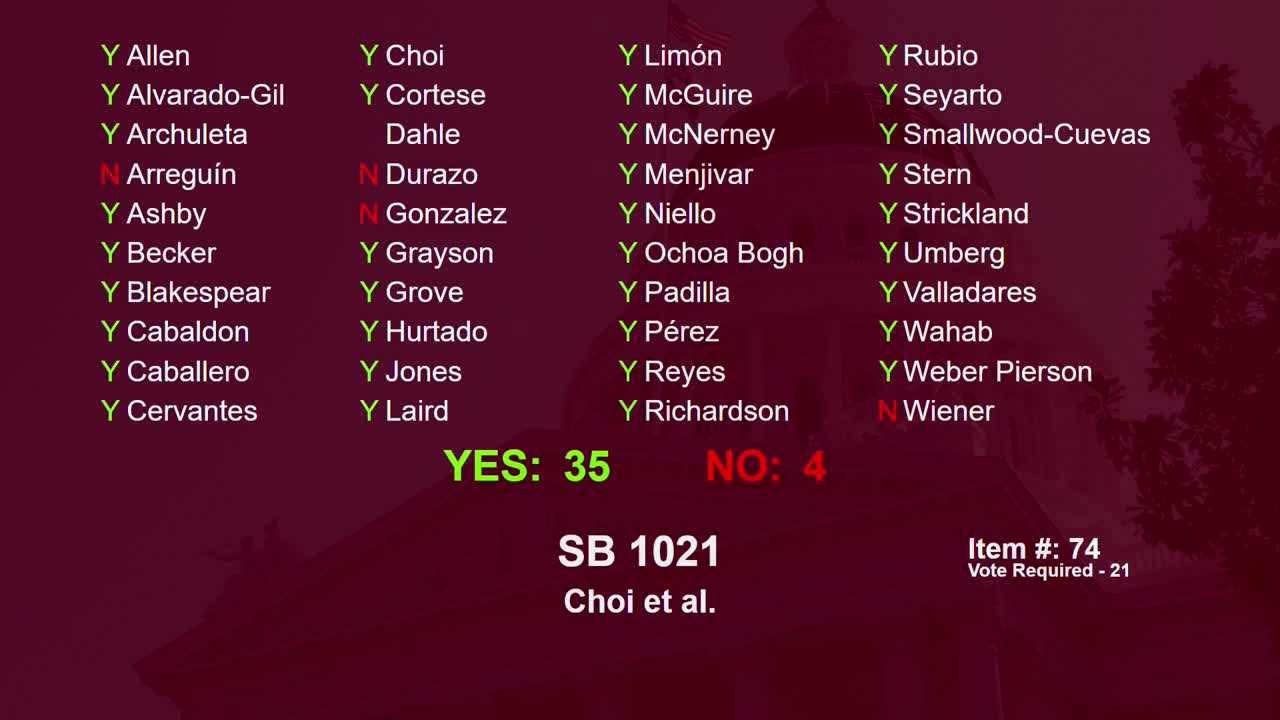 10MIN
Senate Floor
 34MIN
Senate Standing Committee on Local Government
 36MIN
Senate Standing Committee on Environmental Quality
Bill Author

Bill Co-Author(s):